Exhibition: ‘F.C. Gundlach. You’ll Never Watch Alone’ at Bucerius Kunst Forum, Hamburg

Exhibition dates: 8th May – 16th August, 2026

Curators: Sebastian Lux, Franziska Mecklenburg, Prof. Dr. Sophie-Charlotte Opitz.


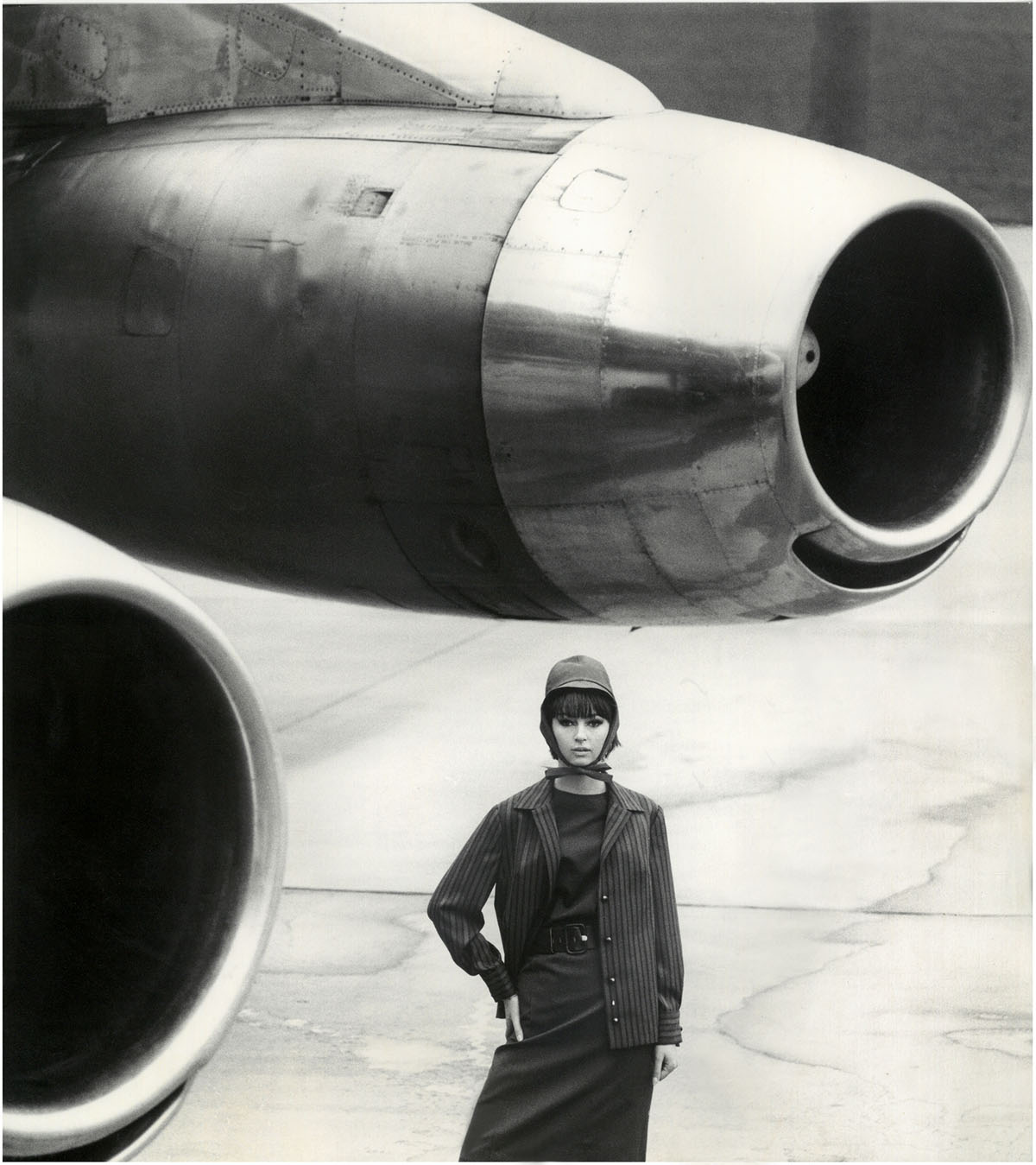
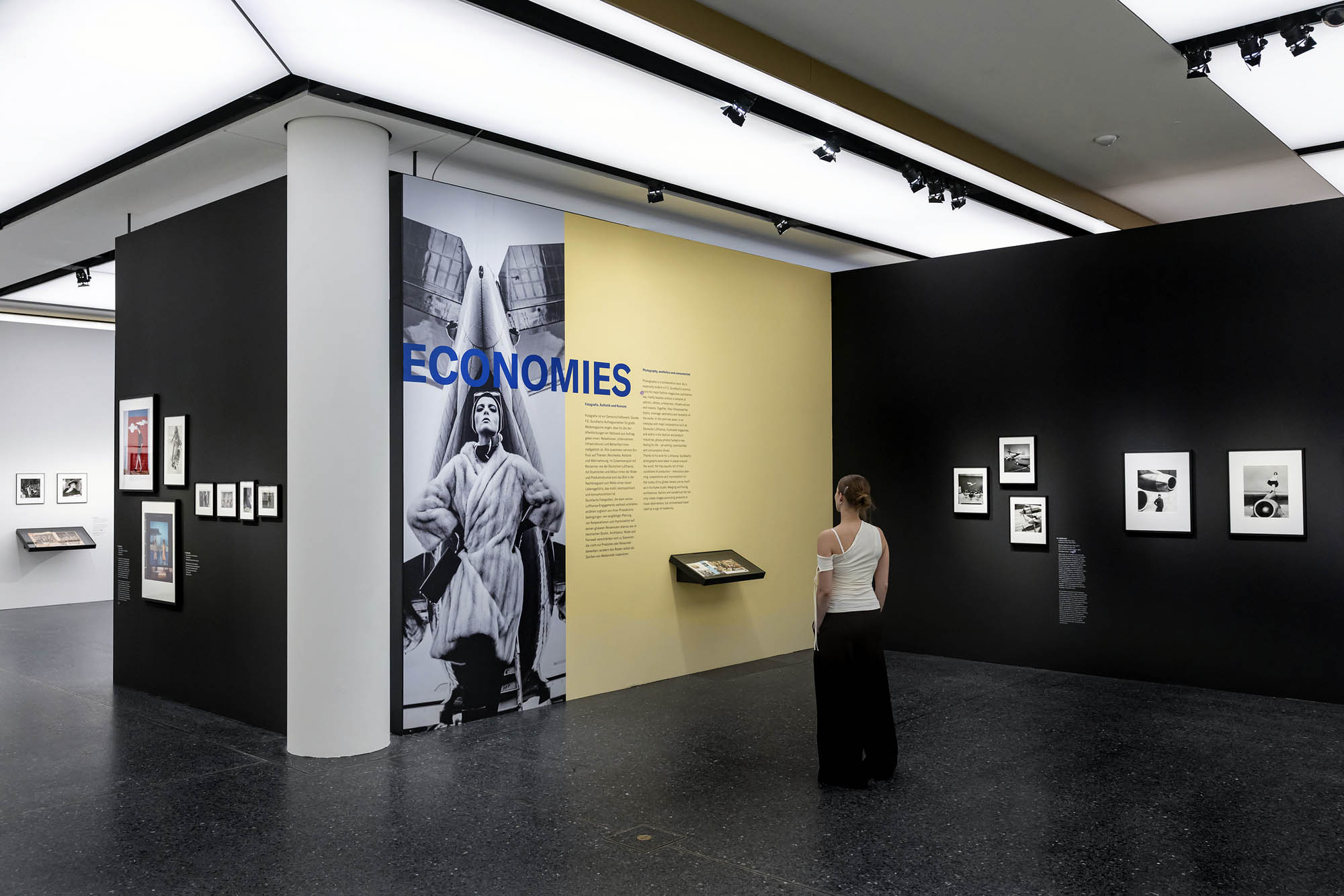
F.C. Gundlach (German, 1926-2021) 'Jet Age', Hamburg 1963


F.C. Gundlach (German, 1926-2021)
Jet Age
Hamburg 1963
© F.C. Gundlach / F.C. Gundlach Foundation 


Short and sweet.

In my humble opinion F.C. Gundlach is one of the greatest fashion photographers that has ever lived.

Formalism, style, charisma, minimalism, eloquence, use of colour, perspective, scale and pattern, inventiveness, beauty, presence.

While other fashion photographers over egg the solution, Gundlach is pure class. Magnificent!

Dr Marcus Bunyan

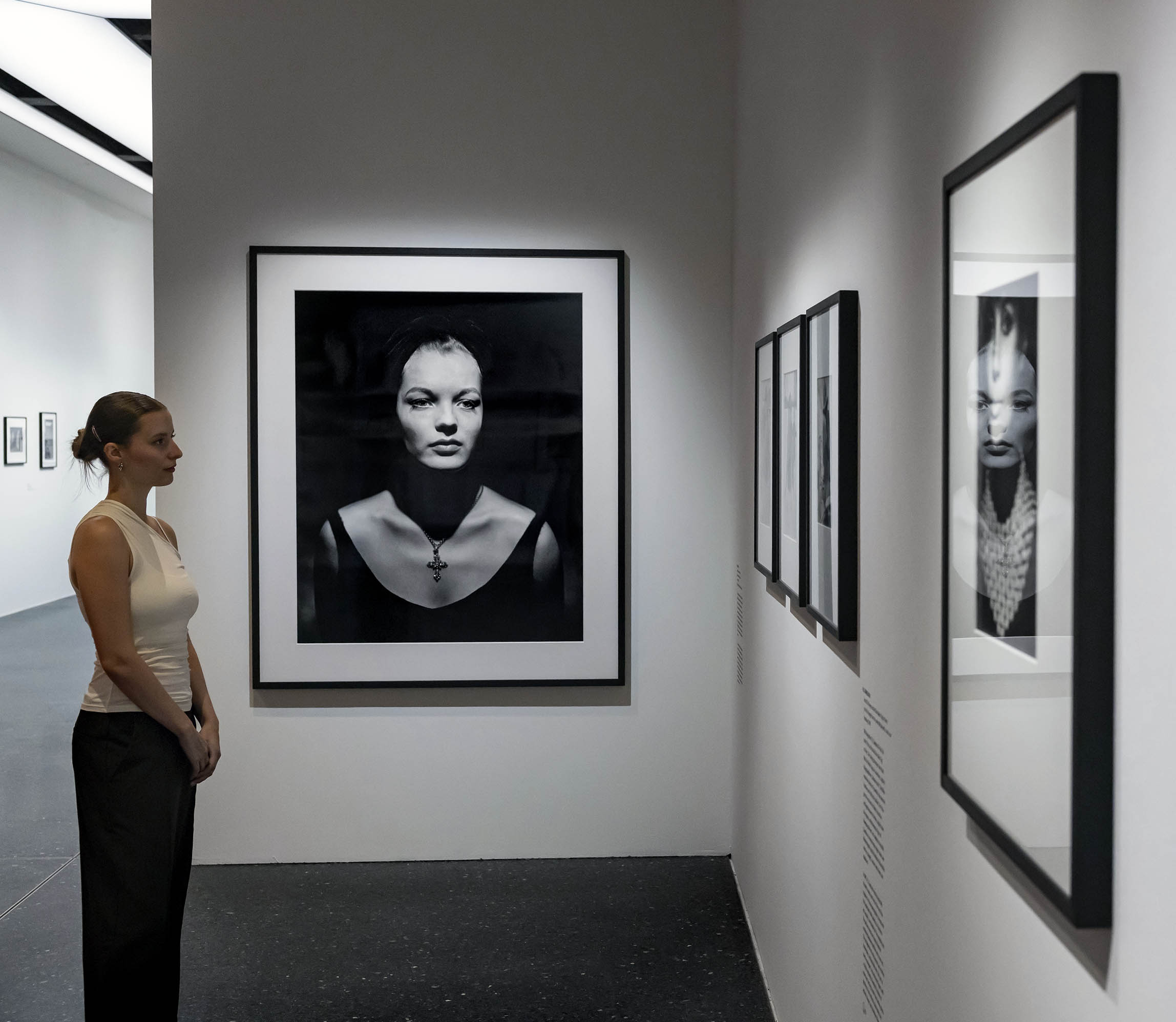
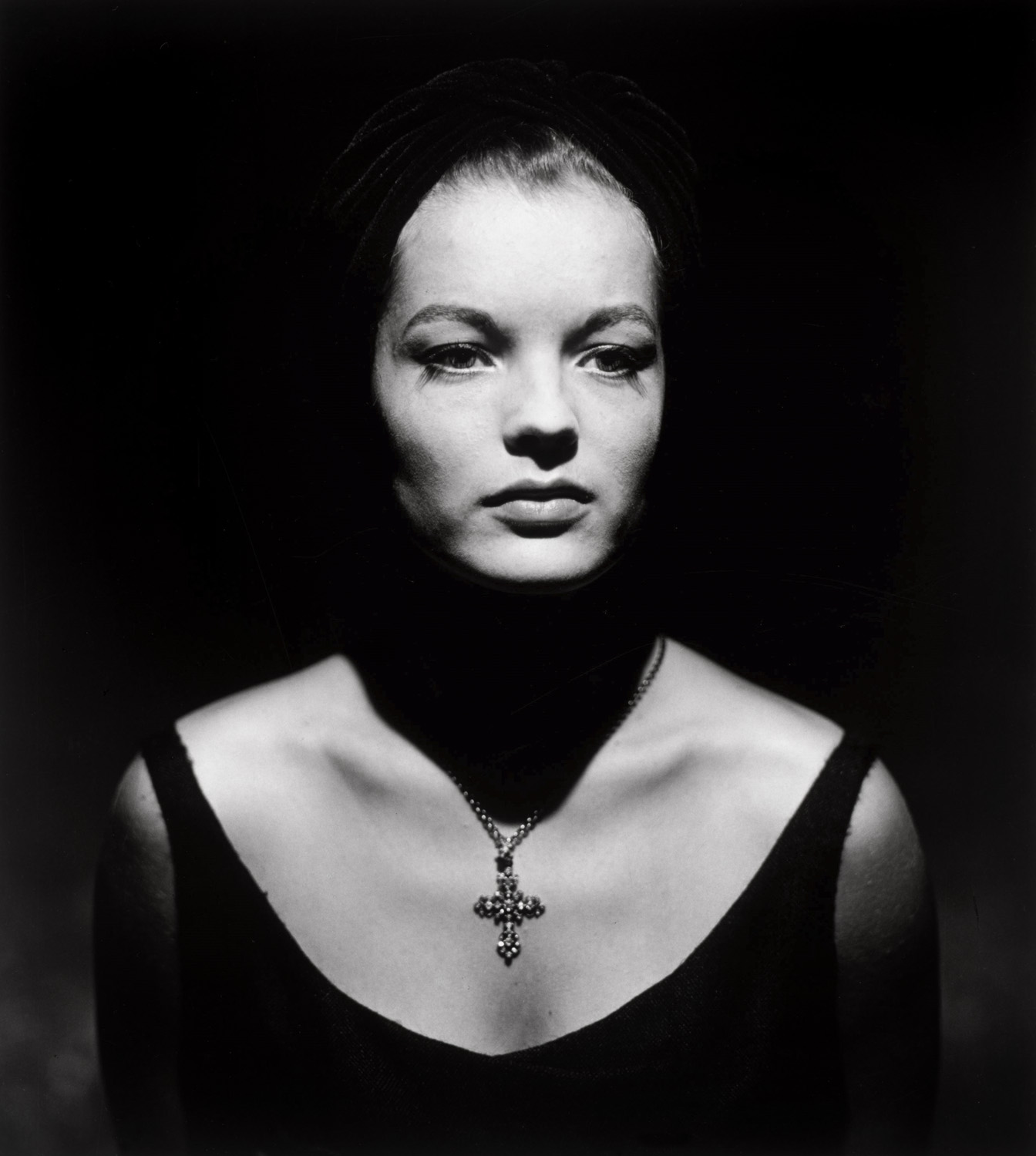
PS. A glorious portrait of a most beautiful woman, the actress Romy Schneider (see exhibitions A, B and C). Gundlach’s portrait Romy Schneider mit Kreuz (Romy Schneider with Cross) (1961, below) is the epitome of style and beauty … low depth of field, top lit, so that the neck disappears in shadow and the face floats in a sea of black, the light highlighting décolletage, smoothness of skin, cross, and the cut and sweep of the gown. Perfect.


Many thankx to Bucerius Kunst Forum for allowing me to publish the photographs in the posting. Please click on the photographs for a larger version of the image.


“A good fashion photographer must live in his time, must anticipate trends.”


F.C. Gundlach


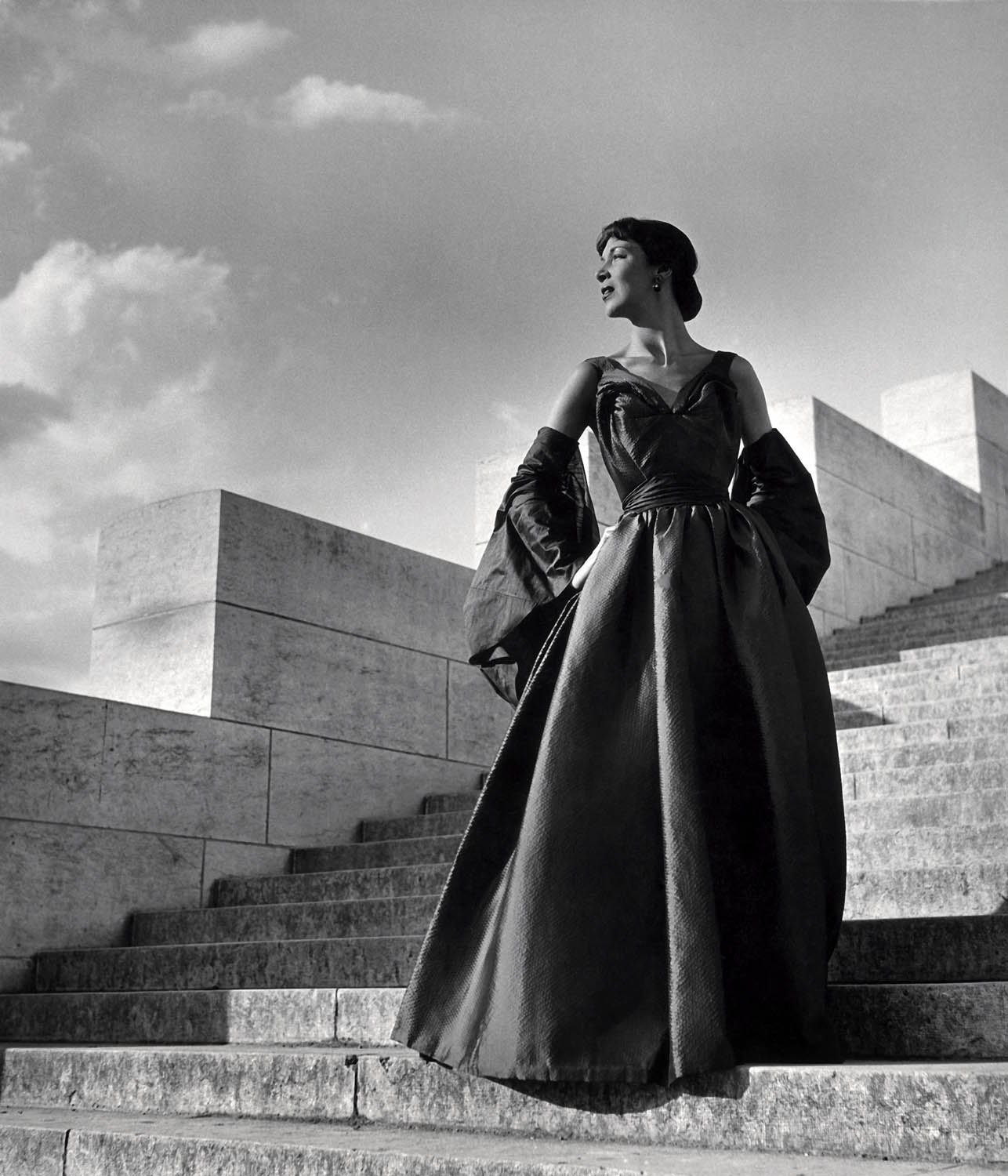
F.C. Gundlach (German, 1926-2021) 'Evening gown by Manguin', Paris, Palais de Chaillot, 1952


F.C. Gundlach (German, 1926-2021)
Evening gown by Manguin
Paris, Palais de Chaillot, 1952
© F.C. Gundlach / F.C. Gundlach Foundation


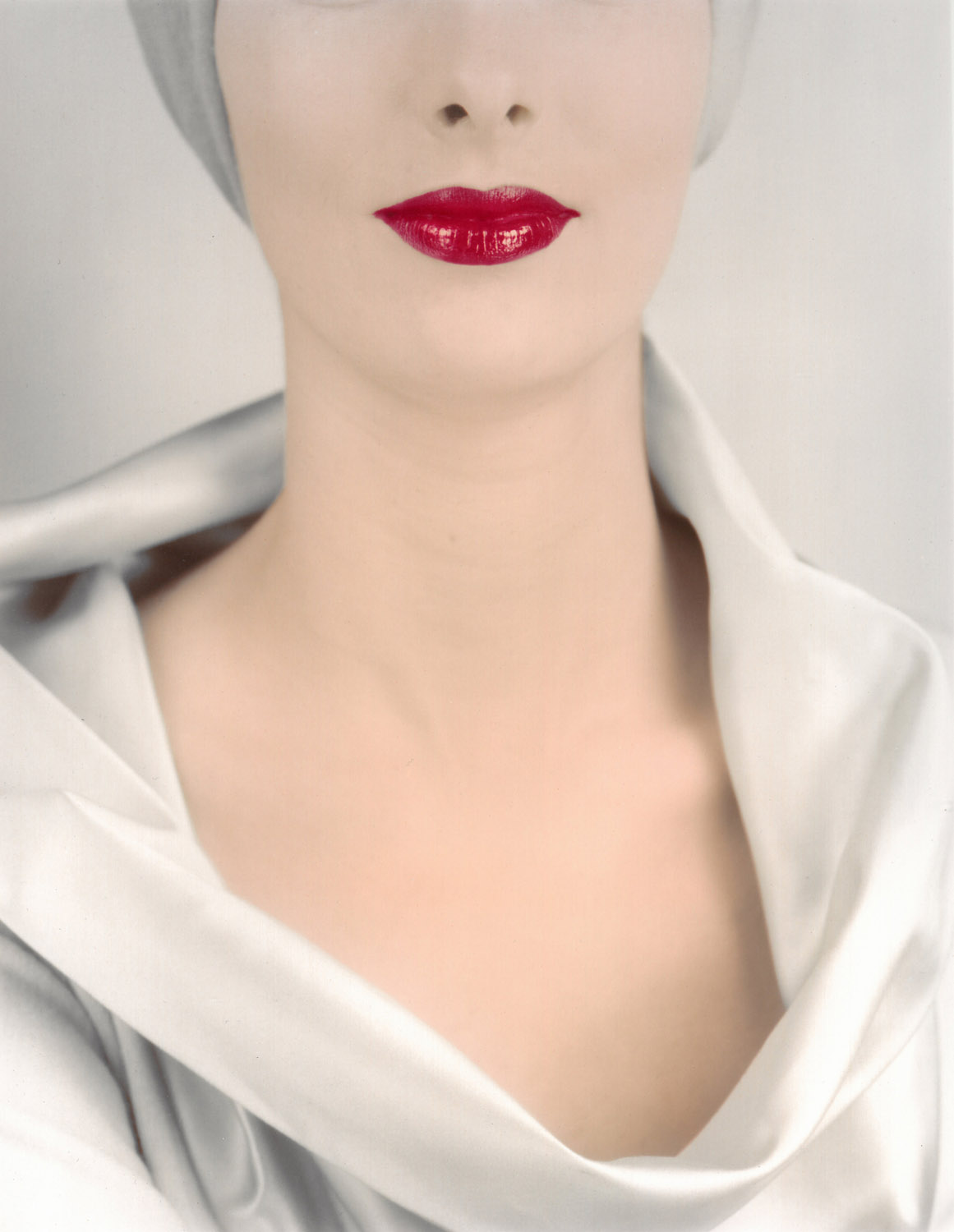
F.C. Gundlach (German, 1926-2021) ''Decolleté. Cover Study', New York', 1950s, from the portfolio 'Erwin Blumenfeld – Blumenfeld Color'


F.C. Gundlach (German, 1926-2021)
Decolleté. Cover Study
New York, 1950s
From the portfolio Erwin Blumenfeld – Blumenfeld Color, published by PPS. Galerie F.C. Gundlach
© 2026 Lisette Georges – Blumenfeld Foundation, NYC


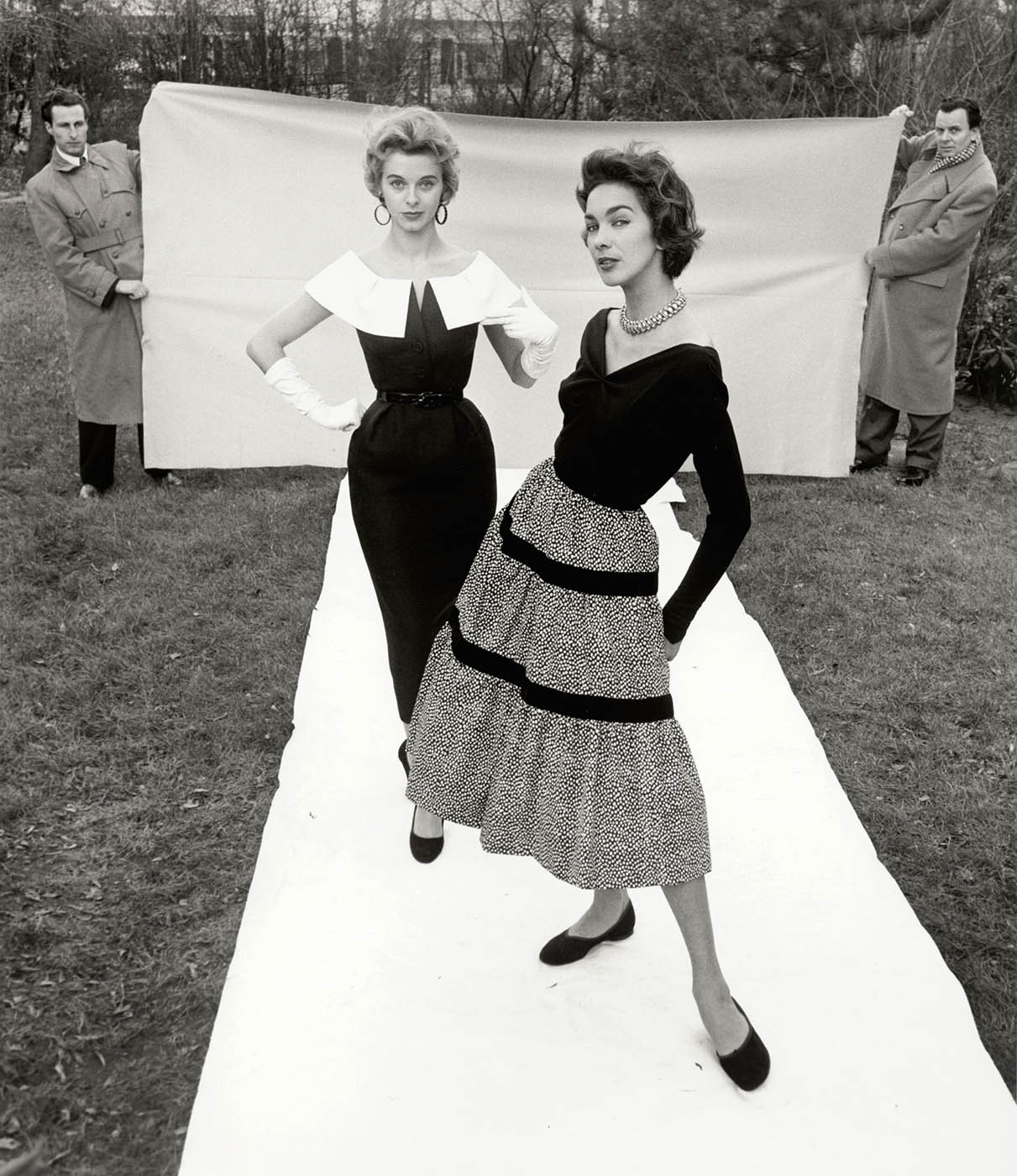
F.C. Gundlach (German, 1926-2021) ''Fantasy in Black and White', Candy Tannev and Elfi Wildfeuer, Editor-in-Chief Curt Waldenburger and his driver assist', Berlin (West), 1954


F.C. Gundlach (German, 1926-2021)
‘Fantasy in Black and White’, Candy Tannev and Elfi Wildfeuer, Editor-in-Chief Curt Waldenburger and his driver assist
Berlin (West), 1954
© F.C. Gundlach / F.C. Gundlach Foundation


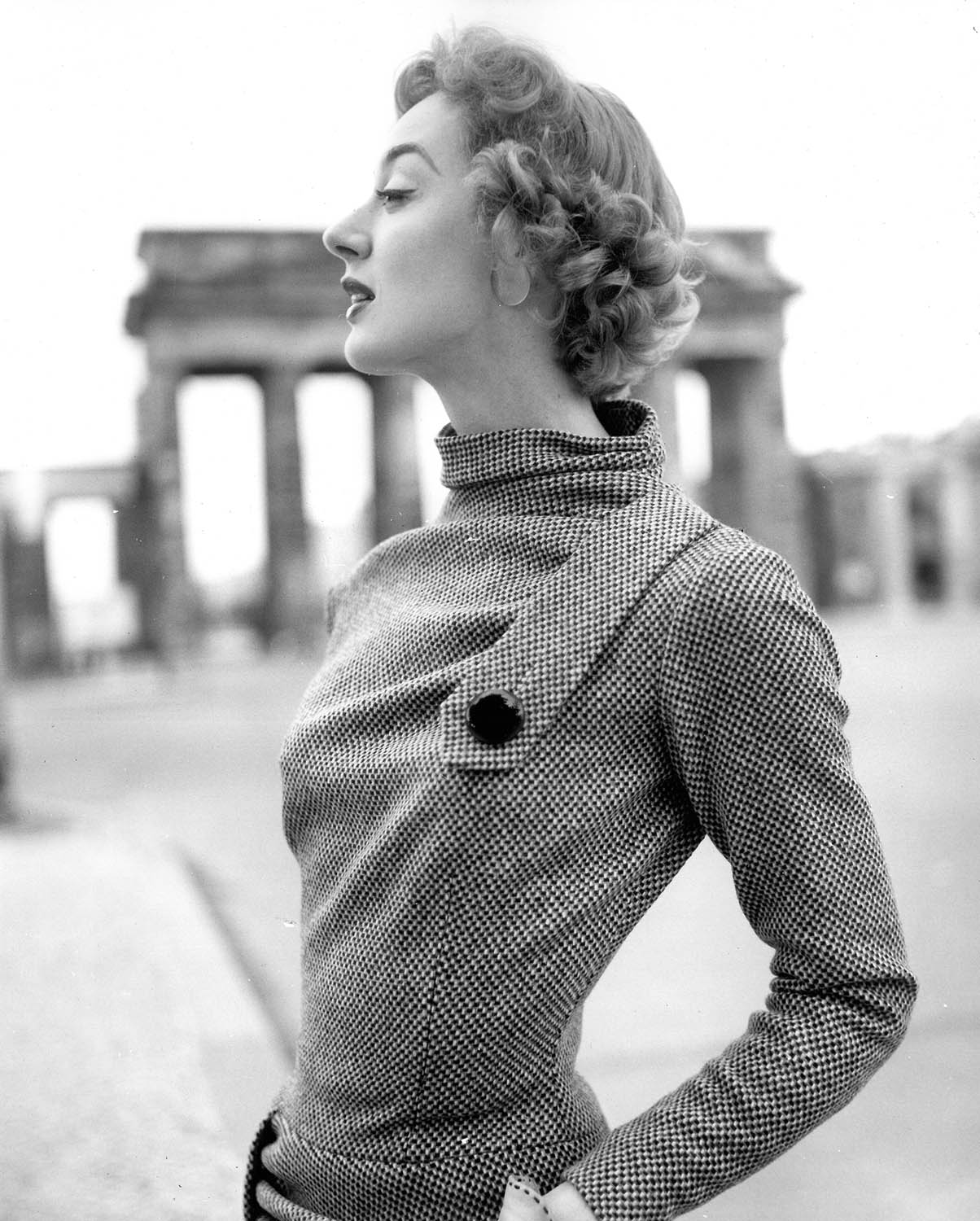
F.C. Gundlach (German, 1926-2021) ''Costumes of the Season', Eleanor in front of the Brandenburg Gate', Berlin (West), 1955


F.C. Gundlach (German, 1926-2021)
‘Costumes of the Season’, Eleanor in front of the Brandenburg Gate
Berlin (West), 1955
© F.C. Gundlach / F.C. Gundlach Foundation


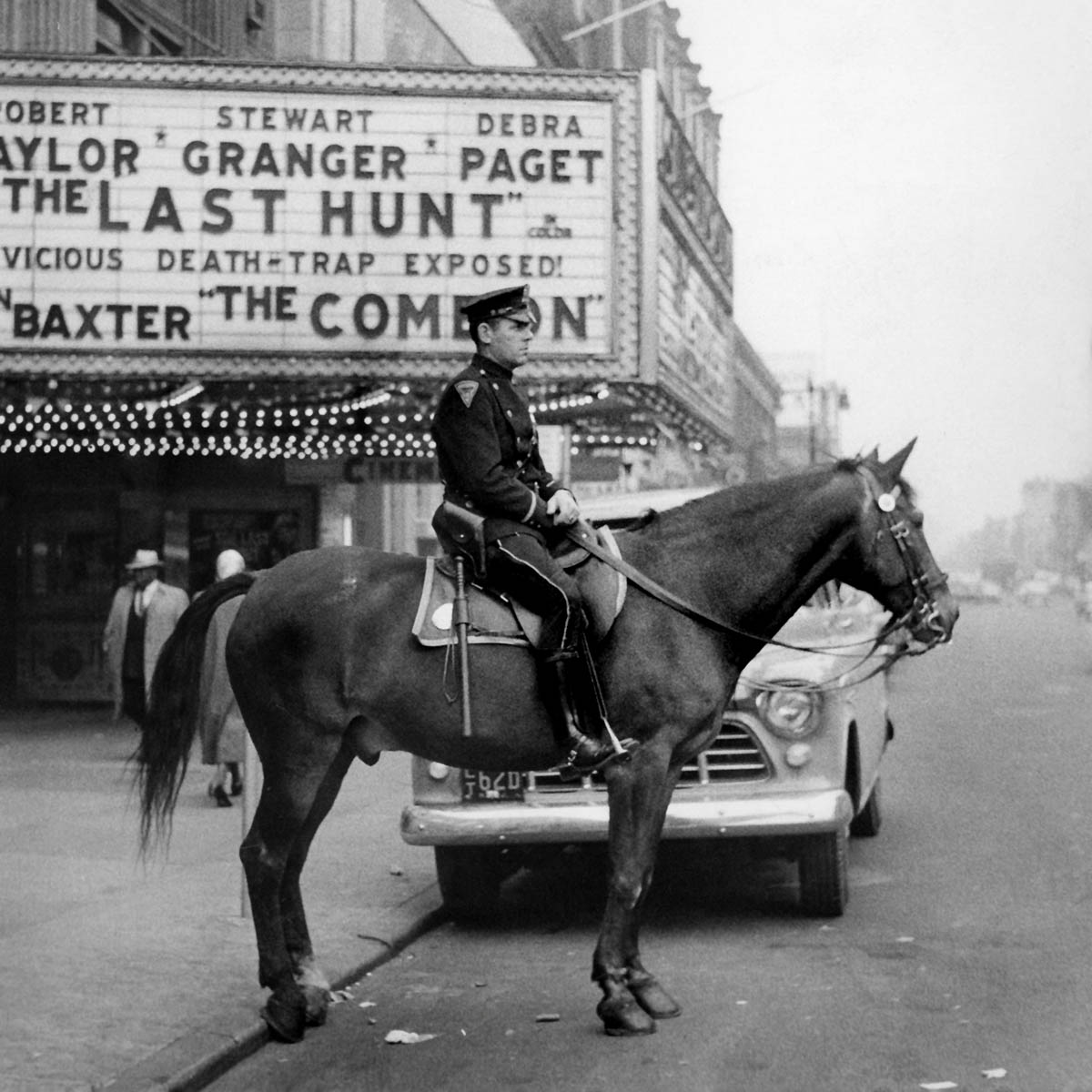
F.C. Gundlach (German, 1926-2021) 'Mounted police officer in front of a cinema in Harlem', New York, 1956


F.C. Gundlach (German, 1926-2021)
Mounted police officer in front of a cinema in Harlem
New York, 1956
© F.C. Gundlach / F.C. Gundlach Foundation


F.C. Gundlach (German, 1926-2021) 'Uli Richter, Directoire-style evening gown in front of backdrop', Berlin (West), 1958


F.C. Gundlach (German, 1926-2021)
Uli Richter, Directoire-style evening gown in front of backdrop
Berlin (West), 1958
© F.C. Gundlach / F.C. Gundlach Foundation


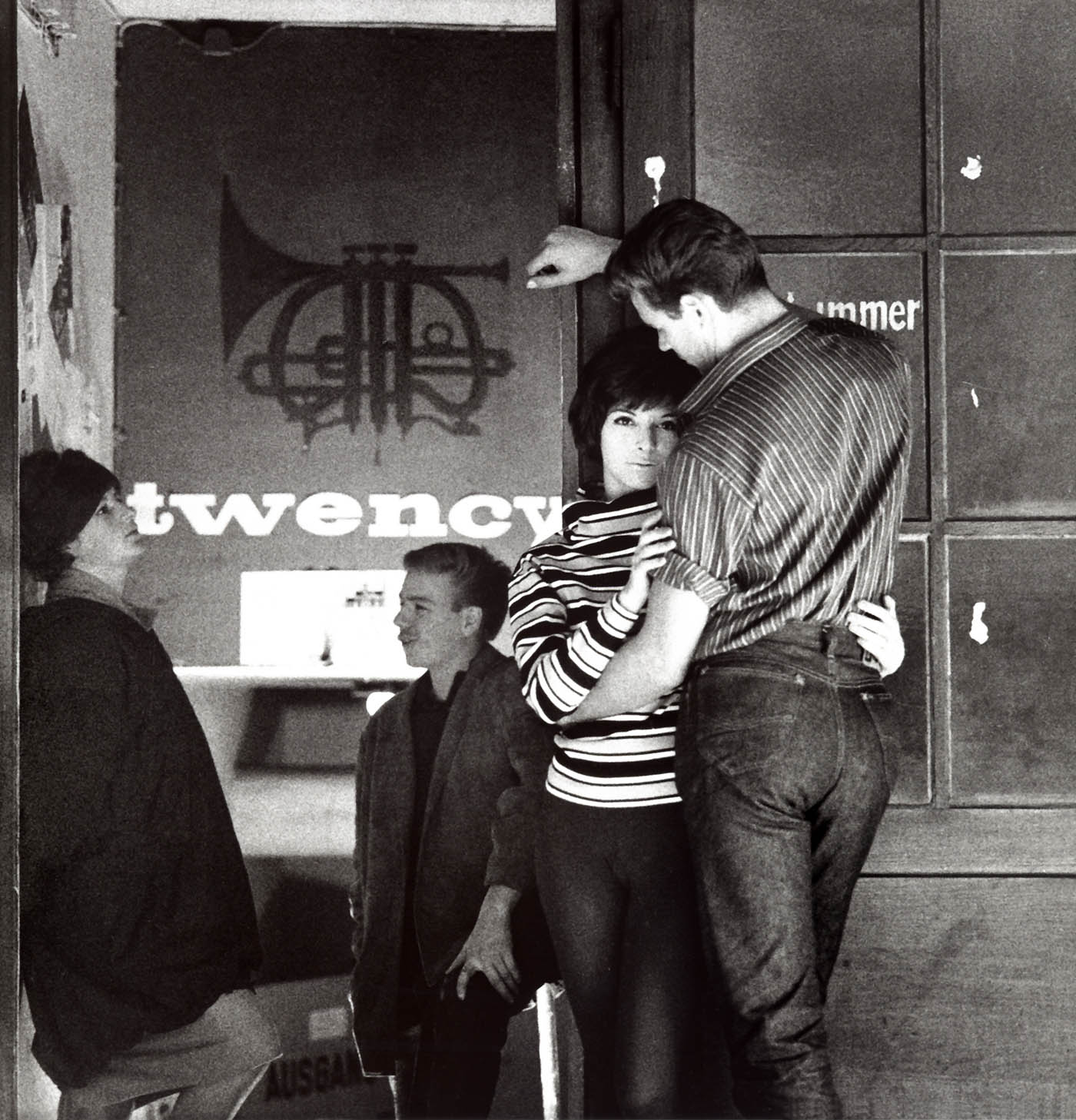
F.C. Gundlach (German, 1926-2021) 'Twency – Young Love in the River Kasematten', Hamburg, 1959


F.C. Gundlach (German, 1926-2021)
Twency – Young Love in the River Kasematten
Hamburg, 1959
© F.C. Gundlach / F.C. Gundlach Foundation


From 8 May to 16 August 2026, you can explore over 200 exhibits – ranging from iconic magazine covers and unpublished black-and-white as well as colour shots to works by Gundlach’s role models, contemporaries and successors such as Richard Avedon, Erwin Blumenfeld, Regina Relang, Cindy Sherman and many others. In conversation with Gundlach’s own images, these pieces equally expose the love for the medium, mutual influences, societal discourses, and power dynamics. The exhibition is the first major presentation of Gundlach’s oeuvre since his death in 2021 and simultaneously celebrates his 100th birthday with special loans from the F.C. Gundlach Foundation.

As a fashion photographer from the 1950s onward, F.C. Gundlach helped shape the image of fashion and the related notions of trends, identity, and gender in both German and international magazines. At the same time, he forged creative networks between Paris, New York, and Tokyo. The exhibition demonstrates how Gundlach was constantly inspired to experiment with new stylistic forms, his curiosity about the global photographic discourse which in this way, set new standards for the visual culture of his era. Whether in Düsseldorf, Hamburg, or Berlin, his role as gallery owner, laboratory proprietor, and collector – as well as his commitment to supporting the emerging photography scene and nurturing new talents – was crucial in establishing a vibrant photographic culture that continues to resonate today. By presenting Gundlach’s multifaceted oeuvre, the show traces both the continuities and the ruptures in his personal trajectory and the broader photocultural developments of his time.

Alongside his celebrated, iconic photographs, the exhibition features previously unpublished fashion series, experimental works and recent discoveries from Gundlach’s own archive and that of his contemporaries. It reveals how deeply photography is interwoven with cultural and social developments and highlights the pioneering influence of Gundlach’s vision on today’s visual culture. By spotlighting defining phases of his life, the show offers fresh perspectives on his artistic legacy and on the emergence of the 20th-century photo-cultural scene.

The exhibition is organised by Bucerius Kunst Forum in collaboration with Stiftung F.C. Gundlach.

Text from the Bucerius Kunst Forum website


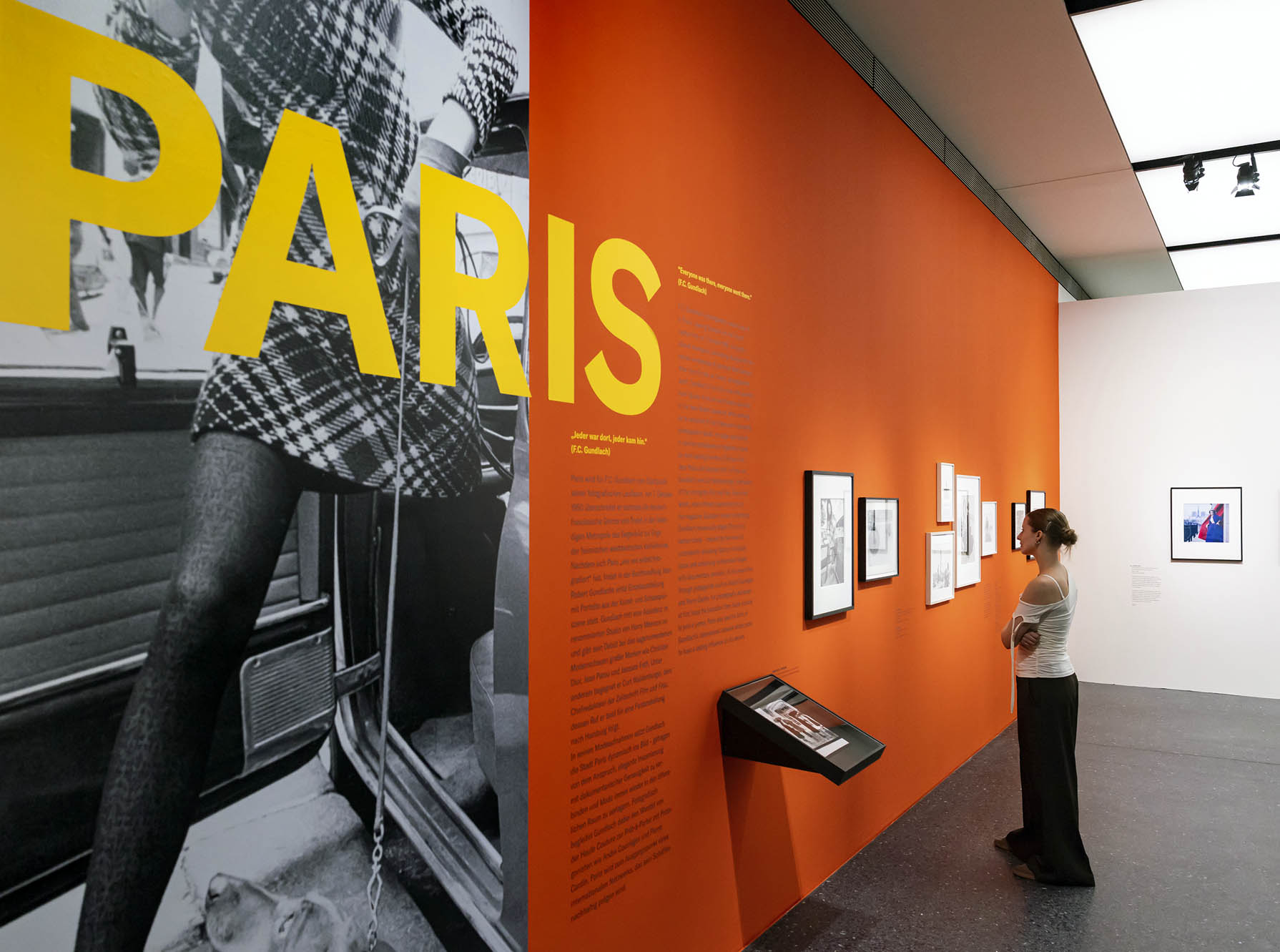
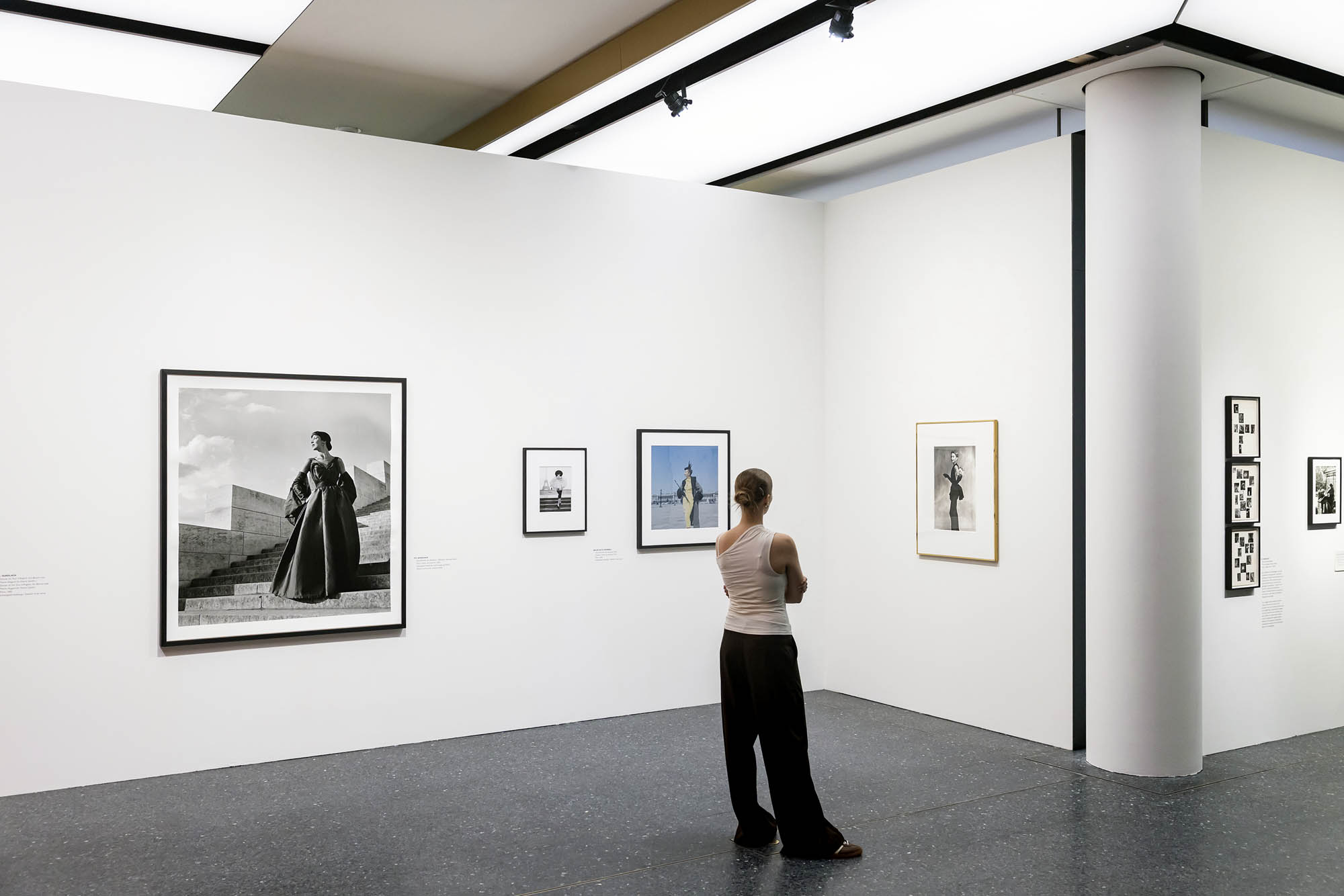
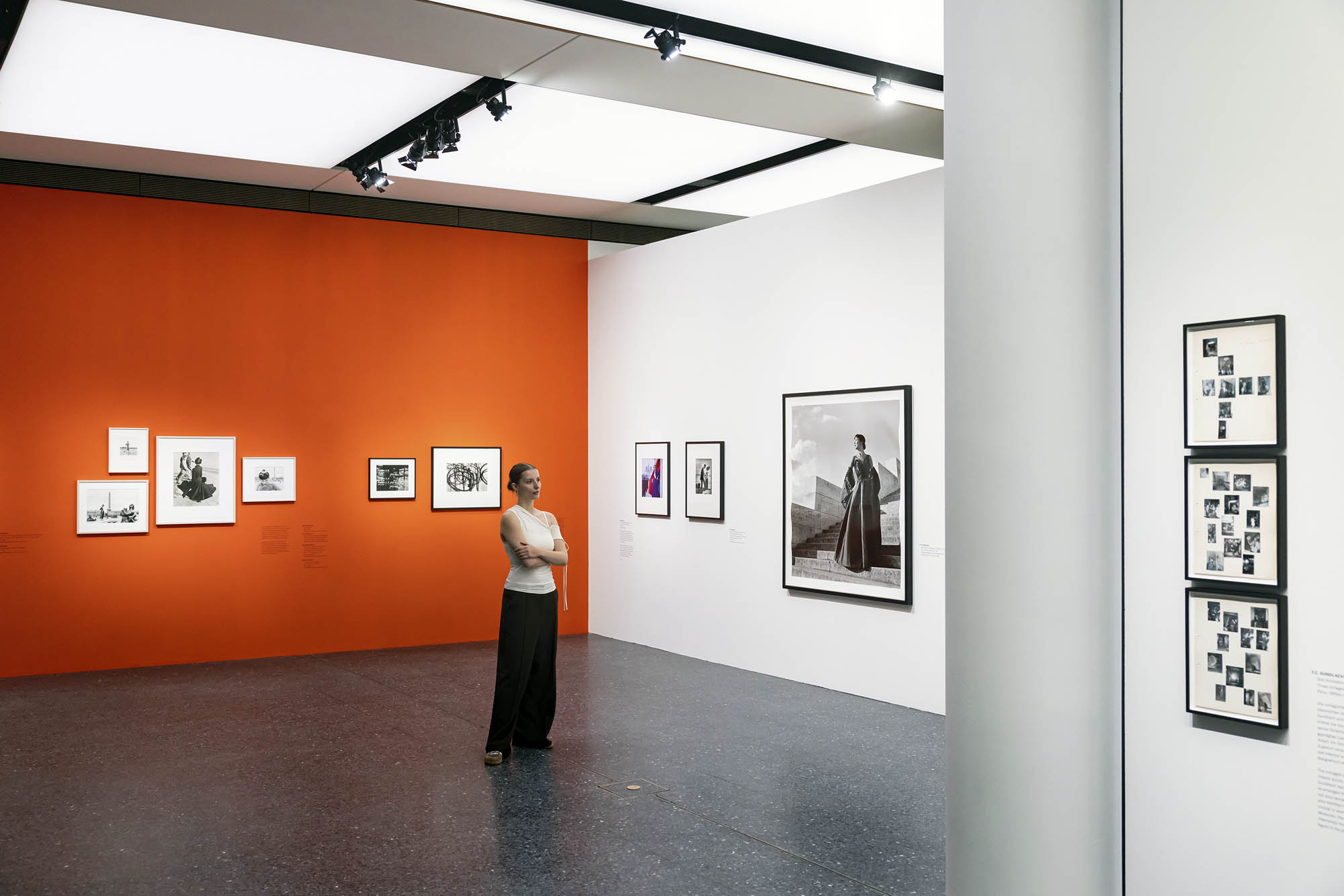
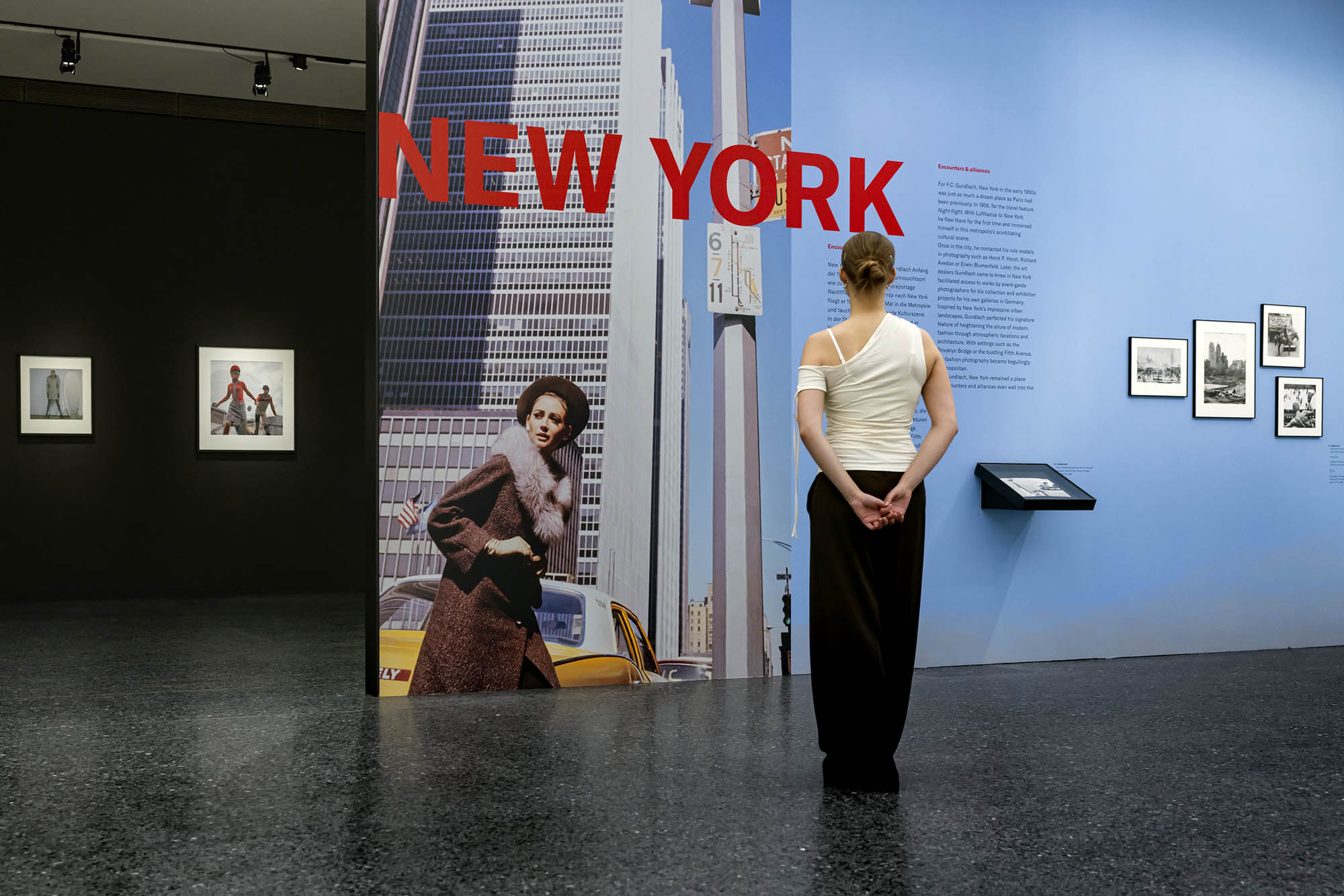
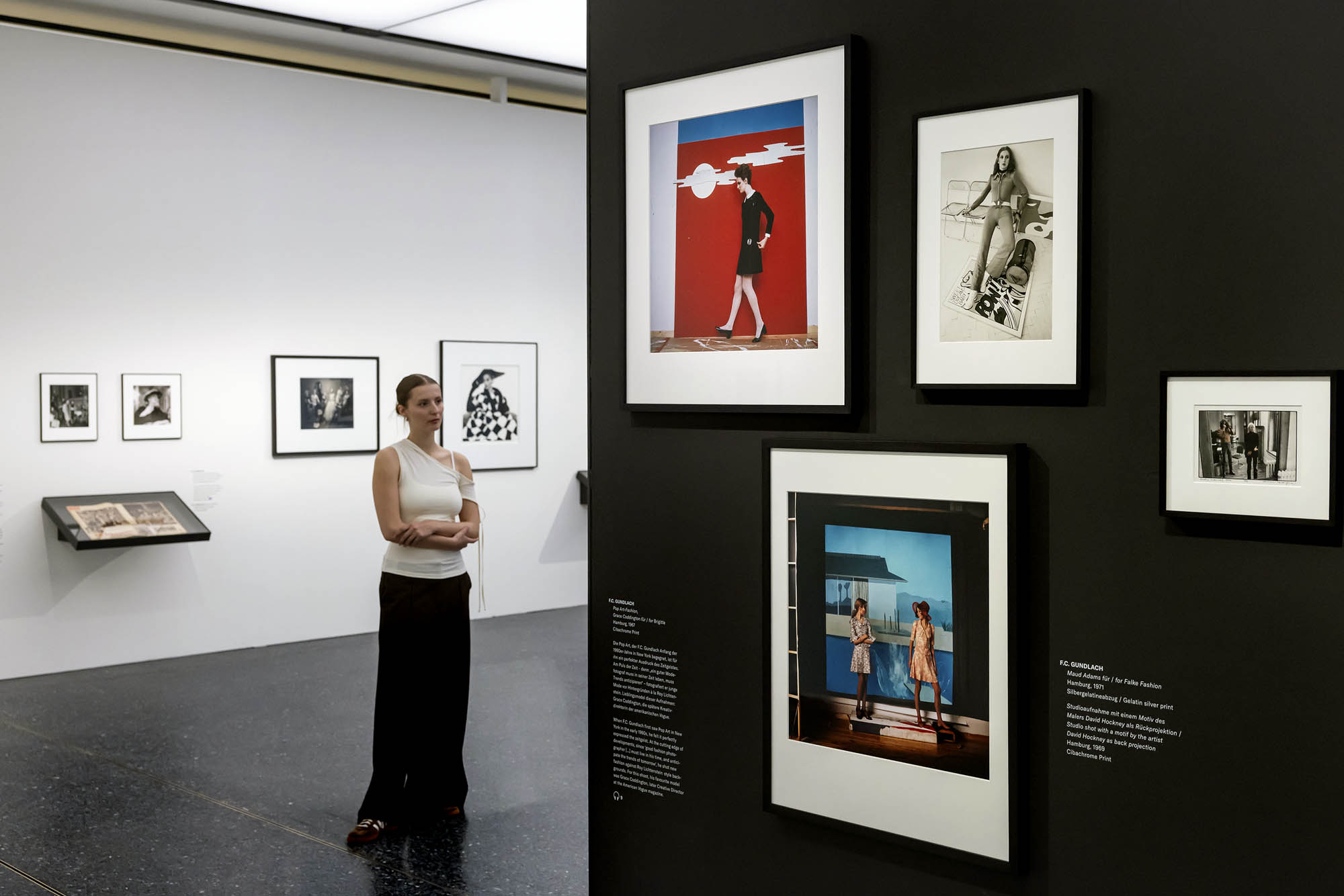
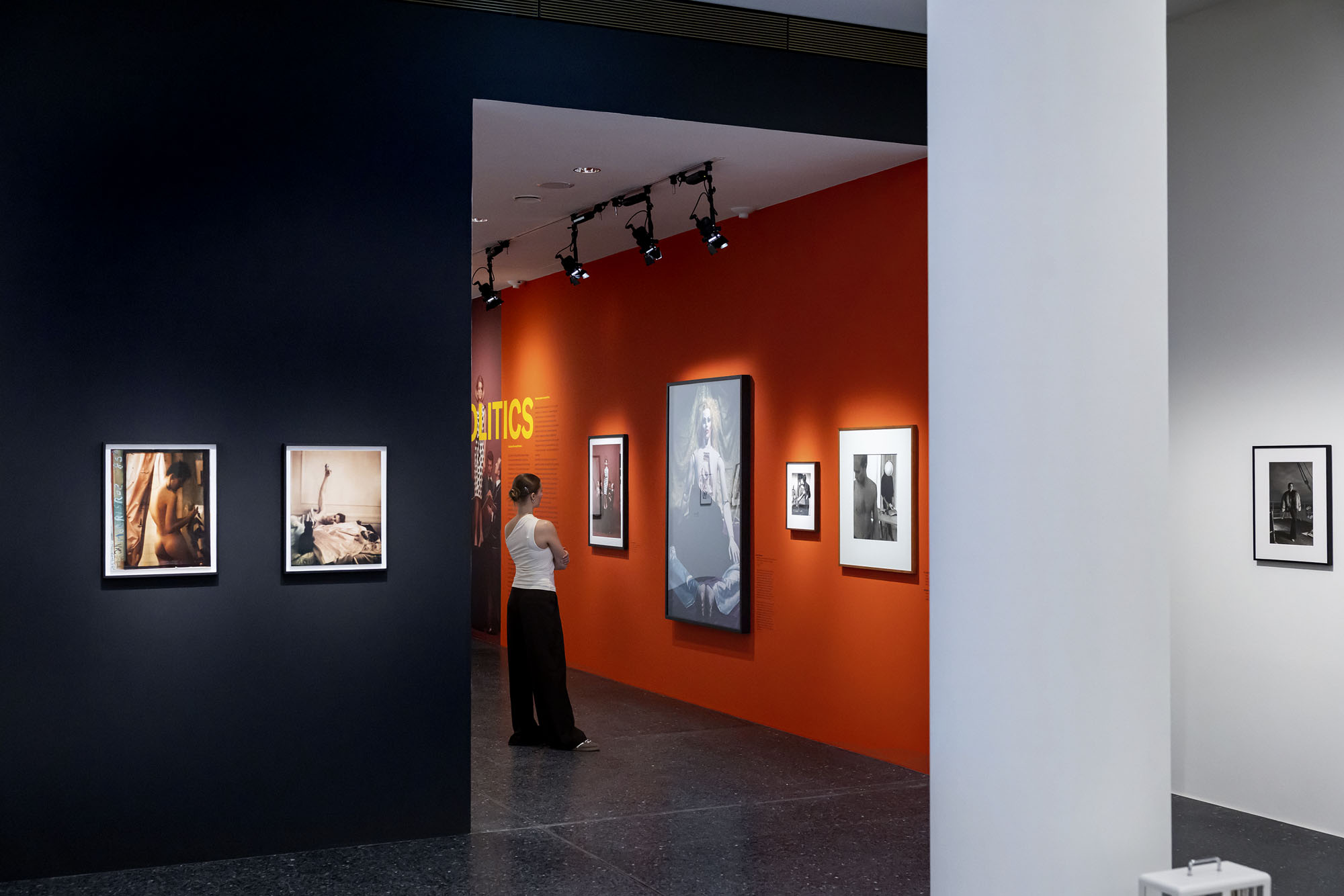
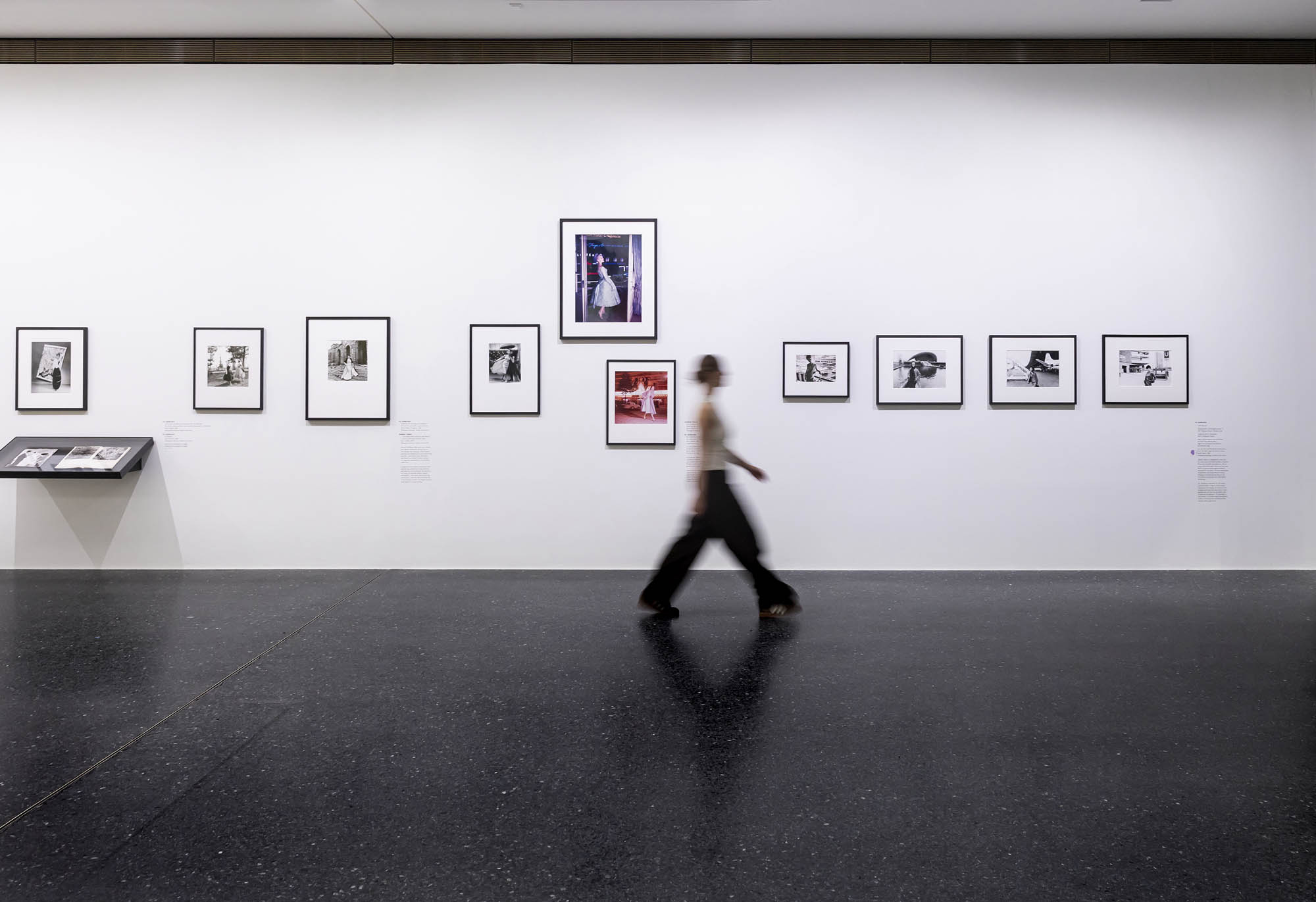
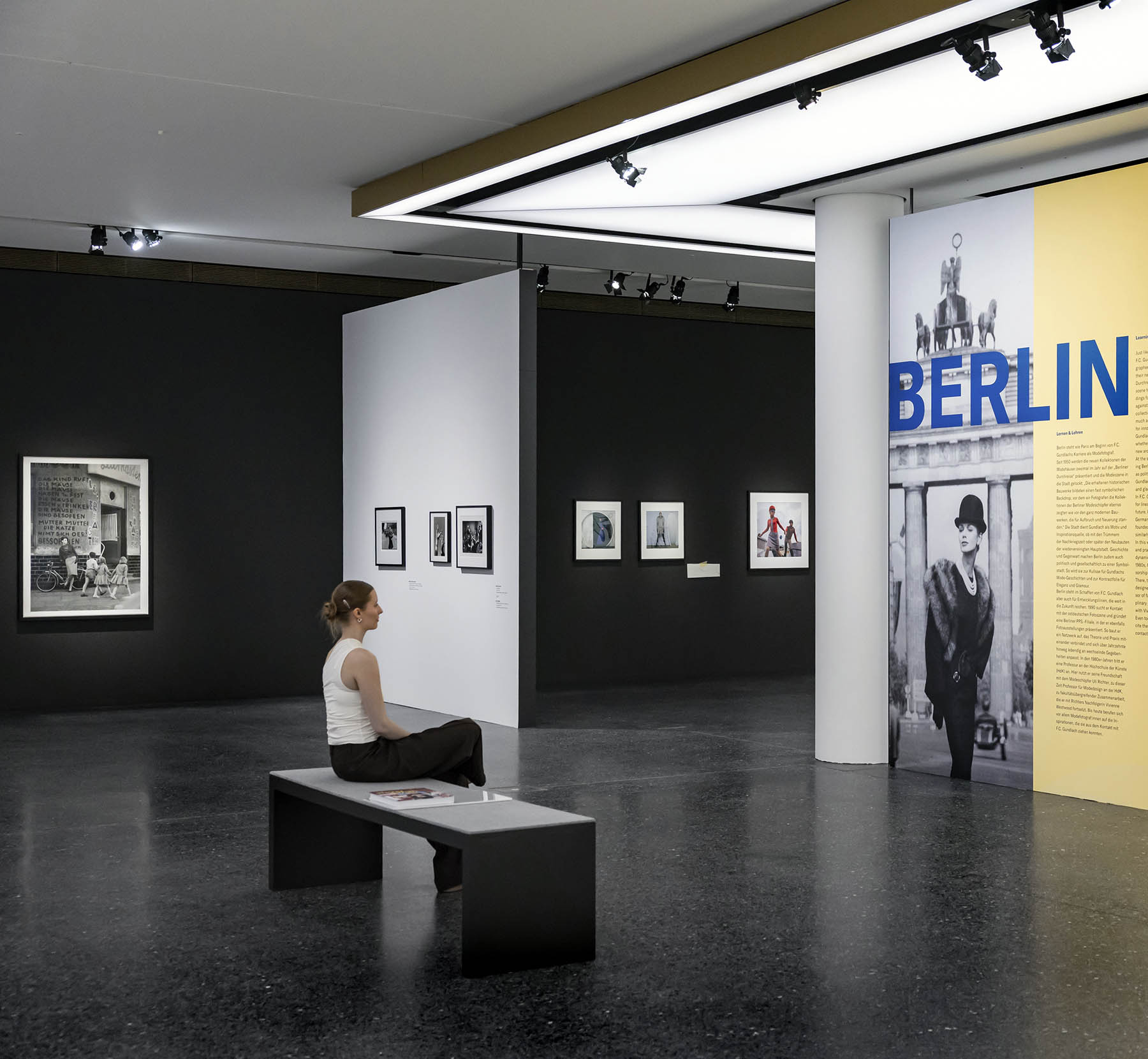
Installation view of the exhibition 'F.C. Gundlach. You'll Never Watch Alone' at Bucerius Kunst Forum, Hamburg, May - August, 2026


Installation view of the exhibition F.C. Gundlach. You’ll Never Watch Alone at Bucerius Kunst Forum, Hamburg, May – August, 2026 showing at left in the bottom image, Gundlach’s portrait Romy Schneider mit Kreuz (Romy Schneider with Cross) (1961, below)
Photos: Ulrich Perrey


F.C. Gundlach (German, 1926-2021)
'Romy Schneider mit Kreuz' (Romy Schneider with Cross) 1961


F.C. Gundlach (German, 1926-2021)
Romy Schneider mit Kreuz (Romy Schneider with Cross)
1961
© F.C. Gundlach / F.C. Gundlach Foundation


F.C. Gundlach. You’ll Never Watch Alone focuses on the impact of F.C. Gundlach (1926-2021) as a photographer, gallery owner, collector, entrepreneur and networker. The exhibition showcases his iconic colour photographs as well as unpublished black-and-white and colour shots, and works by his role models, contemporaries and successors. The exhibition is staged to mark the 100th anniversary of F.C. Gundlach’s birth as part of the 9th Triennial of Photography Hamburg 2026.

F.C. Gundlach became renowned for fashion photography taken around the globe. An influential photographer and leading figure in a fashion, art and culture network, he was closely involved in the production and reception of German fashion magazines. His many cover images not only shaped how fashion was staged and presented, but also the related social concepts of gender and identity.

Taking Gundlach’s work as a starting point, the exhibition investigates photography’s emergence as a visual culture, its associated milieu since the 1950s, and its impact on social trends and movements. As the show’s title implies, photography does not exist in a vacuum. Gundlach’s cooperations with others stretched from Paris to New York and Tokyo, connecting publishing, the photography industry, the gallery scene, and the museum world. They crucially shaped his ideas as a photographer, collector and supporter of this medium. His personal contacts constantly inspired him to experiment with new stylistic forms and, in this way, set new standards for others. His activities as a collector were similarly marked by the same curiosity and openness.

In showcasing Gundlach’s multifaceted oeuvre, the exhibition explores biographical continuities and fractures as well as photography’s social development as a visual medium. For instance, as a gallery and laboratory owner and a teacher in Hamburg and Berlin, Gundlach’s promotion of this medium lent a new visibility to new talents just as much as the discourse of photography itself. The exhibition seeks to locate F.C. Gundlach’s oeuvre in a comprehensive context and highlight his importance in developing photography in the contested space of commissioned works, art and technology.

Through his diverse activities, trips and dialogues with other actors in the field of photography, Gundlach decisively influenced the visual culture of his day. In turn, he was also shaped by social movements, political decisions and trends. In addressing such reciprocity, the exhibition not only examines photography’s inherent connection to cultural and social developments, but also illustrates how Gundlach’s landmark visions paved the way for decoding and understanding images in our own time.

Actively committed to Hamburg, the place he chose to live, he played a significant role in establishing a culture of photography in the city. His works and the collection, administered by the F.C.Gundlach Foundation, continue to have an impact today.

On display are 130 photographs by F.C. Gundlach and 70 works from his collection, which are placed in relation to one another, including works by Erwin Blumenfeld, Richard Avedon, Regina Relang, Cindy Sherman, and many others. The Foundation is the sole lender of works for this first major show of Gundlach’s oeuvre since his death in 2021. Although coinciding with the centenary of his birth, it is not intended as a retrospective. Instead, taking decisive stages in his life as exemplary offers new perspectives on his oeuvre and the scene around the culture of photography emerging in the 20th century. Apart from his famous, now iconic photographs, the exhibition is showing experimental works and new discoveries by Gundlach and the contemporaries influencing his artistic career.

Press release from Bucerius Kunst Forum


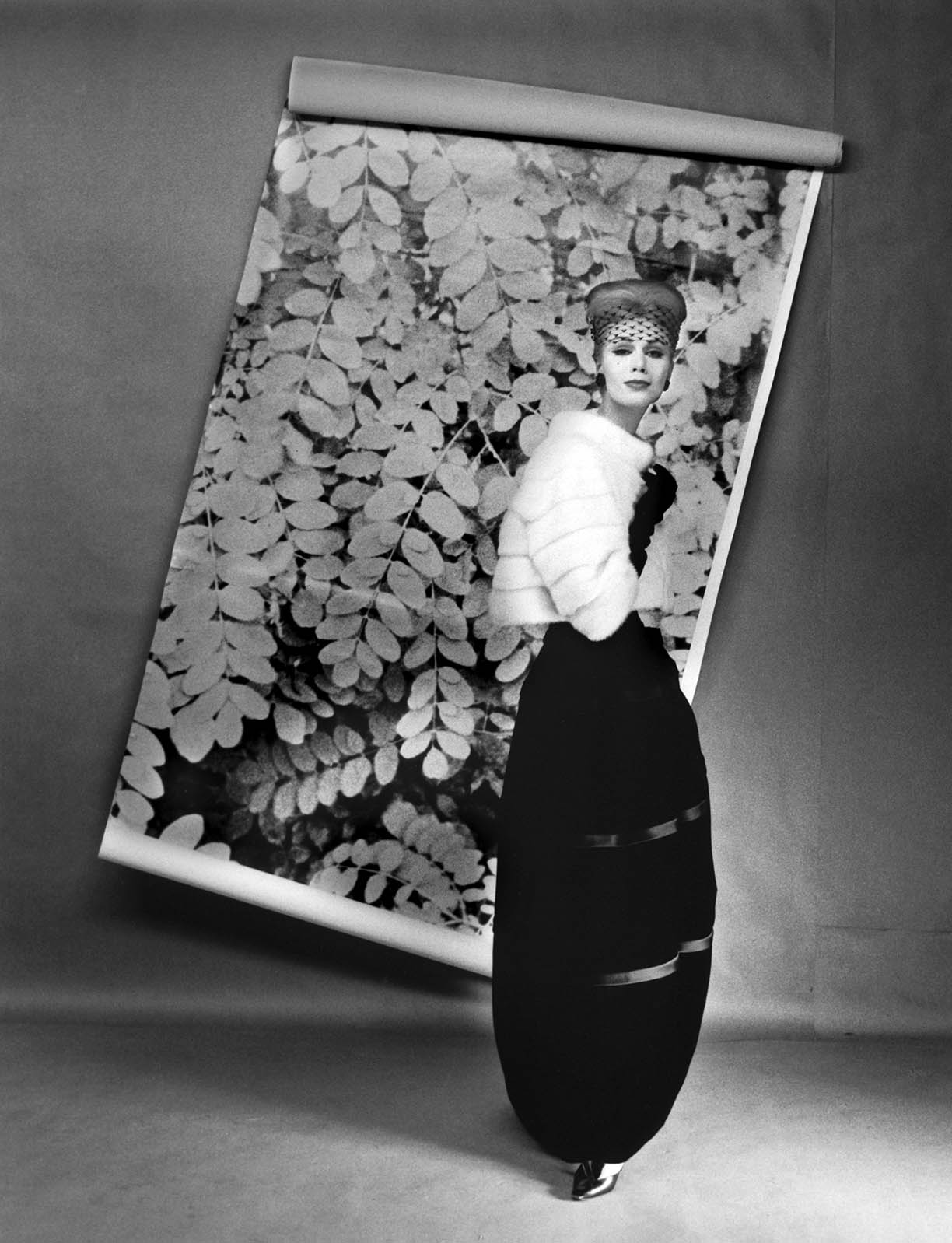
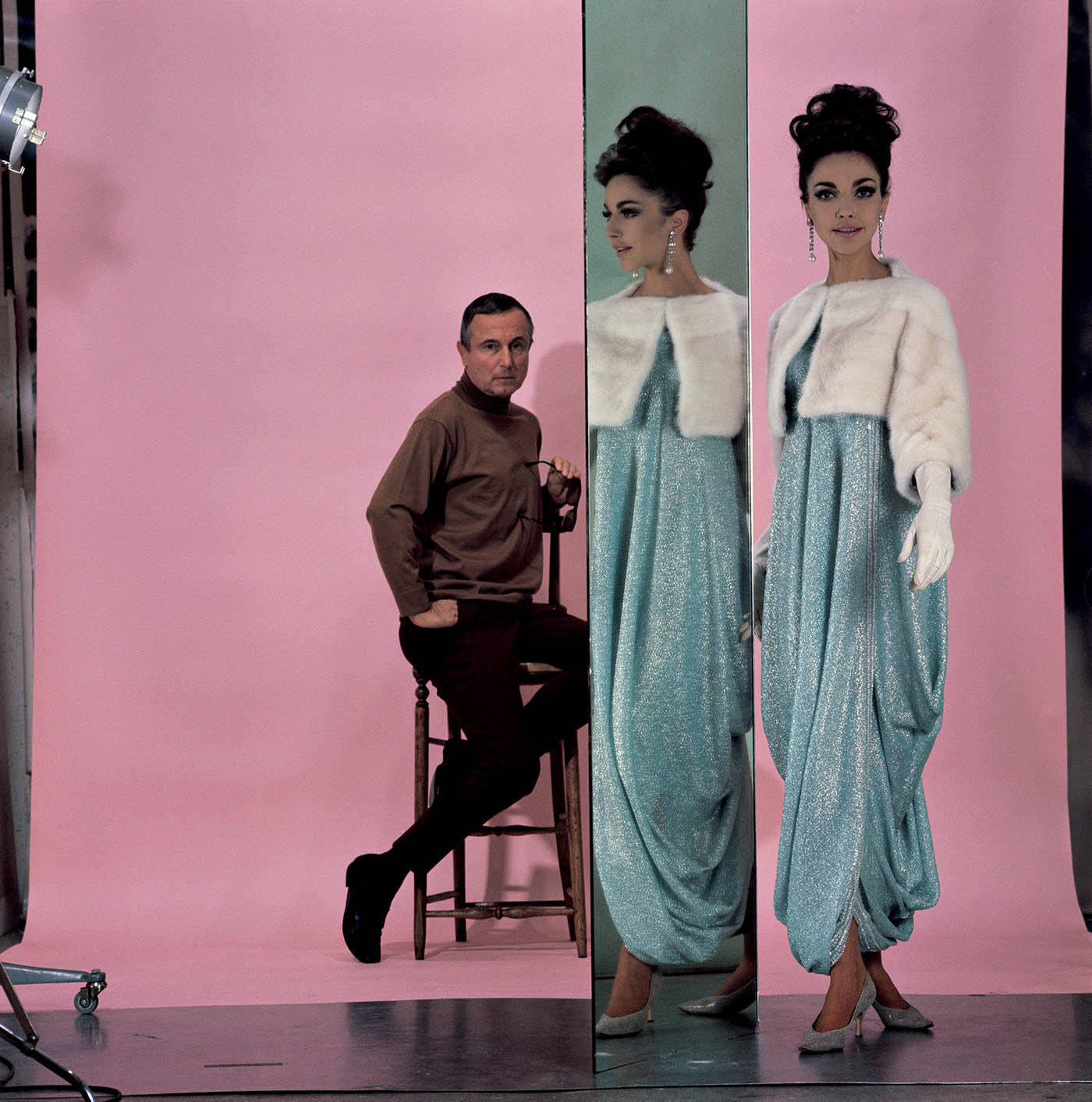
F.C. Gundlach (German, 1926-2021) 'Evening gown with mink bolero, Heinz Schulze-Varell in the background', Berlin (West), 1962


F.C. Gundlach (German, 1926-2021)
Evening gown with mink bolero, Heinz Schulze-Varell in the background
Berlin (West), 1962
© F.C. Gundlach / F.C. Gundlach Foundation


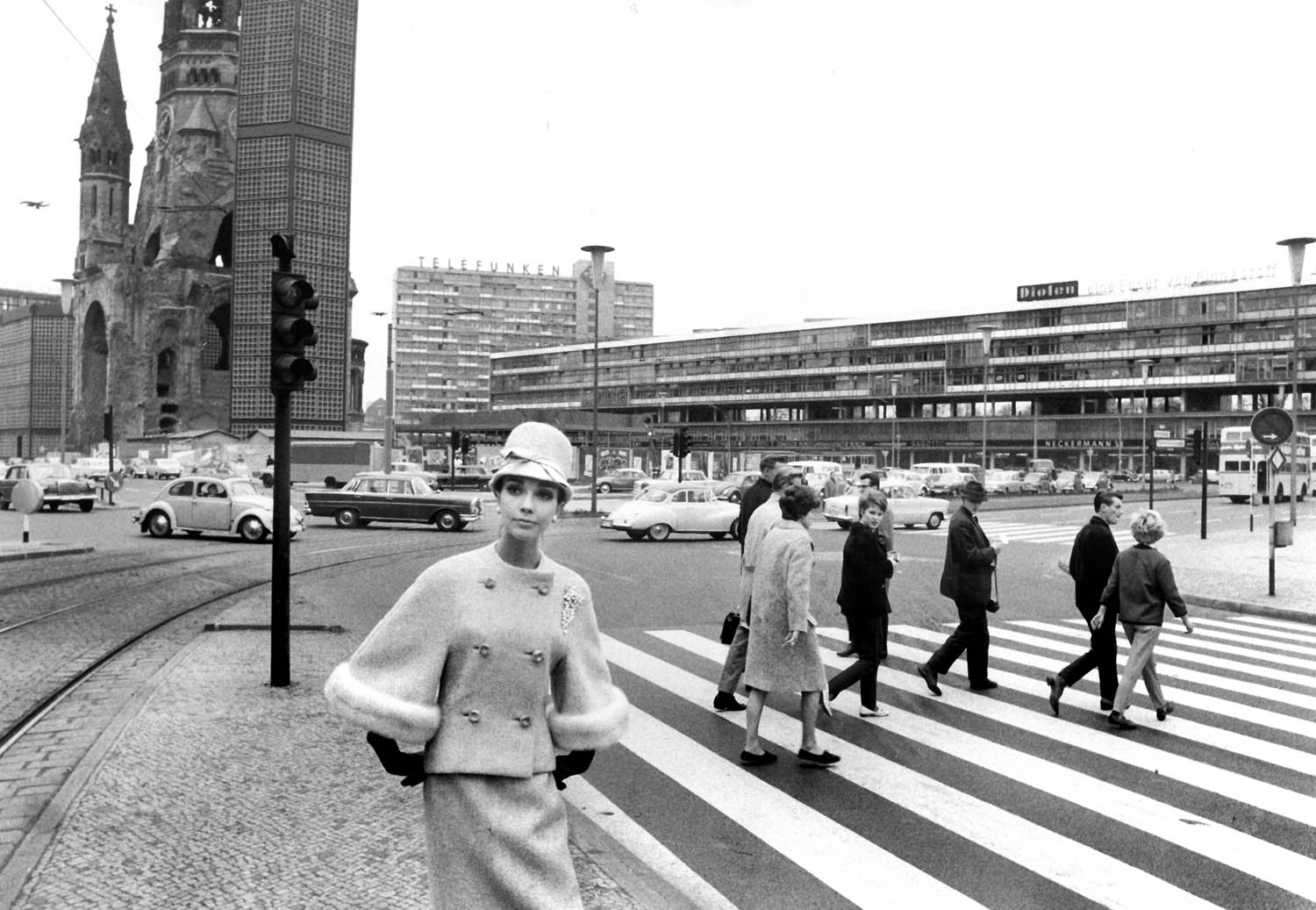
F.C. Gundlach (German, 1926-2021) 'Biggi in a costume by Uli Richter in front of Breitscheidplatz with the Memorial Church and Bikini House' from the series 'Die Weitwinkel-Perspektive' (The Wide-Angle Perspective), Berlin (West), 1963


F.C. Gundlach (German, 1926-2021)
Biggi in a costume by Uli Richter in front of Breitscheidplatz with the Memorial Church and Bikini House, from the series ‘Die Weitwinkel-Perspektive’ (The Wide-Angle Perspective)
Berlin (West), 1963
© F.C. Gundlach / F.C. Gundlach Foundation


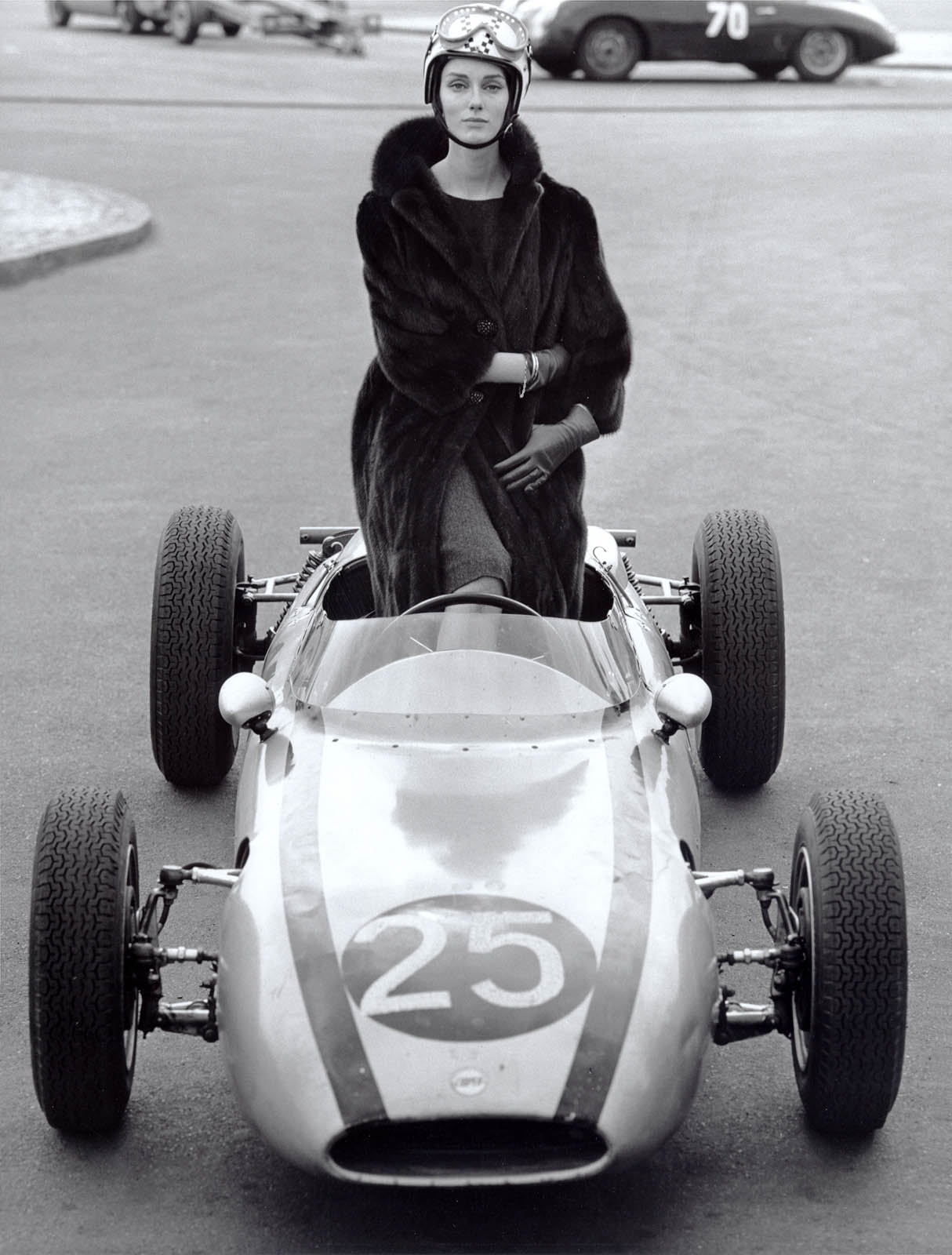
F.C. Gundlach (German, 1926-2021) ''In the paddock' at the Avus', Berlin, 1963


F.C. Gundlach (German, 1926-2021)
‘In the paddock’ at the Avus
Berlin, 1963
© F.C. Gundlach / F.C. Gundlach Foundation


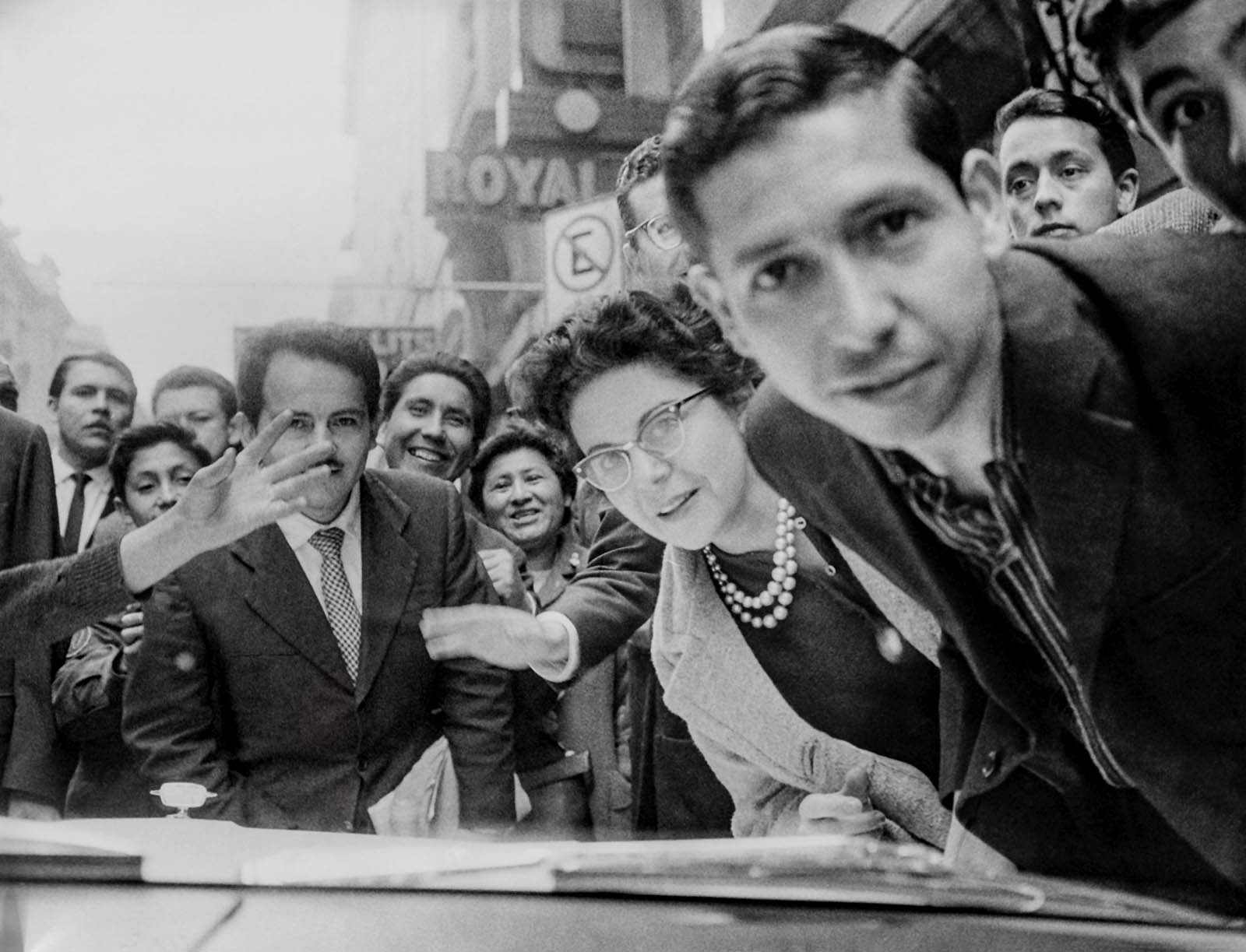
F.C. Gundlach (German, 1926-2021) 'Large crowds gather to see the visiting models', Santiago de Chile, 1963


F.C. Gundlach (German, 1926-2021)
Large crowds gather to see the visiting models
Santiago de Chile, 1963
© F.C. Gundlach / F.C. Gundlach Foundation


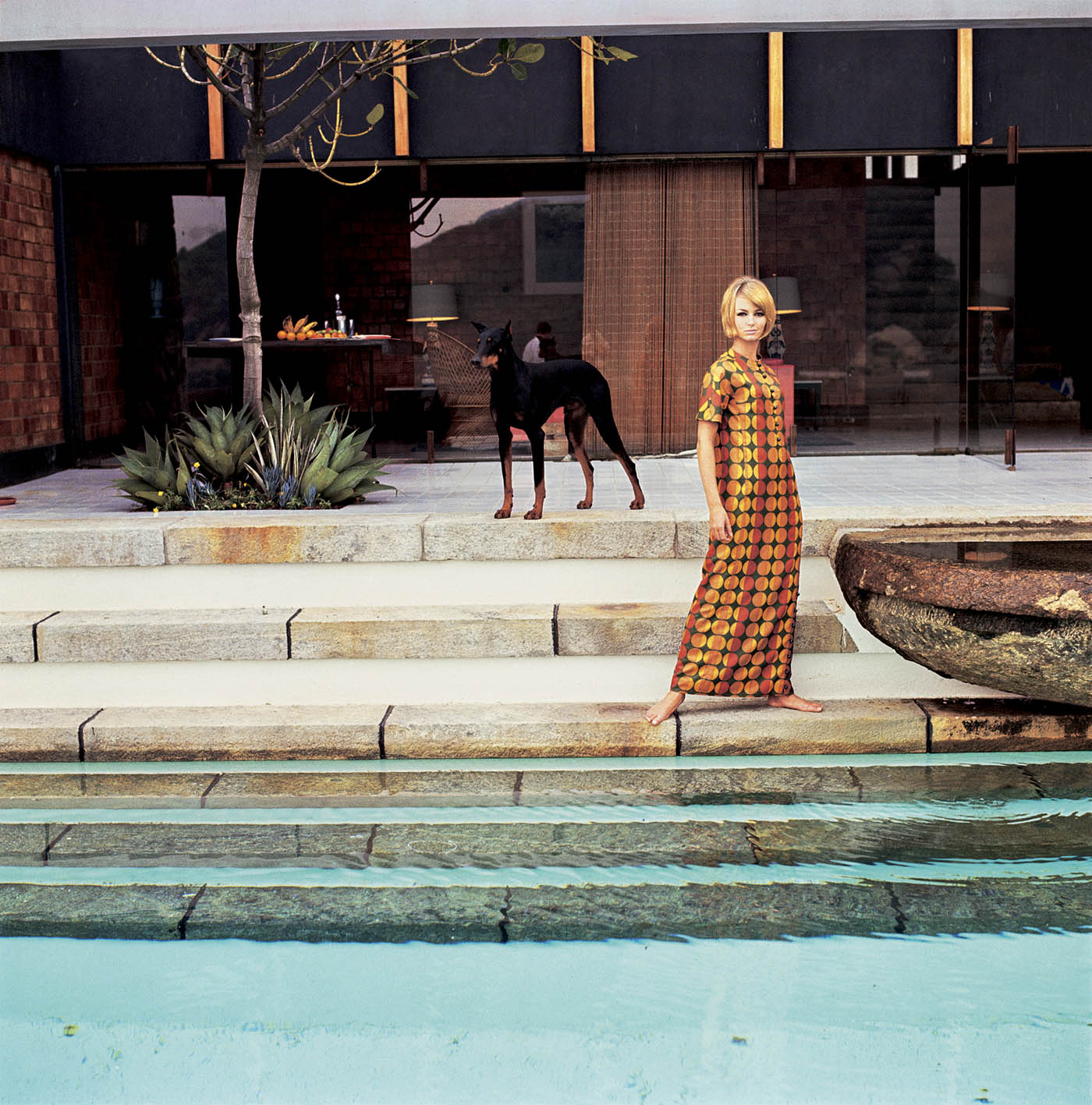
F.C. Gundlach (German, 1926-2021) 'Gunel Person at Sérgio Bernardes' villa', Rio de Janeiro, 1963


F.C. Gundlach (German, 1926-2021)
Gunel Person at Sérgio Bernardes’ villa
Rio de Janeiro, 1963
© F.C. Gundlach / F.C. Gundlach Foundation


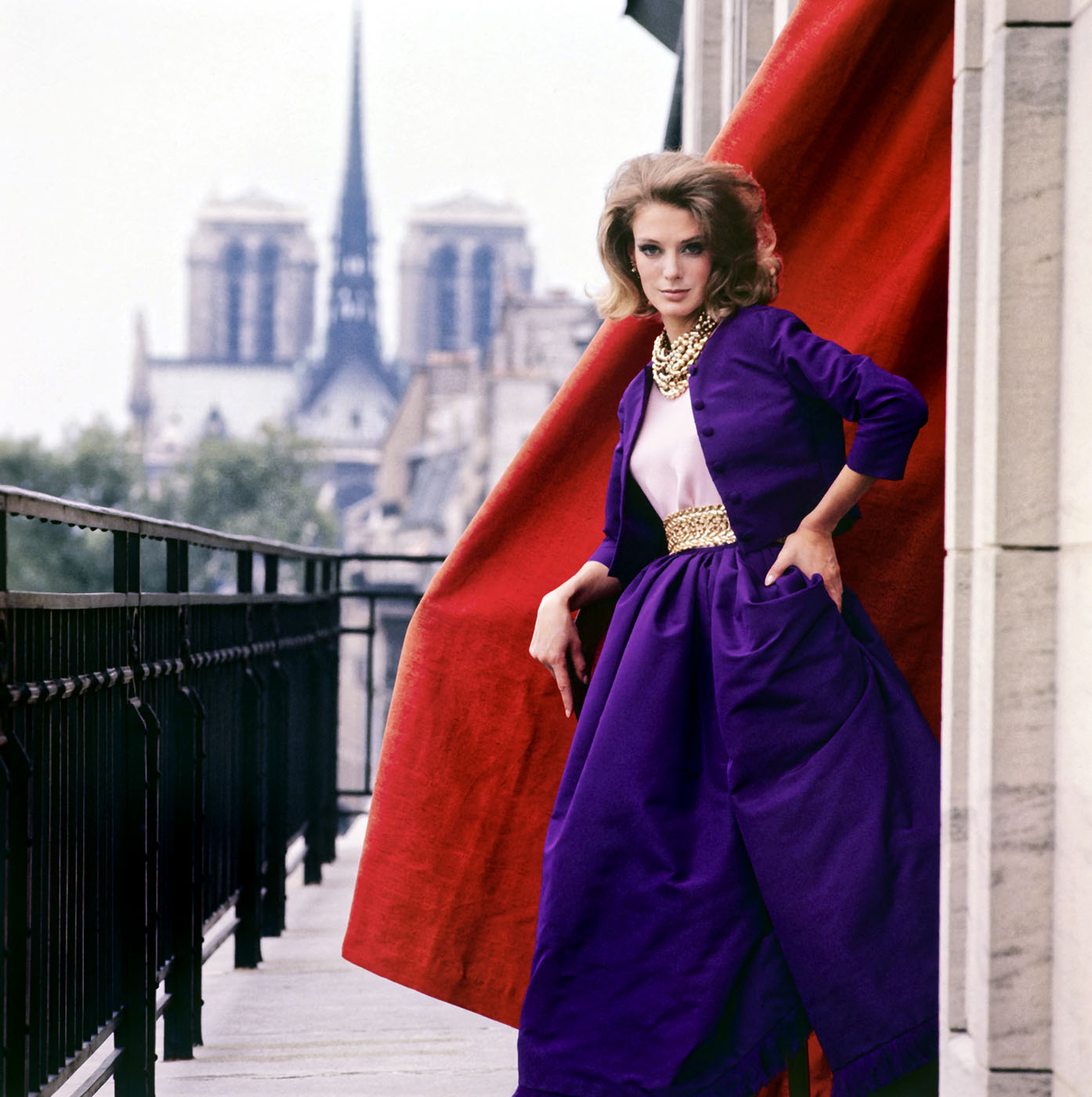
F.C. Gundlach (German, 1926-2021) 'On Helena Rubinstein's Balcony', Paris 1963


F.C. Gundlach (German, 1926-2021)
On Helena Rubinstein’s Balcony
Paris 1963
© F.C. Gundlach / F.C. Gundlach Foundation


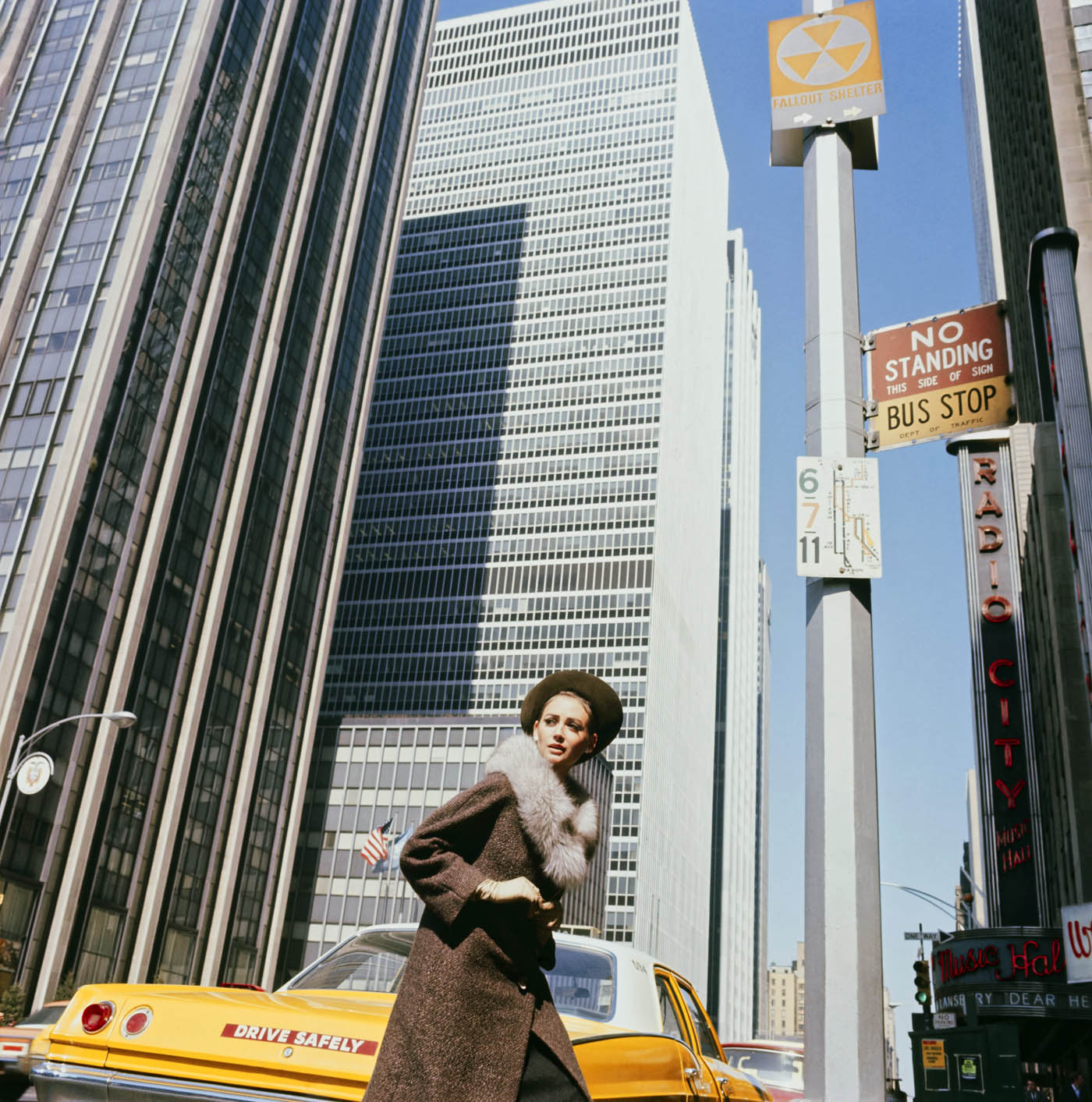
F.C. Gundlach (German, 1926-2021) Belinda, ‘Caribbean cruise with the SS United States’, stop in New York, New York City, 1965


F.C. Gundlach (German, 1926-2021)
Belinda, ‘Caribbean cruise with the SS United States’, stop in New York
New York City, 1965
© F.C. Gundlach / F.C. Gundlach Foundation


F.C. Gundlach (German, 1926-2021) 'Wilhelmina Cooper, 'Fashion Studio'', Hamburg 1965


F.C. Gundlach (German, 1926-2021)
Wilhelmina Cooper, ‘Fashion Studio’
Hamburg 1965
© F.C. Gundlach / F.C. Gundlach Foundation


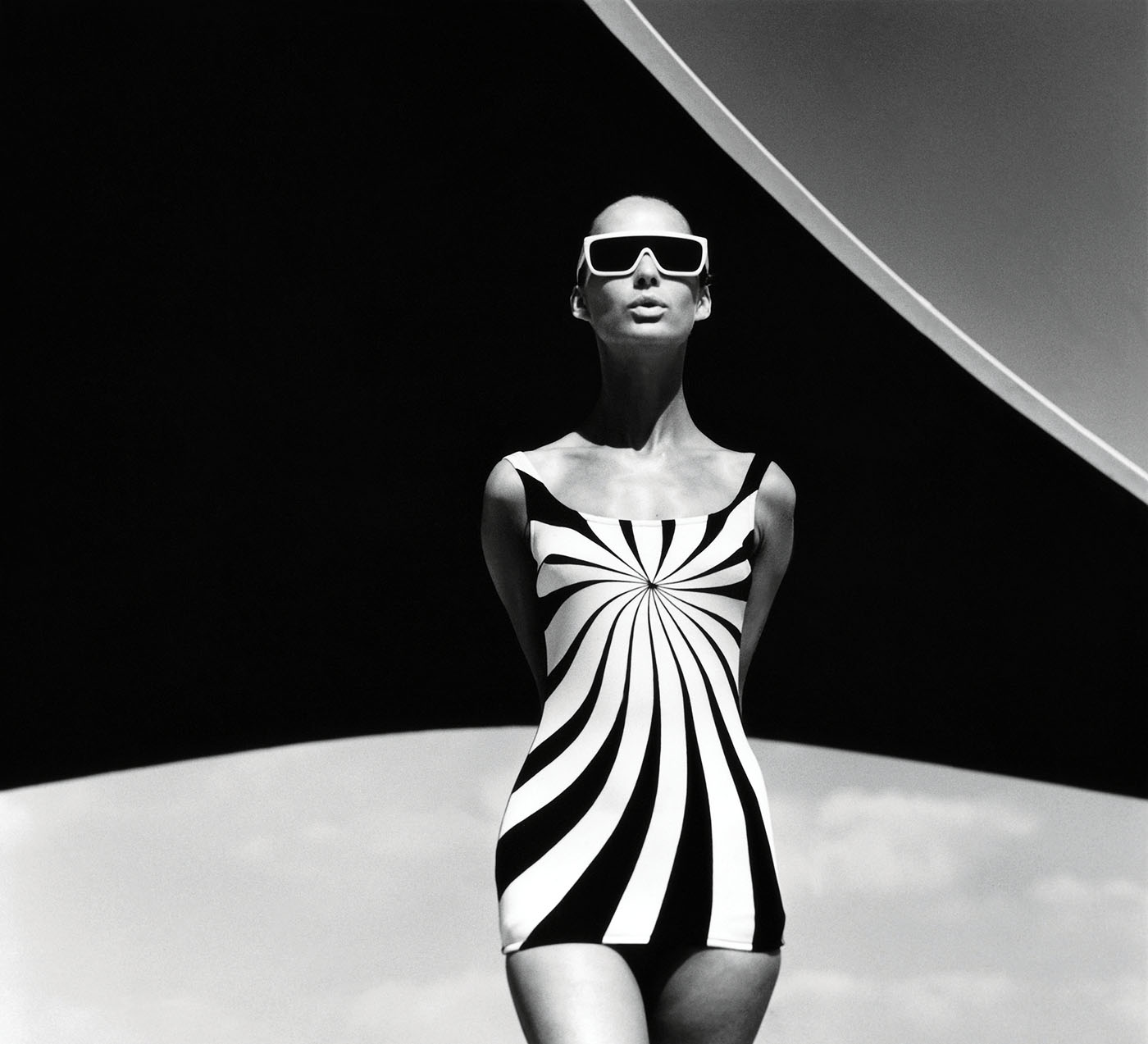
F.C. Gundlach (German, 1926-2021) 'Op Art swimsuit, Brigitte Bauer, Sinz swimwear', Vouliagmeni, 1966


F.C. Gundlach (German, 1926-2021)
Op Art swimsuit, Brigitte Bauer, Sinz swimwear
Vouliagmeni, 1966
© F.C. Gundlach / F.C. Gundlach Foundation


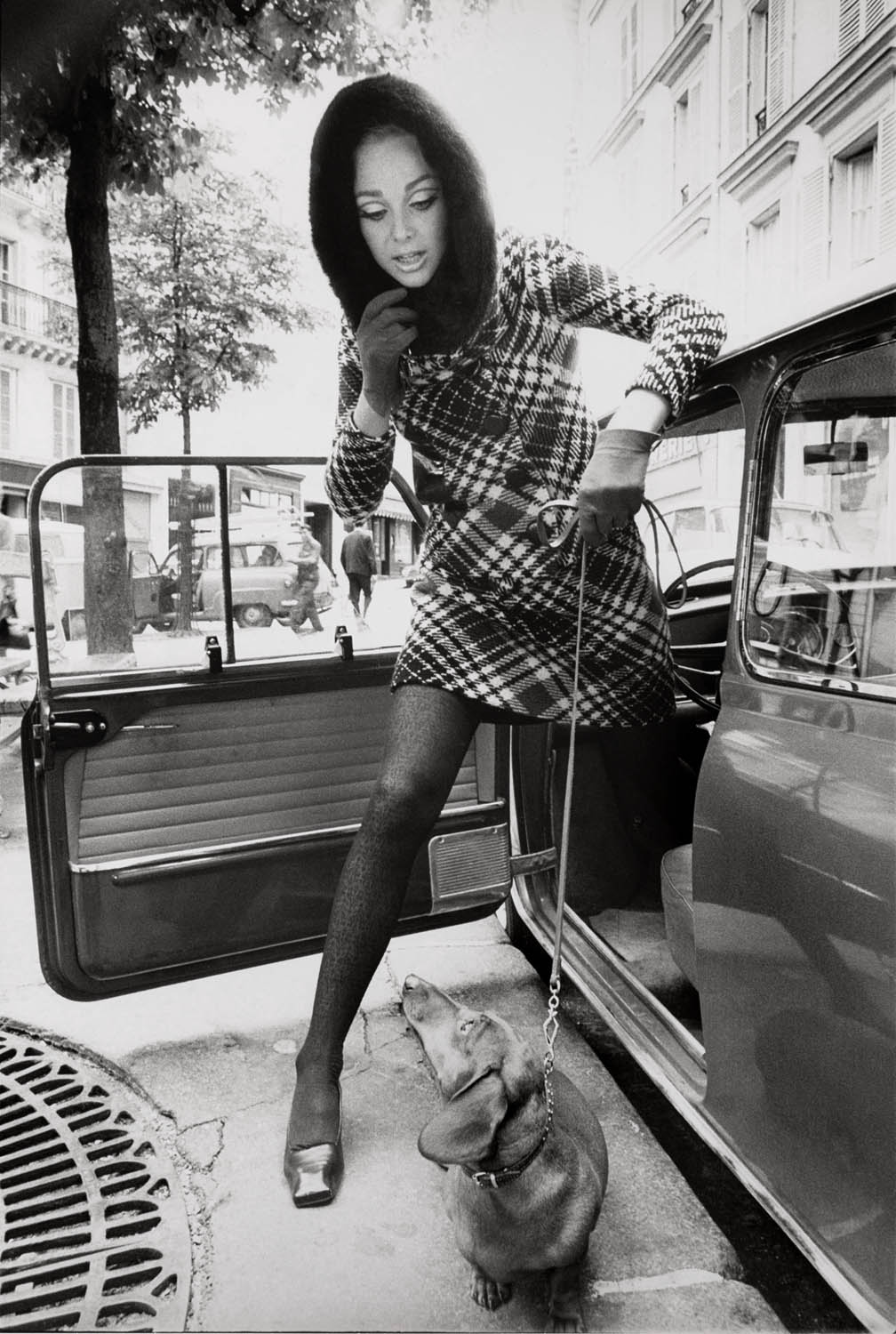
F.C. Gundlach (German, 1926-2021) 'Karin Mossberg in a Shetland costume by Pierre Cardin', Paris, 1966


F.C. Gundlach (German, 1926-2021)
Karin Mossberg in a Shetland costume by Pierre Cardin
Paris, 1966
© F.C. Gundlach / F.C. Gundlach Foundation


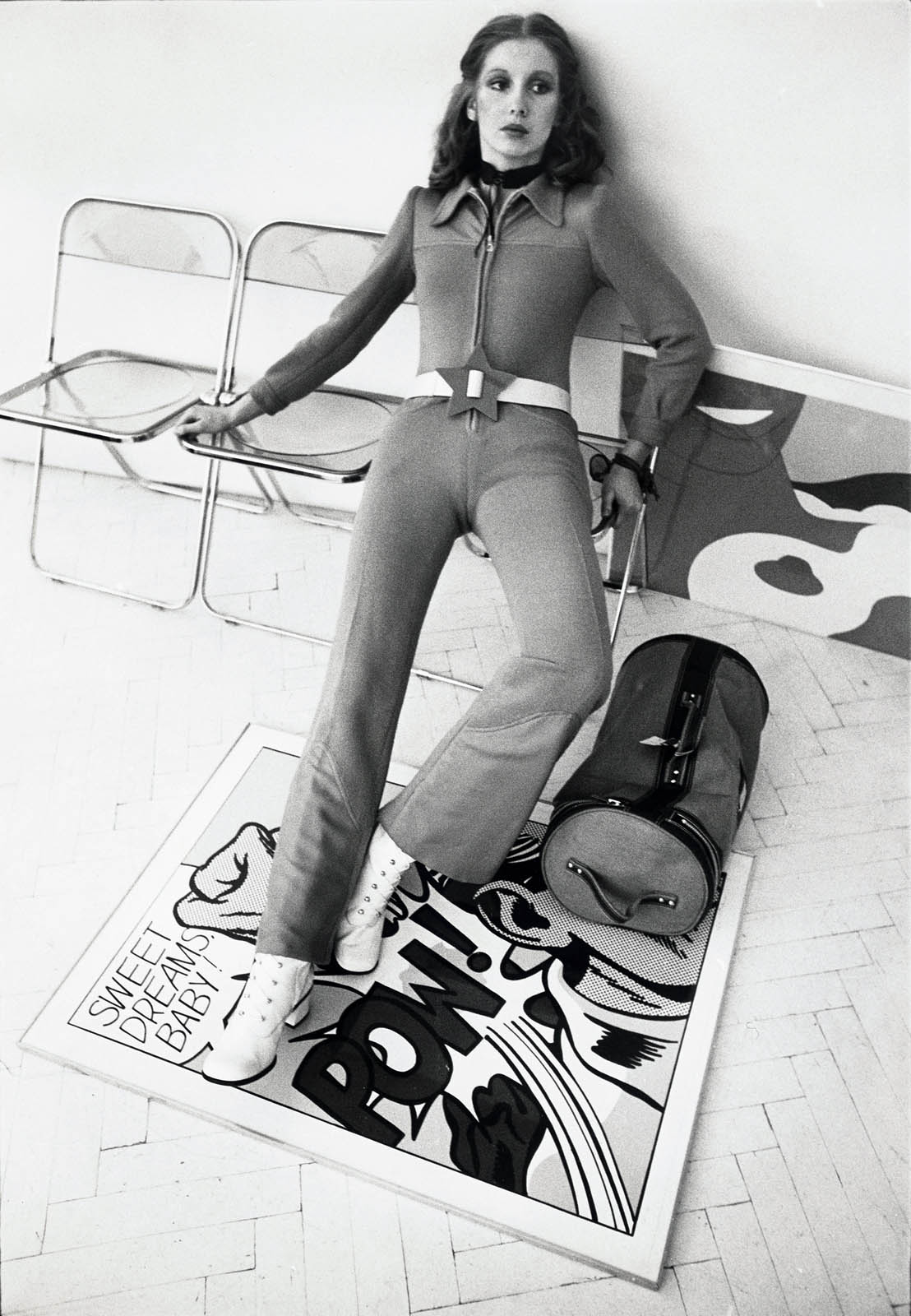
F.C. Gundlach (German, 1926-2021) 'Maud Adams for Falke Fashion, Hamburg', 1971


F.C. Gundlach (German, 1926-2021)
Maud Adams for Falke Fashion
Hamburg, 1971
© F.C. Gundlach / F.C. Gundlach Foundation


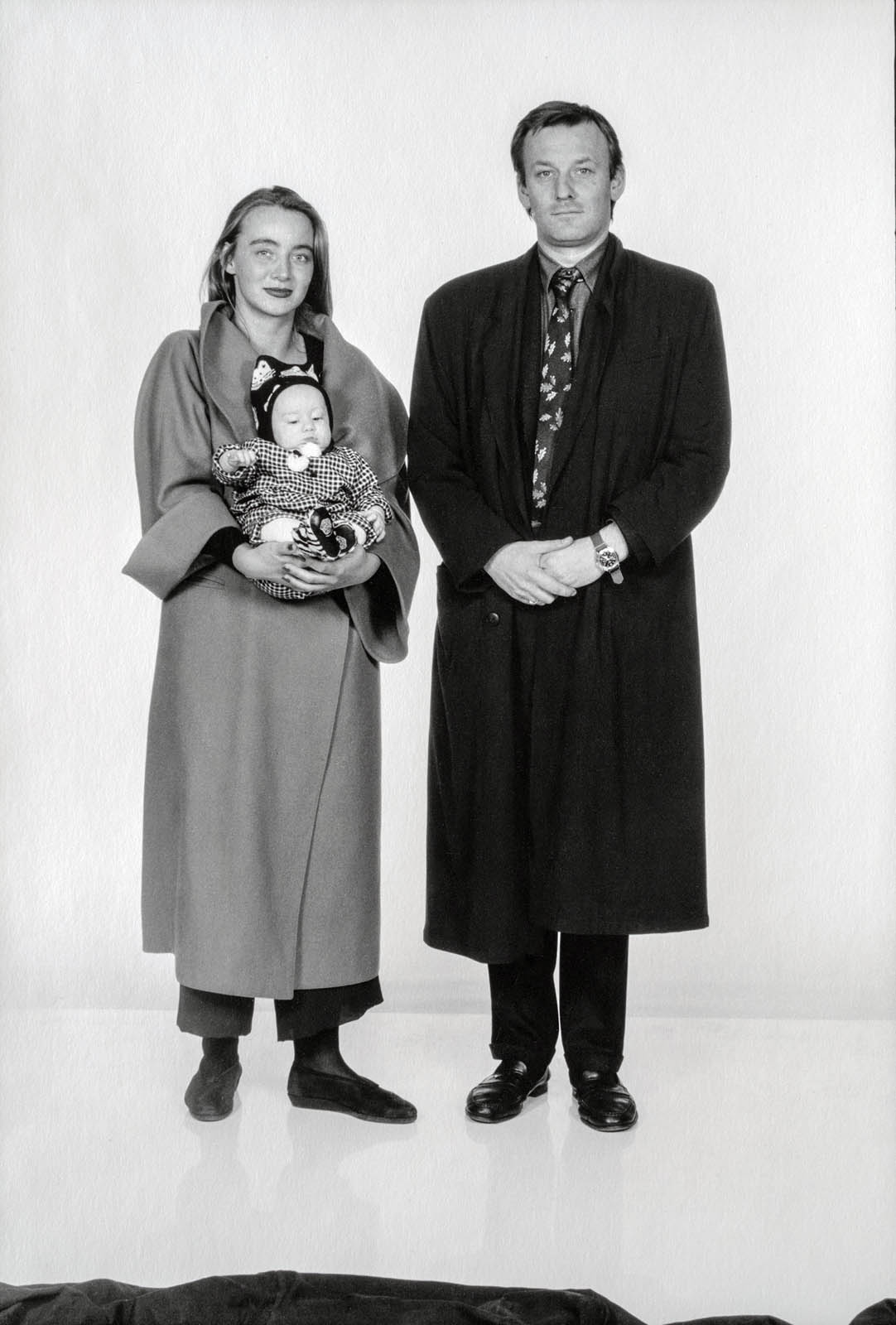
F.C. Gundlach (German, 1926-2021) 'Kippenberger family', Hamburg, around 1986


F.C. Gundlach (German, 1926-2021)
Kippenberger family
Hamburg, around 1986
© F.C. Gundlach / F.C. Gundlach Foundation


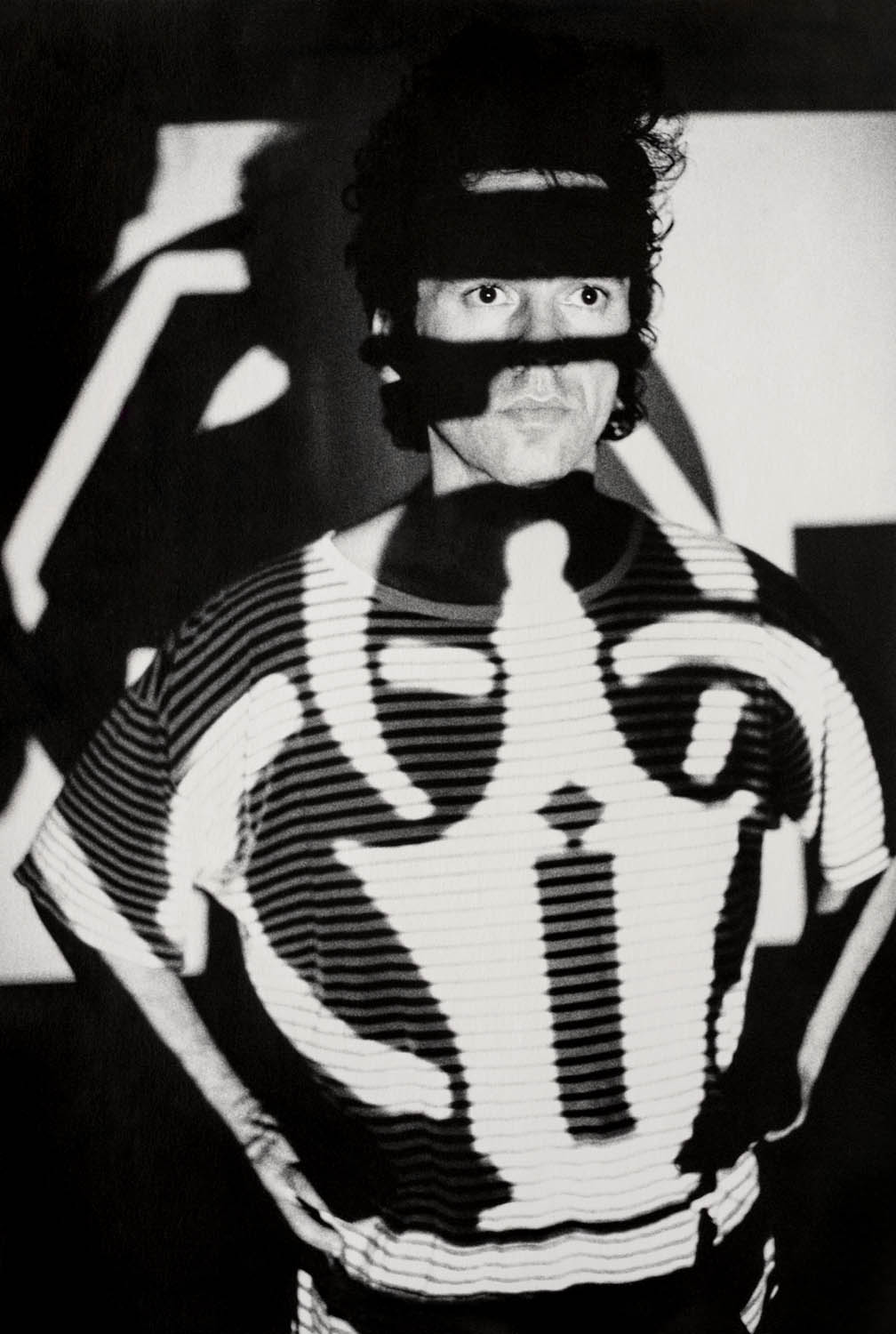
F.C. Gundlach (German, 1926-2021) 'Walter Dahn', Hamburg, 1989


F.C. Gundlach (German, 1926-2021)
Walter Dahn
Hamburg, 1989
© F.C. Gundlach / F.C. Gundlach Foundation


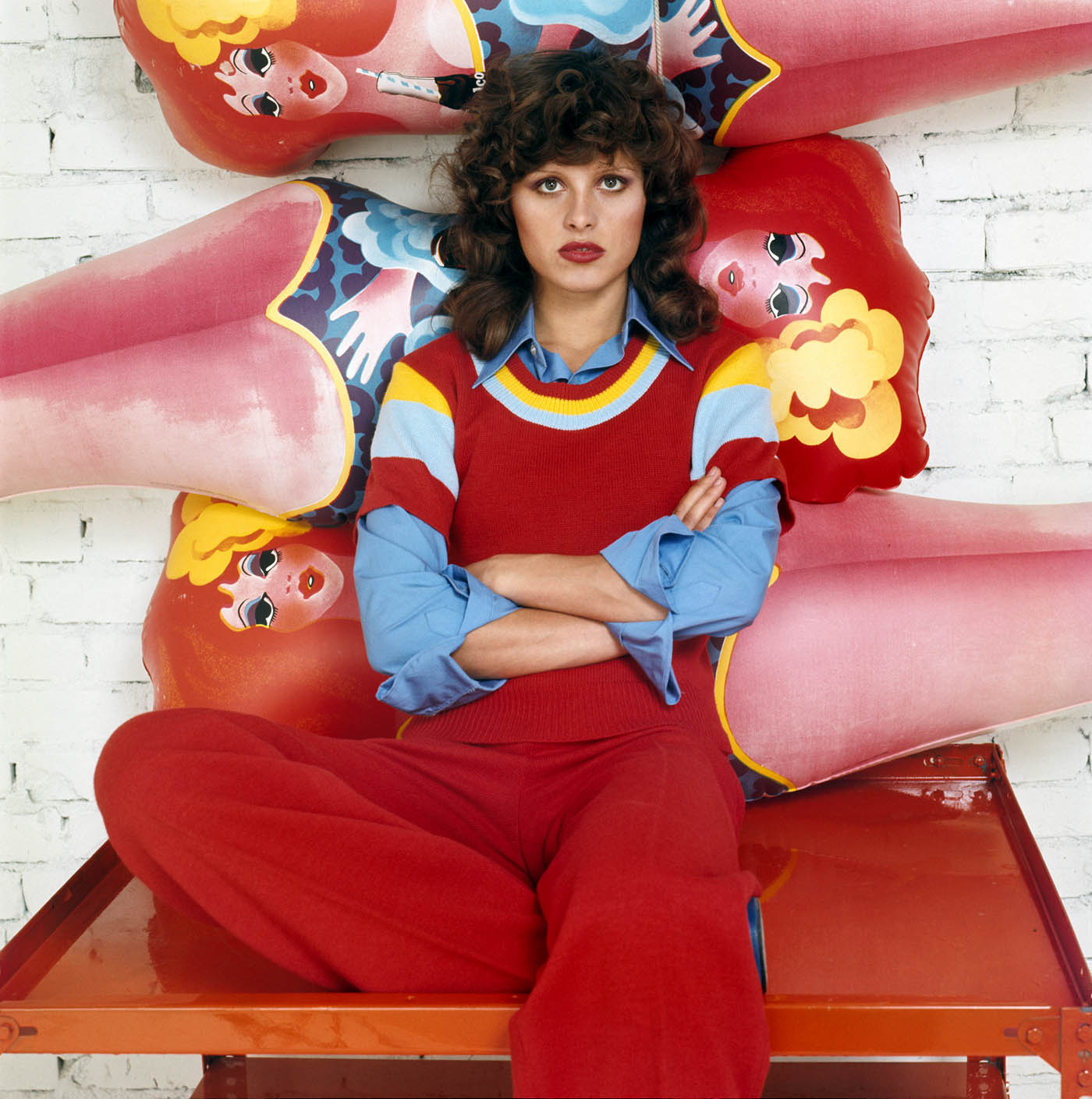
F.C. Gundlach (German, 1926-2021) 'Uschi Obermaier with Sinalco doll Rita', Hamburg 1970


F.C. Gundlach (German, 1926-2021)
Uschi Obermaier with Sinalco doll Rita
Hamburg 1970
© F.C. Gundlach / F.C. Gundlach Foundation


Bucerius Kunst Forum gGmbH
Alter Wall 12
20457 Hamburg

Opening hours:
Daily 11.00am – 7.00pm
Thursdays 11.00am – 9.00pm

Bucerius Kunst Forum website

LIKE ART BLART ON FACEBOOK

Back to top

Exhibition: ‘Barbara Pflaum: Showcases of Everyday Life’ at MAK Museum, Vienna

Exhibition dates: 15th April – 16th August, 2026

Guest Curator: Karolina Ziębińska


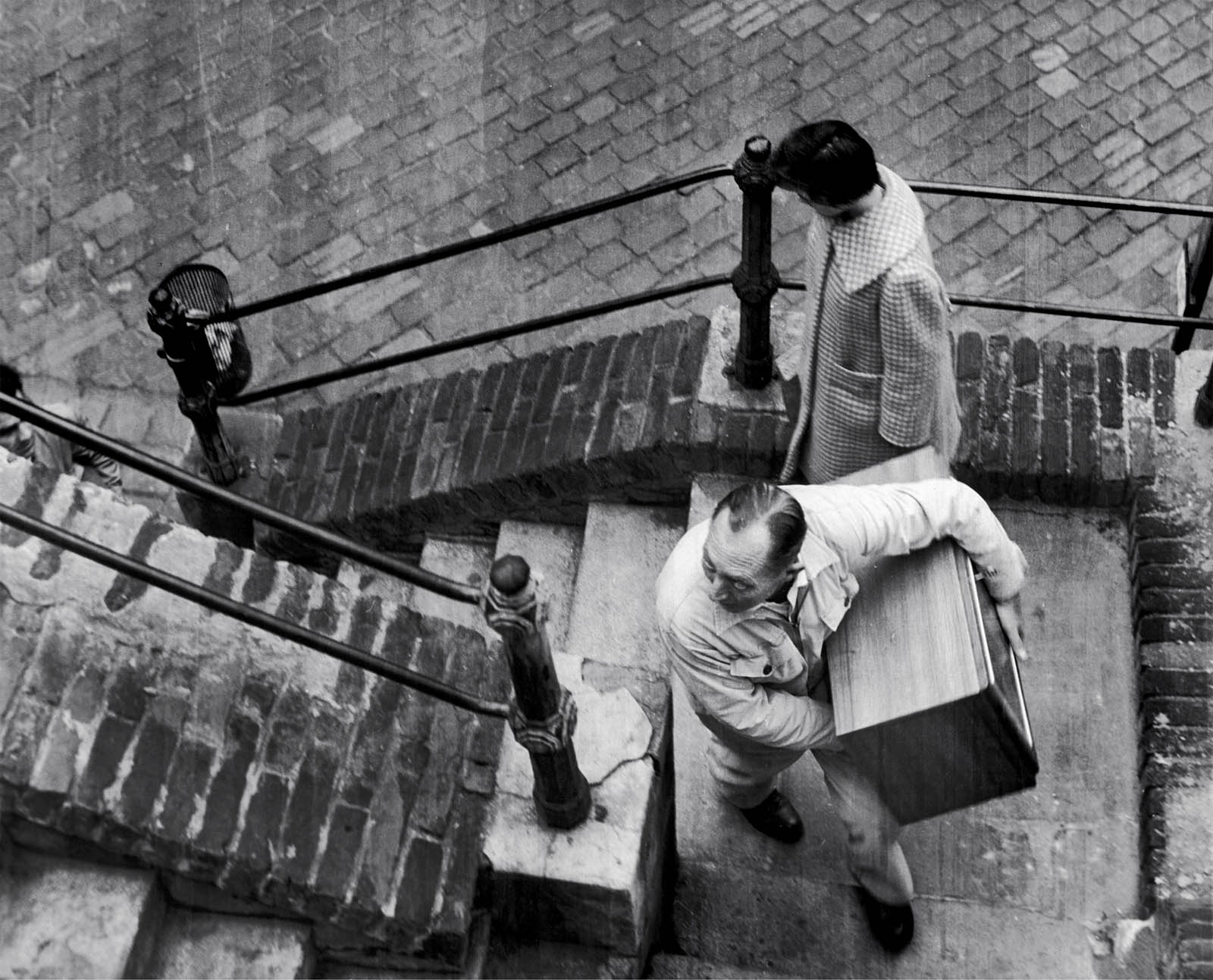
Barbara Pflaum (Austrian, 1912-2002) '"Furniture transport," Vienna' c. 1960


Barbara Pflaum (Austrian, 1912-2002)
“Furniture transport,” Vienna
c. 1960
Gelatin silver print
© APA-Images / brandstaetter images / Barbara Pflaum


Framing within a square or rectangle, Pflaum’s situational, observational photographs of everyday life in post-war Vienna are full of humans pictured singly or in groups against the urban backdrop.

The figures are rarely photographed front and centre with the photographer using the near-far compositional technique – placing a prominent object very close to the camera lens while capturing a distant figure or background for context – to create a strong three-dimensional depth within the image which enables the artist to enact a compelling visual story. Figures are also placed asymmetrically within the picture. Silhouetting is used to great effect as is the use of low depth of field.

There is a sense of “caught on the fly” abstraction in Pflaum’s personal work, even as her street photographs, her personal not commercial work, are eloquently structured, visualised and resolved, demonstrating “not only her extraordinary powers of observation, her humor, and her phenomenal sense of form, but also a profound social awareness.”

Part Henri Cartier-Bresson, part Edith Tudor-Hart, Pflaum’s enduring street photographs are strong and engaging and entirely her own vision. I just wish I had more of them to show you … but please enlarge the installation views of the exhibition in the posting to gain a greater appreciation of their presence.

Dr Marcus Bunyan


Many thankx to MAK Museum for allowing me to publish the photographs in the posting. Please click on the photographs for a larger version of the image.


Pflaum’s style was marked by poised restraint and subordination of the photographer to the motif, prioritising observation and patience over aggressive intervention, which lent her images an unconventional, artistic edge amid the era’s photojournalistic hustle. Influences from her graphic training extended to lighting and post-processing, where she favoured natural illumination and minimal alterations to preserve raw authenticity, while exchanging ideas with contemporaries like Franz Hubmann, Erich Lessing, and Harry Weber shaped her approach to dynamic yet empathetic framing. This method resulted in a oeuvre of standalone, motif-driven photographs that engaged viewers through subtle interpretive layers rather than overt narratives. …

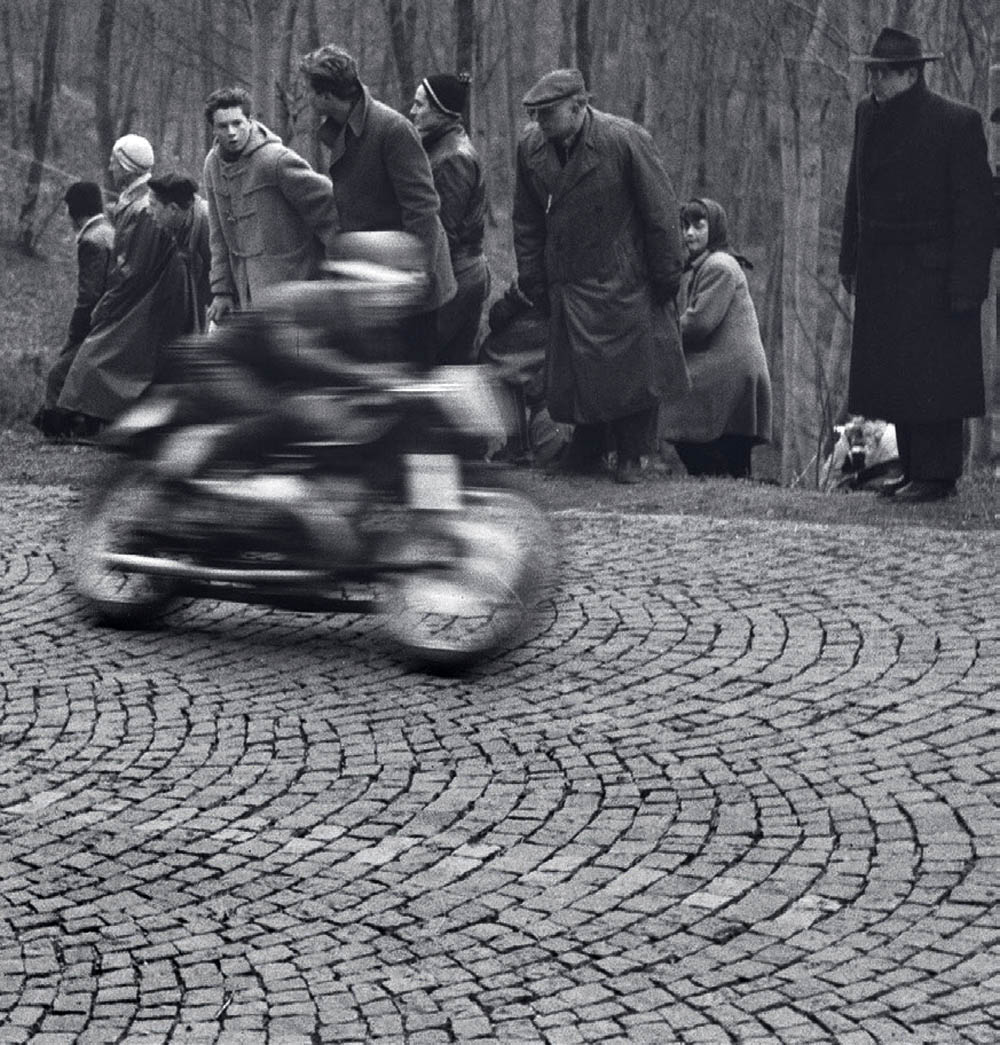
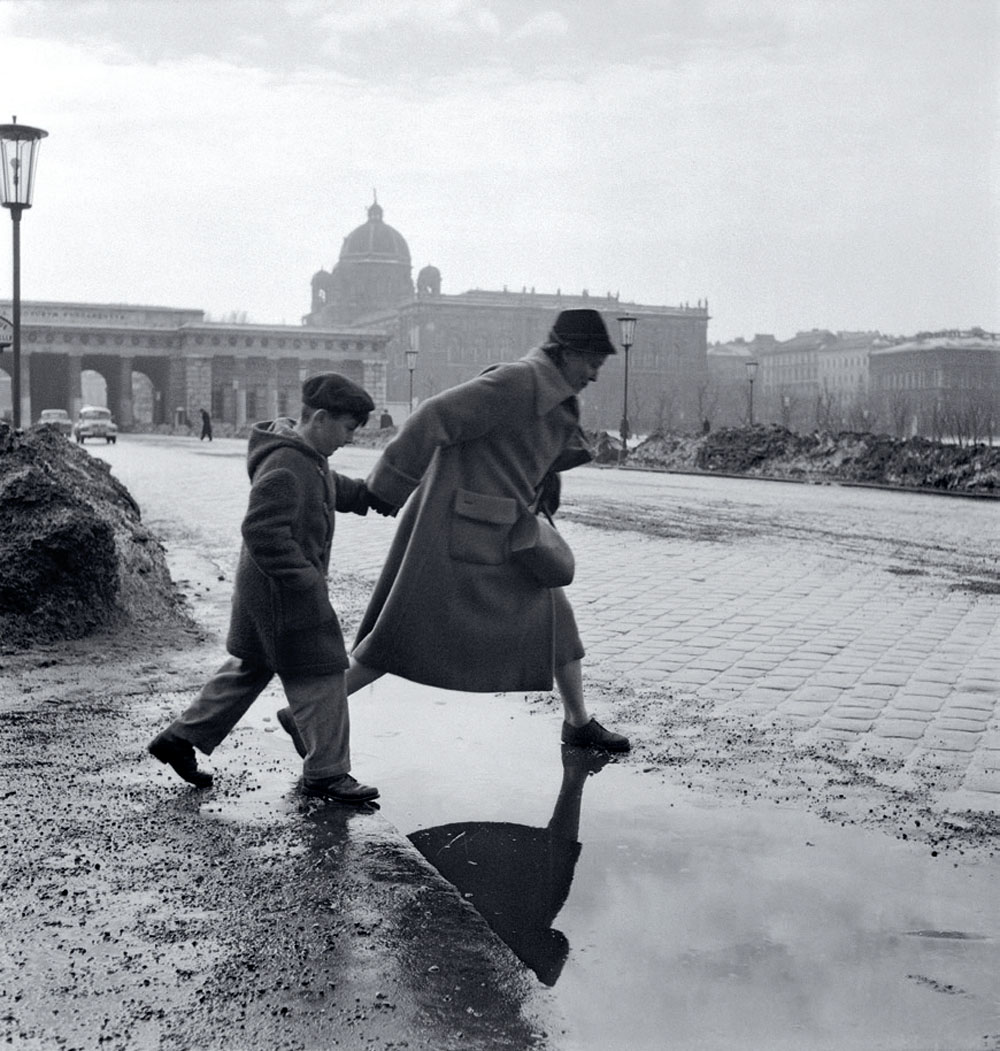
Barbara Pflaum’s photography served as a visual chronicle of post-war Vienna and Austria during the Second Republic, capturing the city’s social and cultural revival from the 1950s to the 1970s through street scenes, urban portraits, and everyday vignettes. Her images documented the reconstruction era’s vibrancy, including spontaneous moments like pedestrians jumping over puddles on Heldenplatz (c. 1960) and leisure activities at the Prater amusement park with the Giant Ferris Wheel in the background (1961), highlighting the resilience of Viennese daily life amid lingering post-war recovery. These works portrayed ordinary figures – such as market women, newspaper sellers, and coal delivery workers – as typological subjects, emphasising authentic urban interactions without ideological overlay, as seen in her depiction of a motorcycle race on Wiener Höhenstraße (1956).”


Anonymous. “Barbara Pflaum,” on the Grokipedia website Nd [Online] Cited 31/07/2026


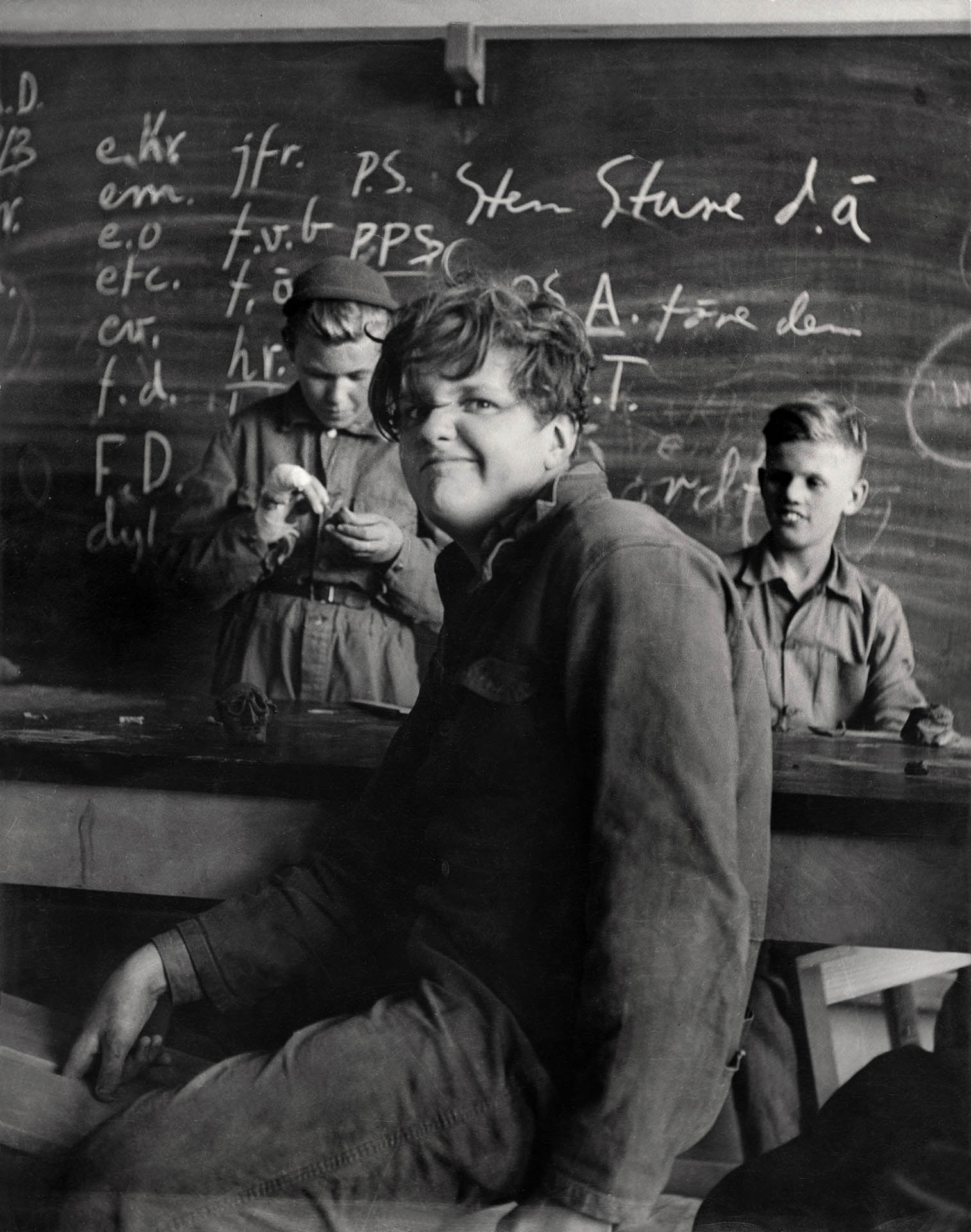
Barbara Pflaum (Austrian, 1912-2002) 'School for children with behavioural difficulties, Sweden' 1954


Barbara Pflaum (Austrian, 1912-2002)
School for children with behavioural difficulties, Sweden
1954
Gelatin silver print
© APA-Images / brandstaetter images / Barbara Pflaum


Barbara Pflaum (Austrian, 1912-2002) 'School for children with behavioural difficulties, Sweden' 1954


Barbara Pflaum (Austrian, 1912-2002)
School for children with behavioural difficulties, Sweden
1954
Gelatin silver print
© APA-Images / brandstaetter images / Barbara Pflaum


Barbara Pflaum (Austrian, 1912-2002) 'A motorcycle race on Wiener Höhenstraße, Austria' 1956


Barbara Pflaum (Austrian, 1912-2002)
A motorcycle race on Wiener Höhenstraße, Austria
1956
Gelatin silver print
© APA-Images / brandstaetter images / Barbara Pflaum


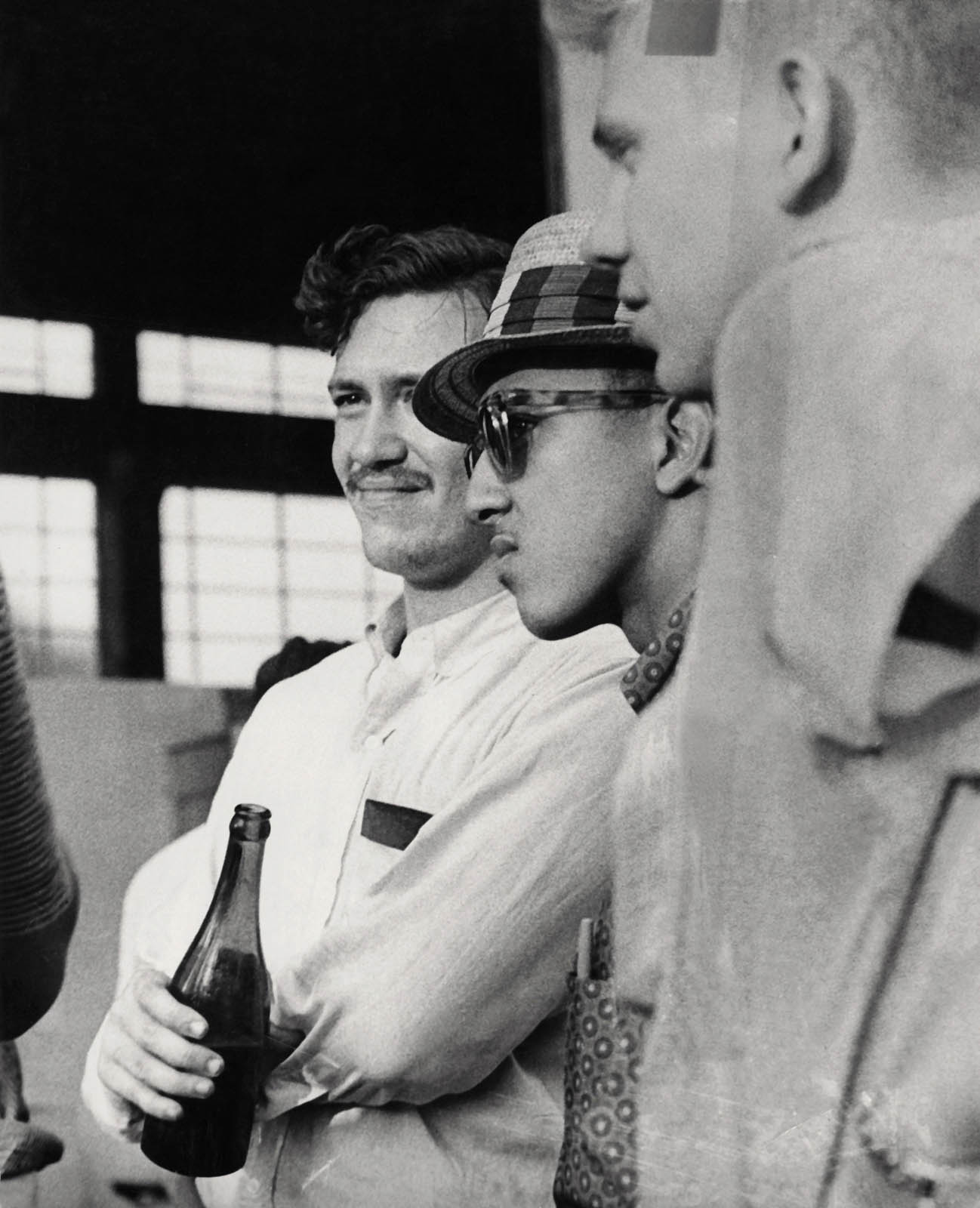
Barbara Pflaum (Austrian, 1912-2002) 'Foreigners, Vienna' 1959


Barbara Pflaum (Austrian, 1912-2002)
Foreigners, Vienna
1959
Gelatin silver print
© APA-Images / brandstaetter images / Barbara Pflaum


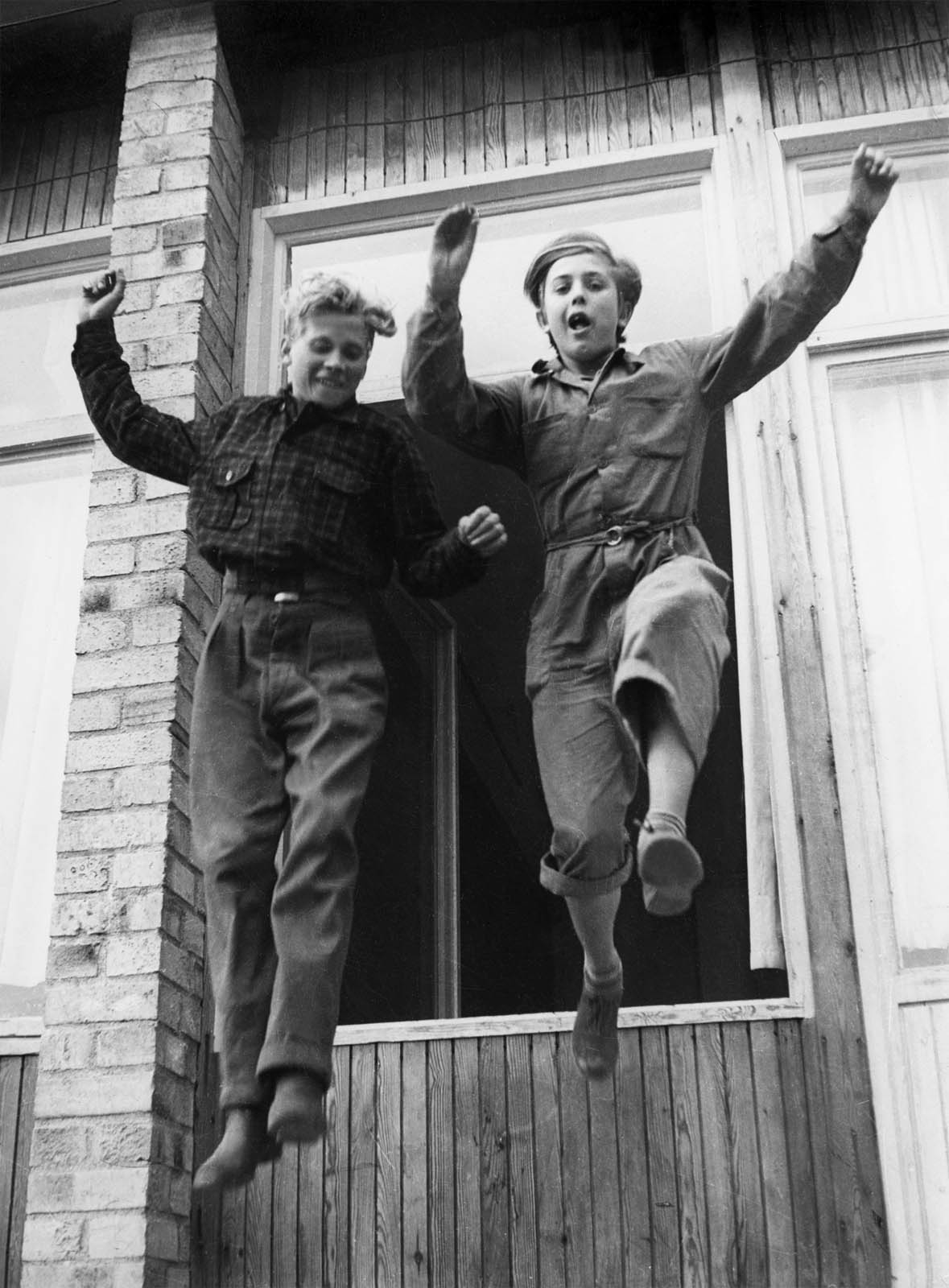
Barbara Pflaum (Austrian, 1912-2002) 'Jumping over a puddle on Heldenplatz, Vienna, Austria' 1960


Barbara Pflaum (Austrian, 1912-2002)
Jumping over a puddle on Heldenplatz, Vienna, Austria
1960
Gelatin silver print
© APA-Images / brandstaetter images / Barbara Pflaum


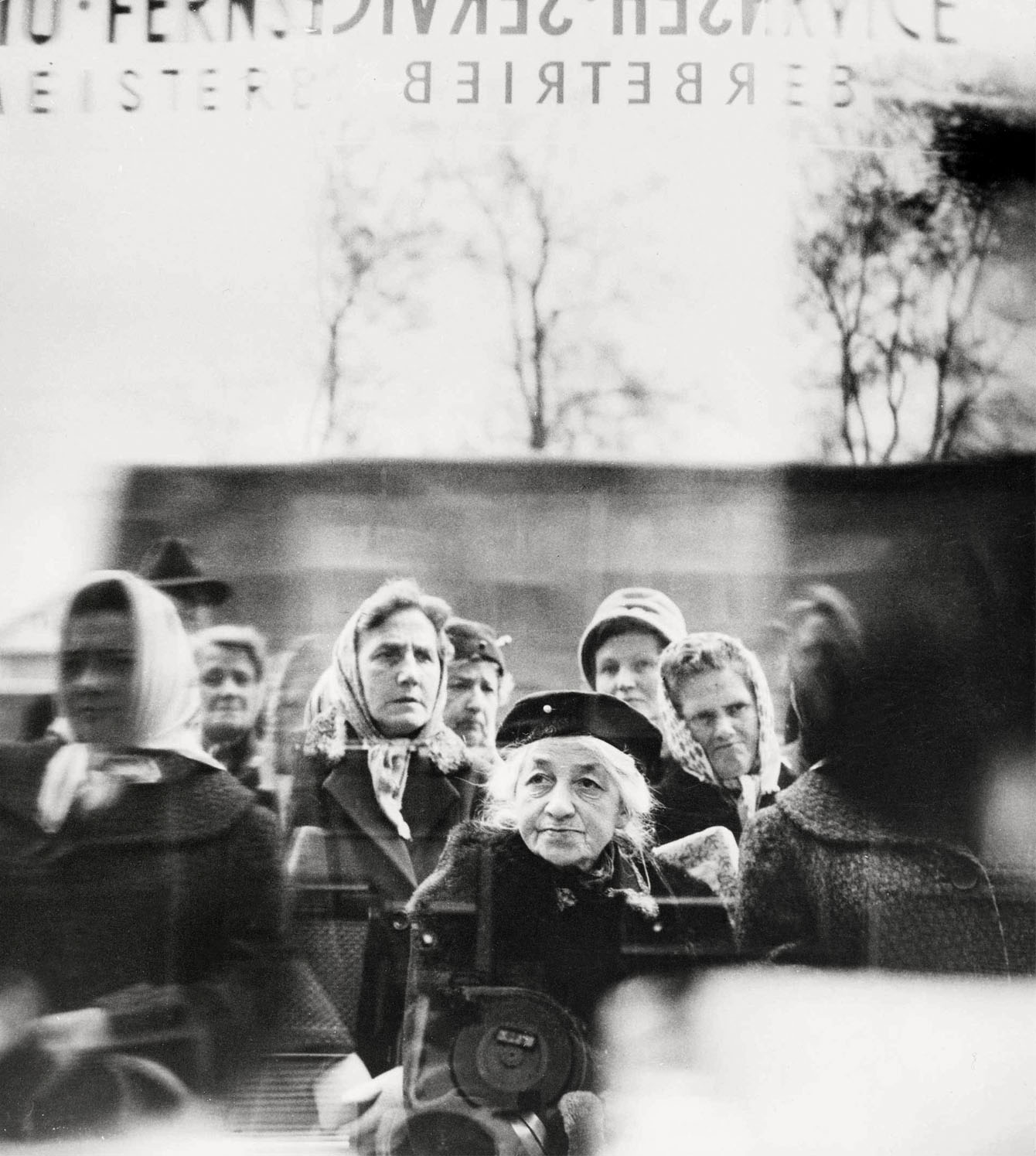
Barbara Pflaum (Austrian, 1912-2002) 'Passers-by standing in front of the shop window of an electrical goods store displaying a television, Vienna' c. 1960


Barbara Pflaum (Austrian, 1912-2002)
Passers-by standing in front of the shop window of an electrical goods store displaying a television, Vienna
c. 1960
Gelatin silver print
© APA-Images / brandstaetter images / Barbara Pflaum


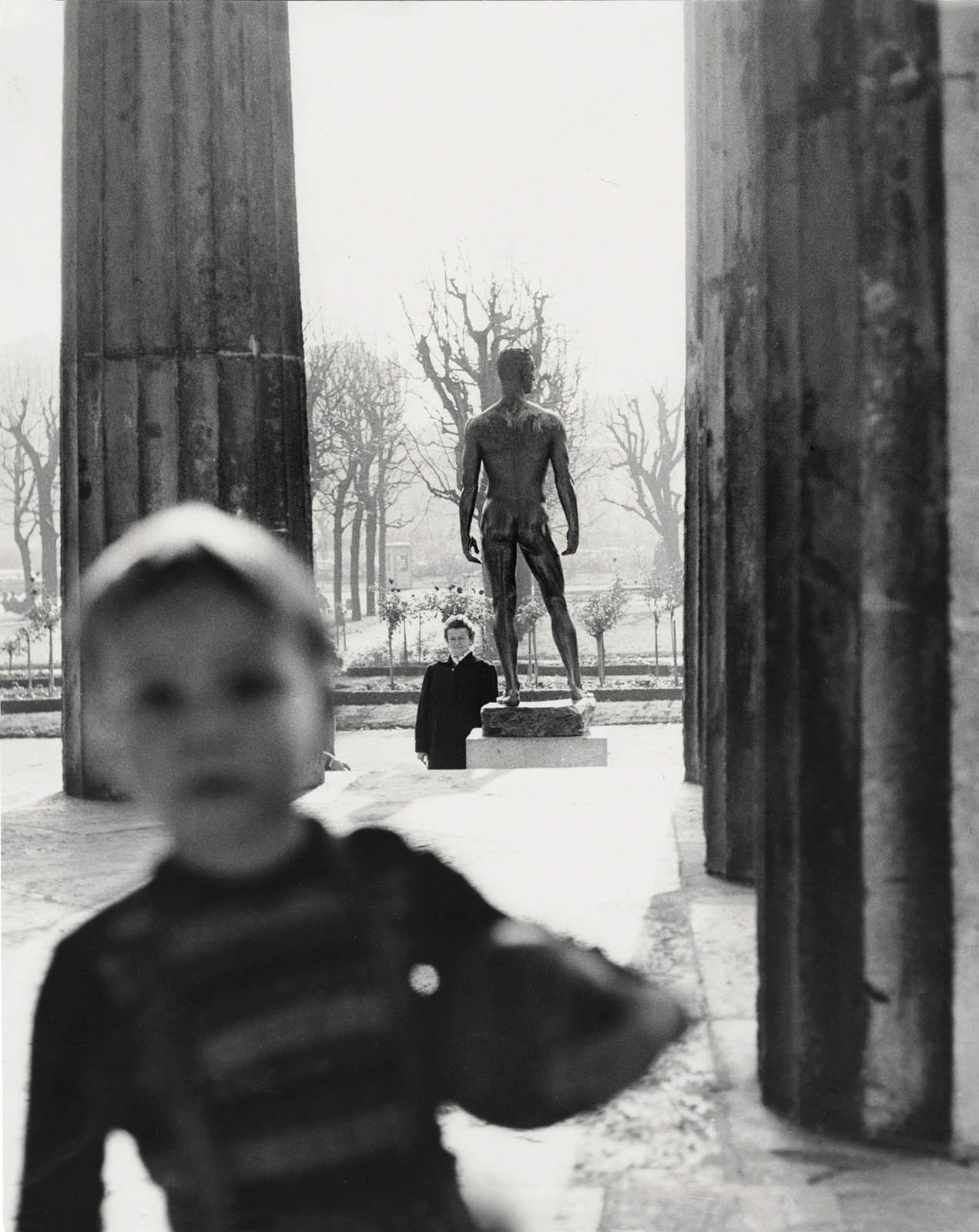
Barbara Pflaum (Austrian, 1912-2002) 'Child at play in front of the Theseus Temple in the Volksgarten, Vienna' c. 1960


Barbara Pflaum (Austrian, 1912-2002)
Child at play in front of the Theseus Temple in the Volksgarten, Vienna
c. 1960
Gelatin silver print
© APA-Images / brandstaetter images / Barbara Pflaum


Barbara Pflaum (1912-2002) was one of the few women who worked as photojournalists for pictorial magazines in the 1950s.

Men dominated this profession in the first two postwar decades, while women in Europe and the United States returned to domestic life. This was not the case for Pflaum, who came across photography at the University of Applied Arts Vienna, where she had taken up studies as a 40-year-old divorcée with three children.

Her photographs garnered the attention of several people. In 1954 she published her first reports – about Venice and about an experimental school in Sweden – in the Wiener Illustrierte newspaper. A short time later, she was hired as a photographer for the Wochenpresse weekly, where she worked for over 20 years. She and her classic Rolleiflex medium format camera could be found at most theatre and opera openings, vernissages, and most of all at political events.

Her portraits of heads of state, party leaders, and famous artists often adorned the cover pages of the weekly magazine. As the proud photographer of these images, she showed them in exhibitions throughout her life. The presentation at the MAK will show a different, less well-known side of her work – one that nowadays especially has the capacity to delight.

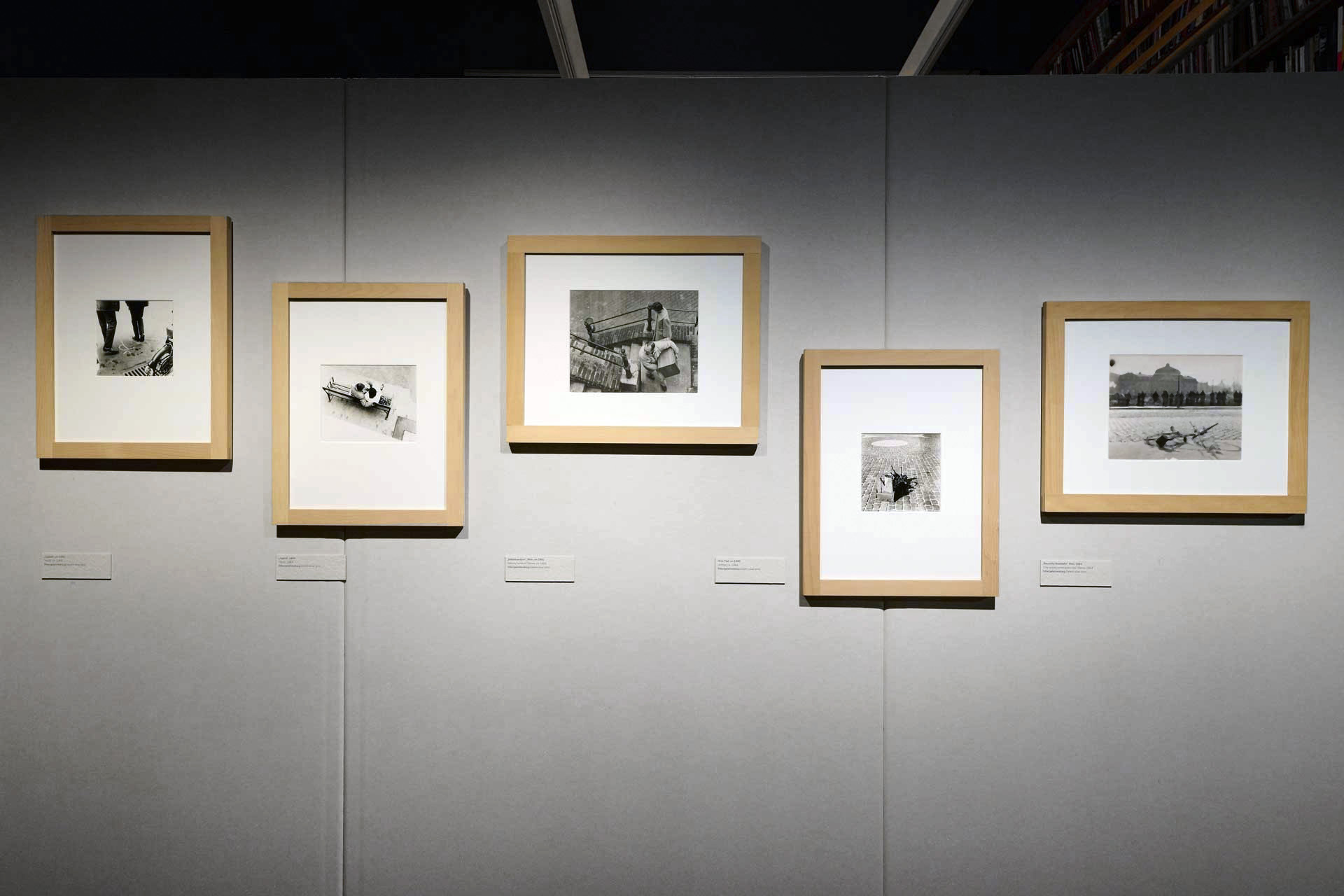
Between vernissages, conferences, and premieres, Barbara Pflaum tirelessly roamed the streets of Vienna and observed its inhabitants. Situational photographs and masterful portraits not only bring to light her extraordinary powers of observation, her sense of humour, and her phenomenal flair for form, but also reveal an encompassing social sensibility. Taken for herself, in passing – these photographs are the subject of the exhibition.

Some found their way into a Vienna photo book published by Pflaum in 1961, but many have never been released. The images show the city’s inhabitants going about their daily lives, as well as street protests, condemned neighbourhoods, and scenes from the annual Christmas markets.

Text from the MAK Museum website


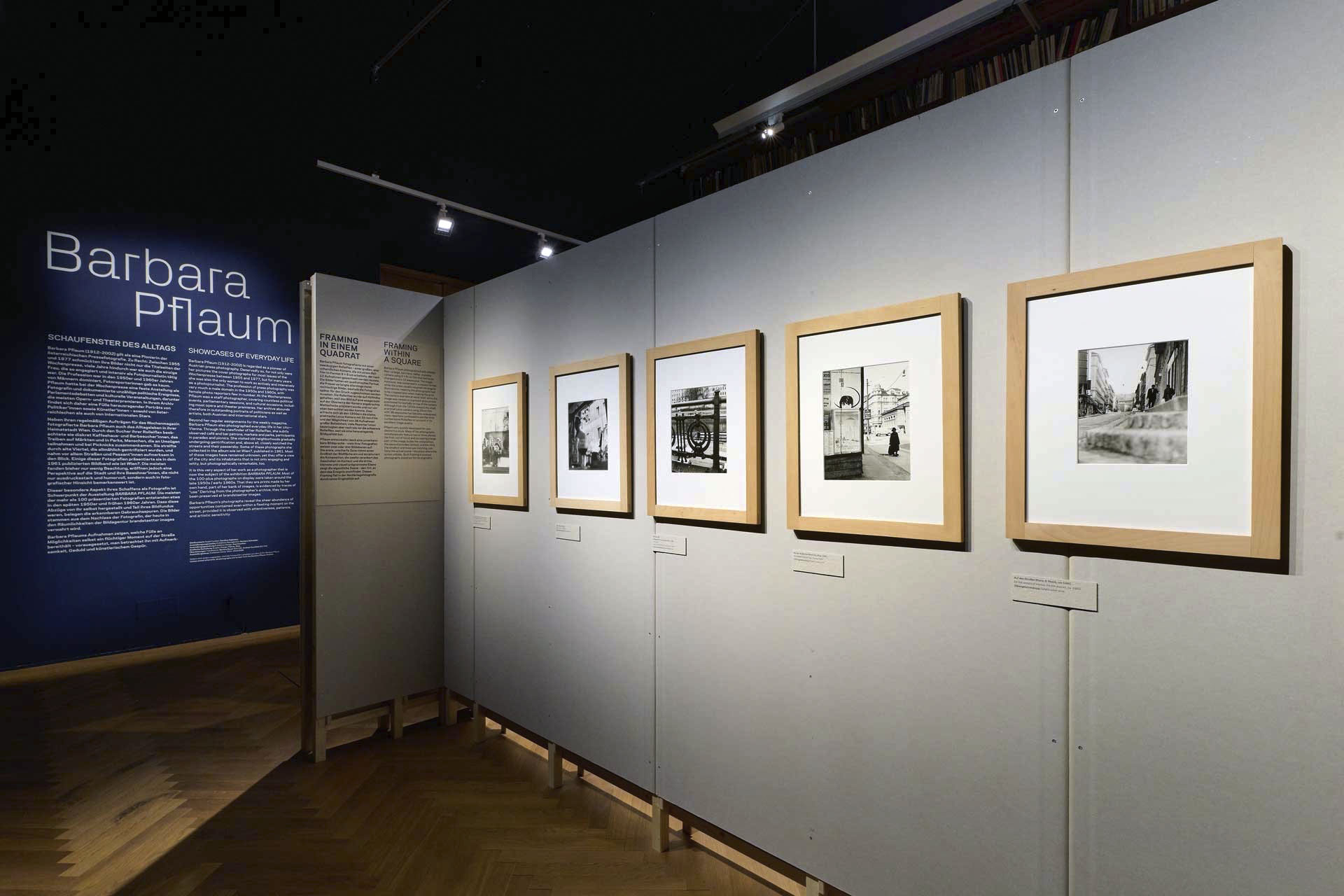
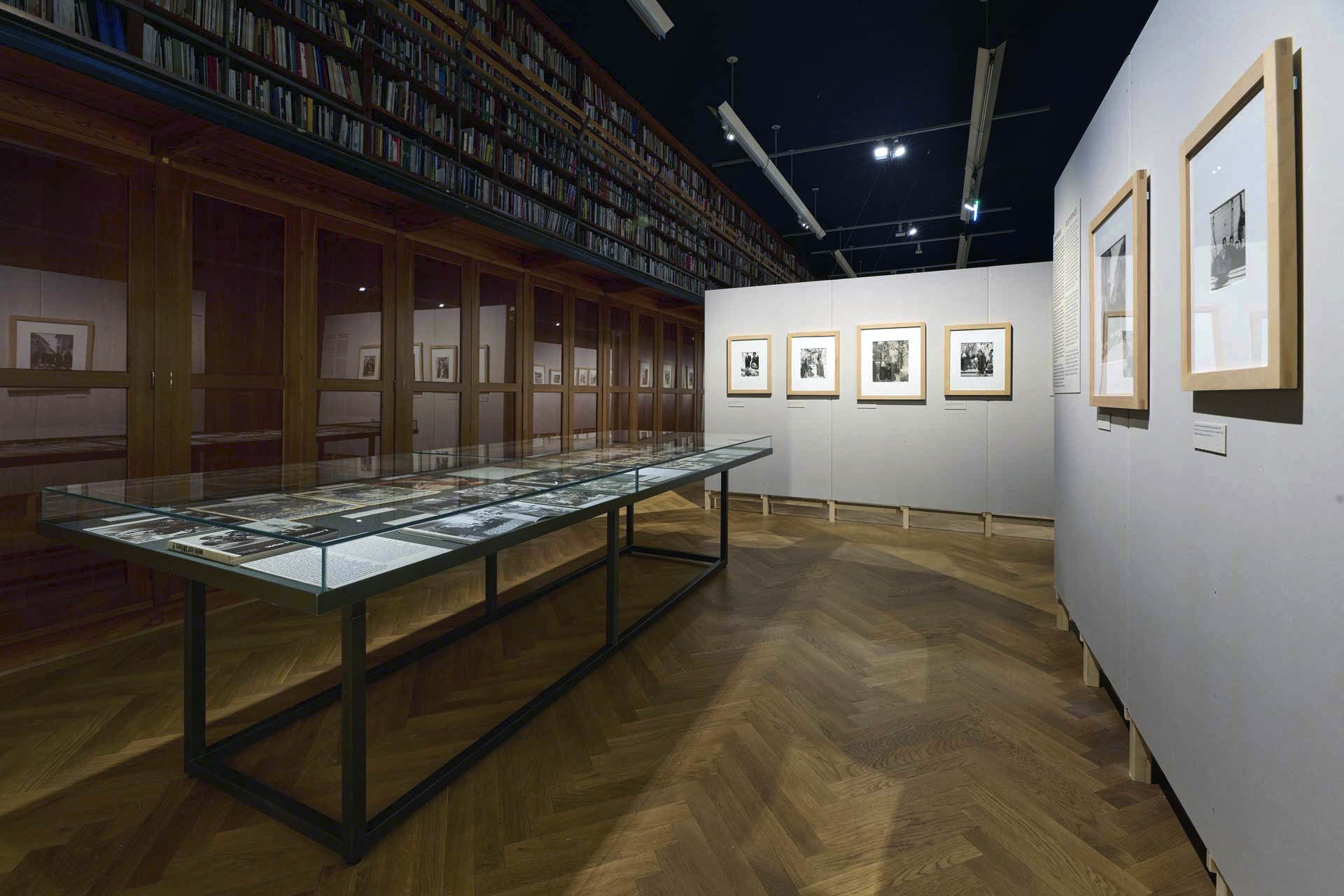
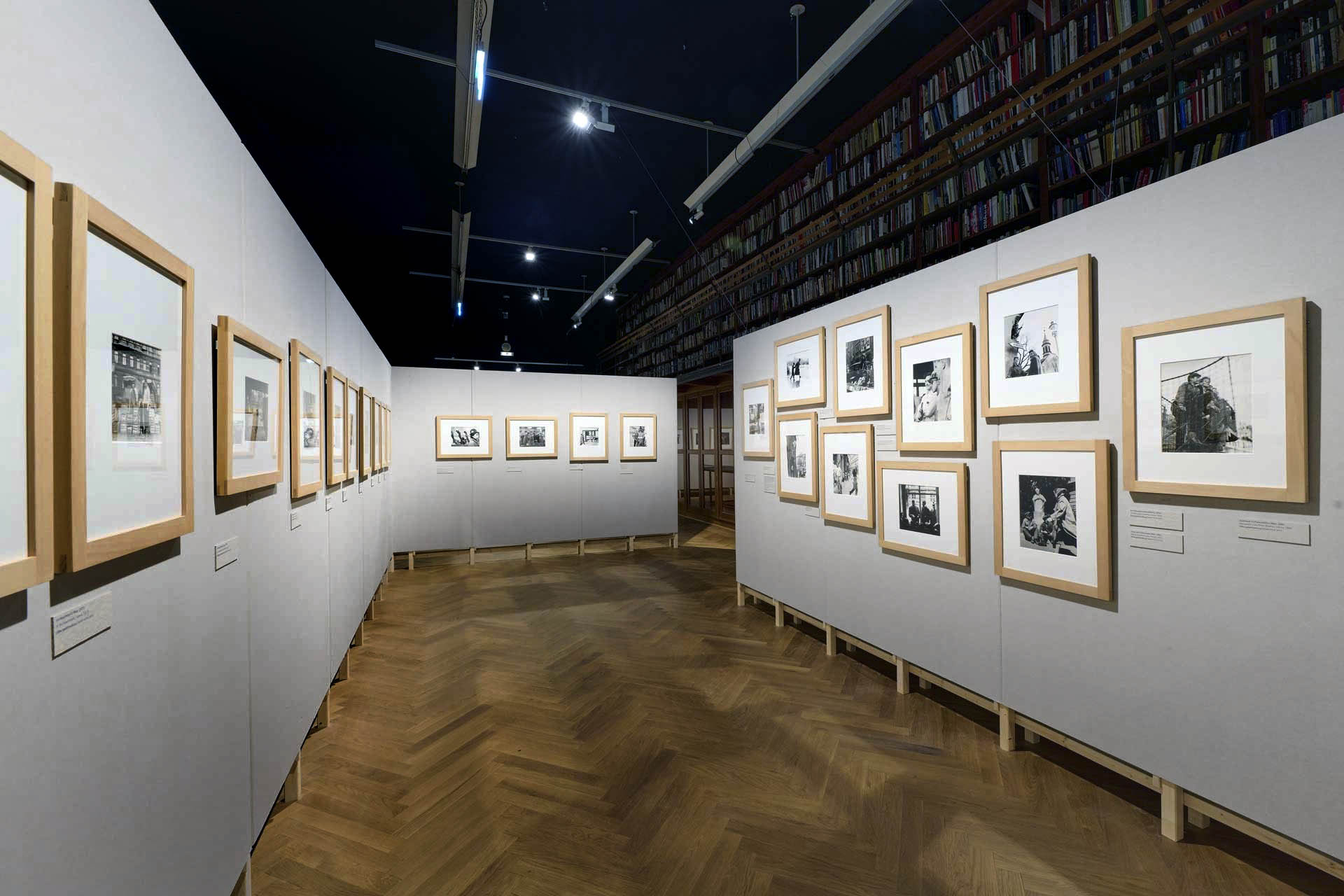
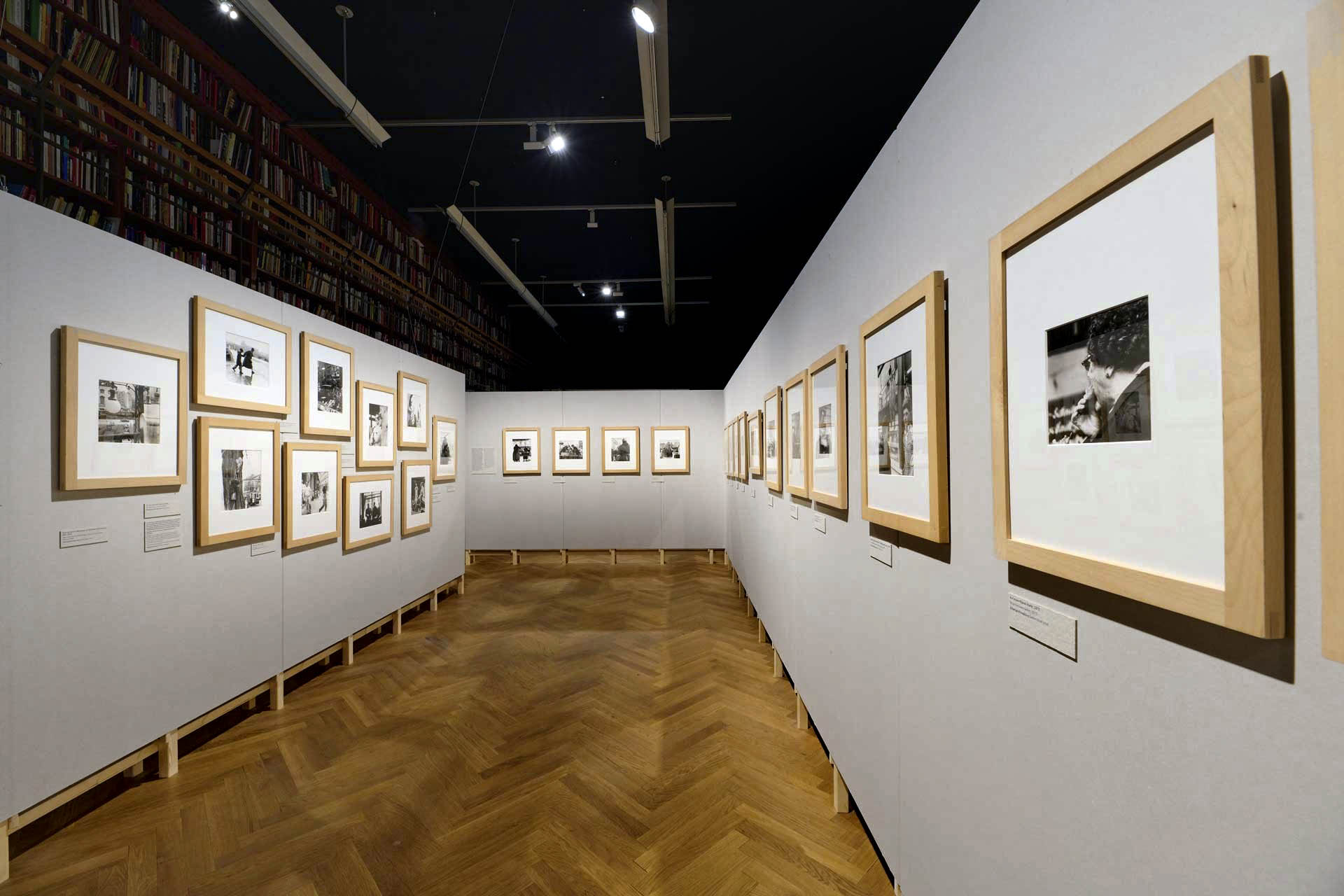
Installation view of the exhibition 'Barbara Pflaum: Showcases of Everyday Life' at MAK Museum, Vienna, April - August, 2026


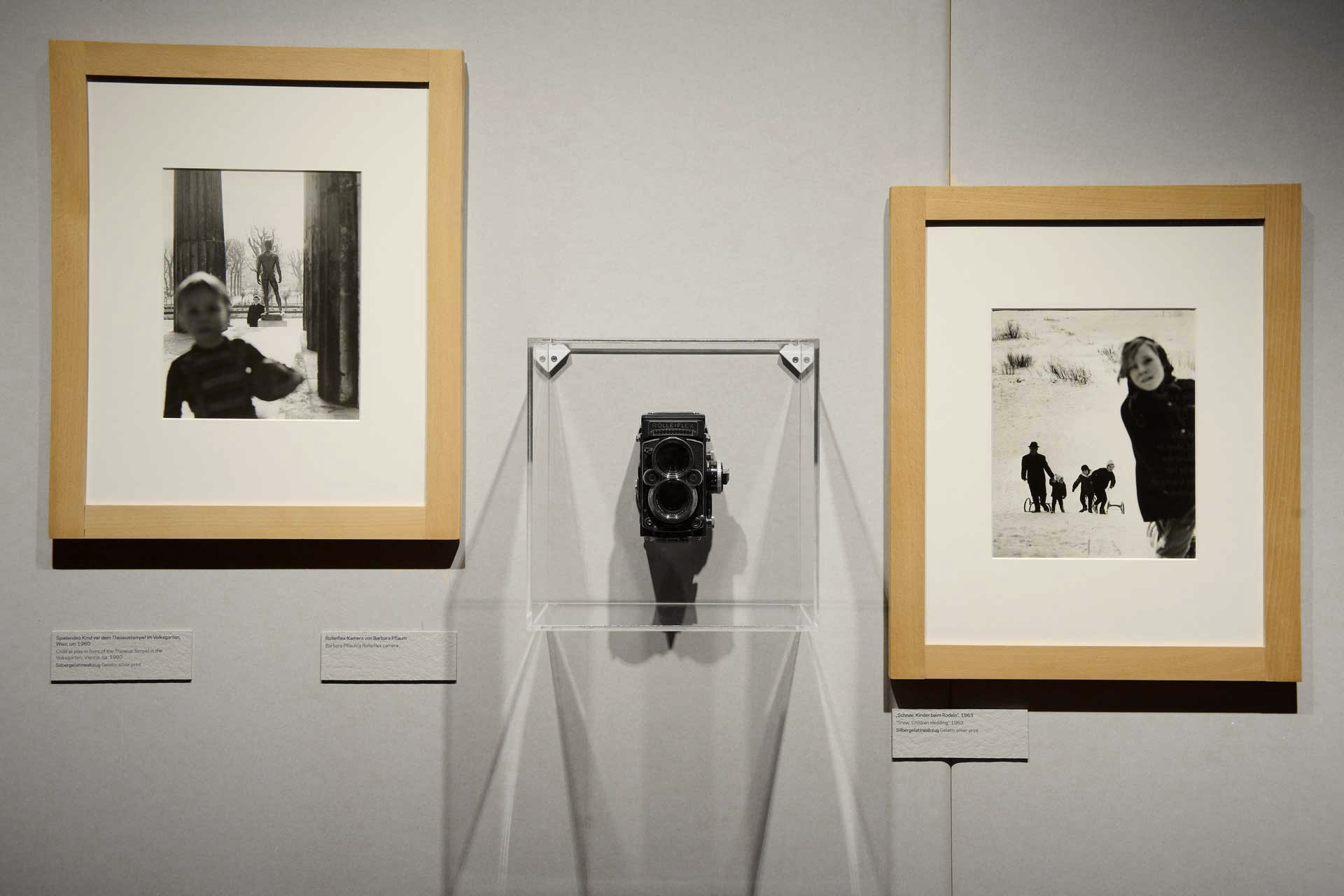
Installation views of the exhibition Barbara Pflaum: Showcases of Everyday Life at MAK Museum, Vienna, April – August, 2026
© MAK/Christian Mendez


From 15 April, the MAK dedicates a solo exhibition to Barbara Pflaum (1912–2002), a pioneer of Austrian press photography, in the MAK Works on Paper Room. With her extraordinary powers of observation and outstanding sense of form, Pflaum counts among the trailblazers of Austrian photojournalism in the 1950s. For over two decades, she helped shape the visual style of the Austrian weekly magazine Wochenpresse. Aged 40, divorced and a mother of three, Pflaum began studying at Vienna’s Academy of Applied Arts (now the University of Applied Arts Vienna) where she discovered photography and devoted herself to it with passion from then on. The exhibition at the MAK shows more than 100 photographs from the late 1950s and early 1960s, revealing an aspect of her work as yet little known: thoughtful, often humorous observations of everyday life in Vienna.

Pflaum received her first camera from her then-partner, the traveler, writer, and photographer Herbert Tichy in the early 1950s. At first, she mainly photographed her children and friends. These portraits caught the attention of the photo lab owner where she had her films developed. He encouraged her to submit her work to a magazine. As a result, Pflaum worked for the Wiener Illustrierte between 1954 and 1958. At the same time, she met the renowned Japanese-American photographer Yoichi Okamoto, head of the photo department at the US Information Service. Okamoto trained young photographers in modern photojournalism. Pflaum’s collaboration with Okamoto had a decisive influence on her style and led to her first publications in the Wiener Kurier.

Equipped with her classic medium-format camera, Pflaum had been photographing for the Wochenpresse since the mid-1950s, and was a regular presence at theatre and opera premieres, art exhibitions, political gatherings, and social events. She captured heads of state, party leaders, and international artists, and documented parliamentary debates, receptions, conferences, and cultural highlights. Many of her portraits of prominent figures appeared on the weekly magazine’s front cover – photographs of which she was particularly proud and which she repeatedly exhibited during her lifetime.

She consolidated her position as a photographer through her work in the press and exhibitions at Vienna’s Konzerthaus, as well as through her own
publications. In addition to official commissions, she tirelessly documented everyday life in Vienna: people in coffee houses, at markets, in parks or at parades, passers-by, street vendors, children at play or people in public spaces. Of especial fascination for her was the city’s transformation: old neighborhoods undergoing renovation, demolition, new construction, or the beginning of gentrification.

Many of these photographs were taken, as it were, en passant – personal observations, some of which found their way into her 1961 picture volume, wie ist Wien? Most, however, remained unpublished, lying in the photographer’s archive for years. Today, these photographs offer a view of the city and its inhabitants that is as lively as it is humorous. They depict scenes of everyday life, as well as street protests, Christmas markets, and neighborhoods about to be demolished. At the same time, they document an urban atmosphere undergoing gradual change in post-war Vienna.

Most of the prints on display in the exhibition come directly from Pflaum’s own archive, which is now held by brandstaetter images. These are prints she made herself, some of which bear clear signs of wear – revealing their use as working materials.

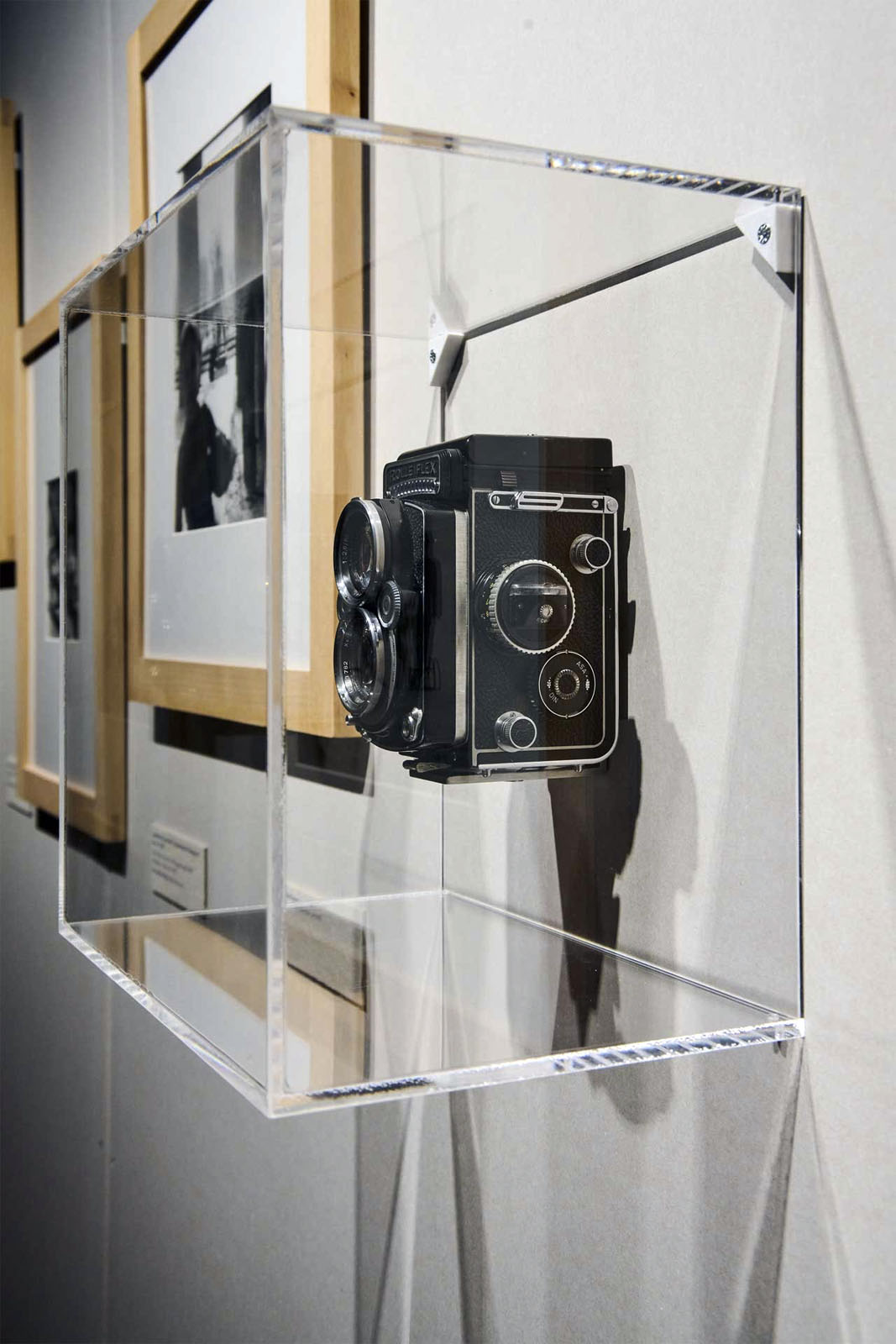
A key element of Pflaum’s photographic style has to do with her camera of choice. She worked with a Rolleiflex, a large twin-lens camera for 6 x 6cm film. This technique required a deliberate and considered approach: the film had to be changed after every twelve exposures, and the image was composed in a square format. For publication in the press, which usually required rectangular image formats, the photographs had to be cropped later during enlargement. The Rolleiflex was held at hip height as the image was projected onto a ground glass screen on the top of the camera, meaning it could only be viewed from above.

Many of Pflaum’s photographs are characterised by their strong, multi-layered composition: often, a blurred foreground area structures the image, with the spatial context of the scene unfolding behind it. Only on a third level does the actual action take centre stage – a fleeting moment, an encounter, a gesture. This pictorial structure imbues the photographs with a sense of dynamism, steering the viewer’s gaze towards the essence of the image.

Pflaum’s gift for observation, her ability to “lie in wait” and capture the right moment, are remarkable, as is the originality of many of her compositions. Whether dealing with common photographic subjects such as markets or leisure activities, or with current events such as demonstrations, Pflaum always took care to draw attention to the people, ensure a dynamic energy in the image, and evoke associations. In this way, she was able to create a sense of narrative.

What emerges is a multi-layered photographic portrait of Vienna from more than half a century ago. Barbara Pflaum’s photographs also demonstrate the
wealth of possibilities contained within even a fleeting moment on the street – provided it is observed with attentiveness, patience, and artistic sensitivity.

Karolina Ziębińska is a curator and art historian specializing in photography. From 2021 to 2025, she was director of the Museum of Warsaw. Prior to that, she was a curator at the Centre Pompidou in Paris from 2014 to 2020; Ziębińska also worked for ten years at Zachęta – National Gallery of Art in Warsaw. In 2008, she co-founded the Archaeology of Photography Foundation. Karolina Ziębińska has curated over 50 exhibitions and edited numerous publications on photographers of note.

Press release from MAK Museum


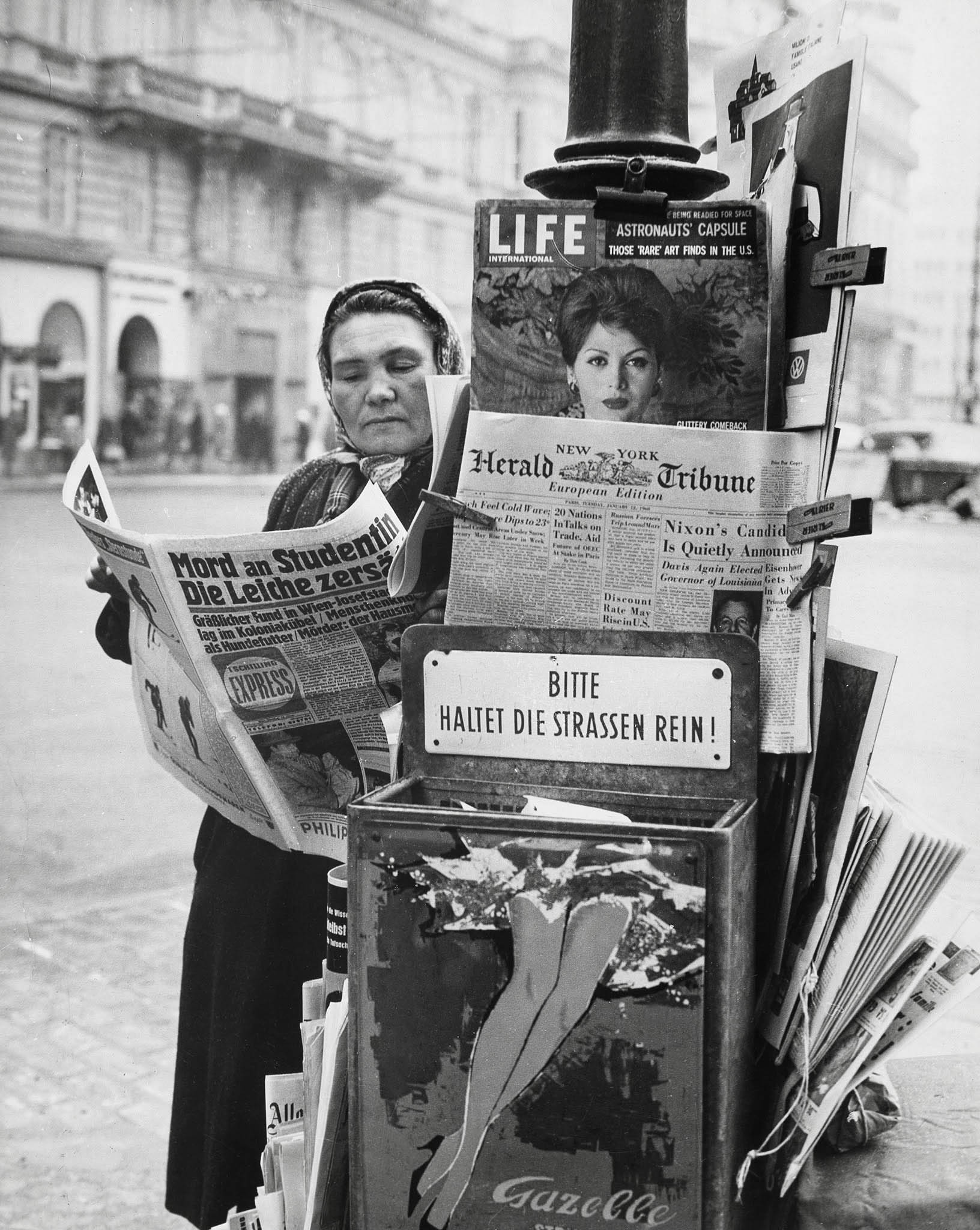
Barbara Pflaum (Austrian, 1912-2002) 'Newspaper seller' c. 1960


Barbara Pflaum (Austrian, 1912-2002)
Newspaper seller
c. 1960
Gelatin silver print
© APA-Images / brandstaetter images / Barbara Pflaum


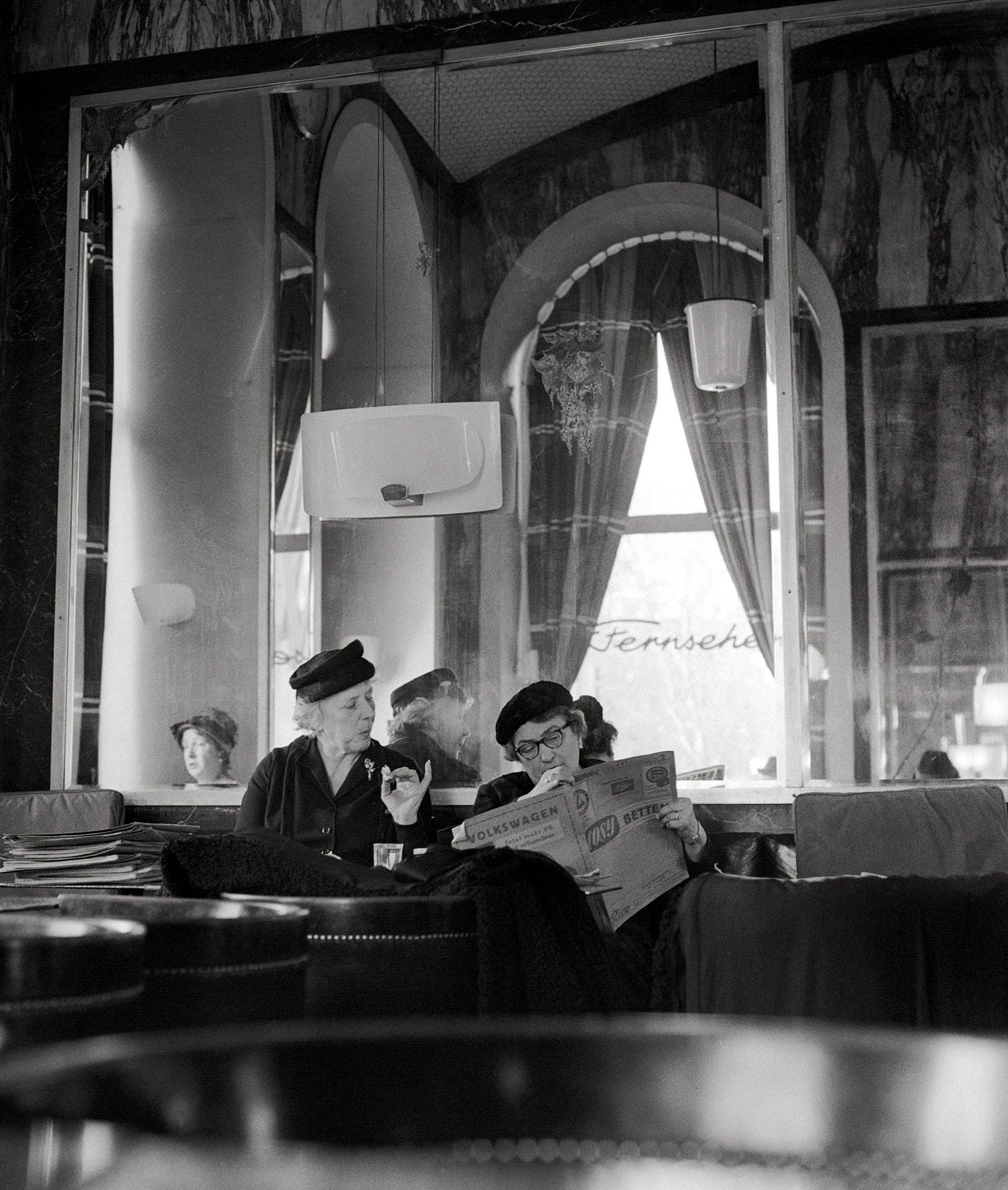
Barbara Pflaum (Austrian, 1912-2002) "By no means a place of vice, rather a refuge for insomniacs and night workers: the small night café Schwarzenberg" 1961

Barbara Pflaum (Austrian, 1912-2002)
“By no means a place of vice, rather a refuge for insomniacs and night workers: the small night café Schwarzenberg”
1961
Gelatin silver print
© APA-Images / brandstaetter images / Barbara Pflaum


Barbara Pflaum (Austrian, 1912-2002) 'Sweet chestnut vendor on a Viennese market' 1970


Barbara Pflaum (Austrian, 1912-2002)
Sweet chestnut vendor on a Viennese market
1970
Gelatin silver print
© APA-Images / brandstaetter images / Barbara Pflaum


Barbara Pflaum (Austrian, 1912-2002) 'Anti-Vietnam War demonstration as part of the May 1st rally on the Ringstraße, Vienna' 1970


Barbara Pflaum (Austrian, 1912-2002)
Anti-Vietnam War demonstration as part of the May 1st rally on the Ringstraße, Vienna
1970
Gelatin silver print
© APA-Images / brandstaetter images / Barbara Pflaum


Barbara Pflaum (Austrian, 1912-2002) 'On a Viennese market' 1970


Barbara Pflaum (Austrian, 1912-2002)
On a Viennese market
1970
Gelatin silver print
© APA-Images / brandstaetter images / Barbara Pflaum


MAK Museum
Stubenring 5
1010 Wien, AT

Opening hours:
Tue 10am – 9pm
Wed – Sun 10am – 6pm
Mon closed

MAK Museum website

LIKE ART BLART ON FACEBOOK

Back to top

Exhibition: ‘On the Street Where I Live: Viva Gibb’ at the City Gallery, Melbourne

“Viva Gibb’s passion project… powerful, intimate photographs of a Melbourne now vanished from our sight through gentrification.” Dr Marcus Bunyan

Exhibition dates: 5th March – 7th August, 2026

Curator: Savannah Smith


Viva Gibb (Australian, 1945-2017) ''Lolly seller', Victoria Street, West Melbourne' 1985


Viva Gibb (Australian, 1945-2017)
‘Lolly seller’, Victoria Street, West Melbourne
1985
Silver gelatin print
30.5 x 30.5cm
Donated by Sybil Gibb and Rupert Duffy to the Melbourne Art Trust in memory of Viva Gibb 2025
© Courtesy of the Estate of Viva Gibb


Please handle with care –


I read a comment about the exhibition On the Street Where I Live: Viva Gibb at the City Gallery, Melbourne on Instagram the other day. It described the exhibition as “charming”.

What does that mean? charming… it’s almost as bad as calling an artist’s work “nice”. I’m sure if someone called my work “charming” I would take a turn and I think that Viva Gibb would be rolling in her grave if she heard the comment.

Let us be clear. Viva Gibb’s 1970s-1980s social documentary portraits of the people of inner city Melbourne (specifically North and West Melbourne) centred around her studio in Capel Street are direct, tough, intimate, compassionate, empathetic, feminist, political (in a socialist sense) and strongly humanist photographs of the people of her neighbourhoods and the working class suburbs in which they lived. Everyday people, human dignity, and social connection.

Through “mid or long shots, with the subject captured in relation to their environment,” Gibb’s photographs picture the day-to-day lives of the people that surrounded her, people that she had a connection with and wanted to photograph. As she said, “I only ask them for a photograph if I am interested in that person, if there is something in the whole story about them.”

Gibb photographed the people of these suburbs, people who formed countercultural communities of artists and intellectuals, cafe owners and customers, butchers and bakers, the old, the young, punks, dating couples and the homeless. She photographed facets of their life revealing within the images their innate dignity (every person has high value and deep worth simply because they are human), often using a multi-image convention to capture their essence, returning to photograph them over an extended time period. She built a relationship with people for however short or long a time in order to tell their story.

“The people in my photographs are those who have survived at all odds – socially, racially, and economically – in our essentially bourgeois society; the lonely man next door, the old people who have lived in the area all their lives and are threatened with eviction, the homeless man whose only dream is to have a room of his own.”

Through her photographs we can feel the transformation of a moment into a story unfolded by observation.

As Walker Evans observed, “Leaving aside the mysteries and the inequities of human talent, brains, taste, and reputations, the matter of art in photography may come down to this: it is the capture and projection of the delights of seeing; it is the defining of observation full and felt.”

The defining of observation full and felt. There goes Viva…

In one sense the hang of the exhibition, in photo cloud form, emphasises the interconnectedness of all people and all things within these communities, but conversely the viewer can become overwhelmed by the amount of photographs. Collectively, they become more of a sociological project rather than photographs with an individual aura. It is only when one stops and slows down and contemplates the individual portraits does one begin to admire the majesty of Gibb’s achievement.

Using a Rolleiflex medium-format camera for most of her portraiture so that she could look down into the camera while having a direct relationship to the person being photographed (not a camera held to the eye) one can see how, as James McArdle observes, she built the trust of the person being photographed. “… one can see how Viva is standing above her camera or beside it, in eye contact with her subject, perhaps talking to them, calmly or animatedly depending on the reaction desired, as she presses the shutter.”

Much like Diane Arbus using a Rolleiflex in New York, here in Gibb’s photographs there is a direct engagement with the reality of the world. This is never more evident than in my favourite part of the exhibition, her personal photo albums: The Street Where I Live 1974-1978; Boppin’ in West Melbourne; West Melb. 1980-1985; Those were the days my friend (below).

In the small photographs stuck into personal photo albums we can viscerally feel the power and intimacy of Gibb’s passion project. We can observe in the sequencing of images of the city, houses, streets, businesses and people, how she created stories about the people and places for which she cared dearly. And her love of dogs! Always people with dogs – Amelia and the new puppy; Betty and her dogs, Stanley St. Here, no overblown gigantic photographs that have no need to be that big, that have no presence, instead powerful, intimate photographs of a Melbourne now vanished from our sight through gentrification.

I remember coming to live in Melbourne in the mid-1980s from England and these suburbs, these characters, were still alive and present. No longer. While community groups tried to protect their suburbs and ways of life at the time, and the heritage buildings survived, council auctioned off the properties it had accumulated. “Most residents, unable to afford their properties, were forced to move on.” Caring communities built up over decades were destroyed.

Much the same is happening in contemporary Melbourne suburbs with the destruction of long standing community housing throughout the city. Under the guise of modernisation and money, and the increase in high density living in the city, communities are being torn apart with little or no recourse for low income human beings or their wishes. Public housing blocks are being torn down all over the city, the land given by the government to private developers for “mixed housing development” which combines private market-rate homes with affordable or social housing. Except social housing only ever makes up about 20% of the project. As usual it’s all about the money, ignoring the fact that it is destroying communities that have been there for decades. Shame on councils, supposed community housing associations and unscrupulous developers (please see Marcus Bunyan. “Frederick Oswald Barnett (Australian, 1883-1972),” on the Art Blart website, 23rd February, 2024; and Rachael Dexter. “Developer quietly guts ‘affordable’ housing promise in northern suburbs,” on The Age website, March 3, 2026 [Online] both cited 24/07/2026).

This brings me to the title of this piece of text taken from the front of Gibb’s photo album West Melb. 1980-1985: “Please handle with care -” followed by the admonishment “these photos are delicate”. These words can serve as metaphor for the de/generations of society that Gibb photographed and the subsequent loss of culture and community … a process that is only increasing today. While Gibb was “deeply aware, socially engaged and heartfelt” in her interactions with community and the stories she was telling – and this passion is embodied, embedded in her images – her photos are, still, delicate as she states, much like the lives of the people and communities depicted in them. Human beings need nature and nurture surrounding them, not huge four wheel drives, grand designs and high density living where you don’t even know your neighbour.

Caring for the counterculture, caring for the people around you, is a sign of a robust, flourishing society. Gibb’s tangible photographs convince us that such a proposition is true.

Dr Marcus Bunyan


PS. If you would like to know about the history, cultural and political background of this inspirational artist please read my friend James McArdle’s in depth research on Viva Gibb in the text “Stance,” on the On This Date In Photography website, March 19, 2026.

PPS. I love how people are smiling in the photographs!


Many thankx to the City Gallery for allowing me to publish the photographs in the posting. Please click on the photographs for a larger version of the image.


“I don’t really deal with people I don’t know… I only ask them for a photograph if I am interested in that person, if there is something in the whole story about them.”


Viva Gibb


“The people in my photographs are those who have survived at all odds – socially, racially, and economically – in our essentially bourgeois society; the lonely man next door, the old people who have lived in the area all their lives and are threatened with eviction, the homeless man whose only dream is to have a room of his own. In photographing the commonplace of the apparently trivial event of a woman holding her baby or a man standing in front of his home, I can see the transformation of a moment into a story unfolded by observation; the little dog by her side, the tender way the man puts his hand on her shoulder, the expression in her eyes, the garden, the ornaments on the mantelpiece, the city skyscrapers in the background and the traffic zooming past. The details fit together like pieces of a jigsaw, presenting a story of a lifetime and a constant reminder of the fragility of life itself. As an individual and an artist I can only hope to present a reality other than that presented by TV and the media. I believe that with humanity, compassion, and a re-examination of past values we can counter the destructive forces that threaten the very existence of a living environment on this earth.”


Viva Gibb, “In the Land of the Living (1981),” in Virginia Coventry (ed.), The Critical Distance: work with photography, politics, writing, exh. cat., Hale & Iremonger, Sydney, 1986, p. 92 quoted in Smith, Savannah; Garner, Helen; Maddison, Ruth (2026). On the streets where I live : Viva Gibb’s portrait of North and West Melbourne. Melbourne, Vic.: City of Melbourne, p. 15. Exhibition catalogue


“Gibb’s sympathetic representation of the urban environment was undergirded by her socio-political beliefs and compassionate worldview. She was alive to the forces of change impacting the lives of those around her and fiercely critical of one social class or race dominating another. Gibb was increasingly angered by wealth and expansion being valued at the expense of all else. She was troubled by environmental degradation and was an animal welfare advocate – a vegetarian from the age of 16 and a vegan later in life. She was also deeply concerned about the treatment and deprivations of First Nations people and the plight of those establishing new lives in Australia.”


Smith, Savannah; Garner, Helen; Maddison, Ruth (2026). On the streets where I live : Viva Gibb’s portrait of North and West Melbourne. Melbourne, Vic.: City of Melbourne, p. 14. Exhibition catalogue


West Melbourne

Viva Gibb (Australian, 1945-2017) 'Brian and his cats, 65 Capel Street, West Melbourne' 1978


Viva Gibb (Australian, 1945-2017)
Brian and his cats, 65 Capel Street, West Melbourne
1978
Silver gelatin print
20 x 16.5 cm
Donated by Sybil Gibb and Rupert Duffy to the Melbourne Art Trust in memory of Viva Gibb 2025
© Courtesy of the Estate of Viva Gibb


Gibb’s portrait of North and West Melbourne is an important record of an inner urban area during a transformative moment in Melbourne’s history. On the city’s streets, radical countercultural ideals for a progressive society flourished through the activism of young people, while at the same time another chapter of the city’s history would close. In the 1970s and 1980s, amid the gentrification of the inner suburbs, West Melbourne flew under the radar for longer than most. It provided a countercultural community, which included artists and intellectuals, with low-cost space in which to live and work. Gibb’s house and studio were central to this community, a ‘social hub’ for ‘artists of all kinds, from the Pram Factory or the nascent Circus Oz’.10 For a period, they lived alongside longtime residents of the semi-industrial suburb. West Melbourne’s proximity to the railway, the docks and CBD meant it had been home to many working-class and migrant people who laboured in nearby industries or at Queen Victoria Market. Gibb’s photographs capture this amalgamated community – old and new – at this precise moment in time.

Capel Street was a focal point in this story of inner-suburban transformation. Many dilapidated properties in the area were leased out by Melbourne City Council following their acquisition ahead of the proposed redevelopment of the Queen Victoria Market. Gibb herself had moved to Capel Street as a council tenant. When the market redevelopment was abandoned in 1976, council’s continued property acquisition caused alarm among residents and business owners alike regarding the undisclosed intentions for the area. In response, the Capel Street and Peel Street Action Group was formed, of which Gibb was an active member. The group’s two concerns were the conservation of the Victorian-era terraces and cottages and compulsory eviction of long-term residents. Many of the heritage buildings survived, but the group was ultimately unsuccessful in protecting the community. Council began auctioning off the properties in December 1990. Most residents, unable to afford their properties, were forced to move on. …

Viva Gibb’s photographs express the sophisticated practice of an artist who cared deeply for her community and the world at large. Through her work we come to know a vibrant group of individuals, captured in their day-to-day lives. Her photographs are an important historical and cultural record that reminds us of the importance of people in our city’s history and future. But these images also offer a glimpse of Viva herself and her unique perspective on the world: her genuine compassion and affection for people, for animals and for the environment. Viva’s portrait of North and West Melbourne is distinctively hers – deeply aware, socially engaged and heartfelt.

10/ Niels Hutchison, ‘Appendix Five: Interview with Niels Hutchison, 13 February 2019’, in Jean Ely (ed.), Preserving Melbourne’s Colonial Past: Capel Street West Melbourne, 2019, p. 60

Smith, Savannah; Garner, Helen; Maddison, Ruth (2026). On the streets where I live : Viva Gibb’s portrait of North and West Melbourne. Melbourne, Vic.: City of Melbourne, pp. 16-17. Exhibition catalogue


Viva Gibb (Australian, 1945-2017) 'Jem Towsey, 64 Capel Street, West Melbourne' 1978


Viva Gibb (Australian, 1945-2017)
Jem Towsey, 64 Capel Street, West Melbourne
1978
Silver gelatin print
20.5 x 16cm
Donated by Sybil Gibb and Rupert Duffy to the Melbourne Art Trust in memory of Viva Gibb 2025
© Courtesy of the Estate of Viva Gibb


Viva Gibb (Australian, 1945-2017) 'Giuseppe Lanteri 'The Boss' at Don Camillo Cafe, 215 Victoria Street, West Melbourne' 1979


Viva Gibb (Australian, 1945-2017)
Giuseppe Lanteri ‘The Boss’ at Don Camillo Cafe, 215 Victoria Street, West Melbourne
1979
Silver gelatin print
20 x 25.5cm
Donated by Sybil Gibb and Rupert Duffy to the Melbourne Art Trust in memory of Viva Gibb 2025
© Courtesy of the Estate of Viva Gibb


Viva Gibb (Australian, 1945-2017) 'Carmel Begun and Peter Starkey with Ruby, Alice and Lawrence, 24 Capel Street, West Melbourne' c. 1975-80


Viva Gibb (Australian, 1945-2017)
Carmel Begun and Peter Starkey with Ruby, Alice and Lawrence, 24 Capel Street, West Melbourne
c. 1975-80
Silver gelatin print
17.5 x 12.5cm
Donated by Sybil Gibb and Rupert Duffy to the Melbourne Art Trust in memory of Viva Gibb 2025
© Courtesy of the Estate of Viva Gibb


Viva Gibb (Australian, 1945-2017) 'Man outside 18 Capel Street, West Melbourne' c. 1975-80


Viva Gibb (Australian, 1945-2017)
Man outside 18 Capel Street, West Melbourne
c. 1975-80
Silver gelatin print
25 x 20cm
Donated by Sybil Gibb and Rupert Duffy to the Melbourne Art Trust in memory of Viva Gibb 2025
© Courtesy of the Estate of Viva Gibb


Viva Gibb (Australian, 1945-2017) ''Moonstruck', Joanne Healy and her boyfriend Harry, Capel Street, West Melbourne' c. 1977-78


Viva Gibb (Australian, 1945-2017)
‘Moonstruck’, Joanne Healy and her boyfriend Harry, Capel Street, West Melbourne
c. 1977-78
Silver gelatin print
25 x 20.5cm
Donated by Sybil Gibb and Rupert Duffy to the Melbourne Art Trust in memory of Viva Gibb 2025
© Courtesy of the Estate of Viva Gibb


Viva Gibb (Australian, 1945-2017) 'Owners of Centenary Bakery and their son, 197 Victoria Street, West Melbourne' 1978


Viva Gibb (Australian, 1945-2017)
Owners of Centenary Bakery and their son, 197 Victoria Street, West Melbourne
1978
Silver gelatin print
25.5 x 20.5 cm
Donated by Sybil Gibb and Rupert Duffy to the Melbourne Art Trust in memory of Viva Gibb 2025
© Courtesy of the Estate of Viva Gibb


Viva Gibb (Australian, 1945-2017) 'Owners of Centenary Bakery, 197 Victoria Street, West Melbourne' 1978 


Viva Gibb (Australian, 1945-2017)
Owners of Centenary Bakery, 197 Victoria Street, West Melbourne
1978
Silver gelatin print
21.5 x 16.5cm
Donated by Sybil Gibb and Rupert Duffy to the Melbourne Art Trust in memory of Viva Gibb 2025
© Courtesy of the Estate of Viva Gibb


Viva Gibb (Australian, 1945-2017) 'Peter Doley at Don Camillo Cafe, 215 Victoria Street, West Melbourne' c. 1979


Viva Gibb (Australian, 1945-2017)
Peter Doley at Don Camillo Cafe, 215 Victoria Street, West Melbourne
c. 1979
Silver gelatin print
18 x 12.5cm
Donated by Sybil Gibb and Rupert Duffy to the Melbourne Art Trust in memory of Viva Gibb 2025
© Courtesy of the Estate of Viva Gibb


Viva Gibb (Australian, 1945-2017) 'Colin Cheng at Don Camillo Cafe, 215 Victoria Street, West Melbourne' c. 1980


Viva Gibb (Australian, 1945-2017)
Colin Cheng at Don Camillo Cafe, 215 Victoria Street, West Melbourne
c. 1980
Silver gelatin print
25.5 x 20.5cm
Donated by Sybil Gibb and Rupert Duffy to the Melbourne Art Trust in memory of Viva Gibb 2025
© Courtesy of the Estate of Viva Gibb


Viva Gibb (Australian, 1945-2017) 'Colin Cheng at home, 26 Capel Street, West Melbourne' c. 1980


Viva Gibb (Australian, 1945-2017)
Colin Cheng at home, 26 Capel Street, West Melbourne
c. 1980
Silver gelatin print
20 x 19 cm
Donated by Sybil Gibb and Rupert Duffy to the Melbourne Art Trust in memory of Viva Gibb 2025
© Courtesy of the Estate of Viva Gibb


Viva Gibb (Australian, 1945-2017) 'Colin Cheng outside his home, 26 Capel Street, West Melbourne' 1980


Viva Gibb (Australian, 1945-2017)
Colin Cheng outside his home, 26 Capel Street, West Melbourne
1980
Silver gelatin print
21.5 x 16.5cm
Donated by Sybil Gibb and Rupert Duffy to the Melbourne Art Trust in memory of Viva Gibb 2025
© Courtesy of the Estate of Viva Gibb


Viva Gibb (Australian, 1945-2017) 'Colin Cheng outside his home, 26 Capel Street, West Melbourne' 1980


Viva Gibb (Australian, 1945-2017)
Colin Cheng outside his home, 26 Capel Street, West Melbourne
1980
Silver gelatin print
25.4 x 20.3cm
Donated by Sybil Gibb and Rupert Duffy to the Melbourne Art Trust in memory of Viva Gibb 2025
© Courtesy of the Estate of Viva Gibb


Viva Gibb (Australian, 1945-2017) 'Maria Lanteri 'Signora' at Don Camillo Cafe, 215 Victoria Street, West Melbourne' c. 1980


Viva Gibb (Australian, 1945-2017)
Maria Lanteri ‘Signora’ at Don Camillo Cafe, 215 Victoria Street, West Melbourne
c. 1980
Silver gelatin print
21.5 x 16.5 cm
Donated by Sybil Gibb and Rupert Duffy to the Melbourne Art Trust in memory of Viva Gibb 2025
© Courtesy of the Estate of Viva Gibb


Viva Gibb (Australian, 1945-2017) 'Man and his dog outside Radio Parts, corner of Spencer and Hawke Street, West Melbourne' c. 1980


Viva Gibb (Australian, 1945-2017)
Man and his dog outside Radio Parts, corner of Spencer and Hawke Street, West Melbourne
c. 1980
Silver gelatin print
25 x 20cm
Donated by Sybil Gibb and Rupert Duffy to the Melbourne Art Trust in memory of Viva Gibb 2025
© Courtesy of the Estate of Viva Gibb


Viva Gibb (Australian, 1945-2017) 'Jimmy at the Sunday barrel, 44 Hawke Street, West Melbourne' 1982


Viva Gibb (Australian, 1945-2017)
Jimmy at the Sunday barrel, 44 Hawke Street, West Melbourne
1982
Silver gelatin print
24 x 18cm
Donated by Sybil Gibb and Rupert Duffy to the Melbourne Art Trust in memory of Viva Gibb 2025
© Courtesy of the Estate of Viva Gibb


Viva Gibb (Australian, 1945-2017) '‘Living in the city without a home’, Jimmy at the wholesale flower shop, 217 Victoria Street, West Melbourne' 1982


Viva Gibb (Australian, 1945-2017)
‘Living in the city without a home’, Jimmy at the wholesale flower shop, 217 Victoria Street, West Melbourne
1982
Silver gelatin print
25 x 20.5cm
Donated by Sybil Gibb and Rupert Duffy to the Melbourne Art Trust in memory of Viva Gibb 2025
© Courtesy of the Estate of Viva Gibb


Viva Gibb (Australian, 1945-2017) ''It is the price of life’, Elsie, 55 Stanley Street, West Melbourne' 1982


Viva Gibb (Australian, 1945-2017)
‘It is the price of life’, Elsie, 55 Stanley Street, West Melbourne
1982
Silver gelatin print
37 x 30cm
Donated by Sybil Gibb and Rupert Duffy to the Melbourne Art Trust in memory of Viva Gibb 2025
© Courtesy of the Estate of Viva Gibb


Viva Gibb (Australian, 1945-2017) 'James and Jim Healey at Viva's studio, 57 Stanley Street, West Melbourne' c. 1982


Viva Gibb (Australian, 1945-2017)
James and Jim Healey at Viva’s studio, 57 Stanley Street, West Melbourne
c. 1982
24 x 17.5cm
Donated by Sybil Gibb and Rupert Duffy to the Melbourne Art Trust in memory of Viva Gibb 2025
© Courtesy of the Estate of Viva Gibb


Viva Gibb (Australian, 1945-2017) 'Maureen’s 85th birthday, Three Crowns Hotel, 365 Victoria Street, West Melbourne' 1982


Viva Gibb (Australian, 1945-2017)
Maureen’s 85th birthday, Three Crowns Hotel, 365 Victoria Street, West Melbourne
1982
Silver gelatin print
25 x 20cm
Donated by Sybil Gibb and Rupert Duffy to the Melbourne Art Trust in memory of Viva Gibb 2025
© Courtesy of the Estate of Viva Gibb


Viva Gibb (Australian, 1945-2017) 'Skippy' outside 44 Hawke Street, West Melbourne' 1982


Viva Gibb (Australian, 1945-2017)
‘Skippy’ outside 44 Hawke Street, West Melbourne
1982
Silver gelatin print
24 x 18 cm
Donated by Sybil Gibb and Rupert Duffy to the Melbourne Art Trust in memory of Viva Gibb 2025
© Courtesy of the Estate of Viva Gibb


Viva Gibb (Australian, 1945-2017) 'Skippy' outside 44 Hawke Street, West Melbourne' 1982


Viva Gibb (Australian, 1945-2017)
‘Skippy’ outside 44 Hawke Street, West Melbourne
1982
Silver gelatin print
24 x 18 cm
Donated by Sybil Gibb and Rupert Duffy to the Melbourne Art Trust in memory of Viva Gibb 2025
© Courtesy of the Estate of Viva Gibb


Viva Gibb (Australian, 1945-2017) 'Alice, Eben, Rupert, Sybil and friends at Queen Victoria Market, Victoria Street, West Melbourne' 1983


Viva Gibb (Australian, 1945-2017)
Alice, Eben, Rupert, Sybil and friends at Queen Victoria Market, Victoria Street, West Melbourne
1983
Silver gelatin print
20.5 x 25.5 cm
Donated by Sybil Gibb and Rupert Duffy to the Melbourne Art Trust in memory of Viva Gibb 2025
© Courtesy of the Estate of Viva Gibb


Viva Gibb (Australian, 1945-2017) 'Giuseppe and Maria Lanteri with Maria's sister and niece outside Don Camillo Cafe, 215 Victoria Street, West Melbourne' 1983


Viva Gibb (Australian, 1945-2017)
Giuseppe and Maria Lanteri with Maria’s sister and niece outside Don Camillo Cafe, 215 Victoria Street, West Melbourne
1983
Silver gelatin print
17.5 x 24cm
Donated by Sybil Gibb and Rupert Duffy to the Melbourne Art Trust in memory of Viva Gibb 2025
© Courtesy of the Estate of Viva Gibb


Viva Gibb (Australian, 1945-2017) 'Giuseppe and Maria Lanteri with Maria's sister and niece outside Don Camillo Cafe, 215 Victoria Street, West Melbourne' 1983


Viva Gibb (Australian, 1945-2017)
Giuseppe and Maria Lanteri with Maria’s sister and niece outside Don Camillo Cafe, 215 Victoria Street, West Melbourne
1983
Silver gelatin print
17.5 x 24cm
Donated by Sybil Gibb and Rupert Duffy to the Melbourne Art Trust in memory of Viva Gibb 2025
© Courtesy of the Estate of Viva Gibb


Viva Gibb (Australian, 1945-2017) 'Sybil and Vivian outside 10 Hawke Street, West Melbourne' 1985


Viva Gibb (Australian, 1945-2017)
Sybil and Vivian outside 10 Hawke Street, West Melbourne
1985
Silver gelatin print
25.5 x 20.5cm
Donated by Sybil Gibb and Rupert Duffy to the Melbourne Art Trust in memory of Viva Gibb 2025
© Courtesy of the Estate of Viva Gibb


Viva Gibb (Australian, 1945-2017) 'Mr Lindsay Williams, Hawke Street, West Melbourne' c. 1985


Viva Gibb (Australian, 1945-2017)
Mr Lindsay Williams, Hawke Street, West Melbourne
c. 1985
Silver gelatin print
30 x 30cm
Donated by Sybil Gibb and Rupert Duffy to the Melbourne Art Trust in memory of Viva Gibb 2025
© Courtesy of the Estate of Viva Gibb


Viva Gibb (Australian, 1945-2017) 'Jean collecting bottles outside 8 Hawke Street, West Melbourne' c. 1986


Viva Gibb (Australian, 1945-2017)
Jean collecting bottles outside 8 Hawke Street, West Melbourne
c. 1986
Silver gelatin print
20 x 16cm
Donated by Sybil Gibb and Rupert Duffy to the Melbourne Art Trust in memory of Viva Gibb 2025
© Courtesy of the Estate of Viva Gibb


Viva Gibb (Australian, 1945-2017) 'Jean collecting bottles outside 8 Hawke Street, West Melbourne' c. 1986


Viva Gibb (Australian, 1945-2017)
Jean collecting bottles outside 8 Hawke Street, West Melbourne
c. 1986
Silver gelatin print
20 x 16cm
Donated by Sybil Gibb and Rupert Duffy to the Melbourne Art Trust in memory of Viva Gibb 2025
© Courtesy of the Estate of Viva Gibb


Viva Gibb (Australian, 1945-2017) 'Jill and Tim, 44 Hawke Street, West Melbourne' 1988 


Viva Gibb (Australian, 1945-2017)
Jill and Tim, 44 Hawke Street, West Melbourne
1988
Silver gelatin print
20 x 25.5cm
Loaned to the City of Melbourne by Sybil Gibb and Rupert Duffy
© Courtesy of the Estate of Viva Gibb


Viva Gibb (Australian, 1945-2017) 'The Kennedy children, Three Crowns Hotel, 365 Victoria Street, West Melbourne' 1982


Viva Gibb (Australian, 1945-2017)
The Kennedy children, Three Crowns Hotel, 365 Victoria Street, West Melbourne
1982
Silver gelatin print
24 x 18cm
Donated by Sybil Gibb and Rupert Duffy to the Melbourne Art Trust in memory of Viva Gibb 2025
© Courtesy of the Estate of Viva Gibb


Viva Gibb (Australian, 1945-2017) 'The Bergin family and Tommy, 8 Hawke Street, West Melbourne' 1988


Viva Gibb (Australian, 1945-2017)
The Bergin family and Tommy, 8 Hawke Street, West Melbourne
1988
Silver gelatin print
31.5 x 30.5cm
Donated by Sybil Gibb and Rupert Duffy to the Melbourne Art Trust in memory of Viva Gibb 2025
© Courtesy of the Estate of Viva Gibb


Viva Gibb (Australian, 1945-2017) 'Francy and Tommy, 8 Hawke Street, West Melbourne' 1988 


Viva Gibb (Australian, 1945-2017)
Francy and Tommy, 8 Hawke Street, West Melbourne
1988
Silver gelatin print
31.5 x 30.5cm
Donated by Sybil Gibb and Rupert Duffy to the Melbourne Art Trust in memory of Viva Gibb 2025
© Courtesy of the Estate of Viva Gibb


Viva Gibb was a part of the group of ‘northside’ social documentary photographers of the 1970s and 1980s (Ruth Maddison, Ponch Hawkes, Micky Allan, Helen Grace). She documented the suburbs of North and West Melbourne – where she lived – creating a distinctive, sympathetic portrait of her community during a transformative period in Melbourne’s history.

The exhibition has come about following a major donation of over 200 of Gibb’s photographs made to the Melbourne Art Trust in 2025, and will be the largest display of her work in over 30 years. The show features more than 250 images, including the artist’s photo albums. We have also published a small catalogue for the exhibition, which includes reflections written by Ruth Maddison and Helen Garner.

Text from the City Gallery website


“[Gibb] worked with a Rolleiflex medium-format camera for most of her portraiture, and a large-format 4 x 5-inch Graflex Speed Graphic press camera, tools that supported her patience and purpose, and built the trust of the person being photographed. The use of both offsets that sense of being scrutinised directly by the photographer that is imposed by an eye-level viewfinder or reflex camera, and one can see how Viva is standing above her camera or beside it, in eye contact with her subject, perhaps talking to them, calmly or animatedly depending on the reaction desired, as she presses the shutter.”

 Associate Professor James McArdle. “Stance,” on the On This Date In Photography website, March 19, 2026 [Online] Cited 06/07/2026. Used under fair use conditions for the purposes of education and research
 

North Melbourne

Viva Gibb (Australian, 1945-2017) 'Couple with dog at Lort Smith Animal Hospital, 24 Villiers Street, North Melbourne' c. 1977 


Viva Gibb (Australian, 1945-2017)
Couple with dog at Lort Smith Animal Hospital, 24 Villiers Street, North Melbourne
c. 1977
Silver gelatin print
24 x 18cm
Donated by Sybil Gibb and Rupert Duffy to the Melbourne Art Trust in memory of Viva Gibb 2025
© Courtesy of the Estate of Viva Gibb


Viva Gibb (Australian, 1945-2017) 'Maxine Du Barry at Trish's Coffee Lounge, 126 Peel Street, North Melbourne' 1979


Viva Gibb (Australian, 1945-2017)
Maxine Du Barry at Trish’s Coffee Lounge, 126 Peel Street, North Melbourne
1979
Silver gelatin print
25 x 20.5cm
Donated by Sybil Gibb and Rupert Duffy to the Melbourne Art Trust in memory of Viva Gibb 2025
© Courtesy of the Estate of Viva Gibb


Viva Gibb (Australian, 1945-2017) 'Butcher, Errol Street, North Melbourne' c. 1980


Viva Gibb (Australian, 1945-2017)
Butcher, Errol Street, North Melbourne
c. 1980
Silver gelatin print
17 x 15cm
Donated by Sybil Gibb and Rupert Duffy to the Melbourne Art Trust in memory of Viva Gibb 2025
© Courtesy of the Estate of Viva Gibb


Viva Gibb (Australian, 1945-2017) 'Mr Lindsay Williams at his barber and tobacconist shop, Errol Street, North Melbourne' c. 1982


Viva Gibb (Australian, 1945-2017)
Mr Lindsay Williams at his barber and tobacconist shop, Errol Street, North Melbourne
c. 1982
Silver gelatin print
20 x 25cm
Donated by Sybil Gibb and Rupert Duffy to the Melbourne Art Trust in memory of Viva Gibb 2025
© Courtesy of the Estate of Viva Gibb


Viva Gibb (Australian, 1945-2017) 'Jack Rozen at his barber shop, 9 Errol Street, North Melbourne' 1983


Viva Gibb (Australian, 1945-2017)
Jack Rozen at his barber shop, 9 Errol Street, North Melbourne
1983
Silver gelatin print
17.5 x 12.5cm
Donated by Sybil Gibb and Rupert Duffy to the Melbourne Art Trust in memory of Viva Gibb 2025
© Courtesy of the Estate of Viva Gibb


Viva Gibb (Australian, 1945-2017) 'Man at Jack Rozen's barber shop, 9 Errol Street, North Melbourne' c. 1983


Viva Gibb (Australian, 1945-2017)
Man at Jack Rozen’s barber shop, 9 Errol Street, North Melbourne
c. 1983
Silver gelatin print
22 x 17.5cm
Donated by Sybil Gibb and Rupert Duffy to the Melbourne Art Trust in memory of Viva Gibb 2025
© Courtesy of the Estate of Viva Gibb


In 2025, Melbourne Art Trust acquired a major donation by artist and social-documentary photographer Viva Jillian Gibb (1945-2017). Generously made by the artist’s children, Sybil Gibb and Rupert Duffy, it comprises more than 200 silver gelatin photographs taken between the mid-1970s and the early 1990s. On the street where I live showcases works from this donation, alongside several prints and photo albums loaned from the artist’s family. Taking its title from one of these albums, the exhibition re-examines this period of Gibb’s practice, reintroducing an artist whose vast body of work has largely lain dormant for three decades.

Born in Bobinawarrah, Victoria, Gibb was first and foremost an artist. She was unwavering in her pursuit of this. She undertook a diploma of art at Wangaratta Technical College (1961-65); moved to Melbourne to study painting at the National Gallery Art School (1965-68); and studied printmaking at the Victorian College of the Arts (VCA; 1973-74). Photography became the focus of her practice only after her postgraduate study. 

Moving to West Melbourne in 1975, Gibb quickly established her first dedicated darkroom at 72 Capel Street. Her technical printmaking skills carried over to photography’s hands-on processes. She had an array of photographic papers, often shooting to print on a particular paper. Her son Rupert recalls, “she knew exactly how black she wanted her blacks to be and how bright her highlights were and knew her exposures so well that she was rarely wasteful with film’.1 She worked with a Rolleiflex medium-format camera and a large-format 4 x 5” Graflex Speed Graphic press camera.

The community of North and West Melbourne was Gibb’s foremost subject between the mid-1970s and early 1990s. Her sustained documentation of those living and working in this area remains unmatched. The prolific nature of her practice is evident in the number of photographs – more than 250 – on display in this exhibition, a small fraction of the work she produced.

In the late 1980s, Gibb’s commitment to social justice led her to South Africa, where she documented people’s lives in towns and villages under apartheid. She also travelled to Hong Kong and China, photographing markets and sacred sites for a series titled Of Gods and Animals, which commented on the contrast between spiritual traditions and lived realities.

Returning to Australia, Gibb noted the lack of photographic training opportunities for Aboriginal women. In response, she approached the Victorian Women’s Trust for funding to facilitate a photography cadetship program. The first recipients of these funded cadetships were Maree Clarke and Kim Kruger. 

Gibb began what would become her last photographic series in the 1990s. The Way: Religious Ceremonies in Victoria documented the ceremonies and events of multicultural communities. She wanted to draw attention to the historical significance of these events, especially for migrants, who she saw as having managed, against great odds, to maintain their cultural practices in Australia.

The premature end of Gibb’s practice, around 2000, was likely brought about by the digital turn in photography, changes to which she never adapted. She kept photographically documenting her friends and family but returned to painting until she passed away in 2017. 

From her first solo exhibition in 1978, Gibb’s work was exhibited throughout the 1980s, including at the National Gallery of Victoria (NGV) and National Gallery of Australia. Today, her photographs are held in significant public collections across the country. In 2019, the Museum of Australian Photography was the first public gallery to show her work in more than 30 years. On the street where I live builds on this, situating Gibb’s work in relation to her contemporaries and the broader social, political and cultural context of the time.

Text from Smith, Savannah; Garner, Helen; Maddison, Ruth (2026). On the streets where I live: Viva Gibb’s portrait of North and West Melbourne. Melbourne, Vic.: City of Melbourne, pp. 6-7. Exhibition catalogue


Installation view of the exhibition 'On the Street Where I Live: Viva Gibb' at the City Gallery, Melbourne, March - August, 2026

Work and Life

Installation view of the exhibition 'On the Street Where I Live: Viva Gibb' at the City Gallery, Melbourne, March - August, 2026

At the Studio

Installation view of the exhibition 'On the Street Where I Live: Viva Gibb' at the City Gallery, Melbourne, March - August, 2026

North Melbourne

Installation view of the exhibition 'On the Street Where I Live: Viva Gibb' at the City Gallery, Melbourne, March - August, 2026

Hawke Street

Installation view of the exhibition 'On the Street Where I Live: Viva Gibb' at the City Gallery, Melbourne, March - August, 2026

Victoria Street

Installation view of the exhibition 'On the Street Where I Live: Viva Gibb' at the City Gallery, Melbourne, March - August, 2026


Installation views of the exhibition On the Street Where I Live: Viva Gibb at the City Gallery, Melbourne, March – August, 2026
Photos: Tobias Titz


The rehabilitation of Gibb’s reputation has come in two stages, each through a different institutional imperative. The first was the 2019 donation by her children, Sybil Gibb and Rupert Duffy, of a significant body of work to the Monash Gallery of Art (now the Museum of Australian Photography, or MAPh). This gift – silver gelatin prints from the West and North Melbourne years – led directly to A Place in Time: Photographs by Viva Gibb, which opened at MAPh in July 2019. It was, as the institution noted, the first public gallery showing of her work in more than thirty years. MAPh’s interest was in photography’s history: Gibb as a figure in Australian documentary practice, her technical mastery of the silver gelatin print, her place in the feminist photography network of the 1970s and ’80s.

The second act of institutional recognition came in 2025, when Sybil and Rupert donated over 200 silver gelatin prints to the Melbourne Art Trust – managed by the City of Melbourne’s Art and Heritage Collection. This donation, which came about through a stroke of chance (a separate donor mentioned Sybil Gibb to curator Savannah Smith, who then made contact), led to On the Street Where I Live: Viva Gibb’s Portrait of North and West Melbourne, which opened at City Gallery in Melbourne Town Hall on 12 March 2026 and runs until 7 August.

The City of Melbourne’s interest is civic and historical: Gibb’s photographs are a record of what West Melbourne was before gentrification arrived, before council auctioned off the properties it had accumulated, before the working-class and migrant community was priced out and dispersed. The exhibition is partly an act of municipal memory – an acknowledgement of what was lost when, in Gibb’s own words, “all those interesting faces which told a story” were gone.

These are not contradictory interests, but distinct, and reveal how photographic reputations may be restored: through the convergence of estate generosity, curatorial initiative, and institutional need. The photographs remain the same; what changed was who needed them, and why.

Associate Professor James McArdle. “Stance,” on the On This Date In Photography website, March 19, 2026 [Online] Cited 06/07/2026. Used under fair use conditions for the purposes of education and research


Viva Gibb albums

Installation view of the exhibition 'On the Street Where I Live: Viva Gibb' at the City Gallery, Melbourne, March - August, 2026 showing Viva Gibb's photo albums in a display case


Installation view of the exhibition On the Street Where I Live: Viva Gibb at the City Gallery, Melbourne, March – August, 2026 showing Viva Gibb’s photo albums in a display case
Photos: Tobias Titz


The Street Where I Live 1974-1978 photo album

Viva Gibb (Australian, 1945-2017) 'The Street Where I Live 1974-1978' photo album

 The Street Where I Live photo album

Viva Gibb (Australian, 1945-2017) 'The Street Where I Live ' photo album

Boppin’ in West Melbourne photo album

Viva Gibb (Australian, 1945-2017) 'Boppin' in West Melbourne' photo album

Viva Gibb (Australian, 1945-2017) 'Boppin' in West Melbourne' photo album

West Melb. 1980-1985 photo album

Viva Gibb (Australian, 1945-2017) 'West Melb. 1980-1985' photo album

Those were the days my friend photo album

Viva Gibb (Australian, 1945-2017) 'Those were the days my friend' photo album


City Gallery
Enter via Customer Service
City Gallery
110 Swanston St
Melbourne 3000

Opening hours:
Monday – Friday 8.30am – 5pm
City Gallery website

LIKE ART BLART ON FACEBOOK

Back to top

Photographs: Aaron Siskind ‘Harlem Photographs’ 1932-1940

“This is where I think that Siskind was less than happy with the results of his documentary photographs – that they weren’t giving him what he wanted out of his art: that interface of the image and imagination.” Dr Marcus Bunyan

July 2026


Aaron Siskind (American, 1902-1991) 'Boys in Empty Tenement' c. 1935


Aaron Siskind (American, 1902-1991)
Boys in Empty Tenement
c. 1935
Gelatin silver print


Image and imagination

I always find it fascinating to view the first few years of an artist’s journey, the golden path they take, for it more than likely informs all that is to come.

In the greatest abstract expressionist photographer the world has known, Aaron Siskind (American, 1902-1991), his starting point was as a straight documentary photographer, a member of the New York Photo League, a “left-leaning documentary collective, which prioritised using photography to advocate for social change.”

Using a large format camera and tripod Siskind, for his photo project Harlem Document, captured “the vibrancy, harsh realities, and daily life of the Black community in Harlem” – images which had their roots in American social documentary photography of the period and photographers such as Jacob Riis, Lewis Hine, Walker Evans, Dorothea Lange, Gordon Parks and the photographers of the Farm Security Administration (FSA) government program (1935-1944) which documented the struggles of rural Americans during the Great Depression.

As I have written in a 2023 text titled “Transcending reality”, “To my mind American photographers of the 1930s took photographs not only to document but also to honor what was greater and more interesting than they were. Not as a melding of reality-dream … but as an exploration of what is possible through the interface of the image and imagination, the interface as Ansel Adams put it “between the reality of the world and the reality of yourself”.”

This is where I think that Siskind was less than happy with the results of his documentary photographs – that they weren’t giving him what he wanted out of his art: that interface of the image and imagination.

“In working from the documentary approach, I had always tried to find what kind of meaning you could get in a picture of that kind, and was beginning to feel that I was not getting it. I felt I wasn’t getting anything really personal, really powerful and special…. My documentary pictures were very quiet and very formal.”1

Moving into the 1940s Siskind began experimenting with more abstract compositions (with their link to Abstract Expressionist painting). Evidence of this reorientation in his image making can already be seen in some of the documentary photographs in this posting. For example, the photographs Facades (1938, below) and Harlem (1938, below) both propose the flattening of the photographic surface with an interest in the geometry and abstraction of form – circle, oblong, square, diagonal, curve, line – within the pictorial plane, but with an attendant emphasis on light, texture and tone.

“Though he did not create the lines, shapes, rhythms and patterns in his images, he nonetheless expressed the lyricism of their relationships by harmoniously arriving at the perfect composition. And though his abstract photographs possessed undeniable content, he subverted that content by offering new interpretive possibilities based on the feelings the images conveyed.”2

Image and imagination.

Thus, Siskind was intelligent enough, was aware and informed enough, of his feelings towards the world and the cultural developments around him to approach a crossroads in his development as an artist, to recognise, that is the key word, to recognise the path he needed, he wanted to take.

And so we are forever grateful to have his abstract expressionist photographs that his spirit guided him towards, photographs that may also light our own path.

Dr Marcus Bunyan

PS. I have added relevant information on Siskind’s art practice, theatres, and ballrooms where possible and I have also included an extract from Gordon Parks’ forward to Siskind’s book Harlem Document.


1/ Jaromir Stephany unpublished interview with Aaron Siskind, February 1963. This interview is in the private papers of Jaormir Stephany quoted in Marcia Battle. “Harlem: A Document,” in Harlem Document: Photographs 1932-1940. Washington and London: Smithsonian Institution Press, 1990, pp. 4-6

2/ Phillip Barcio. “How Aaron Siskind Found Abstraction On The Streets,” on the Ideelart website, Feb 15, 2017 [Online] Cited 17/07/2026


Please click on the photographs for a larger version of the image.


“Photography has tremendous social value. Upon the photographer rests the responsibility and duty of recording a true image of the world as it is today. Moreover, he must not only show us how we live, but indicate the logical development of our lives.”


Photo Notes, newsletter of the Photo League, August 1938


Aaron Siskind’s photographs from 1935-1940 form the core of the Harlem Document, a landmark sociological and visual study commissioned by the New York Photo League. Siskind headed the Feature Group of this radical, left-leaning documentary collective, which prioritised using photography to advocate for social change. The images capture the vibrancy, harsh realities, and daily life of the Black community in Harlem during the Great Depression.

Google AI


Aaron Siskind (American, 1902-1991) 'Kitchen Scene' 1937


Aaron Siskind (American, 1902-1991)
Kitchen Scene
1937
Gelatin silver print


From 1937 to 1944, Siskind took pictures in and around Harlem – of its businesses, domestic interiors, religious and social organisations, and nightlife. He did so as a member of the New York Photo League – a documentary photography collective with roots in radical leftist politics – and in collaboration with journalist and sociologist Michael Carter and other photographers as part of a cultural study of Harlem. In 1981 fifty-two of Siskind’s images were published in the book Harlem Document: Photographs 1932-1940 alongside first-person interviews conducted in the late 1930s by writers employed by the Federal Writers Project, including novelist and essayist Ralph Ellison.

MoMA Gallery label from 2024


Aaron Siskind (American, 1902-1991) 'Apollo Theatre' 1937


Aaron Siskind (American, 1902-1991)
Apollo Theater
1937
Gelatin silver print


Apollo Theater

Since opening its doors in 1914 and introducing the first Amateur Night contests in 1934, The Apollo has played a major role in the emergence of jazz, swing, bebop, R&B, gospel, blues, and soul – all quintessentially American music genres. Ella Fitzgerald, Sarah Vaughan, Billie Holiday, Sammy Davis Jr., James Brown, Gladys Knight, Luther Vandross, D’Angelo, Lauryn Hill, and countless others began their road to stardom on the Apollo stage. Today, The Apollo is a respected nonprofit presenting concerts, theatrical and dance performances, film screenings, educational programs, and community outreach programs.

The neoclassical theater known today as The Apollo’s Historic Theater was designed by George Keister and first owned by Sidney Cohen. In 1914, Benjamin Hurtig and Harry Seamon obtained a thirty-year lease on the newly constructed theater, calling it Hurtig and Seamon’s New Burlesque Theater. Like many American theaters during this time, African-Americans were not allowed to attend as patrons or to perform.

In 1933, Fiorello La Guardia, who would later become New York City’s Mayor, began a campaign against burlesque, and Hurtig & Seamon’s was one of many theaters that would close down. Cohen reopened the building as the 125th Street Apollo Theatre in 1934 with his partner, Morris Sussman, serving as manager. Cohen and Sussman changed the format of the shows from burlesque to variety revues and redirected their marketing attention to the growing African-American community in Harlem.

Frank Schiffman and Leo Brecher took over The Apollo in 1935. The Schiffman and Brecher families would operate the Theater until the late 1970s. The Apollo reopened briefly in 1978 under new management then closed again in November 1979. In 1981, it was purchased by Percy Sutton, a prominent lawyer, politician, media and technology executive, and a group of private investors. Under Sutton’s ownership, the Theater was equipped with a recording and television studio.

Text from the Apollo Theater website. Used under fair use conditions for the purposes of education and research


Aaron Siskind (American, 1902-1991) 'Lady In Kitchen' 1937


Aaron Siskind (American, 1902-1991)
Lady In Kitchen
1937
Gelatin silver print


Aaron Siskind’s artistic trajectory parallels broader shifts within mid-20th-century American photography. In the 1930s he cut his teeth as a documentary photographer affiliated with the Workers Film and Photo League, an artists’ cooperative that strove to advance progressive political causes. The following decade saw him turn away from studies of society. For the remainder of his career, he created still lifes that aimed to articulate interior states through near-abstract visual fields. Of this dramatic shift in his practice, the artist said, “For some reason or other there was in me the desire to see the world clean and fresh and alive.”1

Siskind’s documentary work was carefully planned and researched in advance. He honed this approach at the Film and Photo League, which he joined in 1933, only three years after receiving his first camera as a honeymoon gift. Among this community of photographers and filmmakers – many of them, like Siskind, the New York-born children of Jewish immigrants – he found technical guidance and critical feedback. When the League’s photographers broke from its filmmakers to establish the standalone Photo League in 1936, Siskind helped form its Feature Group, a unit dedicated to creating photo essays like those appearing in LIFE magazine and being produced by the Farm Security Administration. Collaborative at its core, the Feature Group prioritised the free exchange of ideas: each project began with a discussion of how to approach photographing its subject and ended with the group assessing their effort collectively. “We discovered a relationship between the clarity of one’s thought and feeling and the clarity of picture-making,” Siskind recalled of these formative dialogues.2

Of the many projects the Feature Group completed during Siskind’s four years of leadership, its most extended and ambitious was Harlem Document. This expansive cultural study of Harlem, undertaken between 1937 and 1940 in close consultation with the sociologist Michael Carter, originally aimed to produce a photographically illustrated book authored by Carter. Although the publication never materialised, Siskind’s photographs for Harlem Document indicate the project’s ambitious scope, depicting street life, domestic interiors, and gathering spots ranging from churches to dance halls to theaters.

Samuel Allen, Curatorial Assistant, The Robert B. Menschel Department of Photography, 2025 on the MoMA website [Online] Cited 14/07/2026. Used under fair use conditions for the purposes of education and research

1/ Aaron Siskind, “The Drama of Objects,” Minicam Photography 8, no. 9 (June 1945), 23. 

2/ Aaron Siskind, “The Feature Group,” Photo Notes (June-July 1940), 7. 


Aaron Siskind (American, 1902-1991) 'Lafayette Theatre' 1937


Aaron Siskind (American, 1902-1991)
Lafayette Theatre
1937
Gelatin silver print


Lafayette Theatre

The Lafayette Theatre (1912–1951), known locally as “the House Beautiful”, was one of the most famous theaters in the Harlem neighbourhood of Manhattan in New York City. It was an entertainment venue located at 132nd Street and 7th Avenue. The first major theatre in New York to desegregate, in its early history the theatre was home to the African American repertory theatre company the Lafayette Players. This group was originally founded by Anita Bush as Anita Bush Stock Company in 1914 and became a part of the Lafayette Theatre in 1916 when the theatre bought the stock company. The Lafayette Players was a successful company from the 1910s through the 1930s; after which the company floundered. In 1951 the theatre closed and was sold to the Williams Institutional Christian Methodist Episcopal Church. The structure was demolished in 2013.

Text from the Wikipedia website


Aaron Siskind (American, 1902-1991) 'Night Club I' 1937


Aaron Siskind (American, 1902-1991)
Night Club I
1937
Gelatin silver print


Aaron Siskind (American, 1902-1991) 'Peace Meals' 1937


Aaron Siskind (American, 1902-1991)
Peace Meals
1937
Gelatin silver print


Aaron Siskind’s Harlem document, a mirror of my own past, speaks explicitly for itself. It is an ongoing memory of black people living in crowded kitchenettes; suffering the loneliness of rented bedrooms; prating in leftover churches, and grasping a patch of happiness whenever and wherever they could find it. It is a nostalgic look at a kind of past that threatens to hang around Harlem for a long time to come – to doom it to further frustration and unrest. Those same tenements that once imprisoned me are still there, refusing to crumble, holding other restless black boys for sentence without trial.

I remember swarms of slow-moving people, moving close together up on Lenox Avenue – past child shacks, rib joints, funeral parlours and storefront churches- knowing one another but seldom bothering to speak. A city of blackness crammed inside a white city where, when you walked our the door, you became a stranger. …

Harlem has meant a lot of things to a lot of people. For me, in those days, it meant hunger, cultural devastation, unrequited longing and disillusionment. To others it was the swinging, exciting capitol of the entire Black world, the exotic Mecca of melting music, good times and dancing feet. Yet, for some, it was a sanctuary where loftier dreams were fostered; where now and then some of those dreams were realised, but where mostly they were hopelessly spent. To just about everyone who has worked in the vital processes of its survival, whose life has been textured by its tradition, Harlem is a place that won’t give up. Wobbly now under the impact of the past decades, its history mirror those problems its mother country once endured.

Extract from Gordon Parks. “Foreword,” in Harlem Document: Photographs 1932-1940. Washington and London: Smithsonian Institution Press, 1990. Used under fair use conditions for the purposes of education and research


Aaron Siskind (American, 1902-1991) 'Street Scene' 1937


Aaron Siskind (American, 1902-1991)
Street Scene
1937
Gelatin silver print


Aaron Siskind (American, 1902-1991) 'Wishing Tree' 1937


Aaron Siskind (American, 1902-1991)
Wishing Tree
1937
Gelatin silver print


Aaron Siskind (American, 1902-1991) 'Church Interior' 1938


Aaron Siskind (American, 1902-1991)
Church Interior
1938
Gelatin silver print


Aaron Siskind (American, 1902-1991) 'Facades' 1938


Aaron Siskind (American, 1902-1991)
Facades
1938
Gelatin silver print


Aaron Siskind (American, 1902-1991) 'Harlem' 1938


Aaron Siskind (American, 1902-1991)
Harlem
1938
Gelatin silver print


Aaron Siskind’s interest in photography developed after his experiences with both music and poetry when he was an English teacher in the New York public school system. His early pictures were said to have been attempts at transferring musical and poetic concepts into images.2 Later, as a young adult, Siskind did everything from making political speeches on soapboxes in Manhattan to becoming a member of the Junior Young People’s Socialist League (YPSL).3

A friend gave Siskind his first camera in 1930. He soon discovered his attraction for the instrument, and almost simultaneously he discovered and joined the Photo league. At the League he found people who shared his political and social concerns and who were capable and willing to discuss technical information about photography. Many of the members were children of Jewish immigrants and most, like Siskind, were well educated. Their exhibited images documented illiteracy, discrimination, and poverty and called for social reforms on behalf of the working classes. Before joining the League, Siskind had already photographed some of the poverty-stricken areas of Manhattan and was searching for reaction and criticism to these pictures. …

As a photographer Siskind explored symbols and metaphors to create a visual relationship that balanced aesthetic concerns with social documents. Throughout his career the contrast of subject and symbol have dominated. …

With his work in Harlem Siskind’s style may have been changing. “In working from the documentary approach, I had always tried to find what kind of meaning you could get in a picture of that kind, and was beginning to feel that I was not getting it. I felt I wasn’t getting anything really personal, really powerful and special…. My documentary picture were very quiet and very formal.”4

Extract from Marcia Battle. “Harlem: A Document,” in Harlem Document: Photographs 1932-1940. Washington and London: Smithsonian Institution Press, 1990, pp. 4-6. Used under fair use conditions for the purposes of education and research

2/ Carl Chiarenza, Aaron Siskind: Pleasures and Terrors (Little, Brown and Co.,), 6.

3/ Carl Chiarenza, “Form and Content in the Early Work of Aaron Siskind,” The Massachusetts Review 19:4 (Winter 1978): 810.

4/ Jaromir Stephany unpublished interview with Aaron Siskind, February 1963. This interview is in the private papers of Jaormir Stephany.


Aaron Siskind (American, 1902-1991) 'Savoy Dancers' 1938


Aaron Siskind (American, 1902-1991)
Savoy Dancers
1938
Gelatin silver print


Savoy Dancers

The “Savoy Dancers” refer to the pioneering African American dancers who developed the Lindy Hop and other swing dances at the legendary Savoy Ballroom in Harlem, New York. Open from 1926 to 1958, the integrated ballroom housed iconic performers like Frankie Manning and Norma Miller who defined the “home of happy feet”.

These legendary dancers revolutionised social dancing by bringing athleticism, airborne aerials, and improvisational jazz styling to the Lindy Hop. Their legacy continues to thrive through modern swing dance communities and archival footage preserved in documentaries like The Spirit Moves.

About the Savoy Ballroom

From 1926 to 1958, the Savoy Ballroom stood at 596 Lenox Avenue as one of the first racially integrated public spaces in the United States. Its 10,000-square-foot, spring-loaded dance floor welcomed thousands nightly and launched a global dance phenomenon. The Savoy hosted legendary artists including Chick Webb, Duke Ellington, Ella Fitzgerald, and Count Basie, cementing its place at the heart of Harlem’s cultural history.


Aaron Siskind (American, 1902-1991) 'St. Joseph's House - The Catholic Worker Movement' c. 1939


Aaron Siskind (American, 1902-1991)
St. Joseph’s House – The Catholic Worker Movement
c. 1939
Gelatin silver print


Aaron Siskind (American, 1902-1991) 'Grocery Store' 1940


Aaron Siskind (American, 1902-1991)
Grocery Store
1940
Gelatin silver print


Aaron Siskind (American, 1902-1991) 'Lady and Lamp' 1940


Aaron Siskind (American, 1902-1991)
Lady and Lamp
1940
Gelatin silver print


Aaron Siskind (American, 1902-1991) 'Street Scene' 1940


Aaron Siskind (American, 1902-1991)
Street Scene
1940
Gelatin silver print


Aaron Siskind (American, 1902-1991) 'Watermelon Man' 1940


Aaron Siskind (American, 1902-1991)
Watermelon Man
1940
Gelatin silver print


LIKE ART BLART ON FACEBOOK

Back to top

Exhibition: ‘Ideas of Africa: Portraiture and Political Imagination’ at The Museum of Modern Art (MoMA), New York

“There is something so infectious and engaging about these photographs, something that draws you into the transformative freedom of African identities.” Dr Marcus Bunyan

Exhibition dates: 14th December, 2025 – 25th July, 2026

Curator: Oluremi C. Onabanjo, The Peter Schub Curator, with the assistance of Chiara M. Mannarino, Curatorial Assistant, The Robert B. Menschel Department of Photography


Air Afrique. 'DJIMA RECORDS' 1969


Air Afrique
DJIMA RECORDS
1969
Vinyl 45tour Mono
7 1/16 x 7 1/16″ (18 x 18cm)
Air Afrique Collective, courtesy of Lamine Diaoune,
Ahmadou-Bamba Thiam, Djiby Kebe, Jeremy Konko


Of being and becoming

Why do I love African photography so much after the “winds of decolonial change” swept through the continent which “saw the disintegration of colonial territories and the formation of transnational solidarity across the African continent and diaspora.”

Firstly, I love the vibrancy present in photographs of everyday life – at the club, with friends, dancing, drinking. I love the hairstyles, I love the fabrics, I love the way people are proud of themselves and their cultural heritage. Joy, love, exuberance, passion. There is something so infectious and engaging about these photographs, something that draws you into the transformative freedom of African identities.

Secondly, I love the studio photographs that enable the sitter to dream the great dreams of life, to imagine who they want to be before the camera. Here, in a symbiotic relationship between the photographer and the sitter, the “studio becomes a kind of imaginative enterprise. You can go and be who you are, or you can go and be who you want to be.” In Sanlé Sory’s studio his “portraits made possible a particular process of being and becoming for his sitters. He reflected the ideas that they wanted to communicate – whether to friends, lovers, strangers, or themselves.” (Gallery label) The resulting portrait made the sitter feel connected to a cosmopolitan world. Both a world of dreams and aspirations and Africans’ lived experiences and realities.

Thirdly, I love how the photographer turns the camera towards himself, conceptually enacting in a staged theatricality of becoming, envisioning himself as different personalities through the act of constructing identities. Heroes, travellers, intellectuals, philosophers and, in Samuel Fosso’s case, prominent figures from 20th-century Pan-African liberation and American civil rights movements. African spirits and activists, intellectuals, and political leaders who fought for Black emancipation across the globe.

Pan-African modes of image-making after the end of colonisation open up, as curator Oluremi C. Onabanjo so eloquently states, “dazzling modes of Pan-African possibility” where everything is possible in every/body. There is no wringing of the hands here, no use of colonial photographs rehashed for contemporary consumption, just a joy, joy, joy in present and future becoming.

Dr Marcus Bunyan


Many thankx to the Museum of Modern Art for allowing me to publish the photographs in the posting. Please click on the photographs for a larger version of the image.


“Imagination is a Magic carpet
Upon which we may soar
To distant lands and climes
And even go beyond the moon
To any planet in the sky
If we came from nowhere here
Why can’t we go somewhere there?

.
Sun Ra, “Imagination,” 1970


The Museum of Modern Art’s exhibition Ideas of Africa: Portraiture and Political Imagination showcases how photographic portraits fuel ideas of Pan-African subjectivity and solidarity. On view from December 14, 2025, through July 25, 2026, the exhibition considers the transatlantic call and response that constructed Africa as a political idea, due to the “winds of decolonial change” that swept the African continent in tandem with the Civil Rights movement in the United States. Ideas of Africa is the third exhibition organised at The Museum of Modern Art in celebration of the 2019 gift of modern and contemporary African art from prolific collector Jean Pigozzi. The exhibition features core works from this gift, alongside a selection of recent acquisitions and key loans.

Text from The Museum of Modern Art website


Air Afrique. 'Balafon No. 1' 1964


Air Afrique
Balafon No. 1
1964
Magazine, softcover
10 5/8 x 8 1/4″ (27 x 21cm)
Air Afrique Collective, courtesy of Lamine Diaoune,
Ahmadou-Bamba Thiam, Djiby Kebe, Jeremy Konko


From 1961 to 2002, Air Afrique served as the official transnational carrier for francophone West and Central Africa, providing regular jet service throughout the continent and internationally. The airline was also deeply committed to the production of Pan-African arts and culture. It funded vinyl records, published books on African history, and produced the in-flight magazine Balafon, which reported on events across Africa and beyond. Twenty years after the airline shuttered, a Paris-based artist collective formed to revitalise the spirit of Air Afrique through design collaborations, film programs, and a magazine. Their collection of archival ephemera, on view here, comprises gifts and purchases from former Air Afrique staff.

Inspired by the international activities of Air Afrique, both past and present, this reading table presents issues of the airline’s in-flight magazine, Balafon, one of which features a portrait of the Malian photographer Malick Sidibé on its cover. This table also includes a selection of photobooks, catalogues, and scholarly publications, celebrating the circulation of images and ideas in Africa during the decolonial era. These books are additionally available to browse within the gallery, offering further directions for reading, thinking, dreaming, and imagining.

Gallery label from Ideas of Africa: Portraiture and Political Imagination, 2025


Air Afrique. 'Balafon No. 3' 1965


Air Afrique
Balafon No. 3
1965
Magazine, softcover
10 5/8 x 8 1/4″ (27 x 21cm)
Air Afrique Collective, courtesy of Lamine Diaoune,
Ahmadou-Bamba Thiam, Djiby Kebe, Jeremy Konko


Installation view of the exhibition 'Ideas of Africa: Portraiture and Political Imagination' at The Museum of Modern Art (MoMA), New York, December 2025 - July 2026 showing at right two 'Untitled' photographs from the series 'African Spirits' (2008) by Samuel Fosso (French and Central African born Cameroon, b. 1962)


Installation view of the exhibition Ideas of Africa: Portraiture and Political Imagination at The Museum of Modern Art (MoMA), New York, December 2025 – July 2026 showing at right two Untitled photographs from the series African Spirits (2008, below) by Samuel Fosso (French and Central African born Cameroon, b. 1962)


Samuel Fosso (French and Central African, born Cameroon 1962) 'Untitled' from the series 'African Spirits' 2008


Samuel Fosso (French and Central African born Cameroon, b. 1962)
Untitled from the series African Spirits
2008
Gelatin silver print
64 1/8 x 48 1/16″ (162.8 x 122cm)
Museum of Modern Art, New York
The Family of Man Fund


Installation view of the exhibition 'Ideas of Africa: Portraiture and Political Imagination' at The Museum of Modern Art (MoMA), New York, December 2025 - July 2026 showing at left photographs by Seydou Keïta (Malian, 1923-2001); and at right, two 'Untitled' photographs from the series 'African Spirits' (2008) by Samuel Fosso (French and Central African born Cameroon, b. 1962)


Installation view of the exhibition Ideas of Africa: Portraiture and Political Imagination at The Museum of Modern Art (MoMA), New York, December 2025 – July 2026 showing at left photographs by Seydou Keïta (Malian, 1923-2001); and at right, two Untitled photographs from the series African Spirits (2008, below) by Samuel Fosso (French and Central African born Cameroon, b. 1962)


Samuel Fosso (French and Central African, born Cameroon 1962) 'Untitled' from the series 'African Spirits' 2008


Samuel Fosso (French and Central African born Cameroon, b. 1962)
Untitled from the series African Spirits
2008
Gelatin silver print
64 1/8 x 48 1/16″ (162.8 x 122cm)
Museum of Modern Art, New York
The Family of Man Fund


Artist, Silvia Rosi:  African Spirit is a series of self-portraits where Fosso transforms himself into key figures of the Pan-African liberation movement of the 1960s and 70s.

I’m Silvia Rosi. I’m an artist working with photography and moving image.

Samuel Fosso started his career taking portraits of people in the studio, where there was always this act of constructing identities through props, poses, and the photographer’s imagination. At the end of each workday, Fosso would turn the camera toward himself.

In this series, he recreates these iconic photographs, taking on the faces of Angela Davis, of Martin Luther King, while at the same time remaining himself.  For me, there’s this sense of recognition but also his own presence makes us question what it means to embody these figures.

The lighting and the poses and the composition echo this studio portrait tradition, but there’s always an element of theatricality that keeps you aware of the labor of becoming someone else. He neutralises the scene, removing the backdrop, and we’re forced to look at the subject that we have in front.

Turning the camera inwards can be really revolutionary. I think that’s something that deeply resonates with me, this idea of being in charge of my own representation and giving yourself complexity through images.

Text from the MoMA website


Installation view of the exhibition 'Ideas of Africa: Portraiture and Political Imagination' at The Museum of Modern Art (MoMA), New York, December 2025 - July 2026 showing five 'Untitled' photographs from the series 'African Spirits' (2008) by Samuel Fosso (French and Central African born Cameroon, b. 1962)


Installation view of the exhibition Ideas of Africa: Portraiture and Political Imagination at The Museum of Modern Art (MoMA), New York, December 2025 – July 2026 showing five Untitled photographs from the series African Spirits (2008) by Samuel Fosso (French and Central African born Cameroon, b. 1962)


The Museum of Modern Art’s exhibition Ideas of Africa: Portraiture and Political Imagination showcases how photographic portraits fuel ideas of Pan-African subjectivity and solidarity. On view from December 14, 2025, through July 25, 2026, the exhibition considers the transatlantic call and response that constructed Africa as a political idea, due to the “winds of decolonial change” that swept the African continent in tandem with the Civil Rights movement in the United States. Ideas of Africa is the third exhibition organised at The Museum of Modern Art in celebration of the 2019 gift of modern and contemporary African art from prolific collector Jean Pigozzi. The exhibition features core works from this gift, alongside a selection of recent acquisitions and key loans. Ideas of Africa: Portraiture and Political Imagination is organised by Oluremi C. Onabanjo, The Peter Schub Curator, with the assistance of Chiara M. Mannarino, Curatorial Assistant, The Robert B. Menschel Department of Photography. 

Conceptually influenced by The Idea of Africa, a landmark publication by the late philosopher V. Y. Mudimbe (1941-2025), the exhibition brings together works by 20th-century photographers such as Seydou Keïta, Malick Sidibé, Jean Depara, Sanlé Sory, and Ambroise Ngaimoko, who worked across key urban centers in West and Central Africa during the “golden age of African portraiture.” Images by James Barnor and Kwame Brathwaite illuminate Pan-African modes of image-making across the African diaspora. Works by contemporary artists of African descent, including Samuel Fosso, Silvia Rosi, and Njideka Akunyili Crosby, alongside ephemera selected from the archive of the artist collective Air Afrique, embody the physical circulation of these ideas across space and time. 

“As we continue to witness transformative shifts in the global geopolitical order, it is instructive to revisit a moment in history that saw the disintegration of colonial territories and the formation of transnational solidarity across the African continent and diaspora. This exhibition locates dazzling modes of Pan-African possibility in images made by inventive photographers who registered and beckoned in new worlds,” says Oluremi C. Onabanjo. 

Ideas of Africa features a reading room as a tribute to the aspirations of knowledge production and the proliferation of the photographic image in print media during the decolonial era. In the reading room, visitors can access a selection of historical and contemporary photobooks and publications. 

On the occasion of the exhibition, MoMA is publishing a richly illustrated catalogue featuring a lead essay by Oluremi C. Onabanjo, contributions by poet Momtaza Mehri and film programmer Yasmina Price, and reproductions of key texts by Brent Hayes Edwards and V. Y. Mudimbe. 140 pages, 105 color illustrations. Hardcover, $50. ISBN: 978-1-63345-171-1.

Press release from The Museum of Modern Art


Installation view of the exhibition 'Ideas of Africa: Portraiture and Political Imagination' at The Museum of Modern Art (MoMA), New York, December 2025 - July 2026 showing at left, Malick Sidibé 'Nuit de Noël' (Happy Club) [Christmas Eve] 1963; and at second left, Malick Sidibé 'Regardez-Moi' [Look at Me!] 1962


Installation view of the exhibition Ideas of Africa: Portraiture and Political Imagination at The Museum of Modern Art (MoMA), New York, December 2025 – July 2026 showing at left, Malick Sidibé Nuit de Noël (Happy Club) [Christmas Eve] (1963, below); and at second left, Malick Sidibé Regardez-Moi [Look at Me!] (1962, below)


Malick Sidibé (Malian, 1936–2016) 'Nuit de Noël' (Happy Club) [Christmas Eve] 1963 (printed January 2006)


Malick Sidibé (Malian, 1936-2016)
Nuit de Noël (Happy Club) [Christmas Eve]
1963 (printed January 2006)
Gelatin silver print
Image: 39 x 39″ (99 x 99.1cm)
Sheet: 47 1/4 x 47 1/4″ (120 x 120cm)
Frame: 53 9/16 x 53 9/16″ (136 x 136cm)
Courtesy The Walther Collection, New York / Neu-Ulm


Malick Sidibé (Malian, 1936–2016) 'Regardez-Moi' [Look at Me!] 1962 (printed January 2006)


Malick Sidibé (Malian, 1936-2016)
Regardez-Moi [Look at Me!]
1962 (printed January 2006)
Gelatin silver print
Image: 39 3/8 x 39″ (100 x 99cm)
Sheet: 47 1/4 x 47 1/4″ (120 x 120cm)
Frame: 52 3/16 x 52 3/16 x 1″ (132.5 x 132.5 x 2.5cm)
Courtesy The Walther Collection, New York / Neu-Ulm


Malick Sidibé (Malian, 1936–2016) 'Boxeur' (Boxer) 1966


Malick Sidibé (Malian, 1936–2016)
Boxeur (Boxer)
1966
Gelatin silver print
Image: 16 15/16 x 16 15/16″ (43 x 43 cm)
Frame: 27 9/16 x 27 9/16 x 9/16″ (70 x 70 x 1.5cm)
Museum of Modern Art, New York
The Jean Pigozzi African Art Collection


For Sidibé, the roving “eye of Bamako,” the city was his studio. Active during the 1960s and ’70s, Sidibé shot on 35mm film and often printed proofs of the exposures he took at weekend parties. He arranged them sequentially on pastel cardstock and displayed them at his studio so that clients might purchase souvenirs of their exploits. Sidibé’s images of youth culture emphatically pushed back against Mali’s normative state attitudes and expectations of decorum. Revelling in effusive gestures and strong poses, he deftly photographed a community full of elegance, style, and sensational flair that staked its claim on a connection to a global African Diaspora.

Gallery label from Ideas of Africa: Portraiture and Political Imagination, 2025


Malick Sidibé (Malian, 1936–2016) 'Nuit du 10 octobre 1970' (Night of October 10, 1970) 1970


Malick Sidibé (Malian, 1936-2016)
Nuit du 10 octobre 1970 (Night of October 10, 1970)
1970
Twenty-two gelatin silver prints mounted on paper
12 3/4 x 19 3/4″ (32.4 x 50.2cm)
Museum of Modern Art, New York
Judith and Wm. Brian Little Fund


Malick Sidibé (Malian, 1936–2016) 'Untitled' July 28, 1973


Malick Sidibé (Malian, 1936-2016)
Untitled
July 28, 1973
Twenty-four gelatin silver prints mounted on paper
12 3/4 x 19 3/4″ (32.4 x 50.2cm)
Museum of Modern Art, New York
Judith and Wm. Brian Little Fund


“This wind of change blowing through Africa … is no ordinary wind,” wrote Ghana’s first president, Kwame Nkrumah, in 1963. “It is a raging hurricane against which the old order cannot stand.” In the 1960s, independence movements swept across the African continent, resulting in the disintegration of colonial territories. These transformative struggles coincided with an exhilarating campaign for civil rights in the United States, forging a transatlantic call-and-response that established “Africa” as a political idea.

Ideas of Africa: Portraiture and Political Imagination examines the role of portrait photography within this emerging sense of Pan-Africanism. It unites portraits by mid-century photographers from across West and Central Africa and works by contemporary artists of African descent, illuminating different modes of image making and forms of transnational solidarity. As the art historian Kobena Mercer has argued, “‘Africa’ has never been a static entity, confined to the boundaries of geography, but has always had a diasporic dimension.” Embedded within the exhibition is a reading room featuring a selection of photobooks, alongside archival ephemera from the Paris-based collective Air Afrique. Following in the wake of the eponymous international airline, the group has continued the circulation of Pan-African culture and ideas into the present day.

Conceptually influenced by the late philosopher V. Y. Mudimbe’s book The Idea of Africa (1994), in which he exposes Western views of Africa as politicised constructions, this exhibition demonstrates how African photographers grappled with Africa as a political idea in their own ways. Presenting subjects for whom the personal was undeniably political, their images assert photography’s unique potential to creatively reflect our surroundings and beckon new worlds. At a time when profound shifts are once again transforming the global geopolitical order, Ideas of Africa attests to the enduring relevance of these themes.

Gallery text from Ideas of Africa: Portraiture and Political Imagination, 2025


Installation view of the exhibition 'Ideas of Africa: Portraiture and Political Imagination' at The Museum of Modern Art (MoMA), New York, December 2025 - July 2026 showing at left the work of Silvia Rosi; and at right, Njideka Akunyili Crosby's 'And We Begin to Let Go' (2013)


Installation view of the exhibition Ideas of Africa: Portraiture and Political Imagination at The Museum of Modern Art (MoMA), New York, December 2025 – July 2026 showing at left the work of Silvia Rosi (below); and at right, Njideka Akunyili Crosby And We Begin to Let Go (2013, below)


Silvia Rosi (Togolese and Italian, born 1992) 'Disintegrata di profilo' (Disintegrated in Profile) 2024


Silvia Rosi (Togolese and Italian, b. 1992)
Disintegrata di profilo (Disintegrated in Profile)
2024
Inkjet print
31 1/2 x 31 1/2″ (80 x 80cm)
Museum of Modern Art, New York
Carl Jacobs Fund


Rosi has said, “I’m not just performing, but reflecting on history.” Through photographic self-portraits, the artist examines personal, familial, and national narratives of migration, memory, and belonging. Deeply informed by the history of West African studio portraiture, Rosi’s images elegantly synthesise the formal strategies of mid-century African photographers, including many of those represented in this exhibition. Rosi often reenacts moments from her family’s past. Disintegrated Waiting, for instance, recalls when her mother first arrived in Italy from Togo. “She once said, ‘I used to be integrated, now I’m disintegrated,'” the artist shared. “To me this phrase is … an expression of the experience of diaspora.”

Gallery label from Ideas of Africa: Portraiture and Political Imagination, 2025


Silvia Rosi (Togolese and Italian, born 1992) 'Sposa italiana disintegrata' (Disintegrated Italian Wife) 2024


Silvia Rosi (Togolese and Italian, b. 1992)
Sposa italiana disintegrata (Disintegrated Italian Wife)
2024
Inkjet print
31 1/2 x 31 1/2″ (80 x 80cm)
Museum of Modern Art, New York
Carl Jacobs Fund


Njideka Akunyili Crosby (Nigerian, born 1983) 'And We Begin to Let Go' 2013


Njideka Akunyili Crosby (Nigerian, born 1983)
And We Begin to Let Go
2013
Acrylic, acetone transfers, charcoal, pastel, marble dust, and
collage on paper
Sheet: 84 x 105″ (213.4 x 266.7cm)
Museum of Modern Art, New York
Promised gift of Jerry I. Speyer and Katherine Farley


Nigerian-born, Los Angeles-based artist Njideka Akunyili Crosby moved to the US at the age of 17 (after winning the green card lottery in her home town) to train as a painter at the Pennsylvania Academy of Fine Art and, later, Yale University. Here, as in many of her portraits, Crosby gives an intimate portrayal of her interracial marriage and day-to-day life in America. She combines photo-transfer processes with painting and collaged fabrics, fusing Nigerian and American materials, images, and cultural traditions.

In her practice, Akunyili Crosby meditates on familial life within a transcultural context. Her large-scale compositions of everyday domestic scenes synthesise drawing, painting, printmaking, and photography. And We Begin to Let Go depicts the artist and her husband, who leans over her shoulder. To make it, Akunyili Crosby drew from Nigerian print media publications and her family’s photographic archive. She united these images’ varied photographic textures through the same formal treatment: acetone transfer, a printmaking technique through which a printed image is transferred onto another surface using an acetone solvent. Images of smiling faces, elaborate coifs, and patterned clothing suffuse the picture plane, accruing on the surfaces this marital encounter.

Gallery label from Ideas of Africa: Portraiture and Political Imagination, 2025


Installation view of the exhibition 'Ideas of Africa: Portraiture and Political Imagination' at The Museum of Modern Art (MoMA), New York, December 2025 - July 2026 showing at left, Njideka Akunyili Crosby 'And We Begin to Let Go' (2013); and at centre, Kwame Brathwaite 'Untitled (Sikolo with Carolee Prince Designs)' 1964-1968


Installation view of the exhibition Ideas of Africa: Portraiture and Political Imagination at The Museum of Modern Art (MoMA), New York, December 2025 – July 2026 showing at left, Njideka Akunyili Crosby And We Begin to Let Go (2013, above); and at centre, Kwame Brathwaite Untitled (Sikolo with Carolee Prince Designs) (1964-1968, below)


Kwame Brathwaite (American, 1938–2023) 'Untitled (Sikolo with Carolee Prince Designs)' 1964-1968


Kwame Brathwaite (American, 1938-2023)
Untitled (Sikolo with Carolee Prince Designs)
1964-1968
Inkjet print, printed 2024
30 x 30″ (76.2 x 76.2cm)
Museum of Modern Art, New York
Committee on Photography Fund


Brathwaite, for whom photography functioned at the nexus of Black artistic, political, and cultural expression, rhythmically documented jazz scenes in Harlem and the Bronx. In 1956 he cofounded the African Jazz-Art Society and Studios (AJASS) in the South Bronx, where he made structured portraits of the Grandassa Models, a group of women who were part of the Black Is Beautiful movement of the 1960s and ’70s. “Black Is Beautiful was my directive … It was a time when people were protesting injustices related to race, class, and human rights around the globe,” Brathwaite said. “I focused on perfecting my craft so that I could use my gift to inspire thought, relay ideas, and tell stories of our struggle, our work, our liberation. … Oppression still exists today, and we must keep fighting, keep on pushing until we are free.”

Gallery label from Ideas of Africa: Portraiture and Political Imagination, 2025


Kwame Brathwaite (American, 1938–2023) 'Untitled (Nomsa with Earrings)' 1964-1968


Kwame Brathwaite (American, 1938-2023)
Untitled (Nomsa with Earrings)
1964-1968
Inkjet print, printed 2024
15 x 15″ (38.1 x 38.1cm)
Museum of Modern Art, New York
Committee on Photography Fund


Felix Akinniran Olunloyo (Nigerian) 'Untitled' c. 1950-1970


Felix Akinniran Olunloyo (Nigerian)
Untitled
c. 1950-1970
Gelatin silver print
5 1/2 x 3 9/16″ (13.9 x 9cm)
Museum of Modern Art, New York
The Jean Pigozzi African Art Collection. Gift of Jean Pigozzi


Felix Akinniran Olunloyo (Nigerian) 'Untitled' c. 1950-1970


Felix Akinniran Olunloyo (Nigerian)
Untitled
c. 1950-1970
Gelatin silver print
5 1/2 x 3 9/16″ (13.9 x 9cm)
Museum of Modern Art, New York
The Jean Pigozzi African Art Collection. Gift of Jean Pigozzi


Oumar Ka (Senegalese, 1930–2020) 'Untitled (Two Women with Thatched Roof House)' 1959-1968


Oumar Ka (Senegalese, 1930-2020)
Untitled (Two Women with Thatched Roof House)
1959-1968
Gelatin silver print, printed 2024
17 × 17″ (43.2 × 43.2 cm)
Museum of Modern Art, New York
Gift of Bernard Lumpkin and Carmine Boccuzzi in honor of Darren Walker


Historian, Giulia Paoletti:  Getting a portrait done was a serious business, because this single portrait would circulate and stand for this person.

My name is Giulia Paoletti, and I am a researcher on photography and modern art in Africa.

In 1959, Oumar Ka  met a photographer who gave him a camera, so he learned by himself.  Photography in Senegal was extremely popular. Dozens and dozens of studios existed. But he started going from village to village taking portraits, and then he would go home, develop the negatives, and return the following week with the prints. So, you meet  his sitters by their own home, in towns, sometimes in this open landscape. And that is a major distinction from other photographers who worked in a studio.

In this photograph, we see two young women in matching outfits, posing for the camera against a white backdrop attached to this thatched-roof house.  The landscape, the architecture, the sky – this is part of who they are and how they want to be perceived.  They’re young, they’re serious, they’re confident.

As Senegal is shifting from a colonised place to an independent country, these are sitters that are making visible their experience of modernisation, which looked very different from the experience if someone lived in the capital city. There is often this tendency to flatten what is African modernity, and instead it’s important to show the variety of experiences and subjects at the time.

Text from the MoMA website


Sanlé Sory (Burkinabé, born 1943) 'L'Intellectuel' (The Intellectual) 1970-1985


Sanlé Sory (Burkinabé, b. 1943)
L’Intellectuel (The Intellectual)
1970-85
Gelatin silver print
8 1/8 x 8 1/8″ (20.6 x 20.6cm)
Museum of Modern Art, New York
Committee on Photography Fund


“Everyone chooses what they want in photography,” Sory once said. First opening his studio, Volta Photo, in Bobo-Dioulasso, Upper Volta (present-day Burkina Faso), in 1960, Sory organised bals poussières (or “dust balls,” named after the dirt clouds that dancers kicked up) in the fields of the nearby Kou Valley. The sound of his Multiblitz flash accompanied the percussion at parties, setting an elusive tone for his reportage de nuit (nighttime journalism). At Volta Photo, Sory’s portraits made possible a particular process of being and becoming for his sitters. He reflected the ideas that they wanted to communicate – whether to friends, lovers, strangers, or themselves.

Gallery label from Ideas of Africa: Portraiture and Political Imagination, 2025


Sanlé Sory (Burkinabé, born 1943) 'Le Voyageur' (The Traveler) 1970-1985


Sanlé Sory (Burkinabé, b. 1943)
Le Voyageur (The Traveller)
1970-1985
Gelatin silver print
8 1/8 x 8 1/8″ (20.6 x 20.6cm)
Museum of Modern Art, New York
Committee on Photography Fund


Historian, Antawan I. Byrd:  One of the fundamental principles of studio portraiture, especially as it developed in West Africa, is that the studio becomes a kind of imaginative enterprise. You can go and be who you are, or you can go and be who you want to be.

Hello, I’m Antawan I. Byrd. I am a curator, and my research focuses on photography in West Africa during the mid-20th century.

Sanlé Sory opened up his own photography studio in Bobo-Dioulasso, one of the major cities in present-day Burkina Faso. This is a time right after independence, in 1960, and so there is this sense of optimism and hope about the sovereign nation.

Sory once remarked, “Fun is central to my work.” I think he’s speaking about the dynamics of collaboration. Oftentimes, clients would line up outside of the studio, and Sory would have a sort of menu that they can choose from. They could point and say, “Sory, I’d like this portrait here, and I’d like to pose with that prop there.”

Here we’re looking at six portraits, and they’re assuming different personalities. There’s one figure who appears as the intellectual, reading a newspaper. Another figure standing powerfully with his hands in the air as if he’s a boxer. There’s another wielding a Air Afrique briefcase, suggesting that he is a traveller.

 When we think about the studio as a kind of imaginative space, it’s possible that the figure with the briefcase has just come back from a trip. But it’s entirely possible that he’s never left  Bobo-Dioulasso at all, and holding that briefcase is a way to signal his ambition to travel.

Text from the MoMA website


J.D. 'Okhai Ojeikere (Nigerian, 1930-2014) 'Brush Eko Bridge' 1973


J.D. ‘Okhai Ojeikere (Nigerian, 1930-2014)
Brush Eko Bridge
1973
Two gelatin silver prints
Each 11 x 8″ (27.9 x 20.3cm)
Museum of Modern Art, New York
The Family of Man Fund


In 1968 Ojeikere embarked on a monumental project to document the myriad hairstyles worn by women across a newly independent Nigeria. Over the next seven years, he amassed more than one thousand photographs. Together, these rigorously composed images form a portrait of a nation undergoing social and physical transformation – with feminine beauty standards providing the ultimate symbol. In Brush Eko Bridge, clean lines appear across a woman’s carefully parted scalp, her hair threaded to sculptural effect. In profile her hairdo evokes the highways and architectural developments that were then populating the Lagos skyline.

Gallery label from Ideas of Africa: Portraiture and Political Imagination, 2025


Historian, Antawan I. Byrd:   The hairstyles project is often described as Ojeikere’s most ambitious body of work, and it’s a body of work that he pursued over nearly half a century.

My name’s Antawan Byrd. I’m an art historian and curator based in Chicago.

J. D. ‘Okhai Ojeikere evolved as a photographer alongside major political shifts in Nigerian history. 1960 is when the country attains independence from British rule.  Ojeikere began to attend many of the festivals that were celebrating traditional culture. Hair design was coming back into fashion after a long period of being regarded as retrograde by the colonial government.  It was at one of those festivals that he began to make his earliest images of Nigerian hairstyles.

 He was so fascinated by the nuances of the designs as you encounter them from different angles. Some of the hair designs are straightforward cornrow styles, whereas others are realised through the use of thread that’s been wrapped around strands of hair.

Many of the hair designs carry references to contemporary bridges and buildings in terms of their architectural design. That’s in part because after independence, the nation is being built, the skyline is being built, the hairstyles are being built. And so I think for Ojeikere, he was conscious of the multiplicity of changes that were happening. It’s simultaneously about hair and the tradition of hair, and yet it’s also about architecture and commerce and trade.

Text from the MoMA website


James Barnor (Ghanian, b. 1929) 'Ever Young studio. Accra' 1954-1959


James Barnor (Ghanaian, born 1929)
Ever Young Studio, Accra
c. 1954-1959
Gelatin silver print, printed 2018-20
9 1/2 x 9 1/2″ (24.1 x 24.1cm)
Museum of Modern Art, New York
Acquired through the generosity of Heidi and Richard Rieger


Artist, James Barnor:  Everything that happened in Accra passed through my street, and I call myself Lucky Jim. Anything that was happening, I was there.

I’m James Barnor. I was born on the 6th of June 1929. I had witnessed photography from a very small age because my mother’s brother was a professional photographer. My cousin was practicing in Accra, in Ghana. Because it was in the family, I must have thought, “Ah, this is something I could do in the future.”

Portraiture was number one. People are more important than places. I love people. ’53, I got a studio and I called it Ever Young. I thought about making people young, or even [laughs] better than they were before.

My sister was a nurse, and so I knew some nurses, and Evelyn was at the nursing training college. This is a portrait that I took of her. I had so many different backgrounds. And this was actually drawn on the wall. This is a sky. You can see the clouds. When I look at the different tones, from the white highlight to the black of the hair, it’s so very nice. This is a picture that I like very much.

I’m lucky to be alive and to be telling the story about my work. The inspiration that people get from my work will carry on and inspire others to develop their own way. The future is going to be grander because of photography.

Text from the MoMA website


James Barnor (Ghanaian, born 1929) 'Portrait of Evelyn Abbew, Ever Young Studio, Accra' c. 1954-1959


James Barnor (Ghanaian, b. 1929)
Portrait of Evelyn Abbew, Ever Young Studio, Accra
c. 1954-1959
Gelatin silver print, printed 2018-2020
9 1/2 x 9 1/2″ (24.1 x 24.1cm)
Museum of Modern Art, New York
Acquired through the generosity of Ruth Nordenbrook


Jean Depara (Congolese, born Angola, 1928–1997) 'Un Jazzeur (Jazzman)' 1960


Jean Depara (Congolese born Angola, 1928-1997)
Un Jazzeur (Jazzman)
1960
Gelatin silver print, printed later
23 x 19″ (58.4 x 48.3cm)
Museum of Modern Art, New York
The Jean Pigozzi African Art Collection. Gift of Jean Pigozzi


Historian, Sandrine Colard:  Depara’s images, when you look at them, you see mostly people partying at nighttime or in his studio. So you don’t directly see people articulating a political discourse, but their bodies are.

My name is Sandrine Colard, and I’m a historian of African art and photography.

Jean Depara was living in Léopoldville, which will become Kinshasa. It was the capital of the Belgian Congo, seen as a very modern city for Africa at that time.

This is a portrait of a Black man in a suit and tie. The way the arms of this man are folded upon themselves – he’s touching himself in a delicate way.   Under a colonial system,  Black men are seen as a workforce. Your body is to be put into service of colonial power,  and so the very fact of dressing up,  this delicate relationship to his own body – for pleasure, enjoyment, beauty – is just something that’s radically opposing the construction of Black masculinity in the colonial Congo.   

The fact that it’s also entitled Jazzeur makes a connection with music. Jazz is a diasporic language throughout the world, and a musician is definitely not someone who is enlisted into the colonial economy. All of that together, I would say, is really a sort of different portrait being constructed for Congolese masculinity at that time.

Text from the MoMA website


Jean Depara (Congolese, born Angola, 1928-1997) 'Una Moziki' c. 1960


Jean Depara (Congolese, born Angola, 1928-1997)
Una Moziki
c. 1960
Gelatin silver print, printed later
23 x 19″ (58.4 x 48.3cm)
Museum of Modern Art, New York
The Jean Pigozzi African Art Collection. Gift of Jean Pigozzi


Jean Depara (Congolese, born Angola, 1928–1997) 'Le Progrès' (The Progress) 1975


Jean Depara (Congolese, born Angola, 1928-1997)
Le Progrès (The Progress)
1975
Gelatin silver print, printed later
15 3/4 x 11 13/16″ (40 x 30cm)
Museum of Modern Art, New York
The Jean Pigozzi African Art Collection. Gift of Jean Pigozzi


Seydou Keïta (Malian, 1923–2001) 'Untitled' 1954


Seydou Keïta (Malian, 1923-2001)
Untitled
1954
Gelatin silver print, printed later
46 15/16 x 65 7/8″ (119.2 x 167.3cm)
Museum of Modern Art, New York
The Jean Pigozzi African Art Collection. Gift of Jean Pigozzi


Introduction

Curator, Oluremi C. Onabanjo: I’m Oluremi Onabanjo. I’m the Peter Schub Curator of Photography at The Museum of Modern Art.

This exhibition includes some of the most iconic image-makers working across cities in West and Central Africa, at a moment when the continent was transitioning from European colonial powers to independent nations run by Africans themselves. Within this context, people are really interested in what it means to be themselves. What are the dreams you have, the places you want to go? How do you see yourself? Photographic portraits are the perfect way to wrestle with these questions.

 And that’s important for understanding the great Seydou Keïta, who was working in Bamako, in French Sudan, but which became, in 1960, an independent Mali.  People who came to Keïta’s studio were interested in being seen as connected to a cosmopolitan world. Keïta was extremely proud of making people look beautiful.  He used sunlight for all of his photographs. He had a number of props – watches, radios, rings – to gesture to their investment in this global imaginary that they are constructing with Keïta.

With this exhibition, I encourage you to really think about how a portrait is made. These are deliberately constructed compositions, and when we are attentive to those moves, we might see things anew.

Text from the MoMA website


Seydou Keïta (Malian, c. 1921-2001) 'Untitled' 1953-1957, printed c. 1994-2001


Seydou Keïta (Malian, 1923-2001)
Untitled (Bamako)
1956-1957
Gelatin silver print, printed 1997
15 9/16 x 22 1/8″ (39.5 x 56.2cm)
Museum of Modern Art, New York
The Family of Man Fund


Seydou Keïta (Malian, 1923–2001) 'Untitled' 1956


Seydou Keïta (Malian, 1923-2001)
Untitled
1956
Modern gelatin silver print
Image: 22 3/8 x 15 11/16″ (56.8 x 39.8cm)
Frame: 30 3/16 x 23 7/16″ (76.7 x 59.6cm)
Sheet: 23 7/8 x 19 15/16″ (60.7 x 50.7cm)
Museum of Modern Art, New York
The Jean Pigozzi African Art Collection


'Ideas of Africa: Portraiture and Political Imagination' catalogue cover


Ideas of Africa: Portraiture and Political Imagination catalogue cover

Buy the book on Amazon


The Museum of Modern Art
11 West 53 Street
New York, NY 10019
Phone: (212) 708-9400

Opening hours:
10.30am – 5.30pm
Open seven days a week

MoMA website

LIKE ART BLART ON FACEBOOK

Back to top

Exhibition: ‘Muscle Memory: Lens on the Body’ at the Phoenix Art Museum, Phoenix, AZ

Exhibition dates: 24th January – 28th June, 2026

Curator: Emilia Mickevicius, Norton Family Assistant Curator of Photography at the Phoenix Art Museum


Claire A. Warden (Canadian) 'Genetics' Nd


Claire A. Warden (Canadian)
Genetics
Nd
From the series Mimesis (2015-ongoing)
Cameraless Photograph
© Claire A. Warden 


Surrounded by mirrors

” … the human body does not exist and is not understandable apart from the ‘social construction of reality’.” ~ Ted Polhemus

“Hence all of us, in modern social conditions, live as though surrounded by mirrors; in these we search for the appearance of an unblemished, socially valued self.” ~ Anthony Giddens


Embodiment is the fundamental condition we share.

~ Embodiment refers to the representation or expression of an abstract idea, quality, or feeling in a tangible, visible, or physical form. It describes a person, action, or object that perfectly exemplifies a concept. (Cambridge Dictionary)

~ At its core, the word stems from the root “embody,” meaning “to give a body to”. Philosophically, it refers to the condition of a subject (like a person) inhabiting or being associated with a physical form. (Oxford Academic)

Giving form to the intangible

~ Embodiment links together both broadly cultural and circumstantial usages, the body taking on its meaning at the intersection of narrative, culture, and social interaction… Nowadays, with the current interest in lived experience and embodiment, we assume that some level of cultural meaning is implied in pre-reflection as well. (Cambridge English Corpus)

~ Pre-reflection describes an implicit, automatic awareness that accompanies human experience before you pause to consciously analyse or think about what you are doing. It is an unmediated, “in-the-moment” state of being. (Stanford Encyclopaedia of Philosophy)

~ In continental philosophy – most notably the work of Jean-Paul Sartre and Edmund Husserl – pre-reflective consciousness is the immediate, tacit knowledge that an experience is happening to you.

When you are in the zone, as the energy flows through you, in the background you are implicitly aware of taking a photograph – but not in a reflective state, “I have taken a photograph”.

For me, there is a union of mindfulness, body, subject, camera – a seeming suspension of time and space – which may lead to a “revelatio”, a revelation of spirit, a pulling back of the curtain to reveal what is beyond. As a good friend and fellow photographer Frank Vic observes, “To emerge from “the dreams of omniscience and omnipotence” is to let go of the photographer’s intense desire for control and egoistic attachment. Only by facing the subject with an attitude of utmost humility is it possible for the lens to capture a truly objective and sacred “revelation”.”

In modern psychology, the pre-reflective unconscious refers to how your personal history, organising principles, and mental schemas shape your experience without you actively noticing it (Encyclopaedia.com). Thus, it is how unconsciously aware you are of your surroundings, how informed you are through your conversations and reading, how attuned you are to the energy of the body and the world – that directs your gaze.

Some pertinent quotations below.

Dr Marcus Bunyan

PS. The exhibition is divided into four interesting thematic sections – Surface Tension; Kinetic Beauty; Know Thyself; Enduring. Such a pity there are not more photographs to illustrate the many ideas contained within each section.


Many thankx to the Phoenix Art Museum for allowing me to publish the photographs in the posting. Please click on the photographs for a larger version of the image.


“The faculty to think objectively is reason; the emotional attitude behind reason is that of humility. To be objective, to use one’s reason, is possible only if one has achieved and attitude of humility, if one has emerged from the dreams of omniscience and omnipotence which one has as a child.”


Erich Fromm. The Art of Loving. London: Allen and Unwin, 1957, p. 120.


” … the human body does not exist and is not understandable apart from the ‘social construction of reality’. Our bodies and our perception of them constitute an important part of our socio-cultural heritage. They are not simply objects which we inherit at birth, but are socialized (enculturated) throughout life and this process of collectively sanctioned bodily modification may serve as an important instrument for our socialization (enculturation) in a more general sense. That is, in learning to have a body, we also begin to learn about our ‘social body’ – our society.”


Ted Polhemus. Social Aspects of the Human Body. Penguin: Harmonsworth, 1978, p. 21 quoted in Morag MacSween. Anorexic Bodies: A Feminist and Sociological Perspective on Anorexia Nervosa. London: Routledge, 1993, p. 115.


“Consumer capitalism, with its efforts to standardise consumption and to shape tastes through advertising, plays a basic role in furthering narcissism. The idea of generating an educated and discerning public has long since succumbed to the pervasiveness of consumerism, which is a ‘society dominated by appearances’. Consumption addresses the alienated qualities of modern social life and claims to be their solution: it promises the very things the narcissist desires – attractiveness, beauty and personal popularity – through the consumption of the ‘right’ kinds of goods and services. Hence all of us, in modern social conditions, live as though surrounded by mirrors; in these we search for the appearance of an unblemished, socially valued self.”


Anthony Giddens. Modernity and Self-Identity: Self and Society in the Late Modern Age. California: Stanford University Press, 1991, p. 172.


Installation view of the exhibition 'Muscle Memory: Lens on the Body' at the Phoenix Art Museum, Phoenix, AZ, January - June, 2026 showing Claire A. Warden 'Genetics' Nd


Installation view of the exhibition Muscle Memory: Lens on the Body at the Phoenix Art Museum, Phoenix, AZ, January – June, 2026 showing Claire A. Warden’s photograph Genetics Nd (above) from the series Mimesis (2015-ongoing)


Muscle Memory: Lens on the Body

Each of us moves through the world in a body. Though we are marked by differences in our appearances, abilities, and lived experience, embodiment is the fundamental condition we share. Our bodies both empower and limit us: these vessels hold our joy and suffering, our pleasure and pain. They withstand pressure, scrutiny, and change. Through our bodies we confront the edges of our strength, what is in our control and what is not, and the gaps between how we see ourself and how we are perceived. Bodies are sites of contradiction.

Spanning 150 years of images making, and spotlighting several Arizona based artists, this exhibition explores how artists use photography to grapple with bodily existence in all its dimensionality. The camera is a powerful tool for taking an unflinching look at ourselves and others: examining the body’s surface and physicality, suspending its form in motion, and considering how it bears traces of all we endure, from birth to death and everything in between. As a time-based medium, photography is uniquely poised to incrementally record our continuous physical transformation.

Wall text from the exhibition (in the image above)


Mimesis is an ongoing series of large-scale cameraless, abstract photographs that explore identity, representation, resistance, and Opacity.

Mimesis is an ongoing series that engages identity, representation, and language through abstraction and experimental image-making. The creation of this work comes at a time when the struggle to accept the unfamiliar or unkown is pervasive in American culture. When looking at much of my work, the urge to ask “what is it?” echoes the question, “what are you?” – a question directed to me countless times as a person of colour with a diverse ethnocultural heritage and one I increasingly tend to resist. That resistance carries through the work as resistance to definition as well as the hegemonic gaze and, instead, emphasizes Opacity and illegibility. These concepts, informed by anti-essentialism and decolonial theory, ultimately make way for my experimental image-making practice as mode to subvert the problematics of representation in photography, particularly in addressing experiences had by people of color. 

For this reason, I believe it is important to know that the Mimesis series is photographic – cameraless photographs – and that I developed a cameraless process that uses saliva to break down the emulsion of film. What is left is metallic silver and my biologic matter – thus exploring photographic materiality, identity formation, and illegibility. These works of self-portraiture do not show a viewer what I look like but are built from my DNA and shaped by my experiences.

Text from the PhMuseum website. Used under fair use conditions for the purposes of education and research


About the exhibition

Drawn primarily from the collections of the Center for Creative Photography and Phoenix Art Museum, Muscle Memory: Lens on the Body showcases a wide range of historical and contemporary works that explore the ways photographers have represented the human figure and bodily experiences of movement, aging, disability, and more.

Featured works demonstrate how artists have grappled with physicality, dimension, beauty, form, and the politics of the body in the landscape and urban environment. Subjects are presented in the context of growing older, sports, and abstraction, offering audiences the opportunity to consider the body’s ability to morph and bear traces of lived experiences.

Text from the Phoenix Art Museum website


Installation view of the exhibition 'Muscle Memory: Lens on the Body' at the Phoenix Art Museum, Phoenix, AZ, January - June, 2026 showing at right, Richard Avedon 'Esther Blackmon, sideshow performer, Sidney, Iowa, August 12, 1979' (1979)


Installation view of the exhibition Muscle Memory: Lens on the Body at the Phoenix Art Museum, Phoenix, AZ, January – June, 2026 showing at right, Richard Avedon Esther Blackmon, sideshow performer, Sidney, Iowa, August 12, 1979 (1979, below)


Surface Tension

How much can you learn about another person by looking at them? Our bodies are the interface between ourselves and the world, but there is often a gap between our exterior presentation and our inner lives. A photograph grants us the license to study someone’s appearance longer than is socially acceptable during real-time interactions, though the viewer must still draw conclusions from what is outwardly visible.

The photographs in this section probe this tension between exteriority and interiority, showcasing what is lost and gained in translating the body’s physicality in the flat plane of an image. By abstracting the body, photographs can help us see the human form anew. Many of these pictures show how skin signifies aesthetic, cultural, and social meanings, even functioning as a canvas for self-expression.

Wall text from the exhibition


Richard Avedon (American, 1923-2004) 'Esther Blackmon, sideshow performer, Sidney, Iowa, August 12, 1979' 1979 (installation view)


Richard Avedon (American, 1923-2004)
Esther Blackmon, sideshow performer, Sidney, Iowa, August 12, 1979 (installation view)
1979
Gelatin silver print
Center for Creative Photography, University of Arizona
Richard Avedon Archive
Gift of the artist


Photographs of people can both exploit and empower. The power dynamic of a portrait involves not only the interaction between the photographer and subject, but also the viewer’s projections, assumptions and interpretation. Resisting others’ projections of shame about her appearance, Esther Blackmon proclaimed: “I live a normal and happy life.” Born in North Carolina, Blackmon (1926-2003) lived with a hereditary skin disease called ichthyosis which caused dryness and baldness. This unique aspect of her phenotype earned her the nickname “The Alligator Girl.” Actively participating in the carnival industry for 56 years, Blackmon regarded herself with pride. “People born unusual are not freaks … I’d say they are very special people.”

Wall text from the exhibition


Aaron Siskind (American, 1903-1991) 'Lipkind 33' 1960


Aaron Siskind (American, 1903-1991)
Lipkind 33
1960
Gelatin silver print
Center for Creative Photography
University of Arizona: Aaron Siskind Archive
© Aaron Siskind Foundation 


Installation view of the exhibition 'Muscle Memory: Lens on the Body' at the Phoenix Art Museum, Phoenix, AZ, January - June, 2026 showing at left, Leon Borensztein 'Woman with Tattoo, San Francisco' (1984); at second left bottom, Stephen Marc, 'Untitled' (2017); and at third right bottom, Diane Arbus 'Tattooed Man at a Carnival, Md.' (1970)


Installation view of the exhibition Muscle Memory: Lens on the Body at the Phoenix Art Museum, Phoenix, AZ, January – June, 2026 showing at left, Leon Borensztein Woman with Tattoo, San Francisco (1984, below); at second left bottom, Stephen Marc, Untitled (2017, below); and at third right bottom, Diane Arbus Tattooed Man at a Carnival, Md. (1970, below)


Leon Borensztein (American, b. 1947) 'Woman with Tattoo, San Francisco' 1984


Leon Borensztein (American, b. 1947)
Woman with Tattoo, San Francisco
1984
Gelatin silver print
Center for Creative Photography
University of Arizona: Purchase
© Leon Borensztein 


Stephen Marc (American, b. 1954) 'Untitled' 2017


Stephen Marc (American, b. 1954)
Untitled
2017
Inkjet print
Center for Creative Photography
University of Arizona: Gift of the Artist
© Stephen Marc


Diane Arbus (American, 1923-1971) 'Tattooed Man at a Carnival, Md.' 1970


Diane Arbus (American, 1923-1971)
Tattooed Man at a Carnival, Md.
1970
Gelatin silver print


Kinetic Beauty

Athletic pursuits are one form of human achievement. Photographs of the body in motion attest to a fascination with witnessing bodies at the threshold of their physical limits, accomplishing seemingly superhuman feats or embodying physical ideals. These images simultaneously chart another set of limits; the evolution of photographic technology itself. Some pictures are from an athletic context and some are not, but all arrest fluid, operatic movements of the body in a way that was previously inaccessible to real-time vision. Shutter speeds reached 1/1000th of a second by the end of the 19th century and continued to shorten, enabling photographers to dissect instantaneous components of complex motions. “Seeing” faster than the eye can perceive, the camera revealed new dimensions of bodily grace, strength, and power.

Wall text from the exhibition


Installation view of the exhibition 'Muscle Memory: Lens on the Body' at the Phoenix Art Museum, Phoenix, AZ, January - June, 2026 showing at top left, Charles "Teenie" Harris 'New York Cubans' (1941); at bottom left, Eadweard J. Muybridge 'Animal Locomotion, Plate 521: A: Walking, B: Ascending a Step, C: Throwing the Disc, D: Using a Shovel, E: Using a Pick, 1884-85' (1887); at second left, Harold Edgerton 'Golf Drive by Densmore Shute, 1938' (1938); at centre left, Terrell Groggins 'Gabriels and Shields Square Up Round 1' (2018); at centre right, Walter Iooss 'Michael Jordan, Phoenix at Chicago, 1933' (1933); and at far right, Robert Mapplethorpe 'Lisa Lyon' (1983)


Installation view of the exhibition Muscle Memory: Lens on the Body at the Phoenix Art Museum, Phoenix, AZ, January – June, 2026 showing at top left, Charles “Teenie” Harris New York Cubans (1941, below); at bottom left, Eadweard J. Muybridge Animal Locomotion, Plate 521: A: Walking, B: Ascending a Step, C: Throwing the Disc, D: Using a Shovel, E: Using a Pick, 1884-85 (1887, below); at second left, Harold Edgerton Golf Drive by Densmore Shute, 1938 (1938, below); at centre left, Terrell Groggins Gabriels and Shields Square Up Round 1 (2018, below); at centre right, Walter Iooss Michael Jordan, Phoenix at Chicago, 1933 (1933, below); and at far right, Robert Mapplethorpe Lisa Lyon (1983)


Charles "Teenie" Harris (American, 1908-1998) 'New York Cubans' 1941


Charles “Teenie” Harris (American, 1908-1998)
New York Cubans
1941
Gelatin silver print


New York Cubans baseball player Horacio Martinez leaping above third base at Forbes Field


Eadweard J. Muybridge (English, 1830-1904) 'Animal Locomotion, Plate 521: A: Walking, B: Ascending a Step, C: Throwing the Disc, D: Using a Shovel, E: Using a Pick, 1884-85' 1887


Eadweard J. Muybridge (English, 1830-1904)
Animal Locomotion, Plate 521: A: Walking, B: Ascending a Step, C: Throwing the Disc, D: Using a Shovel, E: Using a Pick, 1884-85
1887
Collotype
Center for Creative Photography
University of Arizona: Purchase 


Eadweard J. Muybridge (English, 1830-1904) 'Animal Locomotion, Plate 521: A: Walking, B: Ascending a Step, C: Throwing the Disc, D: Using a Shovel, E: Using a Pick, 1884-85' 1887 (detail)


Eadweard J. Muybridge (English, 1830-1904)
Animal Locomotion, Plate 521: A: Walking, B: Ascending a Step, C: Throwing the Disc, D: Using a Shovel, E: Using a Pick, 1884-85 (details)
1887
Collotype
Center for Creative Photography
University of Arizona: Purchase 


Harold Edgerton (American, 1903-1990) 'Golf Drive by Densmore Shute, 1938' 1938


Harold Edgerton (American, 1903-1990)
Golf Drive by Densmore Shute, 1938
1938
Gelatin silver print
Center for Creative Photography
University of Arizona: Purchase
© Harold Edgerton, MIT, courtesy of Palm Press Inc.


Terrell Groggins (American) 'Gabriels and Shields Square Up Round 1' 2018, printed 2021


Terrell Groggins (American)
Gabriels and Shields Square Up Round 1
2018, printed 2021
Inkjet print
Center for Creative Photography
University of Arizona: Center for Creative Photography Photojournalism Fund
© Terrell Groggins My Art My Rules


Walter Iooss (American, b. 1943) 'Michael Jordan, Phoenix at Chicago, 1993' 1993


Walter Iooss (American, b. 1943)
Michael Jordan, Phoenix at Chicago, 1993
1993
Inkjet print
Center for Creative Photography
University of Arizona: Gift of Rajesh B. Patel
© Walter Iooss 


This winter, Phoenix Art Museum presents Muscle Memory: Lens on the Body, an exploration of the ways in which photographers across history have represented and reckoned with the human body and its associated dimensionality, evolution, and politicization. Drawn primarily from the collection of the Center for Creative Photography (CCP) at the University of Arizona in Tucson, along with select works from the PhxArt Collection and those by Arizona- based contemporary artists, the exhibition showcases more than 80 wide-ranging works that contend with the body’s form, physicality, and limits. Muscle Memory: Lens on the Body will be on view at PhxArt from January 24, 2026, through June 28, 2026.

“Muscle Memory: Lens on the Body offers a view into the human experience that is both compelling and relatable,” said Jeremy Mikolajczak, the Sybil Harrington Director and CEO of Phoenix Art Museum. “From sports imagery and self-portraiture to abstract compositions, this exhibition considers all aspects of the body in every stage of evolution. We are excited to once again work with the Center for Creative Photography to present a captivating collection of photographic works, shown in conversation with new acquisitions to the Phoenix Art Museum Collection by contemporary voices.”

Spanning works captured from the 19th century through the present, Muscle Memory offers a compelling look at the dynamism of the human body with works by artists such as:

John Gutmann • Richard Avedon • Brian Weil • Lauren Greenfield • Rosalind Fox Solomon • Anne Noggle • Frances Murray • Walter Iooss • Diane Arbus • Manuel Álvarez Bravo • Imogen Cunningham • Arno Rafael Minkkinen • Roy DeCarava • Harold Edgerton • Aaron Siskind • Charles “Teenie” Harris • W. Eugene Smith • Leon Borensztein • Jan Groover • Ittetsu Morishita • John Coplans • Robert Mapplethorpe • Eadweard J. Muybridge • Graciela Iturbide • Barbara Crane • Nan Goldin • William Camargo • Marcus Chormicle • Mehrdad Mirzaie • Claire A. Warden • Zhang Huan

The exhibition’s works are presented across four thematic sections that offer varying views on embodiment and how our bodies at once empower and limit us. Surface Tension considers skin as a surface and what is possible to know about a person by looking at them, including how a subject’s outward appearance can exist in tension with their interiority. Works in this section by artists such as Diane Arbus and John Gutmann spotlight individuals who have changed their outward appearance with tattoos, makeup, and other markings, exploring the human impulse to use the body as a canvas for personal expression.

Kinetic Beauty features the body in motion, with a specific focus on sports imagery. It explores how bodies interact and take shape in athletic settings, particularly those that require high levels of physical performance, endurance, and even contortion. Works in this section include images of bodybuilders by Robert Mapplethorpe and Brian Weil and a photograph by Walter Iooss featuring Michael Jordan and Charles Barkley, as well as abstract studies of bodily motion associated with physical training, strength, and aspiration.

Know Thyself highlights the work of photographers who have used the medium of photography, often in the form of serial self-portraiture, to grapple with issues of aging, beauty standards, and self-image. Featured artists in this section include John Coplans, Lauren Greenfield, Anne Noggle, and Rosalind Fox Solomon.

Enduring presents works by Nan Goldin, Ittetsu Morishita, Marcus Chormicle, and others depicting the body as witness and at its physical limits, whether due to physical exertion, illness, injury, or even death and absence, prompting viewers to consider the concepts of endurance and survival.

“Muscle Memory invites audiences to consider the body’s ability to morph in response to and bear traces of lived experience, while also discovering how photographers have used the medium as a tool for self- knowledge and exploration,” said Emilia Mickevicius, the Norton Family Assistant Curator of Photography at Phoenix Art Museum and the Center for Creative Photography. “Works by living Arizona-based artists Claire A. Warden, Mehrdad Mirzaie, Marcus Chormicle, and Anh-Thuy Nguyen infuse the presentation with contemporary perspectives on the body’s legibility, how it holds memory, and how it becomes a site of negotiation between selves and others, both extending and departing from the concerns of the historical works in the exhibition.”

Press release from the Phoenix Art Museum


Installation view of the exhibition 'Muscle Memory: Lens on the Body' at the Phoenix Art Museum, Phoenix, AZ, January - June, 2026 showing at left, Robert Mapplethorpe 'Lisa Lyon' (1983); and at second right, a group of photographs by John Coplans


Installation view of the exhibition Muscle Memory: Lens on the Body at the Phoenix Art Museum, Phoenix, AZ, January – June, 2026 showing at left, Robert Mapplethorpe Lisa Lyon (1983); and at second right, a group of photographs by John Coplans


Installation view of the exhibition 'Muscle Memory: Lens on the Body' at the Phoenix Art Museum, Phoenix, AZ, January - June, 2026 showing at right, a group of photographs by John Coplans


Installation view of the exhibition Muscle Memory: Lens on the Body at the Phoenix Art Museum, Phoenix, AZ, January – June, 2026 showing at right, a group of photographs by John Coplans


John Coplans (British, 1920-2003) 'Self-Portrait (Back with Arms Above)' 1984


John Coplans (British, 1920-2003)
Self-portrait (Back with arms above)
1984
Gelatin silver print


John Coplans (British, 1920-2003) 'Feet, Frontal' 1984


John Coplans (British, 1920-2003)
Feet, Frontal
1984
Gelatin silver print


Know Thyself

From toxic beauty standards to agism, pressures to conform, and the pathologising of non-formative identities and lifestyles, cultural messaging interrupts the journey to self-acceptance. The pictures in this section speak to finding a home in one’s body and moving between comfort and discomfort along the way. A particular focus here is serial self-portraiture where photographers train the lens on their own bodies as they reckon with aging. Facing themselves with tender curiosity and vulnerability, they wield the camera as a tool of self-knowledge, confronting their mortality and even revealing in erotic joy. Their pictures suggest the transformative power being seen on one’s own terms.

Wall text from the exhibition


Installation view of the exhibition 'Muscle Memory: Lens on the Body' at the Phoenix Art Museum, Phoenix, AZ, January - June, 2026 showing photographs by Rosalind Fox Solomon


Installation view of the exhibition Muscle Memory: Lens on the Body at the Phoenix Art Museum, Phoenix, AZ, January – June, 2026 showing photographs by Rosalind Fox Solomon


Rosalind Fox Solomon (American, 1930-2025) 'New York, NY' 1986


Rosalind Fox Solomon (American, 1930-2025)
New York, NY
1986
Gelatin silver print
Center for Creative Photography
University of Arizona: Rosalind Solomon Archive
© Rosalind Solomon, all rights reserved


Rosalind Fox Solomon described photography as a way of “talking about myself.” For five decades Solomon traversed continents documenting expressions of joy, suffering and spirituality across cultures. Simultaneously, she maintained a consistent practice of self-portraiture. In these pictures Solomon looks frankly at her aging body and evolving self, conveying both empathy and self-estrangement. Photographs of nude older women are still taboo today – a product of a culture that values youth as well as images that are conventionally “flattering” – but Solomon’s photographs suggest the power in embracing and representing what is real.

Wall text from the exhibition


Rosalind Fox Solomon (American, 1930-2025) 'Rotterdam (Hotel), Netherlands' 1986


Rosalind Fox Solomon (American, 1930-2025)
Rotterdam (Hotel), Netherlands
1986
Gelatin silver print
Center for Creative Photography
University of Arizona: Rosalind Solomon Archive
© Rosalind Solomon, all rights reserved 


Manuel Alvarez Bravo (Mexican, 1902-2002) 'Obrero en huelga, asesinado' (Striking Worker, Assassinated) 1934


Manuel Alvarez Bravo (Mexican, 1902-2002)
Obrero en huelga, asesinado (Striking Worker, Assassinated)
1934
Gelatin silver print


Dan Young. 'My Mother's Hand on My Father's Head, 1992' 1992


Dan Young
My Mother’s Hand on My Father’s Head, 1992
1992
Gelatin silver print
Center for Creative Photography
University of Arizona: Purchase
© Dan Young 


Enduring

As the saying goes, “the body keeps the score.” The photographs in this gallery explore how the body holds memory. Outwardly visible marks like scars and wrinkles are testaments to what we have survived, traces of time that resonate with the nurture of photographic images. No matter how strong or fortunate we are, each of us must sustain wounds visible and invisible, go through cycles of suffering and healing, and eventually experience death. We also inherit not only physical characteristics but also stories and trauma from our ancestors. The pictures here are reminders of our bodily fragility, but they also brim with aliveness, inspiring reverence for all that human beings have endured across generations.


William Camargo (American, b. 1989) 'As Far As I Can Get in 10 Seconds From The Swapmeet Parking Lot to the Liquor Store After Divola' 2020


William Camargo (American, b. 1989)
As Far As I Can Get in 10 Seconds From The Swapmeet Parking Lot to the Liquor Store After Divola
2020
Inkjet print
22 x 18 in.


Installation view of the exhibition 'Muscle Memory: Lens on the Body' at the Phoenix Art Museum, Phoenix, AZ, January - June, 2026 showing at left, Roy DeCarava Force, New York (1963); at centre, George Dureau Wilbert with Hook (Nd); and at second right, William Camargo As Far As I Can Get in 10 Seconds From The Swapmeet Parking Lot to the Liquor Store After Divola (2020)


Installation view of the exhibition Muscle Memory: Lens on the Body at the Phoenix Art Museum, Phoenix, AZ, January – June, 2026 showing at left, Roy DeCarava Force, New York (1963, below); at centre, George Dureau Wilbert with Hook (Nd, below); and at second right, William Camargo As Far As I Can Get in 10 Seconds From The Swapmeet Parking Lot to the Liquor Store After Divola (2020, above)


Roy DeCarava (American, 1919-2009) 'Force, New York' 1963


Roy DeCarava (American, 1919-2009)
Force, New York
1963
Gelatin silver print
Center for Creative Photography
University of Arizona: Purchase


A woman being arrested at a New York protest


George Dureau (American, 1930-2014) 'Wilbert with Hook' Nd


George Dureau (American, 1930-2014)
Wilbert with Hook
Nd
Gelatin silver print


Graciela Iturbide (Mexican, b. 1942) 'Magnolia, Juchitán, Oaxaca, México' 1986


Graciela Iturbide (Mexican, b. 1942)
Magnolia, Juchitán, Oaxaca, México
1986
Gelatin silver print
Center for Creative Photography
University of Arizona: Purchase
© Graciela Iturbide 


Leon Borensztein (American, b. 1947) 'Woman with Polka Dots, San Francisco' 1984


Leon Borensztein (American, b. 1947)
Woman with Polka Dots, San Francisco
1984
Gelatin silver print
Center for Creative Photography
University of Arizona: Purchase
© Leon Borensztein 


Phoenix Art Museum
McDowell Road & Central Avenue
1625 N. Central Avenue
Phoenix, AZ 85004

Opening hours:
Monday and Tuesday Museum closed
Wednesday: 10am – 7pm
Thursday – Sunday: 10am – 5pm

Phoenix Art Museum website

LIKE ART BLART ON FACEBOOK

Back to top

Exhibition: ‘Designed World: Through the Eyes of Tata Ronkholz (1940-1997)’ at Huis Marseille, Amsterdam

Ontworpen wereld: Door de ogen van Tata Ronkholz (1940–1997)

Exhibition dates: 14th February – 21st June, 2026

Curator: Gabriele Conrath-Scholl, Director of Die Photographische Sammlung/SK Stiftung Kultur in Cologne


Tata Ronkholz (German, 1940-1997) 'Trinkhalle / Kiosk, Düsseldorf, Sankt-Franziskus-Straße 107' 1977


Tata Ronkholz (German, 1940-1997)
Trinkhalle / Kiosk, Düsseldorf, Sankt-Franziskus-Straße 107
1977
© VAN HAM Art Estate: Tata Ronkholz, 2026


In a nutshell:

Large format camera
Front on, realist, sharply defined objective documentary photographs of architectural structures of the urban landscape
In series

In reality:

Structures cut from the fabric of existence
Isolated by the subjective eye of the photographer and the lens of the camera
What to include or exclude

(In the contemporary photographs of the spaces in the posting, the shops are surrounded by trees and vegetation, they have transformed from kiosk to shuttered shop, from boutique to florist: the architecture remains but traces of previous incarnations are visible only in these photographs. Nothing is permanent except change).

In the photographs of kiosks, corner shops and industrial gates, it is the minutiae of existence (not as mere decoration) that gives these supposedly objective photographs their subjective power. For example, “the photo Trinkhalle, Köln-Nippes – with its ice cream and newspaper advertisements and vending machines for chewing gum and cigarettes” is more than amusing and engaging – it depicts vital, archaeological evidence of the transitory nature of human existence in the pyschogeography of the urbanscape.1

In Ronkholz’ photographs of the terrain (from the Latin terra, earth/land) of the city, her exploration of urban environments emphasises interpersonal connections to places – and testify “to social, cultural, and economic change and shows how people shape the world around them.” (Press release)

This is the fluid boundary that these photographs so beautifully and incisively depict: the interface between architecture and human, between order (form/surface) and chaos (placement of insolent signs), between utopian perfection and dystopian unruliness – the one coexistent with the other.

This confluence of pattern and randomness, objective and subjective, is what gives these photographs of the everyday a lasting significance.

Dr Marcus Bunyan


1/ Guy Debord (November 1956). “Theory of the Dérive”. Les Lèvres Nues (9). Translated by Ken Knabb.


Many thankx to Huis Marseille, Amsterdam for allowing me to publish the photographs in the posting. Please click on the photographs for a larger version of the image.


Sankt-Franziskus-Straße 104-107 Düsseldorf


Sankt-Franziskus-Straße 104-107 Düsseldorf


Installation view of the exhibition Designed World: Through the Eyes of Tata Ronkholz (1940-1997) at Huis Marseille, Amsterdam, February - June, 2026
Installation view of the exhibition 'Designed World: Through the Eyes of Tata Ronkholz (1940-1997)' at Huis Marseille, Amsterdam, February - June, 2026


Installation views of the exhibition Designed World: Through the Eyes of Tata Ronkholz (1940-1997) at Huis Marseille, Amsterdam, February – June, 2026


Installation view of the exhibition Designed World: Through the Eyes of Tata Ronkholz (1940-1997) at Huis Marseille, Amsterdam, February - June, 2026
Installation view of the exhibition 'Designed World: Through the Eyes of Tata Ronkholz (1940-1997)' at Huis Marseille, Amsterdam, February - June, 2026


Installation views of the exhibition Designed World: Through the Eyes of Tata Ronkholz (1940-1997) at Huis Marseille, Amsterdam, February – June, 2026


Installation view of the exhibition Designed World: Through the Eyes of Tata Ronkholz (1940-1997) at Huis Marseille, Amsterdam, February - June, 2026 showing at left, Tata Ronkholz's 'Düsseldorf Harbor' (1980)


Installation view of the exhibition Designed World: Through the Eyes of Tata Ronkholz (1940-1997) at Huis Marseille, Amsterdam, February – June, 2026 showing at left, Tata Ronkholz’s Düsseldorf Harbor (1980)


Tata Ronkholz (German, 1940-1997) 'Wallpaper store' 1964 (installation view)


Tata Ronkholz (German, 1940-1997)
Wallpaper store (installation views)
1964
© VAN HAM Art Estate: Tata Ronkholz, 2026


Tata Ronkholz (German, 1940-1997) 'Cathedral, Santa Maria del Fiore, Florence' 1975 (installation view)


Tata Ronkholz (German, 1940-1997)
Cathedral, Santa Maria del Fiore, Florence (installation view)
1975
© VAN HAM Art Estate: Tata Ronkholz, 2026


Tata Ronkholz (German, 1940-1997) 'Santa Maria Assunta, Dom / Cathedral, Volterra' 1975


Tata Ronkholz (German, 1940-1997)
Santa Maria Assunta, Dom / Cathedral, Volterra
1975
© VAN HAM Art Estate: Tata Ronkholz, 2026


Tata Ronkholz (German, 1940-1997) 'Palazzo dei Vescovi (Museo dell’Antico), Pistoia' 1975


Tata Ronkholz (German, 1940-1997)
Palazzo dei Vescovi (Museo dell’Antico), Pistoia
1975
© VAN HAM Art Estate: Tata Ronkholz, 2026


Tata Ronkholz (German, 1940-1997) 'Industrial Gate' Nd (installation view)


Tata Ronkholz (German, 1940-1997)
Industrial Gate (installation view)
Nd
© VAN HAM Art Estate: Tata Ronkholz, 2026


Tata Ronkholz (German, 1940-1997) 'ECT. Rotterdam / Prinses Beatrixhaven, Reeweg' 1977


Tata Ronkholz (German, 1940-1997)
ECT. Rotterdam/Prinses Beatrixhaven, Reeweg
1977
© VAN HAM Art Estate: Tata Ronkholz, 2026


Tata Ronkholz (German, 1940-1997) 'Firma / Company Tromm, Tor Gleisanschluss / Gate railway siding, Köln-Niehl' 1983


Tata Ronkholz (German, 1940-1997)
Firma/Company Tromm, Tor Gleisanschluss/Gate railway siding, Köln-Niehl
1983
© VAN HAM Art Estate: Tata Ronkholz, 2026


Tata Ronkholz (German, 1940-1997) 'Firma / Company ROW, Hafen, Tor / Gate Nr. 0930, Wesseling-Godorf' 1984


Tata Ronkholz (German, 1940-1997)
Firma/Company ROW, Hafen, Tor/Gate Nr. 0930, Wesseling-Godorf
1984
© VAN HAM Art Estate: Tata Ronkholz, 2026


Tata Ronkholz was one of the first students in Bernd and Hilla Becher’s famous photography class at the Kunstakademie Düsseldorf. Her fellow students included Candida Höfer, Axel Hütte, Thomas Ruff and Thomas Struth, all of whom became artists of world renown. Oddly enough Tata Ronkholz’ work is only now receiving the same international acclaim. The retrospective Designed World: Through the Eyes of Tata Ronkholz (1940-1997), on show at Huis Marseille from 14 February until 21 June 2026, is the first large-scale tribute to this many-sided artist.

Objective-documentary photography

Tata Ronkholz was a photographer, product designer, and interior architect. Her photographic series lie within the tradition of objective, documentary photography, a tradition which was decisively shaped by the artist couple Bernd and Hilla Becher. Like theirs, Ronkholz’ work is characterised by clear compositions, a serial approach, and a documentary focus on architectural structures and everyday architectures. Using a large-format camera she produced sharply defined and realistic photographs in which the subject matter, rather than the individual style of the artist, takes centre stage. Her work is predominantly in black and white, although colour images also appear, demonstrating her ambition to engage with the artistic colour photography that emerged in Germany during the 1970s and ’80s, following the example set by the New Color Photography introduced by the American photographers Stephen Shore and William Eggleston.

Kiosks and corner shops

Tata Ronkholz became known for her appealing series of kiosks (Trinkhallen) and small shops that capture typical moments of urban everyday culture. These were photographed between 1977 and 1985, particularly in neighbourhoods of Cologne and Düsseldorf, in the Ruhr area, as well as in Leverkusen and Krefeld. For example, the photo Trinkhalle, Köln-Nippes – with its ice cream and newspaper advertisements and vending machines for chewing gum and cigarettes – is as amusing and engaging as Boutique, Köln-Mülheim in which, according to the store sign, alongside clothing records were also for sale. The photographs illustrate the extent to which product offerings, decoration, and advertising in public spaces has been transformed. Tata Ronkholz’ choice of subject means that her work indirectly testifies to social, cultural, and economic change and shows how people shape the world around them.

Industrial gates

Another significant series is dedicated to industrial gates, photographed between 1977 and 1985. The sober black-and-white images of these gates, with their grids and frameworks, offer glimpses into the interiors of industrial areas. In the photographs the gates function as interfaces between private and public space, between interior and exterior, and between activity and calm. Their aesthetic, reminiscent of abstract artworks, imbues the everyday with a new significance.

Collaboration with Thomas Struth

In 1979 Ronkholz, together with her fellow student Thomas Struth, began work on an impressive documentary series on Düsseldorf’s Rheinhafen. The project originated from the planned redevelopment of this historic harbour area – a site that, in its original form, was considered an industrial area of significant urban historical and architectural importance. Together they set out to document the harbour in its entirety, capturing its historic buildings, technical installations, and operational structures. In carefully composed images they recorded façades, interiors, silos, warehouses, crane structures, and harbour basins, before these elements partially disappeared or were fundamentally altered during the restructuring.

Tata Ronkholz as product designer

Between 1961 and 1965 Ronkholz studied at the Werkkunstschule Krefeld (an academy of applied art) with a focus on furniture design, and subsequently worked as a freelance designer until 1977. The exhibition also explores this aspect of Ronkholz’ oeuvre, including depictions of geometrically shaped furniture and lighting fixtures as well as designs for office and cafeteria furniture. Ronkholz’ designs are characterised by clear forms and functional elegance. Finally, the retrospective also presents early photographs of architectural forms created in 1975/76 in Italy and France, revealing her strong affinity for aspects of the ‘designed world’ across different areas of life.

Ronkholz’ estate, acquired in 2011 by VAN HAM Art Estate in Cologne, forms the basis of the exhibition alongside the holdings of Stadtmuseum Düsseldorf. Significant contributions have also been made from the in-house collections of Die Photographische Sammlung/SK Stiftung Kultur – who also curated the exhibition – and through loans from private collections.

Book

The exhibition is accompanied by a catalogue, Tata Ronkholz: Gestaltete Welt. Eine Retropektive (2025, Schirmer/Mosel Verlag GmbH), with texts in German and English. It is available from the Huis Marseille museum shop (€49.90).

Text from the Huis Marseille website


Tata Ronkholz (German, 1940-1997) 'Imbissstube / Snack bar, Düsseldorf-Rath, Linienstraße 141' 1977


Tata Ronkholz (German, 1940-1997)
Imbissstube/Snack bar, Düsseldorf-Rath, Linienstraße 141
1977
© VAN HAM Art Estate: Tata Ronkholz, 2026


Tata Ronkholz (German, 1940-1997) 'Trinkhalle / Kiosk, Ratingen, Volkardeyer Straße 25' 1977


Tata Ronkholz (German, 1940-1997)
Trinkhalle/Kiosk, Ratingen, Volkardeyer Straße 25
1977
© VAN HAM Art Estate: Tata Ronkholz, 2026


Tata Ronkholz (German, 1940-1997) 'Trinkhalle / Kiosk, Köln-Nippes, Merheimer Straße 294' 1983


Tata Ronkholz (German, 1940-1997)
Trinkhalle/Kiosk, Köln-Nippes, Merheimer Straße 294
1983
© VAN HAM Art Estate: Tata Ronkholz, 2026


Merheimer Str. 294, Köln-Nippes


Merheimer Str. 294, Köln-Nippes


Tata Ronkholz (German, 1940-1997) 'Insurance office, Leverkusen-Schlehbusch' 1970s-1980s


Tata Ronkholz (German, 1940-1997)
Insurance office, Leverkusen-Schlehbusch
1970s-1980s
© VAN HAM Art Estate: Tata Ronkholz, 2026


Tata Ronkholz (German, 1940-1997) 'Imbissstube / Snack bar, Köln-Mülheim, Berliner Straße 120' 1979


Tata Ronkholz (German, 1940-1997)
Imbissstube/Snack bar, Köln-Mülheim, Berliner Straße 120
1979
© VAN HAM Art Estate: Tata Ronkholz, 2026


Tata Ronkholz (German, 1940-1997) 'Boutique, Köln-Mülheim, Berliner Straße 120' 1980


Tata Ronkholz (German, 1940-1997)
Boutique, Köln-Mülheim, Berliner Straße 120
1980
© VAN HAM Art Estate: Tata Ronkholz, 2026


Berliner Str. 120, Köln, Germany


Berliner Str. 120, Köln, Germany


Tata Ronkholz (German, 1940-1997) 'Friseur / Hairdresser, Köln-Ehrenfeld, Philippstraße 30' 1980


Tata Ronkholz (German, 1940-1997)
Friseur/Hairdresser, Köln-Ehrenfeld, Philippstraße 30
1980
© VAN HAM Art Estate: Tata Ronkholz, 2026


Tata Ronkholz (German, 1940-1997) 'Lagerhalle mit Löwenwappen / Warehouse with lion crest' 1979


Tata Ronkholz (German, 1940-1997)
Lagerhalle mit Löwenwappen/Warehouse with lion crest
1979
From the series Rheinhafen/Rhine harbor Düsseldorf, 1979-1981
© VAN HAM Art Estate: Tata Ronkholz, 2026


Tata Ronkholz (German, 1940-1997) 'Im Düsseldorfer Hafen / In Düsseldorf harbor' around 1980


Tata Ronkholz (German, 1940-1997)
Im Düsseldorfer Hafen / In Düsseldorf harbor
around 1980
From the series Rheinhafen/Rhine harbor Düsseldorf, 1979-1981
© VAN HAM Art Estate: Tata Ronkholz, 2026


Tata Ronkholz (German, 1940-1997) 'Im Düsseldorfer Hafen / In Düsseldorf harbor' around 1980


Tata Ronkholz (German, 1940-1997)
Im Düsseldorfer Hafen/In Düsseldorf harbour
around 1980
From the series Rheinhafen/Rhine harbor Düsseldorf, 1979-1981
© VAN HAM Art Estate: Tata Ronkholz, 2026


Tata Ronkholz (German, 1940-1997) Technik und Kräne / Technology and cranes Nd


Tata Ronkholz (German, 1940-1997)
Technik und Kräne/Technology and cranes
Nd
From the series Rheinhafen/Rhine harbor Düsseldorf, 1979-1981
© VAN HAM Art Estate: Tata Ronkholz, 2026


Thomas Struth (German, b. 1954) 'Zollhafen / Customs harbor' 1979


Thomas Struth (German, b. 1954)
Zollhafen/Customs harbour
1979
From the series Rheinhafen/Rhine harbor Düsseldorf, 1979-1981
© VAN HAM Art Estate: Tata Ronkholz, 2026


Thomas Struth (German, b. 1954) 'Getreidespeicher, Rhenus seitlich / Grain silo, Rhenus lateral' 1979


Thomas Struth (German, b. 1954)
Getreidespeicher, Rhenus seitlich / Grain silo, Rhenus lateral
1979
From the series Rheinhafen/Rhine harbor Düsseldorf, 1979-1981
© VAN HAM Art Estate: Tata Ronkholz, 2026


Tata Ronkholz (German, 1940-1997) 'Technik und Kräne / Technology and cranes' Nd


Tata Ronkholz (German, 1940-1997)
Technik und Kräne / Technology and cranes
Nd
From the series Rheinhafen/Rhine harbor Düsseldorf, 1979-1981
© VAN HAM Art Estate: Tata Ronkholz, 2026


Thomas Struth (German, b. 1954) 'Rheinhafen / Rhine harbor (Berger Hafen v. d. VHS / from Adult education center), Düsseldorf' 1979


Thomas Struth (German, b. 1954)
Rheinhafen/Rhine harbor (Berger Hafen v. d. VHS/from Adult education center), Düsseldorf
1979
From the series Rheinhafen/Rhine harbor Düsseldorf, 1979-1981
© VAN HAM Art Estate: Tata Ronkholz, 2026


Charles Wilp (German, 1932-2005) 'Tata Ronkholz' c. 1979


Charles Wilp (German, 1932-2005)
Tata Ronkholz
c. 1979


View of the exhibition poster for 'Designed World: Through the Eyes of Tata Ronkholz (1940-1997)' at Huis Marseille, Amsterdam, February - June, 2026


View of the exhibition posters for Designed World: Through the Eyes of Tata Ronkholz (1940-1997) at Huis Marseille, Amsterdam, February – June, 2026


Huis Marseille
Keizersgracht 401
1016 EK Amsterdam
Phone: +31 20 531 89 89

Opening hours
Tue – Sun, 11 – 18 h

Huis Marseille website

LIKE ART BLART ON FACEBOOK

Back to top

Vale Duane Michals (American, 1932-2026) – storyteller

June 2026


Duane Michals (American, 1932-2026) 'What is Time?' 1994


Duane Michals (American, 1932-2026)
What is Time?
1994
Gelatin silver print
16 × 19 7/8 inches (40.6 × 50.5cm)
Gift of Duane Michals
The Morgan Library & Museum


“Time is the duration of everything, and life is an event, a fluttering of wings.”

 
Duane Michals


There is no time

Vale the transcendent Duane Michals – storyteller.

Magician, poet, philosopher and dreamer.

An artist, like Joseph Cornell, who I have always felt a special affinity / infinity towards.

I wrote in earlier postings on his work:

“As he says, his work goes beyond description, beyond surfaces, to reveal the subject – not as it looks but as it feels. In his sequences he usually achieves this by posing a question that has no answer, a question that is like a Zen koan… what is the sound of one hand clapping? The grandfather ascends smilingly to heaven with little wings on his back as the child waves goodbye (if youth knew, if age could); the man as human condition turns into a galaxy; and the spirit leaves the body as it was left before. …

Michals staged, narrative scenes take us on a journey into his reality, one which “has entered a realm beyond observation.” He poses difficult questions that force us to examine ideas beyond the world of phenomena, beyond the world of surfaces. He challenges our repressed inner lives and our idealised image of ourselves, disturbing the boundaries of personality, ego, and identity.”1

And

“Duane Michals is one of the greatest photographic storytellers of the twentieth century. His parables – seemingly simple stories used to illustrate a moral or spiritual lesson – resonate, vibrate, with energy, and insight into, the human condition. They are as profound as the air we breathe but cannot see – expressing the invisible, presencing the spiritual. I feel, I know these stories, intimately. Those things-for-which-there-are-no-words. …

There are things here not seen in this photograph. The spirit leaves the body. William Blake and Duane Michals. Enchanted melancholy. The mysterious / music. In swift embrace. In love. In memory. In death. The fluidity of the line of the artist. Things are queer. The world implodes and ravages itself. Paradise is reborn. The letter, and love, from my father that I, also, never did receive. The nature of reality. Truth? … When I was young. What was time?”2


It was Michals great skill as an artist and a human being that enabled us the possibility of accessing some aspect of the mystery of our existence.

Stepping beyond … his spirit has left his body.

Dr Marcus Bunyan


1/ Marcus Bunyan. “Exposing your/self,” on the exhibition ‘Storyteller: The Photographs of Duane Michals’ at Carnegie Museum of Art, Pittsburgh, November 2014 – February 2015 on the Art Blart website January 30, 2015 [Online] Cited 11/06/2026

2/ Marcus Bunyan. “The things-for-which-there-are-no-words,” on the exhibition ‘Illusions of the Photographer: Duane Michals at the Morgan’ at The Morgan Library & Museum, October 2019 – February 2020 on the Art Blart website January 24, 2020 [Online] Cited 11/06/2026


Please click on the photographs for a larger version of the image.


“I write with this photograph not to tell you what you can see, rather to express what is invisible.”


Duane Michals 1966 in Johnson, B. (ed.,) 2004, ‘Photography speaks: 150 photographers on their art’, Aperture, New York p. 150


Duane Michals (American, 1932-2026) 'The Human Condition' 1969


Duane Michals (American, 1932-2026)
The Human Condition
1969
© Duane Michals via DC Moore Gallery
The Morgan Library & Museum


“The nature of consciousness is always the central question,” he asserted. In The Human Condition, his panel of six photographs from 1969 begins with a man standing on the 14th Street subway platform; the train arrives and he is bathed in a halo of light; the light becomes a swirl and in the last frame he is swept into a white disc the size of a galaxy passing through the night sky. From the immediate to the universal in six frames.

Philip Gefter. “Duane Michals Searches the Morgan and Finds Himself,” on The New York Times website Oct 29, 2019 [Online] Cited 14/11/2019


Duane Michals (American, 1932-2026) 'Things are Queer' 1973

Duane Michals (American, 1932-2026) 'Things are Queer' 1973

Duane Michals (American, 1932-2026) 'Things are Queer' 1973

Duane Michals (American, 1932-2026) 'Things are Queer' 1973

Duane Michals (American, 1932-2026) 'Things are Queer' 1973

Duane Michals (American, 1932-2026) 'Things are Queer' 1973

Duane Michals (American, 1932-2026) 'Things are Queer' 1973

Duane Michals (American, 1932-2026) 'Things are Queer' 1973

Duane Michals (American, 1932-2026) 'Things are Queer' 1973


Duane Michals (American, 1932-2026)
Things Are Queer
1973
Nine gelatin silver prints
Images: 5 × 7 inches (12.7 × 17.8cm) each
Gift of Duane Michals
The Morgan Library & Museum


Duane Michals (American, 1932-2026) 'The Spirit Leaves The Body' 1968

Duane Michals (American, 1932-2026) 'The Spirit Leaves The Body' 1968

Duane Michals (American, 1932-2026) 'The Spirit Leaves The Body' 1968

Duane Michals (American, 1932-2026) 'The Spirit Leaves The Body' 1968

Duane Michals (American, 1932-2026) 'The Spirit Leaves The Body' 1968

Duane Michals (American, 1932-2026) 'The Spirit Leaves The Body' 1968

Duane Michals (American, 1932-2026) 'The Spirit Leaves The Body' 1968


Duane Michals (American, b. 1932)
The Spirit Leaves the Body
1968
Gift of Richard and Ronay Menschel
The Morgan Library & Museum


LIKE ART BLART ON FACEBOOK

Back to top

Exhibition: ‘FOR YOUR EYES ONLY: Miniatures from the Romantic Era’ at Hamburger Kunsthalle, Hamburg

Exhibition dates: 6th February – 7th June, 2026

Curator: Sabine Zorn (Head of Conservation/Restoration of Graphic Art and Photography, Hamburger Kunsthalle); Guest Curator: Dr. Bernd Pappe (Freelance restorer and art historian specialising in portrait miniatures)


Heinrich Jakob Aldenrath (German, 1775-1844) 'Caroline Mohrmann (geb. Wortmann)' c. 1815


Heinrich Jakob Aldenrath (German, 1775-1844)
Caroline Mohrmann (geb. Wortmann)
c. 1815
Watercolour and gouache on ivory
6.3 x 4.9cm
Hamburger Kunsthalle
© Hamburger Kunsthalle, Foto: Birgitt Schmedding


A bonus posting for the weekend.

I discovered this exhibition while surfing online and I couldn’t miss it before it closes tomorrow. Resistance is futile, especially for an avid collector of object d’arts.

I love miniatures, their sensitivity, their sensuality, their size. The fact they were held in the hand and carried close to the heart. Portraits of the self, relying on mirrors to capture the artist’s own reflection, portraits of loved ones, artists, anonymous men and women.

“Many master miniaturists (like Daguerre himself) used optical tools like the Camera Obscura to map proportions before painting. Using early cameras felt like a natural mechanical extension of this process.” (Wikipedia)

“Portrait miniaturists were already experts at arranging subjects for flattering, highly personalised, and dignified depictions. They brought these same framing, angling, and lighting rules – such as emphasising the face – to the camera.” (Wikipedia)

“As miniature painters attempted to mimic the technical precision of daguerreotypes, they lost the intimate, distinct appeal of their art form. As the former Metropolitan Museum scholar Harry Wehle put it in 1927, “The miniature in the presence of the photograph was like a bird before a snake; it was fascinated – even to the fatal point of imitation – then it was swallowed”.” (Metropolitan Museum of Art)

For me, there is a delicacy and romanticism to the painted miniature which can never be matched by the photographic miniature. Despite both being housed in small, protective leather and wood cases, each are constructed realities of a different aspect – one created through the eye and creativity of the painter, the other created through the eye and creativity of the photographer and the maximal, granular reality of the camera.

Where possible I have added bibliographic and other pertinent information for the artists in the posting.

Dr Marcus Bunyan


Many thankx to Hamburger Kunsthalle for allowing me to publish the photographs in the posting. Please click on the photographs for a larger version of the image.


Adélaïde Labille-Guiard (1749-1803) 'Self-portrait' c. 1774


Adélaïde Labille-Guiard (1749-1803)
Self-portrait
c. 1774
Aquarell und Gouache auf Elfenbein
10.3 x 8.4cm
The Tansey Miniatures Foundation, Celle
© Foto: Birgitt Schmedding


Adélaïde Labille-Guiard (French, 1749-1803)

Adélaïde Labille-Guiard (née Labille; 11 April 1749 – 24 April 1803), also known as Adélaïde Labille-Guiard des Vertus, was a French miniaturist and portrait painter. She was an advocate for women to receive the same opportunities as men to become great painters. Labille-Guiard was one of the first women to become a member of the Royal Academy, and was the first female artist to receive permission to set up a studio for her students at the Louvre.

Adélaïde Labille was born on 11 April 1749 in Paris. Her father, Claude-Edme Labille (1705-1788) was a haberdasher.

Labille-Guiard became a master at miniatures, pastels, and oil paintings. Little is known about her training due to the practices of the 18th century which dictated masters (who were predominately male) should not take on female pupils. During this time, women were perceived as incapable to follow instruction alongside men. During her adolescence, Labille-Guiard studied miniature painting with oil painter François-Élie Vincent and her early work was exhibited at the Académie de Saint-Luc.

Labille-Guillard married Louis-Nicolas Guiard in 1769, but separated from him eight years later, already able to support herself through her artwork. She apprenticed with the pastel master Quentin de la Tour until 1774. From 1776 to 1780, she began to study oil painting with her childhood friend François-André Vincent (the eldest son of François-Élie Vincent), who would later become her husband.

Exhibitions at the Académie de Saint-Luc

Labille-Guiard was admitted to the Académie de Saint-Luc in 1767 when she was twenty years old. Her admission piece has since disappeared and sadly no records of its existence survive today. The Académie de Saint-Luc provided Labille-Guiard with a space to practice art professionally. In 1774, she exhibited her work at its Salon. This show was so successful that the Royal Academy took offence, and with the backing of the monarchy, issued an edict in March 1776 abolishing “guilds, brotherhoods, and communities of arts and crafts”, forcing the Académie de Saint-Luc to close its doors in 1777. However, this did not stop Labille-Guiard’s ambitions as an artist.

Becoming a member of the Royal Academy

Once the Académie de Saint-Luc closed its doors, Labille-Guiard began to learn oil painting, so she could apply to the Royal Academy which required her to present at least one oil painting for admission. During the late 1770s, she painted several portraits of leading academicians, creating contacts with the Académie royale de peinture et de sculpture.[6]

Labille-Guiard chose to display some of her work at the Salon de la Correspondance in 1779 and 1783. This included her self-portrait in pastel and oil portraits, which were well received by critics. Labille-Guiard’s talent as an oil painter and pastellist was quickly noticed, and she received national recognition, ultimately leading to her acceptance into the Royal Academy. On 31 May 1783 Labille-Guiard was accepted as a member of the French Academie Royale de Peinture et de Sculpture. Her rival, Elisabeth-Louise Vigée Le Brun, was also elected on that day; the two of them were the first women to be inducted. Both Labille-Guiard and Vigée Le Brun were immediately criticised following their admission by those who were furious at women’s entry; Labille-Guiard suffered attacks against both her art and character. One anonymous pamphlet Suite de Malborough au Salon 1783, accused Labille-Guiard of exchanging sexual favours for help with painting. The pamphlet punned on François-André Vincent’s name (though still unmarried, he was her rumoured paramour), saying that Labille Guiard had “vignt cents” (twenty-hundreds, or two thousand) lovers. Still, becoming accepted into the Royal Academy opened doors for Labille-Guiard as she gained patronage from the royal family. …

Style and context

Labille-Guiard often did not fit comfortably within the boundaries of feminine virtue in the 18th century. In order to appeal to a wide variety of viewers including upper-class men and women, she often incorporated recent fashions into her paintings, which allowed her to showcase her artistic ability. She was good at rendering details, such as showing luxurious folds and layers of complex skirts that were in fashion at the time. However, often she painted with a twist such as having women face directly at the viewer or with a low neckline, which was an uncommon practice in the 18th century when portraying women.

Further evidence of Labille-Guiard’s boldness can be seen in her self-portraits, which leave her exposed slightly more than usual, but not enough to evoke allegations of promiscuous behaviour. This is seen in her painting Self-Portrait with Two Pupils. Unlike some other paintings of female artists in the 18th century, Labille-Guiard chose to depict herself actively working rather than passive and at rest. Labille-Guiard also pushed against other restrictions, such as those that limited the number of females that could attend the Royal Academy. By depicting two female students in Self-Portrait with Two Pupils, Labille-Guiard suggests more women should be allowed in to the Royal Academy. In this sense, Labille-Guiard was daring, but not too daring as to sabotage her reputation and lose the respect she worked hard to gain within the art world.

At the time, female artists were frequently related to the goddess Minerva. Therefore, Labille-Guiard and her rival Vigée Le Brun were both referred to as “modern Minervas.” Their rivalry was encouraged by both academicians and patrons at court.

Today, Labille-Guiard’s masterpiece, Self-Portrait with Two Pupils, hangs in New York’s Metropolitan Museum of Art, after the Louvre rejected it in a final dismissal of the artist’s talent.

Text from the Wikipedia website


Friedrich Karl Gröger (German, 1766–1838) 'Self-portrait' c. 1800


Friedrich Karl Gröger (German, 1766–1838)
Self-portrait
c. 1800
Watercolour and gouache on ivory
7.1 x 5.3cm
Hamburger Kunsthalle
© Hamburger Kunsthalle, Foto: Birgitt Schmedding


Friedrich Carl Gröger was a north-German portrait painter and lithographer. One of the most respected portraitists of his time in northern Germany, his works are to be found in several museums, including the Hamburger Kunsthalle, as well as in north German, Holstein and Danish private collections.


Domenico Bossi (German born Italy, 1767–1853) 'Dr. med Paul Hinrich Büsch' c. 1795


Domenico Bossi (German born Italy, 1767–1853)
Dr. med Paul Hinrich Büsch
c. 1795
Watercolour and gouache on ivory
6cm (Durchmesser)
Hamburger Kunsthalle
© Hamburger Kunsthalle
Foto: Birgitt Schmedding


Johann Dominik Bossi, also known as Domenico Bossi, was a painter. Bossi, a student of Giovanni Domenico Tiepolo, was born in Trieste and worked primarily as a miniaturist in Germany, Austria, Sweden and Russia before he settled down in Munich, where he lived at Theresien Straße 19 in Munich around 1850.


Carl Friedrich Demiani (German, 1768-1823) 'Man on sofa' 1799


Carl Friedrich Demiani (German, 1768-1823)
Man on sofa
1799
Watercolour and gouache on ivory
15.1 x 12.5cm
The Tansey Miniatures Foundation, Celle
© Foto: Birgitt Schmedding


Carl (Karl) Friedrich Demiani was born in 1768 in Breslau (now Wroclaw, Poland), and died in 1823 in Dresden. He studied at the Dresden Academy of Fine Arts and specialised in portrait miniatures.


Unknown maker. 'Monogram "JMJ" on hair braid (back of a gentleman's portrait)' c. 1800


Unknown maker
Monogram “JMJ” on hair braid (back of a gentleman’s portrait)
c. 1800
Gold-plated metal on hair
5.3cm
Hamburger Kunsthalle / ARTOTHEK
© Hamburger Kunsthalle
Foto: Birgitt Schmedding


Joseph Nocolaus Peroux (German, 1771 -1849) 'Mother and child' 1815


Joseph Nocolaus Peroux (German, 1771 -1849)
Mother and child
1815
Watercolour and gouache on ivory
Schloss Kemnade, Hattingen (Sammlung Rudowski)
© Foto: Fotostudio Eric Jobs, Hattingen


Joseph Nicolaus Peroux was born in 1771, in Ludwigsburg. He was a well-known German miniature painter, etcher and lithographer of the Romantic era.
Peroux was a student of the “Peintre du Duc de Wurtemberg” (first painter at the Württemberg court) Nicolas Guibal, who taught at the Académie des Arts and the Hohen Karlsschule in Stuttgart until his death in 1784. Peroux initially worked in Frankfurt am Main (from 1795) and in Hamburg from 1800, where he exhibited a portrait of Emma Hamilton and a self-portrait in 1803. He then opened an art school in Lübeck and became the young Friedrich Overbeck’s first drawing teacher. The turmoil of the French Period brought him back to Frankfurt in 1806. Accordingly, his works can be found primarily in the museums in Frankfurt, the Hamburger Kunsthalle and in the Behnhaus in Lübeck. The artist died in 1849, in Frankfurt am Main.

Text from the Wikipedia website translated from the German


Carl Ferdinand Stelzner (German, 1805-1894) 'The miniature painter Caroline Stelzner (1808-1875)' 1843


Carl Ferdinand Stelzner (German, 1805-1894)
The miniature painter Caroline Stelzner (1808-1875)
1843
Daguerreotype
10.8 x 8.1cm
Museum für Kunst und Gewerbe
© Museum für Kunst und Gewerbe


[Stelzner] was the stepson of the portrait and miniature painter Carl Gottlieb Stelzner, who trained him in painting. In 1825 he traveled through Schleswig-Holstein and painted portraits of peasants and citizens. At the end of the 1820s he made study trips to Hamburg, Stockholm , Copenhagen and then to Paris where from 1831 to 1834 he was mentored by prominent miniature painters Jean-Baptiste Isabey and Claude Marie Dubufe. On return to Hamburg in 1837 he opened a studio, painting portrait miniatures.

Hearing of the new technique of photography, Stelzner returned quickly to Paris in 1839 to learn in person from Louis Daguerre how to make daguerreotypes. He then opened a daguerreotype studio in Hamburg with Hermann Blow (1804-1850). The partnership was short-lived and in 1843 he returned to his old studio to become the first daguerreotypist in Schleswig-Holstein and ultimately one of the best in Germany. His output was mainly portraits. His first wife Anna Caroline Stelzner (above), a miniaturist artist who was also his half-sister, coloured many of them and did the rephotography of the plates, since copying was the only way to reproduce the daguerreotype.

Despite the constraints of his medium, Selzner’s portraits rarely appear ‘frozen’. The position of Caroline’s arms and her sideways gaze are reinforced by the position of props such as the book on the table as a counterpoint to the one in her hand which infers movement, and the framing of the foliage of pot plants, repeated in the fabric of her dress and the tablecloth.

You can see Selzner experimenting with his own pose in these two self-portraits [one of which you can see below] on which Caroline no doubt assisted. Though these two images are dated five years apart on the Hamburg Art Museum website, the photographer’s clothing, hair and the background are identical. The only change is in the pose and a lowering of the camera to provide a more regal impression in the second image.

Associate Professor James McArdle. “December 30: Action,” on the On This Date In Photography website 30/12/2016 [Online] Cited 05/06/2026


Carl Ferdinand Stelzner (German, 1805–1894) 'Self-portrait' 1855


Carl Ferdinand Stelzner (German, 1805–1894)
Self-portrait
1855
Daguerreotype
5.9 x 4.8cm
Museum für Kunst und Gewerbe Hamburg
© Museum für Kunst und Gewerbe Hamburg


With FOR YOUR EYES ONLY: Miniatures from the Romantic Era, the Hamburger Kunsthalle is presenting the first major exhibition devoted to the multifaceted art of miniature painting in Hamburg, from its heyday circa 1800 to the 1840s, when it was replaced by early photography. These miniature portraits, usually measuring around 6 to 10 cm and artfully painted in watercolour and gouache on wafer-thin ivory plates, backed in some cases with silver foil, still fascinate us even today. A total of over 250 objects will be on view. 

The show is based on portrait miniatures from the Kunsthalle’s own collection that were restored and catalogued in 2023–24. Around 60 of these miniatures will be shown for the first time here, together with some 200 works on loan from European and private collections, some of them also making their public debut.

These small portraits set in frames, brooches or cases were among the most personal and intimate likenesses people had painted of themselves. They were intended only for the eyes of the recipient and could be worn – often directly over the heart – and viewed at will. The portraits were a way to keep memories alive in the event of a long separation or to provide comfort after the loss of a loved one.

Portrait miniatures were widespread in Europe around 1800. Often made for the nobility, they also became popular with the aspiring bourgeoisie – including in Hamburg, which experienced an economic boom in the late eighteenth century that impacted the art world. Private collections were formed, the Kunstverein was founded, and exhibitions, liberal auction laws and new techniques such as the daguerreotype and lithography contributed to Hamburg’s emergence as an important art centre. Internationally renowned miniaturists such as Domenico Bossi and Pierre-Louis Bouvier lived and worked for a time in the Hanseatic city, which itself produced outstanding artists including Heinrich Jacob Aldenrath, Friedrich Carl Gröger, and Ferdinand and Caroline Stelzner.

Text from the Hamburger Kunsthalle website


Pierre-Charles Hénard (French, 1756-1813) 'Lady with straw hat and puppy' c. 1795


Pierre-Charles Hénard (French, 1756-1813)
Lady with straw hat and puppy
c. 1795
Watercolour and gouache on ivory
7.3cm
The Tansey Miniatures Foundation, Celle
© Foto: Birgitt Schmedding


Hénard was born in Bourg-en-Bresse on 11 February 1756. He was the son of the goldsmith Vincent Hénard and of Elisabeth Cadet. After having studied with Taraval, Hénard worked in both France and England. He exhibited at London’s Royal Academy from 1785 to 1800, and in Paris in 1791 and from 1806 to 1812. He worked in Hamburg from mid-1796 to the spring of 1797. After emigrating to the United States in 1811 on board of the Susquehanna, he lived in Baltimore and showed some of his works in 1812 and 1813 at the Pennsylvania Academy of the Fine Arts.

Text from The Tansey Miniatures Foundation website


Domenico Bossi (German born Italy, 1767–1853) 'Lady in a white dress with blue trim' c. 1800


Domenico Bossi (German born Italy, 1767–1853)
Lady in a white dress with blue trim
c. 1800
Watercolour and gouache on ivory
6.2cm
The Tansey Miniatures Foundation, Celle
© Foto: Birgitt Schmedding


With FOR YOUR EYES ONLY. Miniatures from the Romantic Era, the Hamburger Kunsthalle is presenting its first major exhibition devoted to the multifaceted art of miniature painting in Hamburg, from its heyday circa 1800 to the 1840s, when it was replaced by early photography. The show is based on portrait miniatures from the Kunsthalle’s own collection that were restored and catalogued in 2023-2024. Around 60 of these miniatures will be shown for the first time here, together with some 150 works on loan from European and private collections, some of them also making their public debut. Accompanying the miniature portraits are a number of paintings, drawings, prints and photographs, for example a self-portrait by the painter and miniaturist Bernhard Peter von Rausch (1793-1865). This material sheds light on how miniatures were made as well as their special function and the technical modifications they required. In total, over 250 objects are on display in the Harzen Cabinet that tell of an era marked by social transformation, European exchanges and technological innovations. 

Even today, people still like to carry a likeness of a loved one on their person. Before the advent of photography, such miniature portraits were precious one-offs that took hours to paint. Their small format – usually around 6 to 10 cm – and skilled execution in watercolour and gouache on wafer-thin ivory plates, sometimes backed with silver foil, hold an enduring fascination. Set in frames, brooches or cases, these miniatures were among the most personal and intimate likenesses people had painted of themselves. The miniaturists held several sittings with their clients, painting “ad vivum” [from life], often on specially developed painting desks. One such desk from the estate of the miniaturist Jean-Baptiste Jacques Augustin (1759-1832) is exhibited here for the first time, along with painting utensils and measuring instruments such as a pantograph for the true-to-scale reduction of drawings. These aids illustrate the traditional technique used to produce minia-tures on ivory and white-primed paper as well as reproduction methods devel-oped in the late eighteenth century known as Bou-Magie and Physionotrace.

The commission to make a miniature arose from an intimate relationship between two people. The likeness was intended only for the eyes of the recipient, who might wear it as jewellery – often directly over the heart – and could admire it at will. Often, such portraits were designed to keep memories alive in the event of a long separation or to provide comfort after the loss of a loved one. Added locks of hair, artful plaits, inscriptions or symbolic messages hidden in the portrait in the form of flowers, objects or animals underscore the personal nature of these works while offering a glimpse of the emotional climate in the period around 1800.

Portrait miniatures were widespread in Europe during that era. No longer reserved for the nobility, they enjoyed increasing popularity among the aspiring bourgeoisie – including in Hamburg, which experienced an economic upswing in the late eighteenth century. After the setbacks of the Napoleonic era, a prolonged period of prosperity would have a lasting influence on the arts scene in the Hanseatic city. The first private collections were formed, the Kunstverein was founded in 1817, and exhibitions, liberal auction laws and new techniques such as lithography and later daguerreotype contributed to Hamburg’s rapid rise as an important northern art centre. 

Internationally renowned miniaturists such as Giovanni Domenico Bossi (1767-1853), Carl Friedrich Demiani (1768-1823), Pierre-Louis Bouvier (1765-1836), Charles Hénard (1756-1813), Jan Gottlieb Jannasch (c. 1755-1804) and Edmé Quenedey (1756-1830) lived and worked in Hamburg for a time. And the Hanseatic city itself produced some outstanding artists during this period, including Leo Lehmann (1782-1859), Ernst August Abel (1720-1790), Karl Friedrich Kroymann (1781-1849) and Christopher Suhr (1771-1842). Friedrich Carl Gröger (1766-1838) and Heinrich Jakob Aldenrath (1775-1844) were particularly influential. 

With the invention of photography in 1839, a medium rose to popularity that would take over the function of the portrait miniature and eventually replace it completely. The daguerreotype (also known as helio-graphy) made it possible to produce small-format portraits that were not only more realistic but also sig-nificantly faster to realise. A sitting for a miniature portrait soon took less than a minute. Thanks to the low cost of production, artists could now attract a new clientele. Carl Ferdinand Stelzner (1805-1894) from Hamburg and his wife Caroline (1808-1875) initially painted miniatures before Carl Ferdinand in particular successfully turned his attention to portrait photography in 1842. And yet, the portrait miniature did not go completely out of fashion. The artist Enrichetta Fioroni-Narducci (1806-1892), who worked in Rome, and her sister Teresa Fioroni (1799-1880), for example, augmented their income with miniature versions of famous paintings that were extremely popular with mid-nineteenth-century travellers. The Kunsthalle is home to five of their works, on display in the exhibition. 

The exhibition is accompanied by a publication (Michael Imhof Verlag, edited by Sabine Zorn and Bernd Pappe, approx. 160 pages), which is available in the museum shop or at http://www.freunde-der-kunsthalle.de for a price of 29 euros, as well as in bookstores.

Press release from Hamburger Kunsthalle


Carl Friedrich Demiani (German, 1768–1823) 'Man in blue coat, 1805' 1805


Carl Friedrich Demiani (German, 1768-1823)
Man in blue coat, 1805
1805
Watercolour and gouache on ivory
8.8 x 7.4cm
The Tansey Miniatures Foundation, Celle
© Foto: Birgitt Schmedding


Bernhard Peter von Rausch (German, 1793-1865) 'Self-portrait in the studio in Munich' c. 1830


Bernhard Peter von Rausch (German, 1793-1865)
Self-portrait in the studio in Munich
c. 1830
Oil on canvas
37.8 x 29.8cm
Hamburger Kunsthalle, © Hamburger Kunsthalle / ARTOTHEK
Foto: Christoph Irrgang


Bernhard Peter von Rausch was a German painter and lithographer.


Carl Ferdinand Stelzner (German, 1805-1894) 'Ulla, the dog in the Stelzner household' 1850-1865


Carl Ferdinand Stelzner (German, 1805-1894)
Ulla, the dog in the Stelzner household
1850-1865
Daguerreotype
7.3 x 6.3cm
© Museum für Kunst und Gewerbe Hamburg


Among all of the daguerreotypes produced before the advent of the wet-plate swept it aside, it is rare to see pictures of animals. Slezner’s portrait of his dog stands out as a tribute to his attaining an unusual facility in his medium.

No doubt obedient, Ulla the dog has nary a muscle during the long exposure, which, even if by 1860 Slezner was achieving high speeds with his lens and by pimping the daguerreotype process, would have still run into tens of seconds. It is quite a feat; a faint double image of snout and then only the slightest movement around the collar and end of the nose, due to a dog’s rapid breathing, can be discerned.

Associate Professor James McArdle. “December 30: Action,” on the On This Date In Photography website 30/12/2016 [Online] Cited 05/06/2026


Carl Ferdinand Stelzner (German, 1805-1894)

Carl Ferdinand Stelzner was a began his career as a lithographer and engraver, but became interested in photography in the early 1840s. He learnt the daguerreotype process from Louis Daguerre himself and opened his own studio in Berlin in 1845.

Stelzner quickly became known for his high-quality daguerreotypes, which were prized for their clarity and detail. He used a large-format camera that allowed him to capture images with incredible precision, and he experimented with different lighting techniques to create dramatic effects.

As well as his technical skill, Stelzner was also known for his artistic ability. He often posed his subjects in carefully composed scenes and was adept at capturing their personalities and emotions.

Stelzner’s work was exhibited widely throughout Europe and he won numerous awards for his photography. He continued to work as a photographer until his death in 1894 at the age of 88.

Today, Stelzner’s daguerreotypes are highly prized by collectors and museums around the world. They offer a fascinating glimpse into the early days of photography and continue to inspire photographers today.

Text from the Picryl website [Online] Cited 05/06/2026. Used under fair use conditions for the purposes of education and research


Unknown photographer. 'Mr. Crowe' c. 1845


Unknown photographer
Mr. Crowe
c. 1845
Daguerreotype, framed by braided hair, on a brooch
5.5 x 6.5cm
Sammlung Gummersbach
© Foto: Jakob Schnetz


Hamburger Kunsthalle
Glockengießerwall 5  
20095 Hamburg

Opening hours:
Monday – Thursday 10am – 3pm
Friday 10am – 2pm
Hamburger Kunsthalle website

LIKE ART BLART ON FACEBOOK

Back to top

Exhibition: ‘From Shadow to Substance: Grand-Scale Portraits During Photography’s Formative Years’ at the National Portrait Gallery, Washington

Exhibition dates: 20th June, 2025 – 7th June, 2026

Curator: Ann Shumard, Senior Curator of Photographs at the National Portrait Gallery, Washington


Mathew B. Brady (American, 1822-1896) 'John C. Calhoun' 1849 from the exhibition 'From Shadow to Substance: Grand-Scale Portraits During Photography's Formative Years' at the National Portrait Gallery, Washington, June 2025 - June 2026


Mathew B. Brady (American, 1822-1896)
John C. Calhoun
1849
Whole-plate daguerreotype
Image/Sight: 20.2 x 15cm (7 15/16 x 5 7/8″)
Mat (brass): 24.3 x 19.4cm (9 9/16 x 7 5/8″)
Frame: 35 x 30 x 2.5cm (13 3/4 x 11 13/16 x 1″)
Case closed: 5.8 x 34.3 x 39.7cm (2 5/16 x 13 1/2 x 15 5/8″)
Case open: 5.8 x 72.7 x 39.7cm (2 5/16 x 28 5/8 x 15 5/8″)
National Portrait Gallery, Smithsonian Institution
Gift of Stephan Loewentheil


Mathew Brady’s mastery of the whole plate is on full display in this compelling portrait – the last daguerreotype made of Senator John C. Calhoun before his death in 1850. A contemporary praised the portrait as one of “the best which Mr. Brady has taken himself,” adding, “So perfect was it regarded by the family [of Calhoun], that several copies of it have been made at their request.” Commenting on his subject’s most notable feature, Brady observed, “Calhoun’s eye was startling, and almost hypnotised me.” A painting based on this daguerreotype was commissioned by Brady and now hangs in the U.S. Senate.

Text from the National Portrait Gallery website


High-class portraits

Eight white men (all whole-plate daguerreotypes) and one black woman (whole-plate tintype) – sounds about right.

“To put the era’s pricing in context, a year’s supply of coal for a working-class family in 1850 cost $15 – the minimum price for a Southworth & Hawes whole-plate daguerreotype. The whole plate was therefore too expensive for most consumers… A whole-plate tintype was likely priced from $.75 to $1 in the 1860s, when the average daily wage of a labourer was only $2.”

Picture and price / detail and scale / delicacy of lights and shadows / beauty of execution – execution being the operative word, considering the upcoming devastation of the American Civil War.

Thus, from unapologetic enslaver (Calhoun) who “staunchly defended chattel slavery and its expansion beyond the American South” and whose painting based on Brady’s daguerreotype hangs in the American senate (really!) – to an unidentified literate Black woman, birthplace unknown, born May 10, 1811 taken by an unknown photographer.
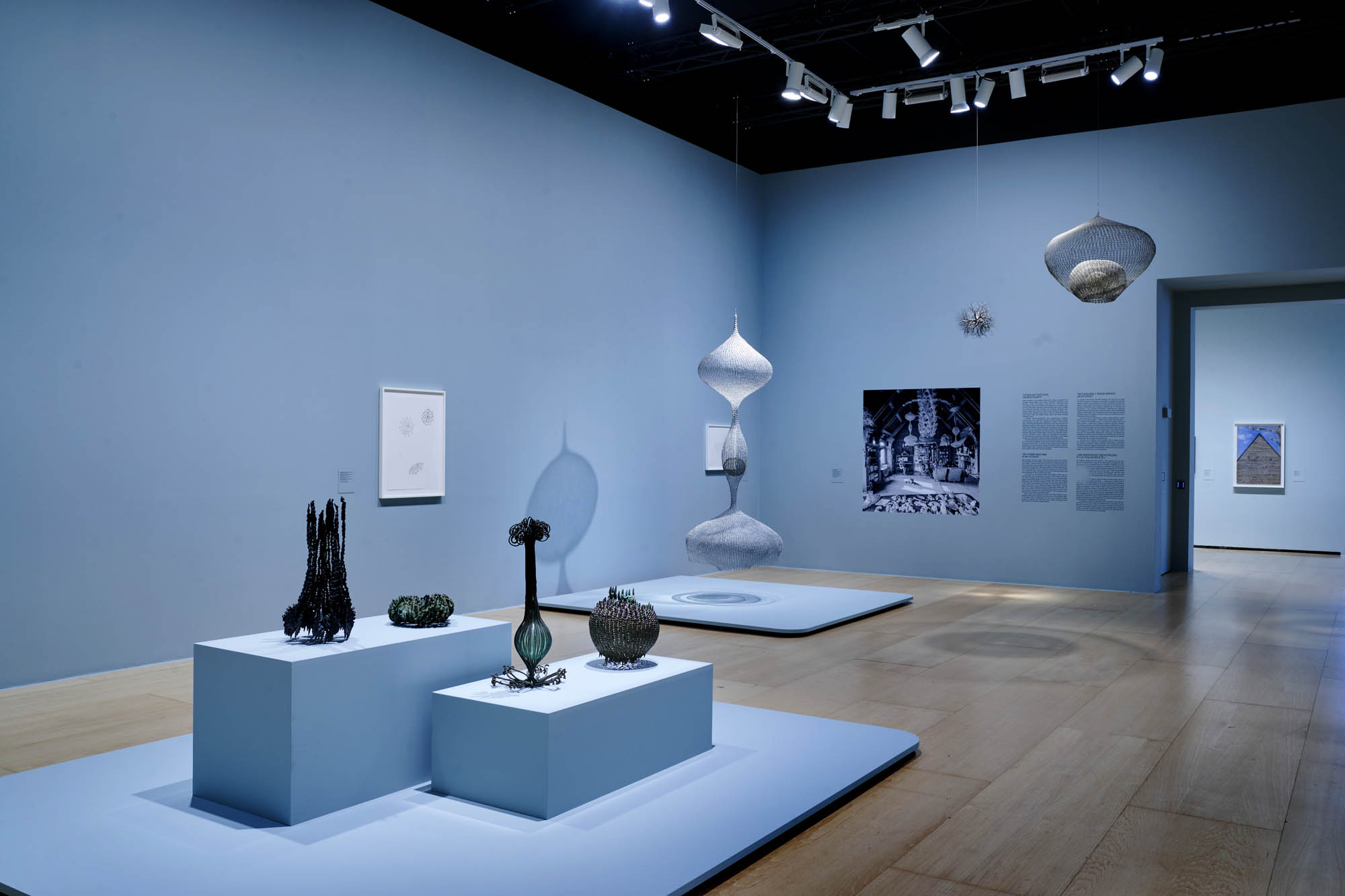
I know which one I would rather honour.

Dr Marcus Bunyan


Many thankx to the National Portrait Gallery for allowing me to publish the photographs in the posting. Please click on the photographs for a larger version of the image.


“Competition prompted photographers such as Mathew Brady and Southworth & Hawes to produce advertisements that provided a wealth of detail about the services offered by their respective establishments … I am inclined to think that word of mouth may well have played a greater role in motivating patronage. In the case of Brady and Southworth & Hawes, the knowledge that these studios counted national celebrities among their clientele could have been a strong inducement for the general public to patronise them as well. …

While the National Portrait Gallery’s collection of early photography is substantial, it’s the rare whole-plate daguerreotypes, ambrotypes, and tintypes that stand out for their detail and scale. This exhibition allows visitors to consider how new photographic processes impacted the quality and appeal of the medium … As an aside, the impetus for ‘From Shadow to Substance’ was the extraordinary gift to the museum in 2023 of Mathew Brady’s iconic whole-plate daguerreotype of the powerful antebellum senator John C. Calhoun. A subsequent review of other whole-plates in the Portrait Gallery’s collection sparked consideration of the format’s staying power as a top-of-the-line offering through the succession of early photographic processes. This is the story the exhibition seeks to illuminate.”


Ann Shumard, Senior Curator of Photographs quoted in Kate Garibaldi. “How Portrait Photography’s ‘Grand-Scale’ Origins Changed History,” on the Petapixel website Aug 01, 2025 [Online] Cited 26/02/2026. Used under fair use conditions for the purposes of education and research


Installation view of the exhibition 'From Shadow to Substance: Grand-Scale Portraits During Photography's Formative Years' at the National Portrait Gallery, Washington, June 20, 2025 - June 7, 2026 showing Mathew B. Brady (American, 1823? - 15 Jan 1896) 'John C. Calhoun' c. 1849-1850
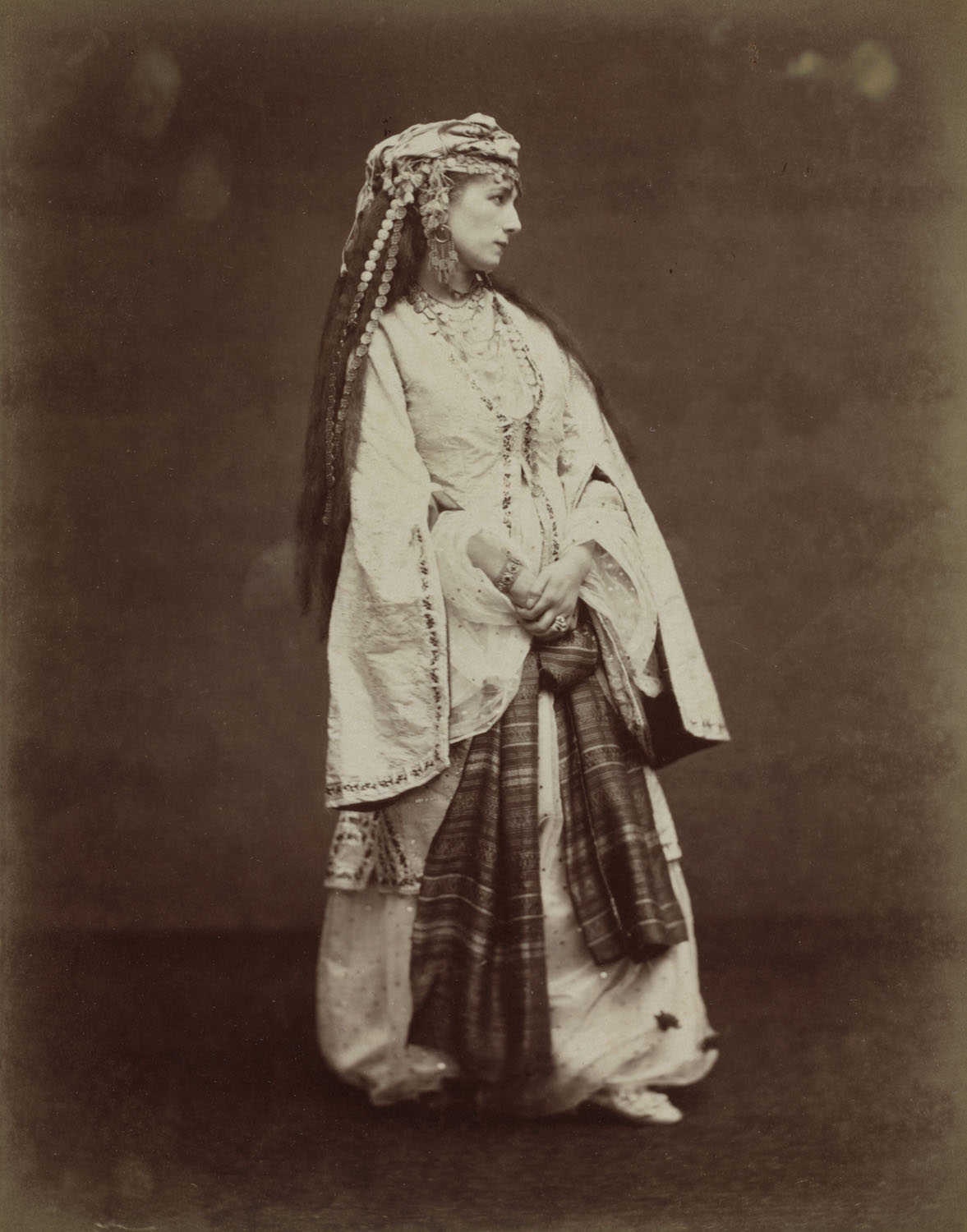
 

Installation view of the exhibition From Shadow to Substance: Grand-Scale Portraits During Photography’s Formative Years at the National Portrait Gallery, Washington, June 20, 2025 – June 7, 2026 showing Mathew B. Brady (American, 1822-1896) John C. Calhoun 1849 (above)
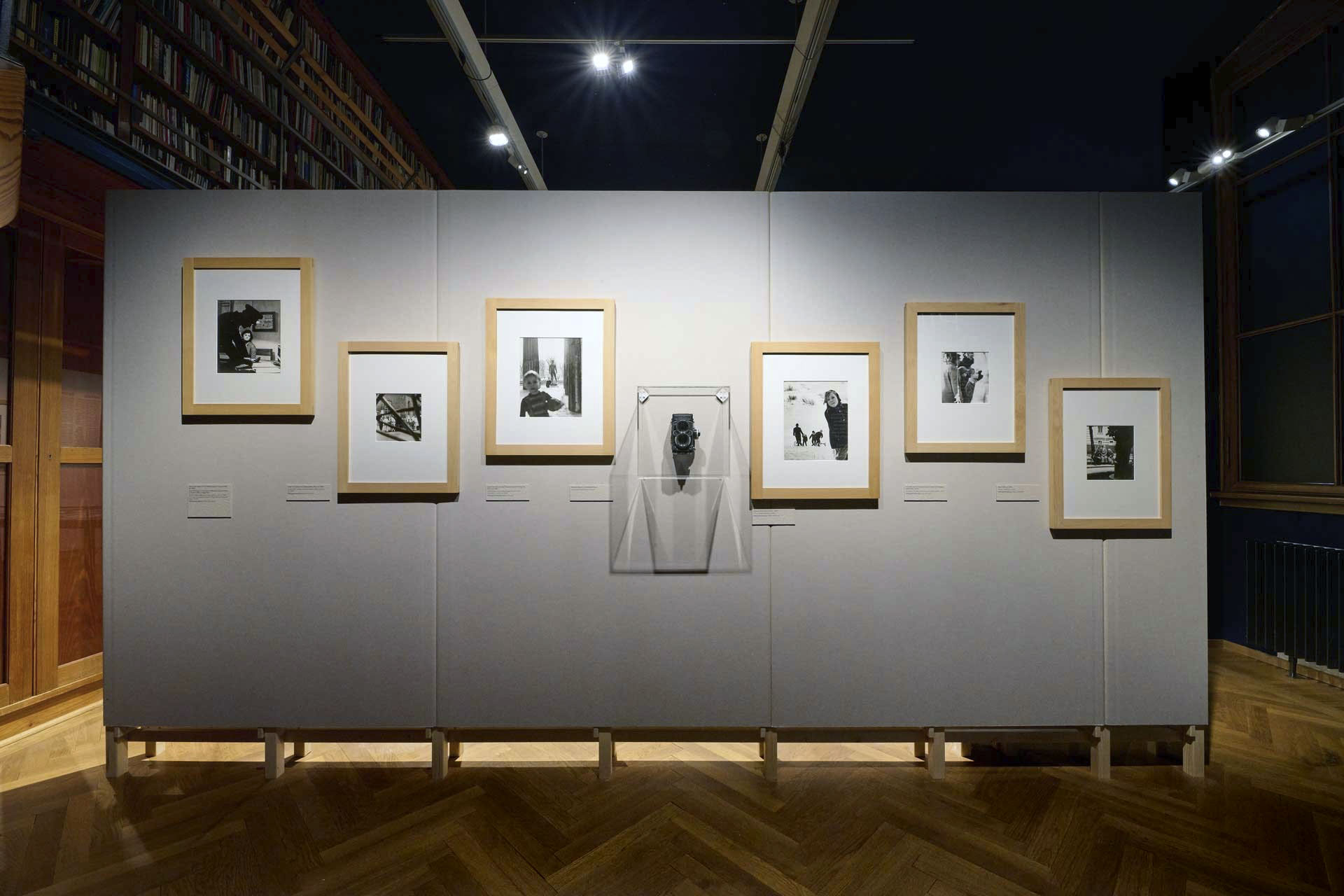
 

Installation view of the exhibition 'From Shadow to Substance: Grand-Scale Portraits During Photography's Formative Years' at the National Portrait Gallery, Washington, June 20, 2025 - June 7, 2026 showing Francis D'Avignon (French, 1813 - c. 1871) Copy after Mathew B. Brady (American, 1823? - 15 Jan 1896) 'John Caldwell Calhoun, 18 Mar 1782 - 31 Mar 1850' 1850


Installation view of the exhibition From Shadow to Substance: Grand-Scale Portraits During Photography’s Formative Years at the National Portrait Gallery, Washington, June 20, 2025 – June 7, 2026 showing Francis D’Avignon (French, 1813 – c. 1871) Copy after Mathew B. Brady (American, 1823? – 15 Jan 1896) John Caldwell Calhoun, 18 Mar 1782 – 31 Mar 1850 1850


Francis D'Avignon (French, 1813 - c. 1871) Copy after Mathew B. Brady (American, 1822-1896) 'John Caldwell Calhoun, 18 Mar 1782 - 31 Mar 1850' 1850


Francis D’Avignon (French, 1813 – c. 1871)
Copy after
Mathew B. Brady (American, 1822-1896)
John Caldwell Calhoun, 18 Mar 1782 – 31 Mar 1850
1850
Lithograph on paper
Sheet: 56.7 x 40.6cm (22 5/16 x 16″)
Book: The Gallery of Illustrious Americans
National Portrait Gallery, Smithsonian Institution


During the first half of the nineteenth century, John C. Calhoun held sway as one of the nation’s most influential politicians. While serving as a senator from South Carolina (1832-1843; 1845-1850), he was unyielding in his advocacy for Southern interests. Under the banner of states’ rights, he supported the concept of nullification. This doctrine maintained that states had the authority to ignore federal laws by declaring them null and void. An unapologetic enslaver, Calhoun staunchly defended chattel slavery and its expansion beyond the American South. Though he died more than a decade before the Civil War began, his views were widely embraced in the Southern states. They ultimately provided justification for secession from the Union. Mathew Brady’s daguerreotype of Calhoun, on view nearby, is faithfully reproduced in this print. It is one of twelve lithographic portraits in a portfolio published by Brady and titled The Gallery of Illustrious Americans.

Text from the National Portrait Gallery website


Installation view of the exhibition 'From Shadow to Substance: Grand-Scale Portraits During Photography's Formative Years' at the National Portrait Gallery, Washington, June 20, 2025 - June 7, 2026


Installation views of the exhibition From Shadow to Substance: Grand-Scale Portraits During Photography’s Formative Years at the National Portrait Gallery, Washington, June 20, 2025 – June 7, 2026


Photographers seeking customers during the medium’s early years often urged the public to “Secure the shadow, ere the substance fade.” Hinting at life’s fragility, this tagline underscored photography’s ability to capture a fleeting likeness and preserve it for posterity. Portraits in the impressive whole-plate format – measuring 8.5 x 6.5 inches – were among the premier offerings of the nation’s leading photographic studios.

Drawing on the National Portrait Gallery’s extensive early photography collection, this exhibition traces the evolution of the grand-scale, whole-plate format from the high-end daguerreotype to the mid-range ambrotype to the more affordable tintype. Examples of whole plates in each of these mediums illustrate how the format evolved as new photographic processes were introduced. Featured works include daguerreotypes representing U.S. senators Daniel Webster and John C. Calhoun, as well as papal nuncio Gaetano Bedini; an ambrotype portrait of American landscape artist John Frederick Kensett; and a tintype likeness of an unidentified African American woman.

Text from the National Portrait Gallery website


Installation view of the exhibition 'From Shadow to Substance: Grand-Scale Portraits During Photography's Formative Years' at the National Portrait Gallery, Washington, June 20, 2025 - June 7, 2026 showing Southworth & Hawes' 'Issac P. Davis 1771-1855 and William Hickling Prescott 1796-1859' c. 1850


Installation view of the exhibition From Shadow to Substance: Grand-Scale Portraits During Photography’s Formative Years at the National Portrait Gallery, Washington, June 20, 2025 – June 7, 2026 showing Southworth & Hawes’ Issac P. Davis 1771-1855 and William Hickling Prescott 1796-1859 c. 1850 (below)


Southworth & Hawes (active 1843-1862) Albert Sands Southworth (American, 1811-1894) Josiah Johnson Hawes (American, 1808-1901) 'Isaac P. Davis, 7 Oct 1771 - 13 Jan 1855 and William Hickling Prescott, 4 May 1796 - 28 Jan 1859' c. 1850
Southworth & Hawes (active 1843-1862) Albert Sands Southworth (American, 1811-1894) Josiah Johnson Hawes (American, 1808-1901) 'Isaac P. Davis, 7 Oct 1771 - 13 Jan 1855 and William Hickling Prescott, 4 May 1796 - 28 Jan 1859' c. 1850 from the exhibition 'From Shadow to Substance: Grand-Scale Portraits During Photography's Formative Years' at the National Portrait Gallery, Washington, June 2025 - June 2026


Southworth & Hawes (active 1843-1862)
Albert Sands Southworth (American, 1811-1894)
Josiah Johnson Hawes (American, 1808-1901)
Isaac P. Davis, 7 Oct 1771 – 13 Jan 1855
William Hickling Prescott, 4 May 1796 – 28 Jan 1859

c. 1850
Whole-plate daguerreotype
Image/Sight: 20.3 x 15.2cm (8 × 6″)
Mat (brass): 23.6 x 18.6cm (9 5/16 x 7 5/16″)
Case open: 25.3 x 40.2 x 2.3cm (9 15/16 x 15 13/16 x 7/8″)
Case closed: 25.3 x 20.7 x 3.5cm (9 15/16 x 8 1/8 x 1 3/8″)
National Portrait Gallery, Smithsonian Institution
Purchase funded by the photography acquisitions endowment established by the Joseph L. and Emily K. Gidwitz Memorial Foundation


Isaac P. Davis, 7 Oct 1771 – 13 Jan 1855
Born Plymouth, Massachusetts

William Hickling Prescott, 4 May 1796 – 28 Jan 1859
Born Salem, Massachusetts

This portrait depicts two prominent Bostonians who enjoyed considerable success in their respective careers and were also known for their philanthropy. Isaac P. Davis (left) amassed a sizeable fortune in manufacturing and real estate. An original member of the Massachusetts Charitable Mechanic Association, which Paul Revere helped found, he was also a patron of American artists, including Gilbert Stuart. Historian William H. Prescott (right) first earned international acclaim for his three-volume History of the Reign of Ferdinand and Isabella the Catholic (1838). Blind in one eye and with low vision in the other, Prescott was a generous supporter of Boston’s Perkins Institute for the Blind.

Text from the National Portrait Gallery website


Installation view of the exhibition 'From Shadow to Substance: Grand-Scale Portraits During Photography's Formative Years' at the National Portrait Gallery, Washington, June 20, 2025 - June 7, 2026 Southworth & Hawes' 'Lemuel Shaw 1787-1861' c. 1851


Installation view of the exhibition From Shadow to Substance: Grand-Scale Portraits During Photography’s Formative Years at the National Portrait Gallery, Washington, June 20, 2025 – June 7, 2026 Southworth & Hawes’ Lemuel Shaw 1787-1861 c. 1851 (below)


Southworth & Hawes (active 1843-1862) Albert Sands Southworth (American, 1811-1894) Josiah Johnson Hawes (American, 1808-1901) 'Lemuel Shaw, 9 Jan 1781 - 30 Mar 1861' c. 1851


Southworth & Hawes (active 1843-1862)
Albert Sands Southworth (American, 1811-1894)
Josiah Johnson Hawes (American, 1808-1901)
Lemuel Shaw, 9 Jan 1781 – 30 Mar 1861
c. 1851
Whole-plate daguerreotype with silver-plated copper sheet support
Plate (sight): 21.5 x 16cm (8 7/16 x 6 5/16″)
Case Open: 23.4 x 36.3 x 0.9cm (9 3/16 x 14 5/16 x 3/8″)
Case Closed: 23.4 x 18.2 x 1.8cm (9 3/16 x 7 3/16 x 11/16″)
National Portrait Gallery, Smithsonian Institution
Conservation made possible by a grant from the Smithsonian’s Collections Care and Preservation Fund


Lemuel Shaw, 9 Jan 1781 – 30 Mar 1861
Born Barnstable, Massachusetts

The impact of rulings by Lemuel Shaw, chief justice of the Massachusetts Supreme Court (1830-1860), extended well beyond the borders of his home state. Particularly in cases affecting business and industry, his decisions influenced commercial law interpretation in courts throughout the nation. He also rendered judgments in key cases concerning the fate of those who had escaped from their enslavers. Though personally opposed to slavery, Shaw believed it was “too deeply interwoven in the texture of society to be wholly or speedily eradicated.” In 1851, he issued the principal opinion supporting the constitutionality of the Fugitive Slave Law of 1850.

Text from the National Portrait Gallery website


Installation view of the exhibition 'From Shadow to Substance: Grand-Scale Portraits During Photography's Formative Years' at the National Portrait Gallery, Washington, June 20, 2025 - June 7, 2026 showing Southworth & Hawes' 'Jonas Chickering' 1853


Installation view of the exhibition From Shadow to Substance: Grand-Scale Portraits During Photography’s Formative Years at the National Portrait Gallery, Washington, June 20, 2025 – June 7, 2026 showing showing Southworth & Hawes’ Jonas Chickering 1853 (below)


Southworth & Hawes (active 1843-1862) Albert Sands Southworth (American, 1811-1894) Josiah Johnson Hawes (American, 1808-1901) 'Jonas Chickering, 5 Apr 1798 - 8 Dec 1853' 1853


Southworth & Hawes (active 1843-1862)
Albert Sands Southworth (American, 1811-1894)
Josiah Johnson Hawes (American, 1808-1901)
Jonas Chickering, 5 Apr 1798 – 8 Dec 1853
1853
Whole-plate daguerreotype
Image: 20 x 15cm (7 7/8 x 5 7/8″)
Frame: 31.1 x 25.7 x 2.5cm (12 1/4 x 10 1/8 x 1″)
National Portrait Gallery, Smithsonian Institution


Jonas Chickering, 5 Apr 1798 – 8 Dec 1853
Born Mason Village, New Hampshire

“The father of American piano making,” Jonas Chickering advanced the development of a one-piece, cast-iron frame that revolutionised piano construction. The result was an instrument that could withstand the tension exerted by its strings and resist extremes in temperature and humidity that impacted its ability to remain in tune. Chickering’s patented innovations also yielded pianos of greater volume and superior resonance. Honoured at the 1851 Crystal Palace exhibition in London, his pianos became the instruments of choice in U.S. and international concert halls.

When he posed for this portrait by Boston’s premier daguerreotypists, Chickering was at the zenith of his career.

Text from the National Portrait Gallery website


Installation view of the exhibition 'From Shadow to Substance: Grand-Scale Portraits During Photography's Formative Years' at the National Portrait Gallery, Washington, June 20, 2025 - June 7, 2026 showing Mathew B. Brady's 'John Frederick Kensett 1816-1872' c. 1856


Installation view of the exhibition From Shadow to Substance: Grand-Scale Portraits During Photography’s Formative Years at the National Portrait Gallery, Washington, June 20, 2025 – June 7, 2026 showing Mathew B. Brady’s John Frederick Kensett 1816-1872 c. 1856 (below)


Mathew B. Brady (American, 1822-1896) 'John Frederick Kensett, 22 Mar 1816 - 15 Dec 1872' c. 1856


Mathew B. Brady (American, 1822-1896)
John Frederick Kensett, 22 Mar 1816 – 15 Dec 1872
c. 1856
Whole-plate ambrotype
Image: 18.4 x 13.2cm (7 1/4 x 5 3/16″)
Case Open: 23 x 36.4cm (9 1/16 x 14 5/16″)
Case Closed: 23 x 18.4cm (9 1/16 x 7 1/4″)
National Portrait Gallery, Smithsonian Institution


John Frederick Kensett, 22 Mar 1816 – 15 Dec 1872
Born Cheshire, Connecticut

In a newspaper advertisement that was published on September 29, 1855, photographer Mathew Brady announced he was now offering “AMBROTYPES – a New Style of Picture on Glass, more durable and perfect than any known method of portraiture.”

Brady’s ambrotype represents artist and engraver John Frederick Kensett, one of the most popular members of the Hudson River School’s second generation of American landscape painters. Kensett was admired for his keen observations of nature, refined compositions, and sensitive rendering of light. A member of the prestigious National Academy, he helped found New York City’s Metropolitan Museum of Art.

Text from the National Portrait Gallery website


National Portrait Gallery Presents “From Shadow to Substance: Grand-Scale Portraits During Photography’s Formative Years”

The Smithsonian’s National Portrait Gallery will present “From Shadow to Substance: Grand Scale Portraits During Photography’s Formative Years” June 20 through June 7, 2026. Drawing from the museum’s extensive early photography collection, this exhibition traces the evolution of the grand scale, whole-plate portrait format from the high-end daguerreotype and mid-range ambrotype to the more affordable tintype. The exhibition is curated by Senior Curator of Photographs Ann Shumard.

Photographers seeking customers during the medium’s early years, from 1840 to 1860, often urged the public to “Secure the shadow ere the substance fade.” Hinting at life’s fragility, this tagline underscored photography’s ability to capture a fleeting likeness and preserve it for posterity. Portraits in the impressive whole-plate format – measuring 8 1/2 by 6 1/2 inches – were among the premier offerings of the nation’s leading photographic studios.

“This exhibition marks the first time these whole-plate daguerreotype, ambrotype and tintype portraits will be shown together at the Portrait Gallery,” Shumard said. Examples of whole plates in each of these mediums illustrate how the format evolved as new photographic processes were introduced. Featured works include daguerreotypes representing U.S. Senators Daniel Webster and John C. Calhoun, an ambrotype portrait of American landscape artist John Frederick Kensett and a tintype likeness of an unidentified African American woman. Also included are original advertisements issued by photographers Albert Sands Southworth and Josiah Johnson Hawes, and Mathew B. Brady to promote their respective businesses. The exhibition will be presented in the Early Photography Alcove on the museum’s first floor.

Press release from the National Portrait Gallery


Installation view of the exhibition 'From Shadow to Substance: Grand-Scale Portraits During Photography's Formative Years' at the National Portrait Gallery, Washington, June 20, 2025 - June 7, 2026 showing at left, Southworth & Hawes' 'Daniel Webster 1782-1852' c. 1845; and at right, Unidentified photographer 'Daniel Webster 1782-1852' c. 1850


Installation view of the exhibition From Shadow to Substance: Grand-Scale Portraits During Photography’s Formative Years at the National Portrait Gallery, Washington, June 20, 2025 – June 7, 2026 showing at left, Southworth & Hawes’ Daniel Webster 1782-1852 c. 1845; and at right, Unidentified photographer Daniel Webster 1782-1852 c. 1850


Southworth & Hawes (active 1843-1862) 'Daniel Webster 1782-1852' c. 1845


Southworth & Hawes (active 1843-1862)
Albert Sands Southworth (American, 1811-1894)
Josiah Johnson Hawes (American, 1808-1901)
Daniel Webster 1782-1852
c. 1845
Whole plate copy daguerreotype
National Portrait Gallery, Smithsonian Institution
Conservation made possible by a grant from the Smithsonian’s Collections Care and Preservation Fund


Daniel Webster 1782-1852
Born Salisbury, New Hampshire

Daniel Webster emerged as a major force in national politics at a time when rising sectionalism threatened to split the country apart. During his service in the House (1823-1827) and Senate (1827-1841; 1845-1850), Webster’s brilliant orations in defence of the Union marked him as one of the great public figures of his generation.

Boston-based photographers Southworth & Hawes excelled in creating whole-plate daguerreotypes of unrivalled quality. Consequently, their studio attracted numerous prominent figures, including Webster. Their majestic Webster portrait was so popular that it may have inspired them to produce this daguerreotype, a copy of the original.

Text from the National Portrait Gallery website


Unidentified photographer. 'Daniel Webster 1782-1852' c. 1850


Unidentified photographer
Daniel Webster 1782-1852
c. 1850
Sixth-plate daguerreotype
National Portrait Gallery, Smithsonian Institution


A sixth-plate daguerreotype such as this portrait of Daniel Webster, would have sold for a fraction of the cost of a whole plate. To put the era’s pricing in context, a year’s supply of coal for a working-class family in 1850 cost $15 – the minimum price for a Southworth & Hawes whole-plate daguerreotype. The whole plate was therefore too expensive for most consumers.

Retailing for about $3, a sixth-plate was a more affordable option. There were tradeoffs, however. While the whole plate allowed for a dramatic, standing view of Webster, the Sith-plate accommodated only a bust-length image.

In a period when American federalism faced increasing challenges from states’-rights supporters, Daniel Webster emerged as one of the Union’s most eloquent defenders. Having gained acclaim as a lawyer who argued some of the young republic’s pivotal Supreme Court cases, Webster became a major force in national politics through his service in the House and in the Senate. There, his brilliant orations on behalf of the indivisibility of the Union marked him as one of the greatest public figures of his generation. Despite his national stature, Webster fell short of mustering the broad support that might have won him the presidency.

This daguerreotype represents Webster around the time of his controversial endorsement of the Compromise of 1850. In supporting the measure, Webster sought to preserve the Union through concession and compromise but succeeded principally in incurring the wrath of his northern constituents, who abhorred the legislation’s Fugitive Slave Act. Although attacks from his critics left Webster shaken and burdened by “the crushing weight of anxiety and responsibility,” he soldiered on until a liver ailment claimed his life in October 1852. The evergreen sprig preserved with this daguerreotype serves as a reminder of Webster’s endurance as a symbol and an icon in American history.

Text from the National Portrait Gallery website


Installation view of the exhibition 'From Shadow to Substance: Grand-Scale Portraits During Photography's Formative Years' at the National Portrait Gallery, Washington, June 20, 2025 - June 7, 2026 showing a wood engraving by an unidentified artist of 'Southworth & Hawes' Daguerreotype Rooms' c. 1849


Installation view of the exhibition From Shadow to Substance: Grand-Scale Portraits During Photography’s Formative Years at the National Portrait Gallery, Washington, June 20, 2025 – June 7, 2026 showing a wood engraving by an unidentified artist of Southworth & Hawes’ Daguerreotype Rooms c. 1849 (below)


Unidentified Artist. 'Southworth & Hawes' Daguerreotype Rooms' c. 1849


Unidentified Artist
Southworth & Hawes’ Daguerreotype Rooms
c. 1849
Wood engraving
20 x 12.7cm (7 7/8 x 5″)
National Portrait Gallery, Smithsonian Institution
Gift of an anonymous donor in honour of Carlos G. Vertanssian


In 1843, photographer Albert Sands Southworth (1811-1894) and Josiah Johnson Hawes (1808-1901) formed a creative partnership that yielded daguerreotypes unrivalled for their artistry and technical achievement. Committed to the highest standards, the duo excelled in producing beautiful composed, evocative portraits, particularly in the large (8 1/2 x 6 1/2 in.) and technically demanding whole-plate format.

In this advertisement for their Boston studio, Southworth & Hawes offered potential customers the assurance: ‘In style of execution and picturesque effect – in boldness of character and beauty of expression – in variety of size and delicacy of lights and shadows, we shall aim at the highest perfection’.

Text from the National Portrait Gallery website


Southworth & Hawes (active 1843-1862) Albert Sands Southworth (American, 1811-1894) Josiah Johnson Hawes (American, 1808-1901) 'Gaetano Bedini, 1806-1864' 1853


Southworth & Hawes (active 1843-1862)
Albert Sands Southworth (American, 1811-1894)
Josiah Johnson Hawes (American, 1808-1901)
Gaetano Bedini, 1806-1864
1853
Whole-plate daguerreotype
Image: 20 x 15cm (7 7/8 x 5 7/8″)
Case Open: 25.4 x 40.8 x 1cm (10 x 16 1/16 x 3/8″)
Case Closed: 23.1 x 18.1 x 1.7cm (9 1/8 x 7 1/8 x 11/16″)
National Portrait Gallery, Smithsonian Institution
Transfer from the Archives of American Art, Smithsonian Institution. Conservation made possible by a grant from the Smithsonian’s Collections Care and Preservation Fund


Gaetano Bedini, 1806-1864
Born Sinigaglia, Italy

In 1853, Italian archbishop Gaetano Bedini travelled to the United States at the request of Pope Pius IX to assess the condition of the Catholic Church in North America and to study the possibility of establishing a papal mission in Washington, D.C. Bedini’s multi-month, fact-finding tour coincided with an intense wave of anti-Catholic, anti-immigrant feeling fanned by the newly ascendant American (or Know-Nothing) Party. In several cities, his presence sparked hostile demonstrations. Upon returning to the Vatican, Bedini advocated successfully for the creation of a North American College in Rome to prepare Roman Catholic clergy for service in the United States.

Text from the National Portrait Gallery website


Installation view of the exhibition 'From Shadow to Substance: Grand-Scale Portraits During Photography's Formative Years' at the National Portrait Gallery, Washington, June 20, 2025 - June 7, 2026 showing a wood engraving by an unidentified artist 'Brady's Daguerreotypes' 1854


Installation view of the exhibition From Shadow to Substance: Grand-Scale Portraits During Photography’s Formative Years at the National Portrait Gallery, Washington, June 20, 2025 – June 7, 2026 showing a wood engraving by an unidentified artist of Brady’s Daguerreotypes 1854 (below)


Unidentified Artist. 'Brady's Daguerreotypes' 1854


Unidentified Artist
Brady’s Daguerreotypes
1854
Wood engraving on paper
Image: 21.8 x 14.8cm (8 9/16 x 5 13/16″)
Sheet: 24 x 18.6cm (9 7/16 x 7 5/16″)
Mat: 45.8 x 35.6cm (18 1/16 x 14″)
Published in the Illustrated American Biography, 1854
National Portrait Gallery, Smithsonian Institution
Gift of George S. Whiteley IV


Mathew Brady placed this full-page advertisement in the Illustrated American Biography, a publication that marketed itself as a biographical volume but was actually a glorified business directory. With its cutaway image of a camera, Brady’s ad presents a fanciful view of the process by which sunlight passes through the camera’s lens to produce an image.

In 1851, Mathew Brady submitted forty-eight daguerreotypes to the “Great Exhibition,” the vast international fair organised by Britain’s Prince Albert at the Crystal Palace in London. A critic for the London Illustrated News noted, “The likenesses of various distinguished Americans by Mr. Brady are notable examples of this style of art.” It is reasonable to assume that whole-plate portraits were among the works Brady exhibited. When jurors pronounced his daguerreotypes “excellent for beauty of execution,” he proudly claimed one of the fair’s highly coveted medals.

Well aware of the marketing value of his prize, Brady touted it in full-page advertisements, such as this example. Presenting a cutaway image of a camera’s interior, the ad offers a fanciful view of the way in which sunlight, represented by an allegorical figure, passes through the lens to produce an image.

Text from the National Portrait Gallery website


Installation view of the exhibition 'From Shadow to Substance: Grand-Scale Portraits During Photography's Formative Years' at the National Portrait Gallery, Washington, June 20, 2025 - June 7, 2026 showing a whole-plate tintype by an unidentified photographer of an 'Unidentified Woman' c. 1865


Installation view of the exhibition From Shadow to Substance: Grand-Scale Portraits During Photography’s Formative Years at the National Portrait Gallery, Washington, June 20, 2025 – June 7, 2026 showing a whole-plate tintype by an unidentified photographer of an Unidentified Woman c. 1865 (below)


Unidentified photographer. 'Unidentified Woman' c. 1865


Unidentified photographer
Unidentified Woman
c. 1865
Whole-plate tintype
Image/Sheet: 21.6 x 15.2 cm (8 1/2 x 6″)
National Portrait Gallery, Smithsonian Institution


Unidentified Woman
Birthplace unknown

A penciled note attached to the back of this tintype reads simply, “Born May 10 1811.” Regrettably, the woman pictured is not otherwise identified. However, her handsome dress, her gold-accented jewelry, the book on the table beside her, and the slim volume in her hands suggest she was a literate woman who could afford a top-of-the-line tintype.

This portrait’s large scale and studio setting distinguish it from the small, inexpensive tintypes commonly produced by itinerant photographers. A whole-plate tintype such as this was likely priced from $.75 to $1 in the 1860s, when the average daily wage of a labourer was only $2.

Text from the National Portrait Gallery website


National Portrait Gallery
8th and F Sts NW
Washington, DC 20001

Opening hours:
11.30am – 7.00pm daily

National Portrait Gallery website

LIKE ART BLART ON FACEBOOK

Back to top