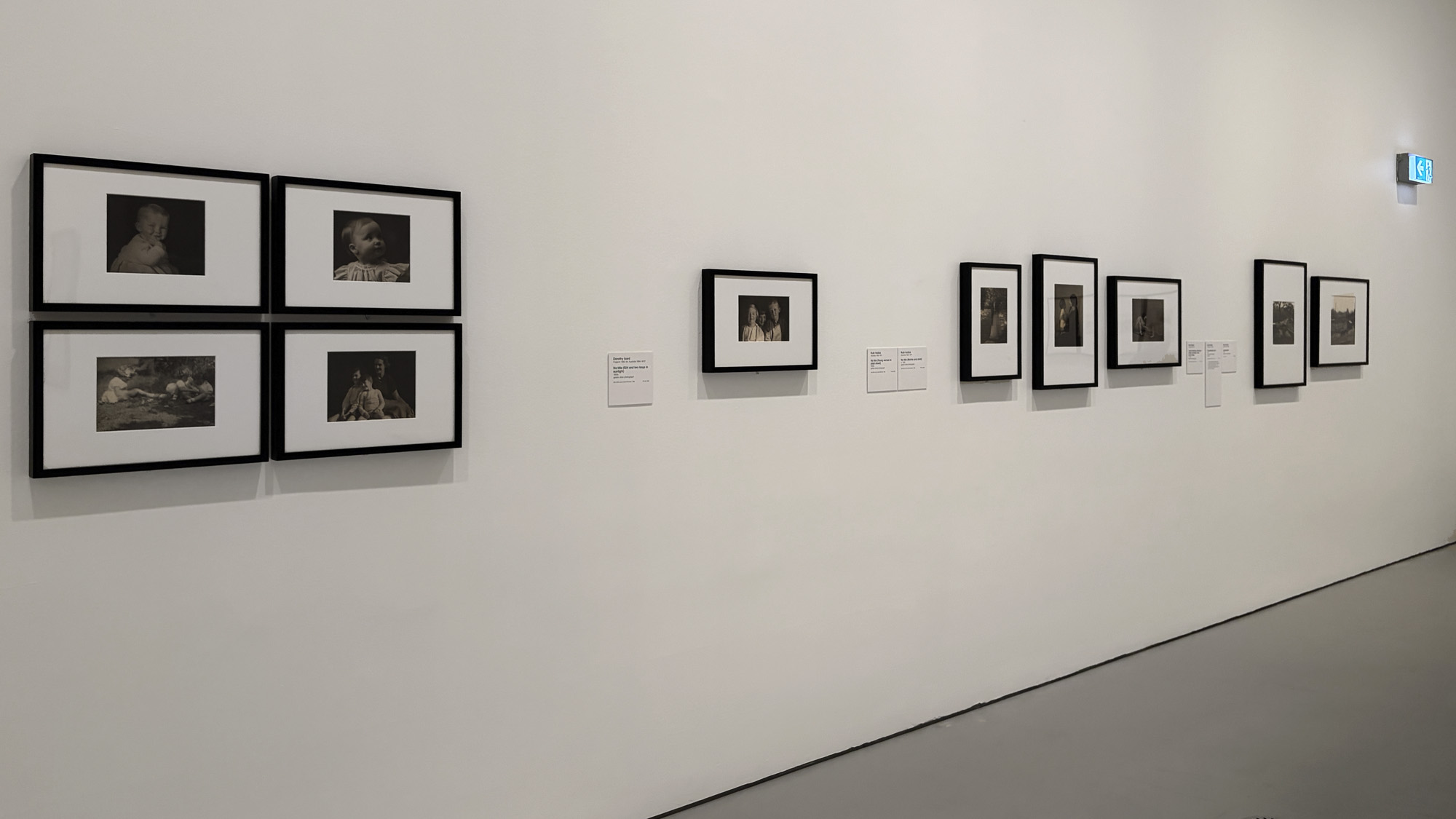
Exhibition: ‘Women Photographers 1900-1975: A Legacy of Light’ at NGV International, Melbourne, Part 2

“Aesthetically (both pictorially and in exhibition design) there is a wonderful frisson to the grouping of the photographs in these darker, enclosed, tightly curated gallery spaces that is so intoxicating to the senses.” Dr Marcus Bunyan

Exhibition dates: 28th November, 2025 – 3rd May, 2026

Curator: Maggie Finch, Curator of Photography at the NGV
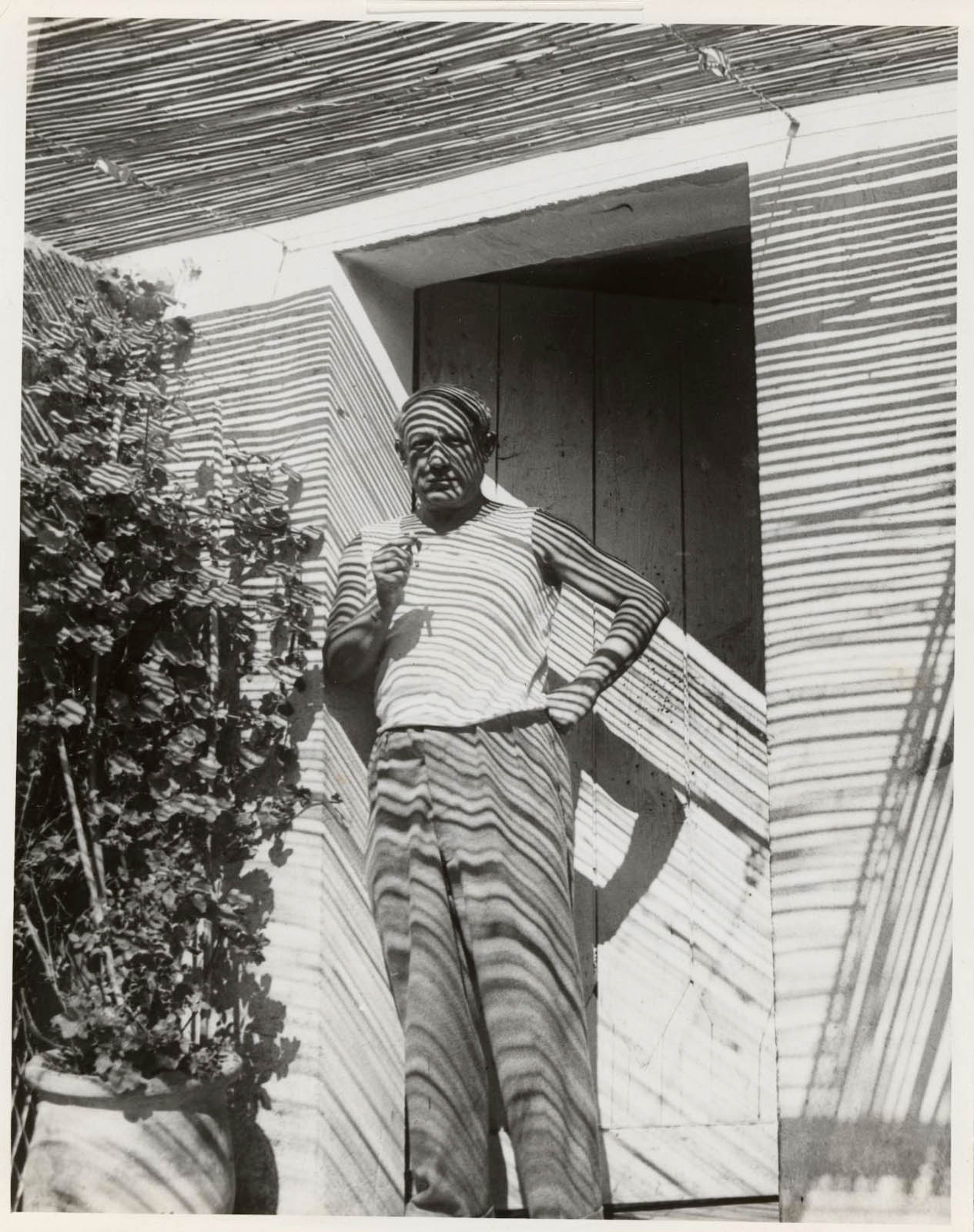
 

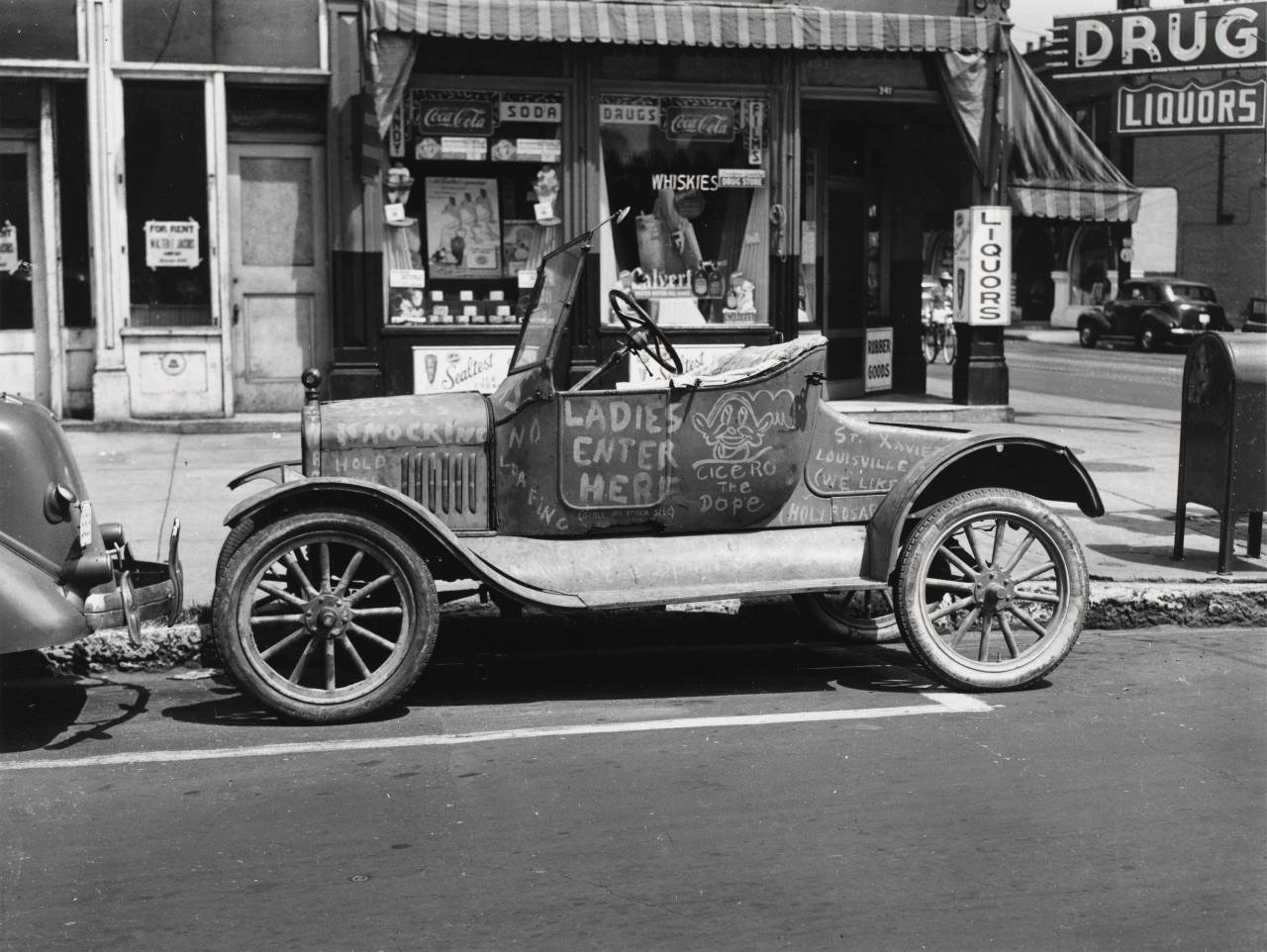
Dora Maar (French 1907-1997) 'Pablo Picasso standing under reed screening, Mougins, summer, 1937' (Pablo Picasso debout sous les cannisses, Mougins, été, 1937) 1937


Dora Maar (French 1907-1997)
Pablo Picasso standing under reed screening, Mougins, summer, 1937 (Pablo Picasso debout sous les cannisses, Mougins, été, 1937)
1937
Gelatin silver photograph
22.0 x 17.2cm (image)
23.1 x 18.2cm (sheet)
National Gallery of Victoria, Melbourne
Gift of Krystyna Campbell-Pretty AM and Family through the Australian Government’s Cultural Gifts Program, 2022
© Dora Maar. Licensed by Copyright Agency, Australia


After being introduced to Pablo Picasso in 1935, Dora Maar became his lover, model and muse until their tumultuous liaison ended in 1943. During their time together, Maar famously documented the creation of the monumental painting Guernica in Picasso’s Paris studio. This portrait captures the artist at ease, bathed in an endlessly echoing lineation of shadows from the above reed screen. The portrait Maar took of Picasso a year later, displayed nearby, shows him seated outside, his eyes glinting with intensity. Both images were taken in Mougins, near Cannes, an area that Picasso returned to every summer.

Wall text from the exhibition


The interface of light

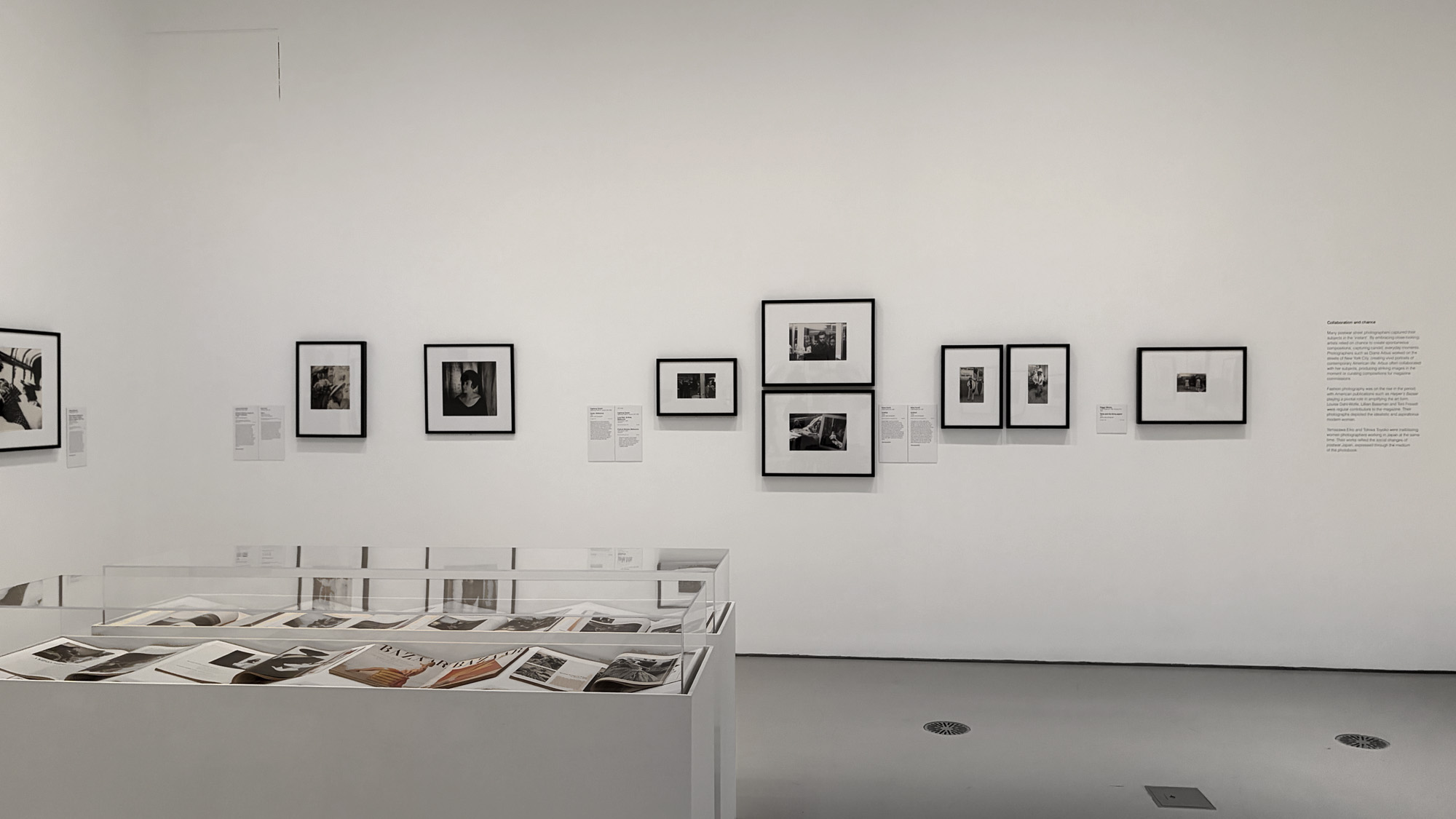
For much of its running length this exhibition of cinematic scope at the National Gallery of Victoria curated by the dependable Maggie Finch is a stimulating ride.

The early galleries in particular are a joy to behold, mixing as they do international and Australian female photographers mainly from the period between the two world wars. This placement of Australian photography in an international context (or vice versa) is something I have desired to see for a very long time in an Australian photographic exhibition. One informing the other. And it works so well!

Aesthetically (both pictorially and in exhibition design) there is a wonderful frisson to the grouping of the photographs in these darker, enclosed, tightly curated gallery spaces that is so intoxicating to the senses. Ruth Hollick meets Madame d’Ora, Florence Henri meets Yamawaki Michiko, and Olive Cotton meets Dora Maar on the gallery walls, interwoven into an intertextual conversation on photography that spans identities, countries and continents. Perhaps not a legacy of light rather the interface of light, a shared connection, one nexus to another. I could have breathed in these photographs for hours!

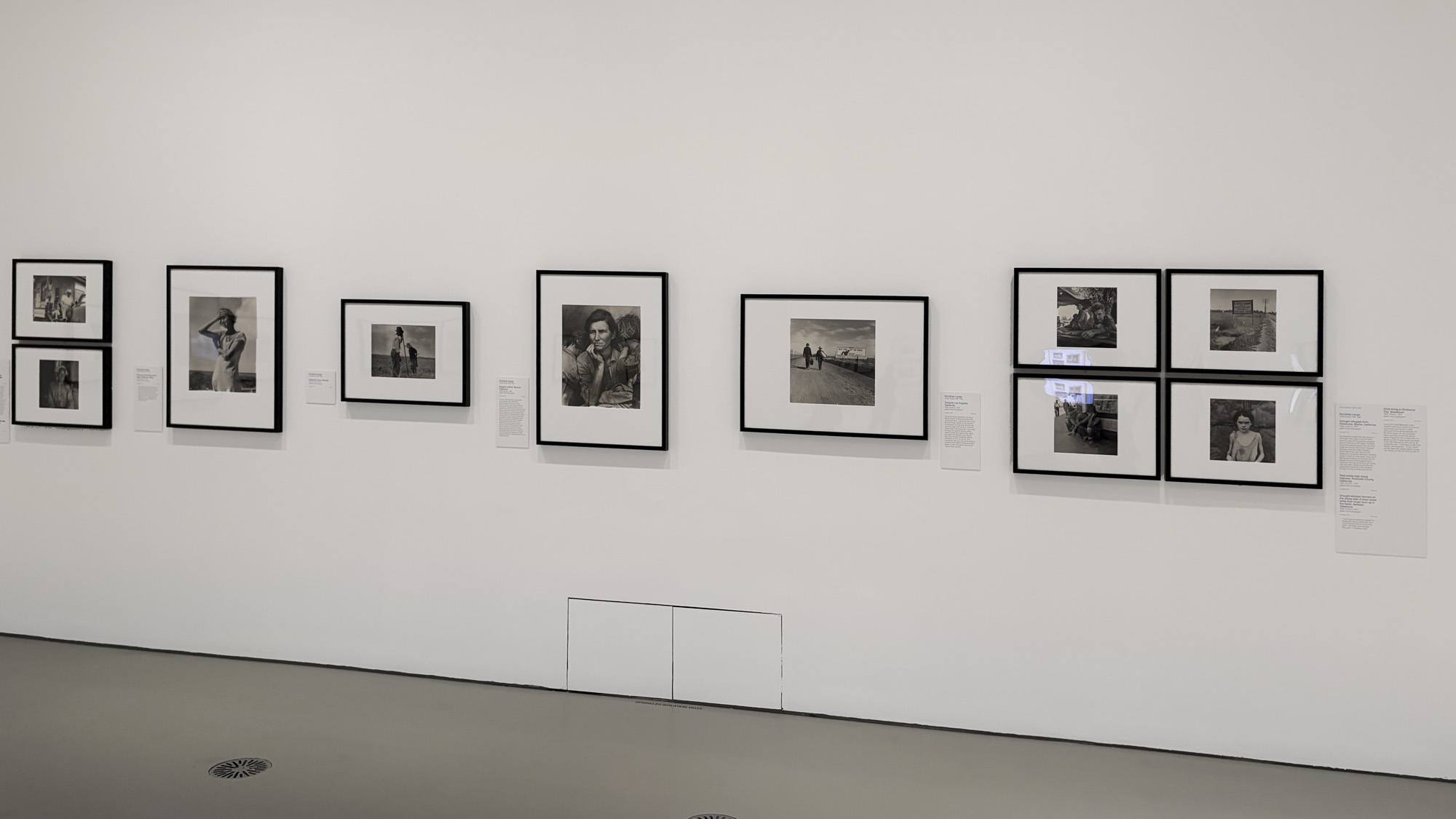
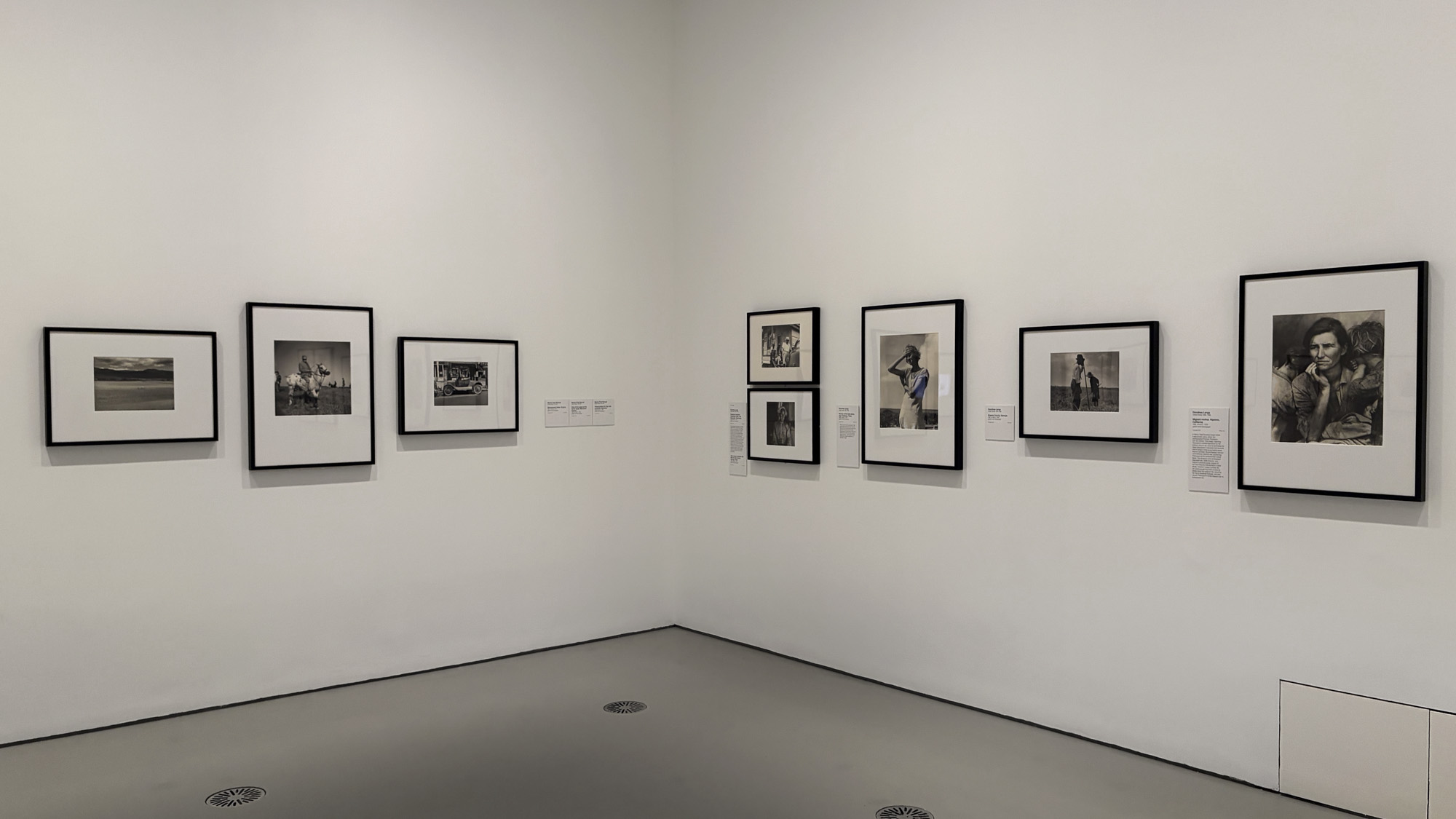
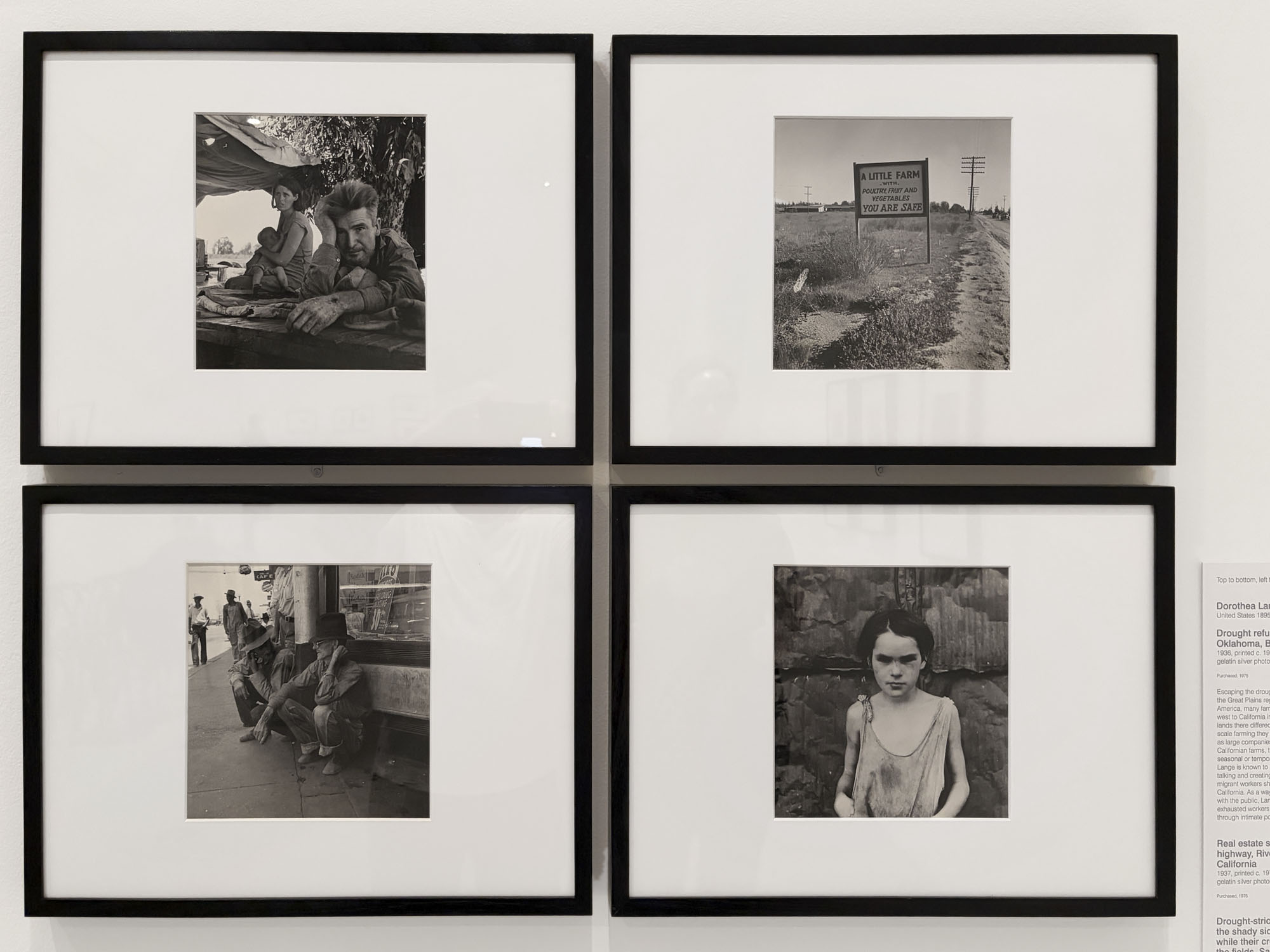
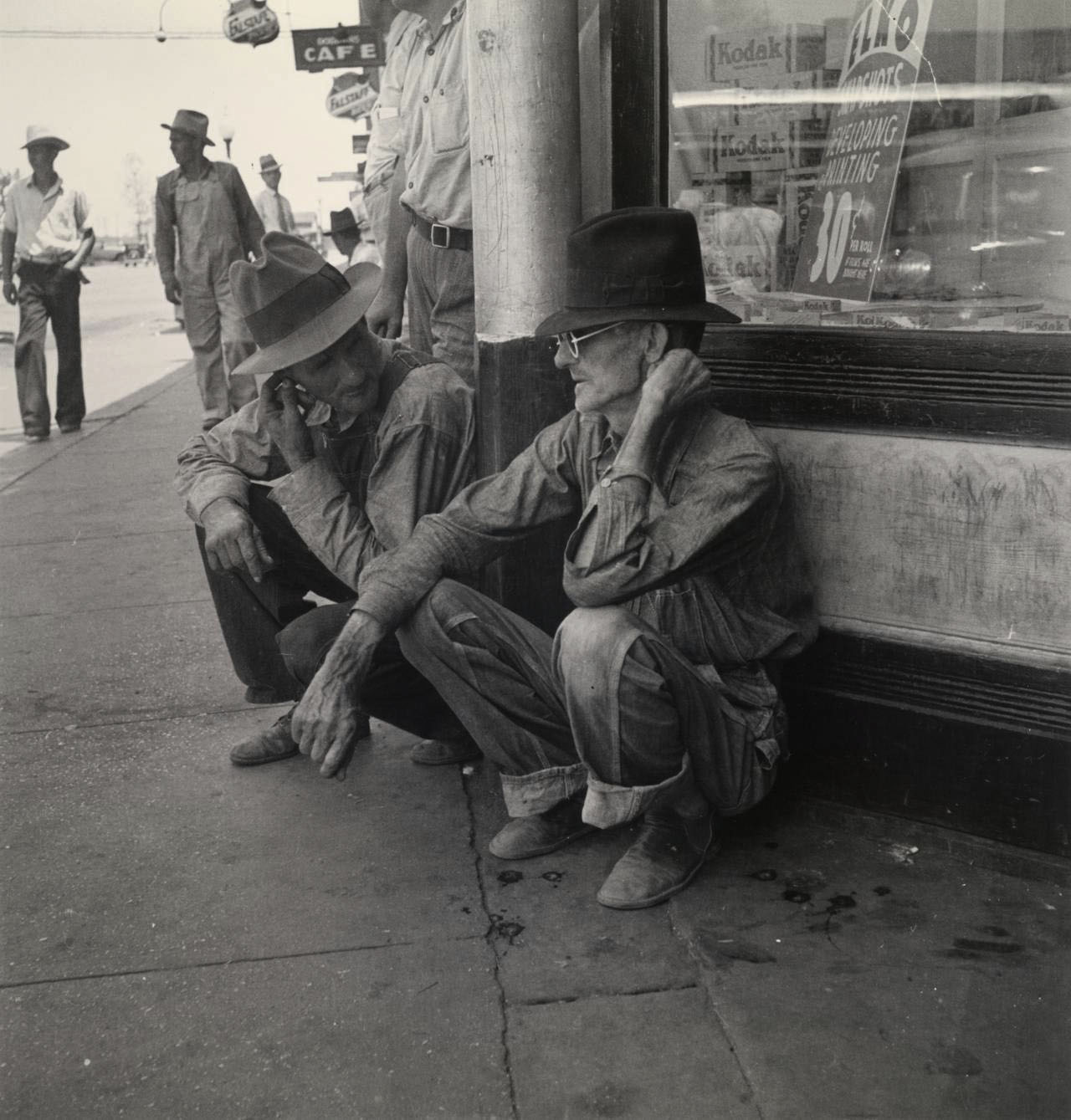
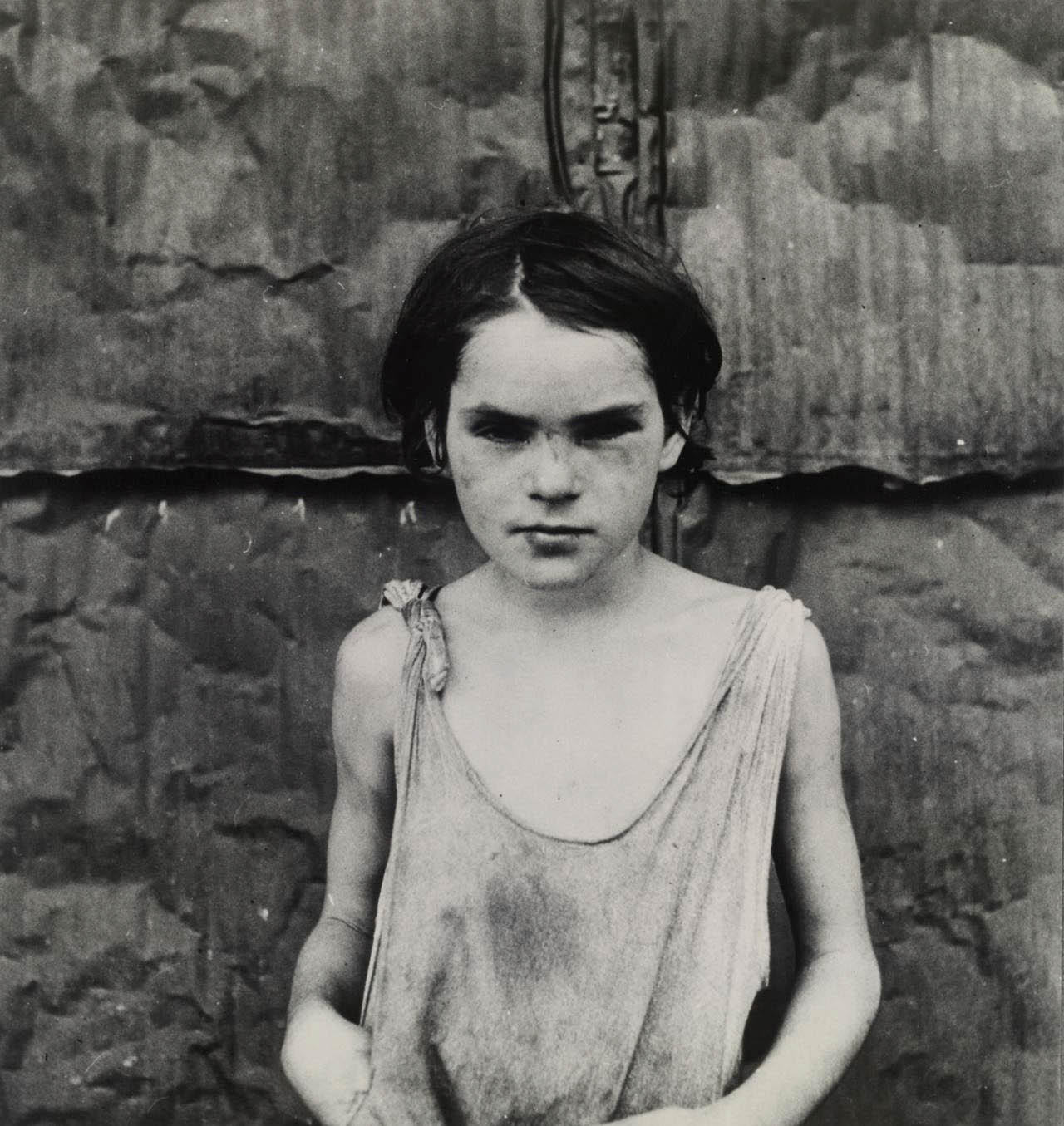
That energy starts to dissipate as the gallery spaces open out in the second half of the exhibition, especially in the section ‘People and Place’ (see below). Poor Farm Security Administration prints of now famous photographs printed very flatly in the mid-1970s and purchased for the gallery in the same time period don’t help the cause – they need to be replaced in the collection with more appropriate prints of these images.

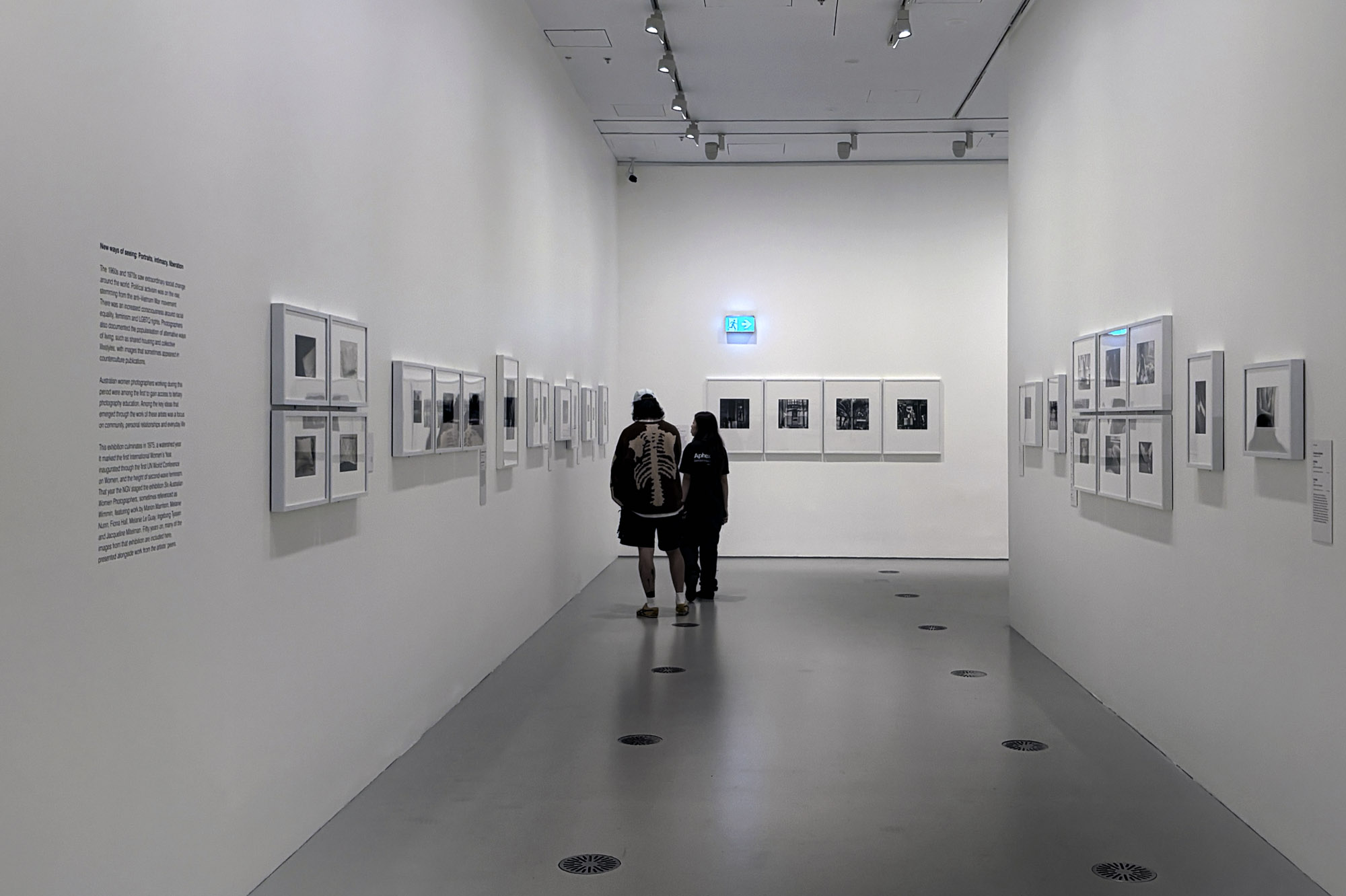
By the time of the final section, ‘New Ways Of Seeing: Portraits, Intimacy, Liberation’ (see below), the international representation has disappeared altogether and all the intoxicating energy has gone. In this section we find strong, eloquent and important Australian photographs from the period – conceptual, feminist, and on liberation – but it would have been great to have seen them paired with photographs from international photographers such as Cindy Sherman, Mary Ellen Mark, and Valie Export for example.

On reflection I can say that this is a strong exhibition from the NGV coherently and intelligently curated by Maggie Finch. It is fantastic to see that the gallery has been “splashing the cash” in recent years – supported by Krystyna Campbell-Pretty AM and the Bowness family – with over 170 new acquisitions for the photographic collection.

However for a public gallery, with most of the photographs already in the collection, to charge $25 entry price is really beyond the pale. I went twice to see the exhibition and $50 is a fair whack of money out of anyone’s budget.

Dr Marcus Bunyan


Many thankx to the NGV for allowing me to publish the media images in the posting. All installation photographs © Marcus Bunyan. Please click on the photographs for a larger version of the image. View Part 1 of the posting.
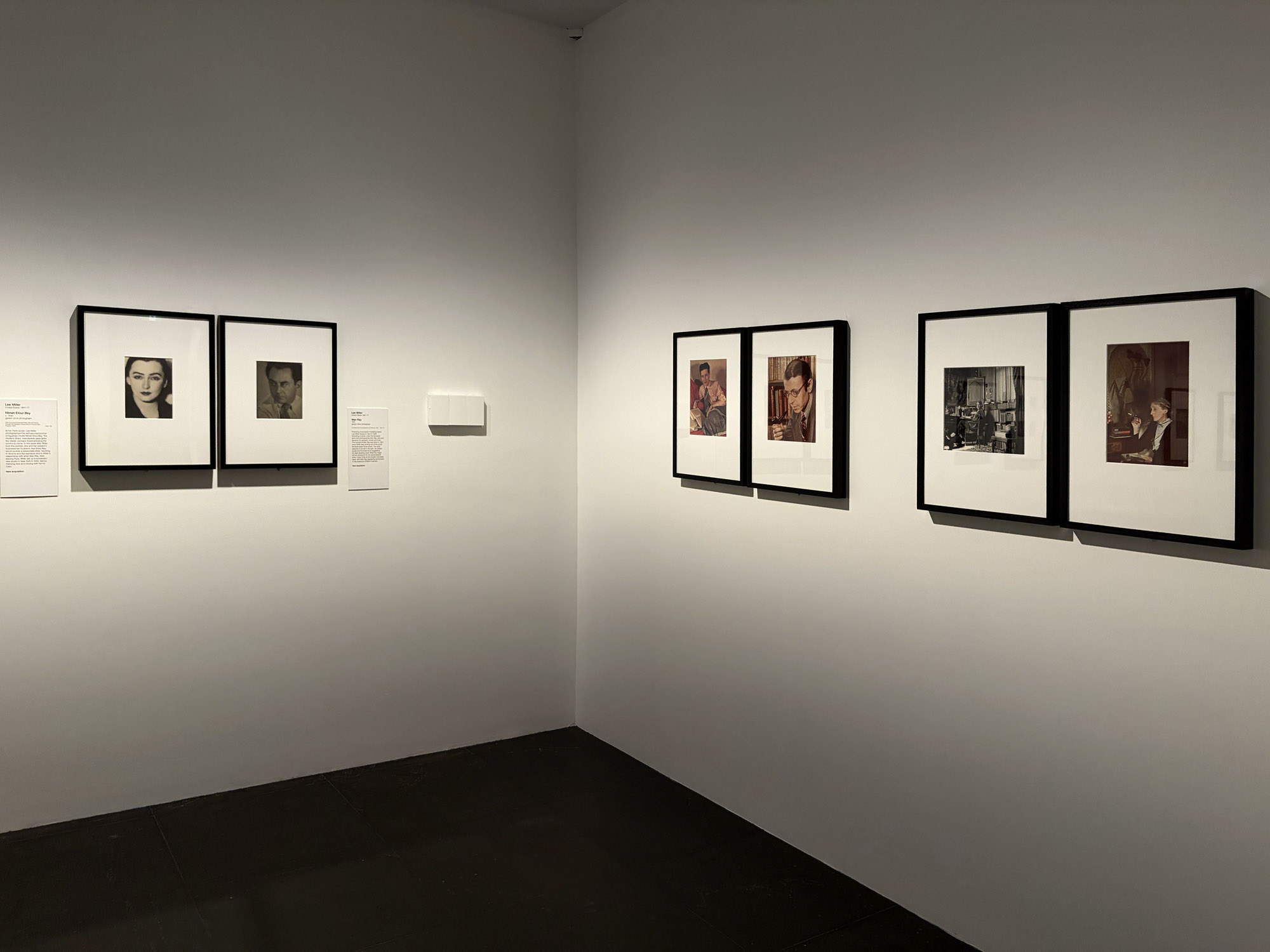


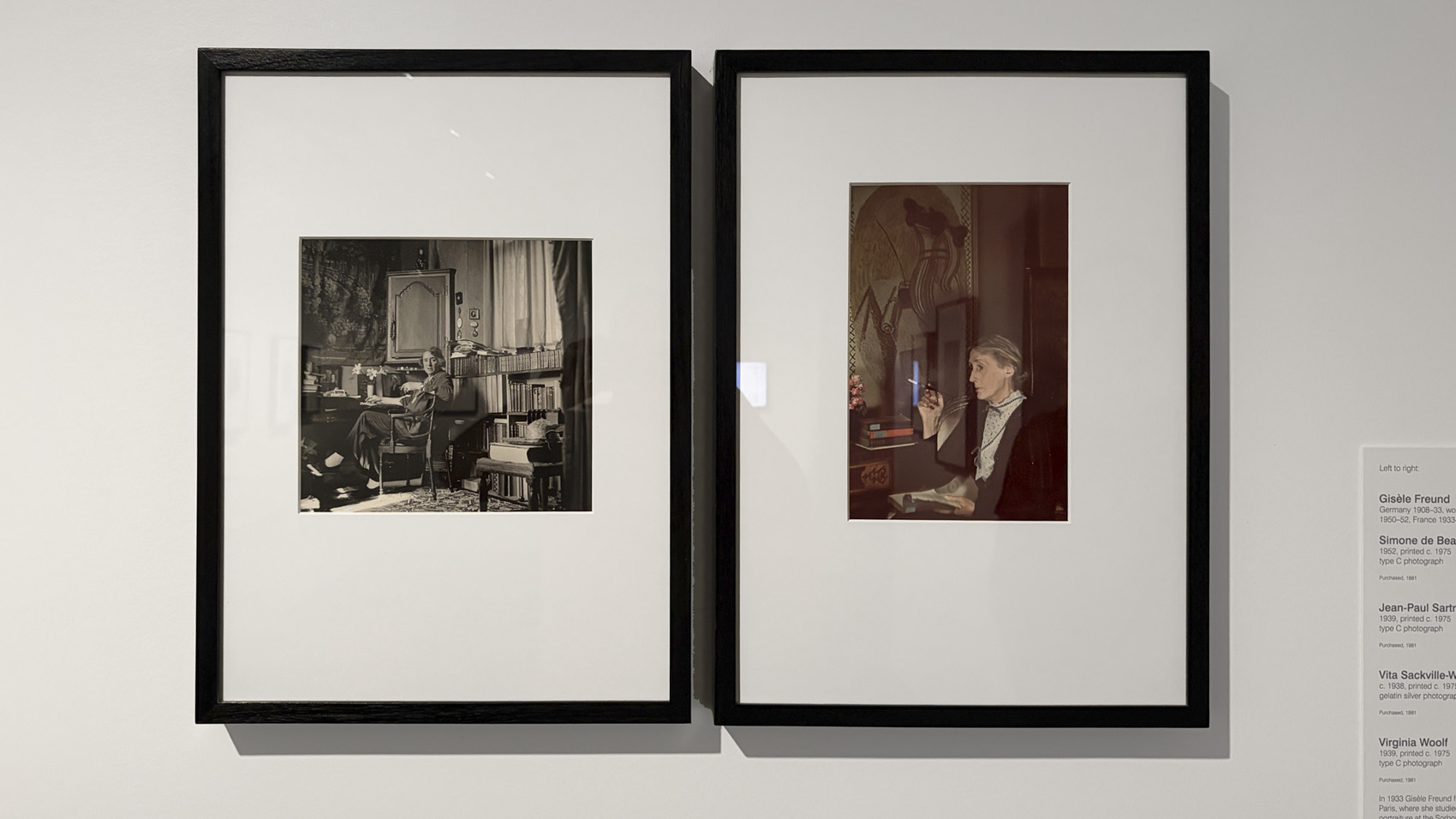
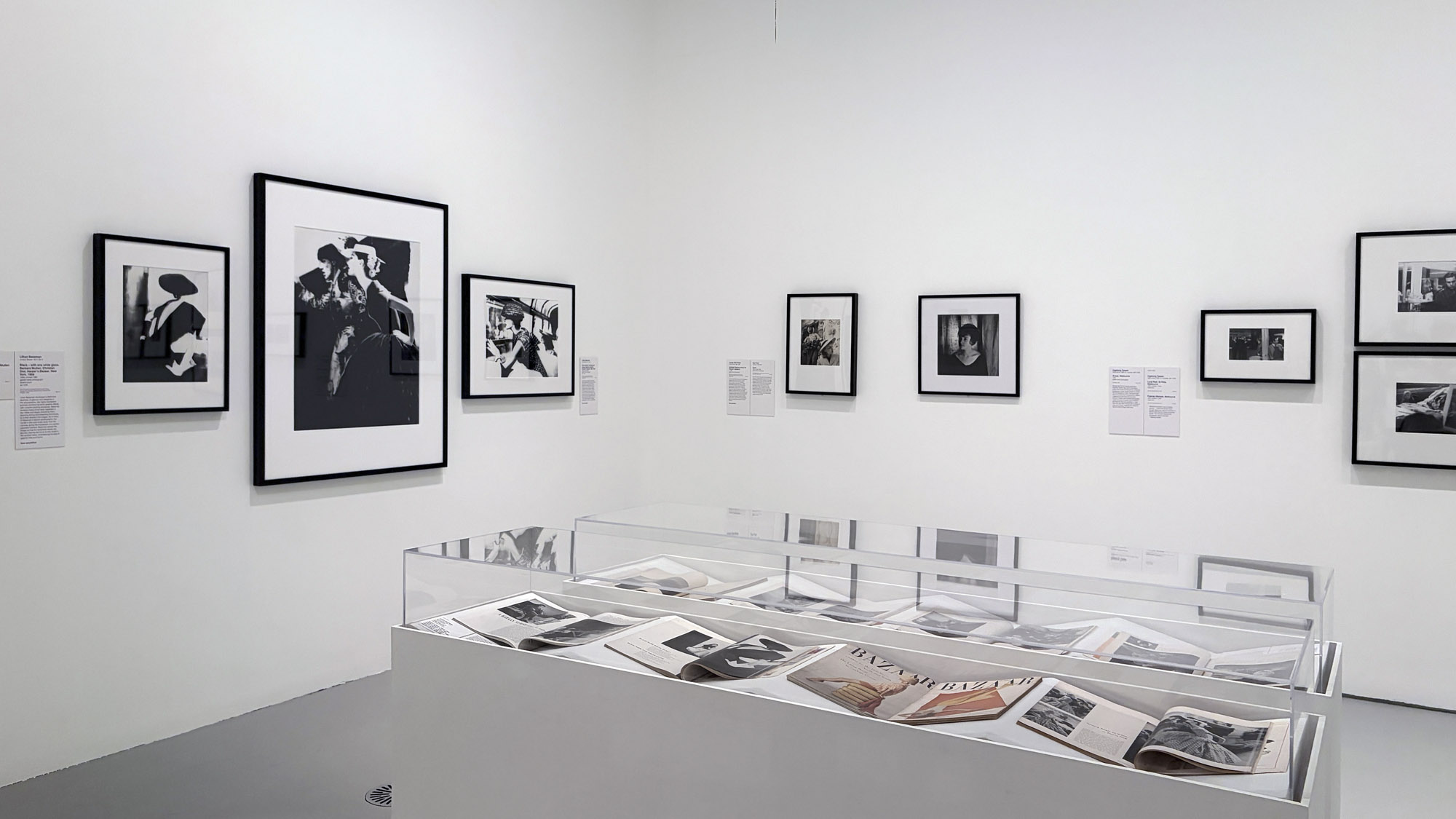
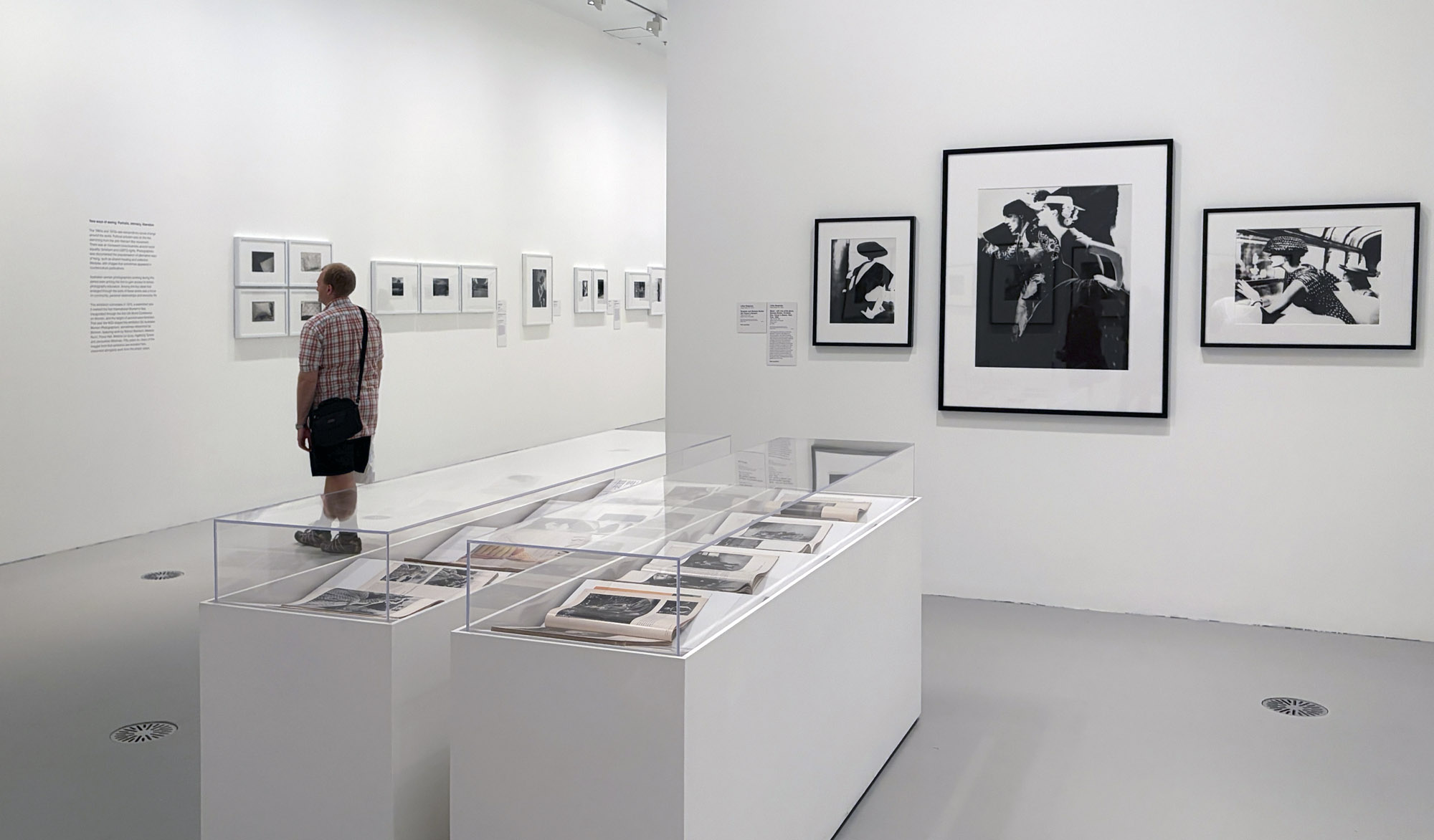
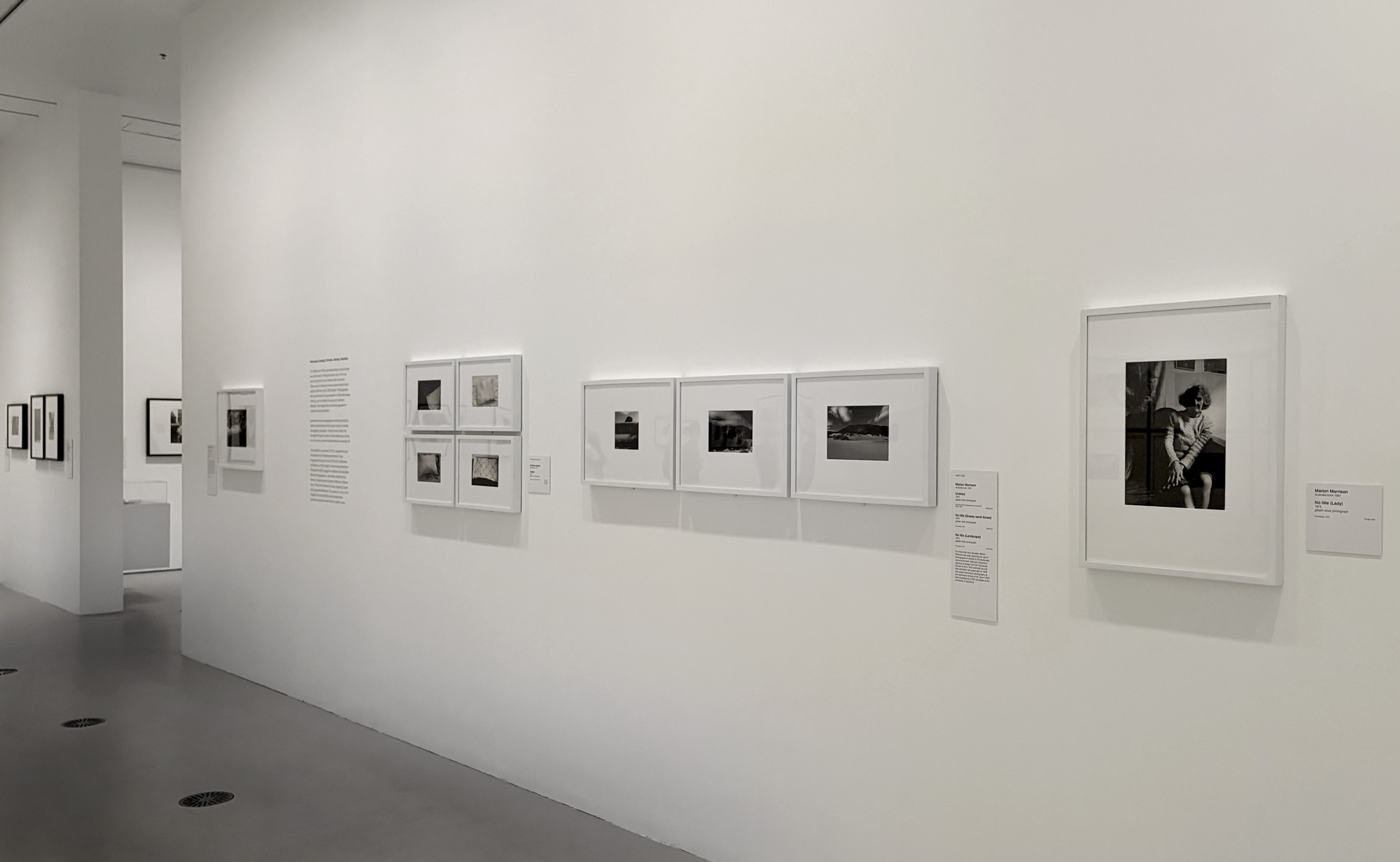
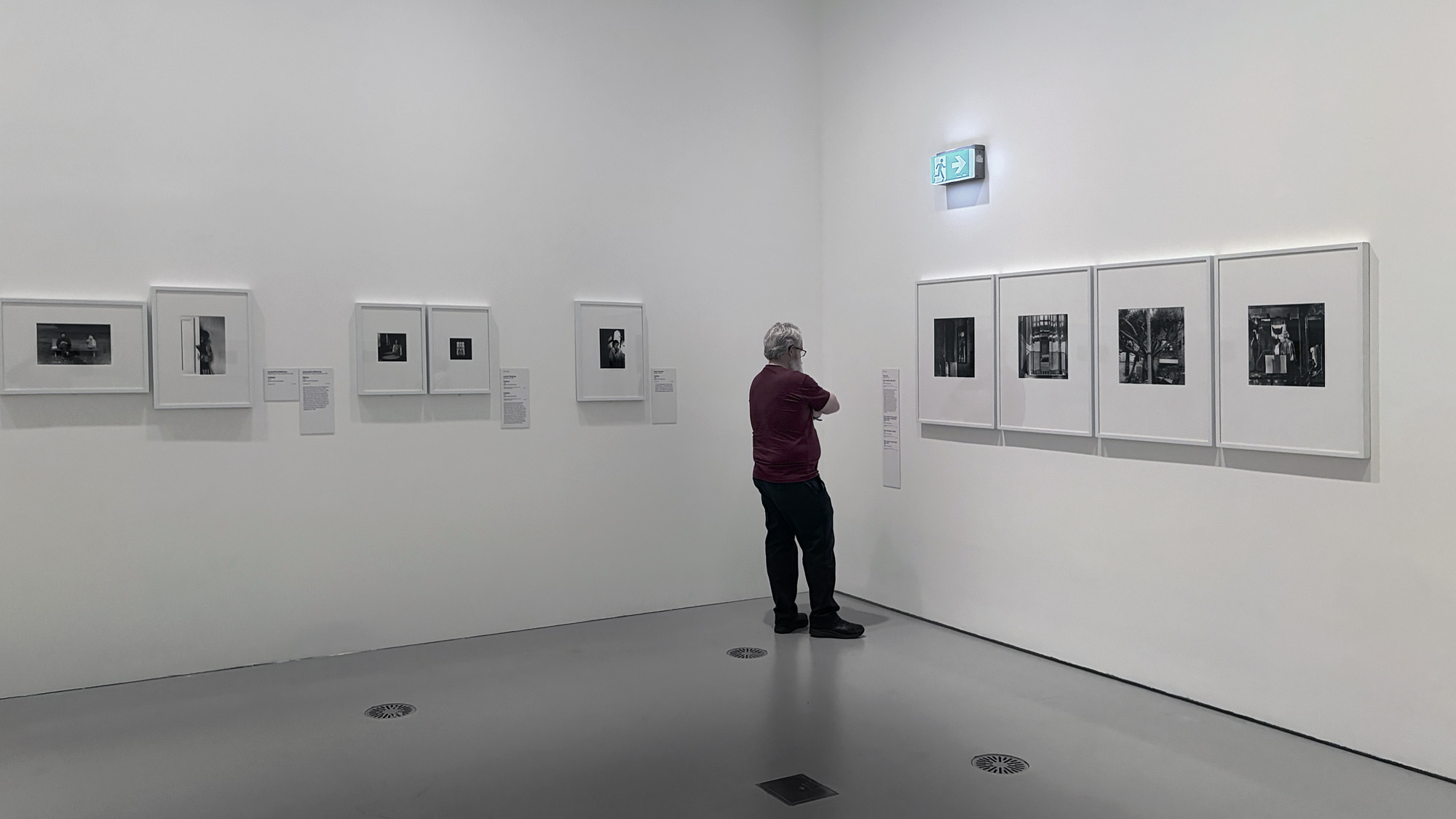
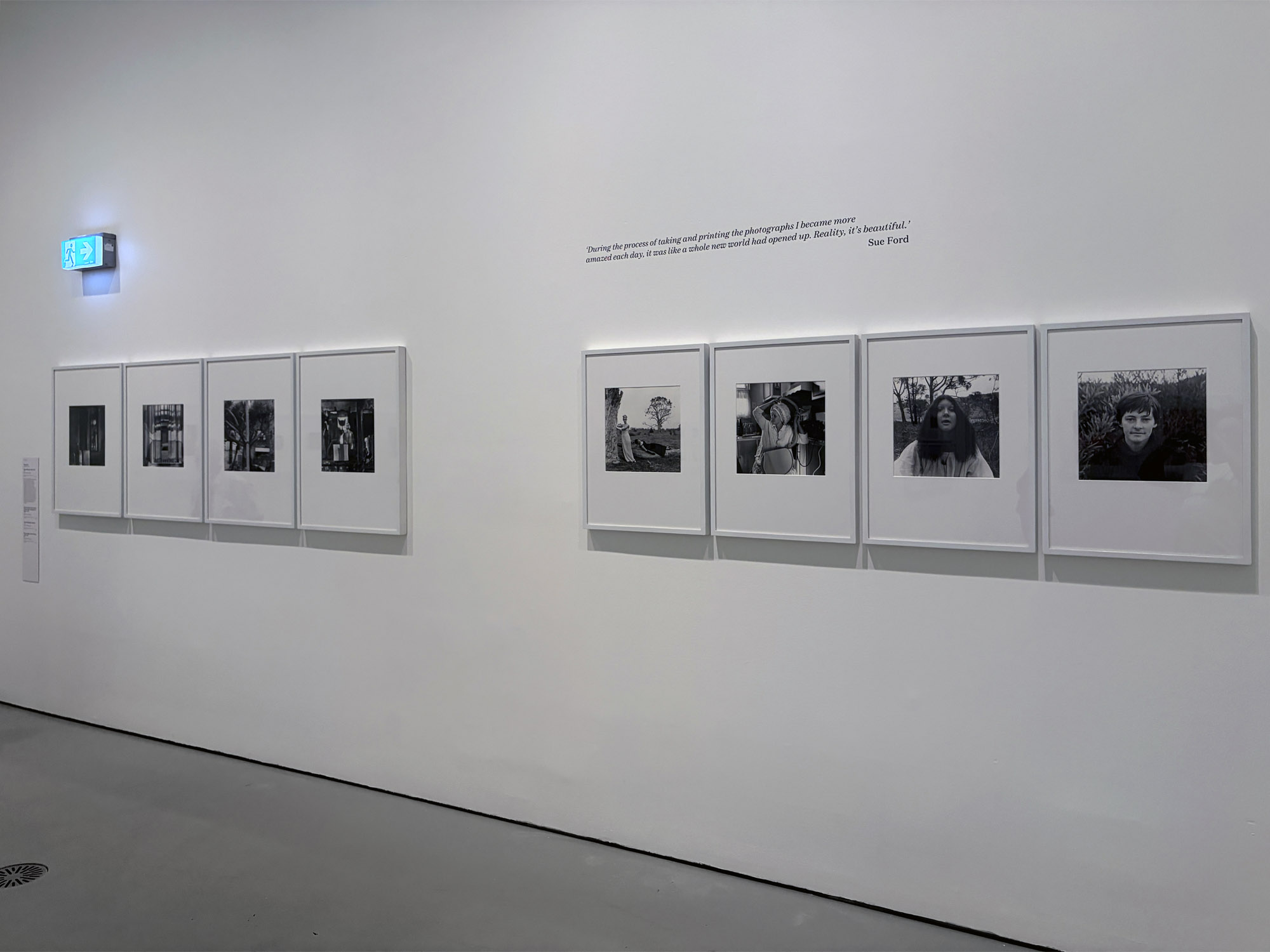
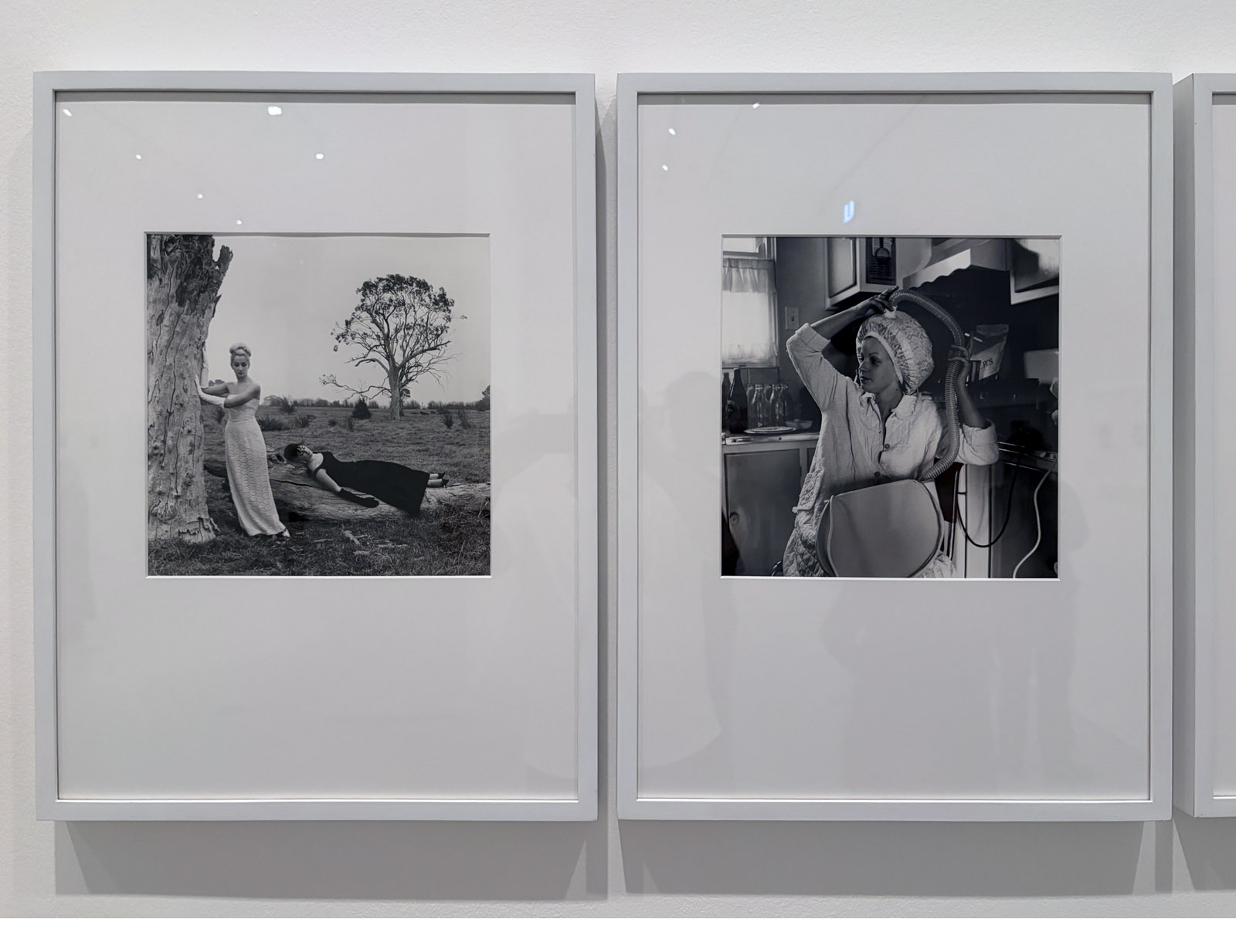
Installation view of the exhibition 'Women Photographers 1900-1975: A Legacy of Light' at NGV International, Melbourne, November 2025 - May 2026 showing from left to right, Lee Miller 'Nimet Eloui Bey' (c. 1930); Lee Miller 'Man Ray' (1931); Gisele Freund's 'Simone de Beauvoir '(1952 printed c. 1975), 'Jean-Paul Satre' (1939 printed c. 1975), 'Vita Sackville-West' (1938 printed c. 1975) and 'Virginia Woolfe' (1939 printed c. 1975)


Installation view of the exhibition Women Photographers 1900-1975: A Legacy of Light at NGV International, Melbourne, November 2025 – May 2026 showing from left to right, Lee Miller Nimet Eloui Bey (c. 1930, below); Lee Miller Man Ray (1931, below); Gisele Freund’s Simone de Beauvoir (1952 printed c. 1975, below), Jean-Paul Satre (1939 printed c. 1975, below), Vita Sackville-West (1938 printed c. 1975, below) and Virginia Woolfe (1939 printed c. 1975, below)
Photo: Marcus Bunyan


Women Photographers 1900-1975: A Legacy of Light celebrates the wide-ranging photographic practices of more than eighty women artists working between 1900 and 1975. Featuring prints, postcards, photobooks and magazines, the exhibition explores the role of photographers as image-makers, and the ways in which women artists create an image of themselves, of others, of the times – from images of the women’s suffrage movement at the turn of the twentieth century, through to the women’s liberation movement and beyond. From Melbourne to Tokyo, Paris to Buenos Aires, the exhibition showcases the works of trailblazing artists such as Berenice Abbott, Lola Álvarez Bravo, Claude Cahun and Marcel Moore, Imogen Cunningham, Mikki Ferrill, Sue Ford, Christine Godden, Ponch Hawkes, Annemarie Heinrich, Ruth Hollick, Florence Henri, Kati Horna, Germaine Krull, Tina Modotti, Lucia Moholy, Toyoko Tokiwa, Yamazawa Eiko and many more.

The exhibition reflects a recent collecting focus on celebrating the contributions of women artists of the early twentieth century in the NGV Photography Collection. Featuring portraiture, photojournalism, landscape photography, photomontage, experimental avant-garde imagery and more, Women Photographers 1900-1975: A Legacy of Light presents the diverse work of women photographers against the backdrop of significant social, political and cultural events.

Text from the NGV website
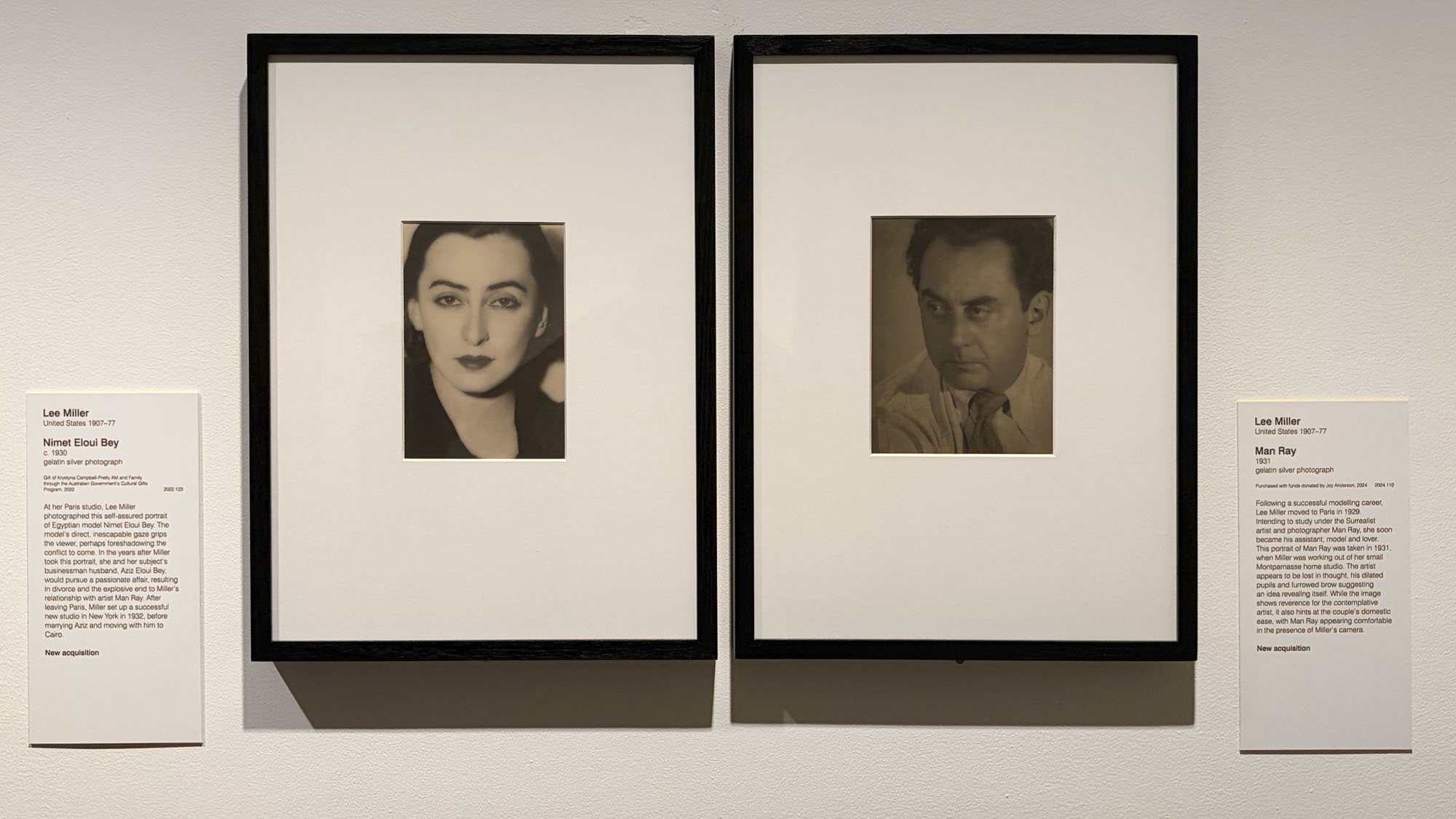
 

Installation view of the exhibition 'Women Photographers 1900-1975: A Legacy of Light' at NGV International, Melbourne, November 2025 - May 2026 showing from left to right, Lee Miller 'Nimet Eloui Bey' (c. 1930) and Lee Miller 'Man Ray' (1931)


Installation view of the exhibition Women Photographers 1900-1975: A Legacy of Light at NGV International, Melbourne, November 2025 – May 2026 showing from left to right, Lee Miller Nimet Eloui Bey (c. 1930, below) and Lee Miller Man Ray (1931, below)
Photo: Marcus Bunyan
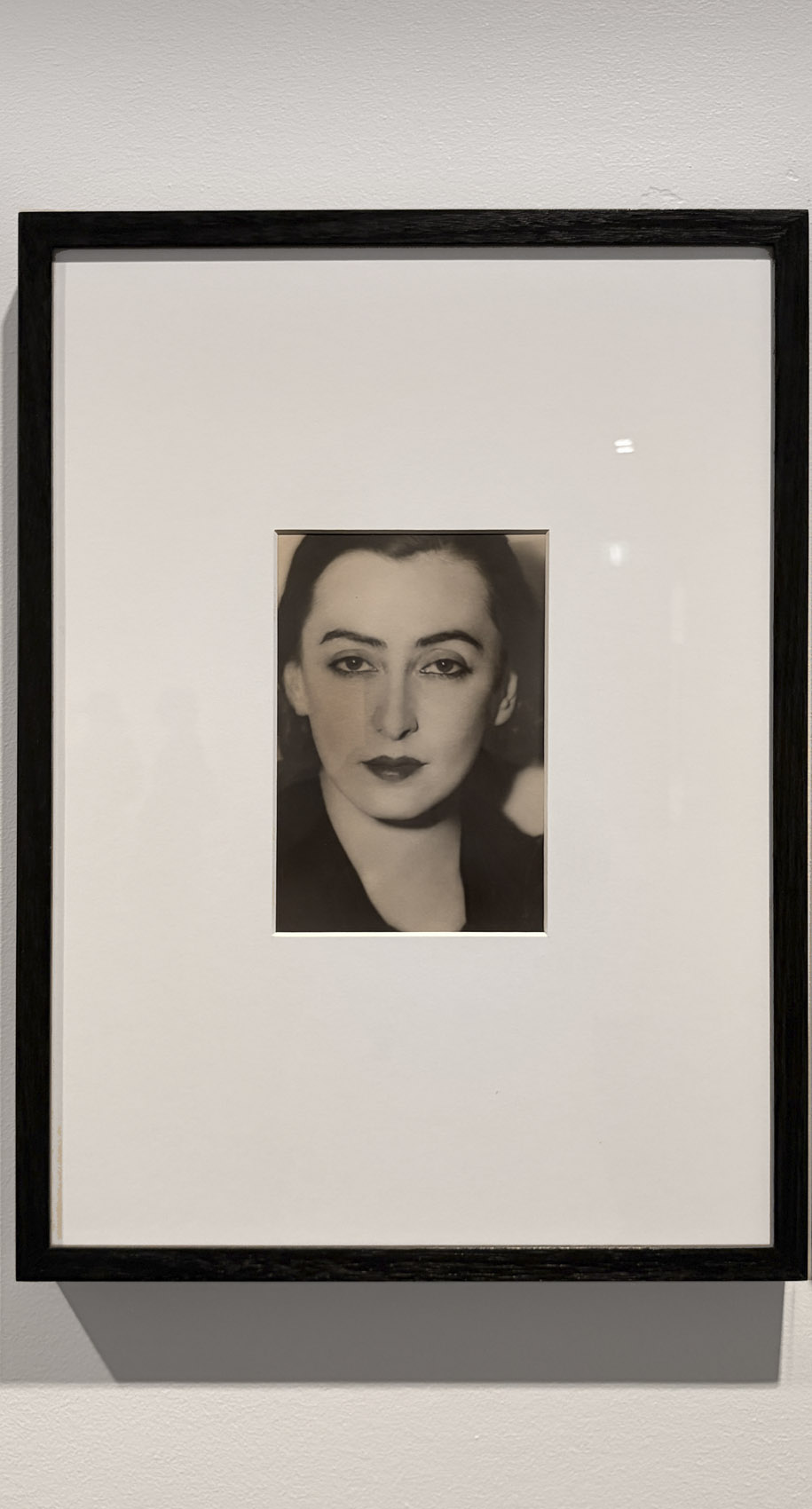
 

Lee Miller (American, 1907-1977) 'Nimet Eloui Bey' c. 1930 (installation view)


Lee Miller (American, 1907-1977)
Nimet Eloui Bey (installation view)
c. 1930
Gelatin silver photograph
23.0 x 15.8cm (image and sheet)
National Gallery of Victoria, Melbourne
Gift of Krystyna Campbell-Pretty AM and Family through the Australian Government’s Cultural Gifts Program, 2022
© Lee Miller Archives, England 2023


At her Paris studio, Lee Miller photographed this self-assured portrait of Egyptian model Nimet Eloui Bey. The model’s direct, inescapable gaze grips the viewer, perhaps foreshadowing the conflict to come. In the years after Miller took this portrait, she and her subject’s businessman husband, Aziz Eloui Bey, would pursue a passionate affair, resulting in divorce and the explosive end to Miller’s relationship with artist Man Ray. After leaving Paris, Miller set up a successful new studio in New York in 1932, before marrying Aziz and moving with him to Cairo.

Wall text from the exhibition
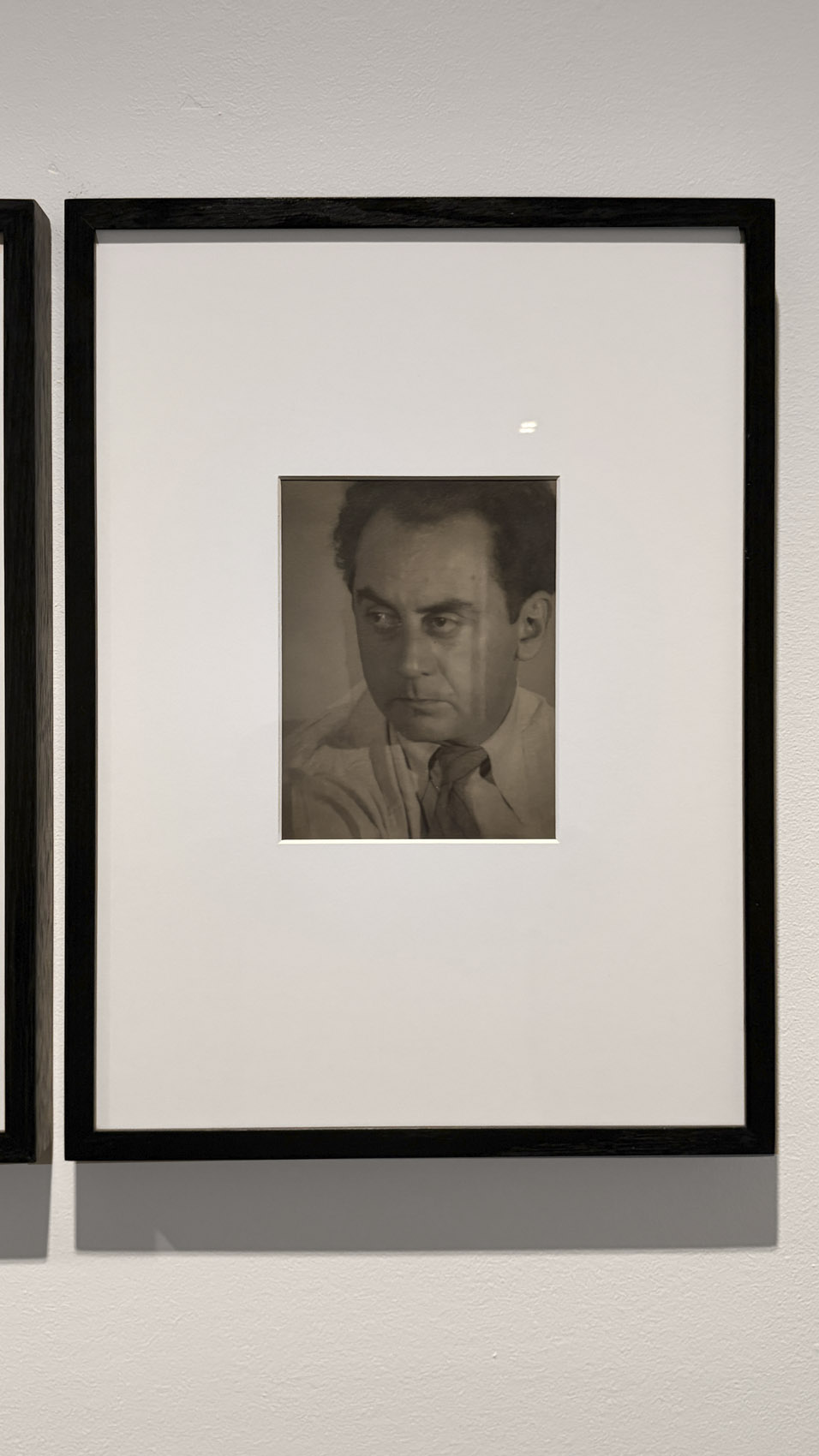
 

Lee Miller (American, 1907-1977) 'Man Ray' 1931 (installation view)


Lee Miller (American, 1907-1977)
Man Ray (installation view)
1931
Gelatin silver photograph
23.1 x 17.5cm (image and sheet)
National Gallery of Victoria, Melbourne
Purchased with funds donated by Joy And
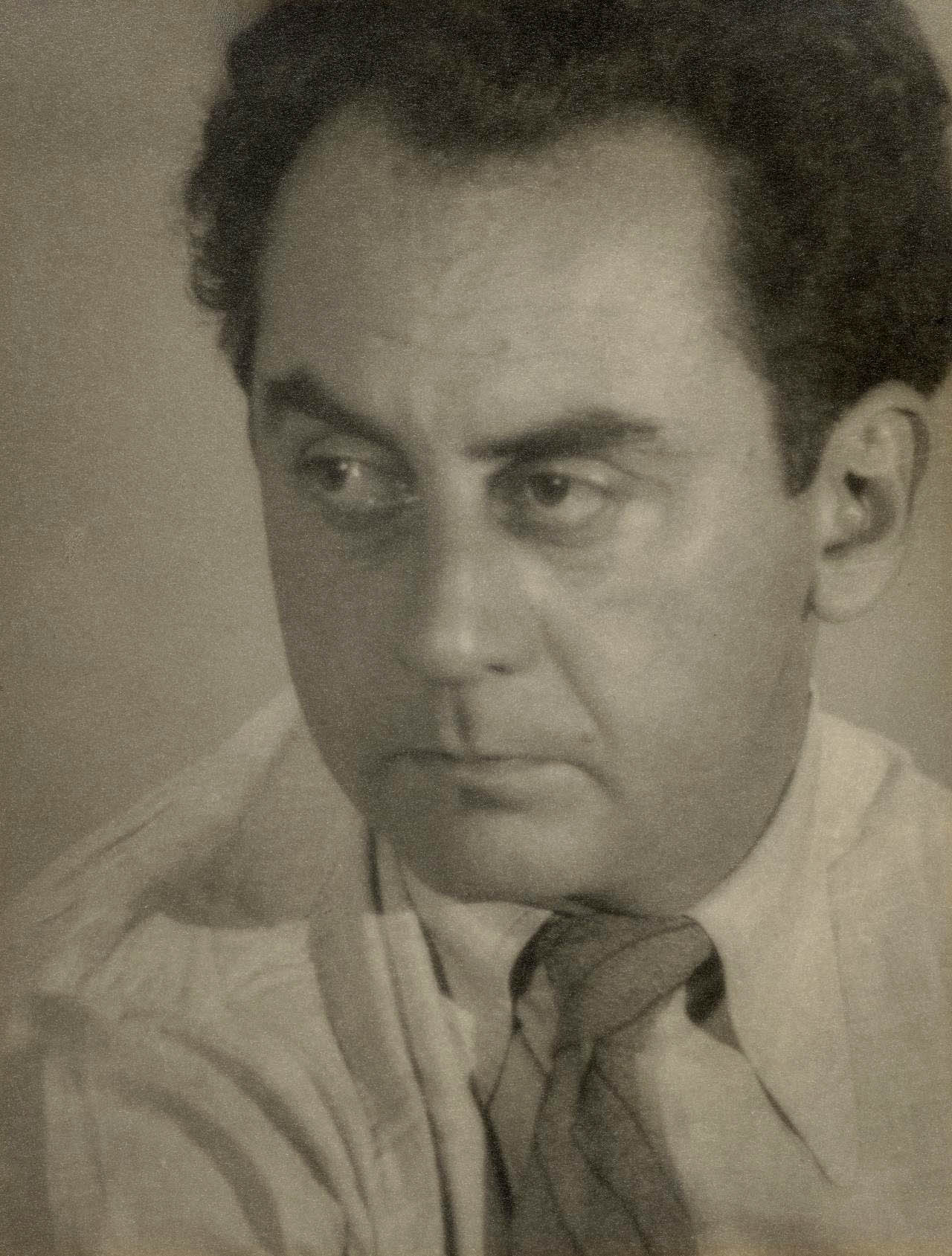
 

Lee Miller (American, 1890-1976) 'Man Ray' 1931


Lee Miller (American, 1890-1976)
Man Ray
1931
Gelatin silver photograph
23.1 x 17.5cm (image and sheet)
National Gallery of Victoria, Melbourne
Purchased with funds donated by Joy Anderson, 2024
© Lee Miller Archives, England 2023. All rights reserved


Following a successful modelling career, Lee Miller moved to Paris in 1929. Intending to study under the Surrealist artist and photographer Man Ray, she soon became his assistant, model and lover. This portrait of Man Ray was taken in 1931, when Miller was working out of her small Montparnasse home studio. The artist appears to be lost in thought, his dilated pupils and furrowed brow suggesting an idea revealing itself. While the image shows reverence for the contemplative artist, it also hints at the couple’s domestic ease, with Man Ray appearing comfortable in the presence of Miller’s camera.

Wall text from the exhibition
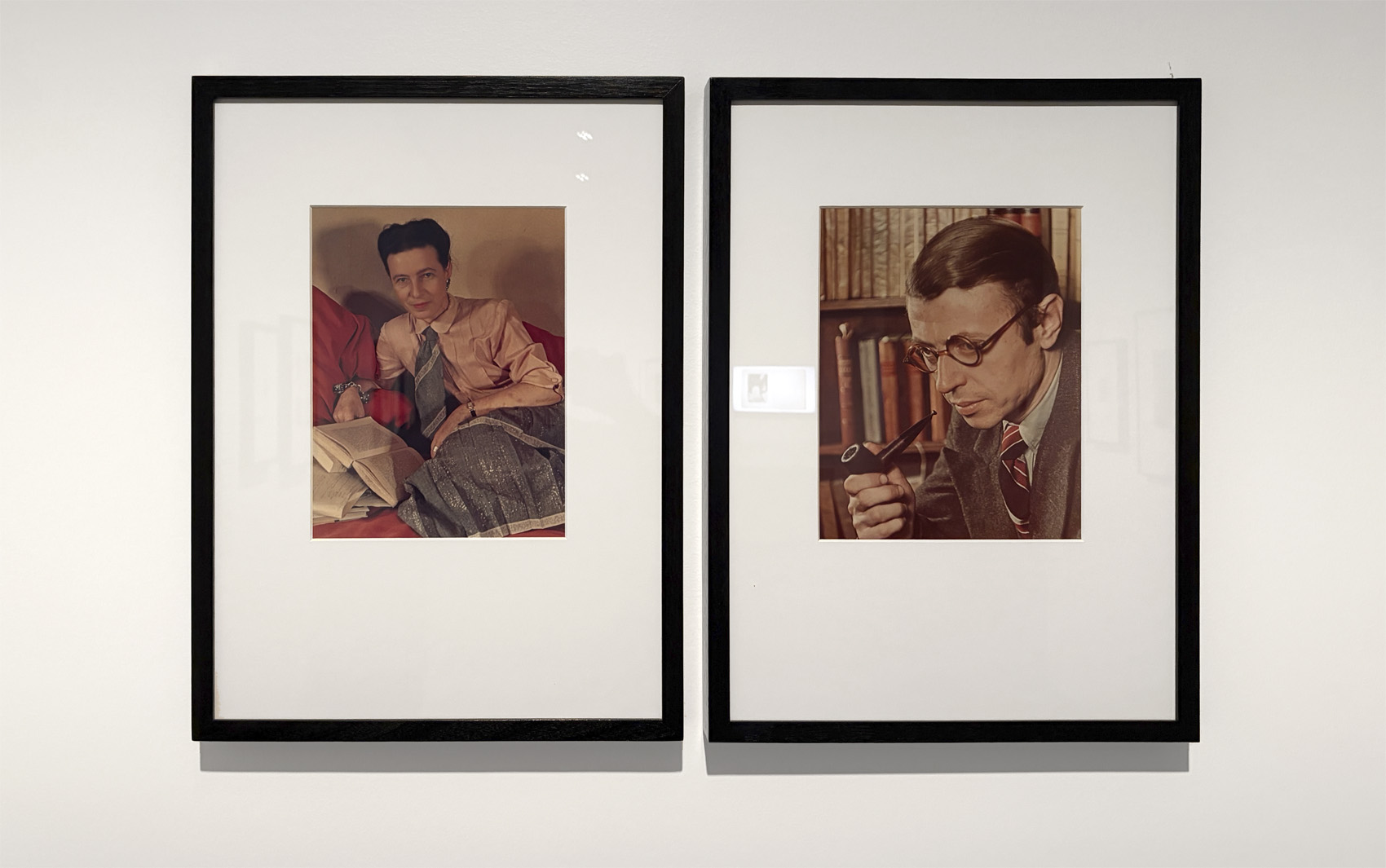
 

Installation view of the exhibition Women Photographers 1900-1975: A Legacy of Light at NGV International, Melbourne, November 2025 – May 2026 showing from left to right, Gisèle Freund's 'Simone de Beauvoir' (1952 printed c. 1975) and 'Jean-Paul Satre' (1939 printed c. 1975)


Installation view of the exhibition Women Photographers 1900-1975: A Legacy of Light at NGV International, Melbourne, November 2025 – May 2026 showing from left to right, Gisèle Freund’s Simone de Beauvoir (1952 printed c. 1975) and Jean-Paul Satre (1939 printed c. 1975)
Photo: Marcus Bunyan
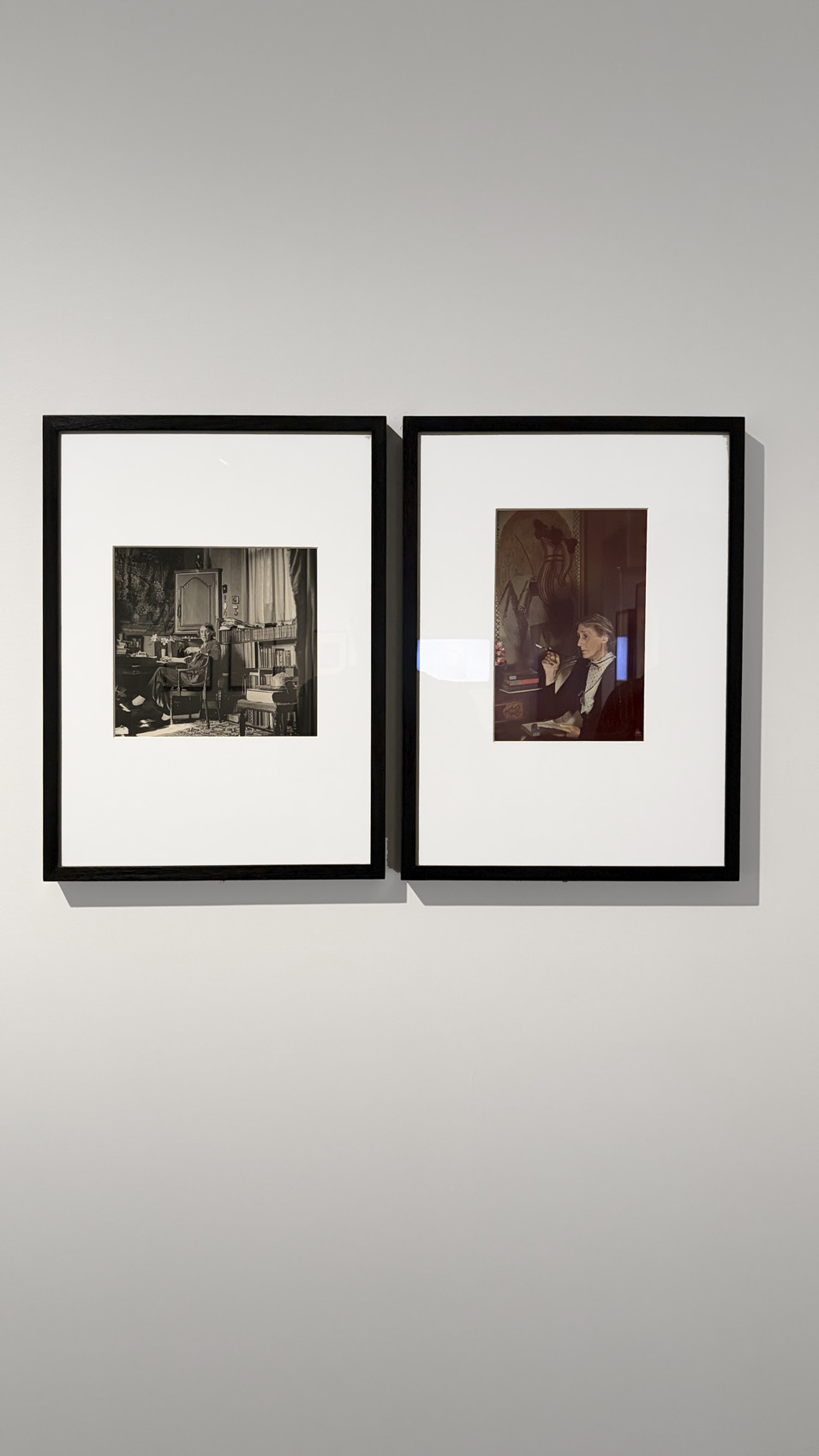
 

Installation view of the exhibition Women Photographers 1900-1975: A Legacy of Light at NGV International, Melbourne, November 2025 – May 2026 showing from left to right, Gisèle Freund's 'Vita Sackville-West' (1938 printed c. 1975) and 'Virginia Woolfe' (1939 printed c. 1975)


Installation view of the exhibition Women Photographers 1900-1975: A Legacy of Light at NGV International, Melbourne, November 2025 – May 2026 showing from left to right, Gisèle Freund’s Vita Sackville-West (1938 printed c. 1975) and Virginia Woolfe (1939 printed c. 1975)
Photos: Marcus Bunyan


In 1933 Gisèle Freund fled Frankfurt for Paris, where she studied photographic portraiture at the Sorbonne. Uniquely for the time, she used Kodachrome and Agfacolor positive film for her colour portraits of writers and artists in Paris – her portrait of James Joyce was selected as the first colour cover of Time magazine in 1939. That same year she photographed Virginia Woolf at her home in Tavistock Square, London. Freund later recalled of her encounter with Woolf, ‘frail, luminous, she was the very incarnation of her prose’.

Wall text from the exhibition


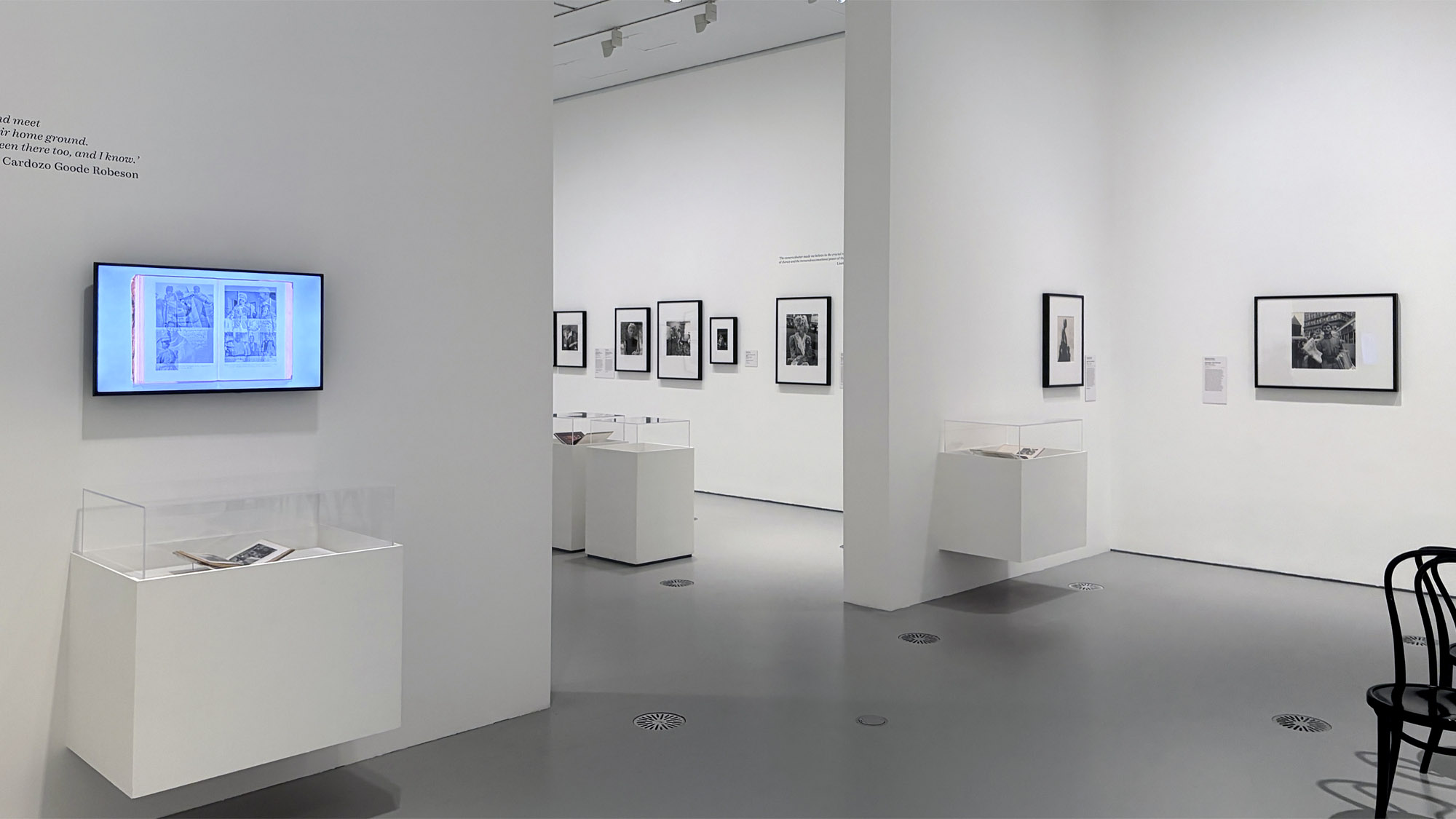
In Exchange: Social Milieu and Collaboration

The intertwined lives of avant-garde artists working in the interwar period often played out in works of art depicting friendship and love. Photographers captured these relationships, often revealing both the affection and the complex relations between themselves and their artistic collaborators, muses and subjects.

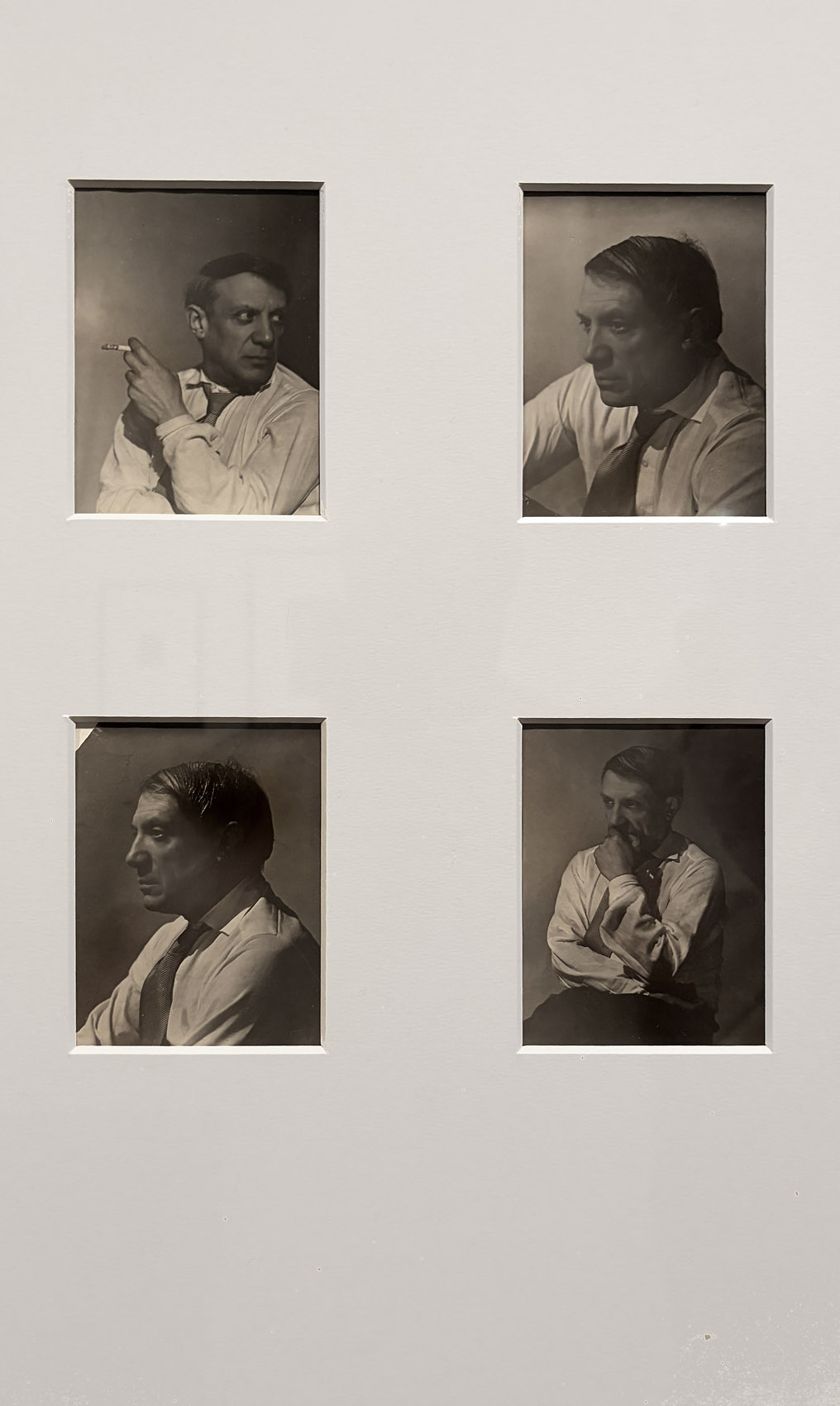
Paris in the interwar period was a hotbed for artistic exchange. Between 1935 and 1936, Dora Maar photographed her then partner Pablo Picasso in her Paris studio. She also created collaborative images with fellow Surrealists such as Léonor Fini, Jacqueline Lamba and André Breton. Lee Miller, also working in Paris during this period, photographed her lover and artistic partner Man Ray. Miller, in turn, was the subject of many of Man Ray’s own works.

In Mexico, Kati Horna frequently photographed her close friend, British-born painter and writer Leonora Carrington. Lola Álvarez Bravo’s image of the Spanish Surrealist artist Remedios Varo is another example of the playful and experimental collaborations between artists at the time. Such photographs demonstrate the mutual influence between women artists.
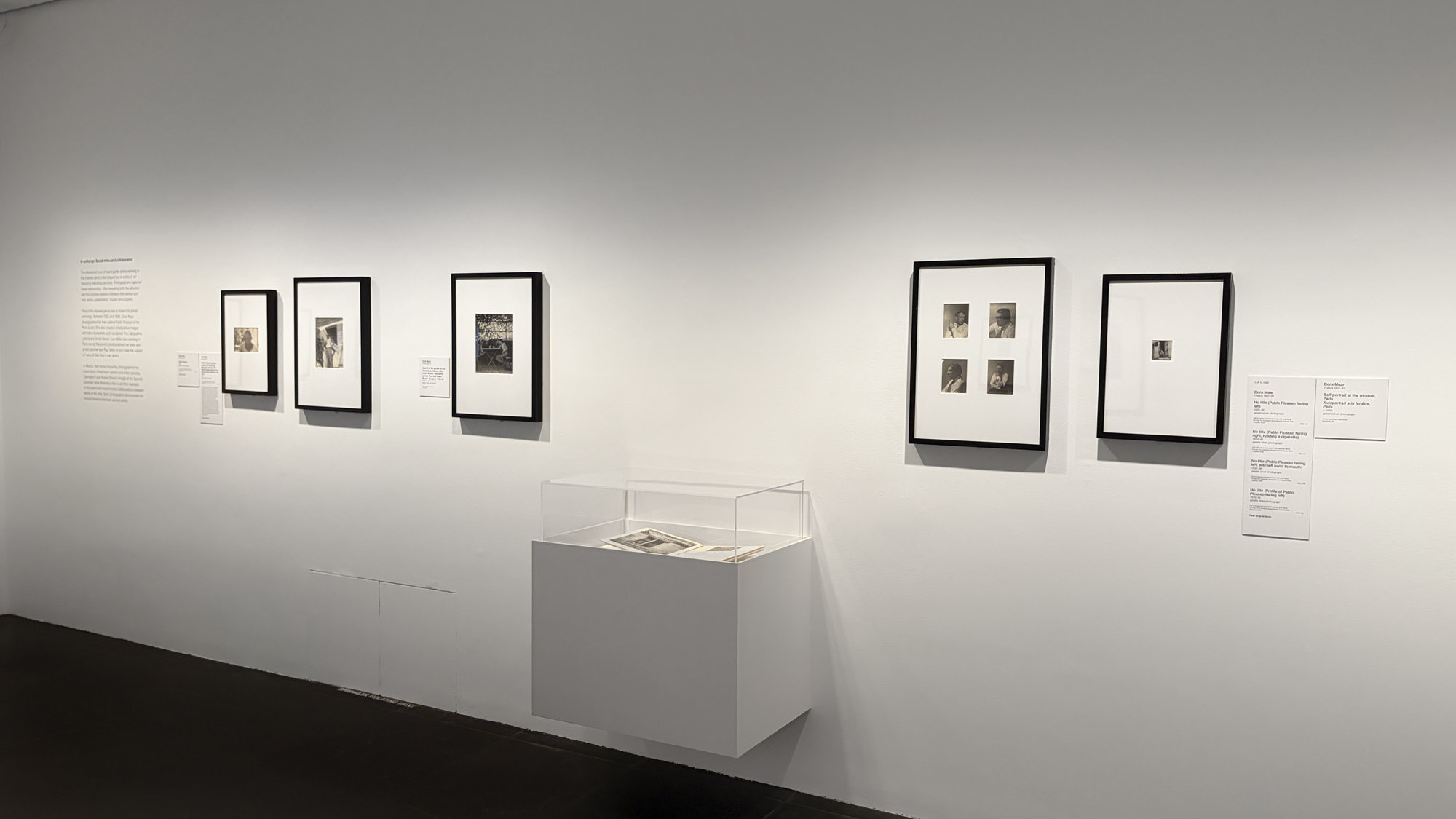
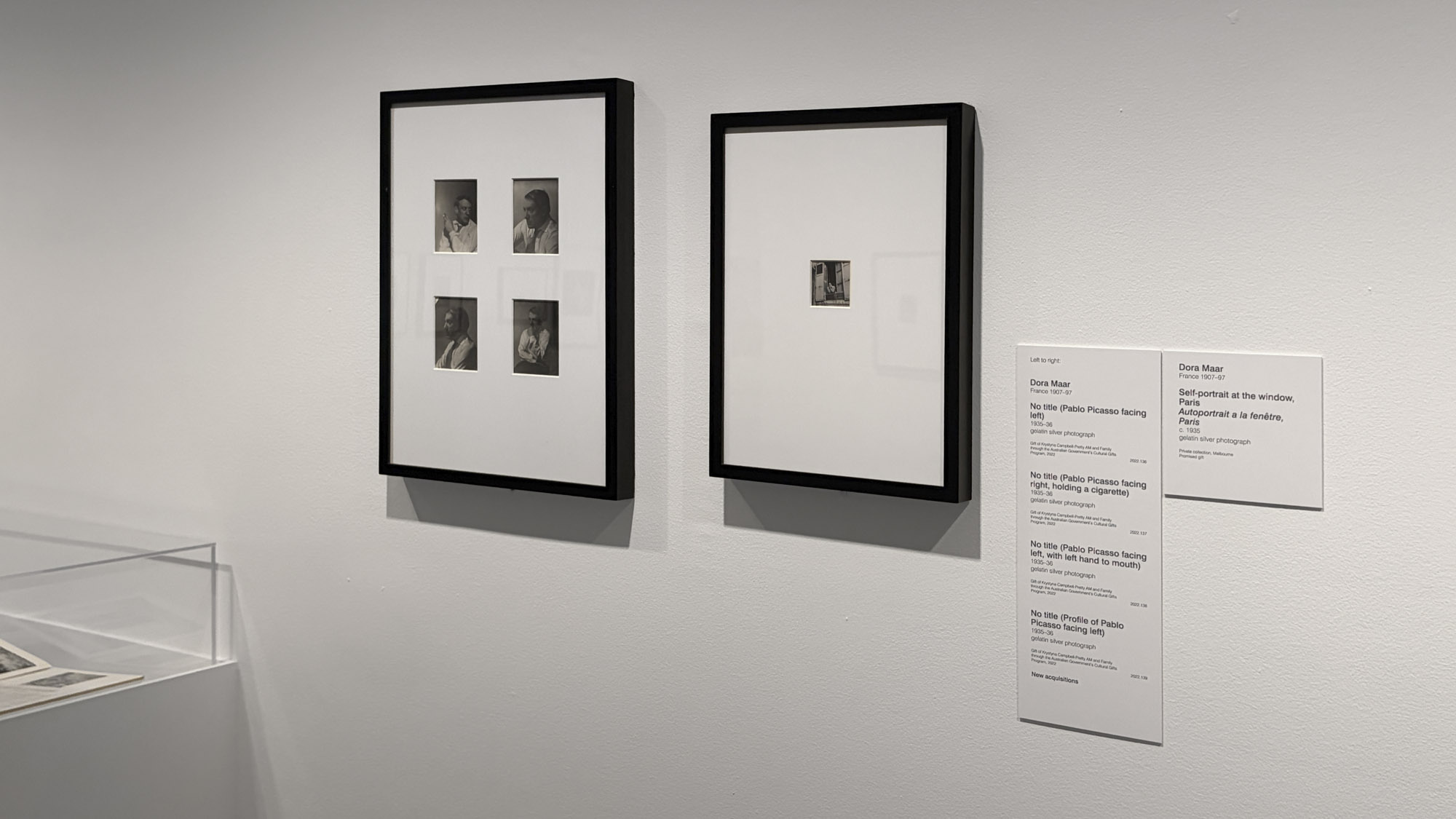
 

Installation view of the exhibition Women Photographers 1900-1975: A Legacy of Light at NGV International, Melbourne, November 2025 – May 2026 showing photographs by Dora Maar including at second right, photographs of Picasso (1935-1936) and at right, 'Self-portrait at the window' (c. 1935)


Installation view of the exhibition Women Photographers 1900-1975: A Legacy of Light at NGV International, Melbourne, November 2025 – May 2026 showing photographs by Dora Maar including at second right, photographs of Picasso (1935-1936, below) and at right, Self-portrait at the window (c. 1935, below)
Photos: Marcus Bunyan
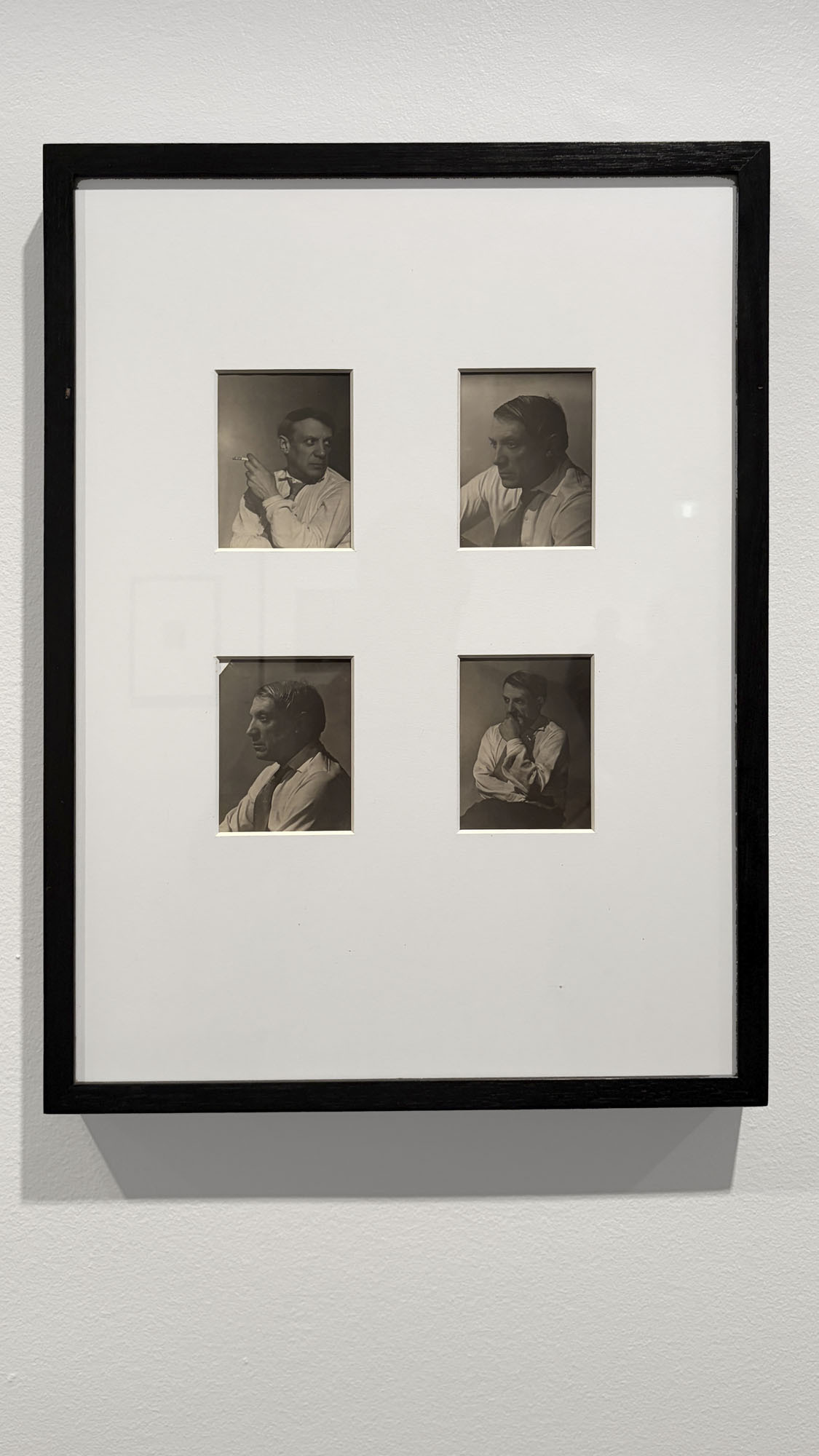
 

Installation view of the exhibition Women Photographers 1900-1975: A Legacy of Light at NGV International, Melbourne, November 2025 – May 2026 showing photographs by Dora Maar of Picasso (1935-1936)


(clockwise from bottom left)

Dora Maar (French, 1907-1997)
No title (Pablo Picasso facing left)
No title (Pablo Picasso facing right, holding a cigarette)
No title (Profile of Pablo Picasso facing left)
No title (Pablo Picasso facing left, with left hand to mouth) (installation view)
1935-1936
Gelatin silver photographs
National Gallery of Victoria, Melbourne
Gift of Krystyna Campbell-Pretty AM and Family through the Australian Government’s Cultural Gifts Program, 2022
Photos: Marcus Bunyan
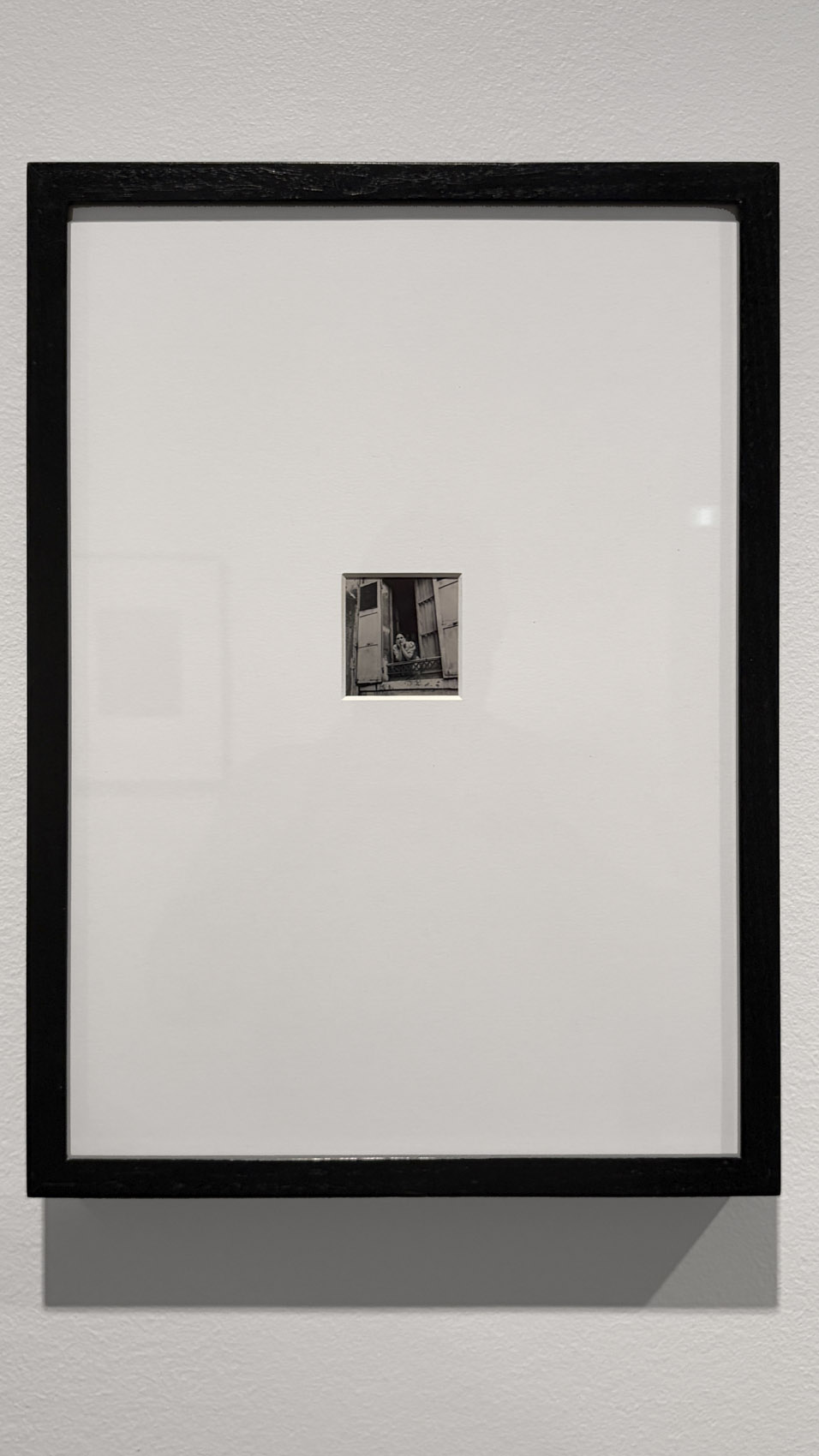
 

Dora Maar (French, 1907-1997) 'Self-portrait at the window' c. 1935 (installation view)


Dora Maar (French, 1907-1997)
Self-portrait at the window (installation view)
c. 1935
Gelatin silver print
Private collection, Melbourne
Promised gift
Photo: Marcus Bunyan
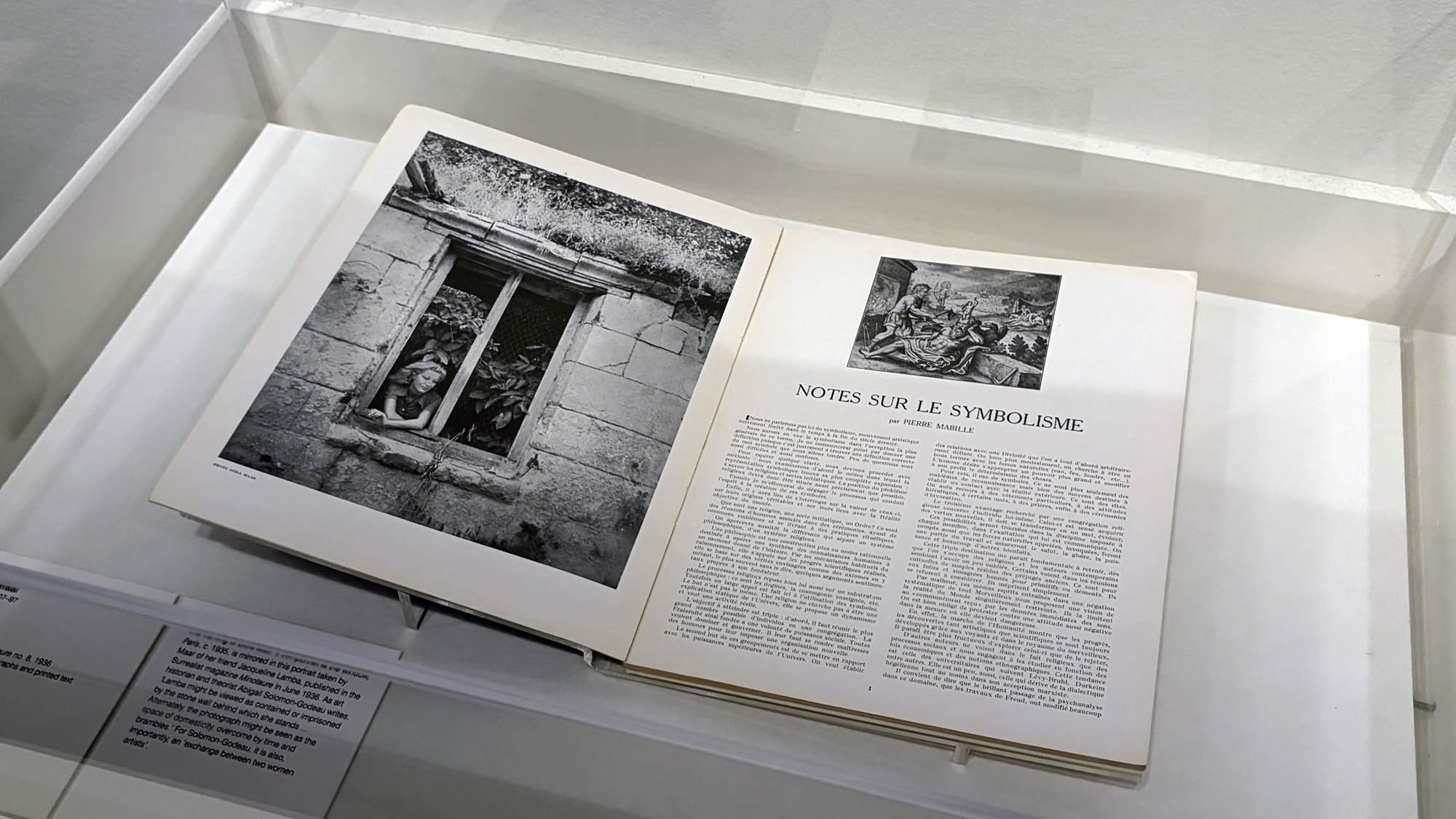
 

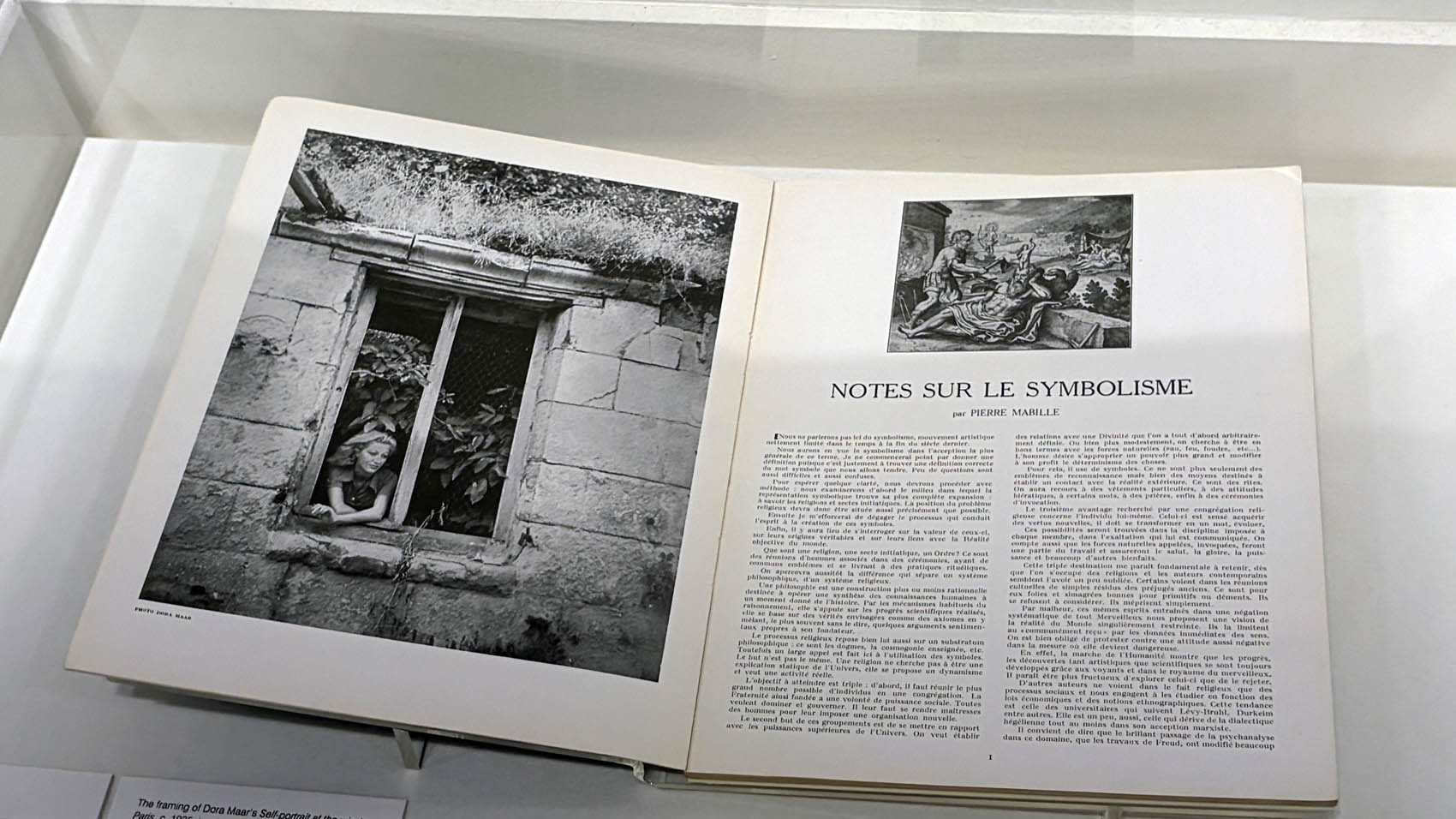
Dora Maar (French, 1907-1997) 'Dawn' 1935 Reproduced in 'Minotaure' No. 8, 1936 (installation view)


Dora Maar (French, 1907-1997)
Dawn (installation view)
1935
Reproduced in Minotaure No. 8, 1936
Magazine: offset lithographs and printed text
Shaw Research Library
Photos: Marcus Bunyan


The framing of Dora Maar’s Self-portrait at the window, Paris, c. 1935, is mired in this portrait taken by Maar of her friend Jacqueline Lamba, published in the Surrealist magazine Minotaure in June 1936. As art historian and theorist

Abigail Solomon-Godeau writes, ‘Lambda might be viewed as contained or imprisoned by the stone wall behind which she stands … Alternately, the photograph might be seen as the space of domesticity, overcome by time and brambles’. For Solomon-Godeau, it is also, importantly, an ‘exchange between two women artists’.

Vitrine text from the exhibition
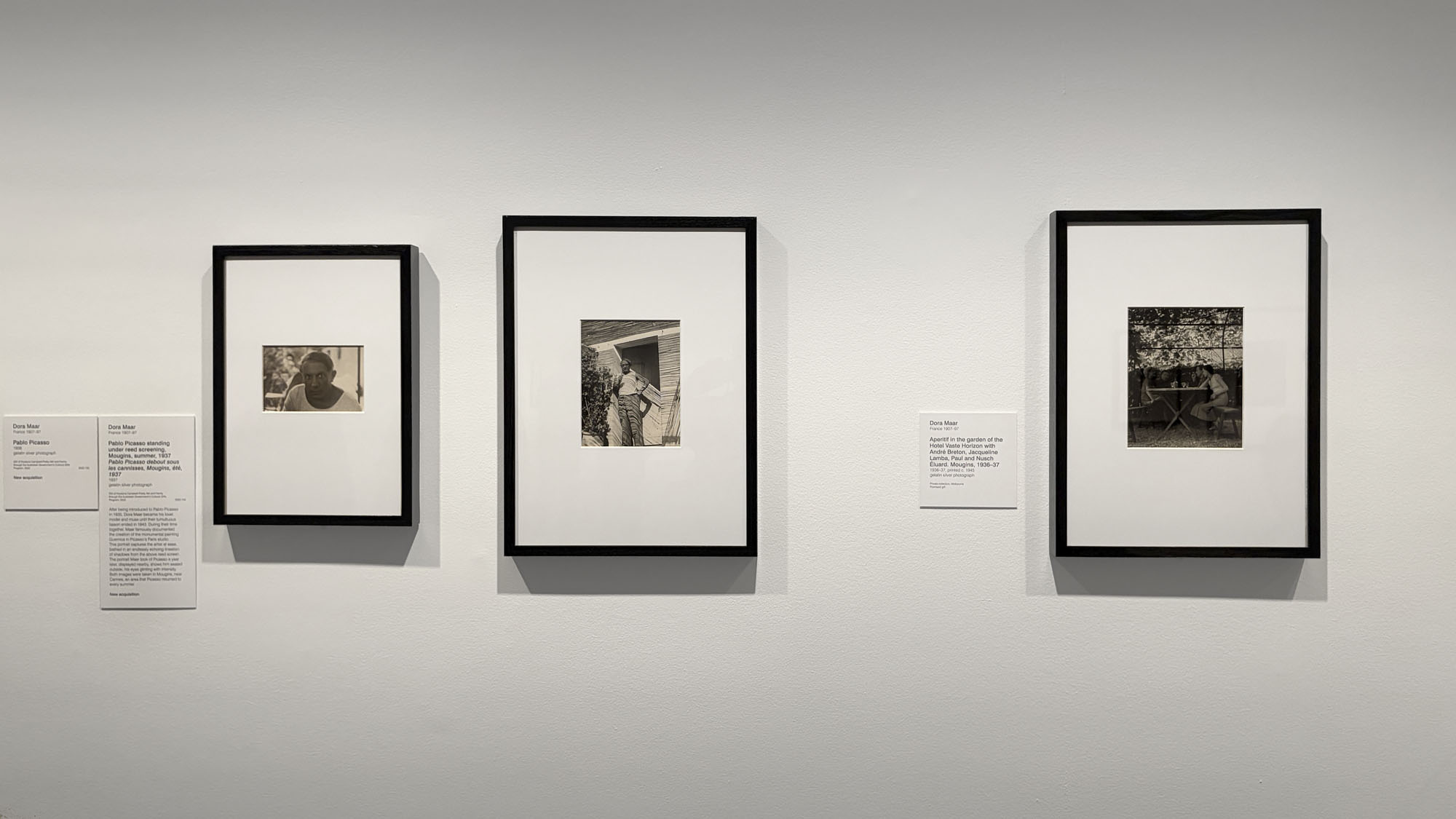
 

Installation view of the exhibition 'Women Photographers 1900-1975: A Legacy of Light' at NGV International, Melbourne, November 2025 – May 2026 showing from left to right, Dora Maar's 'Pablo Picasso' (1938); 'Pablo Picasso standing under reed screening. Mougins, summer, 1937' (1937) and 'Aperitif in the garden of the Hotel Vaste Horizon with Andre Breton, Jacqueline lamb, Paul and Nusch Eluard. Mougins, 1936-1937' (1936-1937)


Installation view of the exhibition Women Photographers 1900-1975: A Legacy of Light at NGV International, Melbourne, November 2025 – May 2026 showing from left to right, Dora Maar’s Pablo Picasso (1938, below); Pablo Picasso standing under reed screening. Mougins, summer, 1937 (1937, top of posting) and Aperitif in the garden of the Hotel Vaste Horizon with Andre Breton, Jacqueline lamb, Paul and Nusch Eluard. Mougins, 1936-1937 (1936-1937)
Photo: Marcus Bunyan
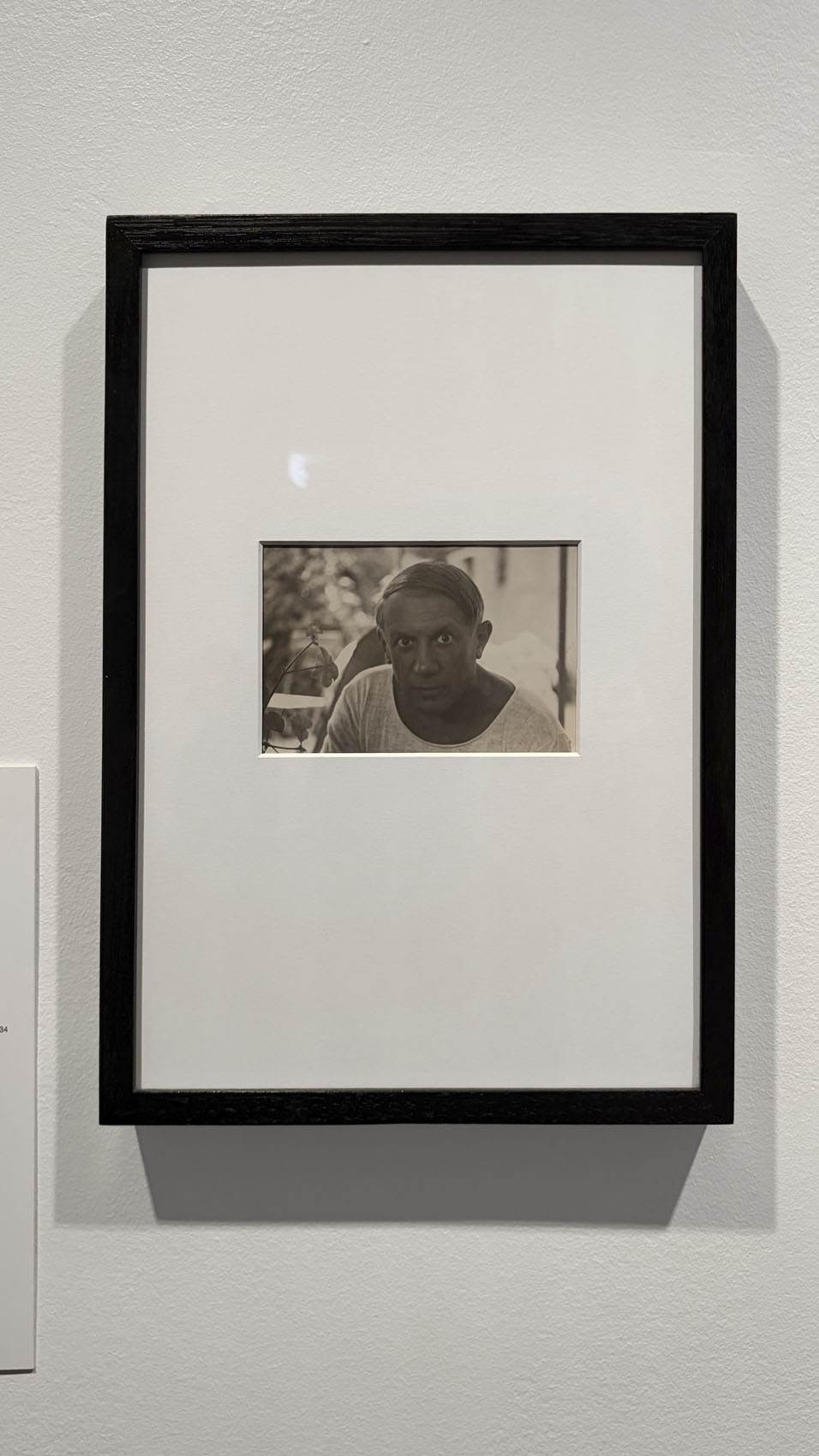
 

Dora Maar (French, 1907-1997) 'Pablo Picasso' 1938 (installation view)


Dora Maar (French, 1907-1997)
Pablo Picasso (installation view)
1938
Gelatin silver print
11.9 x 17.9cm (image and sheet)
National Gallery of Victoria, Melbourne
Gift of Krystyna Campbell-Pretty AM and Family through the Australian Government’s Cultural Gifts Program, 2022
Photo: Marcus Bunyan
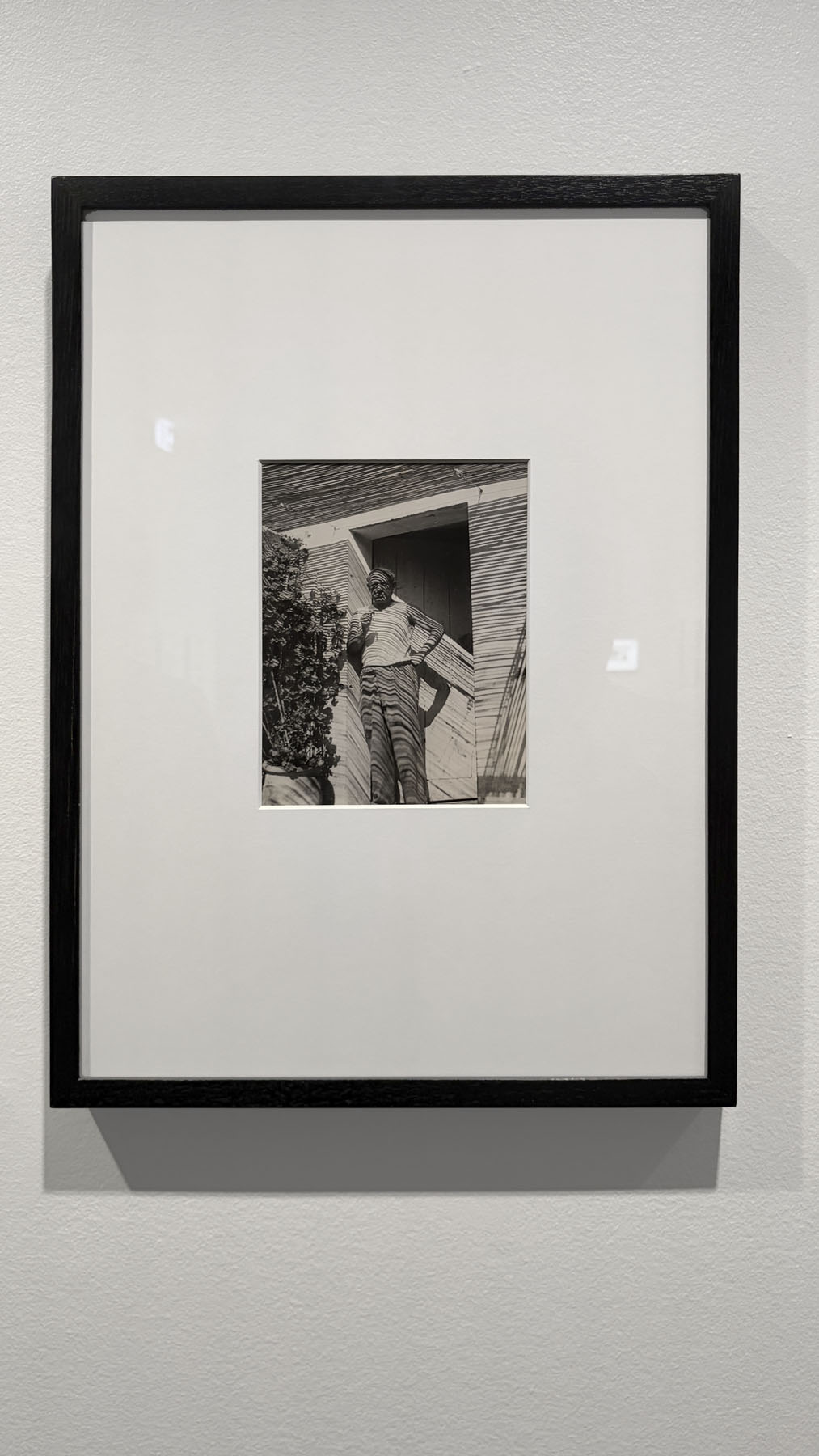
 

Dora Maar (French 1907-1997) 'Pablo Picasso standing under reed screening, Mougins, summer, 1937' (Pablo Picasso debout sous les cannisses, Mougins, été, 1937) 1937 (installation view)


Dora Maar (French, 1907-1997)
Pablo Picasso standing under reed screening, Mougins, summer, 1937 (Pablo Picasso debout sous les cannisses, Mougins, été, 1937) (installation view)
1937
22.0 x 17.2cm (image)
23.1 x 18.2cm (sheet)
National Gallery of Victoria, Melbourne
Gift of Krystyna Campbell-Pretty AM and Family through the Australian Government’s Cultural Gifts Program, 2022
Photo: Marcus Bunyan
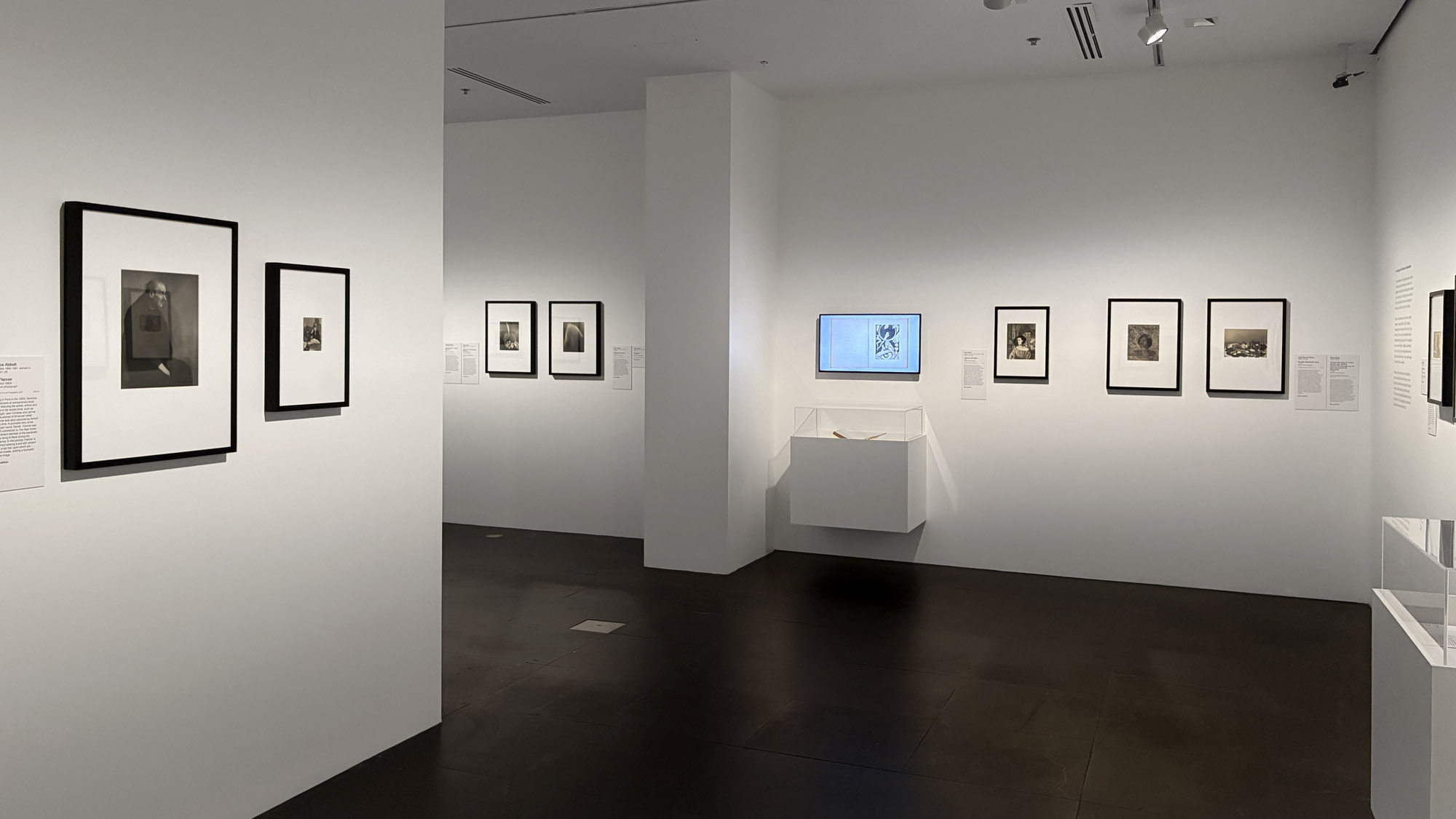
 

Installation view of the exhibition 'Women Photographers 1900-1975: A Legacy of Light' at NGV International, Melbourne, November 2025 – May 2026 showing at left, Berenice Abbott 'Eugène Atget' 1927


Installation view of the exhibition Women Photographers 1900-1975: A Legacy of Light at NGV International, Melbourne, November 2025 – May 2026 showing at left, Berenice Abbott Eugène Atget (1927, printed c. 1970-1978)
Photo: Marcus Bunyan


Berenice Abbott (American, 1898-1991) 'Janet Flanner' 1927


Berenice Abbott (American, 1898-1991)
Janet Flanner
1927
Gelatin silver photograph
Bowness Family Fund for Photography, 2024


While living in Paris in the 1920s, Berenice Abbott produced an extraordinary body of images featuring the artists, writers and performers in her social circle, such as Eugène Atget, Jean Cocteau and James Joyce. This portrait of American
writer Janet Flanner was also captured by Abbott during this time. A journalist who wrote under the pen name ‘Genêt’, Flanner was a long-term contributor to The New Yorker and a prominent member of the expatriate community living in Paris during the interwar period. In this portrait, Flanner is photographed wearing a suit with striped pants and a top hat, upon which are stacked two masks, adding a Surrealist edge to the image.

Wall text from the exhibition
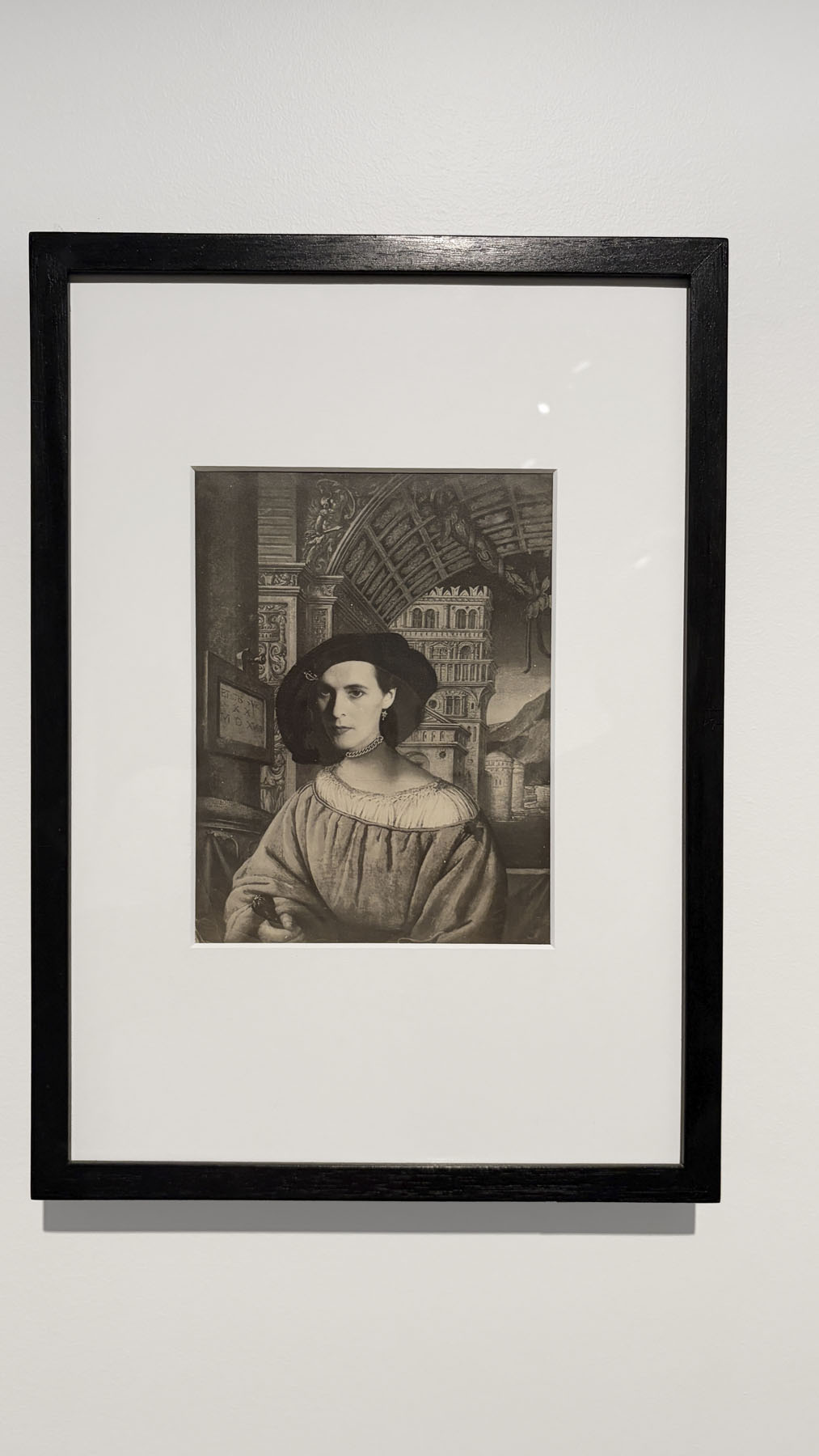
 

Kati Horna (Mexican born Hungary, 1912-2000) 'Leonora Carrington' 1957 (installation view)


Kati Horna (Mexican born Hungary, 1912-2000)
Leonora Carrington (installation view)
1957
Gelatin silver photograph
24.2 x 18.2cm (image)
25.3 x 20.2cm (sheet)
National Gallery of Victoria, Melbourne
Bowness Family Fund for Photography, 2024
Photo: Marcus Bunyan


Born to a Jewish family in Hungary, Kati Horna was forced to leave Europe following the rise of Nazism. She belonged to the circle of Surrealist expatriate artists in Mexico producing experimental images. In this photocollage, Horna has superimposed an image of British-born painter and writer Leonora Carrington – a close friend of hers – onto a reproduction of Hans Holbein the Younger’s 1518 painting Portrait of an unknown young man. Created on the occasion of Carrington’s birthday, the humorous merging of the photograph with the painted reproduction, coupled with the clash of genders and time periods, gives the scene a Surrealist tone.

Wall text from the exhibition
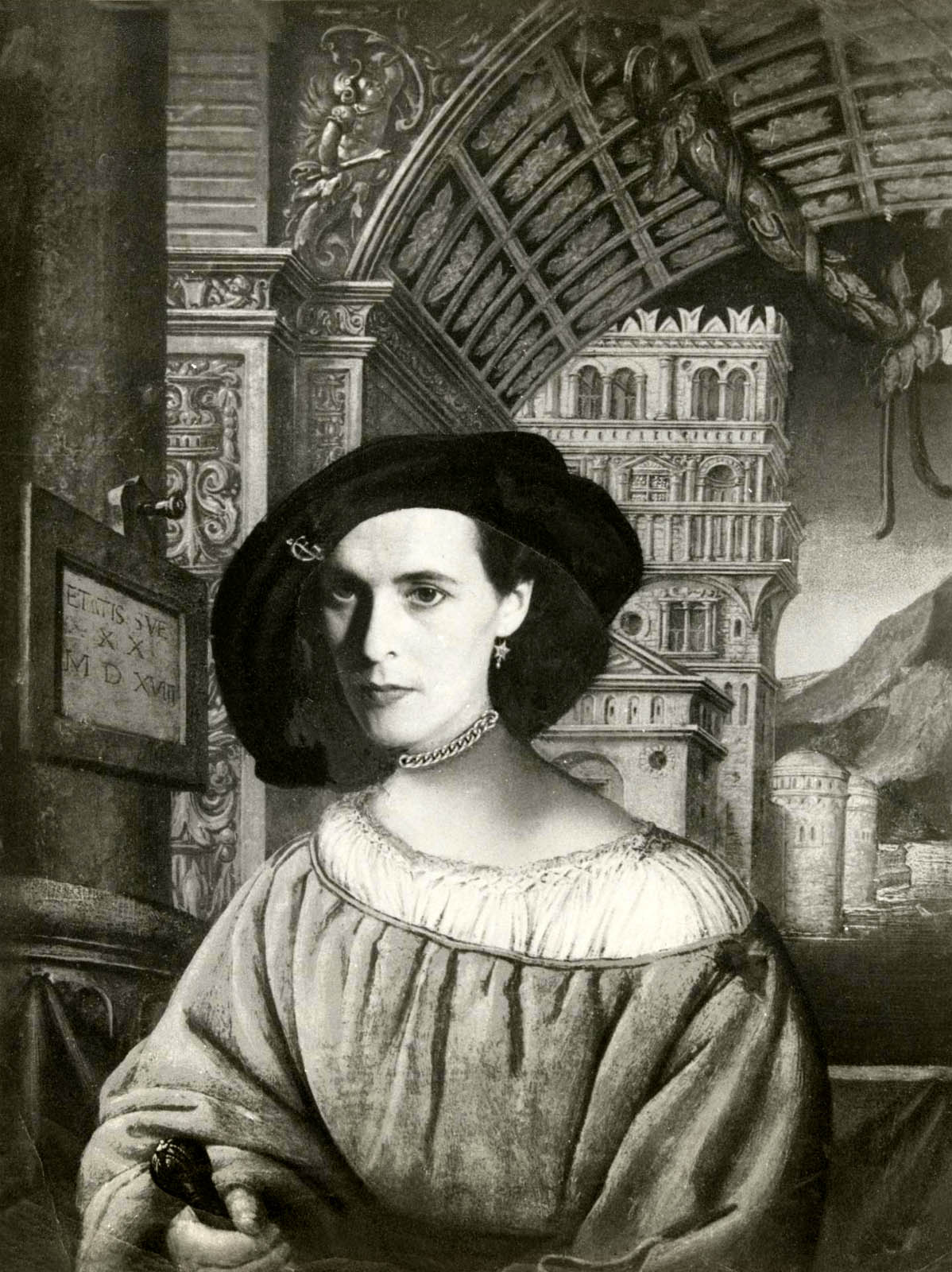
 

Kati Horna (Mexican born Hungary, 1912-2000) 'Leonora Carrington' 1957


Kati Horna (Mexican born Hungary, 1912-2000)
Leonora Carrington
1957
Gelatin silver photograph
24.2 x 18.2cm (image)
25.3 x 20.2cm (sheet)
National Gallery of Victoria, Melbourne
Bowness Family Fund for Photography, 2024
© Kati Horna, courtesy Michael Hoppen Gallery
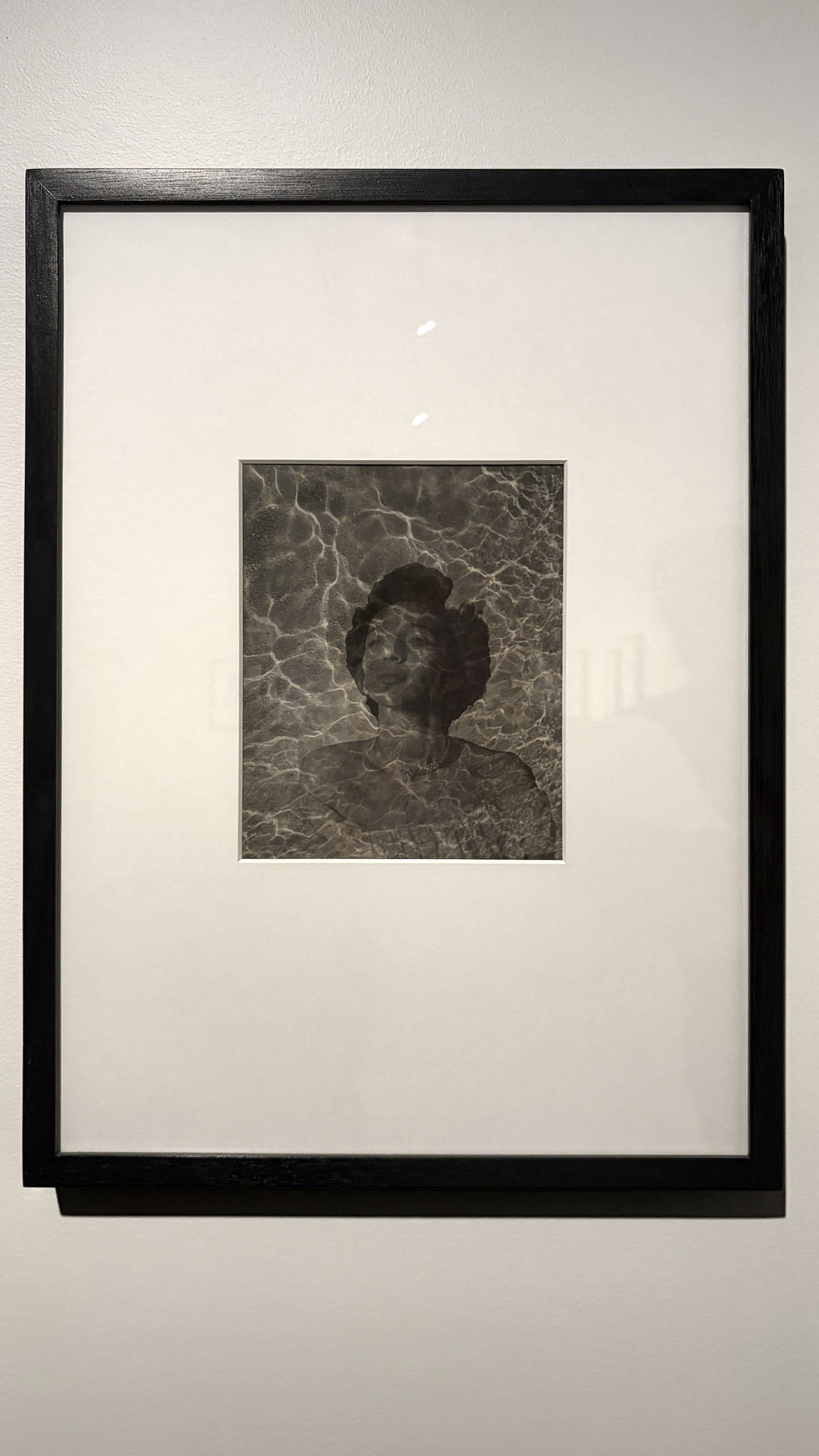
 

Lola Álvarez Bravo (Mexican, 1903-1993) 'No title (Remedios Varo)' c. 1950 (installation view)


Lola Álvarez Bravo (Mexican, 1903-1993)
No title (Remedios Varo) (installation view)
c. 1950
Gelatin silver photograph
23.4 x 18.9cm (image and sheet)
National Gallery of Victoria, Melbourne
Bowness Family Fund for Photography, 2024
Photo: Marcus Bunyan


Lola Álvarez Bravo was one of the first artists to produce photomontages in Mexico. At the forefront of artistic experimentation, Álvarez Bravo created this image by layering multiple negatives. The subject is believed to be Remedios Varo, a Spanish Surrealist artist who arrived in Mexico in 1941. Alongside Álvarez Bravo, Kati Horna and Leonora Carrington, Varo was part of a community of expatriate artists and intellectuals active in Mexico during the mid twentieth century. Drawing inspiration from the Surrealist movement, Álvarez Bravo overlaid the portrait with an image of rippling water, creating a tranquil scene in which the subject appears to be floating.

Wall text from the exhibition


Unlike in many other countries, in Mexico artists had opportunities to work as long as they did not threaten the locals’ career prospects. Thus, many Spanish-speaking immigrants started teaching in universities, raising a new generation of Mexican creatives and academics. Apart from their jobs, the majority of Europeans did not interact closely with the locals, preferring to keep the company of their fellow refugees. The reason was not the rejection of local customs but the shared experience of war, tragedy, and dramatic flight across ravaged Europe.

The house of the artist Remedios Varo was the central meeting point for the whole community. Anyone in need could find company, shelter, and money raised by all group members. Varo hosted dinners and parties. She also sent party invitations to random addresses taken from a phone book.

Anastasiia Kirpalov. “The Mexican Escape of European Surrealists During World War II,” on The Collector website Oct 15, 2024 [Online] Cited 17/04/026. Used under fair use conditions for the purposes of education and research
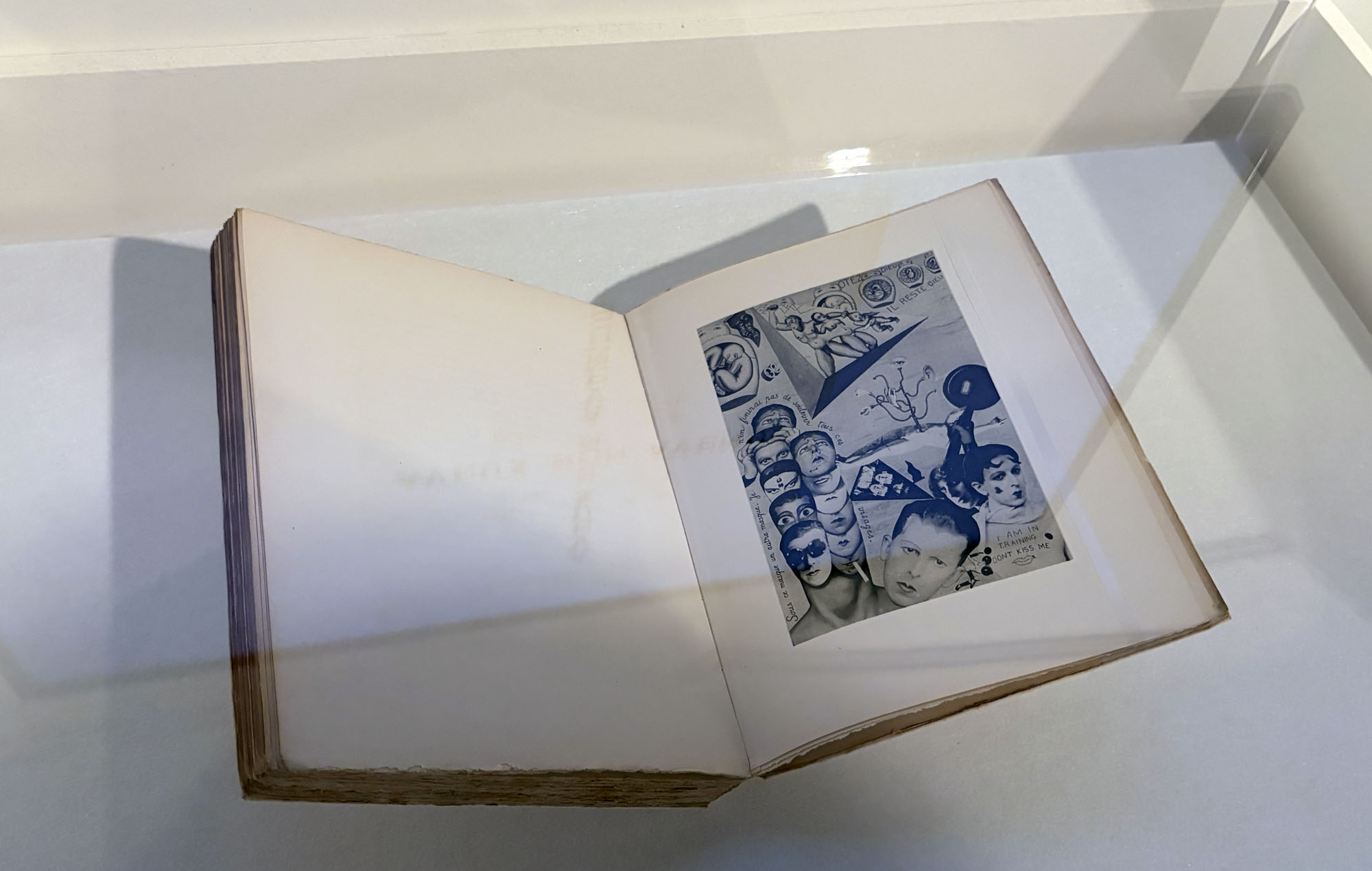
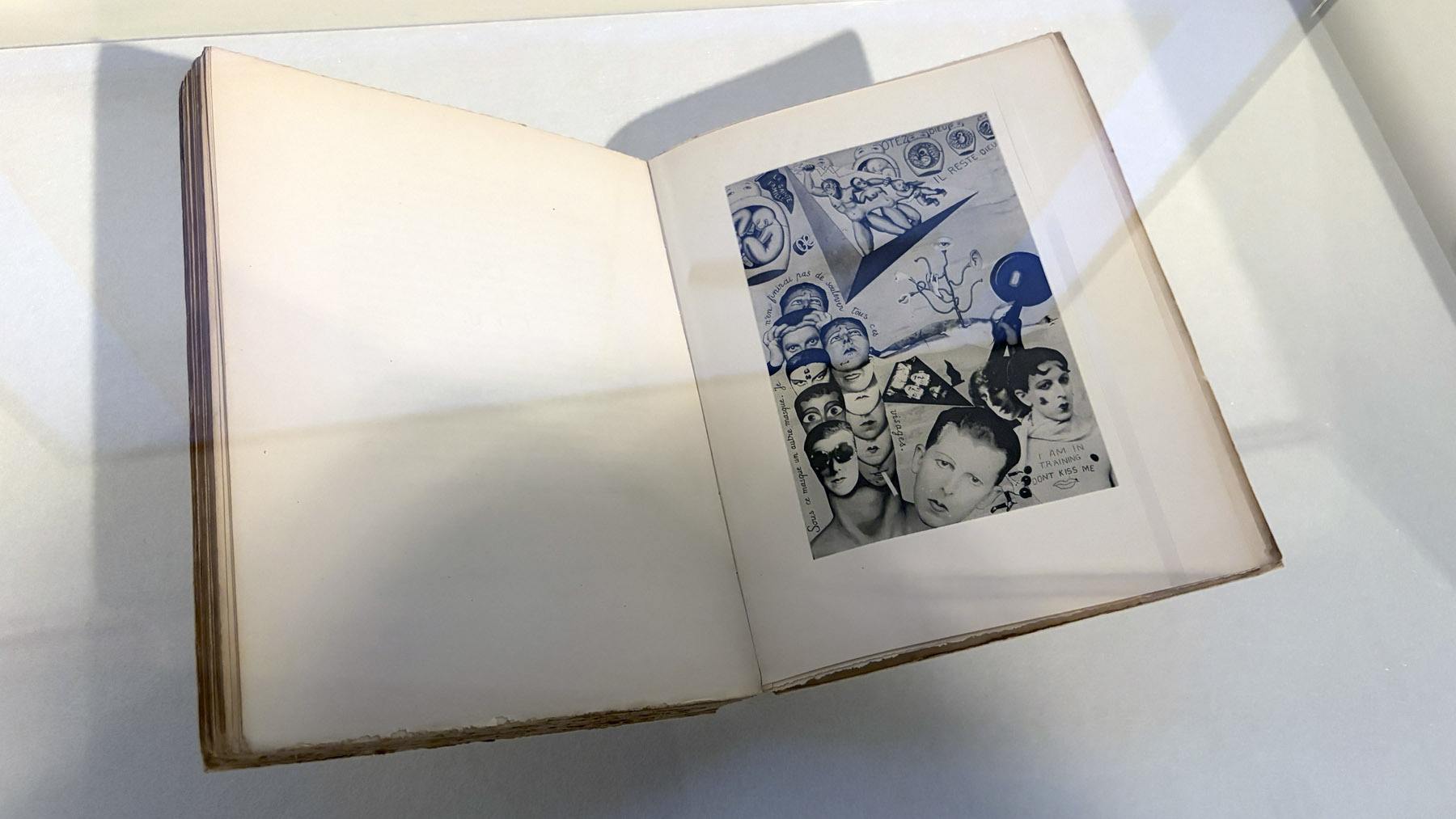
 

Claude Cahun (French, 1894-1854) and Marcel Moore (French, 1892-1872) 'Disavowals', or 'Cancelled Confessions' (Aveux non avenus) 1930 (installation view)


Claude Cahun (French, 1894-1854) and Marcel Moore (French, 1892-1872)
Disavowals, or Cancelled Confessions (Aveux non avenus) (installation views)
1930
Published by Éditions du Carrefour, Paris
Illustrated book: photogravure, letterpress text, 237 pages, 10 heliographs, paper cover, stitched binding
Shaw Research Library, acquired through the Friends of the Gallery library Endowment, 2017
Photos: Marcus Bunyan


Born Lucy Schwob, Claude Cahun was a celebrated French artist associated with the Surrealist movement. Aveux non avenus, loosely translated as Cancelled Confessions or Disavowals, is the second book Cajun created with her stepsister, lifelong partner and artistic collaborator, graphic artist Marcel Moore. This subversive semi-autobiographical work couples poems, recollections and aphorisms with dreamlike photomontages. The photomontages include many of Cahun’s performative self-portraits, images that challenge established notions of gender identity.

Vitrine text from the exhibition
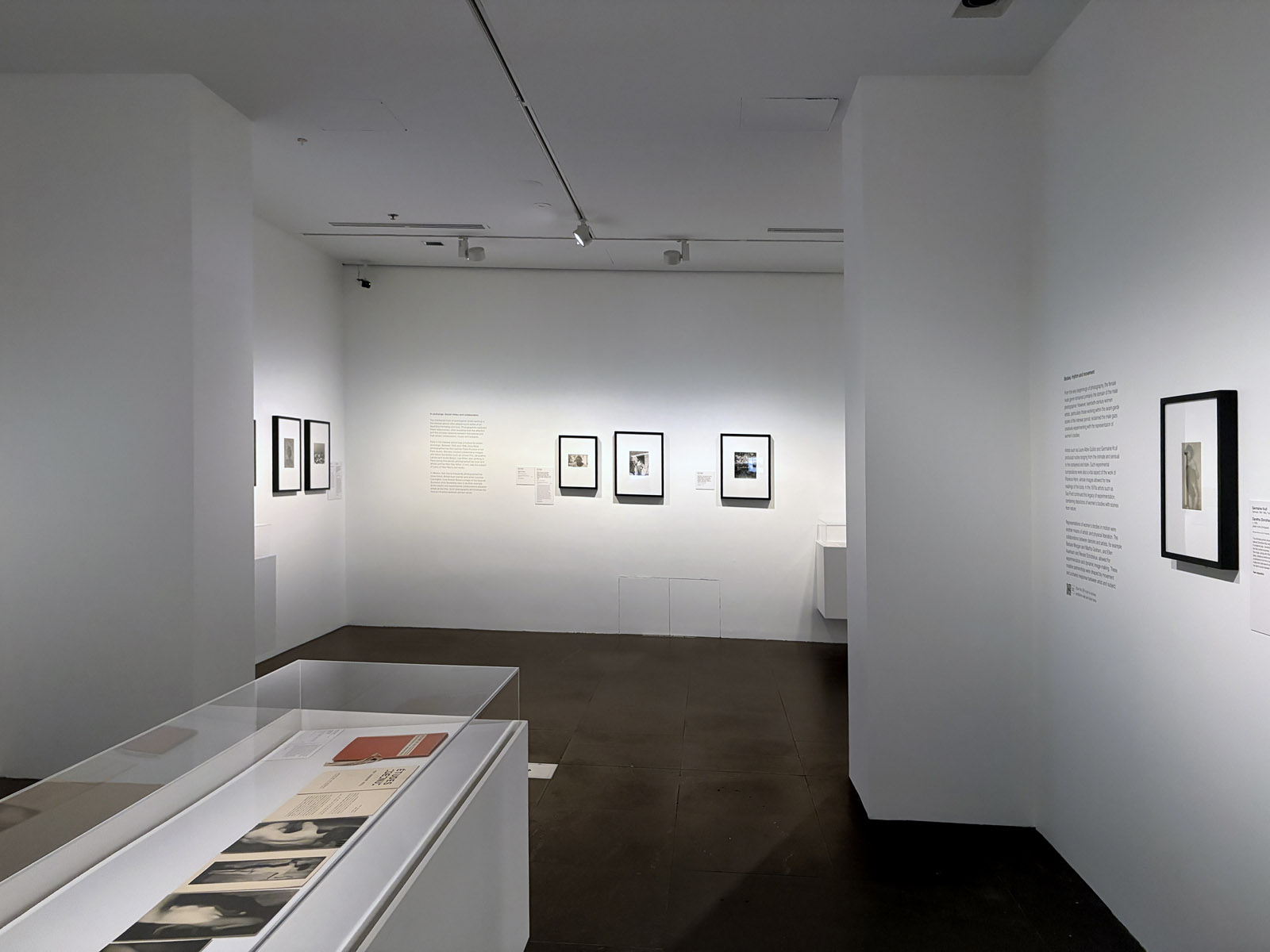
 

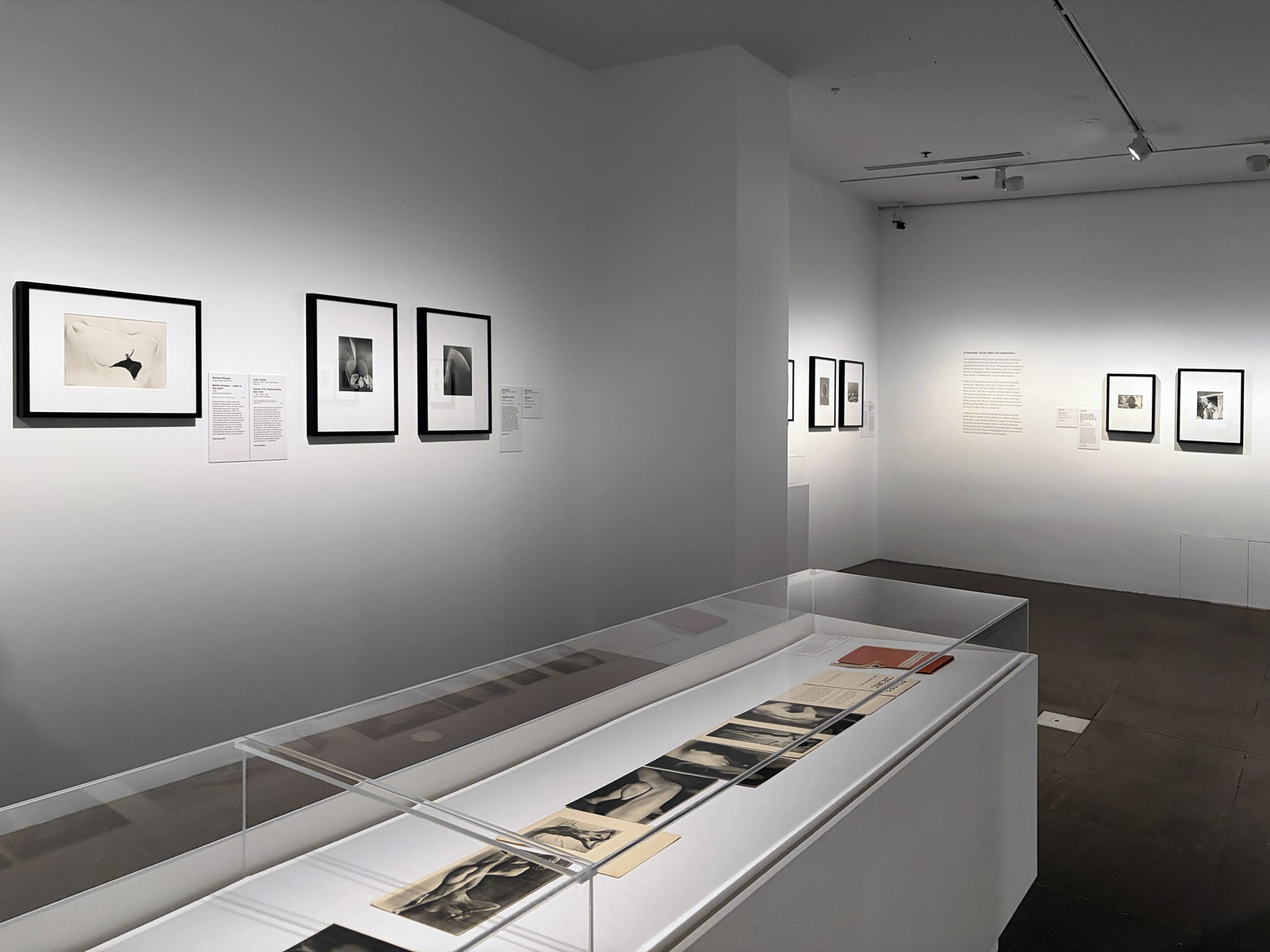
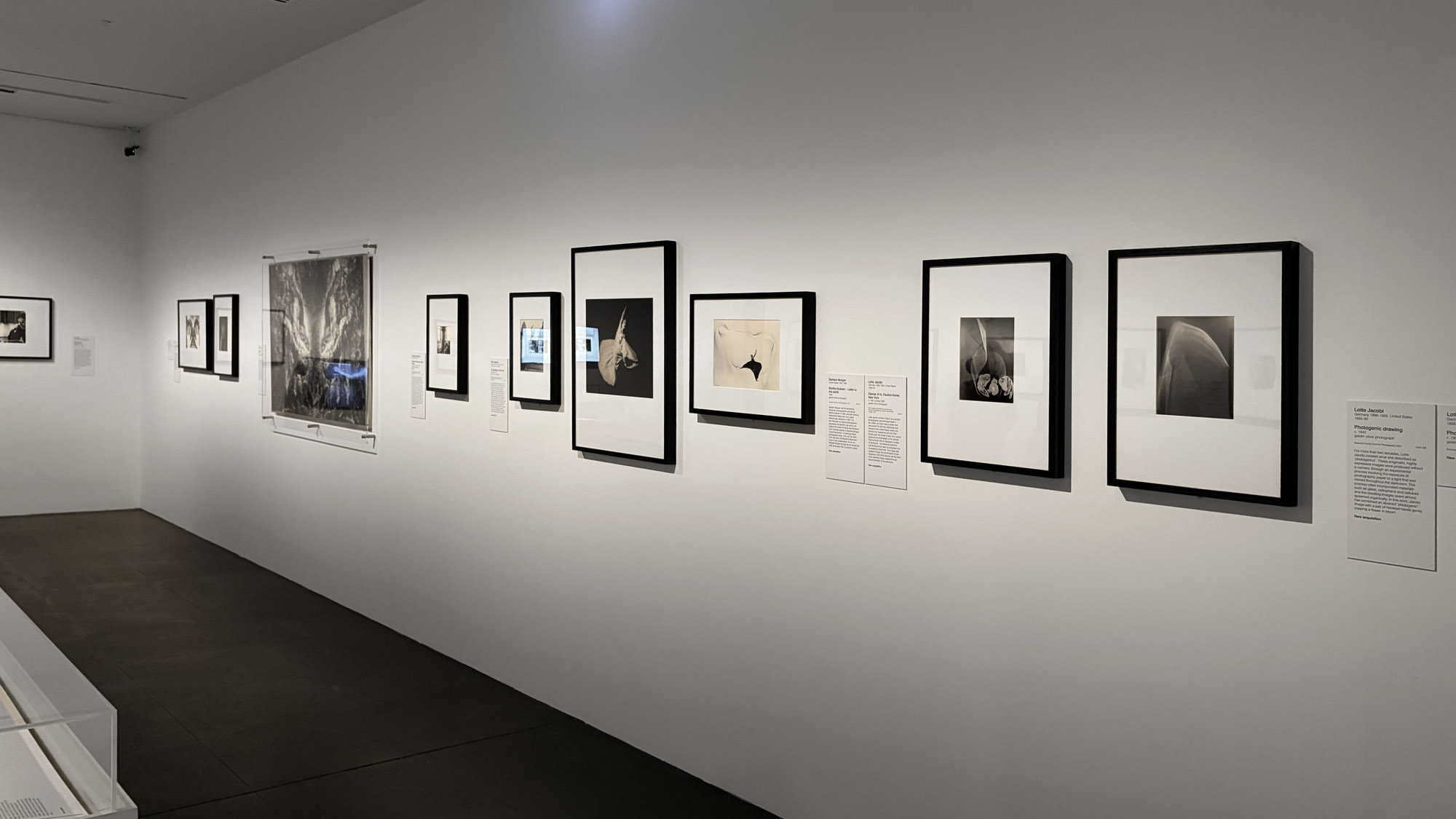
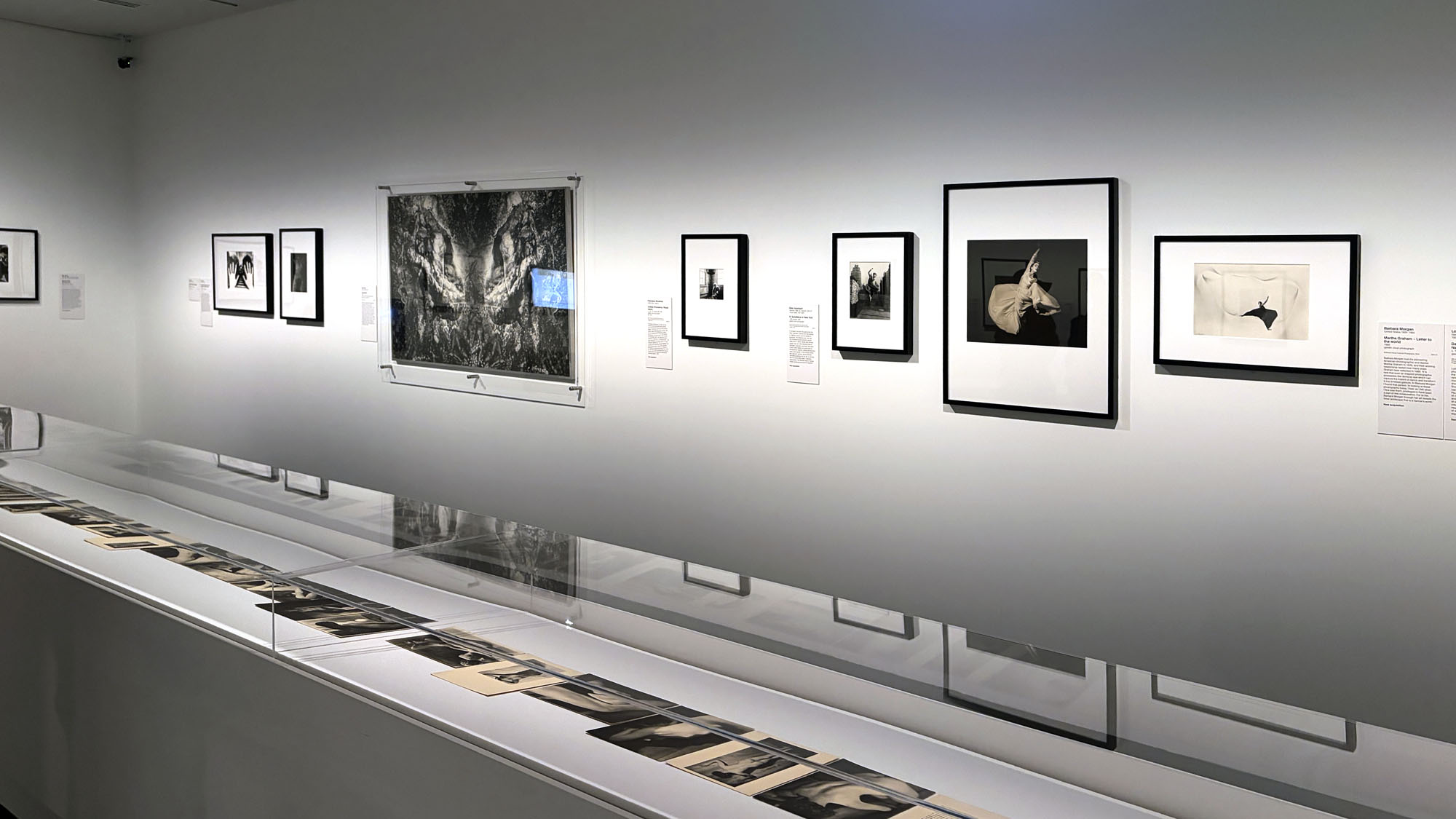
Installation view of the exhibition 'Women Photographers 1900-1975: A Legacy of Light at NGV' International, Melbourne, November 2025 – May 2026
Installation view of the exhibition 'Women Photographers 1900-1975: A Legacy of Light at NGV' International, Melbourne, November 2025 – May 2026 showing from left to right in the bottom image, Francesca Woodman 'Untitled (Providence, Rhode Island)' (c. 1975-1978 printed after 1981); Ellen Auerbach R. 'Schottelius in New York' (1953 printed 1992); Barbara Morgan 'Martha Graham – Letter to the world' (1940); Lotti Jacobi 'Dancer #16, Pauline Koner, New York' (c. 1937, printed 1992); and two 'Photogenic drawing' (c. 1940 and c. 1950)


Installation views of the exhibition Women Photographers 1900-1975: A Legacy of Light at NGV International, Melbourne, November 2025 – May 2026 showing from left to right in the bottom image, Francesca Woodman Untitled (Providence, Rhode Island) (c. 1975-1978 printed after 1981, below); Ellen Auerbach R. Schottelius in New York (1953 printed 1992, below); Barbara Morgan Martha Graham – Letter to the world (1940, below); Lotti Jacobi Dancer #16, Pauline Koner, New York (c. 1937, printed 1992); and two Photogenic drawing (c. 1940 and c. 1950)
Photos: Marcus Bunyan


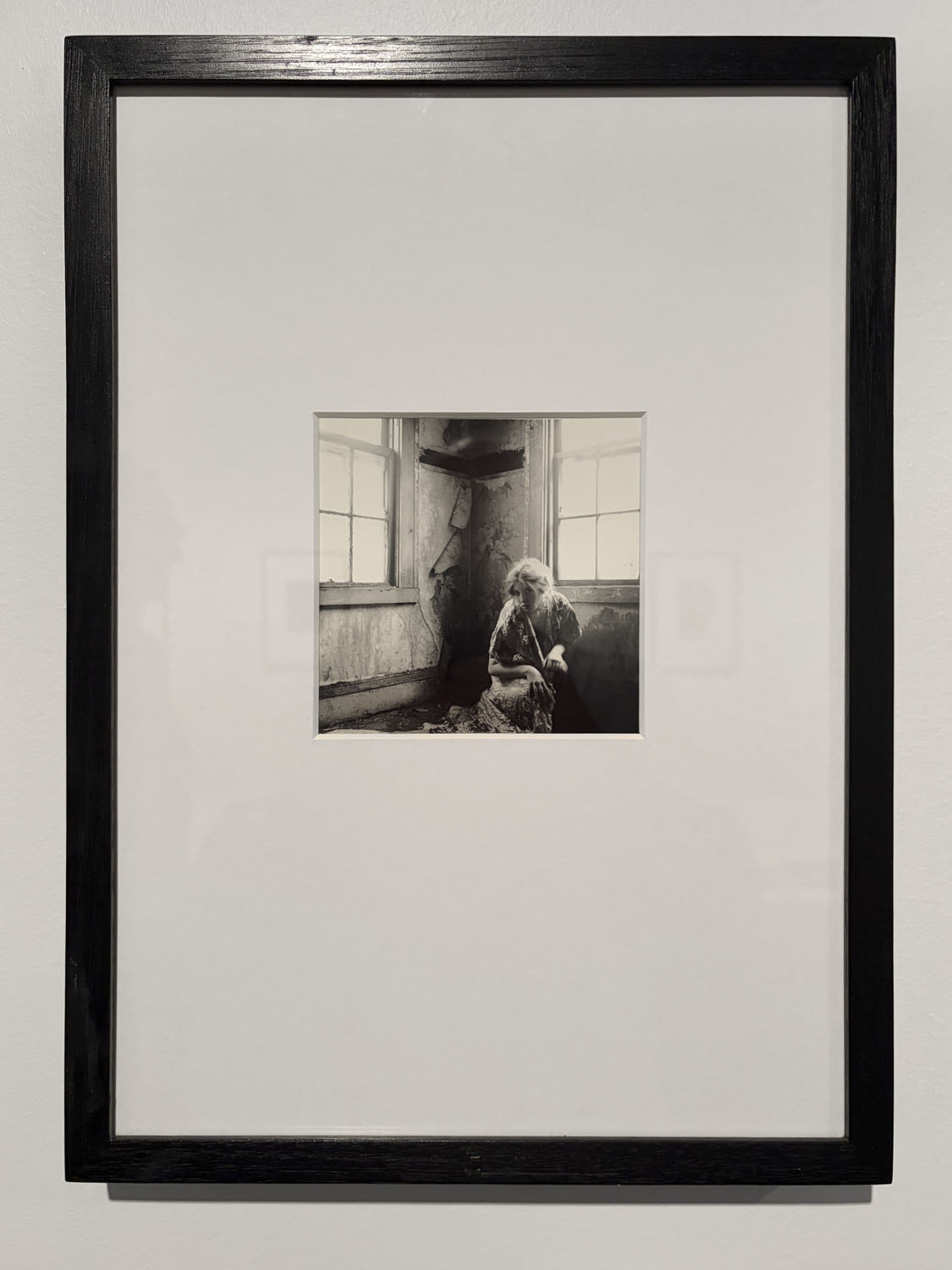
Francesca Woodman (American, 1958-1981) 'Untitled (Providence, Rhode Island)' (c. 1975-1978, printed after 1981) (installation view)


Francesca Woodman (American, 1958-1981)
Untitled (Providence, Rhode Island) (installation view)
c. 1975-1978, printed after 1981
Gelatin silver photograph
13.7 x 13.8cm (image)
25.3 x 20.3cm (sheet)
National Gallery of Victoria, Melbourne
Gift of Krystyna Campbell-Pretty AM and Family through the Australian Government’s Cultural Gifts Program, 2025
Photo: Marcus Bunyan


Francesca Woodman is known for her intimate black-and-white self-portraits and photographs featuring other women sitters. The bodies are often blurred, with faces hidden and appearing to blend into the background. In this self-portrait, Woodman crouches down in the corner of a decrepit room, her patterned gown somehow reflecting – or merging with – the floral wallpaper that peels down in rough remnants behind her. The photograph was created while Woodman was a student at the Rhode Island School of Design in Providence, where she studied from 1975 to 1978 and which produced the majority of her extant photographs following her untimely death in 1981.

Wall text from the exhibition


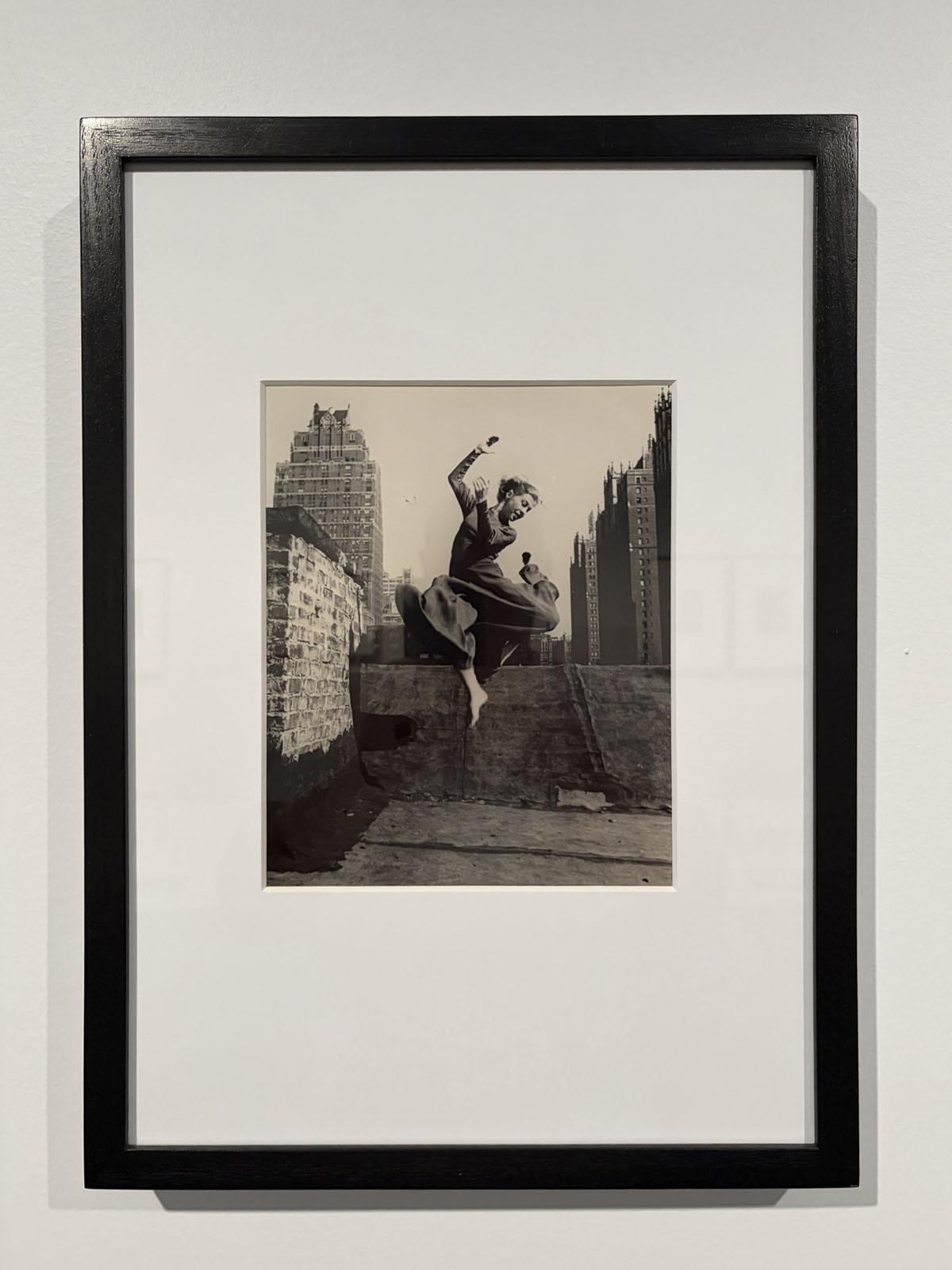
Ellen Auerbach (German 1906-2004) 'R. Schottelius in New York' 1953, printed 1992 (installation view)


Ellen Auerbach (German 1906-2004)
R. Schottelius in New York (installation view)
1953, printed 1992
Gelatin silver photograph
23.2 x 18.5cm (image)
25.0 x 27.5cm (sheet)
National Gallery of Victoria, Melbourne
Gift of Krystyna Campbell-Pretty AM and Family through the Australian Government’s Cultural Gifts Program, 2023
Photo: Marcus Bunyan


Ellen Auerbach (German 1906-2004) 'R. Schottelius in New York' 1953, printed 1992


Ellen Auerbach (German 1906-2004)
R. Schottelius in New York
1953, printed 1992
Gelatin silver photograph
23.2 x 18.5cm (image)
25.0 x 27.5cm (sheet)
National Gallery of Victoria, Melbourne
Gift of Krystyna Campbell-Pretty AM and Family through the Australian Government’s Cultural Gifts Program, 2023
© Ellen Auerbach. VG Bild-Kunst/Copyright Agency


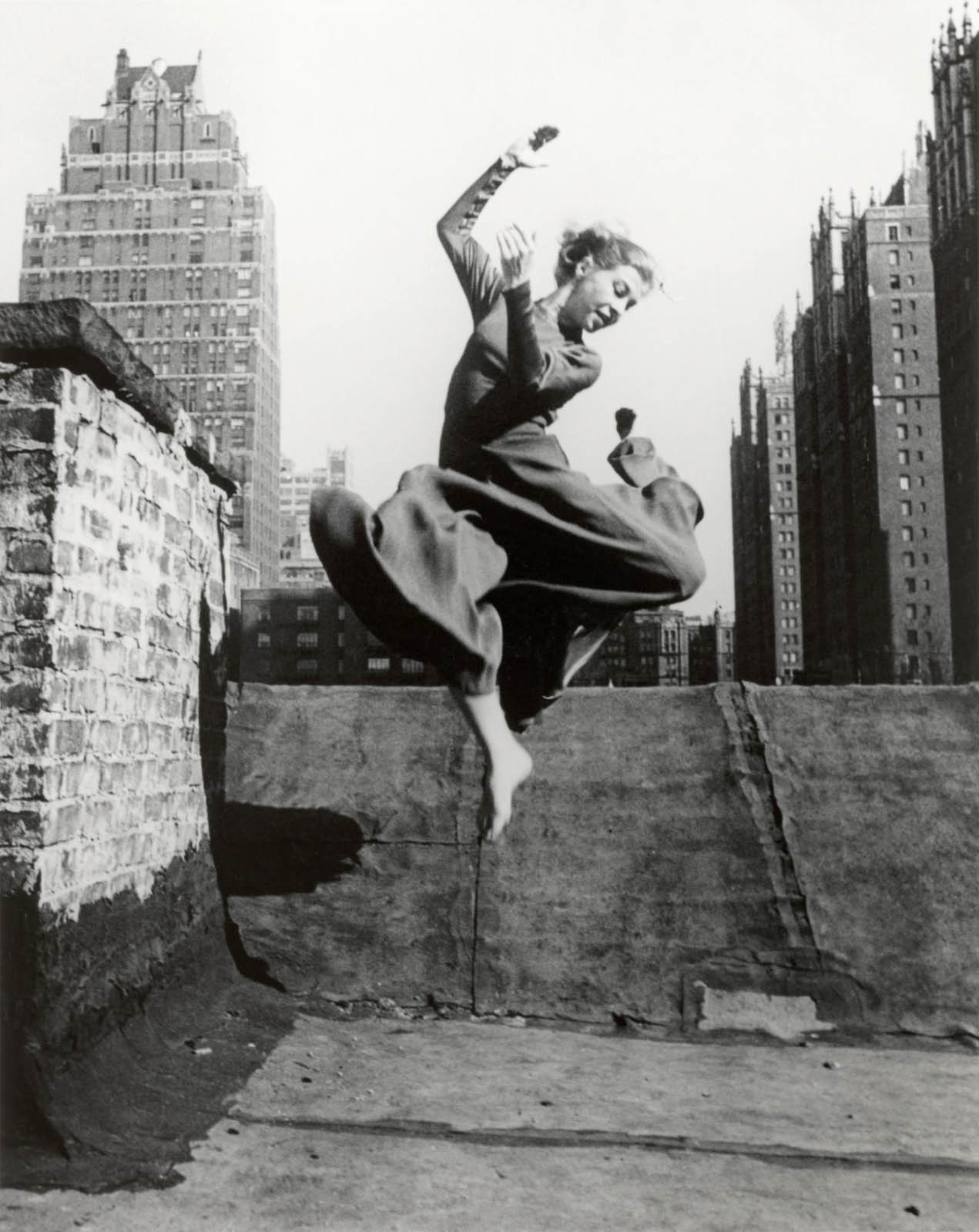
A constant innovator throughout her life, Ellen Auerbach received her first camera in 1928 as a tool to aid her studies in sculpture. The following year, she met her professional and romantic partner Grete Stern in Berlin, where they formed studio ringl+pit. After escaping fascist Germany, Auerbach eventually relocated to the United States and continued her photographic practice, settling among New York’s avant-garde. In this rooftop scene, she captures German dancer Renate Schottelius leaping into the air. In contrast with the surrounding static, imposing skyscrapers, the liberated body in joyous motion serves as a symbol for freedom.

Wall text from the exhibition


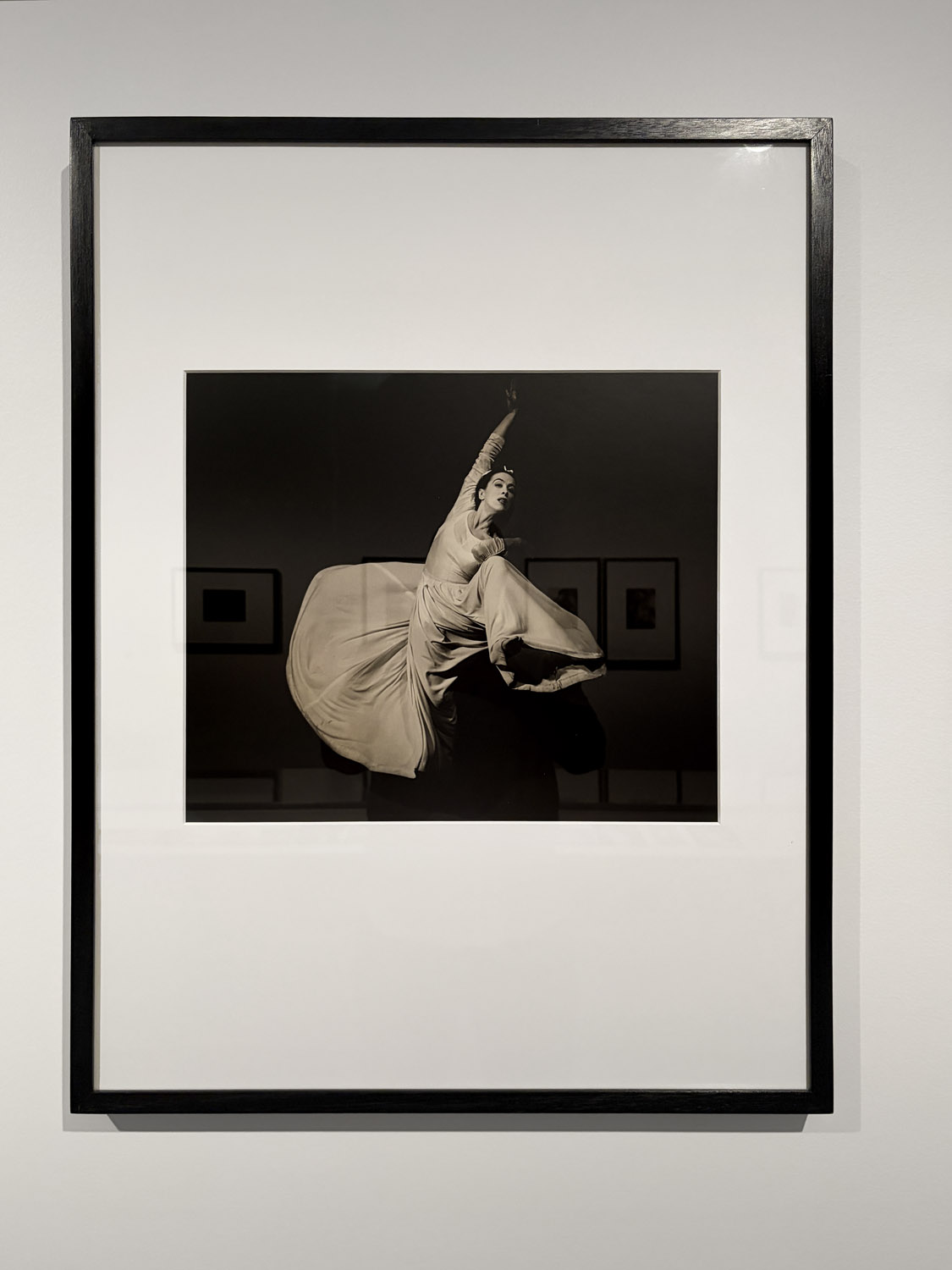
Barbara Morgan (American, 1900-1992) 'Martha Graham – Letter to the world' 1940 (installation view)


Barbara Morgan (American, 1900-1992)
Martha Graham – Letter to the world (installation view)
1940
Gelatin silver photograph
38.9 x 48.2cm (image and sheet)
National Gallery of Victoria, Melbourne
Bowness Family Fund for Photography, 2024
Photo: Marcus Bunyan


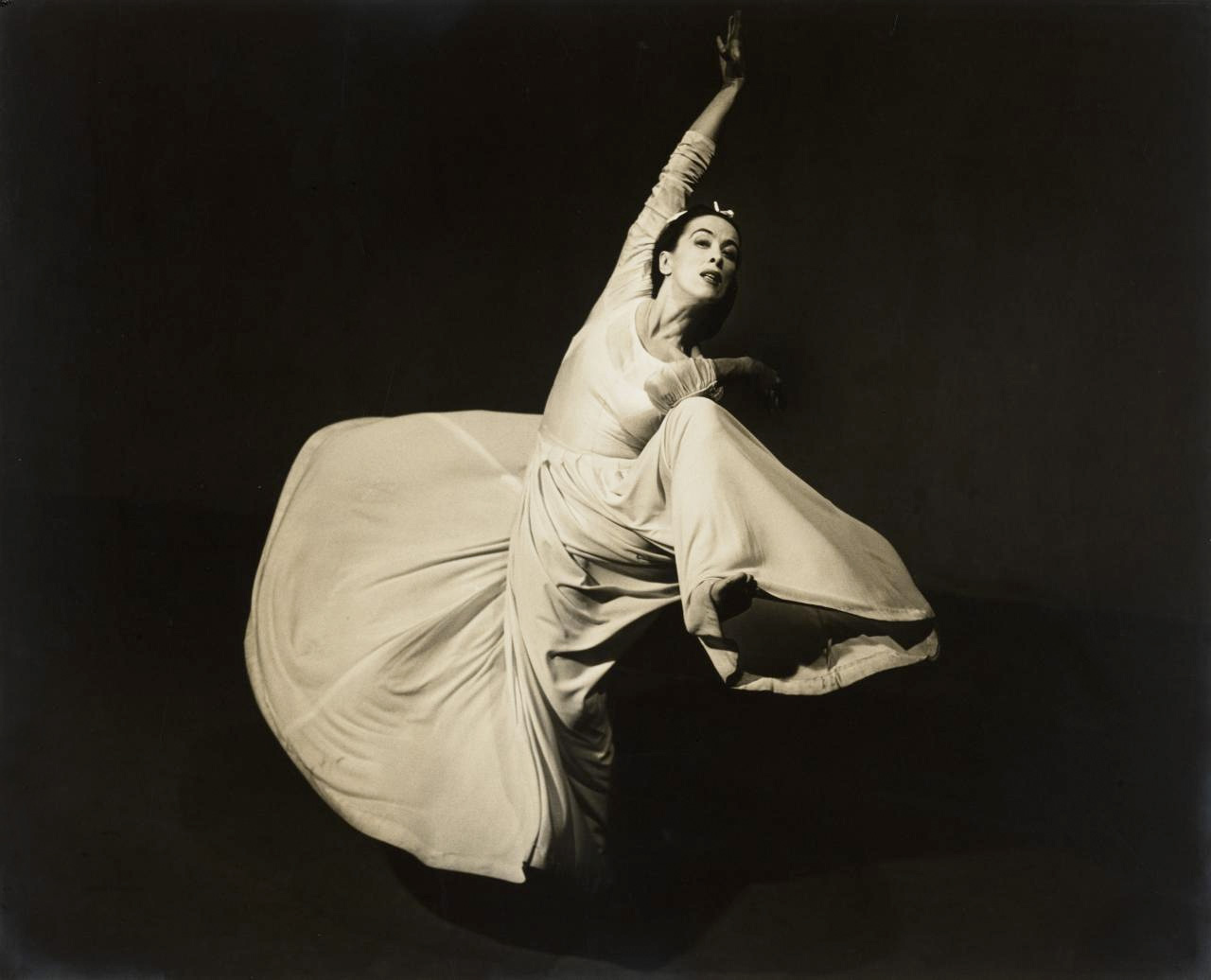
Barbara Morgan (American, 1900-1992) 'Martha Graham – Letter to the world' 1940


Barbara Morgan (American, 1900-1992)
Martha Graham – Letter to the world
1940
Gelatin silver photograph
38.9 x 48.2cm (image and sheet)
National Gallery of Victoria, Melbourne
Bowness Family Fund for Photography, 2024
© The Barbara Morgan Estate


Barbara Morgan met the pioneering American choreographer and dancer Martha Graham in 1935, and their working relationship lasted over six decades. Graham later reflected in 1980: “It is rare that even an inspired photographer possesses the demonic eye which can capture the instant of dance and transform it into timeless gesture. In Barbara Morgan I found that person. In looking at these photographs today, I feel, as I felt when I first saw them, privileged to have been a part of this collaboration. For to me, Barbara Morgan through her art reveals the inner landscape that is a dancer’s world.”

Wall text from the exhibition


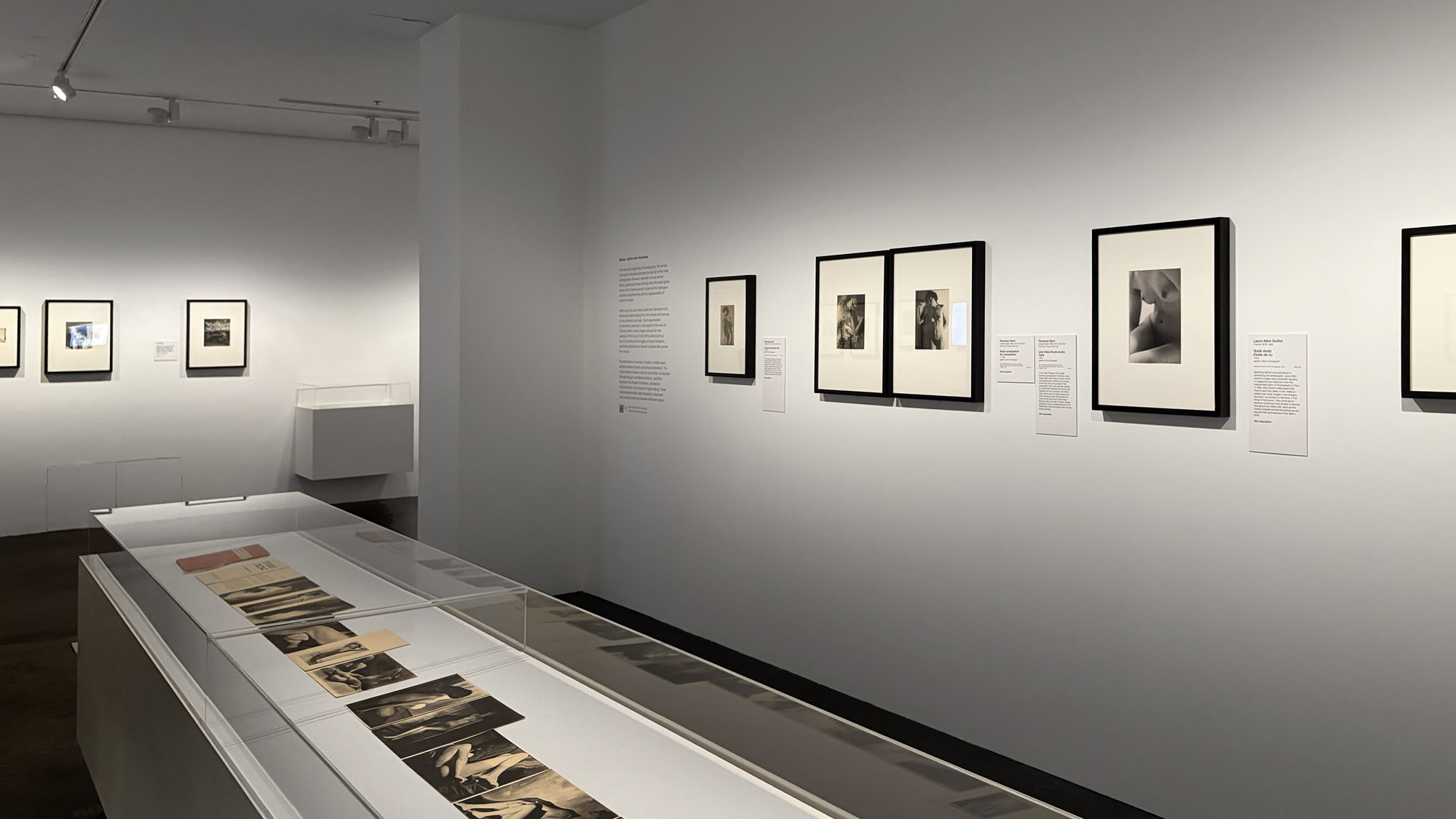
Installation view of the exhibition 'Women Photographers 1900-1975: A Legacy of Light' at NGV International, Melbourne, November 2025 – May 2026


Installation view of the exhibition Women Photographers 1900-1975: A Legacy of Light at NGV International, Melbourne, November 2025 – May 2026
Photo: Marcus Bunyan


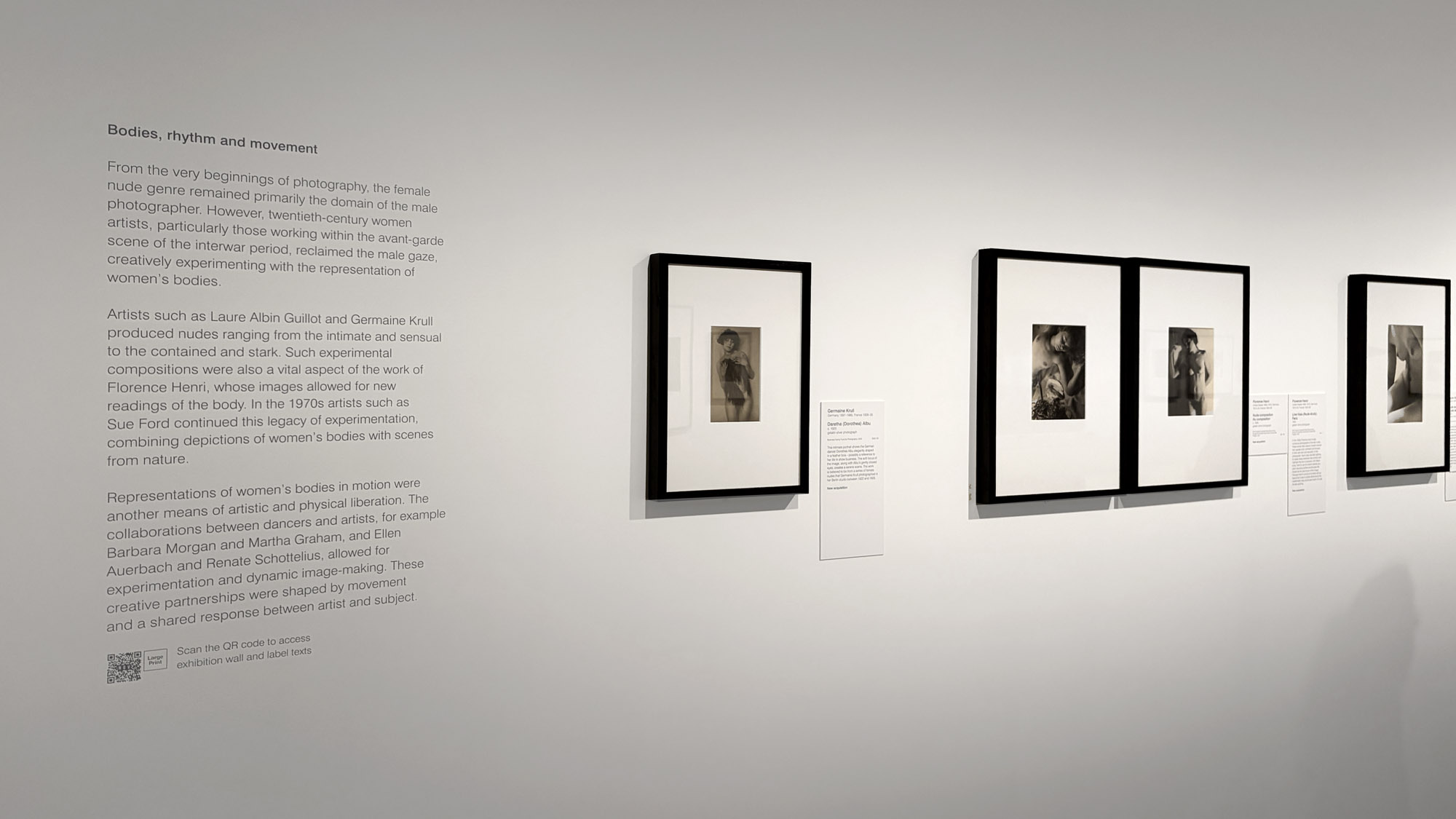
Bodies, Rhythm and Movement

From the very beginnings of photography, the female nude genre remained primarily the domain of the male photographer. However, twentieth-century women artists, particularly those working within the avant-garde scene of the interwar period, reclaimed the male gaze, creatively experimenting with the representation of women’s bodies.

Artists such as Laure Albin Guillot and Germaine Krull produced nudes ranging from the intimate and sensual to the contained and stark. Such experimental compositions were also a vital aspect of the work of Florence Henri, whose images allowed for new readings of the body. In the 1970s artists such as Sue Ford continued this legacy of experimentation, combining depictions of women’s bodies with scenes from nature.

Representations of women’s bodies in motion were another means of artistic and physical liberation. The collaborations between dancers and artists, for example Barbara Morgan and Martha Graham, and Ellen Auerbach and Renate Schottelius, allowed for experimentation and dynamic image-making. These creative partnerships were shaped by movement and a shared response between artist and subject.


Installation view of the exhibition 'Women Photographers 1900-1975: A Legacy of Light' at NGV International, Melbourne, November 2025 – May 2026 showing at left, Germaine Krull 'Daretha (Dorothea) Albu' (c. 1925)


Installation view of the exhibition Women Photographers 1900-1975: A Legacy of Light at NGV International, Melbourne, November 2025 – May 2026 showing at left, Germaine Krull Daretha (Dorothea) Albu (c. 1925, below)
Photo: Marcus Bunyan


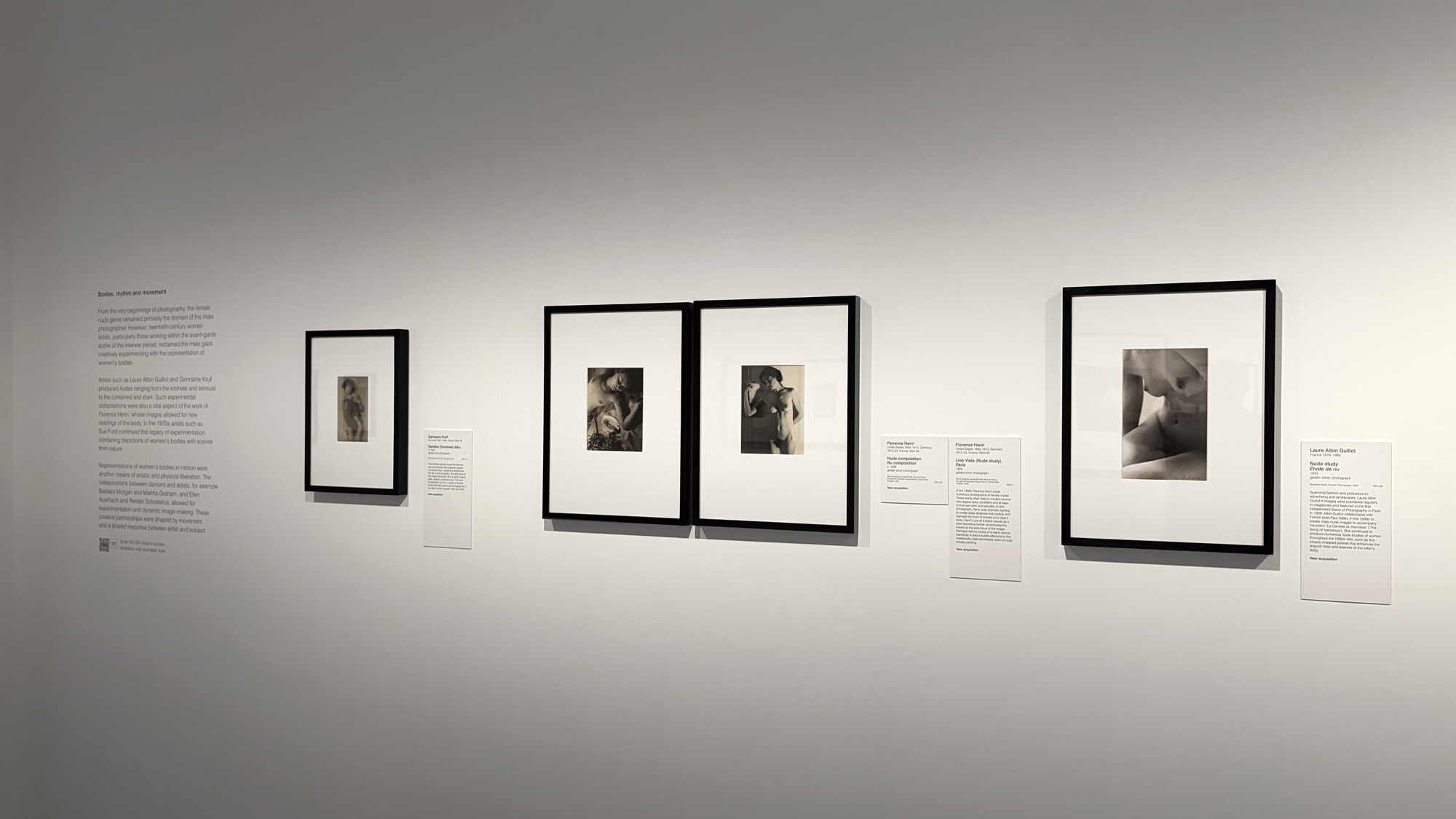
Installation view of the exhibition 'Women Photographers 1900-1975: A Legacy of Light' at NGV International, Melbourne, November 2025 – May 2026


Installation view of the exhibition Women Photographers 1900-1975: A Legacy of Light at NGV International, Melbourne, November 2025 – May 2026 showing from left to right, Germaine Krull Daretha (Dorothea) Albu (c. 1925, below); Florence Henri Nude composition (c. 1930, below); Florence Henri Line Viala (Nude study), Paris (1934); and Laure Albin Guillot Nude Study (1943)
Photo: Marcus Bunyan


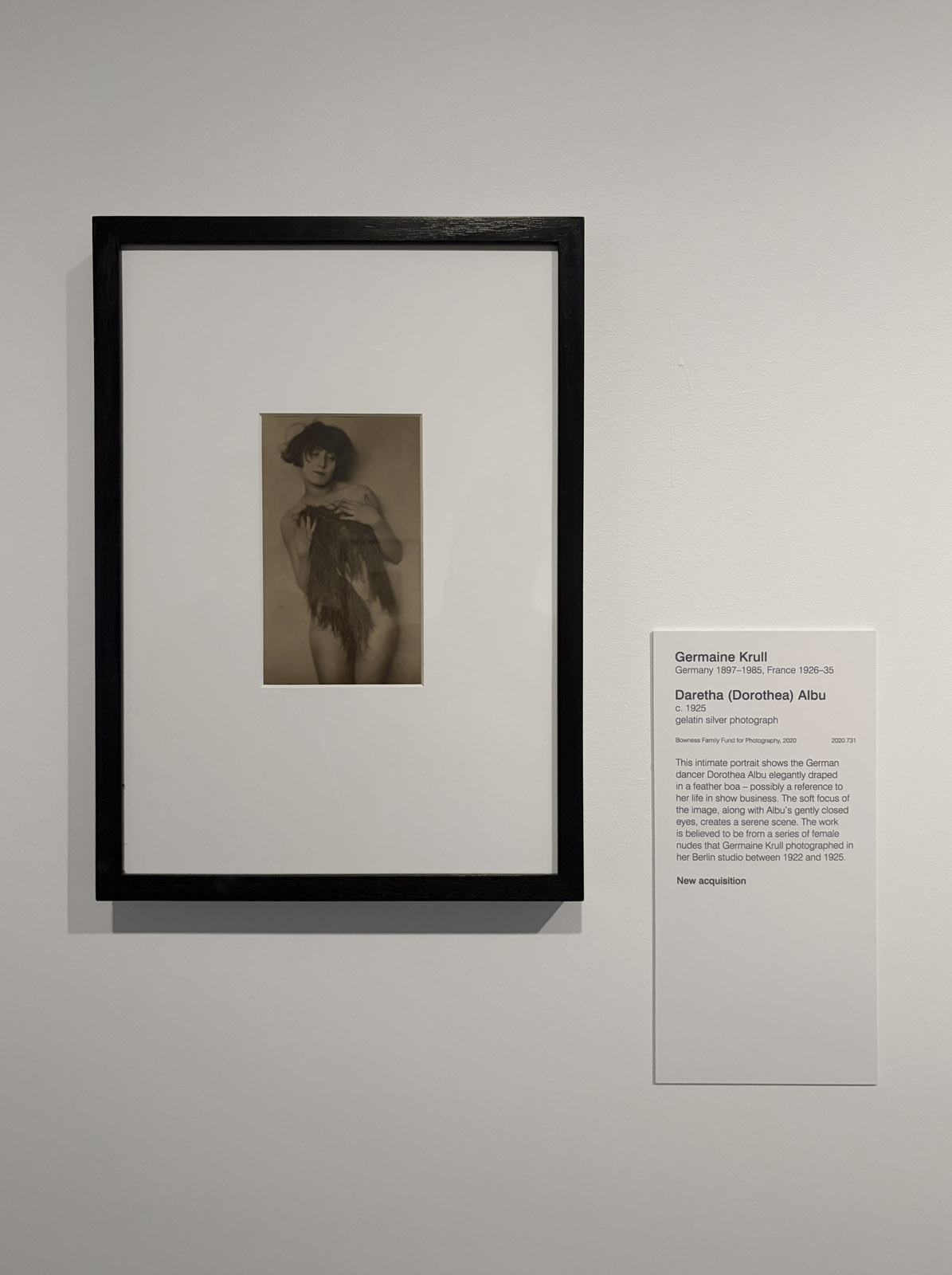
Germaine Krull (European, 1897-1985) 'Daretha (Dorothea) Albu' c. 1925 (installation view)


Germaine Krull (European, 1897-1985)
Daretha (Dorothea) Albu (installation view)
c. 1925
Gelatin silver photograph
19.7 x 11.7cm (image and sheet)
National Gallery of Victoria, Melbourne
Bowness Family Fund for Photography, 2020
Photo: Marcus Bunyan


This intimate portrait shows the German dancer Dorothea Albu elegantly draped in a feather boa – possibly a reference to her life in show business. The soft focus of the image, along with Albu’s gently closed eyes, creates a serene scene. The work is believed to be from a series of female nudes that Germaine Krull photographed in her Berlin studio between 1922 and 1925.

Wall text from the exhibition


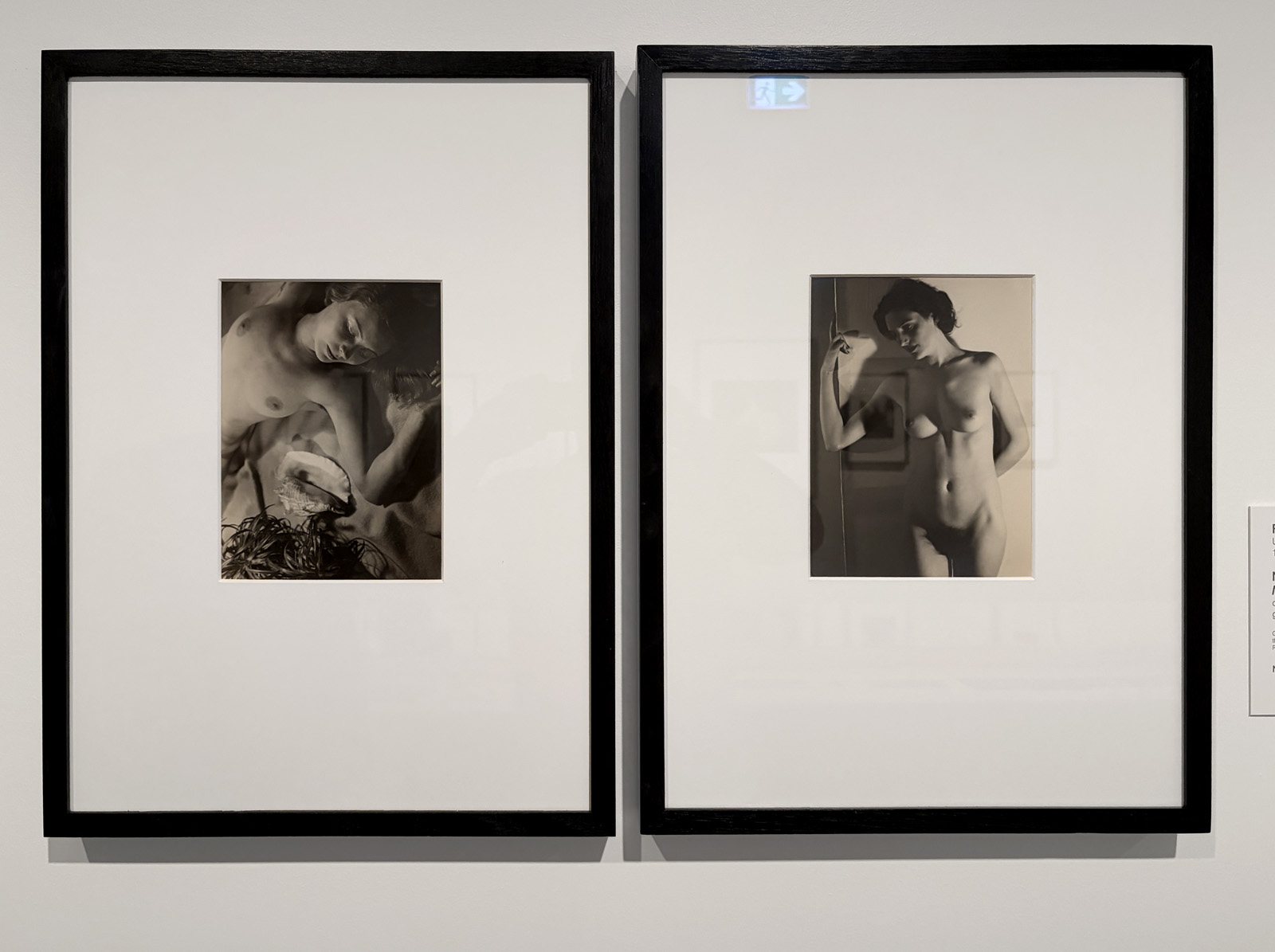
Installation view of the exhibition 'Women Photographers 1900-1975: A Legacy of Light' at NGV International, Melbourne, November 2025 – May 2026 showing from left to right, Florence Henri (European born USA, 1893-1982) 'Nude composition' (c. 1930) and Florence Henri (European born USA, 1893-1982) 'Line Viala (Nude study), Paris' (1934)


Installation view of the exhibition Women Photographers 1900-1975: A Legacy of Light at NGV International, Melbourne, November 2025 – May 2026 showing from left to right, Florence Henri Nude composition (c. 1930, below) and Florence Henri Line Viala (Nude study), Paris (1934, below)
Photo: Marcus Bunyan


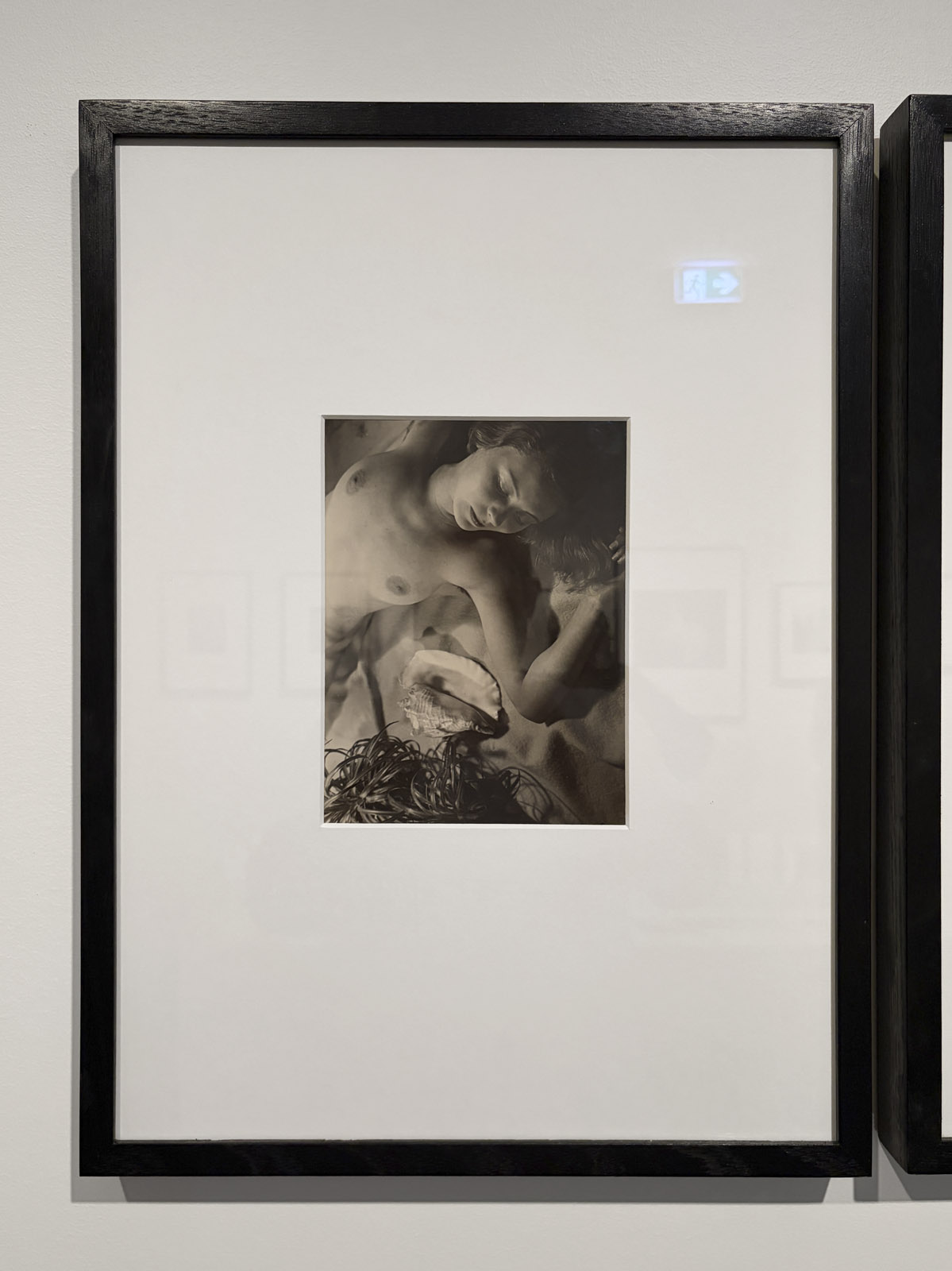
Florence Henri (European born USA, 1893-1982) 'Nude composition' (Nu composition) c. 1930 (installation view)


Florence Henri (European born USA, 1893-1982)
Nude composition (Nu composition) (installation view)
c. 1930
Gelatin silver photograph
22.9 x 17.0cm (image and sheet)
National Gallery of Victoria, Melbourne
Gift of Krystyna Campbell-Pretty AM and Family through the Australian Government’s Cultural Gifts Program, 2021
Photo: Marcus Bunyan


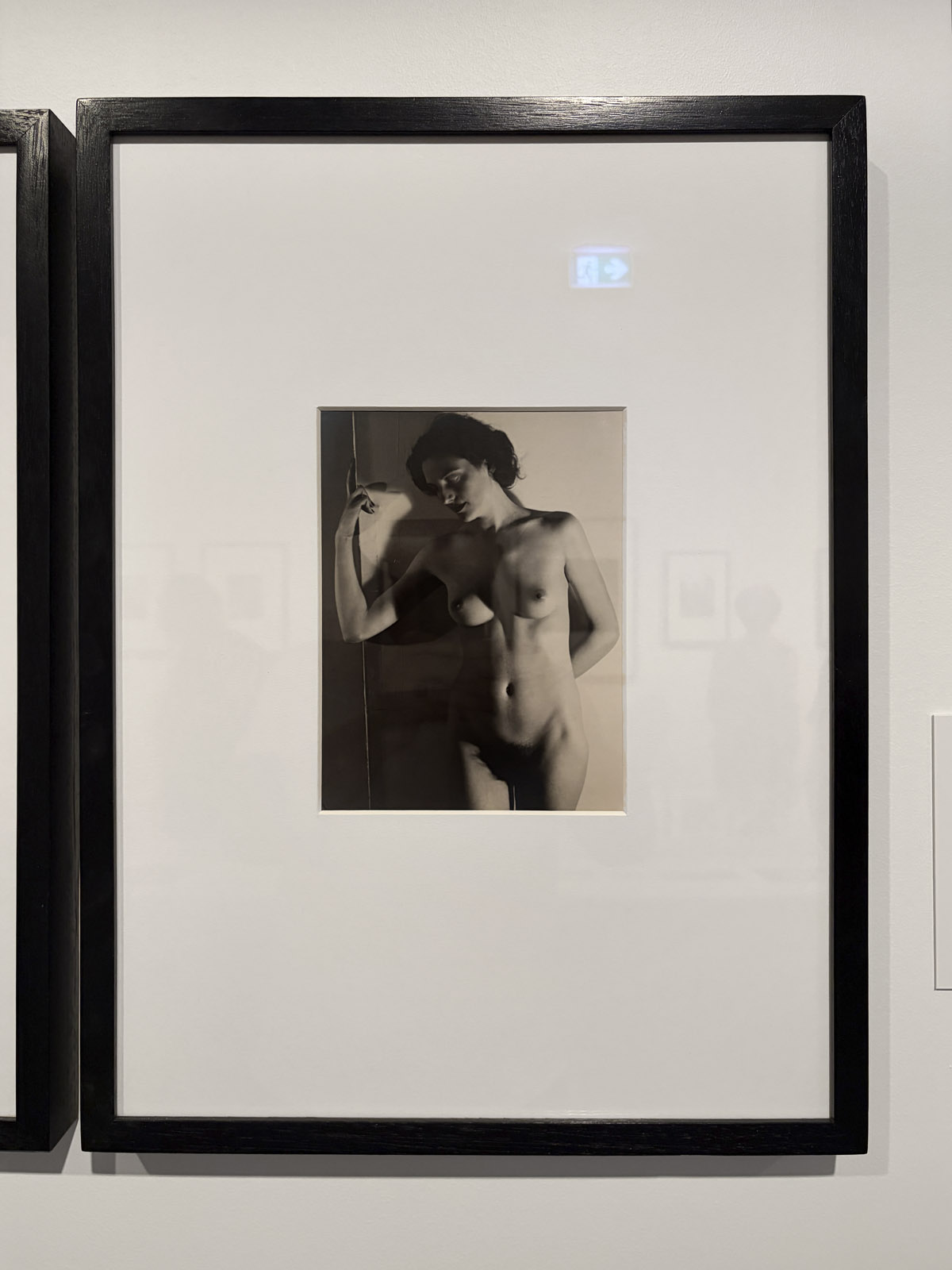
Florence Henri (European born USA, 1893-1982) 'Line Viala (Nude study), Paris' 1934 (installation view)


Florence Henri (European born USA, 1893-1982)
Line Viala (Nude study), Paris (installation view)
1934
Gelatin silver photograph
22.9 x 17.2cm (image and sheet)
National Gallery of Victoria, Melbourne
Gift of Krystyna Campbell-Pretty AM and Family through the Australian Government’s Cultural Gifts Program, 2023
Photo: Marcus Bunyan


In the 1930s Florence Henri made numerous photographs of female nudes. These works often feature modern women who appear bold, confident and at ease in their own skin and sexuality. In this photograph, Henri uses dramatic lighting to create deep shadows that contour and highlight the form of actress Line Viala’s body. Henri’s use of a blank canvas as a plain backdrop further accentuates the model as the sole focus of the image. Perhaps Henri’s choice of a blank canvas backdrop is also a subtle reference to the traditionally male-dominated realm of nude female painting.

Wall text from the exhibition


Florence Henri (European born USA, 1893-1982) 'Nude composition (Nu composition)' c. 1930


Florence Henri (European born USA, 1893-1982)
Nude composition (Nu composition)
c. 1930
Gelatin silver photograph
22.9 x 17.0cm (image and sheet)
National Gallery of Victoria, Melbourne
Gift of Krystyna Campbell-Pretty AM and Family through the Australian Government’s Cultural Gifts Program, 2021
© Florence Henri / Licensed by the Copyright Agency, Australia


Another vital aspect of her practice was her nude female compositions, such as Nude composition (Nu composition), 1930. Created in the year after establishing her studio in Paris, it employs her characteristically unique, elevated vantage point and raking lighting to disrupt a sense of visual order and perspective. Henri constructs a scene in which the upper half of a woman’s naked body (her chest, breasts, arms, head and hair) creates an asymmetrical focal point at the top of the photograph. Lying next to the woman, and, seemingly, the subject of her gaze, is a large shell, while plants at the base of the image echo the woman’s flowing hair. While appearing to be set on a bed of sand, on closer inspection the textured base is revealed as a coarse sheet.

The dreamlike image, confident and controlled, which merges the female body with the symbolic shell and forms from nature, creates a scene of sensuousness and self-empowerment that is erotic and modern. Henri’s nude compositions, along with those of peers working in France such as Dora Maar and Nora Dumas, claimed the female body as a subject of their own – a trend that emerged among a number of female photographers, in the interwar period.

Maggie Finch. “Florence Henri Nude composition (Nu composition),” on the NGV website 16 Mar 23 [Online] Cited 24/12/2025. Used under fair use condition for the purposes of education and research


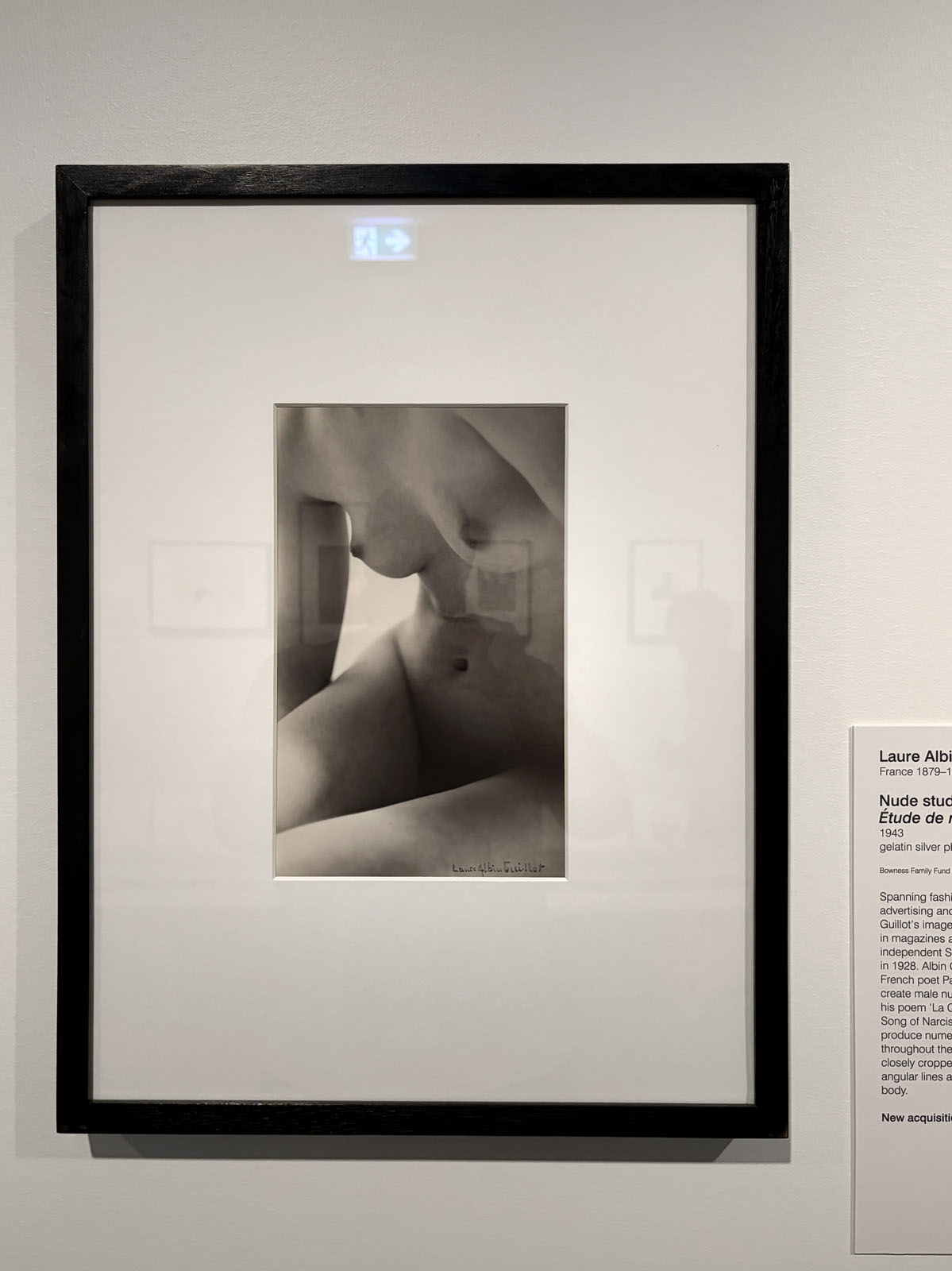
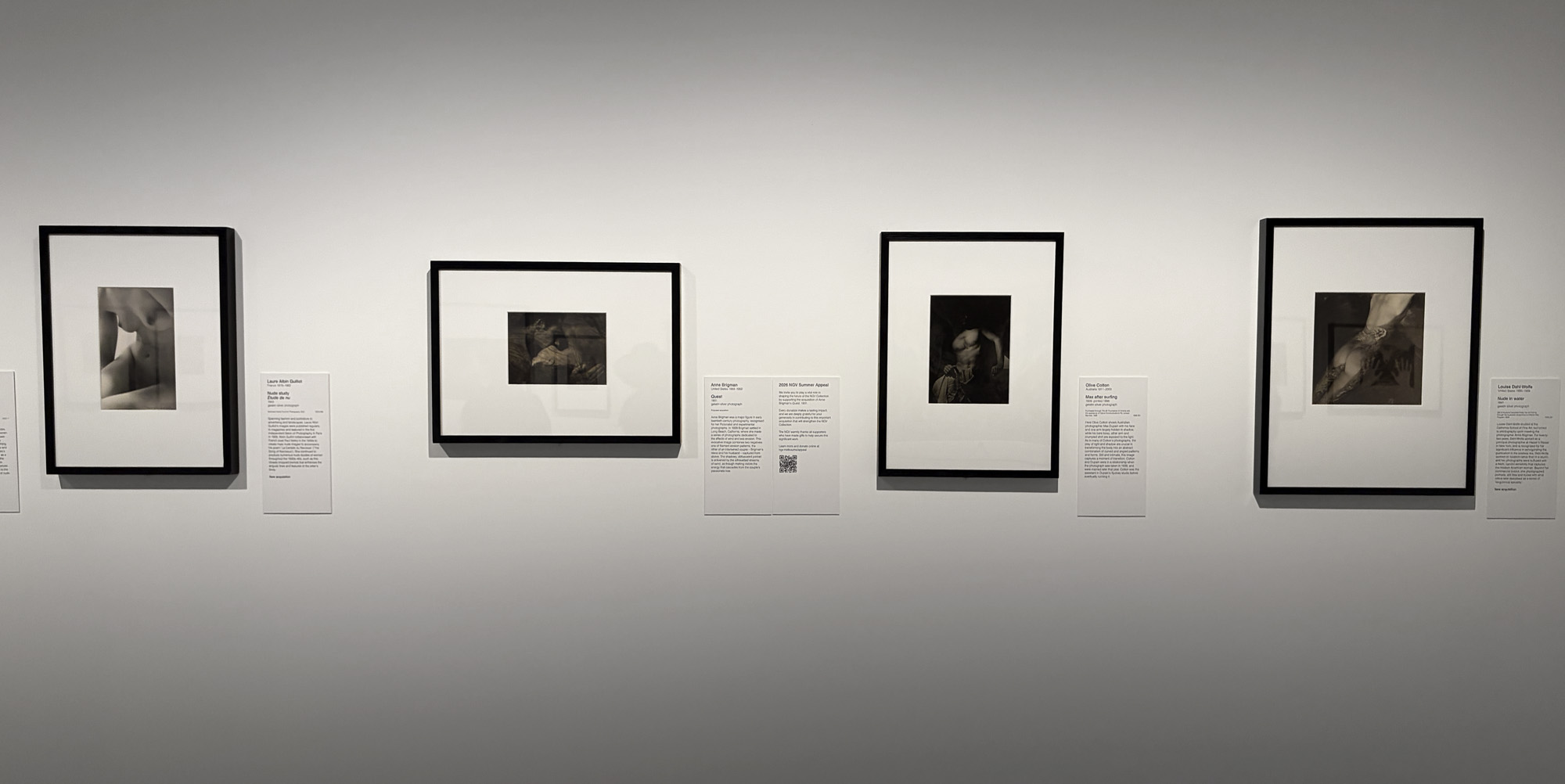
Laure Albin Guillot (French, 1879-1962) 'Nude study' (Étude de nu) 1943 (installation view)


Laure Albin Guillot (French, 1879-1962)
Nude study (Étude de nu) (installation view)
1943
Gelatin silver photograph
29.5 x 17.9cm (image)
29.5 x 23.1cm (sheet)
National Gallery of Victoria, Melbourne
Bowness Family Fund for Photography, 2023
Photo: Marcus Bunyan


Spanning fashion and portraiture to advertising and landscapes, Laure Albin Guillot’s images were published regularly in magazines and featured in the first independent Salon of Photography in Paris in 1928. Albin Guillot collaborated with French poet Paul Valéry in the 1930s to create male nude images to accompany his poem ‘La Cantate du Narcisse’ (‘The Song of Narcissus’). She continued to produce numerous nude studies of women throughout the 1930s–40s, such as this closely cropped portrait that enhances the angular lines and features of the sitter’s body.

Wall text from the exhibition


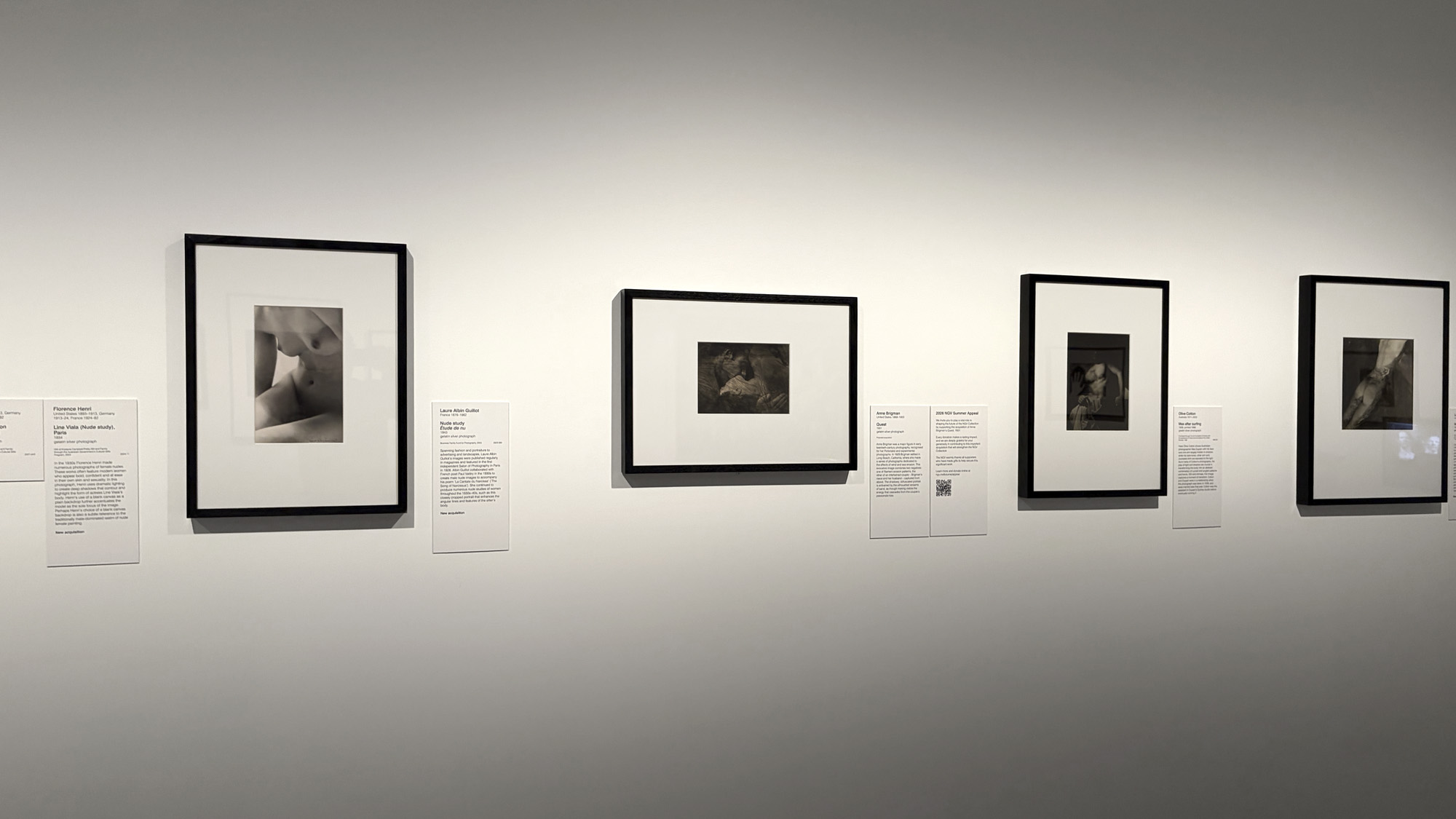
Installation view of the exhibition 'Women Photographers 1900-1975: A Legacy of Light' at NGV International, Melbourne, November 2025 – May 2026 showing from left to right, Laure Albin Guillot 'Nude study' (Étude de nu) (1943); Anne Brigman 'Quest' (1931); Olive Cotton 'Max after surfing' (1939 printed 1998); and Louise Dahl-Wolfe 'Nude in water' (1941)


Installation views of the exhibition Women Photographers 1900-1975: A Legacy of Light at NGV International, Melbourne, November 2025 – May 2026 showing from left to right, Laure Albin Guillot Nude study (Étude de nu) (1943, above); Anne Brigman Quest (1931); Olive Cotton Max after surfing (1939, printed 1998); and Louise Dahl-Wolfe Nude in water (1941)
Photos: Marcus Bunyan


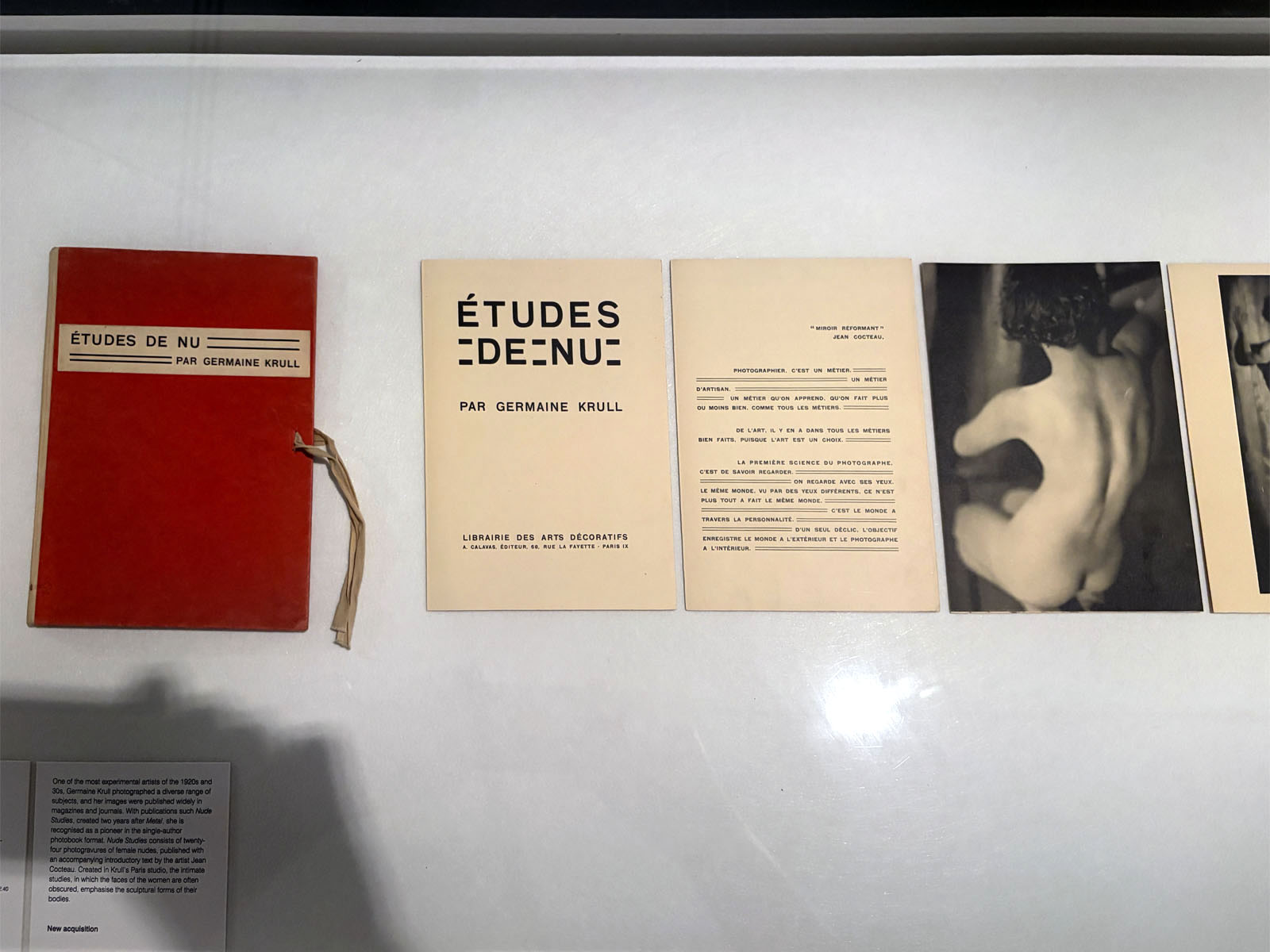
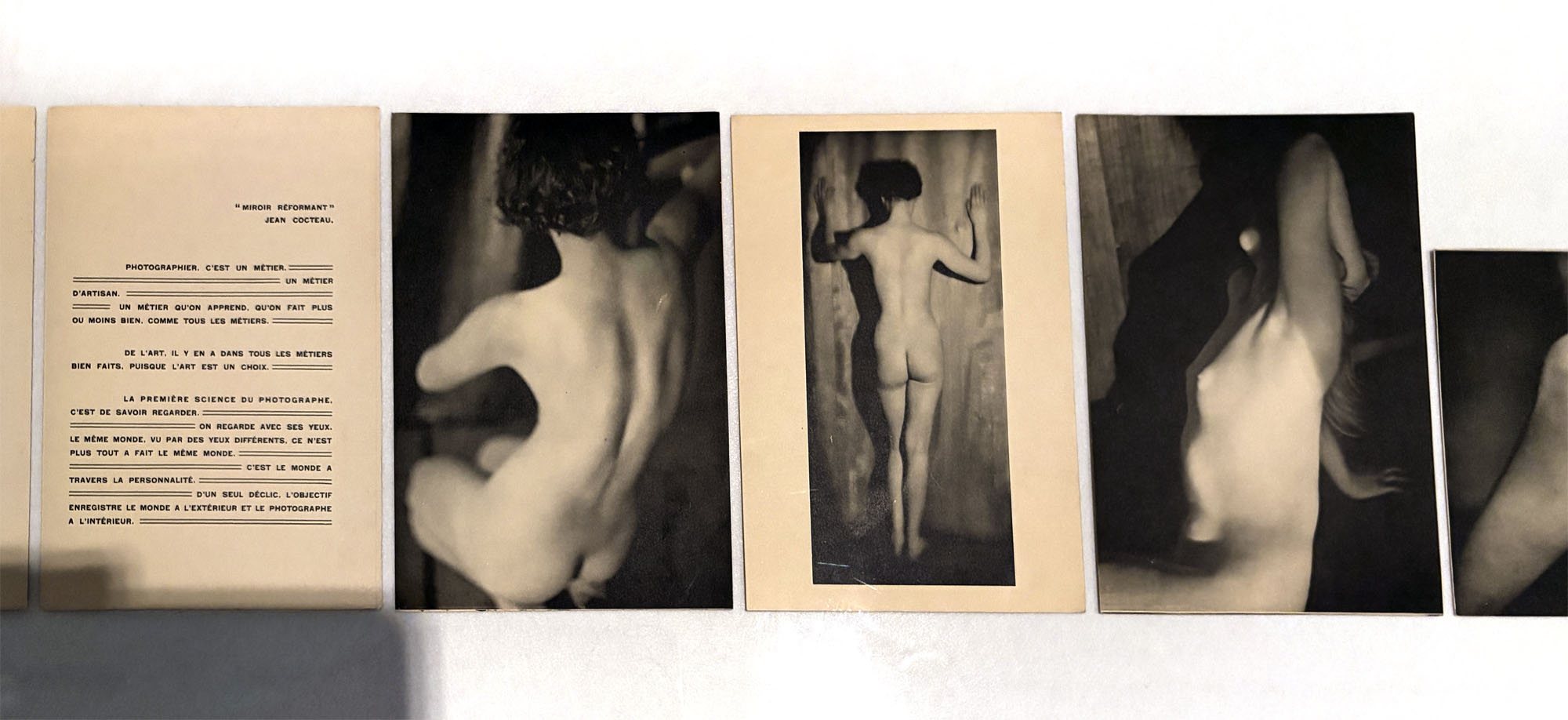
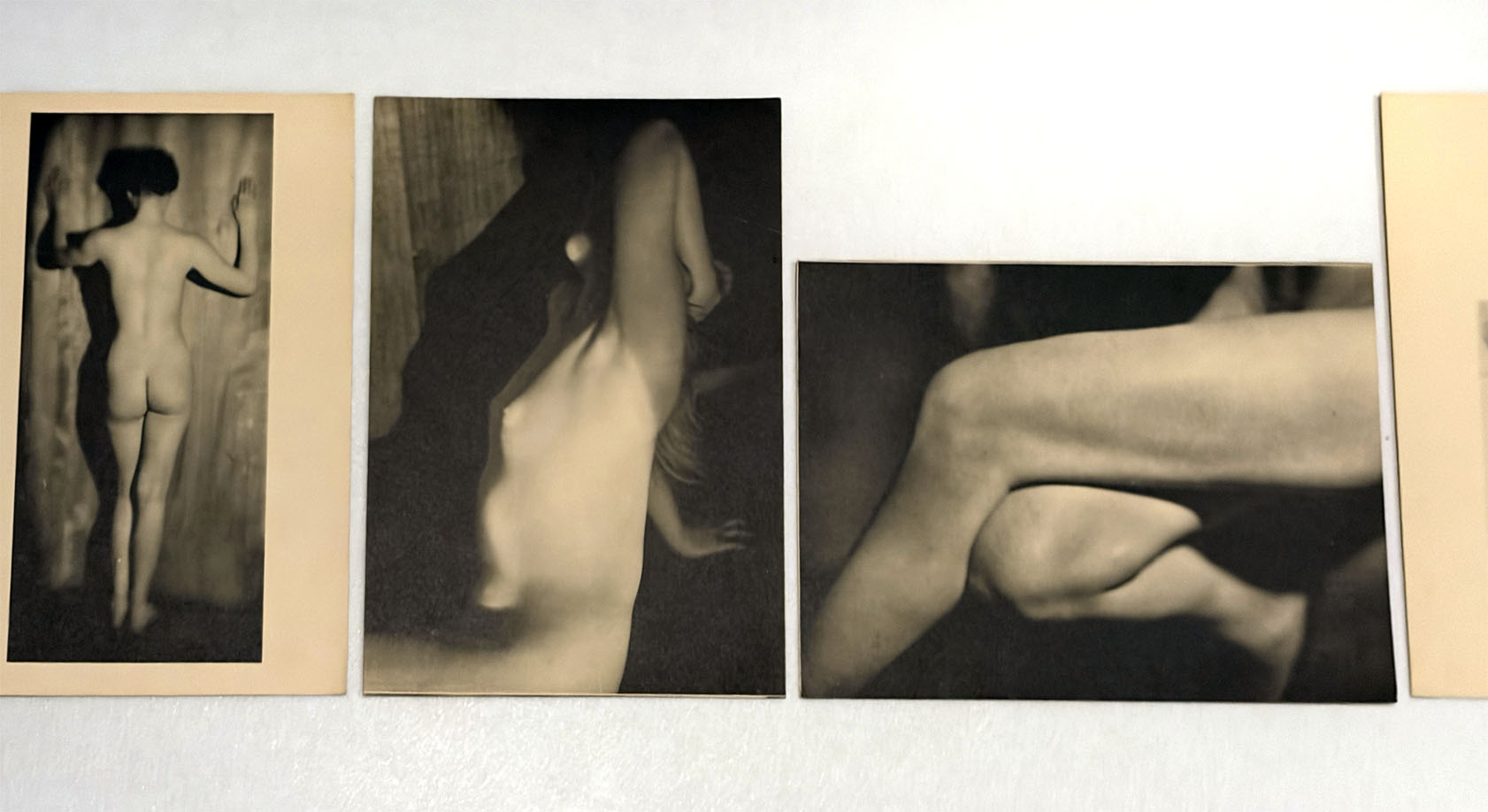
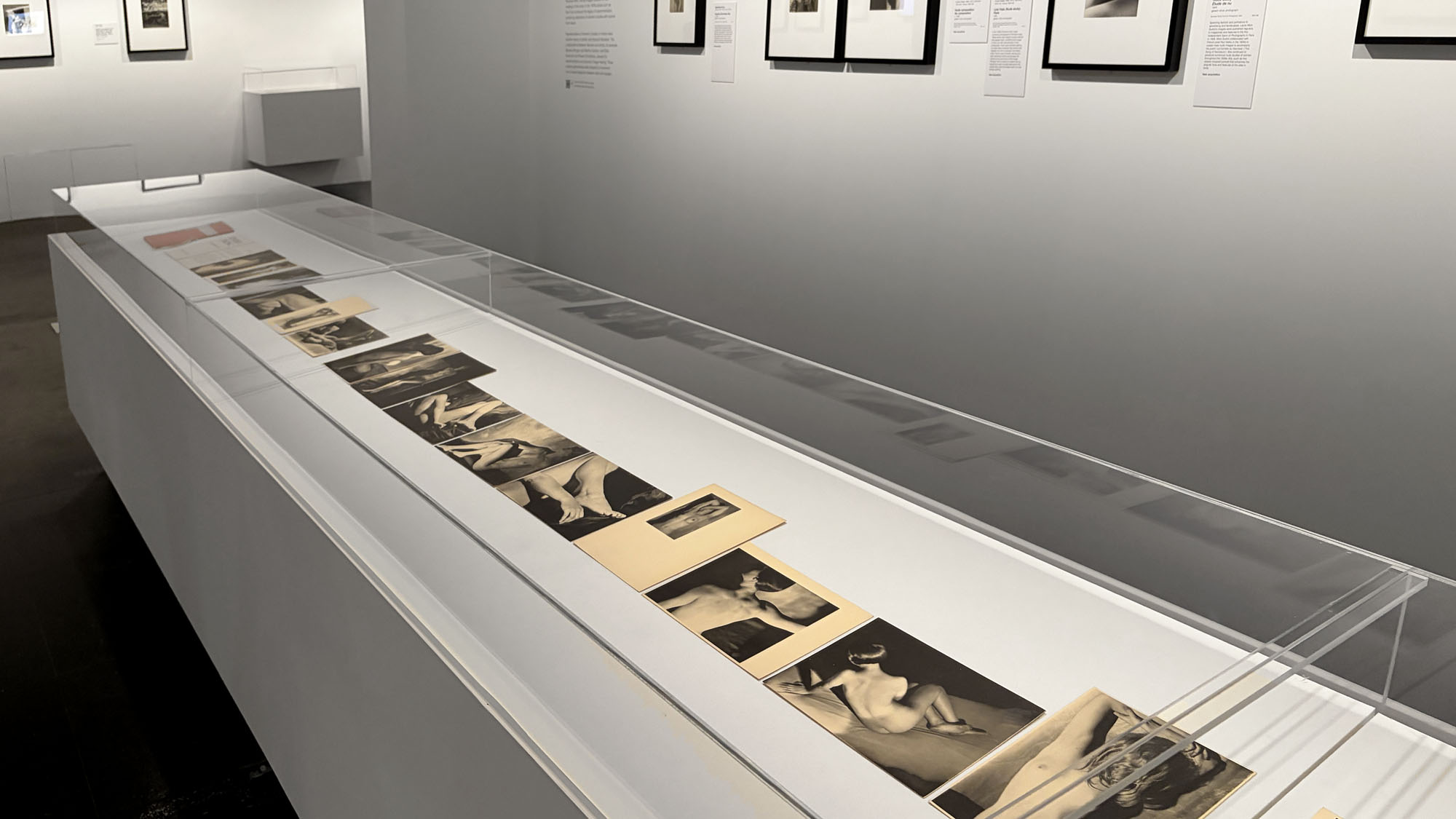
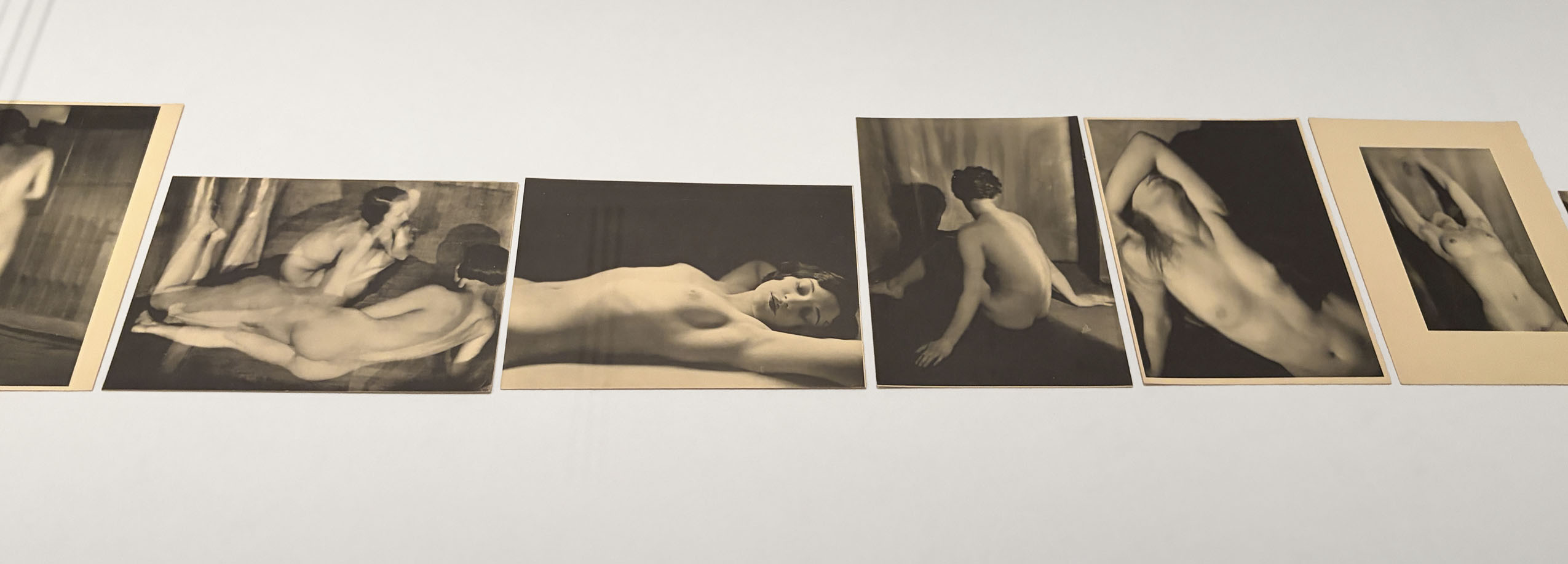
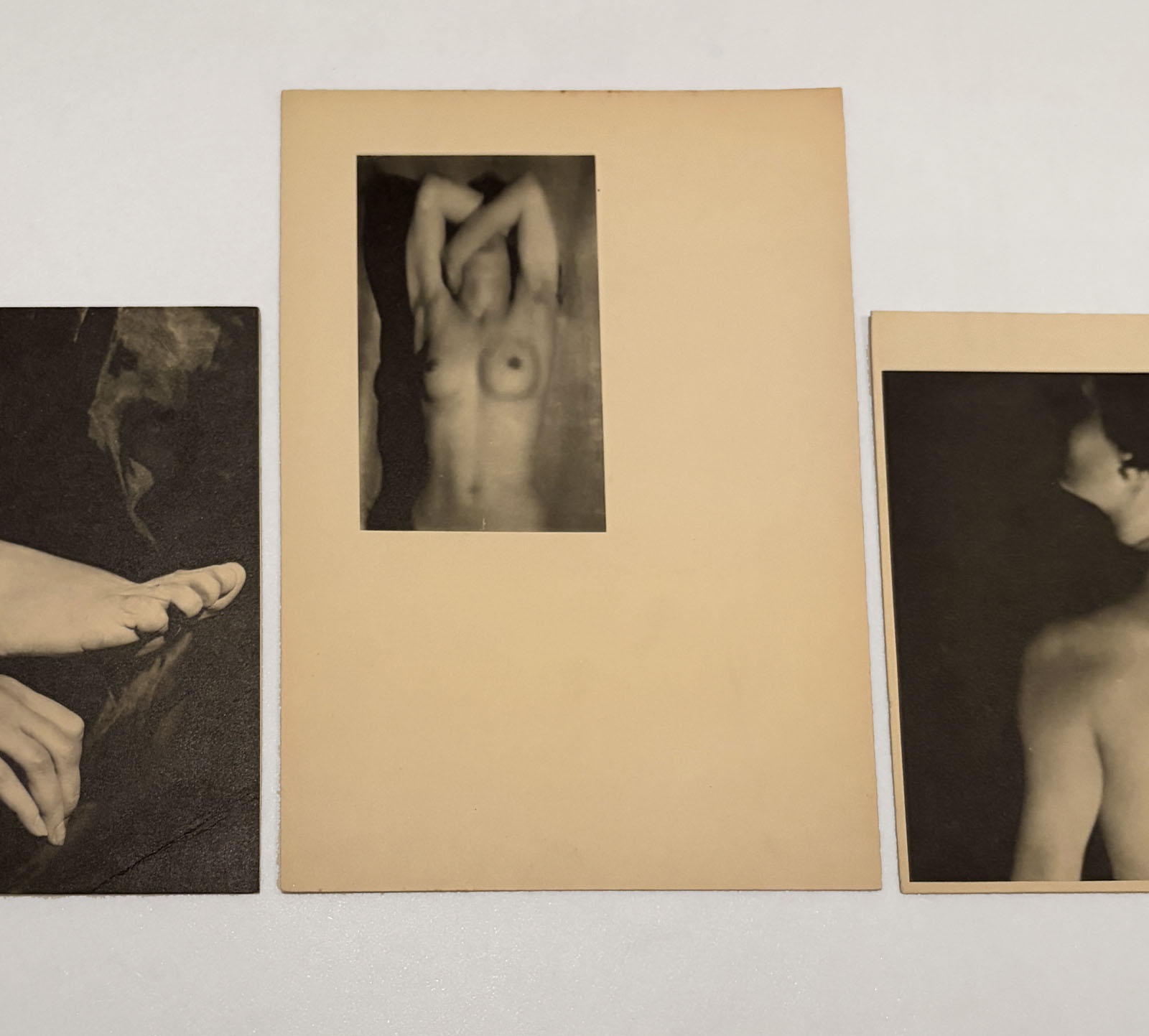
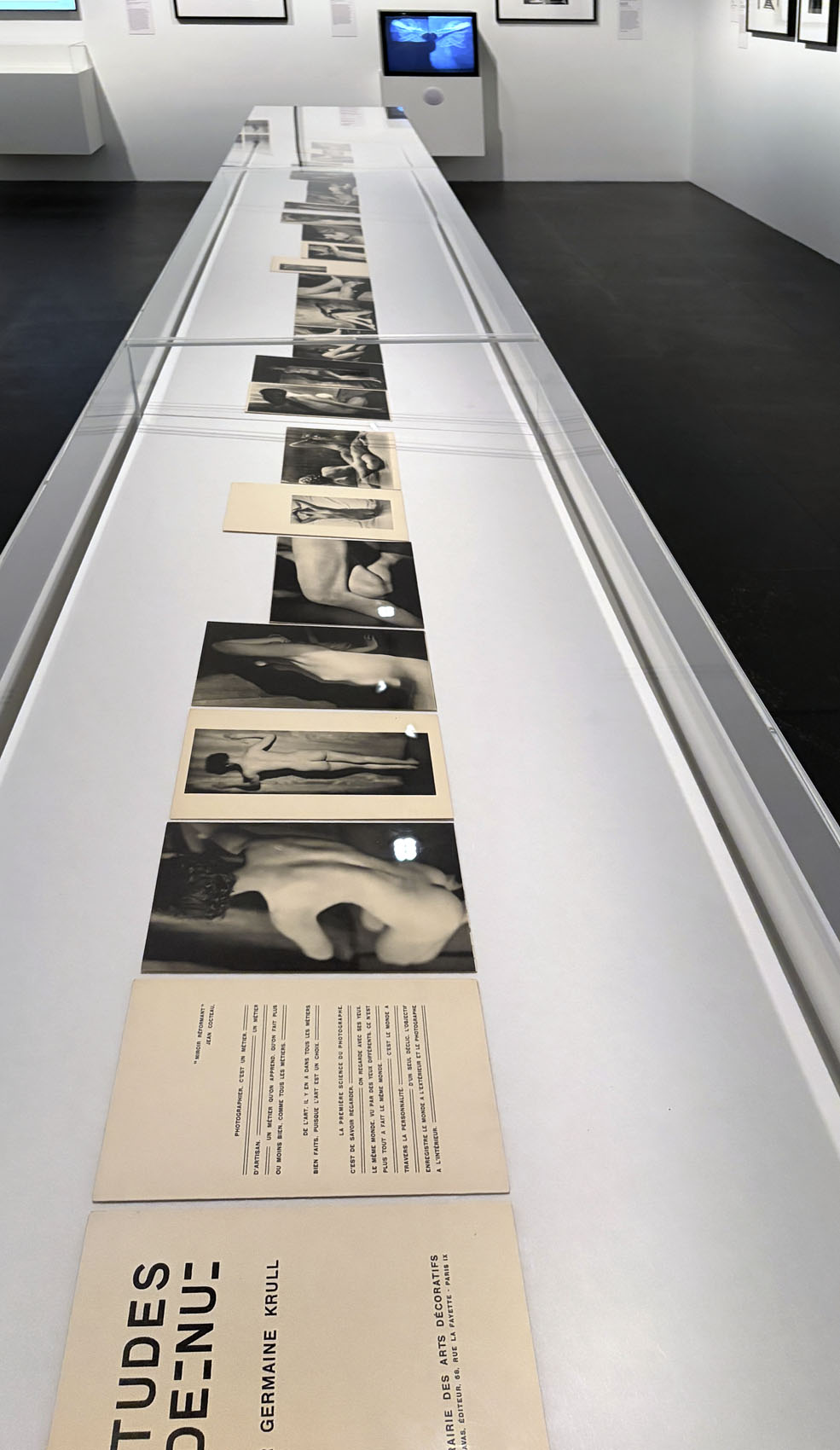
Installation view of the exhibition 'Women Photographers 1900-1975: A Legacy of Light' at NGV International, Melbourne, November 2025 – May 2026 showing Germaine Krull 'Nude studies (Études de nu)' (1930)


Installation views of the exhibition Women Photographers 1900-1975: A Legacy of Light at NGV International, Melbourne, November 2025 – May 2026 showing Germaine Krull Nude studies (Études de nu) (1930)
Photos: Marcus Bunyan


One of the most experimental artists of the 1920s and 30s, Germaine Krull photographed a diverse range of subjects, and her images were published widely in magazines and journals. With publications such Nude Studies, created two years after Metal, she is recognised as a pioneer in the single-author photobook format. Nude Studies consists of twenty-four photogravures of female nudes, published with an accompanying introductory text by the artist Jean Cocteau. Created in Krull’s Paris studio, the intimate studies, in which the faces of the women are often obscured, emphasise the sculptural forms of their bodies.

Wall text from the exhibition


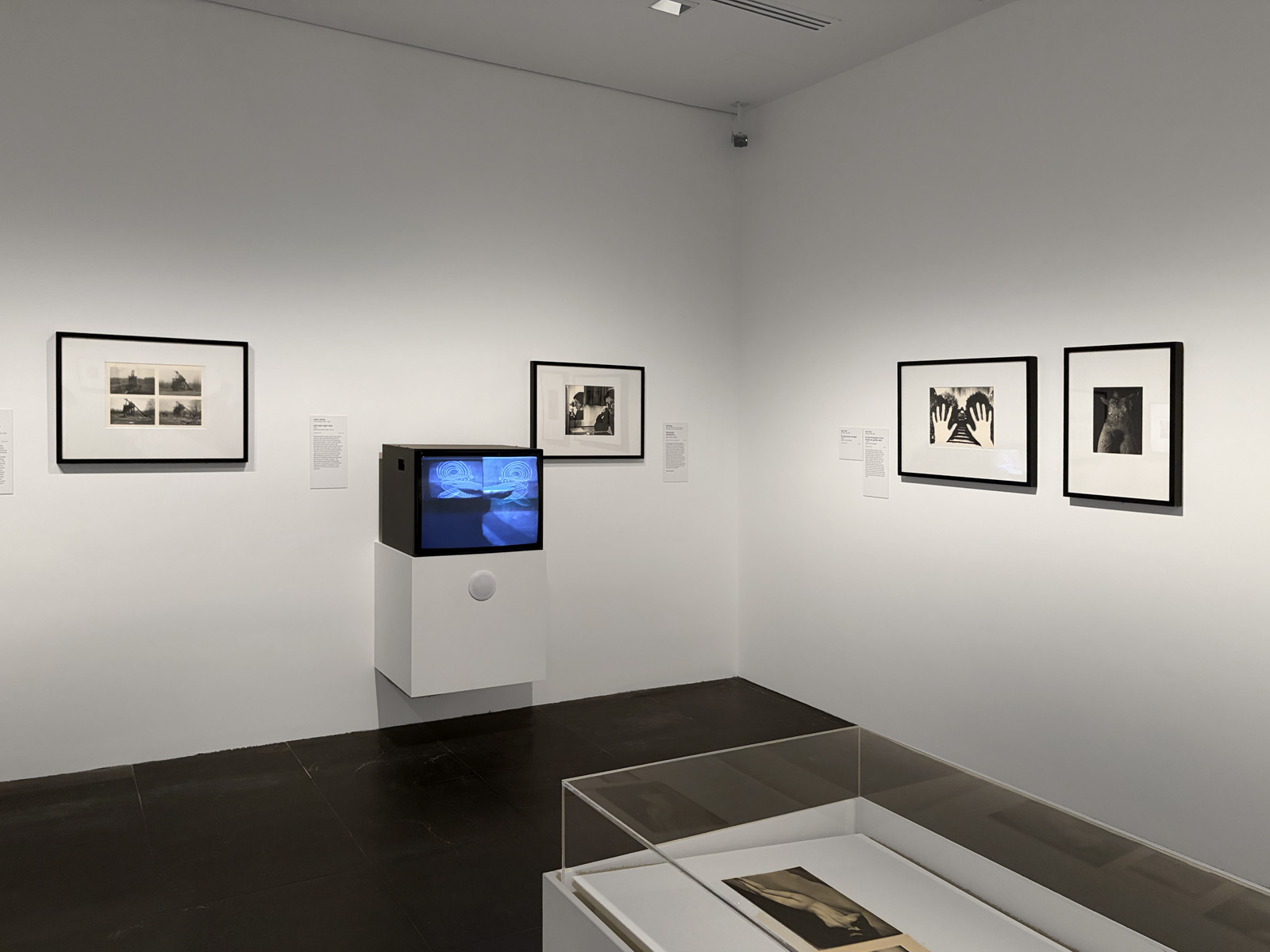
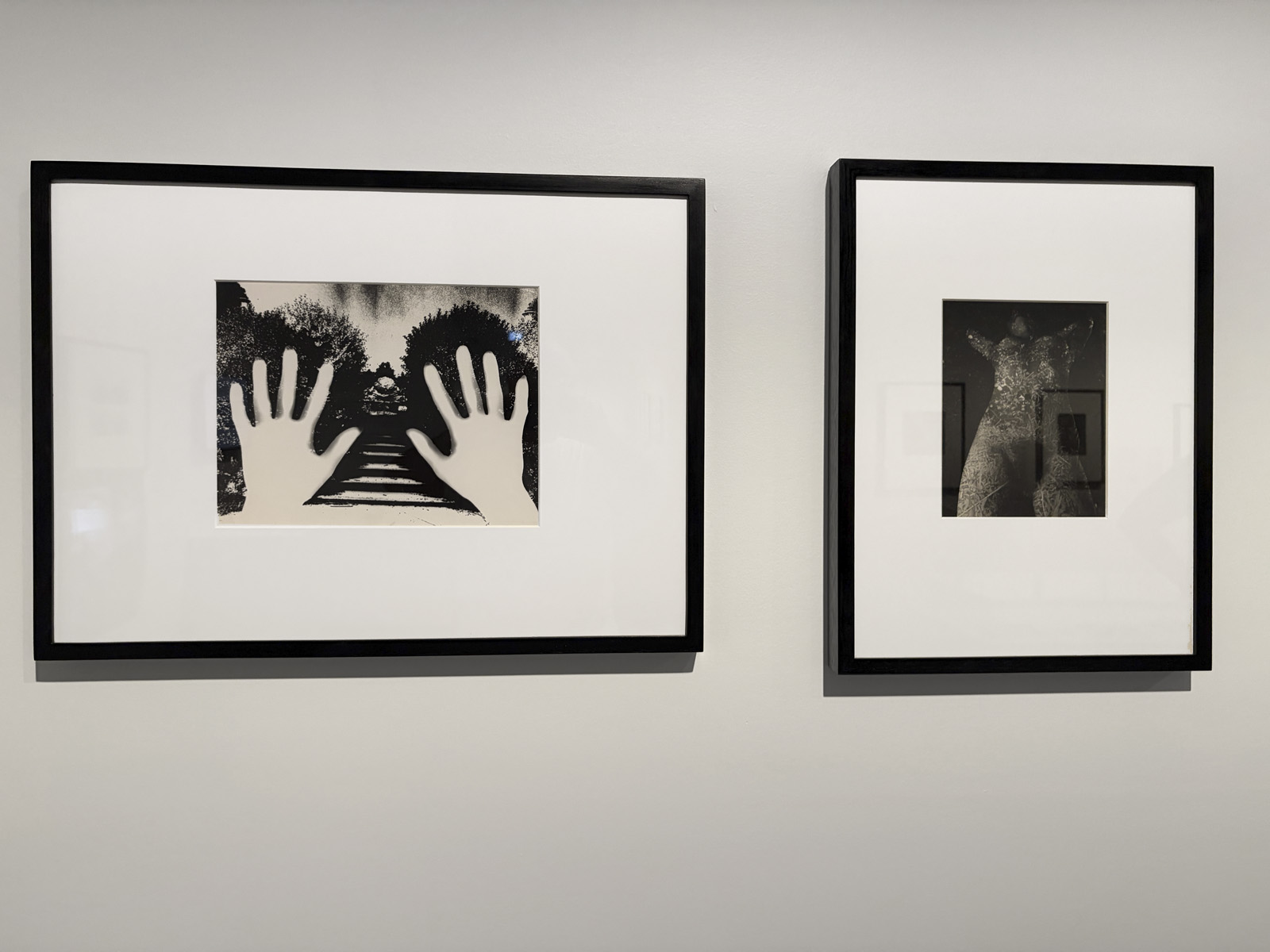
Installation view of the exhibition 'Women Photographers 1900-1975: A Legacy of Light' at NGV International, Melbourne, November 2025 – May 2026 showing from left to right, Bernd Becher and Hilla Becher 'Coal tipple, Goodspring, Pennsylvania' (1975); Ilse Bing 'Self-portrait' (1931 printed c. 1993); and two Sue Ford photographs, 'No title (Photogram of two hands and garden path)' (c. 1970, below) and 'No title (Nude montage)' (1960s)


Installation view of the exhibition Women Photographers 1900-1975: A Legacy of Light at NGV International, Melbourne, November 2025 – May 2026 showing from left to right, Bernd Becher and Hilla Becher Coal tipple, Goodspring, Pennsylvania (1975, below); Ilse Bing Self-portrait (1931 printed c. 1993, below); and two Sue Ford photographs, No title (Photogram of two hands and garden path) (c. 1970, below) and No title (Nude montage) (1960s)
Photo: Marcus Bunyan


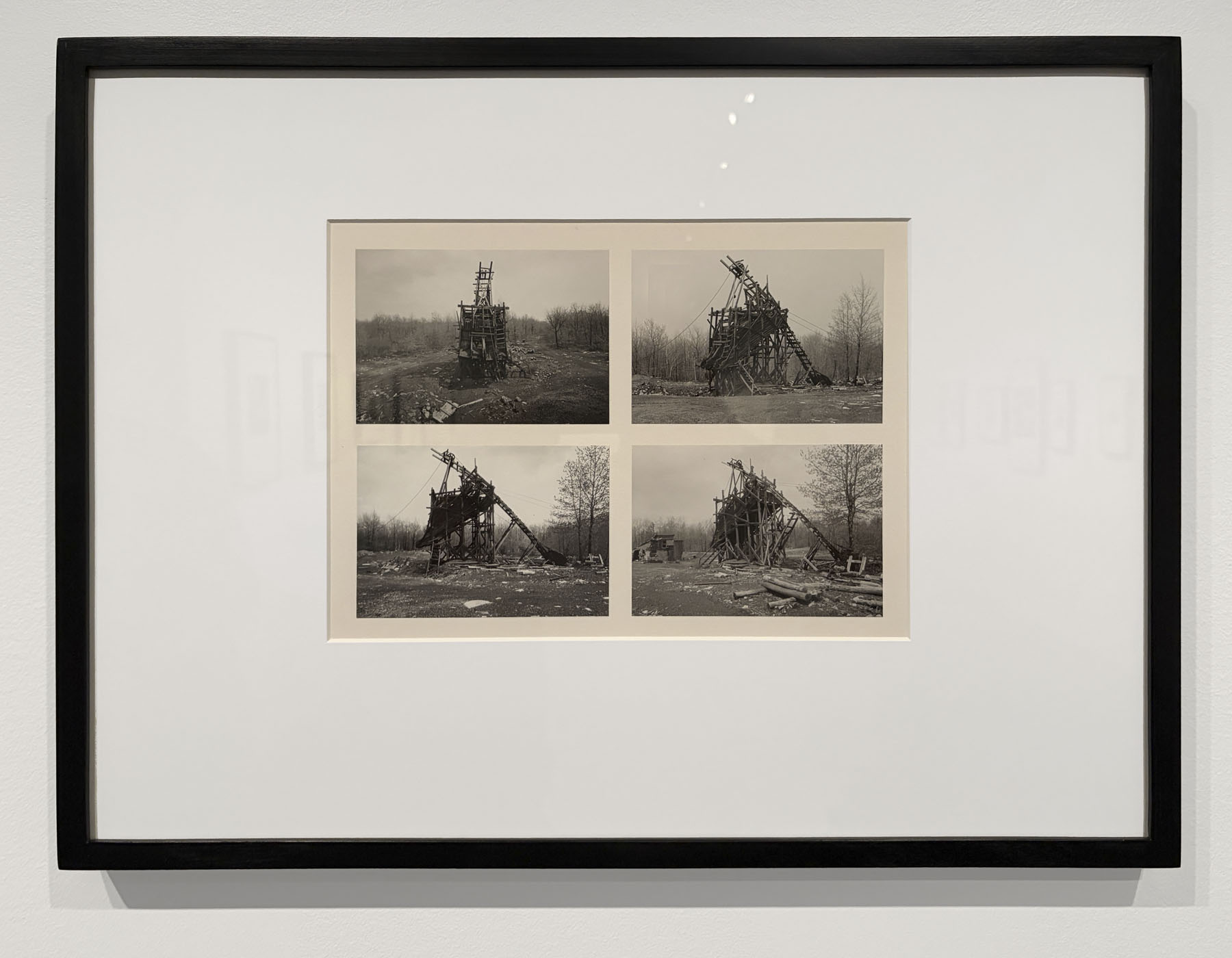
Bernd Becher and Hilla Becher (German, 1931-2007/1934-2015) 'Coal tipple, Goodspring, Pennsylvania' 1975 (installation view)


Bernd Becher and Hilla Becher (German, 1931-2007/1934-2015)
Coal tipple, Goodspring, Pennsylvania (installation view)
1975
From the Artists and photographs folio 1975
Gelatin silver photographs
24.0 x 33.9cm (image and sheet)
40.7 x 49.6cm (support)
ed. 9/60
National Gallery of Victoria, Melbourne
Purchased, 1976
Photo: Marcus Bunyan


Bernd and Hilla Becher (German, 1931-2007 and 1934-2015) 'Coal tipple, Goodspring, Pennsylvania' 1975


Bernd Becher and Hilla Becher (German, 1931-2007/1934-2015)
Coal tipple, Goodspring, Pennsylvania
1975
From the Artists and photographs folio 1975
Gelatin silver photographs
24.0 x 33.9cm (image and sheet)
40.7 x 49.6cm (support)
ed. 9/60
National Gallery of Victoria, Melbourne
Purchased, 1976
© Estate Bernd & Hilla Becher, represented by Max Becher


In 1959 married artists Bernd and Hilla Becher started photographing industrial architecture, a practice that would continue for over four decades. While predominantly documenting structures throughout Germany’s Ruhr region, they occasionally worked overseas – this work was made on their first trip to the United States. The Bechers created a system for comparing structures: photographing them from a consistent angle, under virtually identical lighting conditions, printing images at the same size and often displaying them in grids. According to Hilla Becher, their archive allows for narratives to naturally emerge: “Structural patterns and their transformations … can be proved to exist in the case of such relatively exhaustive comparative series.”

Wall text from the exhibition


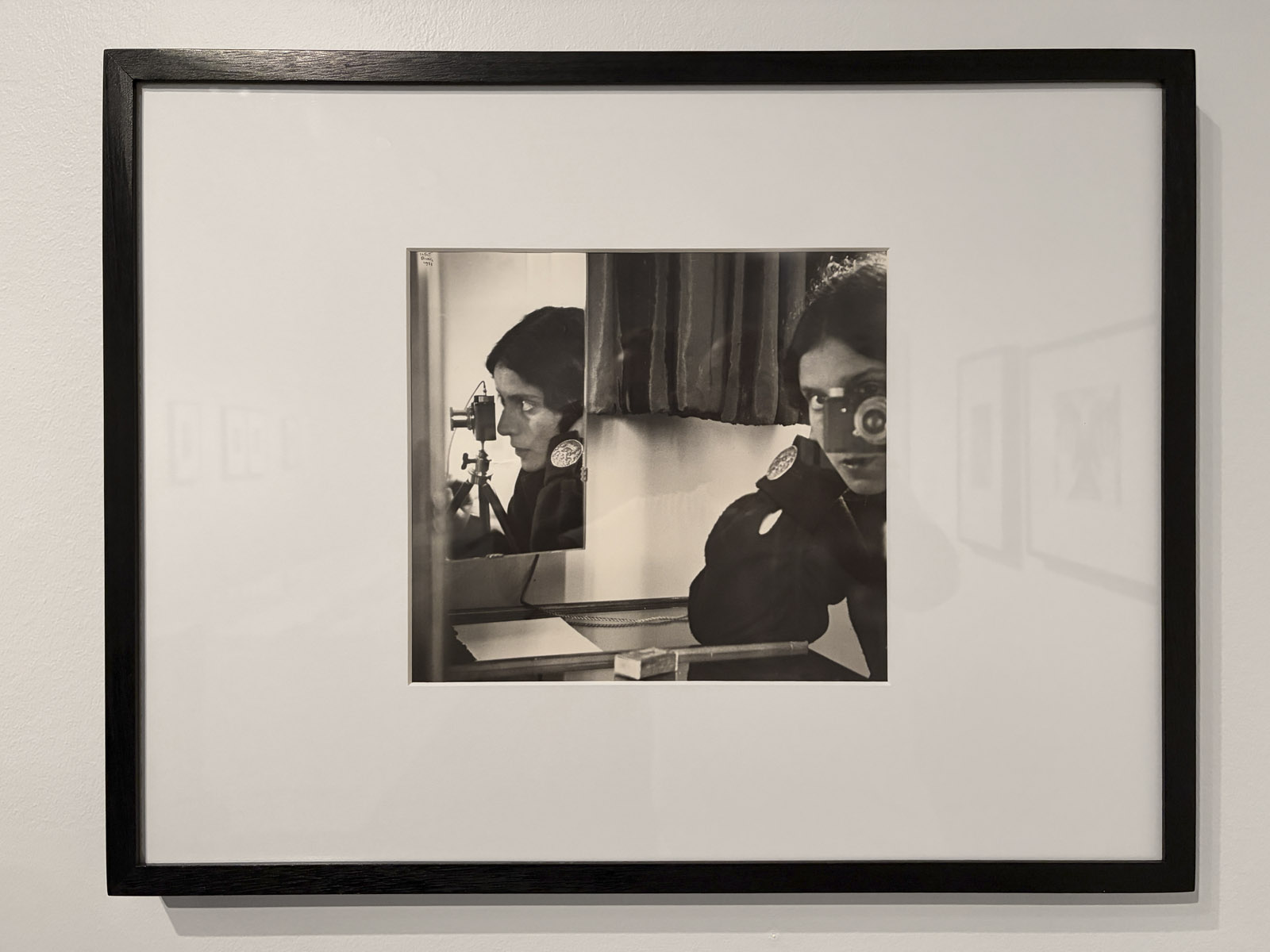
Ilse Bing (German, 1899-1998) 'Self-portrait (Autoportrait)' 1931, printed 1993 (installation view)


Ilse Bing (German, 1899-1998)
Self-portrait (Autoportrait) (installation view)
1931, printed 1993
Gelatin silver photograph
26.7 x 29.4cm (image)
27.9 x 35.3cm (sheet)
National Gallery of Victoria, Melbourne
Bowness Family Fund for Photography, 2023
Photo: Marcus Bunyan


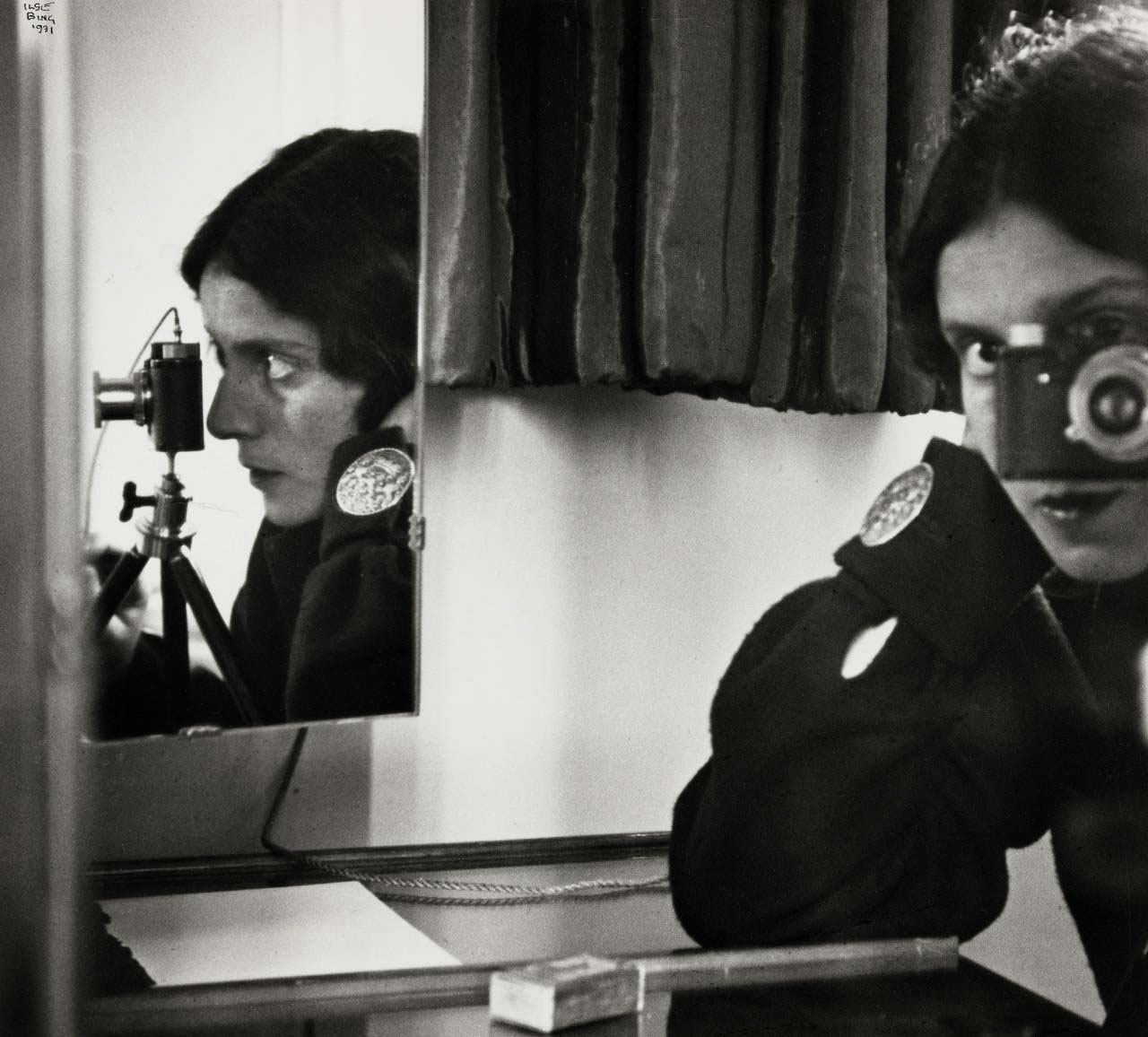
Ilse Bing (German, 1899-1998) 'Self-portrait (Autoportrait)' 1931, printed 1993


Ilse Bing (German, 1899-1998)
Self-portrait (Autoportrait)
1931, printed 1993
Gelatin silver photograph
26.7 x 29.4cm (image)
27.9 x 35.3cm (sheet)
National Gallery of Victoria, Melbourne
Bowness Family Fund for Photography, 2023
© Ilse Bing Estate
Photo: National Gallery of Victoria, Melbourne


Ilse Bing began making photographs in the late 1920s, when she purchased one of the first 35 mm cameras produced by the German company Leica. She made use of the camera’s portability, capturing motion, dizzying angles and contrasts of light, shade and shadow – compositional elements that characterised the New Photography movement. Inspired by Florence Henri, Bing used her camera to disrupt the picture plane. In this famed self-portrait, Bing uses mirrors as a fracturing tool. The self-portrait shows Bing’s reflection holding a camera, accompanied by her side profile in another angled mirror. She controls the various gazes: her own, the viewer’s, the camera’s.

Wall text from the exhibition


Time and Mirrors

Photography has long been associated with mirrors and time – as a way of remembering, reflecting and retrieving information. As early as 1859, American writer Oliver Wendell Holmes Sr described photography, specifically the daguerreotype, as ‘the mirror with a memory’.

Many artists use the camera to explore identity through portraits and self-portraits. In Ilse Bing’s 1931 self-portrait, captured with her Leica camera, a mirror disrupts the image, disorienting the viewer. Four decades later, Joan Jonas extended this idea, using a video monitor as a mirror to explore reflection, perception and the self.

By the 1970s, repetition and seriality became central to photographic practice. Through sequences of images, artists such as Eve Sonneman, Sue Ford and Bernd and Hilla Becher explored how photography could record and interpret change – both immediate and long-term. Their images reveal the camera’s dual role as an objective instrument and a conceptual recorder of the world.


Installation view of the exhibition 'Women Photographers 1900-1975: A Legacy of Light' at NGV International, Melbourne, November 2025 – May 2026 showing from left to right, two Sue Ford photographs, 'No title (Photogram of two hands and garden path)' (c. 1970) and 'No title (Nude montage)' (1960s)


Installation view of the exhibition Women Photographers 1900-1975: A Legacy of Light at NGV International, Melbourne, November 2025 – May 2026 showing from left to right, two Sue Ford photographs, No title (Photogram of two hands and garden path) (c. 1970, below) and No title (Nude montage) (1960s, below)
Photo: Marcus Bunyan


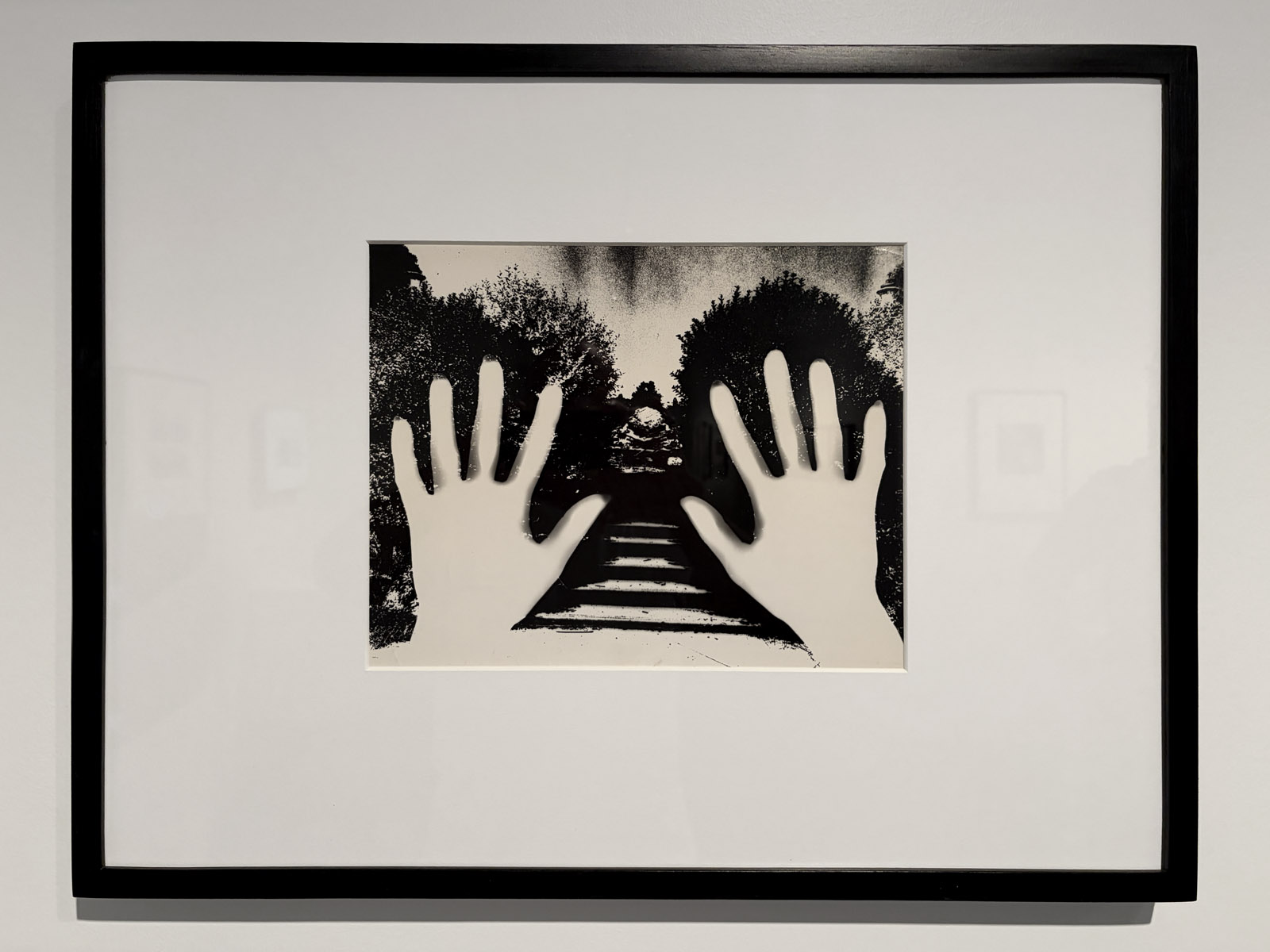
Sue Ford (Australian, 1943-2009) 'No title (Photogram of two hands and garden path)' c. 1970 (installation view)


Sue Ford (Australian, 1943-2009)
No title (Photogram of two hands and garden path) (installation view)
c. 1970
Gelatin silver photograph
27.6 x 34.7cm irreg. (image and sheet)
38.5 x 44.8cm (support)
National Gallery of Victoria, Melbourne
Gerstl Bequest, 2000
Photo: Marcus Bunyan


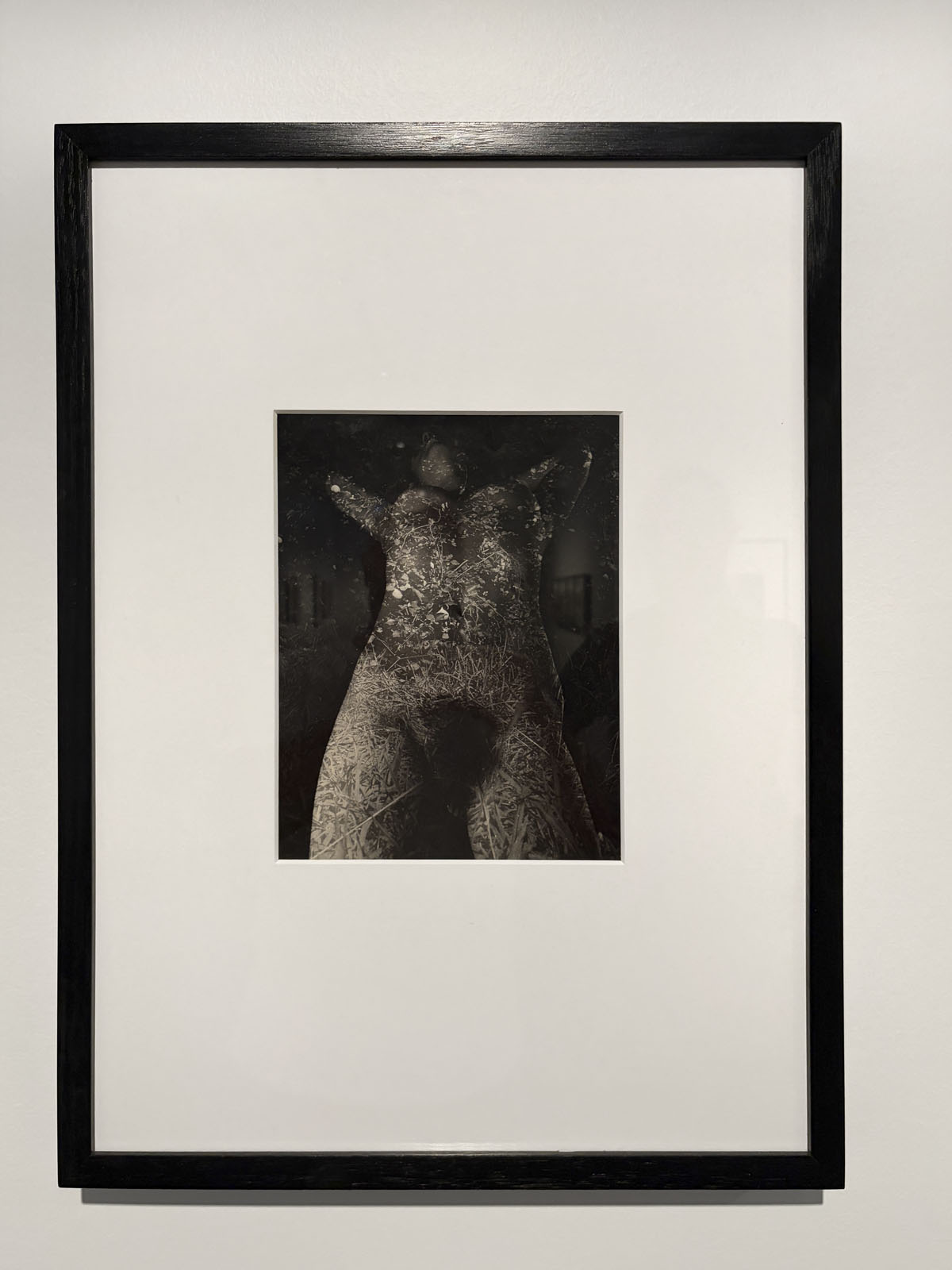
In the late 1960s and early 70s, Sue Ford created several bodies of highly experimental work. These works involved complex montages, photograms and layered negatives, revealing hours of darkroom experimentation in her Eltham studio in Melbourne’s north-east. Such experiments coincided with Ford’s burgeoning interest in left-wing politics, and her exposure via the media to world events such as the NASA moon landings and the Vietnam War. Ford incorporated imagery and ideas relating to these events, as well as her interest in environmentalism, into these abstracted, Surrealism-inspired works.

Wall text from the exhibition


Sue Ford (Australian, 1943-2009) 'No title (Nude montage)' 1960s (installation view)


Sue Ford (Australian, 1943-2009)
No title (Nude montage) (installation view)
1960s
Gelatin silver photograph
25.6 x 19.9cm (image and sheet)
National Gallery of Victoria, Melbourne
Gerstl Bequest, 2000
Photo: Marcus Bunyan


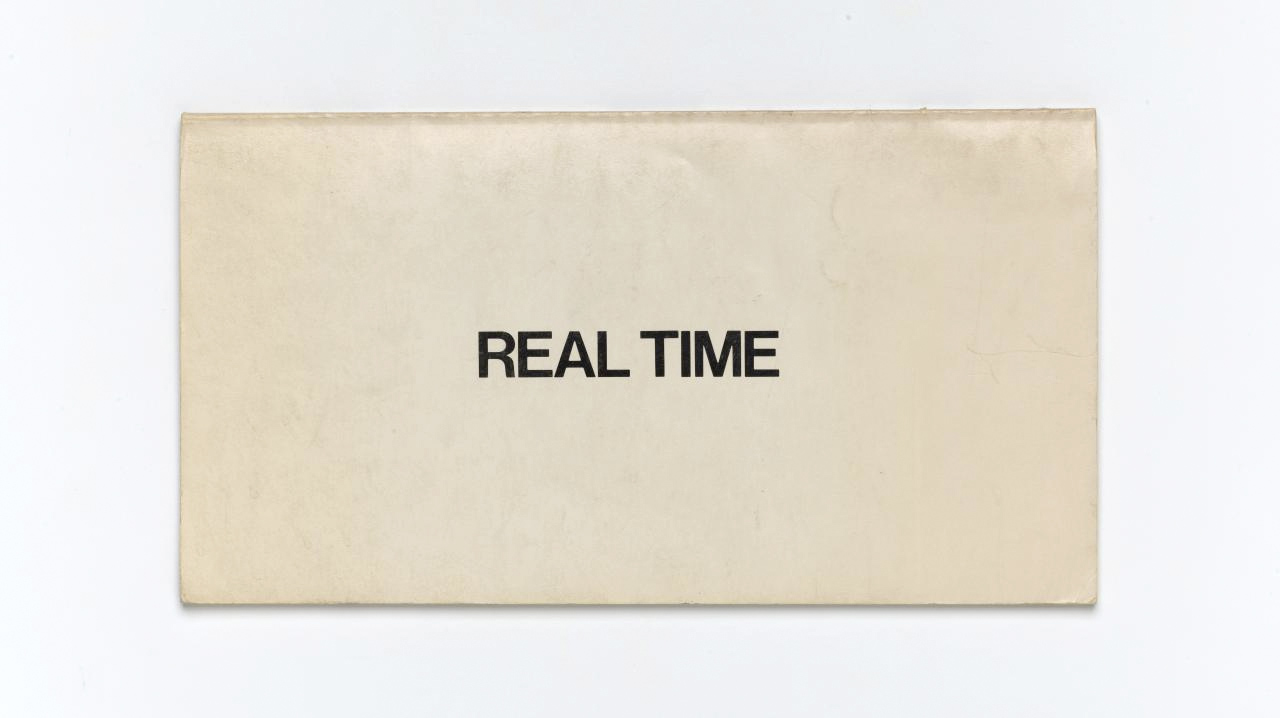
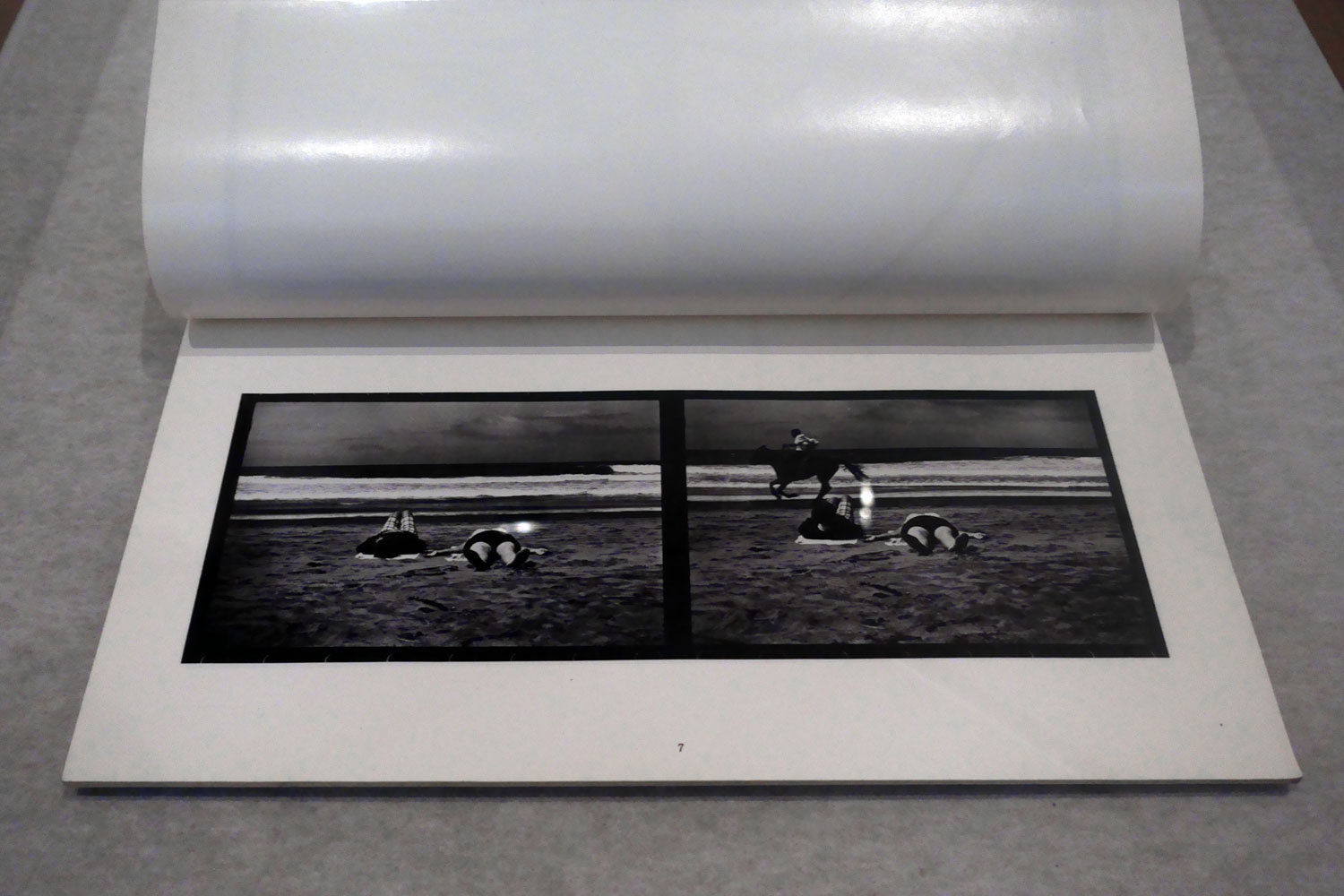
Eve Sonneman (American, b. 1946) 'Real time' 1968-1974, 1976 (published) (cover)
Eve Sonneman (American, b. 1946) 'Real time' 1968-1974 (installation view)


Eve Sonneman (American, b. 1946)
Real time (installation view bottom)
1968-1974, 1976 (published) (cover)
Artist’s book: photo-offset lithographs and printed text, 46 folios, printed paper cover, glued binding
20.5 x 38.0 x 0.8cm (closed)
1st edition
National Gallery of Victoria, Melbourne
Purchased, NGV Supporters of Photography, 2021
© Eve Sonneman


Real Time is composed of paired photographs taken seconds apart, separated by a black-line border. The ordered presentation allows the viewer to consider the relationship between the images, and the small changes and passing of time between them. Eve Sonneman first showed the photographs at the Museum of Modern Art in New York, before publishing them as a book. In 1976 she saw an
advertisement in Artforum from newly established press Printed Matter, which was seeking artists’ books to publish. “So I sent [my photographs] in and that work became my first published book, Real Time,” Sonneman recalled. “I was as thrilled as could be!”

Wall text from the exhibition


Sue Ford (Australian, 1943-2009) 'Ross, 1964; Ross, 1974' 1964-1974, printed 1974 (installation view)


Sue Ford (Australian, 1943-2009)
Ross, 1964; Ross, 1974 (installation view)
1964-1974, printed 1974
From the Time series (1962-1974)
Gelatin silver photograph
11.1 × 20.1cm
National Gallery of Victoria, Melbourne
Purchased with the assistance of the Visual Arts Board and the KODAK (Australasia) PTY LTD Fund, 1974
Photo: Marcus Bunyan


Sue Ford (Australian, 1943-2009) 'Jim, 1964; Jim, 1974' 1964-1974, printed 1974 (installation view)


Sue Ford (Australian, 1943-2009)
Jim, 1964; Jim, 1974 (installation view)
1964-1974, printed 1974
From the Time series (1962-1974)
Gelatin silver photograph
11.1 × 20.1cm
National Gallery of Victoria, Melbourne
Purchased with the assistance of the Visual Arts Board and the KODAK (Australasia) PTY LTD Fund, 1974
Photo: Marcus Bunyan


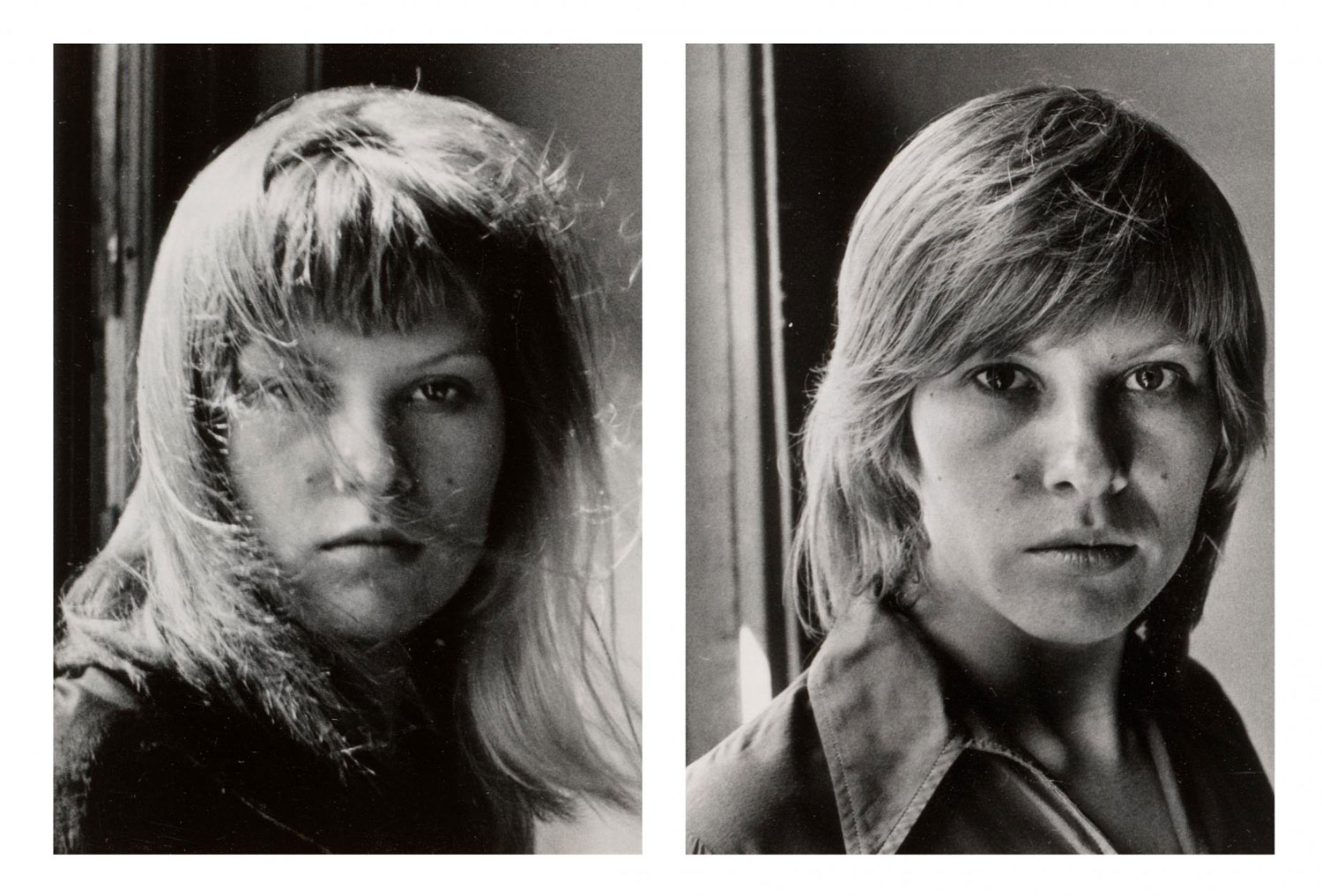
Sue Ford (Australian, 1943-2009) 'Annette 1962; Annette 1974' 1974 from the 'Time' series


Sue Ford (Australian, 1943-2009)
Annette, 1962; Annette, 1974
1962-1974, printed 1974
From the Time series (1962-1974)
Gelatin silver photograph
11.1 x 20.1cm
National Gallery of Victoria, Melbourne
Purchased with the assistance of the Visual Arts Board and the KODAK (Australasia) Pty Ltd Fund, 1974
© Courtesy of the artist


“For some time I have been thinking about the camera itself. Trying to explore its particular UNIQUENESS, coming to terms with the fact that I had been trying to ignore for some years, that the camera is actually a MACHINE. … In “Time Series” I tried to use the camera as objectively as possible. It was a time machine. For me it was an amazing experience. It wasn’t until I placed the photograph of the younger face beside the recent photograph that I could fully appreciate the change. The camera showed me with absolute clarity, something I could only just perceive with my naked eye.”

~ Sue Ford, Time Series: An Exhibition of Photographs, Melbourne, 1974

Wall text from the exhibition


Installation view of the exhibition 'Women Photographers 1900-1975: A Legacy of Light' at NGV International, Melbourne, November 2025 – May 2026
Installation view of the exhibition 'Women Photographers 1900-1975: A Legacy of Light' at NGV International, Melbourne, November 2025 – May 2026 showing a video of Imogen Cunningham


Installation views of the exhibition Women Photographers 1900-1975: A Legacy of Light at NGV International, Melbourne, November 2025 – May 2026 showing in the bottom image a video still of Imogen Cunningham
Photos: Marcus Bunyan


Installation view of the exhibition 'Women Photographers 1900-1975: A Legacy of Light' at NGV International, Melbourne, November 2025 – May 2026
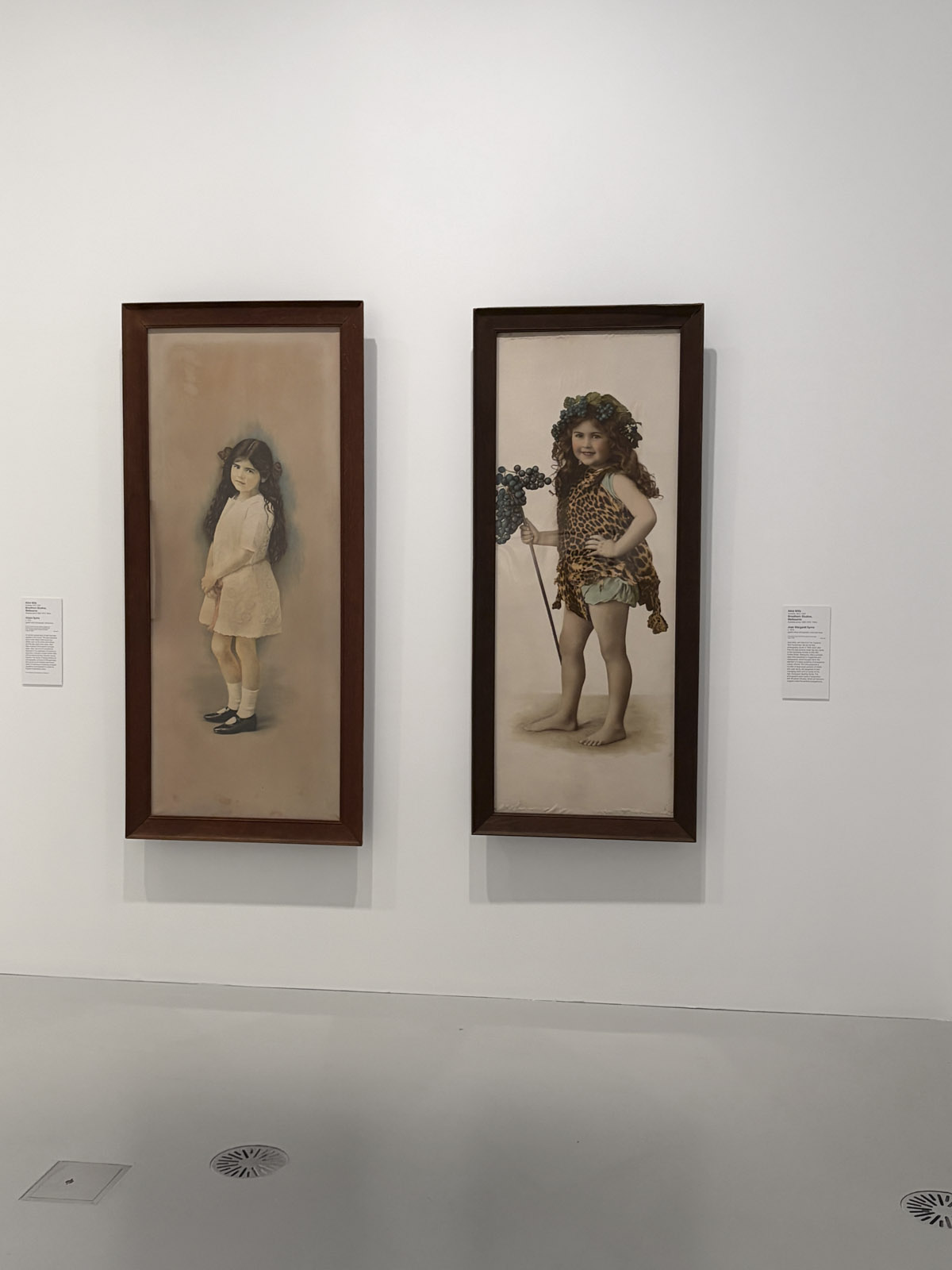
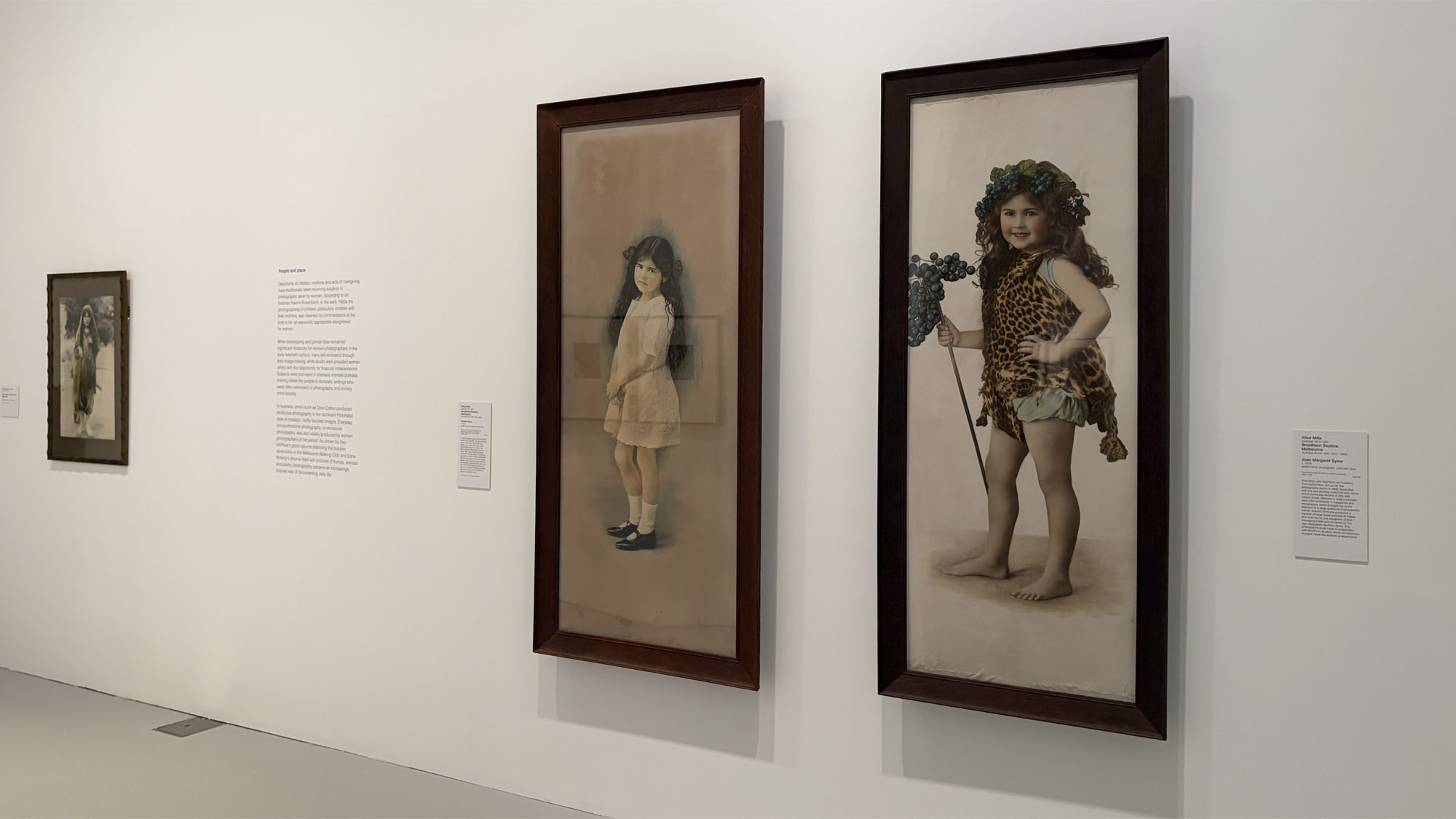
Installation view of the exhibition 'Women Photographers 1900-1975: A Legacy of Light' at NGV International, Melbourne, November 2025 – May 2026 showing from left to right three photographs by Alice Mills, 'Hilaire Syme dressed for the Kismit Ball' (1912-1915); 'Hilaire Syme' (c. 1910); and 'Joan Margaret Syme' (c. 1918)


Installation views of the exhibition Women Photographers 1900-1975: A Legacy of Light at NGV International, Melbourne, November 2025 – May 2026 showing in the bottom image from left to right three photographs by Alice Mills, Hilaire Syme dressed for the Kismit Ball (1912-1915, below); Hilaire Syme (c. 1910, below); and Joan Margaret Syme (c. 1918, below)
Photos: Marcus Bunyan


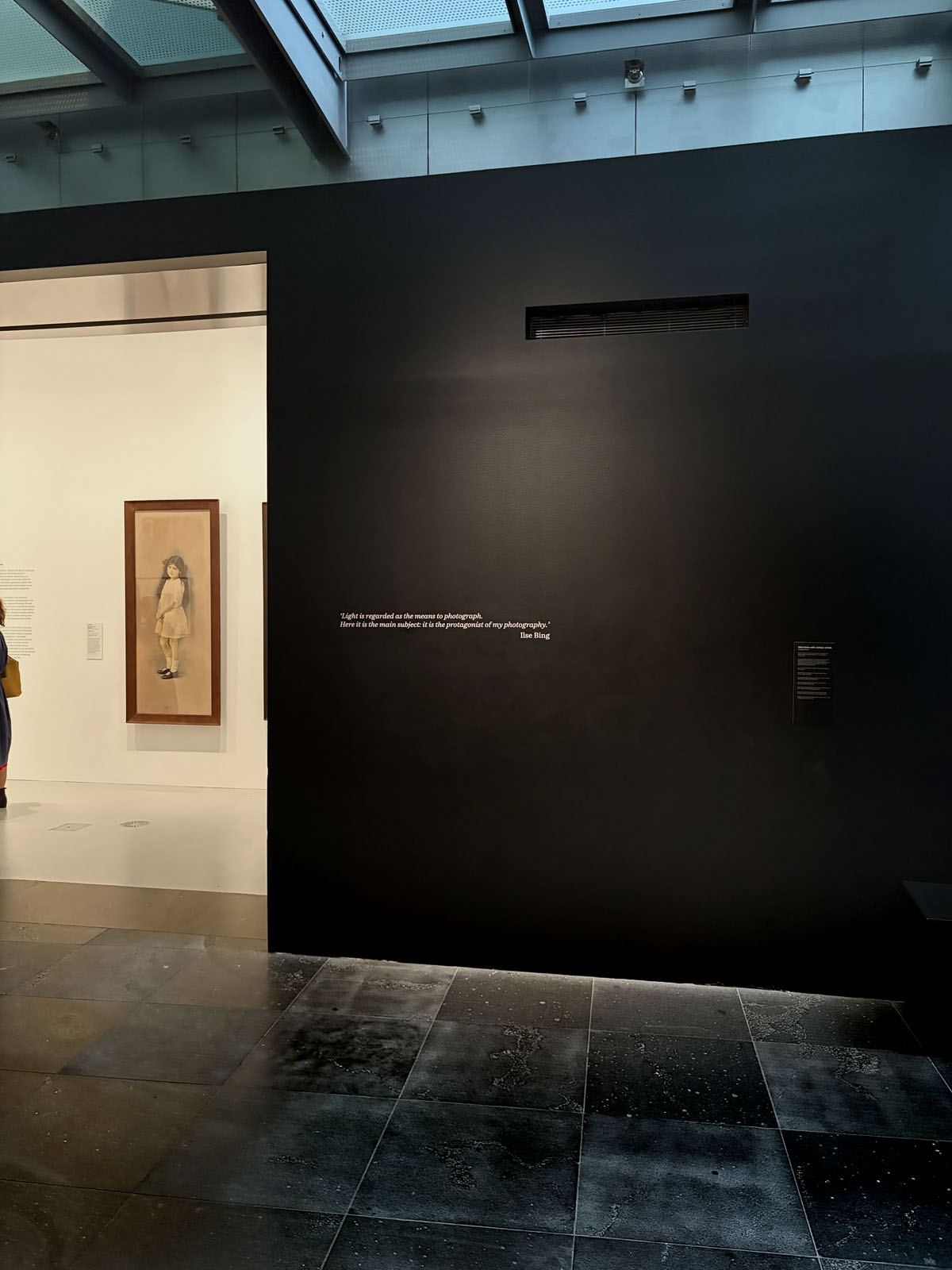
People and Place

Depictions of children, mothers and acts of caregiving have traditionally been recurring subjects in photographs taken by women. According to art historian Naomi Rosenblum, in the early 1900s the photographing of children, particularly children with their mothers, was deemed by commentators at the time to be ‘an especially appropriate assignment for women’.

While stereotyping and gender bias remained significant obstacles for women photographers in the early twentieth century, many still innovated through their image-making, while studio work provided women artists with the opportunity for financial independence. Subjects were portrayed in intensely intimate portraits, making visible the people in domestic settings who were often overlooked in photographs and society more broadly.

In Australia, artists such as Olive Cotton produced landscape photography in the dominant Pictorialist style of nostalgic, softly focused images. Everyday, non-professional photography, or vernacular photography, was also widely produced by women photographers of the period. As shown by Inez McPhee’s photo albums depicting the outdoor adventures of the Melbourne Walking Club and Edna Walling’s albums filled with pictures of friends, animals and plants, photography became an increasingly popular way of documenting daily life.


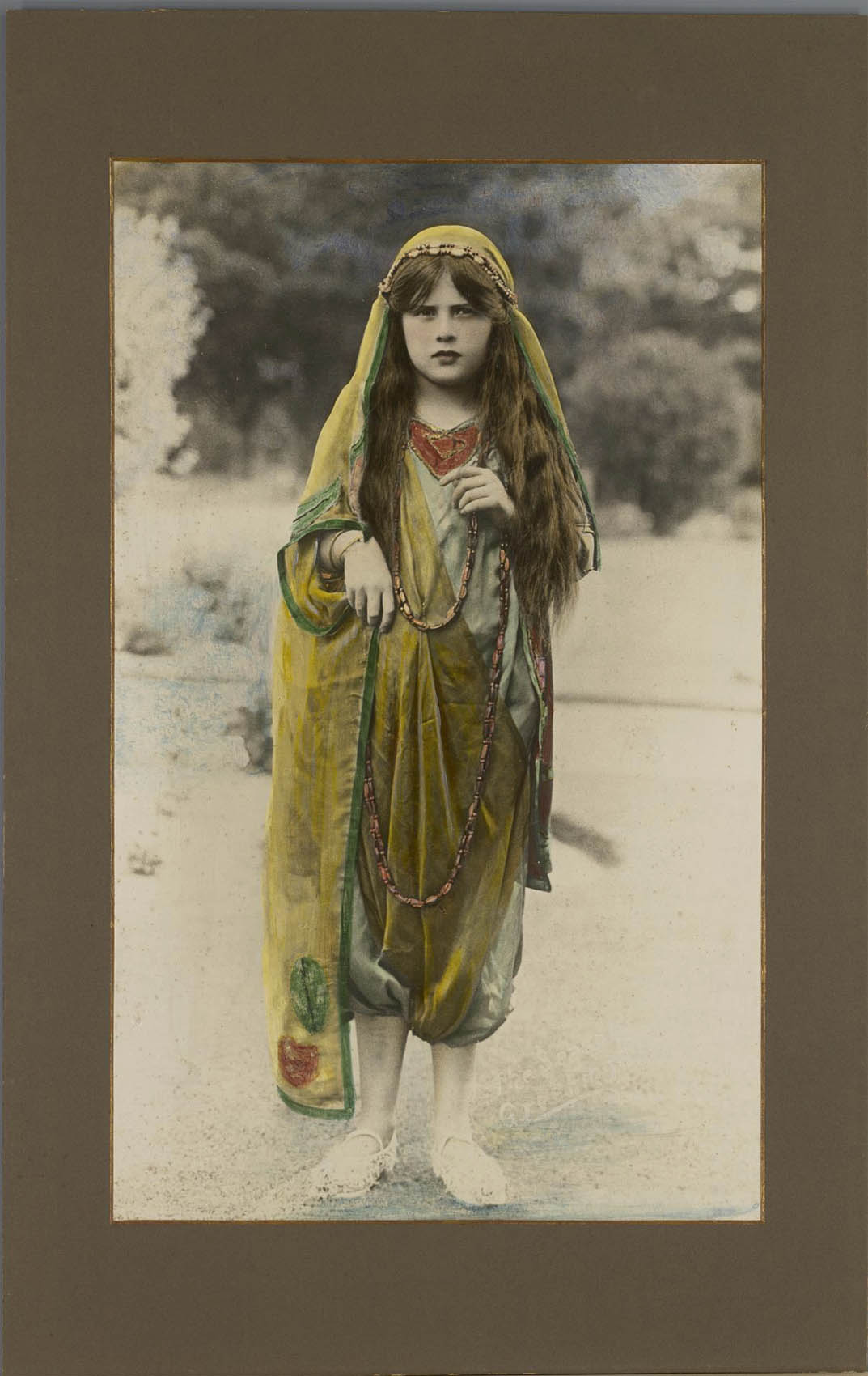
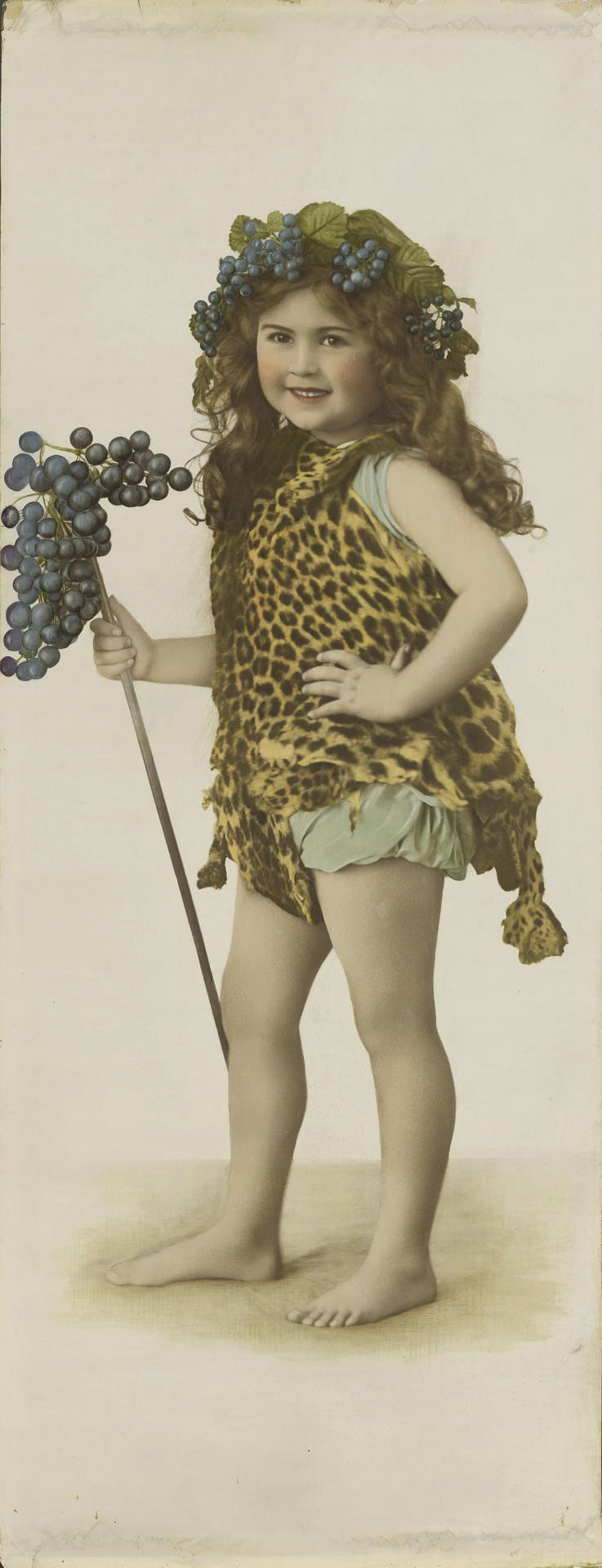
Alice Mills (attributed to) (Australian, 1870-1929) 'Hilaire Syme dressed for the Kismit Ball' 1912-1915


Alice Mills (attributed to) (Australian, 1870-1929)
Hilaire Syme dressed for the Kismit Ball
1912-1915
gelatin silver photograph, coloured dyes
70.5 x 43.3cm (image)
National Gallery of Victoria, Melbourne
Gift of Dr Veronica Condon, 2005
Public domain


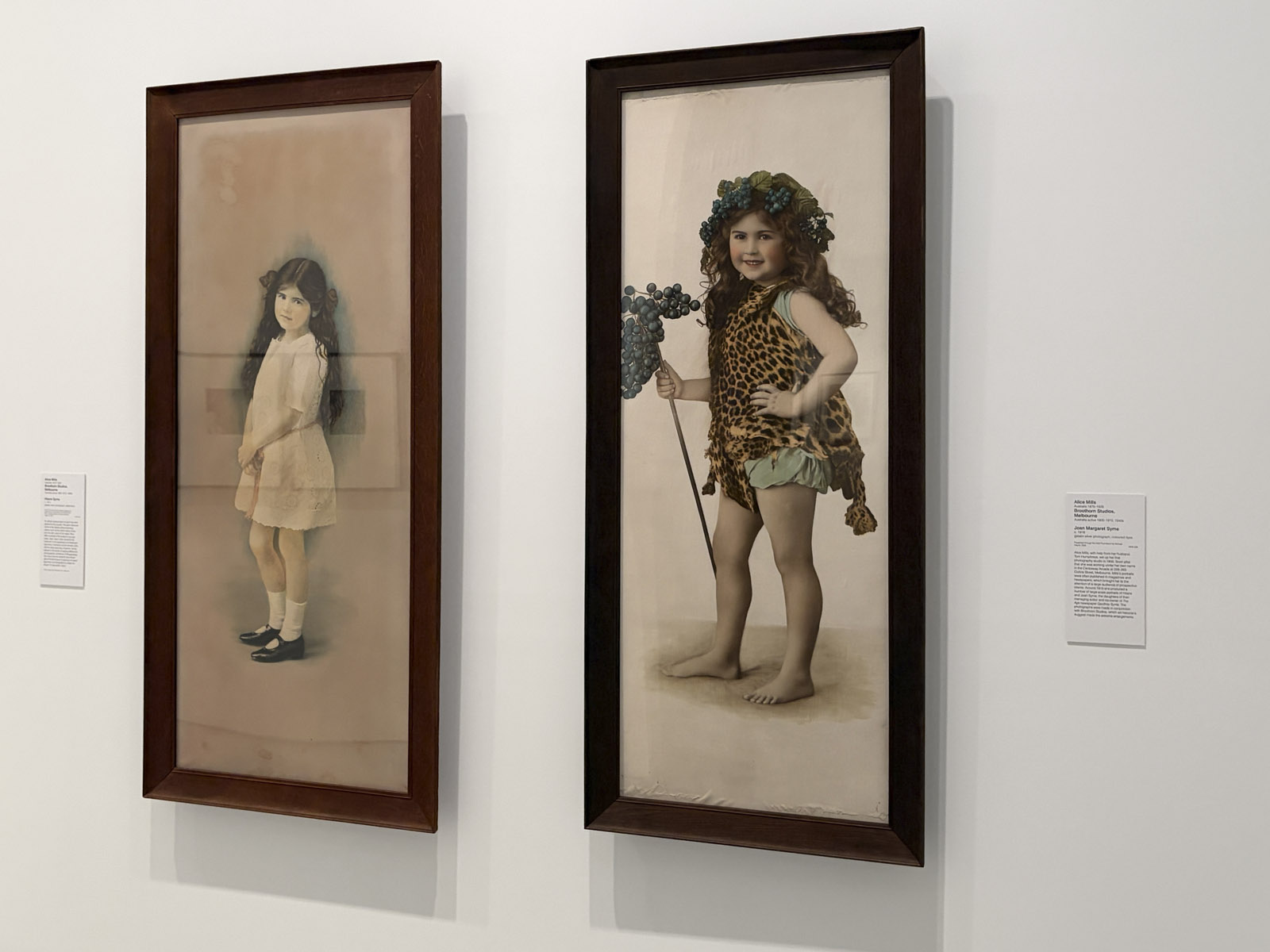
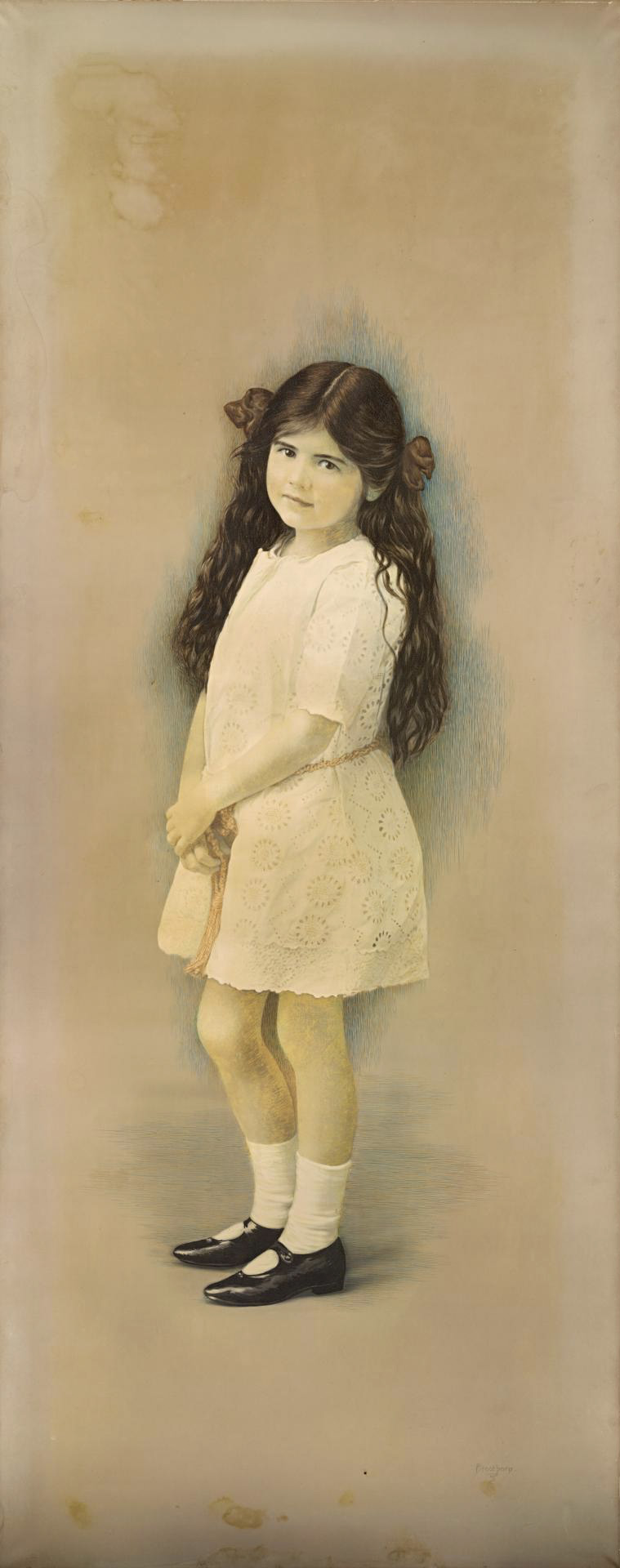
Alice Mills (attributed to) (Australian, 1870-1929) Broothorn Studios, Melbourne 'Hilaire Syme' c. 1910


Alice Mills (attributed to) (Australian, 1870-1929)
Broothorn Studios, Melbourne
Hilaire Syme
c. 1910
Gelatin silver photograph, watercolour
185.5 x 74.4cm (image)
National Gallery of Victoria, Melbourne
Gift of Dr Veronica Condon, Geoffrey Haggard and Jennifer Smyth, descendants of Sir Geoffrey Syme K.B.E., Managing Editor of the Age newspaper (1908-1942), 2004


An almost opaque layer of paint has been applied to this portrait. The paint obscures some of the details while enhancing others, such as the child’s shiny shoes and the satin sash of her dress. Alice Mills’s portrait of the subject’s younger sister, Joan, has a more conventional treatment in the application of translucent pigments. It remains unclear whether Mills did the hand-colouring. However, having trained in the studio of leading Melbourne photographer Johnstone O’Shaughnessy, she would almost certainly have known about the technique of applying oil-based pigments to photographs to create the illusion of naturalistic colour.

Wall text from the exhibition


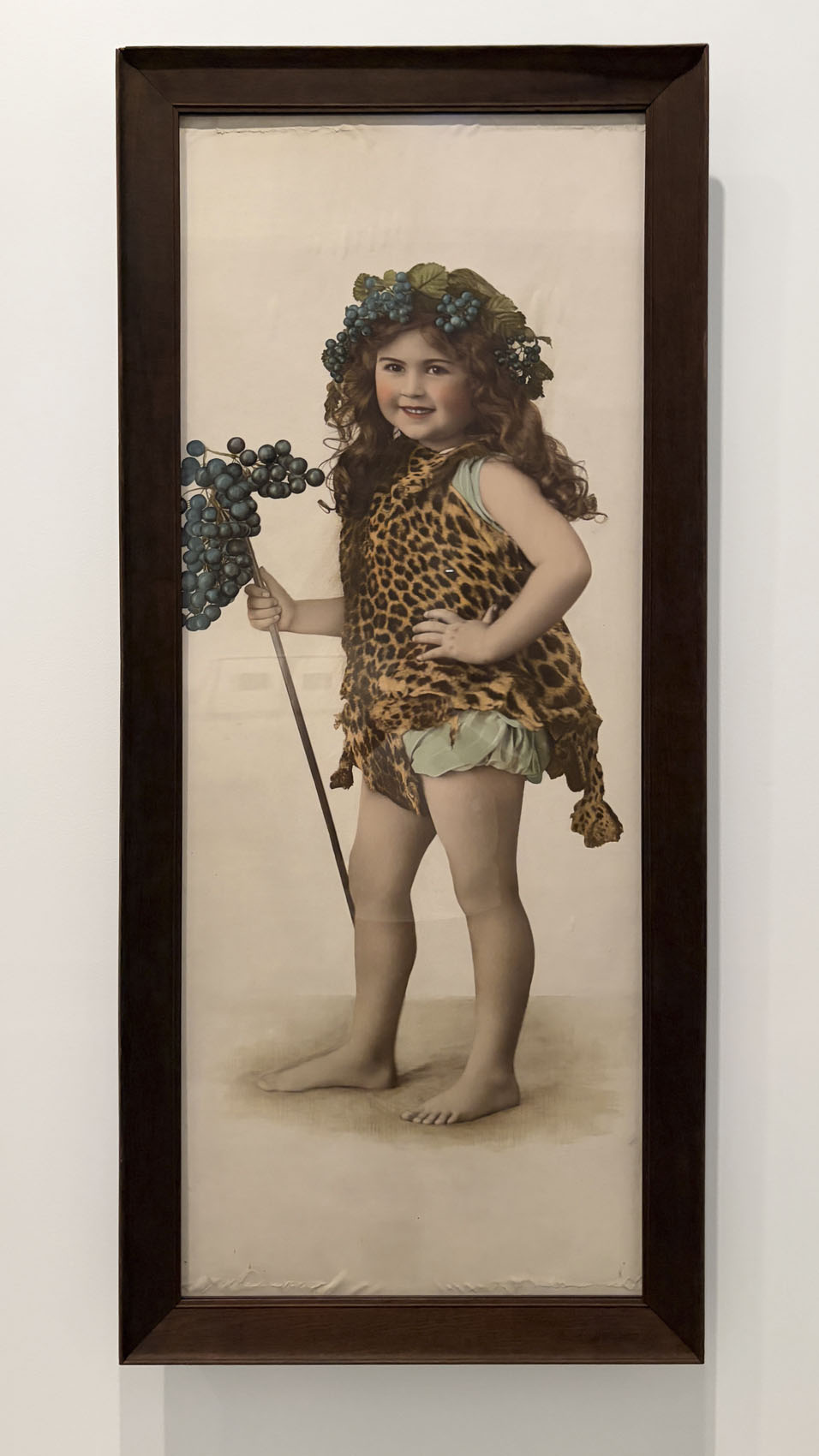
Alice Mills (attributed to) (Australian, 1870-1929) Broothorn Studios, Melbourne 'Joan Margaret Syme' c. 1918 (installation view)


Alice Mills (attributed to) (Australian, 1870-1929)
Broothorn Studios, Melbourne
Joan Margaret Syme (installation view)
c. 1918
Gelatin silver photograph, coloured dyes
243.85 x 91.45cm (approx)
National Gallery of Victoria, Melbourne
Presented through the NGV Foundation by Michael Hayne, 2005
Public domain
Photo: Marcus Bunyan


Alice Mills (attributed to) (Australian, 1870-1929) Broothorn Studios, Melbourne 'Joan Margaret Syme' c. 1918


Alice Mills (attributed to) (Australian, 1870-1929)
Broothorn Studios, Melbourne
Joan Margaret Syme
c. 1918
Gelatin silver photograph, coloured dyes
243.85 x 91.45cm (approx)
National Gallery of Victoria, Melbourne
Presented through the NGV Foundation by Michael Hayne, 2005
Public domain


Alice Mills, with help from her husband, Tom Humphreys, set up her first photography studio in 1900. Soon after that she was working under her own name in the Centreway Arcade at 259-263 Collins Street, Melbourne. Mills’s portraits were often published in magazines and newspapers, which brought her to the attention of a large audience of prospective clients. Around 1915 she produced a number of large-scale portraits of Hilaire and Joan Syme, the daughters of then managing editor and co-owner of The Age newspaper Geoffrey Syme. The photographs were made in conjunction with Broothorn Studios, which art historians suggest made the extreme enlargements.

Wall text from the exhibition


Installation view of the exhibition 'Women Photographers 1900-1975: A Legacy of Light' at NGV International, Melbourne, November 2025 - May 2026
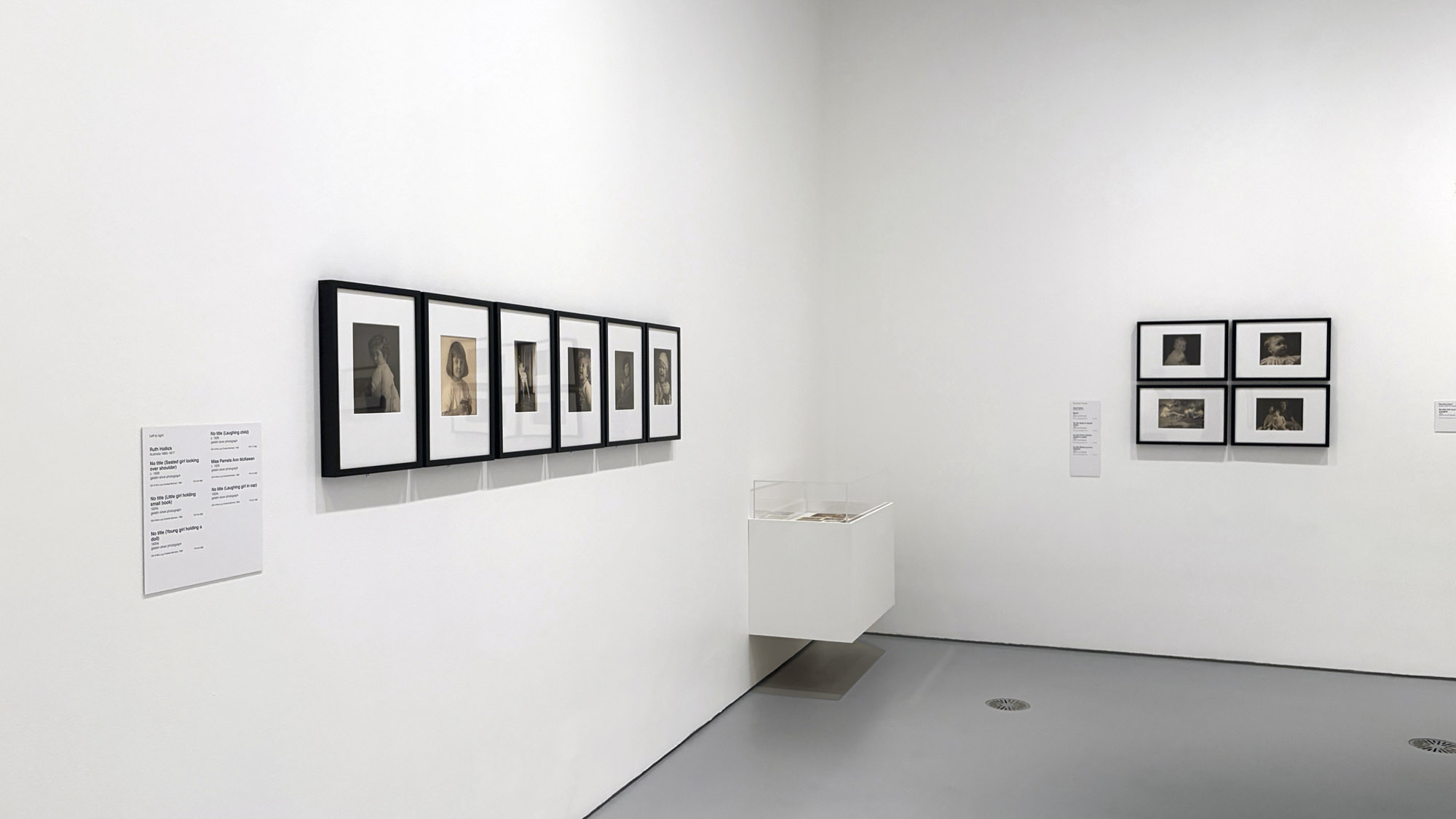
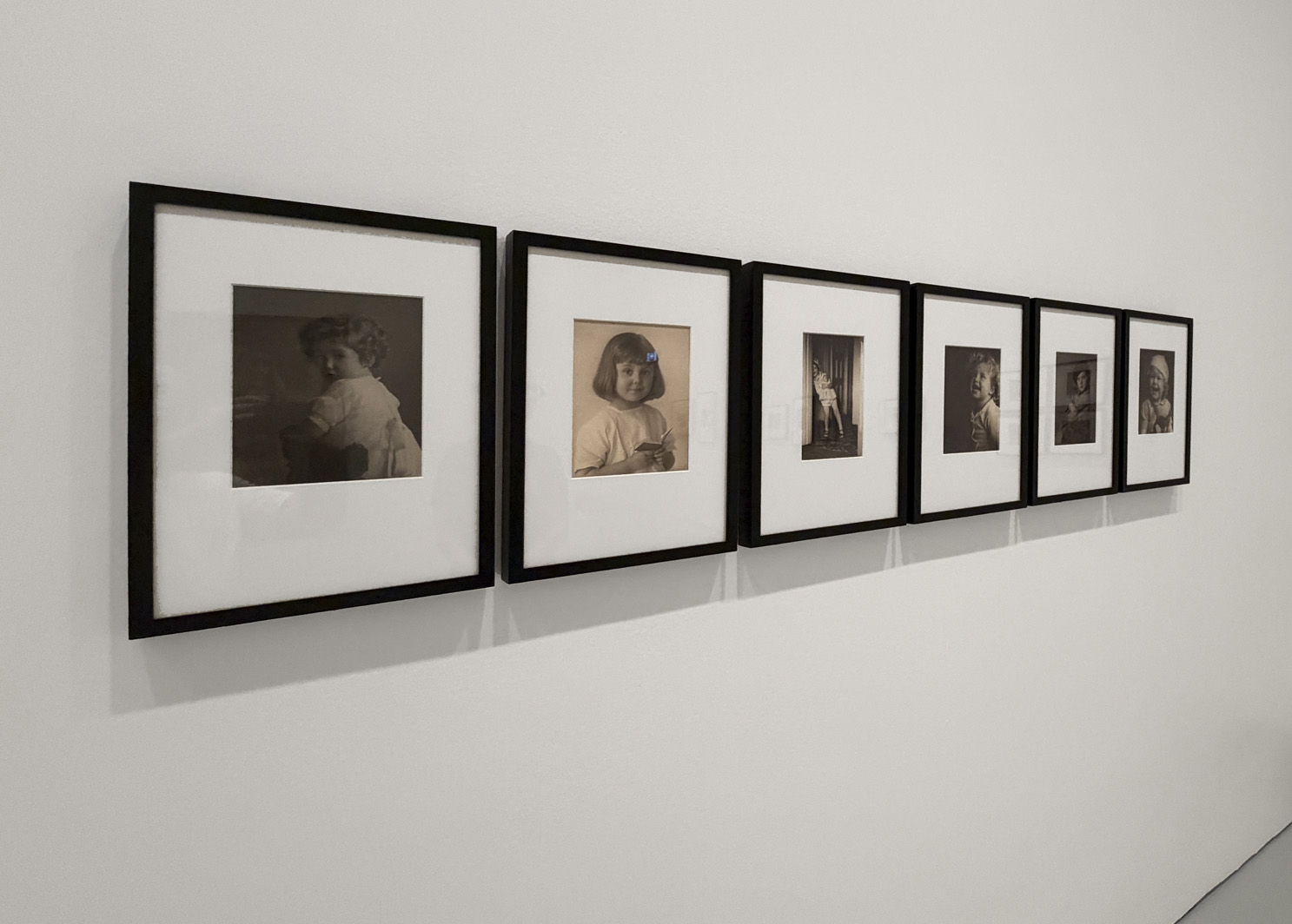
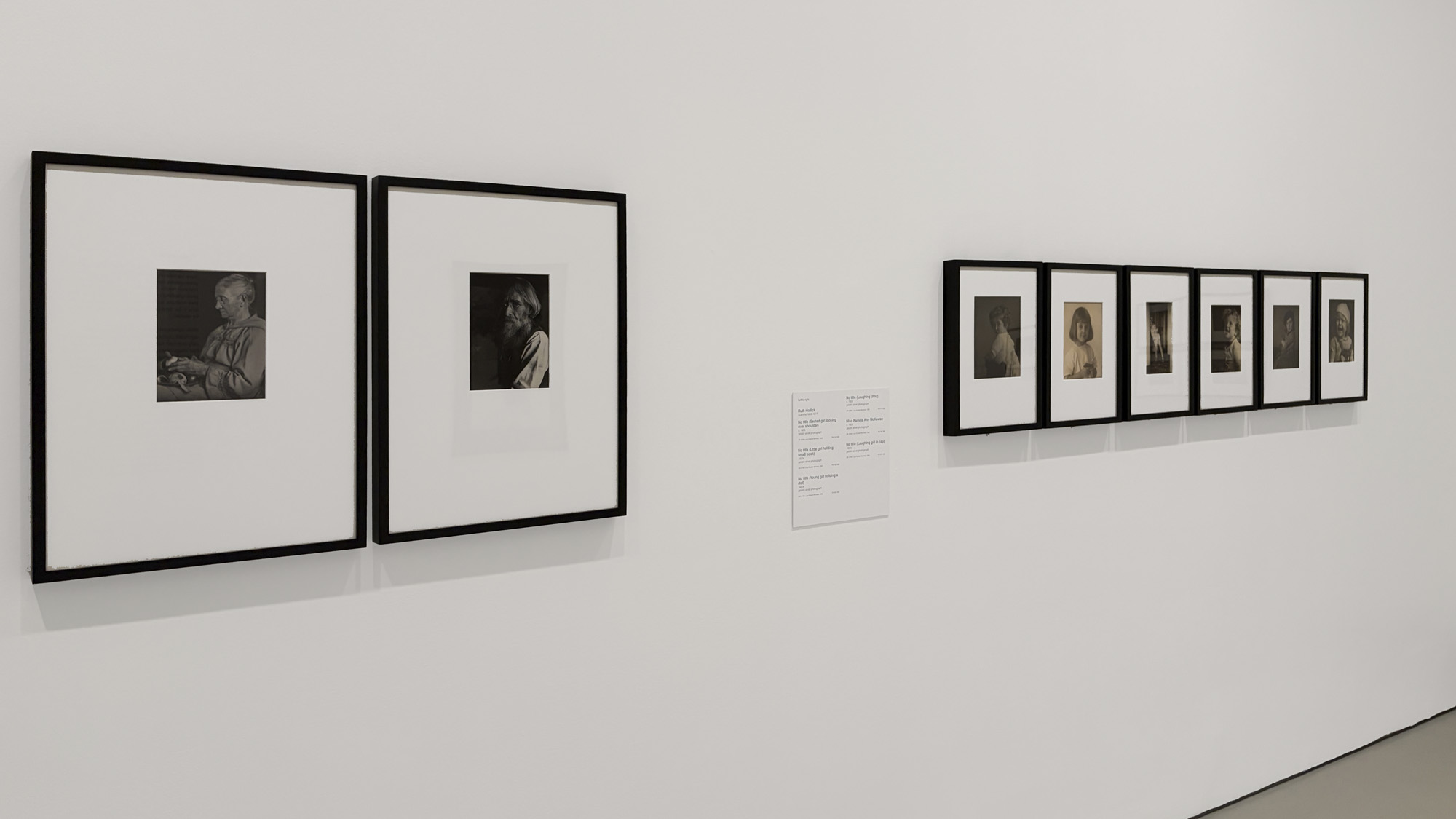
Installation view of the exhibition 'Women Photographers 1900-1975: A Legacy of Light' at NGV International, Melbourne, November 2025 - May 2026 showing from left to right in the bottom image two Imogen Cunningham photographs, 'My mother peeling apples' (1910, printed 1979) and 'My father' (1906, printed 1979) and six 1920s photographs by the Australian photographer Ruth Hollick (1883-1977): 'No title (Seated girl looking over shoulder)' (c. 1926); 'No title (Little girl holding small book)' (1920s); 'No title (Young girl holding a doll)' (1920s); 'No title (Laughing child)' (c. 1926); 'Miss Pamela Ann McKewan' (c. 1929); and 'No title (Laughing girl in cap)' (1920s)


Installation views of the exhibition Women Photographers 1900-1975: A Legacy of Light at NGV International, Melbourne, November 2025 – May 2026 showing from left to right in the bottom image two Imogen Cunningham photographs, My mother peeling apples (1910, printed 1979) and My father (1906, printed 1979) and six 1920s photographs by the Australian photographer Ruth Hollick (1883-1977): No title (Seated girl looking over shoulder) (c. 1926); No title (Little girl holding small book) (1920s); No title (Young girl holding a doll) (1920s); No title (Laughing child) (c. 1926); Miss Pamela Ann McKewan (c. 1929); and No title (Laughing girl in cap) (1920s)
Photos: Marcus Bunyan


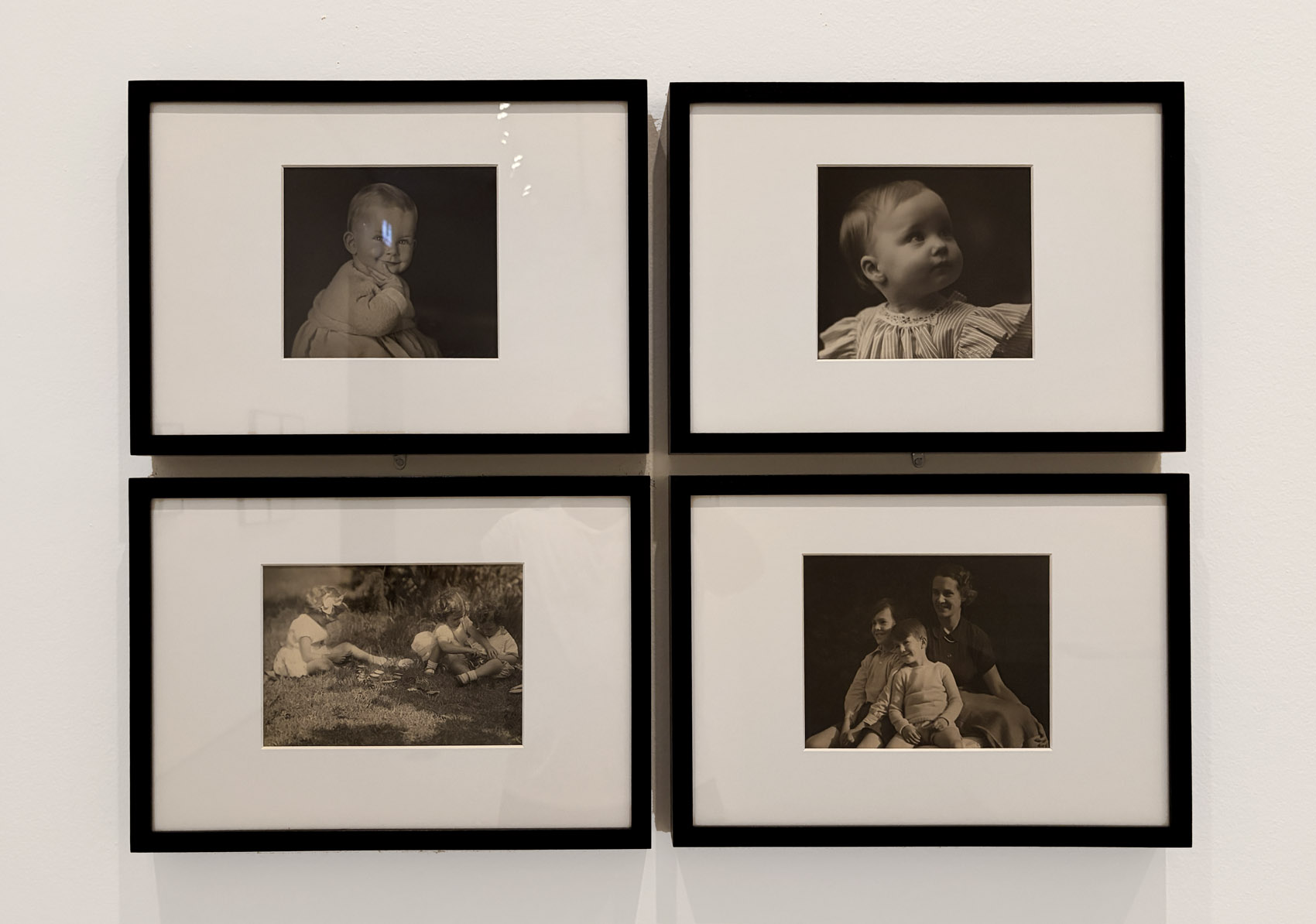
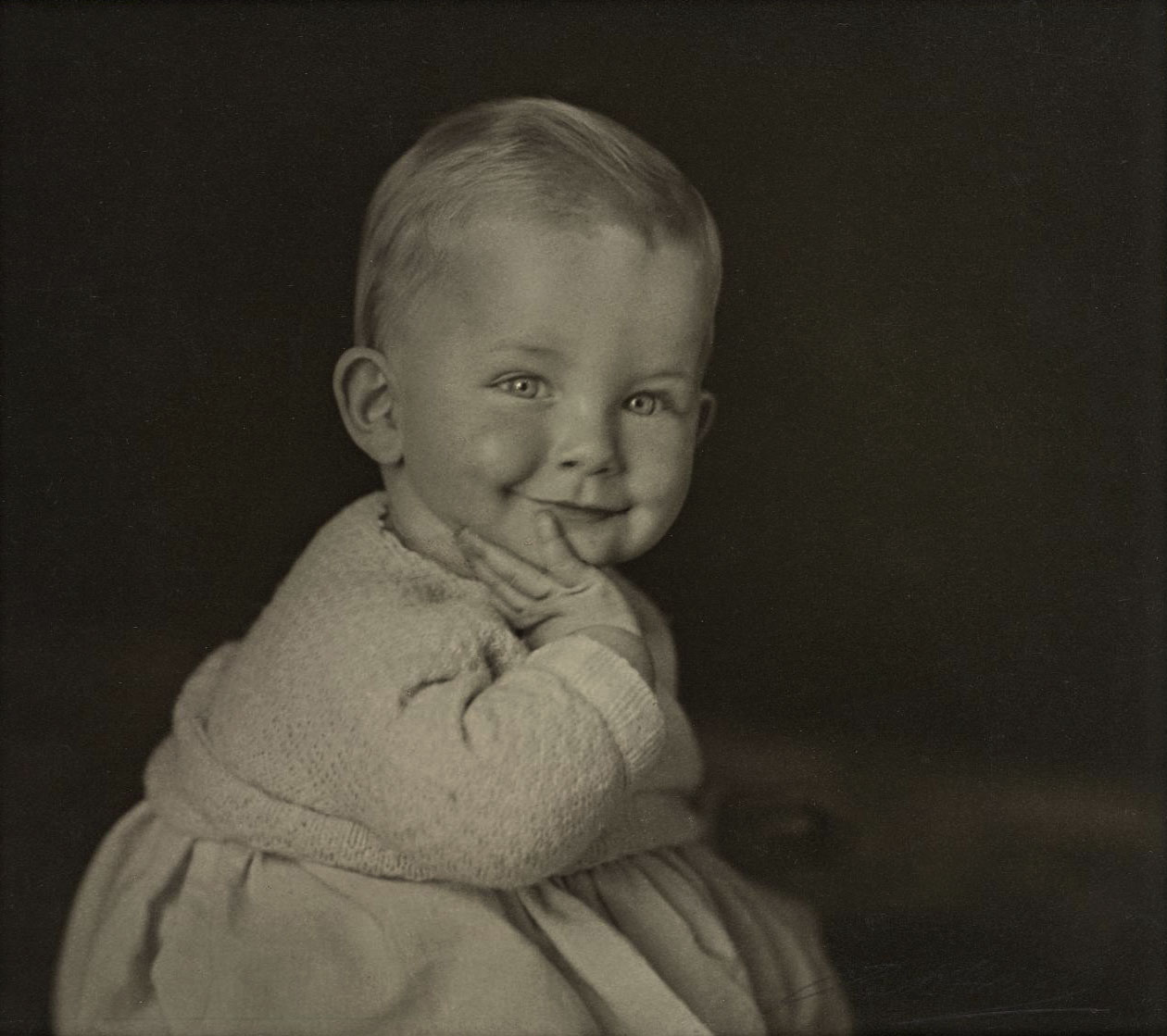
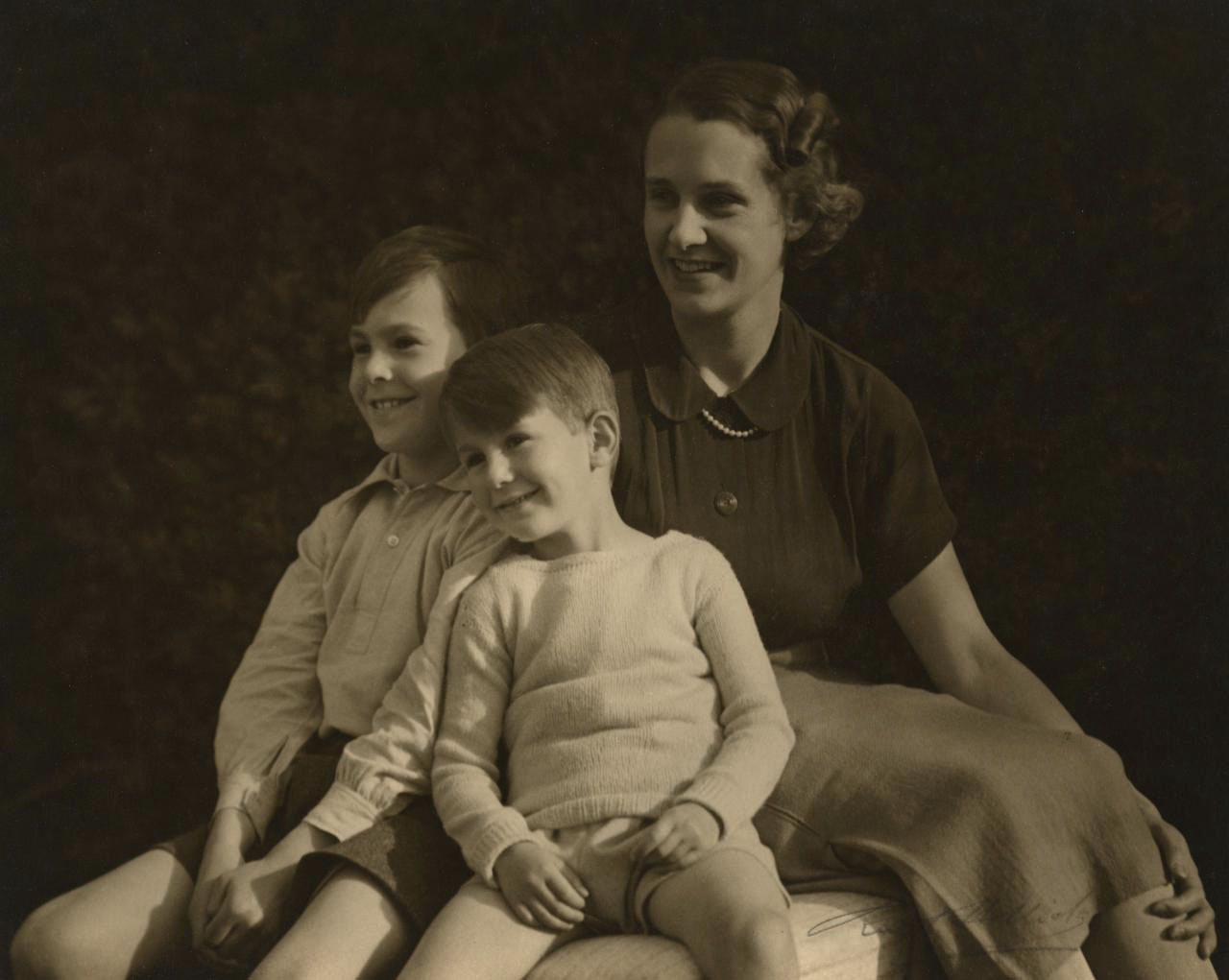
Installation view of the exhibition 'Women Photographers 1900-1975: A Legacy of Light' at NGV International, Melbourne, November 2025 - May 2026 showing  at left four photographs by Ruth Hollick: 'Bobby' (1927); 'No title (Baby in striped dress)' (1920s); 'No title (Three children seated on grass)' (1920s); and 'No title (Mother and two children)' (1920s)


Installation view of the exhibition Women Photographers 1900-1975: A Legacy of Light at NGV International, Melbourne, November 2025 – May 2026 showing at left four photographs by Ruth Hollick: Bobby (1927); No title (Baby in striped dress) (1920s); No title (Three children seated on grass) (1920s); and No title (Mother and two children) (1920s)
Photo: Marcus Bunyan


Installation view of the exhibition 'Women Photographers 1900-1975: A Legacy of Light' at NGV International, Melbourne, November 2025 - May 2026 showing four photographs by Ruth Hollick: 'Bobby' (1927); 'No title (Baby in striped dress)' (1920s); 'No title (Three children seated on grass)' (1920s); and 'No title (Mother and two children)' (1920s)


Installation view of the exhibition Women Photographers 1900-1975: A Legacy of Light at NGV International, Melbourne, November 2025 – May 2026 showing four photographs by Ruth Hollick: Bobby (1927); No title (Baby in striped dress) (1920s); No title (Three children seated on grass) (1920s); and No title (Mother and two children) (1920s)
Photo: Marcus Bunyan


Ruth Hollick (Australian, 1883-1977) 'Bobby' 1927


Ruth Hollick (Australian, 1883-1977)
Bobby
1927
Gelatin silver photograph
18.8 x 21.4cm (image)
National Gallery of Victoria, Melbourne
Gift of Mrs Lucy Crosbie Morrison, 1992
Public domain


Ruth Hollick (Australian, 1883-1977) 'No title (Mother and two children)' 1920s


Ruth Hollick (Australian, 1883-1977)
No title (Mother and two children)
1920s
Gelatin silver photograph
19.0 x 23.9cm (image)
National Gallery of Victoria, Melbourne
Gift of Mrs Lucy Crosbie Morrison, 1992
Public domain


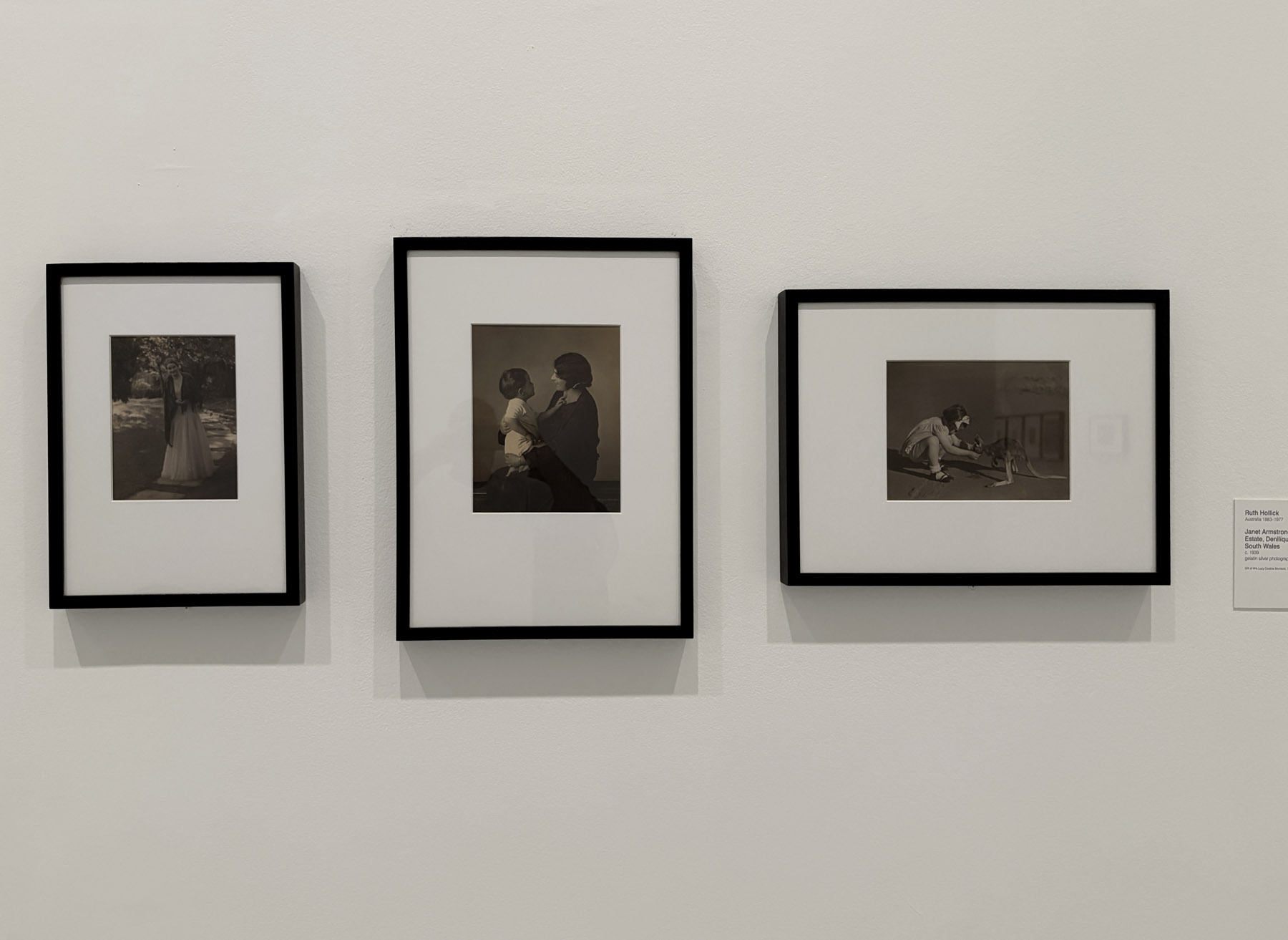
Installation view of the exhibition 'Women Photographers 1900-1975: A Legacy of Light' at NGV International, Melbourne, November 2025 - May 2026 showing from left to right three photographs by Ruth Hollick: 'No title (Young woman in plaid shawl)' (1920s); 'No title (Mother and child)' (c. 1926); and 'Janet Armstrong, Woodbury Estate, Deniliquin, New South Wales' (c. 1939) (installation view)


Installation view of the exhibition Women Photographers 1900-1975: A Legacy of Light at NGV International, Melbourne, November 2025 – May 2026 showing from left to right three photographs by Ruth Hollick: No title (Young woman in plaid shawl) (1920s); No title (Mother and child) (c. 1926); and Janet Armstrong, Woodbury Estate, Deniliquin, New South Wales (c. 1939)
Photo: Marcus Bunyan


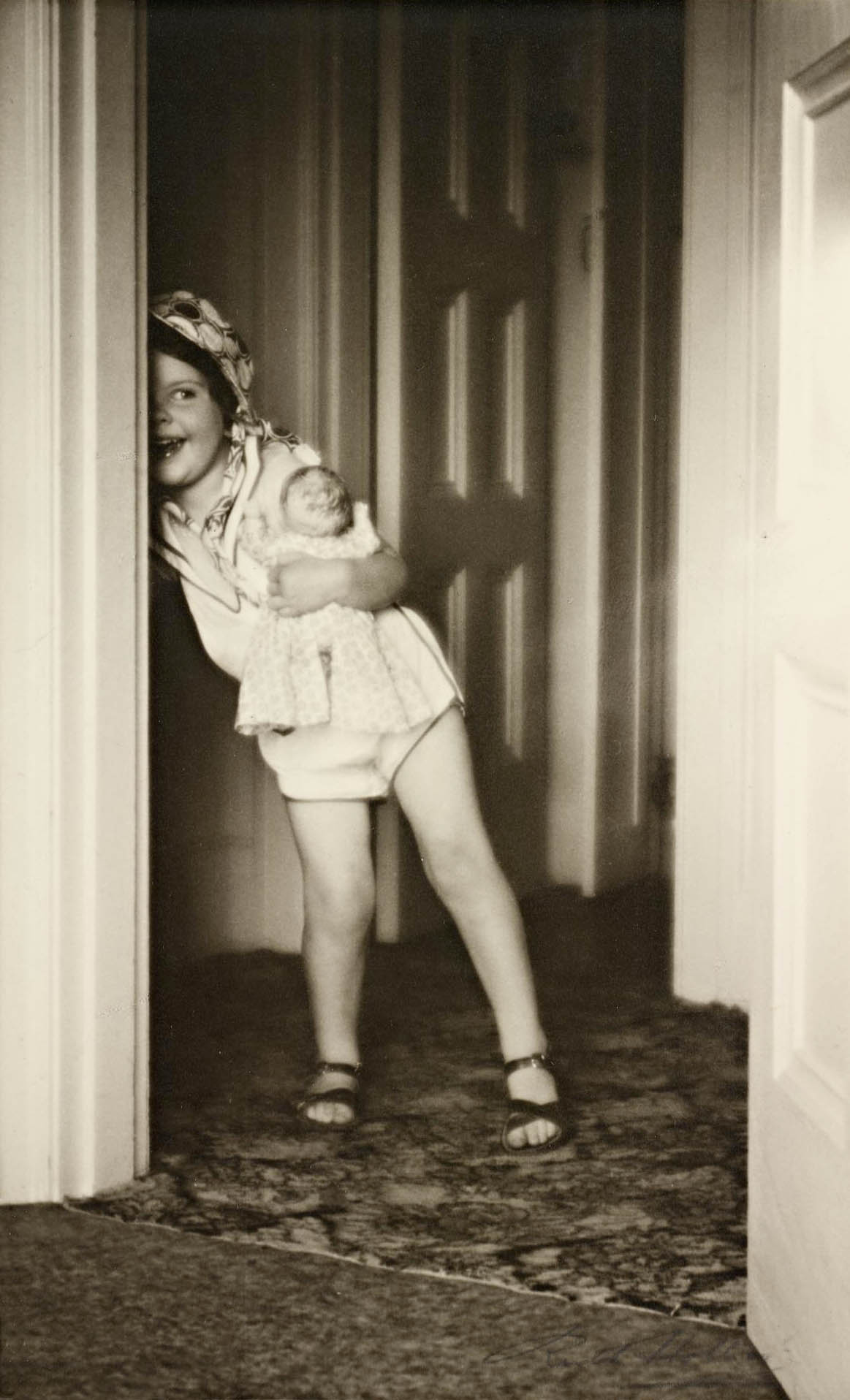
Ruth Hollick (Australian, 1883-1977) 'No title (Young girl holding a doll)' 1920s


Ruth Hollick (Australian, 1883-1977)
No title (Young girl holding a doll)
1920s
Gelatin silver photograph
23.9 x 14.6cm (image)
National Gallery of Victoria, Melbourne
Gift of Mrs Lucy Crosbie Morrison, 1992


Installation view of the exhibition 'Women Photographers 1900-1975: A Legacy of Light' at NGV International, Melbourne, November 2025 - May 2026


Installation view of the exhibition Women Photographers 1900-1975: A Legacy of Light at NGV International, Melbourne, November 2025 – May 2026
Photo: Marcus Bunyan


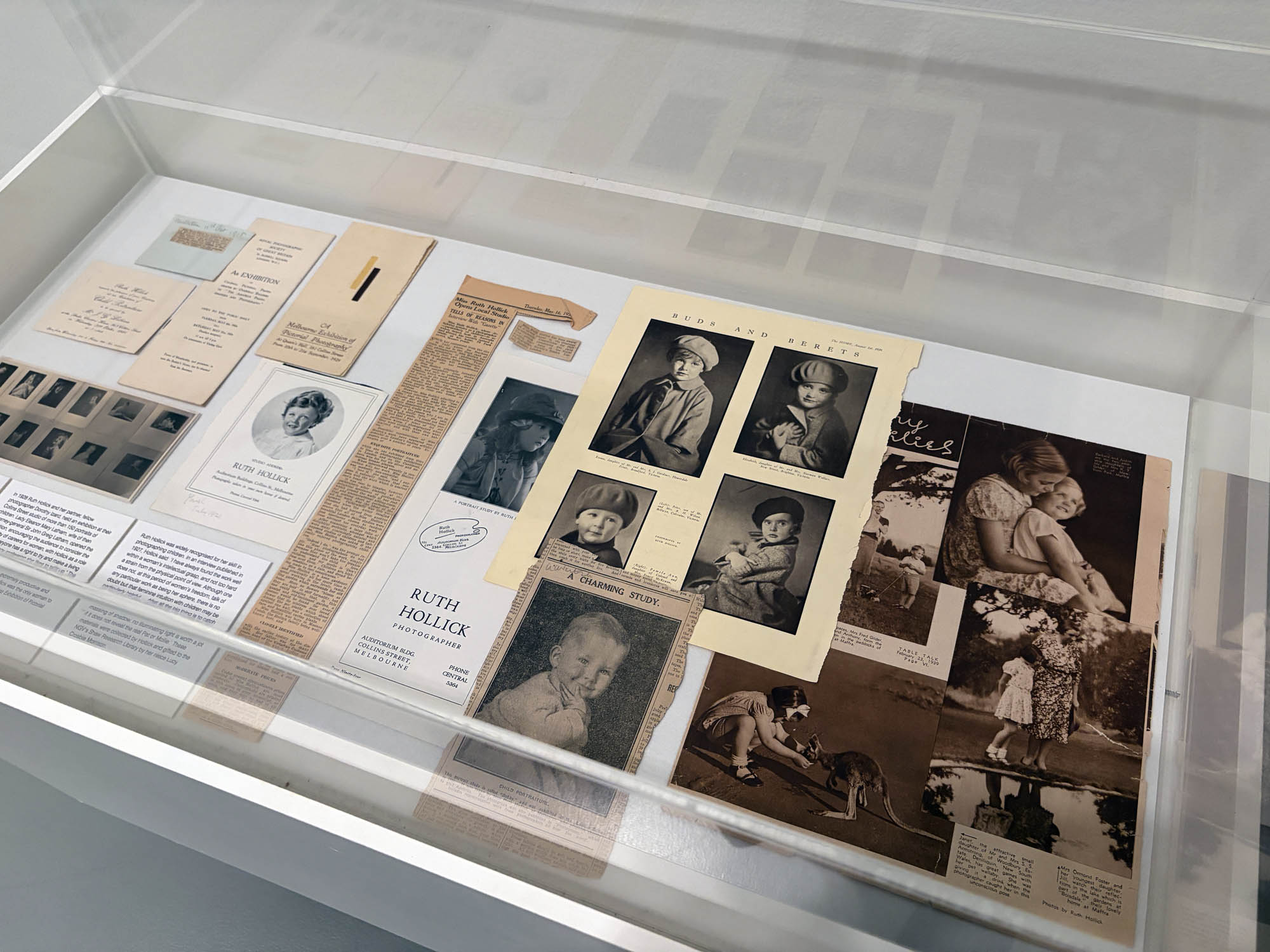
Installation view of the exhibition 'Women Photographers 1900-1975: A Legacy of Light' at NGV International, Melbourne, November 2025 - May 2026
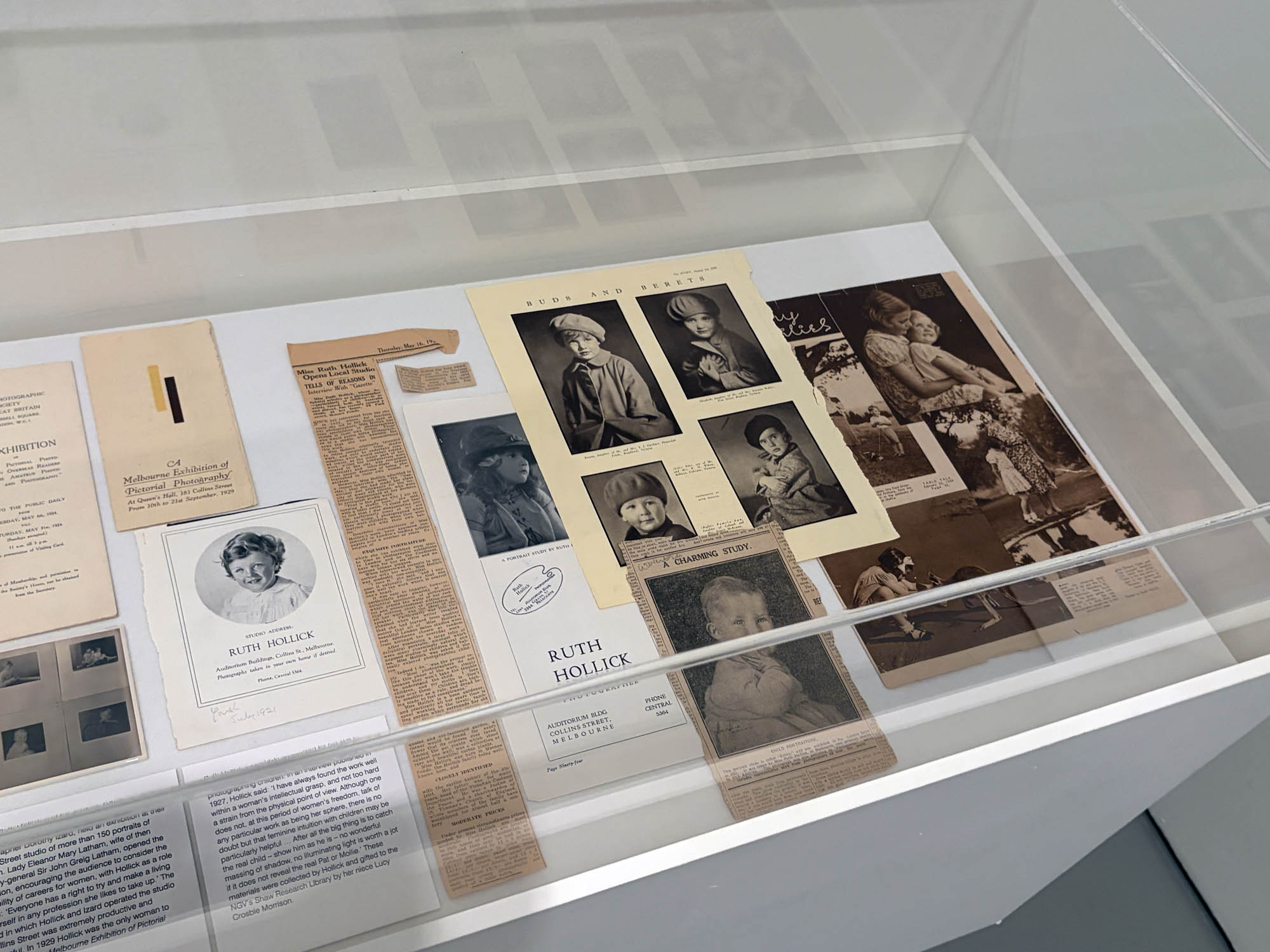
Installation view of the exhibition 'Women Photographers 1900-1975: A Legacy of Light' at NGV International, Melbourne, November 2025 - May 2026 showing clippings, press releases, brochures, reviews, invitations and other ephemeral material relating to Ruth Hollick and the Ruth Hollick studio


Installation views of the exhibition Women Photographers 1900-1975: A Legacy of Light at NGV International, Melbourne, November 2025 – May 2026 showing clippings, press releases, brochures, reviews, invitations and other ephemeral material relating to Ruth Hollick and the Ruth Hollick studio
Photos: Marcus Bunyan


In 1928 Ruth Hollick and her partner, fellow photographer Dorothy Izard, held an exhibition at their Collins Street studio of more than 150 portraits of children. Lady Eleanor Mary Latham, wife of then attorney-general Sir John Greig Latham, opened the exhibition, encouraging the audience to consider the possibility of career for women, with Hollick as a role model: ‘Everyone has a right to try and make a living for herself in any profession she likes to take up.’ The period in which Hollick and Izard operated the studio in Collins Street was extremely productive and successful. In 1929 Hollick was the only woman to participate in the Melbourne Exhibition of Pictorial Photography.

Ruth Hollick was widely recognised for her skill in photographing children. In an interview published in 1927, Hollick said: ‘I have always found the work well within a woman’s intellectual grasp, and not too hard a strain from the physical point of view. Although one does not, at this period of women’s freedom, talk of any particular work as being her sphere, there is no doubt but that feminine intuition with children may be particularly helpful … After all the big thing is to catch the real child – show him as he is – no wonderful massing of shadow, no illuminating light is worth a lot if it does not reveal the real Pat or Mollie.’ These materials were collected by Hollick and gifted to the NGV’s Shaw Research Library by her niece Lucy Crosbie Morrison.

Vitrine text from the exhibition


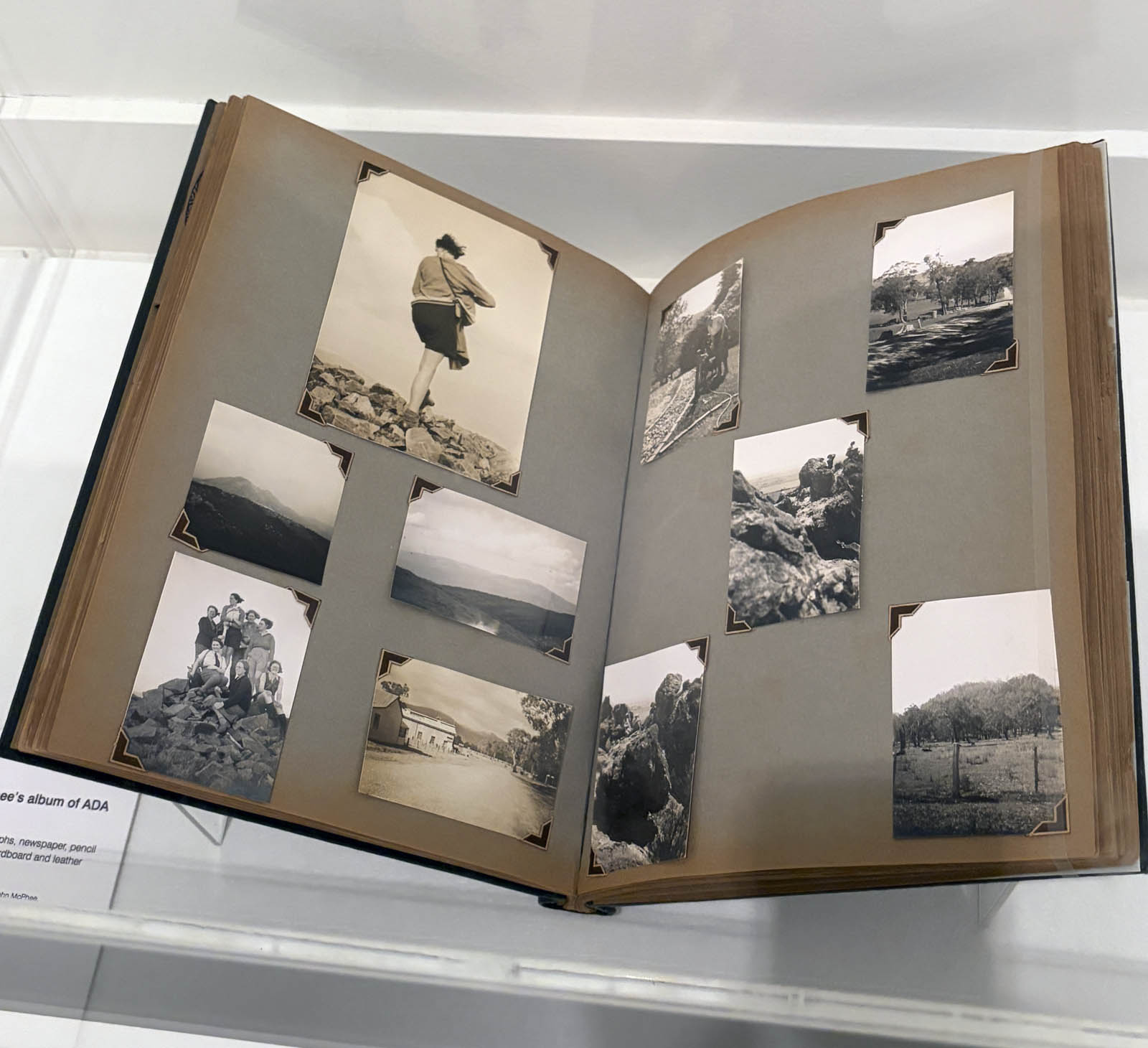
Inez McPhee (Australian, 1908-1999) 'No title (Inez McPhee's album of ADA river trip)' 1936 (installation view)


Inez McPhee (Australian, 1908-1999)
No title (Inez McPhee’s album of ADA river trip) (installation view)
1936
28.1 x 22.4cm (page)
28.5 x 23.0 x 3.1cm (closed)
28.5 x 46.0 x 1.5cm (open)
Album: gelatin silver photographs, newspaper, pencil and pen and ink, 62 pages, cardboard and leather cover, stitched binding
Presented through the NGV Foundation by John McPhee, Member and Ann Luck, 2004
Photo: Marcus Bunyan


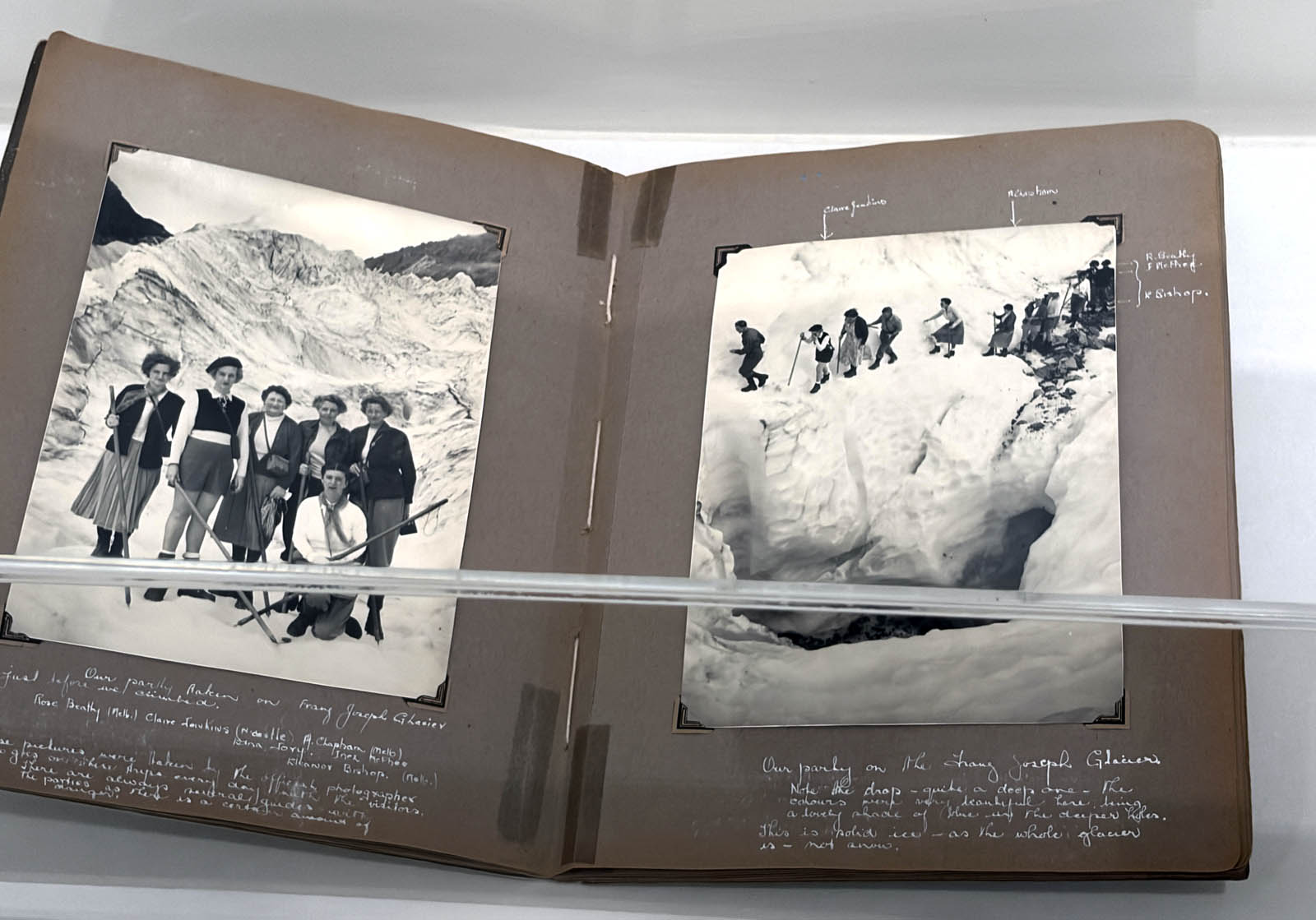
Inez McPhee (Australian, 1908-1999) 'No title (Inez McPhee's album of a trip to New Zealand)' 1953 (installation view)


Inez McPhee (Australian, 1908-1999)
No title (Inez McPhee’s album of a trip to New Zealand) (installation view)
1953
Album: gelatin silver photographs, collage, pencil, 40 pages, cardboard cover, stitched binding
31.0 x 24.1cm (page)
31.1 x 24.8 x 1.4cm (closed)
31.1 x 49.0 x 1.0cm (open)
Presented through the NGV Foundation by John McPhee, Member and Ann Luck, 2004
Photo: Marcus Bunyan


Inez McPhee was an active member of the Melbourne Women’s Walking Club, founded in 1922. McPhee took her camera on bushwalks with the group and, typical of amateur photographers of the period, compiled albums of the prints. Her albums are filled with images of women engaging in outdoor activities.

Vitrine text from the exhibition


Installation view of the exhibition 'Women Photographers 1900-1975: A Legacy of Light' at NGV International, Melbourne, November 2025 – May 2026


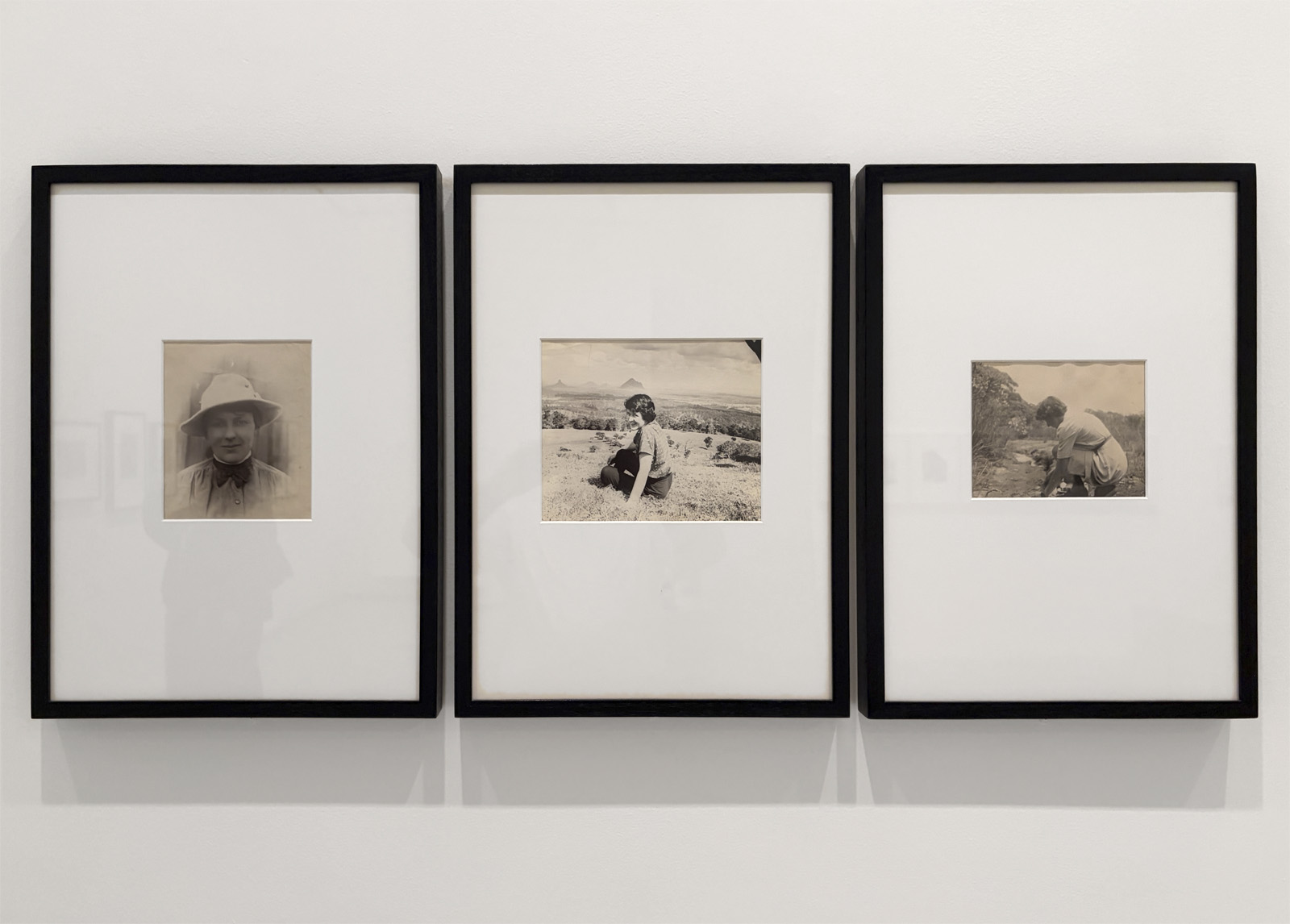
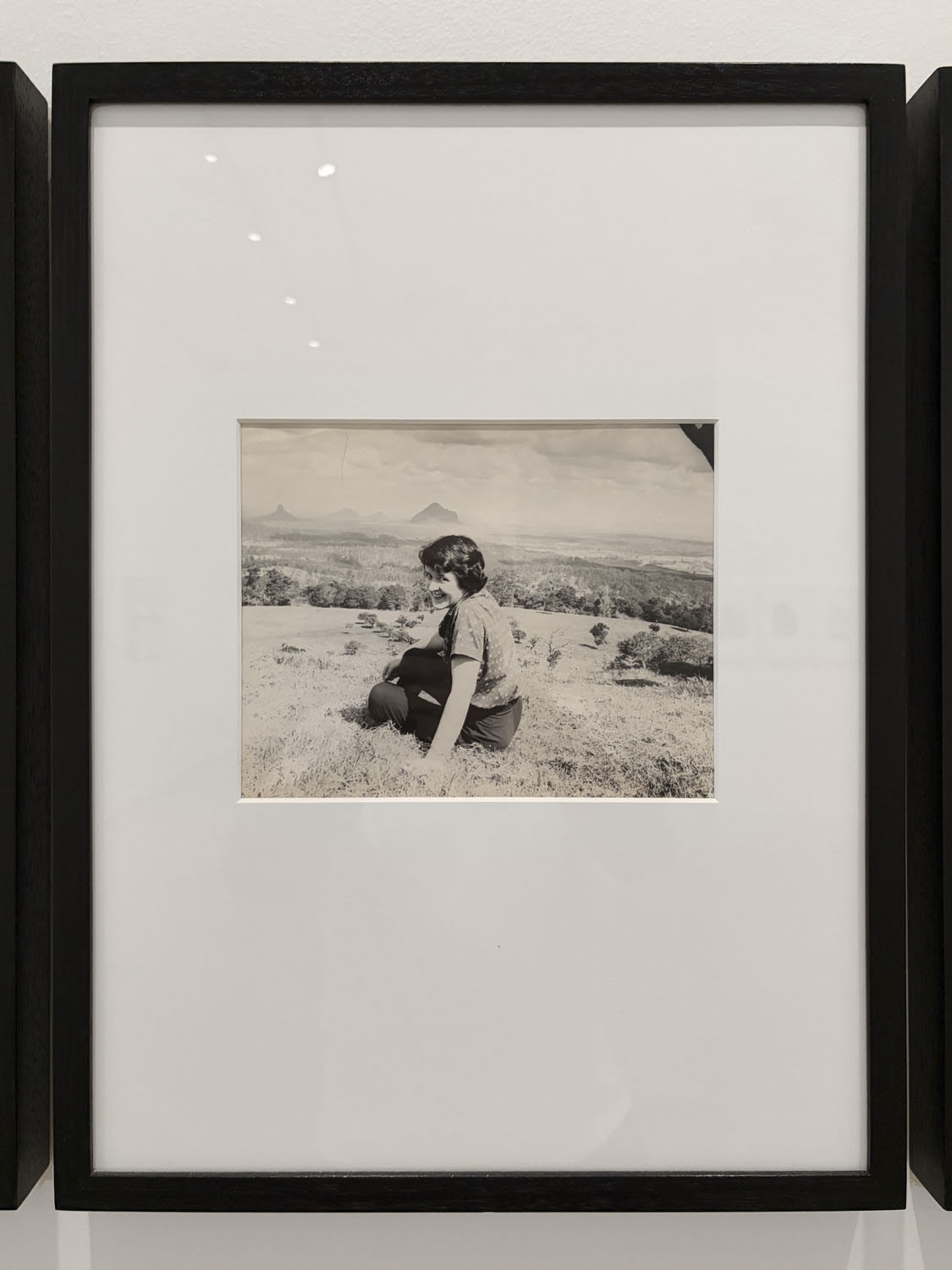
Installation view of the exhibition Women Photographers 1900-1975: A Legacy of Light at NGV International, Melbourne, November 2025 – May 2026 showing at left three photographs by Edna Walling: Doris Oak-Rhind, Edna’s Walling’s sister (1920s); Estelle Thompson (1950s-1960s); and No title (Young woman preparing picnic) (1940s)
Photo: Marcus Bunyan


Installation view of the exhibition Women Photographers 1900-1975: A Legacy of Light at NGV International, Melbourne, November 2025 – May 2026 showing at left to right, three photographs by Edna Walling (Australian born England, 1895-1973) 'Doris Oak-Rhind, Edna's Walling's sister' (1920s); 'Estelle Thompson' (1950s-1960s); and 'No title (Young woman preparing picnic)' (1940s)


Installation view of the exhibition Women Photographers 1900-1975: A Legacy of Light at NGV International, Melbourne, November 2025 – May 2026 showing at left to right, three photographs by Edna Walling (Australian born England, 1895-1973) Doris Oak-Rhind, Edna’s Walling’s sister (1920s); Estelle Thompson (1950s-1960s); and No title (Young woman preparing picnic) (1940s)
Photo: Marcus Bunyan


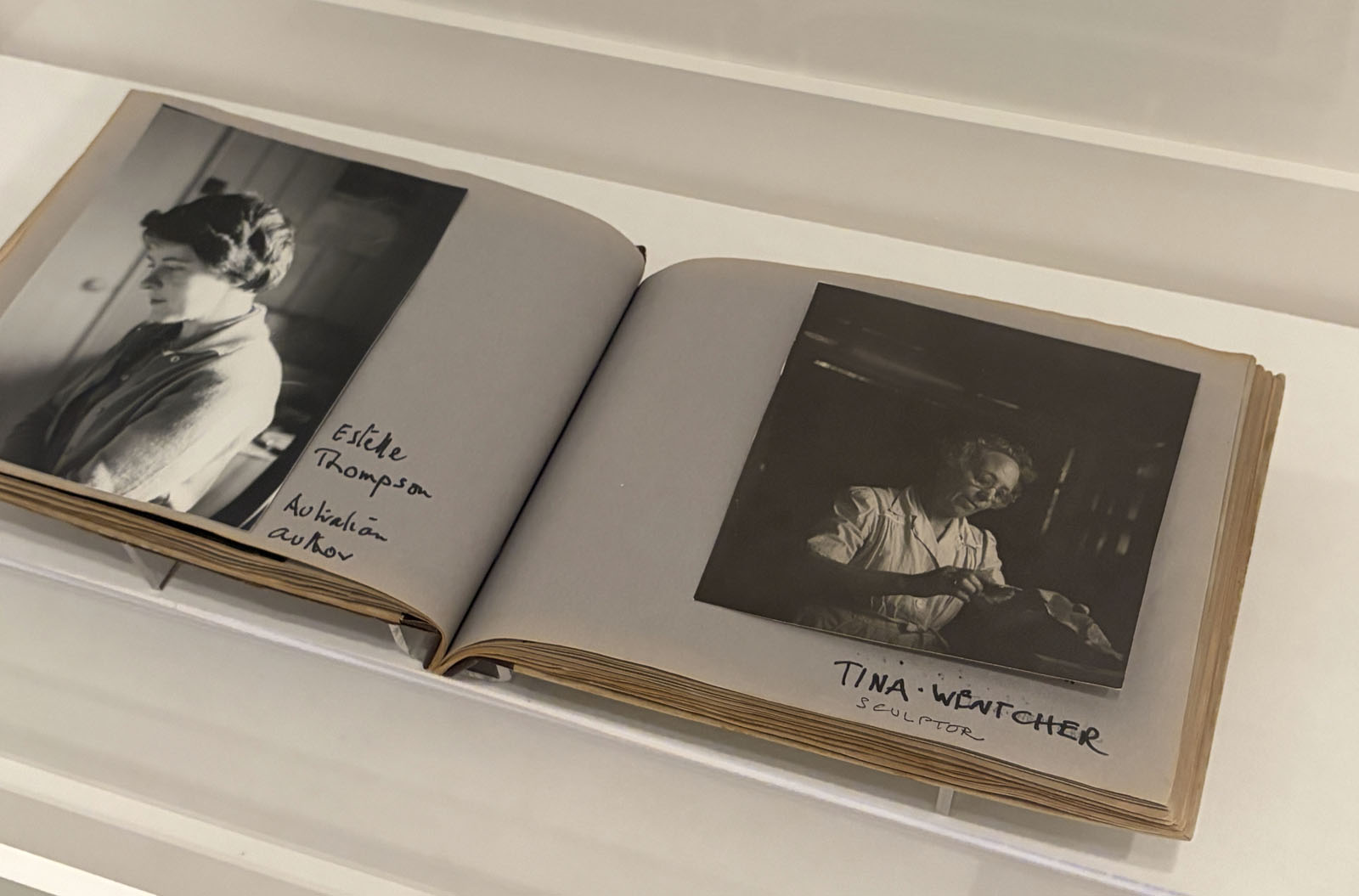
Edna Walling (Australian born England, 1895-1973) 'Estelle Thompson' 1950s-1960s (installation view)


Edna Walling (Australian born England, 1895-1973)
Estelle Thompson (installation view)
1950s-1960s
Gelatin silver photograph
25.4 x 20.6cm (image and sheet)
National Gallery of Victoria, Melbourne
Gift of Mrs Barbara Barnes, 1983
Photo: Marcus Bunyan


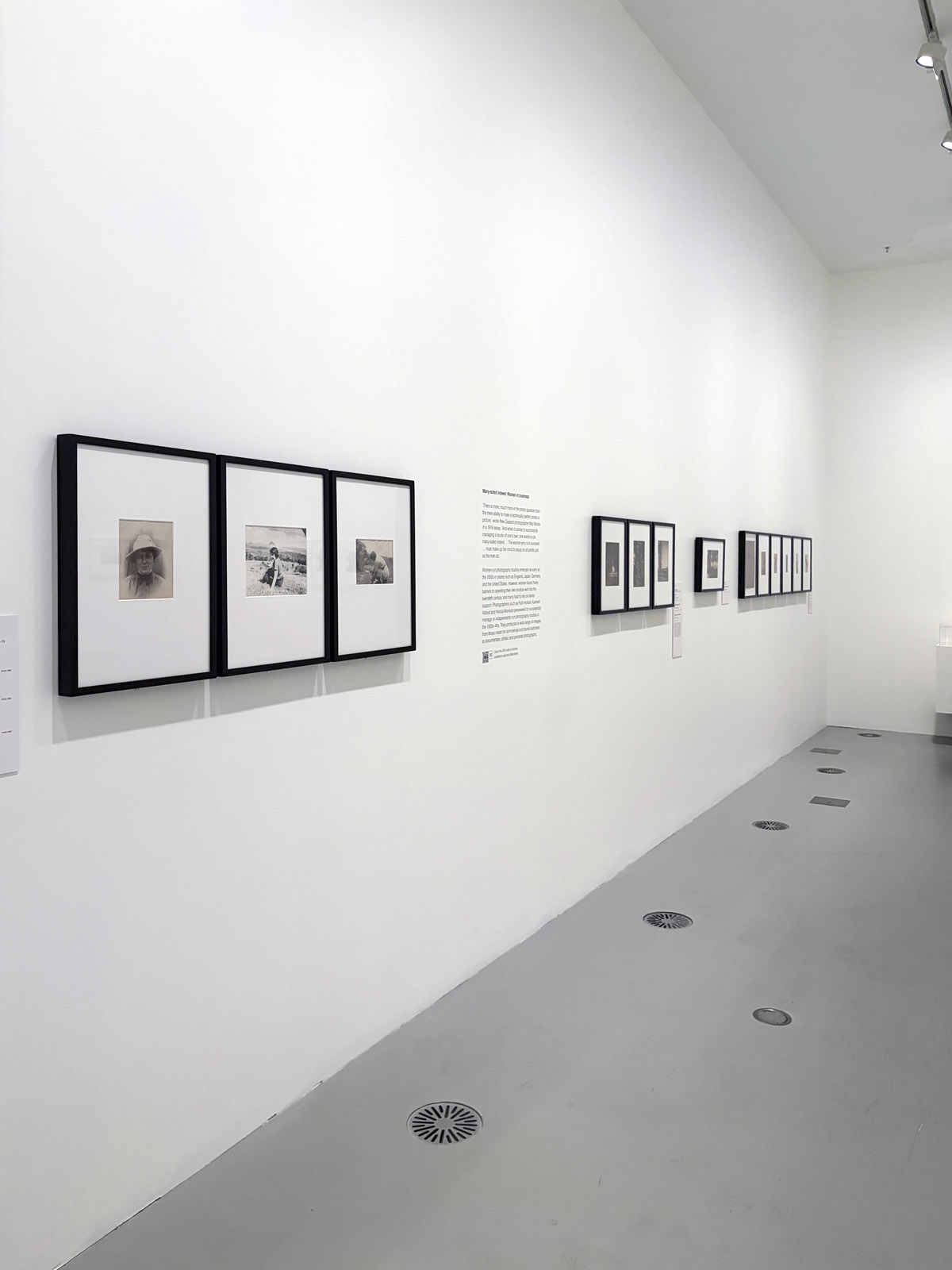
Many-sided Indeed: Women In Business

“There is more, much more in the photo question than the mere ability to make a technically perfect photo or picture,” wrote New Zealand photographer May Moore in a 1916 essay. “And when it comes to successfully managing a studio of one’s own, one wants to be many-sided indeed … The woman who is to succeed … must make up her mind to equip on all points just as the men do.”

Women-run photography studios emerged as early as the 1850s in places such as England, Japan, Germany and the United States. However, women faced many barriers to operating their own studios well into the twentieth century, and many had to rely on family support. Photographers such as Ruth Hollick, Karimeh Abbud and Hedda Morrison persevered to successfully manage or independently run photography studios in the 1920s-40s. They produced a wide range of images, from those made for commercial and tourist purposes to documentary, artistic and personal photographs.


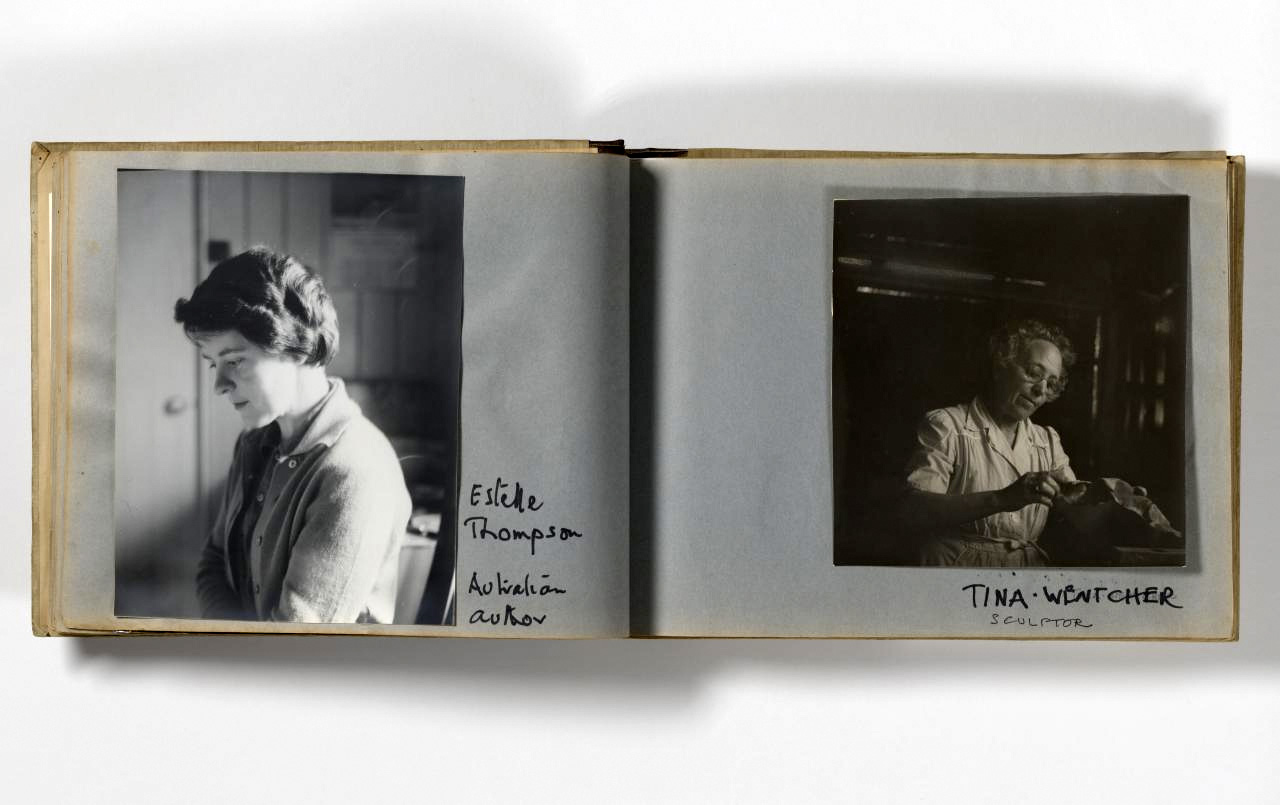
Edna Walling (Australian born England, 1895-1973) 'No title (Album)' 1950s-1960s (installation view)


Edna Walling (Australian born England, 1895-1973)
No title (Album) (installation view)
1950s-1960s
Album: gelatin silver photographs, 48 pages, cardboard, leather and colour photo-lithograph cover, metal screw binding
24.6 x 32.0cm (page)
25.6 x 34.8 x 3.6cm (closed)
25.6 x 62.8cm (open)
National Gallery of Victoria, Melbourne
Gift of Mrs Barbara Barnes, 1983
Photo: Marcus Bunyan


Landscape designer Edna Walling kept a personal photo album to capture the creative effervescence of the community at her property at Bickleigh Vale Village in Mooroolbark, Victoria. Nicknamed ‘Trouser Lane’, the property was designed by Walling to be a ‘community of connected gardens and cottages. Many people, including many women, shared in Walling’s unique vision for the space, visiting and residing at Trouser lane over the years. Walling’s album features, among others, images of writer Estelle Thompson, landscape designer Daphne Pearson, builder Esme Johnson, violinist Perry Hart and ballet dancers Harcourt Algernoff and Graham Smith. Also interspersed throughout the album are photographic flower studies.

Vitrine text from the exhibition


Edna Walling (Australian born United Kingdom, 1895-1973) 'No title' (Album) 1950s-1960s


Edna Walling (Australian born United Kingdom, 1895-1973)
No title (Album)
1950s-1960s
Album; gelatin silver photographs, 48 pages, cardboard, leather and colour photo-lithograph cover, metal screw binding
24.6 x 32.0cm (page)
25.6 x 34.8 x 3.6cm (closed)
25.6 x 62.8cm (open)
National Gallery of Victoria, Melbourne
Gift of Mrs Barbara Barnes, 1983


Installation view of the exhibition 'Women Photographers 1900-1975: A Legacy of Light' at NGV International, Melbourne, November 2025 - May 2026
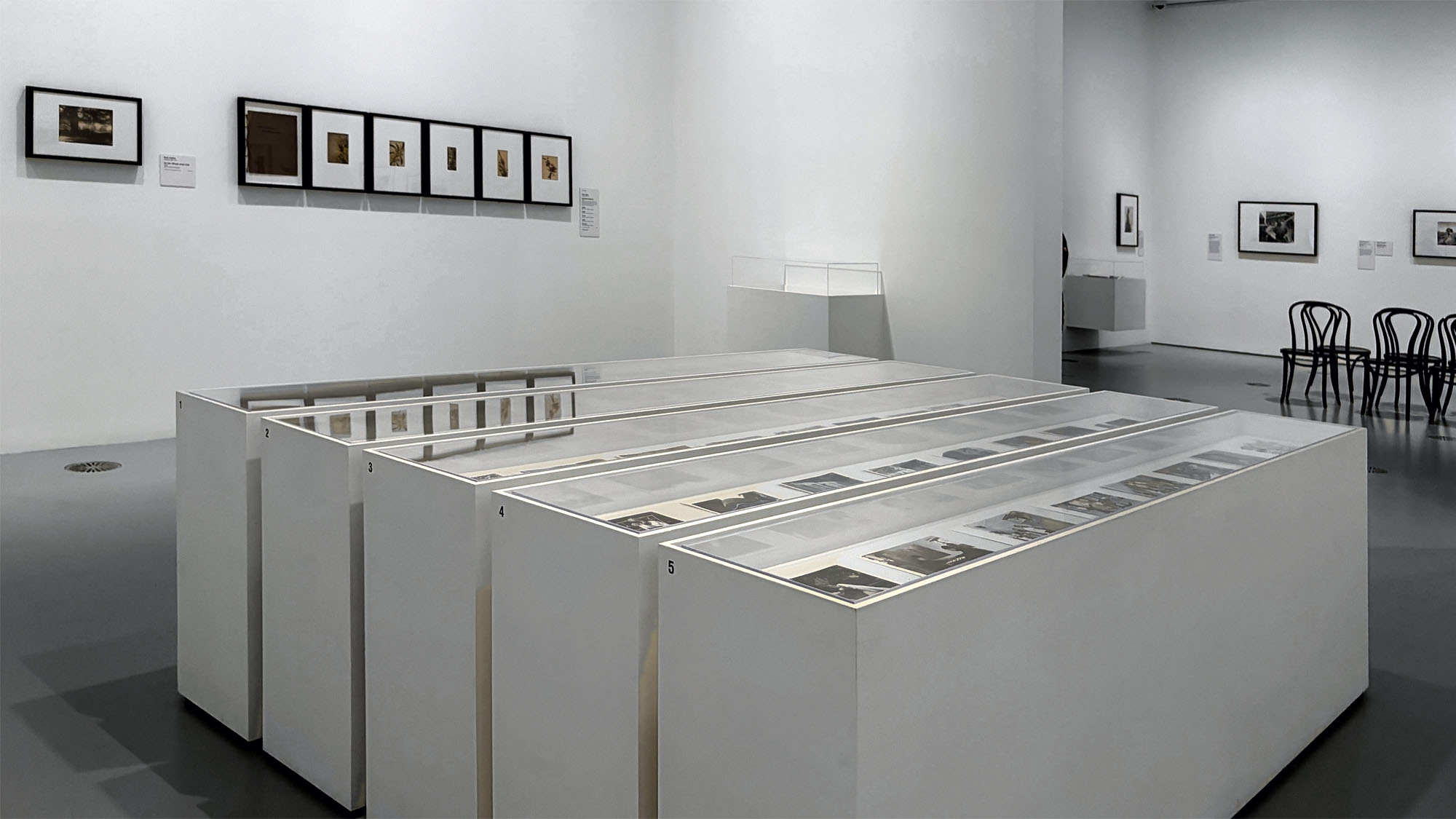
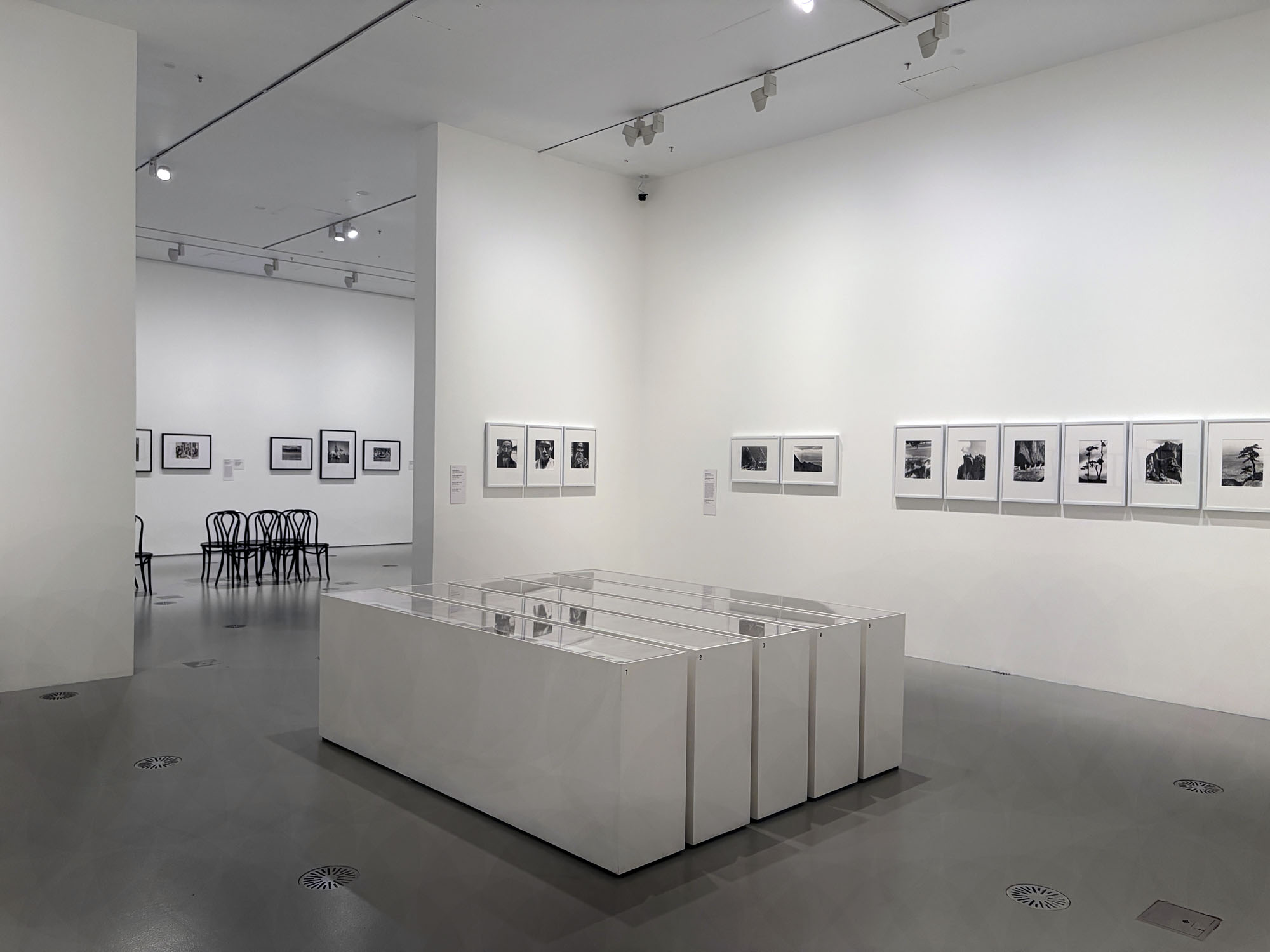
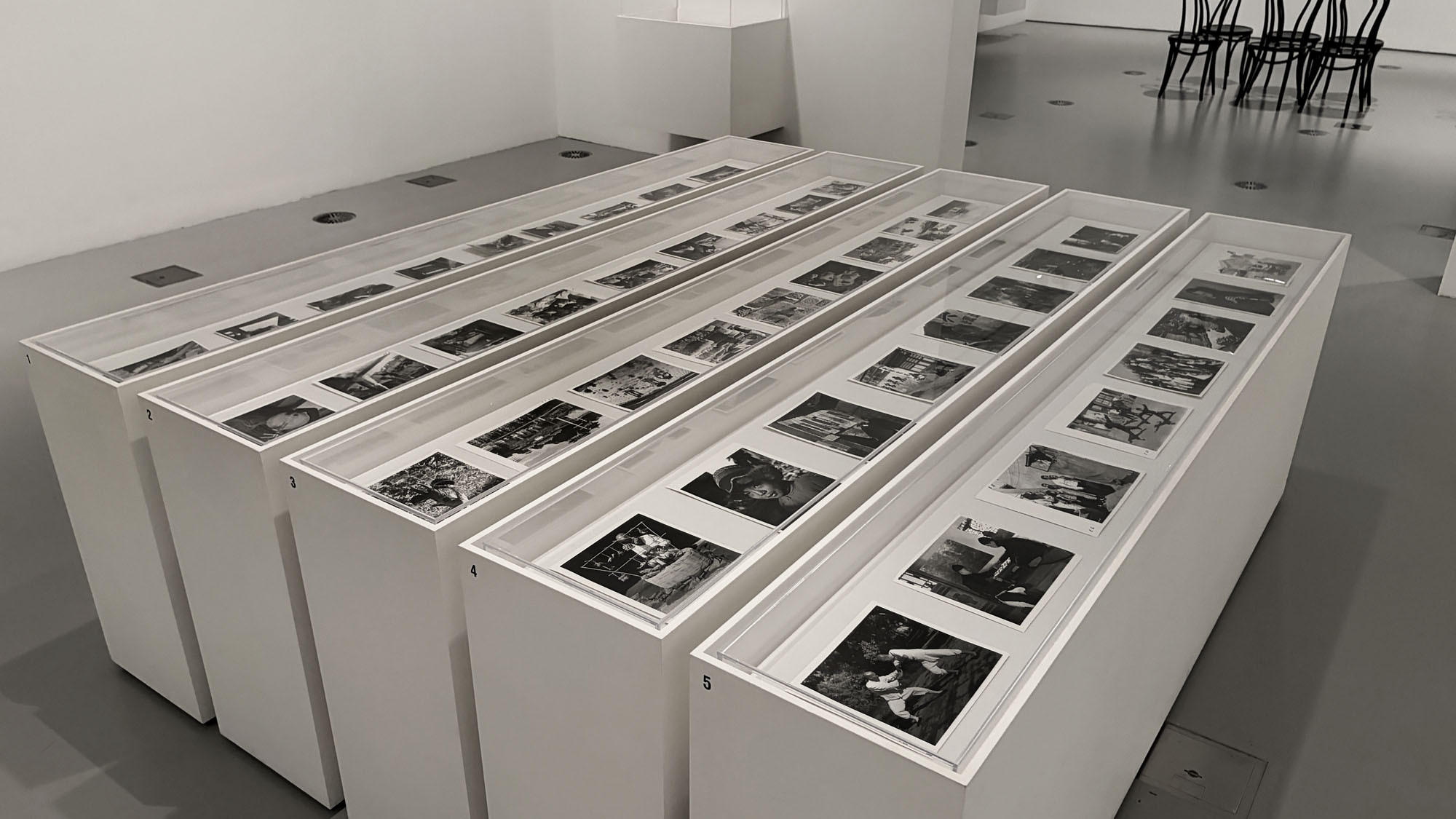
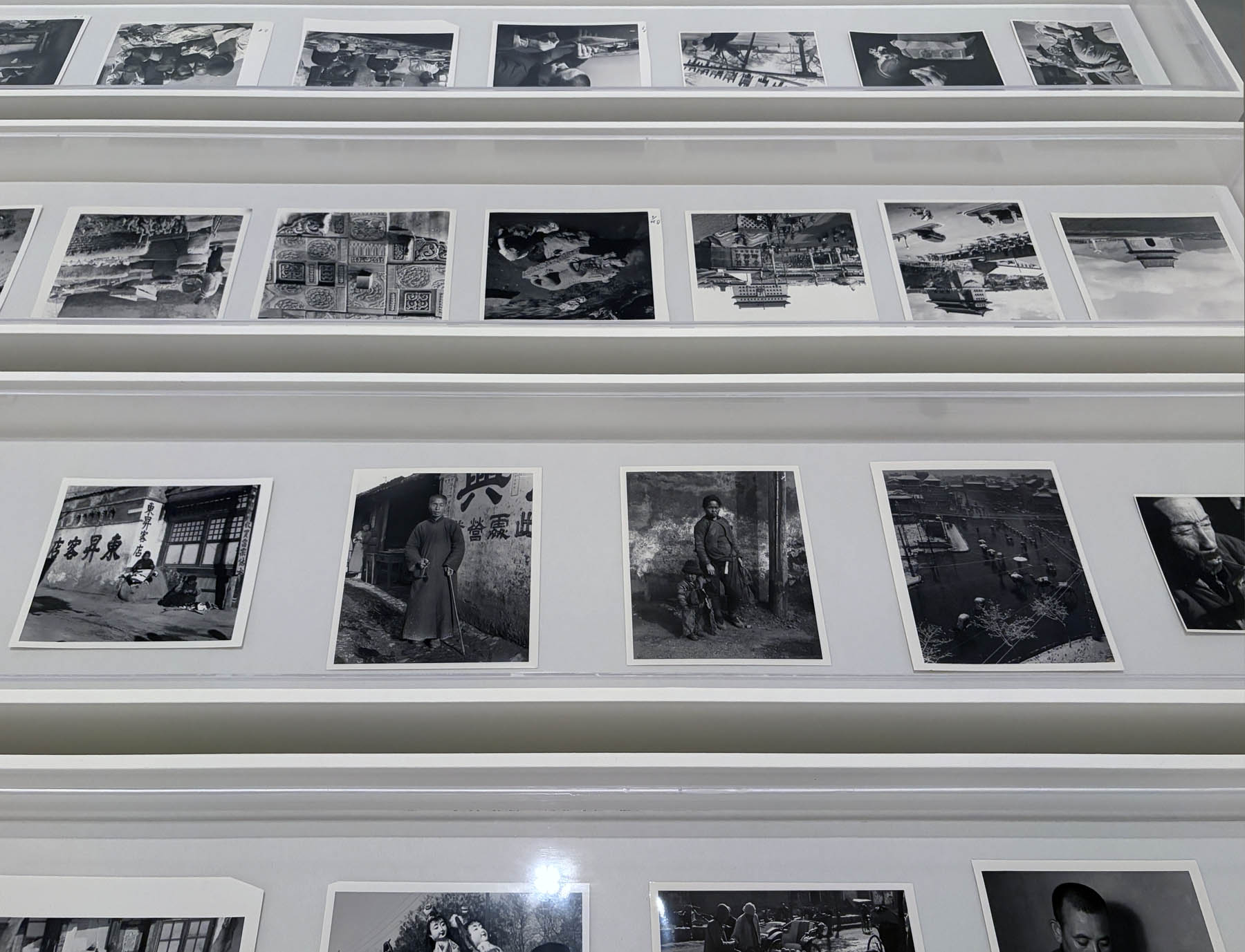
Installation view of the exhibition 'Women Photographers 1900-1975: A Legacy of Light' at NGV International, Melbourne, November 2025 - May 2026 showing in the display cases photographs by Hedda Morrison (Australian born Germany, 1908-1991)


Installation views of the exhibition Women Photographers 1900-1975: A Legacy of Light at NGV International, Melbourne, November 2025 – May 2026 showing in the display cases in the lower two images, photographs by Hedda Morrison (Australian born Germany, 1908-1991)
Photos: Marcus Bunyan


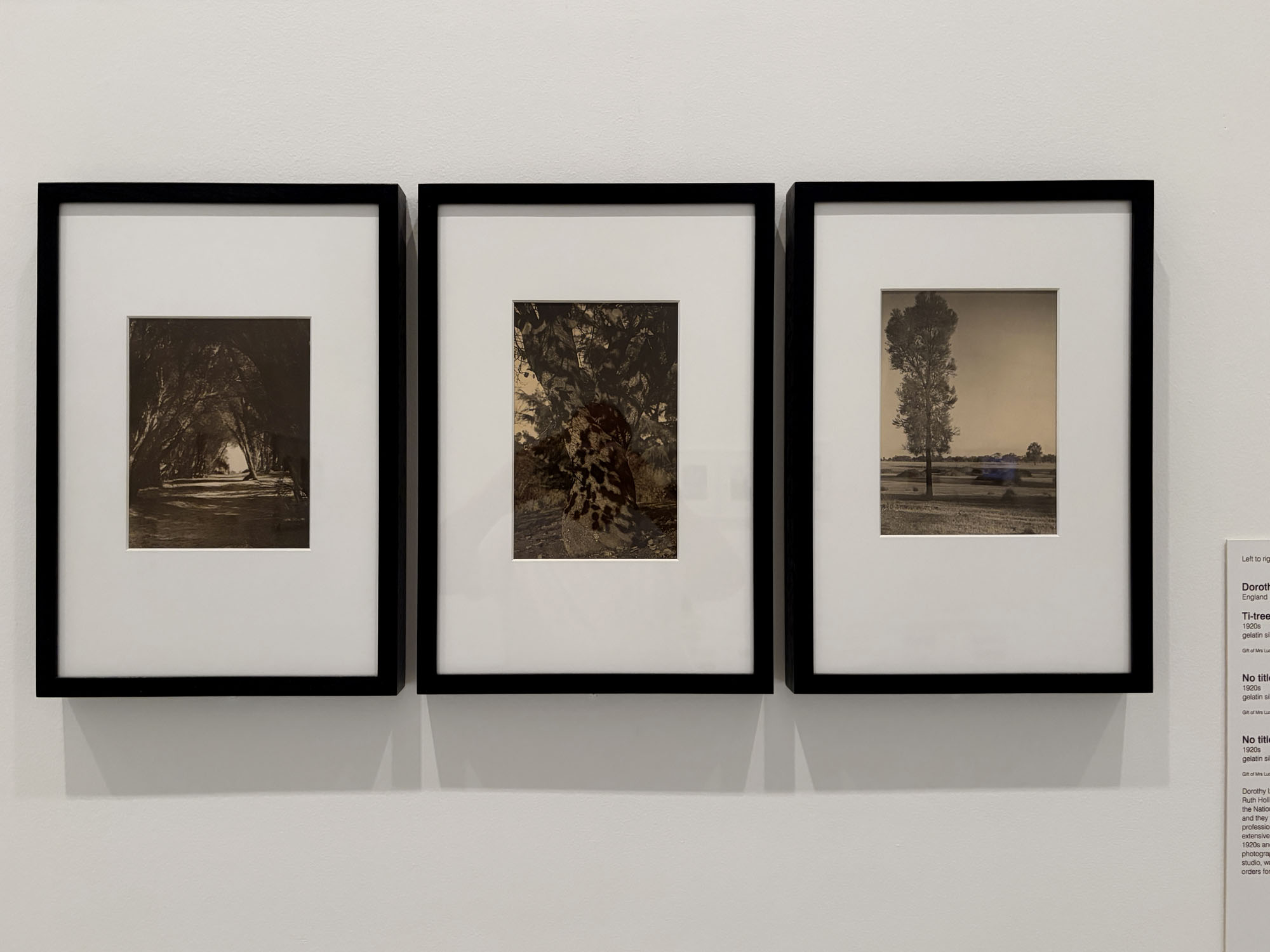
Installation view of the exhibition 'Women Photographers 1900-1975: A Legacy of Light' at NGV International, Melbourne, November 2025 - May 2026 showing three photographs by Dorothy Izard (Australian born England, 1882-1972): 'Ti-trees' (1920s); 'No title (Dappled tree)' (1920s); and 'No title (Tree in paddock)' (1920s)


Installation view of the exhibition Women Photographers 1900-1975: A Legacy of Light at NGV International, Melbourne, November 2025 – May 2026 showing three photographs by Dorothy Izard (Australian born England, 1882-1972): Ti-trees (1920s); No title (Dappled tree) (1920s); and No title (Tree in paddock) (1920s)
Photo: Marcus Bunyan


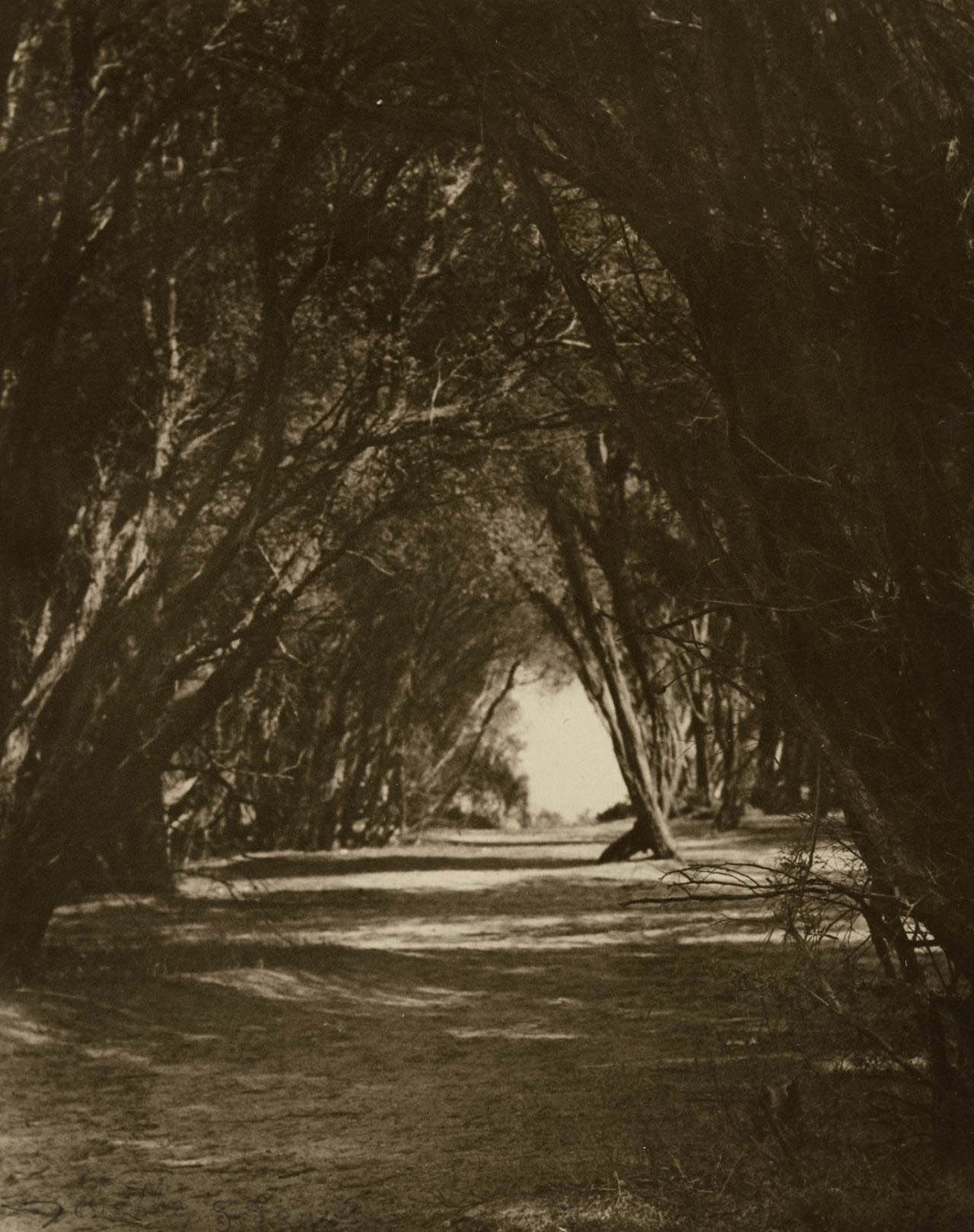
Dorothy Izard (Australian born England, 1882-1972) 'Ti-trees' 1920s


Dorothy Izard (Australian born England, 1882-1972)
Ti-trees
1920s
Gelatin silver photograph
22.8 × 18.4cm (image)
National Gallery of Victoria, Melbourne
Gift of Mrs Lucy Crosbie Morrison, 1992


Dorothy Izard met fellow photographer Ruth Hollick when they were students at the National Gallery of Victoria Art School, and they formed both a romantic and a professional partnership. They travelled extensively around regional Victoria in the 1920s and 1930s. Izard was a landscape photographer and, at Hollick’s home studio, was responsible for printing the orders for Hollick’s photographs.

Wall text from the exhibition


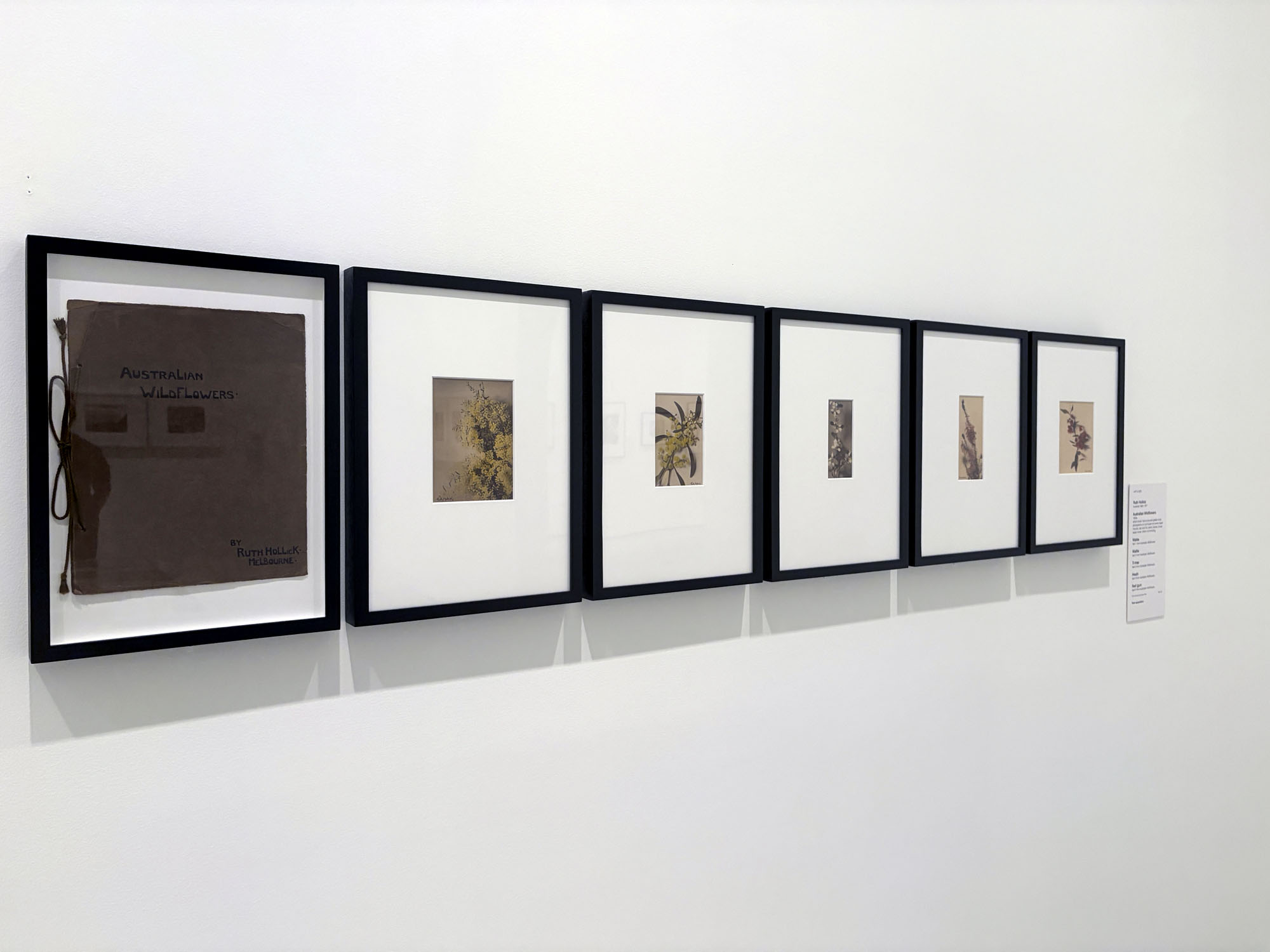
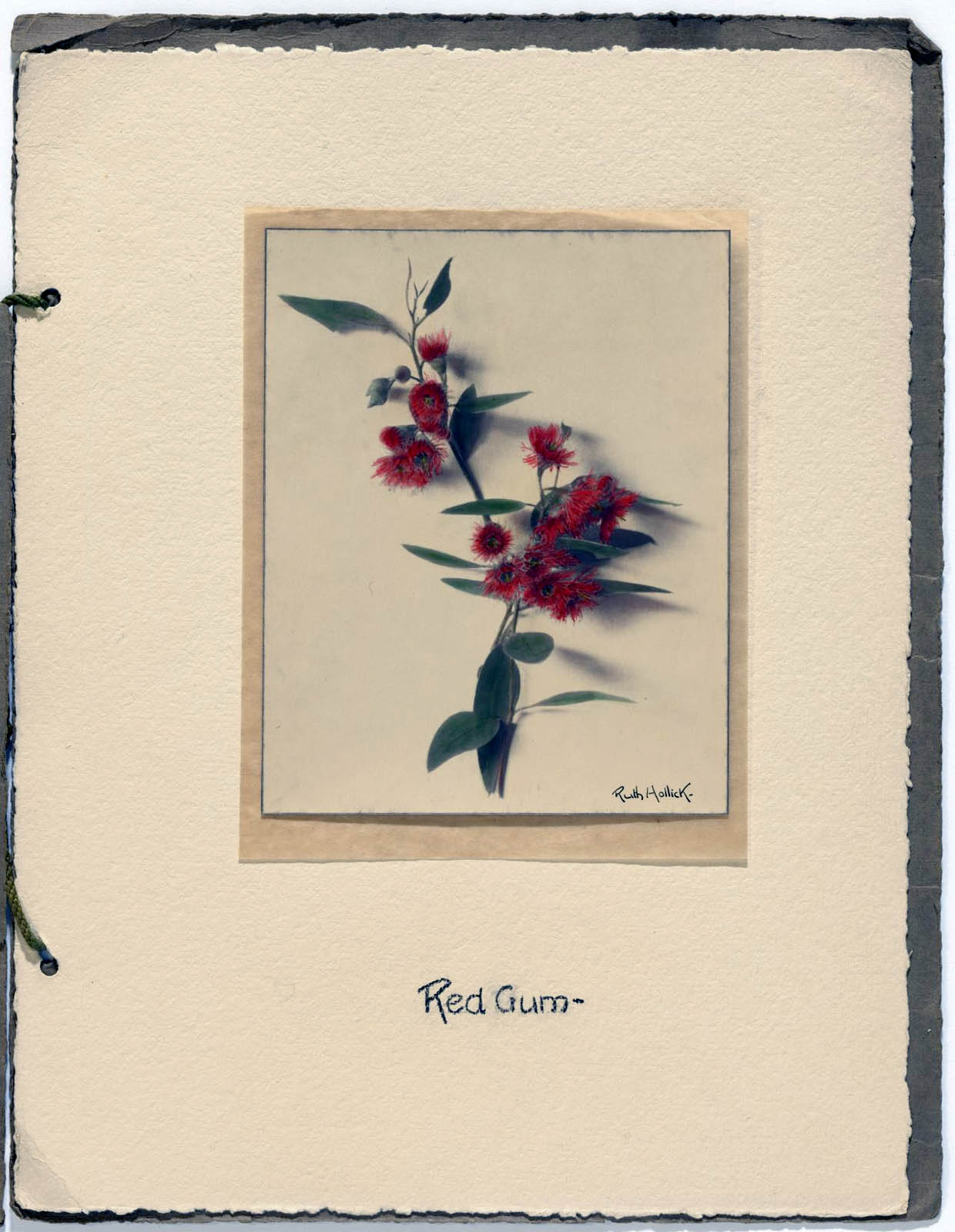
Installation view of the exhibition 'Women Photographers 1900-1975: A Legacy of Light' at NGV International, Melbourne, November 2025 - May 2026 showing  Ruth Hollick's artist book 'Australian flowers' (1950s)


Installation view of the exhibition Women Photographers 1900-1975: A Legacy of Light at NGV International, Melbourne, November 2025 – May 2026 showing Ruth Hollick’s artist book Australian flowers (1950s, below)
Photo: Marcus Bunyan


Ruth Hollick (Australian, 1883-1977) 'Australian wildflowers' 1950s


Ruth Hollick (Australian, 1883-1977)
Australian wildflowers
1950s
Artist’s book: hand-coloured gelatin silver photographs on buff paper on brown paper mounts, pen and ink, pencil, (other materials), [5] leaves, brown paper cover, cotton cord binding
33.2 x 25.5cm (page)
34.3 x 26.3 x 1.0cm irreg. (closed)
34.3 x 53.1 x 1.1cm irreg. (open)
National Gallery of Victoria, Melbourne
Gift of Pamela Jane Green, 2021
Public domain


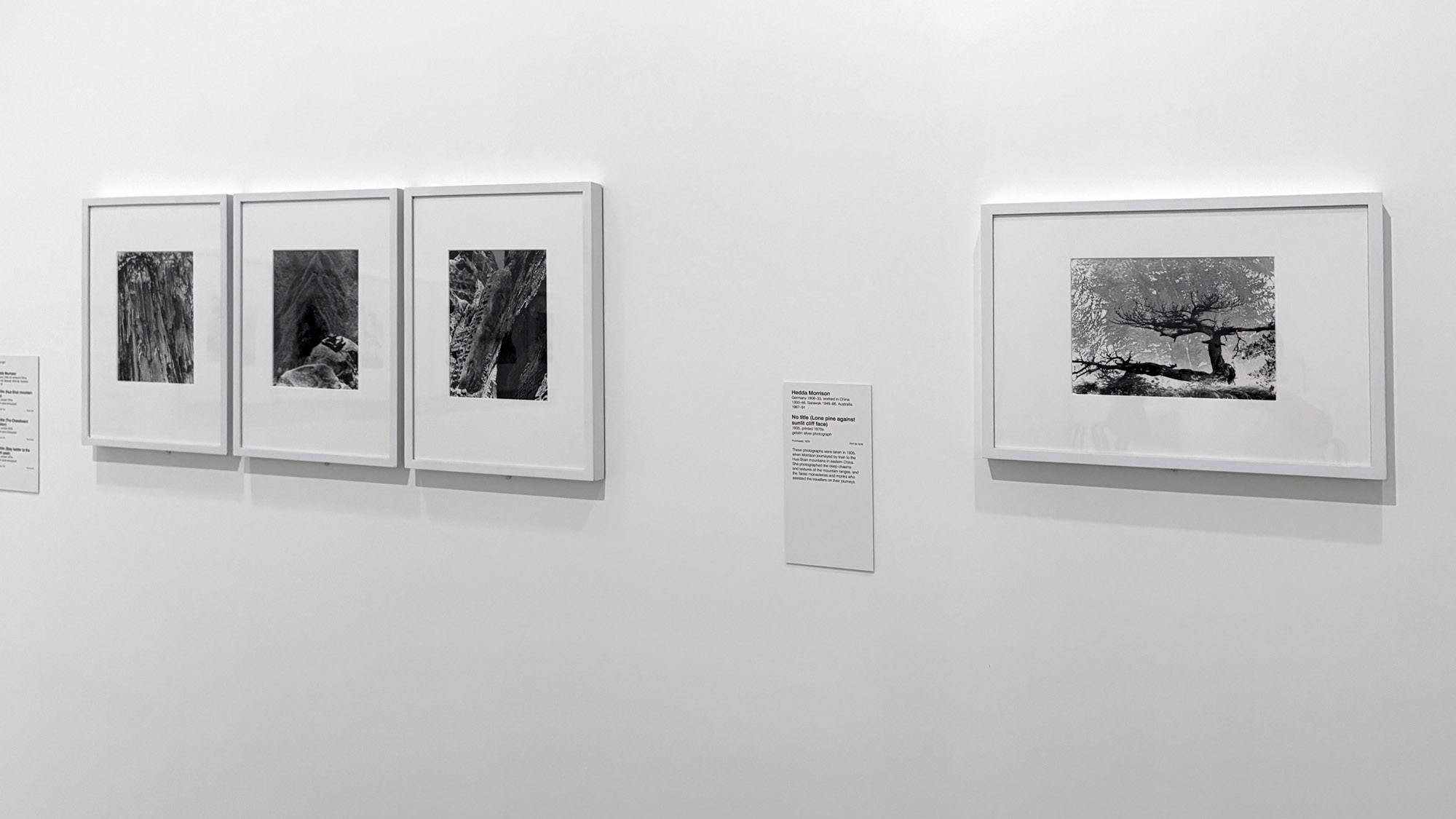
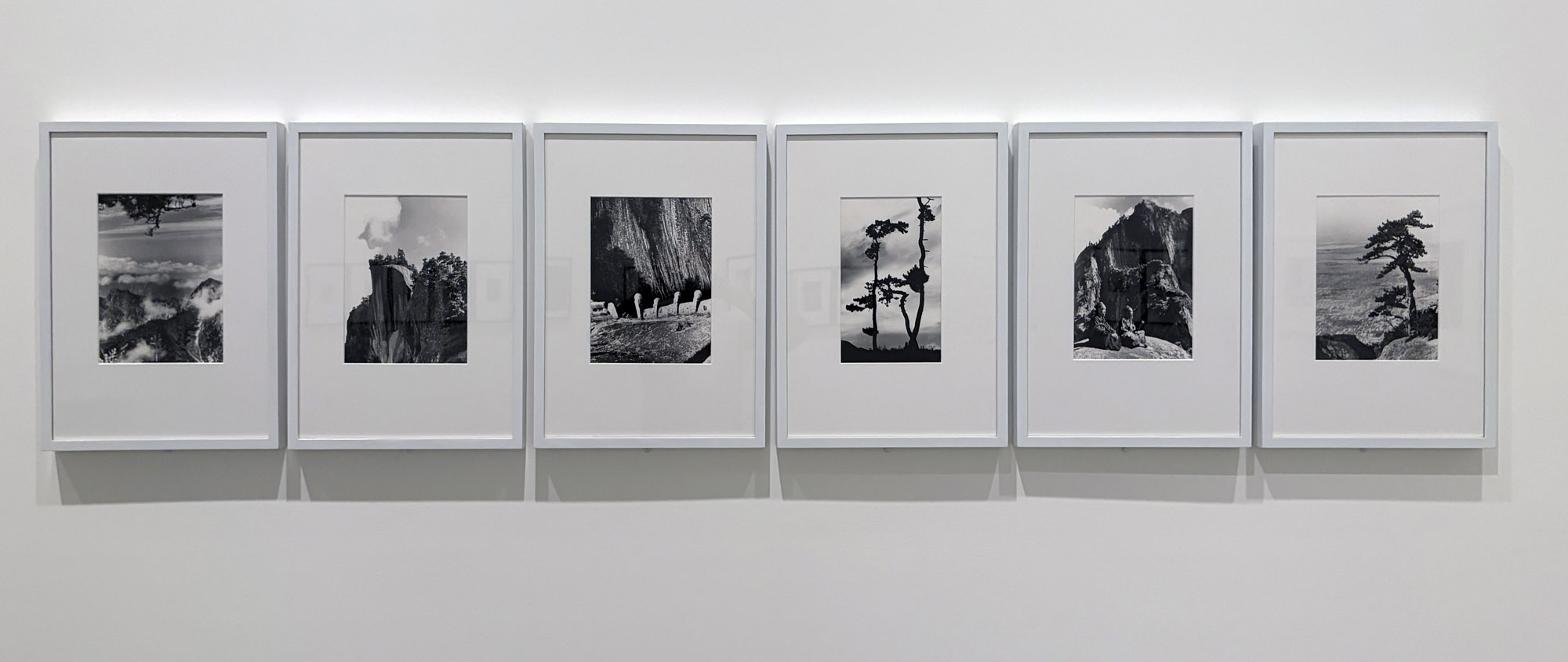
Installation view of the exhibition 'Women Photographers 1900-1975: A Legacy of Light' at NGV International, Melbourne, November 2025 - May 2026 showing from left to right, four photographs by Hedda Morrison (Australian born Germany, 1908-1991): 'No title (Hua Shan mountain face)' (1935, printed 1970s); 'No title (The Chessboard Pavilion)' (1935, printed 1970s); 'No title (Step ladder to the nothingness peak)' (1935, printed 1970s); and 'No title (Lone pine against sunlit cliff face)' (1935, printed 1970s)


Installation view of the exhibition Women Photographers 1900-1975: A Legacy of Light at NGV International, Melbourne, November 2025 – May 2026 showing from left to right, four photographs by Hedda Morrison (Australian born Germany, 1908-1991): No title (Hua Shan mountain face) (1935, printed 1970s); No title (The Chessboard Pavilion) (1935, printed 1970s); No title (Step ladder to the nothingness peak ) (1935, printed 1970s); and No title (Lone pine against sunlit cliff face) (1935 printed 1970s, below)
Photo: Marcus Bunyan


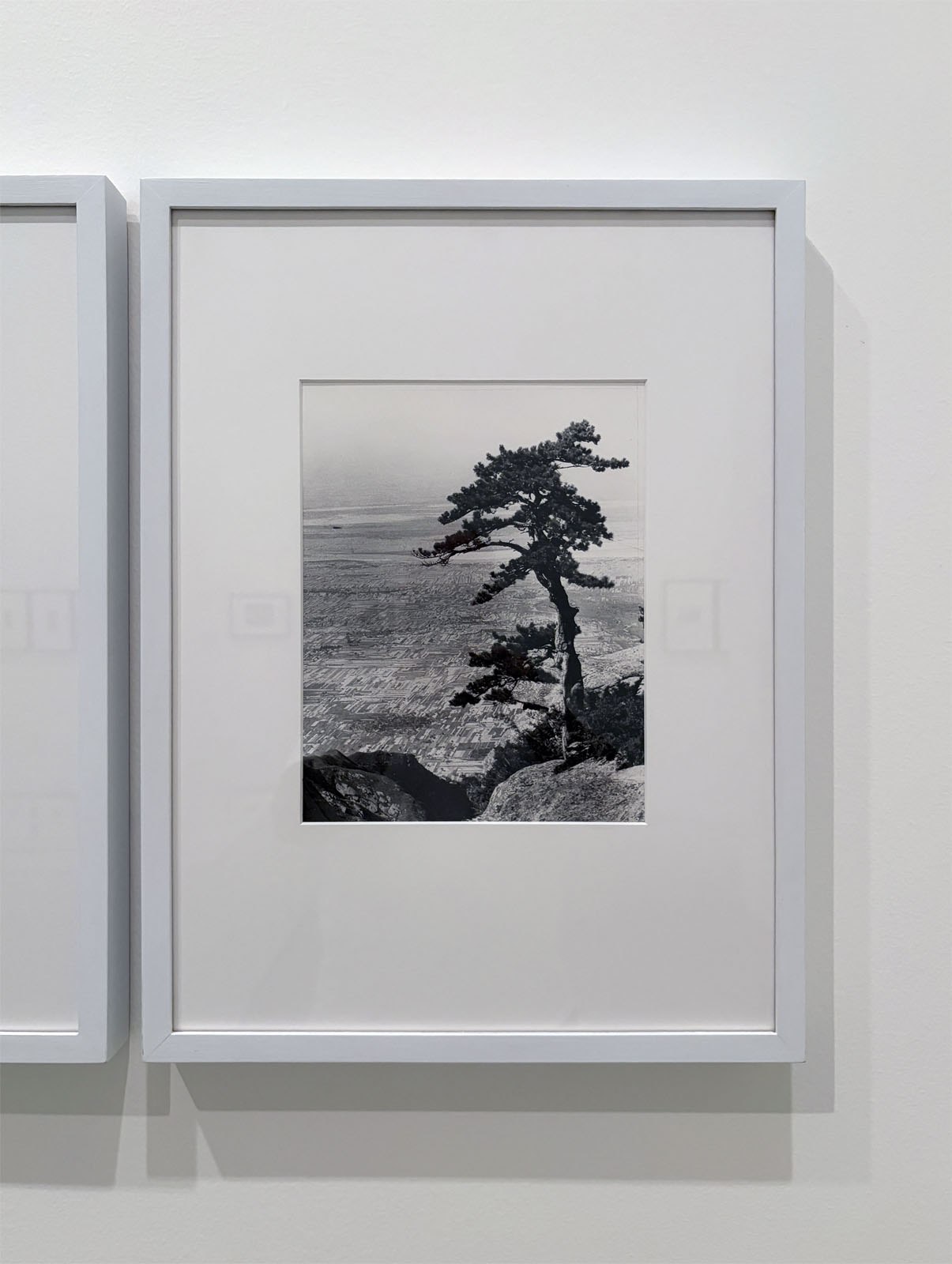
Hedda Morrison (Australian born Germany, 1908-1991) 'No title (Lone pine against sunlit cliff face)' 1935 (installation view)


Hedda Morrison (Australian born Germany, 1908-1991)
No title (Lone pine against sunlit cliff face) (installation view)
1935
Gelatin silver photograph
22.8 x 30.3cm (image)
National Gallery of Victoria, Melbourne
Purchased, 1976
Photo: Marcus Bunyan


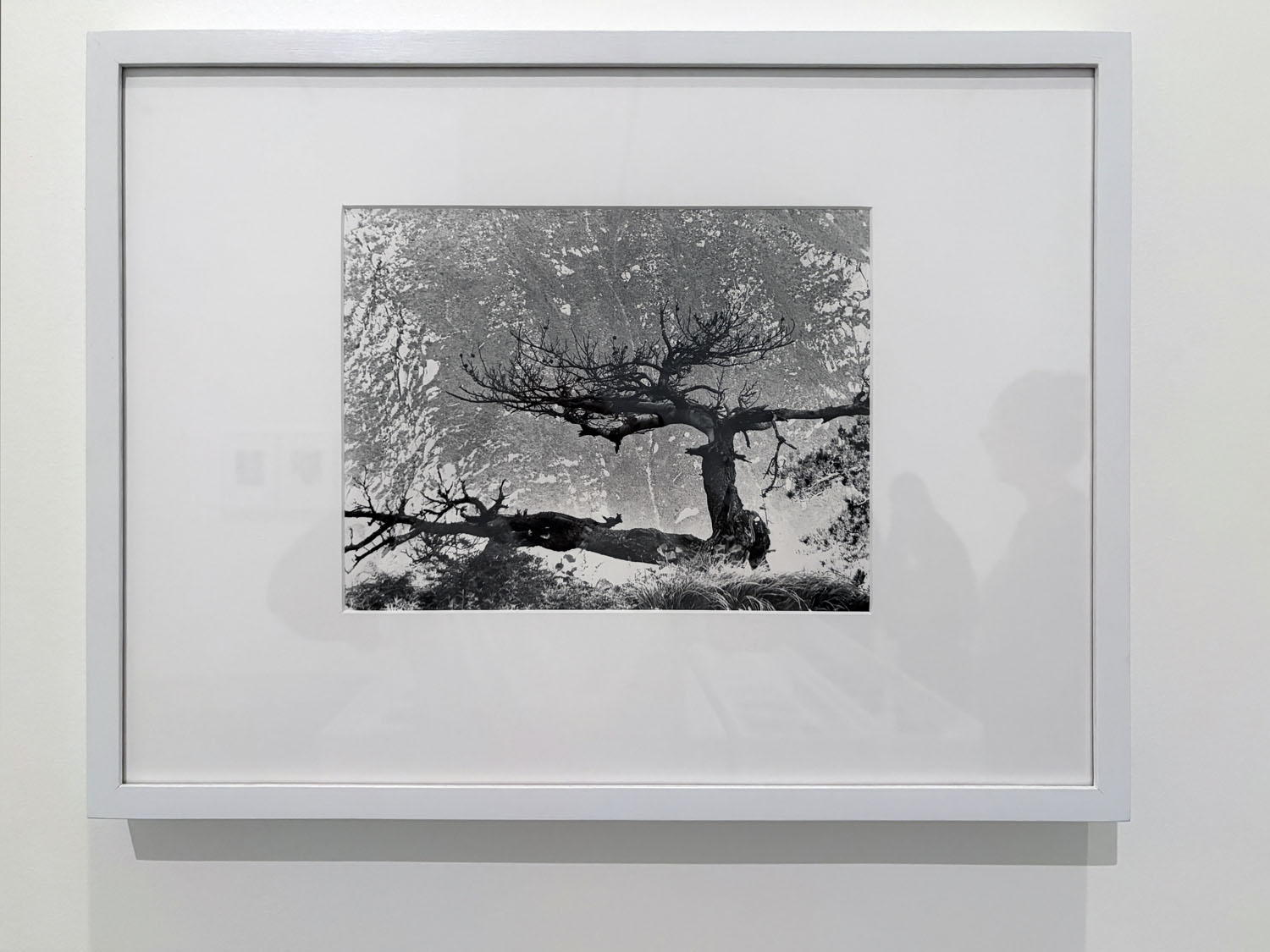
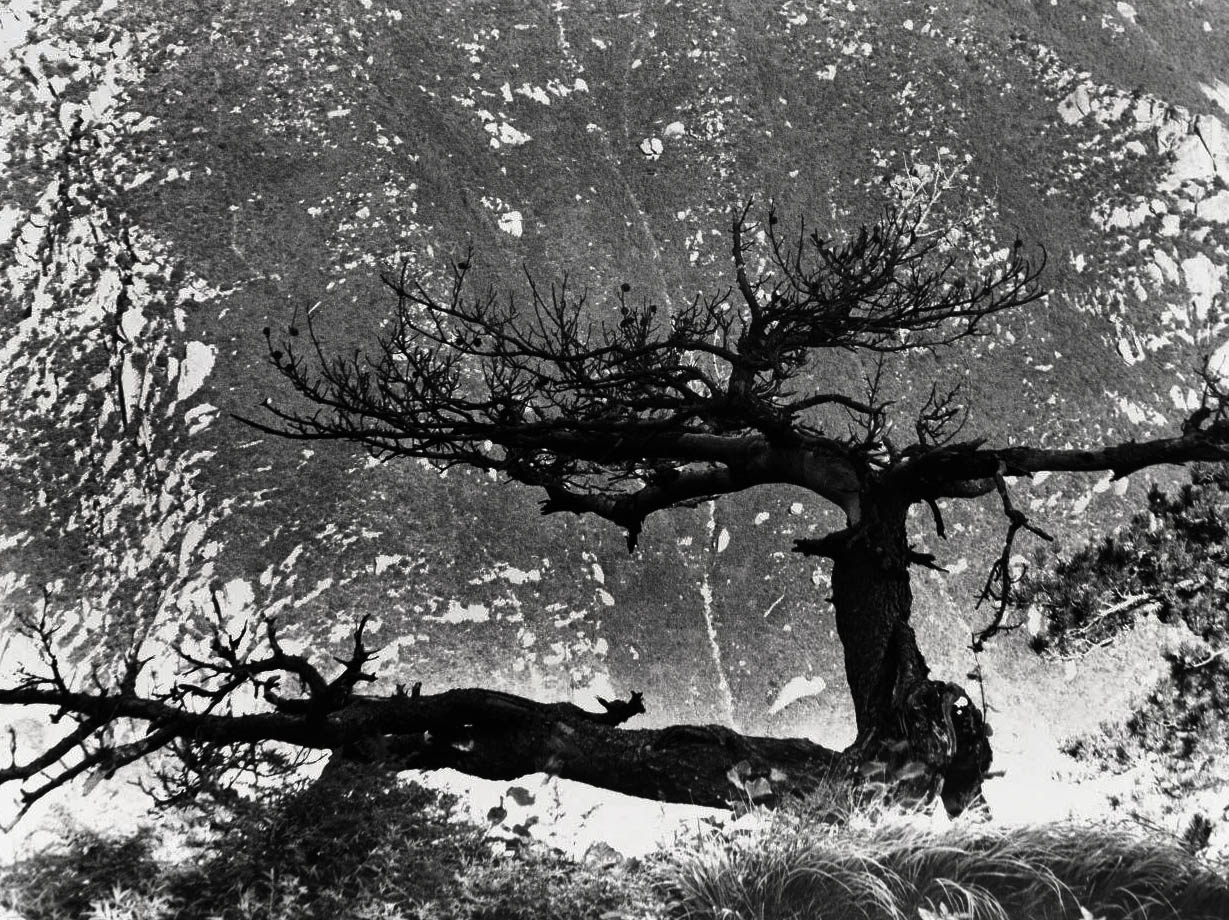
Hedda Morrison (German, 1908-1991) 'No title (Lone pine against sunlit cliff face)' 1935


Hedda Morrison (German, 1908-1991)
No title (Lone pine against sunlit cliff face)
1935
Gelatin silver photograph
22.8 x 30.3cm (image)
National Gallery of Victoria, Melbourne
Purchased, 1976
© Harvard-Yenching Library. Originals held by the Harvard-Yenching Library, Harvard University


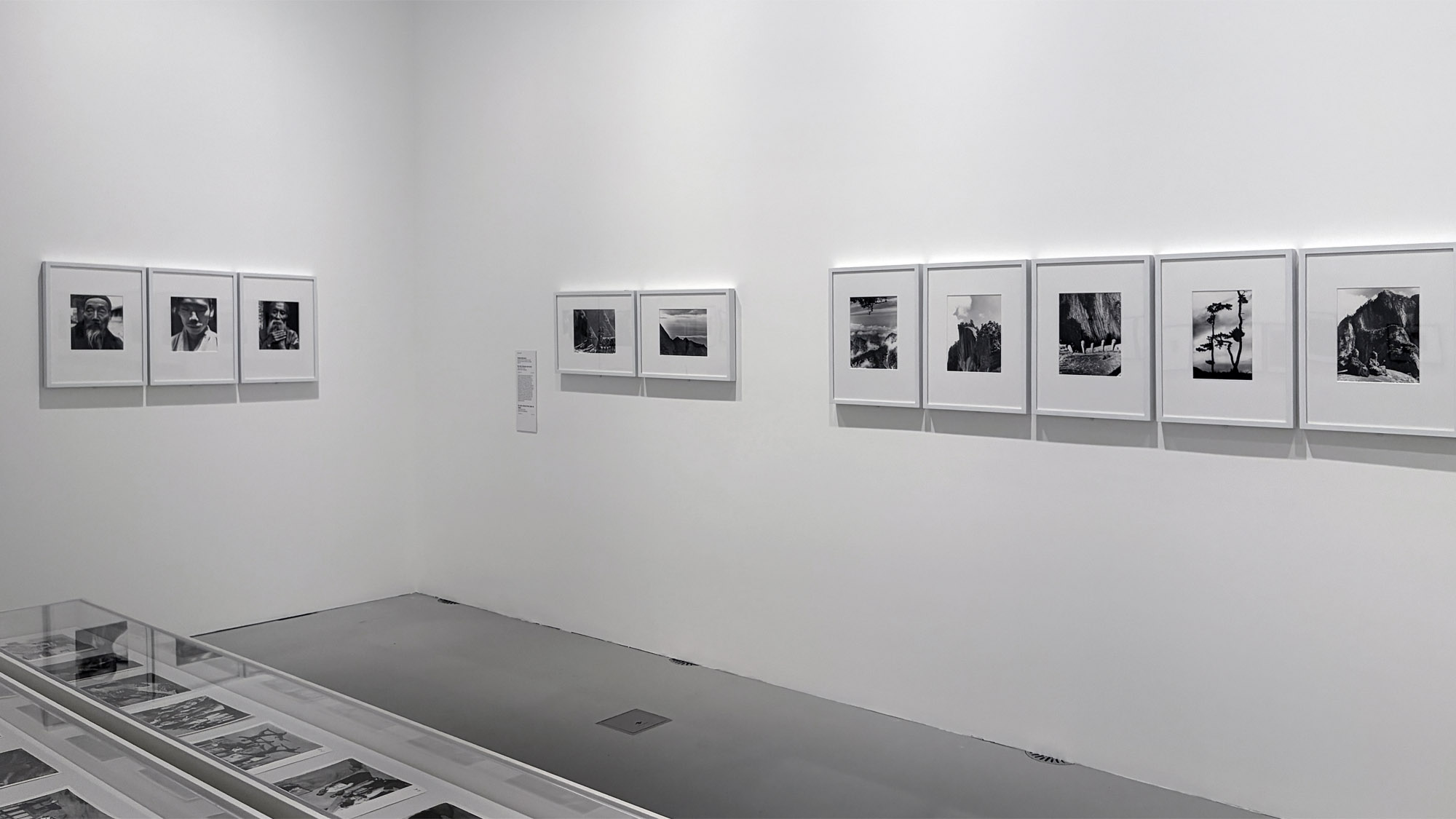
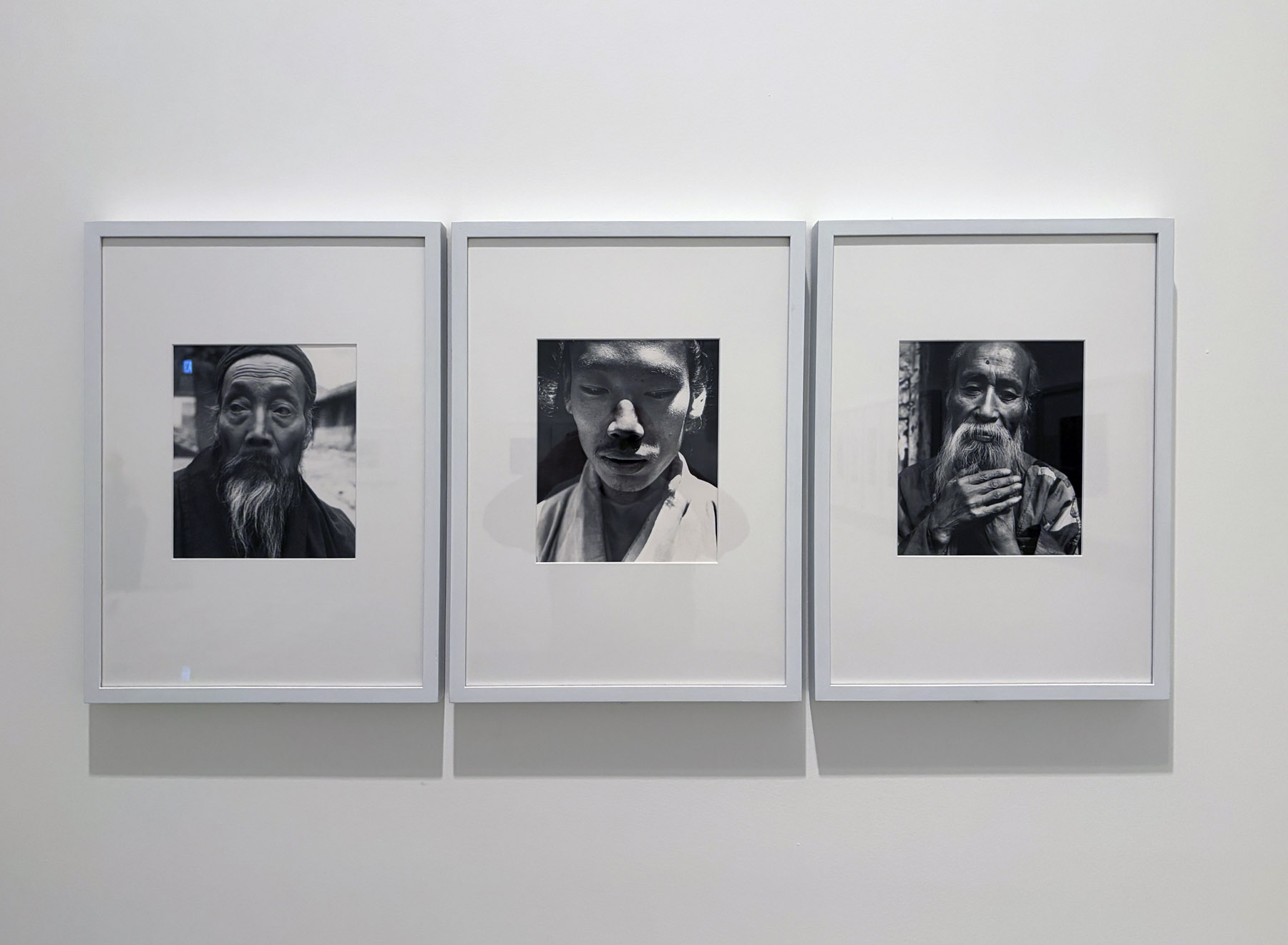
These photographs were taken in 1935, when Morrison journeyed by train to the Hua Shan mountains in eastern China. She photographed the deep chasms and textures of the mountain ranges, and the Taoist monasteries and monks who assisted the travellers on their journeys.

Wall text from the exhibition


Installation view of the exhibition 'Women Photographers 1900-1975: A Legacy of Light' at NGV International, Melbourne, November 2025 - May 2026 showing photographs by Hedda Morrison (Australian born Germany, 1908-1991)


Installation view of the exhibition Women Photographers 1900-1975: A Legacy of Light at NGV International, Melbourne, November 2025 – May 2026 showing photographs by Hedda Morrison (Australian born Germany, 1908-1991)
Photo: Marcus Bunyan


Installation view of the exhibition 'Women Photographers 1900-1975: A Legacy of Light' at NGV International, Melbourne, November 2025 - May 2026 showing from left to right, six photographs by Hedda Morrison: 'No title (Morning clouds)' (1935, printed 1970s); 'No title (Fairy palm cliff)' (1935, printed 1970s); 'No title (The stone balustrade)' (1935, printed 1970s); 'No title (Three gnarled pines)' (1935, printed 1970s); 'No title (Two Taoist priests below the fiery palm cliff)' (1935, printed 1970s); and 'No title (Pine tree above the Yellow River plain)' (1935, printed 1970s)


Installation view of the exhibition Women Photographers 1900-1975: A Legacy of Light at NGV International, Melbourne, November 2025 – May 2026 showing from left to right, six photographs by Hedda Morrison: No title (Morning clouds) (1935, printed 1970s); No title (Fairy palm cliff) (1935, printed 1970s); No title (The stone balustrade) (1935, printed 1970s); No title (Three gnarled pines) (1935, printed 1970s); No title (Two Taoist priests below the fiery palm cliff) (1935, printed 1970s); and No title (Pine tree above the Yellow River plain) (1935, printed 1970s)
Photo: Marcus Bunyan


Hedda Morrison (Australian born Germany, 1908-1991) 'No title (Pine tree above the Yellow River plain)' 1935, printed 1970s (installation view)


Hedda Morrison (Australian born Germany, 1908-1991)
No title (Pine tree above the Yellow River plain) (installation view)
1935, printed 1970s
Gelatin silver photograph
30.3 x 22.7cm (image)
National Gallery of Victoria, Melbourne
Purchased, 1976
Photo: Marcus Bunyan


Installation view of the exhibition 'Women Photographers 1900-1975: A Legacy of Light' at NGV International, Melbourne, November 2025 – May 2026 showing from left to right, three photographs by Hedda Morrison: 'No title (Taoist priest)' (1935, printed 1970s); 'No title (Taoist novice)' (1935, printed 1970s); and 'No title (Taoist priest)' (1935, printed 1970s)


Installation view of the exhibition Women Photographers 1900-1975: A Legacy of Light at NGV International, Melbourne, November 2025 – May 2026 showing from left to right, three photographs by Hedda Morrison: No title (Taoist priest) (1935, printed 1970s); No title (Taoist novice) (1935, printed 1970s); and No title (Taoist priest) (1935, printed 1970s)
Photo: Marcus Bunyan


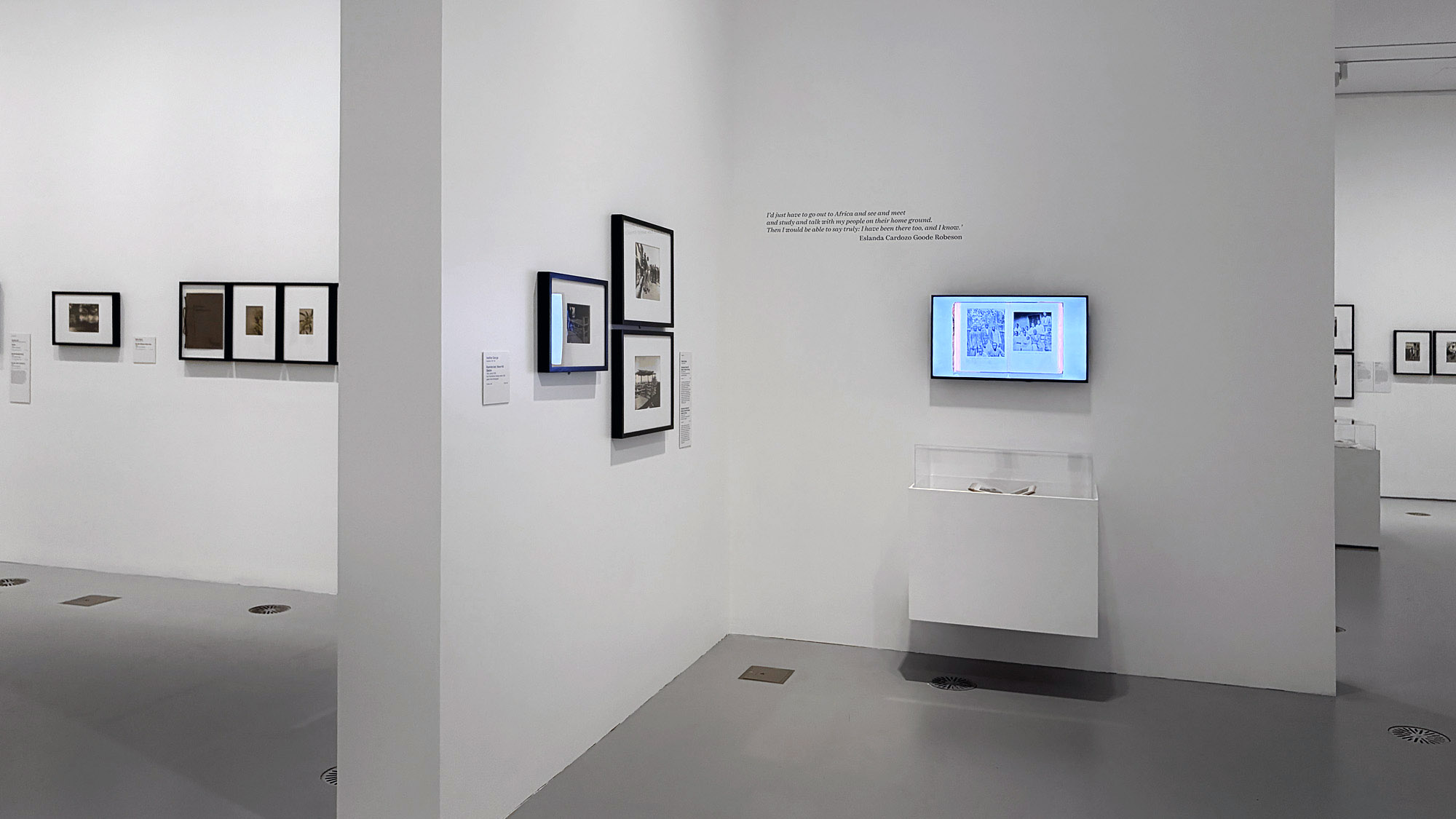
Installation view of the exhibition 'Women Photographers 1900-1975: A Legacy of Light' at NGV International, Melbourne, November 2025 - May 2026


Installation views of the exhibition Women Photographers 1900-1975: A Legacy of Light at NGV International, Melbourne, November 2025 – May 2026
Photos: Marcus Bunyan


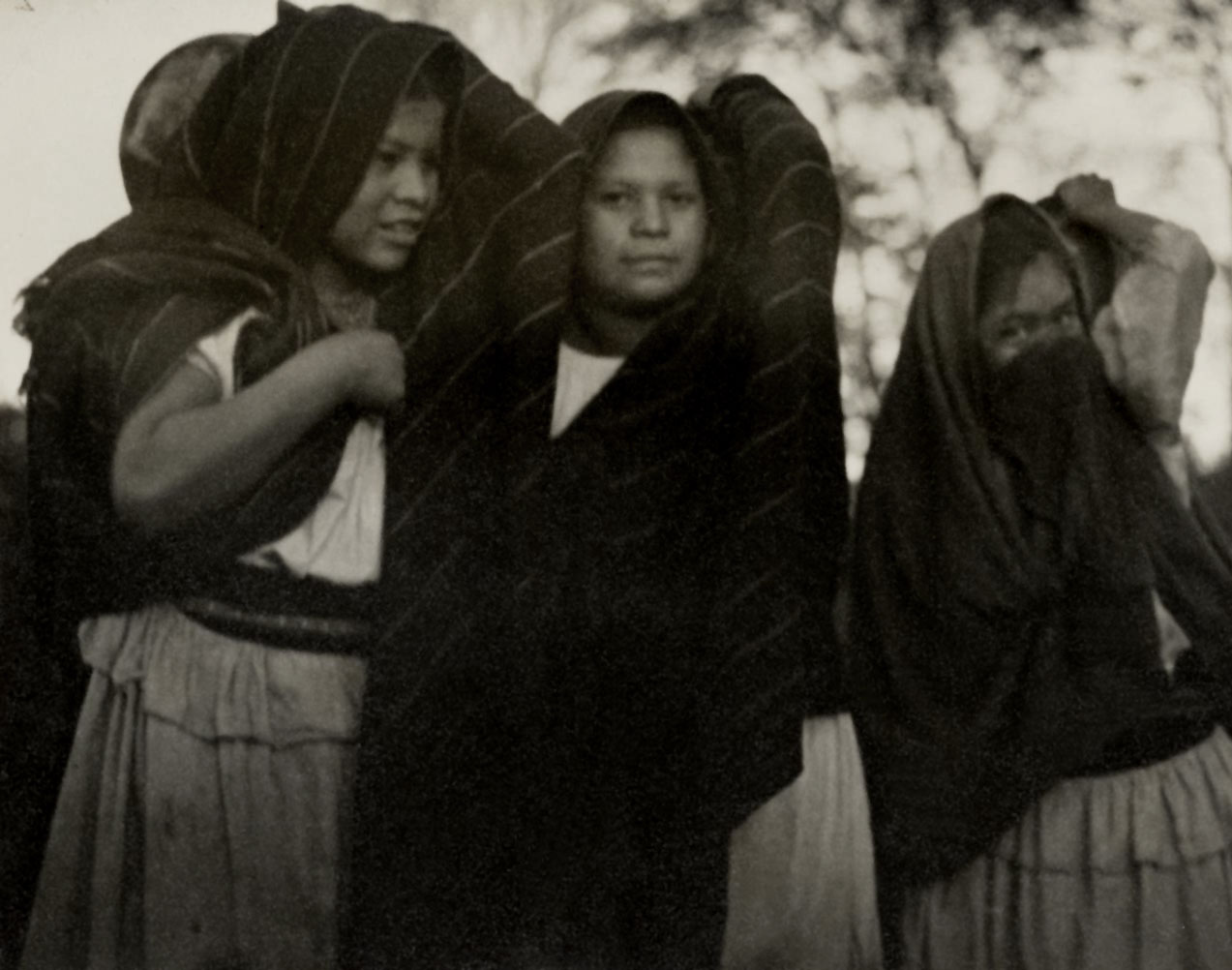
Tina Modotti (Italian, 1896-1942) 'Girls in shawls' 1924-1929


Tina Modotti (Italian, 1896-1942)
Girls in shawls
1924-1929
Gelatin silver photograph
13.2 x 16.9cm (image and sheet)
National Gallery of Victoria, Melbourne
Bowness Family Fund for Photography, 2024


Tina Modotti is known for her socially and politically charged photographs documenting Mexican working life. For Modotti, art, life and politics were inextricably linked. Her photographs show the artist’s commitment to documenting the lives of women and working people. This image is believed to be from a project exploring the popular arts of Mexico, specifically the
shawl-like rebozo, and exemplifies Modotti’s humanist style of documentary photography. It is one of the photographs anthropologist Frances Toor commissioned from Modotti and Edward Weston for the magazine Mexican Folkways, published between 1925 and 1937.

Wall text from the exhibition


Dora Maar (French 1907-1997) 'Vendors laughing behind their charcuterie stall, Barcelona' (Vendeuses et vendeur riant derrière leur étal de charcuterie, Barcelone) 1933


Dora Maar (French 1907-1997)
Vendors laughing behind their charcuterie stall, Barcelona (Vendeuses et vendeur riant derrière leur étal de charcuterie, Barcelone)
1933
Gelatin silver photograph
27.2 x 24.0cm (image)
30.3 x 24.0cm (sheet)
National Gallery of Victoria, Melbourne
Gift of Krystyna Campbell-Pretty AM and Family through the Australian Government’s Cultural Gifts Program, 2021
Public domain


In 1933 Dora Maar travelled to Spain, where she documented the extreme poverty of the country’s cities through people she met on the streets. Aligning with her left-wing politics and opposition to fascism, her photographs honour working-class citizens rather than buildings or monuments. Maar was fascinated by the characters she encountered in La Boqueria, the market in the heart of Barcelona. In this image, she captures a joyful moment as the women vendors playfully turn away from her, hiding their gaze, while a man smiles directly into Maar’s lens.

Wall text from the exhibition


The Document

The primary aim of social documentary photography is to draw attention to social issues, often to promote social or political change. This style of photography blossomed during the tumultuous period of the 1930s, when photographers were commissioned by the United States government to document the effects of the Great Depression. The increased popularity of illustrated mass media such as newspapers and magazines also allowed for the broad dissemination of social documentary images and texts.

The ability of social documentary photography to present a purely objective representation of people or places continues to be fertile ground for debate today.


Installation view of the exhibition 'Women Photographers 1900-1975: A Legacy of Light' at NGV International, Melbourne, November 2025 - May 2026 showing Farm Security Administration photographs by Dorothea Lange
Installation view of the exhibition 'Women Photographers 1900-1975: A Legacy of Light' at NGV International, Melbourne, November 2025 - May 2026


Installation views of the exhibition Women Photographers 1900-1975: A Legacy of Light at NGV International, Melbourne, November 2025 – May 2026 showing Farm Security Administration photographs by Dorothea Lange
Photos: Marcus Bunyan


Installation view of the exhibition 'Women Photographers 1900-1975: A Legacy of Light' at NGV International, Melbourne, November 2025 - May 2026 showing clockwise from bottom left, four photographs by Dorothea Lange: 'Drought-stricken farmers on the shady side of town street while their crops burn up in the fields, Sallisaw, Oklahoma' (1936 printed c. 1975); 'Drought refugees from Oklahoma, Blythe, California' (1936, printed c. 1975); 'Real Estate sign along highway, Riverside County, California' (1937, printed c. 1975); and 'Child living in Oklahoma City, Shacktown' (1936 printed c. 1975)


Installation view of the exhibition Women Photographers 1900-1975: A Legacy of Light at NGV International, Melbourne, November 2025 – May 2026 showing clockwise from bottom left, four photographs by Dorothea Lange: Drought-stricken farmers on the shady side of town street while their crops burn up in the fields, Sallisaw, Oklahoma (1936 printed c. 1975, below); Drought refugees from Oklahoma, Blythe, California (1936, printed c. 1975); Real Estate sign along highway, Riverside County, California (1937, printed c. 1975); and Child living in Oklahoma City, Shacktown (1936 printed c. 1975, below)
Photo: Marcus Bunyan


Dorothea Lange (American, 1895-1965) 'Drought-stricken farmers on the shady side of town street while their crops burn up in the fields, Sallisaw, Oklahoma' 1936, printed c. 1975


Dorothea Lange (American, 1895-1965)
Drought-stricken farmers on the shady side of town street while their crops burn up in the fields, Sallisaw, Oklahoma
1936, printed c. 1975
Gelatin silver photograph
26.4 x 25.4cm (image)
28.0 x 35.4cm (sheet)
National Gallery of Victoria, Melbourne
Purchased, 1975
Public domain


Dorothea Lange (American, 1895-1965) 'Child living in Oklahoma City, Shacktown' 1936, printed c. 1975


Dorothea Lange (American, 1895-1965)
Child living in Oklahoma City, Shacktown
1936, printed c. 1975
Gelatin silver photograph
26.9 x 25.5cm (image)
28.0 x 35.4cm (sheet)
National Gallery of Victoria, Melbourne
Purchased, 1975
Public domain


During the Great Depression, many migrants travelling in search of economic opportunity were forced to create temporary camps along roadsides. For Dorothea Lange, who photographed many such experiences over several years, images like this one were part of a greater project to spark public awareness of the difficulties people were facing. As Lange later said, ‘I had begun to talk to the people I photographed … In the migrant camps, there were always talkers. It gave us a chance to meet on common ground.’

Wall text from the exhibition


In Focus: Farm Security Administration Project

The Farm Security Administration (FSA) was established in 1937 as part of United States President Franklin D. Roosevelt’s New Deal economic reforms, which provided relief to farmers left impoverished by the hardships of the Great Depression. Led by Roy Stryker, the FSA’s photography program was to be one of the most influential social documentary projects ever developed. Many images were reproduced in newspapers and periodicals to show the harsh realities of life for those living in poverty, with the aim of encouraging public support for the government’s economic policies.

The program ran as part of several government agencies, including the Resettlement Administration (1935-37), then the Farm Security Administration (1937-42) and the Office of War Information (1942-44). Stryker hired a range of photographers for the project and, despite their being given comparable briefs, the unique eye of each photographer is apparent in the over 175,000 pictures produced by the project.

As well as forming a comprehensive pictorial record of American life from 1935 to 1944, the FSA photography program generated some of the most recognisable documentary photographs of the twentieth century, including images by women such as Dorothea Lange, Marion Post Wolcott and Marjory Collins.


Dorothea Lange (American, 1895-1965) 'Woman of the high plains, near Childress, Texas' 1938, printed c. 1975 (installation view)


Dorothea Lange (American, 1895-1965)
Woman of the high plains, near Childress, Texas (installation view)
1938, printed c. 1975
Gelatin silver photograph
49.4 x 39.3cm (image)
50.5 x 40.6cm (sheet)
National Gallery of Victoria, Melbourne
Purchased, 1975
Public domain


Dorothea Lange (American, 1895-1965) 'Woman of the High Plains, Texas Panhandle' June 1938, printed c. 1975


Dorothea Lange (American, 1895-1965)
Woman of the high plains, near Childress, Texas
1938, printed c. 1975
Gelatin silver photograph
49.4 x 39.3cm (image)
50.5 x 40.6cm (sheet)
National Gallery of Victoria, Melbourne
Purchased, 1975
Public domain


‘We’ve had no work since March. The worst thing we did was when we sold the car, but we had to sell it to eat, and now we can’t get away from here … This county’s a hard county. They won’t help bury you here. If you die, you’re dead, that’s all.’

~ The subject of this photograph, Nettie Featherston, to Dorothea Lange

Wall text from the exhibition


Dorothea Lange (United States 1895-1965) 'Towards Los Angeles, California' 1936, printed c. 1975


Dorothea Lange (American, 1895-1965)
Towards Los Angeles, California
1936, printed c. 1975
Gelatin silver photograph
39.6 x 39.1cm (image)
40.8 x 50.5cm (sheet)
National Gallery of Victoria, Melbourne
Purchased, 1975


During the Great Depression, the Great Plains of North America became known as the Dust Bowl. A severe drought turned the soil to dust, leading to the migration of thousands of small-scale farmers who could no longer work the land. Dorothea Lange made many road trips to document the plight of migrants heading west in search of work and opportunities. Many of Lange’s photographs, such as this one, show workers travelling in difficult conditions, on foot and by car. This photograph was also used as the basis for a scene in the 1939 film Of Mice and Men, based on John Steinbeck’s story of two migrant ranch workers.

Wall text from the exhibition


Installation view of the exhibition 'Women Photographers 1900-1975: A Legacy of Light' at NGV International, Melbourne, November 2025 - May 2026 showing from top to bottom, two photographs by Dorothea Lange: 'Plantation Overseer, Mississippi Delta, near Clarksdale, Mississippi' (1936, printed c. 1975) and 'Born a slave, resettled after the Civil War, Carrizo Springs, Texas' (1936, printed c. 1975)


Installation view of the exhibition Women Photographers 1900-1975: A Legacy of Light at NGV International, Melbourne, November 2025 – May 2026 showing from top to bottom, two photographs by Dorothea Lange: Plantation Overseer, Mississippi Delta, near Clarksdale, Mississippi (1936, printed c. 1975) and Born a slave, resettled after the Civil War, Carrizo Springs, Texas (1936 printed c. 1975, below)
Photo: Marcus Bunyan


Dorothea Lange (American, 1895-1965) 'Born a slave, resettled after the Civil War, Carrizo Springs, Texas' 1936, printed c. 1975


Dorothea Lange (American, 1895-1965)
Born a slave, resettled after the Civil War, Carrizo Springs, Texas
1936, printed c. 1975
Gelatin silver photograph
26.5 x 25.4cm (image)
28.0 x 35.4cm (sheet)
National Gallery of Victoria, Melbourne
Purchased, 1975
Public domain


Dorothea Lange witnessed racial segregation in the Southern states and often photographed individuals affected by the resulting social and economic inequalities. This work is also known by an alternate title: ‘Bob Lemmons, Carrizo Springs, Texas. Born a slave about 1850, south of San Antonio. Came to Carrizo Springs during the Civil War with white cattlemen seeking new range. In 1865, with his master was one of the first settlers. Knew Billy the Kid, King Fisher, and other noted bad men of the border.’

Wall text from the exhibition


Marion Post Wolcott (American, 1910-1990) 'Shenandoah Valley, Virginia' 1941, printed c. 1975 (installation view)


Marion Post Wolcott (American, 1910-1990)
Shenandoah Valley, Virginia (installation view)
1941, printed c. 1975
Gelatin silver photograph
25.6 x 34.1cm (image)
28.0 x 35.4cm (sheet)
National Gallery of Victoria, Melbourne
Purchased, 1975
Public domain
Photo: Marcus Bunyan


Marion Post Wolcott (American, 1910-1990) 'Shenandoah Valley, Virginia' 1941, printed c. 1975


Marion Post Wolcott (American, 1910-1990)
Shenandoah Valley, Virginia
1941, printed c. 1975
Gelatin silver photograph
25.6 x 34.1cm (image)
28.0 x 35.4cm (sheet)
National Gallery of Victoria, Melbourne
Purchased, 1975
Public domain


Marion Post Wolcott (American, 1910-1990) 'One of the judges at the horse races, Warrenton, Virginia' 1941, printed c. 1975 (installation view)


Marion Post Wolcott (American, 1910-1990)
One of the judges at the horse races, Warrenton, Virginia (installation view)
1941, printed c. 1975
Gelatin silver photograph
39.6 x 39.1cm (image)
40.8 x 50.5cm (sheet)
National Gallery of Victoria, Melbourne
Purchased, 1975
Public domain
Photo: Marcus Bunyan


Marion Post Wolcott (American, 1910-1990) 'Transportation for hep cats Louisville, Kentucky' 1940, printed c. 1975 (installation view)


Marion Post Wolcott (American, 1910-1990)
Transportation for hep cats Louisville, Kentucky (installation view)
1940, printed c. 1975
Gelatin silver photograph
25.7 x 34.1cm (image)
36.1 x 44.6cm (sheet)
National Gallery of Victoria, Melbourne
Purchased, 1975
Public domain
Photo: Marcus Bunyan


Marion Post Wolcott (American, 1910-1990) 'Transportation for hep cats Louisville, Kentucky' 1940, printed c. 1975


Marion Post Wolcott (American, 1910-1990)
Transportation for hep cats Louisville, Kentucky
1940, printed c. 1975
Gelatin silver photograph
25.7 x 34.1cm (image)
36.1 x 44.6cm (sheet)
National Gallery of Victoria, Melbourne
Purchased, 1975
Public domain


Installation view of the exhibition 'Women Photographers 1900-1975: A Legacy of Light' at NGV International, Melbourne, November 2025 - May 2026 showing from third left to right, three photographs by Marion Post Wolcott: 'Near Wadesboro, North Carolina' (1938, printed c. 1975); 'Baptismal service, Morehead, Kentucky' (1940, printed c. 1975); and 'Jitterbugging in a juke joint on Saturday night, Clarksdale, Mississippi' (1939, printed c. 1975)


Installation view of the exhibition Women Photographers 1900-1975: A Legacy of Light at NGV International, Melbourne, November 2025 – May 2026 showing from third left to right, three photographs by Marion Post Wolcott: Near Wadesboro, North Carolina (1938 printed c. 1975, below); Baptismal service, Morehead, Kentucky (1940 printed c. 1975, below); and Jitterbugging in a juke joint on Saturday night, Clarksdale, Mississippi (1939 printed c. 1975, below)
Photo: Marcus Bunyan


Marion Post Wolcott (American, 1910-1990) 'Near Wadesboro, North Carolina' 1938, printed c. 1975 (installation view)


Marion Post Wolcott (American, 1910-1990)
Near Wadesboro, North Carolina (installation view)
1938, printed c. 1975
Gelatin silver photograph
26.4 × 26.5cm (image)
28.0 × 35.3cm (sheet)
National Gallery of Victoria, Melbourne
Purchased, 1975
Public domain
Photo: Marcus Bunyan


The people in this photograph are the children of tenant farmers. The older child holds the hand of the younger, whose legs are bowed likely due to rickets, a medical condition caused by malnourishment. This is a vivid image that captures both the intimacy between children and the effects of environmental and economic devastation.

Wall text from the exhibition


Marion Post Wolcott (American, 1910-1990) 'Haircutting in front of plantation store after being paid off on Saturday, Mileston Plantation, Mississippi Delta' 1939, printed c. 1939 (installation view)


Marion Post Wolcott (American, 1910-1990)
Haircutting in front of plantation store after being paid off on Saturday, Mileston Plantation, Mississippi Delta (installation view)
1939, printed c. 1939
Gelatin silver photograph
27.0 x 34.6cm (image and sheet)
National Gallery of Victoria, Melbourne
Purchased, 1980
Photo: Marcus Bunyan


Marion Post Wolcott (American, 1910–1990) '[Haircutting in Front of General Store and Post Office on Marcella Plantation, Mileston, Mississippi]' 1939


Marion Post Wolcott (American, 1910-1990)
Haircutting in front of plantation store after being paid off on Saturday, Mileston Plantation, Mississippi Delta
1939, printed c. 1939
Gelatin silver photograph
27.0 x 34.6cm (image and sheet)
National Gallery of Victoria, Melbourne
Purchased, 1980


Marion Post Wolcott (American, 1910-1990) 'Baptismal service, Morehead, Kentucky' 1940, printed c. 1975


Marion Post Wolcott (American, 1910-1990)
Baptismal service, Morehead, Kentucky
1940, printed c. 1975
Gelatin silver photograph
36.3 X 49.3cm (image) 40.7 X 50.5cm (sheet)
National Gallery of Victoria, Melbourne
Purchased, 1975


Marion Post Wolcott (American, 1910-1990)
Jitterbugging in a juke joint on Saturday night, Clarksdale, Mississippi
1939, printed c. 1975
gelatin silver photograph
36.7 x 49.3cm (image) 40.7 x 50.5cm (sheet)
National Gallery of Victoria, Melbourne
Purchased, 1975


Marion Post Wolcott had a keen sense of social justice, having lived in Austria in the early 1930s, where she witnessed firsthand the rise of Nazism. On her return home to New York in 1933, she was determined to use her photography to raise awareness of social inequalities. While working for the Farm Security Administration (FSA) in the segregated American South, Wolcott witnessed the bleak economic situation endured by African Americans, which was exacerbated by the Great Depression. With an ‘open eye’, Wolcott captured both the positive effects of the FSA and the difficult realities of daily life. Her candid images of African American communities in the South – such as this joyful shot of people dancing – countered the dominant images of Black lives as they were commonly represented in mainstream media.

Wall text from the exhibition


Installation view of the exhibition 'Women Photographers 1900-1975: A Legacy of Light' at NGV International, Melbourne, November 2025 - May 2026 showing three photographs by Australian photographer Heather George


Installation view of the exhibition Women Photographers 1900-1975: A Legacy of Light at NGV International, Melbourne, November 2025 – May 2026 showing three photographs by Heather George (Australia, 1907-1983): Rawhide bed, Wave Hill Station (1952, printed 1978); Stockyards, Wave Hill Station, Northern Territory (1952, printed 1978); and Stockyards, stockmen in distance. Wave Hill Station, Northern Territory (1952, printed 1978)
Photo: Marcus Bunyan


Heather George (Australia, 1907-1983) 'Stockyards, Wave Hill Station, Northern Territory' 1952, printed 1978


Heather George (Australia, 1907-1983)
Stockyards, Wave Hill Station, Northern Territory
1952, printed 1978
From The Northern Territory series (1952)
Gelatin silver photograph
24.0 x 28.8cm (image)
National Gallery of Victoria, Melbourne
Purchased, 1980
Public domain


In the 1950s and 1960s Heather George worked as a freelance photographer and photojournalist. In 1952 Walkabout magazine published a series of photographs George made in the Northern Territory outback, including images of Wave Hill Station, a vast pastoral lease on the lands of the Gurindji people. Fourteen years later, it was to go down in history as the location of a turning point in the recognition of land rights for Australia’s First Nations peoples.

Wall text from the exhibition


Consuelo Kanaga (American, 1894-1978) 'She is a Tree of Life' 1950


Consuelo Kanaga (American, 1894-1978)
She is a tree of life to them
1950
Gelatin silver photograph
32.8 x 24.1cm (image and sheet)
National Gallery of Victoria, Melbourne
Bowness Family Fund for Photography, 2024
© Consuelo Kanaga


Consuelo Kanaga worked at the San Francisco Chronicle from 1915, later joining the California Camera Club, where she met photographers Imogen Cunningham, Dorothea Lange and Edward Weston. Kanaga’s image-making was informed by her involvement in liberal politics and the nascent civil rights
movement. In 1950 she stayed in an artists’ colony in Maitland, Florida, and documented the lives of Black field workers living there. This refined portrait of a mother with her children became well known around the world after its inclusion in the touring exhibition The Family of Man, curated by pioneering photographer Edward Steichen.

Wall text from the exhibition


Ruth Orkin (American, 1921-1985) 'American girl in Italy, Florence' 1951, printed 1980 (installation view)


Ruth Orkin (American, 1921-1985)
American girl in Italy, Florence (installation view)
1951, printed 1980
Gelatin silver photograph
30.2 x 46.9cm (image)
40.3 x 50.6cm (sheet)
National Gallery of Victoria, Melbourne
Gift of Krystyna Campbell-Pretty AM and Family through the Australian Government’s Cultural Gifts Program, 2022
Photo: Marcus Bunyan


In 1950 freelance photographer Ruth Orkin was included in the Young Photographers exhibition at the Museum of Modern Art, New York, and in 1951 Life magazine sent her on assignment to Israel. Before returning to America, she spent time in Italy, where she met a young American painter, Jinx Allen. The women collaborated on a series of photographs commissioned from Orkin by Cosmopolitan magazine for an article titled ‘Don’t Be Afraid to Travel Alone’. Standing in a Florence intersection, Orkin captured her friend as she manoeuvred through a crowd of men. The resulting image is reminiscent of a movie still – Orkin would go on to co-direct two feature films with her husband in the 1950s.

Wall text from the exhibition


Installation view of the exhibition 'Women Photographers 1900-1975: A Legacy of Light' at NGV International, Melbourne, November 2025 - May 2026 showing from left to right, Maggie Diaz '3AW mobile studio, Elwood Beach' (1960s printed 2014); Maggie Diaz 'Ladies at the bar, Tavern Club, Chicago' (1957, printed 2014); three photographs by Diane Arbus: 'Girl with a cigar in Washington Square Park, N.Y.C.' (1965, printed later); 'Blaze Starr in her living room, Baltimore, Md.' (1964, printed later); 'A Couple at a Dance, N.Y.C.' (1960, printed later); and Lisette Model 'Woman with veil, San Francisco' (1949, printed c. 1960)


Installation view of the exhibition Women Photographers 1900-1975: A Legacy of Light at NGV International, Melbourne, November 2025 – May 2026 showing from left to right, Maggie Diaz 3AW mobile studio, Elwood Beach (1960s printed 2014, below); Maggie Diaz Ladies at the bar, Tavern Club, Chicago (1957, printed 2014); three photographs by Diane Arbus: Girl with a cigar in Washington Square Park, N.Y.C. (1965, printed later); Blaze Starr in her living room, Baltimore, Md. (1964, printed later); A Couple at a Dance, N.Y.C. (1960, printed later); and Lisette Model Woman with veil, San Francisco (1949, printed c. 1960)
Photo: Marcus Bunyan


Maggie Diaz (American, 1925-2016, Australia 1961-2016) '3AW mobile studio, Elwood Beach' 1960s, printed 2014 (installation view)


Maggie Diaz (American, 1925-2016, Australia 1961-2016)
3AW mobile studio, Elwood Beach (installation view)
1960s, printed 2014
Pigment print
27.9 x 30.0cm (image)
48.2 x 33.0cm (sheet)
ed. 2/25
National Gallery of Victoria, Melbourne
Purchased, Victorian Foundation for Living Australian Artists, 2015
Photo: Marcus Bunyan


Maggie Diaz (American, 1925-2016, Australia 1961-2016) '3AW mobile studio, Elwood Beach' 1960s, printed 2014


Maggie Diaz (American, 1925-2016, Australia 1961-2016)
3AW mobile studio, Elwood Beach
1960s, printed 2014
Pigment print
27.9 x 30.0cm (image)
48.2 x 33.0cm (sheet)
ed. 2/25
National Gallery of Victoria, Melbourne
Purchased, Victorian Foundation for Living Australian Artists, 2015
© Maggie Diaz


Moving to Australia in 1961, American photographer Maggie Diaz established her Melbourne studio specialising in advertising, portraiture and social documentary photography. Among her commercial clients was the local radio station 3AW, which displayed her photographs in its new CBD studio. A 1964 article in Melbourne newspaper The Age described the headquarters, noting with apparent surprise that the commissioned photographs are ‘the work of a woman’.

Wall text from the exhibition


Installation view of the exhibition 'Women Photographers 1900-1975: A Legacy of Light' at NGV International, Melbourne, November 2025 - May 2026


Installation view of the exhibition Women Photographers 1900-1975: A Legacy of Light at NGV International, Melbourne, November 2025 – May 2026
Photo: Marcus Bunyan


BOTH: Mikki Ferrill (American, b. 1937) 'Untitled' 1970s (installation view)


BOTH

Mikki Ferrill (American, b. 1937)
Untitled (installation view)
1970s
Gelatin silver photograph
20.7 x 13.6cm (image)
25.5 x 20.2cm (sheet)
National Gallery of Victoria, Melbourne
Bowness Family Fund for Photography, 2024
Photo: Marcus Bunyan


Valeria ‘Mikki’ Ferrill is an African American photographer known for her documentation of the Black community in Chicago’s South Side during the 1960s and 70s. Ferrill studied advertising design and illustration at the School of the Art Institute of Chicago. She eventually became a photojournalist, joining a group of Black photographers from the area who shot for local periodicals and newspapers. Ferrill worked on assignments in Mexico in the late 1960s, returning to Chicago in 1970.

Throughout

Wall text from the exhibition


Collaboration and Change

Many postwar street photographers captured their subjects in the ‘instant’. By embracing close-looking, artists relied on chance to create spontaneous compositions, capturing candid, everyday moments. Photographers such as Diane Arbus worked on the streets of New York City, creating vivid portraits of contemporary American life. Arbus often collaborated with her subjects, producing striking images in the moment or curating compositions for magazine commissions.

Fashion photography was on the rise in the period, with American publications such as Harper’s Bazaar playing a pivotal role in amplifying the art form. Louise Dahl-Wolfe, Lillian Bassman and Toni Frissell were regular contributors to the magazine. Their photographs depicted the idealistic and aspirational modern woman.

Yamazawa Eiko and Tokiwa Toyoko were trailblazing women photographers working in Japan at the same time. Their works reflect the social changes of postwar Japan, expressed through the medium of the photobook.


Installation view of the exhibition 'Women Photographers 1900-1975: A Legacy of Light' at NGV International, Melbourne, November 2025 - May 2026
Installation view of the exhibition 'Women Photographers 1900-1975: A Legacy of Light' at NGV International, Melbourne, November 2025 - May 2026 showing at left, three photographs by the photographer Lillian Bassman (American, 1917-2012): 'Black - with one white glove, Barbara Mullen, Christian Dior, Harper's Bazaar, New York, 1958' (1958, printed (1994); 'Toreador and Barbara Mullen (for Harper's Bazaar)' (1950, printed 2006); and 'More fashion mileage per dress, Barbara Vaughn, Harper’s Bazaar, New York' (1956)


Installation views of the exhibition Women Photographers 1900-1975: A Legacy of Light at NGV International, Melbourne, November 2025 – May 2026 showing at left, three photographs by the photographer Lillian Bassman (American, 1917-2012): Black – with one white glove, Barbara Mullen, Christian Dior, Harper’s Bazaar, New York, 1958 (1958, printed (1994); Toreador and Barbara Mullen (for Harper’s Bazaar) (1950, printed 2006); and More fashion mileage per dress, Barbara Vaughn, Harper’s Bazaar, New York (1956, below)
Photos: Marcus Bunyan


Installation view of the exhibition 'Women Photographers 1900-1975: A Legacy of Light' at NGV International, Melbourne, November 2025 - May 2026 showing at right, three photographs by the photographer Lillian Bassman (American, 1917-2012): 'Black - with one white glove, Barbara Mullen, Christian Dior, Harper's Bazaar, New York, 1958' (1958, printed (1994); 'Toreador and Barbara Mullen (for Harper's Bazaar)' (1950, printed 2006); and 'More fashion mileage per dress, Barbara Vaughn, Harper's Bazaar, New York' (1956)


Installation view of the exhibition Women Photographers 1900-1975: A Legacy of Light at NGV International, Melbourne, November 2025 – May 2026 showing at right, three photographs by the photographer Lillian Bassman (American, 1917-2012): Black – with one white glove, Barbara Mullen, Christian Dior, Harper’s Bazaar, New York, 1958 (1958, printed (1994); Toreador and Barbara Mullen (for Harper’s Bazaar) (1950, printed 2006); and More fashion mileage per dress, Barbara Vaughn, Harper’s Bazaar, New York (1956, below)
Photo: Marcus Bunyan


Lillian Bassman (American, 1917-2012) 'More fashion mileage per dress, Barbara Vaughn, Harper's Bazaar, New York' 1956


Lillian Bassman (American, 1917-2012)
More fashion mileage per dress, Barbara Vaughn, Harper’s
Bazaar, New York

1956
gelatin silver photograph, ed. 13/25
43.1 x 60.9cm (image)
50.8 x 56.5cm (sheet)
Gift of Krystyna Campbell-Pretty AM and Family through
the Australian Government’s Cultural Gifts Program, 2023
© Estate of Lillian Bassman


Lillian Bassman began her career as a painting assistant at the Works Progress Administration, and studied fashion illustration and textile design at Pratt Institute in the late 1930s. In 1940 the famed art director of Harper’s Bazaar magazine, Alexey Brodovitch, offered her a scholarship to study under
him. This led to her role as art director of the magazine’s spinoff Junior Bazaar. There she worked with photographers such as Richard Avedon and Robert Frank, and in 1947 began working as a freelance photographer in fashion and advertising.

Wall text from the exhibition


New Ways Of Seeing: Portraits, Intimacy, Liberation

The 1960s and 1970s saw extraordinary social change around the world. Political activism was on the rise, stemming from the anti-Vietnam War movement. There was an increased consciousness around racial equality, feminism and LGBTQ rights. Photographers also documented the popularisation of alternative ways of living, such as shared housing and collective lifestyles, with images that sometimes appeared in counterculture publications.

Australian women photographers working during this period were among the first to gain access to tertiary photography education. Among the key ideas that emerged through the work of these artists was a focus on community, personal relationships and everyday life.

This exhibition culminates in 1975, a watershed year. It marked the first International Women’s Year, inaugurated through the first UN World Conference on Women, and the height of second-wave feminism. That year the NGV staged the exhibition Six Australian Women Photographers, sometimes referenced as Wimmin, featuring work by Marion Marrison, Melanie Nunn, Fiona Hall, Melanie Le Guay, Ingeborg Tyssen and Jacqueline Mitelman. Fifty years on, many of the images from that exhibition are included here, presented alongside work from the artists’ peers.

Text from the NGV website


Installation view of the exhibition 'Women Photographers 1900-1975: A Legacy of Light' at NGV International, Melbourne, November 2025 - May 2026


Installation view of the exhibition Women Photographers 1900-1975: A Legacy of Light at NGV International, Melbourne, November 2025 – May 2026
Photo: Marcus Bunyan


ALL: Christine Godden (Australian, b. 1947) 'Untitled' 1974 (installation view)


 ALL

Christine Godden (Australian, b. 1947)
Untitled (installation view)
1974
Gelatin silver photographs
National Gallery of Victoria, Melbourne
Purchased from Admission Funds, 1991
© Christine Godden
Photo: Marcus Bunyan


Christine Godden (Australian, b. 1947) 'Untitled' 1974


Christine Godden (Australian, b. 1947)
Untitled
1974
Gelatin silver photograph
15.2 x 22.5cm (image) 20.0 x 25.2cm (sheet)
National Gallery of Victoria, Melbourne
Purchased from Admission Funds, 1991
© Christine Godden


Installation view of the exhibition 'Women Photographers 1900-1975: A Legacy of Light' at NGV International, Melbourne, November 2025 - May 2026 showing at left, six photographs by Christine Godden (Australian, b. 1947) 'Untitled' 1973/1974


Installation view of the exhibition Women Photographers 1900-1975: A Legacy of Light at NGV International, Melbourne, November 2025 – May 2026 showing at left, six photographs by Christine Godden (Australian, b. 1947) Untitled 1973/1974 (below)
Photo: Marcus Bunyan


ALL: Christine Godden (Australian, b. 1947) 'Untitled' 1973/74, printed 1986 (installation view)


Christine Godden (Australian, b. 1947)
Untitled
1973, printed 1986
Untitled
1973, printed 1986
Untitled
1973, printed 1986
Untitled
1974
Untitled
1973, printed 1986
Untitled
1974
Purchased from Admission Funds, 1991
Photo: Marcus Bunyan


Installation view of the exhibition 'Women Photographers 1900-1975: A Legacy of Light' at NGV International, Melbourne, November 2025 - May 2026 showing at left, six photographs by Christine Godden (Australian, b. 1947) 'Untitled' 1973/1974; and four photographs by Marion Marrison (Australian, b. 1951) including at right 'No title (Lady)' (1973)


Installation view of the exhibition Women Photographers 1900-1975: A Legacy of Light at NGV International, Melbourne, November 2025 – May 2026 showing at left, six photographs by Christine Godden (Australian, b. 1947) Untitled 1973/1974 (above); and four photographs by Marion Marrison (Australian, b. 1951) including at right No title (Lady) (1973)
Photo: Marcus Bunyan


Installation view of the exhibition 'Women Photographers 1900-1975: A Legacy of Light' at NGV International, Melbourne, November 2025 - May 2026 showing at right, four photographs by Fiona Hall (Australian, b. 1953)


Installation view of the exhibition Women Photographers 1900-1975: A Legacy of Light at NGV International, Melbourne, November 2025 – May 2026 showing at right, four 1974 photographs by Fiona Hall (Australian, b. 1953)
Photo: Marcus Bunyan


Fiona Hall began focusing on photography in the mid 1970s, following her time as an assistant to British landscape photographer Fay Godwin. Taken with a large-format camera, Hall’s early photographs were influenced by late modernism and formalism, the study of art focusing on the visual aspects of a work. In this image, Hall plays with forms and lines, capturing the elements of the room as if they have been layered, and she positions herself so that her reflection appears as though it is hovering in space. Curator and art historian Helen Ennis writes that while we often expect self-portraiture to reveal the artist, Hall’s photograph seems to conceal her.

Wall text from the exhibition


Installation view of the exhibition 'Women Photographers 1900-1975: A Legacy of Light' at NGV International, Melbourne, November 2025 - May 2026 showing at right, four 1974 photographs by Fiona Hall (Australian, b. 1953); and at right, four photographs by Sue Ford (Australian, 1943-2009)


Installation view of the exhibition Women Photographers 1900-1975: A Legacy of Light at NGV International, Melbourne, November 2025 – May 2026 showing at right, four 1974 photographs by Fiona Hall (Australian, b. 1953); and at right, four photographs by Sue Ford (Australian, 1943-2009) (below)
Photo: Marcus Bunyan


Installation view of the exhibition 'Women Photographers 1900-1975: A Legacy of Light' at NGV International, Melbourne, November 2025 - May 2026 showing from left to right, Sue Ford 'Carmel and Trish' (1962, printed 1988) and Sue Ford 'Sue Pike' (1963, printed 1988)


Installation view of the exhibition Women Photographers 1900-1975: A Legacy of Light at NGV International, Melbourne, November 2025 – May 2026 showing from left to right, Sue Ford Carmel and Trish (1962, printed 1988) and Sue Ford Sue Pike (1963, printed 1988)
Photo: Marcus Bunyan


Carmel and Trish (1962, printed 1988) was taken early in Sue Ford’s artistic career, and features her friends Carmel and Trish posing in a paddock. Although Ford approached her photography seriously, her sense of humour comes through in this image, which has been described as both an experiment and a playful critique of photography. Throughout her career, Ford often turned the camera on herself, as well as on her family, friends and acquaintances, using the medium to explore social and political issues. Her work is aligned with the important wave of Australian feminist photographers active during the 1970s

Wall text from the exhibition


Installation view of the exhibition 'Women Photographers 1900-1975: A Legacy of Light' at NGV International, Melbourne, November 2025 - May 2026 showing pages from Carol Jerrems (Australian, 1949-1980) and Virginia Fraser ​(Australian, 1947-2021) 'A book about Australian Women' ​Melbourne, Outback Press, 1974​ (below)


Installation view of the exhibition Women Photographers 1900-1975: A Legacy of Light at NGV International, Melbourne, November 2025 – May 2026 showing pages from Carol Jerrems (Australian, 1949-1980) and Virginia Fraser ​(Australian, 1947-2021) A book about Australian Women ​Melbourne, Outback Press, 1974​ (below)
Photo: Marcus Bunyan


Carol Jerrems (Australian, 1949-1980) and Virginia Fraser ​(Australian, 1947-2021) 'A book about Australian Women' ​ Melbourne, Outback Press, 1974​


Carol Jerrems (Australian, 1949-1980) and Virginia Fraser ​(Australian, 1947-2021)
A book about Australian Women
Melbourne, Outback Press, 1974​
Shaw Research Library


This book features 131 photographs by the Melbourne-based photographer Carol Jerrems, interspersed with interviews and texts edited by Virginia Fraser. Published in 1974, the year before International Women’s Year, it captures a moment in time when many Australian women were deeply engaged in global feminist ideas. Described as a ‘collective portrait’, A Book About Australian Women has become an iconic reference in Australian feminist history. It highlights a diverse group of women involved in cultural life across Australia. Some of those featured include writer Anne Summers, painter Grace Cossington Smith, film director Jennie Boddington and the Wiradjuri tennis champion Evonne Goolagong Cawley.

Vitrine text from the exhibition
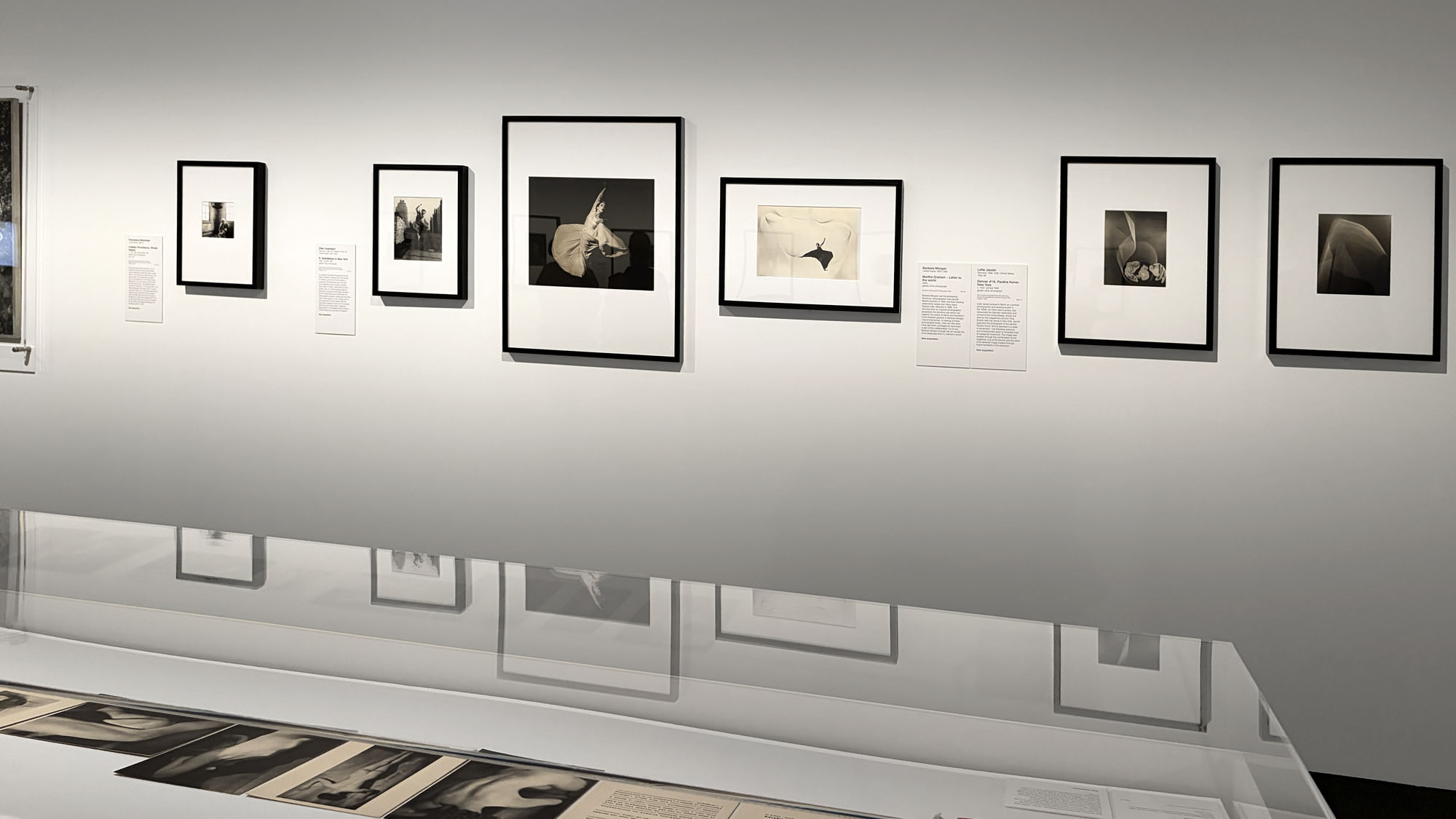
 

Carol Jerrems (Australian, 1949-1980) 'Kath Walker, Moongalba' 1974


Carol Jerrems (Australian, 1949-1980)
Kath Walker (Oodgeroo Noonuccal), Moongalba
1974
Gelatin silver photograph
16.3 x 24.2cm (image and sheet)
ed. 1/9
National Gallery of Victoria, Melbourne
Gift of Ms Ingeborg Tyssen, 2001
© Courtesy of Ken Jerrems & estate of Lance Jerrems


Carol Jerrems studied photography at Prahran College in Melbourne, winning several student awards before first exhibiting her work in the early 1970s. Jerrems collaborated with Australian artist Virginia Fraser on the 1974 publication A Book About Australian Women, a suite of portraits featuring a diverse range of subjects. This portrait was taken as part of that project, and an edition is included in the book. The work features Oodgeroo Noonuccal, previously known as Kath Walker, who was an Aboriginal rights activist, poet, WWII veteran, environmentalist and educator. Noonuccal is photographed with her pen poised at the learning centre she established on Minjerribah (North Stradbroke Island, Queensland) to teach visitors to the island about Aboriginal culture and Country.

Wall text from the exhibition
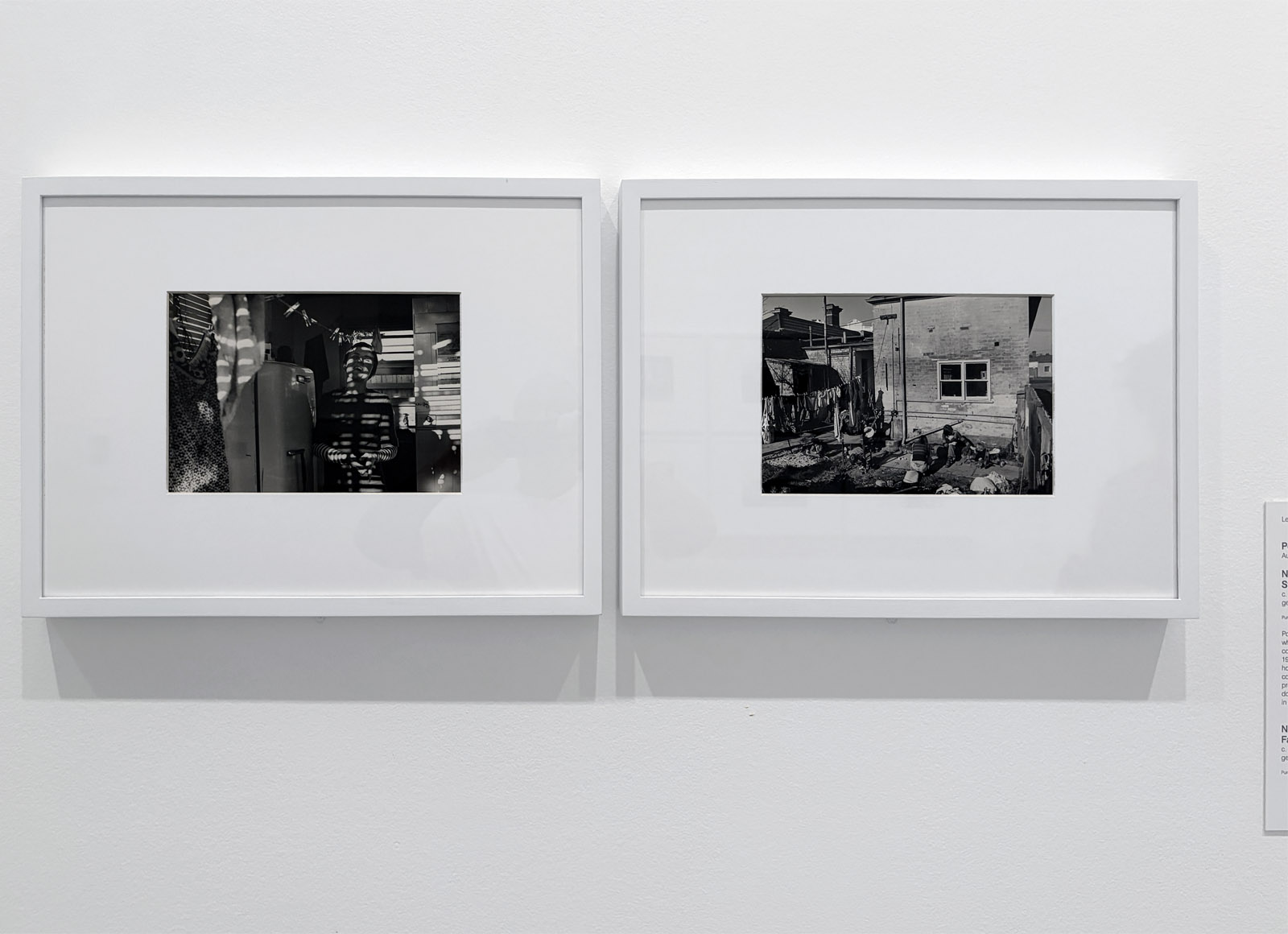
 

Installation view of the exhibition 'Women Photographers 1900-1975: A Legacy of Light' at NGV International, Melbourne, November 2025 - May 2026 showing from left to right, two photographs by Ponch Hawkes (Australian, b. 1946): 'No title (Helen at Falconer Street)' (c. 1975 printed 2018); and 'No title (In the backyard at Falconer Street)' (c. 1975 printed 2018)


Installation view of the exhibition Women Photographers 1900-1975: A Legacy of Light at NGV International, Melbourne, November 2025 – May 2026 showing from left to right, two photographs by Ponch Hawkes (Australian, b. 1946): No title (Helen at Falconer Street) (c. 1975 printed 2018); and No title (In the backyard at Falconer Street) (c. 1975 printed 2018)
Photo: Marcus Bunyan


Ponch Hawkes began to photograph while working as a journalist for the counterculture magazine The Digger in 1972. In 1973 she moved into a communal house in Melbourne with fellow Digger contributor Helen Garner. Together they produced stories for the broadsheet, documenting new ways of living emerging in inner-city Melbourne in the early 1970s.

Wall text from the exhibition
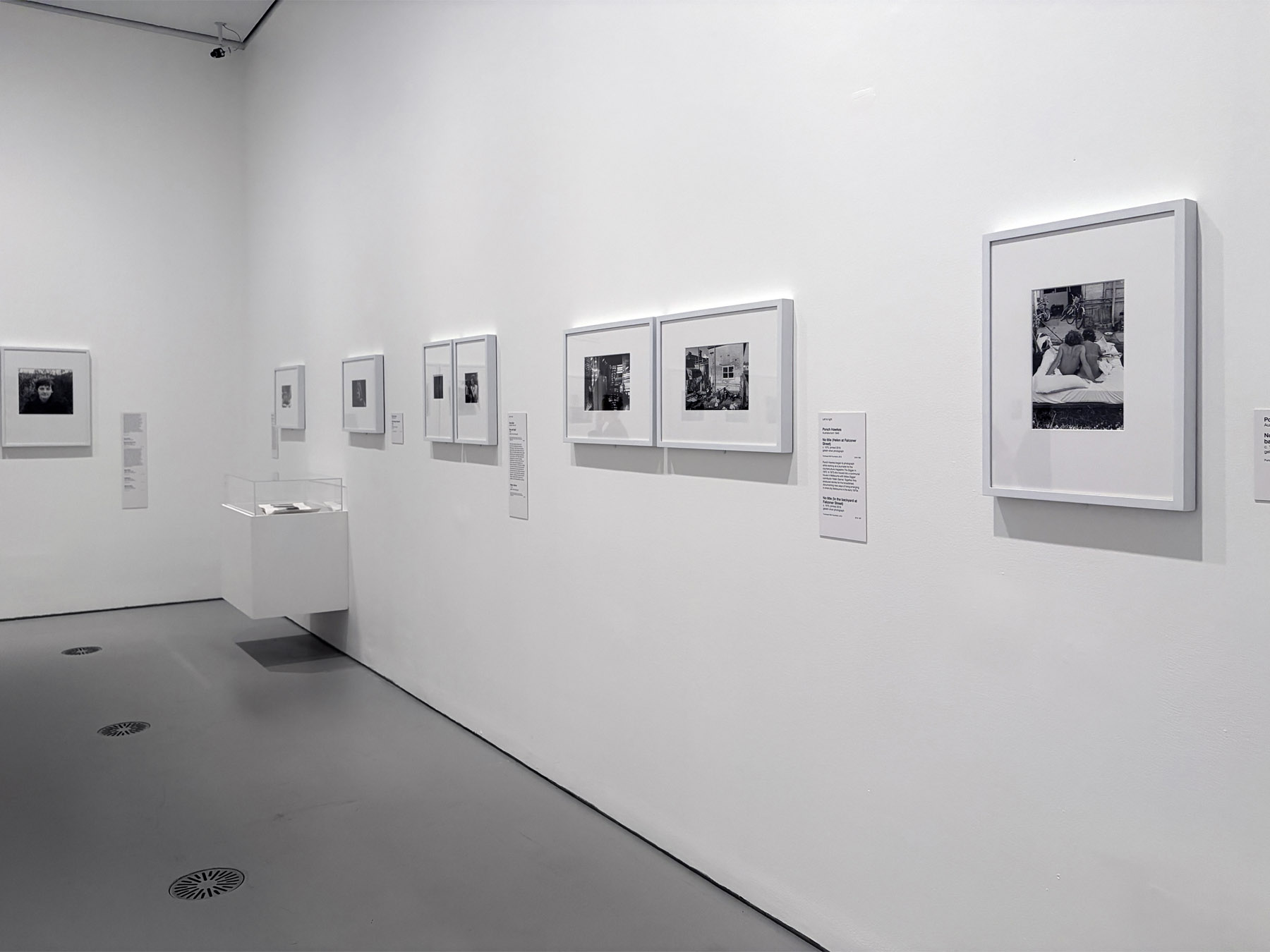
 

Installation view of the exhibition 'Women Photographers 1900-1975: A Legacy of Light' at NGV International, Melbourne, November 2025 - May 2026 showing at right, Ponch Hawkes 'No title (Summer night in the backyard at Falconer Street)' (c. 1975 printed 2018)


Installation view of the exhibition Women Photographers 1900-1975: A Legacy of Light at NGV International, Melbourne, November 2025 – May 2026 showing at right, Ponch Hawkes No title (Summer night in the backyard at Falconer Street) (c. 1975 printed 2018, below)
Photo: Marcus Bunyan
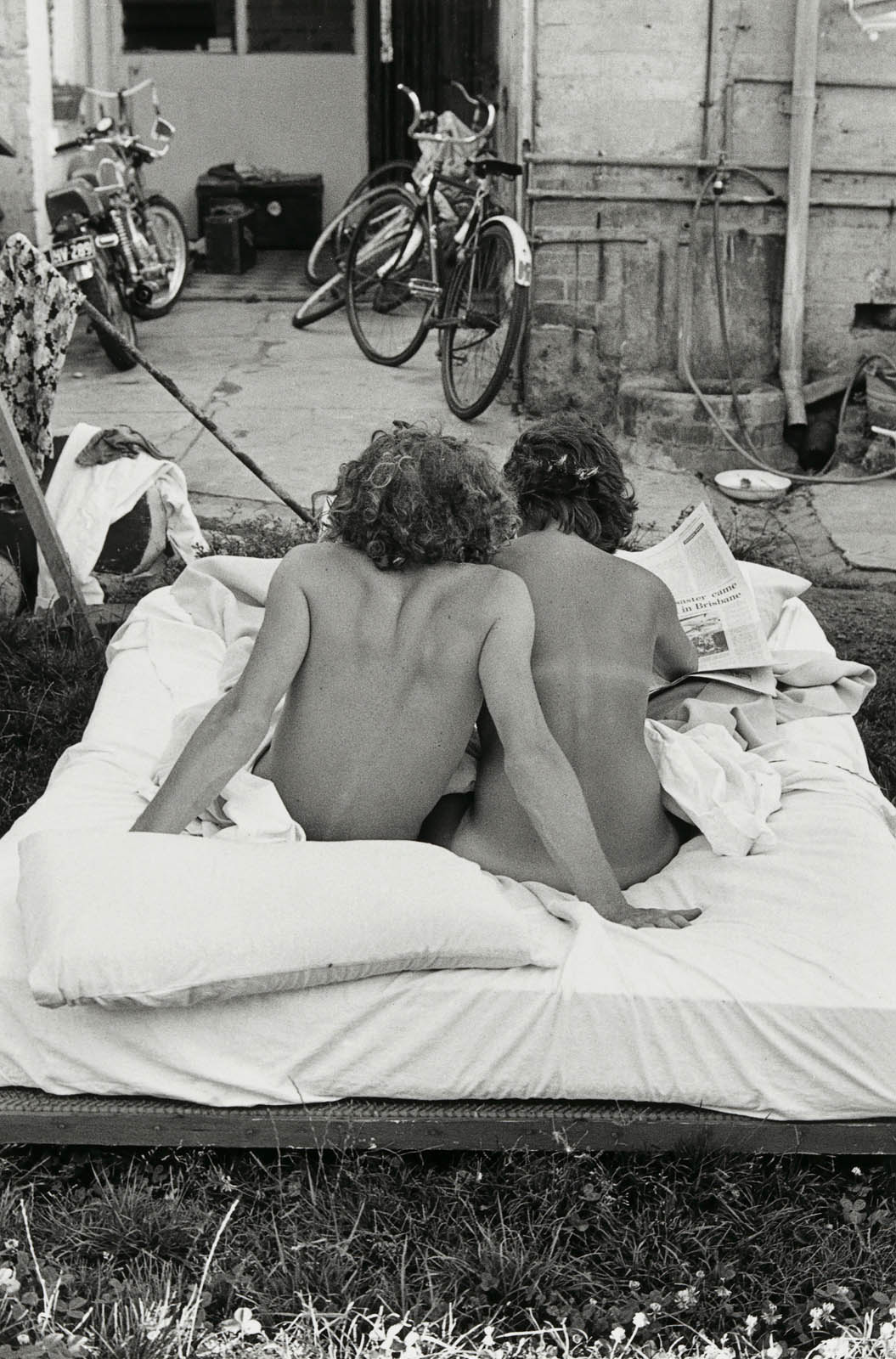
 

Ponch Hawkes (Australian, b. 1945) 'No title (Summer night in the backyard at Falconer Street)' c. 1975, printed 2018


Ponch Hawkes (Australian, b. 1945)
No title (Summer night in the backyard at Falconer Street)
c. 1975, printed 2018
Gelatin silver photograph
30.3 x 20.3cm (image)
38.3 x 27.9cm (sheet)
Purchased NGV Foundation, 2018
© Ponch Hawkes
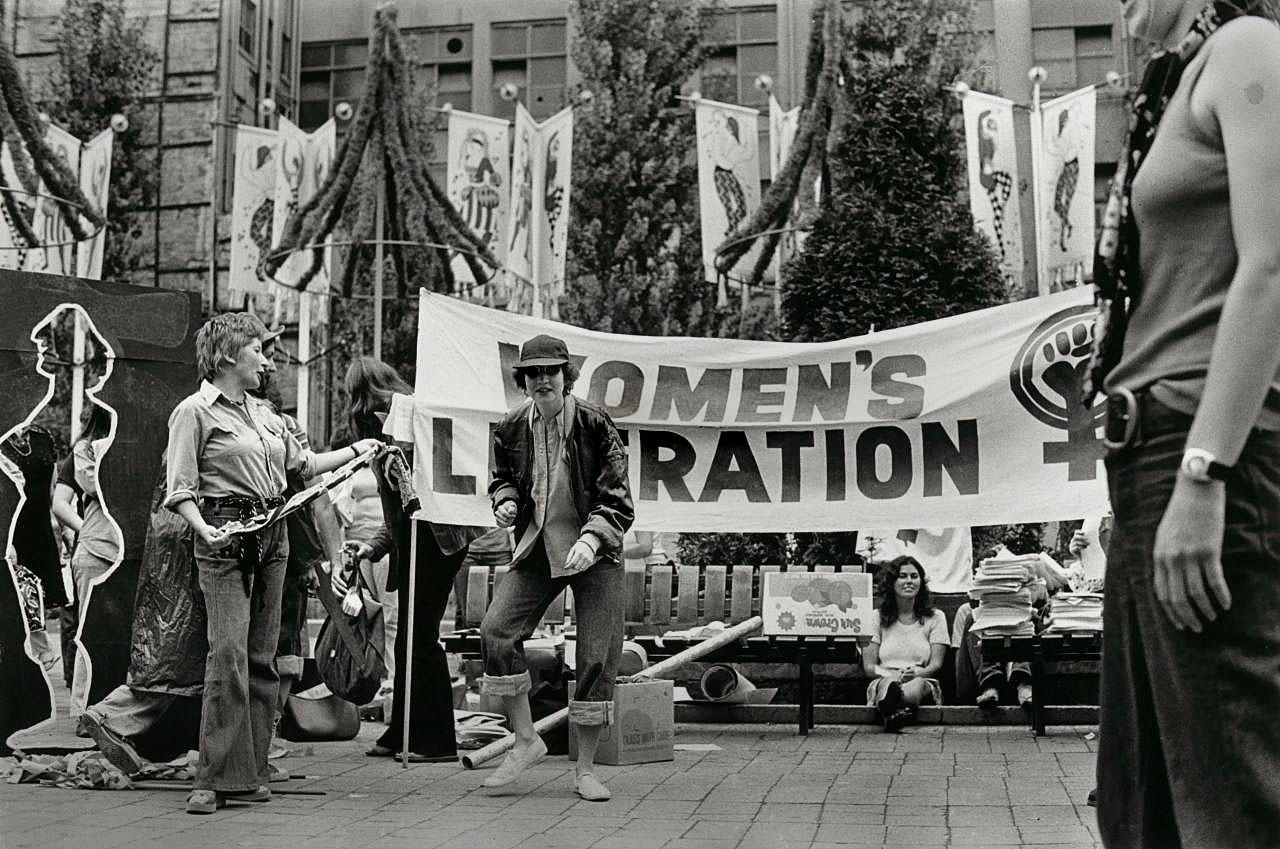
 

Ponch Hawkes (Australian, b. 1945) 'No title (Women's Theatre Group, performing outdoors beneath a Women's Liberation banner in the City Square)' 1975, printed 2018


Ponch Hawkes (Australian, b. 1945)
No title (Women’s Theatre Group, performing outdoors beneath a Women’s Liberation banner in the City Square)
1975, printed 2018
Gelatin silver photograph
20.2 x 30.3cm (image)
28.0 x 38.2cm (sheet)
National Gallery of Victoria, Melbourne
Purchased NGV Foundation, 2018
© Ponch Hawkes, 2023
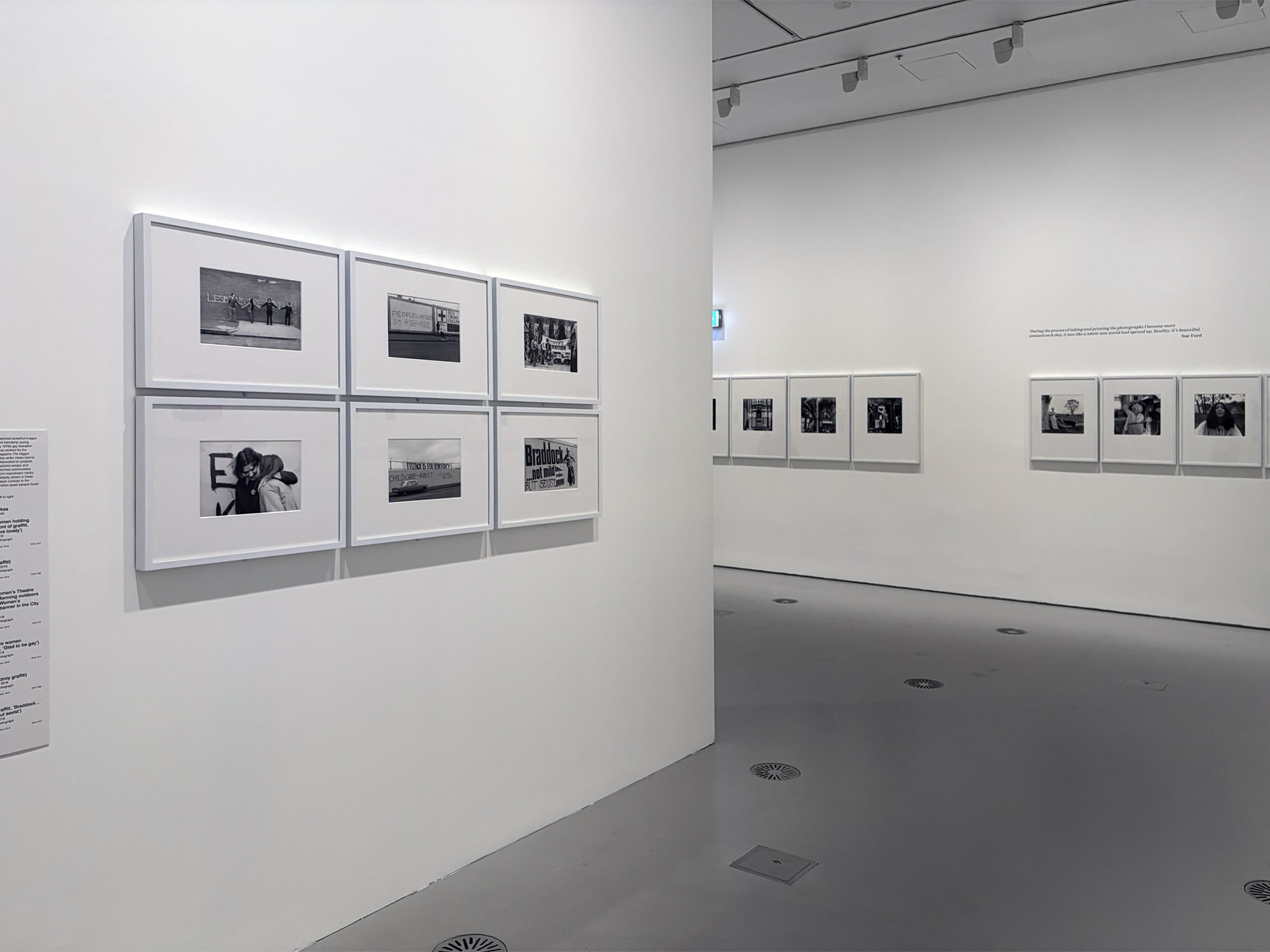
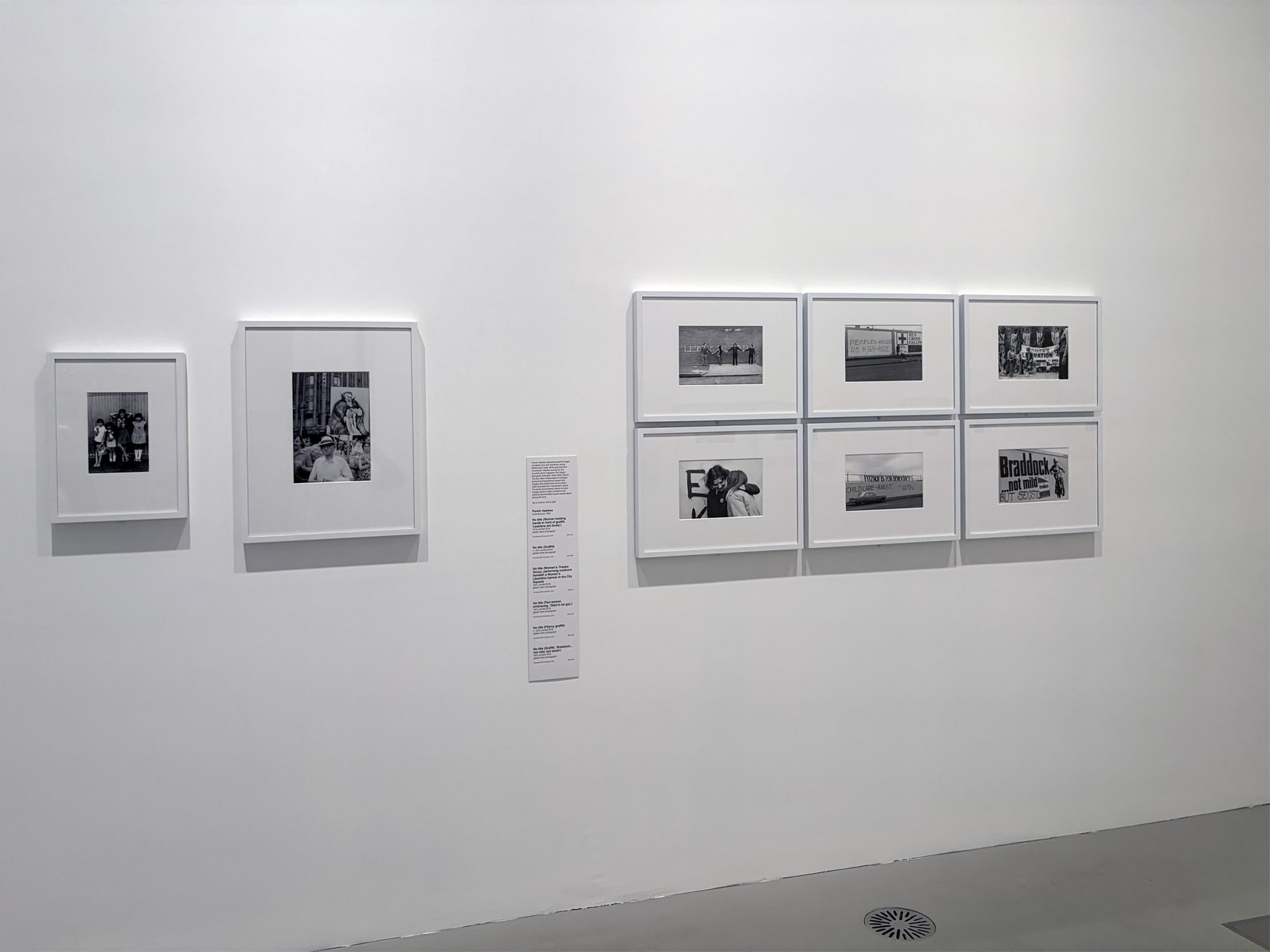
 

Installation view of the exhibition 'Women Photographers 1900-1975: A Legacy of Light' at NGV International, Melbourne, November 2025 - May 2026
Installation view of the exhibition 'Women Photographers 1900-1975: A Legacy of Light' at NGV International, Melbourne, November 2025 - May 2026 showing in the bottom image, top to bottom left to right, six photographs by Ponch Hawkes: 'No title (Women holding hands in front of graffiti, 'Lesbians are lovely')' (1973, printed 2018); 'No title (Graffiti)' (1975, printed 2018); 'No title (Women's Theatre Group, performing outdoors beneath a Women's Liberation banner in the City Square)' (1975, printed 2018); 'No title (Two women embracing, 'Glad to be gay')' (1973, printed 2018); 'No title (Fitzroy graffiti)' (1973, printed 2018); 'No title (Graffiti, 'Braddock… not mild, but sexist')' (1973, printed 2018)


Installation view of the exhibition Women Photographers 1900-1975: A Legacy of Light at NGV International, Melbourne, November 2025 – May 2026 showing in the bottom image, top to bottom left to right, six photographs by Ponch Hawkes: No title (Women holding hands in front of graffiti, ‘Lesbians are lovely’) (1973, printed 2018); No title (Graffiti) (1975, printed 2018); No title (Women’s Theatre Group, performing outdoors beneath a Women’s Liberation banner in the City Square) (1975, printed 2018); No title (Two women embracing, ‘Glad to be gay’) (1973, printed 2018); No title (Fitzroy graffiti) (1973, printed 2018); No title (Graffiti, ‘Braddock… not mild, but sexist’) (1973, printed 2018)
Photo: Marcus Bunyan


Ponch Hawkes captured powerful images of lesbian love and friendship during Melbourne’s early 1970s gay liberation movement. Hawkes worked for the counterculture magazine The Digger alongside Australian writer Helen Garner. The two often collaborated on projects, producing impassioned essays and imagery that platformed communities often excluded from mainstream media. The pride and solidarity shown in these images stand in stark contrast to the extreme discrimination queer people faced during the time.

Wall text from the exhibition
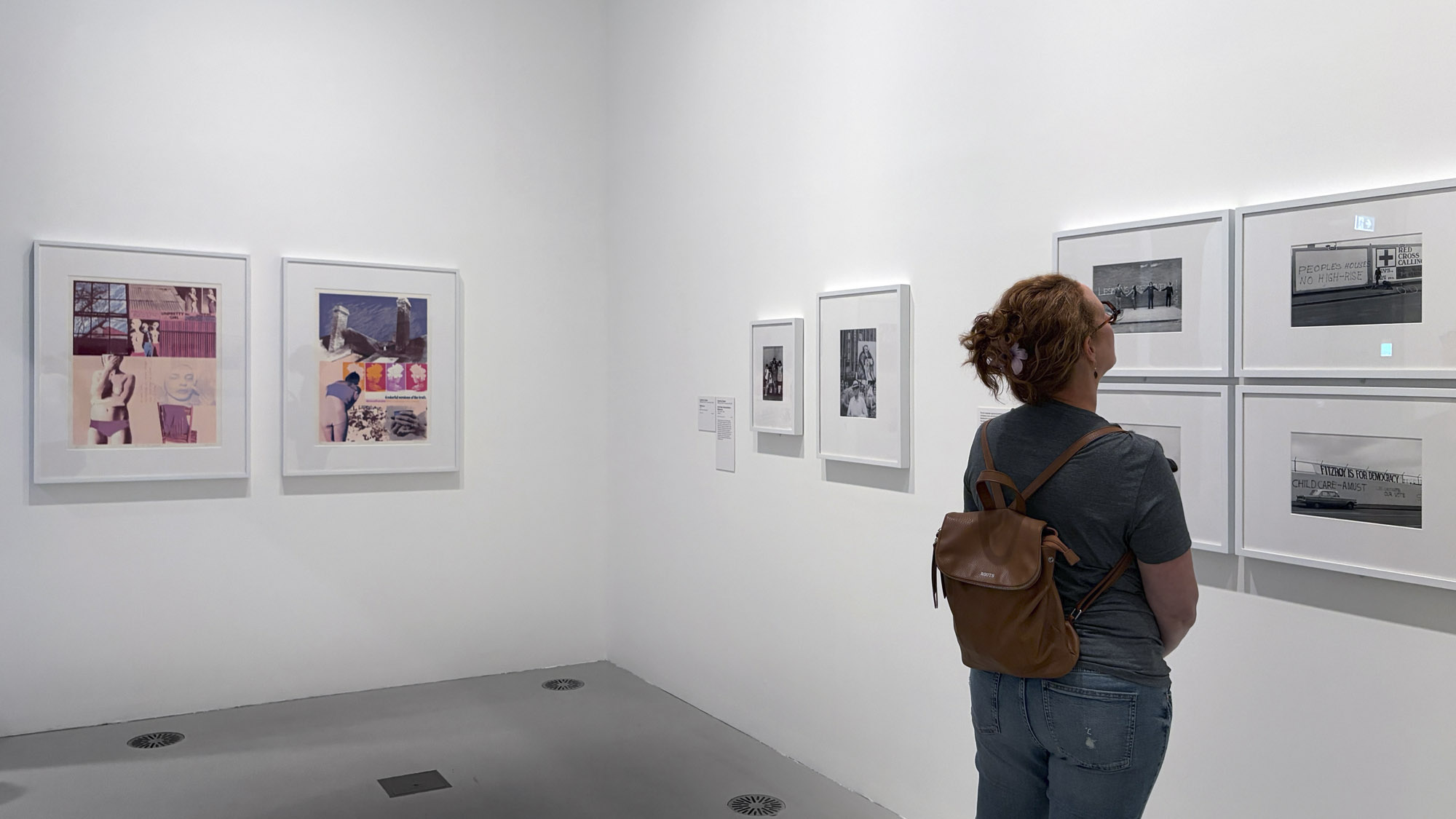
 

Installation view of the exhibition 'Women Photographers 1900-1975: A Legacy of Light' at NGV International, Melbourne, November 2025 - May 2026 showing at left, Ann Newmarch 'We must risk unlearning' (1975, below); and at second left, Ann Newmarch 'Two versions' (1975, below) with at right, photographs by Ponch Hawkes


Installation view of the exhibition Women Photographers 1900-1975: A Legacy of Light at NGV International, Melbourne, November 2025 – May 2026 showing at left, Ann Newmarch We must risk unlearning (1975, below) and at second left, Ann Newmarch Two versions (1975, below) with at right, photographs by Ponch Hawkes
Photo: Marcus Bunyan
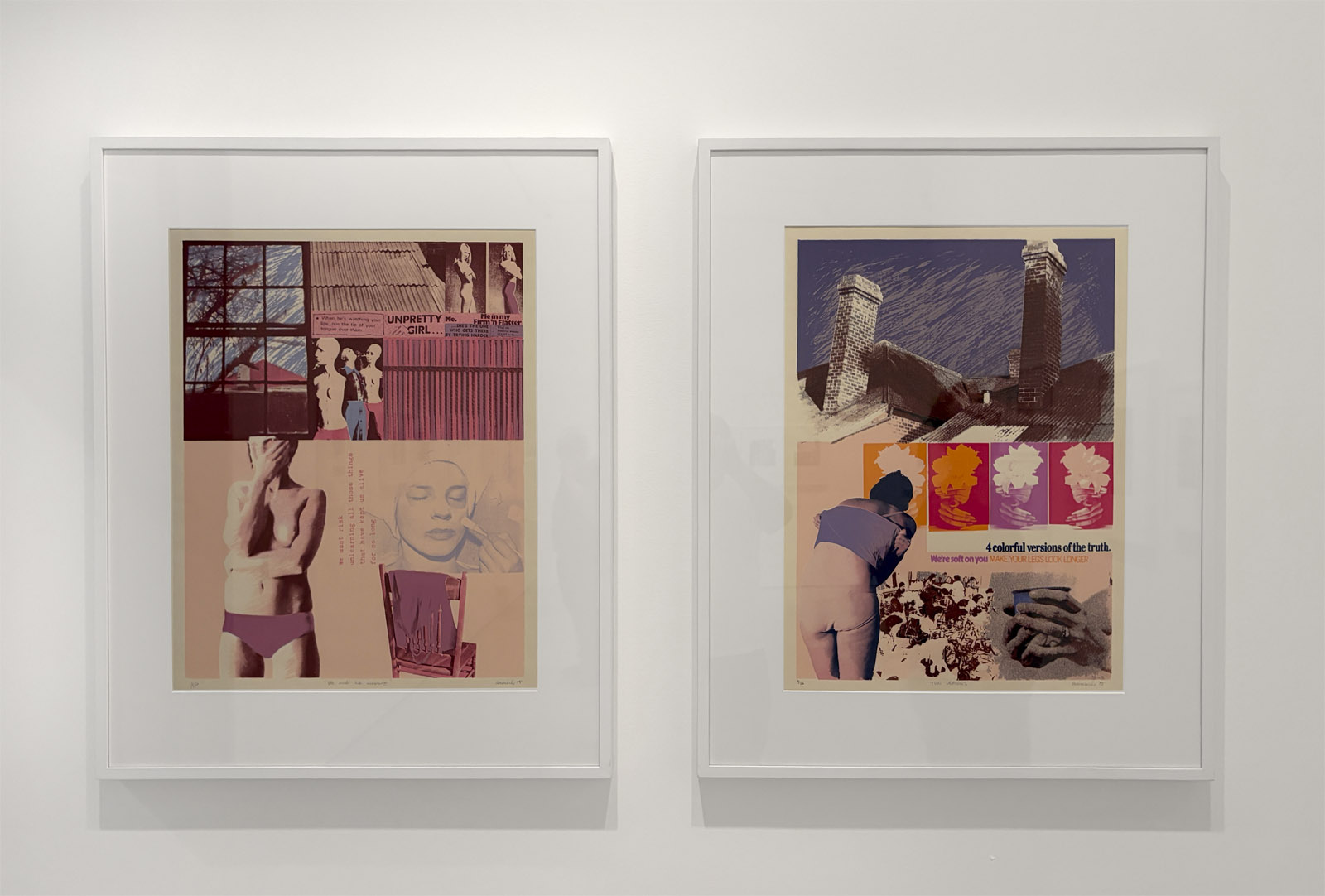
 

Installation view of the exhibition 'Women Photographers 1900-1975: A Legacy of Light' at NGV International, Melbourne, November 2025 - May 2026 showing from left to right, Ann Newmarch 'We must risk unlearning' (1975) and Ann Newmarch 'Two versions' (1975)


Installation view of the exhibition Women Photographers 1900-1975: A Legacy of Light at NGV International, Melbourne, November 2025 – May 2026 showing from left to right, Ann Newmarch We must risk unlearning (1975) and Ann Newmarch Two versions (1975)
Photo: Marcus Bunyan


NGV International
180 St Kilda Rd, Melbourne

Opening hours:
Open daily, 10am – 5pm
National Gallery of Victoria website

LIKE ART BLART ON FACEBOOK

Back to top

Exhibition: ‘Berlin Courtyards: Between Everyday Life, Work, and Encounters’ at the Museum Ephraim-Palais, Berlin

Exhibition dates: 18th July, 2025 – 18th January, 2026

Curators: Duygu Örs and Sinthujan Varatharajah, featuring contributions from junior curators of the Refik Veseli School


André Kirchner (German, b. 1958) 'Stralauer Straße, Ecke Waisenstraße' from the series 'Nachtrag Berlin' 1990-1992 ('Stralauer Straße, corner of Waisenstraße' from the series 'Addendum Berlin') from the exhbition 'Berlin Courtyards: Between Everyday Life, Work, and Encounters' at the Museum Ephraim-Palais, Berlin, July 2025 - January 2026


André Kirchner (German, b. 1958)
Stralauer Straße, Ecke Waisenstraße
From the series Nachtrag Berlin 1990-1992
Silver bromide baryta paper
34cm x 46cm
Collection of the Berlin City Museum Foundation
© André Kirchner
Reproduction: Dorin Alexandru Ionita, Berlin


This is one of those wonderful, idiosyncratic exhibitions that Art Blart has always liked to promote: small, occluded histories that have great importance to local people; spaces and histories that deserve to be acknowledged in a wider sphere; microcosms of everyday life, work and encounters expanded into the macrocosm of the universe, making us aware of the importance of the seemingly in/consequential in this dance of death we call life.

“This exhibition delves into how these spaces have fostered social and cultural exchange since the 19th century, becoming living capsules of history and community. They reflect the complexities of urban life, showcasing how people shape their surroundings and creating a unique atmosphere that has long inspired artists.” (Press release)

Dr Marcus Bunyan


Many thankx to the Museum Ephraim-Palais for allowing me to publish the photographs in the posting. Please click on the photographs for a larger version of the image.


Hans Baluschek (German, 1870-1935) 'Fleisch am Knochen' (Meat on the Bone) 1924 from the exhbition 'Berlin Courtyards: Between Everyday Life, Work, and Encounters' at the Museum Ephraim-Palais, Berlin, July 2025 - January 2026


Hans Baluschek (German, 1870-1935)
Fleisch am Knochen (Meat on the Bone)
Berlin, 1924
Pen and black ink on paper
27.7cm x 35.2cm
Collection of the Berlin City Museum Foundation
Reproduction: Michael Setzpfandt, Berlin


Heinrich Zille (German, 1858-1929) "Eine kleine Freundin hat doch jedermann, eine kleine Freundin braucht man dann und wann…" ("Everyone has a little friend, and one needs a little friend now and then...") 1924


Heinrich Zille (German, 1858-1929)
“Eine kleine Freundin hat doch jedermann, eine kleine Freundin braucht man dann und wann…” (“Everyone has a little friend, and one needs a little friend now and then…”)
Berlin, 1924
Lithograph on laid paper
45.5cm x 36.8cm
Collection of the Berlin City Museum Foundation


Mathèos Florakis (Greek, b. 1935) 'Naunynstraße, Hinterhof' 1979


Mathèos Florakis (Greek, b. 1935)
Naunynstraße, Hinterhof
1979
Coloured lithograph on paper
59cm x 42cm
© MathËos Florakis – Stiftung Stadtmuseum Berlin
Reproduction: Michael Setzpfandt Berlin


Manfred Butzmann (German, b. 1942) 'Giebelwand (Chausseestraße 16)' (Gable wall (Chausseestraße 16)) 1988


Manfred Butzmann (German, b. 1942)
Giebelwand (Chausseestraße 16) (Gable wall (Chausseestraße 16))
1988
Watercolour on laid paper
49.8cm x 34cm
© VG Bild-Kunst, Bonn
Reproduction: Michael Setzpfandt, Berlin


Doris Leue (German, b. 1954) 'Hirschhof' 1999


Doris Leue (German, b. 1954)
Hirschhof
Berlin, 1999
Pen and ink on paper
29.5cm x 42cm
Purchased with funds from the German Class Lottery Berlin by the Cultural Administration of the Berlin Senate, 2024
© Doris Leue
Reproduction: Michael Setzpfandt, Berlin


Ever wondered about the secret lives tucked away behind Berlin’s bustling streets?

The Museum Ephraim-Palais is inviting you on a captivating journey with its new exhibition, “Berlin Courtyards: Between Everyday Life, Work, and Encounters,” running from July 18, 2025, to January 18, 2026.

From cozy residential nooks to bustling commercial hubs and serene artist retreats, Berlin’s courtyards tell the vibrant story of a city constantly evolving. This exhibition delves into how these spaces have fostered social and cultural exchange since the 19th century, becoming living capsules of history and community. They reflect the complexities of urban life, showcasing how people shape their surroundings and creating a unique atmosphere that has long inspired artists.

“Berlin Courtyards” brings together nearly 100 striking photographs and graphics from the vast collection of the Stadtmuseum Berlin. Visitors will discover gems from legendary artists like Heinrich Zille, Hans Baluschek, and Manfred Hamm, alongside contemporary perspectives from photographers like André Kirchner and Günther Steffen.

Adding a fresh layer to the historical narrative are new artistic works by urban researchers Duygu Örs and Sinthujan Varatharajah, specially commissioned for the show. Their multi-sensory exploration of Wedding’s backyards, using texts, photos, videos, and sound, offers an intimate look at these overlooked spaces.

What’s more, the exhibition features a dynamic display of modern-day Berlin courtyards, crowdsourced through the Stadtmuseum Berlin’s “Berlin now!” photo campaign. You’ll see 40 framed photos on the walls, plus 50 smaller photo cards that visitors can rearrange, literally co-creating the exhibition experience. Due to overwhelming interest, the “Berlin now!” photo call has been extended until September 18, giving photography enthusiasts more time to submit their own unique views of Berlin’s courtyards. Selected photos will even be rotated into the framed display in October!

Adding another exciting dimension, junior curators from the Refik-Veseli School in Kreuzberg, mentored by Yella Hoepfner, will share their own “courtyard stories” across five dedicated areas within the Museum Ephraim-Palais, including spaces within the “BerlinZEIT” permanent exhibition. Their personal narratives will engage in a dialogue with objects from the Stadtmuseum Berlin’s collection, offering fresh, youthful insights.

Don’t miss this chance to experience Berlin from a new perspective, delving into the hidden heart of its neighborhoods through the eyes of both historical and contemporary artists.

Press release from Museum Ephraim-Palais


Rudolf Dührkoop (German, 1848-1918) From the portfolio 'Das malerische Berlin, Band 1' (Picturesque Berlin, Volume 1) 1911


Rudolf Dührkoop (German, 1848-1918)
From the portfolio Das malerische Berlin, Band 1 (Picturesque Berlin, Volume 1)
1911


Ludwig Binder (German born Serbia, 1928-1980) 'Hofeinfahrt Kottbusser Straße 6' (Courtyard entrance at Kottbusser Straße 6) c. 1976


Ludwig Binder (German born Serbia, 1928-1980)
Hofeinfahrt Kottbusser Straße 6 (Courtyard entrance at Kottbusser Straße 6)
c. 1976
Ludwig Binder’s Photographic Estate – Positives – 43 images titled Ausländer-Läden-Kino
Photograph
24cm x 18.2cm
© Stiftung Stadtmuseum Berlin, Ludwig Binder


Manfred Hamm (German, b. 1944) 'Goerz'sche Höfe, Rheinstraße' 1978


Manfred Hamm (German, b. 1944)
Goerz’sche Höfe, Rheinstraße
Berlin, 1978
Photograph, baryta paper
22cm x 28.1cm
© Stiftung Stadtmuseum Berlin


Reinhard Münch (German, b. 1951) From the series 'Das Haus Dunckerstr. 16 in Berlin 1058' (The House at Dunckerstrasse 16 in Berlin, 1058) 1985


Reinhard Münch (German, b. 1951)
From the series Das Haus Dunckerstr. 16 in Berlin 1058 (The House at Dunckerstrasse 16 in Berlin, 1058)
1985
Baryta paper, silver gelatin
24.9cm x 24.9cm
© Reinhard Münch


Ergun Çağatay (Turkish, 1937-2018) From the report: "Türken in Deutschland. Die zweite Generation" ("Turks in Germany. The Second Generation") 1989/90


Ergun Çağatay (Turkish, 1937-2018)
From the report: “Türken in Deutschland. Die zweite Generation” (“Turks in Germany. The Second Generation”)
1989/90


Werner Brunner (German, b. 1941) From the series 'Berliner Wandbilder' (Berlin Murals) 1974-1990 (Berlin-Prenzlauer Berg, Esmarchstraße 26, I. Hinterhof)


Werner Brunner (German, b. 1941)
Berlin-Prenzlauer Berg, Esmarchstraße 26, I. Hinterhof
From the series Berliner Wandbilder (Berlin Murals) 1974-1990
Hahnemühle Digital Fine Art, inkjet printing
30cm x 20cm
© Werner Brunner
Reproduction: Dorin Alexandru Ionita, Berlin


Dr. Barbara Hansen. '"Motive aus dem Osten Berlins 1993-1998. Höfe", Hof in Ostberlin' um 1995 ('"Motives from East Berlin 1993-1998. Courtyards" Courtyard in East Berlin' around 1995)


Dr. Barbara Hansen
“Motive aus dem Osten Berlins 1993-1998. Höfe”, Hof in Ostberlin
(“Motives from East Berlin 1993-1998. Courtyards” Courtyard in East Berlin)

Berlin, around 1995
Colour photograph on PE paper
Approx. 10 x 15cm (HF and QF)
© Stiftung Stadtmuseum Berlin


Unknown photographer. 'Hoffest in der Falckensteinstraße 27' (Garden festival at Falckensteinstraße 27) 1920


Unknown photographer
Hoffest in der Falckensteinstraße 27 (Garden festival at Falckensteinstraße 27)
1920
Postcard
From the collection of Eberhard Müller


Installation view of the exhibition 'Berlin Courtyards: Between Everyday Life, Work, and Encounters' at the Museum Ephraim-Palais, Berlin, July 2025 - January 2026


Installation views of the exhibition Berlin Courtyards: Between Everyday Life, Work, and Encounters at the Museum Ephraim-Palais, Berlin, July 2025 – January 2026
Photos: Alexander Rentsch


Yella Hoepfner. 'Junior Curator at Refik-Veseli-Schule' 2025


Yella Hoepfner
Junior Curator of the Refik Veseli School
2025
© Yella Hoepfner


Berlin backyards have a lot to tell. Since the industrial revolution in the 19th century at the latest, Berlin has been a center of attraction for people from other regions of Germany and from other countries. The history of the city has therefore always been a history of migration.

Due to enormous population growth, spatial expansion and structural densification, Berlin is characterised by backyards like no other city. They are used for residential, educational, commercial, artistic, culinaric and many other purposes. Their history is diverse, just like the people who live there. With the special exhibition “Berliner Höfe” (Berlin Backyards) on the 3rd floor of the Museum Ephraim-Palais, the Stadtmuseum Berlin invites you to explore these urban spaces between past and present.

The backyards are exemplary of urban coexistence with all its contradictions. They show how people shape space. And they encourage us to take a closer look: What can backyards tell us about Berlin? What about ourselves? In short: What is going on there?

Graphics, photography and history

The special atmosphere of the Berlin backyards has repeatedly inspired graphic artists, draughtsmen and photographers to create images. In the exhibition, highlights from the museum collection meet the artistic works of urban researchers Duygu Örs and Sinthujan Varatharajah, which were created especially for “Berliner Höfe”. Using sounds and light, they deal with different sensory impressions from backyards that Örs and Varatharajah encountered in Wedding.

In addition, the junior curators from the Refik Veseli School in Kreuzberg and their mentor Yella Hoepfner present their own spaces in the permanent exhibition “BerlinZEIT” on the first and second floors of the museum. Their individual stories interact with objects from the collection.

Biographical data

Duygu Örs is a researcher, art educator and curator specialising in cultural and urban research. Since 2019 she has headed the education and mediation work of the Berlin Biennale for Contemporary Art, since 2025 with Jas Wenzel. At the Institute for Sociology and Cultural Organisation (ISKO) at Leuphana University Lüneburg, she is working on the role of the museum in the ‘Right to the City’ movement.‍ She is also a co-founder of the curatorial research collective Curating through Conflict with Care (CCC). Translated with DeepL.com (free version)

Sinthujan Varatarajah (சிந்துஜன் வரதராஜா) writes and researches in Berlin. As a political geographer, Varatarajah focuses on issues of statelessness, im-/mobility and displacement from the perspective of infrastructure, logistics and building culture. Varatarajah has published several books since 2022. Varatarajah’s next book, ‘Where Time Stands Still’, will be published by Carl Hanser Verlag in spring 2026.

Text from the Museum Ephraim-Palais website


Lotti Nass (German, b. 1950) 'Hof mit Baum' (Courtyard with Tree) 2010


Lotti Nass (German, b. 1950)
Hof mit Baum (Courtyard with Tree)
2010
© Lotti Nass


Andreas Metz. 'In der Sandkiste' (In the Sandbox) 2020


Andreas Metz
In der Sandkiste (In the Sandbox)
2020


Birgit Hantke. 'Waldstraße, Moabit' 2021


Birgit Hantke (German)
Waldstraße, Moabit
2021
© Birgit Hantke


Andrea Steiner. 'Doch die Toscana?' (But Tuscany?) 2025


Andrea Steiner
Doch die Toscana? (But Tuscany?)
2025
© Andrea Steiner


Duygu Örs and Sinthujan Varatharajah. 'Untitled' 2025


Duygu Örs and Sinthujan Varatharajah
Untitled
2025


Museum Ephraim-Palais
Poststraße 16
10178 Berlin

Opening hours:
Tue – Sun 10am – 6pm (also on public holidays)
Mon closed

Museum Ephraim-Palais website

LIKE ART BLART ON FACEBOOK

Back to top

Exhibition: ‘ “I’ll Have What She’s Having”: The Jewish Deli’ at the New-York Historical Society

Exhibition dates: 11th November 2022 – 2nd April 2023

Co-curated by Skirball curators Cate Thurston and Laura Mart and Lara Rabinovitch, renowned writer, producer, and specialist in immigrant food cultures. The exhibition was coordinated at New-York Historical by Cristian Petru Panaite with Marilyn Kushner, curator and head, Department of Prints, Photographs, and Architectural Collections.


Ei Katsumata (American) 'Carnegie Deli, New York, NY' 2008 from the exhibition Exhibition: '"I'll Have What She's Having": The Jewish Deli' at the New-York Historical Society, Nov 2022 - April 2023


Ei Katsumata (American)
Carnegie Deli, New York, NY
2008
Photo by Ei Katsumata /Alamy Stock Photo


Culture and its history – past, present and future – is always so fascinating!

Dr Marcus Bunyan


Many thankx to the New-York Historical Society for allowing me to publish the photographs in the posting. Please click on the photographs for a larger version of the image.


Our special exhibition examines how Jewish immigrants, mostly from Central and Eastern Europe, imported and adapted traditions to create a uniquely American restaurant and reveals how Jewish delicatessens became a cornerstone of American food culture.

Organised by the Skirball Cultural Center, “I’ll Have What She’s Having”: The Jewish Deli examines how Jewish immigrants, mostly from Central and Eastern Europe, imported and adapted traditions to create a uniquely American restaurant and reveals how Jewish delicatessens became a cornerstone of American food culture.

The exhibition explores the food of immigration, the heyday of the deli in the interwar period, delis and Broadway, stories of Holocaust survivors and war refugees who worked in delis, the shifting and shrinking landscapes of delis across the country, and delis in popular culture. On display are neon signs, menus, advertisements, deli workers’ uniforms, and video documentaries. The local presentation is enriched with artwork, artefacts, and photography from New-York Historical’s collection along with restaurant signs, menus and fixtures from local establishments, mouthwatering interactives, and a Bloomberg Connects audio tour. And families: Be sure to pick up a copy of our kid-centric guide to the exhibition in the gallery.

Text from the New-York Historical Society website


2nd Ave Deli // “I’ll Have What She’s Having”: The Jewish Deli

New-York Historical Society

What makes the 2nd Ave Deli so special? The New-York Historical Society takes a trip to the Midtown landmark to talk to the owner, managers, workers, and customers about the special magic of the decades-old delicatessen where they “prepare the foods that our mothers and grandmothers made.”


James Reuel Smith (American, 1852-1935) 'Louis Klepper Confectionary and Sausage Manufacturers, 45 E. Houston Street, New York' c. 1900 from the exhibition Exhibition: '"I'll Have What She's Having": The Jewish Deli' at the New-York Historical Society, Nov 2022 - April 2023


James Reuel Smith (American, 1852-1935)
Louis Klepper Confectionary and Sausage Manufacturers, 45 E. Houston Street, New York
c. 1900
Patricia D. Klingenstein Library, New-York Historical Society


James Reuel Smith (1852-1935) was an American photographer and amateur historian who worked in the late 19th century to early 20th century. He was known for his documentary photographs of historical springs and wells in New York City before they were buried beneath the concrete of the rapidly growing city. Many of these natural water resources disappeared as the New York municipal water system developed.

Smith’s photographs documented a vanishing way of life in urban America. Drawing and fetching water had been an essential activity of daily life prior to the development of the modern municipal water system. In the 1870s New York City undertook efforts to eradicate the natural open wells and springs as they were perceived to be hazardous to health. The official municipal source for city water was the Croton Aqueduct which was endorsed by the NYC sanitation officers, rather than local neighbourhood wells and springs.

Text from the Wikipedia website


'Hester Street, Lower East Side' c. 1900 from the exhibition Exhibition: '"I'll Have What She's Having": The Jewish Deli' at the New-York Historical Society, Nov 2022 - April 2023


Hester Street, Lower East Side
c. 1900
Postcard
Patricia D. Klingenstein Library, New-York Historical Society


Unknown photographer (American) 'Anne Russ Federman serving customers at New York's Russ & Daughters, with Hattie Russ Gold in the background' 1939 from the exhibition Exhibition: '"I'll Have What She's Having": The Jewish Deli' at the New-York Historical Society, Nov 2022 - April 2023


Unknown photographer (American)
Anne Russ Federman serving customers at New York’s Russ & Daughters, with Hattie Russ Gold in the background
1939
From the collection of Russ & Daughters


Benjamin Segan (American, 1924-2017) 'Letter to Judith Berman, April 23, 1944'


Benjamin Segan (American, 1924-2017)
Letter to Judith Berman, April 23, 1944
Caserta, Italy
Patricia D. Klingenstein Library, New-York Historical Society


Benjamin David “Ben” Segan was born in New York City on 27 August 1924, to Jacob and Lillian Segan, immigrants from Vilnius, Lithuania. Ben attended George Washington High School in Manhattan, where he met his future wife, Judith “Judy” Berman. During his senior year he attended school by night to work in a defense plant by day.

Nineteen-year-old Ben was drafted into the United States Army as a private on 28 April 1943. His initial processing took place at Fort Dix, New Jersey, where he began his correspondence with Judy, writing to her almost daily until he left the service. By mid-May 1943 he was at Camp Croft, South Carolina, where he remained in basic training through late September and to operate radio equipment.

By October 1943 he was sent to Fort George G. Meade, Maryland, and from there shipped to Italy to join the 93rd Armored Field Artillery Battalion. In Europe he served in Italy, southern France, and Germany. During the Battle of Monte Cassino (a.k.a. the Battle for Rome), January-May 1944, he worked in the 93rd’s communication section.

Although he saw combat, Ben refrained from graphic descriptions in writing to his fianceé. Some of his reticence was due to restrictions imposed by the censors. For example, on 7 April 1945, during the liberation of the Buchenwald concentration camp from the Nazis, which he witnessed, Ben wrote, cryptically (in letter 574), “I’ve been extremely busy recently darling, & don’t think it’s so necessary to tell you as you must have a[n] inkling from the latest news reports on our progress.”

The war in Europe ended on 8 May 1945, but Ben was still there as late as November 10th (the date of his last letter in the collection), when he wrote from the French port of Le Havre, unsure of which ship he’d be on or indeed when it would sail.

Ben was honoured with the American Service Medal, the European-African-Middle Eastern Service Medal, the Good Conduct Medal, and the World War II Victory Medal.

Once home he married Judy on 10 March 1946 at Temple Ansche Chesed on Manhattan’s Upper West Side. They raised two children and worked together for many years in New York City’s Garment District.

Anonymous. “Biographical/Historical Note: Guide to the Benjamin Segan Letters 1943-1945,” on the New-York Historical Society website Nd [Online] Cited 26/02/2023


Lionel S. Reiss (American born Poland, 1894-1988) 'Frankfurter and Lemonade from Manhattan Crosstown' series c. 1945


Lionel S. Reiss (American born Poland, 1894-1988)
Frankfurter and Lemonade from Manhattan Crosstown series
c. 1945
Watercolour, black ink, white gouache, and graphite on paper
11 × 8 in. (27.9 × 20.3cm)
New-York Historical Society, Foster-Jarvis Fund, and contribution of Harry Goldberg


Lionel S. Reiss (1894-1988) was a Polish-American Jewish painter born in Jaroslaw, Poland (then in the Austro-Hungarian Empire), and grew up on the Lower East Side of Manhattan where he studied commercial art. His family had moved to the United States in 1898 when he was four years old. As immigrants to the United States, Reiss’ parents joined the ranks of other Eastern European Jews who were fleeing their native countries at the start of the 20th century. Lionel Reiss’ family settled on New York’s Lower East Side neighbourhood and Reiss himself spent the majority of his life in the city. Reiss worked as a commercial artist for newspapers, publishers, and a motion picture company. Eventually he became art director for Paramount Studios and is credited to be the creator of the Leo the Lion logo of Metro-Goldwyn-Mayer Studios.

Reiss became known for his portraits of Jewish people and landmarks in Jewish history, which he made during his trip to Europe, Africa, and the Middle East in the early 1920s. Being American and Jewish himself, Reiss became fascinated with Jewish life in the Old World. In 1919 Reiss temporarily left the United States to travel to the aforementioned regions, and recorded the everyday life that he encountered in the ghettos. His trip resulted in exhibitions in major American cities.

At the dawn of the Holocaust in 1938, Reiss, who had long returned to the United States, published his book My Models Were Jews, in which he illustratively argued that there is no such thing as a “Jewish ethnicity”, but the Jewish people are rather a cultural group, whereby there is significant diversity within Jewish communities and between different communities in different geographical regions. Reiss was therefore presenting an argument against what he considered to be a common misconception that existed about the Jews. Later works included a 1954 book, New Lights and Old Shadows, which dealt with “the new lights” of a reborn Israel and the “old shadows” of an almost eradicated European Jewish culture. In his last book, A World of Twilight, published in 1972, with text by Isaac Bashevis Singer, Reiss presented a portrait of the Jewish communities in Eastern Europe before the Holocaust.

Text from the Wikipedia website


'Reuben's Delicatessen Menu [autographed by Arnold Reuben]' 1946


Reuben’s Delicatessen Menu [autographed by Arnold Reuben]
1946
Patricia D Klingenstein Library, New-York Historical Society


This fall, New-York Historical Society presents “I’ll Have What She’s Having”: The Jewish Deli, a fascinating exploration of the rich history of the Jewish immigrant experience that made the delicatessen so integral to New York culture. On view November 11, 2022 – April 2, 2023, the exhibition, organised by the Skirball Cultural Center in Los Angeles, where it is on view through September 18, examines how Jewish immigrants, mostly from Central and Eastern Europe, imported and adapted traditions to create a cuisine that became a cornerstone of popular culture with worldwide influence. The exhibition explores the food of immigrants; the heyday of the deli in the interwar period; delis in the New York Theater District; stories of Holocaust survivors and war refugees who found community in delis; the shifting and shrinking landscapes of delis across the country; and delis in popular culture. On display are neon signs, menus, advertisements, and deli workers’ uniforms alongside film clips and video documentaries. New-York Historical’s expanded presentation includes additional artwork, artefacts, photographs of local establishments, and objects from deli owners, as well as costumes from The Marvelous Mrs. Maisel, a mouthwatering interactive, and a Bloomberg Connects audio tour.

“It’s our great pleasure to present an exhibition on a topic so near and dear to the hearts of New Yorkers of all backgrounds,” said Dr. Louise Mirrer, president and CEO of New-York Historical. “‘I’ll Have What She’s Having’: The Jewish Deli tells a deeply moving story about the American experience of immigration – how immigrants adapted their cuisine to create a new culture that both retained and transcended their own traditions. I hope visitors come away with a newfound appreciation for the Jewish deli, and, with it, the story of the United States.”

“Whether you grew up eating matzoball soup or are learning about lox for the first time, this exhibition demonstrates how Jewish food became a cultural touchstone, familiar to Americans across ethnic backgrounds,” said co-curators Cate Thurston and Laura Mart. “This exhibition reveals facets of the lives of Central and Eastern European Jewish immigrants in the late 19th and early 20th centuries that echo in contemporary immigrant experiences. It shows how people adapt and transform their own cultural traditions over time, resulting in a living style of cooking, eating, and sharing community that is at once deeply rooted in their own heritage and continuously changing.”

“I’ll Have What She’s Having” is co-curated by Skirball curators Cate Thurston and Laura Mart along with Lara Rabinovitch, renowned writer, producer, and specialist in immigrant food cultures. It was coordinated at New-York Historical by Cristian Petru Panaite with Marilyn Kushner, curator and head, Department of Prints, Photographs, and Architectural Collections. The exhibition explores topics including deli culture, the proliferation of delis alongside the expansion of New York’s Jewish communities, kosher meat manufacturing, shortages during World War II, and advertising campaigns that helped popularise Jewish foods throughout the city.

Highlights include a letter in New-York Historical’s Patricia D. Klingenstein Library collection from a soldier fighting in Italy during World War II writing to his fiancée that he “had some tasty Jewish dishes just like home” thanks to the salami his mother had sent – a poignant addition to Katz’s famous “Send a Salami to Your Boy in the Army” campaign. Images show politicians and other notable figures eating and campaigning in delis. Movie clips and film stills include the iconic scene in Nora Ephron’s romantic comedy When Harry Met Sally…, which inspired the exhibition title. This and other movie scenes underscore the prominent role of Jewish delis in American popular culture.

Unique to New-York Historical’s presentation is a closer look at the expansion of Jewish communities at the turn of the 20th century, not just on the Lower East Side but also in Brooklyn, Queens, and the Bronx. In the 1930s, some 3,000 delis operated in the city; today, only about a dozen remain. The exhibition gives special attention to dairy restaurants, which offered a safe meatless eating experience; a portion of the neon sign from the Famous Dairy Restaurant on the Upper West Side is on display. Salvaged artefacts, like the 2nd Avenue Delicatessen storefront sign and vintage meat slicers and scales from other delis, are also on view, along with costumes by Emmy Award-winning costume designer Donna Zakowska from the popular Prime Video series The Marvelous Mrs. Maisel.

Visitors are invited to build their own sandwiches named after celebrities, such as Milton Berle, Sophie Tucker, Frank Sinatra, Ethel Merman, and Sammy Davis Jr., in a digital interactive inspired by menu items from Reuben’s Deli and Stage Deli. On the Bloomberg Connects app, exhibition goers can enjoy popular songs like “Hot Dogs and Knishes” from the 1920s, along with clips of Mayor Fiorello La Guardia discussing kosher meat pricing, 1950s radio ads, and interviews with deli owners forced to close during the pandemic lockdown.

In a nostalgic tribute to departed delis that continue to hold a place in the hearts of many New Yorkers, photographs show restaurants that closed in recent years. Eateries include the Upper West Side’s Fine & Schapiro Kosher Delicatessen, Jay & Lloyd’s Kosher Delicatessen in Brooklyn, and Loeser’s Kosher Deli in the Bronx. An exuberant hot dog-shaped sign from Jay & Lloyds Delicatessen, which closed in May 2020, and folk artist Harry Glaubach’s monumental carved and painted signage for Ben’s Best Kosher Delicatessen in Queens, also pay tribute to beloved establishments. The exhibition concludes on a hopeful note, highlighting new delis that have opened their doors in the past decade, such as Mile End and Frankel’s, both in Brooklyn, and USA Brooklyn Delicatessen, located steps from the site of the former Carnegie and Stage Delis in Manhattan.

Support

“I’ll Have What She’s Having”: The Jewish Deli is organised and circulated by the Skirball Cultural Center, Los Angeles, California. Exhibitions at New-York Historical are made possible by Dr. Agnes Hsu-Tang and Oscar Tang, the Saunders Trust for American History, the Evelyn & Seymour Neuman Fund, the New York City Department of Cultural Affairs in partnership with the City Council, and the New York State Council on the Arts with the support of the Office of the Governor and the New York State Legislature. WNET is the media sponsor.

Press release from the New-York Historical Society


Norman Rockwell (American, 1894-1978) 'Save Freedom of Worship: Buy War Bonds' 1943


Norman Rockwell (American, 1894-1978)
Save Freedom of Worship: Buy War Bonds
1943
Poster; offset lithograph
28 x 20 inches
Public domain


World War II poster encouraging individuals to buy war bonds. The poster includes an image by Norman Rockwell and was published by the United States Government Printing Office in Washington, DC, in 1943.


The poster depicts men and women of various races and faiths, including a woman with rosary beads, with hands clasped in prayer. Norman Rockwell was a 20th-century American painter and illustrator. His works enjoy a broad popular appeal in the United States for their reflection of American culture. Rockwell is most famous for the cover illustrations of everyday life scenarios he created for The Saturday Evening Post magazine for more than four decades. The Four Freedoms or Four Essential Human Freedoms is a series of four oil paintings that Rockwell produced in 1943 for reproduction in The Saturday Evening Post alongside essays by prominent thinkers of the day. Later they were the highlight of a touring exhibition sponsored by the Saturday Evening Post and the United States Department of the Treasury. The Four Freedoms theme was derived from the 1941 State of the Union Address by United States President Franklin Roosevelt in which he identified four essential human rights (Freedom of Speech, Freedom of Worship, Freedom from Want, and Freedom from Fear) that should be universally protected. The Office of War Information printed four million sets of Four Freedoms posters by the end of the war. World War II was a massive conflict which involved a majority of the nations of the world, and became the most widespread and deadliest event in human history; it had profound ramifications politically and economically that lasted into the next century. …

Posters were used extensively throughout the war by countries on both sides for purposes such as propaganda, morale, and the broad dissemination of information. The United States Office of War Information (OWI) was a U.S. government agency created during World War II to consolidate government information services. It operated from June 1942 until September 1945. It coordinated the release of war news for domestic use, and, using posters and radio broadcasts, worked to promote patriotism, warn about foreign spies and recruit women into war work. The office also established an overseas branch, which launched a large scale information and propaganda campaign abroad. The War Finance Committee was placed in charge of supervising the sale of all bonds, and the War Advertising Council promoted voluntary compliance with bond buying. More than a quarter of a billion dollars worth of advertising was donated during the first three years of the National Defense Savings Program. The government appealed to the public through popular culture. Norman Rockwell’s painting series, the Four Freedoms, toured in a war bond effort that raised $132 million.

Text from the Wikipedia website


Unknown photographer. 'Rena Drexler on the day of her liberation from Auschwitz Poland, 1945'


Unknown photographer
Rena Drexler on the day of her liberation from Auschwitz
Poland, 1945
Private collection


Installation view of the exhibition "I'll Have What She's Having": The Jewish Deli at the New-York Historical Society showing at centre, a photograph by an unknown photographer 'Rena and Harry Drexler at Drexler's Deli, North Hollywood, CA' (c. 1970s)


Installation view of the exhibition “I’ll Have What She’s Having”: The Jewish Deli at the New-York Historical Society showing at centre, a photograph by an unknown photographer Rena and Harry Drexler at Drexler’s Deli, North Hollywood, CA (c. 1970s, below)


Unknown photographer (American) 'Rena and Harry Drexler at Drexler's Deli, North Hollywood, CA' c. 1970s


Unknown photographer (American)
Rena and Harry Drexler at Drexler’s Deli, North Hollywood, CA
c. 1970s
Private collection


Unknown photographer (American) 'Vienna Beef Factory, inspecting sausages Chicago, IL' c. 1950s


Unknown photographer (American)
Vienna Beef Factory, inspecting sausages
Chicago, IL c. 1950s
Vienna Beef Museum


Unknown photographer (American) 'Vienna Beef Factory, curing pastrami Chicago, IL' c. 1950s


Unknown photographer (American)
Vienna Beef Factory, curing pastrami
Chicago, IL, c. 1950s
Vienna Beef Museum


'Paula Weissman's Hotel and Restaurant Employees Union Books' 1958-1983


Paula Weissman’s Hotel and Restaurant Employees Union Books
1958-1983
Courtesy of Paula Weissman


Installation view of ads from the "You don't have to be Jewish to love Levy's real Jewish Rye" campaign


Installation view of ads from the “You don’t have to be Jewish to love Levy’s real Jewish Rye” campaign (1960s). Despite the campaign’s success, the ads relied on both ethnic stereotypes and a narrowly focused white, Eurocentric view of Jewish identity that excluded Jews of Color.
Photo by Robert Wedemeyer.


With a self-reflection that is arguably as Jewish as its subject, the exhibition doesn’t shy away from an awareness that the deli, created by Eastern and Central European immigrants, is an almost exclusively Ashkenazi institution, and thus limited in its view of Jewish life and culture. Take, for example, the commentary on the posters featuring the famous “You don’t have to be Jewish to love Levy’s” series of rye bread ads. Considered progressive for their time because of the diversity of the models, in retrospect the ads suggest that racial diversity among the Jewish community is an anomaly, which is not the case.

Edie Jarolim. “”I’ll Have What She’s Having” Explores the American Jewish Deli (And Leaves You Hungry),” on the Nosher website July 21, 2022 [Online] Cited 26/02/2023


Howard Zieff (photographer) 'You don't have to be Jewish to love Levy's real Jewish Rye' 1965


Howard Zieff (photographer)
You don’t have to be Jewish to love Levy’s real Jewish Rye
[New York : s.n., 1965?]
Photomechanical print (poster): offset, colour
Library of Congress
Public domain


Howard Zieff (photographer) 'You don't have to be Jewish to love Levy's real Jewish Rye' 1965


Howard Zieff (photographer)
You don’t have to be Jewish to love Levy’s real Jewish Rye
[New York : s.n., 1965?]
Photomechanical print (poster): offset, colour
Library of Congress
Public domain


'Menu from 2nd Avenue Delicatessen' (outside cover) New York City, 1968


Menu from 2nd Avenue Delicatessen (outside cover)
New York City, 1968
Patricia D. Klingenstein Library, New-York. Historical Society


'Menu from 2nd Avenue Delicatessen New York City' 1968


Menu from 2nd Avenue Delicatessen
New York City, 1968
Patricia D. Klingenstein Library, New-York. Historical Society


'Katz's Delicatessen Napkin' 1980-2000


Katz’s Delicatessen Napkin
1980-2000
Paper
Overall: 5 × 5 in. (12.7 × 12.7cm)
Gift of Bella C. Landauer


Unknown photographer (American) 'Abe Lebewohl with hero, from the 2nd Ave Deli, New York, NY' c. 1990


Unknown photographer (American)
Abe Lebewohl with hero, from the 2nd Ave Deli, New York, NY
c. 1990


Unknown photographer (American) 'Snack at Manny's Delicatessen Chicago, IL' 2010


Unknown photographer (American)
Snack at Manny’s Delicatessen
Chicago, IL, 2010
Image Professionals GmbH / Alamy Stock Photo


New-York Historical Society
170 Central Park West
at Richard Gilder Way (77th Street)
New York, NY 10024
Phone: (212) 873-3400

Opening hours:
Monday CLOSED
Tuesday – Thursday 11am – 5pm
Friday 11am – 8pm
Saturday – Sunday 11am – 5pm

New-York Historical Society website

LIKE ART BLART ON FACEBOOK

Back to top

Text: “In Press” chapter from Marcus Bunyan’s PhD research ‘Pressing the Flesh: Sex, Body Image and the Gay Male’, RMIT University, Melbourne, 2001

March 2023


Diane Arbus (American, 1923-1971) 'Seated man in a bra and stockings, N.Y.C., 1967' 1967


Diane Arbus (American, 1923-1971)
Seated man in a bra and stockings, N.Y.C.
1967
Gelatin silver print


Since the demise of my old website, my PhD research Pressing the Flesh: Sex, Body Image and the Gay Male (RMIT University, Melbourne, 2001) has no longer been available online.

I have now republished the third of twelve chapters, “In Press”, so that it is available to read. More chapters will be added as I get time. I hope the text is of some interest. Other chapters include Historical Pressings which examines the history of photographic images of the male body; Bench Press which investigates the development of gym culture, its ‘masculinity’, ‘lifestyle’, and the images used to represent it; and Re-pressentation which alternative investigates ways of imag(in)ing the male body and the issues surrounding the re-pressentation of different body images for gay men.

Dr Marcus Bunyan March 2023


“In Press” chapter from Marcus Bunyan’s PhD research Pressing the Flesh: Sex, Body Image and the Gay Male RMIT University, Melbourne, 2001

Through plain language English (not academic speak) the text of this chapter investigates the photographic representation of the muscular male body in the (sometimes gay) media and gay male pornography. In the title of the chapter I use the word ‘press’ to infer a link to the media.

Keywords

photography, muscular male body, muscular male body in the media, appearance, lifestyle, narcissism, advertising, media, appearance, consumer capitalism, visible bodies, gay male, gay male pornography

Sections

1/ Consuming the Appearance
2/ Consumer Capitalism and Narcissism
3/ Visible Bodies
4/ Gay Male Pornography
5/ Alternatives to American gay male pornography
6/ Alternative bodies

Word count: 6,884


In Press


“Not only do the media shape our vision of the contemporary world, determining what most people can and cannot see and hear, but the very images of our own body, our own selves, our own personal self worth (or lack of it) is mediated by the omnipresent images of mass culture…”


Douglas Kellner1


From the fervent explosion that saw the birth of the gay liberation movement in the late 1960s and early 1970s there emerged a period of amazing freedom and growth for many gay people. Sexualities that were previously hidden behind a veil of secrecy were now being expressed and fought for out on the streets. Sex, especially the desire of gay men for casual sex, was now out in the open. A new body image emerged from this revolution, one that was neither male nor female, but androgynous. This new androgynous body image can be seen as a reflection of societal changes that were happening during the swinging Sixties, the era of “free love.” You could swing, i.e., move both ways sexually. The joining together of male and female, gay men and lesbians was a very positive force in the formation and acceptance of new identities.

But the honeymoon was soon over.

The idealism of the early gay liberation movement did not last long. Gay men, long persecuted for their camp and feminine ways sought images to combat the long held stereotype of the limp-wristed pansy who had abdicated his male power to others through his effeminacy. Manliness came out of the closet of the physique magazines to express the longed for power of patriarchy that gay men sought. There was an enormous surge in the production of homoerotic imagery and gay men responded by imitating heterosexual masculinity in an ironic way; the ‘clone’ image was born: boots, tight fitting jeans, check shirts, short hair and usually a moustache to top off the image. Anybody could go out and purchase such an outfit. It did not discriminate along class or social boundary lines and the ‘look’ was relatively ageless. This clone image extended to other identities that included the leather man, the sailor, the construction worker & the cowboy. But the image was still ‘butch’; skinny or fat guys really need not apply.

The pop group ‘The Village People’ are a perfect example of the camp irony that infused the gay scene at this time. Their song “Macho Man” echoes the desire for gay men to be seen as butch: “I wanna be a macho, macho man – I wanna be, a macho man,” they sing parading around in their tight fitting and revealing outfits. By making their stereotypical cloned images of the cowboy, construction worker, cop, etc., … incredibly camp they undermined the credibility of traditional masculinity. But soon this camp ironic comment was devoured by the dichotomy of existing sex and gender differences. As Dennis Altman has said,

“In the early days of the movement, both women and men saw the process of gay liberation as intimately related to the blurring of sexual and gender boundaries, a move toward androgyny … Our biggest failure was an inability to foresee the extent to which the opposite would happen and a new gay culture / identity would emerge that would build on existing male / female differences.”2


The body and its visibility became increasingly important as a site of construction that was and is crucial to a persons identity and self-esteem. Appearance is critical to this construction.

I suggest that in contemporary gay culture the muscular body of the gay male has stopped being a ‘camp’ ironic comment on ‘normal’ masculinity and instead the body and photographic images of it have become a marketable asset, a commodity3 in a selling and surveillance exercise. Men advertise for sex by displaying their muscular body for admiration and desire by others and observe themselves and others reactions to it. Identity is now mediated by acceptance of their image and by ‘measuring up’ to a perceived image ideal. Media started to make use of this new availability of the male body as an objectified image of desire as it opened up new markets to companies. It encouraged men to undertake face lifts, tummy tucks, pectoral implants and hair removal, to purchase underwear, toiletries, clothes and all manner of goods so that they too could approach the archetypal ‘ideal’ of the masculine male.


David Lloyd. Cover of Naked Men of San Diego calendar 1998


David Lloyd
Untitled
Nd
Cover of Naked Men of San Diego calendar
Santa Monica: The Phenomenon Factory, 1998


Today images of the smooth, muscular, white male body are everywhere in advertising, encouraging us to purchase more, to help us get closer to the ideal. As David Kellner has said in the quotation at the beginning of the chapter, the images of mass culture have become omnipresent. Naked men now adorn calendars containing full frontal nudity of smooth muscular white bodies all sporting the latest in designer erections! You can have your man any time of the day, any time of the year, when you get poked in the eye with this calendar.

The muscular Billy Doll, complete with huge anatomically correct penis, (read ‘scientifically’ or how big a gay man’s penis should be) is the contemporary idealisation of earlier stereotypical gay fantasy images, a kind of male Barbie doll on steroids for gay men. I believe that in today’s incarnation of the gay male body the camp ironic comment present in the fantasy images of an earlier generation has disappeared.


Behavior Saviour. 'Untitled' 'Billy postcard' 1998


Behavior Saviour
Untitled
‘Billy postcard’
1998


“Born to love you!! Billy is an anatomically correct adult doll standing 32 cm tall, weighing 320g. Choose from – Master Billy, Sailor Billy, Cowboy Billy and San Francisco Billy! Billy, the world’s first out and proud gay doll, comes beautifully packaged in a high quality presentation case with photographic backdrop.”


'Billy Doll' c. 1997


Billy Doll
c. 1997


It has been replaced by a desiring consumerism, in this case the desire for a muscular form complete with jaw dropping penis, the envy of every gay man. And after all, consumerism is a form of self-obsession. Makes you feel a little insecure, eh? Billy doesn’t have an inch of fat or any body hair, is perfectly proportioned (particularly his huge endowment) and is made of plastic. No fear of infection here! Women have been fighting this kind of body stereotyping with the Barbie Doll for years and now the gay male has his own equivalent.

Oh but Billy – he’s born to love you!!


Consuming the Appearance

Sex sells. The appearance and image of hard bodies sells. They are consumed by individuals and societies eager to attain what they offer; individuality, success, popularity and ‘lifestyle’. But these images are not individual, they are ‘the same’, to be consumed by every-body. Below are three examples of the current genre of male body photography; all bodies are of the same homogenised type. Only the photographers are different, but they might as well have been the same.


Various photographers of the male body in Blue Magazine


Michael Childers
Untitled
Nd
Blue Magazine
Sydney: Studio Magazines, February 1999, p. 68

Jason Lee
Untitled
Nd
Blue Magazine
Sydney: Studio Magazines, April 1997, p. 108

Rob Lang
Untitled
Nd
Blue Magazine
Sydney: Studio Magazines, February 1999, p. 93


Apparently, “Jason Lee’s brooding male nudes plumb the shadowy depths of Mystery, Sensuality and Despair … Figures possess an aura of subdued eroticism … Faces and identities are almost inconsequential, the subject reduced to a study of line and texture.”4 He says that he doesn’t want to use clichés that tend to occur when photographing women and to establish an identity and style all of his own. Michael Childers images are supposedly, “Dynamic, sensual and glamorous,”5 while Rob Lang’s desert studies of the male nude, “Document his search for the man within … and [are] essentially about unearthing an emotional bond.”6

These “types” of photographer (ie. ones who take generic photographs of the muscular male body) and many more like them feature heavily in Blue Magazine, a glossy publication aimed at the gay ‘lifestyle’ demographic. Of course most photographers would like to think that their work contains a deep revealing: mystery, sensuality, emotional bonds, etc., … but speaking as a photographer myself, I believe that this type of body photography (with its self-absorption and narcissism), isolates the body from communication with others. The bodies are complete(d) within their own sensual gratification. The construction of these images is formulaic, the body forming a masturbatory landscape endlessly repeated by different photographers in slightly different poses that appeal to a gay erotic consumerism. There is no individual identity present in photographer or subject contrary to what Jason Lee would like to think.

Identities of the models and photographers are inconsequential. These images are used by advertisers, fashion photographers, media and “artists” alike to sell product and fall into clichés that have developed in the photography of the male body over the last 60 years.


Anonymous photographer. 'Untitled' Nd Yves Saint Laurent advertisement 'Blue Magazine'


Anonymous photographer
Untitled
Nd
Yves Saint Laurent advertisement
Blue Magazine
Sydney: Studio Magazines, February 1999, p. 9
1999


I suggest that these images are no longer just a fashion, but that they are here to stay. I believe that the problems associated with the idealisation of these male images (for example steroid abuse, low self-esteem, body dysmorphia), can be compared to the eating disorders that women have succumbed to in their attempts to attain the waif like super-model look of many contemporary women fashion models.

Some social commentators have argued that the multiplicity of images available to the public (in consumer culture) open up new identities and new areas of becoming, deconstructing the hierarchy of what is seen as valuable in body image types. Central to this hierarchy is the ability of dominant groups (such as supermodels or muscular mesomorphs) to prove that their lifestyle7 and body type are desirable, are superior and worthy of emulation. Chris Schilling has observed that,

“The rapid internationalization and circulation of consumer and ‘lifestyle’ goods threatens the readability of those signs used by the dominant to signify their elite physical capital. These issues raise doubts about the continuing management and control by the dominant class of those fields in which physical capital is recognized and valorized. If fields become saturated with increasing body images and social practices which are presented as constituting valuable forms of physical capital, then their structure may change. Unless dominant sections of society are able to classify these styles into existing hierarchies, and have these classifications recognized as valid, then the logic of differences in which taste in cultural and consumer goods and lifestyle activities are held to be oppositionally structured is threatened. In contemporary consumer society, then, we may be witnessing processes which will make it extremely difficult for any one group to impose as hegemonic, as worthy of respect and deference across society, a single classificatory scheme of ‘valuable bodies’.”8


I disagree with this argument.

It is still all too easy for the dominant group within a subculture or society to impose and identify a ‘valuable’ body. This can be seen in any of the above images and the way they are used by all types of artists, media & advertisers to attract ‘value’ status. The body of the muscular mesomorph attracts a projected desire that media and advertisers rely on. It is still very difficult to put forward alternate body images that can be seen as fantasies, both desirable & ‘valuable’. Since most males would like to have a muscular mesomorphic body shape this body type does have social status. Covers of gay magazines such as Outrage (below) sell far more copies when they have an attractive, muscular smooth young man on the front of them.


Anonymous photographer. 'Untitled' Nd in Blue Magazine 1999


Anonymous photographer
Untitled
Nd
2(x)ist underwear advertisement
in Blue Magazine. Sydney: Studio Magazines, February 1999, p.15


Darren Tieste. 'Geoff' Nd in Outrage Magazine 1999


Darren Tieste
Geoff
Nd
Outrage Magazine cover, “Making Porn” play and underwear feature
in Outrage Magazine No. 189. Melbourne: Bluestone Press, February 1999. Front cover / p. 63


Here Outrage kills three birds with one stone. Firstly, they have their attractive semi-naked cover model to help sell the mag. Secondly, there is an article on the play in which the model / actor is acting (different photographs). This promotes both the play and fills the magazine. Thirdly, the image is repeated inside the magazine with other models / actors in designer underwear as part of a photographic feature. Nice one Outrage!

This and other contemporary images of muscular male bodies are unlike the clone image of an earlier generation because the ‘look’ is now ageist, elitist and requires great sacrifices in order to come close to possessing the ‘ideal’. Great value is put on appearance, youth, beauty, and lifestyle to the possible detriment of everything else.


Consumer Capitalism and Narcissism

Consumer capitalism encourages the consumption of items that promote a socially valued model. This encourages narcissism9 in the individual as each seeks to tailor their appearance through the consumption of such items. The individual reflexively watches how they ‘measure up’ to the model of a socially valued self and modulates what they consume so that they can be seen as popular, attractive & possessing a good ‘lifestyle’. Anthony Giddens notes,

“Consumption addresses the alienated qualities of modern social life and claims to be their solution: it promises the very things the narcissist desires – attractiveness, beauty and personal popularity – through the consumption of the ‘right’ kinds of goods and services. Hence all of us, in modern social conditions, live as though surrounded by mirrors; in these we search for the appearance of an unblemished, socially valued self.”10


I suggest that looking at the self in a mirror may not be the same as seeking the truth of the Self in reality; after all, a mirror image is only a reflected surface, seen in reverse. This reflection, this appearance, dominates your social ‘value’ in contemporary society. Appearances are marketable, and the more unblemished a product you have the better. Across the many spectrums of life it is a buyers and sellers market, whether it is the body, the underwear or the aftershave. They have what you want; you might have what they want. What price a sale? Maybe it’s all an illusion with mirrors?

(Please see the Eye-Pressure chapter for more information on the gaze).


Anonymous photographer. 'Fresh, Pure, Cool – It's milk' Nd in Large Magazine 1997


Anonymous photographer
Fresh, Pure, Cool – It’s milk
Nd
Style Council milk advertisement
in Large Magazine Issue No.8. Melbourne: Large Publications Pty Ltd., 21st March 1997, back cover


Anonymous photographer. 'Fresh, Pure, Cool – It's milk' Nd in Large Magazine 1997


Anonymous photographer
Fresh, Pure, Cool – It’s milk
Nd
Style Council milk advertisement
in Large Magazine Issue No.8. Melbourne: Large Publications Pty Ltd., 21st March 1997, pp. 1-2


The surface of such an identity construction hides the cost of its production. Seemingly, no effort is required to possess such a socially valuable body and ‘lifestyle’. Advertising promotes these socially valued bodies and lifestyles; this can be seen in the imagery and advertising message of the two milk advertisements. In the above advert the (phallic) glass of milk is linked to the smooth muscular body of the man holding it, who is the only person dressed in white. The milk and the man who is about to drink it are both, by association, fresh, pure, cool. The surrounding crowd is not staring at the milk, they are staring at, and desiring, him. On the left well-heeled matrons eye him with open desire and behind a group of (gay) men, all of a similar smooth, muscular body-type stare with open mouths and obviously lust after his sculptured torso. This tableaux reinforces the message that such a body is fresh, pure and cool, and is seen as a ‘valuable’ status symbol by society. It’s possible that by drinking milk you too can acquire such a possession!.

In the second advert a women and two men are again surrounded by ‘others’, people that could be regarded as freaks, with most of them having strange hair, over the top make-up and wearing dark clothes. They are not ‘normal’. When the advertising agency was casting for this campaign in Melbourne I went along – they wanted the weirdest looking people they could find. In contrast the male model at right reveals his smooth sculptured torso to the desiring gaze of an admiring viewer, much as in the first advertisement above.

This is the desirable body and the desirable ‘lifestyle’ to which we should all aspire!


Visible Bodies


“Visible bodies are caught in webs of communication irrespective of individual intentions and these systems can exert a considerable influence on the behaviour of those involved.”


Tom Burns11


Media advertising makes use of these webs of communication to reinforce it’s system of consumer control. Sometimes advertisers do not openly deploy these lines of communication. In the example below Sheridan sheets has, perhaps subconsciously perhaps deliberately, targeted the gay ‘lifestyle’ demographic without making it too obvious. In the first photograph a beautiful, smooth, tanned young man lies in bed happily smiling at the camera …


Anonymous photographer. ''Sheer Poetry' by Sheridan' Nd in Sheridan Australia brochure 1998


Anonymous photographer
‘Sheer Poetry’ by Sheridan
Nd
in Sheridan Australia brochure. Mordialloc: DDI Adworks, 1998, pp. 17-20


On turning the page we find that this image is followed by a double page spread of towels in assorted colours. On the next page we find another gorgeous smooth, tanned young man reclining in bed smiling at the camera. Funny isn’t it that the sheets on both beds are identical, that one boy is photographed from one side of the bed and the other boy from the opposite side. They couldn’t be in the same bed could they, heaven forbid!

Instead of showing the boys in bed together which would not appeal to the wider heterosexual male or female purchaser, the designer of the brochure has cleverly suggested the possibility of homosexuality through the use of visible bodies in a disguised web of communication. The symbolic representation of such photographs (with their implicit language of sexual contact) can be recognised by gay men without the overt nature of homosexuality being thrust in the face of the general public. It took me some time to realise what the designers had done. I wonder how many gay men have consciously realised this association? I think most would only perceive and understand this message projection, this web of communication on a subconscious level. Still this subconscious recognition only serves to reinforce societal values of what is seen as worthy of esteem, what is desirable in a lifestyle, through visible bodies, possessions and in this case, sheets. It is the insidious nature of media advertising that it evens out the bumps of difference, that is, it standardises and shapes levels of diversity, style and taste into what is socially acceptable and desirable.

The advertising media that targets consumers are not the only one’s guilty of promoting a limiting desirability of ‘ideals’ through photographic imagery, the representation of valuable male bodies. Equally to blame are some well known health organisations, both gay and straight, that use ‘the same’ stereotypical muscular mesomorphic bodies to illustrate their health campaigns.


Stephen Paul. 'Are Men from Mars?' c. 1998


Stephen Paul
Are Men from Mars?
c. 1998
‘Momentum’ Postcard
Bristow and Prentice Response Advertising
Melbourne: Victorian AIDS Council/Gay Mens Health Centre Inc. c. 1998


Stephen Paul. 'Loves me, Loves me not' c. 1998


Stephen Paul
Loves me, Loves me not
c. 1998
‘Momentum’ Postcard
Bristow and Prentice Response Advertising
Melbourne: Victorian AIDS Council/Gay Mens Health Centre Inc. c. 1998


Anonymous photographer. 'Now I'm immune!' Nd


Anonymous photographer
Now I’m immune!
Nd
‘Get Vaccinated’ Postcard
Australian College of Sexual Health Physicians 1997


To be fair, there is an awareness amongst quite a few people at The Victorian AIDS Council / Gay Mens Health Centre in Melbourne, Australia, of the need for the imaging of a broader cross section of body-types in health promotions. Still, this does not stop the images on postcards such as the two above (designed by an advertising company), appearing with regular monotony. The back of “Are Men from Mars?” asks you to discover for your yourself what makes men tick by joining one of the many VAC courses. From the card image it would seem that what makes men tick is a muscular well defined body, clenched hands (symbol of phallic masculinity)12 and beer!

Once introduced to the VAC young gay men may attend the ‘Young and Gay’, ‘Boyant’ or ’18 and under’ courses. In an interview with Jim Sotiropolous13 I asked him about the courses, media advertising and body image commodification:


MAB: OK, so one example I heard about as that you looked at people’s underwear to see whether they were wearing Calvin Klein.

JS: The only thing I can relate that too is that in the first week we use autograph sheets as an icebreaker. A sheet has 6 questions on it and one of these questions is who owns a pair of CK underwear.

MAB: Why is that there? This is interesting to me because of the commodification of the body and consumer culture – if you can’t have the body you can buy the underwear!

JS: Because people talk about it. It is something that we know will get people saying “Well, yeah I do.” So they will sign it. Its no use asking very vague questions and you won’t get a response, so you have to ask very specific questions because we just know they will respond. They know about it. I think it is stronger than a gay focused strategy. You can’t miss the billboards and the advertising.

MAB: So they have been attracted by those images of men and gone out and bought this underwear pre-knowing about the gay community and what’s expected of a gay image?

JS: Yes – the images are very erotic in the CK ads. I was in New York recently and there is a billboard that stretches 2 blocks with the range of CK underwear, its amazing!

MAB: Is this self-reflective narcissism good for how people feel about their own bodies?

JS: No – I think that there a lot of people who know they will never achieve that ideal but I’m not sure …

MAB: … whether that’s a bad thing

JS: Up to a point, yeah.

MAB: I’m not positing it as a totally bad thing.”


I suggest that the very presence of this kind of question (whether it elicits a response or not), still smacks of a certain elitism and the promotion of a particular ‘lifestyle’ as desirable. Calvin Klein models are, after all, the epitome of the clean cut, well groomed, tanned, successful visible male body promoted by an advertising web of communication. This is how bodies unintentionally get caught up in webs of communication which affects the behaviour of all bodies, in this case through the proposition of such a question. This enmeshment causes problems not only for the gay male but also for the heterosexual male; increased levels of body dissatisfaction, eating disorders and steroid abuse have been noted by researchers.14 This may be due in part to the desirability and valued social status of muscular mesomorphic body images such as those used in the Calvin Klein advertisements.

I believe that the search for self-identity through consumption is, in the end, a self defeating exercise. It is like looking into a thousand mirrors at an image of infinite regress never able to find the original image, that essence of inner Self that is ours only in the most insightful of moments. WE are the ones that create the images in the media, the mirror images of how we would like to be. As Lakoff and Scherr have said,

“Who, in the first place, are these faceless hordes? Who is ‘society’ but you and me? And the ‘media’ are not active, it is well known, but reactive; what they discern that their viewers / hearers / readers want, they provide. If we, the viewing public, are not stimulated to buy by the blandishments dangled before us, the media will be instantly responsive – there will be a whole new set of blandishments dangled faster than the eye can blink. So if the same tired messages, the same recycled pictures, pass across our weary retinas year after year, we cannot in all honesty blame the media.”15


We can only blame ourselves.


Gay Male Pornography


“If one were to write the ultimate cliched Australian coming out story, it would be about a boy born in a hick town who has the lithe body of a ballet dancer. Engaged to be married, he instead becomes a flight steward. The scales of heterosexuality drop from his eyes and he moves to Sydney to reinvent himself via the Yellow Brick Road of pumping at the City Gym, over-tanning at Tamarama, pulling beers at the Albury, and joining that bare-chested Roman garrison who shoulder their way across dance party floors. There is only one thing for him left to do: preserve the dream forever by becoming an American (which means the world) video sex icon.”


Peter Jordaan16


Following on from the previous text we might be able to say that we have only ourselves to blame if the media reinforce images of traditional ‘virile’ masculinity in a consumer society. It is we who have created these erotic male fantasy images, images that express our desires, not the media. But it is also true that capitalism and consumerism rely on the sale of product and constantly enlarge and amplify product appeal by advertising, thrusting these fantasy images into our faces until they become an overpowering omnipotent archetype. The male body in the contemporary gay porn industry is a prime example of such an archetype, the (re)enforcement of masculine power in the desirable image of the muscular mesomorphic body. How did this (re)enforcement of masculine power in the body image of gay porn stars come about?


Anonymous photographers. 'Solo Man' Nd


Anonymous photographers
Solo Man
Nd
Super 8mm pornography films advertisement in Super Star Studs No. 2. New York: No publisher, Nd (early 1970s) Back cover
Courtesy: Marcus Bunyan


During my research at The One Institute in Los Angeles I investigated the type of body images that appeared in the transitional phase from physique magazines of the mid-late 1960s into the early gay pornography magazines of 1969-1970 in America which occurred after the Supreme Court ruling on obscenity. I wanted to find whether there had been a crossover, a continuation of the muscular mesomorphic body image that was a favourite of the physique photographers into the early pornography magazines. From the evidence of the images in the magazines I would have to say that there was a limited crossover of the bigger muscular bodies but most bodies that appeared in the early gay porn mags were of the youthful, smooth, muscular ephebe-type body image.

As can be seen from the images (above) most of the men featured in the early gay pornography magazines and films have bodies that appear to be quite ‘natural’ in their form. Models are mostly young, smooth, quite solid with toned physiques, not as ‘built’ as in the earlier physique magazines but still well put together. Examining the magazines at the One Institute I found that the bodies of older muscular/hairy men were not well represented. Perhaps this was due to the unavailability of the bigger and older bodybuilders to participate in such activity? In the male bodies of the c. early-1970s Super 8 mm pornography films (above) we can observe the desirable image of the smooth youthful ephebe (males between boy and man) being presented for our erotic pleasure.

We can also observe in the bodies of Mark Hammer, Mike Powers and Bob Noll the presence of a bigger more muscular body. These bodies are an early indication of the later development that was to take place in the body images of men in gay pornography – a shift to older more ‘masculine’ bodies, probably as a reaction to the stereotype of the effeminate limp-wristed pansy and also the fear of being seen as a pederast, that is a person who has sex with underage boys.

In the late 1970s another revolution started to take place; towards the end of the decade porn films became more widely available on videocassette. This made porn much more accessible to the gay consumer and allowed the expansion of the gay pornography industry. Instead of having to buy Super 8 movies and use home projectors that took an age to set up gay men could now have their ‘hit’ of pornography in a quick, convenient package.


Anonymous photographer. 'Perfect Room Service' c. 1976


Anonymous photographer
Perfect Room Service
c. 1976
Homo Action
14 Color-Climax Corporation
Copenhagen: Peter Theander, 1976
Courtesy: Marcus Bunyan


Not all male bodies (especially those that appeared in the early European pornography films and magazines), conformed to the ‘ideal’ of the hairless muscular ephebe, as can be seen in this magazine ‘still’ photograph taken from a Danish Super 8 mm gay pornography film. Curiously the magazine is printed in Australia.


Early gay male pornographic films have a distinctly ‘underground’ flavour but some managed to capture the frenzied passion that drives such erotic encounters where the people really want to have sex with each other. In the early 1980s the amateurism of the early films was replaced by the professionalism (and money making power) of such directors as Steve Scott, Matt Sterling, John Travis and William Higgins who still managed to capture this sexual frenzy. Gone are the really youthful body types of the earlier magazines and films – smooth, white, older muscular bodies now dominate.

William Higgins is one of my favourite directors for his unique shooting style. He makes use of oblique angles, incredible distorted close-ups of blood engorged penises (Sailor in the Wild, 1983), slow motion repeats of cum shots from many angles, and jump cuts from one carnal scene to another without a break (Class Reunion, 1982). This surreal celluloid confusion adds to the mystery and excitement of the scenes and the participants really seem to enjoy their sex; they wince as the cock goes up their arse and there is a certain ‘reality’ about the whole sex thing.

Even in these early 1980s films the star has numerous sexual partners and fucks his way through the whole video having multiple ejaculations within the space of a few minutes running time. At the drop of a hat muscular men drop their pants and their loads all over the place and some of the scenes are really horny!

As with any pornography though, you have to trawl through heaps of dross before you find the gems that get you going. Multiple orgasms by the stars of pornographic videos help reinforce compulsive sexual behaviour17 that is learnt by gay men to be a societal performance ‘norm’.18 Withdrawing before cumming enabled the director to capture the ‘money shot’ (ejaculation) for the viewer; gay male sex on video became not a passionate intimate union between two men but a performance, a display of shooting skills (both physical and pictorial) which presents the body to best advantage. Later in his career William Higgins also pioneered the shaved bum which epitomises the pumped up, perfectly groomed young white male available for plumbing lessons.


Anonymous photographer. 'Cover image from The Devil and Danny Webster pornography video' 1997


Anonymous photographer
Untitled
Nd
Cover image from The Devil and Danny Webster pornography video
Champions Video of Australia catalogue Issue 31. Canberra: No publisher, 1997, p. 12


“Unable to compete with the ‘sun-bronzed gym gods’, Danny spends his nights alone watching old movies – hoping for a miracle … “


Anonymous photographer. 'Take it All! They Ate the Whole Thing!' Nd


Anonymous photographer
Untitled
Nd
in Take it All! They Ate the Whole Thing! Vol. 1 No. 1. American: No place or publisher, Nd
Courtesy: Marcus Bunyan

Rare image of thin bodies in gay male pornography.


Gay men wanted to be seen as virile ‘real’ men in reaction to the stereotype of the effeminate pansy. This emphasis on the possession and display of a muscular body became even more prevalent in pornography with the onset of the HIV / AIDS crisis in the mid-1980s.

Driven by the fear of disease and the anxiety, insecurity and dis-ease of being thin and being seen as possibly infected gay men started going to the gym and ‘pumping’ up in ever increasing numbers. A big, healthy, muscular body couldn’t possibly be infected with the virus! Body hair was out as it was a sign of experience and maturity and therefore of disease according to Michelangelo Signorile.19

Healthiness was in. Gay men with thin bodies (such as those above) or bodies like that of Danny Webster (above), hoped for a miracle otherwise they would be left on the shelf, never having any sex! Either that or they went to the gym and capitulated to the emerging stereotype. There was apparently no hope if you didn’t ‘fit’ the ideal. But this is not the real world, this is a fantasy! Many gay men gave in to this fantasy becoming ‘simulations’, carbon copies if you like, of their porn star heroes. Lots take illegal steroids to get close to their ‘ideal’.

Other gay men have carried on as they have always done; living their lives as positively as they can; incorporating their sexuality as part of their identity; coping with feelings of inadequacy that such bodily facades can generate. Perhaps if these bodies were seen as ‘unnatural’ gay men would get over some of their attraction towards them. Perhaps if they accepted them as an artifice, a deception; that the material (steroid abuse20 and possible HIV virus contraction to name two) and psychological (high / low self-esteem leading to depression and anxiety) cost of their production is hidden behind the rose coloured lens of the camera or the surface of the body, then their erotic power would be lessened. I suggest that gay men DO realise that these images are fantasies but still strive to attain the fantasy in themselves and in the bodies of their partners.


Anonymous photographer. Image from 'The Big Thrill' pornography video Nd


Anonymous photographer
Untitled
Nd
Image from The Big Thrill pornography video Nd
Cover of Champions Video of Australia catalogue Issue 46, 1998


“… when a dozen handsome young college guys arrive at the Kingsley Institute, the first thing they do is have a big pillow-fight, get incredibly horny, take their clothes off and have an all-in jerk off. After that, things get increasingly out of hand. All the young men are exceedingly cute and built like young gods, so they can link up in any combination they care to and make a very handsome couple. And they do care to. The viewer soon loses track of who’s doing what with who, or indeed of who is who, but it doesn’t really matter. These boys fit together like parts of a well-lubricated machine. They appear to have been selected for something more than their writing skills, then waxed and polished till they glow.” (My italics)

~ Rod Pounder21


In the above quotation we can see how the bodies in contemporary male pornography have become interchangeable, replaceable one with another. The image above is also a good example of the phenomenon of the homogenised body stamped out of the same mould. I believe that in contemporary gay male erotica it is not so much the sex that matters but the display of the body for admiration. There is a certain stiffness (pardon the pun) of performance now. The frenzied passion of sex has gone replaced by the surface, the positioning of the body for the benefit of the camera. It’s all to a formula. Big pricks have become even more important and stars have their dicks cast in rubber so the viewer at home can purchase and enjoy the satisfaction of taking their heroes prick (or a ‘simulation’ of it) up his own arse whilst watching the video at the same time.

Gay pornography depicts gay sex as ‘manly’ because gay men want to see themselves that way even though one man is fucking another man, supposedly queering ‘normal’ heterosexual masculinity. I believe this is not gay men ironically challenging traditional masculinity but the confirmation it’s power over them. As noted earlier, the body becomes a phallus – hard as granite and as tough as steel – signifying and embodying a mythological power. These bodies are built ‘tough’ despite the fact that you could probably drive a semi-trailer up their rear end and they probably wouldn’t feel a thing! Now, in contemporary male pornography, the range of body types is much narrower. Of course there are still specialist videos catering to the leather subculture, shaving fetishists, young men fantasies (mainly videos from Germany), wrestling, hairy men, toys, black men, etc., … but these form a small specialist minority group of the video market. In the main the videos that fill the Champions catalogue, for example, feature models that are constructed of smooth, prime white beef.


John Travis. Cover image from 'Billy 2000: Billy Goes to Hollywood' pornography video 1999


John Travis
Untitled
Nd
Cover image from Billy 2000: Billy Goes to Hollywood pornography video
Studio 2000, 1999


Recently I watched a video called Billy 2000: Billy Goes to Hollywood, directed by John Travis. The video features 4 couples and one solo performance. The story, as far as it goes, is that gay men go into a shop and sees the Billy doll (discussed earlier) and starts fantasising about meeting a man who looks exactly like the doll, including having his large ‘anatomically correct penis’. Low and behold we fade out into dream sex scenes between different men and different versions of the doll which has now come to life, wearing exactly the same clothes as the doll does. What follows are, I think, four of the most boring gay sex scenes I have ever seen. There is no passion in the sex and all four couples copy exactly (deliberately?) the same positions by rote: man sucks dolls dick, man sits on dolls dick, man gets fucked from behind by dolls dick, doll ejaculates all over mans back. This is formulaic sex. As we can see in the above image the muscular male body is now simulating the ‘ideal’ embodied in a doll! Great marketing ploy to link the sale of the doll and the video together…

As Peter Jordaan has observed,

“There is a desperate need for more gay romance. A video like 1992’s Matt Sterling effort ‘Scorcher’ stands out simply because one of the couples in it actually look with pleasure into each other’s eyes while they are fucking … dick-tugging videos which also tug at the heart remain rare delights indeed.”22


I most certainly agree.


Alternatives to American gay male pornography

As an alternative to American videos three names stand out in the pantheon of porn directors. The first is Kristen Bjorn was has made a reputation for himself and his videos by photographing men from all over the world in apparently natural, spontaneous sexual situations. His videos feature large casts of men from different ethnic backgrounds but all his actors are power- fully built, masculine men. The second is Jean-Paul Cadinot. His videos, usually set in reform schools, school dormitories, scout troops and army barracks feature young ephebes having their way with each other with a lusty abandon not usually present in American videos. Lastly there is George Duroy, pioneer of EuroAmerican videos such as Accidental Lovers (1993) and Sauna Paradiso (1994) that have been shot (using American money) in Eastern Europe after the fall of the Iron Curtain using East European men.

His videos include a combination of athletic, young performers who are all smooth; from the slim and toned ephebe to the more muscular built lad. And well built they are. The images below are a good examples of both body types. The boys, for they are not men in the American sense of the porn video word, really do seem to enjoy having sex and ‘making it’ with each other in a loving and intimate way. Which is great!


George Duroy. 'Untitled' from 'Sauna Paradiso' pornography video 1994


George Duroy
Untitled
Nd
Image from Sauna Paradiso pornography video
Falcon International Collection 1994
in Douglas, Jerry (ed.,). Manshots: The Firsthand Video Guide Vol. 7 No. 2. Teaneck, N.J.: FirstHand Ltd., December, 1994, p. 46.


Milan Demko, Victor Gravek, Pavol Zurek and Thomas Novak compare stiff dicks


Anonymous photographer. ‘Untitled’ image from ‘Lucky Lukas’ pornography video 1999


Anonymous photographer
Untitled
Nd
Image from Lucky Lukas pornography video
Blue Diamond Video Services advertisement in ‘Meetmarket’ section in Outrage Magazine No. 189. Melbourne: Bluestone Press, February 1999, p. 1


Dean Durber, in an article for Blue Magazine called “New Wood” observes,

“Even if the innocence of much cuter and younger faces is forced off the shelves, the recent interest in intimacy and tenderness cannot be ignored. We might yet see older men on screen who actually appear to enjoy what they do. Especially if there’s money to be made and pleasure to be had.”


Why forced off the shelves? Apparently because of concerns over pederasty (love of young boys) and the perceived age of the ephebes involved. But here’s the rub – it’s all in the name of money in the end. It’s all about selling product even if you do have a good time. The fantasy scenarios are just that – idealised fantasies. They are set up to sell product and use body image to do so. These EuroAmerican videos just use the fresh new faces and bodies of muscular young men to appeal to a different market demographic.

Let me comment on just one more thing that happens in a lot of porn videos. I have noticed that it is usually the bigger guy (either dick or body size) that fucks the smaller guy therefore marking him as the man – no matter who is making the video. Commenting, unwittingly, on this disparity in body size Stan Ward in his review of Sauna Paradiso says that when the boys in the above photograph have a fourway, “Soon enough the boys are separated from the men. Novak and Demko continue the oral action while Gravec gives Zurek a royal screw up the arse … For the money shots, the boys and men come together …”23

Does that mean that if you have a smaller body that you are not a man? Does it mean that to be a gay man you have to partake in anal sex? It would seem that a big cock or its substitute, a big body, will always classify you as a man and not a boy and to participate in anal sex will make you a man not a boy. But whether its boys or men, gay pornography is there for one major reason – to make money within a media driven, image conscious consumer society.


Alternative bodies

There are, however, one group of photographs that have appeared in some porn mags that do not represent the ideal of the perfect muscular mesomorph or the smooth, young ephebe. These are photographs that accompany the messages of ordinary gay men wanting to meet other men for sex and companionship. These are the images of themselves they want to show to the general public. How they perceive themselves. How they are posed reveals small contexts of identity, even though their actual identity is hidden because of the masking of the face (No. 3 is ingenious in this regard; it uses the flash of the camera in the mirror to obliterate the facial features). The backgrounds and attire (when present) can tell a lot about a person.


Anonymous photographer. ‘’Untitled Nd in 'Get In Touch section in various issues of ‘Gay’ 1984-185


(left to right)

Anonymous photographer
Untitled
Nd
in ‘Get In Touch’ section in Gay No. 104. Enmore: No publisher, 1984, p. 48.
Courtesy: Marcus Bunyan

Anonymous photographer
Untitled
Nd
in ‘Get In Touch’ section in Gay No.100. Enmore: No publisher, 1984, p. 46.
Courtesy: Marcus Bunyan

Anonymous photographer
Untitled
Nd
in ‘Get In Touch’ section in Gay No.121. Enmore: No publisher, 1985, p. 48.
Courtesy: Marcus Bunyan

Anonymous photographer
Untitled
Nd
in ‘Get In Touch’ section in Gay No. 101. Enmore: No publisher, 1984, p. 47.
Courtesy: Marcus Bunyan

Anonymous photographer
Untitled
Nd
in ‘Get In Touch’ section in Gay No. 118. Enmore: No publisher, 1985, p. 47.
Courtesy: Marcus Bunyan


Numbers 1 and 3 remind me of the photographs of Diane Arbus, shot in that person’s lounge room and bedroom respectively (see the photograph at the beginning of the chapter and below). In the background of No.3 we can see an ironing board, a wooden bed head and the bed itself. In the foreground we can see a full cup of tea or coffee sitting on the dressing table to which the mirror is attached.

No.’s 2, 4, and 5 feature men who are obviously into leather, cock rings, boots and whips; a poster of a man stares over the shoulder of the figure in No. 2 adding to the menacing air – I’m watching you! Note in all the images the bodies are of an everyday, ‘natural’ type. Types that we can see down the beach or at the sauna that are not toned and tanned but older, plumper, taller or skinnier, and for this reason they have an attractiveness which is solely their own.

These bodies have been lived in, they have earnt every wrinkle and crease, have survived their life experiences and are still sexually valuable in their own individuality and difference. These bodies are not fantasy material in the ‘normal’ understanding of what a contemporary male fantasy body should look like. This is because in the buyers and sellers market of contemporary gay society big, buff, and beautiful is the perfect dish of the last two decades and will continue to be so as long as gay men continue to desire this ‘ideal’.

Dr Marcus Bunyan
2001


Bodies are unstable … and how frightening, that can be, and how those two emotions comprise desire.”

Jesse Dorris. “Jimmy DeSana’s Transgressive Vision of Life and Desire,” on the Aperture website December 14, 2022 [Online] Cited 19/12/2022


Diane Arbus (American, 1923-1971) 'A naked man being a woman, N.Y.C.' 1968


Diane Arbus (American, 1923-1971)
A naked man being a woman, N.Y.C.
1968
Gelatin silver print


Footnotes

1/ Kellner, D. “Critical Theory, Commodities and the Consumer Society,” in Theory, Culture and Society 1, 3: 1983, p. 66, quoted in Evans, David. Sexual Citizenship: The Material Construction of Sexualities. London: Routledge, 1993, p. 48.

2/ Altman, Denis. The Homosexualisation of America. Boston: Beacon Press, 1982, p. 211, quoted in Chapkis, Wendy. Beauty Secrets: Women and the Politics of Appearance. Boston: South End Press, 1986, p. 136.

3/ This is not a new concept and the lament that the gay body is used as a commodity and marketable sexual tool and not exclusively joined in affection and love has been around since well before Stonewall within the gay community. Of course sex and love are NOT mutually exclusive but some people seem to think that they are:

“Not too many years ago it was unheard of to dress in a “gay” manner or to act in any way which might lead others to suspect that you were a homosexual. Now, almost overnight, we have “gay” bars “gay” dance clubs, “gay” books, even business firms openly soliciting the business of homosexuals.

While this is good in the sense that it gives the homosexual a right to live like the rest of humanity, it has led to problems which were heard of in the past. Perhaps a slave needs his chains let loose slowly if he worn them for many years. Perhaps the “gay” world was not ready for this freedom or maybe it came to quickly. However, the homosexual now finds himself in a position where his “public image” is not that it should be. The blame for this lies mainly with those who flaunt their homosexuality in the faces of the general public.

A homosexual, as defined by most medical authorities, is one who seeks love and sexual satisfaction from his or her own sex. The majority of today’s homosexuals (or so it seems to the general public) could best be described as persons who look for as much sexual satisfaction from as many of their own sex as they can, without giving their love to any of them. This has come about because of the so-called “emancipation” mentioned previously. A homosexual can gratify his passions so easily now that the finer things in life seem to be cast aside …
Inside the “gay” bars, the tourist or outsider can walk in, and with no effort, behold the spectacle of people openly trying to make a one-night stand with each other. Outside the bar, the same tourist or outsider can hear those who failed in their mission inside the bar bargaining with someone on the street for the use of his body for the night … This is the image today’s homosexual is giving to the general public …

Why not get back to caring for one another? Hurt each other if you have to – you can start over again and learn from your mistake. Stop chalking up your conquests as if sex were a commodity.

Why not see how long you can stay with one person? Put love back into homosexual life.

Stop poking fun at the person who seeks love and friendship instead of one-night stands.

Let the love that is locked away and going to waste inside yourself be let loose and given to someone who will return it with interest. Don’t be afraid of your emotions. Get back to making the “gay” life what it should be – two people living together who need love of their own kind.”

Lady Beesborough. “The Public is Watching,” in The Greyhuff Review. 1st Edition. Minneapolis, Minn: Directory Services Inc., 1965, pp. 24-25. Sourced at The Kinsey Institute, University of Indiana, USA.

Even at this date (1965, which is pre-Stonewall), some people obviously saw gay male sex (and inherently the gay male body) as being a promiscuous commodity, which is quite amazing because nothing much has changed today. It is still a sellers market and gay men still go for it! The advice not to be afraid of your emotions is a good one – but that will naturally open gay men up to experiences, including many sexual interactions and not just love! As I comment elsewhere in the Re-Pressentation chapter, gay men are paradoxically both seeking sexual release and intimate connection whilst at the same time being afraid of that connection and revealing themselves to others.

4/ Swift, Michael. “Darkside,” in Blue Magazine. Sydney: Studio Magazines, April 1997, p. 106.

5/ Parry, Tracey. “Access All Areas,” in Blue Magazine. Sydney: Studio Magazines, February 1999, p. 66.

6/ Massengill, Reed. “Sand Man,” in Blue Magazine. Sydney: Studio Magazines, February 1999, p. 90.

7/ “Lifestyle refers to a relatively integrated set of practices chosen by an individual in order to give material form to a particular narrative of self-identity. The more tradition loses its ability to provide people with a secure and stable sense of self, the more individuals have to negotiate lifestyle choices, and attach importance to these choices.”

Schilling, Chris. The Body and Social Theory. London: Sage Publications, 1993, pp. 181-183. See also Giddens, A. Modernity and Self-Identity. Cambridge: Polity Press, 1991, p. 2, 5, pp. 80-81.

8/ Schilling, Chris. The Body and Social Theory. London: Sage Publications, 1993, p. 143. See also Featherstone, Mike. “Perspectives on Consumer Culture,” in Sociology 24(1). 1990, pp. 5-22.

9/ Below are four quotations about the definition and effects of narcissism.
“Notwithstanding his occasional illusions of omnipotence, the narcissist depends on others to validate his self-esteem. He cannot live without an admiring audience. His apparent freedom from family ties and institutional constraints [especially gay men] does not free him to stand alone or to glory in his individuality. On the contrary, it contributes to his insecurity, which he can overcome only by seeing his “grandiose self” reflected in the attentions of others, or by attaching himself to those who radiate celebrity, power and charisma. For the narcissist the world is a mirror…” (My italics)

Lasch, Christopher. The Culture of Narcissism. New York: W.W. Norton and Company, 1978, p. 10.

“Central to the narcissistic personality is an orientation to the body as youthful, enduring and constitutive of the self. The narcissistic body is open to new experiences, but only as long as they can be easily appropriated and consumed to reinforce its own sense of self as sacred and immortal.” (My italics)

Schilling, Chris. The Body and Social Theory. London: Sage Publications, 1993, p. 194.

“Narcissism presumes a constant search for self-identity, but this is a search that remains frustrated, because the restless pursuit of ‘who I am’ is an expression of narcissistic absorption rather than a realisable quest … Narcissism treats the body as an object of sensual gratification, rather than relating sensuality to communication with others.”

Giddens, Anthony. Modernity and Self-Identity: Self and Society in the Late Modern Age. California: Stanford University Press, 1991, p. 170.

“According to what I said about the nature of love, the main condition for the achievement of love is the overcoming of one’s narcissism. The narcissistic orientation is one which one experiences as real only that which exists within oneself, while the phenomena in the outside world have no reality in themselves, but are experienced only from the viewpoint of their being useful or dangerous to one. The opposite pole to narcissism is objectivity; it is the faculty to see people and things as they are, objectively, and to be able to separate this objective picture from a picture which is formed by one’s desires and fears.”

Fromm, Erich. The Art of Loving. London: Allen and Unwin, 1957, p. 118.

10/ Giddens, Anthony. Modernity and Self-Identity: Self and Society in the Late Modern Age. California: Stanford University Press, 1991, p. 172.

11/ Burns, Tom. Erving Goffman. London: Routledge, 1992, p. 38, quoted in Schilling, Chris. The Body and Social Theory. London: Sage Publications, 1993, p. 85.

12/ “The penis can never live up to the mystique implied by the phallus. Hence the excessive, even hysterical quality of so much male imagery. The clenched fists, the bulging muscles, the hardened jaws, the proliferation of phallic symbols – they are all straining after what can hardly ever be achieved, the embodiment of the phallic physique.” (My italics)

Dyer, R. Only Entertainment. London: Routledge, 1992, p. 116, quoted in Stratton, Jon. The Desirable Body. Manchester: Manchester University Press, 1996, p. 195.

13/ Interview with Jim Sotiropolous, Melbourne. 23/09/1997. Co-ordinator of 3 different programmes at The Victorian AIDS Council / Gay Mens Health Centre, Melbourne, Victoria.

14/ For a discussion of these issues please see Mishkind, Marc, Rodin, Linda, Silberstein, Lisa and Striegel-Moore, Ruth. “The Embodiment of Masculinity: Cultural, Psychological and Behavioural Dimensions,” in Kimmel, M. (ed.,). Changing Men: New Directions in Research on Men and Masculinity. Newbury Park, CA: Sage Publications, 1987, pp. 37-47. An extract from this paper can be found in Appendix A of the Bench Press chapter.

15/ Lakoff, Robin and Scherr, Raquel. Face Value: The Politics of Beauty. Boston: Routledge and Kegan Paul, 1984, pp. 292-293.

16/ Jordaan, Peter. “The Naked VCR,” in Outrage Magazine No. 131. Melbourne: Bluestone Media, 1994, p. 45.

17/ “Some people are so horny and desperate to have a connection that they will do anything to have sex, especially with someone who they find attractive. Sometimes sexually they even step over the line of physical attraction … and this can indicate compulsive sexual behaviour. I’M SO HORNY I JUST HAVE TO HAVE SEX!”

Interview with Greg Adkins. Melbourne. 02/10/1997. Outreach Beats Education Officer at The Victorian AIDS Council / Gay Mens Health Centre, Melbourne, Victoria.

18/ “We find it more important to preserve and foster the myth of sexuality as mechanical process than we do to develop any kind of detailed or sensitive phenomenology of sexual experience (ie., establishing how in fact people experience their sexual needs and feelings). I suspect that a vast proportion of people live in secret unhappiness about their sexuality because they are unable to meet what are in truth entirely mythical ‘norms’ of ‘performance’.”

Smail, David. Illusion and Reality: The Meaning of Anxiety. London: J.M. Dent & Sons, 1984, p. 113.

19/ Signorile, Michelangelo. Life Outside: The Signorile Report on Gay Men: Sex, Drugs, Muscles, and the Passages of Life. New York: HarperCollins Publishers, 1997, p. 68.

20/ “Big Ears has heard of at least two cases of ‘roid rage in Sydney this week as the countdown to Mardi Gras and bodily perfection reaches its climax. One Big Ears associate minding his own business in a well known Oxford St. venue this week was set upon by an incredible hulk wielding a broken bottle after he tried to help up the hulk’s substance affected, brick shit-house of a friend who had toppled over and landed on top of him, all but crushing him to death. Meanwhile, in an inner Sydney gym, another Big Ears associate witnessed a similar savage and unprovoked attack this week. Enraged that someone was using a machine he wanted to use, brick shit-house #3 dragged off the poor girl in question, threw her against the wall and all but choked her until gym staff managed to pull him off. Hello? Mardi Gras is supposed to be a party not a battle to the death. Gone, it seems, are the days when all you needed to get yourself through an all night party were a jazzy pair of shorts and a bubbly personality…”

Big Ears. Melbourne Star Observer. Melbourne: Bluestone Media, 26th February, 1999, p. 15.

21/ Rod Pounder. “Video Review: One Hot Summer,” in Brother Sister Magazine. Melbourne, 9th May, 1997, p. 29.

22/ Jordaan, Peter. “The Naked VCR,” in Outrage Magazine No. 131. Melbourne: Bluestone Media, 1994, p. 50.

23/ Ward, Stan. “‘Sauna Paradiso’ review,” in Douglas, Jerry (ed.,). Manshots: The Firsthand Video Guide Vol. 7 No. 2. Teaneck, N.J.: FirstHand Ltd., December 1994, p. 46.


LIKE ART BLART ON FACEBOOK

Back to top

Exhibition: ‘André Kertész: Postcards from Paris’ at the High Museum of Art, Atlanta

Exhibition dates: 18th February – 29th May, 2022

Curator: Elizabeth Siegel, curator of photography and media at the Art Institute of Chicago


André Kertész (Hungarian, 1894-1985) 'Grands Boulevards' 1926 from the exhibition 'André Kertész: Postcards from Paris' at the High Museum of Art, Atlanta, Feb - May, 2022


André Kertész (Hungarian, 1894-1985)
Grands Boulevards
1926
Gelatin silver print on carte postale paper, 1926-1935
Image: 3 1/16 × 45/16″ (7.8 × 10.9cm)
Sheet: 3 5/16 × 5 1/16″ (8.4 × 12.9cm)
The Museum of Modern Art, New York. Thomas Walther Collection. Gift of Thomas Walther


The next two postings focus on the creation and distribution of carte postale – in this posting fine art photographs taken by an artist experimenting with photography at the beginning of his career, intimate images cropped and printed for carte postale (postcard) photographic paper and distributed in very limited numbers to friends and family; and in the next posting social documentary photographs taken by mainly anonymous artists, printed in larger numbers by publishers for public consumption.

Arriving in Paris in 1925 Kertész used to his camera to document his feelings towards his new city, a city that was to become his spiritual home no matter where he lived. I have the same feeling towards Paris. One day I will live there, wander the streets and continue to take photographs of this beloved city. “Kertész used his camera to document his explorations of Paris in his first days there. During long walks, he photographed activity along the Seine, overlooked scenes behind buildings, and the tents at local fairgrounds. With few expectations to satisfy beyond his own ambition, the artist was free to explore and record, refining his eye as he composed his images in the camera and as he reviewed and printed them as cartes postales.”

In this posting there are only four external scenes of Paris including two crisp Modernist photographs of the same homeless man with street posters; an enigmatic image of the Eiffel Tower; and the highlight for me, an atmospheric high angle view of a fairground. Other highlights in the posting include Kertész’s vibrant, expressive Satiric Dancer (1927, below); his modern, simple and unpretentious Fork (1928, below) and Mondrian’s Pipe and Glasses (1926, below) so clearly and crisply observed; and the most famous of all his photographs, the serene and beautiful Chez Mondrian (1926, below) in which Kertész said “Everything was there before me.” It only required his awareness and recognition of the scene to tell the story. My particular favourite is Kertész’s seeming homage to Eugène Atget, Latin Quarter (Étienne Beöthy’s Cousin) (1927, below) … an Atget interior and perspicacious portrait combined.

The key is to see things clearly and intelligently in order to express the story you want to tell with feeling and empathy. As Kertész tells it, to have enough technique to then forget about it. “I believe you should be a perfect technician in order to express yourself as you wish and then you can forget about the technique.” He insightfully observes, “You have beautiful calligraphy, but it’s up to you what you write with it.”

It’s about the story you tell and not (just) about technique and an empty beauty (as with much contemporary photography).

Dr Marcus Bunyan


Many thankx to the High Museum of Art for allowing me to publish the photographs in the posting. Please click on the photographs for a larger version of the image.


Kertész was an expert printer and a precise technician, even as he strove for spontaneity and naturalism in his imagery and, with the exception of cropping, was apparently averse to manipulations such as experimental darkroom techniques and photomontage.8 He was opinionated on the subject of how his photographs should be made: in 1923, still struggling for recognition, he refused to reprint in bromoil an image he had submitted to a competition, which cost him the silver medal. He later said of the episode, “I have always known that photography can only be photography.”9 In a letter from 1926 Jenö complimented his work, calling it technically impeccable, but Kertész also believed that technical perfection by itself “overshines the boot,” explaining, “You have beautiful calligraphy, but it’s up to you what you write with it.”10 In an interview near the end of his life Kertész said, “Technique is only the minimum in photography. It’s what one must start with. I believe you should be a perfect technician in order to express yourself as you wish and then you can forget about the technique.”11


Nancy Reinhold. “Exhibition in a Pocket: The Cartes Postales of André Kertész,” in Mitra Abbaspour, Lee Ann Daffner, and Maria Morris Hambourg (eds.,). Object: Photo. Modern Photographs: The Thomas Walther Collection 1909-1949. An Online Project of The Museum of Modern Art. New York: The Museum of Modern Art, 2014.


In 1925, photographer André Kertész (American, born Hungary, 1894-1985) arrived in Paris with little more than a camera and meager savings. Over the next three years, the young artist carved out a photographic practice that allowed him to move among the realms of amateur and professional, photojournalist and avant-garde artist, diarist and documentarian. By the end of 1928, he had achieved widespread recognition, emerging as a major figure in modern art photography alongside such figures as Man Ray and Berenice Abbott. During this three-year period, he chose to print most of his photographs on carte postale, or postcard paper. Although this choice may have initially been born of economy and convenience, he turned the popular format toward artistic ends, rigorously composing new images in the darkroom and making a new kind of photographic object.

Postcards from Paris is the first exhibition to bring together Kertész’s rare carte postale prints. These now-iconic works offer new insight into his early, experimental years and reveal the importance of Paris as a vibrant meeting ground for international artists, who drew inspiration from each other to create new, modern ways of seeing and representing the world.


André Kertész (Hungarian, 1894-1985) 'Self-Portrait' July 1927 from the exhibition 'André Kertész: Postcards from Paris' at the High Museum of Art, Atlanta, Feb - May, 2022


André Kertész (Hungarian, 1894-1985)
Self-Portrait
July 1927
Gelatin silver print on carte postale paper
Estate of André Kertész, courtesy of Stephen Bulger Gallery, Toronto


Kertész sent this print to his brother Jenő with the inscription, “To my younger brother, Bandi.” (“Bandi” was André’s family nickname.) Although the photographer frequently mailed his carte postale prints to family and friends, he sent them in envelopes rather than affixing a stamp to the back and posting them directly in the manner the manufacturers intended. Moreover, rather than signing them on the back, as one would a postcard, he almost always signed them on the front, like a finished work of art. The paper’s utilitarian format nonetheless may have inspired him to circulate his pictures through the mail and use them to communicate with his family.

A Portrait of the Artist

With this self-portrait, André Kertész declared himself a cosmopolitan artist. He appears surrounded by objects that refer to both his birthplace of Hungary and his new home in Paris.

Kertész printed this image on postcard paper and sent it home to his family. Rather than writing on the back of the card and adding postage, he mailed it safely in an envelope as proof that he was surviving and even thriving in his new city and still resolved to become a photographer.

From Immigrant to Insider

Kertész arrived in Paris in fall 1925 with little other than his cameras and some savings. His first years were filled with experimentation as he learned from a community of other expatriate artists. Kertész hung a portrait of his mother on the door to his small apartment [see below]. Made at a professional studio in Budapest, it was printed on carte postale paper, the same kind he used to make his self-portrait and most of his work in Paris.

A Memento of Home

Kertész arranged himself at a table covered by a cloth from Hungary embroidered by his mother with the initials K.A., for Kertész Andor, his name before he adopted the French “André.”

Kertész’s apartment also featured a life mask, a plaster cast of his own face, which he kept as he moved from Hungary to Paris and later to New York. It appears as an alter ego – a strategy of doubling that he used often in his photographs.

Kertész presented himself as cultured and educated, with an overflowing bookshelf behind him and an open book before him on the table. Although he spoke three languages, Kertész later said, “My English is bad. My French is bad. Photography is my only language.”

Hanging prominently above the artist’s head is his take on an iconic Parisian landmark, the Eiffel Tower [see below]. One of the earliest photographs he made in Paris, this image – enlarged for the wall – symbolises his new home.


Romer Erzs Studio (Hungarian) Budapest. 'Kertesz's Mother' Before 1925


Romer Erzs Studio (Hungarian) Budapest
Kertesz’s Mother
Before 1925


André Kertész (Hungarian, 1894-1985) 'Eiffel Tower' 1925


André Kertész (Hungarian, 1894-1985)
Eiffel Tower
1925
Gelatin silver print on carte postale paper
Family Holdings of Nicholas and Susan Pritzker


Among Kertész’s earliest Parisian photographs is this view of the Eiffel Tower [see on the wall behind the artist in his Self-Portrait 1927, above]. Taken from a window in the apartment of a Hungarian architect, the moody image is less a typical tourist snapshot than a specific vision of the landmark captured from the perspective of a local. In a self-portrait, an enlarged version of this work can be seen hanging prominently on the wall of the photographer’s apartment – a decorating choice emblematic, perhaps, of his immersion in his adopted city. Kertész used his camera to document his explorations of Paris in his first days there. During long walks, he photographed activity along the Seine, overlooked scenes behind buildings, and the tents at local fairgrounds. With few expectations to satisfy beyond his own ambition, the artist was free to explore and record, refining his eye as he composed his images in the camera and as he reviewed and printed them as cartes postales. He maintained decades after he left the city, “Paris became my home and it still is. Paris accepted me as an artist just as it accepted any artist, painter, or sculptor. I was understood there.”


André Kertész (Hungarian, 1894-1985) 'József Csáky' 1926


André Kertész (Hungarian, 1894-1985)
József Csáky
1926
Gelatin silver print on carte postale paper
Image: 10.9 × 7.2cm
Card: 12.9 × 7.5cm


Joseph Csaky (also written Josef Csàky, Csáky József, József Csáky and Joseph Alexandre Czaky) (18 March 1888 – 1 May 1971) was a Hungarian avant-garde artist, sculptor, and graphic artist, best known for his early participation in the Cubist movement as a sculptor. Csaky was one of the first sculptors in Paris to apply the principles of pictorial Cubism to his art. A pioneer of modern sculpture, Csaky is among the most important sculptors of the early 20th century. He was an active member of the Section d’Or group between 1911 and 1914, and closely associated with Crystal Cubism, Purism, De Stijl, Abstract art, and Art Deco throughout the 1920s and 1930s.

Csaky fought alongside French soldiers during World War I and in 1922 became a naturalised French citizen. He was a founding member of l’Union des Artistes modernes (UAM) in 1929. During World War II, Csaky joined forces with the French underground movement (la Résistance) in Valençay. In the late 1920s, he collaborated with some other artists in designing furniture and other decorative pieces, including elements of the Studio House of the fashion designer Jacques Doucet.

After 1928, Csaky moved away from Cubism into a more figurative or representational style for nearly thirty years. He exhibited internationally across Europe, but some of his pioneering artistic innovation was forgotten. His work today is primarily held by French and Hungarian institutions, as well as museums, galleries and private collections both in France and abroad. …

Legacy

Joseph Csaky contributed substantially to the development of modern sculpture, both as a pioneer in applying Cubism to sculpture, and as a leading figure in nonrepresentational art of the 1920s.

After fighting alongside the French underground movement against the Nazis during World War II, Csaky faced many difficulties: health issues, family problems and a lack of work-related commissions. Unlike many of his friends, whose names became widely known, Csaky was appreciated by fewer people (but they notably included art collectors, art historians and museum curators).

“Today, however,” writes Edith Balas, “in a postmodernist atmosphere, those aspects of his art that made Csáky unacceptable to the more advanced modernists are readily accepted as valid and interesting. The time has come to give Csáky his rightful place in the ranks of the avant-garde, based on an analysis of his artistic innovations and accomplishments.”

Text and more information on the artist can be found on his Wikipedia entry


André Kertész (Hungarian, 1894-1985) 'Pierre Mac Orlan' 1927


André Kertész (Hungarian, 1894-1985)
Pierre Mac Orlan
1927
Gelatin silver print on carte postale paper
Unmarked recto; inscribed verso, on paper, along left edge, sideways, in graphite: “6” [one arrow extending from the left and the right side, running along the left edge]”; verso, upper centre, sideways, in graphite: “Pierre McOxlan / 1927.”; verso, lower centre, sideways, in graphite: “142”; printed verso, along right edge, sideways, in black ink: “CARTE POSTALE / Correspondance Adresse”
Image: 10.8 × 7.8cm
Card: 11.1 × 18.1cm


Pierre Mac Orlan, sometimes written MacOrlan (born Pierre Dumarchey, February 26, 1882 – June 27, 1970), was a French novelist and songwriter. His novel Quai des Brumes was the source for Marcel Carné’s 1938 film of the same name, starring Jean Gabin. He was also a prolific writer of chansons, many of which were recorded and popularized by French singers such as Juliette Gréco, Monique Morelli, Catherine Sauvage, and Germaine Montero.

Text from the Wikipedia website


In 1925, photographer André Kertész (American, born Hungary, 1894-1985) arrived in Paris with little more than a camera and meager savings. Over the next three years, the young artist carved out a photographic practice that allowed him to move among the realms of amateur and professional, photojournalist and avant-garde artist, diarist and documentarian. This spring, the High Museum of Art will present “André Kertész: Postcards from Paris” (Feb. 18-May 29, 2022), the first exhibition to focus exclusively on his rare cartes postales, precise prints on inexpensive yet lush postcard paper.

Organised by the Art Institute of Chicago, “Postcards from Paris” brings together more than 100 of these prints from collections across Europe and North America and offers insight into Kertész’s early experimental years, during which he produced some of his now-iconic images and charted a new path for modern photography. The exhibition will also reveal the importance of Paris as a vibrant meeting ground for international artists, who drew inspiration from each other to create fresh ways of seeing and representing the world.

“We are delighted for the opportunity to share these rare prints by one of the most intriguing and groundbreaking photographers of the 20th century,” said Rand Suffolk, the High’s Nancy and Holcombe T. Green, Jr., director.

“Kertész was one of the most consequential photographers of the 20th century, and this exhibition focuses on his most innovative and prolific period,” said Gregory Harris, the High’s Donald and Marilyn Keough Family curator of photography. “He was a pioneer who mastered intimate portraiture, dynamic street photography and precise interior studies, moving effortlessly between his personal and commercial work. These distinctive carte postale prints are some of the finest examples of his iconic early photographs.”

Kertész moved to Paris due to the limited opportunities in his native Hungary, and by the end of 1928, he was contributing regularly to magazines and exhibiting his work internationally alongside well-known artists such as Man Ray and Berenice Abbott. The three years between his arrival in Paris and his emergence as a major figure in modern art photography marked a period of dedicated experimentation and exploration for Kertész. During that time, he produced most of his prints on carte postale paper, turning this popular format toward artistic ends, rigorously composing images in the darkroom and making a new kind of photographic object. “Postcards from Paris” pays careful attention to the works as both images and objects, emphasising their experimental composition and daringly cropped formats.

The exhibition includes vintage prints of images that would come to define Kertész’s career, including “Chez Mondrian” (1926), an exquisitely composed scene of Piet Mondrian’s studio emphasising the painter’s restrained geometry; “Satiric Dancer” (1927), uniting photography with dance and sculpture by fellow Hungarians in Paris; and “Fork” (1928), declaring that photography could transform even the humblest of objects into art.

“Postcards from Paris” is curated by Elizabeth Siegel, curator of photography and media at the Art Institute of Chicago. The exhibition will be presented in the Lucinda Weil Bunnen Photography Galleries on the Lower Level of the High’s Wieland Pavilion.

Exhibition Catalogue

The exhibition catalogue unites all of André Kertész’s known carte postale prints, including portraits, views of Paris, careful studio scenes and exquisitely simple still lifes. Essays shed new light on the artist’s most acclaimed images; themes of materiality, exile and communication; his illustrious and bohemian social circle; and the changing identity of art photography. The book’s design reflects the spirit of 1920s Paris while underscoring the modernity of the catalogue’s more than 250 illustrated works. It was selected as Photography Catalogue of the Year for Aperture’s 2021 PhotoBook Awards Shortlist.

“André Kertész: Postcards from Paris” is organised by the Art Institute of Chicago.

Press release from the High Museum of Art


André Kertész (Hungarian, 1894-1985) 'Quartet' 1926


André Kertész (Hungarian, 1894-1985)
Quartet
1926
Gelatin silver print on carte postale paper
The Art Institute of Chicago, gift of Nicholas and Susan Pritzker


Kertész often radically revised the images he captured with the camera. He produced all of his cartes postales as contact prints by placing the negative in contact with the postcard paper during exposure instead of using an enlarger. He made this photograph of Feri Roth’s string quartet by masking the negative (blocking out certain sections with tape) before printing to highlight just a small section of a publicity picture the group had commissioned. By cropping out the players’ heads to concentrate on their angled bows and the lines of the music stand, Kertész abstracted the idea of a quartet to hands, instruments, and a white rectangle of sheet music. He left a dramatic ratio of the postcard paper blank to emphasise the image’s unusual placement at the top of the support. He then trimmed the card to custom proportions, as he did with nearly all his cartes postales, underlining the interplay between image and paper as an indispensable component of the artwork. Kertész saw these bold interventions as a way to distinguish his art from his budding commercial career: the whole image was for them, he later said in an interview; the cropped print was for him.


A Close Look at André Kertész’s Quartet

André Kertész’s image of the Feri Roth string quartet is tiny, but it packs a wallop.

Four musicians gather to play, with four sets of hands holding their bows at different angles. Kertész (American, born Hungary, 1894-1985) zooms in to concentrate on the lines of the bows and the music stand, resulting in a dynamic composition that abstracts the idea of a quartet to hands, instruments, and a white rectangle of sheet music.

Printed on intimately scaled carte postale (postcard) paper, this print could have been held in the hand, sent home to his family in Hungary, or passed along to a widening circle of international artist friends at the café tables Kertész frequented in 1920s Paris. In its subject and in its form, Quartet represents a key moment in the photographer’s career as he carved out a new, modern photographic practice in his adopted city.

The photograph began as a commission for his friend Feri Roth, a Hungarian musician whose renowned string quartet toured in Europe throughout the 1920s and was in need of publicity photographs. Kertész stood on a chair or stool to get an elevated position (a favourite technique) and made a wide picture that showed the complete scene.

The camera Kertész typically used produced negatives about the same size as the carte postale paper, which allowed for easy contact printing – meaning he placed the negative in direct contact with the postcard paper during exposure instead of using an enlarger. For this image, however, Kertész employed a larger camera, which allowed him to make some dramatic changes in the darkroom as he made his contact print: he cropped out all of the players’ heads and tilted the image slightly to orient it around the geometrical forms of the music stand. The photographer saw these interventions in the negative as a way to distinguish his art from his budding commercial career – the whole image was for them, he later said in an interview; the cropped print was for him.

Kertész’s approach in this print was typical of his work in his early years in Paris. He often made creative revisions in the darkroom, where he could produce a more refined composition by cropping out selected portions of the image. As was his habit with nearly all his carte postale prints, he precisely trimmed the card to custom proportions and carefully signed it on the front. Here, however, Kertész took an even more dramatic step in the print: he left most of the expanse of the postcard paper as empty white space, further emphasising the image’s cropping and its unusual placement at the top of the card. All of these actions elevated these humble materials of mass culture and underlined the interplay between image and paper as an indispensable component of the artwork.

Kertész also adapted this method of making a new composition out of an older one to his camera technique. Take, for example, his portrait of his friend Paul Arma (Imre Weisshaus), a Hungarian composer and pianist. Kertész first made a more traditional seated portrait showing the upper half of the musician’s body, his hands against the chair back holding his distinctive glasses. In another picture from the same sitting, he zoomed in on that gesture in an abstracted portrayal. Here, selected elements stand in for the whole subject, distilling Arma’s persona down to his instrument-playing hands and his particular vision.

Beyond demonstrating Kertész’s experimental approach, Quartet also tracks his expanding network, as he began connecting first to Hungarian – and soon to international – artists, musicians, dancers, and writers. He had built a community of creatives in his native Budapest, and in Paris he linked up with a group of Hungarian expatriates that included painter Lajos Tihanyi, sculptors Joseph (József) Csáky and Étienne (István) Beöthy, experimental puppeteer Géza Blattner, and dancer Magda Förstner, among others – all of whom he made carte postale portaits of. As his French improved and his circle widened, Kertész got to know and came to photograph French writer Pierre Mac Orlan, the poets Tristan Tzara (French-Romanian) and Paul Dermée (Belgian), Swedish painter Gundvor Berg, Spanish ceramicist Josep Llorens Artigas, Russian painter and gallery owner Evsa Model, and especially the Dutch painter Piet Mondrian, whose spare painting and studio left a deep impression on the photographer.

Quartet is one of over one hundred rare carte postale prints brought together for the first time in the exhibition André Kertész: Postcards from Paris. This exhibition takes a focused look at a three-year period in the artist’s career – his first years in Paris – when he explored new compositions and techniques and printed most of his work in the intimate carte postale format. As a reminder of Kertész’s daring experimentalism in photography, the importance of understanding his works as objects as much as images, and proof of his widening network and expansive artistic influences, this small photograph has a big impact.

~ Elizabeth Siegel, curator, Photography and Media

Elizabeth Siegel, “A Close Look at André Kertész’s Quartet,” on the Art Institute of Chicago website October 26, 2021 [Online] Cited 17/03/2022


André Kertész (Hungarian, 1894-1985) 'Paul Arma' 1928


André Kertész (Hungarian, 1894-1985)
Paul Arma
1928
Gelatin silver print on carte postale paper
Image: 7.9 × 7.9cm
Card: 13.5 × 8.1cm


Paul Arma (Hungarian: Arma Pál, aka Amrusz Pál; né Weisshaus Imre; 22 November 1905, in Budapest – 28 November 1987, in Paris) was a Hungarian-French pianist, composer, and ethnomusicologist.

Arma studied under Béla Bartók from 1920 to 1924 at the Franz Liszt Academy of Music, after which time he toured Europe and America giving concerts and piano recitals. Béla Bartók influenced Arma in his love for folksong and collection. He left Hungary in 1930, eventually settling in Paris in 1933, where he became the piano soloist with Radio Paris. His music is generally characterised by modernist tendencies, although his varied output includes folk song arrangements, film music, popular and patriotic songs, in addition to solo, chamber, orchestral and electronic music.

Text from the Wikipedia website


Paul Arma is a crucial figure in the history of French Resistance music, both because of the songs he composed and because of his tireless efforts to preserve the enormous body of music created during the war. Arma saw the songs of the Resistance not simply as sources of hope and acts of wartime courage, but also as important artifacts to be saved as symbols of France’s national spirit. Born in 1905 as Imre Weisshaus, the Hungarian pianist, conductor, and composer Paul Arma studied with Bartok at the Academy of Franz-Liszt in Budapest. He worked as a conductor of orchestras and choirs in Berlin and Lepizig until 1933, before being arrested by the SS in Leipzig for spying against the Germans and for his connections with the intellectual and artistic avant-garde. Though deemed not enough of a threat to be imprisoned, Arma was subject to a mock execution by the SS prior to being released. He subsequently fled to Paris, where he worked until 1939 as a pianist for Radio-Paris and wrote songs supporting the Republican Spanish for the International Brigades such as ‘Madrid’ and ‘No pasaran’ (Do not pass). After the arrival of the Nazis, Arma composed ‘Les chants du silence’ (Songs of silence) on texts of Vercors, Eluard, Romain Rolland and Paul Claudel among others, writing: ‘During a period when, in France, freedom had to take place in prescribed silence … I sang silence in order to blackmail life.’ During the war, Arma secretly collected over 1,800 French songs, transcribing the melodies together with his wife. After the war, he sent out an appeal on radio and in national newspapers in France, Spain, Hungary, Italy, the Ukraine, Armenia and Bulgaria, seeking additional songs for his collection. The response was enormous: listeners sent in over 1,300 songs. From October to December 1945, Arma broadcast a number of these songs on the radio as part of a series entitled La Résistance qui chante (Resistance singing). …

From 1954-1984 Arma conducted research into electromagnetic music, as well as making 81 sculptures out of wood and metal on the theme of music, called Musiques sculptées (sculpted music). In the 1980s he became a French national, was awarded the S.A.C.E.M. Enesco prize, and was made a Knight of the National Order of the Legion of Honour, an Officer of the National Order of Arts and Letters, and an Officer of the National Order of Merit. He died in 1987 and his wife donated his music collection to the Musée Régionale de la Résistance et de la Déportation de Thionville (Regional Museum of the Resistance and Deportation at Thionville).

Daisy Fancourt. “Paul Arma,” on the Music and the Holocaust website Nd [Online] Cited 11/04/2021


André Kertész (Hungarian, 1894-1985) 'Paul Arma's Hands, Paris' 1928


André Kertész (Hungarian, 1894-1985)
Paul Arma’s Hands, Paris
1928
Gelatin silver print on carte postale paper
Image: 24 × 18 cm
Mount: 36.8 × 27.3cm
Art Institute of Chicago
Julien Levy Collection, Special Photography Acquisition Fund


André Kertész (Hungarian, 1894-1985) 'Lajos Tihanyi' 1926


André Kertész (Hungarian, 1894-1985)
Lajos Tihanyi
1926
Gelatin silver print on carte postale paper
Image: 10.9 × 7.9cm
Card: 11.2 × 8.1cm


Lajos Tihanyi (29 October 1885 – 11 June 1938) was a Hungarian painter and lithographer who achieved international renown working outside his country, primarily in Paris, France. After emigrating in 1919, he never returned to Hungary, even on a visit.

Born in Budapest, as a young man, Tihanyi was part of the “Neoimpressionists” or “Neos”, and later the influential avant-garde group of painters called The Eight (A Nyolcak), founded in 1909 in Hungary. They were experimenting with styles of Post-Impressionism and rejected the naturalism of the Nagybánya artists’ colony. Their work is considered highly influential in establishing modernism in Hungary to 1918, when the First World War and revolution overtook the country.

After the fall of the Hungarian Democratic Republic in 1919, Tihanyi left and lived briefly in Vienna. He moved on to Berlin for a few years, where he connected with many Hungarian émigré writers and artists, such as Gyorgy Bölöni and the future Brassaï. By 1924 Tihanyi and numerous other artists moved to Paris, where he stayed for the remainder of his life.

In Paris, Tihanyi gradually shifted to more abstract styles in his work. His paintings and lithographs are held by the Hungarian National Gallery, Musée d’Art Moderne de la Ville de Paris, and the Brooklyn Museum of Art in New York City, among other institutions, and by private collectors. With the centenary of The Eight’s first exhibition, Tihanyi has been featured in five exhibitions since 2004, including ones held in 2010 and 2012 in Hungary and Austria, and another in 2012 devoted to a solo retrospective of his work.

Text and more information on the artist can be found on his Wikipedia entry


André Kertész (Hungarian, 1894-1985) 'Satiric Dancer' 1927


André Kertész (Hungarian, 1894-1985)
Satiric Dancer
1927
Gelatin silver print on carte postale paper
Family Holdings of Nicholas and Susan Pritzker


“Do something with the spirit of the studio corner,” Kertész told his subject before he took this picture. He captured Hungarian dancer Magda Förstner in sculptor Etienne Beöthy’s studio, her contorted pose playfully mimicking the angular form of the work next to the sofa, Beöthy’s Direct Action. “She just made a movement. I took only two photographs. No need to shoot a hundred rolls like people do today. People in motion are wonderful to photograph. It means catching the right moment – the moment when something changes into something else.” Although Satiric Dancer, as it eventually came to be known, was not published or exhibited much during Kertész’s Paris years, it later became one of the artist’s most recognised images. Linking dance, sculpture, and photography, it evokes the ethos of sexual freedom and experimental self-expression that some women embraced in the 1920s as they shed patriarchal constraints, an ethos in which Kertész was steeped during his early years in Paris. It also reflects Förstner’s creative ends: she upends the traditional relationship between male artist and female model, such that Beöthy’s sculpture serves as inspiration for her own artistry.


Etienne Beöthy (Hungarian, 1897-1961)

István (Etienne) Beöthy (1897 – 27 November 1961) was a Hungarian sculptor and architect who mainly lived and worked in France.

After the First World War, in which he served, Beöthy began to study architecture in Budapest. There he was in contact with the avant-garde poet and painter Lajos Kassák, who familiarized him with the tenets of constructivism and suprematism. His earliest work as an architectural draftsman, from 1919, displayed constructivist tendencies. In that same year he would write the manifesto “Section d’Or” (The Golden Section), which did not appear in Paris until 1939.

From 1920 to 1924, Beöthy studied under János Vaszary at the Hungarian University of Fine Arts. He travelled on a grant to Vienna, from where he undertook other travels to western Europe, until in 1925 he settled in Paris. Beöthy found a place in the Parisian art scene and took part in the exhibit of the Salon des Indépendants. In 1927 he married Anna Steiner, and in 1928 he had his first one-man show in the Galerie Sacre-Printemps.

In 1931, Beöthy co-founded the group Abstraction-Creation with sculptor Georges Vantongerloo and painter Auguste Herbin, and was its vice-president for a time. From 1931 to 1939, he had an exclusive contract with Leonce Rosenberg’s Galerie de l’Effort Moderne, and in 1938 he organised an exhibit in Budapest, which was the first exposure of his nonfigurative art to the public in Hungary. Like Herbin, he later explored parallels to other forms of self-expression, particularly music. His sculptures after this point develop along the lines of harmonies, which interact with each other like musical notes.

During World War II Beöthy designed fliers for the French Resistance. In 1946, he became a founding member of the Salon des Réalités Nouvelles, and the Galerie Maeght in Paris showed a retrospective of his work. In 1951, he became a founding member of another group, “Espace”, and founded the journal “Formes et Vie”, with Fernand Léger and Le Corbusier. For a short time between 1952 and 1953, he gave lectures on colour and proportion to architecture classes at the École des Beaux-Arts, and in his subsequent years he worked together with architects and was otherwise part of the planning for the expansion of Le Havre.

Beöthy died in Paris on 27 November 1961.

Text from the Wikipedia website


André Kertész (Hungarian, 1894-1985) 'Magda Förstner' 1926


André Kertész (Hungarian, 1894-1985)
Magda Förstner (Standing in the doorway of Etienne Béothy’s studio)
1926
Gelatin silver print on carte postale paper, c. 1929
Image: 3 9/16 × 1 1/2″ (9.1 × 3.8cm)
Sheet: 5 1/8 × 1 11/16″ (13 × 4.3cm)
Mount: 14 1/2 × 10 11/16″ (36.8 × 27.2 cm)
The Museum of Modern Art, New York. Thomas Walther Collection. Gift of Thomas Walther


In the year he met Piet Mondrian (1872-1944), André Kertész became acquainted with an aspiring [Hungarian] actress and cabaret singer named Magda Förstner (dates unknown). She was also his model for the celebrated Satiric Dancer.

Text from the Getty Museum website


André Kertész (Hungarian, 1894-1985) 'Latin Quarter (Étienne Beöthy's Cousin)' 1927


André Kertész (Hungarian, 1894-1985)
Latin Quarter (Étienne Beöthy’s Cousin)
1927
Gelatin silver print on carte postale paper
Image: 3  7/8 × 3 1/16″ (9.8 × 7.8 cm)
Sheet: 4 15/16 × 3 3/16″ (12.6 × 8.1 cm)
The Museum of Modern Art, New York. Thomas Walther Collection. Grace M. Mayer Fund


André Kertész (Hungarian, 1894-1985) 'Fork' 1928


André Kertész (Hungarian, 1894-1985)
Fork
1928
Gelatin silver print on carte postale paper
National Gallery of Canada, Ottawa, purchased 1978


On the edge of a dinner plate, Kertész posed an ordinary fork. Its shadow traces a faithful double across the tabletop and bends into slanted stripes along the plate’s lip. Clean and modern, simple and unpretentious, this photograph asserted that art could be made with the humblest objects so long as they were carefully observed. Fork, as it came to be known, was an instant icon, featured in numerous international exhibitions and publications almost immediately after its making. One review of an exhibition in which it appeared read, “Among the still lives, one must above all admire a fork by André Kertész – yes, simply a fork – which is almost moving in its purity and its tones. It is perhaps the only image that gave me the impression of a true work of art.” Fork may have been the last image Kertész printed in the carte postale format. In 1928 he acquired a smaller, lightweight 35mm Leica camera, which gave him increased mobility and spontaneity but produced negatives too small for contact printing. He began photographing regularly for Parisian magazines, allowing them to crop and sequence works according to their own preferences. And his work was included in more international exhibitions, for which larger prints were more desirable. Nevertheless, he must have appreciated seeing Fork at carte postale scale, since he printed it at this size on different papers around the same time.


André Kertész (Hungarian, 1894-1985) 'Legs' 1925


André Kertész (Hungarian, 1894-1985)
Legs
1925
Gelatin silver print on carte postale paper
Family Holdings of Nicholas and Susan Pritzker


On the back of this print, which he mailed home to Hungary, Kertész wrote, “Interesting coincidence. They claim it as being surrealistic, if it suits people better.” He recognised that the erotically suggestive image of overturned mannequin legs in a sculptor’s studio would have appealed to artists like photographer Man Ray, with whom he was becoming associated in exhibitions and criticism. But Kertész never embraced a fantastical approach to his work, maintaining firmly, “I am not a Surrealist. I am absolutely a realist.”


André Kertész (Hungarian, 1894-1985) 'Gundvor Berg in Her Studio' 1926


André Kertész (Hungarian, 1894-1985)
Gundvor Berg in Her Studio
1926
Gelatin silver print on carte postale paper
Image: 10.9 × 7.2cm
Card: 13.6 × 7.6cm


Andre Kertész: Postcards from Paris; Edited by Elizabeth Siegel; With essays by Sarah Kennel, Sylvie Penichon, and Elizabeth Siegel. Distributed for the Art Institute of Chicago


André Kertész (Hungarian, 1894-1985) 'Jean Sliwinsky, Herwarth Walden, and Friends at Au Sacre du Printemps, Paris' 1927


André Kertész (Hungarian, 1894-1985)
Jean Sliwinsky, Herwarth Walden, and Friends at Au Sacre du Printemps, Paris
1927
Gelatin silver print on carte postale paper
The J. Paul Getty Museum


At the Exhibition

Kertész took this photograph at his first major exhibition, held only a year and a half after he arrived in Paris. The 30 photographs showcased the fruits of an extraordinarily productive period. The works on the wall in the background of this photograph focused on still lifes and scenes of Paris.

This group of Kertész friends includes the gallery’s owner, Jan Sliwinsky [seated centre in the photograph]. Sliwinsky, who was a composer and pianist, was instrumental in connecting expatriate artists, musicians, and writers.

Included in the exhibition was a print of Chez Mondrian [bottom row second from right in the above photo; and below], which later became one of Kertész’s most well known images. Made in painter Piet Mondrian’s meticulously arranged studio, it is a study in contrasts: rectangles against curves, smooth surfaces against rough, and light against shadow.

Kertész made more carte postale prints of this image than of any other from the period, evidence, perhaps, of how much he esteemed it at the time of its making.

The works on view reflect Kertész’s engagement with the Parisian avant-garde and his widening circle of international artist friends.


André Kertész (Hungarian, 1894-1985) 'Chez Mondrian' 1926


André Kertész (Hungarian, 1894-1985)
Chez Mondrian
1926
Gelatin silver print on carte postale paper
10.8 × 7.9 cm (image/paper); 37.2 × 27.4 cm (mount)
The Art Institute of Chicago, Julien Levy Collection, gift of Jean and Julien Levy


Kertész’s encounter with Dutch painter Piet Mondrian marked a turning point in the photographer’s early Paris years. The geometry and balance of Mondrian’s painting – which extended to his rigorously controlled studio space – had a lasting effect on Kertész’s work. He captured the painter and his living space several times, culminating in this image showing the door of Mondrian’s studio opening onto a common stairway. Kertész later recalled the moment he took the picture: “I could see how the inside and the outside contrasted and yet balanced each other, aided by the natural light and shadows… Everything was there before me.” Kertész made at least eight prints of Chez Mondrian in the carte postale format, more than of any other image, an indication of how much the artist appreciated it at the time of its making. The photograph eventually became one of his most famous and enduring works. Kertész trimmed and mounted the version here in the style he favoured for exhibition.


André Kertész (Hungarian, 1894-1985) 'Sculptures' 1927


André Kertész (Hungarian, 1894-1985)
Sculptures
1927
Gelatin silver print on carte postale paper
Museum of Fine Arts, Boston, gift of Patricia Corkin Kennedy and John Kennedy in honour of Jane Corkin


This photograph captures a tabletop sculpture by the German handcraft artist Hilda Daus. It can be seen third from left in the middle row of the Au Sacre du Printemps photograph.


André Kertész (Hungarian, 1894-1985) 'Hilda Daus' 1927


André Kertész (Hungarian, 1894-1985)
Hilda Daus
1927
Gelatin silver print on carte postale paper
Jane Corkin, Toronto


Hilda Daus was a German handcraft artist; Kertész also made a carte postale print of her delicate tabletop sculptures. He included the image here in his first exhibition in Paris, in 1927 at the gallery Au Sacre du Printemps, where Daus also exhibited.


André Kertész (Hungarian, 1894-1985) 'Paul Dermée' 1927


André Kertész (Hungarian, 1894-1985)
Paul Dermée
1927
Gelatin silver print on carte postale paper
The Art Institute of Chicago, gift of Nicholas and Susan Pritzker


Belgian poet Paul Dermée was one of the founders of L’Esprit Nouveau, an avant-garde art journal that had ceased publication some years before but which he helped revive for one more issue in 1927. The issue, which debuted one month after Kertész’s exhibition at the gallery Au Sacre du Printemps, placed his photographs among works by an international group of artists active in Paris and elsewhere in Europe. Dermée also penned a poem in honour of the exhibition, which was featured on the invitation.


André Kertész (Hungarian, 1894-1985) 'Wall of Posters' 1926


André Kertész (Hungarian, 1894-1985)
Wall of Posters
1926
Gelatin silver print on carte postale paper
The Museum of Fine Arts, Houston, museum purchase funded by the Caroline Wiess Law Accessions Endowment Fund, The Manfred Heiting Collection


The exhibition also included Kertész’s scenes of Paris streets, made in a diaristic fashion on exploratory walks through his new city. This photograph [fifth from the left on the bottom row of the Au Sacre du Printemps photograph] demonstrates the artist’s new interest in the geometry of typography as well as his sympathy for the city’s clochards, or vagrants.


André Kertész (Hungarian, 1894-1985) 'Fairground, Quai de l'Hôtel de Ville' 1926


André Kertész (Hungarian, 1894-1985)
Fairground, Quai de l’Hôtel de Ville
1926
Gelatin silver print on carte postale paper
Private collection, courtesy of Corkin Gallery, Toronto


Fairgrounds were particularly appealing to the photographer. Visitors could also have carte postale prints made of themselves playing games or posed in whimsical scenes. In this image [see third from left on the bottom row of the Au Sacre du Printemps photograph], Kertész capitalised on an elevated view, something he often explored in his portraits of artists in their studios.

Kertész’s exhibition shared the space with the abstract paintings of Ida Thal, another Hungarian artist. As the photographer absorbed formal lessons from avant-garde painters, sculptors, and designers, his work became more carefully composed.

Kertész’s exhibition drew praise from critics. The Chicago Tribune, reviewing the show, called him “one of the few talented photographers who recognise that their medium possesses the necessary qualifications for being an independent art.”

Unless otherwise noted, all works are by André Kertész (American, born Hungary, 1894-1985) and are gelatin silver prints on carte postale paper.


André Kertész (Hungarian, 1894-1985) 'Mondrian's Pipe and Glasses' 1926


André Kertész (Hungarian, 1894-1985)
Mondrian’s Pipe and Glasses
1926
Gelatin silver print on carte postale paper
Family Holdings of Nicholas and Susan Pritzker


With this photograph [second from left in the bottom row of the Au Sacre du Printemps photograph], Kertész perfected his technique of making a portrait in the absence of the sitter, evoking the Dutch painter Piet Mondrian with only his glasses, pipe, and ashtray. Whereas his images of Mondrian’s studio emphasised the straight lines and right angles of the space, here Kertész highlighted circular elements that allude to human shapes amid a rectilinear environment.


André Kertész (Hungarian, 1894-1985) 'Mondrian's Studio' 1926


André Kertész (Hungarian, 1894-1985)
Mondrian’s Studio
1926
Gelatin silver print on carte postale paper
4 3/16 × 2 5/8″ (10.7 × 6.6cm)
Thomas Walther Collection. Grace M. Mayer Fund
© 2022 Estate of André Kertész


André Kertész (Hungarian, 1894-1985) 'Mondrian' 1926


André Kertész (Hungarian, 1894-1985)
Mondrian
1926
Gelatin silver print on carte postale paper
4 5/16 × 3 1/8″ (10.9 × 7.9cm)
Thomas Walther Collection. Gift of Thomas Walther
© 2022 Estate of André Kertész


André Kertész (Hungarian, 1894-1985) 'Géza Blattner' 1925


André Kertész (Hungarian, 1894-1985)
Géza Blattner
1925
Gelatin silver print on carte postale paper
3 1/16 × 3 1/4″ (7.7 × 8.2cm)
Thomas Walther Collection. Gift of Thomas Walther
© 2022 Estate of André Kertész


Géza Blattner (Hungarian, 1893-1967)

Hungarian puppeteer, painter/stage designer and director who worked mostly in France. Géza Blattner studied painting in Munich (Germany) with the Hungarian painter Simon Hollósy. He became involved with puppetry during World War I by collaborating on productions of the Budapest City Theatre. To the great dismay of his parents he then dedicated himself fully to puppetry and completed his training with Richard Teschner in Vienna and Paul Brann in Munich.

In Budapest, in 1919, he held his first “secessionist” puppet show for adults entitled Wajang játékok (Wayang Plays), (see Wayang) using flat figures animated by strings to present works by famous Hungarian authors such as Dezső Kosztolányi and Béla Balázs. Between 1919 and 1925, he attempted to recreate fairground shows with Antal Németh (1903-1967), who later became a famous Hungarian theatre personality and an influential advocate of puppetry. Blattner also experimented with new lever-operated puppets (also called keyboard puppets) which he later improved upon after he immigrated to France in 1925.

Géza Blattner settled in Paris where he established the Arc-en-ciel (Rainbow) Puppet Theatre. Artists from all over gathered around him: Constantin Detre, Sándor Toth, Marie Vassilieff … Others joined them later: Paul Jeanne, Frédéric O’Brady, Sigismund Walleshausen. The first important public show was in Paris at the 2nd UNIMA Congress in 1929. Up until 1934, Blattner performed experimental, “grotesque” or aesthetic pantomime productions with his puppets, and then later added classic mysteries and a variety of dramatic works.

Géza Blattner was one of the first to break with the traditional style of dialogue and naturalism to create a visual theatre that introduced new values in puppetry performance. He exerted a strong influence in Europe, especially in France and Hungary.

Géza Balogh. “Géza Blattner,” on the World Encyclopaedia of Puppetry Arts website (translated Anne Nguyen) 2013 [Online] Cited 11/04/2022


André Kertész (Hungarian, 1894-1985) 'Magda, Mme Beöthy, M. Beöthy, and Unknown Guest, Paris' 1926-1929


André Kertész (Hungarian, 1894-1985)
Magda, Mme Beöthy, M. Beöthy, and Unknown Guest, Paris
1926-1929
Gelatin silver print on carte postale paper
Image: 3 1/8 × 3 7/8″ (7.9 × 9.8cm)
Sheet: 3 5/16 × 5 3/16″ (8.4 × 13.2cm)
© 2022 Estate of André Kertész


The postcards are beautifully executed and finished works. Mondrian’s Studio (1926; MoMA 1722.2001) is one of several prints made from a single negative, as Kertész refined this now-famous image by cropping it. Most of the prints, such as Magda, Mme Beöthy, M. Beöthy, and Unknown Guest, Paris (1926-1929, above), have been expertly retouched or etched with a sharp tool in order to remove technical flaws in the image, such the dust spots that inevitably occur during printing (fig. 13). Kertész also retouched his negatives to reduce what might be considered flaws in the appearance of his subjects, such as, in Mondrian (fig. 15), the lines around the artist’s mouth (fig. 16). Other prints show slightly more invasive interventions, where various design elements have been reinforced with an unidentified medium that has been so skilfully applied with a brush that it is difficult to see even under magnification (fig. 14). Such subtle alterations have been used by photographers since the invention of the medium.

Nancy Reinhold. “Exhibition in a Pocket: The Cartes Postales of André Kertész,” in Mitra Abbaspour, Lee Ann Daffner, and Maria Morris Hambourg (eds.,). Object: Photo. Modern Photographs: The Thomas Walther Collection 1909-1949. An Online Project of The Museum of Modern Art. New York: The Museum of Modern Art, 2014.


'André Kertész – Postcards from Paris' book cover


André Kertész – Postcards from Paris book cover


The High Museum of Art
1280 Peachtree St NE
Atlanta, GA
30309

Opening hours:
Tuesday – Saturday 10am – 5pm
Sunday 12 – 5pm
Monday closed

The High Museum of Art website

LIKE ART BLART ON FACEBOOK

Back to top

Exhibition: ‘Ellsworth Kelly: Postcards’ at the Frances Young Tang Teaching Museum and Art Gallery, Skidmore College, Saratoga Springs, New York

Exhibition dates: 10th July – 28th November, 2021

Curated by Ian Berry in collaboration with the Ellsworth Kelly Studio, and with Jessica Eisenthal, Independent Curator


Ellsworth Kelly (American, 1923-2015) 'Gauloise Blue with Red Curve' 1954 from the exhibition 'Ellsworth Kelly: Postcards' at the Frances Young Tang Teaching Museum and Art Gallery, Skidmore College, Saratoga Springs, New York, July - Nov, 2021


Ellsworth Kelly (American, 1923-2015)
Gauloise Blue with Red Curve
1954
Collection of Ellsworth Kelly Studio and Jack Shear
© Ellsworth Kelly Foundation


An intimate change of pace now.

I love these playful interventions which “catch something that’s a flash, a mysterious thing, the beginning of something, a primal thing.”

Starting with the solid base of a printed postcard Kelly constructs and abstracts his collages on their surface, using shifting positions, using his vision rather than his mind. He intuitively feels what is needed, what essence is required to compliment or complicate the existing scene.

As Dr. Jessica Eisenthal insightfully observes, “The collages involve a fundamental interplay between concealment and exposure, with every card containing both a secret and its revelation, a construction and a deconstruction.”

And then there is the simplicity and beauty of his interventions. The clear seeing and feeling expressed in a few pieces of cut or torn paper, promising “a compilation of experiences, a journal of travel, creative play, and relationships.” The thickness and irregularity of the white line over Statue of Liberty (1957); the emptiness and ambiguity of the blue in Moon Over Manhattan (1964); the abstraction of a black “diamond” over Cincinnati Riverfront Stadium (1980) baseball park; and the textural beauty of three disparate bodies of water in St. Martin – Baie Rouge (2005).

Reminding me of the felt immediacy of Gerhard Richter’s overpainted photographs, Kelly’s postcards speak to the heart rather than the head. Their intimate, jewel-like size draw the viewer in to imbibe of the transformative scene, to drink in an unbounded space of creative freedom those glances that we sometimes catch – in the light of revelation – of our life dis/continuous. The fabric and structure of existence itself.

Dr Marcus Bunyan


Many thankx to the Frances Young Tang Teaching Museum and Art Gallery for allowing me to publish the art works in the posting. Please click on the art work for a larger version of the image.


In all his postcards, Kelly’s drive to upset perception, to create moments of uncertainty and “mystery,” is apparent. As he explained in 1991:

“As we move, looking at hundreds of different things, we see many different kinds of shapes. Roofs, walls, ceilings are all rectangles, but we don’t see them that way. In reality they’re very elusive forms. The way the view through the rungs of a chair changes when you move even the slightest bit – I want to capture some of that mystery in my work. In my paintings I’m not inventing; my ideas come from constantly investigating how things look.47

While his goal was to achieve visual ambiguity, Kelly began with images of visual certainty, from the postcard images themselves to the photographic reproductions from which he cut or tore his fragments, for example, those of celebrities, advertisements, or homoeroticism.


Tricia Y. Paik. “Sights of His Life,” in Berry, Ian and Eisenthal, Jessica (eds.,). Elsworth Kelly: Postcards. Delmonico Books, 2021, pp. 318-319.


Jack Shear (American) 'Ellsworth Kelly's Studio' 1994


Jack Shear (American)
Ellsworth Kelly’s Studio
1994
Photo: Courtesy Ellsworth Kelly Studio


Over the course of more than 50 years, renowned American artist Ellsworth Kelly made approximately 400 postcard collages, some of which served as exploratory musings and others as studies for larger works in other mediums. They range from his first monochrome in 1949 through his last postcard collages of crashing ocean waves, in 2005.

Together, these works show an unbounded space of creative freedom and provide an important insight into the way Kelly saw, experienced and translated the world in his art. Many postcards illustrate specific places where he lived or visited, introducing biography and illuminating details that make these pieces unique among his broader artistic production. Ellsworth Kelly: Postcards is the most extensive publication of Kelly’s lifelong practice of collaged postcards.

Ellsworth Kelly (1923-2015) was born in Newburgh, New York. In 1948 he moved to France, where he came into contact with a wide range of classical and modern art. He returned to New York in 1954 and two years later had his first exhibition at the Betty Parsons Gallery. The Museum of Modern Art, New York, organised his first retrospective in 1973. Subsequent exhibitions have been held at museums around the world, including the Solomon R. Guggenheim Museum in New York, Tate in London, Haus der Kunst in Munich and the Centre Pompidou in Paris.


Installation view of the title wall of exhibition 'Ellsworth Kelly: Postcards' at the Frances Young Tang Teaching Museum and Art Gallery, Skidmore College


Installation view of the title wall of the exhibition Ellsworth Kelly: Postcards at the Frances Young Tang Teaching Museum and Art Gallery, Skidmore College


Installation view of Gallery A of the exhibition 'Ellsworth Kelly: Postcards' at the Frances Young Tang Teaching Museum and Art Gallery, Skidmore College


Installation view of Gallery A of the exhibition Ellsworth Kelly: Postcards at the Frances Young Tang Teaching Museum and Art Gallery, Skidmore College


Installation view of Gallery B of the exhibition 'Ellsworth Kelly: Postcards' at the Frances Young Tang Teaching Museum and Art Gallery, Skidmore College


Installation view of Gallery B of the exhibition Ellsworth Kelly: Postcards at the Frances Young Tang Teaching Museum and Art Gallery, Skidmore College


American painter Ellsworth Kelly (1923-2015) is one of the most important artists of the twentieth century. His abstract paintings, sculptures, and prints are masterworks in the exploration of line, form, and colour. In a lesser-known part of his practice, Kelly made collaged postcards, some of which served as exploratory musings and others as preparation for larger works in other media. From 1949 to 2005, Kelly made just over 400 postcard works. They show a playful, unbounded space of creative freedom for the artist and provide an important insight into the way Kelly saw, experienced, and translated the world in his art.

Ellsworth Kelly: Postcards will present a comprehensive survey of Kelly’s postcard collages, with 150 works on view. Many postcards reveal specific places where Kelly lived or visited, such as Paris, where Kelly lived in the late 1940s and early 1950s, and where he often returned, or other areas in New York City – My New Studio (1970), is a picture postcard of downtown Old Chatham, New York, with a stapled arrow pointing to the second-floor windows of his new studio building.

This kind of overt biography and revealing details make the postcard collages unique among Kelly’s works. Flashes of the artist’s playfulness show through, which is less visible in his formally rigorous paintings and sculpture.

The exhibition will be accompanied by a full-colour catalogue featuring newly commissioned writings and never-before published images.

Text from the Frances Young Tang Teaching Museum and Art Gallery website


Ellsworth Kelly (American, 1923-2015) 'EK as Velázquez' 1988 from the exhibition 'Ellsworth Kelly: Postcards' at the Frances Young Tang Teaching Museum and Art Gallery, Skidmore College, Saratoga Springs, New York, July - Nov, 2021


Ellsworth Kelly (American, 1923-2015)
EK as Velázquez
1988


Foreword to catalogue

Widely regarded as one of the most influential artists of the twentieth century, Ellsworth Kelly (1923-2015) is known for paintings, sculptures, drawings, and prints that are masterworks in line, form, and colour. Having played a pivotal role in the development of postwar abstract art, Kelly’s inventive approach to abstraction draws on found composition and observation of the physical world. In a rarely seen aspect of his practice, Kelly made approximately four hundred postcard collages over the course of six decades. Some were exploratory musings, while others served as studies for larger works in other media or a means to revisit important concepts from years prior. Ellsworth Kelly: Postcards is the first survey of Kelly’s postcard collages, starting with his first monochrome painted on a postcard in 1949 and ending with his final collages of crashing ocean waves made in 2005. Resisting clear taxonomies of abstraction and representation, these works show an unbounded space of creative freedom and provide important insight into the way Kelly saw, experienced, and translated the world in his art.

Many postcards illustrate specific places where the artist lived or visited, introducing biography and context that make these works unique among his broader artistic production. During his lifetime, most of these works were held privately by the artist, only occasionally making their way into institutional collections. Many were sent to friends and colleagues as personal correspondences, though many more were kept in his studio. Revealing an unrestrained curiosity and the breadth of his practice, Kelly’s postcard collages are as humorous and intimate as they are formal and discerning.

Kelly began his studies at Pratt Institute in New York from 1941 to 1942, then continued at the School of the Museum of Fine Arts in Boston from 1946 to 1948. While on his tour of duty in Europe during World War II he visited Paris for the first time. He returned with funds from the GI Bill in 1948 and stayed until 1954. Those years in France were formative; this was when Kelly first painted and collaged on picture postcards, which, at the time, he mostly sent to artist and friend Ralph Coburn. In 1954, Kelly moved from Paris to New York, where he rented a studio in Coenties Slip in downtown Manhattan, as part of a community of artists that included Robert Indiana, Agnes Martin, James Rosenquist, and Jack Youngerman. The influence of that fertile time can be seen in several New York postcards of the 1950s.

Throughout the literature on Kelly’s oeuvre, scholars have consistently noted the cyclical process of his art making, his tendency to revisit ideas from years, even decades, earlier. In keeping, the production of the postcard collages was rhythmic and episodic, punctuated by other artistic and life activities. One can trace the years of prolific and less prolific output to align with important life events, including new bodies of work, retrospectives, and studio moves. For instance, Kelly made a great number of cards in 1970, the year he moved to Spencertown, New York, and in 1974 while traveling in Europe following his 1973 Museum of Modern Art retrospective.

Mapping the postcard collage production onto a timeline of Kelly’s life and work also reveals that the postcards were not a part of his general studio practice, but rather constituted a kind of freedom from the studio. In this sense, they comprise a compilation of experiences, a journal of travel, creative play, and relationships. The decade of the 1970s includes a significant number of cards made in St. Martin in the Caribbean, where he would travel to stay with artist Jasper Johns, who had a home on the island. The mid-1980s – particularly around the time he met photographer Jack Shear, who would become his life partner – was another prolific period for Kelly’s postcard collages. This intensity of collage production waned in the 1990s, in part due to the decline in print quality of mass-produced picture postcards, which Kelly did not appreciate.

The postcard collages use a wide variety of found materials, including pieces of vinyl records, newspaper clippings, ticket stubs, wine labels, and even sections of his own prints. For example, in 1964, Kelly used torn proofs from his own lithographs in a series of postcard collages with Paris monuments, as studies for sculptures. This source material is discussed in a new essay for this book by Dr. Tricia Y. Paik. Her essay reviews Kelly’s biography and outlines key features of his iconic work that can be found in specific examples of the postcard collages. Dr. Lynda Klich surveys the advent of the picture postcard itself and points to the use of postcards by modernist artists of the early twentieth century – from Art Nouveau and Futurism, to Surrealism and Dada. Dr. Jessica Eisenthal focuses on the mostly hidden, double-sided aspect of the postcard collages. She reveals that Kelly not only used the backs of the cards for personal notes but also to continue compositions and create even more experimental and, at times, teasing imagery. The book begins with the artist’s own words from a brochure that accompanied the exhibition Kelly organised from MoMA’s collection in 1990, Artist’s Choice: Ellsworth Kelly, Fragmentation and the Single Form. In this essay, Kelly discusses breaking up the visual world into fragments and provides key insights into his ways of seeing and presenting his art.

The vast majority of the postcard collages in the plates section of this book have never before been reproduced. Over the course of this project, new works were discovered in the artist’s archive, and others came to light from personal collections. May this project be the start of more discovery and continued scholarship on this distinctive and revealing body of work.

Ian Berry (curator)


Ellsworth Kelly (American, 1923-2015) 'Columbus Circle' 1957 from the exhibition 'Ellsworth Kelly: Postcards' at the Frances Young Tang Teaching Museum and Art Gallery, Skidmore College, Saratoga Springs, New York, July - Nov, 2021


Ellsworth Kelly (American, 1923-2015)
Columbus Circle
1957
Postcard collage
5 1/2 x 3 1/2 inches
Collection of Ellsworth Kelly Studio and Jack Shear
© Ellsworth Kelly Foundation


Installation view of the exhibition 'Ellsworth Kelly: Postcards' at the Frances Young Tang Teaching Museum and Art Gallery, Skidmore College showing at left, 'Columbus Circle' 1957; and at second left, 'Four Greens, Upper Manhattan Bay' 1957


Installation view of the exhibition Ellsworth Kelly: Postcards at the Frances Young Tang Teaching Museum and Art Gallery, Skidmore College showing at left, Columbus Circle 1957 (above); and at second left, Four Greens, Upper Manhattan Bay, 1957 (below)


Ellsworth Kelly (American, 1923-2015) 'Four Greens, Upper Manhattan Bay' 1957


Ellsworth Kelly (American, 1923-2015)
Four Greens, Upper Manhattan Bay
1957
Postcard collage
Collection of Ellsworth Kelly Studio and Jack Shear
© Ellsworth Kelly Foundation


Ellsworth Kelly (American, 1923-2015) 'Coenties Slip' 1957


Ellsworth Kelly (American, 1923-2015)
Coenties Slip
1957
Postcard collage
Collection of Ellsworth Kelly Studio and Jack Shear
© Ellsworth Kelly Foundation


Ellsworth Kelly (American, 1923-2015) 'Statue of Liberty' 1957


Ellsworth Kelly (American, 1923-2015)
Statue of Liberty
1957
Postcard collage
5 1/2 x 3 1/2 inches
Collection of Ellsworth Kelly Studio and Jack Shear
© Ellsworth Kelly Foundation


Kelly’s Strategies through Postcard Analogies


“During the day, we see so much at one time. I want to catch something that’s a flash, a mysterious thing, the beginning of something, a primal thing.”

~ Ellsworth Kelly, 2008


Aided with the clarity of five decades of hindsight, this exhibition and catalogue afford us the opportunity to observe the breadth of Kelly’s postcard experimentation, the myriad ways he explored strategies, ideas, and shapes to which he returned time and time again. It can be argued that these postcard objects, more than his other works on paper, allow us the closest entrée into what caught his eye, what he pondered, and what he altered, giving us glimpses into his intuitive and transformative vision. These postcard collages allow us to revisit some of “the sights of his lifetime,” how he found what looked “right” to him at different moments during more than half a century. Indeed, his manipulated postcards tangibly analogise how the artist investigated vision. In 1973, at the time of his mid-career retrospective at MoMA, Kelly admitted to his intriguing relationship with the real world; despite his important reliance on empirical observation, he confessed, “I’ve always felt competitive with reality.”34 Postcards – unchanging templates of predetermined realities – offered him controlled environments with which he could actively compete through his pasted papers.

To create his abstractions drawn from the real world, Kelly relied on various artistic impulses that he learned to follow and trust. He explained in 1992:

“I automatically distance the idea of what I’m looking at. I play with what I see, forget what it is, which colour it is, perceive the changes through my shifting positions. I don’t look at it with a thinking mind but with the possibilities of my vision.”35


Kelly enacted this strategy of distancing through collage, both “placing” and “ellipsis” as previously described by Motherwell. In doing so, he was able to “compete” with reality by obscuring and fragmenting the view. In 1973, the artist explained, “I’ve always been interested in fragmentation, through apertures, doors and windows. When you look through them, that fragmented view changes as you move, and you get a series of different pictures.”36 Through fragmentation, he was able to isolate his forms to arrive at singular shapes. Collage also allowed Kelly to deploy another key artistic goal that further distanced his art from his original sources – to reiterate flatness through the flat piece of collage itself, to push out space, to “flatten”37 the experience of vision. Kelly’s act of collage, his intrusion into the scene, also results in a shaped obstruction, an “ellipsis” of the original postcard view, diminishing our ability to discern and recognise the entire scene and thus achieving the ambiguity he desired, “an open, incomplete situation.”38

Now considering Kelly’s postcard output holistically, there is no observable consistency in how these objects relate to his finished body of work. Sometimes his postcard explorations correlate with what he was exploring in paintings and sculptures at the time, while sometimes there is minimal connection. Although most do not serve as actual studies per se for a completed work, a small number of these postcards, in fact, do. Other times his postcard collages are retrospective, returning to shapes and ideas already produced in work finished years prior – such as La dune du Pyla III, 1983 (p. 183); Blue Yellow (Saint-Michel, Paris), 1985 (p. 267); Seascape, 1985 (p. 274); and Blue Red Rocker / St. Martin, 1986 (p. 275).39 While some postcards appear deliberate and “worked,” some can be understood as quickly collaged “sketches.” During the period of his postcard output from 1949 to 2005, there are specific years when Kelly regularly manipulated the postcard – 1957, 1964, 1974, 1977-1978, and 1984-1985; in particular, 1974, 1977, and 1984-1985 proved to be periods of great experimentation, with as many as seventy-six documented postcards from 1984, the most in any given year.40 In some years there is no documented evidence of any activity; however, perhaps in the future, postcards that Kelly might have made and sent out during the mid to late 1960s (from which only one extant card remains) or other years could resurface. One consistent fact is how much delight Kelly took with the postcard, whether as communication mailed to those within his circle, or as private visual dialogue saved for himself.

Tricia Y. Paik. “Sights of His Life,” in Berry, Ian and Eisenthal, Jessica (eds.,). Elsworth Kelly: Postcards. Delmonico Books, 2021, pp. 316-318.


Ellsworth Kelly (American, 1923-2015) 'Study for Green and White Sculpture for les Invalides' 1964


Ellsworth Kelly (American, 1923-2015)
Study for Green and White Sculpture for les Invalides
1964
Postcard collage
Collection of Ellsworth Kelly Studio and Jack Shear
© Ellsworth Kelly Foundation


Ellsworth Kelly (American, 1923-2015) 'Study for Blue and White Sculpture for Les Tuileries' 1964


Ellsworth Kelly (American, 1923-2015)
Study for Blue and White Sculpture for Les Tuileries
1964
Postcard collage
3 1/2 x 5 1/2 inches
Collection of Ellsworth Kelly Studio and Jack Shear
© Ellsworth Kelly Foundation


Ellsworth Kelly (American, 1923-2015) 'Study for Yellow and White Sculpture for la Tour Eiffel' 1964


Ellsworth Kelly (American, 1923-2015)
Study for Yellow and White Sculpture for la Tour Eiffel
1964
Postcard collage
Collection of Ellsworth Kelly Studio and Jack Shear
© Ellsworth Kelly Foundation


Ellsworth Kelly (American, 1923-2015) 'Moon Over Manhattan' 1964


Ellsworth Kelly (American, 1923-2015)
Moon Over Manhattan
1964
Postcard collage
3 1/2 x 5 1/2 inches
Private collection
© Ellsworth Kelly Foundation


Ellsworth Kelly (American, 1923-2015) 'Nose / Sailboat' 1974


Ellsworth Kelly (American, 1923-2015)
Nose / Sailboat
1974
5 1/2 x 3 1/2 inches
Collection of Ellsworth Kelly Studio and Jack Shear
© Ellsworth Kelly Foundation


Ellsworth Kelly (American, 1923-2015) 'Horizontal Nude or St. Martin Landscape' 1974


Ellsworth Kelly (American, 1923-2015)
Horizontal Nude or St. Martin Landscape
1974
4 x 5 7/8 inches
Collection of Ellsworth Kelly Studio and Jack Shear
© Ellsworth Kelly Foundation


Ellsworth Kelly (American, 1923-2015) 'Marilyn Monroe / Shadows' 1974


Ellsworth Kelly (American, 1923-2015)
Marilyn Monroe / Shadows
1974
Collection of Ellsworth Kelly Studio and Jack Shear
© Ellsworth Kelly Foundation


Ellsworth Kelly (American, 1923-2015) 'Study for Dark Gray and White Rectangle I' 1977


Ellsworth Kelly (American, 1923-2015)
Study for Dark Gray and White Rectangle I
1977
4 x 6 inches
Collection of Ellsworth Kelly Studio and Jack Shear
© Ellsworth Kelly Foundation


Ellsworth Kelly (American, 1923-2015) 'Volcano' 1977


Ellsworth Kelly (American, 1923-2015)
Volcano
1977
Collection of Ellsworth Kelly Studio and Jack Shear
© Ellsworth Kelly Foundation


Ellsworth Kelly (American, 1923-2015) 'Amsterdam' 1979


Ellsworth Kelly (American, 1923-2015)
Amsterdam
1979
4 x 5 7/8 inches
Collection of Ellsworth Kelly Studio and Jack Shear
© Ellsworth Kelly Foundation


Ellsworth Kelly (American, 1923-2015) 'Cincinnati Riverfront Stadium' 1980


Ellsworth Kelly (American, 1923-2015)
Cincinnati Riverfront Stadium
1980
3 1/2 x 5 1/2 inches
Collection of Ellsworth Kelly Studio and Jack Shear
© Ellsworth Kelly Foundation


Ellsworth Kelly (American, 1923-2015) 'Study for Blue White' 1980


Ellsworth Kelly (American, 1923-2015)
Study for Blue White
1980
Collection of Ellsworth Kelly Studio and Jack Shear
© Ellsworth Kelly Foundation


Ellsworth Kelly (American, 1923-2015) 'The Young Spartans' 1984


Ellsworth Kelly (American, 1923-2015)
The Young Spartans
1984
4 1/8 x 5 7/8 inches
Collection of Ellsworth Kelly Studio and Jack Shear
© Ellsworth Kelly Foundation


Ellsworth Kelly (American, 1923-2015) 'Giant Artichoke' 1984


Ellsworth Kelly (American, 1923-2015)
Giant Artichoke
1984
3 1/2 x 5 1/2 inches
Collection of Ellsworth Kelly Studio and Jack Shear
© Ellsworth Kelly Foundation


Ellsworth Kelly (American, 1923-2015) 'Sagrada Familia I' 1985


Ellsworth Kelly (American, 1923-2015)
Sagrada Familia I
1985
Collection of Ellsworth Kelly Studio and Jack Shear
© Ellsworth Kelly Foundation


Ellsworth Kelly (American, 1923-2015) 'St. Martin – Baie Rouge' 2005


Ellsworth Kelly (American, 1923-2015)
St. Martin – Baie Rouge
2005
4 5/8 x 6 3/4 inches
Collection of Ellsworth Kelly Studio and Jack Shear
© Ellsworth Kelly Foundation


Pages from the catalogue for the exhibition 'Elsworth Kelly: Postcards'

Pages from the catalogue for the exhibition 'Elsworth Kelly: Postcards'

Pages from the catalogue for the exhibition 'Elsworth Kelly: Postcards'

Pages from the catalogue for the exhibition 'Elsworth Kelly: Postcards'


Pages from the catalogue by Berry, Ian and Eisenthal, Jessica (eds.,). Elsworth Kelly: Postcards. Delmonico Books, 2021


Frances Young Tang Teaching Museum and Art Gallery at Skidmore College
815 North Broadway
Saratoga Springs, NY 12866
Phone: 518-580-8080

Opening hours:
Tuesday 12.00 – 5.00pm
Wednesday 12.00 – 5.00pm
Thursday 12.00 – 9.00pm
Friday 12.00 – 5.00pm
Saturday 12.00 – 5.00pm
Sunday 12.00 – 5.00pm
Closed Mondays and major holidays

Frances Young Tang Teaching Museum and Art Gallery website

LIKE ART BLART ON FACEBOOK

Back to top

European research tour exhibition: ‘Into the Night: Cabarets and Clubs in Modern Art’ at the Barbican Art Gallery, UK Part 1

Exhibition dates: 4th October, 2019 – 19th January, 2020
Visited October 2019 posted January 2020

Curator: Florence Ostende


Installation view of the exhibition 'Into the Night: Cabarets and Clubs in Modern Art' at the Barbican Art Gallery, London, October 2019 - January 2019


Installation view of the exhibition Into the Night: Cabarets and Clubs in Modern Art at the Barbican Art Gallery, London
Photo: Marcus Bunyan


I saw this exhibition in London in October, my last on my European research trip.

Having been a clubber since 1975, I was fascinated to see the history of cabarets and clubs in modern art. I remember going to gay clubs such as Scandals in Soho in the 1970s with their Saturday Night Fever lit up glass dance floor – except this one had a revolving glass turntable at its centre; or Adams under the the Leicester Square Odeon (I think it was the Odeon?) with walls padded and buttoned in red velvet, where they played the latest funk and international disco. Sylvester was the first out and out gay disco star, still beloved, who was taken from us by AIDS. And then there was Heaven, at the time of its opening in December 1979 the biggest gay club in Europe, housed in the arches beneath Charing Cross railway station – the site of many a debauched evening of gay disco, then hi-energy, and sex. We could dance for hours on that huge dance floor, under the lasers and neons, only leaving to get water at the bar, just dancing on pure energy, and then cruise the famous tunnels and bars of the club. Fabulous.

Getting back to the exhibition, Into the Night was a tale of two halves, as can be seen in the installation photographs. The upper level gallery at the Barbican was stirring, intoxicating, mesmerising, especially the sections on Vienna and the Cabaret Fledermaus (see below) and Berlin and the Weimar Nightlife 1920s-1930s, always a favourite avant-garde era of mine (see part 2 of the posting). The lower level featured 3 separate rooms, recreations of the bar at the Cabaret Fledermaus; the Ciné-Dancing space of L’Aubette; and the shadow theatre of Chat Noir: interesting to see as a walk through but nothing more – then followed by some sparse sections on London’s Cave of the Golden Calf, Harlem’s Jazz Clubs and Cabarets and Tehran’s Rasht 29 (Part 2 of the posting). It felt to me as though the curators ran out of money / time? objects? and curatorial inspiration for the last sections of the exhibition.

Whatever the case, looking at the exhibition as a whole, this was a fascinating insight into cabaret and club art, architecture and design with gems such as Jeanne Mammen’s glorious watercolour paintings on queer female desire and Lohse-Watchler’s dark scenes of Hamburg nightlife.

The complex breadth of bohemian and artistic culture covered in the exhibition was truly breathtaking.

Dr Marcus Bunyan


Many thankx to the Barbican Art Gallery for allowing me to publish the media photographs in the posting. All installation images are iPhone images © Dr Marcus Bunyan unless otherwise stated. Please click on the photographs for a larger version of the image. See Part 2 of the posting.


Catalogue cover for 'Into the Night: Cabarets and Clubs in Modern Art' at the Barbican Art Gallery, London


Catalogue cover for Into the Night: Cabarets and Clubs in Modern Art at the Barbican Art Gallery, London


Vienna: Cabaret Fledermaus 1907-13 wall text from the exhibition 'Into the Night: Cabarets and Clubs in Modern Art' at the Barbican Art Gallery, London, October 2019 - January 2019

Vienna: Cabaret Fledermaus 1907-13 wall text from the exhibition 'Into the Night: Cabarets and Clubs in Modern Art' at the Barbican Art Gallery, London, October 2019 - January 2019

Vienna: Cabaret Fledermaus 1907-13 wall text from the exhibition 'Into the Night: Cabarets and Clubs in Modern Art' at the Barbican Art Gallery, London, October 2019 - January 2019


Vienna: Cabaret Fledermaus 1907-1913 wall text
Photos: Marcus Bunyan


Josef Hoffmann (Austrian, 1870-1956) 'Weiner Werkstätte Postkarte' (left to right) No. 74 (Interior view of the bar at the Cabaret Fledermaus); No. 75 (Interior view of the bar at the Cabaret Fledermaus); No. 67 (Interior view of the auditorium with stage at the Cabaret Fledermaus) 1907 (installation view)

Josef Hoffmann (Austrian, 1870-1956) 'Weiner Werkstätte Postkarte' (left to right) No. 74 (Interior view of the bar at the Cabaret Fledermaus); No. 75 (Interior view of the bar at the Cabaret Fledermaus); No. 67 (Interior view of the auditorium with stage at the Cabaret Fledermaus) 1907 (installation view)


Josef Hoffmann (Austrian, 1870-1956)
Weiner Werkstätte Postkarte (left to right) (installation views)
No. 74 (Interior view of the bar at the Cabaret Fledermaus);
No. 75 (Interior view of the bar at the Cabaret Fledermaus);
No. 67 (Interior view of the auditorium with stage at the Cabaret Fledermaus)
1907
Lithograph postcards
Collection of Leonard A. Lauder
Photos: Marcus Bunyan


Wall text about the Weiner Werkstätte postcards from the exhibition 'Into the Night: Cabarets and Clubs in Modern Art' at the Barbican Art Gallery, London, October 2019 - January 2019


Wall text about the Weiner Werkstätte postcards
Photo: Marcus Bunyan


Josef Hoffmann (Austrian, 1870-1956) 'Wiener Werkstätte Postkarte No. 74 (Interior view of the bar at the Cabaret Fledermaus)' 1907


Josef Hoffmann (Austrian, 1870-1956)
Wiener Werkstätte Postkarte No. 74 (Interior view of the bar at the Cabaret Fledermaus)
1907
Collection of Leonard A. Lauder


Installation view of the exhibition 'Into The Night: Cabarets And Clubs In Modern Art' showing a recreation of the bar at the Cabaret Fledermaus, originally designed by Josef Hoffmann (1907), 2019

Installation view of the exhibition 'Into The Night: Cabarets And Clubs In Modern Art' showing a recreation of the bar at the Cabaret Fledermaus, originally designed by Josef Hoffmann (1907), 2019

Installation view of the exhibition 'Into The Night: Cabarets And Clubs In Modern Art' showing a recreation of the bar at the Cabaret Fledermaus, originally designed by Josef Hoffmann (1907), 2019


Into the Night: Cabarets and Clubs in Modern Art (downstairs gallery, room recreation)
Installation view Barbican Art Gallery 4 October 2019 – 19 January 2020
Recreation of the bar at the Cabaret Fledermaus, originally designed by Josef Hoffmann (1907), 2019
Conceived by the Barbican Art Gallery and Caruso St John, in collaboration with the University of Applied Arts, Vienna
© Tristan Fewings / Getty Images


Downstairs gallery, room recreation


Josef von Divéky (Hungarian, 1887-1951) 'Poster design for the Cabaret Fledermaus (unrealised)' 1907 (installation view)

Josef von Divéky (Hungarian, 1887-1951) 'Poster design for the Cabaret Fledermaus (unrealised)' 1907 (installation view)


Josef von Divéky (Hungarian, 1887-1951)
Poster design fro the Cabaret Fledermaus (unrealised) (installation views)
1907
Gouache over pencil on paper
University of Applied Arts Vienna, Collection and Archive
Photos: Marcus Bunyan


Carl Otto Czeschka (Austrian, 1878-1960) (design) 'First programme for the Cabaret Fledermaus' (installation view)


Carl Otto Czeschka (Austrian, 1878-1960) (design)
with illustrations by various artists
First programme for the Cabaret Fledermaus (installation view)
1907
Printed book
Publisher: Wiener Werkstate, Vienna
Printer: August Chwala, Vienna
Theatermuseum, Vienna
Photo: Marcus Bunyan


This programme for the opening night at the Cabaret Fledermaus on 19 October 1907 showcases its variety of experimental performances. Carl Otto Czeschka conceived the overarching design for the booklet, while vivid interior illustrations by contributing artists summon the spirit of the evenings activities.


Carl Otto Czeschka (Austrian, 1878-1960) (design) 'First programme for the Cabaret Fledermaus' 1907 (installation view)

Carl Otto Czeschka (Austrian, 1878-1960) (design) 'First programme for the Cabaret Fledermaus' 1907 (installation view)


Carl Otto Czeschka (design)(Austrian, 1878-1960)
with illustrations by various artists
First programme for the Cabaret Fledermaus (installation views)
1907
Printed book
Publisher: Wiener Werkstate, Vienna
Printer: August Chwala, Vienna
Theatermuseum, Vienna
Photos: Marcus Bunyan


Fritz Zeymer’s lyrical drawings capture the movements of Gertrude Barrison, who along with her sisters had become known in Europe and America for her bold, expressive dancing style. At the opening of the cabaret, Barrison performed solo to Edvard Greig’s romantic ‘Morgenstimmung’ (1875) in the ethereal white costume design by Zeymer himself (design shown here).


Carl Otto Czeschka (Austrian, 1878-1960) (design) 'Second programme for the Cabaret Fledermaus' 1907 (installation view)


Carl Otto Czeschka (Austrian, 1878-1960) (design)
with cover design and illustrations by Moriz Jung
Second programme for the Cabaret Fledermaus (installation view)
1907
Printed book
Publisher: Wiener Werkstate, Vienna
Printer: August Chwala, Vienna
Ariel Muzicant Collection, Vienna
Photo: Marcus Bunyan


Le Corbusier (Swiss-French, 1887-1965) 'Plan at 1:100 for the Cabaret Fledermaus' 1907 (installation view)

Le Corbusier (Swiss-French, 1887-1965) 'Plan at 1:100 for the Cabaret Fledermaus' 1907 (installation view)


Le Corbusier (Swiss-French, 1887-1965)
Plan at 1:100 for the Cabaret Fledermaus (installation views)
1907
Graphite pencil, ink and wash on paper
Fondation Le Corbusier, Paris
Photos: Marcus Bunyan


Installation view of the exhibition 'Into the Night: Cabarets and Clubs in Modern Art' at the Barbican Art Gallery

Installation view of the exhibition 'Into the Night: Cabarets and Clubs in Modern Art' at the Barbican Art Gallery. Artefacts in display cabinet include Josef Hoffmann plant pot (1907), pepper mill (1907), vases for the Cabaret Fledermaus (1907) and an ashtray (1907)


Artefacts in display cabinet include Josef Hoffmann plant pot (1907), pepper mill (1907), vases for the Cabaret Fledermaus (1907) and an ashtray (1907) (installation views)
Photos: Marcus Bunyan


Installation view of the exhibition 'Into the Night: Cabarets and Clubs in Modern Art' at the Barbican Art Gallery


Installation views of the exhibition Into the Night: Cabarets and Clubs in Modern Art at the Barbican Art Gallery
Photo: Marcus Bunyan


Installation view of the exhibition 'Into the Night: Cabarets and Clubs in Modern Art' at the Barbican Art Gallery


Into the Night: Cabarets and Clubs in Modern Art
Installation view Barbican Art Gallery 4 October 2019 – 19 January 2020
© Tristan Fewings / Getty Images


Bertold Löffler (Austrian, 1874-1960) 'Poster for the Cabaret Fledermaus' 1907 (installation view)


Bertold Löffler (Austrian, 1874-1960)
Poster for the Cabaret Fledermaus (installation view)
1907
Lithograph
The Albertina Museum, Vienna
Photo: Marcus Bunyan


Bertold Löffler (Austrian, 1874-1960) 'Poster for the Cabaret Fledermaus' 1907


Bertold Löffler (Austrian, 1874-1960)
Poster for the Cabaret Fledermaus
1907
The Albertina Museum, Vienna
© The Albertina Museum, Vienna


Bertold Löffler (Austrian, 1874-1960) 'Poster for a performance by Miss Macara at the Cabaret Fledermaus' 1909 (installation view)


Bertold Löffler (Austrian, 1874-1960)
Poster for a performance by Miss Macara at the Cabaret Fledermaus (installation view)
1909
Lithograph
The Albertina Museum, Vienna
Photo: Marcus Bunyan


Wall text about the poster for a performance by Miss Macara  from the exhibition 'Into the Night: Cabarets and Clubs in Modern Art' at the Barbican Art Gallery, London, October 2019 - January 2019


Wall text about the poster for a performance by Miss Macara
Photo: Marcus Bunyan


Fritz Lang (Austrian-German-American, 1890-1976) 'Poster for the Cabaret Fledermaus' 1911 (installation view)


Fritz Lang (Austrian-German-American, 1890-1976)
Poster for the Cabaret Fledermaus (installation view)
1911
Lithograph
The Albertina Museum, Vienna
Photo: Marcus Bunyan


Josef von Divéky (Hungarian, 1887-1951) 'Design for 'Green Domino'for the Cabaret Fledermaus' 1908 (installation view)

Josef von Divéky (Hungarian, 1887-1951) 'Design for 'Orange Domino'for the Cabaret Fledermaus' 1908 (installation view)

Josef von Divéky (Hungarian, 1887-1951) 'Design for 'Blue Domino'for the Cabaret Fledermaus' 1908


Josef von Divéky (Hungarian, 1887-1951)
Design for ‘Green Domino’, ‘Orange Domino’ and ‘Blue Domino’ for the Cabaret Fledermaus (installation views)
1908
Ink and pencil on paper
MAK – Austrian Museum of Applied Arts, Vienna
Photos: Marcus Bunyan


Installation view of the exhibition 'Into The Night: Cabarets And Clubs In Modern Art' showing the work of Josef von Divéky


Into the Night: Cabarets and Clubs in Modern Art
Installation view Barbican Art Gallery 4 October 2019 – 19 January 2020 showing the work of Josef von Divéky (above)
© Tristan Fewings / Getty Images


Eduard Josef Wimmer-Wisgrill (Austrian, 1882-1961) 'Design for Maskenspiele (Masquerades) (two characters)' 1907


Eduard Josef Wimmer-Wisgrill (Austrian, 1882-1961)
Design for Maskenspiele (Masquerades) (two characters)
1907
MAK – Austrian Museum of Applied Arts, Vienna
© MAK


Opening 4 October 2019, Into the Night: Cabarets and Clubs in Modern Art explores the social and artistic role of cabarets, cafés and clubs around the world. Spanning the 1880s to the 1960s, the exhibition presents a dynamic and multi-faceted history of artistic production. The first major show staged on this theme, it features both famed and little-known sites of the avant-garde – these creative spaces were incubators of radical thinking, where artists could exchange provocative ideas and create new forms of artistic expression. Into the Night offers an alternative history of modern art that highlights the spirit of experimentation and collaboration between artists, performers, designers, musicians and writers such as Henri de Toulouse-Lautrec, Loïe Fuller, Josef Hoffmann, Giacomo Balla, Theo van Doesburg and Sophie Taeuber-Arp, as well as Josephine Baker, Jeanne Mammen, Aaron Douglas, Jacob Lawrence, Ramón Alva de la Canal and Ibrahim El-Salahi.

Focusing on global locations from New York to Tehran, London, Paris, Mexico City, Berlin, Vienna and Ibadan, Into the Night brings together over 350 works rarely seen in the UK, including paintings, drawings, prints, photographs, films and archival material. Liberated from the confines of social and political norms, many of the sites provided immersive, often visceral experiences, manifesting the ideals of the artists and audiences who founded and frequented them. The exhibition features full-scale recreations of specific spaces, such as the multi-coloured ceramic tiled bar of the Cabaret Fledermaus in Vienna (1907), designed by Josef Hoffmann for the Wiener Werkstätte, and the striking abstract composition of the Ciné-Dancing designed by Theo van Doesburg for L’Aubette in Strasbourg (1926-28). The exhibition will feature a soundscape created by hrm199, the studio of acclaimed artist Haroon Mirza, specifically commissioned for the show.

Jane Alison, Head of Visual Arts, Barbican, said: “Into the Night casts a spotlight on some of the most electrifying cabarets and clubs of the modern era. Whether a creative haven, intoxicating stage or liberal hangout, all were magnets for artists, designers and performers to come together, collaborate and express themselves freely. Capturing the essence of these global incubators of experimentation and cross-disciplinarity, immersive 1:1 scale interiors will take the visitor on a captivating journey of discovery.”

Into the Night begins in Paris, on the eve of the 20th century, with two thrilling and iconic locations of the avant-garde. The theatrical shadow plays of the Chat Noir in the 1880s are brought to life through original silhouettes and works that decorated the interior of the cabaret, which acted as a forum for satire and debate for figures such as founder Rodolphe Salis, artist Henri Rivière and composer Erik Satie. The captivating serpentine dances of Loïe Fuller staged at the Folies Bergère in the 1890s were trail-blazing experiments in costume, light and movement. Henri de Toulouse-Lautrec captured her performances in his extraordinary series of delicately hand-coloured lithographs, brought together for the exhibition. Visitors will encounter the immersive “Gesamtkunstwerk” (total work of art) design of the Cabaret Fledermaus (1907) in Vienna by the Wiener Werkstätte, where experimental cabaret productions were staged. The exhibition includes original documentation of Oskar Kokoschka’s exuberant puppet theatre and Gertrude Barrison’s expressionist dance.

The Cave of the Golden Calf (1912), an underground haunt in Soho epitomising decadence and hedonism, is evoked through designs for the interior by British artists Spencer Gore and Eric Gill, as well as Wyndham Lewis’s highly stylised programmes for the eclectic performance evenings – advertised at the time as encompassing “the picturesque dances of the South, its fervid melodies, Parisian wit, English humour.” In Zurich, the radical atmosphere of the Cabaret Voltaire (1916) is manifested through absurdist sound poetry and fantastical masks that deconstruct body and language, evoking the anarchic performances by Hugo Ball, Emmy Hennings and Marcel Janco. This is the birthplace of Dada, where humour, chaos and ridicule reign. Two significant clubs in Rome provide insights into the electrifying dynamism of Futurism in Italy in the 1920s. Giacomo Balla’s mesmerising Bal Tic Tac (1921) is summoned by colour-saturated designs for the club’s interior, capturing the swirling movement of dancers. Also on show are drawings and furnishings for Fortunato Depero’s spectacular inferno-inspired Cabaret del Diavolo (1922) which occupied three floors representing heaven, purgatory and hell. Depero’s flamboyant tapestry writhes with dancing demons, expressing the club’s motto “Tutti all’inferno!!! (Everyone to hell!!!)”.

A few years later, a group of artists and writers from the radical movement Estridentismo, including Ramón Alva de la Canal, Manuel Maples Arce and Germán Cueto, began to meet at the Café de Nadie (Nobody’s Café) in Mexico City, responding to volatile Post-Revolutionary change and the urban metropolis. The ¡30-30! group expressed its values by holding a major print exhibition (partially reassembled here) in a travelling circus tent open to all. Meanwhile in Strasbourg, Theo van Doesburg, Hans Arp and Sophie Taeuber-Arp worked together to create the L’Aubette (1926-28), conceived as the ultimate “deconstruction of architecture”, with bold geometric abstraction as its guiding principle. The vast building housed a cinema-ballroom, bar, tearoom, billiards room, restaurant and more, each designed as immersive environments.

After a period of restraint in Germany during the First World War, the 1920s heralded an era of liberation and the relaxation of censorship laws. Numerous clubs and bars in metropolitan cities, such as Berlin, playing host to heady cabaret revues and daring striptease; the notorious synchronised Tiller Girls are captured in Karl Hofer’s iconic portrait. Major works by often overlooked female artists such as Jeanne Mammen and Elfriede Lohse-Wächtler, as well as George Grosz, Otto Dix and Max Beckmann, capture the pulsating energy of these nightclubs and the alternative lifestyles that flourished within them during the 1920s and 1930s. During the same time in New York, the literary and jazz scenes thrived and co-mingled in the predominantly African American neighbourhood of Harlem, where black identity was re-forged and debated. Paintings and prints by Aaron Douglas and Jacob Lawrence convey the vibrant atmosphere and complex racial and sexual politics of the time, while poetry by Langston Hughes and early cinema featuring Duke Ellington shed light on the rich range of creative expression thriving within the city.

Into the Night also celebrates the lesser known but highly influential Mbari Artists and Writers Club, founded in the early 1960s in Nigeria. Focusing on two of the club’s key locations, in Ibadan and Osogbo, the exhibition explores how they were founded as laboratories for postcolonial artistic practices, providing a platform for a dazzling range of activities – including open-air dance and theatre performances, featuring ground breaking Yoruba operas by Duro Ladipo and Fela Kuti’s Afro-jazz; poetry and literature readings; experimental art workshops; and pioneering exhibitions by African and international artists such as Colette Omogbai, Ibrahim El-Salahi and Uche Okeke. Meanwhile in Tehran, Rasht 29 emerged in1966 as a creative space for avant-garde painters, poets, musicians and filmmakers to freely discuss their practice. Spontaneous performances were celebrated and works by artists like Parviz Tanavoli and Faramarz Pilaram hung in the lounge while a soundtrack including Led Zeppelin and the Beatles played constantly.

The exhibition is curated and organised by Barbican Centre, London, in collaboration with the Belvedere, Vienna.

Press release from the Barbican Art Gallery [Online] Cited 28/12/2019


Rome: Cabaret Del Diavolo 1922 wall text from the exhibition 'Into the Night: Cabarets and Clubs in Modern Art' at the Barbican Art Gallery, London, October 2019 - January 2019

Rome: Cabaret Del Diavolo 1922 wall text from the exhibition 'Into the Night: Cabarets and Clubs in Modern Art' at the Barbican Art Gallery, London, October 2019 - January 2019

Rome: Cabaret Del Diavolo 1922 wall text from the exhibition 'Into the Night: Cabarets and Clubs in Modern Art' at the Barbican Art Gallery, London, October 2019 - January 2019


Rome: Cabaret Del Diavolo 1922 wall text
Photos: Marcus Bunyan


Installation view of the exhibition 'Into the Night: Cabarets and Clubs in Modern Art' at the Barbican Art Gallery showing Fortunato Depero's tapestry 'Diavoletti neri e bianchi. Danza di diavoli' (Black and White Little Devils: Dance of the Devils), 1922

Installation view of the exhibition 'Into the Night: Cabarets and Clubs in Modern Art' at the Barbican Art Gallery

Installation view of the exhibition 'Into the Night: Cabarets and Clubs in Modern Art' at the Barbican Art Gallery

Installation view of the exhibition 'Into the Night: Cabarets and Clubs in Modern Art' at the Barbican Art Gallery

Installation view of the exhibition 'Into the Night: Cabarets and Clubs in Modern Art' at the Barbican Art Gallery showing Fortunato Depero's tapestry 'Diavoletti neri e bianchi. Danza di diavoli' (Black and White Little Devils: Dance of the Devils), 1922

Installation view of the exhibition 'Into the Night: Cabarets and Clubs in Modern Art' at the Barbican Art Gallery showing Fortunato Depero's tapestry 'Diavoletti neri e bianchi. Danza di diavoli' (Black and White Little Devils: Dance of the Devils), 1922

Installation view of the exhibition 'Into the Night: Cabarets and Clubs in Modern Art' at the Barbican Art Gallery

Installation view of the exhibition 'Into the Night: Cabarets and Clubs in Modern Art' at the Barbican Art Gallery showing Fortunato Depero's tapestry 'Diavoletti neri e bianchi. Danza di diavoli' (Black and White Little Devils: Dance of the Devils), 1922


Installation views of the exhibition Into the Night: Cabarets and Clubs in Modern Art at the Barbican Art Gallery showing Fortunato Depero’s tapestry Diavoletti neri e bianchi. Danza di diavoli (Black and White Little Devils: Dance of the Devils), 1922
Photos: Marcus Bunyan


Fortunato Depero wall text from the exhibition 'Into the Night: Cabarets and Clubs in Modern Art' at the Barbican Art Gallery, London, October 2019 - January 2019


Fortunato Depero wall text
Photo: Marcus Bunyan


Installation view of the exhibition 'Into the Night: Cabarets and Clubs in Modern Art' at the Barbican Art Gallery showing at left Fortunato Depero's tapestry 'Diavoletti neri e bianchi. Danza di diavoli' (Black and White Little Devils: Dance of the Devils), 1922


Into the Night: Cabarets and Clubs in Modern Art
Installation view Barbican Art Gallery 4 October 2019 – 19 January 2020 showing at left Fortunato Depero’s tapestry Diavoletti neri e bianchi. Danza di diavoli (Black and White Little Devils: Dance of the Devils), 1922
© Tristan Fewings / Getty Images


Fortunato Depero (Italian, 1892-1960) 'Diavoletti neri e bianchi. Danza di diavoli' (Black and White Little Devils: Dance of the Devils) 1922


Fortunato Depero (Italian, 1892-1960)
Diavoletti neri e bianchi. Danza di diavoli (Black and White Little Devils: Dance of the Devils)
1922
Mart, Museo di arte moderna e contemporanea di Trento e Rovereto / Fondo Depero
© DACS 2019. Archivo Depero, Rovereto. Courtesy Mart – Archivio Fotografico e Mediateca


Rome: Bal Tic Tac 1921 wall text from the exhibition 'Into the Night: Cabarets and Clubs in Modern Art' at the Barbican Art Gallery, London, October 2019 - January 2019

Rome: Bal Tic Tac 1921 wall text from the exhibition 'Into the Night: Cabarets and Clubs in Modern Art' at the Barbican Art Gallery, London, October 2019 - January 2019


Rome: Bal Tic Tac 1921 wall text
Photos: Marcus Bunyan


Giacomo Balla (Italian, 1871-1958) 'Design for the sign and flashing light for the facade of the Bal Tic Tac' 1921 (installation view)

Giacomo Balla (Italian, 1871-1958) 'Design for the sign and flashing light for the facade of the Bal Tic Tac' 1921 (installation view)


Giacomo Balla (Italian, 1871-1958)
Design for the sign and flashing light for the facade of the Bal Tic Tac (installation views)
1921
Photos: Marcus Bunyan


Giacomo Balla wall text from the exhibition 'Into the Night: Cabarets and Clubs in Modern Art' at the Barbican Art Gallery, London, October 2019 - January 2019


Giacomo Balla wall text
Photo: Marcus Bunyan


Giacomo Balla (Italian, 1871-1958) 'Design for the sign and flashing light for the facade of the Bal Tic Tac' 1921


Giacomo Balla (Italian, 1871-1958)
Design for the sign and flashing light for the facade of the Bal Tic Tac
1921
© DACS, 2019. Reproduced by permission of the Fondazione Torino Musei
Photo: Studio Fotografico Gonella 2014


Installation view of the exhibition 'Into the Night: Cabarets and Clubs in Modern Art' at the Barbican Art Gallery

Installation view of the exhibition 'Into the Night: Cabarets and Clubs in Modern Art' at the Barbican Art Gallery


Installation views of the exhibition Into the Night: Cabarets and Clubs in Modern Art at the Barbican Art Gallery
Photos: Marcus Bunyan


Installation view of the exhibition 'Into the Night: Cabarets and Clubs in Modern Art' at the Barbican Art Gallery showing at left, Giacomo Balla's 'Dancer from the Bal Tic Tac' 1921; and at right, Giacomo Balla's 'Design for a light for the Bal Tic Tac' 1921 (installation view)

Giacomo Balla. 'Dancer from the Bal Tic Tac' 1921 (installation view)


Giacomo Balla (Italian, 1871-1958)
Dancer from the Bal Tic Tac (installation views)
1921
Pencil on paper
Biagiotti Cigna Foundation
Photos: Marcus Bunyan


Giacomo Balla (Italian, 1871-1958) 'Design for a light for the Bal Tic Tac' 1921 (installation view)


Giacomo Balla (Italian, 1871-1958)
Design for a light for the Bal Tic Tac (installation view)
1921
Pencil and tempera on paper
Torino, GAM – Galleria Civica d’Arte moderna e Contemporanea, Gabinetto Disegni e Stampe
Photo: Marcus Bunyan


Giacomo Balla wall text from the exhibition 'Into the Night: Cabarets and Clubs in Modern Art' at the Barbican Art Gallery, London, October 2019 - January 2019


Giacomo Balla wall text
Photo: Marcus Bunyan


Installation view of the exhibition 'Into the Night: Cabarets and Clubs in Modern Art' at the Barbican Art Gallery

Installation view of the exhibition 'Into the Night: Cabarets and Clubs in Modern Art' at the Barbican Art Gallery


Installation views of the exhibition Into the Night: Cabarets and Clubs in Modern Art at the Barbican Art Gallery
Photos: Marcus Bunyan


Mexico City: Cafe De Nadie & Carpa Amaro 1920s from the exhibition 'Into the Night: Cabarets and Clubs in Modern Art' at the Barbican Art Gallery, London, October 2019 - January 2019

Mexico City: Cafe De Nadie & Carpa Amaro 1920s from the exhibition 'Into the Night: Cabarets and Clubs in Modern Art' at the Barbican Art Gallery, London, October 2019 - January 2019

Mexico City: Cafe De Nadie & Carpa Amaro 1920s from the exhibition 'Into the Night: Cabarets and Clubs in Modern Art' at the Barbican Art Gallery, London, October 2019 - January 2019


Mexico City: Cafe De Nadie & Carpa Amaro 1920s wall text
Photos: Marcus Bunyan


Installation view of the exhibition 'Into the Night: Cabarets and Clubs in Modern Art' at the Barbican Art Gallery showing a group of Mexican woodcuts 1922-1928

Installation view of the exhibition Into the Night: Cabarets and Clubs in Modern Art at the Barbican Art Gallery

Installation view of the exhibition 'Into the Night: Cabarets and Clubs in Modern Art' at the Barbican Art Gallery showing a group of Mexican woodcuts 1922-1928

Wall text about Mexican woodcuts from the exhibition 'Into the Night: Cabarets and Clubs in Modern Art' at the Barbican Art Gallery, London, October 2019 - January 2019


Installation views of the exhibition Into the Night: Cabarets and Clubs in Modern Art at the Barbican Art Gallery showing a group of Mexican woodcuts 1922-1928
Photos: Marcus Bunyan


Justino Fernandez (Mexican, 1904-1972) 'El corrido' (The Corrido) 1928 (installation view)

Justino Fernandez (Mexican, 1904-1972) 'El corrido' (The Corrido) 1928 (installation view)


Justino Fernandez (Mexican, 1904-1972)
El corrido (The Corrido) (installation views)
1928
Woodcut
Fondo Diaz de León
Colección Andres Blastien, Mexico
Photos: Marcus Bunyan


Justino Fernandez (Mexican, 1904-1972) 'La hora del mando' (Market Time) 1928 (installation view)

Justino Fernandez (Mexican, 1904-1972) 'La hora del mando' (Market Time) 1928 (installation view)


Justino Fernandez (Mexican, 1904-1972)
La hora del mando (Market Time) (installation views)
1928
Woodcut
Fondo Diaz de León
Colección Andres Blastien, Mexico
Photos: Marcus Bunyan


Fernando Leal (Mexican, 1896-1964) 'Danzantes' (Dancers) 1922 (installation view)


Fernando Leal (Mexican, 1896-1964)
Danzantes (Dancers) (installation view)
1922
Woodcut
Fondo Diaz de León
Colección Andres Blastien, Mexico
Photo: Marcus Bunyan


Francisco Diaz de León (Mexican, 1897-1975) 'Retablo' (Altarpiece) 1928 (installation view)

Francisco Diaz de León (Mexican, 1897-1975) 'Retablo' (Altarpiece) 1928 (installation view)


Francisco Diaz de León (Mexican, 1897-1975)
Retablo (Altarpiece)
1928
Woodcut
Fondo Diaz de León
Colección Andres Blastien, Mexico
Photos: Marcus Bunyan


Isabella Villaseñor (Mexican, 1909-1953) 'Autorretrato' (Self-portrait) 1928 (installation view)


Isabella Villaseñor (Mexican, 1909-1953)
Autorretrato (Self-portrait) (installation view)
1928
Woodcut
Colecciones Carlos Monsivais
Museo del Estanquillo
Photo: Marcus Bunyan


Fernando Leal (Mexican, 1896-1964) 'Dance of the Crescent Moon' 1922 (installation view)


Fernando Leal (Mexican, 1896-1964)
Dance of the Crescent Moon (installation view)
1922
Woodcut
Museo Nacional de Arte, INBA
Photo: Marcus Bunyan


Gabriel Fernández Ledesma (Mexican, 1900-1983) 'Cabeza de Lenin' (Head of Lenin) 1927 (installation view)


Gabriel Fernández Ledesma (Mexican, 1900-1983)
Cabeza de Lenin (Head of Lenin) (installation view)
1927
Woodcut
Fondo Diaz de León
Colección Andres Blastien, Mexico
Photo: Marcus Bunyan


Gabriel Fernández Ledesma (Mexican, 1900-1983) 'Tlacuache' (Opposum) c. 1920s


Gabriel Fernández Ledesma (Mexican, 1900-1983)
Tlacuache (Opposum) (installation view)
c. 1920s
Woodcut
Fondo Diaz de León
Colección Andres Blastien, Mexico
Photo: Marcus Bunyan


Gabriel Fernández Ledesma (Mexican, 1900-1983) 'Patos Chinos' (Chinese Ducks) 1928 (installation view)


Gabriel Fernández Ledesma (Mexican, 1900-1983)
Patos Chinos (Chinese Ducks) (installation view)
1928
Woodcut
Fondo Diaz de León
Colección Andres Blastien, Mexico
Photo: Marcus Bunyan


Installation view of the exhibition 'Into the Night: Cabarets and Clubs in Modern Art' at the Barbican Art Gallery showing a group of Mexican woodcuts 1922-1928


Into the Night: Cabarets and Clubs in Modern Art
Installation view Barbican Art Gallery 4 October 2019 – 19 January 2020 showing a group of Mexican woodcuts 1922-1928
© Tristan Fewings / Getty Images


Installation view of the exhibition 'Into the Night: Cabarets and Clubs in Modern Art' at the Barbican Art Gallery showing Germán Cueto's 'Máscara estridentista' (Stridentist Masks), c. 1924

Installation view of the exhibition 'Into the Night: Cabarets and Clubs in Modern Art' at the Barbican Art Gallery showing Germán Cueto's 'Máscara estridentista' (Stridentist Masks), c. 1924

Wall text about Mexican masks from the exhibition 'Into the Night: Cabarets and Clubs in Modern Art' at the Barbican Art Gallery, London, October 2019 - January 2019

Installation view of the exhibition 'Into the Night: Cabarets and Clubs in Modern Art' at the Barbican Art Gallery showing Germán Cueto's 'Máscara estridentista' (Stridentist Masks), c. 1924

Installation view of the exhibition 'Into the Night: Cabarets and Clubs in Modern Art' at the Barbican Art Gallery showing Germán Cueto's 'Máscara estridentista' (Stridentist Masks), c. 1924

Installation view of the exhibition 'Into the Night: Cabarets and Clubs in Modern Art' at the Barbican Art Gallery showing Germán Cueto's 'Máscara estridentista' (Stridentist Masks), c. 1924

Installation view of the exhibition 'Into the Night: Cabarets and Clubs in Modern Art' at the Barbican Art Gallery showing Germán Cueto's 'Máscara estridentista' (Stridentist Masks), c. 1924


Installation view of the exhibition Into the Night: Cabarets and Clubs in Modern Art at the Barbican Art Gallery showing Germán Cueto’s Máscara estridentista (Stridentist Masks), c. 1924
Photos: Marcus Bunyan


Germán Cueto (Mexican, 1893-1975) 'Máscara estridentista' (Stridentist Mask) c. 1924


Germán Cueto (Mexican, 1893-1975)
Máscara estridentista (Stridentist Mask)
c. 1924
Colección Ysabel Galán, México
Photo: Cortesia del Museo Frederico Silva Escultura Contemporeana, San Luis Potosi, Mexico


Installation view of the exhibition Into the Night: Cabarets and Clubs in Modern Art at the Barbican Art Gallery showing Ramón Alva de la Canal's painting 'El Café de Nadie' (Nobody's Café), c. 1970

Installation view of the exhibition Into the Night: Cabarets and Clubs in Modern Art at the Barbican Art Gallery showing Ramón Alva de la Canal's painting 'El Café de Nadie' (Nobody's Café), c. 1970

El Café de Nadie (Nobody's Café) wall text from the exhibition 'Into the Night: Cabarets and Clubs in Modern Art' at the Barbican Art Gallery, London, October 2019 - January 2019


Installation views of the exhibition Into the Night: Cabarets and Clubs in Modern Art at the Barbican Art Gallery showing Ramón Alva de la Canal’s painting El Café de Nadie (Nobody’s Café), c. 1970
Photos: Marcus Bunyan


Installation view of the exhibition Into the Night: Cabarets and Clubs in Modern Art at the Barbican Art Gallery showing Ramón Alva de la Canal's painting 'El Café de Nadie' (Nobody's Café), c. 1970


Into the Night: Cabarets and Clubs in Modern Art
Installation view Barbican Art Gallery 4 October 2019 – 19 January 2020 showing Ramón Alva de la Canal’s painting El Café de Nadie (Nobody’s Café), c. 1970
© Tristan Fewings / Getty Images


Ramón Alva de la Canal (Mexican, 1892-1985) 'El Café de Nadie' (Nobody's Café) c. 1970


Ramón Alva de la Canal (Mexican, 1892-1985)
El Café de Nadie (Nobody’s Café)
c. 1970
© DACS, 2019
Courtesy Private Collection


Installation view of the exhibition 'Into the Night: Cabarets and Clubs in Modern Art' at the Barbican Art Gallery, London showing Mexican printed books 1923-1927

Installation view of the exhibition 'Into the Night: Cabarets and Clubs in Modern Art' at the Barbican Art Gallery, London showing Mexican printed books 1923-1927

Installation view of the exhibition 'Into the Night: Cabarets and Clubs in Modern Art' at the Barbican Art Gallery, London showing Mexican printed books 1923-1927

Installation view of the exhibition 'Into the Night: Cabarets and Clubs in Modern Art' at the Barbican Art Gallery, London showing Mexican printed books 1923-1927

Mexican printed books 1923-1927 wall text from the exhibition 'Into the Night: Cabarets and Clubs in Modern Art' at the Barbican Art Gallery, London, October 2019 - January 2019


Installation views of the exhibition Into the Night: Cabarets and Clubs in Modern Art at the Barbican Art Gallery showing Mexican printed books 1923-1927
Photos: Marcus Bunyan


Installation views of the exhibition 'Into the Night: Cabarets and Clubs in Modern Art' at the Barbican Art Gallery, London

Ramón Alva de la Canal (Mexican, 1892-1985) 'El movimiento estridentista' (The Stridentist Movement) 1926 (installation view)


Ramón Alva de la Canal (Mexican, 1892-1985)
El movimiento estridentista (The Stridentist Movement) (installation views)
1926
Woodcut
Francisco Reyes Palma Collection
Photos: Marcus Bunyan


Ramón Alva de la Canal (Mexican, 1892-1985) 'Manuel Maples Arce en el Café de Nadie' (Manuel Maples Arce in the Café de Nadie) c. 1924 (installation view)


Ramón Alva de la Canal (Mexican, 1892-1985)
Manuel Maples Arce en el Café de Nadie (Manuel Maples Arce in the Café de Nadie) (installation view)
c. 1924
Woodcut
Museo Nacional de Arte, Mexico City
Photos: Marcus Bunyan


Barbican Art Gallery
Silk Street, London
EC2Y 8DS

Opening hours:
Sat – Wed 10am – 6pm
Thu – Fri 10am – 8pm

Barbican Art Gallery website

LIKE ART BLART ON FACEBOOK

Back to top

Exhibition: ‘Among Others: Photography and the Group’ at The Morgan Library & Museum, New York

Exhibition dates: 31st May – 18th August, 2019

Curator: Joel Smith, the Morgan’s Richard L. Menschel Curator and Department Head


Bob Adelman (American, 1930-2016) 'People Wall, World's Fair, New York' 1965 from the exhibition 'Among Others: Photography and the Group' at The Morgan Library & Museum, New York, May - August, 2019


Bob Adelman (American, 1930-2016)
People Wall, World’s Fair, New York
1965
Gelatin silver print
The Morgan Library & Museum
Purchased as the gift of Nancy and Burton Staniar
© Bob Adelman Estate


Love Mike Mandel’s classic Baseball-Photographer Trading Cards (1975, below)

Some of my favourite group photographs:

Nicholas Nixon’s The Brown Sisters

Edward J. Kelty’s Circus photographs

Crowds at Weegee’s crime scene photographs and his Coney Island (c. 1939)

Cindy Shermans’s early Film stills

Dr Marcus Bunyan


Many thankx to the The Morgan Library & Museum for allowing me to publish the photographs in the posting. Please click on the photographs for a larger version of the image.


Photographer Unidentified. 'Untitled (women in aprons pose among trees)' 1913 from the exhibition 'Among Others: Photography and the Group' at The Morgan Library & Museum, New York, May - August, 2019


Photographer Unidentified
Untitled (women in aprons pose among trees)
1913
Commercially processed gelatin silver print; postcard
The Morgan Library & Museum
Gift of Peter J. Cohen


Photographer Unidentified. 'Untitled (women in aprons pose among trees)' 1913 (detail)


Photographer Unidentified
Untitled (women in aprons pose among trees) (detail)
1913
Commercially processed gelatin silver print; postcard
The Morgan Library & Museum
Gift of Peter J. Cohen


Myers Cope Co. Atlantic City. 'Photo-multigraph of unidentified girl (Woman in trick photo-booth)' c. 1920s


Myers Cope Co. Atlantic City
Photo-multigraph of unidentified girl (Woman in trick photo-booth)
c. 1920s
Gelatin silver print with postcard back
The Morgan Library & Museum
Gift of Peter J. Cohen


Studio Retrato-Escultura Victor. 'Fotoescultura' with eight subjects c. 1940s


Studio Retrato-Escultura Victor
Fotoescultura with eight subjects
c. 1940s
Carved, painted, and assembled wood with hand-coloured gelatin silver prints
The Morgan Library & Museum
Purchased as the gift of Richard and Ronay Menschel


Photographer Unidentified. 'Group at the Main Building, Moscow State University' after 1953


Photographer Unidentified
Group at the Main Building, Moscow State University
after 1953
Gelatin silver print and mixed media
The Morgan Library & Museum
Purchased as the gift of Peter J. Cohen


Photographer Unidentified (American) 'Untitled (seventeen women in swimsuits hold magazines up on a low stage on a lawn)' 20th century (c. 1950s)


Photographer Unidentified (American)
Untitled (seventeen women in swimsuits hold magazines up on a low stage on a lawn)
20th century (c. 1950s)
Commercially processed gelatin silver print
The Morgan Library & Museum
Gift of Peter J. Cohen


Robert Frank (Swiss-American, 1924-2019) 'Trolley – New Orleans' 1955


Robert Frank (Swiss-American, 1924-2019)
Trolley – New Orleans
1955
Gelatin silver print
The Morgan Library & Museum


Harry M. Callahan (American, 1912-1999) 'Collage, Chicago' 1957


Harry M. Callahan (American, 1912-1999)
Collage, Chicago
1957
Gelatin silver print
The Morgan Library & Museum
Gift of Richard and Ronay Menschel
© The Estate of Harry Callahan; courtesy Pace/MacGill Gallery, New York


Art Kane (American, 1925-1995) 'Harlem' 1958


Art Kane (American, 1925-1995)
Harlem
1958
In “The Golden Age of Jazz,” Esquire, January 1959
The Morgan Library & Museum
Purchased on funds given by Peter J. Cohen, Ronald R. Kass, and Elaine Goldman
Photograph by Art Kane for Esquire, a publication of the Hearst Communications, Inc.,
Art Kane Courtesy © The Art Kane Archive


Jean-Pierre Ducatez (French, b. 1941) 'Beatle Lips: George Harrison, John Lennon, Paul McCartney, Ringo Starr' 1965

Jean-Pierre Ducatez (French, b. 1941) 'Beatle Lips: George Harrison, John Lennon, Paul McCartney, Ringo Starr' 1965

Jean-Pierre Ducatez (French, b. 1941) 'Beatle Lips: George Harrison, John Lennon, Paul McCartney, Ringo Starr' 1965

Jean-Pierre Ducatez (French, b. 1941) 'Beatle Lips: George Harrison, John Lennon, Paul McCartney, Ringo Starr' 1965


Jean-Pierre Ducatez (French, b. 1941)
Beatle Lips: George Harrison, John Lennon, Paul McCartney, Ringo Starr
1965
Gelatin silver prints
The Morgan Library & Museum
Purchased as the gift of Allen Adler
© Jean-Pierre Ducatez


Susan Meiselas (American, b. 1948) 'The dressing room, Fryeburg, Maine, USA, 1975' 1975


Susan Meiselas (American, b. 1948)
The dressing room, Fryeburg, Maine, USA, 1975 (Before the show)
1975
From the series Carnival Strippers
Gelatin silver print
The Morgan Library & Museum, Purchased on the Charina Endowment Fund
© Susan Meiselas/Magnum Photos


Amy Arbus (American, b. 1954) 'The Clash, NYC' 1981


Amy Arbus (American, b. 1954)
The Clash, NYC
1981
Gelatin silver print
The Morgan Library & Museum
Gift of Amy Arbus
© Amy Arbus


Danny Lyon (American, b. 1942) 'Haitian women praying in the market, HAITI, March 1986' 1986


Danny Lyon (American, b. 1942)
Haitian women praying in the market, HAITI, March 1986
1986
The Morgan Library & Museum
Purchased as the gift of Ronald R. Kass
© Danny Lyon/Magnum Photos


The Morgan Library & Museum presents a new exhibition about photography’s unique capacity to represent the bonds that unite people. From posed group portraits and candid street scenes to collages, constructions, and serial imagery, photographers have used many methods to place people in a shared frame of reference. Opening May 31, 2019, Among Others: Photography and the Group brings together more than sixty exceptional works spanning the 1860s to the present to explore the complexity of a type of image that is often taken for granted. Drawn primarily from the Morgan’s collection, the works in the exhibition include images by Amy Arbus, Eve Arnold, Robert Frank, Peter Hujar, and August Sander.

Among Others presents the seemingly endless possibilities of the group photograph, placing historically important portraits alongside records of significant cultural moments and experiments that helped reinvent the genre. In representations of the group, artist, subjects, and circumstances come together to create an image that might call to mind a loving family, a chance encounter among strangers, an embodiment of the democratic spirit, or a photographer’s ability to read and respond to a crowd. The photographs in the exhibition come in many formats: not just exhibition prints, snapshots, and posters, but also photo books, painted wooden sculpture, collages, baseball cards, and even a wastepaper basket featuring Richard M. Nixon. In their range and ingenuity, the works pose questions about family, diversity, democracy, representation, and the varieties of visual delight.

One section of the exhibition features candid scenes from public life, such as Robert Frank’s Trolley, New Orleans (1955), seen in a large-scale print the artist made around the time it graced the cover of his landmark book, The Americans (1959). Also on view are photographs of collective actions that came to define significant cultural moments, such as Eve Arnold’s 1960 photograph of a training school for Black sit-ins and Danny Lyon’s image of Haitian women praying in the month after the collapse of the corrupt regime of Jean-Claude Duvalier.

Photographers took a wide range of approaches to representing the group beyond the arranged sittings of families or civic organisations. Bob Adelman’s People Wall, World’s Fair, New York exploits the way IBM’s 1965 attraction cast a spotlight on the social and ethnic diversity of fair attendees. For a 1970 recruitment poster for the Gay Liberation Front, Peter Hujar asked the group’s members to run exuberantly toward him on the street, enacting their slogan, “Come Out!!” Camera artists have often embedded themselves in the action they portray, as Susan Meiselas did when mingling with carnival strippers, first to capture them behind the scenes and then to photograph their audience from a performer’s perspective.

When the subjects are beloved celebrities, the portrait seals a relationship of shared admiration between maker and viewer. In 1965, press photographer Jean-Pierre Ducatez made four images that zeroed in on the lips of each of the Beatles, creating likenesses that appealed directly to dedicated fans. In 1981, Amy Arbus happened to snap a photo of a photogenic group hanging out near Times Square, and only later learned they were members of the Clash and their entourage.

The exhibition features items of “pop photographica” that play radically with the conventions of camera representation. In these pieces, individual portraits are mixed and matched to suit the purposes of board games, collectibles such as cigarette cards, and even psychological tests.

“The Morgan’s photography collection has grown and evolved in many directions since its founding in 2012, always with a dual emphasis on the camera’s creative possibilities and its role in shaping modern sensibilities,” said Colin B. Bailey, Director. “We are excited to present this wide-ranging selection of works, most of which are recent acquisitions and have never been exhibited before at the Morgan.”

Joel Smith, the Morgan’s Richard L. Menschel Curator and Department Head, said, “The group is a subject we’re so accustomed to seeing in photographs, it’s easy to forget that the conventions around it had to be invented, and that they shape our picture of reality. This exhibition invites viewers to explore the many ways images have defined – since long before the selfie – how it looks to belong to a group and what it means to be represented.”

Press release from The Morgan Library & Museum [Online] Cited 21/07/2019


Powell & Co. 'Anti-Slavery Constitutional Amendment Picture' 1865


Powell & Co.
Anti-Slavery Constitutional Amendment Picture
1865
Albumen print
The Morgan Library & Museum
Purchased on the Charina Endowment Fund


Powell & Co. 'Anti-Slavery Constitutional Amendment Picture' 1865 (detail)


Powell & Co.
Anti-Slavery Constitutional Amendment Picture (detail)
1865
Albumen print
The Morgan Library & Museum
Purchased on the Charina Endowment Fund


Eugene Omar Goldbeck (American, 1892-1986) 'Indoctrination Division, Air Training Command, Lackland Air Base, San Antonio, Texas, July 19, 1947' 1947


Eugene Omar Goldbeck (American, 1892-1986)
Indoctrination Division, Air Training Command, Lackland Air Base, San Antonio, Texas, July 19, 1947
1947
Gelatin silver print
The Morgan Library & Museum
Purchased on funds given by members of the Photography Collectors Committee


Eugene Omar Goldbeck (American, 1892-1986) 'Indoctrination Division, Air Training Command, Lackland Air Base, San Antonio, Texas, July 19, 1947' 1947 (detail)


Eugene Omar Goldbeck (American, 1892-1986)
Indoctrination Division, Air Training Command, Lackland Air Base, San Antonio, Texas, July 19, 1947 (detail)
1947
Gelatin silver print
The Morgan Library & Museum
Purchased on funds given by members of the Photography Collectors Committee


Photographer Unidentified (American) 'Untitled (human pyramid: fifty-six boys in white uniforms arranged in eight levels in a gymnasium)' 20th century


Photographer Unidentified (American)
Untitled (human pyramid: fifty-six boys in white uniforms arranged in eight levels in a gymnasium)
20th century
Commercially processed gelatin silver print
The Morgan Library & Museum
Gift of Peter J. Cohen


Photographer Unidentified (American) 'Untitled (human pyramid: fifty-six boys in white uniforms arranged in eight levels in a gymnasium)' 20th century (detail)


Photographer Unidentified (American)
Untitled (human pyramid: fifty-six boys in white uniforms arranged in eight levels in a gymnasium) (detail)
20th century
Commercially processed gelatin silver print
The Morgan Library & Museum
Gift of Peter J. Cohen


Eve Arnold (American, 1912-2012) 'A training school for Black sit-ins. They are harassed but taught not to hit back when harassed by Whites, Virginia, USA' 1960


Eve Arnold (American, 1912-2012)
A training school for Black sit-ins. They are harassed but taught not to hit back when harassed by Whites, Virginia, USA
1960
From the series Non-Violence
Gelatin silver print
The Morgan Library & Museum
Purchased on the Photography Collectors Committee Fund
© Eve Arnold/Magnum Photos


Peter Hujar (American, 1934-1987) 'Contact sheet: Gay Liberation Front poster image shoot' 1969 or 1970


Peter Hujar (American, 1934-1987)
Contact sheet: Gay Liberation Front poster image shoot
1969 or 1970
Gelatin silver print
The Morgan Library & Museum, Peter Hujar Collection
Purchased on the Charina Endowment Fund
© Peter Hujar Archive, LLC
Courtesy Pace/MacGill Gallery, New York and Fraenkel Gallery, San Francisco


Peter Hujar (American, 1934-1987) 'Contact sheet: Gay Liberation Front poster image shoot' (detail) 1969 or 1970


Peter Hujar (American, 1934-1987)
Contact sheet: Gay Liberation Front poster image shoot (detail)
1969 or 1970
Gelatin silver print
The Morgan Library & Museum, Peter Hujar Collection
Purchased on the Charina Endowment Fund
© Peter Hujar Archive, LLC
Courtesy Pace/MacGill Gallery, New York and Fraenkel Gallery, San Francisco


Peter Hujar (American, 1934-1987) 'Contact sheet: Gay Liberation Front poster image shoot' (detail) 1969 or 1970


Peter Hujar (American, 1934-1987)
Contact sheet: Gay Liberation Front poster image shoot (detail)
1969 or 1970
Gelatin silver print
The Morgan Library & Museum, Peter Hujar Collection
Purchased on the Charina Endowment Fund
© Peter Hujar Archive, LLC
Courtesy Pace/MacGill Gallery, New York and Fraenkel Gallery, San Francisco


Mike Mandel (American, b. 1950) 'Baseball-Photographer Trading Cards' (front and verso) 1975

Mike Mandel (American, b. 1950) 'Baseball-Photographer Trading Cards' (front and verso) 1975


Mike Mandel (American, b. 1950)
Baseball-Photographer Trading Cards (front and verso)
1975
Photo-offset lithography on cards
The Morgan Library & Museum
Purchased as the gift of Jane P. Watkins
© Mike Mandel
Courtesy the artist and Robert Mann Gallery, New York


Mike Mandel (American, b. 1950) 'Imogen Cunningham Baseball-Photographer Trading Card' 1975


Mike Mandel (American, b. 1950)
Imogen Cunningham Baseball-Photographer Trading Card
1975
Photo-offset lithography on card
The Morgan Library & Museum
Purchased as the gift of Jane P. Watkins
© Mike Mandel
Courtesy the artist and Robert Mann Gallery, New York


Mike Mandel (American, b. 1950) 'Duane Michals Baseball-Photographer Trading Card' 1975


Mike Mandel (American, b. 1950)
Duane Michals Baseball-Photographer Trading Card
1975
Photo-offset lithography on card
The Morgan Library & Museum
Purchased as the gift of Jane P. Watkins
© Mike Mandel
Courtesy the artist and Robert Mann Gallery, New York


The Morgan Library & Museum
225 Madison Avenue at 36th Street, New York, NY
Phone: (212) 685-0008

Opening hours:
Tuesday, Wednesday, Thursday, Saturday, and Sunday 10.30am – 5pm
Friday from 10.30am – 7pm

The Morgan Library & Museum website

LIKE ART BLART ON FACEBOOK

Back to top

Photographs: “Climbing into immortality” on the work of Lewis W. Hine (1874-1940)

September 2018


Lewis Hine (American, 1874-1940) 'Jewel and Harold Walker, 6 and 5 years old, pick 20 to 25 pounds of cotton a day' 1916


Lewis Hine (American, 1874-1940)
Jewel and Harold Walker, 6 and 5 years old, pick 20 to 25 pounds of cotton a day. Father said: “I promised em a little wagon if they’d pick steady, and now they have half a bagful in just a little while.”
Oct. 1916. Comanche County (Geronimo), Oklahoma
Gelatin silver print


Climbing into immortality

In this posting we have a small selection of digitally cleaned images from one of the most influential photographers of the 20th century, Lewis Hine.

Over roughly 30 years Hine, a trained sociologist, used his camera as an educational tool for social reform. He built an incredible body of work focusing mainly on photographs of the poor and underprivileged which captured the lives of immigrants, labourers and child workers in the early 1900’s. After an assignment photographing the building of the Empire State Building in 1930-1931 work dropped off.

“By the late 1930’s he was just about out of work. Roy Stryker, head of the Farm Security Administration, thought he was difficult and past his prime and would not hire him. Assignments were scarce. In Hine’s last couple of years he was so broke that he lost his house, stopped photographing and applied for welfare. He died as destitute as anyone who ever sat for his lens.”1


What a fate for one of the greatest photographers the world have ever known. To add insult to injury, “After his death, the Museum of Modern Art was offered his pictures but did not want them; George Eastman House in Rochester did.”1 More fool MoMa, for in Hine we have the quintessential social documentary modernist photographer, way ahead of his time, taking photographs of child labourers in the first decade of the 20th century. When you think that acknowledged pioneer of modernist photography, Alfred Stieglitz, was still taking Pictorialist photographs such as Excavating, New York (1911), The Ferry Boat (1910) and publishing The Terminal (1892) in Camera Work 36 in 1911… you begin to understand how revolutionary Hine’s stark, perfectly balanced, (sometimes flash) photographs really are, both in terms of their form and their function, that is, the advancement of social change.

In four words we might say: his work is faultless.

Hine’s work emerges out of the American romantic movement with its links to transcendentalism, literary realism and social reform, a movement which included the likes of essayist, lecturer, philosopher, and poet Ralph Waldo Emerson and poet and humanist Walt Whitman. “A core belief of transcendentalism is in the inherent goodness of people and nature, and the belief that society and its institutions have corrupted the purity of the individual, and they have faith that people are at their best when truly “self-reliant” and independent,”2 while “literary realism attempts to represent familiar things as they are. Realist authors chose to depict everyday and banal activities and experiences, instead of using a romanticised or similarly stylised presentation.”3

Hine pictures people and children just as they are, and believes in their innate goodness (as opposed to the hidden power of the body corporate, of industry and the machine). He incorporates both transcendentalism and realism in his works, in an attempt “to represent subject matter truthfully, without artificiality and avoiding artistic conventions…”3 Hine gets down to the subject level of his children. There is no looking down on these people, he gets down to their level, he photographs them as human beings at the level of their incarceration. Whether it be large groups of Breaker Boys or groups of four he photographs at their height, imbuing these portraits with pathos and poignancy. To look into Hine’s photographs is to see into the soul of these human beings, to feel their distress and hurt.

Covered in coal dust the boys rarely smile, and many die in industrial accidents or from Black lung. The image Breaker #9, Hughestown Borough Pa. Coal Co. One of these is James Leonard, another is Stanley Rasmus. Pittston, Pa. (below) subconsciously reminds me of that famous image by Henry Bowers of Scott and his party standing at the South Pole, the party knowing that Roald Amundsen had beaten them to the pole, and that now they had the long, arduous trip back to the Terra Nova pulling heavy sleds. There is a resignation on their faces of their lot, much as Hine’s children stare grimly into the camera knowing that after the photograph has been taken, it will be more of the same. Again and again…

But here in these photographs their spirit is also unbowed. It is almost as though Hine is picturing the relationship between the soul and the surrounding world. They live for eternity in these images which become, as Alexander Nemerov in “Soulmaker: The Times of Lewis Hine” on the Monovisions website (31 May 2016) observes, “A kind of capsule containing the full flow of all we will ever be, and have been. To most, that capsule is almost always invisible, but not to Lewis Hine.” He sees clearly the plight of his people and has left us with photographs which record that plight, photographs which are poignant and profound. They transcend the time in which they were taken and are as relevant today as when they were taken, for we are all still children.

When I think about what photographs represent the first decade of the 20th century, it is Hine’s photographs, amongst others, to which I turn. Personal, objective but sensitive and transcendent, they engage us on an emotional level, human being to human being. These are personal stories – “She had regrets about not getting the education she had desired. She only got as far as the sixth grade. At that point, she started working full time. But she wanted an education, and really valued it, and it was a priority for her that we got a good education – whatever it took to send us to college” – embedded amongst the vast corporations of industry and the might of the machine, the black maw of the industrial revolution. It has taken many years for Hine’s art to ascend to iconic status, a gradual climb into immortality that the destitute condition at the time of his death would have seemingly precluded.

I then think of what photographs represent the first decade of the 21st century and the main event is, of course, the photographs from 9/11. In a century, the personal stories have been subsumed by a universal, industrial ego – the numbers of the dead, the faceless numbers; the velocity of the planes and their thrusting trajectory; the monolithic, corporate, phallic towers with their hidden workers; the war of territory, consumption, oil, power and religion that consumes the world; and the instantaneous “nature” of the transmission of images around the world, where everybody is a photographer, everything is “shot” from as many angles as possible (hoping that one version is the truth? fake news…), where everything is a spectacle to be recorded. There is no slow burn of recognition of the power of individual images, no gradual climb into immortality of the work of artists such as Lewis Hine. You are either dead, or you’re not.

Dr Marcus Bunyan

Word count: 1,121


1/ Vicki Goldberg. “The New Season/Photography Critic’s Choice; A Career That Moved From Man to Machine,” on The New York Times website Sept 13, 1998 [Online] Cited 10/09/2018

2/ Anonymous. “Transcendentalism,” on the Wikipedia website [Online] Cited 10/09/2018

3/ Anonymous. “Literary realism,” on the Wikipedia website [Oline] Cited 10/09/2018


Please click on the photographs for a larger version of the image.


I Sit and Look Out

I SIT and look out upon all the sorrows of the world, and upon all oppression and shame;
I hear secret convulsive sobs from young men at anguish with themselves, remorseful after deeds done;
I see in low life the mother misused by her children, dying, neglected, gaunt, desperate;
I see the wife misused by her husband – I see the treacherous seducer of young women;
I mark the ranklings of jealousy and unrequited love attempted to be hid – I see these sights on the earth;
I see the workings of battle, pestilence, tyranny – I see martyrs and prisoners;
I observe a famine at sea – I observe the sailors casting lots who shall be kill’d to preserve the lives of the rest;
I observe the slights and degradations cast by arrogant persons upon laborers, the poor, and upon negroes, and the like;
All these – all the meanness and agony without end I sitting look out upon,
See, hear, and am silent.


Walt Whitman. “I Sit and Look Out,” from Leaves of Grass 1892


“What is so amazing about photographs like this one is the particular poignancy of the moment… Two people are encountering one another in this happenstance way, yet the moment is deeply meaningful in how he manages to imagine a subject’s soul. The moment becomes almost metaphysical. A kind of capsule containing the full flow of all we will ever be, and have been. To most, that capsule is almost always invisible, but not to Lewis Hine.”


Alexander Nemerov quoted in “Soulmaker: The Times of Lewis Hine” on the Monovisions website 31 May 2016 [Online] Cited 21/02/2022


In the 1930s Hine took on small freelance projects but worried his images had fallen out of fashion. His reputation for difficulty, too, scared off potential employers. One former boss praised his talent but noted he was a “true artist type” who “requires some ‘waiting upon’.” Hine applied multiple times for a Farm Security Administration project documenting the impact of the Great Depression, but the head of the project felt he was too uncompromising. When Hine died in 1940, he was destitute and his home was in foreclosure. The photographer who had made a career of capturing the devastation and majesty of American labor couldn’t find work.


Extract from Susie Allen. “Bodies of work: Lewis Hine, EX 1904, captured the changing face of American labor,” in The University of Chicago Magazine – Spring/17 [Online] Cited 21/02/2022


Lewis Hine (American, 1874-1940) 'Noon hour in the Ewen Breaker, Pennsylvania Coal Co.' Jan. 1911


Lewis Hine (American, 1874-1940)
Noon hour in the Ewen Breaker, Pennsylvania Coal Co., South Pittston, Pennsylvania
January 1911
Gelatin silver print
Library of Congress


Lewis Hine (American, 1874-1940) 'Pennsylvania coal breakers' 1911

Lewis Hine (American, 1874-1940) 'Pennsylvania coal breakers' 1911


Lewis Hine (American, 1874-1940)
View of the Ewen Breaker of the Pa. Coal Co. The dust was so dense at times as to obscure the view. This dust penetrated the utmost recesses of the boy’s lungs. A kind of slave-driver sometimes stands over the boys, prodding or kicking them into obedience. S. Pittston, Pa.
10 January 1911
Gelatin silver print
U.S. National Archives


Lewis Hine (American, 1874-1940) 'Group of Breaker Boys in #9 Breaker, Hughestown Borough, Pennsylvania Coal Co. Smallest boy is Angelo Ross' Jan. 1911


Lewis Hine (American, 1874-1940)
Group of Breaker Boys in #9 Breaker, Hughestown Borough, Pennsylvania Coal Co. Smallest boy is Angelo Ross, Pittston, Pennsylvania
January 1911
Gelatin silver print
Library of Congress


Lewis Hine (American, 1874-1940) 'Breaker boys working in Ewen Breaker. S. Pittston, Pa.' January 1911


Lewis Hine (American, 1874-1940)
Breaker boys working in Ewen Breaker. S. Pittston, Pa.
January 1911
Gelatin silver print
U.S. National Archives


Lewis Hine (American, 1874-1940) 'Breaker boys working in Ewen Breaker. S. Pittston, Pa.' January 1911


Lewis Hine (American, 1874-1940)
Breaker boys working in Ewen Breaker. S. Pittston, Pa.
January 1911
Gelatin silver print
U.S. National Archives


Lewis Hine (American, 1874-1940) 'Breaker #9, Hughestown Borough Pa. Coal Co. One of these is James Leonard, another is Stanley Rasmus. Pittston, Pa.' 16 January 1911


Lewis Hine (American, 1874-1940)
Breaker #9, Hughestown Borough Pa. Coal Co. One of these is James Leonard, another is Stanley Rasmus. Pittston, Pa.
16 January 1911
Gelatin silver print
U.S. National Archives


Lewis Hine (American, 1874-1940) 'Breaker boys. Smallest is Angelo Ross. Hughestown Borough Coal Co. Pittston, Pa.' 16 January 1911


Lewis Hine (American, 1874-1940)
Breaker boys. Smallest is Angelo Ross. Hughestown Borough Coal Co. Pittston, Pa.
16 January 1911
Gelatin silver print
U.S. National Archives


Lewis Hine (American, 1874-1940) 'Group of breaker boys. Smallest is Sam Belloma. Pittston, Pa.' 16 January 1911


Lewis Hine (American, 1874-1940)
Group of breaker boys. Smallest is Sam Belloma. Pittston, Pa.
16 January 1911
Gelatin silver print
U.S. National Archives


Lewis Hine (American, 1874-1940) 'Breaker boys of the Woodward Coal Mines, Kingston, Pa.' c. 1911


Lewis Hine (American, 1874-1940)
Breaker boys of the Woodward Coal Mines, Kingston, Pa.
c. 1911
Gelatin silver print


Breaker boy

breaker boy was a coal-mining worker in the United States and United Kingdom whose job was to separate impurities from coal by hand in a coal breaker. Although breaker boys were primarily children, elderly coal miners who could no longer work in the mines because of age, disease, or accident were also sometimes employed as breaker boys. The use of breaker boys began in the mid-1860s. Although public disapproval of the employment of children as breaker boys existed by the mid-1880s, the practice did not end until the 1920s. …

Use of breaker boys

Until about 1900, nearly all coal breaking facilities in the United States were labour-intensive. The removal of impurities was done by hand, usually by breaker boys between the ages of eight and 12 years old. The use of breaker boys began around 1866. For 10 hours a day, six days a week, breaker boys would sit on wooden seats, perched over the chutes and conveyor belts, picking slate and other impurities out of the coal. Breaker boys working on top of chutes or conveyor belts would stop the coal by pushing their boots into the stream of fuel flowing beneath them, briefly pick out the impurities, and then let the coal pass on to the next breaker boy for further processing. Others would divert coal into a horizontal chute at which they sat, then pick the coal clean before allowing the fuel to flow into “clean” coal bins.

The work performed by breaker boys was hazardous. Breaker boys were forced to work without gloves so that they could better handle the slick coal. The slate, however, was sharp, and breaker boys would often leave work with their fingers cut and bleeding. Breaker boys sometimes also had their fingers amputated by the rapidly moving conveyor belts. Others lost feet, hands, arms, and legs as they moved among the machinery and became caught under conveyor belts or in gears. Many were crushed to death, their bodies retrieved from the gears of the machinery by supervisors only at the end of the working day. Others were caught in the rush of coal, and crushed to death or smothered. Dry coal would kick up so much dust that breaker boys sometimes wore lamps on their heads to see, and asthma and black lung disease were common. Coal was often washed to remove impurities, which created sulfuric acid. The acid burned the hands of the breaker boys.

Public condemnation

Public condemnation of the use of breaker boys was so widespread that in 1885 Pennsylvania enacted a law forbidding the employment of anyone under the age of 12 from working in a coal breaker, but the law was poorly enforced; many employers forged proof-of-age documentation, and many families forged birth certificates or other documents so their children could support the family. Estimates of the number of breaker boys at work in the anthracite coal fields of Pennsylvania vary widely, and official statistics are generally considered by historians to undercount the numbers significantly. One estimate had 20,000 breaker boys working in the state in 1880, 18,000 working in 1900, 13,133 working in 1902, and 24,000 working in 1907. Technological innovations in the 1890s and 1900s (such as mechanical and water separators designed to remove impurities from coal) dramatically lowered the need for breaker boys, but adoption of the new technology was slow.

By the 1910s, the use of breaker boys was dropping because of improvements in technology, stricter child labor laws, and the enactment of compulsory education laws. The practice of employing children in coal breakers largely ended by 1920 because of the efforts of the National Child Labor Committee, sociologist and photographer Lewis Hine, and the National Consumers League, all of whom educated the public about the practice and succeeded in obtaining passage of national child labor laws.

Text from the Wikipedia website


Black lung (Coalworker’s pneumoconiosis)

Coal workers’ pneumoconiosis (CWP), also known as black lung disease or black lung, is caused by long-term exposure to coal dust. It is common in coal miners and others who work with coal. It is similar to both silicosis from inhaling silica dust and to the long-term effects of tobacco smoking. Inhaled coal dust progressively builds up in the lungs and cannot be removed by the body; this leads to inflammation, fibrosis, and in worse cases, necrosis.

Coal workers’ pneumoconiosis, severe state, develops after the initial, milder form of the disease known as anthracosis (anthrac – coal, carbon). This is often asymptomatic and is found to at least some extent in all urban dwellers due to air pollution. Prolonged exposure to large amounts of coal dust can result in more serious forms of the disease, simple coal workers’ pneumoconiosis and complicated coal workers’ pneumoconiosis (or progressive massive fibrosis, or PMF). More commonly, workers exposed to coal dust develop industrial bronchitis, clinically defined as chronic bronchitis (i.e. productive cough for 3 months per year for at least 2 years) associated with workplace dust exposure. The incidence of industrial bronchitis varies with age, job, exposure, and smoking. In nonsmokers (who are less prone to develop bronchitis than smokers), studies of coal miners have shown a 16% to 17% incidence of industrial bronchitis. …

History

Black lung is actually a set of conditions and until the 1950s its dangers were not well understood. The prevailing view was that silicosis was very serious but it was solely caused by silica and not coal dust. The miners’ union, the United Mine Workers of America, realised that rapid mechanisation meant drills that produced much more dust, but under John L. Lewis they decided not to raise the black lung issue because it might impede the mechanisation that was producing higher productivity and higher wages. Union priorities were to maintain the viability of the long-fought-for welfare and retirement fund, which would be sustained by higher outputs of coal. After the death of Lewis, the union dropped its opposition to calling black lung a disease and realised the financial advantages of a fund for its disabled members.

Epidemiology

In 2013 CWP resulted in 25,000 deaths down from 29,000 deaths in 1990. Between 1970-1974, prevalence of CWP among US coal miners who had worked over 25 years was 32%; the same group saw a prevalence of 9% in 2005-2006. In Australia, CWP was considered to be eliminated in the 1970s due to strict hazard control measures. However, there has been a resurgence of CWP in Australia, with the first new cases being detected in May 2015.

Text from the Wikipedia website


Lewis Hine (American, 1874-1940) 'Sadie Pfeifer' 1908


Lewis Hine (American, 1874-1940)
Sadie Pfeifer, 48 inches high, has worked half a year. One of the many small children at work in Lancaster Cotton Mills
November 1908. Lancaster, South Carolina
Gelatin silver print
Library of Congress


Lewis Hine (American, 1874-1940) 'Cora Lee Griffin, spinner in cotton mill, 12 years old, Whitnel, North Carolina' 1908


Lewis Hine (American, 1874-1940)
Cora Lee Griffin, spinner in cotton mill, 12 years old, Whitnel, North Carolina
1908
Gelatin silver print


“One of the spinners in Whitnel Cotton Mfg. Co. N.C. She was 51 inches high. Had been in mill 1 year. Some at night. Runs 4 sides, 48 cents a day. When asked how old, she hesitated, then said “I don’t remember.” Then confidentially, “I’m not old enough to work, but I do just the same.” Out of 50 employees, ten children about her size.” ~ Hine’s original caption

“She had regrets about not getting the education she had desired. She only got as far as the sixth grade. At that point, she started working full time. But she wanted an education, and really valued it, and it was a priority for her that we got a good education – whatever it took to send us to college.” ~ Daughter of Cora Lee Griffin


Lewis Hine (American, 1874-1940) 'Noon hour in East Side factory district' 1912


Lewis Hine (American, 1874-1940)
Noon hour in East Side factory district
1912
Gelatin silver print


Lewis Hine (American, 1874-1940) 'Newsies, New York' 1906


Lewis Hine (American, 1874-1940)
Newsies, New York
1906
Gelatin silver print


Lewis Hine (American, 1874-1940) 'Nashville' 1912


Lewis Hine (American, 1874-1940)
Nashville
1912
Gelatin silver print


Lewis Hine (American, 1874-1940) 'Tenement family, Chicago' 1910


Lewis Hine (American, 1874-1940)
Tenement family, Chicago
1910
Gelatin silver print


Lewis Hine (American, 1874-1940) 'Artificial flowers, New York City' 1912


Lewis Hine (American, 1874-1940)
Artificial flowers, New York City
1912
Gelatin silver print


Lewis Hine (American, 1874-1940) 'Hot day on East Side, New York' c. 1908


Lewis Hine (American, 1874-1940)
Hot day on East Side, New York
c. 1908
Gelatin silver print


Lewis Hine (American, 1874-1940) 'Hull house beneficiary' 1910


Lewis Hine (American, 1874-1940)
Hull house beneficiary
1910
Gelatin silver print


Hull House was a settlement house in the United States that was co-founded in 1889 by Jane Addams and Ellen Gates Starr. Located on the Near West Side of Chicago, Illinois, Hull House (named after the original house’s first owner Charles Jerald Hull) opened to recently arrived European immigrants. By 1911, Hull House had grown to 13 buildings. In 1912 the Hull House complex was completed with the addition of a summer camp, the Bowen Country Club. With its innovative social, educational, and artistic programs, Hull House became the standard bearer for the movement that had grown, by 1920, to almost 500 settlement houses nationally…

Most of the Hull House buildings were demolished for the construction of the University of Illinois-Circle Campus in the mid-1960s. The Hull mansion and several subsequent acquisitions were continuously renovated to accommodate the changing demands of the association. The original building and one additional building (which has been moved 200 yards (182.9 m)) survive today.

Text from the Wikipedia website


V.O. Hammon Publishing Co. (publisher) 'The Hull House, Chicago' Early 20th century


V.O. Hammon Publishing Co. (publisher)
The Hull House, Chicago
Early 20th century
Postcard


Lewis Hine (American, 1874-1940) 'Italian steel-worker' 1909


Lewis Hine (American, 1874-1940)
Italian steel-worker
1909
Gelatin silver print


Lewis Hine (American, 1874-1940) 'Printer Ethical Culture School' 1905


Lewis Hine (American, 1874-1940)
Printer Ethical Culture School
1905
Gelatin silver print


Ellis Island

Ellis Island, in Upper New York Bay, was the gateway for over 12 million immigrants to the U.S. as the United States’ busiest immigrant inspection station for over 60 years from 1892 until 1954. Ellis Island was opened January 1, 1892. The island was greatly expanded with land reclamation between 1892 and 1934. Before that, the much smaller original island was the site of Fort Gibson and later a naval magazine. The island was made part of the Statue of Liberty National Monument in 1965 and has hosted a museum of immigration since 1990.

Immigrant inspection station

In the 35 years before Ellis Island opened, more than eight million immigrants arriving in New York City had been processed by officials at Castle Garden Immigration Depot in Lower Manhattan, just across the bay. The federal government assumed control of immigration on April 18, 1890, and Congress appropriated $75,000 to construct America’s first federal immigration station on Ellis Island. Artesian wells were dug, and fill material was hauled in from incoming ships’ ballast and from construction of New York City’s subway tunnels, which doubled the size of Ellis Island to over six acres. While the building was under construction, the Barge Office nearby at the Battery was used for immigrant processing…

The present main structure was designed in French Renaissance Revival style and built of red brick with limestone trim. After it opened on December 17, 1900, the facilities proved barely able to handle the flood of immigrants that arrived in the years before World War I. In 1913, writer Louis Adamic came to America from Slovenia, then part of the Austro-Hungarian Empire, and described the night he and many other immigrants slept on bunk beds in a huge hall. Lacking a warm blanket, the young man “shivered, sleepless, all night, listening to snores” and dreams “in perhaps a dozen different languages”. The facility was so large that the dining room could seat 1,000 people. It is reported the island’s first immigrant to be processed through was a teenager named Annie Moore from County Cork in Ireland.

After its opening, Ellis Island was again expanded, and additional structures were built. By the time it closed on November 12, 1954, 12 million immigrants had been processed by the U.S. Bureau of Immigration. It is estimated that 10.5 million immigrants departed for points across the United States from the Central Railroad of New Jersey Terminal, just across a narrow strait. Others would have used one of the other terminals along the North River (Hudson River) at that time. At first, the majority of immigrants arriving through the station were Northern and Western Europeans (Germany, France, Switzerland, Belgium, The Netherlands, Great Britain, and the Scandinavian countries). Eventually, these groups of peoples slowed in the rates that they were coming in, and immigrants came in from Southern and Eastern Europe, including Jews. Many reasons these immigrants came to the United States included escaping political and economic oppression, as well as persecution, destitution, and violence. Other groups of peoples being processed through the station were Poles, Hungarians, Czechs, Serbs, Slovaks, Greeks, Syrians, Turks, and Armenians.

Primary inspection

Between 1905 and 1914, an average of one million immigrants per year arrived in the United States. Immigration officials reviewed about 5,000 immigrants per day during peak times at Ellis Island. Two-thirds of those individuals emigrated from eastern, southern and central Europe. The peak year for immigration at Ellis Island was 1907, with 1,004,756 immigrants processed. The all-time daily high occurred on April 17, 1907, when 11,747 immigrants arrived. After the Immigration Act of 1924 was passed, which greatly restricted immigration and allowed processing at overseas embassies, the only immigrants to pass through the station were those who had problems with their immigration paperwork, displaced persons, and war refugees. Today, over 100 million Americans – about one-third to 40% of the population of the United States – can trace their ancestry to immigrants who arrived in America at Ellis Island before dispersing to points all over the country.

Generally, those immigrants who were approved spent from two to five hours at Ellis Island. Arrivals were asked 29 questions including name, occupation, and the amount of money carried. It was important to the American government the new arrivals could support themselves and have money to get started. The average the government wanted the immigrants to have was between 18 and 25 dollars ($600 in 2015 adjusted for inflation). Those with visible health problems or diseases were sent home or held in the island’s hospital facilities for long periods of time. More than 3,000 would-be immigrants died on Ellis Island while being held in the hospital facilities. Some unskilled workers were rejected because they were considered “likely to become a public charge.” About 2% were denied admission to the U.S. and sent back to their countries of origin for reasons such as having a chronic contagious disease, criminal background, or insanity. Ellis Island was sometimes known as “The Island of Tears” or “Heartbreak Island” because of those 2% who were not admitted after the long transatlantic voyage. The Kissing Post is a wooden column outside the Registry Room, where new arrivals were greeted by their relatives and friends, typically with tears, hugs, and kisses.

Text from the Wikipedia website


Lewis Hine (American, 1874-1940) 'Italian family on the ferry boat' 1905


Lewis Hine (American, 1874-1940)
Italian family on the ferry boat
1905
Gelatin silver print


Lewis Hine (American, 1874-1940) 'Patriarch at Ellis Island' 1905


Lewis Hine (American, 1874-1940)
Patriarch at Ellis Island
1905
Gelatin silver print


Lewis Hine (American, 1874-1940) 'Russian family at Ellis Island' 1905


Lewis Hine (American, 1874-1940)
Russian family at Ellis Island
1905
Gelatin silver print


Lewis Hine (American, 1874-1940) 'Italian family in the baggage room' 1905


Lewis Hine (American, 1874-1940)
Italian family in the baggage room
1905
Gelatin silver print


Lewis Hine (American, 1874-1940) 'Italian family in the baggage room' 1905 'Slavic immigrant at Ellis Island' 1907


Lewis Hine (American, 1874-1940)
Slavic immigrant at Ellis Island
1907
Gelatin silver print


Lewis Hine (American, 1874-1940) 'Mother and child Ellis Island' c. 1907


Lewis Hine (American, 1874-1940)
Mother and child Ellis Island
c. 1907
Gelatin silver print


Lewis Hine (American, 1874-1940) 'Climbing into America' 1908


Lewis Hine (American, 1874-1940)
Climbing into America
1908
Gelatin silver print


Lewis Hine (American, 1874-1940)

Documentary photography

In 1907, Hine became the staff photographer of the Russell Sage Foundation; he photographed life in the steel-making districts and people of Pittsburgh, Pennsylvania, for the influential sociological study called The Pittsburgh Survey.

In 1908 Hine became the photographer for the National Child Labor Committee (NCLC), leaving his teaching position. Over the next decade, Hine documented child labor, with focus on the use of child labor in the Carolina Piedmont, to aid the NCLC’s lobbying efforts to end the practice. In 1913, he documented child labourers among cotton mill workers with a series of Francis Galton’s composite portraits.

Hine’s work for the NCLC was often dangerous. As a photographer, he was frequently threatened with violence or even death by factory police and foremen. At the time, the immorality of child labor was meant to be hidden from the public. Photography was not only prohibited but also posed a serious threat to the industry. To gain entry to the mills, mines and factories, Hine was forced to assume many guises. At times he was a fire inspector, postcard vendor, bible salesman, or even an industrial photographer making a record of factory machinery.

During and after World War I, he photographed American Red Cross relief work in Europe. In the 1920s and early 1930s, Hine made a series of “work portraits,” which emphasised the human contribution to modern industry. In 1930, Hine was commissioned to document the construction of the Empire State Building. He photographed the workers in precarious positions while they secured the steel framework of the structure, taking many of the same risks that the workers endured. In order to obtain the best vantage points, Hine was swung out in a specially-designed basket 1,000 ft above Fifth Avenue.

During the Great Depression Hine again worked for the Red Cross, photographing drought relief in the American South, and for the Tennessee Valley Authority (TVA), documenting life in the mountains of eastern Tennessee. He also served as chief photographer for the Works Progress Administration’s National Research Project, which studied changes in industry and their effect on employment. Hine was also a faculty member of the Ethical Culture Fieldston School.

Later life

In 1936, Hine was selected as the photographer for the National Research Project of the Works Projects Administration, but his work there was not completed.

The last years of his life were filled with professional struggles by loss of government and corporate patronage. Few people were interested in his work, past or present, and Hine lost his house and applied for welfare. He died on November 3, 1940 at Dobbs Ferry Hospital in Dobbs Ferry, New York, after an operation. He was 66 years old.

Text from the Wikipedia website


Lewis W. Hine (American, 1874-1940) 'Worker on platform' 1930-1931


Lewis Hine (American, 1874-1940)
Worker on platform
1930-1931
Gelatin silver print


Lewis Hine (American, 1874-1940) 'Icarus, Empire State Building' 1930-1931


Lewis Hine (American, 1874-1940)
Icarus, Empire State Building
1930-1931
Gelatin silver print


Of the many photographs Hine took of the Empire State Building, this one became the popular favourite. Suspended in graceful sangfroid, the steelworker symbolises daring technical innovation of the sort Daedalus embodied in Greek legend. While Daedulus flew the middle course between sea and sky safely, his son Icarus flew too close to the sun and perished. The optimism of this image suggests that it was not Icarus’s folly but his youth and his ability to fly that prompted Hine’s title.

Text from The Met website


Lewis Hine (American, 1874-1940) 'Empire State Building' 1930-1931


Lewis Hine (American, 1874-1940)
Empire State Building
1930-1931
Gelatin silver print


Lewis Hine (American, 1874-1940) 'Empire State Building' 1930-1931


Lewis Hine (American, 1874-1940)
Empire State Building
1930-1931
Gelatin silver print


Lewis Hine (American, 1874-1940) 'Empire State Building' 1930-1931


Lewis Hine (American, 1874-1940)
Girders and Workers, Empire State Building
1930-1931
Gelatin silver print


Same man second left as in the image below.


Lewis Hine (American, 1874-1940) 'Laborer on connector' 1930-1931


Lewis Hine (American, 1874-1940)
Laborer on connector
1930-1931
Gelatin silver print


Lewis Hine (American, 1874-1940) 'Workers on girder' 1930-1931


Lewis Hine (American, 1874-1940)
Workers on girder
1930-1931
Gelatin silver print


Lewis Hine (American, 1874-1940) 'Derrick and workers on girder' 1930-1931


Lewis Hine (American, 1874-1940)
Derrick and workers on girder
1930-1931
Gelatin silver print


Lewis Hine (American, 1874-1940) 'Silhouetted crane hook' 1930-1931


Lewis Hine (American, 1874-1940)
Silhouetted crane hook
1930-1931
Gelatin silver print


Empire State Building

The Empire State Building is a 102-story Art Deco skyscraper in Midtown Manhattan, New York City. Designed by Shreve, Lamb & Harmon and completed in 1931, the building has a roof height of 1,250 feet (380 m) and stands a total of 1,454 feet (443.2 m) tall, including its antenna. Its name is derived from “Empire State”, the nickname of New York. As of 2017 the building is the 5th-tallest completed skyscraper in the United States and the 28th-tallest in the world. It is also the 6th-tallest freestanding structure in the Americas.

The site of the Empire State Building, located on the west side of Fifth Avenue between West 33rd and 34th Streets, was originally part of an early 18th century farm. In the late 1820s, it came into the possession of the prominent Astor family, with John Jacob Astor’s descendants building the Waldorf-Astoria Hotel on the site in the 1890s. By the 1920s, the family had sold the outdated hotel and the site indirectly ended up under the ownership of Empire State Inc., a business venture that included businessman John J. Raskob and former New York governor Al Smith. The original design of the Empire State Building was for a 50-story office building. However, after fifteen revisions, the final design was for a 86-story 1,250-foot building, with an airship mast on top. This ensured it would be the world’s tallest building, beating the Chrysler Building and 40 Wall Street, two other Manhattan skyscrapers under construction at the time that were also vying for that distinction. …

The project involved more than 3,500 workers at its peak, including 3,439 on a single day, August 14, 1930. Many of the workers were Irish and Italian immigrants, with a sizeable minority of Mohawk ironworkers from the Kahnawake reserve near Montreal. According to official accounts, five workers died during the construction, although the New York Daily News gave reports of 14 deaths and a headline in the socialist magazine The New Masses spread unfounded rumours of up to 42 deaths. The Empire State Building cost $40,948,900 to build, including demolition of the Waldorf-Astoria (equivalent to $533,628,800 in 2016). This was lower than the $60 million budgeted for construction.

Lewis Hine captured many photographs of the construction, documenting not only the work itself but also providing insight into the daily life of workers in that era. Hine’s images were used extensively by the media to publish daily press releases. According to the writer Jim Rasenberger, Hine “climbed out onto the steel with the ironworkers and dangled from a derrick cable hundreds of feet above the city to capture, as no one ever had before (or has since), the dizzy work of building skyscrapers”. In Rasenberger’s words, Hine turned what might have been an assignment of “corporate flak” into “exhilarating art”. These images were later organised into their own collection. Onlookers were enraptured by the sheer height at which the steelworkers operated. New York magazine wrote of the steelworkers: “Like little spiders they toiled, spinning a fabric of steel against the sky”.

Text from the Wikipedia website


Anonymous photographer. 'Untitled (Lewis Hine with camera)' c. 1900-1910s


Anonymous photographer
Untitled (Lewis Hine with camera)
c. 1900-1910s
Gelatin silver print


LILKE ART BLART ON FACEBOOK

Back to top

Exhibition: ‘Walker Evans’ at the San Francisco Museum of Modern Art (SFMOMA)

Exhibition dates: 30th September, 2017 – 4th February, 2018

Curator: Clément Chéroux


Walker Evans (American, 1903-1975) 'Self-Portrait' 1927 from the exhibition 'Walker Evans' at the San Francisco Museum of Modern Art (SFMOMA), Sept 2017 - Feb 2018


Walker Evans (American, 1903-1975)
Self-Portrait
1927
Gelatin silver print
Collection of The Metropolitan Museum of Art, New York, Ford Motor Company Collection, Gift of Ford Motor Company and John C. Waddell
© Walker Evans Archive, The Metropolitan Museum of Art, New York


I have posted on this exhibition before, when it was at the Centre Pompidou in Paris, but this iteration at SFMOMA is the exclusive United States venue for the Walker Evans retrospective exhibition – and the new posting contains fresh media images not available previously.

I can never get enough of Walker Evans. This perspicacious artist had a ready understanding of the contexts and conditions of the subject matter he was photographing. His photographs seem easy, unpretentious, and allow his sometimes “generally unaware” subjects (subway riders, labor workers) to speak for themselves. Does it matter that he was an outsider, rearranging furniture in workers homes while they were out in the fields: not at all. Photography has always falsified truth since the beginning of the medium and, in any case, there is never a singular truth but many truths told from many perspectives, many different points of view. For example, who is to say that the story of America proposed by Robert Frank in The Americans, from the point of view of an outsider, is any less valuable than that of Helen Levitt’s view of the streets of New York? For different reasons, both are as valuable as each other.

Evans’ photographs for the Farm Security Administration (FSA) documenting the effects of the Great Depression on American life are iconic because they are cracking good photographs, not because he was an insider or outsider. He was paid to document, to enquire, and that is what he did, by getting the best shot he could. It is fascinating to compare Floyd and Lucille Burroughs, Hale County, Alabama (1936, below) with Alabama Tenant Farmer Floyd Bourroughs (1936, below). In the first photograph the strong diagonal element of the composition is reinforced by the parallel placement of the three feet, the ‘Z’ shape of Lucille Burroughs leg then leading into her upright body, which is complemented by the two vertical door jams, Floyd’s head silhouetted by the darkness beyond. There is something pensive about the clasping of his hands, and something wistful and sad, an energy emanating from the eyes. If you look at the close up of his face, you can see that it is “soft” and out of focus, either because he moved and/or the low depth of field. Notice that the left door jam is also out of focus, that it is just the hands of both Floyd and Lucille and her face that are in focus. Does this low depth of field and lack of focus bother Evans? Not one bit, for he knows when he has captured something magical.

A few second later, he moves closer to Floyd Burroughs. You can almost hear him saying to Floyd, “Stop, don’t move a thing, I’m just going to move the camera closer.” And in the second photograph you notice the same wood grain to the right of Floyd as in the first photograph, but this time the head is tilted slightly more, the pensive look replaced by a steely gaze directed straight into the camera, the reflection of the photographer and the world beyond captured on the surface of the eye. Walker Evans is the master of recognising the extra/ordinary. “The street was an inexhaustible source of poetic finds,” describes Chéroux. In his creation of visual portfolios of everyday life, his “notions of realism, of the spectator’s role, and of the poetic resonance of ordinary subjects,” help Evans created a mythology of American life: a clear vision of the present as the past, walking into the future.

With the contemporary decline of small towns and blue collar communities across the globe Evans’ concerns, for the place of ordinary people and objects in the world, are all the more relevant today. As the text from the Metropolitan Museum observes, it is the individuals and social institutions that are the sites and relics that constitute the tangible expressions of American desires, despairs, and traditions. And not just of American people, of all people… for it is community that binds us together.

Dr Marcus Bunyan


Many thankx to the San Francisco Museum of Modern Art for allowing me to publish the text and photographs in the posting. Please click on the photographs for a larger version of the image.


Walker Evans (American, 1903-1975) 'Truck and Sign' 1928-1930 from the exhibition 'Walker Evans' at the San Francisco Museum of Modern Art (SFMOMA), Sept 2017 - Feb 2018


Walker Evans (American, 1903-1975)
Truck and Sign
1928-1930
Gelatin silver print
Private collection, San Francisco
© Walker Evans Archive, The Metropolitan Museum of Art, New York


Walker Evans is one of the most influential artists of the twentieth century. His elegant, crystal-clear photographs and articulate publications have inspired several generations of artists, from Helen Levitt and Robert Frank to Diane Arbus, Lee Friedlander, and Bernd and Hilla Becher. The progenitor of the documentary tradition in American photography, Evans had the extraordinary ability to see the present as if it were already the past, and to translate that knowledge and historically inflected vision into an enduring art. His principal subject was the vernacular – the indigenous expressions of a people found in roadside stands, cheap cafés, advertisements, simple bedrooms, and small-town main streets. For fifty years, from the late 1920s to the early 1970s, Evans recorded the American scene with the nuance of a poet and the precision of a surgeon, creating an encyclopaedic visual catalogue of modern America in the making. …

Most of Evans’ early photographs reveal the influence of European modernism, specifically its formalism and emphasis on dynamic graphic structures. But he gradually moved away from this highly aestheticised style to develop his own evocative but more reticent notions of realism, of the spectator’s role, and of the poetic resonance of ordinary subjects. …

In September 1938, the Museum of Modern Art opened American Photographs, a retrospective of Evans’ first decade of photography. The museum simultaneously published American Photographs – still for many artists the benchmark against which all photographic monographs are judged. The book begins with a portrait of American society through its individuals – cotton farmers, Appalachian miners, war veterans – and social institutions – fast food, barber shops, car culture. It closes with a survey of factory towns, hand-painted signs, country churches, and simple houses – the sites and relics that constitute the tangible expressions of American desires, despairs, and traditions.

Between 1938 and 1941, Evans produced a remarkable series of portraits in the New York City subway. They remained unpublished for twenty-five years, until 1966, when Houghton Mifflin released Many Are Called, a book of eighty-nine photographs, with an introduction by James Agee written in 1940. With a 35mm Contax camera strapped to his chest, its lens peeking out between two buttons of his winter coat, Evans was able to photograph his fellow passengers surreptitiously, and at close range. Although the setting was public, he found that his subjects, unposed and lost in their own thoughts, displayed a constantly shifting medley of moods and expressions – by turns curious, bored, amused, despondent, dreamy, and dyspeptic. “The guard is down and the mask is off,” he remarked. “Even more than in lone bedrooms (where there are mirrors), people’s faces are in naked repose down in the subway.”

Extract from Department of Photographs. “Walker Evans (1903-1975),” in Heilbrunn Timeline of Art History. New York: The Metropolitan Museum of Art, 2000 on the Metropolitan Museum of Art website October 2004 [Online] Cited 08/02/2022


Walker Evans (American, 1903-1975) 'Floyd and Lucille Burroughs, Hale County, Alabama' 1936


Walker Evans (American, 1903-1975)
Floyd and Lucille Burroughs, Hale County, Alabama
1936
Gelatin silver print
Collection of the J. Paul Getty Museum, Los Angeles
© Walker Evans Archive, The Metropolitan Museum of Art, New York


Walker Evans (American, 1903-1975) 'Floyd and Lucille Burroughs, Hale County, Alabama' 1936 (detail)


Walker Evans (American, 1903-1975)
Floyd and Lucille Burroughs, Hale County, Alabama (detail)
1936
Gelatin silver print
Collection of the J. Paul Getty Museum, Los Angeles
© Walker Evans Archive, The Metropolitan Museum of Art, New York


Walker Evans (American, 1903-1975) 'Alabama Tenant Farmer Floyd Bourroughs' 1936


Walker Evans (American, 1903-1975)
Alabama Tenant Farmer Floyd Bourroughs
1936
Gelatin silver print
22.9 x 18.4cm
Collection particulière, San Francisco
© Walker Evans Archive, The Metropolitan Museum of Art
Photo: © Fernando Maquieira, Cromotex


Walker Evans (American, 1903-1975) 'Allie Mae Burroughs, Wife of a Cotton Sharecropper, Hale Country, Alabama' 1936


Walker Evans (American, 1903-1975)
Allie Mae Burroughs, Wife of a Cotton Sharecropper, Hale County, Alabama
1936
Gelatin silver print
Private collection
© Walker Evans Archive, The Metropolitan Museum of Art, New York


“These are not photographs like those of Walker Evans who in James Agee’s account in Let Us Now Praise Famous Men took his pictures of the bare floors and iron bedsteads of the American mid-western sharecroppers while they were out tending their failing crops, and who even, as the evidence of his negatives proves, rearranged the furniture for a ‘better shot’. The best shot that Heilig could take was one that showed things as they were and as they should not be. …

To call these ‘socially-conscious documentary’ photographs is to acknowledge the class from which the photographer [Heilig] comes, not to see them as the result of a benign visit by a more privileged individual [Evans], however well-intentioned.”

Extract from James McCardle. “Weapon,” on the On This Day In Photography website [Online] Cited 29/01/2018


Walker Evans (American, 1903-1975) 'Sidewalk and Shopfront, New Orleans' 1935


Walker Evans (American, 1903-1975)
Sidewalk and Shopfront, New Orleans
1935
Gelatin silver print
Collection of the Museum of Modern Art, New York, gift of Willard Van Dyke
© Walker Evans Archive, The Metropolitan Museum of Art, New York


Walker Evans (American, 1903-1975) 'Fish Market near Birmingham, Alabama' 1936


Walker Evans (American, 1903-1975)
Roadside Stand Near Birmingham/Roadside Store Between Tuscaloosa and Greensboro, Alabama
1936
Gelatin silver print
Collection of the J. Paul Getty Museum, Los Angeles
© Walker Evans Archive, The Metropolitan Museum of Art, New York


Walker Evans (American, 1903-1975) 'Penny Picture Display, Savannah' 1936


Walker Evans (American, 1903-1975)
Penny Picture Display, Savannah
1936
Gelatin silver print
Pilara Foundation Collection
© Walker Evans Archive, The Metropolitan Museum of Art, New York


Walker Evans (American, 1903-1975) 'Subway Portrait' January 1941


Walker Evans (American, 1903-1975)
Subway Portrait
1938-1941
Gelatin silver print
Collection of the J. Paul Getty Museum, Los Angeles
© Walker Evans Archive, The Metropolitan Museum of Art, New York


Walker Evans (American, 1903-1975) 'Subway Passengers, New York' 1938


Walker Evans (American, 1903-1975)
Subway Portrait
1938-1941
Gelatin silver print
Collection of the J. Paul Getty Museum, Los Angeles
© Walker Evans Archive, The Metropolitan Museum of Art, New York


Walker Evans (American, 1903-1975) 'Subway Passengers, New York' 1938


Walker Evans (American, 1903-1975)
Subway Portrait
1938-1941
Gelatin silver print
Collection of the J. Paul Getty Museum, Los Angeles
© Walker Evans Archive, The Metropolitan Museum of Art, New York


Walker Evans (American, 1903-1975) '[Subway Passengers, New York City]' 1938


Walker Evans (American, 1903-1975)
Subway Portrait
1938-1941
Gelatin silver print
Collection of the J. Paul Getty Museum, Los Angeles
© Walker Evans Archive, The Metropolitan Museum of Art, New York


Walker Evans (American, 1903-1975) 'Subway Portraits' 1938-1941


Walker Evans (American, 1903-1975)
Subway Portraits
1938-1941
Gelatin silver print
Collection of the J. Paul Getty Museum, Los Angeles
© Walker Evans Archive, The Metropolitan Museum of Art, New York


Exhibition Displays Over 400 Photographs, Paintings, Graphic Ephemera and Objects from the Artist’s Personal Collection

The San Francisco Museum of Modern Art (SFMOMA) will be the exclusive United States venue for the retrospective exhibition Walker Evans, on view September 30, 2017, through February 4, 2018. As one of the preeminent photographers of the 20th century, Walker Evans’ 50-year body of work documents and distills the essence of life in America, leaving a legacy that continues to influence generations of contemporary photographers and artists. The exhibition will encompass all galleries in the museum’s Pritzker Center for Photography, the largest space dedicated to the exhibition, study and interpretation of photography at any art museum in the United States.

“Conceived as a complete retrospective of Evans’ work, this exhibition highlights the photographer’s fascination with American popular culture, or vernacular,” explains Clément Chéroux, senior curator of photography at SFMOMA. “Evans was intrigued by the vernacular as both a subject and a method. By elevating it to the rank of art, he created a unique body of work celebrating the beauty of everyday life.”

Using examples from Evans’ most notable photographs – including iconic images from his work for the Farm Security Administration (FSA) documenting the effects of the Great Depression on American life; early visits to Cuba; street photography and portraits made on the New York City subway; layouts and portfolios from his more than 20-year collaboration with Fortune magazine and 1970s Polaroids – Walker Evans explores Evans’ passionate search for the fundamental characteristics of American vernacular culture: the familiar, quotidian street language and symbols through which a society tells its own story. Decidedly popular and more linked to the masses than the cultural elite, vernacular culture is perceived as the antithesis of fine art.

While many previous exhibitions of Evans’ work have drawn from single collections, Walker Evans will feature over 300 vintage prints from the 1920s to the 1970s on loan from the important collections at major museums including the Metropolitan Museum of Art, the Getty Museum, the Museum of Modern Art, the Art Institute of Chicago, the National Gallery of Art, Washington, D.C., the National Gallery of Canada, the Musée du Quai Branly and SFMOMA’s own collection, as well as prints from private collections from around the world. More than 100 additional objects and documents, including examples of the artist’s paintings; items providing visual inspiration sourced from Evans’ personal collections of postcards, graphic arts, enamelled plates, cut images and signage; as well as his personal scrapbooks and ephemera will be on display. The exhibition is curated by the museum’s new senior curator of photography, Clément Chéroux, who joined SFMOMA in 2017 from the Musée National d’Art Moderne of the Centre Pompidou, Paris, organiser of the exhibition.

While most exhibitions devoted to Walker Evans are presented chronologically, Walker Evans‘ presentation is thematic. The show begins with an introductory gallery displaying Evans’ early modernist work whose style he quickly rejected in favour of focusing on the visual portfolio of everyday life. The exhibition then examines Evans’ captivation with the vernacular in two thematic contexts. The first half of the exhibition will focus on many of the subjects that preoccupied Evans throughout his career, including text-based images such as signage, shop windows, roadside stands, billboards and other examples of typography. Iconic images of the Great Depression, workers and stevedores, street photography made surreptitiously on New York City’s subways and avenues and classic documentary images of life in America complete this section. By presenting this work thematically, the exhibition links work separated by time and place and highlights Evans’ preoccupation with certain subjects and recurrent themes. The objects that moved him were ordinary, mass-produced and intended for everyday use. The same applied to the people he photographed – the ordinary human faces of office workers, labourers and people on the street.

“The street was an inexhaustible source of poetic finds,” describes Chéroux.

The second half of the exhibition explores Evans’ fascination with the methodology of vernacular photography, or styles of applied photography that are considered useful, domestic and popular. Examples include architecture, catalog and postcard photography as well as studio portraiture, and the exhibition juxtaposes this work with key source materials from the artist’s personal collections of 10,000 postcards, hand-painted signage and graphic ephemera (tickets, flyers, logos and brochures). Here Evans elevates vernacular photography to art, despite his disinclination to create fine art photographs. Rounding out this section are three of Evans’ paintings using vernacular architecture as inspiration. The exhibition concludes with Evans’ look at photography itself, with a gallery of photographs that unite Evans’ use of the vernacular as both a subject and a method.

About Walker Evans

Born in St. Louis, Walker Evans (1903-1975) was educated at East Coast boarding schools, Williams College, the Sorbonne and College de France before landing in New York in the late 1920s. Surrounded by an influential circle of artists, poets and writers, it was there that he gradually redirected his passion for writing into a career as a photographer, publishing his first photograph in the short-lived avant-garde magazine Alhambra. The first significant exhibition of his work was in 1938, when the Museum of Modern Art, New York presented Walker Evans: American Photographs, the first major solo exhibition at the museum devoted to a photographer.

In the 50 years that followed, Evans produced some of the most iconic images of his time, contributing immensely to the visibility of American culture in the 20th century and the documentary tradition in American photography. Evans’ best known photographs arose from his work for the Farm Security Administration (FSA), in which he documented the hardships and poverty of Depression-era America using a large-format, 8 x 10-inch camera. These photographs, along with his photojournalism projects from the 1940s and 1950s, his iconic visual cataloguing of the common American and his definition of the “documentary style,” have served as a monumental influence to generations of photographers and artists.

Press release from SFMOMA


Walker Evans (American, 1903-1975) 'Resort Photographer at Work' 1941


Walker Evans (American, 1903-1975)
Resort Photographer at Work
1941, printed later
Gelatin silver print
Collection of the J. Paul Getty Museum, Los Angeles
© Walker Evans Archive, The Metropolitan Museum of Art, New York


Walker Evans (American, 1903-1975) 'Untitled [Street scene]' 1950s


Walker Evans (American, 1903-1975)
Untitled [Street scene]
1950s
Gouache on paper
Collection of the J. Paul Getty Museum, Los Angeles
© Walker Evans Archive, The Metropolitan Museum of Art, New York


Walker Evans (American, 1903-1975) 'Street Debris, New York City' 1968


Walker Evans (American, 1903-1975)
Street Debris, New York City
1968
Gelatin silver print
Private collection, San Francisco
© Walker Evans Archive, The Metropolitan Museum of Art, New York


Walker Evans (American, 1903-1975) '"Labor Anonymous,” Fortune 34, no. 5, November 1946' 1946


Walker Evans (American, 1903-1975)
“Labor Anonymous,” Fortune 34, no. 5, November 1946
1946
Offset lithography
Centre Pompidou, Musée national d’art moderne, Paris, Bibliothèque Kandinsky, Collection of David Campany
© Walker Evans Archive, The Metropolitan Museum of Art, New York


Walker Evans (American, 1903-1975) '"The Pitch Direct. The Sidewalk Is the Last Stand of Unsophisticated Display," Fortune 58, no. 4, October 1958' 1958


Walker Evans (American, 1903-1975)
“The Pitch Direct. The Sidewalk Is the Last Stand of Unsophisticated Display,” Fortune 58, no. 4, October 1958
1958
Offset lithography
Centre Pompidou, Musée national d’art moderne, Paris, Bibliothèque Kandinsky, Collection of David Campany
© Walker Evans Archive, The Metropolitan Museum of Art, New York


Walker Evans (American, 1903-1975) 'Collage with Thirty-Six Ticket Stubs' 1975


Walker Evans (American, 1903-1975)
Collage with Thirty-Six Ticket Stubs
1975
Cut and pasted photomechanical prints on paper
Collection of The Metropolitan Museum of Art, New York, Walker Evans Archive
© Walker Evans Archive, The Metropolitan Museum of Art, New York


Unidentified Sign Painter. 'Coca-Cola Thermometer' 1930-1970


Unidentified Sign Painter
Coca-Cola Thermometer
1930-1970
Enamel on ferrous metal
Collection of The Metropolitan Museum of Art, New York, Walker Evans Archive
© Walker Evans Archive, The Metropolitan Museum of Art, New York


Walker Evans (American, 1903-1975) 'Chain-Nose Pliers' 1955


Walker Evans (American, 1903-1975)
Chain-Nose Pliers
1955
Gelatin silver print
The Bluff Collection
© Walker Evans Archive, The Metropolitan Museum of Art, New York


John T. Hill (American, b. 1934) 'Interior of Walker Evans's House, Fireplace with Painting of Car' 1975, printed 2017


John T. Hill (American, b. 1934)
Interior of Walker Evans’s House, Fireplace with Painting of Car
1975, printed 2017
Inkjet print
Private collection
© Walker Evans Archive, The Metropolitan Museum of Art, New York


Lenoir Book Co., 'Main Street, Showing Confederate Monument, Lenoir, North Carolina' 1900-1940


Lenoir Book Co.,
Main Street, Showing Confederate Monument, Lenoir, North Carolina
1900-1940
Offset lithography
Collection of The Metropolitan Museum of Art, New York, Walker Evans Archive
© Walker Evans Archive, The Metropolitan Museum of Art, New York


San Francisco Museum of Modern Art
151 Third Street
San Francisco, CA 94103

Opening hours:
Monday – Tuesday 10am – 5pm
Wednesday Closed
Thursday 1pm – 8pm
Friday – Sunday 10am – 5pm

San Francisco Museum of Modern Art website

LIKE ART BLART ON FACEBOOK

Back to top