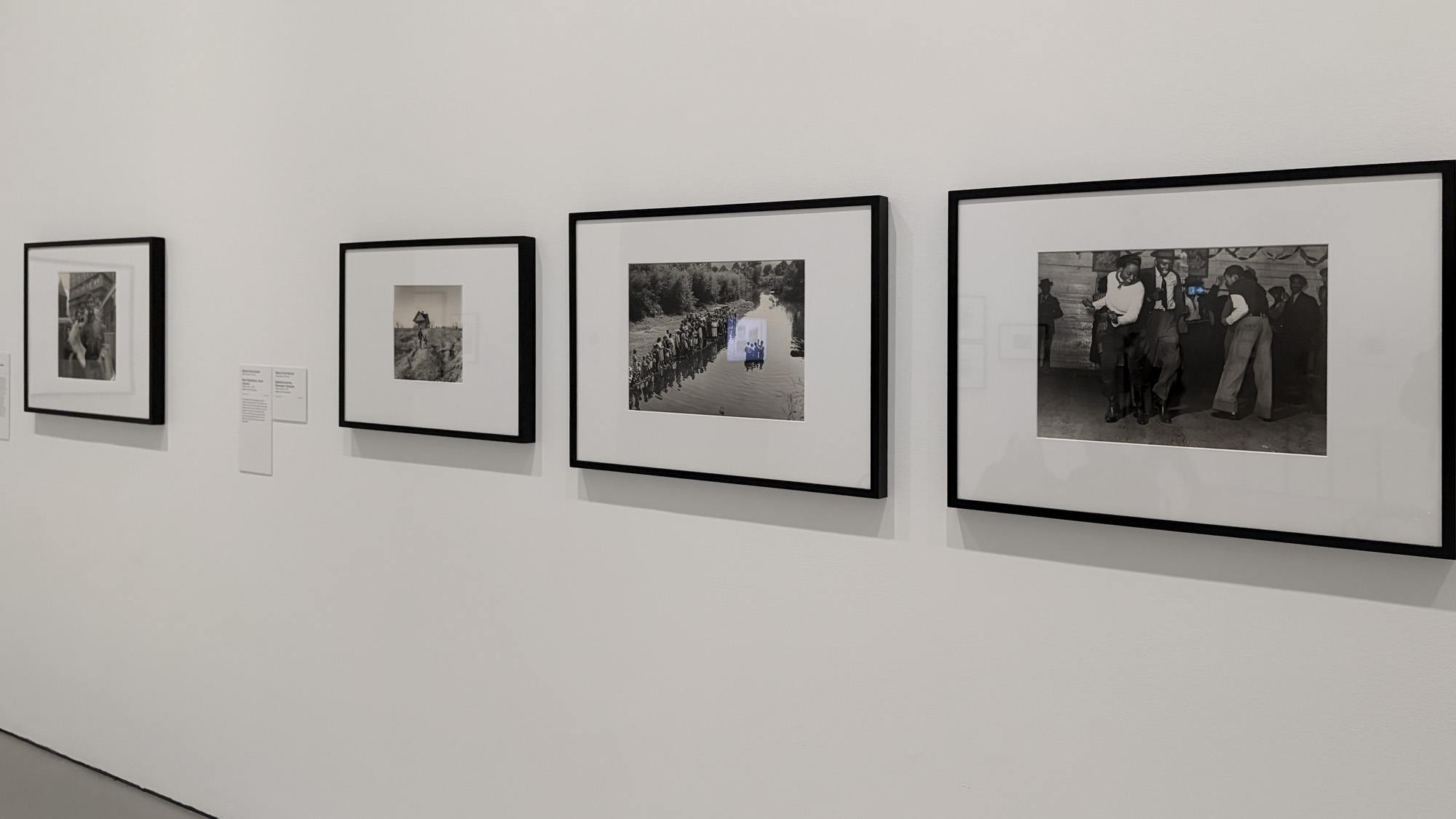
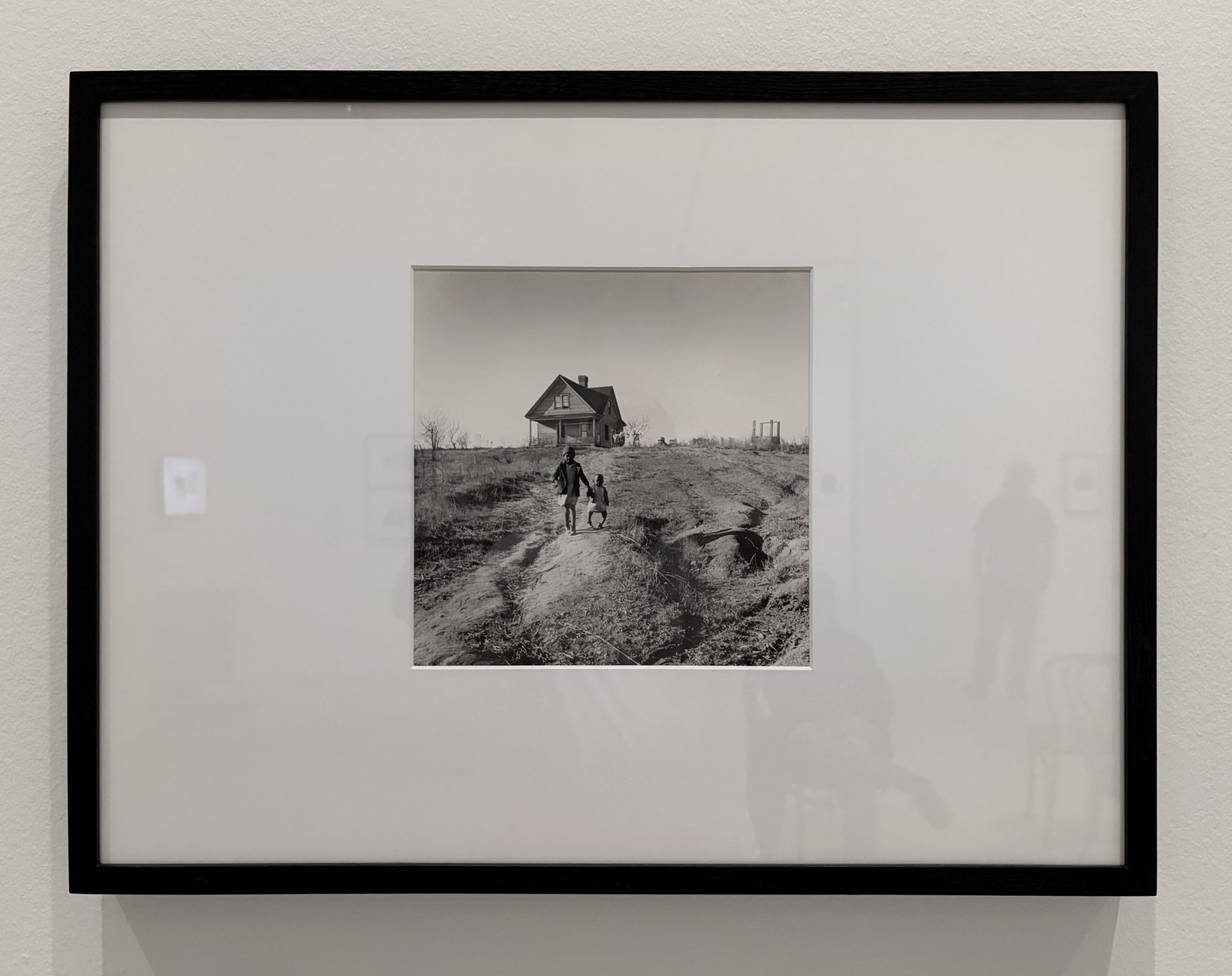
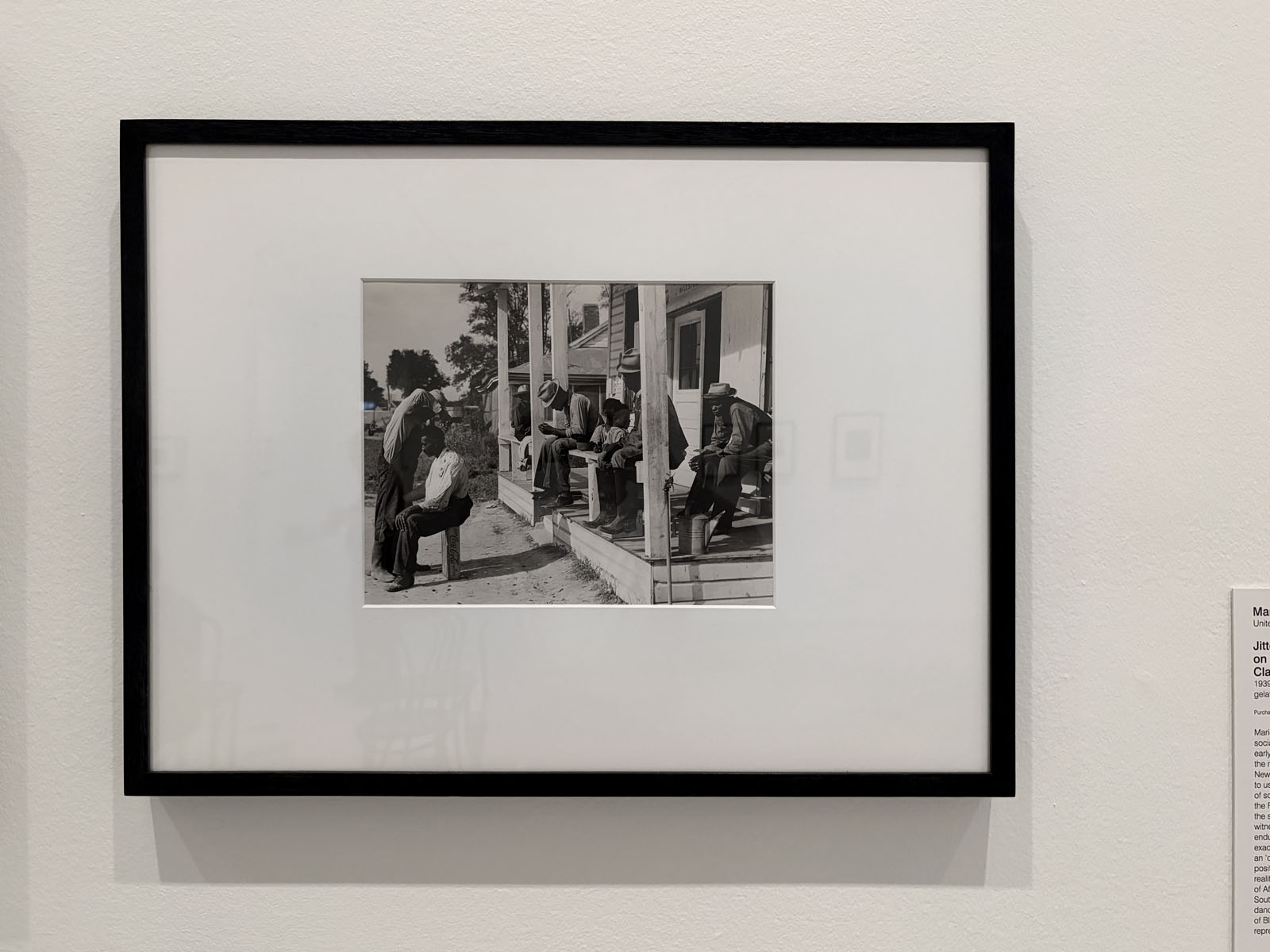
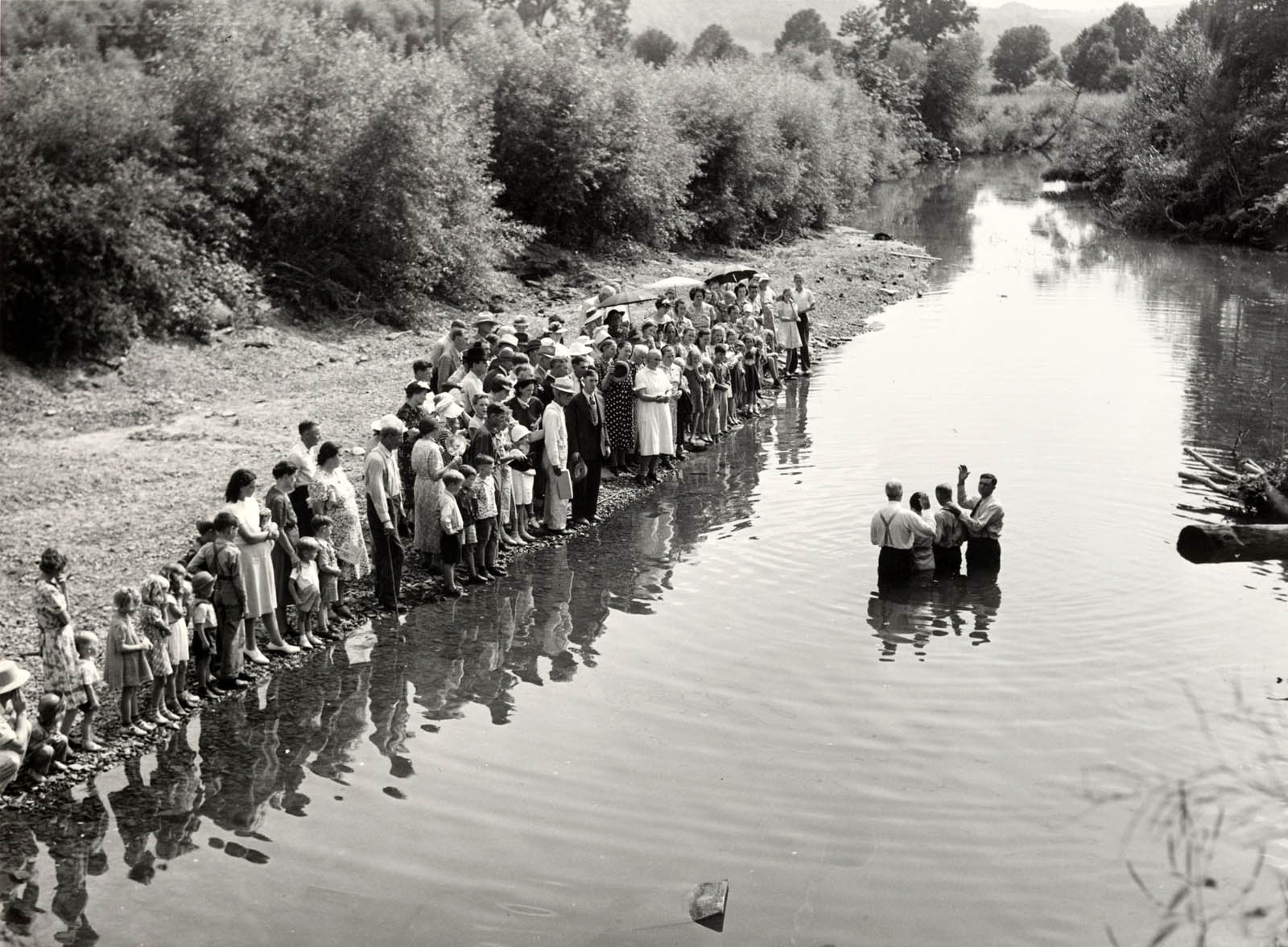
Exhibition: ‘Women Photographers 1900-1975: A Legacy of Light’ at NGV International, Melbourne, Part 2

“Aesthetically (both pictorially and in exhibition design) there is a wonderful frisson to the grouping of the photographs in these darker, enclosed, tightly curated gallery spaces that is so intoxicating to the senses.” Dr Marcus Bunyan

Exhibition dates: 28th November, 2025 – 3rd May, 2026

Curator: Maggie Finch, Curator of Photography at the NGV
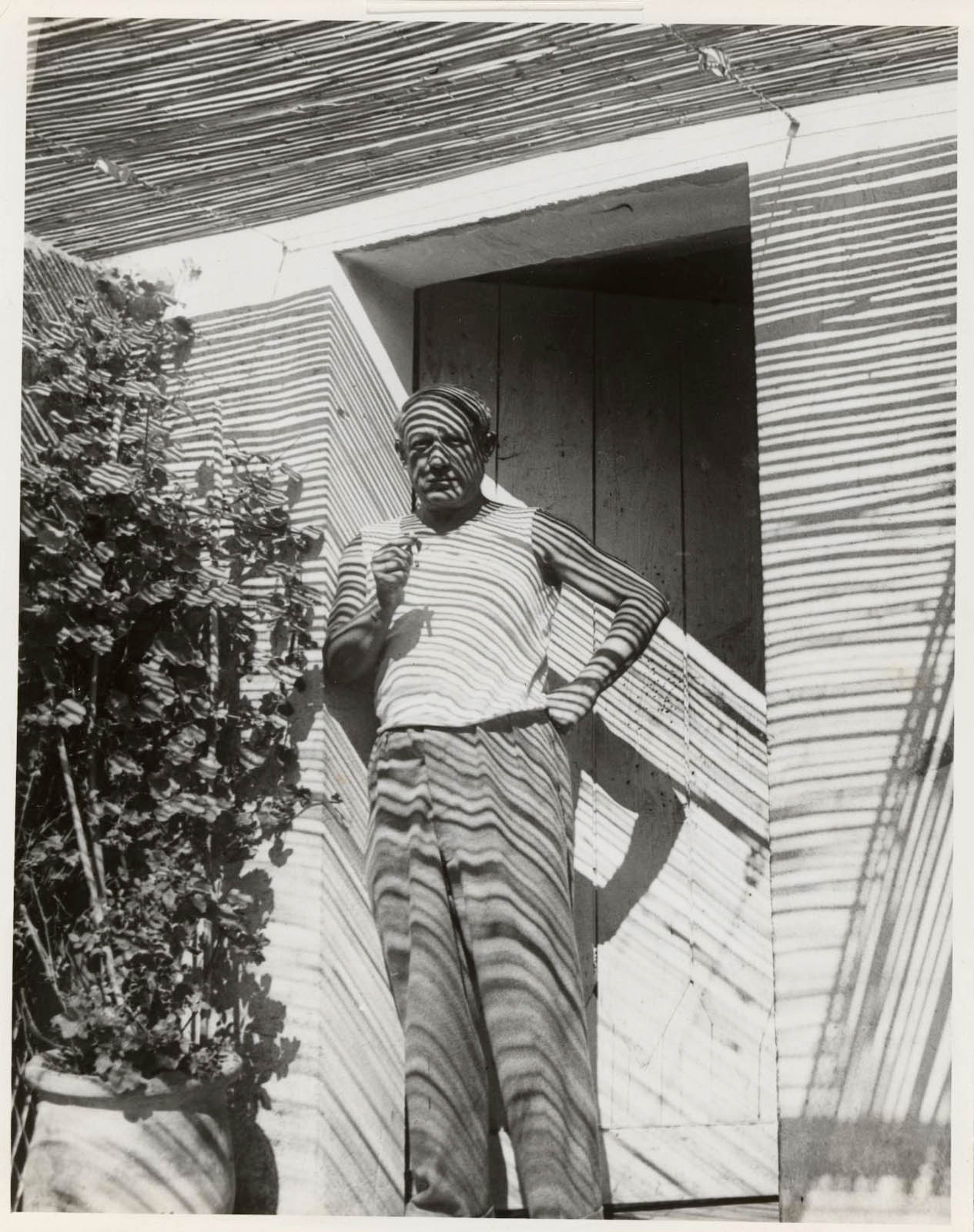
 

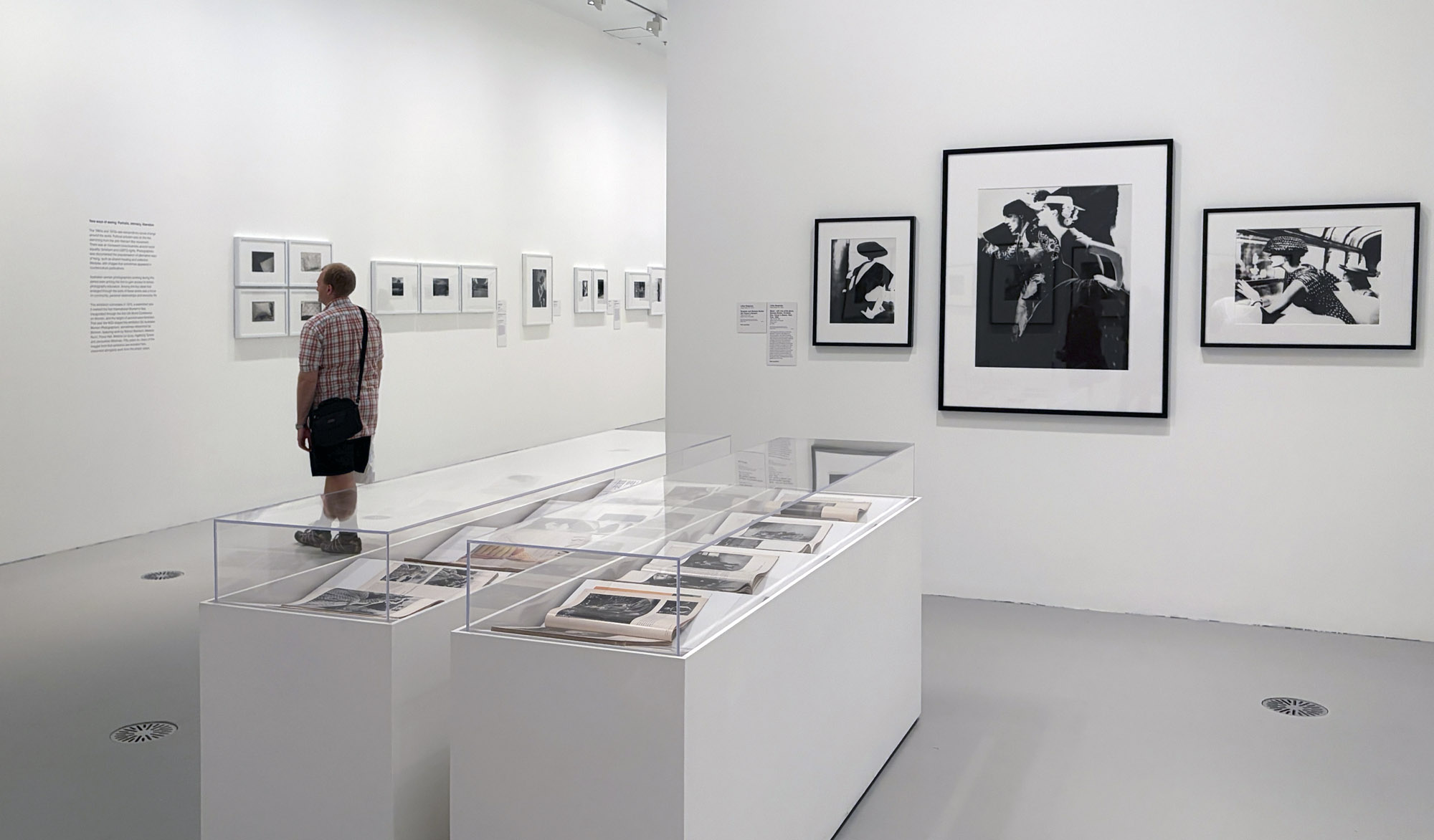
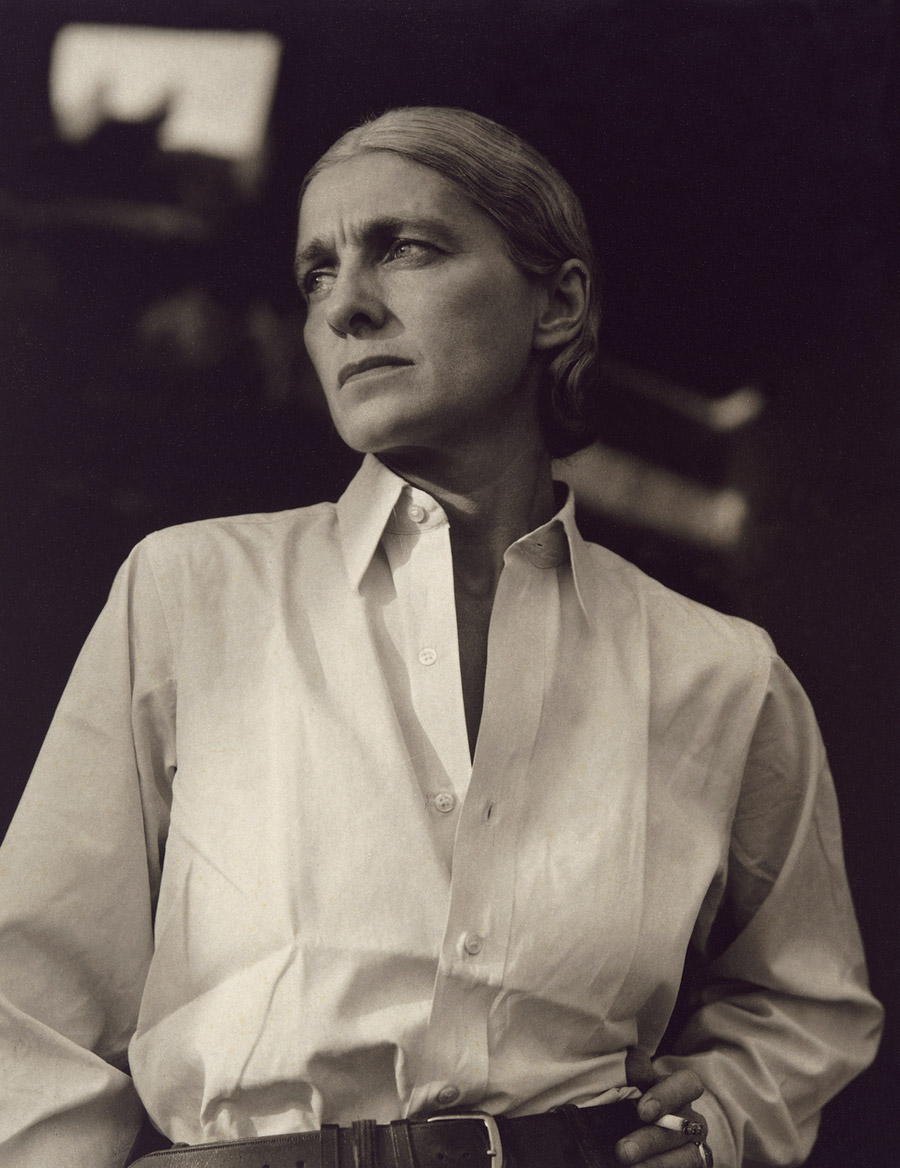
Dora Maar (French 1907-1997) 'Pablo Picasso standing under reed screening, Mougins, summer, 1937' (Pablo Picasso debout sous les cannisses, Mougins, été, 1937) 1937


Dora Maar (French 1907-1997)
Pablo Picasso standing under reed screening, Mougins, summer, 1937 (Pablo Picasso debout sous les cannisses, Mougins, été, 1937)
1937
Gelatin silver photograph
22.0 x 17.2cm (image)
23.1 x 18.2cm (sheet)
National Gallery of Victoria, Melbourne
Gift of Krystyna Campbell-Pretty AM and Family through the Australian Government’s Cultural Gifts Program, 2022
© Dora Maar. Licensed by Copyright Agency, Australia


After being introduced to Pablo Picasso in 1935, Dora Maar became his lover, model and muse until their tumultuous liaison ended in 1943. During their time together, Maar famously documented the creation of the monumental painting Guernica in Picasso’s Paris studio. This portrait captures the artist at ease, bathed in an endlessly echoing lineation of shadows from the above reed screen. The portrait Maar took of Picasso a year later, displayed nearby, shows him seated outside, his eyes glinting with intensity. Both images were taken in Mougins, near Cannes, an area that Picasso returned to every summer.

Wall text from the exhibition


The interface of light

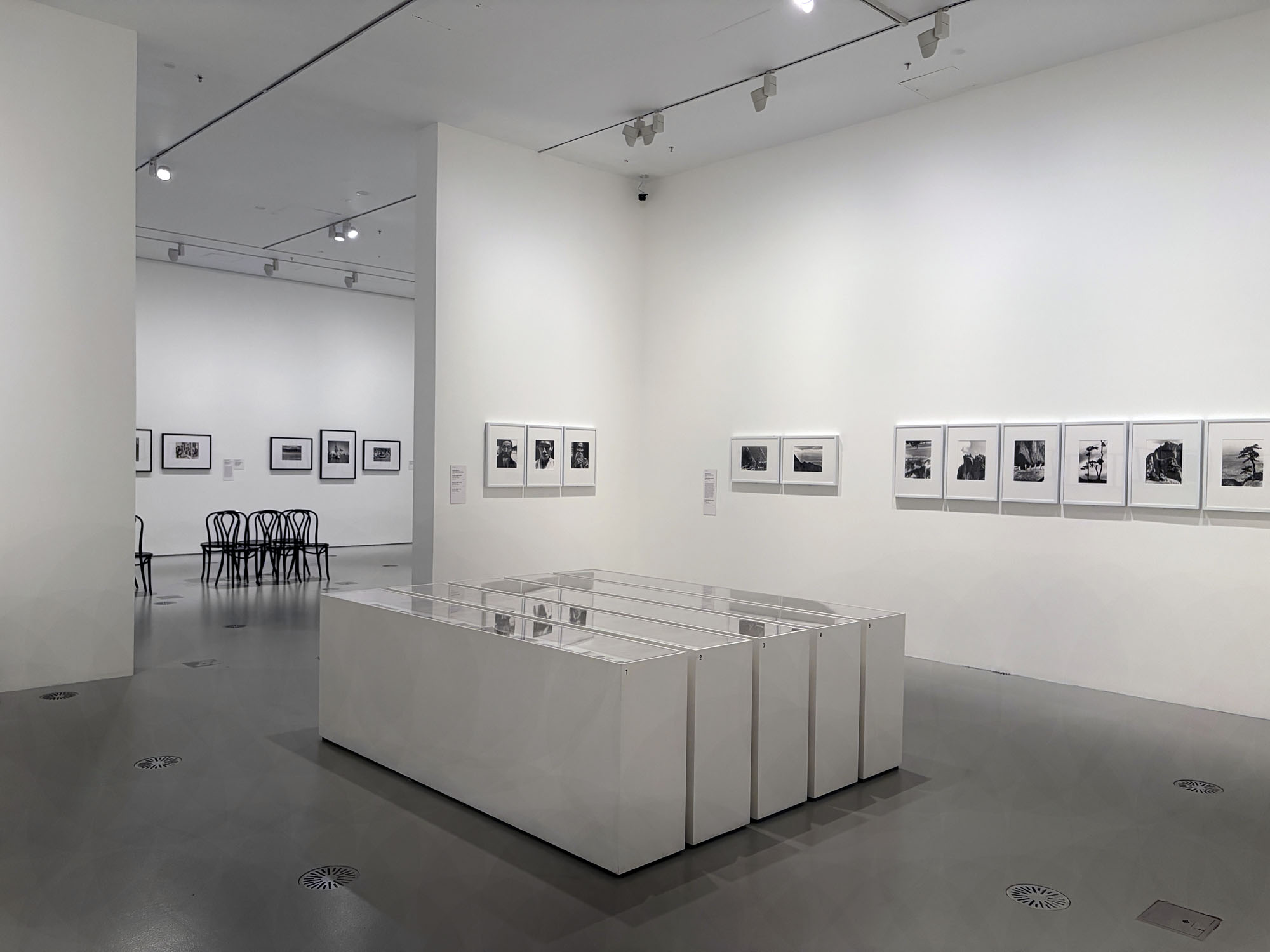
For much of its running length this exhibition of cinematic scope at the National Gallery of Victoria curated by the dependable Maggie Finch is a stimulating ride.

The early galleries in particular are a joy to behold, mixing as they do international and Australian female photographers mainly from the period between the two world wars. This placement of Australian photography in an international context (or vice versa) is something I have desired to see for a very long time in an Australian photographic exhibition. One informing the other. And it works so well!

Aesthetically (both pictorially and in exhibition design) there is a wonderful frisson to the grouping of the photographs in these darker, enclosed, tightly curated gallery spaces that is so intoxicating to the senses. Ruth Hollick meets Madame d’Ora, Florence Henri meets Yamawaki Michiko, and Olive Cotton meets Dora Maar on the gallery walls, interwoven into an intertextual conversation on photography that spans identities, countries and continents. Perhaps not a legacy of light rather the interface of light, a shared connection, one nexus to another. I could have breathed in these photographs for hours!

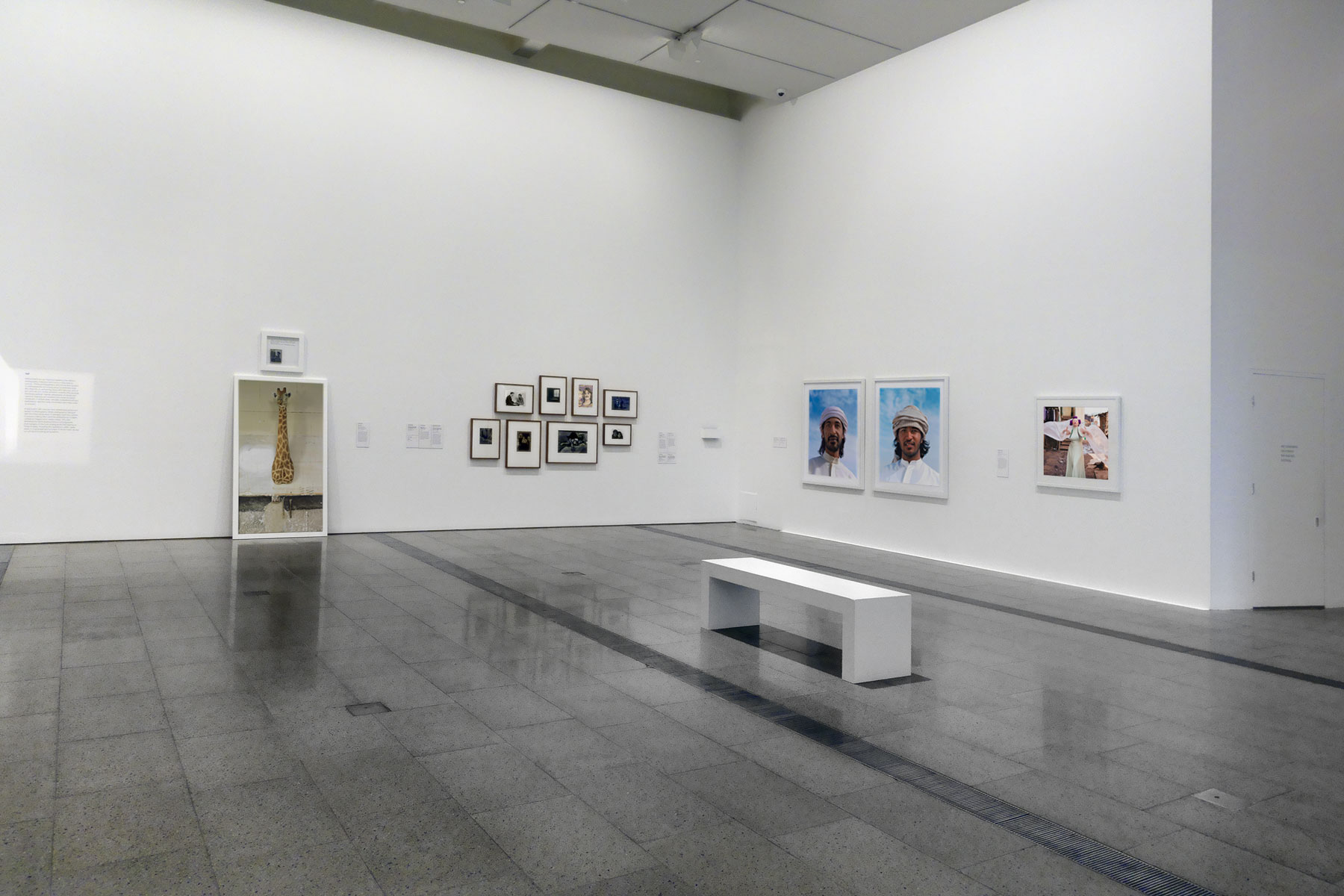
That energy starts to dissipate as the gallery spaces open out in the second half of the exhibition, especially in the section ‘People and Place’ (see below). Poor Farm Security Administration prints of now famous photographs printed very flatly in the mid-1970s and purchased for the gallery in the same time period don’t help the cause – they need to be replaced in the collection with more appropriate prints of these images.

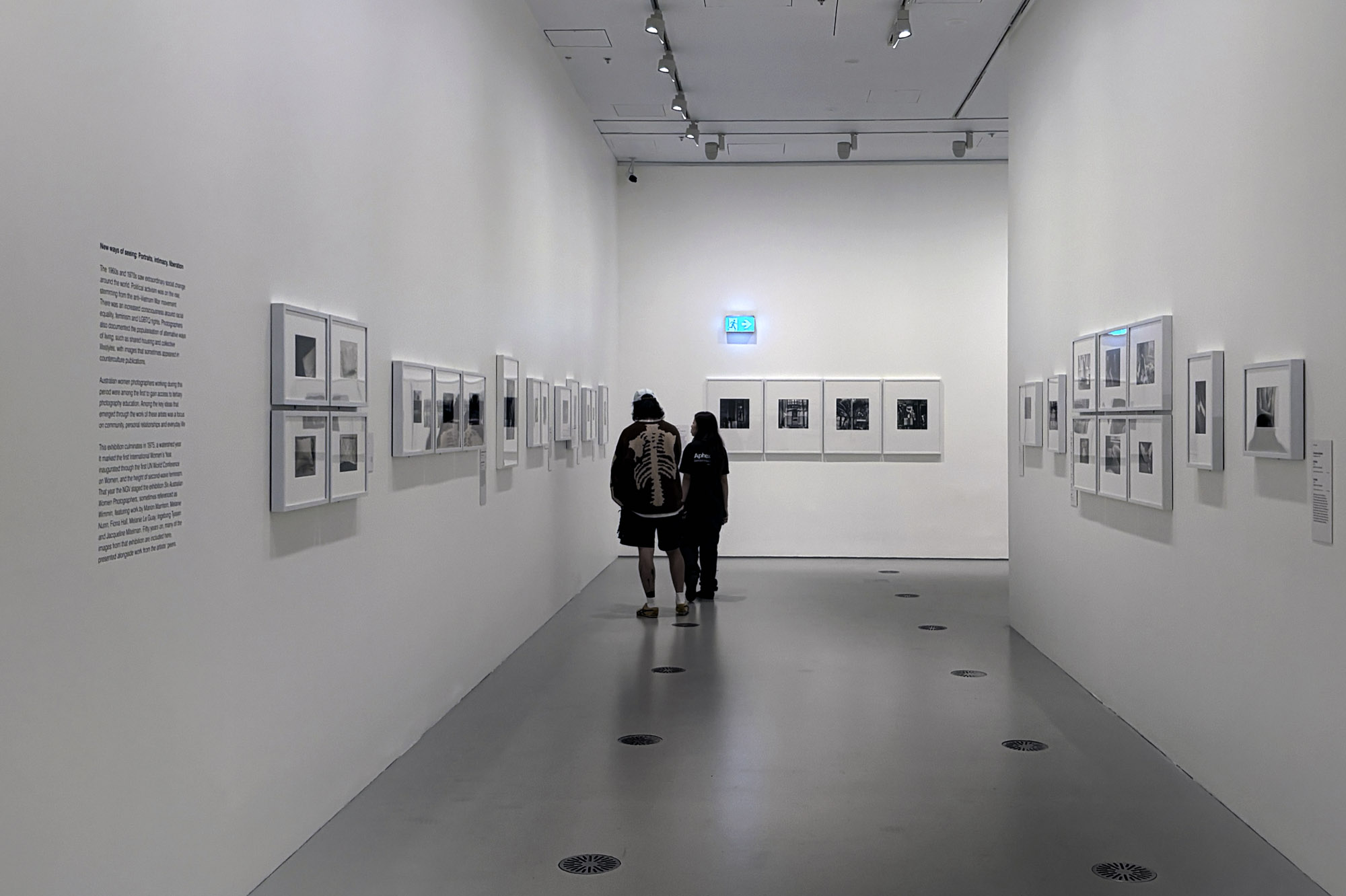
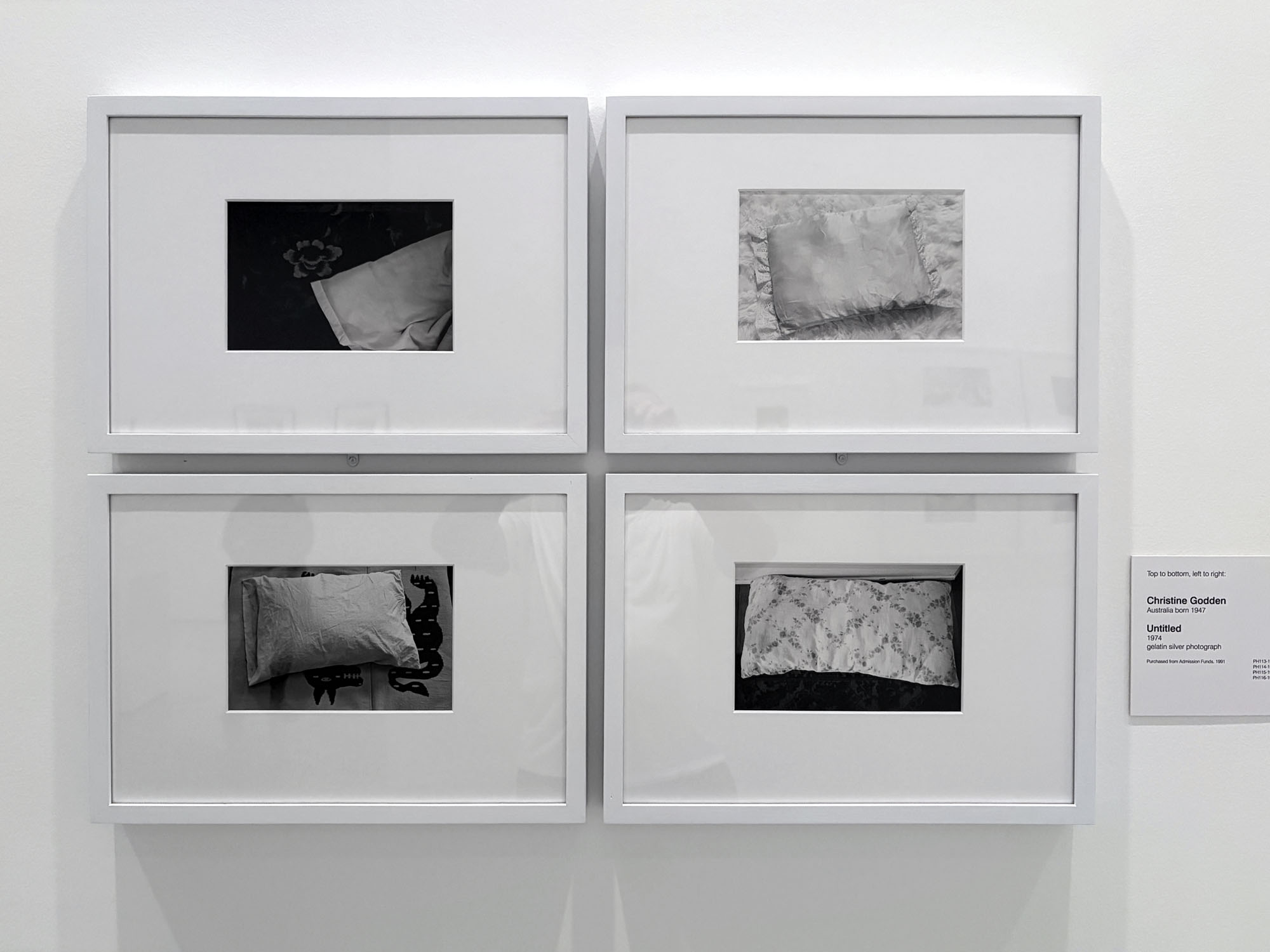
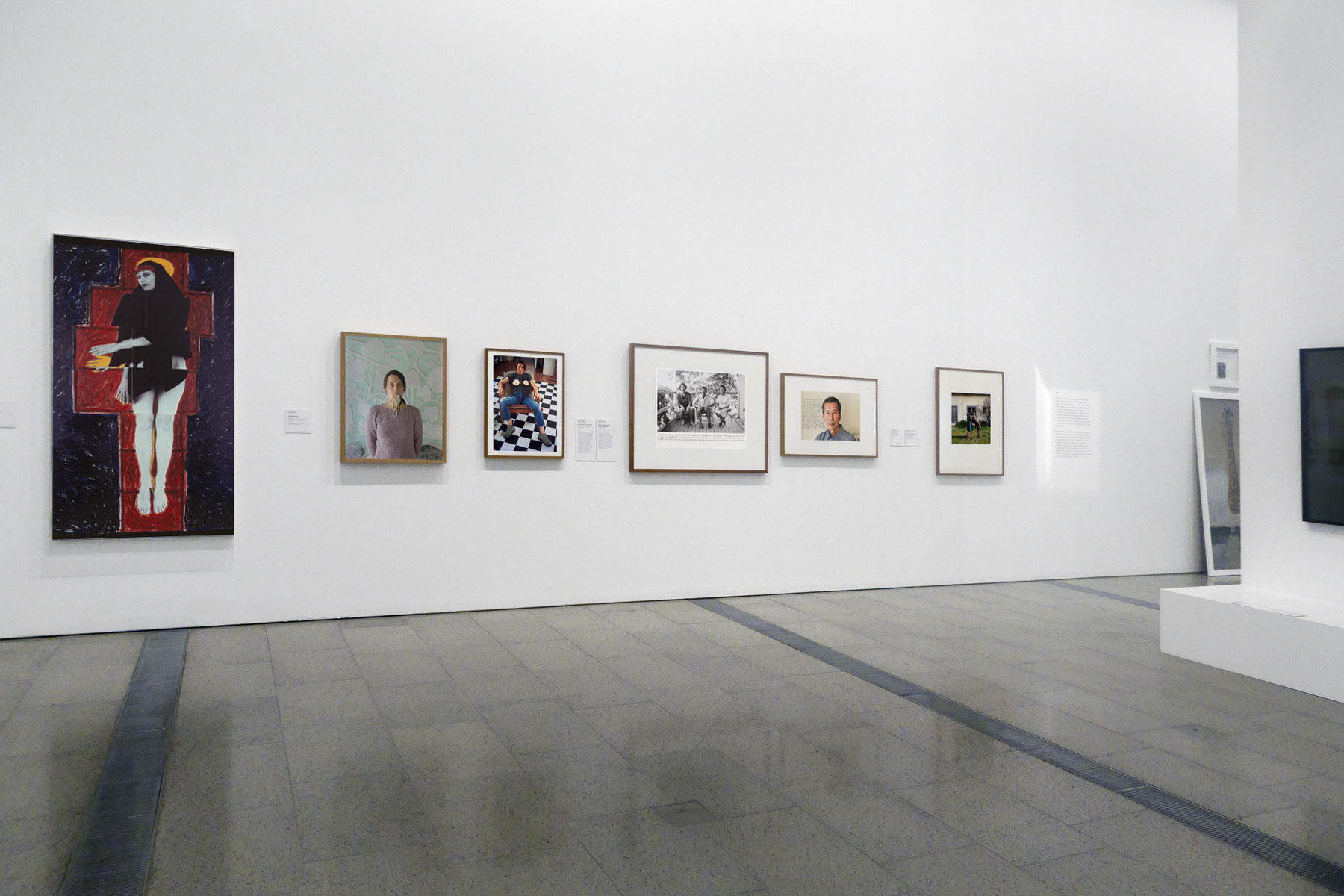
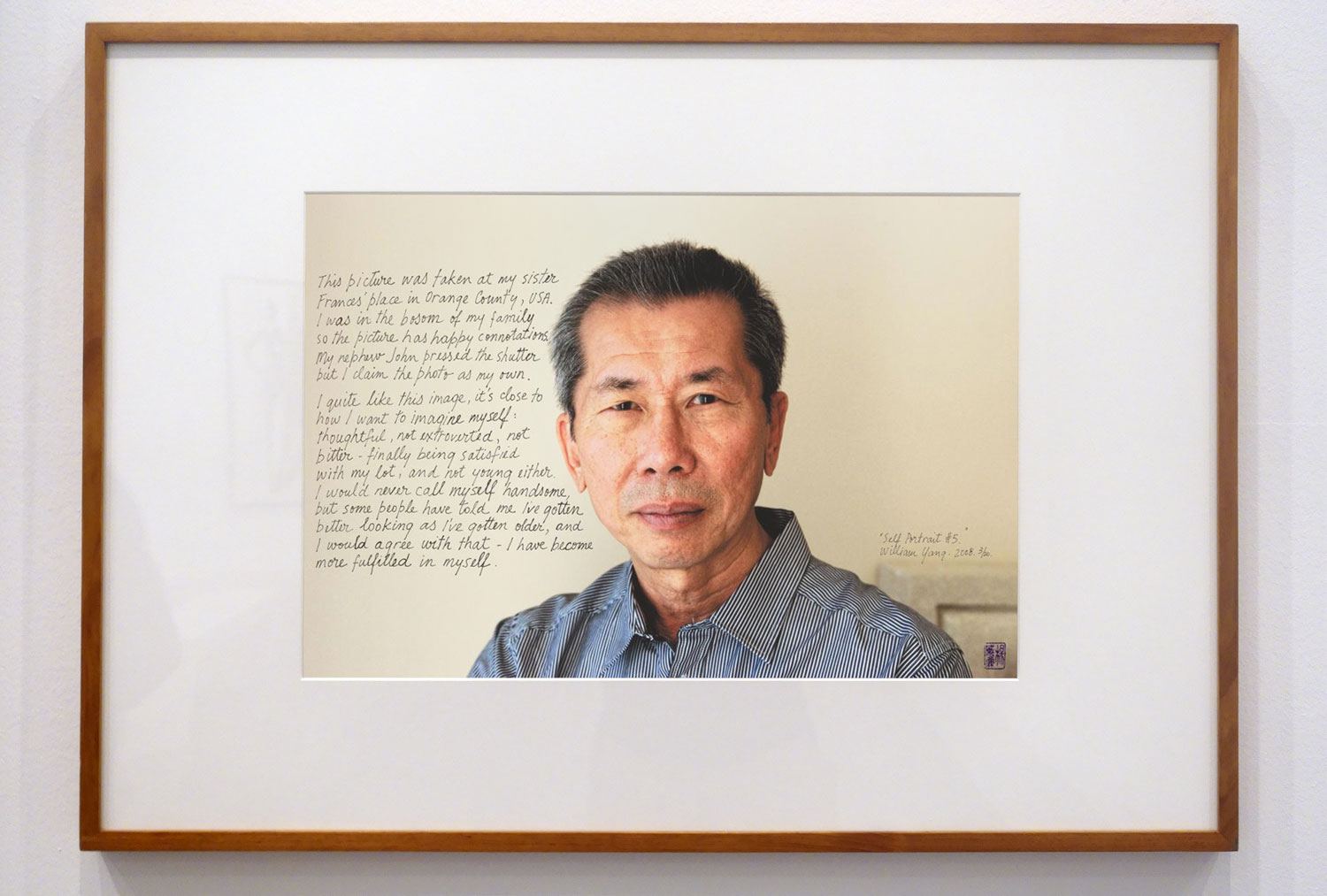
By the time of the final section, ‘New Ways Of Seeing: Portraits, Intimacy, Liberation’ (see below), the international representation has disappeared altogether and all the intoxicating energy has gone. In this section we find strong, eloquent and important Australian photographs from the period – conceptual, feminist, and on liberation – but it would have been great to have seen them paired with photographs from international photographers such as Cindy Sherman, Mary Ellen Mark, and Valie Export for example.

On reflection I can say that this is a strong exhibition from the NGV coherently and intelligently curated by Maggie Finch. It is fantastic to see that the gallery has been “splashing the cash” in recent years – supported by Krystyna Campbell-Pretty AM and the Bowness family – with over 170 new acquisitions for the photographic collection.

However for a public gallery, with most of the photographs already in the collection, to charge $25 entry price is really beyond the pale. I went twice to see the exhibition and $50 is a fair whack of money out of anyone’s budget.

Dr Marcus Bunyan


Many thankx to the NGV for allowing me to publish the media images in the posting. All installation photographs © Marcus Bunyan. Please click on the photographs for a larger version of the image. View Part 1 of the posting.
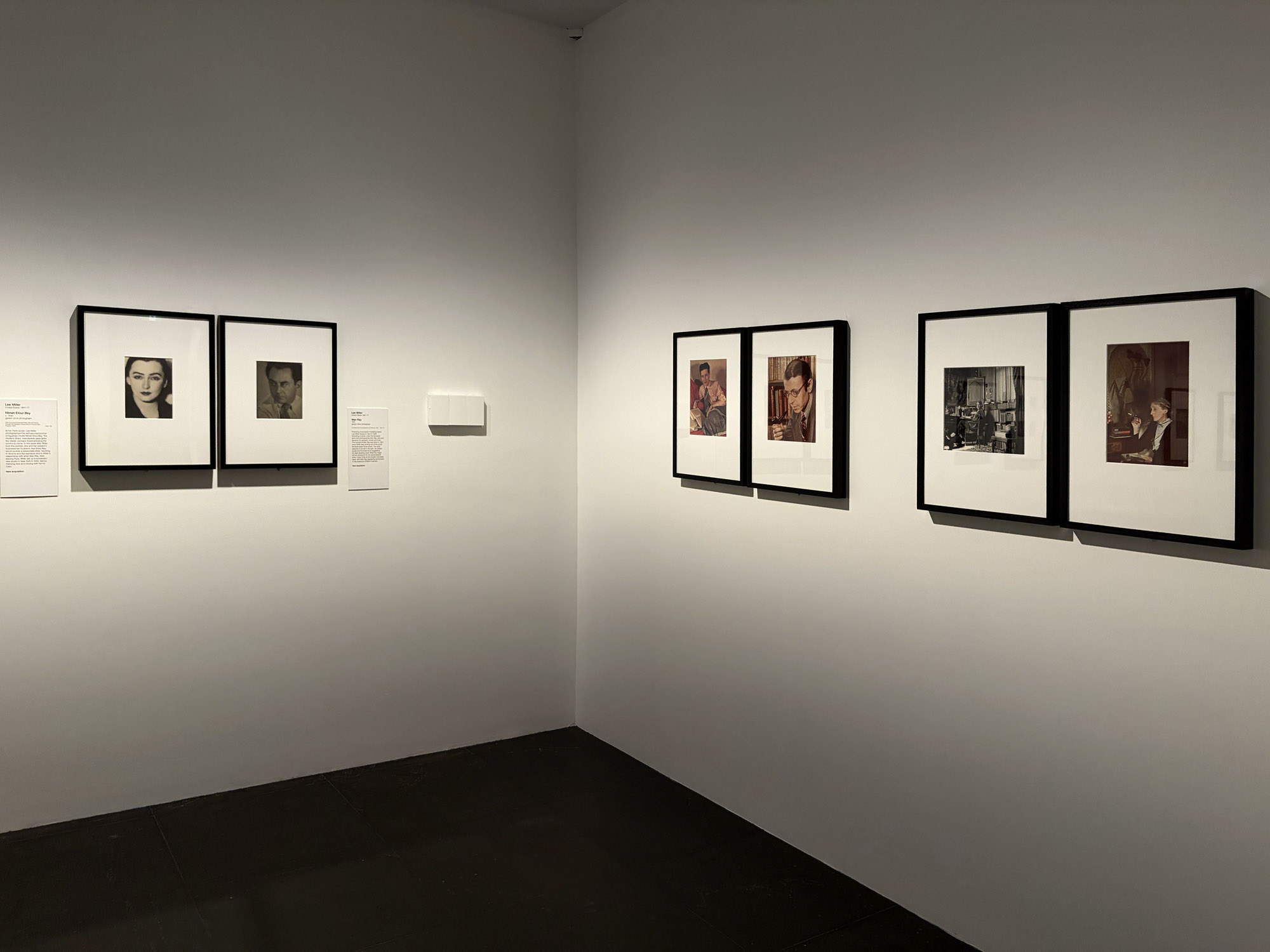


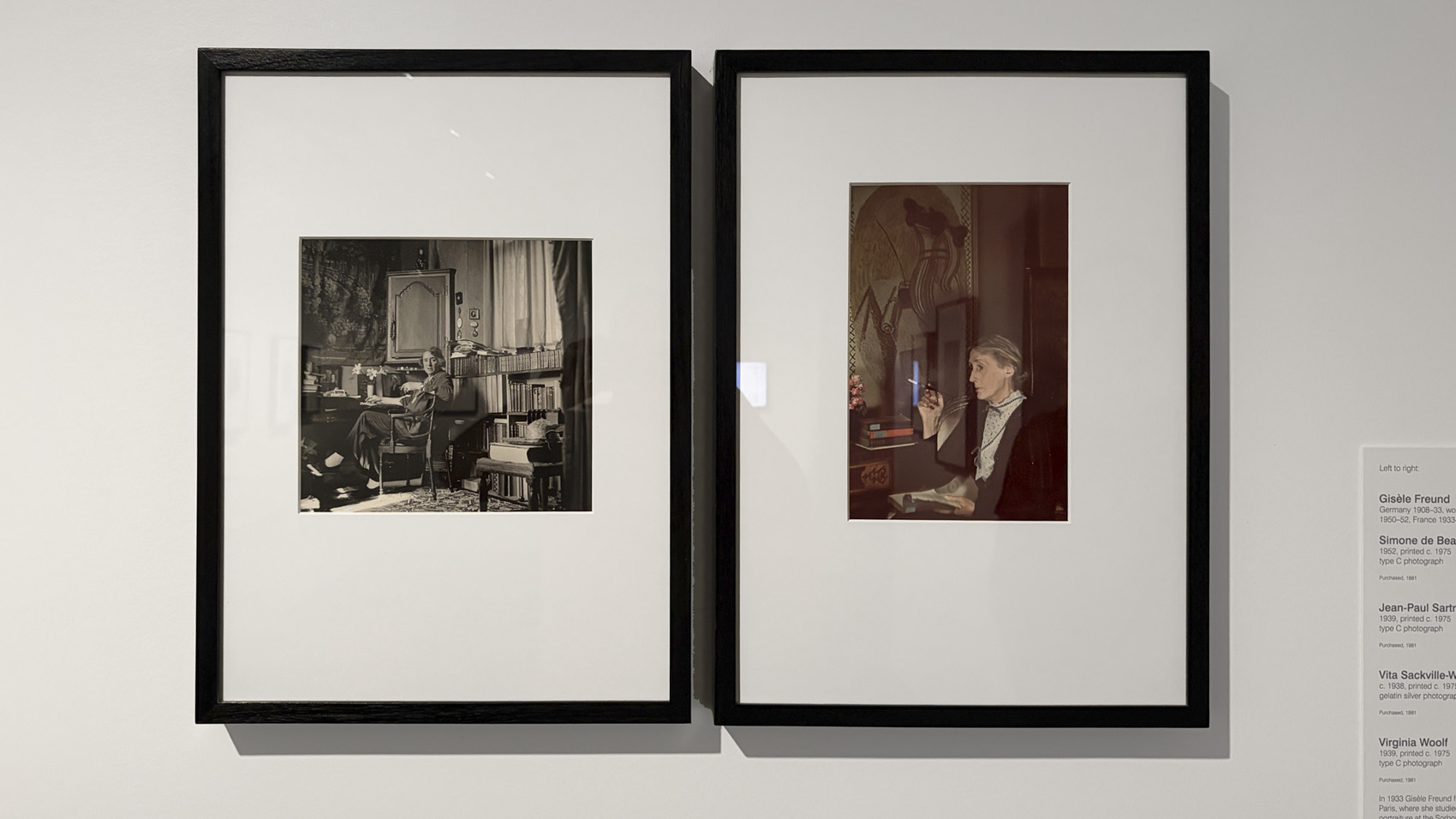
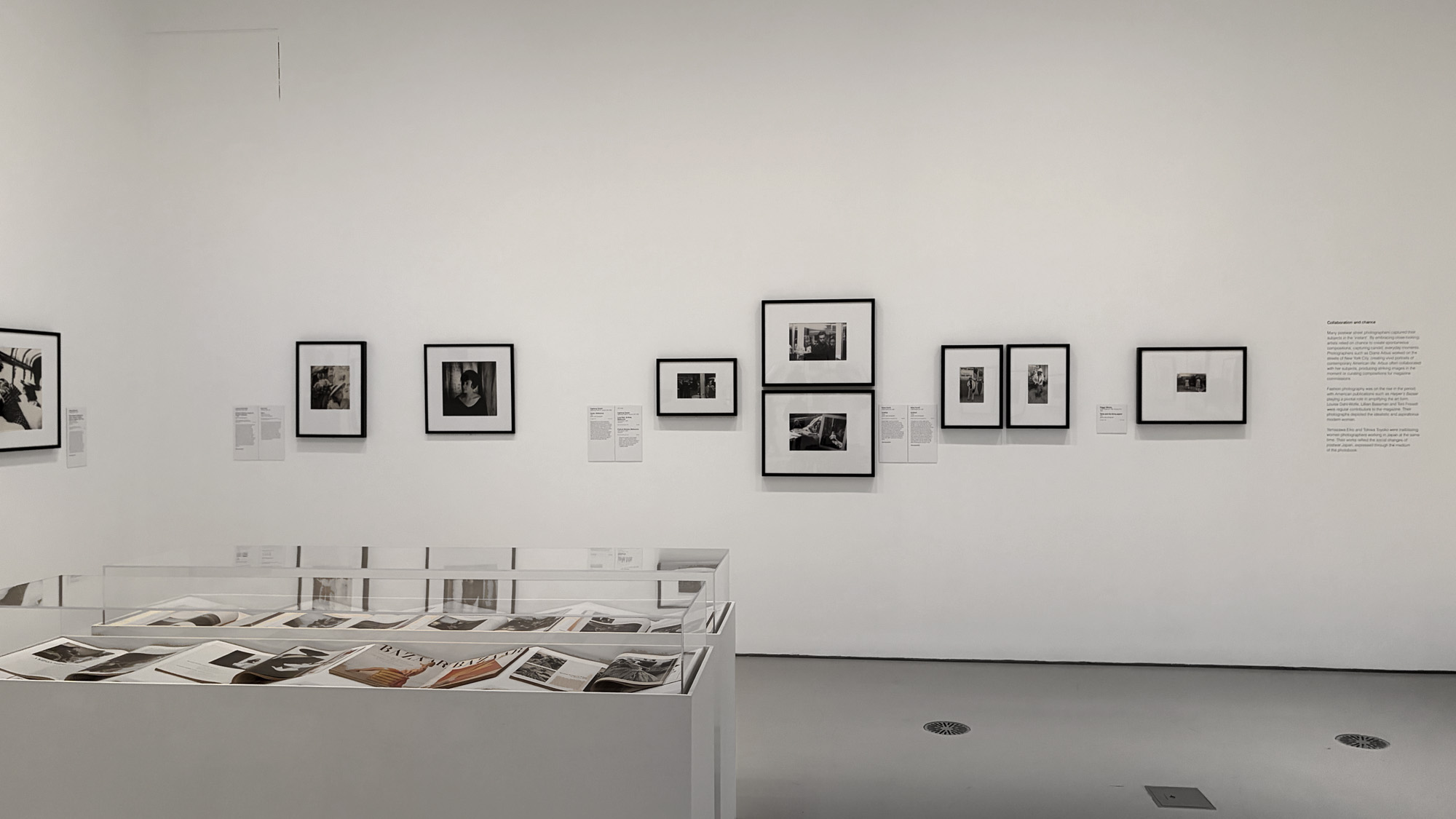
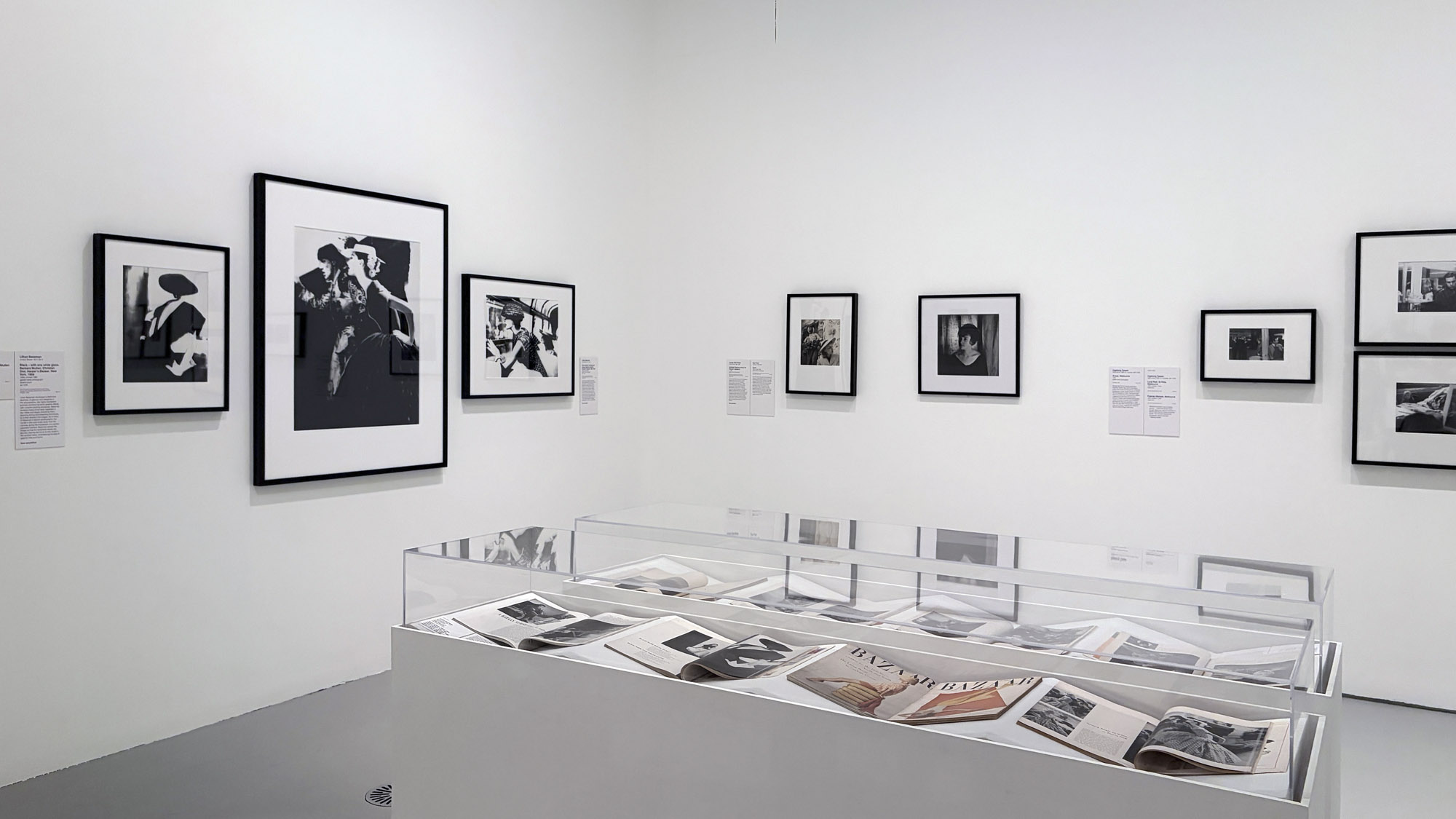
Installation view of the exhibition 'Women Photographers 1900-1975: A Legacy of Light' at NGV International, Melbourne, November 2025 - May 2026 showing from left to right, Lee Miller 'Nimet Eloui Bey' (c. 1930); Lee Miller 'Man Ray' (1931); Gisele Freund's 'Simone de Beauvoir '(1952 printed c. 1975), 'Jean-Paul Satre' (1939 printed c. 1975), 'Vita Sackville-West' (1938 printed c. 1975) and 'Virginia Woolfe' (1939 printed c. 1975)


Installation view of the exhibition Women Photographers 1900-1975: A Legacy of Light at NGV International, Melbourne, November 2025 – May 2026 showing from left to right, Lee Miller Nimet Eloui Bey (c. 1930, below); Lee Miller Man Ray (1931, below); Gisele Freund’s Simone de Beauvoir (1952 printed c. 1975, below), Jean-Paul Satre (1939 printed c. 1975, below), Vita Sackville-West (1938 printed c. 1975, below) and Virginia Woolfe (1939 printed c. 1975, below)
Photo: Marcus Bunyan


Women Photographers 1900-1975: A Legacy of Light celebrates the wide-ranging photographic practices of more than eighty women artists working between 1900 and 1975. Featuring prints, postcards, photobooks and magazines, the exhibition explores the role of photographers as image-makers, and the ways in which women artists create an image of themselves, of others, of the times – from images of the women’s suffrage movement at the turn of the twentieth century, through to the women’s liberation movement and beyond. From Melbourne to Tokyo, Paris to Buenos Aires, the exhibition showcases the works of trailblazing artists such as Berenice Abbott, Lola Álvarez Bravo, Claude Cahun and Marcel Moore, Imogen Cunningham, Mikki Ferrill, Sue Ford, Christine Godden, Ponch Hawkes, Annemarie Heinrich, Ruth Hollick, Florence Henri, Kati Horna, Germaine Krull, Tina Modotti, Lucia Moholy, Toyoko Tokiwa, Yamazawa Eiko and many more.

The exhibition reflects a recent collecting focus on celebrating the contributions of women artists of the early twentieth century in the NGV Photography Collection. Featuring portraiture, photojournalism, landscape photography, photomontage, experimental avant-garde imagery and more, Women Photographers 1900-1975: A Legacy of Light presents the diverse work of women photographers against the backdrop of significant social, political and cultural events.

Text from the NGV website
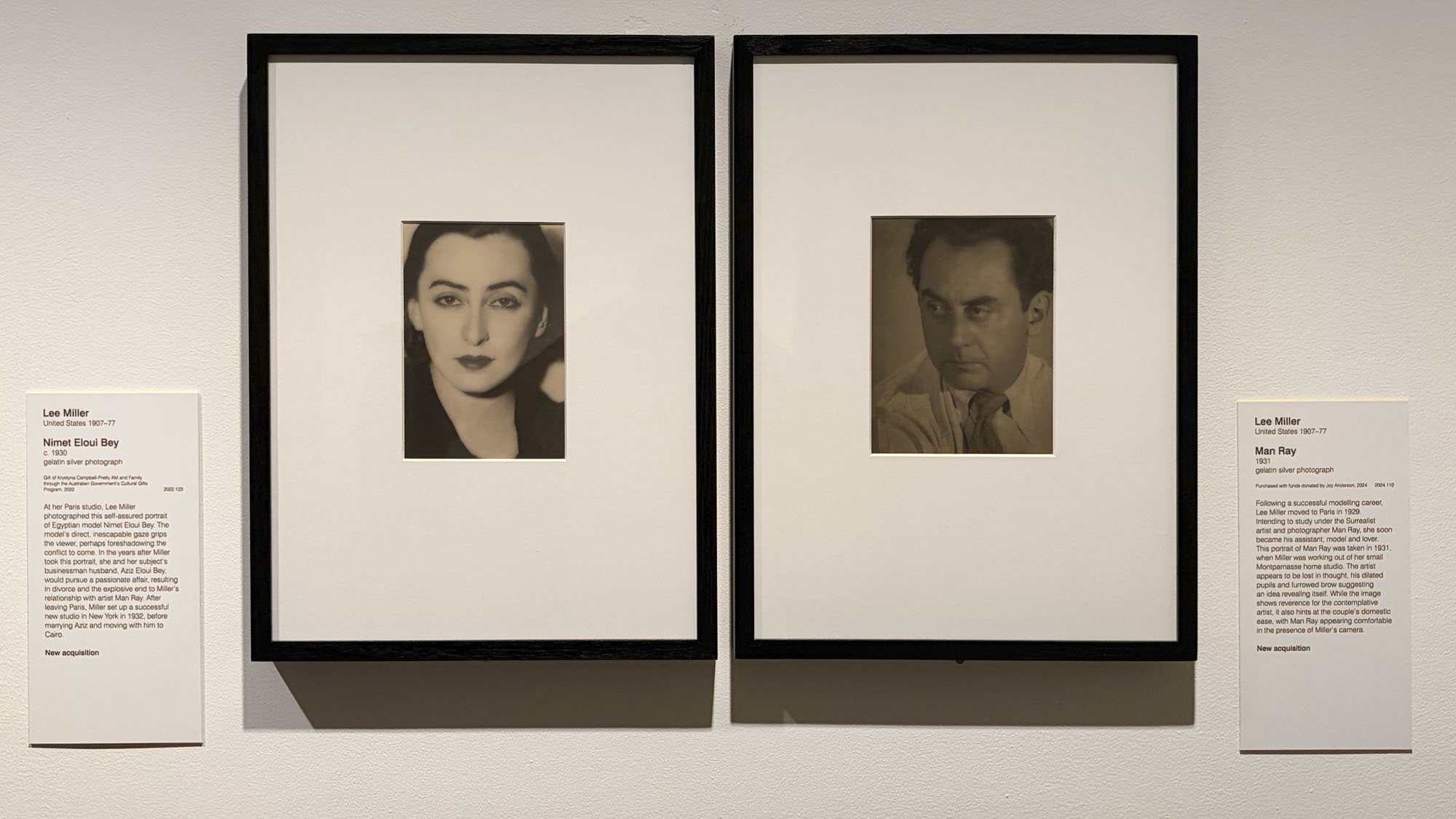
 

Installation view of the exhibition 'Women Photographers 1900-1975: A Legacy of Light' at NGV International, Melbourne, November 2025 - May 2026 showing from left to right, Lee Miller 'Nimet Eloui Bey' (c. 1930) and Lee Miller 'Man Ray' (1931)


Installation view of the exhibition Women Photographers 1900-1975: A Legacy of Light at NGV International, Melbourne, November 2025 – May 2026 showing from left to right, Lee Miller Nimet Eloui Bey (c. 1930, below) and Lee Miller Man Ray (1931, below)
Photo: Marcus Bunyan
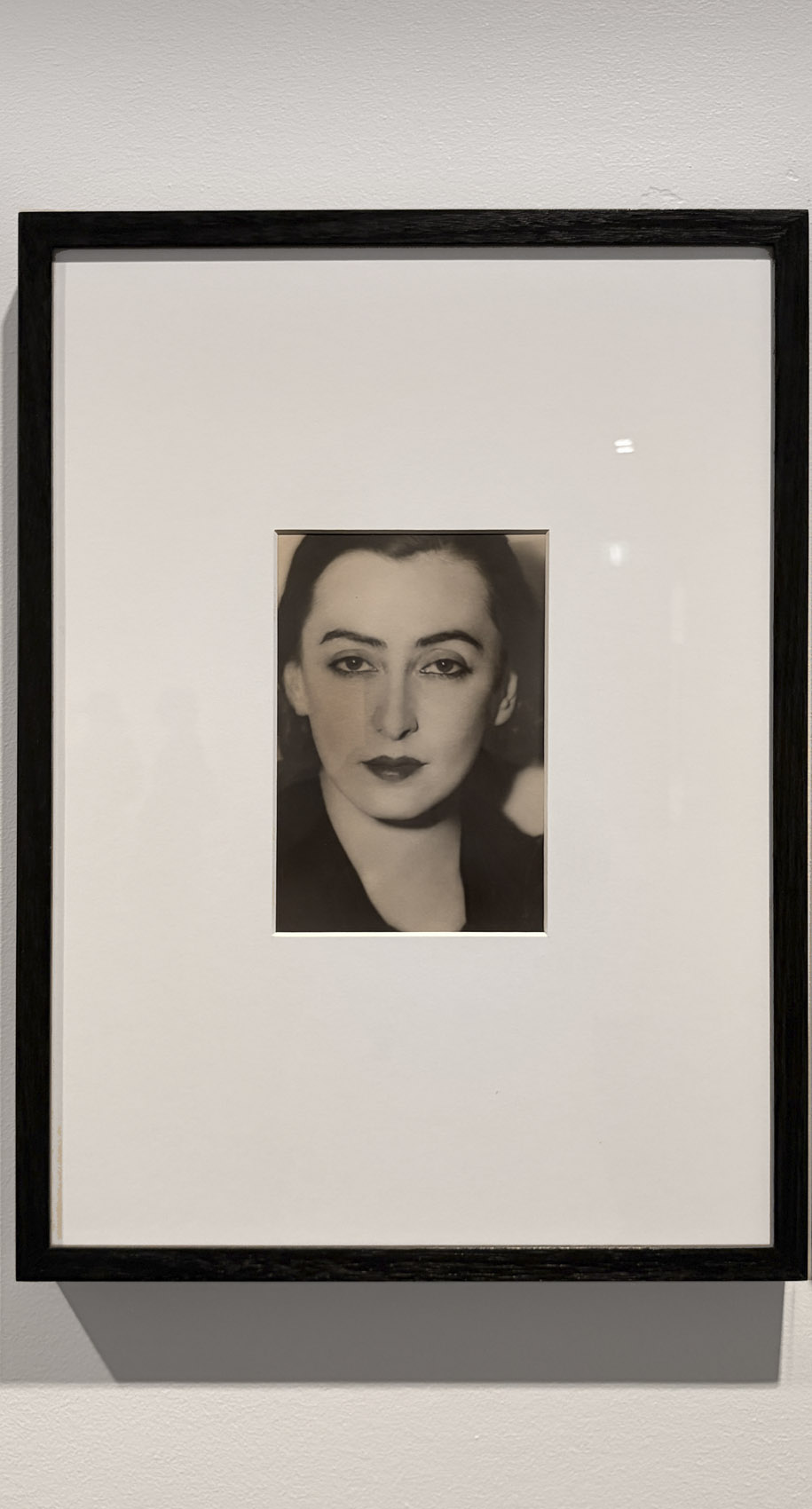
 

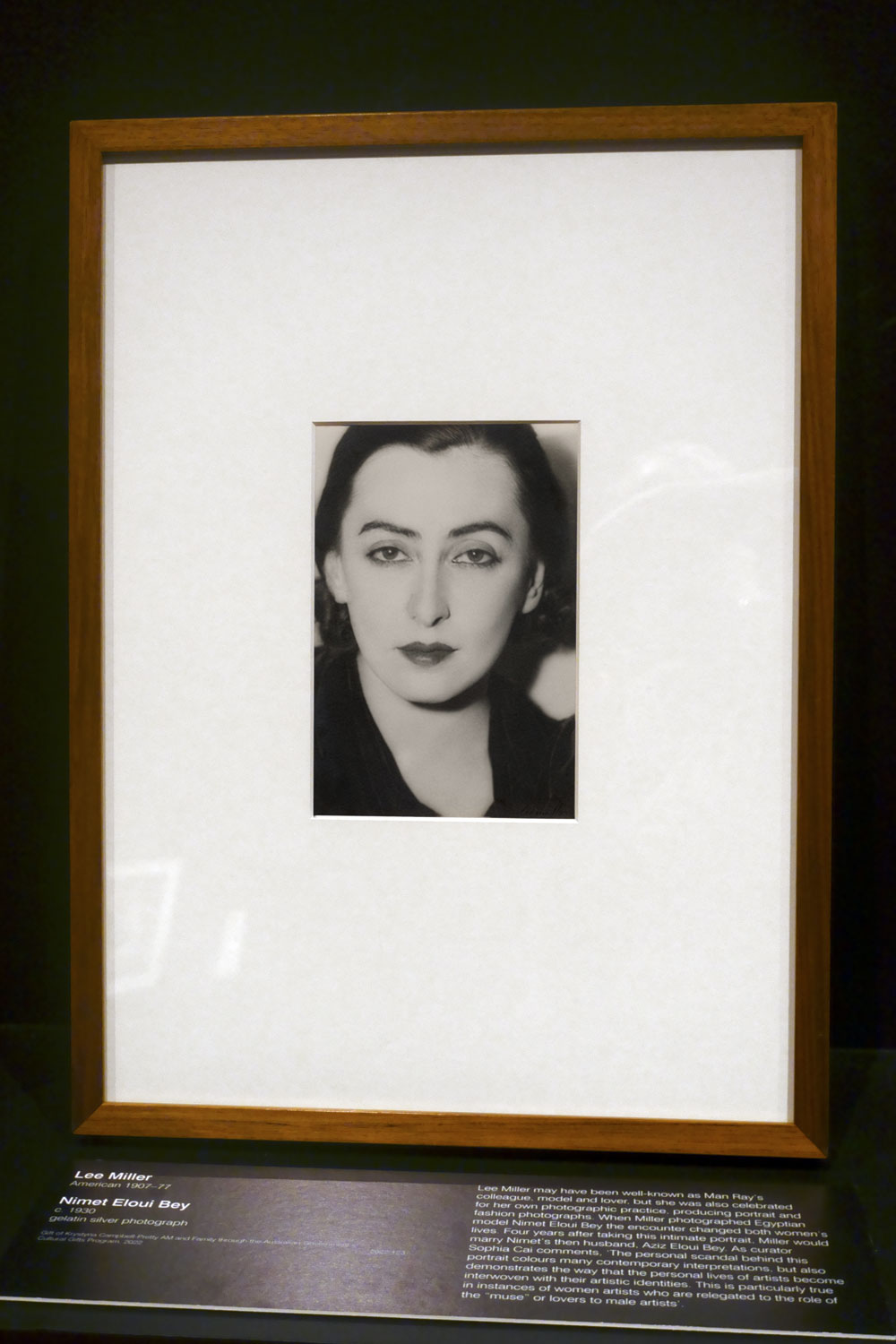
Lee Miller (American, 1907-1977) 'Nimet Eloui Bey' c. 1930 (installation view)


Lee Miller (American, 1907-1977)
Nimet Eloui Bey (installation view)
c. 1930
Gelatin silver photograph
23.0 x 15.8cm (image and sheet)
National Gallery of Victoria, Melbourne
Gift of Krystyna Campbell-Pretty AM and Family through the Australian Government’s Cultural Gifts Program, 2022
© Lee Miller Archives, England 2023


At her Paris studio, Lee Miller photographed this self-assured portrait of Egyptian model Nimet Eloui Bey. The model’s direct, inescapable gaze grips the viewer, perhaps foreshadowing the conflict to come. In the years after Miller took this portrait, she and her subject’s businessman husband, Aziz Eloui Bey, would pursue a passionate affair, resulting in divorce and the explosive end to Miller’s relationship with artist Man Ray. After leaving Paris, Miller set up a successful new studio in New York in 1932, before marrying Aziz and moving with him to Cairo.

Wall text from the exhibition
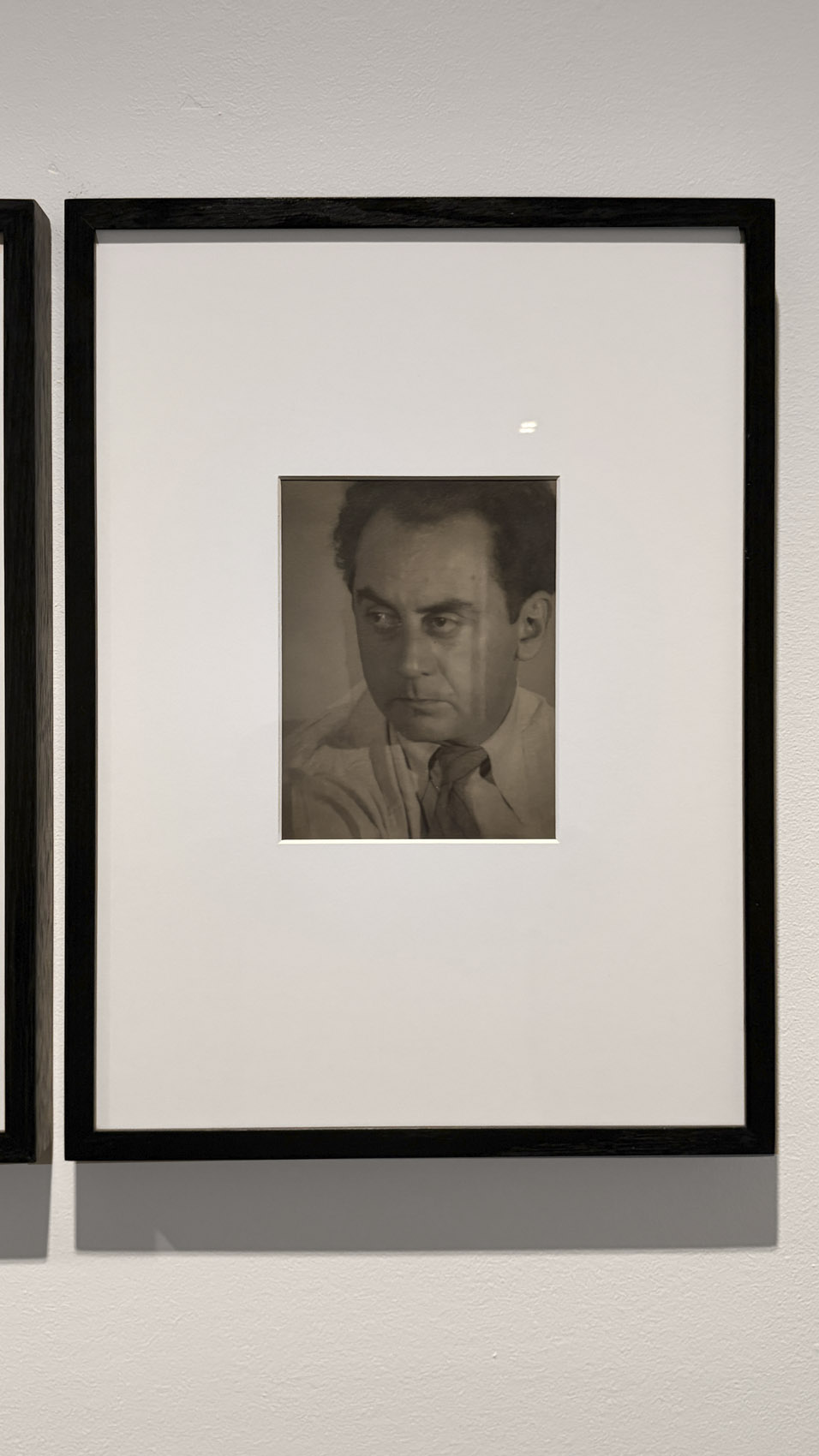
 

Lee Miller (American, 1907-1977) 'Man Ray' 1931 (installation view)


Lee Miller (American, 1907-1977)
Man Ray (installation view)
1931
Gelatin silver photograph
23.1 x 17.5cm (image and sheet)
National Gallery of Victoria, Melbourne
Purchased with funds donated by Joy And
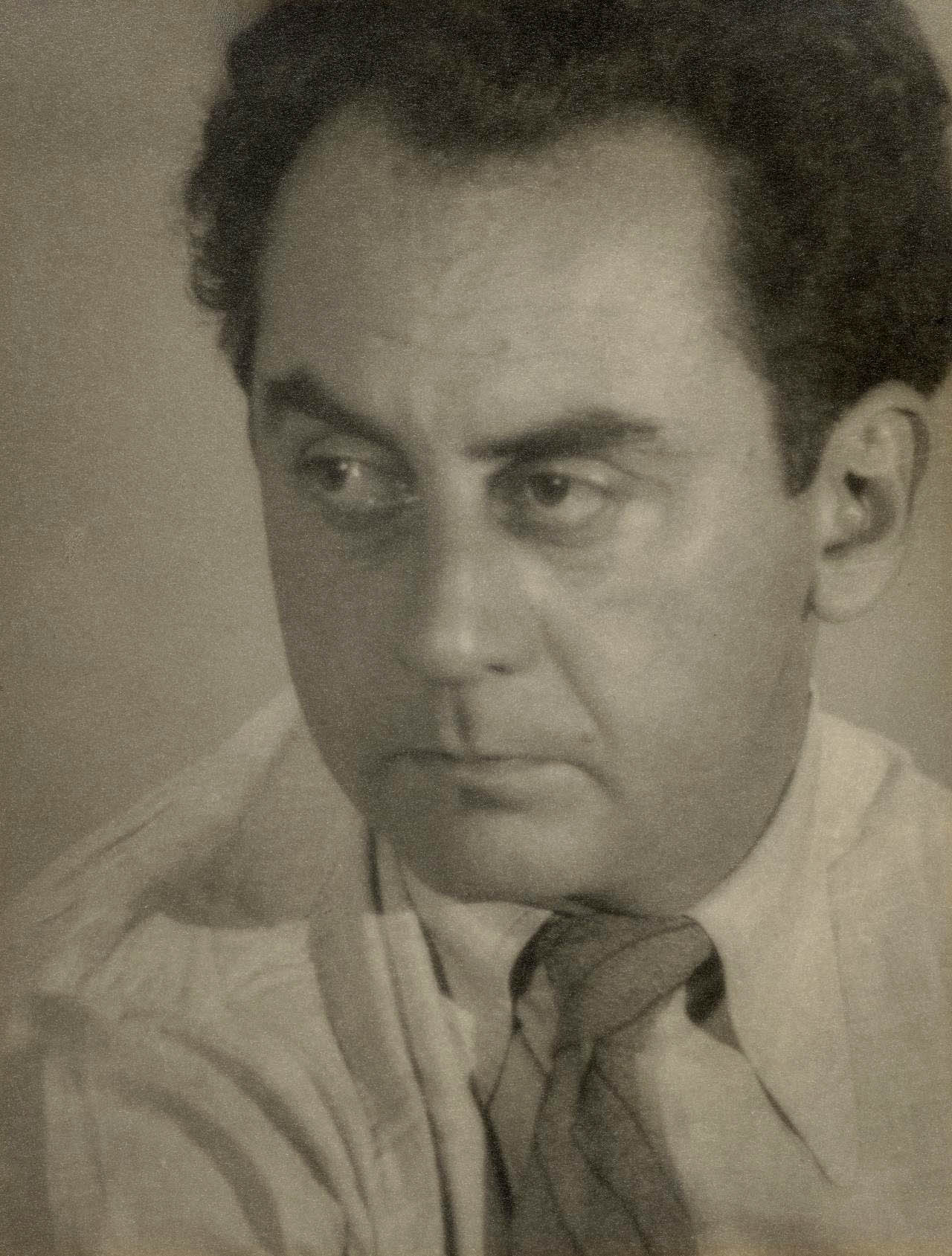
 

Lee Miller (American, 1890-1976) 'Man Ray' 1931


Lee Miller (American, 1890-1976)
Man Ray
1931
Gelatin silver photograph
23.1 x 17.5cm (image and sheet)
National Gallery of Victoria, Melbourne
Purchased with funds donated by Joy Anderson, 2024
© Lee Miller Archives, England 2023. All rights reserved


Following a successful modelling career, Lee Miller moved to Paris in 1929. Intending to study under the Surrealist artist and photographer Man Ray, she soon became his assistant, model and lover. This portrait of Man Ray was taken in 1931, when Miller was working out of her small Montparnasse home studio. The artist appears to be lost in thought, his dilated pupils and furrowed brow suggesting an idea revealing itself. While the image shows reverence for the contemplative artist, it also hints at the couple’s domestic ease, with Man Ray appearing comfortable in the presence of Miller’s camera.

Wall text from the exhibition
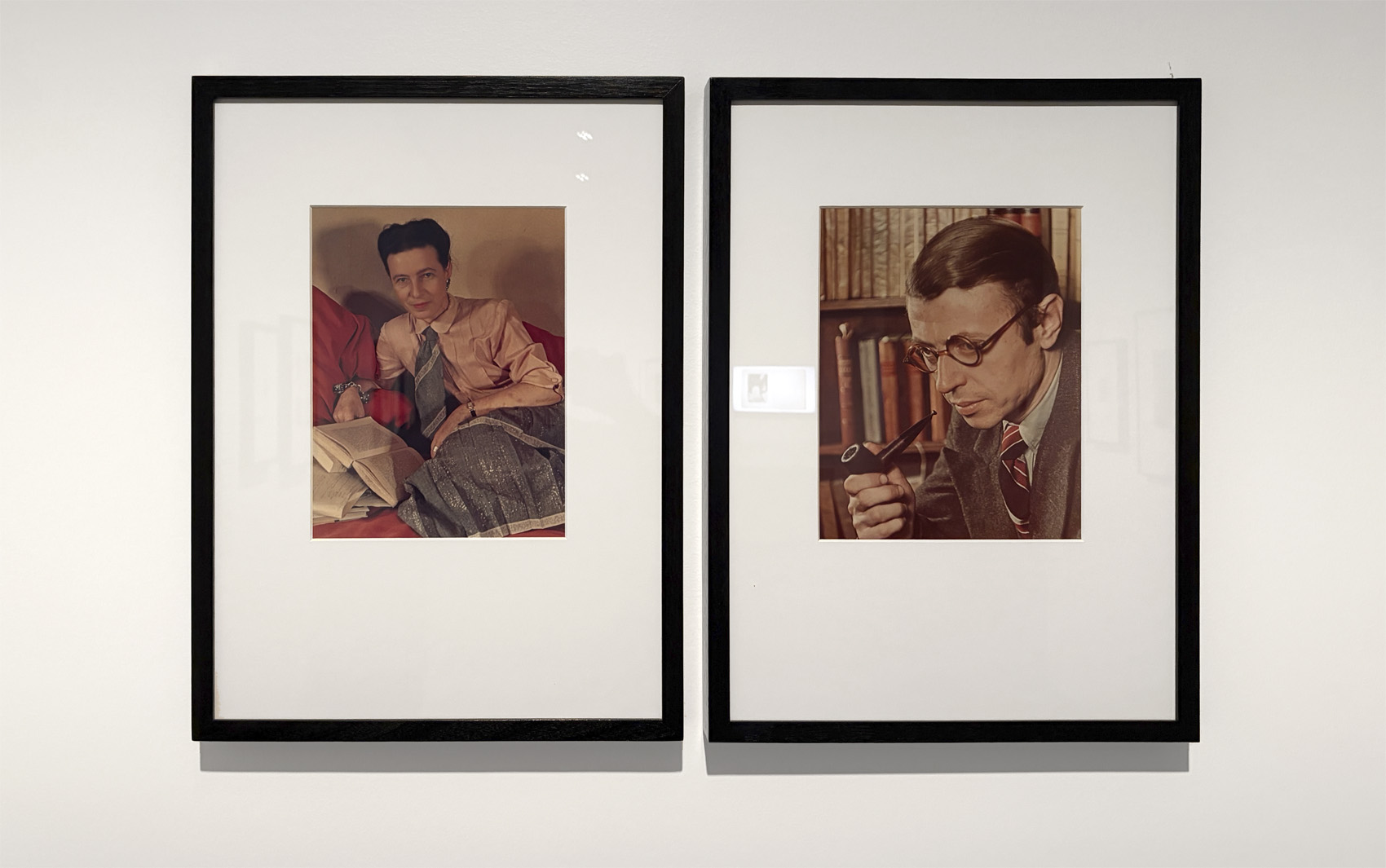
 

Installation view of the exhibition Women Photographers 1900-1975: A Legacy of Light at NGV International, Melbourne, November 2025 – May 2026 showing from left to right, Gisèle Freund's 'Simone de Beauvoir' (1952 printed c. 1975) and 'Jean-Paul Satre' (1939 printed c. 1975)


Installation view of the exhibition Women Photographers 1900-1975: A Legacy of Light at NGV International, Melbourne, November 2025 – May 2026 showing from left to right, Gisèle Freund’s Simone de Beauvoir (1952 printed c. 1975) and Jean-Paul Satre (1939 printed c. 1975)
Photo: Marcus Bunyan
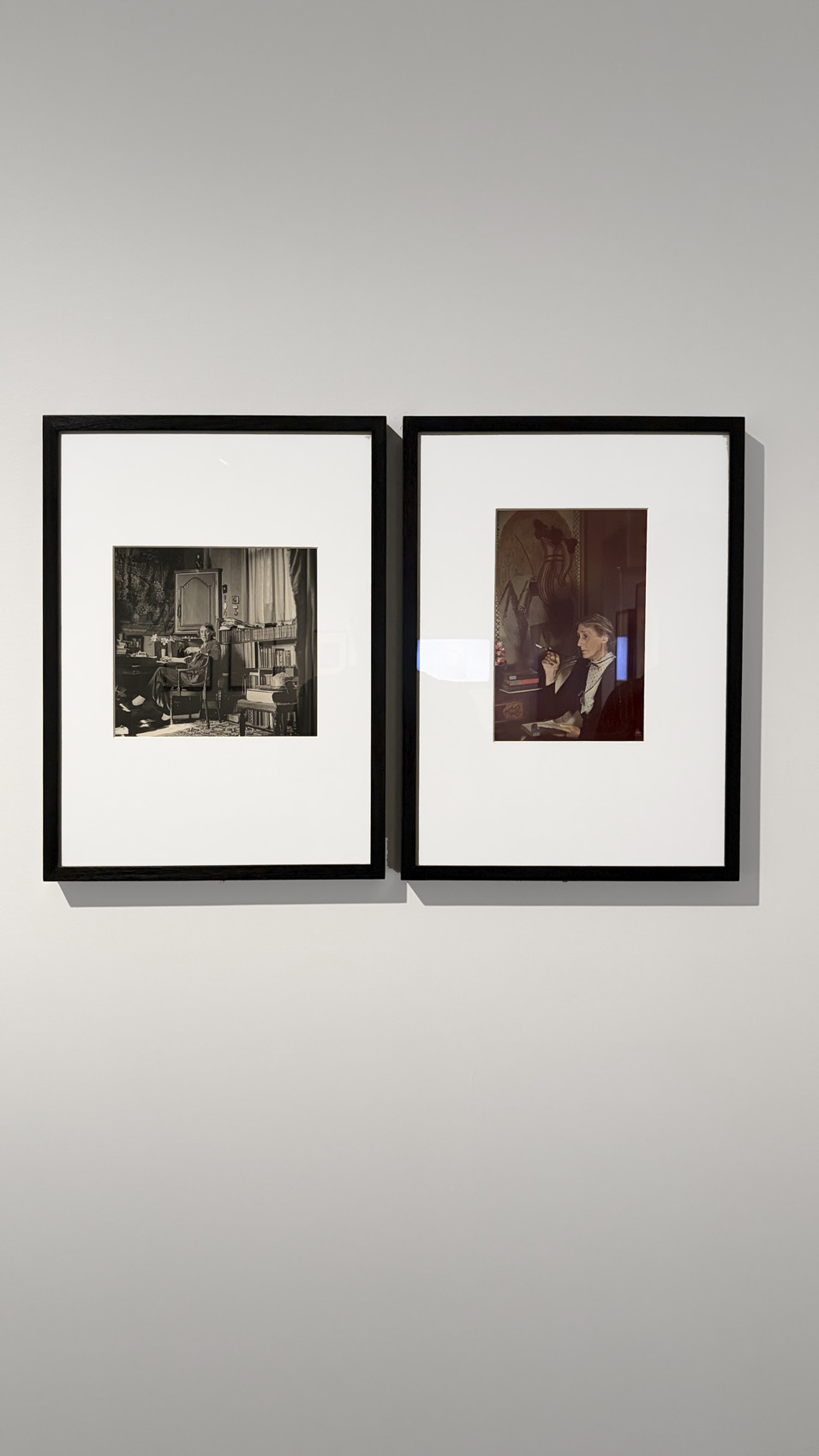
 

Installation view of the exhibition Women Photographers 1900-1975: A Legacy of Light at NGV International, Melbourne, November 2025 – May 2026 showing from left to right, Gisèle Freund's 'Vita Sackville-West' (1938 printed c. 1975) and 'Virginia Woolfe' (1939 printed c. 1975)


Installation view of the exhibition Women Photographers 1900-1975: A Legacy of Light at NGV International, Melbourne, November 2025 – May 2026 showing from left to right, Gisèle Freund’s Vita Sackville-West (1938 printed c. 1975) and Virginia Woolfe (1939 printed c. 1975)
Photos: Marcus Bunyan


In 1933 Gisèle Freund fled Frankfurt for Paris, where she studied photographic portraiture at the Sorbonne. Uniquely for the time, she used Kodachrome and Agfacolor positive film for her colour portraits of writers and artists in Paris – her portrait of James Joyce was selected as the first colour cover of Time magazine in 1939. That same year she photographed Virginia Woolf at her home in Tavistock Square, London. Freund later recalled of her encounter with Woolf, ‘frail, luminous, she was the very incarnation of her prose’.

Wall text from the exhibition


In Exchange: Social Milieu and Collaboration

The intertwined lives of avant-garde artists working in the interwar period often played out in works of art depicting friendship and love. Photographers captured these relationships, often revealing both the affection and the complex relations between themselves and their artistic collaborators, muses and subjects.

Paris in the interwar period was a hotbed for artistic exchange. Between 1935 and 1936, Dora Maar photographed her then partner Pablo Picasso in her Paris studio. She also created collaborative images with fellow Surrealists such as Léonor Fini, Jacqueline Lamba and André Breton. Lee Miller, also working in Paris during this period, photographed her lover and artistic partner Man Ray. Miller, in turn, was the subject of many of Man Ray’s own works.

In Mexico, Kati Horna frequently photographed her close friend, British-born painter and writer Leonora Carrington. Lola Álvarez Bravo’s image of the Spanish Surrealist artist Remedios Varo is another example of the playful and experimental collaborations between artists at the time. Such photographs demonstrate the mutual influence between women artists.
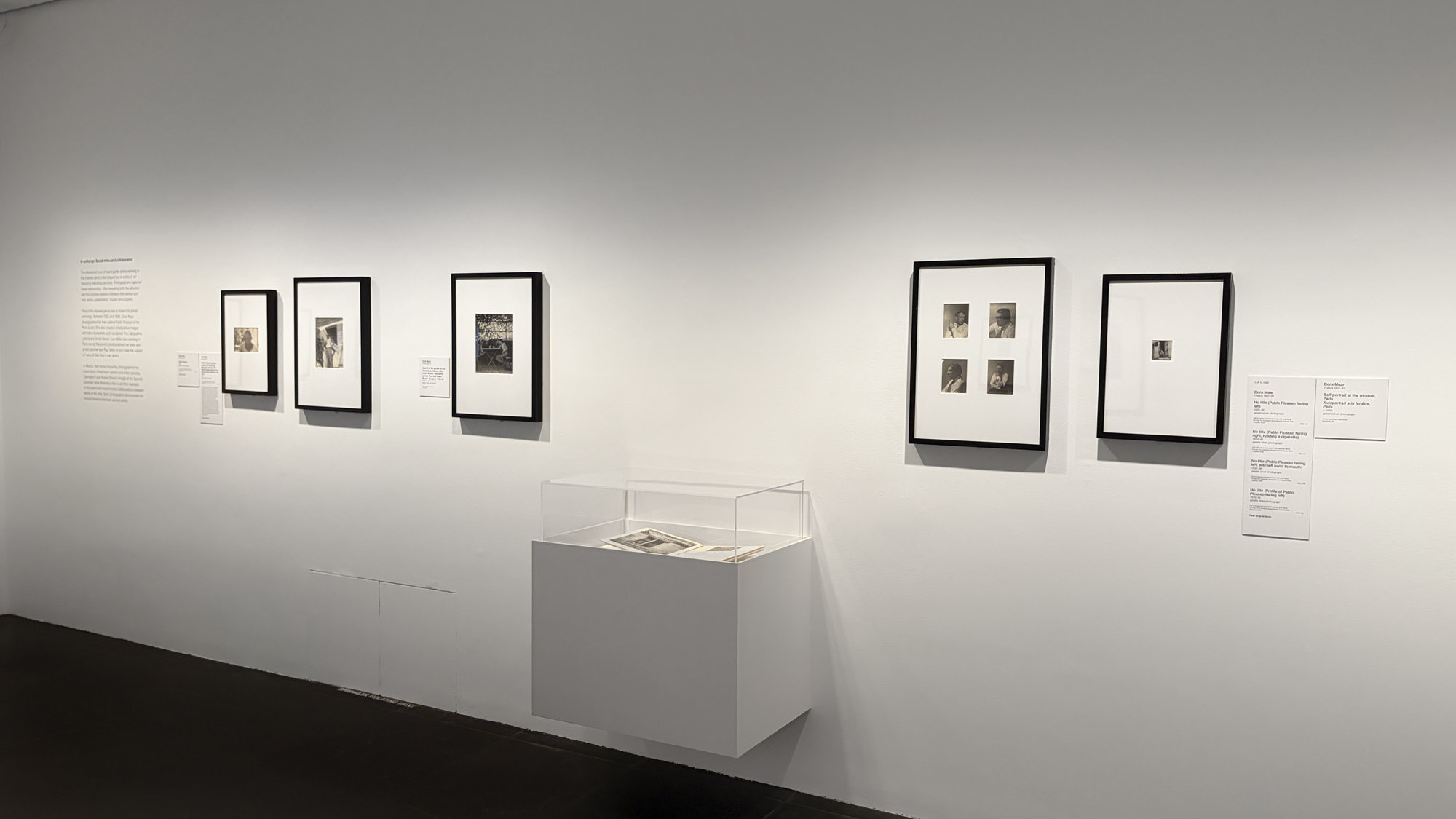
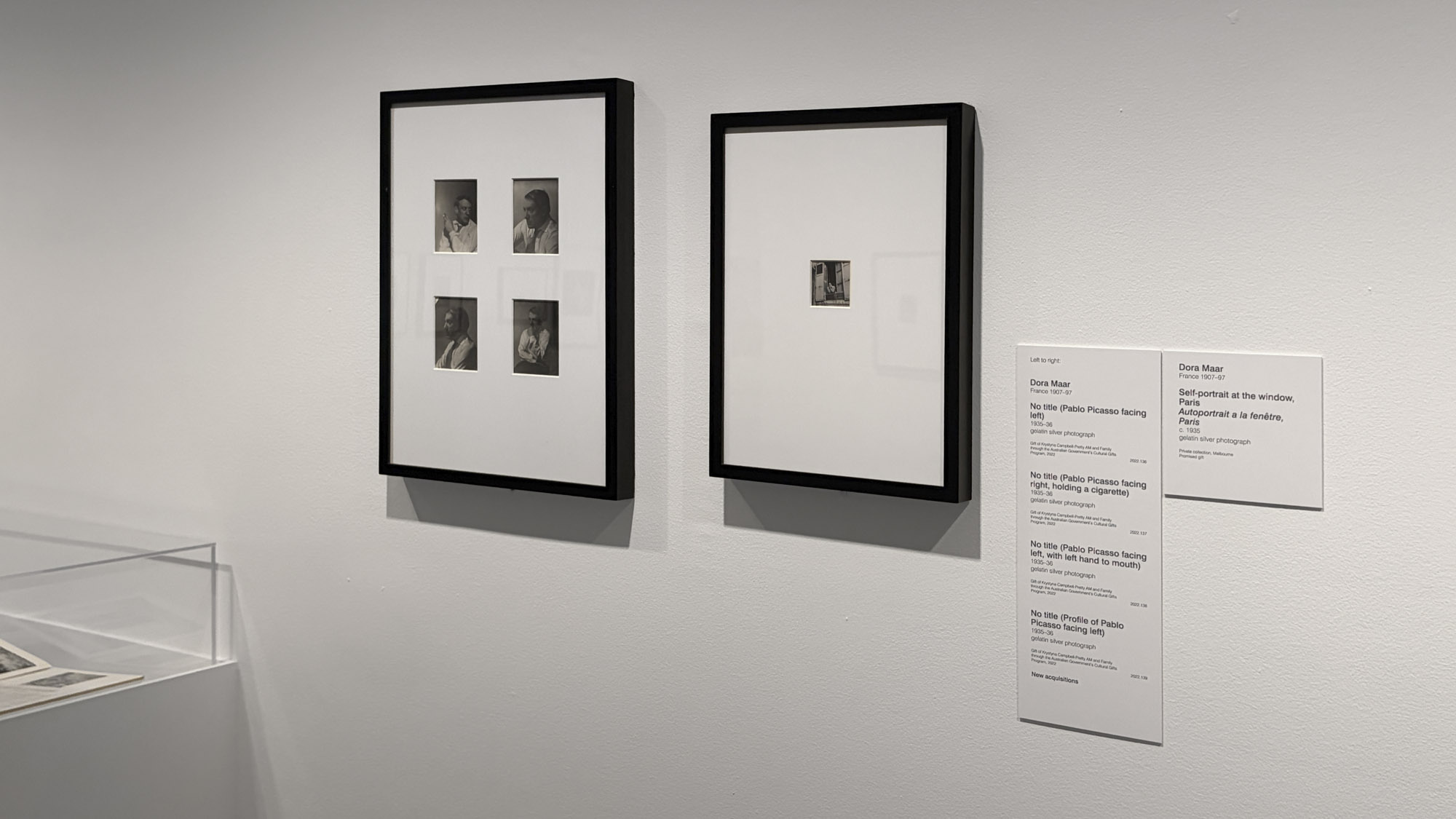
 

Installation view of the exhibition Women Photographers 1900-1975: A Legacy of Light at NGV International, Melbourne, November 2025 – May 2026 showing photographs by Dora Maar including at second right, photographs of Picasso (1935-1936) and at right, 'Self-portrait at the window' (c. 1935)


Installation view of the exhibition Women Photographers 1900-1975: A Legacy of Light at NGV International, Melbourne, November 2025 – May 2026 showing photographs by Dora Maar including at second right, photographs of Picasso (1935-1936, below) and at right, Self-portrait at the window (c. 1935, below)
Photos: Marcus Bunyan
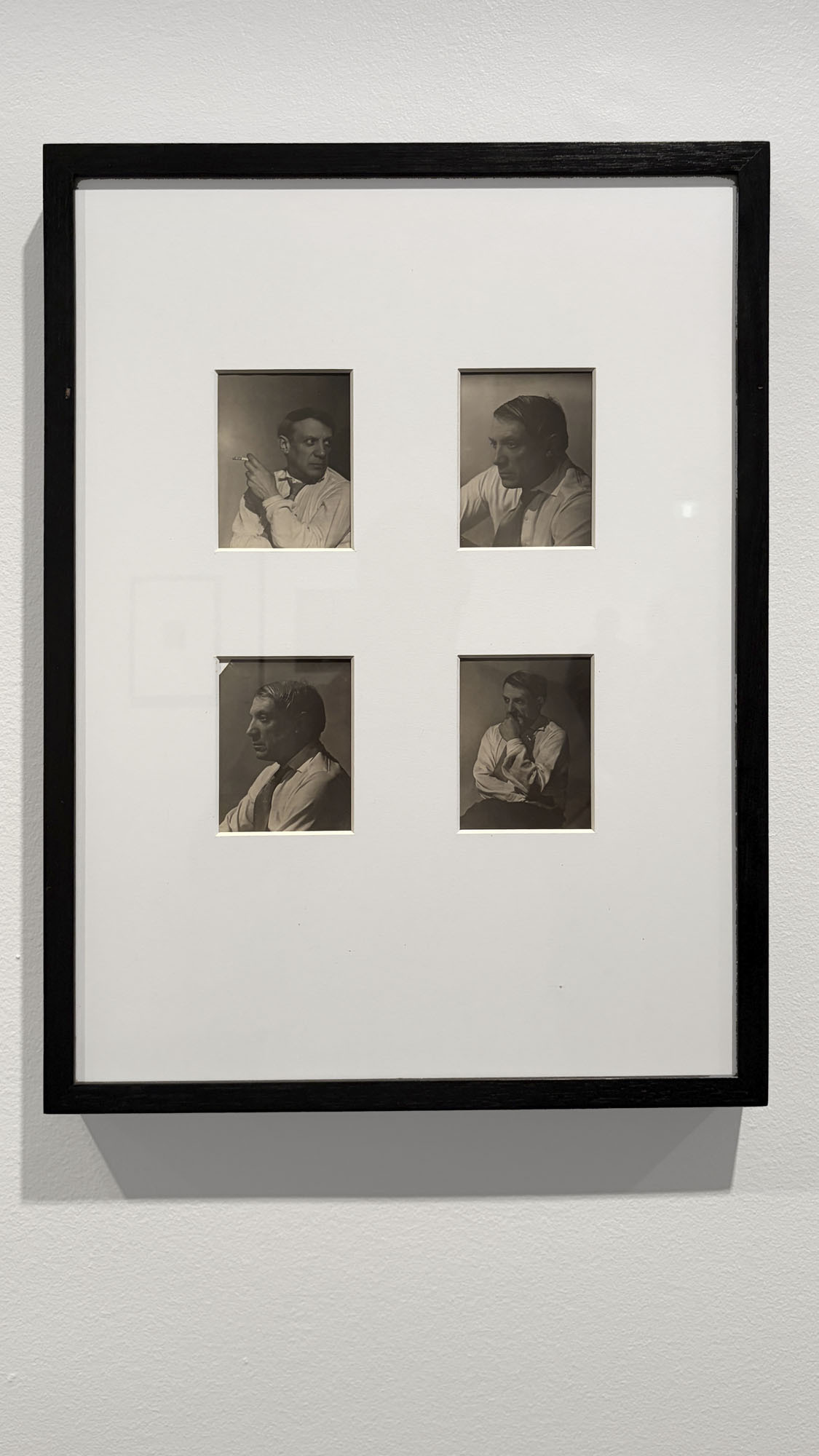
 

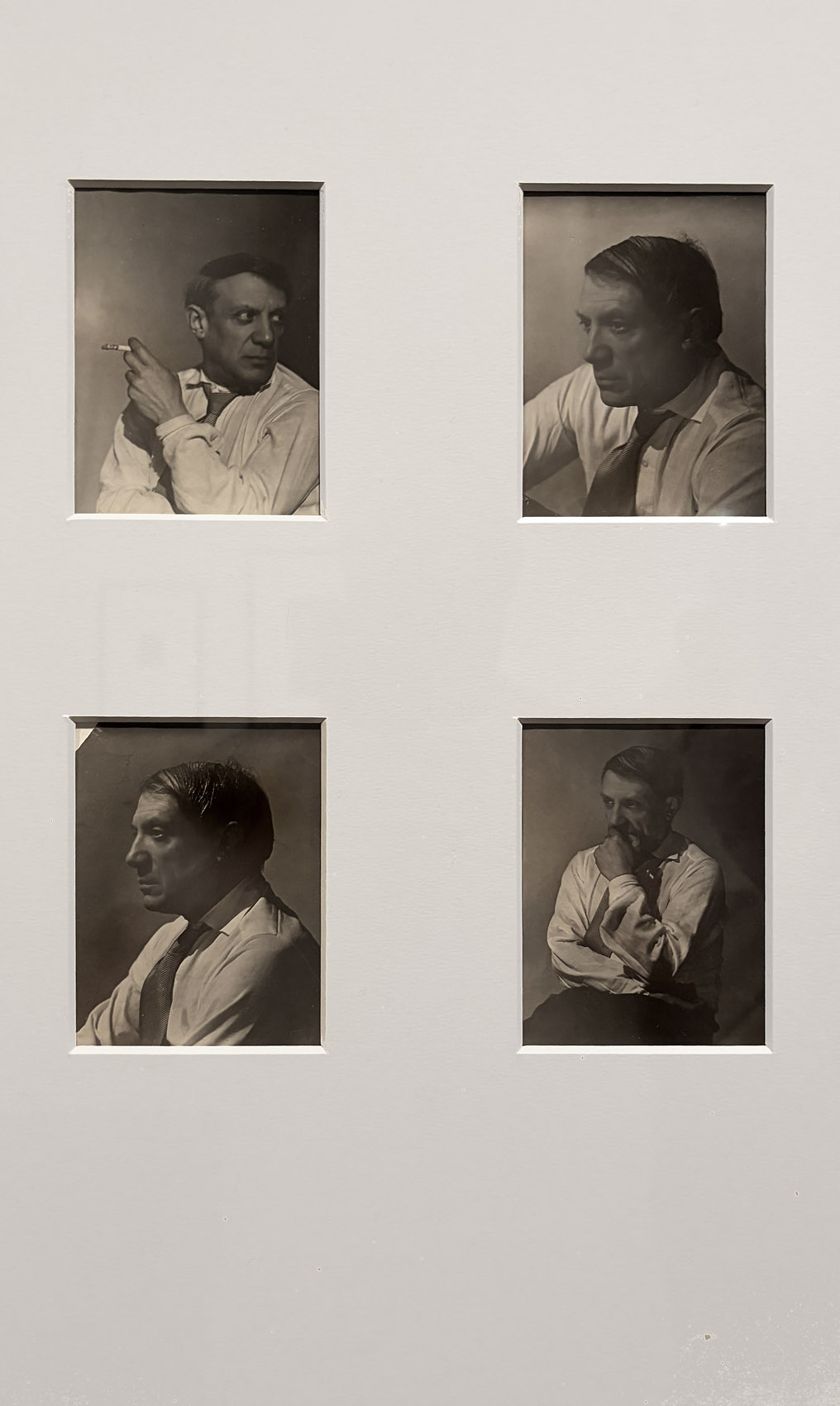
Installation view of the exhibition Women Photographers 1900-1975: A Legacy of Light at NGV International, Melbourne, November 2025 – May 2026 showing photographs by Dora Maar of Picasso (1935-1936)


(clockwise from bottom left)

Dora Maar (French, 1907-1997)
No title (Pablo Picasso facing left)
No title (Pablo Picasso facing right, holding a cigarette)
No title (Profile of Pablo Picasso facing left)
No title (Pablo Picasso facing left, with left hand to mouth) (installation view)
1935-1936
Gelatin silver photographs
National Gallery of Victoria, Melbourne
Gift of Krystyna Campbell-Pretty AM and Family through the Australian Government’s Cultural Gifts Program, 2022
Photos: Marcus Bunyan
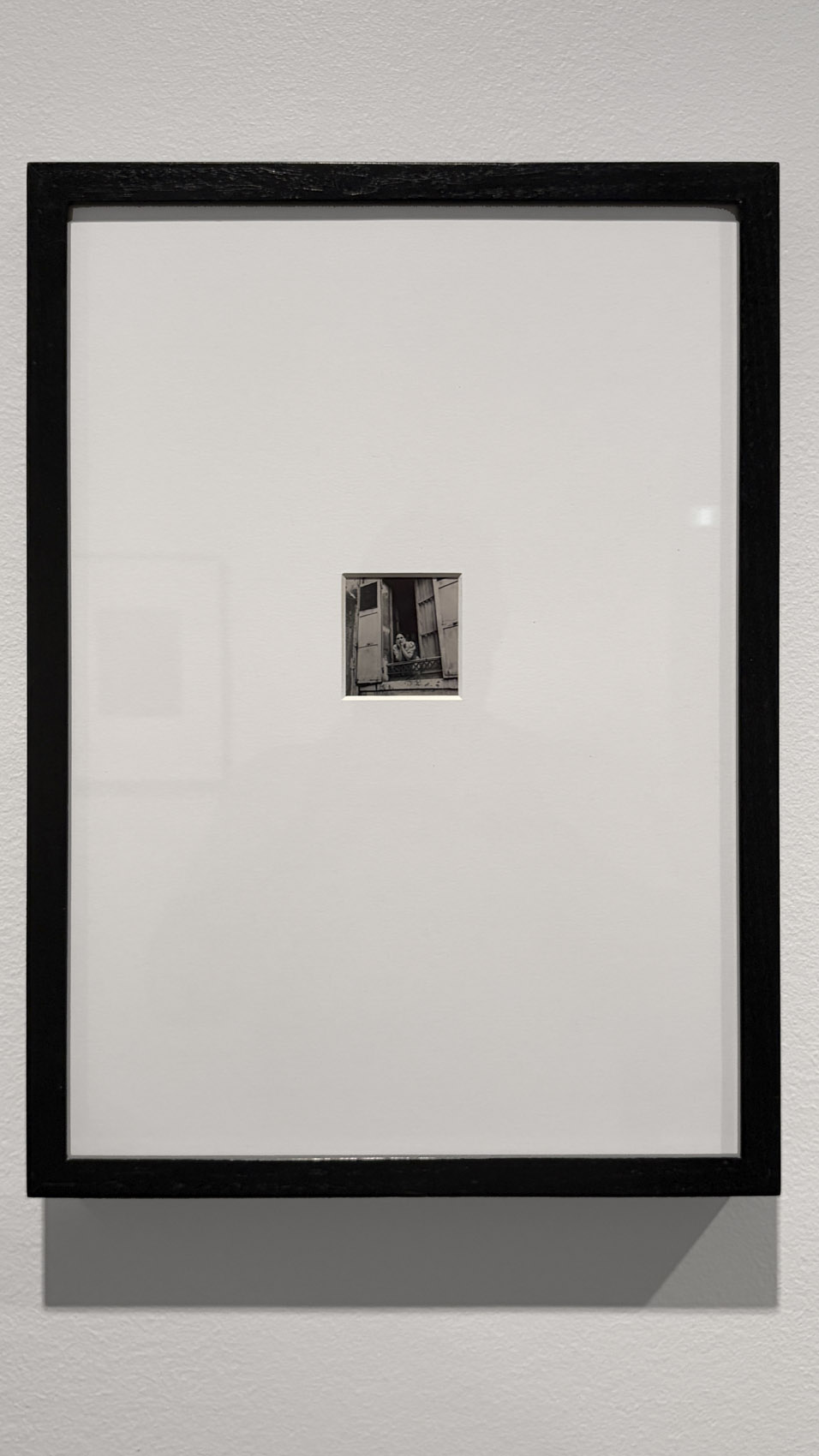
 

Dora Maar (French, 1907-1997) 'Self-portrait at the window' c. 1935 (installation view)


Dora Maar (French, 1907-1997)
Self-portrait at the window (installation view)
c. 1935
Gelatin silver print
Private collection, Melbourne
Promised gift
Photo: Marcus Bunyan
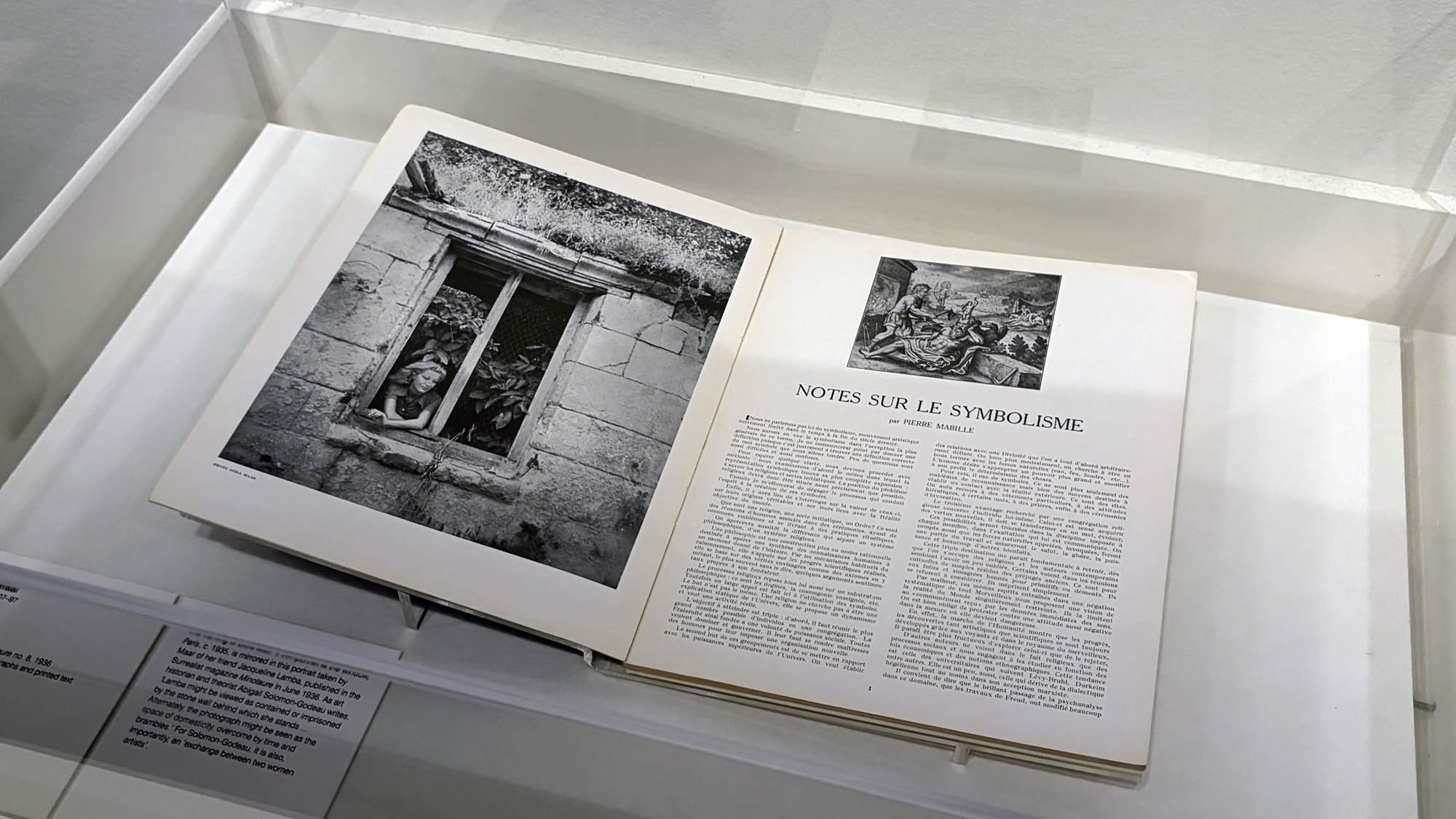
 

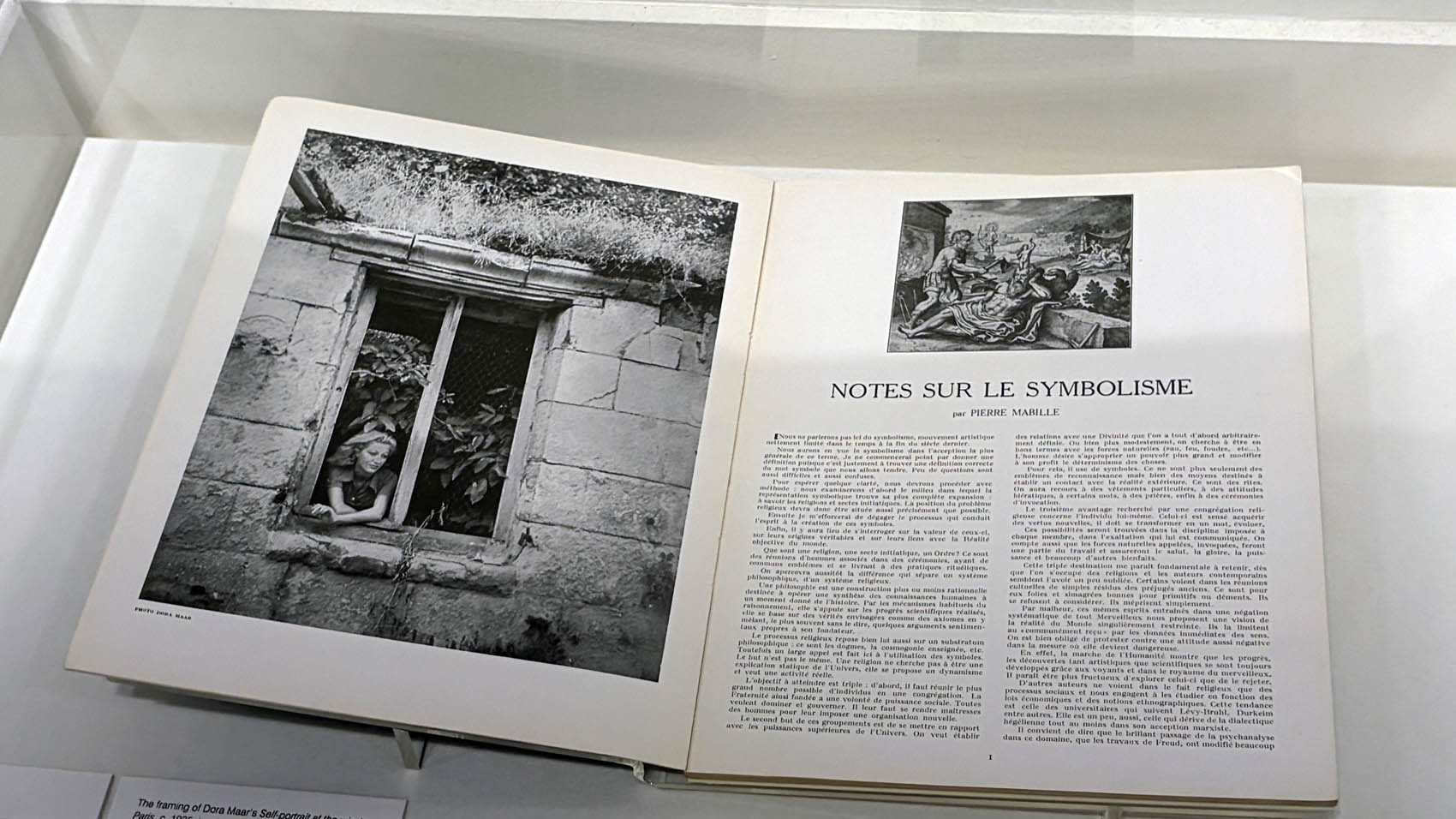
Dora Maar (French, 1907-1997) 'Dawn' 1935 Reproduced in 'Minotaure' No. 8, 1936 (installation view)


Dora Maar (French, 1907-1997)
Dawn (installation view)
1935
Reproduced in Minotaure No. 8, 1936
Magazine: offset lithographs and printed text
Shaw Research Library
Photos: Marcus Bunyan


The framing of Dora Maar’s Self-portrait at the window, Paris, c. 1935, is mired in this portrait taken by Maar of her friend Jacqueline Lamba, published in the Surrealist magazine Minotaure in June 1936. As art historian and theorist

Abigail Solomon-Godeau writes, ‘Lambda might be viewed as contained or imprisoned by the stone wall behind which she stands … Alternately, the photograph might be seen as the space of domesticity, overcome by time and brambles’. For Solomon-Godeau, it is also, importantly, an ‘exchange between two women artists’.

Vitrine text from the exhibition
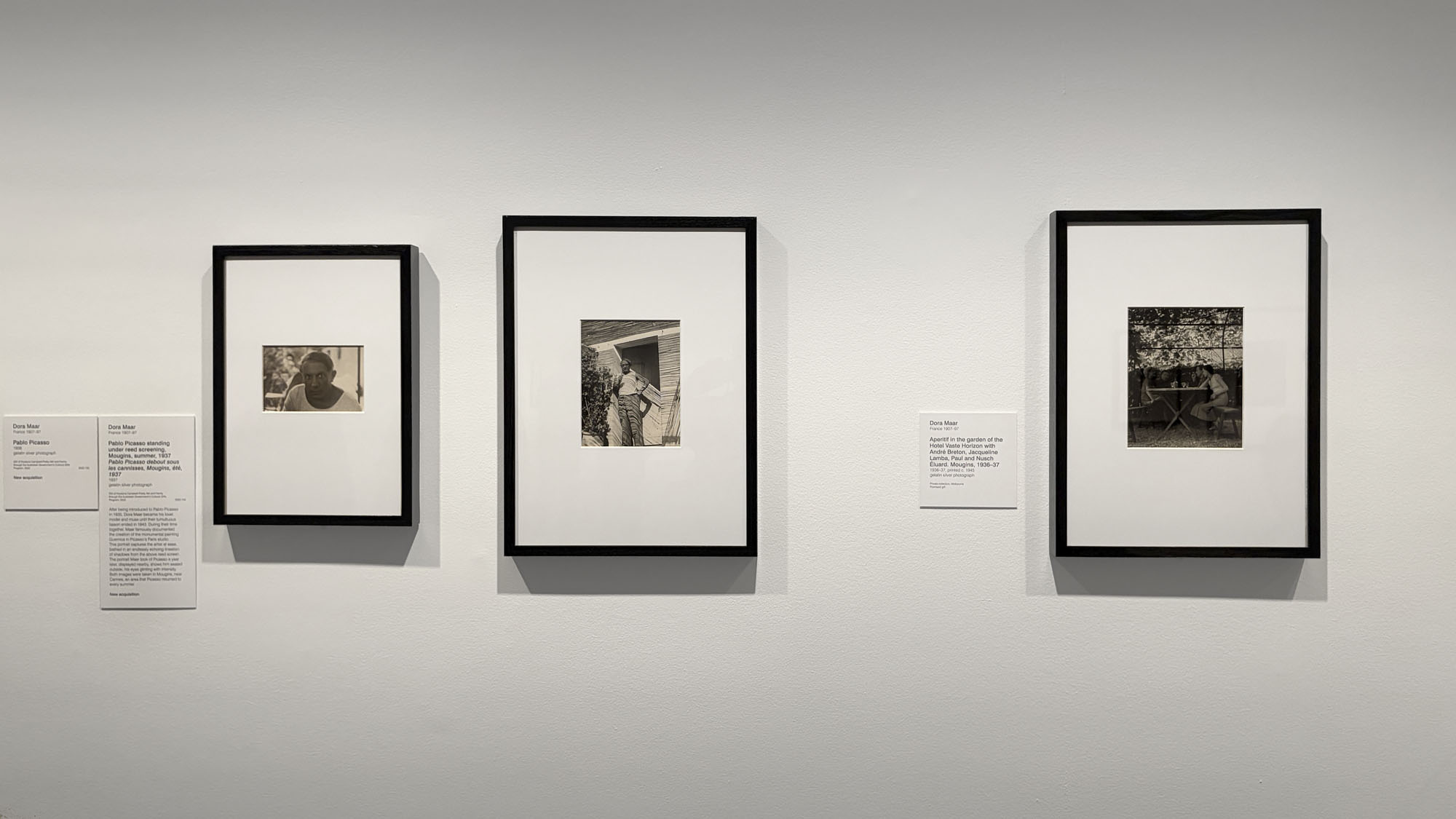
 

Installation view of the exhibition 'Women Photographers 1900-1975: A Legacy of Light' at NGV International, Melbourne, November 2025 – May 2026 showing from left to right, Dora Maar's 'Pablo Picasso' (1938); 'Pablo Picasso standing under reed screening. Mougins, summer, 1937' (1937) and 'Aperitif in the garden of the Hotel Vaste Horizon with Andre Breton, Jacqueline lamb, Paul and Nusch Eluard. Mougins, 1936-1937' (1936-1937)


Installation view of the exhibition Women Photographers 1900-1975: A Legacy of Light at NGV International, Melbourne, November 2025 – May 2026 showing from left to right, Dora Maar’s Pablo Picasso (1938, below); Pablo Picasso standing under reed screening. Mougins, summer, 1937 (1937, top of posting) and Aperitif in the garden of the Hotel Vaste Horizon with Andre Breton, Jacqueline lamb, Paul and Nusch Eluard. Mougins, 1936-1937 (1936-1937)
Photo: Marcus Bunyan
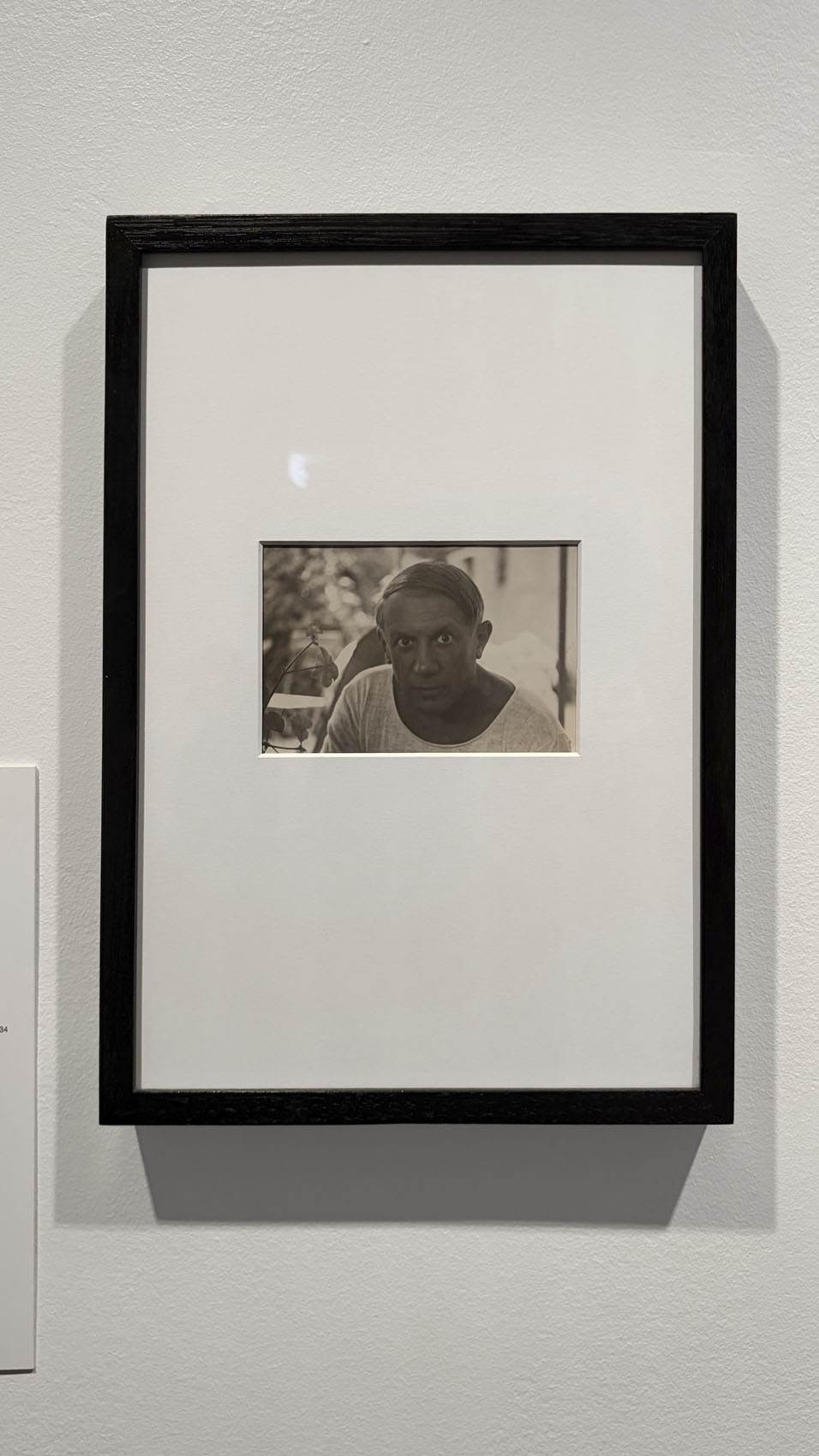
 

Dora Maar (French, 1907-1997) 'Pablo Picasso' 1938 (installation view)


Dora Maar (French, 1907-1997)
Pablo Picasso (installation view)
1938
Gelatin silver print
11.9 x 17.9cm (image and sheet)
National Gallery of Victoria, Melbourne
Gift of Krystyna Campbell-Pretty AM and Family through the Australian Government’s Cultural Gifts Program, 2022
Photo: Marcus Bunyan
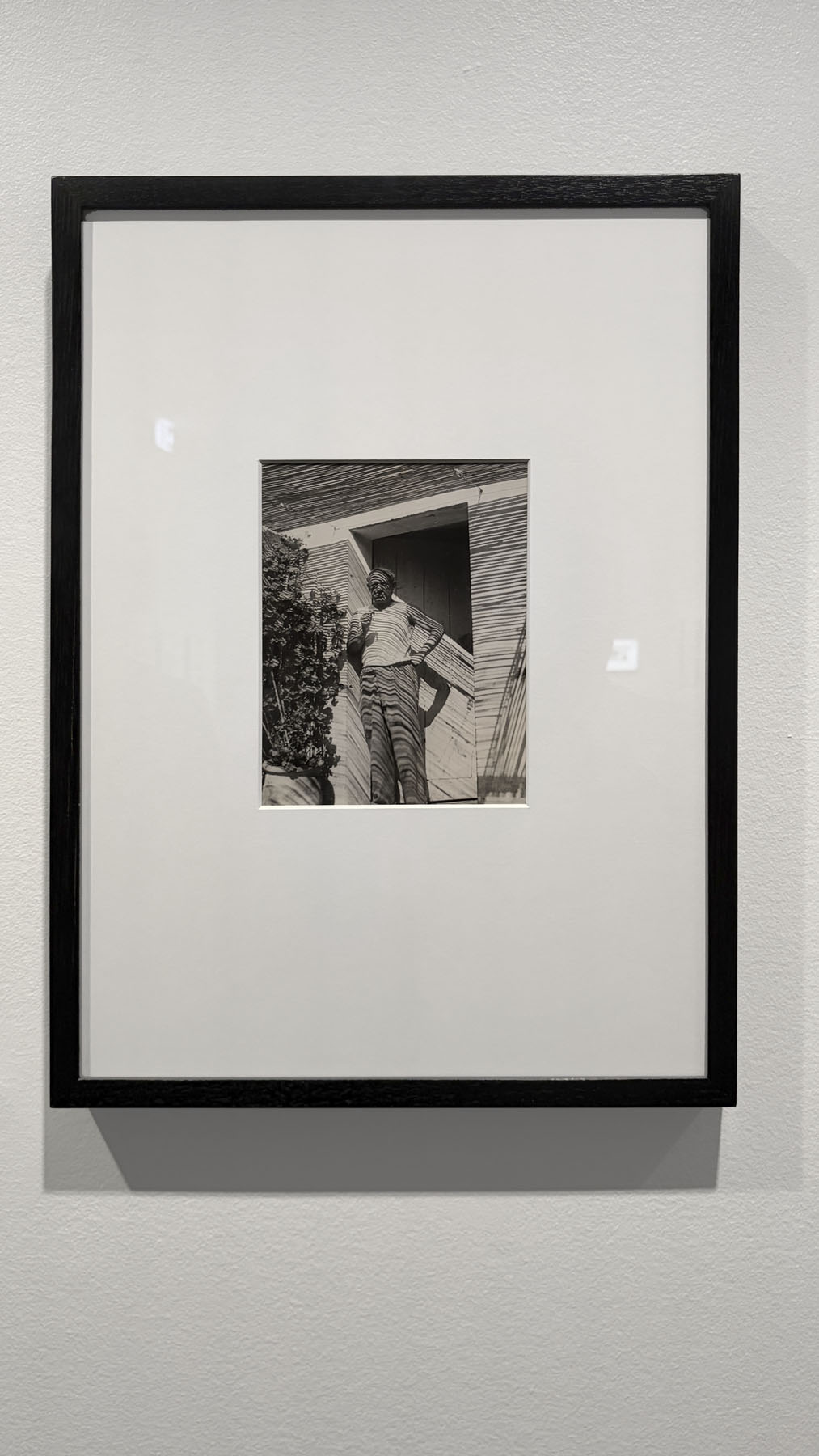
 

Dora Maar (French 1907-1997) 'Pablo Picasso standing under reed screening, Mougins, summer, 1937' (Pablo Picasso debout sous les cannisses, Mougins, été, 1937) 1937 (installation view)


Dora Maar (French, 1907-1997)
Pablo Picasso standing under reed screening, Mougins, summer, 1937 (Pablo Picasso debout sous les cannisses, Mougins, été, 1937) (installation view)
1937
22.0 x 17.2cm (image)
23.1 x 18.2cm (sheet)
National Gallery of Victoria, Melbourne
Gift of Krystyna Campbell-Pretty AM and Family through the Australian Government’s Cultural Gifts Program, 2022
Photo: Marcus Bunyan
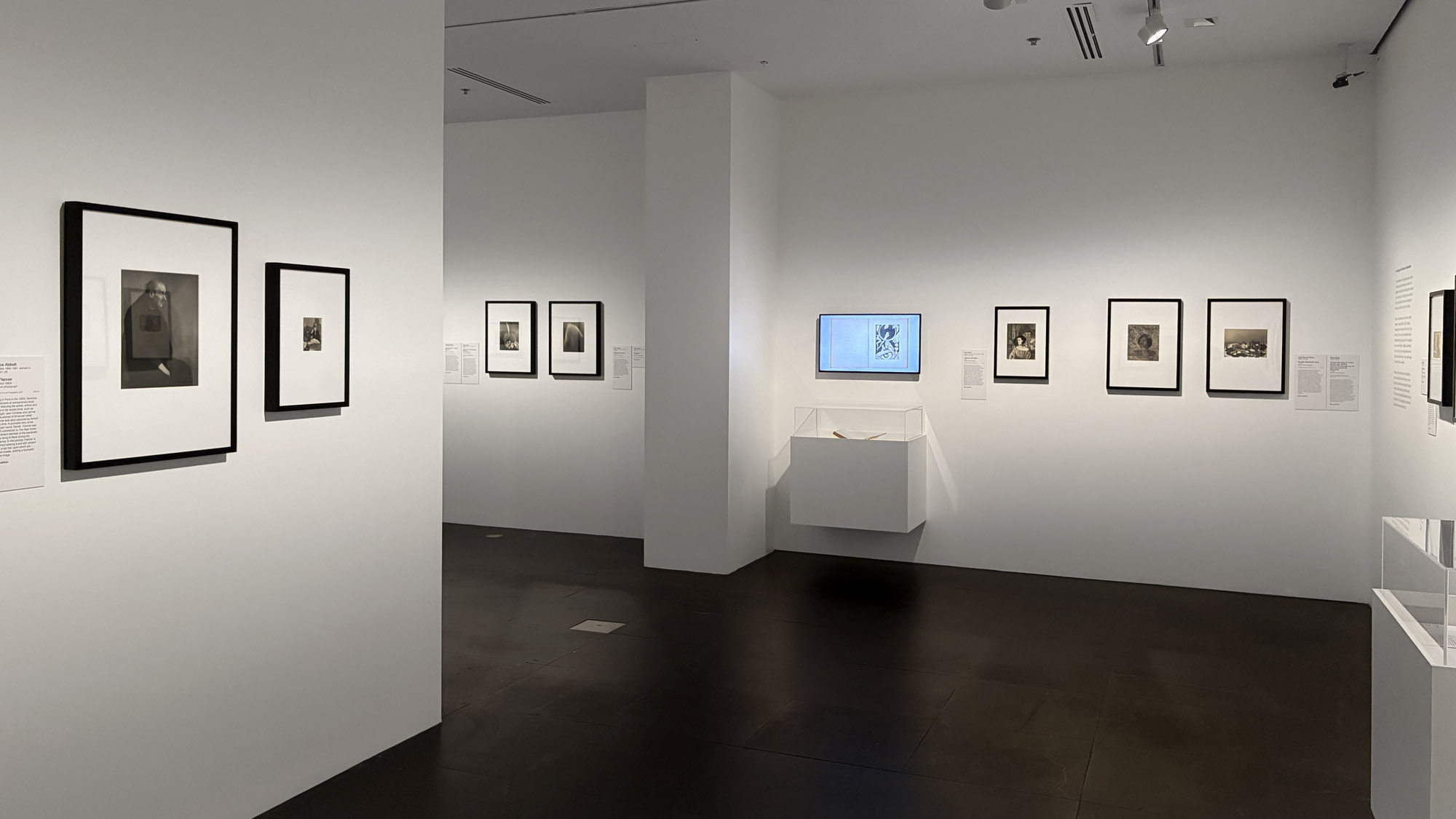
 

Installation view of the exhibition 'Women Photographers 1900-1975: A Legacy of Light' at NGV International, Melbourne, November 2025 – May 2026 showing at left, Berenice Abbott 'Eugène Atget' 1927


Installation view of the exhibition Women Photographers 1900-1975: A Legacy of Light at NGV International, Melbourne, November 2025 – May 2026 showing at left, Berenice Abbott Eugène Atget (1927, printed c. 1970-1978)
Photo: Marcus Bunyan


Berenice Abbott (American, 1898-1991) 'Janet Flanner' 1927


Berenice Abbott (American, 1898-1991)
Janet Flanner
1927
Gelatin silver photograph
Bowness Family Fund for Photography, 2024


While living in Paris in the 1920s, Berenice Abbott produced an extraordinary body of images featuring the artists, writers and performers in her social circle, such as Eugène Atget, Jean Cocteau and James Joyce. This portrait of American
writer Janet Flanner was also captured by Abbott during this time. A journalist who wrote under the pen name ‘Genêt’, Flanner was a long-term contributor to The New Yorker and a prominent member of the expatriate community living in Paris during the interwar period. In this portrait, Flanner is photographed wearing a suit with striped pants and a top hat, upon which are stacked two masks, adding a Surrealist edge to the image.

Wall text from the exhibition
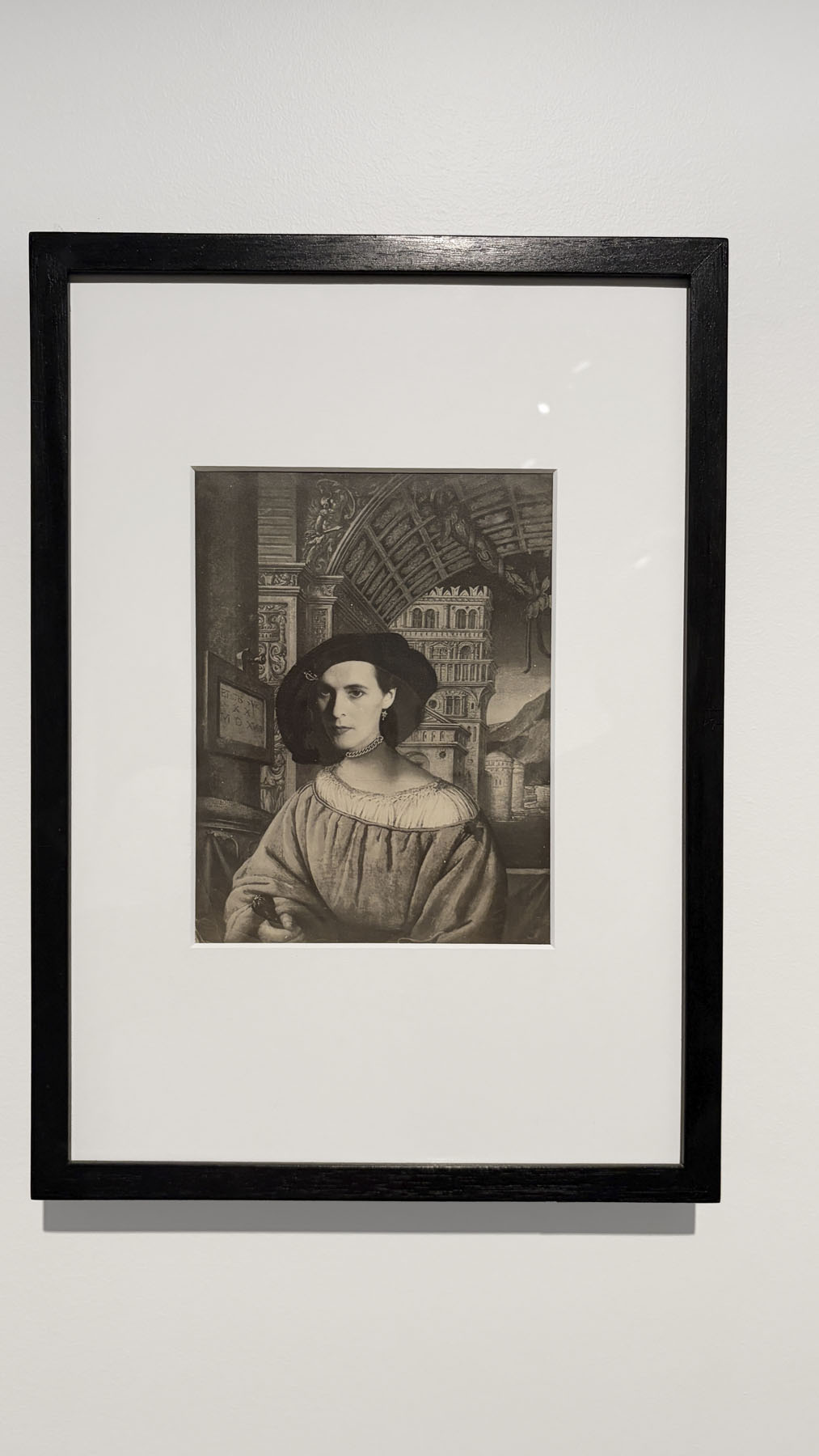
 

Kati Horna (Mexican born Hungary, 1912-2000) 'Leonora Carrington' 1957 (installation view)


Kati Horna (Mexican born Hungary, 1912-2000)
Leonora Carrington (installation view)
1957
Gelatin silver photograph
24.2 x 18.2cm (image)
25.3 x 20.2cm (sheet)
National Gallery of Victoria, Melbourne
Bowness Family Fund for Photography, 2024
Photo: Marcus Bunyan


Born to a Jewish family in Hungary, Kati Horna was forced to leave Europe following the rise of Nazism. She belonged to the circle of Surrealist expatriate artists in Mexico producing experimental images. In this photocollage, Horna has superimposed an image of British-born painter and writer Leonora Carrington – a close friend of hers – onto a reproduction of Hans Holbein the Younger’s 1518 painting Portrait of an unknown young man. Created on the occasion of Carrington’s birthday, the humorous merging of the photograph with the painted reproduction, coupled with the clash of genders and time periods, gives the scene a Surrealist tone.

Wall text from the exhibition
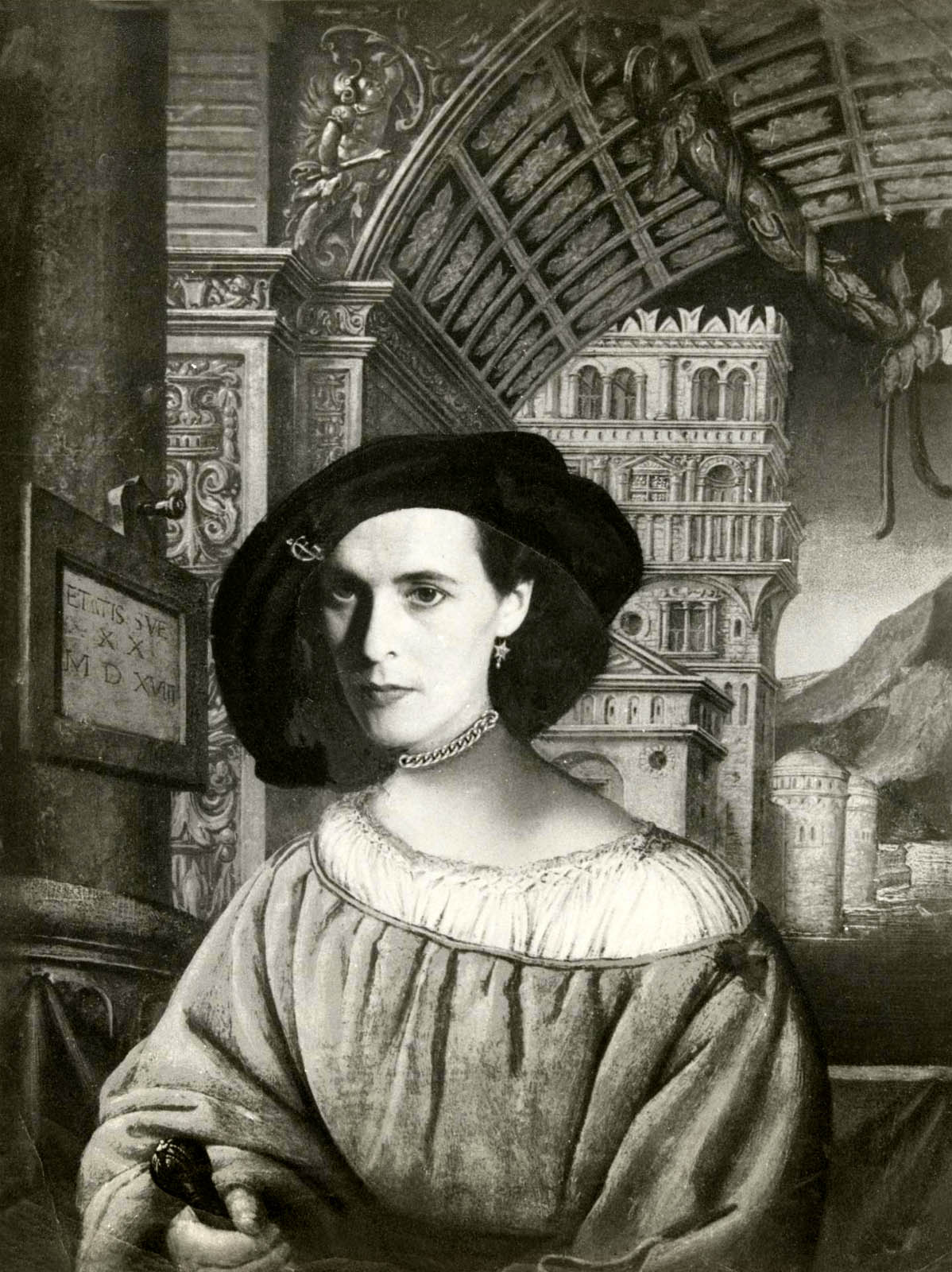
 

Kati Horna (Mexican born Hungary, 1912-2000) 'Leonora Carrington' 1957


Kati Horna (Mexican born Hungary, 1912-2000)
Leonora Carrington
1957
Gelatin silver photograph
24.2 x 18.2cm (image)
25.3 x 20.2cm (sheet)
National Gallery of Victoria, Melbourne
Bowness Family Fund for Photography, 2024
© Kati Horna, courtesy Michael Hoppen Gallery
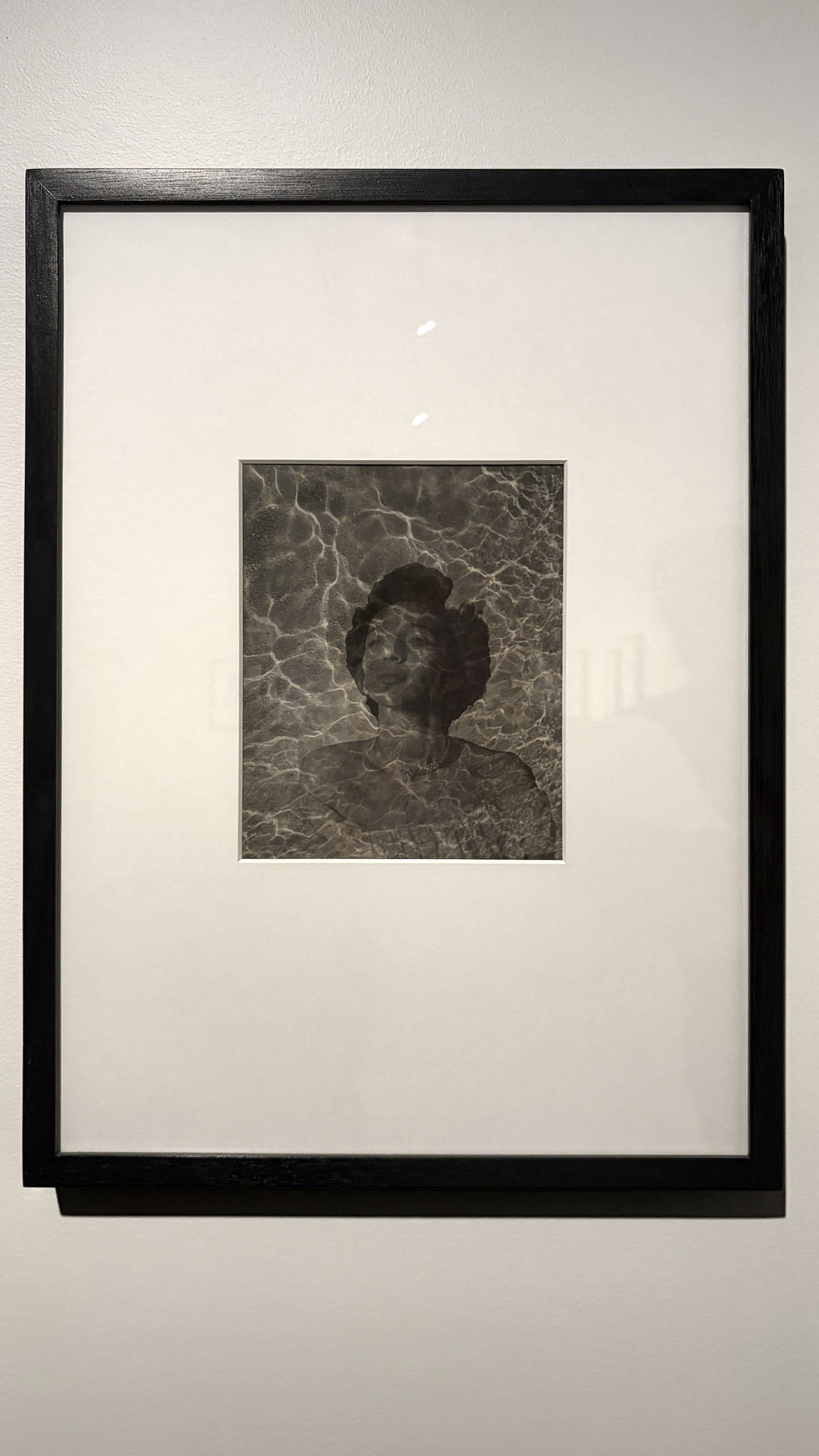
 

Lola Álvarez Bravo (Mexican, 1903-1993) 'No title (Remedios Varo)' c. 1950 (installation view)


Lola Álvarez Bravo (Mexican, 1903-1993)
No title (Remedios Varo) (installation view)
c. 1950
Gelatin silver photograph
23.4 x 18.9cm (image and sheet)
National Gallery of Victoria, Melbourne
Bowness Family Fund for Photography, 2024
Photo: Marcus Bunyan


Lola Álvarez Bravo was one of the first artists to produce photomontages in Mexico. At the forefront of artistic experimentation, Álvarez Bravo created this image by layering multiple negatives. The subject is believed to be Remedios Varo, a Spanish Surrealist artist who arrived in Mexico in 1941. Alongside Álvarez Bravo, Kati Horna and Leonora Carrington, Varo was part of a community of expatriate artists and intellectuals active in Mexico during the mid twentieth century. Drawing inspiration from the Surrealist movement, Álvarez Bravo overlaid the portrait with an image of rippling water, creating a tranquil scene in which the subject appears to be floating.

Wall text from the exhibition


Unlike in many other countries, in Mexico artists had opportunities to work as long as they did not threaten the locals’ career prospects. Thus, many Spanish-speaking immigrants started teaching in universities, raising a new generation of Mexican creatives and academics. Apart from their jobs, the majority of Europeans did not interact closely with the locals, preferring to keep the company of their fellow refugees. The reason was not the rejection of local customs but the shared experience of war, tragedy, and dramatic flight across ravaged Europe.

The house of the artist Remedios Varo was the central meeting point for the whole community. Anyone in need could find company, shelter, and money raised by all group members. Varo hosted dinners and parties. She also sent party invitations to random addresses taken from a phone book.

Anastasiia Kirpalov. “The Mexican Escape of European Surrealists During World War II,” on The Collector website Oct 15, 2024 [Online] Cited 17/04/026. Used under fair use conditions for the purposes of education and research
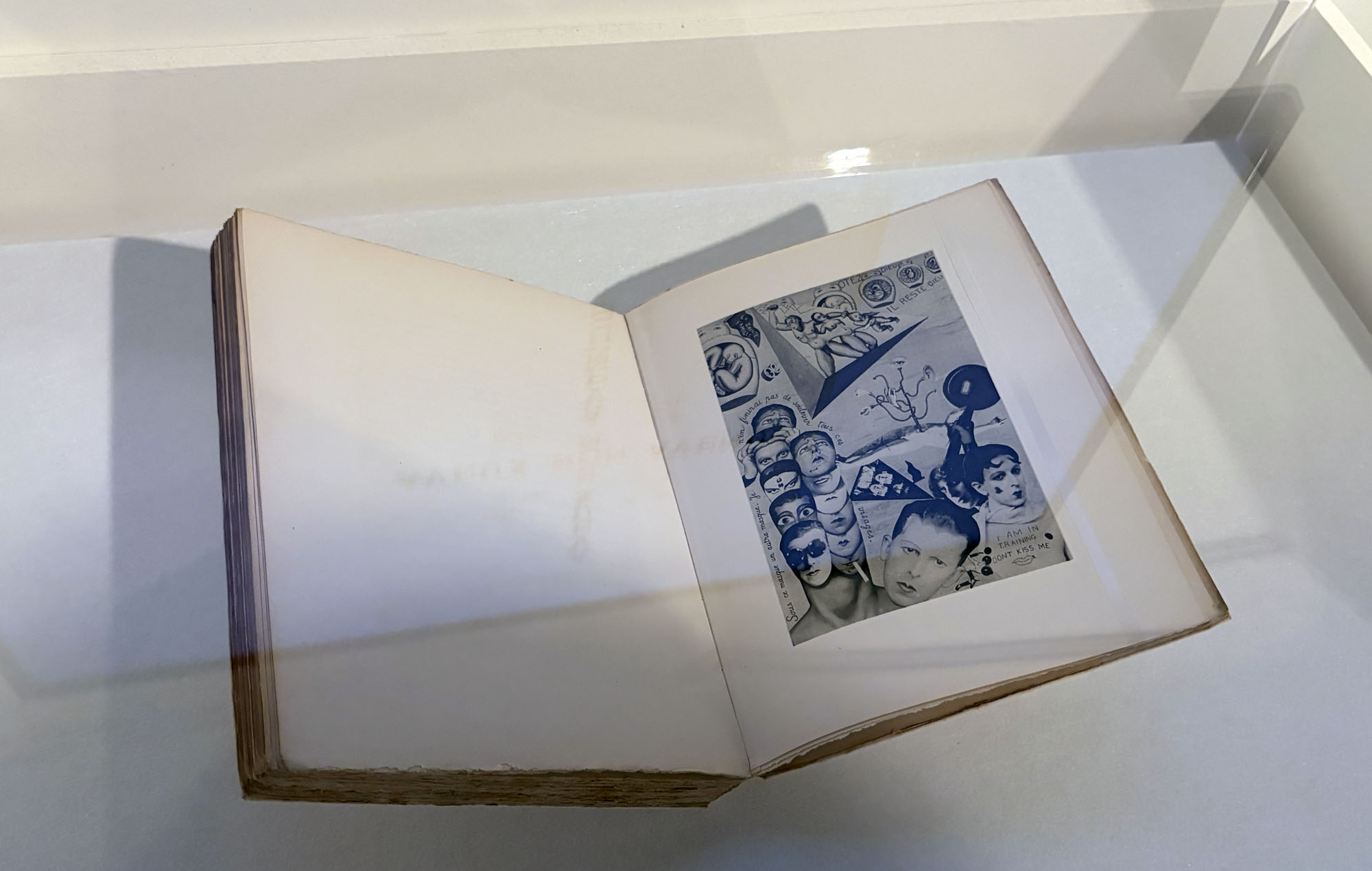
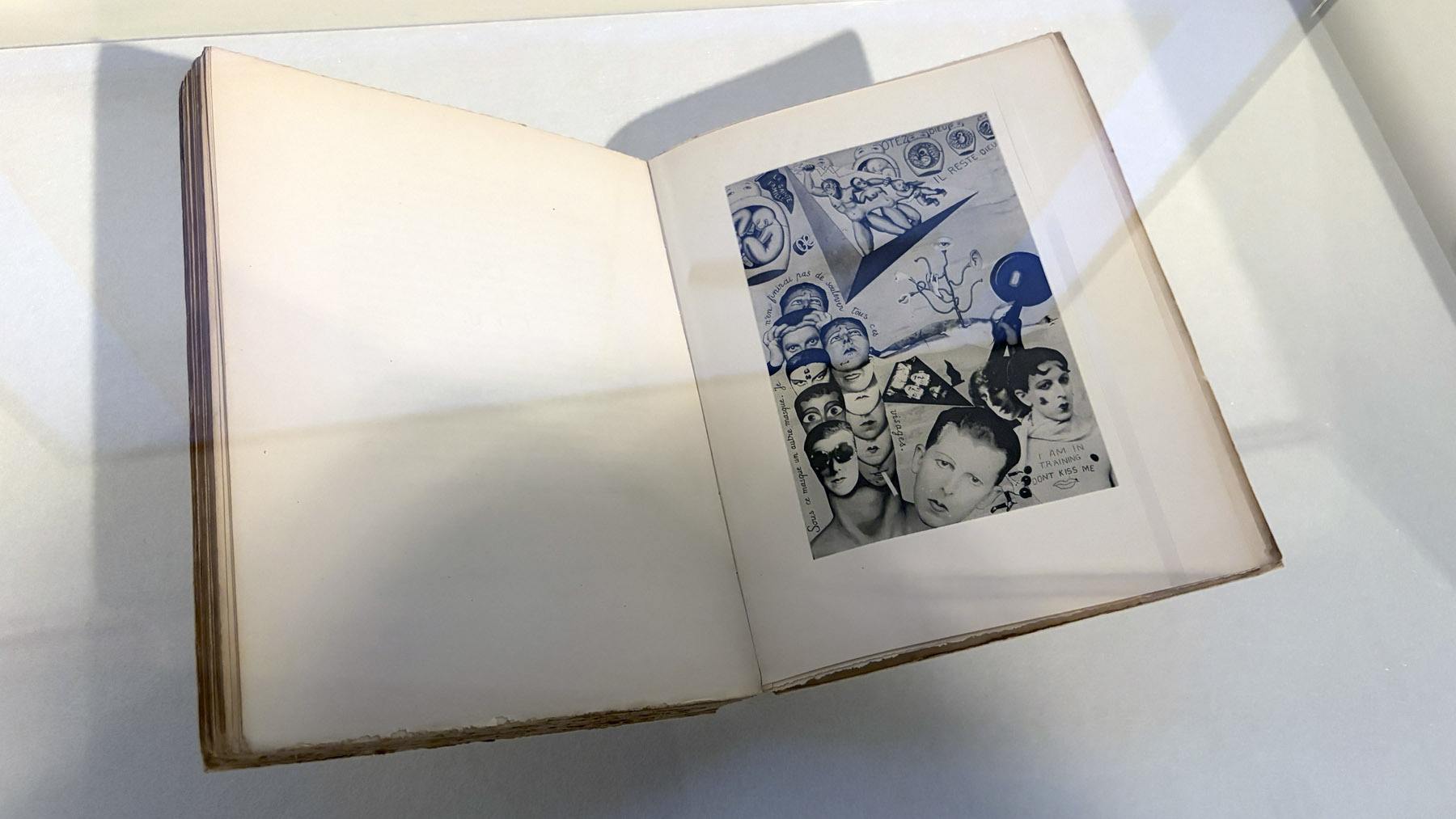
 

Claude Cahun (French, 1894-1854) and Marcel Moore (French, 1892-1872) 'Disavowals', or 'Cancelled Confessions' (Aveux non avenus) 1930 (installation view)


Claude Cahun (French, 1894-1854) and Marcel Moore (French, 1892-1872)
Disavowals, or Cancelled Confessions (Aveux non avenus) (installation views)
1930
Published by Éditions du Carrefour, Paris
Illustrated book: photogravure, letterpress text, 237 pages, 10 heliographs, paper cover, stitched binding
Shaw Research Library, acquired through the Friends of the Gallery library Endowment, 2017
Photos: Marcus Bunyan


Born Lucy Schwob, Claude Cahun was a celebrated French artist associated with the Surrealist movement. Aveux non avenus, loosely translated as Cancelled Confessions or Disavowals, is the second book Cajun created with her stepsister, lifelong partner and artistic collaborator, graphic artist Marcel Moore. This subversive semi-autobiographical work couples poems, recollections and aphorisms with dreamlike photomontages. The photomontages include many of Cahun’s performative self-portraits, images that challenge established notions of gender identity.

Vitrine text from the exhibition
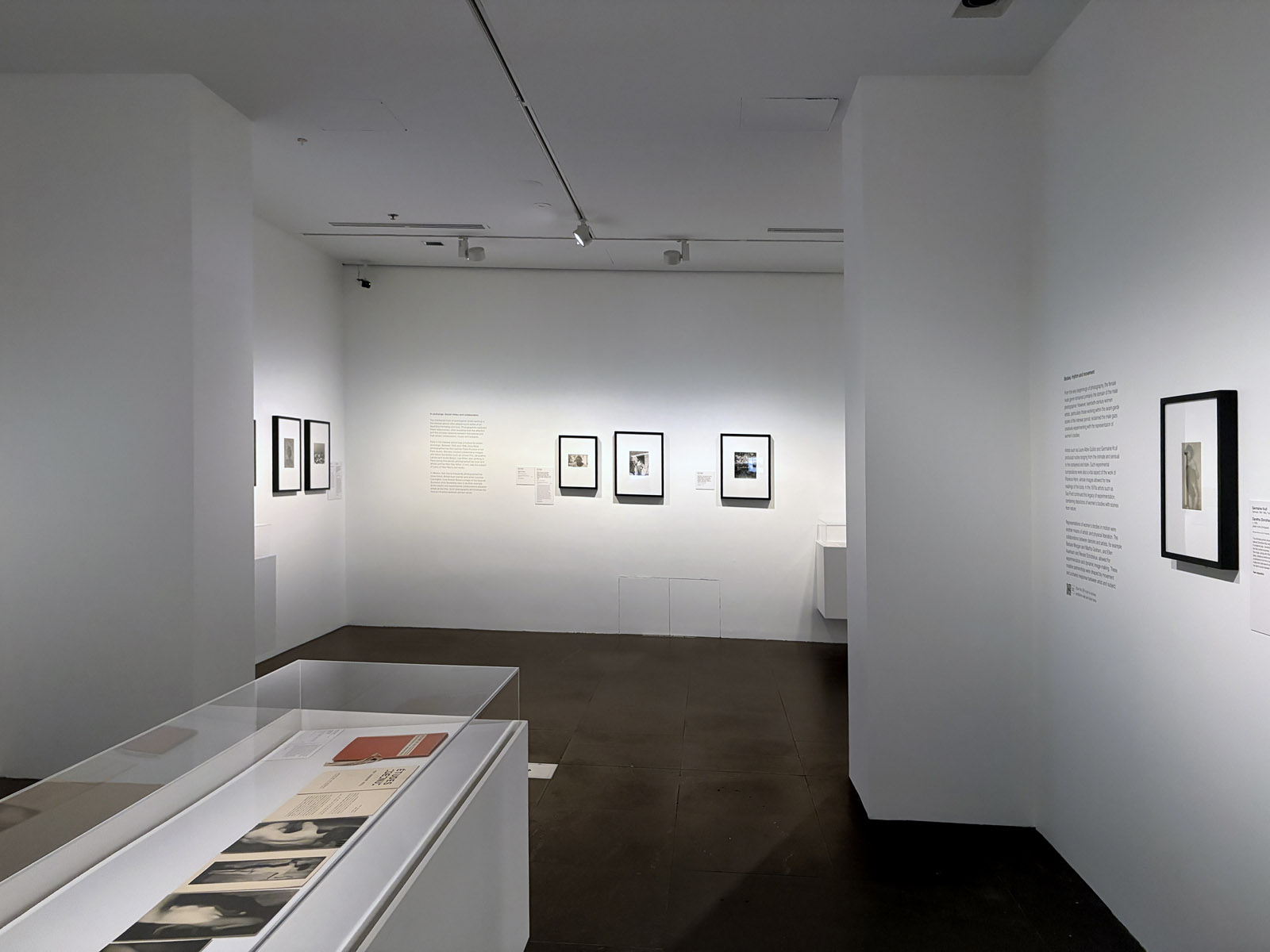
 

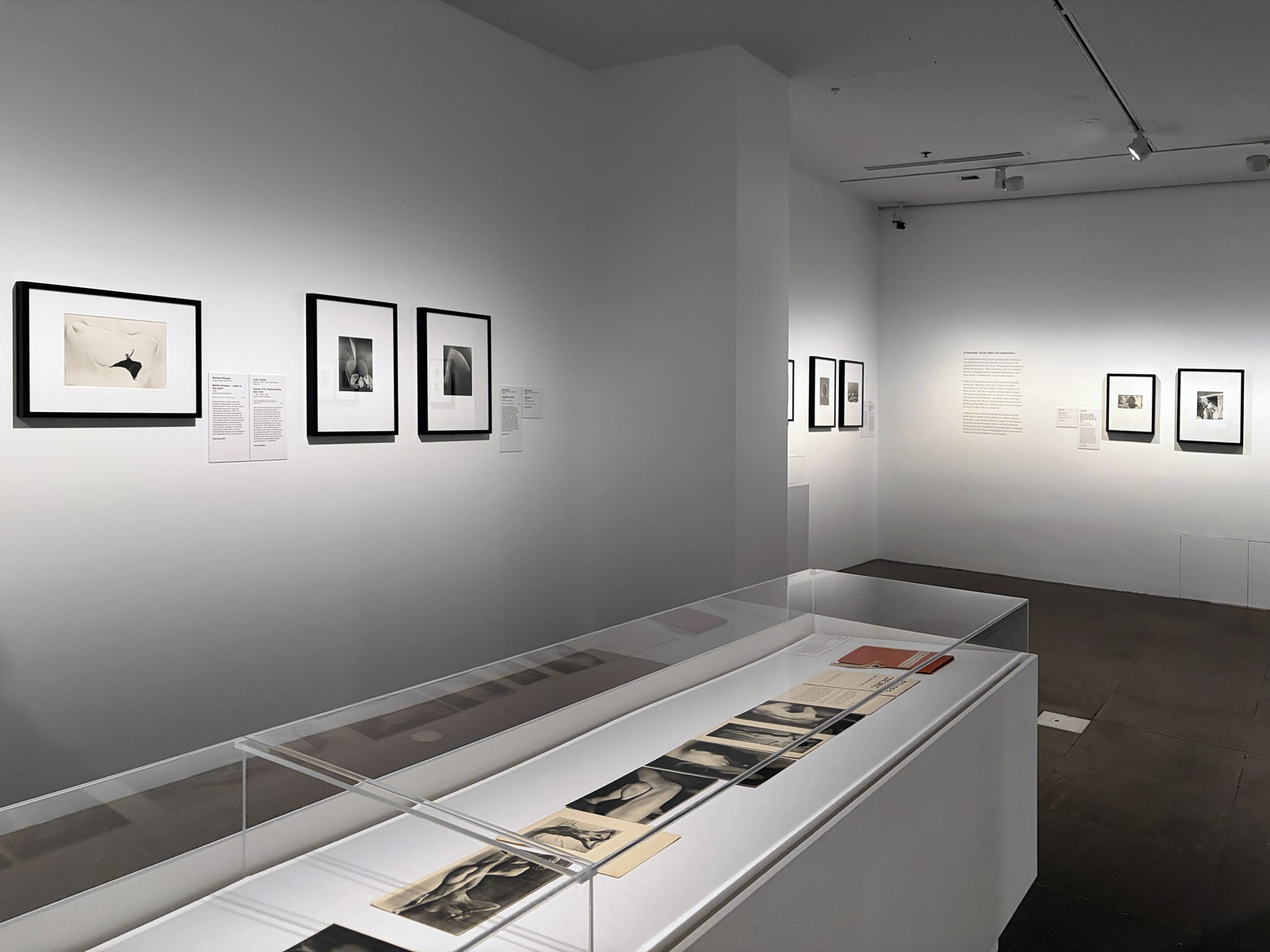
Installation view of the exhibition 'Women Photographers 1900-1975: A Legacy of Light at NGV' International, Melbourne, November 2025 – May 2026
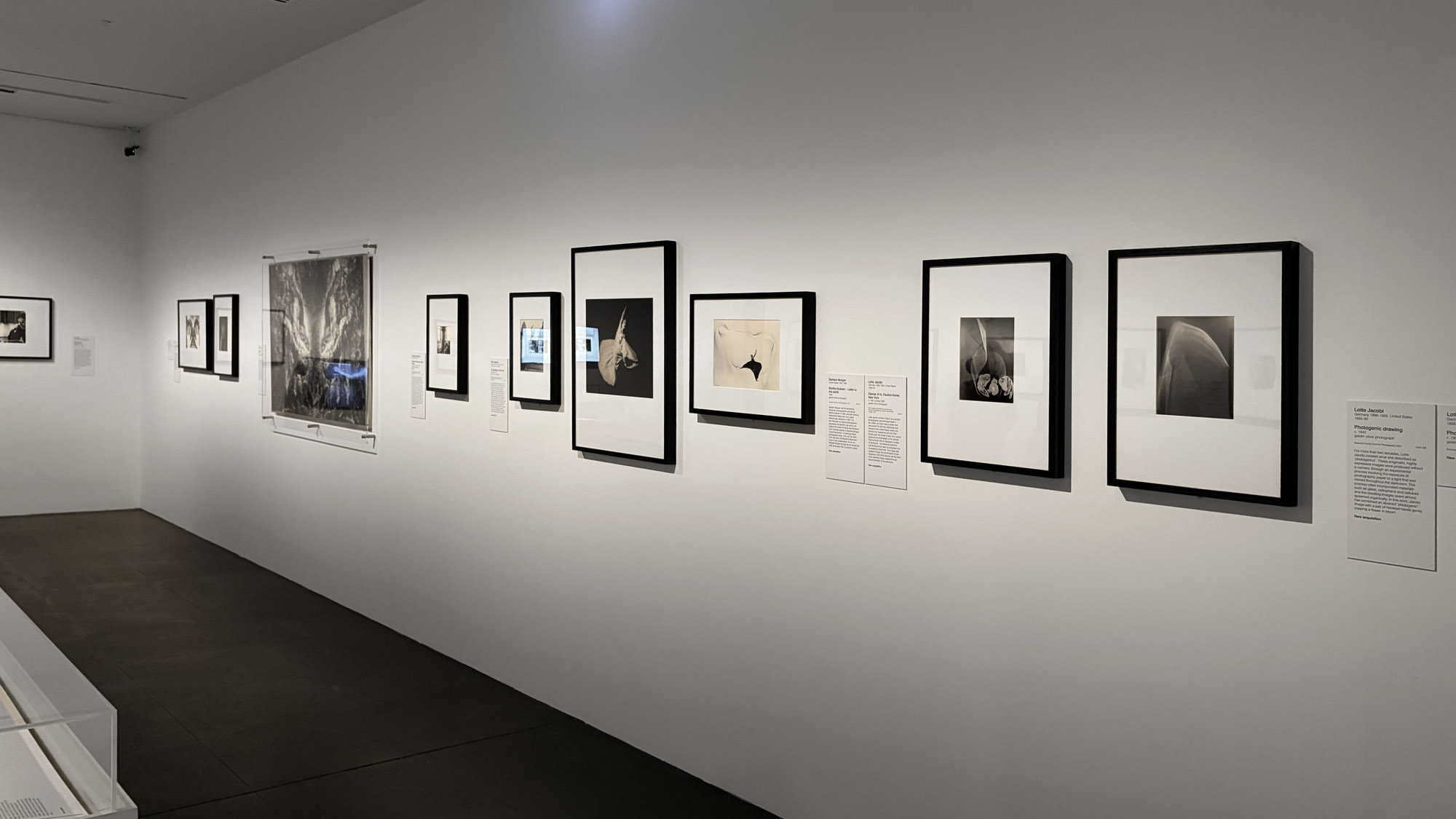
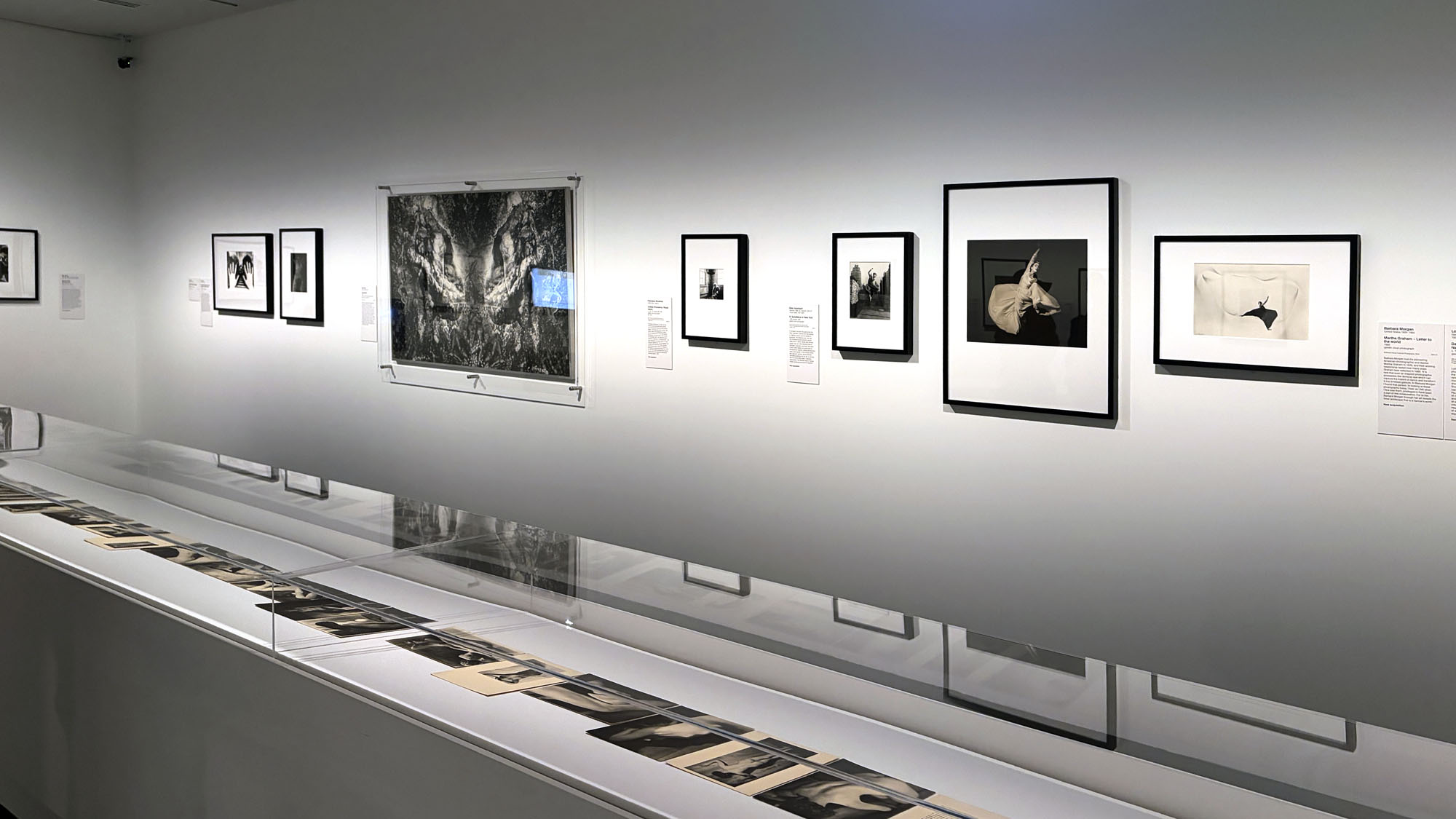
Installation view of the exhibition 'Women Photographers 1900-1975: A Legacy of Light at NGV' International, Melbourne, November 2025 – May 2026 showing from left to right in the bottom image, Francesca Woodman 'Untitled (Providence, Rhode Island)' (c. 1975-1978 printed after 1981); Ellen Auerbach R. 'Schottelius in New York' (1953 printed 1992); Barbara Morgan 'Martha Graham – Letter to the world' (1940); Lotti Jacobi 'Dancer #16, Pauline Koner, New York' (c. 1937, printed 1992); and two 'Photogenic drawing' (c. 1940 and c. 1950)


Installation views of the exhibition Women Photographers 1900-1975: A Legacy of Light at NGV International, Melbourne, November 2025 – May 2026 showing from left to right in the bottom image, Francesca Woodman Untitled (Providence, Rhode Island) (c. 1975-1978 printed after 1981, below); Ellen Auerbach R. Schottelius in New York (1953 printed 1992, below); Barbara Morgan Martha Graham – Letter to the world (1940, below); Lotti Jacobi Dancer #16, Pauline Koner, New York (c. 1937, printed 1992); and two Photogenic drawing (c. 1940 and c. 1950)
Photos: Marcus Bunyan


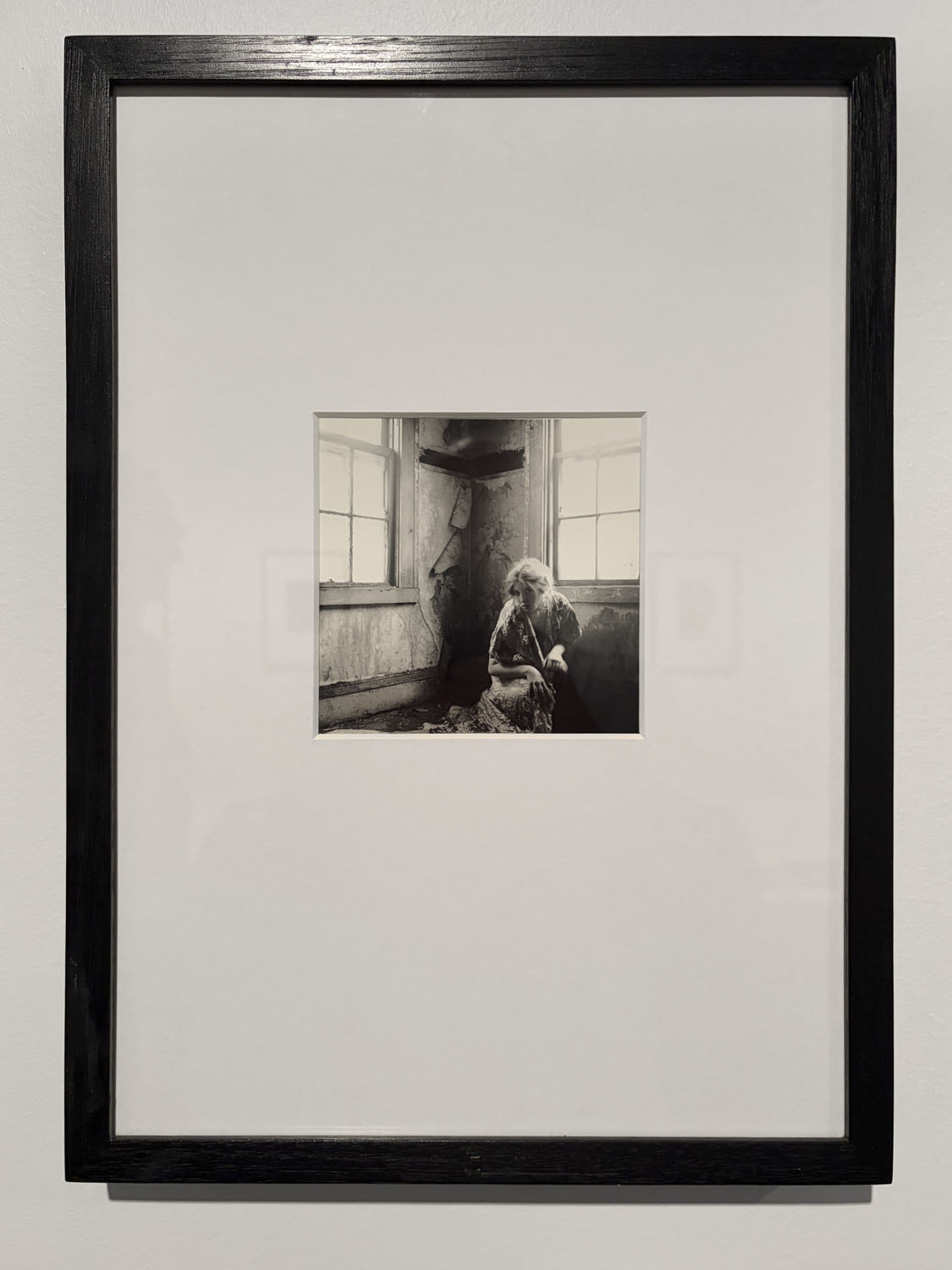
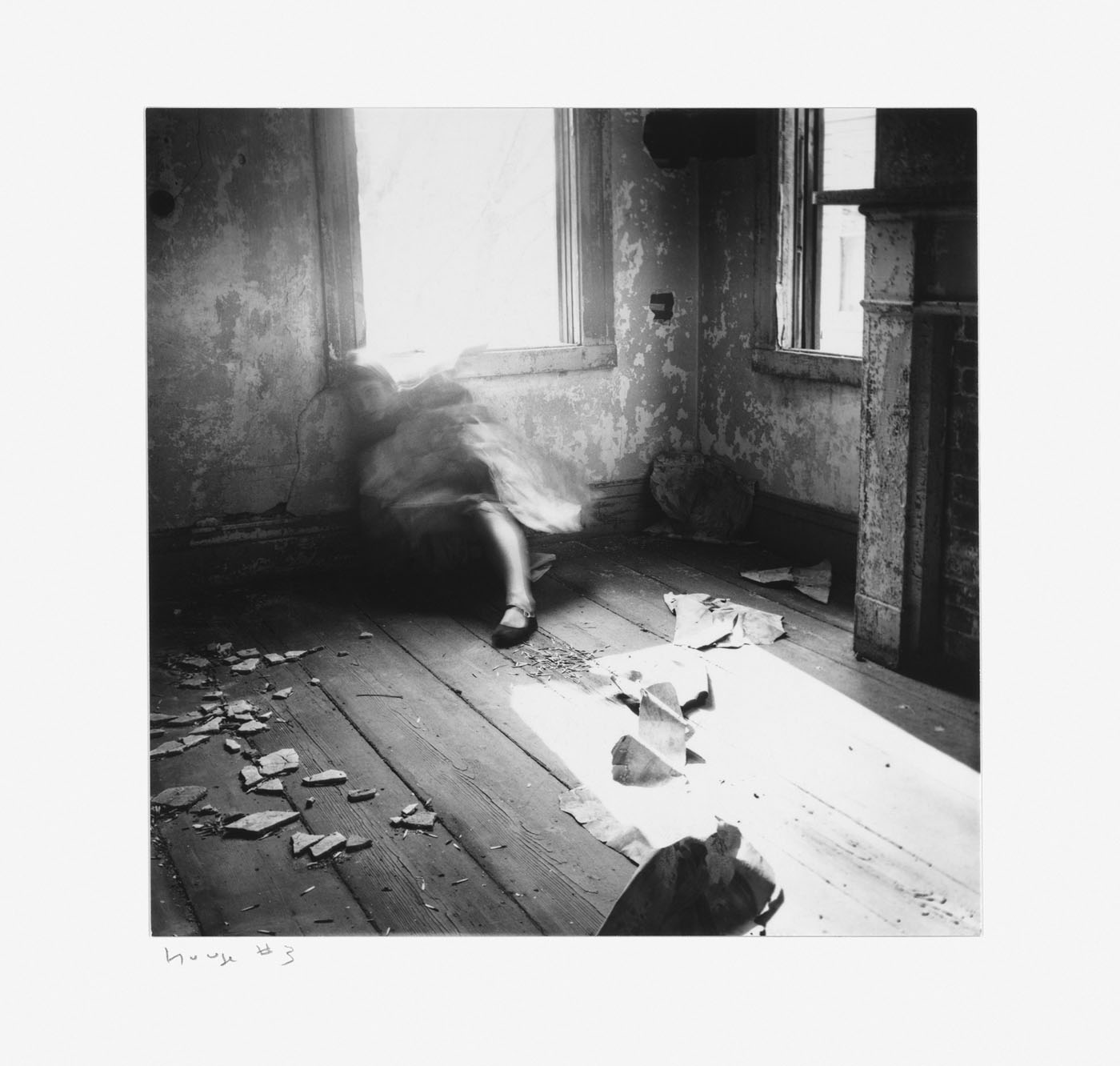
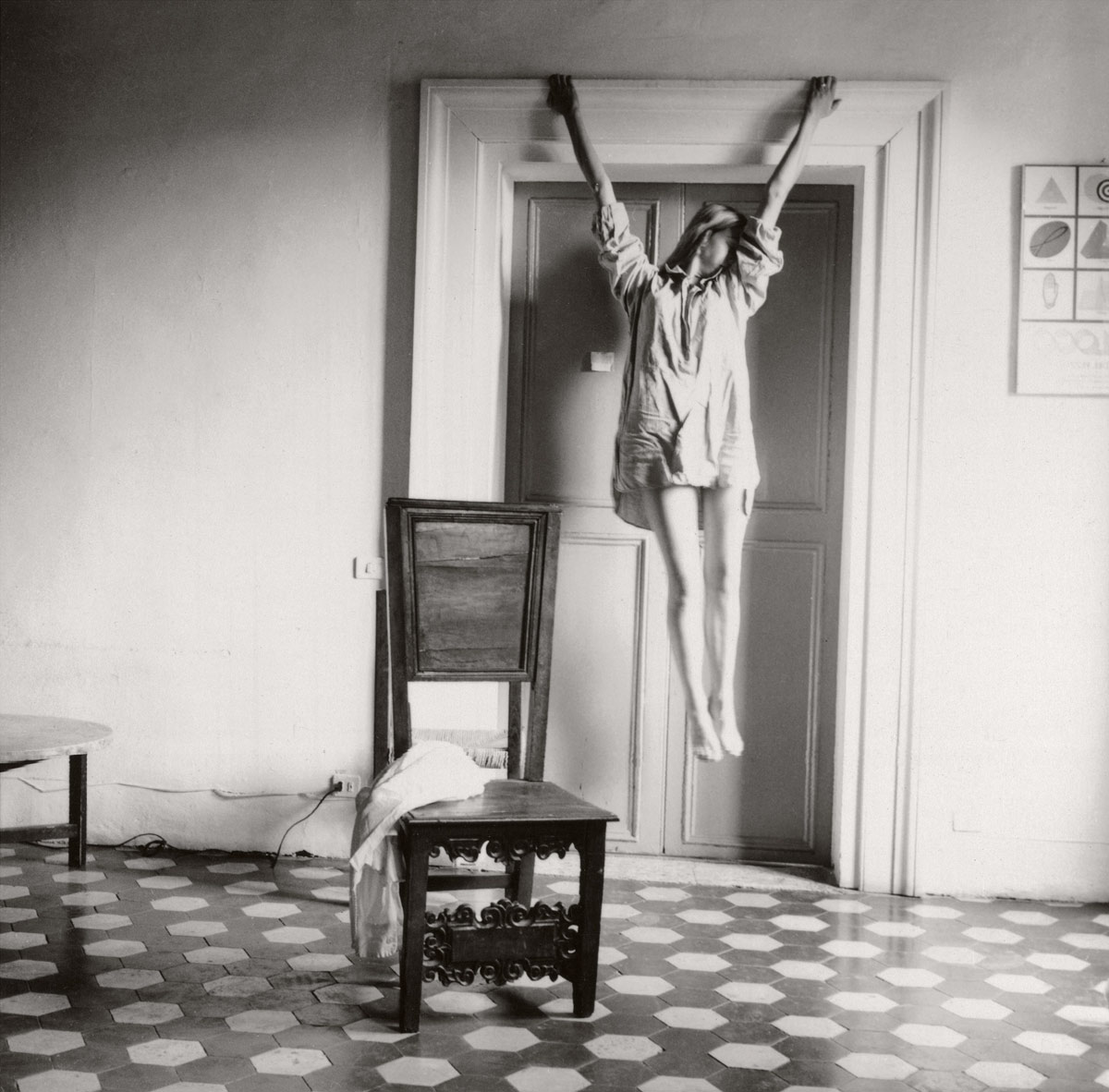
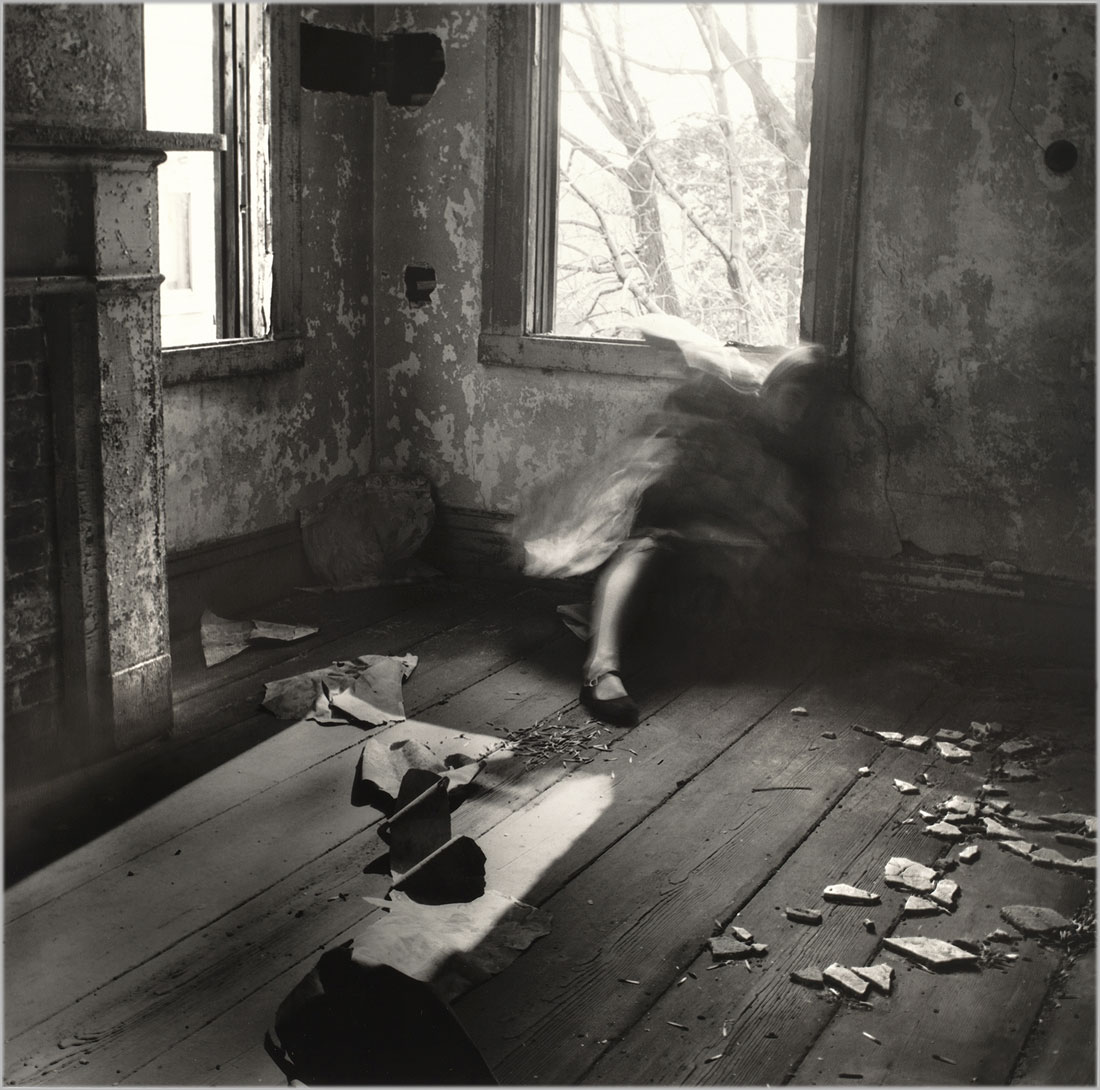
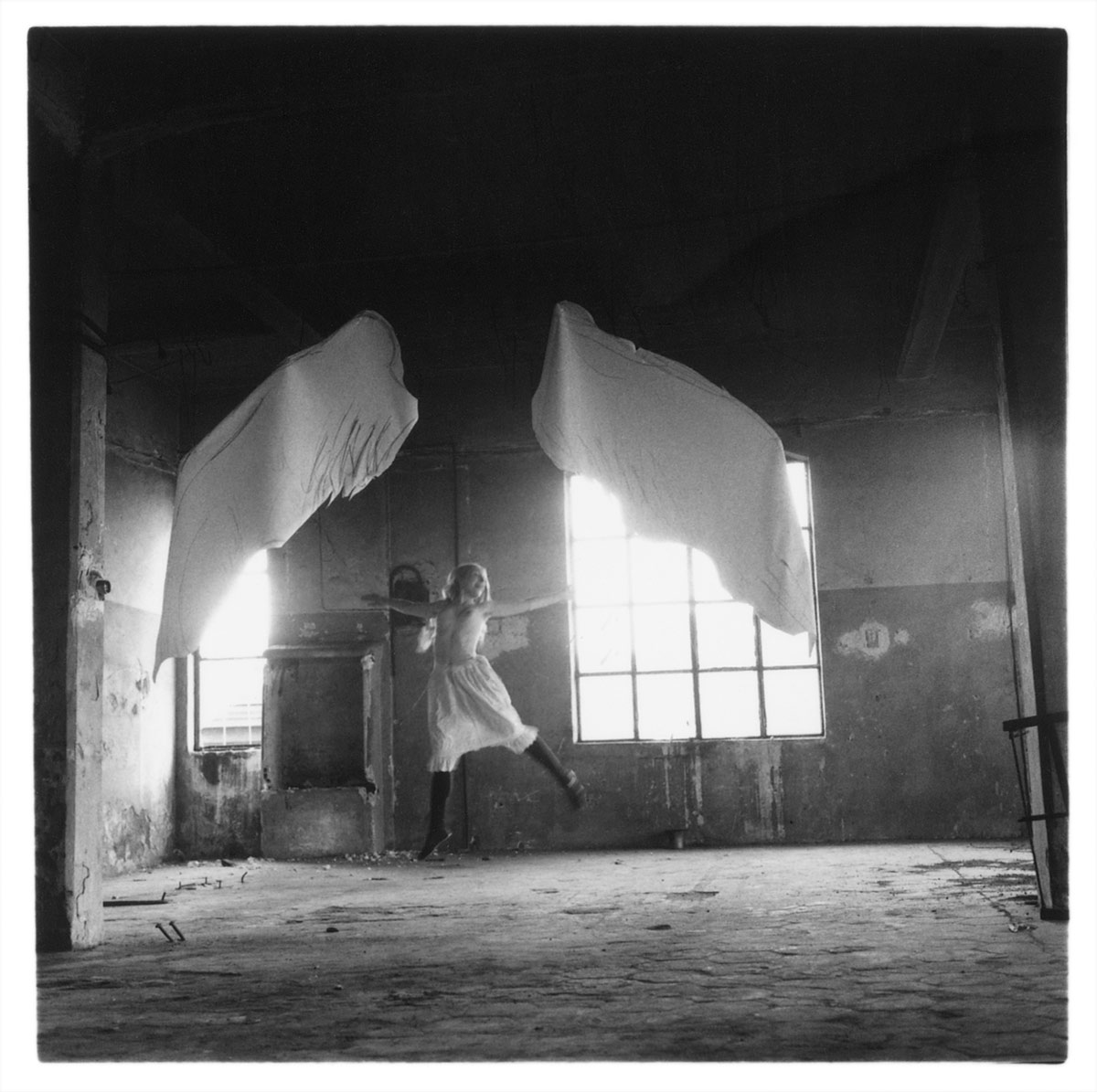
Francesca Woodman (American, 1958-1981) 'Untitled (Providence, Rhode Island)' (c. 1975-1978, printed after 1981) (installation view)


Francesca Woodman (American, 1958-1981)
Untitled (Providence, Rhode Island) (installation view)
c. 1975-1978, printed after 1981
Gelatin silver photograph
13.7 x 13.8cm (image)
25.3 x 20.3cm (sheet)
National Gallery of Victoria, Melbourne
Gift of Krystyna Campbell-Pretty AM and Family through the Australian Government’s Cultural Gifts Program, 2025
Photo: Marcus Bunyan


Francesca Woodman is known for her intimate black-and-white self-portraits and photographs featuring other women sitters. The bodies are often blurred, with faces hidden and appearing to blend into the background. In this self-portrait, Woodman crouches down in the corner of a decrepit room, her patterned gown somehow reflecting – or merging with – the floral wallpaper that peels down in rough remnants behind her. The photograph was created while Woodman was a student at the Rhode Island School of Design in Providence, where she studied from 1975 to 1978 and which produced the majority of her extant photographs following her untimely death in 1981.

Wall text from the exhibition


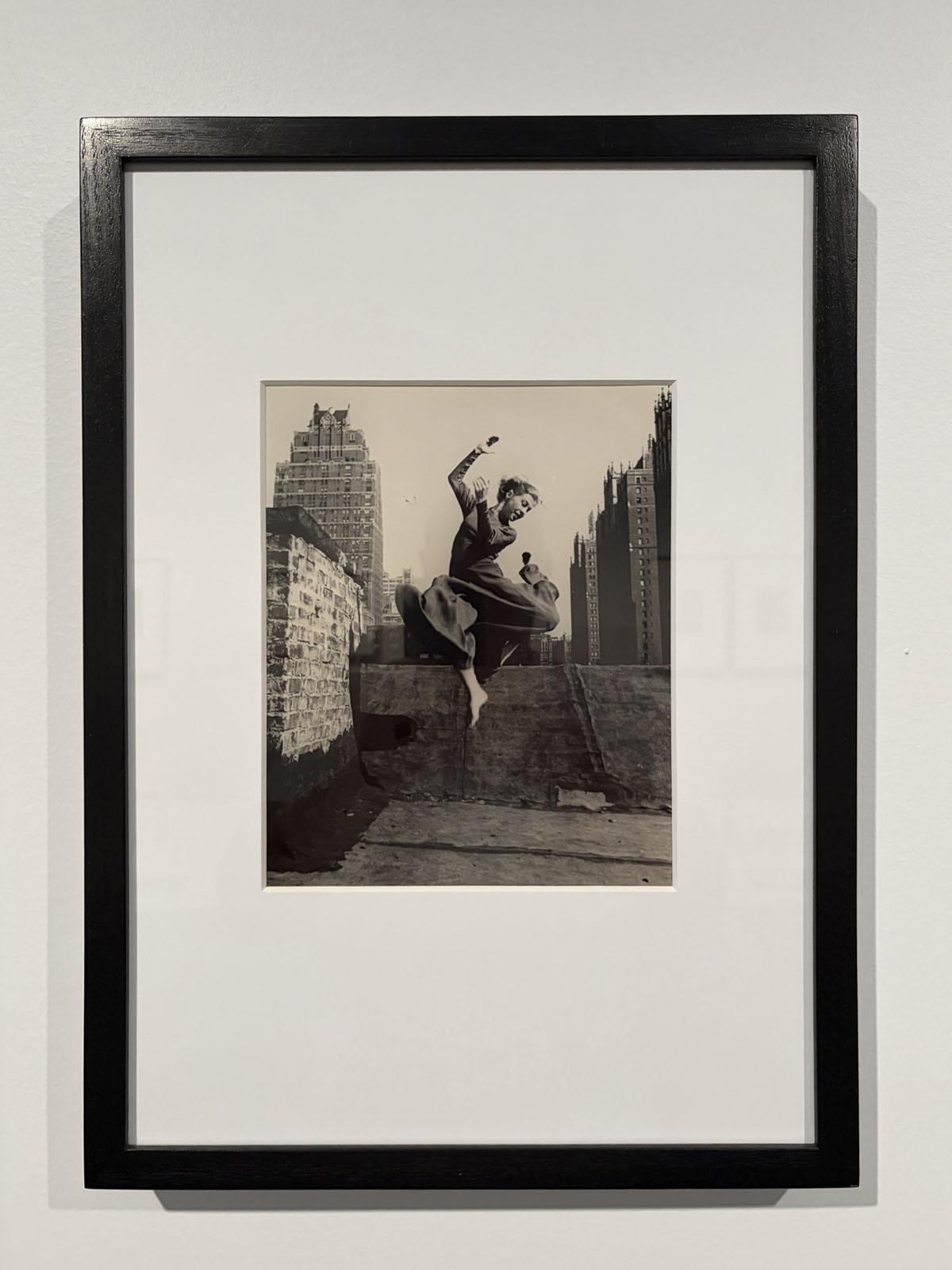
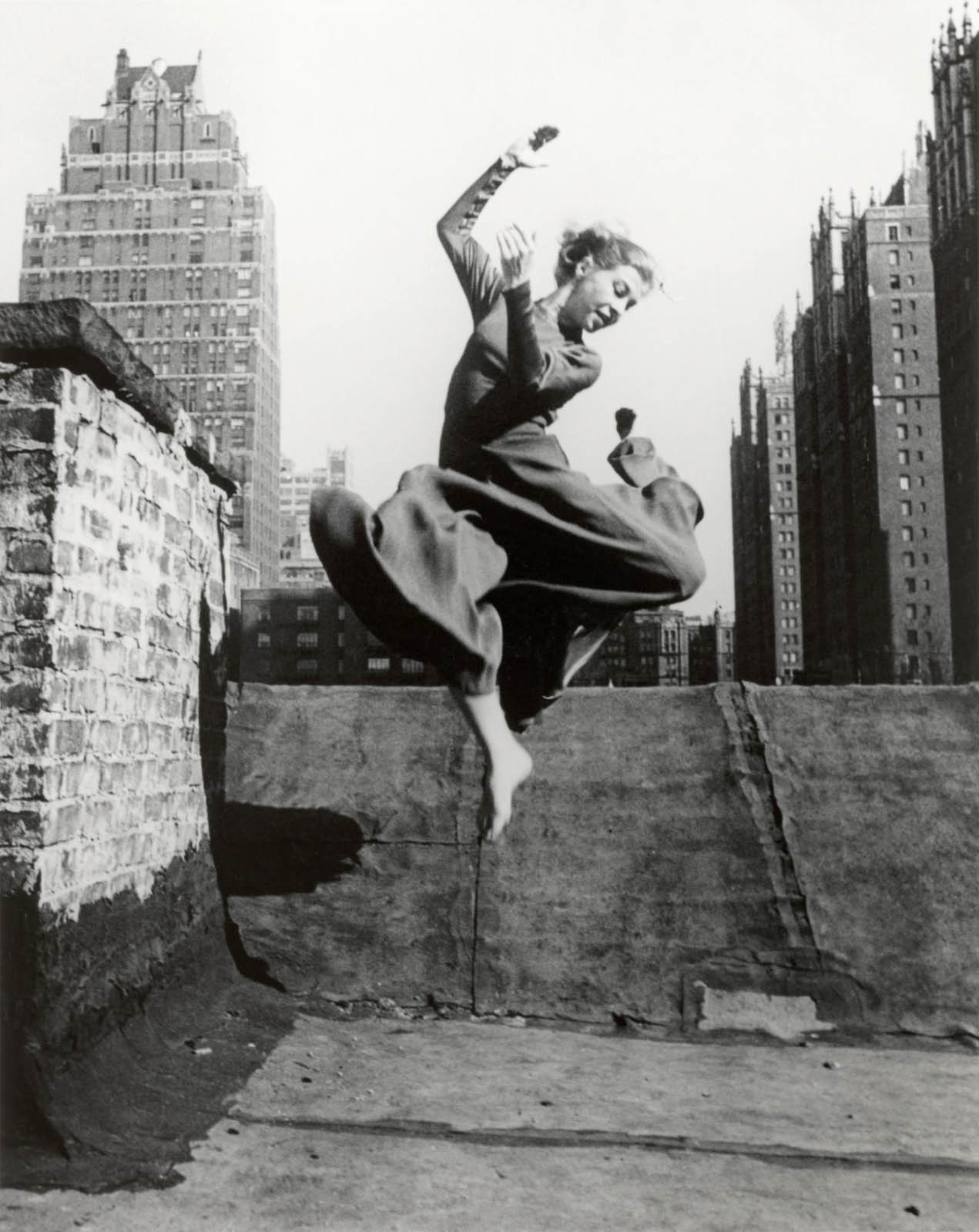
Ellen Auerbach (German 1906-2004) 'R. Schottelius in New York' 1953, printed 1992 (installation view)


Ellen Auerbach (German 1906-2004)
R. Schottelius in New York (installation view)
1953, printed 1992
Gelatin silver photograph
23.2 x 18.5cm (image)
25.0 x 27.5cm (sheet)
National Gallery of Victoria, Melbourne
Gift of Krystyna Campbell-Pretty AM and Family through the Australian Government’s Cultural Gifts Program, 2023
Photo: Marcus Bunyan


Ellen Auerbach (German 1906-2004) 'R. Schottelius in New York' 1953, printed 1992


Ellen Auerbach (German 1906-2004)
R. Schottelius in New York
1953, printed 1992
Gelatin silver photograph
23.2 x 18.5cm (image)
25.0 x 27.5cm (sheet)
National Gallery of Victoria, Melbourne
Gift of Krystyna Campbell-Pretty AM and Family through the Australian Government’s Cultural Gifts Program, 2023
© Ellen Auerbach. VG Bild-Kunst/Copyright Agency


A constant innovator throughout her life, Ellen Auerbach received her first camera in 1928 as a tool to aid her studies in sculpture. The following year, she met her professional and romantic partner Grete Stern in Berlin, where they formed studio ringl+pit. After escaping fascist Germany, Auerbach eventually relocated to the United States and continued her photographic practice, settling among New York’s avant-garde. In this rooftop scene, she captures German dancer Renate Schottelius leaping into the air. In contrast with the surrounding static, imposing skyscrapers, the liberated body in joyous motion serves as a symbol for freedom.

Wall text from the exhibition


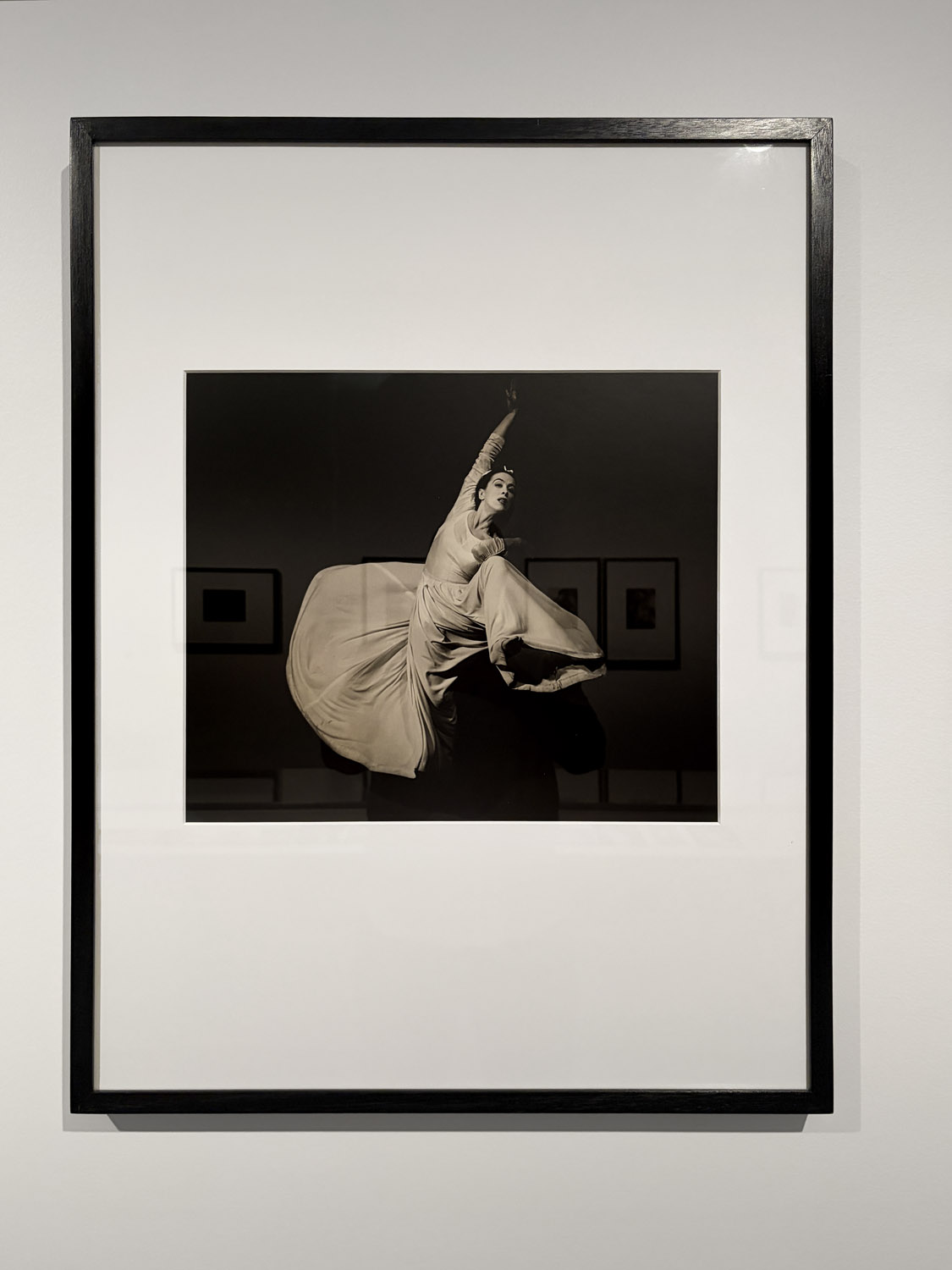
Barbara Morgan (American, 1900-1992) 'Martha Graham – Letter to the world' 1940 (installation view)


Barbara Morgan (American, 1900-1992)
Martha Graham – Letter to the world (installation view)
1940
Gelatin silver photograph
38.9 x 48.2cm (image and sheet)
National Gallery of Victoria, Melbourne
Bowness Family Fund for Photography, 2024
Photo: Marcus Bunyan


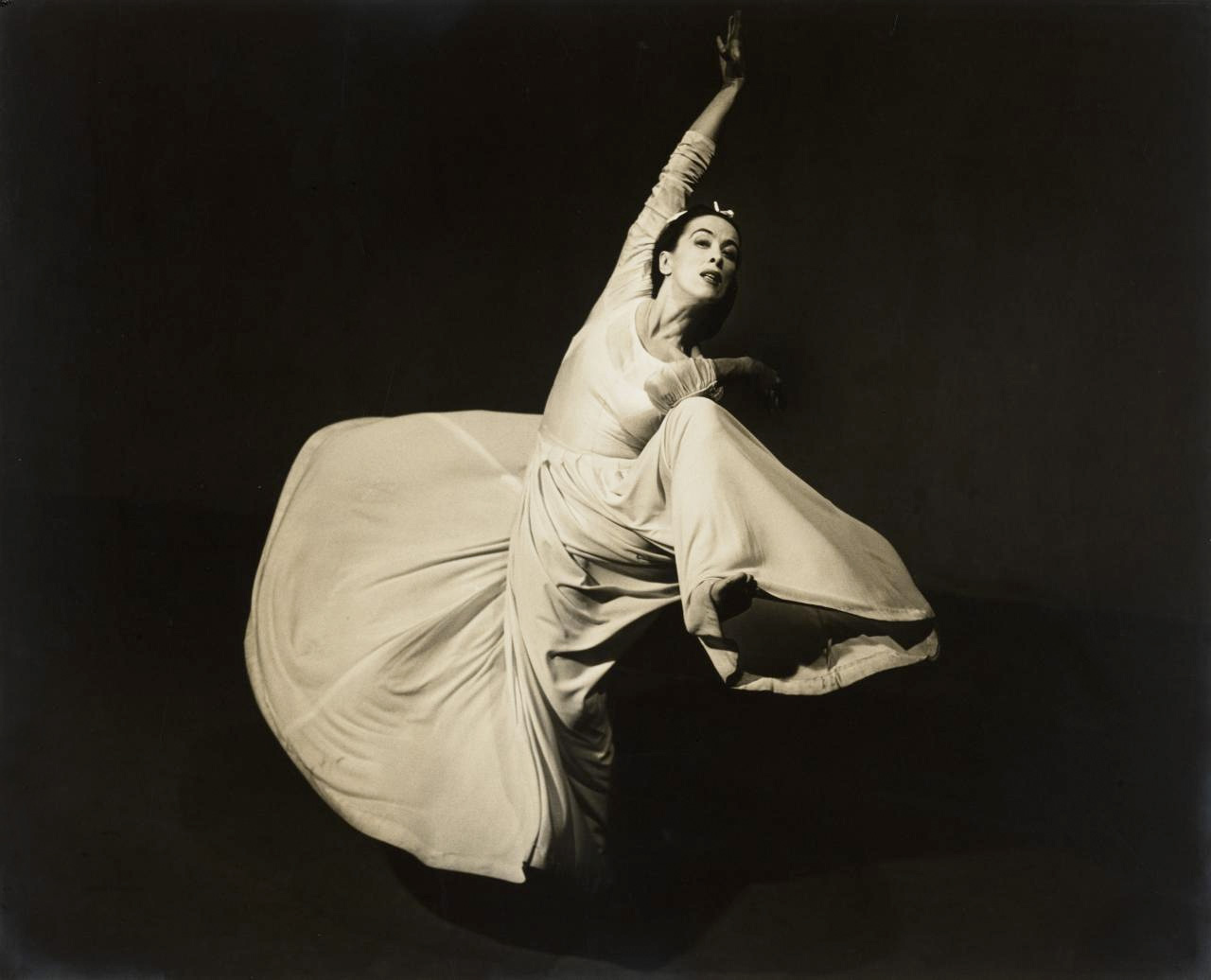
Barbara Morgan (American, 1900-1992) 'Martha Graham – Letter to the world' 1940


Barbara Morgan (American, 1900-1992)
Martha Graham – Letter to the world
1940
Gelatin silver photograph
38.9 x 48.2cm (image and sheet)
National Gallery of Victoria, Melbourne
Bowness Family Fund for Photography, 2024
© The Barbara Morgan Estate


Barbara Morgan met the pioneering American choreographer and dancer Martha Graham in 1935, and their working relationship lasted over six decades. Graham later reflected in 1980: “It is rare that even an inspired photographer possesses the demonic eye which can capture the instant of dance and transform it into timeless gesture. In Barbara Morgan I found that person. In looking at these photographs today, I feel, as I felt when I first saw them, privileged to have been a part of this collaboration. For to me, Barbara Morgan through her art reveals the inner landscape that is a dancer’s world.”

Wall text from the exhibition


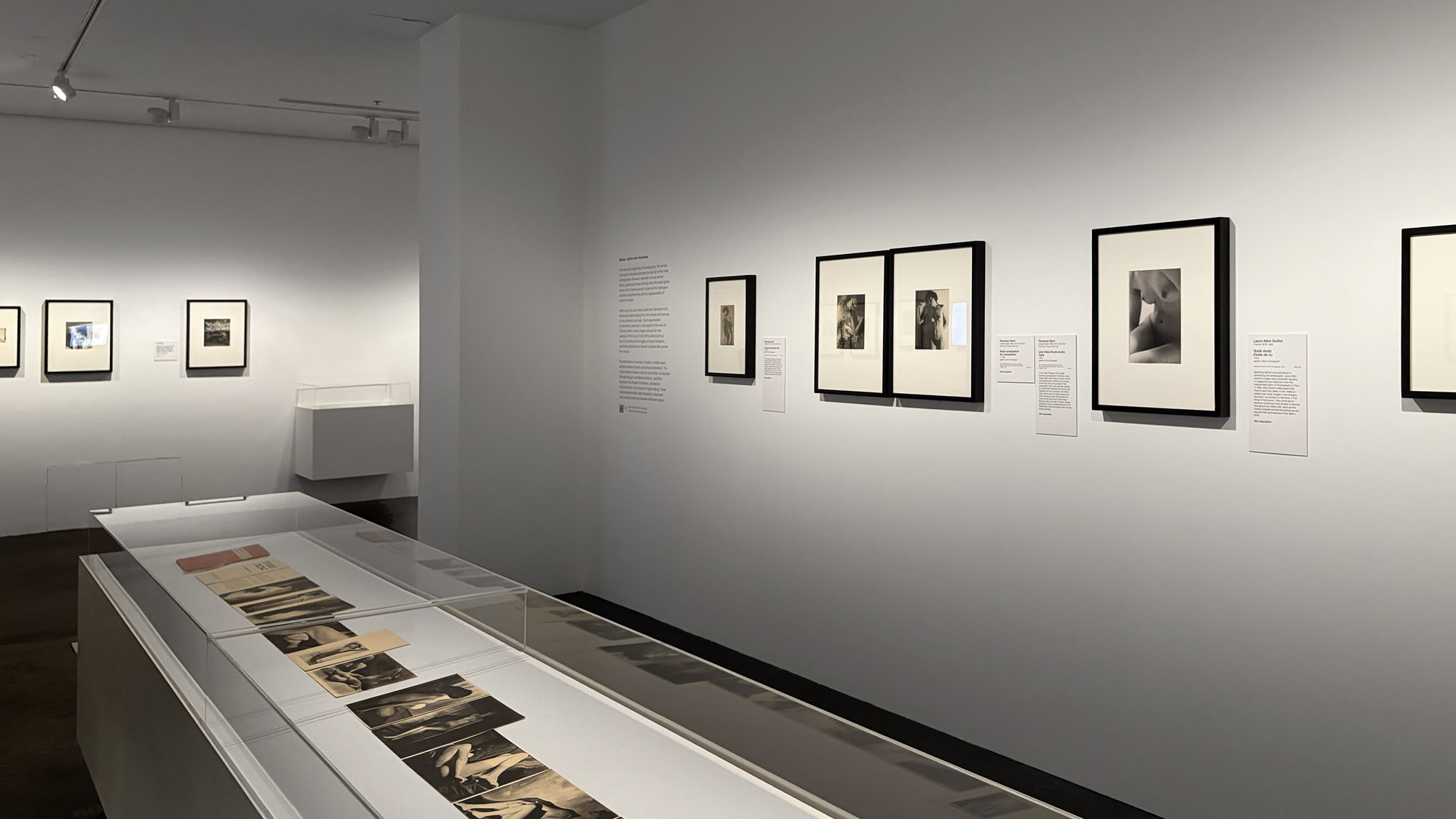
Installation view of the exhibition 'Women Photographers 1900-1975: A Legacy of Light' at NGV International, Melbourne, November 2025 – May 2026


Installation view of the exhibition Women Photographers 1900-1975: A Legacy of Light at NGV International, Melbourne, November 2025 – May 2026
Photo: Marcus Bunyan


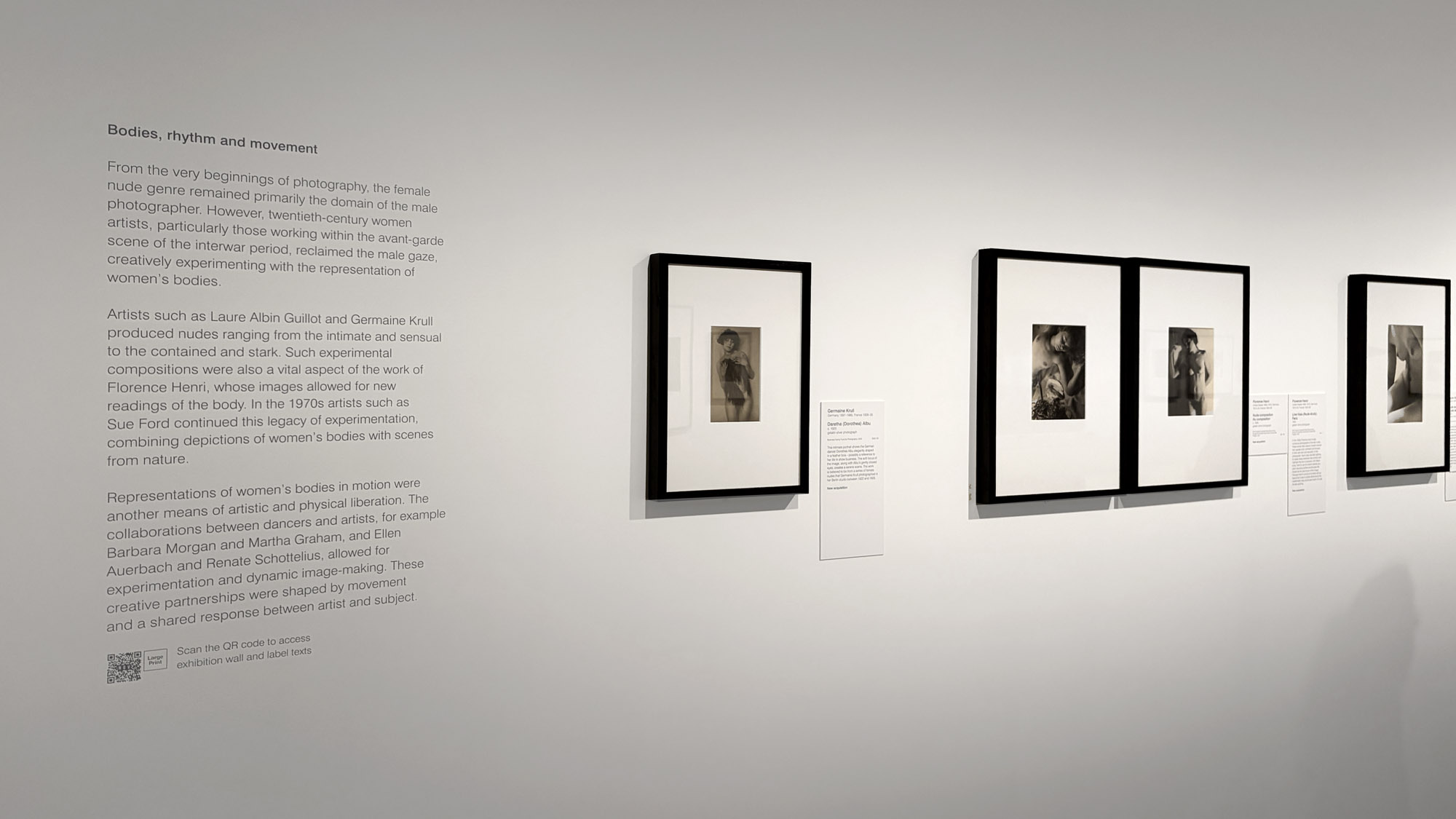
Bodies, Rhythm and Movement

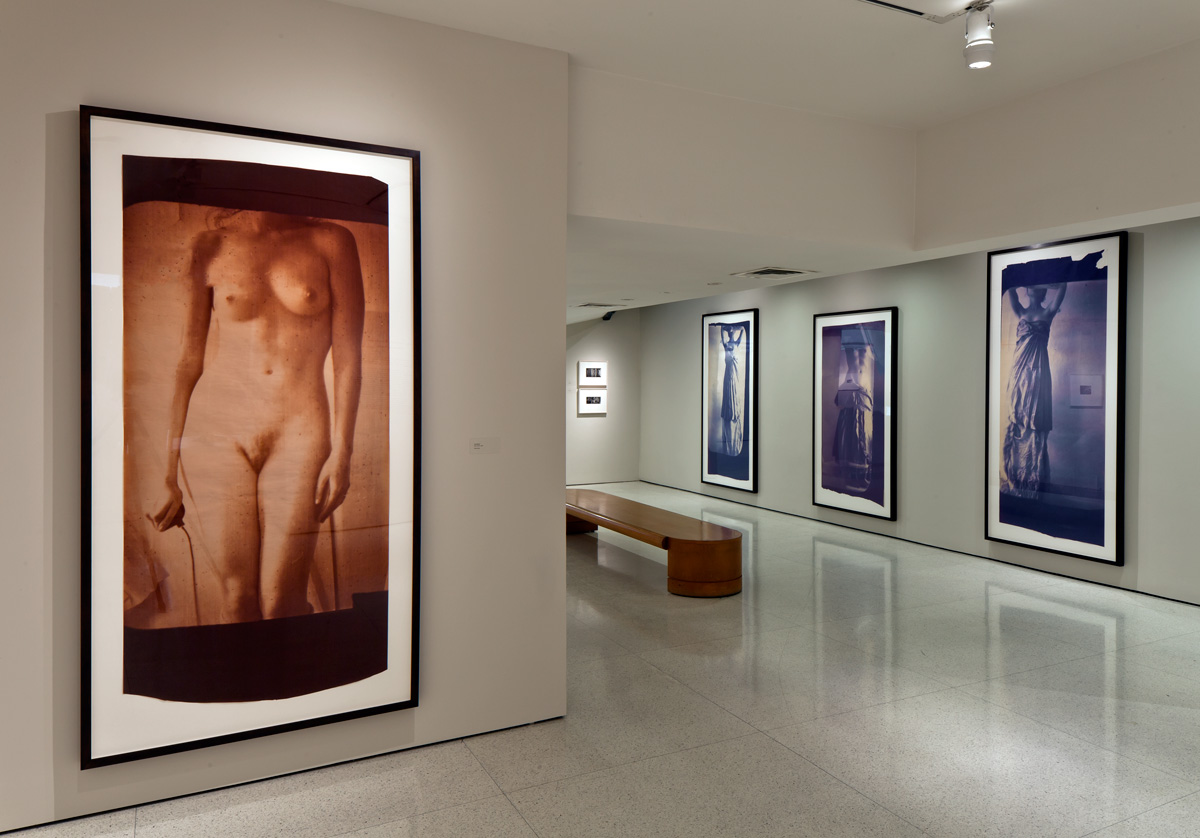
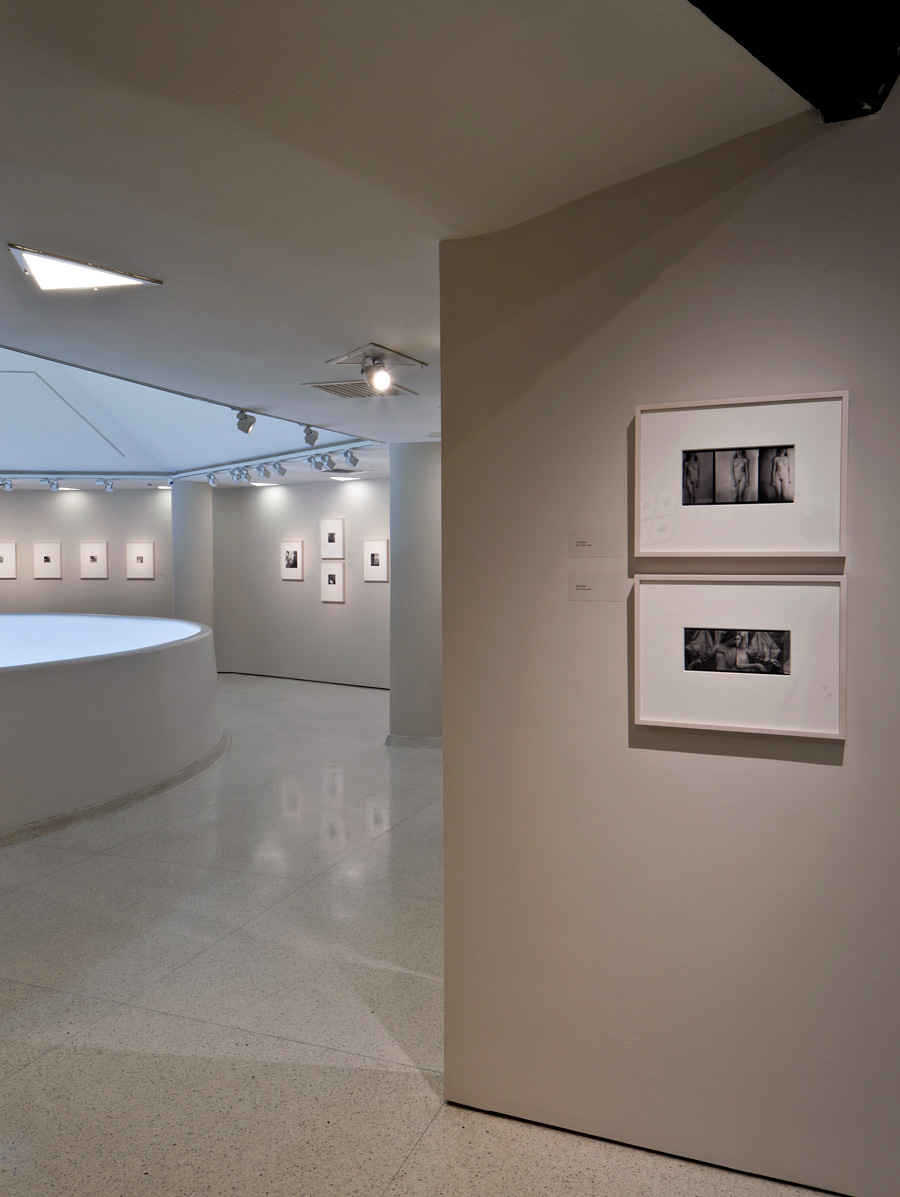
From the very beginnings of photography, the female nude genre remained primarily the domain of the male photographer. However, twentieth-century women artists, particularly those working within the avant-garde scene of the interwar period, reclaimed the male gaze, creatively experimenting with the representation of women’s bodies.

Artists such as Laure Albin Guillot and Germaine Krull produced nudes ranging from the intimate and sensual to the contained and stark. Such experimental compositions were also a vital aspect of the work of Florence Henri, whose images allowed for new readings of the body. In the 1970s artists such as Sue Ford continued this legacy of experimentation, combining depictions of women’s bodies with scenes from nature.

Representations of women’s bodies in motion were another means of artistic and physical liberation. The collaborations between dancers and artists, for example Barbara Morgan and Martha Graham, and Ellen Auerbach and Renate Schottelius, allowed for experimentation and dynamic image-making. These creative partnerships were shaped by movement and a shared response between artist and subject.


Installation view of the exhibition 'Women Photographers 1900-1975: A Legacy of Light' at NGV International, Melbourne, November 2025 – May 2026 showing at left, Germaine Krull 'Daretha (Dorothea) Albu' (c. 1925)


Installation view of the exhibition Women Photographers 1900-1975: A Legacy of Light at NGV International, Melbourne, November 2025 – May 2026 showing at left, Germaine Krull Daretha (Dorothea) Albu (c. 1925, below)
Photo: Marcus Bunyan


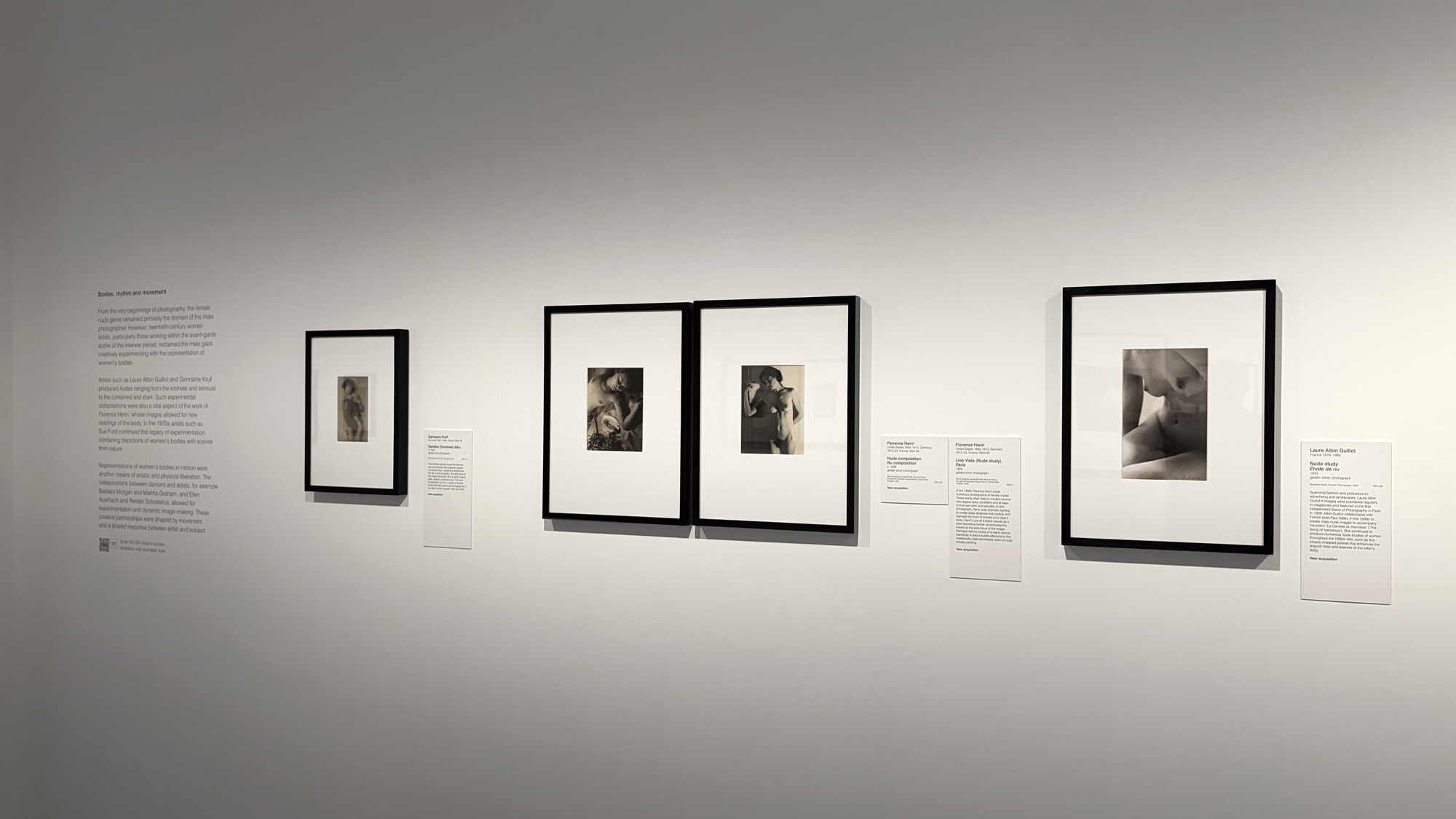
Installation view of the exhibition 'Women Photographers 1900-1975: A Legacy of Light' at NGV International, Melbourne, November 2025 – May 2026


Installation view of the exhibition Women Photographers 1900-1975: A Legacy of Light at NGV International, Melbourne, November 2025 – May 2026 showing from left to right, Germaine Krull Daretha (Dorothea) Albu (c. 1925, below); Florence Henri Nude composition (c. 1930, below); Florence Henri Line Viala (Nude study), Paris (1934); and Laure Albin Guillot Nude Study (1943)
Photo: Marcus Bunyan


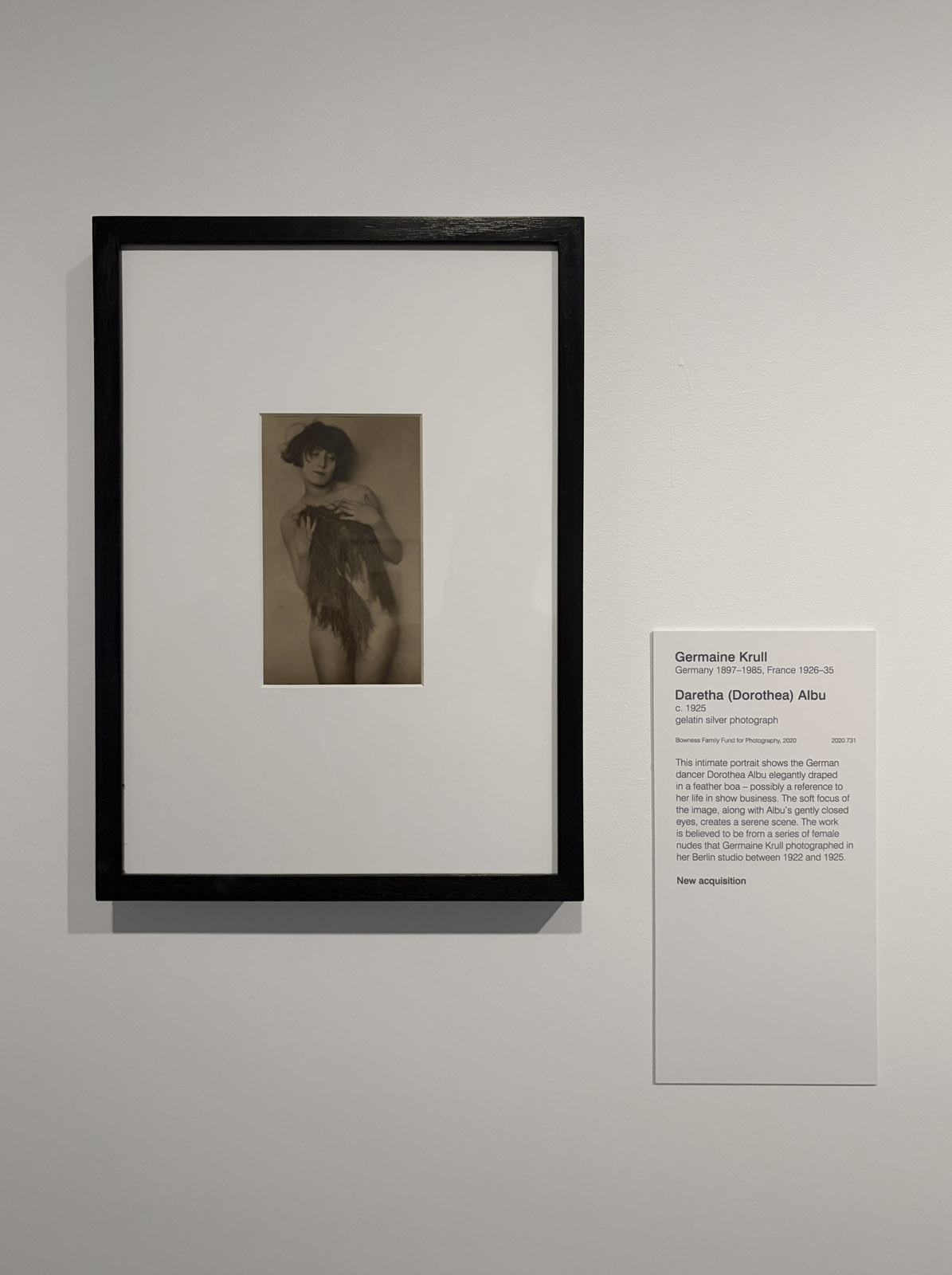
Germaine Krull (European, 1897-1985) 'Daretha (Dorothea) Albu' c. 1925 (installation view)


Germaine Krull (European, 1897-1985)
Daretha (Dorothea) Albu (installation view)
c. 1925
Gelatin silver photograph
19.7 x 11.7cm (image and sheet)
National Gallery of Victoria, Melbourne
Bowness Family Fund for Photography, 2020
Photo: Marcus Bunyan


This intimate portrait shows the German dancer Dorothea Albu elegantly draped in a feather boa – possibly a reference to her life in show business. The soft focus of the image, along with Albu’s gently closed eyes, creates a serene scene. The work is believed to be from a series of female nudes that Germaine Krull photographed in her Berlin studio between 1922 and 1925.

Wall text from the exhibition


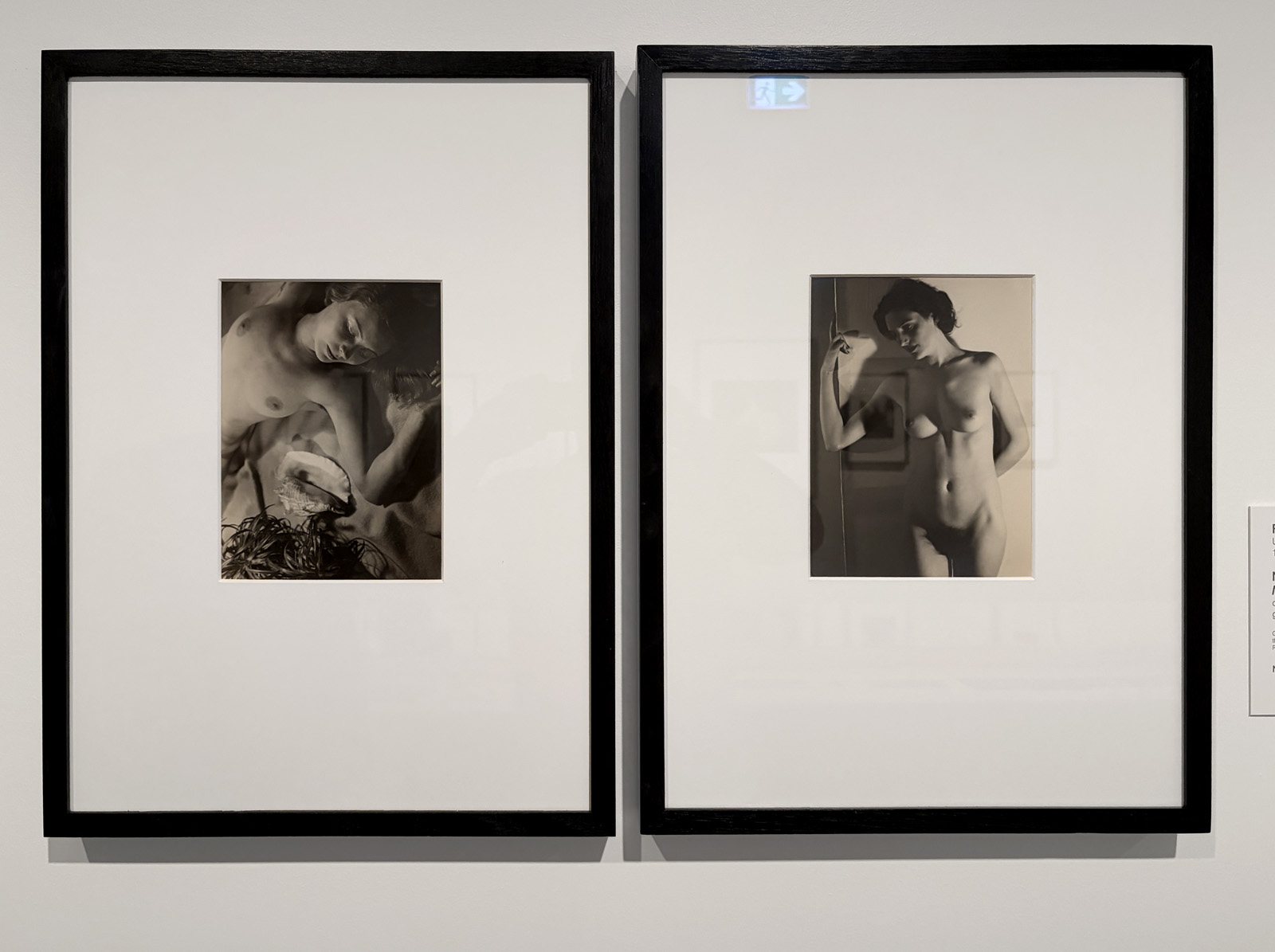
Installation view of the exhibition 'Women Photographers 1900-1975: A Legacy of Light' at NGV International, Melbourne, November 2025 – May 2026 showing from left to right, Florence Henri (European born USA, 1893-1982) 'Nude composition' (c. 1930) and Florence Henri (European born USA, 1893-1982) 'Line Viala (Nude study), Paris' (1934)


Installation view of the exhibition Women Photographers 1900-1975: A Legacy of Light at NGV International, Melbourne, November 2025 – May 2026 showing from left to right, Florence Henri Nude composition (c. 1930, below) and Florence Henri Line Viala (Nude study), Paris (1934, below)
Photo: Marcus Bunyan


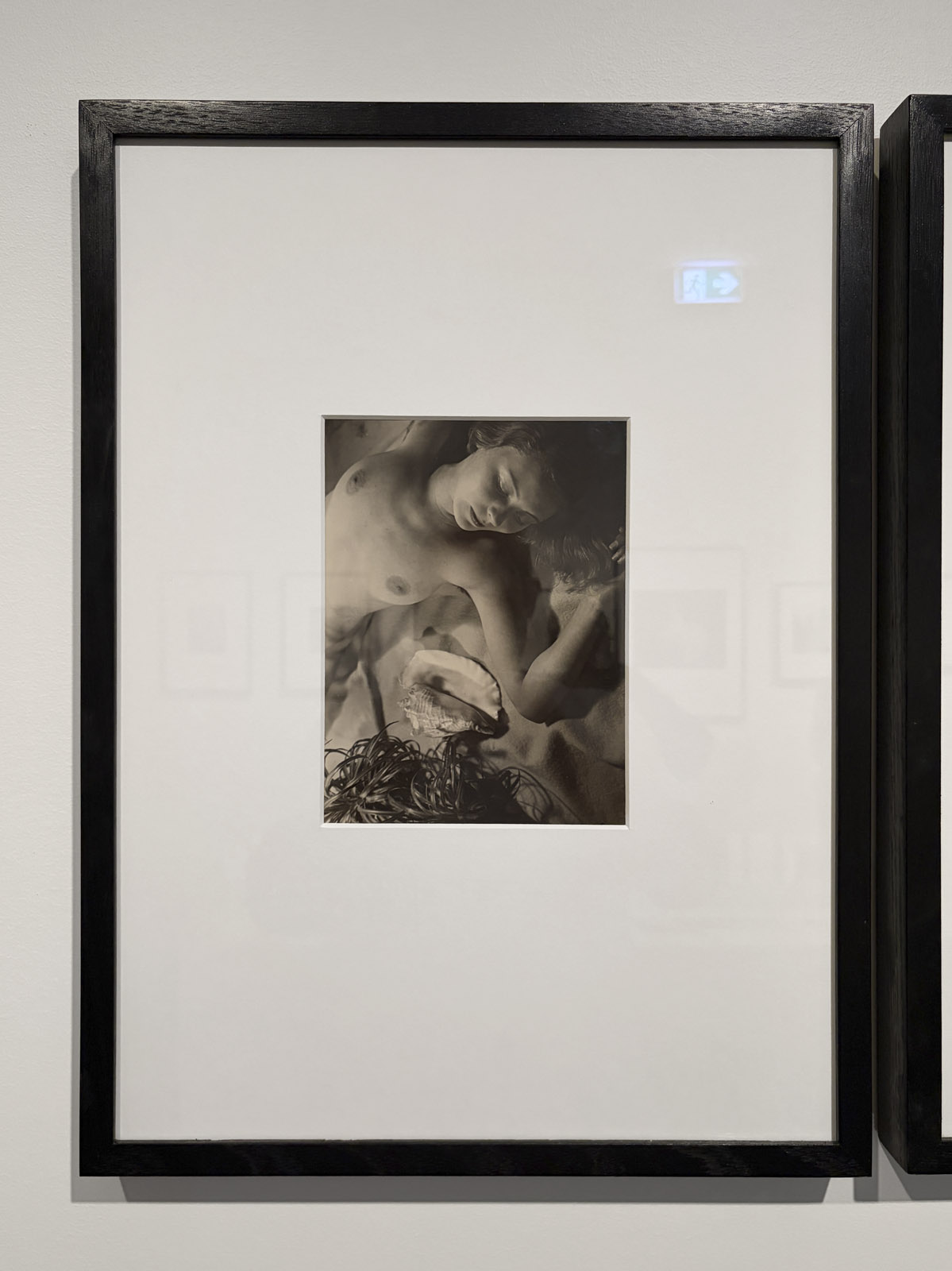
Florence Henri (European born USA, 1893-1982) 'Nude composition' (Nu composition) c. 1930 (installation view)


Florence Henri (European born USA, 1893-1982)
Nude composition (Nu composition) (installation view)
c. 1930
Gelatin silver photograph
22.9 x 17.0cm (image and sheet)
National Gallery of Victoria, Melbourne
Gift of Krystyna Campbell-Pretty AM and Family through the Australian Government’s Cultural Gifts Program, 2021
Photo: Marcus Bunyan


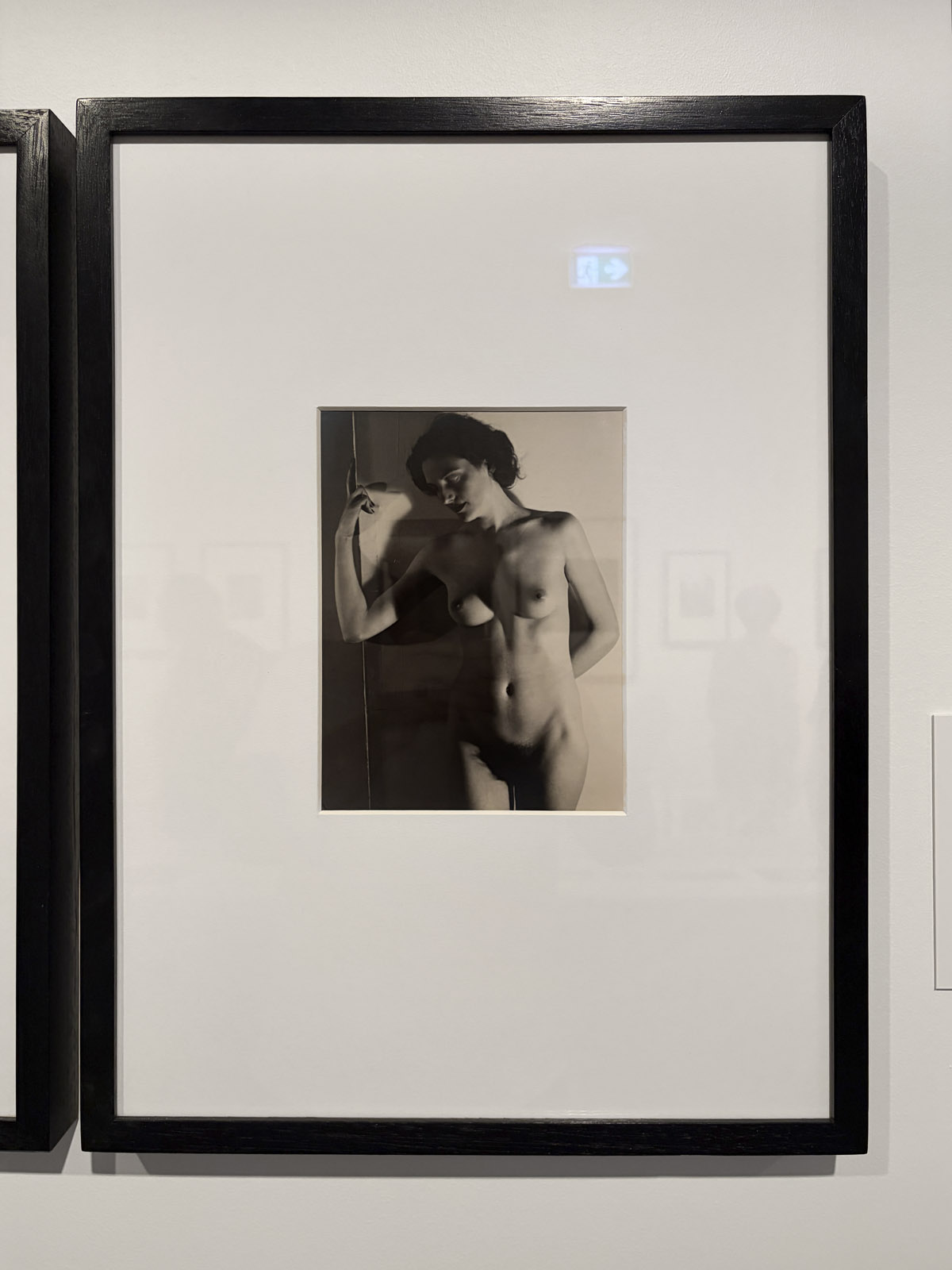
Florence Henri (European born USA, 1893-1982) 'Line Viala (Nude study), Paris' 1934 (installation view)


Florence Henri (European born USA, 1893-1982)
Line Viala (Nude study), Paris (installation view)
1934
Gelatin silver photograph
22.9 x 17.2cm (image and sheet)
National Gallery of Victoria, Melbourne
Gift of Krystyna Campbell-Pretty AM and Family through the Australian Government’s Cultural Gifts Program, 2023
Photo: Marcus Bunyan


In the 1930s Florence Henri made numerous photographs of female nudes. These works often feature modern women who appear bold, confident and at ease in their own skin and sexuality. In this photograph, Henri uses dramatic lighting to create deep shadows that contour and highlight the form of actress Line Viala’s body. Henri’s use of a blank canvas as a plain backdrop further accentuates the model as the sole focus of the image. Perhaps Henri’s choice of a blank canvas backdrop is also a subtle reference to the traditionally male-dominated realm of nude female painting.

Wall text from the exhibition


Florence Henri (European born USA, 1893-1982) 'Nude composition (Nu composition)' c. 1930


Florence Henri (European born USA, 1893-1982)
Nude composition (Nu composition)
c. 1930
Gelatin silver photograph
22.9 x 17.0cm (image and sheet)
National Gallery of Victoria, Melbourne
Gift of Krystyna Campbell-Pretty AM and Family through the Australian Government’s Cultural Gifts Program, 2021
© Florence Henri / Licensed by the Copyright Agency, Australia


Another vital aspect of her practice was her nude female compositions, such as Nude composition (Nu composition), 1930. Created in the year after establishing her studio in Paris, it employs her characteristically unique, elevated vantage point and raking lighting to disrupt a sense of visual order and perspective. Henri constructs a scene in which the upper half of a woman’s naked body (her chest, breasts, arms, head and hair) creates an asymmetrical focal point at the top of the photograph. Lying next to the woman, and, seemingly, the subject of her gaze, is a large shell, while plants at the base of the image echo the woman’s flowing hair. While appearing to be set on a bed of sand, on closer inspection the textured base is revealed as a coarse sheet.

The dreamlike image, confident and controlled, which merges the female body with the symbolic shell and forms from nature, creates a scene of sensuousness and self-empowerment that is erotic and modern. Henri’s nude compositions, along with those of peers working in France such as Dora Maar and Nora Dumas, claimed the female body as a subject of their own – a trend that emerged among a number of female photographers, in the interwar period.

Maggie Finch. “Florence Henri Nude composition (Nu composition),” on the NGV website 16 Mar 23 [Online] Cited 24/12/2025. Used under fair use condition for the purposes of education and research


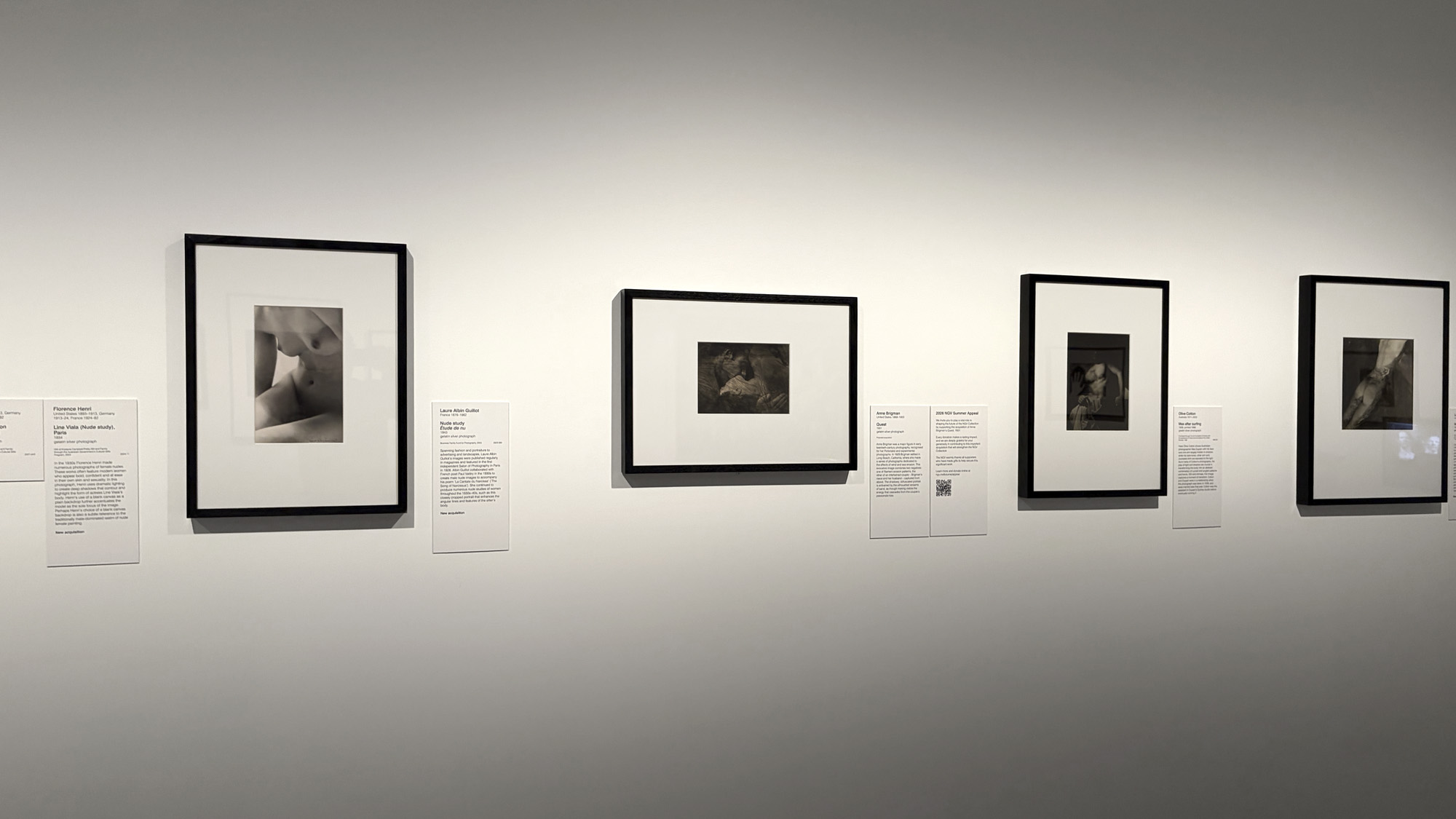
Laure Albin Guillot (French, 1879-1962) 'Nude study' (Étude de nu) 1943 (installation view)


Laure Albin Guillot (French, 1879-1962)
Nude study (Étude de nu) (installation view)
1943
Gelatin silver photograph
29.5 x 17.9cm (image)
29.5 x 23.1cm (sheet)
National Gallery of Victoria, Melbourne
Bowness Family Fund for Photography, 2023
Photo: Marcus Bunyan


Spanning fashion and portraiture to advertising and landscapes, Laure Albin Guillot’s images were published regularly in magazines and featured in the first independent Salon of Photography in Paris in 1928. Albin Guillot collaborated with French poet Paul Valéry in the 1930s to create male nude images to accompany his poem ‘La Cantate du Narcisse’ (‘The Song of Narcissus’). She continued to produce numerous nude studies of women throughout the 1930s–40s, such as this closely cropped portrait that enhances the angular lines and features of the sitter’s body.

Wall text from the exhibition


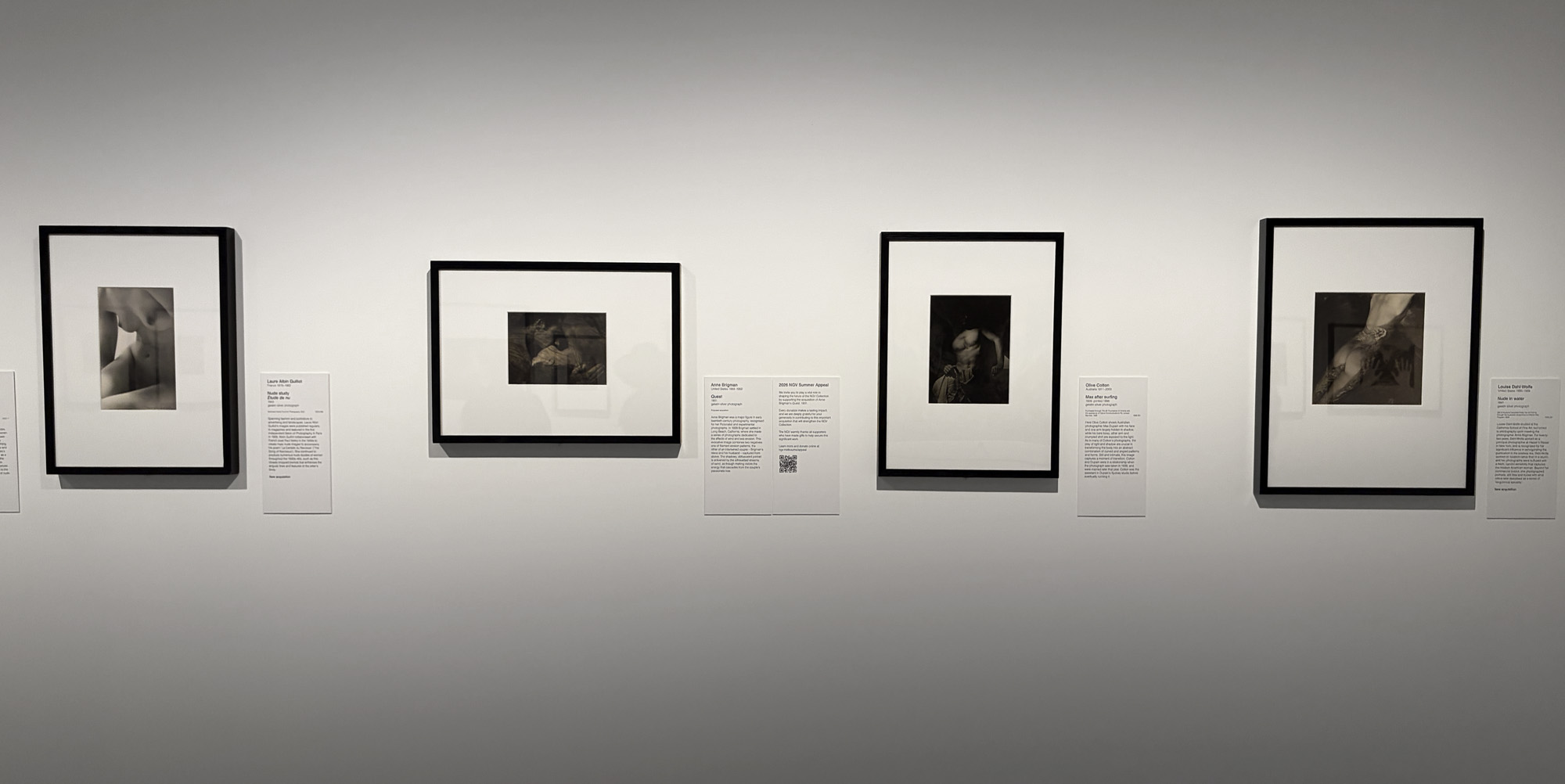
Installation view of the exhibition 'Women Photographers 1900-1975: A Legacy of Light' at NGV International, Melbourne, November 2025 – May 2026 showing from left to right, Laure Albin Guillot 'Nude study' (Étude de nu) (1943); Anne Brigman 'Quest' (1931); Olive Cotton 'Max after surfing' (1939 printed 1998); and Louise Dahl-Wolfe 'Nude in water' (1941)


Installation views of the exhibition Women Photographers 1900-1975: A Legacy of Light at NGV International, Melbourne, November 2025 – May 2026 showing from left to right, Laure Albin Guillot Nude study (Étude de nu) (1943, above); Anne Brigman Quest (1931); Olive Cotton Max after surfing (1939, printed 1998); and Louise Dahl-Wolfe Nude in water (1941)
Photos: Marcus Bunyan


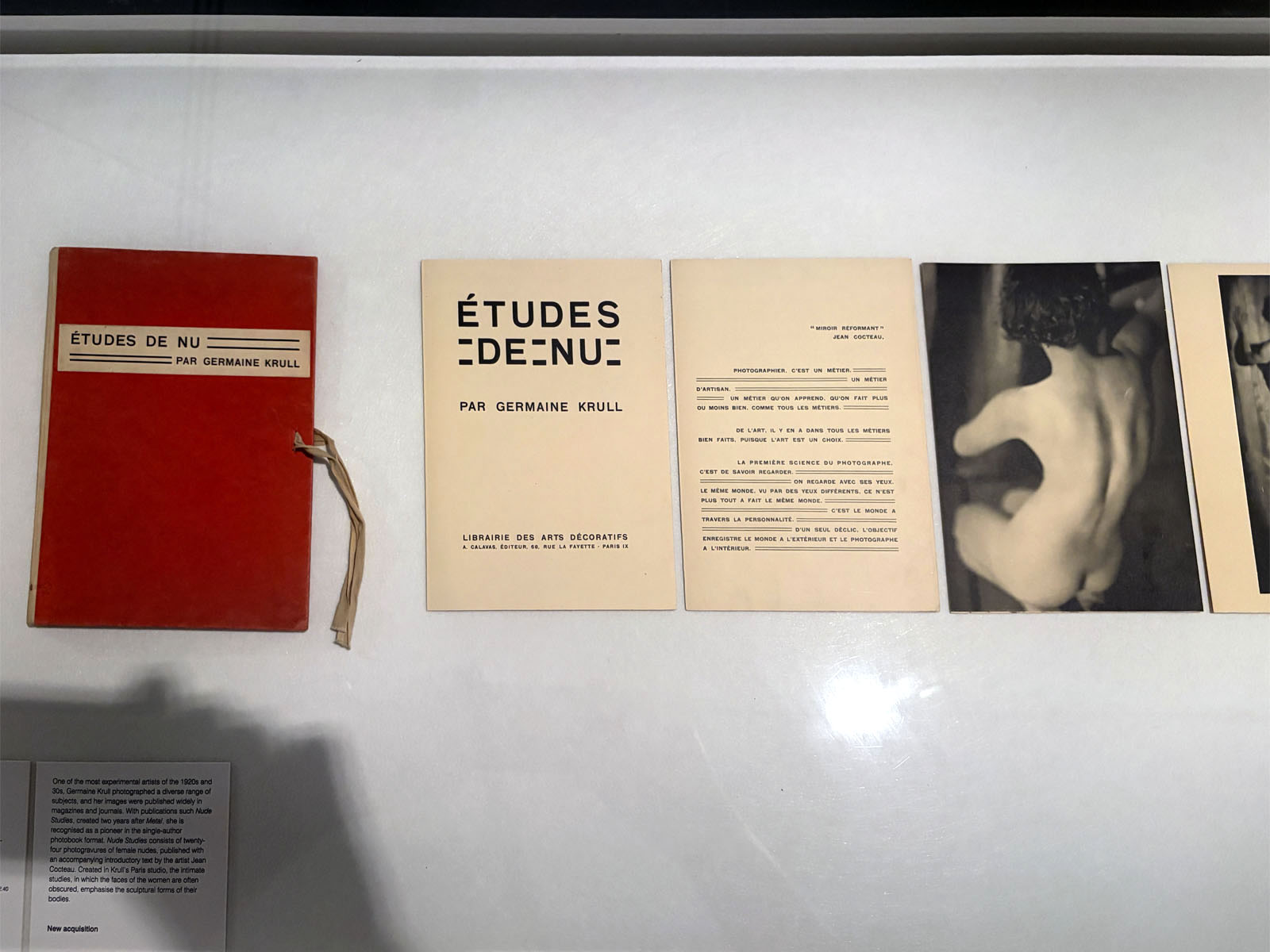
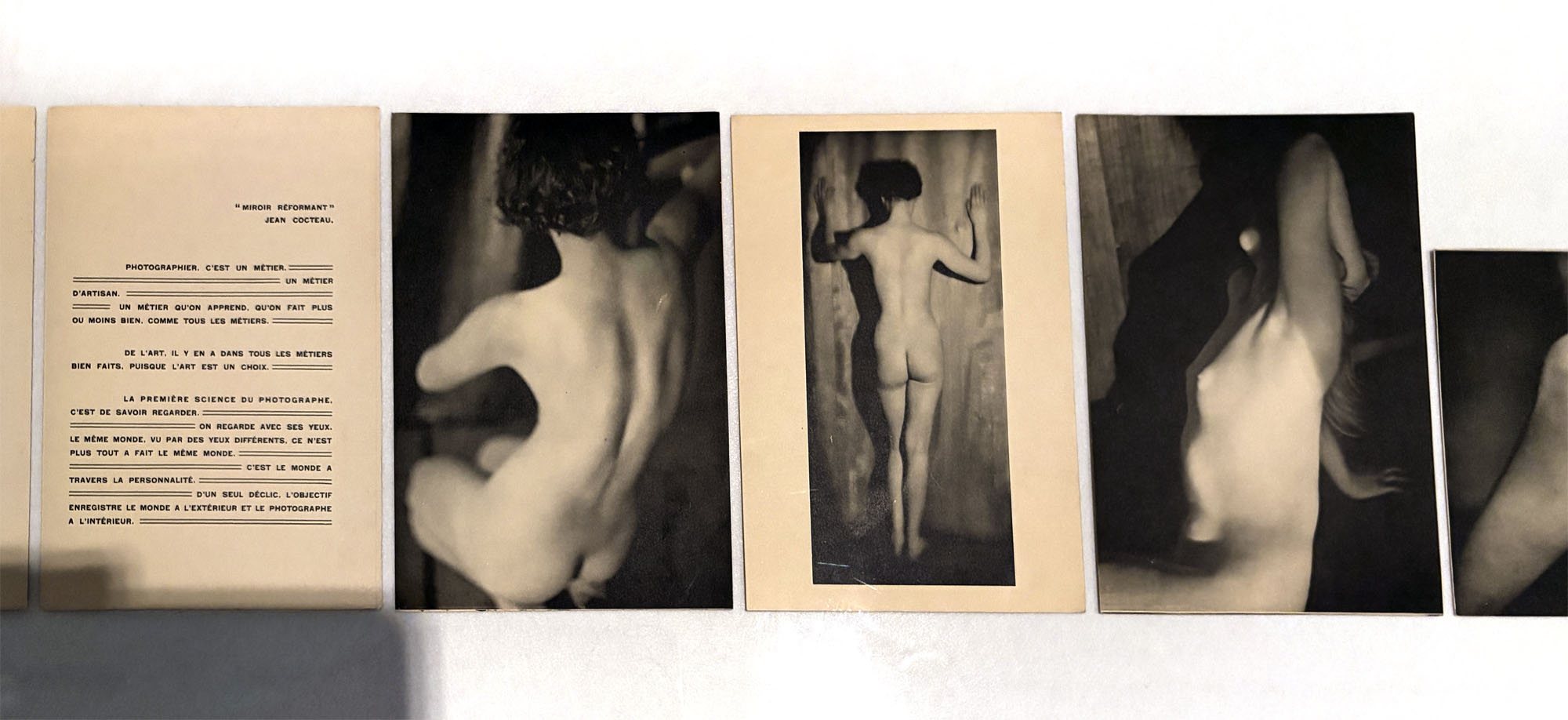
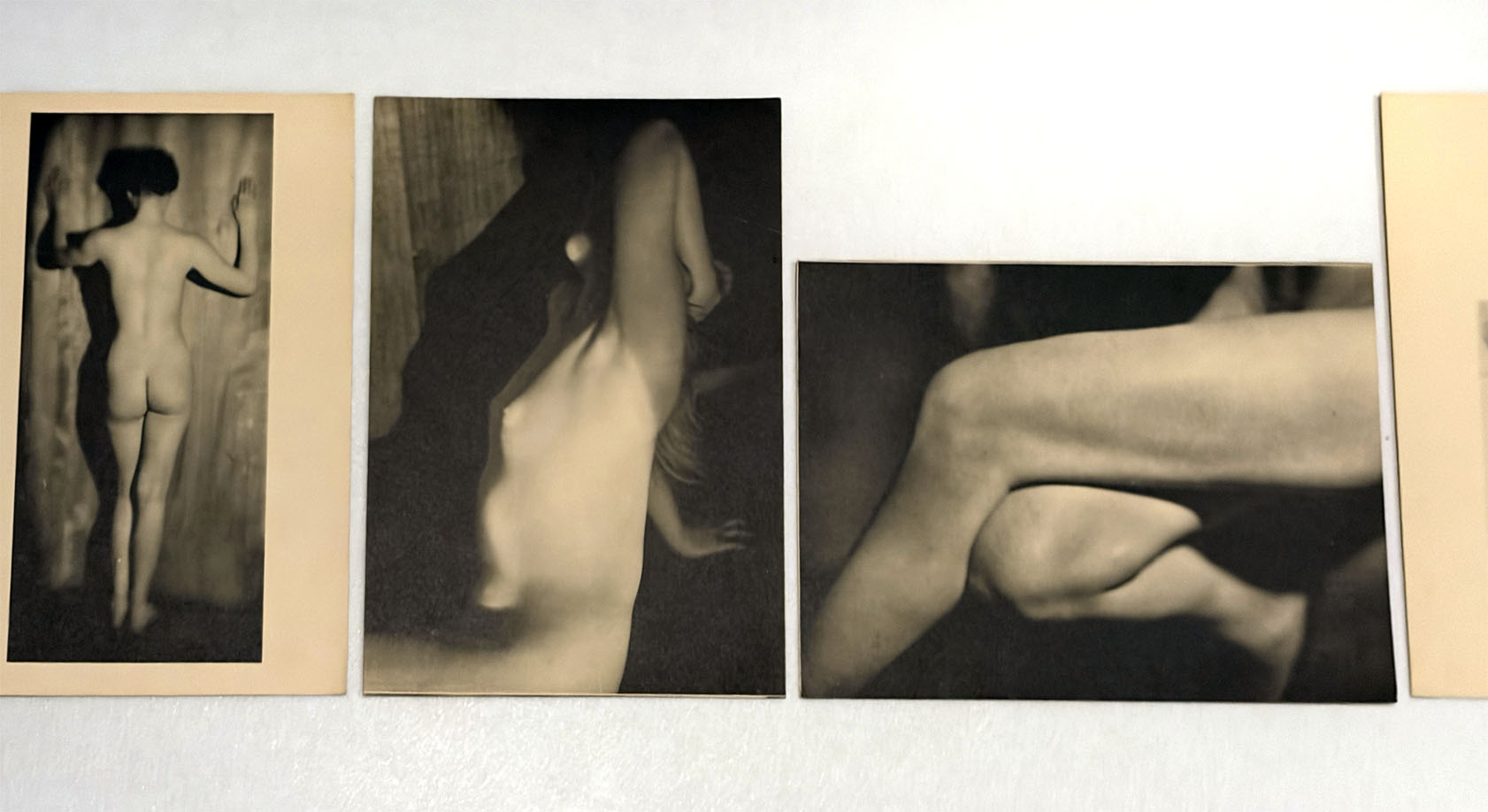
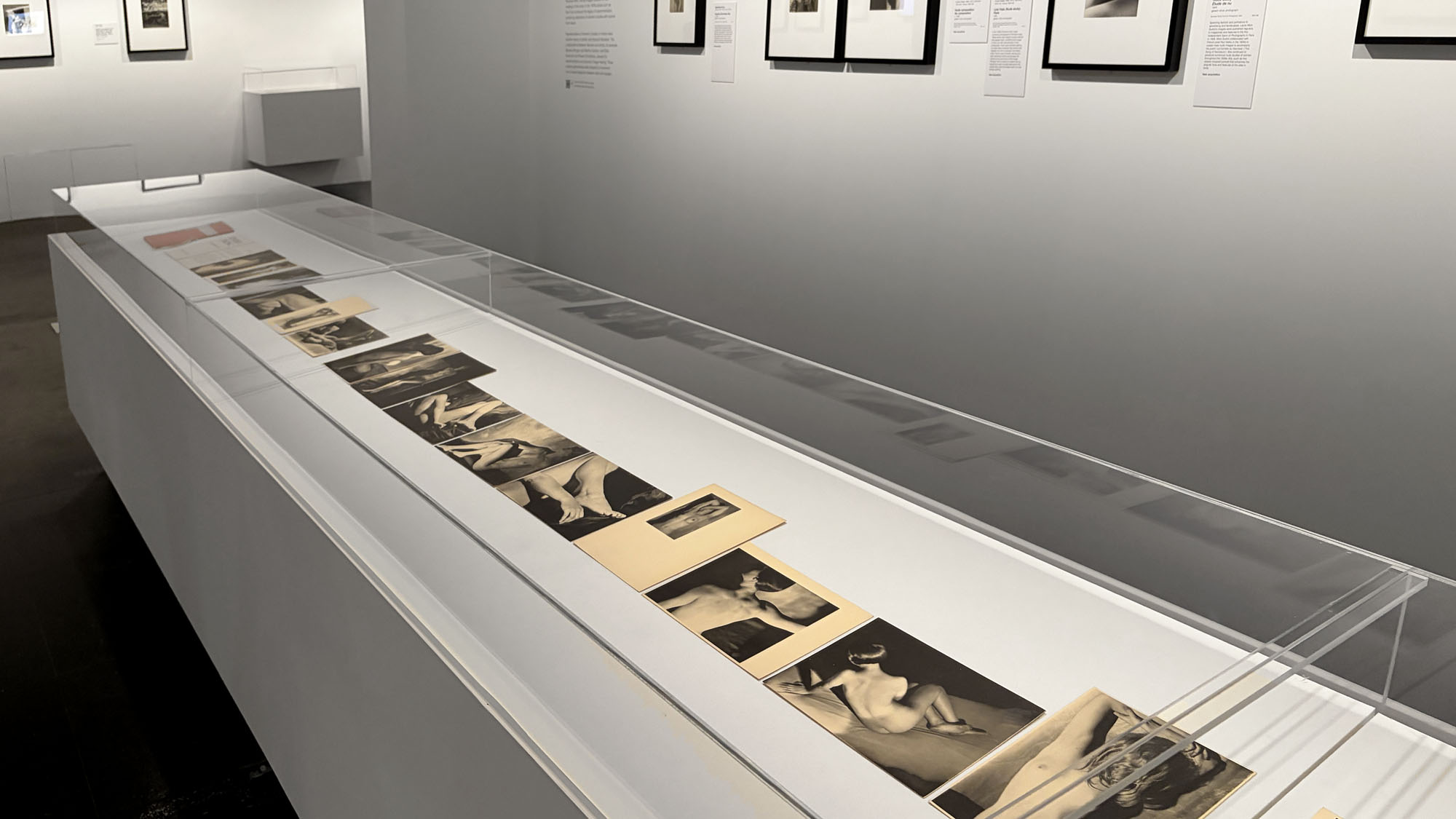
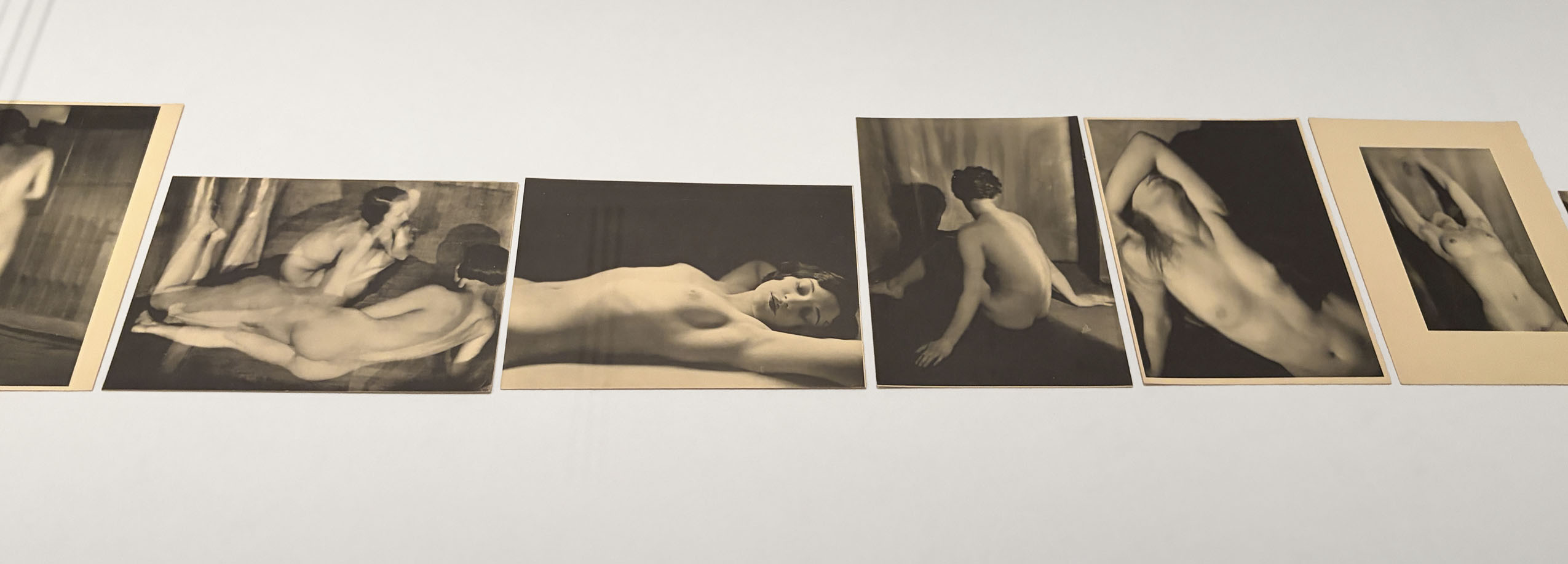
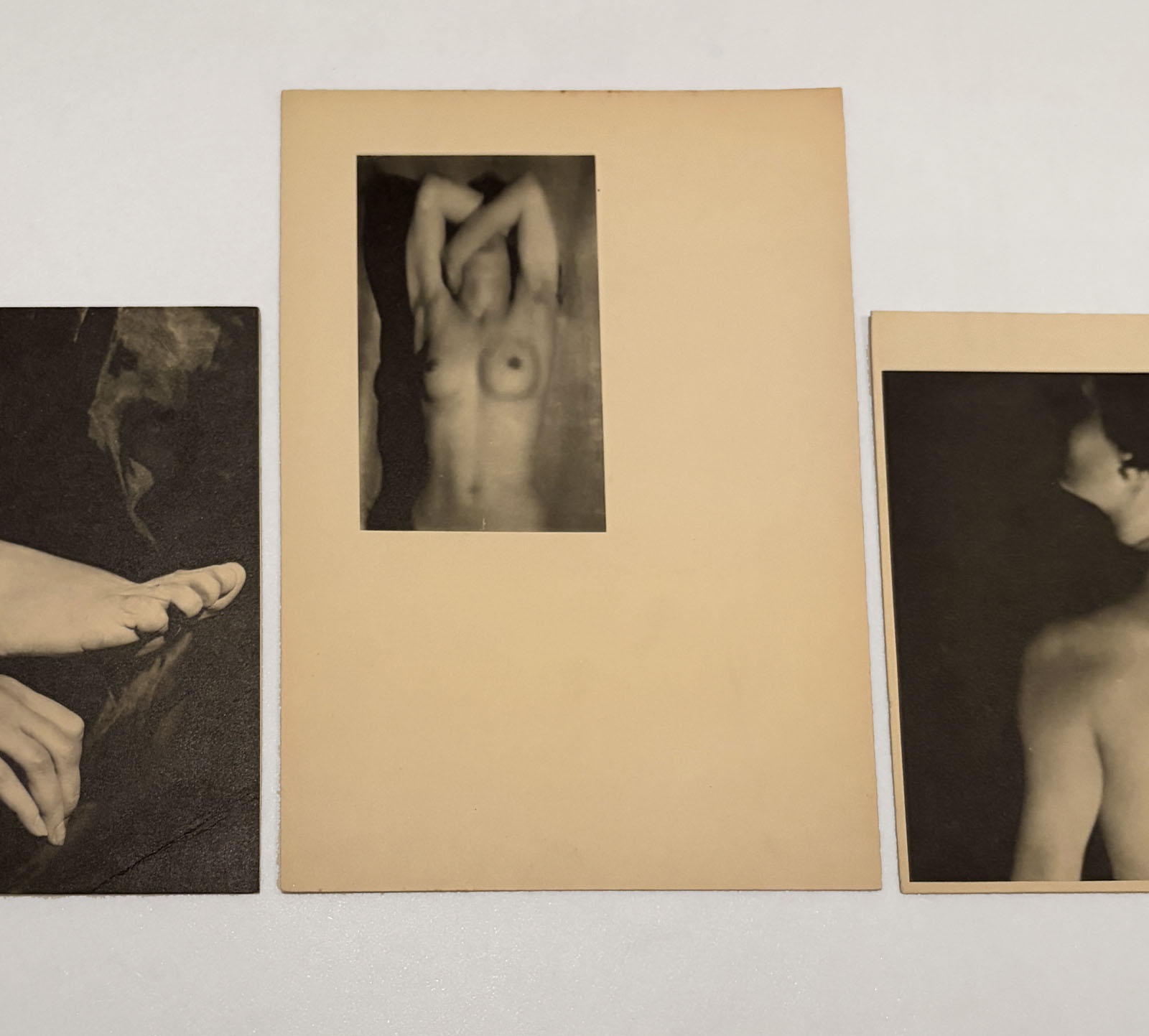
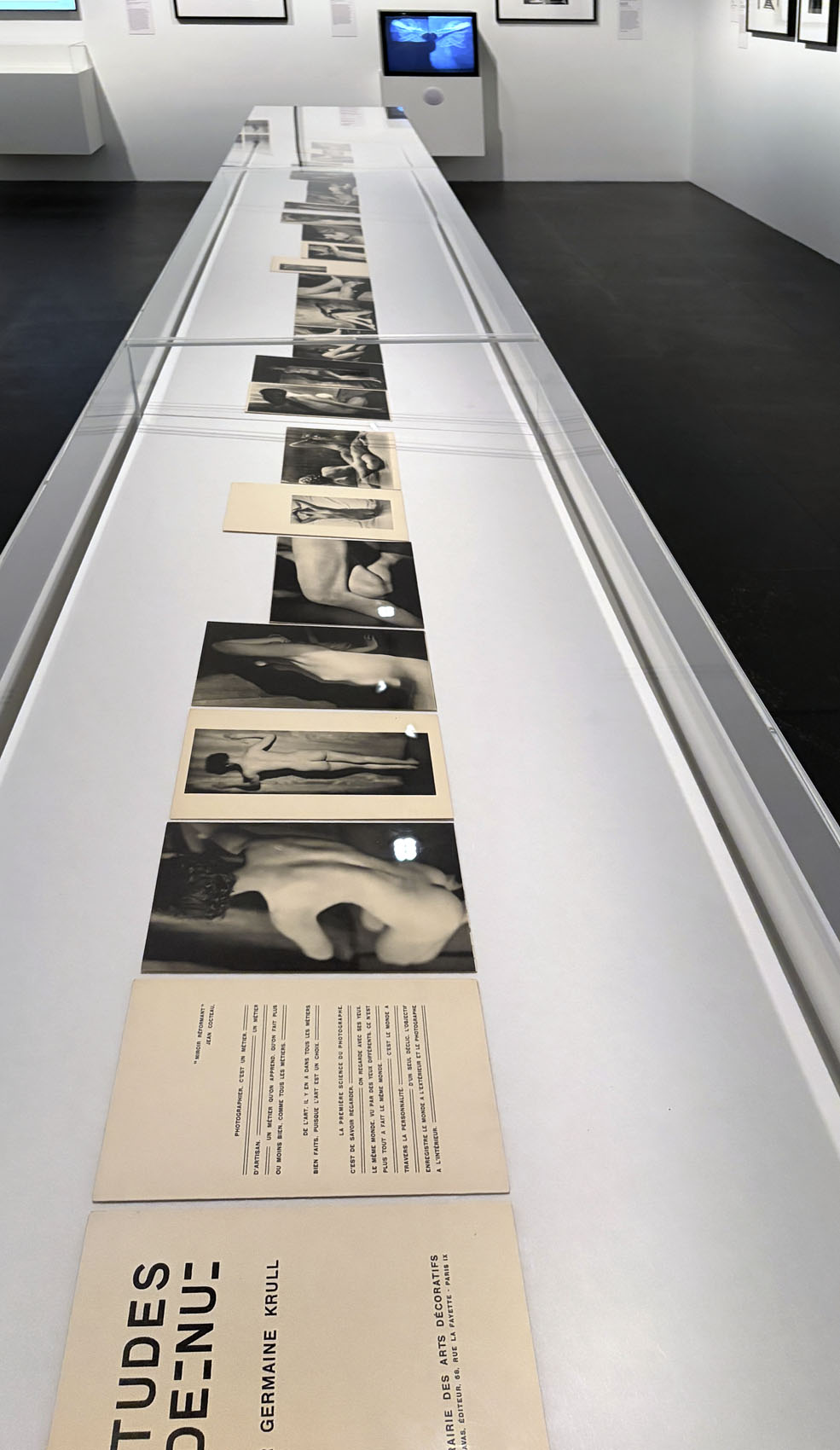
Installation view of the exhibition 'Women Photographers 1900-1975: A Legacy of Light' at NGV International, Melbourne, November 2025 – May 2026 showing Germaine Krull 'Nude studies (Études de nu)' (1930)


Installation views of the exhibition Women Photographers 1900-1975: A Legacy of Light at NGV International, Melbourne, November 2025 – May 2026 showing Germaine Krull Nude studies (Études de nu) (1930)
Photos: Marcus Bunyan


One of the most experimental artists of the 1920s and 30s, Germaine Krull photographed a diverse range of subjects, and her images were published widely in magazines and journals. With publications such Nude Studies, created two years after Metal, she is recognised as a pioneer in the single-author photobook format. Nude Studies consists of twenty-four photogravures of female nudes, published with an accompanying introductory text by the artist Jean Cocteau. Created in Krull’s Paris studio, the intimate studies, in which the faces of the women are often obscured, emphasise the sculptural forms of their bodies.

Wall text from the exhibition


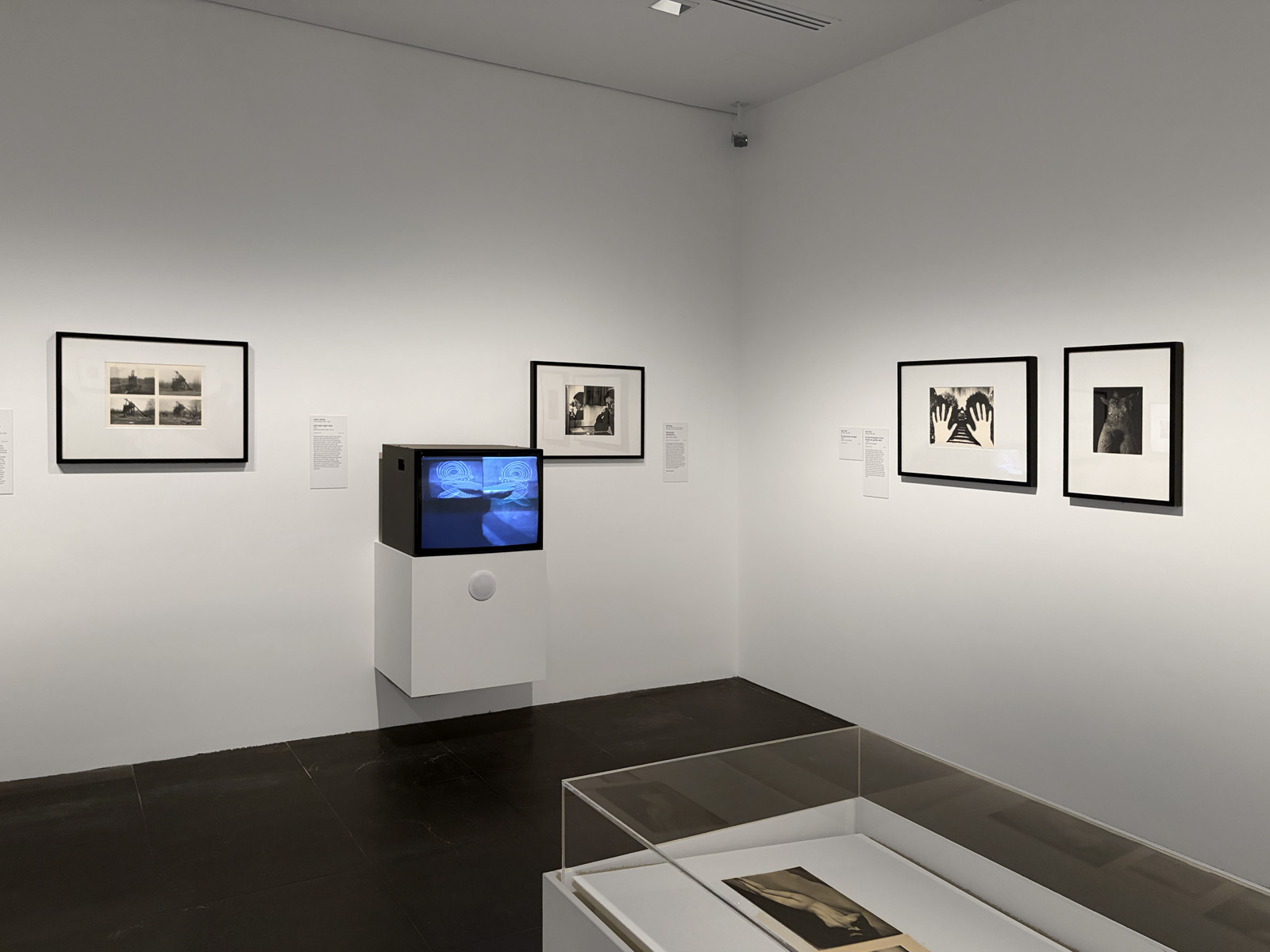
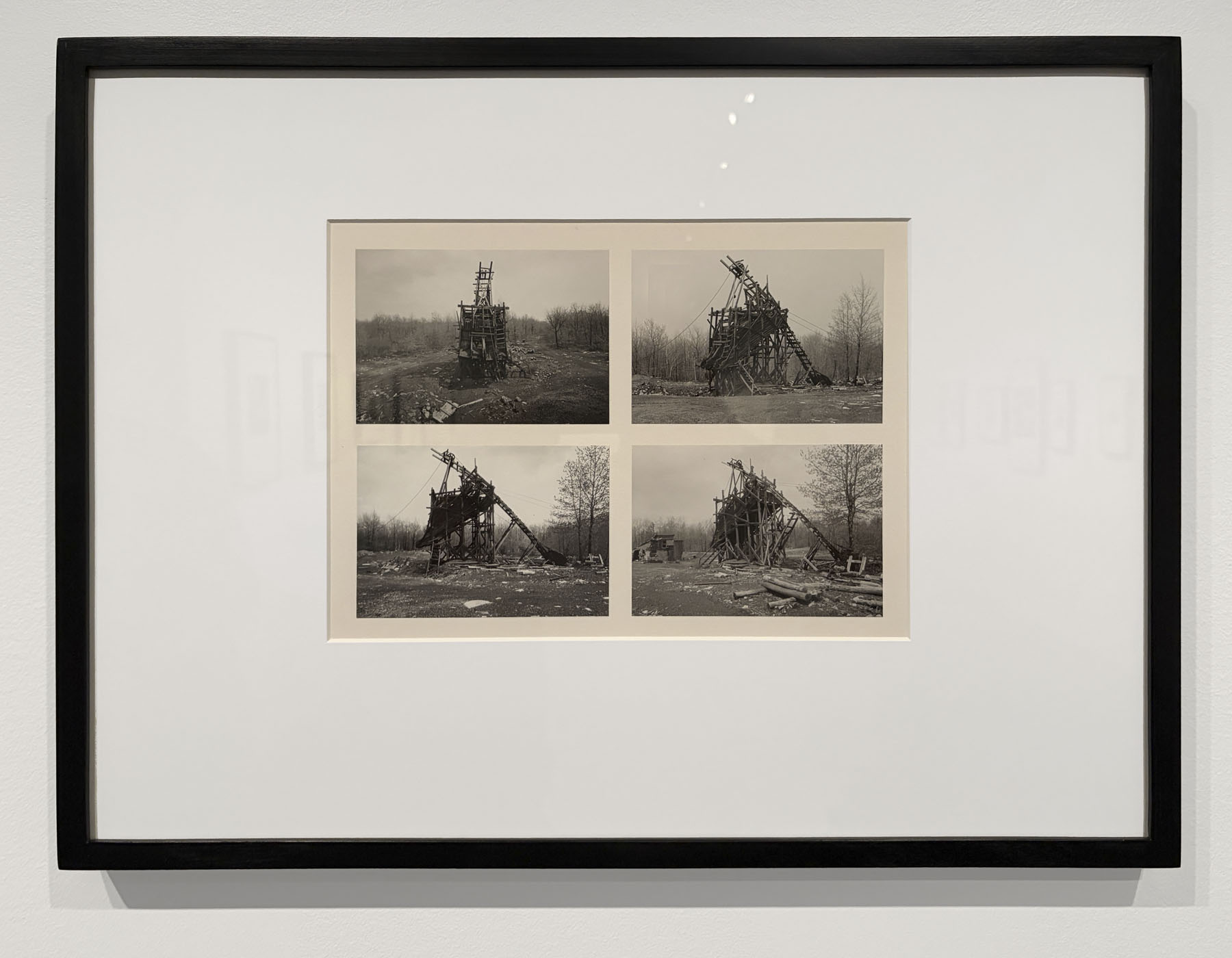
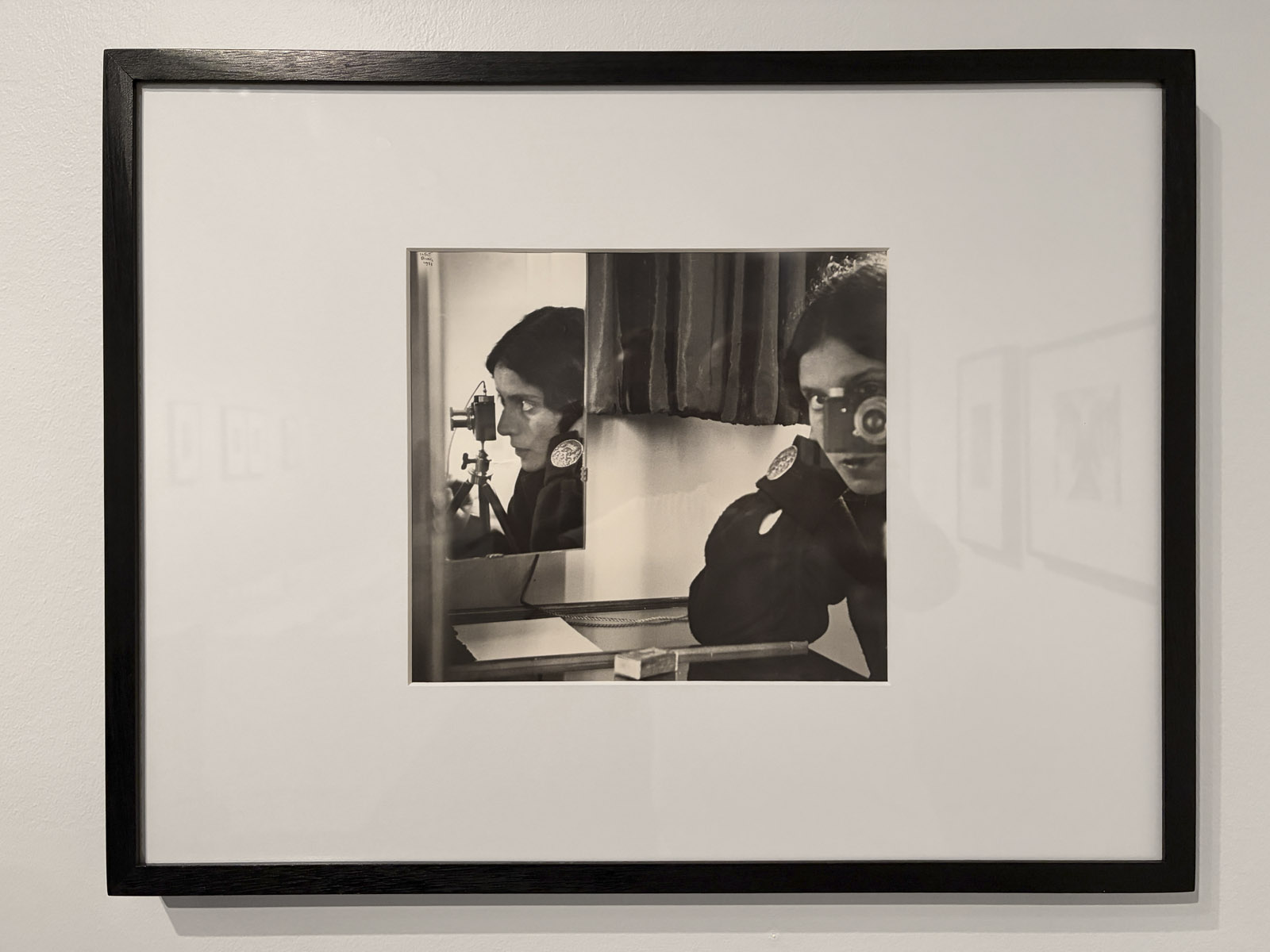
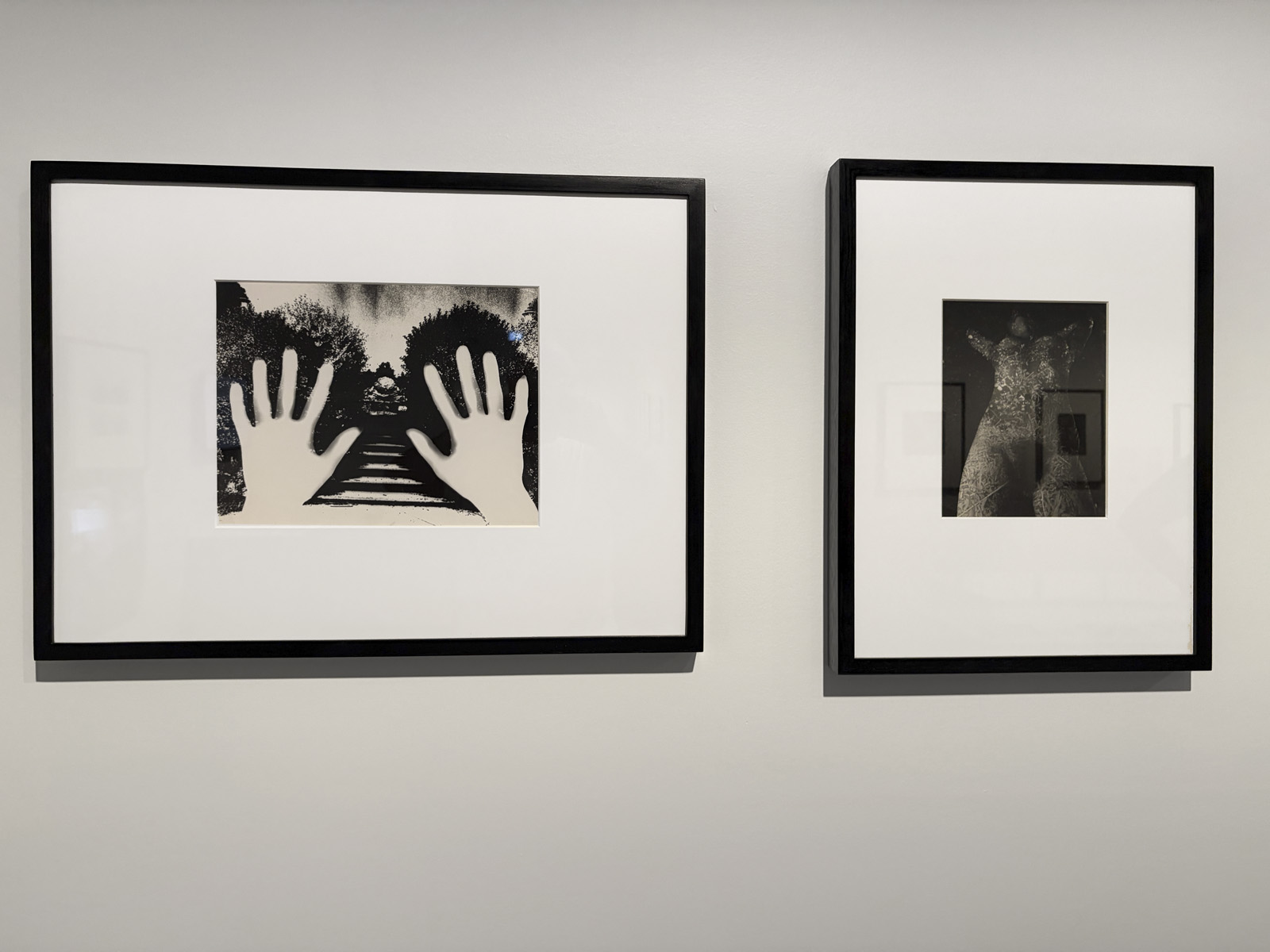
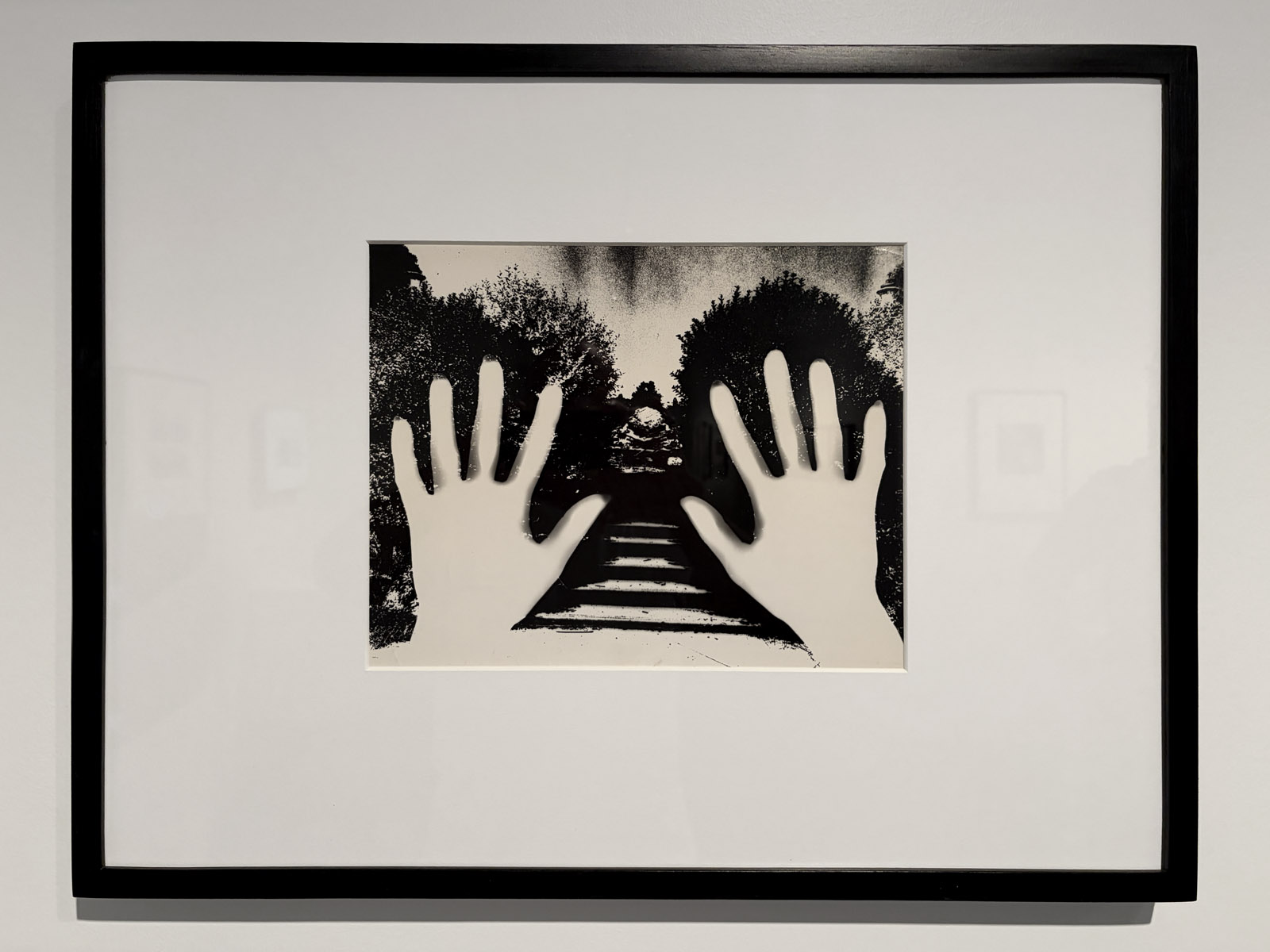
Installation view of the exhibition 'Women Photographers 1900-1975: A Legacy of Light' at NGV International, Melbourne, November 2025 – May 2026 showing from left to right, Bernd Becher and Hilla Becher 'Coal tipple, Goodspring, Pennsylvania' (1975); Ilse Bing 'Self-portrait' (1931 printed c. 1993); and two Sue Ford photographs, 'No title (Photogram of two hands and garden path)' (c. 1970, below) and 'No title (Nude montage)' (1960s)


Installation view of the exhibition Women Photographers 1900-1975: A Legacy of Light at NGV International, Melbourne, November 2025 – May 2026 showing from left to right, Bernd Becher and Hilla Becher Coal tipple, Goodspring, Pennsylvania (1975, below); Ilse Bing Self-portrait (1931 printed c. 1993, below); and two Sue Ford photographs, No title (Photogram of two hands and garden path) (c. 1970, below) and No title (Nude montage) (1960s)
Photo: Marcus Bunyan


Bernd Becher and Hilla Becher (German, 1931-2007/1934-2015) 'Coal tipple, Goodspring, Pennsylvania' 1975 (installation view)


Bernd Becher and Hilla Becher (German, 1931-2007/1934-2015)
Coal tipple, Goodspring, Pennsylvania (installation view)
1975
From the Artists and photographs folio 1975
Gelatin silver photographs
24.0 x 33.9cm (image and sheet)
40.7 x 49.6cm (support)
ed. 9/60
National Gallery of Victoria, Melbourne
Purchased, 1976
Photo: Marcus Bunyan


Bernd and Hilla Becher (German, 1931-2007 and 1934-2015) 'Coal tipple, Goodspring, Pennsylvania' 1975


Bernd Becher and Hilla Becher (German, 1931-2007/1934-2015)
Coal tipple, Goodspring, Pennsylvania
1975
From the Artists and photographs folio 1975
Gelatin silver photographs
24.0 x 33.9cm (image and sheet)
40.7 x 49.6cm (support)
ed. 9/60
National Gallery of Victoria, Melbourne
Purchased, 1976
© Estate Bernd & Hilla Becher, represented by Max Becher


In 1959 married artists Bernd and Hilla Becher started photographing industrial architecture, a practice that would continue for over four decades. While predominantly documenting structures throughout Germany’s Ruhr region, they occasionally worked overseas – this work was made on their first trip to the United States. The Bechers created a system for comparing structures: photographing them from a consistent angle, under virtually identical lighting conditions, printing images at the same size and often displaying them in grids. According to Hilla Becher, their archive allows for narratives to naturally emerge: “Structural patterns and their transformations … can be proved to exist in the case of such relatively exhaustive comparative series.”

Wall text from the exhibition


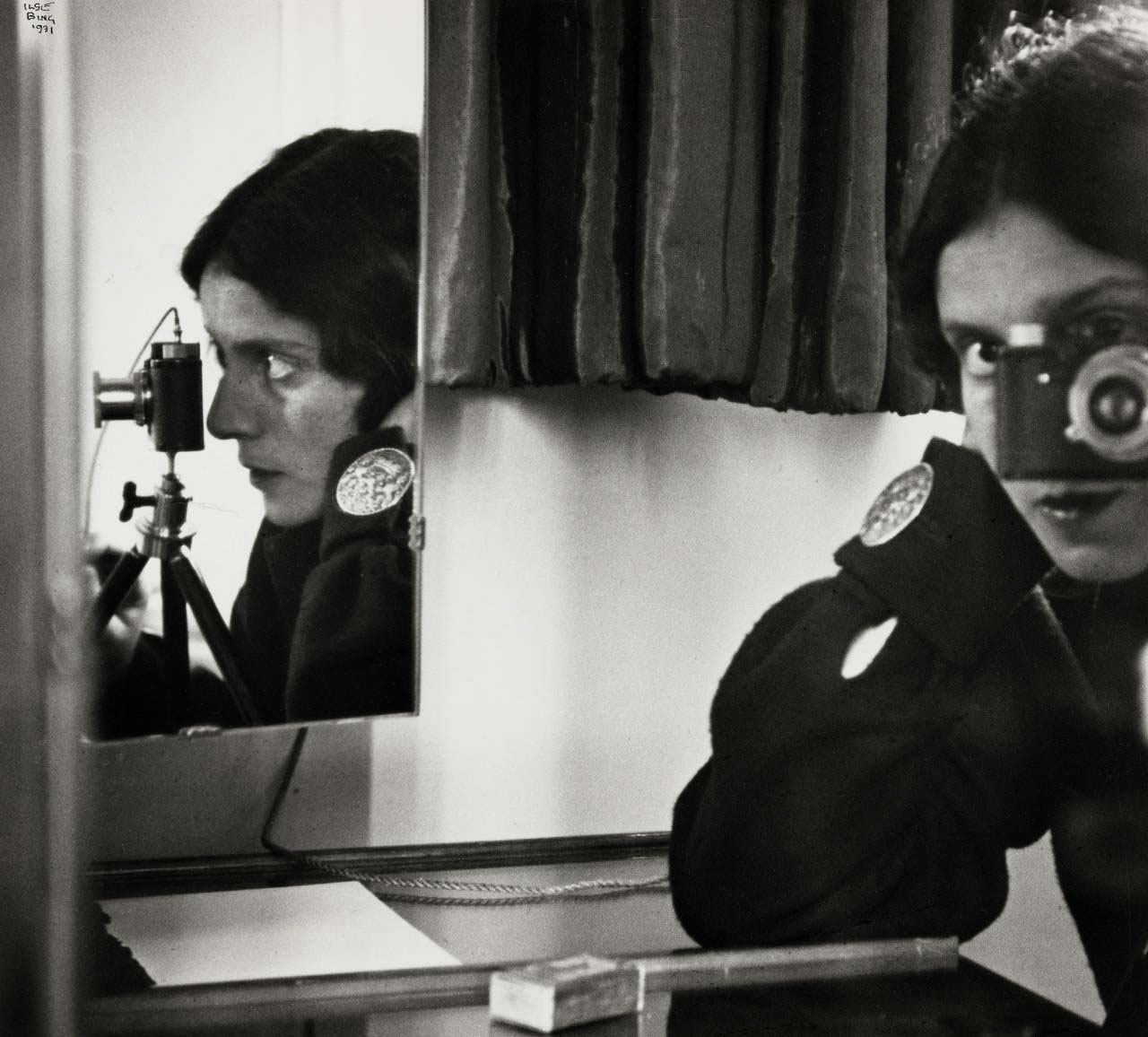
Ilse Bing (German, 1899-1998) 'Self-portrait (Autoportrait)' 1931, printed 1993 (installation view)


Ilse Bing (German, 1899-1998)
Self-portrait (Autoportrait) (installation view)
1931, printed 1993
Gelatin silver photograph
26.7 x 29.4cm (image)
27.9 x 35.3cm (sheet)
National Gallery of Victoria, Melbourne
Bowness Family Fund for Photography, 2023
Photo: Marcus Bunyan


Ilse Bing (German, 1899-1998) 'Self-portrait (Autoportrait)' 1931, printed 1993


Ilse Bing (German, 1899-1998)
Self-portrait (Autoportrait)
1931, printed 1993
Gelatin silver photograph
26.7 x 29.4cm (image)
27.9 x 35.3cm (sheet)
National Gallery of Victoria, Melbourne
Bowness Family Fund for Photography, 2023
© Ilse Bing Estate
Photo: National Gallery of Victoria, Melbourne


Ilse Bing began making photographs in the late 1920s, when she purchased one of the first 35 mm cameras produced by the German company Leica. She made use of the camera’s portability, capturing motion, dizzying angles and contrasts of light, shade and shadow – compositional elements that characterised the New Photography movement. Inspired by Florence Henri, Bing used her camera to disrupt the picture plane. In this famed self-portrait, Bing uses mirrors as a fracturing tool. The self-portrait shows Bing’s reflection holding a camera, accompanied by her side profile in another angled mirror. She controls the various gazes: her own, the viewer’s, the camera’s.

Wall text from the exhibition


Time and Mirrors

Photography has long been associated with mirrors and time – as a way of remembering, reflecting and retrieving information. As early as 1859, American writer Oliver Wendell Holmes Sr described photography, specifically the daguerreotype, as ‘the mirror with a memory’.

Many artists use the camera to explore identity through portraits and self-portraits. In Ilse Bing’s 1931 self-portrait, captured with her Leica camera, a mirror disrupts the image, disorienting the viewer. Four decades later, Joan Jonas extended this idea, using a video monitor as a mirror to explore reflection, perception and the self.

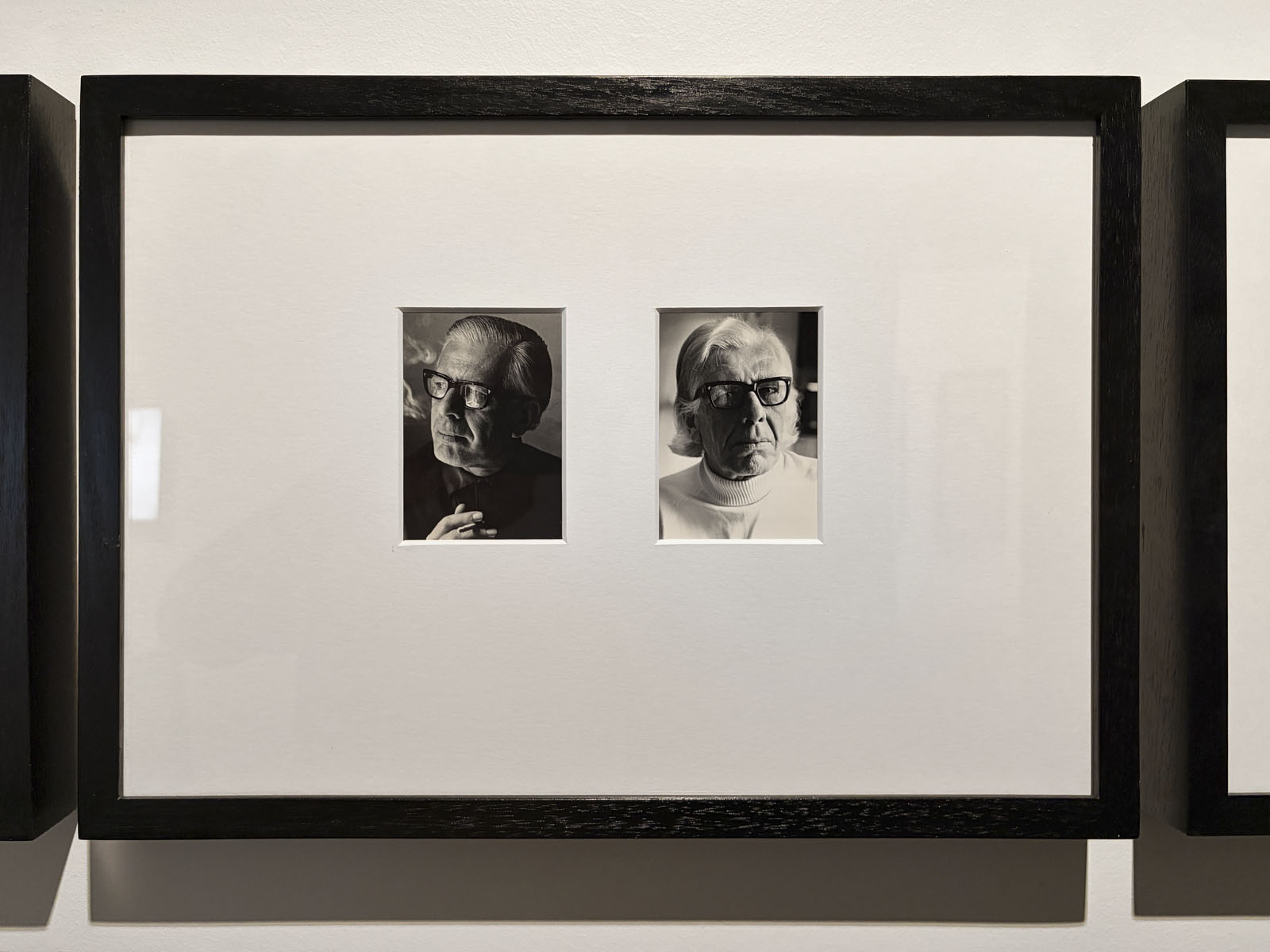
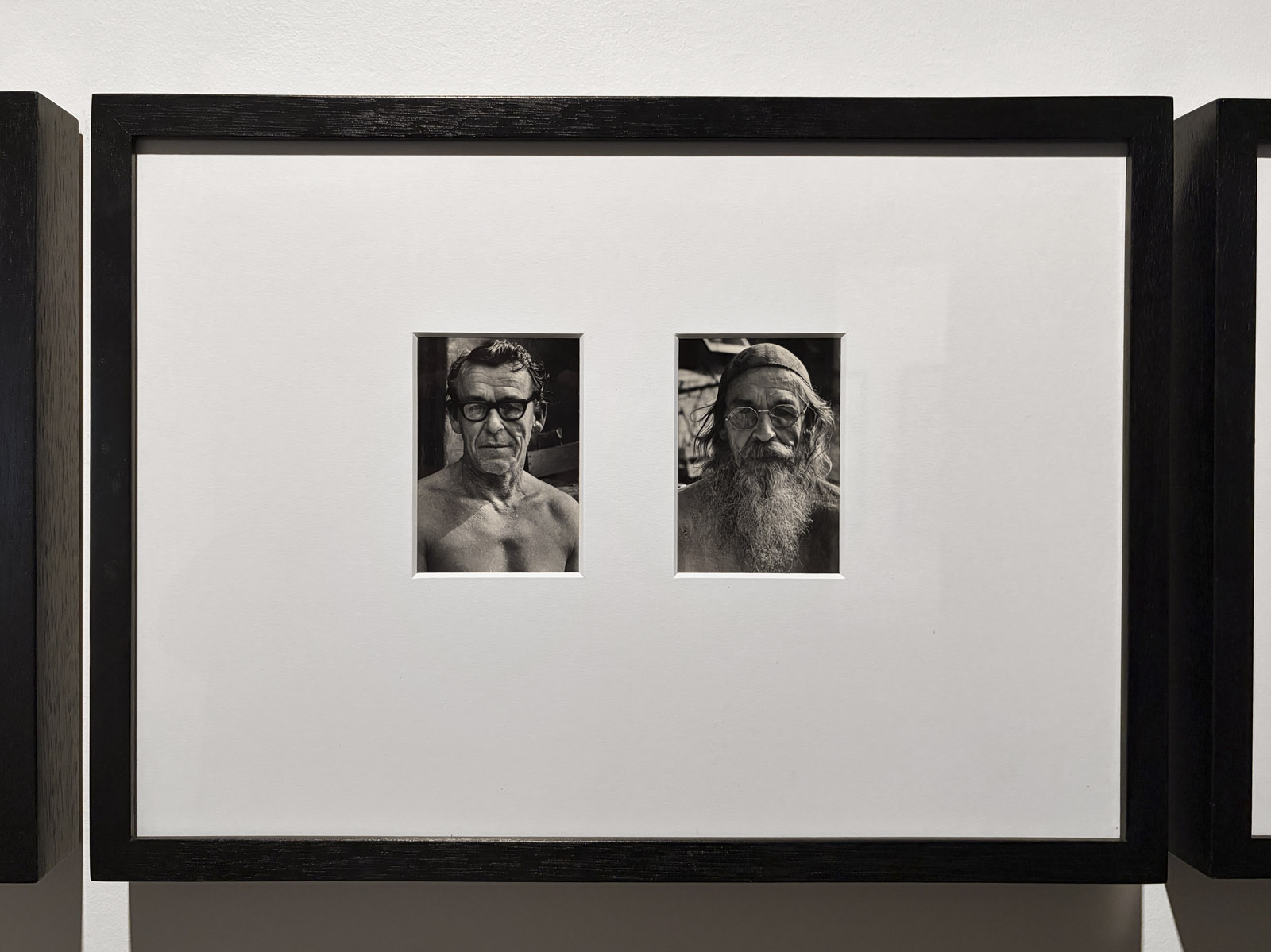
By the 1970s, repetition and seriality became central to photographic practice. Through sequences of images, artists such as Eve Sonneman, Sue Ford and Bernd and Hilla Becher explored how photography could record and interpret change – both immediate and long-term. Their images reveal the camera’s dual role as an objective instrument and a conceptual recorder of the world.


Installation view of the exhibition 'Women Photographers 1900-1975: A Legacy of Light' at NGV International, Melbourne, November 2025 – May 2026 showing from left to right, two Sue Ford photographs, 'No title (Photogram of two hands and garden path)' (c. 1970) and 'No title (Nude montage)' (1960s)


Installation view of the exhibition Women Photographers 1900-1975: A Legacy of Light at NGV International, Melbourne, November 2025 – May 2026 showing from left to right, two Sue Ford photographs, No title (Photogram of two hands and garden path) (c. 1970, below) and No title (Nude montage) (1960s, below)
Photo: Marcus Bunyan


Sue Ford (Australian, 1943-2009) 'No title (Photogram of two hands and garden path)' c. 1970 (installation view)


Sue Ford (Australian, 1943-2009)
No title (Photogram of two hands and garden path) (installation view)
c. 1970
Gelatin silver photograph
27.6 x 34.7cm irreg. (image and sheet)
38.5 x 44.8cm (support)
National Gallery of Victoria, Melbourne
Gerstl Bequest, 2000
Photo: Marcus Bunyan


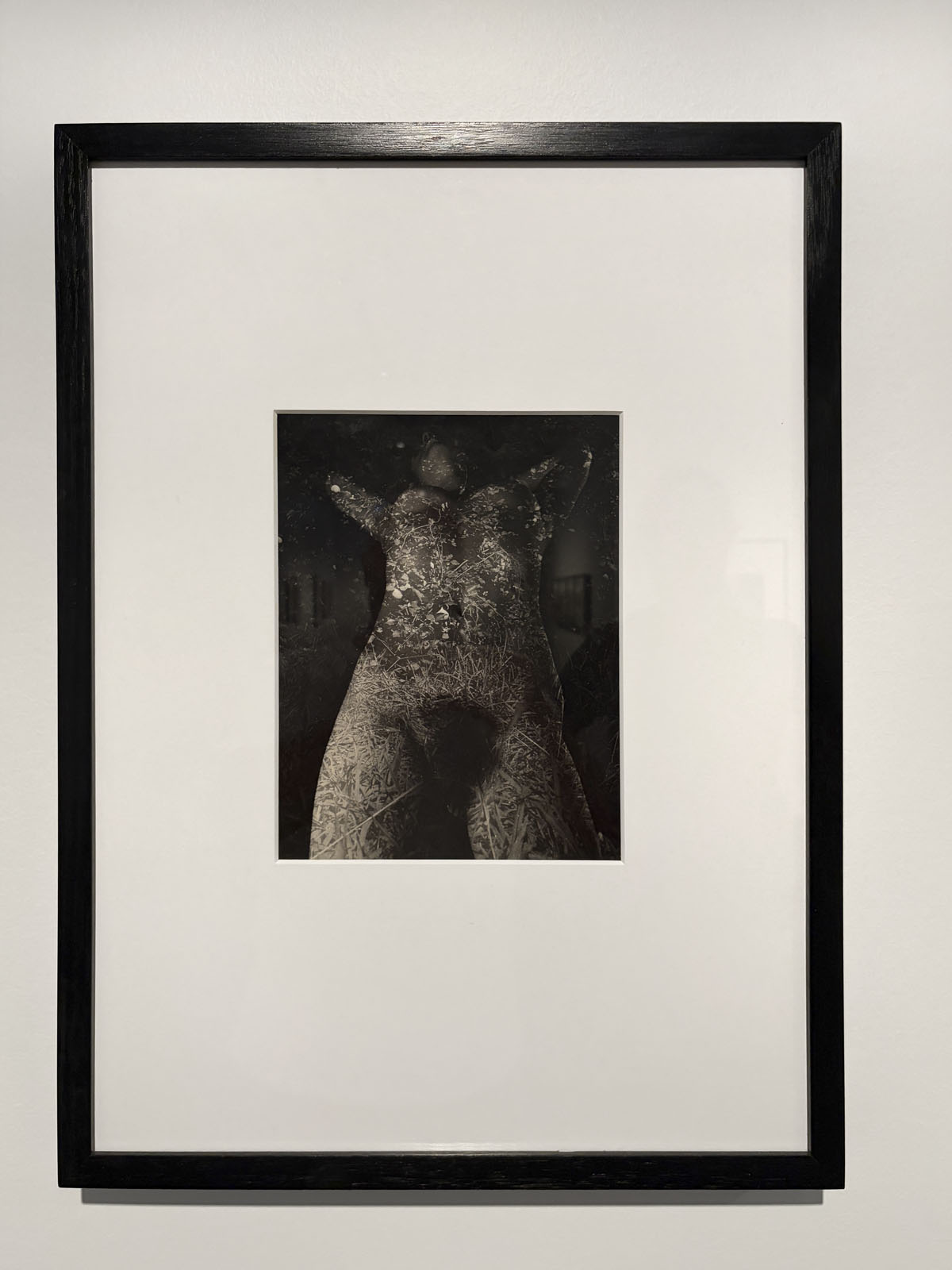
In the late 1960s and early 70s, Sue Ford created several bodies of highly experimental work. These works involved complex montages, photograms and layered negatives, revealing hours of darkroom experimentation in her Eltham studio in Melbourne’s north-east. Such experiments coincided with Ford’s burgeoning interest in left-wing politics, and her exposure via the media to world events such as the NASA moon landings and the Vietnam War. Ford incorporated imagery and ideas relating to these events, as well as her interest in environmentalism, into these abstracted, Surrealism-inspired works.

Wall text from the exhibition


Sue Ford (Australian, 1943-2009) 'No title (Nude montage)' 1960s (installation view)


Sue Ford (Australian, 1943-2009)
No title (Nude montage) (installation view)
1960s
Gelatin silver photograph
25.6 x 19.9cm (image and sheet)
National Gallery of Victoria, Melbourne
Gerstl Bequest, 2000
Photo: Marcus Bunyan


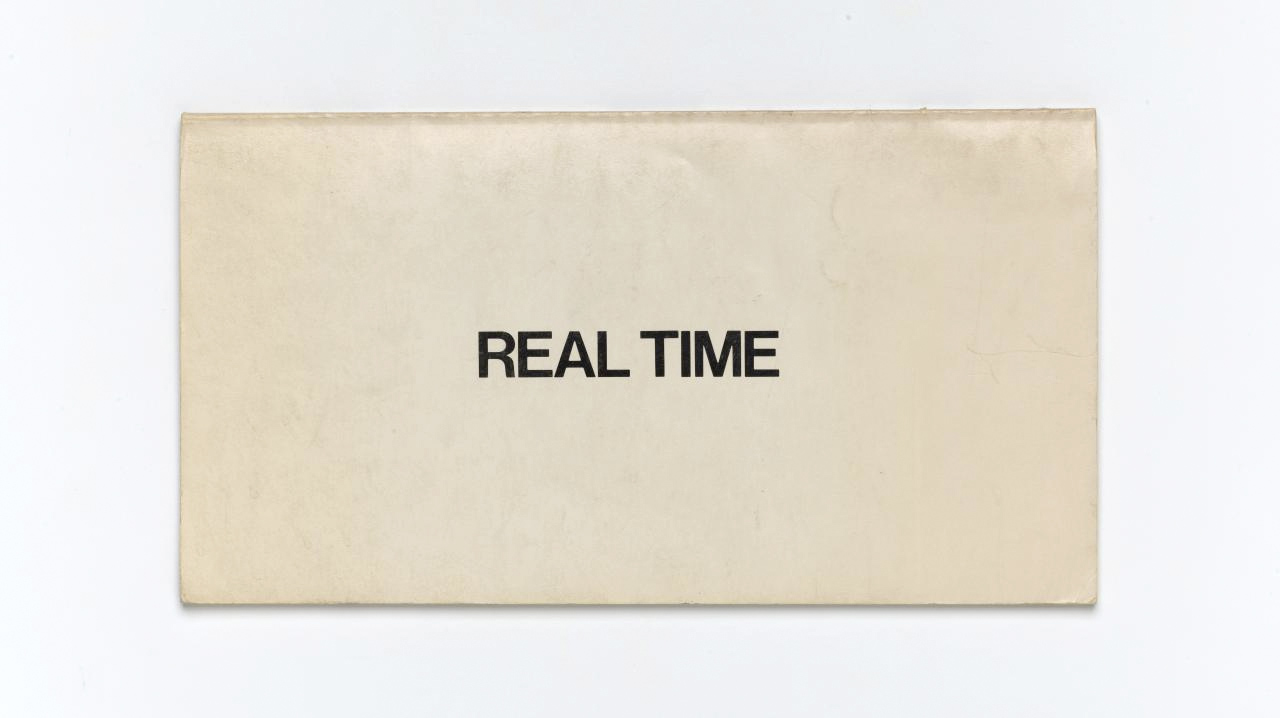
Eve Sonneman (American, b. 1946) 'Real time' 1968-1974, 1976 (published) (cover)
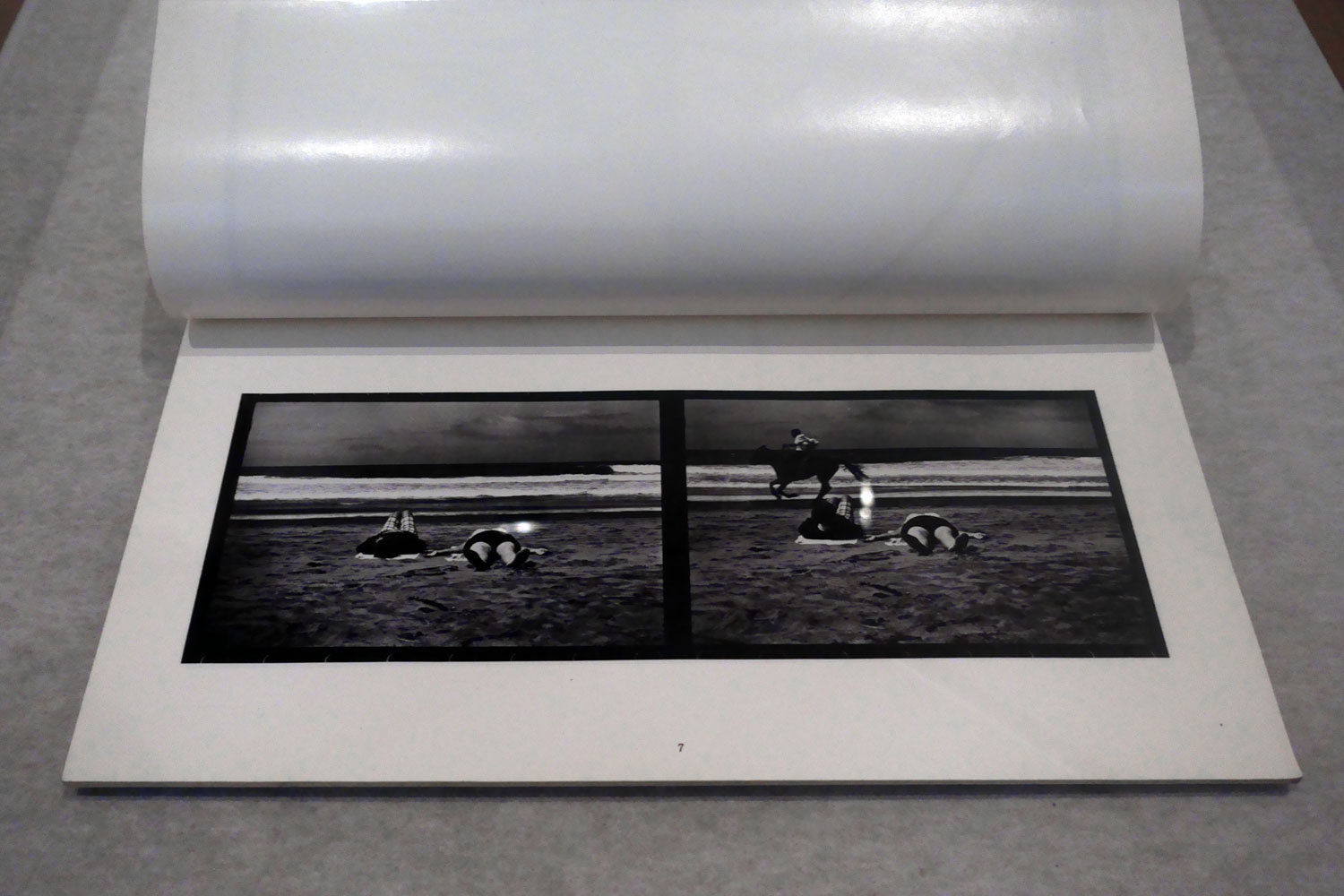
Eve Sonneman (American, b. 1946) 'Real time' 1968-1974 (installation view)


Eve Sonneman (American, b. 1946)
Real time (installation view bottom)
1968-1974, 1976 (published) (cover)
Artist’s book: photo-offset lithographs and printed text, 46 folios, printed paper cover, glued binding
20.5 x 38.0 x 0.8cm (closed)
1st edition
National Gallery of Victoria, Melbourne
Purchased, NGV Supporters of Photography, 2021
© Eve Sonneman


Real Time is composed of paired photographs taken seconds apart, separated by a black-line border. The ordered presentation allows the viewer to consider the relationship between the images, and the small changes and passing of time between them. Eve Sonneman first showed the photographs at the Museum of Modern Art in New York, before publishing them as a book. In 1976 she saw an
advertisement in Artforum from newly established press Printed Matter, which was seeking artists’ books to publish. “So I sent [my photographs] in and that work became my first published book, Real Time,” Sonneman recalled. “I was as thrilled as could be!”

Wall text from the exhibition


Sue Ford (Australian, 1943-2009) 'Ross, 1964; Ross, 1974' 1964-1974, printed 1974 (installation view)


Sue Ford (Australian, 1943-2009)
Ross, 1964; Ross, 1974 (installation view)
1964-1974, printed 1974
From the Time series (1962-1974)
Gelatin silver photograph
11.1 × 20.1cm
National Gallery of Victoria, Melbourne
Purchased with the assistance of the Visual Arts Board and the KODAK (Australasia) PTY LTD Fund, 1974
Photo: Marcus Bunyan


Sue Ford (Australian, 1943-2009) 'Jim, 1964; Jim, 1974' 1964-1974, printed 1974 (installation view)


Sue Ford (Australian, 1943-2009)
Jim, 1964; Jim, 1974 (installation view)
1964-1974, printed 1974
From the Time series (1962-1974)
Gelatin silver photograph
11.1 × 20.1cm
National Gallery of Victoria, Melbourne
Purchased with the assistance of the Visual Arts Board and the KODAK (Australasia) PTY LTD Fund, 1974
Photo: Marcus Bunyan


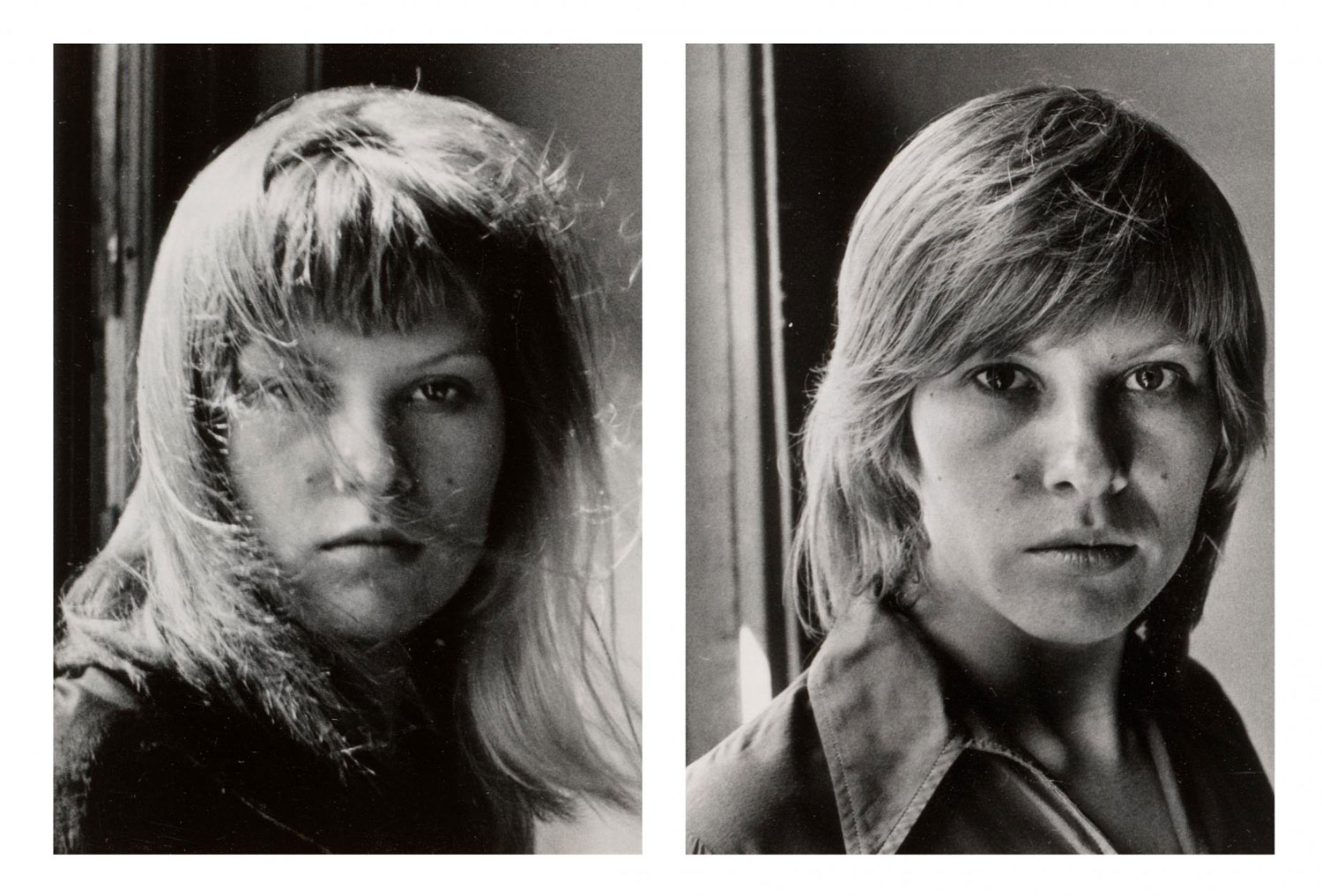
Sue Ford (Australian, 1943-2009) 'Annette 1962; Annette 1974' 1974 from the 'Time' series


Sue Ford (Australian, 1943-2009)
Annette, 1962; Annette, 1974
1962-1974, printed 1974
From the Time series (1962-1974)
Gelatin silver photograph
11.1 x 20.1cm
National Gallery of Victoria, Melbourne
Purchased with the assistance of the Visual Arts Board and the KODAK (Australasia) Pty Ltd Fund, 1974
© Courtesy of the artist


“For some time I have been thinking about the camera itself. Trying to explore its particular UNIQUENESS, coming to terms with the fact that I had been trying to ignore for some years, that the camera is actually a MACHINE. … In “Time Series” I tried to use the camera as objectively as possible. It was a time machine. For me it was an amazing experience. It wasn’t until I placed the photograph of the younger face beside the recent photograph that I could fully appreciate the change. The camera showed me with absolute clarity, something I could only just perceive with my naked eye.”

~ Sue Ford, Time Series: An Exhibition of Photographs, Melbourne, 1974

Wall text from the exhibition


Installation view of the exhibition 'Women Photographers 1900-1975: A Legacy of Light' at NGV International, Melbourne, November 2025 – May 2026
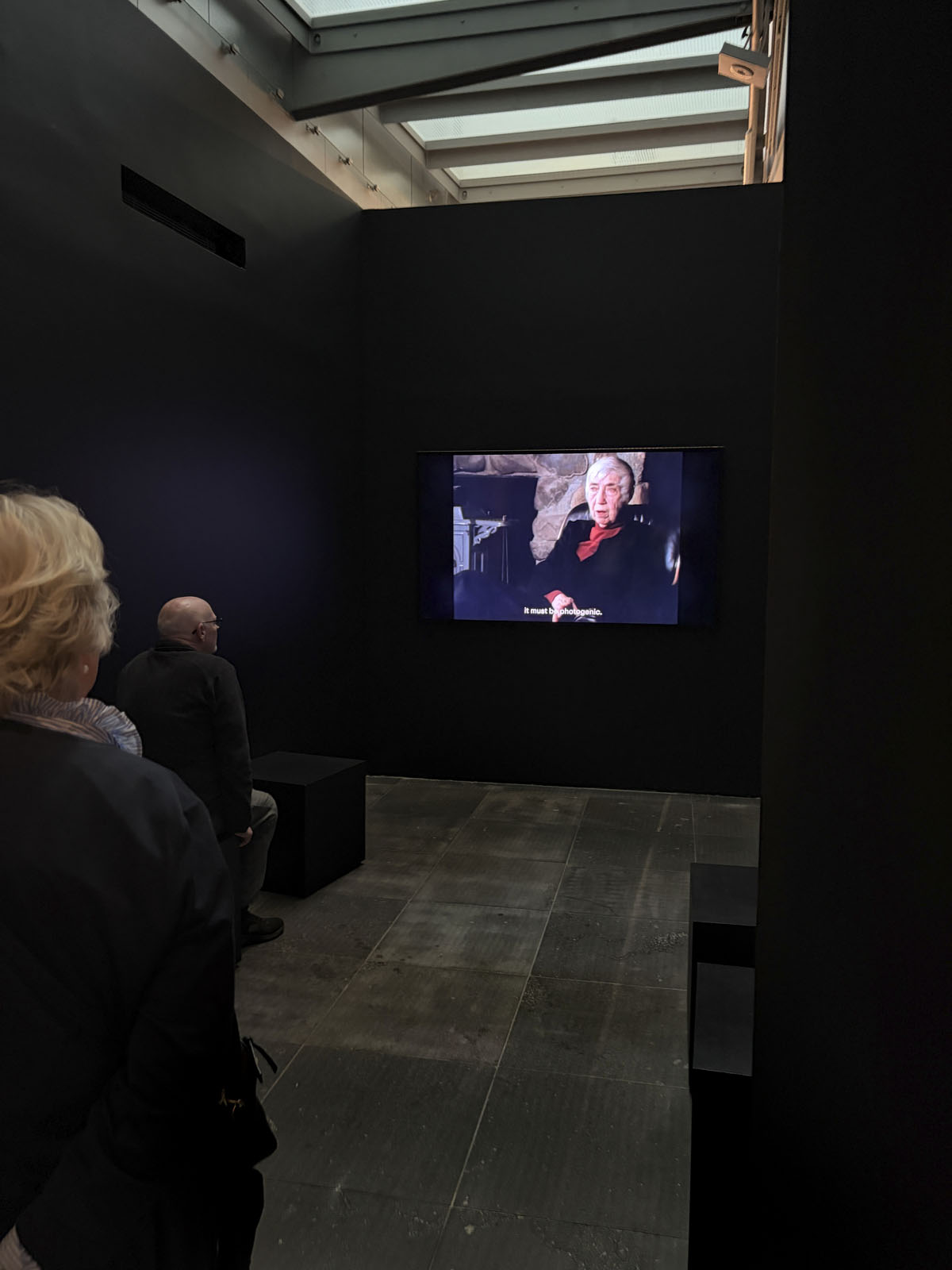
Installation view of the exhibition 'Women Photographers 1900-1975: A Legacy of Light' at NGV International, Melbourne, November 2025 – May 2026 showing a video of Imogen Cunningham


Installation views of the exhibition Women Photographers 1900-1975: A Legacy of Light at NGV International, Melbourne, November 2025 – May 2026 showing in the bottom image a video still of Imogen Cunningham
Photos: Marcus Bunyan


Installation view of the exhibition 'Women Photographers 1900-1975: A Legacy of Light' at NGV International, Melbourne, November 2025 – May 2026
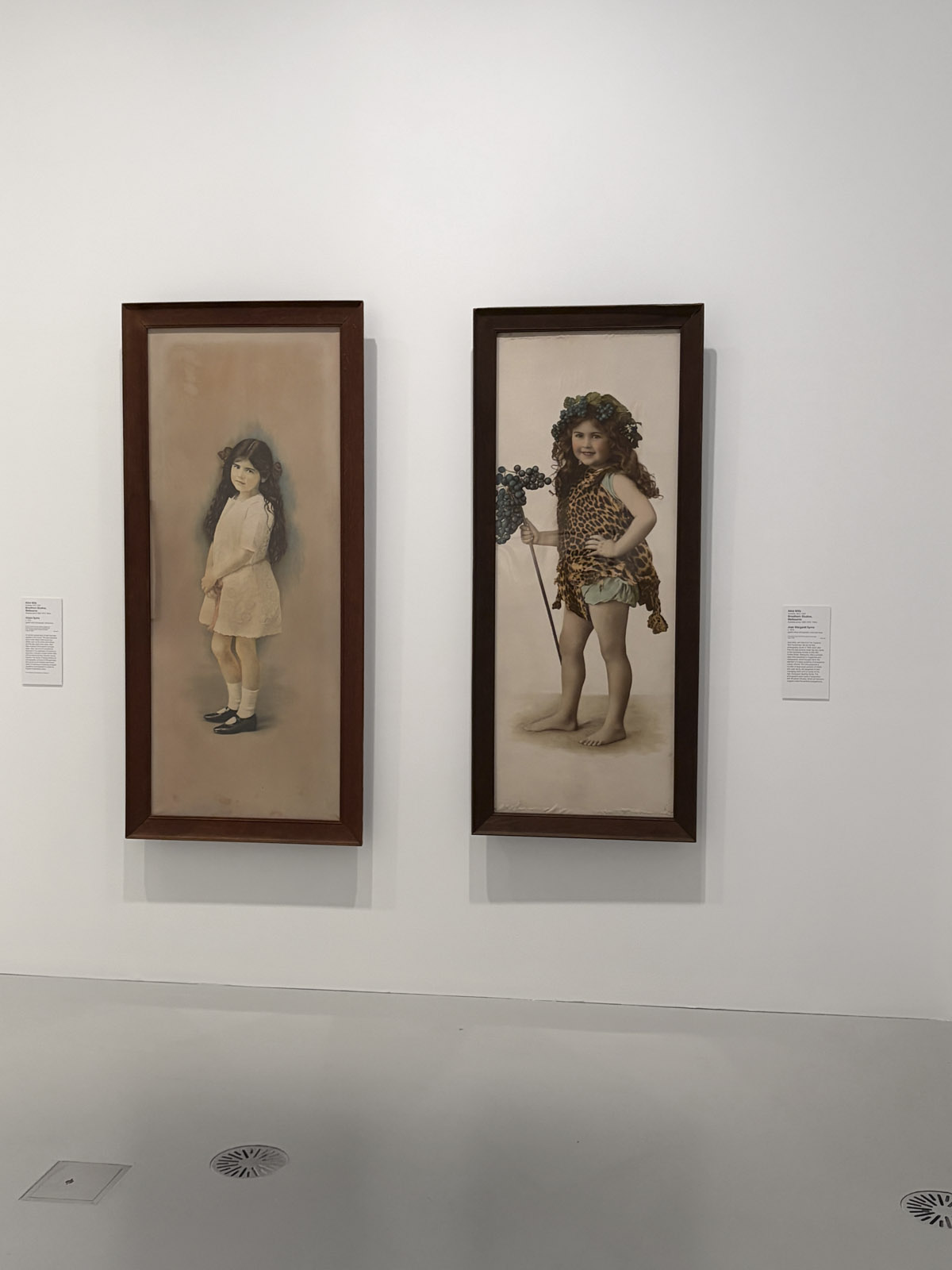
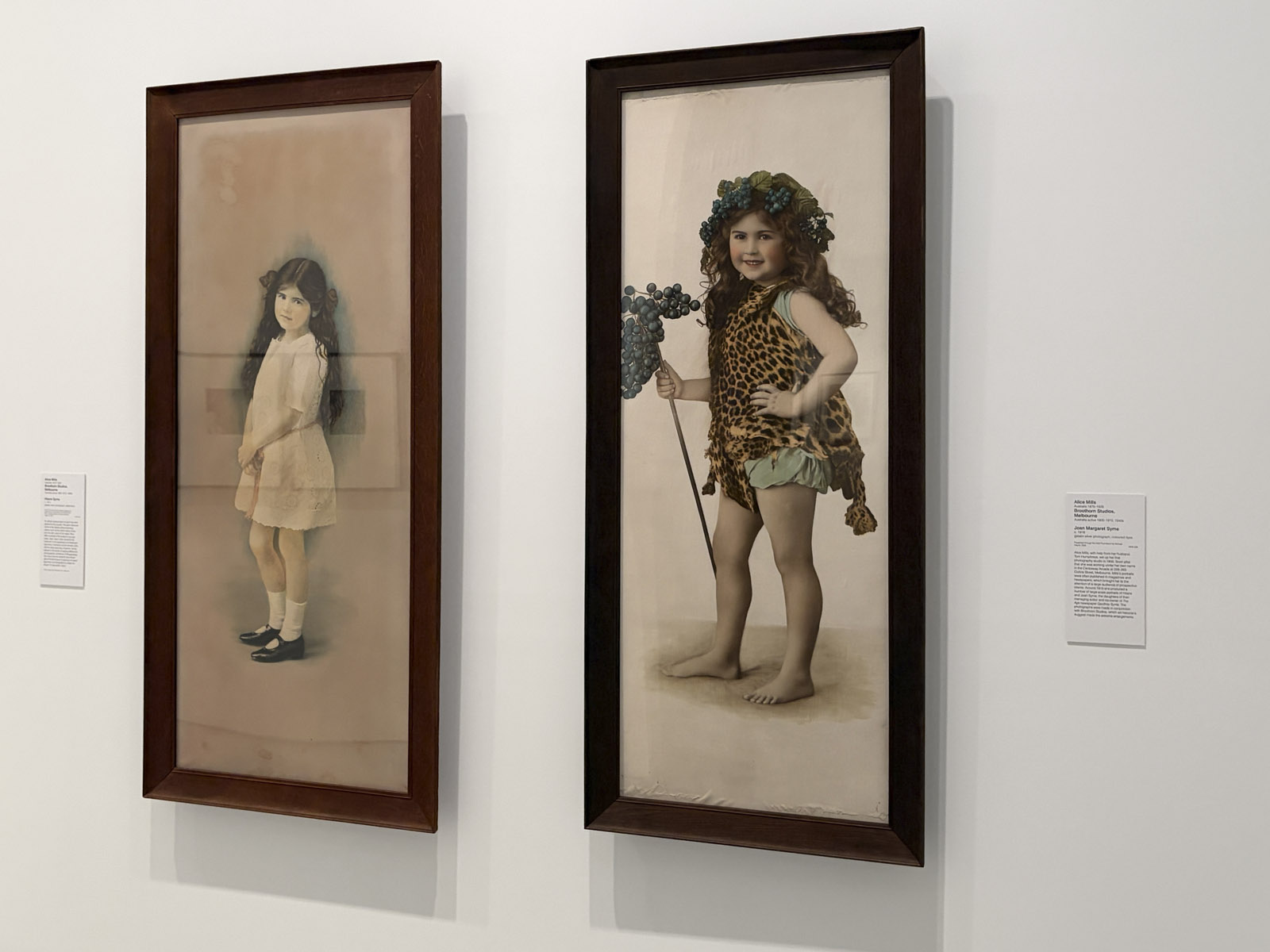
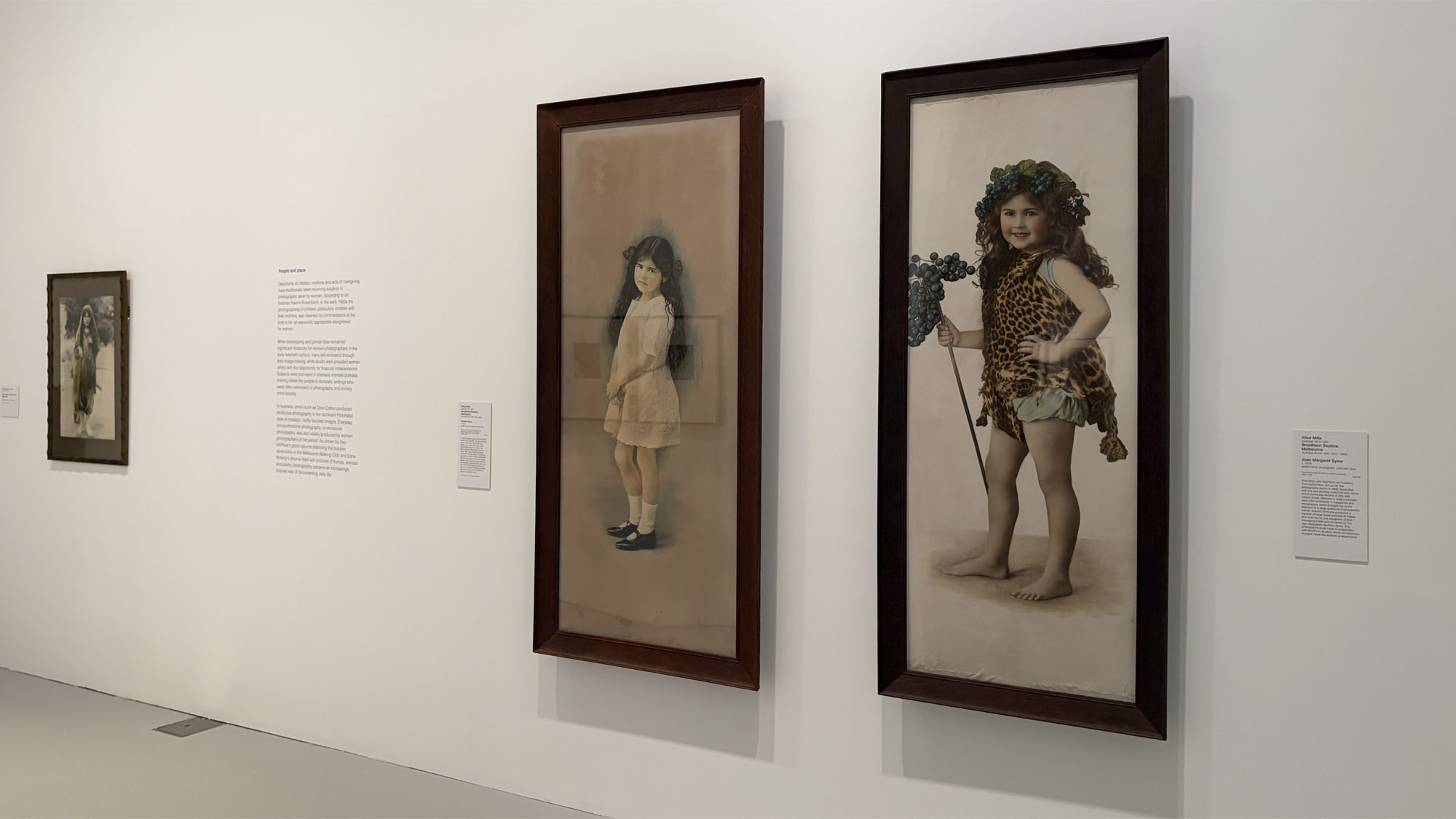
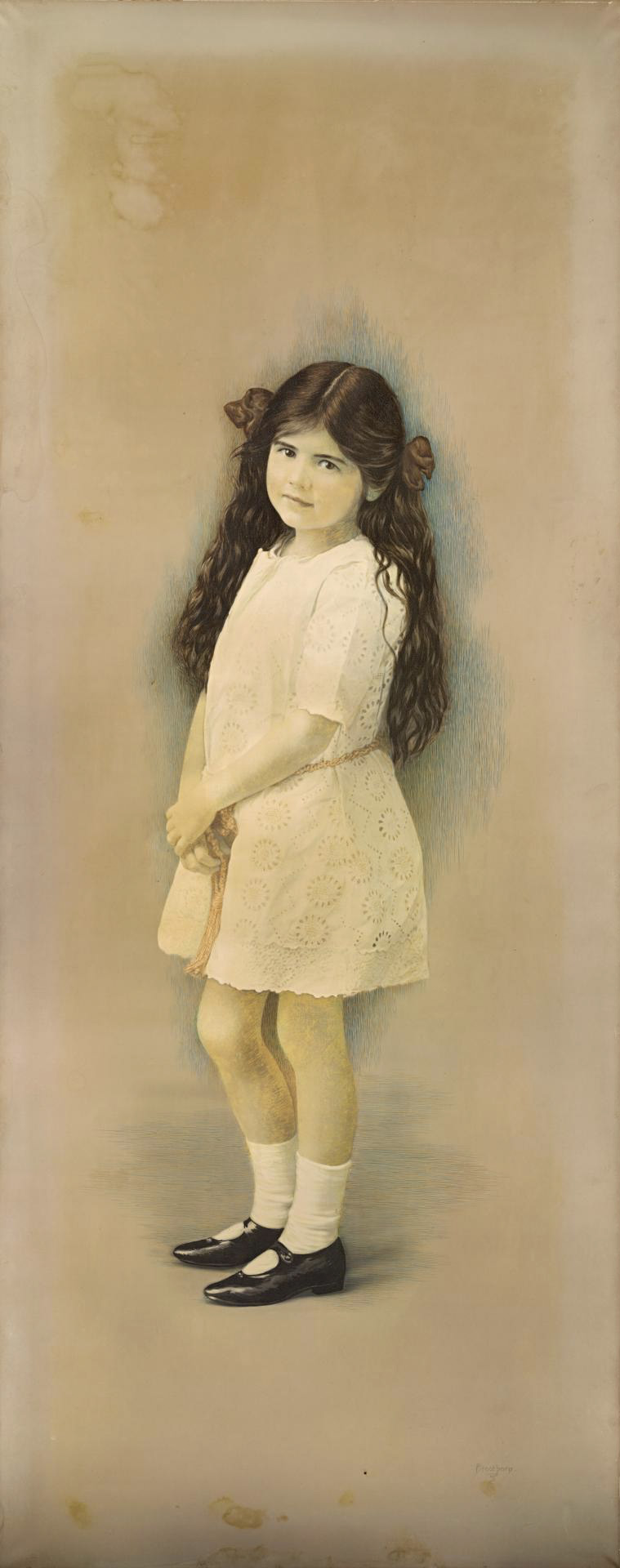
Installation view of the exhibition 'Women Photographers 1900-1975: A Legacy of Light' at NGV International, Melbourne, November 2025 – May 2026 showing from left to right three photographs by Alice Mills, 'Hilaire Syme dressed for the Kismit Ball' (1912-1915); 'Hilaire Syme' (c. 1910); and 'Joan Margaret Syme' (c. 1918)


Installation views of the exhibition Women Photographers 1900-1975: A Legacy of Light at NGV International, Melbourne, November 2025 – May 2026 showing in the bottom image from left to right three photographs by Alice Mills, Hilaire Syme dressed for the Kismit Ball (1912-1915, below); Hilaire Syme (c. 1910, below); and Joan Margaret Syme (c. 1918, below)
Photos: Marcus Bunyan


People and Place

Depictions of children, mothers and acts of caregiving have traditionally been recurring subjects in photographs taken by women. According to art historian Naomi Rosenblum, in the early 1900s the photographing of children, particularly children with their mothers, was deemed by commentators at the time to be ‘an especially appropriate assignment for women’.

While stereotyping and gender bias remained significant obstacles for women photographers in the early twentieth century, many still innovated through their image-making, while studio work provided women artists with the opportunity for financial independence. Subjects were portrayed in intensely intimate portraits, making visible the people in domestic settings who were often overlooked in photographs and society more broadly.

In Australia, artists such as Olive Cotton produced landscape photography in the dominant Pictorialist style of nostalgic, softly focused images. Everyday, non-professional photography, or vernacular photography, was also widely produced by women photographers of the period. As shown by Inez McPhee’s photo albums depicting the outdoor adventures of the Melbourne Walking Club and Edna Walling’s albums filled with pictures of friends, animals and plants, photography became an increasingly popular way of documenting daily life.


Alice Mills (attributed to) (Australian, 1870-1929) 'Hilaire Syme dressed for the Kismit Ball' 1912-1915


Alice Mills (attributed to) (Australian, 1870-1929)
Hilaire Syme dressed for the Kismit Ball
1912-1915
gelatin silver photograph, coloured dyes
70.5 x 43.3cm (image)
National Gallery of Victoria, Melbourne
Gift of Dr Veronica Condon, 2005
Public domain


Alice Mills (attributed to) (Australian, 1870-1929) Broothorn Studios, Melbourne 'Hilaire Syme' c. 1910


Alice Mills (attributed to) (Australian, 1870-1929)
Broothorn Studios, Melbourne
Hilaire Syme
c. 1910
Gelatin silver photograph, watercolour
185.5 x 74.4cm (image)
National Gallery of Victoria, Melbourne
Gift of Dr Veronica Condon, Geoffrey Haggard and Jennifer Smyth, descendants of Sir Geoffrey Syme K.B.E., Managing Editor of the Age newspaper (1908-1942), 2004


An almost opaque layer of paint has been applied to this portrait. The paint obscures some of the details while enhancing others, such as the child’s shiny shoes and the satin sash of her dress. Alice Mills’s portrait of the subject’s younger sister, Joan, has a more conventional treatment in the application of translucent pigments. It remains unclear whether Mills did the hand-colouring. However, having trained in the studio of leading Melbourne photographer Johnstone O’Shaughnessy, she would almost certainly have known about the technique of applying oil-based pigments to photographs to create the illusion of naturalistic colour.

Wall text from the exhibition


Alice Mills (attributed to) (Australian, 1870-1929) Broothorn Studios, Melbourne 'Joan Margaret Syme' c. 1918 (installation view)


Alice Mills (attributed to) (Australian, 1870-1929)
Broothorn Studios, Melbourne
Joan Margaret Syme (installation view)
c. 1918
Gelatin silver photograph, coloured dyes
243.85 x 91.45cm (approx)
National Gallery of Victoria, Melbourne
Presented through the NGV Foundation by Michael Hayne, 2005
Public domain
Photo: Marcus Bunyan


Alice Mills (attributed to) (Australian, 1870-1929) Broothorn Studios, Melbourne 'Joan Margaret Syme' c. 1918


Alice Mills (attributed to) (Australian, 1870-1929)
Broothorn Studios, Melbourne
Joan Margaret Syme
c. 1918
Gelatin silver photograph, coloured dyes
243.85 x 91.45cm (approx)
National Gallery of Victoria, Melbourne
Presented through the NGV Foundation by Michael Hayne, 2005
Public domain


Alice Mills, with help from her husband, Tom Humphreys, set up her first photography studio in 1900. Soon after that she was working under her own name in the Centreway Arcade at 259-263 Collins Street, Melbourne. Mills’s portraits were often published in magazines and newspapers, which brought her to the attention of a large audience of prospective clients. Around 1915 she produced a number of large-scale portraits of Hilaire and Joan Syme, the daughters of then managing editor and co-owner of The Age newspaper Geoffrey Syme. The photographs were made in conjunction with Broothorn Studios, which art historians suggest made the extreme enlargements.

Wall text from the exhibition


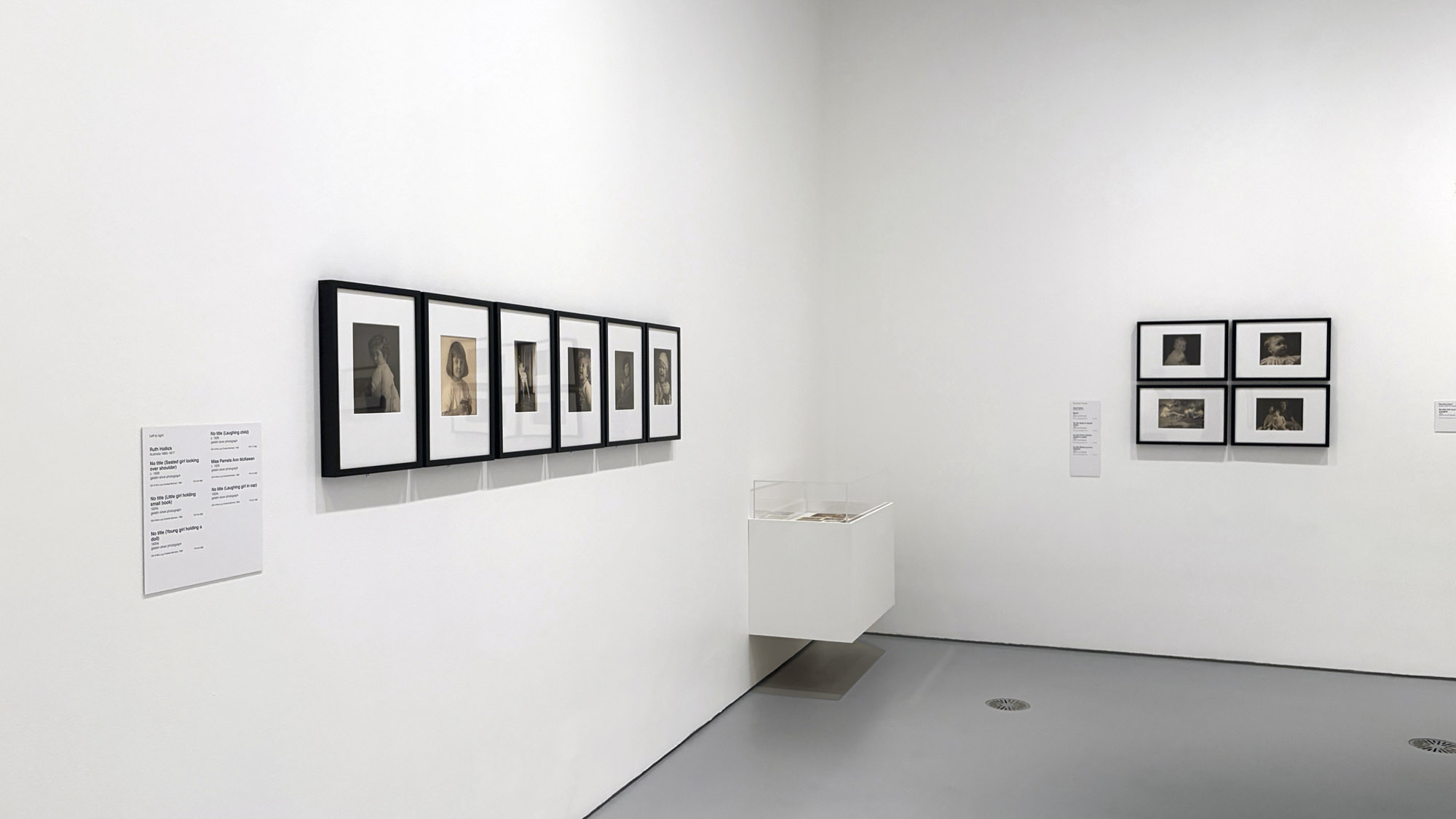
Installation view of the exhibition 'Women Photographers 1900-1975: A Legacy of Light' at NGV International, Melbourne, November 2025 - May 2026
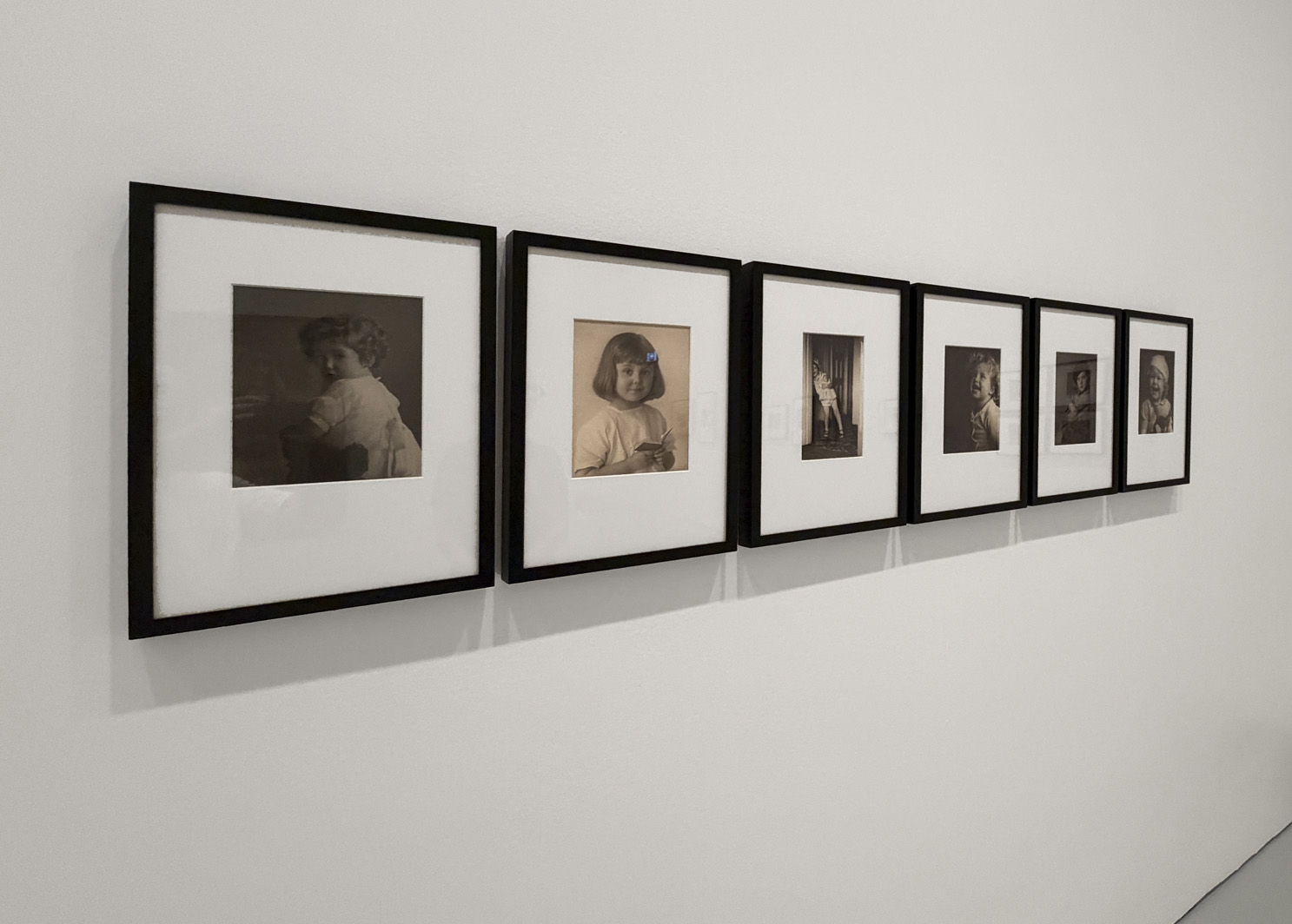
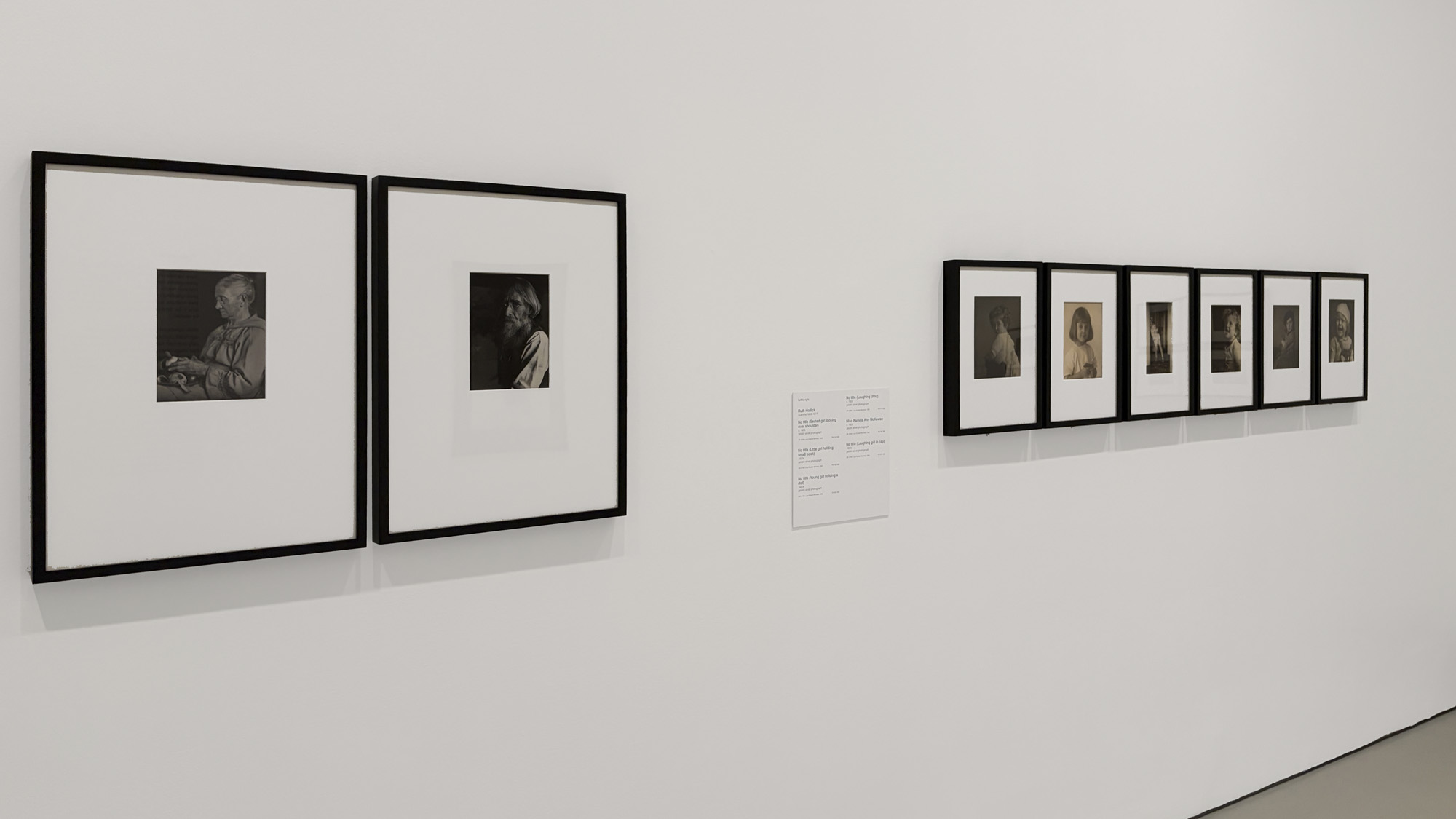
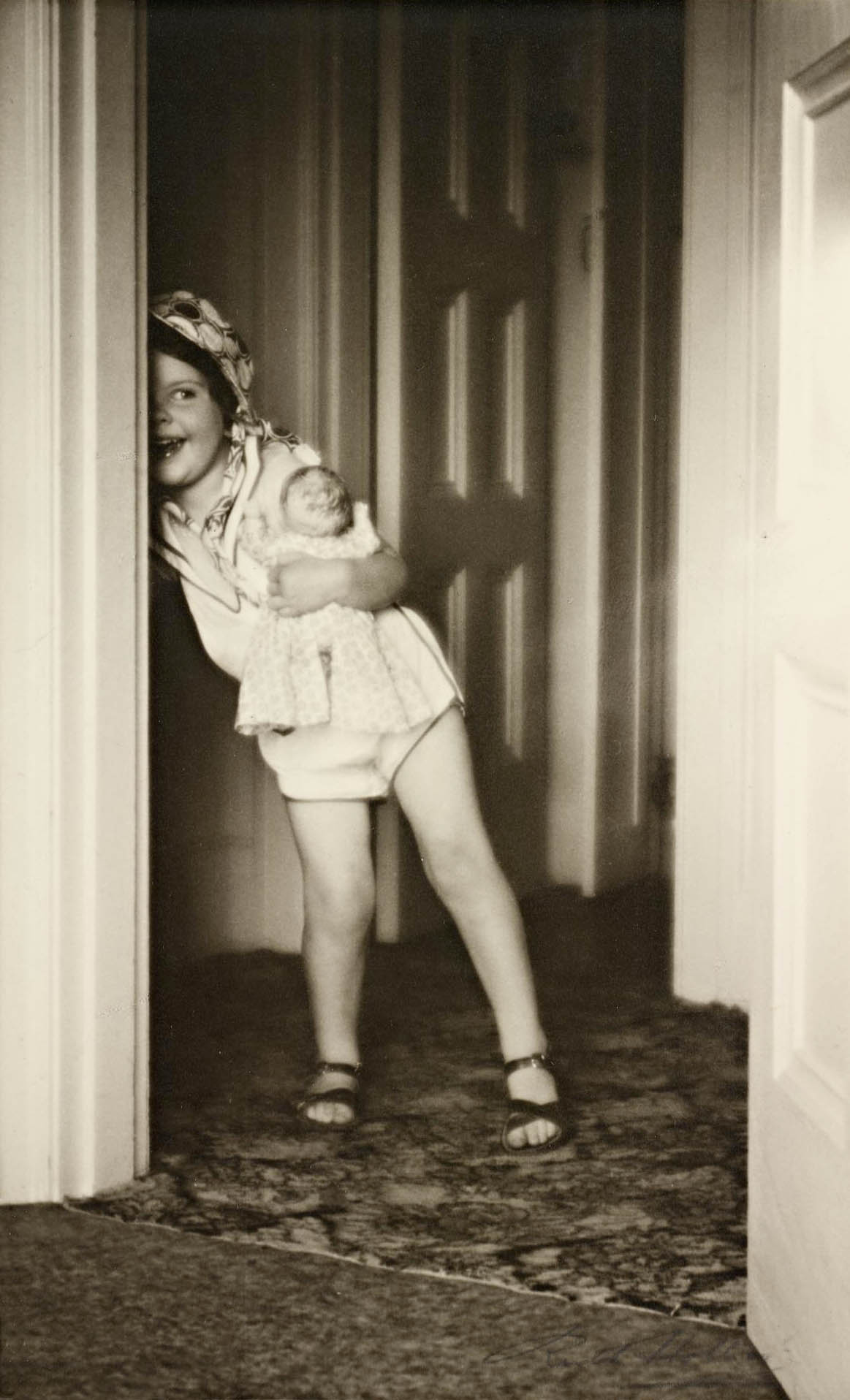
Installation view of the exhibition 'Women Photographers 1900-1975: A Legacy of Light' at NGV International, Melbourne, November 2025 - May 2026 showing from left to right in the bottom image two Imogen Cunningham photographs, 'My mother peeling apples' (1910, printed 1979) and 'My father' (1906, printed 1979) and six 1920s photographs by the Australian photographer Ruth Hollick (1883-1977): 'No title (Seated girl looking over shoulder)' (c. 1926); 'No title (Little girl holding small book)' (1920s); 'No title (Young girl holding a doll)' (1920s); 'No title (Laughing child)' (c. 1926); 'Miss Pamela Ann McKewan' (c. 1929); and 'No title (Laughing girl in cap)' (1920s)


Installation views of the exhibition Women Photographers 1900-1975: A Legacy of Light at NGV International, Melbourne, November 2025 – May 2026 showing from left to right in the bottom image two Imogen Cunningham photographs, My mother peeling apples (1910, printed 1979) and My father (1906, printed 1979) and six 1920s photographs by the Australian photographer Ruth Hollick (1883-1977): No title (Seated girl looking over shoulder) (c. 1926); No title (Little girl holding small book) (1920s); No title (Young girl holding a doll) (1920s); No title (Laughing child) (c. 1926); Miss Pamela Ann McKewan (c. 1929); and No title (Laughing girl in cap) (1920s)
Photos: Marcus Bunyan


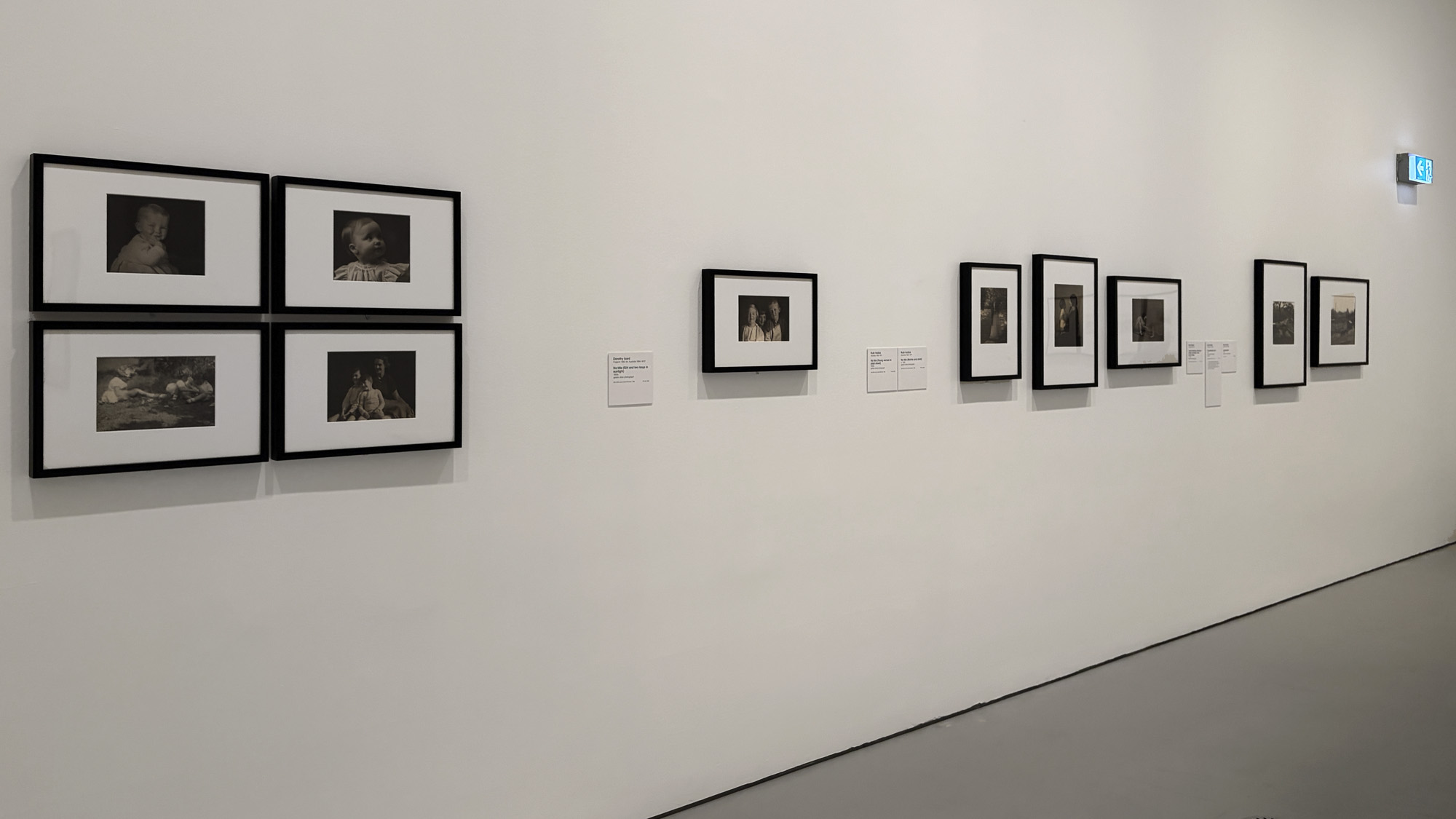
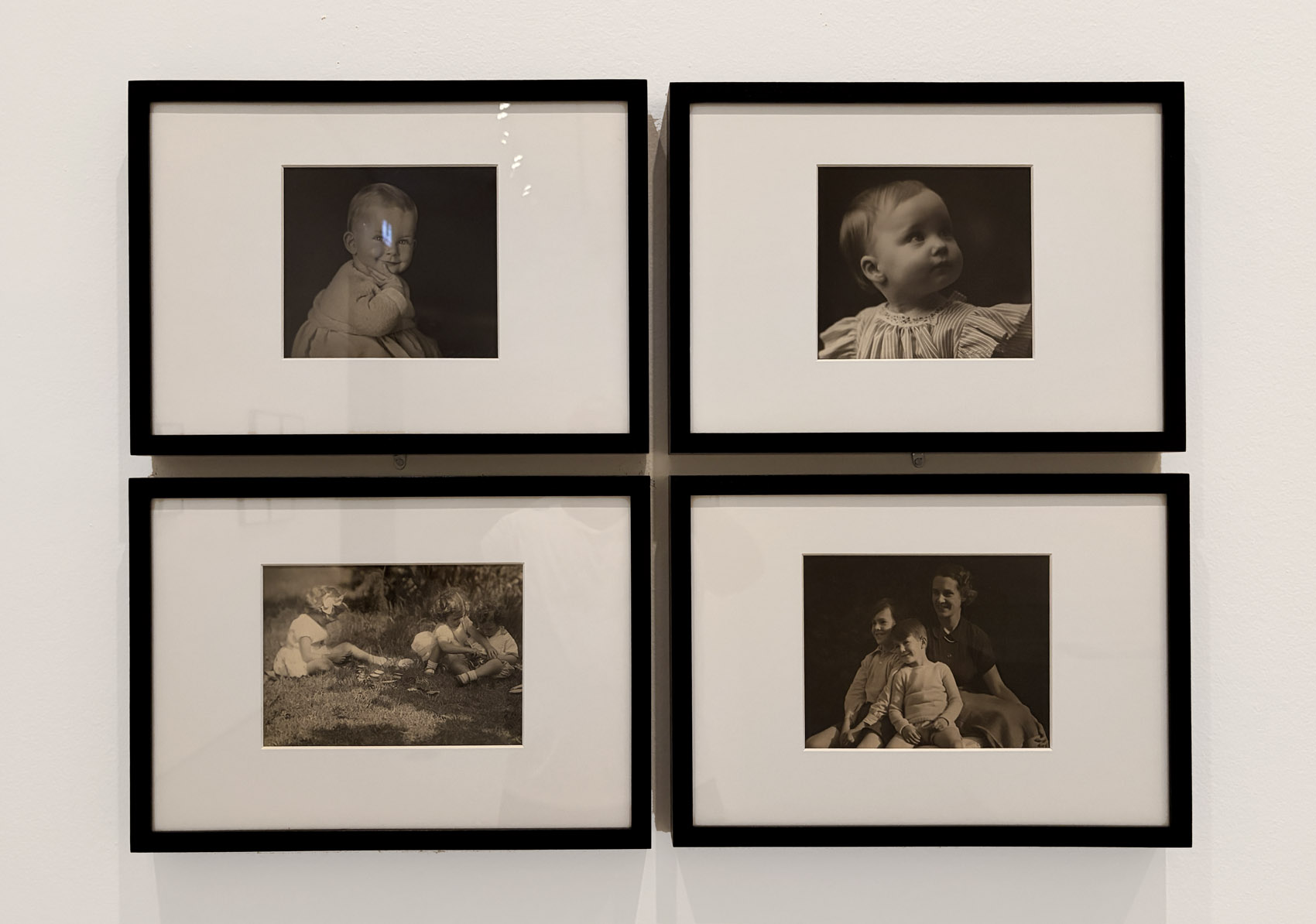
Installation view of the exhibition 'Women Photographers 1900-1975: A Legacy of Light' at NGV International, Melbourne, November 2025 - May 2026 showing  at left four photographs by Ruth Hollick: 'Bobby' (1927); 'No title (Baby in striped dress)' (1920s); 'No title (Three children seated on grass)' (1920s); and 'No title (Mother and two children)' (1920s)


Installation view of the exhibition Women Photographers 1900-1975: A Legacy of Light at NGV International, Melbourne, November 2025 – May 2026 showing at left four photographs by Ruth Hollick: Bobby (1927); No title (Baby in striped dress) (1920s); No title (Three children seated on grass) (1920s); and No title (Mother and two children) (1920s)
Photo: Marcus Bunyan


Installation view of the exhibition 'Women Photographers 1900-1975: A Legacy of Light' at NGV International, Melbourne, November 2025 - May 2026 showing four photographs by Ruth Hollick: 'Bobby' (1927); 'No title (Baby in striped dress)' (1920s); 'No title (Three children seated on grass)' (1920s); and 'No title (Mother and two children)' (1920s)


Installation view of the exhibition Women Photographers 1900-1975: A Legacy of Light at NGV International, Melbourne, November 2025 – May 2026 showing four photographs by Ruth Hollick: Bobby (1927); No title (Baby in striped dress) (1920s); No title (Three children seated on grass) (1920s); and No title (Mother and two children) (1920s)
Photo: Marcus Bunyan


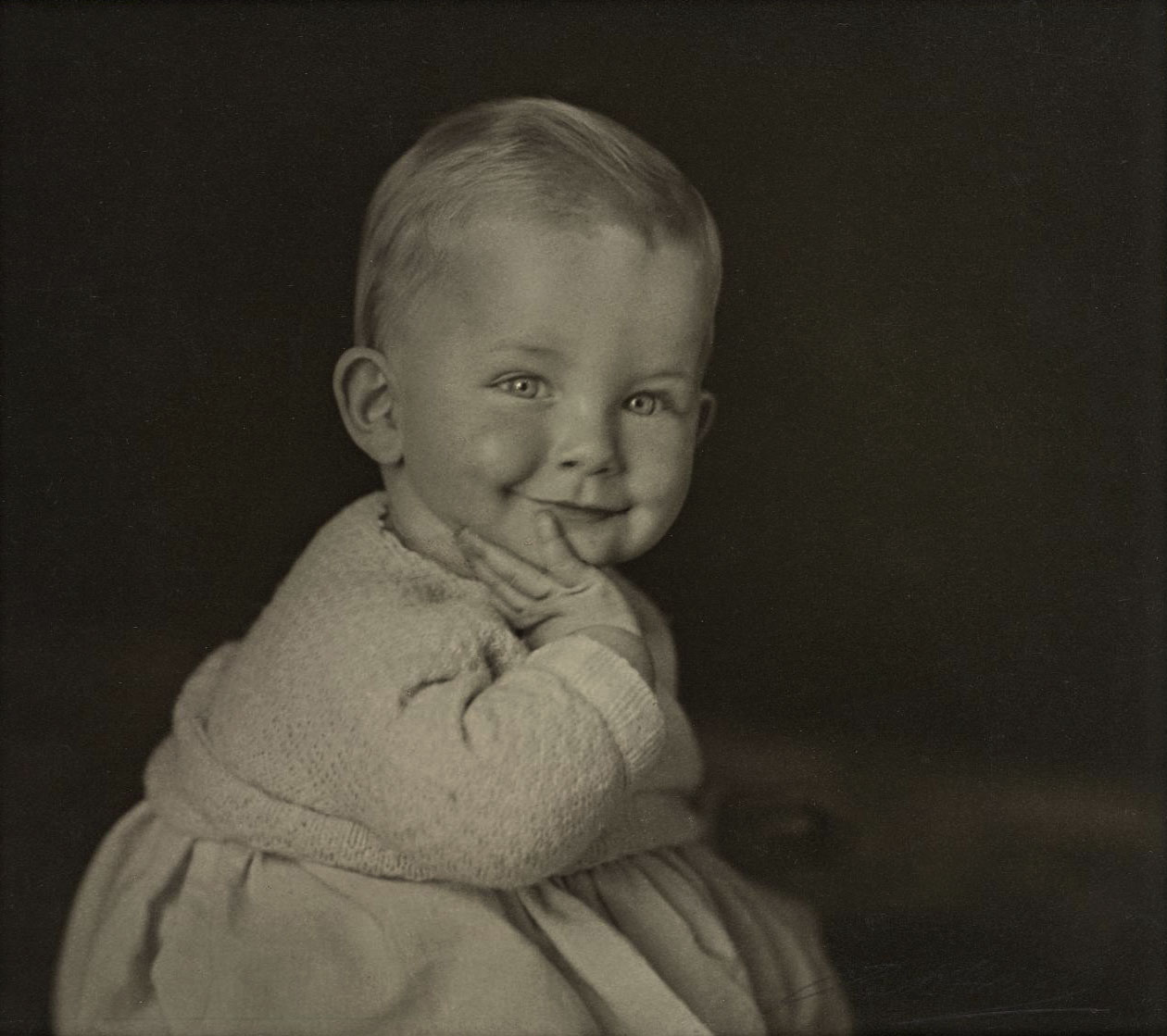
Ruth Hollick (Australian, 1883-1977) 'Bobby' 1927


Ruth Hollick (Australian, 1883-1977)
Bobby
1927
Gelatin silver photograph
18.8 x 21.4cm (image)
National Gallery of Victoria, Melbourne
Gift of Mrs Lucy Crosbie Morrison, 1992
Public domain


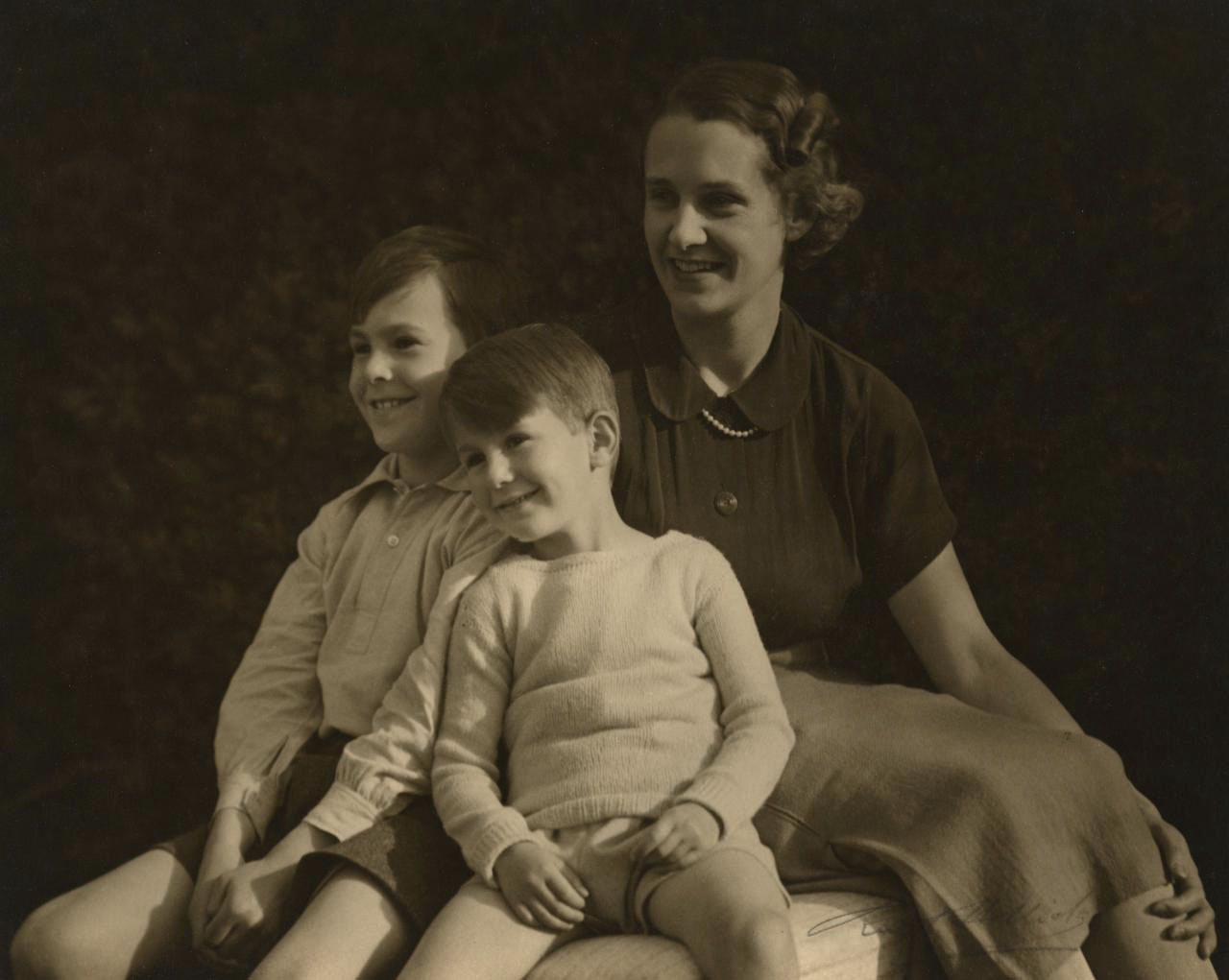
Ruth Hollick (Australian, 1883-1977) 'No title (Mother and two children)' 1920s


Ruth Hollick (Australian, 1883-1977)
No title (Mother and two children)
1920s
Gelatin silver photograph
19.0 x 23.9cm (image)
National Gallery of Victoria, Melbourne
Gift of Mrs Lucy Crosbie Morrison, 1992
Public domain


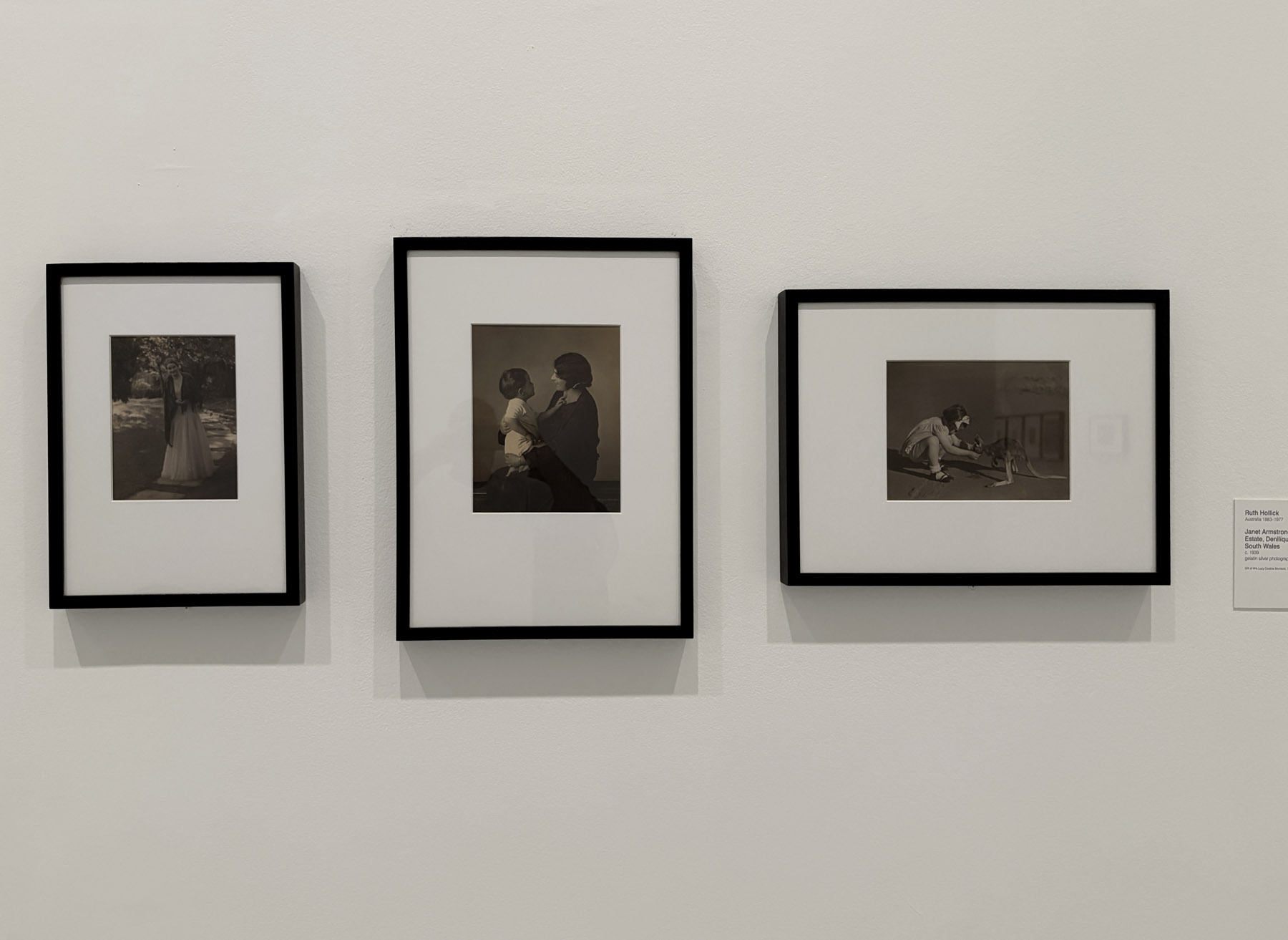
Installation view of the exhibition 'Women Photographers 1900-1975: A Legacy of Light' at NGV International, Melbourne, November 2025 - May 2026 showing from left to right three photographs by Ruth Hollick: 'No title (Young woman in plaid shawl)' (1920s); 'No title (Mother and child)' (c. 1926); and 'Janet Armstrong, Woodbury Estate, Deniliquin, New South Wales' (c. 1939) (installation view)


Installation view of the exhibition Women Photographers 1900-1975: A Legacy of Light at NGV International, Melbourne, November 2025 – May 2026 showing from left to right three photographs by Ruth Hollick: No title (Young woman in plaid shawl) (1920s); No title (Mother and child) (c. 1926); and Janet Armstrong, Woodbury Estate, Deniliquin, New South Wales (c. 1939)
Photo: Marcus Bunyan


Ruth Hollick (Australian, 1883-1977) 'No title (Young girl holding a doll)' 1920s


Ruth Hollick (Australian, 1883-1977)
No title (Young girl holding a doll)
1920s
Gelatin silver photograph
23.9 x 14.6cm (image)
National Gallery of Victoria, Melbourne
Gift of Mrs Lucy Crosbie Morrison, 1992


Installation view of the exhibition 'Women Photographers 1900-1975: A Legacy of Light' at NGV International, Melbourne, November 2025 - May 2026


Installation view of the exhibition Women Photographers 1900-1975: A Legacy of Light at NGV International, Melbourne, November 2025 – May 2026
Photo: Marcus Bunyan


Installation view of the exhibition 'Women Photographers 1900-1975: A Legacy of Light' at NGV International, Melbourne, November 2025 - May 2026
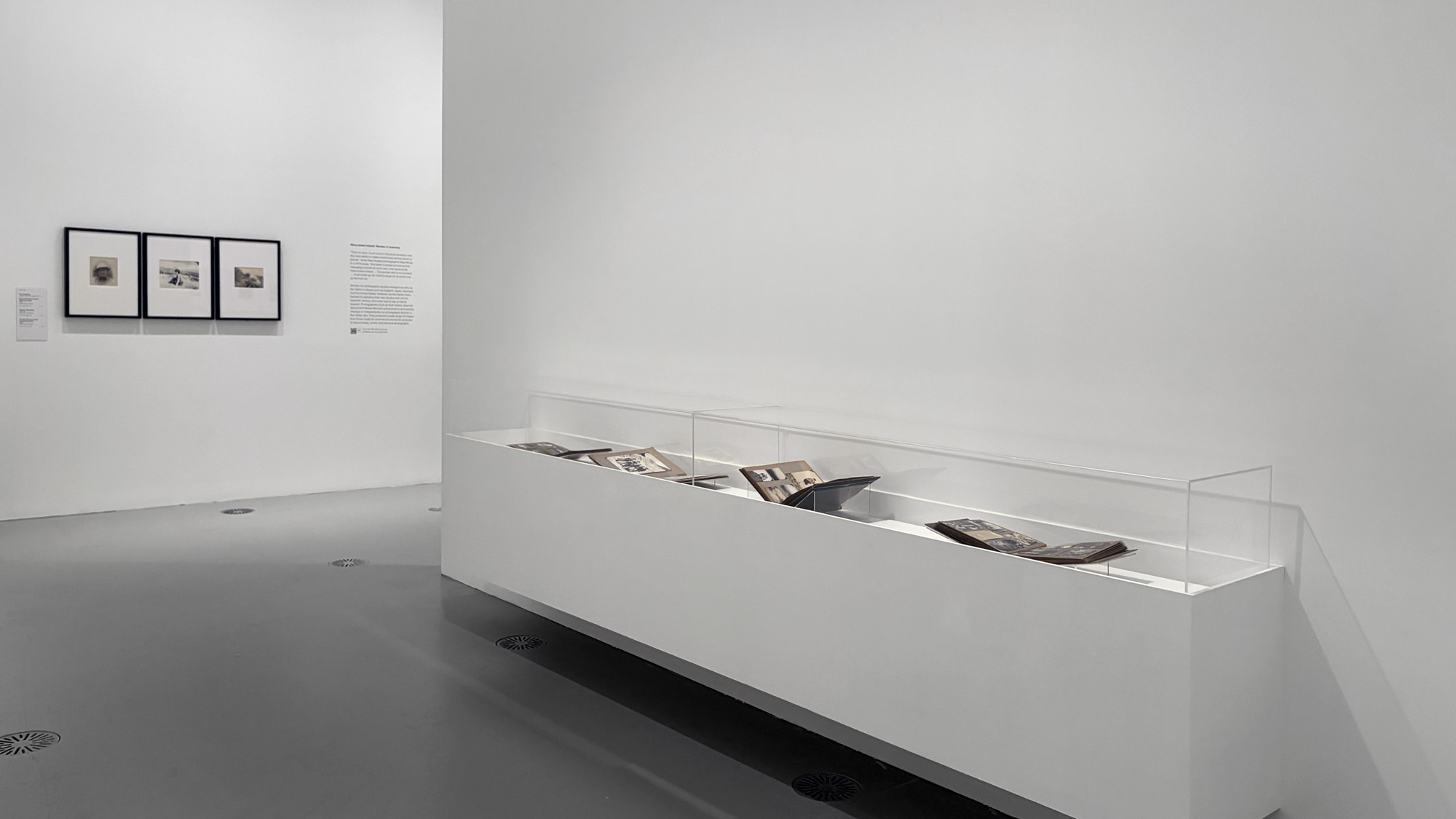
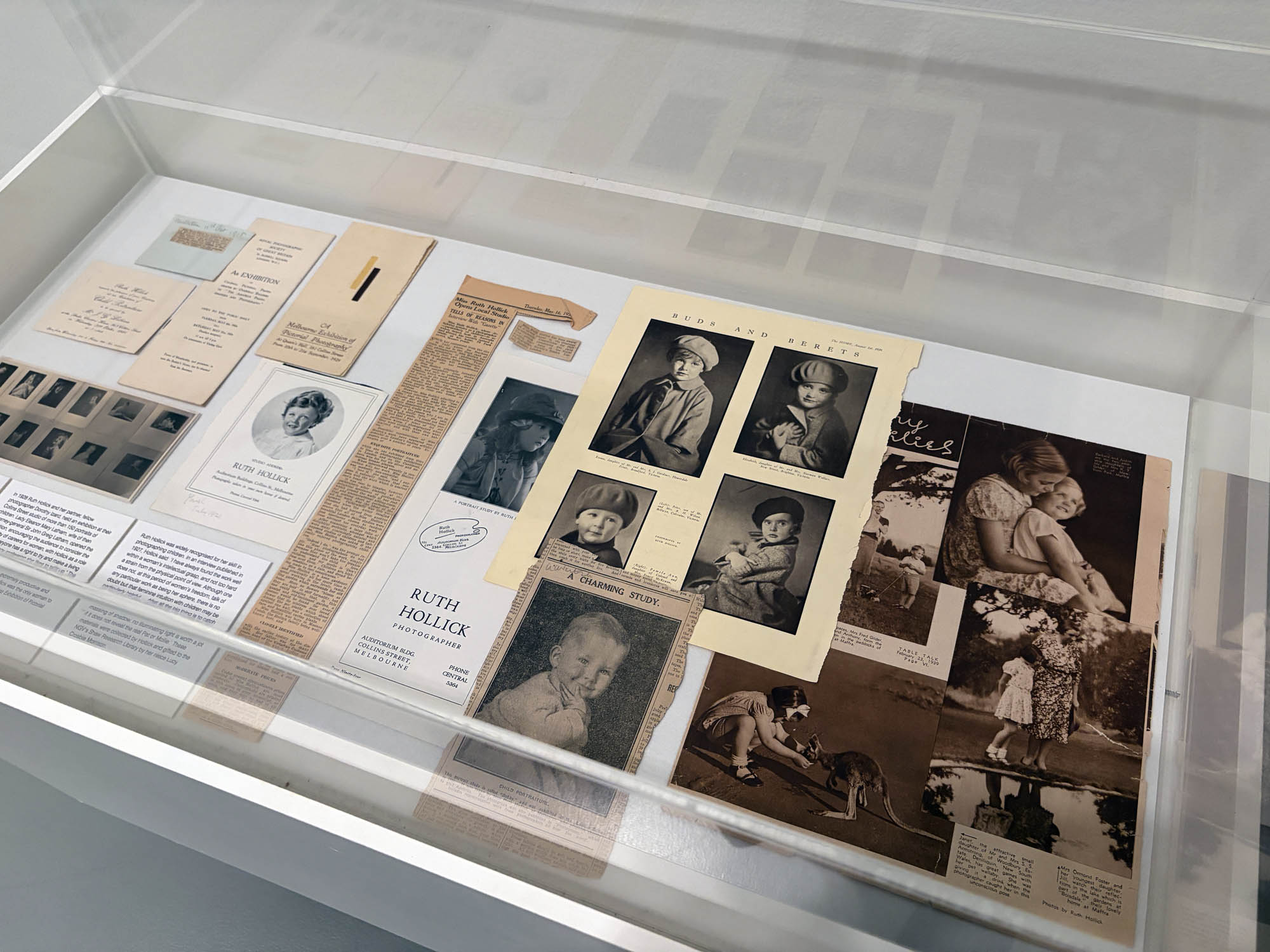
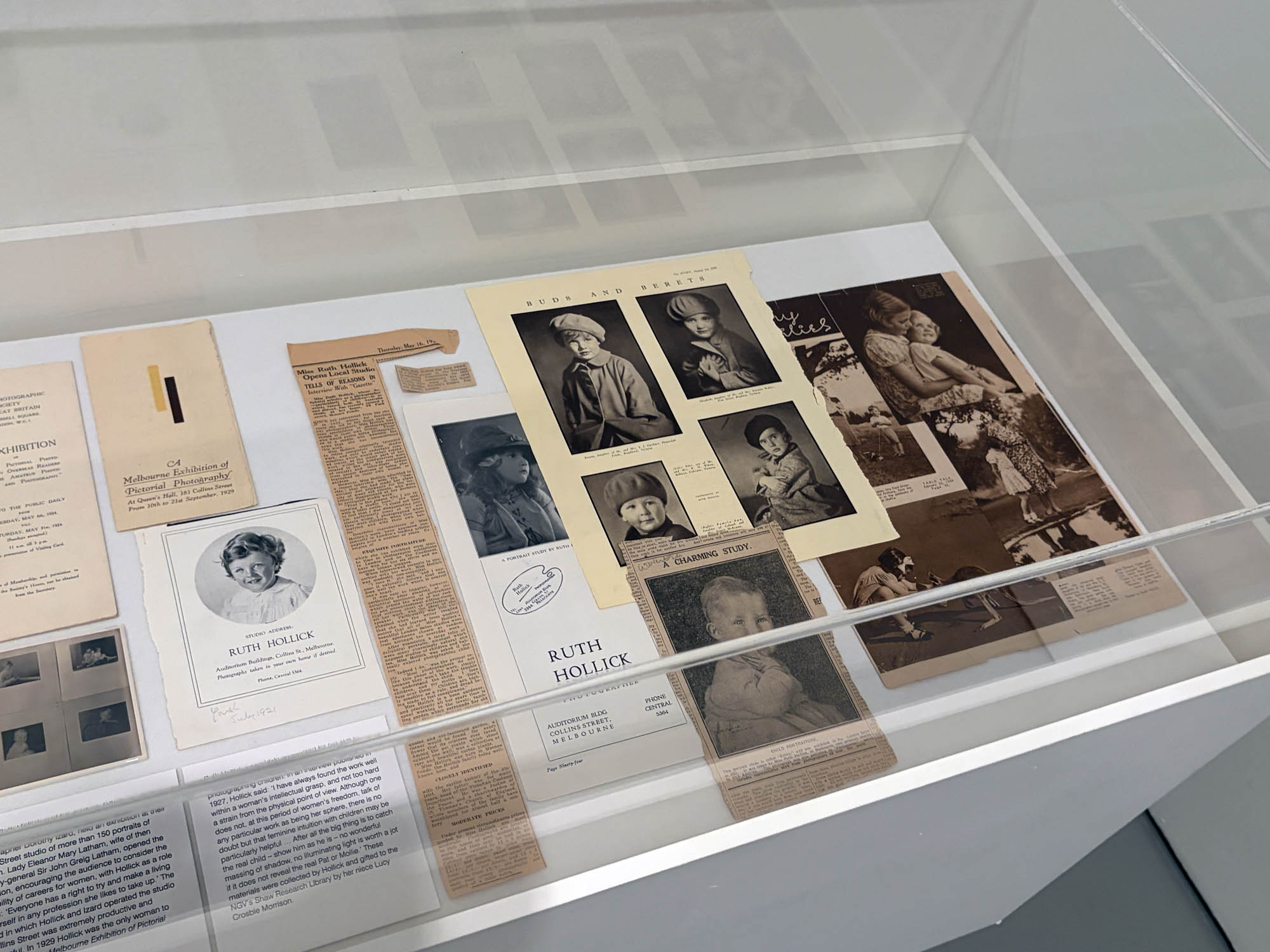
Installation view of the exhibition 'Women Photographers 1900-1975: A Legacy of Light' at NGV International, Melbourne, November 2025 - May 2026 showing clippings, press releases, brochures, reviews, invitations and other ephemeral material relating to Ruth Hollick and the Ruth Hollick studio


Installation views of the exhibition Women Photographers 1900-1975: A Legacy of Light at NGV International, Melbourne, November 2025 – May 2026 showing clippings, press releases, brochures, reviews, invitations and other ephemeral material relating to Ruth Hollick and the Ruth Hollick studio
Photos: Marcus Bunyan


In 1928 Ruth Hollick and her partner, fellow photographer Dorothy Izard, held an exhibition at their Collins Street studio of more than 150 portraits of children. Lady Eleanor Mary Latham, wife of then attorney-general Sir John Greig Latham, opened the exhibition, encouraging the audience to consider the possibility of career for women, with Hollick as a role model: ‘Everyone has a right to try and make a living for herself in any profession she likes to take up.’ The period in which Hollick and Izard operated the studio in Collins Street was extremely productive and successful. In 1929 Hollick was the only woman to participate in the Melbourne Exhibition of Pictorial Photography.

Ruth Hollick was widely recognised for her skill in photographing children. In an interview published in 1927, Hollick said: ‘I have always found the work well within a woman’s intellectual grasp, and not too hard a strain from the physical point of view. Although one does not, at this period of women’s freedom, talk of any particular work as being her sphere, there is no doubt but that feminine intuition with children may be particularly helpful … After all the big thing is to catch the real child – show him as he is – no wonderful massing of shadow, no illuminating light is worth a lot if it does not reveal the real Pat or Mollie.’ These materials were collected by Hollick and gifted to the NGV’s Shaw Research Library by her niece Lucy Crosbie Morrison.

Vitrine text from the exhibition


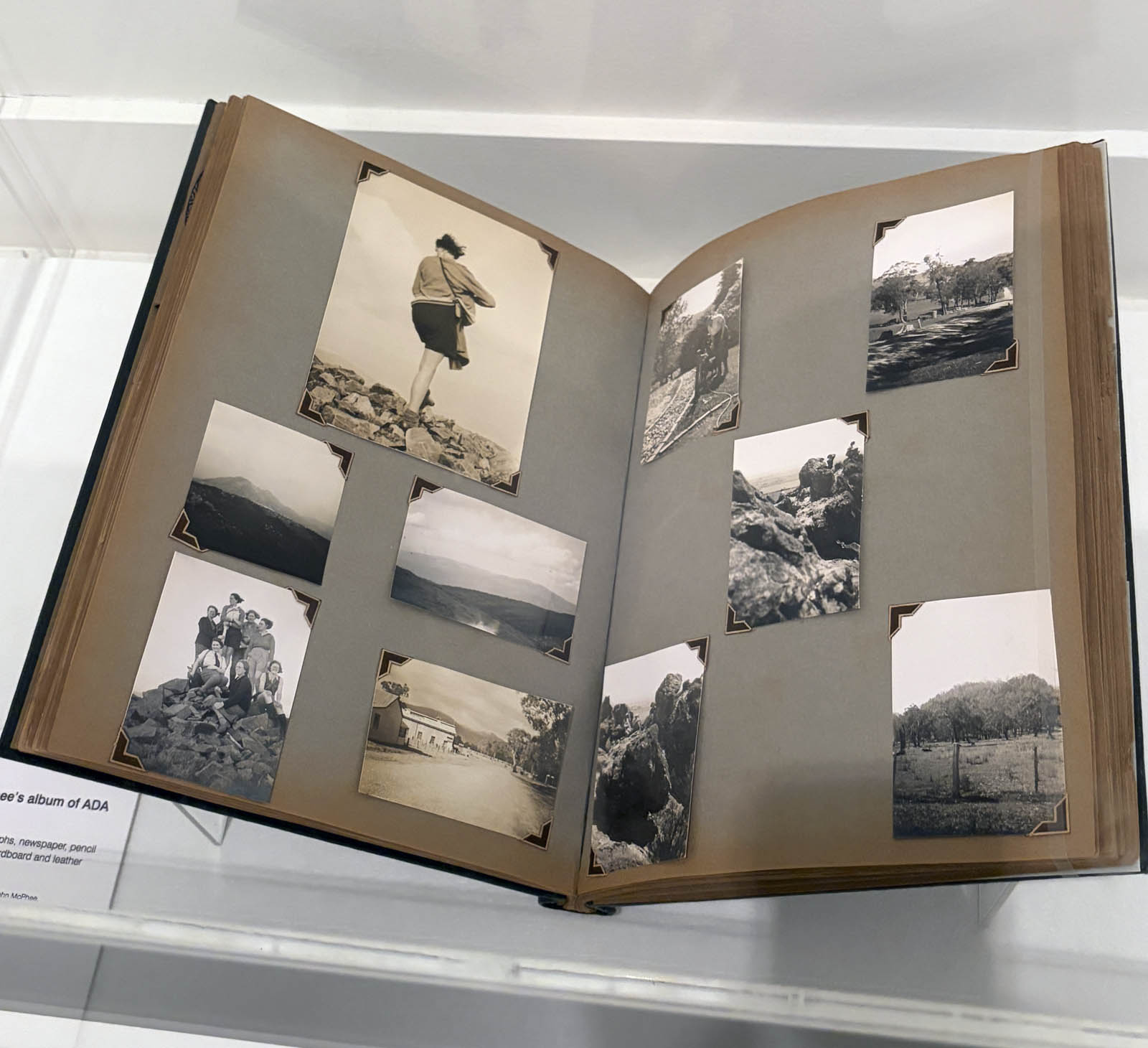
Inez McPhee (Australian, 1908-1999) 'No title (Inez McPhee's album of ADA river trip)' 1936 (installation view)


Inez McPhee (Australian, 1908-1999)
No title (Inez McPhee’s album of ADA river trip) (installation view)
1936
28.1 x 22.4cm (page)
28.5 x 23.0 x 3.1cm (closed)
28.5 x 46.0 x 1.5cm (open)
Album: gelatin silver photographs, newspaper, pencil and pen and ink, 62 pages, cardboard and leather cover, stitched binding
Presented through the NGV Foundation by John McPhee, Member and Ann Luck, 2004
Photo: Marcus Bunyan


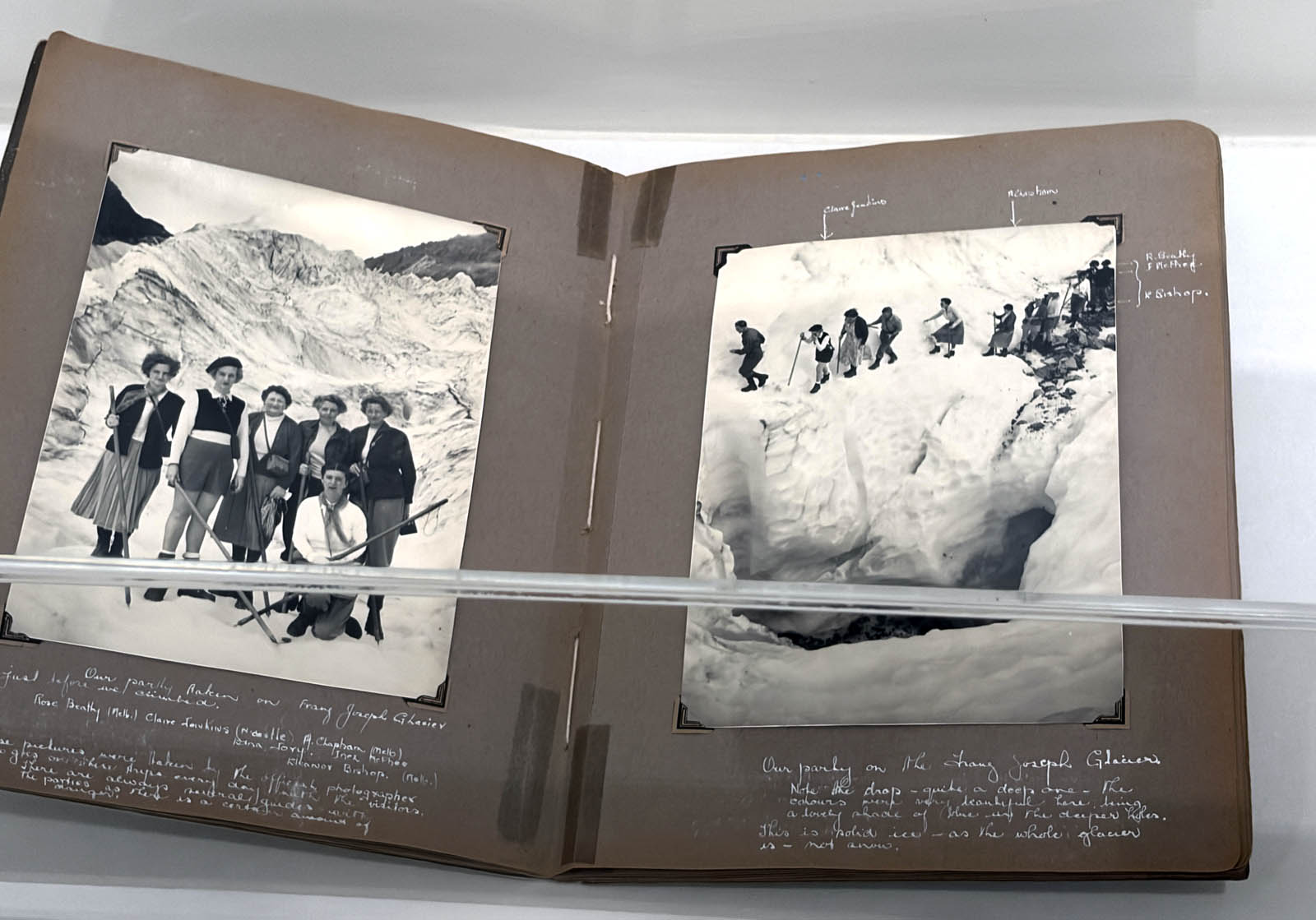
Inez McPhee (Australian, 1908-1999) 'No title (Inez McPhee's album of a trip to New Zealand)' 1953 (installation view)


Inez McPhee (Australian, 1908-1999)
No title (Inez McPhee’s album of a trip to New Zealand) (installation view)
1953
Album: gelatin silver photographs, collage, pencil, 40 pages, cardboard cover, stitched binding
31.0 x 24.1cm (page)
31.1 x 24.8 x 1.4cm (closed)
31.1 x 49.0 x 1.0cm (open)
Presented through the NGV Foundation by John McPhee, Member and Ann Luck, 2004
Photo: Marcus Bunyan


Inez McPhee was an active member of the Melbourne Women’s Walking Club, founded in 1922. McPhee took her camera on bushwalks with the group and, typical of amateur photographers of the period, compiled albums of the prints. Her albums are filled with images of women engaging in outdoor activities.

Vitrine text from the exhibition


Installation view of the exhibition 'Women Photographers 1900-1975: A Legacy of Light' at NGV International, Melbourne, November 2025 – May 2026


Installation view of the exhibition Women Photographers 1900-1975: A Legacy of Light at NGV International, Melbourne, November 2025 – May 2026 showing at left three photographs by Edna Walling: Doris Oak-Rhind, Edna’s Walling’s sister (1920s); Estelle Thompson (1950s-1960s); and No title (Young woman preparing picnic) (1940s)
Photo: Marcus Bunyan


Installation view of the exhibition Women Photographers 1900-1975: A Legacy of Light at NGV International, Melbourne, November 2025 – May 2026 showing at left to right, three photographs by Edna Walling (Australian born England, 1895-1973) 'Doris Oak-Rhind, Edna's Walling's sister' (1920s); 'Estelle Thompson' (1950s-1960s); and 'No title (Young woman preparing picnic)' (1940s)


Installation view of the exhibition Women Photographers 1900-1975: A Legacy of Light at NGV International, Melbourne, November 2025 – May 2026 showing at left to right, three photographs by Edna Walling (Australian born England, 1895-1973) Doris Oak-Rhind, Edna’s Walling’s sister (1920s); Estelle Thompson (1950s-1960s); and No title (Young woman preparing picnic) (1940s)
Photo: Marcus Bunyan


Edna Walling (Australian born England, 1895-1973) 'Estelle Thompson' 1950s-1960s (installation view)


Edna Walling (Australian born England, 1895-1973)
Estelle Thompson (installation view)
1950s-1960s
Gelatin silver photograph
25.4 x 20.6cm (image and sheet)
National Gallery of Victoria, Melbourne
Gift of Mrs Barbara Barnes, 1983
Photo: Marcus Bunyan


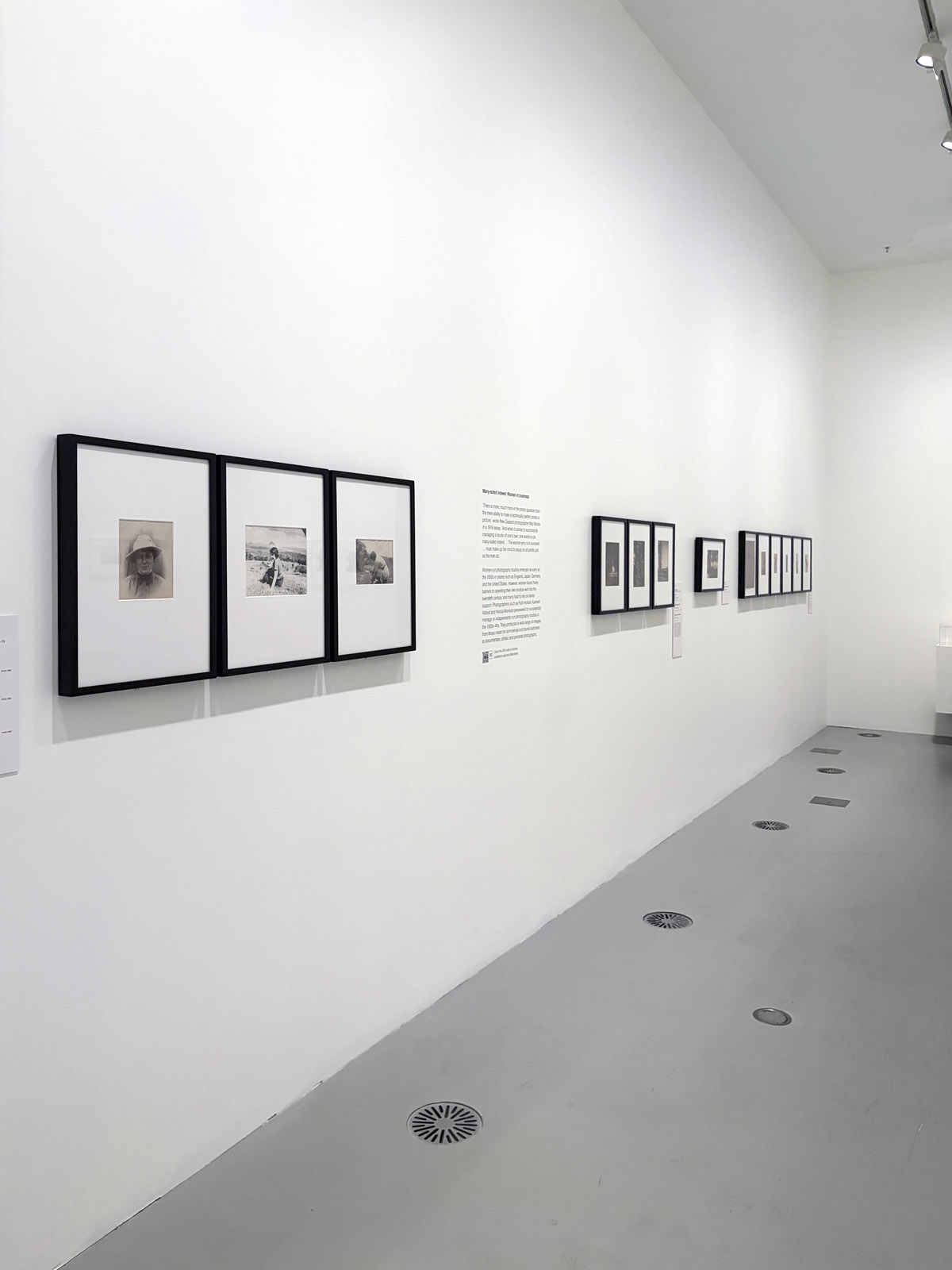
Many-sided Indeed: Women In Business

“There is more, much more in the photo question than the mere ability to make a technically perfect photo or picture,” wrote New Zealand photographer May Moore in a 1916 essay. “And when it comes to successfully managing a studio of one’s own, one wants to be many-sided indeed … The woman who is to succeed … must make up her mind to equip on all points just as the men do.”

Women-run photography studios emerged as early as the 1850s in places such as England, Japan, Germany and the United States. However, women faced many barriers to operating their own studios well into the twentieth century, and many had to rely on family support. Photographers such as Ruth Hollick, Karimeh Abbud and Hedda Morrison persevered to successfully manage or independently run photography studios in the 1920s-40s. They produced a wide range of images, from those made for commercial and tourist purposes to documentary, artistic and personal photographs.


Edna Walling (Australian born England, 1895-1973) 'No title (Album)' 1950s-1960s (installation view)


Edna Walling (Australian born England, 1895-1973)
No title (Album) (installation view)
1950s-1960s
Album: gelatin silver photographs, 48 pages, cardboard, leather and colour photo-lithograph cover, metal screw binding
24.6 x 32.0cm (page)
25.6 x 34.8 x 3.6cm (closed)
25.6 x 62.8cm (open)
National Gallery of Victoria, Melbourne
Gift of Mrs Barbara Barnes, 1983
Photo: Marcus Bunyan


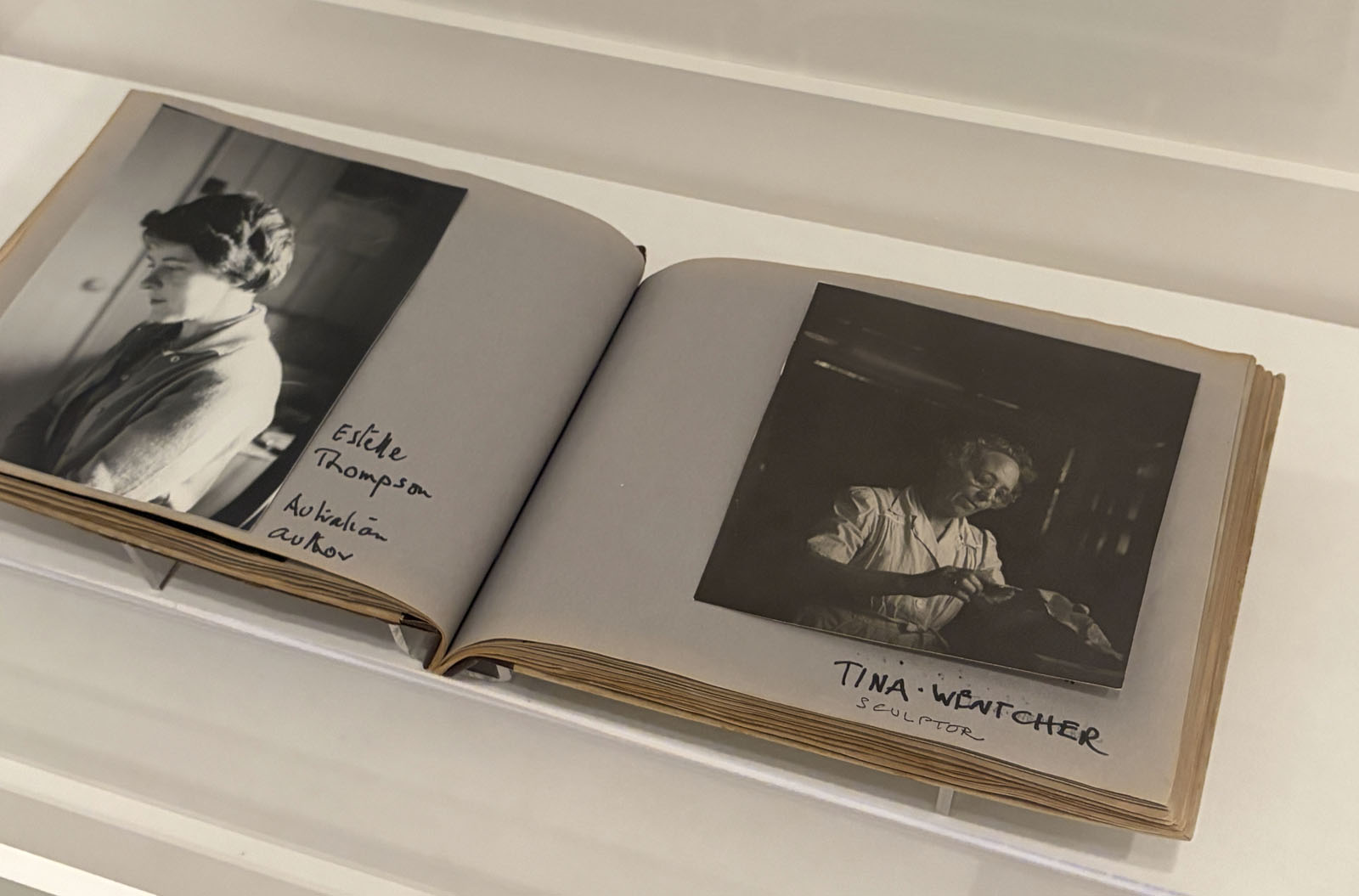
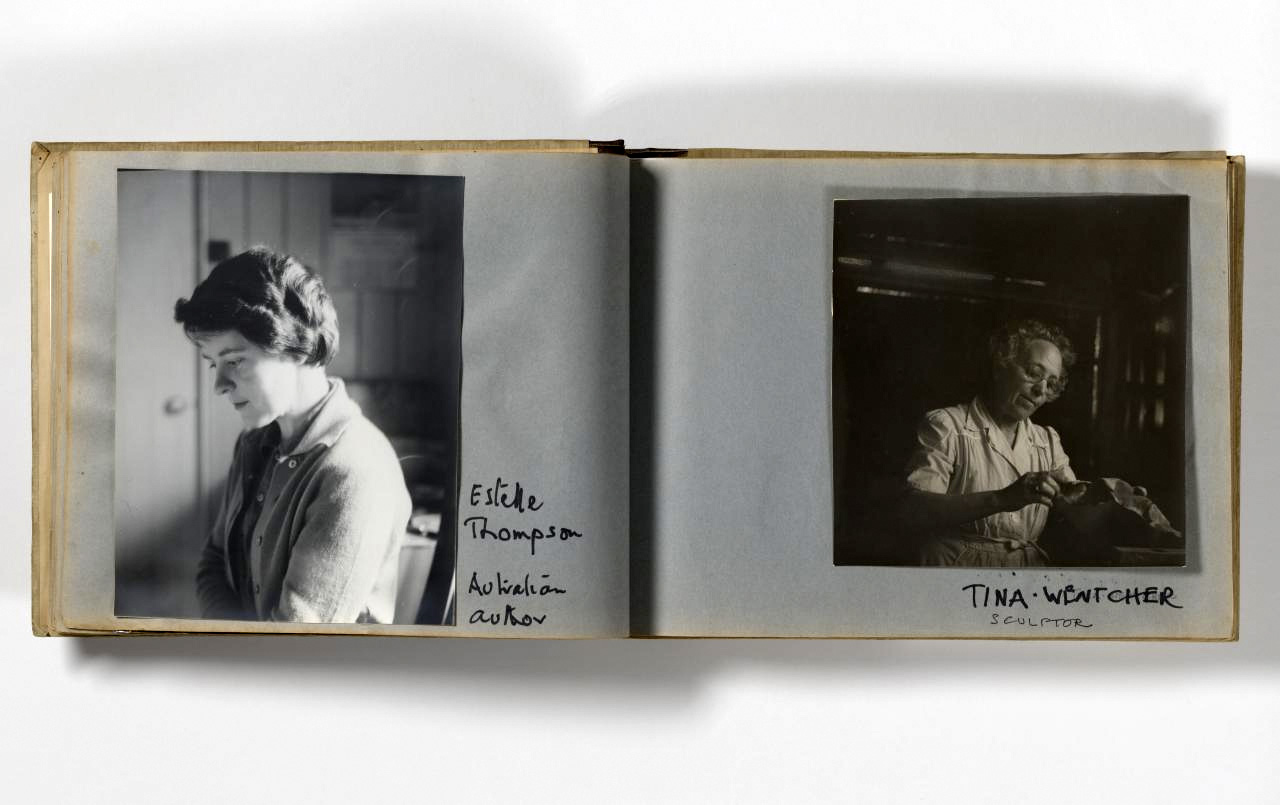
Landscape designer Edna Walling kept a personal photo album to capture the creative effervescence of the community at her property at Bickleigh Vale Village in Mooroolbark, Victoria. Nicknamed ‘Trouser Lane’, the property was designed by Walling to be a ‘community of connected gardens and cottages. Many people, including many women, shared in Walling’s unique vision for the space, visiting and residing at Trouser lane over the years. Walling’s album features, among others, images of writer Estelle Thompson, landscape designer Daphne Pearson, builder Esme Johnson, violinist Perry Hart and ballet dancers Harcourt Algernoff and Graham Smith. Also interspersed throughout the album are photographic flower studies.

Vitrine text from the exhibition


Edna Walling (Australian born United Kingdom, 1895-1973) 'No title' (Album) 1950s-1960s


Edna Walling (Australian born United Kingdom, 1895-1973)
No title (Album)
1950s-1960s
Album; gelatin silver photographs, 48 pages, cardboard, leather and colour photo-lithograph cover, metal screw binding
24.6 x 32.0cm (page)
25.6 x 34.8 x 3.6cm (closed)
25.6 x 62.8cm (open)
National Gallery of Victoria, Melbourne
Gift of Mrs Barbara Barnes, 1983


Installation view of the exhibition 'Women Photographers 1900-1975: A Legacy of Light' at NGV International, Melbourne, November 2025 - May 2026
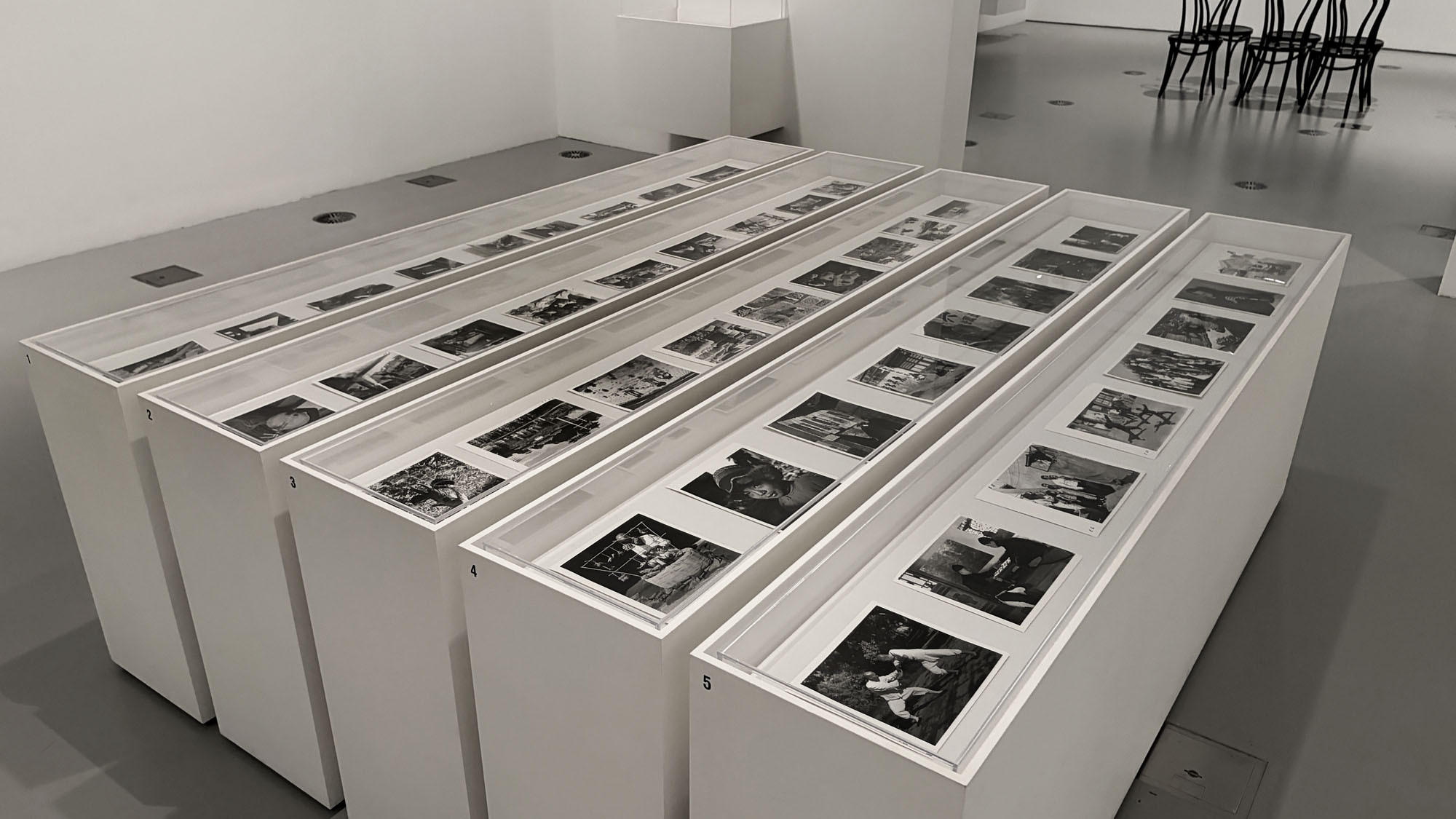
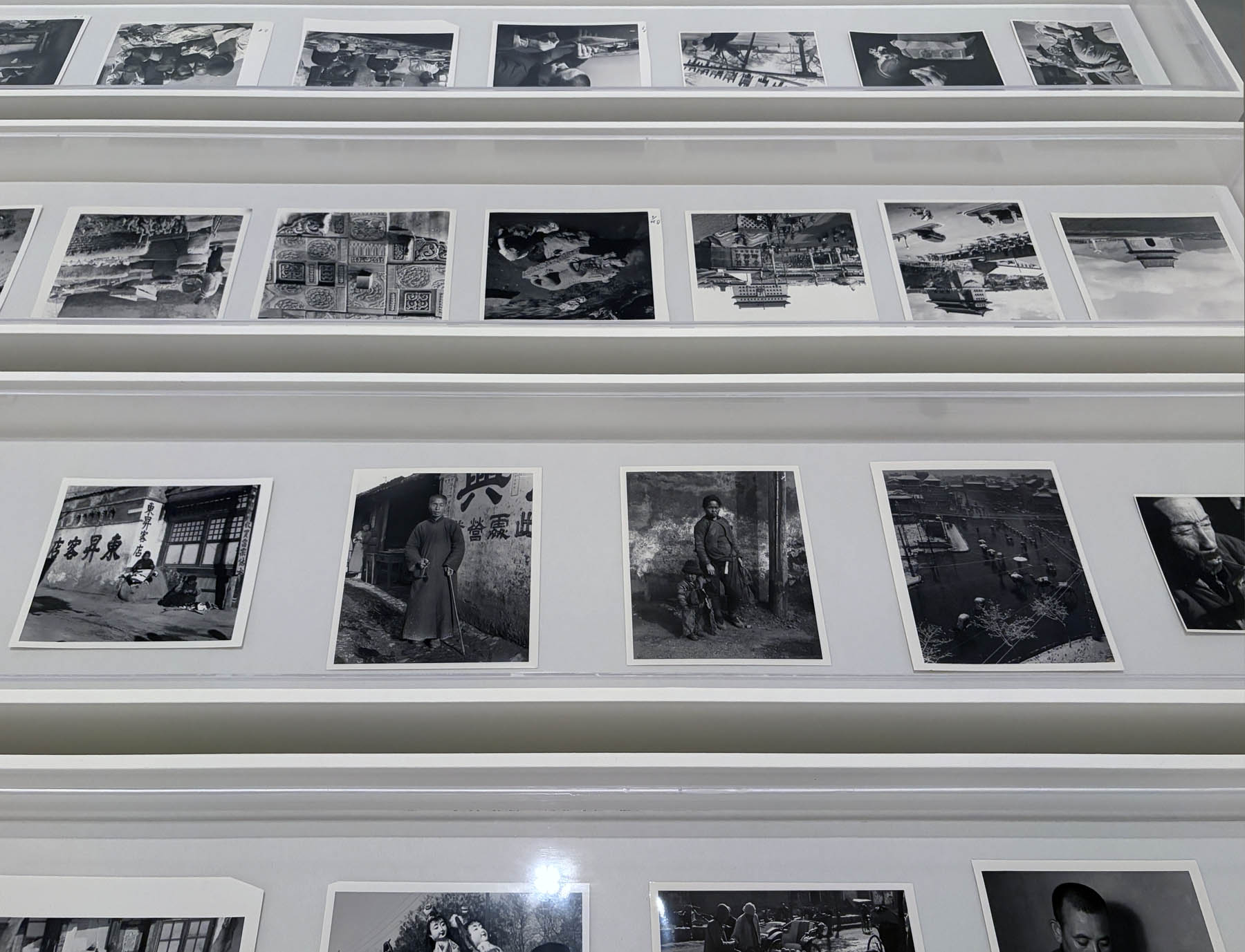
Installation view of the exhibition 'Women Photographers 1900-1975: A Legacy of Light' at NGV International, Melbourne, November 2025 - May 2026 showing in the display cases photographs by Hedda Morrison (Australian born Germany, 1908-1991)


Installation views of the exhibition Women Photographers 1900-1975: A Legacy of Light at NGV International, Melbourne, November 2025 – May 2026 showing in the display cases in the lower two images, photographs by Hedda Morrison (Australian born Germany, 1908-1991)
Photos: Marcus Bunyan


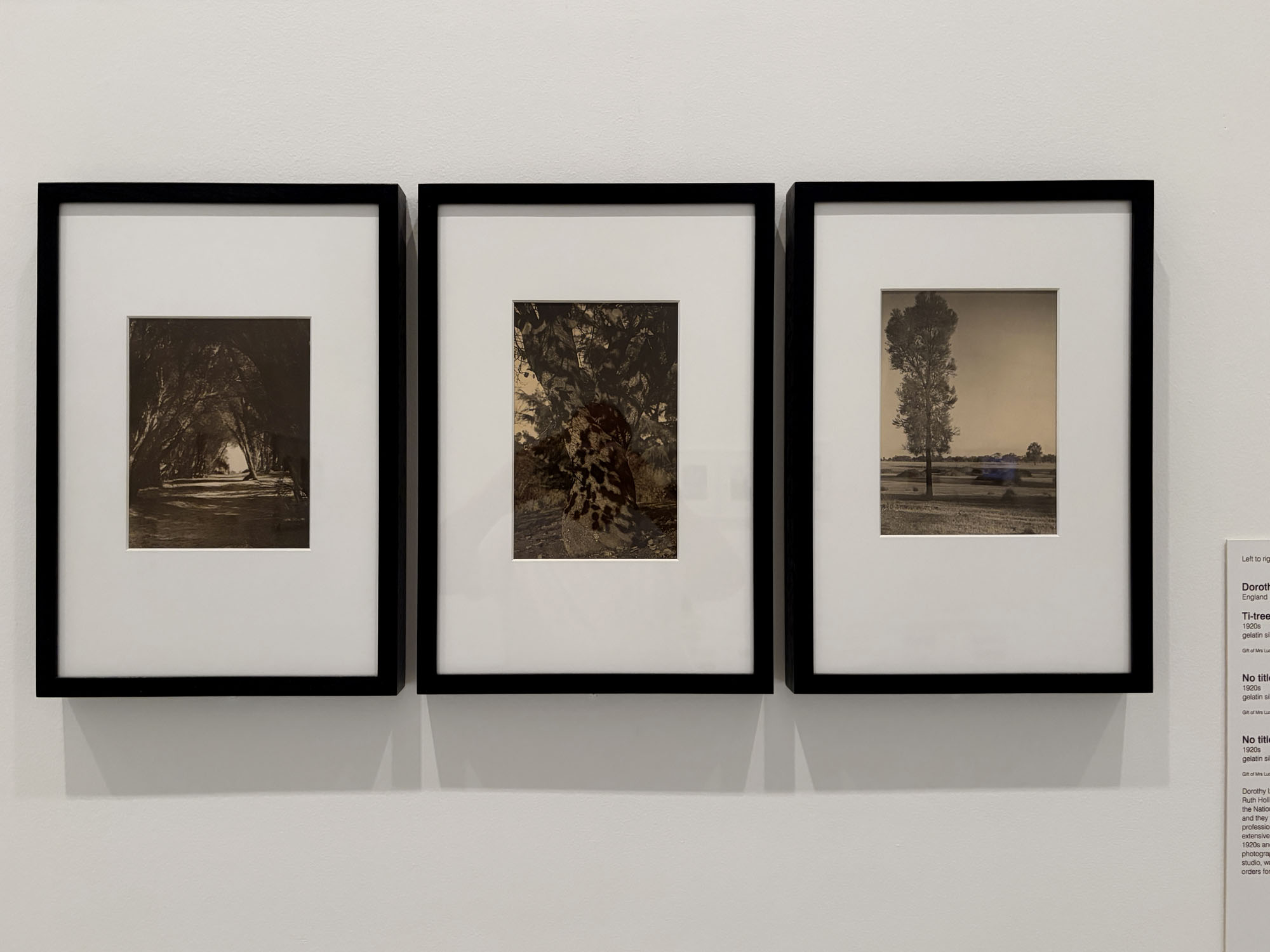
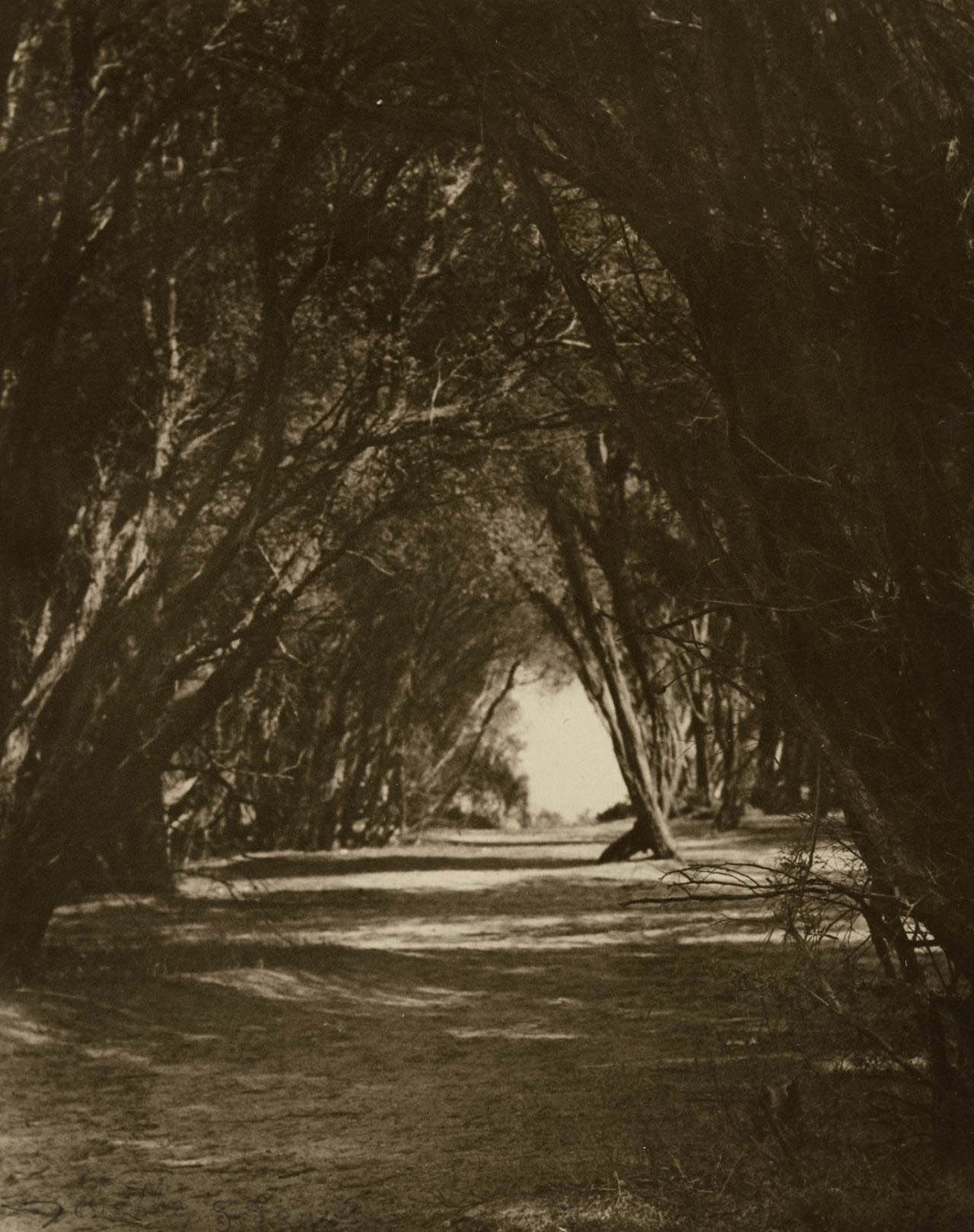
Installation view of the exhibition 'Women Photographers 1900-1975: A Legacy of Light' at NGV International, Melbourne, November 2025 - May 2026 showing three photographs by Dorothy Izard (Australian born England, 1882-1972): 'Ti-trees' (1920s); 'No title (Dappled tree)' (1920s); and 'No title (Tree in paddock)' (1920s)


Installation view of the exhibition Women Photographers 1900-1975: A Legacy of Light at NGV International, Melbourne, November 2025 – May 2026 showing three photographs by Dorothy Izard (Australian born England, 1882-1972): Ti-trees (1920s); No title (Dappled tree) (1920s); and No title (Tree in paddock) (1920s)
Photo: Marcus Bunyan


Dorothy Izard (Australian born England, 1882-1972) 'Ti-trees' 1920s


Dorothy Izard (Australian born England, 1882-1972)
Ti-trees
1920s
Gelatin silver photograph
22.8 × 18.4cm (image)
National Gallery of Victoria, Melbourne
Gift of Mrs Lucy Crosbie Morrison, 1992


Dorothy Izard met fellow photographer Ruth Hollick when they were students at the National Gallery of Victoria Art School, and they formed both a romantic and a professional partnership. They travelled extensively around regional Victoria in the 1920s and 1930s. Izard was a landscape photographer and, at Hollick’s home studio, was responsible for printing the orders for Hollick’s photographs.

Wall text from the exhibition


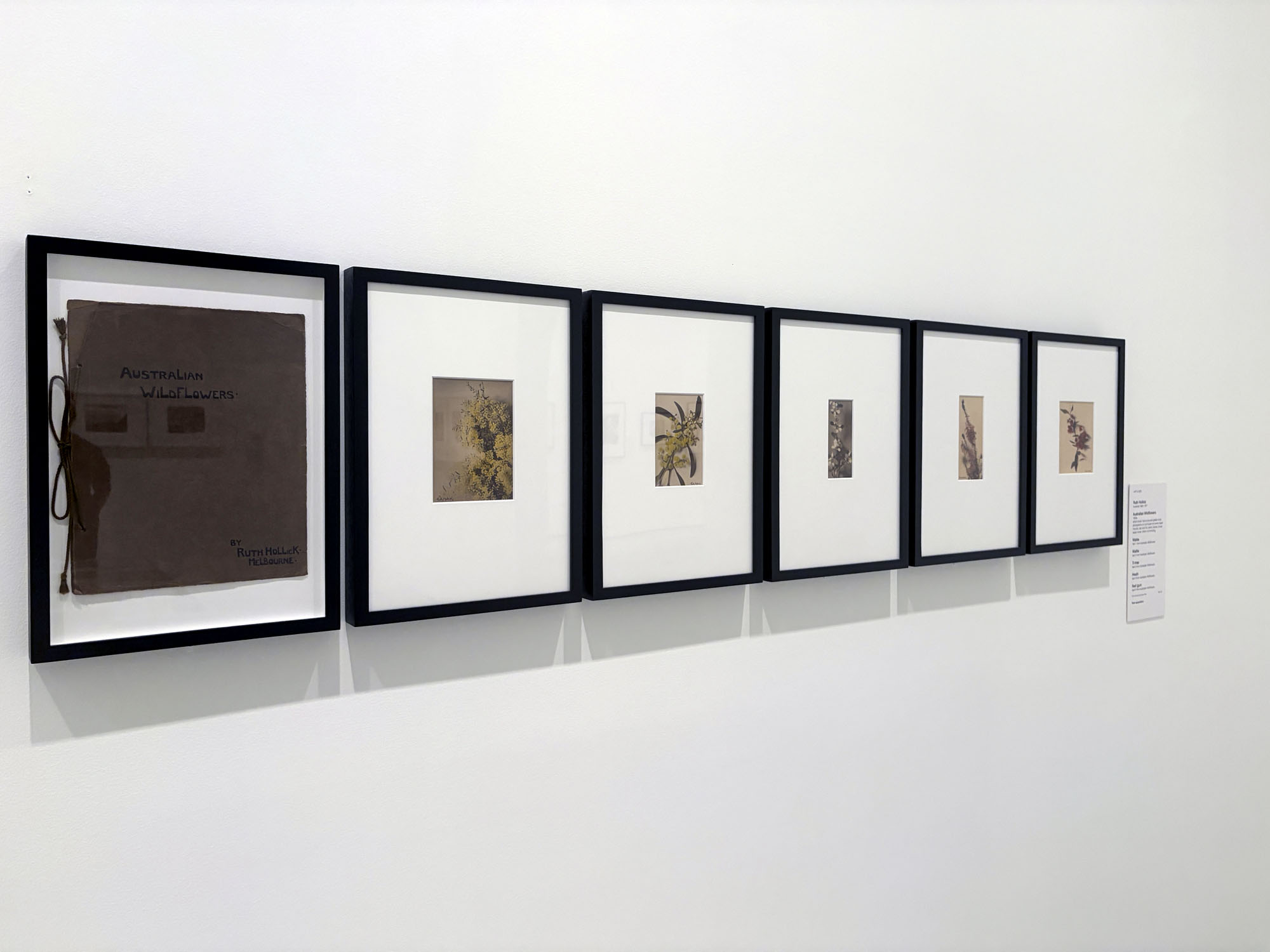
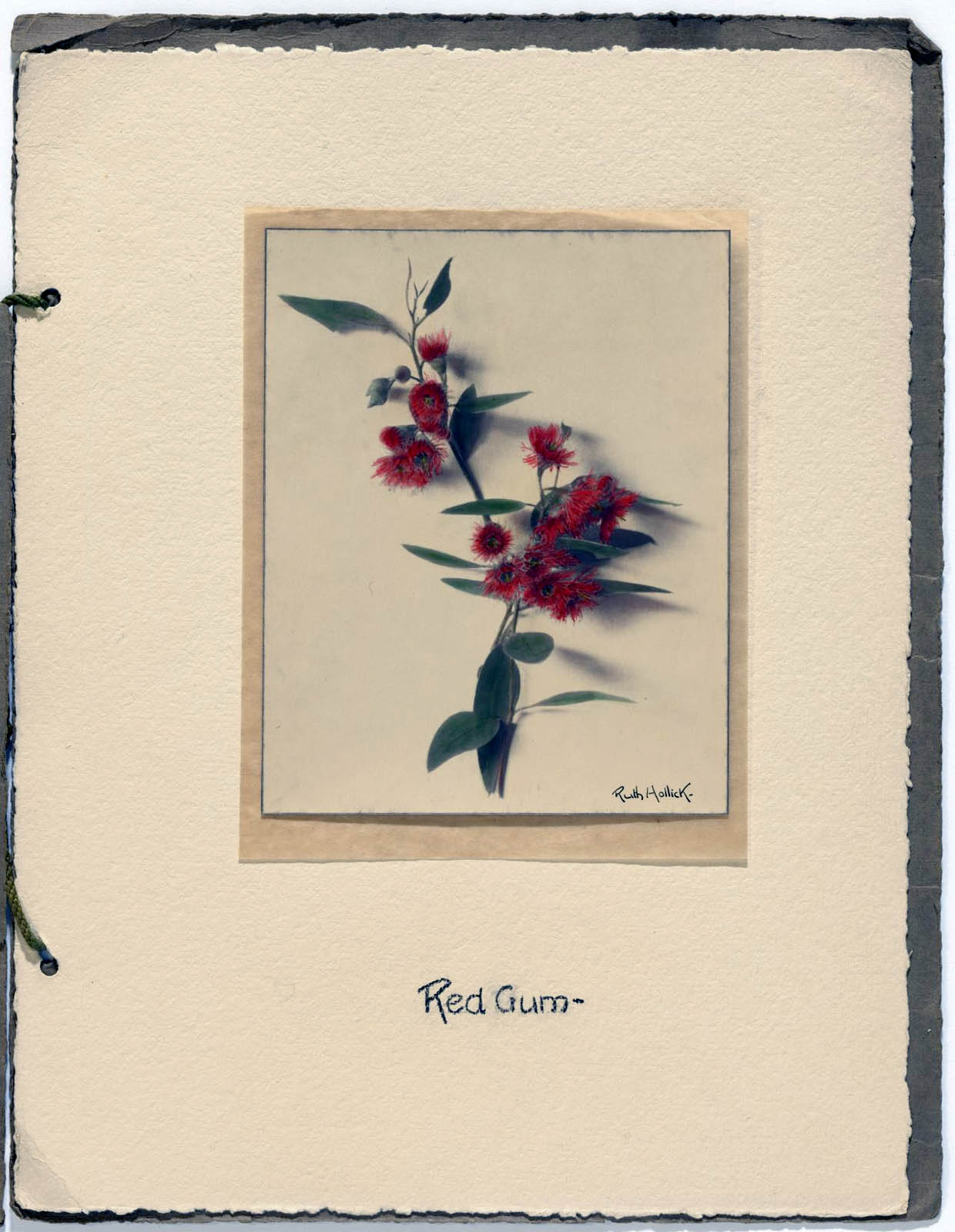
Installation view of the exhibition 'Women Photographers 1900-1975: A Legacy of Light' at NGV International, Melbourne, November 2025 - May 2026 showing  Ruth Hollick's artist book 'Australian flowers' (1950s)


Installation view of the exhibition Women Photographers 1900-1975: A Legacy of Light at NGV International, Melbourne, November 2025 – May 2026 showing Ruth Hollick’s artist book Australian flowers (1950s, below)
Photo: Marcus Bunyan


Ruth Hollick (Australian, 1883-1977) 'Australian wildflowers' 1950s


Ruth Hollick (Australian, 1883-1977)
Australian wildflowers
1950s
Artist’s book: hand-coloured gelatin silver photographs on buff paper on brown paper mounts, pen and ink, pencil, (other materials), [5] leaves, brown paper cover, cotton cord binding
33.2 x 25.5cm (page)
34.3 x 26.3 x 1.0cm irreg. (closed)
34.3 x 53.1 x 1.1cm irreg. (open)
National Gallery of Victoria, Melbourne
Gift of Pamela Jane Green, 2021
Public domain


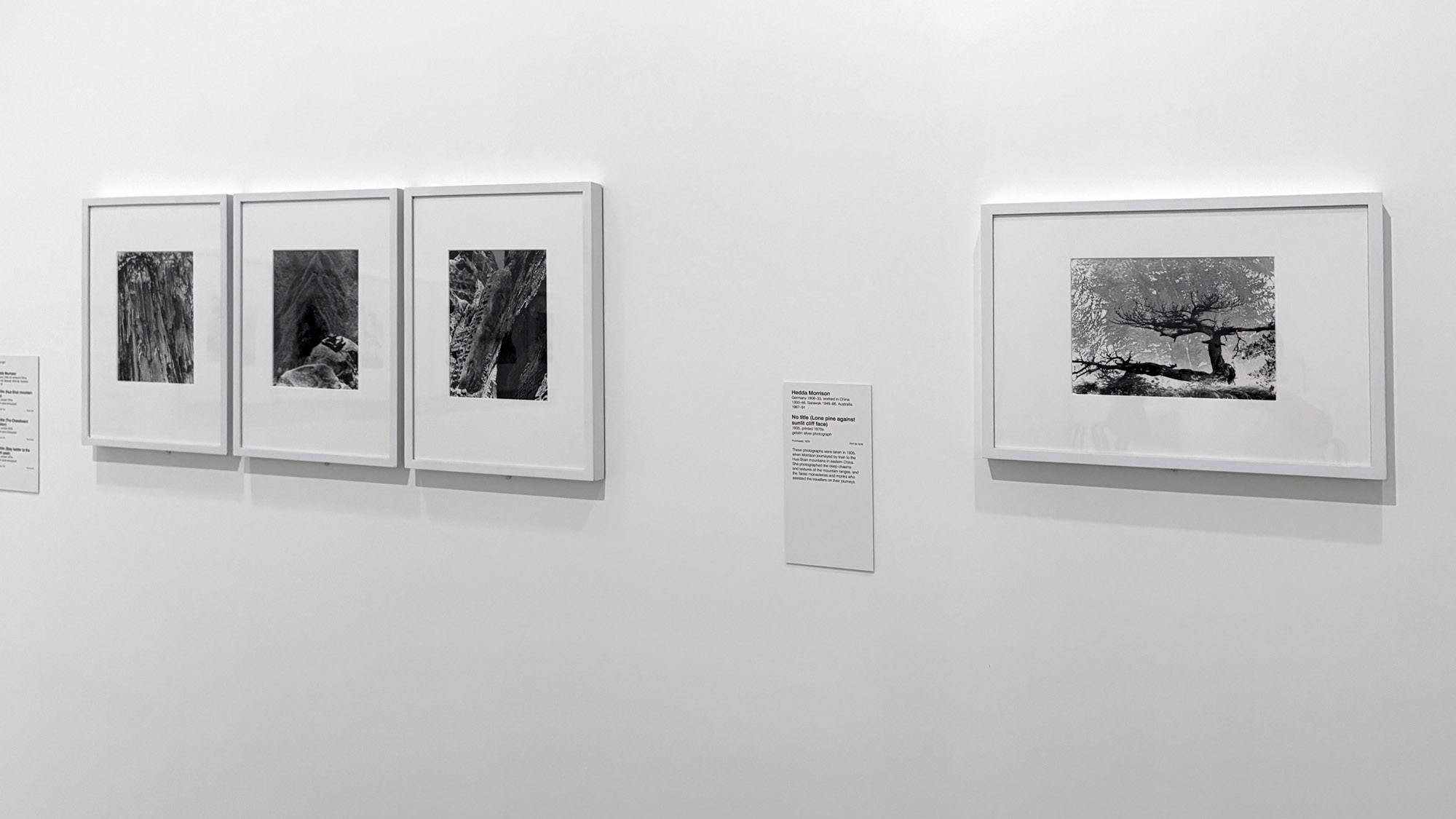
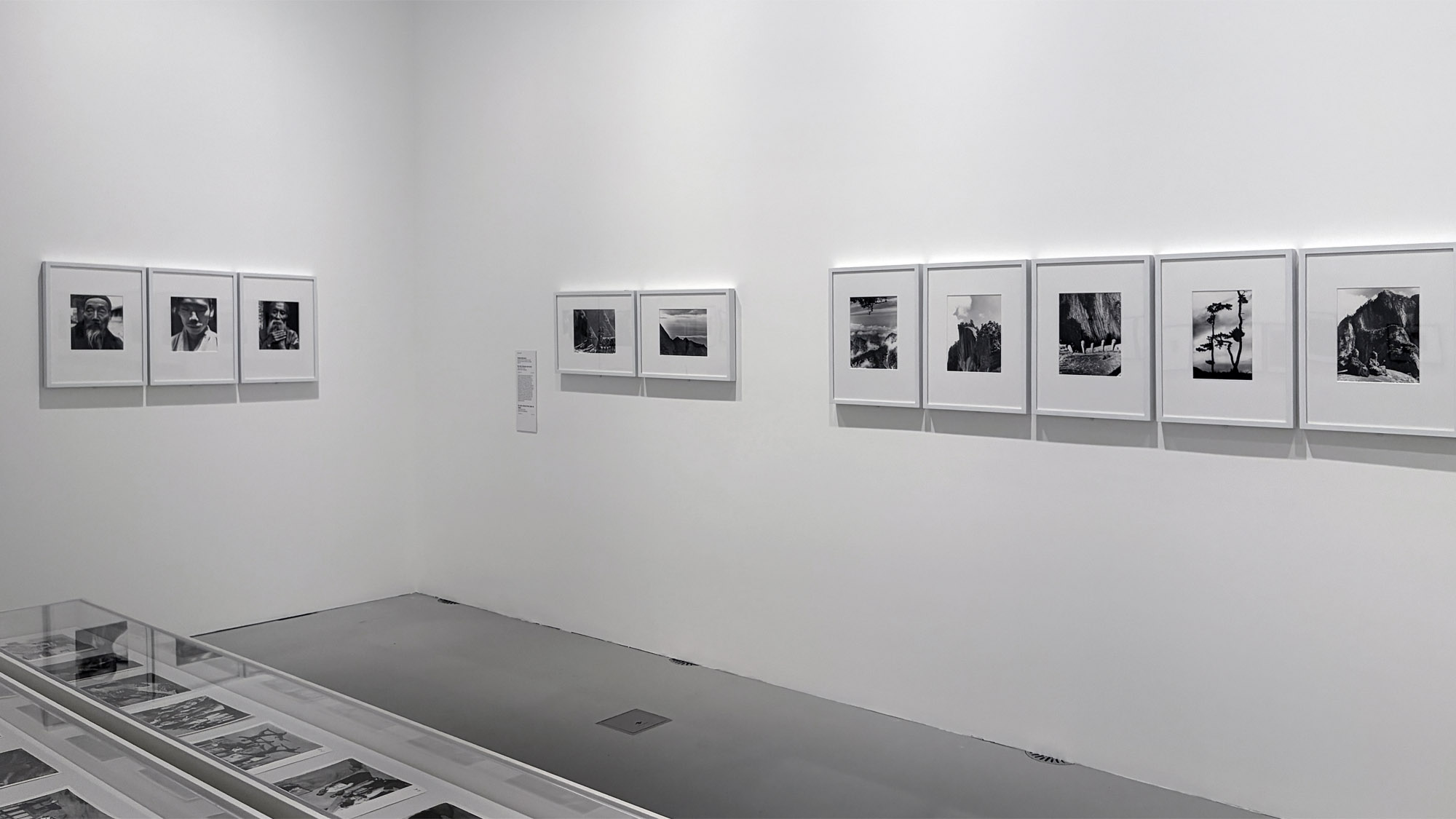
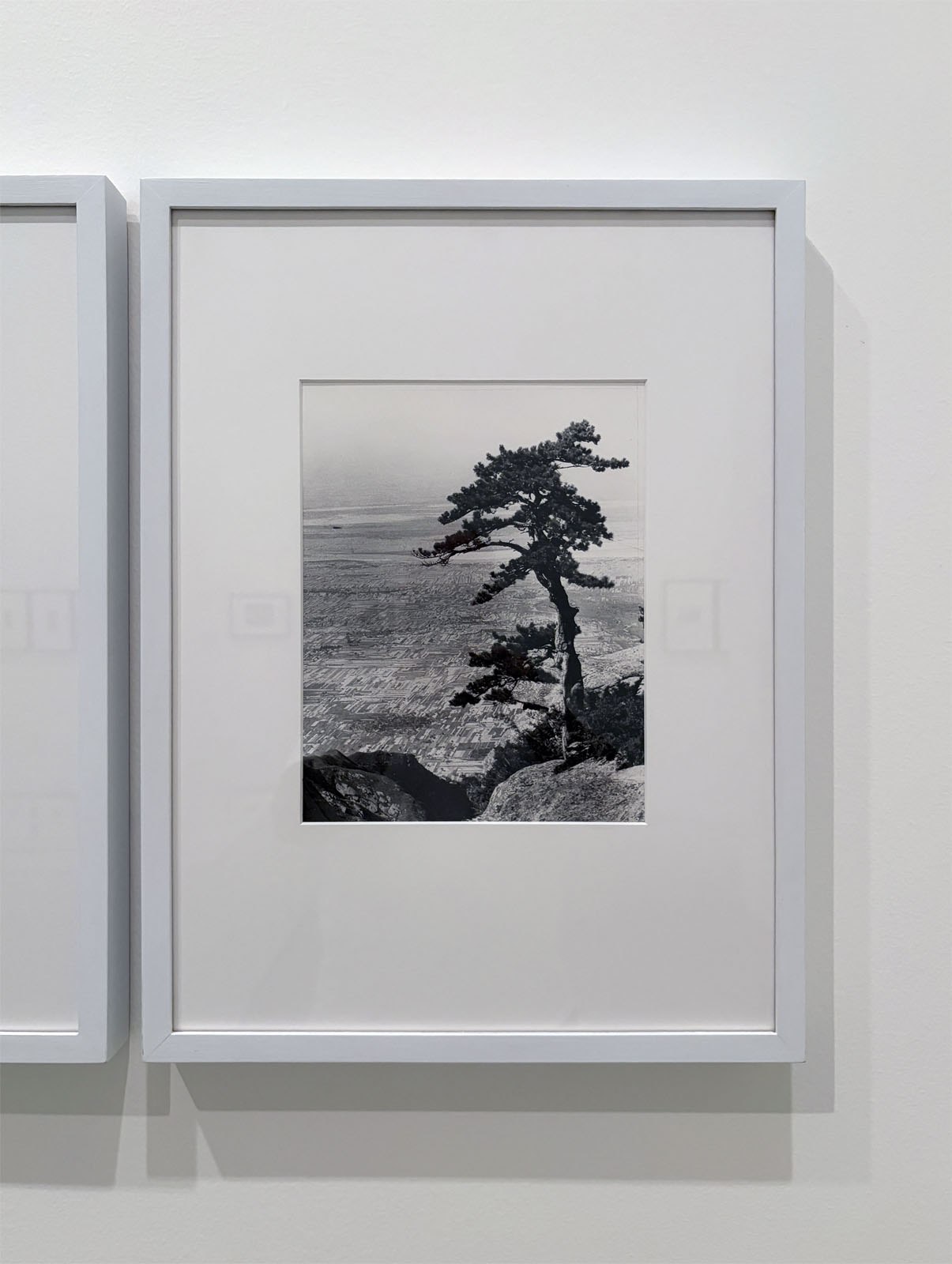
Installation view of the exhibition 'Women Photographers 1900-1975: A Legacy of Light' at NGV International, Melbourne, November 2025 - May 2026 showing from left to right, four photographs by Hedda Morrison (Australian born Germany, 1908-1991): 'No title (Hua Shan mountain face)' (1935, printed 1970s); 'No title (The Chessboard Pavilion)' (1935, printed 1970s); 'No title (Step ladder to the nothingness peak)' (1935, printed 1970s); and 'No title (Lone pine against sunlit cliff face)' (1935, printed 1970s)


Installation view of the exhibition Women Photographers 1900-1975: A Legacy of Light at NGV International, Melbourne, November 2025 – May 2026 showing from left to right, four photographs by Hedda Morrison (Australian born Germany, 1908-1991): No title (Hua Shan mountain face) (1935, printed 1970s); No title (The Chessboard Pavilion) (1935, printed 1970s); No title (Step ladder to the nothingness peak ) (1935, printed 1970s); and No title (Lone pine against sunlit cliff face) (1935 printed 1970s, below)
Photo: Marcus Bunyan


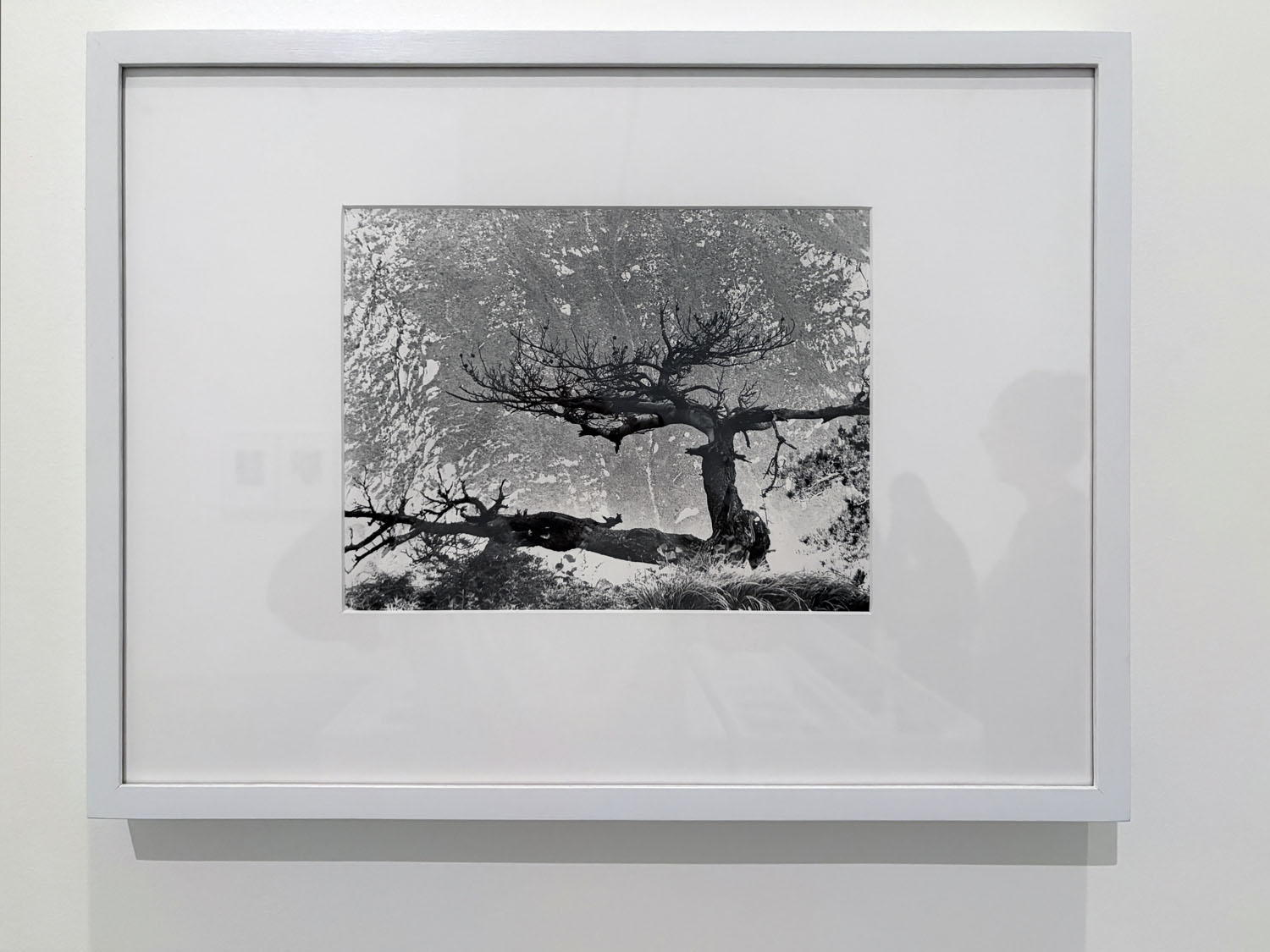
Hedda Morrison (Australian born Germany, 1908-1991) 'No title (Lone pine against sunlit cliff face)' 1935 (installation view)


Hedda Morrison (Australian born Germany, 1908-1991)
No title (Lone pine against sunlit cliff face) (installation view)
1935
Gelatin silver photograph
22.8 x 30.3cm (image)
National Gallery of Victoria, Melbourne
Purchased, 1976
Photo: Marcus Bunyan


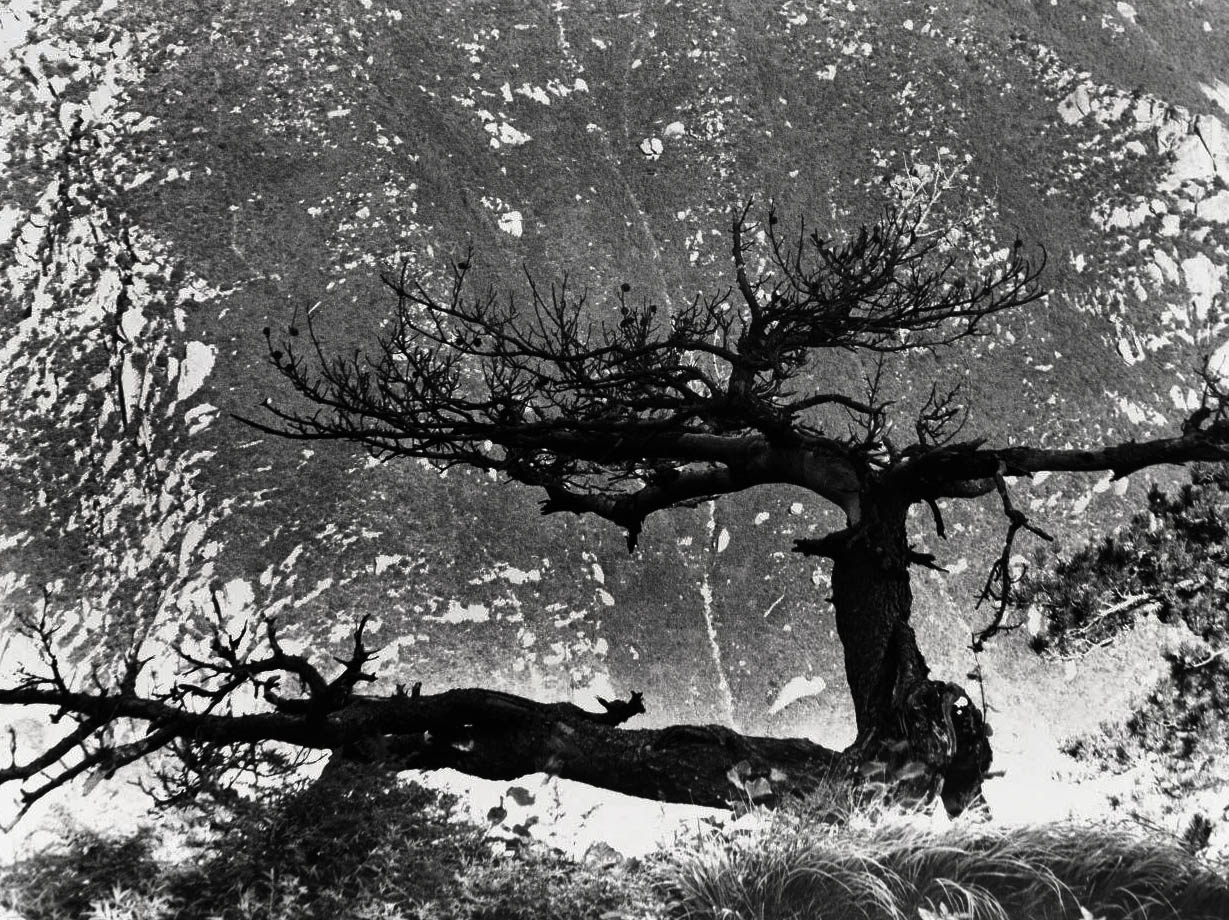
Hedda Morrison (German, 1908-1991) 'No title (Lone pine against sunlit cliff face)' 1935


Hedda Morrison (German, 1908-1991)
No title (Lone pine against sunlit cliff face)
1935
Gelatin silver photograph
22.8 x 30.3cm (image)
National Gallery of Victoria, Melbourne
Purchased, 1976
© Harvard-Yenching Library. Originals held by the Harvard-Yenching Library, Harvard University


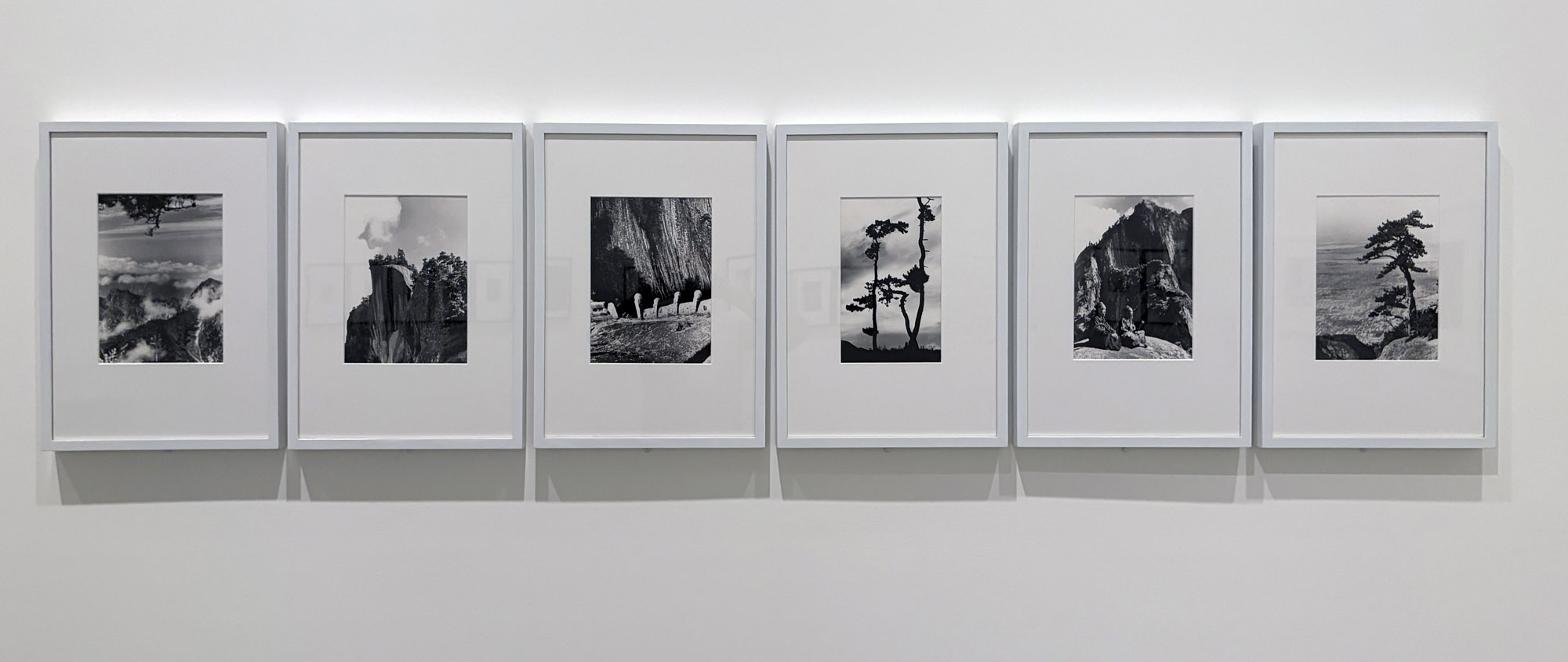
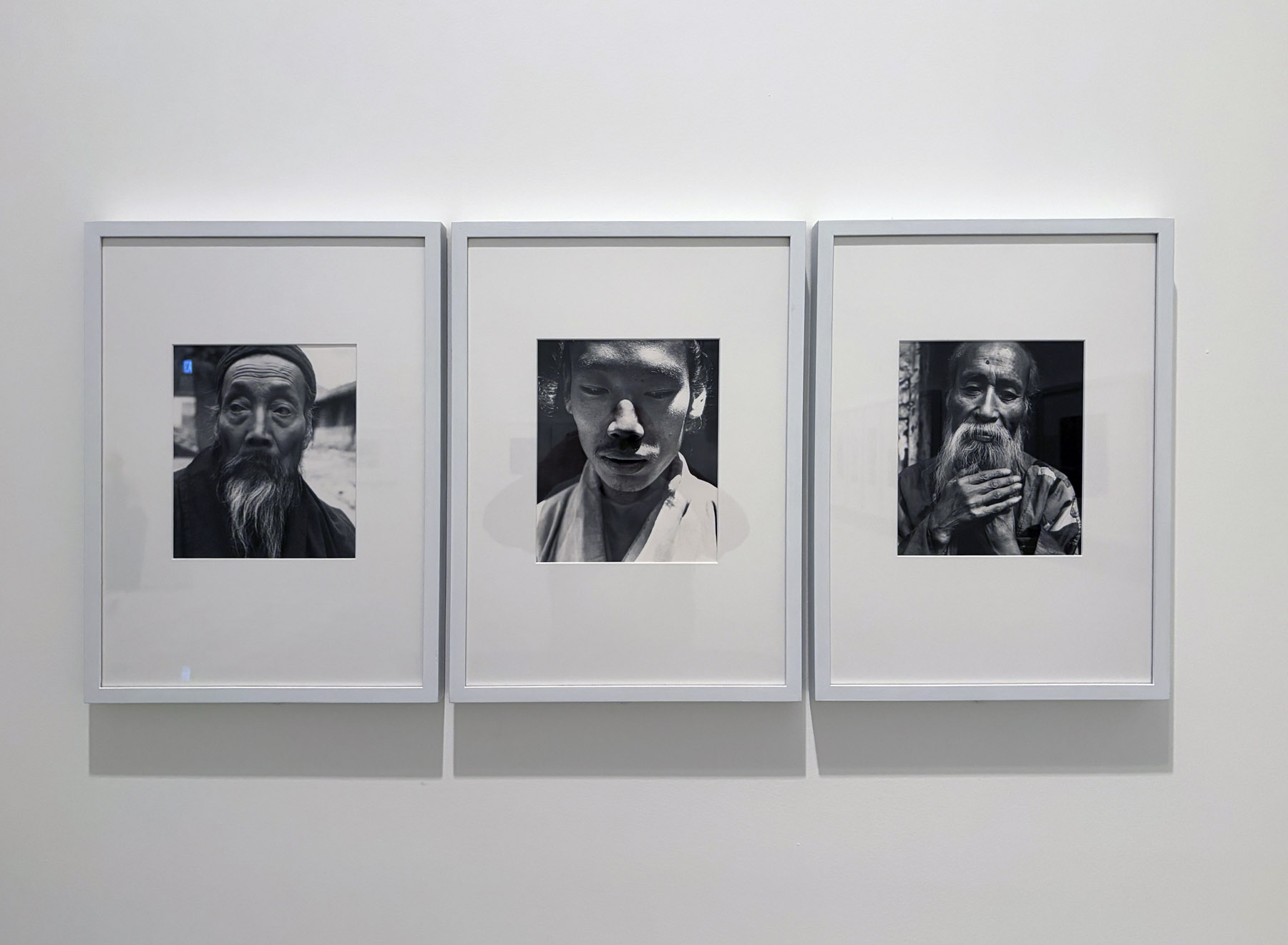
These photographs were taken in 1935, when Morrison journeyed by train to the Hua Shan mountains in eastern China. She photographed the deep chasms and textures of the mountain ranges, and the Taoist monasteries and monks who assisted the travellers on their journeys.

Wall text from the exhibition


Installation view of the exhibition 'Women Photographers 1900-1975: A Legacy of Light' at NGV International, Melbourne, November 2025 - May 2026 showing photographs by Hedda Morrison (Australian born Germany, 1908-1991)


Installation view of the exhibition Women Photographers 1900-1975: A Legacy of Light at NGV International, Melbourne, November 2025 – May 2026 showing photographs by Hedda Morrison (Australian born Germany, 1908-1991)
Photo: Marcus Bunyan


Installation view of the exhibition 'Women Photographers 1900-1975: A Legacy of Light' at NGV International, Melbourne, November 2025 - May 2026 showing from left to right, six photographs by Hedda Morrison: 'No title (Morning clouds)' (1935, printed 1970s); 'No title (Fairy palm cliff)' (1935, printed 1970s); 'No title (The stone balustrade)' (1935, printed 1970s); 'No title (Three gnarled pines)' (1935, printed 1970s); 'No title (Two Taoist priests below the fiery palm cliff)' (1935, printed 1970s); and 'No title (Pine tree above the Yellow River plain)' (1935, printed 1970s)


Installation view of the exhibition Women Photographers 1900-1975: A Legacy of Light at NGV International, Melbourne, November 2025 – May 2026 showing from left to right, six photographs by Hedda Morrison: No title (Morning clouds) (1935, printed 1970s); No title (Fairy palm cliff) (1935, printed 1970s); No title (The stone balustrade) (1935, printed 1970s); No title (Three gnarled pines) (1935, printed 1970s); No title (Two Taoist priests below the fiery palm cliff) (1935, printed 1970s); and No title (Pine tree above the Yellow River plain) (1935, printed 1970s)
Photo: Marcus Bunyan


Hedda Morrison (Australian born Germany, 1908-1991) 'No title (Pine tree above the Yellow River plain)' 1935, printed 1970s (installation view)


Hedda Morrison (Australian born Germany, 1908-1991)
No title (Pine tree above the Yellow River plain) (installation view)
1935, printed 1970s
Gelatin silver photograph
30.3 x 22.7cm (image)
National Gallery of Victoria, Melbourne
Purchased, 1976
Photo: Marcus Bunyan


Installation view of the exhibition 'Women Photographers 1900-1975: A Legacy of Light' at NGV International, Melbourne, November 2025 – May 2026 showing from left to right, three photographs by Hedda Morrison: 'No title (Taoist priest)' (1935, printed 1970s); 'No title (Taoist novice)' (1935, printed 1970s); and 'No title (Taoist priest)' (1935, printed 1970s)


Installation view of the exhibition Women Photographers 1900-1975: A Legacy of Light at NGV International, Melbourne, November 2025 – May 2026 showing from left to right, three photographs by Hedda Morrison: No title (Taoist priest) (1935, printed 1970s); No title (Taoist novice) (1935, printed 1970s); and No title (Taoist priest) (1935, printed 1970s)
Photo: Marcus Bunyan


Installation view of the exhibition 'Women Photographers 1900-1975: A Legacy of Light' at NGV International, Melbourne, November 2025 - May 2026


Installation views of the exhibition Women Photographers 1900-1975: A Legacy of Light at NGV International, Melbourne, November 2025 – May 2026
Photos: Marcus Bunyan


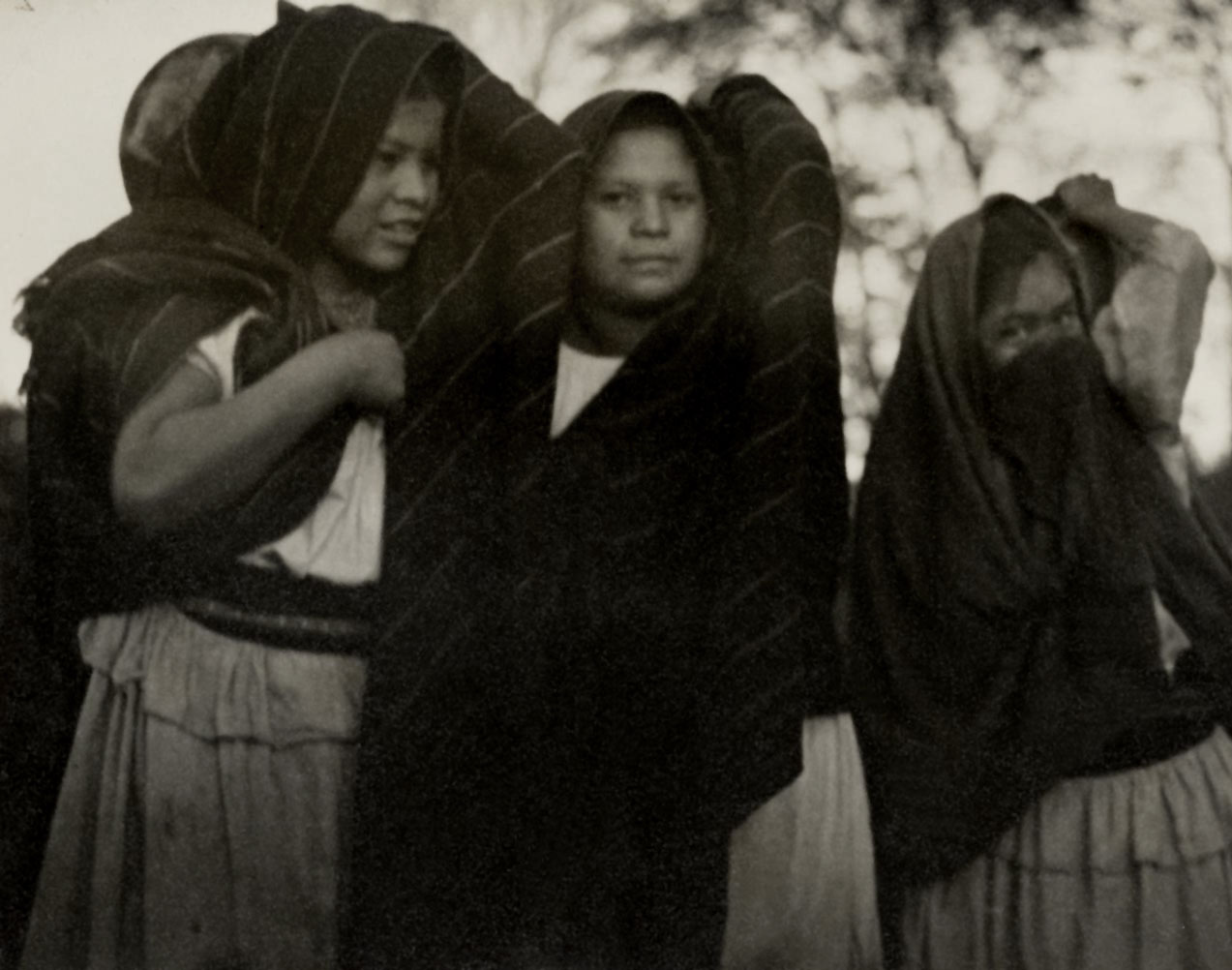
Tina Modotti (Italian, 1896-1942) 'Girls in shawls' 1924-1929


Tina Modotti (Italian, 1896-1942)
Girls in shawls
1924-1929
Gelatin silver photograph
13.2 x 16.9cm (image and sheet)
National Gallery of Victoria, Melbourne
Bowness Family Fund for Photography, 2024


Tina Modotti is known for her socially and politically charged photographs documenting Mexican working life. For Modotti, art, life and politics were inextricably linked. Her photographs show the artist’s commitment to documenting the lives of women and working people. This image is believed to be from a project exploring the popular arts of Mexico, specifically the
shawl-like rebozo, and exemplifies Modotti’s humanist style of documentary photography. It is one of the photographs anthropologist Frances Toor commissioned from Modotti and Edward Weston for the magazine Mexican Folkways, published between 1925 and 1937.

Wall text from the exhibition


Dora Maar (French 1907-1997) 'Vendors laughing behind their charcuterie stall, Barcelona' (Vendeuses et vendeur riant derrière leur étal de charcuterie, Barcelone) 1933


Dora Maar (French 1907-1997)
Vendors laughing behind their charcuterie stall, Barcelona (Vendeuses et vendeur riant derrière leur étal de charcuterie, Barcelone)
1933
Gelatin silver photograph
27.2 x 24.0cm (image)
30.3 x 24.0cm (sheet)
National Gallery of Victoria, Melbourne
Gift of Krystyna Campbell-Pretty AM and Family through the Australian Government’s Cultural Gifts Program, 2021
Public domain


In 1933 Dora Maar travelled to Spain, where she documented the extreme poverty of the country’s cities through people she met on the streets. Aligning with her left-wing politics and opposition to fascism, her photographs honour working-class citizens rather than buildings or monuments. Maar was fascinated by the characters she encountered in La Boqueria, the market in the heart of Barcelona. In this image, she captures a joyful moment as the women vendors playfully turn away from her, hiding their gaze, while a man smiles directly into Maar’s lens.

Wall text from the exhibition


The Document

The primary aim of social documentary photography is to draw attention to social issues, often to promote social or political change. This style of photography blossomed during the tumultuous period of the 1930s, when photographers were commissioned by the United States government to document the effects of the Great Depression. The increased popularity of illustrated mass media such as newspapers and magazines also allowed for the broad dissemination of social documentary images and texts.

The ability of social documentary photography to present a purely objective representation of people or places continues to be fertile ground for debate today.


Installation view of the exhibition 'Women Photographers 1900-1975: A Legacy of Light' at NGV International, Melbourne, November 2025 - May 2026 showing Farm Security Administration photographs by Dorothea Lange
Installation view of the exhibition 'Women Photographers 1900-1975: A Legacy of Light' at NGV International, Melbourne, November 2025 - May 2026


Installation views of the exhibition Women Photographers 1900-1975: A Legacy of Light at NGV International, Melbourne, November 2025 – May 2026 showing Farm Security Administration photographs by Dorothea Lange
Photos: Marcus Bunyan


Installation view of the exhibition 'Women Photographers 1900-1975: A Legacy of Light' at NGV International, Melbourne, November 2025 - May 2026 showing clockwise from bottom left, four photographs by Dorothea Lange: 'Drought-stricken farmers on the shady side of town street while their crops burn up in the fields, Sallisaw, Oklahoma' (1936 printed c. 1975); 'Drought refugees from Oklahoma, Blythe, California' (1936, printed c. 1975); 'Real Estate sign along highway, Riverside County, California' (1937, printed c. 1975); and 'Child living in Oklahoma City, Shacktown' (1936 printed c. 1975)


Installation view of the exhibition Women Photographers 1900-1975: A Legacy of Light at NGV International, Melbourne, November 2025 – May 2026 showing clockwise from bottom left, four photographs by Dorothea Lange: Drought-stricken farmers on the shady side of town street while their crops burn up in the fields, Sallisaw, Oklahoma (1936 printed c. 1975, below); Drought refugees from Oklahoma, Blythe, California (1936, printed c. 1975); Real Estate sign along highway, Riverside County, California (1937, printed c. 1975); and Child living in Oklahoma City, Shacktown (1936 printed c. 1975, below)
Photo: Marcus Bunyan


Dorothea Lange (American, 1895-1965) 'Drought-stricken farmers on the shady side of town street while their crops burn up in the fields, Sallisaw, Oklahoma' 1936, printed c. 1975


Dorothea Lange (American, 1895-1965)
Drought-stricken farmers on the shady side of town street while their crops burn up in the fields, Sallisaw, Oklahoma
1936, printed c. 1975
Gelatin silver photograph
26.4 x 25.4cm (image)
28.0 x 35.4cm (sheet)
National Gallery of Victoria, Melbourne
Purchased, 1975
Public domain


Dorothea Lange (American, 1895-1965) 'Child living in Oklahoma City, Shacktown' 1936, printed c. 1975


Dorothea Lange (American, 1895-1965)
Child living in Oklahoma City, Shacktown
1936, printed c. 1975
Gelatin silver photograph
26.9 x 25.5cm (image)
28.0 x 35.4cm (sheet)
National Gallery of Victoria, Melbourne
Purchased, 1975
Public domain


During the Great Depression, many migrants travelling in search of economic opportunity were forced to create temporary camps along roadsides. For Dorothea Lange, who photographed many such experiences over several years, images like this one were part of a greater project to spark public awareness of the difficulties people were facing. As Lange later said, ‘I had begun to talk to the people I photographed … In the migrant camps, there were always talkers. It gave us a chance to meet on common ground.’

Wall text from the exhibition


In Focus: Farm Security Administration Project

The Farm Security Administration (FSA) was established in 1937 as part of United States President Franklin D. Roosevelt’s New Deal economic reforms, which provided relief to farmers left impoverished by the hardships of the Great Depression. Led by Roy Stryker, the FSA’s photography program was to be one of the most influential social documentary projects ever developed. Many images were reproduced in newspapers and periodicals to show the harsh realities of life for those living in poverty, with the aim of encouraging public support for the government’s economic policies.

The program ran as part of several government agencies, including the Resettlement Administration (1935-37), then the Farm Security Administration (1937-42) and the Office of War Information (1942-44). Stryker hired a range of photographers for the project and, despite their being given comparable briefs, the unique eye of each photographer is apparent in the over 175,000 pictures produced by the project.

As well as forming a comprehensive pictorial record of American life from 1935 to 1944, the FSA photography program generated some of the most recognisable documentary photographs of the twentieth century, including images by women such as Dorothea Lange, Marion Post Wolcott and Marjory Collins.


Dorothea Lange (American, 1895-1965) 'Woman of the high plains, near Childress, Texas' 1938, printed c. 1975 (installation view)


Dorothea Lange (American, 1895-1965)
Woman of the high plains, near Childress, Texas (installation view)
1938, printed c. 1975
Gelatin silver photograph
49.4 x 39.3cm (image)
50.5 x 40.6cm (sheet)
National Gallery of Victoria, Melbourne
Purchased, 1975
Public domain


Dorothea Lange (American, 1895-1965) 'Woman of the High Plains, Texas Panhandle' June 1938, printed c. 1975


Dorothea Lange (American, 1895-1965)
Woman of the high plains, near Childress, Texas
1938, printed c. 1975
Gelatin silver photograph
49.4 x 39.3cm (image)
50.5 x 40.6cm (sheet)
National Gallery of Victoria, Melbourne
Purchased, 1975
Public domain


‘We’ve had no work since March. The worst thing we did was when we sold the car, but we had to sell it to eat, and now we can’t get away from here … This county’s a hard county. They won’t help bury you here. If you die, you’re dead, that’s all.’

~ The subject of this photograph, Nettie Featherston, to Dorothea Lange

Wall text from the exhibition


Dorothea Lange (United States 1895-1965) 'Towards Los Angeles, California' 1936, printed c. 1975


Dorothea Lange (American, 1895-1965)
Towards Los Angeles, California
1936, printed c. 1975
Gelatin silver photograph
39.6 x 39.1cm (image)
40.8 x 50.5cm (sheet)
National Gallery of Victoria, Melbourne
Purchased, 1975


During the Great Depression, the Great Plains of North America became known as the Dust Bowl. A severe drought turned the soil to dust, leading to the migration of thousands of small-scale farmers who could no longer work the land. Dorothea Lange made many road trips to document the plight of migrants heading west in search of work and opportunities. Many of Lange’s photographs, such as this one, show workers travelling in difficult conditions, on foot and by car. This photograph was also used as the basis for a scene in the 1939 film Of Mice and Men, based on John Steinbeck’s story of two migrant ranch workers.

Wall text from the exhibition


Installation view of the exhibition 'Women Photographers 1900-1975: A Legacy of Light' at NGV International, Melbourne, November 2025 - May 2026 showing from top to bottom, two photographs by Dorothea Lange: 'Plantation Overseer, Mississippi Delta, near Clarksdale, Mississippi' (1936, printed c. 1975) and 'Born a slave, resettled after the Civil War, Carrizo Springs, Texas' (1936, printed c. 1975)


Installation view of the exhibition Women Photographers 1900-1975: A Legacy of Light at NGV International, Melbourne, November 2025 – May 2026 showing from top to bottom, two photographs by Dorothea Lange: Plantation Overseer, Mississippi Delta, near Clarksdale, Mississippi (1936, printed c. 1975) and Born a slave, resettled after the Civil War, Carrizo Springs, Texas (1936 printed c. 1975, below)
Photo: Marcus Bunyan


Dorothea Lange (American, 1895-1965) 'Born a slave, resettled after the Civil War, Carrizo Springs, Texas' 1936, printed c. 1975


Dorothea Lange (American, 1895-1965)
Born a slave, resettled after the Civil War, Carrizo Springs, Texas
1936, printed c. 1975
Gelatin silver photograph
26.5 x 25.4cm (image)
28.0 x 35.4cm (sheet)
National Gallery of Victoria, Melbourne
Purchased, 1975
Public domain


Dorothea Lange witnessed racial segregation in the Southern states and often photographed individuals affected by the resulting social and economic inequalities. This work is also known by an alternate title: ‘Bob Lemmons, Carrizo Springs, Texas. Born a slave about 1850, south of San Antonio. Came to Carrizo Springs during the Civil War with white cattlemen seeking new range. In 1865, with his master was one of the first settlers. Knew Billy the Kid, King Fisher, and other noted bad men of the border.’

Wall text from the exhibition


Marion Post Wolcott (American, 1910-1990) 'Shenandoah Valley, Virginia' 1941, printed c. 1975 (installation view)


Marion Post Wolcott (American, 1910-1990)
Shenandoah Valley, Virginia (installation view)
1941, printed c. 1975
Gelatin silver photograph
25.6 x 34.1cm (image)
28.0 x 35.4cm (sheet)
National Gallery of Victoria, Melbourne
Purchased, 1975
Public domain
Photo: Marcus Bunyan


Marion Post Wolcott (American, 1910-1990) 'Shenandoah Valley, Virginia' 1941, printed c. 1975


Marion Post Wolcott (American, 1910-1990)
Shenandoah Valley, Virginia
1941, printed c. 1975
Gelatin silver photograph
25.6 x 34.1cm (image)
28.0 x 35.4cm (sheet)
National Gallery of Victoria, Melbourne
Purchased, 1975
Public domain


Marion Post Wolcott (American, 1910-1990) 'One of the judges at the horse races, Warrenton, Virginia' 1941, printed c. 1975 (installation view)


Marion Post Wolcott (American, 1910-1990)
One of the judges at the horse races, Warrenton, Virginia (installation view)
1941, printed c. 1975
Gelatin silver photograph
39.6 x 39.1cm (image)
40.8 x 50.5cm (sheet)
National Gallery of Victoria, Melbourne
Purchased, 1975
Public domain
Photo: Marcus Bunyan


Marion Post Wolcott (American, 1910-1990) 'Transportation for hep cats Louisville, Kentucky' 1940, printed c. 1975 (installation view)


Marion Post Wolcott (American, 1910-1990)
Transportation for hep cats Louisville, Kentucky (installation view)
1940, printed c. 1975
Gelatin silver photograph
25.7 x 34.1cm (image)
36.1 x 44.6cm (sheet)
National Gallery of Victoria, Melbourne
Purchased, 1975
Public domain
Photo: Marcus Bunyan


Marion Post Wolcott (American, 1910-1990) 'Transportation for hep cats Louisville, Kentucky' 1940, printed c. 1975


Marion Post Wolcott (American, 1910-1990)
Transportation for hep cats Louisville, Kentucky
1940, printed c. 1975
Gelatin silver photograph
25.7 x 34.1cm (image)
36.1 x 44.6cm (sheet)
National Gallery of Victoria, Melbourne
Purchased, 1975
Public domain


Installation view of the exhibition 'Women Photographers 1900-1975: A Legacy of Light' at NGV International, Melbourne, November 2025 - May 2026 showing from third left to right, three photographs by Marion Post Wolcott: 'Near Wadesboro, North Carolina' (1938, printed c. 1975); 'Baptismal service, Morehead, Kentucky' (1940, printed c. 1975); and 'Jitterbugging in a juke joint on Saturday night, Clarksdale, Mississippi' (1939, printed c. 1975)


Installation view of the exhibition Women Photographers 1900-1975: A Legacy of Light at NGV International, Melbourne, November 2025 – May 2026 showing from third left to right, three photographs by Marion Post Wolcott: Near Wadesboro, North Carolina (1938 printed c. 1975, below); Baptismal service, Morehead, Kentucky (1940 printed c. 1975, below); and Jitterbugging in a juke joint on Saturday night, Clarksdale, Mississippi (1939 printed c. 1975, below)
Photo: Marcus Bunyan


Marion Post Wolcott (American, 1910-1990) 'Near Wadesboro, North Carolina' 1938, printed c. 1975 (installation view)


Marion Post Wolcott (American, 1910-1990)
Near Wadesboro, North Carolina (installation view)
1938, printed c. 1975
Gelatin silver photograph
26.4 × 26.5cm (image)
28.0 × 35.3cm (sheet)
National Gallery of Victoria, Melbourne
Purchased, 1975
Public domain
Photo: Marcus Bunyan


The people in this photograph are the children of tenant farmers. The older child holds the hand of the younger, whose legs are bowed likely due to rickets, a medical condition caused by malnourishment. This is a vivid image that captures both the intimacy between children and the effects of environmental and economic devastation.

Wall text from the exhibition


Marion Post Wolcott (American, 1910-1990) 'Haircutting in front of plantation store after being paid off on Saturday, Mileston Plantation, Mississippi Delta' 1939, printed c. 1939 (installation view)


Marion Post Wolcott (American, 1910-1990)
Haircutting in front of plantation store after being paid off on Saturday, Mileston Plantation, Mississippi Delta (installation view)
1939, printed c. 1939
Gelatin silver photograph
27.0 x 34.6cm (image and sheet)
National Gallery of Victoria, Melbourne
Purchased, 1980
Photo: Marcus Bunyan


Marion Post Wolcott (American, 1910–1990) '[Haircutting in Front of General Store and Post Office on Marcella Plantation, Mileston, Mississippi]' 1939


Marion Post Wolcott (American, 1910-1990)
Haircutting in front of plantation store after being paid off on Saturday, Mileston Plantation, Mississippi Delta
1939, printed c. 1939
Gelatin silver photograph
27.0 x 34.6cm (image and sheet)
National Gallery of Victoria, Melbourne
Purchased, 1980


Marion Post Wolcott (American, 1910-1990) 'Baptismal service, Morehead, Kentucky' 1940, printed c. 1975


Marion Post Wolcott (American, 1910-1990)
Baptismal service, Morehead, Kentucky
1940, printed c. 1975
Gelatin silver photograph
36.3 X 49.3cm (image) 40.7 X 50.5cm (sheet)
National Gallery of Victoria, Melbourne
Purchased, 1975


Marion Post Wolcott (American, 1910-1990)
Jitterbugging in a juke joint on Saturday night, Clarksdale, Mississippi
1939, printed c. 1975
gelatin silver photograph
36.7 x 49.3cm (image) 40.7 x 50.5cm (sheet)
National Gallery of Victoria, Melbourne
Purchased, 1975


Marion Post Wolcott had a keen sense of social justice, having lived in Austria in the early 1930s, where she witnessed firsthand the rise of Nazism. On her return home to New York in 1933, she was determined to use her photography to raise awareness of social inequalities. While working for the Farm Security Administration (FSA) in the segregated American South, Wolcott witnessed the bleak economic situation endured by African Americans, which was exacerbated by the Great Depression. With an ‘open eye’, Wolcott captured both the positive effects of the FSA and the difficult realities of daily life. Her candid images of African American communities in the South – such as this joyful shot of people dancing – countered the dominant images of Black lives as they were commonly represented in mainstream media.

Wall text from the exhibition


Installation view of the exhibition 'Women Photographers 1900-1975: A Legacy of Light' at NGV International, Melbourne, November 2025 - May 2026 showing three photographs by Australian photographer Heather George


Installation view of the exhibition Women Photographers 1900-1975: A Legacy of Light at NGV International, Melbourne, November 2025 – May 2026 showing three photographs by Heather George (Australia, 1907-1983): Rawhide bed, Wave Hill Station (1952, printed 1978); Stockyards, Wave Hill Station, Northern Territory (1952, printed 1978); and Stockyards, stockmen in distance. Wave Hill Station, Northern Territory (1952, printed 1978)
Photo: Marcus Bunyan


Heather George (Australia, 1907-1983) 'Stockyards, Wave Hill Station, Northern Territory' 1952, printed 1978


Heather George (Australia, 1907-1983)
Stockyards, Wave Hill Station, Northern Territory
1952, printed 1978
From The Northern Territory series (1952)
Gelatin silver photograph
24.0 x 28.8cm (image)
National Gallery of Victoria, Melbourne
Purchased, 1980
Public domain


In the 1950s and 1960s Heather George worked as a freelance photographer and photojournalist. In 1952 Walkabout magazine published a series of photographs George made in the Northern Territory outback, including images of Wave Hill Station, a vast pastoral lease on the lands of the Gurindji people. Fourteen years later, it was to go down in history as the location of a turning point in the recognition of land rights for Australia’s First Nations peoples.

Wall text from the exhibition


Consuelo Kanaga (American, 1894-1978) 'She is a Tree of Life' 1950


Consuelo Kanaga (American, 1894-1978)
She is a tree of life to them
1950
Gelatin silver photograph
32.8 x 24.1cm (image and sheet)
National Gallery of Victoria, Melbourne
Bowness Family Fund for Photography, 2024
© Consuelo Kanaga


Consuelo Kanaga worked at the San Francisco Chronicle from 1915, later joining the California Camera Club, where she met photographers Imogen Cunningham, Dorothea Lange and Edward Weston. Kanaga’s image-making was informed by her involvement in liberal politics and the nascent civil rights
movement. In 1950 she stayed in an artists’ colony in Maitland, Florida, and documented the lives of Black field workers living there. This refined portrait of a mother with her children became well known around the world after its inclusion in the touring exhibition The Family of Man, curated by pioneering photographer Edward Steichen.

Wall text from the exhibition


Ruth Orkin (American, 1921-1985) 'American girl in Italy, Florence' 1951, printed 1980 (installation view)


Ruth Orkin (American, 1921-1985)
American girl in Italy, Florence (installation view)
1951, printed 1980
Gelatin silver photograph
30.2 x 46.9cm (image)
40.3 x 50.6cm (sheet)
National Gallery of Victoria, Melbourne
Gift of Krystyna Campbell-Pretty AM and Family through the Australian Government’s Cultural Gifts Program, 2022
Photo: Marcus Bunyan


In 1950 freelance photographer Ruth Orkin was included in the Young Photographers exhibition at the Museum of Modern Art, New York, and in 1951 Life magazine sent her on assignment to Israel. Before returning to America, she spent time in Italy, where she met a young American painter, Jinx Allen. The women collaborated on a series of photographs commissioned from Orkin by Cosmopolitan magazine for an article titled ‘Don’t Be Afraid to Travel Alone’. Standing in a Florence intersection, Orkin captured her friend as she manoeuvred through a crowd of men. The resulting image is reminiscent of a movie still – Orkin would go on to co-direct two feature films with her husband in the 1950s.

Wall text from the exhibition


Installation view of the exhibition 'Women Photographers 1900-1975: A Legacy of Light' at NGV International, Melbourne, November 2025 - May 2026 showing from left to right, Maggie Diaz '3AW mobile studio, Elwood Beach' (1960s printed 2014); Maggie Diaz 'Ladies at the bar, Tavern Club, Chicago' (1957, printed 2014); three photographs by Diane Arbus: 'Girl with a cigar in Washington Square Park, N.Y.C.' (1965, printed later); 'Blaze Starr in her living room, Baltimore, Md.' (1964, printed later); 'A Couple at a Dance, N.Y.C.' (1960, printed later); and Lisette Model 'Woman with veil, San Francisco' (1949, printed c. 1960)


Installation view of the exhibition Women Photographers 1900-1975: A Legacy of Light at NGV International, Melbourne, November 2025 – May 2026 showing from left to right, Maggie Diaz 3AW mobile studio, Elwood Beach (1960s printed 2014, below); Maggie Diaz Ladies at the bar, Tavern Club, Chicago (1957, printed 2014); three photographs by Diane Arbus: Girl with a cigar in Washington Square Park, N.Y.C. (1965, printed later); Blaze Starr in her living room, Baltimore, Md. (1964, printed later); A Couple at a Dance, N.Y.C. (1960, printed later); and Lisette Model Woman with veil, San Francisco (1949, printed c. 1960)
Photo: Marcus Bunyan


Maggie Diaz (American, 1925-2016, Australia 1961-2016) '3AW mobile studio, Elwood Beach' 1960s, printed 2014 (installation view)


Maggie Diaz (American, 1925-2016, Australia 1961-2016)
3AW mobile studio, Elwood Beach (installation view)
1960s, printed 2014
Pigment print
27.9 x 30.0cm (image)
48.2 x 33.0cm (sheet)
ed. 2/25
National Gallery of Victoria, Melbourne
Purchased, Victorian Foundation for Living Australian Artists, 2015
Photo: Marcus Bunyan


Maggie Diaz (American, 1925-2016, Australia 1961-2016) '3AW mobile studio, Elwood Beach' 1960s, printed 2014


Maggie Diaz (American, 1925-2016, Australia 1961-2016)
3AW mobile studio, Elwood Beach
1960s, printed 2014
Pigment print
27.9 x 30.0cm (image)
48.2 x 33.0cm (sheet)
ed. 2/25
National Gallery of Victoria, Melbourne
Purchased, Victorian Foundation for Living Australian Artists, 2015
© Maggie Diaz


Moving to Australia in 1961, American photographer Maggie Diaz established her Melbourne studio specialising in advertising, portraiture and social documentary photography. Among her commercial clients was the local radio station 3AW, which displayed her photographs in its new CBD studio. A 1964 article in Melbourne newspaper The Age described the headquarters, noting with apparent surprise that the commissioned photographs are ‘the work of a woman’.

Wall text from the exhibition


Installation view of the exhibition 'Women Photographers 1900-1975: A Legacy of Light' at NGV International, Melbourne, November 2025 - May 2026


Installation view of the exhibition Women Photographers 1900-1975: A Legacy of Light at NGV International, Melbourne, November 2025 – May 2026
Photo: Marcus Bunyan


BOTH: Mikki Ferrill (American, b. 1937) 'Untitled' 1970s (installation view)


BOTH

Mikki Ferrill (American, b. 1937)
Untitled (installation view)
1970s
Gelatin silver photograph
20.7 x 13.6cm (image)
25.5 x 20.2cm (sheet)
National Gallery of Victoria, Melbourne
Bowness Family Fund for Photography, 2024
Photo: Marcus Bunyan


Valeria ‘Mikki’ Ferrill is an African American photographer known for her documentation of the Black community in Chicago’s South Side during the 1960s and 70s. Ferrill studied advertising design and illustration at the School of the Art Institute of Chicago. She eventually became a photojournalist, joining a group of Black photographers from the area who shot for local periodicals and newspapers. Ferrill worked on assignments in Mexico in the late 1960s, returning to Chicago in 1970.

Throughout

Wall text from the exhibition


Collaboration and Change

Many postwar street photographers captured their subjects in the ‘instant’. By embracing close-looking, artists relied on chance to create spontaneous compositions, capturing candid, everyday moments. Photographers such as Diane Arbus worked on the streets of New York City, creating vivid portraits of contemporary American life. Arbus often collaborated with her subjects, producing striking images in the moment or curating compositions for magazine commissions.

Fashion photography was on the rise in the period, with American publications such as Harper’s Bazaar playing a pivotal role in amplifying the art form. Louise Dahl-Wolfe, Lillian Bassman and Toni Frissell were regular contributors to the magazine. Their photographs depicted the idealistic and aspirational modern woman.

Yamazawa Eiko and Tokiwa Toyoko were trailblazing women photographers working in Japan at the same time. Their works reflect the social changes of postwar Japan, expressed through the medium of the photobook.


Installation view of the exhibition 'Women Photographers 1900-1975: A Legacy of Light' at NGV International, Melbourne, November 2025 - May 2026
Installation view of the exhibition 'Women Photographers 1900-1975: A Legacy of Light' at NGV International, Melbourne, November 2025 - May 2026 showing at left, three photographs by the photographer Lillian Bassman (American, 1917-2012): 'Black - with one white glove, Barbara Mullen, Christian Dior, Harper's Bazaar, New York, 1958' (1958, printed (1994); 'Toreador and Barbara Mullen (for Harper's Bazaar)' (1950, printed 2006); and 'More fashion mileage per dress, Barbara Vaughn, Harper’s Bazaar, New York' (1956)


Installation views of the exhibition Women Photographers 1900-1975: A Legacy of Light at NGV International, Melbourne, November 2025 – May 2026 showing at left, three photographs by the photographer Lillian Bassman (American, 1917-2012): Black – with one white glove, Barbara Mullen, Christian Dior, Harper’s Bazaar, New York, 1958 (1958, printed (1994); Toreador and Barbara Mullen (for Harper’s Bazaar) (1950, printed 2006); and More fashion mileage per dress, Barbara Vaughn, Harper’s Bazaar, New York (1956, below)
Photos: Marcus Bunyan


Installation view of the exhibition 'Women Photographers 1900-1975: A Legacy of Light' at NGV International, Melbourne, November 2025 - May 2026 showing at right, three photographs by the photographer Lillian Bassman (American, 1917-2012): 'Black - with one white glove, Barbara Mullen, Christian Dior, Harper's Bazaar, New York, 1958' (1958, printed (1994); 'Toreador and Barbara Mullen (for Harper's Bazaar)' (1950, printed 2006); and 'More fashion mileage per dress, Barbara Vaughn, Harper's Bazaar, New York' (1956)


Installation view of the exhibition Women Photographers 1900-1975: A Legacy of Light at NGV International, Melbourne, November 2025 – May 2026 showing at right, three photographs by the photographer Lillian Bassman (American, 1917-2012): Black – with one white glove, Barbara Mullen, Christian Dior, Harper’s Bazaar, New York, 1958 (1958, printed (1994); Toreador and Barbara Mullen (for Harper’s Bazaar) (1950, printed 2006); and More fashion mileage per dress, Barbara Vaughn, Harper’s Bazaar, New York (1956, below)
Photo: Marcus Bunyan


Lillian Bassman (American, 1917-2012) 'More fashion mileage per dress, Barbara Vaughn, Harper's Bazaar, New York' 1956


Lillian Bassman (American, 1917-2012)
More fashion mileage per dress, Barbara Vaughn, Harper’s
Bazaar, New York

1956
gelatin silver photograph, ed. 13/25
43.1 x 60.9cm (image)
50.8 x 56.5cm (sheet)
Gift of Krystyna Campbell-Pretty AM and Family through
the Australian Government’s Cultural Gifts Program, 2023
© Estate of Lillian Bassman


Lillian Bassman began her career as a painting assistant at the Works Progress Administration, and studied fashion illustration and textile design at Pratt Institute in the late 1930s. In 1940 the famed art director of Harper’s Bazaar magazine, Alexey Brodovitch, offered her a scholarship to study under
him. This led to her role as art director of the magazine’s spinoff Junior Bazaar. There she worked with photographers such as Richard Avedon and Robert Frank, and in 1947 began working as a freelance photographer in fashion and advertising.

Wall text from the exhibition


New Ways Of Seeing: Portraits, Intimacy, Liberation

The 1960s and 1970s saw extraordinary social change around the world. Political activism was on the rise, stemming from the anti-Vietnam War movement. There was an increased consciousness around racial equality, feminism and LGBTQ rights. Photographers also documented the popularisation of alternative ways of living, such as shared housing and collective lifestyles, with images that sometimes appeared in counterculture publications.

Australian women photographers working during this period were among the first to gain access to tertiary photography education. Among the key ideas that emerged through the work of these artists was a focus on community, personal relationships and everyday life.

This exhibition culminates in 1975, a watershed year. It marked the first International Women’s Year, inaugurated through the first UN World Conference on Women, and the height of second-wave feminism. That year the NGV staged the exhibition Six Australian Women Photographers, sometimes referenced as Wimmin, featuring work by Marion Marrison, Melanie Nunn, Fiona Hall, Melanie Le Guay, Ingeborg Tyssen and Jacqueline Mitelman. Fifty years on, many of the images from that exhibition are included here, presented alongside work from the artists’ peers.

Text from the NGV website


Installation view of the exhibition 'Women Photographers 1900-1975: A Legacy of Light' at NGV International, Melbourne, November 2025 - May 2026


Installation view of the exhibition Women Photographers 1900-1975: A Legacy of Light at NGV International, Melbourne, November 2025 – May 2026
Photo: Marcus Bunyan


ALL: Christine Godden (Australian, b. 1947) 'Untitled' 1974 (installation view)


 ALL

Christine Godden (Australian, b. 1947)
Untitled (installation view)
1974
Gelatin silver photographs
National Gallery of Victoria, Melbourne
Purchased from Admission Funds, 1991
© Christine Godden
Photo: Marcus Bunyan


Christine Godden (Australian, b. 1947) 'Untitled' 1974


Christine Godden (Australian, b. 1947)
Untitled
1974
Gelatin silver photograph
15.2 x 22.5cm (image) 20.0 x 25.2cm (sheet)
National Gallery of Victoria, Melbourne
Purchased from Admission Funds, 1991
© Christine Godden


Installation view of the exhibition 'Women Photographers 1900-1975: A Legacy of Light' at NGV International, Melbourne, November 2025 - May 2026 showing at left, six photographs by Christine Godden (Australian, b. 1947) 'Untitled' 1973/1974


Installation view of the exhibition Women Photographers 1900-1975: A Legacy of Light at NGV International, Melbourne, November 2025 – May 2026 showing at left, six photographs by Christine Godden (Australian, b. 1947) Untitled 1973/1974 (below)
Photo: Marcus Bunyan


ALL: Christine Godden (Australian, b. 1947) 'Untitled' 1973/74, printed 1986 (installation view)


Christine Godden (Australian, b. 1947)
Untitled
1973, printed 1986
Untitled
1973, printed 1986
Untitled
1973, printed 1986
Untitled
1974
Untitled
1973, printed 1986
Untitled
1974
Purchased from Admission Funds, 1991
Photo: Marcus Bunyan


Installation view of the exhibition 'Women Photographers 1900-1975: A Legacy of Light' at NGV International, Melbourne, November 2025 - May 2026 showing at left, six photographs by Christine Godden (Australian, b. 1947) 'Untitled' 1973/1974; and four photographs by Marion Marrison (Australian, b. 1951) including at right 'No title (Lady)' (1973)


Installation view of the exhibition Women Photographers 1900-1975: A Legacy of Light at NGV International, Melbourne, November 2025 – May 2026 showing at left, six photographs by Christine Godden (Australian, b. 1947) Untitled 1973/1974 (above); and four photographs by Marion Marrison (Australian, b. 1951) including at right No title (Lady) (1973)
Photo: Marcus Bunyan


Installation view of the exhibition 'Women Photographers 1900-1975: A Legacy of Light' at NGV International, Melbourne, November 2025 - May 2026 showing at right, four photographs by Fiona Hall (Australian, b. 1953)


Installation view of the exhibition Women Photographers 1900-1975: A Legacy of Light at NGV International, Melbourne, November 2025 – May 2026 showing at right, four 1974 photographs by Fiona Hall (Australian, b. 1953)
Photo: Marcus Bunyan


Fiona Hall began focusing on photography in the mid 1970s, following her time as an assistant to British landscape photographer Fay Godwin. Taken with a large-format camera, Hall’s early photographs were influenced by late modernism and formalism, the study of art focusing on the visual aspects of a work. In this image, Hall plays with forms and lines, capturing the elements of the room as if they have been layered, and she positions herself so that her reflection appears as though it is hovering in space. Curator and art historian Helen Ennis writes that while we often expect self-portraiture to reveal the artist, Hall’s photograph seems to conceal her.

Wall text from the exhibition


Installation view of the exhibition 'Women Photographers 1900-1975: A Legacy of Light' at NGV International, Melbourne, November 2025 - May 2026 showing at right, four 1974 photographs by Fiona Hall (Australian, b. 1953); and at right, four photographs by Sue Ford (Australian, 1943-2009)


Installation view of the exhibition Women Photographers 1900-1975: A Legacy of Light at NGV International, Melbourne, November 2025 – May 2026 showing at right, four 1974 photographs by Fiona Hall (Australian, b. 1953); and at right, four photographs by Sue Ford (Australian, 1943-2009) (below)
Photo: Marcus Bunyan


Installation view of the exhibition 'Women Photographers 1900-1975: A Legacy of Light' at NGV International, Melbourne, November 2025 - May 2026 showing from left to right, Sue Ford 'Carmel and Trish' (1962, printed 1988) and Sue Ford 'Sue Pike' (1963, printed 1988)


Installation view of the exhibition Women Photographers 1900-1975: A Legacy of Light at NGV International, Melbourne, November 2025 – May 2026 showing from left to right, Sue Ford Carmel and Trish (1962, printed 1988) and Sue Ford Sue Pike (1963, printed 1988)
Photo: Marcus Bunyan


Carmel and Trish (1962, printed 1988) was taken early in Sue Ford’s artistic career, and features her friends Carmel and Trish posing in a paddock. Although Ford approached her photography seriously, her sense of humour comes through in this image, which has been described as both an experiment and a playful critique of photography. Throughout her career, Ford often turned the camera on herself, as well as on her family, friends and acquaintances, using the medium to explore social and political issues. Her work is aligned with the important wave of Australian feminist photographers active during the 1970s

Wall text from the exhibition


Installation view of the exhibition 'Women Photographers 1900-1975: A Legacy of Light' at NGV International, Melbourne, November 2025 - May 2026 showing pages from Carol Jerrems (Australian, 1949-1980) and Virginia Fraser ​(Australian, 1947-2021) 'A book about Australian Women' ​Melbourne, Outback Press, 1974​ (below)


Installation view of the exhibition Women Photographers 1900-1975: A Legacy of Light at NGV International, Melbourne, November 2025 – May 2026 showing pages from Carol Jerrems (Australian, 1949-1980) and Virginia Fraser ​(Australian, 1947-2021) A book about Australian Women ​Melbourne, Outback Press, 1974​ (below)
Photo: Marcus Bunyan


Carol Jerrems (Australian, 1949-1980) and Virginia Fraser ​(Australian, 1947-2021) 'A book about Australian Women' ​ Melbourne, Outback Press, 1974​


Carol Jerrems (Australian, 1949-1980) and Virginia Fraser ​(Australian, 1947-2021)
A book about Australian Women
Melbourne, Outback Press, 1974​
Shaw Research Library


This book features 131 photographs by the Melbourne-based photographer Carol Jerrems, interspersed with interviews and texts edited by Virginia Fraser. Published in 1974, the year before International Women’s Year, it captures a moment in time when many Australian women were deeply engaged in global feminist ideas. Described as a ‘collective portrait’, A Book About Australian Women has become an iconic reference in Australian feminist history. It highlights a diverse group of women involved in cultural life across Australia. Some of those featured include writer Anne Summers, painter Grace Cossington Smith, film director Jennie Boddington and the Wiradjuri tennis champion Evonne Goolagong Cawley.

Vitrine text from the exhibition
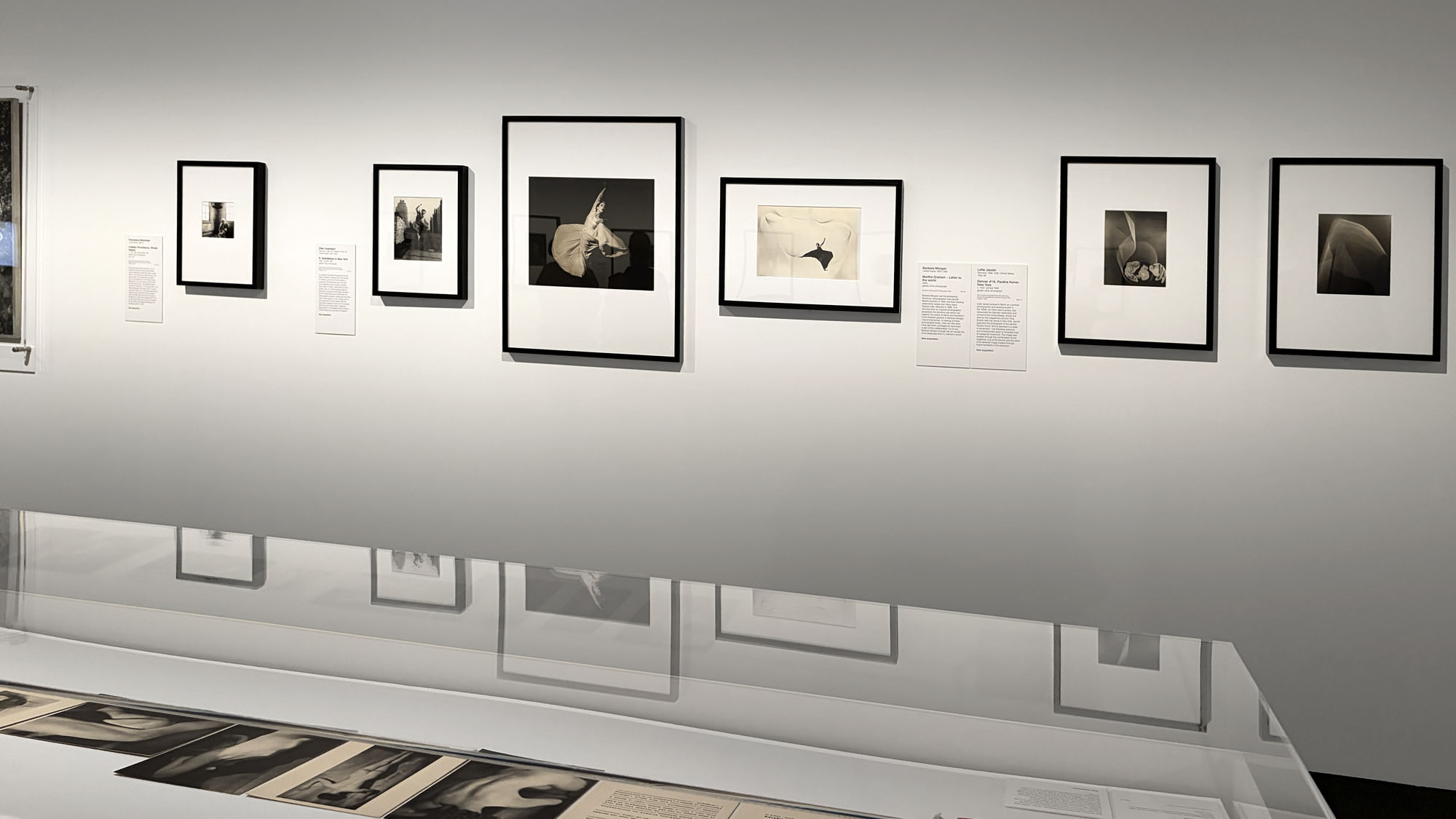
 

Carol Jerrems (Australian, 1949-1980) 'Kath Walker, Moongalba' 1974


Carol Jerrems (Australian, 1949-1980)
Kath Walker (Oodgeroo Noonuccal), Moongalba
1974
Gelatin silver photograph
16.3 x 24.2cm (image and sheet)
ed. 1/9
National Gallery of Victoria, Melbourne
Gift of Ms Ingeborg Tyssen, 2001
© Courtesy of Ken Jerrems & estate of Lance Jerrems


Carol Jerrems studied photography at Prahran College in Melbourne, winning several student awards before first exhibiting her work in the early 1970s. Jerrems collaborated with Australian artist Virginia Fraser on the 1974 publication A Book About Australian Women, a suite of portraits featuring a diverse range of subjects. This portrait was taken as part of that project, and an edition is included in the book. The work features Oodgeroo Noonuccal, previously known as Kath Walker, who was an Aboriginal rights activist, poet, WWII veteran, environmentalist and educator. Noonuccal is photographed with her pen poised at the learning centre she established on Minjerribah (North Stradbroke Island, Queensland) to teach visitors to the island about Aboriginal culture and Country.

Wall text from the exhibition


Installation view of the exhibition 'Women Photographers 1900-1975: A Legacy of Light' at NGV International, Melbourne, November 2025 - May 2026 showing from left to right, two photographs by Ponch Hawkes (Australian, b. 1946): 'No title (Helen at Falconer Street)' (c. 1975 printed 2018); and 'No title (In the backyard at Falconer Street)' (c. 1975 printed 2018)


Installation view of the exhibition Women Photographers 1900-1975: A Legacy of Light at NGV International, Melbourne, November 2025 – May 2026 showing from left to right, two photographs by Ponch Hawkes (Australian, b. 1946): No title (Helen at Falconer Street) (c. 1975 printed 2018); and No title (In the backyard at Falconer Street) (c. 1975 printed 2018)
Photo: Marcus Bunyan


Ponch Hawkes began to photograph while working as a journalist for the counterculture magazine The Digger in 1972. In 1973 she moved into a communal house in Melbourne with fellow Digger contributor Helen Garner. Together they produced stories for the broadsheet, documenting new ways of living emerging in inner-city Melbourne in the early 1970s.

Wall text from the exhibition


Installation view of the exhibition 'Women Photographers 1900-1975: A Legacy of Light' at NGV International, Melbourne, November 2025 - May 2026 showing at right, Ponch Hawkes 'No title (Summer night in the backyard at Falconer Street)' (c. 1975 printed 2018)


Installation view of the exhibition Women Photographers 1900-1975: A Legacy of Light at NGV International, Melbourne, November 2025 – May 2026 showing at right, Ponch Hawkes No title (Summer night in the backyard at Falconer Street) (c. 1975 printed 2018, below)
Photo: Marcus Bunyan


Ponch Hawkes (Australian, b. 1945) 'No title (Summer night in the backyard at Falconer Street)' c. 1975, printed 2018


Ponch Hawkes (Australian, b. 1945)
No title (Summer night in the backyard at Falconer Street)
c. 1975, printed 2018
Gelatin silver photograph
30.3 x 20.3cm (image)
38.3 x 27.9cm (sheet)
Purchased NGV Foundation, 2018
© Ponch Hawkes


Ponch Hawkes (Australian, b. 1945) 'No title (Women's Theatre Group, performing outdoors beneath a Women's Liberation banner in the City Square)' 1975, printed 2018


Ponch Hawkes (Australian, b. 1945)
No title (Women’s Theatre Group, performing outdoors beneath a Women’s Liberation banner in the City Square)
1975, printed 2018
Gelatin silver photograph
20.2 x 30.3cm (image)
28.0 x 38.2cm (sheet)
National Gallery of Victoria, Melbourne
Purchased NGV Foundation, 2018
© Ponch Hawkes, 2023


Installation view of the exhibition 'Women Photographers 1900-1975: A Legacy of Light' at NGV International, Melbourne, November 2025 - May 2026
Installation view of the exhibition 'Women Photographers 1900-1975: A Legacy of Light' at NGV International, Melbourne, November 2025 - May 2026 showing in the bottom image, top to bottom left to right, six photographs by Ponch Hawkes: 'No title (Women holding hands in front of graffiti, 'Lesbians are lovely')' (1973, printed 2018); 'No title (Graffiti)' (1975, printed 2018); 'No title (Women's Theatre Group, performing outdoors beneath a Women's Liberation banner in the City Square)' (1975, printed 2018); 'No title (Two women embracing, 'Glad to be gay')' (1973, printed 2018); 'No title (Fitzroy graffiti)' (1973, printed 2018); 'No title (Graffiti, 'Braddock… not mild, but sexist')' (1973, printed 2018)


Installation view of the exhibition Women Photographers 1900-1975: A Legacy of Light at NGV International, Melbourne, November 2025 – May 2026 showing in the bottom image, top to bottom left to right, six photographs by Ponch Hawkes: No title (Women holding hands in front of graffiti, ‘Lesbians are lovely’) (1973, printed 2018); No title (Graffiti) (1975, printed 2018); No title (Women’s Theatre Group, performing outdoors beneath a Women’s Liberation banner in the City Square) (1975, printed 2018); No title (Two women embracing, ‘Glad to be gay’) (1973, printed 2018); No title (Fitzroy graffiti) (1973, printed 2018); No title (Graffiti, ‘Braddock… not mild, but sexist’) (1973, printed 2018)
Photo: Marcus Bunyan


Ponch Hawkes captured powerful images of lesbian love and friendship during Melbourne’s early 1970s gay liberation movement. Hawkes worked for the counterculture magazine The Digger alongside Australian writer Helen Garner. The two often collaborated on projects, producing impassioned essays and imagery that platformed communities often excluded from mainstream media. The pride and solidarity shown in these images stand in stark contrast to the extreme discrimination queer people faced during the time.

Wall text from the exhibition


Installation view of the exhibition 'Women Photographers 1900-1975: A Legacy of Light' at NGV International, Melbourne, November 2025 - May 2026 showing at left, Ann Newmarch 'We must risk unlearning' (1975, below); and at second left, Ann Newmarch 'Two versions' (1975, below) with at right, photographs by Ponch Hawkes


Installation view of the exhibition Women Photographers 1900-1975: A Legacy of Light at NGV International, Melbourne, November 2025 – May 2026 showing at left, Ann Newmarch We must risk unlearning (1975, below) and at second left, Ann Newmarch Two versions (1975, below) with at right, photographs by Ponch Hawkes
Photo: Marcus Bunyan


Installation view of the exhibition 'Women Photographers 1900-1975: A Legacy of Light' at NGV International, Melbourne, November 2025 - May 2026 showing from left to right, Ann Newmarch 'We must risk unlearning' (1975) and Ann Newmarch 'Two versions' (1975)


Installation view of the exhibition Women Photographers 1900-1975: A Legacy of Light at NGV International, Melbourne, November 2025 – May 2026 showing from left to right, Ann Newmarch We must risk unlearning (1975) and Ann Newmarch Two versions (1975)
Photo: Marcus Bunyan


NGV International
180 St Kilda Rd, Melbourne

Opening hours:
Open daily, 10am – 5pm

National Gallery of Victoria website

LIKE ART BLART ON FACEBOOK

Back to top

Exhibition: ‘The ’70s Lens: Reimagining Documentary Photography’ at the National Gallery of Art, Washington

Exhibition dates: 6th October, 2024 – 6th April, 2025

 Curator: Andrea Nelson, associate curator in the department of photographs, National Gallery of Art


Martha Rosler (American, b. 1943) 'Cleaning the Drapes', from the series, 'House Beautiful: Bringing the War Home' 1967-1972 from the exhibition 'The '70s Lens: Reimagining Documentary Photography' at the National Gallery of Art, Washington


Martha Rosler (American, b. 1943)
Cleaning the Drapes
1967-1972, printed 2007
From the series House Beautiful: Bringing the War Home
Inkjet print
Image: 44.2 x 60.4cm (17 3/8 x 23 3/4 in.)
National Gallery of Art
Gift of the Collectors Committee and Pepita Milmore Memorial Fund


Martha Rosler originally distributed photocopies from this series, House Beautiful: Bringing the War Home, as flyers at anti – Vietnam War demonstrations. She made the original photomontages by combining gritty news photographs of fighting in Vietnam with homerelated advertisements culled from glossy women’s magazines. Here Rosler paired a woman cleaning patterned drapes with two tired soldiers smoking amid rocks and sandbags. The woman’s vacuum wand points to and echoes the soldiers’ rifles. The jolting collision of war imagery and affluent domestic space gives visual form to the description of the conflict as “the living room war” – so called because it appeared on television news nightly.

Wall text from the exhibition


“Ce n’est pas une pipe mais de la photographie, sous toutes ses formes variables et multivalentes”

“It’s not a pipe but photography, in all its variable and multifaceted forms.”

~ Marcus Bunyan


René Magritte’s 1929 painting Ceci n’est pas une pipe is also known as La Trahison des images … The Treachery of Images.

Treachery – the betrayal of trust – is an apposite word in relation to photography of the 1970s. Finally, once and for all, documentary photography in America broke free of the West Coast fine art photography tradition of mainly white male artists and the “aura” of the fine art print (Walter Benjamin). Photography betrayed the trust placed in the authenticity of the image and its link to the “truth” of reality represented in the photograph to become a medium of variability, in concept, execution and outcome. Photography became whatever you wanted it to be.

Documentary photography and its link to the reality of the referent – its assumed representation of a truth that existed in reality – began to be subsumed into the whole of photography, just part of a conceptual, art, performative, staged, street, cameraless, documentary, fashion, photojournalist, activist, amoebic (from the Greek ἀμοιβή amoibe, meaning “change”), and viral (Paul Virilio) medium.

Photography had always been a medium of communication but now became multi-perspectival – whether that be imaginings of the mind relayed through photographs, conceptual ideas about the world and how we interact with it created and staged through photographs, or new colour photography that challenged the orthodoxy of fine art black and white West Coast American photography.

As Anne-Marie Willis observes on the On This Date In Photography website, “any curator who would challenge the orthodox Beaumont Newhall-style photo history limited to images that are distinctively photographic, aesthetic, and “Straight” … would open a Pandora’s box full of photographs pervasive across so many fields, of such limitless subject matters, and crossing so many disciplines that their histories in photography would be obscured.”1

This is the alleged treachery of multi-perspectival photography, the betraying of photographic histories that stretched back to the beginnings of the medium… but it had to be done for photography to fully open itself up to the imaginings of the human and the media flows of the world. “It was a time when photography challenged the art photography norm: photography should not, could not be restricted to what was considered ‘art’.”2

Thus, it is a great joy to see photographs from this stimulating exhibition, photographs that challenge the established “norm” of what photography should be. But what is surprising to me when looking at the complete list of photographs in this exhibition is the important artists who changed the face of photography in the 1970s who are not represented at all or only have one or two images on show:

Gordon Parks 0
Garry Winogrand 1
Lee Friedlander 2
Diane Arbus 1
Robert Mapplethorpe 0
Robert Heinecken 0
Richard Avedon 0
Andy Warhol 1 Polaroid
Cindy Sherman 0
Barbara Kruger 0
Nan Goldin 1
Stephen Shore 1

Diane Arbus, who was instrumental in changing portrait photography at the time, only has one photograph in the exhibition; Barbara Kruger and Robert Heinecken, both “para-photographers” whose work stood “beside” or “beyond” traditional ideas associated with photography have none; Stephen Shore who, along with William Eggleston, was responsible for making colour photography acceptable in art photography has only one photograph.

But most surprisingly of all, Cindy Sherman whose Untitled Film Stills were made predominantly between 1977-1980 and who casts herself as clichés or feminine types, becoming both the artist and subject in the work … is not there at all. Her loss, her evisceration, and the absence of “arguably one of the most significant bodies of work made in the twentieth century and thoroughly canonized by art historians, curators, and critics,”3 is unfathomable.

Dr Marcus Bunyan


1/ Anne-Marie Willis quoted in Dr James McArdle. “DECEMBER 14: CONTEXT,” on the On This Date In Photography website 15/12/2019 [Online] Cited 26/02/2025

2/ Ibid.,

3/ Exhibition Catalogue, New York, Museum of Modern Art, Cindy Sherman, 2012, p. 18 quoted in the “Untitled Film Stills” page on the Wikipedia website


Many thankx to the National Gallery of Art for allowing me to publish the photographs in the posting. Please click on the photographs for a larger version of the image.


Martha Rosler (American, b. 1943)
'Roadside Ambush' 1967-1972 from the exhibition 'The '70s Lens: Reimagining Documentary Photography' at the National Gallery of Art, Washington


Martha Rosler (American, b. 1943)
Roadside Ambush
1967-1972, printed 2007
Inkjet print
Image/sheet: 50.8 x 61cm (20 x 24 in.)
National Gallery of Art
Gift of the Artist and Mitchell-Innes and Nash


Rosler originally distributed photocopies of House Beautiful: Bringing the War Home at anti–Vietnam War demonstrations. “I saw House Beautiful not as art,” she later reflected. “I wanted it to be agitational.” The artist created the original photomontages, from which these collages are derived, by combining news photographs of scorched battlefields in Vietnam with glossy advertisements for US homes, layering images of soldiers within cut-out silhouettes of men from polo-shirt advertisements; and splicing pictures of soldiers’ burials with those of military marches. By tying the destruction abroad to untroubled affluence at home, Rosler gave visual form to the description of the conflict as “the living-room war” – so called because it was the first war to be televised.

MoMA gallery label from 2024


The exhibition The ’70s Lens: Reimagining Documentary Photography examines how new approaches to documentary photography that emerged during the 1970s reflected a radical shift in American life – and in the medium itself.

The 1970s was a decade of uncertainty in the US – soaring inflation, energy crises, the Watergate scandal, and protests about pressing social issues – and the profound upheaval that rocked the country formed the backdrop for a revolution in documentary photography. Now on view at @ngadc, The ’70s Lens: Reimagining Documentary Photography explores this compelling and contested moment of reinvention when the genre’s association with objectivity and truthfulness came into question. Featuring works from over eighty artists, the exhibition delves into how the camera was used to examine life in the US from a diverse range of perspectives, and in doing so, transformed the practice of documentary photography.


The ’70s Lens: A Conversation with Anthony Hernandez

Artist Anthony Hernandez discusses 50 years of work with curator Andrea Nelson on October 24, 2024. The conversation celebrates the exhibition The ’70s Lens: Reimagining Documentary Photography (October 2024 – April 2025).

Anthony Hernandez (b. 1947, Los Angeles, California) has crafted a richly varied oeuvre, ranging from a distinctive style of black-and-white street photography to colour photographs of abstracted details of his surroundings. Much of Hernandez’s work focuses on his native Los Angeles, revealing a unique insight into the people and landscape of the much-pictured city. Hernandez is a recipient of a Guggenheim Fellowship (2018), the Rome Prize (1999) and has been named a United States Artists Fellow (2009).


William Eggleston (American, b. 1939) 'Memphis' 1969-1970 from the exhibition 'The '70s Lens: Reimagining Documentary Photography' at the National Gallery of Art, Washington


William Eggleston (American, b. 1939)
Memphis
1969-1970, printed 1980
Dye imbibition print
Image: 30.2 x 44.2cm (11 7/8 x 17 3/8 in.)
National Gallery of Art, Corcoran Collection
Gift of Mr. Morris R. Garfinkle
© Eggleston Artistic Trust


Eggleston is celebrated for his use of colour photography, which he began experimenting with in the late 1960s. Eggleston’s 1976 exhibition Colour Photographs, held at the Museum of Modern Art, New York, is considered a pivotal moment in the development of colour photography as a contemporary art form and widely credited with increasing recognition of the medium.

Since first picking up a camera in 1957, Eggleston has photographed his family, friends and the people that he encountered in his everyday life, particularly in his native Memphis. Eggleston is said to find the beauty in the everyday and his work has inspired many present day photographers, artists and filmmakers, including Martin Parr, Sofia Coppola, David Lynch and Juergen Teller.

Text from the National Gallery of Victoria website


Anthony Friedkin (American, b. 1949) 'Young Man, Troupers Hall, Hollywood' 1969 From the series 'The Gay Essay'


Anthony Friedkin (American, b. 1949)
Young Man, Troupers Hall, Hollywood
1969
From the series The Gay Essay
Gelatin silver print
National Portrait Gallery
Gift of Mary and Dan Solomon


In 1969, Anthony Friedkin was only 19 years old when he set out to document the queer communities of San Francisco and Los Angeles. The resulting project, The Gay Essay, is an expressive and nuanced portrait. Friedkin charts various facets of the culture, from street life and protests to parades and drag performances.

Friedkin’s photographs record the beginnings of the gay liberation movement in California. With a respectful intimacy he pictures individuals living true to themselves while defying prevailing social norms.

Wall text from the exhibition


Mel Bochner (American, 1940-2025) 'Misunderstandings (A Theory of Photography)' 1970 (detail)


Mel Bochner (American, 1940-2025)
Misunderstandings (A Theory of Photography) (details)
1970
10 offset lithographs on notecards and envelope
Sheet (each): 12.7 x 20.32cm (5 x 8 in.)
National Gallery of Art, Gift of Mary and Dan Solomon


When Mel Bochner started documenting his works of sculpture with a camera, he realised that his practice had “become about photography without [my] wanting it to.” He studied the history of the medium and found conflicting ideas about what photography is or should be. By illustrating these “misunderstandings” with quotes from notable figures and sources, Bochner underscored the gap between a photograph itself and what it purports to represent. He even fabricated three of the quotations, further playing on photography’s tenuous relationship to truth. The photograph of the artist’s hand and forearm is also a misunderstanding: it is much smaller than the actual body part it depicts. It also appears to be a negative of a Polaroid photograph, but Polaroids exist only as positive prints.

Wall text from the exhibition


Mel Bochner was a key figure in the Conceptual Art movement of the 1960s and 70s. Bochner was part of a group of artists who challenged the traditional notion of art as a physical object to be admired for its aesthetic qualities and instead sought to explore the ideas and concepts behind the object, often using language and text as their medium.

Bochner’s early works were influenced by his interest in mathematics and logic, which he applied to create intricate geometric patterns. As his practice evolved, he incorporated language and words into his artwork, exploring the relationship between language, thought, and perception.

Text from the My Art Broker website


Anthony Barboza (American, b. 1944) 'New York City' 1970s from the exhibition 'The '70s Lens: Reimagining Documentary Photography' at the National Gallery of Art, Washington


Anthony Barboza (American, b. 1944)
New York City
1970s
Gelatin silver print
Image/sheet: 23.7 × 16.1cm (9 5/16 × 6 1/4 in.)
National Gallery of Art
Pepita Milmore Memorial Fund


Anthony Barboza’s photography has been integral in shaping the image of Black America. A founding member of the Kamoinge Workshop, a group of Black photographers formed in New York in 1963, Barboza went on to establish a thriving commercial and personal practice focused largely on Black subjects. His affirmative representations of African Americans in daily life – like this photograph of two ultra-stylish men standing in front of a hotel coffee shop in midtown Manhattan – contributed to an empowering narrative for the Black community in the face of inequality and adversity. Describing his approach to making pictures on the street, Barboza commented, “”The photograph finds you, you don’t find the photograph.”

Wall text from the exhibition


Anthony Barboza (American, b. 1944) 'New York City' 1970s from the exhibition 'The '70s Lens: Reimagining Documentary Photography' at the National Gallery of Art, Washington


Anthony Barboza (American, b. 1944)
New York City
1970s
Gelatin silver print
Image: 23.7 × 15.9cm (9 5/16 × 6 1/4 in.)
National Gallery of Art
Pepita Milmore Memorial Fund


Lee Friedlander (United States, b. 1934) 'Hillcrest, New York' 1970 from the exhibition 'The '70s Lens: Reimagining Documentary Photography' at the National Gallery of Art, Washington


Lee Friedlander (American, b. 1934)
Hillcrest, New York
1970
Gelatin silver print
Image: 20.3 x 30.5cm (8 x 12 in.)
National Gallery of Art
Patrons’ Permanent Fund


The fracturing of the image plane, where multiple, diverse realities are represented within one photograph, deconstructing the reality of fine art photography. ~ Marcus


Lee Friedlander’s layered compositions wittily observe connections between American life and commerce. In this dizzying photograph, Friedlander captures himself, at center, in a sideview mirror while at a filling station. In the reflection behind him we see a strip mall with the stores’ signs reversed. Near and far vie for attention and parts of the composition are blocked from our view.

The photograph with a World War I memorial similarly features vertical elements that break up the composition into separate frames. At left, the memorial’s soldier with rifle – who appears to be on guard – goes completely unnoticed as pedestrians make their way along a street full of storefronts.

Wall text from the exhibition


Kenneth Josephson (American, b. 1932) 'Wyoming' 1971 from the exhibition 'The '70s Lens: Reimagining Documentary Photography' at the National Gallery of Art, Washington


Kenneth Josephson (American, b. 1932)
Wyoming
1971
From the History of Photography series
Gelatin silver print
Image: 22.8 x 14.1cm (9 x 5 9/16 in.)
National Gallery of Art
Patrons’ Permanent Fund


Kenneth Josephson’s conceptual photography experiments with playful illusion to explore and question his medium. Josephson was a graduate among the first generation of photography candidates from the Illinois Institute of Design. A student of such masters as Aaron Siskind, Harry Callahan, and Minor White, Josephson went on to teach for 35 years at the Art Institute of Chicago, where he routinely taught the “Introduction to Photography” course as it inspired him to continue experimentation.

“This photograph of a photograph held in space causes the viewer to question assumptions about truthful representation according to size and scale; it also draws attention to the principle that photographic reality is constructed through an artist’s ideas and choices. The subject of the photograph is photography itself, and the ways that life is documented, manipulated, trivialised, and celebrated with photographs.”

Text from the Madison Museum of Contemporary Art website


Lewis Baltz (American, 1945-2014) 'Tract House #4' 1971 from the exhibition 'The '70s Lens: Reimagining Documentary Photography' at the National Gallery of Art, Washington


Lewis Baltz (American, 1945-2014)
Tract House #4
1971
From the portfolio The Tract Houses
Gelatin silver print
Image/sheet: 14.5 × 22.5cm (5 11/16 × 8 7/8 in.)
National Gallery of Art
Corcoran Collection (Gift of the artist)


Lewis Baltz’s The Tract Houses captures the austere geometry of the shoddily built homes that sprang up in California’s suburban landscape beginning in the mid-1940s. Straight-edge architectural details, positioned strictly parallel to the picture plane, recall the reductive forms of minimalist art. Entire, recently constructed houses appear forlorn. None of the pictures include shadows, clouds, or people. Baltz’s series is a powerful critique of the transformation of the American landscape into an unending terrain of anonymous architecture. At the same time, the exquisitely rendered tones and textured surfaces emphasise the subtle beauty to be found in this bleak environment.

Wall text from the exhibition


With his iconic, minimalist photographs of suburban landscape, Lewis Baltz was at the forefront of a revolutionary shift in the medium of photography. Baltzs work exemplifies the ways in which photography started to loose the bonds of its isolation within its own segregated history and aesthetics and began to take its place among other media. In the late 1960s and early 1970s Baltz became fascinated by the stark, man-made landscape rolling over Californias then still-agrarian terrain. His earliest portfolio, The Tract Houses (1971), and his preliminary forays into a minimal aesthetic, The Prototype Works (1967-1976), illuminate his drive to capture the reality of a sprawling Western ecology gone wild.

Text from the Google Books website


Diane Arbus (American, 1923-1971) 'A young man and his girlfriend with hot dogs in the park' 1971


Diane Arbus (American, 1923-1971)
A young man and his girlfriend with hot dogs in the park
1971
Gelatin silver print
Image: 37.7 x 36.5cm (14 13/16 x 14 3/8 in.)
National Gallery of Art, Corcoran Collection
Gift of Stephen G. Stein


Diane Arbus prowled New York’s public spaces looking for humor and strangeness in the everyday. Here a young couple walks in Central Park, wearing similar clothes, hairstyles, and dejected expressions. Arbus’s carefully composed but disorienting photograph – the subjects are in crisp focus while the background is blurred – compels us to look anew at the familiar. Is this couple unhappy in love or expressing the uncertainty of the times? Arbus made this photograph the year she died. Her influence on documentary photography would continue through the decade.

Wall text from the exhibition


Eleanor Antin (American, b. 1935), Philip Steinmetz (American, 1944-2013) (photographer). '100 Boots' 1971-1973 (detail)


Eleanor Antin (American, b. 1935)
Philip Steinmetz (American, 1944-2013) (photographer)
100 Boots (details)
1971-1973
51 halftone prints (postcards)
image/sheet (each): 11.5 x 17.75cm (4 1/2 x 7 in.)
National Gallery of Art
Pepita Milmore Memorial Fund


In this epic visual narrative, black rubber boots stand in for a fictional hero traveling from California to New York City. Eleanor Antin created temporary installations with the boots, had them photographed (by Philip Steinmetz), and made 51 postcards, copies of which she mailed to approximately 1,000 people and institutions involved in the arts. The journey starts at a Bank of America and ends at Central Park – after a visit to the Museum of Modern Art, where the boots and a set of postcards and photographs were later exhibited. Using the postal service, Antin bypassed the traditional gallery system, which had long overlooked women artists. While many of these scenes are humorous, the empty army boots also recall the Vietnam War and the soldiers who did not come home.

Wall text from the exhibition


100 Boots, 1971-1973

For her 51-piece instalment 100 Boots Eleonor Antin positioned one hundred ordinary black rubber boots on various locations all over Southern California and consequently in New York City. She took photos, printed them on postcards and assembled a mailing list of about a thousand names – mainly artists, writers, critics, galleries, universities and museums – who received the various postcards over a period of two and a half years between 1971 and 1973. The first card, 100 Boots Facing the Sea, was mailed on the Ides of March, 1971, unannounced and without further comment. A few weeks later it was followed by 100 Boots on the Way to Church and three weeks thereafter by the next one.

In a total of 51 photographs, Eleanor Antin documented the travels of the 100 Boots, her so called “hero” – from a beach close to San Diego to a church, to a bank, to the supermarket, trespassing, under the bridge, to a saloon and on their travels eastward. Finally, on May 15th, 1973 100 Boots arrived at the Museum of Modern Art in New York. By this time, 100 Boots had long become an epic visual narrative and a picaresque work of conceptual art.

Text from the exhibition open spaces | secret places: composite works from the collection at Museum Der Moderne Salzburg, October 2012 – March 2013. Used under fair use conditions for the purposes of education and research
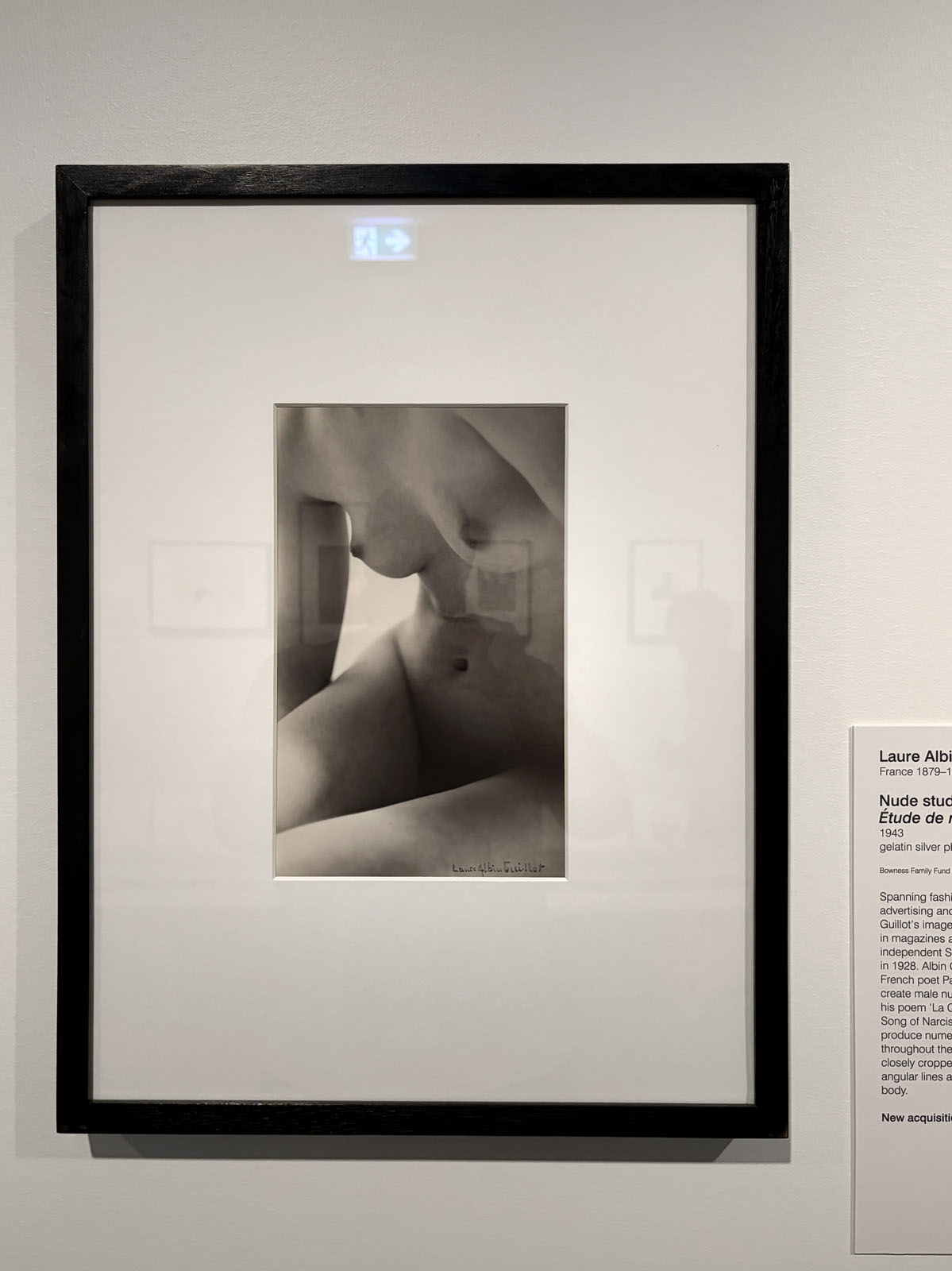
 

Henry Wessel (American, 1942-2018) 'Walapai, Arizona' 1971


Henry Wessel (American, 1942-2018)
Walapai, Arizona
1971
Gelatin silver print
Image: 26.51 x 39.85cm (10 7/16 x 15 11/16 in.)
National Gallery of Art
Gift of Mary and Dan Solomon and Patrons’ Permanent Fund


In 1975 New Topographics: Photographs of a Man-Altered Landscape opens at the International Museum of Photography in Rochester, N.Y. It includes photographs by Robert Adams, Lewis Baltz, Bernd and Hilla Becher, Joe Deal, Frank Gohlke, Nicholas Nixon, John Schott, Stephen Shore, and Henry Wessel Jr.

“Henry Wessel began taking photographs while majoring in psychology at Pennsylvania State University in the mid-1960s. Travel throughout the United States in subsequent years led him to direct his gaze increasingly to details of human interaction with the natural and man-made environment. Wessel’s move to the West Coast in the early 1970s inspired him to incorporate light and climate into his work. His inclusion in the seminal exhibition New Topographics: Photographs of a Man-Altered Landscape, organised in 1975 by the George Eastman House in Rochester, New York, solidified his reputation as a keen observer of the American topography.”

Text from Pacific Standard Time at the Getty


John Simmons (American, b. 1950)
'Will on Chevy, Nashville, Tennessee'
1971, printed 2024


John Simmons (American, b. 1950)
Will on Chevy, Nashville, Tennessee
1971, printed 2024
Gelatin silver print
Image: 30.48 x 20.32cm (12 x 8 in.)
National Gallery of Art
Alfred H. Moses and Fern M. Schad Fund


A fashionably dressed older man crosses the street with his umbrella. A young woman turns to look at the camera while holding hands with a man in uniform. These were people John Simmons encountered while studying art at Fisk University in Nashville. Raised on Chicago’s South Side, Simmons had first published photographs as a teenager in the African American newspaper Chicago Defender. Refuting white-centered media’s failure to show positive imagery of the Black experience, Simmons has focused on people enjoying everyday life.

“I always feel like my subject and I were meant to share that moment together,” he has said. “So many of the pictures I take, it was like our paths were meant to cross.”

Wall text from the exhibition


Simmons began his career at 15 as a photographer for the oldest African American-owned newspaper, The Chicago Daily Defender in 1965. Over his decades long career, he’s photographed icons of the Civil Rights Movement, turbulent protests and demonstrations, famed musicians and poignant intimate moments of everyday life. “I’m glad to see photographs I took back in my teens are still relevant today,” he says.

John Simmons quoted in Steve Simmons. “Photographer John Simmons, ‘Chronicler Of The Civil Rights Movement,’ Featured In Three Exhibits,” on the Linkedin website August 4, 2021 [Online] Cited 11/09/2021. Used under fair use conditions for the purposes of education and research


Helen Levitt (American, 1913-2009) 'New York' 1972 from the exhibition 'The '70s Lens: Reimagining Documentary Photography' at the National Gallery of Art, Washington


Helen Levitt (American, 1913-2009)
New York
1972
Dye imbibition print
Image: 23.5 x 36cm (9 1/4 x 14 3/16 in.)
National Gallery of Art, Patrons’ Permanent Fund
© Film Documents LLC, courtesy Zander Galerie, Cologne


Helen Levitt frequently made photographs of children on the streets of New York City, exploring their relationships to the urban setting as they played, imagined, and discovered together. After decades of working in black and white, Levitt became an early advocate of color documentary photography. Color allowed her to tell a fuller story of everyday life. Here, the green of the boy’s T-shirt is echoed in the poster and frame behind him. “I thought my photographs would be closer to reality if I got the color of the streets,” she said. “Black and white is an abstraction.”

Wall text from the exhibition


Bill Owens (American, b. 1938)
'Ronald Reagan' 1972 from the exhibition 'The '70s Lens: Reimagining Documentary Photography' at the National Gallery of Art, Washington


Bill Owens (American, b. 1938)
Ronald Reagan
1972
From the series Suburbia
Gelatin silver print
Image: 16.4 x 21.6cm (6 7/16 x 8 1/2 in.)
National Gallery of Art
Patrons’ Permanent Fund


Over the course of a year, Bill Owens made photographs of the housing developments that had recently sprung up outside of Oakland and San Francisco. With an eye to humor, he captured the apparent conformity and materialism of the new suburbs. Here, a home is decorated for Christmas. At center, Nativity figures sit atop a television console showing an old film featuring Ronald Reagan, who had been a movie actor before becoming a politician. Owens also respected the liberation that many suburbanites felt, as well as their determination to build better lives. In his book Suburbia (1972), he included quotations from his subjects describing the opportunities and challenges they faced in their new environments.

Wall text from the exhibition


Owens began his photographic career in the late 1960s as a staff photographer for a local newspaper in Livermore, California. During this period, he began his most noteworthy project, “Suburbia,” which would become a major body of work in American documentary photography.

“Suburbia” was published as a book in 1973, featuring Owens’ images and conversations with suburban dwellers. The project’s goal was to investigate the goals, aspirations, and inconsistencies of suburbia life, offering a critical yet sympathetic study of the American Dream.

Owens’ images depicted scenes of backyard barbecues, family gatherings, children at play, and the myriad rituals and social interactions that constituted suburban areas. He highlighted both the humor and the underlying intricacies of suburban life through his good observation and direct attitude.

What distinguished Owens’ work was his ability to see past the surface and capture the soul of his subjects. His images conveyed a sense of realism by portraying suburbanites in their natural settings and enabling their tales to flow through genuine moments captured in time.

Owens’ art struck a chord with a large audience because it highlighted a huge societal transition in America during the 1970s. Owens’ images challenged the idealized image of suburban life by exposing the hardships, wants, and inconsistencies inherent in the pursuit of the American Dream.

Anonymous. “Bill Owens,” on the Photo.com website Nd [Online] Cited 06/20/2025. Used under fair use conditions for the purposes of education and research


William Eggleston (American, b. 1939) 'Sumner, Mississippi, Cassidy Bayou in the Background' c. 1972


William Eggleston (American, b. 1939)
Sumner, Mississippi, Cassidy Bayou in the Background
c. 1972, printed 1986
Dye imbibition print
Image: 27.94 x 43.18cm (11 x 17 in.)
National Gallery of Art
Gift of Stephen G. Stein
© Eggleston Artistic Trust


See how documentary photography transformed during the 1970s.

The 1970s was a decade of uncertainty in the United States. Americans witnessed soaring inflation, energy crises, and the Watergate scandal, as well as protests about pressing issues such as the Vietnam War, women’s rights, gay liberation, and the environment. The country’s profound upheaval formed the backdrop for a revolution in documentary photography. Activism and a growing awareness and acceptance of diversity opened the field to underrepresented voices. At the same time, artistic experimentation fueled the reimagining of what documentary photographs could look like.

Featuring some 100 works by more than 80 artists, The ’70s Lens examines how photographers reinvented documentary practice during this radical shift in American life. Mikki Ferrill and Frank Espada used the camera to create complex portraits of their communities. Tseng Kwong Chi and Susan Hiller demonstrated photography’s role in the development of performance and conceptual art. With pictures of suburban sprawl, artists like Lewis Baltz and Joe Deal challenged popular ideas of nature as pristine. And Michael Jang and Joanne Leonard made interior views that examine the social landscape of domestic spaces.

The questions these artists explored – about photography’s ethics, truth, and power – continue to be considered today.

Text from the National Gallery of Art


Lee Friedlander (American, b. 1934)
'Doughboy. Stamford, Connecticut' 1973


Lee Friedlander (American, b. 1934)
Doughboy. Stamford, Connecticut
1973
Gelatin silver print
Image: 17.8 x 27cm (7 x 10 5/8 in.)
National Gallery of Art
Robert B. Menschel Fund


William Eggleston (American, b. 1939) 'Used Tires' 1973


William Eggleston (American, b. 1939)
Used Tires
1973
Dye imbibition print
Image: 33 x 48.5cm (13 x 19 1/8 in.)
National Gallery of Art
Patrons’ Permanent Fund
© Eggleston Artistic Trust


William Eggleston (American, b. 1939) 'Greenwood, Mississippi' 1973


William Eggleston (American, b. 1939)
Greenwood, Mississippi
1973
Dye imbibition print
Image: 32.2 x 48.2cm (12 11/16 x 19 in.)
National Gallery of Art, Corcoran Collection
Gift of the Women’s Committee of the Corcoran Gallery of
Art
© Eggleston Artistic Trust


William Eggleston has said that he has “a democratic way of looking around,” where nothing is more important or less important. For him, everyday subjects are not boring but instead offer visual richness. Here, that richness has a pronounced edge. Eggleston directed his lens up to a red ceiling with a single bare lightbulb at center. We glimpse only the top of a doorframe and a fragment of an explicit poster. The saturated, bloodlike color that dominates the composition is shocking, even menacing. It also challenged Eggleston technically as he developed his skills with dye imbibition printing. Commonly known as dye transfer, the process was labor intensive but allowed for customisation and a wide range of colours and tones.

Wall text from the exhibition


Mitchell Epstein (American, b. 1952)
'Massachusetts Turnpike' 1973, printed 2005 from the exhibition 'The '70s Lens: Reimagining Documentary Photography' at the National Gallery of Art, Washington


Mitchell Epstein (American, b. 1952)
Massachusetts Turnpike
1973, printed 2005
From the series Recreation
Chromogenic print
Image: 32.1 x 48.2cm (12 5/8 x 19 in.)
National Gallery of Art
Gift of Timothy and Suzanne Hyde in Honor of the 25th Anniversary of
Photography at the National Gallery of Art
© Black River Productions, Ltd.


Viewers of a certain age will recognize this setting as the parking lot of a Howard Johnson’s restaurant. HoJos, as they were nicknamed, were once ubiquitous along America’s highways. The cheery saturated colors belie the scene’s subject: a couple having a bad travel day. A man in suit and tie works under the hood of a beat-up Chevy Impala. His partner, wearing a pale pink skirt and top, arms crossed, appears frustrated. The cars zooming by seem to mock their immobility. Part of Mitch Epstein’s Recreation series, which documented Americans engaging in leisure activities, the photograph today evokes melancholy and nostalgia. Explaining his early turn to colour film, the artist said, “The world is in color, so why not photograph in color?”

Wall text from the exhibition


I started to work in colour, which was a radical, and some thought foolish, move in 1973. Colour photography was not yet a medium for serious photography – it was used almost exclusively for slick advertising and illustration. Within a month of shooting in colour, though, I wanted to do nothing else…

As I developed, I learned that a photograph is other than the thing itself photographed, and this freed me to think about how I could use photography to fictional effect, even while my pictures were drawn from the real world…

Photography remains a tool with which I form and sharpen my response to the world around me. Anything and everything is photographable in an infinite number of ways. That excites me.

Mitch Epstein in Lewis Blackwell. PhotoWisdom: Master Photographers on Their Art quoted quoted in “Mitch Epstein – Meet The Master Photographer,” on the Milkbooks website Nd [Online] Cited 06/02/2025. Used under fair use conditions for the purposes of education and research


Robert Adams (American, b. 1937)
'Interstate 25, Denver, Colorado' 1973


Robert Adams (American, b. 1937)
Interstate 25, Denver, Colorado
1973
Gelatin silver print
Image: 15.2 x 19.3cm (6 x 7 5/8 in.)
National Gallery of Art
The Ahmanson Foundation and Gift of Robert and Kerstin Adams
© Robert Adams, Courtesy Fraenkel Gallery, San Francisco


Adams’ photographic vision is extra ordinary and I cannot fault his individual photographs. I become engrossed in them. I breathe their atmosphere. He has a resolution, both in terms of large format aesthetic, the aesthetic of beauty and of using materials, light and composition… that seems exactly right. He possesses that superlative skill of few great photographers, and by that I mean: sometimes he has true compassion** / parallel to a religious compassion, but not based on something higher / just perfect human. In some of his photographs (such as East from Flagstaff Mountain, Boulder County, Colorado 1975) he possesses real forgiveness, in others there is the perfection of cruel, the perfection of de/composition.

** achieved by Arbus, Atget and sometimes by Clift, Gowin.

And then, each image holds small clues vital to the overall conversation that is the accumulation of his work and it is in their collective accumulation of meaning that Adams’ photographs grow and build to shatter not just the American silence on environmental issues, but the deafening silence of the whole industrialised world. In their holistic nature, Adams’ body of work becomes punctum and because of this his work produces other “things”, things as great as anything the French literary theorist, essayist, philosopher, critic, and semiotician Roland Barthes wrote about. As in Barthes’ seminal work Camera Lucida, Adams’ work reminds us that the “photograph is evidence of ‘what has ceased to be’. Instead of making reality solid, it reminds us of the world’s ever changing nature.”1

Marcus Bunyan. “The quiet of the great beyond,” on the exhibition American Silence: The Photographs of Robert Adams at the National Gallery of Art, Washington, May – October 2022 on Art Blart: art and cultural memory archive website, September 25, 2022 [Online] Cited 06/02/2025

1/ Anonymous. “Roland Barthes,” on the Wikipedia website Nd [Online] Cited 23/09/2022


Michael Jang (American, b. 1951)
'Study Hall' 1973 from the exhibition 'The '70s Lens: Reimagining Documentary Photography' at the National Gallery of Art, Washington


Michael Jang (American, b. 1951)
Study Hall
1973
Gelatin silver print
15.5 × 23.5cm (6 1/8 × 9 1/4 in.)
National Gallery of Art
Charina Endowment Fund


In Study Hall, Michael Jang’s extended family sits together on a couch reading comics and a television guide, a messy tray of Kraft Teez Dip and potato chips on the table in front of them. The covers of the decidedly not studious publications block their faces, becoming stand-ins for their portraits. In Aunts and Uncles (nearby), relatives are caught joking around while posing for an official family portrait in silly sunglasses.

Jang’s humorous photographs of his Chinese American family and the trappings of their suburban lives offer a refreshing take on the often staid genre of family portraiture. They also debunk the 1970s stereotype – think The Brady Bunch – that the “all-American” family could only be white.

Wall text from the exhibition


In his series The Jangs, Michael Jang photographed family at home. His humorous photographs of their suburban lives expanded the concept of the “all-American” family – the Chinese American Jangs didn’t look like The Brady Bunch.

In Study Hall, Jang’s cousins and aunt sit together on a couch reading comics and a television guide, a messy tray of potato chips and dip on the table in front of them. The covers of decidedly not studious publications block their faces, becoming stand-ins for their portraits.

Jang’s delightful series was almost entirely forgotten. The photographs, which he had first made while a student, sat in a box in the artist’s house for decades while he established a career as a commercial photographer.

In the 2000s, Jang reconsidered this series and shared it with museums, which began adding the photographs to their collections. His photographs took on a new light in the wake of a rise of anti-Asian hate during the COVID-19 pandemic. In 2021, Jang wheat pasted images from The Jangs on buildings in San Francisco’s Chinatown.

Text from the National Gallery of Art website


Susan Meiselas (American, b. 1948)
'Lena on the Bally Box, Essex Junction, Vermont' 1973


Susan Meiselas (American, b. 1948)
Lena on the Bally Box, Essex Junction, Vermont
1973
Gelatin silver print
Image: 22 x 32.5cm (8 11/16 x 12 13/16 in.)
National Gallery of Art
Anonymous Gift in honor of Sarah Greenough and Andrea Nelson


The final and most essential selection in this posting – Susan Meiselas’ 1972-1975 Carnival Strippers series – goes behind the “front” to document the lives of women who performed striptease for small-town carnivals in New England, Pennsylvania and South Carolina. “Meiselas’ frank description of these women brought a hidden world to public attention, and explored the complex role the carnival played in their lives: mobility, money and liberation, but also undeniable objectification and exploitation. Produced during the early years of the women’s movement, Carnival Strippers reflects the struggle for identity and self-esteem that characterised a complex era of change.” (Booktopia)

Intense, intimate and revealing, the series proves that we can think we know something (the phenomenal) and yet photography reveals how strange and different each world is – whether that be in trying to understand the mind of the artist and what they intended in a constructed photograph or, in this case, having an impression of someone else’s life, a life we can perceive (through the “presence” of the photograph) but never truly know (the noumenal).

Marcus Bunyan on the exhibition Known and Strange: Photographs from the Collection at the V&A Photography Centre on the Art Blart: art and cultural memory archive website, May 7, 2022 [Online] Cited 06/20/2025


Susan Meiselas (American, b. 1948)
'Tentful of Marks, Tunbridge, Vermont'
1974


Susan Meiselas (American, b. 1948)
Tentful of Marks, Tunbridge, Vermont
1974
Gelatin silver print
Image: 19.7 x 29.4cm (7 3/4 x 11 9/16 in.)
National Gallery of Art, Corcoran Collection
Museum Purchase, Photography Acquisition Fund

In Tentful of Marks, Susan Meiselas trains her camera from backstage on the legs and high heels of a carnival dancer. The all-male audience – the “marks” of the title – are in sharp focus, and they crowd around the small stage, lustfully gawking up at her. Meiselas spent three summers documenting women who performed striptease at small-town carnivals in New England, Pennsylvania, and South Carolina. In addition to making photographs, she recorded audiotapesof conversations with the dancers, giving them agency to describe their experience. Meiselas saw her project as a collaboration. Merging listening and looking, it expanded perspectives on a largely invisible and – from the dancers’ perspective – misunderstood world.

Wall text from the exhibition


Installation view of the exhibition 'The '70s Lens: Reimagining Documentary Photography' at the National Gallery of Art, Washington showing at left, Milton Rogovin's photograph 'Jimmy Webster with His Father, Verne' (1973); and at right, 'Jimmy Webster' (1985)


Installation view of the exhibition The ’70s Lens: Reimagining Documentary Photography at the National Gallery of Art, Washington showing at left, Milton Rogovin’s photograph Jimmy Webster with His Father, Verne (1973, below); and at right, Jimmy Webster (1985)

With thankx to the official Milton Rogovin Facebook page for allowing me to publish this image.


Milton Rogovin (American, 1909-2011) 'Jimmy Webster with His Father, Verne' 1973


Milton Rogovin (American, 1909-2011)
Jimmy Webster with His Father, Verne
1973
Gelatin silver print
Image: 17.4 x 15.5cm (6 7/8 x 6 1/8 in.)
National Gallery of Art
Gift of Pierre Cremieux and Denise Jarvinen

With thankx to the official Milton Rogovin Facebook page for allowing me to publish this image.


Verne Webster, sitting on his front stoop, looks guardedly at the camera while sheltering his toddler son Jimmy in a protective embrace. This is an early work from Milton Rogovin’s 30-year series documenting Buffalo’s Lower West Side. The project focused on a six-block neighbourhood that was among Buffalo’s most diverse and most impoverished. Rogovin asked permission to photograph his subjects, let them choose their poses and settings, and gave them free prints. He returned every decade or so to photograph the same individuals. A nearby picture shows Jimmy 12 years later. Looking back at Rogovin’s photographs in 2003, Jimmy Webster said, “Whenever you look at his photographs, you just see people for who they are.”

Wall text from the exhibition


John Baldessari (American, 1931-2020) 'Throwing three balls in the air to get a straight line: (best of thirty-six attempts)' 1973


John Baldessari (American, 1931-2020)
Throwing three balls in the air to get a straight line: (best of thirty-six attempts)
1973
Colour offset photolithographs
National Gallery of Art Library
David K. E. Bruce Fund


West Coast conceptual art has a whimsical air. Artists such as John Baldessari and Ed Ruscha created scenarios that lampoon both the pretense of “high art” and the self-seriousness of conceptual art, particularly as the latter was developing in New York. Beneath the humor, however, their works spoke to more substantive issues like artistic failure and social mores. In 1973 Baldessari photographed his 36 attempts to throw three balls in the air to form a straight line. He never succeeded but included his 12 best attempts in a portfolio.

Wall text from the exhibition


Henry Wessel (American, 1942-2018) 'Utah' 1974


Henry Wessel (American, 1942-2018)
Utah
1974
gelatin silver print
Image: 26.5 x 39.7cm (10 7/16 x 15 5/8 in.)
National Gallery of Art
Patrons’ Permanent Fund


Stephen Shore (American, b. 1947)
'Holden Street' July 13, 1974


Stephen Shore (American, b. 1947)
Holden Street
July 13, 1974
Chromogenic print
Image: 20.5 x 25.4cm (8 1/16 x 10 in.)
National Gallery of Art
Diana and Mallory Walker Fund


Stephen Shore’s photograph may appear casual, but it is carefully constructed. The vertical of the lamppost draws our attention to the shadowed foreground. Buildings and sidewalks on each side act as perspective lines that meet in the brighter background. Shore was exploring how three-dimensional space is rendered in two dimensions, particularly in a colour photograph. He was also examining where a once-powerful New England industrial town abruptly ended and the verdant countryside began. The lack of people, saturated colours, and clarity of detail – made possible by using a large-format 8 × 10 camera – give the picture an air of timelessness but also hyperreality.

Wall text from the exhibition


Thomas Barrow (American, 1938-2024) 'Dart, Albuquerque' 1974 from the exhibition 'The '70s Lens: Reimagining Documentary Photography' at the National Gallery of Art, Washington


Thomas Barrow (American, 1938-2024)
Dart
1974, printed 1994
From the series Cancellations
Gelatin silver print
23.9 × 34.6cm (9 7/16 × 13 5/8 in.)
National Gallery of Art
Randi and Bob Fisher Fund


In Dart, Thomas Barrow photographed a huge arrow that appears to have plunged from the threatening clouds above into a parking lot shared by Snappy Photos, a Goodwill drop-off bin, and a K-Mart. The work is part of his series Cancellations, documenting the suburban sprawl overtaking much of the United States. Barrow “cancelled” his images before printing by slashing the negatives with an icepick. (“Cancelling” refers to the practice of defacing a printing plate or negative to ensure no more official prints can he made from it.) This action calls attention to the photograph’s surface and its materiality, which in turn emphasise the choices Barrow made in its production.

Wall text from the exhibition


Thomas F. Barrow is an artist working with photography more than he is a photographer… For Barrow, the ideas are what matter, not the material they are realized with.

Barrow’s Cancellations series is an early expression of this artistic philosophy. Created between 1973-1981, it began when Barrow moved from Rochester, New York to Albuquerque, New Mexico to teach at UNM. Like many photographers of this era (Lewis Baltz, Frank Gohlke, Robert Adams) Barrow was struck by the transformation underway with the (sub)urbanization of the Western landscape. However, he was inspired to do more than document with his camera; he wanted to challenge his viewers while subverting some fundamental truths of photography. Inspired by a cancelled Marcel Duchamp etching (a process where the etching plate is defaced to indicate that no more official prints may be made), he began defacing his negatives with an ice pick and hole punch, “cancelling” them before making the images.

Almost 40 years later, it’s still unclear whether Barrow is canceling the photograph or the scene in the picture. He is certainly calling attention to the matrix that produced the photograph, an unheard of practice at the time and still rare today. By defacing his negatives, he has created photographs that are as much about the physical image as they are about the subject in the photograph.

David Ondrik. “Cancellations by Thomas Barrow,” in Fraction Magazine Issue 49 on the Fraction Magazine website Nd [Online] Cited 07/02/2025. Used under fair use conditions for the purposes of education and research


Blythe Bohnen (American, 1940-2022) 'Self-Portrait: Triangular Motion, Small' 1974 from the series 'Self-Portraits: Studies in Motion'


Blythe Bohnen (American, 1940-2022)
Self-Portrait: Triangular Motion, Small
1974
From the series Self-Portraits: Studies in Motion
Gelatin silver prints
National Gallery of Art
Gift of Herbert and Paula Molner


Most self-portraits offer some idea of the artist’s physical appearance and perhaps psychological state. The focus of Blythe Bohnen’s intentionally distorted self-portraits, however, is altogether different. Bohnen was interested in the physical element of artmaking – specifically, the role of her body’s movements or gestures in the creative process. Photographs usually capture an instant, but Bohnen instead used exposures of several seconds and the precise, predetermined gestures identified in her titles to distill the essence of motion. The portraits, blurry and disorienting, become more of a performance in time, condensed into a single image.

Wall text from the exhibition


John Pfahl (American, 1939-2020) 'Six Oranges, Buffalo, New York' 1975 from the exhibition 'The '70s Lens: Reimagining Documentary Photography' at the National Gallery of Art, Washington


John Pfahl (American, 1939-2020)
Six Oranges, Buffalo, New York
1975
Dye imbibition print
Image: 20.6 x 25.5cm (8 1/8 x 10 1/16 in.)
National Gallery of Art
Patrons’ Permanent Fund
© The John Pfahl Trust


For the works in his series Altered Landscape, John Pfahl playfully juxtaposed the organic and natural with the manipulated and constructed. In this picture, he placed six oranges on a path in the woods. Typically, if the fruits were all the same size they would appear to grow smaller the farther from the camera they were located. Here, however, the artist has reversed that expectation, with the smallest orange sitting nearest the camera and the largest in place at the top of the picture. Through his staging, Pfahl makes the viewer aware of how a camera, by recording three-dimensional space onto a two-dimensional surface, actually produces a distorted view.

Wall text from the exhibition


In 1981, Peter C. Bunnell observes in his Introduction to James Alinder’s book Altered Landscapes: The Photographs of John Pfahl, “Our momentary, fragmented and captured vision of disorder and emotion has been replaced by a cool rendering of purposefulness as if to accord another dimension of positivism to the moving force of contemporary human awareness. Pfahl’s work is an attack on the problems of space and, ultimately, existence from a rational point of view.”

Forty years later, these photographs seem not so much rational, or picturesque, as spiritual. The human construction touches the earth lightly, almost reverentially. As Pfahl notes, utmost care is taken not to alter the actual subject in a way he would consider harmful to his positivist respect for nature. In this delicate footprint, these photographs are very prescient of the dangers of our own Anthropocene – of climate change, of raging bushfires, drought, flood and bio-exinction. We are literally destroying this planet and its creatures. Bunnell states, “Pfahl’s imagery is a sure manifestation of the belief that society can produce an art suitable to its nature and, in this case, a specific kind of photographic presence that expresses current societal values.”

Unfortunately, it’s all too late. The lesson has not been learned.

Marcus Bunyan on the exhibition John Pfahl Altered Landscapes at Joseph Bellows Gallery, La Jolla, California, November – December 2019


Anthony Hernandez (American, b. 1947) 'Washington, DC #11' 1975 from the exhibition 'The '70s Lens: Reimagining Documentary Photography' at the National Gallery of Art, Washington


Anthony Hernandez (American, b. 1947)
Washington, DC #11
1975
Gelatin silver print
Image: 18.1 × 27.31cm (7 1/8 × 10 3/4 in.)
National Gallery of Art
Corcoran Collection (Museum Purchase)


Anthony Hernandez cleverly uses the crook of a woman’s raised arm to frame a fruit seller on the street behind her. A Los Angeles – based photographer, Hernandez was invited to Washington, DC, in 1975 to participate in The Nation’s Capital in Photographs, a bicentennial documentary project organized by the Corcoran Gallery of Art. Ignoring the city’s monuments, Hernandez captured life in commercial downtown areas where the architecture and people on the street defined the landscape. This sparsely populated composition evokes urban alienation. Neither figure seems aware of the other, and both look small against the austere modern building and grate-covered sidewalk that fill the background.

Wall text from the exhibition


Anthony Hernandez’s 1970s photographs of urban inhabitants are often focused on odd-looking people staring right at the camera. His subjects often appear surprised and slightly perturbed, as if caught unaware in private moments of thought or conversation.

Following two years of study at East Los Angeles College and two years of service in the United States Army as a medic in the Vietnam War, Hernandez took up photography in earnest around 1970. He walked the streets of his native Los Angeles, observing its inhabitants. In order to work quickly and intuitively, he would pre-focus the camera and then wait for subjects to come into the zone of focus – only briefly bringing the camera to his eye as he walked past them. He repeated this strategy in other cities, including London, Madrid, Saigon, and Washington, D.C.

Text from the J. Paul Getty Museum website


Joanne Leonard (American, b. 1940)
'Memo Center with Wall Plaque' c. 1975


Joanne Leonard (American, b. 1940)
Memo Center with Wall Plaque
c. 1975
Gelatin silver print
Image: 33.3 × 43.1cm (13 1/8 × 16 15/16 in.)
National Gallery of Art
Gift of the Artist in honor of her daughter, Julia Marjorie Leonard


Dotted curtains, a flowered light switch plate, and a humorous wall plaque add a personal touch to this carefully framed picture of a so-called memo center – an area near a wall phone where notes could be jotted down that was popular in 1970s homes. A practitioner of what she called “intimate documentary,” feminist artist Joanne Leonard recorded familiar but often overlooked domestic spaces traditionally associated with women. She explained, “Through my work as an artist I’ve discovered that the realms of the personal and the public are rarely as separate as I once imagined.”

Wall text from the exhibition


In the 1970s Leonard began examining how domestic spaces are transformed through the presence of technology by photographing the interiors of her neighbours’ homes in West Oakland, California, later moving on to other locations. She captured personal objects in bedrooms and found repetition in the common appliances present in kitchen after kitchen. She also documented the proliferation of “memo centers” – areas where notes could be jotted down near the location of a telephone, which at this time was still tethered in place by a cord.

Museum of Modern Art (MoMA) Gallery label from 2022


Joanne Leonard (American, b. 1940)
'Lupe's Kitchen Window, San Leandro, California' c. 1975


Joanne Leonard (American, b. 1940)
Lupe’s Kitchen Window, San Leandro, California
c. 1975
Gelatin silver print
Image: 41.8 x 43.1cm (16 7/16 x 16 15/16 in.)
National Gallery of Art
Gift of the Artist in honor of her daughter, Julia Marjorie Leonard


Peter Hujar (American, 1934-1987) 'Susan Sontag'
1975


Peter Hujar (American, 1934-1987)
Susan Sontag
1975
Gelatin silver print
Image: 37.15 x 37.15cm (14 5/8 x 14 5/8 in.)
National Gallery of Art
Stephen G. Stein Employee Benefit Trust


Robert Cumming (American, 1943-2021) '67-Degree Body Arc Off Circle Center' 1975, printed 2022


Robert Cumming (American, 1943-2021)
67-Degree Body Arc Off Circle Center
1975, printed 2022
Inkjet print
Image: 148.59 x 185.42cm (58 1/2 x 73 in.)
National Gallery of Art
Gift of David Knaus


Sometimes Cumming used his own body as an eccentric subject, as in “67-degree body arc off circle center” from 1975. Shown in profile with his hips thrust forward, his torso arched back and his neck and head awkwardly aligned with the angle of his legs, he’s a mathematical or scientific demonstration whose geometry turns the graceful rationality of Leonardo da Vinci’s “Vitruvian Man” on its ear. The title’s geometric forms drawn around his body on the surface of the photograph might have been made with an oversized pen-nib, into which the hand on Cumming’s hip is discreetly hidden.

The artist’s photograph, like a drawing, is an artifice.

His work as a painter, sculptor and performance artist informed his distinctive, often witty approach to images made with a camera, which Cumming began to explore in 1969 and continued for more than a decade. Artists as diverse as Eve Sonneman, Jan Groover, Lew Thomas, Judy Fiskin and Lewis Baltz were blurring traditional boundaries in different but Conceptually cogent ways. Photography would never be the same.

Christopher Knight. “Robert Cumming, whose photographs transformed camera work, dies at 78,” on the Los Angeles Times website Dec. 21, 2021 [Online] Cited 07/02/2025. Used under fair use conditions for the purposes of education and research


Francesca Woodman (American, 1958-1981) 'House #3' c. 1975-1976, printed 1997-2004


Francesca Woodman (American, 1958-1981)
House #3
c. 1975-1976, printed 1997-2004
Gelatin silver print
Image: 16.1 x 16.3cm (6 5/16 x 6 7/16 in.)
National Gallery of Art
Gift of the Heather and Tony Podesta Collection


At the far end of a decrepit room, the phantom-like figure of the photographer appears to be merging with, or emerging from, the wall. In contrast to the sharply rendered interior, she is an ethereal blur whose face can barely be made out. Both the creator and subject of most of her work, Francesca Woodman staged dreamlike performances that explore self-portraiture, the female body, and architectural space. Although sometimes carefully planned, they more often represented her spontaneous, imaginative responses to an environment. Woodman made this photograph in an abandoned house in Providence when she was in her late teens.

 Wall text from the exhibition


The 1970s was a decade of uncertainty in the United States. Americans witnessed soaring inflation, energy crises, and the Watergate scandal, as well as protests about the Vietnam War, women’s rights, gay liberation, and the environment. The profound upheaval that rocked the country formed the backdrop for a revolution in documentary photography. Activism and growing support of multiculturalism opened the field to underrepresented voices, while artistic experimentation fuelled the reimagining of what documentary photographs could look like.

The ’70s Lens: Reimagining Documentary Photography examines this compelling and contested moment of reinvention when documentary photography’s automatic association with objectivity and truthfulness came into question. The photographs on view record subjects, communities, and landscapes previously overlooked and expand the boundaries of the genre. During this turbulent decade, documentary practice became more deeply entwined with fine art, while conceptual and performance artists used the medium to preserve their ideas and record their actions. An openness to individual expression and a turn from black and white to color film further transformed a field previously celebrated for accurately representing the world and its social ills.

Drawn primarily from the National Gallery’s collection and featuring some 100 photographs by more than 80 artists, The ’70s Lens is on view from October 6, 2024, through April 6, 2025, in the West Building.

“The profound upheaval in American life during the 1970s inspired artists to question the objective nature of documentary photography,” said Kaywin Feldman, director of the National Gallery. “The extraordinary photographs on view in this exhibition explore their diverse and compelling responses, revealing relevant connections to today’s thinking about community and who gets to represent it, as well as broader concepts including photographic truth, equity, and environmental responsibility.”

The Exhibition

Organised thematically, The ’70s Lens: Reimagining Documentary Photography examines how the many documentary approaches that emerged during the 1970s reflected a radical shift in American life – and in photography itself.

Seeing Community

Spurred by the civil rights movement and a growing recognition of the rich ethnic and cultural diversity within the United States, photographers – especially from the Black, Latinx, and LGBTQ+ communities – reclaimed documentary practice to represent the fullness of their lives. Responding to a history of misrepresentation by outsiders, Anthony Barboza, Frank Espada, Mikki Ferrill, Nan Goldin, Jeanne Moutoussamy-Ashe, John Simmons, among others, focused their cameras on close-knit neighborhoods, often their own, building trusting relationships with the people they photographed. These artists worked collaboratively with their subjects to challenge preconceived notions of their communities.

Experimental Forms

Influenced by the groundbreaking photographs made by Roy DeCarava and Robert Frank beginning in the 1950s, a new generation of documentary photographers used the camera to visualise the world and their place in it. By combining clear-eyed observation with individual expression, artists such as Jim Goldberg, Sophie Rivera, and Shawn Walker revealed the complexity of the human condition from a more personal perspective. Others, such as Diane Arbus, Lee Friedlander, Anthony Hernandez, and Garry Winogrand, focused their attention on the irony and ambivalence rooted in American culture of the time, depicting everyday life with a psychological frankness. Together their revitalization of portraiture and street photography merged documentary practice with fine-art photography.

Conceptual Documents

Documentary photography became central to the practice of many conceptual artists in the 1970s. For them, the idea behind a work was more important than the finished object. John Baldessari, Thomas Barrow, and Robert Cumming interrogated the conventions of photography’s widely assumed objectivity and truthfulness by highlighting the difference between photographic appearance and reality. Others, like Susan Hiller and Dennis Oppenheim, used the camera to record their creative process, often integrating photographs with texts to address larger social issues about gender and the environment.

Performance and the Camera

Documentary photography was also integral to performance-based art during the 1970s. Many artists used the medium to record their otherwise ephemeral actions – including those who made performances specifically for the camera. This photographic documentation became a new form of art inseparable from the overall conception of the performance. Senga Nengudi in collaboration with Maren Hassinger explored the elasticity of the body through choreographed actions. Ana Mendieta and Francesca Woodman examined their identities through interventions in the environment, while Tseng Kwong Chi, Marcia Resnick, and David Wojnarowicz staged journeys and constructed histories that pushed the boundaries between truth and fiction.

Life in Color

The art world’s embrace of color film in the 1970s transformed documentary photography. Commercial color processes had existed for more than 50 years, but serious documentary photography was strictly associated with black-and-white prints. Color photography’s status changed gradually over the decade, and especially in the wake of an exhibition of William Eggleston’s mundane but incisive photographs at the Museum of Modern Art in 1976. Pictures of everyday life made in color by William Christenberry, Mitch Epstein, Richard Misrach, and John Valadez held an immediacy that fascinated viewers and offered a new framework for reflecting on contemporary life.

Alternative Landscapes

The 1970s witnessed a radical shift in how landscapes were understood and photographed. Robert Adams, Lewis Baltz, and Joe Deal challenged popular ideas of nature as pristine and timeless with pictures of environmental destruction and suburban sprawl. From grain elevators to roadside motels, Frank Gohlke and John Schott focused on structures that form the built environment, revealing how humans have shaped their surroundings. The artists in this section documented with an austere eye, and at times subversive wit, a rampant consumer culture and the damage done in the name of progress.

Intimate Documentary

Many photographers in the 1970s turned their cameras on themselves and close family members to analyze the social landscape of domestic spaces. Often informed by second-wave feminism, they prioritized interiors and life at home as topics for artistic examination. Joanne Leonard has described her narrative-rich scenes of everyday life as “intimate documentary,” while Bill Owens observed the rise of suburbia as both a place and a mentality. Concerned that documentary photography was losing its activist force, Martha Rosler and Eleanor Antin engaged with politics – especially the home front during the Vietnam War – more directly.

Press release from the National Gallery of Art


Sunil Gupta (Canadian born India, b. 1953) 'Untitled #22' 1976, printed 2023 from the exhibition 'The '70s Lens: Reimagining Documentary Photography' at the National Gallery of Art, Washington


Sunil Gupta (Canadian born India, b. 1953)
Untitled #22
1976, printed 2023
From the series Christopher Street
Gelatin silver print
Image: 61 x 91.5cm (24 x 36 in.)
National Gallery of Art
Alfred H. Moses and Fern M. Schad Fund
© Sunil Gupta


Sunil Gupta documented the emergence of a gay public space in New York’s Greenwich Village during the 1970s. The India-born Gupta had arrived from his adopted home in Montreal in 1976 to study business, but quickly decided instead to fine-tune his photographic skills. Energized by the overtly gay environment – a result, in part, of LGBTQ+ demonstrations in 1969 known as the Stonewall uprising – he started photographing people on the streets. Not impartial, Gupta was enthralled by those he encountered, including two stylishly dressed men who seem to acknowledge Gupta’s camera. In the Christopher Street series, Gupta recorded the then extraordinary act of being openly gay – a practice both political and deeply personal.

Still moved by this project, the artist has recently started making large-scale prints from his original negatives.

Wall text from the exhibition


This series was shot in New York in 1976 when I spent a year  studying photography with Lisette Model in the New School… I spent my weekends cruising with my camera, it was the heady days after Stonewall and before AIDS when we were young and busy creating a gay public space such as hadn’t really been seen before.

Text from the Sunil Gupta website


Ana Mendieta (Cuban-American, 1948-1985) 'Untitled' 1977-1978


Ana Mendieta (Cuban-American, 1948-1985)
Untitled
1977-1978
From the Silueta Series
Gelatin silver print
Image: 33.8 x 49.5cm (13 5/16 x 19 1/2 in.)
National Gallery of Art
Gift of the Collectors Committee


In her Silueta Series, Cuban American artist Ana Mendieta used the outline of her body to carve and shape silhouettes into the land. Informed by her interest in Afro-Cuban ritual, her fusion of performance and earthworks explored spiritual connections between nature and the female body. Mendieta’s exile with her family from Communist Cuba to the United States in the 1960s left her with a deep sense of loss. She remarked, “I have no motherland; I feel a need to join with the earth.” Photography was crucial in documenting these ephemeral pieces, preserving them before they were lost to the elements. Hauntingly beautiful, the pictures enable Mendieta’s practice to be both transitory and enduring.

Wall text from the exhibition


Larry Fink (American, 1941-2023) 'Studio 54' 1977


Larry Fink (American, 1941-2023)
Studio 54, New York City
May 1977
From the series Social Graces
Gelatin silver print
37.2 × 38cm (14 5/8 × 14 15/16 in.)
National Gallery of Art
Gift of Tony Podesta Collection, Washington, DC


Lynne Cohen (American-Canadian, 1944-2014) 'Exhibition Hall' 1977


Lynne Cohen (American-Canadian, 1944-2014)
Exhibition Hall
1977
Gelatin silver print
Image (visible): 19 x 23.7cm (7 1/2 x 9 5/16 in.)
National Gallery of Art
Pepita Milmore Memorial Fund
© Estate of Lynne Cohen


In the photography of Lynne Cohen, you won’t see a single person. But you’ll find their traces everywhere. Her images feel haunted by people, as if the action has just ended or has yet to begin. Despite their absence, however, people are the true subject of the artist’s gaze. Former Gallery curator Ann Thomas explained in her essay for the 2001 National Gallery of Canada exhibition No Man’s Land: The Photography of Lynne Cohen: “While her photographs do not include human beings, they are on occasion more revealing about human behaviour than any group portrait.”

From her earliest photographs in 1971 to her final works before her death in 2014, Cohen made deadpan images of interior spaces, training her lens on the everyday peculiarities of living rooms, offices, banquet halls, social clubs, learning centres, salons, laboratories and shooting ranges. Her signature style used flat lighting, deep focus and symmetrical compositions to lend her works what she termed “a cool, dispassionate edge.” The works can be funny, sinister, maddening, familiar, bizarre and often surreal.

Although in later years Cohen would make prints large enough to envelope the viewer – introducing colour and shifting her choice of subject from domestic interiors and clubhouses to more restricted environments, such as military installations – her conceptual mission never wavered from the start. Her photography investigates how setting makes a simulation of experience, how reality is more engineered than we may care to recognize and how the spaces we design also design us in turn.

Chris Hampton. “Lynne Cohen: Art Surrounds Us,” on the National Gallery of Canada website November 22, 2024 [Online] Cite 07/02/2025. Used under fair use conditions for the purposes of education and research


Joanne Leonard (American, b. 1940)
'Dining Area and Patterned Wallpaper, Blake Street, Berkeley, California' c. 1977


Joanne Leonard (American, b. 1940)
Dining Area and Patterned Wallpaper, Blake Street, Berkeley, California
c. 1977
Gelatin silver print
Image: 18 x 17.7cm (7 1/16 x 6 15/16 in.)
National Gallery of Art
Gift of the Artist in honor of her daughter, Julia Marjorie Leonard


David Wojnarowicz (American, 1954-1992) 'Arthur Rimbaud in New York (Diner)' 1978-1979


David Wojnarowicz (American, 1954-1992)
Arthur Rimbaud in New York (Diner)
1978-1979
Gelatin silver print
Image: 17.15 x 24.13cm (6 3/4 x 9 1/2 in.)
National Gallery of Art
Gift of Funds from Heather Muir Johnson


“Transition is always a relief. Destination means death to me. If I could figure out a way to remain forever in transition, in the disconnected and unfamiliar, I could remain in a state of perpetual freedom.”

~ David Wojnarowicz , Close to the Knives: A Memoir of Disintegration


David Wojnarowicz made a series of pictures featuring friends donning a homemade mask of the 19th-century French poet Arthur Rimbaud. Staged at sites around New York that were significant to the photographer, the surrogate self-portraits explore parallels between Wojnarowicz and Rimbaud – both gay artists who rebelled against the social mores of their times. The historical figure with its unchanging expression appears alone or apart from others, a man eerily out of time. The series also documents many of the then vibrant spaces of gay life shortly before the AIDS epidemic ravaged the city’s gay community. Wojnarowicz died from AIDS-related complications at the age of 37.

Wall text from the exhibition


Sophie Rivera (American, 1938-2021) 'Untitled' 1978


Sophie Rivera (American, 1938-2021)
Untitled
1978
Gelatin silver print
Image/sheet: 25.4 x 25.4cm (10 x 10 in.)
National Gallery of Art
Estate of Martin Hurwitz


Bathed in light against a dark background, each sitter in Sophie Rivera’s portrait series of fellow New Yorkers of Puerto Rican descent, known as Nuyoricans, addresses the viewer directly. To find her subjects, Rivera asked passersby in her Harlem neighborhood if theywere Puerto Rican. If so, she invited them to her home to have their pictures taken. The mutual trust between artist and subject is reflected in the sitters’ grace and dignity.

Rivera, who defined herself as “an artist, Latino, and feminist,” sought to make Nuyoricans part of the distinguished history of American portrait photography. As she noted, “I have attempted to integrate my cultural heritage into an artistic continuum.”

Wall text from the exhibition


Rivera’s monumental portraits of Puerto Ricans in New York (or Nuyoricans) counteract the stereotypes that have circulated in the mass media. The artist found her subjects by asking passersby outside her building if they were Puerto Ricans. If they said yes, she invited them to her studio and photographed them against a dark background. Rivera’s subjects remain anonymous but never powerless. Her direct photographs allow the unassuming individuality of everyday people to speak for itself.

Our America: The Latino Presence in American Art, 2013


John M. Valadez (American, b. 1951) 'Two Guys' c. 1978, printed 2016


John M. Valadez (American, b. 1951)
Two Guys
c. 1978, printed 2016
From the East Los Angeles Urban Portrait Portfolio
Inkjet print
Sheet and image: 16 × 24 in. (40.6 × 61cm)
Smithsonian American Art Museum, Museum purchase through the Smithsonian Latino Initiatives Pool, administered by the Smithsonian Latino Center
© 1978, John M. Valadez


Multidisciplinary artist John Valadez has long been committed to depicting the lived experiences of Chicanx Angelenos like himself. Using the camera to record the world around him, Valadez first made photographs principally as source material for his drawings and paintings. In 1978 he exchanged black and white for colour film and made a series of powerful full-length portraits. His subjects included people he knew, such as the stylish young couple dressed for a birthday party, as well as people he encountered on the street, like the two men sporting identical clothes. Valadez’s aim, he said, was to capture people who weren’t being seen – by doing so, he has become a key chronicler of Chicanx identity.

Wall text from the exhibition


John M. Valadez (American, b. 1951)
'Couple Balam' c. 1978, printed 2016


John M. Valadez (American, b. 1951)
Couple Balam
c. 1978, printed 2016
From the East Los Angeles Urban Portrait Portfolio
Inkjet print
Sheet and image: 16 × 24 in. (40.6 × 61cm)
Smithsonian American Art Museum, Museum purchase through the Smithsonian Latino Initiatives Pool, administered by the Smithsonian Latino Center
© 1978, John M. Valadez


Tseng Kwong Chi (American born Hong Kong, 1950-1990) 'New York, New York' 1979, printed 2008 from the exhibition 'The '70s Lens: Reimagining Documentary Photography' at the National Gallery of Art, Washington


Tseng Kwong Chi (American born Hong Kong, 1950-1990)
New York, New York
1979, printed 2008
From the series East Meets West
Gelatin silver print
Image: 91.44 x 91.44cm (36 x 36 in.)
National Gallery of Art
Alfred H. Moses and Fern M. Schad Fund and Gift of Funds from Renee Harbers
Liddell
© Muna Tseng Dance Projects Inc.. Courtesy Yancey Richardson, New York


Tseng Kwong Chi leaps into the air in front of the Brooklyn Bridge, mimicking the joy of a first time visitor to New York. This work is from Tseng’s series East Meets West, which was inspired in part by the thaw in Chinese – United States relations following President Nixon’s visit to Beijing in 1972. A performance artist and photographer, Tseng made self-portraits as his adopted persona, Ambiguous Ambassador, at popular spots across the country. Assuming the guise of a Chinese official, Tseng – wearing what is now called a Mao suit – mischievously exposed cultural biases and notions of “the other” in American society. He made his selfies with a shutter release cable, which is visible in his right hand.

Wall text from the exhibition


Tseng Kwong Chi, known as Joseph Tseng prior to his professional career (Chinese: 曾廣智; c. 1950 – March 10, 1990), was a Hong Kong-born American photographer who was active in the East Village art scene in the 1980s.

Tseng was part of a circle of artists in the 1980s New York art scene including Keith Haring, Kenny Scharf, and Cindy Sherman. Tseng’s most famous body of work is his self-portrait series, East Meets West, also called the “Expeditionary Series”. In the series, Tseng dressed in what he called his “Mao suit” and sunglasses (dubbed a “wickedly surrealistic persona” by the New York Times), and photographed himself situated, often emotionlessly, in front of iconic tourist sites. These included the Statue of Liberty, Cape Canaveral, Disney Land, Notre Dame de Paris, and the World Trade Center. Tseng also took tens of thousands of photographs of New York graffiti artist Keith Haring throughout the 1980s working on murals, installations and the subway. In 1984, his photographs were shown with Haring’s work at the opening of the Semaphore Gallery’s East Village location in a show titled “Art in Transit”. Tseng photographed the first Concorde landing at Kennedy International Airport, from the tarmac. According to his sister, Tseng drew artistic influence from Brassai and Cartier-Bresson.

Text from the Wikipedia website


In these images Tseng inhabits a persona he referred to as the “Ambiguous Ambassador.” Wearing a Mao suit (the grey uniform associated with the Chinese Communist Party) and mirrored sunglasses, he poses next to landmarks and monuments, many of them emblems of American national identity. Like the Untitled Film Stills of Cindy Sherman – also produced in the late 1970s – East Meets West is a groundbreaking photographic work that illuminates the changeable and socially constructed nature of identity. It is also a rare piece of conceptual art to specifically reflect on the racialised experiences of Asian people in the United States. …

A gay man, Tseng was well-aware of the signifying power of dress, gesture, and posture. His donning of the Mao suit can be understood as racial camp – a playful, self-protective manoeuvre that did not prevent Tseng from being misinterpreted but did allow him to take control of the manner of the misreading. To those who perceived the levity with which Tseng wore the suit, something was revealed about his ironic sensibility. The dissonance of his appearance – the fact that the suit looked both “natural” and “unnatural” on him was not effaced but highlighted, at least to the knowing beholder. But when people were unable to see past type, the misconception did not come at the cost of Tseng’s psychic humiliation.

Tseng went on to create roughly 150 images comprising East Meets West. His performance of “Chineseness” in these photographs reveals his acute awareness of the stereotypes of Euro-American Orientalism. His blank, robotic demeanour in images such as Disneyland, California invite stock associations of the Chinese as “Yellow Peril,” and the repetition of this pose in numerous photographs would seem to tap into White America’s century-long dread of being overrun by Asian immigrants. In other images, Tseng’s stylishness and humor come through – some of the earliest photographs picture him coolly strolling the boardwalk and beaches of the popular gay vacation spot of Provincetown, Massachusetts, appearing more like a character from a French New Wave film than a visitor from the People’s Republic of China. The shutter release Tseng plainly grasps in many pictures reminds us that he is the author of these varied depicted realities; that, even as he presents himself to the Orientalist gaze, he is in command of the means of representation. Given that racial identities circulate and perpetuate via staged images – and that European American assumptions have traditionally driven those images – this is a significant gesture.

Extract from Melissa Ho. “Performing Ambiguity: The Art of Tseng Kwong Chi,” on the Smithsonian American Art Museum website June 23, 2022 [Online] Cited 06/02/2025. Used under fair use conditions for the purposes of education and research


Jeanne Moutoussamy-Ashe (American, b. 1951)
'An Afternoon with Aunt Tootie, Daufuskie Island, South Carolina'
1979, printed 2007


Jeanne Moutoussamy-Ashe (American, b. 1951)
An Afternoon with Aunt Tootie, Daufuskie Island, South Carolina
1979, printed 2007
Gelatin silver print
Image: 21.3 x 32.4cm (8 3/8 x 12 3/4 in.)
National Gallery of Art
Gift of Funds from Diana and Mallory Walker
© Jeanne Moutoussamy-Ashe


The Gullah Geechee – enslaved people who labored on the Sea Island plantations, and their descendants – built communities all along the eastern coast of the US, from North Carolina to Florida…

From 1977 to 1982, Moutoussamy-Ashe visited Daufuskie, building relationships with the Gullah Geechee people and snapshotting rare pictures of their quotidian life. Born in Chicago, Illinois, the photographer had just returned from a six-month independent study in west Africa before she traveled to the island. At the time of her initial visit, there were only 80 permanent residents left on Daufuskie, a drastic drop from the thousands of Gullah people who had once resided there. Today, just 3% of the island’s population is Black.

Moutoussamy-Ashe’s series of monochrome images include candids of weddings, stills of a church gathering and everyday portraits of the island, showing a way of life that is treasured and fast fading.

Like many historic Black alcoves, Daufuskie has been altered by decades of gentrification. After the American civil war, many Gullah people who were already on Daufuskie made the island their permanent home once the plantation owners had left. They cultivated the land and preserved their rich culture and language, an English-based creole. But development, unfair zoning practices and other challenges have caused a sharp decrease in the Black population on the island.

Moutoussamy-Ashe’s photos offer a more private understanding of Black folks in Daufuskie, one not defined by white developers who have turned Daufuskie into a destination for tourists. The area is a placid haven in Moutoussamy-Ashe’s images. Jake and his Boat Arriving on Daufuskie’s Shore, Daufuskie Island, SC, for instance, features a man paddling a boat across a rippling river. Swooping trees frame either side of the man, who peacefully rows the vessel. The landscape looks expansive, with the scenery appearing to go on for miles. Such scenes of stillness would become rare as residents were largely driven out by the encroachment of others.

Extract from Gloria Oladipo. “How an outsider captured the intimacy of Gullah Geechee life in 13 portraits,” on The Guardian website Sat 8 Feb 2025 [Online] Cited 06/02/2025. Used under fair use conditions for the purposes of education and research


Jeanne Moutoussamy-Ashe (American, b. 1951)
'Maid of Honor with Bride in Slippers, Daufuskie Island, South Carolina'
1980, printed 2022


Jeanne Moutoussamy-Ashe (American, b. 1951)
Maid of Honor with Bride in Slippers, Daufuskie Island, South Carolina
1980, printed 2022
Gelatin silver print
Image: 56.9 x 37.4cm (22 3/8 x 14 3/4 in.)
National Gallery of Art
Gift of Funds from Diana and Mallory Walker
© Jeanne Moutoussamy-Ashe


Between 1977 and 1981, Jeanne Moutoussamy-Ashe made extended visits to Daufuskie Island in South Carolina. The island’s relative isolation from the mainland allowed its inhabitants, who descended directly from enslaved people, to keep their distinct Gullah language and culture. Moutoussamy Ashe’s landscapes, still lifes, and portraits convey a holistic impression of the community. She captured residents’ dignity and joy – as in this photograph of a bride in fuzzy slippers, sharing a laugh with her maid of honor – but she also recorded their uncertainty in the face of development. Daufuskie’s permanent Gullah population had dwindled to 85 residents by the time Moutoussamy-Ashe published her photographs as a book in 1982.

Wall text from the exhibition


Shawn Walker (American, b. 1940)
'Untitled (New York City)' c. 1980


Shawn Walker (American, b. 1940)
Untitled (New York City)
c. 1980
Gelatin silver print
Image: 52.5 x 35cm (20 11/16 x 13 3/4 in.)
National Gallery of Art
Charina Endowment Fund
© Shawn Walker


“I see myself as a fine-arts photographer with a documentary foundation,” Shawn Walker has explained. “I look for the truth within the image, the multi-layers of existence and the ironies in our everyday lives.” Walker grounded his photographic practice in the Harlem community where he was born and raised. He joined the Kamoinge Workshop and learned from a collective of Black photographers. Inspired by Ralph Ellison’s novel Invisible Man (1952), Walker created a series of self-portraits that reveal only his silhouette. Here, the photographer pictures his reflection in a window while looking directly at us: “I look into the intersections of dark and light, into the shadows that grow the seeds of existence.”

Wall text from the exhibition


Jim Goldberg (American, b. 1953)
'Vickie Figueroa' 1981


Jim Goldberg (American, b. 1953)
Vickie Figueroa
1981
Gelatin silver print
Image/sheet: 35.4 x 27.6cm (13 15/16 x 10 7/8 in.)
National Gallery of Art
Corcoran Collection, Gift of the Artist


“My dream was to become a schoolteacher.
Mrs. Stone is rich.
I have talents but not opportunity.
I am used to standing behind
Mrs. Stone.
I have been a servant for 40 years.
Vickie Figueroa.”


Jim Goldberg (American, b. 1953) 'Clyde Norbert' 1978 from the series 'Rich and Poor'


Jim Goldberg (American, b. 1953)
Clyde Norbert
1978
From the series Rich and Poor
Gelatin silver print
Corcoran Collection
Gift of the Artist, 1994


Framed against a tall window, Clyde Norbert appears slight, flanked by his modest but carefully ordered possessions. The caption in Norbert’s own words speaks to his contrasting bold ambition: “I am going to build an empire.” In his series Rich and Poor, Jim Goldberg made portraits of both wealthy and marginalised San Franciscans where they lived. He radically shifted the relationship between photographer and subject by asking the people he photographed to respond to his pictures by writing directly on them. He believed this collaboration, which he referred to as “total documentation,” “would bring an added dimension, a deeper truth” than a photograph alone.

Wall text from the exhibition


The '70s Lens


The ’70s Lens: Reimagining Documentary Photography poster


National Gallery of Art
National Mall between 3rd and 7th Streets
Constitution Avenue NW, Washington

Opening hours:
Daily 10am – 5pm

National Gallery of Art website

LIKE ART BLART ON FACEBOOK

Back to top

Exhibition: ‘Francesca Woodman and Julia Margaret Cameron: Portraits to Dream In’ at the National Portrait Gallery, London

Exhibition dates: 21st March – 16th June 2024

Curator: Magdalene Keaney


Julia Margaret Cameron (British born India, 1815-1879) 'The Dream (Mary Hillier)' 1869


Julia Margaret Cameron (British born India, 1815-1879)
The Dream (Mary Hillier)
1869
Albumen silver print
Wilson Centre for Photography


Mary Ann Hilliar was born on the Isle of Wight, and as well as being Julia Margaret Cameron’s favourite model was employed by her as a house maid. She often poised in religious themed photos looking noble and melancholy. As well as modelling for Mrs Cameron she was painted by G F Watts.

She married Thomas Gilbert and had 8 children, descendants of whom still live on the Isle of Wight. Mary Ann lived to the age of 88, although in her later years she suffered badly from rheumatism and was almost blind due to cataracts. She is buried just a few feet away from the Tennyson grave.

Text from the National Portrait Gallery website


Otherworldy beings: the materialisations and transformations of Francesca Woodman and Julia Margaret Cameron

To pair these two artists together is curatorial inspiration from the gods!

In both artist’s work the notion of materialisation (the process of coming into being) and transformation is a powerful creative tool.

Cameron‘s photographs are exterior to the artist, outward facing creations which capture in the sitter an emanation of spirit. These ethereal creatures mainly based on biblical, mythological, or literary figures … these beautiful apparitions who seem to hover before us were, at the time, seen as radical photographs. Their striking presences and emotive sensibility create a psychological connection with the viewer, photographs imaged / imagined as if they were seen in a dream.

“Cameron’s portraits are famously a pictorialist stagecraft: a pantomime of Christian archetypes, Pre-Raphaelite aesthetics, and the influence of contemporary poets such as Shelley, Keats and Tennyson. What would be considered as potential subject matter for this nascent thirty-year-old medium was formative and cautious, and the conventions of beauty and gender, static” opines Stephen Frailey in an article commenting on the exhibition on the Aperture website (see below). Nothing could be further from the truth.

The artist envisions CHIMERICAL CREATURES. At the time of their production, Cameron’s shimmering portraits were seen as anything but cautious, they were seen as radical and ephemeral: a unique vision, different from everyone else: “directed light, soft focus, and long exposures that allowed the sitters’ slight movement to register in her pictures, instilling them with a sense of breath and life.”1 And, despite their soft focus, I believe that they are never “Pictorialist” photographs – they are “modern” photographs of a radical nature which may have later influenced the Pictorialist aesthetic. As I have commented before,

“She has, of course, been seen as a precursor to Pictorialism, but personally I do not get that feeling from her photographs, even though the artists are using many of the same techniques. Her work is based on the reality of seeing beauty, whereas the Pictorialists were trying to make photography into art by emulating the techniques of etching and painting. While the form of her images owes a lot to the history of classical sculpture and painting, to Romanticism and the Pre-Raphaelites, she thought her’s was already art of the highest order. She did not have to mask its content in order to imitate another medium. Others, such as the curator of the exhibition Marta Weiss, see her as a proto-modernist, precursor to the photographs of Stieglitz and Sander and I would agree. There is certainly a fundamental presence to JMC’s photographs, so that when you are looking at them, they tend to touch your soul, the eyes of some of the portraits burning right through you; while others, others have this ambiguity of meaning, of feeling, as if removed from the everyday life.”2

Contemporary commentators condemned Cameron’s photographs for sloppy craftsmanship (they were out of focus, the plates contained fingerprints, dust, debris, streak marks and swirls of collodion on her negatives). Others mocked her for claiming to have photographed a historical figure ‘from the life’. The kinds of images being made at the time did not interest Cameron. The artist would focus her lens until she thought the subject was beautiful “instead of screwing on the lens to the more definite focus which all other photographers insist upon.” (JMC) “Her photographic vision was a rejection of ‘mere conventional topographic photography – map-making and skeleton rendering of feature and form’ in favour of a less precise but more emotionally penetrating form of portraiture.”3

Woodman‘s photographs are interior to the artist, inward facing creations which capture her/self and the female form in space as a flux or metamorphosis of spirit.

“Francesca Woodman’s photographs explore issues of gender and self, looking at the representation of the body in relation to its surroundings. She puts herself in the frame most often, although these are not conventional self-portraits as she is either partially hidden, or concealed by slow exposures that blur her moving figure into a ghostly presence.”4

They promote in the attentive viewer a ghostly insistence that you could be her – in vulnerability, in presence, in fear of suffering, for our death. Who are we that is represented, what is our place in this lonely world, how do we interact with our shadow? They offer glimpses of another, dream-like world, the microcosm of a life focusing a lens on (her) infinite spirit.

“The artist is a CHIMERICAL CREATURE. Imaginary, visionary. Woodman’s transformations, her interior elements, become part of the wall or the house. She vanishes “from the room, out of the picture, at any given second.”5 A preoccupation with the body / her own body, and the dichotomy of subject-object, also adds multiple meanings and complexity to Woodman’s work. Her many angel images (and also images of umbrellas – Mary Poppins was released in 1964 when Woodman was growing up) suggest movement and the ability to fly, a fascination that found its ultimate expression when she jumped off a building in lower Manhattan at the age of 22.”6

Both Cameron, a woman taking photographs for just fifteen years within the first twenty five years of the birth of commercial photography, using rudimentary technology and chemicals – and Woodman, a woman taking photographs for just eight years, whose practice of staging her body and her face in interior spaces so influenced a later generation of female artists – have left an indelible mark on the history of photography and identity formation.

Working “at times when women were marginal in the history of art and photography” both women are now regarded as important artists, in the upper echelons of photographers who have ever lived. The unique quality of their work shines through, each materialising a distinctive handwriting  which could only ever be a Cameron or  a Woodman (the atmospheric radiance of the one and a sense of vulnerability in the other). In their photographs I feel the transformative potential of that vision (it rumbles through my body, it impinges on my consciousness). Their ability to see things not as others see them, away from the too-rough fingers of the world.

Oh how I would like to see this exhibition in the flesh, to observe the synergies and differences between both artist’s works, to listen to the conversations across time and space through centuries of art practice. I will just have to buy the catalogue instead, but that is no substitute  for physically standing in front of their “beautiful, subtle, intricate, and beguiling” prints.

To feel the vibrations of energy from these otherworldy beings…

Dr Marcus Bunyan


1/ Press release from the exhibition Julia Margaret Cameron at The Metropolitan Museum of Art, New York, August 2013 – January 2014

2/ Marcus Bunyan. “The road less travelled,” on the exhibition ‘Julia Margaret Cameron: from the Victoria and Albert Museum, London’ at the Art Gallery of New South Wales (AGNSW), Sydney on the Art Blart website 24th October 2015 [Online] Cited 11/06/2024

3/ Anonymous. “A Study of the Cenci,” on the V&A website Nd [Online] Cited 11/06/2024

4/ Text from the Scottish National Gallery of Modern Art website [Online] Cited 25/06/2009. No longer available online

5/ Anna Tellgren. Francesca Woodman: On Being an Angel (50kb pdf). 2015, p. 11

6/ Marcus Bunyan. “The artist as chimerical creature,” on the exhibition ‘Francesca Woodman. On Being an Angel’ at Moderna Museet, Stockholm on the Art Blart website 4th December 2015 [Online] Cited 11/06/2024

Other exhibitions on Julia Margaret Cameron and Francesca Woodman on Art Blart


Many thankx to the National Portrait Gallery for allowing me to publish the photographs in the posting. Please click on the photographs for a larger version of the image.


The Dream Keeper

Bring me all of your dreams,
You dreamers,
Bring me all of your
Heart melodies
That I may wrap them
In a blue cloud-cloth
Away from the too-rough fingers
Of the world


Langston Hughes


Major exhibition at the National Portrait Gallery to showcase rare vintage prints by two of art history’s most influential photographers – Francesca Woodman and Julia Margaret Cameron

More than 160 rare vintage prints will be exhibited as part of Francesca Woodman and Julia Margaret Cameron: Portraits to Dream In, as the two photographers – who worked 100 years apart – are presented in parallel for the first time.

The exhibition will present a thematic exploration of the photographic work produced throughout both artists’ entire careers, including their best known and less familiar work. Artist’s books by Francesca Woodman, which have never been exhibited in the UK, will be on display.


Julia Margaret Cameron. 'The Dream' 1869


Julia Margaret Cameron (British born India, 1815-1879)
The Dream
1869
Albumen print from wet collodion glass negative
Given by Alan S. Cole, 19 April 1913
© Victoria and Albert Museum, London


John Milton’s poem On his deceased Wife (about 1658) tells of a fleeting vision of his beloved returning to life in a dream.


L-R: 'The Dream (Mary Hillier)' by Julia Margaret Cameron, 1869; 'Untitled', 1979 by Francesca Woodman; 'Annie (My very first success in Photography)', by Julia Margaret Cameron, 1864; 'Self Portrait' at Thirteen by Francesca Woodman, 1972


L-R: The Dream (Mary Hillier) by Julia Margaret Cameron, 1869. Wilson Centre for Photography; Untitled, 1979 by Francesca Woodman. Courtesy Woodman Family Foundation © Woodman Family Foundation / DACS, London; Annie (My very first success in Photography), by Julia Margaret Cameron, 1864. The J. Paul Getty Museum, Los Angeles; Self Portrait at Thirteen by Francesca Woodman, 1972. Courtesy Woodman Family Foundation © Woodman Family Foundation / DACS, London


This spring, the National Portrait Gallery in London has staged an unexpected pairing of Francesca Woodman and Julia Margaret Cameron, whose bodies of photographic work were made a hundred years apart. The lushly titled Portraits to Dream In, the result of a thoughtful and imaginative curatorial inquiry, provides a compelling guide to their posthumous resemblances and describes a cultural arc of Romanticism from the mid-nineteenth-century to the turn of the twentieth, from luminous and pastoral to haunted and opaque. Both artists were engaged with the past, and the exhibition places them in a shared classicism of figuration and myth – a revelatory insight for Woodman. Both practiced photography for less than fifteen years. Both of their biographies often eclipse their critical reception. At times their congruence feels magnetic; at times their differences are as illuminating as their similarities.

The exhibition is organised by curator Magda Keaney in tidy themes that support affinities between the two women, among them “Angels and Otherworldly Beings,” “Mythology,” “Doubling,” and “Nature and Femininity.” Much of this is informative and, indeed, suggests a universal lexicon beyond this survey of dual sensibilities. Some of the rhymes are less plausible: a section entitled “Men” fails to persuade that Cameron’s depictions of eminent male political and cultural figures mirror Woodman’s male portraits. Unclothed men make rare appearances in Woodman’s photographs, where they do little to diminish the images as self-portraits. Festooned with a seashell, egg, pomegranate, or dead bird, the men serve as playful surrogates for the photographer herself.

Portraits to Dream In is an occasion to revel in the sumptuous texture of the photographic print, born from technologies decades apart. For both photographers, darkroom manipulation and tactility contribute to the pictures’ emotional mood, however diametric. For Cameron, the shallow depth of field and long shutter speed of the glass plate negative and wet collodion process renders a picture that flutters as if provisional, a vision subject to light glinting off an immaterial surface. They are as ethereal and transparent as Woodman’s are submersed in shadow; a moth bounding away from flame. One body of work, despite its soft patina, feels rooted in a sense of presence, the other by absence: fraught and confessional without evident disclosure.

Extract from Stephen Frailey. “An Unexpected Pairing of Francesca Woodman and Julia Margaret Cameron,” on the Aperture website May 16, 2024 [Online] Cited 03/06/2024


L-R: 'The Dream (Mary Hillier)' by Julia Margaret Cameron, 1869; 'Untitled', 1979 by Francesca Woodman


L-R: The Dream (Mary Hillier) by Julia Margaret Cameron, 1869. Wilson Centre for Photography; Untitled, 1979 by Francesca Woodman. Courtesy Woodman Family Foundation © Woodman Family Foundation / DACS, London


L-R: 'Annie (My very first success in Photography)', by Julia Margaret Cameron, 1864; 'Self Portrait at Thirteen' by Francesca Woodman, 1972


L-R: Annie (My very first success in Photography), by Julia Margaret Cameron, 1864. The J. Paul Getty Museum, Los Angeles; Self Portrait at Thirteen by Francesca Woodman, 1972. Courtesy Woodman Family Foundation © Woodman Family Foundation / DACS, London


Francesca Woodman (American, 1958-1981) 'Untitled' 1979


Francesca Woodman (American, 1958-1981)
Untitled
1979
Courtesy Woodman Family Foundation
© Woodman Family Foundation/DACS London


Julia Margaret Cameron (British born India, 1815-1879) 'Annie (My very first success in Photography)' 1864


Julia Margaret Cameron (British born India, 1815-1879)
Annie (My very first success in Photography)
1864
Albumen silver print
A photographic portrait of Annie Wilhemina Philpot (1857-1936)
The J. Paul Getty Museum, Los Angeles


A photographic portrait of Annie Wilhemina Philpot (1857-1936), taken by Julia Margaret Cameron (1815-1879) in 1864. This albumen print forms part of the Herschel Album, created by Cameron for her friend Sir John Herschel (1792-1871). Annie was the daughter of Rev. William Benamin Philpot, a poet and friend of Alfred Tennyson (1809-1892).

Julia Margaret Cameron is one of the most significant figures in nineteenth century photography. Born in Calcutta, she moved to Britain where she lived at Freshwater on the Isle of Wight. In 1863, aged forty-eight, she was given a camera by her daughter as a gift. From then on she took portraits of her family, friends and servants, as well as many eminent Victorians. Cameron was strongly influenced by classical art and many of her portraits are pictorial allegories based on religious or literary themes. In 1875 Cameron moved to Sri Lanka (Ceylon), where she died.

Text from the V&A website


Francesca Woodman (American, 1958-1981) 'Self Portrait at Thirteen' 1972


Francesca Woodman (American, 1958-1981)
Self Portrait at Thirteen
1972
Courtesy Woodman Family Foundation
© Woodman Family Foundation / DACS, London


L-R: 'Untitled', from the 'Caryatid' series by Francesca Woodman, 1980; 'House #3' by Francesca Woodman, 1976; 'Untitled' by Francesca Woodman, 1977-1978


L-R: Untitled, from the Caryatid series by Francesca Woodman, 1980. Courtesy Woodman Family Foundation © Woodman Family Foundation / DACS, London; House #3 by Francesca Woodman, 1976. Courtesy Woodman Family Foundation © Woodman Family Foundation / DACS, London; Untitled by Francesca Woodman, 1977-1978 Courtesy Woodman Family Foundation © Woodman Family Foundation / DACS, London


Francesca Woodman (American, 1958-1981) 'Untitled' 1980 From the 'Caryatid' series


Francesca Woodman (American, 1958-1981)
Untitled
1980
From the Caryatid series
Courtesy Woodman Family Foundation
© Woodman Family Foundation / DACS, London


Francesca Woodman (American, 1958-1981) 'House #3' 1976


Francesca Woodman (American, 1958-1981)
House #3
1976
Courtesy Woodman Family Foundation
© Woodman Family Foundation / DACS, London


Francesca Woodman (American, 1958-1981) 'Untitled' 1977-1978


Francesca Woodman (American, 1958-1981)
Untitled
1977-1978
Courtesy Woodman Family Foundation
© Woodman Family Foundation / DACS, London


From 21 March to 16 June 2024, the National Portrait Gallery will display a major retrospective exhibition of work by two of the most significant photographers in the history of the medium – Julia Margaret Cameron (1815-1879) and Francesca Woodman (1958-1981). Bringing their work together for the first time in an exhibition of this scale, it will showcase more than 160 rare vintage prints from galleries, museums and private collections, including 96 works by Woodman and 71 by Cameron, spanning the entire careers of both photographers – who worked 100 years apart.

Francesca Woodman and Julia Margaret Cameron: Portraits to Dream In will offer a new way to consider these two artists, by moving away from the biographical emphasis that has often been the focus of how their work is understood. The exhibition challenges this approach in its insistence on experiencing the physical print, taking the picture making of Woodman and Cameron as a starting point for consideration of their work. While neither artist aimed for technical perfection in their printing, for each it was a dynamic and essential aspect of their creative process used to explore and extend the possibilities of photographic image making.

After an extensive curatorial research period, works by Julia Margaret Cameron have been selected for loan from major museums internationally including the Getty, Los Angeles; the Metropolitan Museum, New York City; the Victoria and Albert Museum, London; the National Science and Media Museum, Bradford; the Ashmolean Museum, Oxford; and the National Portrait Gallery’s own Collection. Prints made by Francesca Woodman in her lifetime, nearly 20 of which have not been previously published or exhibited, have been loaned primarily from the Woodman Family Foundation in New York, who have collaborated closely on the making of the exhibition and accompanying publication, with further loans from Tate and the Rhode Island School of Design

The exhibition’s title, Portraits to Dream In, suggests that when seen side by side, both artists conjure a dream state within their work as part of their shared exploration of appearance, identity, the muse, gender and archetypes. The title of the exhibition comes from an observation made by Woodman that photographs could be ‘places for the viewer to dream in’. Both Woodman and Cameron produced work that was deeply rooted in mythology and storytelling and each made portraits of those close to them to represent these narratives. Further, both women explored portraiture beyond its ability to record appearance.

Following a thematic approach, visitors will experience the work of Woodman and Cameron moving forward and back in time between the nineteenth and twentieth century; and also within the relatively short span of years that each artist was active – neither worked for more than fifteen years. Themes on display will comprise: Declaring intentions & claiming space; Angels & Otherworldly Beings; Mythology; Doubling; Nature & femininity; Caryatids & the classical form; Men and Models & Muses.

Key works on display will include the first forays both artists made into the medium of photography, as they began to portray their unique perspectives and carve out distinctive styles. These include Cameron’s self-declared ‘first success’, a portrait of Annie Wilhemina Philpot in 1864, accompanied by Woodman’s ‘Self-portrait at thirteen’, taken during a summer holiday in Antella, Italy in 1972. Photographs depicting angelic and otherworldly figures will be presented in a dense constellation with pieces from Woodman’s evocative and often abstracted Angels series contrasted against Cameron’s more direct representations of cherubic beings and winged cupids. Not to be missed images by Francesca Woodman will include Polka Dots #5 and House #3 both made in 1976, seen alongside ethereal portraits of the British actress Ellen Terry made by Julia Margaret Cameron in 1864.

Other defining works by Woodman include Caryatid pieces from a major photographic project developed in the last year of her life in which she experimented with large scale diazotype prints, including depictions of herself and other models as caryatids – carved female figures which take the place of columns in ancient Greek temples. The exhibition will be the first to draw significant attention to Woodman’s portraits of men as well as exploring the importance of her ongoing photographs of friends. Providing additional insight into her practice, contact sheets and examples of Woodman’s artist’s books will be on display, exhibited in the UK for the first time.

The exhibition will include many of Julia Margaret Cameron’s most famous and much loved portraits, including those of her niece and favourite model, Julia Jackson, who would later be the mother to Bloomsbury artists Virginia Wolf and Vanessa Bell; her striking depiction of Alice Liddell as the goddess Pomona; her portraits of prominent Victorian men including John Frederick William Herschel who she captured as he posed dramatically in The Astronomer (1867); and her frequent muses, May Prinsep and Mary Ann Hillier.

“It is a great pleasure to bring together the work of Francesca Woodman and Julia Margaret Cameron for the first time in this innovative and imaginative exhibition at the National Portrait Gallery. Though, of course, Cameron could not have known Woodman, and Woodman did not explicitly reference Cameron, they shared thematic and formal interests uncovered through the exhibition. Paired in this way, we see their work – individually and together – in a new light; one that feels contemporary and timeless. We are immensely grateful to our lead curator Magdalene Keaney for conceptualising this exhibition with great expertise and for the team at the Woodman Family Foundation in New York who have been wonderfully collaborative partners.”

Dr. Nicholas Cullinan OBE
Director, National Portrait Gallery

“Both Francesca Woodman and Julia Margaret Cameron were utterly committed to the practice of photography and to their practice as artists without reservation. They both worked incredibly hard at times when women were marginal in the history of art and photography. I hope that visitors relish the physical experience of seeing such a large collection of prints that each artist made. They are beautiful, subtle, intricate, and beguiling. Then of course to come away knowing more about these two women artists who have defined the history of photography. I hope it poses questions about how we might think in new ways about relationships between 19th and 20th century photographic practice and what a portrait is and can be.”

Magdalene Keaney
Curator, Francesca Woodman and Julia Margaret Cameron: Portraits to Dream In

The exhibition will be accompanied by the publication, Francesca Woodman and Julia Margaret Cameron: Portraits to Dream In by curator Magdalene Keaney, which will include essays and contributions from the collections curator of the Woodman Family Foundation, Katarina Jerinic, and leading photography historian, Helen Ennis.

Press release from the National Portrait Gallery

All images National Portrait Gallery, London and © National Portrait Gallery, London unless otherwise stated


Julia Margaret Cameron (British born India, 1815-1879) 'I Wait (Rachel Gurney)' 1872


Julia Margaret Cameron (British born India, 1815-1879)
I Wait (Rachel Gurney)
1872
Albumen silver print
32.7 × 25.4cm (12 7/8 × 10 in.)
The J. Paul Getty Museum, Los Angeles


Francesca Woodman (American, 1958-1981) 'Untitled' 1977 From the 'Angels' series


Francesca Woodman (American, 1958-1981)
Untitled
1977
From the Angels series
Courtesy Woodman Family Foundation
© Woodman Family Foundation / DACS, London


Throughout her career, the young American photographer Francesca
Woodman revisited the theme of angels. In On Being an Angel (1976), she is
seen bending backward as light falls on her white body. A black umbrella is
in the distance. The following year she made a new version – an image with
a darker mood in which she shows her face. Woodman developed the angel
motif during a visit to Rome, where she photographed herself in a large,
abandoned building. In these images, she is wearing a white petticoat, but
her chest is bare. White pieces of cloth in the background are like wings. She
called these photographs From Angel series (1977) and From a series on
Angels (1977). There are also a number of pictures simply called Angels
(1977-1978), and among them is one where again she is bending backward, but this time in front of a graffitied wall. These angels are but a few examples of Francesca Woodman’s practice of staging her body and her face.

Anna Tellgren. Francesca Woodman: On Being an Angel (50kb pdf). 2015, p. 9


Julia Margaret Cameron (British born India, 1815-1879) 'Cherub and Seraph' 1866


Julia Margaret Cameron (British born India, 1815-1879)
Cherub and Seraph
1866
Albumen silver print
A photographic study of William Frederick ‘Freddy’ Gould (born 1861) and Elizabeth ‘Topsy’ Keown (born 1859)
National Science and Media Museum


A photographic study of William Frederick ‘Freddy’ Gould (born 1861) and Elizabeth ‘Topsy’ Keown (born 1859), taken by Julia Margaret Cameron (1815-1879) in 1866. This albumen print forms part of the Herschel Album, created by Cameron for her friend Sir John Herschel (1792-1871).


Julia Margaret Cameron (British born India, 1815-1879) 'Sadness (Ellen Terry)' 1864


Julia Margaret Cameron (British born India, 1815-1879)
Sadness (Ellen Terry)
1864
Albumen silver print
22.2 x 17.6cm (8 3/4 x 6 15/16 in.)
Albumen silver print
The J. Paul Getty Museum, Los Angeles


Dame Alice Ellen Terry GBE (27 February 1847 – 21 July 1928) was a leading English actress of the late 19th and early 20th centuries.

Born into a family of actors, Terry began performing as a child, acting in Shakespeare plays in London, and toured throughout the British provinces in her teens. At 16, she married the 46-year-old artist George Frederic Watts, but they separated within a year. She soon returned to the stage but began a relationship with the architect Edward William Godwin and retired from the stage for six years. She resumed acting in 1874 and was immediately acclaimed for her portrayal of roles in Shakespeare and other classics.

In 1878 she joined Henry Irving’s company as his leading lady, and for more than the next two decades she was considered the leading Shakespearean and comic actress in Britain. Two of her most famous roles were Portia in The Merchant of Venice and Beatrice in Much Ado About Nothing. She and Irving also toured with great success in America and Britain.

In 1903 Terry took over management of London’s Imperial Theatre, focusing on the plays of George Bernard Shaw and Henrik Ibsen. The venture was a financial failure, and Terry turned to touring and lecturing. She continued to find success on stage until 1920, while also appearing in films from 1916 to 1922. Her career lasted nearly seven decades.

Text from the Wikipedia website


Francesca Woodman (American, 1958-1981) 'Polka Dots #5' 1976


Francesca Woodman (American, 1958-1981)
Polka Dots #5
1976
Courtesy Woodman Family Foundation
© Woodman Family Foundation / DACS, London


Julia Margaret Cameron (British born India, 1815-1879) 'Julia Prinsep Stephen (née Jackson, formerly Mrs Duckworth)' 1867


Julia Margaret Cameron (British born India, 1815-1879)
Julia Prinsep Stephen (née Jackson, formerly Mrs Duckworth)
1867
Albumen silver print
National Portrait Gallery, London


Julia Prinsep Stephen (née Jackson; formerly Duckworth; 7 February 1846 – 5 May 1895) was an English Pre-Raphaelite model and philanthropist. She was the wife of the biographer Leslie Stephen and mother of Virginia Woolf and Vanessa Bell, members of the Bloomsbury Group.

Julia Prinsep Jackson was born in Calcutta to an Anglo-Indian family, and when she was two her mother and her two sisters moved back to England. She became the favourite model of her aunt, the celebrated photographer Julia Margaret Cameron, who made more than 50 portraits of her. Through another maternal aunt, she became a frequent visitor at Little Holland House, then home to an important literary and artistic circle, and came to the attention of a number of Pre-Raphaelite painters who portrayed her in their work.

Married to Herbert Duckworth, a barrister, in 1867 she was soon widowed with three infant children. Devastated, she turned to nursing, philanthropy and agnosticism, and found herself attracted to the writing and life of Leslie Stephen, with whom she shared a friend in Anny Thackeray, his sister-in-law.

After Leslie Stephen’s wife died in 1875 he became close friends with Julia and they married in 1878. Julia and Leslie Stephen had four further children, living at 22 Hyde Park Gate, South Kensington, together with his seven-year-old mentally disabled daughter, Laura Makepeace Stephen. Many of her seven children and their descendants became notable. In addition to her family duties and modelling, she wrote a book based on her nursing experiences, Notes from Sick Rooms, in 1883.

She also wrote children’s stories for her family, eventually published posthumously as Stories for Children and became involved in social justice advocacy. Julia Stephen had firm views on the role of women, namely that their work was of equal value to that of men, but in different spheres, and she opposed the suffrage movement for votes for women. The Stephens entertained many visitors at their London home and their summer residence at St Ives, Cornwall. Eventually the demands on her both at home and outside the home started to take their toll. Julia Stephen died at her home following an episode of rheumatic fever in 1895, at the age of 49, when her youngest child was only 11. The writer Virginia Woolf provides a number of insights into the domestic life of the Stephens in both her autobiographical and fictional work.

Text from the Wikipedia website


Julia Margaret Cameron (British born India, 1815-1879) 'The Astronomer (Sir John Frederick William Herschel)' 1867


Julia Margaret Cameron (British born India, 1815-1879)
The Astronomer (Sir John Frederick William Herschel)
1867
Albumen silver print
Courtesy of the RISD Museum, Providence, RI


Sir John Frederick William Herschel, 1st Baronet KH FRS (7 March 1792 – 11 May 1871) was an English polymath active as a mathematician, astronomer, chemist, inventor, and experimental photographer who invented the blueprint and did botanical work.

Herschel originated the use of the Julian day system in astronomy. He named seven moons of Saturn and four moons of Uranus – the seventh planet, discovered by his father Sir William Herschel. He made many contributions to the science of photography, and investigated colour blindness and the chemical power of ultraviolet rays. His Preliminary Discourse (1831), which advocated an inductive approach to scientific experiment and theory-building, was an important contribution to the philosophy of science. …

Photography

Herschel made numerous important contributions to photography. He made improvements in photographic processes, particularly in inventing the cyanotype process, which became known as blueprints, and variations, such as the chrysotype. In 1839, he made a photograph on glass, which still exists, and experimented with some colour reproduction, noting that rays of different parts of the spectrum tended to impart their own colour to a photographic paper. Herschel made experiments using photosensitive emulsions of vegetable juices, called phytotypes, also known as anthotypes, and published his discoveries in the Philosophical Transactions of the Royal Society of London in 1842. He collaborated in the early 1840s with Henry Collen, portrait painter to Queen Victoria. Herschel originally discovered the platinum process on the basis of the light sensitivity of platinum salts, later developed by William Willis.

Herschel coined the term photography in 1839. Herschel was also the first to apply the terms negative and positive to photography.

Herschel discovered sodium thiosulfate to be a solvent of silver halides in 1819, and informed Talbot and Daguerre of his discovery that this “hyposulphite of soda” (“hypo”) could be used as a photographic fixer, to “fix” pictures and make them permanent, after experimentally applying it thus in early 1839.

Herschel’s ground-breaking research on the subject was read at the Royal Society in London in March 1839 and January 1840.

Text from the Wikipedia website


Julia Margaret Cameron (British born India, 1815-1879) 'Pomona (Alice Liddell)' 1872


Julia Margaret Cameron (British born India, 1815-1879)
Pomona (Alice Liddell)
1872
Albumen silver print
The Metropolitan Museum of Art., New York
David Hunter McAlpin Fund, 1963


Pomona was the goddess of fruit trees, gardens, and orchards. Unlike many other Roman goddesses and gods, she does not have a Greek counterpart, though she is commonly associated with Demeter. She watches over and protects fruit trees and cares for their cultivation.

Symbolically, Pomona and her fruit garden represent abundance, nurture and the simple pleasure derived from nature. She is often depicted in a garden full of life, colour and opulence, with her milky soft flesh on display and a cornucopia of fruit and flowers on her lap.


Julia Margaret Cameron (British born India, 1815-1879) 'The Gardener's Daughter' 1867


Julia Margaret Cameron (British born India, 1815-1879)
The Gardener’s Daughter
1867
Albumen silver print
A photographic study of Mary Ryan (1848-1914)
National Science and Media Museum


A photographic study of Mary Ryan (1848-1914), taken by Julia Margaret Cameron (1815-1879) in 1867. This albumen print forms part of the Herschel Album, created by Cameron for her friend Sir John Herschel (1792-1871).

‘The Gardener’s Daughter’ was the title of a poem by Alfred Tennyson (1809-1892). Cameron’s photograph was inspired by the lines: ‘Gown’d in pure white, that fitted to the shape, Holding the bush, to fix it back, she stood.’


Julia Margaret Cameron (British born India, 1815-1879) 'Iago – study from an Italian' 1867


Julia Margaret Cameron (British born India, 1815-1879)
Iago – study from an Italian
1867
Albumen silver print
A photographic portrait of the artist’s model, Angelo Colarossi (born about 1839)
National Science and Media Museum


A photographic portrait of the artist’s model, Angelo Colarossi (born about 1839), taken by Julia Margaret Cameron (1815-1879) in 1867. The print forms part of the Herschel Album, created by Cameron for her friend Sir John Herschel (1792-1871).

This is the only existing print known of ‘Iago’. The negative may have been destroyed intentionally by Cameron, and it is believed that the print was taken for George Frederic Watts (1817-1904) to work from for a painting.

Iago was the villain of Shakespeare’s play ‘Othello’.


'Francesca Woodman and Julia Margaret Cameron: Portraits to Dream In' book front cover


Francesca Woodman and Julia Margaret Cameron: Portraits to Dream In book front cover


'Francesca Woodman and Julia Margaret Cameron: Portraits to Dream In' book back cover


Francesca Woodman and Julia Margaret Cameron: Portraits to Dream In book back cover


'Francesca Woodman and Julia Margaret Cameron: Portraits to Dream In' book


Francesca Woodman and Julia Margaret Cameron: Portraits to Dream In book p. 11


'Francesca Woodman and Julia Margaret Cameron: Portraits to Dream In' book


Francesca Woodman and Julia Margaret Cameron: Portraits to Dream In book back cover pp. 70-71


Francesca Woodman and Julia Margaret Cameron: Portraits to Dream In

Magdalene Keaney (Editor), Katarina Jerinic (Contributor), Helen Ennis (Contributor)

Hardcover – 26 June 2024


Francesca Woodman and Julia Margaret Cameron: Portraits to Dream In draws parallels between two of the most significant practitioners in the history of photography, presenting fresh research, rare vintage prints, and previously unseen archival works.

‘I feel that photographs can either document and record reality or they can offer images as an alternative to everyday life: places for the viewer to dream in.’
~ Francesca Woodman, 1980

Living and working over a century apart, Julia Margaret Cameron (1815-1879) and Francesca Woodman (1958-1981) experienced very different ways of making and understanding photographs. Francesca Woodman and Julia Margaret Cameron: Portraits to Dream In accompanies the exhibition of the same name opening at the National Portrait Gallery, London, in March 2024. Spanning the careers of both artists, the beautifully illustrated catalogue includes their best-known photographs as well as less familiar images. The exhibition works are arranged into eight thematic sections with feature essays, offering an accessible, engaging opportunity to consider both artists in a new light.

This publication presents the artists’ exploration of portraiture as a ‘dream space’. It makes new connections between their work, which pushed the boundaries of the photographic medium and experimented with ideas of beauty, symbolism, transformation and storytelling to produce some of art history’s most compelling and admired photographs.

National Portrait Gallery Publications
208 pages

Text from the Amazon Australia website


National Portrait Gallery
St Martin’s Place
London, WC2H 0HE

Opening hours:
Open daily: 10.30 – 18.00
Friday and Saturday: 10.30 – 21.00

National Portrait Gallery website

LIKE ART BLART ON FACEBOOK

Back to top

Exhibition: ‘Femme Fatale: Gaze – Power – Gender’ at the Hamburger Kunsthalle, Hamburg

Exhibition dates: 9th Dec 2022 – 10th April 2023

Curator: Dr. Markus Bertsch


Dante Gabriel Rossetti (1828-1882) 'Helen of Troy' 1863


Dante Gabriel Rossetti (1828-1882)
Helen of Troy
1863
Oil on mahogany
32.8 x 27.7cm
© Hamburger Kunsthalle / bpk
Foto: Elke Walford


What a fascinating and inspired concept for an exhibition!

In order to understand the myth and construction of the femme fatale stereotype the exhibition investigates, through art and representation, concepts such as sexuality and its demonisation, the male and female gaze, white ideals of beauty, racism, Orientalism, anti-Semitism, power relations, hate, non-binary gaze, gender roles, myth and religion and black feminism. Such areas of breath are needed to examine the myth of the femme fatale.

I just wish the media images had included some photographs from the interwar avant-garde period by photographers such as Claude Cahun, Dora Maar, Eva Besnyö, Ilse Bing, Lotte Jacobi, Yva, Grete Stern, Ellen Auerbach, Aenne Biermann and Florence Henri for example – all of whom photographed the “New Woman” of the 1920s, an image which embodied an ideal of female empowerment based on real women making revolutionary changes in life and art. I hope the exhibition contains images by some of these photographers.

“The femme fatale is a myth, a projection, a construction. She symbolises a visually coded female stereotype: the sensual, erotic and seductive woman whose allegedly demonic nature reveals itself in her ability to lure and enchant men – often leading to fatal results. It is this likewise dazzling and clichéd image, long dominated by a male and binary gaze, that is in the focus of the exhibition Femme Fatale. Gaze – Power – Gender at the Hamburger Kunsthalle. Beyond exploring a range of artistic approaches to the theme from the early 19th century to the present, the show aims to critically examine the myth of the femme fatale in its genesis and historical transformation.” (Text from the Hamburger Kunsthalle website)

Dr Marcus Bunyan

PS. I have added further images and bibliographic information about the artists to the posting.


Many thankx to the Hamburger Kunsthalle for allowing me to publish the photographs in the posting. Please click on the photographs for a larger version of the image.


The male gaze places women in the context of male desire, essentially portraying the female body as eye candy for the heterosexual man. By valuing the desires of the male audience, the male gaze supports the self-objectification of women.

According to the Theory of Gender and Power (Robert Connell), the sexual division of power reproduces inequities in power between men and women which are maintained by social mechanisms such as the abuse of authority and control in relationships.


Femme Fatale


Pages from 'Doing Feminism – With Art!' booklet to the exhibition 'Femme Fatale. Gaze – Power – Gender' showing in the bottom posting, the room layout with sections to the exhibition


Pages from Doing Feminism – With Art! booklet to the exhibition Femme Fatale. Gaze – Power – Gender showing in the bottom posting, the room layout with sections to the exhibition


The femme fatale is a myth, a projection, a construction. She symbolises a visually coded female stereotype: the sensual, erotic and seductive woman whose allegedly demonic nature reveals itself in her ability to lure and enchant men – often leading to fatal results. It is this likewise dazzling and clichéd image, long dominated by a male and binary gaze, that is in the focus of the exhibition Femme Fatale. Gaze – Power – Gender at the Hamburger Kunsthalle. Beyond exploring a range of artistic approaches to the theme from the early 19th century to the present, the show aims to critically examine the myth of the femme fatale in its genesis and historical transformation.

The “classical” image of the femme fatale feeds above all on biblical and mythological female figures such as Judith, Salome, Medusa or the Sirens, who were widely portrayed as calamitous women in art and literature between 1860 and 1920. Characteristic of the femme fatale figure is the demonisation of female sexuality associated with these narratives. Around 1900, the femme fatale image was frequently projected onto real people, mainly actors, dancers or artists such as Sarah Bernhardt, Alma Mahler or Anita Berber. What is striking here is the simultaneity of important achievements of women’s emancipation and the increased appearance of this male-dominated image of women. In the sense of a counter-image that playfully picks up on aspects of the femme fatale figure, the New Woman, an ideal emerging well into the 1920s, also becomes important for the exhibition. A decisive caesura was set in the 1960s by feminist artists concerned with deconstructing the myth of the femme fatale – along with the corresponding viewing habits and pictorial traditions. Current artistic positions, in turn, deal with traces and appropriations of the archetypic image or establish explicit counter-narratives – often with reference to the #MeToo movement, questions of gender identities, female corporeality and sexuality, and by addressing the topic of the male gaze.

To investigate the constellations of gaze, power and gender that are constitutive for the image of the femme fatale and its transformations over time, the exhibition has assembled around 200 exhibits spanning a broad range of media and periods. On display will be paintings by Pre-Raphaelite artists (including Evelyn de Morgan, Dante Gabriel Rossetti, John William Waterhouse) alongside Symbolist works (such as Fernand Khnopff, Gustave Moreau, Edvard Munch and Franz von Stuck), works of Impressionism (including Lovis Corinth, Max Liebermann, Édouard Manet, Max Slevogt), of Expressionism and New Objectivity (Dodo, Jeanne Mammen, Gerda Wegener, among others). The featured positions of the early feminist avant-garde (including VALIE EXPORT, Birgit Jürgenssen, Ketty La Rocca, Maria Lassnig, Betty Tompkins) along with current works based on queer and intersectional feminist perspectives (Nan Goldin, Mickalene Thomas, Zandile Tshabalala, among others), build a bridge all the way to the present.

Text from the Hamburger Kunsthalle website


Chapters of the exhibition


Carl Joseph Begas (1794-1854) 'Die Lureley' 1835


Carl Joseph Begas (German, 1794-1854)
Die Lureley
1835
Oil on canvas
124.3 × 135.3cm
© Begas Haus – Museum für Kunst und Regionalgeschichte Heinsberg


Dangerous waters – Lorelei and her ‘fatal’ sisters

During the Romantic era, the element of water was often associated with the idea of dangerous femininity. The figure of Lorelei, in particular, was widely and diversely interpreted in numerous works of art, music and literature. Clemens Brentano laid the foundation for the legend of Lorelei with his ballad Zu Bacharach am Rheine…, written in 1801. Here, for the first time, a female figure was linked to the Lorelei – a large slate rock on the bank of the river Rhine that was known for producing an unusual echo. The broad popular appeal of this legend began with the publication of Heinrich Heine’s poem Die Lore-Ley in 1824 and continued to grow throughout the century. Although neither Brentano nor Heine stylised Lorelei as a femme fatale, many 19th-century artistic representations of this myth reduced the female figure to her siren-like, demonic qualities. The legend of Lorelei also has a remarkable resonance in contemporary art: in her video work “das Schöne muss sterben!”, for example, Gloria Zein transfers the narrative into the urban present, giving it an ironic twist and reflecting critically on the power of beauty; Aloys Rump traces the myth that surrounds this famous rock in the Rhine back to its material origins, exposing the Lorelei legend as pure invention and projection.

Aestheticized, demonized, sexualized: the femme fatale in the Victorian age

The 19th-century image of the femme fatale was largely shaped by the Pre-Raphaelite Brotherhood. This group of English artists around Dante Gabriel Rossetti and Edward Burne-Jones was founded in 1848. Drawing on ancient myths and works of English literature, the Pre-Raphaelites (as they were later known) established a very specific ideal of beauty. Their depictions above all featured female figures to whom destructive or even fatal qualities had traditionally been attributed, such as Lilith, Medea, Circe and Helen of Troy. The Pre-Raphaelites deliberately emphasised the contrast between the subjects’ mythological demonisation and their visualisation as sensual beings of ethereal beauty. Later artists who were influenced by the Pre-Raphaelites created increasingly eroticised depictions of women, portraying them as both an ideal and a vision of fear. John William Waterhouse’s painting of Circe, for example, explicitly links her power to her both enchantingly and threateningly seductive nature. John Collier’s highly sexualised interpretation of Lilith, meanwhile, presents the mythic figure primarily as an object of male desire. This white, Victorian ideal of femininity and beauty, along with its (re-)presentation in a museum context, is reflected by Sonia Boyce in her video installation Six Acts. This work emerged from a critical intervention she performed at Manchester Art Gallery in 2018.

Sexuality & Demonisation

The term femme fatale originally describes a sensual, erotically seductive woman who puts men in danger and plunges them into their misfortune – not seldom with deadly consequences. In his painting Lilith, John Collier also illustrated such a prototype of a femme fatale. Here, the woman’s body is excessively sexualised and her sexuality demonised. This narrative also suggests: a woman’s lust is something dangerous. Even today, women are often morally condemned when they live out their sexuality openly. How can that be? Female lust is declared taboo, while male lust is celebrated? That is indeed problematic. However: the figure of the femme fatale is by now often appropriated by women as an instrument for self-empowerment.

Doing Feminism – With Art! booklet to the exhibition


John William Waterhouse (1849-1917) 'Circe offering the cup to Ulysses' 1891


John William Waterhouse (1849-1917)
Circe offering the cup to Ulysses
1891
Oil on canvas
148 cm × 92cm
© Gallery Oldham


John William Waterhouse RA (6 April 1849 – 10 February 1917) was an English painter known for working first in the Academic style and for then embracing the Pre-Raphaelite Brotherhood’s style and subject matter. His artworks were known for their depictions of women from both ancient Greek mythology and Arthurian legend.

Born in Rome to English parents who were both painters, Waterhouse later moved to London, where he enrolled in the Royal Academy of Art. He soon began exhibiting at their annual summer exhibitions, focusing on the creation of large canvas works depicting scenes from the daily life and mythology of ancient Greece. Many of his paintings are based on authors such as Homer, Ovid, Shakespeare, Tennyson, or Keats. Waterhouse’s work is displayed in many major art museums and galleries, and the Royal Academy of Art organised a major retrospective of his work in 2009.

Text from the Wikipedia website


Binarity: male & female gaze

What is the male gaze actually all about?

The male gaze refers to the concept of a predominant masculine perspective; it represents the systematic use of male control in our society and its impact on us. The term was coined by feminist film theorist Laura Mulvey who in the 1970s drew attention to how women in films were mostly portrayed as objects catering to the fantasies of heterosexual males. It was soon applied to other genres such as fashion, literature, music and art – and widely adopted in the everyday world. Whether in film, advertising, in novels, on the street, at school, during training or at university: the male gaze is omnipresent. It condemns, objectifies, defines standards and ideals, oppresses and classifies: male= active, female=passive. We all grew up with the phenomenon and are confronted with it on an everyday basis. As a result, all of us, including women and non-binary people, have more or less internalised it. Whether consciously or unconsciously, especially these groups tend to see themselves through a kind of mirror, anticipating the male gaze. But: understanding the male gaze also means being able to unlearn it.

Doing Feminism – With Art! booklet to the exhibition


John Collier (English, 1850-1934) 'Lilith' 1887


John Collier (English, 1850-1934)
Lilith
1887
Oil on canvas
194 × 104cm (76 × 41 in)
Atkinson Art Gallery and Library, Southport, Merseyside, England
© The Atkinson
Public domain


Lilith is an 1889 painting by English artist John Collier, who worked in the style of the Pre-Raphaelite Brotherhood. The painting of the Jewish mythic figure Lilith is held in the Atkinson Art Gallery in Southport, England. It was transferred from Bootle Art Gallery in the 1970s.

Collier portrayed Lilith as a golden-haired, porcelain-skinned beautiful nude woman who fondles on her shoulder the head of a serpent, coiled around her body in a passionate embrace. Against the background of a dark, brown-green jungle, stands a naked female figure, whose pale skin and long blond hair falling down her back form a stark contrast with the forest. The head position and gaze of Lilith are turned away from the viewer, concentrating on the snake’s head resting on her shoulder. The snake encircles her body in several coils, starting around its closely spaced ankles, past the knee, to her lower abdomen, where it thereby conceals. Lilith supports the snake’s body with her hands in the area of ​​her upper body, so that the snake’s head can lie over her right shoulder up to her throat. Lilith’s head is bent towards the snake, her cheek nestles against the animal. The brown tones of the snake’s body stand out in contrast with the pale woman’s body, but take up the colour scheme of the surrounding jungle. Collier presented his painting inspired by fellow painter and poet Dante Gabriel Rossetti’s 1868 poem Lilith, or Body’s Beauty, which describes Lilith as the witch who loved Adam before Eve. Her magnificent tresses gave the world “its first gold,” but her beauty was a weapon and her charms deadly.

The magazine The British Architect described the work in 1887: “Here is a nude woman, whose voluptuous, round form is most gracefully represented, surrounded by a great serpent, the thickest part of which crosses it horizontally and cuts it in half; her head slides down her chest and she seems to be pulling it in tighter coils. The background is a coarse kind of green, repulsive and abominable.”

Text from the Wikipedia website


Dante Gabriel Rossetti (British, London 1828 - 1882 Birchington-on-Sea) Henry Treffry Dunn (British, Truro 1838 - 1899 London) 'Lady Lilith' 1867


Dante Gabriel Rossetti (British, London 1828 – 1882 Birchington-on-Sea)
Henry Treffry Dunn (British, Truro 1838 – 1899 London)
Lady Lilith
1867
Watercolour and gouache
20 3/16 X 17 5/16 in. (51.3 x 44cm)
The Metropolitan Museum of Art, New York, Rogers Fund, 1908
© The Metropolitan Museum of Art, New York


Fascinated by women’s physical allure, Rossetti here imagines a legendary femme fatale as a self-absorbed nineteenth-century beauty who combs her hair and seductively exposes her shoulders. Nearby flowers symbolise different kinds of love. In Jewish literature, the enchantress Lilith is described as Adam’s first wife, and her character is underscored by lines from Goethe’s Faust attached by Rossetti to the original frame, “Beware … for she excels all women in the magic of her locks, and when she twines them round a young man’s neck, she will not ever set him free again.” The artist’s mistress, Fanny Cornforth, is the sitter in this watercolour, which Rossetti and his assistant Dunn based on an oil of 1866 (Delaware Art Museum).

Text from the Metropolitan Museum of Art website


Lady Lilith is an oil painting by Dante Gabriel Rossetti first painted in 1866-1868 using his mistress Fanny Cornforth as the model, then altered in 1872-1873 to show the face of Alexa Wilding. The subject is Lilith, who was, according to ancient Judaic myth, “the first wife of Adam” and is associated with the seduction of men and the murder of children. She is shown as a “powerful and evil temptress” and as “an iconic, Amazon-like female with long, flowing hair.” …

A large 1867 replica of Lady Lilith, painted by Rossetti in watercolour, which shows the face of Cornforth, is now owned by New York’s Metropolitan Museum of Art. It has a verse from Goethe’s Faust as translated by Shelley on a label attached by Rossetti to its frame:

“Beware of her fair hair, for she excels
All women in the magic of her locks,
And when she twines them round a young man’s neck
she will not ever set him free again.”

Text from the Wikipedia website


White Ideals (of Beauty)

Apparently, the ideal is the white woman. She is thought to be pure, innocent and therefore endearing. This racist idea reaches from colonial times all the way to the present day. In 2022 alone, it can be found in several social media trends. One of them is the clean girl look on TikTok.

But what is behind all this and who is the trend actually for? The clean girl aesthetic gone viral is rather minimalistic: simple clothes, subtle make-up with delicate lip gloss and small gold creole earrings. With this look, young women want to represent themselves as so-called “girl bosses”, meaning women who have everything under control. This, however, is no more than a male fantasy. It has nothing to do with real people. The clean girl image also reinforces perceptions of which kind of women are more socially accepted. Namely, those who, like the clean girl, have “smooth and porcelain-like skin”. This Eurocentric ideal of beauty can already be detected in the nineteenth-century work Lady Lilith by Dante Gabriel Rossetti. Lady Lilith‘s skin is ivory white; she is combing her hair smooth, which is still wavy at the hairline. In the clean girl look hair is also straight, usually tied into a tight braid or chignon. Curly hair is excluded – and along with it especially Black people with Afro hair. Their natural appearance is thus portrayed as dirty in contrast to the allegedly pure clean girl look – a racist narrative that continues to try to position Black women in particular as inferior in society. Whereas, some of those characteristics appearing in the clean girl look originally were appropriated from Black Culture and then minimised: big gold creoles and gel-combed hairdos are just two of many examples. The clean girls with the most TikTok views represent this kind of standard beauty: thin, white and wearing expensive clothes. On the social media schoolyard, they are the ones who are considered as cool. But what they are doing while they are at it is bowing to racist, classist ideals that need to be made visible and discussed.

Doing Feminism – With Art! booklet to the exhibition


Evelyn de Morgan (English, 1855-1919) 'Medea' Nd


Evelyn de Morgan (English, 1855-1919)
Medea
Nd
Oil on canvas
148 × 88cm
© Williamson Art Gallery and Museum, Birkenhead; Wirral Museums Service
Purchased 1927


Evelyn De Morgan (30 August 1855 – 2 May 1919), née Pickering, was an English painter associated early in her career with the later phase of the Pre-Raphaelite Movement, and working in a range of styles including Aestheticism and Symbolism. Her paintings are figural, foregrounding the female body through the use of spiritual, mythological, and allegorical themes. They rely on a range of metaphors (such as light and darkness, transformation, and bondage) to express what several scholars have identified as spiritualist and feminist content.

De Morgan boycotted the Royal Academy and signed the Declaration in Favour of Women’s Suffrage in 1889. Her later works also deal with the themes of war from a pacifist perspective, engaging with conflicts like the Second Boer War and World War I.

Text from the Wikipedia website


Gustave Moreau (1826-1898) 'Oedipus and the Sphinx' 1864


Gustave Moreau (1826-1898)
Oedipus and the Sphinx
1864
Oil on canvas
206 x 104.8cm
© The Metropolitan Museum of Art, New York
Bequest of William H. Herriman, 1920


Racism

Racism means that people are subjected to depreciation exclusion or even to experiencing violence due to their origin, skin colour or religion. Racism comes in many forms. There is, for example, anti-Muslim, anti-Black or anti-Asian racism which is particularly directed against these groups. While such group based hostility was formerly justified above all by the “wrong” religious affiliation, from the 16th century on, allegedly scientific explanations became established. People were divided into different “races” from the time white people started enslaving Black people to then exploit them for economic profit in the new colonies. Today, most people are aware that there is no such thing as different “human races”. Instead, it is the different “social background” or “culture” that now is often used as an argument to racially stigmatise people. The ‘others’ may be described as ‘primitive’ and ‘uncultivated’, sometimes exoticised or sexualised. Men are portrayed as libidinous, women as erotic and, quite often, as their victims. The Indian postcolonialism theorist Gayatri Chakravorty Spivak critically pinpointed this colonial perspective with the sentence: “White men are saving brown women from brown men.” This ironic statement emphasises the sense of civilisational superiority of white colonisers who saw themselves as “saviours”, but often came to the country as rapists and, on top of that, oppressed the female population in their countries of origin.

Doing Feminism – With Art! booklet to the exhibition


Jean Delville (Belgian, 1867-1953) 'The Idol of Perversity' (L'idole de la perversite) 1891


Jean Delville (Belgian, 1867-1953)
The Idol of Perversity (L’idole de la perversite)
1891


Jean Delville, The Idol of Perversity (L’idole de la perversite), 1891. Delville was a Belgian symbolist painter, author, poet and Theosophist, studying mystical and occultist philosophies. Such philosophies concentrate mainly on seeking the true origins of the universe, specifically of the divine and natural kind, believing that knowledge of ancient pasts offers a path to true enlightenment and salvation. Delville was the leading patron of Belgian Idealist movement, specifically in art circa the 1890s, having a belief system that upheld art to higher standards of substance, believing that it should express higher spiritual truth, based on principles of Ideal, or spiritual Beauty. …

The goal of the living body is to spiritualise itself and to refine our material selves, meaning to elevate ourselves to the level of not requiring or wanting things that are just of material value. Without a spiritual path or goal, men and women that walk the earth become slaves to their material possessions, forever destined to succumb to the desires, passions, greed, and egotistic need to always seek power over one another. Under this belief, the physical world we live in becomes the land of Satan, and those without a spiritual goal become merely his slaves. According to Delville, the first step to true enlightenment is to gain power over earthly temptations, such as promiscuity and erotic temptation. Truly enlightened soul is one that can use the power of his mind to rise above the temptations of, what was believed “unquenched bestial desires of a woman”. In late nineteenth century femme fatale embodied the kind of misogynistic idea that women were lower on the evolutionary scale, and female sex was that of animalistic, monstrous and aggressive, hence, the femme fatale characterisation, meaning that women’s grotesque sexual desires led men away from their spiritual goals, and thus driving them to live a life in sin, forever slaves to the Devil. In this painting Delville portrays the femme fatale as an almost demonic entity, with the bellow angel as to show her looming over the viewer, with an almost phallic snake, reminiscent of Franz von Stuck’s Sin, slithering between her pointed breasts. This image is a direct representation of Delville’s esoteric ideologies of material versus spiritual.

Art Universal. “Jean Delville, The Idol of Perversity (L’idole de la perversite), 1891,” on the Art Universal website August 8, 2017 [Online] Cited 03/03/2023


Fernand Khnopff (1858-1921) 'Who Shall Deliver Me? (Christina Georgina Rossetti)' 1891


Fernand Khnopff (1858-1921)
Who Shall Deliver Me? (Christina Georgina Rossetti)
1891
Conté pen and coloured pencil on paper
21.9 x 13cm
© The Hearn Family Trust


Enigmatic images – the femme fatale in Symbolist art

Fantastical scenarios, imaginary dream worlds and psychological depths are the defining characteristics of Symbolism, a cultural movement that flourished throughout Europe from the 1880s onwards. The image of the femme fatale is also omnipresent in Symbolist art, but in these depictions, the female subjects often have an enigmatic, other-worldly appearance and their meaning is ambiguous. As the epitome of the cliché of ‘female mystery’, the sphinx is a prominent motif in Symbolist art. The image of this malevolent creature – a hybrid of woman, lion and bird – was strongly influenced by Gustave Moreau’s Oedipus and the Sphinx, an important early work by the painter. Moreau’s orientalised and eroticised interpretation of Salome as an ornamental figure also shaped the perception of her as a femme fatale. A similar composition featuring a vision of John the Baptist’s floating head is found in Odilon Redon’s Apparition. His figures, however, are even further removed from objective representation and concrete corporeality. These kinds of mystifying depictions were also interpreted and elaborated by other Symbolist artists, above all in Belgium and the Netherlands. In Fernand Khnopff’s subtle drawings, the femme fatale appears as a mysterious, ambiguous projection, addressing the themes of stereotypical femininity and androgyny.

Focussing on the body – interpretations of the femme fatale in Munich

In contrast to the enigmatic dream worlds of French and Belgian Symbolism, the depictions of femmes fatales by artists of the Munich School focus more explicitly on women’s bodies. Carl Strathmann’s large-format interpretations of Gustave Flaubert’s historical novel Salammbô, which was frequently adapted in France, place the titular female figure in an ornamental Art Nouveau setting that is typical of the period. Franz von Stuck and Franz von Lenbach, on the other hand, focus on concrete physical realities; while their paintings are set in mythological and biblical contexts, they are mainly aimed at representing nudity. In Stuck’s interpretation of the Sphinx, for example, the subject is no longer depicted as a hybrid creature, but is a purely human, naked woman. Only the posture of the nude, who is reduced to her physicality and sensuality, recalls a sphinx. This kind of sexualization in images of femmes fatales often involves constructing a supposed ‘otherness’ of the depicted subject. Through the incorporation of orientalising elements and antisemitic attributions such as the stereotype of the ‘beautiful Jewess’, female subjects – above all Judith and Salome – are presented as alluring and desirable, but are at the same denigrated as ‘other’.

Orientalism

Turbans, veils, sabres, teacups, palm trees, colourful carpets and nude women in harems – this cliché-ridden image of the ‘Orient’ was spread in the West and was a major theme especially in nineteenth-century painting. In 1978, the Palestinian-American literature professor Edward Said published a book entitled Orientalism in which he characterised this image as a Western invention. By describing the ‘Orient’, meaning roughly those regions now called North Africa and the Near and Middle East, as ‘alien’ and ‘backward’, the West was able to present itself as culturally superior. This, at the same time, made it easier to justify imperialist ambitions to subjugate and exploit these regions. Orientalism has been typified by rejection and attraction alike: the people and customs of the region are portrayed as irrational, lazy and dishonest just as much as sensual, pleasure-oriented and seductive. A widespread symbol of this in painting was the figure of the “Odalisque”, a white slave girl, preferably drawn naked in the bath. She strikingly exemplifies the kind of fantasies that (mainly) white European men would live out in their depictions of the Orient: at once a ‘chaste’ victim of ‘Oriental’ tyrants and a ‘sinful’ seductress of Western conquerors. Many of these Orientalist clichés have survived to this day and can also be found, in anti-Muslim racisms, for example.

Doing Feminism – With Art! booklet to the exhibition


Bruno Piglhein (German, 1848-1894) 'Egyptian Sword Dancer' 1891


Bruno Piglhein (1848-1894)
Egyptian Sword Dancer
1891
Oil on canvas
138 × 89cm
Private collection
© Courtesy Kunkel Fine Art, München


Franz Von Stuck (German, 1863-1928) 'Judith and Holofernes' 1926


Franz Von Stuck (German, 1863-1928)
Judith and Holofernes
1926
Oil on canvas
157 × 83cm
Staatliche Schlösser, Gärten und Kunstsammlungen Mecklenburg-Vorpommern, Schwerin
© Staatliche Schlösser, Gärten und Kunstsammlungen Mecklenburg-Vorpommern, Staatliches Museum Schwerin
Foto: Elke Walford


Anti-Semitism

The term anti-Semitism describes a hostile attitude towards Jews. It manifests itself in various forms, from prejudice, to insults, to violence. Anti-Semitism, which has existed for thousands of years, is the oldest known form of group-specific hatred of people, regardless of gender. Its worst manifestation was during German National Socialism under Adolf Hitler when over six million Jewish people were murdered between 1933 and 1945 in Europe. What distinguishes anti-Semitism from other forms of discrimination is the idea of a cultural and economic superiority of the group being attacked, unlike, for example, racism or Islamophobia, where the counterpart is usually devalued. Instead of labelling Jews as backward, in stereotypes they often appear as representatives of a modern and sophisticated worldview, which is, however, portrayed as ‘decadent’ and ‘threatening’. Conspiracy theories also often contain anti-Semitic elements, as it is imagined that all Jewish people are wealthy, influential and well-connected and thus able to act as secret ‘string-pullers’ in international affairs. Anti-Semitic prejudices often refer to categories such as wealth and power, sexuality or external characteristics.

Visually, anti-Semitic body stereotypes are sometimes expressed through the depiction of large, crooked noses (‘hooknose’), bulging lips, narrow eyes, hunched posture, bowlegs and flat feet. Somewhat more subtle, but no less problematic, is the stereotype of the “beautiful Jewess”. This cliché image from art and literature around 1900 often showed Jewish women as smart, beautiful and seductive, but at the same time marked them as ‘foreign’ and ‘different’, for example, based on orientalising elements such as jewellery, etc.

Doing Feminism – With Art! booklet to the exhibition


Antonin Idrac (French, 1849-1884) 'Salammbô' 1882


Antonin Idrac (French, 1849-1884)
Salammbô
1882
Plaster
Height: 182cm (71.6 in); width: 53 cm (20.8 in); depth: 71cm (27.9 in)
Musée des Augustins
Public domain


Carl Strathmann (German, 1866-1939) 'Salammbô' 1894


Carl Strathmann (German, 1866-1939)
Salammbô
1894
Mixed media on canvas
187.5 x 287cm


Strathmann’s curious work occupies an intermediate position between the art of painting and the crafts. His paintings are strange concoctions studded with colored glass and artificial gems, foreshadowing similar extravagances by the Viennese Jugendstil painter Gustav Klimt. In Strathmann’s painting Salammbô, inspired by Flaubert’s novel, the Carthaginian temptress reclines on a carpet spread out on a flower-strewn meadow. Swathed in veils whose design is as complex as that of the harp beside her head, she submits to the kiss of the mighty snake that encircles her. Lovis Corinth described how Strathmann, while working on the large picture, gradually covered the originally nude model with “carpets and fantastic garments of his own invention so that in the end only a mystical profile and the fingers of one hand protruded from a jumble of embellished textiles. … coloured stones are sparkling everywhere; the harp especially is aglitter with fake jewels.” According to Corinth, Strathmann knew “how to glue and sew” these on the canvas “with admirable skill.”

Anonymous. “Carl Strathmann, Salammbô,” on the Dark Classics website 12/05/2011 [Online] Cited 01/03/2023


Arnold Böcklin (Swiss, 1827-1901) 'Sirens' 1875


Arnold Böcklin (Swiss, 1827-1901)
Sirens
1875
Tempera on canvas
Height: 46cm (18.1 in); width: 31cm (12.2 in)
Alte Nationalgalerie
Public domain


Arnold Böcklin (16 October 1827 – 16 January 1901) was a Swiss symbolist painter. …

Influenced by Romanticism, Böcklin’s symbolist use of imagery derived from mythology and legend often overlapped with the aesthetic of the Pre-Raphaelites. Many of his paintings are imaginative interpretations of the classical world, or portray mythological subjects in settings involving classical architecture, often allegorically exploring death and mortality in the context of a strange, fantasy world.

Böcklin is best known for his five versions (painted 1880 to 1886) of the Isle of the Dead, which partly evokes the English Cemetery, Florence, which was close to his studio and where his baby daughter Maria had been buried. An early version of the painting was commissioned by a Madame Berna, a widow who wanted a painting with a dreamlike atmosphere.

Clement Greenberg wrote in 1947 that Böcklin’s work “is one of the most consummate expressions of all that is now disliked about the latter half of the nineteenth century.”

Text from the Wikipedia website


Franz Von Stuck (1863-1928) 'Sphinx' 1904


Franz Von Stuck (German, 1863-1928)
Sphinx
1904
Oil on canvas
83 × 156.5cm
© Loan from the Federal Republic of Germany as a permanent loan to the Hessian State Museum in Darmstadt
Foto: Wolfgang Fuhrmannek, HLMD


Franz Ritter von Stuck (February 23, 1863 – August 30, 1928), born Franz Stuck, was a German painter, sculptor, printmaker, and architect. Stuck was best known for his paintings of ancient mythology, receiving substantial critical acclaim with The Sin in 1892. In 1906, Stuck was awarded the Order of Merit of the Bavarian Crown and was henceforth known as Ritter von Stuck. …

Stuck’s subject matter was primarily from mythology, inspired by the work of Arnold Böcklin. Large forms dominate most of his paintings and indicate his proclivities for sculpture. His seductive female nudes are a prime example of popular Symbolist content. Stuck paid much attention to the frames for his paintings and generally designed them himself with such careful use of panels, gilt carving and inscriptions that the frames must be considered as an integral part of the overall piece.

Text from the Wikipedia website


Gustav Adolf Mossa (1883–1971) 'The Satiated Siren' (Die gesättigte Sirene) 1905


Gustav Adolf Mossa (French, 1883-1971)
The Satiated Siren (Die gesättigte Sirene)
1905
Oil on canvas
81 × 54cm
Musée des Beaux-Arts, Nizza
© VG Bild-Kunst, Bonn 2022
Foto: Michel Graniou


Gustav-Adolf Mossa (28 January 1883 – 25 May 1971) was a French illustrator, playwright, essayist, curator and late Symbolist painter. …


Symbolist paintings

Mossa’s decade long Symbolist period (1900-1911) was his most prolific and began as a reaction to the recent boom of socialite leisure activity on the French Rivera, his works comically satirising or condemning what was viewed as an increasingly materialistic society and the perceived danger of the emerging New Woman at the turn of the century, whom Mossa appears to consider perverse by nature.

His most common subjects were femme fatale figures, some from Biblical sources, such as modernised versions of Judith, Delilah and Salome, mythological creatures such as Harpies or more contemporary and urban figures, such as his towering and dominant bourgeoise woman in Woman of Fashion and Jockey. (1906). His 1905 work Elle, the logo for the 2017 Geschlechterkampf exhibition on representations of gender in art, is an explicit example of Mossa’s interpretation of malevolent female sexuality, with a nude giantess sitting atop a pile of bloodied corpses, a fanged cat sitting over her crotch, and wearing an elaborate headress inscribed with the Latin hoc volo, sic jubeo, sit pro ratione voluntas (What I want, I order, my will is reason enough).

Many aspects of Mossa’s paintings of this period were also indictive of the decadent movement, with his references to Diabolism, depictions of lesbianism (such as his two paintings of Sappho), or an emphasis on violent, sadistic or morbid scenes.

Though these paintings are the subject of most present day exhibitions, scholarly articles and books on the artist, they were not released to the public until after Mossa’s death in 1971.

Text from the Wikipedia website


Inverted images – the femme fatale turns grotesque

In the late 19th century, artists began using exaggeration and caricature to highlight the grotesque, bizarre and absurd qualities of the femme fatale motif, suggesting that the traditional image of the wickedly seductive enchantress had become redundant. While these inverted images of the femme fatale illustrate the constructed nature of this concept, they in turn employ clichés of demonic femininity. Arnold Böcklin gives an ironic, grotesque twist to a popular artistic motif in his painting Sirens, where the typically emphasised seductiveness of the hybrid creatures appears to have the opposite effect. In Gustav-Adolf Mossa’s The Satiated Siren, meanwhile, the siren’s outstanding feature is her bloodthirsty instinct. In Carl Strathmann’s almost humorously exaggerated depiction of the Head of Medusa, on the other hand, Medusa’s petrifying gaze is no longer intended to shock the viewer. Although ancient myths still provided the subject matter for these interpretations, they were increasingly losing their exemplary function and could often only be transposed to the present in a grotesque guise. Aubrey Beardsley’s illustrations after Oscar Wilde’s play Salome (1893) were highly influential; while these also contained some vividly macabre motifs, the unmistakable ornamental aesthetic of defined lines and flat spatial planes made them appear less frightening.


Carl Strathmann (German, 1866-1939) 'Head of Medusa' c. 1897


Carl Strathmann (German, 1866-1939)
Head of Medusa
c. 1897
Watercolour and ink
69.8 cm x 69.5cm
Münchner Stadtmuseum, Sammlung
CC BY-SA 4.0


Carl Strathmann (11 September 1866, Düsseldorf – 29 July 1939, Munich) was a German painter in the Art Nouveau and Symbolist styles.

His father, also named Carl Strathmann, was a merchant and manufacturer, who later served as consul in Chile. His mother, Alice, was originally from Huddersfield, England, and was an art enthusiast. From 1882 to 1886, he studied at the Kunstakademie Düsseldorf, with Hugo Crola, Heinrich Lauenstein and Adolf Schill. After being dismissed for a “lack of talent”, he enrolled at the Grand-Ducal Saxon Art School, Weimar where, from 1888 to 1889, he studied in the master class taught by Leopold von Kalckreuth.

When Kalckreuth left, he did as well; moving to Munich, where he lived a Bohemian lifestyle as a free-lance artist, and met the painter Lovis Corinth, who became a lifelong friend and associate. In 1894, he painted one of his best known works: “Salammbô”, inspired by a novel of the same name by Gustave Flaubert. In this monumental painting (6 x 9 feet) Salammbô, a high priestess of the Carthaginians, is shown caressing a snake, as part of a ritual sacrifice. Many were horrified, calling it a “sadistic fantasy”. The scandal made him immediately famous.

Text from the Wikipedia website


Aubrey Beardsley (British, 1872-1898) 'The Toilette of Salome' (second version) 1893


Aubrey Beardsley (British, 1872-1898)
The Toilette of Salome (second version)
1893

Please note: This drawing may not be in the exhibition but Beardsley’s drawings of Salome are mentioned in the exhibition text (below)


Aubrey Beardsley (British, 1872-1898) 'J’ai baisé ta bouche Iokanaan' 1892-1893


Aubrey Beardsley (British, 1872-1898)
J’ai baisé ta bouche Iokanaan
1892-1893

Please note: This drawing may not be in the exhibition but Beardsley’s drawings of Salome are mentioned in the exhibition text (below)


Aubrey Beardsley (British, 1872-1898) 'John and Salome' 1893


Aubrey Beardsley (British, 1872-1898)
John and Salome
1893

Please note: This drawing may not be in the exhibition but Beardsley’s drawings of Salome are mentioned in the exhibition text (below)


Edvard Munch (Norwegian, 1863-1944) 'Madonna' 1895


Edvard Munch (Norwegian, 1863-1944)
Madonna
1895
Oil on canvas
90 × 71cm
Hamburger Kunsthalle, permanent loan of the Stiftung Hamburger Kunstsammlungen, acquired 1957
© SHK / Hamburger Kunsthalle / bpk
Public domain


Edvard Munch (1863-1944) 'Vampire in the forest' 1916-1918


Edvard Munch (Norwegian, 1863-1944)
Vampire in the forest
1916-1918
Oil on canvas
150 × 137cm
Munch Museet, Oslo
© Munchmuseet


Femme fatale, saint and vampire – the elevation and denigration of women in the art of Edvard Munch

Among the many images of the femme fatale that were created around 1900, Edvard Munch’s ambiguous, both positively and negatively connoted female figures occupy a place of their own. Existential questions and universal themes such as life, death, love, loss and grief are central to Munch’s art. Women are omnipresent in his compositions, appearing in a variety of roles and stereotypical depictions; at the same time, they are inseparably linked to the artist’s personal experience of life and love. The transfiguration of this experience often leads to the opposite extreme. Munch’s painting Madonna illustrates the contradictory aspects of his image of women: the depicted subject can be interpreted as a lustful femme fatale or as a saintly figure. The relationship and tension between the sexes is another leitmotif in Munch’s art. This is illustrated by his painting Vampire in the Forest, which leaves the viewer in doubt as to whether the depicted female figure is a loving woman or a bloodthirsty creature. Demonisations of femininity and female sexuality that threaten male existence appear throughout Munch’s oeuvre. They are as much an expression of his fears as of his self-stylisation as a victim – and once again reveal Munch’s image of the femme fatale to be a misogynistic projection.

Impressionist digressions – staged presentations from the theatrical to the nude

The theme of the femme fatale is even addressed in Impressionist art, which aimed to create immediate and realistic depictions rather than idealised representations. Here, however, the image was presented in very different ways. Lovis Corinth’s stage-like scenario shows a dramatically made-up, bare-breasted Salome bending over the head of John the Baptist. The abysmal aspect of her power is visualised above all through the sexualization of her body. The female figures in Max Liebermann’s interpretations of the biblical theme of Samson and Delilah, on the other hand, are far less eroticised. The choice of this subject – an unusual one for the artist – reveals his awareness of the popularity of the femme fatale motif. The lack of historicising details and focus on the strength of the austere-looking female figures, however, situate Liebermann’s stark images more decisively in the present than those of Corinth. The French sculptor Auguste Rodin also portrayed a femme fatale figure – but was evidently using this theme as a justification for an explicit nude. In his drawing, which takes its title from Gustave Flaubert’s novel Salammbô, the female subject is reduced to her sex: the reference to the fictional character is, therefore, merely a pretext.


Power Relations

Smash the Patriarchy! Free the Nipple!

Women and many non-binary people are confronted with various dress codes and rules of conduct in their everyday lives. The skirt should not be too short. Breastfeeding in public is taboo. A woman has to wear a bra in the office, otherwise there may be professional consequences. Above all, bodies perceived as female are being eroticised. The Free the Nipple movement is fighting against this. It’s a matter of choice: whether it’s a long or short skirt, bra or not – everyone decides for themselves. The breast perceived as female is also censored in social media.

The Free the Nipple movement has been criticised for not paying enough attention to the nuances concerning Black people and People of colour, for not pursuing an intersectional approach, but rather for primarily reflecting a white feminism.

Fighting for Female Freedom

In Spain, it was decided in May 2022 that catcalling should be banned. Catcalling? Many women experience obtrusive looks, being whistled at or hearing disrespectful comments about their appearance on the streets every day. Verbal sexual harassment is harmful and leaves its mark. Yet it still is often presented as an alleged compliment, also in films. In the 1968 performance Tapp- und Tastkino (Tap and Touch Cinema), VALIE EXPORT strapped a ‘scaled-down cinema’ in front of her bare chest. Passers-by had ‘public access’ for thirty seconds at a time during which they were allowed to touch her breasts. Interestingly, it was not VALIE EXPORT and her (upper) body that were thus exposed, but rather the passers-by who accepted this offer in public. Who is being embarrassed here and who is a voyeur? How are power and gaze relationships reversed here?

The Bechdel Test was introduced in 1985 by writer and cartoonist Alison Bechdel, namely with her comic dykes to watch out for. The test focuses on the stereotyping of women in film has only three rules:

1/ The movie has to have at least two women in it,
2/ Who talk to each other,
3/ About something other than a man.

Pretty simple criteria that don’t say much about whether a film is sexist!? Yet many films do not fulfil the criteria of the Bechdel Test.

Doing Feminism – With Art! booklet to the exhibition


Valie Export (Austrian, b. 1940) 'Tapp und Tastkino' / 'Tap and Touch Cinema' (detail) 1968


VALIE EXPORT (Austrian, b. 1940)
Tapp- und Tastkino (Tap and Touch Cinema)
1968
Video: Digibeta PAL, B/W, Sound, 1:08 min
© VALIE EXPORT / Courtesy Electric Arts Intermix (EAI), New York / VG Bild-Kunst, Bonn 2022 / SAMMLUNG VERBUND, Wien


Otto Greiner (German, 1869-1916) 'The Devil Showing Woman to the People' 1898


Otto Greiner (German, 1869-1916)
The Devil Showing Woman to the People
1898
From the five-part series Of Woman
Pen lithograph
70 × 55 cm
Museum der bildenden Künste, Leipzig
© bpk / Museum der bildenden Künste, Leipzig
Public domain


Otto Greiner (16 December 1869 – 24 September 1916) was a German painter and graphic artist. He was born in Leipzig and began his career there as a lithographer and engraver. He relocated to Munich around 1888 and studied there under Alexander Liezen-Mayer. Greiner’s mature style – characterised by unexpected spatial juxtapositions and a sharply focused, photographic naturalism – was strongly influenced by the work of Max Klinger, whom he met in 1891 while visiting Rome.


Where Does All the Hate Come From?

Hatecore

Misogyny is an attitude that refers to hatred of women (Ancient Greek: misos = hate, gyne = woman). It has existed for thousands of years all over the world. It can be seen in many historical works of art, in the extermination fantasies of Otto Greiner, for example, but also in our modern times. Since the emergence of the internet, misogyny has also increasingly manifested itself in the digital space, where people perceived as female are many times more likely than people perceived as male to be targeted, sexualised and threatened.

Doing Feminism – With Art! booklet to the exhibition


Otto Greiner (German, 1869-1916) 'The Mortar' 1900


Otto Greiner (German, 1869-1916)
The Mortar
1900
From the five-part series Of Woman
Pen lithograph, crimson print
62 × 46cm
Museum der bildenden Künste, Leipzig
© bpk / Museum der bildenden Künste, Leipzig


Lovis Corinth (German, 1858-1925) 'Salome II' 1899/1900


Lovis Corinth (German, 1858-1925)
Salome II
1899/1900
Oil on canvas
127 × 147cm
Museum der bildenden Künste Leipzig
© bpk / Museum der bildenden Künste, Leipzig / Ursula Gerstenberger


Lovis Corinth (21 July 1858 – 17 July 1925) was a German artist and writer whose mature work as a painter and printmaker realised a synthesis of impressionism and expressionism.

Corinth studied in Paris and Munich, joined the Berlin Secession group, later succeeding Max Liebermann as the group’s president. His early work was naturalistic in approach. Corinth was initially antagonistic towards the expressionist movement, but after a stroke in 1911 his style loosened and took on many expressionistic qualities. His use of colour became more vibrant, and he created portraits and landscapes of extraordinary vitality and power. Corinth’s subject matter also included nudes and biblical scenes.

Text from the Wikipedia website


Max Liebermann (German, 1847-1935) 'Samson and Delila' 1902


Max Liebermann (German, 1847-1935)
Samson and Delila
1902
Oil on canvas
151.2 x 212cm
© Städel Museum, Frankfurt am Main


Max Liebermann (20 July 1847 – 8 February 1935) was a German painter and printmaker, and one of the leading proponents of Impressionism in Germany and continental Europe. In addition to his activity as an artist, he also assembled an important collection of French Impressionist works.

The son of a Jewish banker, Liebermann studied art in Weimar, Paris, and the Netherlands. After living and working for some time in Munich, he returned to Berlin in 1884, where he remained for the rest of his life. He later chose scenes of the bourgeoisie, as well as aspects of his garden near Lake Wannsee, as motifs for his paintings. Noted for his portraits, he did more than 200 commissioned ones over the years, including of Albert Einstein and Paul von Hindenburg.

Text from the Wikipedia website


Becoming femme fatale: between projection and self-presentation

In the period around 1900, the image of the femme fatale was increasingly projected onto real people. A cult of female actors, dancers and artists emerged, above all in cities such as Paris, Vienna and Berlin. Femmes fatales were now also situated in the realm of theatre, cinema and variety entertainment. Male projection and active self-presentation both played their part in this development, and particular modern media served to disseminate corresponding depictions of women: Alfons Mucha’s posters of Sarah Bernhardt contributed significantly to the fact that in public perception, the image of Bernhardt as a person gradually merged with her theatrical roles – although the actress herself also cultivated her reputation as an eccentric figure. In the same way, many people in the public eye used the medium of photography to increase their popularity. Portrait photographs taken by Madame d’Ora, for example, were used to publicise Anita Berber and Sebastian Droste’s scandal-ridden show Dances of Vice, Horror and Ecstasy. The composer Alma Mahler was also among those who had their portraits taken at Atelier d’Ora. Her reputation as a femme fatale was, however, mainly shaped by Oskar Kokoschka. The painter developed an obsessive desire for Mahler during their affair and at the same time stylised her as a disastrous, destructive force – a demonisation that reached its climax in the destruction of a life-size fetish doll he had commissioned in his ex-lover’s likeness.


Madame d'Ora (Atelier d'Ora) 'Anita Berber and Sebastian Droste' 1922


Madame d’Ora (Atelier d’Ora)
Anita Berber and Sebastian Droste
1922
From “The Dances of Vice, Horror and Ecstasy”

Dora Kallmus (Madame d’Ora) (Austrian, 1881-1963), Arthur Benda (German, 1885-1969)
Anita Berber and Sebastian Droste in their dance Märtyrer [Martyrs]
1922
Gelatin silver print
Albertina, Vienna


Dora Philippine Kallmus (20 March 1881 – 28 October 1963), also known as Madame D’Ora or Madame d’Ora, was an Austrian fashion and portrait photographer.

In 1907, she established her own studio with Arthur Benda in Vienna called the Atelier d’Ora or Madame D’Ora-Benda. The name was based on the pseudonym “Madame d’Ora”, which she used professionally. D’ora and Benda operated a summer studio from 1921 to 1926 in Karlsbad, Germany, and opened another gallery in Paris in 1925. She was represented by Schostal Photo Agency (Agentur Schostal) and it was her intervention that saved the agency’s owner after his arrest by the Nazis, enabling him to flee to Paris from Vienna.

Her subjects included Josephine Baker, Coco Chanel, Tamara de Lempicka, Alban Berg, Maurice Chevalier, Colette, and other dancers, actors, painters, and writers.

Text from the Wikipedia website


Arthur Benda (23 March 1885, in Berlin – 7 September 1969, in Vienna) was a German photographer. From 1907 to 1938 he worked in the photo studio d’Ora in Vienna, from 1921 as a partner of Dora Kallmus and from 1927 under the name d’Ora-Benda as the sole owner. …

In 1906, Arthur Benda met photographer Dora Kallmus, who also trained with Perscheid. When she opened the Atelier d’Ora on Wipplingerstrasse in Vienna in 1907, Benda became her assistant. The Atelier d’Ora specialised in portrait and fashion photography. Kallmus and Benda quickly made a name for themselves and soon supplied the most important magazines. The peak of renown was reached when Madame d’Ora photographed the present nobility in 1916 on the occasion of the coronation of Emperor Charles I as King of Hungary.

In 1921, Arthur Benda became a partner in Atelier d’Ora, which also ran a branch in Karlovy Vary during the season. In 1927 Arthur Benda took over the studio of Dora Kallmus, who had run a second studio in Paris since 1925, and continued it under the name d’Ora-Benda together with his wife Hanny Mittler. In addition to portraits, he mainly photographed nudes that made the new company name known in men’s magazines worldwide. A major order from the King of Albania Zogu I, who had himself and his family photographed in 1937 for three weeks by Arthur Benda in Tirana secured Arthur Benda financially. In 1938 he opened a new studio at the Kärntnerring in Vienna, which he continued to operate under his own name after the Second World War.

Text from the Wikipedia website


Anita Berber (10 June 1899 – 10 November 1928) was a German dancer, actress, and writer who was the subject of an Otto Dix painting. She lived during the time of the Weimar Republic. …

Her hair was cut fashionably into a short bob and was frequently bright red, as in 1925 when the German painter Otto Dix painted a portrait of her, titled “The Dancer Anita Berber”. Her dancer friend and sometime lover Sebastian Droste, who performed in the film Algol (1920), was skinny and had black hair with gelled up curls much like sideburns. Neither of them wore much more than low slung loincloths and Anita occasionally a corsage worn well below her small breasts.

Her performances broke boundaries with their androgyny and total nudity, but it was her public appearances that really challenged taboos. Berber’s overt drug addiction and bisexuality were matters of public chatter. In addition to her addiction to cocaine, opium and morphine, one of Berber’s favourites was chloroform and ether mixed in a bowl. This would be stirred with a white rose, the petals of which she would then eat.

Aside from her addiction to narcotic drugs, she was also a heavy alcoholic. In 1928, at the age of 29, she suddenly gave up alcohol completely, but died later the same year. She was said to be surrounded by empty morphine syringes.

Text from the Wikipedia website


Anita Berber (1899-1928), and to a lesser extent her husband / dance partner Sebastian Droste (1892-1927), have come to epitomise the decadence within Weimar era Berlin, their colourful personal lives overshadowing to a large extent their careers in dance, film and literature. Yet the couple’s daring and provocative performances are being re-assessed within the history of the development of expressive dance, and their extraordinary book ‘Tänze des Lasters, des Grauens und der Ekstase’ (‘Dances of Vice, Horror and Ecstasy’-1922), is a ‘gesamkunstwerk’ (total work of art) of Expressionist ideology largely unrecognised outside a devoted cult following.


The book

Berber and Droste chose to express themselves almost exclusively through the Expressionist / Modernist ethos, which was in itself filtered through the angst of Germany during the Weimar period.

Expressionism had been in existence before Weimar and, like many art movements, it had no formal beginnings, as opposed to a ‘school’ of artists who might band together under a common technique. It was fundamentally a reaction against the Impressionists who were seen by the Modernists as merely portrayers of ‘reality’ but who had failed to add anything of the artists own interior processes such as intuition, imagination and dream. This new wave of artists found inspiration in painters such as Van Gogh and Matisse but also drew from writers such as Rimbaud, Baudelaire, and the Symbolists, together with the philosophy of Nietzsche and Freudian psychology.

Expressionists believed the artist should utilise “what he perceives with his innermost senses, it is the expression of his being; all that is transitory for him is only a symbolic image; his own life is his most important consideration. What the outside world imprints on him, he expresses within himself. He conveys his visions, his inner landscape and is conveyed by them”. Herwert Walden: Erster Deutscher Herbstsalaon (1913).

The image is the poem as portrayed in the book by D’Ora. Interestingly, it is doubted whether the dance was performed (at least in Vienna) topless. Once again, this would indicate that the book is to be considered as its own specific entity. The poems cite their inspirations: artists Wassily Kandinsky, Marc Chagall, Pablo Picasso and Matthias Grünewald and authors lsuch as Villiers De L’Isle Adam, Edgar Allan Poe, Paul Verlaine, E.T.A. Hoffman and Hanns Heinz Ewers.

Lapetitemelancolie. “Madame d’ora – photography for Dances of Vice, Horror, & Ecstasy written and danced, by Anita Berber & Sebastian Droste, 1923,” on the La Petite Melancolie website 14/09/2015 [Online] Cited 01/03/2023


Jeanne Mammen (German, 1890-1976) 'Man and Medusa' 1910-1914


Jeanne Mammen (German, 1890-1976)
Man and Medusa
1910-1914
Watercolour, pencil and ink drawing
24.7 x 21cm
Stiftung Stadtmuseum Berlin
© VG Bild-Kunst, Bonn 2022
Reproduction: Dorin Alexandru Ionita, Berlin


The New Woman – a counter-image to the femme fatale?

Strongly influenced by their experiences during the First World War, the artists associated with the New Objectivity (Neue Sachlichkeit) movement focused on present-day themes and realities. Their works reflected a changing society and a new relationship between the sexes: women were no longer only active in the domestic roles of wife and mother, but were now also participating in political and social life outside the home, wearing clothes that would traditionally be read as masculine, and pursuing careers – as artists and office workers, but also as revue dancers, waitresses or sex workers. With their bobbed hair, painted red lips, trouser suits, hats and cigarettes, they represented a new ideal: the New Woman. The image of the New Woman was omnipresent in illustrated women’s magazines and satirical journals of the time. The artist Jeanne Mammen, whose early work was greatly inspired by Symbolism, articulated women’s growing self-awareness and a new understanding of sexuality and gender in her paintings, while Gerda Wegener’s portraits of Lili Elbe drew attention to the existence of gender identities beyond the binarism of male and female. The motif of the femme fatale was now countered by a contemporary, emancipated ideal of womanhood that replaced traditional gender roles and stereotypes.


Jeanne Mammen (German, 1890-1976) 'She represents!' 1928


Jeanne Mammen (German, 1890-1976)
She represents!
1928
(In: Simplicissimus, 32, Nr. 47)
Three-colour print on paper
38.5 × 28cm
Stiftung Stadtmuseum Berlin, Jeanne Mammen Stiftung
© VG Bild-Kunst, Bonn 2022
Reproduction: Mathias Schormann


Fatale styles

Garçonne style

Black top hat slanting one way, cigarette slanting the other, red lips, short hair, men’s suit, challenging pose: this is how Berlin artist Jeanne Mammen saw the “New Woman” in the wild 1920s, the “garçonne” (feminine form of the French “garçon”, boy). She got rid of the corset, and with it the expectations of how women should dress or behave.

Snakes

Snakes are the perfect accessory to signal danger and seduction at the same time. Pure sex appeal! Remember: in the Bible, it is the nasty snake that persuades Eve to nibble from the tree of knowledge, and afterwards Adam and Eve are suddenly ashamed of being naked but also find it somehow exciting … Women are called snakes when they are considered manipulative and use their sex appeal to seduce men who supposedly don’t really want that. The combination of the naked female figure and snakes is particularly popular in the 19th century, when women had hardly any social power or status, but started rebelling against that. Strange coincidence, isn’t it?

Long flowing hair

Long Flowing Hair is considered a symbol of absolute femininity and seduction par excellence in nineteenth-century paintings. If it is shaggy or even made of snakes (beware: Medusa head!), this is supposed to indicate that its wearer is morally depraved. Conversely, in the twentieth century, short hair usually stands for emancipation from outdated gender images and for a free, sometimes queer sexuality.

Mirrors

“Women see themselves being looked at,” wrote the English art critic John Berger. Women looking at themselves (narcissistically) in the mirror in paintings are meant to prove the vanity of the female sex. Yet these paintings rather prove the dominance of the male gaze that turns women into objects through its constant scrutiny or even surveillance. Some say that the mirror in the paintings has now been replaced by computer or smartphone screens, in which especially women are reflected for the male gaze on social media. Do you see it that way too?

Doing Feminism – With Art! booklet to the exhibition


Franz von Lenbach (German, 1836-1904) 'Serpent Queen' 1894


Franz von Lenbach (German, 1836-1904)
Serpent Queen
1894
Oil on canvas
123 × 106cm
Kunstsammlung Züll, Sankt Augustin
© Kunstsammlung Züll, Sankt Augustin


Gerda Wegener (Danish, 1886-1940) 'Lili Elbe' c. 1928


Gerda Wegener (Danish, 1886-1940)
Lili Elbe
c. 1928
Watercolour

Please note: This watercolour may not be in the exhibition but Wegener’s paintings are mentioned in the exhibition text (above)


Gerda Wegener (Danish, 1886-1940) 'Lili with a Feather Fan' 1920


Gerda Wegener (Danish, 1886-1940)
Lili with a Feather Fan
1920

Please note: This art work may not be in the exhibition but Wegener’s paintings are mentioned in the exhibition text (above)


Gerda Wegener (Danish, 1886-1940) 'Queen of Hearts (Lili)' 1928


Gerda Wegener (Danish, 1885-1940)
Queen of Hearts (Lili)
1928

Please note: This art work may not be in the exhibition but Wegener’s paintings are mentioned in the exhibition text (above)


Sylvia Sleigh (American born Wales, 1916-2010) 'Lilith' 1967


Sylvia Sleigh (American born Wales, 1916-2010)
Lilith
1967
Acrylic on canvas
274.6 × 152.4cm
Rowan University Art Gallery, Glassboro, New Jersey
© Estate of Sylvia Sleigh
Foto: Karen Mauch Photography/Rowan University Art Gallery


Is There such a Thing as a non-binary Gaze?

The non-binary gaze does not exist! As long as we are living in a society dominated by men, there can be no non-binary gaze. Because it is not our own gender identity that decides how we look at others, but the system in which we live. And that, all over the world, is still patriarchy. So as long as we are living in social structures in which humanity is divided binarily into male and female, we cannot escape this gaze. For this, it does not matter where on the gender scale we locate ourselves, whether we characterise ourselves as male, female, non-binary or whatever. To have a female gaze, we would have to live in matriarchy. Therefore, under the global domination of male capitalist structures, there can be no queer, no trans (siehe LGBTQIA), no Black Gaze, because all these identities continue to be marginalised and discriminated against. Gazes, especially in art, are always connected with power, with external determinations, with conditioning. There can be no non-binary gaze for the sole reason that it would not classify living beings into different sexes, would not categorise them. In the required non-binary form of society – which would be interested in the equality of the different – this form of exercising power would not even exist.

But there would still be gazing wouldn’t there? Or does it mean that for that reason alone there can be no non-binary gaze?

The non-binary gaze is the future!

The male gaze divides people into men and women, into those who look and those who are looked at, into the active and the passive, into subjects and objects. The non-binary gaze abolishes “gender” as a distinguishing feature altogether because it has no interest in this type of category. Neither living beings nor anything else like colours, styles or smells are assigned to a single gender, but exist only for and from themselves. Individual features such as lipstick, stubble or breasts are not read as indicators of gender, but are perceived impartially and without this filter in their specific properties, such as shape, colour, structure etc. Therefore, this gaze does not exert any power, because it does not classify and evaluate what is being looked at into any existing categories. It does not look from top to bottom, not from bottom to top, not at individual parts or the overall view, but it does all this simultaneously with everyone, the gazers as well as those gazed at. The non-binary gaze has the power to destabilise our entire world order, because qualities and characteristics can now be perceived in a completely new way, without prejudices and evaluations. For this concerns not only human bodies but all forms of being that we can imagine.

Actually, it is interesting that we not only classify people, but also, for example, shapes – angular vs round – or smells – tart vs sweet – according to gender.

Doing Feminism – With Art! booklet to the exhibition


Maria Lassnig (Austrian, 1919-2014) 'Woman Power' 1979


Maria Lassnig (Austrian, 1919-2014)
Woman Power
1979
Oil on canvas
182 x 126cm
Albertina Wien – The ESSL Collection
© VG Bild-Kunst, Bonn 2022
Foto: Peter Kainz


Deconstructing, appropriating and retelling: abolishing the image of the femme fatale

The fight against the traditional image of the femme fatale began at the latest with the emergence of feminist art in the 1960s: feminist avant-garde artists challenged such outdated notions of women and began creating their own new narratives of femininity, sexuality and physicality. Self-portraiture and self-presentation, especially in the medium of photography, takes on a particular significance in the creation of self-empowering images of one’s own body. Female artists find many different ways to deal with the clichéd image of the femme fatale. Deconstructive approaches by artists such as Ketty La Rocca have contributed a great deal to dismantling this image, as have ironic and subversive appropriations by the likes of Birgit Jürgenssen. Other female artists reimagine the mythological figures who were long depicted as femmes fatales, presenting them, as Francesca Woodman did, in subtly restaged scenarios; depicting them as powerful goddesses – as seen, for example, in the works of Mary Beth Edelson; or, like Sylvia Sleigh, situating them outside the boundary of binary gender. Arresting representations of female corporeality, meanwhile, such as those created by Maria Lassnig and Dorothy Iannone, provide positive images that leave the narrative of demonic, deadly female sexuality far behind them.


Gender & Role Clichés

What does gender mean?

Gender describes the social, lived, perceived sex of a person. Gender is an English term, but is also used in German, precisely when it comes to social characteristics and gender identity. Gender is not limited to what is assigned to us at birth on the basis of physical characteristics (sex) but rather refers to socially constructed attributes, opportunities and relationships.

The teacher who says to you: “Well, your handwriting doesn’t look like that of a girl.” The colour pink is for girls and women, just like dresses and skirts; the colour blue and trousers are for boys and men. The latter should not cry, that would be weak. So, better for them to suppress their feelings? But then there is the saying “Boys will be boys”, meaning that’s just the way they all are. Boys are seen as wild and rebellious, girls as calm and understanding. But these are not biological traits; it’s the way we were brought up in a system of patriarchy. So, boys are allowed to get away with more, while girls are expected to put up with a lot of things. Role stereotypes hurt and reduce us all and press us into categories. Because they say: all people in a group should behave in the same way – which is pretty absurd.

Doing Feminism – With Art! booklet to the exhibition


Francesca Woodman (American, 1958-1981) 'Untitled, 1975-1980' 1975-1980


Francesca Woodman (American, 1958-1981)
Untitled, 1975-1980
1975-1980
Gelatin silver print

Please note: This image may not be in the exhibition but Woodman’s photographs are mentioned in the exhibition text (above)


Francesca Woodman (American, 1958-1981) 'House #4', Providence, Rhode Island, 1976


Francesca Woodman (American, 1958-1981)
House #4
Providence, Rhode Island, 1976
Gelatin silver print

Please note: This image may not be in the exhibition but Woodman’s photographs are mentioned in the exhibition text (above)


Nan Goldin (American, b. 1953) 'C performing as Madonna, Bangkok' 1992


Nan Goldin (American, b. 1953)
C performing as Madonna, Bangkok
1992
Archival pigment print, ed. #2/25
76.2 × 114.3cm
Courtesy of the artist and Marian Goodman Gallery, New York
© Nan Goldin


The varied afterlife of the femme fatale: contemporary (counter-)images

Nowadays there is no single, unambiguous vision of the femme fatale, and the counter-images are equally multifaceted. Artists examine traces of the clichéd concept, explore representations and adaptations of the femme fatale trope, reflect on the male gaze in art history, and consider gender identity, female physicality and sexuality from intersectional and queer feminist perspectives. In Jenevieve Aken’s work, for example, the ‘super femme fatale’ is a positively connoted, liberated (identificatory) figure who defies the constraints of a patriarchal society. Nan Goldin’s photographs show drag queens appropriating iconic figures who have long been stylised as femmes fatales, such as Marilyn Monroe or Madonna. In a similar way, Goldin’s video works place the mythological figures of Salome and the Sirens in new contexts. Betty Tompkins’ series of images highlight the fact that female sexuality is still being demonised today; her complex combinations of words and images reveal the continuities in a violently patriarchal art field, up to and including the #MeToo movement. Important counterpoints are also provided by artists such as Mickalene Thomas and Zandile Tshabalala, who deal with female beauty, physicality and sexuality through critical engagement with a white art canon.

Text from the Hamburger Kunsthalle website


Insectionality / Black Feminisms

Black women who are simply portrayed leading their everyday lives, without being reduced to their suffering or racial trauma experiences – unfortunately, this is a rarely shown image. The woman in the painting Lounging 1: G fabulous [below] is unmistakably depicted as Black. Next to her is a soft bathrobe. She is relaxing in a room with pompous wallpaper, on a fluffy carpet in front of a glamorous couch. Her material possessions, together with the fact that she is resting, are markers of luxury. For in the system of white supremacy, Black women are expected to live in a “hustle and grind culture”, where they continually have to prove themselves and try twice as hard as their white counterparts. Resting as a form of resistance is thus understood as a counter-movement and a radical political practice against social injustice. The slogan “rest is resistance” became famous on social media through the organisation The Nap Ministry. Though the woman in Lounging 1: G fabulous is nude, she is not depicted in a voyeuristic or sexist way – as Black women are in many works of European and American art history. The power of the gaze no longer lies with a voyeur, but in this case emanates from the sitter. Despite her nakedness, the image is in no way about conforming to a male gaze. The woman in the work simply shows herself as she is.

Likewise, Jenevieve Aken’s series The Masked Woman [below] is about self-fulfilment. Her self-portrayals show everyday scenes from the life of a woman in Nigeria who has decided against the role of the subordinate housewife. Instead, she leads a contented solo life as a “super femme fatale” – as she writes herself. A decision for a lifestyle that is not nearly as socially prestigious as living in a bourgeois nuclear family. Both works create new self-designations and show how extensive and multi-layered Black female identities are.

Doing Feminism – With Art! booklet to the exhibition


Zandile Tshabalala (South African, b. 1999) 'Lounging 1: G fabulous' 2021


Zandile Tshabalala (South African, b. 1999)
Lounging 1: G fabulous
2021
Acrylic and mixed media on canvas
120 × 200cm
Courtesy Privatsammlung Saskia Draxler und Christian Nagel
© Zandile Tshabalala / Privatsammlung Köln / Galerie Nagel Draxler Berlin / Köln / München


Jenevieve Aken (Nigeria, b. 1989) 'The Masked Woman' 2014


Jenevieve Aken (Nigeria, b. 1989)
The Masked Woman
2014
Photographs seven-part series
Courtesy of the artist
© Jenevieve Aken


The Masked Woman is a self-portrait series that explores representation of gender in Nigeria society through a performative lens. It attempts to avert the overarching male gaze by facing it head on with the artist’s own actions and choices. The images portray the solitary lifestyle of the “super femme fatale” character, choosing to achieve pleasure and contentment through self-fulfilment that not dictated by the subservient role as a house wife or defined through a man’s affection. While depicting a confident and sexually free woman, the subject’s mask and body language also suggest a nuanced tone of isolation which speaks to her stigmatization in a society that has limiting and strictly defined roles of what the proper woman should be. By diverting the status-quo and exercising freedom of choice, such women are perceived as extreme, eccentric, and outside of polite society in Nigeria. The series personifies a growing number of independent, professional women in Nigeria who at once assert their autonomy while also being ostracized by cultural norms. Rather than waiting for the narrative to be told from the outside, I choose to give birth to my own freedom, in hope that it will inspires other women in Nigeria to express their independence and free-will.

Jenevieve Aken. “The Masked Woman,” on the Jenevieve Aken website Nd [Online] Cited 04/03/2023


Jenevieve Aken (born 1989) is a Nigerian documentary, self-portrait and urban portrait photographer, focusing on cultural and social issues. Her work often revolves around her personal experiences and social issues surrounding gender roles. …


The Masked Woman

This is a black and white, self-portrait series meant to depict women and their social roles in Nigerian culture. The images depict the peace and self-fulfilment of a woman without the stigmatised overarching views of women in a Nigerian culture. The images also explore how women can feel constrained by the stereotypes of what a “proper women” should act like in society. These photos are meant to exemplify women who have broken these stigmas but feel isolated by the norms of the society. In this series Aken hopes to inspire Nigerian women to practice their freedom regardless of external stereotypes.

Text from the Wikipedia website


Myth & Religion

Lilith

Lilith was the first in various respects. Apparently, not only the Adam’s first wife who lived equally with him in the Garden of Eden, but also the first feminist, because she simply flew away when he demanded submission from her. Conveniently, as recorded in older Babylonian accounts, she was a hybrid being and had wings. Others imagined her as a hybrid between a woman and a serpent. Unfortunately, as a woman who was sexually independent, she evidently did not have a good image among the patriarchy, for she was said to bring sickness and death, to seduce and kill men, be infertile and kill newborn babies with the poisonous milk from her breast. In Jewish feminist theology, however, she stands for wisdom and strength because she was the first being to convince God to tell her his name – granting her unlimited power.

Judith

Judith is described in the Old Testament as a beautiful, wealthy and, besides this, pious widow who defended her Jewish homeland against the seizure by the Assyrian general Holofernes. She saved her mountain village of Bethulia by trusting in God completely and impressing Holofernes with her charm and wise speeches, so that she was able to sneak into his confidence. On the 40th day of the occupation, there was a celebration in Judith’s honour at which Holofernes got so drunk that Judith was able to cut off his head with her sword. The Assyrians left in horror and Judith retired to her quiet widowhood. Thanks to her deed, the overall trust in God was so great that no one could shake the Israeli community for a long time. In the Western world, the figure of Judith was often used as a motif in art, from the nineteenth century onwards with an increasingly eroticising, orientalising and anti-Semitic undertone. Judy Chicago, on the other hand, showed her as a feminist icon in her famous installation Dinner Party in the 1970s.

Medusa

Today, Medusa is mainly known for her extravagant hairstyle consisting exclusively of live snakes. How did this come about? There exist several variants of her story in Greek mythology, but the best known says that Pallas Athena happened to witness her husband Poseidon raping the beautiful Medusa. Instead of helping her and imprisoning him, she disfigured the rape victim forever by conjuring up: snakes on her head, pigs’ teeth, scaly skin, arms made of bronze and a tongue hanging out. Anyone who caught sight of her would henceforth turn to stone in horror. The artistic representation of the terrifying snake’s head has fascinated artists since ancient times, and even today it plays a role in films, games or even the logo of the Versace fashion label. It appears to be the perfect antithesis to the Western ideal of women – evil, tough and ugly – and, according to some research, could represent the transition from matriarchy to patriarchy, which went hand in hand with the demonisation of female strength.

Salome

Salome, who features prominently in the New Testament, albeit without being named, became famous for a dance: she danced so impressively and seductively at a feast that her powerful stepfather Herod assured her that he would grant her any wish in return. Her mother Herodias whispered in her ear what she wanted: the head of her adversary John the Baptist, who had publicly criticised the illegitimate marriage between her and Herod and thus humiliated her. The cut-off head was presented on a platter. In the nineteenth century, art was obsessed with this female figure, generally depicted as a lightly to barely clothed vamp who, because of her enthralling sex appeal, could only cost men their lives.

Madonna

When it comes to the idealisation of femininity, nearly everything conceivable in Christian societies comes together in the image of the Madonna figure. Since the first appearance of Madonna portraits from the second century onwards, the Mother of God has been painted as an absolute symbol of a pure, innocent and self-sacrificing femininity, typically one including and suggesting motherliness. Mostly, she is shown in these pictures with the little Child Jesus in her arms or lap. The figure Mater dolorosa, meaning Mother of Sorrows, refers to the pain of childbirth and the lifelong care of a child (particularly a divine one). But there are also other, sometimes surprising expressions and variations of these representations: for example, the Madonna lactans, a nursing Madonna with visible breast, the Black Madonnas or Madonnas with a body-encompassing, almond-shaped corona shaped like a vulva.

However, a Madonna is not always staged in a supernatural, maternal manner. She can also be depicted somewhere between the extremes of ‘saint’ or ‘whore’.

Doing Feminism – With Art! booklet to the exhibition


Franz von Stuck (German, 1863-1928) 'Head of Medusa' c. 1892


Franz von Stuck (German, 1863-1928)
Head of Medusa
c. 1892
Pastel on paper
26.5 × 32.5cm
Private collection
Courtesy Kunkel Fine Art, München
© Privatsammlung


Gustave Moreau (French, 1826-1898) 'The Apparition' After 1875


Gustave Moreau (French, 1826-1898)
The Apparition
After 1875
Oil on canvas
142 × 103cm
Paris, Musée Gustave Moreau
© bpk I RMN – Grand Palais I René-Gabriel Ojéda


Edvard Munch (Norwegian, 1863-1944) 'Madonna' 1895


Edvard Munch (Norwegian, 1863-1944)
Madonna
1895
Oil on canvas
90 × 71cm
Hamburger Kunsthalle, permanent loan of the Stiftung Hamburger Kunstsammlungen, acquired 1957
© SHK / Hamburger Kunsthalle / bpk
Public domain


Birgit Jürgenssen (Austrian, 1949-2003) 'Untitled (Olga)' 1979


Birgit Jürgenssen (Austrian, 1949-2003)
Birgit Jürgenssen Untitled (Olga)
1979
SX 70 Polaroid
10.5 x 8.7cm
© Birgit Jürgenssen, Estate Birgit Jürgenssen / VG Bild-Kunst, Bonn 2022; Courtesy Galerie Hubert Winter
Foto: pixelstorm


Birgit Jürgenssen (1949-2003) was an Austrian photographer, painter, graphic artist, curator and teacher who specialised in feminine body art with self-portraits and photo series, which have revealed a sequence of events related to the daily social life of a woman in its various forms including an atmosphere of shocking fear and common prejudices. She was acclaimed as one of the “outstanding international representatives of the feminist avant-garde”. She lived in Vienna. Apart from holding solo exhibitions of her photographic and other art works, she also taught at the University of Applied Arts Vienna and the Academy of Fine Arts Vienna.

Text from the Wikipedia website


With the epoch-spanning exhibition Femme Fatale: Gaze – Power – Gender, the Hamburger Kunsthalle is dedicating itself for the first time to diverse artistic treat-ments of the dazzling and clichéd image of the femme fatale. The stereotype of the erotic and seductive woman who holds men in her thrall, ultimately leading them to their downfall, has long been shaped by the male gaze and by a binary understanding of gender. The show will focus on various artistic manifestations of this theme dating from the early nineteenth century to the present while critically examining its origins and transformations: What historical changes and subsequent appropriation processes has the image of the femme fatale undergone? What role does it still play today? How do contemporary artists negotiate the gaze, power and gender constellations this image evokes in an effort to shift our perspective? The exhibition explores these questions based on some 200 exhibits across diverse media. On display are paintings by Pre-Raphaelite artists (Evelyn de Morgan, Dante Gabriel Rossetti, John William Waterhouse) as well as works of Symbolism (Fernand Khnopff, Gustave Moreau, Franz von Stuck), Impressionism (Lovis Corinth, Max Liebermann), Expressionism and New Objectivity (Dodo, Oskar Kokoschka, Jeanne Mammen, Edvard Munch, Gerda Wegener). Early feminist avant-garde artists (VALIE EXPORT, Birgit Jürgenssen, Maria Lassnig, Betty Tompkins), alongside recent works taking intersectional and (queer) feminist approaches (Jenevieve Aken – Philipp Otto Runge Foundation Fellow, Nan Goldin, Mickalene Thomas, Zandile Tshabalala) build a bridge to the present day. Among the paintings, drawings, prints, photographs, sculptures, installations and video works on view are a wealth of high-ranking international loans as well as major works from the collection of the Hamburger Kunsthalle. Highlights include Gustave Moreau’s major Symbolist work Oedipus and the Sphinx (1864), Edvard Munch’s painting Vampire in the Forest (1916-1918), Sonia Boyce’s much-discussed video installation Six Acts (2018), and Nan Goldin’s recent video works Sirens (2019-2021) and Salome (2019).

The “classical” image of the femme fatale was inspired mainly by biblical, mythological and literary figures (such as Judith, Salome, Medusa, Salambo and the Sirens) that were associated in art between 1860 and 1920 with the notion of mortal danger. Combining the feminine ideal with ominous portents, these pictures, often featuring stylised protagonists, convey a demonisation of female sexuality. Around 1900, this female image was increasingly projected onto real people, in particular actors, dancers and artists (such as Sarah Bernhardt, Alma Mahler and Anita Berber). Striking in this context is the simultaneous advancement of women’s emancipation and an upsurge in images of the femme fatale. The exhibition therefore also takes a look at the ideal of the New Woman that emerged in the 1920s as a counter-image that subtly takes up aspects of the femme fatale. Equally telling is the caesura that feminist artists brought about starting in the 1960s by radically deconstructing the myth and, with it, entrenched points of view and pictorial traditions. Contemporary artistic positions in turn address questions of gender identity, female corporeality and sexuality as well as the #MeToo movement and the male gaze. They track the traces and transformations of the image of the femme fatale or in other cases establish explicit counter-narratives.

The exhibition is accompanied by a particularly extensive art education programme: In addition to a diverse range of guided tours including livestreams of curator talks, a chatbot module will debut that lets visitors enter into a dialogue with six femme fatale figures from the art-works on view. A text-based dialogue system using artificial intelligence playfully tells background stories about the works and their artists. Developed jointly with the Stadtteilschule am Hafen, this module specifically addresses a younger target group. The Hamburger Kunsthalle is also offering audio descriptions for the first time. For selected exhibits, supplementary tactile copies are provided, which give people with visual impairments a way of accessing the exhibition independently by feeling contours. More audio tours are available in the Hamburger Kunsthalle app: for adults in German and English, for children from 8 years and older, and in simple language (both German). On the 4th Thursday of each month, a Salon fatal will dedicate itself to socially relevant topics that tie into the exhibition such as sexuality and the construction of beauty ideals. The salon will take the form of a reading, performance, panel discussion, concert or workshop, featuring changing guests. In cooperation with the Hamburger Kunsthalle, the Metropolis Kino is showing a film series on the theme of the femme fatale – from silent films to recent productions.

A free companion booklet, produced in collaboration with Missy Magazine, opens up intersectional and (queer) feminist perspectives on the show. The exhibition theme will also be explored in interdisciplinary depth in the accompanying catalogue (Kerber Verlag), scheduled for publication in early 2023. The catalogue will be available for 39 euros in the museum shop or for the bookstore price of 50 euros at http://www.freunde-der-kunsthalle.de.

Press release from Hamburger Kunsthalle


Birgit Jürgenssen (1949-2003) 'Untitled (Self with pelts)' 1974/1977


Birgit Jürgenssen (Austrian, 1949-2003)
Untitled (Self with pelts)
1974/1977


Blickmacht

The exhibition Femme Fatale: Gaze – Power – Gender is dedicated to the myth of seductive, ominous femininity – and its deconstruction. This is an extract from Ina Hildburg-Schneider in conversation with the exhibition organisers Markus Bertsch and Ruth Stamm translated from the German by Google Translate:


Do the artists of the time deal with their fears of the early emancipatory movements in the 19th century by depicting the femme fatale?

Stamm: I believe that the picture has something to do with a growing women’s movement in the 19th century, which became more and more institutionalised from 1865 – right up to women’s suffrage. This is exactly the time when the classic femme fatale images are created. But that’s not all. There are also a number of other aspects, further emancipation movements, but also associated fears and projections. Orientalism and anti-Semitism in particular play a role in the femme fatale image.

Bertsch: And the self-perception of the man has also been very different over time. This is often overlooked. There is the age of decadence in France, in which the male artist sees himself as frail and in this way stylises himself as the victim of the apparently overpowering women. Whether this is a firm conviction or a staging remains to be seen. The structure was immensely complex and allowed very different, sometimes contradictory readings of the femme fatale.

At the beginning of the 20th century, the role models for depicting the femme fatale changed. Now the works of art show “real” women. Who do you think of first?

Bertsch: I’m thinking of Sarah Bernhardt, Alma Mahler, Anita Berber. Suddenly living people were referred to as “femmes fatales”. They sometimes even adopted the characteristics of a femme fatale themselves – or, as in the case of Alma Mahler, they were the product of an obsession. Yes, Oskar Kokoschka went particularly far with his admiration for Alma Mahler. This is documented by a photo series in the exhibition.

Stamm: Kokoschka had a fetish doll made by the doll maker Hermine Moos after Alma Mahler, according to his very specific, sometimes explicitly physical ideas. However, his wish for a doll that was as lifelike as possible was not fulfilled – the result disappointed him greatly. The photos in our exhibition show the doll, which served as his model many times, draped in various poses. After Kokoschka had created a number of paintings and drawings based on the doll, some of which brought life to life, the story ended with its violent destruction. Ultimately, in this way, Kokoschka got rid of the figure of Mahler, which he stylised, obsessively sought out and at the same time demonised.

Is the First World War a turning point in the history of the motif?

Bertsch: I think so. Everything that was previously present as a mythical reference dissolves, and art faces the current political and social realities more strongly. Certain images of femininity are being phased out. The classic type of femme fatale is eroding and disappearing.

The “New Woman” developed in the interwar period – is she the female interpretation of the femme fatale?

Stamm: The New Woman was not a concrete antithesis to the femme fatale, but a new, quite stylised, emancipated image of women that developed with the growing women’s movement. In fact, this ideal was only lived by very few women from rather elitist circles who could afford it. The “type of woman” with bob haircuts and cigarettes that accompanies this has been reflected all the more in art and of course offers a completely different narrative than the femme fatale.

Jeanne Mammen is one of the early 20th century artists on display. She was educated in Paris and Brussels. Some of the sheets shown were created there. Can she create a “Homme fatale” with the heart stabber (Herzensstecher)?

Bertsch: She definitely does. The Herzensstecher is a figure that already fascinated me in the 2016 exhibition in Frankfurt, and that can be read as a counterpart to the overpowering femme fatale motif. Mammen is a very independent artist who brought together many spheres of influence in her work and had important teachers in Brussels in Jean Delville and Fernand Khnopff, both of whom are represented in our exhibition. Both of them addressed the relationship between the sexes in their art and in some cases already created androgynous figures. Mammen dealt productively with this symbolist heritage, but created independent, deviating images of masculinity and, above all, of femininity.

Markus Bertsch heads the 19th Century Collection at the Hamburger Kunsthalle and is curator.

Ruth Stamm is project assistant for the exhibition Femme Fatale: Gaze – Power – Gender.

Ina Hildburg-Schneider is an art historian and has been an editor at the Friends of the Kunsthalle since 2022.

Ina Hildburg-Schneider. “Blickmacht,” on the Freunde Der Kunsthalle website Nd [Online] Cited 03/03/2023


Dorothy Iannone (American, 1933-2022) 'The Statue Of Liberty' 1977


Dorothy Iannone (American, 1933-2022)
The Statue Of Liberty
1977
ColoUr silkscreen on paper
32 9/10 × 23 3/5 in (83.5 × 60cm)


Dorothy Iannone (August 9, 1933 – December 26, 2022) was an American visual artist. Her autobiographical texts, films, and paintings explicitly depict female sexuality and “ecstatic unity.” She lived and worked in Berlin, Germany. …

The majority of Iannone’s paintings, texts, and visual narratives depict themes of erotic love. Her explicit renderings of the human body draw heavily from the artist’s travels and from Japanese woodcuts, Greek vases, and visual motifs from Eastern religions, including Tibetan Buddhism, Indian Tantrism, and Christian ecstatic traditions like those of the seventeenth-century Baroque. Her small wooden statues of celebrities with visible genitals, including Charlie Chaplin and Jacqueline Kennedy, especially display with the artist’s interest in African tribal statues.

Text from the Wikipedia website


Mickalene Thomas (b. 1971) 'Racquel: Come to me' 2016


Mickalene Thomas (b. 1971)
Racquel: Come to me
2016
Rhinestones, acrylic, enamel and oil on wooden panel
274.6 × 213.7 × 5.1cm
Whitney Museum of American Art, New York;
Proposed gift from Rachel and Jimmy Levin © 2022
Digital image Whitney Museum of American Art / Licensed by Scala / VG Bild-Kunst, Bonn 2022


Glossary

Ableism

The term is derived from the English word “able” and denotes discrimination based on physical abilities. People whose bodies are deemed less “able” due to a disability or impairment, are socially and spatially excluded and devalued. An ableist society adopts a ‘healthy’ body as the norm and sees all others as (negative) aberrations. Ableism is, for example, when a person in a wheelchair is dependent on the help of others because buildings aren’t constructed barrier-free. Or when blind students at universities or educational institutions don’t have full access to all teaching materials.

Antisemitism

Hostile attitude toward Jews. It presents in various forms – from prejudice and verbal abuse to violence and murder. The gravest manifestation of antisemitism was German Nazism under Adolf Hitler, when between 1933 and 1945 more than six million Jewish people were murdered.

BIPoC

BIPoC is a political self-designation and short form for Black, Indigenous and People of Color. The short form BIPoC combines the communities referred to but also underlines their different experiences. Because of this, the term is sometimes used as an alternative for the term People of Color, to make Black people and indigenous identities explicitly visible and to emphasise that not all People of Color have the same experiences.

Black

Black is capitalised and is the politically correct and self-chosen term for Black people. The capital B emphasises social-political positioning within a society principally dominated by white people. The term Black is therefore not about biological characteristics but about socio-political affiliations. Black people are diverse and have completely diverse skin tones. As such, the term is more about highlighting the collective experiences that Black people have in this system and to emphasise their ongoing resistance.

Black Culture

The term Black Culture describes Black popular culture which deals mainly with entertainment, pleasure as well as knowledge and which is expressed via aesthetic codes and genres. It represents the identity and politics of Black cultures according to their beliefs, experiences and values. Although Black Culture encompasses all Black people worldwide, US-American Black pop culture is given the most attention.

Cis- and Transgenderism

Cis and trans are Latin words. Trans means “across” or “beyond” and, in relation to gender, refers to a person who does not identify with the sex assigned to them at birth and who experience themselves “beyond” it. Cis is, in a sense, the opposite. It can be translated as “on this side of” and indicates that someone lives within the boundaries of their assigned sex.

Classism

When recipients of state benefits are depicted as unwilling to work and unintelligent, this is an example of classism. Or when a working-class child is laughed at in university for not knowing certain trends or foreign words. Because people are not only discriminated against due to their gender and skin colour, but also because of the social and economic class they were brought up in. The term classism is even older than sexism and racism, the terms often associated with it: it was already in use in the 19th Century. Those who are poor and / or have less education due to a lack of resources are devalued in a classist society and have more difficulty accessing institutions seen as elitist.

Colonialism

Colonialism refers to a process of subjugation: one group of people goes to another group of people and imposes on it its rules, laws, language, customs, or religions in order to exploit it economically and culturally. When we speak of colonialism today, we mostly mean the process which began with the colonisation of the American continent by Europe’s ruling classes from the 15th century onwards and its negative consequences (such as racism, slavery, and exploitation) which can be still felt today.

Discrimination

Discrimination means the use of supposedly unambiguous distinctions to justify and rationalise unequal treatment. As a result of this unequal treatment, the persons discriminated against experience social disadvantages. Discrimination is an extensive system of social relationships, in which the discriminatory distinctions operate. Discrimination can therefore not be understood as a consequence of individual qualities. A by now very well known example for discrimination on a structural level is the Gender Pay Gap. This is the gap between the salaries of men and women as well as non-binary people for equal work. In 2022, women in Germany are still paid 18 percent less in terms of (gross) hourly wage than men.

Drag

The best-known examples are drag queens. A drag queen portrays, in a performative and artistic way, the appearance and behaviour of women, or rather femininity, a drag king the demeanour and outward appearance of men. This play with (exaggerated) femininity or masculinity is hence a show which is independent from the gender of the performer. The most famous drag practice is the embodiment of drag queens. These are often performed by queer men.

Empowerment

Mostly used as self-empowerment, it means to turn a disempowered situation into a more empowered one through certain actions. Often, this is a group process, for example, racially and sexually discriminated people who unite and fight for their cause and thus gain more confidence and, at best, more rights. This process may also take place symbolically, for example when young girls feel “empowered” by the encouraging writings of a feminist.

Eurocentrism

Eurocentrism means a view of the world that renders European history and so-called European principles as the primary measure of value. The term eurocentrism consequently makes evident global power relations and colonial historical thinking.

Feminism

Feminism is a social movement, which has already undergone several waves with different priorities, for example the achievement of women’s suffrage in the first wave or the legal equality of men and women in the second wave. While in the past many feminists assumed essentialist gender conceptions, meaning a clear distinction between only two genders – female and male – contemporary feminism is more inclusive. Often it no longer speaks of women but uses the term FLINTA*, which encompasses Female, Lesbian, Intersex, Trans and Agender and, with the asterisk, all others who identify as feminine. Earlier feminists had often focused on the concerns of middle-class, white, western women. But as part of an intersectional consideration of feminism, queer, PoC, trans and many more feminist voices have gained influence in recent decades. Initially, feminism was understood as the liberation of women from the patriarchy, but today it ideally refers to engagement for a world in which all forms of oppression, discrimination and exploitation will be abolished.

Gender and sex

Gender describes the social, lived, perceived sex of a person. Gender is an English term, but is also used in German, precisely when it comes to social characteristics and gender identity. Gender is not limited to what is assigned to us at birth on the basis of physical characteristics but rather refers to socially constructed attributes, opportunities and relationships.

Heteronormativity

When at day care little girls and boys, who are friends, are asked if they want one day to marry each other, this is an example of heteronormativity: a worldview in which heterosexuality is seen as the norm, as ‘normal’ and so what is desirable for everyone. A heteronormative society divides people into the binary categories of men and women, values men as more important and tends to be hostile towards queerness.

Hustle-Culture/Grind-Culture

Hustle-Culture/Grind-Culture describes a lifestyle, in which an aspiration to success and high-performance take priority. Long working hours and little rest are seen as the benchmarks of success.

Imperialism

Derived from the Latin word “imperium”, it means to pursue extended political and economic power outside one’s own (national) borders. By means of military or economic strategies, but also with the aid of culture and education, it is attempted to gain control over other countries or regions.

Intersectionality

The term intersectionality was coined in 1989 by lawyer, scholar and civil rights activist Kimberlé Williams Crenshaw. It is about the intersection and interaction of social identities and connected systems of oppression. Intersectionality focuses on the fact that people are often disadvantaged or benefit from several characteristics at once. Social, ethnic background, social and economic status as well as gender can be examples of such interconnected categories. A person may be Black and a woman, hence experiences racism and sexism. A white woman, on the other hand, experiences sexism too but benefits from her white privileges. Intersectional feminism therefore aims to recognise and make visible the multi-layered perspectives of people who experience overlapping forms of oppression.

LGBTQIA*

LGBTQIA* is an English-language collective term for ways of living and loving outside the heterosexual norm, which is now being used around the world. It is short form for Lesbian, Gay, Bi, Trans, Queer, Inter and Asexual. The asterisk stands for further identities that are perhaps not or not completely included therein, to leave no one out.

The male gaze

The male gaze is the concept of the male stare and stands for how systematically male control is applied and functions in our society. The term was coined by the feminist film theorist Laura Mulvey, who in the 1970s, brought attention to the fact that women in films were mostly represented as objects of male heterosexual fantasy.

Misogyny

Misogyny literally means “hatred of women” (from the ancient Greek: “misos” = “hate”, “gyne” = “woman”) and has been prevalent around the globe for thousands of years as a derogatory to murderous attitude towards about 50% of the world’s population.

(Non-) Binarity

If something is binary, it functions like a two-part system: there is always only the one and the other, like the two sides of a coin. Both mutually define each other. A binary gender system assumes that there are only men and women, and that everyone must belong to one of these two categories. Non-Binarity (NB) breaks up this rigid structure. Non-binary people, sometimes also called enbies (from NB), identify neither as man nor woman.

Objectification

Objectification describes the dehumanising treatment of certain people as things, hence as objects. The most common example is sexist objectification by men, who reduce women to sex-objects.

Orientalism

The term Orientalism exposes how the world has been divided into two parts: on the one side there is the supposedly modern, enlightened West, the ‘Occident’, which sees itself as the centre and protagonist of world events. The ‘Orient’ finds itself on the other side, depicted by the West as ‘backward’ and ‘unmodern’, yet at the same time as ‘exotic’ and ‘sensual’. According to the Palestinian-American literary scholar Edward Said, who published his influential book titled Orientalism in 1978, the ‘Orient’ was invented by Europeans in order to better dominate and exploit these regions.

Othering

With othering, a usually more powerful group, or individual, dissociates itself from another group characterising it as ‘alien’ and ‘different’, thus devaluing it and connoting it negatively. The group higher up in the power structure thus discriminates against the people described as ‘different’ who cannot defend themselves against these attributions.

Patriarchy

Patriarchy is a social system predominantly controlled and shaped by hetero-cis men. This means men determine the gender roles within society. Everything in the patriarchy is geared towards cis-men and they profit highly from such a system. Patriarchal structures are firmly established everywhere in our society. For example, for many in a heterosexual relationship it is still a given that the woman takes parental leave after a pregnancy to take care of the child while the father continues to work. Another example of patriarchal structures: the man is supposed to propose marriage. And after the wedding, the woman takes his name. A man’s power is thus always paramount, though emotions are denied to men. To cry, to be shy or insecure, or to take parental leave after the birth of a child – according to the patriarchy this is not how ‘real’ men behave. In this way men too are restricted by the patriarchy’s toxic masculinity.

People of Color

The term People of Color, PoC for short, is a self-designation and does not describe, like the terms Black and white, any particular skin tones. It is a matter of a position in society and an umbrella term for communities that experience marginalisation due to racism. The experienced racist discriminations vary and are far-reaching. To be asked every day “where are you from?” or be told “but your English is very good” are examples of this, as well as not being invited for a job interview because of one’s name or being threatened or attacked on the train.

Queer

If something is “queer” in English, it is actually peculiar or odd. Since the end of the 19th Century the word has been used derogatively for people who felt sexually attracted to their own gender. From the 1980s, this negative meaning was consciously and provocatively reversed by activists and the term was used positively. Today, many people who do not love heterosexually and / or live cisgendered, describe themselves as queer.

Racism

If people have to endure marginalisation or even violence because of their origin or their appearance, for example because of their skin colour or their religion, that is racism. Racism can take on many forms – for example anti- Muslim, anti-Black, or anti-Asian racism, that particularly targets these groups.

Sexism

Sexism is the discrimination against people because of their sex. “Blonde jokes”, unequal pay for equal work or unwanted wolf-whistles on the street – these are all examples of sexism. Since we still live in patriarchal societies in which men dominate, sexism affects people perceived as female. But men too can be restricted by patriarchal gender stereotypes such as “boys don’t cry” or “men don’t know about babies.”

Stereotyping

Stereotyping is the generalisation of a group of people. In the process, individuals and the differences between them are not considered. Instead, all people in this group are reduced to the same, often negative, characteristics.

Stigmatisation

Stigmatisation is a distinctly negative demarcation from other individuals or groups within a society. This may happen in interpersonal relationships, such as bullying in school, or on a structural level, when for example People of Color repeatedly experience rejection when searching for apartments, or when people with specific therapy experience are denied civil servant status. In this last case, derogatory characteristics are attributed to a mentally ill person by large sections of society, denying them full social acceptance.

White

White is the socio-politically correct description for white people. It is not a biological term, rather a position in society. The terms Black, PoC and BIPoC are capitalised because they are self-chosen terms. The term white, on the other hand, is written in lower case and often in italics. The call for concrete labelling of white, hence white people and white privileges, became louder through antiracist movements. Because being white, from a white perspective, is generally the norm. In this way, being white is often made invisible, while all non-white people are made visible and portrayed as supposedly ‘different’.

White Supremacy

White Supremacy is the ideology that white people, and all their ideas, actions and opinions are superior to those of BIPoC. White Supremacy is a self-sustaining system in that it marginalises People of Color though colonialism, exploitation and repression and so guarantees white people a continuous position of power.


This accompanying glossary is a cooperation between Missy Magazine and Hamburger Kunsthalle. It is published on the occasion of the exhibition.

Glossary

Concept and Realisation: Sonja Eismann, Melanie Fahden, Selvi Göktepe, Josephine Papke, Ruth Stamm, Andrea Weniger
Authors: Sonja Eismann, Josephine Papke
Editors: Nanda Bröckling, Melanie Fahden, Selvi Göktepe, Ruth Stamm, Andrea Weniger
English translation: Matthew Burbridge


Hamburger Kunsthalle
Glockengießerwall 20095 Hamburg
Phone: +49 (0)40-428 131 204

Opening hours:
Tuesdays to Sundays 10am – 6pm
Thursdays 10am – 9pm
Closed Mondays

Hamburger Kunsthalle website

LIKE ART BLART ON FACEBOOK

Back to top

Exhibition: ‘Francesca Woodman. On Being an Angel’ at Moderna Museet, Stockholm

Exhibition dates: 5th September, 2015 – 6th December, 2015

Curator: Anna Tellgren


Francesca Woodman (American, 1958-1981) 'On Being an Angel', Providence, Rhode Island, 1976 from the exhibition 'Francesca Woodman. On Being an Angel' at Moderna Museet, Stockholm, Sept - Dec, 2015


Francesca Woodman (American, 1958-1981)
On Being an Angel
Providence, Rhode Island, 1976
Gelatin silver print
© George and Betty Woodman


The artist as chimerical creature

Francesca Woodman (1958-1981) achieved more in eight years of artistic creativity than many artists achieve in a lifetime.

As a viewer you can read whatever you want into her photographs: feminism, surrealism, psychoanalytical theory, avant-garde, sexuality, gender, identity, sadness, happiness, joy. One of Francesca Woodman’s teachers was Aaron Siskind but you can also feel echoes of Diane Arbus, the conceptual, narrative mystery of Duane Michals, the postmodern generation of Cindy Sherman (1977 onwards) and, someone who nobody mentions as an influence, the darkness of Ralph Eugene Meatyard (family members enacting symbolic dramas in masks, often set in abandoned places). Woodman also places masks on or off of her face. Further, “There are similarities in style to surrealistic photography, such as Woodman’s frequent use of mirrors, doubles, shadows, gloves, hands, swans, fish, eels, masks, and sexual symbols. Photographers such as Hans Bellmer, Claude Cahun, and Man Ray spring to mind.”1

Here, I see the influence of Carl Jung in her work, specifically in Jungian psychology, the shadow or “shadow aspect” of the self (traces and silhouettes) which may refer to an unconscious aspect of the personality which the conscious ego does not identify in itself. This shadow aspect may be positive or negative. “Everyone carries a shadow,” Jung wrote, “and the less it is embodied in the individual’s conscious life, the blacker and denser it is.”2 This shadow aspect can be see in the photograph Untitled, Providence, Rhode Island, 1976 (below).

Another element embedded in the work is that of the Mirror stage, which is a concept in the psychoanalytic theory of Jacques Lacan. “The mirror stage is based on the belief that infants recognise themselves in a mirror (literal) or other symbolic contraption which induces apperception (the turning of oneself into an object that can be viewed by the child from outside themselves) from the age of about 15 to 18 months… Lacan believed that the mirror stage represented a permanent structure of subjectivity, or as the paradigm of “Imaginary order”.”3 The basis of the Imaginary order is the formation of the ego in the “mirror stage”. “Since the ego is formed by identifying with the counterpart or specular image, “identification” is an important aspect of the imaginary. The relationship whereby the ego is constituted by identification is a locus of “alienation”, which is another feature of the imaginary, and is fundamentally narcissistic.”4 This imaginary order can be seen in photographs such as Self-deceit #1, Rome, Italy, 1978 (below), where the image and even the title alludes to a form of self-alienation.

Riffing on the “highly influential writings of French philosophers and cultural critics such as Michel Foucault, Roland Barthes, and Julia Kristeva that were just beginning to be made available in translation. Among these thinkers’ central ideas was that identity was not organic and innate, but manufactured and learned through highly refined social constructions of gender, race, sexuality, and citizenship”5, Woodman’s work can also be seen to embody and ennoble these subjective and surrealist constructions (of self).

The artist is a CHIMERICAL CREATURE. Imaginary, visionary. Woodman’s transformations, her interior elements, become part of the wall or the house. She vanishes “from the room, out of the picture, at any given second.” A preoccupation with the body / her own body, and the dichotomy of subject-object, also adds multiple meanings and complexity to Woodman’s work. Her many angel images (and also images of umbrellas – Mary Poppins was released in 1964 when Woodman was growing up) suggest movement and the ability to fly, a fascination that found its ultimate expression when she jumped off a building in lower Manhattan at the age of 22.

We can read of all these things into the image/inary of Francesca Woodman if we want to. But they are not necessary to admire or appreciate her work. All we have to do is look at the photographs themselves; just return to the work. Here was a young artist, a young human being, expressing themselves through photography. She was just going for it and, as Corey Keller (a curator of photography at the San Francisco Museum of Modern Art) has noted, her youth was the source of her potency.

“Art students are drawn to the conviction she brought to her work and, in contrast to the cool slickness of the digital, it embraces tactility and decay in a very sensual and seductive way.” Keller sees Woodman’s youth not as a liability, but as the source of her potency, though she admits the issue of her self-portraits continues to be fraught. “They are certainly an expression of selfhood. She’s not interested in images of women in general, for example, and even when the subject of the photograph is not herself physically, one always has the sense it is about her psychically.””6

While she may not have fully understood the layered nuances of French philosophy and Jungian psychology she INTUITIVELY knew what she was doing and what she wanted to achieve and capture in her work. There are lots of other photographers around the world that work in this same idiom, at art school and as mature artists, but none have that special something that Woodman has, something that one cannot quite put your finger on.

It is … a gap we can see across but cannot map.

Woodman is one of the greats. In her few short years as an artist, she achieved immortality through her images. Her narrative – one of youth and vitality, of self exploration and transformation – is no myth. For she is legend.

Dr Marcus Bunyan


Footnotes

1/ Tellgren, Anna. Francesca Woodman: On Being an Angel (50kb pdf). 2015, pp. 13-14

2/ Shadow (psychology) on the Wikipedia website [Online] Cited 04/12/2015

3/ Mirror stage on the Wikipedia website [Online] Cited 04/12/2015

4/ The Imaginary (psychoanalysis) on the Wikipedia website [Online] Cited 04/12/2015

5/ Eklund, Douglas. “The Pictures Generation,” Heilbrunn Timeline of Art History on The Metropolitan Museum of Art website [Online] Cited 04/12/2015

6/ Corey Keller quoted in Cooke, Rachel. “Searching for the real Francesca Woodman,” on The Guardian website, Sunday 31 August 2014 [Online] Cited 04/12/2015


Many thankx to the Moderna Museet, Stockholm for allowing me to publish the photographs in the posting. Please click on the photographs for a larger version of the image.


Francesca Woodman (American, 1958-1981) 'On Being an Angel #1', Providence, Rhode Island, 1977 from the exhibition 'Francesca Woodman. On Being an Angel' at Moderna Museet, Stockholm, Sept - Dec, 2015


Francesca Woodman (American, 1958-1981)
On Being an Angel #1
Providence, Rhode Island, 1977
Gelatin silver print
© George and Betty Woodman


The American photographer Francesca Woodman (1958-1981) created a body of fascinating photographic works in a few intense years before her premature death. Her oeuvre has been the object of numerous in-depth studies and major exhibitions in recent years, and her photographs have inspired artists all over the world. Francesca Woodman began photographing in her teens and studied at the Rhode Island School of Design from 1975 to 1978. Her output is usually divided into periods, from her early works, her years as a student in Providence, Italy (1977-1978), the Mac Dowell Colony, and, lastly, New York from 1979 until she died. The collection she left behind consists of a few hundred gelatin silver prints, but she also tried other techniques, such as large-format diazotypes, colour photography and video.

Woodman’s photographs explore gender, representation, sexuality and body. Her production includes several self-portraits, using herself and her friends as models. The figures are often placed behind furniture and other interior elements; occasionally, the images are blurred in such a way that their identity is hidden from the viewer. The intimate nature of the subject matter is enhanced by the small formats. Woodman worked in unusual settings such as derelict buildings, using mirrors and glass to evoke surrealist and occasionally claustrophobic moods.

Moderna Museet will present some hundred photographs by Francesca Woodman, with a selection from the series and themes she explored. The exhibition is produced by Moderna Museet in association with Betty and George Woodman and the Estate of Francesca Woodman. Alongside this exhibition, Moderna Museet will present a compilation of photography from the same period from its collection, to show Francesca Woodman in context and expand the perspective on her oeuvre to the public.

Text from the Moderna Museet


Francesca Woodman (American, 1958-1981) From 'Angel' series, Rome, Italy, 1977


Francesca Woodman (American, 1958-1981)
From Angel series
Rome, Italy, 1977
Gelatin silver print
© George and Betty Woodman


Francesca Woodman (American, 1958-1981) From 'Angel' series, Rome, Italy, 1977-1978


Francesca Woodman (American, 1958-1981)
From Angel series
Rome, Italy, 1977-1978
Gelatin silver print
© George and Betty Woodman


Francesca Woodman (American, 1958-1981) 'Charlie the Model # 5', Providence, Rhode Island, 1976-1977


Francesca Woodman (American, 1958-1981)
Charlie the Model #5
Providence, Rhode Island, 1976-1977
Gelatin silver print
© George and Betty Woodman


Francesca Woodman (American, 1958-1981) From 'Eel' series, Venice, Italy, 1978


Francesca Woodman (American, 1958-1981)
From Eel series
Venice, Italy, 1978
Gelatin silver print
© George and Betty Woodman


Francesca Woodman (American, 1958-1981) 'House #4', Providence, Rhode Island, 1976


Francesca Woodman (American, 1958-1981)
House #4
Providence, Rhode Island, 1976
Gelatin silver print
© George and Betty Woodman


Francesca Woodman (American, 1958-1981) From the 'three kinds of melon in four kinds of light' series, Providence, Rhode Island, 1976


Francesca Woodman (American, 1958-1981)
From the three kinds of melon in four kinds of light series
Providence, Rhode Island, 1976
Gelatin silver print
© George and Betty Woodman


The American photographer Francesca Woodman (1958-1981) created a body of fascinating photographic works in a few intense years before her premature death. Her oeuvre has been shown in number of major exhibitions in recent years, and her photographs have inspired artists all over the world.

Woodman’s photographs explore gender, representation, sexuality and body. The intimate nature of the subject matter is enhanced by the small formats. Her production includes several portraits, using herself and her friends as models. The figures are often placed behind furniture and other interior elements; occasionally, the images are blurred and the models hidden from the viewer. Woodman worked in settings such as derelict buildings, using mirrors and glass, evoking surrealist and at times even claustrophobic moods.

Francesca Woodman began photographing in her teens and studied at the Rhode Island School of Design from 1975 to 1978. Her output is usually divided into periods: the early works, her years as a student in Providence, Italy (1977-1978), the Mac Dowell Colony, and, lastly, New York from 1979 until she died. The collection she left behind consists of several hundred gelatin silver prints, but she also tried other techniques, such as large-format diazotypes and video.

Francesca Woodman. On being an angel presents 102 photographs and one video, representing most of the artist’s series and themes. The exhibition is produced by Moderna Museet in association with the Estate of Francesca Woodman. Alongside this exhibition, Moderna Museet presents a compilation of photography from the same period from its collection, to show Francesca Woodman in context and expand the perspective on her oeuvre to the public.

Biography

Francesca Woodman was born into a family of artists in Denver, Colorado, on April 3, 1958. Her mother, Betty, was a sculptor, her father, George, a painter and photographer, and her brother, Charlie, was a video artist.

Italy

The family often traveled to Italy and lived in Florence for a year between 1965 and 1966. Then they returned home to Boulder, Colorado, and Francesca continued her schooling. In 1968 her parents bought a farmhouse outside of Florence in Antella, and there they would spend their summers. Italy and its language, culture, and art history were frequent sources of inspiration for Francesca Woodman.

Providence

Woodman started taking pictures as a teenager and had attended a few art courses before she moved to Providence to study at the Rhode Island School of Design (RISD) in 1975. The college is among the oldest art schools in the United States, and the well-known photographer Aaron Siskind was one of her teachers. While at college, she lived in her studio in an industrial area where many of her pictures from that time were created. Between 1977 and 1978 Francesca Woodman spent a year in Rome as part of the school’s honours program. In the fall of 1978, she earned her BFA and exhibited the series Swan Song (1978) at the graduate show in RISD’s Woods-Gerry Gallery.

New York

Months later, in January 1979, Woodman moved to New York, where she lived at various addresses while looking for work. She spent the summer together with her boyfriend, Benjamin Moore, in Stanwood, Washington. Over the course of the next year, she exhibited her work at a number of smaller galleries and experimented with new techniques such as large format diazotypes, and colour images. She was a fellow at the MacDowell Colony in Peterborough, New Hampshire, in the summer of 1980. There, she worked on a series of images exploring the relationship between nature and her body, among other projects. In early 1981, her artist’s book Some Disordered Interior Geometries was published by Synapse Press in Philadelphia. This was one of seven notebooks (including photographs that were glued in) that she worked with from 1976 onwards. Francesca Woodman took her own life on January 19, 1981.

Previous exhibitions

The first major retrospective of Francesca Woodman’s work was produced in 1986 by Ann Gabhart in collaboration with Rosalind Krauss for the Wellesley College Museum. It then toured a number of museums at American universities. Her first European exhibition was held in 1992 by Shedhalle in Zurich and the Westfälischer Kunstverein in Münster and was shown in the spring of 1993 at The Finnish Museum of Photography, in the Cable Factory in Helsinki. On its way there, it stopped for two months at Kulturhuset in Stockholm. The critic Lars O Ericsson wrote in Dagens Nyheter that the exhibition may have been the most important one to see in the capital at the time. To date, at least fifty separate exhibitions of Woodman’s photography have been held in Europe and the United States.

Photography from the Moderna Museet Collection

In connection to the exhibition with Francesca Woodman, Moderna Museet presents a selection of photographs from the same period from its collection, to show her in context. In Francesca Woodman’s active years in the late 1970s and early 1980s, photography was in a period of transition. Many photographers who had worked with classic black and white photography were experimenting with other forms and were pushing the documentary tradition towards more subjective and surrealist projects.

The United States paved the way in this development, and when many started working more professionally with photography, it was institutionalised. This shift in the field eventually spread to Europe. Major photographic exhibitions were held at The Museum of Modern Art in New York, featuring artists such as Diane Arbus, Robert Frank, and Lee Friedlander, all of whom were influential to many younger photographers.

One of Francesca Woodman’s teachers was Aaron Siskind. His photography is often compared to that of Harry Callahan, since both were active for many years as teachers at the Institute of Design at the Illinois Institute of Technology in Chicago, and later at the Rhode Island School of Design in Providence. Another figure in American post-war photography is Minor White, who also had influence as a teacher. White wrote about and taught methods for understanding and interpreting photographs. New Topographics. Photographs of a Man-Altered Landscape (1975) was a significant exhibition. It was held at the International Museum of Photography at George Eastman House in Rochester and one of the featured artists was Lewis Baltz. Other notable photographers in the new American wave were personalities as diverse as Robert Mapplethorpe, Melissa Shook, and Jerry Uelsmann.

But it was also then, from 1977 forward, that Cindy Sherman started working on her break-out series Untitled Film Stills. Sherman is an artist of the postmodern generation, and it is not known if Woodman had been aware of the so-called Pictures Generation. Duane Michals stood for a more conceptual approach. He was one of the photographers who we know interested Woodman.

Diazotype

In the spring of 1980 Francesca Woodman started working on Blueprint for a Temple, where she was recreating the facade of a Greek temple using models draped in tunics similar to caryatids. The series began with a collection of details from bathrooms in New York, reminiscent of classical motifs. From having worked on a smaller scale, she had now moved on to truly large formats, some several meters in size.

These pictures are often categorised as blueprints, referring to a method of reproduction most frequently used for architectural plans. This is a contact print process on photosensitive paper; white lines on a blue background distinguish the finished product. (Other types of paper produced different background colours.)

The technique Woodman used was diazotype: a dry photographic process on paper coated with diazonium compounds, which are sensitive to blue and UV light and developed by ammonia vapour. Woodman experimented with this technique. She created the largest of these images by hanging a long sheet of photosensitive diazo paper on the wall of a darkroom. A photographic slide was projected onto the paper from a slide projector, often for hours. The paper was then developed in a diazo processor at a company that made commercial reproductions of architectural plans. The result was a set of magnificent works in blue, purple, and sepia tones.

Text from the Moderna Museet, Stockholm website


Francesca Woodman (American, 1958-1981) 'About Being My Model', Providence, Rhode Island, 1976


Francesca Woodman (American, 1958-1981)
About Being My Model
Providence, Rhode Island, 1976
Gelatin silver print
© George and Betty Woodman


Francesca Woodman (American, 1958-1981) 'Spring in Providence # 2', Providence, Rhode Island, 1976


Francesca Woodman (American, 1958-1981)
Spring in Providence #2
Providence, Rhode Island, 1976
Gelatin silver print
© George and Betty Woodman


Francesca Woodman (American, 1958-1981) 'Self-deceit #1', Rome, Italy, 1978


Francesca Woodman (American, 1958-1981)
Self-deceit #1
Rome, Italy, 1978
Gelatin silver print
© George and Betty Woodman


Francesca Woodman (American, 1958-1981) 'Untitled', Providence, Rhode Island, 1975-1978


Francesca Woodman (American, 1958-1981)
Untitled
Providence, Rhode Island, 1975-78
Gelatin silver print
© George and Betty Woodman


Francesca Woodman (American, 1958-1981) 'Untitled', Rome, Italy, 1977-1978


Francesca Woodman (American, 1958-1981)
Untitled
Rome, Italy, 1977-1978
Gelatin silver print
© George and Betty Woodman


Francesca Woodman (American, 1958-1981) 'Untitled', New York, 1979-1980


Francesca Woodman (American, 1958-1981)
Untitled
New York, 1979-1980
Gelatin silver print
© George and Betty Woodman


Francesca Woodman (American, 1958-1981) 'Untitled', Providence, Rhode Island, 1976


Francesca Woodman (American, 1958-1981)
Untitled
Providence, Rhode Island, 1976
Gelatin silver print
© George and Betty Woodman


Francesca Woodman (American, 1958-1981) 'Untitled', New York, 1979-1980


Francesca Woodman (American, 1958-1981)
Untitled
New York, 1979-1980
Gelatin silver print
© George and Betty Woodman


Moderna Museet’s first exhibition this autumn features the American photographer Francesca Woodman, whose oeuvre has been the subject of numerous in-depth studies and major exhibitions in recent years. Her photography has inspired generations of artists and photographers around the world. Woodman has been called a prodigy, and those who met her testify to her as a young woman who was always working and looking for themes and material for her photographs. Examining Francesca Woodman’s aesthetic oeuvre is a challenge and an adventure.

Francesca Woodman’s (1958-1981) photographs explore gender, representation and body. Her aesthetic world reveals surrealist influences, with frequent use of mirrors, doubles, shadows, masks, and sexual symbols, bringing to mind the works of photographers such as Hans Bellmer, Claude Cahun and Man Ray. Woodman’s output includes several portraits using herself and her friends as models. The intimate nature of the subject matter is enhanced by the small formats. Transformation emerges as a theme in many of Woodman’s images, for example in one of her strongest and eeriest series, House from 1976, in which she gradually merges with the walls, the torn wallpaper and the open fireplace.

“Francesca Woodman created a body of fascinating photographic works in a few intense years before her premature death. Her images reference history and the history of photography, but they also reflect their time, while unlocking new interpretations. She is deeply personal, and so her themes become universal. All of this is what On Being an Angel is about,” says curator Anna Tellgren.

Francesca Woodman began photographing in her teens and studied at the Rhode Island School of Design from 1975 to 1978. Her output is usually divided into periods, from her early works, her years as a student in Providence, in Italy (1977-1978), at the MacDowell Colony, and, lastly, in New York from 1979 until she died. Analyses of her work are often linked to her biography and chronology. During her active years, Woodman produced thousands of images and she also tried other techniques such as large-format diazotypes, colour photography and video. Some eight hundred photographs have been preserved. The words, short sentences, or quotations she scrawled on many of her prints have since given those pieces their titles.

The exhibition Francesca Woodman. On Being an Angel is comprised of 102 photographs and one video by Francesca Woodman, and selections from most of her thematic groups and series are represented, including Polka Dots (1976), the From Angel series (1977), Swan Song (1978), Charlie the Model (1976-1977) and her large Caryatid (Study for a Temple Project) (1980). In Woodman’s active years in the late 1970s and early 1980s, photography was in a period of transition. Many photographers who had worked with classic black and white photography were experimenting with other forms, pushing the documentary tradition towards more subjective and surrealist projects. Alongside the exhibition, Moderna Museet will present a selection of photography from the same period from its collection, to show Francesca Woodman in context.

Text from the Moderna Museet


Francesca Woodman (American, 1958-1981) 'Untitled', Providence, Rhode Island, 1976


Francesca Woodman (American, 1958-1981)
Untitled
Providence, Rhode Island, 1976
Gelatin silver print
© George and Betty Woodman


Francesca Woodman (American, 1958-1981) 'Space2', Providence, Rhode Island, 1975-1976


Francesca Woodman (American, 1958-1981)
Space2
Providence, Rhode Island, 1975-1976
Gelatin silver print
© George and Betty Woodman


Francesca Woodman (American, 1958-1981) 'From Space2', Providence, Rhode Island, 1976


Francesca Woodman (American, 1958-1981)
From Space2
Providence, Rhode Island, 1976
Gelatin silver print
© George and Betty Woodman


Francesca Woodman (American, 1958-1981) 'Untitled', Providence, Rhode Island, 1975-1978


Francesca Woodman (American, 1958-1981)
Untitled
Providence, Rhode Island, 1975-1976
Gelatin silver print
© George and Betty Woodman


Francesca Woodman (American, 1958-1981) 'Untitled', New York, 1979-1980


Francesca Woodman (American, 1958-1981)
Untitled
New York, 1979-1980
Gelatin silver print
© George and Betty Woodman


Francesca Woodman (American, 1958-1981) 'Untitled', New York, 1979


Francesca Woodman (American, 1958-1981)
Untitled
New York, 1979
© George and Betty Woodman


Francesca Woodman (American, 1958-1981) 'Untitled', New York, 1979


Francesca Woodman (American, 1958-1981)
Untitled
New York, 1979
© George and Betty Woodman


Francesca Woodman (American, 1958-1981) '(Study for Temple Project)', New York, 1980


Francesca Woodman (American, 1958-1981)
(Study for Temple Project)
New York, 1980
© George and Betty Woodman


Moderna Museet, Stockholm

Moderna Museet is ten minutes away from Kungsträdgården, and twenty minutes from T-Centralen or Gamla Stan. Walk past Grand Hotel and Nationalmuseum on Blasieholmen, opposite the Royal Palace. After crossing the bridge to Skeppsholmen, continue up the hill. The entrance to Moderna Museet and Arkitekturmuseet is on the left-hand side.

Opening hours:
Tuesday – Sunday 10-18
Monday closed

Moderna Museet website

LIKE ART BLART ON FACEBOOK

Back to top

Exhibition: ‘The Feminist Avant-Garde of the 1970s: Works from the SAMMLUNG VERBUND, Vienna’ at Hamburger Kunsthalle, Hamburg

Exhibition dates: 13th March – 31st May, 2015

Co-curators: Gabriele Schor, founding director of the Sammlung Verbund, and Merle Radtke, Curator at the Hamburger Kunsthalle


VALIE EXPORT ( Austrian, b. 1940) 'Tapp und Tastkino' 1968 from the exhibition 'The Feminist Avant-Garde of the 1970s: Works from the SAMMLUNG VERBUND, Vienna' at Hamburger Kunsthalle, Hamburg, March - May, 2015


VALIE EXPORT ( Austrian, b. 1940)
Tapp und Tastkino
1968
Video, S/W, Ton
© VALIE EXPORT / VG Bild-Kunst, Bonn 2015 / Courtesy of Galerie Charim, Wien / SAMMLUNG VERBUND, Wien


Early Cindy Sherman, very good; Francesca Woodman, wow; but Ana Mendieta, you are a star!

Dr Marcus Bunyan


Many thankx to the Hamburger Kunsthalle for allowing me to publish the photographs in the posting. Please click on the photographs for a larger version of the image.


Birgit Jürgenssen (Austrian, 1949-2003) 'Nest' 1979 from the exhibition 'The Feminist Avant-Garde of the 1970s: Works from the SAMMLUNG VERBUND, Vienna' at Hamburger Kunsthalle, Hamburg, March - May, 2015


Birgit Jürgenssen (Austrian, 1949-2003)
Nest
1979
S/W-Photographie
© Estate of Birgit Jürgenssen / Courtesy of Galerie Hubert Winter, Wien / VG Bild-Kunst, Bonn 2014/2015 / SAMMLUNG VERBUND, Wien


Featuring 34 international women artists, this wide-ranging exhibition highlights the early days of the feminist art movement. With over 150 major works drawn from the SAMMLUNG VERBUND in Vienna, it documents how female artists in the 1970s began collectively reshaping the “image of woman” – something that had never happened before in the history of art. During this period, increasing numbers of women who had been born during or just after the Second World War had the opportunity to study at an art school or academy, enabling them to emancipate themselves from the traditional role of artist’s muse or model. Dr Gabriele Schor, director of the SAMMLUNG VERBUND, coined the term “feminist avant-garde” to highlight the pioneering role played by these artists.

The female artists have turned to new media such as photography, film or video, due to the fact that these are not laden with art-historical baggage; others employ performance or action-based art as their chosen means of expression. Along with artists such as VALIE EXPORT, Cindy Sherman and Martha Rosler whose work is familiar to a wide audience, the exhibition also provides a rare opportunity to discover some equally accomplished but less well-known members of the “feminist avant-garde”.


Ulrike Rosenbach (Germany, b. 1943) 'Art is a criminal action No. 4' 1969


Ulrike Rosenbach (Germany, b. 1943)
Art is a criminal action No. 4
1969
S/W-Photographie auf Barytpapier
© Ulrike Rosenbach / VG Bild-Kunst, Bonn 2015 / SAMMLUNG VERBUND, Wien


Francesca Woodman (American, 1958-1981) 'Untitled Rome, Italy' 1977-1978/2006


Francesca Woodman (American, 1958-1981)
Untitled Rome, Italy
1977-1978/2006
S/W-Photographie auf Barytpapier
© Courtesy George and Betty Woodman, New York / SAMMLUNG VERBUND, Wien


Featuring 34 international women artists, this wide-ranging exhibition highlights the early days of the feminist art movement. With over 150 major works drawn from the SAMMLUNG VERBUND in Vienna, it documents how female artists in the 1970s began collectively reshaping the “image of woman” – something that had never happened before in the history of art. During this period, increasing numbers of women who had been born during or just after the Second World War had the opportunity to study at an art school or academy, enabling them to emancipate themselves from the traditional role of art­ist’s muse or model. Dr Gabriele Schor, director of the SAMMLUNG VERBUND, coined the term “feminist avant-garde” to highlight the pioneering role played by these artists.

They went on to create works that challenged social norms and the mechanisms of the art business, developing radical new artistic practices and breaking with a male-dominated reality. Against the back­ground of the civil rights movement and the women’s movement, feminist issues emerged as a matter of public debate: the personal was now political. Within a very short period of time, women began rais­ing awareness and gaining public recognition by organising collective actions, demonstrations and in­dependent exhibitions. The artists of the “feminist avant-garde” have examined how traditional images determine the perception of women and how they construct their own personal and social identity. Their work addresses a wide range of themes, such as the relegation of women to the one-dimensional role of housewife and mother, the use of one’s own body in art, female sexuality, notions of beauty and violence against women.

The female artists undermine the stereotype roles in a subversive way. Martha Rosler, for example, us­es exaggeration and parody to criticise women’s traditionally domestic role, and Birgit Jürgenssen tied a cooker around her neck like an apron in her work Hausfrauen-Küchenschürze. By playing with the camera or employing masquerade and costumes as an effective means of self-representation, women artists have challenged conventional notions of identity or femininity and exposed these as social con­structs. Cindy Sherman, Suzy Lake, Hannah Wilke and Martha Wilson cast themselves in a variety of roles for their photographic investigations into everyday and historical clichés. In a similar way, Lynn Hershman Leeson created a fictional alter ego as “Roberta Breitmore” and enacted this character for a number of years. While accepted cultural ideals of beauty and perfection play an important role for all of the artists mentioned above, these themes are specifically and impressively addressed in the work of Rita Myers and Ewa Partum.

Numerous women artists have turned to new media such as photography, film or video, due to the fact that these are not laden with art-historical baggage; others employ performance or action-based art as their chosen means of expression. VALIE EXPORT, for example, invited passers-by on Munich’s Stachus square to visit her Tapp-und Tastkino – meaning that they could put their hands inside a box she was wearing over her naked chest. Female artists have often exploited their own bodies as art material, whereby some – such as Ana Mendieta or Gina Pane – have pushed themselves to the very limits of physical endurance. Using humour, irony, subtlety and provocation, the artists of the “feminist avantgarde” have deconstructed the traditional female iconography.

Along with artists such as VALIE EXPORT, Cindy Sherman and Martha Rosler whose work is familiar to a wide audience, the exhibition also provides a rare opportunity to discover some equally accomplished but less well-known members of the “feminist avant-garde”.

The SAMMLUNG VERBUND was founded in 2004 in Vienna by VERBUND, Austria’s leading producer of electricity from hydropower. The collection focuses on international contemporary art from 1970 to the present day, with a unique emphasis on the Feminist Avant-garde of the 1970s.

Featured artists: Helena Almeida (1934-2018, Portugal), Eleanor Antin (*1935, USA), Lynda Benglis (*1941, USA), Renate Bertlmann (*1943, Österreich), Teresa Burga (1935-2021, Peru), Lili Dujourie (*1941, Belgien), Mary Beth Edelson (1933-2021, USA), Renate Eisenegger (*1949, Deutschland), VALIE EXPORT (*1940, Österreich), Esther Ferrer (*1937, Spanien), Lynn Hershman-Leeson (*1941, USA), Alexis Hunter (1948-2014, Neuseeland, England), Sanja Iveković (*1949, Kroatien), Birgit Jürgenssen (1949-2003, Österreich), Ketty La Rocca (1938-1976, Italien), Leslie Labowitz (*1946, USA), Suzanne Lacy (*1945, USA), Suzy Lake (*1947, USA), Karin Mack (*1940, Österreich), Ana Mendieta (1948-1985, Kuba/USA), Rita Myers (*1947, USA), ORLAN (*1947, Frankreich), Gina Pane (1939-1990, Frankreich), Ewa Partum (*1945, Polen), Ulrike Rosenbach (*1943, Deutschland), Martha Rosler (*1943, USA), Carolee Schneemann (1939-2019, USA), Cindy Sherman (*1954, USA), Penny Slinger (*1947, England), Annegret Soltau (*1946, Deutschland), Hannah Wilke (1940-1993, USA), Martha Wilson (*1947, USA), Francesca Woodman (1958-1981, USA), Nil Yalter (*1938, Ägypten/Frankreich).”

Press release from the Hamburger Kunsthalle website


Renate Bertlmann (Austria, b. 1943) 'Zärtliche Pantomime' 1976


Renate Bertlmann (Austria, b. 1943)
Zärtliche Pantomime [Tender Pantomime]
1976
S/W-Photographie (aus einer 6-teiligen Serie)
© Renate Bertlmann / SAMMLUNG VERBUND, Wien


Renate Eisenegger (German, b. 1949) 'Hochhaus (Nr.1)' 1974


Renate Eisenegger (German, b. 1949)
Hochhaus (Nr.1)
1974
S/W-Photografie auf Holz kaschiert (aus einer 4-teiligen Serie)
© Renate Eisenegger / SAMMLUNG VERBUND, Wien


Alexis Hunter (New Zealand, 1948-2014) 'Approach to Fear Voyeurism' 1973


Alexis Hunter (New Zealand, 1948-2014)
Approach to Fear Voyeurism
1973
Silver bromide photography, painted with colored ink (from a 12-part series)
© Alexis Hunter / Courtesy of Richard Saltoun, London / VG Bild-Kunst, Bonn 2015 / SAMMLUNG VERBUND , Wien


Birgit Jürgenssen (Austrian, 1949-2003) 'Untitled (Self with pelts)' 1974/1977


Birgit Jürgenssen (Austrian, 1949-2003)
Ohne Titel (Selbst mit Fellchen) [Untitled (Self with pelts)]
1974/1977


Lynn Hershman-Leeson (American, b. 1941) 'Roberta Construction Chart #1' 1975


Lynn Hershman-Leeson (American, b. 1941)
Roberta Construction Chart #1
1975
C-Print
© Lynn Hershman Leeson / SAMMLUNG VERBUND, Wien


Ana Mendieta (Cuban-American, 1948-1985) 'Untitled (Glass on Body Imprints)' 1972/1997


Ana Mendieta (Cuban-American, 1948-1985)
Untitled (Glass on Body Imprints)
1972/1997
C-Print (from a 6-part series)
© The Estate Ana Mendieta / Courtesy of Galerie Lelong, New York / SAMMLUNG VERBUND, Wien


Ulrike Rosenbach (German, b. 1943) 'Weiblicher Energieaustausch, Venus' 1975-1976


Ulrike Rosenbach (German, b. 1943)
Weiblicher Energieaustausch, Venus [Female Energy Exchange, Venus]
1975-1976
S/W-Photografie auf PE Papier (aus einer 3-teiligen Serie)
© Ulrike Rosenbach / Bildrecht, Wien, 2015 / SAMMLUNG VERBUND, Wien


Cindy Sherman (American, b. 1954) 'Untitled #443 (Bus Riders II)' 1976/2005


Cindy Sherman (American, b. 1954)
Untitled #443 (Bus Riders II)
1976/2005
© Cindy Sherman, New York
Courtesy: Metro Pictures, New York/ SAMMLUNG VERBUND, Wien


Cindy Sherman (American, b. 1954) 'Untitled (Bus Riders I)' 1976/2000


Cindy Sherman (American, b. 1954)
Untitled (Bus Riders I)
1976/2005 (from a 15-part series)
© Cindy Sherman, New York
Courtesy: Metro Pictures, New York/ SAMMLUNG VERBUND, Wien


Cindy Sherman (American, b. 1954) 'Untitled (Lucy)' 1975/2001


Cindy Sherman (American, b. 1954)
Untitled (Lucy)
1975/2001
Silbergelantineabzug
© Cindy Sherman, New York
Courtesy: Metro Pictures, New York / SAMMLUNG VERBUND, Wien


Penny Slinger (English, b. 1947) 'Wedding Invitation – 2 (Art is Just a Piece of Cake)' 1973


Penny Slinger (English, b. 1947)
Wedding Invitation – 2 (Art is Just a Piece of Cake)
1973
S/W-Photografie
© Penny Slinger / Courtesy of the Artist and Broadway 1602, New York / SAMMLUNG VERBUND, Wien


Annegret Soltau (German, b. 1946) 'Selbst' 1975


Annegret Soltau (German, b. 1946)
Selbst [Myself]
1975
B/W photograph on baryta paper (from a 14-part series)
© Annegret Soltau / VG Bild-Kunst, Bonn 2015 / SAMMLUNG VERBUND, Wien
Photo: Heide Kratz


Hamburger Kunsthalle
Glockengießerwall 20095 Hamburg
Phone: +49 (0)40-428 131 204

Opening hours:
Tuesdays to Sundays 10am – 6pm
Thursdays 10am – 9pm
Closed Mondays

Hamburger Kunsthalle website

LIKE ART BLART ON FACEBOOK

Back to top

Selection of images part 1

April 2015


Berenice Abbott (American, 1898-1991) 'Fifth Avenue Houses' 1936


Berenice Abbott (American, 1898-1991)
Fifth Avenue Houses (5th Avenue and 8th Street)
1936, printed later
Silver gelatin print


A selection of interesting images.

The Vanishing Race by Edward S. Curtis is simple, yet one of the best. Their shadows seem more substantial than their owners.

Any photographer worth their salt would recognise the light on the foliage in a certain location that they know, but the chance of it being as perfect as this are about a billion to one. Notice how the original frame extends the synthesis of man and landscape as well. Such a great amalgam of image and frame, such a perfect marriage where one complements the other without the frame being overpowering, as though the frame were an extension of the image (and organic nature of the landscape).

The line of the riders in the image … they would have virtually ridden over the photographer and the tripod if they had kept that line! And the outrider – magnificent!!

Marcus


Please click on the photographs for a larger version of the image.


Edward S. Curtis (American, 1868-1952) 'The Vanishing Race' 1904


Edward S. Curtis (American, 1868-1952)
The Vanishing Race – Navaho
1904
Orotone (in original frame)


“The passing of every old man or woman means the passing of some tradition, some knowledge of sacred rites possessed by no other… consequently the information that is to be gathered, for the benefit of future generations, respecting the mode of life of one of the great races of mankind, must be collected at once or the opportunity will be lost for all time.”

~ Edward S. Curtis


Ansel Adams (American, 1902-1984) 'Surf Sequence #4' 1940


Ansel Adams (American, 1902-1984)
Surf Sequence #4
1940, printed later
Silver gelatin print


Paul Caponigro (American, 1932-2024) 'Redding Stream, Redding, Connecticut' 1968


Paul Caponigro (American, 1932-2024)
Redding Stream, Redding, Connecticut
1968, printed later
Gelatin silver print


Paul Caponigro (American, 1932-2024) 'Nautilus Shell, Ipswich, Mass' 1960


Paul Caponigro (American, 1932-2024)
Nautilus Shell, Ipswich, Mass
1960
Silver gelatin print


Paul Caponigro (American, 1932-2024) 'Two Leaves, Brewster, New York' 1963


Paul Caponigro (American, 1932-2024)
Two Leaves, Brewster, New York
1963
Silver gelatin print


Harry Callahan (American, 1912-1999) 'Eleanor, Port Huron' c. 1954


Harry Callahan (American, 1912-1999)
Eleanor, Port Huron
c. 1954
Silver gelatin print


With her raven hair and ripe figure, Eleanor Callahan is one of the most recognisable models in the history of 20th-century photography, an inseparable part of both the life and work of one of its most renowned artists. Clothed and standing among trees in a public park, or nude and turned to the wall while clutching a radiator in an empty room, she served as a formal element within Mr. Callahan’s austere compositions as well as a symbol of womanhood. From 1941 to his death in 1999, she allowed herself to be photographed by him, without complaint, hundreds of times…

“He just liked to take the pictures of me,” she told an interviewer in 2008. “In every pose. Rain or shine. And whatever I was doing. If I was doing the dishes or if I was half asleep. And he knew that I never, never said no. I was always there for him. Because I knew that Harry would only do the right thing.”

Text from Richard B. Woodward. “Eleanor Callahan, Photographic Muse, Dies at 95,” on the New York Times website 28th February 2012. Used under fair use conditions for the purposes of education and research


Dorothea Lange (American, 1895-1965) 'Potato truck in the field near Shafter, California' 1937


Dorothea Lange (American, 1895-1965)
Potato truck in the field near Shafter, California
1937
Ferrotyped silver print


Walker Evans (American, 1903-1975) 'Fish Market near Birmingham, Alabama' 1936


Walker Evans (American, 1903-1975)
Fish Market near Birmingham, Alabama
1936
Silver gelatin print


Robert Doisneau (French, 1912-1994) 'Le gardien des géants du Nord' Nd


Robert Doisneau (French, 1912-1994)
Le gardien des géants du Nord
Nd
Silver gelatin print


Berenice Abbott (American, 1898-1991) 'Christopher Street Shop' late 1940s


Berenice Abbott (American, 1898-1991)
Christopher Street Shop
late 1940s
Silver gelatin print


Francesca Woodman (American, 1958-1981) 'But Lately I Find a Sliver of a Mirror is Simply to Slice an Eyelid' 1979/1980


Francesca Woodman (American, 1958-1981)
But Lately I Find a Sliver of a Mirror is Simply to Slice an Eyelid
1979-1980
Silver gelatin print


Francesca Woodman (American, 1958-1981) 'Untitled, Rome, Italy' 1977/1978


Francesca Woodman (American, 1958-1981)
Untitled, Rome, Italy
1977-1978
Silver gelatin print


André Kertész (Hungarian, 1894-1985) 'Fan, December 1937' 1937


André Kertész (Hungarian, 1894-1985)
Fan, December 1937
1937
Silver gelatin print


“I am an amateur and I intend to stay that way for the rest of my life.”

~ André Kertész


Margaret Bourke-White (American, 1904-1971) 'Fort Peck Dam, Montana' 1936


Margaret Bourke-White (American, 1904-1971)
Fort Peck Dam, Montana
1936
Silver gelatin print


This photograph became an icon of the machine age, not only because it was printed as the cover of the first issue of Life magazine (November 23, 1936), but also because it showed the power of modern technology to dwarf humankind. The giant buttresses and what seem to be crenellated battlements (actually the supports for an elevated highway) are meant to be as raw and impressive as the towering walls of ancient monuments. The engineers on the spillway provide the necessary indication of scale.


Margaret Bourke-White (American, 1904-1971) 'Terminal Tower [Cleveland]' c. 1928


Margaret Bourke-White (American, 1904-1971)
Terminal Tower [Cleveland]
c. 1928
Silver gelatin print


“I stood on the deck to watch the city [Cleveland] come into view. As the skyline took form in the morning mist, I felt I was coming to my promised land … columns of machinery gaining height as we drew toward the pier, derricks swinging like living creatures. Deep inside I knew these were my subjects.”

~ Margaret Bourke-White 1927


François Kollar (Hungarian, 1904-1979) 'Double-impression of the Eiffel Tower' 1931


François Kollar (Hungarian, 1904-1979)
Double-impression of the Eiffel Tower
1931
Solarised silver gelatin print


In this unique and widely-reproduced photograph, the French modernist photographer has overlaid positive and negative images of the magnificent Eiffel Tower. The iconic structure is depicted from an unusual perspective, thrusting upward, with Kollar’s special solarised effect.


Edward J. Kelty (American, 1888-1967) 'X-ray of Ajax, the sword swallower' 1928


Edward J. Kelty (American, 1888-1967)
X-ray of Ajax, the sword swallower
1928
 Silver print
18 × 11 inches (45.7 × 27.9cm)
With a New York X-ray lab credit in the negative


Edward J. Kelty (American, 1888-1967) 'Marcellus Golden Models' 1933


Edward J. Kelty (American, 1888-1967)
Marcellus Golden Models
1933
Silver print
11 1/4 × 8 7/8 inches (28.6 × 22.5cm)
With Kelty’s credit and title in the negative


LIKE ART BLART ON FACEBOOK

Back to top

Exhibition: ‘The Serial Portrait: Photography and Identity in the Last One Hundred Years’ at the National Gallery of Art, Washington

Exhibition dates: 30th September 2012 – 31st December 2012


Emmet Gowin (American, b. 1941) 'Edith, Danville, Virginia' 1971


Figure 5. Emmet Gowin (American, b. 1941)
Edith, Danville, Virginia
1971
Gelatin silver print
20.2 x 25.2cm (7 15/16 x 9 15/16 in.)
National Gallery of Art, Washington
Patrons’ Permanent Fund
© Emmet and Edith Gowin, Courtesy Pace/MacGill Gallery, New York


~ Alfred Stieglitz / Georgia O’Keeffe
~ Paul Strand / Rebecca Strand
~ Emmet Gowin / Edith Gowin
~ Harry Callahan / Eleanor and Barbara Callahan
~ Robert Mapplethorpe / Patti Smith
~ Nicholas Nixon / The Brown Sisters
~ Andy Warhol / Serial Photography / Photo Booth Portraits
~ Mario Testino / Kate Moss
~ Baron Adolf de Meyer / Baroness Olga de Meyer
~ Edward Weston / Charis Weston
~ Lee Friedlander / Maria Friedlander
~ Paul Caponigro / The woods of Connecticut
~ Bernd and Hilla Becher / grids
~ Gerhard Richter / Overpainted Photographs
~ Masahisa Fukase / wife and family
~ Seiichi Furuya / Christine Furuya-Gößler
~ Sally Mann / children and husband
~ William Wegman / dogs


Australia?
Nobody that I can think of except Sue Ford.

Notice how all the artists are men except two: Sally Mann and Hilla Becher.

Dr Marcus Bunyan


Many thankx to the National Gallery of Art for allowing me to publish the photographs in the posting. Please click on the photographs for a larger version of the image.


Introduction

Alfred Stieglitz, one of the most influential photographers of the twentieth century, argued that “to demand the [single] portrait… be a complete portrait of any person is as futile as to demand that a motion picture be condensed into a single still.” Stieglitz’s conviction that a person’s character could not be adequately conveyed in one image is consistent with a modern understanding of identity as constantly changing. For Stieglitz, who frequently made numerous portraits of the same sitters – including
striking photographs of his wife, the painter Georgia O’Keeffe – using the camera in a serial manner allowed him to transcend the limits of a single image.

Drawn primarily from the National Gallery of Art’s collection, the
Serial Portrait exhibition features twenty artists who photographed the same subjects – primarily friends, family, or themselves – multiple times over the course of days, months, or years. This brochure presents a selection of works by seven of these artists. Like Stieglitz’s extended portrait of O’Keeffe, Emmet Gowin’s ongoing photographic study of his wife, Edith, explores her character and reveals the bonds of love and affection between the couple. Milton Rogovin’s photographs of working-class residents of Buffalo, New York, record shifts in the appearance and situation of individuals in the context of their community over several decades.

A number of photographers in the exhibition have made serial self-portraits that investigate the malleability of personal identity. Photographing themselves as shadows, blurs, or partial reflections, Lee Friedlander and Francesca Woodman have made disorienting images that hint at the instability of self-representation. Ann Hamilton has employed unusual props and materials to transform herself into a series of hybrid objects. Finally, work by Nikki S. Lee takes the idea of mutable identity to its logical conclusion as the artist photographs herself masquerading as members of different social and ethnic groups.

Text from the NGA website


Emmet Gowin (American, b. 1941) 'Edith, Danville, Virginia' 1963


Figure 4. Emmet Gowin (American, b. 1941)
Edith, Danville, Virginia
1963
Gelatin silver print, printed 1980s
19.7 x 12.7cm (7 3/4 x 5 in.)
National Gallery of Art, Washington
Charina Endowment Fund
© Emmet and Edith Gowin, Courtesy Pace/MacGill Gallery, New York


Emmet Gowin

Emmet Gowin (born 1941) met Edith Morris in 1961 in their hometown of Danville, Virginia, just as he had decided to abandon business school to study art. Several years later at the Rhode Island School of Design, his teacher Harry Callahan, who made numerous photographs of his wife, Eleanor, encouraged Gowin to photograph the subject he knew most intimately – his family and in particular Edith, whom he married in 1964.

The Gowins’ artistic and marital collaboration has endured for half a century, yielding an extraordinary series of quiet, attentive portraits. In some photographs, such as Edith, Danville, Virginia, 1963 (fig. 4, above), Edith appears contemplative, even reserved. The somber beauty of this work stems in part from Gowin’s use of a tripod-mounted, large-format camera, which requires a lengthy exposure but produces photographs with exquisite details, such as the delicate shadow of a twig that falls across Edith’s face. To make the dramatic circular shadow that surrounds her in Edith, Danville, Virginia, 1971 (fig. 5, above), Gowin attached a lens meant for a 4 × 5 camera to a large 8 × 10 camera. This focus draws our attention to her figure, but the screen door simultaneously frames and obscures her form, resulting in a play between presence and elusiveness. While Gowin’s photographs are born of a deep intimacy, they refuse to lay bare his wife’s soul or expose the couple’s private passions.

The same delicate balance between revelation and reserve marks a group of portraits made during the couple’s travels in Central and South America. Edith and Moth Flight, 2002 (fig. 6, below), made at night using a ten-second exposure, combines Gowin’s enchantment with natural beauty and his interest in the nuances of his wife’s gestures and moods. Placing a pulsing ultraviolet light behind Edith’s head, Gowin recorded the luminous traces left by moths as they danced around her blurred face, transforming her into a ghostly and even otherworldly presence, visible yet just out of our reach.

Text from the NGA website


Emmet Gowin (American, b. 1941) 'Edith and Moth Flight' 2002


Figure 6. Emmet Gowin (American, b. 1941)
Edith and Moth Flight
2002
Digital ink jet print
19 x 19cm (7 1/2 x 7 1/2 in.)
National Gallery of Art, Washington
Charina Endowment Fund
© Emmet and Edith Gowin, Courtesy Pace/MacGill Gallery, New York


Francesca Woodman (American, 1958-1981) 'House #3, Providence, Rhode Island' 1976


Francesca Woodman (American, 1958-1981)
House #3, Providence, Rhode Island
1976
Gelatin silver print
16.1 x 16.3cm (6 5/16 x 6 7/16 in.)
National Gallery of Art, Washington
Gift of the Heather and Tony Podesta Collection


Francesca Woodman

Francesca Woodman (1958-1981) began making photographs at age thirteen, and by the time she entered the Rhode Island School of Design in 1975, she was already a skilled photographer. Using herself as the subject of nearly all her work, Woodman put her body in the service of exploring such themes as feminine identity, sexuality, mythology, and the relationship of the body to its surroundings. Conjuring visions of a complex inner world, Woodman’s photographs are powerful for their ability to suggest psychic turmoil within images of serene, ethereal beauty.

Woodman’s interest in the emotional affect of space can be seen in House #3, Providence, Rhode Island, 1976 (fig. 14, above). Using an abandoned house as a makeshift studio, Woodman often photographed herself merging with her surroundings, including doors, walls, and windows, dissolving physical or psychic boundaries. She also frequently moved during long exposures or allowed the camera to record only part of her body in order to obscure her figure. By invoking a ghostly presence, Woodman’s photographs often present her as someone who refuses to commit to a solid image of herself.

Woodman’s lush and intimate photographs thus offer a tantalising glimpse of a mysterious, private world. Yet they are more than romantic expressions of a young woman’s subjective experience. Notes in Woodman’s diary suggest, for instance, that Untitled, Providence, Rhode Island, 1975-1978 (fig. 15, below), alludes to the Greek mythological story of Leda, who was seduced by the god Zeus in the form of a swan.

Toward the end of her brief but prolific career (Woodman committed suicide when she was twenty-two) the artist began working on a much larger scale, using her body more as a structural element. Caryatid, New York, 1980 (fig. 16, below), made as part of a monumental photo-installation called Temple Project, draws both its title and inspiration from the columns carved in the shape of women that were used in ancient Greek and Roman architecture. Although Woodman displays her figure in a more expansive and direct manner than in her earlier work, the gesture that obscures her face and leaves her partial and unknowable is typical for the artist, who always preferred suggestion over declaration.

Text from the NGA website


Francesca Woodman (American, 1958-1981) 'Untitled, Providence, Rhode Island' 1975-1978


Francesca Woodman (American, 1958-1981)
Untitled, Providence, Rhode Island
1975-1978
Gelatin silver print
10.5 x 10.5cm (4 1/8 x 4 1/8 in.)
National Gallery of Art, Washington
Gift of the Collectors
Committee and R. K. Mellon Family Foundation


Francesca Woodman (American, 1958-1981) 'Caryatid, New York' 1980


Francesca Woodman (American, 1958-1981)
Caryatid, New York
1980
National Gallery of Art, Washington
William and Sarah Walton Fund and Gift of the Collectors Committee


Ann Hamilton (American, b. 1956) 'body object series #13, toothpick suit/chair' 1984


Figure 17. Ann Hamilton (American, b. 1956)
body object series #13, toothpick suit/chair
1984
Gelatin silver print, printed 1993
11 x 11cm (4 5/16 x 4 5/16 in.)
National Gallery of Art, Washington
Gift of Heather and Tony Podesta Collection


Ann Hamilton

An artist known for multimedia environments, performances, and videos, Ann Hamilton (born 1956) made the first photographs in the body object series in 1984 with objects left over from an installation she had presented as an MFA student at Yale. Later images from the series were based on subsequent performances and installations, documenting both the objects used and the actions performed with them. Hamilton appears in each photograph with objects attached to or touching her body, her face only rarely visible. The results are striking, unsettling, and often witty.

Despite emerging from Hamilton’s installation and performance practice, the photographs in the series stand on their own as works of art. Paying close attention to the material qualities of familiar objects, Hamilton models creative new uses for them, changing their function and meaning. In body object series #13, toothpick suit/chair, 1984 (fig. 17, above), for example, thousands of toothpicks transform Hamilton’s clothes into a porcupine-like hide while a chair becomes a burdensome instrument of torture. The image elicits visceral emotions – alienation, hostility, fear – though it does so with a dose of absurdist humour.

As self-representations, the photographs in the body object series depart radically from any traditional notion of portraiture. Instead of insisting on Hamilton’s uniqueness as an individual, these images present her body almost as an object on a par with other objects. Some of the photographs are linked directly to her biography: Hamilton had studied textile design before getting her MFA, and the toothpick suit refers to her love of fabrics. In other photographs she makes abstract concepts more graspable through the senses. Sound is given tactile and visual form as tissue paper in body object series #14, megaphone, 1986 (fig. 18, below), while in body object series #15, honey hat, 1989 (fig. 19, below), Hamilton wrings her hands in honey to suggest the idea of washing one’s hands of guilt. Based on an installation in which the artist embedded money – 750,000 pennies – in a layer of honey, this image also gives new meaning to the phrase “sticky fingers” and highlights the connections between language, images, and objects that Hamilton explores in both her photographs and installations.

Text from the NGA website


Ann Hamilton (American, b. 1956) 'body object series #14, megaphone' 1986


Figure 18. Ann Hamilton (American, b. 1956)
body object series #14, megaphone
1986
Gelatin silver print, printed 1993
11 x 11cm (4 5/16 x 4 5/16 in.)
National Gallery of Art, Washington
Gift of Heather and Tony Podesta Collection


Ann Hamilton (American, b. 1956) 'body object series #15, honey hat' 1989


Figure 19. Ann Hamilton (American, b. 1956)
body object series #15, honey hat
1989
Gelatin silver print, printed 1993
11 x 11cm (4 5/16 x 4 5/16 in.)
National Gallery of Art, Washington
Gift of Heather and Tony Podesta Collection


The National Gallery of Art explores how the practice of making multiple portraits of the same subjects produced some of the most revealing and provocative photographs of our time in The Serial Portrait: Photography and Identity in the Last One Hundred Years, on view in the West Building’s Ground Floor photography galleries from September 30 through December 31, 2012. Arranged both chronologically and thematically, the exhibition features 153 works by 20 artists who photographed the same subjects – friends, family, and themselves – numerous times over days, months, or years to create compelling portrait studies that investigate the many facets of personal and social identity.

“The Gallery’s photography collection essentially began with the donation of Alfred Stieglitz’s ‘key set,’ so it is fitting that this exhibition opens with portraits by Stieglitz, who understood that a person’s character was best captured through a series of photographs taken over time,” said Earl A. Powell III, director, National Gallery of Art. “Although the exhibition is drawn largely from the Gallery’s significant collection of photographs, we are grateful to the lenders who have allowed us to present more fully the serial form of portraiture that Stieglitz championed.”

Since the introduction of photography in 1839, portraiture has been one of the most widely practiced forms of the medium. Starting in the early 20th century, however, some photographers began to question whether one image alone could adequately capture the complexity of an individual. As Alfred Stieglitz, the era’s leading champion of American fine art photography, argued: “to demand the [single] portrait that will be a complete portrait of any person is as futile as to demand that a motion picture will be condensed into a single still.”

Along with Stieglitz, some of the 20th century’s most prominent photographers – Paul Strand, Harry Callahan, and Emmet Gowin – used the camera serially to transcend the limits of a single image. Each of these photographers made numerous studies of their lovers that sought to redefine the expressive possibilities of portraiture while probing the affective bonds of love and desire. By employing the camera’s capacity to record fluctuating states of being and mark the passage of time, other photographers such as Nicholas Nixon and Milton Rogovin have documented individuals – in families or communities – over four decades. Capturing subtle and dramatic shifts in appearance, demeanour, and situation, these series are poignant and elegiac memorials that remind us of our own mortality.

Other photographers have made serial self-portraits that explore the malleability of personal identity and the possibility of reinvention afforded by the camera. By photographing themselves as shadows, blurs, or partial reflections, Ilse Bing, Lee Friedlander, and Francesca Woodman have created inventive but elusive images that hint at the instability of self-representation. Conceptual artists of the 1970s and 1980s such as Vito Acconci, Blythe Bohnen, and Ann Hamilton have explicitly combined performance and self-portraiture to stage continual self-transformations. The exhibition concludes with work from the last 15 years by artists such as Nikki S. Lee and Gillian Wearing, who take the performance of self to its limits by adopting masquerades to delve into the ways identity is inferred from external appearance.

Press release from the National Gallery of Art website


Lee Friedlander (American, b. 1934) 'Westport, Connecticut' 1968


Figure 11. Lee Friedlander (American, b. 1934)
Westport, Connecticut
1968
Gelatin silver print
19.8 x 12.3cm (7 13/16 x 4 13/16 in.)
National Gallery of Art, Washington, Trellis Fund
© Lee Friedlander, courtesy Fraenkel Gallery


Lee Friedlander

In the 1960s Lee Friedlander (born 1934) sought, by his own account, to create images of “the American social landscape and its conditions.” Other photographers in his New York circle, including Diane Arbus and Garry Winogrand, also explored the chaotic beauty and contradictions of modern life. Friedlander, however, was the only member of this group to turn repeatedly to self-portraiture in order to understand the world around him. He stalked city streets with camera in hand, recording not only the haphazard incidents of daily life but also his own presence, often as a shadow or a reflection.

In the shop window of Westport, Connecticut, 1968 (fig. 11, above), for example, a reflection of Friedlander’s legs appears to merge with the shapely limbs of a woman in a bathing suit who points a camera at the viewer. The woman is an illusion, a cutout advertisement – but she is also a stand-in for the camera-wielding Friedlander, whose torso and head also appear faintly, as a shadow cast against her legs.

By letting the reflection in a window obscure what is inside, or allowing his shadow to intrude into the frame, Friedlander violates many of the rules of “good” photography. Works such as New York City, 1966 (fig. 12, below) testify to Friedlander’s ability to transform such “mistakes” into witty, ironic juxtapositions. In this case, the startling intrusion of Friedlander’s shadow onto the back of a fellow pedestrian is visually confusing, simultaneously threatening and humorous, as Friedlander’s spiky hair merges with the woman’s fur collar. A sly commentary on the predatory nature of such street photography, the looming shadow that engulfs the subject is also an effect of Friedlander’s equipment, a 35mm Leica with a wide-angle lens. In order to fill the picture frame with his chosen subject, Friedlander had to make the picture at close range, resulting in the inclusion of his own shadow.

Even in self-portraits in which Friedlander makes himself fully visible to the camera, the artist often makes humorously self-deprecating deadpan images, appearing, for example, as a disheveled driver on a manic mission in Haverstraw, New York, 1966 (fig. 13, below). Edgy but unpretentious, brimming with pictorial detail, Friedlander’s self-portraits are visual puzzles that explore the place of the self in the chaos of contemporary urban life.

Text from the NGA website


Lee Friedlander (American, b. 1934) 'New York City' 1966


Figure 12. Lee Friedlander (American, b. 1934)
New York City
1966
Gelatin silver print
21.7 x 32.7cm (8 9/16 x 12 7/8 in.)
National Gallery of Art, Washington
Trellis Fund
© Lee Friedlander, courtesy Fraenkel Gallery


Lee Friedlander (American, b. 1934) 'Haverstraw, New York' 1966


Figure 13. Lee Friedlander (American, b. 1934)
Haverstraw, New York
1966
Gelatin silver print
21.7 x 32.7cm (8 9/16 x 12 7/8 in.)
National Gallery of Art, Washington
Trellis Fund
© Lee Friedlander, courtesy Fraenkel Gallery


Ilse Bing (German, 1899-1998) 'Self-Portrait with Leica' 1931


Ilse Bing (German, 1899-1998)
Self-Portrait with Leica
1931
Gelatin silver print, printed c. 1988
26.7 x 29.7cm (10 1/2 x 11 11/16 in.)
National Gallery of Art, Washington
Gift of Ilse Bing Wolff


Gillian Wearing (English, b. 1963) 'Me as Mapplethorpe' 2009


Gillian Wearing (English, b. 1963)
Me as Mapplethorpe
2009
Gelatin silver print (based upon Robert Mapplethorpe work: Self Portrait, 1988. © Robert Mapplethorpe Foundation)
149.86 x 121.92cm (59 x 48 in.)
Private Collection
Courtesy the artist; Tanya Bonakdar Gallery, New York; Maureen Paley, London, Regen Projects, Los Angeles


Paul Strand (American, 1890-1976) 'Rebecca' 1922


Paul Strand (American, 1890-1976)
Rebecca
1922
Platinum print
24.4 x 19.4cm (9 5/8 x 7 5/8 in.)
National Gallery of Art, Washington
Southwestern Bell Corporation Paul Strand Collection
© Aperture Foundation Inc., Paul Strand Archive


Paul Strand (American, 1890-1976) 'Rebecca, New Mexico' 1932


Paul Strand (American, 1890-1976)
Rebecca, New Mexico
1932
Platinum print
14.9 x 11.8cm (5 7/8 x 4 5/8 in.)
National Gallery of Art, Washington
Southwestern Bell Corporation Paul Strand Collection
© Aperture Foundation Inc., Paul Strand Archive


Alfred Stieglitz (American, 1864-1946) 'Georgia O'Keeffe' probably 1918


Figure 1. Alfred Stieglitz (American, 1864-1946)
Georgia O’Keeffe
probably 1918
Platinum print
18.4 x 23.1cm (7 1/4 x 9 1/8 in.)
National Gallery of Art, Washington
Alfred Stieglitz Collection


Alfred Stieglitz

Alfred Stieglitz (1864-1946) was already an accomplished photographer, publisher, and champion of modern art when he the first encountered the work of Georgia O’Keeffe in 1916. He made his first photographs of her in 1917 and sent them to her with the note, “I think I could do thousands
of things of you – a life work to express you.” Over the next two decades Stieglitz made more than three hundred photographs of O’Keeffe, whom he married in 1924, creating what he called a “composite portrait.” This extraordinary body of work charts the couple’s relationship and
expresses Stieglitz’s conviction that portraiture should function as a kind of “photographic diary.”

Many of the photographs Stieglitz made of O’Keeffe in the early years of their relationship, including Georgia O’Keeffe, c. 1918 (fig. 1, above), are palpably erotic, reflecting the intense passion they shared. Revealing herself to the lens with a bewitching vulnerability, O’Keeffe exudes a tenderness and seductiveness that belie the strain of holding the pose during the long exposures required by Stieglitz’s large-format camera. Often, his photographs express both his desire and admiration for O’Keeffe, at times verging on idealisation of the person he called “Nature’s child – a Woman.” Yet his portraits also look beyond her face to find eloquence in all
parts of her body, as in the print Georgia O’Keeffe – Hands and Thimble (fig. 2, below), where her hands display an almost tactile physicality. Here, Stieglitz used a printing technique that resulted in tonal reversal, causing deep shadows to print as bronze tones and creating the dark outlines that dramatise O’Keeffe’s graceful fingers and emphasise the metallic gleam of the thimble.

After Stieglitz exhibited more than forty portraits of O’Keeffe, including some provocative nudes, in 1921, the painter was dismayed to find that her own art began to be interpreted in a sexualised way, and she rarely posed unclothed after 1923. O’Keeffe’s desire to control her image, along with the increasingly attenuated nature of their relationship after 1929, when
she began spending several months a year working in New Mexico while he stayed in New York, further strained their partnership. In Georgia O’Keeffe, 1930 (fig. 3, below), the artist stands before one of the paintings she had made in New Mexico. Gazing steadily at the camera, she appears as a monumental force at one with her art, confident yet untouchable.

Text from the NGA website


Alfred Stieglitz (American, 1864-1946) 'Georgia O'Keeffe - Hands and Thimble' 1919


Figure 2. Alfred Stieglitz (American, 1864-1946)
Georgia O’Keeffe – Hands and Thimble
1919
Palladium print
24 x 19.4cm (9 7/16 x 7 5/8 in.)
National Gallery of Art, Washington
Alfred Stieglitz Collection


Alfred Stieglitz (American, 1864-1946) 'Georgia O'Keeffe' 1930


Figure 3. Alfred Stieglitz (American, 1864-1946)
Georgia O’Keeffe
1930
Gelatin silver print
23.9 x 19.1cm (9 7/16 x 7 1/2 in.)
National Gallery of Art, Washington
Alfred Stieglitz Collection


Nicholas Nixon (American, b. 1947) 'The Brown Sisters' 1975


Nicholas Nixon (American, b. 1947)
The Brown Sisters
1975
Gelatin silver print
20.2 x 25.2cm (7 15/16 x 9 15/16 in.)
National Gallery of Art, Washington
Patrons’ Permanent Fund
© Nicholas Nixon, courtesy Fraenkel Gallery, San Francisco and Pace/MacGill Gallery, New York


Nicholas Nixon (American, b. 1947) 'The Brown Sisters' 1978


Nicholas Nixon (American, b. 1947)
The Brown Sisters
1978
Gelatin silver print
Promised gift of James and Margie Krebs
© Nicholas Nixon, courtesy Museum of Fine Arts, Boston


For more images from this series please see my posting Nicholas Nixon: Family Album


Milton Rogovin (American, 1909-2011) 'Samuel P. "Pee Wee" West (Lower West Side series)' 1974


Figure 7. Milton Rogovin (American, 1909-2011)
Samuel P. “Pee Wee” West (Lower West Side series)
1974
Gelatin silver print
National Gallery of Art, Washington
Gift of Dr. J. Patrick and Patricia A. Kennedy


Milton Rogovin

Milton Rogovin (1909-2011) belongs to a rich photographic tradition of documenting the social and personal histories of people who would otherwise be forgotten. He did so serially, returning over many years to encapsulate not just single moments but entire lifetimes. Rogovin started his career as an optometrist in Buffalo, New York. In 1957, after he refused to testify before the House Committee on Un-American Activities about his association with the Communist Party, the local paper labeled him the “Top Red in Buffalo.” His optometry practice folded as a result, leaving his family of five to survive on the salary of his wife, Anne. With free time suddenly available, Rogovin turned to photography with a strong sense of purpose. “My voice was essentially silenced,” he recalled, “so I decided to speak out through photographs.”

Rogovin’s candid, powerfully direct pictures gave voice to those who traditionally had none: immigrants, minorities, and working-class people. Even though he traveled around the world making photographs of workers, his best-known work was made closer to home. In 1972 he began photographing residents of Buffalo’s Lower West Side, the city’s poorest
and most ethnically diverse neighbourhood. With his bulky twin-lens Rolleiflex camera, the photographer was sometimes suspected of working for the police or the FBI. Over time, however, Rogovin gained the trust of his sitters by visiting regularly and by giving them prints of their portraits. Dignified and occasionally tender, these photographs depict the circumstances of each subject with sober honesty.

Several times over the next three decades, Rogovin sought out and re-photographed many of his original subjects, capturing the changes wrought by time and circumstance. The series Samuel P. “Pee Wee” West (figs. 7-10) registers changes in the sitter’s situation over the course of twenty-eight years, from 1974 to 2002. In 2003 the oral historian Dave Isay, working
alongside Rogovin, interviewed West, who related the story of his decades of heavy drinking. Reflecting on a photograph Rogovin had made of him in 1985 (fig. 8), West said, “That… picture actually changed my life”; it prompted him to stop drinking for six months before relapsing. A later brush with death led to permanent recovery and the founding of a program to help local youth reject drugs and alcohol. In this and other serial portraits, Rogovin honoured the everyday lives of his subjects, offering a powerful visual legacy of a community he respected and loved.

Text from the NGA website


Milton Rogovin (American, 1909-2011) 'Samuel P. "Pee Wee" West (Lower West Side series)' 1985


Figure 8. Milton Rogovin (American, 1909-2011)
Samuel P. “Pee Wee” West (Lower West Side series)
1985
Gelatin silver print
National Gallery of Art, Washington
Gft of Dr. J. Patrick and Patricia A. Kennedy


Milton Rogovin (American, 1909-2011) 'Samuel P. "Pee Wee" West (Lower West Side series)' 1992


Figure 9. Milton Rogovin (American, 1909-2011)
Samuel P. “Pee Wee” West (Lower West Side series)
1992
Gelatin silver print
National Gallery of Art, Washington
Gft of Dr. J. Patrick and Patricia A. Kennedy


Milton Rogovin (American, 1909-2011) 'Samuel P. "Pee Wee" West (Lower West Side series)' 2002


Figure 10. Milton Rogovin (American, 1909-2011)
Samuel P. “Pee Wee” West (Lower West Side series)
2002
Gelatin silver print
National Gallery of Art, Washington
Gift of Dr. J. Patrick and Patricia A. Kennedy


National Gallery of Art
National Mall between 3rd and 7th Streets
Constitution Avenue NW, Washington

Opening hours:
Daily 11.00am – 4.00pm

National Gallery of Art website

LIKE ART BLART ON FACEBOOK

Back to top

Exhibition: ‘Francesca Woodman’ at The Guggenheim Museum, New York

Exhibition dates: 16th March – 13th June 2012


Francesca Woodman (American, 1958-1981) 'Untitled, Rome' (from the Angels series) 1977


Francesca Woodman (American, 1958-1981)
Untitled, Rome (from the Angels series)
1977
Gelatin silver print
7.6 x 7.6cm
Courtesy George and Betty Woodman
© 2012 George and Betty Woodman


In 1981, at the age of twenty-two, she committed suicide. Simple words, profound effect.

The world lost one of its truly unique artists and at such a young age. What we have left is a remarkable body of work compiled in a brief six year period. These are strong, sensuous photographs of the female body in space. The body, her body, seems to have an absent presence as it is pressed into walls and occluded by wallpaper. It passes from view, as she did in her physical form.

In small ways the work reminds me of the blurred photographs of Ralph Eugene Meatyard in their gothic Surrealism. But there is nothing quite like a Woodman. As soon as you see one of the photographs you know it is her work instinctively; there is nobody else’s voice like hers. The work will not soon be passing out of sight, memory, or existence. The light still burns bright for hers was a truly remarkable talent.

Dr Marcus Bunyan


Many thankx to The Guggenheim Museum for allowing me to publish the photographs in the posting. Please click on the photographs for a larger version of the image.


Installation view: Francesca Woodman, Solomon R. Guggenheim Museum, March 16 - June 13, 2012


Installation view: Francesca Woodman, Solomon R. Guggenheim Museum, March 16 - June 13, 2012


Installation view: Francesca Woodman, Solomon R. Guggenheim Museum, March 16 - June 13, 2012


Installation view: Francesca Woodman, Solomon R. Guggenheim Museum, March 16 - June 13, 2012


Installation view: Francesca Woodman, Solomon R. Guggenheim Museum, March 16 – June 13, 2012
Photos: David Heald © Solomon R. Guggenheim Foundation


Francesca Woodman (American, 1958-1981) 'Untitled, MacDowell Colony, Peterborough, New Hampshire' 1980


Francesca Woodman (American, 1958-1981)
Untitled, MacDowell Colony, Peterborough, New Hampshire
1980
Gelatin silver print
11.4 x 11.4cm
Courtesy George and Betty Woodman
© 2012 George and Betty Woodman


Francesca Woodman (American, 1958-1981) 'House #4, Providence, Rhode Island' 1976


Francesca Woodman (American, 1958-1981)
House #4, Providence, Rhode Island
1976
Gelatin silver print
14.6 x 14.6cm
Courtesy George and Betty Woodman
© 2012 George and Betty Woodman


Francesca Woodman (American, 1958-1981) 'Caryatid' 1980


Francesca Woodman (American, 1958-1981)
Caryatid
1980
New York
Diazotype
227.3 x 92.1cm
Courtesy George and Betty Woodman
© 2012 George and Betty Woodman


Francesca Woodman, the most comprehensive exhibition of the artist’s work since Woodman’s untimely death in 1981 at the age of 22, will be on view at the Guggenheim Museum from March 16 through June 13, 2012. Spanning the breadth of her production, the exhibition includes more than 120 vintage photographs, artist books, and a selection of recently discovered and rarely seen short videos, presenting a historical reconsideration of Woodman’s brief but extraordinary career.

Francesca Woodman is the first comprehensive survey of the artist’s brief but extraordinary career to be seen in North America. More than thirty years after her death, the moment is ripe for a historical reconsideration of her work and its reception. This retrospective offers an occasion to examine more closely the maturation and expression of a highly subjective and coherent artistic vision. It also presents an important and timely opportunity to reassess the critical developments that took place in the 1970s in American photography and video.

Woodman’s oeuvre represents a remarkably rich and singular exploration of the human body in space and of the genre of self-portraiture in particular. Her interest in female subjectivity, seriality, Conceptualist practice, and photography’s relationship to both literature and performance are also the hallmarks of the heady moment in American photography during which she came of age. This retrospective offers an occasion to examine more closely the maturation and expression of a highly subjective and coherent artistic vision. It also presents an important and timely opportunity to reassess the critical developments that took place in the 1970s in American photography.

Born in 1958 into a family of artists, Woodman began photographing at the age of thirteen. By the time she enrolled at the Rhode Island School of Design (RISD) in 1975, she was already an accomplished artist with a remarkably mature and focused approach to her work. During her time at RISD, she spent a year in Rome, a place she had visited as a child, and which proved to be a fertile source of inspiration. After completing her degree, she moved to New York, where she continued to photograph. While making several large-scale personal projects, she also experimented with fashion photography, engaging in the age-old artist’s struggle to reconcile making art and making a living. In 1981, at the age of twenty-two, she committed suicide. Woodman’s tragic death is underscored by the startlingly compelling, complex, and artistically resolved body of work she produced during her short lifetime.

Woodman’s favourite subject was herself. From the very first time she picked up a camera, she used it to thoroughly plumb the genre of self-portraiture. Using a square-format camera, Woodman photographed her body in a variety of spaces. She had an affinity for decaying and decrepit interiors, particularly the richly layered surfaces of walls covered with graffiti or peeling wallpaper. In these settings the body is evanescent, appearing and disappearing behind objects, pressed into cupboards and cabinets, camouflaged against walls, or dissolving into a blur of movement. She frequently included objects within the frame – gloves, eels, mirrors – thereby investing them with a symbolic charge, and often making deliberate allusions to tropes from the Surrealist and gothic fiction she admired.

The presentation at the Guggenheim will comprise approximately 120 vintage photographs, including Woodman’s earliest student experiments at RISD, work from her time spent studying in Rome, her forays into fashion photography upon moving to New York, and the late, large-scale blueprint studies of caryatid-like figures for the ambitious Temple project (1980). The exhibition will include two of her artist books – diaristic collages of her own photographs and writings – which were an important form of expression, particularly at the end of her career. Woodman also experimented with moving images; six recently discovered and rarely seen short videos will be presented in the exhibition.

Francesca Woodman is organised by the San Francisco Museum of Modern Art (SFMOMA). The exhibition has been curated by Corey Keller, Associate Curator of Photography, SFMOMA, where it opened in November 2011. The New York presentation of Francesca Woodman is organised by Jennifer Blessing, Senior Curator, Photography, Solomon R. Guggenheim Museum.

Text from the Guggenheim website


Francesca Woodman (American, 1958-1981) 'Polka Dots, Providence, Rhode Island' 1976


Francesca Woodman (American, 1958-1981)
Polka Dots, Providence, Rhode Island
1976
Gelatin silver print
13.3 x 13.3cm
Courtesy George and Betty Woodman
© 2012 George and Betty Woodman


Francesca Woodman (American, 1958-1981) 'Space2, Providence, Rhode Island' 1976


Francesca Woodman (American, 1958-1981)
Space2, Providence, Rhode Island
1976
Gelatin silver print
13.7 x 13.3cm
Courtesy George and Betty Woodman
© 2012 George and Betty Woodman


Francesca Woodman (American, 1958-1981) 'Self-Portrait talking to Vince' 1975-78


Francesca Woodman (American, 1958-1981)
Self-Portrait talking to Vince
1975-1978
Providence, Rhode Island
Gelatin silver print
13 x 12.9cm
Courtesy George and Betty Woodman
© 2012 George and Betty Woodman


Francesca Woodman (American, 1958-1981) 'Untitled, Providence, Rhode Island' 1976


Francesca Woodman (American, 1958-1981)
Untitled, Providence, Rhode Island
1976
Gelatin silver print
13.3 x 13.5cm
Courtesy George and Betty Woodman
© 2012 George and Betty Woodman


Francesca Woodman (American, 1958-1981) 'Untitled, Providence, Rhode Island' 1976


Francesca Woodman (American, 1958-1981)
Untitled, Providence, Rhode Island
1976
Courtesy of The Solomon R. Guggenheim Museum
© 2012 George and Betty Woodman


Francesca Woodman (American, 1958-1981) 'Untitled, New York' 1979-1980


Francesca Woodman (American, 1958-1981)
Untitled, New York
1979-1980
Gelatin silver print
11.4 x 11.4cm
Courtesy George and Betty Woodman
© 2012 George and Betty Woodman


Francesca Woodman (American, 1958-1981) 'Untitled' New York 1979-1980


Francesca Woodman (American, 1958-1981)
Untitled, New York
1979-1980
Chromogenic print
8.6 x 8.9cm
Courtesy George and Betty Woodman
© 2012 George and Betty Woodman


Solomon R. Guggenheim Museum
1071 5th Avenue (at 89th Street)
New York

Opening hours:
Sunday – Monday 11am – 6pm
Wednesday – Friday 11am – 6pm
Saturday 11am – 8pm
Closed Tuesday

Solomon R. Guggenheim Museum website

LIKE ART BLART ON FACEBOOK

Back to top

Exhibition: ‘ARTIST ROOMS: Celmins, Gallagher, Hirst, Katz, Warhol, Woodman’ at the Scottish National Gallery of Modern Art, Edinburgh

Exhibition dates: 14th March – 18th November, 2009


Francesca Woodman (American, 1958-1981) 'From Angel Series, Roma, September 1977' 1977


Francesca Woodman (American, 1958-1981)
From Angel Series, Roma, September 1977
1977
Gelatin silver print
93 x 93 mm
Acquired jointly with the Tate through The d’Offay Donation with assistance from the National Heritage Memorial Fund and the Art Fund 2008
© Courtesy of George and Betty Woodman


Shining brightly in the firmament the star of the show is, undoubtedly, the supremely talented Francesca Woodman. What an artist – both photographer and subject, here and there, enigmatic, sensual, psychotic, beautiful, playful, and desperate. Who is she; who are we.

Baldly put, “Francesca Woodman’s photographs explore issues of gender and self, looking at the representation of the body in relation to its surroundings… Found objects and suggestive props are carefully placed to create unsettling, surreal or claustrophobic scenarios. Her photographs are produced in thematic series’, relating to specific props, places or situations. In combining performance, play and self-exposure, Woodman’s photographs create extreme and often disturbing psychological states.”

Her photographs are so much more. They promote in the attentive viewer a ghostly insistence that you could be her – in vulnerability, in presence, in fear of suffering, for our death. Who are we that is represented, what is our place in this lonely world, how do we interact with our shadow? “In concealing or encrypting her subjects she reminds the viewer that photographs flatten and distort, never offering the whole truth about a subject.” No. This is no truth.

It is that they offer glimpses of another world, not flattened or distorted, but a lens to focus on the microcosm of the infinite spirit. The personal as universal truth.

Dr Marcus Bunyan


Many thankx to the Scottish National Gallery of Modern Art for allowing me to publish the photographs in the posting. Please click on the photographs for a larger version of the image.


Francesca Woodman (American, 1958-1981) 'Space², Providence, Rhode Island, 1975-1978' 1975-1978


Francesca Woodman (American, 1958-1981)
Space², Providence, Rhode Island, 1975-1978
1975-1978
Gelatin silver print on paper
139 x 139 mm
Acquired jointly with the Tate through The d’Offay Donation with assistance from the National Heritage Memorial Fund and the Art Fund 2008
© Courtesy of George and Betty Woodman


Throughout 2009, 18 museums and galleries across the UK will be showing over 30 ARTIST ROOMS from the collection created by the dealer and collector, Anthony d’Offay, and acquired by Tate and the National Galleries of Scotland in February 2008. This is the first time a national collection has been shared and shown simultaneously across the UK, and has only been made possible through the exceptional generosity of independent charity The Art Fund and, in Scotland, of the Scottish Government.

The opening displays at the Scottish National Gallery of Modern Art in Edinburgh this spring will include the work of Vija Celmins, Ellen Gallagher, Damien Hirst, Alex Katz, Andy Warhol, and Francesca Woodman. Highlights will include Celmins’ beautiful, delicate images of seas, deserts and the night sky, a complete series of landscape and portrait paintings by the American painter Alex Katz and Francesca Woodman’s intimate, surrealist-influenced photographs. Damien Hirst, the most prominent British artist of today, will feature in an expanded display across several rooms. This will bring together works from ARTIST ROOMS – such as the iconic Away from the Flock (an early example of Hirst’s animals in formaldehyde) and a recent butterfly painting – with additional loans from further collections.

The ARTIST ROOMS display at the Gallery of Modern Art is dedicated to Vija Celmins’ ethereal images of seas, deserts and the night sky, a complete series of landscape and portrait paintings by Alex Katz, and Francesca Woodman’s intimate, surrealist-influenced photographs. Photographs by Warhol and paintings by Ellen Gallagher will also be included. Damien Hirst will feature in an expanded display, which will bring together works from ARTIST ROOMS – such as the iconic Away from the Flock and a recent butterfly painting – with additional loans from further collections.

American artist Vija Celmins makes paintings, drawings and prints. Using charcoal, graphite and erasers she produces delicate images based on photographs of the sea, deserts, the night sky and other natural phenomena.

The ARTIST ROOMS collection comprises 24 works on paper by Celmins, including three unique drawings. Web #1 is typical of her fragile images and is the first of nine works on the theme of the spider’s web. It is accompanied by a series of four ‘web’ prints which echo the web-like construction of the universe. Other works in the collection include an important series from the entitled Concentric Bearings which explores different images of turning space.

Celmins works focus on something small and individual in the context of vastness. The images they depict seem fragile because they record a specific human glimpse through a telescope or camera which is temporary and frozen in time. …

Damien Hirst is the most prominent artist to have emerged from the British art scene in the 1990s. Hirst’s work forces viewers to question their understanding of issues such as the fragility of life, our reluctance to confront death and decay and other dilemmas of human existence.

He is best known for his Natural History works – large-scale sculptures featuring dead animals floating in Minimalist looking vitrines – but also for his mirrored pharmacy cabinets lined with shelves full of evenly spaced drug bottles, pills, sea shells or cigarette butts, and his paintings, which he produces in series.

An example of these, included in ARTIST ROOMS, is the early Controlled Substances Key Painting (Spot 4a). Also included in ARTIST ROOMS is the key work Away from the Flock, featuring a sheep floating in formaldehyde. The large butterfly diptych Monument to the Living and the Dead, 2006 was made specifically for ARTIST ROOMS. …

American photographer Francesca Woodman has eighteen rare vintage black and white photographs in ARTIST ROOMS. They have a timeless unique quality. The artist began taking photographs at the age of thirteen and though she was only twenty two when she took her own life, she left behind a substantial body of work.

Francesca Woodman’s photographs explore issues of gender and self, looking at the representation of the body in relation to its surroundings. She puts herself in the frame most often, although these are not conventional self-portraits as she is either partially hidden, or concealed by slow exposures that blur her moving figure into a ghostly presence.

Found objects and suggestive props are carefully placed to create unsettling, surreal or claustrophobic scenarios. Her photographs are produced in thematic series’, relating to specific props, places or situations. In combining performance, play and self-exposure, Woodman’s photographs create extreme and often disturbing psychological states.

Andy Warhol is one of the most influential American artists to emerge in the post-war period. ARTIST ROOMS includes an impressive selection of 232 works which span the artist’s entire work. This display focuses on a group of stitched photographs from the collection.

After graduating and moving to New York in 1949, Warhol quickly became established as one of the city’s most sought after commercial illustrators, working for magazines such as Glamour and Harper’s Bazaar. However, it was in the early-sixties that he began to produce the work for which he is most celebrated.

As the most famous proponent of Pop Art, his earliest ‘pop’ works depict consumer goods and images from the press. This evolved to reveal his enduring fascination with celebrity and mortality, with many of his most powerful images touching on these themes.

ARTIST ROOMS comprises a superb array of important works representing all phases of Warhol’s career and a cross-section of media. Warhol explored the medium of photography extensively and began producing stitched photographs in 1986. Returning to his earlier predilection for repetition, Warhol used multiple prints of the same photographs that he then had sewn together to form a composite work of art. By repeating the same image, Warhol could extend the abstract design to the whole work and emphasise the broader significance of what might seem to be peculiarly singular and oddball.”

Text from the Scottish National Gallery of Modern Art website [Online] Cited 25/06/2009. No longer available online


Vija Celmins (Latvian-American, b. 1938) 'Web #1' 1999


Vija Celmins (Latvian-American, b. 1938)
Web #1
1999
Mezzotint on paper
Acquired jointly with the Tate through The d’Offay Donation with assistance from the National Heritage Memorial Fund and the Art Fund 2008
© Vija Celmins


Celmins’s intense monochromatic images, based on photographs, focus on small and individual marks in the context of vastness. The images seem fragile because they record a specific human glimpse through a camera which is ephemeral and frozen in time. Celmins’s serial exploration of her subjects, including spider webs, allows the artist to exploit the distinct characteristics of the variety of media she uses. This meticulous, translucent web is typical of her apparently fragile, ephemeral images. These images echo the web-like construction of the universe, a further preoccupation of the artist. Celmins has explained: “Maybe I identify with the spider. I’m the kind of person who works on something forever and then works on the same image again the next day.”

Text from the Tate website


Vija Celmins (Latvian-American, b. 1938) 'Untitled (Web 1)' 2001


Vija Celmins (Latvian-American, b. 1938)
Untitled (Web 1)
2001
Mezzotint on paper
175 x 194 mm
Acquired jointly with the Tate through The d’Offay Donation with assistance from the National Heritage Memorial Fund and the Art Fund 2008
© Vija Celmins


Damien Hirst (English, b. 1965) 'Controlled Substances Key Painting (Spot 4a)' 1994


Damien Hirst (English, b. 1965)
Controlled Substances Key Painting (Spot 4a)
1994
Acrylic paint on canvas
Support: 1220 x 1224 x 40 mm
Frame: 1307 x 1303 x 81 mm
Acquired jointly with the Tate through The d’Offay Donation with assistance from the National Heritage Memorial Fund and the Art Fund 2008


This canvas is constructed using a grid of dots of different colours, accompanied by letters in alphabetical order that seem to dissect and reorganise the very matter of painting into cells. Hirst has said that he only painted five of his spot paintings himself, since he found them so boring to paint and could not do them as well as his assistants. But the key thing about these works is their conceptual clarity – the potentiality of making an infinite number and variety of paintings, based on size and colour of the dots and size and shape of the canvases. Like Andy Warhol, whom Hirst greatly admires, Hirst has set up a sort of factory with assistants to help him make his works of arts. Like Warhol, Hirst retains central control of what and how it is produced.

Text from the Tate website


Damien Hirst (English, b. 1965) 'Away from the flock' 1995


Damien Hirst (English, b. 1965)
Away from the flock
1995
Glass, stainless steel, Perspex, acrylic paint, lamb and formaldehyde solution
960 x 1490 x 510 mm
Acquired jointly with the Tate through The d’Offay Donation with assistance from the National Heritage Memorial Fund and the Art Fund 2008
© Damien Hirst and Science Ltd. All rights reserved, DACS 2019


Francesca Woodman (American, 1958-1981) 'Eel Series, Roma, May-August 1977' 1977


Francesca Woodman (American, 1958-1981)
Eel Series, Roma, May 1977 – August 1978
1977
Gelatin silver print
219 x 219 mm
Acquired jointly with the Tate through The d’Offay Donation with assistance from the National Heritage Memorial Fund and the Art Fund 2008
© Courtesy of George and Betty Woodman


Woodman lies naked, in a vulnerable state, the curve of her body echoing the curved form of the eel. She has printed several similar versions of this image with her body on either side of the eel. While Woodman was studying in Rome between 1977 and 1978 she came into contact with the Symbolist work of Max Klinger, whose influence can be seen in this series. The image is sexually charged, yet in placing herself on both sides of the camera Woodman hovers between being in control and being defenceless, exploring the ways in which femininity can be portrayed. The photograph is not a self-portrait in the conventional sense, as it explores the possibilities of representation, instead of revealing the artist’s identity.

Text from the Tate website


Francesca Woodman (American, 1958-1981) 'Untitled, 1975-1980' 1975-1980


Francesca Woodman (American, 1958-1981)
Untitled, 1975-1980
1975-1980
Gelatin silver print on paper and ink
144 x 144 mm
Acquired jointly with the Tate through The d’Offay Donation with assistance from the National Heritage Memorial Fund and the Art Fund 2008
© Courtesy of George and Betty Woodman


Francesca Woodman (American, 1958-1981) 'Untitled, 1975-1980' 1975-1980


Francesca Woodman (American, 1958-1981)
Untitled, 1975-1980
1975-1980
Gelatin silver print on paper
141 x 140 mm
Acquired jointly with the Tate through The d’Offay Donation with assistance from the National Heritage Memorial Fund and the Art Fund 2008
© Courtesy of George and Betty Woodman


Crouched against a dilapidated interior, Woodman conceals her face with her hand. The combination between the vintage pattern of her dress and the peeling wall behind her create an antique, romantic air. Woodman’s photographs exhibit many influences, from Symbolism and Surrealism to fashion photography and Baroque painting. She explores issues of gender and self, looking at the representation of the body in relation to its surroundings. Woodman usually puts herself in the frame, although these are not conventional self-portraits, since as she is either partially hidden, or concealed by slow exposures that blur her moving figure into a ghostly presence. This underlying fragility is emphasised by the small and intimate format of the photographs.


ARTISTS ROOMS Essay

American photographer Francesca Woodman has eighteen rare vintage black and white photographs in ARTIST ROOMS, acquired from a collection once owned by the artist’s boyfriend. Woodman’s photographs exhibit many influences, from symbolism and surrealism to fashion photography and Baroque painting. They have a timeless quality that is ethereal and unique.

The artist began taking photographs at the age of thirteen, and though she was only twenty two when she took her own life, she left behind a substantial body of work. Francesca Woodman’s photographs explore issues of gender and self, looking at the representation of the body in relation to its surroundings.

She puts herself in the frame most often, although these are not conventional self-portraits as she is either partially hidden, or concealed by slow exposures that blur her moving figure into a ghostly presence. This underlying vulnerability is further emphasised by the small and intimate format of the photographs. We often see her in otherwise deserted interior spaces, where her body seems to merge with its surroundings, covered by sections of peeling wallpaper, half hidden behind the flat plane of a door, or crouching over a mirror. Found objects and suggestive props are carefully placed to create unsettling, surreal or claustrophobic scenarios.

Her photographs are produced in thematic series, relating to specific props, places or situations. Woodman was exposed to the symbolic work of Max Klinger whilst studying in Rome from 1977-78 and his influence can clearly be seen in many photographic series, such as Eel Series, Roma and Angel Series, Roma.

In combining performance, play and self-exposure, Woodman’s photographs create extreme and often disturbing psychological states. In concealing or encrypting her subjects she reminds the viewer that photographs flatten and distort, never offering the whole truth about a subject.

Text from the Scottish National Gallery of Modern Art website [Online] Cited 05/03/2019


Andy Warhol (American, 1928-1987) 'Trash cans' 1986


Andy Warhol (American, 1928-1987)
Trash cans
1986
4 photographs, gelatin silver print on paper and thread
Support: 698 x 543 mm
Acquired jointly with the Tate through The d’Offay Donation with assistance from the National Heritage Memorial Fund and the Art Fund 2008


Warhol’s stitched photographs depict a wide range of subjects including signs, objects, celebrities, nude models and buildings. Trash Cans is one of many that focus on everyday and ordinary objects and can be related to some of Warhol’s best-known pop works, in which common objects and consumer goods (for example Brillo boxes, Coca-Cola bottles, and Campbell’s soup cans) are isolated from their everyday context so as to foreground their individual aesthetic value. Many of Warhol’s pop works are also composed of repetitious images, for example his screenprints in which identical images are repeated numerous times across a canvas, such as Marilyn Diptych 1962 (Tate T03093). It is thus useful to compare Trash Cans with Warhol’s screenprints featuring multiple images of Campbell’s soup cans – especially given the similarities between the shapes of the different receptacles.

Text from the Tate website


Andy Warhol (American, 1928-1987) 'I am blind' 1976-1986


Andy Warhol (American, 1928-1987)
I am blind
1976-1986
9 photographs, gelatin silver print on paper
Frame: 1315 x 1066 x 26 mm
Acquired jointly with the Tate through The d’Offay Donation with assistance from the National Heritage Memorial Fund and the Art Fund 2008


Andy Warhol (American, 1928-1987) 'Venus in Shell' 1976-1986


Andy Warhol (American, 1928-1987)
Venus in Shell
1976-1986
4 photographs, gelatin silver print on paper and thread
700 x 542 mm
Acquired jointly with the Tate through The d’Offay Donation with assistance from the National Heritage Memorial Fund and the Art Fund 2008


Scottish National Gallery of Modern Art
75 Belford Road, Edinburgh, EH4 3DR

Opening hours:
Open daily, 10am – 5pm
Admission free

Scottish National Gallery of Modern Art website

LIKE ART BLART ON FACEBOOK

Back to top