Exhibition: ‘Women Photographers 1900-1975: A Legacy of Light’ at NGV International, Melbourne, Part 2

“Aesthetically (both pictorially and in exhibition design) there is a wonderful frisson to the grouping of the photographs in these darker, enclosed, tightly curated gallery spaces that is so intoxicating to the senses.” Dr Marcus Bunyan

Exhibition dates: 28th November, 2025 – 3rd May, 2026

Curator: Maggie Finch, Curator of Photography at the NGV
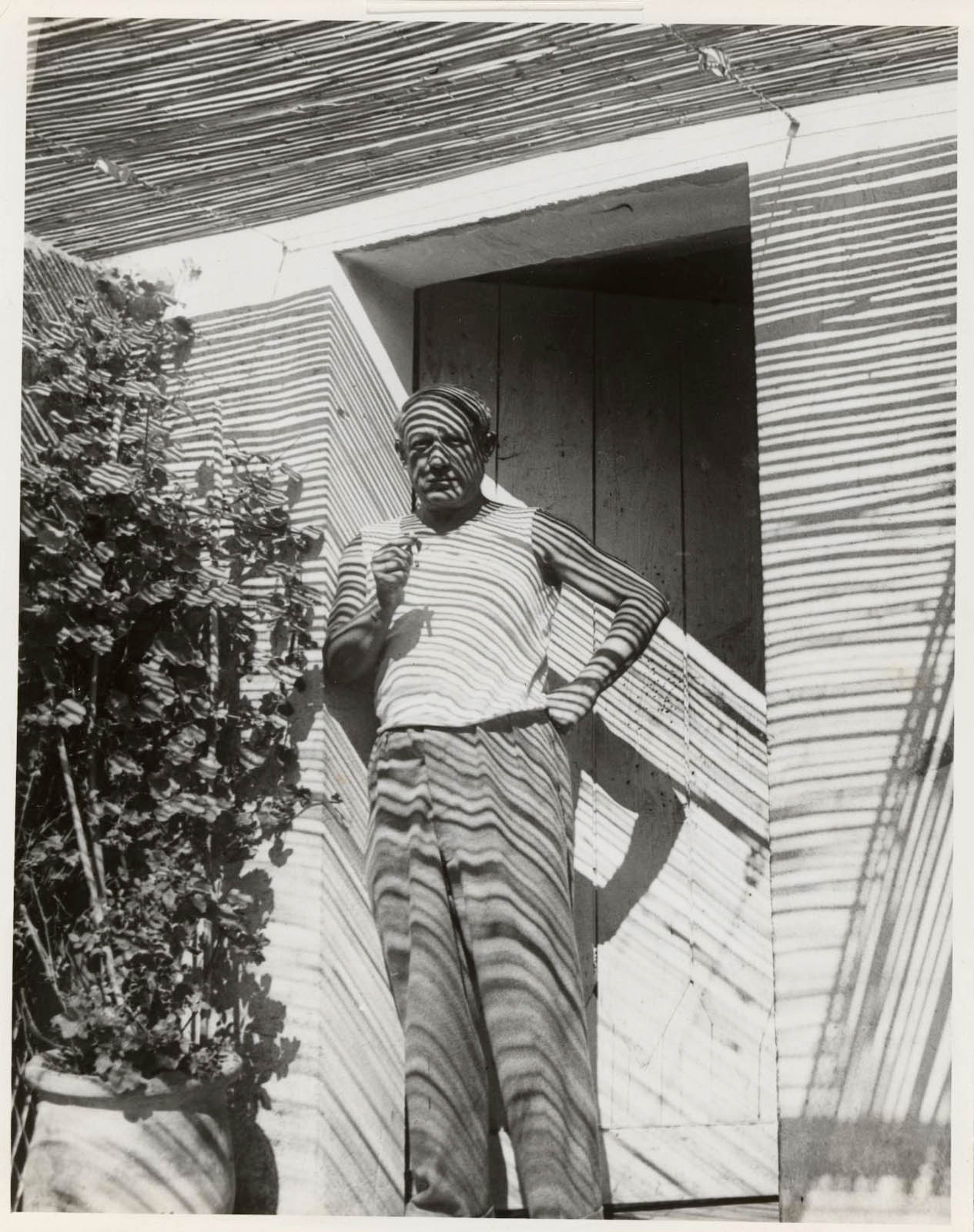
 

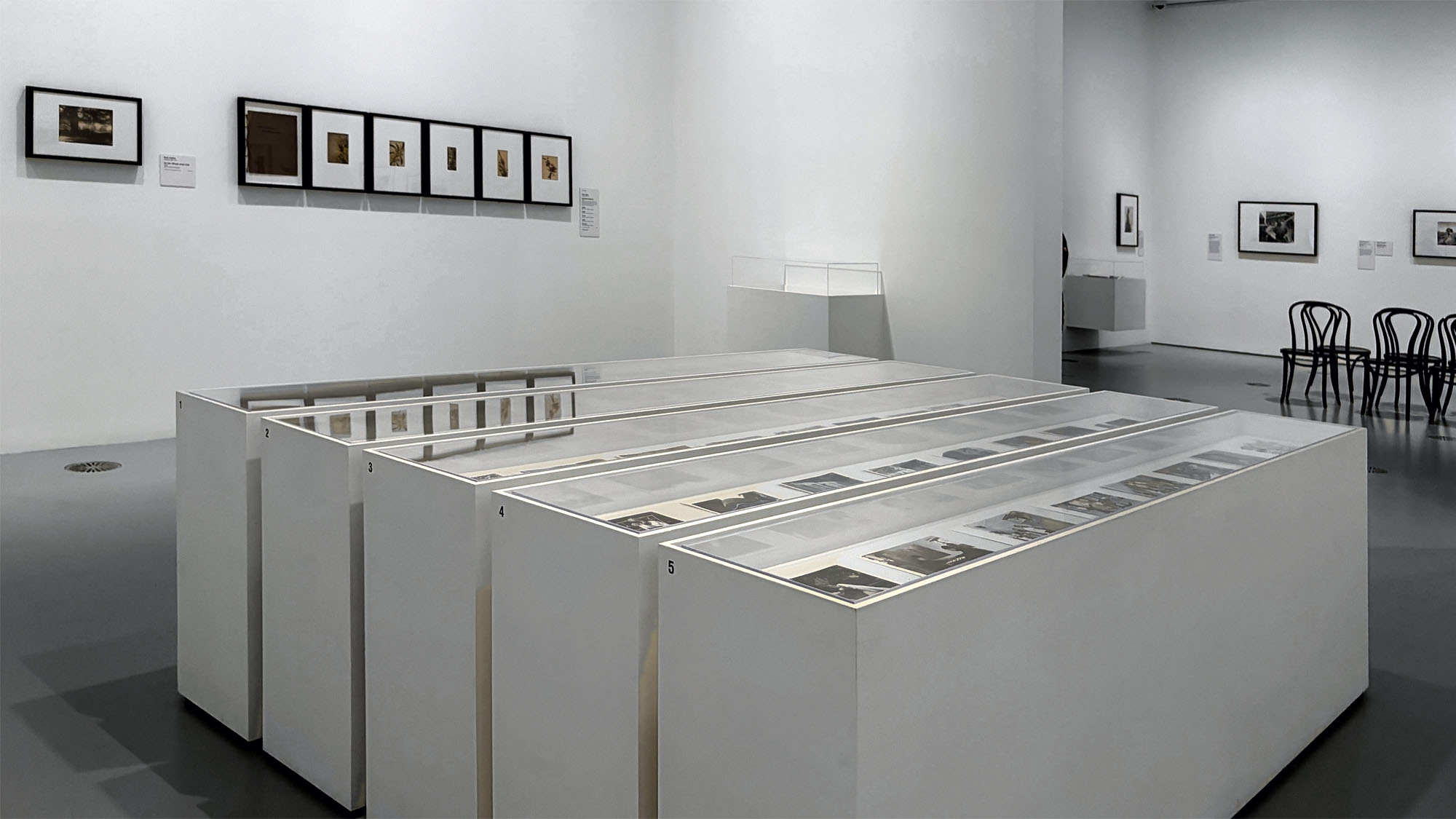
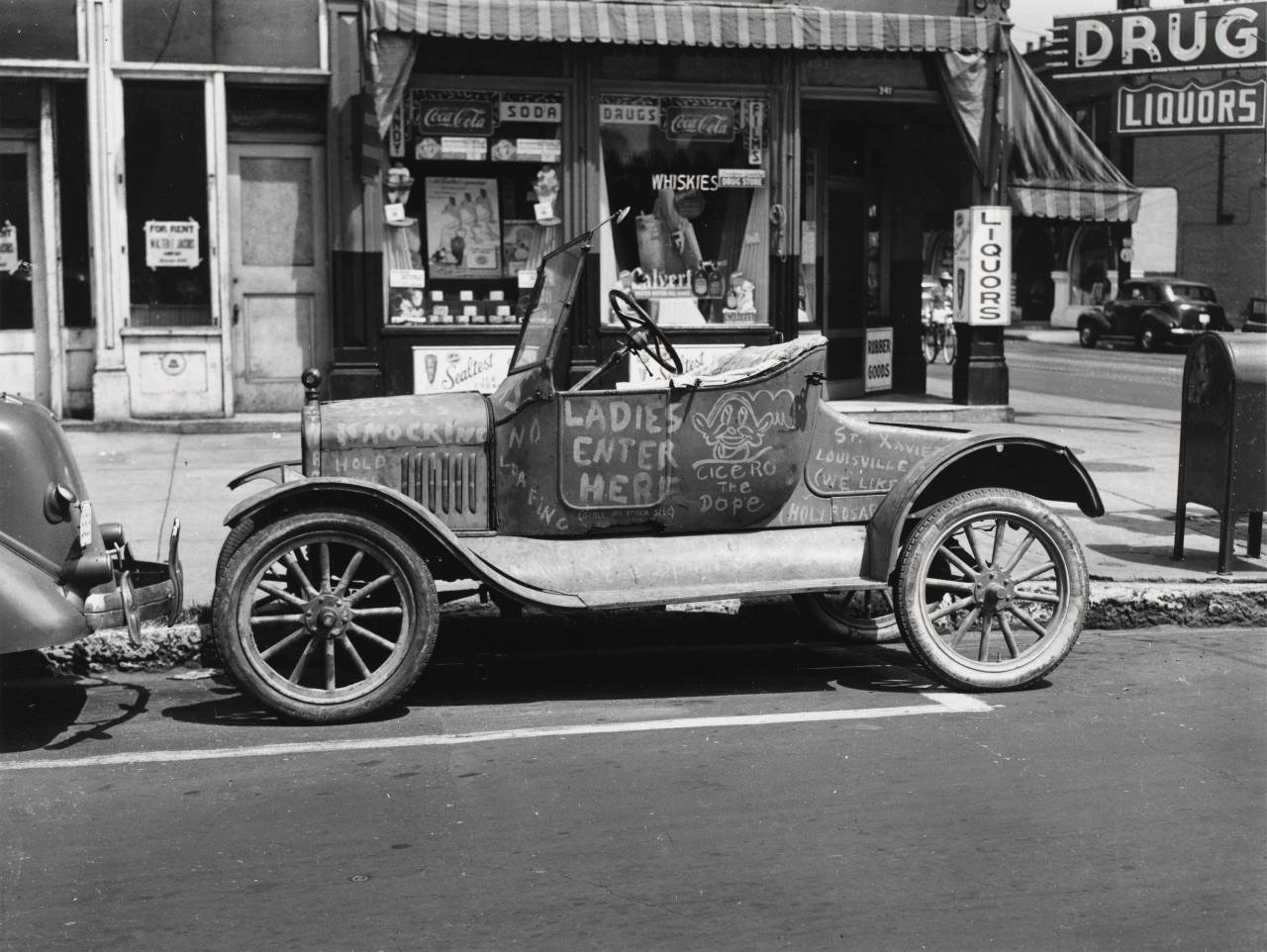
Dora Maar (French 1907-1997) 'Pablo Picasso standing under reed screening, Mougins, summer, 1937' (Pablo Picasso debout sous les cannisses, Mougins, été, 1937) 1937


Dora Maar (French 1907-1997)
Pablo Picasso standing under reed screening, Mougins, summer, 1937 (Pablo Picasso debout sous les cannisses, Mougins, été, 1937)
1937
Gelatin silver photograph
22.0 x 17.2cm (image)
23.1 x 18.2cm (sheet)
National Gallery of Victoria, Melbourne
Gift of Krystyna Campbell-Pretty AM and Family through the Australian Government’s Cultural Gifts Program, 2022
© Dora Maar. Licensed by Copyright Agency, Australia


After being introduced to Pablo Picasso in 1935, Dora Maar became his lover, model and muse until their tumultuous liaison ended in 1943. During their time together, Maar famously documented the creation of the monumental painting Guernica in Picasso’s Paris studio. This portrait captures the artist at ease, bathed in an endlessly echoing lineation of shadows from the above reed screen. The portrait Maar took of Picasso a year later, displayed nearby, shows him seated outside, his eyes glinting with intensity. Both images were taken in Mougins, near Cannes, an area that Picasso returned to every summer.

Wall text from the exhibition


The interface of light

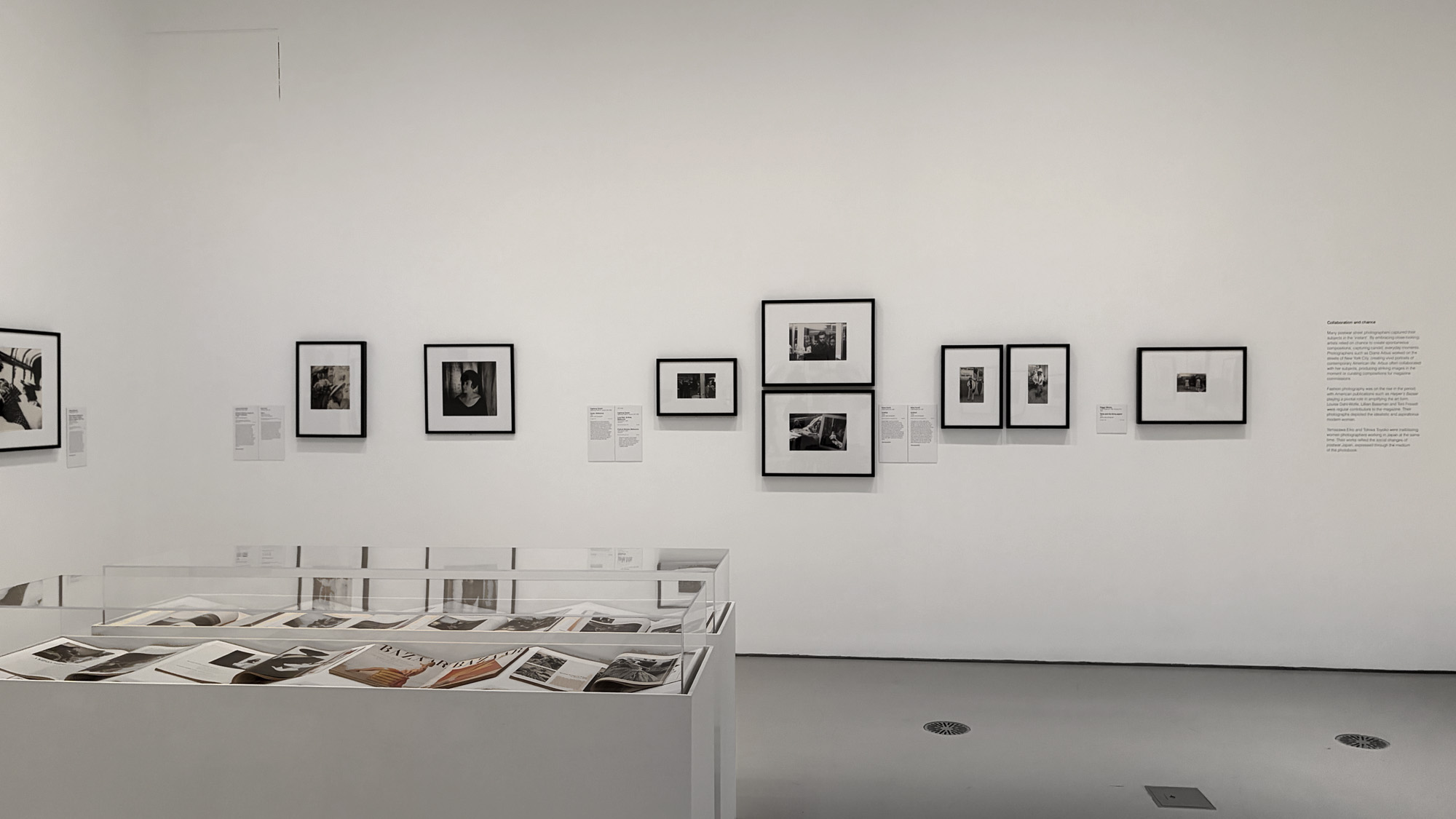
For much of its running length this exhibition of cinematic scope at the National Gallery of Victoria curated by the dependable Maggie Finch is a stimulating ride.

The early galleries in particular are a joy to behold, mixing as they do international and Australian female photographers mainly from the period between the two world wars. This placement of Australian photography in an international context (or vice versa) is something I have desired to see for a very long time in an Australian photographic exhibition. One informing the other. And it works so well!

Aesthetically (both pictorially and in exhibition design) there is a wonderful frisson to the grouping of the photographs in these darker, enclosed, tightly curated gallery spaces that is so intoxicating to the senses. Ruth Hollick meets Madame d’Ora, Florence Henri meets Yamawaki Michiko, and Olive Cotton meets Dora Maar on the gallery walls, interwoven into an intertextual conversation on photography that spans identities, countries and continents. Perhaps not a legacy of light rather the interface of light, a shared connection, one nexus to another. I could have breathed in these photographs for hours!

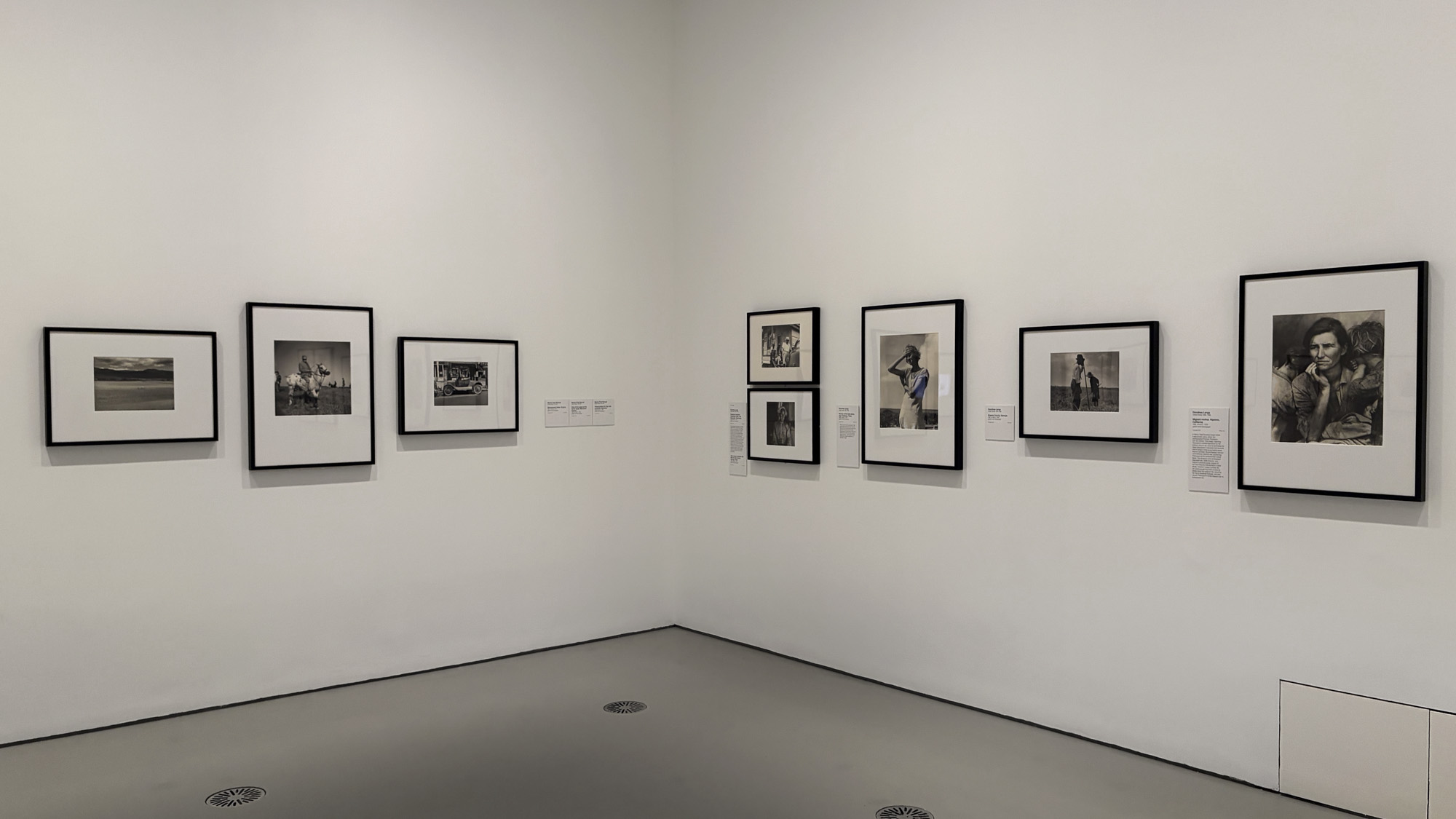
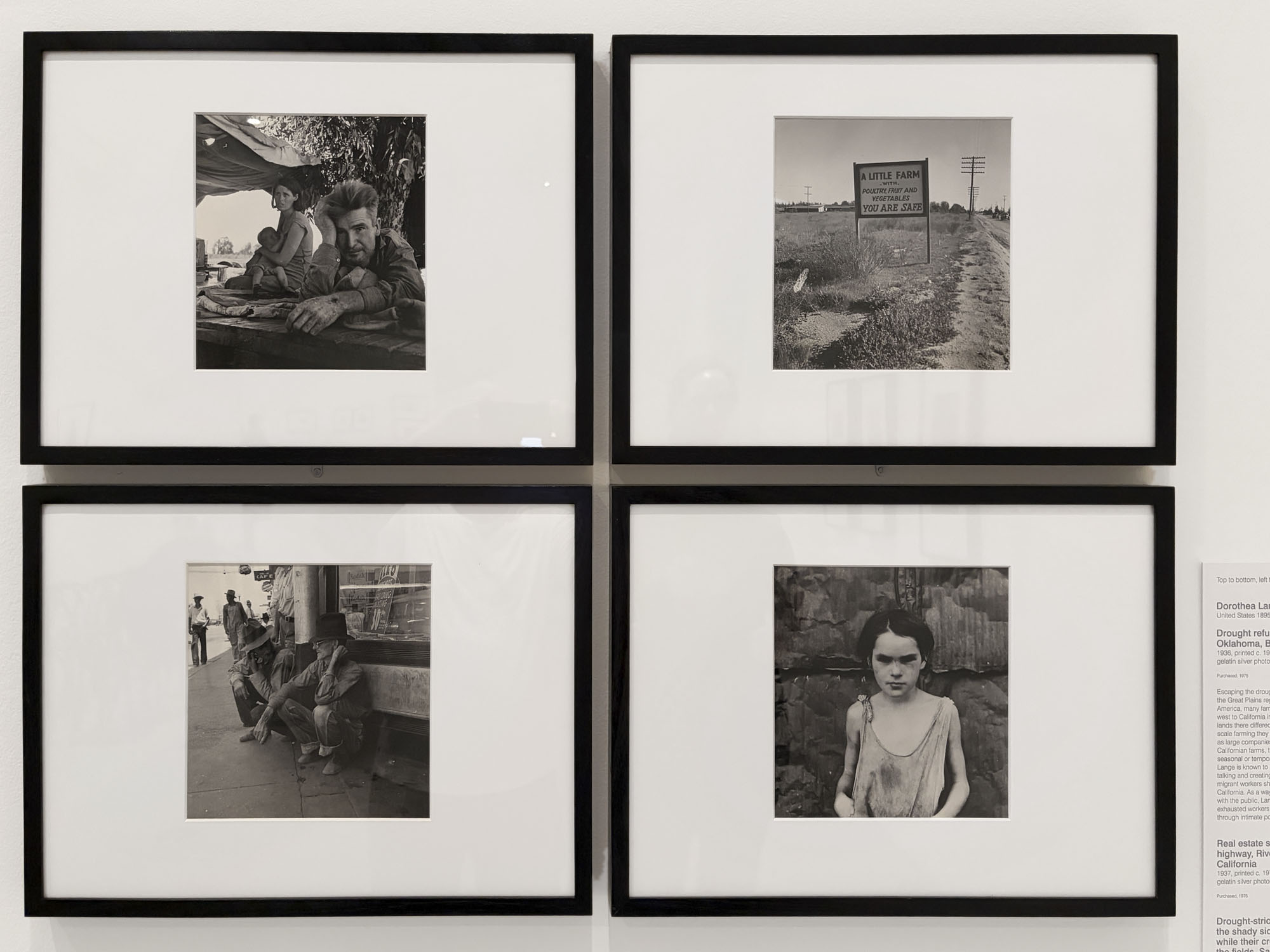
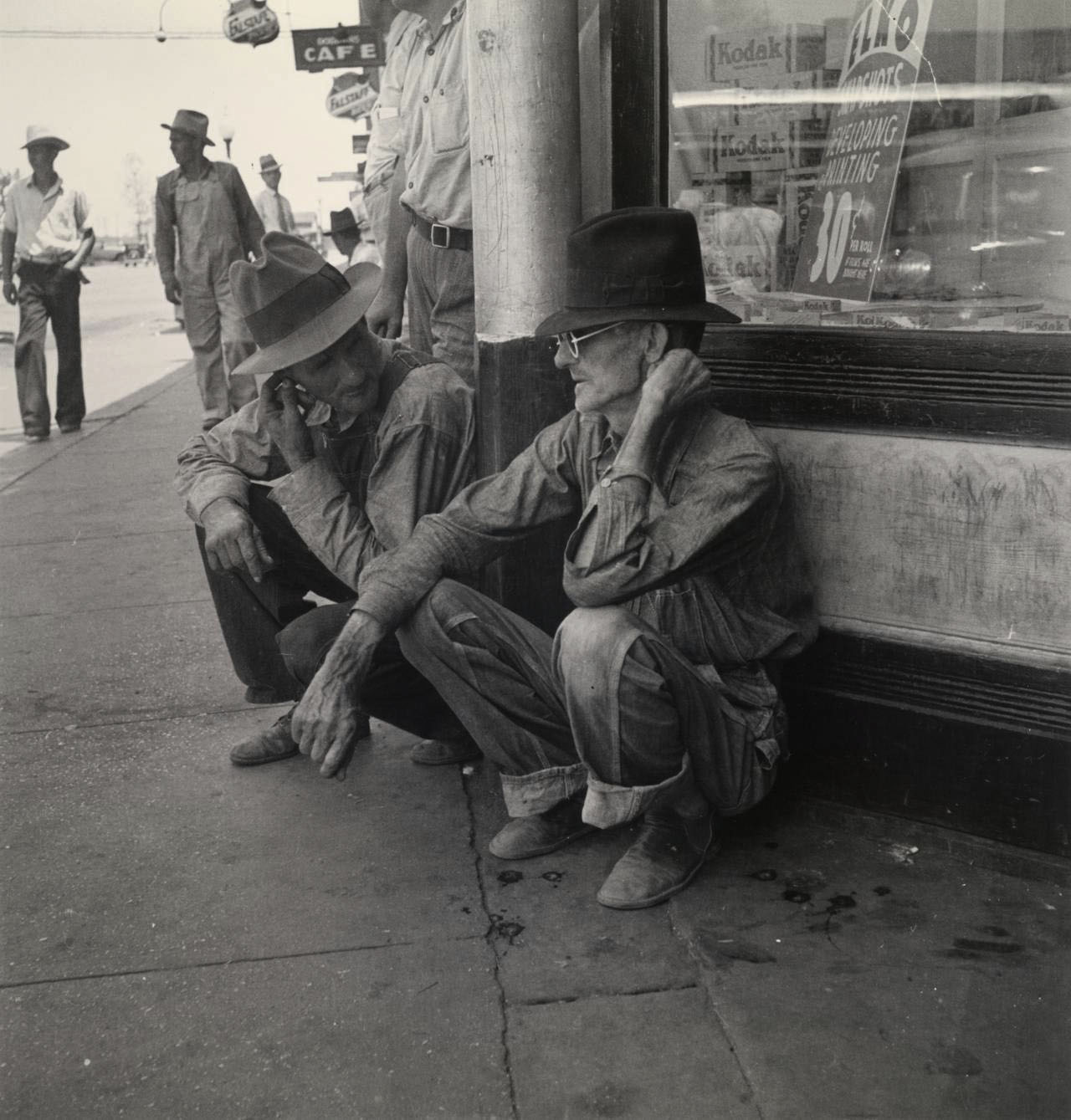
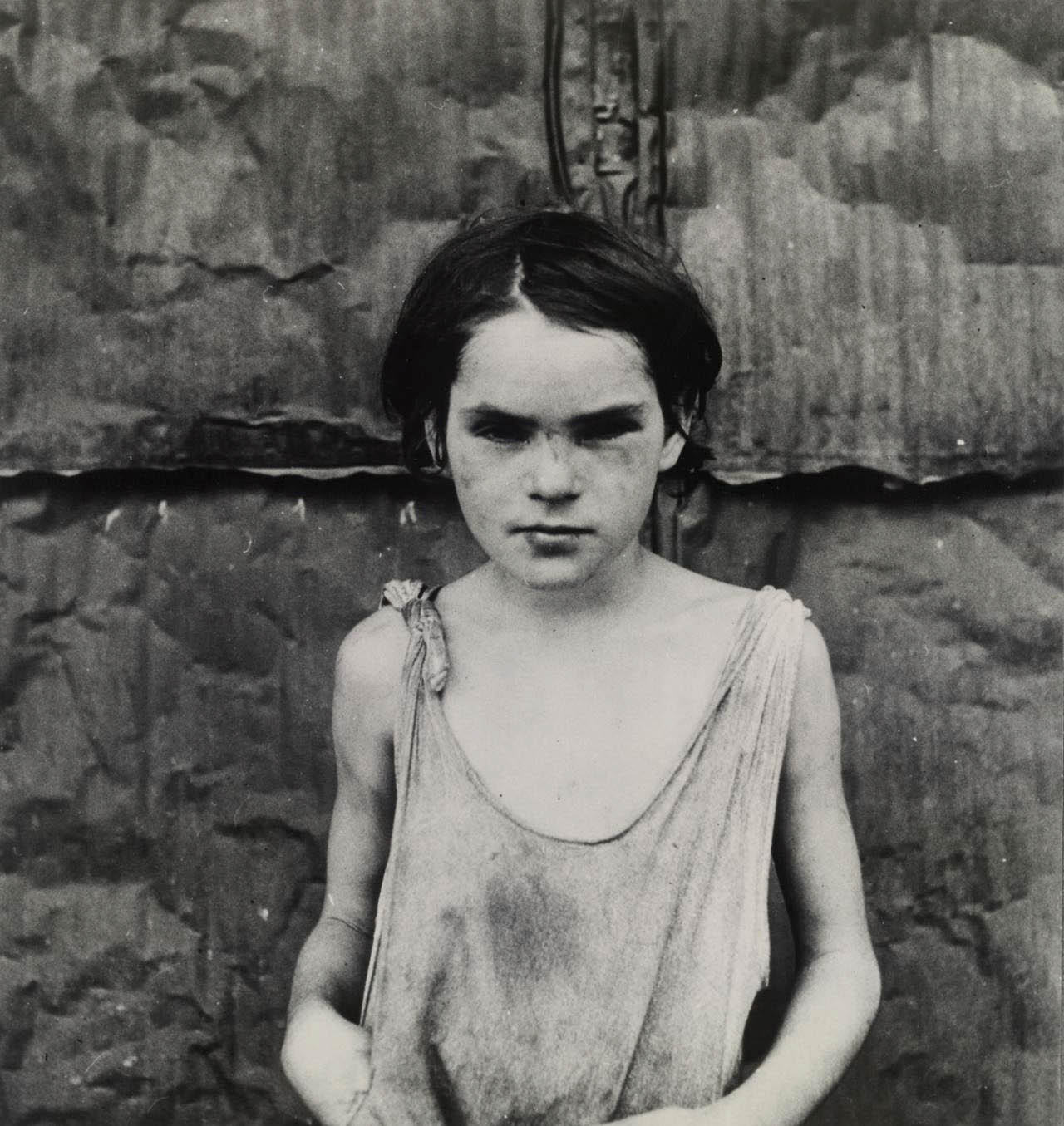
That energy starts to dissipate as the gallery spaces open out in the second half of the exhibition, especially in the section ‘People and Place’ (see below). Poor Farm Security Administration prints of now famous photographs printed very flatly in the mid-1970s and purchased for the gallery in the same time period don’t help the cause – they need to be replaced in the collection with more appropriate prints of these images.

By the time of the final section, ‘New Ways Of Seeing: Portraits, Intimacy, Liberation’ (see below), the international representation has disappeared altogether and all the intoxicating energy has gone. In this section we find strong, eloquent and important Australian photographs from the period – conceptual, feminist, and on liberation – but it would have been great to have seen them paired with photographs from international photographers such as Cindy Sherman, Mary Ellen Mark, and Valie Export for example.

On reflection I can say that this is a strong exhibition from the NGV coherently and intelligently curated by Maggie Finch. It is fantastic to see that the gallery has been “splashing the cash” in recent years – supported by Krystyna Campbell-Pretty AM and the Bowness family – with over 170 new acquisitions for the photographic collection.

However for a public gallery, with most of the photographs already in the collection, to charge $25 entry price is really beyond the pale. I went twice to see the exhibition and $50 is a fair whack of money out of anyone’s budget.

Dr Marcus Bunyan


Many thankx to the NGV for allowing me to publish the media images in the posting. All installation photographs © Marcus Bunyan. Please click on the photographs for a larger version of the image. View Part 1 of the posting.
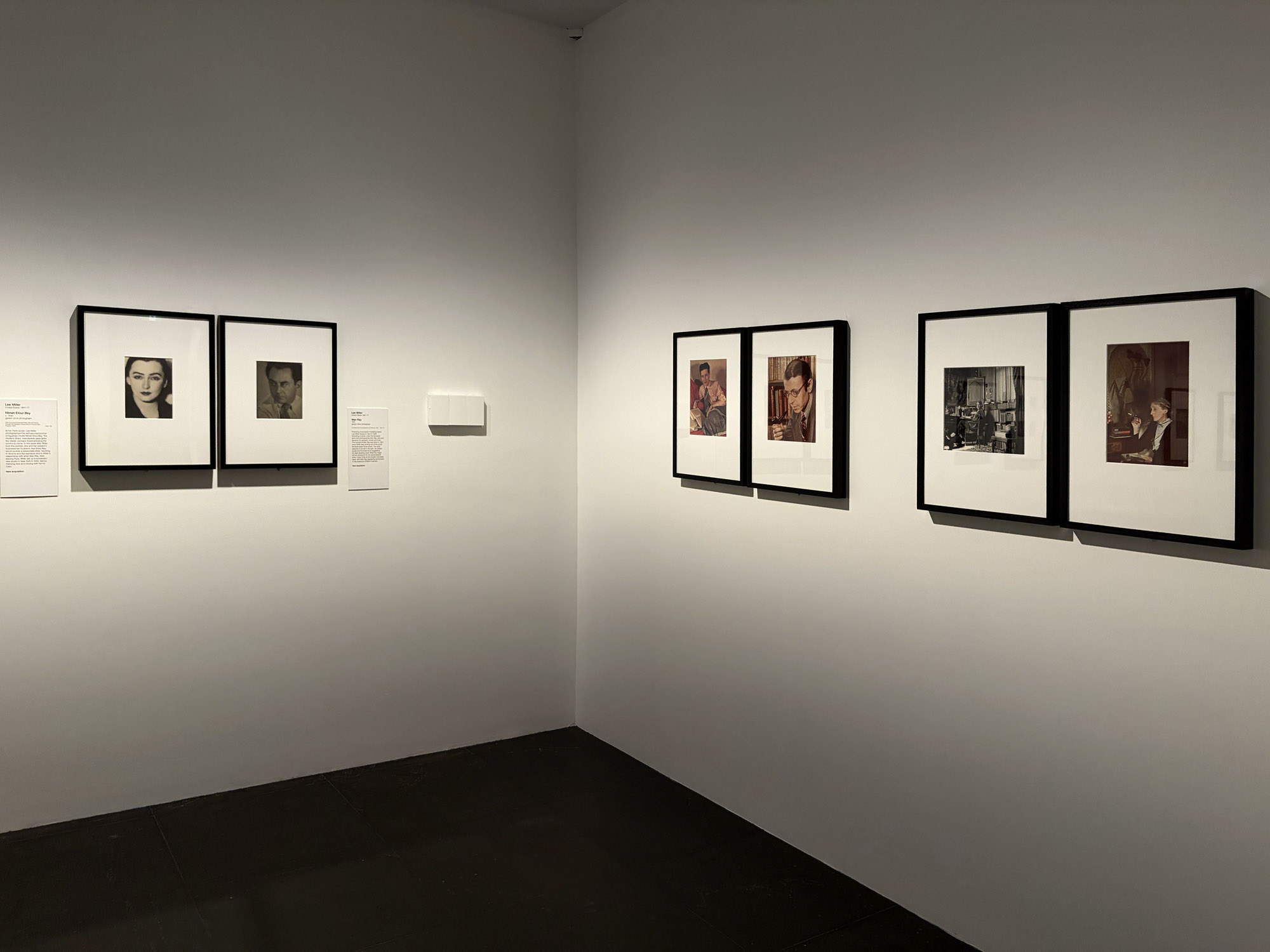


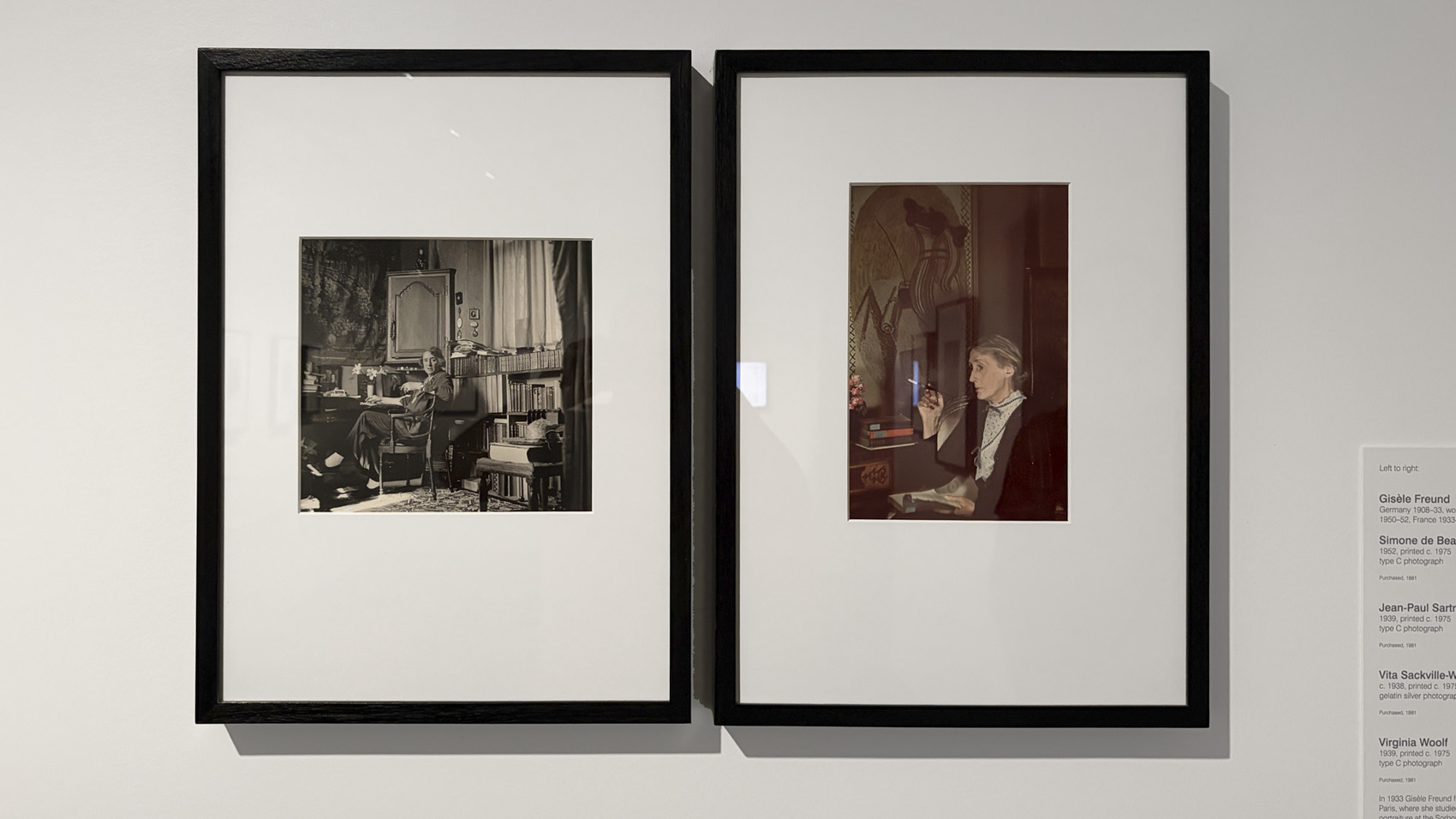
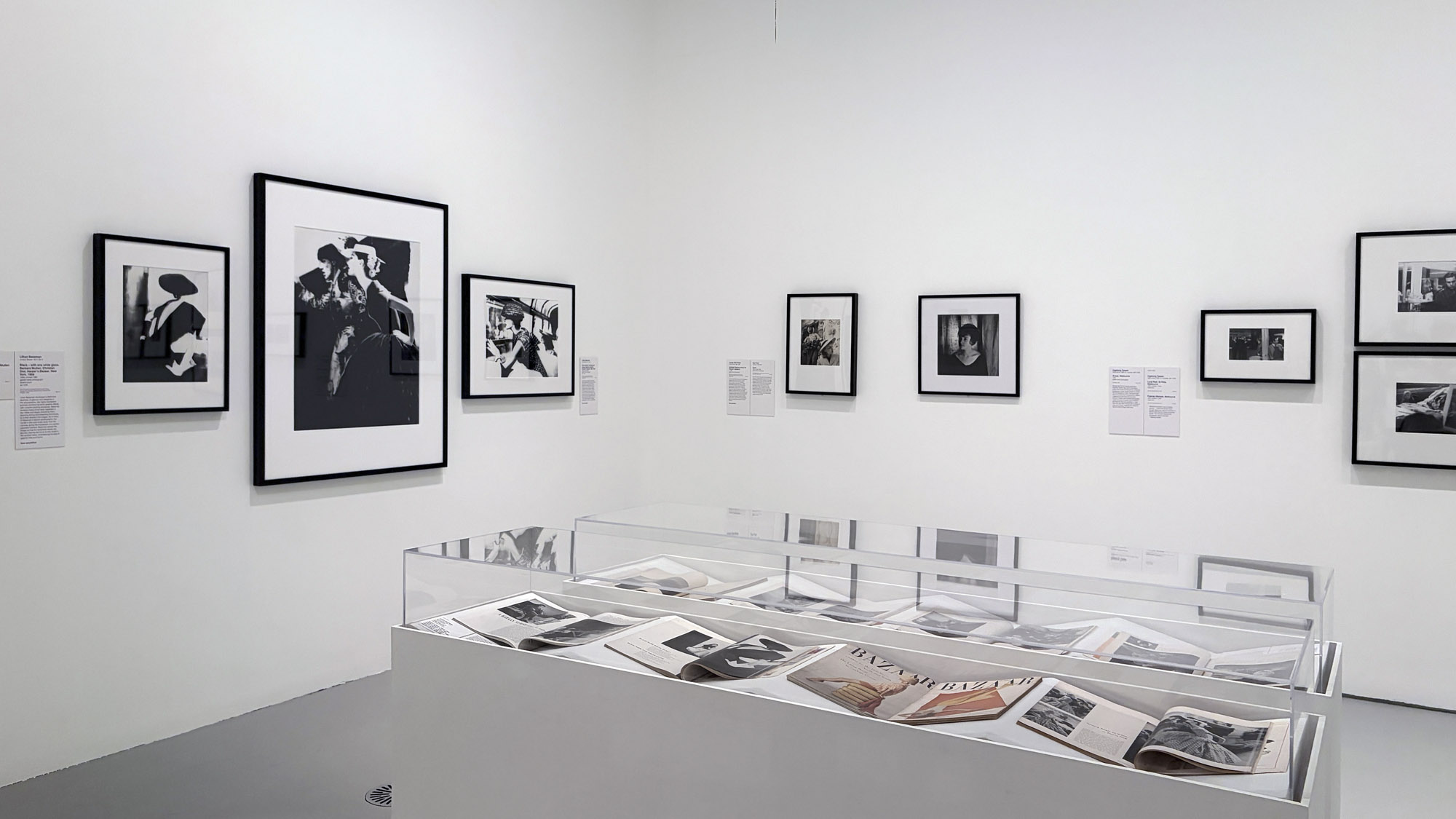
Installation view of the exhibition 'Women Photographers 1900-1975: A Legacy of Light' at NGV International, Melbourne, November 2025 - May 2026 showing from left to right, Lee Miller 'Nimet Eloui Bey' (c. 1930); Lee Miller 'Man Ray' (1931); Gisele Freund's 'Simone de Beauvoir '(1952 printed c. 1975), 'Jean-Paul Satre' (1939 printed c. 1975), 'Vita Sackville-West' (1938 printed c. 1975) and 'Virginia Woolfe' (1939 printed c. 1975)


Installation view of the exhibition Women Photographers 1900-1975: A Legacy of Light at NGV International, Melbourne, November 2025 – May 2026 showing from left to right, Lee Miller Nimet Eloui Bey (c. 1930, below); Lee Miller Man Ray (1931, below); Gisele Freund’s Simone de Beauvoir (1952 printed c. 1975, below), Jean-Paul Satre (1939 printed c. 1975, below), Vita Sackville-West (1938 printed c. 1975, below) and Virginia Woolfe (1939 printed c. 1975, below)
Photo: Marcus Bunyan


Women Photographers 1900-1975: A Legacy of Light celebrates the wide-ranging photographic practices of more than eighty women artists working between 1900 and 1975. Featuring prints, postcards, photobooks and magazines, the exhibition explores the role of photographers as image-makers, and the ways in which women artists create an image of themselves, of others, of the times – from images of the women’s suffrage movement at the turn of the twentieth century, through to the women’s liberation movement and beyond. From Melbourne to Tokyo, Paris to Buenos Aires, the exhibition showcases the works of trailblazing artists such as Berenice Abbott, Lola Álvarez Bravo, Claude Cahun and Marcel Moore, Imogen Cunningham, Mikki Ferrill, Sue Ford, Christine Godden, Ponch Hawkes, Annemarie Heinrich, Ruth Hollick, Florence Henri, Kati Horna, Germaine Krull, Tina Modotti, Lucia Moholy, Toyoko Tokiwa, Yamazawa Eiko and many more.

The exhibition reflects a recent collecting focus on celebrating the contributions of women artists of the early twentieth century in the NGV Photography Collection. Featuring portraiture, photojournalism, landscape photography, photomontage, experimental avant-garde imagery and more, Women Photographers 1900-1975: A Legacy of Light presents the diverse work of women photographers against the backdrop of significant social, political and cultural events.

Text from the NGV website
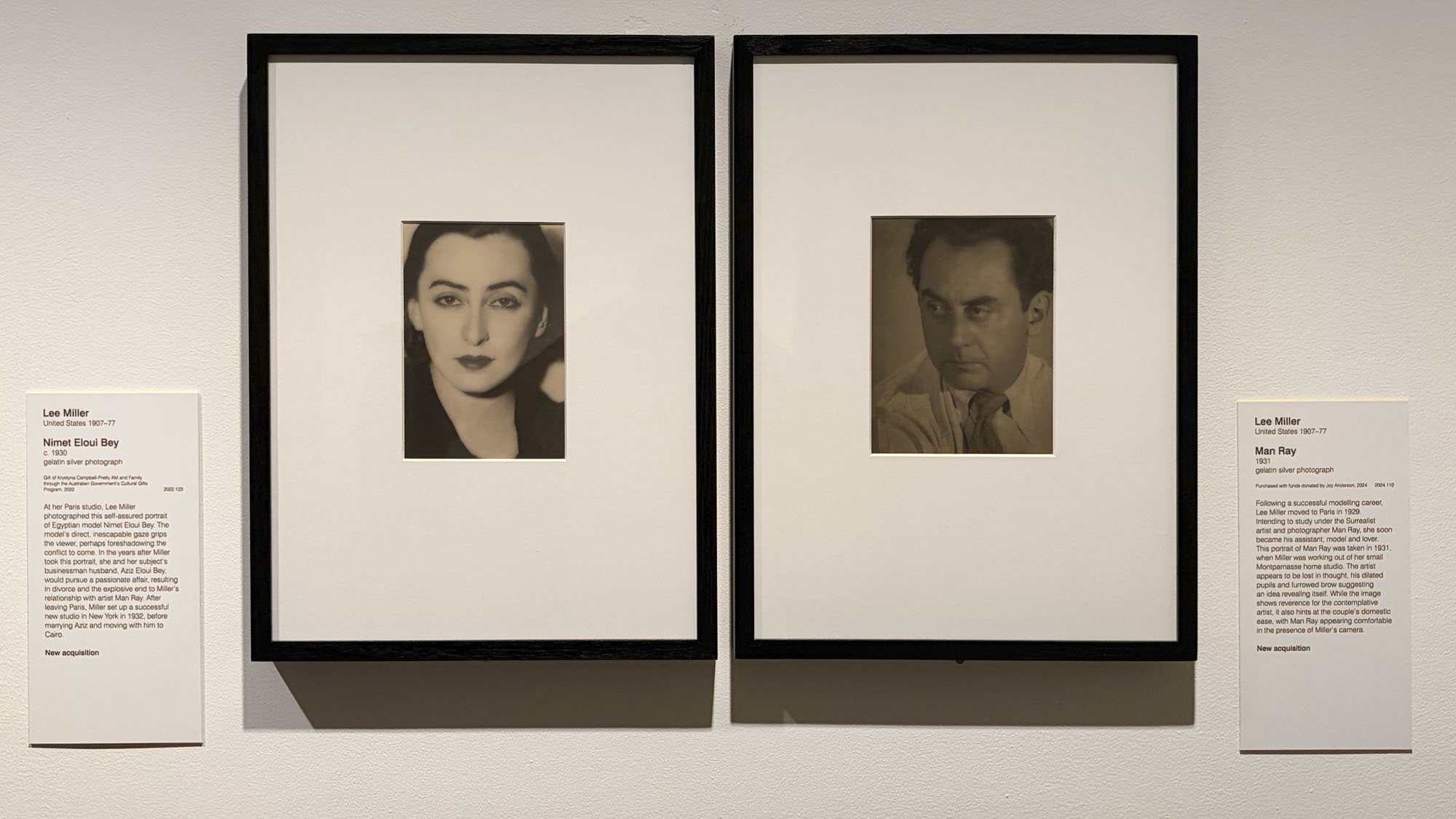
 

Installation view of the exhibition 'Women Photographers 1900-1975: A Legacy of Light' at NGV International, Melbourne, November 2025 - May 2026 showing from left to right, Lee Miller 'Nimet Eloui Bey' (c. 1930) and Lee Miller 'Man Ray' (1931)


Installation view of the exhibition Women Photographers 1900-1975: A Legacy of Light at NGV International, Melbourne, November 2025 – May 2026 showing from left to right, Lee Miller Nimet Eloui Bey (c. 1930, below) and Lee Miller Man Ray (1931, below)
Photo: Marcus Bunyan
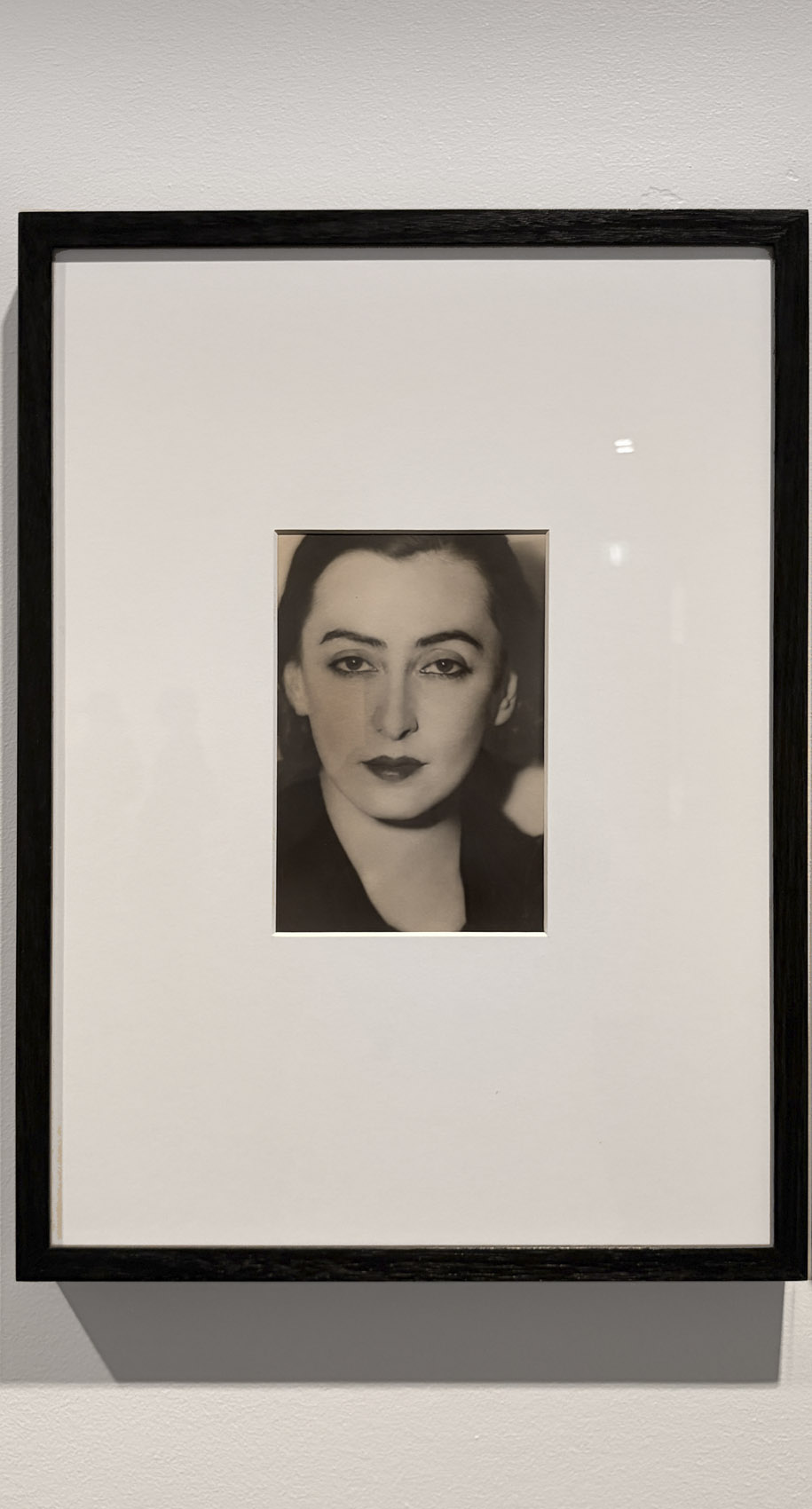
 

Lee Miller (American, 1907-1977) 'Nimet Eloui Bey' c. 1930 (installation view)


Lee Miller (American, 1907-1977)
Nimet Eloui Bey (installation view)
c. 1930
Gelatin silver photograph
23.0 x 15.8cm (image and sheet)
National Gallery of Victoria, Melbourne
Gift of Krystyna Campbell-Pretty AM and Family through the Australian Government’s Cultural Gifts Program, 2022
© Lee Miller Archives, England 2023


At her Paris studio, Lee Miller photographed this self-assured portrait of Egyptian model Nimet Eloui Bey. The model’s direct, inescapable gaze grips the viewer, perhaps foreshadowing the conflict to come. In the years after Miller took this portrait, she and her subject’s businessman husband, Aziz Eloui Bey, would pursue a passionate affair, resulting in divorce and the explosive end to Miller’s relationship with artist Man Ray. After leaving Paris, Miller set up a successful new studio in New York in 1932, before marrying Aziz and moving with him to Cairo.

Wall text from the exhibition
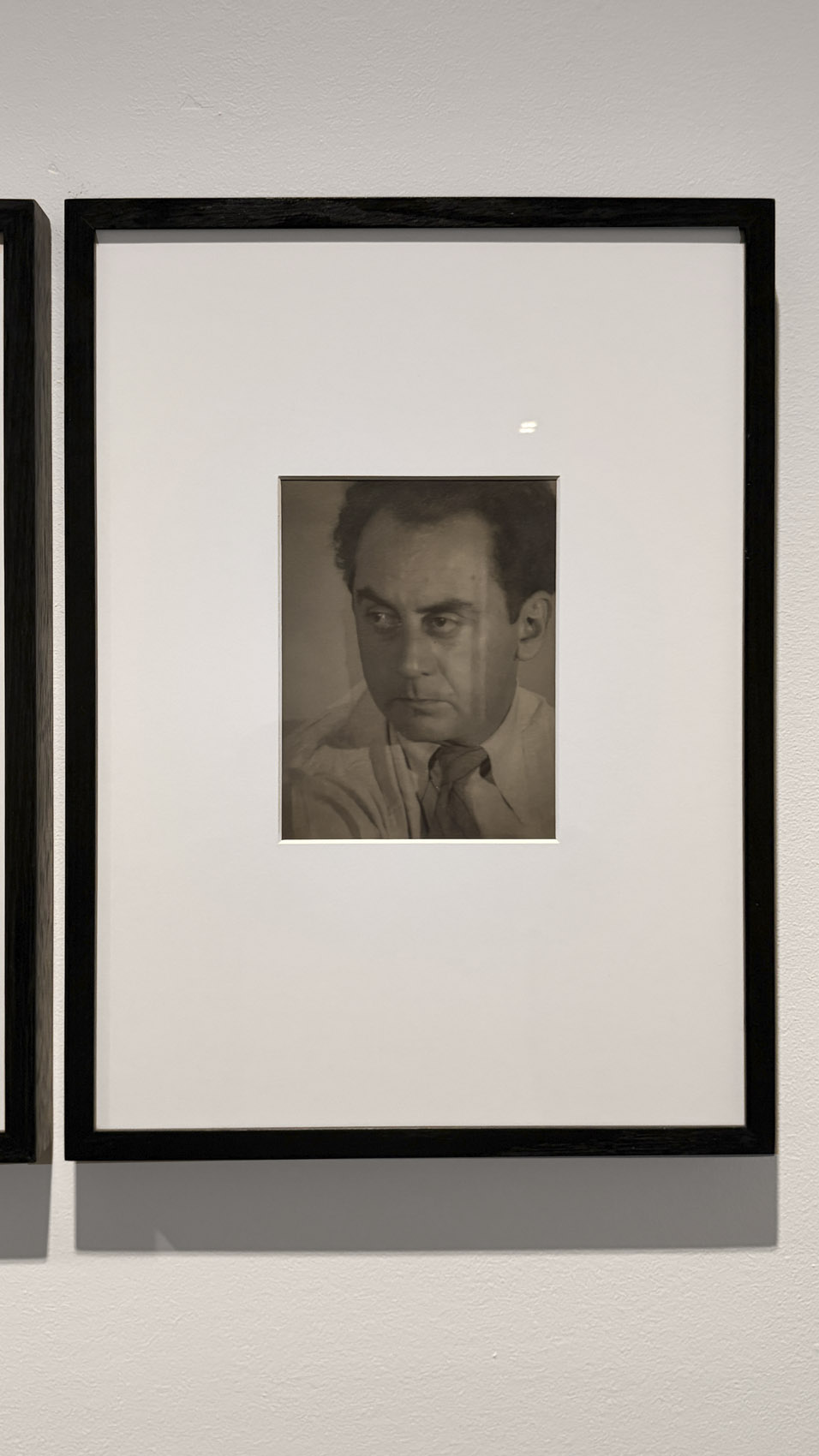
 

Lee Miller (American, 1907-1977) 'Man Ray' 1931 (installation view)


Lee Miller (American, 1907-1977)
Man Ray (installation view)
1931
Gelatin silver photograph
23.1 x 17.5cm (image and sheet)
National Gallery of Victoria, Melbourne
Purchased with funds donated by Joy And
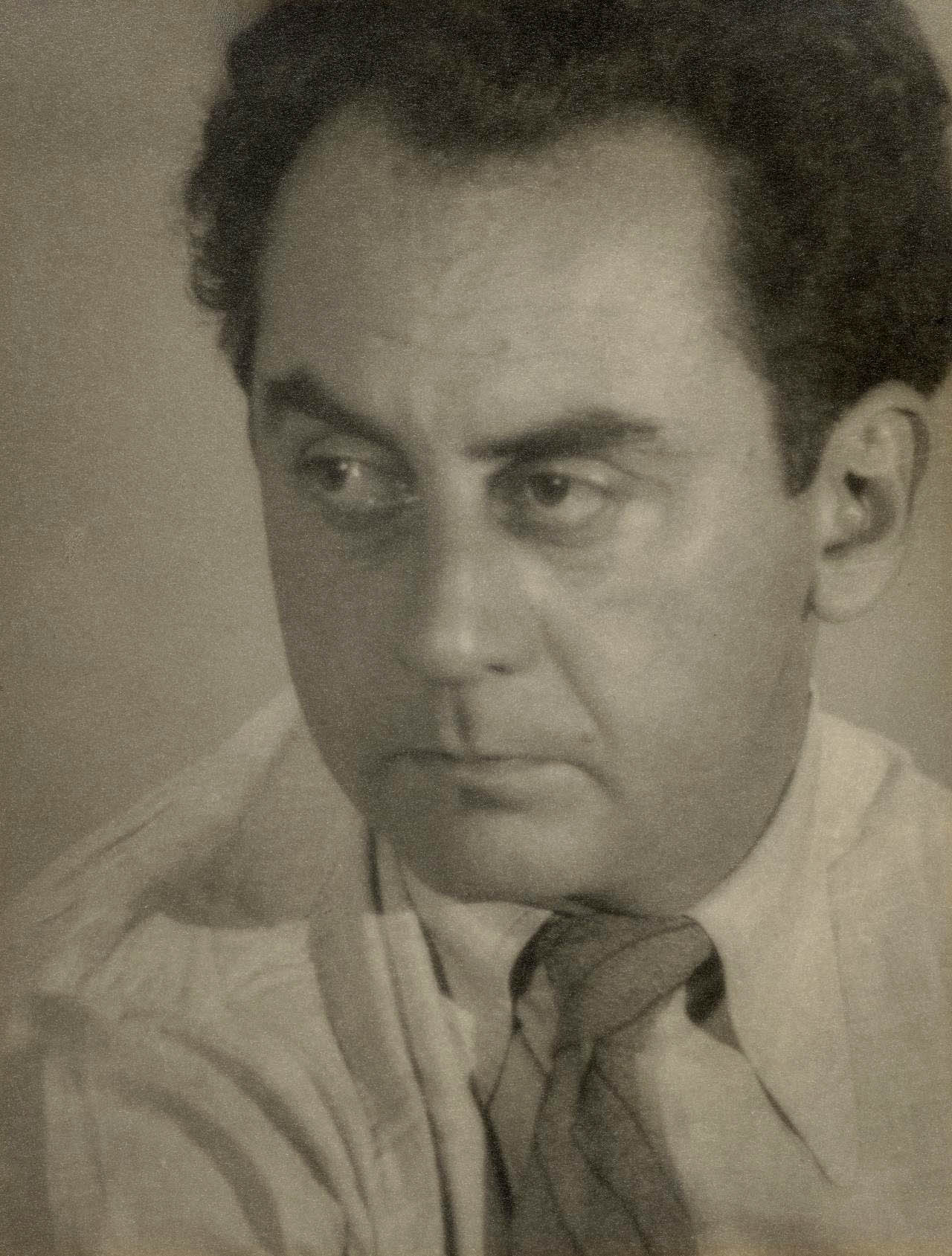
 

Lee Miller (American, 1890-1976) 'Man Ray' 1931


Lee Miller (American, 1890-1976)
Man Ray
1931
Gelatin silver photograph
23.1 x 17.5cm (image and sheet)
National Gallery of Victoria, Melbourne
Purchased with funds donated by Joy Anderson, 2024
© Lee Miller Archives, England 2023. All rights reserved


Following a successful modelling career, Lee Miller moved to Paris in 1929. Intending to study under the Surrealist artist and photographer Man Ray, she soon became his assistant, model and lover. This portrait of Man Ray was taken in 1931, when Miller was working out of her small Montparnasse home studio. The artist appears to be lost in thought, his dilated pupils and furrowed brow suggesting an idea revealing itself. While the image shows reverence for the contemplative artist, it also hints at the couple’s domestic ease, with Man Ray appearing comfortable in the presence of Miller’s camera.

Wall text from the exhibition
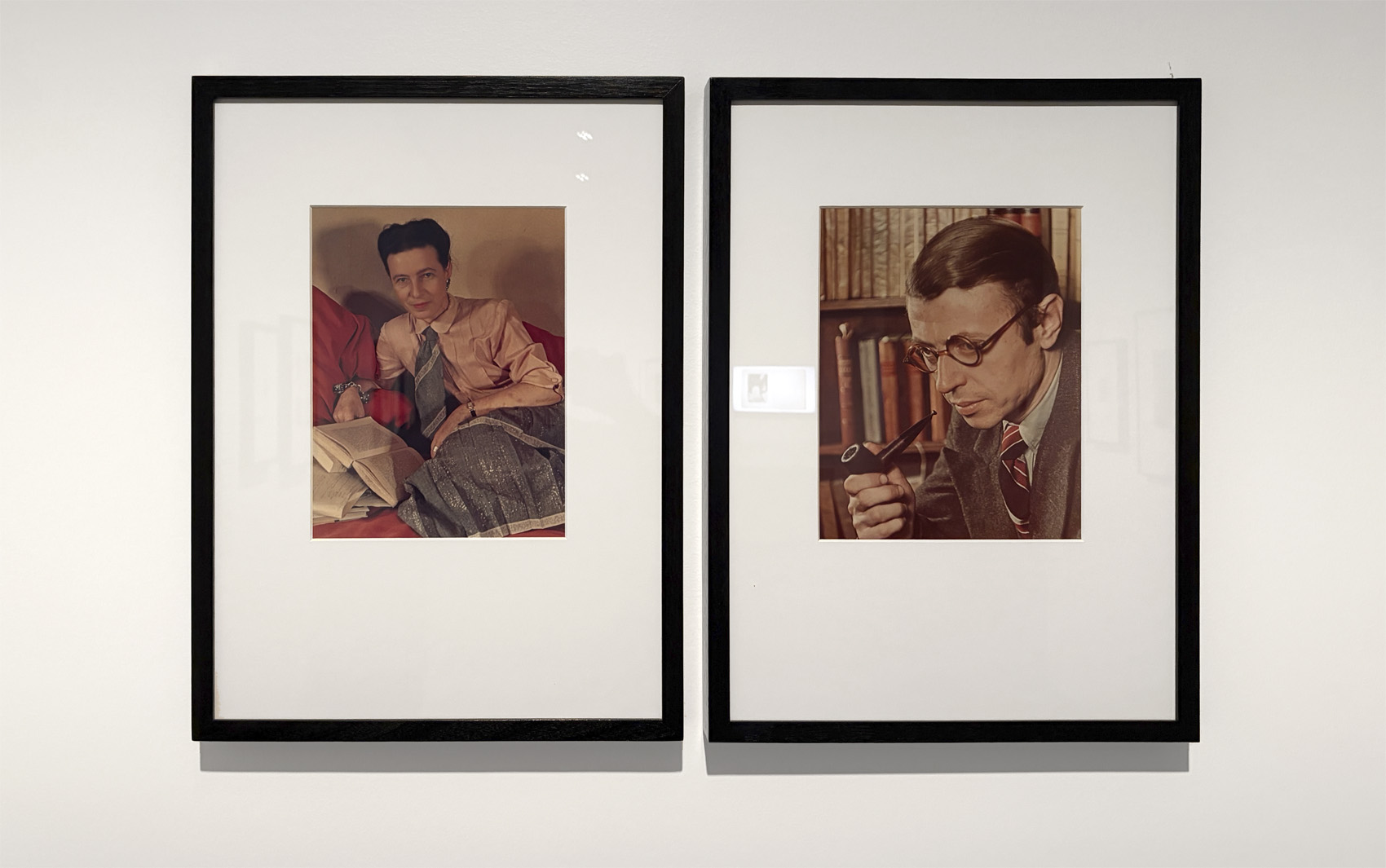
 

Installation view of the exhibition Women Photographers 1900-1975: A Legacy of Light at NGV International, Melbourne, November 2025 – May 2026 showing from left to right, Gisèle Freund's 'Simone de Beauvoir' (1952 printed c. 1975) and 'Jean-Paul Satre' (1939 printed c. 1975)


Installation view of the exhibition Women Photographers 1900-1975: A Legacy of Light at NGV International, Melbourne, November 2025 – May 2026 showing from left to right, Gisèle Freund’s Simone de Beauvoir (1952 printed c. 1975) and Jean-Paul Satre (1939 printed c. 1975)
Photo: Marcus Bunyan
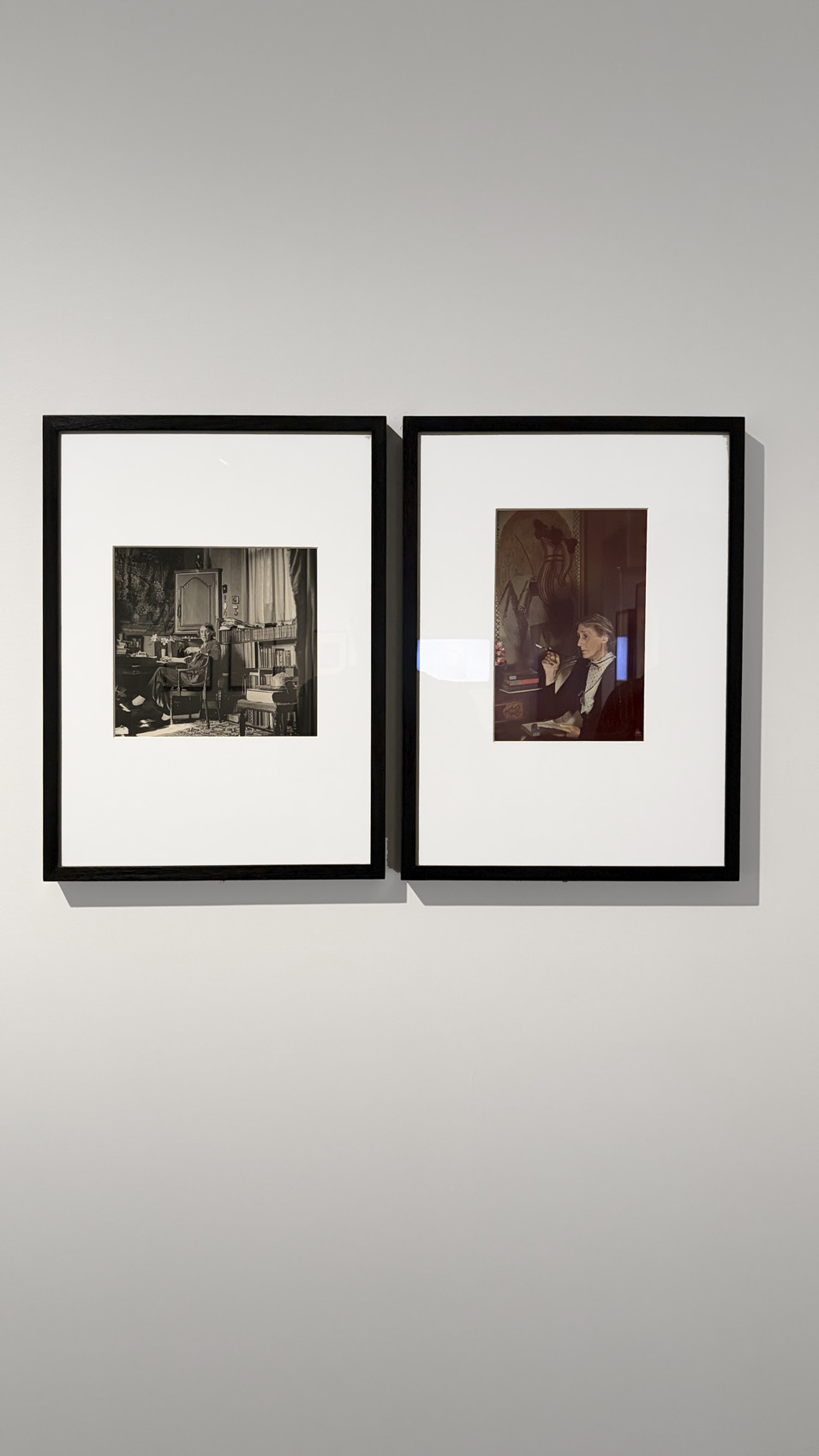
 

Installation view of the exhibition Women Photographers 1900-1975: A Legacy of Light at NGV International, Melbourne, November 2025 – May 2026 showing from left to right, Gisèle Freund's 'Vita Sackville-West' (1938 printed c. 1975) and 'Virginia Woolfe' (1939 printed c. 1975)


Installation view of the exhibition Women Photographers 1900-1975: A Legacy of Light at NGV International, Melbourne, November 2025 – May 2026 showing from left to right, Gisèle Freund’s Vita Sackville-West (1938 printed c. 1975) and Virginia Woolfe (1939 printed c. 1975)
Photos: Marcus Bunyan


In 1933 Gisèle Freund fled Frankfurt for Paris, where she studied photographic portraiture at the Sorbonne. Uniquely for the time, she used Kodachrome and Agfacolor positive film for her colour portraits of writers and artists in Paris – her portrait of James Joyce was selected as the first colour cover of Time magazine in 1939. That same year she photographed Virginia Woolf at her home in Tavistock Square, London. Freund later recalled of her encounter with Woolf, ‘frail, luminous, she was the very incarnation of her prose’.

Wall text from the exhibition


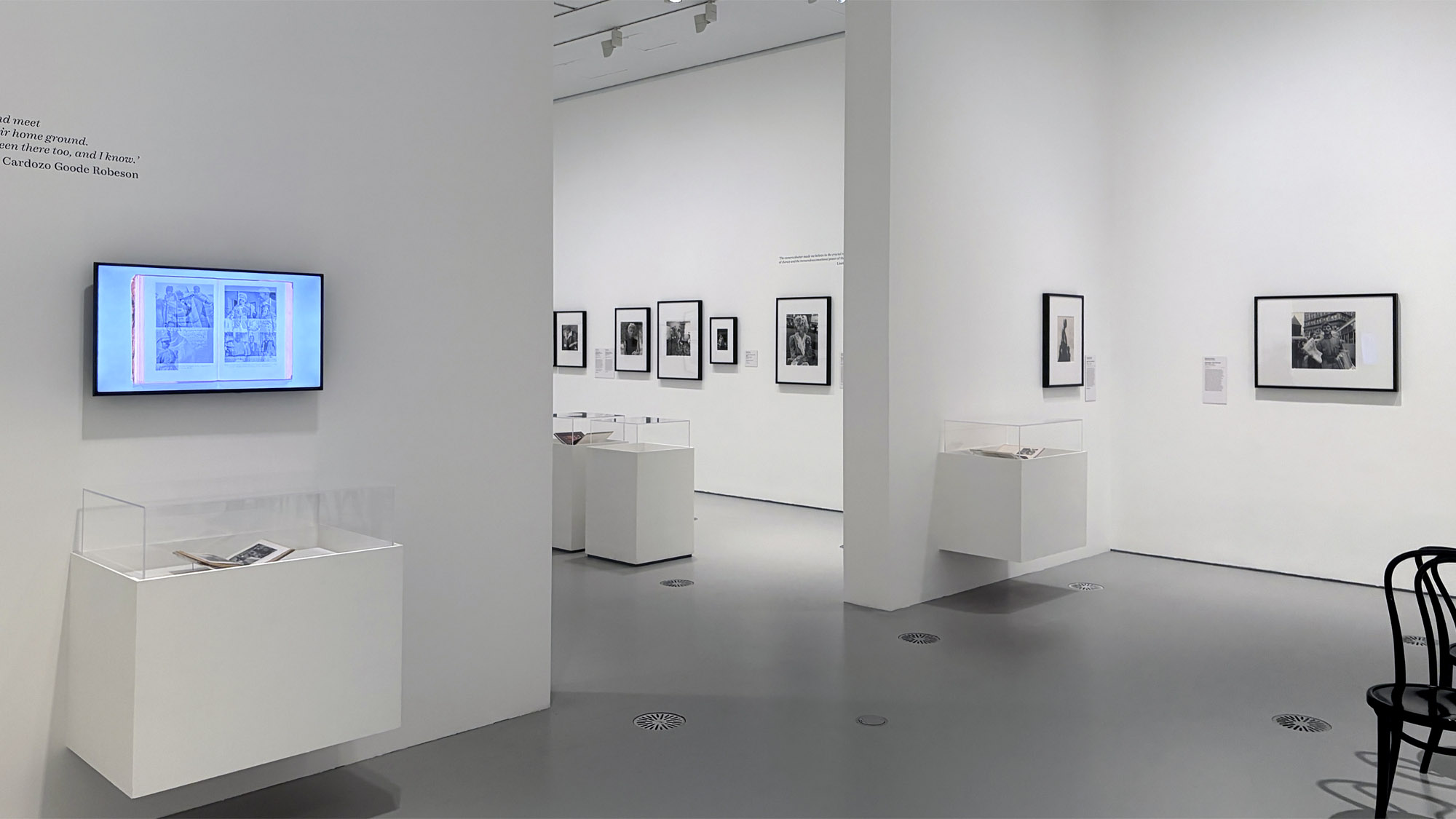
In Exchange: Social Milieu and Collaboration

The intertwined lives of avant-garde artists working in the interwar period often played out in works of art depicting friendship and love. Photographers captured these relationships, often revealing both the affection and the complex relations between themselves and their artistic collaborators, muses and subjects.

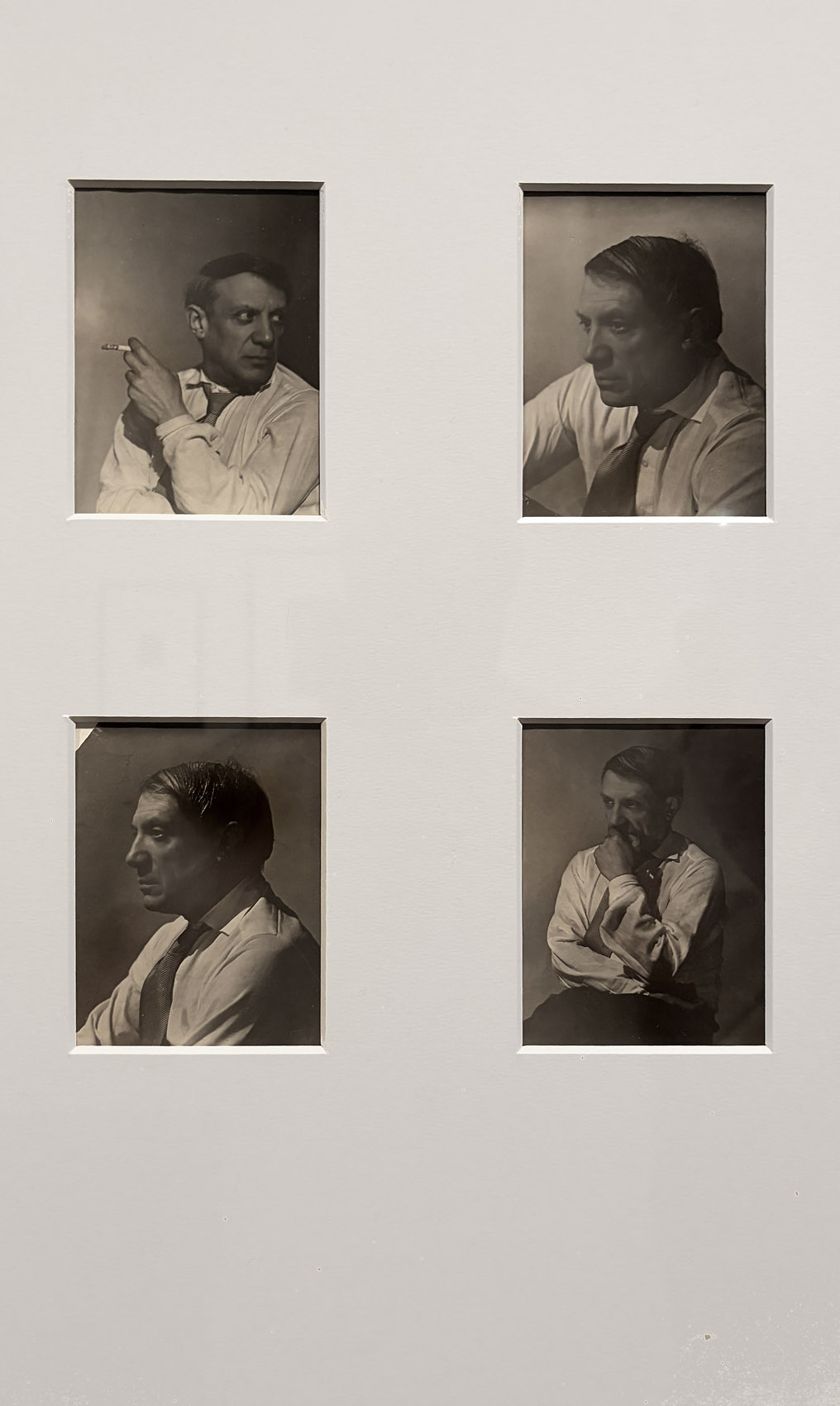
Paris in the interwar period was a hotbed for artistic exchange. Between 1935 and 1936, Dora Maar photographed her then partner Pablo Picasso in her Paris studio. She also created collaborative images with fellow Surrealists such as Léonor Fini, Jacqueline Lamba and André Breton. Lee Miller, also working in Paris during this period, photographed her lover and artistic partner Man Ray. Miller, in turn, was the subject of many of Man Ray’s own works.

In Mexico, Kati Horna frequently photographed her close friend, British-born painter and writer Leonora Carrington. Lola Álvarez Bravo’s image of the Spanish Surrealist artist Remedios Varo is another example of the playful and experimental collaborations between artists at the time. Such photographs demonstrate the mutual influence between women artists.
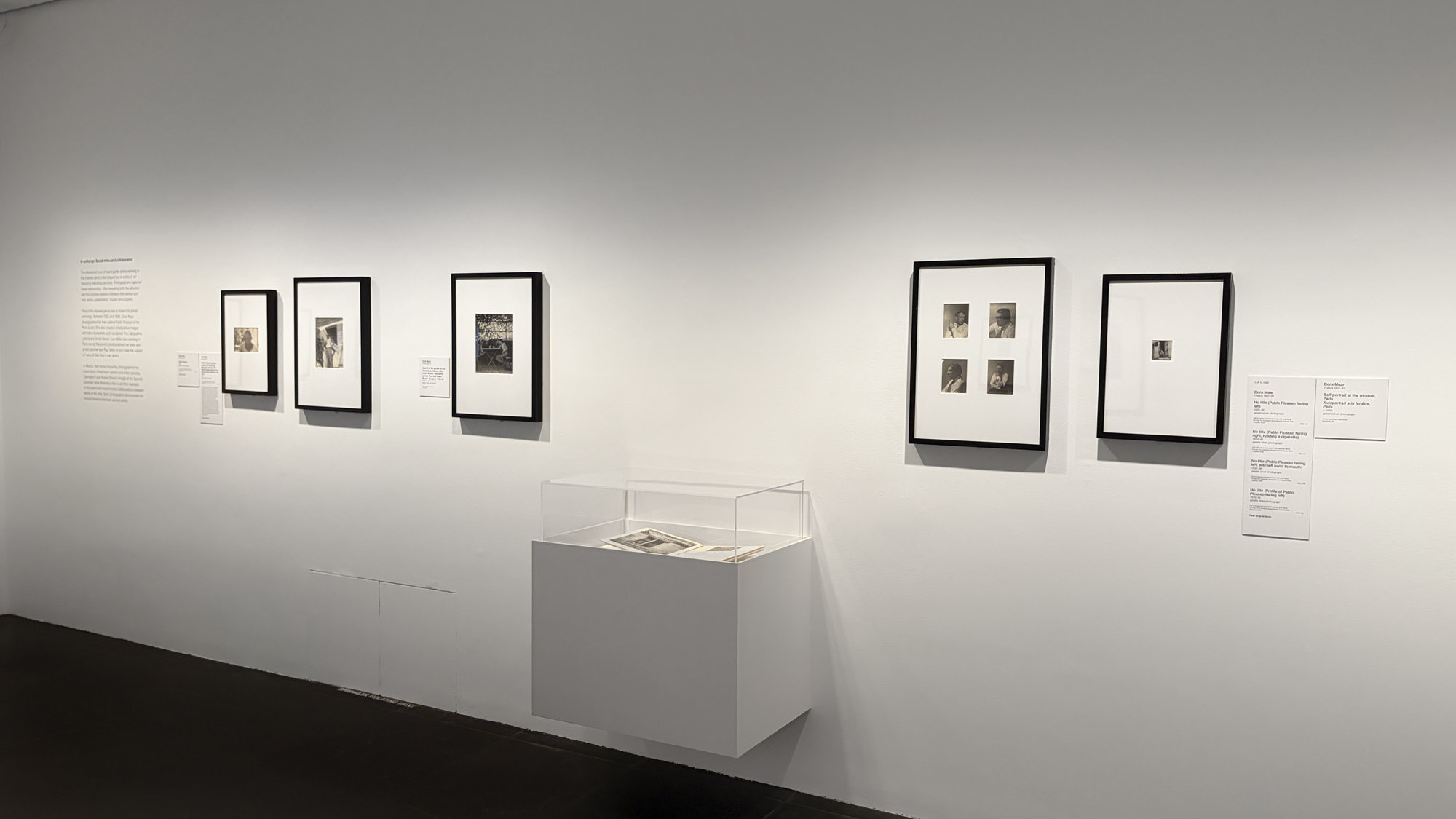
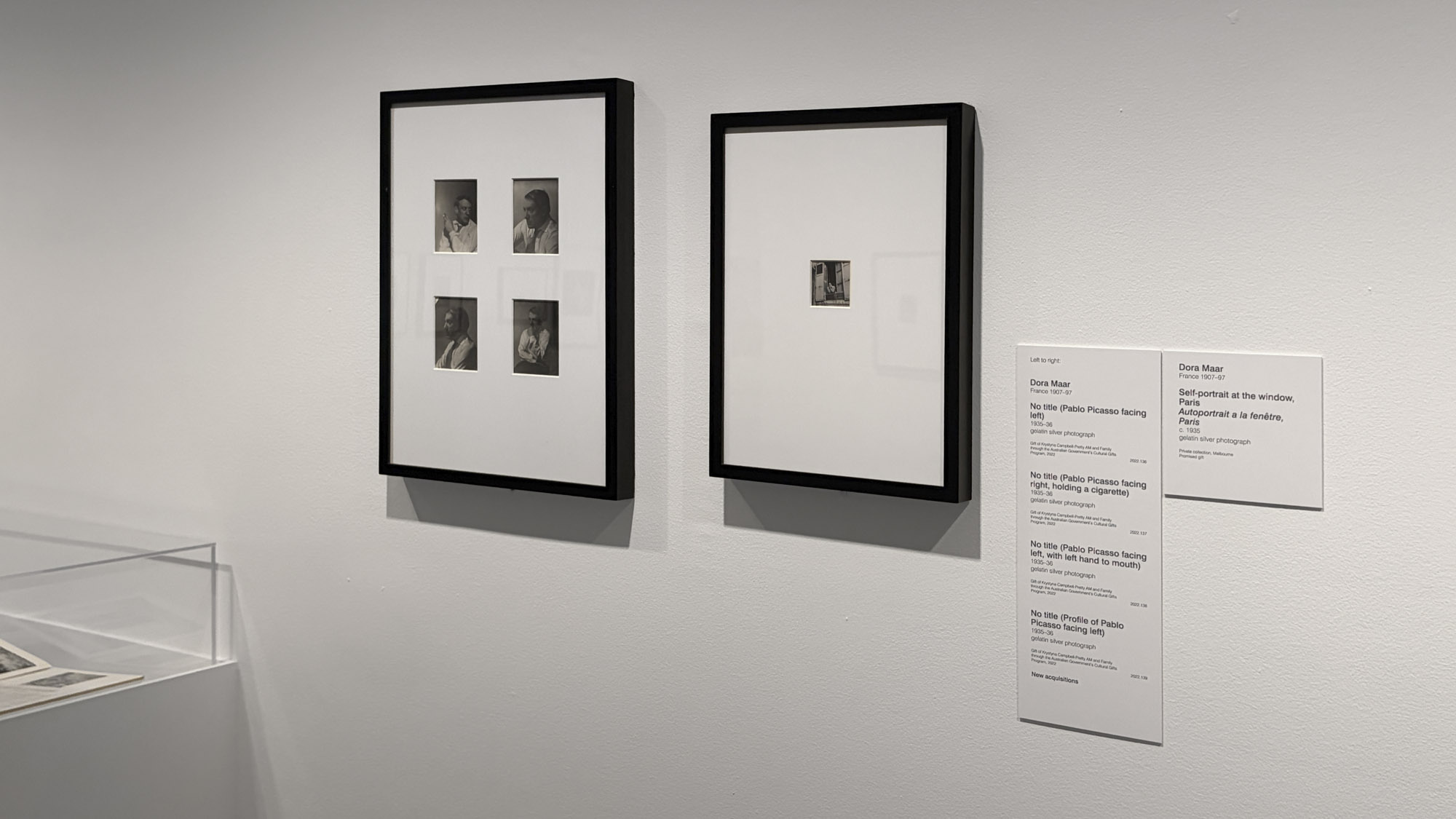
 

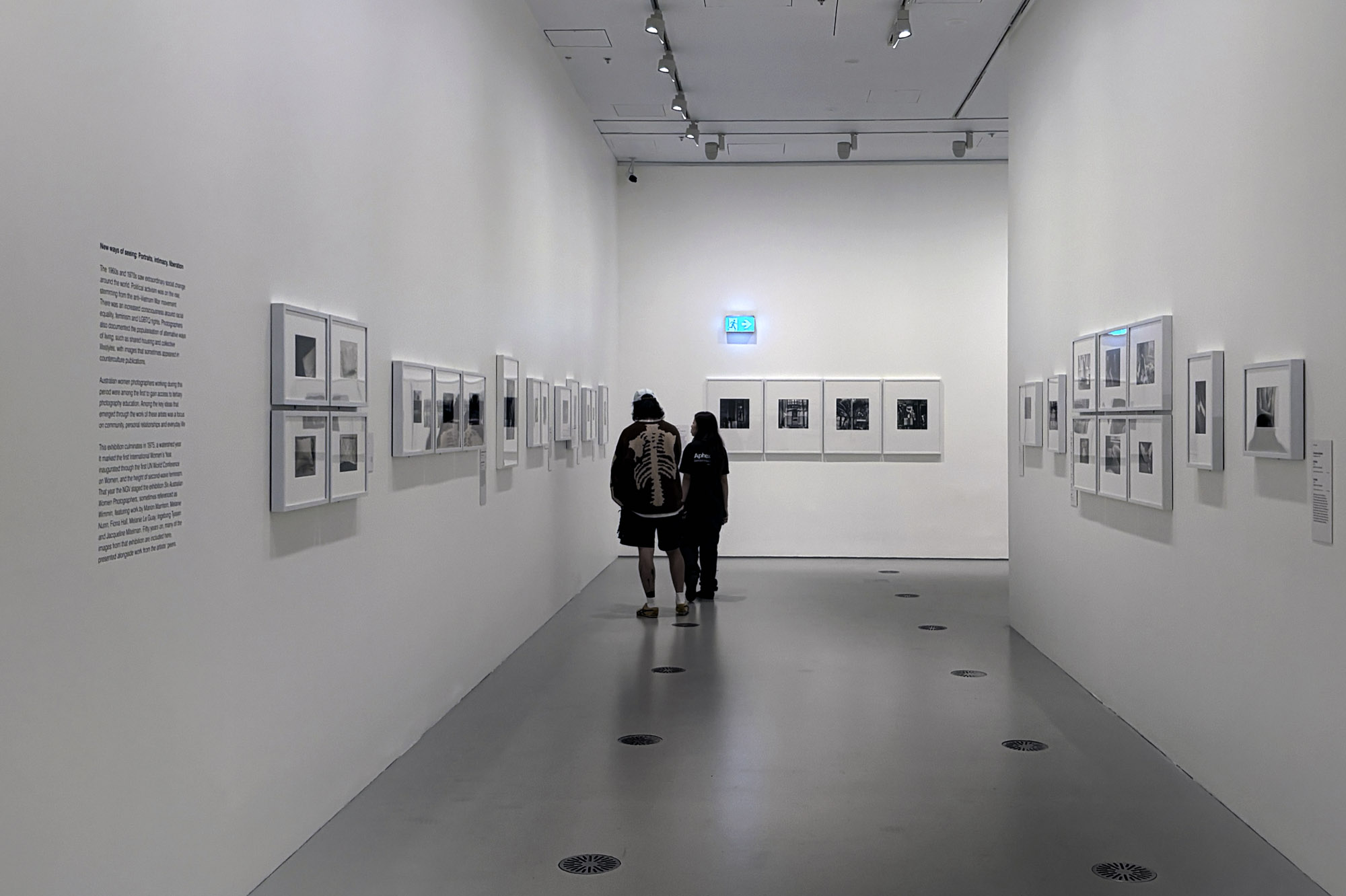
Installation view of the exhibition Women Photographers 1900-1975: A Legacy of Light at NGV International, Melbourne, November 2025 – May 2026 showing photographs by Dora Maar including at second right, photographs of Picasso (1935-1936) and at right, 'Self-portrait at the window' (c. 1935)


Installation view of the exhibition Women Photographers 1900-1975: A Legacy of Light at NGV International, Melbourne, November 2025 – May 2026 showing photographs by Dora Maar including at second right, photographs of Picasso (1935-1936, below) and at right, Self-portrait at the window (c. 1935, below)
Photos: Marcus Bunyan
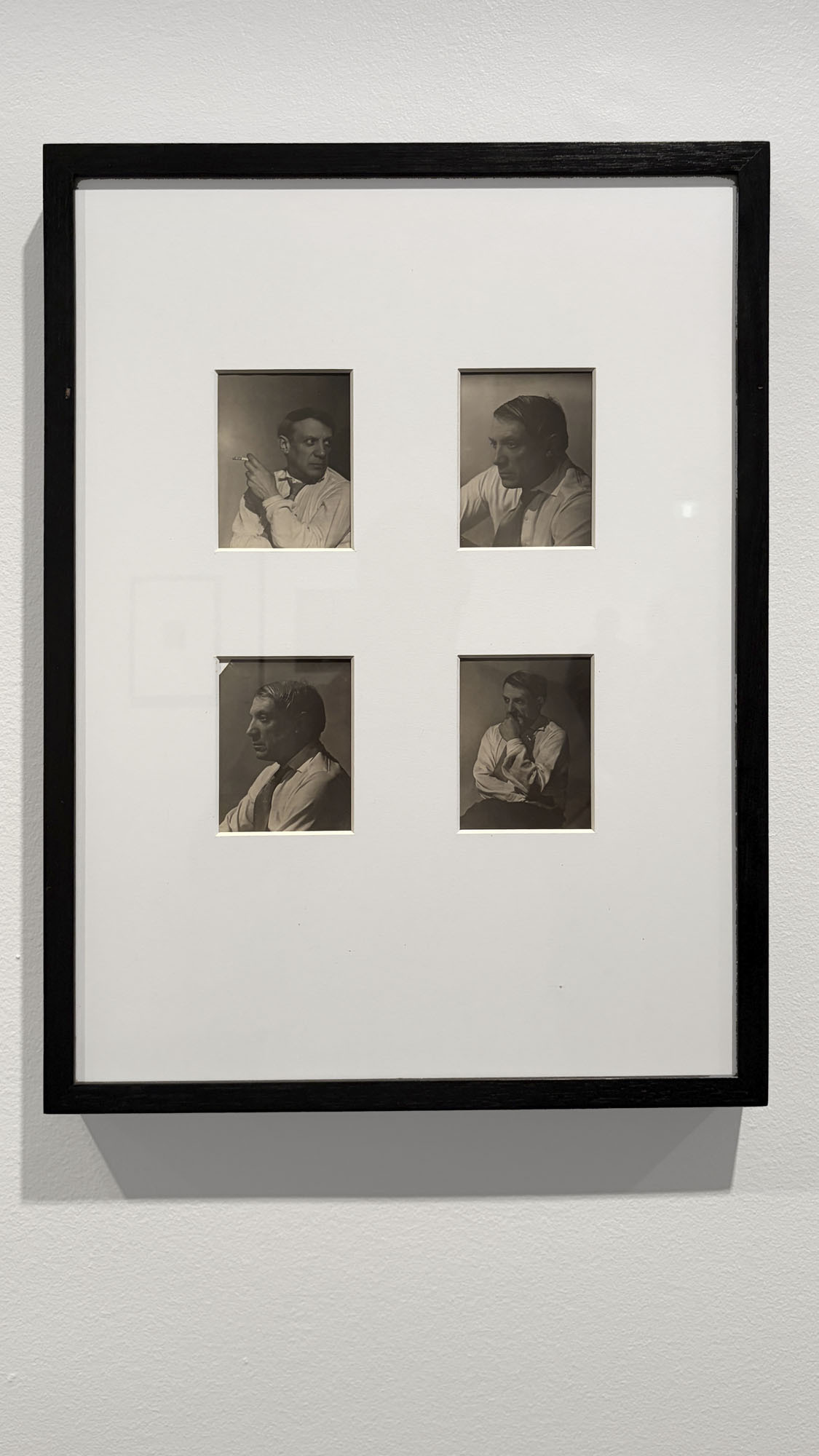
 

Installation view of the exhibition Women Photographers 1900-1975: A Legacy of Light at NGV International, Melbourne, November 2025 – May 2026 showing photographs by Dora Maar of Picasso (1935-1936)


(clockwise from bottom left)

Dora Maar (French, 1907-1997)
No title (Pablo Picasso facing left)
No title (Pablo Picasso facing right, holding a cigarette)
No title (Profile of Pablo Picasso facing left)
No title (Pablo Picasso facing left, with left hand to mouth) (installation view)
1935-1936
Gelatin silver photographs
National Gallery of Victoria, Melbourne
Gift of Krystyna Campbell-Pretty AM and Family through the Australian Government’s Cultural Gifts Program, 2022
Photos: Marcus Bunyan
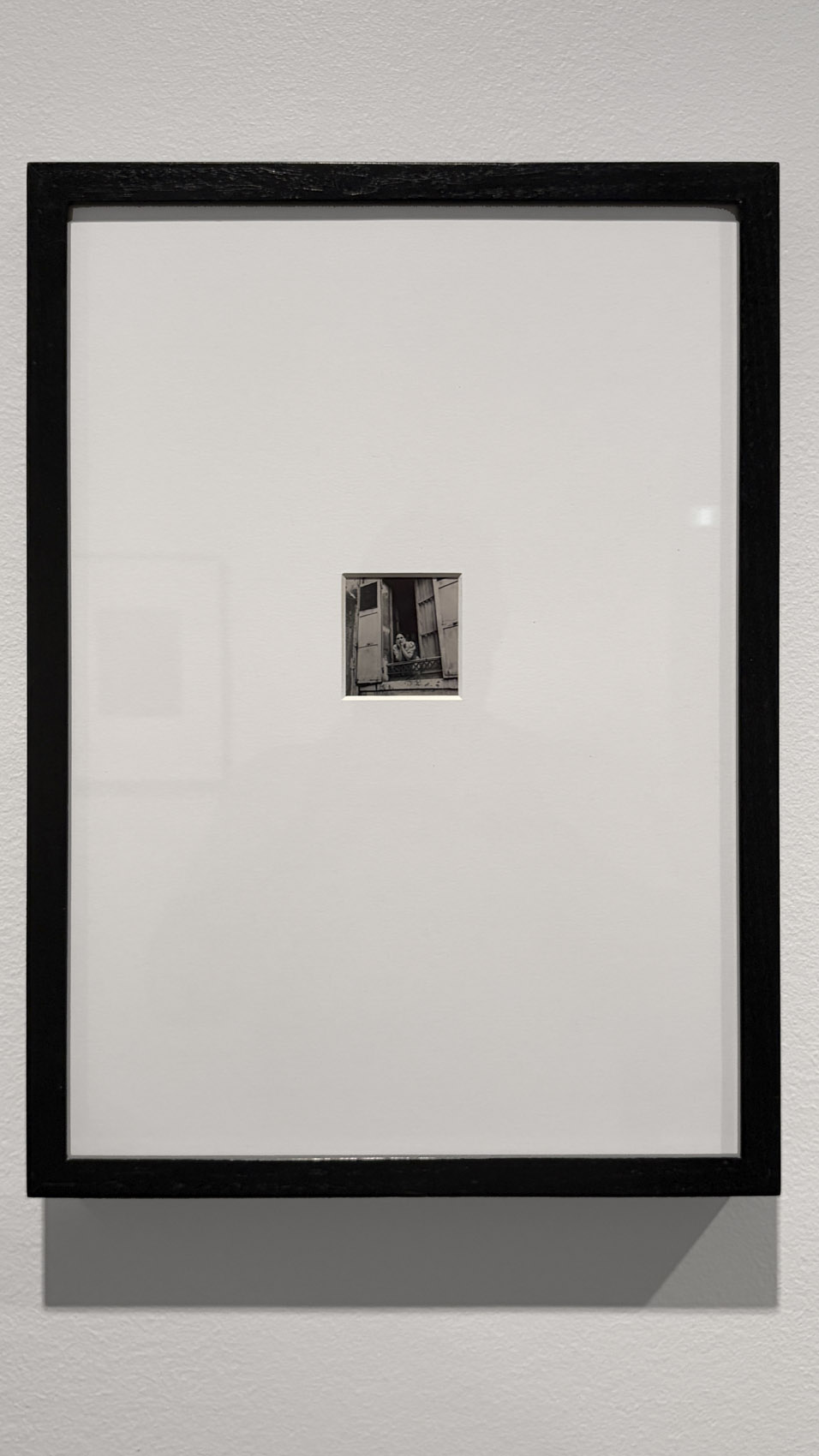
 

Dora Maar (French, 1907-1997) 'Self-portrait at the window' c. 1935 (installation view)


Dora Maar (French, 1907-1997)
Self-portrait at the window (installation view)
c. 1935
Gelatin silver print
Private collection, Melbourne
Promised gift
Photo: Marcus Bunyan
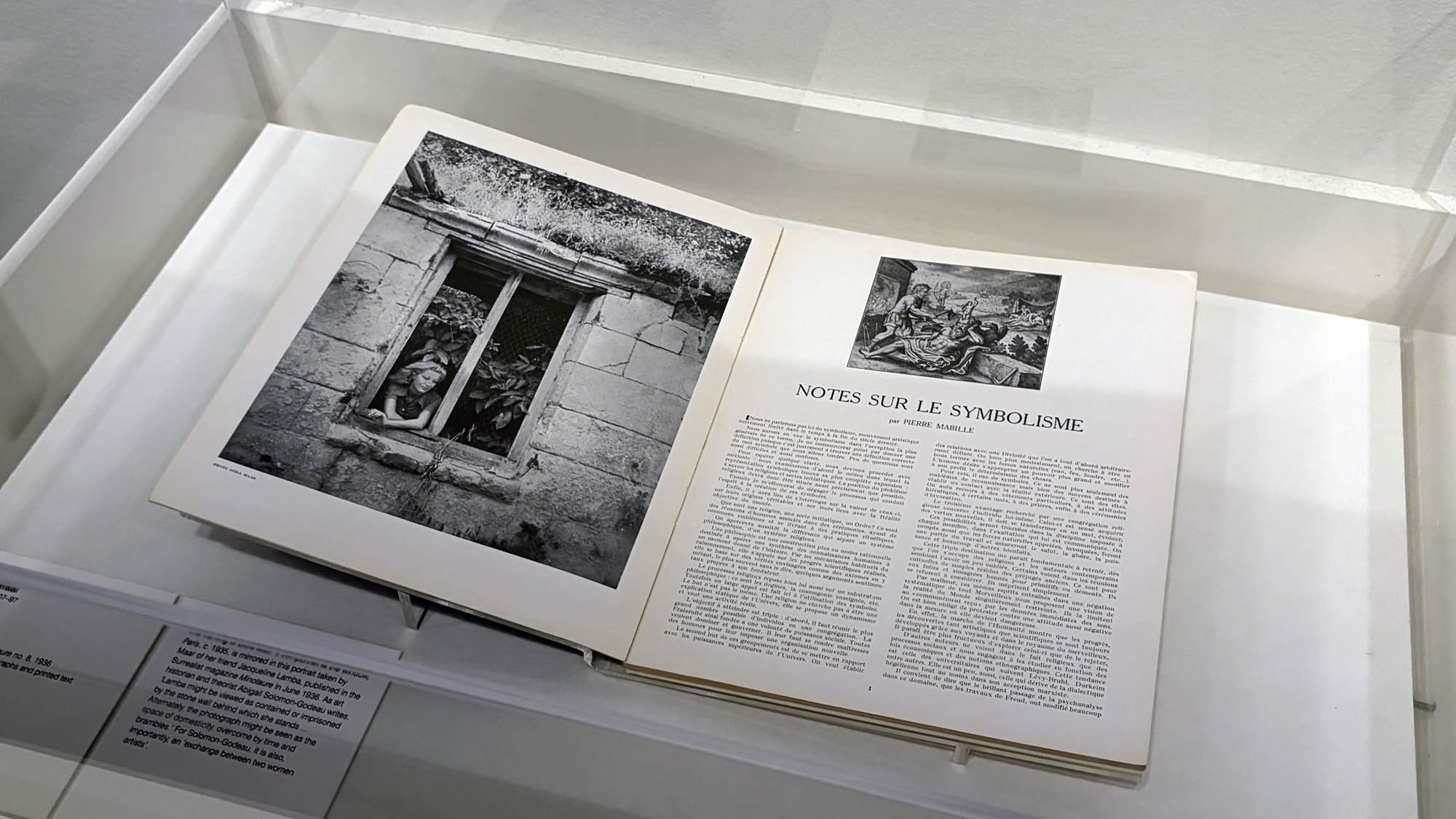
 

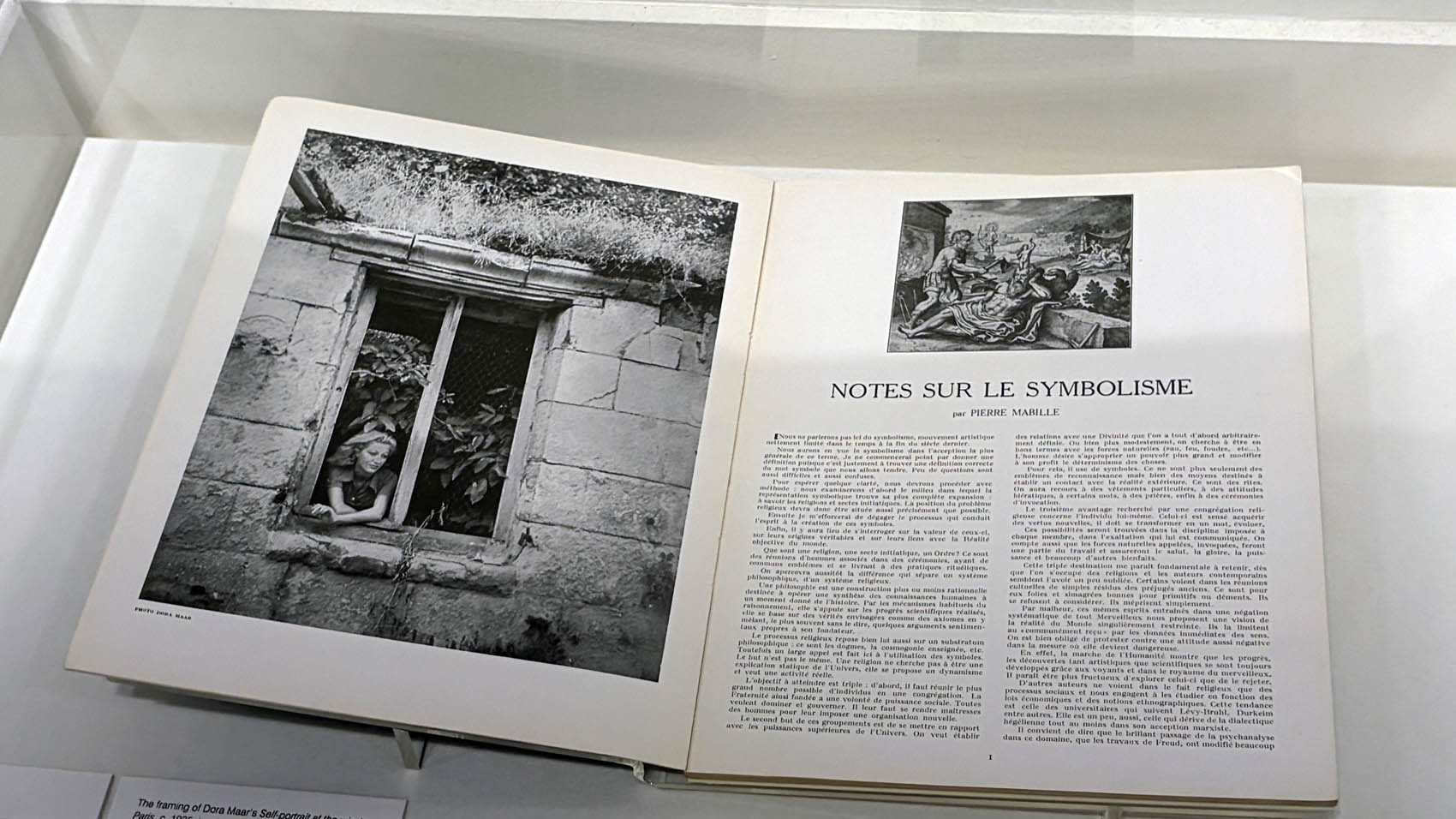
Dora Maar (French, 1907-1997) 'Dawn' 1935 Reproduced in 'Minotaure' No. 8, 1936 (installation view)


Dora Maar (French, 1907-1997)
Dawn (installation view)
1935
Reproduced in Minotaure No. 8, 1936
Magazine: offset lithographs and printed text
Shaw Research Library
Photos: Marcus Bunyan


The framing of Dora Maar’s Self-portrait at the window, Paris, c. 1935, is mired in this portrait taken by Maar of her friend Jacqueline Lamba, published in the Surrealist magazine Minotaure in June 1936. As art historian and theorist

Abigail Solomon-Godeau writes, ‘Lambda might be viewed as contained or imprisoned by the stone wall behind which she stands … Alternately, the photograph might be seen as the space of domesticity, overcome by time and brambles’. For Solomon-Godeau, it is also, importantly, an ‘exchange between two women artists’.

Vitrine text from the exhibition
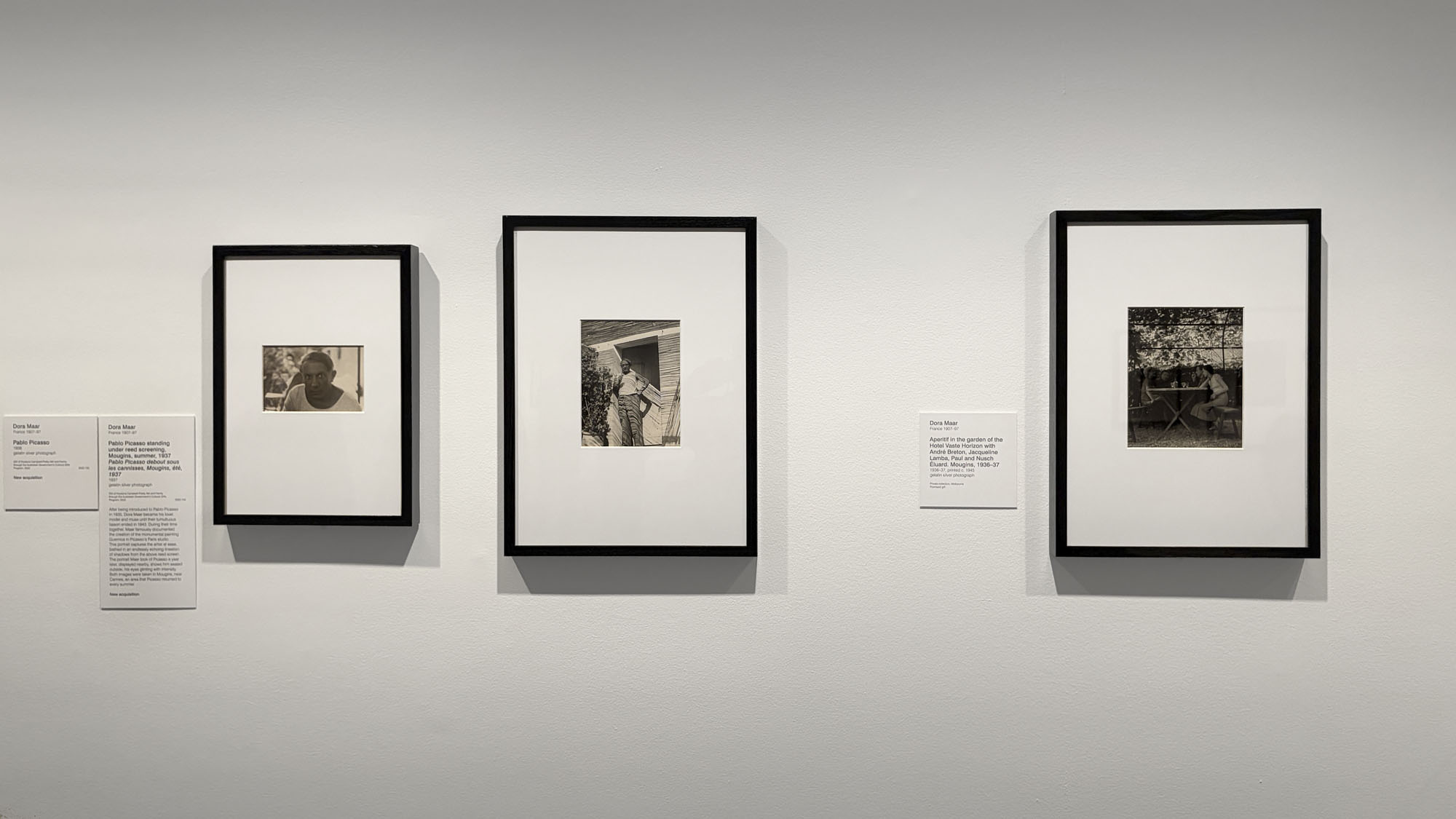
 

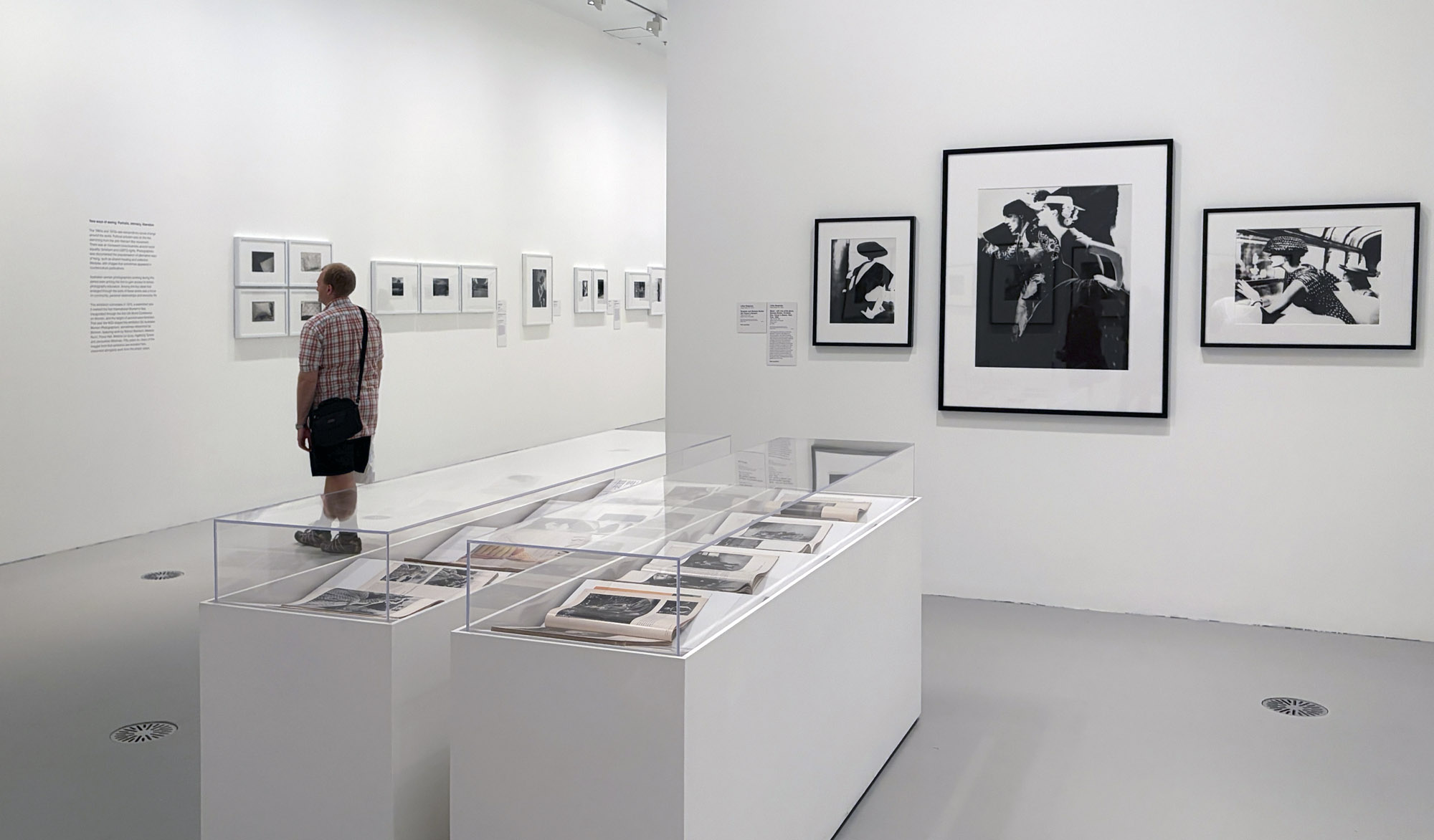
Installation view of the exhibition 'Women Photographers 1900-1975: A Legacy of Light' at NGV International, Melbourne, November 2025 – May 2026 showing from left to right, Dora Maar's 'Pablo Picasso' (1938); 'Pablo Picasso standing under reed screening. Mougins, summer, 1937' (1937) and 'Aperitif in the garden of the Hotel Vaste Horizon with Andre Breton, Jacqueline lamb, Paul and Nusch Eluard. Mougins, 1936-1937' (1936-1937)


Installation view of the exhibition Women Photographers 1900-1975: A Legacy of Light at NGV International, Melbourne, November 2025 – May 2026 showing from left to right, Dora Maar’s Pablo Picasso (1938, below); Pablo Picasso standing under reed screening. Mougins, summer, 1937 (1937, top of posting) and Aperitif in the garden of the Hotel Vaste Horizon with Andre Breton, Jacqueline lamb, Paul and Nusch Eluard. Mougins, 1936-1937 (1936-1937)
Photo: Marcus Bunyan
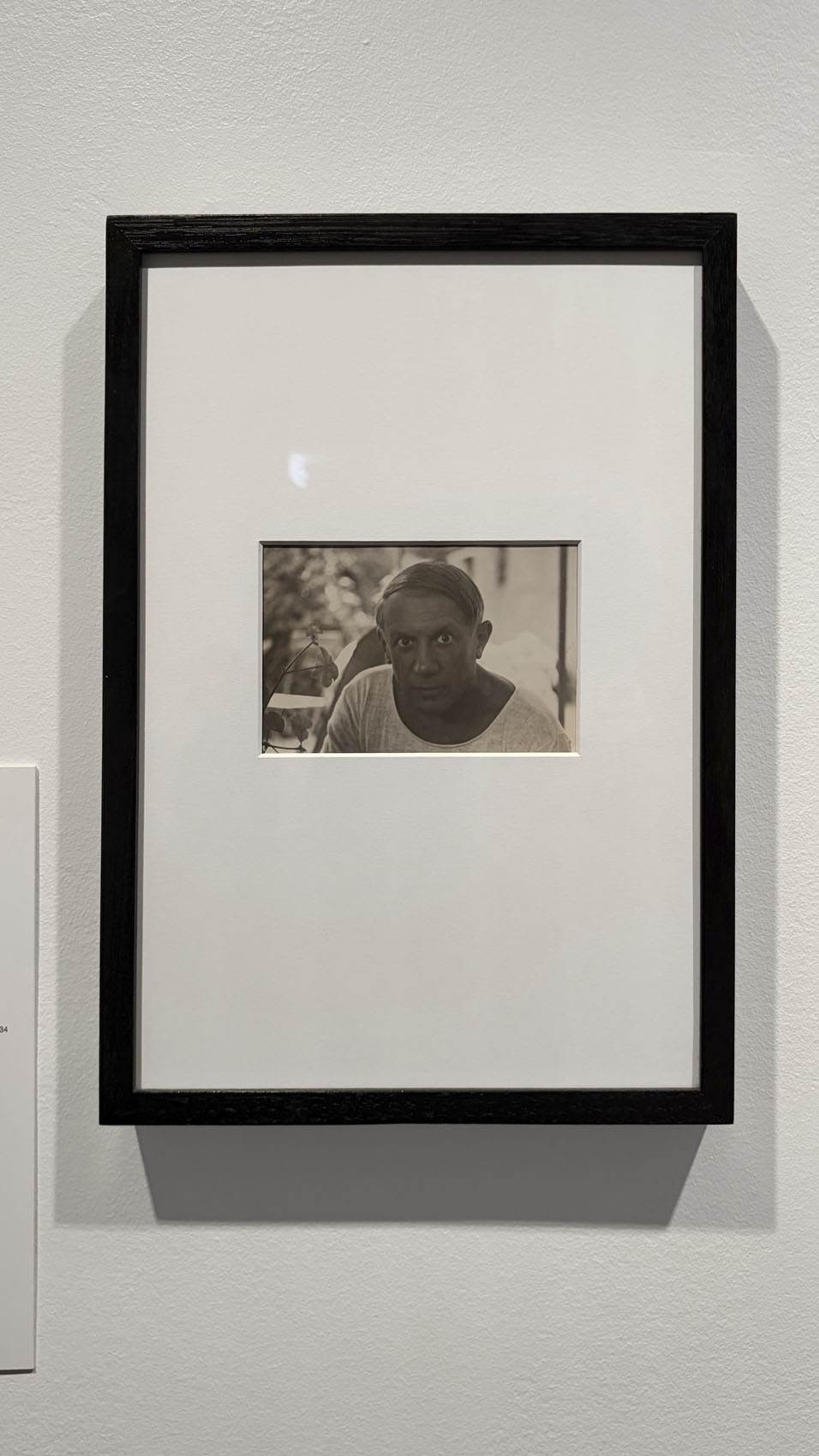
 

Dora Maar (French, 1907-1997) 'Pablo Picasso' 1938 (installation view)


Dora Maar (French, 1907-1997)
Pablo Picasso (installation view)
1938
Gelatin silver print
11.9 x 17.9cm (image and sheet)
National Gallery of Victoria, Melbourne
Gift of Krystyna Campbell-Pretty AM and Family through the Australian Government’s Cultural Gifts Program, 2022
Photo: Marcus Bunyan
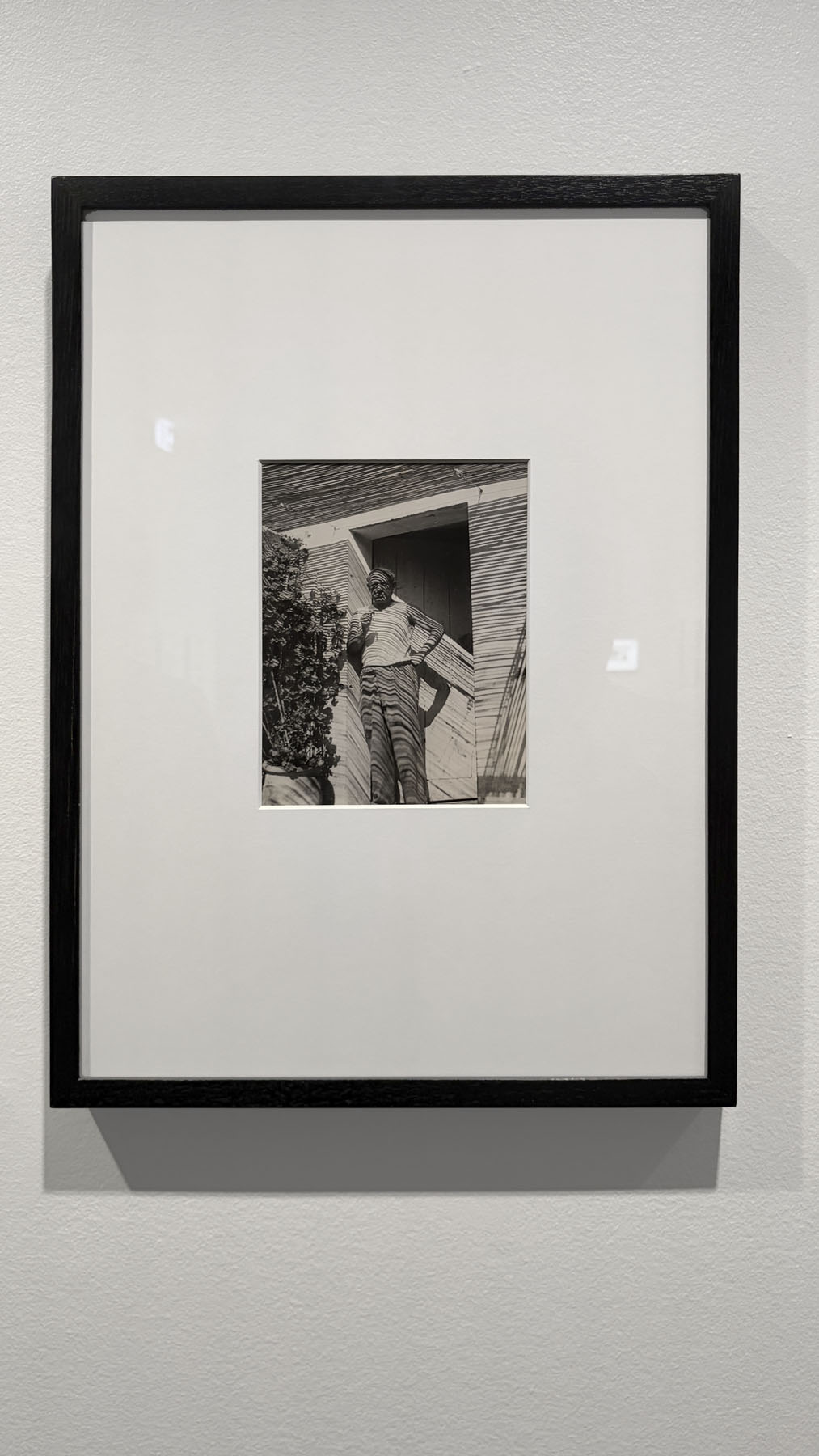
 

Dora Maar (French 1907-1997) 'Pablo Picasso standing under reed screening, Mougins, summer, 1937' (Pablo Picasso debout sous les cannisses, Mougins, été, 1937) 1937 (installation view)


Dora Maar (French, 1907-1997)
Pablo Picasso standing under reed screening, Mougins, summer, 1937 (Pablo Picasso debout sous les cannisses, Mougins, été, 1937) (installation view)
1937
22.0 x 17.2cm (image)
23.1 x 18.2cm (sheet)
National Gallery of Victoria, Melbourne
Gift of Krystyna Campbell-Pretty AM and Family through the Australian Government’s Cultural Gifts Program, 2022
Photo: Marcus Bunyan
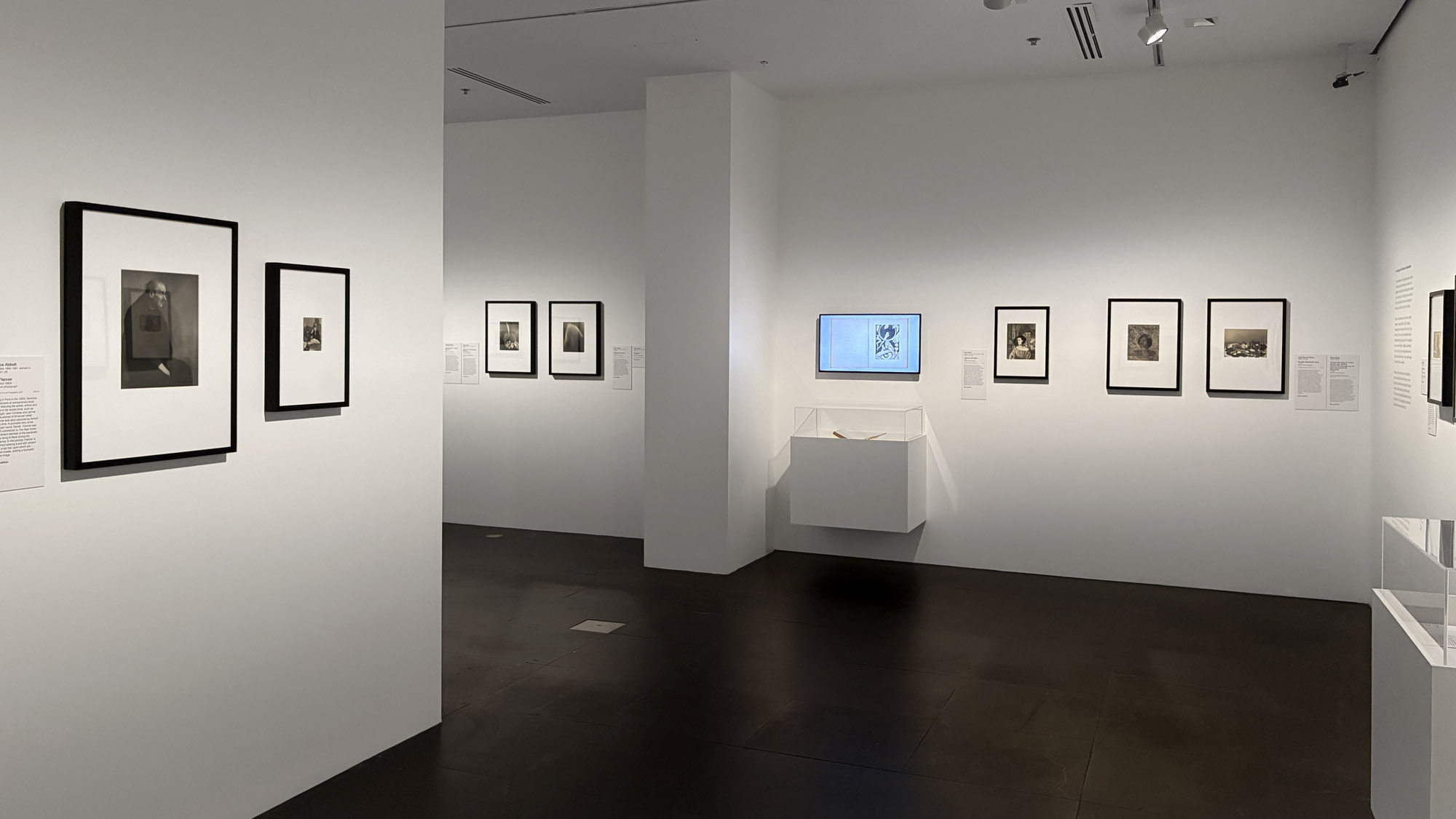
 

Installation view of the exhibition 'Women Photographers 1900-1975: A Legacy of Light' at NGV International, Melbourne, November 2025 – May 2026 showing at left, Berenice Abbott 'Eugène Atget' 1927


Installation view of the exhibition Women Photographers 1900-1975: A Legacy of Light at NGV International, Melbourne, November 2025 – May 2026 showing at left, Berenice Abbott Eugène Atget (1927, printed c. 1970-1978)
Photo: Marcus Bunyan


Berenice Abbott (American, 1898-1991) 'Janet Flanner' 1927


Berenice Abbott (American, 1898-1991)
Janet Flanner
1927
Gelatin silver photograph
Bowness Family Fund for Photography, 2024


While living in Paris in the 1920s, Berenice Abbott produced an extraordinary body of images featuring the artists, writers and performers in her social circle, such as Eugène Atget, Jean Cocteau and James Joyce. This portrait of American
writer Janet Flanner was also captured by Abbott during this time. A journalist who wrote under the pen name ‘Genêt’, Flanner was a long-term contributor to The New Yorker and a prominent member of the expatriate community living in Paris during the interwar period. In this portrait, Flanner is photographed wearing a suit with striped pants and a top hat, upon which are stacked two masks, adding a Surrealist edge to the image.

Wall text from the exhibition
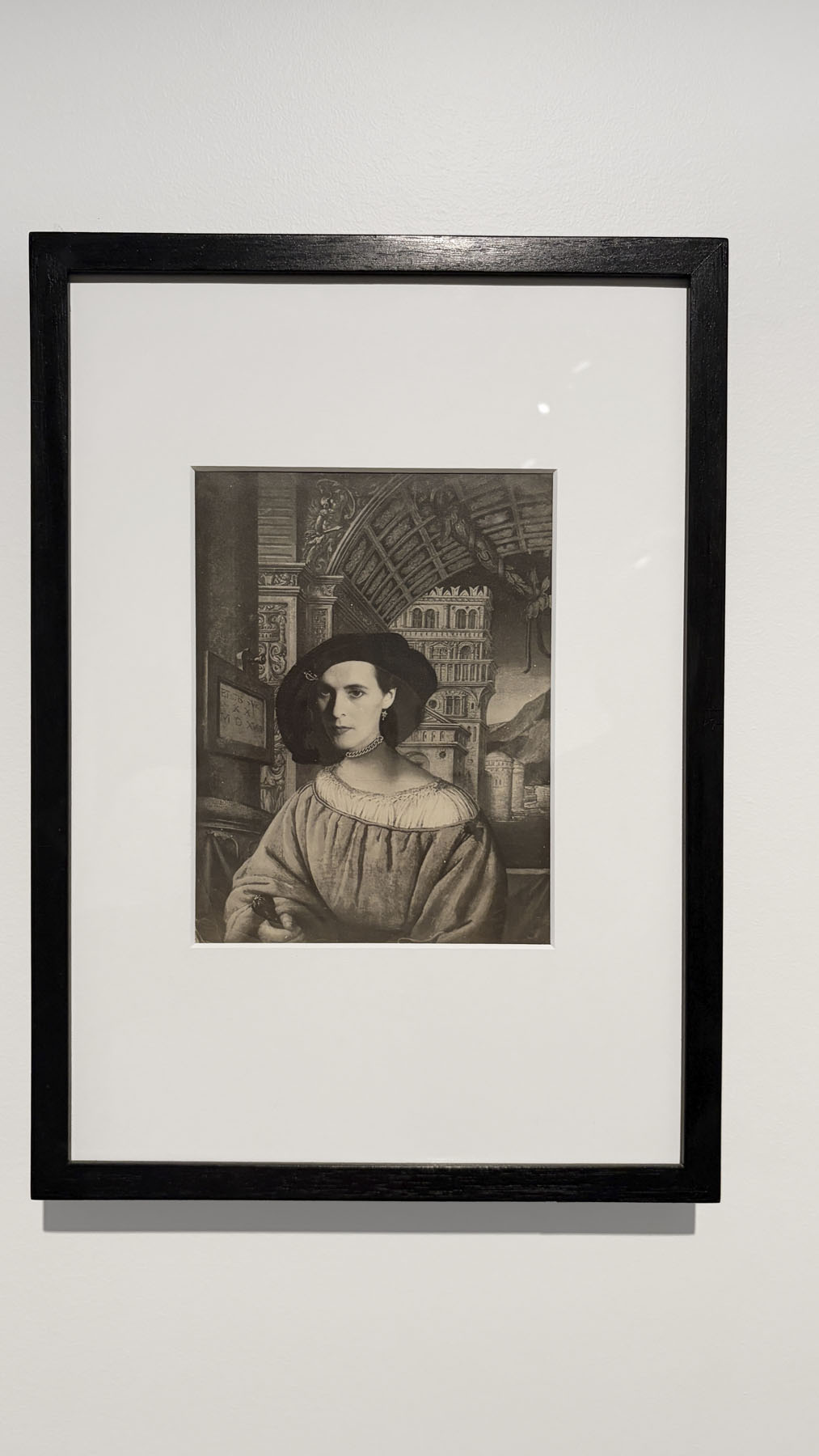
 

Kati Horna (Mexican born Hungary, 1912-2000) 'Leonora Carrington' 1957 (installation view)


Kati Horna (Mexican born Hungary, 1912-2000)
Leonora Carrington (installation view)
1957
Gelatin silver photograph
24.2 x 18.2cm (image)
25.3 x 20.2cm (sheet)
National Gallery of Victoria, Melbourne
Bowness Family Fund for Photography, 2024
Photo: Marcus Bunyan


Born to a Jewish family in Hungary, Kati Horna was forced to leave Europe following the rise of Nazism. She belonged to the circle of Surrealist expatriate artists in Mexico producing experimental images. In this photocollage, Horna has superimposed an image of British-born painter and writer Leonora Carrington – a close friend of hers – onto a reproduction of Hans Holbein the Younger’s 1518 painting Portrait of an unknown young man. Created on the occasion of Carrington’s birthday, the humorous merging of the photograph with the painted reproduction, coupled with the clash of genders and time periods, gives the scene a Surrealist tone.

Wall text from the exhibition
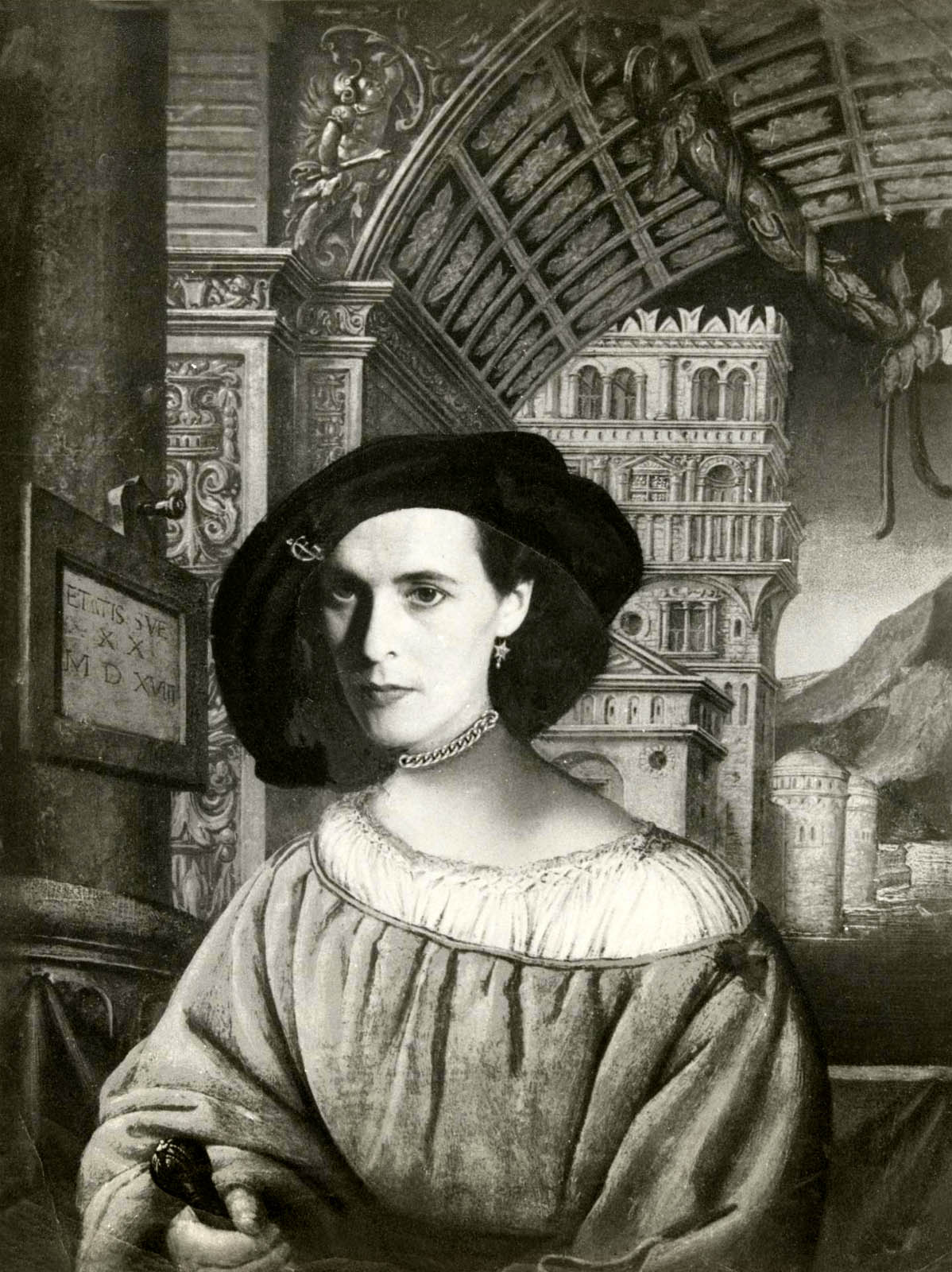
 

Kati Horna (Mexican born Hungary, 1912-2000) 'Leonora Carrington' 1957


Kati Horna (Mexican born Hungary, 1912-2000)
Leonora Carrington
1957
Gelatin silver photograph
24.2 x 18.2cm (image)
25.3 x 20.2cm (sheet)
National Gallery of Victoria, Melbourne
Bowness Family Fund for Photography, 2024
© Kati Horna, courtesy Michael Hoppen Gallery
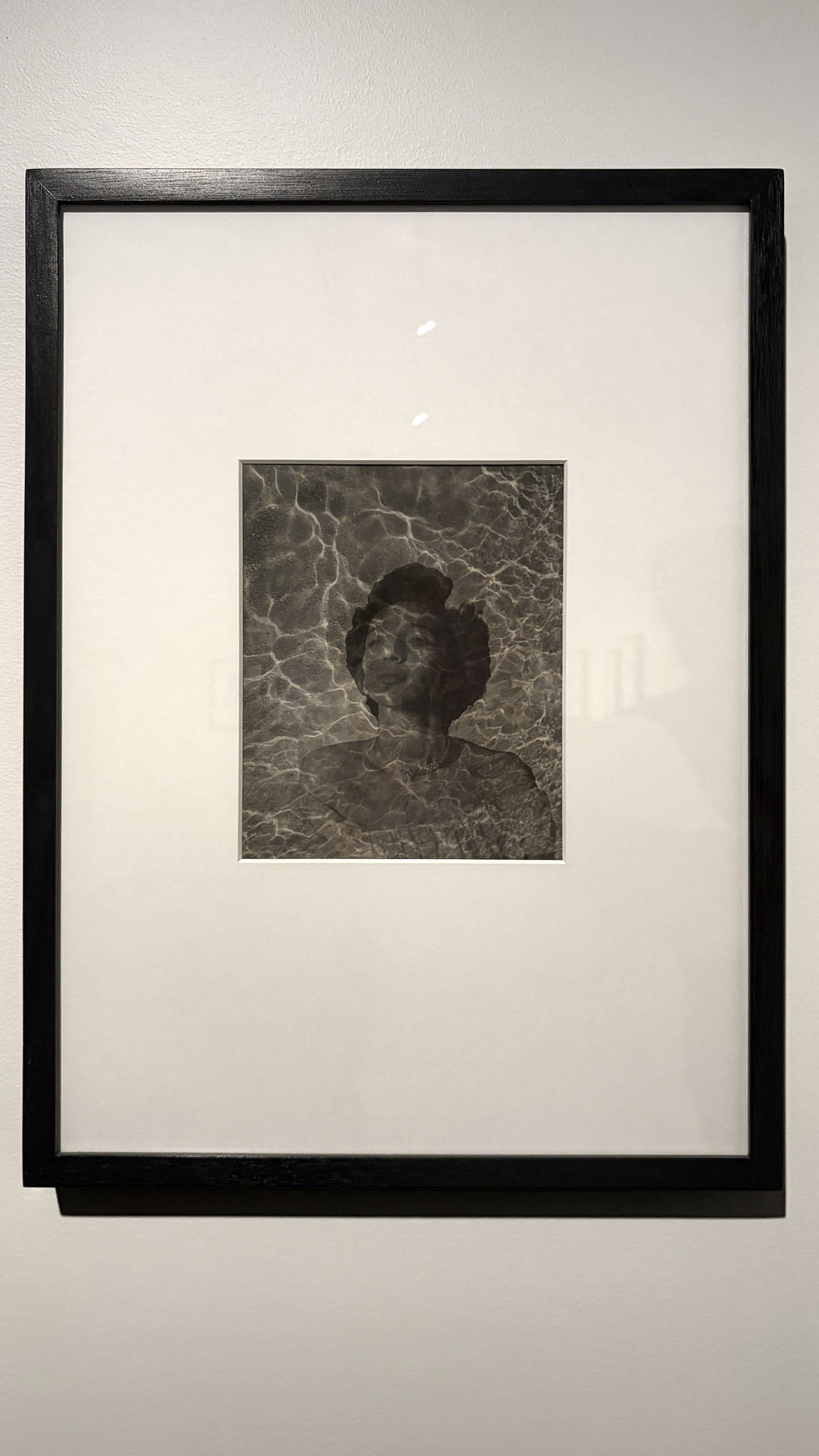
 

Lola Álvarez Bravo (Mexican, 1903-1993) 'No title (Remedios Varo)' c. 1950 (installation view)


Lola Álvarez Bravo (Mexican, 1903-1993)
No title (Remedios Varo) (installation view)
c. 1950
Gelatin silver photograph
23.4 x 18.9cm (image and sheet)
National Gallery of Victoria, Melbourne
Bowness Family Fund for Photography, 2024
Photo: Marcus Bunyan


Lola Álvarez Bravo was one of the first artists to produce photomontages in Mexico. At the forefront of artistic experimentation, Álvarez Bravo created this image by layering multiple negatives. The subject is believed to be Remedios Varo, a Spanish Surrealist artist who arrived in Mexico in 1941. Alongside Álvarez Bravo, Kati Horna and Leonora Carrington, Varo was part of a community of expatriate artists and intellectuals active in Mexico during the mid twentieth century. Drawing inspiration from the Surrealist movement, Álvarez Bravo overlaid the portrait with an image of rippling water, creating a tranquil scene in which the subject appears to be floating.

Wall text from the exhibition


Unlike in many other countries, in Mexico artists had opportunities to work as long as they did not threaten the locals’ career prospects. Thus, many Spanish-speaking immigrants started teaching in universities, raising a new generation of Mexican creatives and academics. Apart from their jobs, the majority of Europeans did not interact closely with the locals, preferring to keep the company of their fellow refugees. The reason was not the rejection of local customs but the shared experience of war, tragedy, and dramatic flight across ravaged Europe.

The house of the artist Remedios Varo was the central meeting point for the whole community. Anyone in need could find company, shelter, and money raised by all group members. Varo hosted dinners and parties. She also sent party invitations to random addresses taken from a phone book.

Anastasiia Kirpalov. “The Mexican Escape of European Surrealists During World War II,” on The Collector website Oct 15, 2024 [Online] Cited 17/04/026. Used under fair use conditions for the purposes of education and research
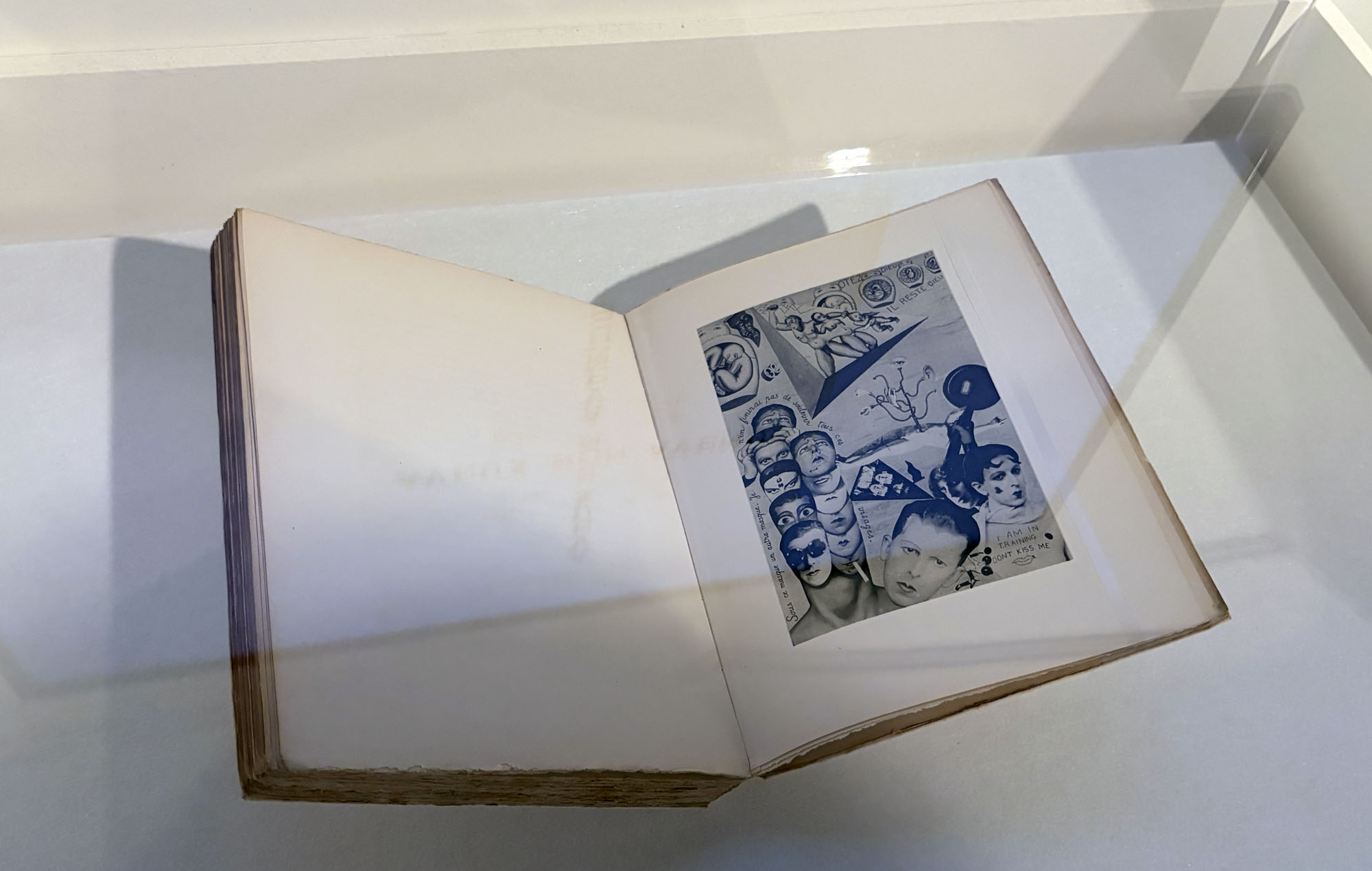
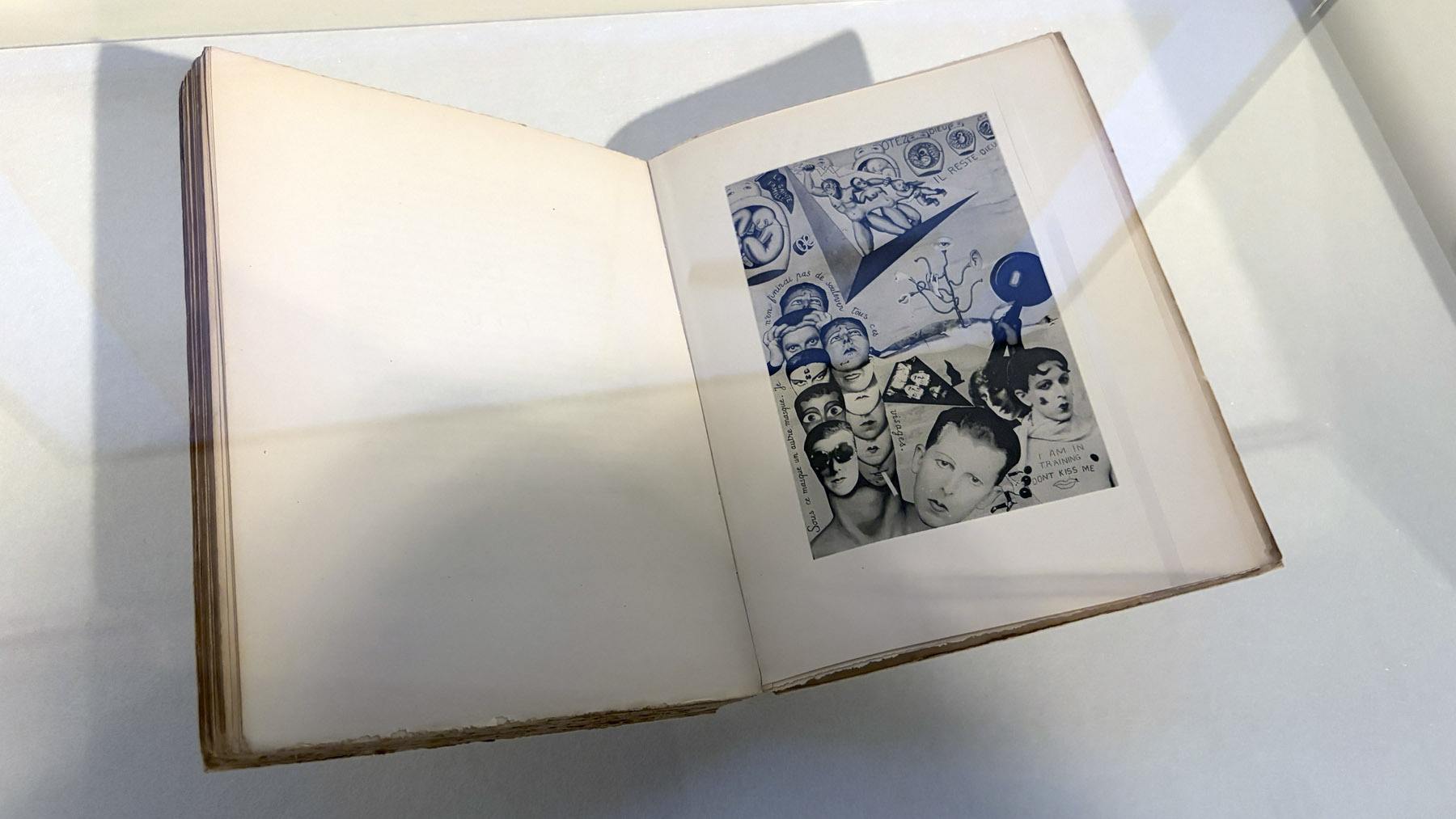
 

Claude Cahun (French, 1894-1854) and Marcel Moore (French, 1892-1872) 'Disavowals', or 'Cancelled Confessions' (Aveux non avenus) 1930 (installation view)


Claude Cahun (French, 1894-1854) and Marcel Moore (French, 1892-1872)
Disavowals, or Cancelled Confessions (Aveux non avenus) (installation views)
1930
Published by Éditions du Carrefour, Paris
Illustrated book: photogravure, letterpress text, 237 pages, 10 heliographs, paper cover, stitched binding
Shaw Research Library, acquired through the Friends of the Gallery library Endowment, 2017
Photos: Marcus Bunyan


Born Lucy Schwob, Claude Cahun was a celebrated French artist associated with the Surrealist movement. Aveux non avenus, loosely translated as Cancelled Confessions or Disavowals, is the second book Cajun created with her stepsister, lifelong partner and artistic collaborator, graphic artist Marcel Moore. This subversive semi-autobiographical work couples poems, recollections and aphorisms with dreamlike photomontages. The photomontages include many of Cahun’s performative self-portraits, images that challenge established notions of gender identity.

Vitrine text from the exhibition
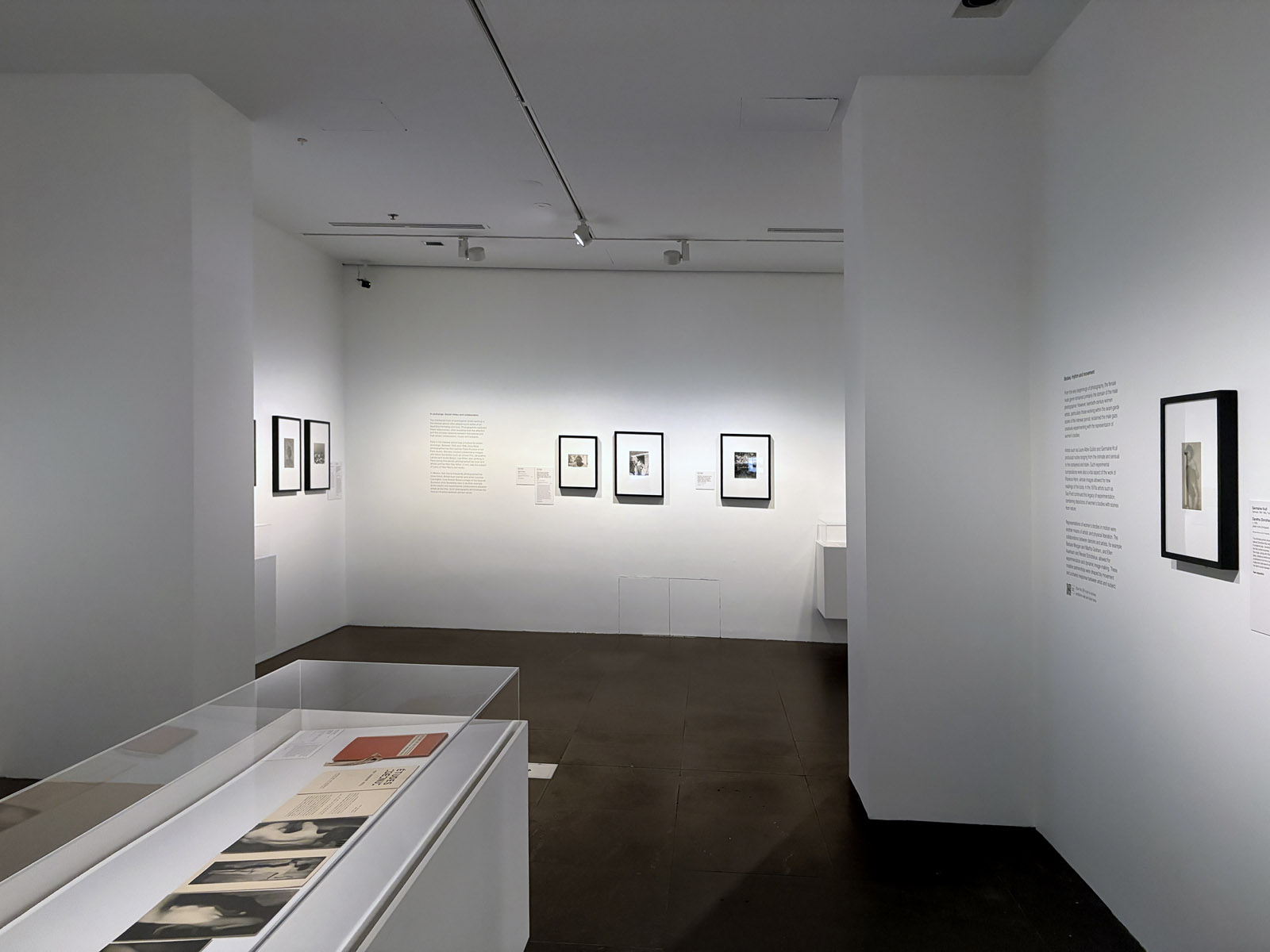
 

Installation view of the exhibition 'Women Photographers 1900-1975: A Legacy of Light at NGV' International, Melbourne, November 2025 – May 2026
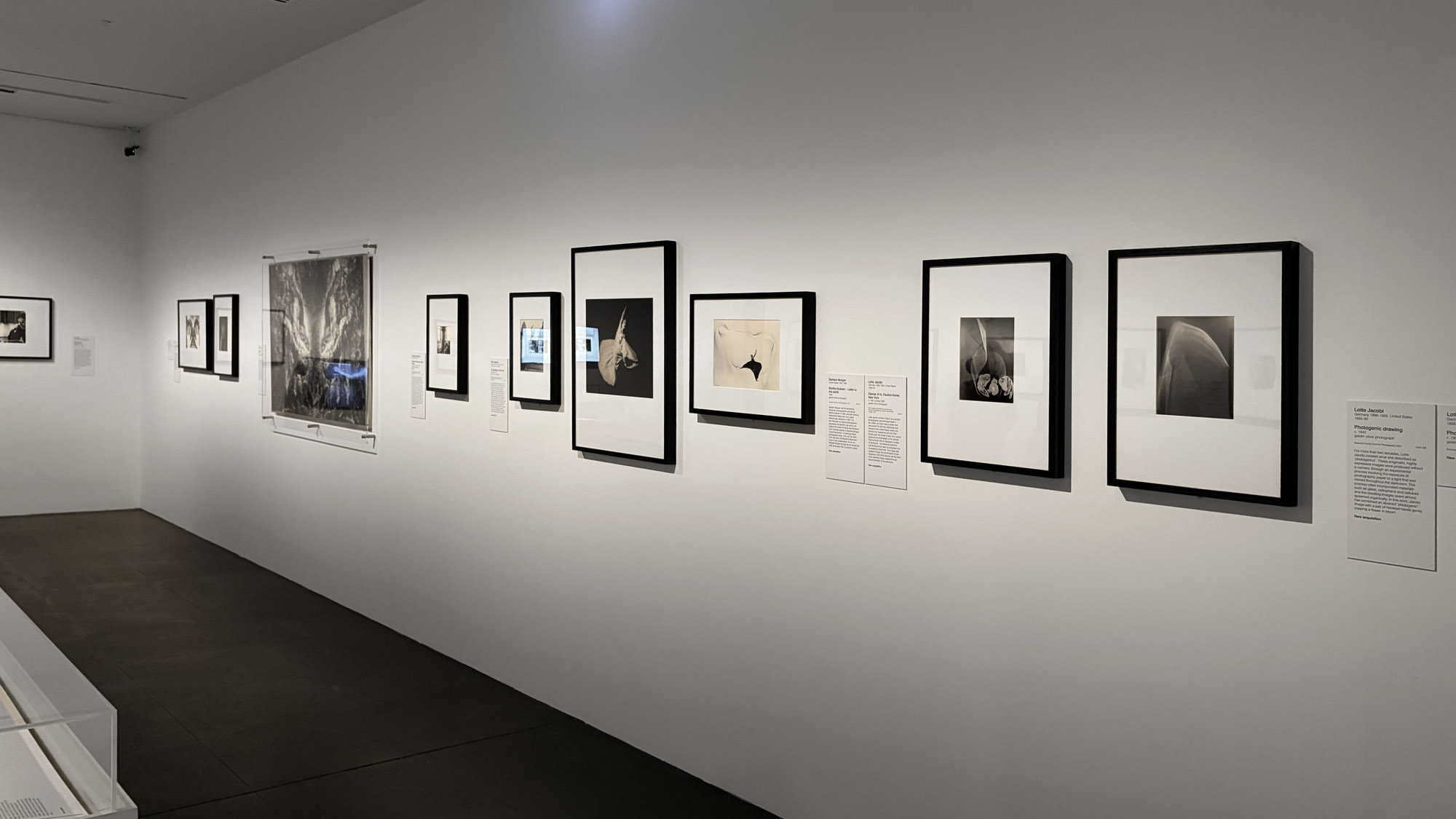
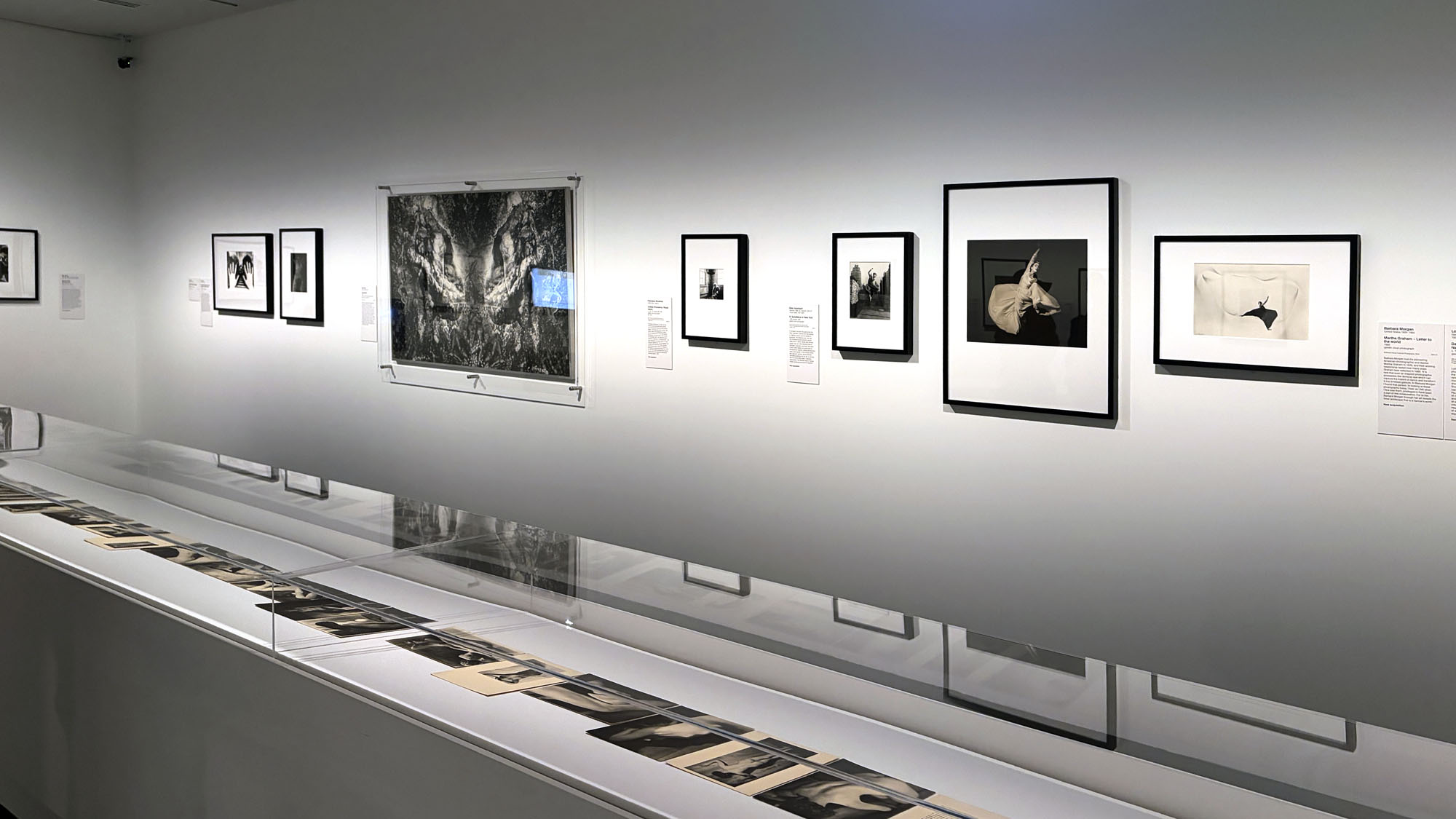
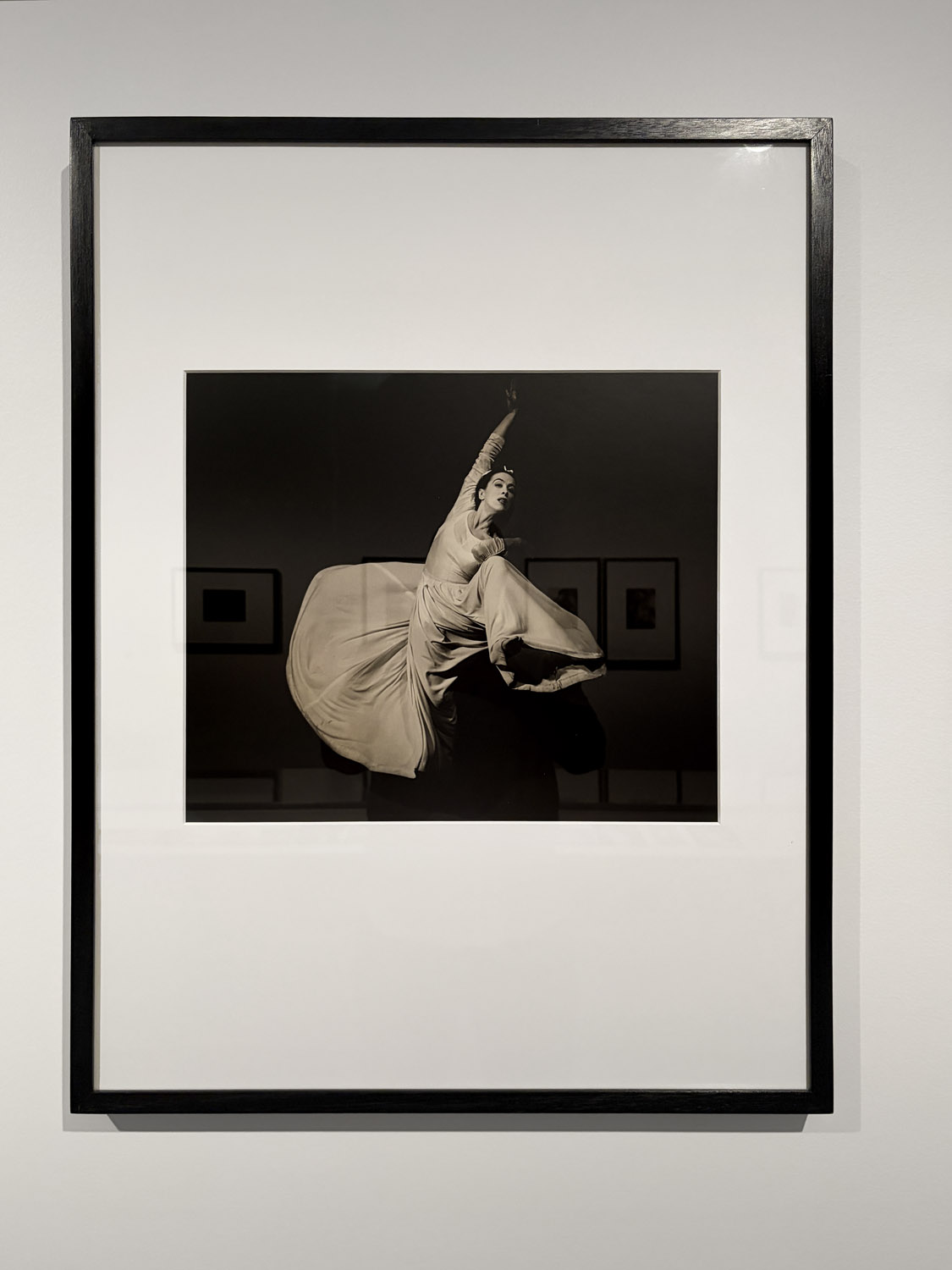
Installation view of the exhibition 'Women Photographers 1900-1975: A Legacy of Light at NGV' International, Melbourne, November 2025 – May 2026 showing from left to right in the bottom image, Francesca Woodman 'Untitled (Providence, Rhode Island)' (c. 1975-1978 printed after 1981); Ellen Auerbach R. 'Schottelius in New York' (1953 printed 1992); Barbara Morgan 'Martha Graham – Letter to the world' (1940); Lotti Jacobi 'Dancer #16, Pauline Koner, New York' (c. 1937, printed 1992); and two 'Photogenic drawing' (c. 1940 and c. 1950)


Installation views of the exhibition Women Photographers 1900-1975: A Legacy of Light at NGV International, Melbourne, November 2025 – May 2026 showing from left to right in the bottom image, Francesca Woodman Untitled (Providence, Rhode Island) (c. 1975-1978 printed after 1981, below); Ellen Auerbach R. Schottelius in New York (1953 printed 1992, below); Barbara Morgan Martha Graham – Letter to the world (1940, below); Lotti Jacobi Dancer #16, Pauline Koner, New York (c. 1937, printed 1992); and two Photogenic drawing (c. 1940 and c. 1950)
Photos: Marcus Bunyan


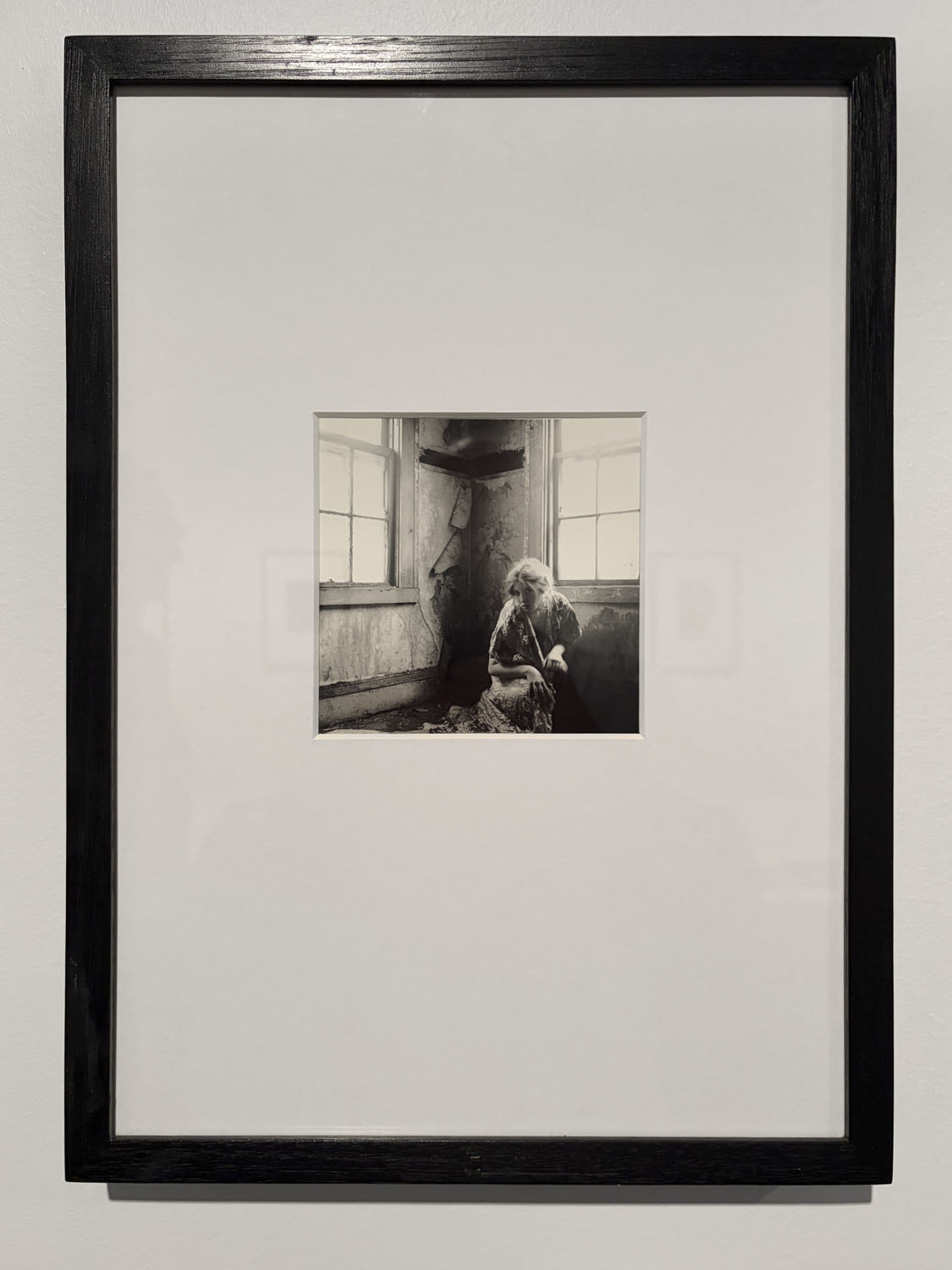
Francesca Woodman (American, 1958-1981) 'Untitled (Providence, Rhode Island)' (c. 1975-1978, printed after 1981) (installation view)


Francesca Woodman (American, 1958-1981)
Untitled (Providence, Rhode Island) (installation view)
c. 1975-1978, printed after 1981
Gelatin silver photograph
13.7 x 13.8cm (image)
25.3 x 20.3cm (sheet)
National Gallery of Victoria, Melbourne
Gift of Krystyna Campbell-Pretty AM and Family through the Australian Government’s Cultural Gifts Program, 2025
Photo: Marcus Bunyan


Francesca Woodman is known for her intimate black-and-white self-portraits and photographs featuring other women sitters. The bodies are often blurred, with faces hidden and appearing to blend into the background. In this self-portrait, Woodman crouches down in the corner of a decrepit room, her patterned gown somehow reflecting – or merging with – the floral wallpaper that peels down in rough remnants behind her. The photograph was created while Woodman was a student at the Rhode Island School of Design in Providence, where she studied from 1975 to 1978 and which produced the majority of her extant photographs following her untimely death in 1981.

Wall text from the exhibition


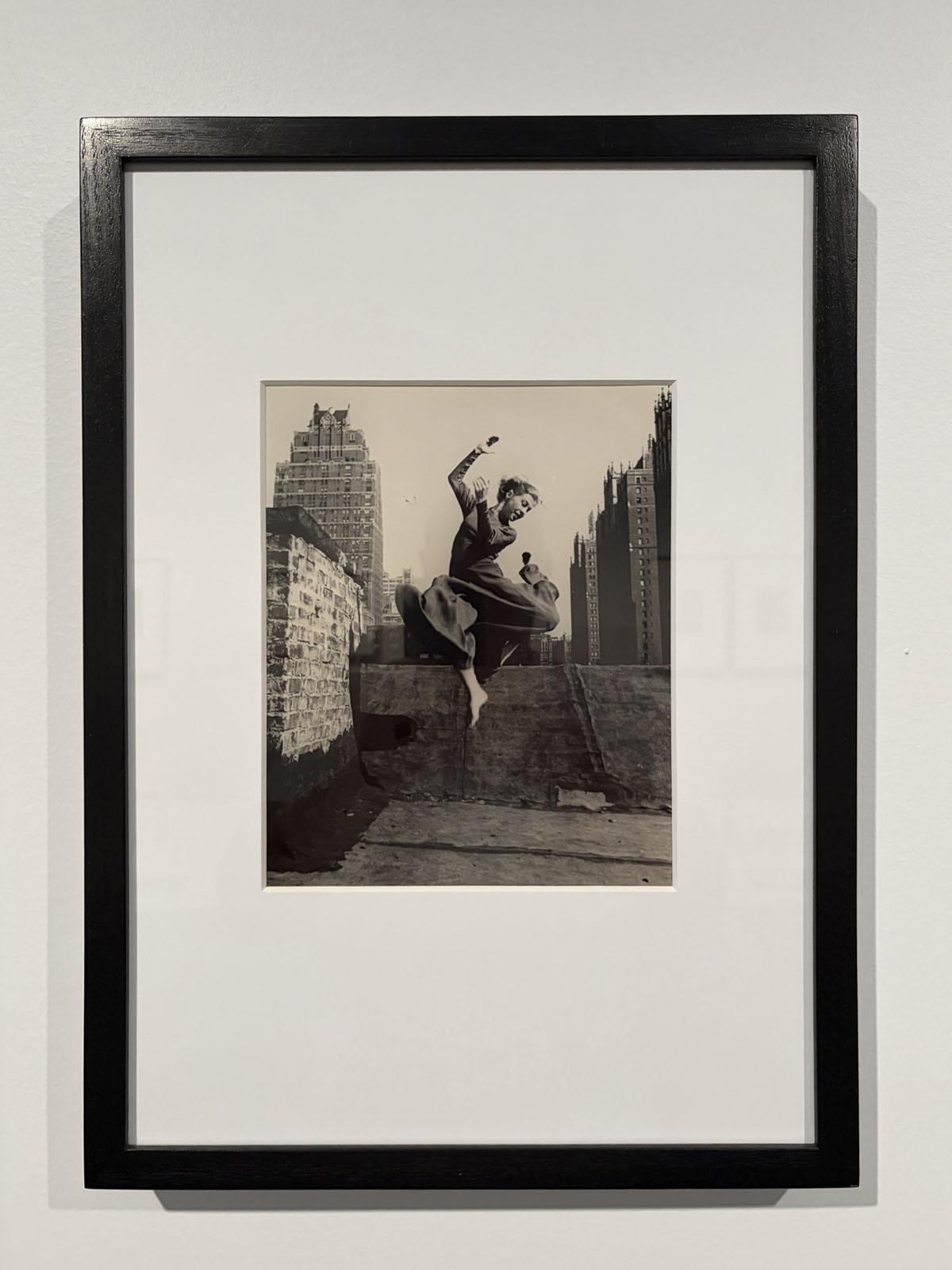
Ellen Auerbach (German 1906-2004) 'R. Schottelius in New York' 1953, printed 1992 (installation view)


Ellen Auerbach (German 1906-2004)
R. Schottelius in New York (installation view)
1953, printed 1992
Gelatin silver photograph
23.2 x 18.5cm (image)
25.0 x 27.5cm (sheet)
National Gallery of Victoria, Melbourne
Gift of Krystyna Campbell-Pretty AM and Family through the Australian Government’s Cultural Gifts Program, 2023
Photo: Marcus Bunyan


Ellen Auerbach (German 1906-2004) 'R. Schottelius in New York' 1953, printed 1992


Ellen Auerbach (German 1906-2004)
R. Schottelius in New York
1953, printed 1992
Gelatin silver photograph
23.2 x 18.5cm (image)
25.0 x 27.5cm (sheet)
National Gallery of Victoria, Melbourne
Gift of Krystyna Campbell-Pretty AM and Family through the Australian Government’s Cultural Gifts Program, 2023
© Ellen Auerbach. VG Bild-Kunst/Copyright Agency


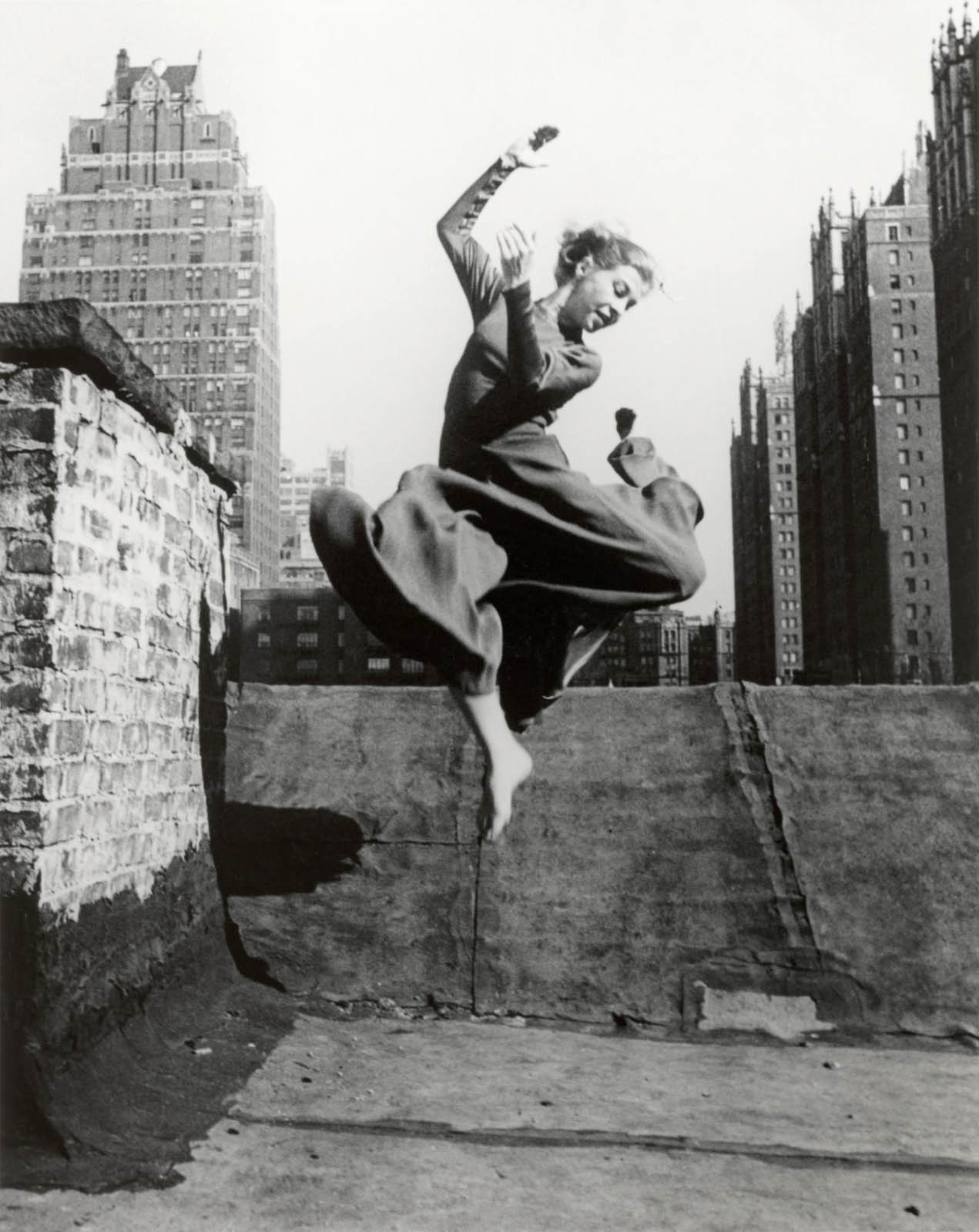
A constant innovator throughout her life, Ellen Auerbach received her first camera in 1928 as a tool to aid her studies in sculpture. The following year, she met her professional and romantic partner Grete Stern in Berlin, where they formed studio ringl+pit. After escaping fascist Germany, Auerbach eventually relocated to the United States and continued her photographic practice, settling among New York’s avant-garde. In this rooftop scene, she captures German dancer Renate Schottelius leaping into the air. In contrast with the surrounding static, imposing skyscrapers, the liberated body in joyous motion serves as a symbol for freedom.

Wall text from the exhibition


Barbara Morgan (American, 1900-1992) 'Martha Graham – Letter to the world' 1940 (installation view)


Barbara Morgan (American, 1900-1992)
Martha Graham – Letter to the world (installation view)
1940
Gelatin silver photograph
38.9 x 48.2cm (image and sheet)
National Gallery of Victoria, Melbourne
Bowness Family Fund for Photography, 2024
Photo: Marcus Bunyan


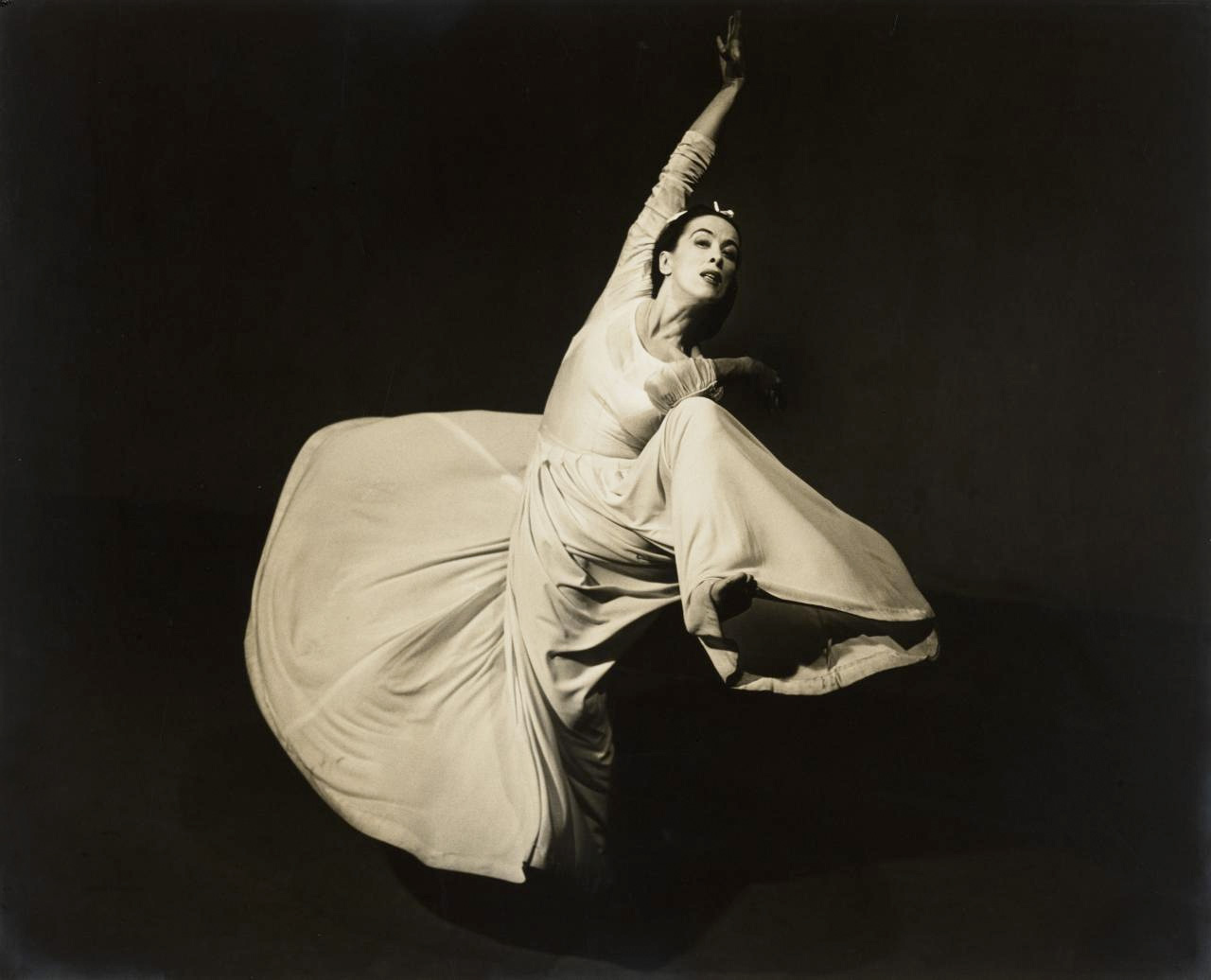
Barbara Morgan (American, 1900-1992) 'Martha Graham – Letter to the world' 1940


Barbara Morgan (American, 1900-1992)
Martha Graham – Letter to the world
1940
Gelatin silver photograph
38.9 x 48.2cm (image and sheet)
National Gallery of Victoria, Melbourne
Bowness Family Fund for Photography, 2024
© The Barbara Morgan Estate


Barbara Morgan met the pioneering American choreographer and dancer Martha Graham in 1935, and their working relationship lasted over six decades. Graham later reflected in 1980: “It is rare that even an inspired photographer possesses the demonic eye which can capture the instant of dance and transform it into timeless gesture. In Barbara Morgan I found that person. In looking at these photographs today, I feel, as I felt when I first saw them, privileged to have been a part of this collaboration. For to me, Barbara Morgan through her art reveals the inner landscape that is a dancer’s world.”

Wall text from the exhibition


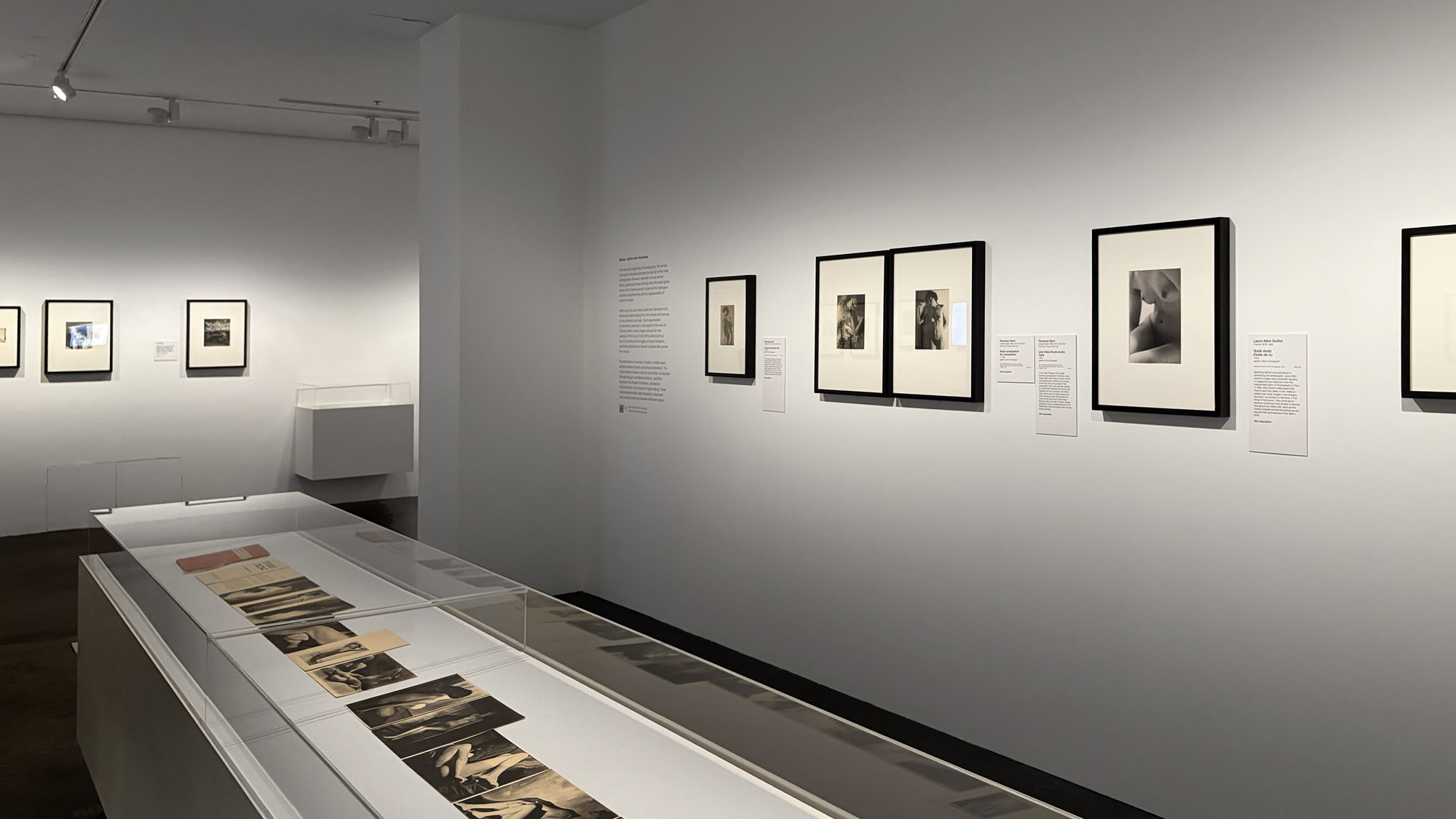
Installation view of the exhibition 'Women Photographers 1900-1975: A Legacy of Light' at NGV International, Melbourne, November 2025 – May 2026


Installation view of the exhibition Women Photographers 1900-1975: A Legacy of Light at NGV International, Melbourne, November 2025 – May 2026
Photo: Marcus Bunyan


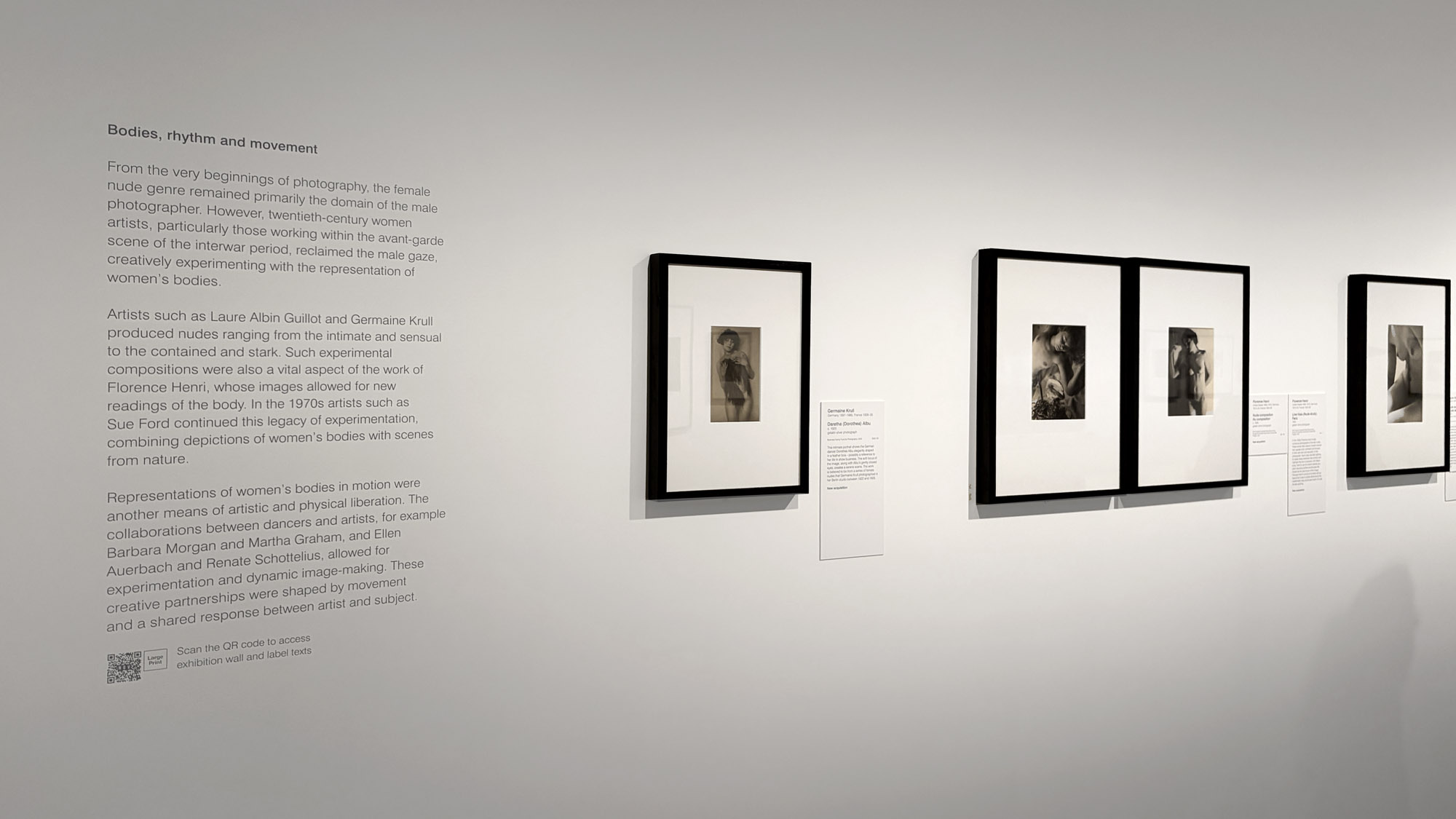
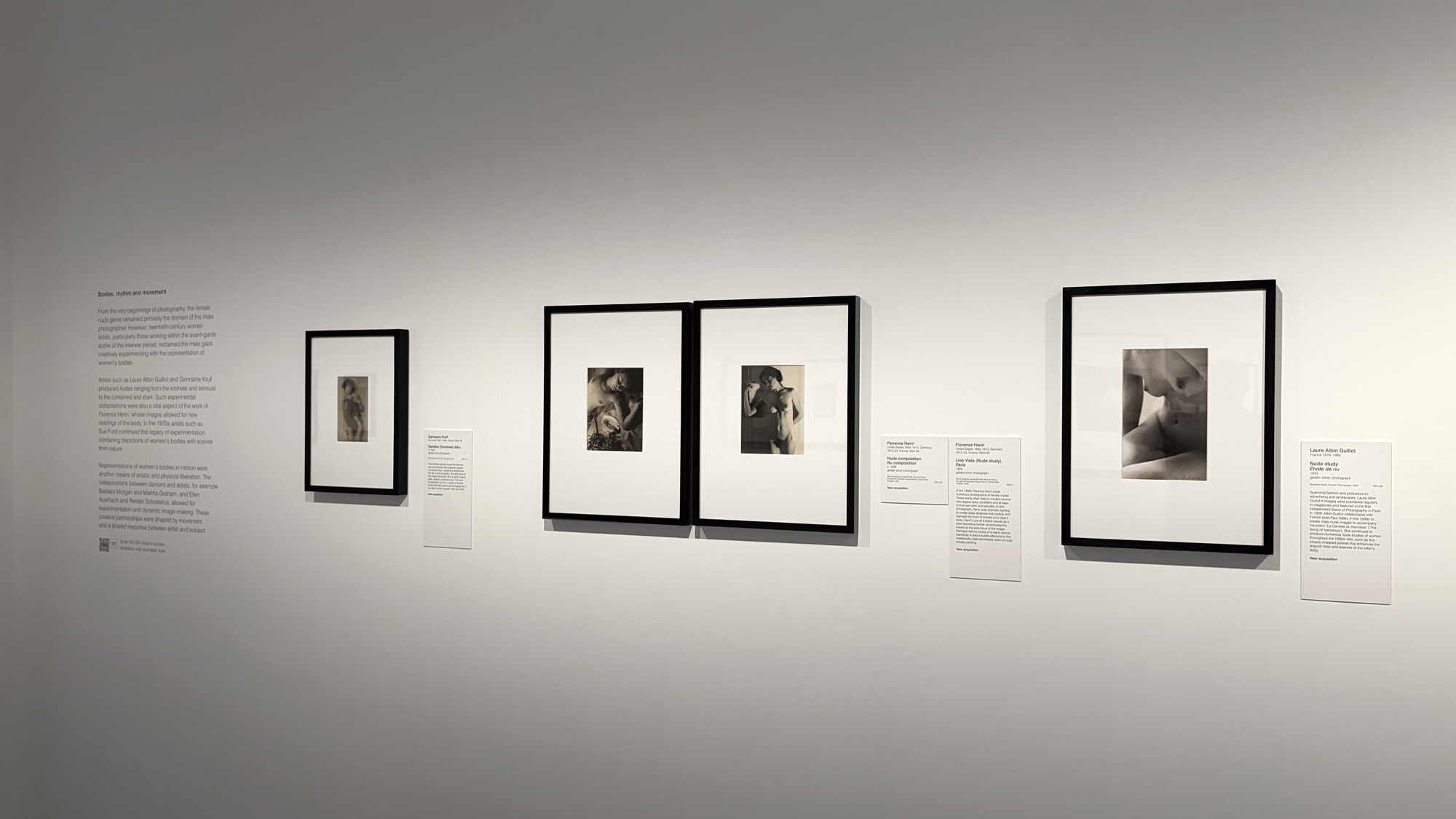
Bodies, Rhythm and Movement

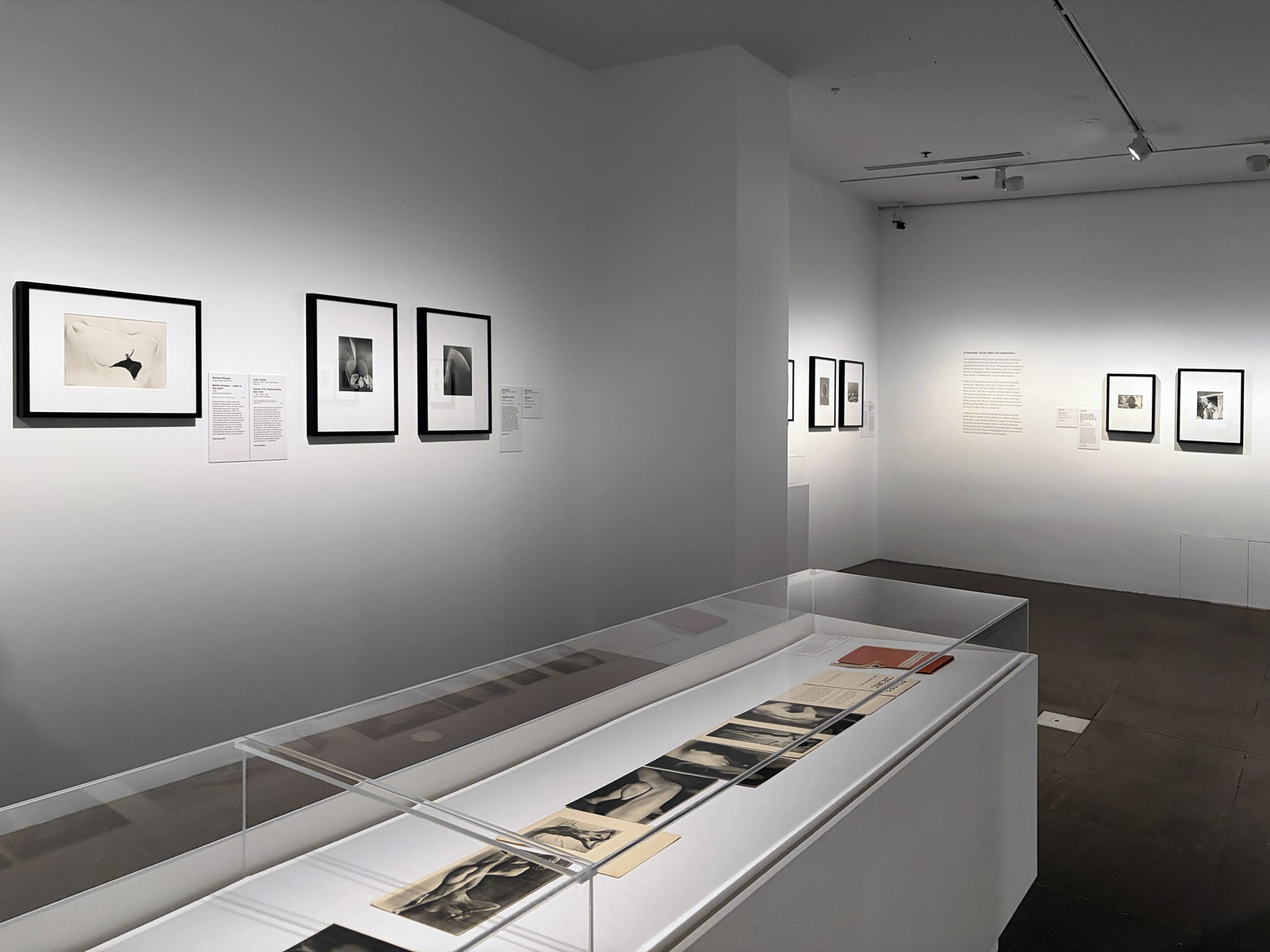
From the very beginnings of photography, the female nude genre remained primarily the domain of the male photographer. However, twentieth-century women artists, particularly those working within the avant-garde scene of the interwar period, reclaimed the male gaze, creatively experimenting with the representation of women’s bodies.

Artists such as Laure Albin Guillot and Germaine Krull produced nudes ranging from the intimate and sensual to the contained and stark. Such experimental compositions were also a vital aspect of the work of Florence Henri, whose images allowed for new readings of the body. In the 1970s artists such as Sue Ford continued this legacy of experimentation, combining depictions of women’s bodies with scenes from nature.

Representations of women’s bodies in motion were another means of artistic and physical liberation. The collaborations between dancers and artists, for example Barbara Morgan and Martha Graham, and Ellen Auerbach and Renate Schottelius, allowed for experimentation and dynamic image-making. These creative partnerships were shaped by movement and a shared response between artist and subject.


Installation view of the exhibition 'Women Photographers 1900-1975: A Legacy of Light' at NGV International, Melbourne, November 2025 – May 2026 showing at left, Germaine Krull 'Daretha (Dorothea) Albu' (c. 1925)


Installation view of the exhibition Women Photographers 1900-1975: A Legacy of Light at NGV International, Melbourne, November 2025 – May 2026 showing at left, Germaine Krull Daretha (Dorothea) Albu (c. 1925, below)
Photo: Marcus Bunyan


Installation view of the exhibition 'Women Photographers 1900-1975: A Legacy of Light' at NGV International, Melbourne, November 2025 – May 2026


Installation view of the exhibition Women Photographers 1900-1975: A Legacy of Light at NGV International, Melbourne, November 2025 – May 2026 showing from left to right, Germaine Krull Daretha (Dorothea) Albu (c. 1925, below); Florence Henri Nude composition (c. 1930, below); Florence Henri Line Viala (Nude study), Paris (1934); and Laure Albin Guillot Nude Study (1943)
Photo: Marcus Bunyan


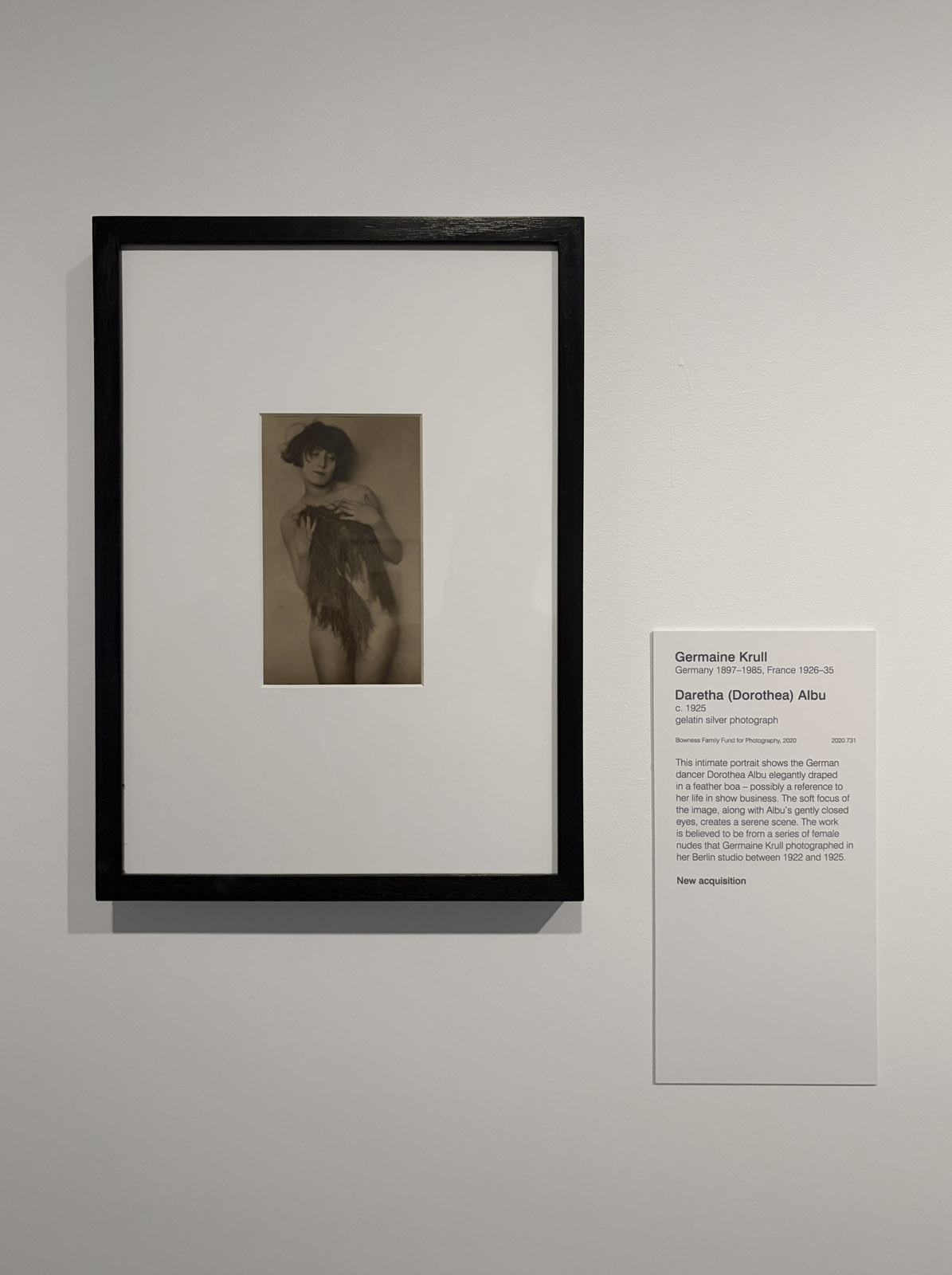
Germaine Krull (European, 1897-1985) 'Daretha (Dorothea) Albu' c. 1925 (installation view)


Germaine Krull (European, 1897-1985)
Daretha (Dorothea) Albu (installation view)
c. 1925
Gelatin silver photograph
19.7 x 11.7cm (image and sheet)
National Gallery of Victoria, Melbourne
Bowness Family Fund for Photography, 2020
Photo: Marcus Bunyan


This intimate portrait shows the German dancer Dorothea Albu elegantly draped in a feather boa – possibly a reference to her life in show business. The soft focus of the image, along with Albu’s gently closed eyes, creates a serene scene. The work is believed to be from a series of female nudes that Germaine Krull photographed in her Berlin studio between 1922 and 1925.

Wall text from the exhibition


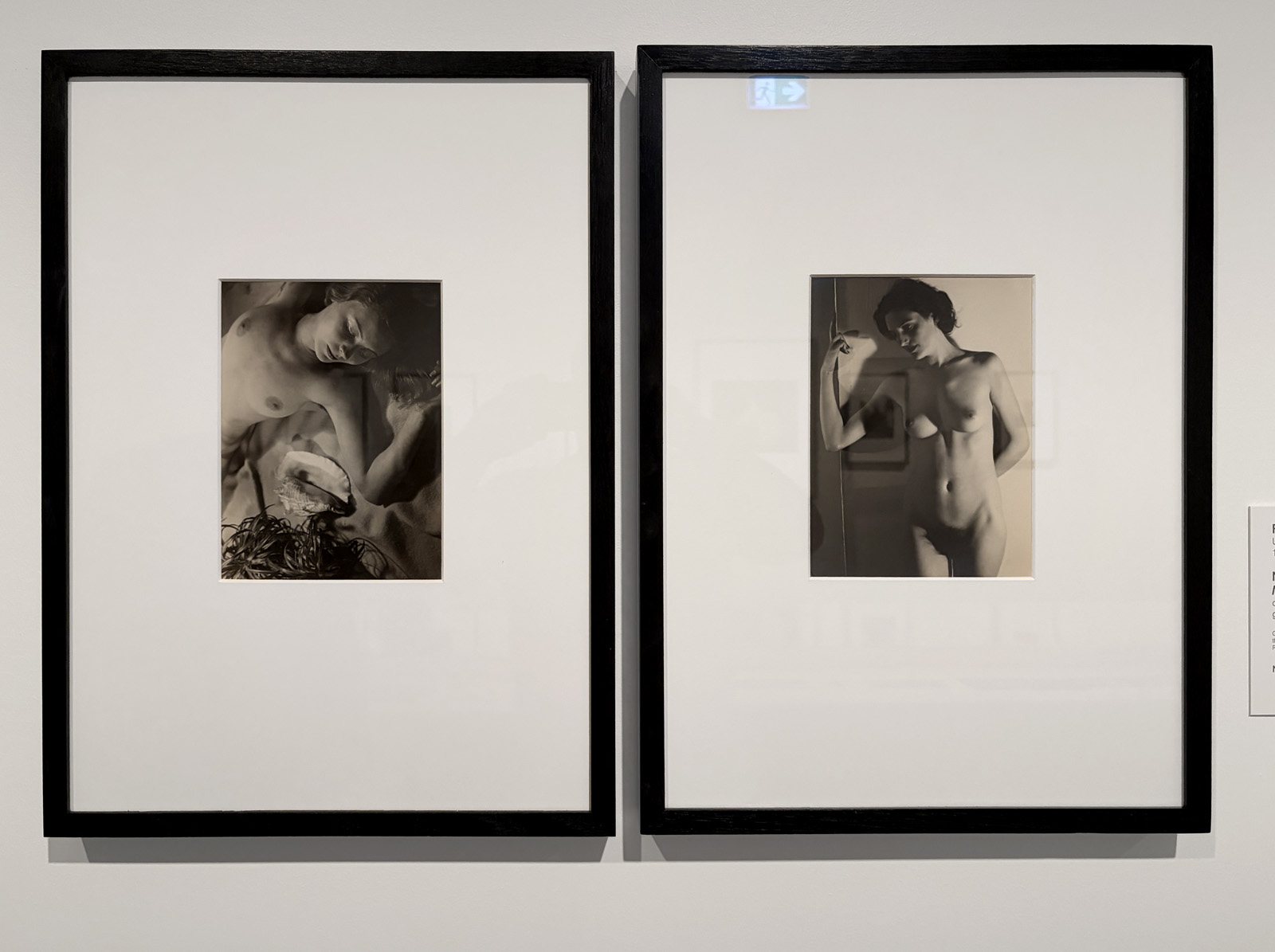
Installation view of the exhibition 'Women Photographers 1900-1975: A Legacy of Light' at NGV International, Melbourne, November 2025 – May 2026 showing from left to right, Florence Henri (European born USA, 1893-1982) 'Nude composition' (c. 1930) and Florence Henri (European born USA, 1893-1982) 'Line Viala (Nude study), Paris' (1934)


Installation view of the exhibition Women Photographers 1900-1975: A Legacy of Light at NGV International, Melbourne, November 2025 – May 2026 showing from left to right, Florence Henri Nude composition (c. 1930, below) and Florence Henri Line Viala (Nude study), Paris (1934, below)
Photo: Marcus Bunyan


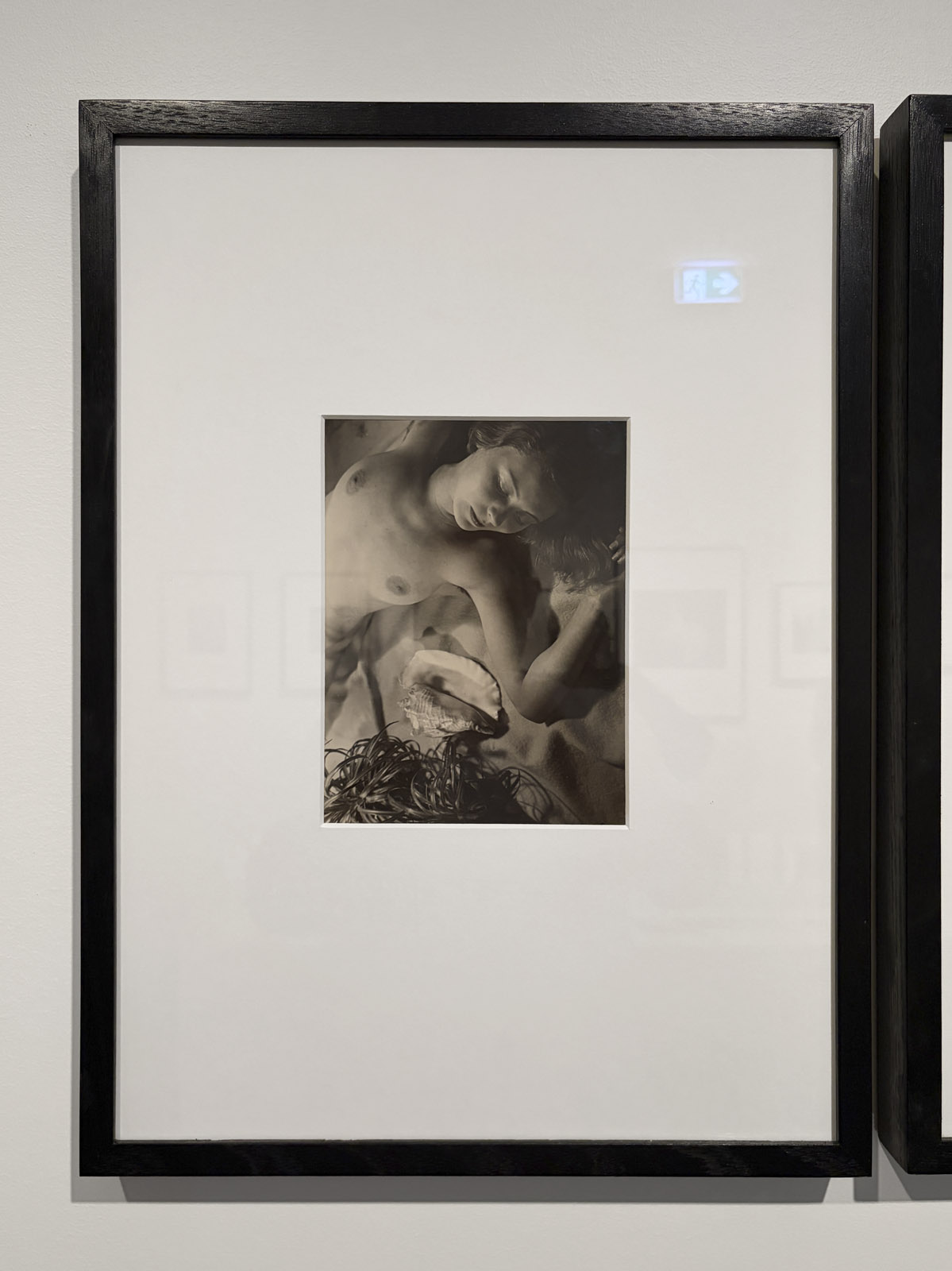
Florence Henri (European born USA, 1893-1982) 'Nude composition' (Nu composition) c. 1930 (installation view)


Florence Henri (European born USA, 1893-1982)
Nude composition (Nu composition) (installation view)
c. 1930
Gelatin silver photograph
22.9 x 17.0cm (image and sheet)
National Gallery of Victoria, Melbourne
Gift of Krystyna Campbell-Pretty AM and Family through the Australian Government’s Cultural Gifts Program, 2021
Photo: Marcus Bunyan


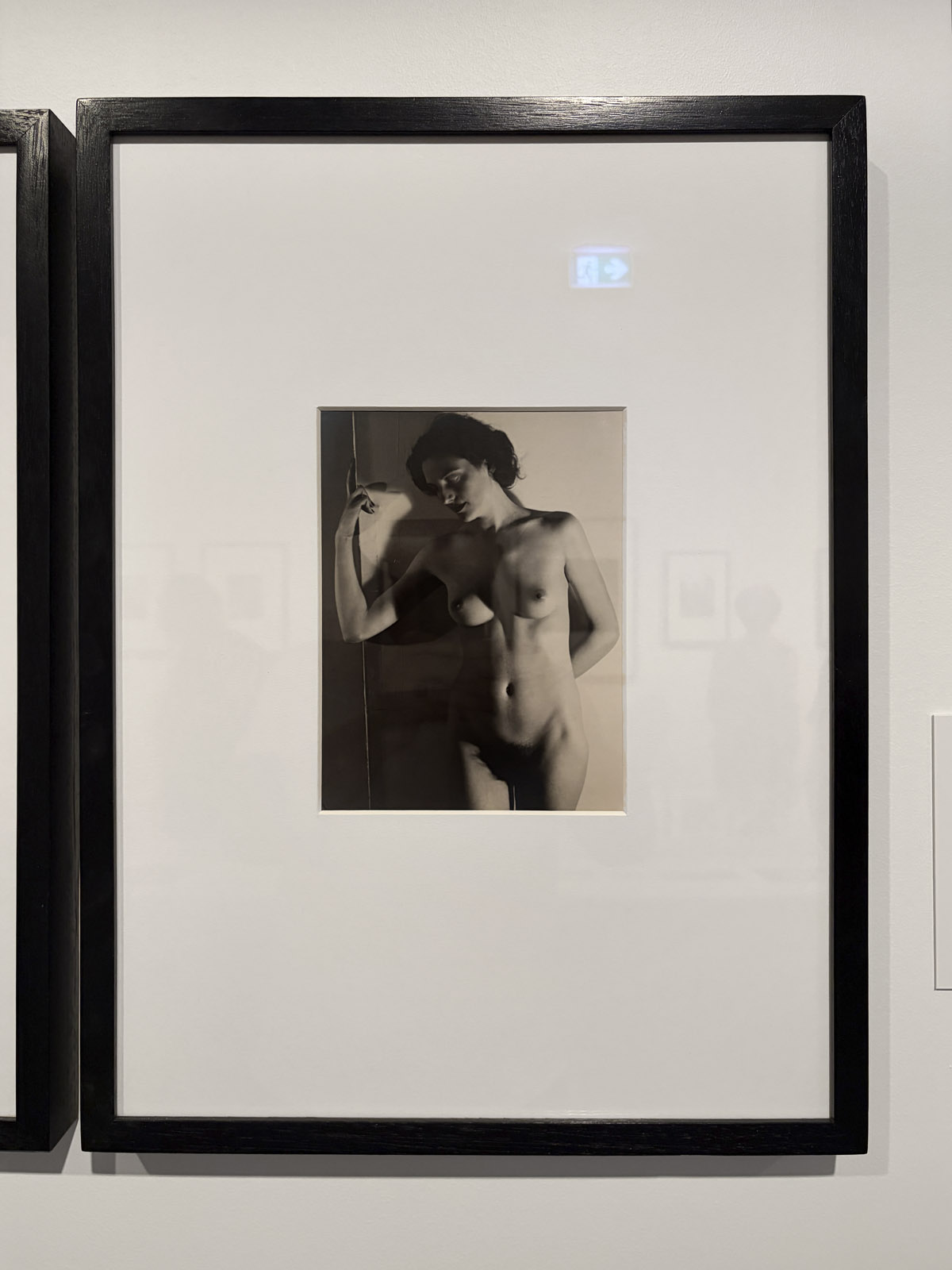
Florence Henri (European born USA, 1893-1982) 'Line Viala (Nude study), Paris' 1934 (installation view)


Florence Henri (European born USA, 1893-1982)
Line Viala (Nude study), Paris (installation view)
1934
Gelatin silver photograph
22.9 x 17.2cm (image and sheet)
National Gallery of Victoria, Melbourne
Gift of Krystyna Campbell-Pretty AM and Family through the Australian Government’s Cultural Gifts Program, 2023
Photo: Marcus Bunyan


In the 1930s Florence Henri made numerous photographs of female nudes. These works often feature modern women who appear bold, confident and at ease in their own skin and sexuality. In this photograph, Henri uses dramatic lighting to create deep shadows that contour and highlight the form of actress Line Viala’s body. Henri’s use of a blank canvas as a plain backdrop further accentuates the model as the sole focus of the image. Perhaps Henri’s choice of a blank canvas backdrop is also a subtle reference to the traditionally male-dominated realm of nude female painting.

Wall text from the exhibition


Florence Henri (European born USA, 1893-1982) 'Nude composition (Nu composition)' c. 1930


Florence Henri (European born USA, 1893-1982)
Nude composition (Nu composition)
c. 1930
Gelatin silver photograph
22.9 x 17.0cm (image and sheet)
National Gallery of Victoria, Melbourne
Gift of Krystyna Campbell-Pretty AM and Family through the Australian Government’s Cultural Gifts Program, 2021
© Florence Henri / Licensed by the Copyright Agency, Australia


Another vital aspect of her practice was her nude female compositions, such as Nude composition (Nu composition), 1930. Created in the year after establishing her studio in Paris, it employs her characteristically unique, elevated vantage point and raking lighting to disrupt a sense of visual order and perspective. Henri constructs a scene in which the upper half of a woman’s naked body (her chest, breasts, arms, head and hair) creates an asymmetrical focal point at the top of the photograph. Lying next to the woman, and, seemingly, the subject of her gaze, is a large shell, while plants at the base of the image echo the woman’s flowing hair. While appearing to be set on a bed of sand, on closer inspection the textured base is revealed as a coarse sheet.

The dreamlike image, confident and controlled, which merges the female body with the symbolic shell and forms from nature, creates a scene of sensuousness and self-empowerment that is erotic and modern. Henri’s nude compositions, along with those of peers working in France such as Dora Maar and Nora Dumas, claimed the female body as a subject of their own – a trend that emerged among a number of female photographers, in the interwar period.

Maggie Finch. “Florence Henri Nude composition (Nu composition),” on the NGV website 16 Mar 23 [Online] Cited 24/12/2025. Used under fair use condition for the purposes of education and research


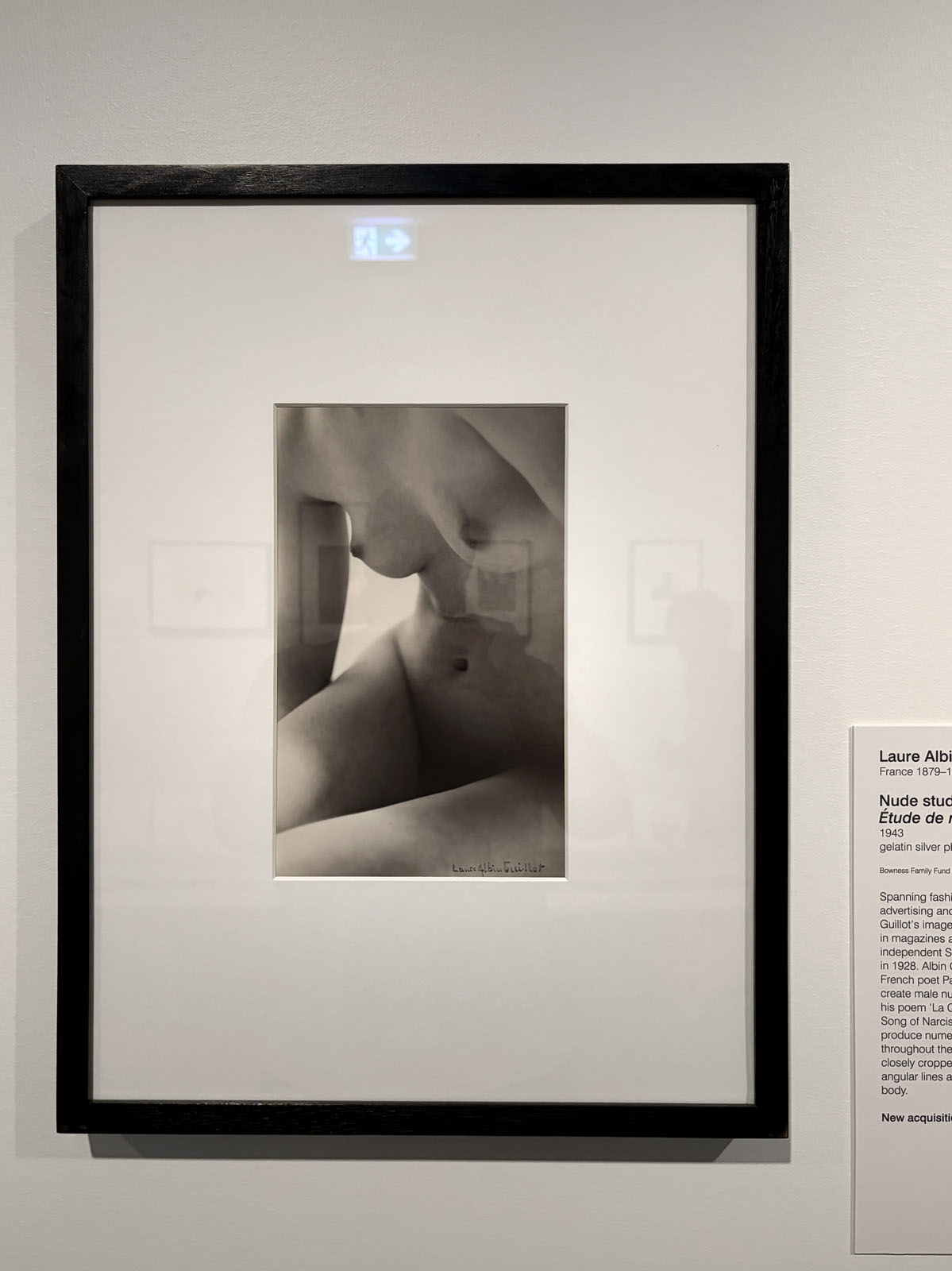
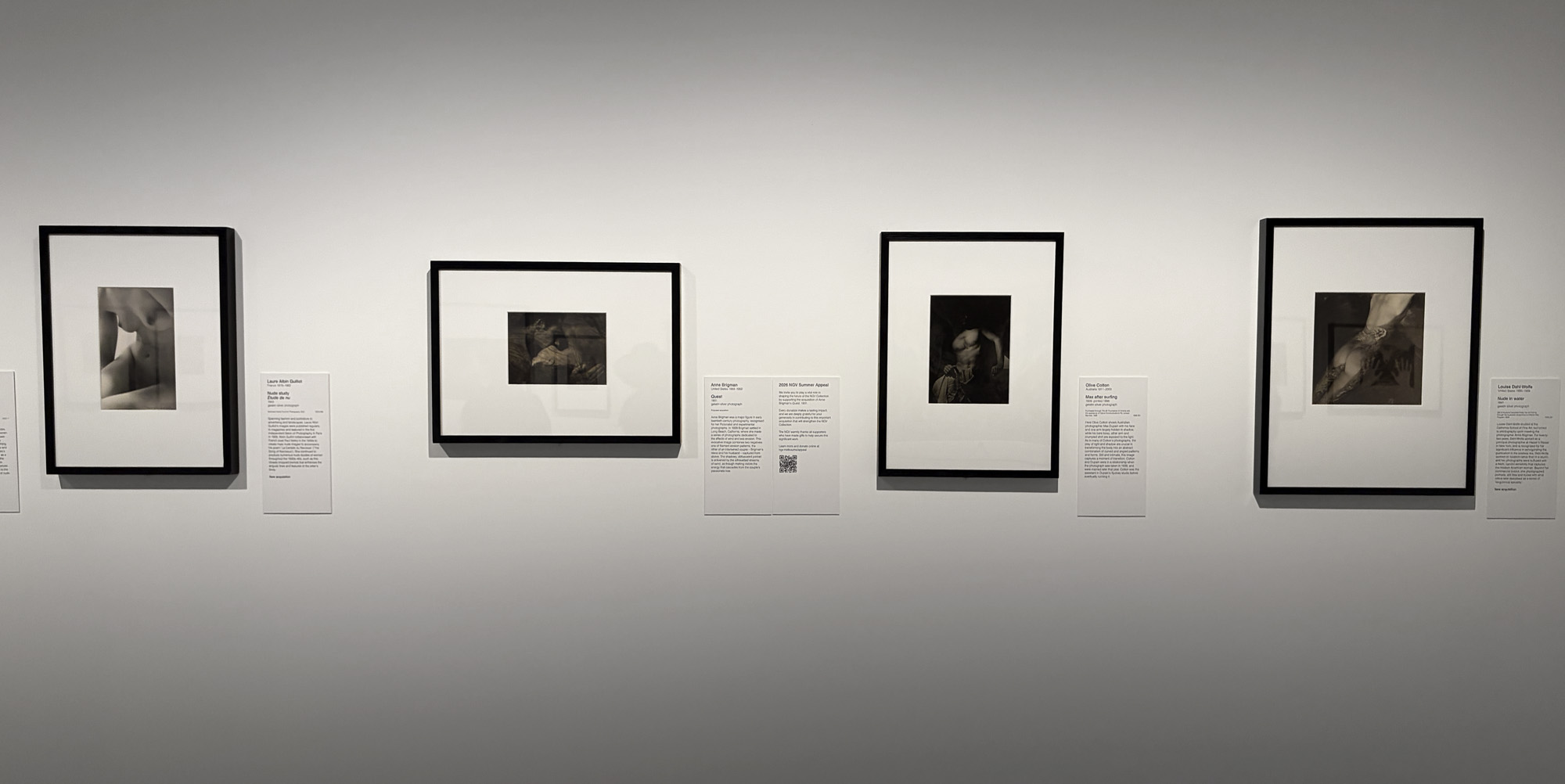
Laure Albin Guillot (French, 1879-1962) 'Nude study' (Étude de nu) 1943 (installation view)


Laure Albin Guillot (French, 1879-1962)
Nude study (Étude de nu) (installation view)
1943
Gelatin silver photograph
29.5 x 17.9cm (image)
29.5 x 23.1cm (sheet)
National Gallery of Victoria, Melbourne
Bowness Family Fund for Photography, 2023
Photo: Marcus Bunyan


Spanning fashion and portraiture to advertising and landscapes, Laure Albin Guillot’s images were published regularly in magazines and featured in the first independent Salon of Photography in Paris in 1928. Albin Guillot collaborated with French poet Paul Valéry in the 1930s to create male nude images to accompany his poem ‘La Cantate du Narcisse’ (‘The Song of Narcissus’). She continued to produce numerous nude studies of women throughout the 1930s–40s, such as this closely cropped portrait that enhances the angular lines and features of the sitter’s body.

Wall text from the exhibition


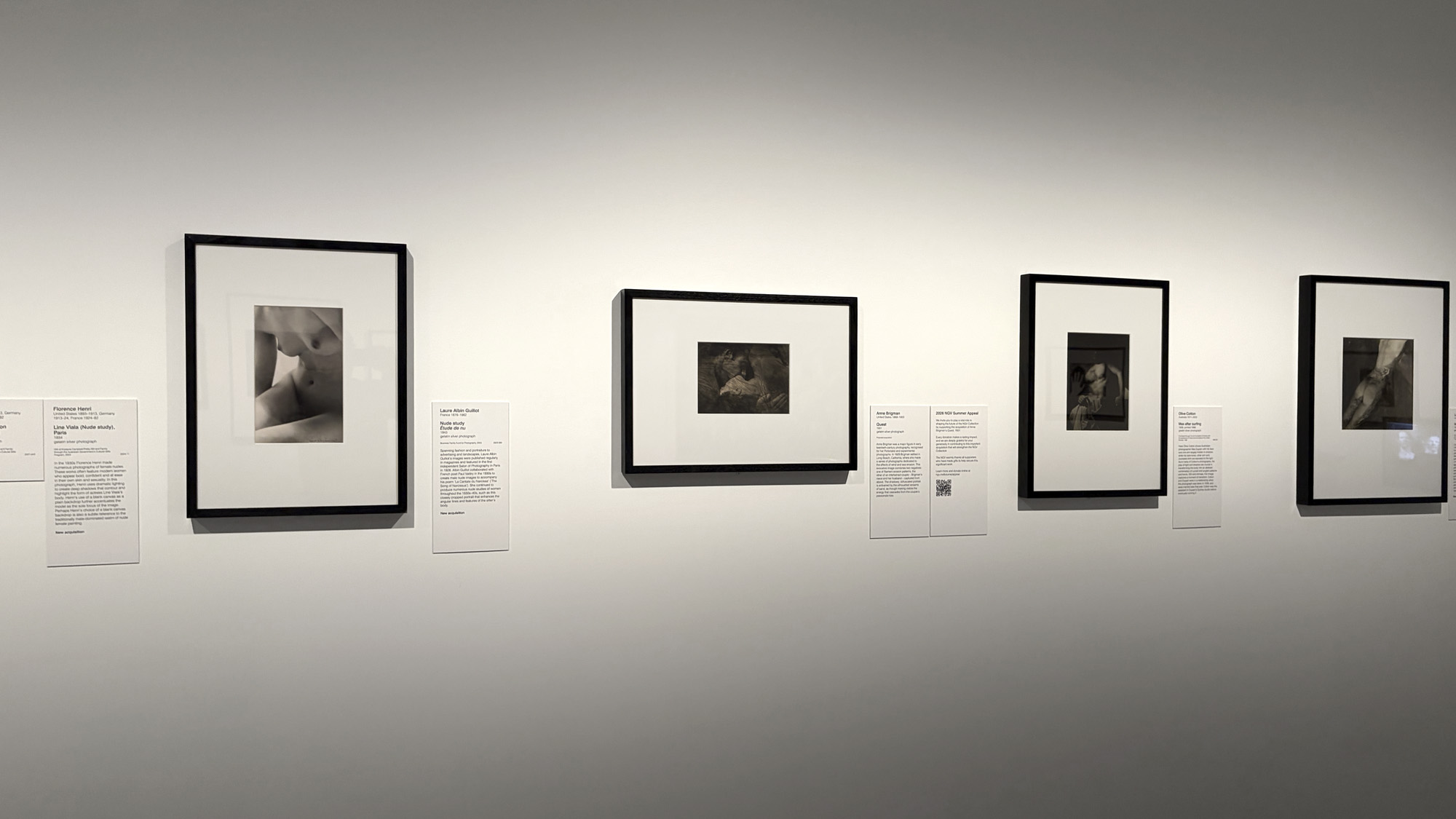
Installation view of the exhibition 'Women Photographers 1900-1975: A Legacy of Light' at NGV International, Melbourne, November 2025 – May 2026 showing from left to right, Laure Albin Guillot 'Nude study' (Étude de nu) (1943); Anne Brigman 'Quest' (1931); Olive Cotton 'Max after surfing' (1939 printed 1998); and Louise Dahl-Wolfe 'Nude in water' (1941)


Installation views of the exhibition Women Photographers 1900-1975: A Legacy of Light at NGV International, Melbourne, November 2025 – May 2026 showing from left to right, Laure Albin Guillot Nude study (Étude de nu) (1943, above); Anne Brigman Quest (1931); Olive Cotton Max after surfing (1939, printed 1998); and Louise Dahl-Wolfe Nude in water (1941)
Photos: Marcus Bunyan


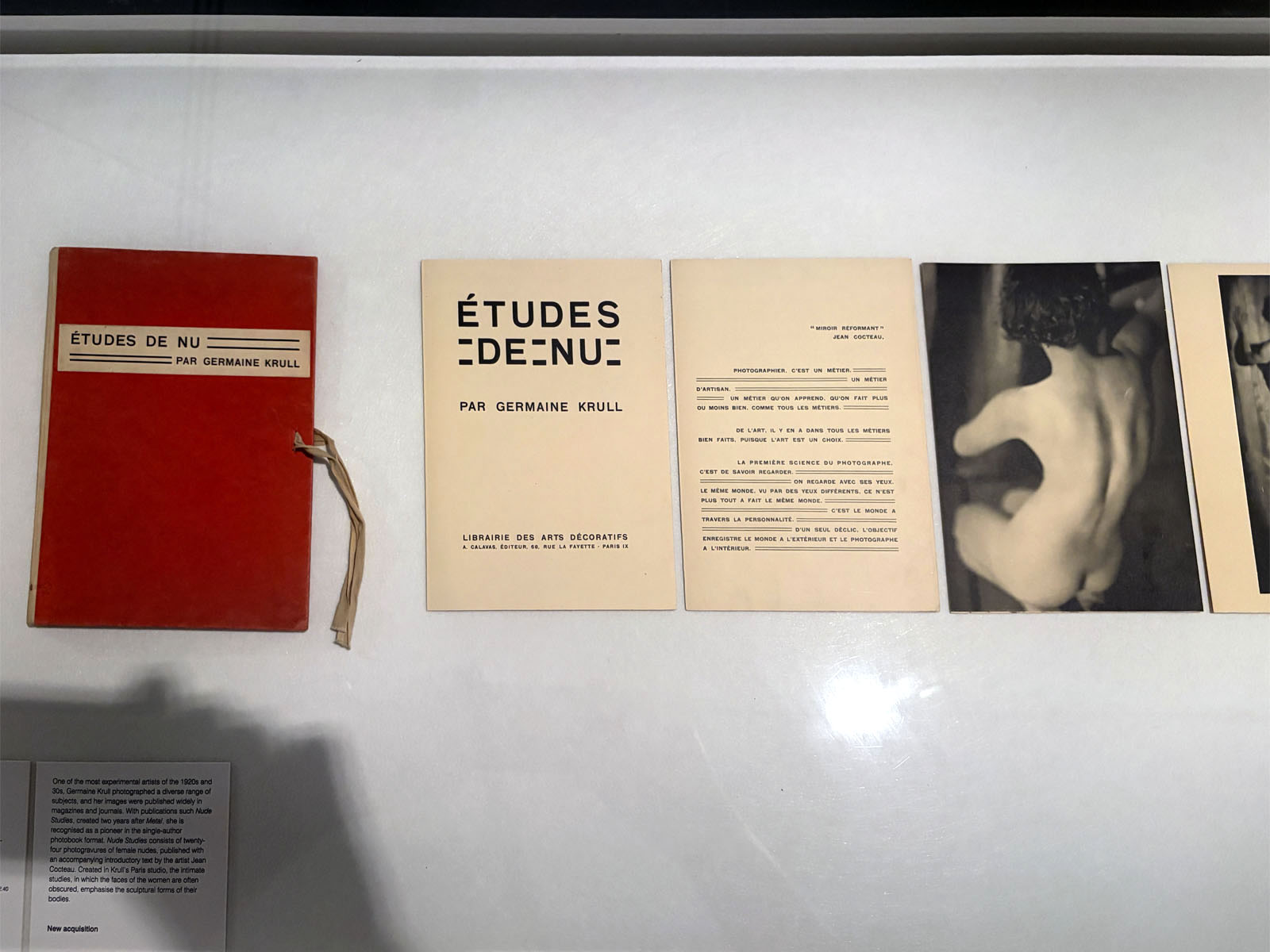
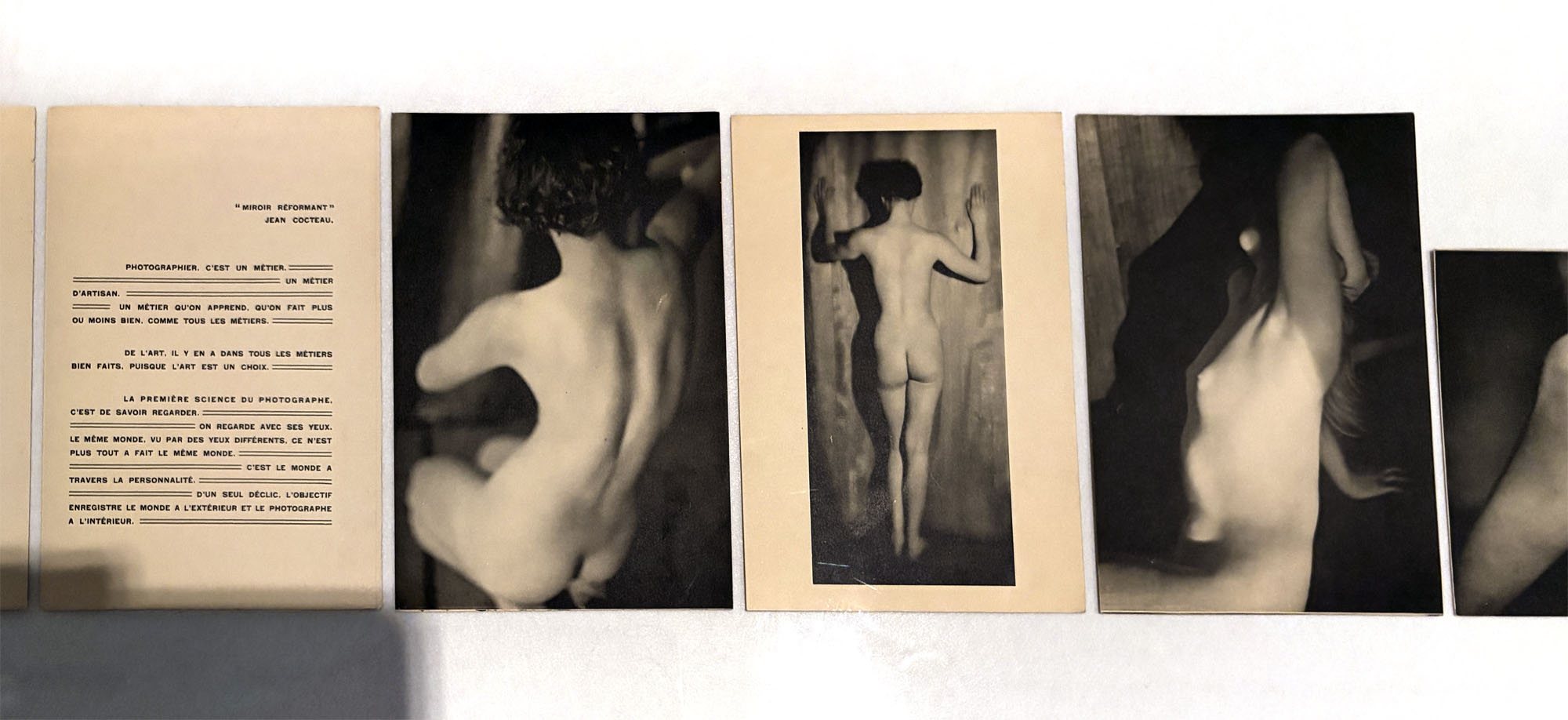
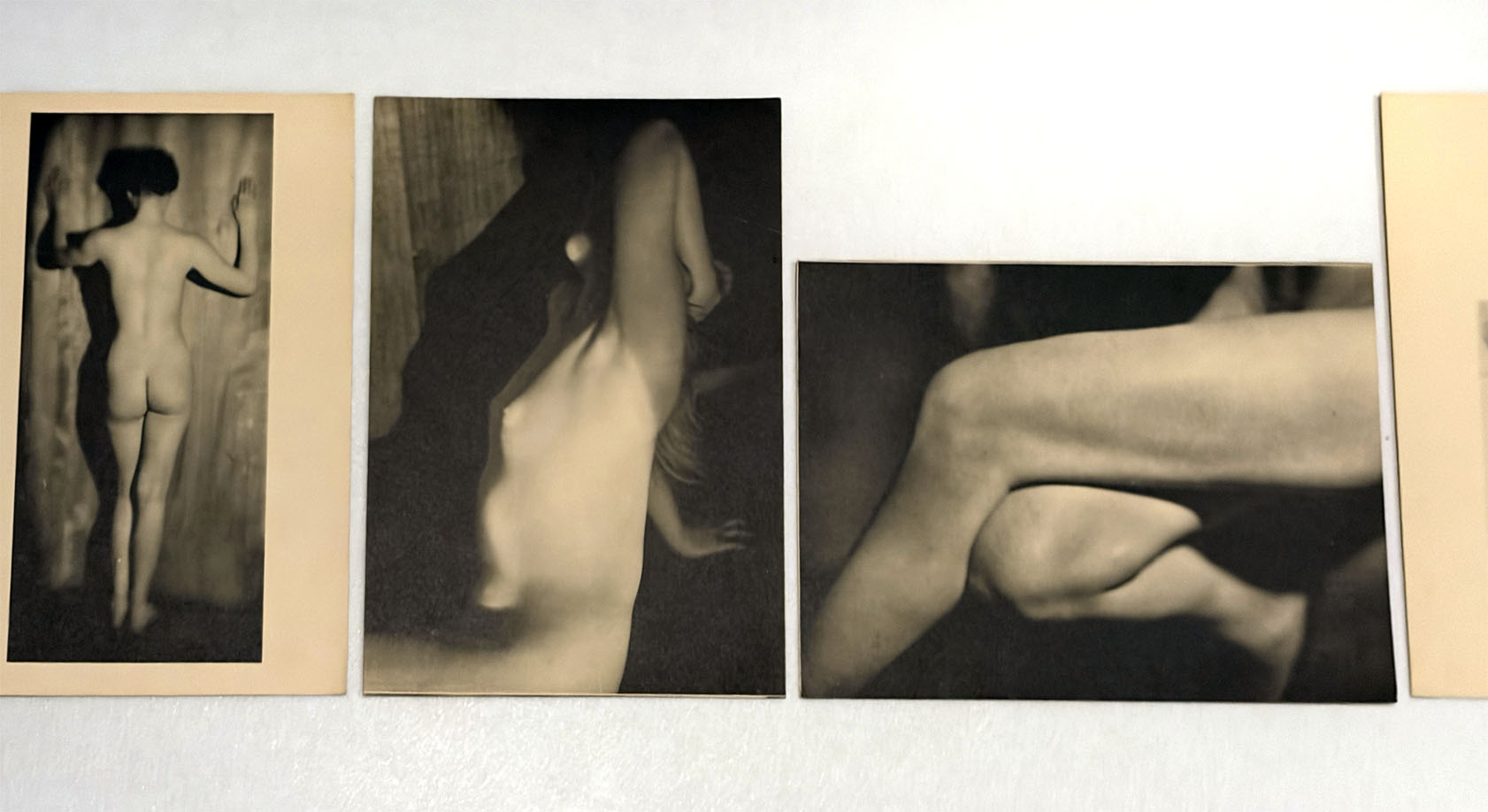
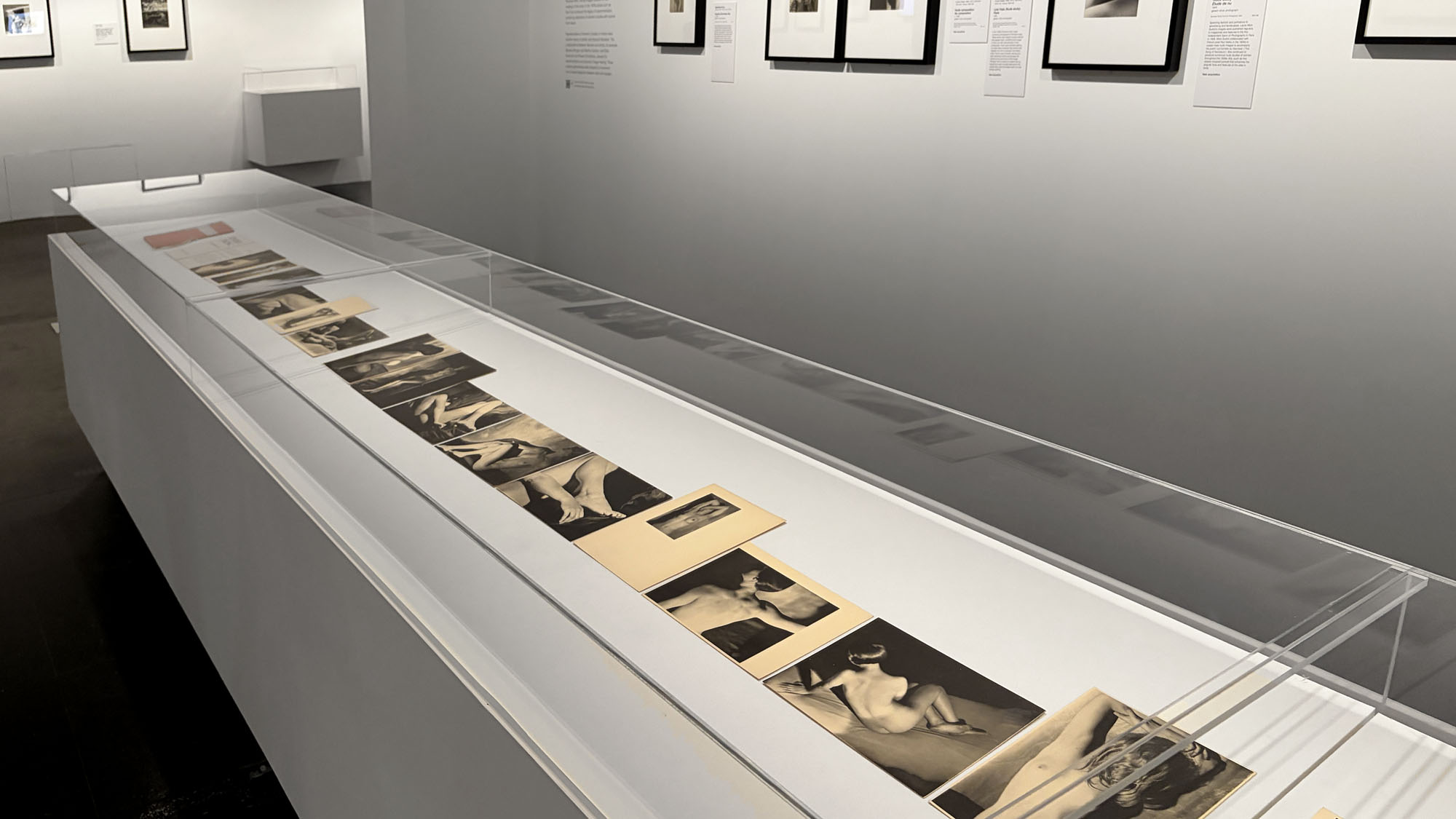
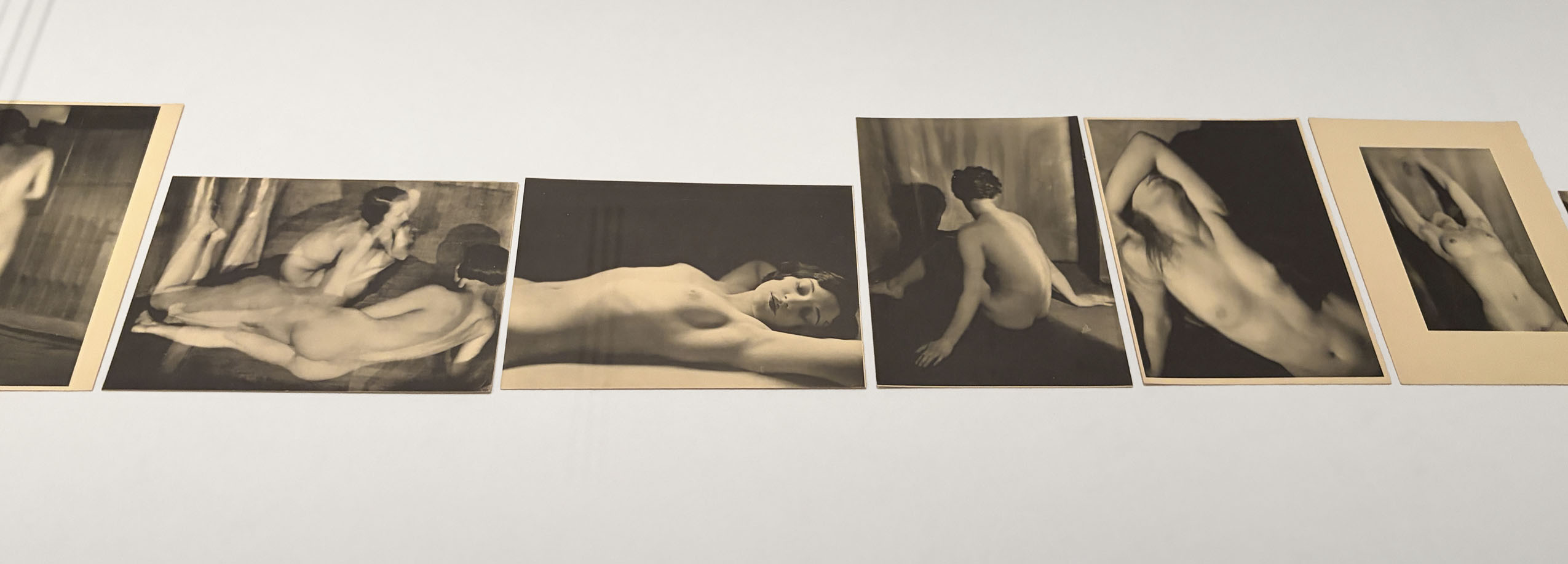
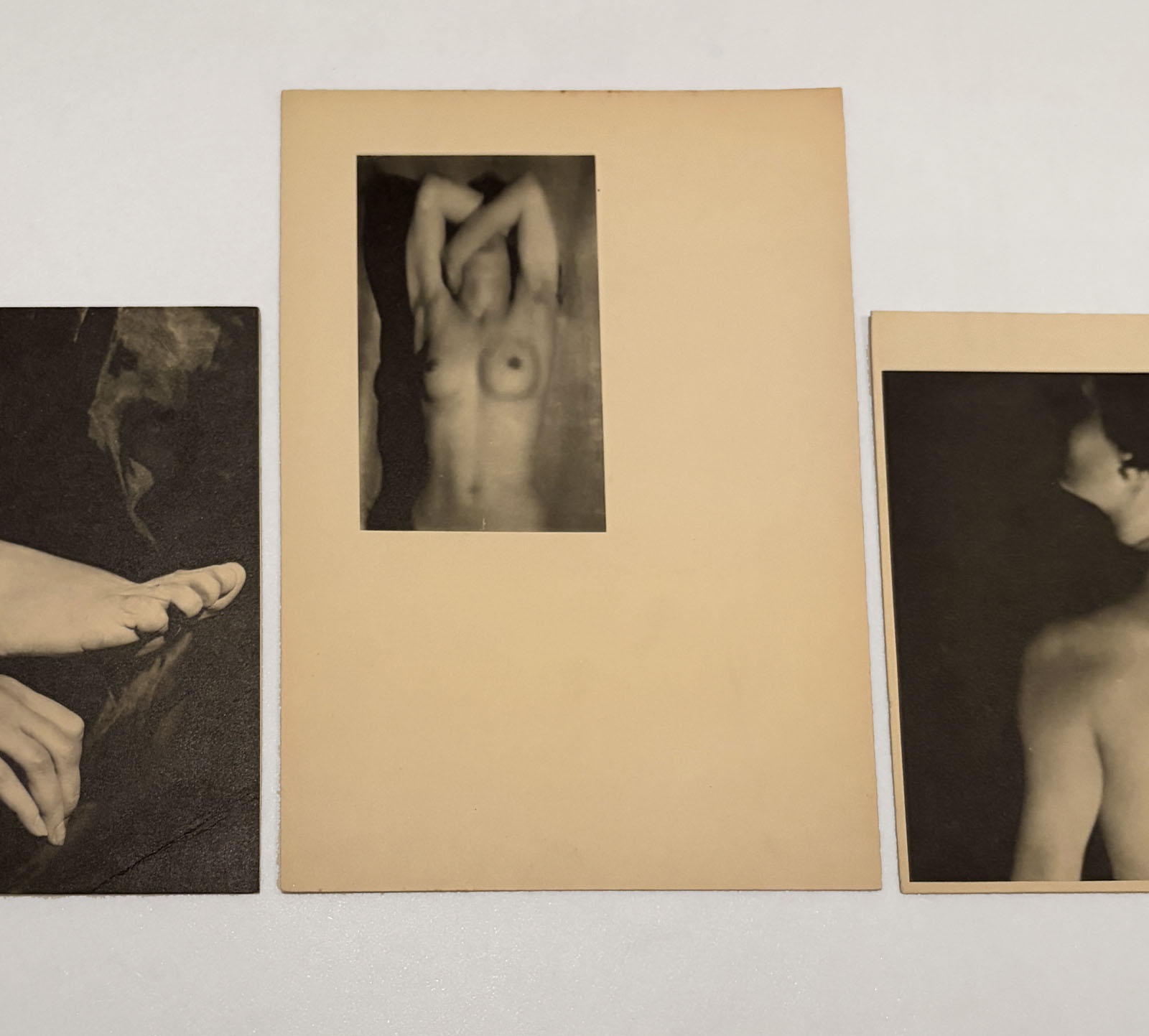
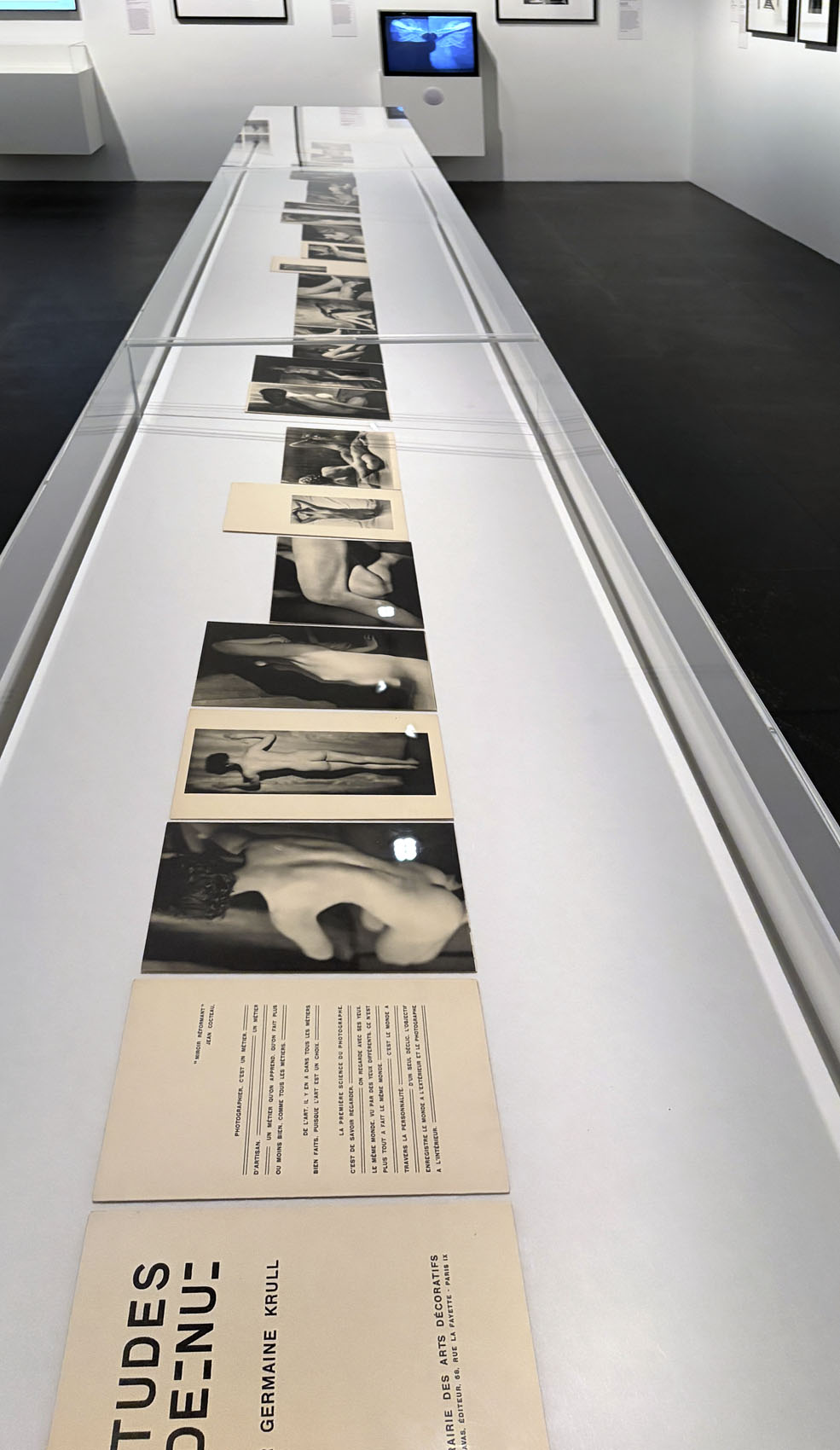
Installation view of the exhibition 'Women Photographers 1900-1975: A Legacy of Light' at NGV International, Melbourne, November 2025 – May 2026 showing Germaine Krull 'Nude studies (Études de nu)' (1930)


Installation views of the exhibition Women Photographers 1900-1975: A Legacy of Light at NGV International, Melbourne, November 2025 – May 2026 showing Germaine Krull Nude studies (Études de nu) (1930)
Photos: Marcus Bunyan


One of the most experimental artists of the 1920s and 30s, Germaine Krull photographed a diverse range of subjects, and her images were published widely in magazines and journals. With publications such Nude Studies, created two years after Metal, she is recognised as a pioneer in the single-author photobook format. Nude Studies consists of twenty-four photogravures of female nudes, published with an accompanying introductory text by the artist Jean Cocteau. Created in Krull’s Paris studio, the intimate studies, in which the faces of the women are often obscured, emphasise the sculptural forms of their bodies.

Wall text from the exhibition


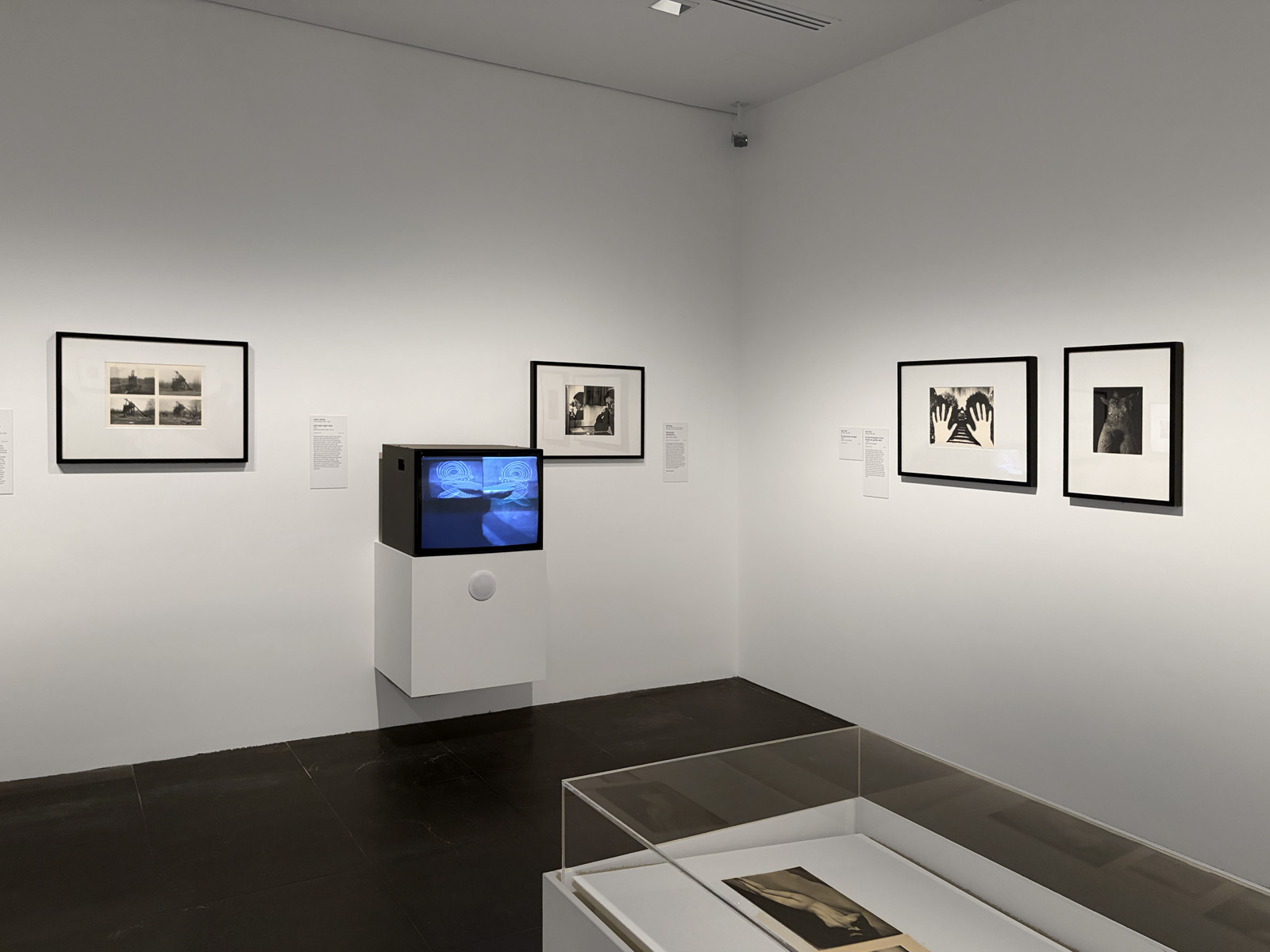
Installation view of the exhibition 'Women Photographers 1900-1975: A Legacy of Light' at NGV International, Melbourne, November 2025 – May 2026 showing from left to right, Bernd Becher and Hilla Becher 'Coal tipple, Goodspring, Pennsylvania' (1975); Ilse Bing 'Self-portrait' (1931 printed c. 1993); and two Sue Ford photographs, 'No title (Photogram of two hands and garden path)' (c. 1970, below) and 'No title (Nude montage)' (1960s)


Installation view of the exhibition Women Photographers 1900-1975: A Legacy of Light at NGV International, Melbourne, November 2025 – May 2026 showing from left to right, Bernd Becher and Hilla Becher Coal tipple, Goodspring, Pennsylvania (1975, below); Ilse Bing Self-portrait (1931 printed c. 1993, below); and two Sue Ford photographs, No title (Photogram of two hands and garden path) (c. 1970, below) and No title (Nude montage) (1960s)
Photo: Marcus Bunyan


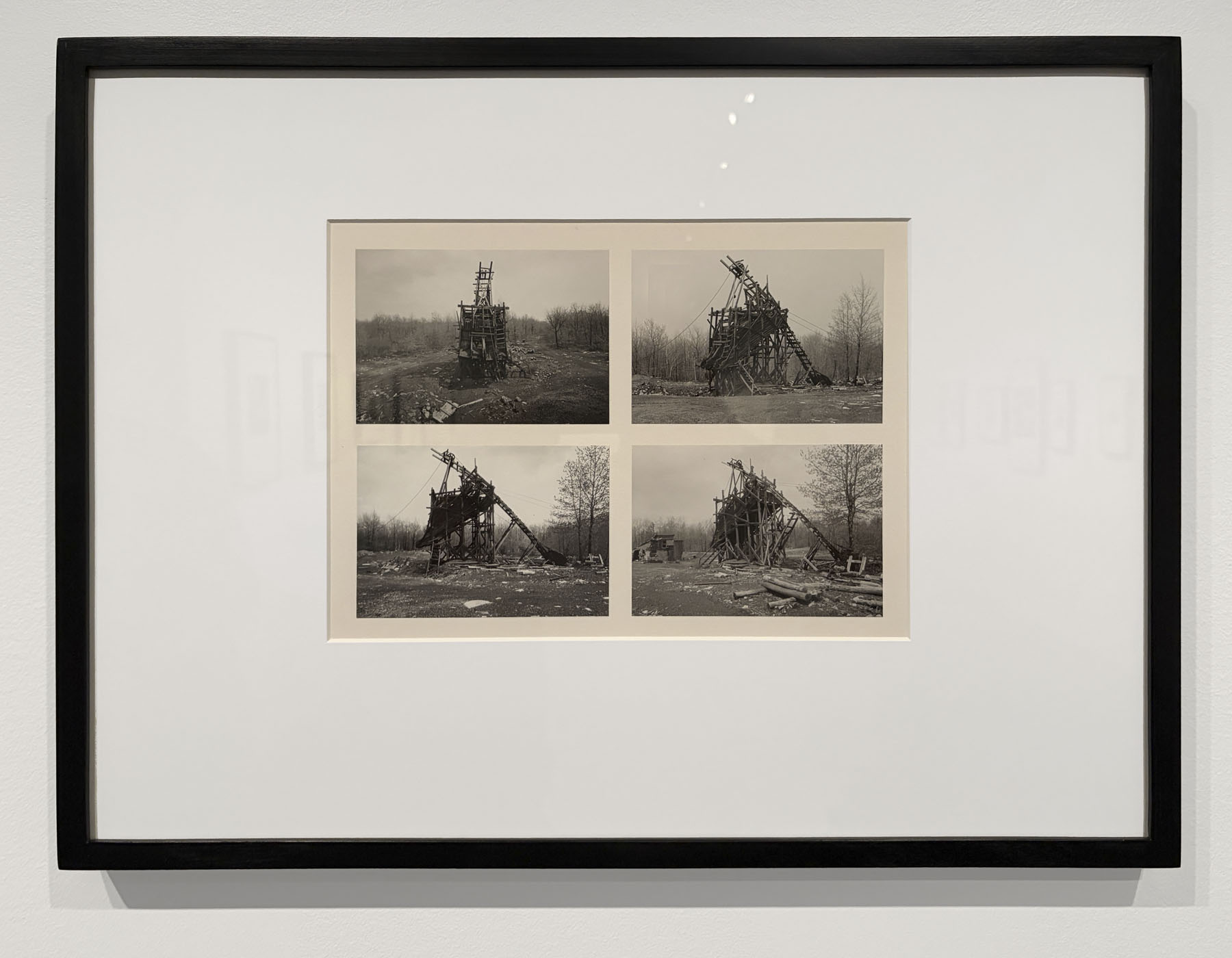
Bernd Becher and Hilla Becher (German, 1931-2007/1934-2015) 'Coal tipple, Goodspring, Pennsylvania' 1975 (installation view)


Bernd Becher and Hilla Becher (German, 1931-2007/1934-2015)
Coal tipple, Goodspring, Pennsylvania (installation view)
1975
From the Artists and photographs folio 1975
Gelatin silver photographs
24.0 x 33.9cm (image and sheet)
40.7 x 49.6cm (support)
ed. 9/60
National Gallery of Victoria, Melbourne
Purchased, 1976
Photo: Marcus Bunyan


Bernd and Hilla Becher (German, 1931-2007 and 1934-2015) 'Coal tipple, Goodspring, Pennsylvania' 1975


Bernd Becher and Hilla Becher (German, 1931-2007/1934-2015)
Coal tipple, Goodspring, Pennsylvania
1975
From the Artists and photographs folio 1975
Gelatin silver photographs
24.0 x 33.9cm (image and sheet)
40.7 x 49.6cm (support)
ed. 9/60
National Gallery of Victoria, Melbourne
Purchased, 1976
© Estate Bernd & Hilla Becher, represented by Max Becher


In 1959 married artists Bernd and Hilla Becher started photographing industrial architecture, a practice that would continue for over four decades. While predominantly documenting structures throughout Germany’s Ruhr region, they occasionally worked overseas – this work was made on their first trip to the United States. The Bechers created a system for comparing structures: photographing them from a consistent angle, under virtually identical lighting conditions, printing images at the same size and often displaying them in grids. According to Hilla Becher, their archive allows for narratives to naturally emerge: “Structural patterns and their transformations … can be proved to exist in the case of such relatively exhaustive comparative series.”

Wall text from the exhibition


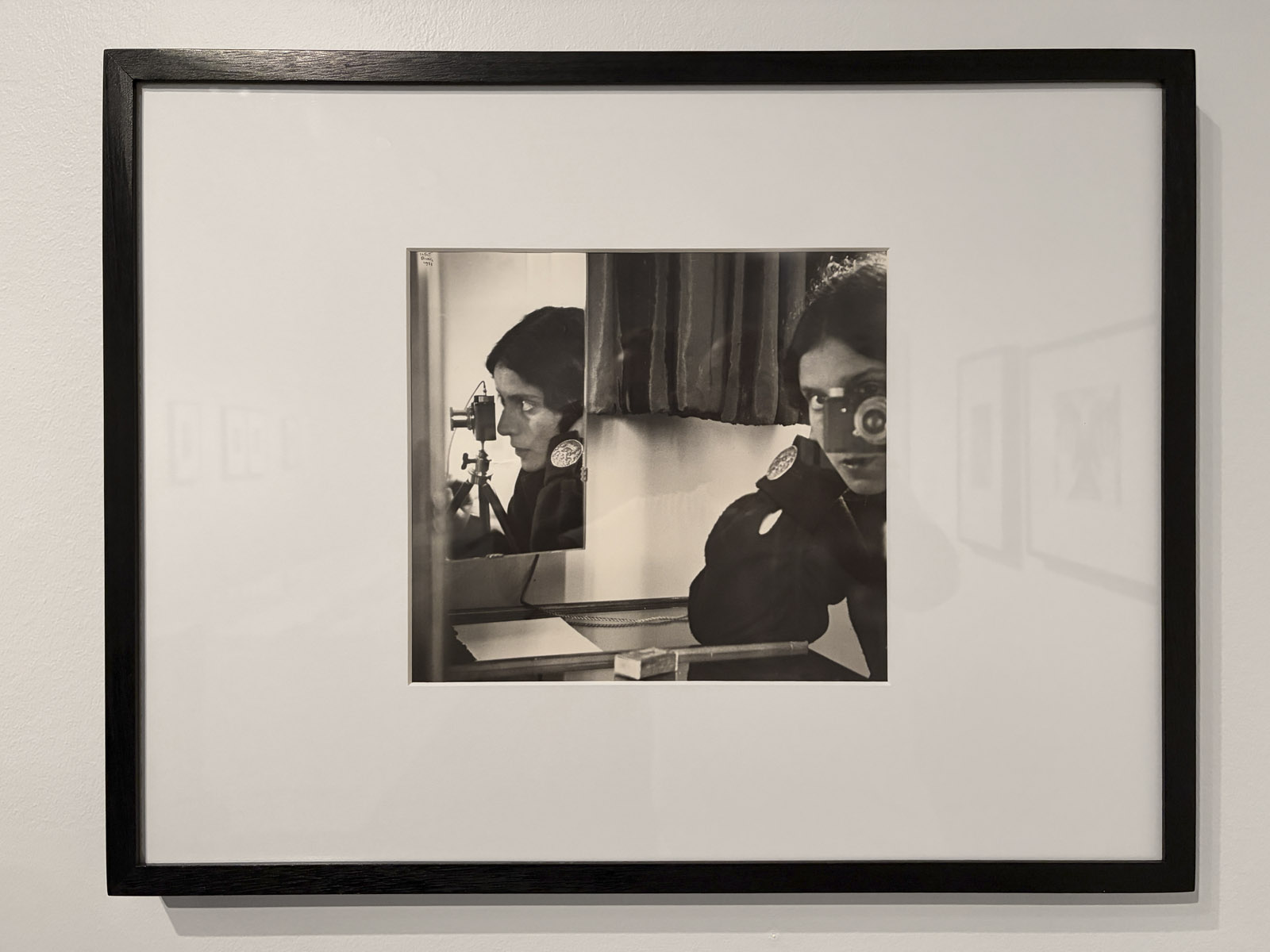
Ilse Bing (German, 1899-1998) 'Self-portrait (Autoportrait)' 1931, printed 1993 (installation view)


Ilse Bing (German, 1899-1998)
Self-portrait (Autoportrait) (installation view)
1931, printed 1993
Gelatin silver photograph
26.7 x 29.4cm (image)
27.9 x 35.3cm (sheet)
National Gallery of Victoria, Melbourne
Bowness Family Fund for Photography, 2023
Photo: Marcus Bunyan


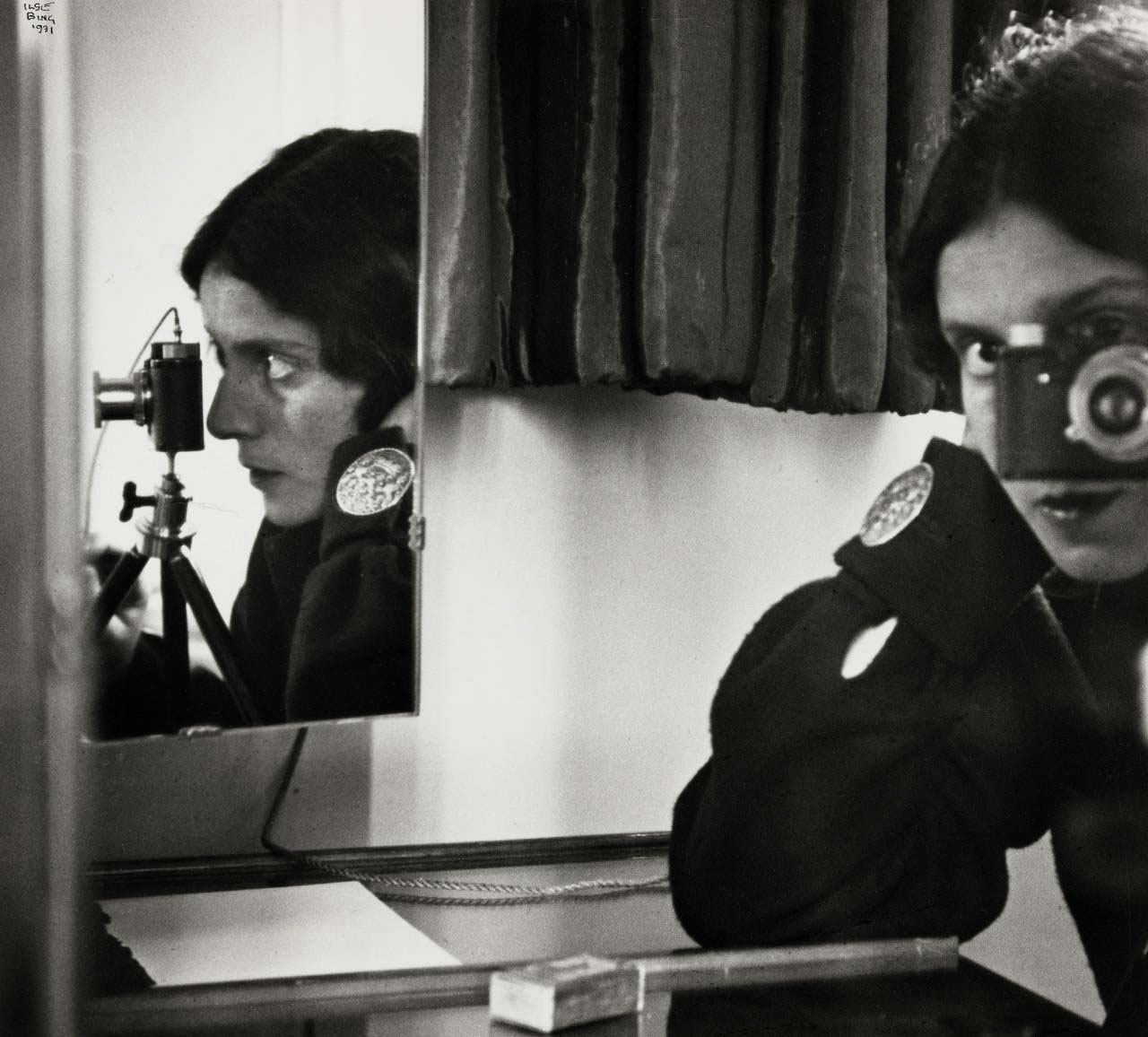
Ilse Bing (German, 1899-1998) 'Self-portrait (Autoportrait)' 1931, printed 1993


Ilse Bing (German, 1899-1998)
Self-portrait (Autoportrait)
1931, printed 1993
Gelatin silver photograph
26.7 x 29.4cm (image)
27.9 x 35.3cm (sheet)
National Gallery of Victoria, Melbourne
Bowness Family Fund for Photography, 2023
© Ilse Bing Estate
Photo: National Gallery of Victoria, Melbourne


Ilse Bing began making photographs in the late 1920s, when she purchased one of the first 35 mm cameras produced by the German company Leica. She made use of the camera’s portability, capturing motion, dizzying angles and contrasts of light, shade and shadow – compositional elements that characterised the New Photography movement. Inspired by Florence Henri, Bing used her camera to disrupt the picture plane. In this famed self-portrait, Bing uses mirrors as a fracturing tool. The self-portrait shows Bing’s reflection holding a camera, accompanied by her side profile in another angled mirror. She controls the various gazes: her own, the viewer’s, the camera’s.

Wall text from the exhibition


Time and Mirrors

Photography has long been associated with mirrors and time – as a way of remembering, reflecting and retrieving information. As early as 1859, American writer Oliver Wendell Holmes Sr described photography, specifically the daguerreotype, as ‘the mirror with a memory’.

Many artists use the camera to explore identity through portraits and self-portraits. In Ilse Bing’s 1931 self-portrait, captured with her Leica camera, a mirror disrupts the image, disorienting the viewer. Four decades later, Joan Jonas extended this idea, using a video monitor as a mirror to explore reflection, perception and the self.

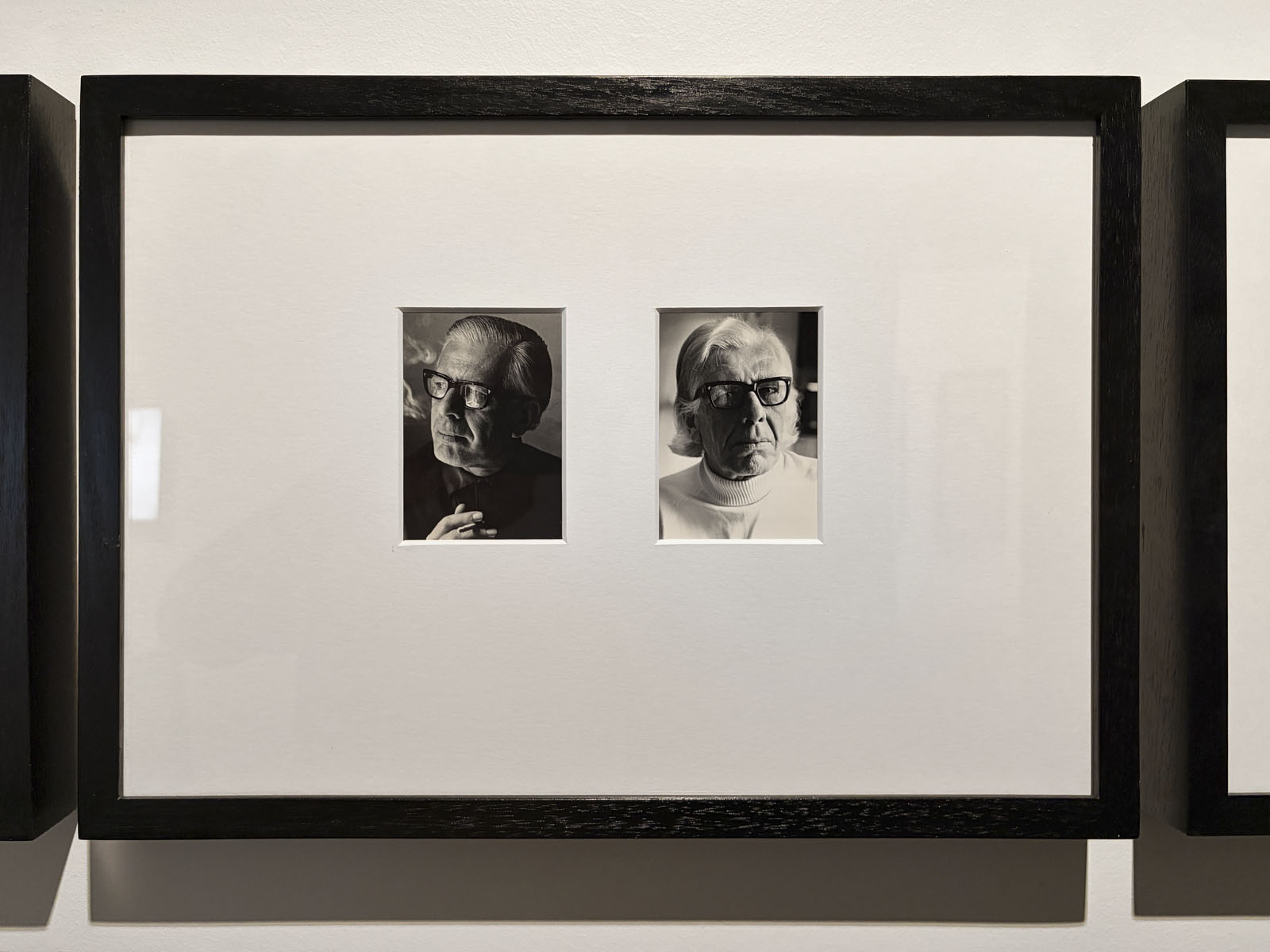
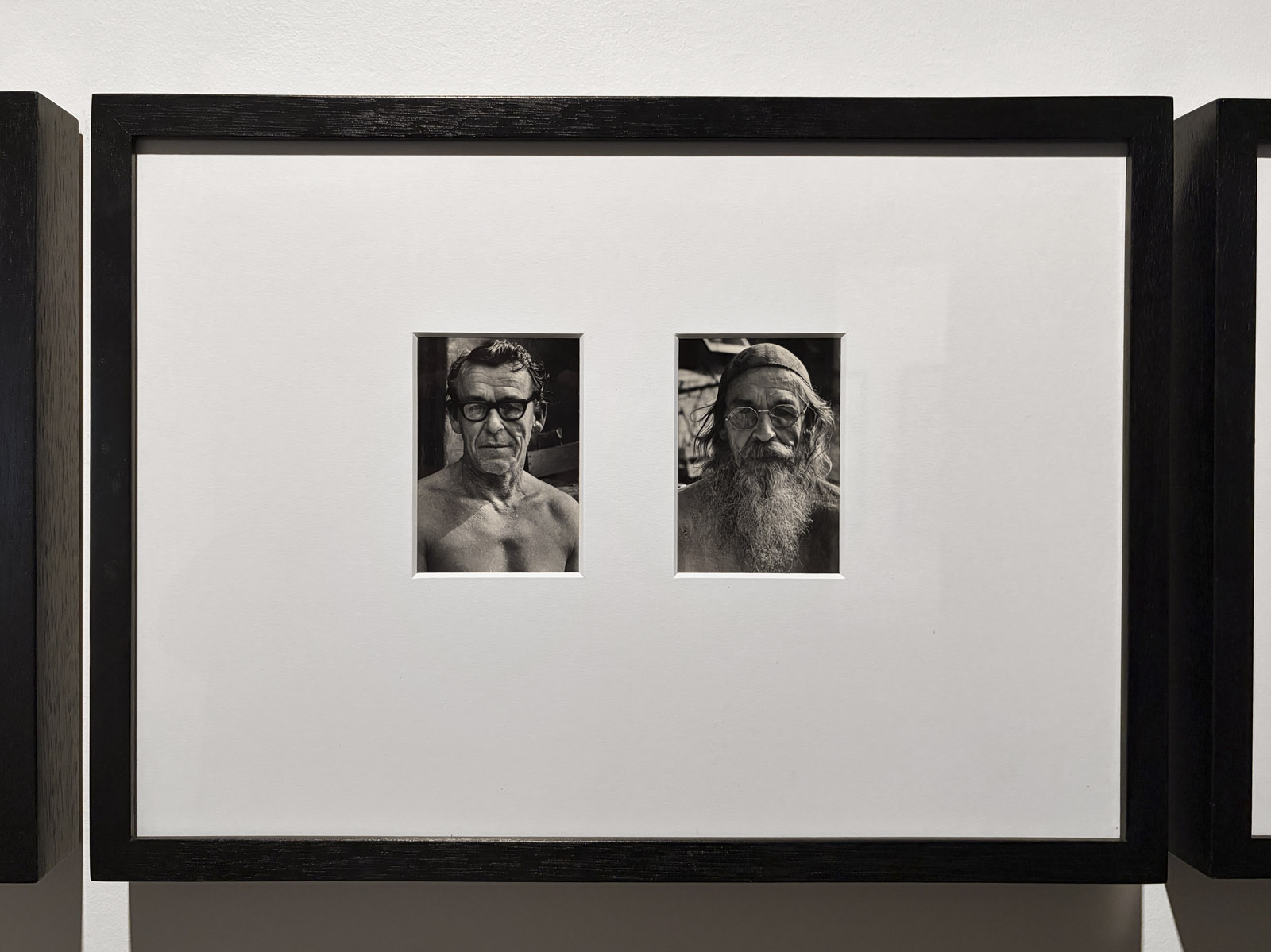
By the 1970s, repetition and seriality became central to photographic practice. Through sequences of images, artists such as Eve Sonneman, Sue Ford and Bernd and Hilla Becher explored how photography could record and interpret change – both immediate and long-term. Their images reveal the camera’s dual role as an objective instrument and a conceptual recorder of the world.


Installation view of the exhibition 'Women Photographers 1900-1975: A Legacy of Light' at NGV International, Melbourne, November 2025 – May 2026 showing from left to right, two Sue Ford photographs, 'No title (Photogram of two hands and garden path)' (c. 1970) and 'No title (Nude montage)' (1960s)


Installation view of the exhibition Women Photographers 1900-1975: A Legacy of Light at NGV International, Melbourne, November 2025 – May 2026 showing from left to right, two Sue Ford photographs, No title (Photogram of two hands and garden path) (c. 1970, below) and No title (Nude montage) (1960s, below)
Photo: Marcus Bunyan


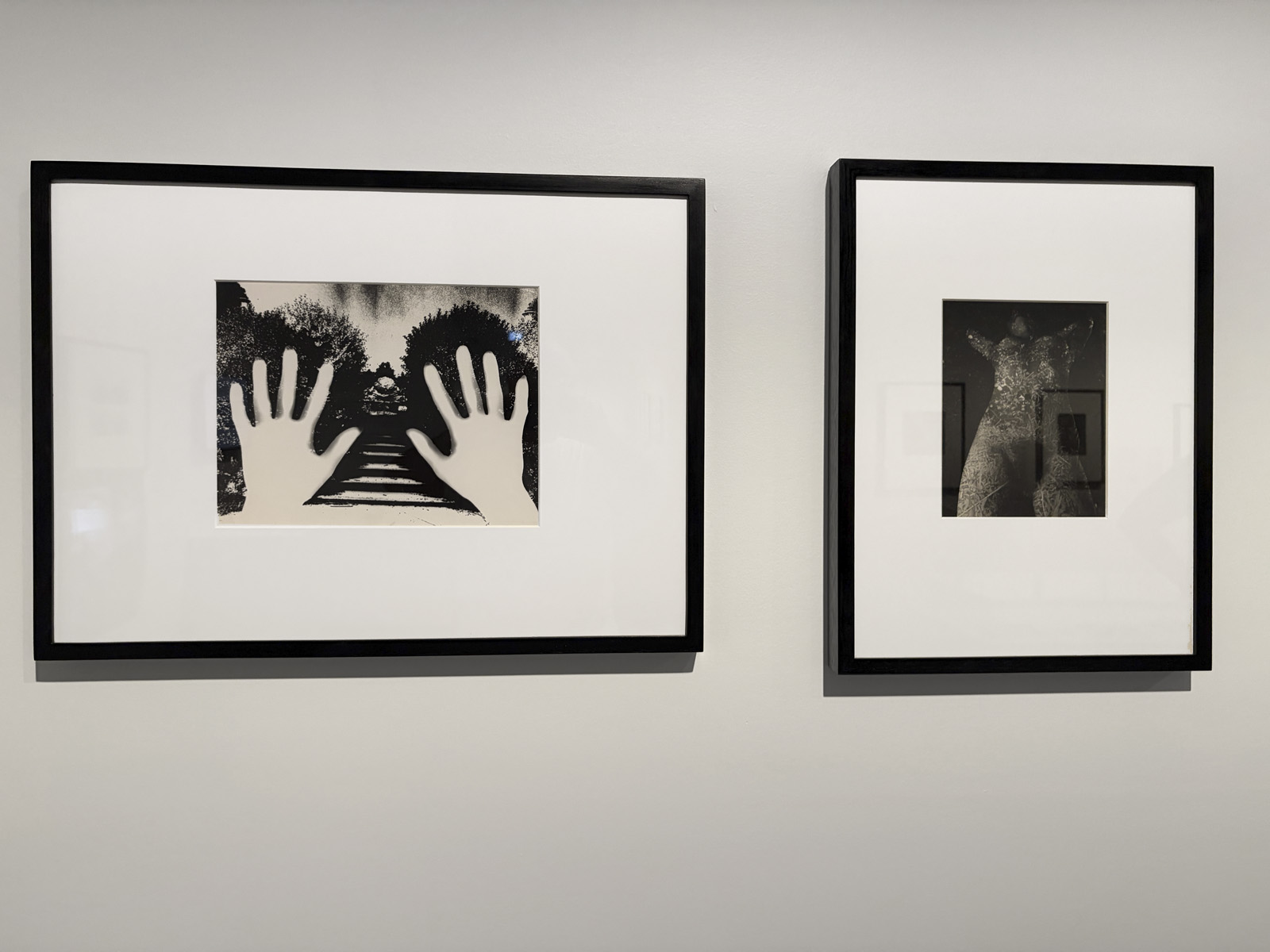
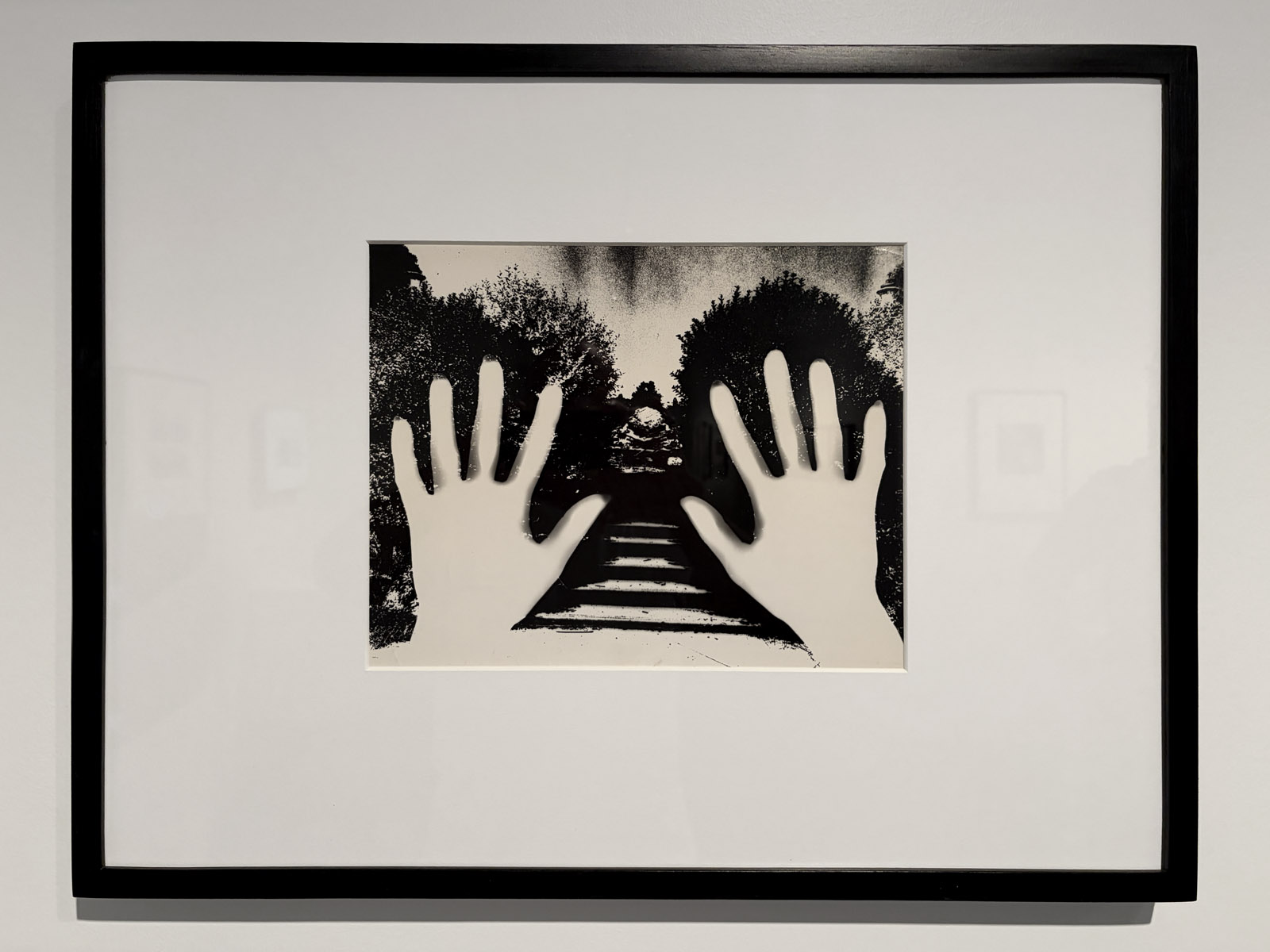
Sue Ford (Australian, 1943-2009) 'No title (Photogram of two hands and garden path)' c. 1970 (installation view)


Sue Ford (Australian, 1943-2009)
No title (Photogram of two hands and garden path) (installation view)
c. 1970
Gelatin silver photograph
27.6 x 34.7cm irreg. (image and sheet)
38.5 x 44.8cm (support)
National Gallery of Victoria, Melbourne
Gerstl Bequest, 2000
Photo: Marcus Bunyan


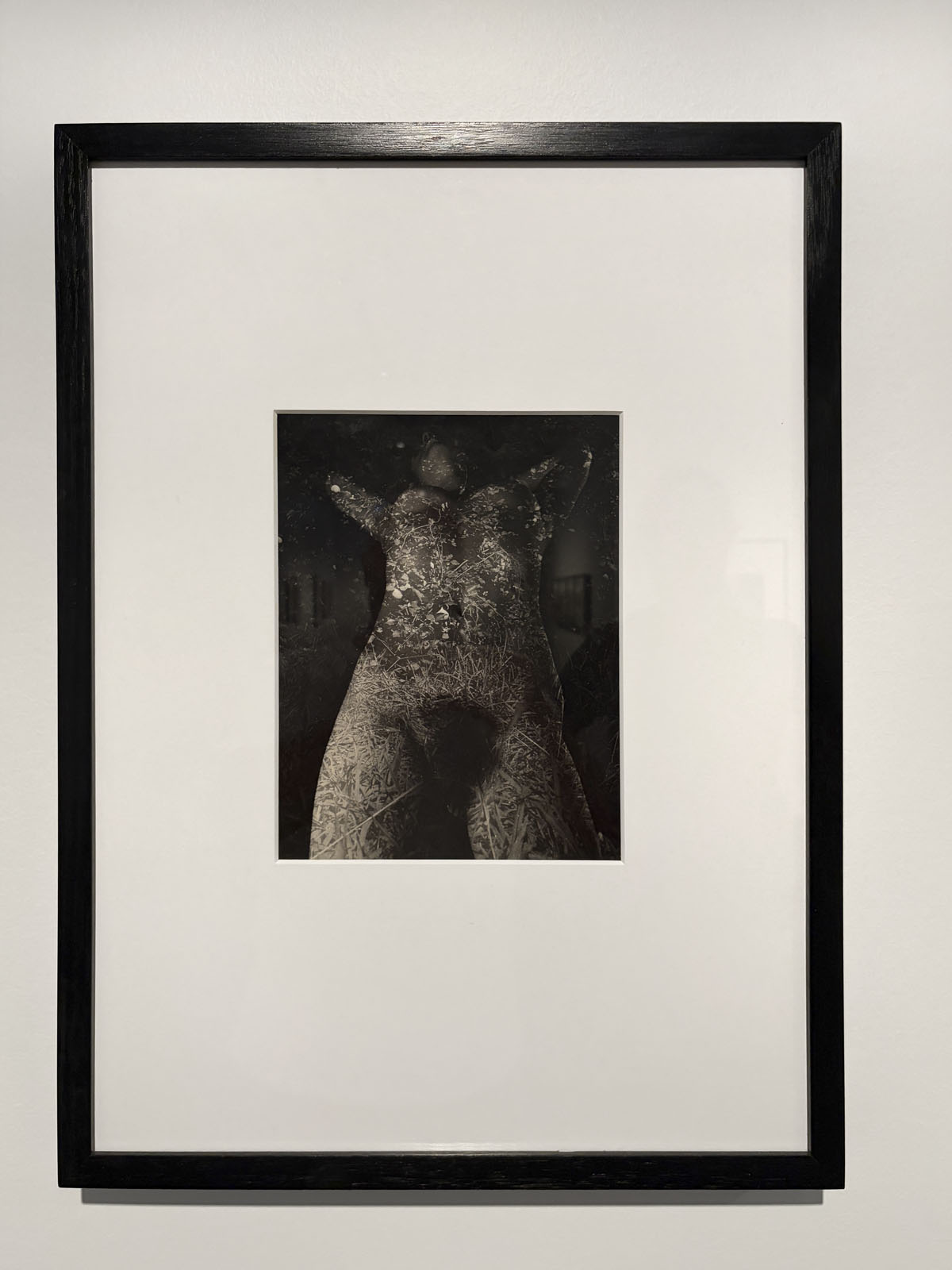
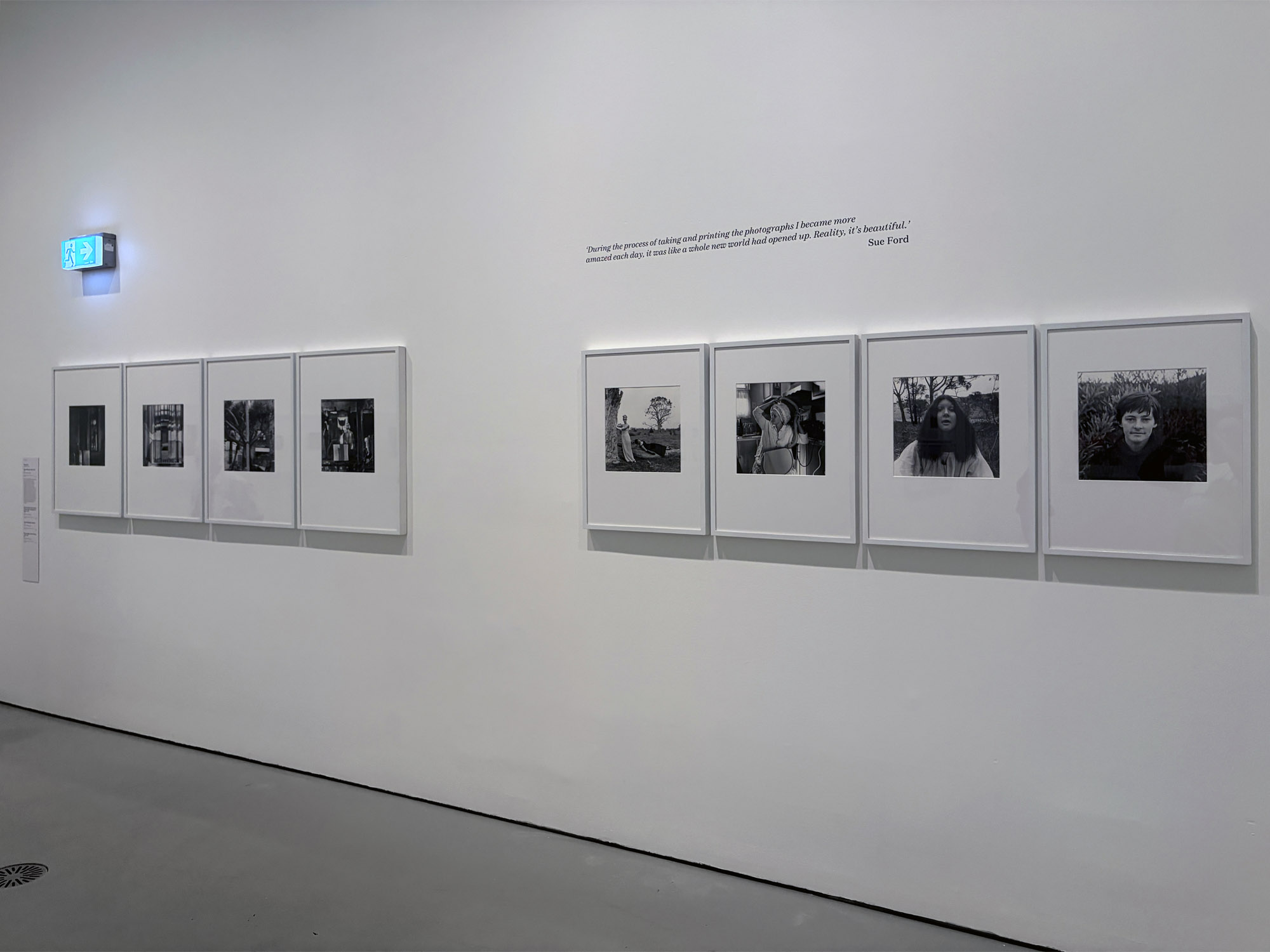
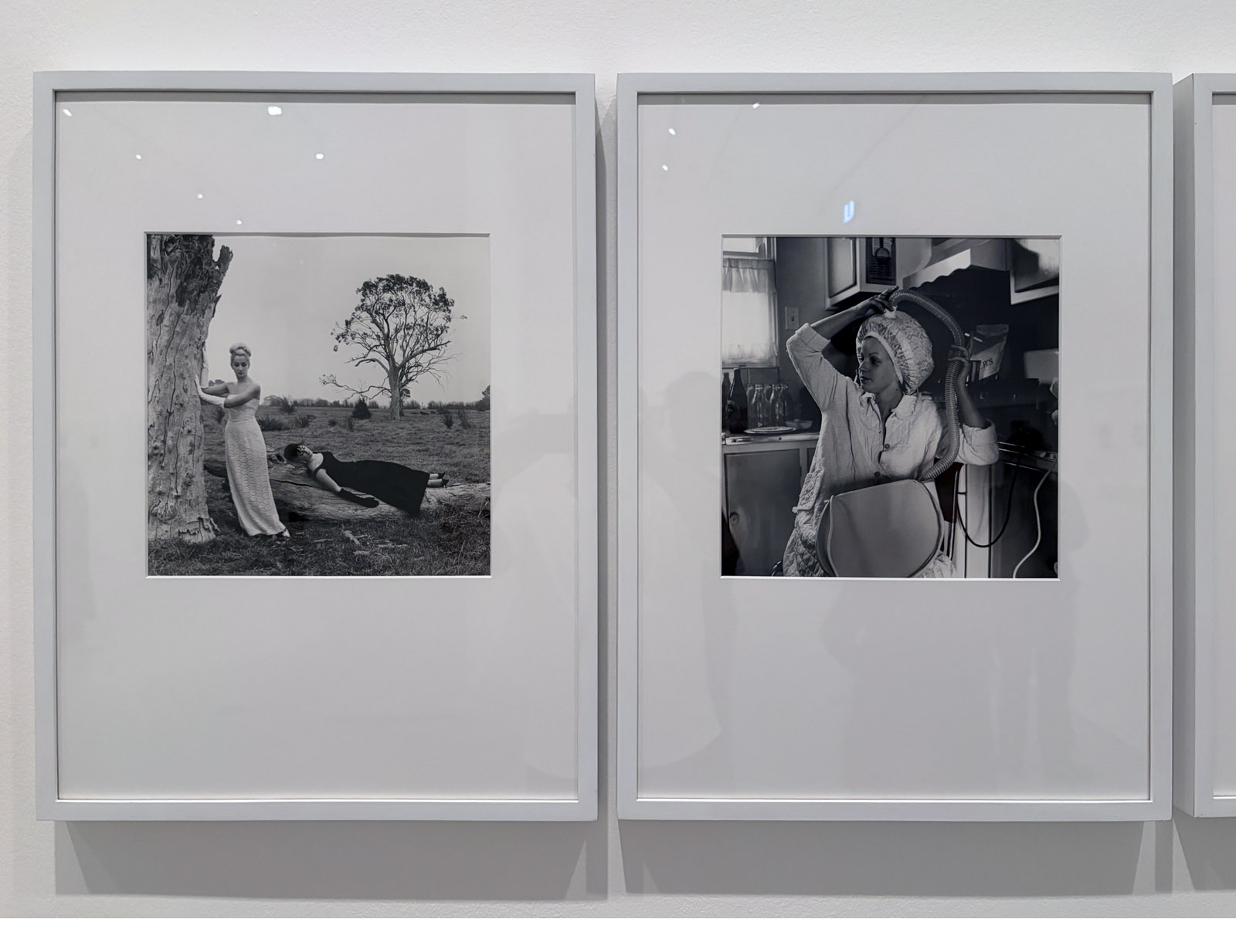
In the late 1960s and early 70s, Sue Ford created several bodies of highly experimental work. These works involved complex montages, photograms and layered negatives, revealing hours of darkroom experimentation in her Eltham studio in Melbourne’s north-east. Such experiments coincided with Ford’s burgeoning interest in left-wing politics, and her exposure via the media to world events such as the NASA moon landings and the Vietnam War. Ford incorporated imagery and ideas relating to these events, as well as her interest in environmentalism, into these abstracted, Surrealism-inspired works.

Wall text from the exhibition


Sue Ford (Australian, 1943-2009) 'No title (Nude montage)' 1960s (installation view)


Sue Ford (Australian, 1943-2009)
No title (Nude montage) (installation view)
1960s
Gelatin silver photograph
25.6 x 19.9cm (image and sheet)
National Gallery of Victoria, Melbourne
Gerstl Bequest, 2000
Photo: Marcus Bunyan


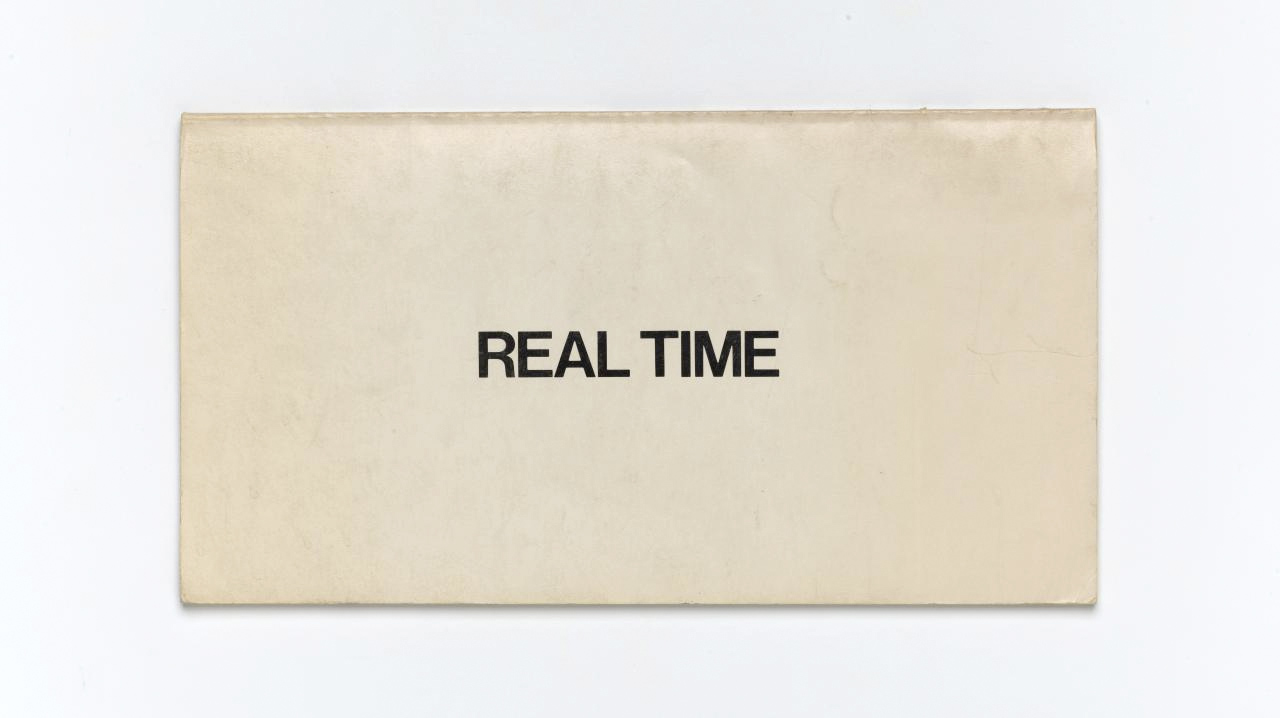
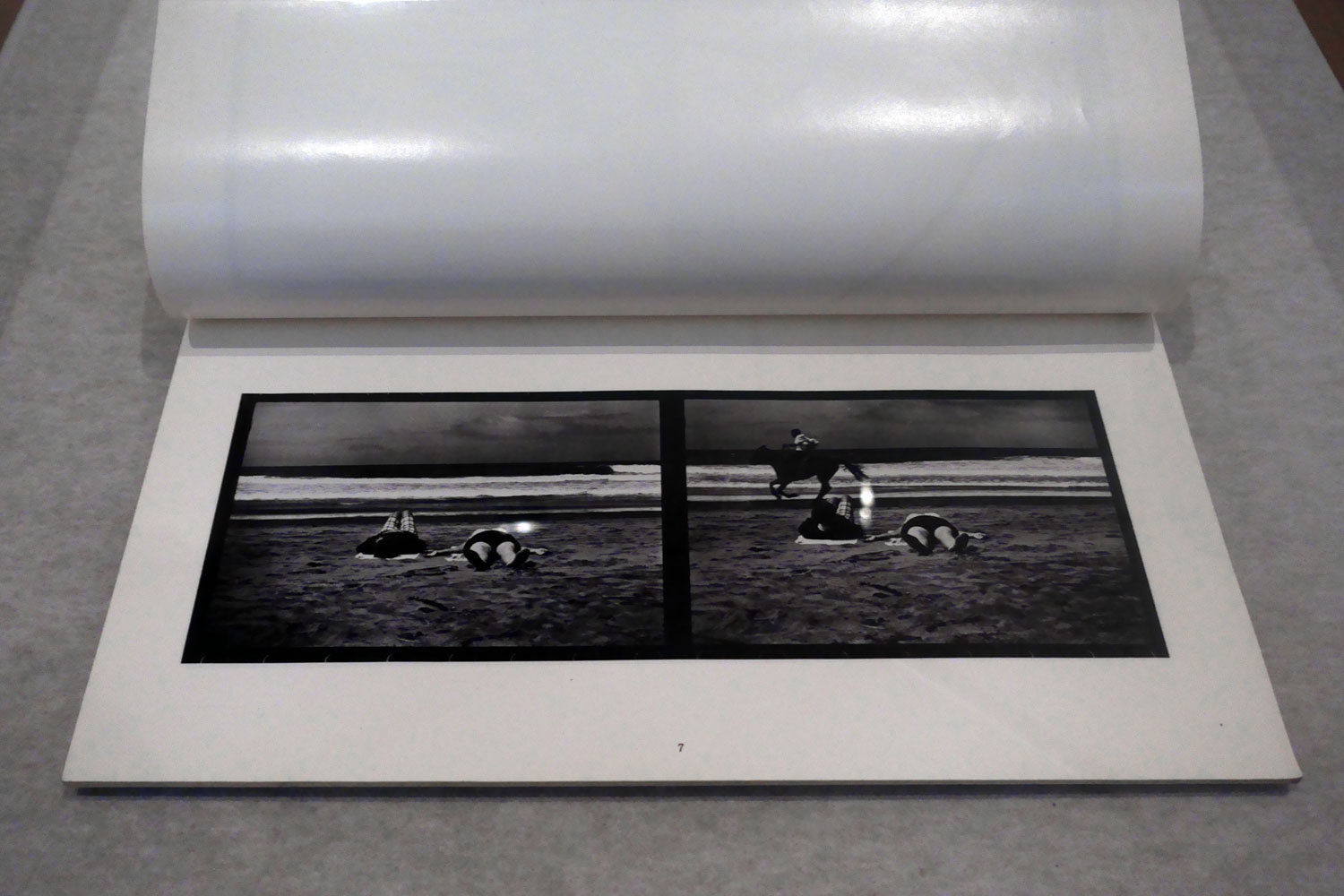
Eve Sonneman (American, b. 1946) 'Real time' 1968-1974, 1976 (published) (cover)
Eve Sonneman (American, b. 1946) 'Real time' 1968-1974 (installation view)


Eve Sonneman (American, b. 1946)
Real time (installation view bottom)
1968-1974, 1976 (published) (cover)
Artist’s book: photo-offset lithographs and printed text, 46 folios, printed paper cover, glued binding
20.5 x 38.0 x 0.8cm (closed)
1st edition
National Gallery of Victoria, Melbourne
Purchased, NGV Supporters of Photography, 2021
© Eve Sonneman


Real Time is composed of paired photographs taken seconds apart, separated by a black-line border. The ordered presentation allows the viewer to consider the relationship between the images, and the small changes and passing of time between them. Eve Sonneman first showed the photographs at the Museum of Modern Art in New York, before publishing them as a book. In 1976 she saw an
advertisement in Artforum from newly established press Printed Matter, which was seeking artists’ books to publish. “So I sent [my photographs] in and that work became my first published book, Real Time,” Sonneman recalled. “I was as thrilled as could be!”

Wall text from the exhibition


Sue Ford (Australian, 1943-2009) 'Ross, 1964; Ross, 1974' 1964-1974, printed 1974 (installation view)


Sue Ford (Australian, 1943-2009)
Ross, 1964; Ross, 1974 (installation view)
1964-1974, printed 1974
From the Time series (1962-1974)
Gelatin silver photograph
11.1 × 20.1cm
National Gallery of Victoria, Melbourne
Purchased with the assistance of the Visual Arts Board and the KODAK (Australasia) PTY LTD Fund, 1974
Photo: Marcus Bunyan


Sue Ford (Australian, 1943-2009) 'Jim, 1964; Jim, 1974' 1964-1974, printed 1974 (installation view)


Sue Ford (Australian, 1943-2009)
Jim, 1964; Jim, 1974 (installation view)
1964-1974, printed 1974
From the Time series (1962-1974)
Gelatin silver photograph
11.1 × 20.1cm
National Gallery of Victoria, Melbourne
Purchased with the assistance of the Visual Arts Board and the KODAK (Australasia) PTY LTD Fund, 1974
Photo: Marcus Bunyan


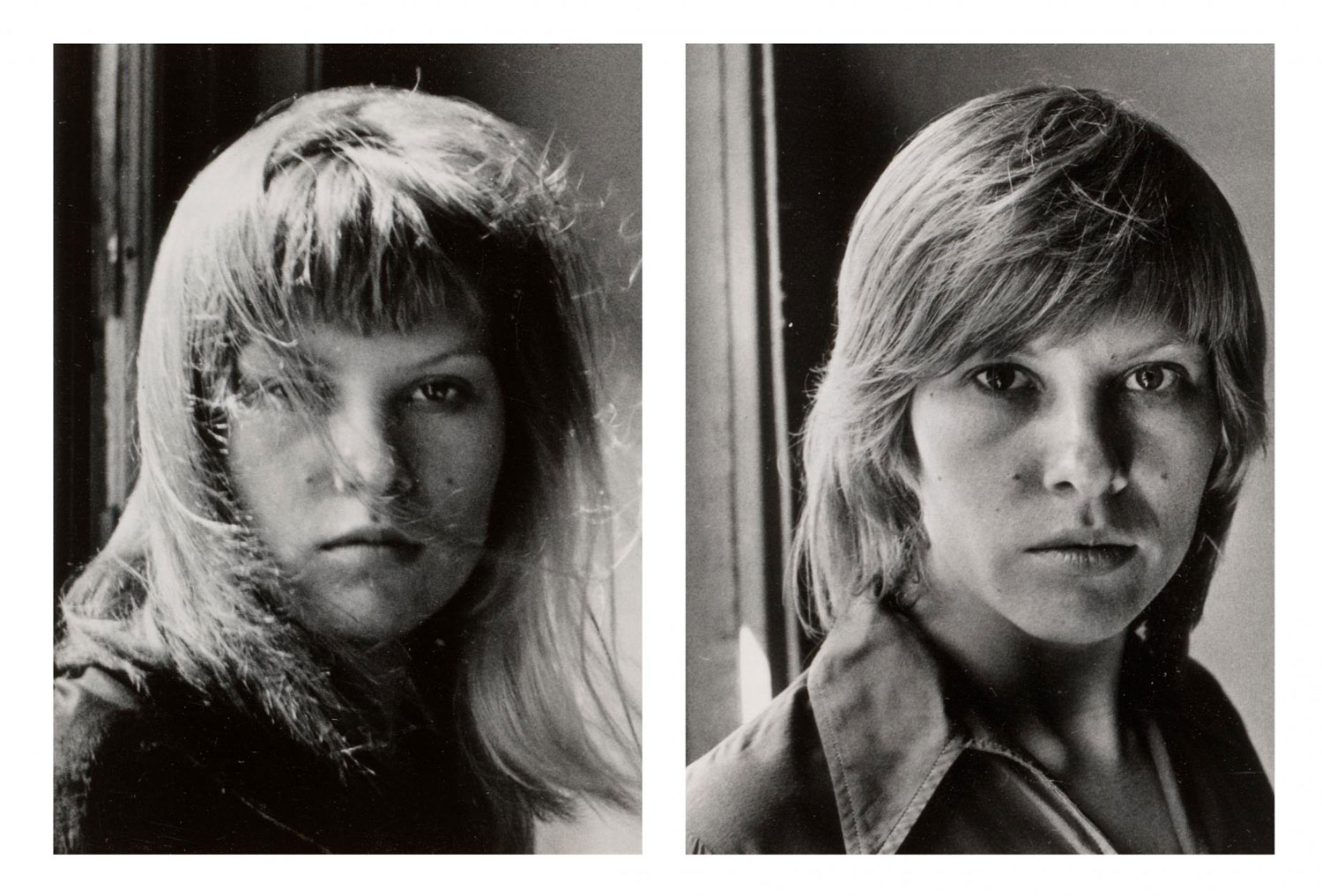
Sue Ford (Australian, 1943-2009) 'Annette 1962; Annette 1974' 1974 from the 'Time' series


Sue Ford (Australian, 1943-2009)
Annette, 1962; Annette, 1974
1962-1974, printed 1974
From the Time series (1962-1974)
Gelatin silver photograph
11.1 x 20.1cm
National Gallery of Victoria, Melbourne
Purchased with the assistance of the Visual Arts Board and the KODAK (Australasia) Pty Ltd Fund, 1974
© Courtesy of the artist


“For some time I have been thinking about the camera itself. Trying to explore its particular UNIQUENESS, coming to terms with the fact that I had been trying to ignore for some years, that the camera is actually a MACHINE. … In “Time Series” I tried to use the camera as objectively as possible. It was a time machine. For me it was an amazing experience. It wasn’t until I placed the photograph of the younger face beside the recent photograph that I could fully appreciate the change. The camera showed me with absolute clarity, something I could only just perceive with my naked eye.”

~ Sue Ford, Time Series: An Exhibition of Photographs, Melbourne, 1974

Wall text from the exhibition


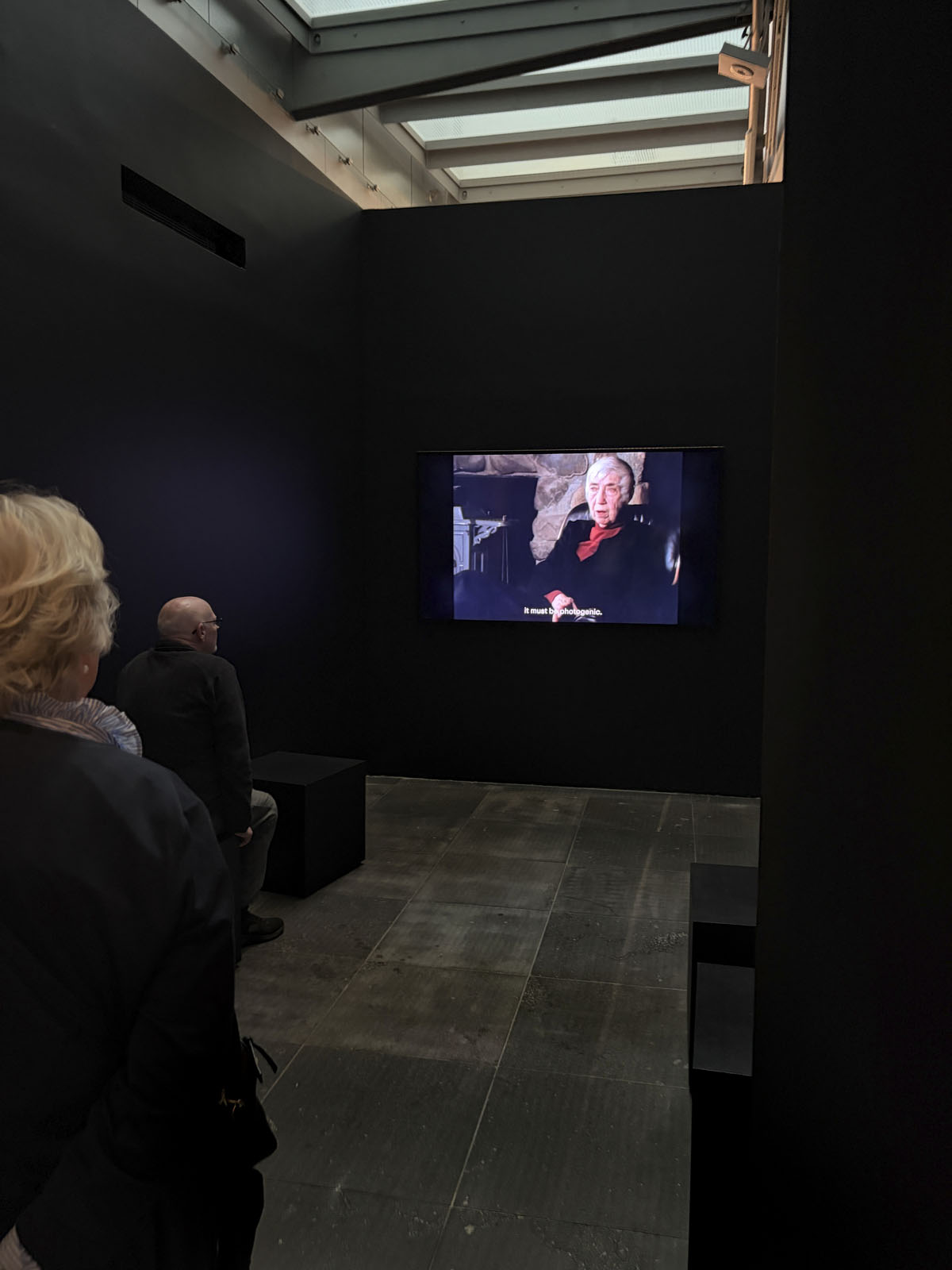
Installation view of the exhibition 'Women Photographers 1900-1975: A Legacy of Light' at NGV International, Melbourne, November 2025 – May 2026
Installation view of the exhibition 'Women Photographers 1900-1975: A Legacy of Light' at NGV International, Melbourne, November 2025 – May 2026 showing a video of Imogen Cunningham


Installation views of the exhibition Women Photographers 1900-1975: A Legacy of Light at NGV International, Melbourne, November 2025 – May 2026 showing in the bottom image a video still of Imogen Cunningham
Photos: Marcus Bunyan


Installation view of the exhibition 'Women Photographers 1900-1975: A Legacy of Light' at NGV International, Melbourne, November 2025 – May 2026
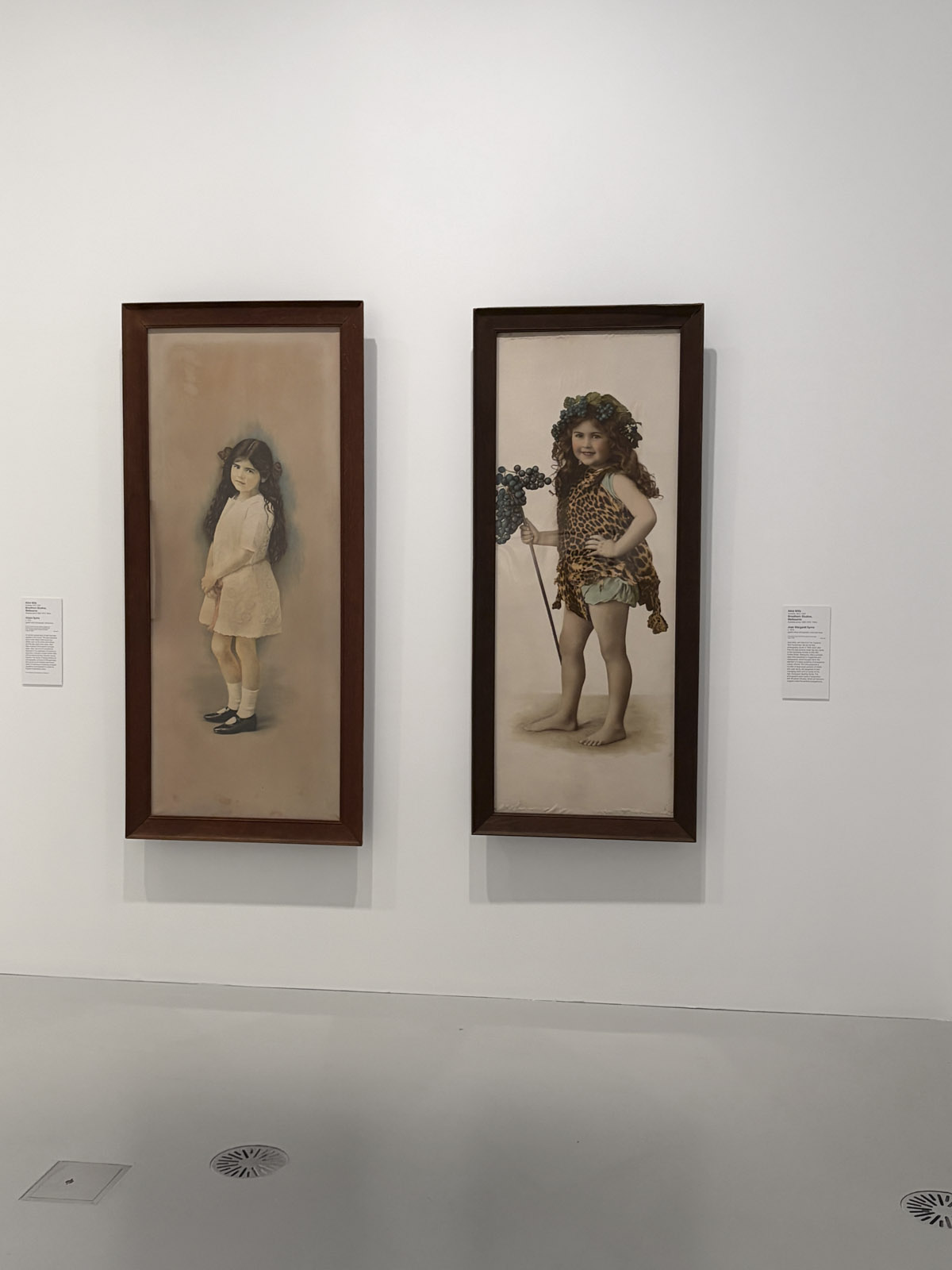
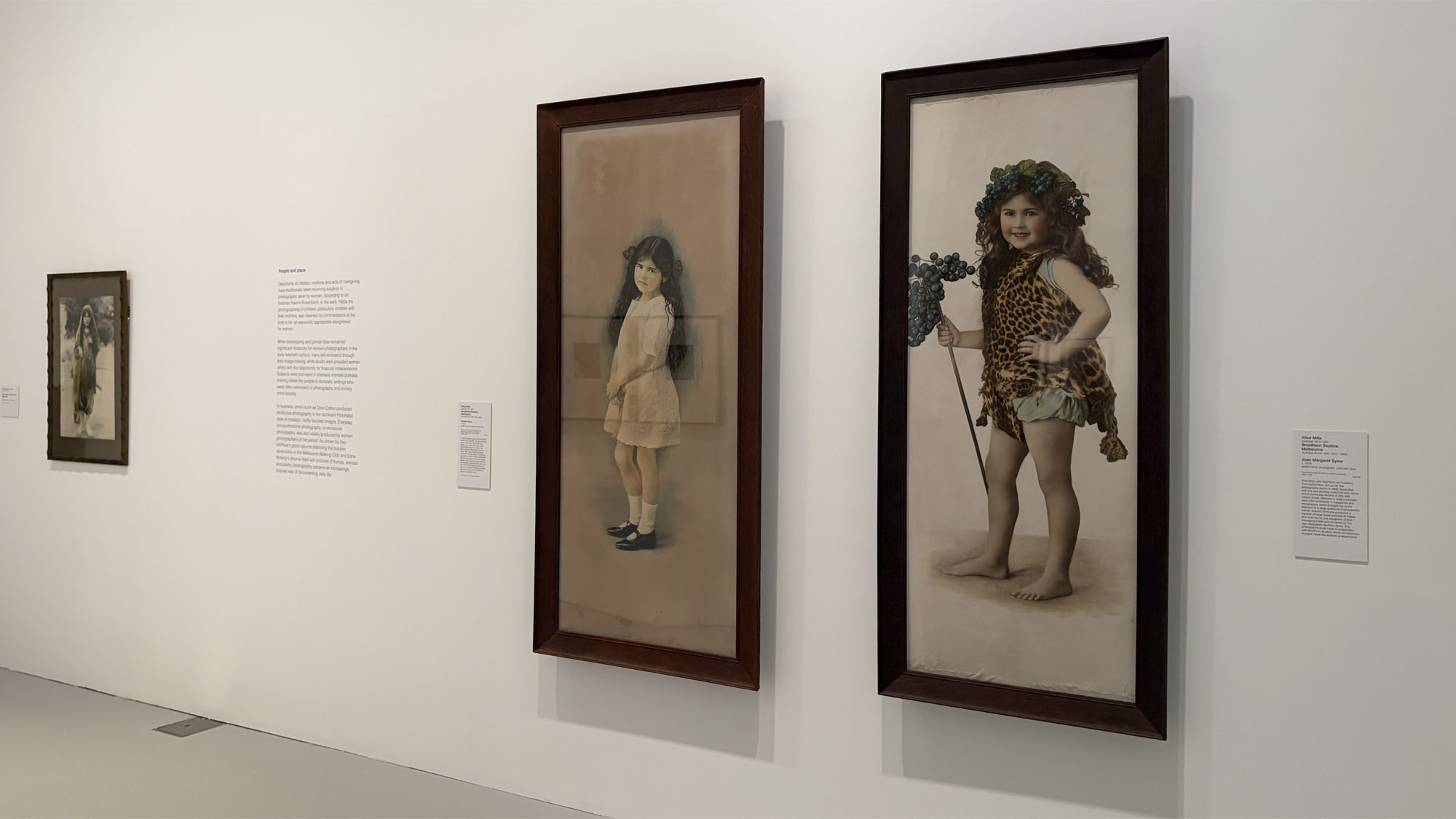
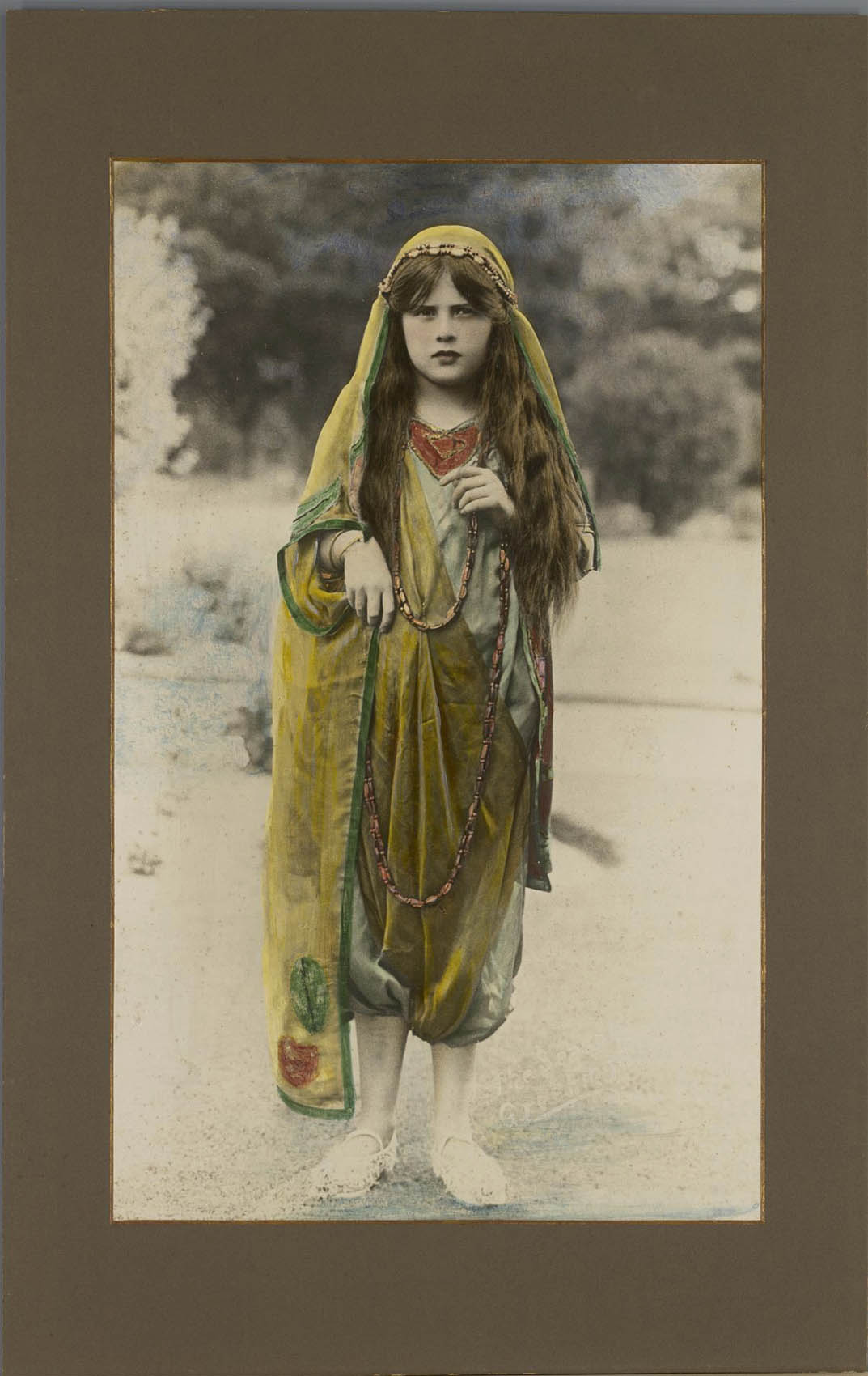
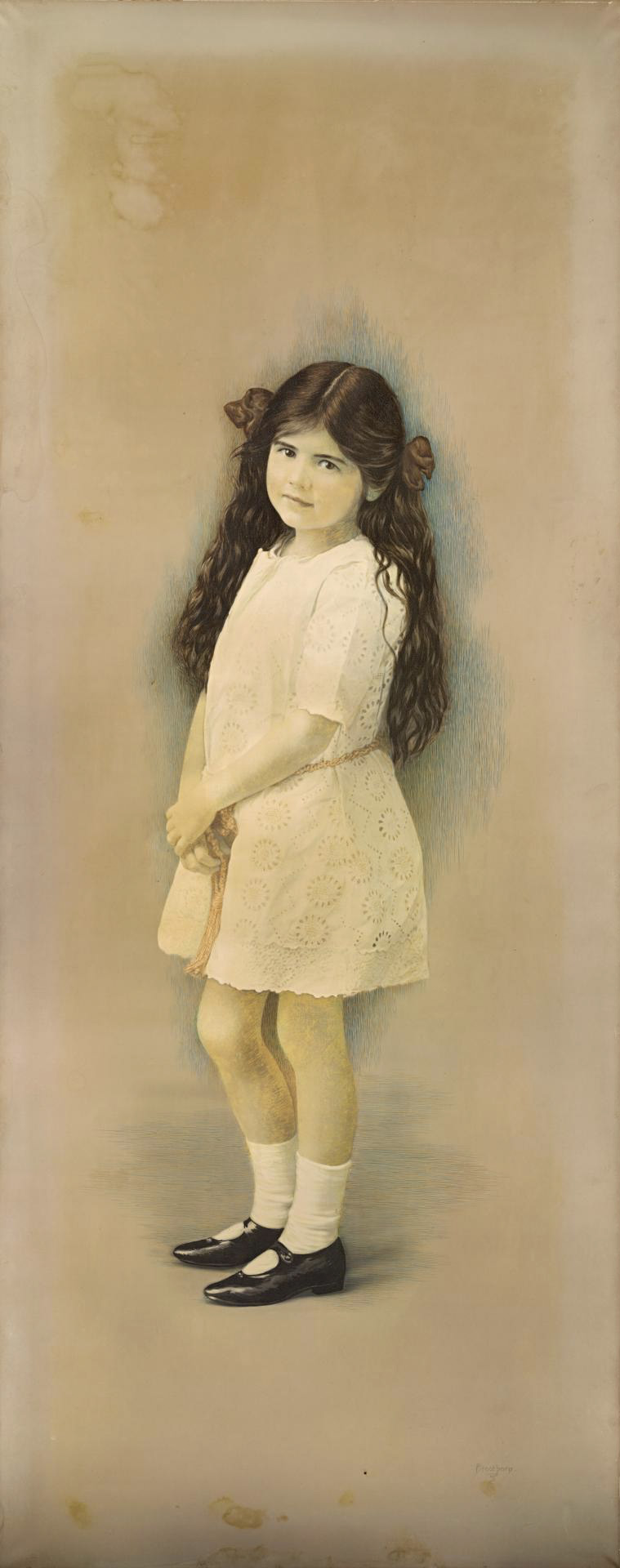
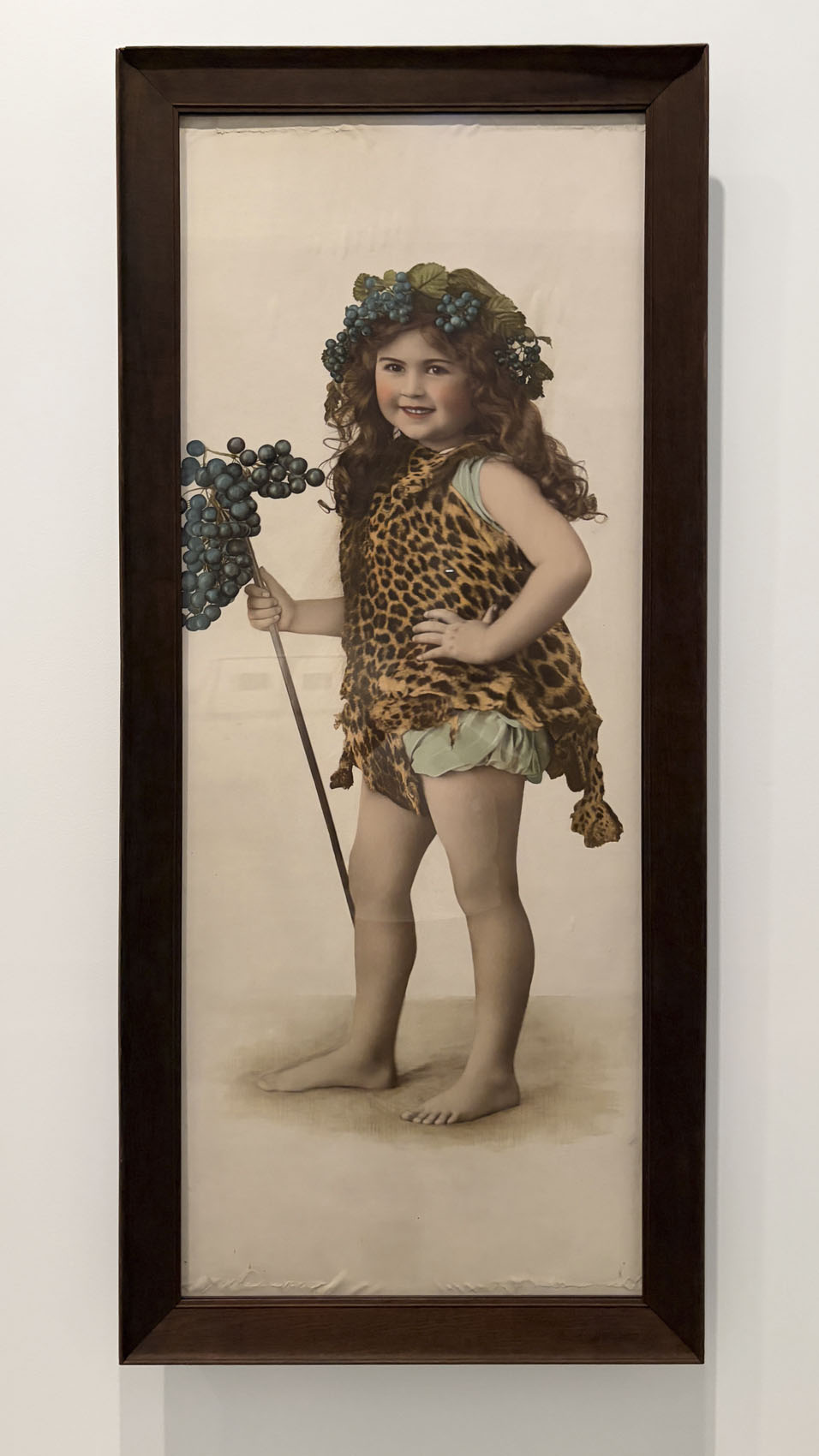
Installation view of the exhibition 'Women Photographers 1900-1975: A Legacy of Light' at NGV International, Melbourne, November 2025 – May 2026 showing from left to right three photographs by Alice Mills, 'Hilaire Syme dressed for the Kismit Ball' (1912-1915); 'Hilaire Syme' (c. 1910); and 'Joan Margaret Syme' (c. 1918)


Installation views of the exhibition Women Photographers 1900-1975: A Legacy of Light at NGV International, Melbourne, November 2025 – May 2026 showing in the bottom image from left to right three photographs by Alice Mills, Hilaire Syme dressed for the Kismit Ball (1912-1915, below); Hilaire Syme (c. 1910, below); and Joan Margaret Syme (c. 1918, below)
Photos: Marcus Bunyan


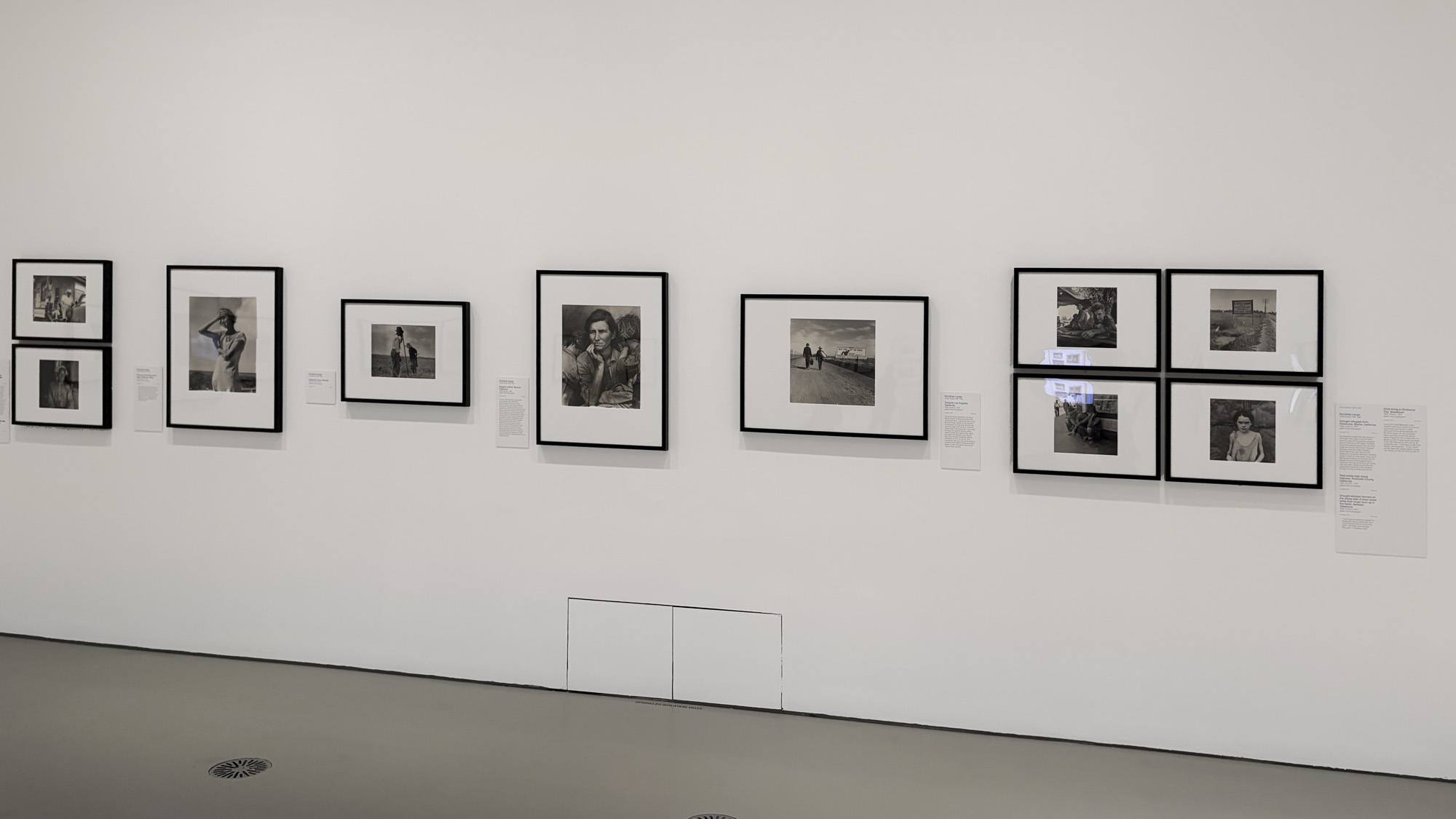
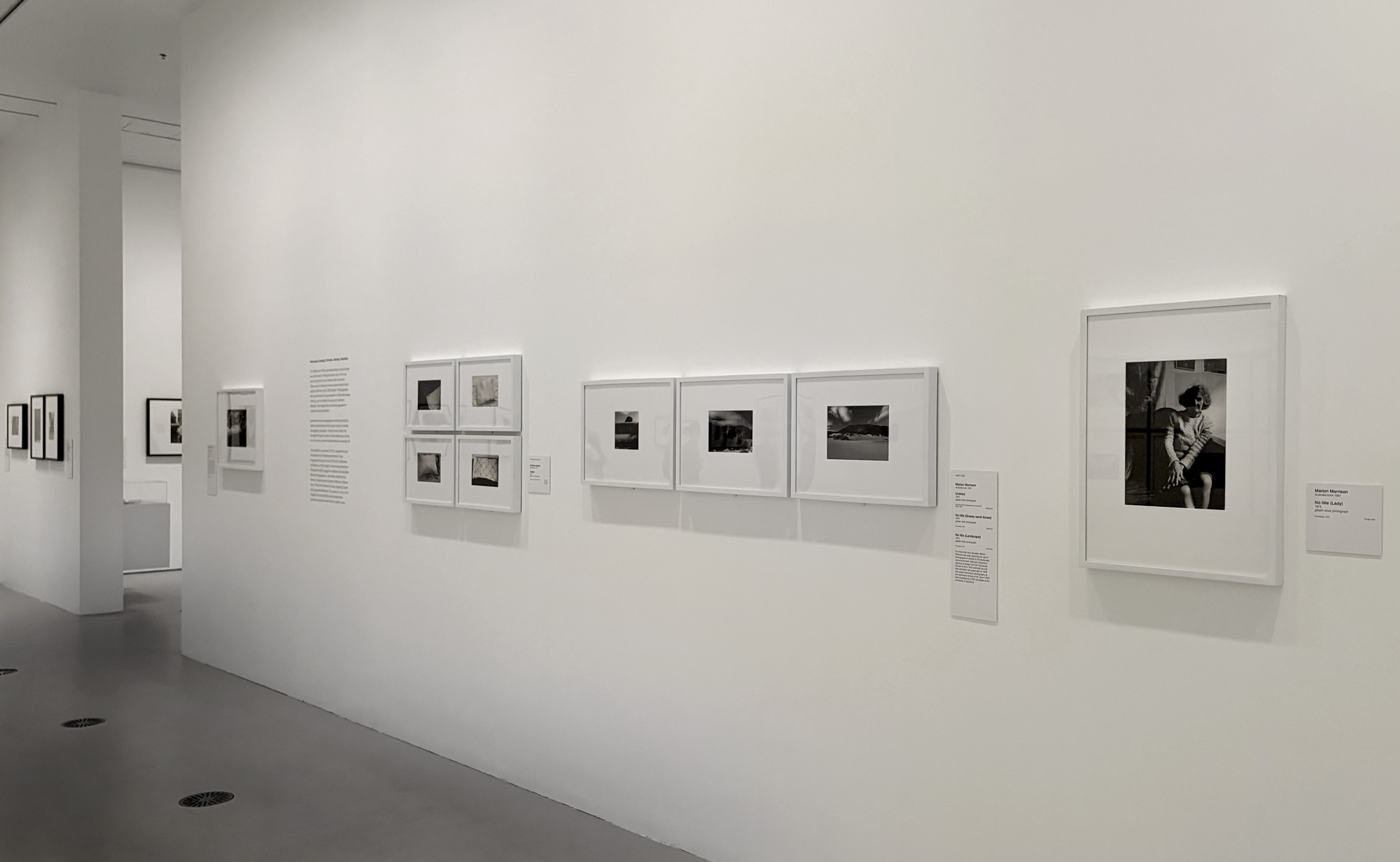
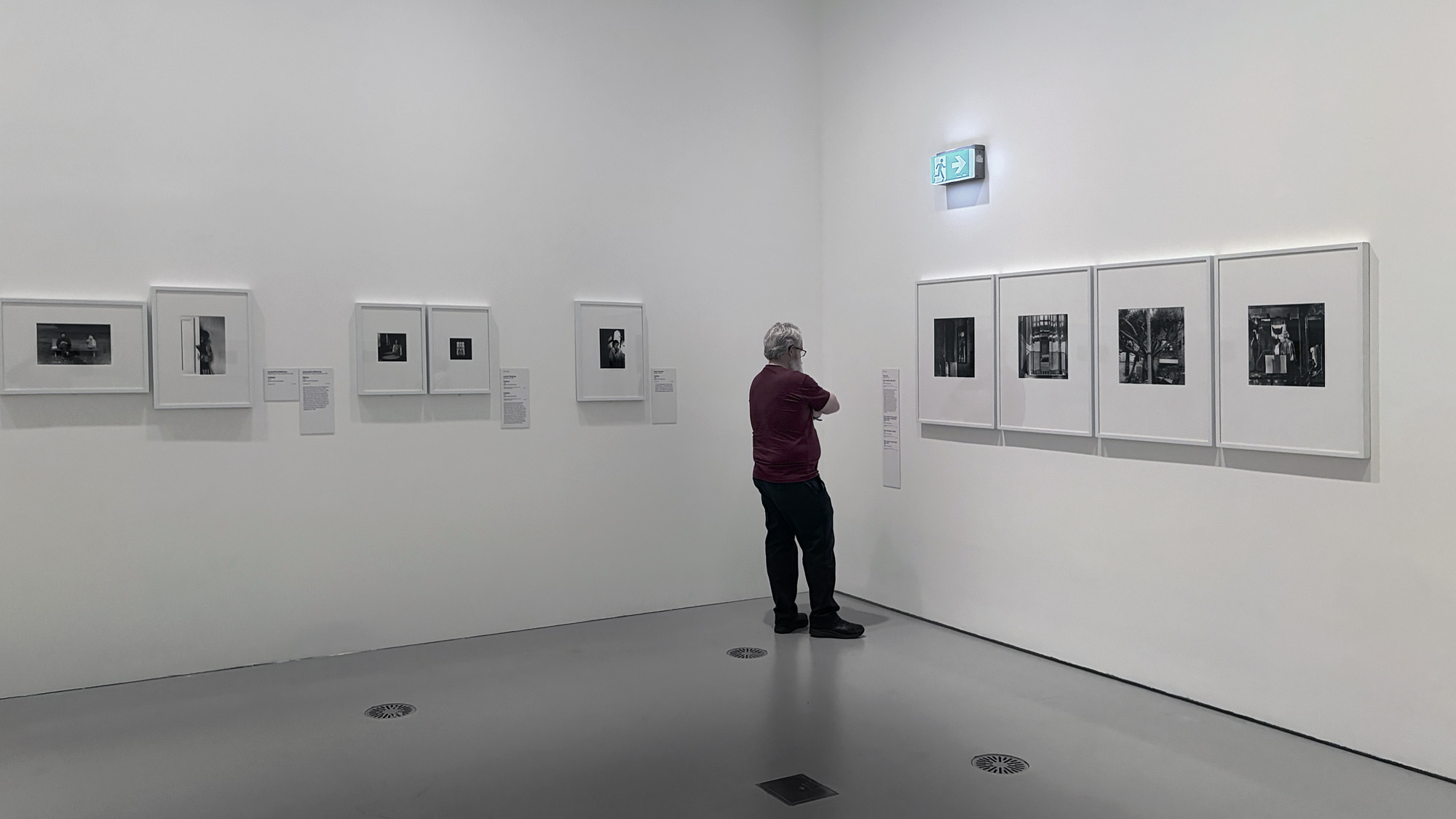
People and Place

Depictions of children, mothers and acts of caregiving have traditionally been recurring subjects in photographs taken by women. According to art historian Naomi Rosenblum, in the early 1900s the photographing of children, particularly children with their mothers, was deemed by commentators at the time to be ‘an especially appropriate assignment for women’.

While stereotyping and gender bias remained significant obstacles for women photographers in the early twentieth century, many still innovated through their image-making, while studio work provided women artists with the opportunity for financial independence. Subjects were portrayed in intensely intimate portraits, making visible the people in domestic settings who were often overlooked in photographs and society more broadly.

In Australia, artists such as Olive Cotton produced landscape photography in the dominant Pictorialist style of nostalgic, softly focused images. Everyday, non-professional photography, or vernacular photography, was also widely produced by women photographers of the period. As shown by Inez McPhee’s photo albums depicting the outdoor adventures of the Melbourne Walking Club and Edna Walling’s albums filled with pictures of friends, animals and plants, photography became an increasingly popular way of documenting daily life.


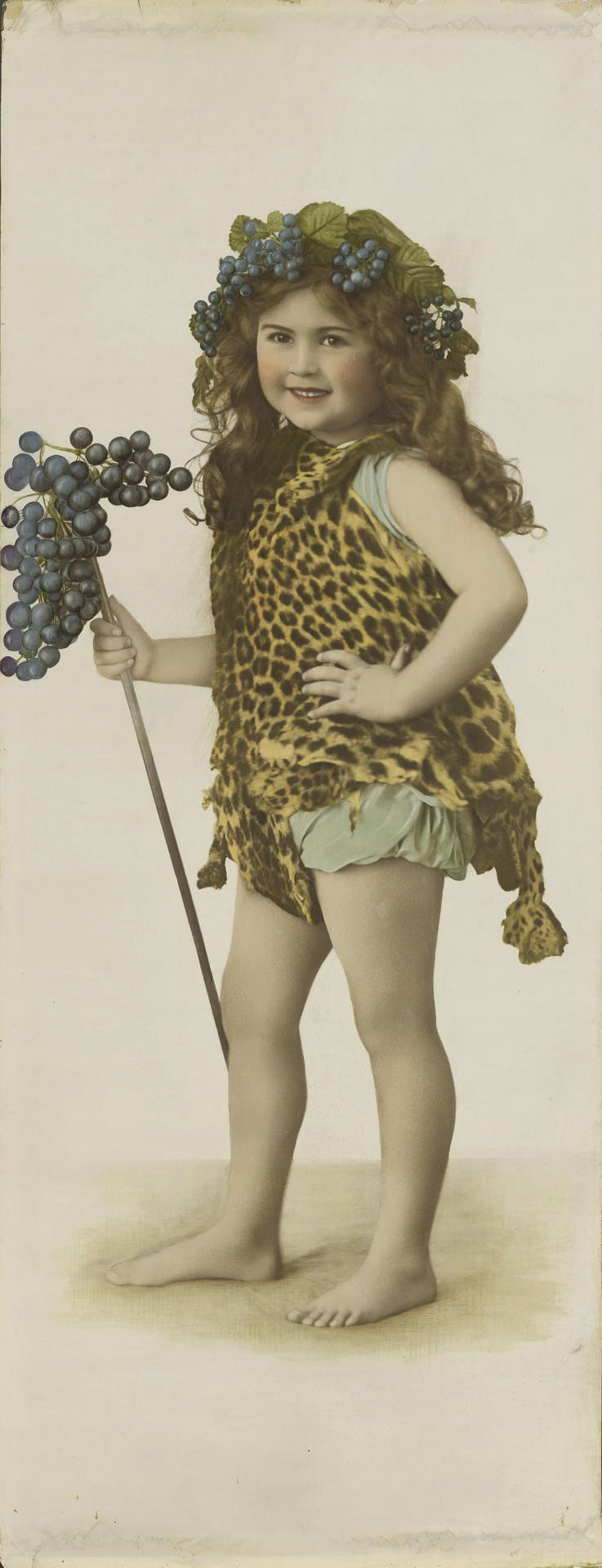
Alice Mills (attributed to) (Australian, 1870-1929) 'Hilaire Syme dressed for the Kismit Ball' 1912-1915


Alice Mills (attributed to) (Australian, 1870-1929)
Hilaire Syme dressed for the Kismit Ball
1912-1915
gelatin silver photograph, coloured dyes
70.5 x 43.3cm (image)
National Gallery of Victoria, Melbourne
Gift of Dr Veronica Condon, 2005
Public domain


Alice Mills (attributed to) (Australian, 1870-1929) Broothorn Studios, Melbourne 'Hilaire Syme' c. 1910


Alice Mills (attributed to) (Australian, 1870-1929)
Broothorn Studios, Melbourne
Hilaire Syme
c. 1910
Gelatin silver photograph, watercolour
185.5 x 74.4cm (image)
National Gallery of Victoria, Melbourne
Gift of Dr Veronica Condon, Geoffrey Haggard and Jennifer Smyth, descendants of Sir Geoffrey Syme K.B.E., Managing Editor of the Age newspaper (1908-1942), 2004


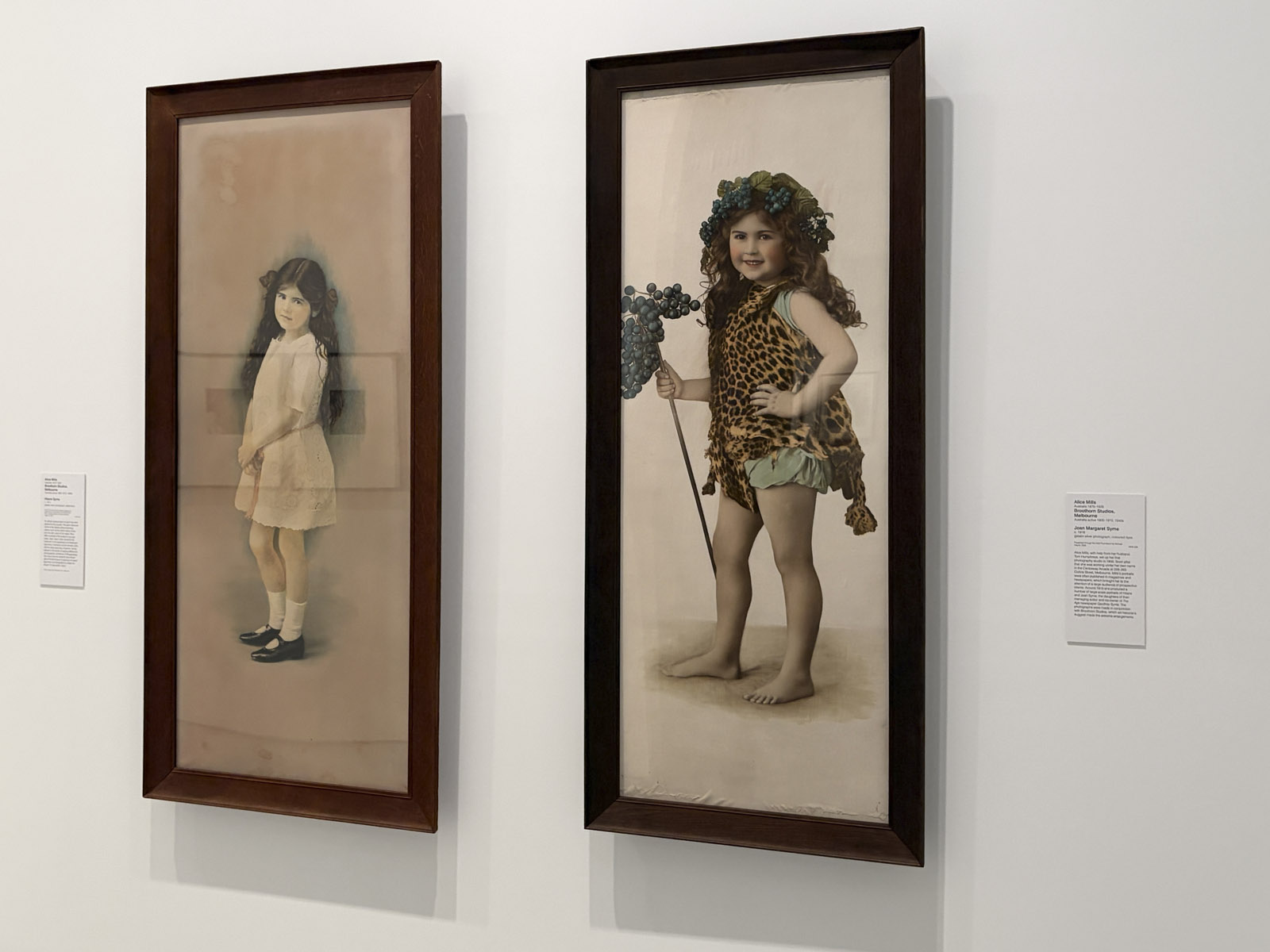
An almost opaque layer of paint has been applied to this portrait. The paint obscures some of the details while enhancing others, such as the child’s shiny shoes and the satin sash of her dress. Alice Mills’s portrait of the subject’s younger sister, Joan, has a more conventional treatment in the application of translucent pigments. It remains unclear whether Mills did the hand-colouring. However, having trained in the studio of leading Melbourne photographer Johnstone O’Shaughnessy, she would almost certainly have known about the technique of applying oil-based pigments to photographs to create the illusion of naturalistic colour.

Wall text from the exhibition


Alice Mills (attributed to) (Australian, 1870-1929) Broothorn Studios, Melbourne 'Joan Margaret Syme' c. 1918 (installation view)


Alice Mills (attributed to) (Australian, 1870-1929)
Broothorn Studios, Melbourne
Joan Margaret Syme (installation view)
c. 1918
Gelatin silver photograph, coloured dyes
243.85 x 91.45cm (approx)
National Gallery of Victoria, Melbourne
Presented through the NGV Foundation by Michael Hayne, 2005
Public domain
Photo: Marcus Bunyan


Alice Mills (attributed to) (Australian, 1870-1929) Broothorn Studios, Melbourne 'Joan Margaret Syme' c. 1918


Alice Mills (attributed to) (Australian, 1870-1929)
Broothorn Studios, Melbourne
Joan Margaret Syme
c. 1918
Gelatin silver photograph, coloured dyes
243.85 x 91.45cm (approx)
National Gallery of Victoria, Melbourne
Presented through the NGV Foundation by Michael Hayne, 2005
Public domain


Alice Mills, with help from her husband, Tom Humphreys, set up her first photography studio in 1900. Soon after that she was working under her own name in the Centreway Arcade at 259-263 Collins Street, Melbourne. Mills’s portraits were often published in magazines and newspapers, which brought her to the attention of a large audience of prospective clients. Around 1915 she produced a number of large-scale portraits of Hilaire and Joan Syme, the daughters of then managing editor and co-owner of The Age newspaper Geoffrey Syme. The photographs were made in conjunction with Broothorn Studios, which art historians suggest made the extreme enlargements.

Wall text from the exhibition


Installation view of the exhibition 'Women Photographers 1900-1975: A Legacy of Light' at NGV International, Melbourne, November 2025 - May 2026
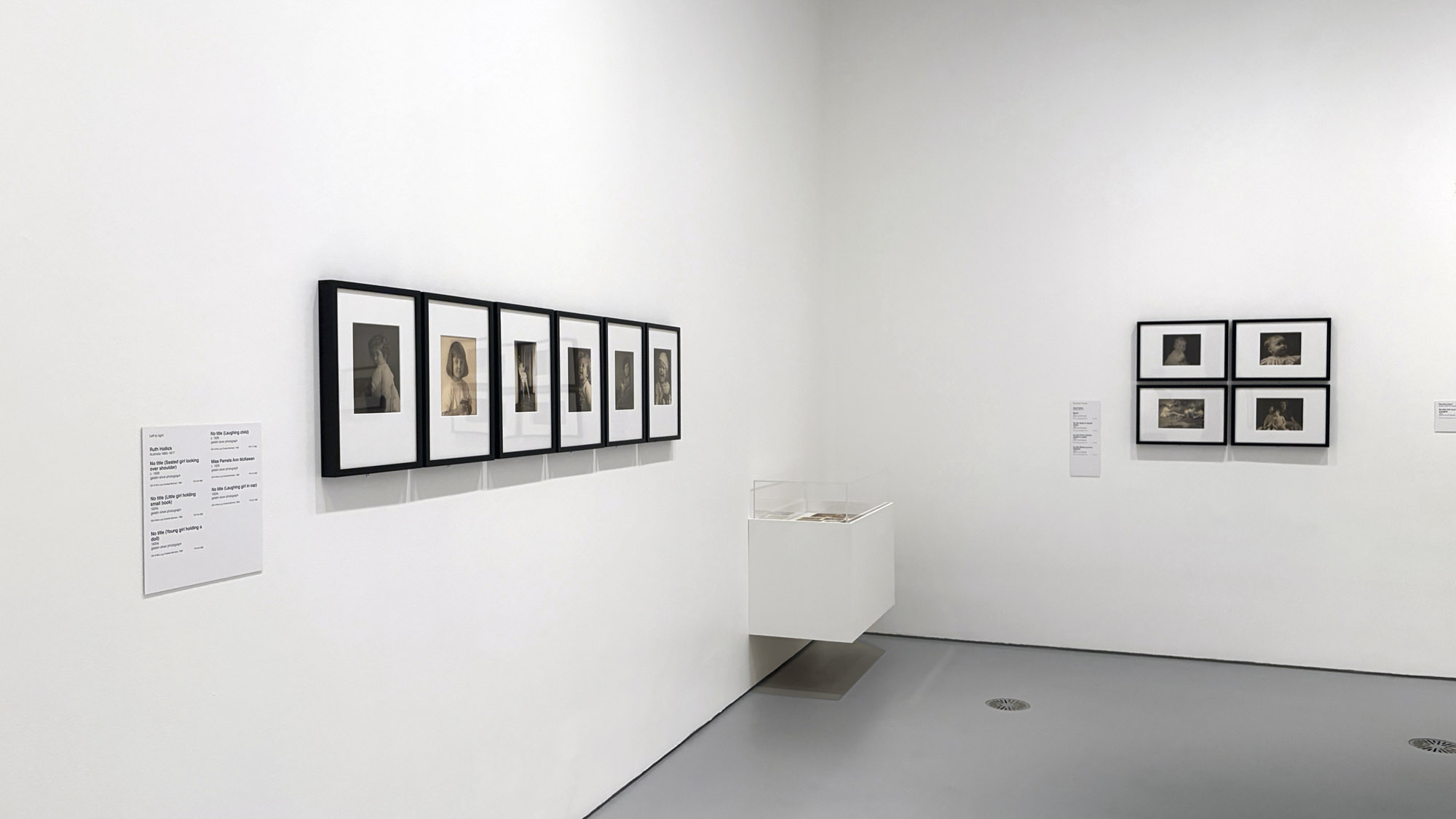
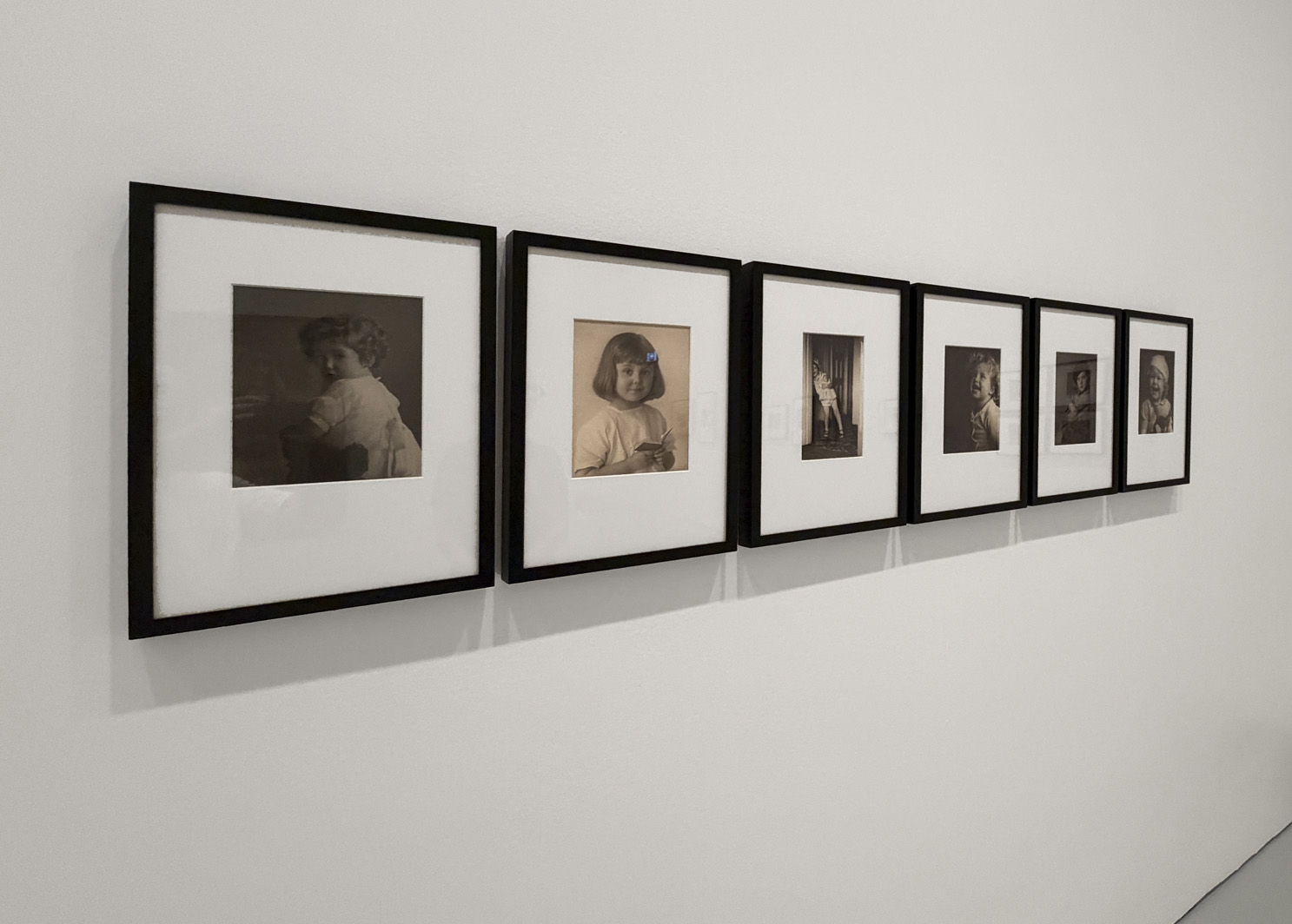
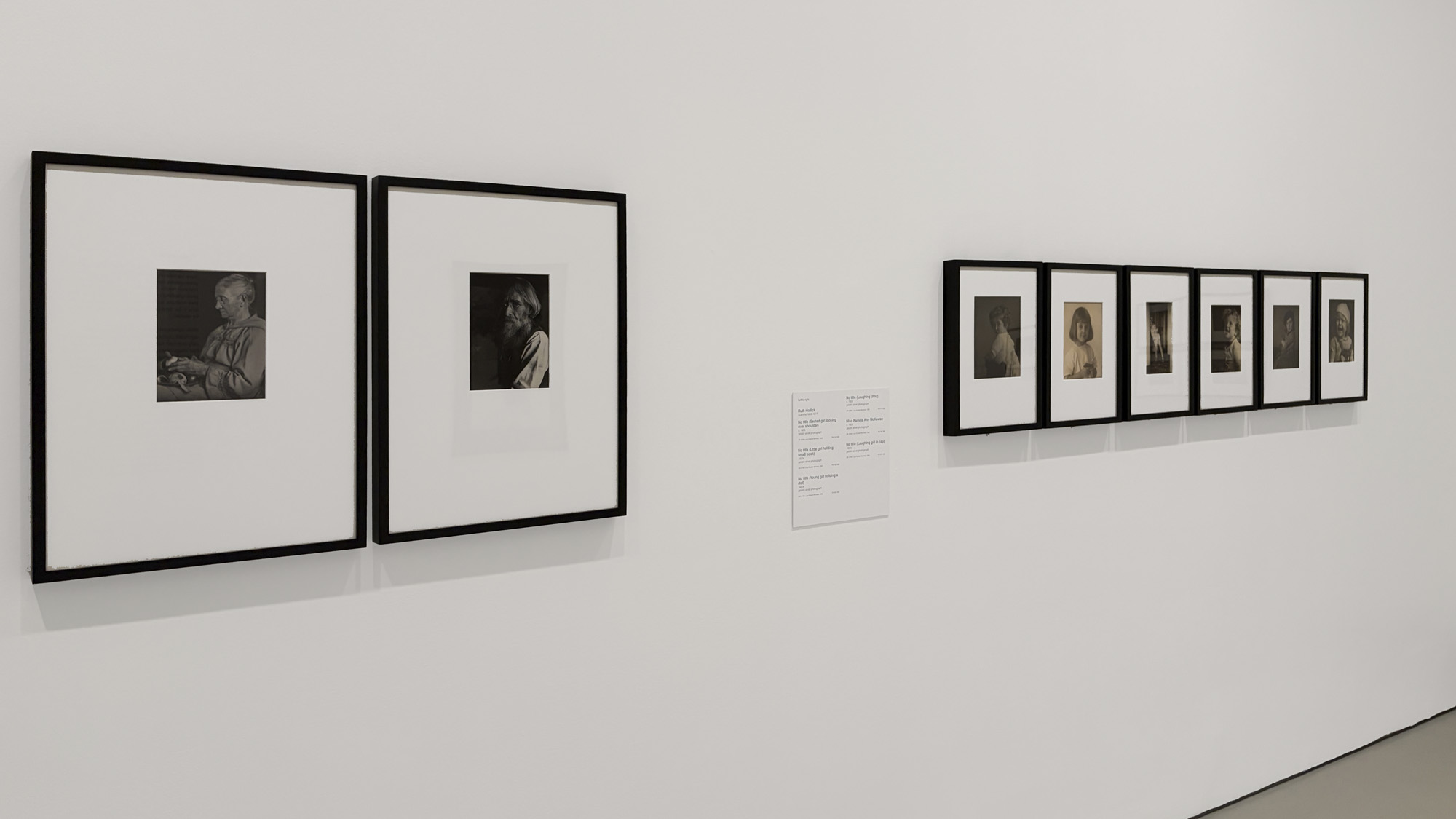
Installation view of the exhibition 'Women Photographers 1900-1975: A Legacy of Light' at NGV International, Melbourne, November 2025 - May 2026 showing from left to right in the bottom image two Imogen Cunningham photographs, 'My mother peeling apples' (1910, printed 1979) and 'My father' (1906, printed 1979) and six 1920s photographs by the Australian photographer Ruth Hollick (1883-1977): 'No title (Seated girl looking over shoulder)' (c. 1926); 'No title (Little girl holding small book)' (1920s); 'No title (Young girl holding a doll)' (1920s); 'No title (Laughing child)' (c. 1926); 'Miss Pamela Ann McKewan' (c. 1929); and 'No title (Laughing girl in cap)' (1920s)


Installation views of the exhibition Women Photographers 1900-1975: A Legacy of Light at NGV International, Melbourne, November 2025 – May 2026 showing from left to right in the bottom image two Imogen Cunningham photographs, My mother peeling apples (1910, printed 1979) and My father (1906, printed 1979) and six 1920s photographs by the Australian photographer Ruth Hollick (1883-1977): No title (Seated girl looking over shoulder) (c. 1926); No title (Little girl holding small book) (1920s); No title (Young girl holding a doll) (1920s); No title (Laughing child) (c. 1926); Miss Pamela Ann McKewan (c. 1929); and No title (Laughing girl in cap) (1920s)
Photos: Marcus Bunyan


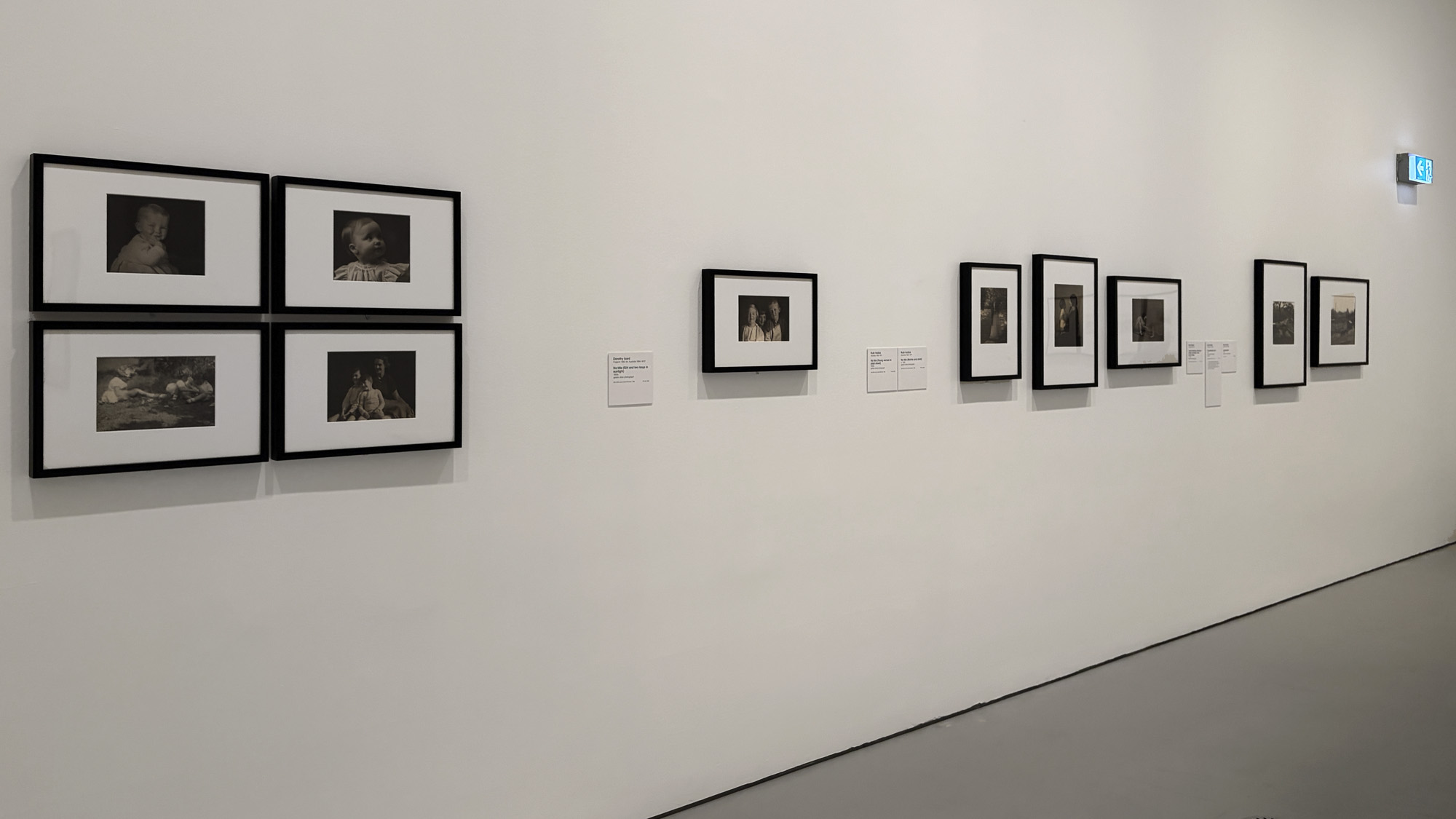
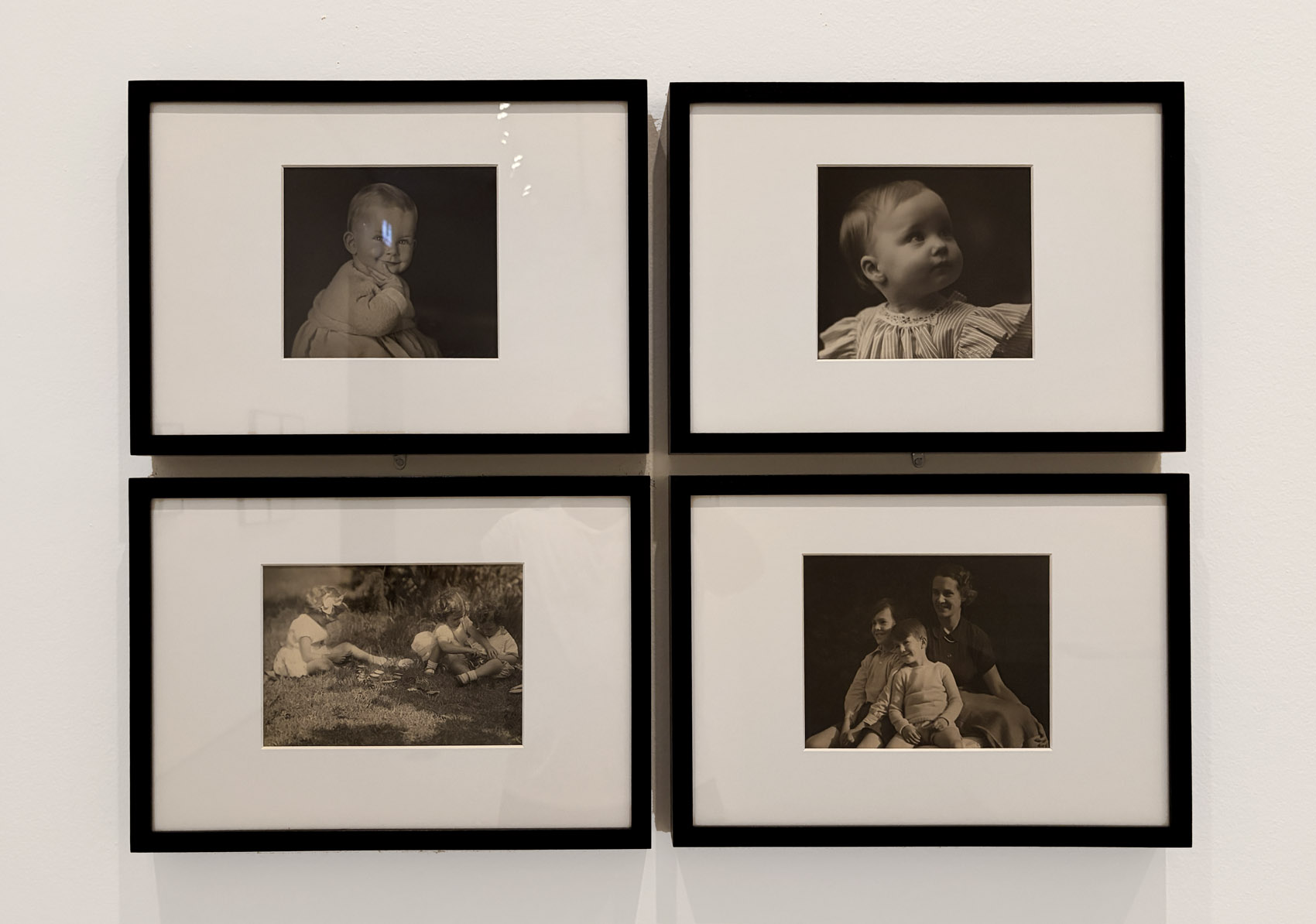
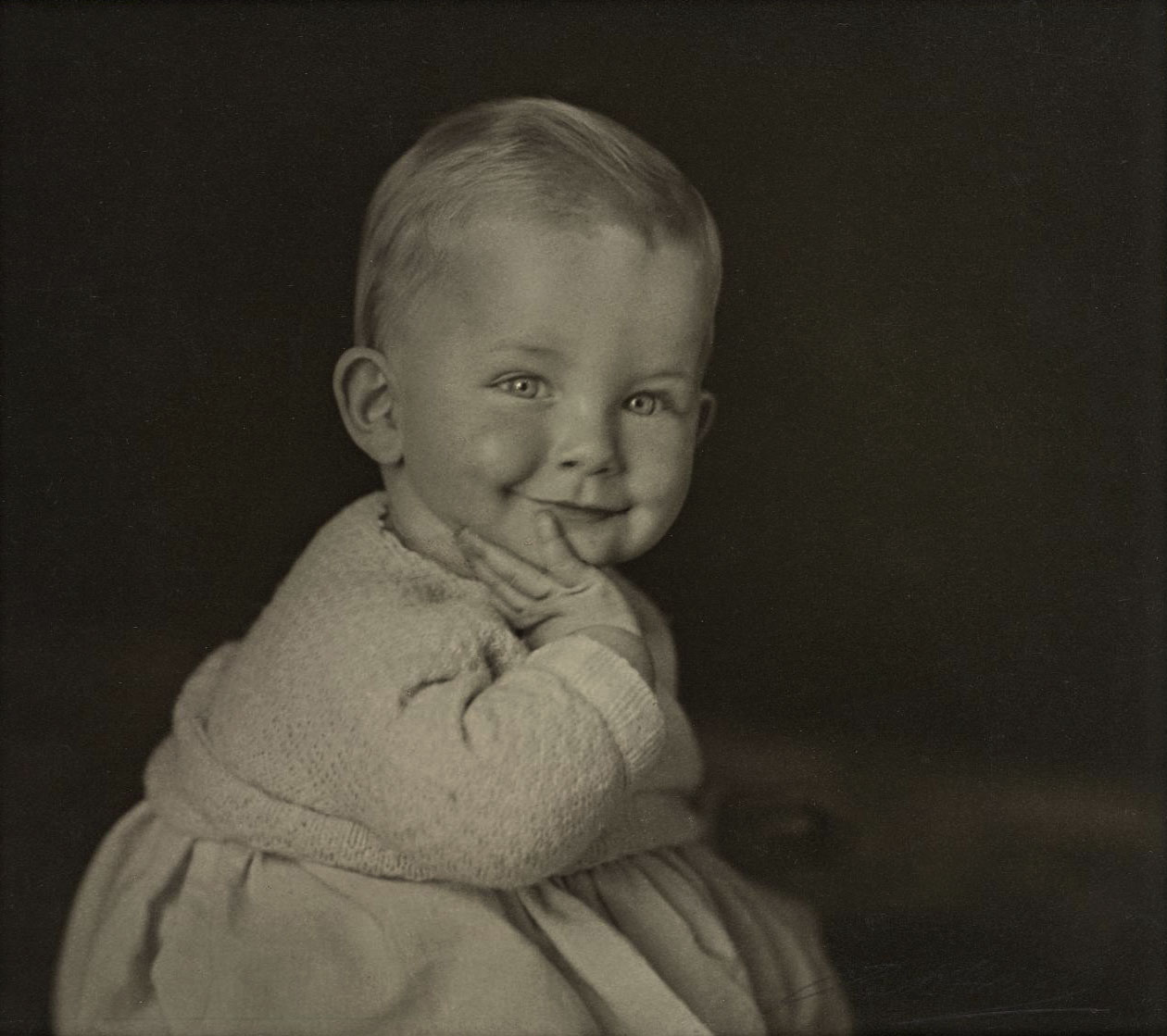
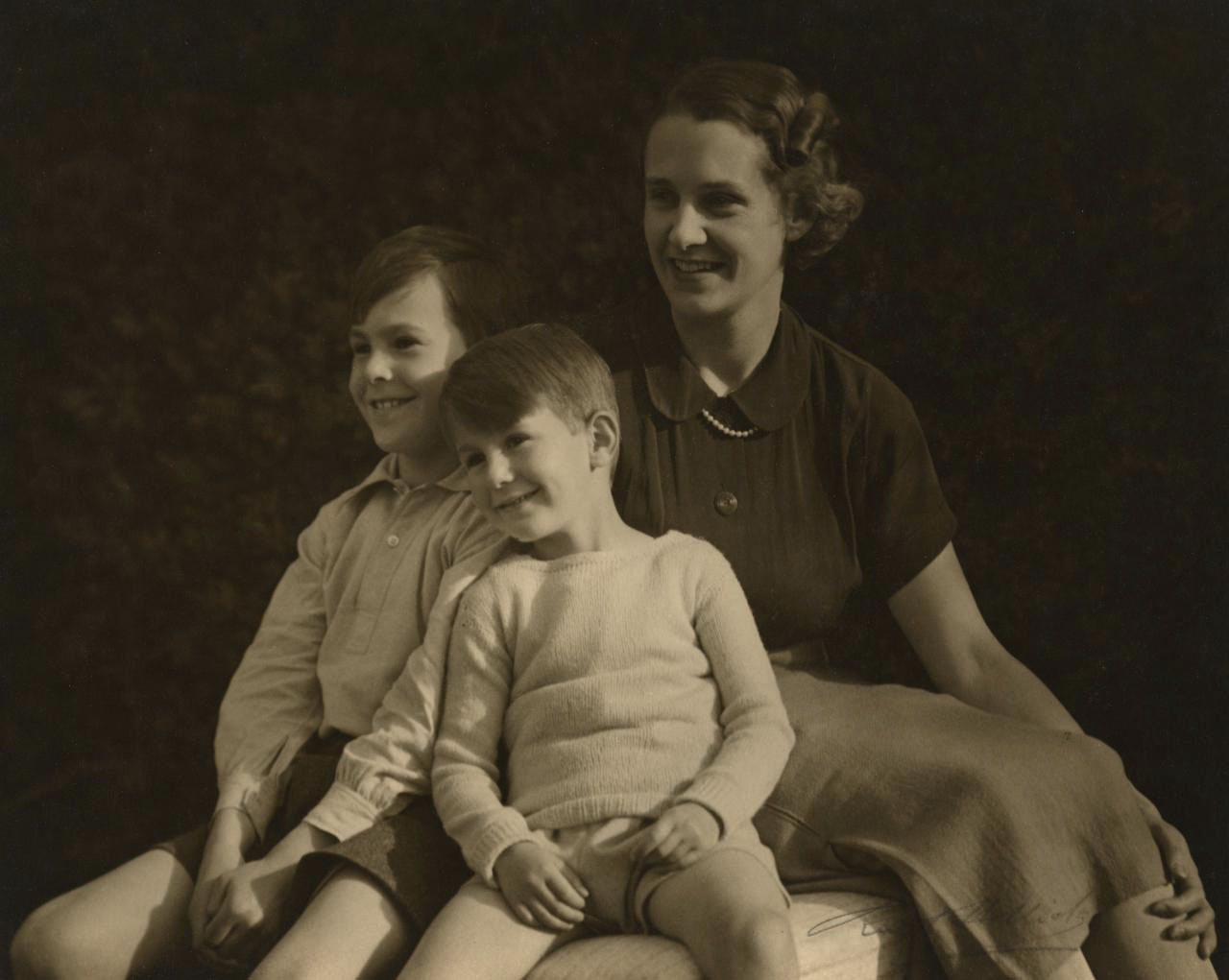
Installation view of the exhibition 'Women Photographers 1900-1975: A Legacy of Light' at NGV International, Melbourne, November 2025 - May 2026 showing  at left four photographs by Ruth Hollick: 'Bobby' (1927); 'No title (Baby in striped dress)' (1920s); 'No title (Three children seated on grass)' (1920s); and 'No title (Mother and two children)' (1920s)


Installation view of the exhibition Women Photographers 1900-1975: A Legacy of Light at NGV International, Melbourne, November 2025 – May 2026 showing at left four photographs by Ruth Hollick: Bobby (1927); No title (Baby in striped dress) (1920s); No title (Three children seated on grass) (1920s); and No title (Mother and two children) (1920s)
Photo: Marcus Bunyan


Installation view of the exhibition 'Women Photographers 1900-1975: A Legacy of Light' at NGV International, Melbourne, November 2025 - May 2026 showing four photographs by Ruth Hollick: 'Bobby' (1927); 'No title (Baby in striped dress)' (1920s); 'No title (Three children seated on grass)' (1920s); and 'No title (Mother and two children)' (1920s)


Installation view of the exhibition Women Photographers 1900-1975: A Legacy of Light at NGV International, Melbourne, November 2025 – May 2026 showing four photographs by Ruth Hollick: Bobby (1927); No title (Baby in striped dress) (1920s); No title (Three children seated on grass) (1920s); and No title (Mother and two children) (1920s)
Photo: Marcus Bunyan


Ruth Hollick (Australian, 1883-1977) 'Bobby' 1927


Ruth Hollick (Australian, 1883-1977)
Bobby
1927
Gelatin silver photograph
18.8 x 21.4cm (image)
National Gallery of Victoria, Melbourne
Gift of Mrs Lucy Crosbie Morrison, 1992
Public domain


Ruth Hollick (Australian, 1883-1977) 'No title (Mother and two children)' 1920s


Ruth Hollick (Australian, 1883-1977)
No title (Mother and two children)
1920s
Gelatin silver photograph
19.0 x 23.9cm (image)
National Gallery of Victoria, Melbourne
Gift of Mrs Lucy Crosbie Morrison, 1992
Public domain


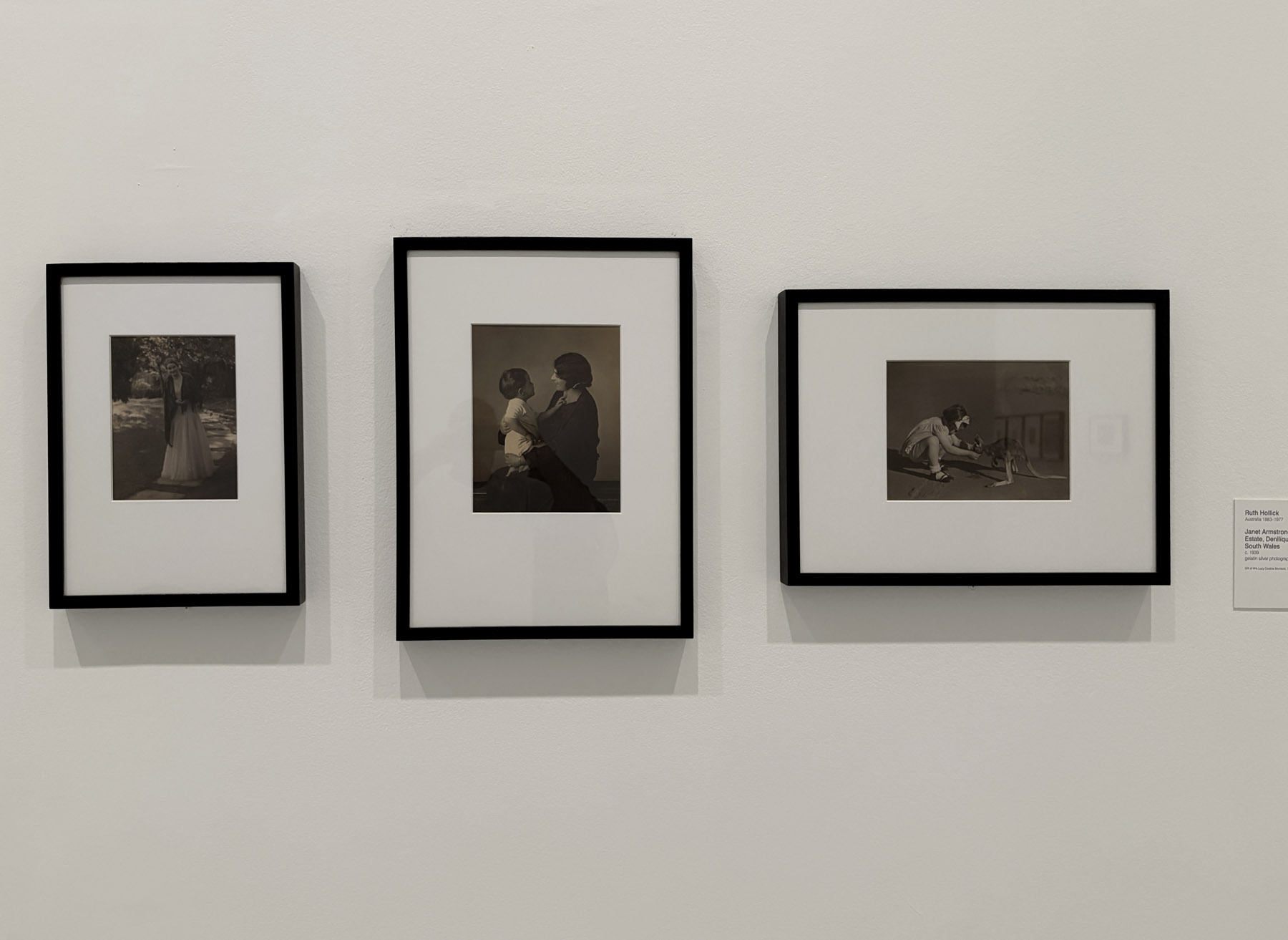
Installation view of the exhibition 'Women Photographers 1900-1975: A Legacy of Light' at NGV International, Melbourne, November 2025 - May 2026 showing from left to right three photographs by Ruth Hollick: 'No title (Young woman in plaid shawl)' (1920s); 'No title (Mother and child)' (c. 1926); and 'Janet Armstrong, Woodbury Estate, Deniliquin, New South Wales' (c. 1939) (installation view)


Installation view of the exhibition Women Photographers 1900-1975: A Legacy of Light at NGV International, Melbourne, November 2025 – May 2026 showing from left to right three photographs by Ruth Hollick: No title (Young woman in plaid shawl) (1920s); No title (Mother and child) (c. 1926); and Janet Armstrong, Woodbury Estate, Deniliquin, New South Wales (c. 1939)
Photo: Marcus Bunyan


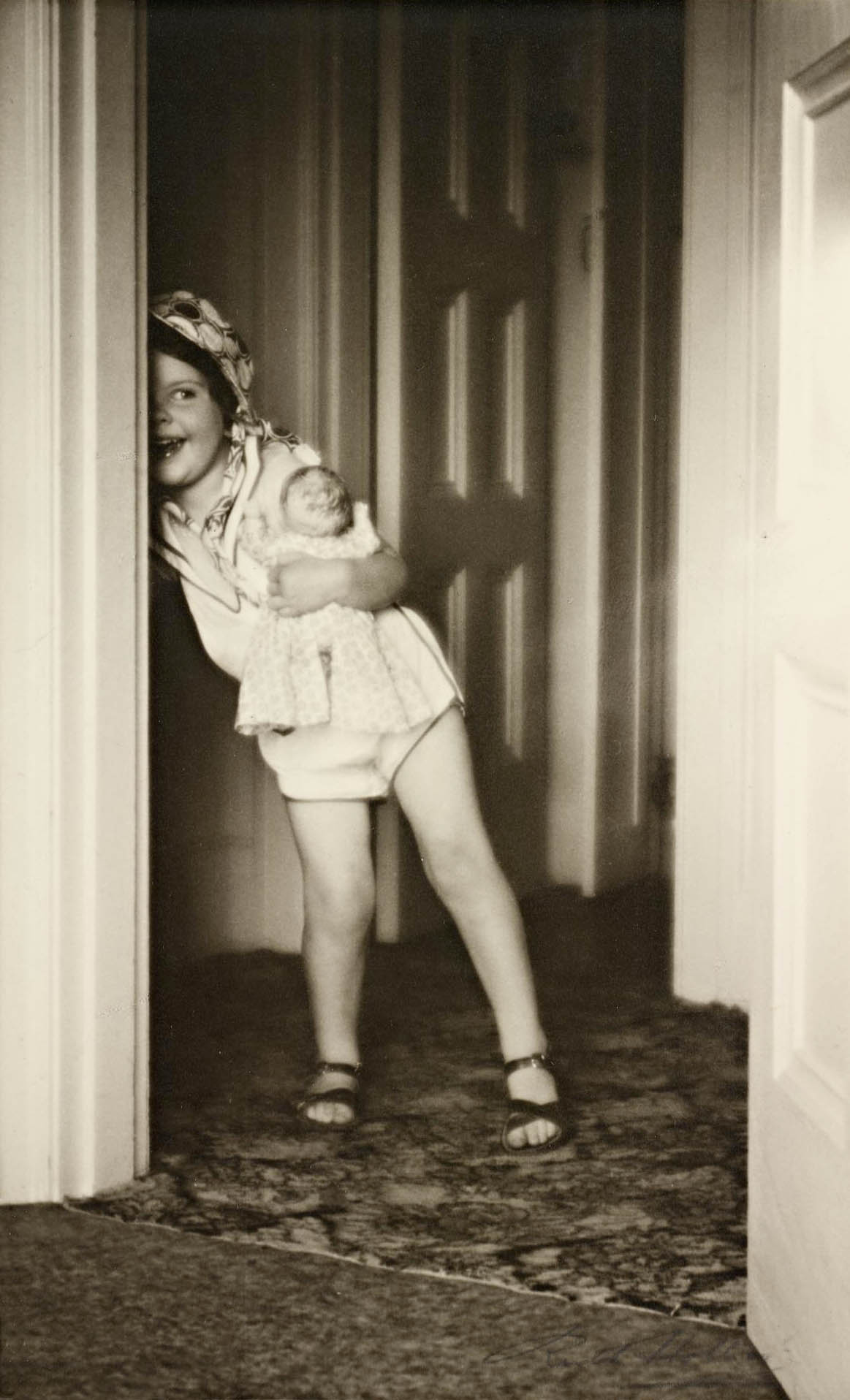
Ruth Hollick (Australian, 1883-1977) 'No title (Young girl holding a doll)' 1920s


Ruth Hollick (Australian, 1883-1977)
No title (Young girl holding a doll)
1920s
Gelatin silver photograph
23.9 x 14.6cm (image)
National Gallery of Victoria, Melbourne
Gift of Mrs Lucy Crosbie Morrison, 1992


Installation view of the exhibition 'Women Photographers 1900-1975: A Legacy of Light' at NGV International, Melbourne, November 2025 - May 2026


Installation view of the exhibition Women Photographers 1900-1975: A Legacy of Light at NGV International, Melbourne, November 2025 – May 2026
Photo: Marcus Bunyan


Installation view of the exhibition 'Women Photographers 1900-1975: A Legacy of Light' at NGV International, Melbourne, November 2025 - May 2026
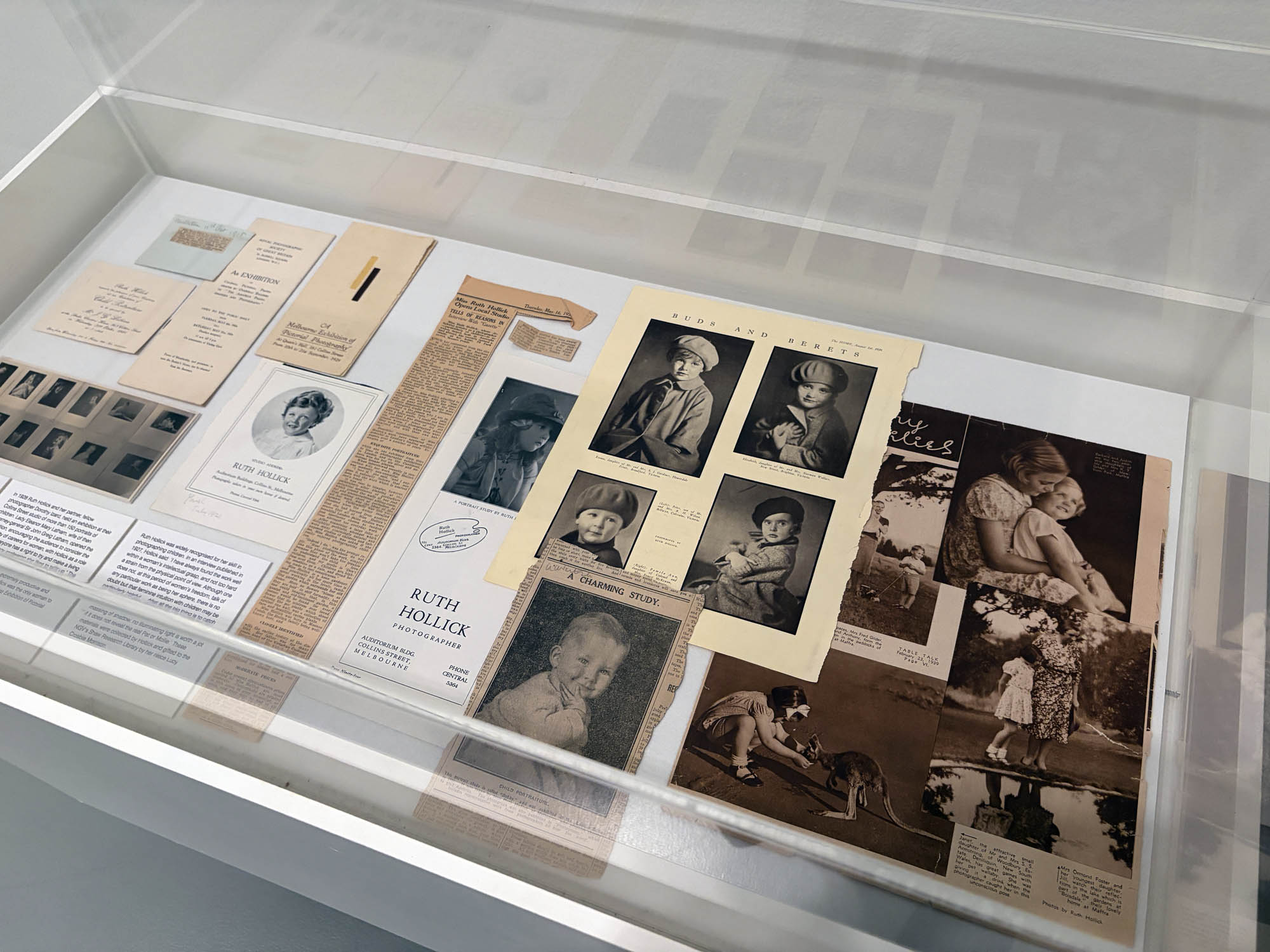
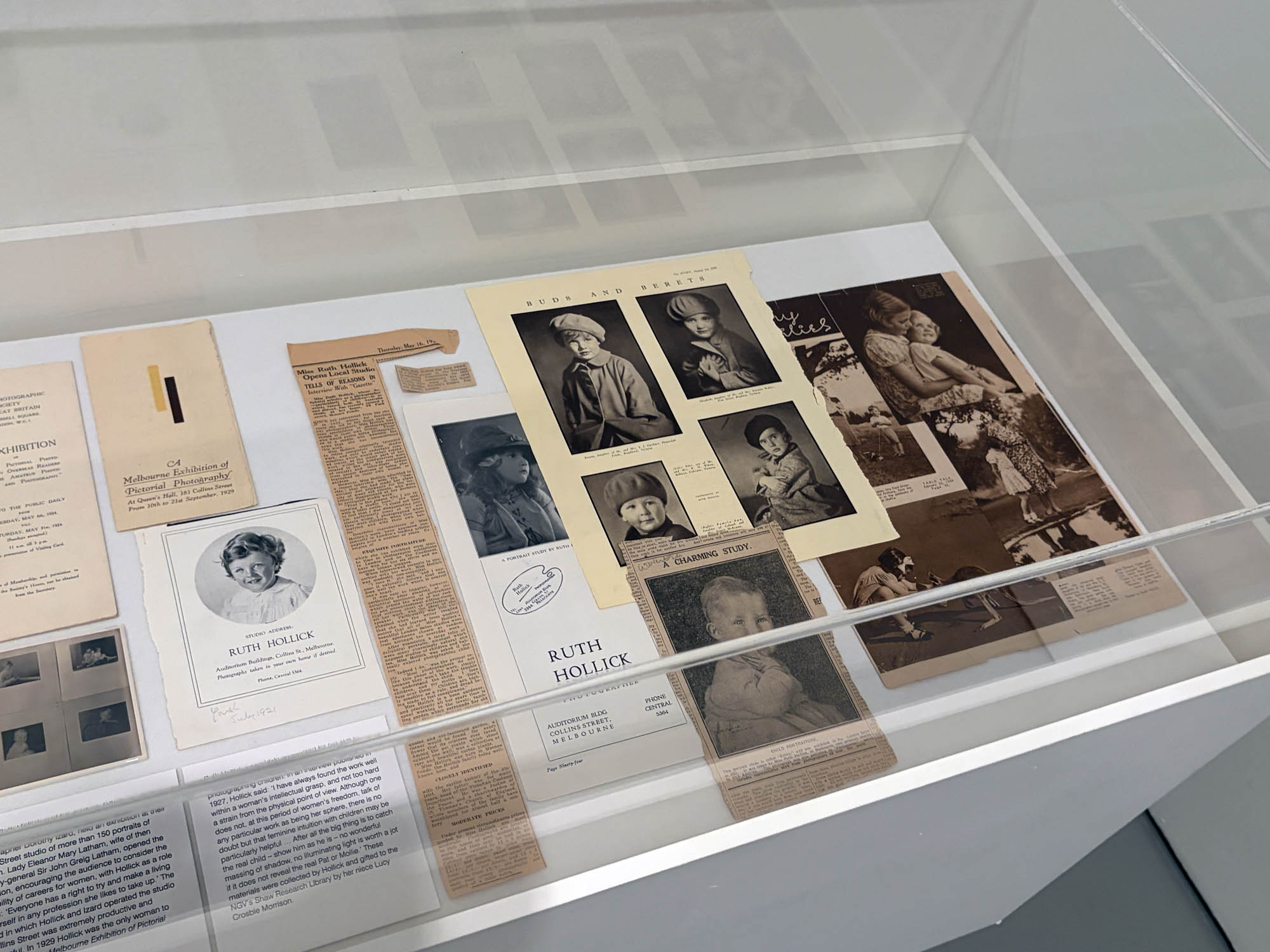
Installation view of the exhibition 'Women Photographers 1900-1975: A Legacy of Light' at NGV International, Melbourne, November 2025 - May 2026 showing clippings, press releases, brochures, reviews, invitations and other ephemeral material relating to Ruth Hollick and the Ruth Hollick studio


Installation views of the exhibition Women Photographers 1900-1975: A Legacy of Light at NGV International, Melbourne, November 2025 – May 2026 showing clippings, press releases, brochures, reviews, invitations and other ephemeral material relating to Ruth Hollick and the Ruth Hollick studio
Photos: Marcus Bunyan


In 1928 Ruth Hollick and her partner, fellow photographer Dorothy Izard, held an exhibition at their Collins Street studio of more than 150 portraits of children. Lady Eleanor Mary Latham, wife of then attorney-general Sir John Greig Latham, opened the exhibition, encouraging the audience to consider the possibility of career for women, with Hollick as a role model: ‘Everyone has a right to try and make a living for herself in any profession she likes to take up.’ The period in which Hollick and Izard operated the studio in Collins Street was extremely productive and successful. In 1929 Hollick was the only woman to participate in the Melbourne Exhibition of Pictorial Photography.

Ruth Hollick was widely recognised for her skill in photographing children. In an interview published in 1927, Hollick said: ‘I have always found the work well within a woman’s intellectual grasp, and not too hard a strain from the physical point of view. Although one does not, at this period of women’s freedom, talk of any particular work as being her sphere, there is no doubt but that feminine intuition with children may be particularly helpful … After all the big thing is to catch the real child – show him as he is – no wonderful massing of shadow, no illuminating light is worth a lot if it does not reveal the real Pat or Mollie.’ These materials were collected by Hollick and gifted to the NGV’s Shaw Research Library by her niece Lucy Crosbie Morrison.

Vitrine text from the exhibition


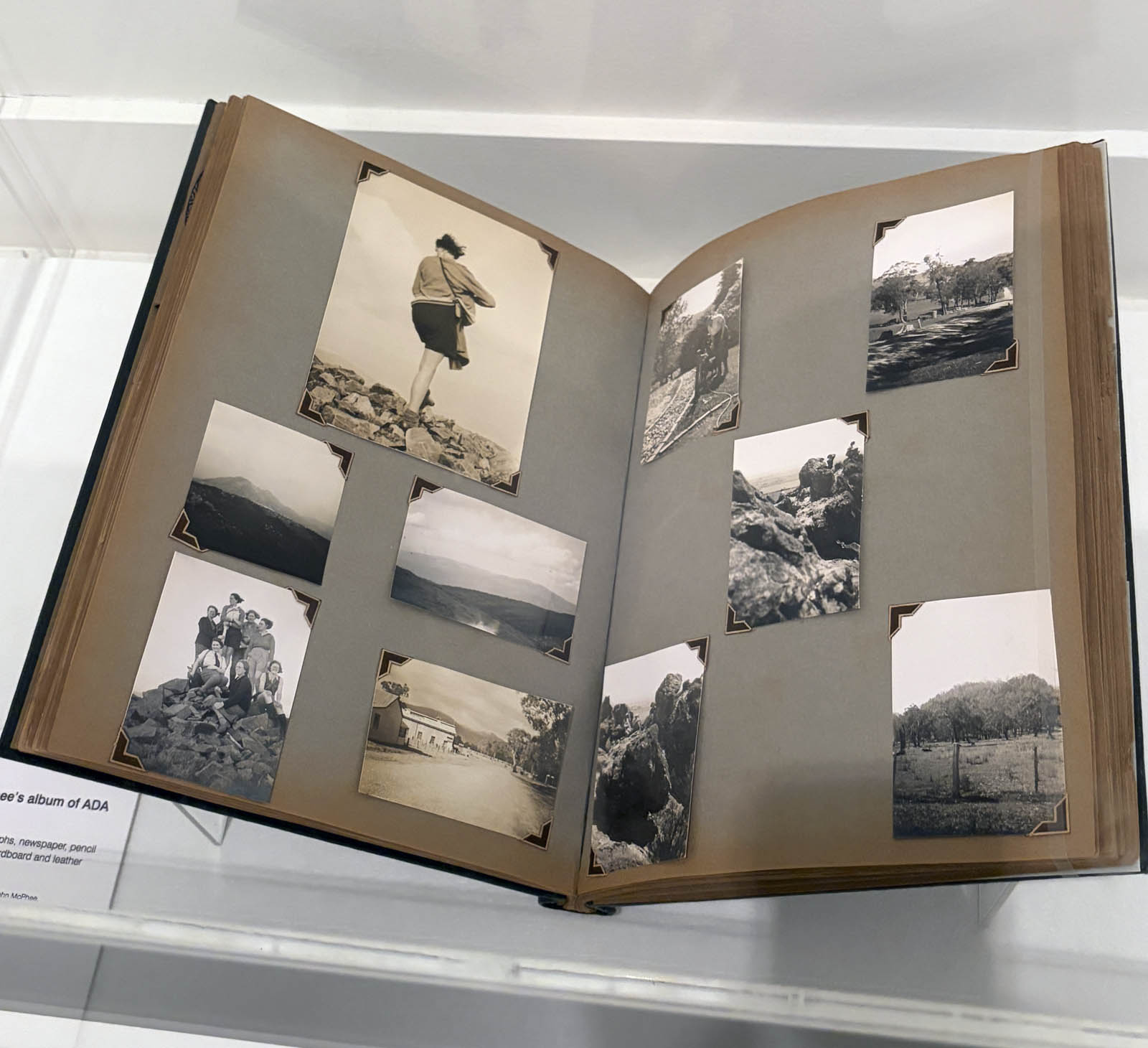
Inez McPhee (Australian, 1908-1999) 'No title (Inez McPhee's album of ADA river trip)' 1936 (installation view)


Inez McPhee (Australian, 1908-1999)
No title (Inez McPhee’s album of ADA river trip) (installation view)
1936
28.1 x 22.4cm (page)
28.5 x 23.0 x 3.1cm (closed)
28.5 x 46.0 x 1.5cm (open)
Album: gelatin silver photographs, newspaper, pencil and pen and ink, 62 pages, cardboard and leather cover, stitched binding
Presented through the NGV Foundation by John McPhee, Member and Ann Luck, 2004
Photo: Marcus Bunyan


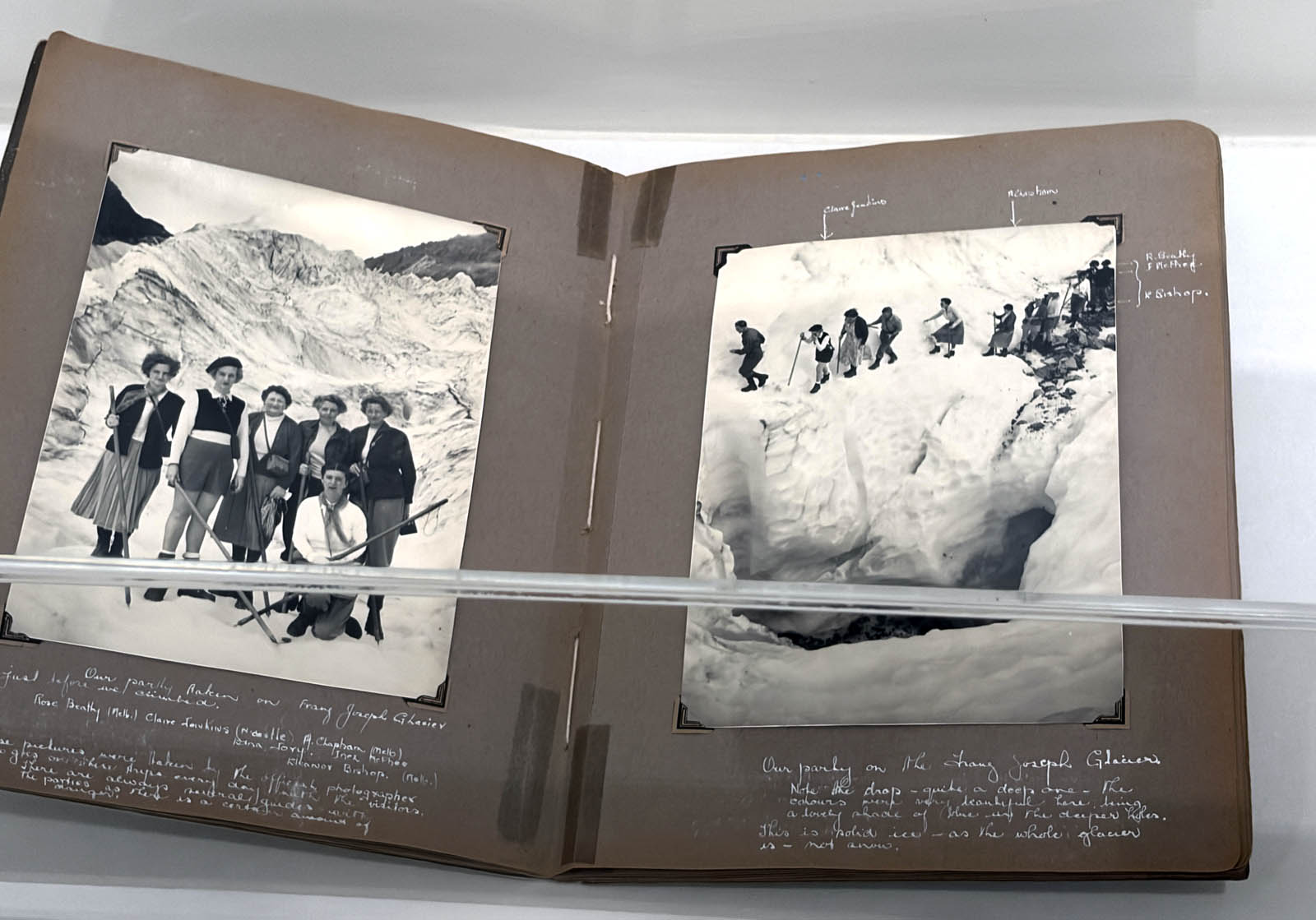
Inez McPhee (Australian, 1908-1999) 'No title (Inez McPhee's album of a trip to New Zealand)' 1953 (installation view)


Inez McPhee (Australian, 1908-1999)
No title (Inez McPhee’s album of a trip to New Zealand) (installation view)
1953
Album: gelatin silver photographs, collage, pencil, 40 pages, cardboard cover, stitched binding
31.0 x 24.1cm (page)
31.1 x 24.8 x 1.4cm (closed)
31.1 x 49.0 x 1.0cm (open)
Presented through the NGV Foundation by John McPhee, Member and Ann Luck, 2004
Photo: Marcus Bunyan


Inez McPhee was an active member of the Melbourne Women’s Walking Club, founded in 1922. McPhee took her camera on bushwalks with the group and, typical of amateur photographers of the period, compiled albums of the prints. Her albums are filled with images of women engaging in outdoor activities.

Vitrine text from the exhibition


Installation view of the exhibition 'Women Photographers 1900-1975: A Legacy of Light' at NGV International, Melbourne, November 2025 – May 2026


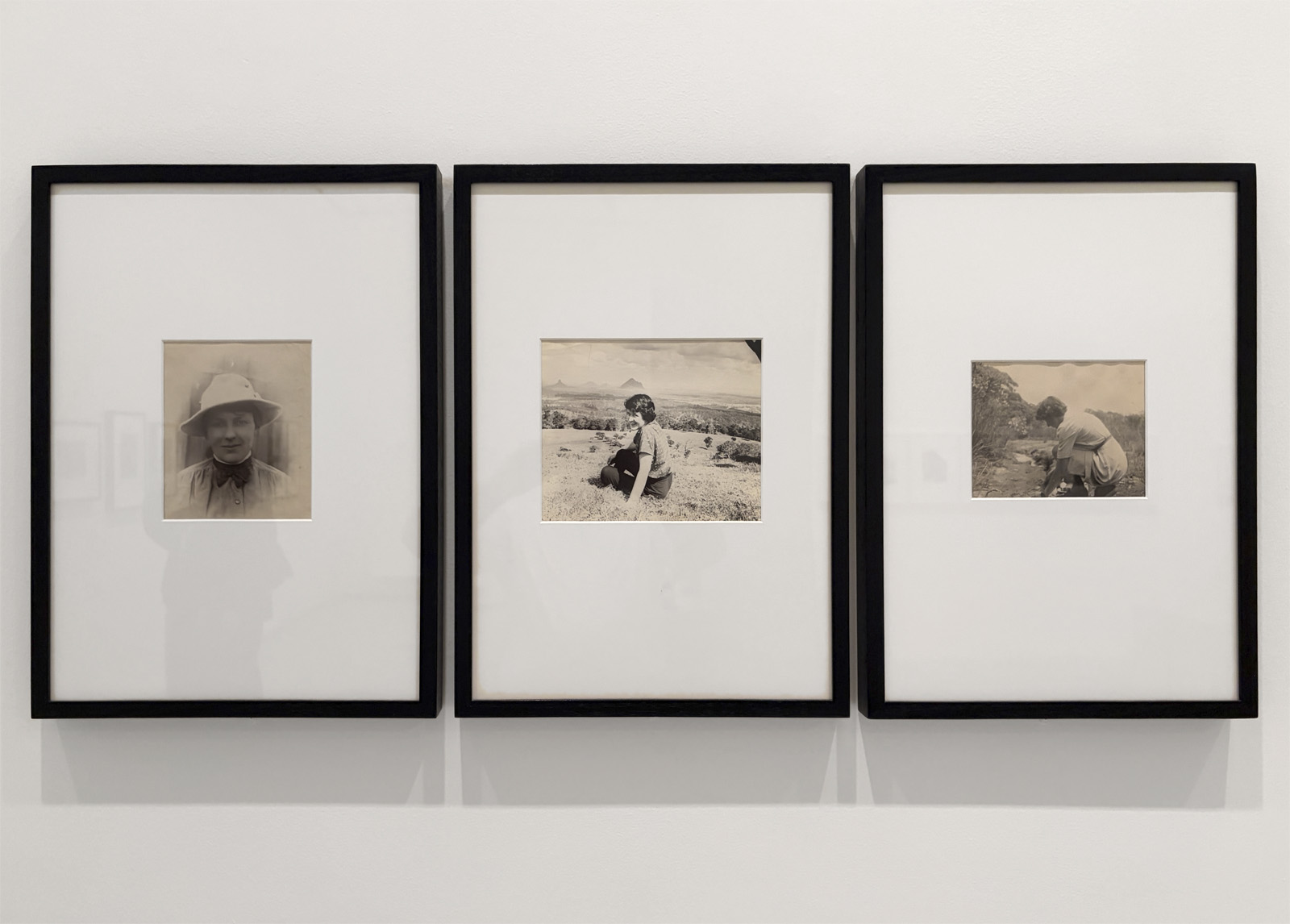
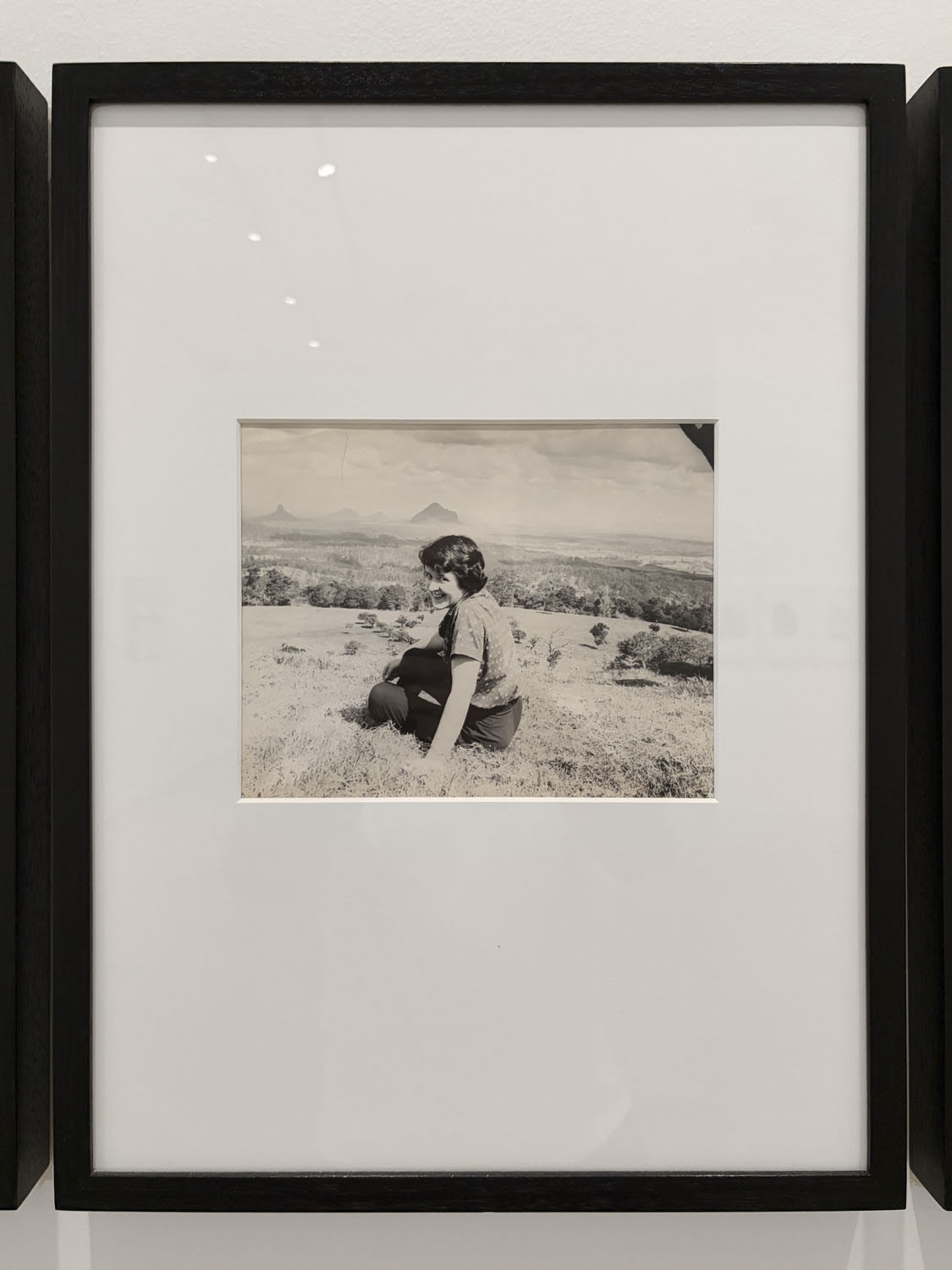
Installation view of the exhibition Women Photographers 1900-1975: A Legacy of Light at NGV International, Melbourne, November 2025 – May 2026 showing at left three photographs by Edna Walling: Doris Oak-Rhind, Edna’s Walling’s sister (1920s); Estelle Thompson (1950s-1960s); and No title (Young woman preparing picnic) (1940s)
Photo: Marcus Bunyan


Installation view of the exhibition Women Photographers 1900-1975: A Legacy of Light at NGV International, Melbourne, November 2025 – May 2026 showing at left to right, three photographs by Edna Walling (Australian born England, 1895-1973) 'Doris Oak-Rhind, Edna's Walling's sister' (1920s); 'Estelle Thompson' (1950s-1960s); and 'No title (Young woman preparing picnic)' (1940s)


Installation view of the exhibition Women Photographers 1900-1975: A Legacy of Light at NGV International, Melbourne, November 2025 – May 2026 showing at left to right, three photographs by Edna Walling (Australian born England, 1895-1973) Doris Oak-Rhind, Edna’s Walling’s sister (1920s); Estelle Thompson (1950s-1960s); and No title (Young woman preparing picnic) (1940s)
Photo: Marcus Bunyan


Edna Walling (Australian born England, 1895-1973) 'Estelle Thompson' 1950s-1960s (installation view)


Edna Walling (Australian born England, 1895-1973)
Estelle Thompson (installation view)
1950s-1960s
Gelatin silver photograph
25.4 x 20.6cm (image and sheet)
National Gallery of Victoria, Melbourne
Gift of Mrs Barbara Barnes, 1983
Photo: Marcus Bunyan


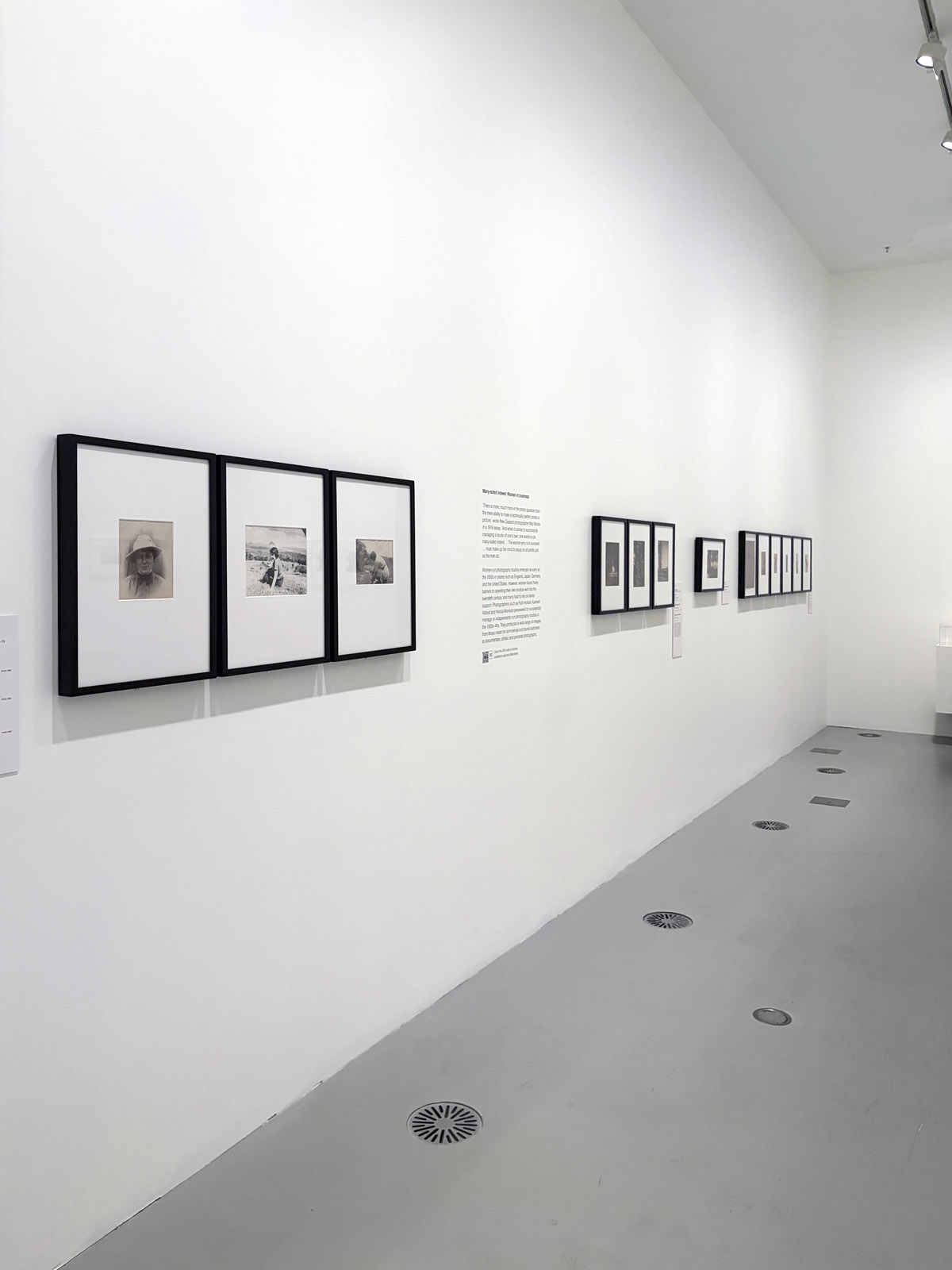
Many-sided Indeed: Women In Business

“There is more, much more in the photo question than the mere ability to make a technically perfect photo or picture,” wrote New Zealand photographer May Moore in a 1916 essay. “And when it comes to successfully managing a studio of one’s own, one wants to be many-sided indeed … The woman who is to succeed … must make up her mind to equip on all points just as the men do.”

Women-run photography studios emerged as early as the 1850s in places such as England, Japan, Germany and the United States. However, women faced many barriers to operating their own studios well into the twentieth century, and many had to rely on family support. Photographers such as Ruth Hollick, Karimeh Abbud and Hedda Morrison persevered to successfully manage or independently run photography studios in the 1920s-40s. They produced a wide range of images, from those made for commercial and tourist purposes to documentary, artistic and personal photographs.


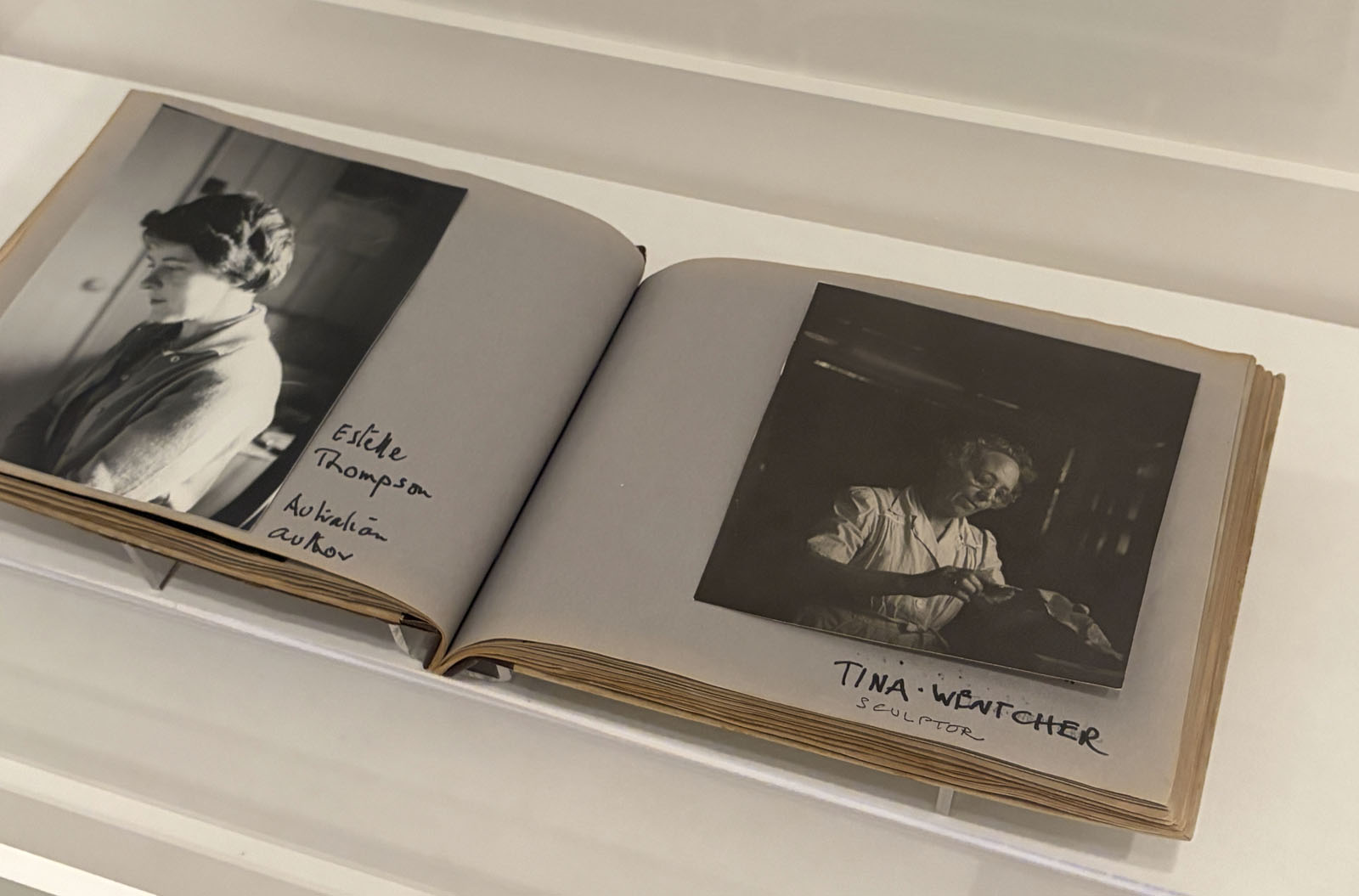
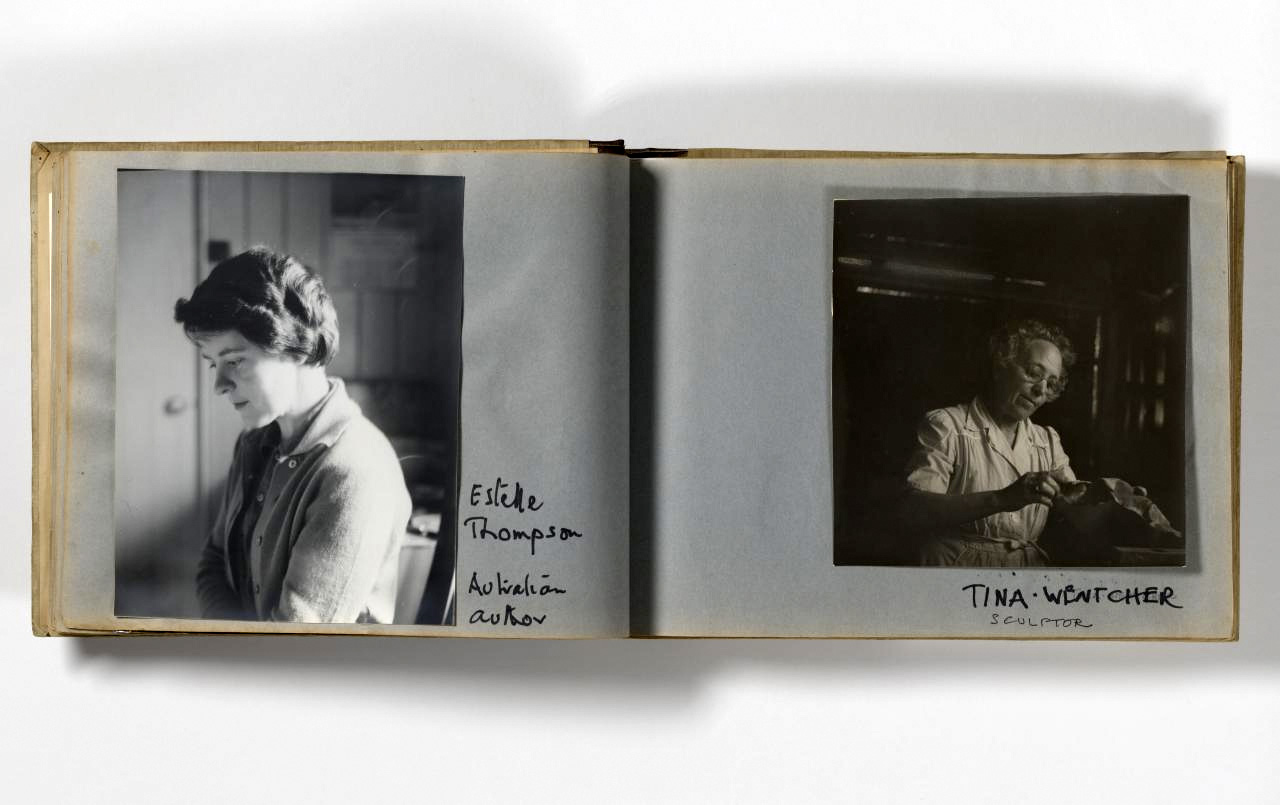
Edna Walling (Australian born England, 1895-1973) 'No title (Album)' 1950s-1960s (installation view)


Edna Walling (Australian born England, 1895-1973)
No title (Album) (installation view)
1950s-1960s
Album: gelatin silver photographs, 48 pages, cardboard, leather and colour photo-lithograph cover, metal screw binding
24.6 x 32.0cm (page)
25.6 x 34.8 x 3.6cm (closed)
25.6 x 62.8cm (open)
National Gallery of Victoria, Melbourne
Gift of Mrs Barbara Barnes, 1983
Photo: Marcus Bunyan


Landscape designer Edna Walling kept a personal photo album to capture the creative effervescence of the community at her property at Bickleigh Vale Village in Mooroolbark, Victoria. Nicknamed ‘Trouser Lane’, the property was designed by Walling to be a ‘community of connected gardens and cottages. Many people, including many women, shared in Walling’s unique vision for the space, visiting and residing at Trouser lane over the years. Walling’s album features, among others, images of writer Estelle Thompson, landscape designer Daphne Pearson, builder Esme Johnson, violinist Perry Hart and ballet dancers Harcourt Algernoff and Graham Smith. Also interspersed throughout the album are photographic flower studies.

Vitrine text from the exhibition


Edna Walling (Australian born United Kingdom, 1895-1973) 'No title' (Album) 1950s-1960s


Edna Walling (Australian born United Kingdom, 1895-1973)
No title (Album)
1950s-1960s
Album; gelatin silver photographs, 48 pages, cardboard, leather and colour photo-lithograph cover, metal screw binding
24.6 x 32.0cm (page)
25.6 x 34.8 x 3.6cm (closed)
25.6 x 62.8cm (open)
National Gallery of Victoria, Melbourne
Gift of Mrs Barbara Barnes, 1983


Installation view of the exhibition 'Women Photographers 1900-1975: A Legacy of Light' at NGV International, Melbourne, November 2025 - May 2026
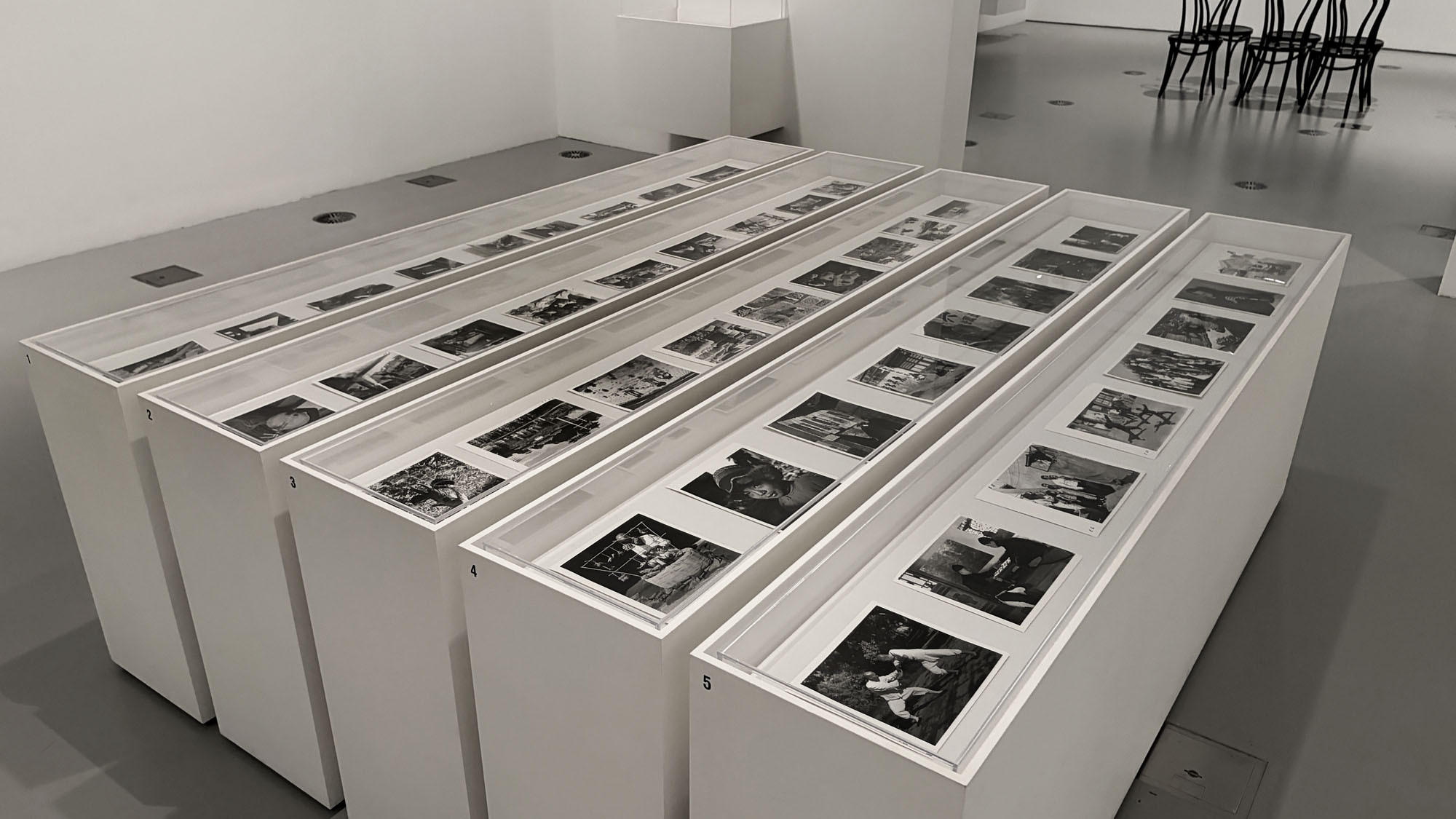
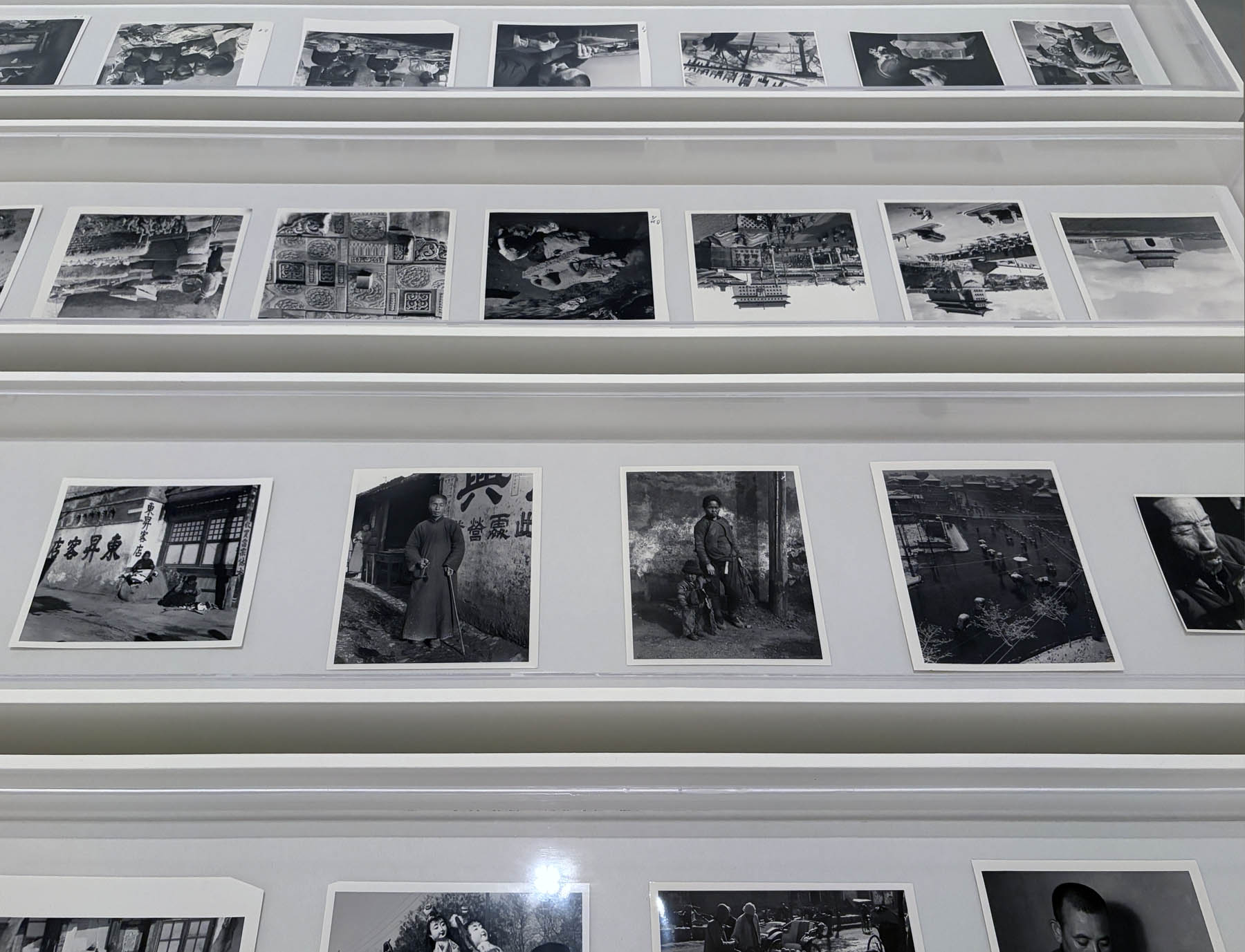
Installation view of the exhibition 'Women Photographers 1900-1975: A Legacy of Light' at NGV International, Melbourne, November 2025 - May 2026 showing in the display cases photographs by Hedda Morrison (Australian born Germany, 1908-1991)


Installation views of the exhibition Women Photographers 1900-1975: A Legacy of Light at NGV International, Melbourne, November 2025 – May 2026 showing in the display cases in the lower two images, photographs by Hedda Morrison (Australian born Germany, 1908-1991)
Photos: Marcus Bunyan


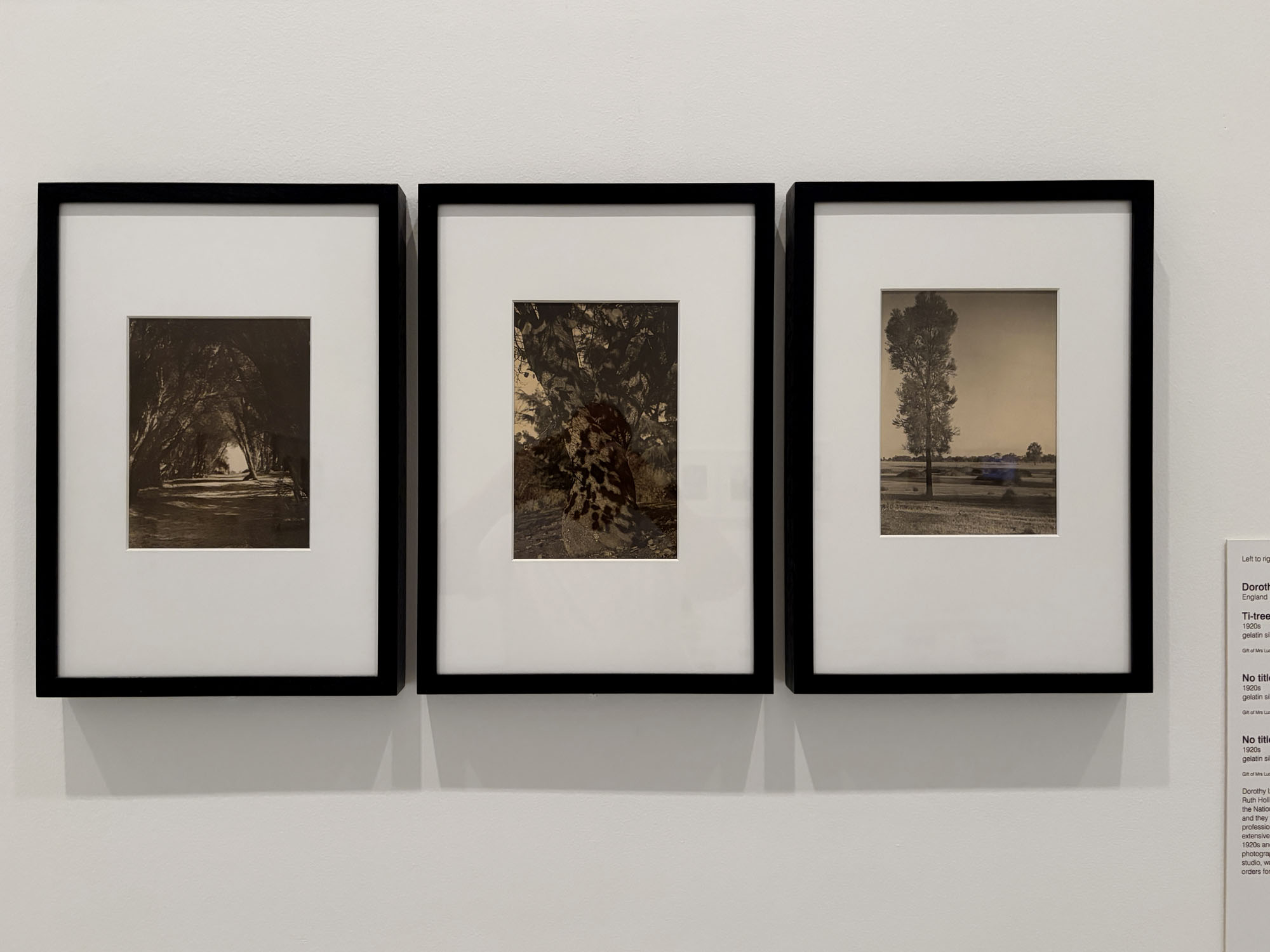
Installation view of the exhibition 'Women Photographers 1900-1975: A Legacy of Light' at NGV International, Melbourne, November 2025 - May 2026 showing three photographs by Dorothy Izard (Australian born England, 1882-1972): 'Ti-trees' (1920s); 'No title (Dappled tree)' (1920s); and 'No title (Tree in paddock)' (1920s)


Installation view of the exhibition Women Photographers 1900-1975: A Legacy of Light at NGV International, Melbourne, November 2025 – May 2026 showing three photographs by Dorothy Izard (Australian born England, 1882-1972): Ti-trees (1920s); No title (Dappled tree) (1920s); and No title (Tree in paddock) (1920s)
Photo: Marcus Bunyan


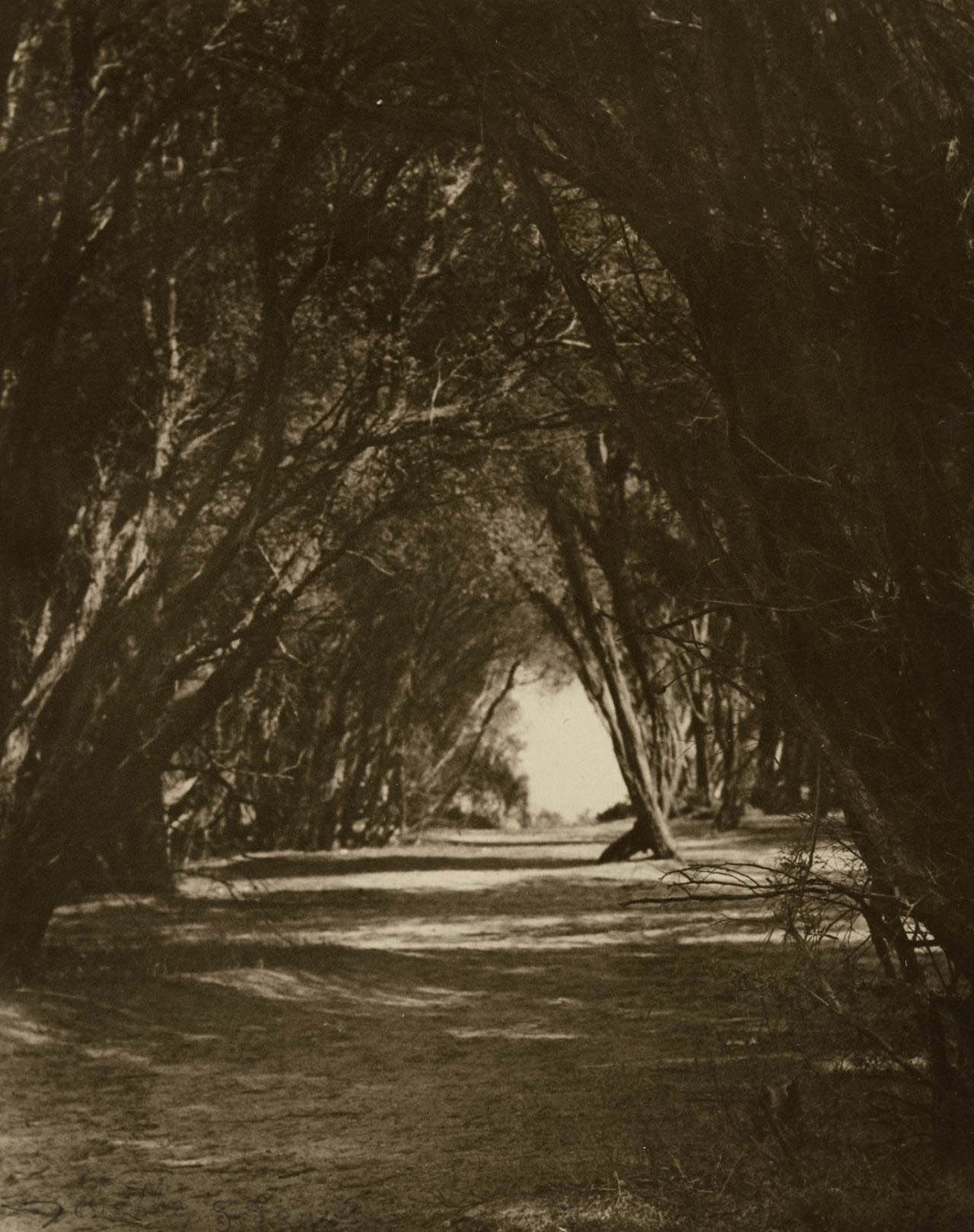
Dorothy Izard (Australian born England, 1882-1972) 'Ti-trees' 1920s


Dorothy Izard (Australian born England, 1882-1972)
Ti-trees
1920s
Gelatin silver photograph
22.8 × 18.4cm (image)
National Gallery of Victoria, Melbourne
Gift of Mrs Lucy Crosbie Morrison, 1992


Dorothy Izard met fellow photographer Ruth Hollick when they were students at the National Gallery of Victoria Art School, and they formed both a romantic and a professional partnership. They travelled extensively around regional Victoria in the 1920s and 1930s. Izard was a landscape photographer and, at Hollick’s home studio, was responsible for printing the orders for Hollick’s photographs.

Wall text from the exhibition


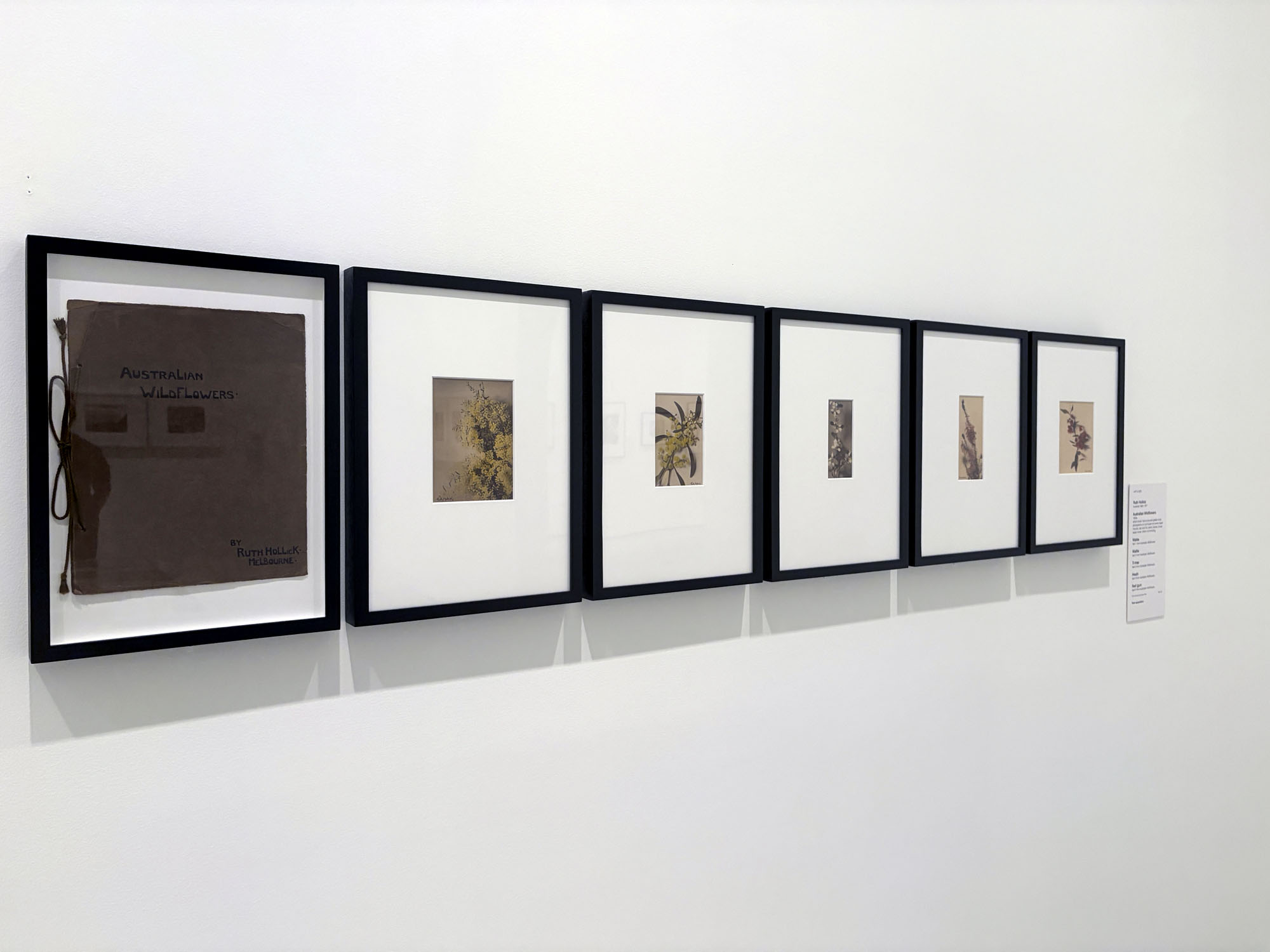
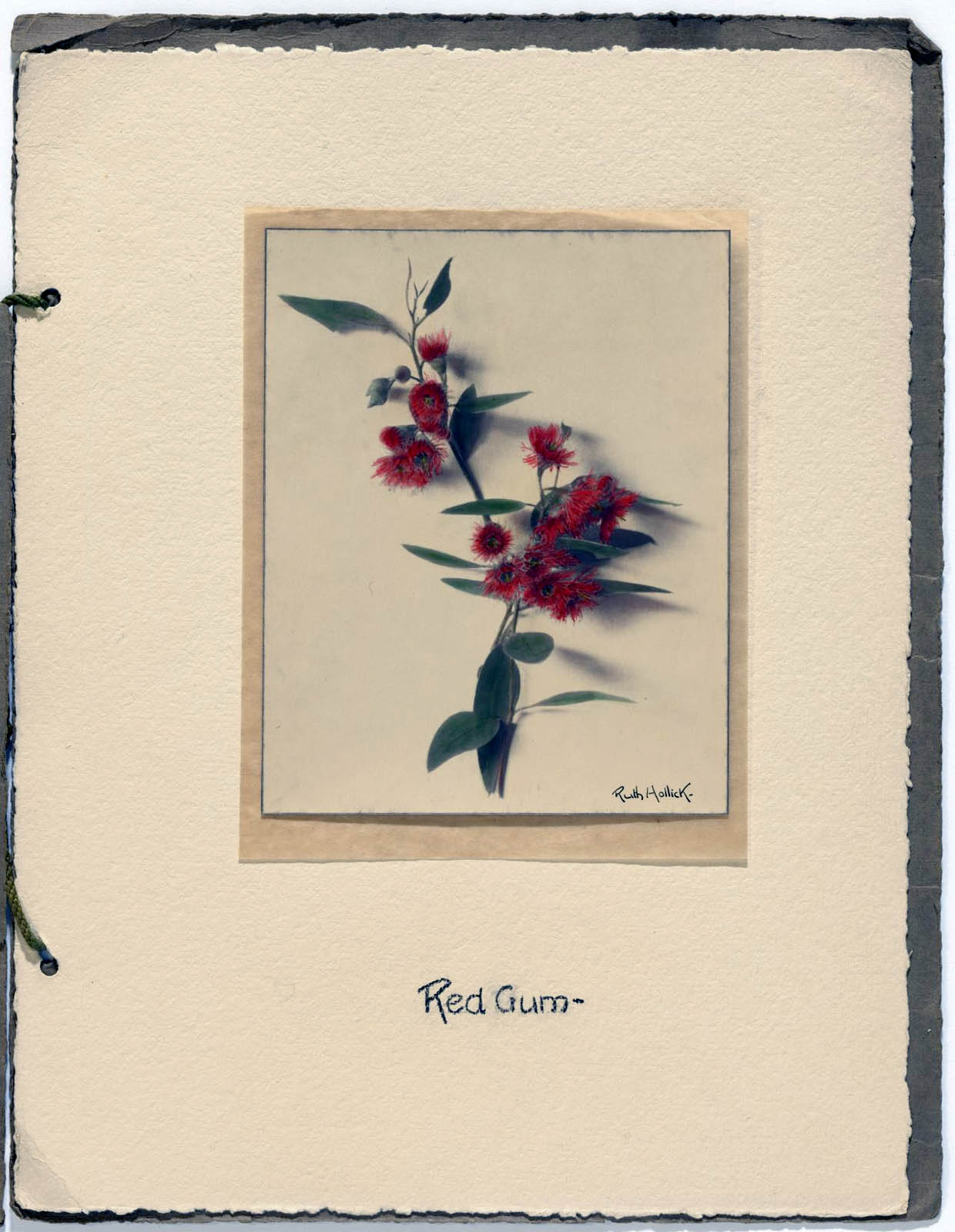
Installation view of the exhibition 'Women Photographers 1900-1975: A Legacy of Light' at NGV International, Melbourne, November 2025 - May 2026 showing  Ruth Hollick's artist book 'Australian flowers' (1950s)


Installation view of the exhibition Women Photographers 1900-1975: A Legacy of Light at NGV International, Melbourne, November 2025 – May 2026 showing Ruth Hollick’s artist book Australian flowers (1950s, below)
Photo: Marcus Bunyan


Ruth Hollick (Australian, 1883-1977) 'Australian wildflowers' 1950s


Ruth Hollick (Australian, 1883-1977)
Australian wildflowers
1950s
Artist’s book: hand-coloured gelatin silver photographs on buff paper on brown paper mounts, pen and ink, pencil, (other materials), [5] leaves, brown paper cover, cotton cord binding
33.2 x 25.5cm (page)
34.3 x 26.3 x 1.0cm irreg. (closed)
34.3 x 53.1 x 1.1cm irreg. (open)
National Gallery of Victoria, Melbourne
Gift of Pamela Jane Green, 2021
Public domain


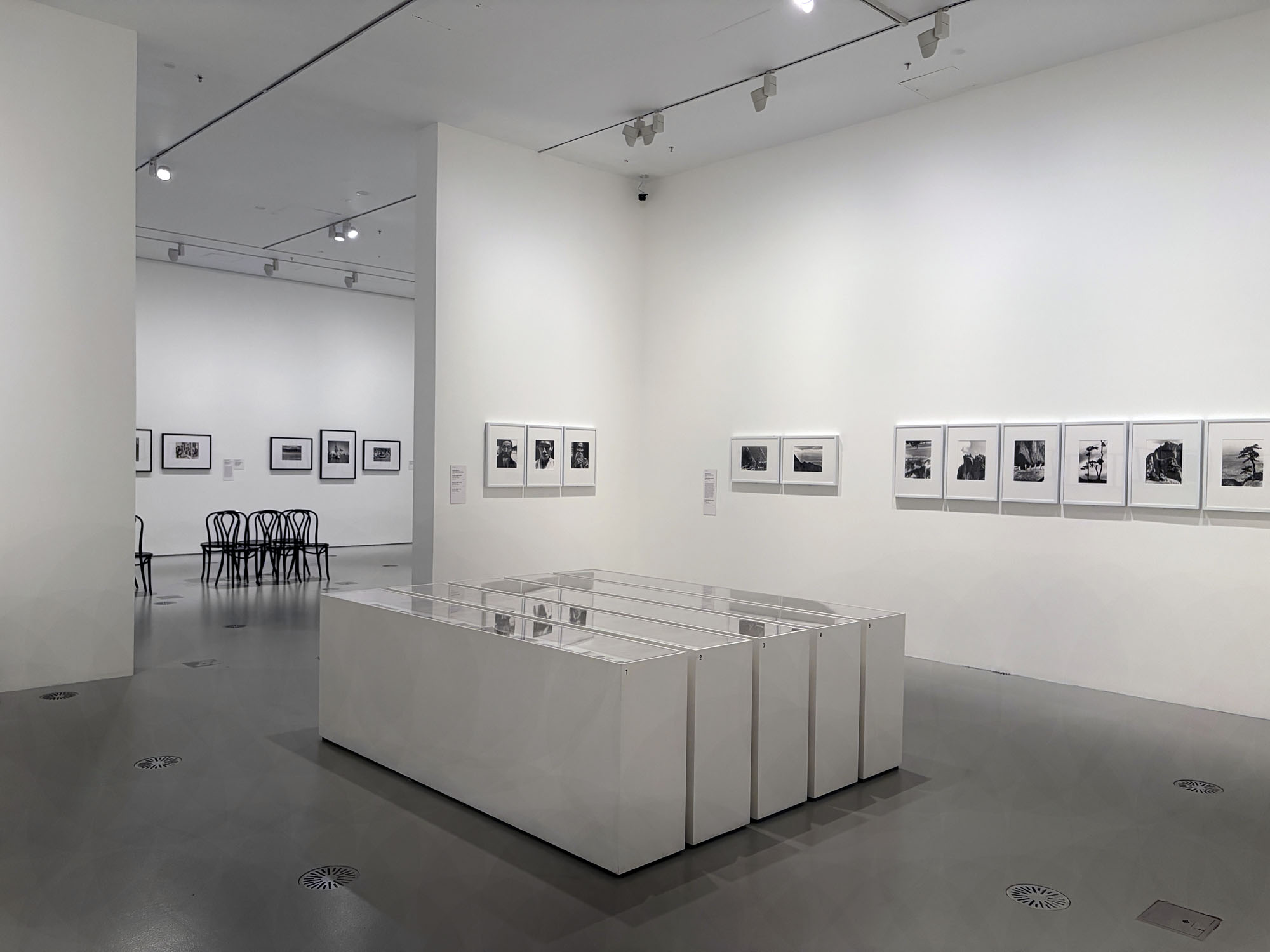
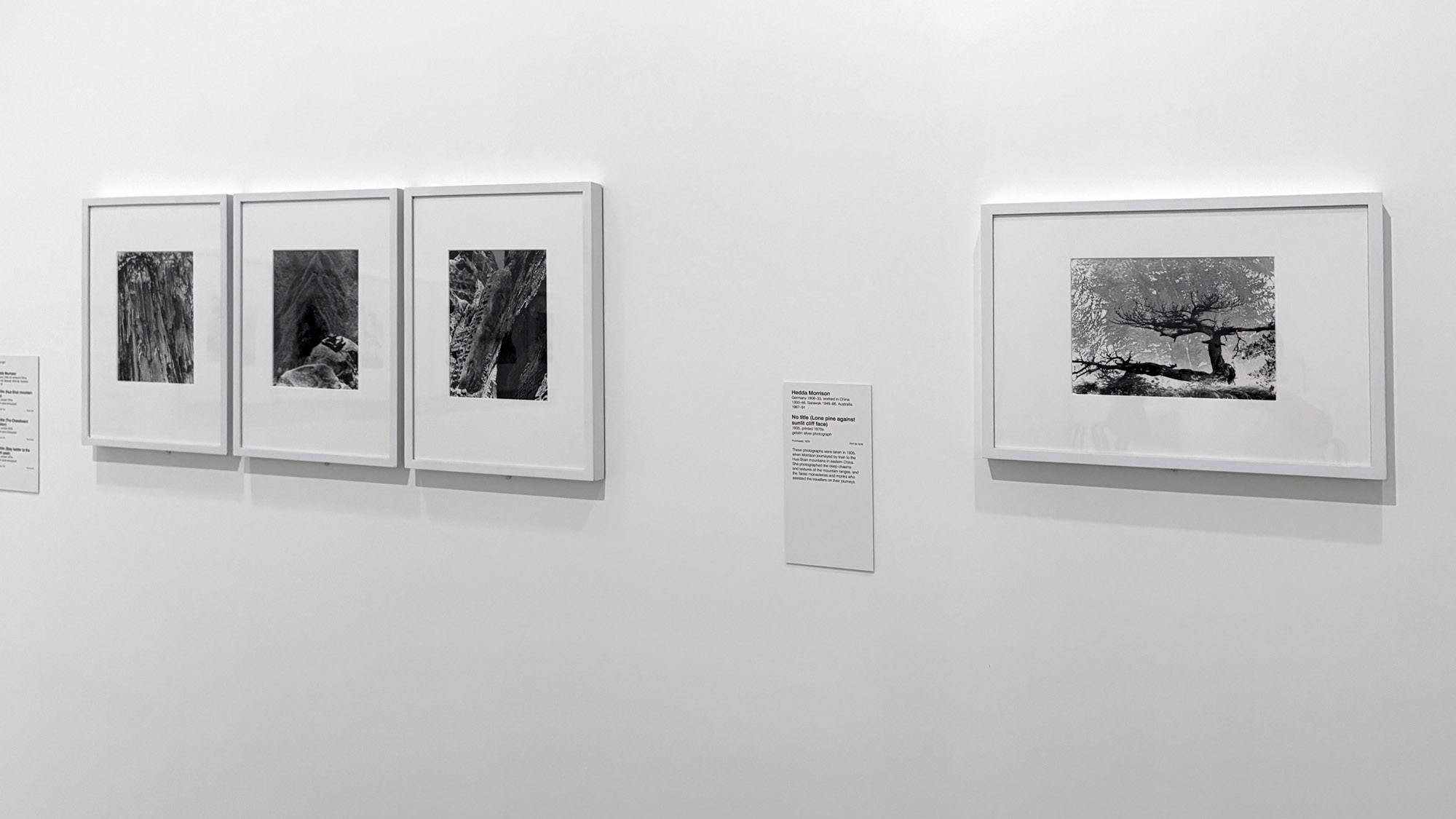
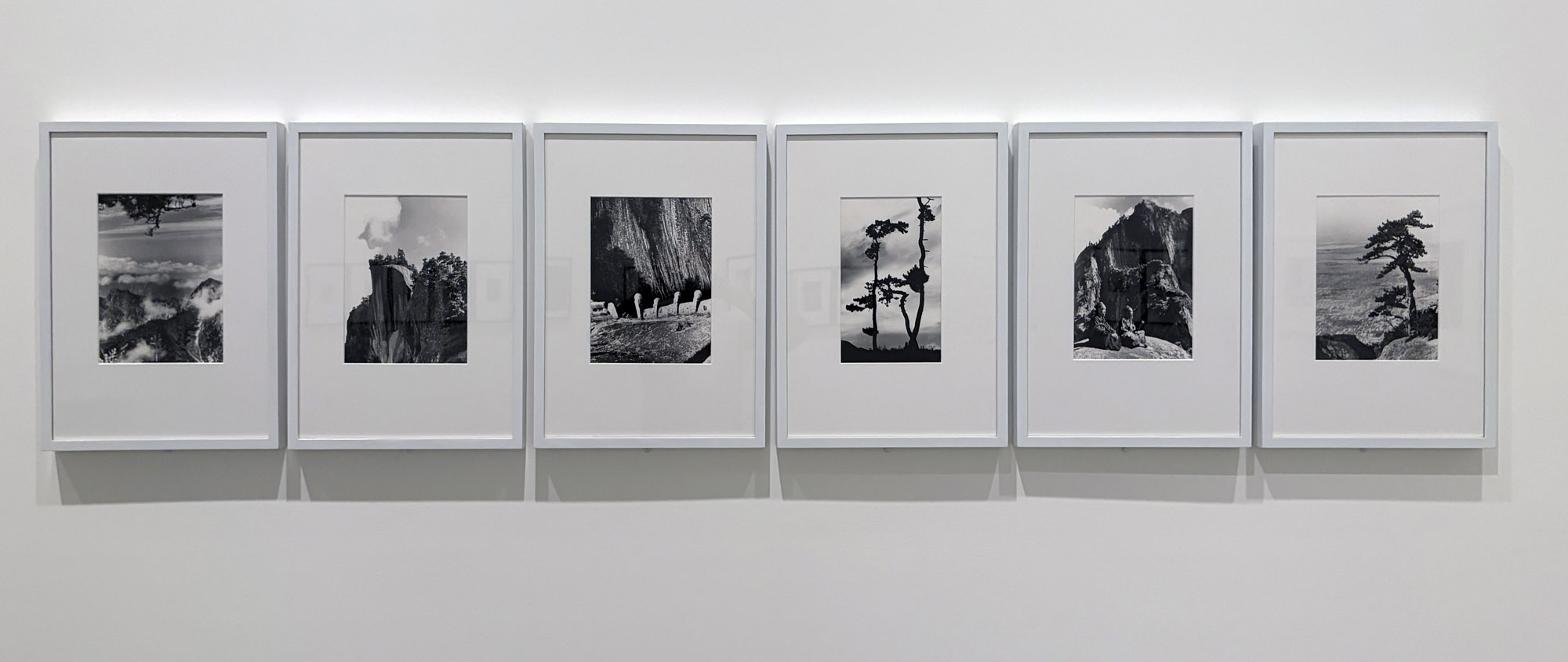
Installation view of the exhibition 'Women Photographers 1900-1975: A Legacy of Light' at NGV International, Melbourne, November 2025 - May 2026 showing from left to right, four photographs by Hedda Morrison (Australian born Germany, 1908-1991): 'No title (Hua Shan mountain face)' (1935, printed 1970s); 'No title (The Chessboard Pavilion)' (1935, printed 1970s); 'No title (Step ladder to the nothingness peak)' (1935, printed 1970s); and 'No title (Lone pine against sunlit cliff face)' (1935, printed 1970s)


Installation view of the exhibition Women Photographers 1900-1975: A Legacy of Light at NGV International, Melbourne, November 2025 – May 2026 showing from left to right, four photographs by Hedda Morrison (Australian born Germany, 1908-1991): No title (Hua Shan mountain face) (1935, printed 1970s); No title (The Chessboard Pavilion) (1935, printed 1970s); No title (Step ladder to the nothingness peak ) (1935, printed 1970s); and No title (Lone pine against sunlit cliff face) (1935 printed 1970s, below)
Photo: Marcus Bunyan


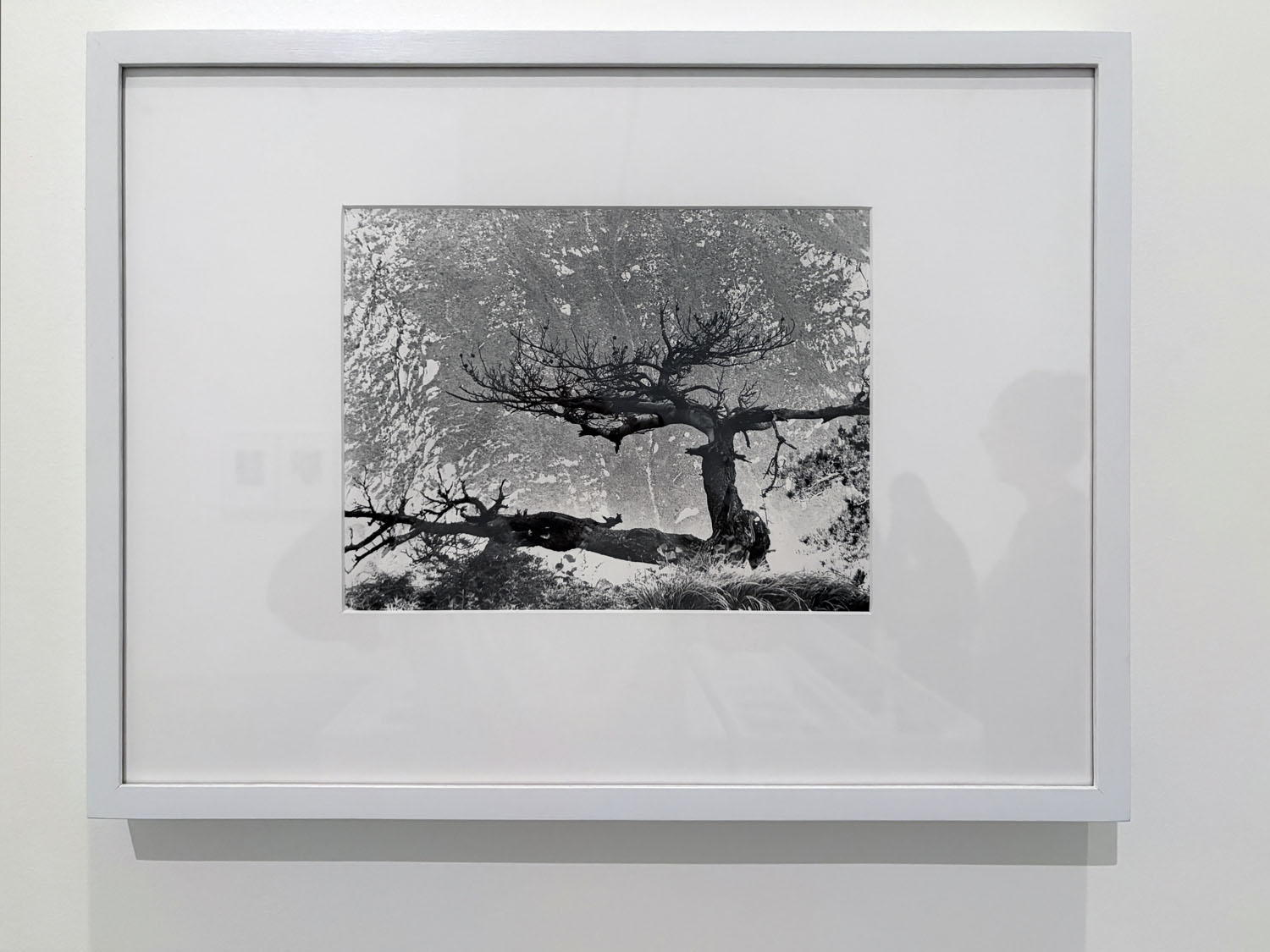
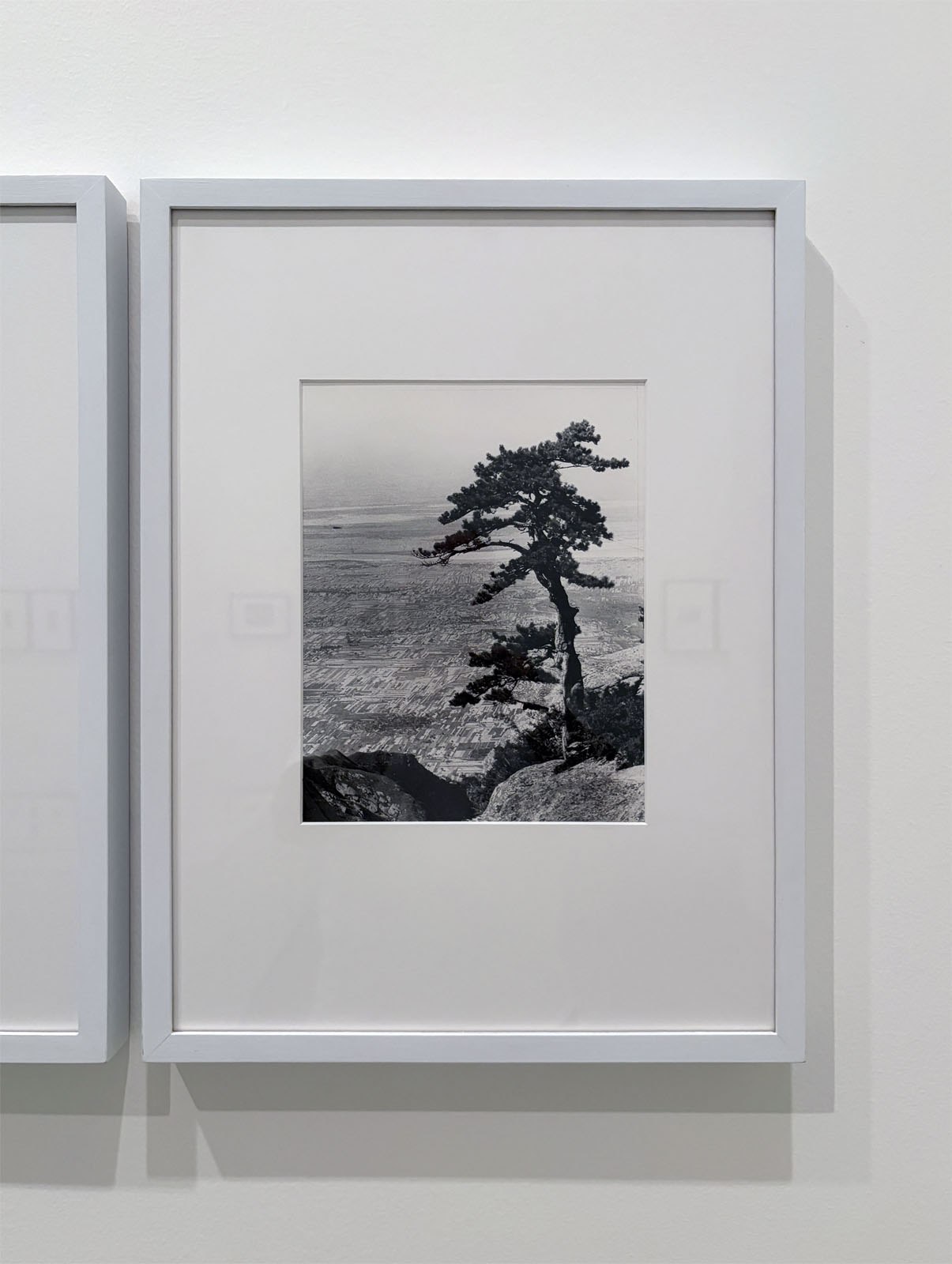
Hedda Morrison (Australian born Germany, 1908-1991) 'No title (Lone pine against sunlit cliff face)' 1935 (installation view)


Hedda Morrison (Australian born Germany, 1908-1991)
No title (Lone pine against sunlit cliff face) (installation view)
1935
Gelatin silver photograph
22.8 x 30.3cm (image)
National Gallery of Victoria, Melbourne
Purchased, 1976
Photo: Marcus Bunyan


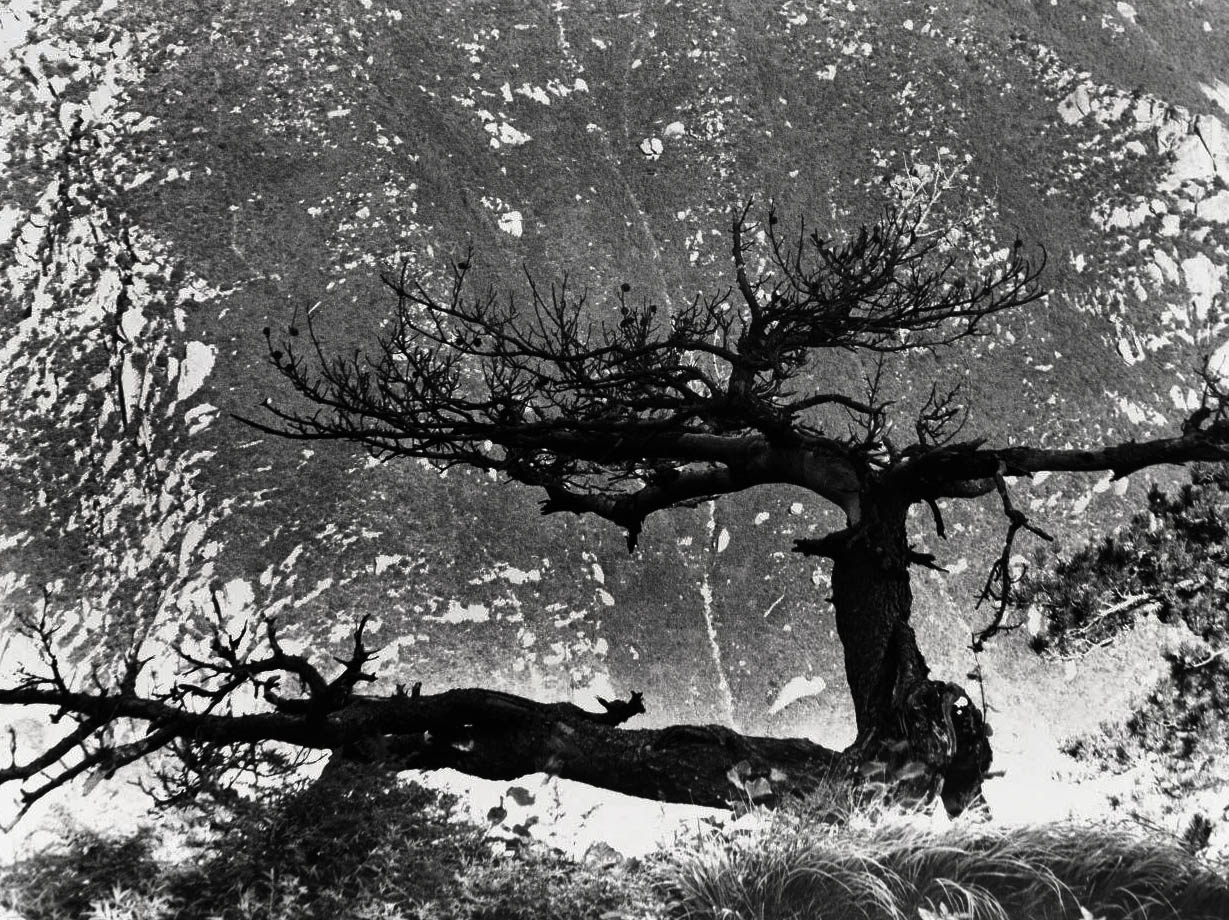
Hedda Morrison (German, 1908-1991) 'No title (Lone pine against sunlit cliff face)' 1935


Hedda Morrison (German, 1908-1991)
No title (Lone pine against sunlit cliff face)
1935
Gelatin silver photograph
22.8 x 30.3cm (image)
National Gallery of Victoria, Melbourne
Purchased, 1976
© Harvard-Yenching Library. Originals held by the Harvard-Yenching Library, Harvard University


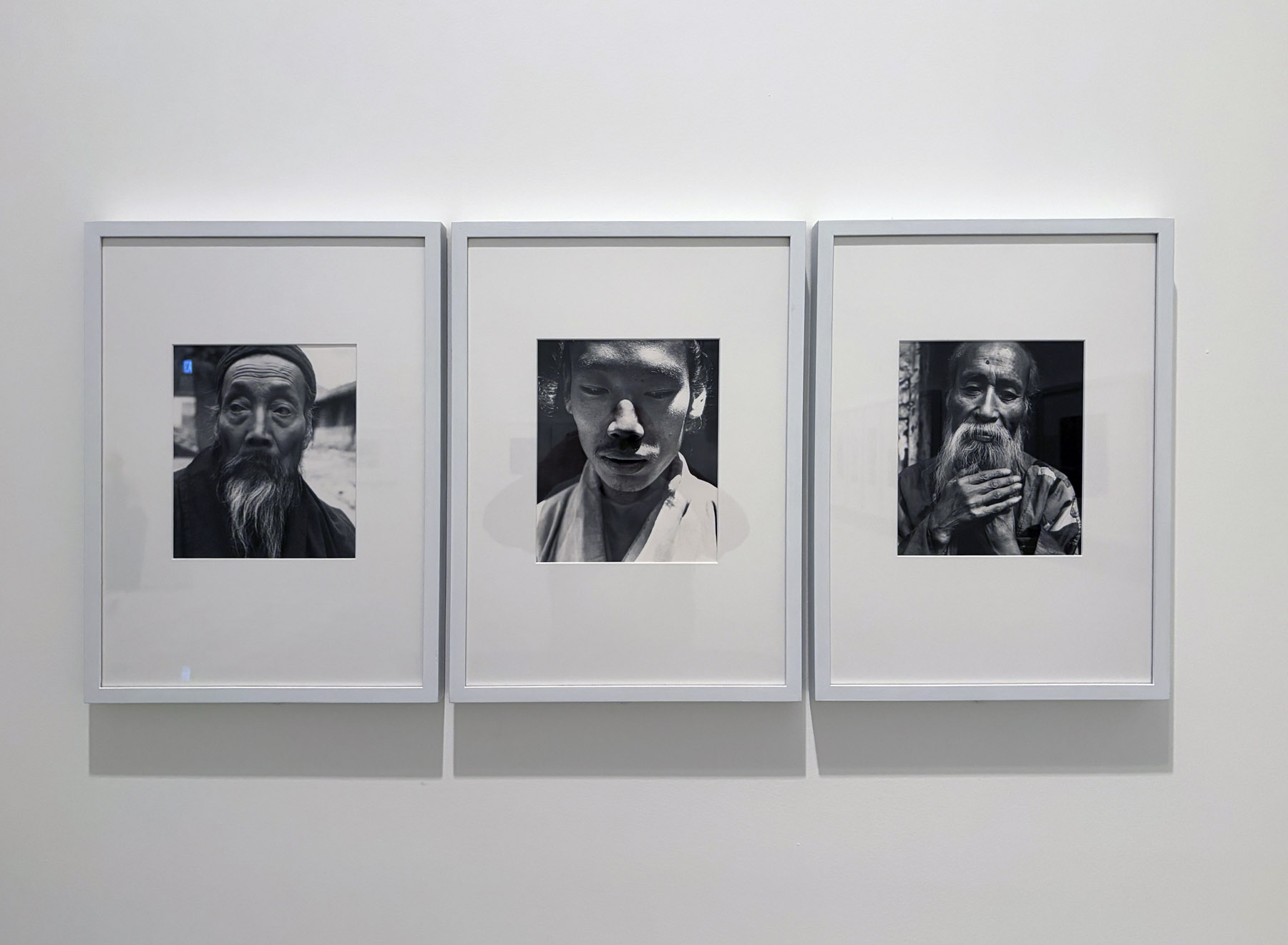
These photographs were taken in 1935, when Morrison journeyed by train to the Hua Shan mountains in eastern China. She photographed the deep chasms and textures of the mountain ranges, and the Taoist monasteries and monks who assisted the travellers on their journeys.

Wall text from the exhibition


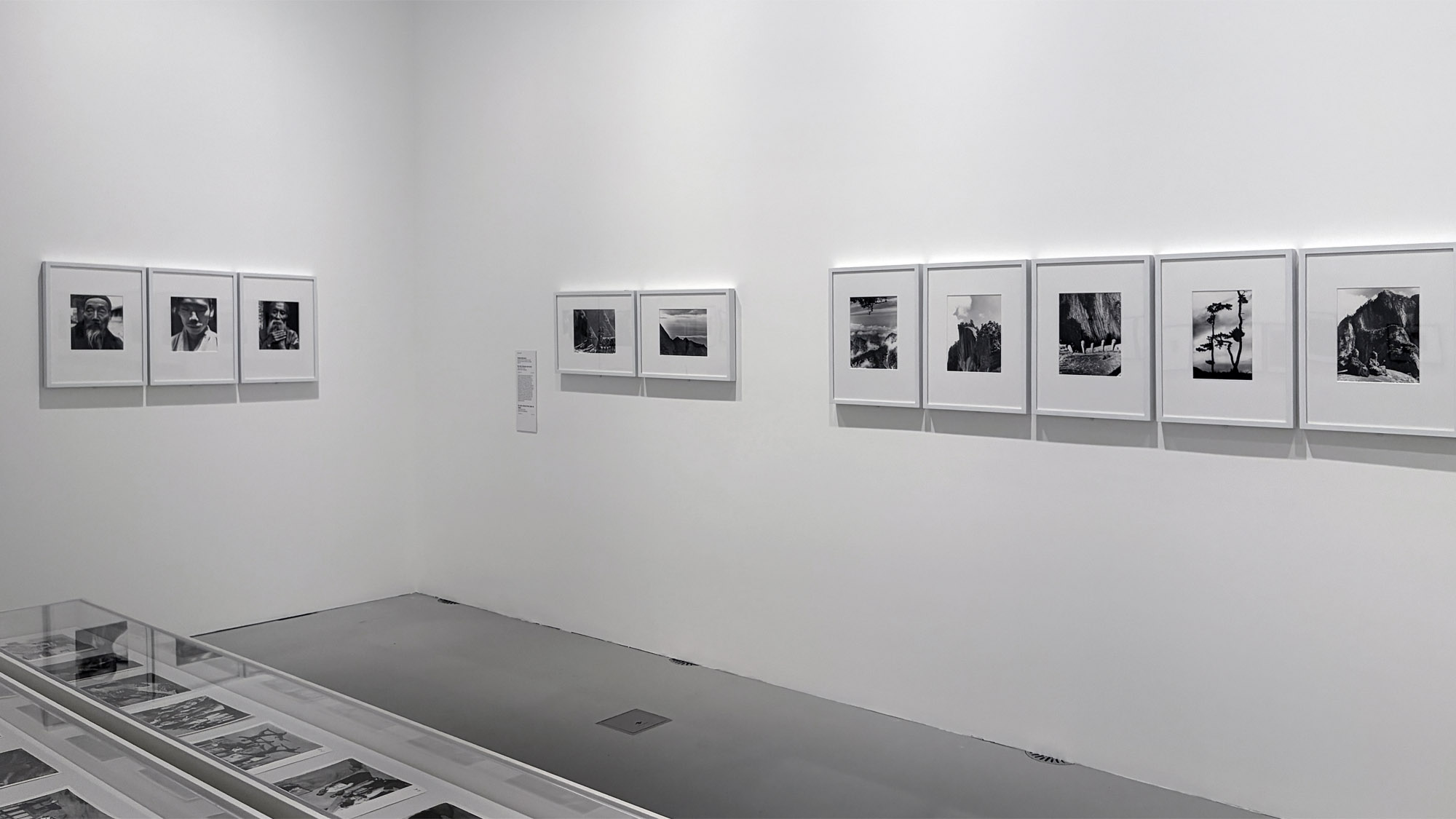
Installation view of the exhibition 'Women Photographers 1900-1975: A Legacy of Light' at NGV International, Melbourne, November 2025 - May 2026 showing photographs by Hedda Morrison (Australian born Germany, 1908-1991)


Installation view of the exhibition Women Photographers 1900-1975: A Legacy of Light at NGV International, Melbourne, November 2025 – May 2026 showing photographs by Hedda Morrison (Australian born Germany, 1908-1991)
Photo: Marcus Bunyan


Installation view of the exhibition 'Women Photographers 1900-1975: A Legacy of Light' at NGV International, Melbourne, November 2025 - May 2026 showing from left to right, six photographs by Hedda Morrison: 'No title (Morning clouds)' (1935, printed 1970s); 'No title (Fairy palm cliff)' (1935, printed 1970s); 'No title (The stone balustrade)' (1935, printed 1970s); 'No title (Three gnarled pines)' (1935, printed 1970s); 'No title (Two Taoist priests below the fiery palm cliff)' (1935, printed 1970s); and 'No title (Pine tree above the Yellow River plain)' (1935, printed 1970s)


Installation view of the exhibition Women Photographers 1900-1975: A Legacy of Light at NGV International, Melbourne, November 2025 – May 2026 showing from left to right, six photographs by Hedda Morrison: No title (Morning clouds) (1935, printed 1970s); No title (Fairy palm cliff) (1935, printed 1970s); No title (The stone balustrade) (1935, printed 1970s); No title (Three gnarled pines) (1935, printed 1970s); No title (Two Taoist priests below the fiery palm cliff) (1935, printed 1970s); and No title (Pine tree above the Yellow River plain) (1935, printed 1970s)
Photo: Marcus Bunyan


Hedda Morrison (Australian born Germany, 1908-1991) 'No title (Pine tree above the Yellow River plain)' 1935, printed 1970s (installation view)


Hedda Morrison (Australian born Germany, 1908-1991)
No title (Pine tree above the Yellow River plain) (installation view)
1935, printed 1970s
Gelatin silver photograph
30.3 x 22.7cm (image)
National Gallery of Victoria, Melbourne
Purchased, 1976
Photo: Marcus Bunyan


Installation view of the exhibition 'Women Photographers 1900-1975: A Legacy of Light' at NGV International, Melbourne, November 2025 – May 2026 showing from left to right, three photographs by Hedda Morrison: 'No title (Taoist priest)' (1935, printed 1970s); 'No title (Taoist novice)' (1935, printed 1970s); and 'No title (Taoist priest)' (1935, printed 1970s)


Installation view of the exhibition Women Photographers 1900-1975: A Legacy of Light at NGV International, Melbourne, November 2025 – May 2026 showing from left to right, three photographs by Hedda Morrison: No title (Taoist priest) (1935, printed 1970s); No title (Taoist novice) (1935, printed 1970s); and No title (Taoist priest) (1935, printed 1970s)
Photo: Marcus Bunyan


Installation view of the exhibition 'Women Photographers 1900-1975: A Legacy of Light' at NGV International, Melbourne, November 2025 - May 2026


Installation views of the exhibition Women Photographers 1900-1975: A Legacy of Light at NGV International, Melbourne, November 2025 – May 2026
Photos: Marcus Bunyan


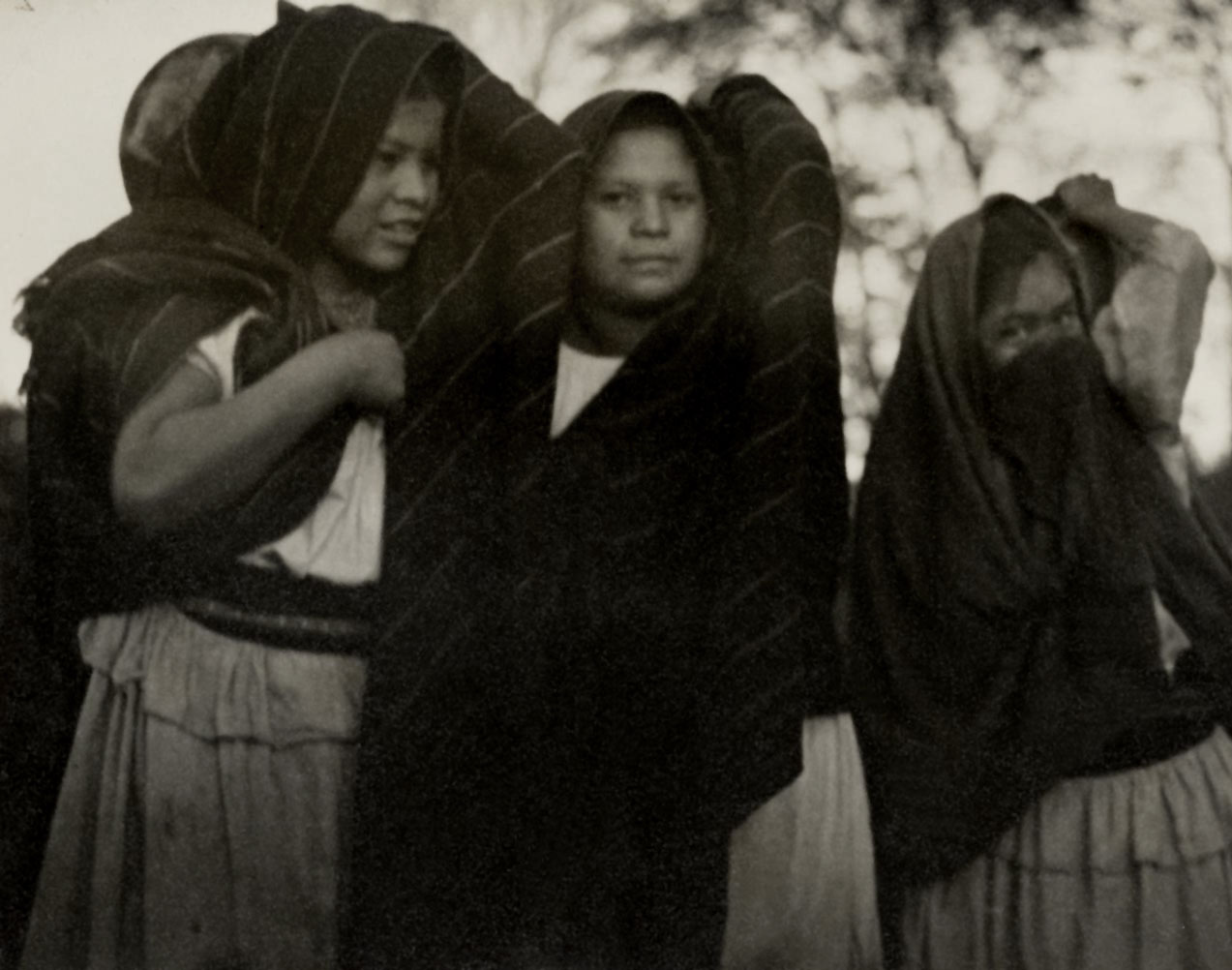
Tina Modotti (Italian, 1896-1942) 'Girls in shawls' 1924-1929


Tina Modotti (Italian, 1896-1942)
Girls in shawls
1924-1929
Gelatin silver photograph
13.2 x 16.9cm (image and sheet)
National Gallery of Victoria, Melbourne
Bowness Family Fund for Photography, 2024


Tina Modotti is known for her socially and politically charged photographs documenting Mexican working life. For Modotti, art, life and politics were inextricably linked. Her photographs show the artist’s commitment to documenting the lives of women and working people. This image is believed to be from a project exploring the popular arts of Mexico, specifically the
shawl-like rebozo, and exemplifies Modotti’s humanist style of documentary photography. It is one of the photographs anthropologist Frances Toor commissioned from Modotti and Edward Weston for the magazine Mexican Folkways, published between 1925 and 1937.

Wall text from the exhibition


Dora Maar (French 1907-1997) 'Vendors laughing behind their charcuterie stall, Barcelona' (Vendeuses et vendeur riant derrière leur étal de charcuterie, Barcelone) 1933


Dora Maar (French 1907-1997)
Vendors laughing behind their charcuterie stall, Barcelona (Vendeuses et vendeur riant derrière leur étal de charcuterie, Barcelone)
1933
Gelatin silver photograph
27.2 x 24.0cm (image)
30.3 x 24.0cm (sheet)
National Gallery of Victoria, Melbourne
Gift of Krystyna Campbell-Pretty AM and Family through the Australian Government’s Cultural Gifts Program, 2021
Public domain


In 1933 Dora Maar travelled to Spain, where she documented the extreme poverty of the country’s cities through people she met on the streets. Aligning with her left-wing politics and opposition to fascism, her photographs honour working-class citizens rather than buildings or monuments. Maar was fascinated by the characters she encountered in La Boqueria, the market in the heart of Barcelona. In this image, she captures a joyful moment as the women vendors playfully turn away from her, hiding their gaze, while a man smiles directly into Maar’s lens.

Wall text from the exhibition


The Document

The primary aim of social documentary photography is to draw attention to social issues, often to promote social or political change. This style of photography blossomed during the tumultuous period of the 1930s, when photographers were commissioned by the United States government to document the effects of the Great Depression. The increased popularity of illustrated mass media such as newspapers and magazines also allowed for the broad dissemination of social documentary images and texts.

The ability of social documentary photography to present a purely objective representation of people or places continues to be fertile ground for debate today.


Installation view of the exhibition 'Women Photographers 1900-1975: A Legacy of Light' at NGV International, Melbourne, November 2025 - May 2026 showing Farm Security Administration photographs by Dorothea Lange
Installation view of the exhibition 'Women Photographers 1900-1975: A Legacy of Light' at NGV International, Melbourne, November 2025 - May 2026


Installation views of the exhibition Women Photographers 1900-1975: A Legacy of Light at NGV International, Melbourne, November 2025 – May 2026 showing Farm Security Administration photographs by Dorothea Lange
Photos: Marcus Bunyan


Installation view of the exhibition 'Women Photographers 1900-1975: A Legacy of Light' at NGV International, Melbourne, November 2025 - May 2026 showing clockwise from bottom left, four photographs by Dorothea Lange: 'Drought-stricken farmers on the shady side of town street while their crops burn up in the fields, Sallisaw, Oklahoma' (1936 printed c. 1975); 'Drought refugees from Oklahoma, Blythe, California' (1936, printed c. 1975); 'Real Estate sign along highway, Riverside County, California' (1937, printed c. 1975); and 'Child living in Oklahoma City, Shacktown' (1936 printed c. 1975)


Installation view of the exhibition Women Photographers 1900-1975: A Legacy of Light at NGV International, Melbourne, November 2025 – May 2026 showing clockwise from bottom left, four photographs by Dorothea Lange: Drought-stricken farmers on the shady side of town street while their crops burn up in the fields, Sallisaw, Oklahoma (1936 printed c. 1975, below); Drought refugees from Oklahoma, Blythe, California (1936, printed c. 1975); Real Estate sign along highway, Riverside County, California (1937, printed c. 1975); and Child living in Oklahoma City, Shacktown (1936 printed c. 1975, below)
Photo: Marcus Bunyan


Dorothea Lange (American, 1895-1965) 'Drought-stricken farmers on the shady side of town street while their crops burn up in the fields, Sallisaw, Oklahoma' 1936, printed c. 1975


Dorothea Lange (American, 1895-1965)
Drought-stricken farmers on the shady side of town street while their crops burn up in the fields, Sallisaw, Oklahoma
1936, printed c. 1975
Gelatin silver photograph
26.4 x 25.4cm (image)
28.0 x 35.4cm (sheet)
National Gallery of Victoria, Melbourne
Purchased, 1975
Public domain


Dorothea Lange (American, 1895-1965) 'Child living in Oklahoma City, Shacktown' 1936, printed c. 1975


Dorothea Lange (American, 1895-1965)
Child living in Oklahoma City, Shacktown
1936, printed c. 1975
Gelatin silver photograph
26.9 x 25.5cm (image)
28.0 x 35.4cm (sheet)
National Gallery of Victoria, Melbourne
Purchased, 1975
Public domain


During the Great Depression, many migrants travelling in search of economic opportunity were forced to create temporary camps along roadsides. For Dorothea Lange, who photographed many such experiences over several years, images like this one were part of a greater project to spark public awareness of the difficulties people were facing. As Lange later said, ‘I had begun to talk to the people I photographed … In the migrant camps, there were always talkers. It gave us a chance to meet on common ground.’

Wall text from the exhibition


In Focus: Farm Security Administration Project

The Farm Security Administration (FSA) was established in 1937 as part of United States President Franklin D. Roosevelt’s New Deal economic reforms, which provided relief to farmers left impoverished by the hardships of the Great Depression. Led by Roy Stryker, the FSA’s photography program was to be one of the most influential social documentary projects ever developed. Many images were reproduced in newspapers and periodicals to show the harsh realities of life for those living in poverty, with the aim of encouraging public support for the government’s economic policies.

The program ran as part of several government agencies, including the Resettlement Administration (1935-37), then the Farm Security Administration (1937-42) and the Office of War Information (1942-44). Stryker hired a range of photographers for the project and, despite their being given comparable briefs, the unique eye of each photographer is apparent in the over 175,000 pictures produced by the project.

As well as forming a comprehensive pictorial record of American life from 1935 to 1944, the FSA photography program generated some of the most recognisable documentary photographs of the twentieth century, including images by women such as Dorothea Lange, Marion Post Wolcott and Marjory Collins.


Dorothea Lange (American, 1895-1965) 'Woman of the high plains, near Childress, Texas' 1938, printed c. 1975 (installation view)


Dorothea Lange (American, 1895-1965)
Woman of the high plains, near Childress, Texas (installation view)
1938, printed c. 1975
Gelatin silver photograph
49.4 x 39.3cm (image)
50.5 x 40.6cm (sheet)
National Gallery of Victoria, Melbourne
Purchased, 1975
Public domain


Dorothea Lange (American, 1895-1965) 'Woman of the High Plains, Texas Panhandle' June 1938, printed c. 1975


Dorothea Lange (American, 1895-1965)
Woman of the high plains, near Childress, Texas
1938, printed c. 1975
Gelatin silver photograph
49.4 x 39.3cm (image)
50.5 x 40.6cm (sheet)
National Gallery of Victoria, Melbourne
Purchased, 1975
Public domain


‘We’ve had no work since March. The worst thing we did was when we sold the car, but we had to sell it to eat, and now we can’t get away from here … This county’s a hard county. They won’t help bury you here. If you die, you’re dead, that’s all.’

~ The subject of this photograph, Nettie Featherston, to Dorothea Lange

Wall text from the exhibition


Dorothea Lange (United States 1895-1965) 'Towards Los Angeles, California' 1936, printed c. 1975


Dorothea Lange (American, 1895-1965)
Towards Los Angeles, California
1936, printed c. 1975
Gelatin silver photograph
39.6 x 39.1cm (image)
40.8 x 50.5cm (sheet)
National Gallery of Victoria, Melbourne
Purchased, 1975


During the Great Depression, the Great Plains of North America became known as the Dust Bowl. A severe drought turned the soil to dust, leading to the migration of thousands of small-scale farmers who could no longer work the land. Dorothea Lange made many road trips to document the plight of migrants heading west in search of work and opportunities. Many of Lange’s photographs, such as this one, show workers travelling in difficult conditions, on foot and by car. This photograph was also used as the basis for a scene in the 1939 film Of Mice and Men, based on John Steinbeck’s story of two migrant ranch workers.

Wall text from the exhibition


Installation view of the exhibition 'Women Photographers 1900-1975: A Legacy of Light' at NGV International, Melbourne, November 2025 - May 2026 showing from top to bottom, two photographs by Dorothea Lange: 'Plantation Overseer, Mississippi Delta, near Clarksdale, Mississippi' (1936, printed c. 1975) and 'Born a slave, resettled after the Civil War, Carrizo Springs, Texas' (1936, printed c. 1975)


Installation view of the exhibition Women Photographers 1900-1975: A Legacy of Light at NGV International, Melbourne, November 2025 – May 2026 showing from top to bottom, two photographs by Dorothea Lange: Plantation Overseer, Mississippi Delta, near Clarksdale, Mississippi (1936, printed c. 1975) and Born a slave, resettled after the Civil War, Carrizo Springs, Texas (1936 printed c. 1975, below)
Photo: Marcus Bunyan


Dorothea Lange (American, 1895-1965) 'Born a slave, resettled after the Civil War, Carrizo Springs, Texas' 1936, printed c. 1975


Dorothea Lange (American, 1895-1965)
Born a slave, resettled after the Civil War, Carrizo Springs, Texas
1936, printed c. 1975
Gelatin silver photograph
26.5 x 25.4cm (image)
28.0 x 35.4cm (sheet)
National Gallery of Victoria, Melbourne
Purchased, 1975
Public domain


Dorothea Lange witnessed racial segregation in the Southern states and often photographed individuals affected by the resulting social and economic inequalities. This work is also known by an alternate title: ‘Bob Lemmons, Carrizo Springs, Texas. Born a slave about 1850, south of San Antonio. Came to Carrizo Springs during the Civil War with white cattlemen seeking new range. In 1865, with his master was one of the first settlers. Knew Billy the Kid, King Fisher, and other noted bad men of the border.’

Wall text from the exhibition


Marion Post Wolcott (American, 1910-1990) 'Shenandoah Valley, Virginia' 1941, printed c. 1975 (installation view)


Marion Post Wolcott (American, 1910-1990)
Shenandoah Valley, Virginia (installation view)
1941, printed c. 1975
Gelatin silver photograph
25.6 x 34.1cm (image)
28.0 x 35.4cm (sheet)
National Gallery of Victoria, Melbourne
Purchased, 1975
Public domain
Photo: Marcus Bunyan


Marion Post Wolcott (American, 1910-1990) 'Shenandoah Valley, Virginia' 1941, printed c. 1975


Marion Post Wolcott (American, 1910-1990)
Shenandoah Valley, Virginia
1941, printed c. 1975
Gelatin silver photograph
25.6 x 34.1cm (image)
28.0 x 35.4cm (sheet)
National Gallery of Victoria, Melbourne
Purchased, 1975
Public domain


Marion Post Wolcott (American, 1910-1990) 'One of the judges at the horse races, Warrenton, Virginia' 1941, printed c. 1975 (installation view)


Marion Post Wolcott (American, 1910-1990)
One of the judges at the horse races, Warrenton, Virginia (installation view)
1941, printed c. 1975
Gelatin silver photograph
39.6 x 39.1cm (image)
40.8 x 50.5cm (sheet)
National Gallery of Victoria, Melbourne
Purchased, 1975
Public domain
Photo: Marcus Bunyan


Marion Post Wolcott (American, 1910-1990) 'Transportation for hep cats Louisville, Kentucky' 1940, printed c. 1975 (installation view)


Marion Post Wolcott (American, 1910-1990)
Transportation for hep cats Louisville, Kentucky (installation view)
1940, printed c. 1975
Gelatin silver photograph
25.7 x 34.1cm (image)
36.1 x 44.6cm (sheet)
National Gallery of Victoria, Melbourne
Purchased, 1975
Public domain
Photo: Marcus Bunyan


Marion Post Wolcott (American, 1910-1990) 'Transportation for hep cats Louisville, Kentucky' 1940, printed c. 1975


Marion Post Wolcott (American, 1910-1990)
Transportation for hep cats Louisville, Kentucky
1940, printed c. 1975
Gelatin silver photograph
25.7 x 34.1cm (image)
36.1 x 44.6cm (sheet)
National Gallery of Victoria, Melbourne
Purchased, 1975
Public domain


Installation view of the exhibition 'Women Photographers 1900-1975: A Legacy of Light' at NGV International, Melbourne, November 2025 - May 2026 showing from third left to right, three photographs by Marion Post Wolcott: 'Near Wadesboro, North Carolina' (1938, printed c. 1975); 'Baptismal service, Morehead, Kentucky' (1940, printed c. 1975); and 'Jitterbugging in a juke joint on Saturday night, Clarksdale, Mississippi' (1939, printed c. 1975)


Installation view of the exhibition Women Photographers 1900-1975: A Legacy of Light at NGV International, Melbourne, November 2025 – May 2026 showing from third left to right, three photographs by Marion Post Wolcott: Near Wadesboro, North Carolina (1938 printed c. 1975, below); Baptismal service, Morehead, Kentucky (1940 printed c. 1975, below); and Jitterbugging in a juke joint on Saturday night, Clarksdale, Mississippi (1939 printed c. 1975, below)
Photo: Marcus Bunyan


Marion Post Wolcott (American, 1910-1990) 'Near Wadesboro, North Carolina' 1938, printed c. 1975 (installation view)


Marion Post Wolcott (American, 1910-1990)
Near Wadesboro, North Carolina (installation view)
1938, printed c. 1975
Gelatin silver photograph
26.4 × 26.5cm (image)
28.0 × 35.3cm (sheet)
National Gallery of Victoria, Melbourne
Purchased, 1975
Public domain
Photo: Marcus Bunyan


The people in this photograph are the children of tenant farmers. The older child holds the hand of the younger, whose legs are bowed likely due to rickets, a medical condition caused by malnourishment. This is a vivid image that captures both the intimacy between children and the effects of environmental and economic devastation.

Wall text from the exhibition


Marion Post Wolcott (American, 1910-1990) 'Haircutting in front of plantation store after being paid off on Saturday, Mileston Plantation, Mississippi Delta' 1939, printed c. 1939 (installation view)


Marion Post Wolcott (American, 1910-1990)
Haircutting in front of plantation store after being paid off on Saturday, Mileston Plantation, Mississippi Delta (installation view)
1939, printed c. 1939
Gelatin silver photograph
27.0 x 34.6cm (image and sheet)
National Gallery of Victoria, Melbourne
Purchased, 1980
Photo: Marcus Bunyan


Marion Post Wolcott (American, 1910–1990) '[Haircutting in Front of General Store and Post Office on Marcella Plantation, Mileston, Mississippi]' 1939


Marion Post Wolcott (American, 1910-1990)
Haircutting in front of plantation store after being paid off on Saturday, Mileston Plantation, Mississippi Delta
1939, printed c. 1939
Gelatin silver photograph
27.0 x 34.6cm (image and sheet)
National Gallery of Victoria, Melbourne
Purchased, 1980


Marion Post Wolcott (American, 1910-1990) 'Baptismal service, Morehead, Kentucky' 1940, printed c. 1975


Marion Post Wolcott (American, 1910-1990)
Baptismal service, Morehead, Kentucky
1940, printed c. 1975
Gelatin silver photograph
36.3 X 49.3cm (image) 40.7 X 50.5cm (sheet)
National Gallery of Victoria, Melbourne
Purchased, 1975


Marion Post Wolcott (American, 1910-1990)
Jitterbugging in a juke joint on Saturday night, Clarksdale, Mississippi
1939, printed c. 1975
gelatin silver photograph
36.7 x 49.3cm (image) 40.7 x 50.5cm (sheet)
National Gallery of Victoria, Melbourne
Purchased, 1975


Marion Post Wolcott had a keen sense of social justice, having lived in Austria in the early 1930s, where she witnessed firsthand the rise of Nazism. On her return home to New York in 1933, she was determined to use her photography to raise awareness of social inequalities. While working for the Farm Security Administration (FSA) in the segregated American South, Wolcott witnessed the bleak economic situation endured by African Americans, which was exacerbated by the Great Depression. With an ‘open eye’, Wolcott captured both the positive effects of the FSA and the difficult realities of daily life. Her candid images of African American communities in the South – such as this joyful shot of people dancing – countered the dominant images of Black lives as they were commonly represented in mainstream media.

Wall text from the exhibition


Installation view of the exhibition 'Women Photographers 1900-1975: A Legacy of Light' at NGV International, Melbourne, November 2025 - May 2026 showing three photographs by Australian photographer Heather George


Installation view of the exhibition Women Photographers 1900-1975: A Legacy of Light at NGV International, Melbourne, November 2025 – May 2026 showing three photographs by Heather George (Australia, 1907-1983): Rawhide bed, Wave Hill Station (1952, printed 1978); Stockyards, Wave Hill Station, Northern Territory (1952, printed 1978); and Stockyards, stockmen in distance. Wave Hill Station, Northern Territory (1952, printed 1978)
Photo: Marcus Bunyan


Heather George (Australia, 1907-1983) 'Stockyards, Wave Hill Station, Northern Territory' 1952, printed 1978


Heather George (Australia, 1907-1983)
Stockyards, Wave Hill Station, Northern Territory
1952, printed 1978
From The Northern Territory series (1952)
Gelatin silver photograph
24.0 x 28.8cm (image)
National Gallery of Victoria, Melbourne
Purchased, 1980
Public domain


In the 1950s and 1960s Heather George worked as a freelance photographer and photojournalist. In 1952 Walkabout magazine published a series of photographs George made in the Northern Territory outback, including images of Wave Hill Station, a vast pastoral lease on the lands of the Gurindji people. Fourteen years later, it was to go down in history as the location of a turning point in the recognition of land rights for Australia’s First Nations peoples.

Wall text from the exhibition


Consuelo Kanaga (American, 1894-1978) 'She is a Tree of Life' 1950


Consuelo Kanaga (American, 1894-1978)
She is a tree of life to them
1950
Gelatin silver photograph
32.8 x 24.1cm (image and sheet)
National Gallery of Victoria, Melbourne
Bowness Family Fund for Photography, 2024
© Consuelo Kanaga


Consuelo Kanaga worked at the San Francisco Chronicle from 1915, later joining the California Camera Club, where she met photographers Imogen Cunningham, Dorothea Lange and Edward Weston. Kanaga’s image-making was informed by her involvement in liberal politics and the nascent civil rights
movement. In 1950 she stayed in an artists’ colony in Maitland, Florida, and documented the lives of Black field workers living there. This refined portrait of a mother with her children became well known around the world after its inclusion in the touring exhibition The Family of Man, curated by pioneering photographer Edward Steichen.

Wall text from the exhibition


Ruth Orkin (American, 1921-1985) 'American girl in Italy, Florence' 1951, printed 1980 (installation view)


Ruth Orkin (American, 1921-1985)
American girl in Italy, Florence (installation view)
1951, printed 1980
Gelatin silver photograph
30.2 x 46.9cm (image)
40.3 x 50.6cm (sheet)
National Gallery of Victoria, Melbourne
Gift of Krystyna Campbell-Pretty AM and Family through the Australian Government’s Cultural Gifts Program, 2022
Photo: Marcus Bunyan


In 1950 freelance photographer Ruth Orkin was included in the Young Photographers exhibition at the Museum of Modern Art, New York, and in 1951 Life magazine sent her on assignment to Israel. Before returning to America, she spent time in Italy, where she met a young American painter, Jinx Allen. The women collaborated on a series of photographs commissioned from Orkin by Cosmopolitan magazine for an article titled ‘Don’t Be Afraid to Travel Alone’. Standing in a Florence intersection, Orkin captured her friend as she manoeuvred through a crowd of men. The resulting image is reminiscent of a movie still – Orkin would go on to co-direct two feature films with her husband in the 1950s.

Wall text from the exhibition


Installation view of the exhibition 'Women Photographers 1900-1975: A Legacy of Light' at NGV International, Melbourne, November 2025 - May 2026 showing from left to right, Maggie Diaz '3AW mobile studio, Elwood Beach' (1960s printed 2014); Maggie Diaz 'Ladies at the bar, Tavern Club, Chicago' (1957, printed 2014); three photographs by Diane Arbus: 'Girl with a cigar in Washington Square Park, N.Y.C.' (1965, printed later); 'Blaze Starr in her living room, Baltimore, Md.' (1964, printed later); 'A Couple at a Dance, N.Y.C.' (1960, printed later); and Lisette Model 'Woman with veil, San Francisco' (1949, printed c. 1960)


Installation view of the exhibition Women Photographers 1900-1975: A Legacy of Light at NGV International, Melbourne, November 2025 – May 2026 showing from left to right, Maggie Diaz 3AW mobile studio, Elwood Beach (1960s printed 2014, below); Maggie Diaz Ladies at the bar, Tavern Club, Chicago (1957, printed 2014); three photographs by Diane Arbus: Girl with a cigar in Washington Square Park, N.Y.C. (1965, printed later); Blaze Starr in her living room, Baltimore, Md. (1964, printed later); A Couple at a Dance, N.Y.C. (1960, printed later); and Lisette Model Woman with veil, San Francisco (1949, printed c. 1960)
Photo: Marcus Bunyan


Maggie Diaz (American, 1925-2016, Australia 1961-2016) '3AW mobile studio, Elwood Beach' 1960s, printed 2014 (installation view)


Maggie Diaz (American, 1925-2016, Australia 1961-2016)
3AW mobile studio, Elwood Beach (installation view)
1960s, printed 2014
Pigment print
27.9 x 30.0cm (image)
48.2 x 33.0cm (sheet)
ed. 2/25
National Gallery of Victoria, Melbourne
Purchased, Victorian Foundation for Living Australian Artists, 2015
Photo: Marcus Bunyan


Maggie Diaz (American, 1925-2016, Australia 1961-2016) '3AW mobile studio, Elwood Beach' 1960s, printed 2014


Maggie Diaz (American, 1925-2016, Australia 1961-2016)
3AW mobile studio, Elwood Beach
1960s, printed 2014
Pigment print
27.9 x 30.0cm (image)
48.2 x 33.0cm (sheet)
ed. 2/25
National Gallery of Victoria, Melbourne
Purchased, Victorian Foundation for Living Australian Artists, 2015
© Maggie Diaz


Moving to Australia in 1961, American photographer Maggie Diaz established her Melbourne studio specialising in advertising, portraiture and social documentary photography. Among her commercial clients was the local radio station 3AW, which displayed her photographs in its new CBD studio. A 1964 article in Melbourne newspaper The Age described the headquarters, noting with apparent surprise that the commissioned photographs are ‘the work of a woman’.

Wall text from the exhibition


Installation view of the exhibition 'Women Photographers 1900-1975: A Legacy of Light' at NGV International, Melbourne, November 2025 - May 2026


Installation view of the exhibition Women Photographers 1900-1975: A Legacy of Light at NGV International, Melbourne, November 2025 – May 2026
Photo: Marcus Bunyan


BOTH: Mikki Ferrill (American, b. 1937) 'Untitled' 1970s (installation view)


BOTH

Mikki Ferrill (American, b. 1937)
Untitled (installation view)
1970s
Gelatin silver photograph
20.7 x 13.6cm (image)
25.5 x 20.2cm (sheet)
National Gallery of Victoria, Melbourne
Bowness Family Fund for Photography, 2024
Photo: Marcus Bunyan


Valeria ‘Mikki’ Ferrill is an African American photographer known for her documentation of the Black community in Chicago’s South Side during the 1960s and 70s. Ferrill studied advertising design and illustration at the School of the Art Institute of Chicago. She eventually became a photojournalist, joining a group of Black photographers from the area who shot for local periodicals and newspapers. Ferrill worked on assignments in Mexico in the late 1960s, returning to Chicago in 1970.

Throughout

Wall text from the exhibition


Collaboration and Change

Many postwar street photographers captured their subjects in the ‘instant’. By embracing close-looking, artists relied on chance to create spontaneous compositions, capturing candid, everyday moments. Photographers such as Diane Arbus worked on the streets of New York City, creating vivid portraits of contemporary American life. Arbus often collaborated with her subjects, producing striking images in the moment or curating compositions for magazine commissions.

Fashion photography was on the rise in the period, with American publications such as Harper’s Bazaar playing a pivotal role in amplifying the art form. Louise Dahl-Wolfe, Lillian Bassman and Toni Frissell were regular contributors to the magazine. Their photographs depicted the idealistic and aspirational modern woman.

Yamazawa Eiko and Tokiwa Toyoko were trailblazing women photographers working in Japan at the same time. Their works reflect the social changes of postwar Japan, expressed through the medium of the photobook.


Installation view of the exhibition 'Women Photographers 1900-1975: A Legacy of Light' at NGV International, Melbourne, November 2025 - May 2026
Installation view of the exhibition 'Women Photographers 1900-1975: A Legacy of Light' at NGV International, Melbourne, November 2025 - May 2026 showing at left, three photographs by the photographer Lillian Bassman (American, 1917-2012): 'Black - with one white glove, Barbara Mullen, Christian Dior, Harper's Bazaar, New York, 1958' (1958, printed (1994); 'Toreador and Barbara Mullen (for Harper's Bazaar)' (1950, printed 2006); and 'More fashion mileage per dress, Barbara Vaughn, Harper’s Bazaar, New York' (1956)


Installation views of the exhibition Women Photographers 1900-1975: A Legacy of Light at NGV International, Melbourne, November 2025 – May 2026 showing at left, three photographs by the photographer Lillian Bassman (American, 1917-2012): Black – with one white glove, Barbara Mullen, Christian Dior, Harper’s Bazaar, New York, 1958 (1958, printed (1994); Toreador and Barbara Mullen (for Harper’s Bazaar) (1950, printed 2006); and More fashion mileage per dress, Barbara Vaughn, Harper’s Bazaar, New York (1956, below)
Photos: Marcus Bunyan


Installation view of the exhibition 'Women Photographers 1900-1975: A Legacy of Light' at NGV International, Melbourne, November 2025 - May 2026 showing at right, three photographs by the photographer Lillian Bassman (American, 1917-2012): 'Black - with one white glove, Barbara Mullen, Christian Dior, Harper's Bazaar, New York, 1958' (1958, printed (1994); 'Toreador and Barbara Mullen (for Harper's Bazaar)' (1950, printed 2006); and 'More fashion mileage per dress, Barbara Vaughn, Harper's Bazaar, New York' (1956)


Installation view of the exhibition Women Photographers 1900-1975: A Legacy of Light at NGV International, Melbourne, November 2025 – May 2026 showing at right, three photographs by the photographer Lillian Bassman (American, 1917-2012): Black – with one white glove, Barbara Mullen, Christian Dior, Harper’s Bazaar, New York, 1958 (1958, printed (1994); Toreador and Barbara Mullen (for Harper’s Bazaar) (1950, printed 2006); and More fashion mileage per dress, Barbara Vaughn, Harper’s Bazaar, New York (1956, below)
Photo: Marcus Bunyan


Lillian Bassman (American, 1917-2012) 'More fashion mileage per dress, Barbara Vaughn, Harper's Bazaar, New York' 1956


Lillian Bassman (American, 1917-2012)
More fashion mileage per dress, Barbara Vaughn, Harper’s
Bazaar, New York

1956
gelatin silver photograph, ed. 13/25
43.1 x 60.9cm (image)
50.8 x 56.5cm (sheet)
Gift of Krystyna Campbell-Pretty AM and Family through
the Australian Government’s Cultural Gifts Program, 2023
© Estate of Lillian Bassman


Lillian Bassman began her career as a painting assistant at the Works Progress Administration, and studied fashion illustration and textile design at Pratt Institute in the late 1930s. In 1940 the famed art director of Harper’s Bazaar magazine, Alexey Brodovitch, offered her a scholarship to study under
him. This led to her role as art director of the magazine’s spinoff Junior Bazaar. There she worked with photographers such as Richard Avedon and Robert Frank, and in 1947 began working as a freelance photographer in fashion and advertising.

Wall text from the exhibition


New Ways Of Seeing: Portraits, Intimacy, Liberation

The 1960s and 1970s saw extraordinary social change around the world. Political activism was on the rise, stemming from the anti-Vietnam War movement. There was an increased consciousness around racial equality, feminism and LGBTQ rights. Photographers also documented the popularisation of alternative ways of living, such as shared housing and collective lifestyles, with images that sometimes appeared in counterculture publications.

Australian women photographers working during this period were among the first to gain access to tertiary photography education. Among the key ideas that emerged through the work of these artists was a focus on community, personal relationships and everyday life.

This exhibition culminates in 1975, a watershed year. It marked the first International Women’s Year, inaugurated through the first UN World Conference on Women, and the height of second-wave feminism. That year the NGV staged the exhibition Six Australian Women Photographers, sometimes referenced as Wimmin, featuring work by Marion Marrison, Melanie Nunn, Fiona Hall, Melanie Le Guay, Ingeborg Tyssen and Jacqueline Mitelman. Fifty years on, many of the images from that exhibition are included here, presented alongside work from the artists’ peers.

Text from the NGV website


Installation view of the exhibition 'Women Photographers 1900-1975: A Legacy of Light' at NGV International, Melbourne, November 2025 - May 2026


Installation view of the exhibition Women Photographers 1900-1975: A Legacy of Light at NGV International, Melbourne, November 2025 – May 2026
Photo: Marcus Bunyan


ALL: Christine Godden (Australian, b. 1947) 'Untitled' 1974 (installation view)


 ALL

Christine Godden (Australian, b. 1947)
Untitled (installation view)
1974
Gelatin silver photographs
National Gallery of Victoria, Melbourne
Purchased from Admission Funds, 1991
© Christine Godden
Photo: Marcus Bunyan


Christine Godden (Australian, b. 1947) 'Untitled' 1974


Christine Godden (Australian, b. 1947)
Untitled
1974
Gelatin silver photograph
15.2 x 22.5cm (image) 20.0 x 25.2cm (sheet)
National Gallery of Victoria, Melbourne
Purchased from Admission Funds, 1991
© Christine Godden


Installation view of the exhibition 'Women Photographers 1900-1975: A Legacy of Light' at NGV International, Melbourne, November 2025 - May 2026 showing at left, six photographs by Christine Godden (Australian, b. 1947) 'Untitled' 1973/1974


Installation view of the exhibition Women Photographers 1900-1975: A Legacy of Light at NGV International, Melbourne, November 2025 – May 2026 showing at left, six photographs by Christine Godden (Australian, b. 1947) Untitled 1973/1974 (below)
Photo: Marcus Bunyan


ALL: Christine Godden (Australian, b. 1947) 'Untitled' 1973/74, printed 1986 (installation view)


Christine Godden (Australian, b. 1947)
Untitled
1973, printed 1986
Untitled
1973, printed 1986
Untitled
1973, printed 1986
Untitled
1974
Untitled
1973, printed 1986
Untitled
1974
Purchased from Admission Funds, 1991
Photo: Marcus Bunyan


Installation view of the exhibition 'Women Photographers 1900-1975: A Legacy of Light' at NGV International, Melbourne, November 2025 - May 2026 showing at left, six photographs by Christine Godden (Australian, b. 1947) 'Untitled' 1973/1974; and four photographs by Marion Marrison (Australian, b. 1951) including at right 'No title (Lady)' (1973)


Installation view of the exhibition Women Photographers 1900-1975: A Legacy of Light at NGV International, Melbourne, November 2025 – May 2026 showing at left, six photographs by Christine Godden (Australian, b. 1947) Untitled 1973/1974 (above); and four photographs by Marion Marrison (Australian, b. 1951) including at right No title (Lady) (1973)
Photo: Marcus Bunyan


Installation view of the exhibition 'Women Photographers 1900-1975: A Legacy of Light' at NGV International, Melbourne, November 2025 - May 2026 showing at right, four photographs by Fiona Hall (Australian, b. 1953)


Installation view of the exhibition Women Photographers 1900-1975: A Legacy of Light at NGV International, Melbourne, November 2025 – May 2026 showing at right, four 1974 photographs by Fiona Hall (Australian, b. 1953)
Photo: Marcus Bunyan


Fiona Hall began focusing on photography in the mid 1970s, following her time as an assistant to British landscape photographer Fay Godwin. Taken with a large-format camera, Hall’s early photographs were influenced by late modernism and formalism, the study of art focusing on the visual aspects of a work. In this image, Hall plays with forms and lines, capturing the elements of the room as if they have been layered, and she positions herself so that her reflection appears as though it is hovering in space. Curator and art historian Helen Ennis writes that while we often expect self-portraiture to reveal the artist, Hall’s photograph seems to conceal her.

Wall text from the exhibition


Installation view of the exhibition 'Women Photographers 1900-1975: A Legacy of Light' at NGV International, Melbourne, November 2025 - May 2026 showing at right, four 1974 photographs by Fiona Hall (Australian, b. 1953); and at right, four photographs by Sue Ford (Australian, 1943-2009)


Installation view of the exhibition Women Photographers 1900-1975: A Legacy of Light at NGV International, Melbourne, November 2025 – May 2026 showing at right, four 1974 photographs by Fiona Hall (Australian, b. 1953); and at right, four photographs by Sue Ford (Australian, 1943-2009) (below)
Photo: Marcus Bunyan


Installation view of the exhibition 'Women Photographers 1900-1975: A Legacy of Light' at NGV International, Melbourne, November 2025 - May 2026 showing from left to right, Sue Ford 'Carmel and Trish' (1962, printed 1988) and Sue Ford 'Sue Pike' (1963, printed 1988)


Installation view of the exhibition Women Photographers 1900-1975: A Legacy of Light at NGV International, Melbourne, November 2025 – May 2026 showing from left to right, Sue Ford Carmel and Trish (1962, printed 1988) and Sue Ford Sue Pike (1963, printed 1988)
Photo: Marcus Bunyan


Carmel and Trish (1962, printed 1988) was taken early in Sue Ford’s artistic career, and features her friends Carmel and Trish posing in a paddock. Although Ford approached her photography seriously, her sense of humour comes through in this image, which has been described as both an experiment and a playful critique of photography. Throughout her career, Ford often turned the camera on herself, as well as on her family, friends and acquaintances, using the medium to explore social and political issues. Her work is aligned with the important wave of Australian feminist photographers active during the 1970s

Wall text from the exhibition


Installation view of the exhibition 'Women Photographers 1900-1975: A Legacy of Light' at NGV International, Melbourne, November 2025 - May 2026 showing pages from Carol Jerrems (Australian, 1949-1980) and Virginia Fraser ​(Australian, 1947-2021) 'A book about Australian Women' ​Melbourne, Outback Press, 1974​ (below)


Installation view of the exhibition Women Photographers 1900-1975: A Legacy of Light at NGV International, Melbourne, November 2025 – May 2026 showing pages from Carol Jerrems (Australian, 1949-1980) and Virginia Fraser ​(Australian, 1947-2021) A book about Australian Women ​Melbourne, Outback Press, 1974​ (below)
Photo: Marcus Bunyan


Carol Jerrems (Australian, 1949-1980) and Virginia Fraser ​(Australian, 1947-2021) 'A book about Australian Women' ​ Melbourne, Outback Press, 1974​


Carol Jerrems (Australian, 1949-1980) and Virginia Fraser ​(Australian, 1947-2021)
A book about Australian Women
Melbourne, Outback Press, 1974​
Shaw Research Library


This book features 131 photographs by the Melbourne-based photographer Carol Jerrems, interspersed with interviews and texts edited by Virginia Fraser. Published in 1974, the year before International Women’s Year, it captures a moment in time when many Australian women were deeply engaged in global feminist ideas. Described as a ‘collective portrait’, A Book About Australian Women has become an iconic reference in Australian feminist history. It highlights a diverse group of women involved in cultural life across Australia. Some of those featured include writer Anne Summers, painter Grace Cossington Smith, film director Jennie Boddington and the Wiradjuri tennis champion Evonne Goolagong Cawley.

Vitrine text from the exhibition
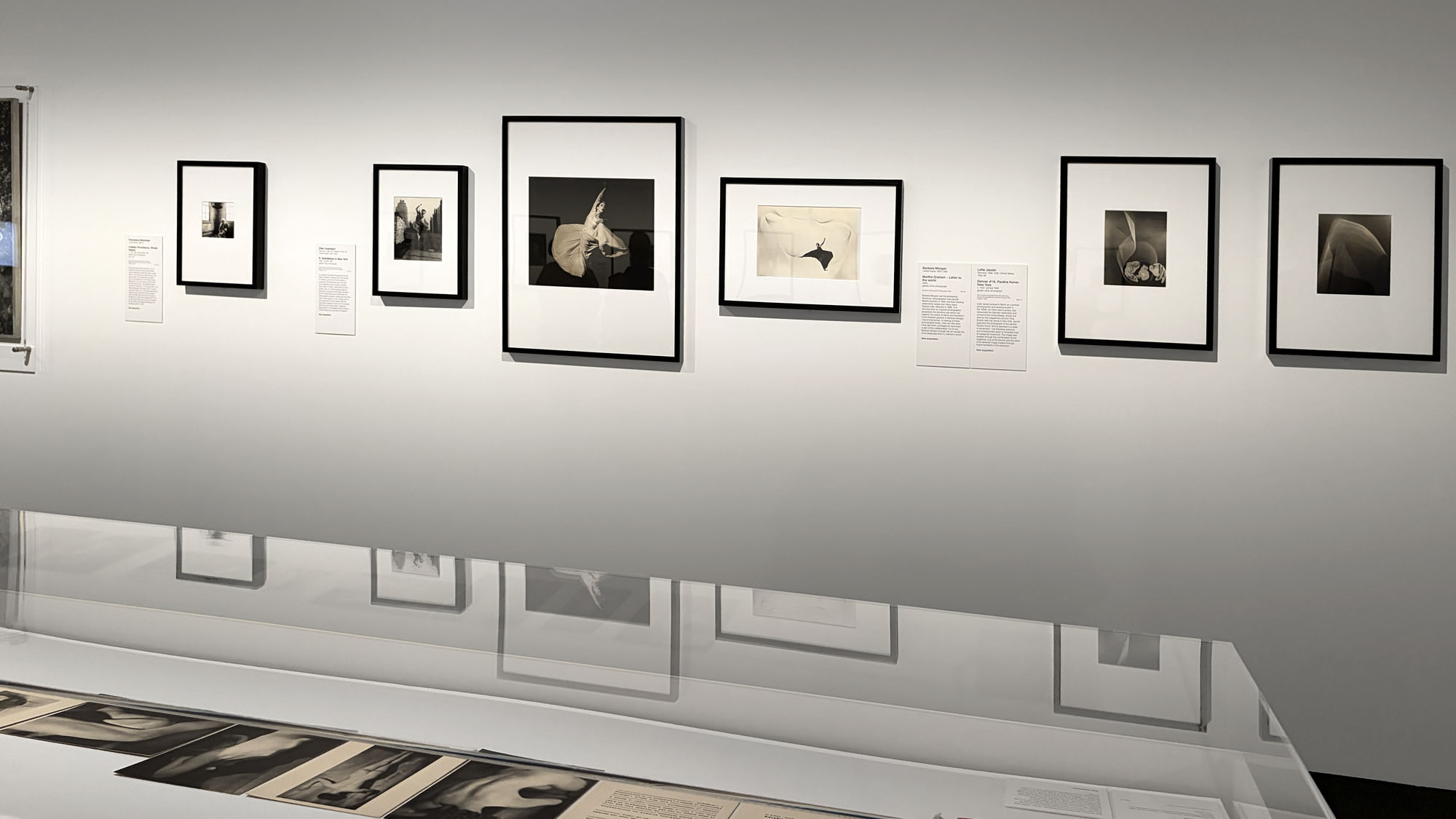
 

Carol Jerrems (Australian, 1949-1980) 'Kath Walker, Moongalba' 1974


Carol Jerrems (Australian, 1949-1980)
Kath Walker (Oodgeroo Noonuccal), Moongalba
1974
Gelatin silver photograph
16.3 x 24.2cm (image and sheet)
ed. 1/9
National Gallery of Victoria, Melbourne
Gift of Ms Ingeborg Tyssen, 2001
© Courtesy of Ken Jerrems & estate of Lance Jerrems


Carol Jerrems studied photography at Prahran College in Melbourne, winning several student awards before first exhibiting her work in the early 1970s. Jerrems collaborated with Australian artist Virginia Fraser on the 1974 publication A Book About Australian Women, a suite of portraits featuring a diverse range of subjects. This portrait was taken as part of that project, and an edition is included in the book. The work features Oodgeroo Noonuccal, previously known as Kath Walker, who was an Aboriginal rights activist, poet, WWII veteran, environmentalist and educator. Noonuccal is photographed with her pen poised at the learning centre she established on Minjerribah (North Stradbroke Island, Queensland) to teach visitors to the island about Aboriginal culture and Country.

Wall text from the exhibition
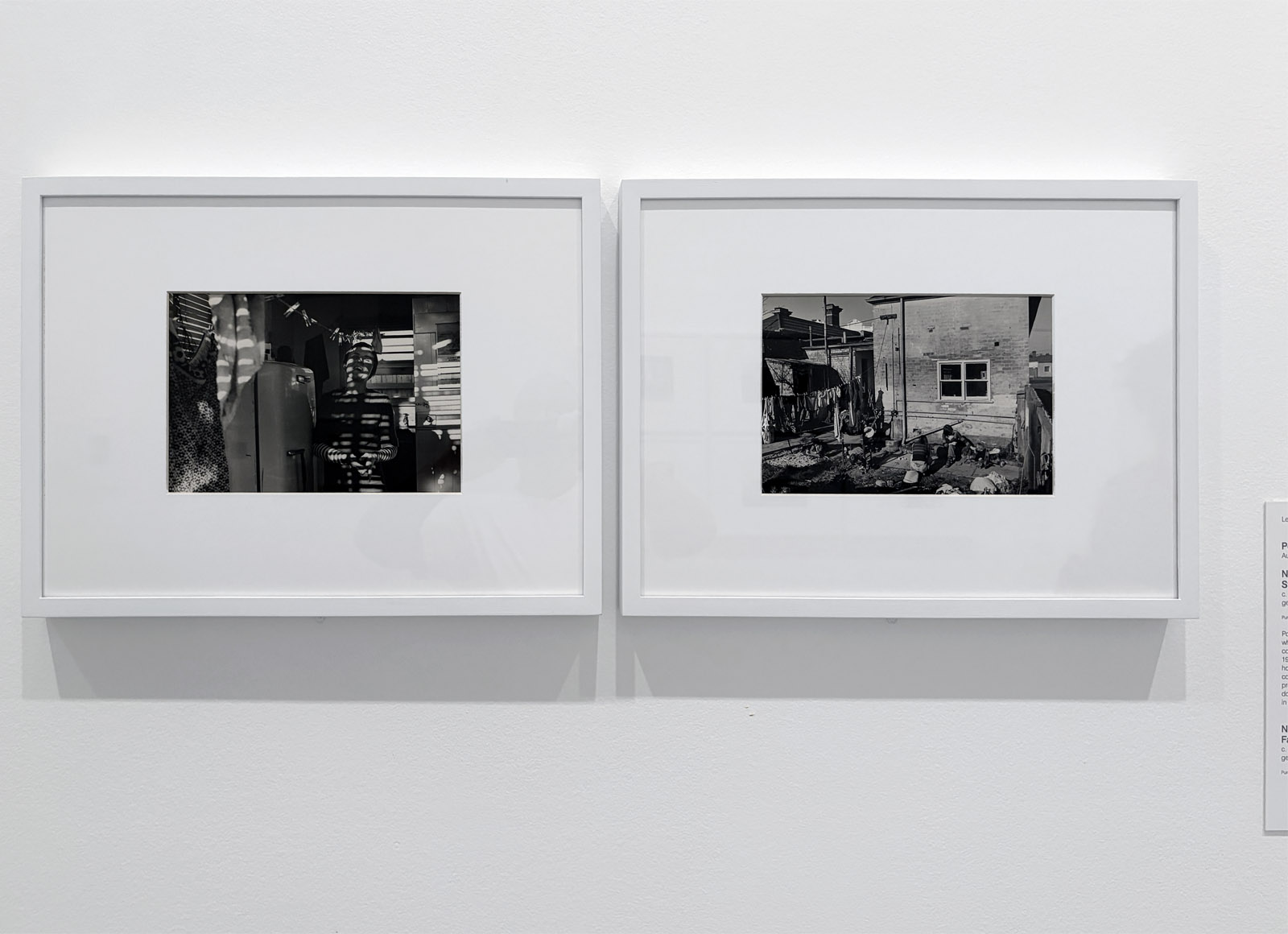
 

Installation view of the exhibition 'Women Photographers 1900-1975: A Legacy of Light' at NGV International, Melbourne, November 2025 - May 2026 showing from left to right, two photographs by Ponch Hawkes (Australian, b. 1946): 'No title (Helen at Falconer Street)' (c. 1975 printed 2018); and 'No title (In the backyard at Falconer Street)' (c. 1975 printed 2018)


Installation view of the exhibition Women Photographers 1900-1975: A Legacy of Light at NGV International, Melbourne, November 2025 – May 2026 showing from left to right, two photographs by Ponch Hawkes (Australian, b. 1946): No title (Helen at Falconer Street) (c. 1975 printed 2018); and No title (In the backyard at Falconer Street) (c. 1975 printed 2018)
Photo: Marcus Bunyan


Ponch Hawkes began to photograph while working as a journalist for the counterculture magazine The Digger in 1972. In 1973 she moved into a communal house in Melbourne with fellow Digger contributor Helen Garner. Together they produced stories for the broadsheet, documenting new ways of living emerging in inner-city Melbourne in the early 1970s.

Wall text from the exhibition
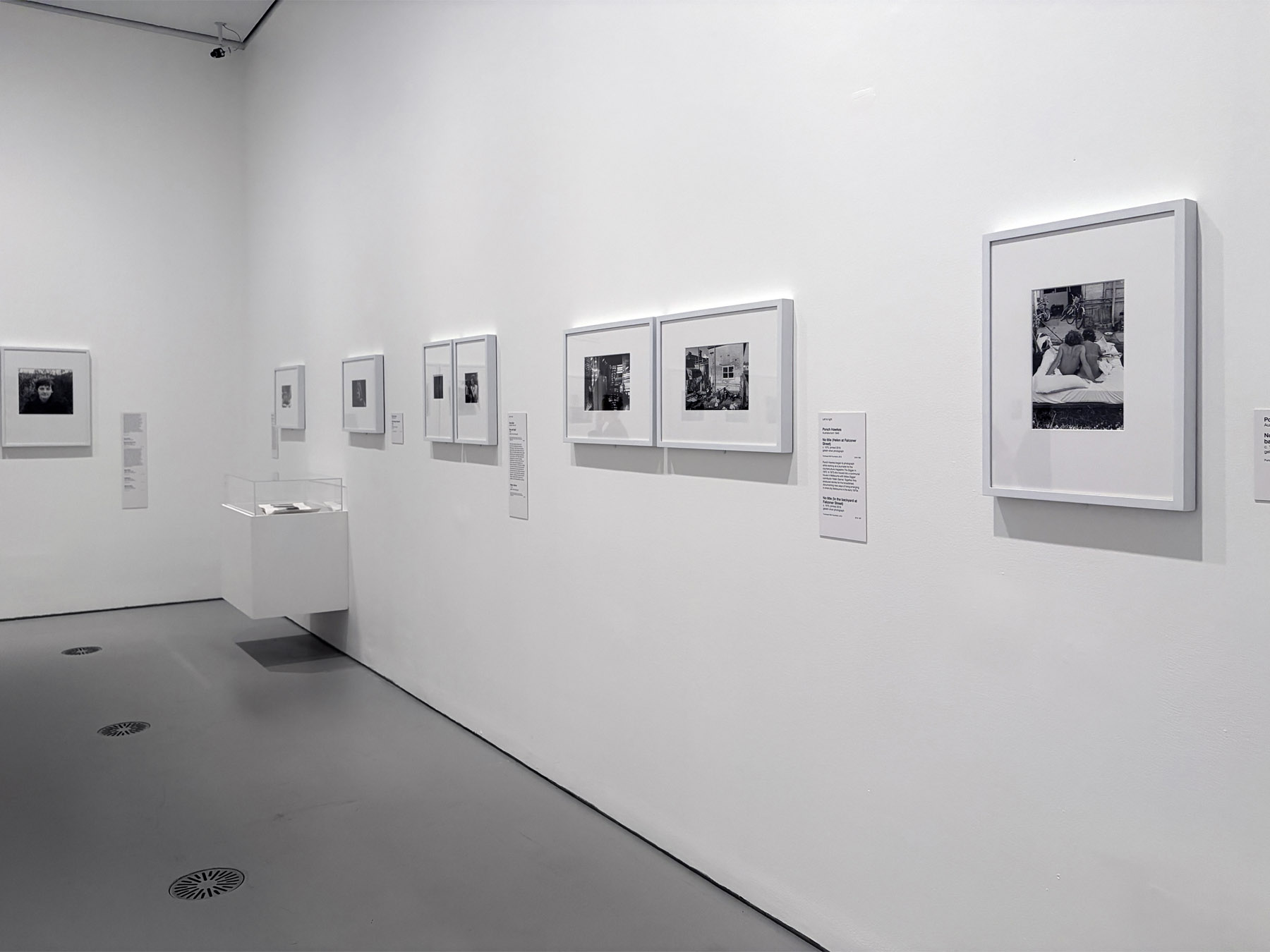
 

Installation view of the exhibition 'Women Photographers 1900-1975: A Legacy of Light' at NGV International, Melbourne, November 2025 - May 2026 showing at right, Ponch Hawkes 'No title (Summer night in the backyard at Falconer Street)' (c. 1975 printed 2018)


Installation view of the exhibition Women Photographers 1900-1975: A Legacy of Light at NGV International, Melbourne, November 2025 – May 2026 showing at right, Ponch Hawkes No title (Summer night in the backyard at Falconer Street) (c. 1975 printed 2018, below)
Photo: Marcus Bunyan
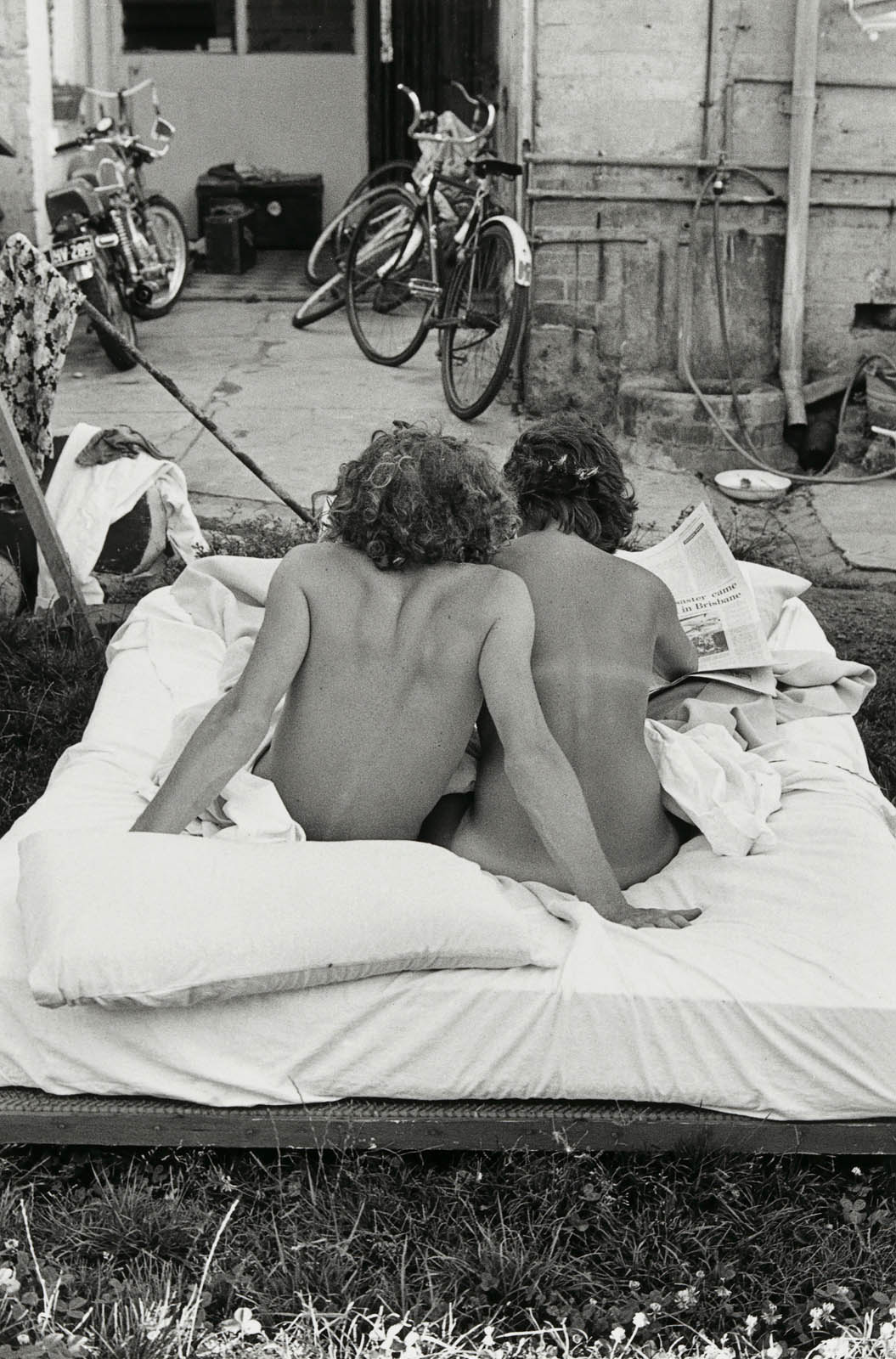
 

Ponch Hawkes (Australian, b. 1945) 'No title (Summer night in the backyard at Falconer Street)' c. 1975, printed 2018


Ponch Hawkes (Australian, b. 1945)
No title (Summer night in the backyard at Falconer Street)
c. 1975, printed 2018
Gelatin silver photograph
30.3 x 20.3cm (image)
38.3 x 27.9cm (sheet)
Purchased NGV Foundation, 2018
© Ponch Hawkes
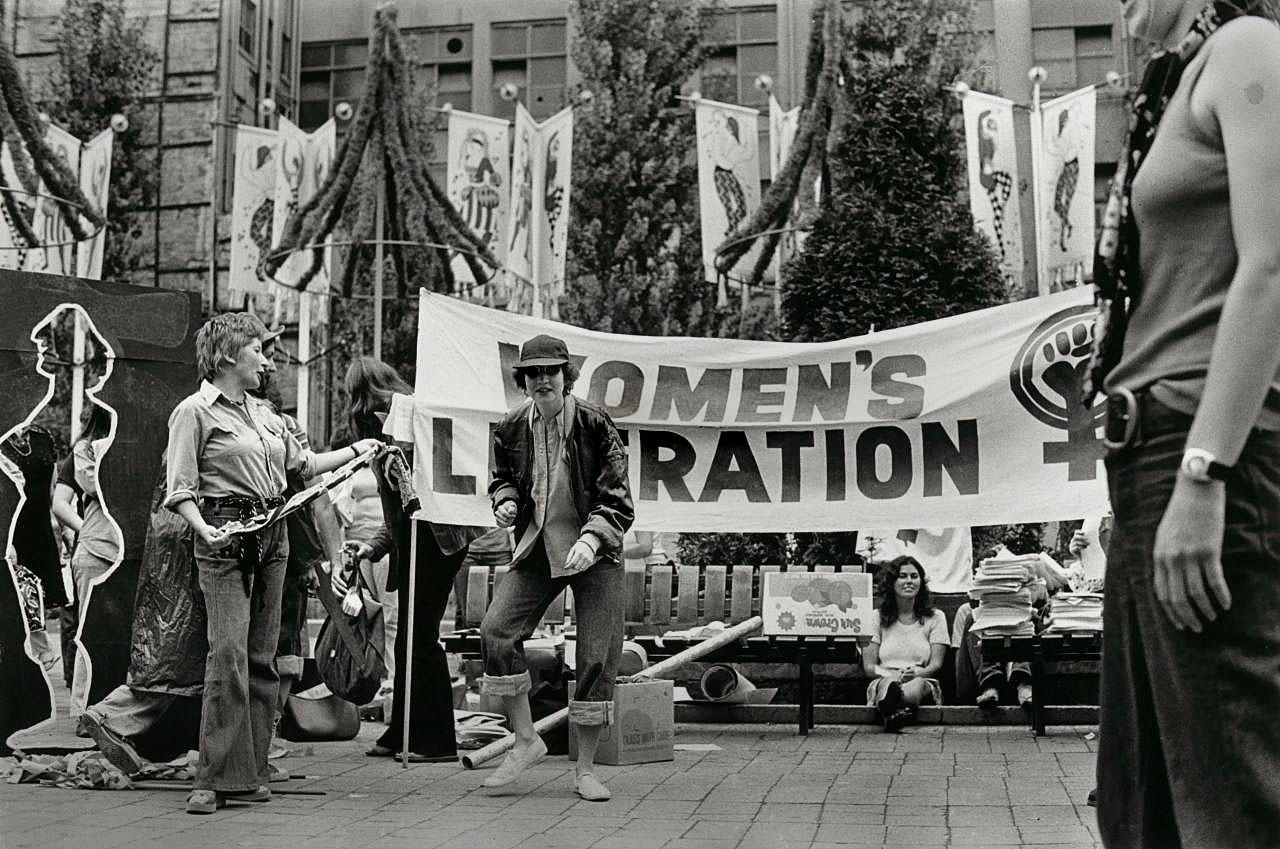
 

Ponch Hawkes (Australian, b. 1945) 'No title (Women's Theatre Group, performing outdoors beneath a Women's Liberation banner in the City Square)' 1975, printed 2018


Ponch Hawkes (Australian, b. 1945)
No title (Women’s Theatre Group, performing outdoors beneath a Women’s Liberation banner in the City Square)
1975, printed 2018
Gelatin silver photograph
20.2 x 30.3cm (image)
28.0 x 38.2cm (sheet)
National Gallery of Victoria, Melbourne
Purchased NGV Foundation, 2018
© Ponch Hawkes, 2023
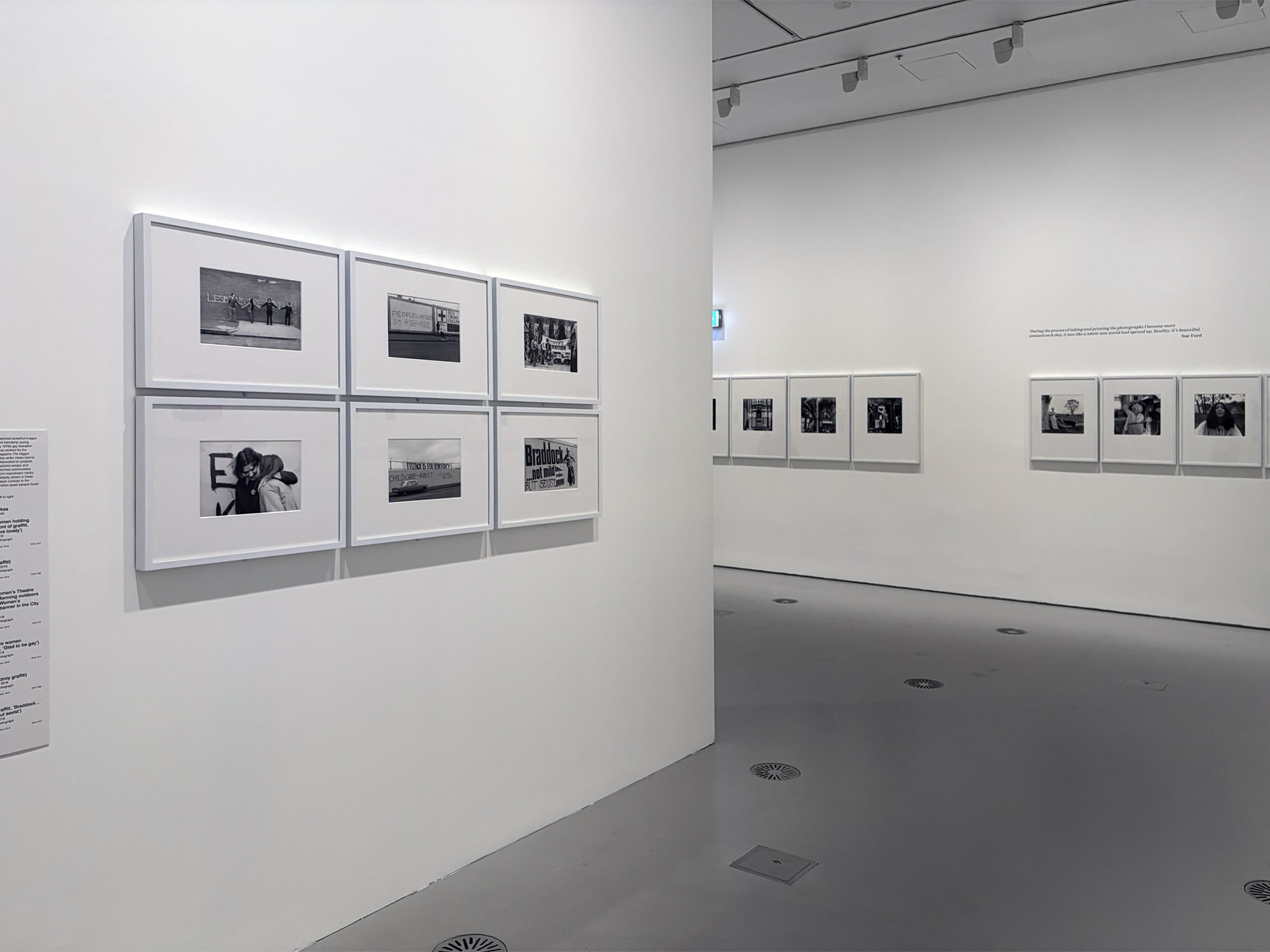
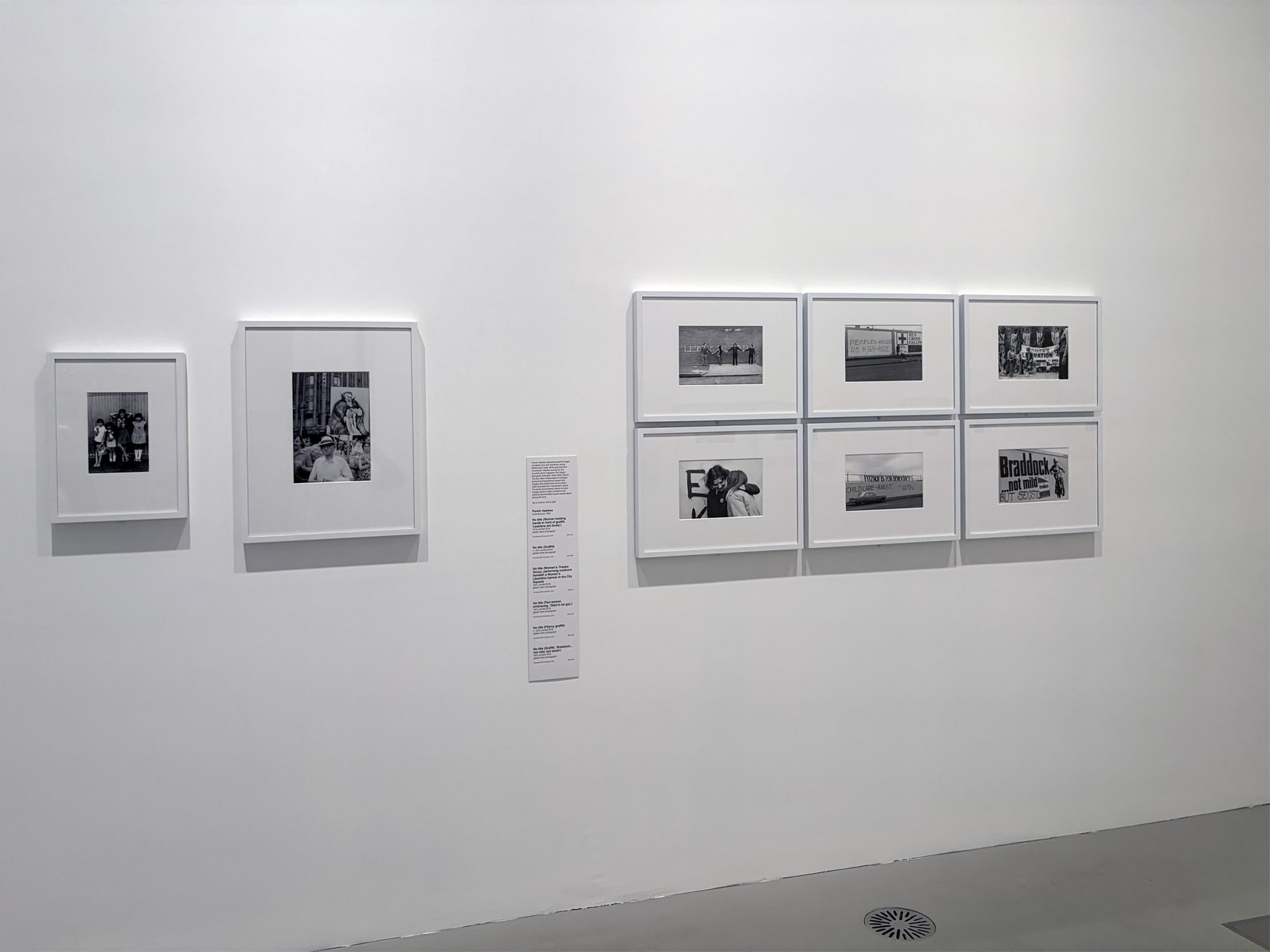
 

Installation view of the exhibition 'Women Photographers 1900-1975: A Legacy of Light' at NGV International, Melbourne, November 2025 - May 2026
Installation view of the exhibition 'Women Photographers 1900-1975: A Legacy of Light' at NGV International, Melbourne, November 2025 - May 2026 showing in the bottom image, top to bottom left to right, six photographs by Ponch Hawkes: 'No title (Women holding hands in front of graffiti, 'Lesbians are lovely')' (1973, printed 2018); 'No title (Graffiti)' (1975, printed 2018); 'No title (Women's Theatre Group, performing outdoors beneath a Women's Liberation banner in the City Square)' (1975, printed 2018); 'No title (Two women embracing, 'Glad to be gay')' (1973, printed 2018); 'No title (Fitzroy graffiti)' (1973, printed 2018); 'No title (Graffiti, 'Braddock… not mild, but sexist')' (1973, printed 2018)


Installation view of the exhibition Women Photographers 1900-1975: A Legacy of Light at NGV International, Melbourne, November 2025 – May 2026 showing in the bottom image, top to bottom left to right, six photographs by Ponch Hawkes: No title (Women holding hands in front of graffiti, ‘Lesbians are lovely’) (1973, printed 2018); No title (Graffiti) (1975, printed 2018); No title (Women’s Theatre Group, performing outdoors beneath a Women’s Liberation banner in the City Square) (1975, printed 2018); No title (Two women embracing, ‘Glad to be gay’) (1973, printed 2018); No title (Fitzroy graffiti) (1973, printed 2018); No title (Graffiti, ‘Braddock… not mild, but sexist’) (1973, printed 2018)
Photo: Marcus Bunyan


Ponch Hawkes captured powerful images of lesbian love and friendship during Melbourne’s early 1970s gay liberation movement. Hawkes worked for the counterculture magazine The Digger alongside Australian writer Helen Garner. The two often collaborated on projects, producing impassioned essays and imagery that platformed communities often excluded from mainstream media. The pride and solidarity shown in these images stand in stark contrast to the extreme discrimination queer people faced during the time.

Wall text from the exhibition
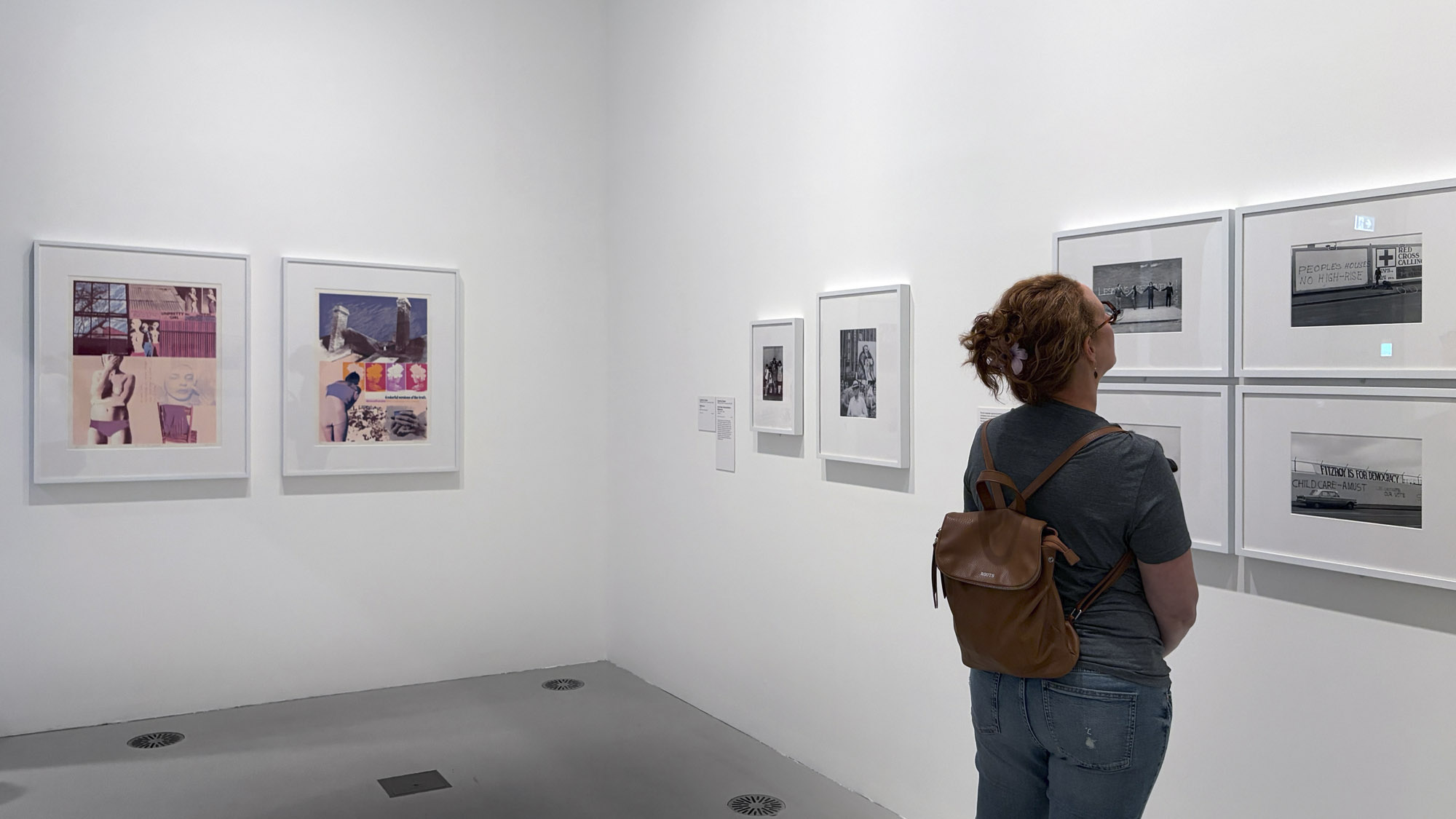
 

Installation view of the exhibition 'Women Photographers 1900-1975: A Legacy of Light' at NGV International, Melbourne, November 2025 - May 2026 showing at left, Ann Newmarch 'We must risk unlearning' (1975, below); and at second left, Ann Newmarch 'Two versions' (1975, below) with at right, photographs by Ponch Hawkes


Installation view of the exhibition Women Photographers 1900-1975: A Legacy of Light at NGV International, Melbourne, November 2025 – May 2026 showing at left, Ann Newmarch We must risk unlearning (1975, below) and at second left, Ann Newmarch Two versions (1975, below) with at right, photographs by Ponch Hawkes
Photo: Marcus Bunyan
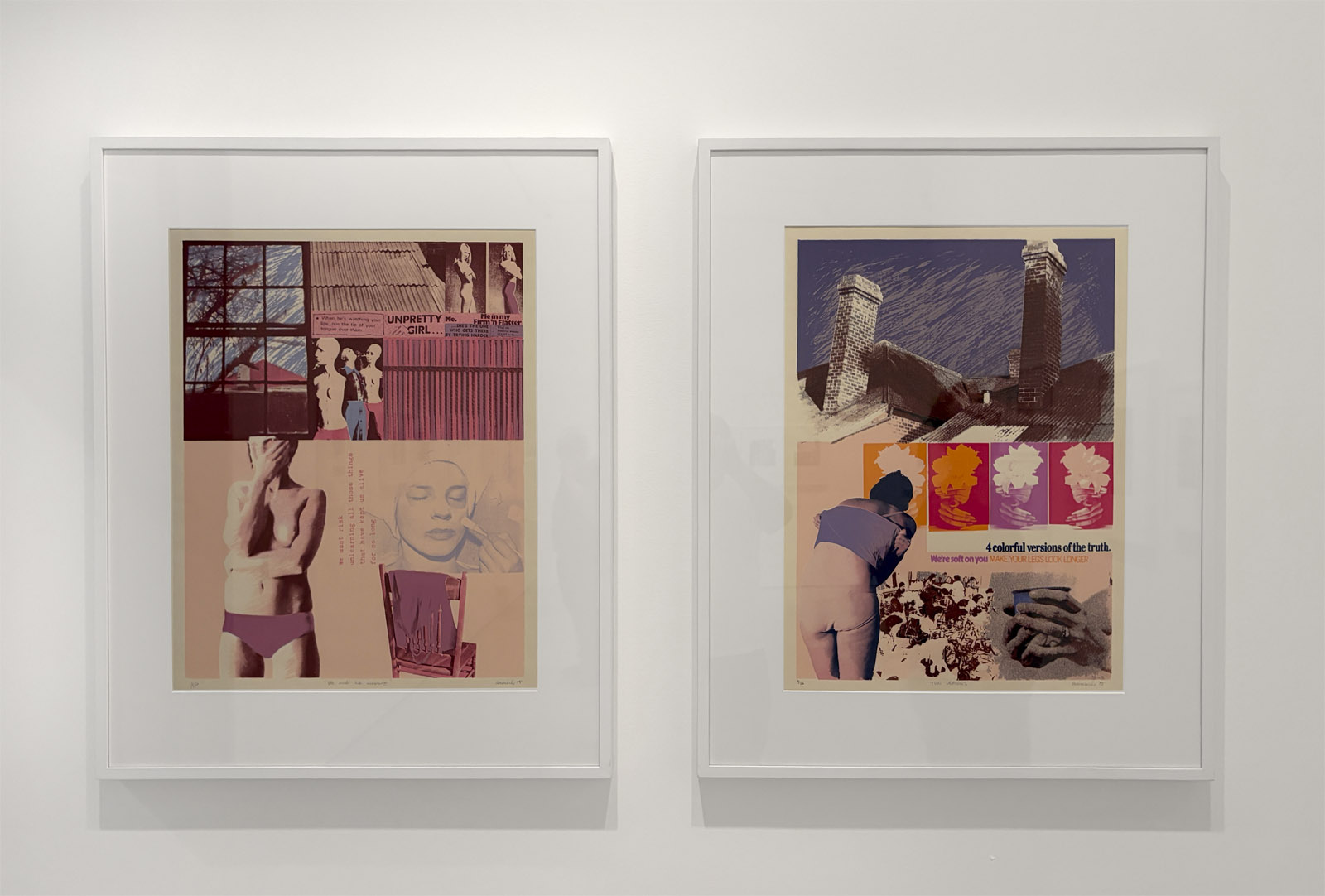
 

Installation view of the exhibition 'Women Photographers 1900-1975: A Legacy of Light' at NGV International, Melbourne, November 2025 - May 2026 showing from left to right, Ann Newmarch 'We must risk unlearning' (1975) and Ann Newmarch 'Two versions' (1975)


Installation view of the exhibition Women Photographers 1900-1975: A Legacy of Light at NGV International, Melbourne, November 2025 – May 2026 showing from left to right, Ann Newmarch We must risk unlearning (1975) and Ann Newmarch Two versions (1975)
Photo: Marcus Bunyan


NGV International
180 St Kilda Rd, Melbourne

Opening hours:
Open daily, 10am – 5pm

National Gallery of Victoria website

LIKE ART BLART ON FACEBOOK

Back to top

Review: ‘Queer British Art 1861-1967’ at Tate Britain, London

Exhibition dates: 5th April – 1st October, 2017

Curators: Clare Barlow, Assistant Curator, Tate Britain with Amy Concannon, Assistant Curator, Tate Britain


Queer British Art book cover


Queer British Art 1861-1967 book cover


Very Pauline

Queer British Art 1861-1967 at Tate Britain examines the “historical reality of same-sex relationships and non-normative sexual identities” from 1861, the year for the end of the death penalty for sodomy in Great Britain, through to 1967 which is when sex between consenting adults in private, obviously male homosexuality is partially decriminalised in England and Wales. The timescale of the exhibition encompasses the beginning of a more considered understanding of gender and sexual identity through to the beginnings of a limited freedom: from repression to liberation.

For a man who came out in London in 1975, only 8 short years after the decriminalisation of homosexuality, this exhibition should have been more engaging than it was. While there were some outstanding art works and artefacts presented in the eight rooms of the exhibition, chronologically laid out in the posting below – such as the prison door from Oscar Wilde’s cell at Reading Gaol, Joe Orton and Kenneth Halliwell’s book covers, the paintings of Henry Scott Tuke and the photography of Angus McBean – there was little of the passion of being gay in evidence in much of the objects, or how they were presented. It all seemed so very academic, and not in a good way. Other than some stunning erotic drawings by Aubrey Beardsley, Duncan Grant and Keith Vaughan (see below) there was little to suggest that being gay had anything to do with sex, the exhibition living up to that very British of axiom’s, “No sex please, we’re British!” The curators may have thought that sex would be a distraction, for it was all ‘very Pauline’.

The exhibition is full of innuendo, supposition, obfuscation, abstinence, hints, traces, clouded desires and supposed longings – in both the art work and the wall texts which accompanied the work. Of course, this is how artists had to hide their sexuality, same-sex desires and relationships during much of this period for fear of ostracisation from society and possible prosecution, but the presentation came across as little more than “au fait”, so much matter of fact. The exhibition was not helped by illuminating texts such as this: “The exact nature of Thomas and Philpot’s relationship is unknown. Many of Philpot’s depictions of Thomas carry a homoerotic charge and some are exoticising. What Thomas felt about his years with Philpot from 1929 to the artist’s death in 1937 is unknown.” Ugh!

You might as well have said nothing, and let the art work speak for itself.

Other commentaries could have done with a more insightful enunciation of the circumstances of the particular artist, in addition to text on the specific art work. A perceptive anointing of their life would have added invaluably to the frisson of the exhibition. For example, I wanted to know why the painter Christopher Wood died at the young age of 29 as well as the specifics of his painting Nude Boy in a Bedroom (1930, below). According to Wikipedia, Wood – bisexual, addicted to opium and painting frenetically in preparation for his Wertheim exhibition in London – became psychotic and jumped under a train at Salisbury railway station. These are the things that you need to know if you are to fully appreciate the gravitas of a life and a person’s relationship to their art, don’t you think?

Further, no pictures were allowed in the gallery spaces. Whereas I could take photographs of the Rachel Whiteread exhibition at the same venue to my heart’s content (even after being confronted by a guard who said I couldn’t, who was then corrected by a colleague with no apology for his attitude to me), I had to play a Machiavellian game of cunning hide and seek with guards and attendants to get the installation photographs of this exhibition. Why was this so? It almost seemed to be a case of the gallery being ashamed of the art they were exhibiting, as though the attitudes of the past towards art that explores same-sex relationships was being replicated by the duplicity of the gallery itself: the art could be seen but not heard, hidden away in the bowls of an academic institution. I also noted that one of 19 collages that Kenneth Halliwell exhibited at the Anno Domino gallery in 1967 (see below) was purchased by the Tate in 2016. Considering “the exhibition was a failure and Halliwell’s professional frustration contributed to the breakdown of his relationship with Orton,” eventuating the murder of the playwright and his own suicide… for some of those very same works to now reside at the Tate is the ultimate irony. I doubt Halliwell would have been laughing in his grave.

The stand out works in this exhibition were by Duncan Grant and Keith Vaughan. Their work explores the strength and beauty of the male form with a vitality of purpose and harmony of composition that was succinct and illuminating for this viewer. Grant’s Bathing (1911, below) ascribes anthropomorphic qualities to distorted figures whose elongated arms, distended chests and exposed buttocks would have been shocking to the people of Belle Epoque Britain. His erotic drawings (below) were the most beautiful, sensitive and sensual art works in the whole exhibition. Vaughan’s simplification of the figuration of the male form into abstract shapes, whilst still retaining the enigma of sensuality, narrative and context, are the triumph of this inverts painting. Their patterning and displacement of time and space onto an intimate other – a copious, coital realm of existence full of feeling, information and matter – were a revelation to me.

While the exhibition enunciates a remarkable range of identities and stories, from the playful to the political and from the erotic to the domestic, it was a deflating experience. I came away thankful that I had seen the work, that the artist’s had been able to express themselves however surreptitiously, but angry that so much of the world still sees LGBTQI people as second class citizens whose art work has to be examined through the prism of sexuality, rather than on the quality of the work itself.

Dr Marcus Bunyan

PS. How you can classify Claude Cahun as a British artist I will never know: she lived on the Channel Islands for a few years, but she was the very epitome of a French artist!


Many thankx to Tate Britain for allowing me to publish the art work in the posting. All installation images are © Dr Marcus Bunyan. Please click on the photographs for a larger version of the image.


“Much more fucking and they’ll be screaming hysterics in next to no time.”


Joe Orton


“For me, to use the word ‘queer’ is a liberation; it was a word that frightened me, but no longer.”


Derek Jarman


“It’s really interesting as to whether or not we should be concerned with the sexuality of an artist when we consider the merits of his artwork, because really what he does behind closed doors – or she does – has nothing to do, or shouldn’t have anything to do with the impact of the artwork as we see it. But what is important is the artist can use that material of their personal life and create a work that is almost a personal diary but visually.”


Estelle Lovatt


Featuring works from 1861-1967 relating to lesbian, gay, bisexual, trans and queer (LGBTQ) identities, the show marks the 50th anniversary of the partial decriminalisation of male homosexuality in England. Queer British Art explores how artists expressed themselves in a time when established assumptions about gender and sexuality were being questioned and transformed.

Deeply personal and intimate works are presented alongside pieces aimed at a wider public, which helped to forge a sense of community when modern terminology of ‘lesbian’, ‘gay’, ‘bisexual’ and ‘trans’ were unrecognised. Together, they reveal a remarkable range of identities and stories, from the playful to the political and from the erotic to the domestic. With paintings, drawings, personal photographs and film from artists such as John Singer Sargent, Dora Carrington, Duncan Grant and David Hockney the diversity of queer British art is celebrated as never before.

Text from the Tate Britain website


100 years of gay art history, from repression to liberation

On the 50th anniversary of the partial decriminalisation of homosexuality in England and Wales, the Tate Britain gallery is launching a major exhibition exploring Queer British Art. The new exhibition showcases 100 years of art and artists from the repression of the Victorian era through to the love and lust of 1960s Soho.


Room 1: Coded Desires

In spite of the Victorian era’s prudish reputation, there are many possible traces of transgressive desire in its art – in Frederic Leighton’s sensuous male nudes, for instance, or Evelyn De Morgan’s depictions of Jane Hales. Simeon Solomon attracted sustained criticisms of ‘unwholesomeness’ or ‘effeminacy’ – terms which suggest disapproval of alternative forms of masculinity as much as same sex desire. Yet other works which might look queer to us passed without comment.

The death penalty for sodomy was abolished in 1861 but it was still punishable with imprisonment. Sex between women was not illegal and society sometimes tolerated such relationships. Yet for most people, there seems to have been little sense that certain sexual practices or forms of gender expression reflected a core aspect of the self. Instead, this was a world of fluid possibilities.

These ambiguities offered scope for artists to produce work that was open to homoerotic interpretation. Queer subcultures developed: new scholarship on same-sex desire in Renaissance Italy and ancient Greece allowed artists to use these civilisations as reference points, while the beautiful youths in Wilhelm von Gloeden’s photographs attracted communities of collectors. As long as there was no public suggestion that artists had acted on their desires, there was much that could be explored and expressed.


Installation view of Room 1 of the exhibition 'Queer British Art' at Tate Britain with Frederic Leighton's 'The Sluggard' (1885, bronze) in the middle of the room

Installation view of Room 1 of the exhibition 'Queer British Art' at Tate Britain with Frederic Leighton's 'The Sluggard' (1885, bronze) in the middle of the room


Installation views of Room 1 of the exhibition Queer British Art at Tate Britain with Frederic Leighton’s The Sluggard (1885, bronze) in the middle of the room
Photos: © Dr Marcus Bunyan


Simeon Solomon (British, 1840-1905) 'Sappho and Erinna in a Garden at Mytilene' 1864 from the exhibition 'Queer British Art 1861-1967' at Tate Britain, London, April - October, 2017


Simeon Solomon (British, 1840-1905)
Sappho and Erinna in a Garden at Mytilene
1864
Watercolour on paper
330 x 381mm
Tate. Purchased 1980


Sappho and Erinna in a Garden at Mytilene is a touching image of female love. The piece is inspired by fragmented poems written by a woman named Sappho in the 4th century BC, in which she pleads that Aphrodite help her in her same-sex relationship. The term ‘lesbian’ derives directly from this poet, as her homeland was the Greek Island of Lesbos. Sappho’s story points to a longer history of same-sex desire. It’s perhaps for this reason that Simeon Solomon, a man who was attracted to men in defiance of the law, painted her. While a depiction of two men kissing would have been completely taboo, this is a passionate depiction of same-sex desire.

Solomon’s own sexual preferences eventually lead to his incarceration. When he was released from prison he was rejected by many of his acquaintances, struggled to find work and soon became homeless; a painful reminder of our repressive past.

Text from the Tate website

This strikingly frank image shows the ancient Greek poet Sappho in a passionate embrace with her fellow poet Erinna. Sappho is associated with the Island of Lesbos and her story gives us the word ‘lesbian’. There was a surge of interest in Sappho’s achievements and desires from the 1840s onwards. Solomon may be responding to his friend Algernon Charles Swinburne’s poem Anactoria which includes Erinna amongst Sappho’s lovers. While female same-sex desire was considered more acceptable than its male equivalent, Solomon’s depiction of Sappho’s fervent kiss and Erinna’s swooning response is unusually explicit and the image was not publicly exhibited.

Wall text from the exhibition


Simeon Solomon (British, 1840-1905) 'The Bride, Bridegroom and Sad Love' 1865 from the exhibition 'Queer British Art 1861-1967' at Tate Britain, London, April - October, 2017


Simeon Solomon (British, 1840-1905)
The Bride, Bridegroom and Sad Love
1865
Ink on paper
Victoria and Albert Museum


This work was inspired by a passage from the Gospel of St John which tells how ‘the friend of the bridegroom… rejoices greatly at the bridegroom’s voice’. In Solomon’s drawing, the friend of the bridegroom has the wings of love but his downcast expression identifies him as ‘sad love’, forever excluded. The positioning of his and the bridegroom’s hands hints at the reason for his grief, implying that that they are former sexual partners. He is forced to look on as his lover enters a heterosexual marriage: a fate shared by many men in same-sex relationships in this period.

Wall text from the exhibition


Simeon Solomon (British, 1840-1905) 'Bacchus' 1867


Simeon Solomon (British, 1840-1905)
Bacchus
1867
Oil paint on paper on canvas
Lent by Birmingham Museums Trust on behalf of Birmingham City Council


The classical god of wine, Bacchus also embodies sexual ambiguity and gender fluidity. While grapes and vine leaves identify the god in Solomon’s painting, Bacchus’s full lips, luxuriant hair and enigmatic gaze hint at his elusive sexuality. When it was exhibited at the Royal Academy in 1867, the critic of The Art Journal thought the figure looked effeminate, commenting ‘Bacchus is a sentimentalist of rather weak constitution; he drinks mead, possibly sugar and water, certainly not wine’. Solomon’s friend, critic Walter Pater wrote a favourable essay about the painting and poet Algernon Charles Swinburne said he found in Solomon and Bacchus alike, ‘the stamp of sorrow; of perplexities unsolved and desires unsatisfied’.

Wall text from the exhibition


Simeon Solomon (British, 1840-1905) 'The Moon and Sleep' 1894


Simeon Solomon (British, 1840-1905)
The Moon and Sleep
1894
Oil paint on canvas
Tate. Presented by Miss Margery Abrahams in memory of Dr Bertram L. Abrahams and Jane Abrahams 1973


Made a few years after Solomon’s arrest and social ostracisation, this painting depicts the love of the moon goddess Selene for Endymion, who, in one version of the myth, is given eternal youth and eternal sleep by Zeus. While it ostensibly depicts a heterosexual pairing, the striking similarity of the profiles of the figures in Solomon’s painting gives them both an air of androgyny. This painting was given to Tate by a descendent of Rachel Simmons, Solomon’s first cousin, who helped to support him after his fall from public favour by regularly buying his works for small sums of money.

Wall text from the exhibition


Photographer unknown. 'John Addington Symonds' (installation view) c. 1850s


Photographer unknown
John Addington Symonds (installation view)
c. 1850s
Photograph, tinted collodion on paper
Photo: © Dr Marcus Bunyan


John Addington Symonds was a writer, critic and an early campaigner for greater tolerance of same-sex desire. This photograph probably dates from Symonds’s time at Oxford University (1858-1863). His studies informed his later essay, A Problem in Greek Ethics 1873, one of the earliest attempts at a history of male same-sex desire. Symonds frankly discussed his desires in his diaries and unpublished writings, which he believed would be ‘useful to society’. However, when his friend Edmund Gosse inherited Symonds’s papers in 1926, he burned them all apart from Symonds’s autobiography. This destruction nauseated Symonds’s granddaughter Janet Vaughan. It was not until 1984 that Symonds’s autobiography was finally published.

Wall text from the exhibition


Sidney Harold Meteyard (English, 1868-1947) 'Hope Comforting Love in Bondage' Exhibited 1901


Sidney Harold Meteyard (English, 1868-1947)
Hope Comforting Love in Bondage
Exhibited 1901
Oil paint on canvas
Lent by Birmingham Museums Trust on behalf of Birmingham City Council


Hope is depicted as a respectably fully-clothed matron, whereas Love’s only costume is his elaborate cloth bindings and the rose briars that are delicately threaded through the feathers of his wings. The flowers and thorns of the roses hint at pleasures and pains combined. Love’s pensive expression and androgynous beauty is reminiscent of the work of Simeon Solomon and, while Hope stretches out her hand to comfort him, his gaze is fixed elsewhere, leaving the object of his affections undefined.

Wall text from the exhibition


Installation view of Frederic Leighton's 'Daedalus and Icarus' 1896 from the exhibition 'Queer British Art' at Tate Britain


Installation view of Frederic Leighton’s Daedalus and Icarus 1896 from the exhibition Queer British Art at Tate Britain
Photo: © Dr Marcus Bunyan


Frederic Leighton (British, 1830-1896) 'Daedalus and Icarus' Exhibited 1869


Frederic Leighton (British, 1830-1896)
Daedalus and Icarus
Exhibited 1869
Oil paint on canvas
Private collection


In a story from the Roman poet Ovid’s Metamorphoses, Daedalus made wings for his son Icarus to escape from Rhodes. Icarus’s golden beauty is here contrasted with his weather-beaten father. When the work was exhibited at the Royal Academy Summer Exhibition in 1869, The Times anxiously remarked that Icarus had the air of ‘a maiden rather than a youth’ and exhibited ‘the soft rounded contour of a feminine breast’. This response may reflect increasing concern amongst educated circles about the pairings of older men and adolescent youths in books such as Plato’s Symposium, as new scholarship explored the eroticism of the original texts.

Wall text from the exhibition


Installation view of Henry Scott Tuke's 'A Bathing Group' 1914 from the exhibition 'Queer British Art' at Tate Britain


Installation view of Henry Scott Tuke’s A Bathing Group 1914 from the exhibition Queer British Art at Tate Britain
Photo: © Dr Marcus Bunyan


Henry Scott Tuke (English, 1858-1929) 'A Bathing Group' 1914


Henry Scott Tuke (English, 1858-1929)
A Bathing Group
1914
Oil paint on canvas
Lent by the Royal Academy of Arts, London


While Henry Scott Tuke used the professional model Nicola Lucciani for this painting, it is similar to his images of Cornish youths in its frank appreciation of the male nude. Lucciani’s torso is illuminated by a shaft of sunlight and he looks towards the second figure, who crouches as if in awe of his godlike beauty. Tuke presented the painting to the Royal Academy on his election as a member. Tuke used professional models when he first moved to Cornwall, but he soon befriended some of the local fishermen and swimmers in Falmouth who modelled for him in many paintings.

Wall text from the exhibition


Henry Scott Tuke (English, 1858-1929) 'The Critics' 1927


Henry Scott Tuke (English, 1858-1929)
The Critics
1927
Oil paint on board
Courtesy of Leamington Spa Art Gallery & Museum (Warwick District Council)


Made just two years before Tuke’s death, The Critics is one of a number of works by Henry Scott Tuke depicting young men bathing off the Cornish coast. There has been much speculation about his relationships with his Cornish models although nothing has been substantiated. It is, however, not difficult to find a homoerotic undercurrent in this painting, as the two men on the shore appraise the swimming technique – and possibly the physique – of the youth in the water. Writer John Addington Symonds was a frequent visitor and he encouraged Tuke in his painting of male nudes in a natural outdoor setting.

Wall text from the exhibition


Room 2: Public Indecency

This room looks at ways in which sexuality and gender identity did – and did not – go public, from the 1880s to the 1920s. Public debate over sexuality and gender identity was stirred up by scandals, campaigns and scientific studies. The trials of Oscar Wilde in 1895 for gross indecency and Radclyffe Hall’s novel The Well of Loneliness in 1928 for supposed obscenity put a spotlight on same-sex desire. In the field of science, the project of classifying sexual practices and forms of gender presentation into distinct identities, which had been begun by German psychiatrists such as Richard von Krafft-Ebing, reached Britain through the work of Havelock Ellis who co-authored his book Sexual Inversion 1896 with John Addington Symonds. However, change was slow, and many people remained unaware of new terminologies and approaches to the self that this new science offered.


Installation view of Henry Bishop's 'Henry Havelock Ellis' from the exhibition 'Queer British Art' at Tate Britain


Installation view of Henry Bishop’s Henry Havelock Ellis from the exhibition Queer British Art at Tate Britain
Photo: © Dr Marcus Bunyan


Henry Bishop (British, 1868-1939) 'Henry Havelock Ellis' 1890s


Henry Bishop (British, 1868-1939)
Henry Havelock Ellis
1890s
Oil paint on canvas
National Portrait Gallery, London. Bequeathed by François Lafitte, 2003


The sexologist Henry Havelock Ellis’s great work Sexual Inversion, co-authored with John Addington Symonds, defined queer sexualities in Britain for a generation. Published in English in 1897, it drew on the experiences of people such as Edward Carpenter (whose portrait hangs nearby). It was effectively banned in Britain after the prosecution of a bookseller, George Bedborough. This informal portrait was probably made around the time of Bedborough’s trial. It depicts Ellis sitting in a deckchair in Henry Bishop’s studio in St Ives. There is some evidence Bishop was attracted to men and Ellis’s non-judgemental attitudes may have encouraged Bishop to make his acquaintance. He became a lifelong friend.

Wall text from the exhibition


Edmund Dulac (British born France, 1882-1953) 'Charles Ricketts and Charles Shannon as Medieval Saints' 1920


Edmund Dulac (British born France, 1882-1953)
Charles Ricketts and Charles Shannon as Medieval Saints
1920
Tempera on linen over board
The Syndics of the Fitzwilliam Museum, University of Cambridge


Oscar Wilde described the home of the artist and designer Charles Ricketts and his lifelong partner the painter Charles Shannon as ‘the one house in London where you will never be bored’. Here, the couple are playfully depicted by their friend Edmund Dulac in the robes of Dominican friars. These robes possibly hint at the permanence of their bond: monastic vows were, after all, intended to mark entry for life into an all-male community. The peacock feather in Rickett’s hand signals their devotion to aestheticism, an art movement dedicated to beauty and ‘art for art’s sake’. By the 1920s, this was an emblem of a previous era.

Wall text from the exhibition


Charles Buchel (British, 1872-1950) 'Radclyffe Hall' 1918 (installation view)


Charles Buchel (British, 1872-1950)
Radclyffe Hall (installation view)
1918
Oil paint on canvas
National Portrait Gallery, London. Bequeathed by Una Elena Vincenzo (née Taylor), Lady Troubridge, 1963
Photo: © Dr Marcus Bunyan


Born ‘Marguerite’ Radclyffe Hall and known as ‘John’ to close friends, Radclyffe Hall was a key figure in provoking debate on female same-sex desire. This portrait was made ten years before Hall found fame as the author of The Well of Loneliness 1928. Despite the pleas of literary figures, including Virginia Woolf, this novel was effectively banned on the grounds of obscenity for its frank depiction of female same-sex desire. It was semi-autobiographical and was influenced by Havelock Ellis’s Sexual Inversion. Hall’s sober jacket, skirt, cravat and monocle in this image reflected contemporary female fashions for a more masculine style of dress. After the trial, Hall’s clothes and cropped hair became associated with lesbianism and this portrait has become a queer icon. It was given to the National Portrait Gallery by Hall’s lover, Una Troubridge.

Wall text from the exhibition


Installation view of Room 2 of the exhibition 'Queer British Art' at Tate Britain with Oscar Wilde's Prison Door c. 1883

Installation view of Room 2 of the exhibition 'Queer British Art' at Tate Britain with Oscar Wilde's Prison Door c. 1883


Installation views of Room 2 of the exhibition Queer British Art at Tate Britain with Oscar Wilde’s Prison Door c. 1883
Photos: © Dr Marcus Bunyan


This is the door of Oscar Wilde’s prison cell at Reading Gaol. Wilde spent three months of his incarceration writing a tortured letter to his lover Lord Alfred Douglas. This was later published as De Profundis (‘from the depths’). Wilde was not allowed to send the letter, although the manuscript was given back to him when he left prison. He told his friend Robert Ross, ‘I know that on the day of my release I will merely be moving from one prison into another, and there are times when the whole world seems to be no larger than my cell, and as full of terror for me’.

Wall text from the exhibition


Robert Goodloe Harper Pennington (American, 1854-1920) 'Oscar Wilde' c. 1881 (installation view)


Robert Goodloe Harper Pennington (American, 1854-1920)
Oscar Wilde (installation view)
c. 1881
William Andrews Clark Memorial Library, Los Angeles, California
Photo: © Dr Marcus Bunyan


The American artist Harper Pennington gave this portrait to Wilde and his wife Constance as a wedding present in 1884. It captures Wilde as a young man aged 27, on the cusp of success and it hung in Wilde’s home in Tite Street, Chelsea, London. While awaiting trial, Wilde was declared bankrupt and all his possessions, including this portrait, were sold at public auction to pay his debts. Few objects from his extensive collection have been traced. This painting was bought by Wilde’s friend Ada Leverson and it was kept in storage. Wilde told a friend that Ada’s husband ‘could not have it in his drawing-room as it was obviously, on account of its subject, demoralising to young men, and possibly to young women of advanced views’.

Wall text from the exhibition


Aubrey Beardsley (English, 1872-1898) 'Enter Herodias' 1893


Aubrey Beardsley (English, 1872-1898)
Enter Herodias from ‘Salome’ by Oscar Wilde
1890s
Photo-process print on paper
Victoria and Albert Museum


Here Herodias, Salome’s mother makes a dramatic entrance, bare-breasted and positioned at the centre of the composition. The grotesque figure on the left plucks at her cloak, his robe barely concealing his giant phallus, while the slender page appears notably unmoved. They seem to epitomise two forms of masculinity: the grotesquely heterosexual and the elegantly ambiguous. Oscar Wilde is satirised as the showman-like jester in the foreground.

Wall text from the exhibition


Cecil Beaton (British, 1904-1980) 'Cecil Beaton and his Friends' 1927


Cecil Beaton (British, 1904-1980)
Cecil Beaton and his Friends
1927
Photograph, bromide print on paper
National Portrait Gallery, London. Accepted in lieu of tax by H.M. Government and allocated to the Gallery, 1991


This photograph was taken at Wilsford Manor in Wiltshire, Stephen Tennant’s childhood home. The party depicted here includes Tennant, artist Rex Whistler, society hostess Zita Jungman and Beaton himself, although their elaborate fancy dress and make-up makes it hard to tell them apart. The poet Siegfried Sassoon, Tennant’s lover at this time, wrote in his diary, ‘It was very amusing, and they were painted up to the eyes, but I didn’t quite like it’.

Wall text from the exhibition


Room 3: Theatrical Types

The use of ‘theatrical’ as a euphemism for queer hints at the rich culture on the late nineteenth and early twentieth century stage. The extent to which audiences were aware of this varied. Music hall male and female ‘impersonation acts’ were wildly popular but were mostly seen as innocent ‘family fun’. In the formal theatre, plays for public production had to be passed by the Lord Chamberlain’s office. While some directors found ways to avoid censorship, there were few positive and explicit depictions of queer lives and experience. Many celebrities who were in same-sex relationships understandably tried to keep their lives from public view, although their desires were often open secrets. Nevertheless, whether as the subject of a moralistic ‘problem’ play or an innuendo in a saucy song, queer perspectives could find public expression on the stage.


Installation view of Room 3 of the exhibition 'Queer British Art' at Tate Britain


Installation view of Room 3 of the exhibition Queer British Art at Tate Britain
Photo: © Dr Marcus Bunyan


Unknown photographer, published by The Philco Publishing Company. 'Hetty King (Winifred Ems)' 1910s


Unknown photographer, published by The Philco Publishing Company
Hetty King (Winifred Ems)
1910s
National Portrait Gallery


Angus McBean (Welsh, 1904-1990)

Angus McBean’s career was forged in the theatre. Success came in 1936 with his photographs of Max Beerbohm’s The Happy Hypocrite 1896, starring Ivor Novello. In a break with convention, McBean’s close-up images were well lit with studio lights and staged as intimate tableaux. Inspired by the International Surrealist exhibitions of 1936 and 1937, he began to make playful ‘surrealised portraits’, which were initially published in The Sketch. These used complex props and staging to create fantastical scenes and to give the illusion of distorted scale.

The images here all depict sitters who were in same-sex relationships. McBean’s own relationships with men led to a police raid on his house and his arrest in 1942 for criminal acts of homosexuality. He was convicted and sentenced to four years in jail but was released in 1944 and quickly reestablished his reputation as a photographer.


Angus McBean (Welsh, 1904-1990) 'Sir Robert Murray Helpmann' 1950


Angus McBean (Welsh, 1904-1990)
Sir Robert Murray Helpmann
1950
Photograph, bromide print on paper
© Estate of Angus McBean / National Portrait Gallery, London


McBean’s portrait of Robert Helpmann, published in The Tatler and Bystander on 28 April 1948, shows him in the role of Hamlet, which he was then playing at Stratford-upon-Avon. The production was designed to be Victorian gothic: an Elsinore of guttering candles and chiaroscuro lighting effects. There is perhaps some suggestion of this in the heavy shadows of McBean’s photograph, while Helpmann’s dramatic make-up emphasises his melancholic expression. The backdrop was created from a blown-up photograph of text from the First Folio of the play. In defiance of the law, Helpmann lived comparatively openly with his partner, the theatre director Michael Benthall. Their relationship lasted from 1938 until Benthall’s death, in 1974.

Wall text from the exhibition


Angus McBean (Welsh, 1904-1990) 'Danny La Rue' 1968


Angus McBean (Welsh, 1904-1990)
Danny La Rue
1968
Photograph, bromide print on paper
National Portrait Gallery, London


Born Danny Carroll, Danny La Rue was one of the greatest stars in female impersonation. La Rue first performed while in the navy during the Second World War and later toured with all male revues such as Forces in Petticoats before becoming a cabaret star. La Rue’s glamorous appearance on stage, captured here, was undercut by the gruff ‘wotcher mates’, with which he opened his set. La Rue preferred the term ‘comic in a frock’ to ‘female impersonator’ and described his act as ‘playing a woman knowing that everyone knows it’s a fella’.

Wall text from the exhibition


Glyn Warren Philpot (British, 1884-1937) 'Glen Byam Shaw as 'Laertes'' 1934-1935


Glyn Warren Philpot (British, 1884-1937)
Glen Byam Shaw as ‘Laertes’
1934-1935
Oil paint on canvas
Kindly lent by the sitter’s grandson, Charles Hart


The actor Glen Byam Shaw is depicted here as Laertes in John Gielgud’s 1934 critically acclaimed production of Hamlet in a costume designed by Motley: Elizabeth Montgomery, Margaret Percy and Sophie Harris. Glyn Philpot cut down the original three-quarter length portrait after it was exhibited at the Royal Academy in 1935. This reduction puts even greater focus on Byam Shaw’s face and heavy stage make-up. While the image is typical of productions of the period, the medium of the portrait removes it from its original theatrical context. Coupled with Byam Shaw’s arch expression, the overriding impression is one of high camp. Byam Shaw had almost certainly been the lover of the poet Siegfried Sassoon (1886-1967) and may have met Philpot through Sassoon.

Wall text from the exhibition


Francis Goodman (English, 1913-1989) 'Oliver Messel' 1945


Francis Goodman (English, 1913-1989)
Oliver Messel
1945
Photograph, silver gelatin print on paper
National Portrait Gallery, London
Bequeathed by the estate of Francis Goodman, 1989


Francis Goodman’s carefully posed photograph depicts Oliver Messel, the foremost British stage designer from the 1920s to the 1950s, surrounded by eclectic props. The producer Charles Cochran recalled how Messel ‘would pull something new out of his pocket – usually something used for domestic work – which he proposed to employ to give the illusion of some other fabric’. Messel was attracted to men and his fascination with dandyish excess, pastiche and artifice has been interpreted as a queer aesthetic.

Wall text from the exhibition


Paul Tanqueray (English, 1905-1991) 'Douglas Byng' 1934


Paul Tanqueray (English, 1905-1991)
Douglas Byng
1934
Photograph, bromide print on paper
National Portrait Gallery. Given by Paul Tanqueray, 1974


Gay performer Douglas Byng gained the title ‘The Highest Priest of Camp’ with songs such as ‘Doris the Goddess of Wind’, ‘I’m a Mummy (An Old Egyptian Queen)’ and ‘Cabaret Boys’, which he performed with Lance Lester. Coward described him as ‘The most refined vulgarity in London, mais quel artiste!’ Byng’s costume in Paul Tanqueray’s photograph was probably the one he wore for his song ‘Wintertime’.

Wall text from the exhibition


Room 4: Bloomsbury and Beyond

The Bloomsbury Group of artists and writers famously ‘lived in squares and loved in triangles’. Dora Carrington had relationships with men and women but loved and was loved by Lytton Strachey, who was attracted to men. Duncan Grant and Vanessa Bell lived together in Charleston Farmhouse in East Sussex. A chosen few of Duncan Grant’s male lovers made visits but Paul Roche was forced to camp on the South Downs as he did not meet with Bell’s approval. Bell’s husband Clive lived apart from her but they remained happily married. While sexual intimacy was valued by the Group, it was not the most important bond tying the members together. Their network was a profoundly queer experiment in modern living founded on radical honesty and mutual support.

Bloomsbury’s matter-of-fact acceptance of same-sex desire was unusual but not unique. The objects in this room show a variety of different perspectives, from the quiet homeliness of Ethel Sands’s Tea with Sickert, to Gluck’s defiant self-portrait. Together, they reveal a generation of artists and sitters exploring, confronting and coming to terms with themselves and their desires.


Installation view of Room 4 of the exhibition 'Queer British Art' at Tate Britain featuring Ethel Walker's 'Decoration: The Excursion of Nausicaa' 1920


Installation view of Room 4 of the exhibition Queer British Art at Tate Britain featuring Ethel Walker’s Decoration: The Excursion of Nausicaa 1920
Photo: © Dr Marcus Bunyan


Ethel Walker (Scottish, 1861-1951) 'Decoration: The Excursion of Nausicaa' 1920


Ethel Walker (Scottish, 1861-1951)
Decoration: The Excursion of Nausicaa
1920
Oil paint on canvas


The composition of this painting reveals Ethel Walker’s fascination with Greco-Roman friezes, as well as the artistic possibilities of the female nude. The painting is inspired by Book IV of Homer’s Odyssey, in which the princess Nausicaa bathes with her maidens. In 1900, Walker became the first woman member of the New English Arts Club, whose select committee reacted to this painting with ‘spontaneous and enthusiastic applause’. There has been some speculation about the nature of Walker’s relationship with painter Clara Christian, with whom she lived and worked in the 1880s, although little evidence survives. This image offers a utopian vision of an all-female community.

Wall text from the exhibition


Installation view of Room 4 of the exhibition 'Queer British Art' at Tate Britain featuring Duncan Grant's 'Bathing' 1911

Installation view of Room 4 of the exhibition 'Queer British Art' at Tate Britain featuring at left, Duncan Grant's 'Bathing' 1911


Installation views of Room 4 of the exhibition Queer British Art at Tate Britain featuring Duncan Grant’s Bathing 1911 (at left in the bottom image)
Photos: © Dr Marcus Bunyan


Duncan Grant (British, 1885-1978) 'Bathing' 1911


Duncan Grant (British, 1885-1978)
Bathing
1911
Oil paint on canvas
2286 x 3061mm
© Tate. Purchased 1931


Bathing was conceived as part of a decorative scheme for the dining room at Borough Polytechnic, and it was Duncan Grant’s first painting to receive widespread public attention. Grant’s design takes inspiration from summers spent around the Serpentine in Hyde Park, which was one of a number of sites associated with London’s queer culture. The painting celebrates the strength and beauty of the male form, and its homoerotic implications were not lost on Grant’s contemporaries: the National Review described the dining room as a ‘nightmare’ which would have a ‘degenerative’ effect on the polytechnic’s working-class students.

Wall text from the exhibition


Duncan Grant (British, 1885-1978) 'Bathers by the Pond' 1920-1921 (installation view)


Duncan Grant (British, 1885-1978)
Bathers by the Pond (installation view)
1920-1921
Oil paint on canvas
Pallant House Gallery, Chichester (Hussey Bequest, Chichester District Council 1985)
Photo: © Dr Marcus Bunyan


This painting shows a scene filled with homoerotic possibilities. The setting is possibly Charleston Farmhouse in East Sussex, where Duncan Grant lived with Vanessa Bell, her children and his lover David (Bunny) Garnett. Grant’s use of dots of colour shows the influences of the pointillist technique pioneered by Georges Seurat. The nude figure in the foreground basks in the sun while the seated figures behind him exchange appreciative glances. Swimming ponds often served as cruising grounds and it is perhaps unsurprising that this work was not exhibited in Grant’s lifetime.

Wall text from the exhibition


Duncan Grant (British, 1885-1978) 'Paul Roche Reclining' c. 1946 (installation view)


Duncan Grant (British, 1885-1978)
Paul Roche Reclining (installation view)
c. 1946
Oil paint on canvas
The Charleston Trust
Photo: © Dr Marcus Bunyan


This painting depicts Duncan Grant’s close friend and possible lover Paul Roche, lying as if asleep. He is depicted against a patterned background reminiscent of colours and fabrics produced by the Omega Workshop, the design collective founded in 1913 by Roger Fry. These soft textures contrast with Roche’s bare torso, which is further emphasised by his briefs, socks and open shirt. Grant and Roche met by chance in July 1946: after making eye contact crossing the road at Piccadilly Circus, the two struck up a conversation. Their friendship lasted until Grant’s death in 1978.

Wall text from the exhibition


Duncan Grant (British, 1885-1978)

Duncan Grant produced erotic works on paper prolifically throughout his life. These objects were created in private and for personal consumption only. Racially diverse figures are presented in various states of sexual play, and Grant’s range of representation moves from explicit passion to tender post-coital repose. Overlapping bodies are depicted in impossible contortions, and the works reveal Grant’s fascination with the artistic possibilities of the male form as well as the importance of harmonious composition. The objects also demonstrate a characteristically witty approach to sexuality, with some copulating figures playfully masquerading as ballet dancers and wrestlers. As his daughter Angelica Garnett recalled, one of Grant’s favourite maxims was to ‘never be ashamed’, and his private erotica offers an unapologetic celebration of gay male sex and love.


Installation view of erotic drawing by Duncan Grant

Installation view of erotic drawing by Duncan Grant


Installation views of erotic drawings by Duncan Grant
Photos: © Dr Marcus Bunyan


Installation view of Ethel Sands' 'Tea with Sickert' c. 1911-1912 from Room 4 of the exhibition Queer 'British Art' at Tate Britain


Installation view of Ethel Sands’ Tea with Sickert c. 1911-1912 from Room 4 of the exhibition Queer British Art at Tate Britain
Photo: © Dr Marcus Bunyan


Ethel Sands (English born America, 1873-1962) 'Tea with Sickert' c. 1911-1912


Ethel Sands (English born America, 1873-1962)
Tea with Sickert
c. 1911-1912
Oil paint on canvas
Tate. Bequeathed by Colonel Christopher Sands 2000, accessioned 2001


The scene of this painting is the sitting room Nan Hudson and Sands’s home. Although it features two figures – the artist Walter Sickert and Hudson – the table is set for afternoon tea for three. The composition of the painting is arranged as if the artist was standing behind Nan, and this perspective highlights their position as a couple. In 1912, the work was exhibited as part of Sands and Hudson’s joint exhibition at the Carfax Gallery and it drew mixed reactions: Westminster Gazette called it ‘a daring picture’ but ‘a somewhat overwhelming indulgence in pure orange vermilion’.

Wall text from the exhibition


Clare Atwood (British, 1866-1962) 'John Gielgud's Room' 1933


Clare Atwood (British, 1866-1962)
John Gielgud’s Room
1933
Oil paint on canvas
Tate. Presented by Mrs E.L. Shute 1937


This picture was painted in Sir John Gielgud’s flat at the time he was playing Richard II in Gordon Daviot’s Richard of Bordeaux at the New Theatre. Rather than emphasising his life in the public eye, this work draws attention to Gieglud’s domestic life. In this way, Clare ‘Tony’ Atwood gently subverts traditional associations of the feminine with private space. Atwood lived in a menage a trois with Gielgud’s second-cousin, Edith (Edy) Craig and the feminist playwright Christopher St John, who had previously lived together as an openly lesbian couple. St John later stated that ‘the bond between Edy and me was strengthened not weakened by Tony’s association with us’.

Wall text from the exhibition


Installation view of Gluck's 'Self-Portrait' 1942 from Room 4 of the exhibition 'Queer British Art' at Tate Britain


Installation view of Gluck’s Self-Portrait 1942 from Room 4 of the exhibition Queer British Art at Tate Britain
Photo: © Dr Marcus Bunyan


Gluck (Hannah Gluckstein) (British, 1895-1978) 'Self-Portrait' 1942


Gluck (Hannah Gluckstein) (British, 1895-1978)
Self-Portrait
1942
Oil paint on canvas
National Portrait Gallery, London
Given by the sitter and artist, ‘Gluck’ (Hannah Gluckstein), 1973


Gluck locks gazes with the viewer in this unflinching self-portrait. Born Hannah Gluckstein, Gluck requested that the name Gluck be reproduced with ‘no prefix, suffix or quotes’. Gluck exhibited to great acclaim at the ‘The Gluck Room’ of The Fine Art Society, where visitors included Queen Mary. This painting was painted in 1942, in a difficult period in Gluck’s relationship with Nesta Obermer, Gluck’s ‘darling wife’. Obermer was frequently away, sometimes with her husband Seymour Obermer. In 1944, their relationship broke down and Gluck went to live with Edith Shackleton Herald. Their relationship lasted until Gluck’s death.

Wall text from the exhibition


Gluck (Hannah Gluckstein) (British, 1895-1978) 'Lilac and Guelder Rose' 1932-1937


Gluck (Hannah Gluckstein) (British, 1895-1978)
Lilac and Guelder Rose
1932-1937
Oil paint on canvas
Manchester Art Gallery


This was one of a number of flower paintings that Gluck made during and immediately after her relationship with society florist and author Constance Spry, who she met in 1932. Spry was a leading figure in cultivating a fashion for white flowers, and often used Gluck’s paintings to illustrate her articles. Many of Spry’s customers also commissioned flower paintings from Gluck. When Lilac and Guelder Rose was exhibited at Gluck’s 1937 exhibition at the Fine Art Society, it was much admired by Lord Villiers, who remarked ‘It’s gorgeous, I feel I could bury my face in it’.

Wall text from the exhibition


Glyn Warren Philpot (British, 1884-1937) 'Henry Thomas' 1934-1935 (installation view)


Glyn Warren Philpot (British, 1884-1937)
Henry Thomas (installation view)
1934-1935
Oil paint on canvas
Pallant House Gallery, Chichester (Bequeathed by Mrs Rosemary Newgas, the neice of the artist 2004)
Photo: © Dr Marcus Bunyan


Henry Thomas was Glyn Philpot’s servant and one of his favourite models. The high-cheekboned angularity of Thomas’s face is echoed in the diagonal lines of the abstracted background, perhaps an allusion to the batik fabric behind. The exact nature of Thomas and Philpot’s relationship is unknown. Many of Philpot’s depictions of Thomas carry a homoerotic charge and some are exoticising. What Thomas felt about his years with Philpot from 1929 to the artist’s death in 1937 is unknown. The words he wrote on Philpot’s funeral wreath, ‘For memory to my dear master as well as my father and brother to me’, hints at the imbalance between them, while also suggesting many complex layers of relationship.

Wall text from the exhibition


Edward Wolfe (British, 1897-1982) 'Portrait of Pat Nelson' 1930s (installation view)


Edward Wolfe (British, 1897-1982)
Portrait of Pat Nelson (installation view)
1930s
Oil paint on canvas
James O’Connor
Photo: © Dr Marcus Bunyan


Patrick Nelson emigrated from Jamaica to North Wales in 1937, before settling in London to study law the following year. While living in Bloomsbury, Nelson worked as an artists’ model and soon became acquainted with Edward Wolfe. Nelson would also meet other prominent gay artists at this time, including his sometime boyfriend and lifelong friend Duncan Grant. Wolfe’s depiction of Nelson against the rich green background is exoticising and his pose invites the viewer to admire his body. Such objectification was typical of many depictions of black men from this time and reflects an uneven power dynamic, although Nelson’s friendship with members of the Bloomsbury group adds a level of complexity to the relationship between artist and sitter.

Wall text from the exhibition


Glyn Warren Philpot (British, 1884-1937) 'Man with a Gun' 1933 (installation view)


Glyn Warren Philpot (British, 1884-1937)
Man with a Gun (installation view)
1933
Oil paint on canvas
The Ashmolean Museum, Oxford. Bequeathed by Jeffrey Daniels, 1986
Photo: © Dr Marcus Bunyan


Glyn Philpot developed a strong reputation as a society portraitist until the 1930s, at which point he began to explore modernist forms, as well as express his sexuality more openly. This work depicts Philpot’s friend Jan Erland, who was the subject of a series of paintings by Philpot on the theme of sports and leisure. Erland is depicted cradling a gun which, he recalled, had been specifically borrowed for the occasion. Erland’s firm grip on the gun’s phallic barrel seems suggestive. Writing to his sister Daisy, Philpot described ‘every moment with this dear Jan’ as filled with ‘inspiration and beauty’.

Wall text from the exhibition


Glyn Warren Philpot (British, 1884-1937) 'Man with a Gun' 1933


Glyn Warren Philpot (British, 1884-1937)
Man with a Gun
1933
Oil paint on canvas
The Ashmolean Museum, Oxford. Bequeathed by Jeffrey Daniels, 1986


Tate Britain today opens the first exhibition dedicated to queer British art. Unveiling material that relates to lesbian, gay, bisexual, trans and queer (LGBTQ+) identities, the show marks the 50th anniversary of the partial decriminalisation of male homosexuality in England and Wales. It presents work from the abolition of the death penalty for sodomy in 1861 to the passing of the Sexual Offences Act in 1967 – a time of seismic shifts in gender and sexuality that found expression in the arts as artists and viewers explored their desires, experiences and sense of self.

Spanning the playful to the political, the explicit to the domestic, Queer British Art 1861-1967 showcases the rich diversity of queer visual art and its role in society. Themes explored in the exhibition include coded desires amongst the Pre-Raphaelites, representations of and by women who defied convention (including Virginia Woolf), and love and lust in sixties Soho. It features works by major artists such as Francis Bacon, Keith Vaughan, Evelyn de Morgan, Gluck, Glyn Philpot, Claude Cahun and Cecil Beaton alongside queer ephemera, personal photographs, film and magazines.

Work from 1861 to 1967 by artists with diverse sexualities and gender identities is showcased, ranging from covert images of same-sex desire such as Simeon Solomon’s Sappho and Erinna in a Garden at Mytilene 1864 through to the open appreciation of queer culture in David Hockney’s Going to be a Queen for Tonight 1960. A highlight of the exhibition is a section focusing on the Bloomsbury set and their contemporaries – an artistic group famous for their bohemian attitude towards sexuality. The room includes intimate paintings of lovers, scenes of the homes artists shared with their partners and large commissions by artists such as Duncan Grant and Ethel Walker.

Many of the works on display were produced in a time when the terms ‘lesbian’, ‘gay’, ‘bisexual’ and ‘trans’ had little public recognition. The exhibition illustrates the ways in which sexuality became publicly defined through the work of sexologists such as Henry Havelock Ellis and campaigners such as Edward Carpenter. It also looks at the high profile trials of Oscar Wilde and Radclyffe Hall. Objects on display include the door from Wilde’s prison cell, Charles Buchel’s portrait of Radclyffe Hall and erotic drawings by Aubrey Beardsley.

In contrast to the bleak outlook from the courtroom prior to 1967, queer culture was embraced by the British public in the form of theatre. From music hall acts to costume design, the theatre provided a forum in which sexuality and gender expression could be openly explored. Striking examples on display include photographs of performers such as Beatrix Lehmann, Berto Pasuka and Robert Helpmann by Angus McBean, who was jailed for his sexuality in 1942, alongside stage designs by Oliver Messel and Edward Burra. Theatrical cards of music hall performers such as Vesta Tilley (whose act as ‘Burlington Bertie’ had a large lesbian following) are featured, as well as a pink wig worn in Jimmy Slater’s act ‘A Perfect Lady’ from the 1920s.

Queer British Art 1861-1967 shows how artists and audiences challenged the established views of sexuality and gender identity between two legal landmarks. Some of the works in the show were intensely personal while others spoke to a wider public, helping to forge a sense of community. Alongside the exhibition is a room showing six films co-commissioned by Tate and Channel 4 Random Acts. Created in response to Queer British Art 1861-1967 and featuring figures in the LGBTQ+ community, including Sir Ian McKellen and Shon Faye, they present personal stories prompted by the themes in the show, and invite visitors to relate their own experiences.

Queer British Art 1861-1967 is curated by Clare Barlow, Assistant Curator, Tate Britain with Amy Concannon, Assistant Curator, Tate Britain. The exhibition is accompanied by a fully illustrated catalogue from Tate Publishing and a programme of talks and events in the gallery.

Press release from Tate Britain


Why is the word ‘queer’ used in the exhibition title?

Queer has a mixed history – from the 19th century onwards it has been used both as a term of abuse and as a term by LGBT people to refer to themselves. Our inspiration for using it came from Derek Jarman who said that it used to frighten him but now ‘for me to use the word queer is a liberation’. More recently, of course, it has become reclaimed as a fluid term for people of different sexualities and gender identities. Historians of sexuality have also argued that it is preferable to other terms for sexualities in the past as these often don’t map onto modern sexual identities. In addition to carrying out audience research, we took advice from Stonewall and other LGBT charities and held focus groups with LGBT people. The advice from all of these sources was overwhelmingly that we should use it. While we tried other titles, no other option captured the full diversity of sexualities and gender identities that are represented in the show.

Text provided by Clare Barlow, curator of Queer British Art.


Installation view of Alvaro Guevara's 'Dame Edith Sitwell' 1916 from Room 5 of the exhibition 'Queer British Art' at Tate Britain


Installation view of Alvaro Guevara’s Dame Edith Sitwell 1916 from Room 5 of the exhibition Queer British Art at Tate Britain
Photo: © Dr Marcus Bunyan


Alvaro Guevara (Chilean, 1894-1951) 'Dame Edith Sitwell' 1916


Alvaro Guevara (Chilean, 1894-1951)
Dame Edith Sitwell
1916
Oil paint on canvas
Tate. Presented by Lord Duveen, Walter Taylor and George Eumorfopoulos through the Art Fund 1920


The poet Edith Sitwell does not seem to have had sexual relationships but was viciously satirised by the artist and writer Wyndham Lewis as a lesbian. Sitwell described the life of the artist as ‘very Pauline’, referring to the letters of St Paul, which may suggest she thought sex would be a distraction. She was close friends with Alvaro Guevara, the artist of this portrait, who had relationships with men and women. Diana Holman Hunt in her 1974 biography of Guevara suggested that Sitwell and Guevara shared a love that was ‘not physical but certainly romantic and spiritual.’ The bright colours reflect the designs of Roger Fry and Vanessa Bell’s Omega Workshops and Sitwell is sitting on a dining chair designed by Fry.

Wall text from the exhibition


Room 5: Defying Conventions

This room shows how artists and writers in the late nineteenth and early twentieth century challenged gender norms. Some, such as Laura Knight, laid claim to traditionally masculine sources of artistic authority by depicting themselves in the act of painting nude female models. Others, such as Vita Sackville-West, had open marriages and same-sex relationships, or, like Claude Cahun, questioned the very concept of gender binaries. This was a period of radical social change. Women took on new roles during the First and Second World Wars, and gained the vote in 1918. Sackville-West worked with the Land Girls. Cahun resisted the Nazis on Jersey and was sentenced to death, imprisoned for a year and only freed by the end of the war. New fashions developed. For women, wearing trousers in public became stylishly avant-garde. Expectations were changing. Public discussion about female same-sex desire offered ways of viewing the self, but it also brought problems. Lives that had previously passed without comment might now be labelled transgressive. But for some, this was a time of liberating possibilities.


Installation view of Room 5 of the exhibition 'Queer British Art' at Tate Britain featuring at left, Laura Knight's 'Self-portrait' 1913; second right, William Strang's 'Lady with a Red Hat' 1918, and at right Alvaro Guevara's 'Dame Edith Sitwell' 1916


Installation view of Room 5 of the exhibition Queer British Art at Tate Britain featuring with at left, Laura Knight’s Self-portrait 1913; second right, William Strang’s Lady with a Red Hat 1918, and at right Alvaro Guevara’s Dame Edith Sitwell 1916
Photo: © Dr Marcus Bunyan


Installation view of William Strang's 'Lady with a Red Hat' 1918 from Room 5 of the exhibition 'Queer British Art' at Tate Britain


Installation view of William Strang’s Lady with a Red Hat 1918 from Room 5 of the exhibition Queer British Art at Tate Britain
Photo: © Dr Marcus Bunyan


William Strang (Scottish, 1859-1921) 'Lady with a Red Hat' 1918


William Strang (Scottish, 1859-1921)
Lady with a Red Hat
1918
Oil paint on canvas
Lent by Glasgow Life (Glasgow Museums) on behalf of Glasgow City Council
Purchased 1919


This portrait is of writer Vita Sackville-West. According to her son, Nigel Nicolson, she attended sittings with her lover Violet Trefusis. Sackville-West adopted a male persona, ‘Julian’, at some points in this relationship, allowing her and Trefusis to pose as a married couple so they could stay together at a boarding-house. Her fashionable dress in this image, however, gives no sign of such androgynous role-playing. The book in Sackville-West’s hand may refer to her book Poems of East and West 1917. At the time this was painted she was writing Challenge, a novel about her relationship with Trefusis, but this was not published until 1974.

Wall text from the exhibition


Laura Knight (English, 1877-1970) 'Self-portrait' 1913


Laura Knight (English, 1877-1970)
Self-portrait
1913
Oil paint on canvas
National Portrait Gallery, London


When this painting was exhibited at the Grosvenor Gallery in 1913, the reviewer Claude Phillips wrote ‘it repels, not by any special inconvenience – for it is harmless enough and with an element of sensuous attraction – but by dullness and something dangerously close to vulgarity’. His strong reaction hints at anxieties over women painting the female nude, which subverted the hierarchy of male artist and female model. When Laura Knight was at art school women were not been allowed to attend life classes. Her sensuous depiction of herself painting Ella Naper, a friend, lays claim to a professional artistic identity. In 1936, Knight was the first woman to become an Academician since its foundation.

Wall text from the exhibition


Dorothy Johnstone (Scottish, 1892-1980) 'Rest Time in the Life Class' 1923


Dorothy Johnstone (Scottish, 1892-1980)
Rest Time in the Life Class
1923
Oil paint on canvas
City Art Centre, City of Edinburgh Museums and Galleries


This image depicts the life-class Johnstone taught for women at Edinburgh College of Art, which Johnstone presents as a space of friendship and collaboration. In the foreground, one woman comments on another’s drawing while in the background, Johnstone depicts herself gesturing towards the canvas. Johnstone had an intense relationship with Cecile Walton and Walton’s husband Eric Robertson, who were also part of the Edinburgh Group of artists. She later married fellow artist David Macbeth Sutherland.

Wall text from the exhibition


Claude Cahun (French, 1894-1954) 'Untitled' 1936

Claude Cahun (French, 1894-1954) 'Untitled' 1936


Claude Cahun (French, 1894-1954)
Untitled
1936
2 photographs, gelatin silver print on paper


These images (to the left and right of I Extend My Arms), from a larger group of photographs, hint at different narrative possibilities for the sexless manikin. In one, the doll seems to take on a feminine air, posed as if delighting in the long hair that trails round its body. The other is less overtly gendered, wearing a hat made from an upright feather and holding aloft a tiny plant. The porcelain dolls’ heads outside the jar in one image are reminiscent of the masks that repeated occur in Cahun’s work and these images seem to hint at the themes of role-playing that Cahun explored in earlier self-portraits.

Wall text from the exhibition


Room 6: Arcadia and Soho

London was a magnet for queer artists. In the 1950s and 1960s, Soho was the epicentre of queer culture, described by Francis Bacon as ‘the sexual gymnasium of the city’. Many of the artists shown in this room were friends, often living in London, sometimes sharing studios. Several were encouraged by the patron and collector Peter Watson, founder of the influential literary magazine Horizon and co-founder of the Institute of Contemporary Arts. Their work was often inspired by travel: to the Mediterranean, to costal Brittany, or to the seedy American bars that inspired works such as Edward Burra’s Izzy Orts.

John Craxton, John Minton and Keith Vaughan have been described as ‘neo-romantics’. Craxton, however, preferred the term ‘Arcadian’, referencing a classical utopian vision of a harmonious wilderness, populated by innocent shepherds. Yet, while it is idealised, depictions of Arcadia still sometimes include references to death and its peace can be disrupted by undercurrents of desire.


Installation view of Christopher Wood's 'Nude Boy in a Bedroom' 1930 from Room 6 of the exhibition 'Queer British Art' at Tate Britain


Installation view of Christopher Wood’s Nude Boy in a Bedroom 1930 from Room 6 of the exhibition Queer British Art at Tate Britain
Photo: © Dr Marcus Bunyan


Christopher Wood (English, 1901-1930) 'Nude Boy in a Bedroom' 1930


Christopher Wood (English, 1901-1930)
Nude Boy in a Bedroom
1930
Oil paint on hardboard laid on plywood
Scottish National Gallery of Modern Art, Edinburgh


Christopher Wood’s Nude Boy in a Bedroom depicts the artist’s friend and sometime lover Francis Rose, in a hotel room in Brittany where they stayed with a group of friends in 1930. The group was later joined by Wood’s mistress, Frosca Munster. According to Rose, the work ‘is a nude painting of me washing at a basin’ in which Wood ‘scattered playing cards on the bed’. The cards are tarot cards and the top card shows the Page of Cups reversed, symbolising anxiety about a deception that will be soon discovered, or referring to someone incapable of making commitments. Wood may have included these cards as an oblique reference to his ongoing relationships with his male lover and female mistress.

Wall text from the exhibition


Edward Burra (English, 1905-1976) 'Soldiers at Rye' 1941


Edward Burra (English, 1905-1976)
Soldiers at Rye
1941
Tate
© Tate. Presented by Studio 1942


Edward Burra based Soldiers at Rye on sketches of troops around his home town of Rye between September and October 1940. His macabre sensibility was informed by his experiences in the Spanish Civil War. In the final stages of painting, he added red and yellow Venetian carnival masks, giving the figures the air of predatory birds – a regular symbol in Burra’s work from the 1930s. Seen from behind, the soldiers’ close-fitting uniforms and bulbous physiques led one critic to comment that they had the ‘bulging husky leathery shape’ of ‘military ruffians’. There is an ominous atmosphere to the painting, conveying a dangerous homoeroticism.

Wall text from the exhibition


John Craxton (English, 1922-2009) 'Head of a Cretan Sailor' 1946


John Craxton (English, 1922-2009)
Head of a Cretan Sailor
1946
Oil paint on board
On loan from the London Borough of Camden Art Collection
© Estate of John Craxton. All rights reserved, DACS 2016
Photo credit: London Borough of Camden


The sitter in this portrait was on national service in the Greek Navy when he first met John Craxton in a taverna in Poros. He caught Craxton’s eye with his performance of the Greek dance the zeibékiko, with ‘splendidly controlled steps, clicking his thumbs and forefingers and circling round and round in his white uniform like a seagull’. Craxton followed him to Crete in 1947, where the sailor was now working as a butcher in Herákleion. The island was a revelation and Craxton returned often, eventually partly settling there in 1960.

Wall text from the exhibition


Installation views of Room 6 of the exhibition 'Queer British Art' at Tate Britain

Installation views of Room 6 of the exhibition 'Queer British Art' at Tate Britain

Installation view of Room 6 of the exhibition 'Queer British Art' at Tate Britain with Robert Medley's 'Summer Eclogue No. 1: Cyclists' 1950 at left, Keith Vaughan's 'Kouros' 1960 second left, Keith Vaughan's 'Three Figures' 1960-1961 second right, and his 'Bather: August 4th 1961' 1961 at right


Installation views of Room 6 of the exhibition Queer British Art at Tate Britain with Robert Medley’s Summer Eclogue No. 1: Cyclists 1950 at left in the bottom image, Keith Vaughan’s Kouros 1960 second left, Keith Vaughan’s Three Figures 1960-1961 second right, and his Bather: August 4th 1961 1961 at right
Photos: © Dr Marcus Bunyan


Robert Medley (English, 1905-1994) 'Summer Eclogue No. 1: Cyclists' 1950


Robert Medley (English, 1905-1994)
Summer Eclogue No. 1: Cyclists
1950
Oil paint on canvas
Tate. Purchased 1992


Exhibited at the Hanover Gallery in February 1950, Robert Medley’s painting of racing cyclists on a summer’s evening in a Gravesend public park underscores his attraction to cross-class sociability. The river esplanade offers a permissible space for observing the muscular bodies and taut limbs of the youths and their admirers. The title refers to Virgil’s Eclogues, in which pastoral tranquillity is disrupted by erotic forces and revolutionary change. Medley wrote in his autobiography that the eclogue theme provided for ‘a more contemporary subject matter’. One of the cyclists was modelled on fellow artist Keith Vaughan’s lover, Ramsay McClure.

Wall text from the exhibition


Installation view of Keith Vaughan's 'Kouros' 1960 from Room 6 of the exhibition 'Queer British Art' at Tate Britain


Installation view of Keith Vaughan’s Kouros 1960 from Room 6 of the exhibition Queer British Art at Tate Britain
Photo: © Dr Marcus Bunyan


Keith Vaughan (British, 1912-1977) 'Kouros' 1960


Keith Vaughan (British, 1912-1977)
Kouros
1960
Oil paint on canvas
Private collection


In a diary entry for 1956, Keith Vaughan wrote of ‘A silver bromide image of Johnny standing naked in my studio, aloof, slightly tense, withdrawn like a Greek Kouros, gazing apprehensively at himself in the mirror, lithe, beautiful… it lies tormenting me on my table’. This was a photograph of Vaughan’s lover Johnny Walsh who is also represented in this painting. A ‘Kouros’ was a free-standing ancient Greek sculpture of a male youth and the image may also have been inspired by a visit Vaughan made to Greece in 1960.

Wall text from the exhibition


Keith Vaughan (British, 1912-1977) 'Three Figures' 1960-1961 (installation view)


Keith Vaughan (British, 1912-1977)
Three Figures (installation view)
1960-1961
Oil paint on board
Photo: © Dr Marcus Bunyan


Three Figures is typical of Keith Vaughan’s approach to group figure painting. The subjects are depicted in indeterminate locations and the lack of details a makes it to impossible to identify them or guess at their social class or profession. The close proximity of the figures in this image and the contrast between the nudity of the man with his back towards us and the other two men might suggest that this is an erotic encounter. Yet the composition remains intentionally enigmatic.

Wall text from the exhibition


Keith Vaughan (British, 1912-1977) 'Bather: August 4th 1961' 1961


Keith Vaughan (British, 1912-1977)
Bather: August 4th 1961
1961
Oil paint on canvas
Tate. Purchased 1962


Keith Vaughan wrote in his journal, ‘The continual use of the male figure…retains always the stain of a homosexual conception… “K.V. paints nude young men”. Perfectly true, but I feel I must hide my head in shame. Inescapable, I suppose – social guilt of the invert’. He wrestled with the competing impulses of figuration and abstraction in his work, describing how: ‘I wanted to go beyond the specific, identifiable image – yet I did not want to do an “abstract” painting. Bather: August 4th 1961 was the first break through. Every attempt up to then had finally resolved itself into another figure painting or an “abstract”.’

Wall text from the exhibition


Keith Vaughan (British, 1912-1977)

In contrast over his concerns whether his desires would be shown in his paintings, Keith Vaughan’s private drawings are explicitly erotic. Across them he depicts a range of different encounters, from sadomasochistic fantasies through to moments of tender intimacy. This is perhaps a hint of these fluctuating desires in his descriptions of relationship with his lover Jonny Walsh, of which Vaughan said, ‘I can move from tenderness to sadism in the same harmonic key’.


Keith Vaughan (British, 1912-1977) 'Drawing of two men kissing' 1958-1973


Keith Vaughan (British, 1912-1977)
Drawing of two men kissing
1958-1973
Tate Archive © DACS, The Estate of Keith Vaughan


Room 7: Public / Private Lives

This room explores the contradictions of queer life in the 1950s and 1960s. Before the partial decriminalisation of sex between men in 1967, the boundaries between public and private were acutely important to couples in same-sex relationships. Joe Orton and Kenneth Halliwell had separate beds in their tiny flat to maintain the pretence that they weren’t a couple. Such caution was justified. Peter Wildeblood, Lord Montagu of Beaulieu and Michael Pitt-Rivers were sent to jail in a case that became a rallying point for calls to change the law, which was increasingly attacked as a ‘blackmailer’s charter’. Lesbianism was not illegal, but women faced prejudice. Avant-garde photographer Barbara Ker-Seymer was thrown out of her room after she left a copy of Radclyffe Hall’s banned book The Well of Loneliness out in plain sight.

Yet despite the threat of exposure, couples lived happily together, community flourished, and a few even became queer celebrities.


Stephen Tennant (British, 1906-1986) 'Lascar, a story of the Maritime Boulevard' Nd


Stephen Tennant (British, 1906-1986)
Lascar, a story of the Maritime Boulevard
Nd
Ink, watercolour and collage on paper
The Viktor Wynd Museum of Curiosities, Fine Art & Natural History, London


In this illustration for Stephen Tennant’s novel Lascar a riotous collage of burly sailors, bright flowers, letters and visiting cards seem to burst forth from the page. Some of Tennant’s initial sketches of sailors were made on visits to the Old Port of Marseilles in the 1930s, but he constantly reworked the illustrations and text, never completing it. In the last two decades of his life, visitors to Wilsford Manor in Wiltshire where Tennant lived in virtual seclusion, found pages of the novel strewn across the decaying interiors.

Wall text from the exhibition


Because We’re Queers

Between 1959 and 1962, couple Joe Orton and Kenneth Halliwell borrowed and stole books from libraries around Islington. They cut out some of the illustrations, which they used to paper the walls of their flat and to create new collaged covers for the books. They then returned the volumes to the shelves of the libraries and waited to watch reactions.

The covers they created are full of jokes and references to queer culture. The addition of wrestling men turns Queen’s Favourite into an innuendo. Acting family the Lunts become kitsch glass figurines, while The Secret of Chimneys is depicted as a pair of giant cats. Others were more explicit: The World of Paul Slickey gains not only a phallic budgerigar but also a cut out shape of an erect penis. The plays of Emlyn Williams are retitled Knickers must fall and Fucked by Monty.

Orton and Halliwell were eventually caught and jailed for six months for ‘malicious damage’, which Orton claimed was ‘because we’re queers’. Prison destroyed Halliwell. While Orton became a successful playwright, Halliwell became an alcoholic. In 1967, he killed Orton and took his own life. Yet while their lives ended in tragedy, the book covers give insight into a playful and subversive relationship.


Joe Orton (British, 1933-1967) and Kenneth Halliwell (British, 1951-1967)‎ 'The Secret Chimneys by Agatha Christie'


Joe Orton (British, 1933-1967) and Kenneth Halliwell (British, 1951-1967)‎
The Secret Chimneys by Agatha Christie
Islington Local History Centre


Joe Orton (British, 1933-1967) and Kenneth Halliwell (British, 1951-1967)‎ 'Queen's Favourite'


Joe Orton (British, 1933-1967) and Kenneth Halliwell (British, 1951-1967)‎
Queen’s Favourite
Islington Local History Centre


Interior of the flat at 25 Noel Rd showing the extent of the collages


Interior of the flat at 25 Noel Rd showing the extent of the collages
Image courtesy of Islington Council


Kenneth Halliwell (British, 1951-1967)‎ 'Untitled' 1967 (installation view)


Kenneth Halliwell (British, 1951-1967)‎
Untitled (installation view)
1967
Printed papers on hardboard
Tate. Purchased 2016
Photo: © Dr Marcus Bunyan


This is one of 19 collages that Halliwell exhibited at the Anno Domino gallery in 1967. Unlike the earlier book-covers, these were made by Halliwell alone, yet they are similarly kaleidoscopic in their use of images. An archeological artefact here sits alongside fashion photography, sea-shells, insects and words from newspapers and magazines. Some of these juxtapositions are playful: ‘Eye’ appears where an eye would be. Others are more obscure and the phrases ‘Blackmail’ and ‘dirty word’ perhaps hint at oppression. The exhibition was a failure and Halliwell’s professional frustration contributed to the breakdown of his relationship with Orton, who was now established as a playwright.

Wall text from the exhibition


George Elam. 'Joe Orton in Islington, London' 1967


George Elam
Joe Orton in Islington, London
1967
George Elam/Daily Mail/REX


Angus McBean (Welsh, 1904-1990) 'Quentin Crisp' 1941


Angus McBean (Welsh, 1904-1990)
Quentin Crisp
1941
Photograph, bromide print on paper
National Portrait Gallery, London


Angus McBean met the writer and raconteur Quentin Crisp while walking in the blackout in 1941 and the two became lovers. McBean later said of Crisp, ‘He was really one of the most beautiful people I have ever photographed. It was a completely androgynous beauty and under different circumstances it would have been difficult to know what sex he was’. This ambiguity is captured in McBean’s photograph, which is posed to emphasise Crisp’s long lashes, glossy lips and elaborate ring, the position of which is suggestive of an earring. Crisp’s refusal to conform to traditional masculine appearance was courageous and unswerving.

Wall text from the exhibition


John Deakin (English, 1912-1972) 'Colin' c. 1950s (installation view)


John Deakin (English, 1912-1972)
Colin (installation view)
c. 1950s
Photograph, gelatin silver print on paper
John Deakin Archive / James Moores Collection
Photo: © Dr Marcus Bunyan


We don’t know anything about the sitter in this portrait. Deakin’s friend Bruce Bernard, who catalogued John Deakin’s negatives, likely gave it the label ‘Colin’, perhaps from memory, perhaps from an original sleeve note by Deakin. It is therefore not clear whether it depicts a drag performance or whether the glamorous outfit reflects the sitter’s true identity. It is, however, shot in a domestic setting rather than on the stage, leaving open the possibility that it depicts the sitter’s lived experience.

Wall text from the exhibition


John Deakin (English, 1912-1972)

John Deakin seems almost to embody queer Soho of the 1950s. A close friend and drinking companion of Francis Bacon, his portrait photographs include many artists, actors, poets and celebrities. His style was often startlingly unflattering, capturing his sitters as they truly were. He said of his work, ‘Being fatally drawn to the human race, what I want to do when I take a photograph is make a revelation about it. So my sitters turn into my victims’. Deakin admitted to a drink problem which led to a chequered career and was twice sacked from Vogue. After his death, many of his photographic negatives were found in a box under his bed and were saved by his friend, writer and picture editor Bruce Bernard.


John Deakin (Englsih, 1912-1972) 'The Two Roberts Asleep - Colquhoun and MacBryde' c. 1953


John Deakin (Englsih, 1912-1972)
The Two Roberts Asleep – Colquhoun and MacBryde
c. 1953
Photograph, gelatin silver print on paper
John Deakin Archive / James Moores Collection


Robert Colquhoun and Robert MacBryde are here shown asleep on each other shoulders in a moment of tender intimacy. They had met on their first day at Glasgow School of Art and became lovers and lifelong partners. This photograph was probably taken at Tilty Mill, the home of the writer Elizabeth Smart, who invited Colquhoun and MacBryde to live with her and her partner the poet George Barker, when they’d been evicted from their studio in London. They spent the next four years there, combining painting with helping to raise Smart and Barker’s four children. The edges of the image show evidence of fire damage from some forgotten occasion.

Wall text from the exhibition


Barbara Ker-Seymer (British, 1905-1993)

Barbara Ker-Seymer was a photographer active in the interwar years. After studying at the Chelsea School of Art, she worked for the society portrait photographer Olivia Wyndham. When Wyndham moved to New York to be with her lover, the African-American actress Edna Lloyd-Thomas, Ker-Seymer was left in charge of her studio. She established her own studio on New Bond Street in 1931, and began a successful career as a fashion photographer for Harper’s Bazaar. She pursued relationships with both men and women, and was associated with the queer subculture known as the Bright Young Things. After the Second World War, she ceased to work as a photographer, opening a laundrette in 1951. Her papers, in Tate Archive, are full of playful images of her friends.


Barbara Ker-Seymer (British, 1905-1993) 'Photograph album' Nd (installation view)


Barbara Ker-Seymer (British, 1905-1993)
Photograph album (installation view)
Nd
Tate Archive
Photo: © Dr Marcus Bunyan


This creatively arranged spread in one of Ker-Seymer’s photograph albums shows images of a number of her friends, including Marty Mann, an American who was for a time Ker-Seymer’s business partner and lover. Mann’s drinking was increasingly a problem and their relationship floundered. She later became an important advocate for the newly formed ‘Alcoholics Anonymous’.

Wall text from the exhibition


Room 8: Francis Bacon and David Hockney

The most fearless depictions of male same-sex desire in the years before 1967 are in the work of Francis Bacon and David Hockney. Bacon told how as a teenager his parents threw him out of their home for trying on his mother’s underwear. He gravitated to London, where he began his visceral exploration of the human figure. Hockney arrived in London in 1959 to study at the Royal College of Art. He was deeply impressed by Bacon’s 1960 exhibition at the Marlborough Gallery, commenting ‘you can smell the balls’, but his own style was more playful, experimenting with abstraction and graffiti.

Hockney and Bacon both drew heavily on the visual culture that surrounded them, from well-established artistic sources such as Eadweard Muybridge’s innovative photographs of wrestlers to cheap bodybuilding magazines. They were not alone in spotting the homoerotic potential of this material – artists such as Christopher Wood had already used the trope of wrestlers to hint at queer intimacy. Yet Hockney and Bacon went further, fearlessly stripping away ambiguities.

Their work was controversial. Bacon’s 1955 exhibition at the Institute of Contemporary Arts was investigated by the police for obscenity while Hockney once described his early paintings as ‘homosexual propaganda’. They both continued to push the boundaries of what could be depicted in art, breaking new ground.


Francis Bacon (British, 1909-1992) 'Two Figures in a Landscape' 1956 (installation view)


Francis Bacon (British, 1909-1992)
Two Figures in a Landscape (installation view)
1956
Oil paint on canvas
Lent by Birmingham Museums Trust on behalf of Birmingham City Council
Photo: © Dr Marcus Bunyan


Two Figures in a Landscape combines the homoerotic themes of the ‘crouching nude’ and ‘figures in the grass’ that Francis Bacon explored in multiple paintings throughout the 1950s. He was inspired by Eadweard Muybridge’s photographs of wrestlers and athletes, along with Michelangelo’s drawings and sculpture. Bacon adapted these to explore his homosexuality with varying degrees of ambiguity. He later explained ‘Michelangelo and Muybridge are mixed up in my mind together’ and ‘I manipulate the Muybridge bodies into the form of the bodies I have known’.

Wall text from the exhibition


Francis Bacon (British, 1909-1992) 'Seated Figure' 1961


Francis Bacon (British, 1909-1992)
Seated Figure
1961
Tate. Presented by J. Sainsbury Ltd 1961
© Estate of Francis Bacon


This image probably depicts Francis Bacon’s former lover Peter Lacy. Bacon was a masochist and Lacy once told him ‘you could live in a corner of my cottage on straw. You could sleep and shit there’. Lacy’s suit and the inclusion of domestic details such as the exotic rug and chair contrast with the tempestuous abstract backdrop, giving the image an air of suppressed violence. Bacon spoke of his treatment of sitters in his portraits as an ‘injury’ and once said ‘I hate a homely atmosphere… I want to isolate the image and take it away from the interior and the home’.

Wall text from the exhibition


Installation view of David Hockney's 'Life Painting for a Diploma' 1962 from Room 8 of the exhibition 'Queer British Art' at Tate Britain


Installation view of David Hockney’s Life Painting for a Diploma 1962 from Room 8 of the exhibition Queer British Art at Tate Britain
Photo: © Dr Marcus Bunyan


David Hockney (British, b. 1937) 'Life Painting for a Diploma' 1962


David Hockney (British, b. 1937)
Life Painting for a Diploma
1962
Oil paint, charcoal and collage on canvas
Yageo Foundation Collection, Taiwan


Life Painting for a Diploma formed part of David Hockney’s final submission at the Royal College of Art. The hanging skeleton displays Hockney’s skills as a draftsman but it is the well-toned bodybuilder who catches the viewer’s attention. Hockney’s gay American friend Mark Berger introduced him to ‘beefcake’ magazines such as Physique Pictorial. Here, the stereotypical model and inscription PHYSIQUE references this material. Hockney claimed he painted this image to satisfy the RCA’s requirement that students produce a number of life-drawings. The work’s title and its contrast between the arid skeleton and lively model (clearly not painted from life) subtly mocks his instructors.

Wall text from the exhibition


David Hockney (British, b. 1937) 'Going to be a Queen for Tonight' 1960


David Hockney (British, b. 1937)
Going to be a Queen for Tonight
1960
Oil paint on canvas
Royal College of Art


The words ‘queer’ and ‘queen’, both terms for gay men at this time, are scrawled across the surface of this image. Hockney was fascinated with the graffiti in the public toilets at Earls Court Underground station. Here, messages about opportunities for casual sex were mixed with other slogans. The title playfully hints at these possibilities – ‘queen’ but only for the night. It was one of a number of paintings made by Hockney at the Royal College Of Art which reference queer urban life. Hockney described his early works as ‘a kind of mixture of Alan Davie cum Jackson Pollock cum Roger Hilton’.

Wall text from the exhibition


Keith Vaughan (British, 1912-1977) 'Wrestlers' 1965 (installation view)


Keith Vaughan (British, 1912-1977)
Wrestlers (installation view)
1965
Watercolour and ink on paper
York Museums Trust (York Art Gallery)
Gifted through the Contemporary Art Society, as a bequest from Dr Ronald Lande, in memory of his life partner Walter Urech, 2012
Photo: © Dr Marcus Bunyan


Physique Photography In Britain

British Physique photography flourished after the Second World War. Body-building magazines such as Health and Strength or Man’s World could be purchased quite innocently in newsagents. For many gay men, however, these publications were an important first step towards finding a community.

Bodybuilding shots, wrestlers and ‘art studies’ offered a pretext for gay photographers such as Vince, Basil Clavery (alias ‘Royale’ and ‘Hussar’), Lon of London and John Barrington to produce homoerotic imagery. Their work often included references to classical civilisation, an established shorthand for queer culture. Some dropped the pretence of bodybuilding altogether and sold more explicit material directly to a burgeoning private market.

This was a risky business: selling or sending such images through the post could land both photographer and purchaser in jail. Yet for many gay men, the easy availability of physique imagery gave reassurance that they were not alone. Somebody out there understood and shared their desires.


Installation view of physique album pages from Room 8 of the exhibition 'Queer British Art' at Tate Britain

Installation view of physique album pages from Room 8 of the exhibition 'Queer British Art' at Tate Britain


Installation views of physique album pages from Room 8 of the exhibition Queer British Art at Tate Britain
Photo: © Dr Marcus Bunyan


Tate Britain
Millbank, London SW1P 4RG
United Kingdom
Phone: +44 20 7887 8888

Opening hours:
10.00am – 18.00pm daily
Tate Britain website

LIKE ART BLART ON FACEBOOK

Back to top