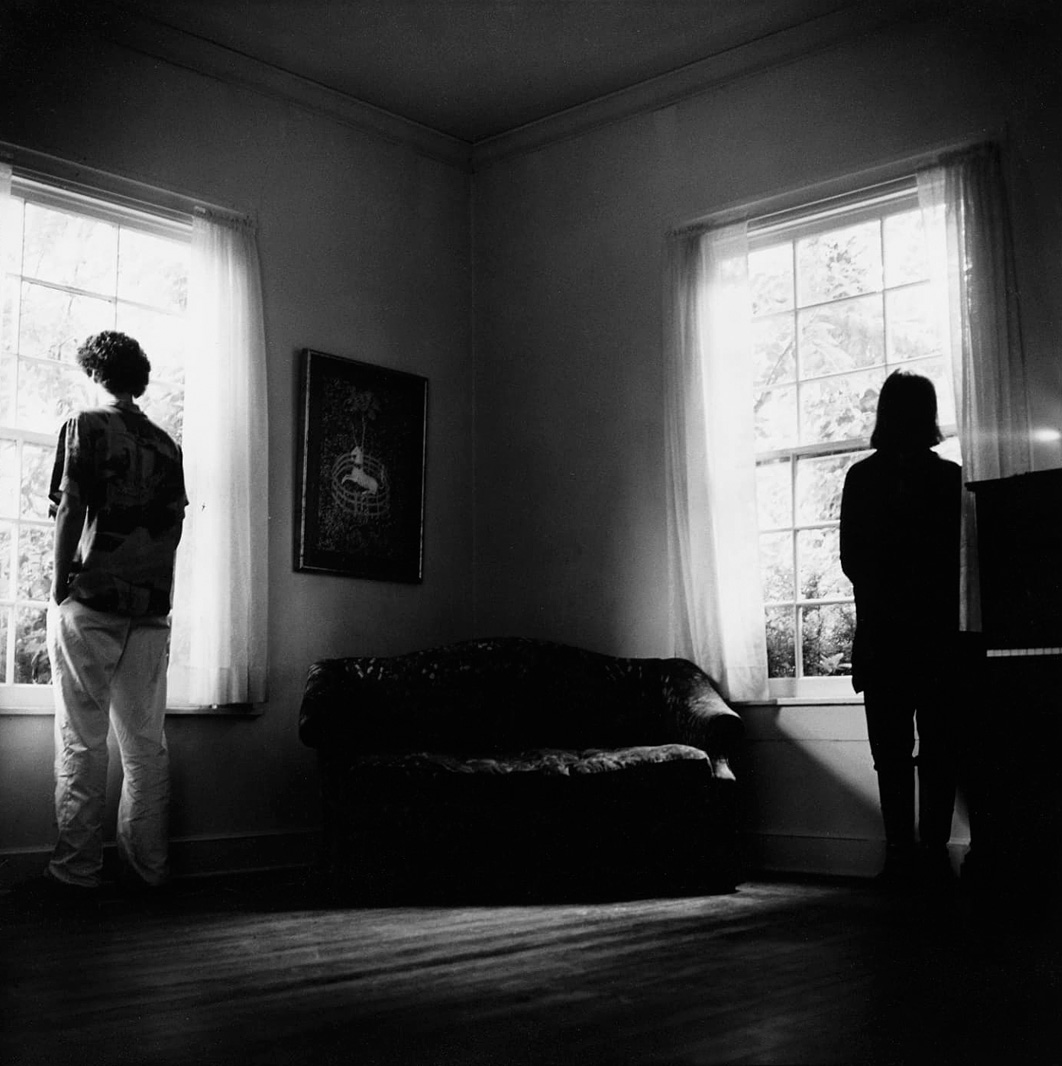
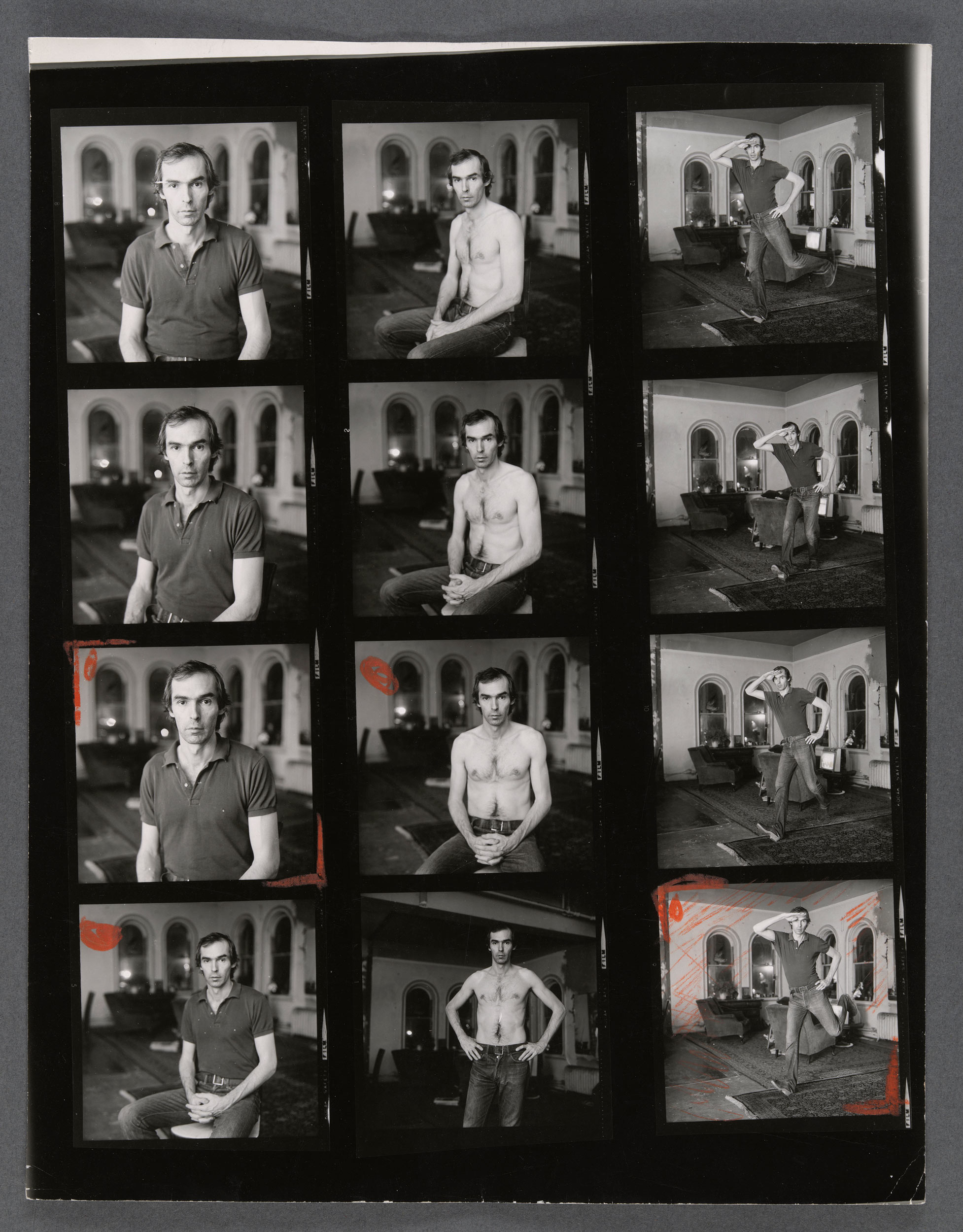
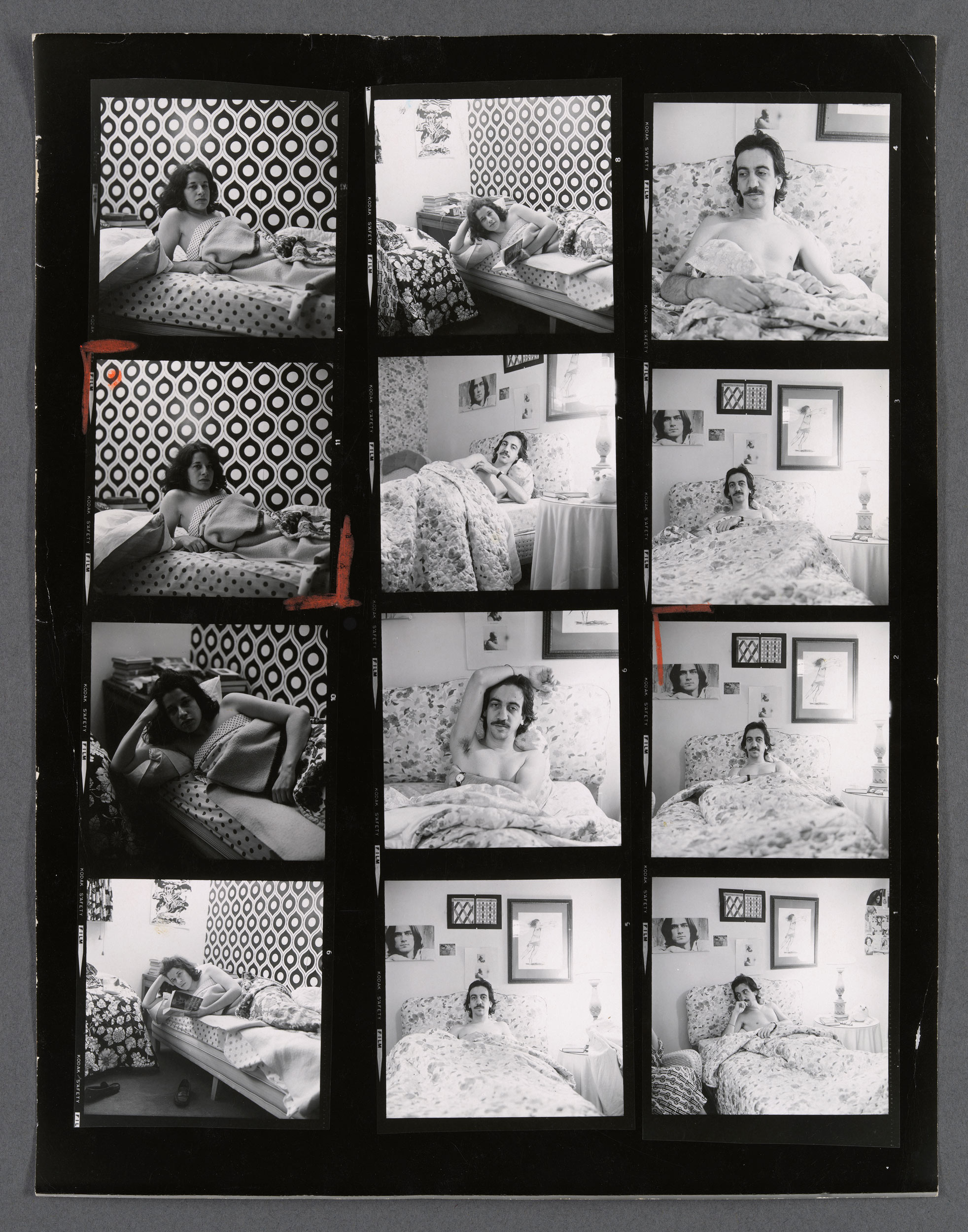
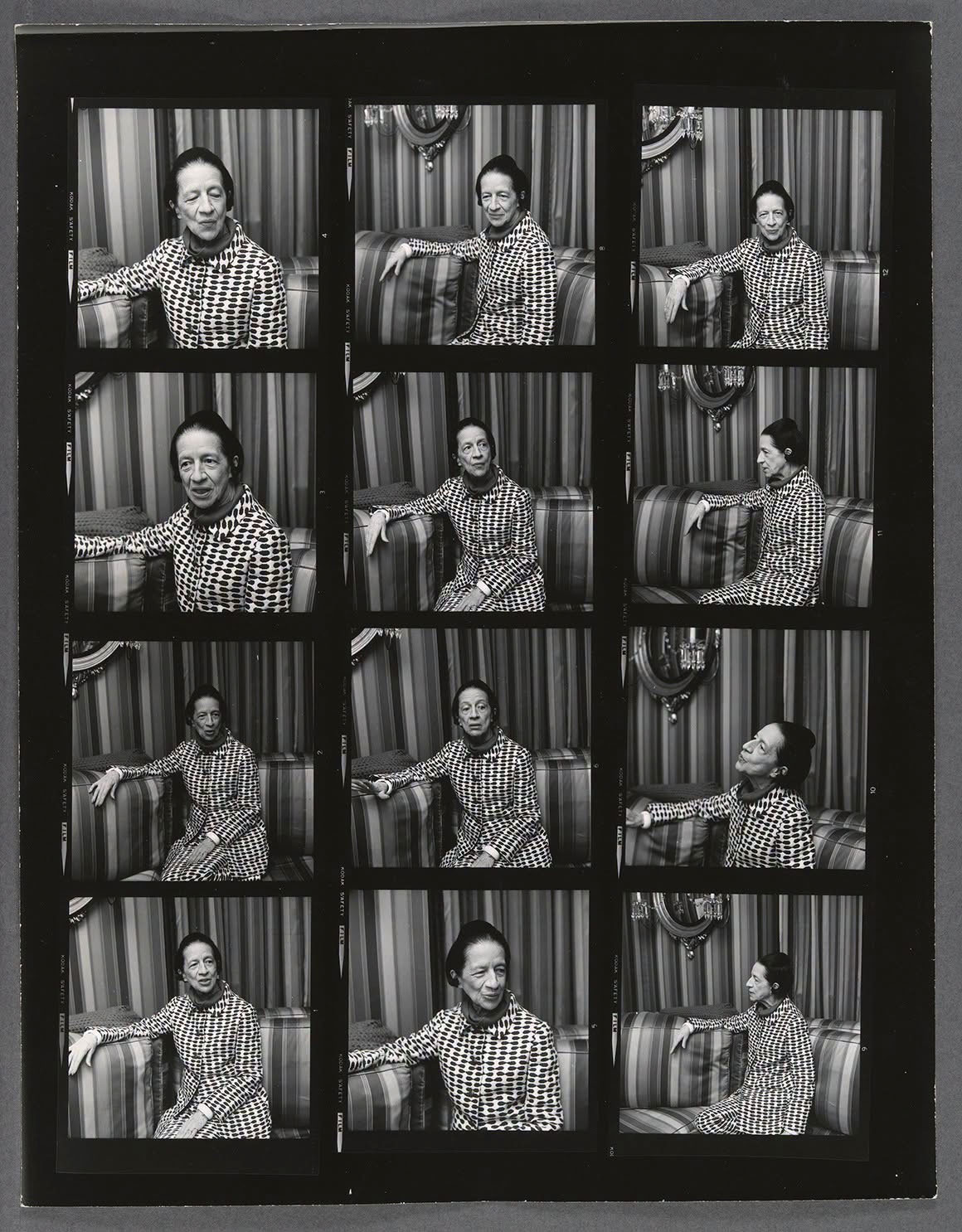
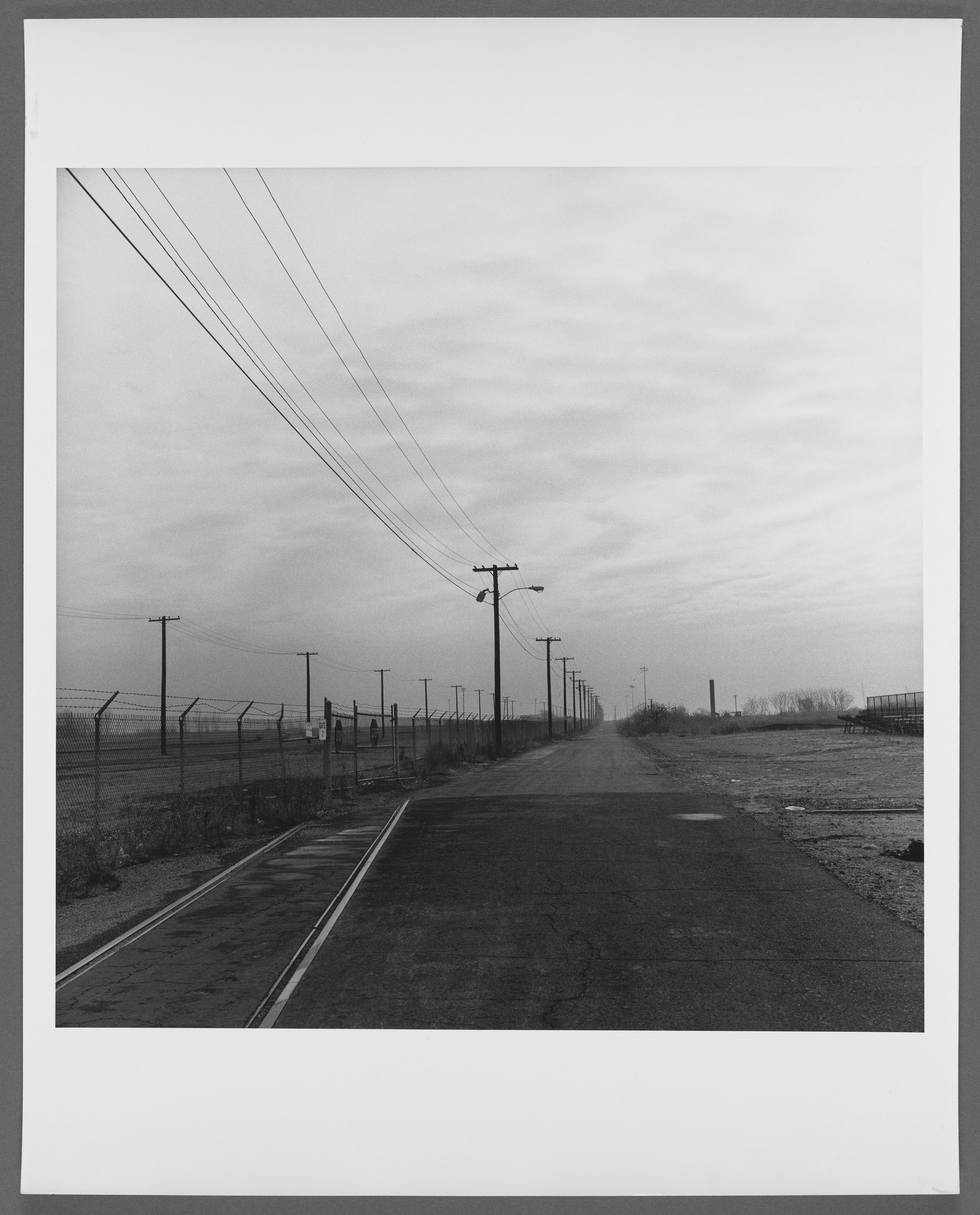
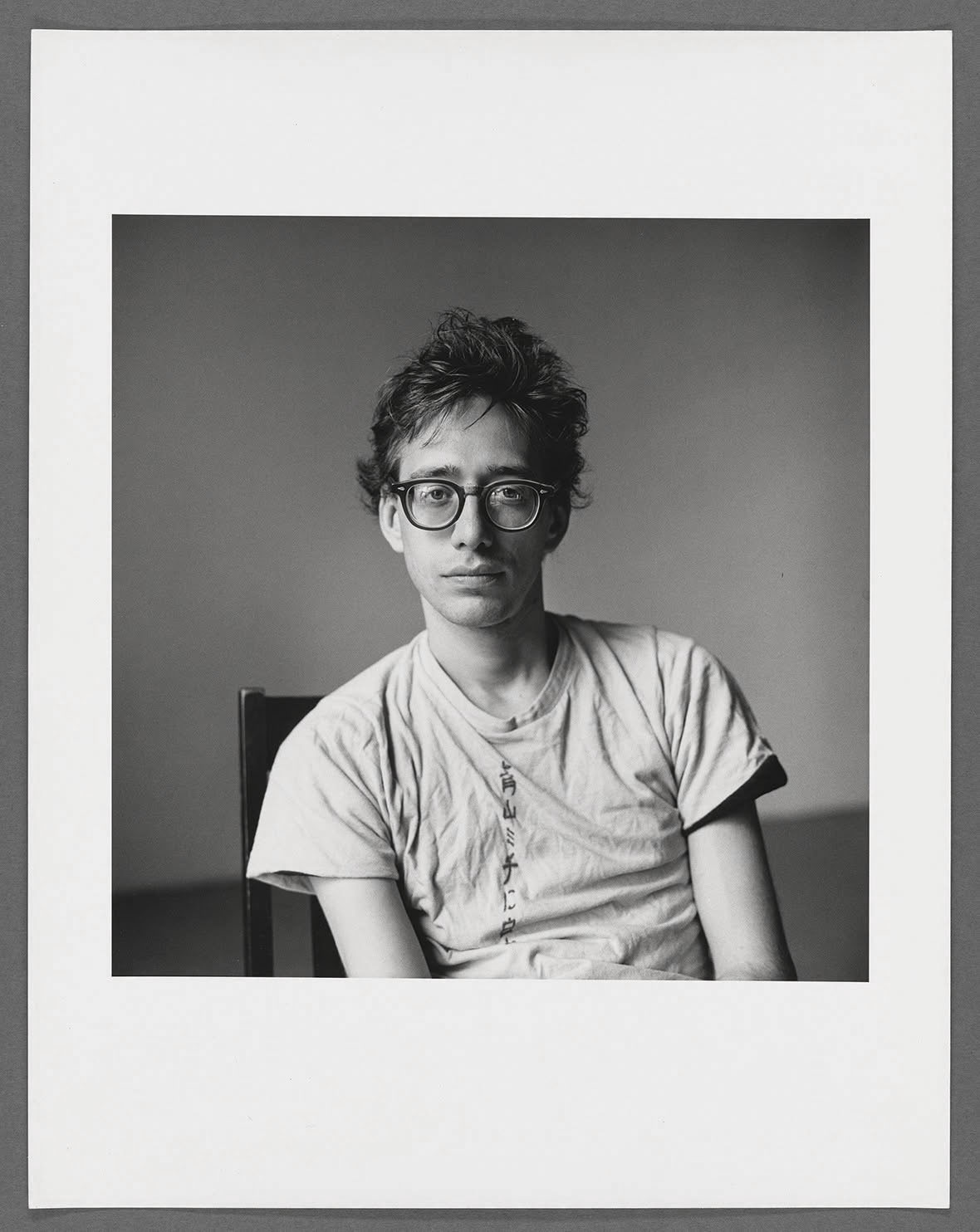
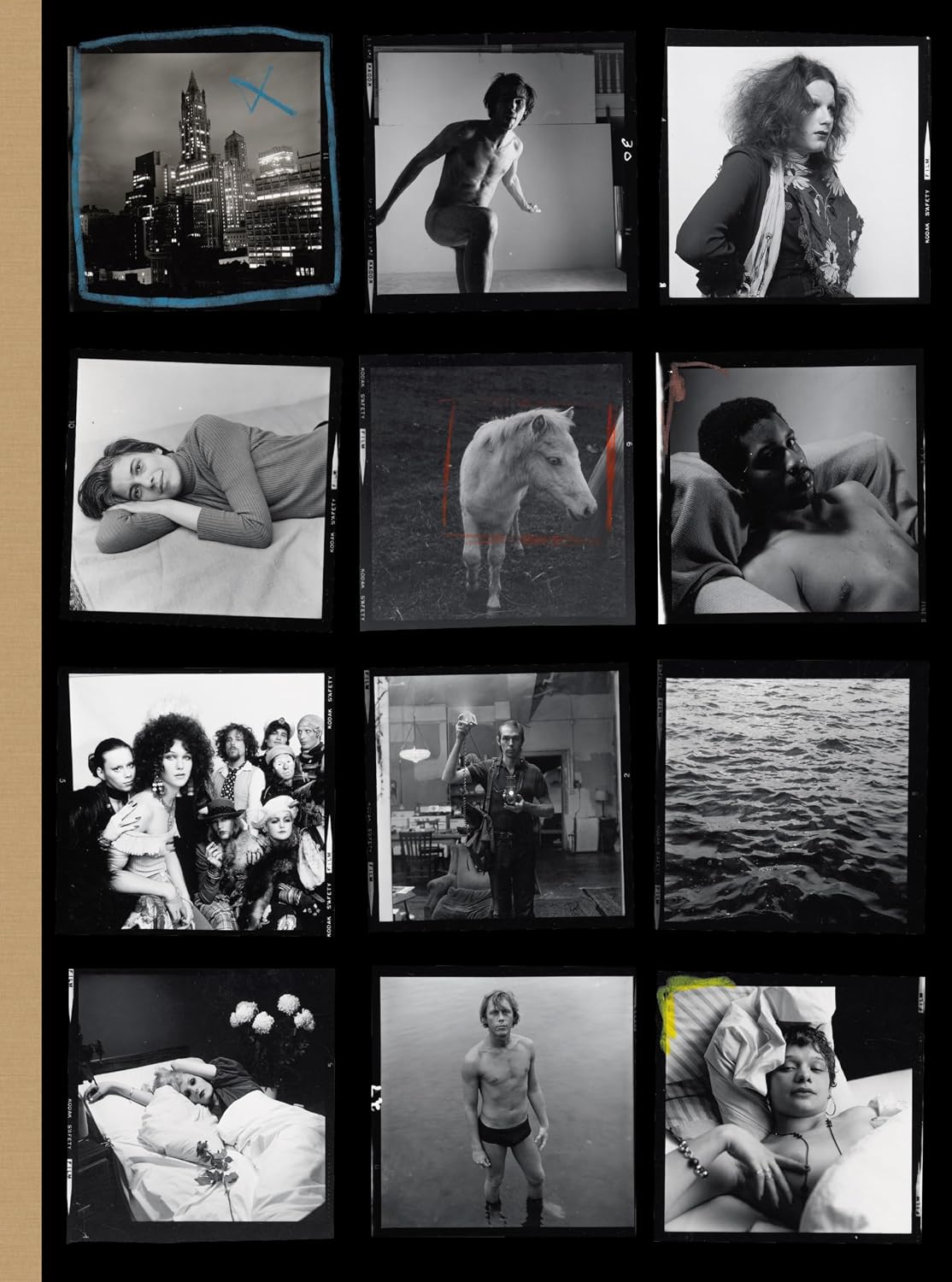
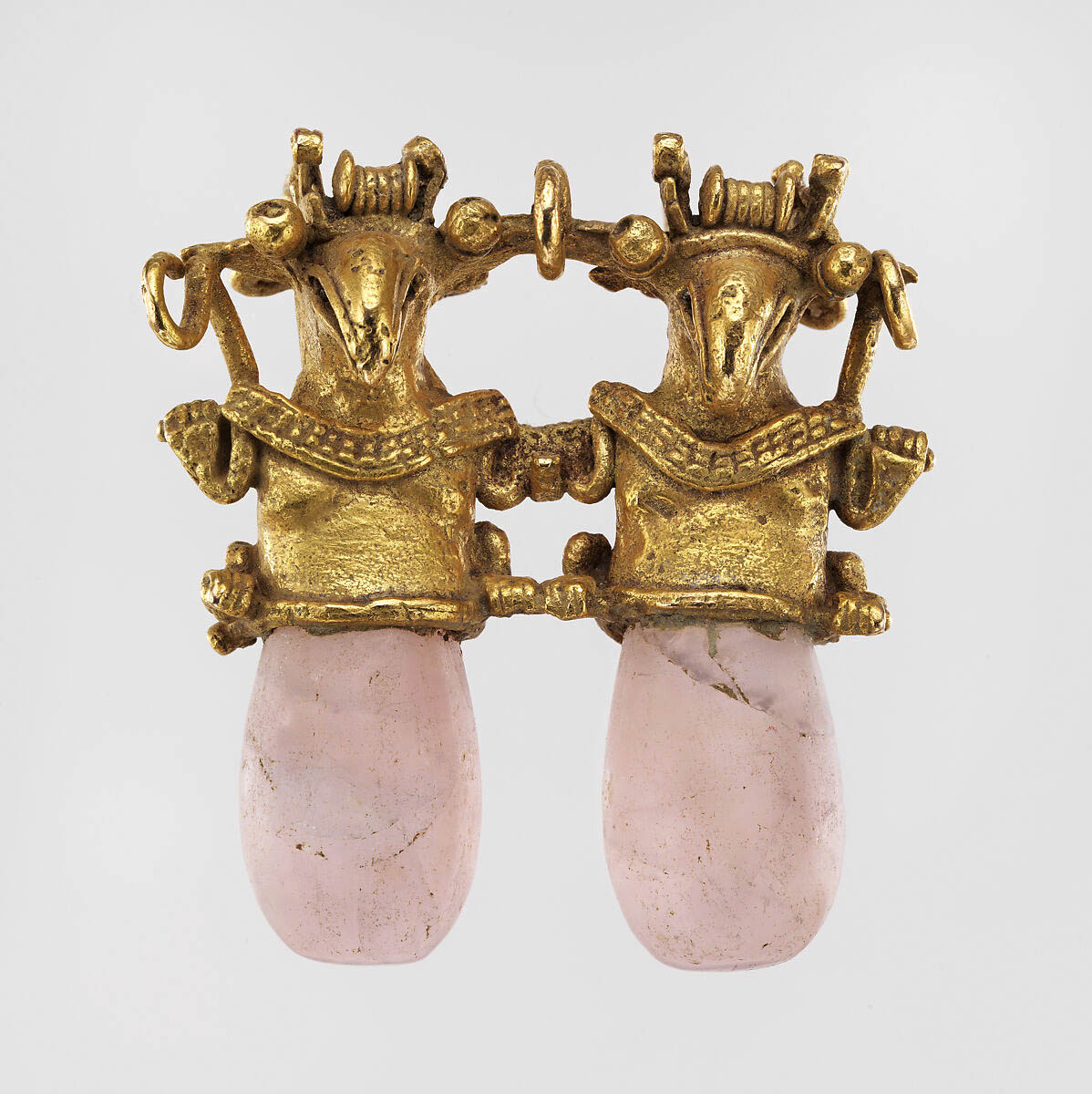
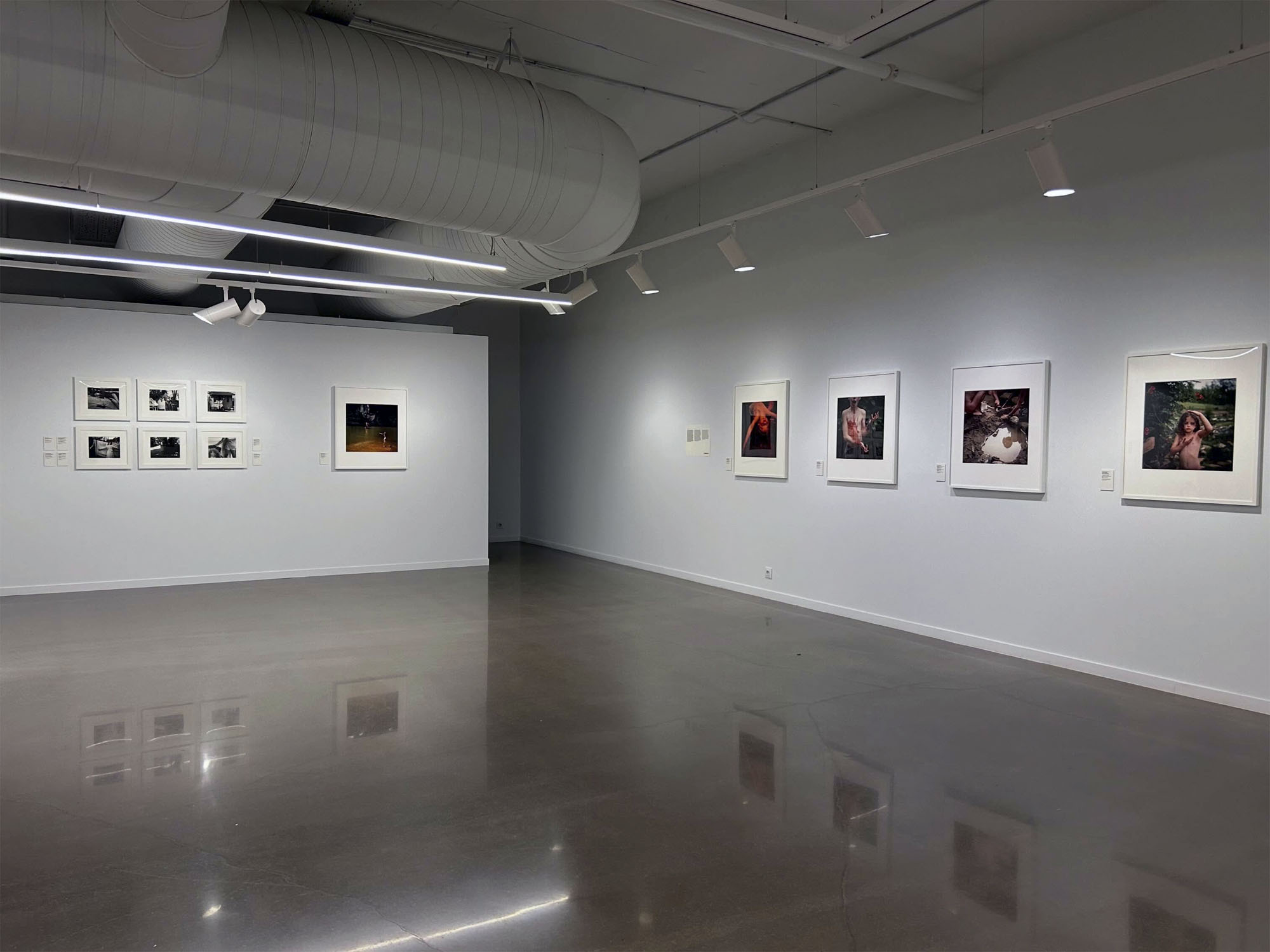
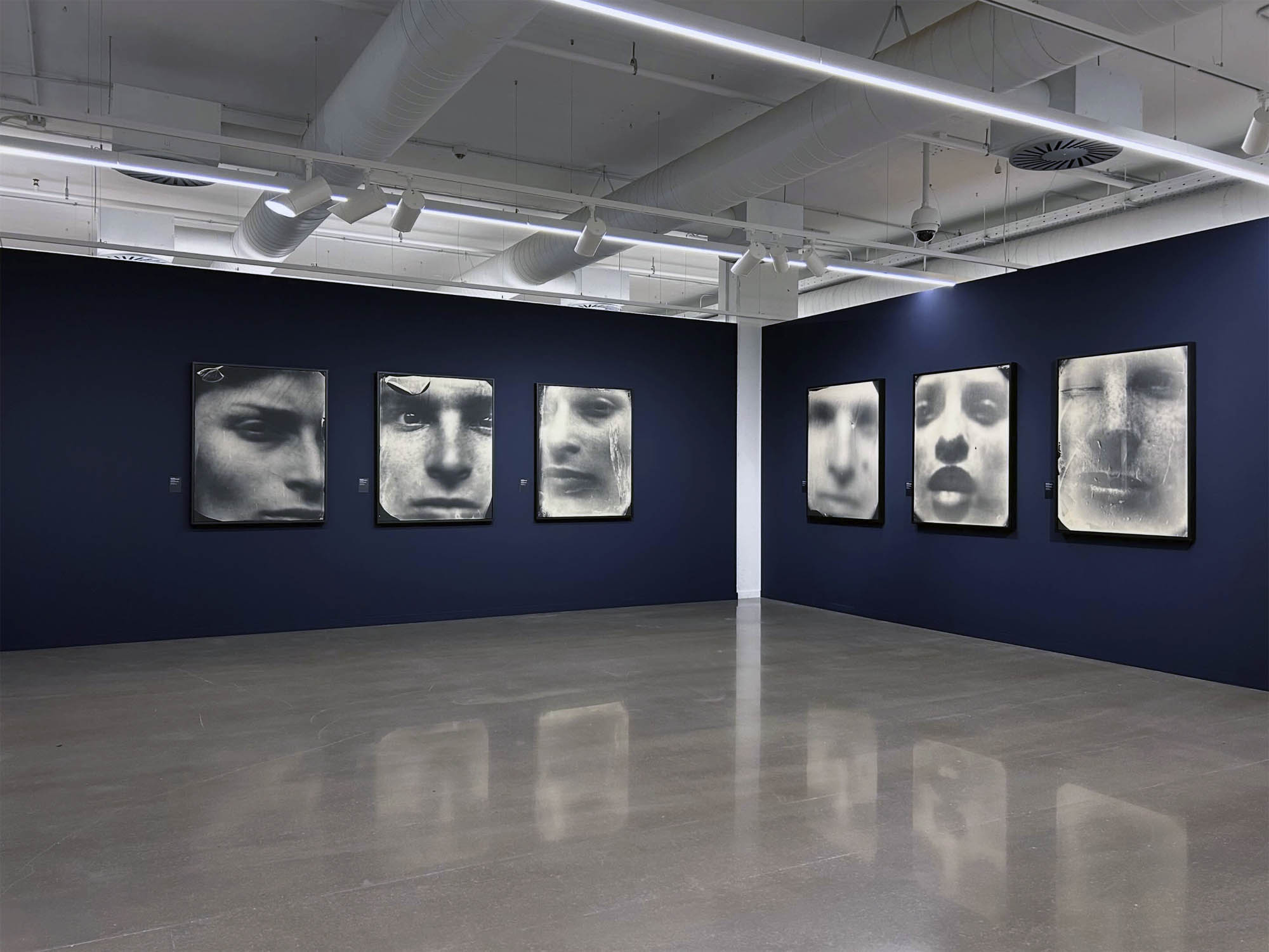
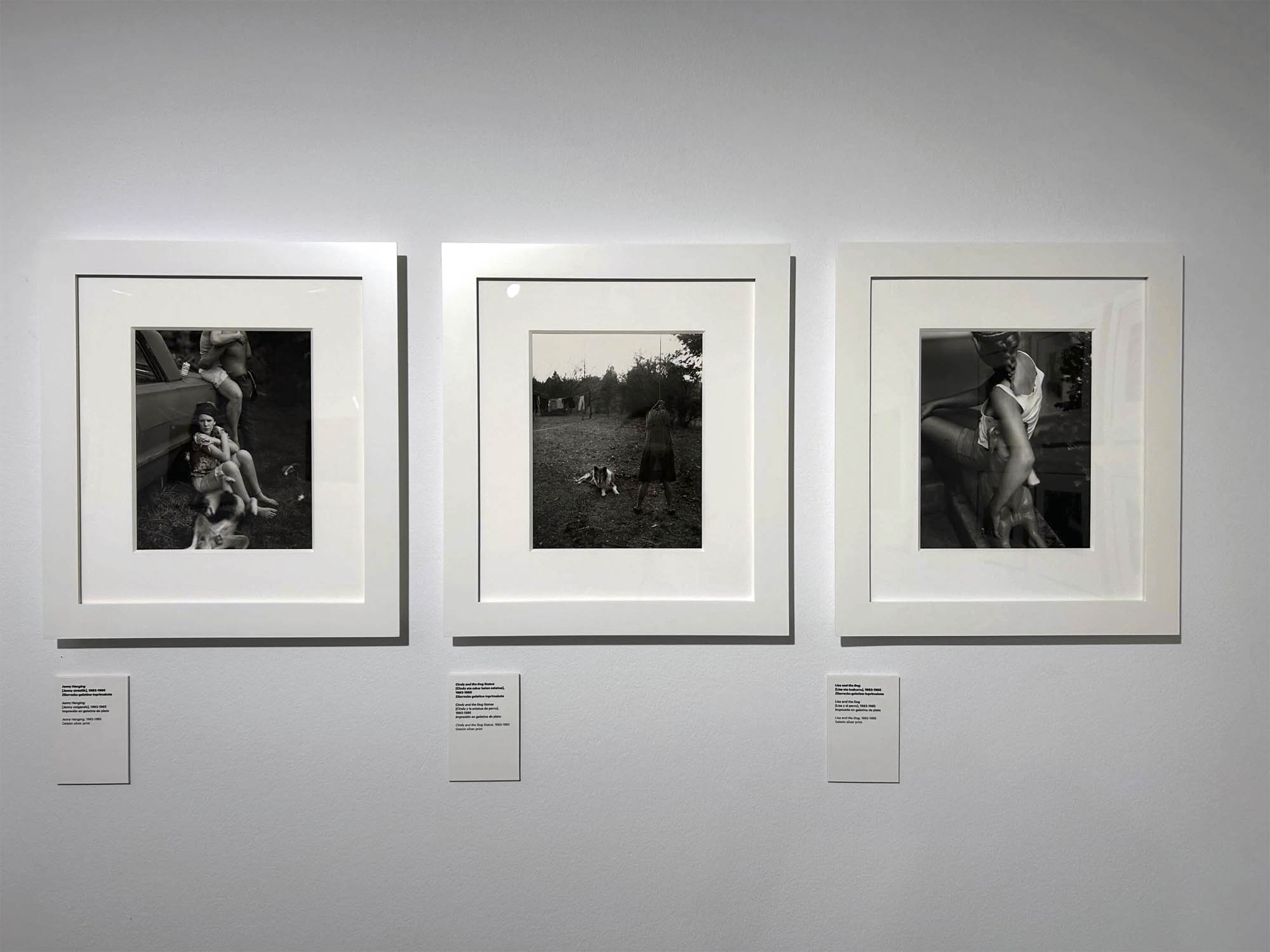
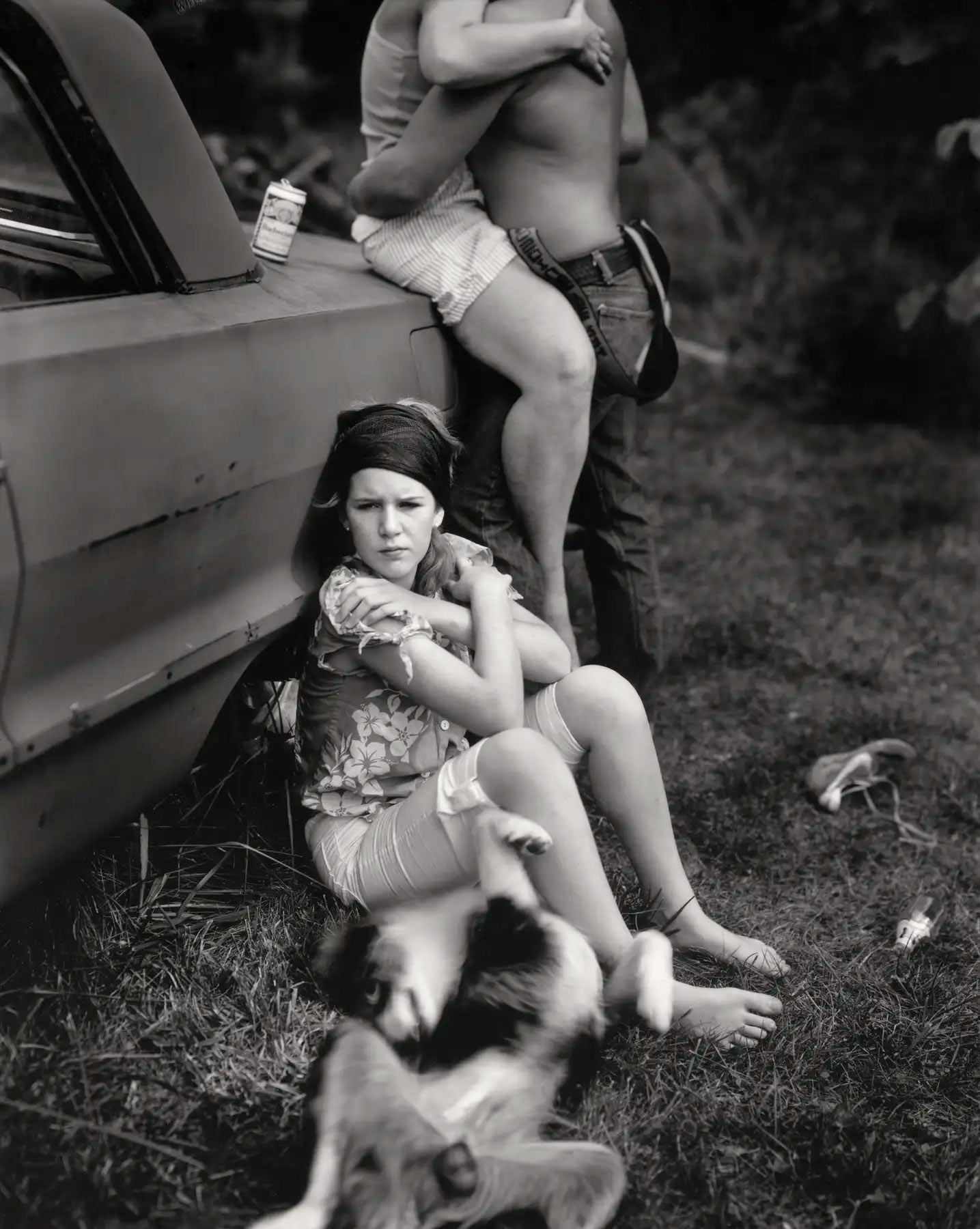
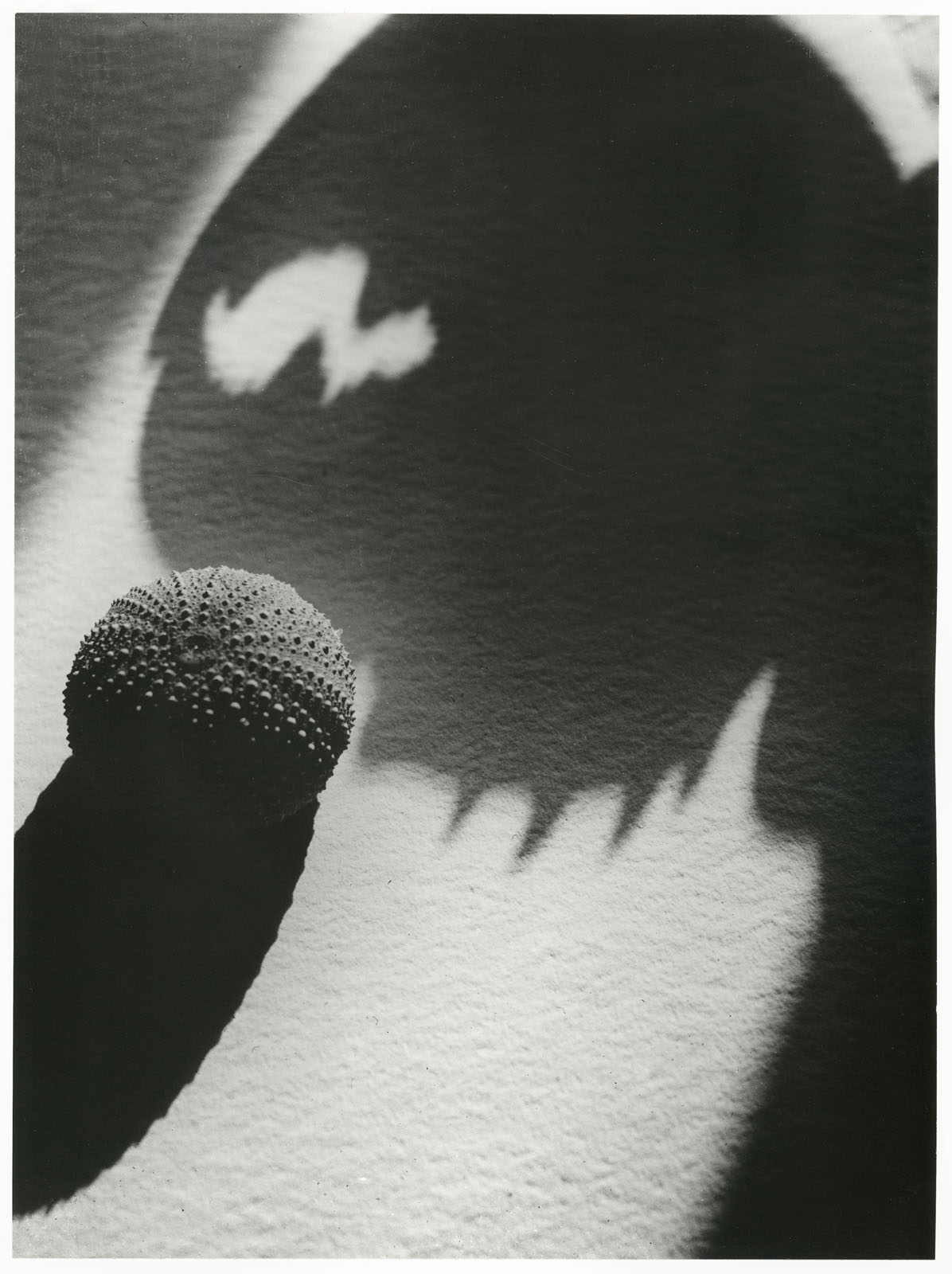
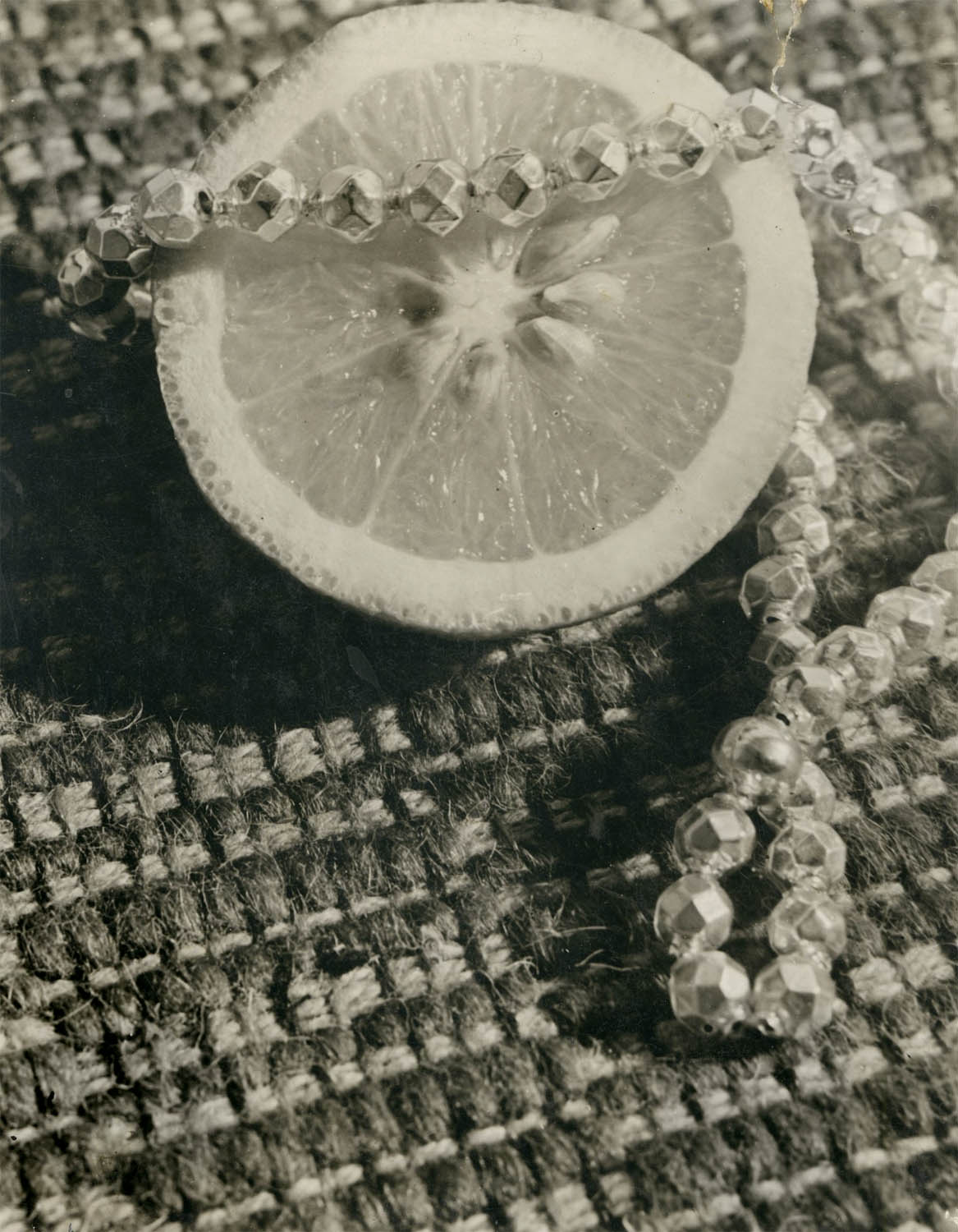
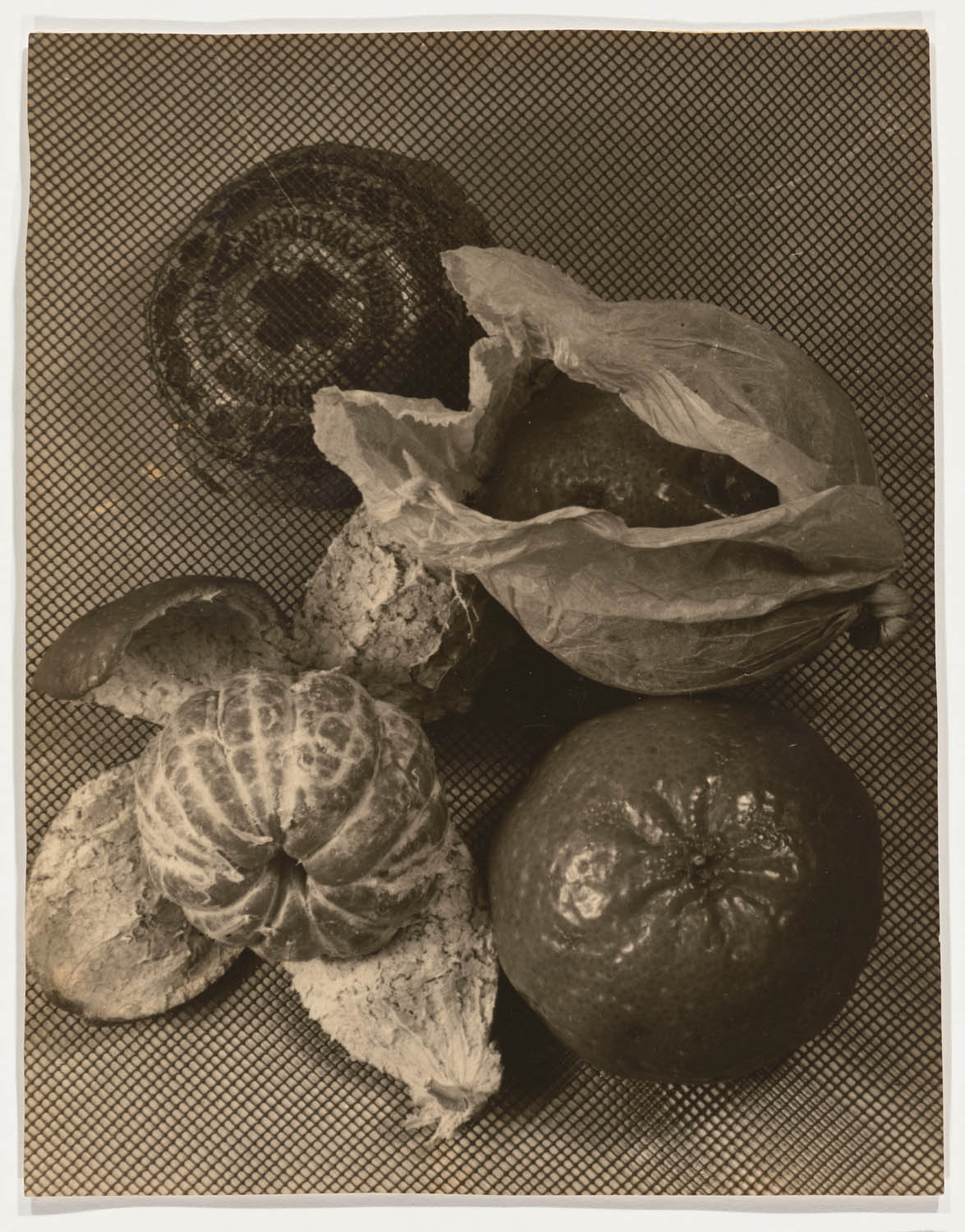
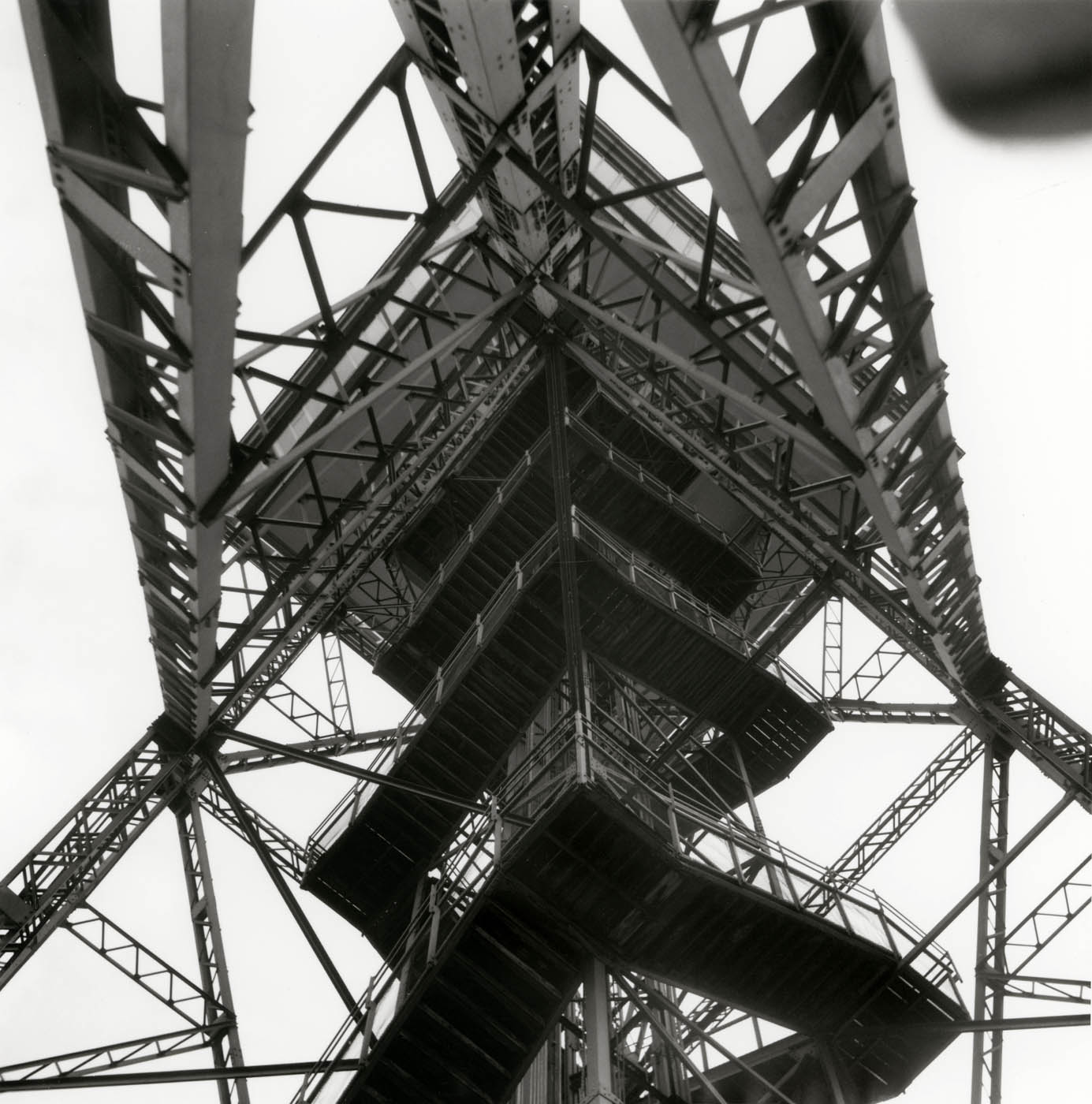
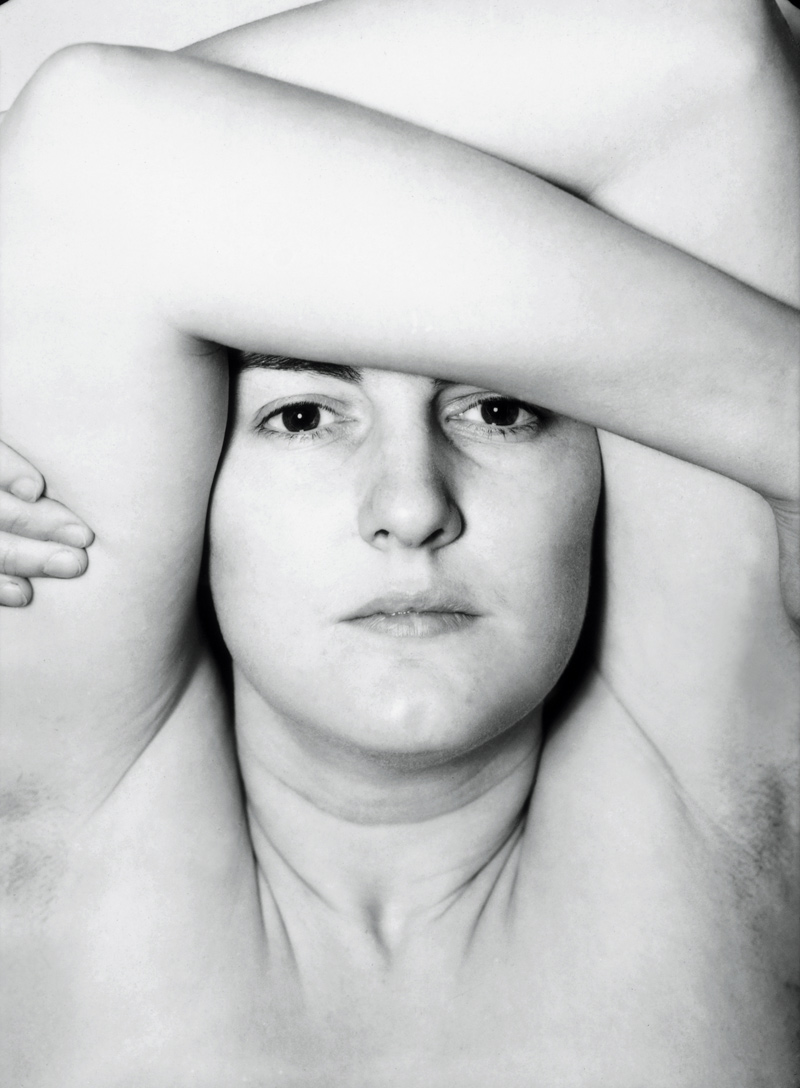
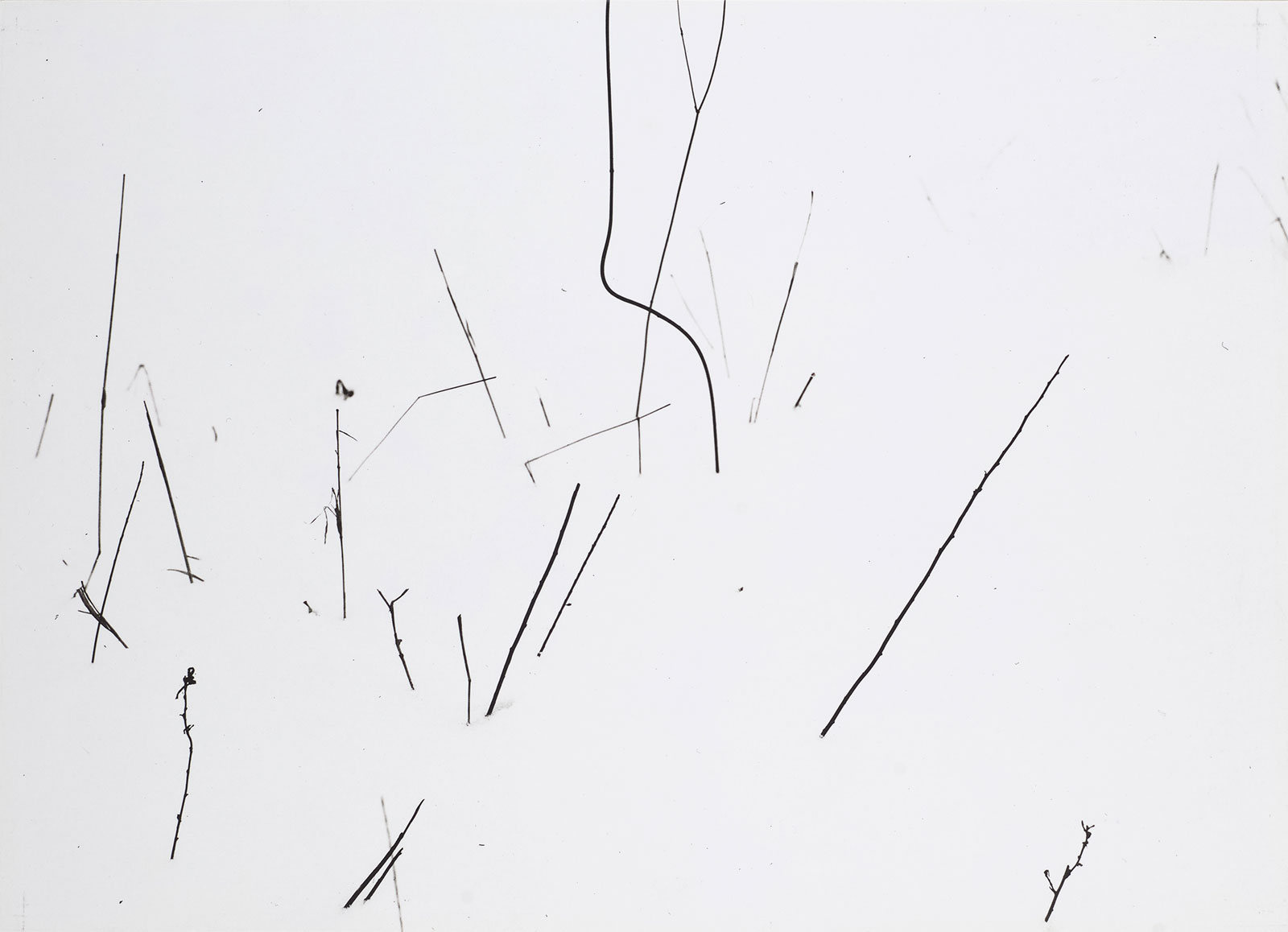
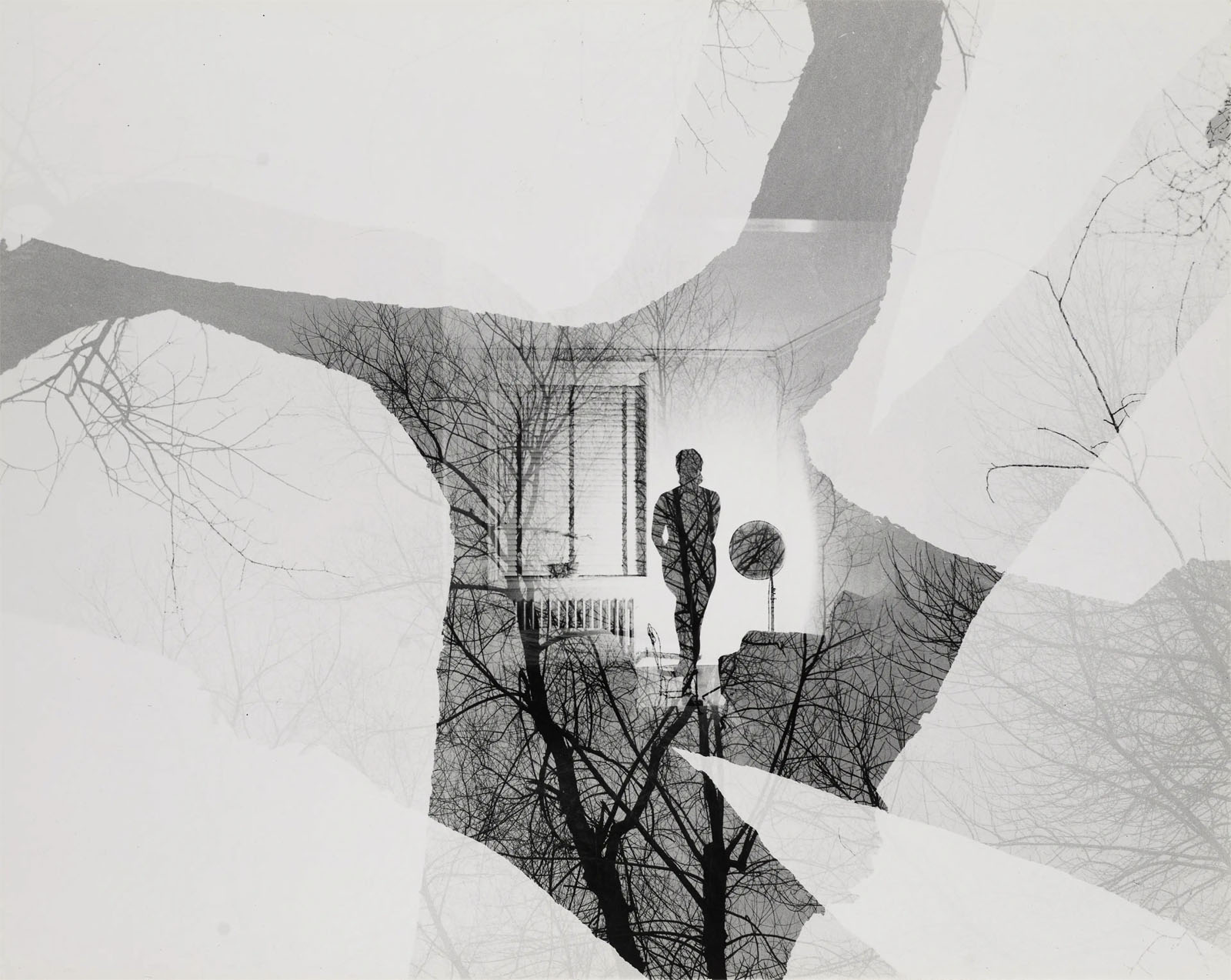
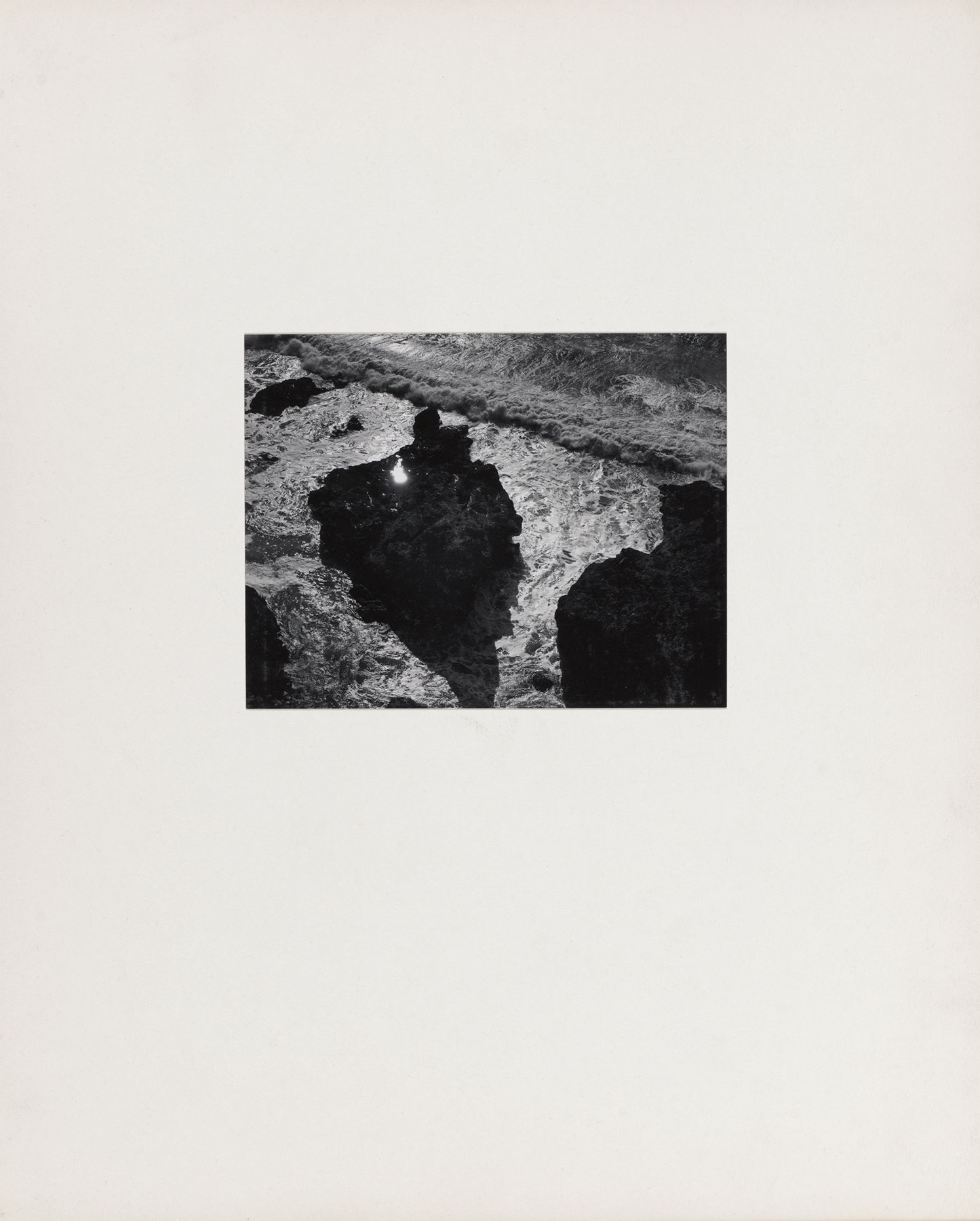
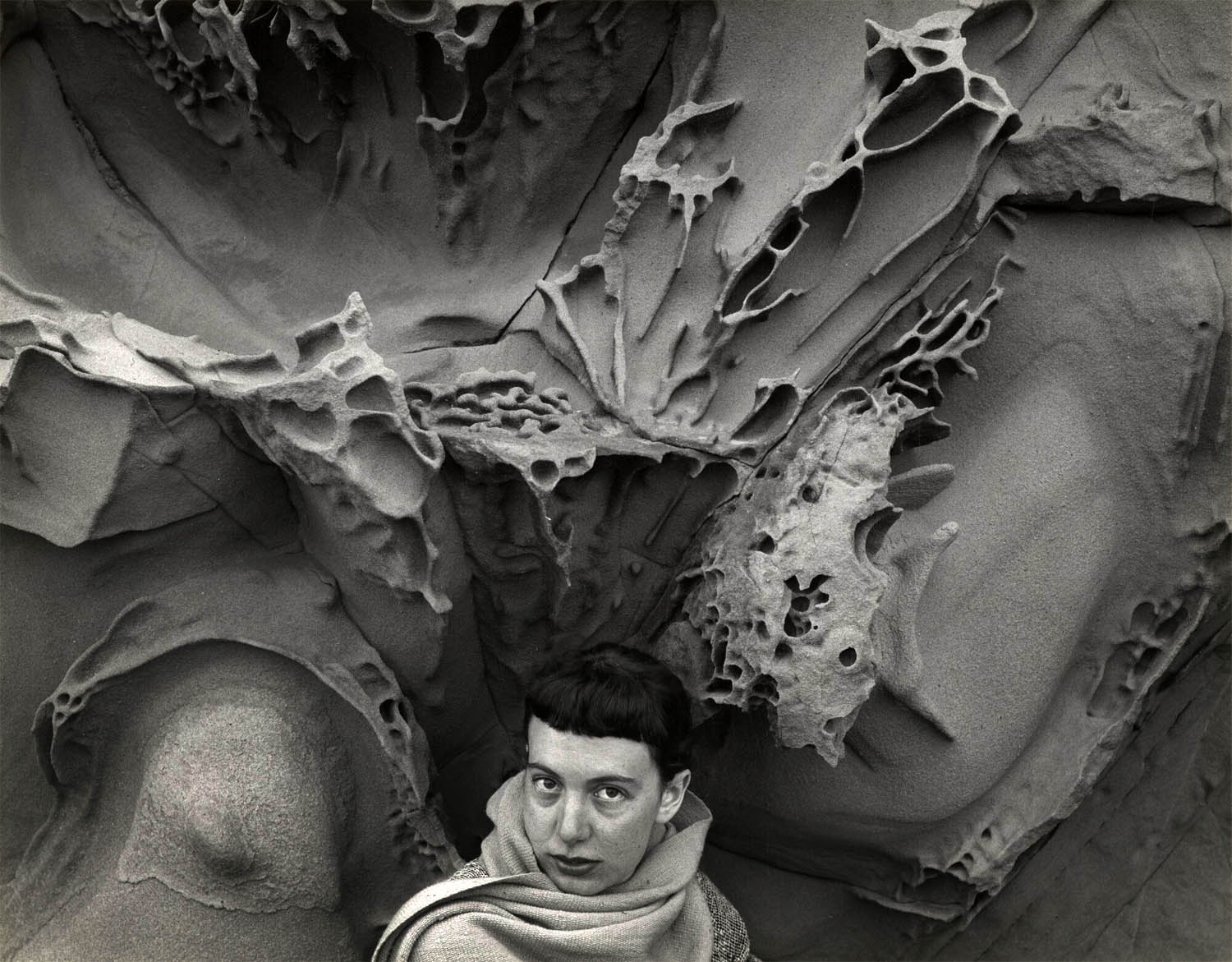
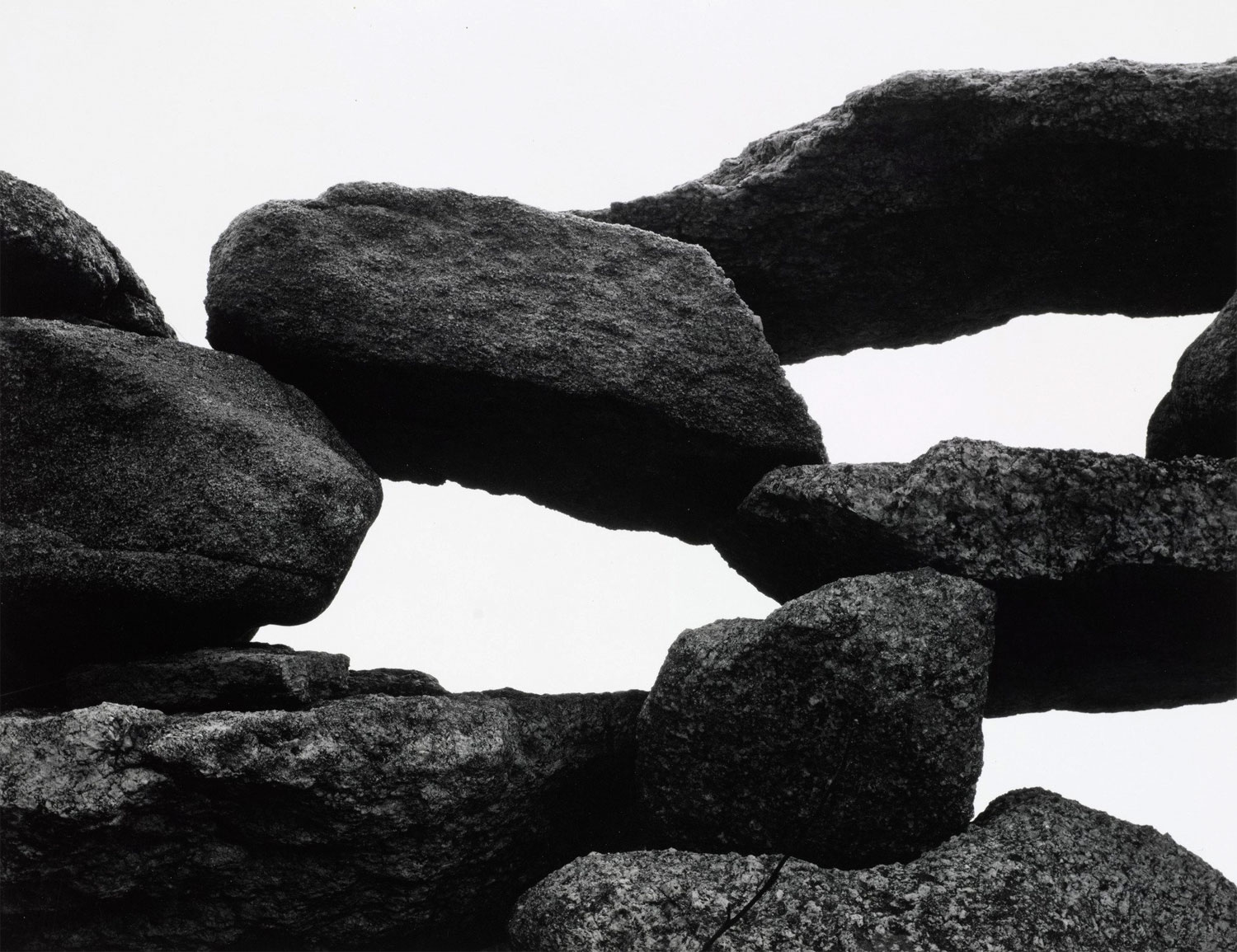
It’s such a pity when a gallery or museum spends an inordinate amount of time, energy and money to put on an exhibition and then doesn’t do all it can to promote the exhibition by providing media and installation photographs.
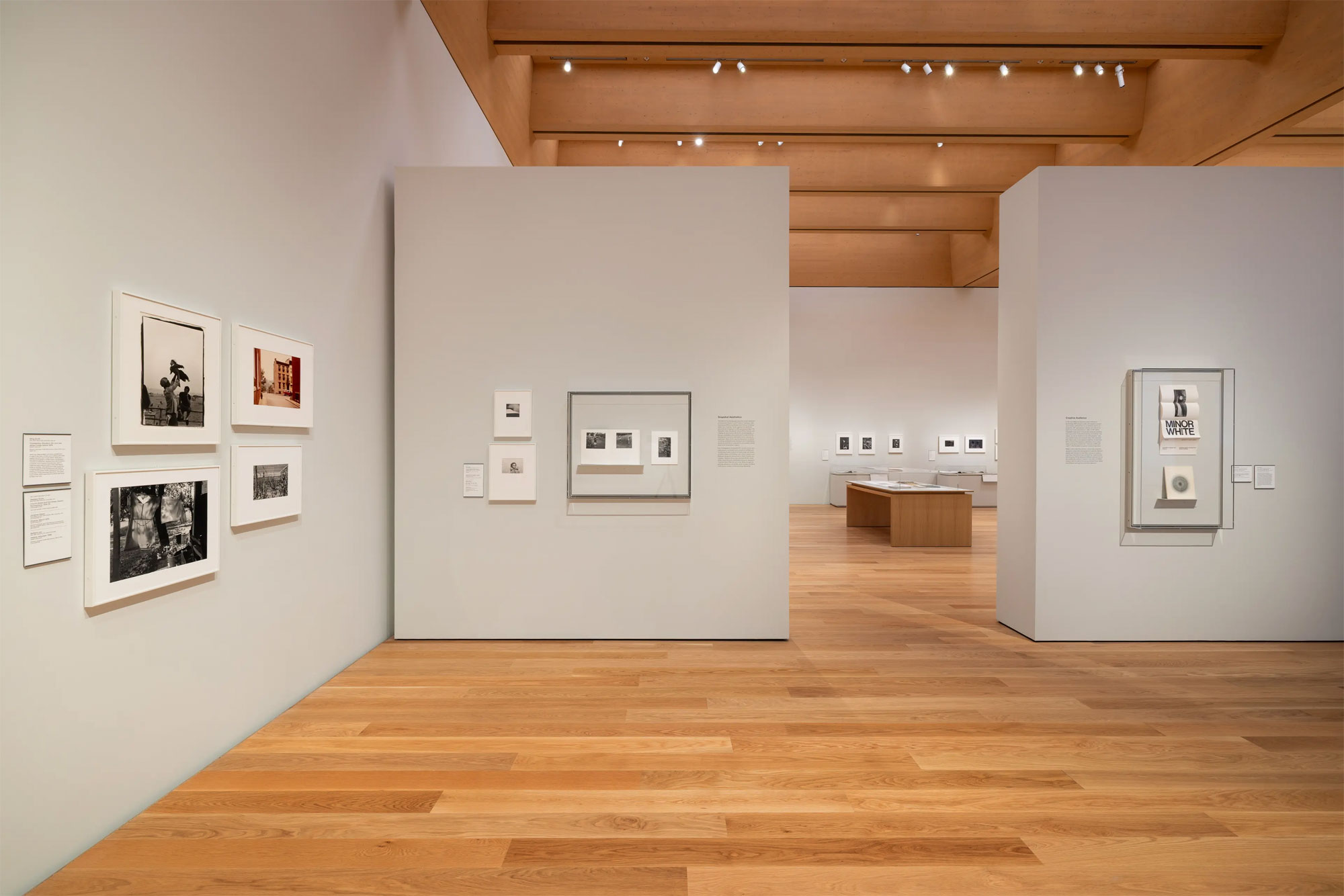
As I observed to my friend Colin Vickery on the Art Blart Facebook page, I can’t really comment on the exhibition as there were so few media images and one installation photo that I really don’t have much to go on. I had to scrounge around just to get enough to make up this post
Of course each of the photographers I admire in their own right but together … that would be incredible to see. One can only imagine the energy bouncing between the images of three masters of photography.
Suffice to say I have ordered the catalogue even though it’s $110 in Australia on Amazon.
Dr Marcus Bunyan
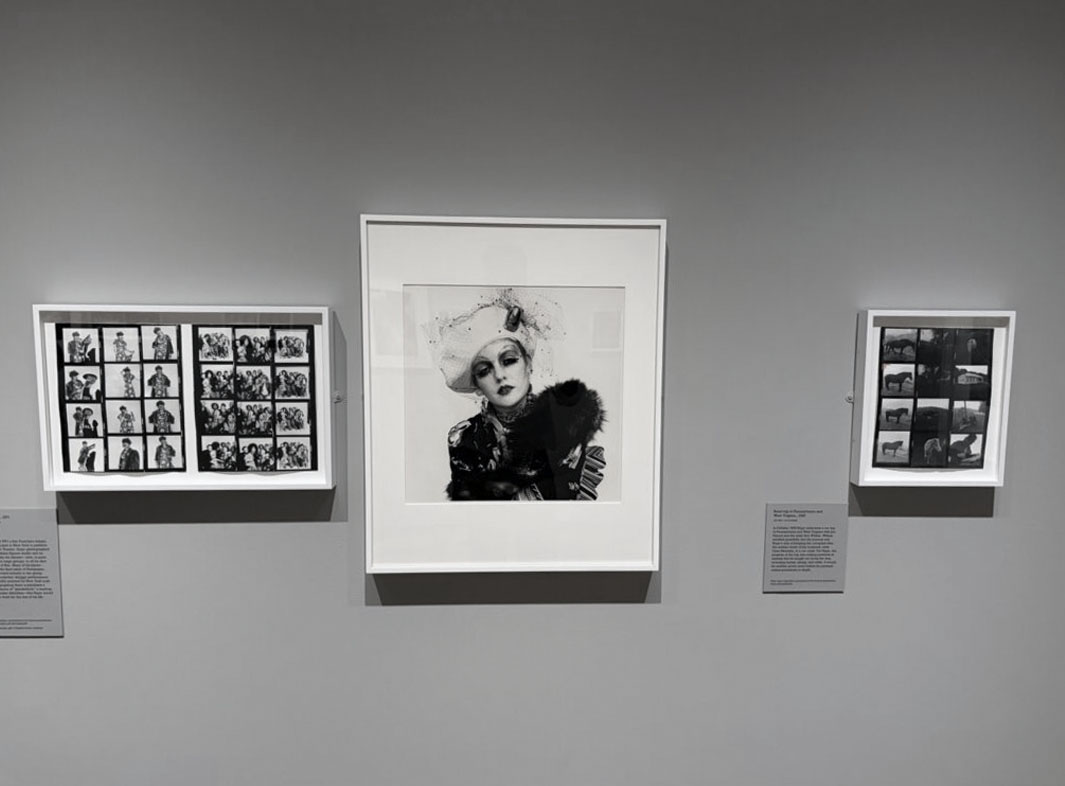
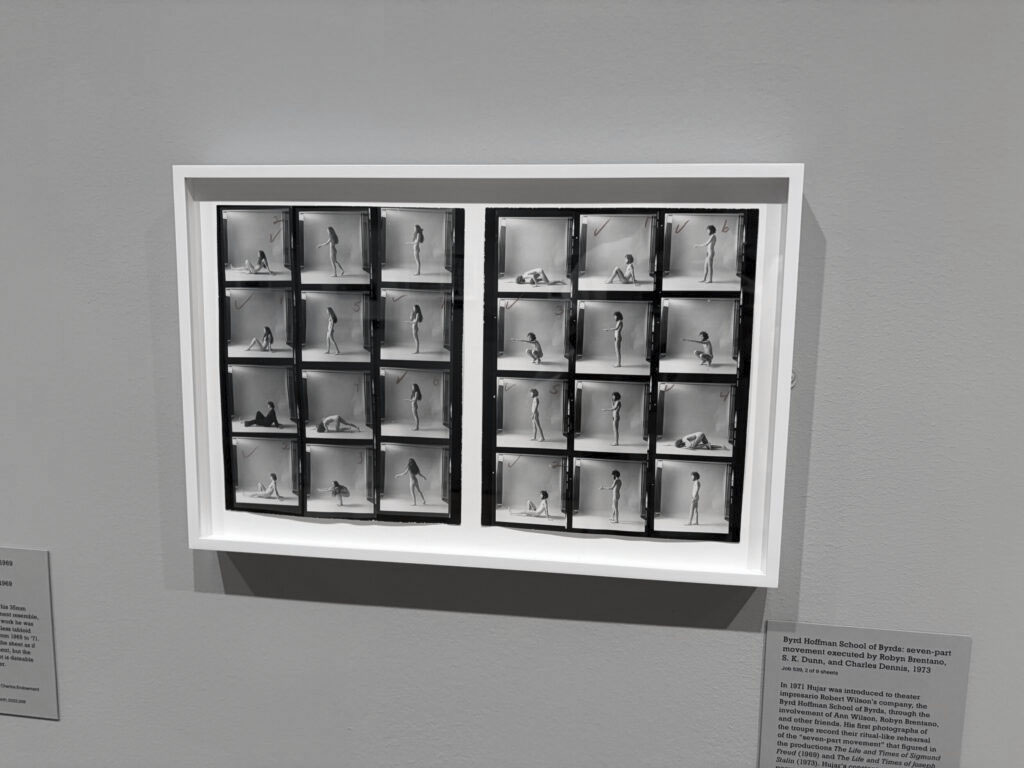
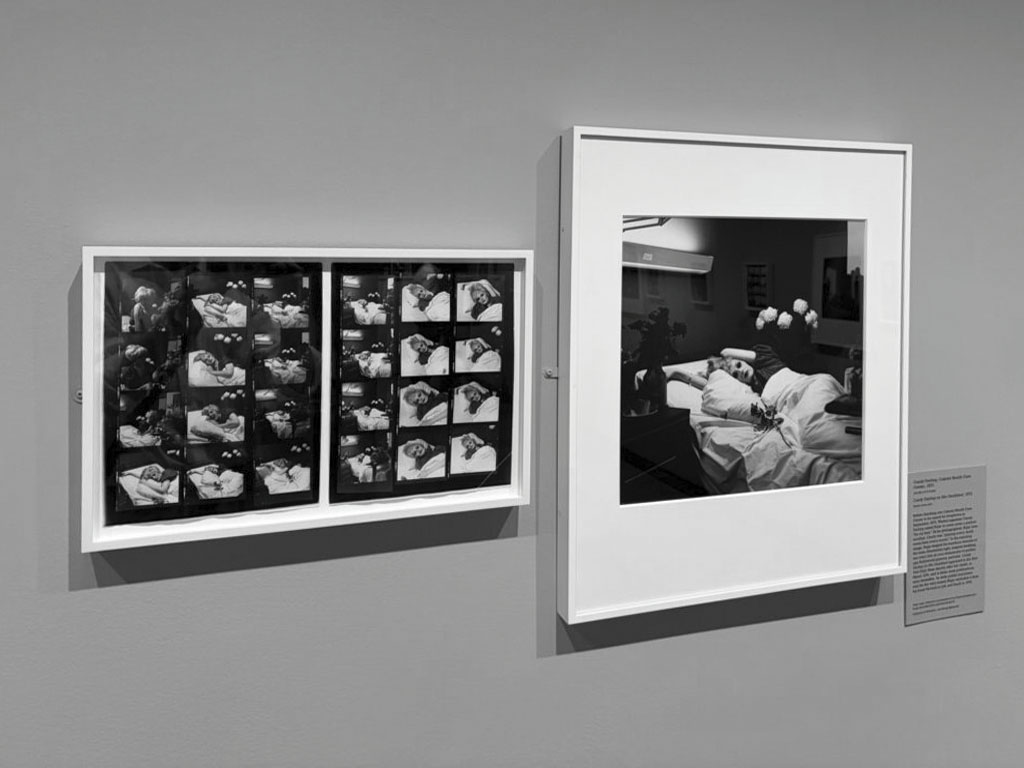
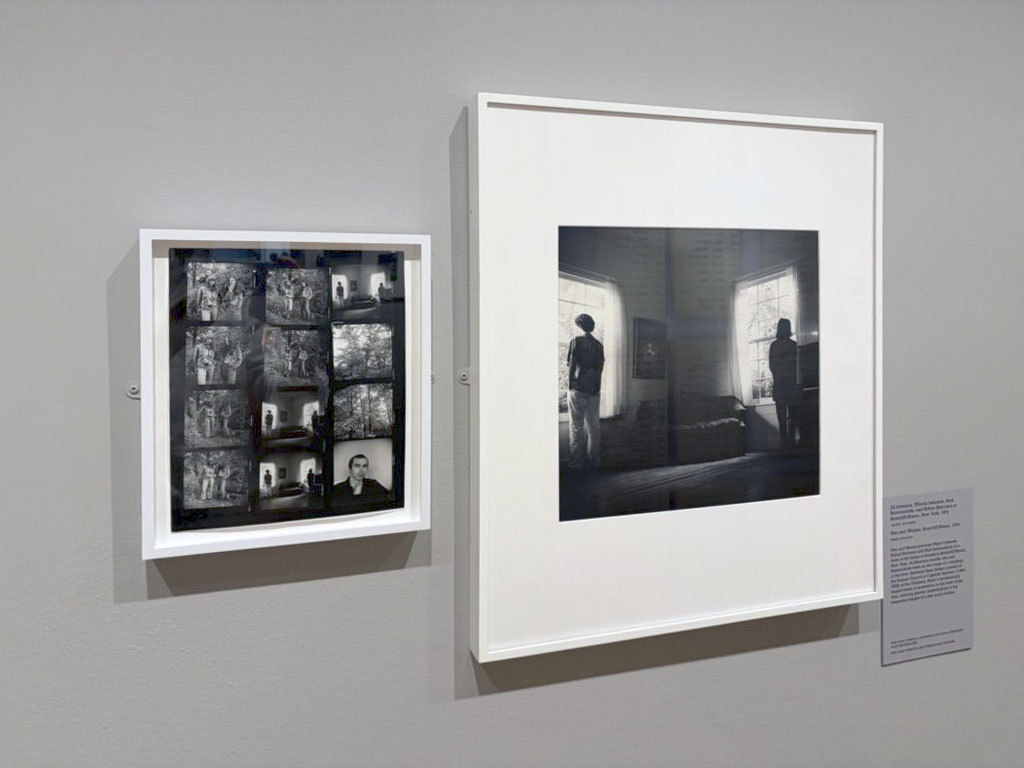
Many thankx to Princeton University Art Museum for allowing me to publish the photographs in the posting. Please click on the photographs for a larger version of the image.
“Soon, the grand sweep of the exhibition becomes clear as it maps a shared strategy among this trio in the formation of a network of institutions, criticism, publishing, museum engagement, and, perhaps most crucially, an educational infrastructure that would embed photography as an academic and cultural participant. As a premise, it is both startling and self-evident and vividly demonstrates the coordination of parts among the Museum of Modern Art, Aperture, the George Eastman Museum, Rhode Island School of Design (RISD), and the IIT Institute of Design in Chicago. Indeed, Photography as a Way of Life is as much about the careers of each photographer and their advancement as they chaperoned the medium. The exhibition does not seem a matter of cunning and opportunism, as it might be perceived, but of passion and commitment. …
To its credit, the exhibition includes a second chapter in the chronicle. By 1970, a new generation of photographers who had studied at RISD, Rochester Institute of Technology and the newly formed Visual Studies Workshop in Rochester, in the spirit of the times, departed from the received wisdom of the photograph as a formalist device. From the tutelage of Callahan and Siskind, especially, came an assertion of the photograph not as an object of wistful contemplation but one of cultural rhetoric. It was not a delicate mimetic device but a public construction, a surface and a process. Graduates of this school of thought and practice became a pedagogical diaspora that propagated photographic thinking as we know it today.”
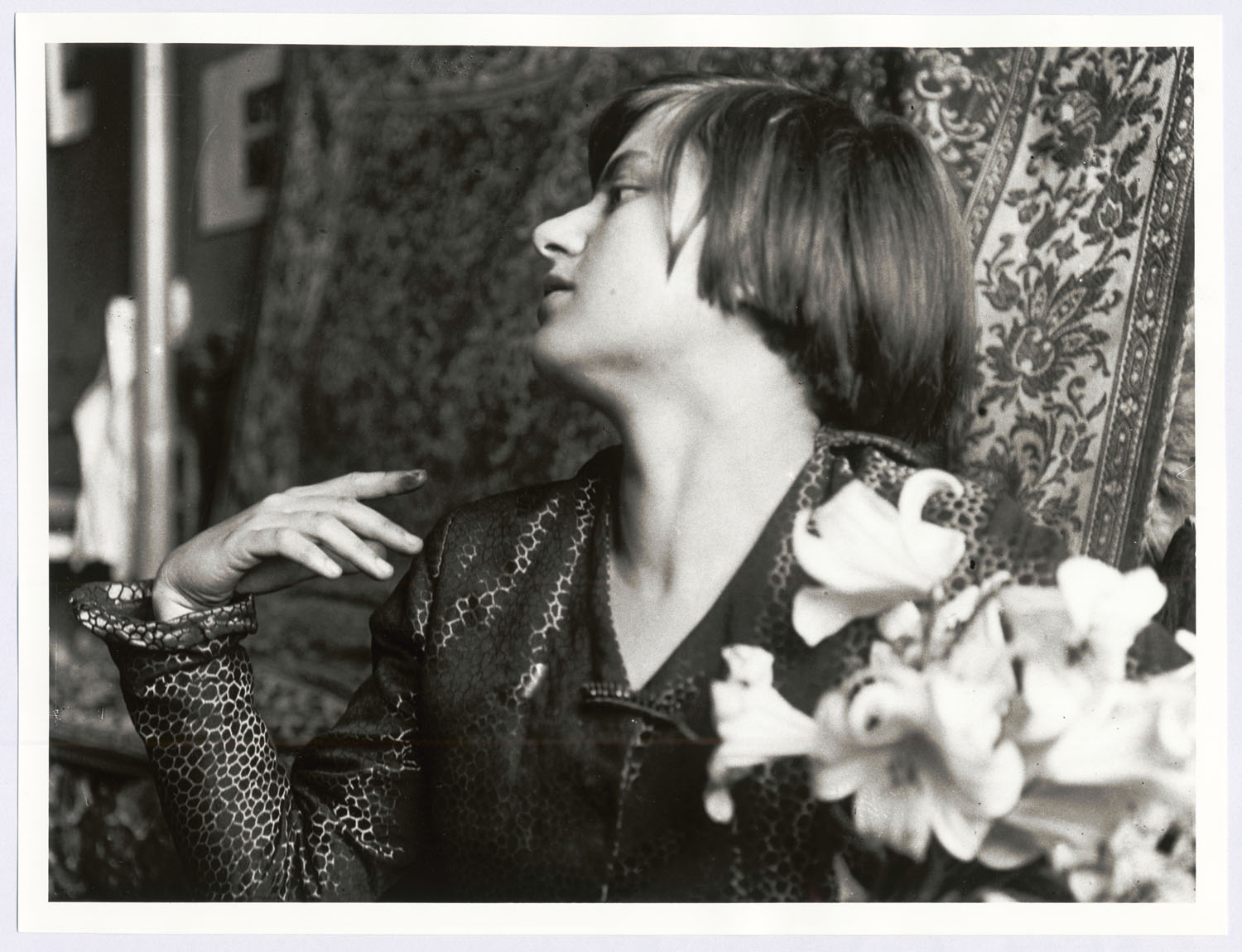
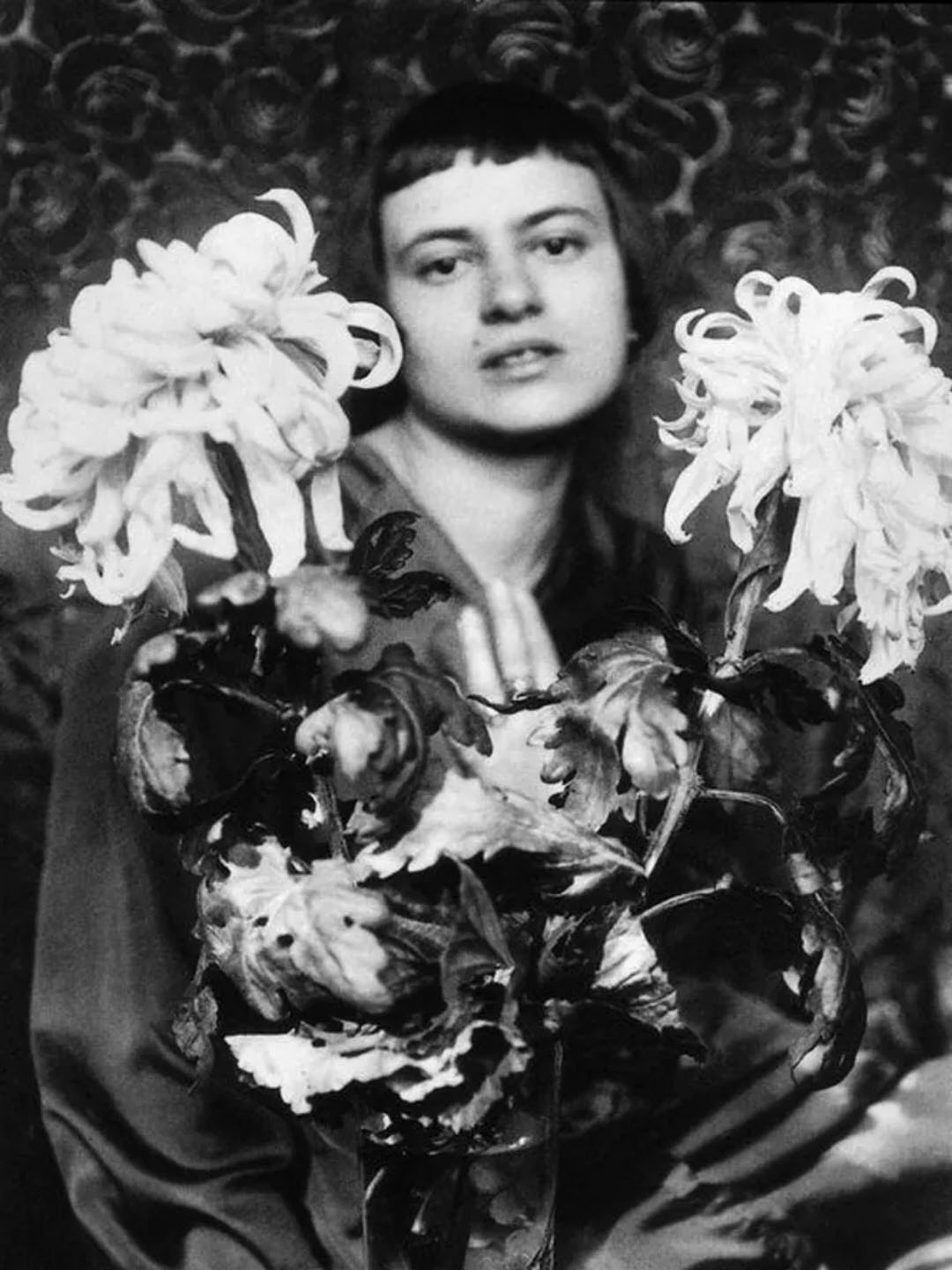
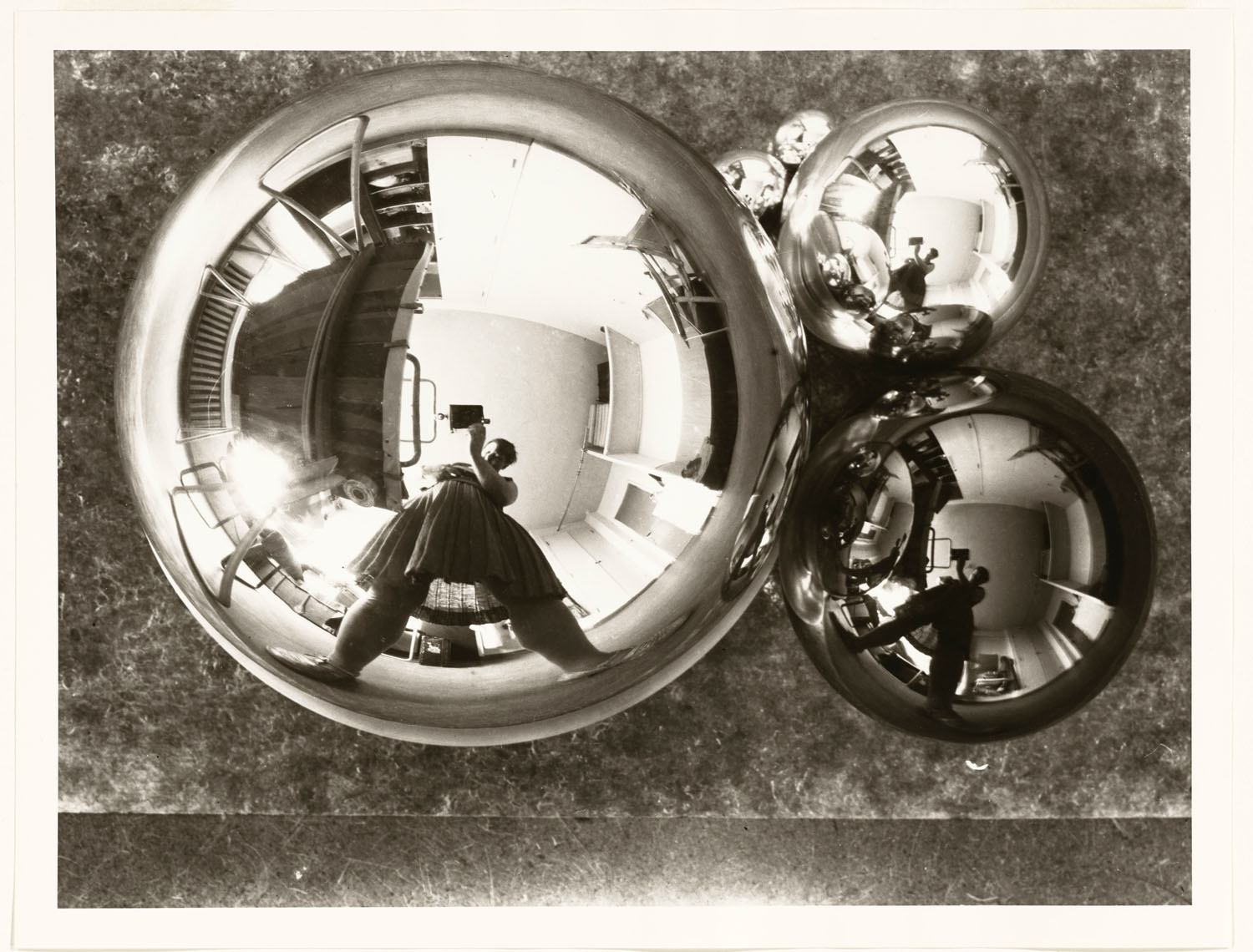
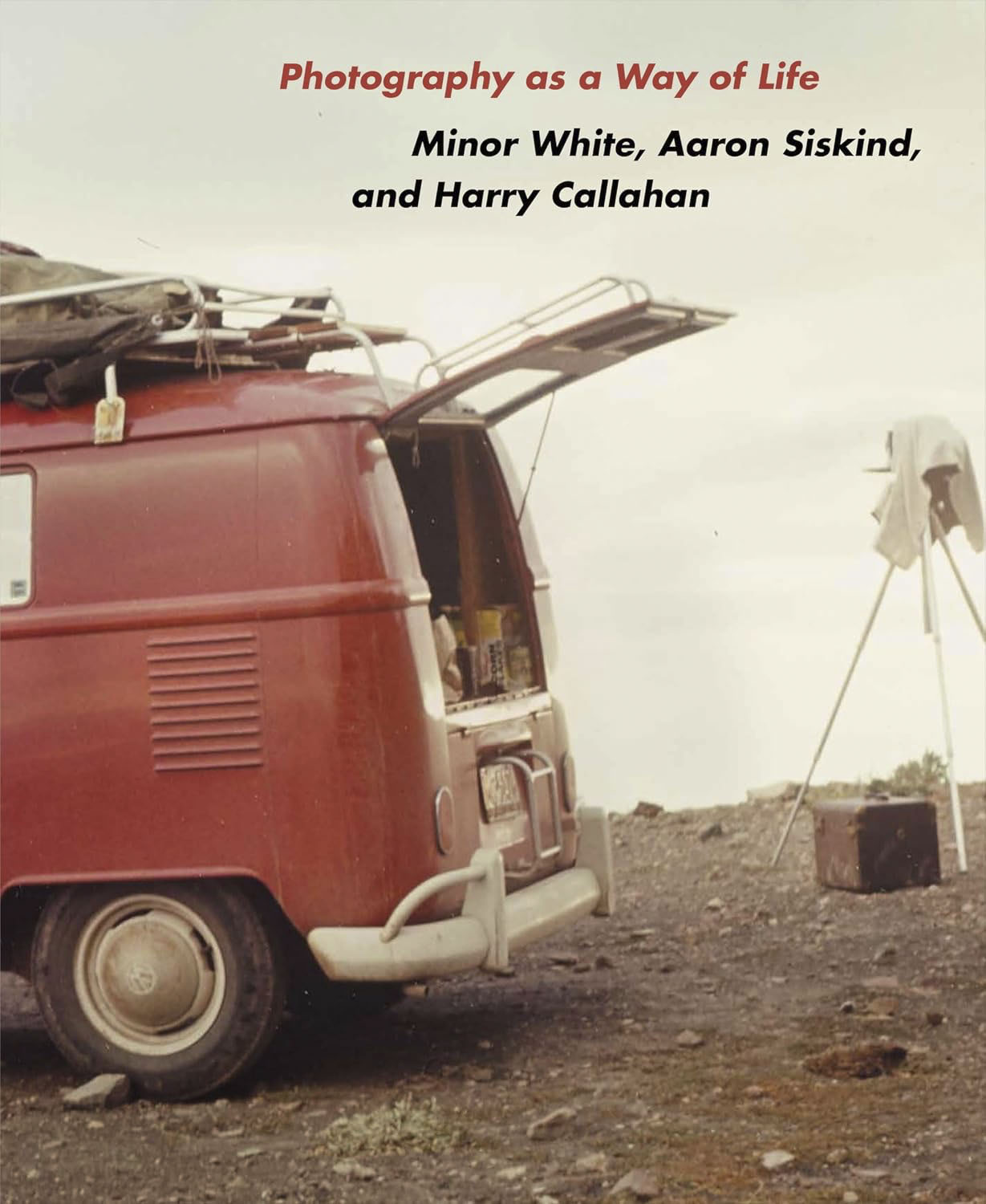
Photography as a Way of Life examines the careers of Minor White, Aaron Siskind, and Harry Callahan – influential photographers, teachers, and thinkers in the United States in the mid-twentieth century – and traces their impact on the field of photography. Training and inspiring makers through courses, workshops, exhibitions, magazines, and photobooks, these artists built a devoted audience for their work while shaping the aspirations of their era.
Amid exploding markets for Kodak’s snapshots and Magnum’s decisive moments, White, Siskind, and Callahan shared inclinations toward abstraction and toward deeply personal photographs. Seeking to carve out a new role and status for art photography, just as a new crop of photography programs were emerging within higher education, they established themselves as icons among the first generation of college-level photography teachers.
Drawing on the rich photography holdings of the Princeton University Art Museum and its Minor White Archive, this exhibition brings together iconic and previously unpublished colour and black-and-white prints, rarely seen slides, and an array of published and archival materials that illuminate a vision of making a living and shaping a life through photography.
Text from the Princeton University Art Museum website
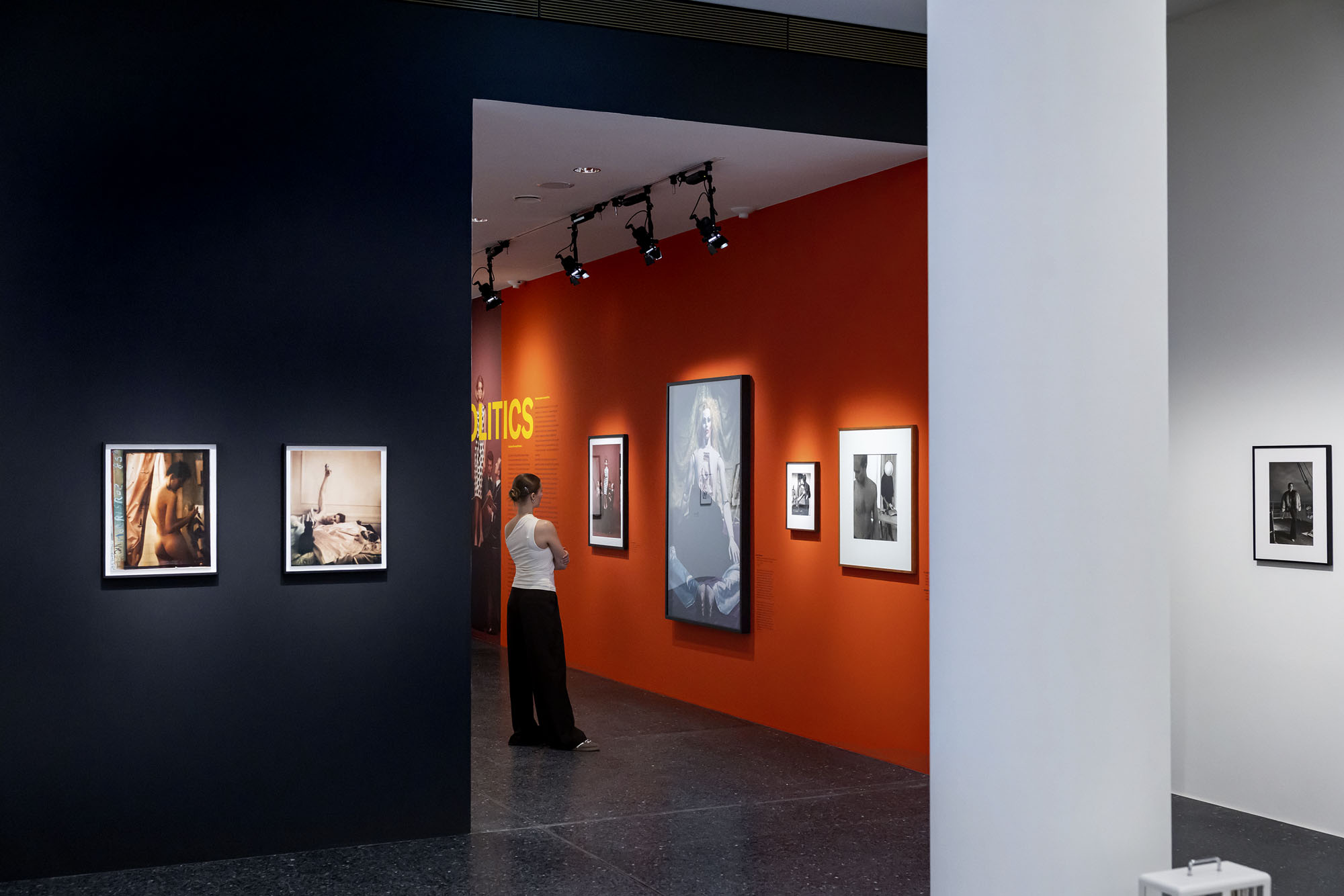
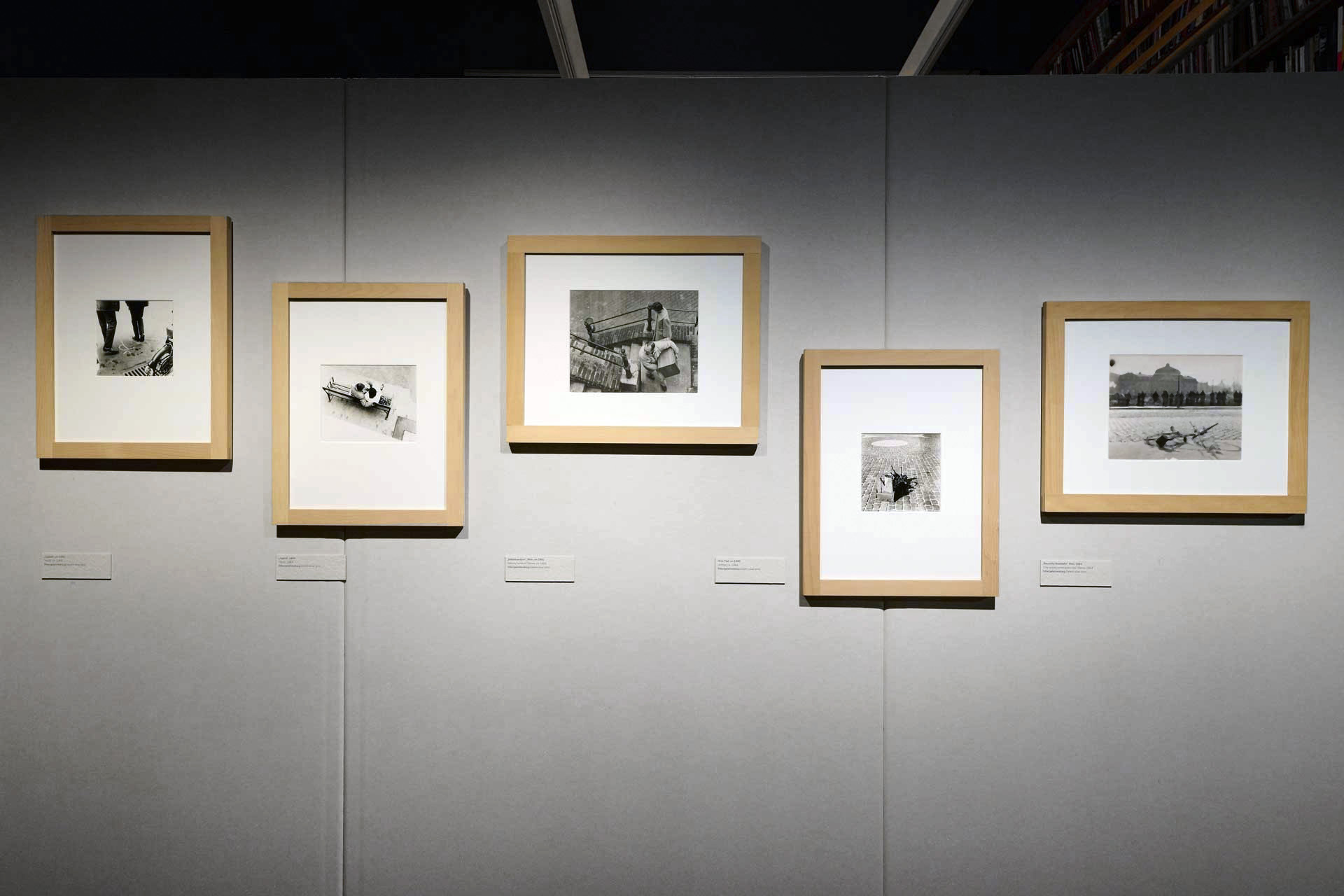
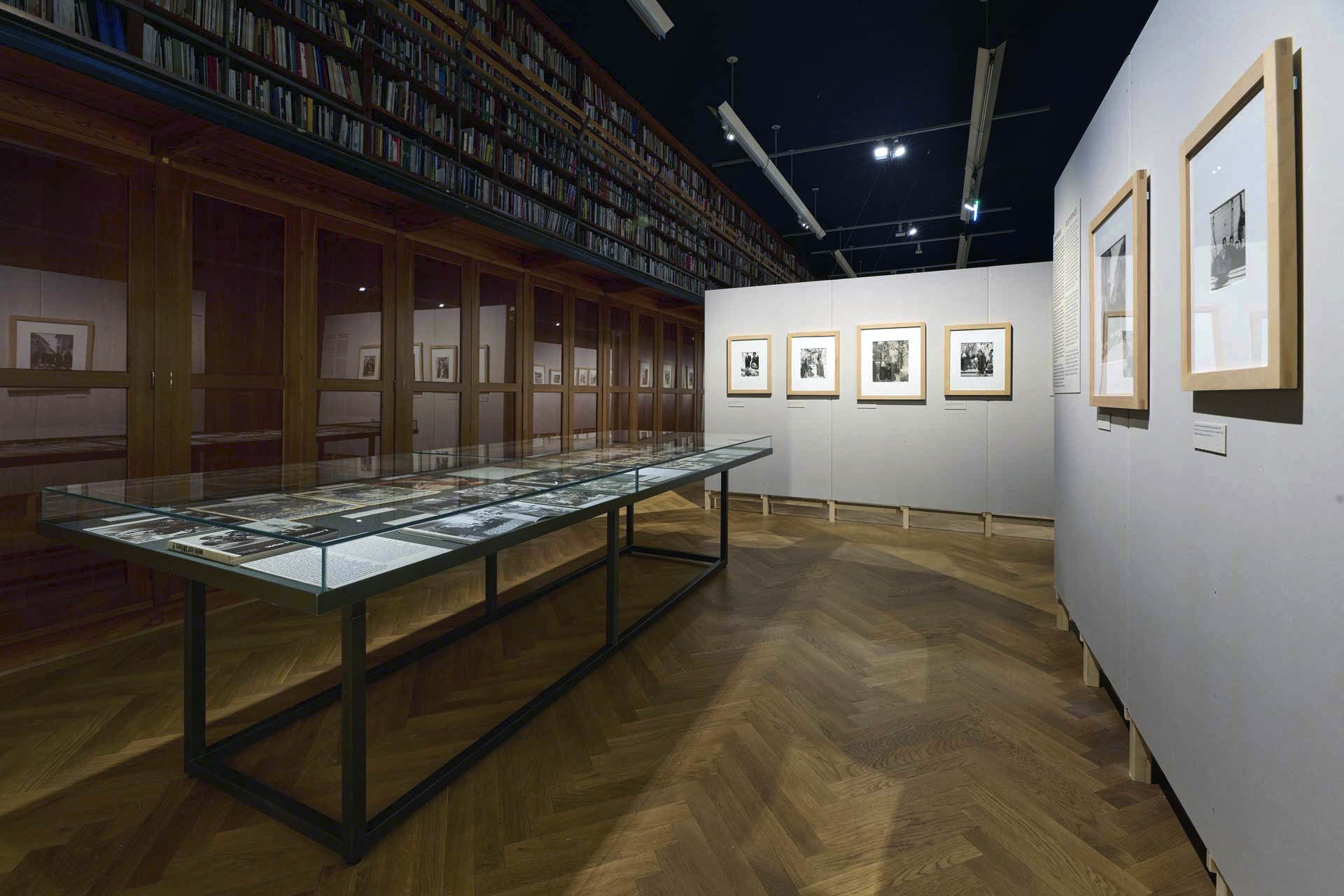
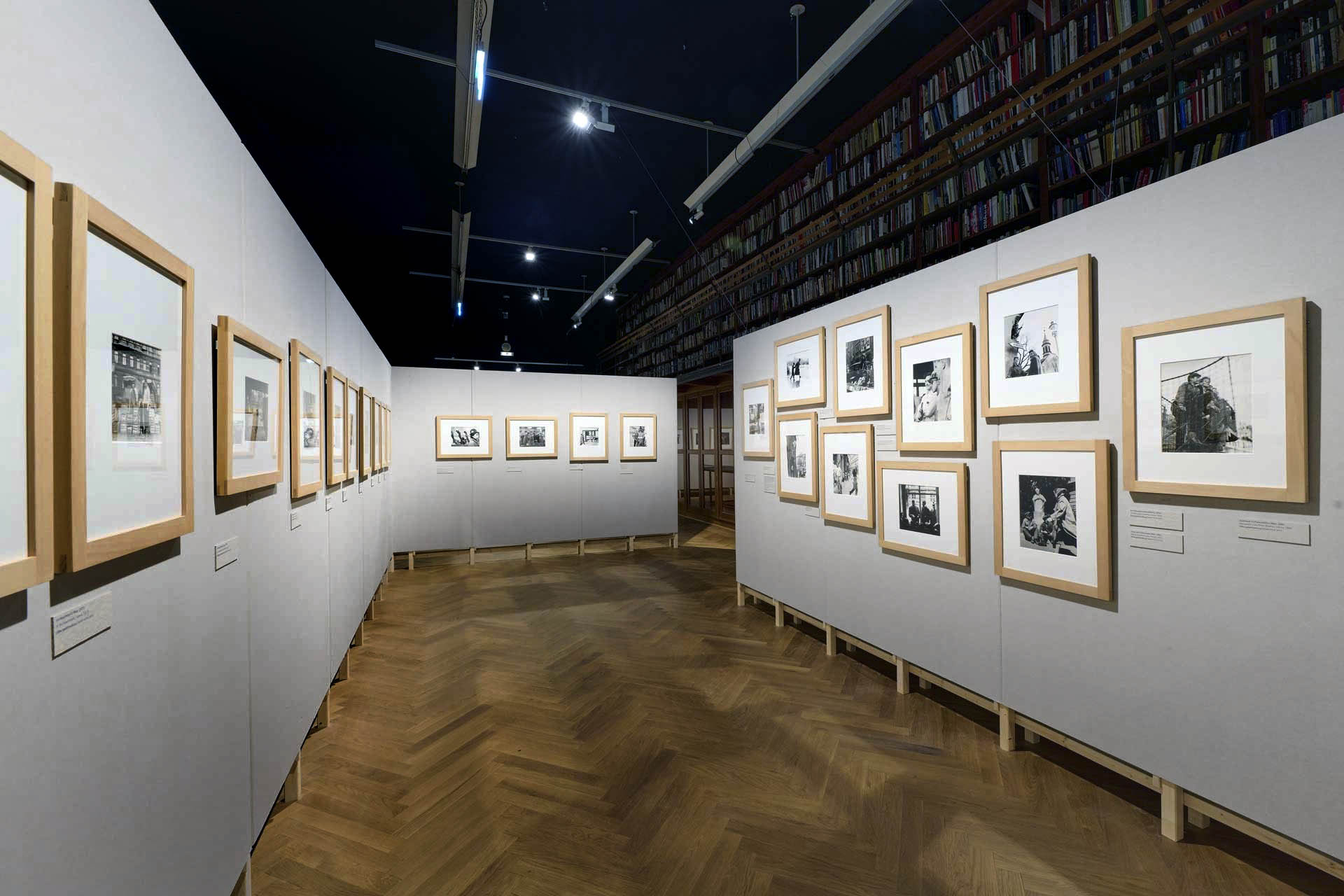
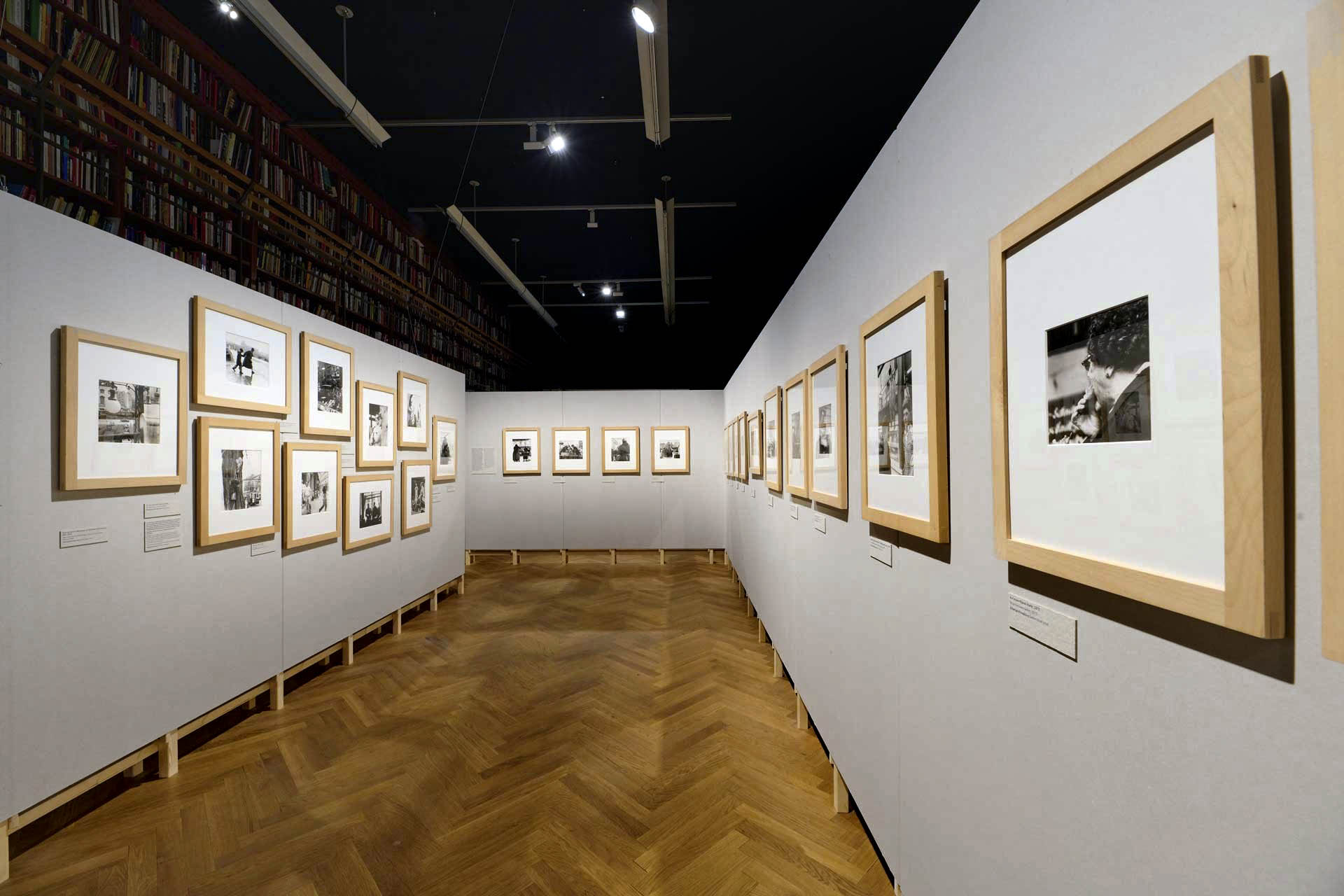
Installation view of the exhibition Photography as a Way of Life: Minor White, Aaron Siskind, and Harry Callahan at the Princeton University Art Museum, Princeton, NJ, 2026 Photo: Joseph Hu
“In bringing their works together in dialogue, [Brendan] Fay illustrates how White, Siskind, Callahan – each in his own way and as a spiritual collective – not only elevated photography into a way of making a comfortable living, but as a manifesto for how to be in the world. As fellow travelers, they would shape their medium into a discipline defined by an intentional and introspective way of seeing, that is, one that has a worldview, a morality. …
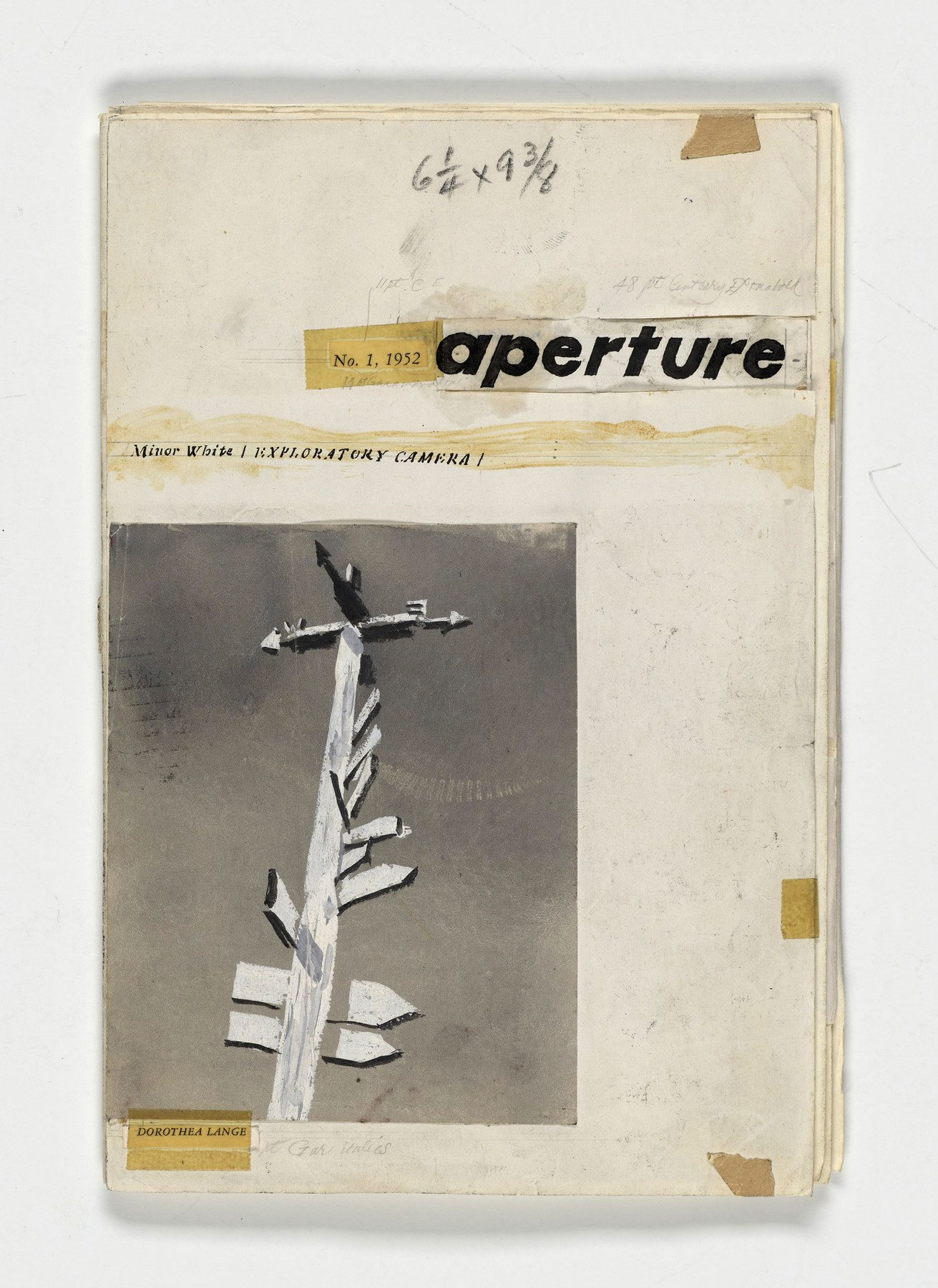
Minor White, Aaron Siskind, and Harry Callahan shared a propensity for abstraction, which set their vision apart from the post–World War II years when documentary photography, Kodak’s snapshots, and Magnum’s “decisive moments” dominated the market. They were steadfast in their artistic right to ambiguity and improvisation. They rejected reproducibility, resisted interpretation. They carried on the Romantic tradition of superimposing one’s emotional landscape onto natural terrain. They saw the ethereal in urban settings. They associated themselves with the Beat poets and Abstract Expressionists. White, in particular, carved out a space for so-called creative photography as the founding editor of this magazine and championed the works of Callahan and Siskind in its pages. (White co-founded Aperture in 1952 and was one of the magazine’s longtime editors. His archives are held by the Princeton University Art Museum.)”
The Princeton University Art Museum announces Photography as a Way of Life: Minor White, Aaron Siskind, and Harry Callahan, an exhibition exploring the intertwined careers of three of the most influential photographers and teachers in mid-twentieth-century America.On view in Princeton from April 19 through September 7, 2026, and then traveling, the exhibition draws on the rich photography holdings of the Princeton University Art Museum and its Minor White Archive to bring together iconic and previously unpublished colour and black-and-white prints, rarely seen slides, and an array of published and archival materials that illuminate a vision of making a living and shaping a life through photography.
“Photography as a Way of Life highlights a pivotal historical moment when photography emerged as a serious academic discipline and a viable artistic profession, and thus as a way of being and living,” said James Steward, Nancy A. Nasher-David J. Haemisegger, Class of 1976, Director of the Princeton University Art Museum. “White, Siskind, and Callahan did more than make extraordinary photographs: They built institutions, communities, and ideas that continue to shape how photography is taught and valued today.”
Tracing the decades after World War II, Photography as a Way of Life explores how Minor White, Aaron Siskind, and Harry Callahan redefined photography as both an artistic practice and a professional vocation. Coming to the medium from distinct backgrounds and visual traditions, these three artists converged around shared commitments to abstraction, deeply personal expression, and the belief that photography could sustain a life’s work.
The exhibition takes its title from a recurring phrase in Minor White’s diaries and letters, in which he described photography as a “way of life.” For White, the phrase encompassed artistic ambition, pedagogy, and personal growth – a vision he advanced as a founding editor of Aperture, the influential photography magazine launched in 1952. Siskind and Callahan were central figures in White’s vision for the field, with their work prominently featured in Aperture alongside broader discussions of photographic education and postwar art photography.
“Princeton University holds a central place in the academic study of photography, with a proud legacy of stewardship and landmark scholarly exhibitions,” said Brendan Fay, exhibition curator. “The Minor White Archive is one of the cornerstones of that legacy, and it’s an honour to present an exhibition that builds on that strength during the new Museum’s inaugural year.”
From the 1940s through the 1970s, amid booming markets for Kodak snapshots and photojournalism, photography began to take root within higher education. White, Siskind, and Callahan were among the first generation of college-level photography teachers, developing models of photographic education during the GI Bill era that quickly spread across colleges and universities in the United States. While achieving critical success through books, exhibitions, and museum acquisitions, these artists also helped catalyze the creation of academic programs, publishing ventures, and professional societies that defined the postwar photographic landscape.
Highlights of the exhibition include a reconstruction of White’s Slow Dance, a projected sequence of color slides performed for live audiences in the late 1960s and 1970s, as well as materials from magazines and journals ranging from Popular Photography and Apertureto poetry publications and The Black Photographers Annual. The exhibition also traces the expansive networks shaped by these photographers, featuring works by more than forty additional artists, from Alfred Stieglitz and Dorothea Lange to Anthony Barboza and Donna-Lee Phillips.
The exhibition is accompanied by a richly illustrated exhibition catalogue copublished by the Museum and Princeton University Press. While on view in Princeton, the exhibition will inspire a number of public programs, including a two-day symposium beginning April 30, a film series, and a talk by curator Brendan Fay on April 18. Attendees to the curatorial talk will have the opportunity to preview the exhibition alongside Museum members prior to the exhibition’s public opening the following day. Visit the exhibition website for a full list of related programming.
Photography as a Way of Life is curated by Brendan Fay, associate professor of art history in the School of Art & Design at Eastern Michigan University andis organized and presented by the Princeton University Art Museum. Following its debut at Princeton, the exhibition will travel through 2028, with presentations at the High Museum of Art in Atlanta; the Addison Gallery of American Art in Andover, Massachusetts; and the Nelson-Atkins Museum of Art in Kansas City, Missouri.
Exhibition credits
Photography as a Way of Life: Minor White, Aaron Siskind, and Harry Callahan is made possible by leadership support from Jim McKinney and the late Valerie McKinney, with generous support from Anne Robinson Woods and Sandy and Robin Stuart.
Additional support is provided by Black Dog Private Foundation; the Curtis W. McGraw Foundation; the Melanie and John Clarke Exhibition Fund; the Peter C. Bunnell Photography Fund; Princeton University’s Department of Art & Archaeology, Effron Center for the Study of America, and Humanities Council; Kathryn Richardson and family; and contributors to the Director’s Exhibition Fund.
The accompanying publication is made possible in part by the Andrew W. Mellon Foundation Fund; the Barr Ferree Foundation Fund for Publications, Department of Art & Archaeology, Princeton University; Furthermore: a program of the J. M. Kaplan Fund; and the Wyeth Foundation for American Art.
Press release from Princeton University Art Museum
Minor White, Aaron Siskind, and Harry Callahan carved out a new role for photographers and their art in the decades after World War Two. Photography as a Way of Life traces how these influential teachers and theorists reimagined the medium as a livelihood and a life’s work.
Together with growing markets for snapshots and photojournalism, the postwar years saw the emergence of photography as an established field of study in higher education. In this beautifully produced book, Brendan Fay takes readers from the late 1940s through the 1970s to explore how White, Siskind, and Callahan transformed the ways photography was taught, shown, and understood. Inclined toward abstraction and personally expressive images, they modeled a commitment to art in the face of commercial and professional pressures. In classrooms and private workshops and through exhibitions, photobooks, and magazines-including Aperture, with White as its founding editor-they offered training and inspiration while building a devoted audience for their pictures.
Blending stunning illustrations with rare archival material published here for the first time, Photography as a Way of Lifebrings together the work of three boldly inventive artists and educators who opened new possibilities for photography in postwar America and exemplified a vision of learning and living through photography.
Published in association with the Princeton University Art Museum
Curators: Barbara Tannenbaum, Curator of Photography and Chair of Prints, Drawings, and Photographs at the Cleveland Museum of Art
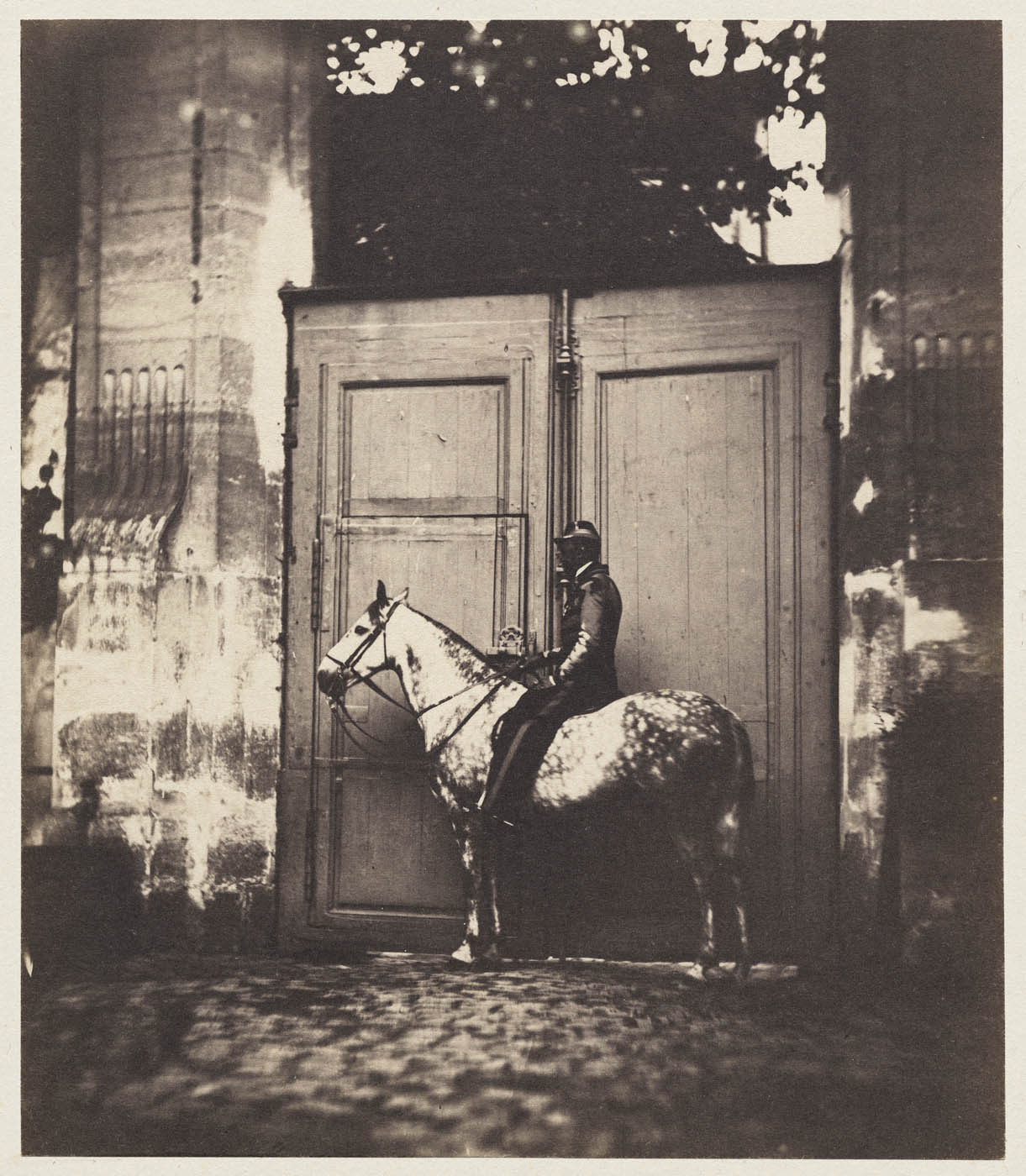
Unknown photographer Black Horseman in Front of a Doorway c. 1855 Salt print from wet collodion negative Image: 15.5 x 13.5cm (6 1/8 x 5 5/16 in.) Mounted: 47 x 30.6cm (18 1/2 x 12 1/16 in.) Matted: 50.8 x 40.6cm (20 x 16 in.) The Cleveland Museum of Art John L. Severance Fund
The uniform of the rider identifies him as a major in the Chasseurs d’Afrique (African Light Infantry), a cavalry group within France’s colonial army in Africa. By 1855, African people were living in France, so he may have been born and raised there or have been African-born and in France for training.
Magnificent gems of 19th-century French photography.
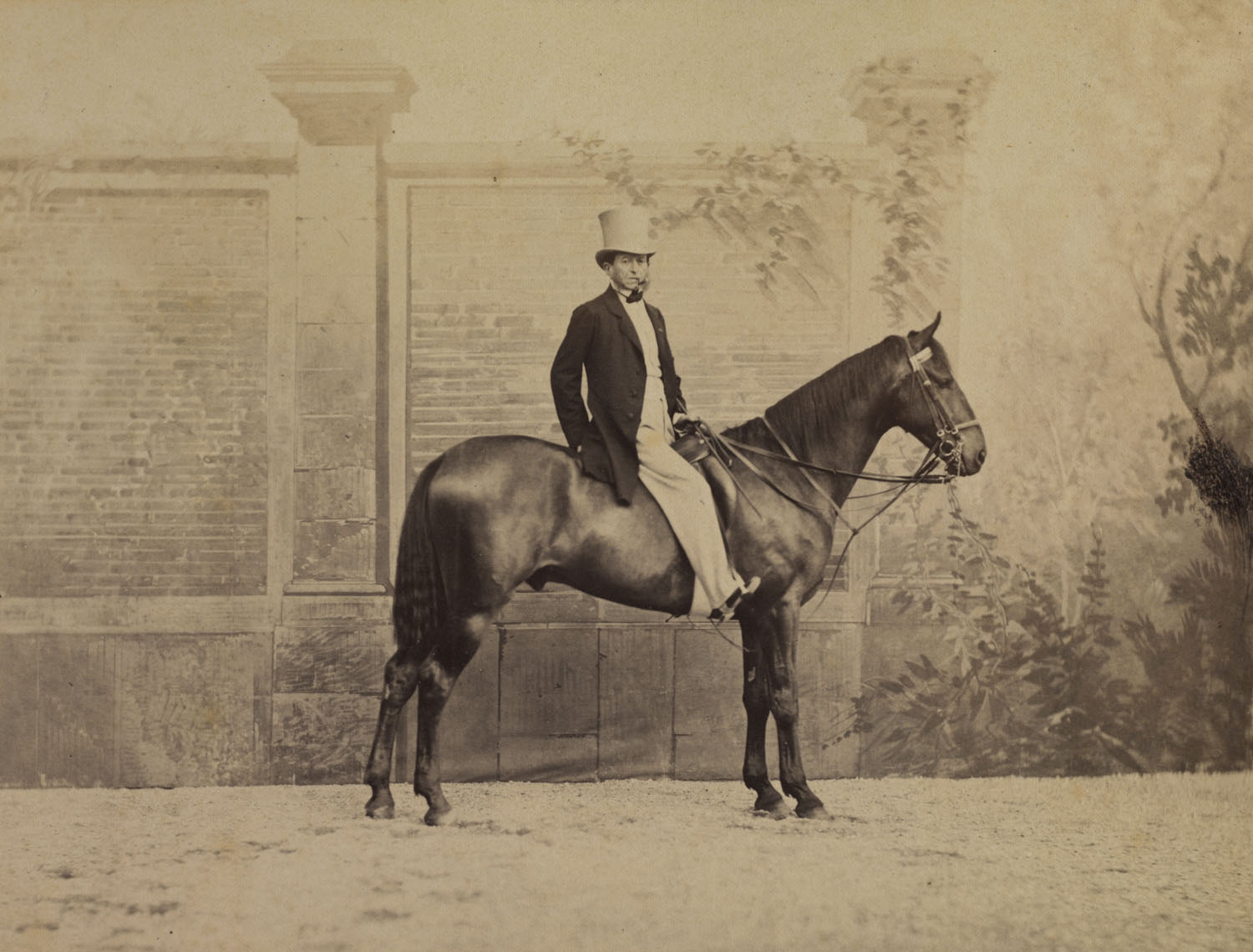
The studied simplicity of Nadar’s Man on a Horse (c. 1860s, below), man and animal captured against a painted studio backdrop.
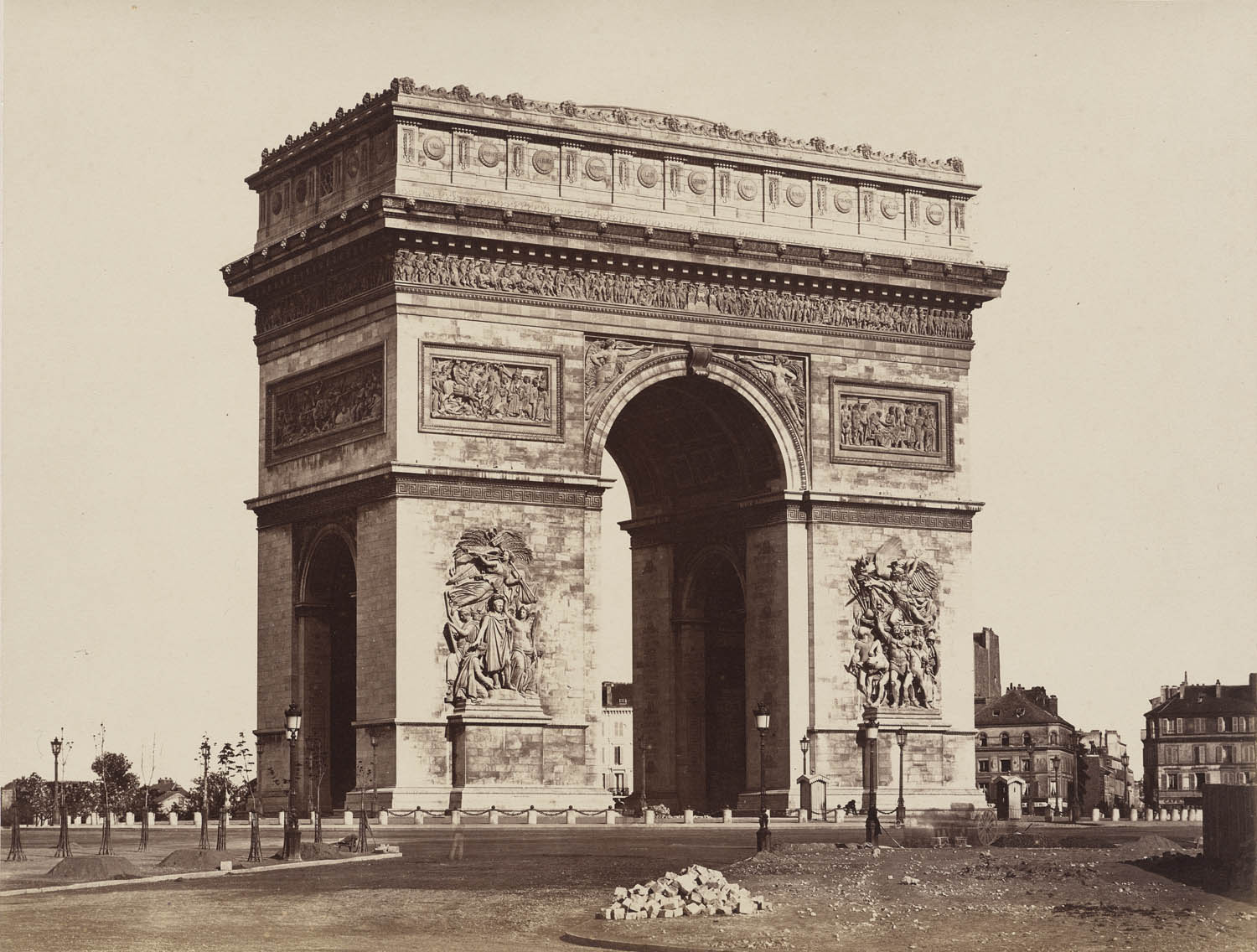
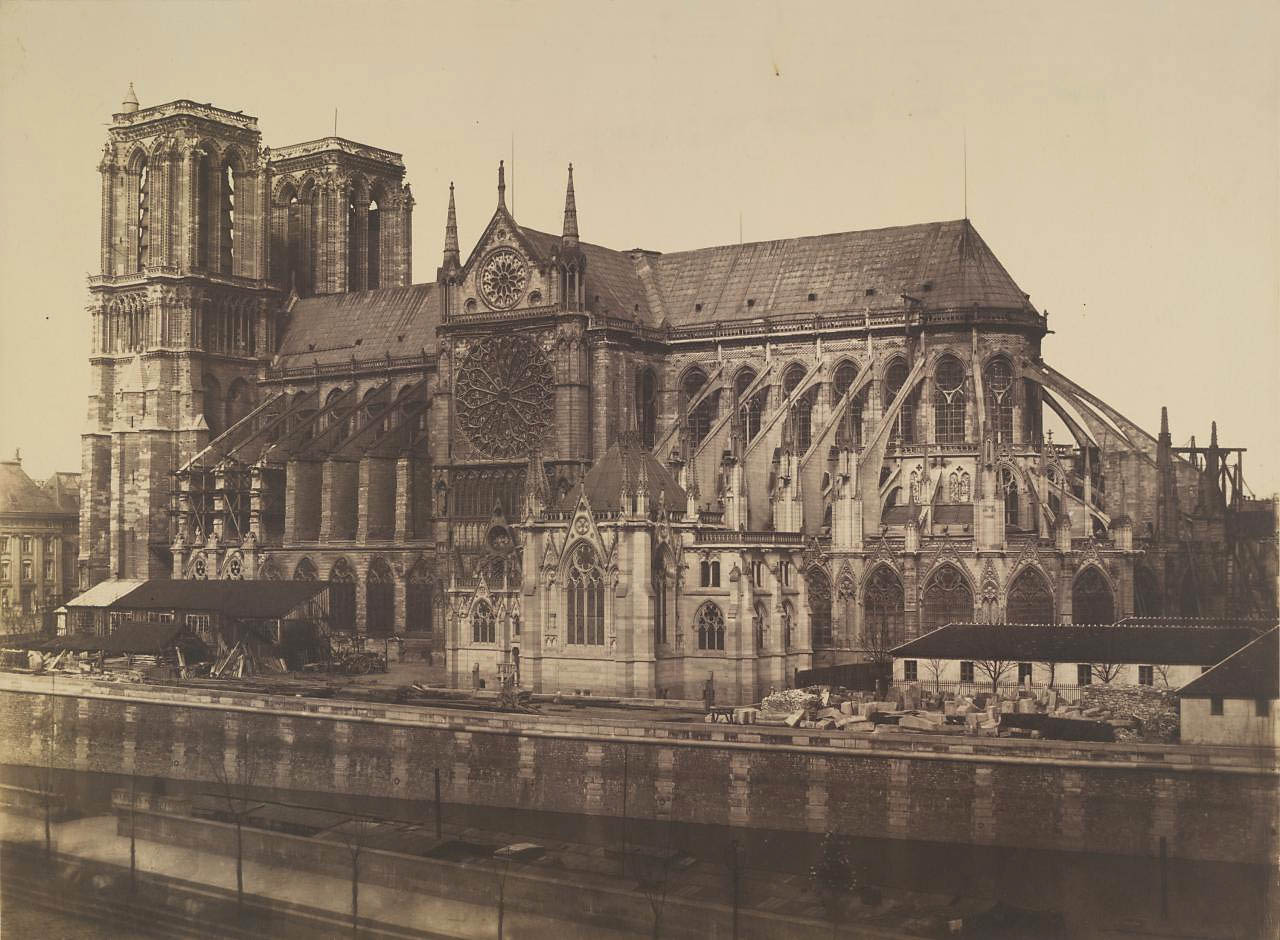
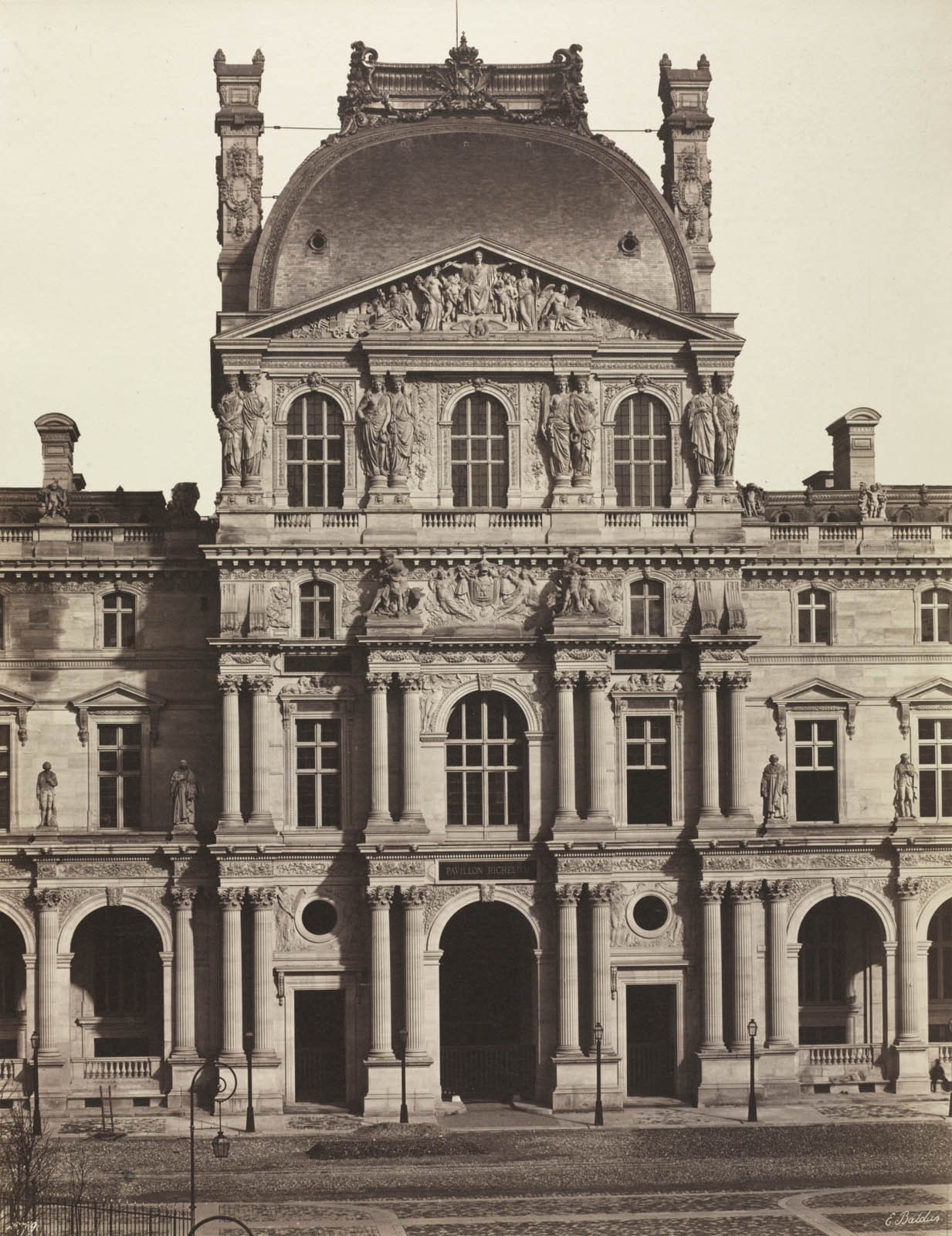
The formal beauty of Édouard Baldus’ architectural salted paper and albumen prints of Notre-Dame, Paris (1852-1853, below), Arc de Triomphe de l’Etoile, Paris (c. 1860s, below), Louvre, Façade rue de Rivoli, Paris (1855, below) and Pavilion Richelieu, Louvre, Paris (1856-1857, below) which emphasise the volume of the structures, their scale and grandeur.
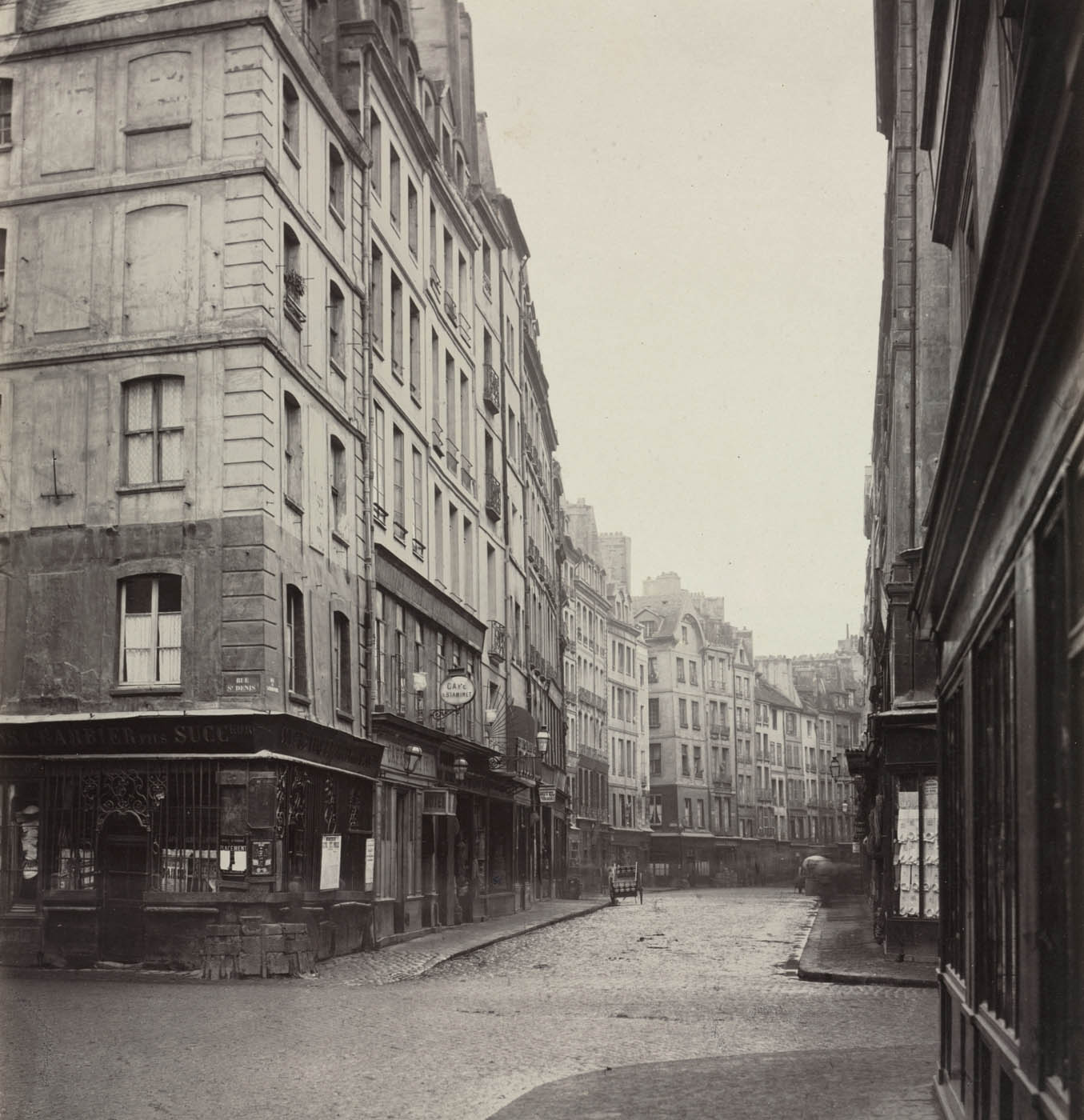
Compare these to the spatial openness and intimacy of Charles Marville’s Rue de la Ferronnerie (c. 1865, below) only 10 years later which leads, inexorably, to the alleyways and architectural details of Eugène Atget capturing a disappearing Paris, an Old Paris, towards the end of the 19th century.
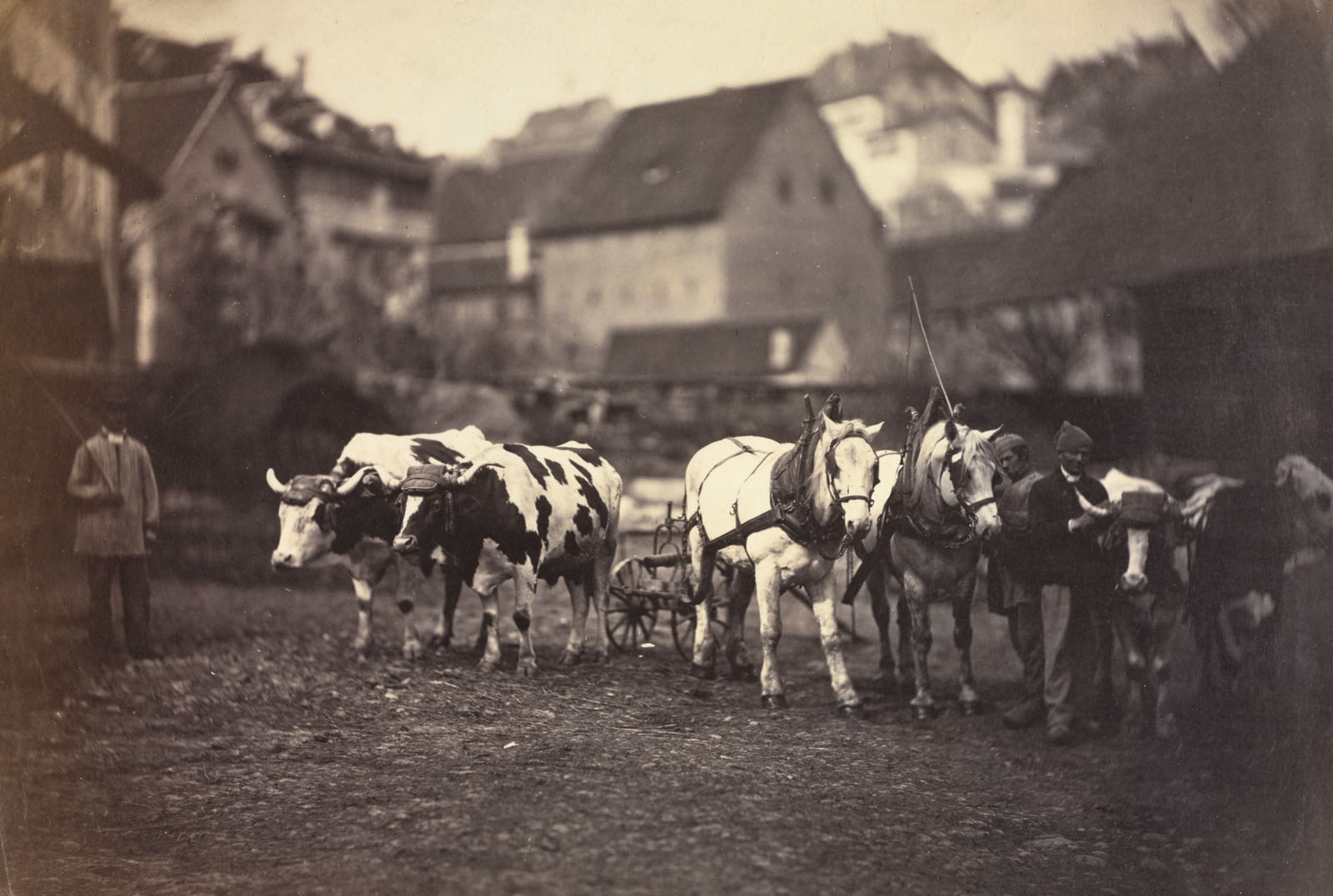
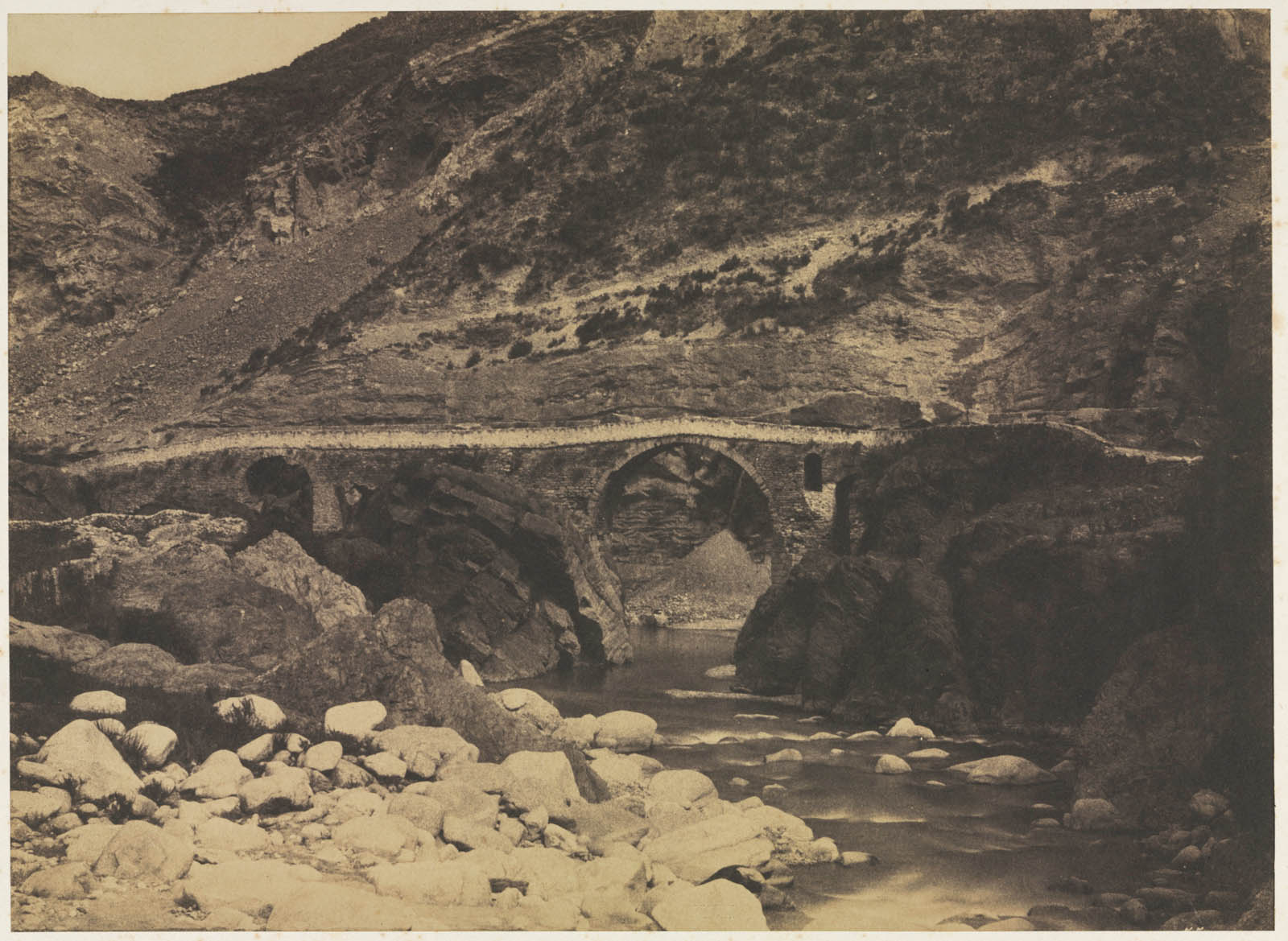
Dotted amongst these are an atmospheric landscape of the French interior near Lyon by that most bucolic of photographers Félix Thiollier; a pastoral village scene of impressionistic intimacy by Adolphe Braun, Untitled (Farm Animals) (1850s, below); and a superb photograph of a stone bridge set in mountainous landscape near the Spanish border taken by Gustave Le Gray, The Bridge of Palalda (near Amelieles-Bains) (1851-1852, below)
No conceptual histrionics, no untoward flourishes, just photographs of the utmost integrity of people and places in a time of change, photographs that hold the viewer’s gaze through the holistic balance and beauty of the images.
Dr Marcus Bunyan
. Many thankx to The Cleveland Museum of Art for allowing me to publish the photographs in the posting. Please click on the photographs for a larger version of the image.
Nadar (French, 1820-1910) Man on a Horse c. 1860s Albumen print from wet collodion negative Image: 17 x 22.3cm (6 11/16 x 8 3/4 in.) Matted: 35.6 x 45.7cm (14 x 18 in.) The Cleveland Museum of Art Gift of Robert Hershkowitz and Charles Isaacs
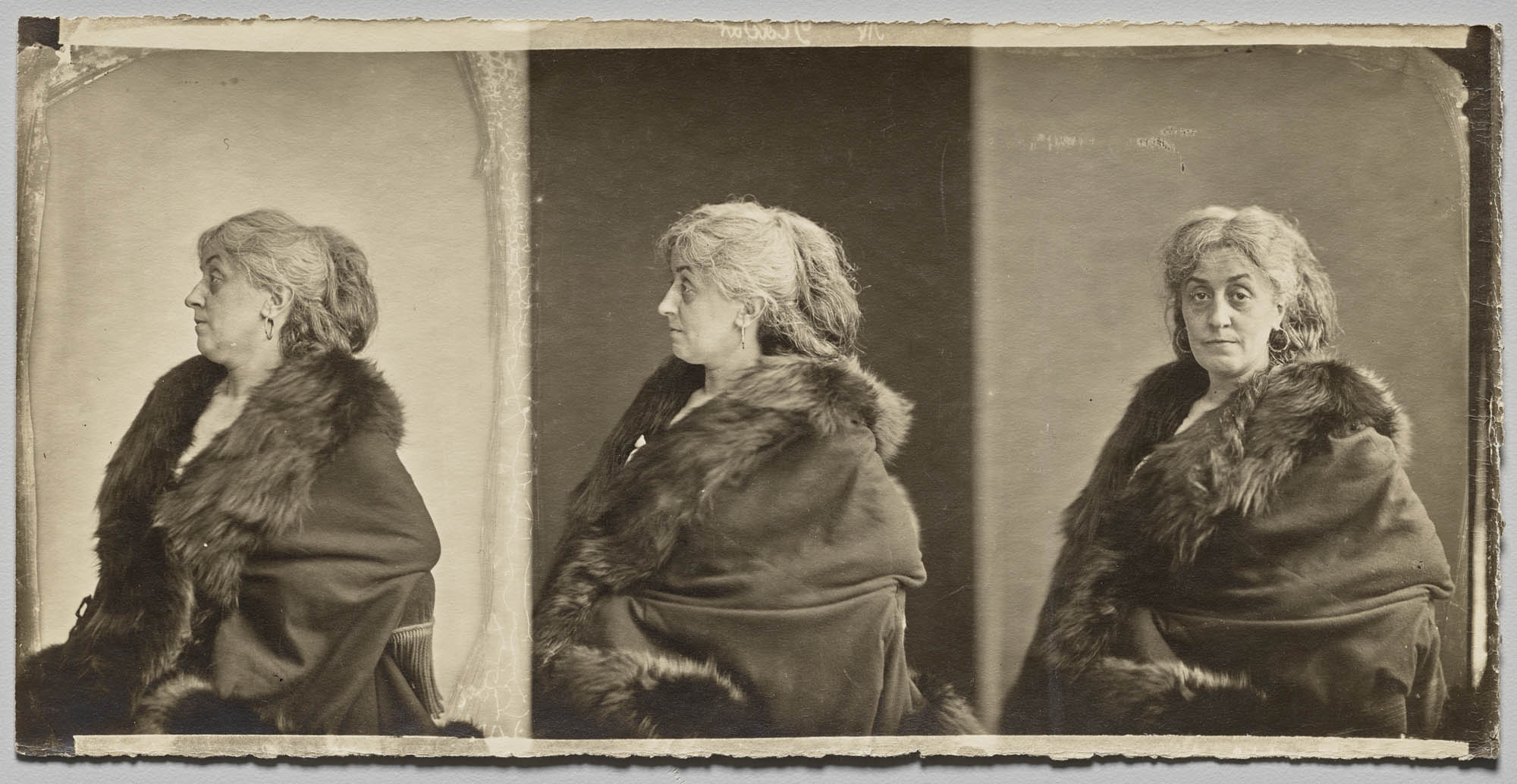
Nadar (French, 1820-1910) Portrait of Ernestine Nadar, the artist’s wife, wearing fur stole c. 1880-1883 Uncut sheet of three matte gelatin silver carte-de-visites Overall: 10.8 x 21.9cm (4 1/4 x 8 5/8 in.) The Cleveland Museum of Art Gift of Michael Mattis and Judith Hochberg
This striking and unusual uncut sheet of carte-de-visite exposures was taken by one of France’s most successful early portraitist photographers, Nadar. His wife Ernestine frequently modeled for him, including when he tried out new equipment or processes such as these gelatin silver prints. These portraits seem to be an intimate, direct exchange between sitter and camera, wife and husband.
Born Gaspard-Félix Tournachon in Paris, Nadar is probably the best known French photographer. His portraits of celebrities and public figures help define our impression of France in the second half of the 19th century; his panache in conducting his business helped popularize photography. Educated at the Collège Bourber, Paris (1833-36), Nadar moved to Lyon, where he studied medicine (1837-38) before continuing his studies at the Hôtel Dieu and the Bicêtre in Paris. He wrote satires and essays and drew caricatures (his pseudonym derived from his barbed wit aimed against the establishment) for a number of Paris publications, eventually founding several of his own, and was a highly visible figure in the city’s cultural and artistic life. Learning photographic technique from Adophe Bertsch and Camille d’Arnaud, Nadar founded a studio in 1854. Twenty years later his son Paul, also a photographer, became director of the business and by 1886 headed the firm. He also worked for a time with his brother, Adrien, who sometimes called himself Nadar jeune, a practice which later prompted Nadar to file a lawsuit. Nadar’s exploits with aerial balloon photography were of both photographic and historic importance. Below ground, he used artificial light to make surveys of the catacombs and sewers of Paris, novel and highly popular curiosities. With his son Paul as photographer, he is credited with the first photo-interview, conducted with the scientist and color theorist Michel-Eugène Chevreul on his 100th birthday in 1886. Because of the importance of his work and the notoriety of his sitters, among them Franz Liszt, George Sand, Sarah Bernhardt, and Honoré Balzac, Nadar will long occupy a key place in the development of photography. T.W.F.
About the exhibition
Édouard Manet and Berthe Morisot lived during a tumultuous yet fertile period in France. Events included war and the loss of territory; modernisation and the rise of industry; and a shift from rural to urban living. As both artists were living in Paris, it became the largest city in continental Europe and the arts capital of the world. Manet and Morisot’s lifetime also coincided with the birth and rise of a new art form – photography – which recorded many of these social, political, and cultural changes.
Masters of the new medium such as Charles Marville and Édouard-Denis Baldus were commissioned by the Emperor Napoleon III, the Louvre museum, and the railroads to document both historic monuments and the construction of new architectural and engineering marvels throughout the country. This era also saw the rise of celebrity portraiture and of the general public as patron. Actresses such as Sarah Bernhardt and popular authors Victor Hugo, Charles Baudelaire, Alexandre Dumas, and others sat for photographers such as Nadar, André-Adolphe-Eugene Disderi, Gustave Le Gray, and Étienne Carjat. The resulting portraits were printed – and sold – in large quantities to meet a soaring public demand for portraits of the luminaries of the time. When the rising urban middle class sought to have their own likenesses recorded, they flocked to the same studios.
In this exhibition, drawn from the museum’s rich holdings of 19th-century French photography, we can feel that we, like the photographers, are eyewitnesses to the transformation of France in the 1800s. This show was organised to complement Manet & Morisot, on view in the Kelvin and Eleanor Smith Foundation Gallery from March 29 through July 5, 2026.
Text from The Cleveland Museum of Art website
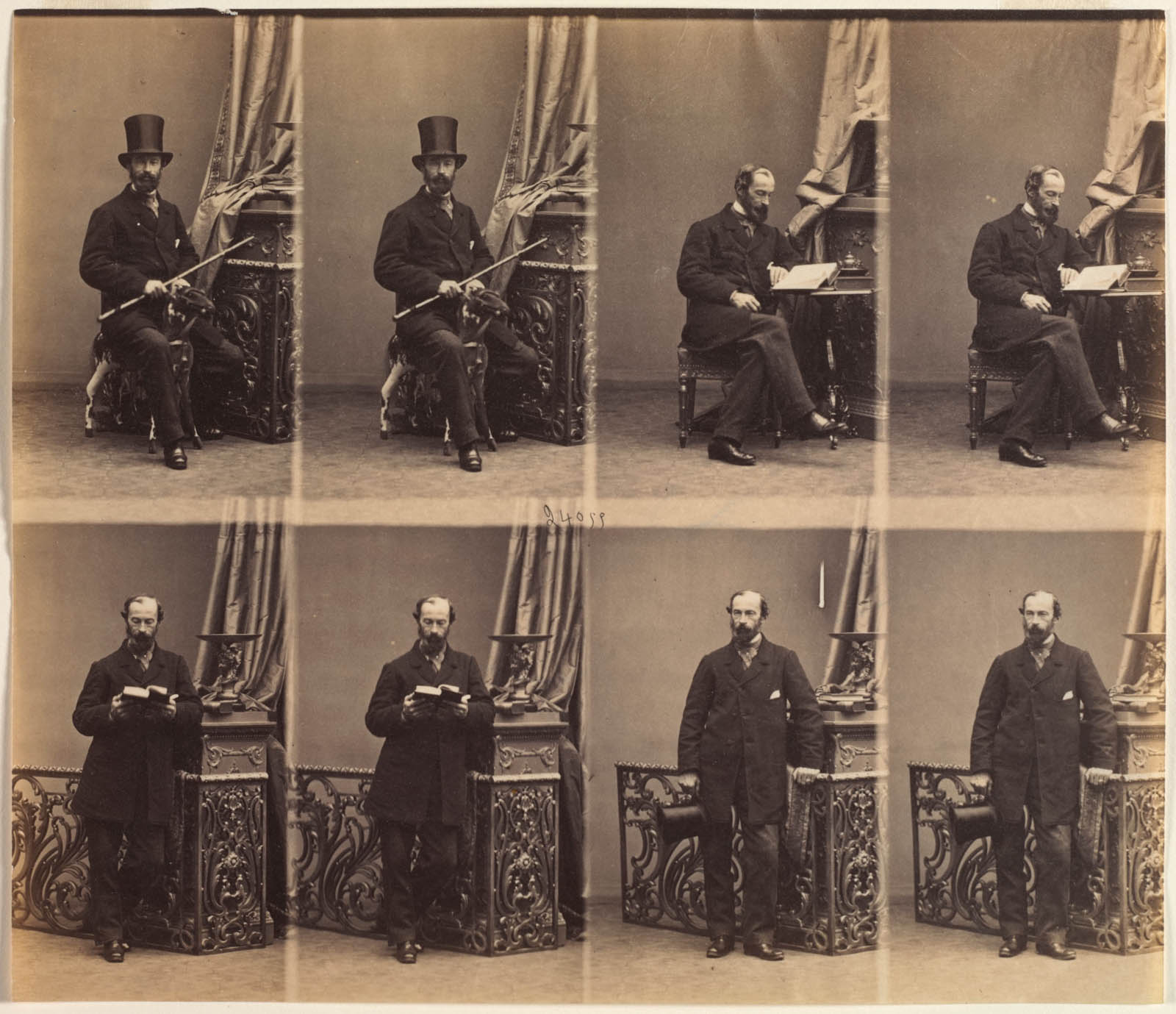
André Adolphe-Eugène Disdéri (French, 1819-1889) Monsieur Merlen 1861 Albumen print from wet collodion negative, uncut carte-de-visite proof print Image: 19.9 x 23.1cm (7 13/16 x 9 1/8 in.) Matted: 35.6 x 45.7cm (14 x 18 in.) The Cleveland Museum of Art Gift of Paula and Robert Hershkowitz in memory of Sam Wagstaff Public domain
The carte-de-visite process was so inexpensive, Monsieur Merlen felt he could clown around, riding a child’s toy horse in the first two exposures.
The carte-de-visite, a small photograph mounted on card stock, was patented by André Adolphe-Eugène Disdéri in 1854. This efficient, inexpensive process employed a camera with four lenses and a sliding plate holder that produced eight sequential exposures on a single glass negative. The resulting paper print was cut into individual images. This uncut sheet, which includes several humorous views, was probably produced for the sitter’s approval. The low cost of the carte-de-visite led to the trend of collecting celebrity portraits. By 1862, Disdéri’s studio was producing over 2,000 prints a day, making him reputedly the world’s richest photographer.
André Adolphe-Eugène Disdéri
André-Adolphe-Eugène Disdéri French, 1819-1889
Disdéri is best known as a portraitist and populariser of the carte-de-visite. He spent 10 years as a painter and working in the theatre, and another five in the clothing business, before becoming seriously interested in photography around age 30. He first operated studios in Brest and Nîmes, then moved to Paris and opened a studio in 1854, and a second in 1863. In 1854 Disdéri patented the carte-de-visite, a method of producing a number of small images on a single negative that achieved great popularity. He later opened additional studios in London, Madrid, and Toulon. Disdéri was one of the best known portrait photographers of his day, with many important commissions and sitters. Like Mathew Brady, he was an innovator and entrepreneur as well as an artist. The carte-de-visite, which he did not invent, but rather adapted, helped photography to become increasingly versatile as a medium and available to people of all means. In 1879 Disdéri sold his business and moved to Nice. Despite his success, he died 10 years later in Paris in poverty, obscurity, and poor health. T.W.F.
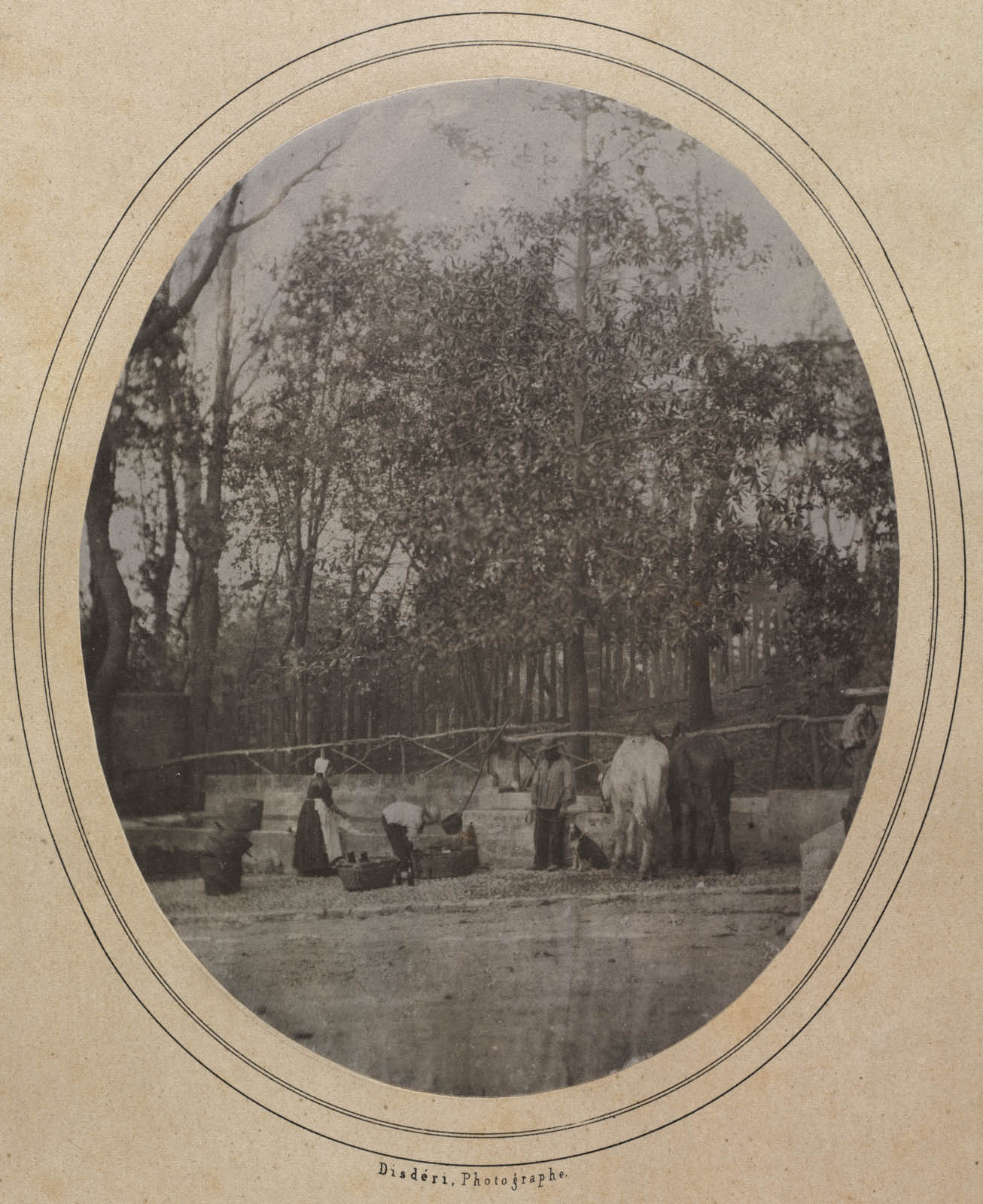
André Adolphe-Eugène Disdéri (French, 1819-1889) Village Scene (Southern France) c. 1853 Salted paper print from waxed-paper negative Image: 15.2 x 12.2cm (6 x 4 13/16 in.) Matted: 45.7 x 35.6cm (18 x 14 in.) The Cleveland Museum of Art John L. Severance Fund
André Adolphe-Eugène Disdéri is best known for his development in Paris in 1854 of the carte-de-visite format for portraits. The year before, he was living in Southern France where he made this rural view. Disderi used waxed-paper negatives for only a short time. The oval cropping and picturesque scene – posed but seemingly spontaneous – suggest that this is meant to be an artistic, rather than a documentary, photograph.
Édouard Baldus (French, 1813-1889) Arc de Triomphe de l’Etoile, Paris c. 1860s Albumen print from collodion negative Image: 21.5 x 28.2cm (8 7/16 x 11 1/8 in.) Paper: 21.5 x 28.2cm (8 7/16 x 11 1/8 in.) Mounted: 32.6 x 43.5 cm (12 13/16 x 17 1/8 in.) The Cleveland Museum of Art Severance and Greta Millikin Purchase Fund Public domain
For three decades starting in 1854, Paris was a construction site as Baron Haussmann replaced the crooked streets and crumbling buildings of medieval Paris with a modern city. The cobblestones in the foreground were for paving the newly expanded set of broad avenues that radiated from the Arc, part of Baron Haussmann’s urban renewal plans. Exposure times for film in the 1860s were usually too long to capture people in the street, but a man – perhaps the paver – paused long enough to leave his “ghost” to the left of the cobblestones.
Édouard Baldus (French, 1813-1889) Notre-Dame, Paris 1852-1853 Salted paper print from wet collodion negative Image: 29.5 x 44.7cm (11 5/8 x 17 5/8 in.) Matted: 50.8 x 61cm (20 x 24 in.) The Cleveland Museum of Art Edwin R. and Harriet Pelton Perkins Memorial Fund
Édouard Baldus photographed the side of the famed cathedral to capture the volume of the structure. Visible from this angle are two workshops for the church’s restoration, some of the construction materials, and scaffolding on three of its flying buttresses (architectural structures that form an arch with the wall they support).
Édouard Baldus
Édouard Baldus French, b. Prussia, 1813 – 1889
The large and regal prints made by Édouard-Denis Baldus are widely agreed to be among the finest photographic images ever produced. After serving as an artillery officer in the Prussian army, Baldus left his native country for France during the 1830s to become a painter. He exhibited his paintings of religious subjects, portraits, and genre scenes in the Paris Salons from 1841 – 51 and was naturalized as a French citizen in 1849, the same year his interests turned to photography. Combining his training in painting with an inquisitive, inventive technical expertise, Baldus produced a body of work of exceptional quality and interest. His subjects included architecture, landscape, and engineering feats. In 1851 the Commission des monuments historiques selected him for the Missions héliographique – a government project that sponsored the photographing of endangered classical and medieval architecture in France. For this important series Baldus produced views of Burgundy, Provence, and the Dauphiné, and the following year he completed a commission for the Ministry of the Interior. In 1855 he began his photography of railroads, some of his most distinctive work. A copy of his album recording the line between Paris and Boulogne was presented to Queen Victoria. He also documented the flooding of the Rhone, as well as construction of the new Louvre and other Paris views. A founding member of the Société héliographique and a member of the Société française de photographie (1857), Baldus exhibited his photographs widely in London, Amsterdam, Edinburgh, Brussels, and Paris and won numerous medals of award. A master printer, he produced combination prints in the early 1850s, frequently retouching his images with pencil and ink. His best work appears most often in specially assembled albums – such as Les principaux Monuments de la France reproduits en héliogravure par E. Baldus, published in 1875 from plates drawn from earlier negatives. Today, his work continues to be much sought after and to set a standard by which other photographers are judged. T.W.F.
Édouard Baldus (French, 1813-1889) Louvre, Façade rue de Rivoli, Paris 1855 Albumen print Image: 28 x 21.8cm (11 x 8 9/16 in.) Paper: 39.9 x 29.9cm (15 11/16 x 11 3/4 in.) The Cleveland Museum of Art Gift of William and Margaret Lipscomb
Édouard Baldus (French, 1813-1889) Pavilion Richelieu, Louvre, Paris 1856-1857 Salted paper print, albumenised, from wet collodion negative Image: 44.5 x 34.3cm (17 1/2 x 13 1/2 in.) Matted: 61 x 50.8cm (24 x 20 in.) The Cleveland Museum of Art Andrew R. and Martha Holden Jennings Fund
In 1854, Édouard Baldus and two other artists were commissioned to record construction of the New Louvre. New wings joined the Louvre Palace, started in the late 1100s, to the Tuileries Palace, begun in 1564. The Pavilion Richelieu, completed shortly before this photograph was taken, originally housed governmental offices and only became part of the Louvre Museum in 1993.
Opening this weekend at the Cleveland Museum of Art, France in the Time of Manet and Morisot offers visitors a vivid view of the people, places, and defining moments that shaped 19th-century France. With approximately 50 photographs from CMA’s rich holdings, visitors will get a firsthand glimpse of the rapid industrial growth and political upheaval in this tumultuous, yet fertile, period of time.
This CMA-organised companion exhibition was designed to complement Manet & Morisot, the first ever major exhibition dedicated to the artistic exchange between Édouard Manet often referred to as the father of modern painting, and Berthe Morisot, the only woman among the founding members of the Impressionist movement. While Manet & Morisot travels nationally, this companion exhibition is uniquely presented at CMA, offering visitors an experience available only in Cleveland. Visitors to the CMA will have the opportunity to experience both exhibitions now through July 5, 2026.
“It’s truly a pleasure to share our rich holdings of 19th-century French photography alongside Manet & Morisot,” said Barbara Tannenbaum, curator of photography and chair of prints, drawings, and photographs. “In the mid-1800s, when the two painters were living in Paris, it became the largest city in continental Europe and the arts capital of the world. However, France also endured war and the loss of territory; experienced modernisation and the rise of industry; and saw a shift from rural to urban living. These events coincided with the birth of a new art form – photography – which was used to record these social, political, and cultural changes.”
In the 19th century, masters of the newfound photography medium, such as Charles Marville and Édouard Baldus, were commissioned by Emperor Napoleon III, the Louvre museum, and the railroads to document both historic monuments and the construction of new architectural and engineering marvels throughout the country.
This era also saw the rise of celebrity portraiture and of the public as patron. Actresses such as Sarah Bernhardt and popular authors Charles Baudelaire, Alexandre Dumas, and others sat for photographers such as Nadar, André Adolphe-Eugene Disderi, and Étienne Carjat. The resulting portraits were printed – and sold – in large quantities to meet a soaring public demand for portraits of the luminaries of the time. When the rising urban middle class sought to have their own likenesses recorded, they flocked to the same studios.
France in the Time of Manet and Morisot, a free exhibition, will be on view in the Mark Schwartz and Bettina Katz Photography Galleries from May 10, 2026, through August 23, 2026. Manet & Morisot, a ticketed exhibition, is on view in the Kelvin and Eleanor Smith Foundation Gallery through July 5, 2026.
“Together, these exhibitions offer a compelling portrait of a society in transition – one that visitors can now experience firsthand at the Cleveland Museum of Art,” said Tannenbaum.
Press release for The Cleveland Museum of Art
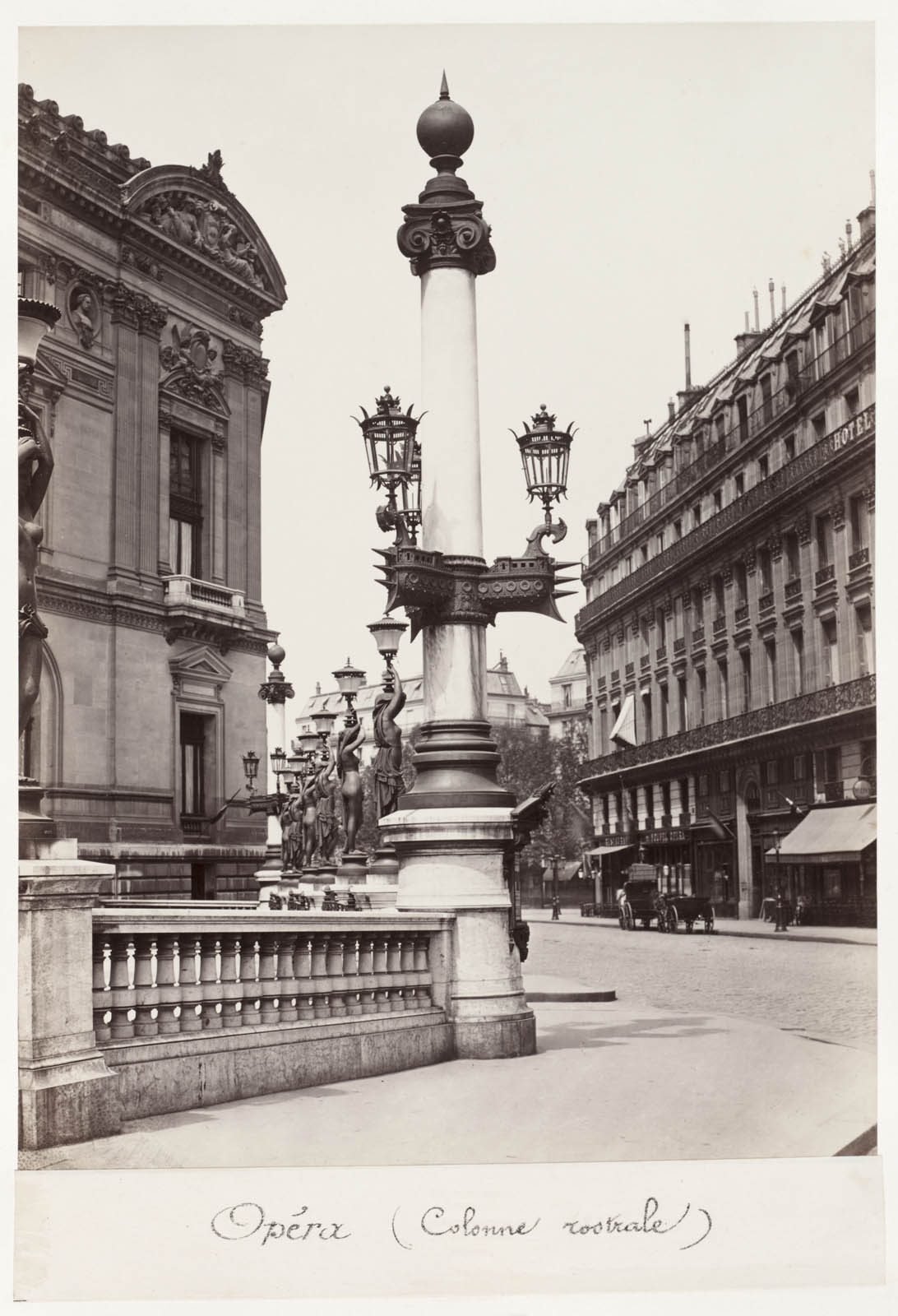
Charles Marville (French, 1813-1879) Opéra (Rostral Column) c. 1875 Albumen print from wet collodion negative Image: 37.7 x 26.7cm (14 13/16 x 10 1/2 in.) Mounted: 35.4 x 26.7cm (13 15/16 x 10 1/2 in.) Matted: 71.1 x 55.9cm (28 x 22 in.) The Cleveland Museum of Art Purchase from the Karl B. Goldfield Trust
In the 1800s, gas lamps replaced the oil lights. When Napoleon III commissioned a new opera house in Paris in 1860, it was surrounded by a “Ring of Light,” including this column with three gas streetlights. The opera house became the setting for Gaston LeRoux’s 1910 novel The Phantom of the Opera, which inspired the 1976 musical and 2004 film.
Charles Marville
Charles Marville French, 1813-1879
At the invitation of the city of Paris, photographer Charles Marville was among the first to document the ancient quarters of his birthplace. His views, taken in the late 1850s, were intended to record the many buildings and neighborhoods ultimately destroyed by Baron Georges-Eugène Haussmann’s urban planning project that would create the boulevards and open spaces of modern Paris. While Marville’s survey of the city, extensive and thorough in scope, prefigured other important efforts of its kind, it is distinguished by its emotional accessibility. His work beautifully reveals a Paris that has long disappeared. Originally trained as a painter and illustrator, Marville worked with both calotype and glass plate negatives. He photographed in France, Italy, Germany, and Algeria, becoming most well known for his architectural imagery but also producing acclaimed landscapes and studies of trees. Many of Marville’s early views, often considered his best, were included in the albums of Louis-Désiré Blanquart-Évrard before the printer’s establishment in Lille closed in 1855. Named official photographer of Paris in 1862, Marville also served as photographer to the Imperial Museum of the Louvre and to King Vittorio Emmanuelle of Italy. T.W.F.
Charles Marville (French, 1813-1879) Sky Study, Paris 1856-1857 Albumen print from wet collodion negative Image: 15.3 x 21.4cm (6 x 8 7/16 in.) Matted: 40.6 x 50.8cm (16 x 20 in.) The Cleveland Museum of Art John L. Severance Fund
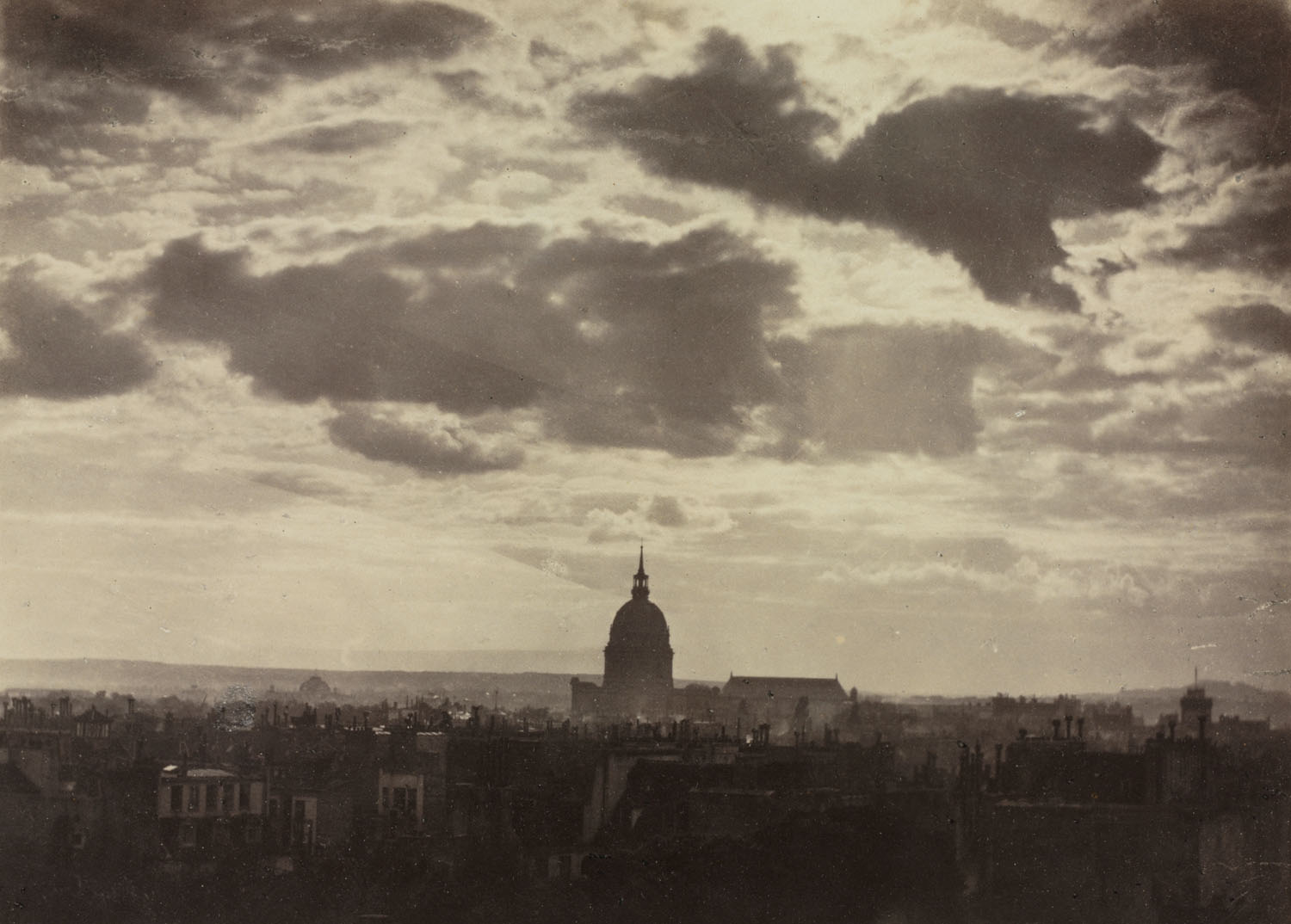
Thirty years before the construction of the Eiffel Tower, Charles Marville made a series of views of the skies over Paris, some from various rooftops and others from his apartment window. This view frames the city so that the dome of the chapel of Les Invalides – a retirement home and hospital for military veterans – dominates the skyline. In the 1850s, the light-sensitive coatings for photographic plates were incapable of properly exposing both earth and the sky in a single shot. Marville here set his camera to capture the dramatic sky and clouds, which meant that the city below, for the most part, became a dark mass of undifferentiated buildings. The scale, drama, and majesty of this natural spectacle overwhelm human achievements.
Charles Marville (French, 1813-1879) Rue de la Ferronnerie c. 1865 Albumen print from wet collodion negative Image: 28 x 27cm (11 x 10 5/8 in.) Matted: 61 x 50.8cm (24 x 20 in.) The Cleveland Museum of Art Leonard C. Hanna Jr. Fund
Charles Marville preferred photographing on overcast, rainy days when diffused light and glistening cobblestones yielded an image with the maximum tonal range and detail. In 1865, the ground floor spaces on the Rue de la Ferronnerie or “street of ironwork” (named in 1229) were occupied by businesses including a café, a hotel, and a men’s clothing store. Apartments on the upper floors housed some of the many people who moved from the country into the city during the Second Empire.
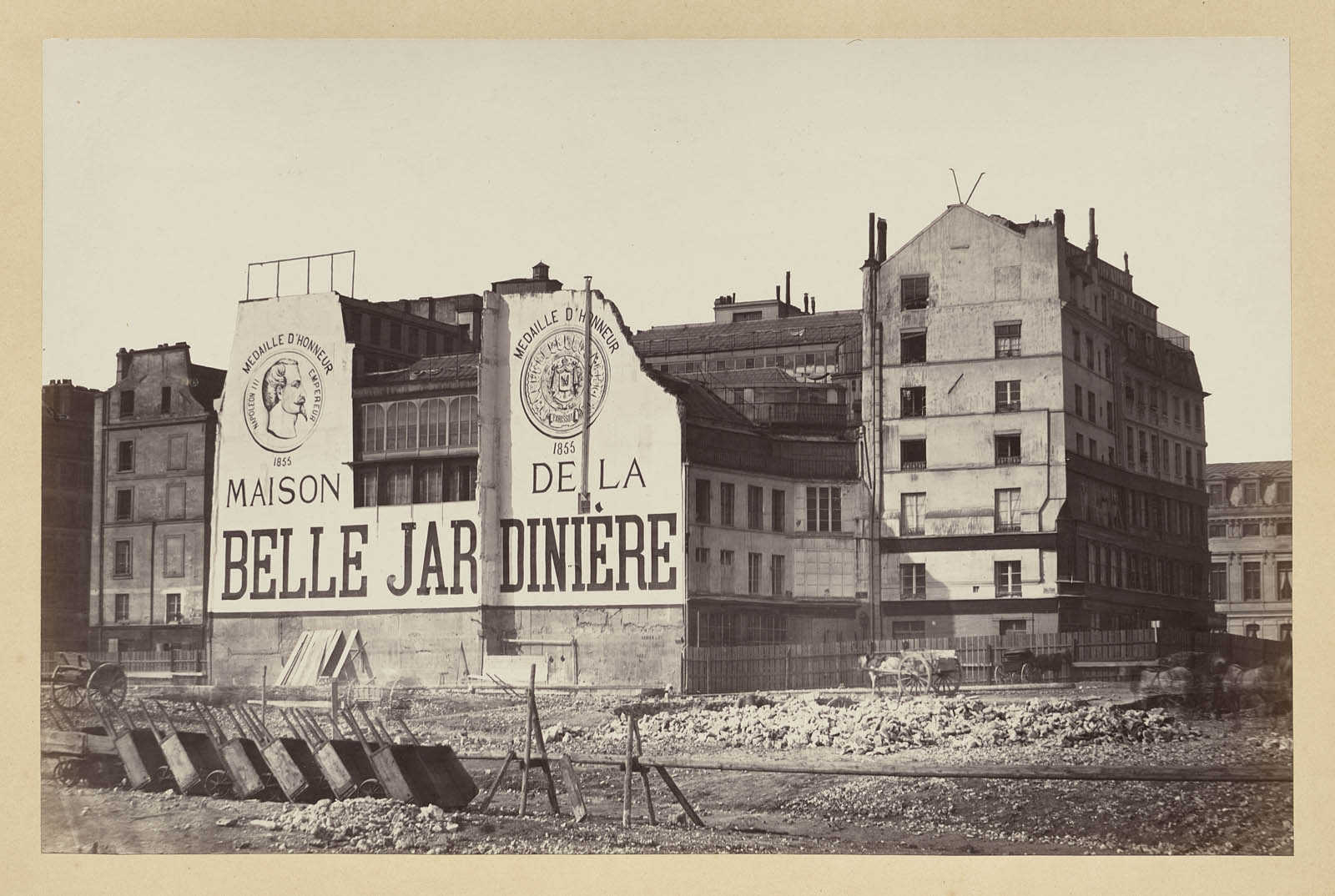
Attributed to Charles Marville (French, 1813-1879) La Belle Jardinère: le magasin de la rue de la Cité pendant sa demolition, Paris 1864-1866 Albumen print from collodion negative Image: 22.9 x 34.6cm (9 x 13 5/8 in.) The Cleveland Museum of Art Gift of Michael Mattis and Judith Hochberg
Founded in 1824, La Belle Jardinière (The Beautiful Gardener) department store pioneered the sale of ready-to-wear clothing for those of modest means.
The department store was located on the Ile de la Cité in the Seine in the middle of Paris. In 1864, as part of the renovation of the city, the government ordered that the store be replaced with a new building for the country’s oldest hospital. While there are numerous photographs of new structures and broad streets that resulted from Baron Haussmann’s urban renewal plan, views of the demolition of the old structures are rare.
Étienne Carjat (French, 1828–1906) Sarah Bernhardt in “Zaire” by Voltaire 1874 Albumen print from wet collodion negative Image: 27.3 x 21.3cm (10 3/4 x 8 3/8 in.) Matted: 50.8 x 40.6cm (20 x 16 in.) The Cleveland Museum of Art John L. Severance Fund
Photographer Étienne Carjat established his reputation through celebrity portraiture. Famed French actress Sarah Bernhardt is seen here as the star of Zaire, a play by the French author Voltaire first performed in 1732. The actress, who studied sculpture, exhibited work in the Paris Salon for the first time in 1874. She just missed being in the same show as Morisot, who exhibited regularly at the Salon from 1864 to 1873, but in 1874 decided instead to show in the first Impressionist exhibition. Édouard Manet produced many portraits of actresses and performers.
Étienne Carjat
Étienne Carjat French, 1828-1906
Born in Fareins, Étienne Carjat and his friend and contemporary Nadar are considered the masters of 19th-century French portrait photography. Like Nadar, whose immense reputation tended to overshadow his own, Carjat was a caricaturist and journalist, and much involved in politics and the arts. In style, however, he was more straightforward and less overtly dramatic than Nadar, frequently portraying his subjects in simple settings and showing close attention to expression, pose, detail, and line. After study with Pierre Petit in 1858, Carjat first took up photography to produce his series Le Panthéon Parisien in the early 1860s. He had several studios in Paris, from which he conducted a portrait business and contributed to the important series Galeries des célébrités contemporaines. Among his sitters were Émile Zola, Antonio Rossini, Charles Baudelaire, and Gustave Courbet. Carjat was a founder of the satirical journal Diogène (1856), as well as an author, actor, poet, and playwright. He became less active in photography after 1867 and reportedly ceased altogether after 1875. In 1878 he and Nadar are believed to have been the only mourners at the burial of their fellow caricaturist, the acerbic Honoré Daumier. T.W.F.
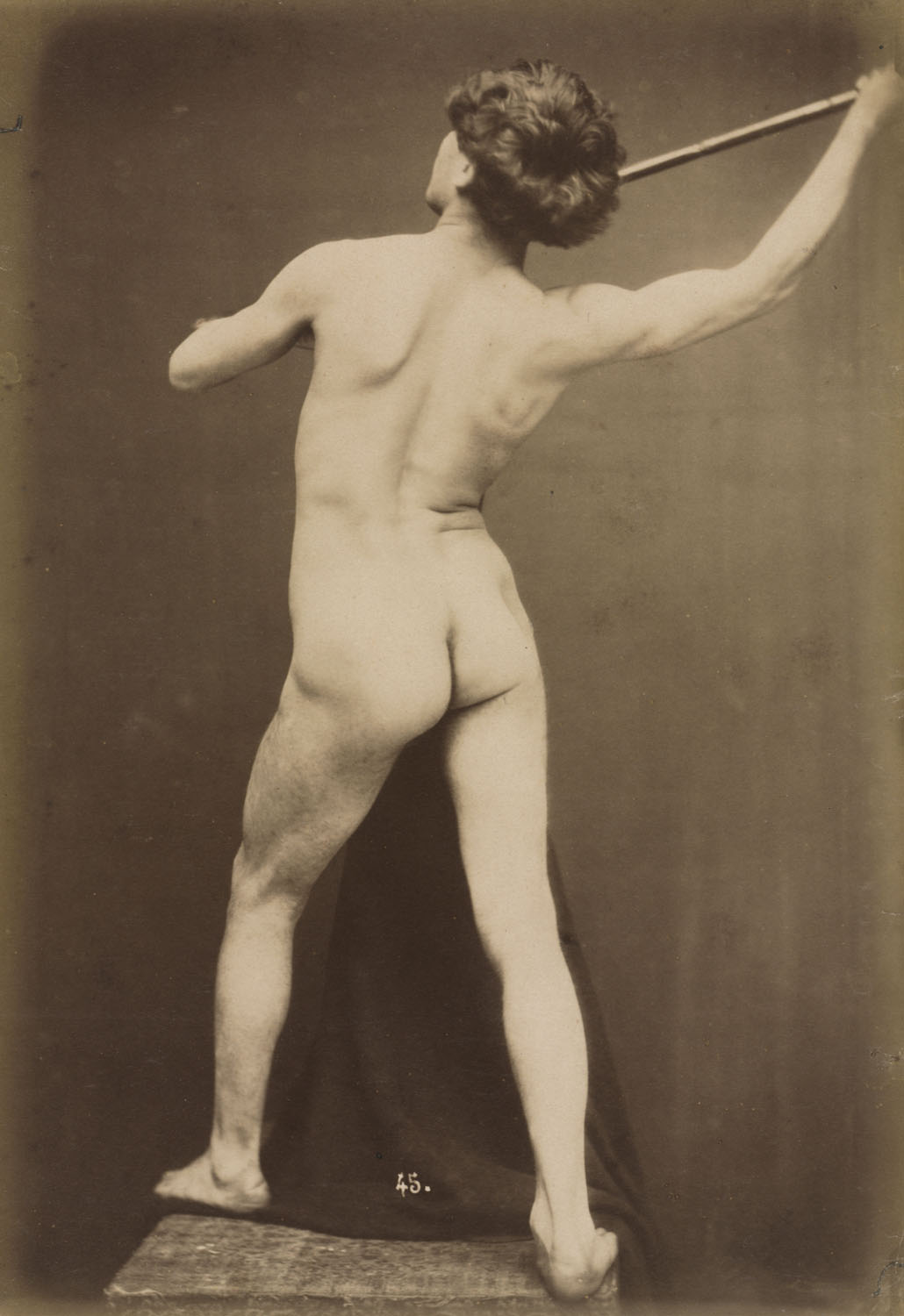
Guglielmo Marconi (French, 1842 – after 1885) Male Nude c. 1870-1875 Albumen print from wet collodion negative Image: 27.2 x 18.8cm (10 11/16 x 7 3/8 in.) Matted: 55.9 x 45.7cm (22 x 18 in.) The Cleveland Museum of Art John L. Severance Fund
Guglielmo Marconi specialised in nude studies for use by painters and sculptors. Using children, women, and men as models, he photographed a variety of poses traditionally employed by models in academic studios. Artists purchased them because working from a photograph was much cheaper than hiring a live model.
Unknown photographer and maker Untitled (Case with portraits of a man and woman and hair ornaments) c. 1870s Photographs: photographs on enamel, framed in copper alloy metal frames; hair lockets: hair with pen and black and ink on cream-coloured backing; case: leather with metal push-clasp and velvet-lined interior Image: 3.5 x 3cm (1 3/8 x 1 3/16 in.) Case: 9 x 5 x 1cm (3 9/16 x 1 15/16 x 3/8 in.) The Cleveland Museum of Art John Cook Memorial Fund
The photographs of this man and woman, presumably husband and wife, are juxtaposed with clippings of their hair arranged to form their initials, A and M. In the late 1800s, photographic portraits and hair clippings combined in jewellery or frames served as mementos or memorials for loved ones. For permanence, the portraits here were vitrified on enamel, a process now used primarily for funerary monuments.
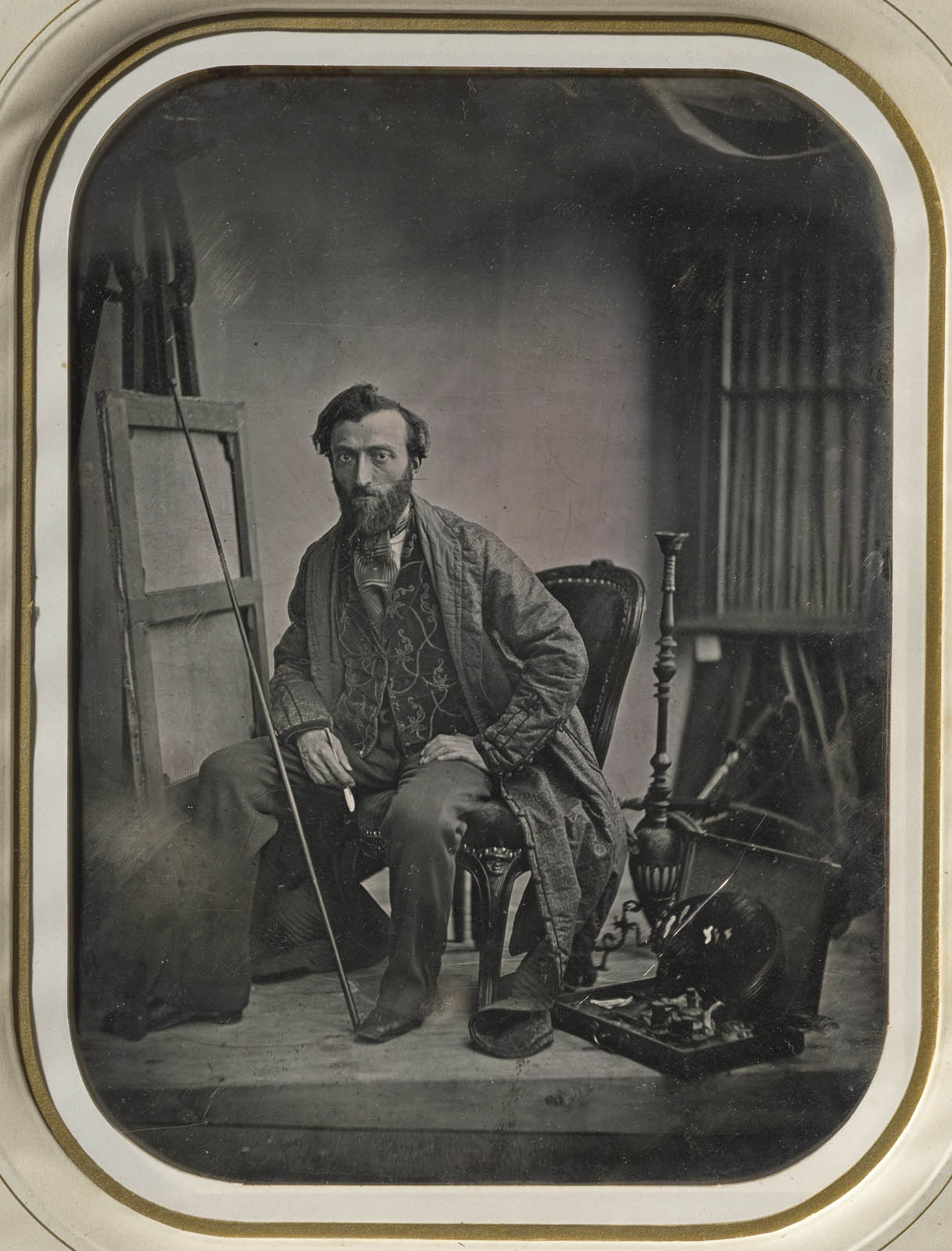
Camille Dolard (French, 1810-1884) Self-Portrait in Painting Studio c. 1843 Daguerreotype (full-plate) Platemark: 20.5 x 15cm (8 1/16 x 5 7/8 in.) Matted: 55.9 x 45.7cm (22 x 18 in.) The Cleveland Museum of Art Leonard C. Hanna Jr. Fund
Dolard, a portrait painter, may have offered photographs to prospective clients of lesser means. In this image, possibly made as an advertisement for his studio, he identifies himself as a painter, surrounded by the tools of the trade. The coat and the hookah suggest an interest in orientalism, a fashion that occupied many mid-19th-century artists. A remarkable technical achievement, this whole-plate image required Dolard to remain motionless for well over a minute, at least 30 times longer than the exposure for the smaller plates in the case below.
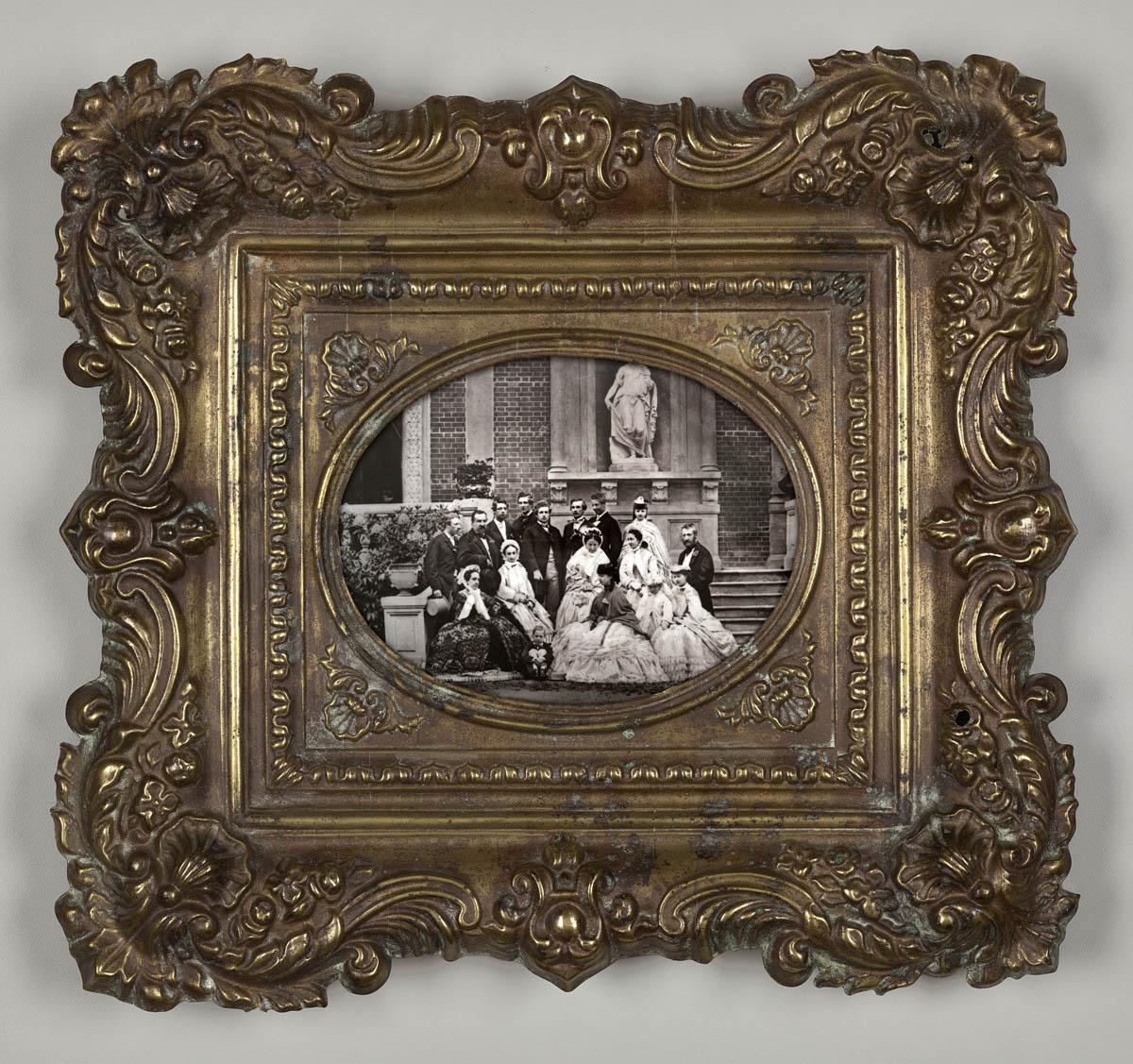
Camille Silvy (French, 1834-1910) The d’Orléans Family during a Fête Champêtre at Orléans House 1864 Enamelist: Lafon de Camarsac (French, 1821-1905) Enamelled photograph in original metal frame Plate: 11.5 x 15.5cm (4 1/2 x 6 1/8 in.) Framed: 27 x 29cm (10 5/8 x 11 7/16 in.) The Cleveland Museum of Art Jo Hershey Selden Fund
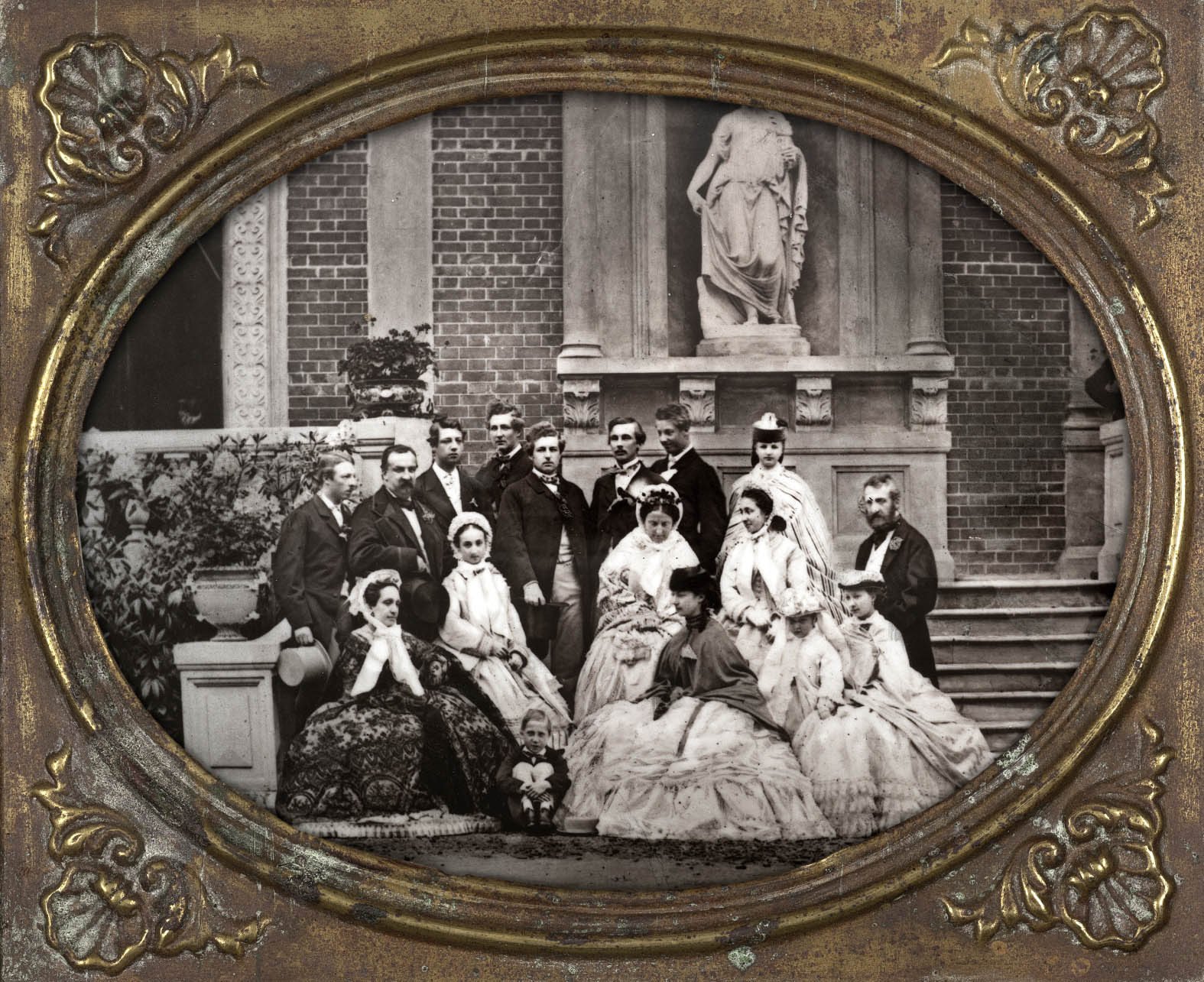
The image celebrates the d’Orléans family, who abdicated the French throne during the Revolution of 1848 and settled in England. The setting for this group portrait is d’Orléans House in Twickenham, where the d’Orléans hosted numerous grand social events such as the garden party that occasioned this sitting. Many of these events raised money to support monarchist and other activities in France.
Camille Silvy (French, 1834-1910) The d’Orléans Family during a Fête Champêtre at Orléans House (detail) 1864 Enamelist: Lafon de Camarsac (French, 1821-1905) Enamelled photograph in original metal frame Plate: 11.5 x 15.5cm (4 1/2 x 6 1/8 in.) Framed: 27 x 29cm (10 5/8 x 11 7/16 in.) The Cleveland Museum of Art Jo Hershey Selden Fund
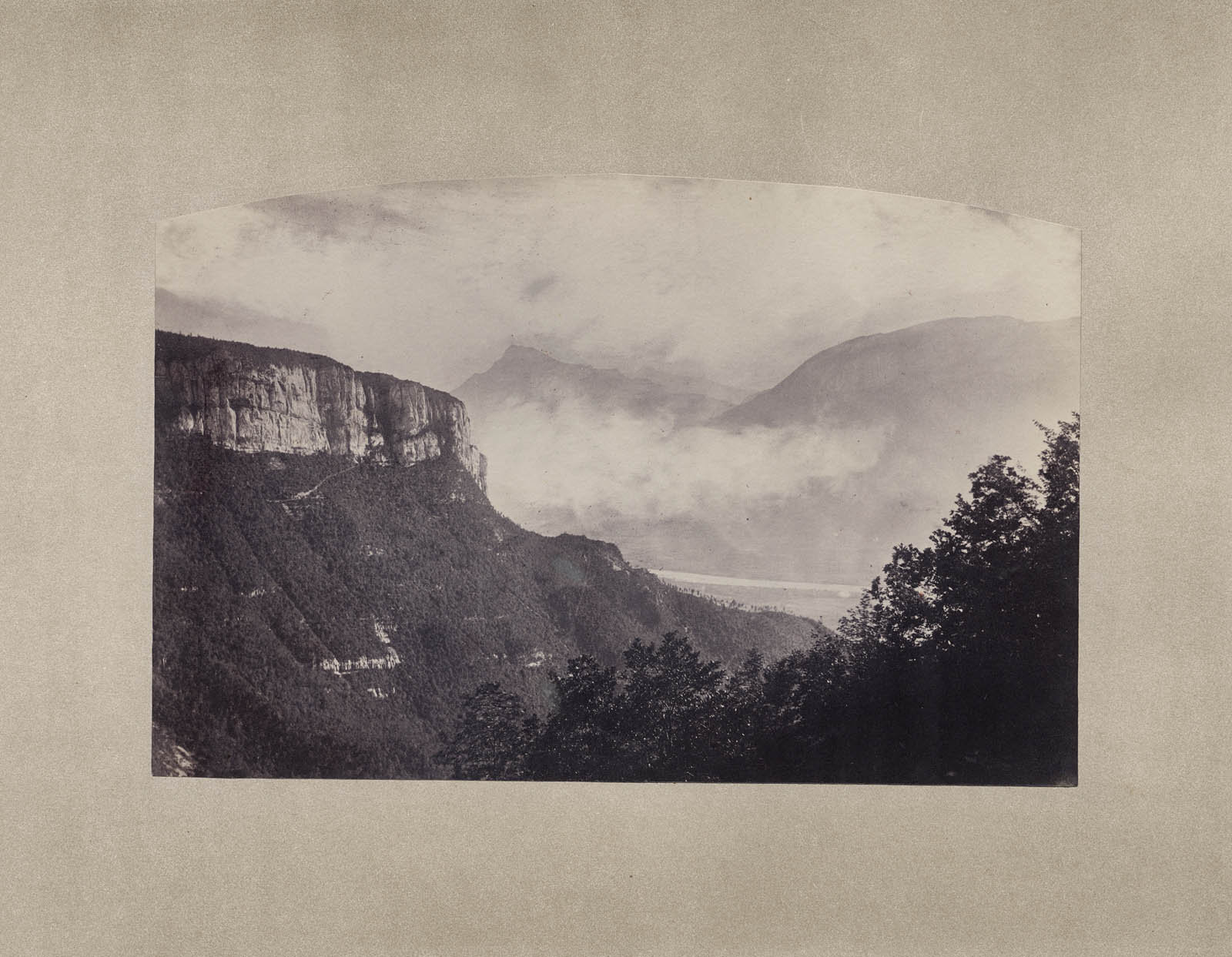
Félix Thiollier (French, 1842-1914) Vue prise du Couvent des Dominicains, Chalais (Isère), France c. 1865 Albumen print from collodion negative Image: 13.1 x 20cm (5 3/16 x 7 7/8 in.) Paper: 13.1 x 20cm (5 3/16 x 7 7/8 in.) Mounted: 31.7 x 49.1cm (12 1/2 x 19 5/16 in.) The Cleveland Museum of Art Gift of Michael Mattis and Judith Hochberg
Félix Thiollier brought to landscape photography the emotional power and mystery of the Barbizon and naturalist painters whom he collected and befriended. This dramatic view provides a deep vista more commonly found in photographs of the Western United States at the time. Underlying it, however, are a geometric structure of overlapping triangles, curved top border, and atmospheric clouds and mist that relate directly to precedents in painting.
Auguste-Rosalie Bisson (French, 1826–1900) and Louis-Auguste Bisson (French, 1814–1876) Mount Maudit, Savoy 1860 Albumen print from wet collodion negative Image: 23.2 x 39.2cm (9 1/8 x 15 7/16 in.) Matted: 50.8 x 61cm (20 x 24 in.) The Cleveland Museum of Art James Parmelee Fund
The Bisson brothers’ photograph of Mount Maudit – which translates as “cursed mountain” – makes the 14,649-foot peak seem inaccessible. In fact, it was not summited until 1878. Photographing at high altitudes necessitated climbing while carrying heavy equipment, including large glass plates and a portable darkroom, and required extraordinary technical prowess and speed in working with the chemicals at low temperatures.
Bisson Frères – consisting of brothers Louis-Auguste and Auguste-Rosalie Bisson, also known as the Bissons âiné and jeune (older and younger) – was one of the most celebrated and widely known French photographic studios and publishing houses of the 19th century. Begun by their father, a heraldic painter, the Bissons’ first studio opened in Paris in 1841, shortly after the invention of the daguerreotype. Louis-Auguste, a student of architecture and chemistry, learned photography directly from Louis-Jacques-Mandé Daguerre and went on to advance the medium through a number of inventions and techniques, contributions for which the brothers received considerable praise. He retired from the business in 1865. Auguste-Rosalie, perhaps the better known of the two, was responsible for some of their more spectacular photographic successes, including the first closeup views of the peaks of Mt. Blanc (1861). Among the Bissons’ many accomplishments and honors were a set of 900 daguerreotypes of the members of the French National Assembly, which were later published in lithographic copies; their appointment as official photographers to Napoléon III and Pope Pius IX; their role as founding members of the Société française de photographie; and their numerous and much-admired series of landscape, architectural, and portrait photographs. After his brother’s retirement, Auguste-Rosalie continued to work in photography, including a voyage to Egypt in 1869 and views of the Siege of Paris in 1871. As late as 1900, the year of his death, he patented a heliochrome process for the printing of photographs in color with ink. T.W.F.
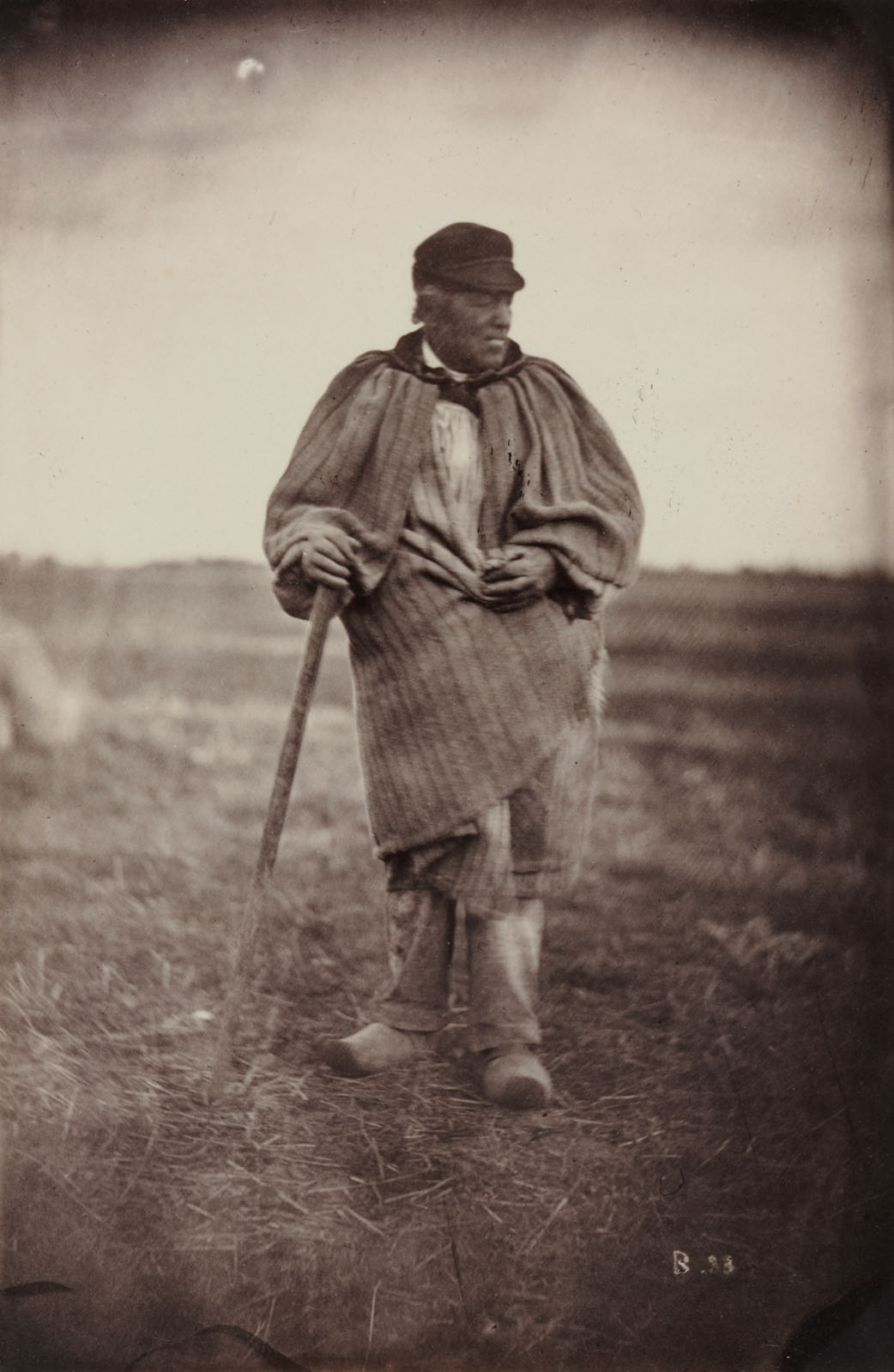
Auguste Giraudon’s Artist (French) Man with Walking Stick Late 1870’s Albumen print from wet collodion negative Image: 17.1 x 11.2cm (6 3/4 x 4 7/16 in.) Paper: 17.1 x 11.2cm (6 3/4 x 4 7/16 in.) Matted: 45.7 x 35.6cm (18 x 14 in.) The Cleveland Museum of Art Purchase from the J. H. Wade Fund
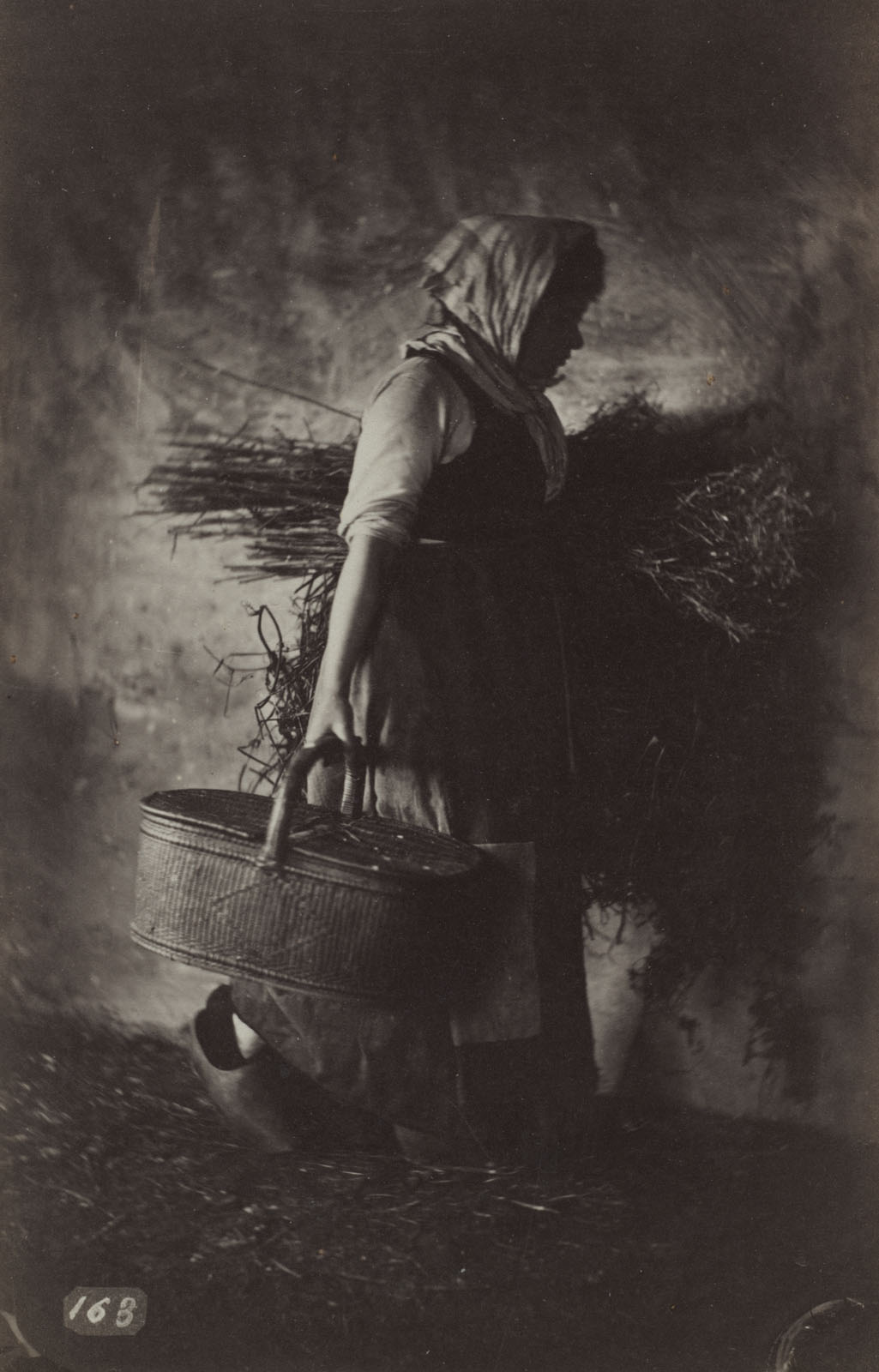
During the 1870s, Giraudon commissioned one or more artists – probably a French painter who wished to remain anonymous – to create photographs of peasants. Now called Giraudon’s Artist, this photographer was one of the few in the 1800s specialising in rural figure studies created for use by artists. The images were likely taken near Barbizon, a destination popular with artists who wanted to work from nature. The artistry of these images derives from their skilful use of light, ability to render a subject in the landscape, and a perceptive depiction of human dignity.
Auguste Giraudon’s Artist (French) Female Peasant Carrying a Basket and Hay c. 1870 Albumen print from wet collodion negative Image: 17.2 x 11.1cm (6 3/4 x 4 3/8 in.) Mounted: 20.7 x 15.8cm (8 1/8 x 6 1/4 in.) Matted: 45.7 x 35.6cm (18 x 14 in.) The Cleveland Museum of Art John L. Severance Fund
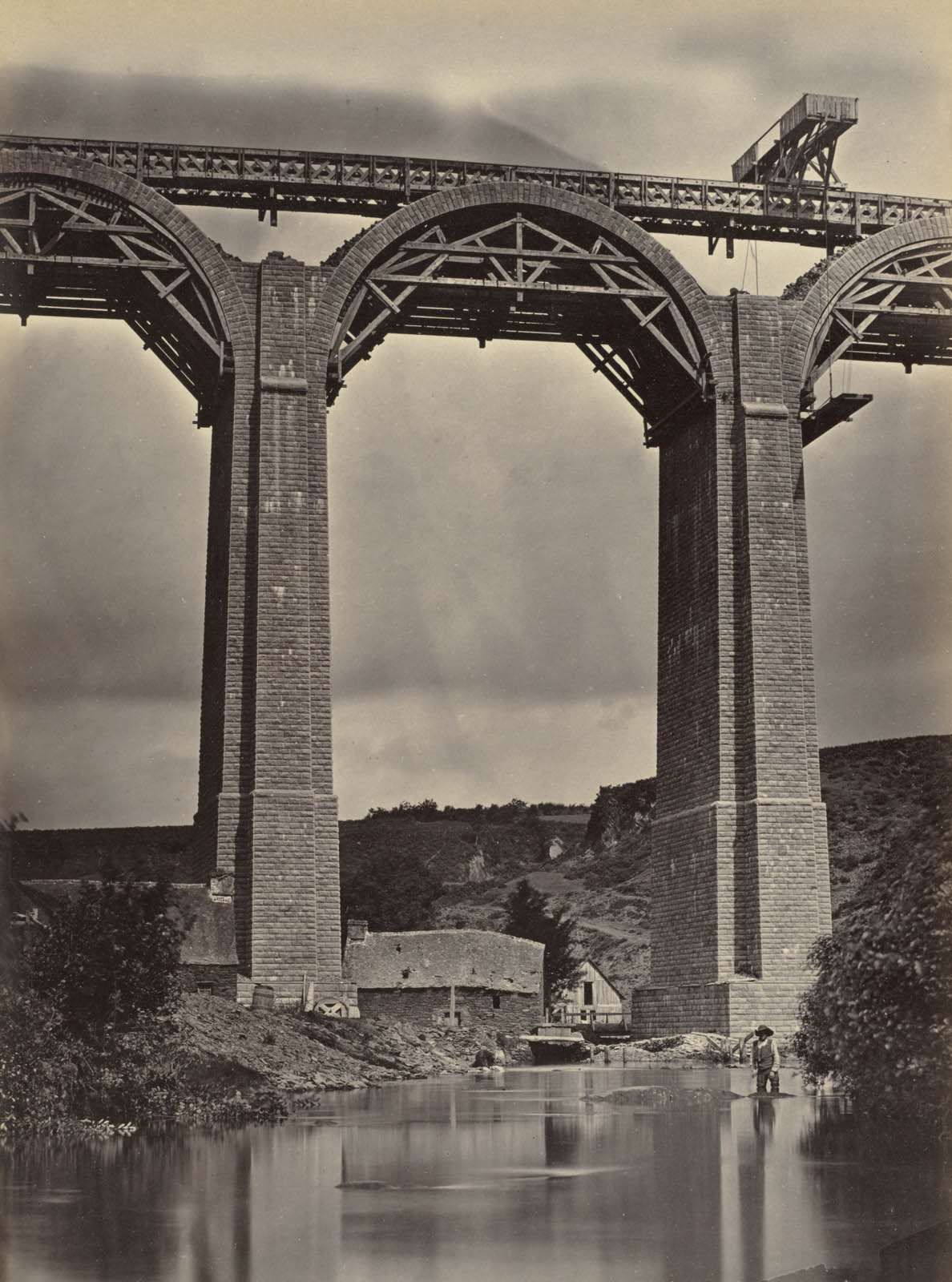
Jules DuClos (French, 1824-1879) Pont-de-Buis, on the Doufine, France c. 1865 Albumen print from wet collodion negative Image: 33.8 x 30.1cm (13 5/16 x 11 7/8 in.) Matted: 61 x 50.8cm (24 x 20 in.) The Cleveland Museum of Art John L. Severance Fund
The extension of railroad service from Paris across Brittany in northern France occurred in stages between 1840 and 1865. Extending railway service required the construction of railway bridges such as this masonry viaduct which crosses the Doufine River near Pont-de-Buis. Jules DuClos shows it under construction, with timbers supporting the arches and a man standing in the river below.
Adolphe Braun (French, 1812-1877) Untitled (Farm Animals) 1850s Albumen print from wet collodion negative Image: 28 x 39.4cm (11 x 15 1/2 in.) Framed: 53.7 x 63.8cm (21 1/8 x 25 1/8 in.) Matted: 50.8 x 61cm (20 x 24 in.) The Cleveland Museum of Art Norman O. Stone and Ella A. Stone Memorial Fund
While the animals and farmers are in sharp focus in Adolphe Braun’s photograph, the buildings are blurred, suggesting that perhaps Braun intended to market these photographs to visual artists as models rather than intending them to be hung on people’s walls as a substitute for a painting.
Adolphe Braun
Adolphe Braun French, 1812-1877
Adolphe Braun, a French textile designer born in Besançon and trained in Paris, opened his own studio in Dornach, Alsace, before becoming involved in photography in the early 1850s. He produced several early floral textile designs that were published as lithographs. In 1853 Braun began work on a large album of some 300 photographic still-life studies of flowers, intended as aids for artists in the field of decorative arts. The work met with such success at the 1855 Exposition Universelle in Paris that he left the field of design for photography. Braun’s carefully executed still lifes are considered to be among the finest ever done. From the mid-1850s on, Braun’s firm, Adolphe Braun et Cie., later headed by his son Gaston (1845-1928), became one of the world’s largest studios and publishers of topographical views and of reproductions of works of art. In the latter effort, their importance was in part due to Gaston’s success with the orthochromatic process, in which photographic reproductions retained a tonal range very close to that of the original work of art. Braun et Cie. were the official photographers to Napoléon III and Pope Pius IX. Their reproductions of works in the Louvre, the Sistine Chapel, and many other subjects in architecture, sculpture, painting, and drawing, sometimes using the more permanent carbon or Woodburytype processes, were offered in all sizes and formats, and became the standard in their field. The number of negatives taken by the Brauns or their operators was variously estimated in 1870 to be between 4,000 and 8,000. The Brauns were members of the Société française de photographie. Both were awarded the French Legion of Honor-Adolphe in 1860, and Gaston in 1892. T.W.F.
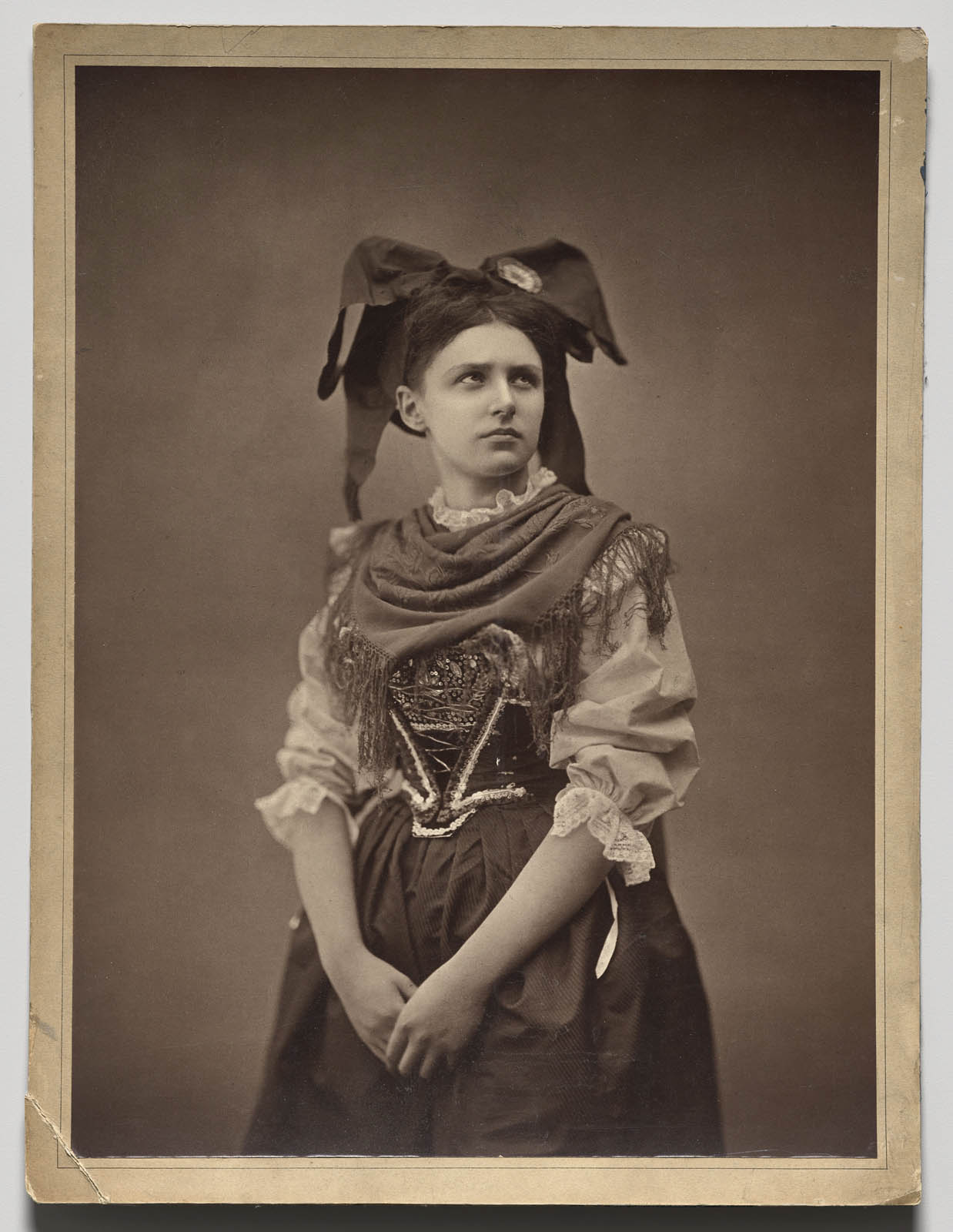
Adolphe Braun (French, 1812-1877) Young Alsacienne Woman c. 1871 Carbon print on a ruled mount Image: 40 x 30.5cm (15 3/4 x 12 in.) The Cleveland Museum of Art Gift of Michael Mattis and Judith Hochberg
This woman wears a regional folk costume from the French region of Alsace, recalling traditions that were disappearing under the impact of industrialisation and modernisation.
At the end of the Franco-Prussian War, Prussia seized much of the regions of Alsace and Lorraine. That inspired Adolphe Braun to produce a series of images of women meant to personify those lost territories. The images proved so popular that they were reproduced on souvenir items including postcards and ceramic plates.
Gustave Le Gray (French, 1820-1884) The Bridge of Palalda (near Amelieles-Bains) 1851-1852 Salted paper print from waxed-paper negative Image: 23.8 x 32.7cm (9 3/8 x 12 7/8 in.) Matted: 50.8 x 61cm (20 x 24 in.) The Cleveland Museum of Art John L. Severance Fund
In 1851, Gustave Le Gray and his friend, photographer Auguste Mestral, travelled throughout southwestern France for the Commission of Historic French Monuments to document sites of historical importance, especially those in urgent need of, or undergoing, restoration. This image was taken from the left bank of the Tech River, situated below the old town of Palalda, four miles from the Spanish border. Le Gray stressed the rugged landscape over a close-up rendering of the ancient bridge, which was not on his list of assigned sites.
Gustave Le Gray
Gustave Le Gray French, 1820-1884
A master both technically and aesthetically, Gustave Le Gray (born in Villiers-le-Bel) was one of the most important figures in 19th-century French photography, bringing to the medium artistic integrity and visual imagination. Le Gray, trained as a painter, was exhibiting his work in the Paris Salons in the late 1840s and early 1850s when he became interested in photography. Along with Henri Le Secq and Charles Nègre, he was a student of Paul Delaroche, a painter of considerable reputation and ability who was one of the first to grasp the importance of photography. In 1851 Le Gray announced his invention of a waxed paper negative, a significant improvement over earlier paper methods that was later adopted by Louis de Clercq, Dr. August Jakob Lorent, and others. That same year the Commission des Monuments historiques named him as one of five photographers of the Mission héliographique, for which he produced well-known studies of army manoeuvres at Chalons. Le Gray also worked with François Arago, the scientist and champion of Louis-Jacques-Mandé Daguerre, and later proposed a new method of toning prints, among other innovations. Le Gray was perhaps most admired for the effects he achieved with water and sky. To capture the subtle qualities of cloud patterns in some of his seascapes, he employed two negatives to produce the final image. His commissioned studies of historic monuments are classic examples of early architectural photography. In the early 1850s he worked in the Barbizon tradition at Fontainebleau and, in 1860, documented the uprising against François II in Palermo. He was a founding member of the Société héliographique and the Société française de photographie. Despite his influence and artistic success, Le Gray left Paris in 1865 to become a professor of design at the École Polytechnique in Cairo. He died in Egypt. T.W.F.
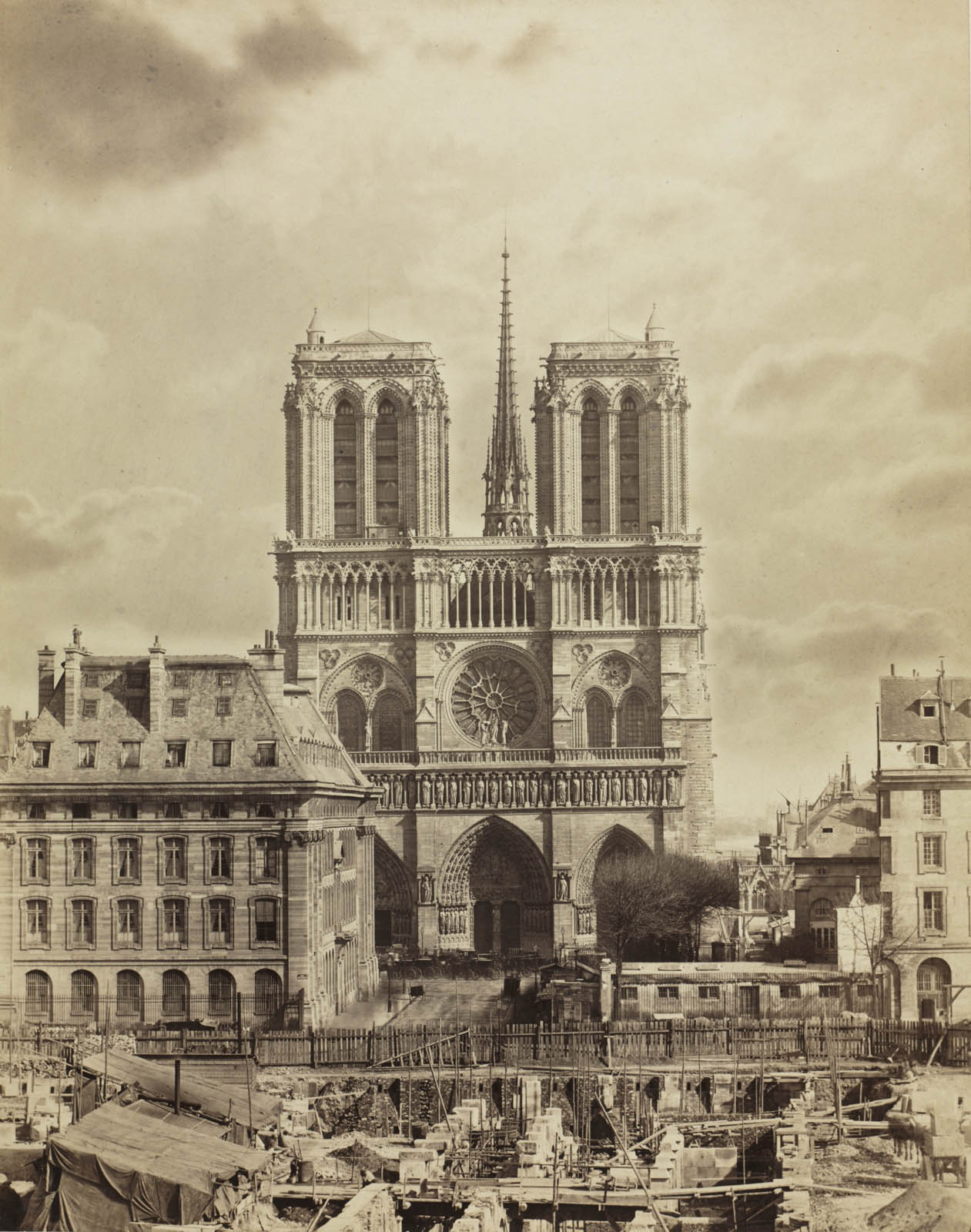
Charles Soulier (French, 1840-1875) Notre Dame de Paris early 1860s Albumen print from glass negative Image: 38 x 30.6cm (14 15/16 x 12 1/16 in.) Matted: 71.1 x 61cm (28 x 24 in.) The Cleveland Museum of Art John L. Severance Fund
When the popularity of Victor Hugo’s novel The Hunchback of Notre Dame drew attention to the church, the state hired architect and preservationist Eugène Viollet-le-Duc to restore it. His renovation, which lasted from 1844 to 1864, modified the cathedral: he added the spire, gargoyles, and griffins. Charles Soulier shows us the church’s front and some of the surrounding neighbourhood, bustling with carriages and new construction.
Charles Soulier
Charles Soulier French, 1840-1875
Charles Soulier operated in partnerships, first with A. Clouzard (1854-59) and later with Claude-Marie Ferrier and his son A. Ferrier (1860-64). Soulier was among the first to take naturalistic, snapshot-like views of Paris. His city street scenes were represented in an extensive set of glass stereographs, a medium preferred by Soulier for the delicacy of its reproductive range. Panoramas of the city were considered his specialty. In 1859 Soulier photographed Napoléon III on his campaign in Austria; he was later named photographer to the emperor. He became a member of the Société française de photographie in 1867 and in 1871 documented activities of the Paris Commune. His work includes topographical, urban, and landscape views, among them images of Mt. Blanc and other European scenery, as well as photographic reproductions of artwork. T.W.F.
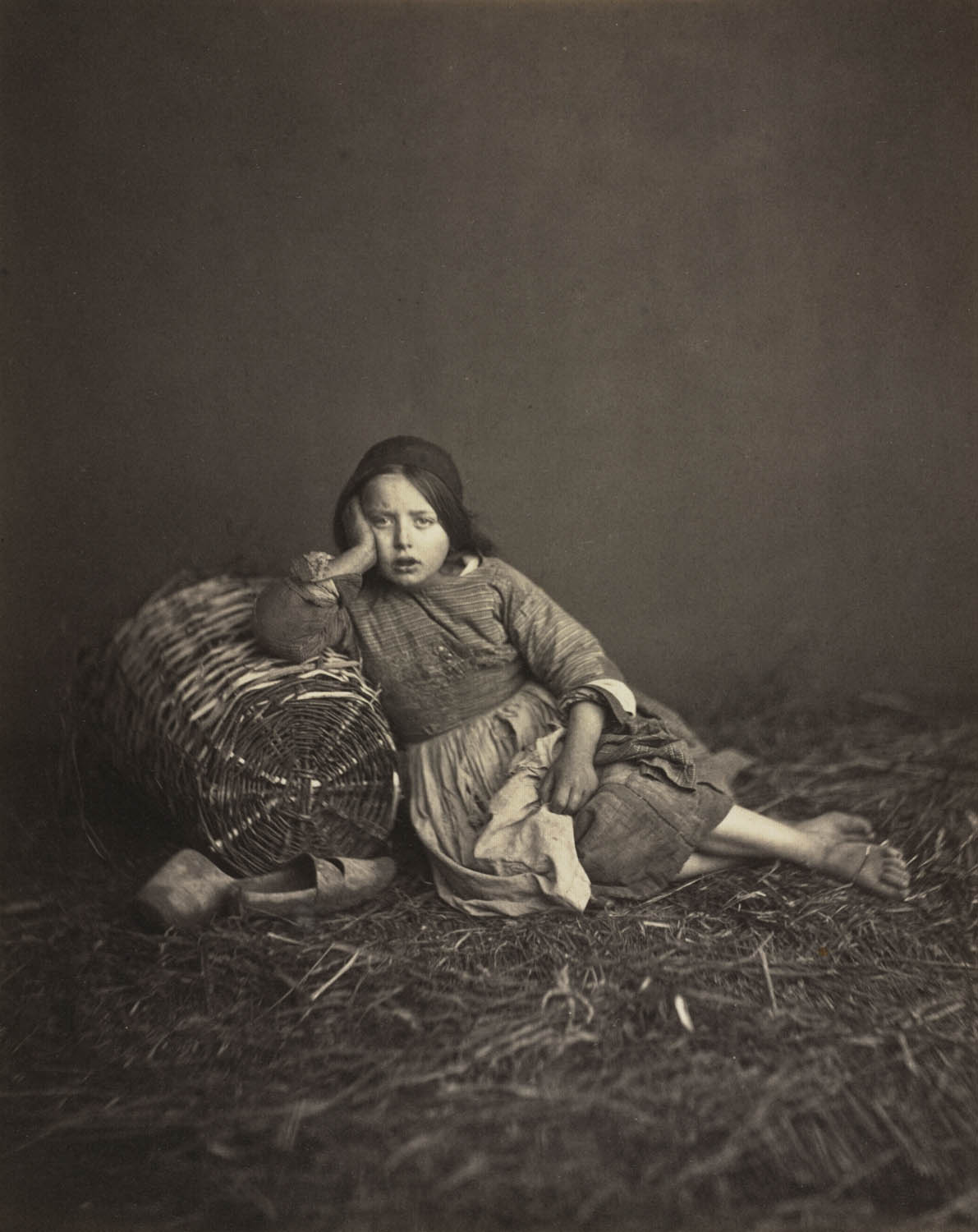
Edmond Bacot (French, 1814-1875) Young Girl Seated on Straw, Leaning on a Basket 1862 Albumen print from wet collodion negative Paper: 22.7 x 18.2cm (8 15/16 x 7 3/16 in.) Matted: 50.8 x 40.6cm (20 x 16 in.) The Cleveland Museum of Art John L. Severance Fund
While Impressionist painters were depicting women outdoors in gardens and parks, scenes of rural labor were popular subjects for many other painters. Those painters sometimes turned to photographs as models for the figures in those paintings. Another print of this photograph and several other images of the same girl were owned by the novelist Victor Hugo, a champion of the working classes. Edmond Bacot took them while visiting Hugo.
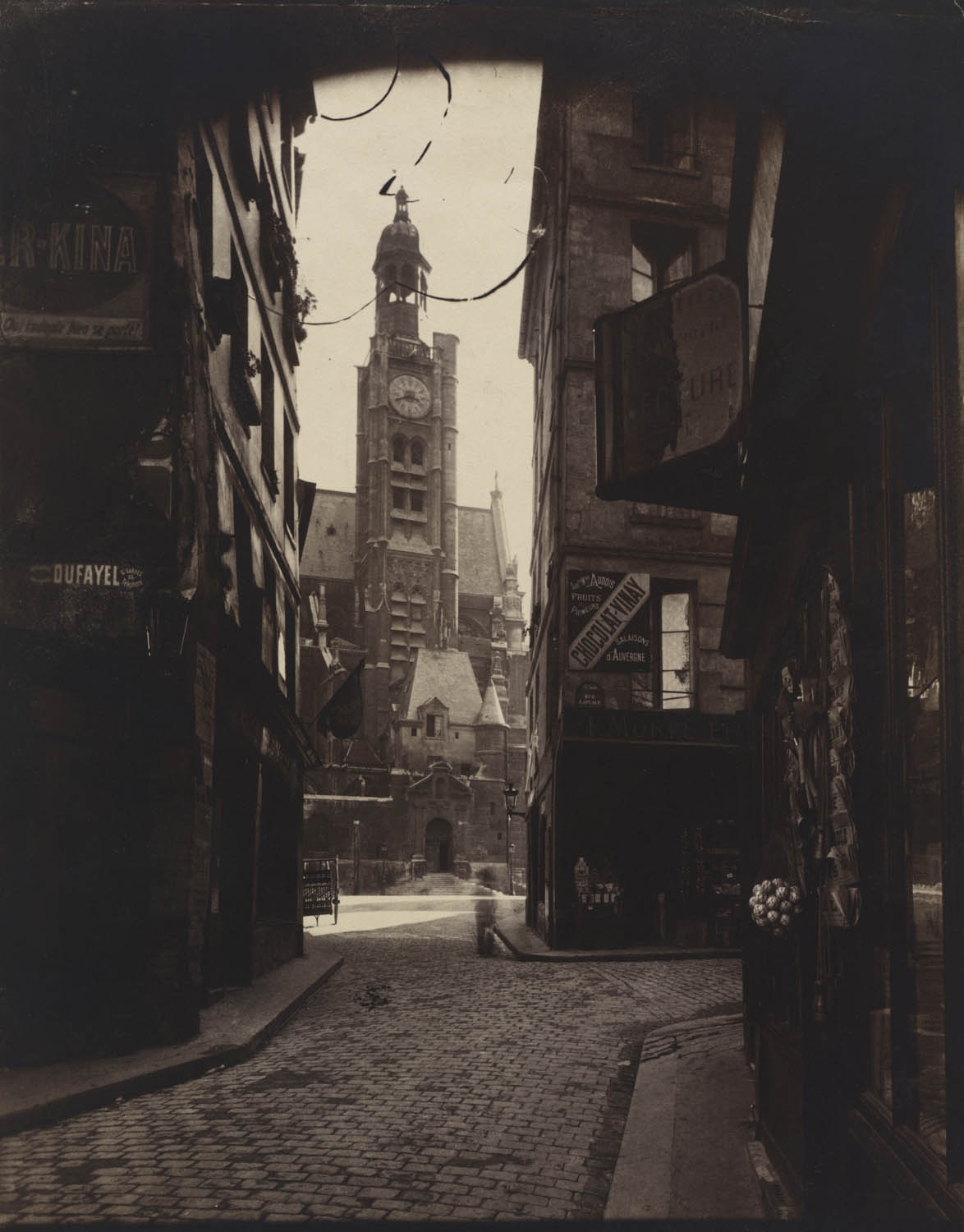
Eugène Atget (French, 1857-1927) Rue de la Montagne-Sainte-Geneviève 1898 Albumen print, gold toned Image: 22 x 17.4cm (8 11/16 x 6 7/8 in.) Matted: 45.7 x 35.6cm (18 x 14 in.) The Cleveland Museum of Art John L. Severance Fund
This narrow street, the site of the founding of the University of Paris in 1112, ends in a church built in the 1600s. Atget sold his photographs not as art but as “documents for artists,” similar in purpose to the nude studies other photographers made for use by painters. That may be why he photographed early in the morning, when a normally bustling street like this one was empty.
Eugène Atget
Eugène Atget French, 1857-1927
Relatively unknown to the public during his lifetime, Eugène Atget is today an icon – one of the most celebrated and influential photographers of the 20th century. Born near Bordeaux, Atget first directed his efforts to painting and the stage before turning to photography shortly before 1890. He is best known for his documentary scenes of Paris and Versailles, but he photographed a number of other sites as well. Atget viewed his work as a historical and aesthetic record, regarding it as documentation for use by artists. Indeed, several artists are known to have painted from his images. Using relatively unsophisticated, even outdated equipment, Atget achieved a view of French architecture and culture that is both personal and factual. Along with the rediscovery of the images of Mathew Brady in the early 20th century, the recognition of Atget’s artistic accomplishments shortly before his death by Berenice Abbott, Man Ray, and others helped turn photographers away from the mannered style of Pictorialism toward the visual and technical clarity of modernism. Marked by a selective and highly individual method, his is among the most widely shown, published, and recognised work in photography today. T.W.F.
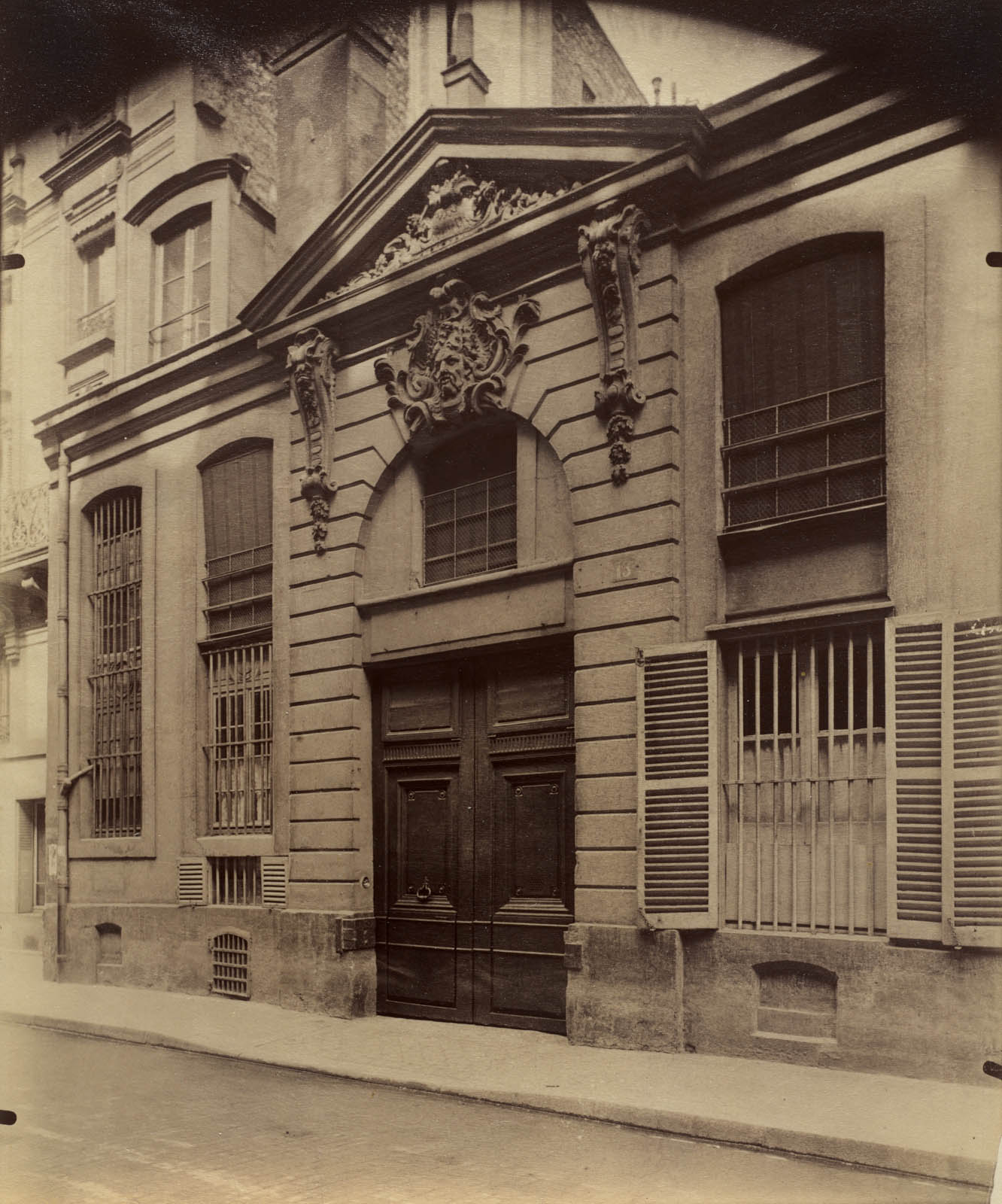
Eugène Atget (French, 1857-1927) Rue du Regard 1899 Albumen print, gold toned Image: 21.9 x 18.1cm (8 5/8 x 7 1/8 in.) Matted: 45.7 x 35.6cm (18 x 14 in.) The Cleveland Museum of Art Norman O. Stone and Ella A. Stone Memorial Fund
This entrance, which looks similar today, led into the courtyard for the “petit hôtel de Guiche,” built in the 1700s, which adjoined the larger “hôtel de Guiche.” Fragments of those buildings have been incorporated into the modern structures that now occupy the land behind the portal. The houses were named for the de Guiche family, aristocrats that occupied them in the mid-1700s. Their son was guillotined in 1794 following the French Revolution.
Cleveland Museum of Art 11150 East Boulevard Cleveland, Ohio 44106
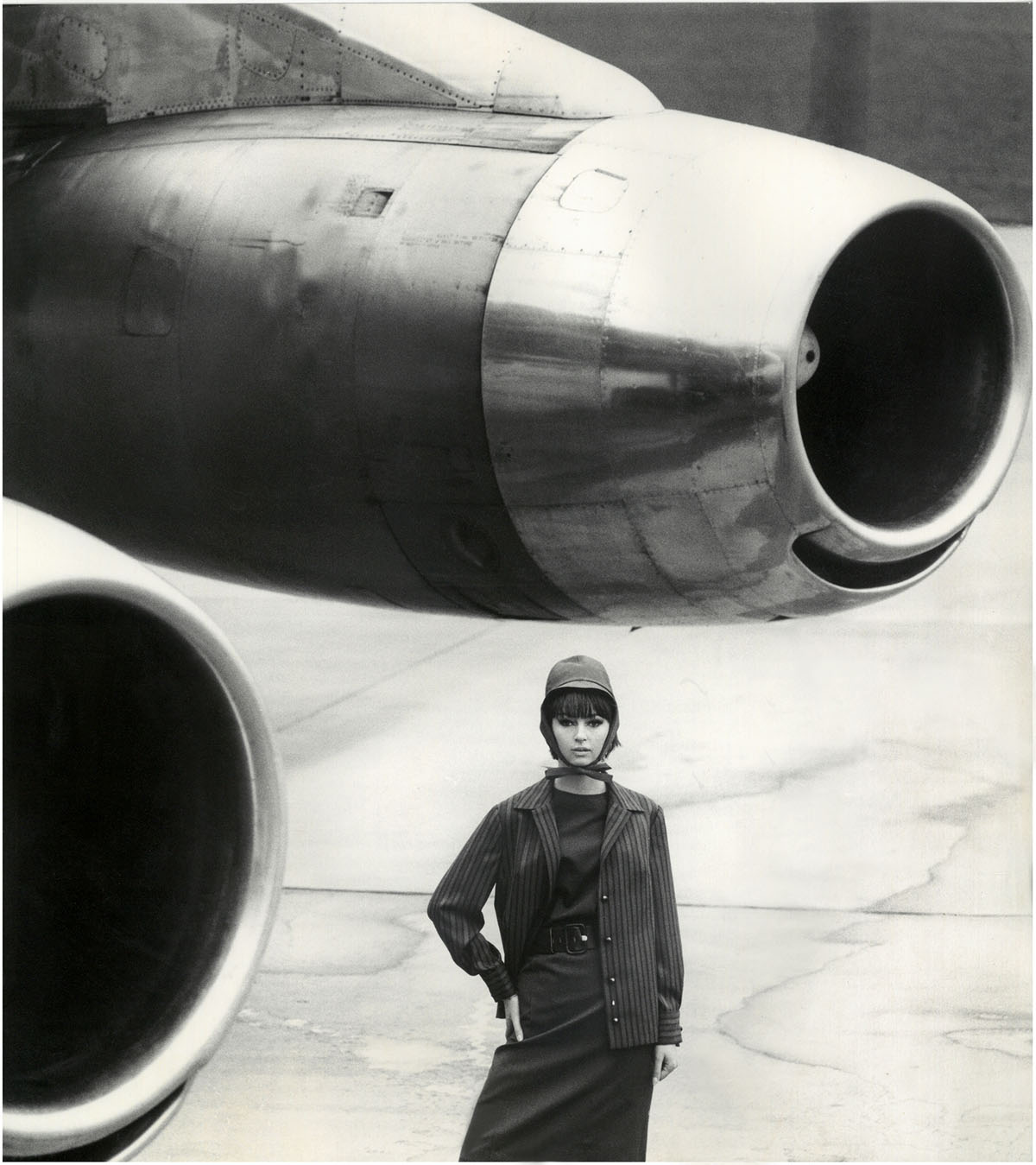
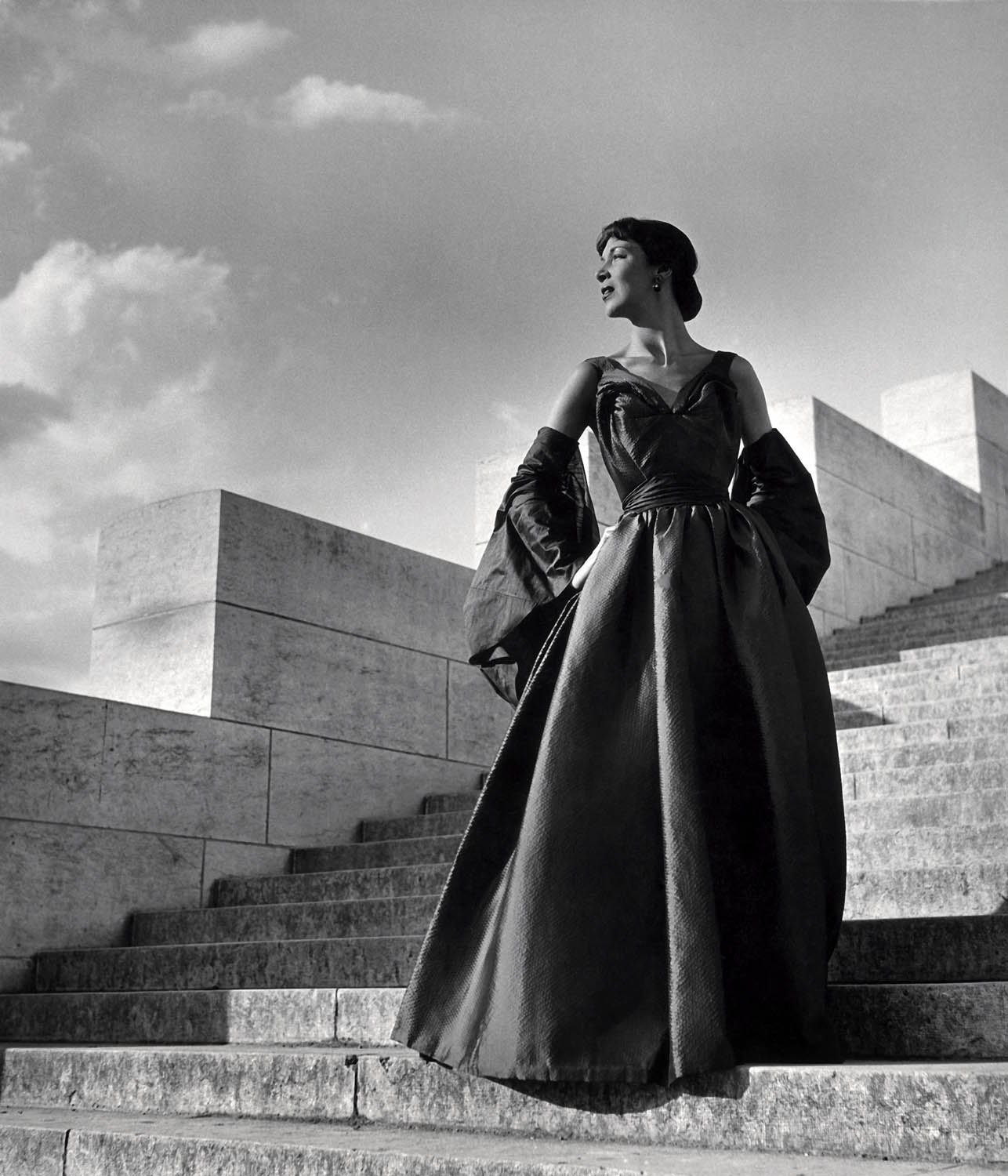
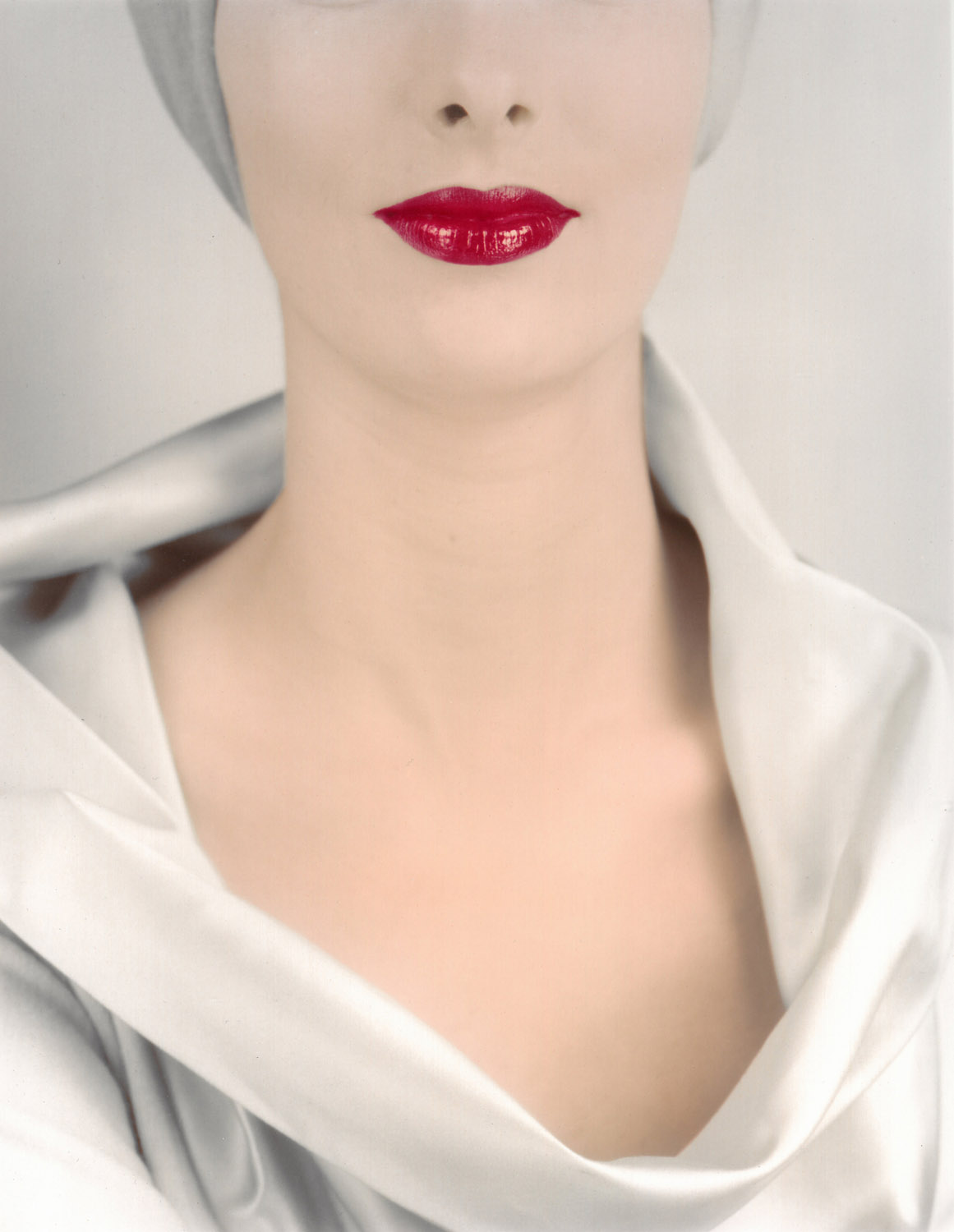
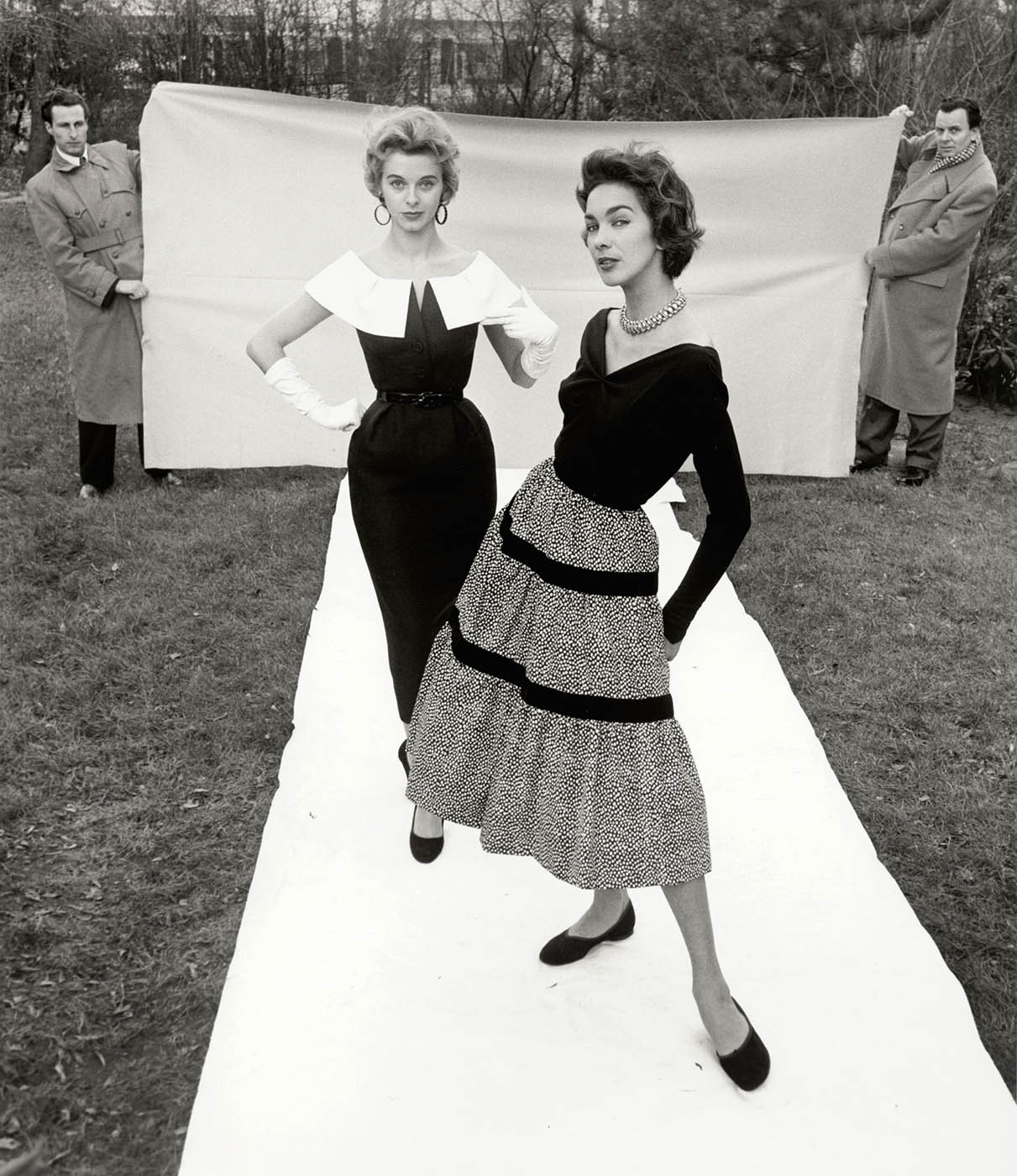
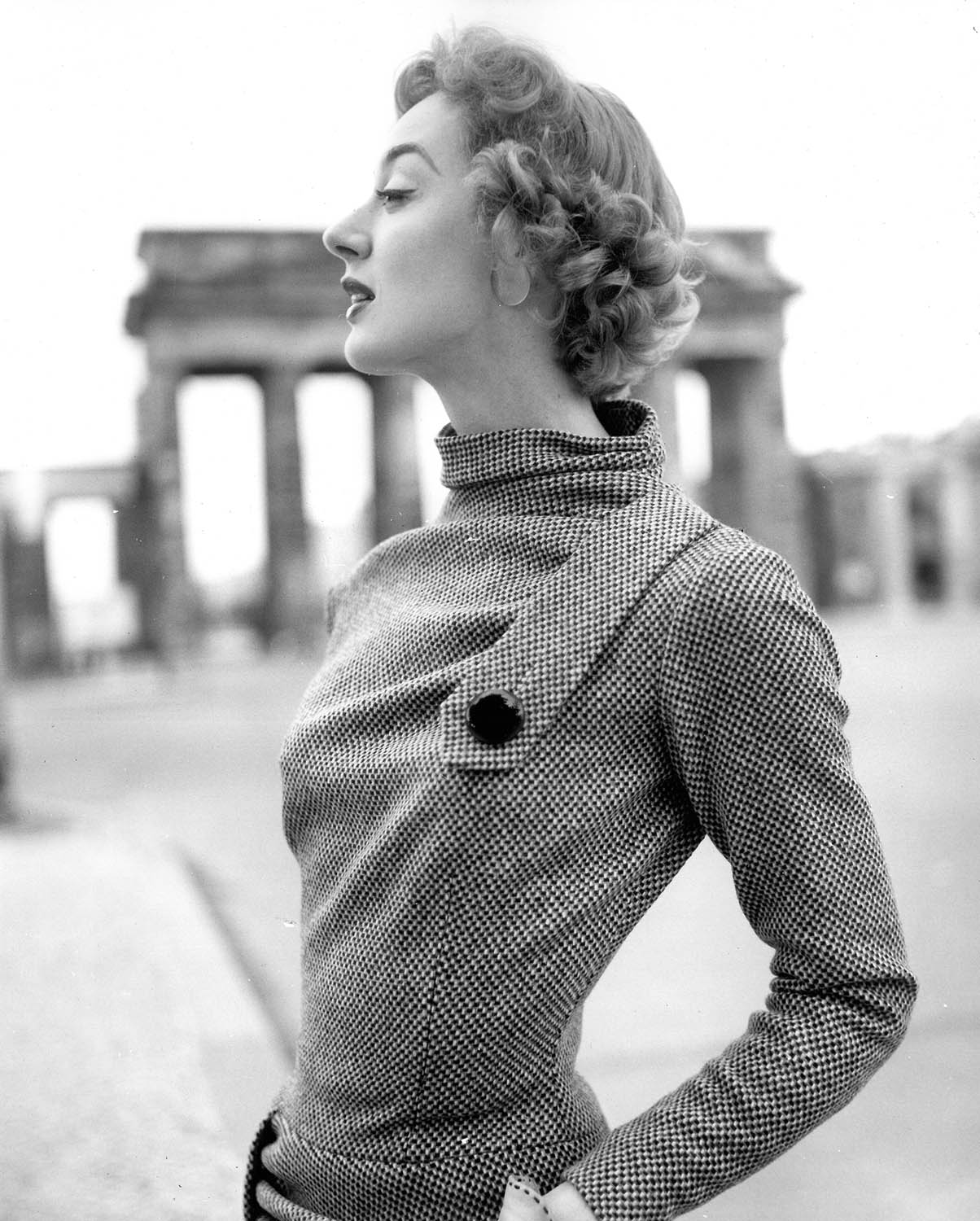
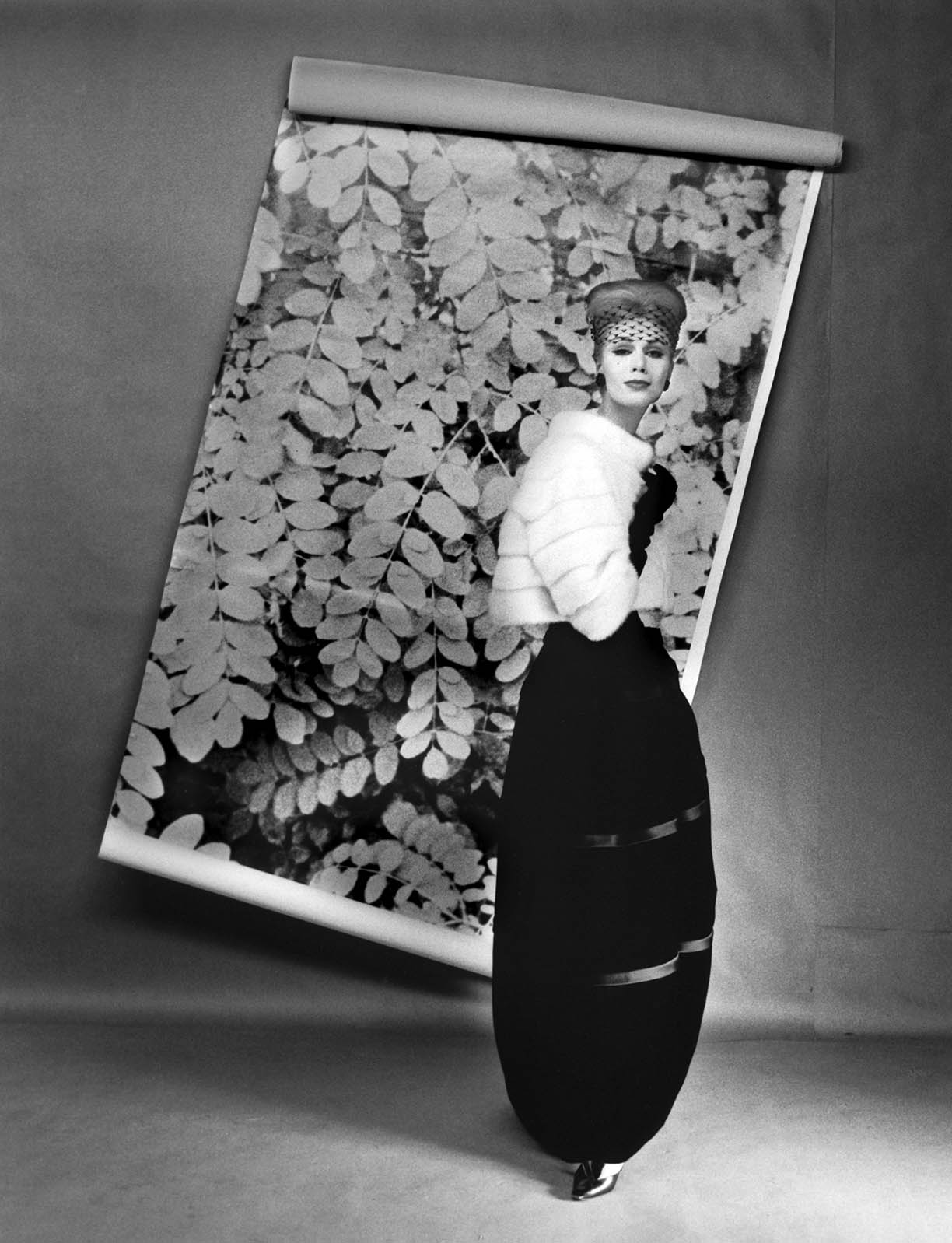
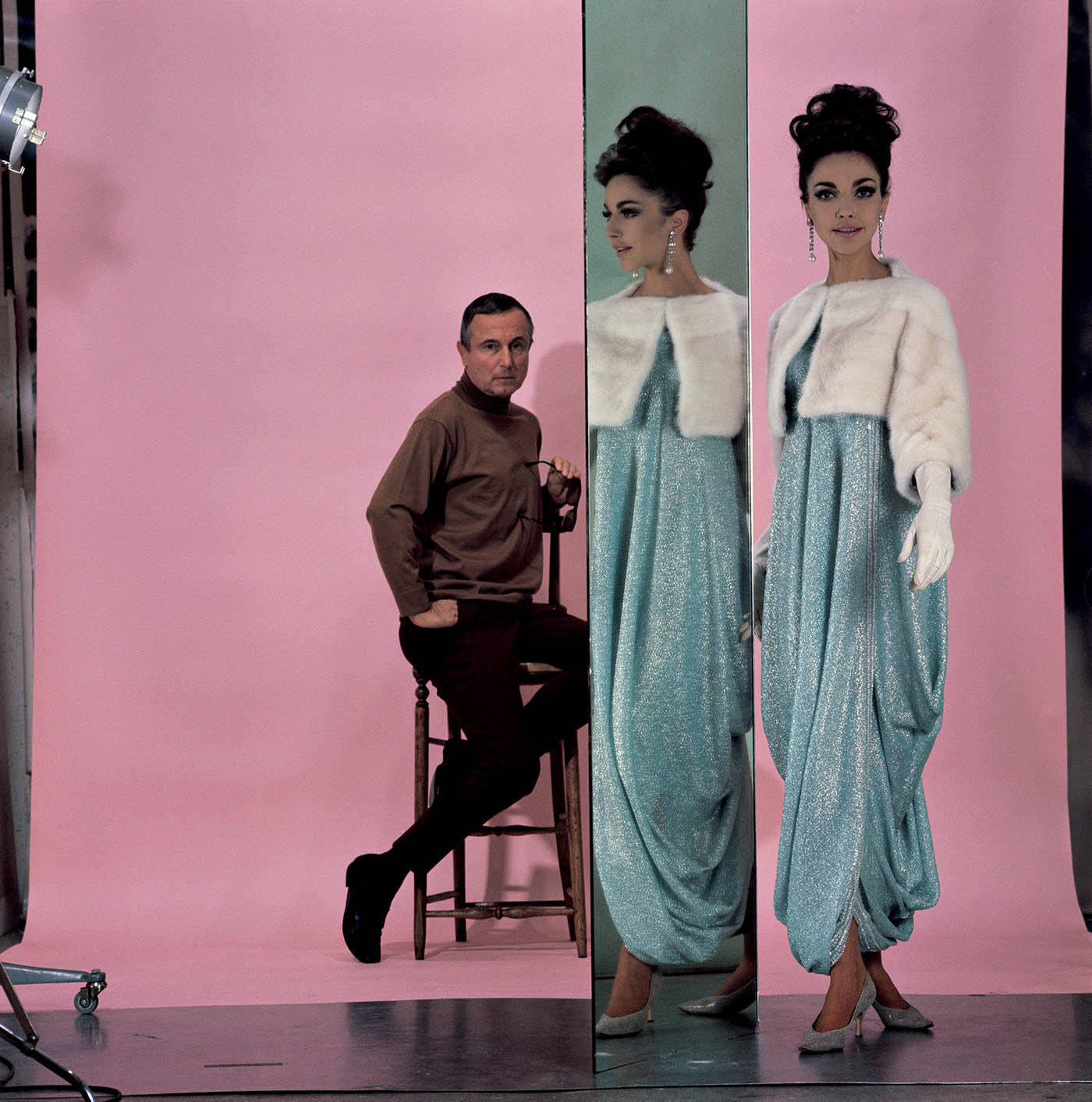
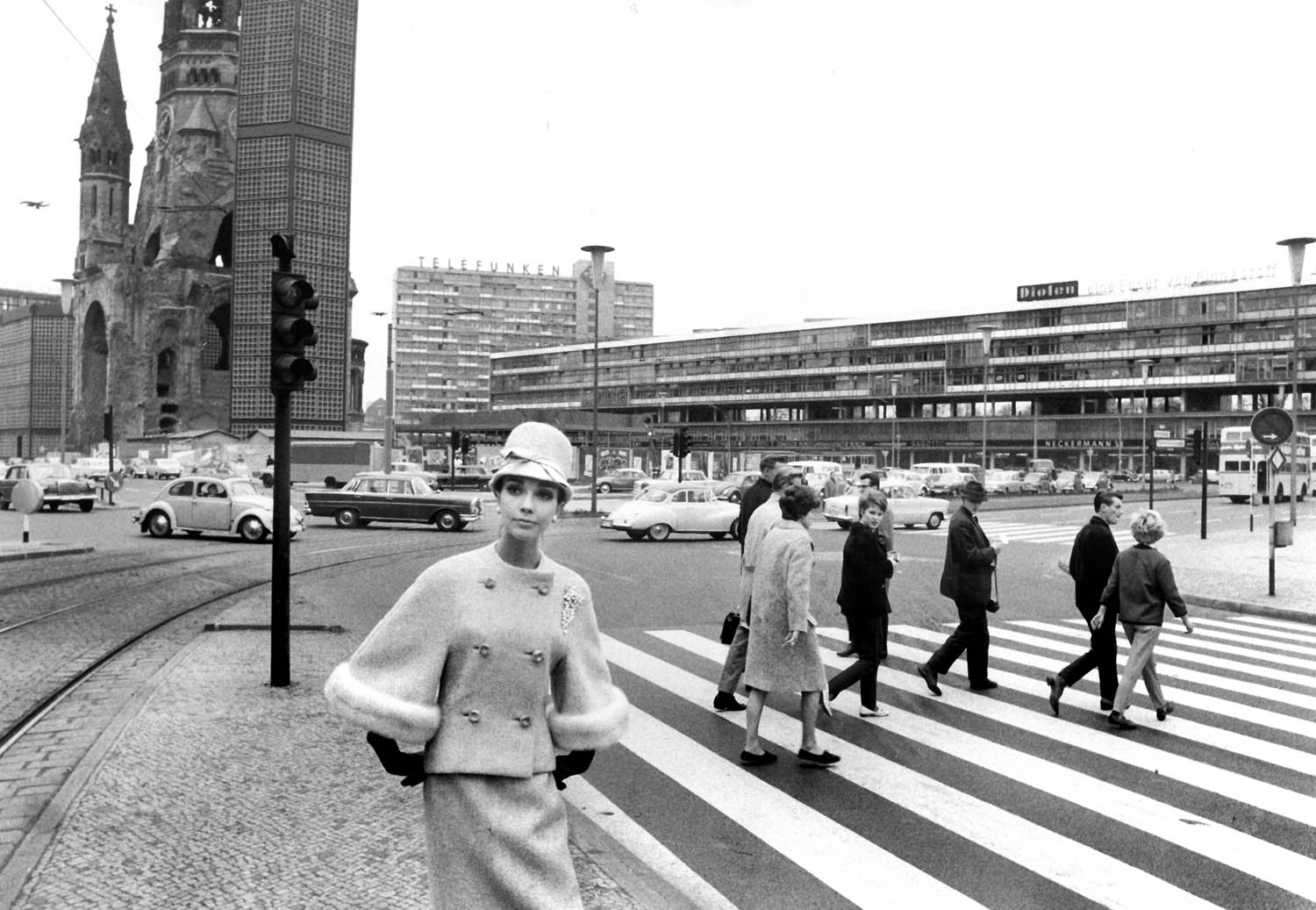
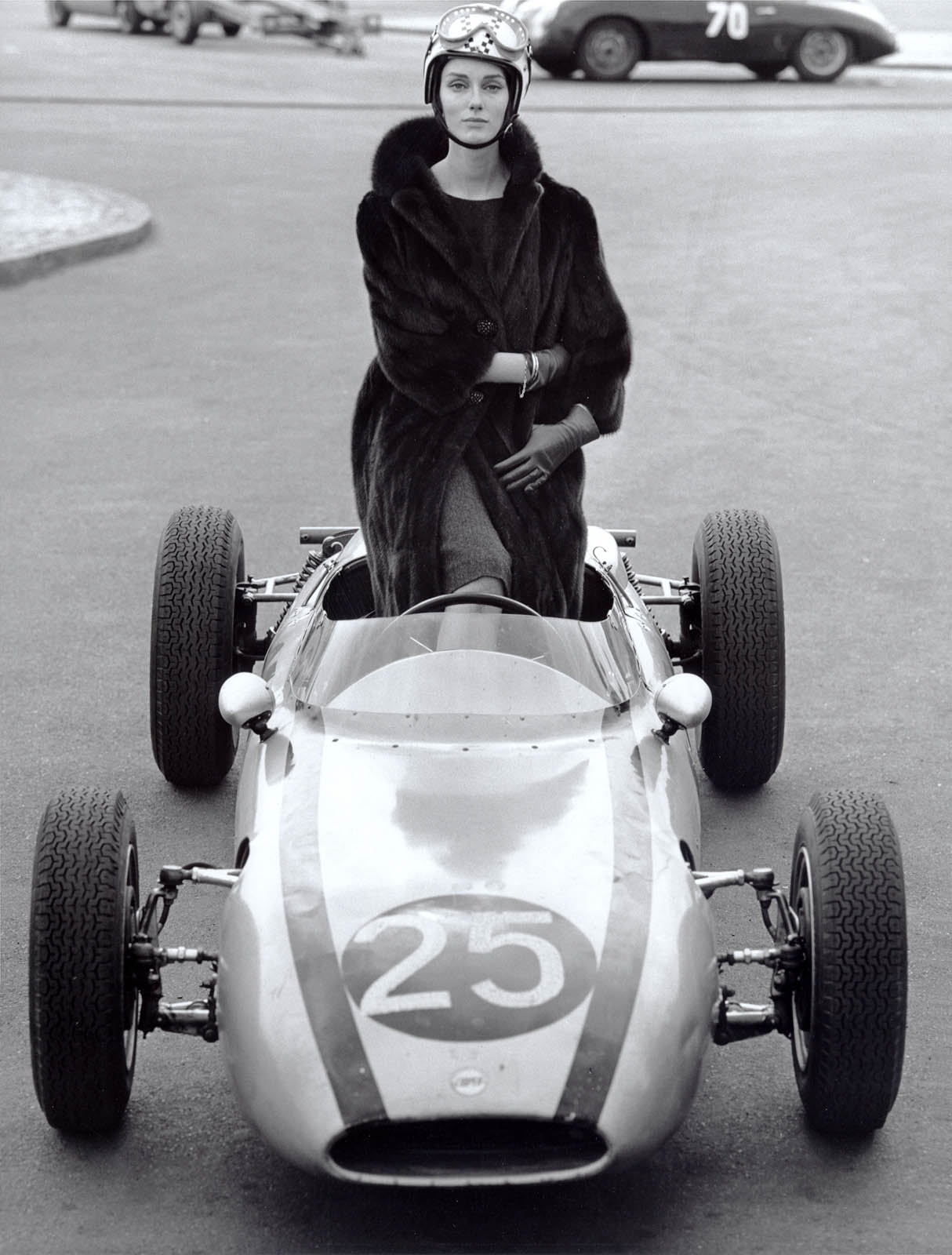
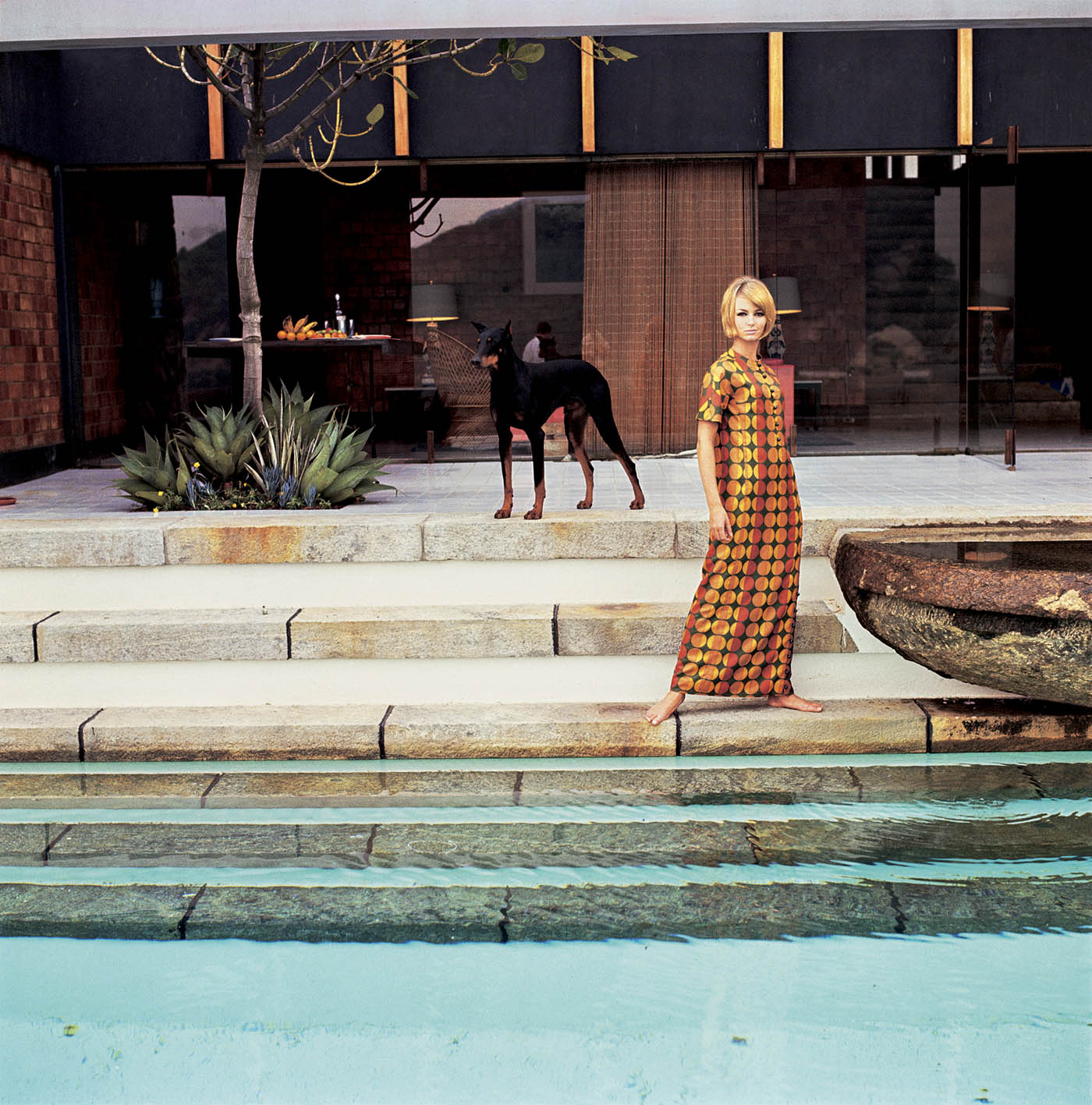
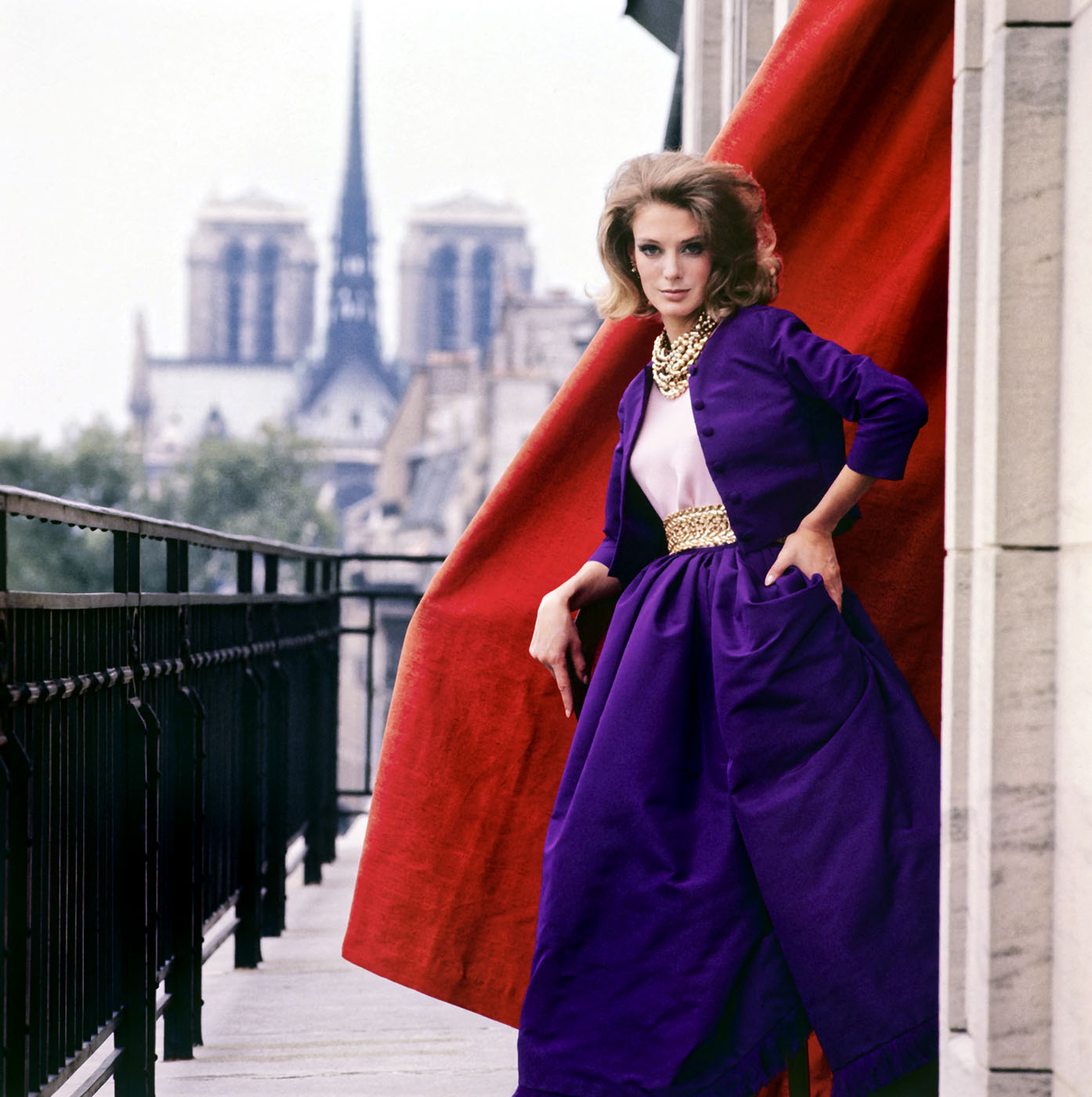
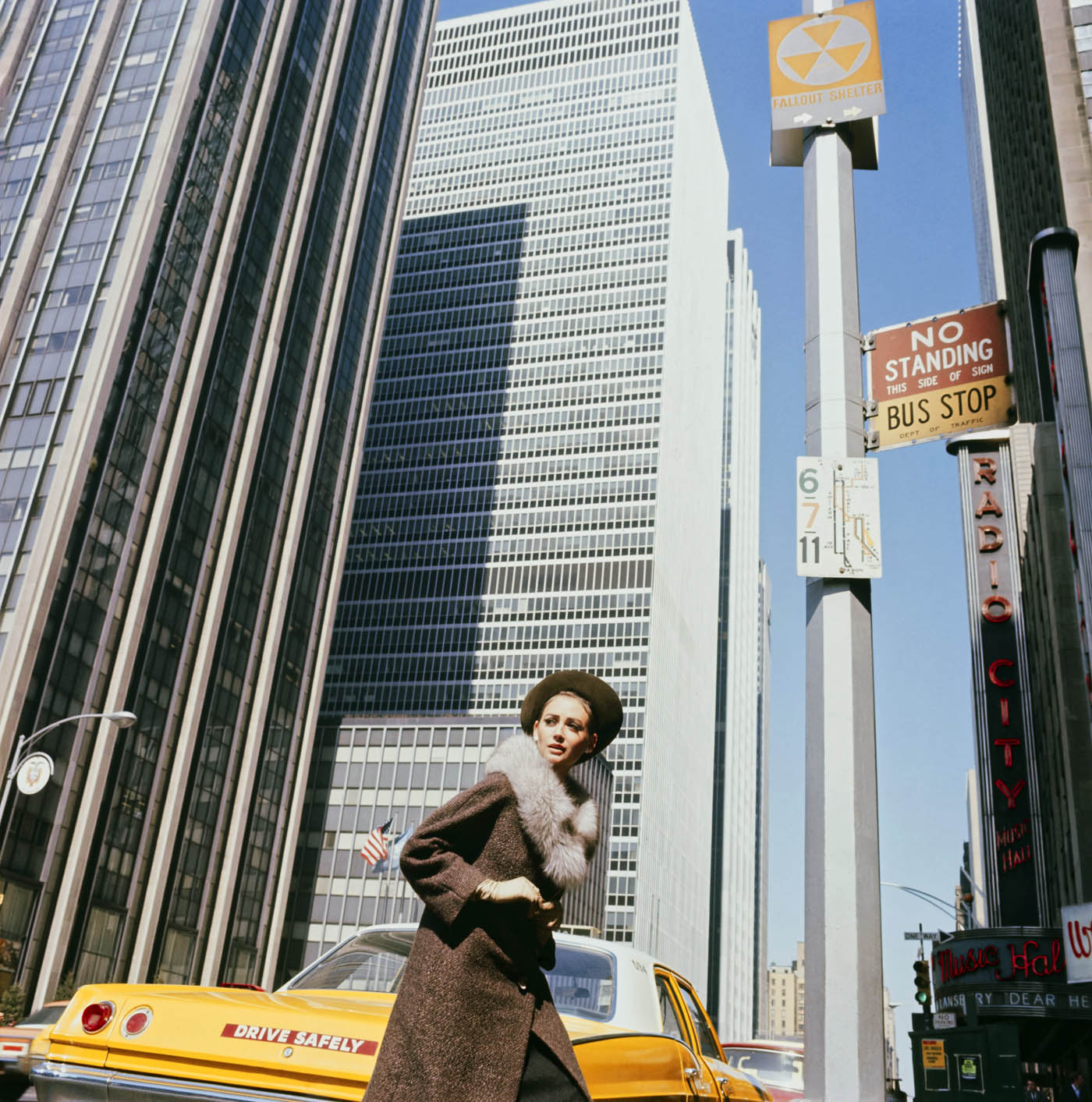
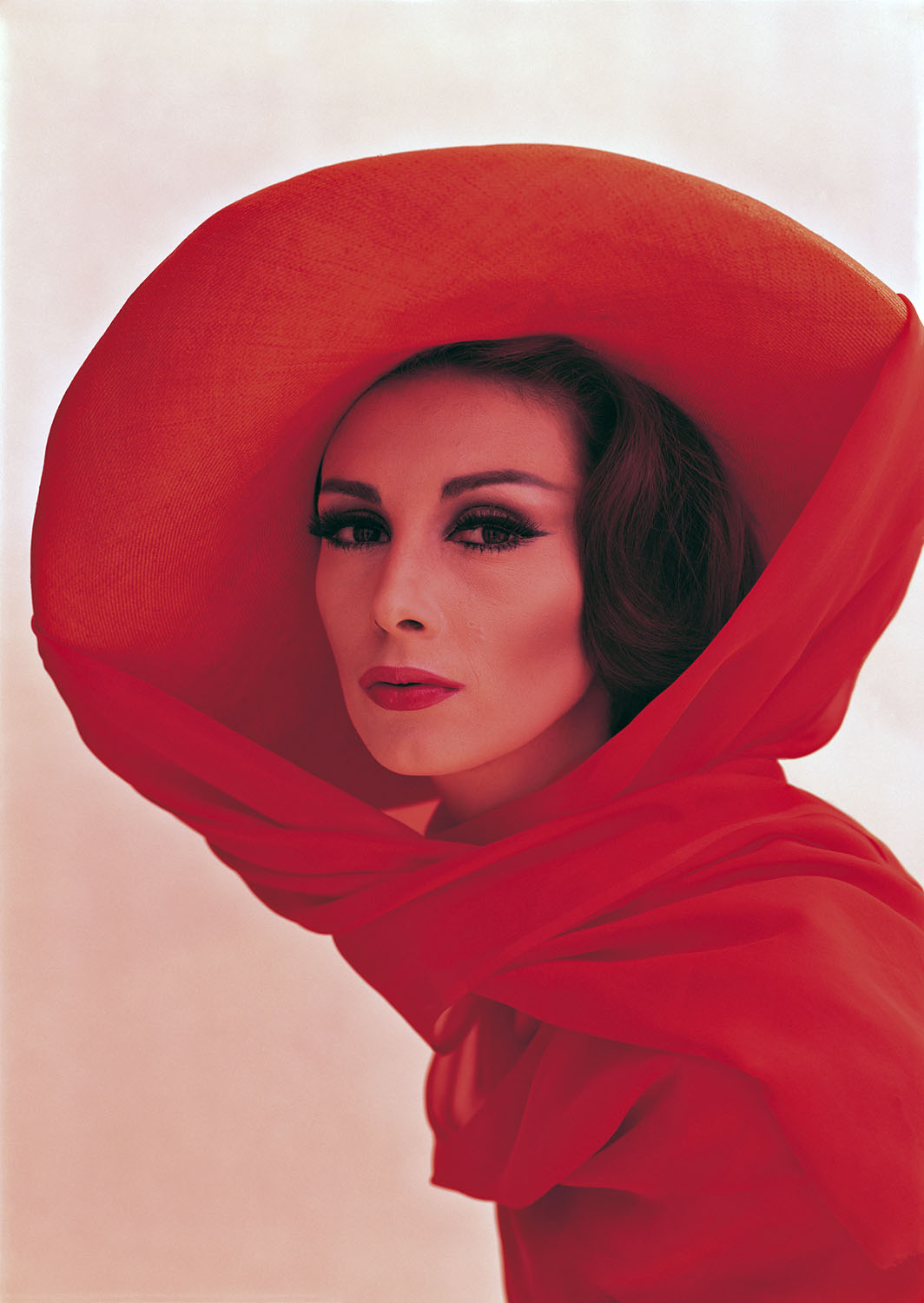
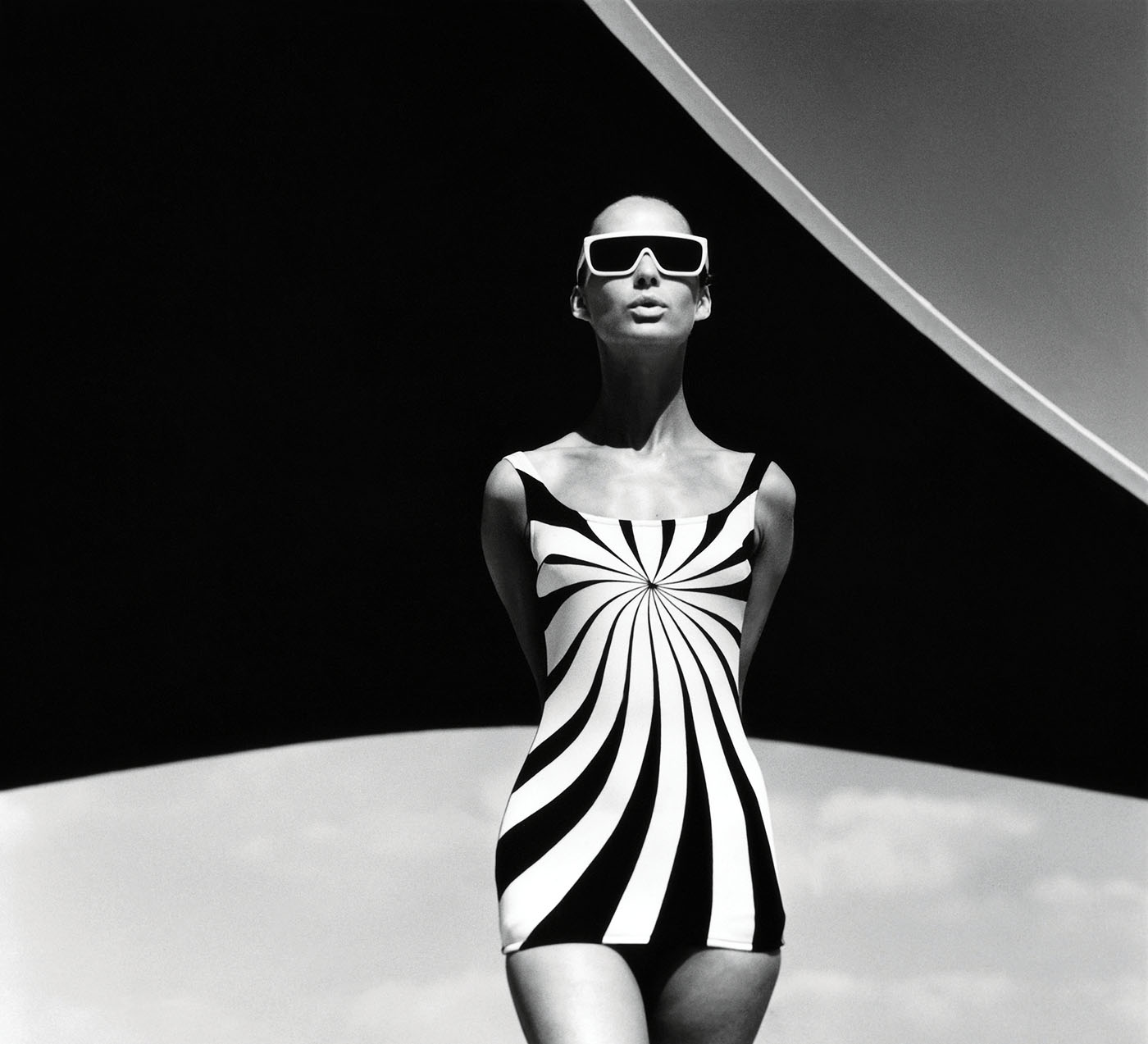
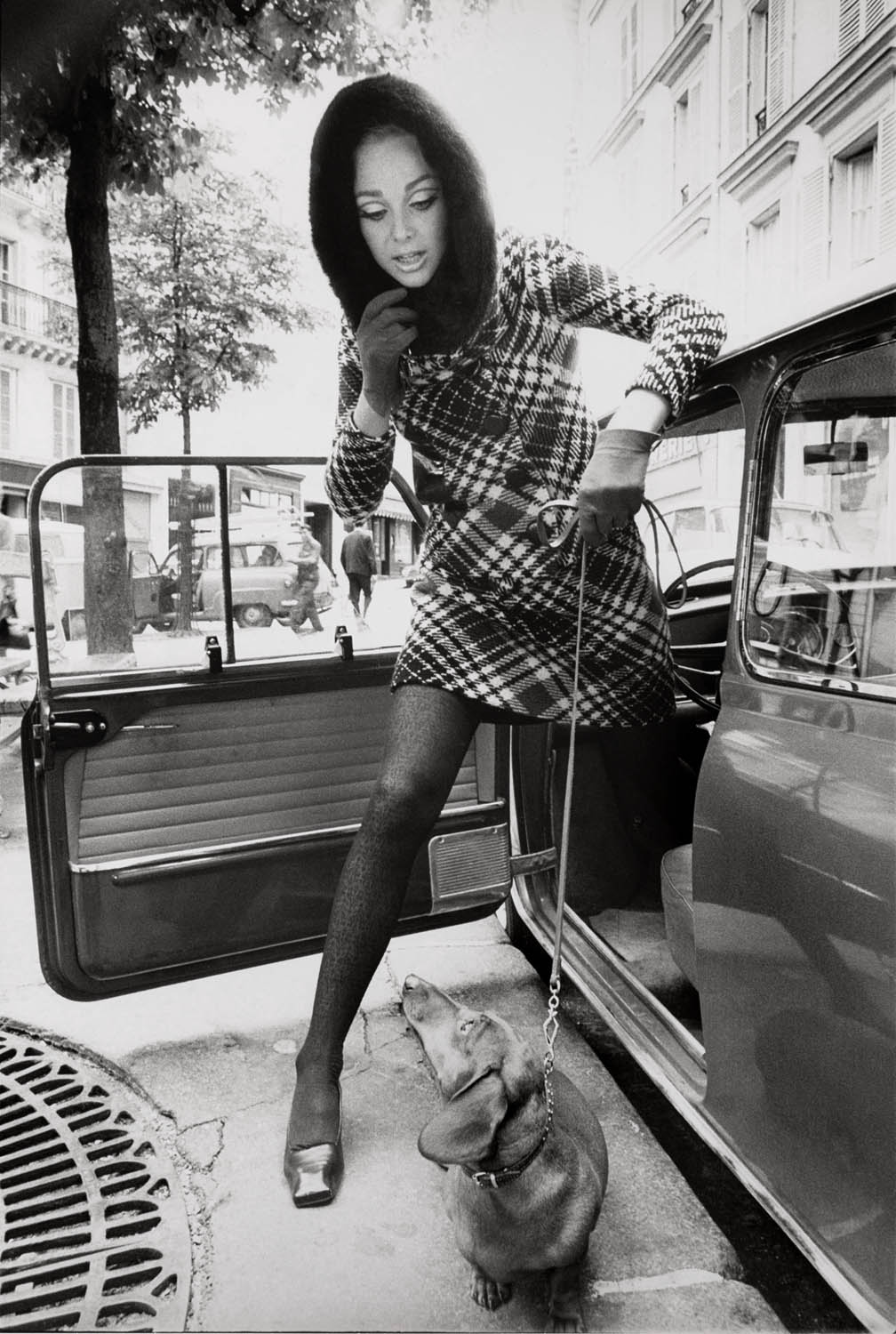
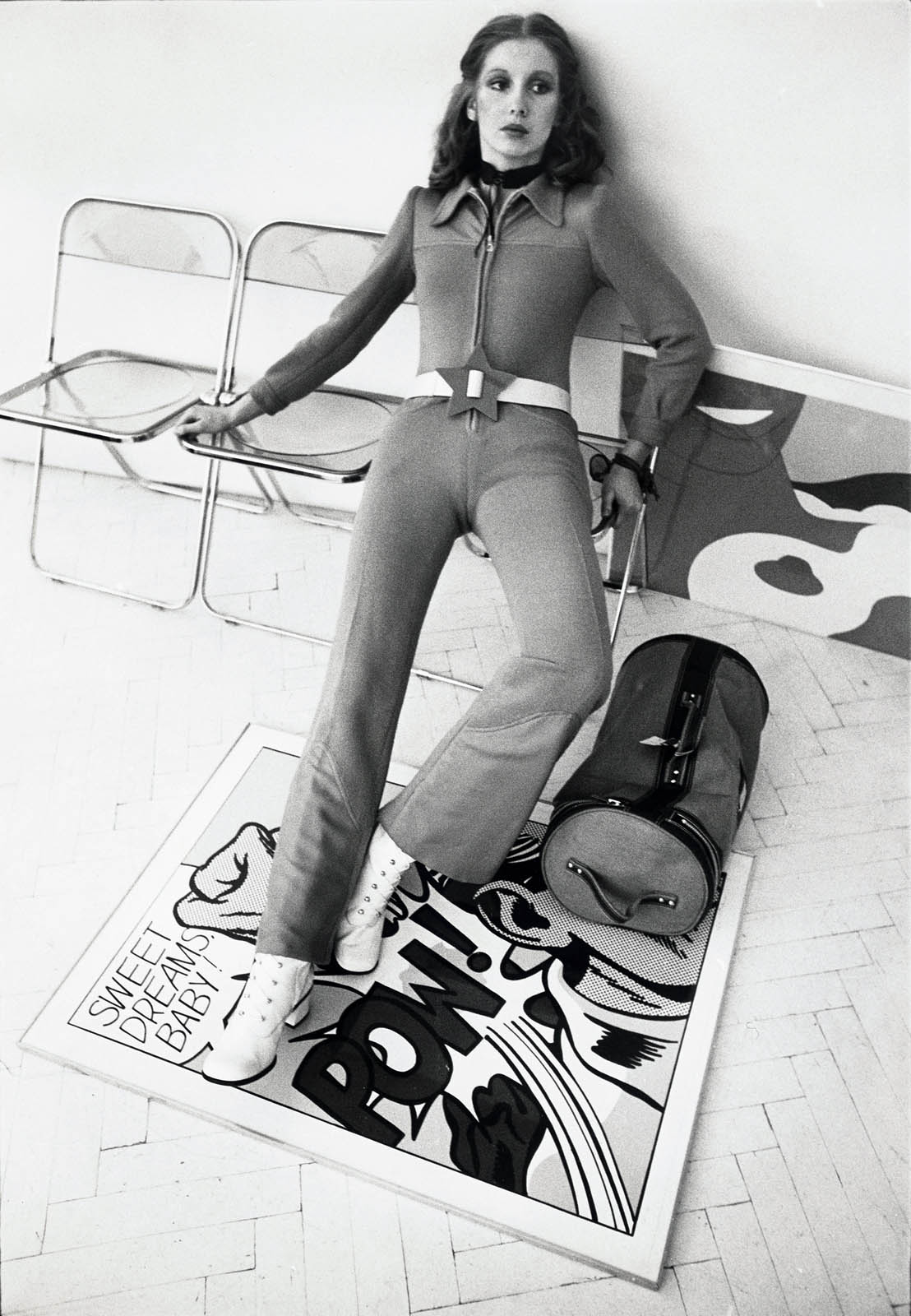
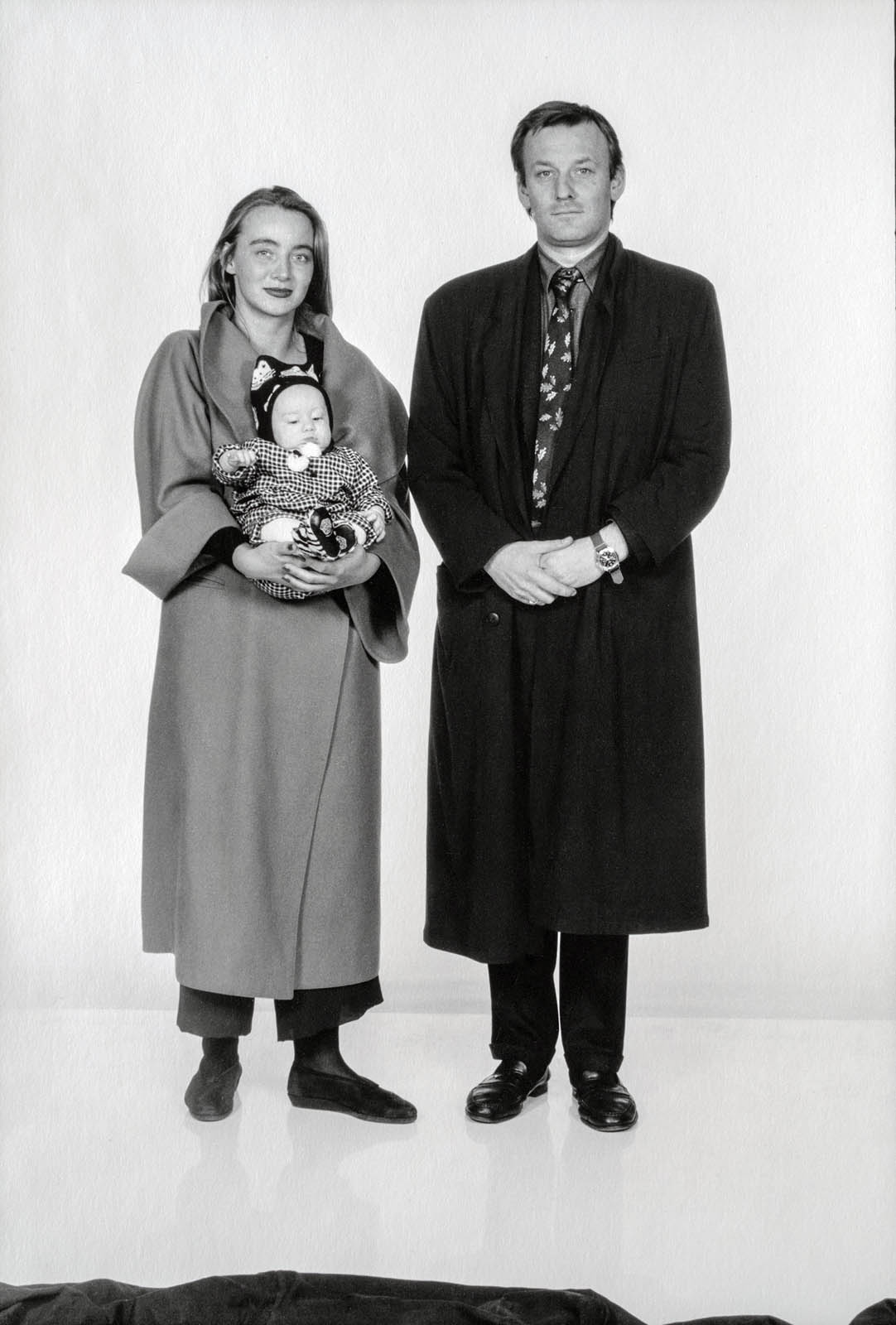
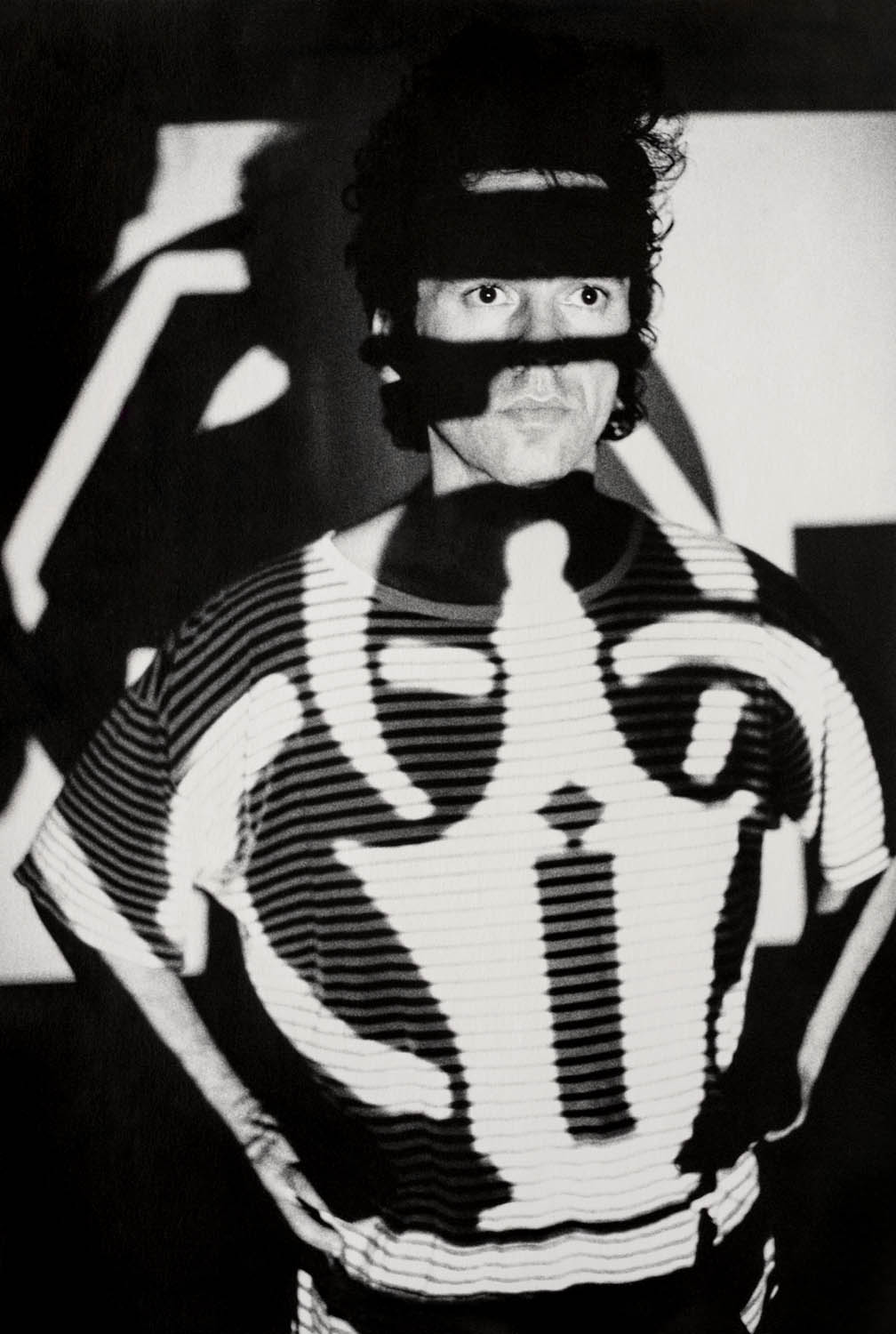
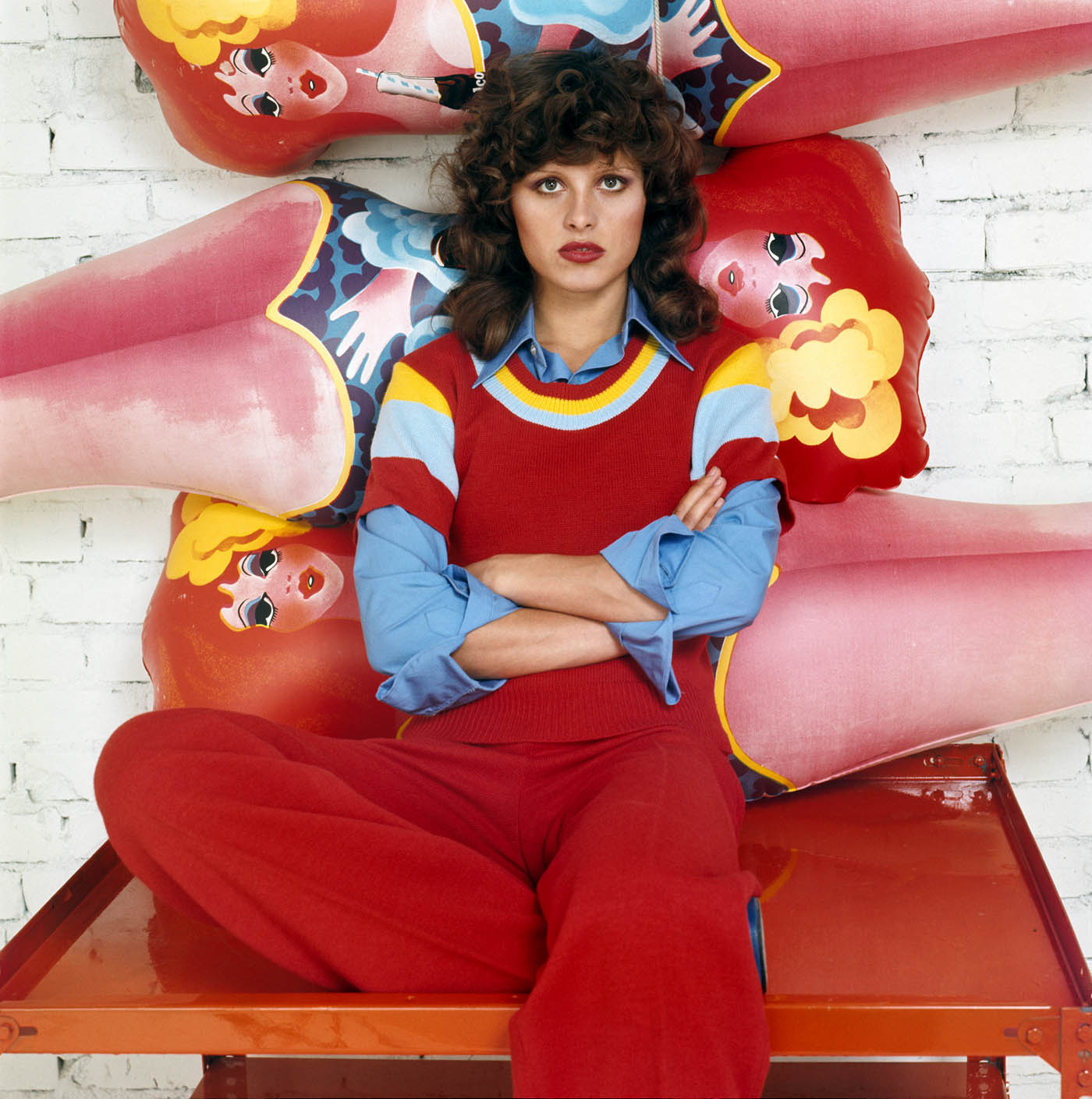
In my humble opinion F.C. Gundlach is one of the greatest fashion photographers that has ever lived.
Formalism, style, charisma, minimalism, eloquence, use of colour, perspective, scale and pattern, inventiveness, beauty, presence.
While other fashion photographers over egg the solution, Gundlach is pure class. Magnificent!
Dr Marcus Bunyan
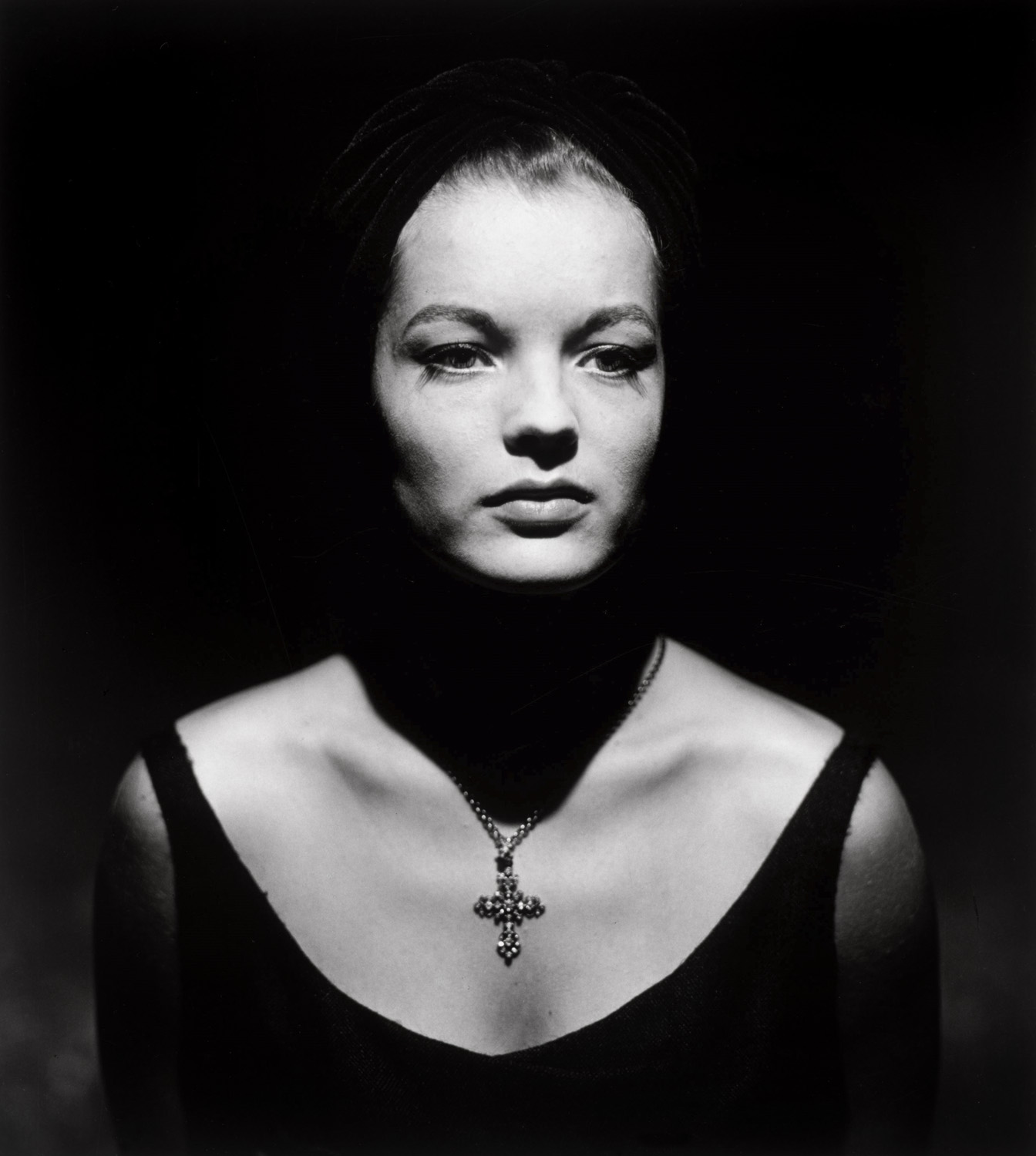
PS. A glorious portrait of a most beautiful woman, the actress Romy Schneider (see exhibitions A, B and C). Gundlach’s portrait Romy Schneider mit Kreuz (Romy Schneider with Cross) (1961, below) is the epitome of style and beauty … low depth of field, top lit, so that the neck disappears in shadow and the face floats in a sea of black, the light highlighting décolletage, smoothness of skin, cross, and the cut and sweep of the gown. Perfect.
Many thankx to Bucerius Kunst Forum for allowing me to publish the photographs in the posting. Please click on the photographs for a larger version of the image.
“A good fashion photographer must live in his time, must anticipate trends.”
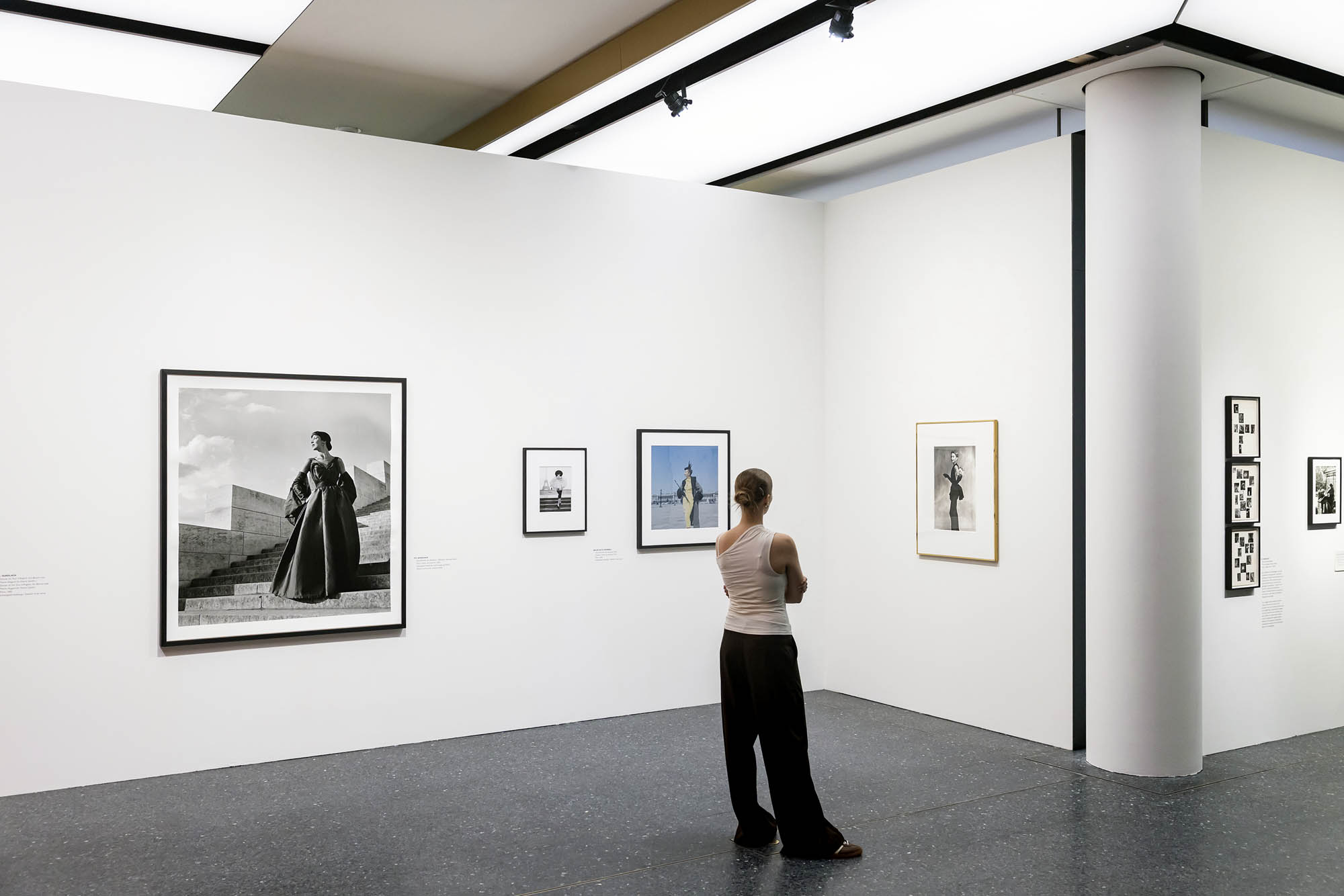
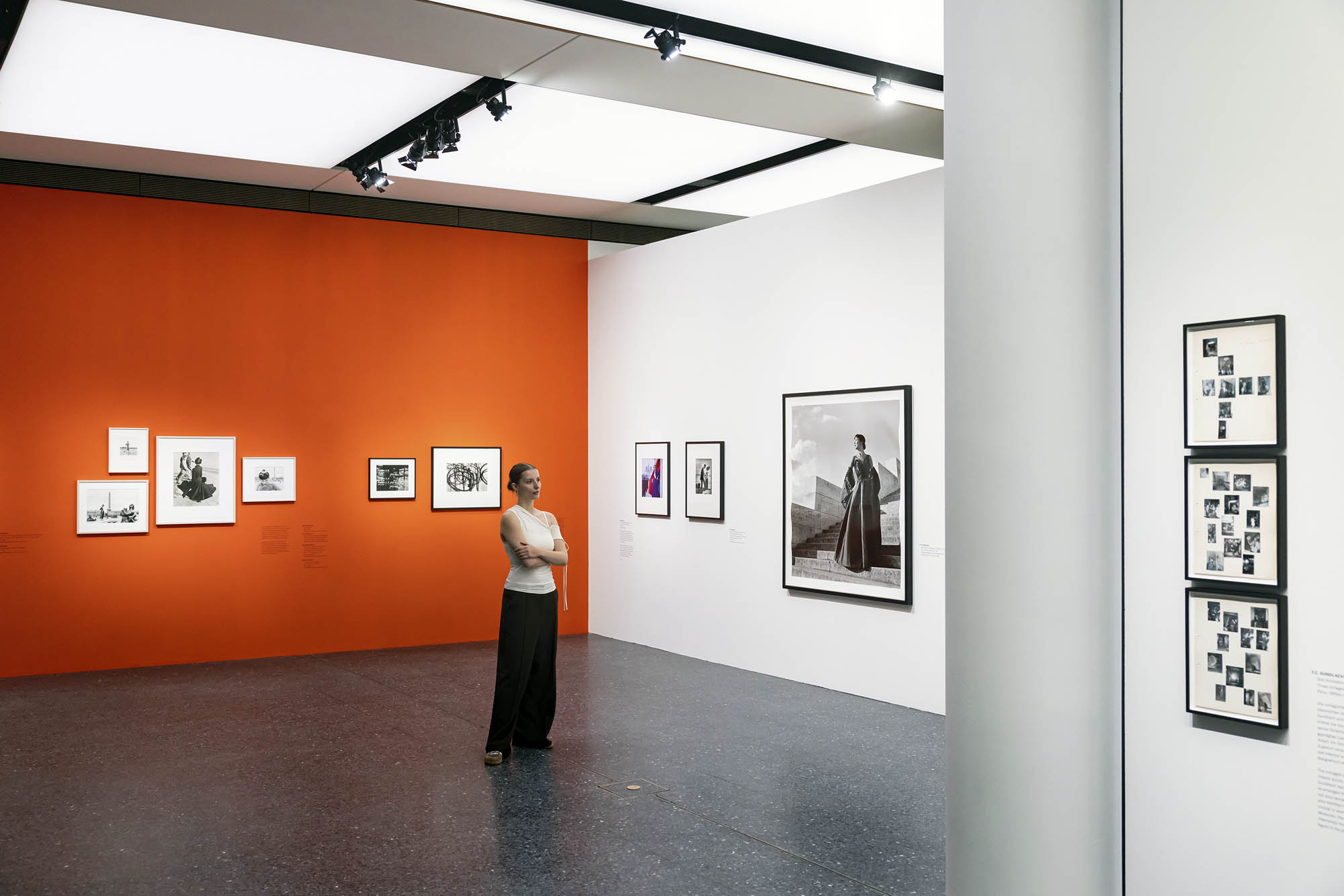
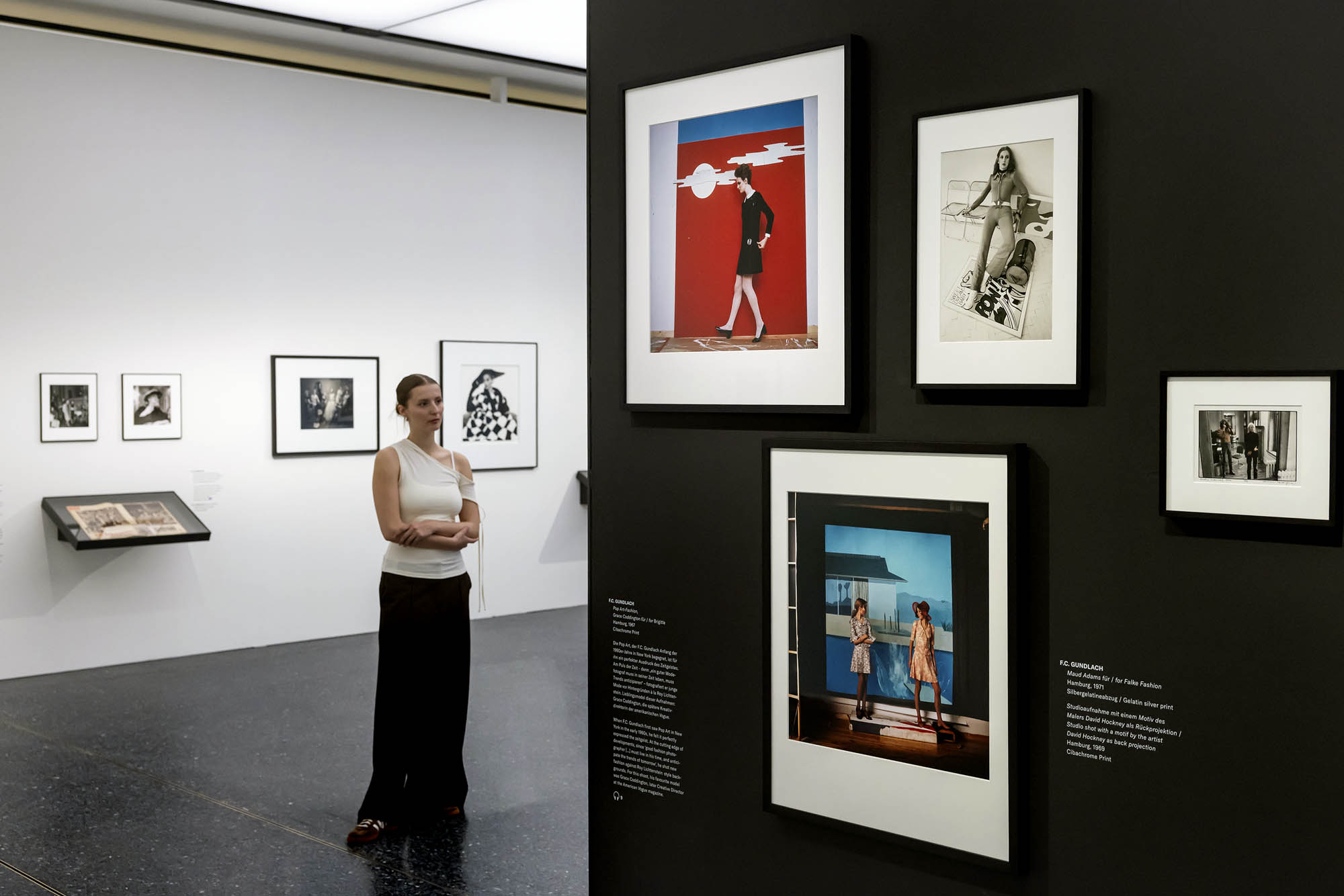
From 8 May to 16 August 2026, you can explore over 200 exhibits – ranging from iconic magazine covers and unpublished black-and-white as well as colour shots to works by Gundlach’s role models, contemporaries and successors such as Richard Avedon, Erwin Blumenfeld, Regina Relang, Cindy Sherman and many others. In conversation with Gundlach’s own images, these pieces equally expose the love for the medium, mutual influences, societal discourses, and power dynamics. The exhibition is the first major presentation of Gundlach’s oeuvre since his death in 2021 and simultaneously celebrates his 100th birthday with special loans from the F.C. Gundlach Foundation.
As a fashion photographer from the 1950s onward, F.C. Gundlach helped shape the image of fashion and the related notions of trends, identity, and gender in both German and international magazines. At the same time, he forged creative networks between Paris, New York, and Tokyo. The exhibition demonstrates how Gundlach was constantly inspired to experiment with new stylistic forms, his curiosity about the global photographic discourse which in this way, set new standards for the visual culture of his era. Whether in Düsseldorf, Hamburg, or Berlin, his role as gallery owner, laboratory proprietor, and collector – as well as his commitment to supporting the emerging photography scene and nurturing new talents – was crucial in establishing a vibrant photographic culture that continues to resonate today. By presenting Gundlach’s multifaceted oeuvre, the show traces both the continuities and the ruptures in his personal trajectory and the broader photocultural developments of his time.
Alongside his celebrated, iconic photographs, the exhibition features previously unpublished fashion series, experimental works and recent discoveries from Gundlach’s own archive and that of his contemporaries. It reveals how deeply photography is interwoven with cultural and social developments and highlights the pioneering influence of Gundlach’s vision on today’s visual culture. By spotlighting defining phases of his life, the show offers fresh perspectives on his artistic legacy and on the emergence of the 20th-century photo-cultural scene.
The exhibition is organised by Bucerius Kunst Forum in collaboration with Stiftung F.C. Gundlach.
Text from the Bucerius Kunst Forum website
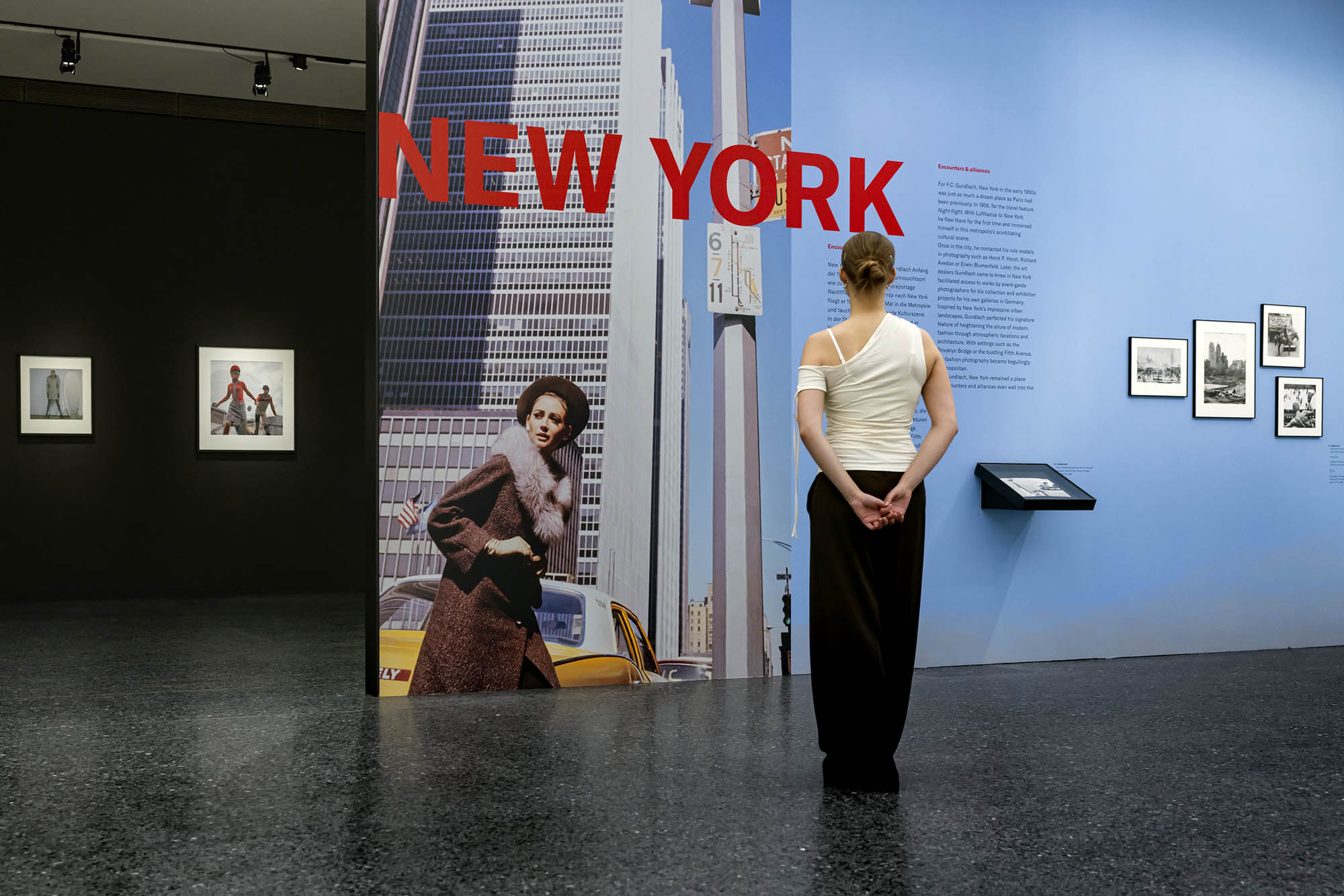
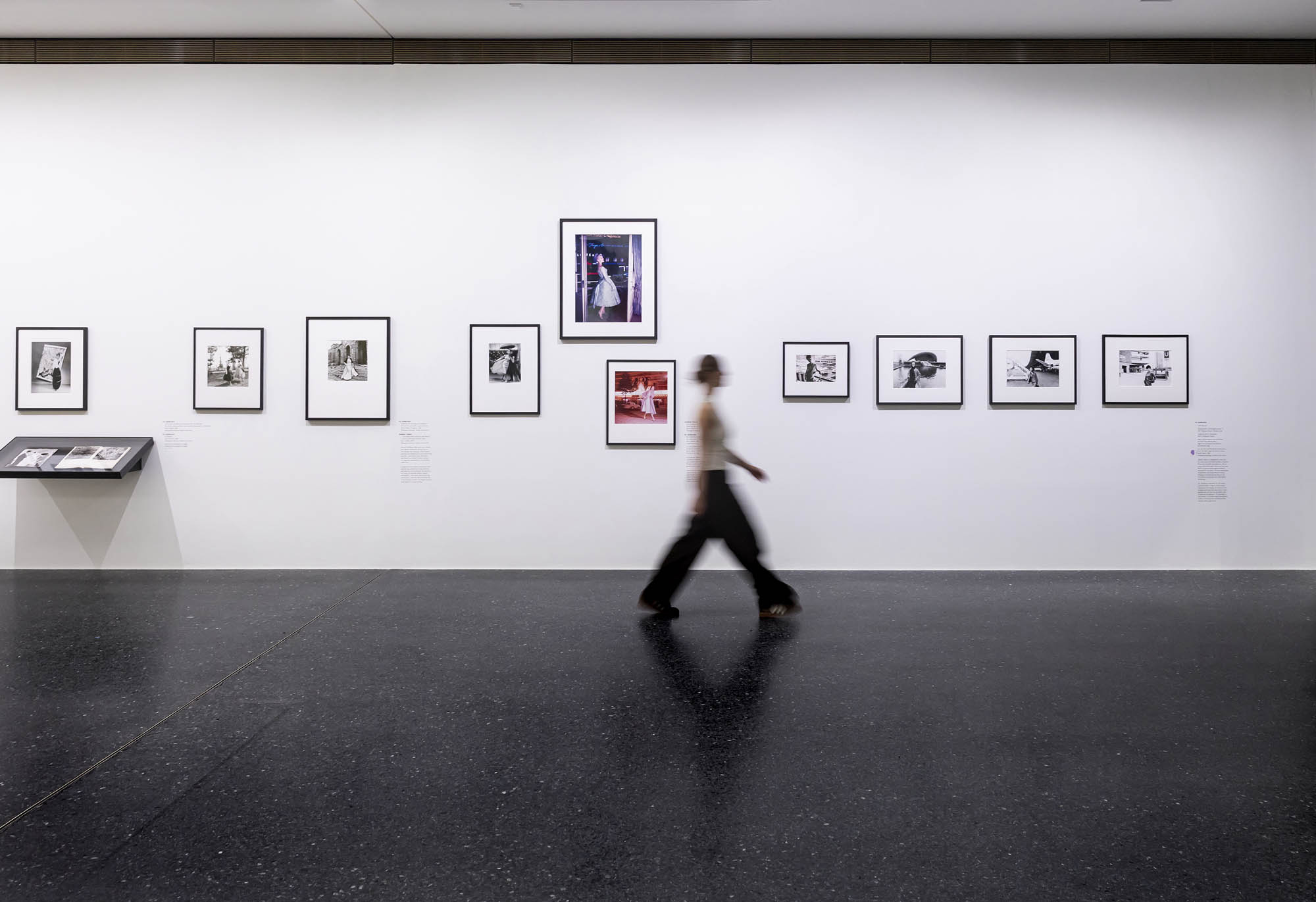
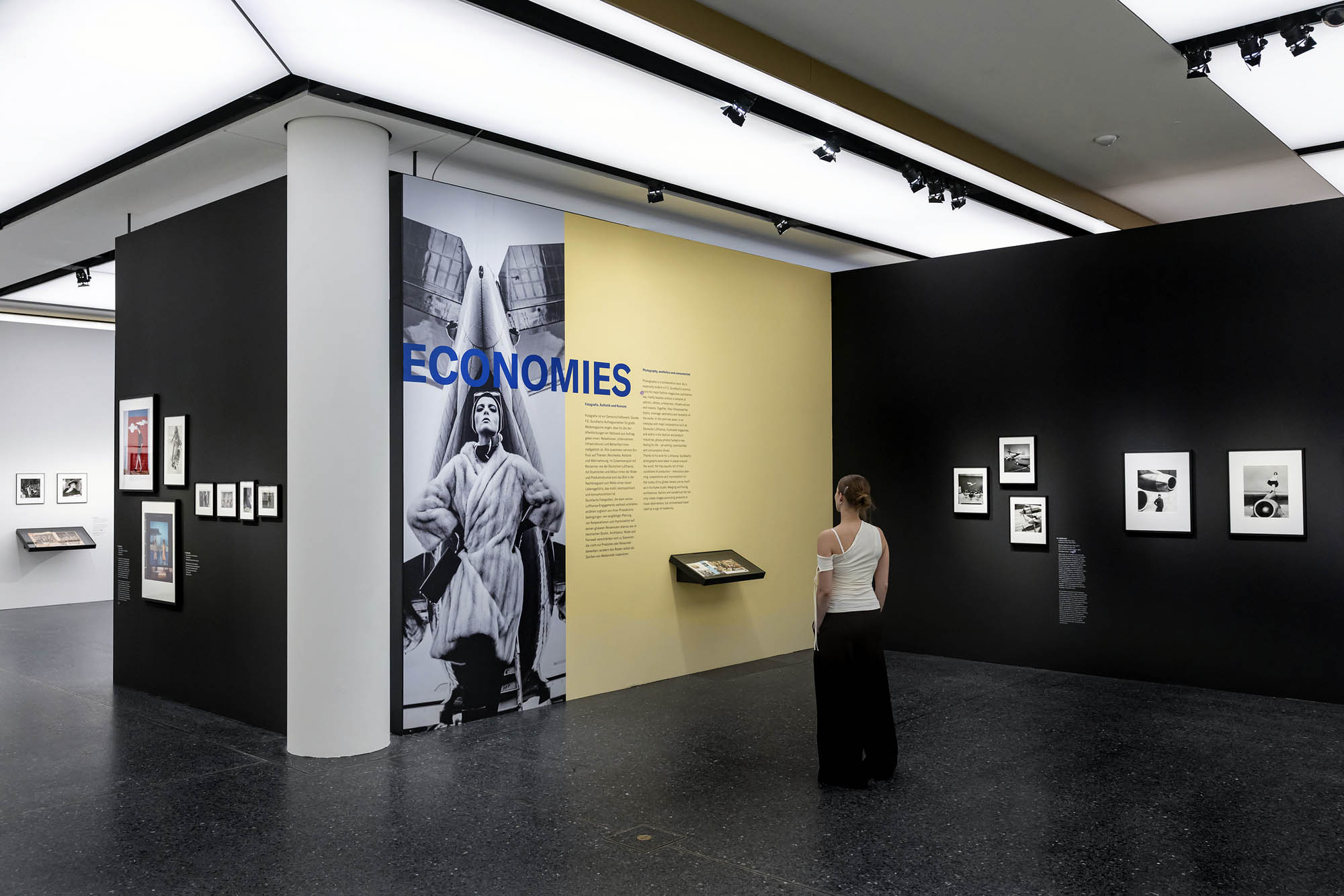
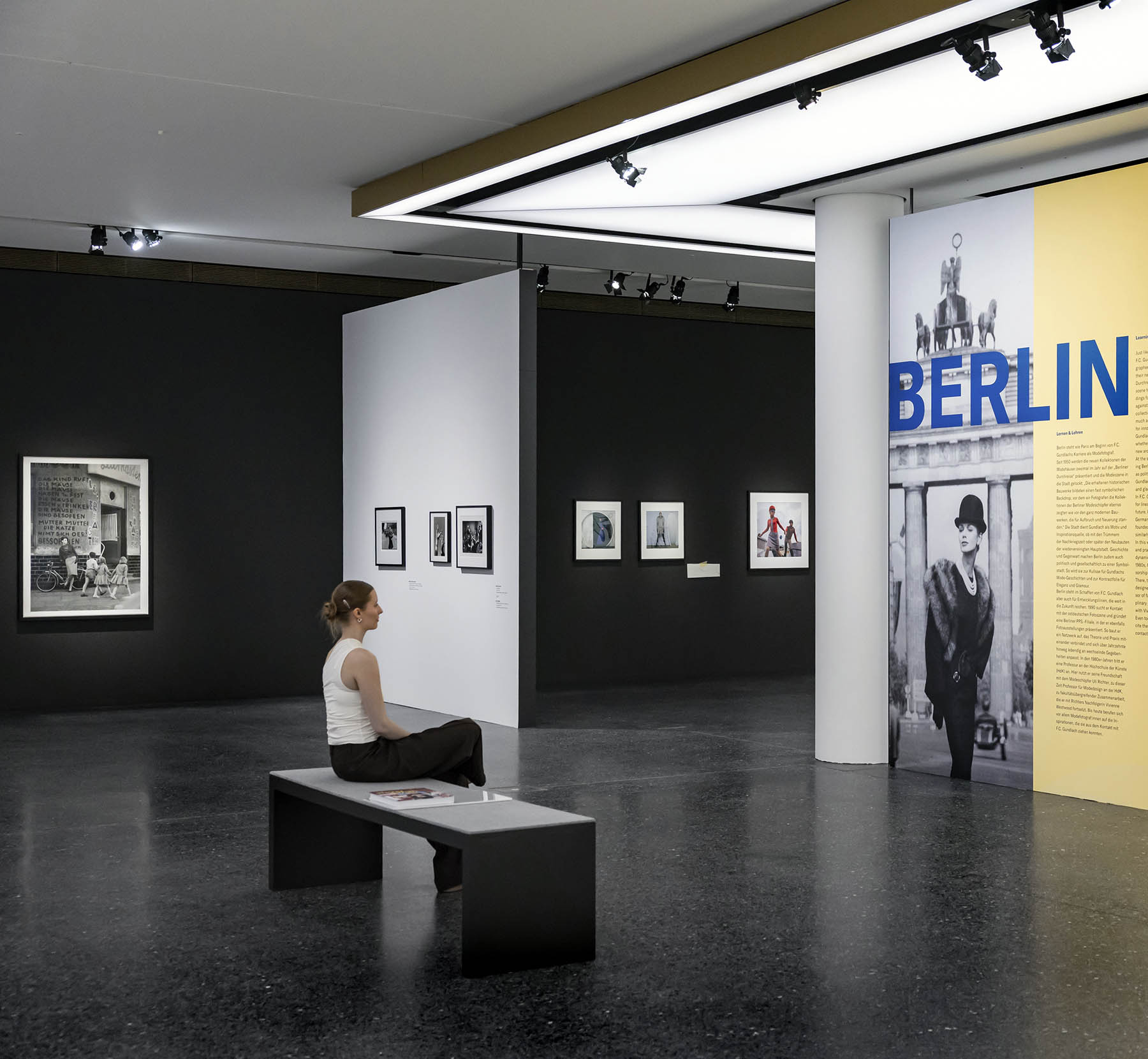
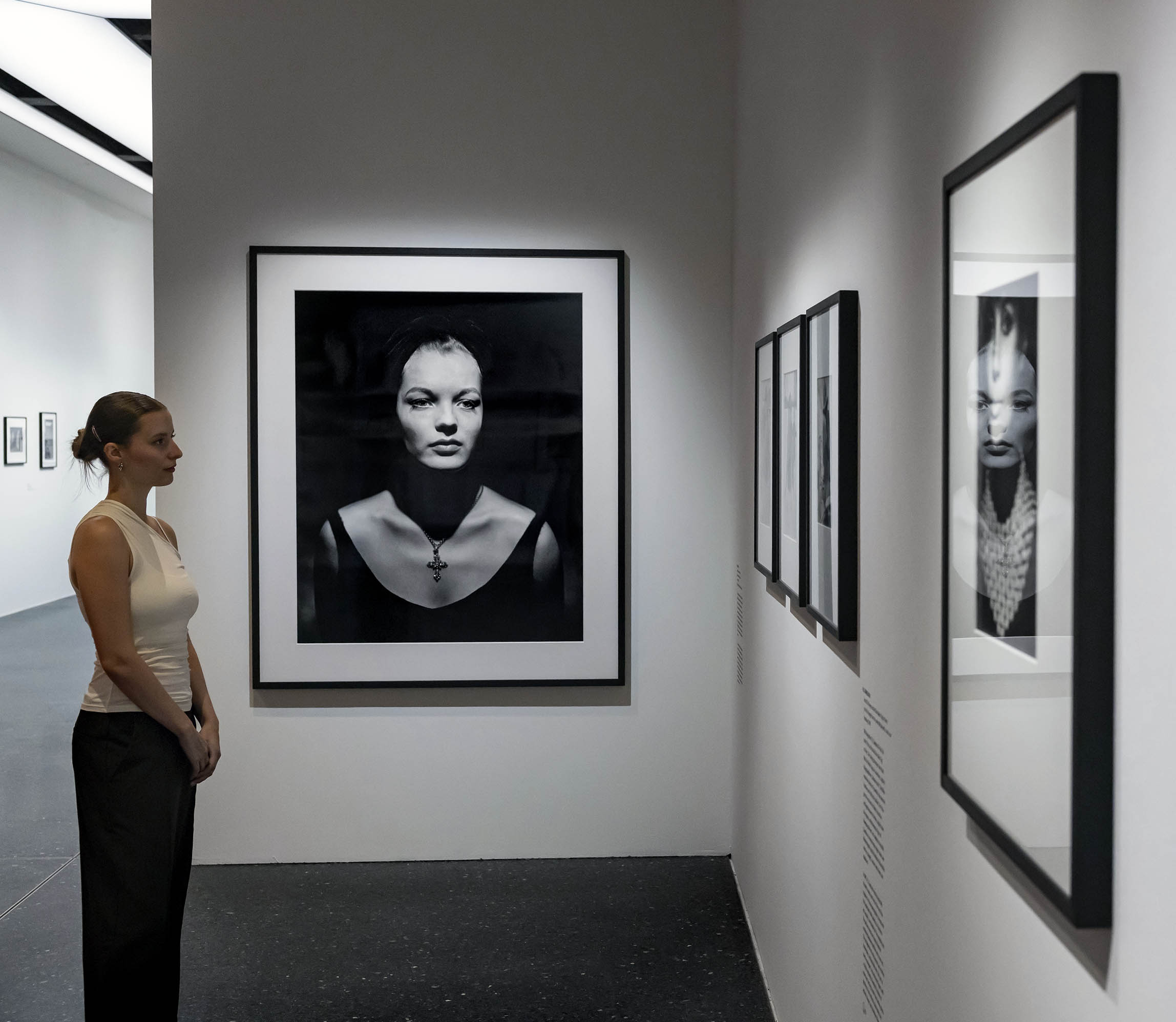
Installation view of the exhibition F.C. Gundlach. You’ll Never Watch Alone at Bucerius Kunst Forum, Hamburg, May – August, 2026 showing at left in the bottom image, Gundlach’s portrait Romy Schneider mit Kreuz (Romy Schneider with Cross) (1961, below) Photos: Ulrich Perrey
F.C. Gundlach. You’ll Never Watch Alone focuses on the impact of F.C. Gundlach (1926-2021) as a photographer, gallery owner, collector, entrepreneur and networker. The exhibition showcases his iconic colour photographs as well as unpublished black-and-white and colour shots, and works by his role models, contemporaries and successors. The exhibition is staged to mark the 100th anniversary of F.C. Gundlach’s birth as part of the 9th Triennial of Photography Hamburg 2026.
F.C. Gundlach became renowned for fashion photography taken around the globe. An influential photographer and leading figure in a fashion, art and culture network, he was closely involved in the production and reception of German fashion magazines. His many cover images not only shaped how fashion was staged and presented, but also the related social concepts of gender and identity.
Taking Gundlach’s work as a starting point, the exhibition investigates photography’s emergence as a visual culture, its associated milieu since the 1950s, and its impact on social trends and movements. As the show’s title implies, photography does not exist in a vacuum. Gundlach’s cooperations with others stretched from Paris to New York and Tokyo, connecting publishing, the photography industry, the gallery scene, and the museum world. They crucially shaped his ideas as a photographer, collector and supporter of this medium. His personal contacts constantly inspired him to experiment with new stylistic forms and, in this way, set new standards for others. His activities as a collector were similarly marked by the same curiosity and openness.
In showcasing Gundlach’s multifaceted oeuvre, the exhibition explores biographical continuities and fractures as well as photography’s social development as a visual medium. For instance, as a gallery and laboratory owner and a teacher in Hamburg and Berlin, Gundlach’s promotion of this medium lent a new visibility to new talents just as much as the discourse of photography itself. The exhibition seeks to locate F.C. Gundlach’s oeuvre in a comprehensive context and highlight his importance in developing photography in the contested space of commissioned works, art and technology.
Through his diverse activities, trips and dialogues with other actors in the field of photography, Gundlach decisively influenced the visual culture of his day. In turn, he was also shaped by social movements, political decisions and trends. In addressing such reciprocity, the exhibition not only examines photography’s inherent connection to cultural and social developments, but also illustrates how Gundlach’s landmark visions paved the way for decoding and understanding images in our own time.
Actively committed to Hamburg, the place he chose to live, he played a significant role in establishing a culture of photography in the city. His works and the collection, administered by the F.C.Gundlach Foundation, continue to have an impact today.
On display are 130 photographs by F.C. Gundlach and 70 works from his collection, which are placed in relation to one another, including works by Erwin Blumenfeld, Richard Avedon, Regina Relang, Cindy Sherman, and many others. The Foundation is the sole lender of works for this first major show of Gundlach’s oeuvre since his death in 2021. Although coinciding with the centenary of his birth, it is not intended as a retrospective. Instead, taking decisive stages in his life as exemplary offers new perspectives on his oeuvre and the scene around the culture of photography emerging in the 20th century. Apart from his famous, now iconic photographs, the exhibition is showing experimental works and new discoveries by Gundlach and the contemporaries influencing his artistic career.
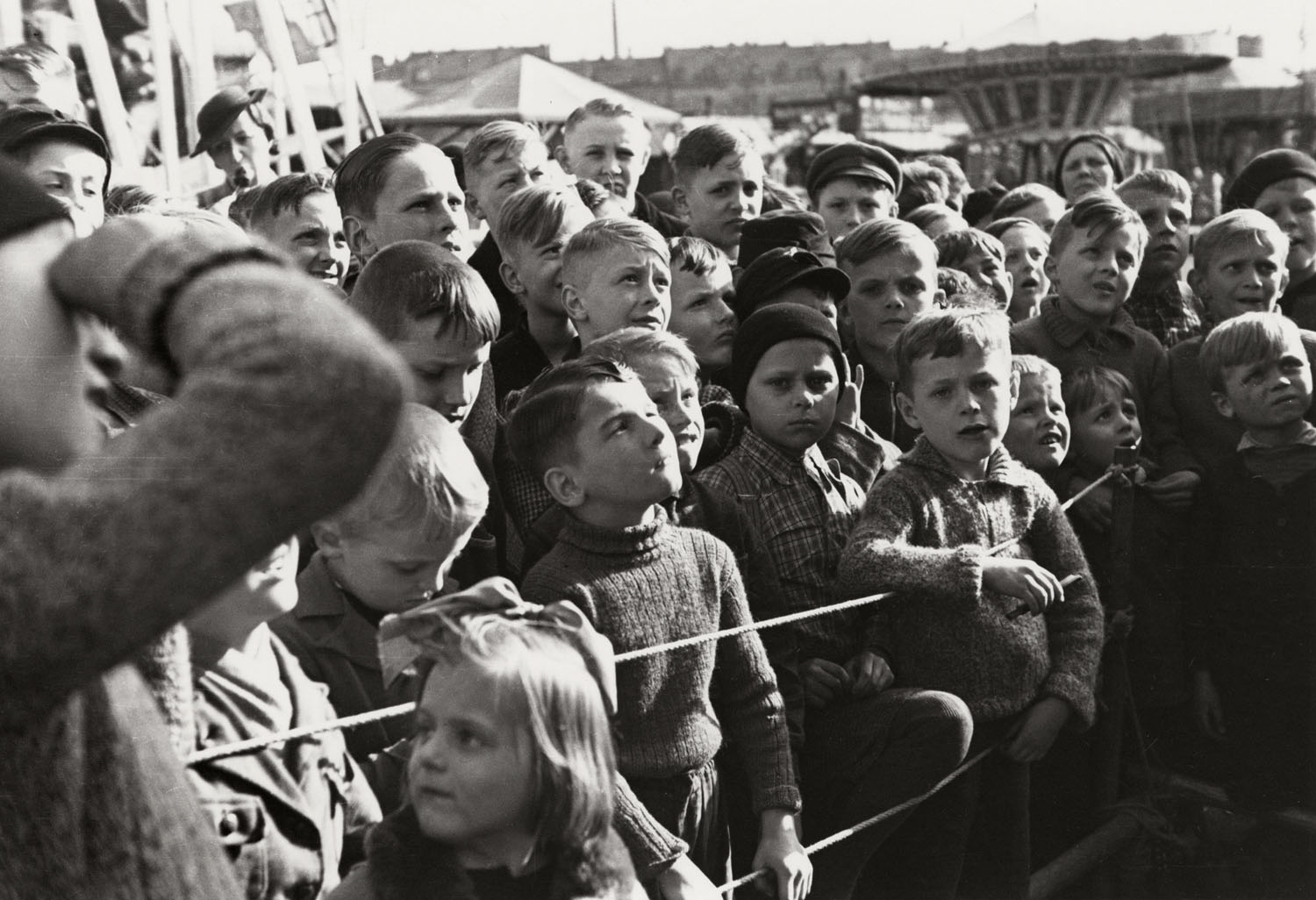
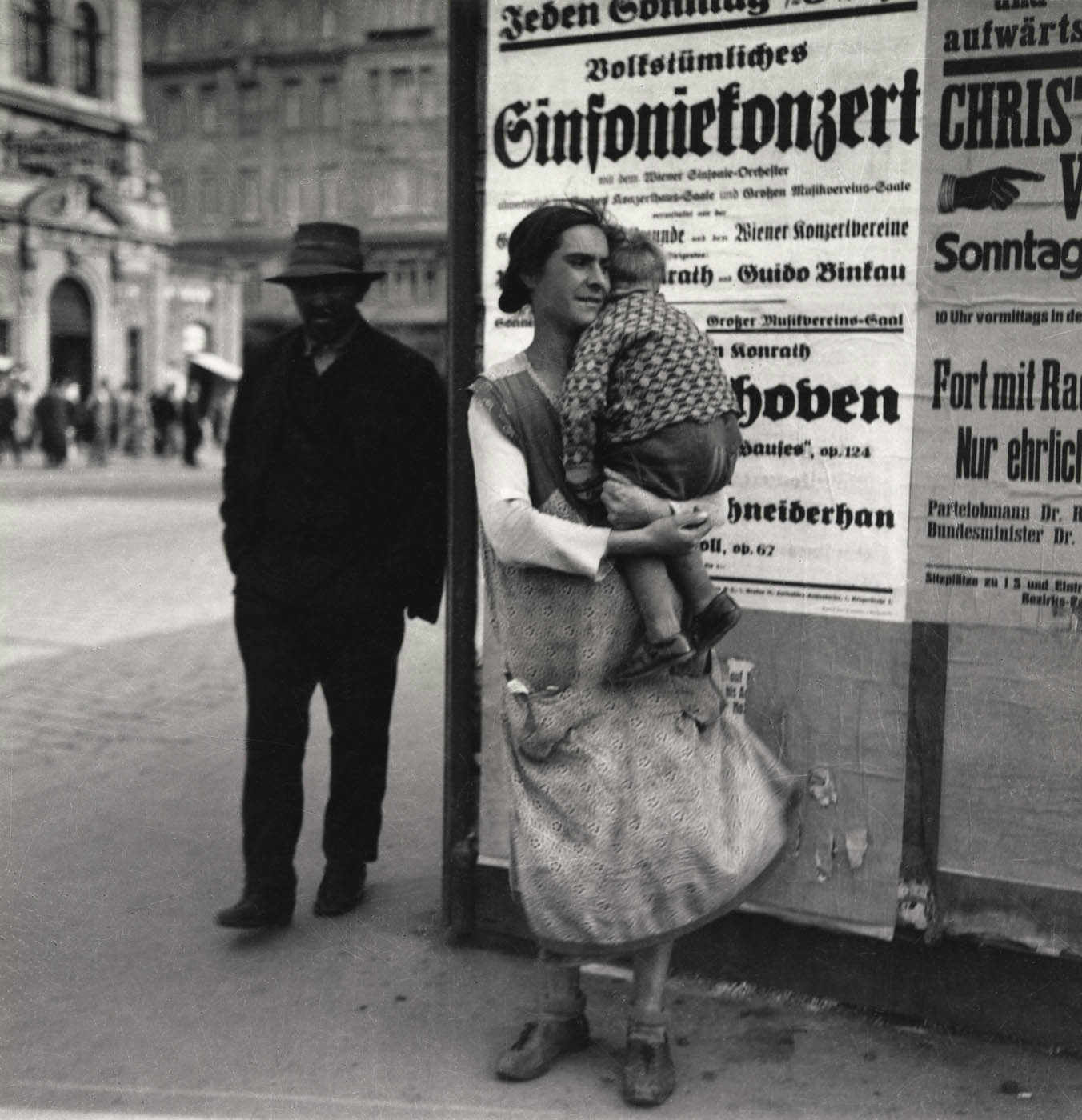
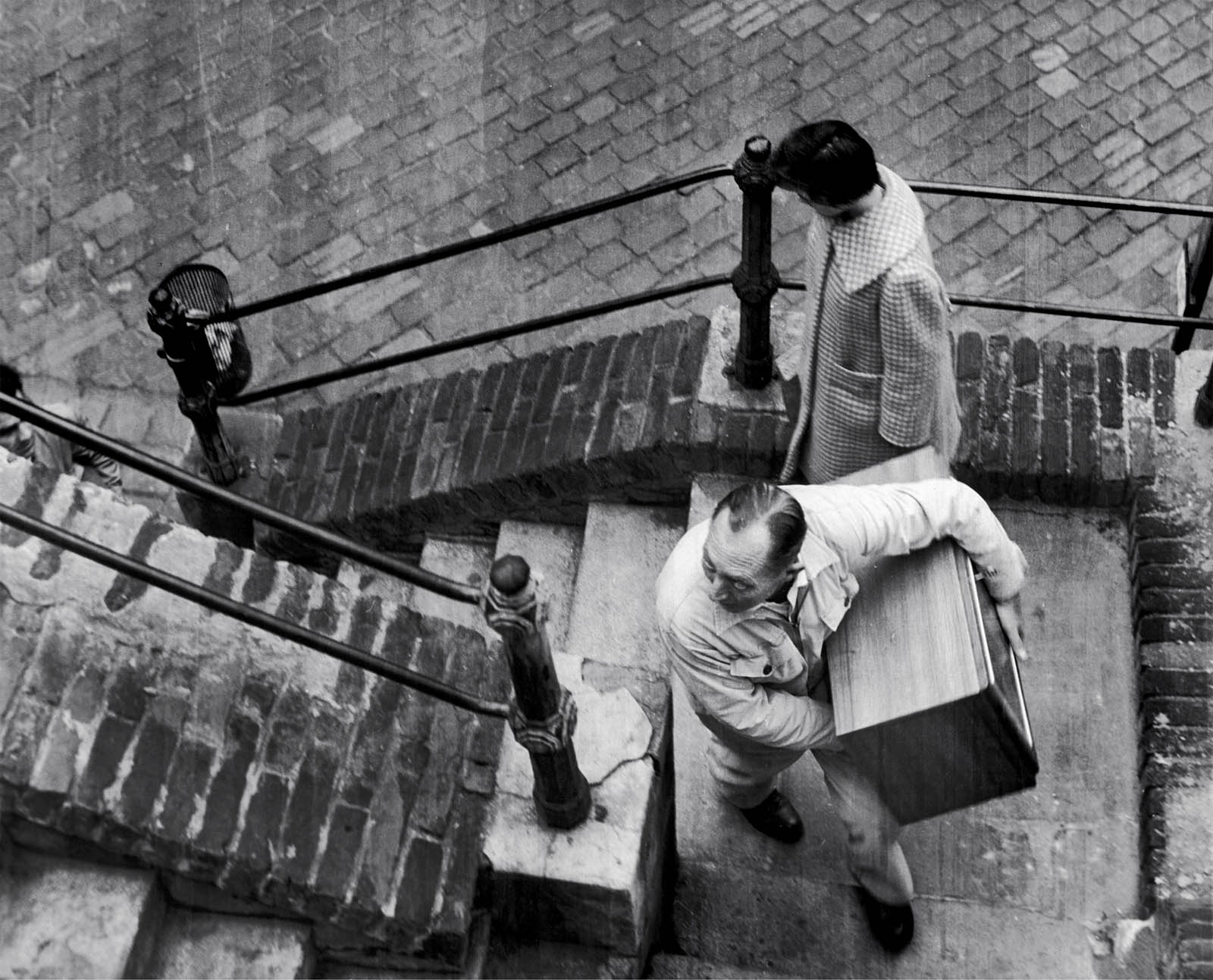
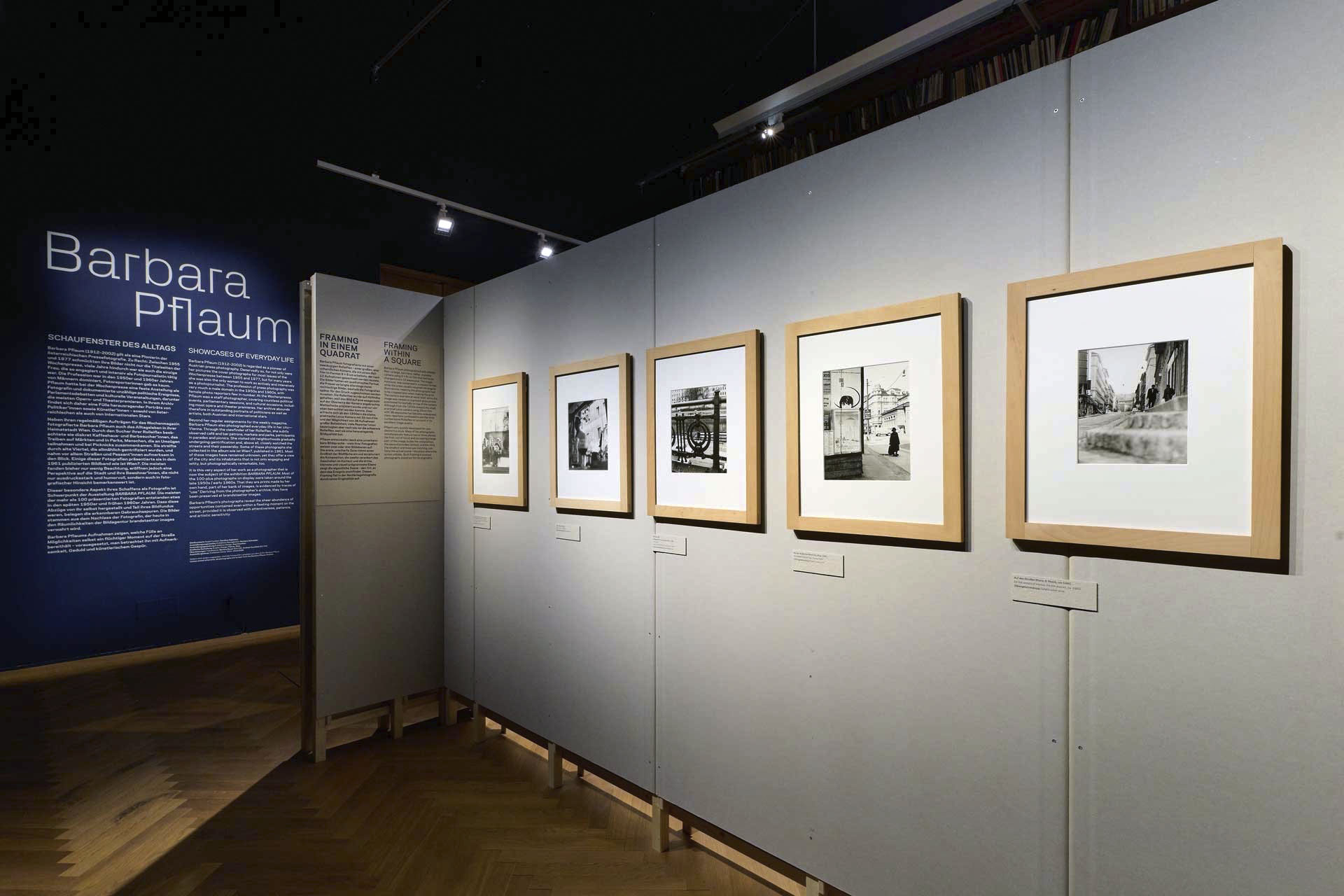
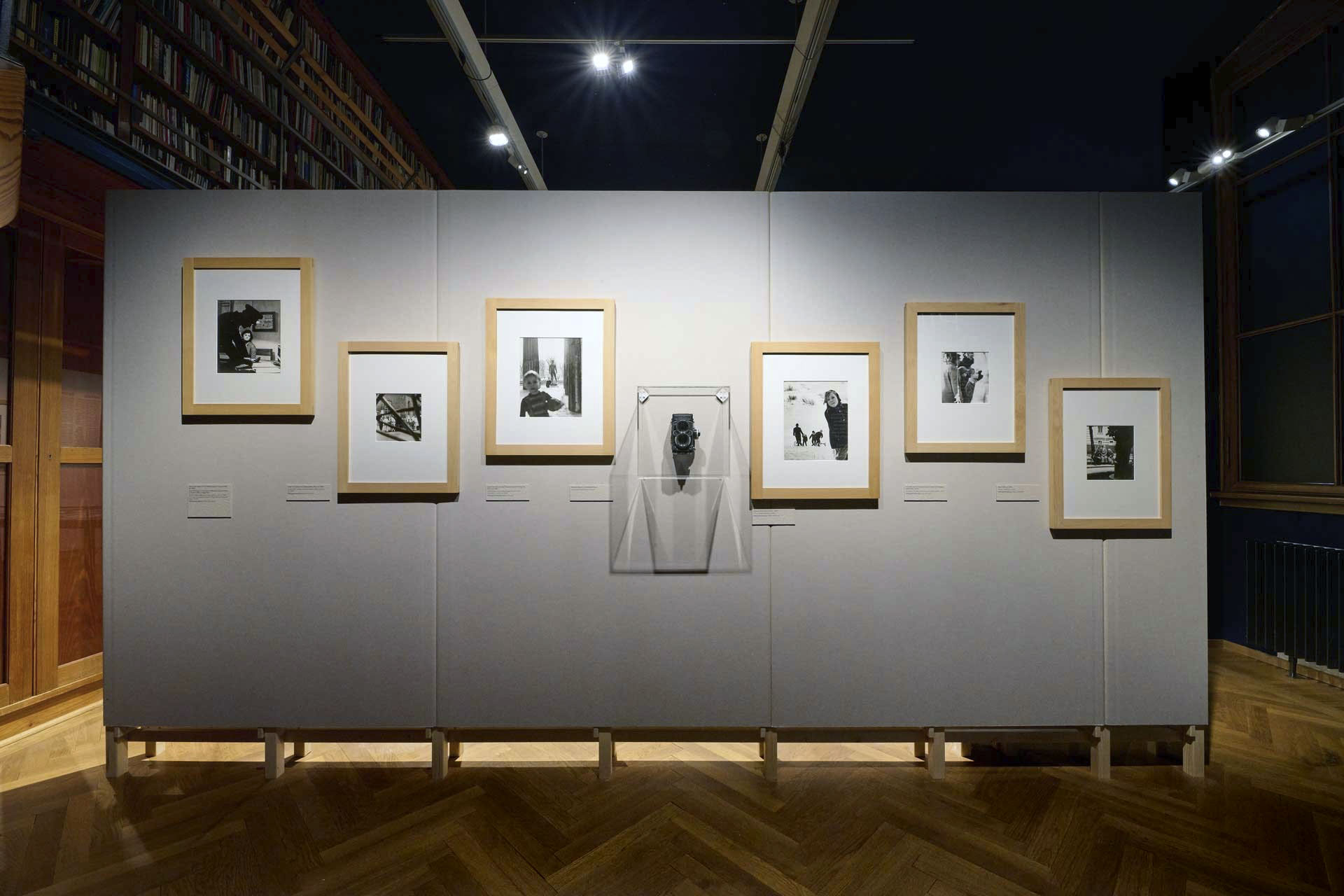
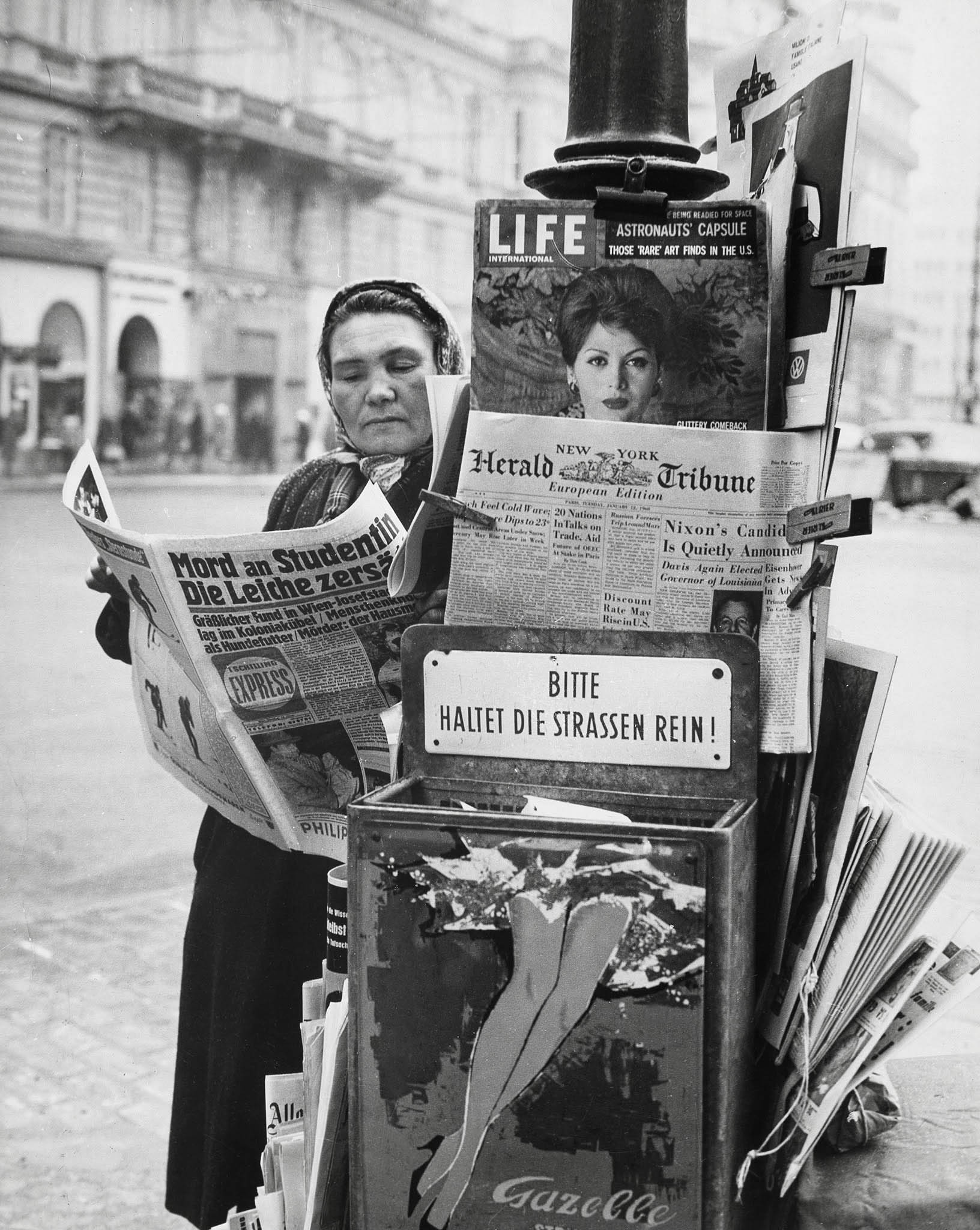
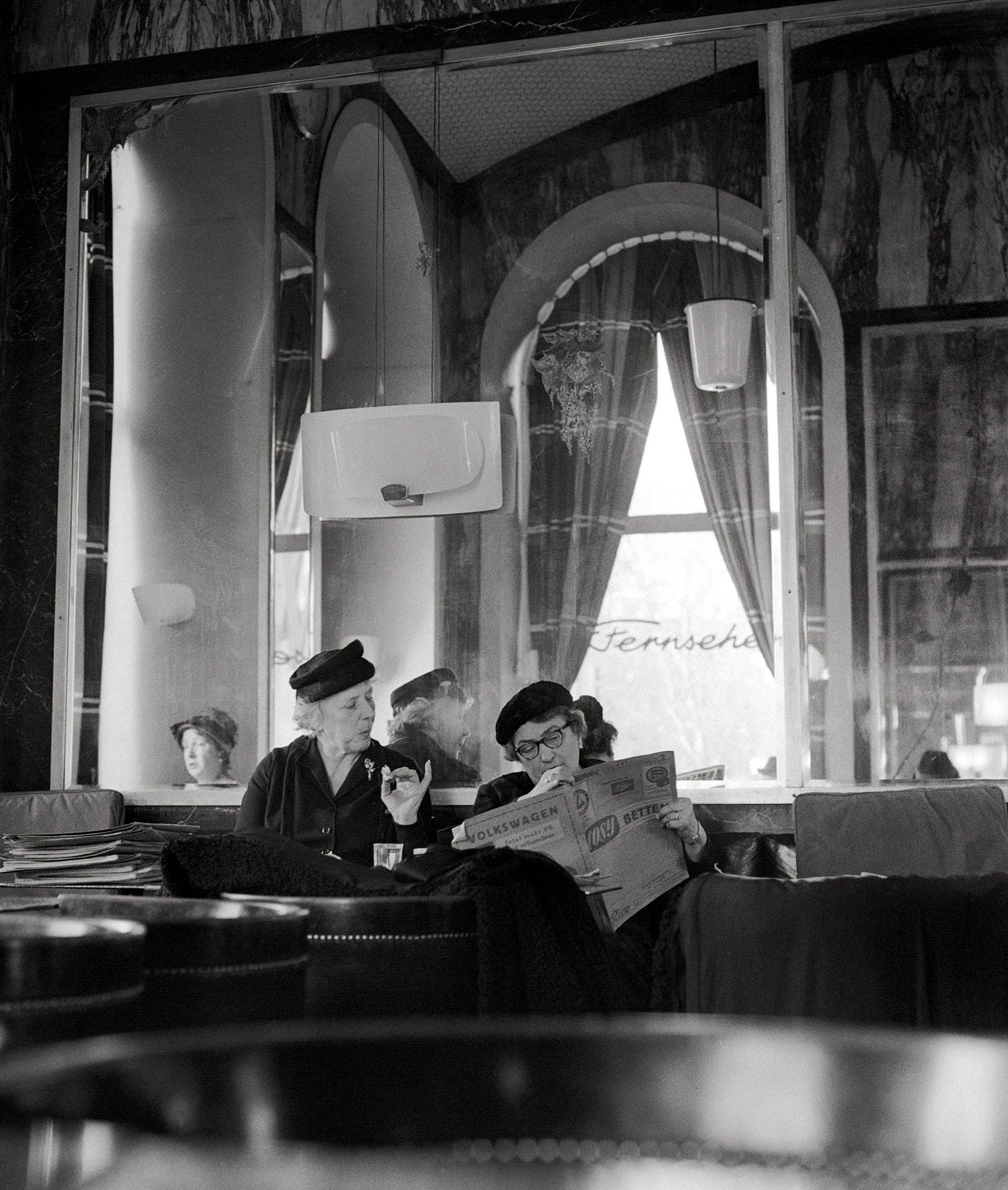
Framing within a square or rectangle, Pflaum’s situational, observational photographs of everyday life in post-war Vienna are full of humans pictured singly or in groups against the urban backdrop.
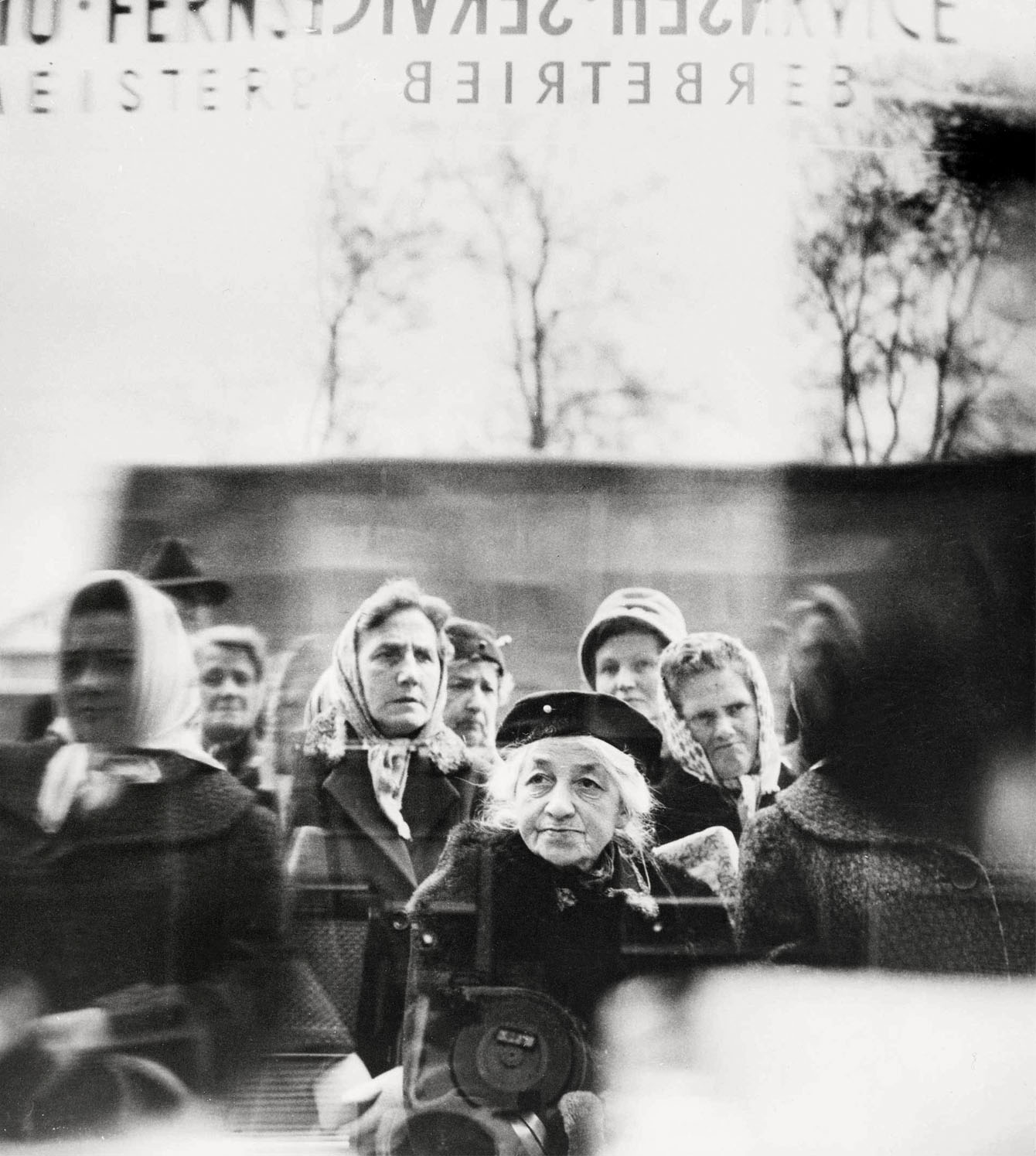
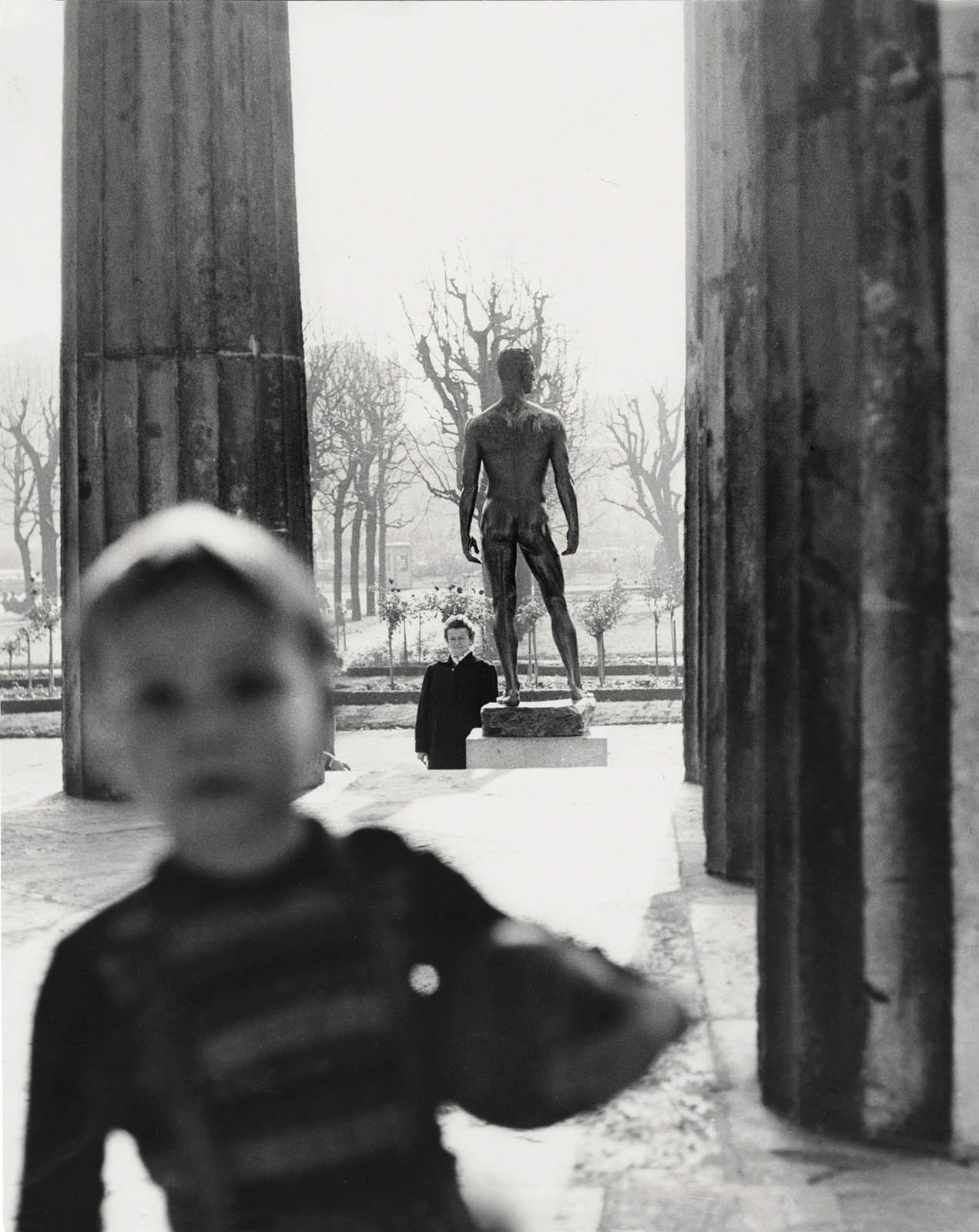
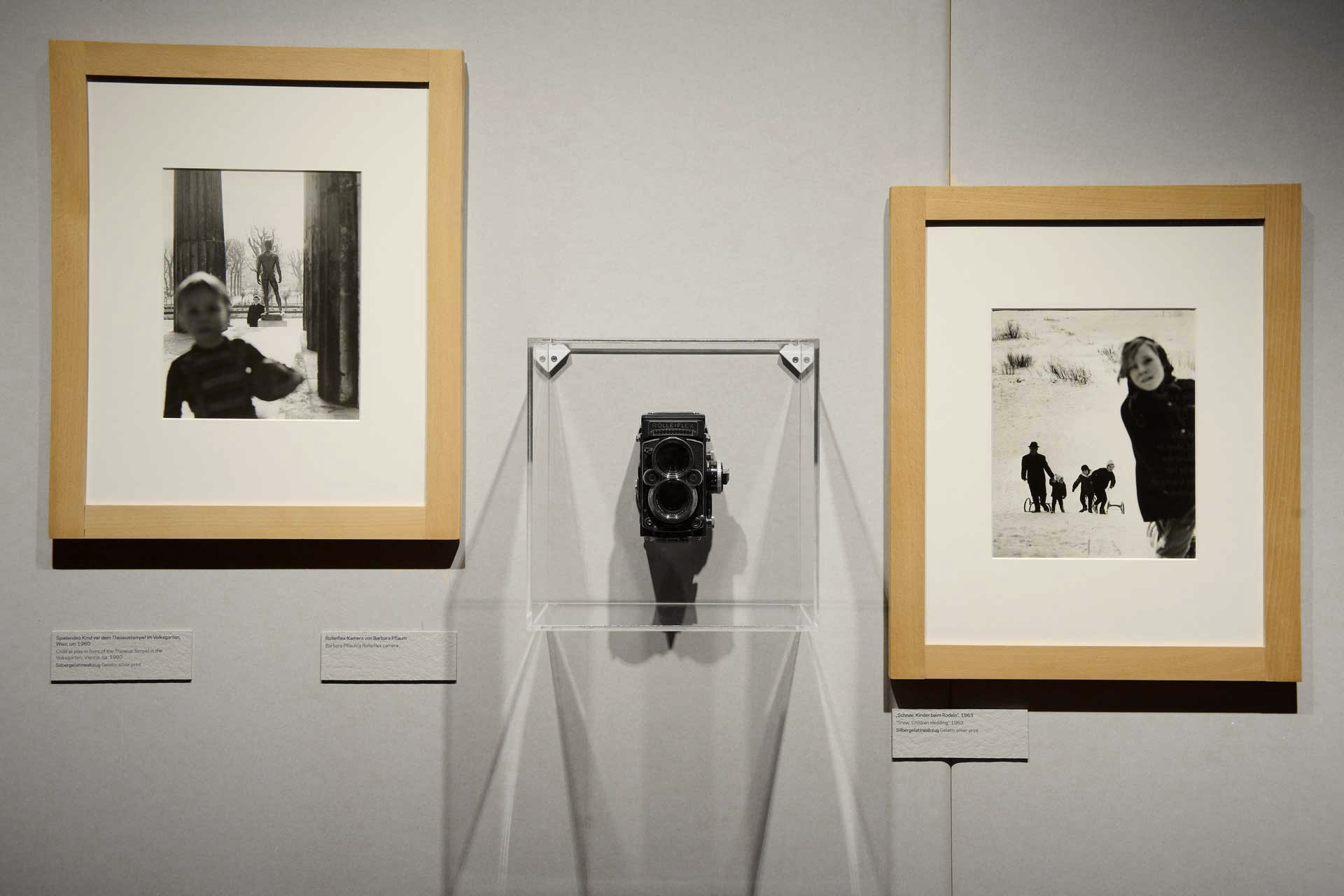
The figures are rarely photographed front and centre with the photographer using the near-far compositional technique – placing a prominent object very close to the camera lens while capturing a distant figure or background for context – to create a strong three-dimensional depth within the image which enables the artist to enact a compelling visual story. Figures are also placed asymmetrically within the picture. Silhouetting is used to great effect as is the use of low depth of field.
There is a sense of “caught on the fly” abstraction in Pflaum’s personal work, even as her street photographs, her personal not commercial work, are eloquently structured, visualised and resolved, demonstrating “not only her extraordinary powers of observation, her humor, and her phenomenal sense of form, but also a profound social awareness.”
Part Henri Cartier-Bresson, part Edith Tudor-Hart, Pflaum’s enduring street photographs are strong and engaging and entirely her own vision. I just wish I had more of them to show you … but please enlarge the installation views of the exhibition in the posting to gain a greater appreciation of their presence.
Dr Marcus Bunyan
Many thankx to MAK Museum for allowing me to publish the photographs in the posting. Please click on the photographs for a larger version of the image.
Pflaum’s style was marked by poised restraint and subordination of the photographer to the motif, prioritising observation and patience over aggressive intervention, which lent her images an unconventional, artistic edge amid the era’s photojournalistic hustle. Influences from her graphic training extended to lighting and post-processing, where she favoured natural illumination and minimal alterations to preserve raw authenticity, while exchanging ideas with contemporaries like Franz Hubmann, Erich Lessing, and Harry Weber shaped her approach to dynamic yet empathetic framing. This method resulted in a oeuvre of standalone, motif-driven photographs that engaged viewers through subtle interpretive layers rather than overt narratives. …
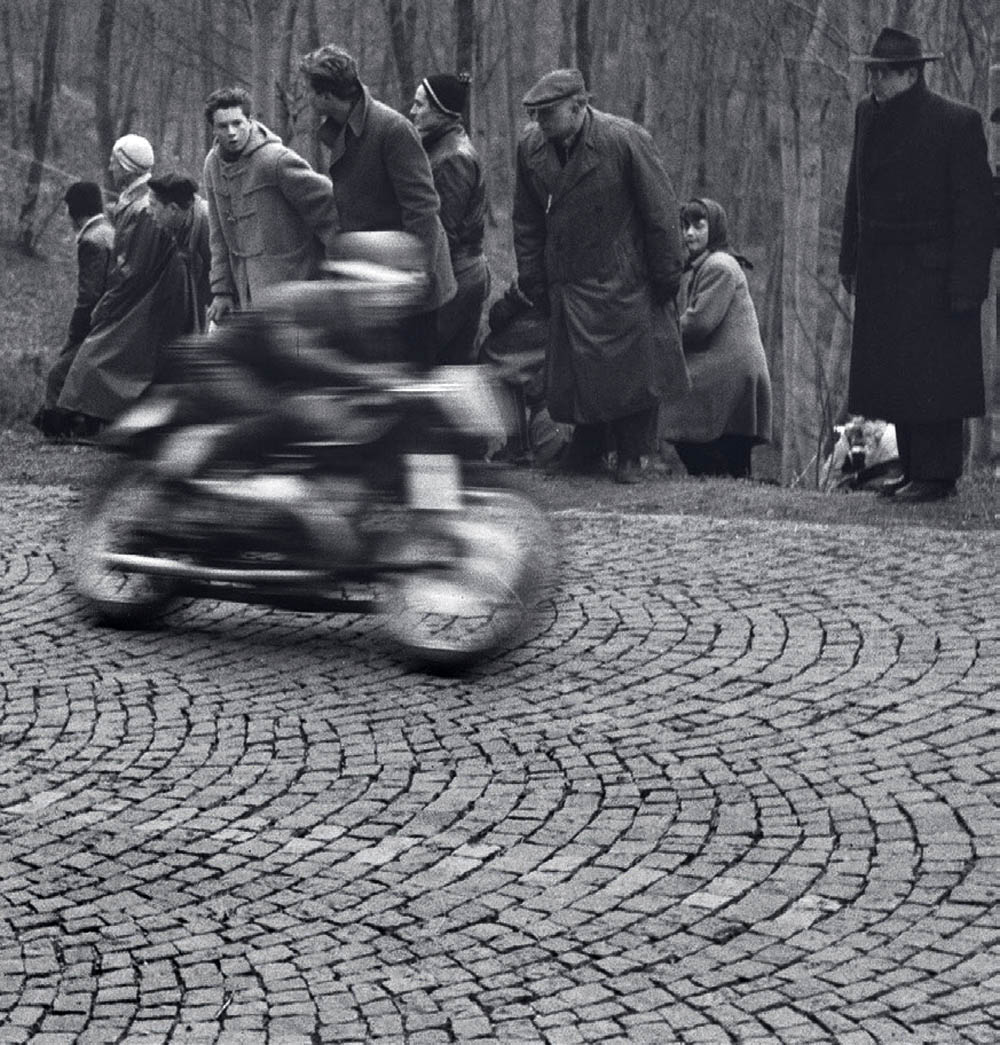
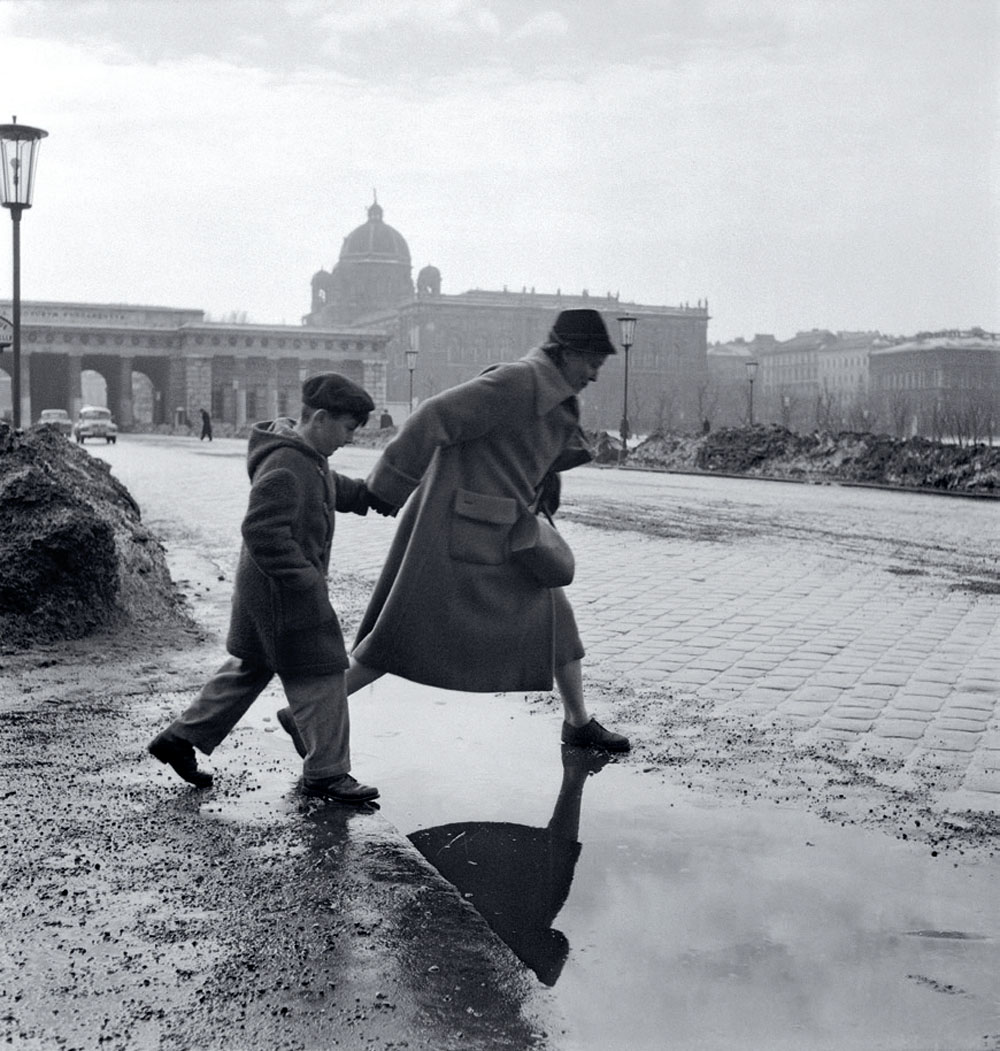
Barbara Pflaum’s photography served as a visual chronicle of post-war Vienna and Austria during the Second Republic, capturing the city’s social and cultural revival from the 1950s to the 1970s through street scenes, urban portraits, and everyday vignettes. Her images documented the reconstruction era’s vibrancy, including spontaneous moments like pedestrians jumping over puddles on Heldenplatz (c. 1960) and leisure activities at the Prater amusement park with the Giant Ferris Wheel in the background (1961), highlighting the resilience of Viennese daily life amid lingering post-war recovery. These works portrayed ordinary figures – such as market women, newspaper sellers, and coal delivery workers – as typological subjects, emphasising authentic urban interactions without ideological overlay, as seen in her depiction of a motorcycle race on Wiener Höhenstraße (1956).”
Anonymous. “Barbara Pflaum,” on the Grokipedia website Nd [Online] Cited 31/07/2026
Barbara Pflaum (1912-2002) was one of the few women who worked as photojournalists for pictorial magazines in the 1950s.
Men dominated this profession in the first two postwar decades, while women in Europe and the United States returned to domestic life. This was not the case for Pflaum, who came across photography at the University of Applied Arts Vienna, where she had taken up studies as a 40-year-old divorcée with three children.
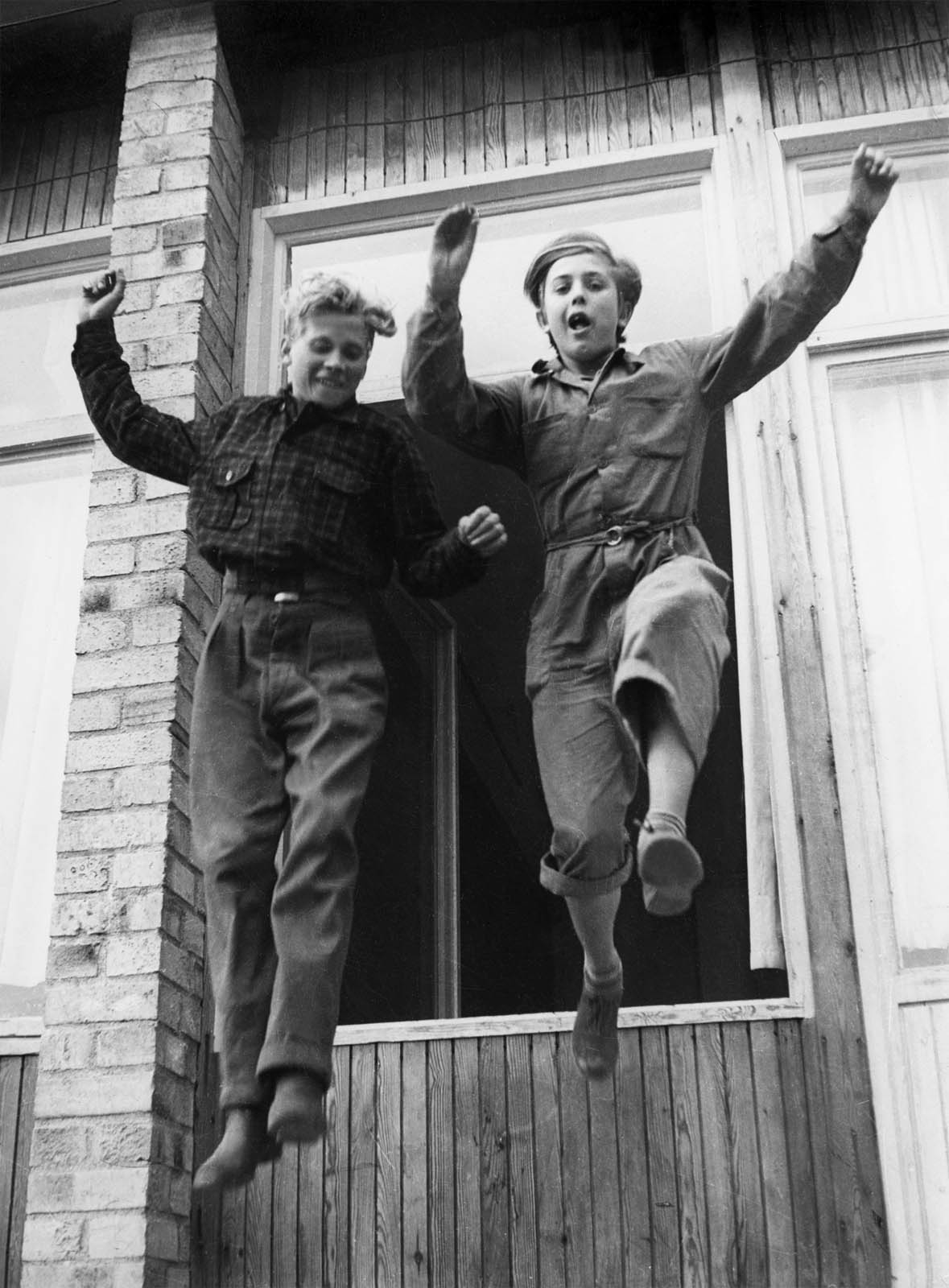
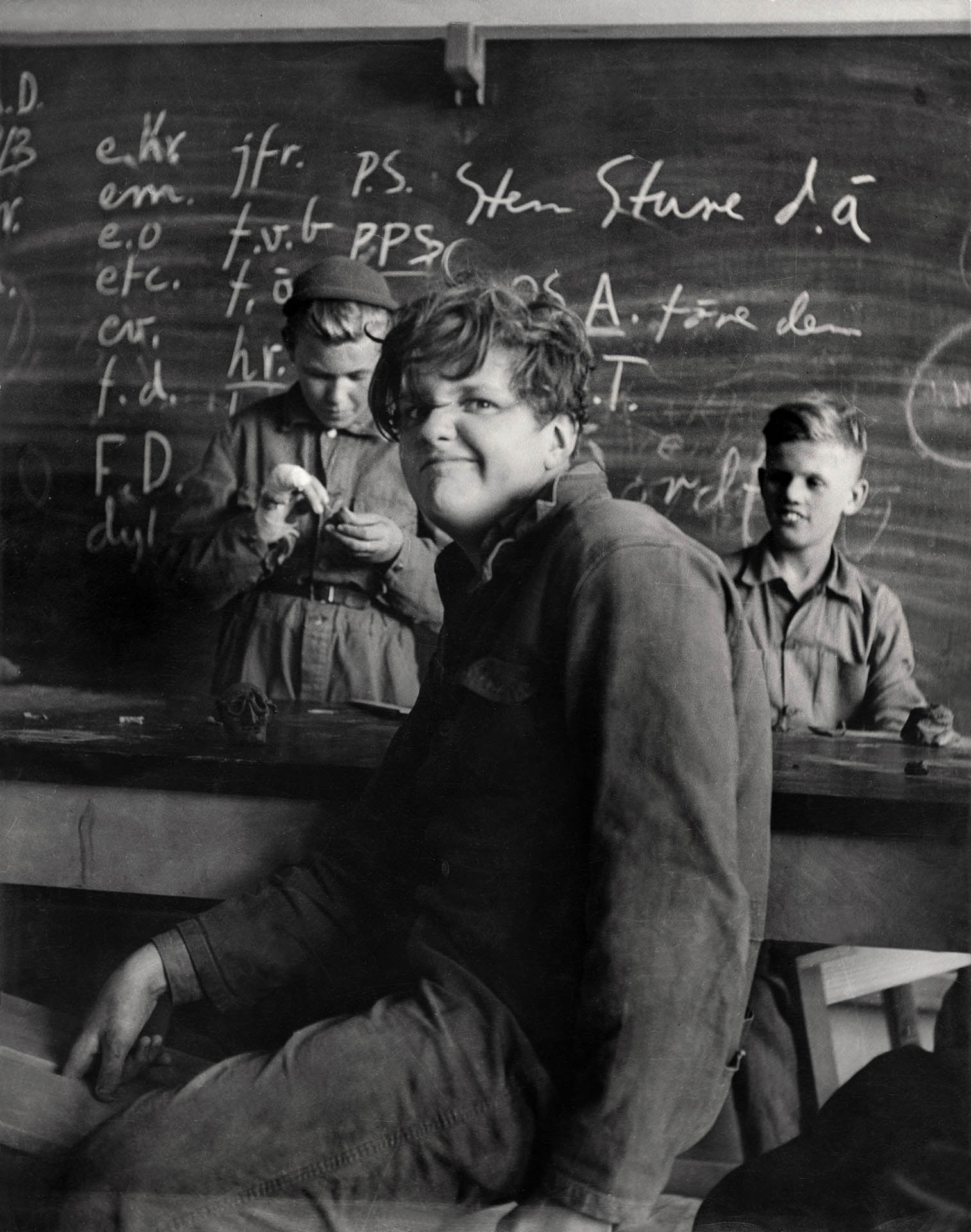
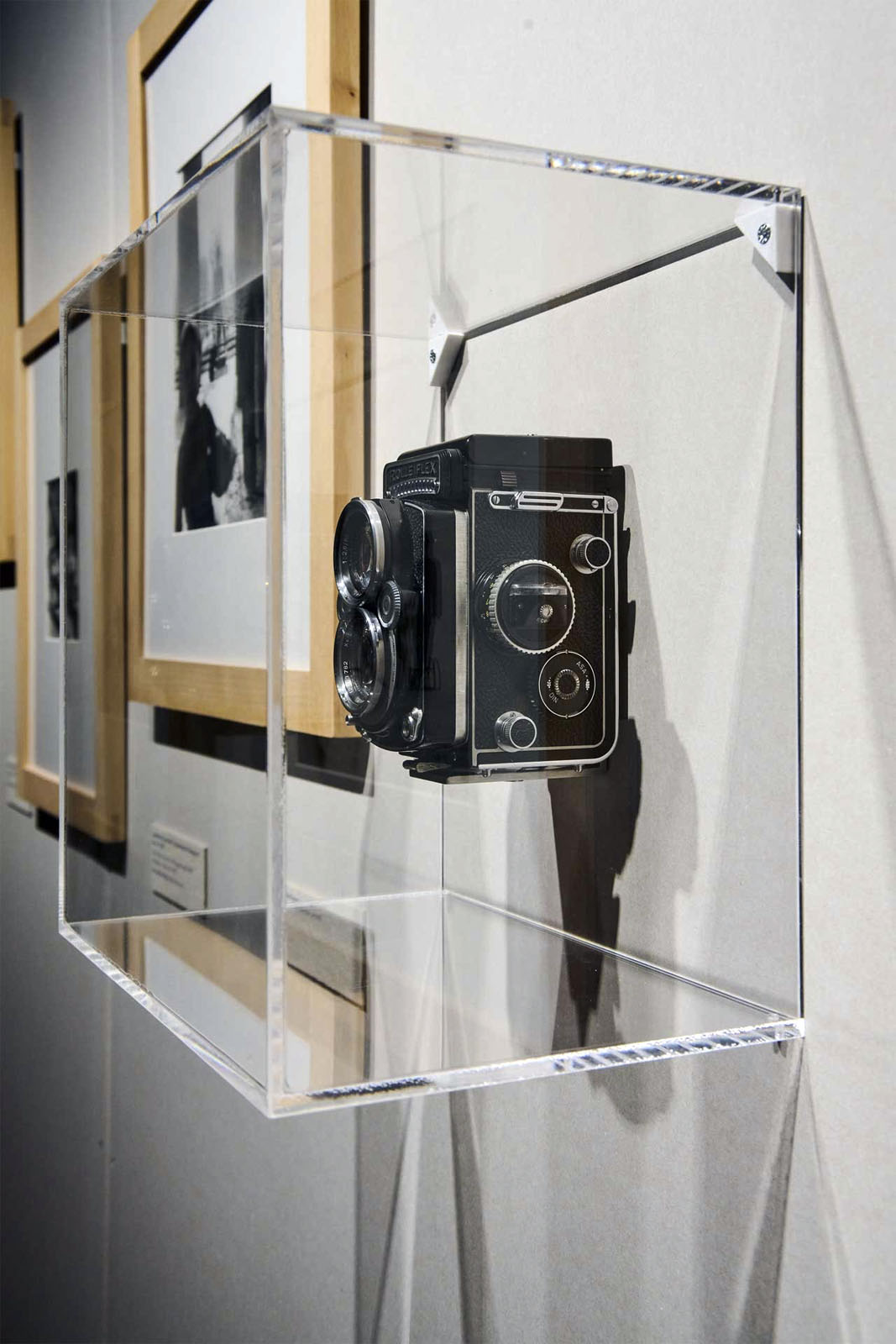
Her photographs garnered the attention of several people. In 1954 she published her first reports – about Venice and about an experimental school in Sweden – in the Wiener Illustrierte newspaper. A short time later, she was hired as a photographer for the Wochenpresse weekly, where she worked for over 20 years. She and her classic Rolleiflex medium format camera could be found at most theatre and opera openings, vernissages, and most of all at political events.
Her portraits of heads of state, party leaders, and famous artists often adorned the cover pages of the weekly magazine. As the proud photographer of these images, she showed them in exhibitions throughout her life. The presentation at the MAK will show a different, less well-known side of her work – one that nowadays especially has the capacity to delight.
Between vernissages, conferences, and premieres, Barbara Pflaum tirelessly roamed the streets of Vienna and observed its inhabitants. Situational photographs and masterful portraits not only bring to light her extraordinary powers of observation, her sense of humour, and her phenomenal flair for form, but also reveal an encompassing social sensibility. Taken for herself, in passing – these photographs are the subject of the exhibition.
Some found their way into a Vienna photo book published by Pflaum in 1961, but many have never been released. The images show the city’s inhabitants going about their daily lives, as well as street protests, condemned neighbourhoods, and scenes from the annual Christmas markets.
From 15 April, the MAK dedicates a solo exhibition to Barbara Pflaum (1912–2002), a pioneer of Austrian press photography, in the MAK Works on Paper Room. With her extraordinary powers of observation and outstanding sense of form, Pflaum counts among the trailblazers of Austrian photojournalism in the 1950s. For over two decades, she helped shape the visual style of the Austrian weekly magazine Wochenpresse. Aged 40, divorced and a mother of three, Pflaum began studying at Vienna’s Academy of Applied Arts (now the University of Applied Arts Vienna) where she discovered photography and devoted herself to it with passion from then on. The exhibition at the MAK shows more than 100 photographs from the late 1950s and early 1960s, revealing an aspect of her work as yet little known: thoughtful, often humorous observations of everyday life in Vienna.
Pflaum received her first camera from her then-partner, the traveler, writer, and photographer Herbert Tichy in the early 1950s. At first, she mainly photographed her children and friends. These portraits caught the attention of the photo lab owner where she had her films developed. He encouraged her to submit her work to a magazine. As a result, Pflaum worked for the Wiener Illustrierte between 1954 and 1958. At the same time, she met the renowned Japanese-American photographer Yoichi Okamoto, head of the photo department at the US Information Service. Okamoto trained young photographers in modern photojournalism. Pflaum’s collaboration with Okamoto had a decisive influence on her style and led to her first publications in the Wiener Kurier.
Equipped with her classic medium-format camera, Pflaum had been photographing for the Wochenpresse since the mid-1950s, and was a regular presence at theatre and opera premieres, art exhibitions, political gatherings, and social events. She captured heads of state, party leaders, and international artists, and documented parliamentary debates, receptions, conferences, and cultural highlights. Many of her portraits of prominent figures appeared on the weekly magazine’s front cover – photographs of which she was particularly proud and which she repeatedly exhibited during her lifetime.
She consolidated her position as a photographer through her work in the press and exhibitions at Vienna’s Konzerthaus, as well as through her own publications. In addition to official commissions, she tirelessly documented everyday life in Vienna: people in coffee houses, at markets, in parks or at parades, passers-by, street vendors, children at play or people in public spaces. Of especial fascination for her was the city’s transformation: old neighborhoods undergoing renovation, demolition, new construction, or the beginning of gentrification.
Many of these photographs were taken, as it were, en passant – personal observations, some of which found their way into her 1961 picture volume, wie ist Wien? Most, however, remained unpublished, lying in the photographer’s archive for years. Today, these photographs offer a view of the city and its inhabitants that is as lively as it is humorous. They depict scenes of everyday life, as well as street protests, Christmas markets, and neighborhoods about to be demolished. At the same time, they document an urban atmosphere undergoing gradual change in post-war Vienna.
Most of the prints on display in the exhibition come directly from Pflaum’s own archive, which is now held by brandstaetter images. These are prints she made herself, some of which bear clear signs of wear – revealing their use as working materials.
A key element of Pflaum’s photographic style has to do with her camera of choice. She worked with a Rolleiflex, a large twin-lens camera for 6 x 6cm film. This technique required a deliberate and considered approach: the film had to be changed after every twelve exposures, and the image was composed in a square format. For publication in the press, which usually required rectangular image formats, the photographs had to be cropped later during enlargement. The Rolleiflex was held at hip height as the image was projected onto a ground glass screen on the top of the camera, meaning it could only be viewed from above.
Many of Pflaum’s photographs are characterised by their strong, multi-layered composition: often, a blurred foreground area structures the image, with the spatial context of the scene unfolding behind it. Only on a third level does the actual action take centre stage – a fleeting moment, an encounter, a gesture. This pictorial structure imbues the photographs with a sense of dynamism, steering the viewer’s gaze towards the essence of the image.
Pflaum’s gift for observation, her ability to “lie in wait” and capture the right moment, are remarkable, as is the originality of many of her compositions. Whether dealing with common photographic subjects such as markets or leisure activities, or with current events such as demonstrations, Pflaum always took care to draw attention to the people, ensure a dynamic energy in the image, and evoke associations. In this way, she was able to create a sense of narrative.
What emerges is a multi-layered photographic portrait of Vienna from more than half a century ago. Barbara Pflaum’s photographs also demonstrate the wealth of possibilities contained within even a fleeting moment on the street – provided it is observed with attentiveness, patience, and artistic sensitivity.
Karolina Ziębińska is a curator and art historian specializing in photography. From 2021 to 2025, she was director of the Museum of Warsaw. Prior to that, she was a curator at the Centre Pompidou in Paris from 2014 to 2020; Ziębińska also worked for ten years at Zachęta – National Gallery of Art in Warsaw. In 2008, she co-founded the Archaeology of Photography Foundation. Karolina Ziębińska has curated over 50 exhibitions and edited numerous publications on photographers of note.
“There is something so infectious and engaging about these photographs, something that draws you into the transformative freedom of African identities.” Dr Marcus Bunyan
Curator: Oluremi C. Onabanjo, The Peter Schub Curator, with the assistance of Chiara M. Mannarino, Curatorial Assistant, The Robert B. Menschel Department of Photography
Air Afrique DJIMA RECORDS 1969 Vinyl 45tour Mono 7 1/16 x 7 1/16″ (18 x 18cm) Air Afrique Collective, courtesy of Lamine Diaoune, Ahmadou-Bamba Thiam, Djiby Kebe, Jeremy Konko
Of being and becoming
Why do I love African photography so much after the “winds of decolonial change” swept through the continent which “saw the disintegration of colonial territories and the formation of transnational solidarity across the African continent and diaspora.”
Firstly, I love the vibrancy present in photographs of everyday life – at the club, with friends, dancing, drinking. I love the hairstyles, I love the fabrics, I love the way people are proud of themselves and their cultural heritage. Joy, love, exuberance, passion. There is something so infectious and engaging about these photographs, something that draws you into the transformative freedom of African identities.
Secondly, I love the studio photographs that enable the sitter to dream the great dreams of life, to imagine who they want to be before the camera. Here, in a symbiotic relationship between the photographer and the sitter, the “studio becomes a kind of imaginative enterprise. You can go and be who you are, or you can go and be who you want to be.” In Sanlé Sory’s studio his “portraits made possible a particular process of being and becoming for his sitters. He reflected the ideas that they wanted to communicate – whether to friends, lovers, strangers, or themselves.” (Gallery label) The resulting portrait made the sitter feel connected to a cosmopolitan world. Both a world of dreams and aspirations and Africans’ lived experiences and realities.
Thirdly, I love how the photographer turns the camera towards himself, conceptually enacting in a staged theatricality of becoming, envisioning himself as different personalities through the act of constructing identities. Heroes, travellers, intellectuals, philosophers and, in Samuel Fosso’s case, prominent figures from 20th-century Pan-African liberation and American civil rights movements. African spirits and activists, intellectuals, and political leaders who fought for Black emancipation across the globe.
Pan-African modes of image-making after the end of colonisation open up, as curator Oluremi C. Onabanjo so eloquently states, “dazzling modes of Pan-African possibility” where everything is possible in every/body. There is no wringing of the hands here, no use of colonial photographs rehashed for contemporary consumption, just a joy, joy, joy in present and future becoming.
Dr Marcus Bunyan
Many thankx to the Museum of Modern Art for allowing me to publish the photographs in the posting. Please click on the photographs for a larger version of the image.
“Imagination is a Magic carpet Upon which we may soar To distant lands and climes And even go beyond the moon To any planet in the sky If we came from nowhere here Why can’t we go somewhere there?
. Sun Ra, “Imagination,” 1970
The Museum of Modern Art’s exhibition Ideas of Africa: Portraiture and Political Imagination showcases how photographic portraits fuel ideas of Pan-African subjectivity and solidarity. On view from December 14, 2025, through July 25, 2026, the exhibition considers the transatlantic call and response that constructed Africa as a political idea, due to the “winds of decolonial change” that swept the African continent in tandem with the Civil Rights movement in the United States. Ideas of Africa is the third exhibition organised at The Museum of Modern Art in celebration of the 2019 gift of modern and contemporary African art from prolific collector Jean Pigozzi. The exhibition features core works from this gift, alongside a selection of recent acquisitions and key loans.
Text from The Museum of Modern Art website
Air Afrique Balafon No. 1 1964 Magazine, softcover 10 5/8 x 8 1/4″ (27 x 21cm) Air Afrique Collective, courtesy of Lamine Diaoune, Ahmadou-Bamba Thiam, Djiby Kebe, Jeremy Konko
From 1961 to 2002, Air Afrique served as the official transnational carrier for francophone West and Central Africa, providing regular jet service throughout the continent and internationally. The airline was also deeply committed to the production of Pan-African arts and culture. It funded vinyl records, published books on African history, and produced the in-flight magazine Balafon, which reported on events across Africa and beyond. Twenty years after the airline shuttered, a Paris-based artist collective formed to revitalise the spirit of Air Afrique through design collaborations, film programs, and a magazine. Their collection of archival ephemera, on view here, comprises gifts and purchases from former Air Afrique staff.
Inspired by the international activities of Air Afrique, both past and present, this reading table presents issues of the airline’s in-flight magazine, Balafon, one of which features a portrait of the Malian photographer Malick Sidibé on its cover. This table also includes a selection of photobooks, catalogues, and scholarly publications, celebrating the circulation of images and ideas in Africa during the decolonial era. These books are additionally available to browse within the gallery, offering further directions for reading, thinking, dreaming, and imagining.
Gallery label from Ideas of Africa: Portraiture and Political Imagination, 2025
Air Afrique Balafon No. 3 1965 Magazine, softcover 10 5/8 x 8 1/4″ (27 x 21cm) Air Afrique Collective, courtesy of Lamine Diaoune, Ahmadou-Bamba Thiam, Djiby Kebe, Jeremy Konko
Installation view of the exhibition Ideas of Africa: Portraiture and Political Imagination at The Museum of Modern Art (MoMA), New York, December 2025 – July 2026 showing at right two Untitled photographs from the series African Spirits (2008, below) by Samuel Fosso (French and Central African born Cameroon, b. 1962)
Samuel Fosso (French and Central African born Cameroon, b. 1962) Untitled from the series African Spirits 2008 Gelatin silver print 64 1/8 x 48 1/16″ (162.8 x 122cm) Museum of Modern Art, New York The Family of Man Fund
Installation view of the exhibition Ideas of Africa: Portraiture and Political Imagination at The Museum of Modern Art (MoMA), New York, December 2025 – July 2026 showing at left photographs by Seydou Keïta (Malian, 1923-2001); and at right, two Untitled photographs from the series African Spirits (2008, below) by Samuel Fosso (French and Central African born Cameroon, b. 1962)
Samuel Fosso (French and Central African born Cameroon, b. 1962) Untitled from the series African Spirits 2008 Gelatin silver print 64 1/8 x 48 1/16″ (162.8 x 122cm) Museum of Modern Art, New York The Family of Man Fund
Artist, Silvia Rosi:African Spirit is a series of self-portraits where Fosso transforms himself into key figures of the Pan-African liberation movement of the 1960s and 70s.
I’m Silvia Rosi. I’m an artist working with photography and moving image.
Samuel Fosso started his career taking portraits of people in the studio, where there was always this act of constructing identities through props, poses, and the photographer’s imagination. At the end of each workday, Fosso would turn the camera toward himself.
In this series, he recreates these iconic photographs, taking on the faces of Angela Davis, of Martin Luther King, while at the same time remaining himself. For me, there’s this sense of recognition but also his own presence makes us question what it means to embody these figures.
The lighting and the poses and the composition echo this studio portrait tradition, but there’s always an element of theatricality that keeps you aware of the labor of becoming someone else. He neutralises the scene, removing the backdrop, and we’re forced to look at the subject that we have in front.
Turning the camera inwards can be really revolutionary. I think that’s something that deeply resonates with me, this idea of being in charge of my own representation and giving yourself complexity through images.
Installation view of the exhibition Ideas of Africa: Portraiture and Political Imagination at The Museum of Modern Art (MoMA), New York, December 2025 – July 2026 showing five Untitled photographs from the series African Spirits (2008) by Samuel Fosso (French and Central African born Cameroon, b. 1962)
The Museum of Modern Art’s exhibition Ideas of Africa: Portraiture and Political Imaginationshowcases how photographic portraits fuel ideas of Pan-African subjectivity and solidarity. On view from December 14, 2025, through July 25, 2026, the exhibition considers the transatlantic call and response that constructed Africa as a political idea, due to the “winds of decolonial change” that swept the African continent in tandem with the Civil Rights movement in the United States. Ideas of Africa is the third exhibition organised at The Museum of Modern Art in celebration of the 2019 gift of modern and contemporary African art from prolific collector Jean Pigozzi. The exhibition features core works from this gift, alongside a selection of recent acquisitions and key loans. Ideas of Africa: Portraiture and Political Imagination is organised by Oluremi C. Onabanjo, The Peter Schub Curator, with the assistance of Chiara M. Mannarino, Curatorial Assistant, The Robert B. Menschel Department of Photography.
Conceptually influenced by The Idea of Africa, a landmark publication by the late philosopher V. Y. Mudimbe (1941-2025), the exhibition brings together works by 20th-century photographers such as Seydou Keïta, Malick Sidibé, Jean Depara, Sanlé Sory, and Ambroise Ngaimoko, who worked across key urban centers in West and Central Africa during the “golden age of African portraiture.” Images by James Barnor and Kwame Brathwaite illuminate Pan-African modes of image-making across the African diaspora. Works by contemporary artists of African descent, including Samuel Fosso, Silvia Rosi, and Njideka Akunyili Crosby, alongside ephemera selected from the archive of the artist collective Air Afrique, embody the physical circulation of these ideas across space and time.
“As we continue to witness transformative shifts in the global geopolitical order, it is instructive to revisit a moment in history that saw the disintegration of colonial territories and the formation of transnational solidarity across the African continent and diaspora. This exhibition locates dazzling modes of Pan-African possibility in images made by inventive photographers who registered and beckoned in new worlds,” says Oluremi C. Onabanjo.
Ideas of Africa features a reading room as a tribute to the aspirations of knowledge production and the proliferation of the photographic image in print media during the decolonial era. In the reading room, visitors can access a selection of historical and contemporary photobooks and publications.
On the occasion of the exhibition, MoMA is publishing a richly illustrated catalogue featuring a lead essay by Oluremi C. Onabanjo, contributions by poet Momtaza Mehri and film programmer Yasmina Price, and reproductions of key texts by Brent Hayes Edwards and V. Y. Mudimbe. 140 pages, 105 color illustrations. Hardcover, $50. ISBN: 978-1-63345-171-1.
Press release from The Museum of Modern Art
Installation view of the exhibition Ideas of Africa: Portraiture and Political Imagination at The Museum of Modern Art (MoMA), New York, December 2025 – July 2026 showing at left, Malick Sidibé Nuit de Noël (Happy Club) [Christmas Eve] (1963, below); and at second left, Malick Sidibé Regardez-Moi [Look at Me!] (1962, below)
Malick Sidibé (Malian, 1936-2016) Nuit de Noël (Happy Club) [Christmas Eve] 1963 (printed January 2006) Gelatin silver print Image: 39 x 39″ (99 x 99.1cm) Sheet: 47 1/4 x 47 1/4″ (120 x 120cm) Frame: 53 9/16 x 53 9/16″ (136 x 136cm) Courtesy The Walther Collection, New York / Neu-Ulm
Malick Sidibé (Malian, 1936-2016) Regardez-Moi [Look at Me!] 1962 (printed January 2006) Gelatin silver print Image: 39 3/8 x 39″ (100 x 99cm) Sheet: 47 1/4 x 47 1/4″ (120 x 120cm) Frame: 52 3/16 x 52 3/16 x 1″ (132.5 x 132.5 x 2.5cm) Courtesy The Walther Collection, New York / Neu-Ulm
Malick Sidibé (Malian, 1936–2016) Boxeur (Boxer) 1966 Gelatin silver print Image: 16 15/16 x 16 15/16″ (43 x 43 cm) Frame: 27 9/16 x 27 9/16 x 9/16″ (70 x 70 x 1.5cm) Museum of Modern Art, New York The Jean Pigozzi African Art Collection
For Sidibé, the roving “eye of Bamako,” the city was his studio. Active during the 1960s and ’70s, Sidibé shot on 35mm film and often printed proofs of the exposures he took at weekend parties. He arranged them sequentially on pastel cardstock and displayed them at his studio so that clients might purchase souvenirs of their exploits. Sidibé’s images of youth culture emphatically pushed back against Mali’s normative state attitudes and expectations of decorum. Revelling in effusive gestures and strong poses, he deftly photographed a community full of elegance, style, and sensational flair that staked its claim on a connection to a global African Diaspora.
Gallery label from Ideas of Africa: Portraiture and Political Imagination, 2025
Malick Sidibé (Malian, 1936-2016) Nuit du 10 octobre 1970 (Night of October 10, 1970) 1970 Twenty-two gelatin silver prints mounted on paper 12 3/4 x 19 3/4″ (32.4 x 50.2cm) Museum of Modern Art, New York Judith and Wm. Brian Little Fund
Malick Sidibé (Malian, 1936-2016) Untitled July 28, 1973 Twenty-four gelatin silver prints mounted on paper 12 3/4 x 19 3/4″ (32.4 x 50.2cm) Museum of Modern Art, New York Judith and Wm. Brian Little Fund
“This wind of change blowing through Africa … is no ordinary wind,” wrote Ghana’s first president, Kwame Nkrumah, in 1963. “It is a raging hurricane against which the old order cannot stand.” In the 1960s, independence movements swept across the African continent, resulting in the disintegration of colonial territories. These transformative struggles coincided with an exhilarating campaign for civil rights in the United States, forging a transatlantic call-and-response that established “Africa” as a political idea.
Ideas of Africa: Portraiture and Political Imagination examines the role of portrait photography within this emerging sense of Pan-Africanism. It unites portraits by mid-century photographers from across West and Central Africa and works by contemporary artists of African descent, illuminating different modes of image making and forms of transnational solidarity. As the art historian Kobena Mercer has argued, “‘Africa’ has never been a static entity, confined to the boundaries of geography, but has always had a diasporic dimension.” Embedded within the exhibition is a reading room featuring a selection of photobooks, alongside archival ephemera from the Paris-based collective Air Afrique. Following in the wake of the eponymous international airline, the group has continued the circulation of Pan-African culture and ideas into the present day.
Conceptually influenced by the late philosopher V. Y. Mudimbe’s book The Idea of Africa (1994), in which he exposes Western views of Africa as politicised constructions, this exhibition demonstrates how African photographers grappled with Africa as a political idea in their own ways. Presenting subjects for whom the personal was undeniably political, their images assert photography’s unique potential to creatively reflect our surroundings and beckon new worlds. At a time when profound shifts are once again transforming the global geopolitical order, Ideas of Africa attests to the enduring relevance of these themes.
Gallery text from Ideas of Africa: Portraiture and Political Imagination, 2025
Installation view of the exhibition Ideas of Africa: Portraiture and Political Imagination at The Museum of Modern Art (MoMA), New York, December 2025 – July 2026 showing at left the work of Silvia Rosi (below); and at right, Njideka Akunyili Crosby And We Begin to Let Go (2013, below)
Silvia Rosi (Togolese and Italian, b. 1992) Disintegrata di profilo (Disintegrated in Profile) 2024 Inkjet print 31 1/2 x 31 1/2″ (80 x 80cm) Museum of Modern Art, New York Carl Jacobs Fund
Rosi has said, “I’m not just performing, but reflecting on history.” Through photographic self-portraits, the artist examines personal, familial, and national narratives of migration, memory, and belonging. Deeply informed by the history of West African studio portraiture, Rosi’s images elegantly synthesise the formal strategies of mid-century African photographers, including many of those represented in this exhibition. Rosi often reenacts moments from her family’s past. Disintegrated Waiting, for instance, recalls when her mother first arrived in Italy from Togo. “She once said, ‘I used to be integrated, now I’m disintegrated,'” the artist shared. “To me this phrase is … an expression of the experience of diaspora.”
Gallery label from Ideas of Africa: Portraiture and Political Imagination, 2025
Silvia Rosi (Togolese and Italian, b. 1992) Sposa italiana disintegrata (Disintegrated Italian Wife) 2024 Inkjet print 31 1/2 x 31 1/2″ (80 x 80cm) Museum of Modern Art, New York Carl Jacobs Fund
Njideka Akunyili Crosby (Nigerian, born 1983) And We Begin to Let Go 2013 Acrylic, acetone transfers, charcoal, pastel, marble dust, and collage on paper Sheet: 84 x 105″ (213.4 x 266.7cm) Museum of Modern Art, New York Promised gift of Jerry I. Speyer and Katherine Farley
Nigerian-born, Los Angeles-based artist Njideka Akunyili Crosby moved to the US at the age of 17 (after winning the green card lottery in her home town) to train as a painter at the Pennsylvania Academy of Fine Art and, later, Yale University. Here, as in many of her portraits, Crosby gives an intimate portrayal of her interracial marriage and day-to-day life in America. She combines photo-transfer processes with painting and collaged fabrics, fusing Nigerian and American materials, images, and cultural traditions.
In her practice, Akunyili Crosby meditates on familial life within a transcultural context. Her large-scale compositions of everyday domestic scenes synthesise drawing, painting, printmaking, and photography. And We Begin to Let Go depicts the artist and her husband, who leans over her shoulder. To make it, Akunyili Crosby drew from Nigerian print media publications and her family’s photographic archive. She united these images’ varied photographic textures through the same formal treatment: acetone transfer, a printmaking technique through which a printed image is transferred onto another surface using an acetone solvent. Images of smiling faces, elaborate coifs, and patterned clothing suffuse the picture plane, accruing on the surfaces this marital encounter.
Gallery label from Ideas of Africa: Portraiture and Political Imagination, 2025
Installation view of the exhibition Ideas of Africa: Portraiture and Political Imagination at The Museum of Modern Art (MoMA), New York, December 2025 – July 2026 showing at left, Njideka Akunyili Crosby And We Begin to Let Go (2013, above); and at centre, Kwame Brathwaite Untitled (Sikolo with Carolee Prince Designs) (1964-1968, below)
Kwame Brathwaite (American, 1938-2023) Untitled (Sikolo with Carolee Prince Designs) 1964-1968 Inkjet print, printed 2024 30 x 30″ (76.2 x 76.2cm) Museum of Modern Art, New York Committee on Photography Fund
Brathwaite, for whom photography functioned at the nexus of Black artistic, political, and cultural expression, rhythmically documented jazz scenes in Harlem and the Bronx. In 1956 he cofounded the African Jazz-Art Society and Studios (AJASS) in the South Bronx, where he made structured portraits of the Grandassa Models, a group of women who were part of the Black Is Beautiful movement of the 1960s and ’70s. “Black Is Beautiful was my directive … It was a time when people were protesting injustices related to race, class, and human rights around the globe,” Brathwaite said. “I focused on perfecting my craft so that I could use my gift to inspire thought, relay ideas, and tell stories of our struggle, our work, our liberation. … Oppression still exists today, and we must keep fighting, keep on pushing until we are free.”
Gallery label from Ideas of Africa: Portraiture and Political Imagination, 2025
Kwame Brathwaite (American, 1938-2023) Untitled (Nomsa with Earrings) 1964-1968 Inkjet print, printed 2024 15 x 15″ (38.1 x 38.1cm) Museum of Modern Art, New York Committee on Photography Fund
Felix Akinniran Olunloyo (Nigerian) Untitled c. 1950-1970 Gelatin silver print 5 1/2 x 3 9/16″ (13.9 x 9cm) Museum of Modern Art, New York The Jean Pigozzi African Art Collection. Gift of Jean Pigozzi
Oumar Ka (Senegalese, 1930-2020) Untitled (Two Women with Thatched Roof House) 1959-1968 Gelatin silver print, printed 2024 17 × 17″ (43.2 × 43.2 cm) Museum of Modern Art, New York Gift of Bernard Lumpkin and Carmine Boccuzzi in honor of Darren Walker
Historian, Giulia Paoletti: Getting a portrait done was a serious business, because this single portrait would circulate and stand for this person.
My name is Giulia Paoletti, and I am a researcher on photography and modern art in Africa.
In 1959, Oumar Ka met a photographer who gave him a camera, so he learned by himself. Photography in Senegal was extremely popular. Dozens and dozens of studios existed. But he started going from village to village taking portraits, and then he would go home, develop the negatives, and return the following week with the prints. So, you meet his sitters by their own home, in towns, sometimes in this open landscape. And that is a major distinction from other photographers who worked in a studio.
In this photograph, we see two young women in matching outfits, posing for the camera against a white backdrop attached to this thatched-roof house. The landscape, the architecture, the sky – this is part of who they are and how they want to be perceived. They’re young, they’re serious, they’re confident.
As Senegal is shifting from a colonised place to an independent country, these are sitters that are making visible their experience of modernisation, which looked very different from the experience if someone lived in the capital city. There is often this tendency to flatten what is African modernity, and instead it’s important to show the variety of experiences and subjects at the time.
Sanlé Sory (Burkinabé, b. 1943) L’Intellectuel (The Intellectual) 1970-85 Gelatin silver print 8 1/8 x 8 1/8″ (20.6 x 20.6cm) Museum of Modern Art, New York Committee on Photography Fund
“Everyone chooses what they want in photography,” Sory once said. First opening his studio, Volta Photo, in Bobo-Dioulasso, Upper Volta (present-day Burkina Faso), in 1960, Sory organised bals poussières (or “dust balls,” named after the dirt clouds that dancers kicked up) in the fields of the nearby Kou Valley. The sound of his Multiblitz flash accompanied the percussion at parties, setting an elusive tone for his reportage de nuit (nighttime journalism). At Volta Photo, Sory’s portraits made possible a particular process of being and becoming for his sitters. He reflected the ideas that they wanted to communicate – whether to friends, lovers, strangers, or themselves.
Gallery label from Ideas of Africa: Portraiture and Political Imagination, 2025
Sanlé Sory (Burkinabé, b. 1943) Le Voyageur (The Traveller) 1970-1985 Gelatin silver print 8 1/8 x 8 1/8″ (20.6 x 20.6cm) Museum of Modern Art, New York Committee on Photography Fund
Historian, Antawan I. Byrd: One of the fundamental principles of studio portraiture, especially as it developed in West Africa, is that the studio becomes a kind of imaginative enterprise. You can go and be who you are, or you can go and be who you want to be.
Hello, I’m Antawan I. Byrd. I am a curator, and my research focuses on photography in West Africa during the mid-20th century.
Sanlé Sory opened up his own photography studio in Bobo-Dioulasso, one of the major cities in present-day Burkina Faso. This is a time right after independence, in 1960, and so there is this sense of optimism and hope about the sovereign nation.
Sory once remarked, “Fun is central to my work.” I think he’s speaking about the dynamics of collaboration. Oftentimes, clients would line up outside of the studio, and Sory would have a sort of menu that they can choose from. They could point and say, “Sory, I’d like this portrait here, and I’d like to pose with that prop there.”
Here we’re looking at six portraits, and they’re assuming different personalities. There’s one figure who appears as the intellectual, reading a newspaper. Another figure standing powerfully with his hands in the air as if he’s a boxer. There’s another wielding a Air Afrique briefcase, suggesting that he is a traveller.
When we think about the studio as a kind of imaginative space, it’s possible that the figure with the briefcase has just come back from a trip. But it’s entirely possible that he’s never left Bobo-Dioulasso at all, and holding that briefcase is a way to signal his ambition to travel.
J.D. ‘Okhai Ojeikere (Nigerian, 1930-2014) Brush Eko Bridge 1973 Two gelatin silver prints Each 11 x 8″ (27.9 x 20.3cm) Museum of Modern Art, New York The Family of Man Fund
In 1968 Ojeikere embarked on a monumental project to document the myriad hairstyles worn by women across a newly independent Nigeria. Over the next seven years, he amassed more than one thousand photographs. Together, these rigorously composed images form a portrait of a nation undergoing social and physical transformation – with feminine beauty standards providing the ultimate symbol. In Brush Eko Bridge, clean lines appear across a woman’s carefully parted scalp, her hair threaded to sculptural effect. In profile her hairdo evokes the highways and architectural developments that were then populating the Lagos skyline.
Gallery label from Ideas of Africa: Portraiture and Political Imagination, 2025
Historian, Antawan I. Byrd: The hairstyles project is often described as Ojeikere’s most ambitious body of work, and it’s a body of work that he pursued over nearly half a century.
My name’s Antawan Byrd. I’m an art historian and curator based in Chicago.
J. D. ‘Okhai Ojeikere evolved as a photographer alongside major political shifts in Nigerian history. 1960 is when the country attains independence from British rule. Ojeikere began to attend many of the festivals that were celebrating traditional culture. Hair design was coming back into fashion after a long period of being regarded as retrograde by the colonial government. It was at one of those festivals that he began to make his earliest images of Nigerian hairstyles.
He was so fascinated by the nuances of the designs as you encounter them from different angles. Some of the hair designs are straightforward cornrow styles, whereas others are realised through the use of thread that’s been wrapped around strands of hair.
Many of the hair designs carry references to contemporary bridges and buildings in terms of their architectural design. That’s in part because after independence, the nation is being built, the skyline is being built, the hairstyles are being built. And so I think for Ojeikere, he was conscious of the multiplicity of changes that were happening. It’s simultaneously about hair and the tradition of hair, and yet it’s also about architecture and commerce and trade.
James Barnor (Ghanaian, born 1929) Ever Young Studio, Accra c. 1954-1959 Gelatin silver print, printed 2018-20 9 1/2 x 9 1/2″ (24.1 x 24.1cm) Museum of Modern Art, New York Acquired through the generosity of Heidi and Richard Rieger
Artist, James Barnor: Everything that happened in Accra passed through my street, and I call myself Lucky Jim. Anything that was happening, I was there.
I’m James Barnor. I was born on the 6th of June 1929. I had witnessed photography from a very small age because my mother’s brother was a professional photographer. My cousin was practicing in Accra, in Ghana. Because it was in the family, I must have thought, “Ah, this is something I could do in the future.”
Portraiture was number one. People are more important than places. I love people. ’53, I got a studio and I called it Ever Young. I thought about making people young, or even [laughs] better than they were before.
My sister was a nurse, and so I knew some nurses, and Evelyn was at the nursing training college. This is a portrait that I took of her. I had so many different backgrounds. And this was actually drawn on the wall. This is a sky. You can see the clouds. When I look at the different tones, from the white highlight to the black of the hair, it’s so very nice. This is a picture that I like very much.
I’m lucky to be alive and to be telling the story about my work. The inspiration that people get from my work will carry on and inspire others to develop their own way. The future is going to be grander because of photography.
James Barnor (Ghanaian, b. 1929) Portrait of Evelyn Abbew, Ever Young Studio, Accra c. 1954-1959 Gelatin silver print, printed 2018-2020 9 1/2 x 9 1/2″ (24.1 x 24.1cm) Museum of Modern Art, New York Acquired through the generosity of Ruth Nordenbrook
Jean Depara (Congolese born Angola, 1928-1997) Un Jazzeur (Jazzman) 1960 Gelatin silver print, printed later 23 x 19″ (58.4 x 48.3cm) Museum of Modern Art, New York The Jean Pigozzi African Art Collection. Gift of Jean Pigozzi
Historian, Sandrine Colard: Depara’s images, when you look at them, you see mostly people partying at nighttime or in his studio. So you don’t directly see people articulating a political discourse, but their bodies are.
My name is Sandrine Colard, and I’m a historian of African art and photography.
Jean Depara was living in Léopoldville, which will become Kinshasa. It was the capital of the Belgian Congo, seen as a very modern city for Africa at that time.
This is a portrait of a Black man in a suit and tie. The way the arms of this man are folded upon themselves – he’s touching himself in a delicate way. Under a colonial system, Black men are seen as a workforce. Your body is to be put into service of colonial power, and so the very fact of dressing up, this delicate relationship to his own body – for pleasure, enjoyment, beauty – is just something that’s radically opposing the construction of Black masculinity in the colonial Congo.
The fact that it’s also entitled Jazzeur makes a connection with music. Jazz is a diasporic language throughout the world, and a musician is definitely not someone who is enlisted into the colonial economy. All of that together, I would say, is really a sort of different portrait being constructed for Congolese masculinity at that time.
Jean Depara (Congolese, born Angola, 1928-1997) Una Moziki c. 1960 Gelatin silver print, printed later 23 x 19″ (58.4 x 48.3cm) Museum of Modern Art, New York The Jean Pigozzi African Art Collection. Gift of Jean Pigozzi
Jean Depara (Congolese, born Angola, 1928-1997) Le Progrès (The Progress) 1975 Gelatin silver print, printed later 15 3/4 x 11 13/16″ (40 x 30cm) Museum of Modern Art, New York The Jean Pigozzi African Art Collection. Gift of Jean Pigozzi
Seydou Keïta (Malian, 1923-2001) Untitled 1954 Gelatin silver print, printed later 46 15/16 x 65 7/8″ (119.2 x 167.3cm) Museum of Modern Art, New York The Jean Pigozzi African Art Collection. Gift of Jean Pigozzi
Introduction
Curator, Oluremi C. Onabanjo: I’m Oluremi Onabanjo. I’m the Peter Schub Curator of Photography at The Museum of Modern Art.
This exhibition includes some of the most iconic image-makers working across cities in West and Central Africa, at a moment when the continent was transitioning from European colonial powers to independent nations run by Africans themselves. Within this context, people are really interested in what it means to be themselves. What are the dreams you have, the places you want to go? How do you see yourself? Photographic portraits are the perfect way to wrestle with these questions.
And that’s important for understanding the great Seydou Keïta, who was working in Bamako, in French Sudan, but which became, in 1960, an independent Mali. People who came to Keïta’s studio were interested in being seen as connected to a cosmopolitan world. Keïta was extremely proud of making people look beautiful. He used sunlight for all of his photographs. He had a number of props – watches, radios, rings – to gesture to their investment in this global imaginary that they are constructing with Keïta.
With this exhibition, I encourage you to really think about how a portrait is made. These are deliberately constructed compositions, and when we are attentive to those moves, we might see things anew.
Seydou Keïta (Malian, 1923-2001) Untitled (Bamako) 1956-1957 Gelatin silver print, printed 1997 15 9/16 x 22 1/8″ (39.5 x 56.2cm) Museum of Modern Art, New York The Family of Man Fund
Seydou Keïta (Malian, 1923-2001) Untitled 1956 Modern gelatin silver print Image: 22 3/8 x 15 11/16″ (56.8 x 39.8cm) Frame: 30 3/16 x 23 7/16″ (76.7 x 59.6cm) Sheet: 23 7/8 x 19 15/16″ (60.7 x 50.7cm) Museum of Modern Art, New York The Jean Pigozzi African Art Collection
Ideas of Africa: Portraiture and Political Imagination catalogue cover
Mariano Fortuny y Marsal (Catalan: Marià Fortuny i Marsal, pronounced [məɾi a fuɾˈtuɲ i məɾ’sal]; June 11, 1838 – November 21, 1874) was a Spanish painter known for works focusing on Romantic fascination with Orientalist themes, historicist genre painting, and military painting of Spanish imperial expansion.
On the music of artists
What a fascinating group of photographs that picture how (mainly male) Spanish artists liked to see themselves in the 19th century and early 20th century.
“From the photographic corpus preserved in the Museum’s collections, a visual narrative of the artist in their personal and professional life is constructed, thus highlighting the importance of photography as an instrument of visibility, permanence, and legitimacy.” (Museo Nacional Del Prado)
Not only do we have the photographic corpus but we have the corpus, the body, of the artist, resplendent in all their finery, positioned and posed in their workspaces, “carefully constructed environments for the viewer’s gaze”, historic tableaux vivant which emphasise their social standing, their power and prestige.
While the photographs “depict alternative scenarios of creation and social interaction, broadening the traditional notion of the studio and recalling the diverse contexts in which artistic activity developed” (Museo Nacional Del Prado), they capture in a visual language the formal social rituals which accompanied the production of art, status, and self-representation.
“Portraiture, in particular, became a powerful tool. Carefully staged poses, symbolic objects, and profession-specific clothing allowed artists to shape how they were perceived. These were not casual snapshots – they were deliberate constructions of identity.” (Press release from the Museo Nacional del Prado)
This is the image they chose to portray to the world, many surrounded by the fruits of their creativity, antiques, objets d’art, and the trappings of wealth and prosperity.
Two things strike me.
The first is the visual feast that was the artist’s studio compared to today’s minimalist “white cube” galleries and studios, especially in photographs such as Federico de Madrazo’s studio in Madrid (1893, below) and Luis de Madrazo’s studio in Madrid (1885-1895, below) both by unknown photographers. The artist’s inhabit the space, it is their “habitas” – in Spanish and Portuguese, habitas is the second-person singular present indicative of the verbs habitar (Spanish) and habitar (Portuguese), which also translates to “you live” or “you inhabit.” And so in these photographs the artist inhabits the constructed space, and all these years later we observe this habitation, this creative habitation. You live / you inhabit.
Of particular interest are the two spheres hitched to a pulley system in both photographs. These classic plaster spheres (sometimes called a form sphere or sight-size sphere) – of which I had no previous knowledge – were vital in 19th-century academic painting, which heavily emphasised chiaroscuro, and served as a painter’s ‘dynamic light meter’. As the illumination from the studio skylight constantly shifted with the time and weather, the sphere offered the purest representation of the three-dimensional ‘five tonal values’ – such as highlights and the terminator line (the boundary that separates the directly illuminated side of a 3D object from the side in shadow). It allowed painters to easily reference and calibrate real-time lighting ratios at any moment, ensuring that the lighting logic across the entire painting remained precise and perfectly consistent. Through the pulley and counterweight system clearly visible in the images, painters could adjust the height of the sphere at any time to align it perfectly with models in various poses or specific objects. This allowed them to simulate specific light angles in real-time and from all angles, providing a precise reference for light and shadow. (Various sources)
I find this so fascinating, the correlation between “dynamic light meter” in painting – using the sphere – and the “dynamic light meter” in photography using the mirror of the camera, f stops and shutter speeds (depth of field), in camera metering or hand held spot meters.
We can also posit a correlation from the “five tonal values” in painting (highlight, light/halftone, terminator (core shadow), reflected light, cast shadow) to the innate understanding of the modulation of light and use of chiaroscuro by 19th century photographers (who were often painters transferring their talents to a different medium) through the apparatus of the camera – which eventually led to the development of Ansel Adams Zone system: zone 1 (black) through zone 5 (Kodak mid-grey) to zone 10 (white).
The second thing that strikes me about the exhibition which may just be a small point, but it’s important to me, because words matter.
The English version of the title for this exhibition on the Museo Nacional del Prado website is The artist’s world through the camera. The Spanish title for the exhibition is El universo del artista ante la cámara which means, literally, The Artist’s Universe Before the Camera, and indeed the press release titles the exhibition thus in English.
In the English title (on the website) the artist’s lives in a self-contained world (an entire realm created within a subject), and this world view is “seen” through the camera, is captured by the camera in its entirety from one point of view. In the Spanish title on the other hand, the artist’s universe – as the sum of, the totality of, their life, experiences, and thoughts, the interaction of the physical with the spiritual and thought with reality – is laid bare before the camera.
There is a great difference between a self-contained world, constrained and captured by the camera from one point of view, and a fluid, gestational engagement between the energy of the artist, his universal spirit, his habitation and the camera.
A small point but so very vital to our understanding of these photographs.
I have added bibliographic information for the artists where possible.
Dr Marcus Bunyan
Many thankx to the Museo Nacional del Prado for allowing me to publish the photographs in the posting. Please click on the photographs for a larger version of the image.
“The artist’s universe before the camera”, by Beatriz Sánchez Torija
Lecture “The Artist’s Universe Before the Camera” given by Beatriz Sánchez Torija (Department of Conservation of Drawings, Prints and Photographs, Museo Nacional del Prado) on May 12, 2026.
In Spanish (use subtitles to translate to English)
The arrival of photography in the 19th century gave rise to an unprecedented and extraordinarily effective way of representing reality. Artists quickly grasped the potential of this new discipline and used it as a tool to capture their image, record their work environment, and document both the creative processes and the final results of their works. From the photographic corpus preserved in the Museum’s collections, a visual narrative of the artist in their personal and professional life is constructed, thus highlighting the importance of photography as an instrument of visibility, permanence, and legitimacy.
Portraiture was one of the first genres adopted by the photographic medium. Through carefully studied poses, specific clothing, or attributes inherent to their profession, artists codified a public image that defined both their individuality and their membership in a professional collective. The camera captured painters, sculptors, and creators from various disciplines, both individually and in groups, highlighting the bonds of sociability, learning, and mutual recognition that structured the artistic world of the time. The presence of women artists in this collection also allows us to see their gradual entry into the professional sphere and their active participation in these processes of self-representation.
Creative spaces constitute another major focus of the discourse, understood not only as physical environments but also as symbolic extensions of artistic practice. Studios, workshops, and other workspaces appear photographed as settings for experimentation, reflection, and production, but also as carefully constructed environments for the viewer’s gaze. In them, the viewer accesses a universe where the works – in different stages of execution – coexist with the props, materials, and visual references characteristic of these spaces.
The images also depict alternative scenarios of creation and social interaction, broadening the traditional notion of the studio and recalling the diverse contexts in which artistic activity developed between the 19th and early 20th centuries.
The setting is a rooftop space – sometimes referred to in contemporary texts as a ‘glass hut’ – in which a gallery of portraits has been arranged to make best use of the light. The group’s devotion to the fine arts is emphasised by a sculpture and several paintbrushes visible in the foreground.
Initially Mr. Martínez, who is none other than Ángel Alonso Martínez (1825-1868), and later under the name of Alonso Martínez and his brother (other sources say that his brother-in-law), the studio maintained an important commercial activity specialized in the realization of high quality portraits, whose objective clientele was formed by the highest layers of society.
Marcus: There is a little cartoon drawing two thirds of the way up on the left hand side of Raimundo de Madrazo. He can be seen seventh from the left in the top row.
The advent of photography in the 19th century marked the birth of a new artistic discipline and paved the way for an unprecedented and remarkably effective method of representing reality. Artists rapidly grasped the scope of this transformation: they portrayed themselves (alone or with colleagues), documented their work spaces, and made the effort to graphically record both their creative processes and the final materialisation of their works.
Based on the holdings of the Museo del Prado, specifically the archives of Luis and Federico de Madrazo, Dióscoro Puebla, Rafael Rocafull, Cecilio Pla, Agustín Querol, Miguel Blay, Fernanda Francés and Manuel González Santos, the exhibition brings together photographs by renowned professionals alongside other anonymous and possibly amateur creations. Created using a range of techniques and formats, taken as a whole this group of images makes it possible to trace a visual map of the presence of artists in their domestic contexts, studios and various spaces of social interaction and learning, as well as in alternative creative settings, such as the evocative Patio de las Doncellas in the Real Alcázar in Seville.
The exhibition is intended as a tribute to the male and female creators who were active in the 19th and early 20th centuries, with a particular acknowledgement of those who understood photography as a privileged medium for ensuring the preservation of their image and artistic practice over time.
During his stay in Madrid, between 1858 and 1860, the English diplomat John Savile Lumley (1818-1896) spent time with Valentín Carderera, Federico and Luis de Madrazo, and purchased a number of works by Goya and Velázquez. A keen amateur painter himself, he is shown in this studio portrait with the characteristic tools of the trade: palette, paintbrushes and a mahlstick.
Georges Jean Penabert (1825-1903) was a French photographer. He lived in 1869 at 31 Passage du Havre in the 9th arrondissement in Paris. His declared profession for that year was a trader (photographer). Penabert began ihis activity in 1858 in Paris, under the name Penabert et Cie; he practiced at various addresses: 46 rue Basse du Rempart, 31 passage of Le Havre around 1864, 36/38 passage of Le Havre in 1875. He opened two branches, 587 Broadway in New York and 108 Calle de la Havana in Cuba. He became associated with Charles DeForest Fredricks (1823-1894) and his work was awarded a Silver Medal at the Paris World Fair in 1889. Georges Penabert died in Paris in the 11th district on December 27, 1903, at age 78.
Study of Altobelli and Molins Spanish Artists in Rome 1861 Prado National Museum
The study of Altobelli and Molins centres on the influential 19th-century Italian photography studio founded by Gioacchino Altobelli and Pompeo Molins. Operating in Rome between approximately 1858 and 1865, the duo is highly regarded for pioneering the wet-collodion process to capture architectural views, landscapes, and daily life in Italy.
Study of Altobelli and Molins Spanish Artists in Rome (detail) 1861 Prado National Museum
Rafael Rocafull y Monfort (Cádiz, 1825 – h. 1903) was a Spanish photographer and painter.
He began his artistic training at the School of Fine Arts of Cadiz and made different pictorial works of costume themes throughout his life, although he also practiced portraiture and landscape. He participated in the fine arts exhibition that was held in the city of Cadiz in 1854, obtaining a silver medal, and in which it took place in Jerez de la Frontera in 1858. Some of his canvases are: Sacra familia, San Antonio, Ángel de la Guarda, El Prisisinero de la Bastille, Cuatro cuadros sobre Cuatro Stations and Una aldeana.
He was also one of the pioneers of photography in Spain, he made numerous portraits, including the series Academics, dedicated to members of the Academy of Fine Arts of Cadiz of which he was a member. He also published albums with collections of photographs dedicated to several Spanish cities, such as Córdoba and Seville. His shots of the city of Cadiz are fundamental to know the evolution of the city’s image In the second half of the 19th century.
He served as director of the Museum of Painting of Cadiz and was even interested in political issues, being appointed on two occasions councilor of the City of Cadiz. It is believed that he moved out of his hometown in 1902, at the age of 77, ignoring the exact date and place where his death took place. Many of his pictorial works currently belong to private collections, such as the one entitled Aldeanos en una taberna (Bellver Collection of Seville).
Text from the Wikipedia website translated from the Spanish by Google Translate
In 1870, Mariano Fortuny and Cecilia de Madrazo took up residence in Granada, where their son Mariano was born the following year. To celebrate the recent birth, several friends and family members visited the couple in the summer of 1871, a gathering immortalised in this photograph, taken in the Alhambra.
Background and Context
In the summer of 1871, the painter Mariano Fortuny and his wife Cecilia de Madrazo were living in Granada, having taken up residence there the previous year. To celebrate the recent birth of their son, Mariano Fortuny and Madrazo, several family members and friends traveled south to visit the couple. This monumental photograph immortalizes the occasion, showcasing the distinguished figures posed in the serene and highly ornamented courtyard.
Key Figures in the Photograph
The gathering features several prominent figures of 19th-century Spanish art, including:
~ Federico de Madrazo y Kuntz: The patriarch of the family and renowned portraitist, who traveled from Madrid to visit his daughter and meet his new grandson. ~ Mariano Fortuny y Marsal: The celebrated Catalan painter and son-in-law to Federico. ~ Cecilia de Madrazo y Garreta: Mariano’s wife.Isabel de Madrazo y Garreta: Cecilia’s sister. ~ Martín Rico Ortega: A close family friend and notable landscape painter. ~ María Luisa Fortuny y Madrazo: The young daughter of Mariano and Cecilia.
Text from the Museo del Prado website
Charles Mauzaisse was a French painter and the son of a painter. He emigrated to Spain in 1857 and signed the visitors’ log at the Alhambra on the 29th of January. After a peripatetic period traveling through southern Spain, he settled in Granada permanently, becoming one of the city’s few foreigners to become a local professional photographer. As a portrait photographer, he offered his clientele their likenesses on oilcloth, paper, glass, and ivory. He soon expanded his repertoire to views of the city and its architectural monuments, especially the Alhambra, catering to foreign visitors’ whims and custom requests and the booming tourist trade. In 1862, he returned from a visit to France with the latest advances in the photographic field.
From this date to the beginning of the 1880s, he made many photographs. However, their dispersal has left scant remnants in public collections. The Royal Palace in Madrid owns an album with 40 of Mauzaisse’s photos. He dedicated it to María de las Mercedes de Orleans y Bórbon on her marriage in 1878 to King Alfonso XII of Spain. Mauzaisse’s photography conjoined with his activity as a painter. Art deeply entered him as the son of Jean-Baptiste Mauzaisse (1784-1844), a prolific if minor French artist. By 1870, Charles established himself as a painter as well as a photographer in the Alhambra. He reportedly maintained close contact with French artists like Henry Regnault (1843-1871), whom he entertained on his way to Morocco. Recent research has shown that Gustave Doré used photos by Mauzaisse as the basis for his engraved illustrations in several publications.
In July 1871, Mauzaisse photographed the Fortuny-Madrazo family in the Alhambra when they gathered in Granada to celebrate the birth of Fortuny’s son, Mariano Fortuny y Madrazo. Unfortunately, Charles Mauzaisse may have died in the cholera epidemic that swept through Andalucía in 1885.
The Museo del Prado has opened a new exhibition that turns the lens toward artists themselves, revealing how photography transformed not only how they were seen, but how they chose to present their world.
Titled “The artist’s universe through the camera,” the exhibition offers a compelling journey through the second half of the 19th century and the early decades of the 20th century – an era when photography was rapidly reshaping artistic identity.
Rather than focusing solely on finished artworks, the show brings visitors behind the scenes. Through portraits, studio views, and process images, it reveals artists at work, at rest, and in moments of self-reflection – capturing a more intimate and human side of artistic creation.
Photography enters the studio
When photography emerged in the 19th century, it offered something entirely new: the ability to capture reality with striking precision. Artists quickly embraced it.
They posed for portraits – alone or alongside peers – documented their studios, and even recorded the step-by-step evolution of their works. What had once been invisible or fleeting became permanent.
Portraiture, in particular, became a powerful tool. Carefully staged poses, symbolic objects, and profession-specific clothing allowed artists to shape how they were perceived. These were not casual snapshots – they were deliberate constructions of identity.
A social ritual and a visual language
By the late 1800s, visiting a photography studio had become a social event. These spaces – often located on upper floors with large windows to capture natural light – were as much about performance as documentation.
New formats such as:
~ Carte de visite ~ Promenade cards ~ Paris cards
made portrait photography more accessible and widely circulated. Meanwhile, larger formats were used for group portraits, celebrating artistic circles, collaborations, and milestones.
The exhibition shows how these images became a shared visual language – one that blended art, status, and self-presentation.
Inside the artist’s world
At the heart of the exhibition is the artist’s studio – not just as a workspace, but as a symbol.
Studios were places where:
~ Ideas took shape ~ Teaching and collaboration happened ~ Collections of objects, artworks, and memories accumulated
In many cases, they resembled cabinets of curiosities, filled with both finished works and sources of inspiration.
The exhibition takes visitors into these spaces, from the refined studios of Madrid and Paris to evocative settings like the Royal Alcázar of Seville.
From masters to lesser-known voices
Drawing from the Prado’s own archives, the exhibition brings together photographs linked to artists such as Federico de Madrazo, Miguel Blay, Cecilio Pla, and others – alongside anonymous and possibly amateur images.
This mix gives the show a refreshing depth. It doesn’t just highlight well-known figures; it captures a broader artistic ecosystem, including students, collaborators, and everyday moments in creative life.
One of the most compelling aspects is the attention given to women artists and students, whose presence in studios became increasingly visible during this period. Their inclusion adds an important layer to the narrative of artistic modernity.
Capturing the creative process
Beyond portraits and studio scenes, the exhibition also documents the making of art itself.
Visitors can follow the evolution of certain works step by step – most notably in the case of sculptor Miguel Blay, whose monument to Mariano Moreno is traced through various stages of creation.
These images reveal something rarely seen: the labour, experimentation, and transformation behind finished masterpieces.
A story of technique and transformation
The exhibition also highlights the evolution of photographic processes, from early albumen prints to more advanced techniques like platinum printing, autochrome, and gelatin prints.
Each method reflects not only technological innovation but also changing artistic sensibilities. Together, they tell a story of how photography and art developed side by side, influencing one another.
A lasting legacy
Ultimately, “The artist’s universe through the camera” is more than a historical survey – it’s a reminder of how artists adapted to a new medium that would forever change their relationship with the public.
Photography allowed them to control their image, document their work, and preserve their legacy in ways that had never been possible before.
And today, those images offer us a rare and intimate glimpse into their world.
Debas settled in Spain in the 1870s, and started his professional career in Madrid with his brother Edgardo Debas, also a photographer by profession. They set up a studio at 22, Calle del Príncipe, under the trade name of Fotografía Parisiense Debas Hermanos. After several years of working together, they went their separate ways. On 30th March 1875, King Alfonso XII granted Fernando the title of chamber photographer, as well as permission to use the royal coat of arms on his establishment’s displays and invoices. From that date onwards, and in the same studio, he styled himself as “First Photographer to His Majesty the King and the Princess of Asturias”. In 1877 he collaborated with two other renowned professional photographers, Jean Laurent and Alfredo Esperón, to create the album of photographs of the National Wine Exhibition held in Madrid the same year.
In 1878, he opened a branch in Valladolid with great commercial success. From 1883 onwards, he styled himself at his new gallery at 31, Calle de Alcalá as “Photographer to Their Majesties, and Their Royal Highnesses, the Princess of Asturias and the Infantas.” Debas’ studio had become one of the most famous of its generation, frequented by numerous politicians, military officers, intellectuals and other personalities of the time. The painter from Seville and founding member of the Free Academy of Fine Arts of Seville, Enrique Rumoroso, collaborated with Fernando Debas as an illuminator. His works include the album of photographs of the masked ball held on 25th February 1884 at the palace of the Duke and Duchess of Fernán Núñez. From 1884 onwards, he also worked for the magazine La Ilustración and, from 1896, for Nuevo Mundo.
The enormous prestige enjoyed by Debas’ establishment made him one of the most favourite photographers of the Royal Family; he held a virtual monopoly on palace photography during the Restoration and the Regency of Maria Christina. The documents in the Palace Archive attest to Debas’ connections with the Royal Household from 1875 until 1900, having taken the official portraits of Alfonso XII and of the early years of Alfonso XIII, as well as of each member of the family, their travels, leisure and entertainment.
Debas became the first photographer to show this new side of the royal family, previously unknown due to the limitations of photography. His first portraits still follow the fin-de-siècle photography formats, in response to the card-making fever of the times, and are arranged formally as required by studio portraiture back then, often with palace furnishings and accessory furniture, essential to create the most appropriate settings. Patrimonio Nacional holds nearly three hundred photographs by him, some of them bound in exquisite albums by Schropp.
Anonymous text from the Real Academia de la Historia website found in English as “Debas, Fernando,” on the Galeria de las Colecciones Reales website Nd [Online] Cited 30/06/2026. Used under fair use conditions for the purposes of education and research
Fernanda Frances Arribas (1862−1939) was a Spanish painter. She is known for still lifes and flower paintings. She taught at the Escuela de Artes y Oficinos in Madrid, and at the Escuela del Hogar in Madrid.
Fernanda Frances Arribas (Spanish, 1862−1939) Vase of Lilacs c. 1890 Oil on canvas Height: 118.8 cm Width: 47 cm Madrid, Museo Nacional del Prado Acquired by the State for the Museo Nacional de Pintura y Escultura (Museo del Prado), 1890; Museo de Arte Moderno, 1896-1971
A painter and teacher, Fernanda Francés enjoyed success and public recognition in the Spain of the Restoration. Specialising in flower painting and still lifes, and supported by clear critical acclaim, she won a second-class medal for this work at the 1890 National Exhibition. The profound realism of her art attracted a broad private clientele who kept her works in demand for several decades.
G. Navarro, Carlos, Invitadas. Fragmentos sobre mujeres, ideología y artes plásticas en España (1833-1931), Madrid, Museo Nacional del Prado, 2020, p.332 No. 92 on the Museo Nacional Del Prado website
Pedro Edgardo Debas (Moulins, France, May 23, 1845 – Madrid, December 28, 1891). He was a photographer whose professional life took place in Madrid, where he began with his brother Fernando Debas. He specialised in portraits as well as collaborating with the illustrated press of the late nineteenth century, such as the Spanish and American Enlightenment and the nobles of the time. He settled in Madrid’s Puerta del Sol and had his apogee period between the eighties and nineties of the nineteenth century. He died on December 28, 1891. His widow Antonia Coronado took charge of the studio for at least the next ten years until in 1902 the photographer Pedro Calvet kept the studio and its entire photographic collection.
Text from the Wikipedia website translated from the Spanish by Google Translate
Jaume Morera i Galícia (Spanish, 1854-1927) was a Catalan landscape painter.
Agustín Lhardy Garrigues (Spanish, 1848-1918) Disciple of Carlos de Haes and student of the Special School of Painting, Sculpture and Engraving. For his pictorial work he won some awards at the national exhibitions of Fine Arts. An emaling copy of a landscape of his master earned him the second engraving medal at the National Exhibition of 1904, an example that connects him with the French reproduction engraving of the last quarter of the s. XIX, dedicated to interpreting contemporary painting. The first engraving medal was not obtained until the 1912 Exhibition for a set of prints engraved with etching. Lhardy was the disciple who most directly followed Haes’ line, both in the theme and in the practice of the technique, although he frequently used resins, gining his compositions a great pictorial effect. He worked copper sheets larger than Haes
In the latter half of the 19th century, artistic practice moved beyond the traditional confines of the studio and expanded into new creative realms. Photography documented these outdoor forays, capturing the artist at work; at the same time, the setting itself – monument, city or landscape – gradually assumed greater prominence.
The photographer was Emilio Beauchy Cano (1849-1931), active in Seville between active 1881 and 1908.
Emilio Beauchy Cano (Seville, September 20, 1849 – Seville, January 15, 1931) was a Spanish photographer. Belonging to a family of photographers, he developed his work in Andalusia, and especially in Seville. He is considered one of the first Spanish photojournalists. His photographs, many of them marketed in albums, spread the image of Andalusia from the end of the 19th century.
Federico de Madrazo (1815-1894) lived and worked in the former Calle de la Greda, now named Calle de Los Madrazo. The photograph shows the interior of his studio, with its furniture, stove and imposing globe; visible artworks include an unfinished portrait of Cánovas del Castillo, which the artist kept until his death, and now belongs to the Museo del Prado (P007063).
The painter Vicente Palmaroli (1834-1896) directed the Spanish Academy in Rome between 1883 and 1891, and the Museo del Prado from 1894 until his death. For this portrait by Manuel Alviach, he opted for a large-format photograph, designed to be framed or displayed, rather than a painted likeness.
This portrait of Vicente Palmaroli made by the photographer Manuel Alviach (1846-1924) is a large albumen copy, mounted on a second cardboard support, which has a dedicatory inscription in the handwriting of the sitter: “to my dear Vicentín his father / Vicente. Madrid April 1894.” In the year in which the photograph is dated, the artist began his career as director of the Prado Museum and was photographed by one of the most famous professionals of the time, who had his studio in Madrid’s Puerta del Sol. Upon losing her father so prematurely, Carlota Rosales lived protected and educated by Vicente Palmaroli, who raised her as if she were his own daughter. He only had one son – Vicente Palmaroli Reboulet – who, upon his death, left all his assets to Carlota, whom he considered his sister, and this is the reason why the photograph of Vicente (father) dedicated to Vicentín (son) was in the possession of the descendants of Rosales’ daughter.
Sánchez Torija, Beatriz, ‘Varios autores. Dibujos y fotografías que pertenecieron a Carlota Rosales, segunda mitad del siglo XIX’. En: Memoria de Actividades 2022, Ministerio de Cultura y Deporte, 2023, p.154-157 on the Museo del Prado website translated from the Spanish by Google Translate
Manuel Alviach (Caspe (Zaragoza), 1845 – Madrid, 1924) Photographer. One of the best-known portrait photographers in late 19th-century Madrid. He worked as an assistant in Napoleon’s studio – specifically as a “portrait photographer’s assistant” – in Barcelona in 1862, and is later documented in Girona as well. In the 1870s, he settled in Madrid and, in 1872, opened a studio at Puerta del Sol 14, which he kept in operation until at least 1900. Alviach was part of the editorial board of the photographic magazine “Daguerre. Society of Established Photographers,” which also featured contributions from other important photographers of that era.
Information taken from the Census-Guide of Archives of Spain and Latin America of the Ministry of Culture and the Clifford Directory. Portal of 19th-Century Photographers in Spain.
This is one of a set of photographs – part of the Prado’s collection – showing the interior of the studio set up by Luis de Madrazo (1825-1897) at his home in Calle Caballero de Gracia, in Madrid. The painter’s tools are placed in the foreground, while the rear wall is taken by a number of paintings. Chief among these – due to its large format – is Jesus appears to the Holy Women; a preparatory sketch for the picture leans against the wall beneath the painting.
Federico de Madrazo y Kuntz (9 February 1815 – 10 June 1894) was a Spanish painter. …
While decorating the palace of Vista Alegre he took up portraiture. In 1832 he went to Paris, where he studied under Franz Winterhalter, and painted portraits of Baron Taylor and Ingres. In 1837 he was commissioned to produce a picture for the gallery at Versailles, and painted “Godfrey de Bouillon proclaimed King of Jerusalem”. The artist then returned to Rome, where he worked at various subjects, sacred and profane. Then he painted Maria Christina in the Dress of a Nun by the Bedside of Ferdinand III (1843), Queen Isabella, The Duchess of Medinaceli, and The Countess de Vilches (1845-47), besides a number of portraits of the Spanish aristocracy, some of which were sent to the exhibition of 1855.
He received the Legion of Honour in 1846. He was made a corresponding member of the Académie des Beaux-Arts on 10 December 1853, and in 1873, on the death of Schnorr, the painter, he was chosen foreign member. Three years after his father left office, he also became Director of the Museo del Prado and president of the Academy of San Fernando. He originated in Spain the production of art reviews and journals, such as El Artista, El Renacimiento, and El Semanario pintoresco. He died in Madrid.
His brother, Luis de Madrazo, was also known as a painter, chiefly by his Burial of Saint Cecilia (1855). Federico’s best-known pupils were his sons, Raimundo and Ricardo.
Antonio Cánovas del Castillo (Málaga, 1828 – Mondragón, Guipúzcoa, 1897) was an historian and politician. He is depicted three-quarter length and seated and is framed by a curtain on the left and, possibly, a statue of Pallas Athena on the right. As it is unfinished, the painter’s work method can be appreciated. He applied the colours over a generalised layer of grey, which provides it with the warm tonality of most of his portraits.
Since 2009, Room 60 at the Museo del Prado – relabelled “Open Warehouse” in 2026 – has been designed as a space for displaying the museum’s 19th century holdings as part of the permanent collection.
It has hosted small-scale exhibition projects spanning a range of perspectives: monographic shows highlighting artists such as Aureliano de Beruete, Miguel Blay, Rogelio de Egusquiza, Antonio María Esquivel, Federico de Madrazo, Jenaro Pérez Villaamil, Francisco Pradilla, Eduardo Rosales, Joaquín Sorolla and José de Madrazo (drawings); displays addressing specific techniques, including watercolours and Japanese prints; presentations linked to donations, such as the Rudolf Gerstenmaier bequest; and surveys dealing with particular themes, for example religious painting and child portraits.
Photography, while playing a part in some of these projects and recently taking centre stage in The Prado multiplied: Photography as shared Memory, again provides the core focus for The Artist’s World through the Camera, an exhibition devoted to the artists’ images and their creative spaces.
The advent of the new art of photography in the 19th century paved the way for an unprecedented and extraordinarily effective means of representing reality. Artists were quick to grasp the potential of this transformation: they photographed themselves both alone and in company, documented their workspaces and kept a careful visual record both of the creative process and of the completed oeuvre.
One of the earliest genres favoured by photography was the portrait, regarded not just as a record of identity and an affirmation of one’s own image but also as proof of the sitter’s social status. Through carefully considered poses, and using attributes intended to define the subject, as well as appropriate professional attire, the photographers – and the sitters themselves – constructed a visual language that enabled them to project the desired image.
In the latter half of the 19th century, visiting a photographer’s studio to have one’s portrait taken was a social event. Portrait studios – sometimes referred to as “glass cabins” in contemporary texts – were generally situated on the upper floors of buildings, and featured large windows to ensure plenty of natural light. They soon proliferated in cities, where they prompted growing competition, leading to the emergence of various kinds of specialist studios and a gradual fall in prices.
Smaller photograph formats – the carte de visite, the promenade card and the Paris card – were mainly intended for individual portraits, while larger formats provided the ideal solution for group compositions.
The group portraits in this exhibition focus on membership of a professional body or on the celebration of a particularly important event. The careful composition of the pictures – as well as press advertisements and notes on the back of the cardboard supports – indicate that some of the photographers showcased here had trained in the fine arts; this undoubtedly facilitated their dealings with other professional artists.
Drawing on the Museo del Prado’s holdings, including the archives of numerous artists – among them Luis and Federico de Madrazo, Dióscoro Puebla, Rafael Rocafull, Cecilio Pla, Agustín Querol, Miguel Blay, Fernanda Francés and Manuel González Santos – this exhibition brings together photographs both by leading professionals and by anonymous, possibly amateur photographers. This collection of prints, produced using a whole range of techniques and formats, allows us to visually chart the artist’s presence in his studio, in various social and educational spaces and in alternative creative settings, such as the evocative Patio de las Doncellas at the Real Alcázar in Seville.
Artists’ studios are spaces fraught with symbolic significance, where inspiration, careful observation and creation converge within a single creative process. The venues pictured here provided the setting not just for the production of art but also for social gatherings, for tuition and even – at times –for a veritable cabinet of curiosities, in which works of art were displayed alongside antiques and collectors’ items, as in Mariano Fortuny’s famous atelier in Rome.
Studios tended to be spacious rooms, designed to house significant collections of works – particularly bulky in the case of sculptures – as well as furniture, an area set aside for the models and their props, and the tools of the artist’s trade. Added to all this was an assortment of the artist’s personal keepsakes, mementoes of his life and career, which helped to heighten his prestige.
In this context, the portraits of painters such as Raimundo de Madrazo in his Paris studio or Luis Sainz at the Casa de los Estudios in Madrid, and of sculptors like Aniceto Marinas accompanied by his models, Mariano Benlliure with the writer Federico García Sanchiz and Agustín Querol proudly posing beside a detail from his allegory of the Arts for the pediment of the National Library, offer a glimpse into the creative world of their studios.
Special mention should be made of the portrait of María Luisa de la Riva in her Paris studio, which, together with pictures of some female students in classes taught by Cecilio Pla – including Carolina del Castillo – and by Manuel González Santos, testifies to the increasingly common presence of women in these creative spaces.
The selected photographs also chart the various stages in the creation of a single work of art, particularly well documented in cases such as the sculpture for the monument to Mariano Moreno, by Miguel Blay, commissioned in 1909 by the National Commission for the Centenary of Argentine Independence.
The exhibition The Artist’s World through the Camera pays tribute to the creative careers of those men and women who, in the 19th and early 20th centuries, recognised photography as the ideal medium for ensuring a lasting record of their image and their artistic practice.
Rather than “a distinguished amateur painter,” as she was described by the writer Manuel Ossorio y Bernard in 1883, María Luisa de la Riva was – as she herself stated in some of her letters – a “professional painter who works for a living,” with a long and successful career. She is pictured here, at the age of 41, in her studio, surrounded by her works and the props used in some of her compositions.
Luisa de la Riva was a Spanish painter specialising in still life and flower paintings. She was an honorary member of the Sociedad de Amigos del País in Santiago de Compostela and a member of the Society of Artists in Berlin and Vienna. She was awarded the Palm of the French Academy and the Order of the Nischam Yfttikai of Tunisia. She studied with sculptor Mariano Bellver and painter Antonio Pérez Rubio.
She participated in numerous exhibitions and contests, receiving an honorable mention at the National Exhibitions of Fine Arts in 1887 and 1895. She won third medals in the 1897 and 1901 exhibitions for her paintings titled “Uvas de España” and “Frutas de verano,” and a second medal in the 1920 edition for “Uvas y granadas.” Additionally, she was awarded a third medal at the Exposition Universelle in Paris in 1889 and at the Universal Exposition in Barcelona in 1898
Balbás Ibañez, Mª S. in Enciclopedia del Museo Nacional del Prado, 2006, vol. V, p. 1880 on the Museum del Prado website
“These pieces, which are at last leaving my studio, form the pediment for the National Library and Museum, a commission I won in the ’92 competition. I think it may be put up in a few days’ time.” With these words, published in the magazine Vida Galante in 1902, Agustín Querol announced the completion of one of his landmark works, beside which he proudly posed.
Conde de Polentinos typically refers to Aurelio de Colmenares y Orgaz (1873–1947), a Spanish aristocrat, historian, and renowned pioneer of stereoscopic photography (3D photography). He extensively documented Spanish heritage, landscapes, and society in the early 20th century.
He shot nearly 10,000 glass plate photographs between 1894 and 1931, which capture everything from architectural heritage to daily social customs and landscapes.
Text from the Instituto del Patrimonio Cultura de Espana website
Agustí Querol Subirats (Agustín Querol) (Spanish, 1860-1909) was a Spanish sculptor, born in Tortosa, Catalonia, Spain. Born to a poor family, the son of a baker, Querol was educated under Ramon Cerveto Bestraten (1829–1906). At the age of 18, he left his job at his father’s bakery and moved to Barcelona, where he worked as an apprentice at the studios of Domingo Talarn and of the Vallmitjana Brothers. He also attended sculpture classes at the Escola Provincial de Belles Arts (called colloquially “la Llotja”). He studied dissection and anatomy at the Hospital de la Santa Creu in Barcelona, then won a scholarship to study in Rome.
Based in Madrid from 1890, he was responsible for many monuments, sculptures, and project proposals through much of the Spanish-speaking world. Querol’s work is characterised by the same romantic style, fluid modelling, wealth of detail and technical skill as his French fin de siècle contemporaries like Jules Dalou, but Querol’s work is even more dynamic and profuse. The pediment for the Biblioteca Nacional de España, for instance, is crowded with 19 separate figures. All of his major designs are equally busy.
Emilio Sala y Francés (20 January 1850 – 14 April 1910) was a Spanish painter, primarily of female portraits.
He was born in Alcoy to a family of merchants. His first studies were at the Real Academia de Bellas Artes de San Carlos de Valencia with Plácido Francés y Pascual, his cousin. In 1871, he had his first public showing at the National Exhibition of Fine Arts and won First Prize there in 1878. He also opened a studio in Madrid and took part in decorating the Anglada and Mazarredo palaces, the ceilings of the Café de Fornos (now gone), and the Cantina Americana.
In 1885, after failing to receive a Professorship at the “School of Arts and Crafts”, he applied for and received a fellowship to study at the Spanish Academy in Rome but, two years later, was granted leave to study in Paris instead. At the Exposition Universelle (1889) he presented his now-famous painting Expulsion of the Jews from Spain, only to discover that the French public apparently no longer appreciated historical works, so he presented it in Spain, where it was better received. In 1890, perhaps as a result of this experience, he abandoned that subject in favor of genre scenes, landscapes, and illustrating.
In 1896, he returned to Spain, where he married and reopened his studio. Many of his works appeared in the magazine Blanco y Negro. He also illustrated some of the Episodios Nacionales of Benito Pérez Galdós. and created decorations for the palace of the Infanta Isabella, which were highly praised. Overall, however, his portraits stand out.
In 1906, he once again applied for an academic position, this time at the Escuela de Bellas Artes de San Fernando, and was rejected in favour of Ramón Menéndez Pidal. As compensation, the school created a chair in the “Theory and Esthetics of Color” especially for him. He held that post until his death, from heart failure, in 1910 in Madrid. Among his many honors are the Grand Cross of the Order of Isabel the Catholic and the Cross of the Order of St. Michael (Bavaria), presented at an exhibition in Munich in 1885.
Cecilio Plá is depicted in his studio on Calle Carranza, surrounded by his work tools. He is accompanied by Mariano Miguel González (1885-1954), one of his pupils who also helped him as an assistant teacher. Both are portrayed next to one of the canvases intended for the Royal Hall of the Casino de Madrid, a work in which Cecilio Plá was assisted by his pupil, who was the artistic director of the Madrid-produced magazine Por esos mundos. On the lower right-hand side Cecilio Plá’s sketch is discernible, with the grid still visible and from which the painter made the large composition for the Casino. The latter occupies most of the photograph.
In January 1909, Emilio Sala was commissioned to produce these paintings. Sala developed a complete iconographic plan for the ceiling of the Royal Hall. However, he was unable to complete it, as he died suddenly on 14 April 1910. Plá, who must have been very familiar with the project, continued with the commission using some sketches left by his mentor. All of the panels are canvases attached to the wall and, although they were completed by two different artists, upon entering the Royal Hall the viewer perceives an entirely coherent decorative programme.
Cecilio Plá y Gallardo (22 November 1860 – 4 August 1934) was a Spanish painter and illustrator.
Cecilio Plá was born in Valencia. As a child, he studied music at the Escuela de Artesanos de Valencia [es], in accordance with the wishes of his father, who was the bandleader and arranger for the Teatro Principal. Later, he followed his own desires to be an artist and continued his studies at the Instituto San Pablo and the Real Academia de Bellas Artes de San Carlos. After winning a silver medal at the Exposición de Valencia in 1879, he moved to Madrid with a friend, where he entered the Real Academia de Bellas Artes de San Fernando, becoming a student of Emilio Sala.
The following year, after travelling through Portugal, France and Italy, he settled in Rome. From there, he sent home numerous works, mostly in the Costumbrismo genre, which showed the influence of Marià Fortuny. Some were shown at the National Exhibition of Fine Arts, winning medals in 1884 and 1887 for paintings on Italian subjects. He received many more medals over the next two decades, including a Medal of Honor at the Exposition Universelle (1900). From 1893 to 1910, he drew illustrations for several periodicals, including La Ilustración Española y Americana, and Blanco y Negro.
In 1910, he began his career as a teacher at the Academy of San Fernando, succeeding Sala in the Chair of “Color Aesthetics and Painting Procedures”, which he held until his retirement in 1931. He was named an Academician in 1924. His dedication to teaching drastically reduced his artistic output. Juan Gris was, perhaps, his best-known student. He also published a “Pictorial Art Primer”.
In addition to his paintings and drawings, he worked on many public projects, completing the work begun by Sala at the Casino de Madrid and providing decorations for the Círculo de Bellas Artes. He died in Madrid, aged 73.
The Barcelona workshop headed by Manuel Morales was responsible for casting Mariano Moreno’s sculpture in bronze, while Federico Bechini’s workshop – also in Barcelona – was entrusted with the stone carving and assembly of the pedestal. The photograph shows the various pieces being worked and fitted prior to packing for dispatch to Argentina.
Miguel Blay y Fàbregas (in Catalan, Miquel Blay i Fàbregas) (8 October 1866, Olot – 22 January 1936, Madrid) was a Spanish sculptor.
Museo Nacional Del Prado Paseo del Prado, s/n, 28014 Madrid, Spain
” … the human body does not exist and is not understandable apart from the ‘social construction of reality’.” ~ Ted Polhemus
“Hence all of us, in modern social conditions, live as though surrounded by mirrors; in these we search for the appearance of an unblemished, socially valued self.” ~ Anthony Giddens
Embodiment is the fundamental condition we share.
~ Embodiment refers to the representation or expression of an abstract idea, quality, or feeling in a tangible, visible, or physical form. It describes a person, action, or object that perfectly exemplifies a concept. (Cambridge Dictionary)
~ At its core, the word stems from the root “embody,” meaning “to give a body to”. Philosophically, it refers to the condition of a subject (like a person) inhabiting or being associated with a physical form. (Oxford Academic)
Giving form to the intangible
~ Embodiment links together both broadly cultural and circumstantial usages, the body taking on its meaning at the intersection of narrative, culture, and social interaction… Nowadays, with the current interest in lived experience and embodiment, we assume that some level of cultural meaning is implied in pre-reflection as well. (Cambridge English Corpus)
~ Pre-reflection describes an implicit, automatic awareness that accompanies human experience before you pause to consciously analyse or think about what you are doing. It is an unmediated, “in-the-moment” state of being. (Stanford Encyclopaedia of Philosophy)
~ In continental philosophy – most notably the work of Jean-Paul Sartre and Edmund Husserl – pre-reflective consciousness is the immediate, tacit knowledge that an experience is happening to you.
When you are in the zone, as the energy flows through you, in the background you are implicitly aware of taking a photograph – but not in a reflective state, “I have taken a photograph”.
For me, there is a union of mindfulness, body, subject, camera – a seeming suspension of time and space – which may lead to a “revelatio”, a revelation of spirit, a pulling back of the curtain to reveal what is beyond. As a good friend and fellow photographer Frank Vic observes, “To emerge from “the dreams of omniscience and omnipotence” is to let go of the photographer’s intense desire for control and egoistic attachment. Only by facing the subject with an attitude of utmost humility is it possible for the lens to capture a truly objective and sacred “revelation”.”
In modern psychology, the pre-reflective unconscious refers to how your personal history, organising principles, and mental schemas shape your experience without you actively noticing it (Encyclopaedia.com). Thus, it is how unconsciously aware you are of your surroundings, how informed you are through your conversations and reading, how attuned you are to the energy of the body and the world – that directs your gaze.
Some pertinent quotations below.
Dr Marcus Bunyan
PS. The exhibition is divided into four interesting thematic sections – Surface Tension; Kinetic Beauty; Know Thyself; Enduring. Such a pity there are not more photographs to illustrate the many ideas contained within each section.
Many thankx to the Phoenix Art Museum for allowing me to publish the photographs in the posting. Please click on the photographs for a larger version of the image.
“The faculty to think objectively is reason; the emotional attitude behind reason is that of humility. To be objective, to use one’s reason, is possible only if one has achieved and attitude of humility, if one has emerged from the dreams of omniscience and omnipotence which one has as a child.”
Erich Fromm. The Art of Loving. London: Allen and Unwin, 1957, p. 120.
” … the human body does not exist and is not understandable apart from the ‘social construction of reality’. Our bodies and our perception of them constitute an important part of our socio-cultural heritage. They are not simply objects which we inherit at birth, but are socialized (enculturated) throughout life and this process of collectively sanctioned bodily modification may serve as an important instrument for our socialization (enculturation) in a more general sense. That is, in learning to have a body, we also begin to learn about our ‘social body’ – our society.”
Ted Polhemus. Social Aspects of the Human Body. Penguin: Harmonsworth, 1978, p. 21 quoted in Morag MacSween. Anorexic Bodies: A Feminist and Sociological Perspective on Anorexia Nervosa. London: Routledge, 1993, p. 115.
“Consumer capitalism, with its efforts to standardise consumption and to shape tastes through advertising, plays a basic role in furthering narcissism. The idea of generating an educated and discerning public has long since succumbed to the pervasiveness of consumerism, which is a ‘society dominated by appearances’. Consumption addresses the alienated qualities of modern social life and claims to be their solution: it promises the very things the narcissist desires – attractiveness, beauty and personal popularity – through the consumption of the ‘right’ kinds of goods and services. Hence all of us, in modern social conditions, live as though surrounded by mirrors; in these we search for the appearance of an unblemished, socially valued self.”
Anthony Giddens. Modernity and Self-Identity: Self and Society in the Late Modern Age. California: Stanford University Press, 1991, p. 172.
Installation view of the exhibition Muscle Memory: Lens on the Body at the Phoenix Art Museum, Phoenix, AZ, January – June, 2026 showing Claire A. Warden’s photograph Genetics Nd (above) from the series Mimesis (2015-ongoing)
Muscle Memory: Lens on the Body
Each of us moves through the world in a body. Though we are marked by differences in our appearances, abilities, and lived experience, embodiment is the fundamental condition we share. Our bodies both empower and limit us: these vessels hold our joy and suffering, our pleasure and pain. They withstand pressure, scrutiny, and change. Through our bodies we confront the edges of our strength, what is in our control and what is not, and the gaps between how we see ourself and how we are perceived. Bodies are sites of contradiction.
Spanning 150 years of images making, and spotlighting several Arizona based artists, this exhibition explores how artists use photography to grapple with bodily existence in all its dimensionality. The camera is a powerful tool for taking an unflinching look at ourselves and others: examining the body’s surface and physicality, suspending its form in motion, and considering how it bears traces of all we endure, from birth to death and everything in between. As a time-based medium, photography is uniquely poised to incrementally record our continuous physical transformation.
Wall text from the exhibition (in the image above)
Mimesis is an ongoing series of large-scale cameraless, abstract photographs that explore identity, representation, resistance, and Opacity.
Mimesis is an ongoing series that engages identity, representation, and language through abstraction and experimental image-making. The creation of this work comes at a time when the struggle to accept the unfamiliar or unkown is pervasive in American culture. When looking at much of my work, the urge to ask “what is it?” echoes the question, “what are you?” – a question directed to me countless times as a person of colour with a diverse ethnocultural heritage and one I increasingly tend to resist. That resistance carries through the work as resistance to definition as well as the hegemonic gaze and, instead, emphasizes Opacity and illegibility. These concepts, informed by anti-essentialism and decolonial theory, ultimately make way for my experimental image-making practice as mode to subvert the problematics of representation in photography, particularly in addressing experiences had by people of color.
For this reason, I believe it is important to know that the Mimesis series is photographic – cameraless photographs – and that I developed a cameraless process that uses saliva to break down the emulsion of film. What is left is metallic silver and my biologic matter – thus exploring photographic materiality, identity formation, and illegibility. These works of self-portraiture do not show a viewer what I look like but are built from my DNA and shaped by my experiences.
Text from the PhMuseum website. Used under fair use conditions for the purposes of education and research
About the exhibition
Drawn primarily from the collections of the Center for Creative Photography and Phoenix Art Museum, Muscle Memory: Lens on the Body showcases a wide range of historical and contemporary works that explore the ways photographers have represented the human figure and bodily experiences of movement, aging, disability, and more.
Featured works demonstrate how artists have grappled with physicality, dimension, beauty, form, and the politics of the body in the landscape and urban environment. Subjects are presented in the context of growing older, sports, and abstraction, offering audiences the opportunity to consider the body’s ability to morph and bear traces of lived experiences.
Text from the Phoenix Art Museum website
Installation view of the exhibition Muscle Memory: Lens on the Body at the Phoenix Art Museum, Phoenix, AZ, January – June, 2026 showing at right, Richard Avedon Esther Blackmon, sideshow performer, Sidney, Iowa, August 12, 1979 (1979, below)
Surface Tension
How much can you learn about another person by looking at them? Our bodies are the interface between ourselves and the world, but there is often a gap between our exterior presentation and our inner lives. A photograph grants us the license to study someone’s appearance longer than is socially acceptable during real-time interactions, though the viewer must still draw conclusions from what is outwardly visible.
The photographs in this section probe this tension between exteriority and interiority, showcasing what is lost and gained in translating the body’s physicality in the flat plane of an image. By abstracting the body, photographs can help us see the human form anew. Many of these pictures show how skin signifies aesthetic, cultural, and social meanings, even functioning as a canvas for self-expression.
Wall text from the exhibition
Richard Avedon (American, 1923-2004) Esther Blackmon, sideshow performer, Sidney, Iowa, August 12, 1979 (installation view) 1979 Gelatin silver print Center for Creative Photography, University of Arizona Richard Avedon Archive Gift of the artist
Photographs of people can both exploit and empower. The power dynamic of a portrait involves not only the interaction between the photographer and subject, but also the viewer’s projections, assumptions and interpretation. Resisting others’ projections of shame about her appearance, Esther Blackmon proclaimed: “I live a normal and happy life.” Born in North Carolina, Blackmon (1926-2003) lived with a hereditary skin disease called ichthyosis which caused dryness and baldness. This unique aspect of her phenotype earned her the nickname “The Alligator Girl.” Actively participating in the carnival industry for 56 years, Blackmon regarded herself with pride. “People born unusual are not freaks … I’d say they are very special people.”
Installation view of the exhibition Muscle Memory: Lens on the Body at the Phoenix Art Museum, Phoenix, AZ, January – June, 2026 showing at left, Leon Borensztein Woman with Tattoo, San Francisco (1984, below); at second left bottom, Stephen Marc, Untitled (2017, below); and at third right bottom, Diane Arbus Tattooed Man at a Carnival, Md. (1970, below)
Diane Arbus (American, 1923-1971) Tattooed Man at a Carnival, Md. 1970 Gelatin silver print
Kinetic Beauty
Athletic pursuits are one form of human achievement. Photographs of the body in motion attest to a fascination with witnessing bodies at the threshold of their physical limits, accomplishing seemingly superhuman feats or embodying physical ideals. These images simultaneously chart another set of limits; the evolution of photographic technology itself. Some pictures are from an athletic context and some are not, but all arrest fluid, operatic movements of the body in a way that was previously inaccessible to real-time vision. Shutter speeds reached 1/1000th of a second by the end of the 19th century and continued to shorten, enabling photographers to dissect instantaneous components of complex motions. “Seeing” faster than the eye can perceive, the camera revealed new dimensions of bodily grace, strength, and power.
Wall text from the exhibition
Installation view of the exhibition Muscle Memory: Lens on the Body at the Phoenix Art Museum, Phoenix, AZ, January – June, 2026 showing at top left, Charles “Teenie” Harris New York Cubans (1941, below); at bottom left, Eadweard J. Muybridge Animal Locomotion, Plate 521: A: Walking, B: Ascending a Step, C: Throwing the Disc, D: Using a Shovel, E: Using a Pick, 1884-85 (1887, below); at second left, Harold Edgerton Golf Drive by Densmore Shute, 1938 (1938, below); at centre left, Terrell Groggins Gabriels and Shields Square Up Round 1 (2018, below); at centre right, Walter Iooss Michael Jordan, Phoenix at Chicago, 1933 (1933, below); and at far right, Robert Mapplethorpe Lisa Lyon (1983)
Charles “Teenie” Harris (American, 1908-1998) New York Cubans 1941 Gelatin silver print
New York Cubans baseball player Horacio Martinez leaping above third base at Forbes Field
Eadweard J. Muybridge (English, 1830-1904) Animal Locomotion, Plate 521: A: Walking, B: Ascending a Step, C: Throwing the Disc, D: Using a Shovel, E: Using a Pick, 1884-85 1887 Collotype Center for Creative Photography University of Arizona: Purchase
Eadweard J. Muybridge (English, 1830-1904) Animal Locomotion, Plate 521: A: Walking, B: Ascending a Step, C: Throwing the Disc, D: Using a Shovel, E: Using a Pick, 1884-85 (details) 1887 Collotype Center for Creative Photography University of Arizona: Purchase
This winter, Phoenix Art Museum presents Muscle Memory: Lens on the Body, an exploration of the ways in which photographers across history have represented and reckoned with the human body and its associated dimensionality, evolution, and politicization. Drawn primarily from the collection of the Center for Creative Photography (CCP) at the University of Arizona in Tucson, along with select works from the PhxArt Collection and those by Arizona- based contemporary artists, the exhibition showcases more than 80 wide-ranging works that contend with the body’s form, physicality, and limits. Muscle Memory: Lens on the Body will be on view at PhxArt from January 24, 2026, through June 28, 2026.
“Muscle Memory: Lens on the Body offers a view into the human experience that is both compelling and relatable,” said Jeremy Mikolajczak, the Sybil Harrington Director and CEO of Phoenix Art Museum. “From sports imagery and self-portraiture to abstract compositions, this exhibition considers all aspects of the body in every stage of evolution. We are excited to once again work with the Center for Creative Photography to present a captivating collection of photographic works, shown in conversation with new acquisitions to the Phoenix Art Museum Collection by contemporary voices.”
Spanning works captured from the 19th century through the present, Muscle Memory offers a compelling look at the dynamism of the human body with works by artists such as:
John Gutmann • Richard Avedon • Brian Weil • Lauren Greenfield • Rosalind Fox Solomon • Anne Noggle • Frances Murray • Walter Iooss • Diane Arbus • Manuel Álvarez Bravo • Imogen Cunningham • Arno Rafael Minkkinen • Roy DeCarava • Harold Edgerton • Aaron Siskind • Charles “Teenie” Harris • W. Eugene Smith • Leon Borensztein • Jan Groover • Ittetsu Morishita • John Coplans • Robert Mapplethorpe • Eadweard J. Muybridge • Graciela Iturbide • Barbara Crane • Nan Goldin • William Camargo • Marcus Chormicle • Mehrdad Mirzaie • Claire A. Warden • Zhang Huan
The exhibition’s works are presented across four thematic sections that offer varying views on embodiment and how our bodies at once empower and limit us. Surface Tension considers skin as a surface and what is possible to know about a person by looking at them, including how a subject’s outward appearance can exist in tension with their interiority. Works in this section by artists such as Diane Arbus and John Gutmann spotlight individuals who have changed their outward appearance with tattoos, makeup, and other markings, exploring the human impulse to use the body as a canvas for personal expression.
Kinetic Beauty features the body in motion, with a specific focus on sports imagery. It explores how bodies interact and take shape in athletic settings, particularly those that require high levels of physical performance, endurance, and even contortion. Works in this section include images of bodybuilders by Robert Mapplethorpe and Brian Weil and a photograph by Walter Iooss featuring Michael Jordan and Charles Barkley, as well as abstract studies of bodily motion associated with physical training, strength, and aspiration.
Know Thyself highlights the work of photographers who have used the medium of photography, often in the form of serial self-portraiture, to grapple with issues of aging, beauty standards, and self-image. Featured artists in this section include John Coplans, Lauren Greenfield, Anne Noggle, and Rosalind Fox Solomon.
Enduring presents works by Nan Goldin, Ittetsu Morishita, Marcus Chormicle, and others depicting the body as witness and at its physical limits, whether due to physical exertion, illness, injury, or even death and absence, prompting viewers to consider the concepts of endurance and survival.
“Muscle Memory invites audiences to consider the body’s ability to morph in response to and bear traces of lived experience, while also discovering how photographers have used the medium as a tool for self- knowledge and exploration,” said Emilia Mickevicius, the Norton Family Assistant Curator of Photography at Phoenix Art Museum and the Center for Creative Photography. “Works by living Arizona-based artists Claire A. Warden, Mehrdad Mirzaie, Marcus Chormicle, and Anh-Thuy Nguyen infuse the presentation with contemporary perspectives on the body’s legibility, how it holds memory, and how it becomes a site of negotiation between selves and others, both extending and departing from the concerns of the historical works in the exhibition.”
Press release from the Phoenix Art Museum
Installation view of the exhibition Muscle Memory: Lens on the Body at the Phoenix Art Museum, Phoenix, AZ, January – June, 2026 showing at left, Robert Mapplethorpe Lisa Lyon (1983); and at second right, a group of photographs by John Coplans
Installation view of the exhibition Muscle Memory: Lens on the Body at the Phoenix Art Museum, Phoenix, AZ, January – June, 2026 showing at right, a group of photographs by John Coplans
John Coplans (British, 1920-2003) Self-portrait (Back with arms above) 1984 Gelatin silver print
John Coplans (British, 1920-2003) Feet, Frontal 1984 Gelatin silver print
Know Thyself
From toxic beauty standards to agism, pressures to conform, and the pathologising of non-formative identities and lifestyles, cultural messaging interrupts the journey to self-acceptance. The pictures in this section speak to finding a home in one’s body and moving between comfort and discomfort along the way. A particular focus here is serial self-portraiture where photographers train the lens on their own bodies as they reckon with aging. Facing themselves with tender curiosity and vulnerability, they wield the camera as a tool of self-knowledge, confronting their mortality and even revealing in erotic joy. Their pictures suggest the transformative power being seen on one’s own terms.
Wall text from the exhibition
Installation view of the exhibition Muscle Memory: Lens on the Body at the Phoenix Art Museum, Phoenix, AZ, January – June, 2026 showing photographs by Rosalind Fox Solomon
Rosalind Fox Solomon described photography as a way of “talking about myself.” For five decades Solomon traversed continents documenting expressions of joy, suffering and spirituality across cultures. Simultaneously, she maintained a consistent practice of self-portraiture. In these pictures Solomon looks frankly at her aging body and evolving self, conveying both empathy and self-estrangement. Photographs of nude older women are still taboo today – a product of a culture that values youth as well as images that are conventionally “flattering” – but Solomon’s photographs suggest the power in embracing and representing what is real.
As the saying goes, “the body keeps the score.” The photographs in this gallery explore how the body holds memory. Outwardly visible marks like scars and wrinkles are testaments to what we have survived, traces of time that resonate with the nurture of photographic images. No matter how strong or fortunate we are, each of us must sustain wounds visible and invisible, go through cycles of suffering and healing, and eventually experience death. We also inherit not only physical characteristics but also stories and trauma from our ancestors. The pictures here are reminders of our bodily fragility, but they also brim with aliveness, inspiring reverence for all that human beings have endured across generations.
William Camargo (American, b. 1989) As Far As I Can Get in 10 Seconds From The Swapmeet Parking Lot to the Liquor Store After Divola 2020 Inkjet print 22 x 18 in.
Installation view of the exhibition Muscle Memory: Lens on the Body at the Phoenix Art Museum, Phoenix, AZ, January – June, 2026 showing at left, Roy DeCarava Force, New York (1963, below); at centre, George Dureau Wilbert with Hook (Nd, below); and at second right, William Camargo As Far As I Can Get in 10 Seconds From The Swapmeet Parking Lot to the Liquor Store After Divola (2020, above)
Roy DeCarava (American, 1919-2009) Force, New York 1963 Gelatin silver print Center for Creative Photography University of Arizona: Purchase
A woman being arrested at a New York protest
George Dureau (American, 1930-2014) Wilbert with Hook Nd Gelatin silver print
“I feel the heavy weight of history permeating Sander’s almost melancholy portraits, portraits that emanate from a generations long uncertain cultural landscape.” Dr Marcus Bunyan
Exhibition dates: 27th February - 28th June, 2026
Curator: Judy Ditner, the Richard Benson Curator of Photography and Digital Media
Heinrich Hoerle (1 September 1895 – 7 July 1936) was a German constructivist artist of the New Objectivity movement.
Generations
There have been so many words written about one of the most important photographers of the 20th century, August Sander (German, 1876-1964), his magnum opus People of the 20th Century (Menschen des 20. Jahrhunderts) (1892-1954) – which consists of over 600 photographs organised into seven categories and 49 portfolios – and his influence on social realist photographers such as Walker Evans and Dorothea Lange, and the later typologies of conceptual photographers such as Bernd and Hiller Becher … what else is there left to say?
We know of his use of an “old fashioned” large-format camera, tripod, glass negatives and long exposure times used for the crispness and detail obtainable in the final print. We observe the many scenarios in which Sander took his photographs, from staged studio portraits, to seemingly impromptu photographs “on the road”, from closely cropped portraits, to medium distance group photos, to group photographs out in the Westwald or the Eifel or basket weavers embedded in the landscape. From low depth of field to high depth of field. From seriously “dead pan” to romantically engaged. We know of the influence of New Objectivity (known in German as Neue Sachlichkeit) on his frontal, unsentimental, realist portraits – his fascinating cast of personages, characters modulating the personal into universal typologies: the farmer, the skilled tradesman, the woman, the artists, etc… character templates that picture archetypes in German history.
All this is known and given. What else can be said?
Personally I feel the heavy weight of history permeating Sander’s almost melancholy portraits, portraits that emanate from a generations long uncertain cultural landscape:
~ The photographs from 1912-1913 in the first posting on this exhibition, such as Farmer Couple – Propriety and Harmony (1912, printed c. 1990-1999), Country Band (1913, printed c. 1990-1999), Country Lads from the Westerwald (1912, printed c. 1990-1999), and Farm Children (c. 1913, printed c. 1990-1999) emerge from a society facing “significant social and political unrest prior to World War I, driven by rigid class hierarchies, rapid industrialisation, and a growing labour movement. The landed aristocracy held significant political power, which bred resentment among the working and middle classes.”
In these four photographs by Sander we have an elderly farmer couple of propriety and harmony facing the prospect of old age and experiencing severe, devastating food shortages during World War I as conscription of agricultural workers and the requisitioning of draft horses for the Imperial German Army paralysed domestic food production, poor harvests and harsh winters further eroding the civilian diet, and inflation making even basic items unaffordable for many (the government taking away or strictly controlling the food produced by farmers during the war) – while the young men in the country band and country lads from the Westerwald would have become machine gun fodder on the fields of Europe.
The children would have had to live through this. The Burgfrieden (civil truce) which had brought political unity and the cessation of strikes at the beginning of the war fell apart during it.1 Revolution in 1918 led to “the downfall of the House of Hohenzollern, the dissolution of the German army, and the demise of the old German social order.”2 General Erich Ludendorff, defacto military commander resigned in October 1918; Kaiser Wilhelm II abdicated in November 1918; Prince Max of Baden Chancellor of Germany resigned in November 1918; and King Ludwig III of Bavaria was overthrown in November 1918. Shootings and murders were the order of the day in Berlin.
“In November 1918 … the old regime of Kaiser Wilhelm II was swept away by a revolution. It ended the First World War and led to the establishment of democracy in Germany. The Weimar Republic was born out of the struggle for a new social order and political system.”3
Tumultuous times.
From the outset the new Weimar Republic was always under pressure as the cabaret of cultural life continued its unstable rollercoaster of protests, strikes, murders and social and political upheaval during the interwar years.
“During the interwar years, Germany experienced frequent, deadly street battles between communists and right-wing groups, which bordered on low-intensity civil war:
~ Following World War I, communist uprisings – such as the 1919 Spartacist Uprising in Berlin – were brutally suppressed by far-right volunteer paramilitaries known as the Freikorps.
~ Both sides formed official, heavily armed paramilitary wings. The Communist Party (KPD) utilised the Red Front Fighters’ League (Roter Frontkämpferbund or RFB). Their primary right-wing antagonists were the Nazi Party’s Stormtroopers (Sturmabteilung or SA), alongside the nationalist Stahlhelm and the Social Democratic Reichsbanner.
~ Violence peaked as the Weimar Republic collapsed. Nazi paramilitaries regularly marched directly into working-class, communist strongholds (such as the Wedding and Neukölln districts in Berlin) to intentionally spark brawls. Clashes escalated from brawls to armed gunfire, claiming hundreds of lives on both sides.” (multiple sources)
The great Wall Street Crash of 1929 ramped up the instability, causing severe economic depression in Germany and rampant inflation. “Millions of Germans faced severe hunger and malnutrition because the economic collapse left them without the income to buy food.” This was the era of political violence in Germany (1918-1933) before the fall of the Weimar Republic (1930-1933) when the expansive creativity of artists, the small, hard won civil liberties and the sense of liberal freedom were all swept away by the Nazis in the 1930s.
Tumultuous times.
NOW
You look at the photographs by Sander of human beings from the interwar years and you overlay this knowledge onto them and a kind of melancholy realism descends on you as you appreciate the import of historic events that they were caught up in, the maelstrom, malevolence and disaster of the Second World War that was quickly approaching.
I think of the farm children photographed in 1913 – in 1939 they will be in their thirties and will, most likely, be serving in the German armed forces during the second conflagration. I look at the Peddler (1930, printed c. 1990-1999 below) and the Itinerant Mason (c. 1927, printed c. 1990-1999) and wonder what they did during the war and whether they survived it. I flinch looking at the “Aryan” doppelgängers in Farmers Playing Cards (c. 1920, printed c. 1990-1999) as I imagine them in SS uniforms. And I look at the men in Workers’ Council from the Ruhr Region (1929, printed c. 1990-1999 below) and wonder whether they were later pressed into the army or, perhaps, the Volkssturm (national militia) at the end of the Second World War made up of the young, the injured, the old, to defend the Fatherland from the Russians. To refuse the call invited execution.
I wonder about the Country Girls, Westerwald (1925, printed c. 1990-1999) and how many babies they produced for the Reich and what medals they received. I think about the black man in Circus Performers (1926-1932, printed c. 1990-1999). I think about the persecuted, the Jews and the political prisoners including Sander’s son Political Prisoner [Erich Sander] (1941-1944, printed c. 1990-1999 below) “who was a member of the left wing Socialist Workers’ Party (SAP), was arrested by Nazis in 1934 and sentenced to 10 years in prison, where he died of an untreated ruptured appendix in 1944” (Wikipedia) because the guards couldn’t care less … and I imagine the pain and heartache that his father August went through at the time, loosing his eldest son.
I gaze at the faces of The Last People, the stare of an Inmate of an Asylum (1926-1930, printed c. 1990-1999) and the faces of Blind Children (c. 1930, printed c. 1990-1999) and wonder whether they were all killed as part of the Nazis euthanasia program (code-named Aktion T4) “which was a systematic campaign of mass murder that targeted institutionalised people with physical and intellectual disabilities in Germany and annexed territories (between 1939-1945).”4
A tear rolls down my cheek.
And then you think of the persecution of Sander himself, the destruction in 1936 of all the publishers copies of his first book Face of Our Time (Antlitz der Zeit), published in 1929, the destruction of the printing plates and the confiscation of his negatives – because the portrayal of all strata of German society did not fit with right wing eugenics and defied the regime’s rigid ideology of the “master race”.
Finally, I think of the courage of Sander to keep on photographing, to keep on recording his people of the 20th century no matter who they were, no matter the peril he was in. What else could he do? Give in to oppression? To survive the vicissitudes of the Second World War only then to loose 25,000 to 30,000 of his negatives, part of his life’s work, destroyed in an accidental basement fire in Cologne in 1946.
AND NOBODY SAYS ANY OF THIS.
But in his photographs we can see and feel how …
“The faces of those he photographed show traces of this collective historical experience.”
Through the generations.
~
As I observed in a 2013 paper Transgressive Topographies, Subversive Photographies, Cultural Policies, “Photography has always opened up to artists the possibility of offering the viewer images open to interpretation, where the constructed personal narratives of the viewer are mediated through mappings of identity, body and place that challenge how the viewer sees the world and the belief systems that sustain that view.”5
Thus, we are trans/fixed (trans, derived from Latin, “trans-” means to go across, beyond, or through) by the photographs of August Sander, for in understanding their history and their gestures (the hands of the blind children, the outstretched arm of the farmer sowing), their behaviour, social interactions, and psychological tension6 we may go beyond the here and now, transcending a belief system that sustains a limited world view, embracing identities that are constantly shifting and evolving. In this way, Sander’s photographs change human consciousness.
They undermine Volksgemeinschaft, a German term translating to “people’s community” or “national community”,7 a central ideological concept in Nazi Germany used to describe a supposedly classless, racially unified society where the interests of the individual were strictly subordinated to the needs of the nation … for within the archetype there is always the individual, choice, difference, freedom of expression, freedom to say no. Enough. No matter what the cost.
Through individual and archetype, gesture and pose, Sander’s art becomes impervious to time, a guiding light for generations.
1/ “The right saw the Burgfrieden as a sign of support for the authoritarian state while the left expected their sacrifices to be rewarded by social changes after the end of the war.”
6/ “Identity however is constantly evolving, shifting, and even fragmenting, while gesture signals shifts in human consciousness, behaviour, social interactions, and psychological tension.”
Associate Professor James McArdle. “Entwine,” on the On This Date in Photography website 15/06/2026 [Online] Cited 16/02/2026
7/ “A central concept in Nazi ideology, “Volksgemeinschaft” (community of the People) was the name given to the fictional notion of a classless community of all “racially pure” Germans as a unified people, supposedly bound together by blood and culture as well as common experiences and beliefs. The idea of the “Volksgemeinschaft” was intended to evoke a strong identification of the majority of Germans with the Nazi regime and to promote their sense of obedience. Central was the exclusion of certain groups, such as Jews, Sinti and Roma, homosexuals, political opponents and people persecuted for being “antisocial”. They were all labelled as “aliens to the community”. Many were arrested and deported to concentration or death camps.”
Many thankx to the Yale University Art Gallery for allowing me to publish the photographs in the posting. All photographs were printed by Gerd Sander (German, 1940-2021). Please click on the photographs for a larger version of the image. See Part 1 of the posting.
“The stark reminder that there was a person behind the lens, who suffered loss along with so many during that time, only makes People of the 20th Century more remarkable in its monumental intimacy. Each image is its own stunning portrait. Cumulatively, they have the power to leave the viewer in a daze, awestruck at the way someone with a clear eye and a loudly beating heart could show us how to connect with people from three generations ago…”
“Seen together, Sander’s images form a pictorial mosaic of inter-war Germany. Rapid social change and newfound freedom were accompanied by financial insecurity and social and political unrest. By photographing the citizens of the Weimar Republic – from the artistic, bohemian elite to the Nazis and those they persecuted – Sander’s photographs tell of an uncertain cultural landscape. It is a world characterized by explosions of creativity, hyperinflation and political turmoil. The faces of those he photographed show traces of this collective historical experience.
Marta Hegemann (14 February 1894 – 28 January 1970) was a German artist associated with the Dada movement and with the Cologne Progressives.
Cologne Progressives
The Cologne Progressives was an art movement and were an informal group of artists based in the Cologne and Düsseldorf area of Germany. They came together following the First World War and participated in the radical workers’ movement.
History
The group was founded by Gerd Arntz, Heinrich Hoerle and Franz Wilhelm Seiwert. The group related their attitude to art to their political activism. As Wieland Schmied put it, they “sought to combine constructivism and objectivity, geometry and object, the general and the particular, avant-garde conviction and political engagement, and which perhaps approximated most to the forward looking of New Objectivity […] “. They originated Figurative Constructivism.
Other artists and designers associated with this group include Wilhelm Kleinert, Marta Hegemann, Angelika Hoerle, Anton Räderscheidt, and Gottfried Brockmann. Many members had come from the Stupid (art movement).
Key concepts – Reversibility
This concept comes from their concern not merely to communicate social and political necessities, but also to ensure that their artworks could be turned toward the viewers sensible reality and become tenable as an argument. This is tied to their political commitment to proletarian culture in the specific context of the Rhineland during the tumults of the 1920s.
Max Ferdinand Scheler (German: [ˈʃeːlɐ]; 22 August 1874 – 19 May 1928) was a German philosopher known for his work in phenomenology, ethics, and philosophical anthropology. Considered in his lifetime one of the most prominent German philosophers, Scheler developed the philosophical method of Edmund Husserl, the founder of phenomenology.
The German photographer August Sander (1876-1964) is one of the most significant and influential photographers of the 20th century. This exhibition presents Sander’s ambitious and groundbreaking portrait series Menschen des 20. Jahrhunderts (People of the 20th Century) (1892-1954), a canonical work in the history of photography. The presentation – of over 600 prints from the series – represents the most comprehensive installation of his life’s work.
For this monumental archive of modern humanity, Sander photographed German citizens from all classes and backgrounds, organising them into categories such as “The Skilled Tradesman,” “The Farmer,” “The Artist,” and “The Woman.” Sander conceived of the project in the 1920s, during the Weimar Republic, but included in it photographs he had made as early as 1892. His portrayal of marginalised individuals, including people with disabilities and the unemployed, provided visibility to those often excluded from mainstream representations and drew the ire of the Nazis. Striking for their unflinching realism and skilful observations of character, his images reflect the changing social landscape of Germany in the first half of the 20th century.
Erich Sander (1903-1944) was the eldest son of Anna and August , an intellectual, political activist and member of the Resistance who was introduced to photography by his father, with whom he worked. In Cologne, with his comrade Ernst Ransenberg, he took over the leadership of the local section of the SAP party (Sozialistische Arbeiterpartei Deutschland – Socialist Workers’ Party of Germany), writing and publishing leaflets against the Nazi party in power. In 1934, Erich was arrested and sentenced to 10 years’ imprisonment for high treason. He worked as a photographer for the prison administration and managed to smuggle in a camera that enabled him to take portraits of himself and his fellow prisoners, whom he managed to smuggle out of the prison. He left a substantial correspondence with his family (some letters written in secret ink), which constitutes essential documentation on life in prison during National Socialism. …
Erich Sander did not live to see the end of the war. He died on 23 March 1944, after his severe abdominal pain was ignored for days by the prison authorities.
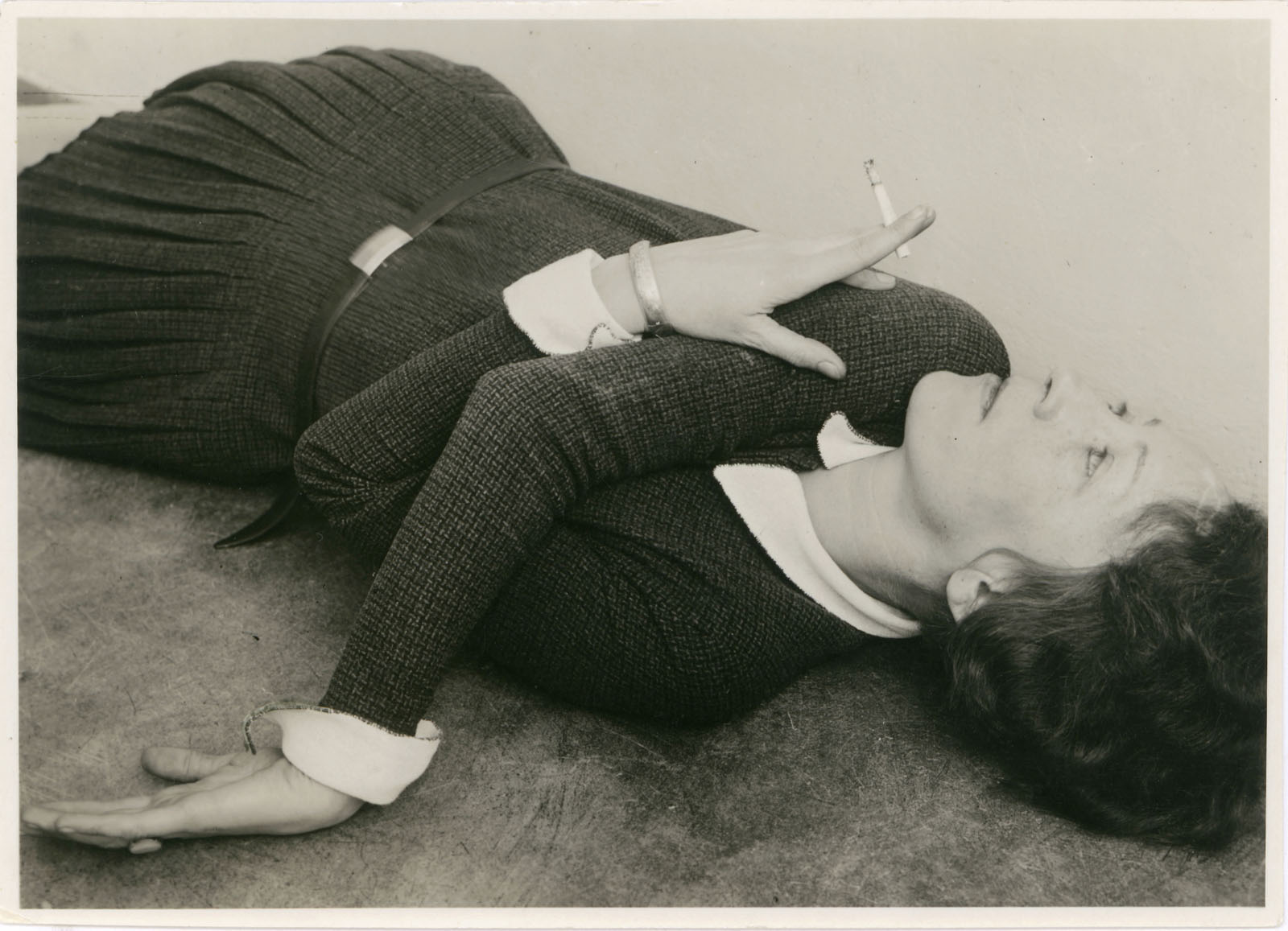
Marie-Édith Agostini. “Portraits of a Time by August and Erich Sander,” on the Wer Ist Walter? website Nd [Online] Cited 03/06/2026. Used under fair use conditions for the purposes of education and research
One of his fellow prisoners was Marcel Ancelin, born in Paris in 1923. A member of the Front National de Lutte pour la Libération et l’Indépendance de la France (National Front for the Fight for the Liberation and Independence of France) and later the FTP (Francs-Tireurs et Partisans), he was arrested by the French police on 13 August 1941. Handed over to the German authorities and sentenced to hard labour, he spent several years in camps and prisons in Germany, among them in Siegburg where he met Erich Sander. Ancelin was finally liberated from a camp near Frankfurt with other inmates by American troops in April 1945, and returned to France. On 8 November 1956, he received the official title of “deported resistance fighter”. Marcel Ancelin died in 2003, having never told his family or friends about his heroic past.
Erich Sander wrote of him in a letter to his parents: “One of the three (French men) has some very striking features, which is sure to give father some pleasure […] Very intelligent chap, by the way. He wants to come and visit me after the war.” However, Erich Sander did not live to see the end of the war. He died on 23 March 1944, after his severe abdominal pain was ignored for days by the prison authorities.
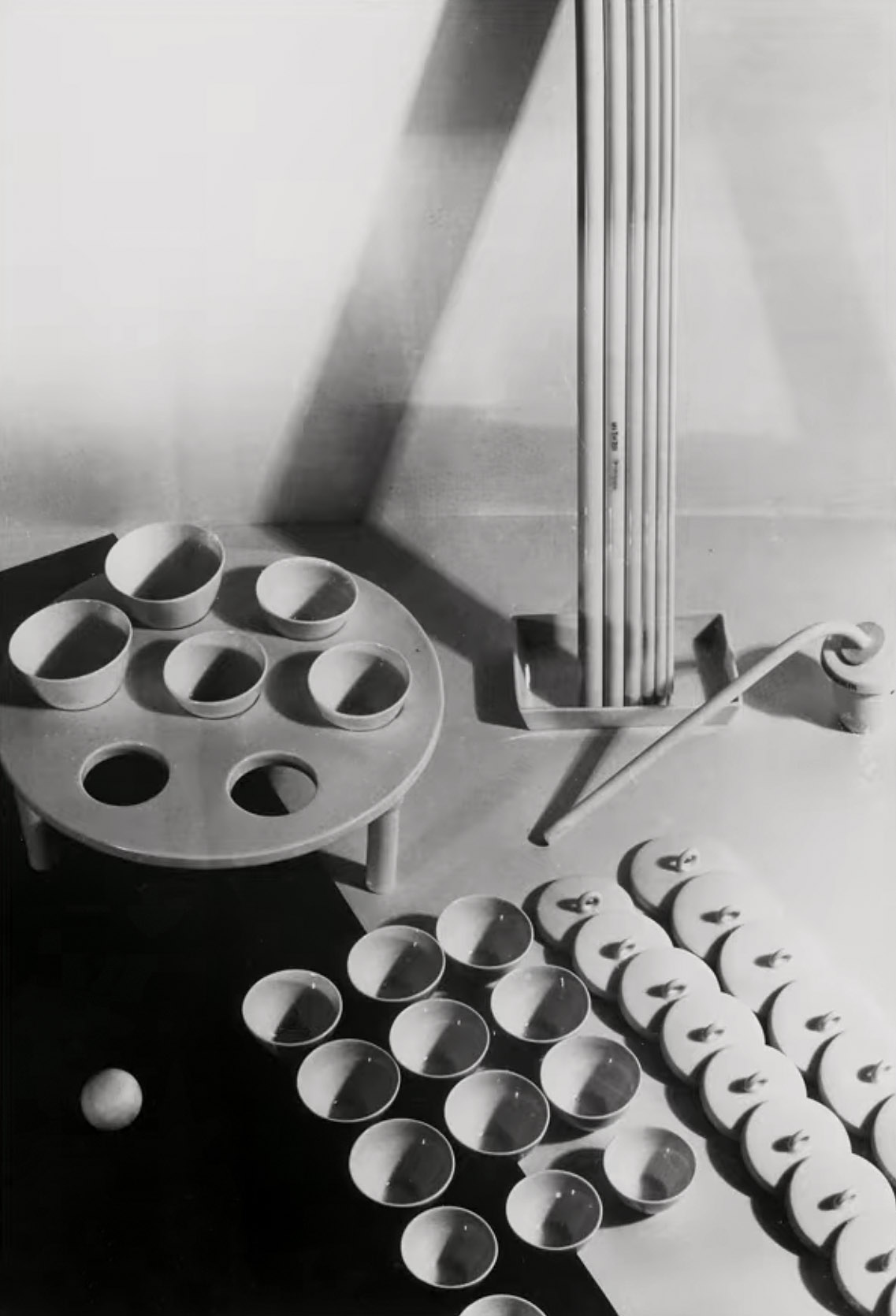
Marie-Édith Agostini. “Portraits of a Time by August and Erich Sander,” on the Wer Ist Walter? website Nd [Online] Cited 03/06/2026. Used under fair use conditions for the purposes of education and research
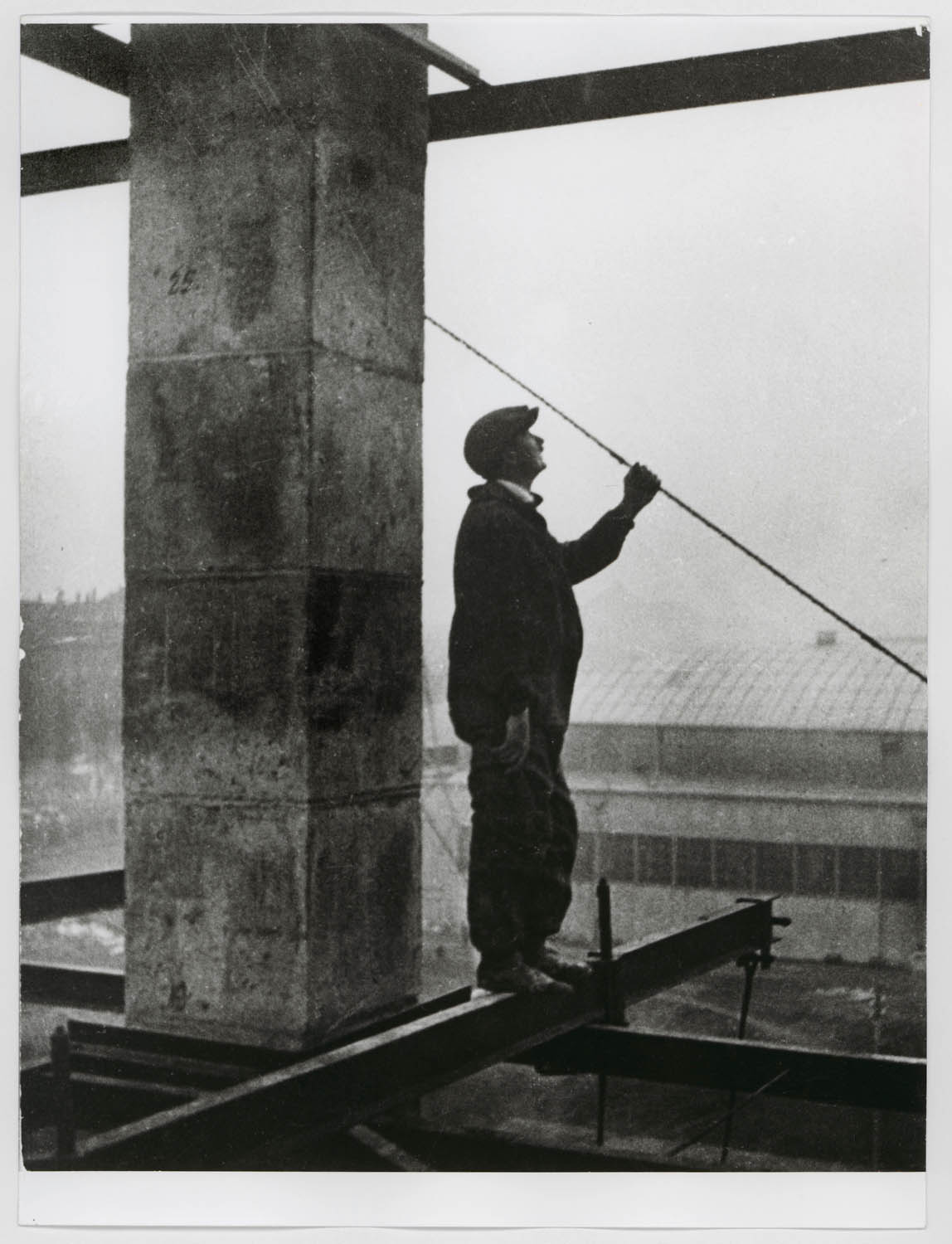
In the history of photography, few projects have proven as groundbreaking as People of the 20th Century. August Sander (1876-1964) developed his ambitious series over more than six decades, capturing the diverse social fabric of his home country of Germany during a period marked by cultural upheaval and change. A new exhibition at the Yale University Art Gallery showcases over 600 prints from this landmark work, inviting viewers to experience the breadth and depth of Sander’s vision. Never before has his output received such comprehensive treatment in a museum display.
Sander undertook to photograph people from all walks of life and organise them into groups, whether by class, gender, profession, or other traits – resulting in a sociological archive of Germany in the first half of the 20th century. The installation at the Gallery draws its structure from the typology he established: The Farmer; The Skilled Tradesman; The Woman; Classes and Professions; The Artists; The City; and The Last People. Each of Sander’s portraits at once represents an individual and a social archetype, exploring the tension between public identity and personal uniqueness. As he explained, “The individual does not make the history of his time, but he both impresses himself on it and expresses its meaning.”
In one image, the photographer’s eldest son, Erich, poses with his fellow working college students. He appears again in a photograph taken surreptitiously while imprisoned for leftist activity. Such reoccurrences make clear that Sander’s categories are not as fixed as they may at first appear, with many individuals and motifs showing up across different classifications. Further challenging the project’s claim to offer a neat and neutral study of social types is the deeply personal character of some of the pictures. Indeed, People of the 20th Century incorporates intimate portraits of Sander’s family, including the poignant My Wife in Joy and Sorrow showing his wife, Anna, with their twin infants, one of whom did not survive.
Sander was steeped in the avant-garde movements of early 20th-century Germany as he cultivated a realistic style aimed at portraying life as it was, without romanticisation. Among these influences were the Cologne Progressives, a collective of artists deeply invested in labor activism, and the New Objectivity, which countered the era’s prevailing Expressionism with a manner of ostensible impartiality or resignation. This turn away from subjective expression in art shaped Sander’s approach to framing his subjects. He situated figures carefully within their environments such that their surroundings tell parts of their stories: as in the above-mentioned Political Prisoner, the individual becomes inextricable from the context.
Following the rise to power of the National Socialist party in 1933, Sander remained in Germany and faced professional constraints due to the nature and content of his artwork. Defying the representational mandates imposed by Nazi ideology, he photographed marginalised peoples – those with disabilities, the unemployed, and the persecuted. Even when an early version of the project was destroyed by the regime, Sander persisted, documenting the stories of those often overlooked by society. Through his lens, every subject was given dignity and importance, creating a stark contrast to the dehumanising rhetoric of this period.
Judy Ditner is the Richard Benson Curator of Photography and Digital Media
Hans Heinz Lüttgen (actually Theodor Heinrich Lüttgen; born 16. November 1895 (according to another source 1898) in Düsseldorf; died July 1976 in New York) was a German architect, interior designer and artist. According to his designs, the Sartory rooms and settlement buildings in Riehl were built in Cologne, as well as a series of single-family houses and villas in Wuppertal, which can be attributed to the style of the New Building of the 1920s and 1930s and now have “cult status”.
Hedwig Mankiewitz (also known as Hedwig Hausmann, 1893–1974) was a German painter and a vital, yet frequently under-appreciated, figure in the European avant-garde and Dada art movements. She is best known as the second wife, muse, and collaborator of the influential Dadaist Raoul Hausmann. Mankiewitz played a crucial role in providing emotional and financial support to Hausmann, especially during the tumultuous years when he was classified as a banned artist under the Nazi regime.
Vera Broïdo (7 September 1907 – 11 February 2004) was a Russian-born writer and a chronicler of the Russian Revolution, as one who grew up through it and lost her mother to its aftermath…
During her time in Berlin in the 1920s, Broido met avant garde artist and Dadaist turned society photographer Raoul Hausmann and became his lover and muse, living in a ménage à trois with him and his wife Hedwig in the fashionable Charlottenburg district of Berlin between 1928 and 1934.
Martha Dix (née Lindner; other married name Koch; July 19, 1895 – March 6, 1985) was a German goldsmith and silversmith who was the wife of the painter Otto Dix.
Wilhelm Heinrich Otto Dix (German; 2 December 1891 – 25 July 1969) was a German painter and printmaker, noted for his ruthless and harshly realistic depictions of German society during the Weimar Republic and the brutality of war. Along with George Grosz and Max Beckmann, he is widely considered one of the most important artists of the Neue Sachlichkeit.
Martha Dix and the renowned German painter Otto Dix formed one of the most creatively documented couples of the Weimar era. She was a trained goldsmith and silversmith, and was her husband’s primary muse.
The twelve portraits in this series were taken by the German photographer August Sander in Cologne and nearby towns around 1938, at the height of Hitler’s power. Although Sander’s Jewish subjects were probably friends and neighbours, he labelled these photographs simply “Persecuted Jews.” It is possible that Sander, who was not Jewish, made the photographs to help desperate German Jews obtain exit papers. Sander himself had been a victim of Nazi persecution in 1934 when many of his plates were destroyed by the authorities and his eldest son was imprisoned for his antifascist activities.
A huge two-part posting on one of the most important photographers of the 20th century, an extravaganza of 77 photographs by August Sander (German, 1876-1964) from his magnum opus People of the 20th Century (Menschen des 20. Jahrhunderts) (1892-1954) which consists of over 600 photographs organised into seven categories and 49 portfolios (see below).
There are many photographs I have never seen before in the two postings.
I have ordered the photographs in the postings by alphabetical title not by Sander’s classificatory system. It’s just much easier for me to make the postings this way (which takes many hours). As the text from the curator Judy Ditner makes clear, “Sander’s categories are not as fixed as they may at first appear, with many individuals and motifs showing up across different classifications.”
“What makes Sander’s work so powerful is the tension: each portrait is at once a deeply personal image and a window into a broader social type.”
Many thankx to the Yale University Art Gallery for allowing me to publish the photographs in the posting. All photographs were printed by Gerd Sander (German, 1940-2021). Please click on the photographs for a larger version of the image. See Part 2 of the posting.
“The individual does not make the history of his time, but he both impresses himself on it and expresses its meaning.”
This category serves as the foundation of his taxonomy, celebrating the “earthbound man” and rural life.
~ Portfolio of Archetypes ~ The Young Farmer ~ The Farmer’s Child and the Mother ~ The Farmer’s Family ~ The Farmer—His Life and Work ~ Farming Types
2/ The Skilled Tradesman
This volume highlights individuals in specialized professions and manual labor.
~ The Skilled Tradesman ~ The Apprentice / Journeyman ~ The Workshop and Factory ~ The Technician and Inventor
3/ The Woman
Dedicated to women in various life stages, social roles, and occupations.
~ The Woman ~ The Family ~ The Woman at Work ~ The Intellectual and Practical Occupation ~ The Elegant Woman
4/ Classes and Professions
This category spans the socio-economic hierarchy, from physical laborers to the political and business elite.
~ The Working Youth ~ The Soldier ~ The Student ~ The Scholar and Academic ~ The Clergy ~ The Jurist / Official ~ The Teacher and Educator ~ The Doctor and Pharmacist ~ The Artist (Performing Arts) ~ The Businessman ~ The Industrialist / Banker ~ The High Nobility
5. The Artists
This group focuses entirely on the creative and bohemians fields.
~ The Musician ~ The Poet ~ The Painter and Sculptor ~ The Architect
6. The City
An exploration of urban environments, public life, and various services or entertainment figures.
~ The City ~ The Representative of the City ~ The City Dweller ~ The Street Life ~ The Waiter / The Publican / The Cook ~ The Entertainer / The Showman ~ The Travel / The Circus / The Fairground ~ The Types and Originals ~ The Sportsman (Winter/Summer) ~ The Soldier ~ The Emigrant
7. The Last People
This poignant category focuses on the margins of society, specifically the themes of old age, sickness, and death.
~ Old Age ~ The Blind ~ The Sick ~ The Insane / Idiots ~ The Dying / The Dead
The German photographer August Sander (1876-1964) is one of the most significant and influential photographers of the 20th century. This exhibition presents Sander’s ambitious and groundbreaking portrait series Menschen des 20. Jahrhunderts (People of the 20th Century) (1892-1954), a canonical work in the history of photography. The presentation – of over 600 prints from the series – represents the most comprehensive installation of his life’s work.
For this monumental archive of modern humanity, Sander photographed German citizens from all classes and backgrounds, organising them into categories such as “The Skilled Tradesman,” “The Farmer,” “The Artist,” and “The Woman.” Sander conceived of the project in the 1920s, during the Weimar Republic, but included in it photographs he had made as early as 1892. His portrayal of marginalised individuals, including people with disabilities and the unemployed, provided visibility to those often excluded from mainstream representations and drew the ire of the Nazis. Striking for their unflinching realism and skilful observations of character, his images reflect the changing social landscape of Germany in the first half of the 20th century.
Text from the Yale University Art Gallery website
Installation views of the exhibition August Sander’s People of the 20th Century at the Yale University Art Gallery, New Haven, CT, February – June, 2026
The Westerwald (German pronunciation: [ˈvɛstɐvalt]; literally ‘Western forest’) is a low mountain range on the right bank of the river Rhine in the German federal states of Rhineland-Palatinate, Hesse and North Rhine-Westphalia. It is a part of the Rhenish Massif (Rheinisches Schiefergebirge or Rhenish Slate Mountains). Its highest elevation, at 657 m above sea level, is the Fuchskaute in the High Westerwald.
The Eifel (German: [ˈaɪfl̩]; Luxembourgish: Äifel, pronounced [ˈæːɪ̯fəl]) is a low mountain range in western Germany, eastern Belgium and northern Luxembourg. It occupies parts of southwestern North Rhine-Westphalia, northwestern Rhineland-Palatinate and the southern area of the German-speaking Community of Belgium.
The Yale University Art Gallery announced August Sander’s People of the 20th Century, an ambitious exhibition showcasing the work of one of the most influential photographers of the modern era.
August Sander (1876-1964) devoted decades of his career to capturing and cataloguing the sociocultural spectrum of German life. In his groundbreaking series, Menschen des 20. Jahrhunderts (People of the 20th Century) (1892–1954), he attempted to create a comprehensive sociological archive by photographing individuals from various classes, occupations, and backgrounds and then arranging the images into archetypal groups and subgroups, such as “The Skilled Tradesman,” “The Farmer,” “The Artist,” and “The Woman.” The Gallery’s presentation retains his original organisational framework.
Taken in sum, Sander’s portraits show his keen observation of Germany’s shifting cultural landscape in the first half of the 20th century. The extensive project encompasses independent works, commissioned sittings, and scenes of family life. They reflect a diverse nation rooted in tradition yet transformed by war and increasing urbanisation. Each photograph presents not just a generalised type but an individual, highlighting the tension between social conformity and personal identity. Sander’s categories, while systematic, also reveal an inherent fluidity, as certain types and individuals appear across different groupings, challenging strict classification.
Heavily influenced by the Cologne Progressive and New Objectivity art movements, Sander adopted a representational style free from idealisation. His inclusion of marginalised groups, such as people with disabilities and the unemployed, asserted the value of each individual, subverting the exclusionary ideologies of National Socialism. In 1936 the Nazi regime destroyed an early version of his work. Undeterred, Sander continued to photograph throughout World War II, subsequently adding portfolios titled “Foreign Workers,” “The Persecuted” (depicting German Jews), and “Political Prisoners” (with images that his son Erich smuggled out of prison, where he was serving a 10-year sentence for anti-Nazi activities).
Although Sander produced tens of thousands of negatives for this project, the majority were destroyed during World War II and in a 1946 house fire. The gelatin silver prints in the exhibition were created from surviving original glass-plate negatives by Gerd Sander, the artist’s grandson, in the 1990s, guided by vintage prints and the artist’s extensive notes. These prints are recent acquisitions by the Yale University Art Gallery, made possible through the Société Anonyme Acquisition Fund and the Katharine Ordway Fund.
The exhibition comprises the full set of 619 prints, making it the most comprehensive museum presentation of Sander’s landmark project to date. By expanding the boundaries of portraiture into social commentary, exploring the concept of collective belonging, and experimenting with the artistic potential of the archive, Sander’s work remains remarkably resonant and impactful today.
Raoul Hausmann was an Austrian artist and writer. One of the key figures in Berlin Dada, his experimental photographic collages, sound poetry, and institutional critiques would have a profound influence on the European Avant-Garde in the aftermath of World War I.
Further challenging the project’s claim to offer a neat and neutral study of social types is the deeply personal character of some of the pictures. Indeed, People of the 20th Century incorporates intimate portraits of Sander’s family, including the poignant My Wife in Joy and Sorrow showing his wife, Anna, with their twin infants, one of whom did not survive.
Judy Ditner is the Richard Benson Curator of Photography and Digital Media
Yale University Art Gallery Spring 2026 Magazine
Yale University Art Gallery 1111 Chapel Street (at York Street) New Haven, CT
Large format camera Front on, realist, sharply defined objective documentary photographs of architectural structures of the urban landscape In series
In reality:
Structures cut from the fabric of existence Isolated by the subjective eye of the photographer and the lens of the camera What to include or exclude
(In the contemporary photographs of the spaces in the posting, the shops are surrounded by trees and vegetation, they have transformed from kiosk to shuttered shop, from boutique to florist: the architecture remains but traces of previous incarnations are visible only in these photographs. Nothing is permanent except change).
In the photographs of kiosks, corner shops and industrial gates, it is the minutiae of existence (not as mere decoration) that gives these supposedly objective photographs their subjective power. For example, “the photo Trinkhalle, Köln-Nippes – with its ice cream and newspaper advertisements and vending machines for chewing gum and cigarettes” is more than amusing and engaging – it depicts vital, archaeological evidence of the transitory nature of human existence in the pyschogeography of the urbanscape.1
In Ronkholz’ photographs of the terrain (from the Latin terra, earth/land) of the city, her exploration of urban environments emphasises interpersonal connections to places – and testify “to social, cultural, and economic change and shows how people shape the world around them.” (Press release)
This is the fluid boundary that these photographs so beautifully and incisively depict: the interface between architecture and human, between order (form/surface) and chaos (placement of insolent signs), between utopian perfection and dystopian unruliness – the one coexistent with the other.
This confluence of pattern and randomness, objective and subjective, is what gives these photographs of the everyday a lasting significance.
Dr Marcus Bunyan
1/ Guy Debord (November 1956). “Theory of the Dérive”. Les Lèvres Nues (9). Translated by Ken Knabb.
Many thankx to Huis Marseille, Amsterdam for allowing me to publish the photographs in the posting. Please click on the photographs for a larger version of the image.
Sankt-Franziskus-Straße 104-107 Düsseldorf
Installation views of the exhibition Designed World: Through the Eyes of Tata Ronkholz (1940-1997) at Huis Marseille, Amsterdam, February – June, 2026
Installation view of the exhibition Designed World: Through the Eyes of Tata Ronkholz (1940-1997) at Huis Marseille, Amsterdam, February – June, 2026 showing at left, Tata Ronkholz’s Düsseldorf Harbor (1980)
Tata Ronkholz was one of the first students in Bernd and Hilla Becher’s famous photography class at the Kunstakademie Düsseldorf. Her fellow students included Candida Höfer, Axel Hütte, Thomas Ruff and Thomas Struth, all of whom became artists of world renown. Oddly enough Tata Ronkholz’ work is only now receiving the same international acclaim. The retrospective Designed World: Through the Eyes of Tata Ronkholz (1940-1997), on show at Huis Marseille from 14 February until 21 June 2026, is the first large-scale tribute to this many-sided artist.
Objective-documentary photography
Tata Ronkholz was a photographer, product designer, and interior architect. Her photographic series lie within the tradition of objective, documentary photography, a tradition which was decisively shaped by the artist couple Bernd and Hilla Becher. Like theirs, Ronkholz’ work is characterised by clear compositions, a serial approach, and a documentary focus on architectural structures and everyday architectures. Using a large-format camera she produced sharply defined and realistic photographs in which the subject matter, rather than the individual style of the artist, takes centre stage. Her work is predominantly in black and white, although colour images also appear, demonstrating her ambition to engage with the artistic colour photography that emerged in Germany during the 1970s and ’80s, following the example set by the New Color Photography introduced by the American photographers Stephen Shore and William Eggleston.
Kiosks and corner shops
Tata Ronkholz became known for her appealing series of kiosks (Trinkhallen) and small shops that capture typical moments of urban everyday culture. These were photographed between 1977 and 1985, particularly in neighbourhoods of Cologne and Düsseldorf, in the Ruhr area, as well as in Leverkusen and Krefeld. For example, the photo Trinkhalle, Köln-Nippes – with its ice cream and newspaper advertisements and vending machines for chewing gum and cigarettes – is as amusing and engaging as Boutique, Köln-Mülheim in which, according to the store sign, alongside clothing records were also for sale. The photographs illustrate the extent to which product offerings, decoration, and advertising in public spaces has been transformed. Tata Ronkholz’ choice of subject means that her work indirectly testifies to social, cultural, and economic change and shows how people shape the world around them.
Industrial gates
Another significant series is dedicated to industrial gates, photographed between 1977 and 1985. The sober black-and-white images of these gates, with their grids and frameworks, offer glimpses into the interiors of industrial areas. In the photographs the gates function as interfaces between private and public space, between interior and exterior, and between activity and calm. Their aesthetic, reminiscent of abstract artworks, imbues the everyday with a new significance.
Collaboration with Thomas Struth
In 1979 Ronkholz, together with her fellow student Thomas Struth, began work on an impressive documentary series on Düsseldorf’s Rheinhafen. The project originated from the planned redevelopment of this historic harbour area – a site that, in its original form, was considered an industrial area of significant urban historical and architectural importance. Together they set out to document the harbour in its entirety, capturing its historic buildings, technical installations, and operational structures. In carefully composed images they recorded façades, interiors, silos, warehouses, crane structures, and harbour basins, before these elements partially disappeared or were fundamentally altered during the restructuring.
Tata Ronkholz as product designer
Between 1961 and 1965 Ronkholz studied at the Werkkunstschule Krefeld (an academy of applied art) with a focus on furniture design, and subsequently worked as a freelance designer until 1977. The exhibition also explores this aspect of Ronkholz’ oeuvre, including depictions of geometrically shaped furniture and lighting fixtures as well as designs for office and cafeteria furniture. Ronkholz’ designs are characterised by clear forms and functional elegance. Finally, the retrospective also presents early photographs of architectural forms created in 1975/76 in Italy and France, revealing her strong affinity for aspects of the ‘designed world’ across different areas of life.
Ronkholz’ estate, acquired in 2011 by VAN HAM Art Estate in Cologne, forms the basis of the exhibition alongside the holdings of Stadtmuseum Düsseldorf. Significant contributions have also been made from the in-house collections of Die Photographische Sammlung/SK Stiftung Kultur – who also curated the exhibition – and through loans from private collections.
Book
The exhibition is accompanied by a catalogue, Tata Ronkholz: Gestaltete Welt. Eine Retropektive (2025, Schirmer/Mosel Verlag GmbH), with texts in German and English. It is available from the Huis Marseille museum shop (€49.90).
You must be logged in to post a comment.