Exhibition: ‘Women Photographers 1900-1975: A Legacy of Light’ at NGV International, Melbourne, Part 1

Exhibition dates: 28th November, 2025 – 3rd May, 2026

Curator: Maggie Finch, Curator of Photography at the NGV
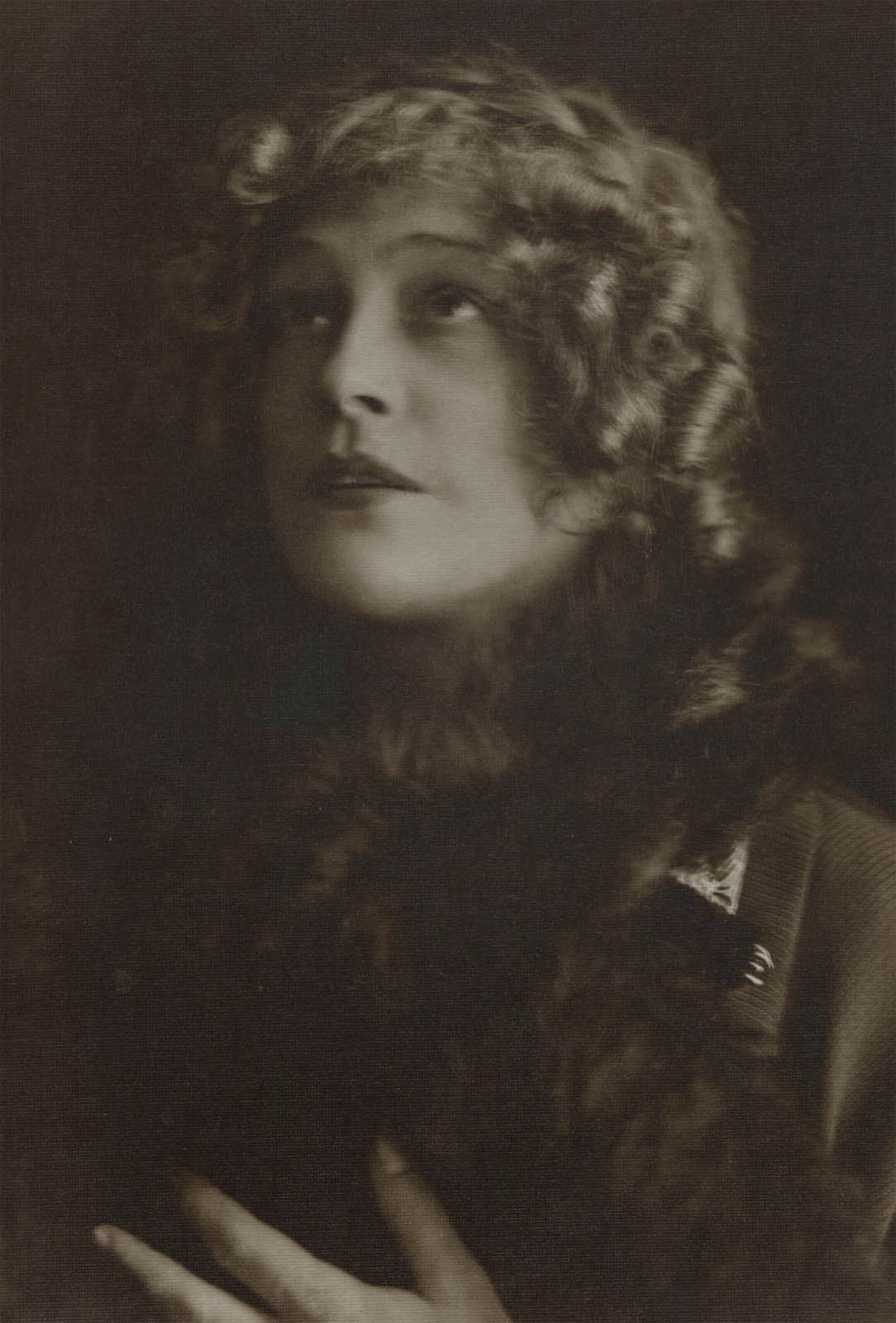
 

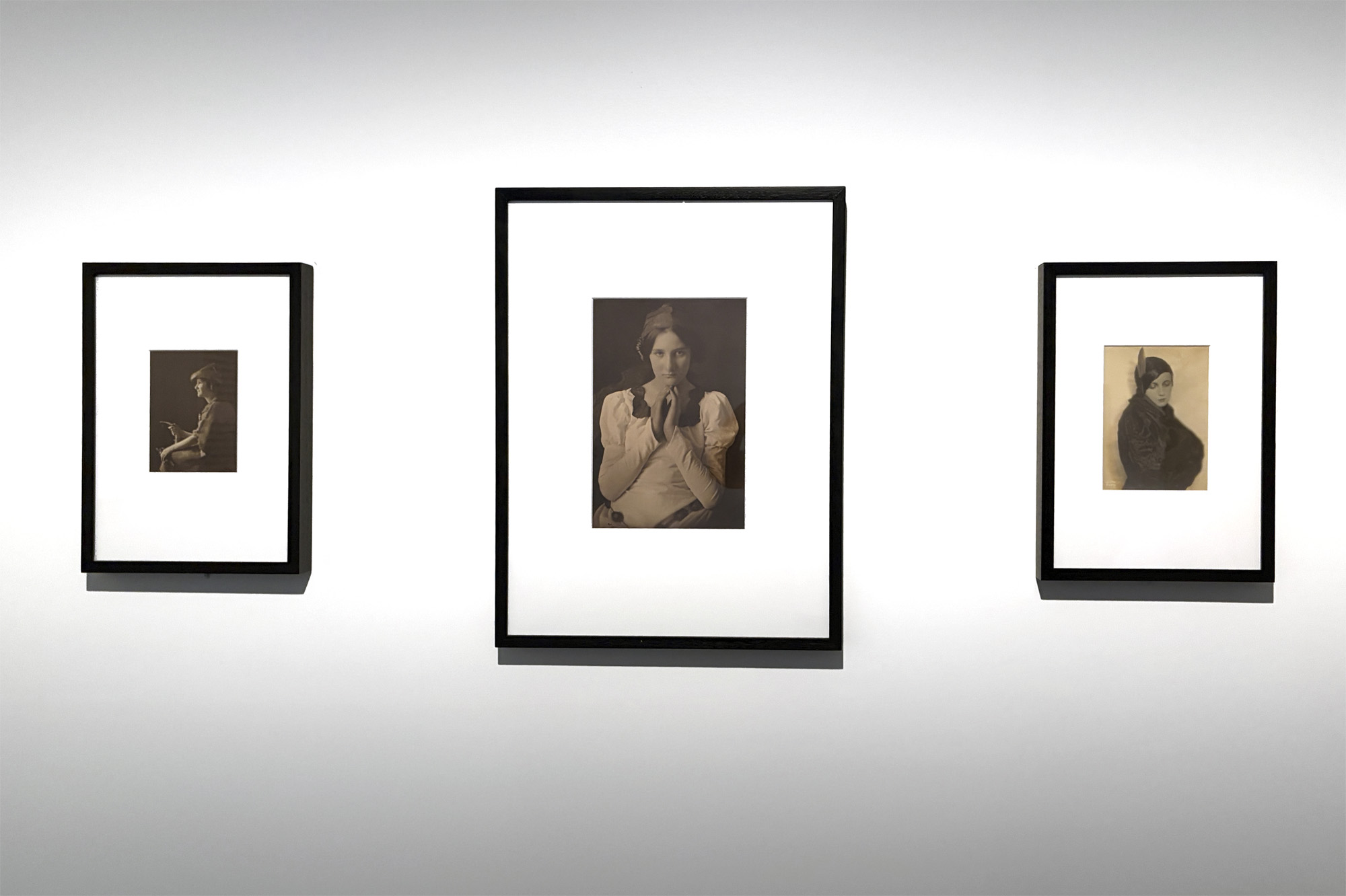
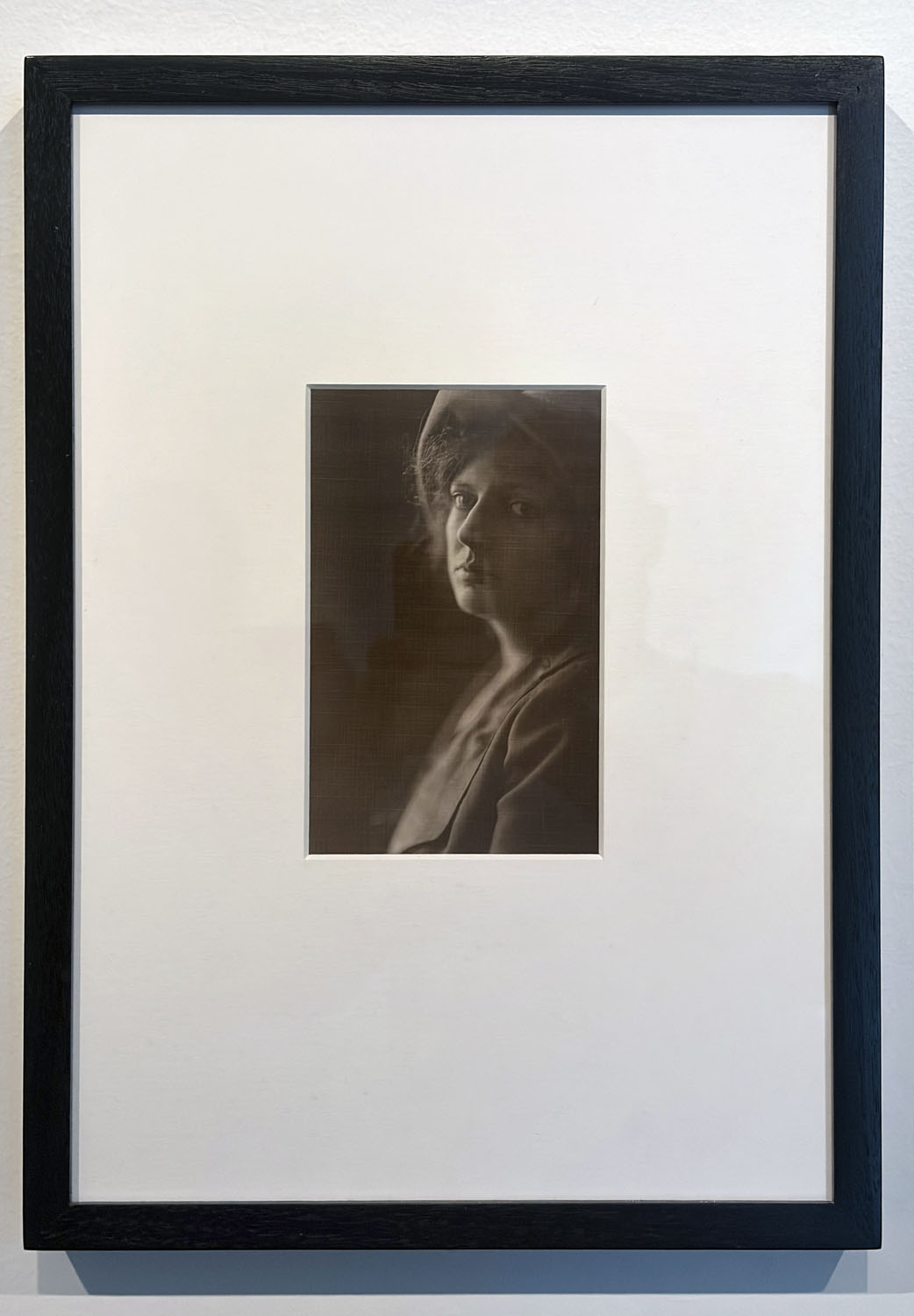
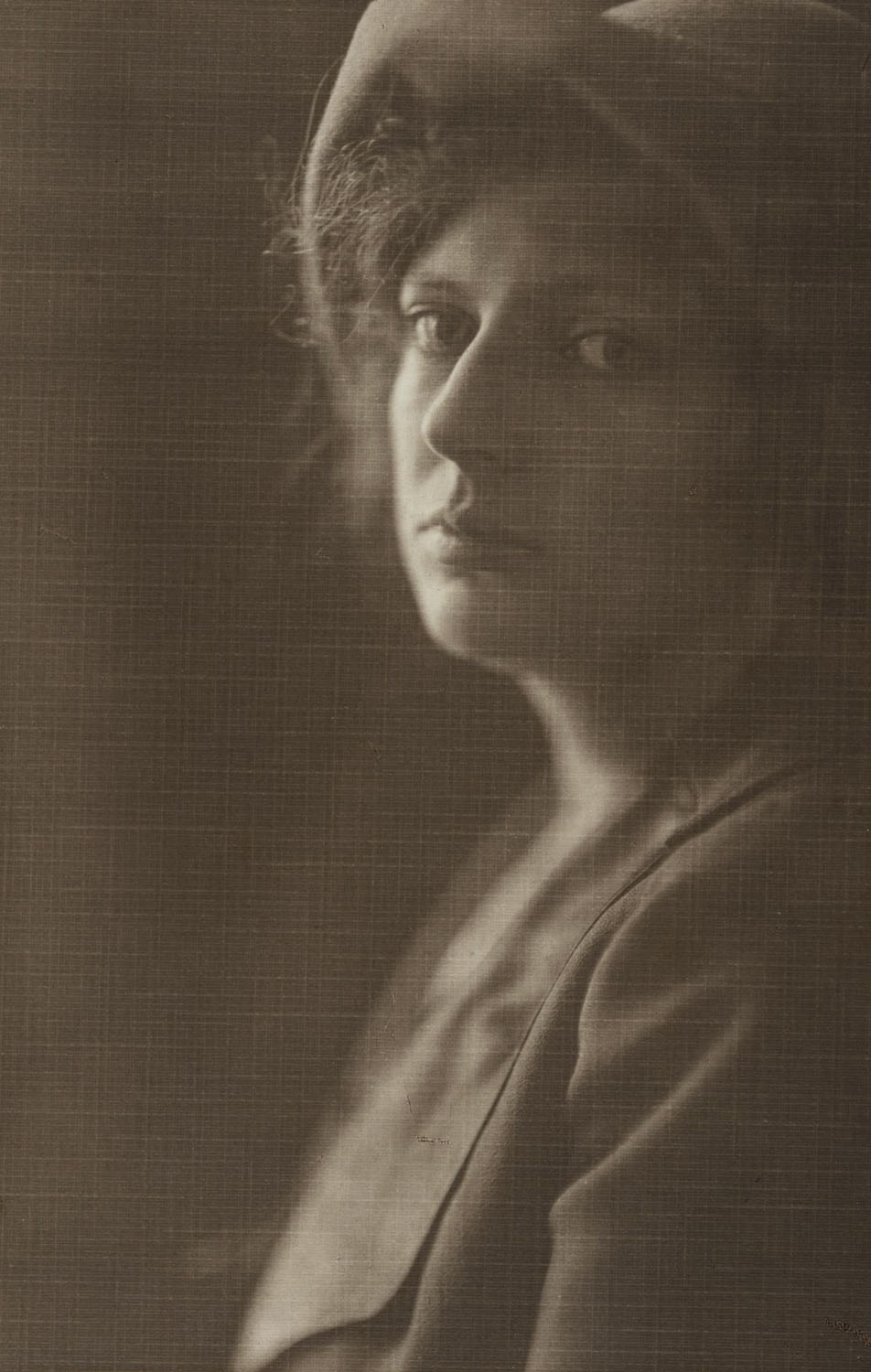
Mina Moore (New Zealand, 1882-1957) 'Nellie Stewart' c. 1913-1916


Mina Moore (New Zealand, 1882-1957)
Nellie Stewart
c. 1913-1916
Gelatin silver photograph
18.6 x 12.7cm (image)
National Gallery of Victoria, Melbourne
Gift of the Latrobe Collection, State Library of Victoria, 1992


Sisters May and Mina Moore operated their photography studio from 1913 in the newly completed Auditorium Building at 167 Collins Street, Melbourne. This building also housed a concert hall, where recitals, operas and music performances were presented. The location was particularly advantageous for the photographers as it provided a steady stream of performers and productions in need of promotional portraits.

Wall text from the exhibition

Nellie Stewart, born Eleanor Stewart Towzey (1858-1931) was an Australian actress and singer, known as “Our Nell” and “Sweet Nell”. Born into a theatrical family, Stewart began acting as a child. As a young woman, she built a career playing in operetta and Gilbert and Sullivan operas.


It’s great to have a record of this extensive photography exhibition at the National Gallery of Victoria, Melbourne

In this first part of the exhibition, Part 1 of a huge two-part posting on Art Blart (posting proceeds as in a walk through of the exhibition), highlights for me included:

~ Two photographs by the under appreciated Bahaus artist and self taught photographer Gertrud Arndt (German, 1903-2000) whose portraits of friends, still-lifes, and performative self-portrait images are rarely seen

~ Six small, intense, jewel-like photographs by Bauhaus student Yamawaki Michiko (Japan, 1910-2000, worked in Germany 1930-1932) of “new women” and street corners in Ginza, Japan which were a revelation for their beauty, pictorial composition, tonality, spatiality and physical presence of the image

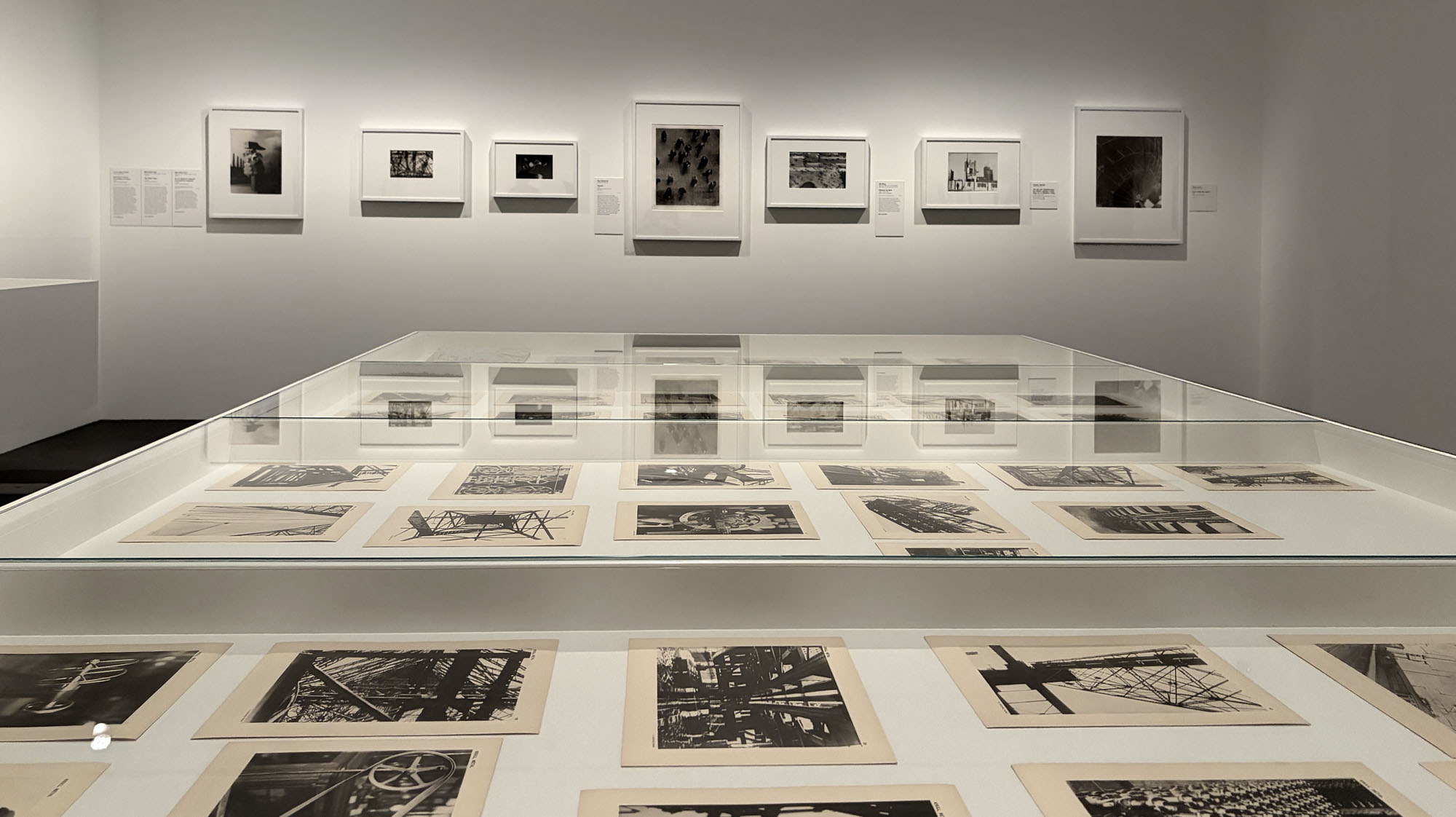
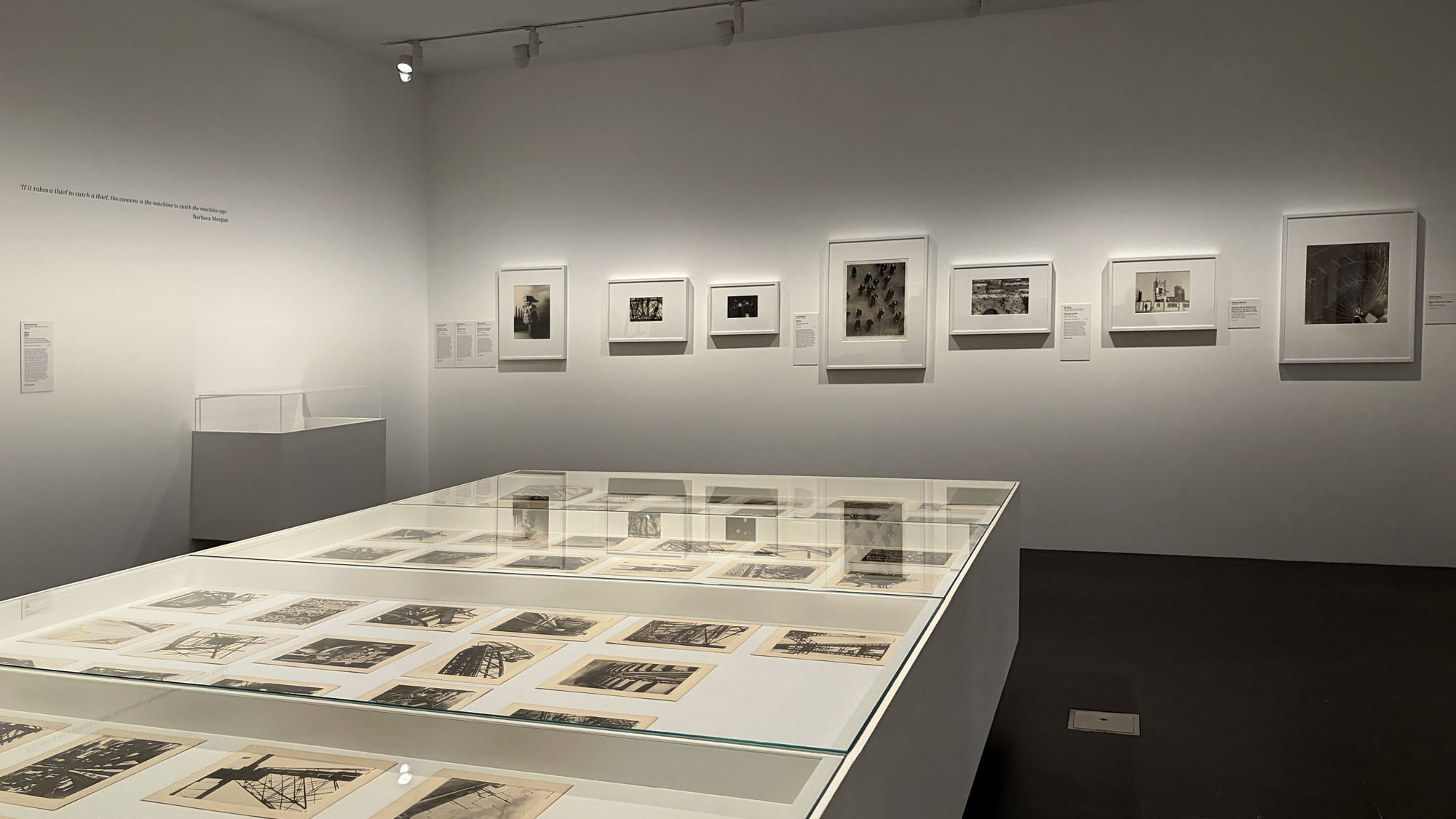
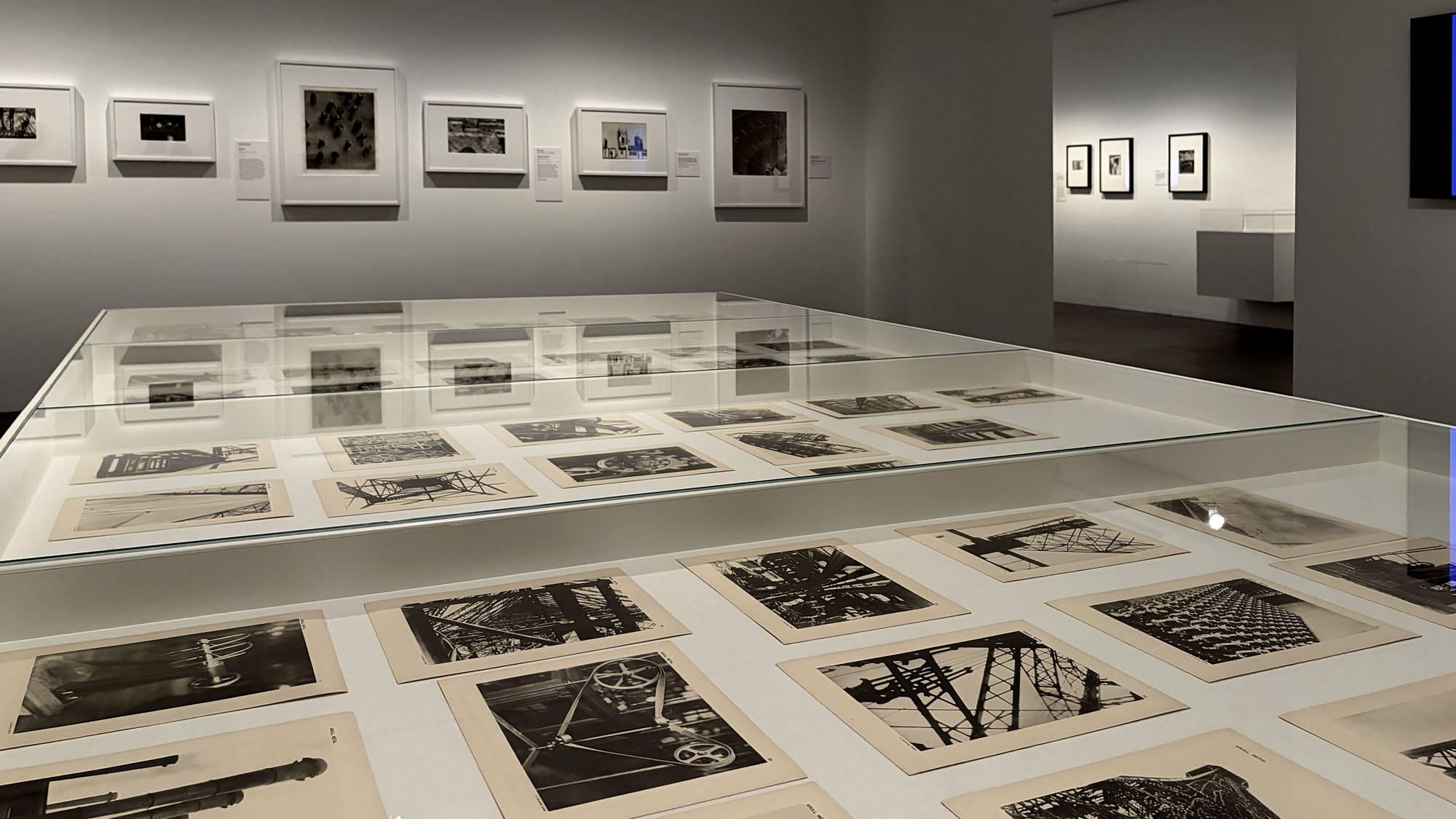
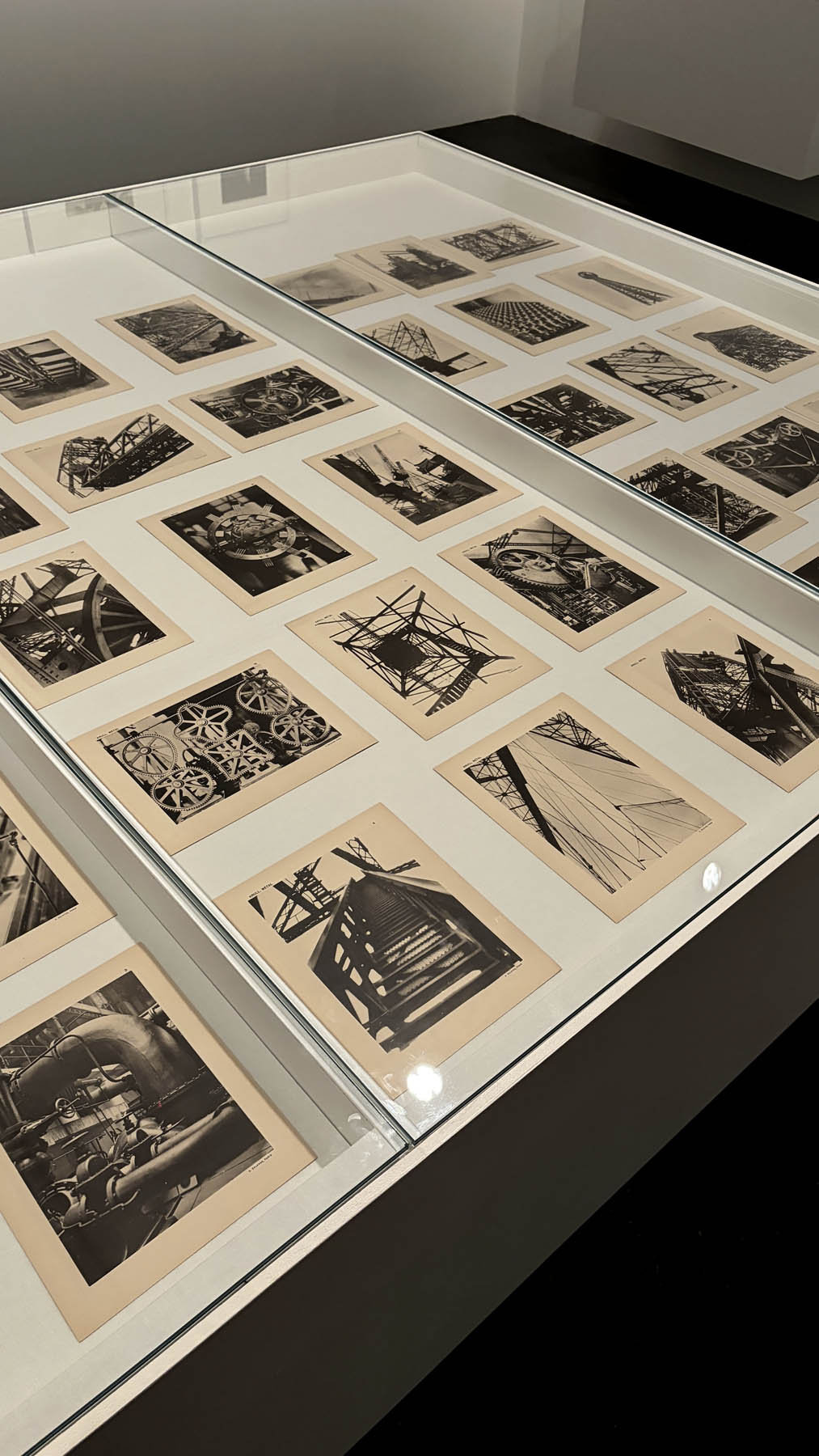
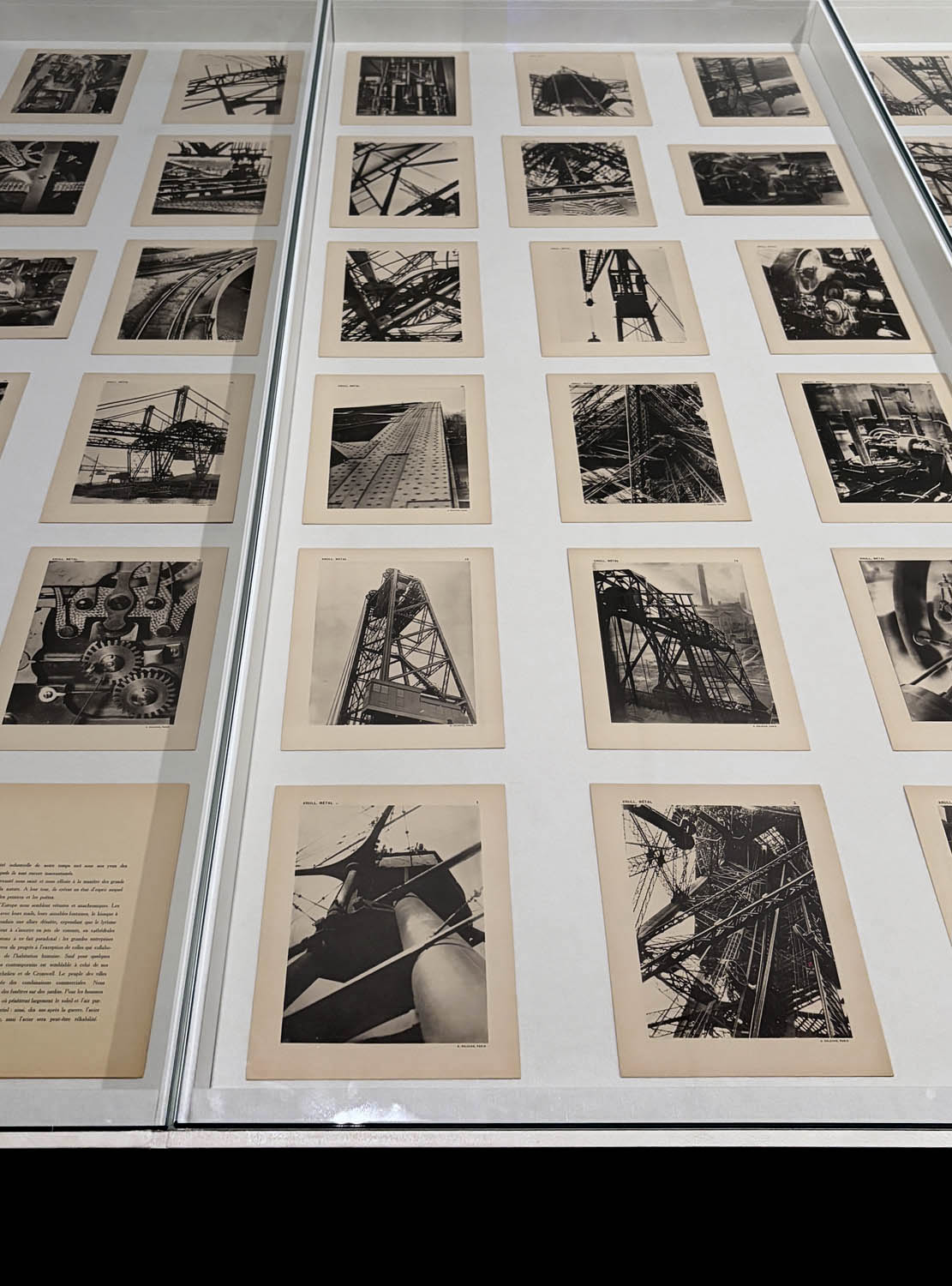
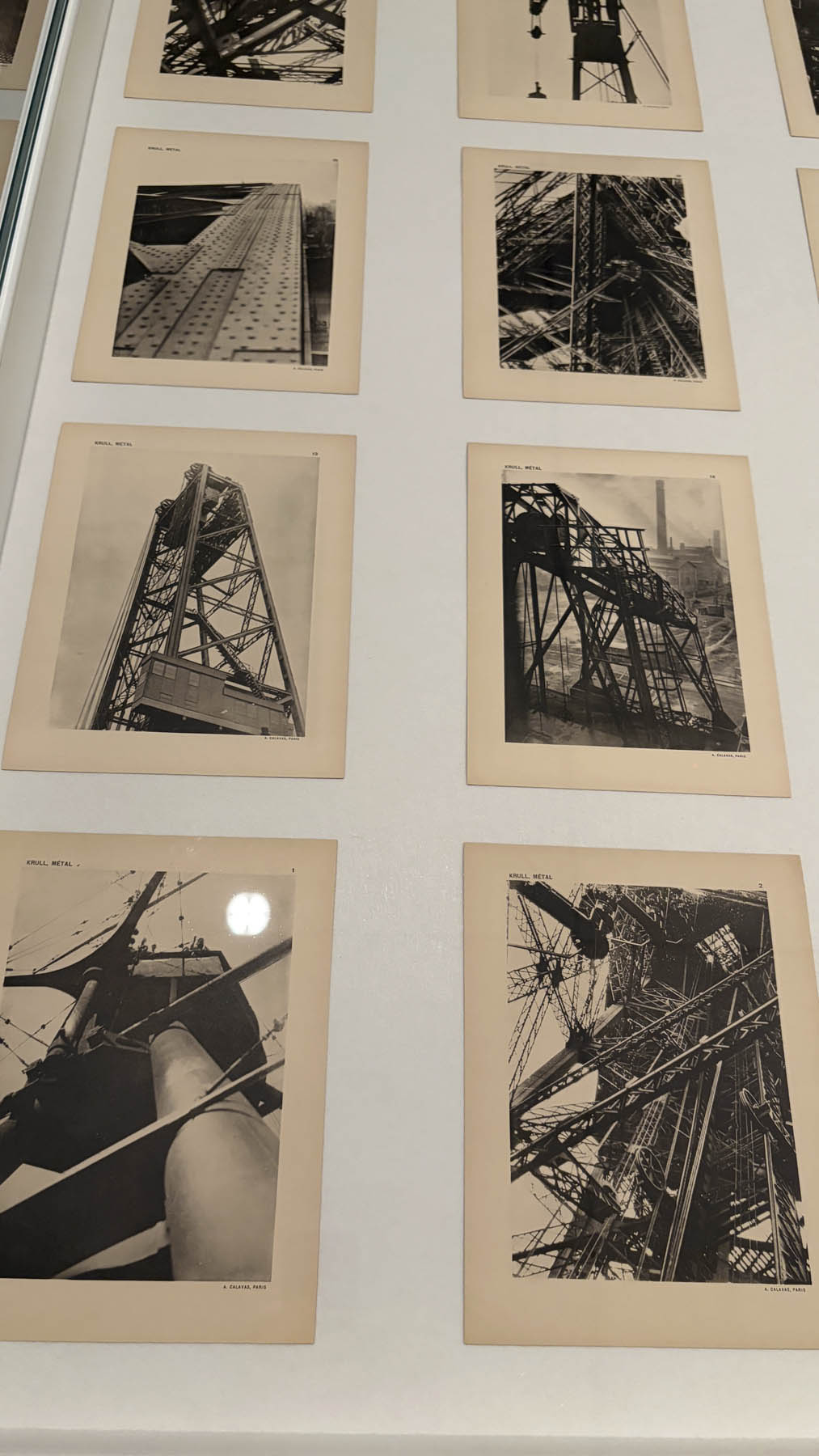
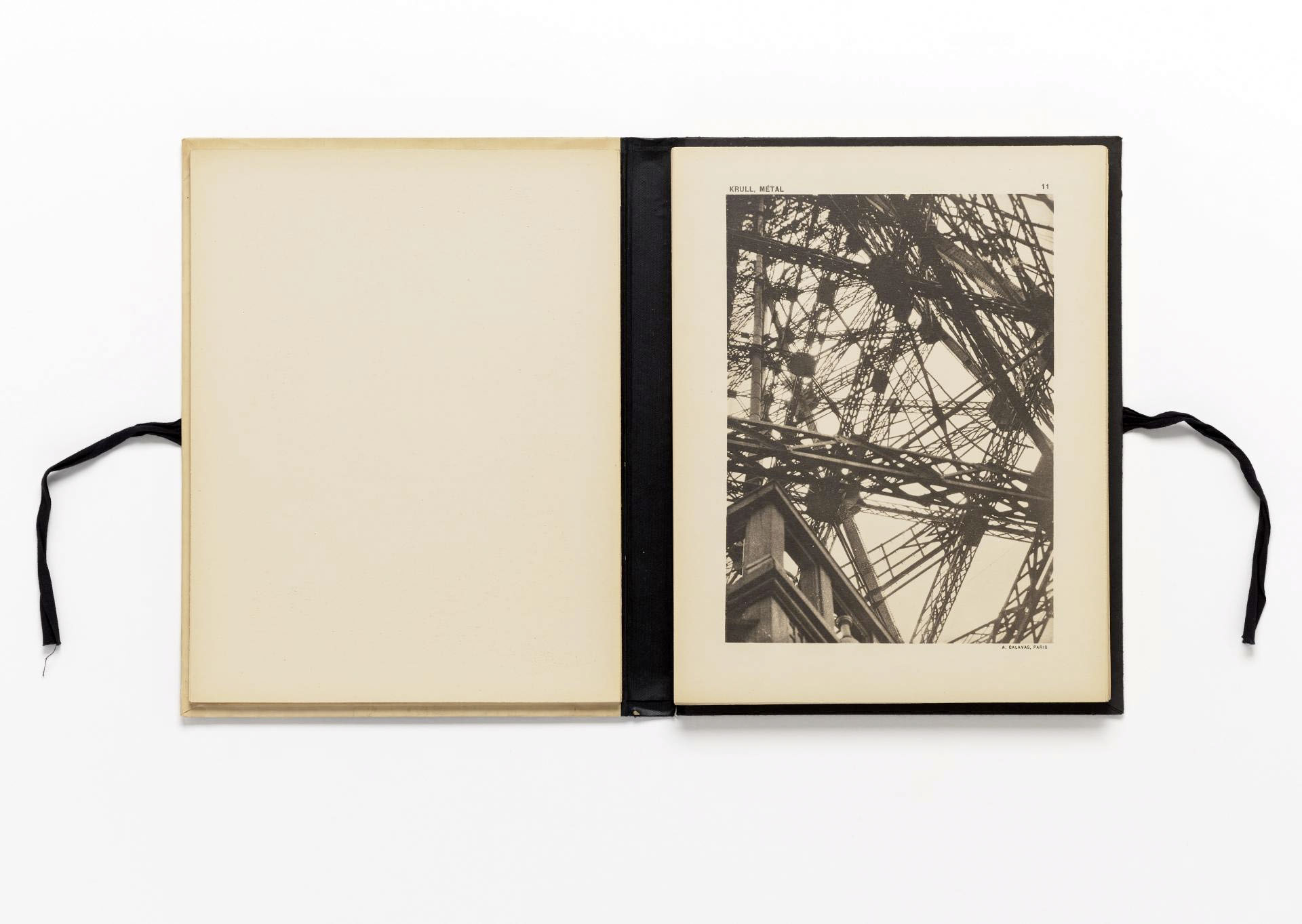
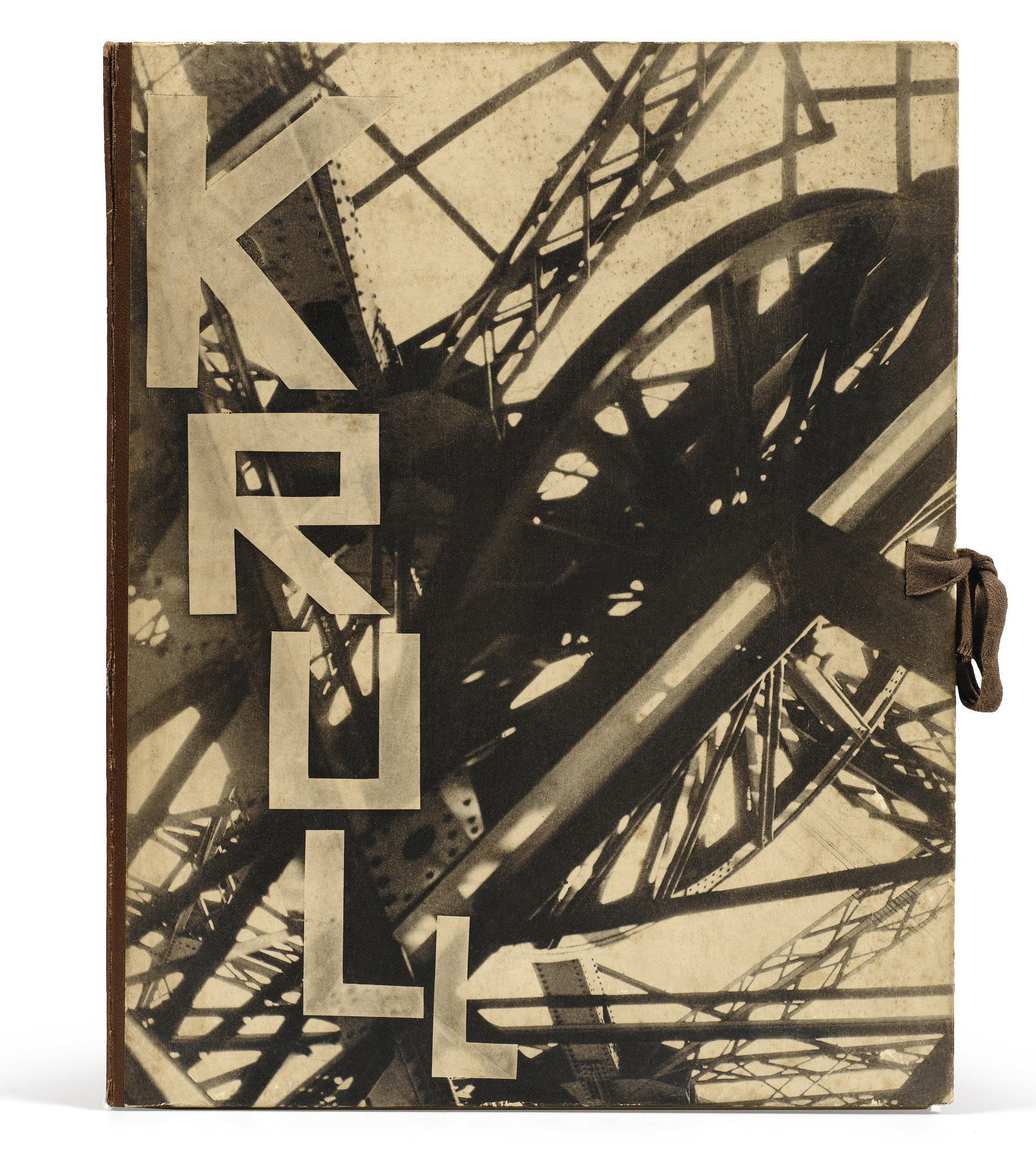
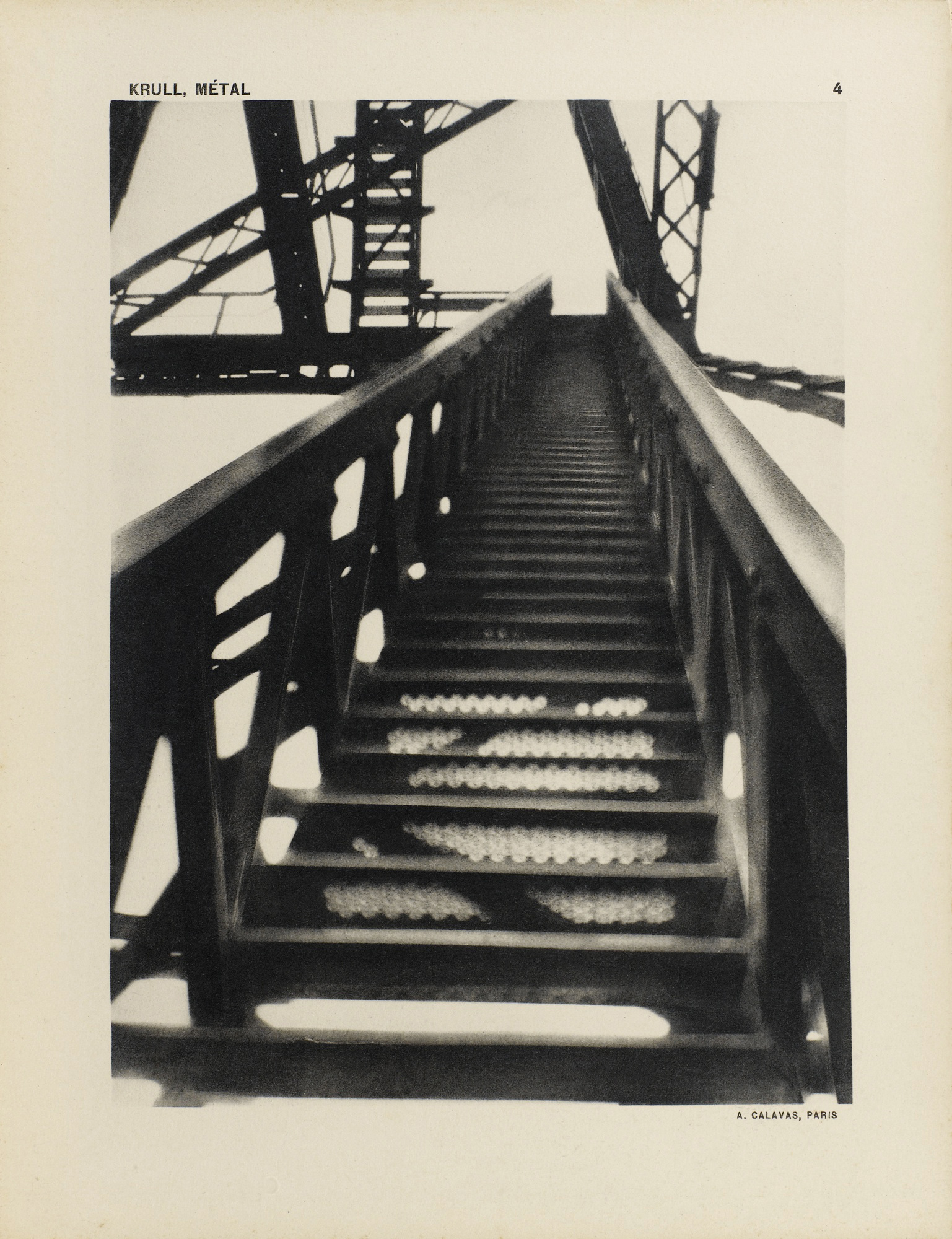
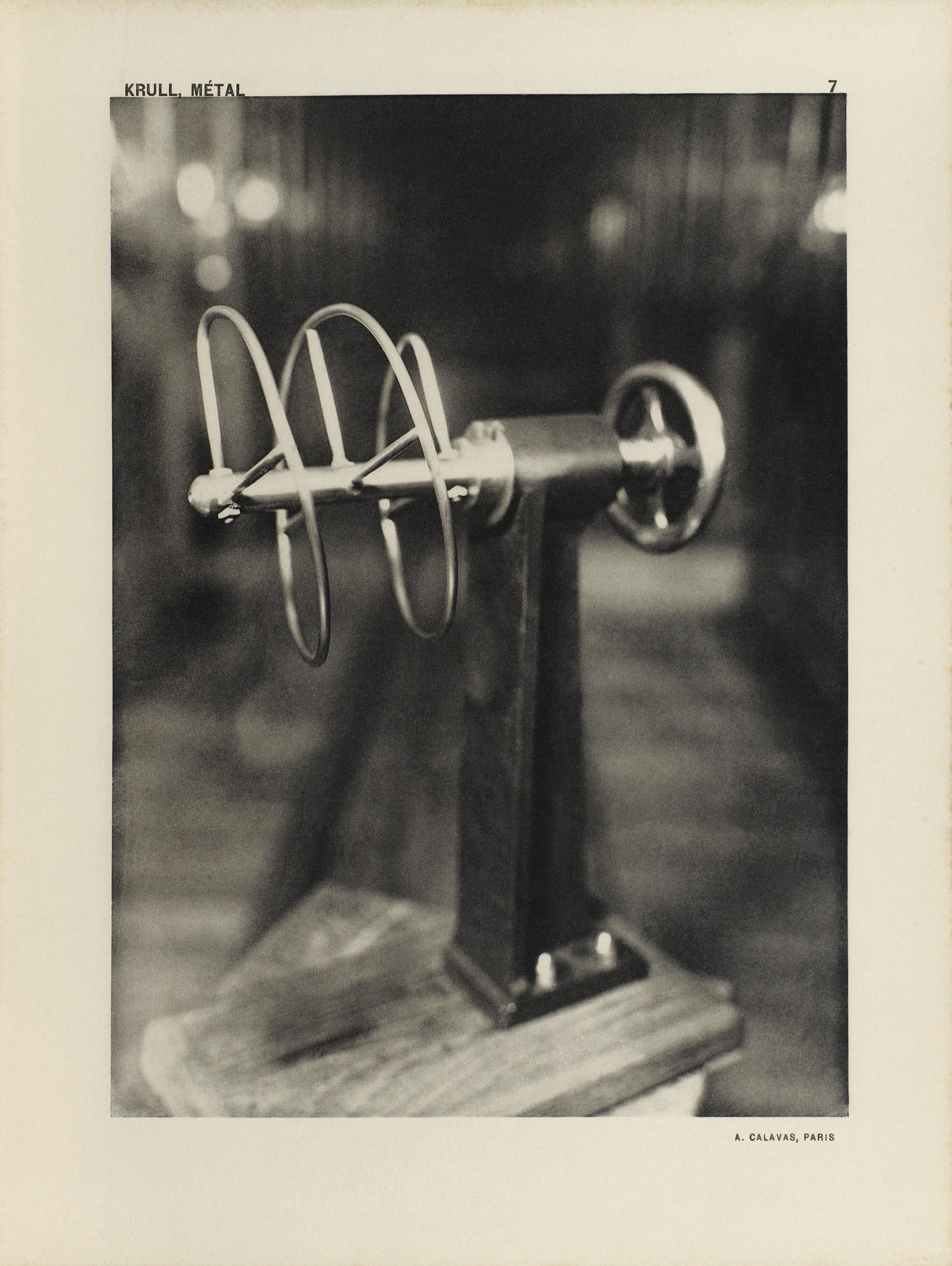
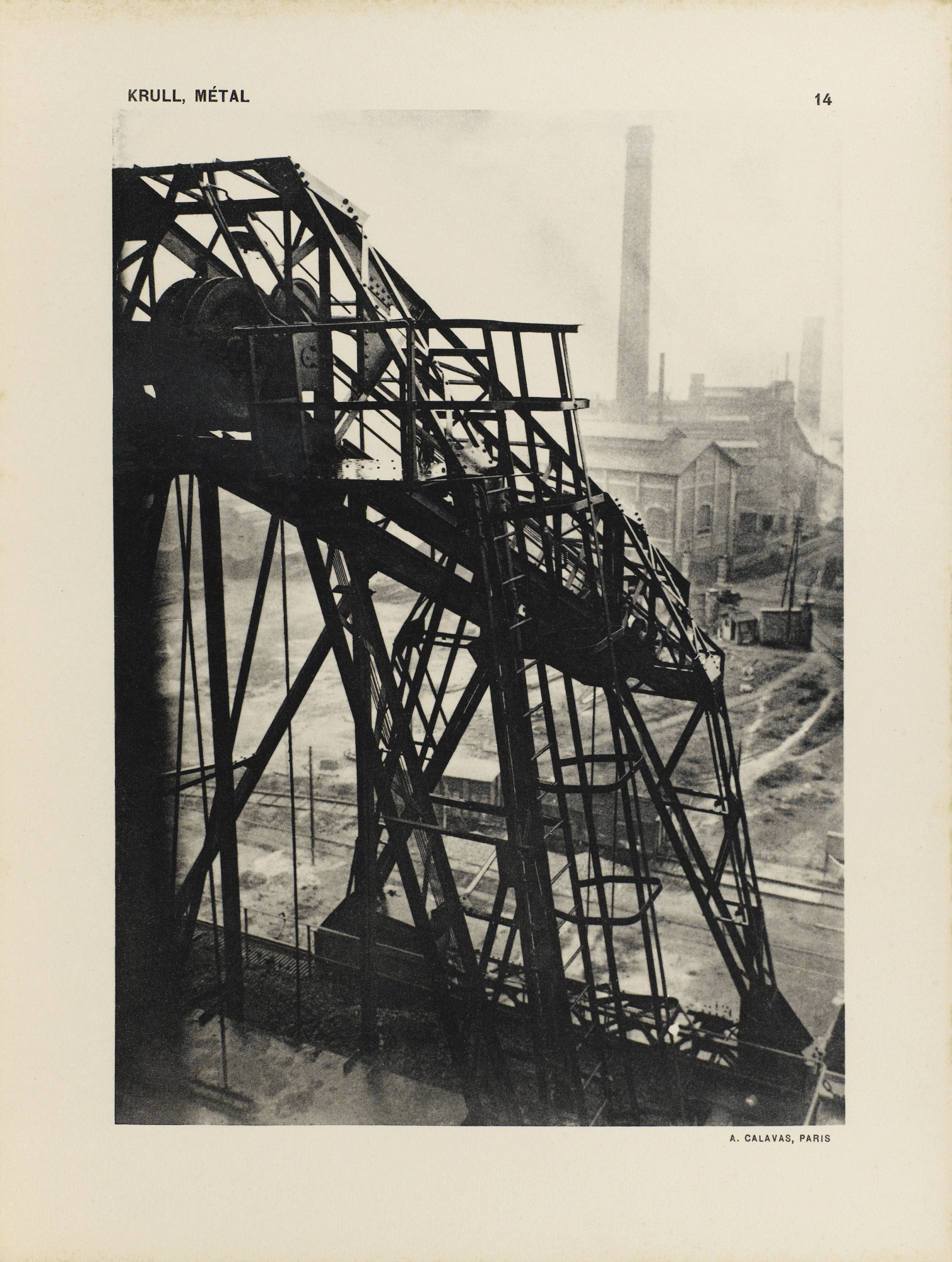
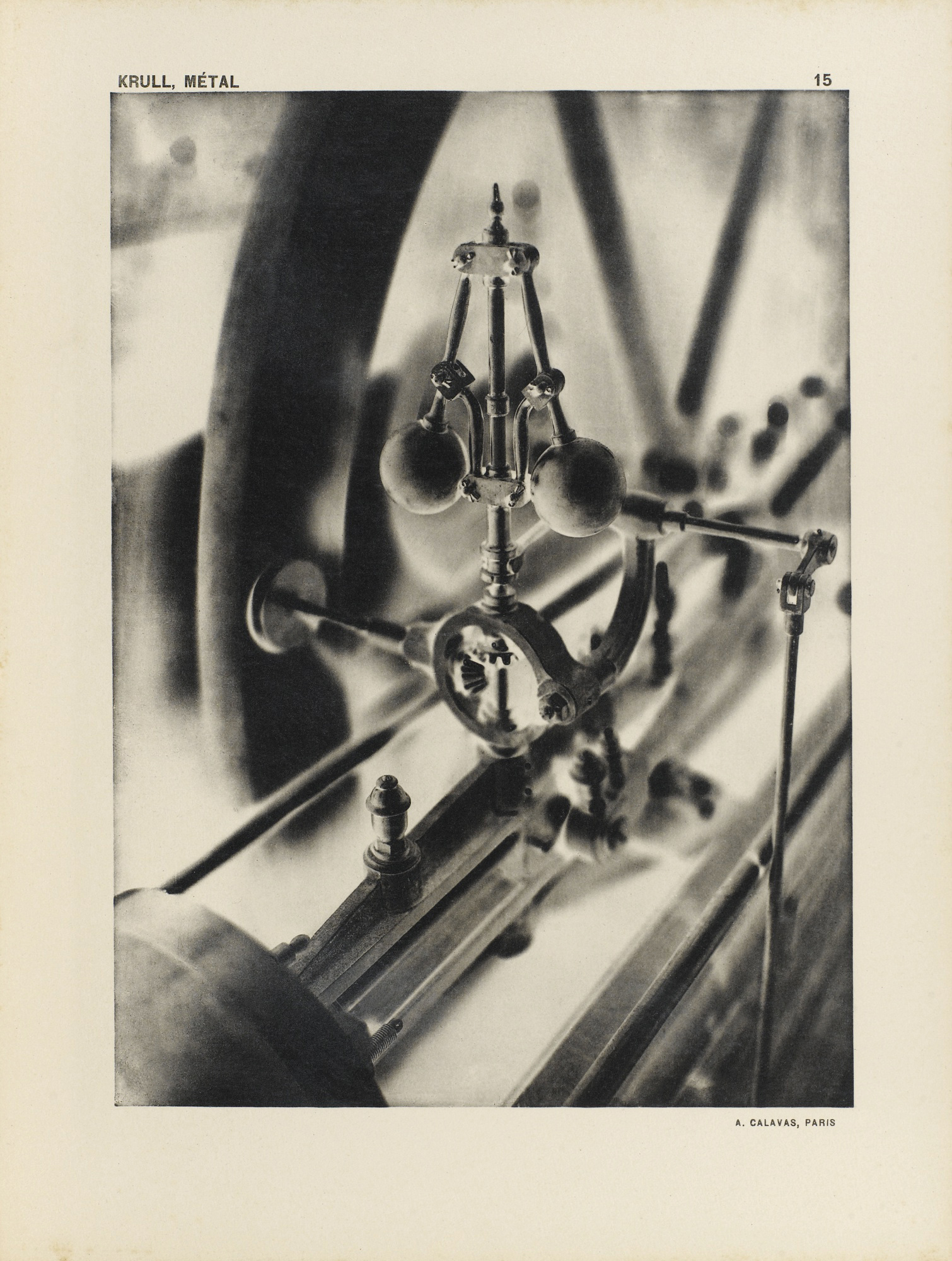
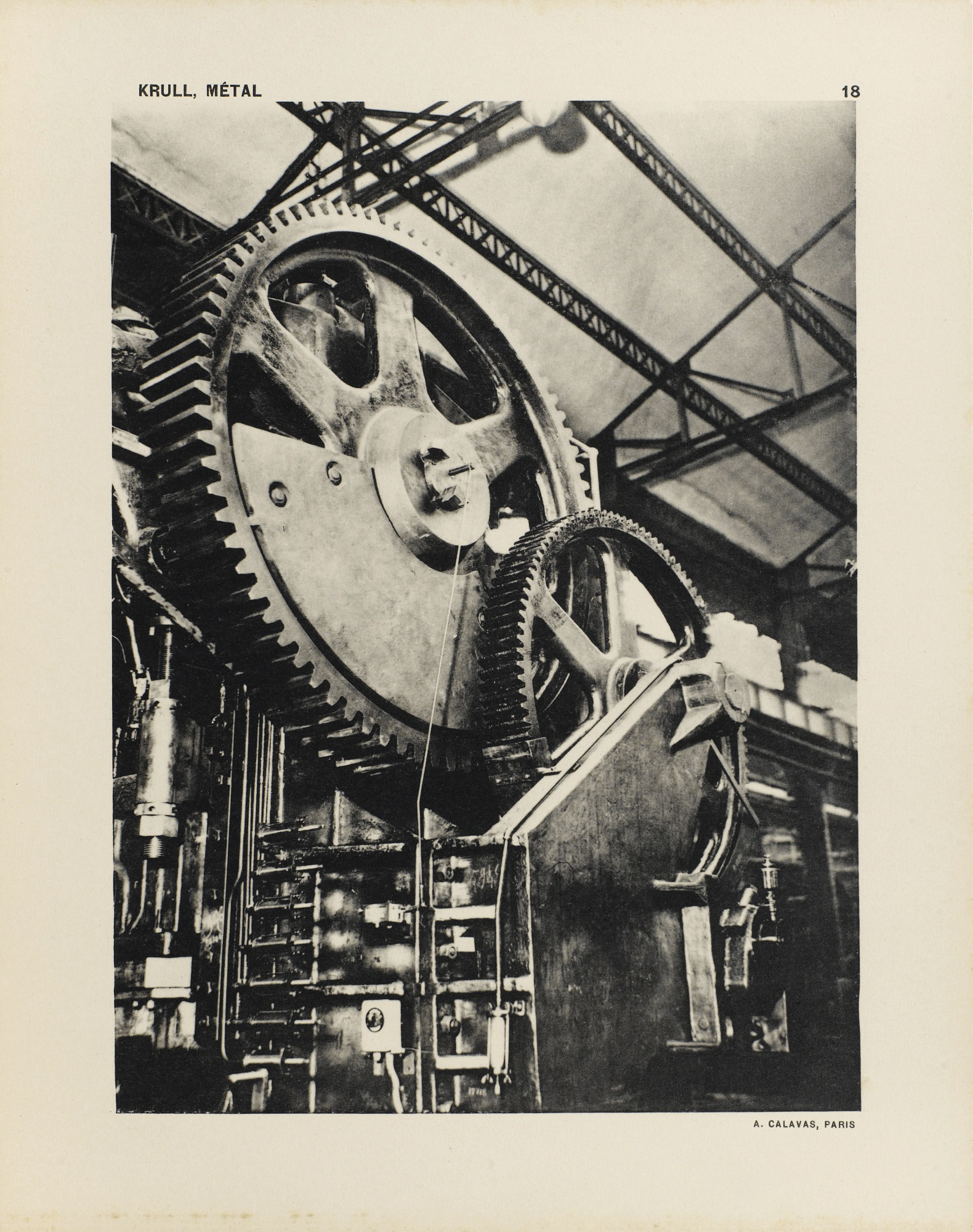
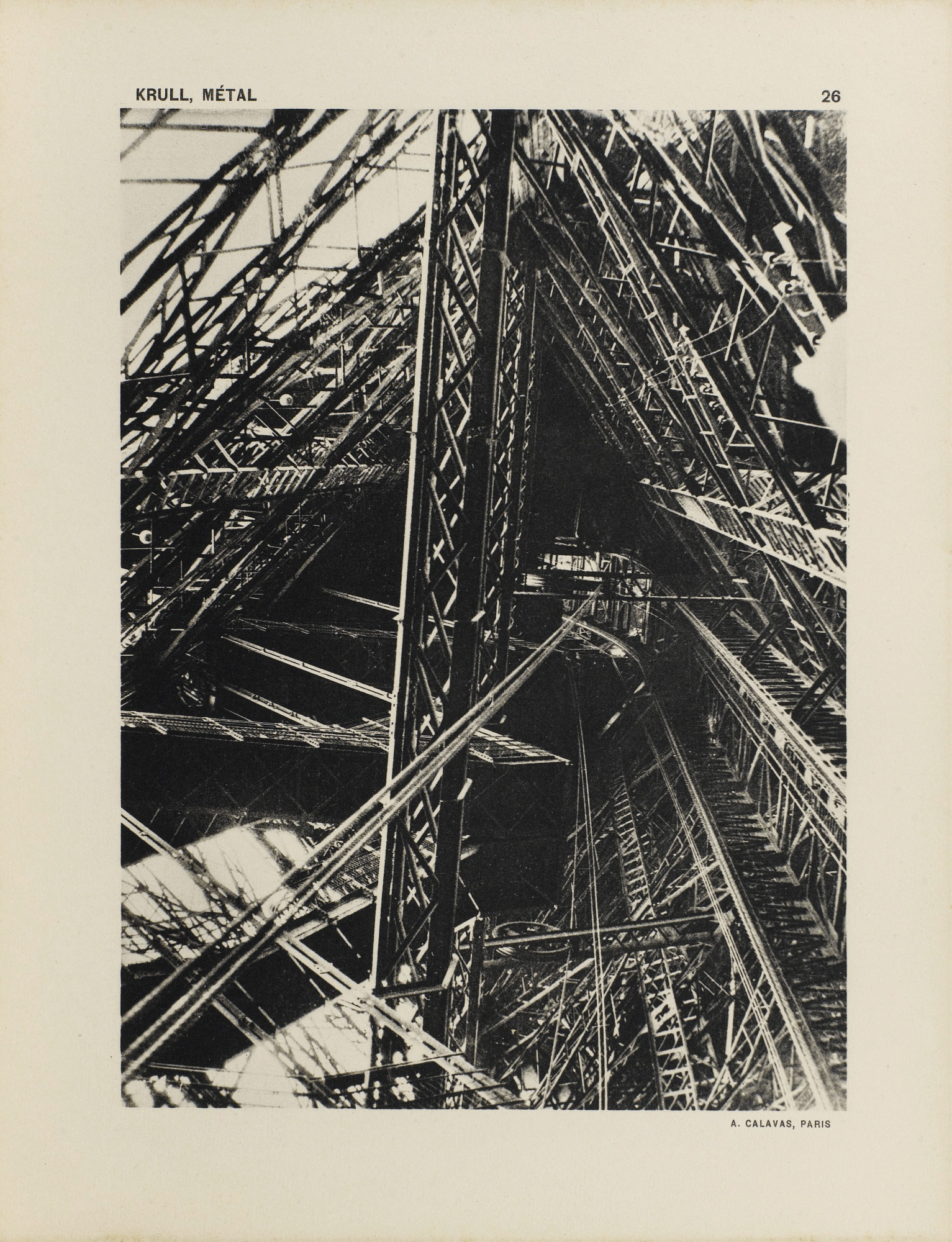
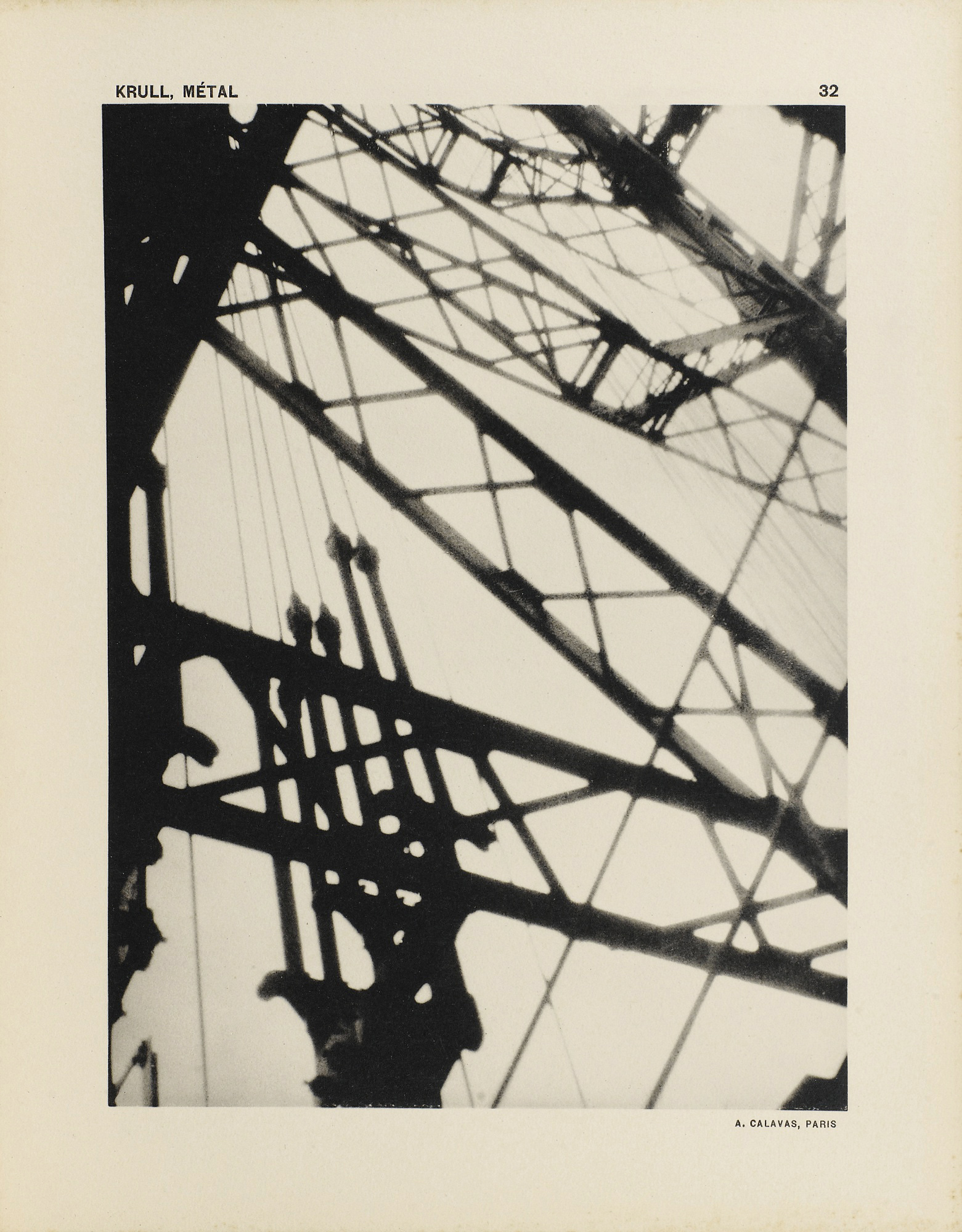
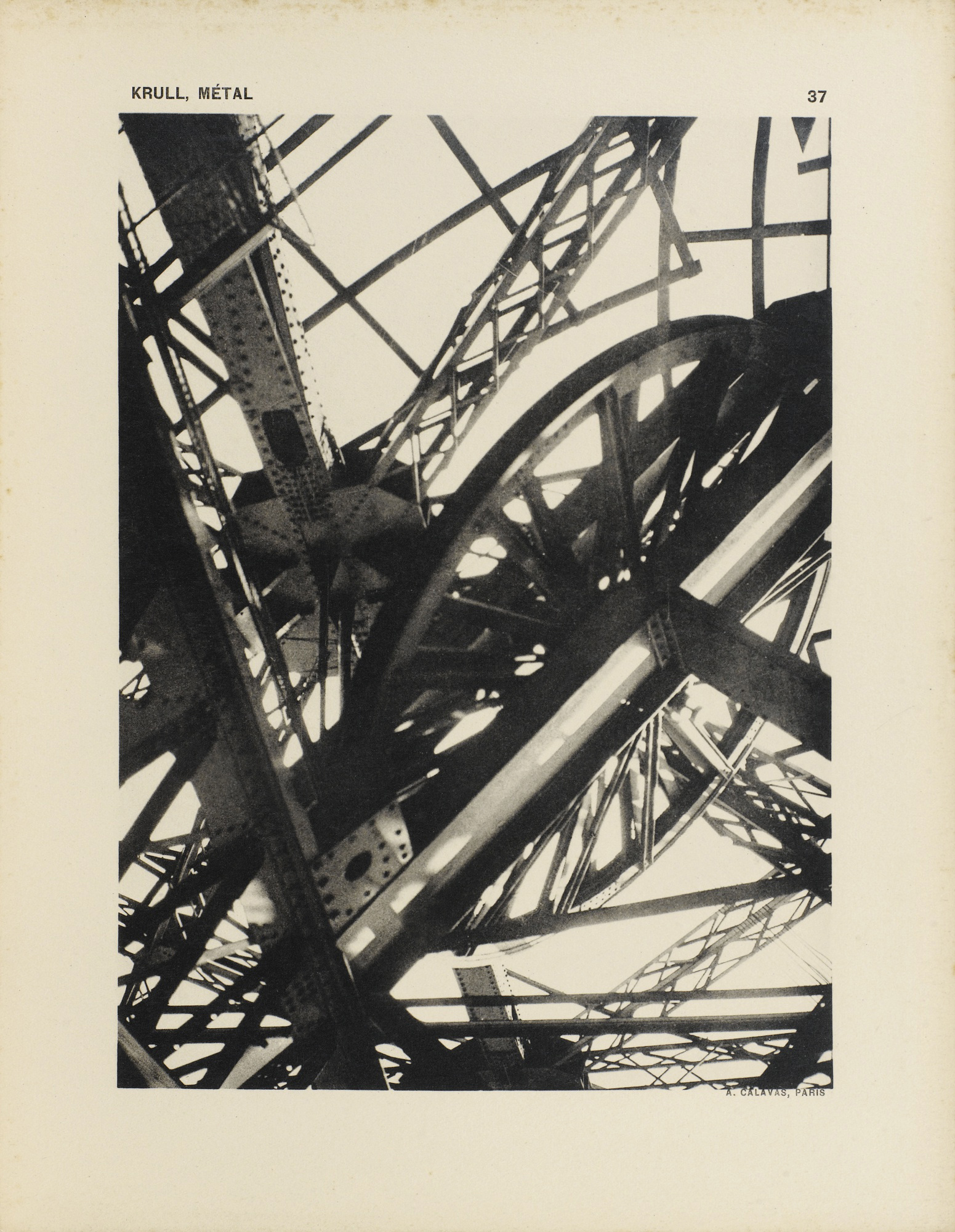
~ The groundbreaking portfolio Métal by Germaine Krull (European, 1897-1985) which was magnificently laid out so that you could “appreciate its unique design as an object” and the “vitality of the photography”, allowing the viewer to begin to understand the complex relationships between images one to another and the flow of the whole folio. A joy to behold!

More comment to follow in Part 2 of the posting.

Dr Marcus Bunyan


Many thankx to the NGV for allowing me to publish the media images in the posting. All installation photographs © Marcus Bunyan. Please click on the photographs for a larger version of the image. View Part 2 of the posting.
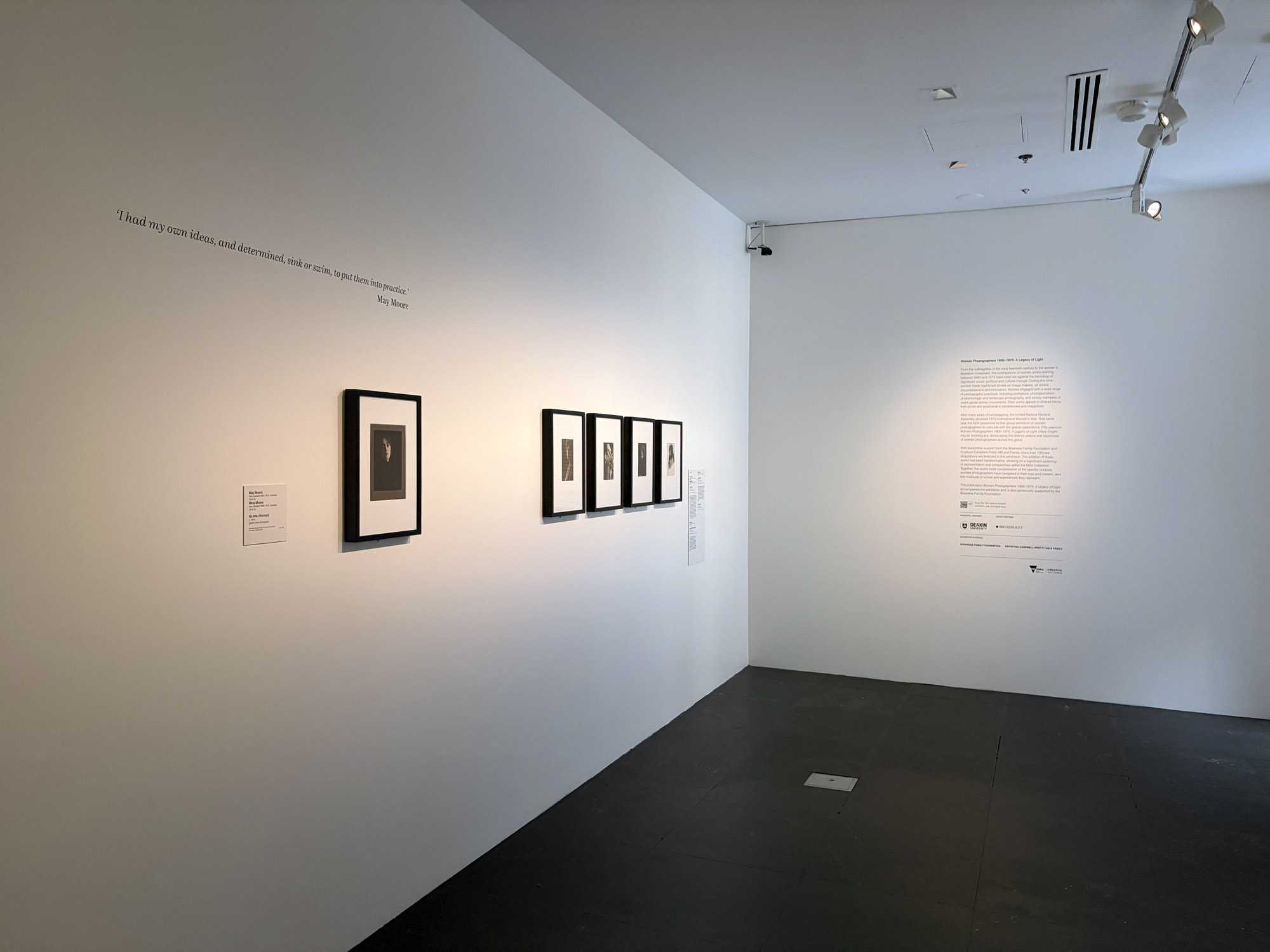
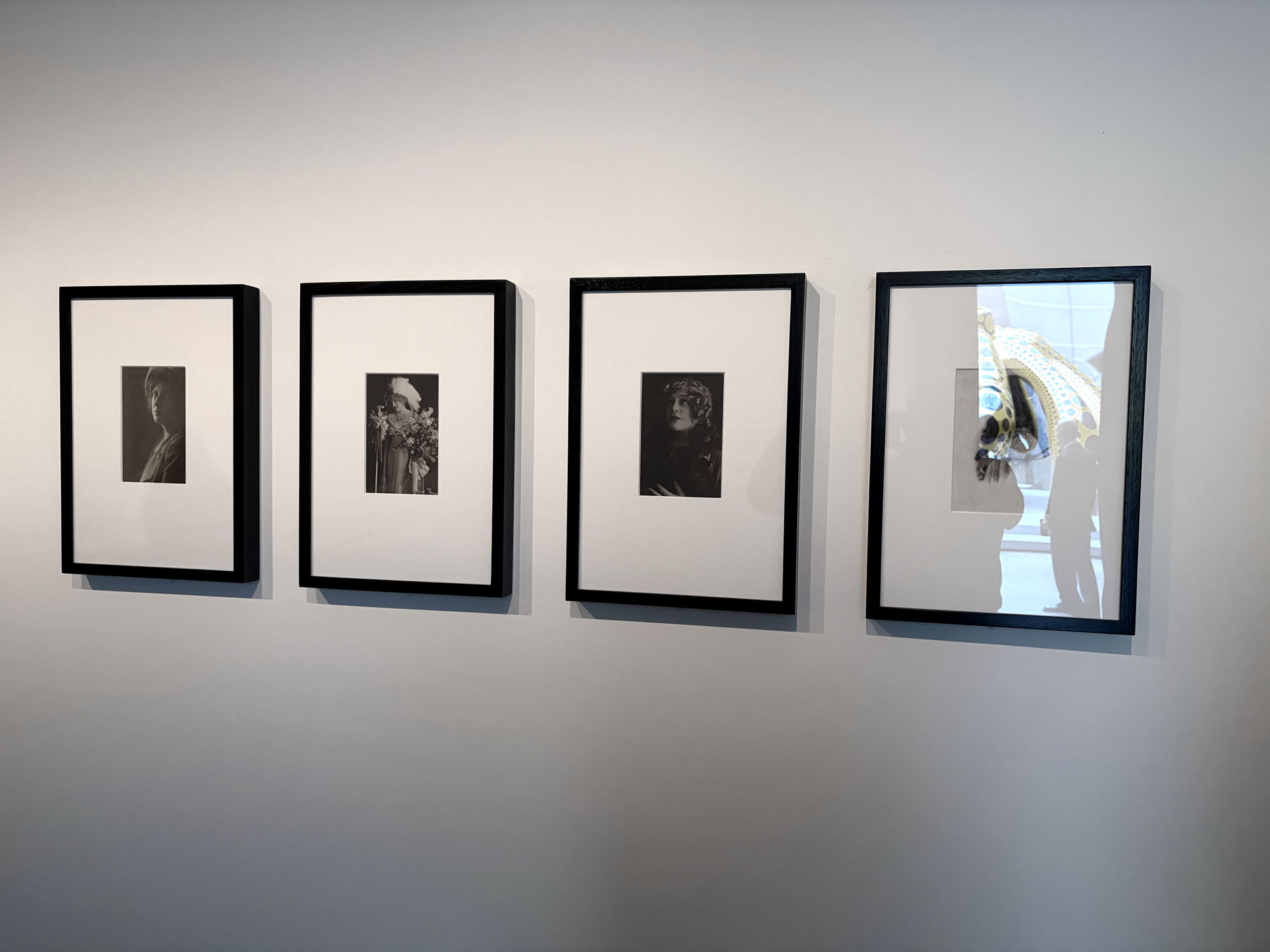


Entrance to the exhibition 'Women Photographers 1900-1975: A Legacy of Light' at NGV International, Melbourne, November 2025 - May 2026
Entrance to the exhibition 'Women Photographers 1900-1975: A Legacy of Light' at NGV International, Melbourne, November 2025 - May 2026 showing at left, Mina and May Moore's 'Murial Starr' (c. 1913-1916); at second left, May Moore's 'Janina Korolewicz-Wayda' (c. 1910-1920); at at third right, Mina Moore's 'Nellie Stewart' (c. 1913-1916)


Entrance to the exhibition Women Photographers 1900-1975: A Legacy of Light at NGV International, Melbourne, November 2025 – May 2026 showing at left, Mina and May Moore’s Murial Starr (c. 1913-1916, below); at second left, May Moore’s Janina Korolewicz-Wayda (c. 1910-1920); at at third right, Mina Moore’s Nellie Stewart (c. 1913-1916, above)
Photos: Marcus Bunyan


Women Photographers 1900-1975: A Legacy of Light celebrates the wide-ranging photographic practices of more than eighty women artists working between 1900 and 1975. Featuring prints, postcards, photobooks and magazines, the exhibition explores the role of photographers as image-makers, and the ways in which women artists create an image of themselves, of others, of the times – from images of the women’s suffrage movement at the turn of the twentieth century, through to the women’s liberation movement and beyond. From Melbourne to Tokyo, Paris to Buenos Aires, the exhibition showcases the works of trailblazing artists such as Berenice Abbott, Lola Álvarez Bravo, Claude Cahun and Marcel Moore, Imogen Cunningham, Mikki Ferrill, Sue Ford, Christine Godden, Ponch Hawkes, Annemarie Heinrich, Ruth Hollick, Florence Henri, Kati Horna, Germaine Krull, Tina Modotti, Lucia Moholy, Toyoko Tokiwa, Yamazawa Eiko and many more.

The exhibition reflects a recent collecting focus on celebrating the contributions of women artists of the early twentieth century in the NGV Photography Collection. Featuring portraiture, photojournalism, landscape photography, photomontage, experimental avant-garde imagery and more, Women Photographers 1900-1975: A Legacy of Light presents the diverse work of women photographers against the backdrop of significant social, political and cultural events.

Text from the National Gallery of Victoria
 

Installation view of the exhibition 'Women Photographers 1900-1975: A Legacy of Light' at NGV International, Melbourne, November 2025 - May 2026 showing May and Mina Moore's 'Murial Starr' (c. 1913-1916)


Installation view of the exhibition Women Photographers 1900-1975: A Legacy of Light at NGV International, Melbourne, November 2025 – May 2026 showing May and Mina Moore’s Murial Starr (c. 1913-1916, below)
Photo: Marcus Bunyan
 

May and Mina Moore (New Zealand, 1881-1931 and 1882-1957) 'Murial Starr' c. 1913-1916


May and Mina Moore (New Zealand, 1881-1931 and 1882-1957)
Murial Starr
c. 1913-1916
Gelatin silver photograph
19.6 x 12.5cm (image)
National Gallery of Victoria, Melbourne
Gift of the Latrobe Collection, State Library of Victoria, 1992


Sisters May and Mina Moore established their Wellington studio-portraiture business in around 1907. May, originally trained as a painter, learned to operate the camera while Mina, a schoolteacher, gained skills in printing. Expanding their business to Australia, May established a Sydney studio in 1911 while, two years later, Mina set up a Melbourne studio, which was later taken over by photographer Ruth Hollick. The pair became known for their studio portraits of actors, artists and musicians. Using only natural light, they created dramatic images marked by a striking chiaroscuro effect (a technique involving strong contrasts of light and shade) on the faces of their subjects.

Wall text from the exhibition

Muriel Starr (1888-1950) was a Canadian stage actress. She was particularly popular in Australia in the 1910s and 1920s. She appeared in one film, Within the Law (1916), an adaptation of her stage success. She was also known for the plays East of Suez, Birds of Paradise and Madame X.
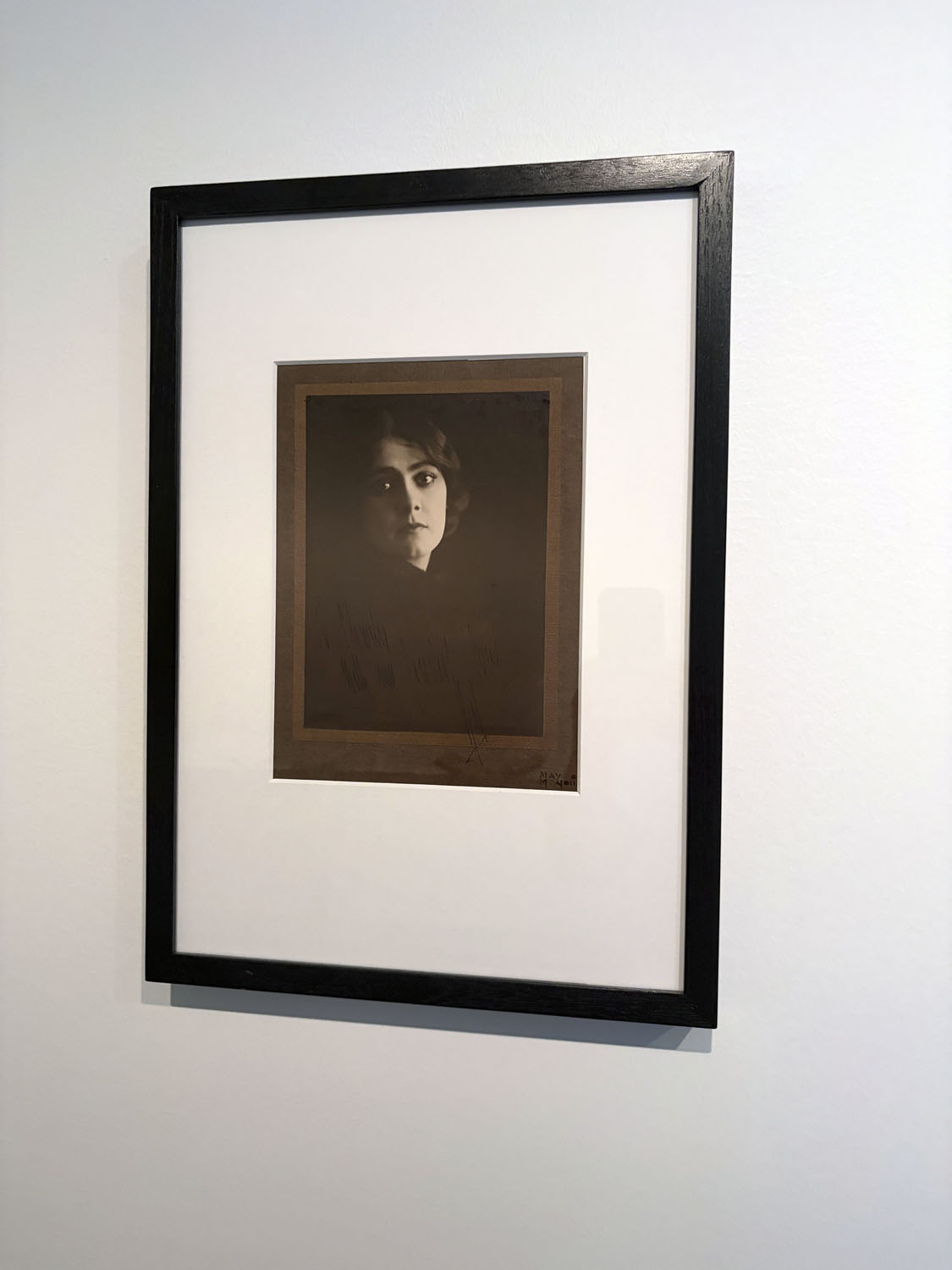
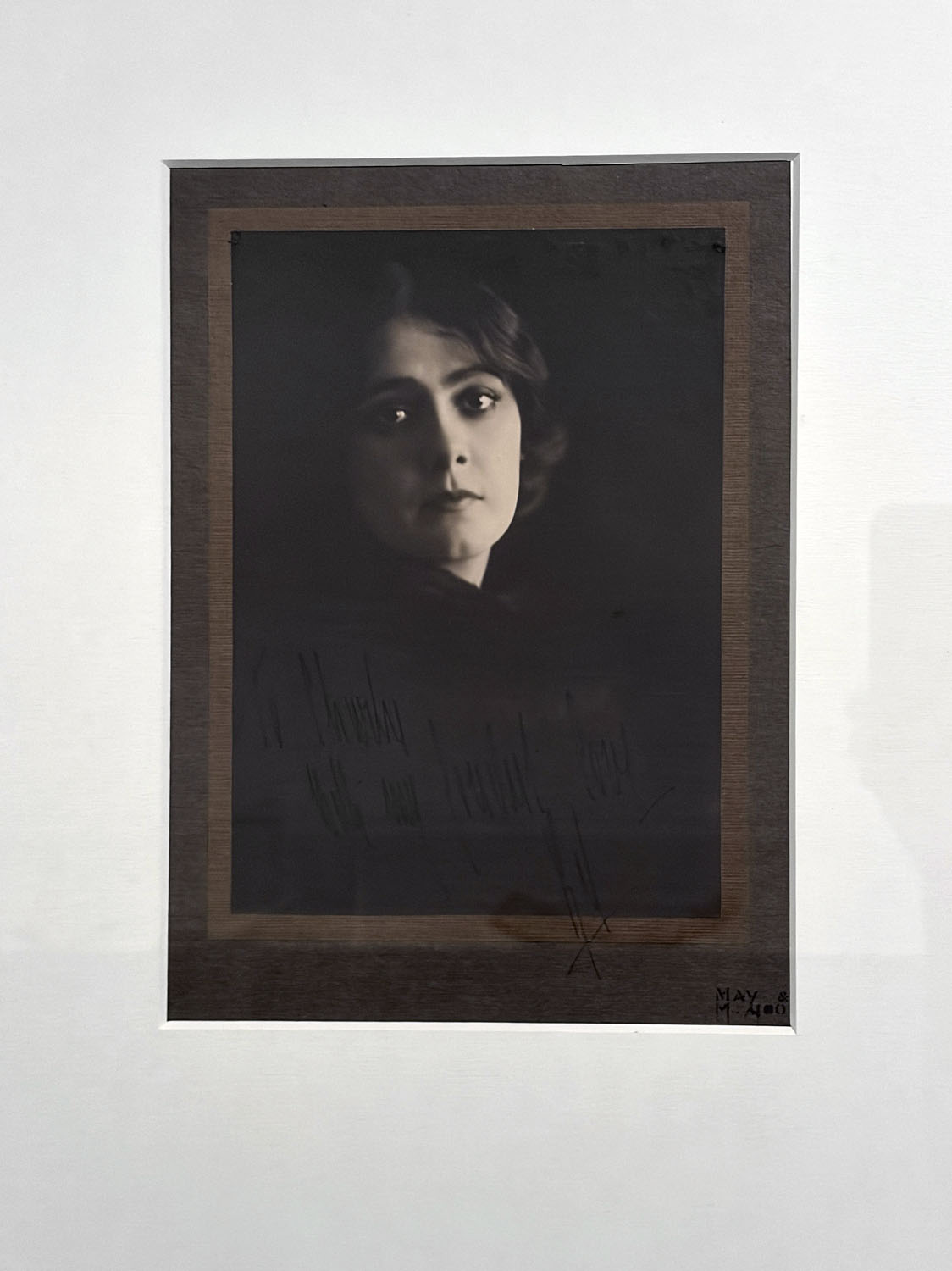
 

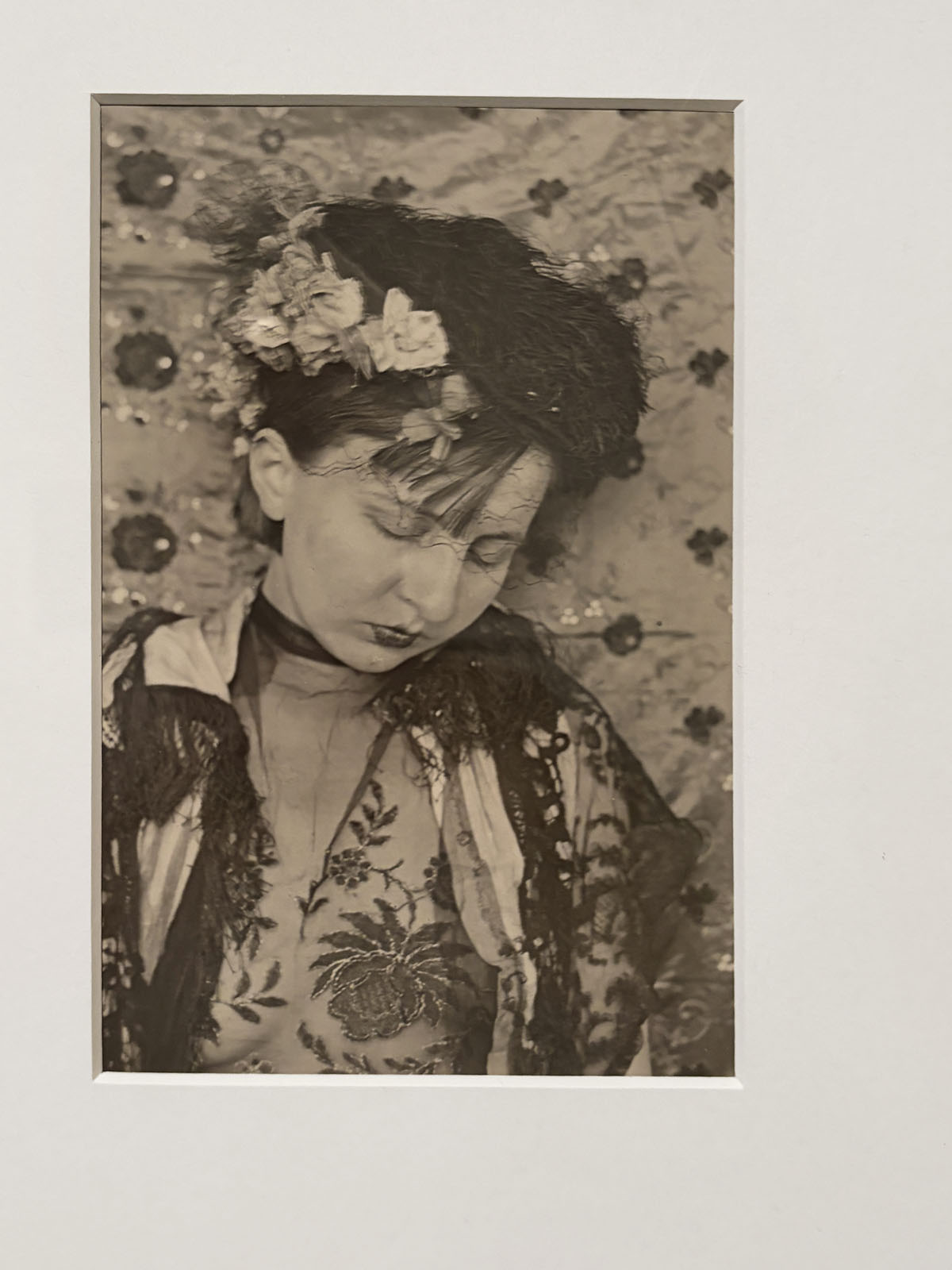
Installation view of the exhibition 'Women Photographers 1900-1975: A Legacy of Light' at NGV International, Melbourne, November 2025 - May 2026 showing May and Mina Moore's 'No title (Woman)' (c. 1914)


Installation views of the exhibition Women Photographers 1900-1975: A Legacy of Light at NGV International, Melbourne, November 2025 – May 2026 showing May and Mina Moore’s No title (Woman) (c. 1914)
Photos: Marcus Bunyan
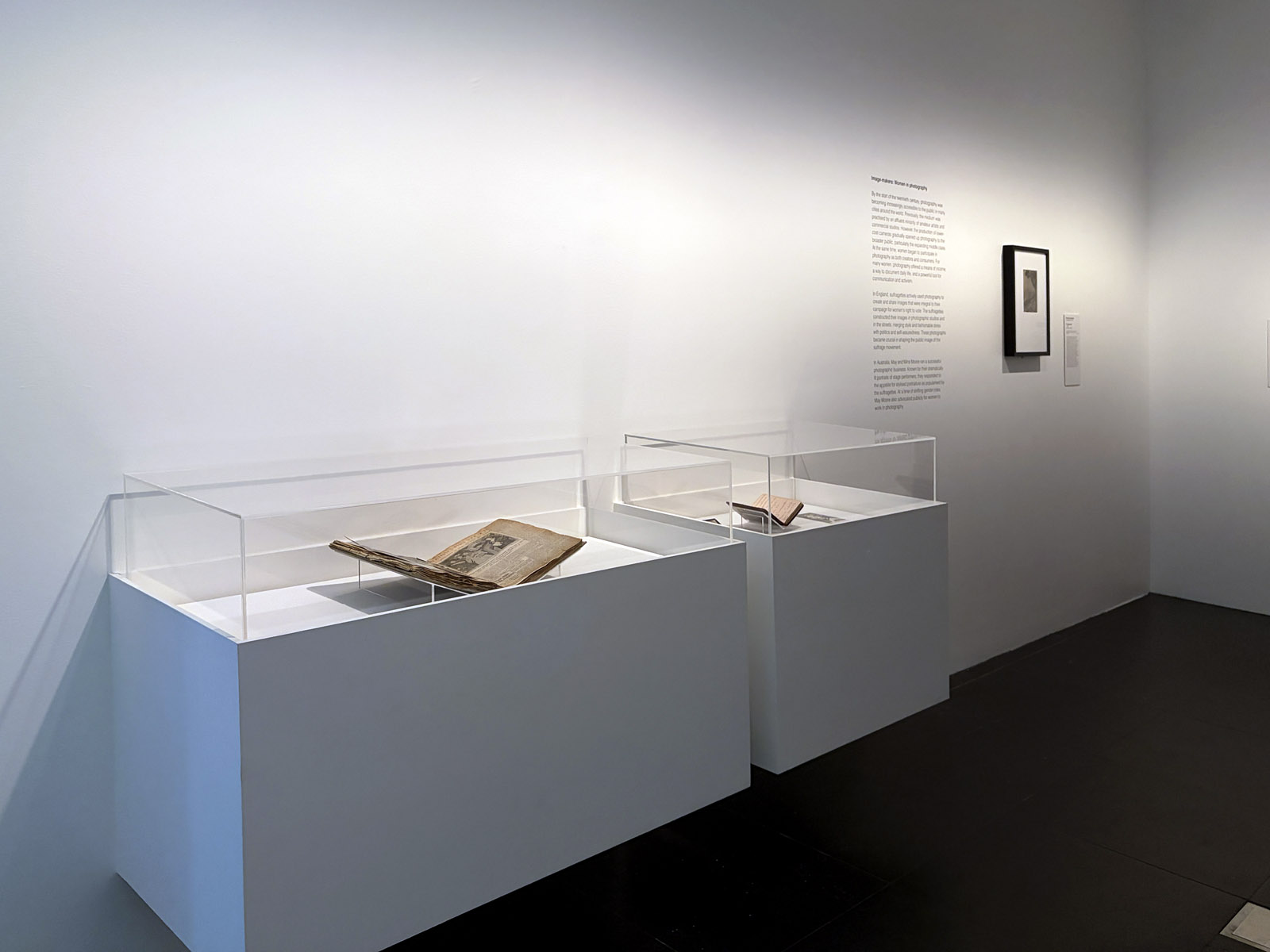
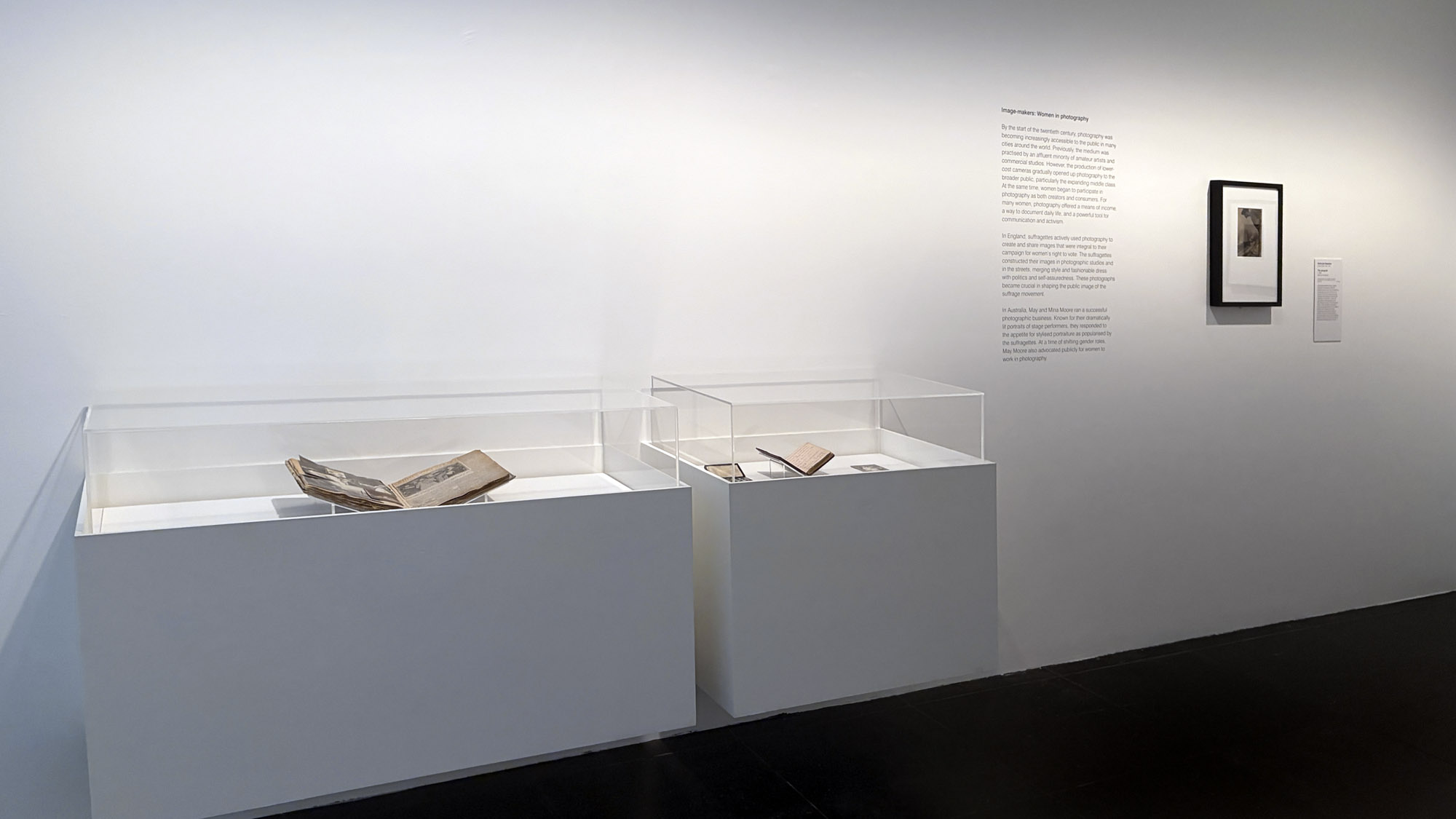
 

Installation view of the exhibition 'Women Photographers 1900-1975: A Legacy of Light' at NGV International, Melbourne, November 2025 - May 2026


Installation views of the exhibition Women Photographers 1900-1975: A Legacy of Light at NGV International, Melbourne, November 2025 – May 2026
Photos: Marcus Bunyan
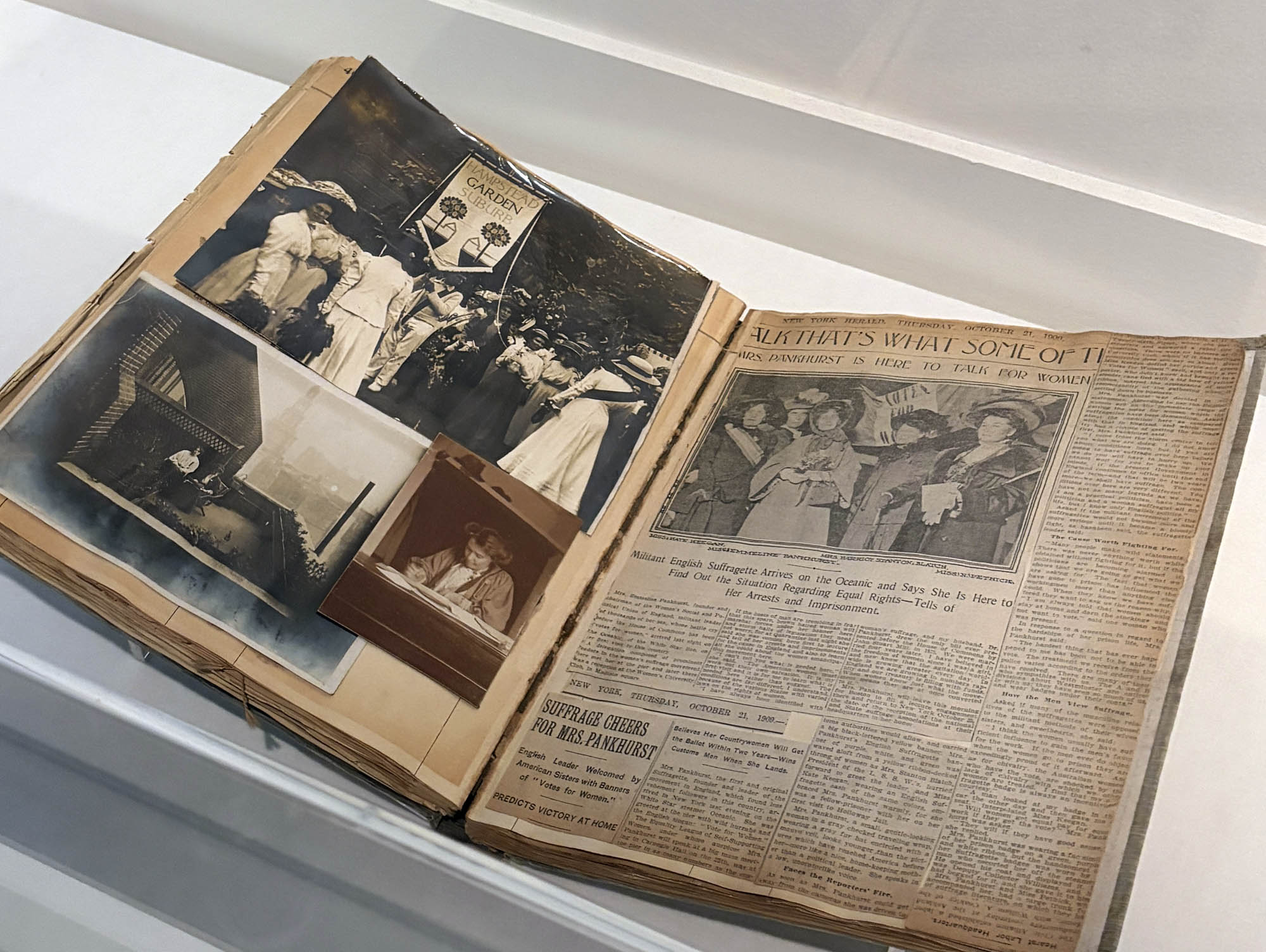
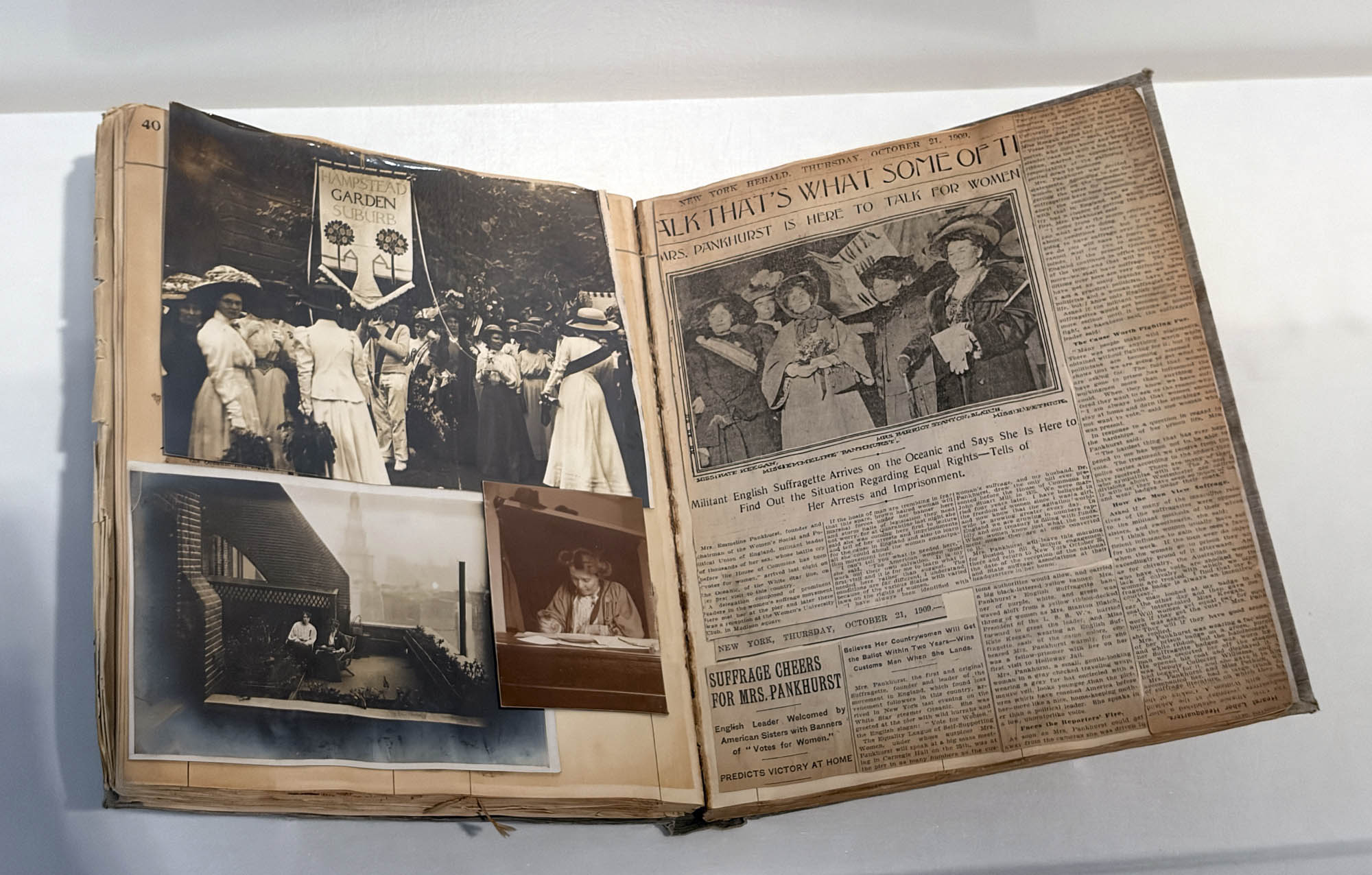
 

Installation view of the exhibition 'Women Photographers 1900-1975: A Legacy of Light' at NGV International, Melbourne, November 2025 - May 2026 showing Isabel Seymour (England, 1882-1963) 'The Seymour Album' (c. 1907-1911)


Installation view of the exhibition Women Photographers 1900-1975: A Legacy of Light at NGV International, Melbourne, November 2025 – May 2026 showing Isabel Seymour (England, 1882-1963) The Seymour Album (c. 1907-1911). Recent acquisition
Photos: Marcus Bunyan


The suffragette Isabel Seymour was employed by the Women’s Social and Political Union (WSPU) in London in 1906. Fluent in English and German, she facilitated international speaking tours for the organisation. Assembled by Seymour for the WSPU, this personal scrapbook includes photographs, postcards, advertisements and newspaper articles detailing suffragette activities. The album provides a historical snapshot of the activities and people involved in the suffragette movement, through one of its key organisations.

Vitrine text from the exhibition
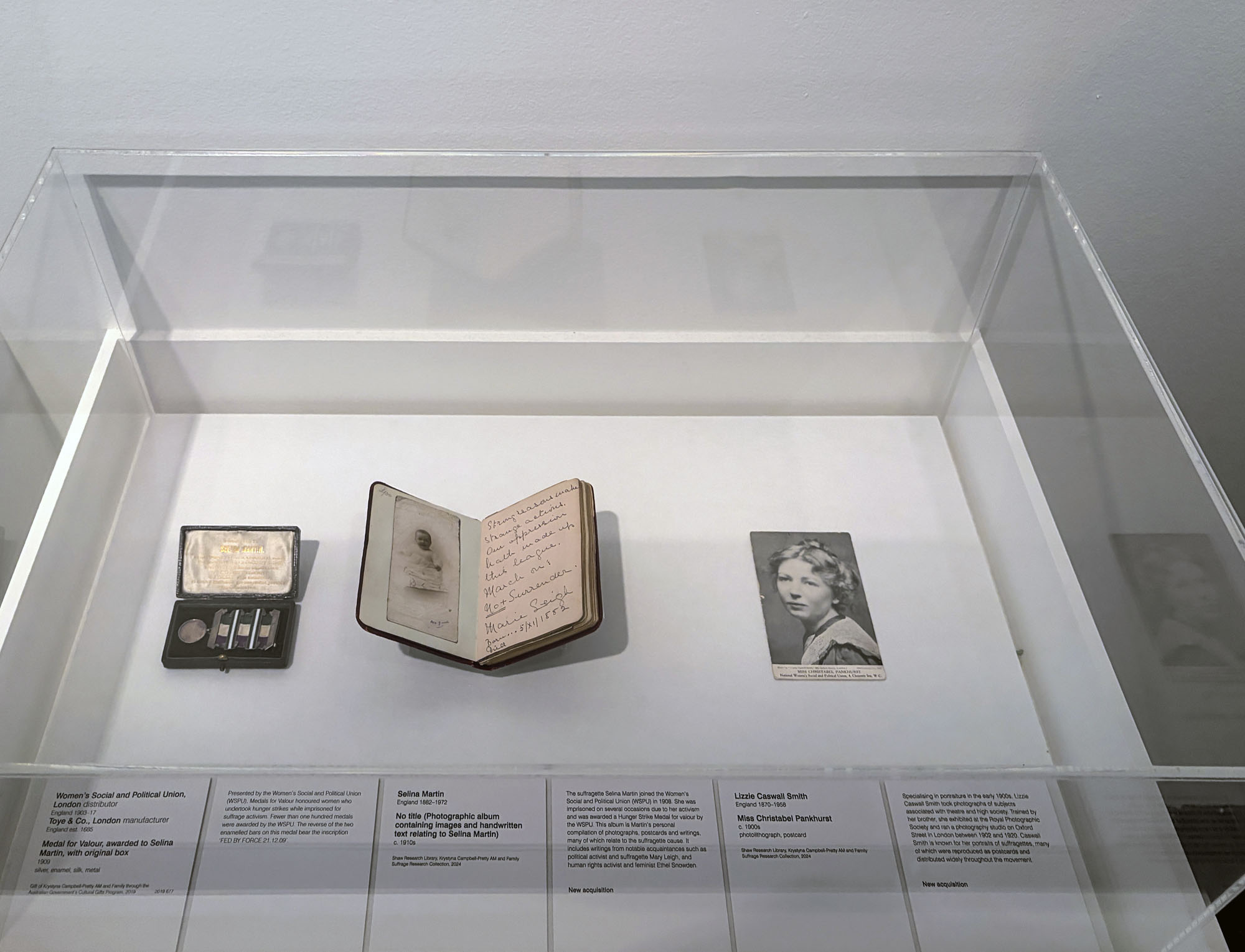
 

Installation view of the exhibition 'Women Photographers 1900-1975: A Legacy of Light' at NGV International, Melbourne, November 2025 - May 2026 showing from left to right, Woman's Social and Political Union (distributor) Toye & Co. (manufacturer) 'Medal for Valour, awarded to Selina Martin, with original box' (1909); Selina Martin (England, 1882-1972) 'No title (Photographic album containing images and handwritten text relating to Selina Martin)' (c. 1910); Lizzie Casual Smith (England, 1870-1956) 'Miss Christabel Pankhurst' (c. 1900s)


Installation view of the exhibition Women Photographers 1900-1975: A Legacy of Light at NGV International, Melbourne, November 2025 – May 2026 showing from left to right, Woman’s Social and Political Union (distributor) Toye & Co. (manufacturer) Medal for Valour, awarded to Selina Martin, with original box (1909); Selina Martin (England, 1882-1972) No title (Photographic album containing images and handwritten text relating to Selina Martin) (c. 1910); Lizzie Casual Smith (England, 1870-1956) Miss Christabel Pankhurst (c. 1900s)
Photo: Marcus Bunyan
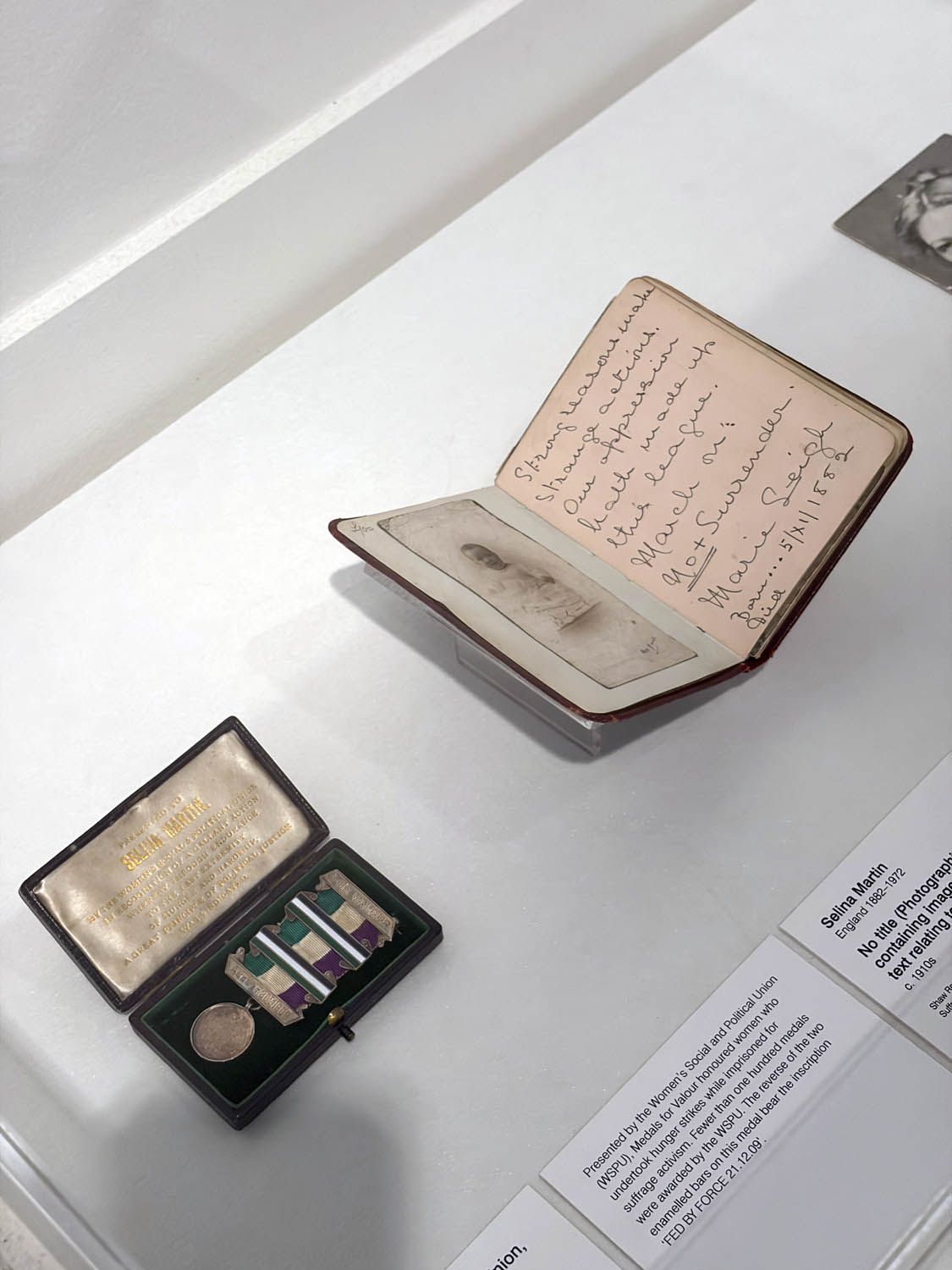
 

Installation view of the exhibition 'Women Photographers 1900-1975: A Legacy of Light' at NGV International, Melbourne, November 2025 - May 2026


Installation view of the exhibition Women Photographers 1900-1975: A Legacy of Light at NGV International, Melbourne, November 2025 – May 2026 showing at left, Woman’s Social and Political Union (distributor) Toye & Co. (manufacturer) Medal for Valour, awarded to Selina Martin, with original box (1909) and at right, Selina Martin (England, 1882-1972) No title (Photographic album containing images and handwritten text relating to Selina Martin) (c. 1910)
Photo: Marcus Bunyan
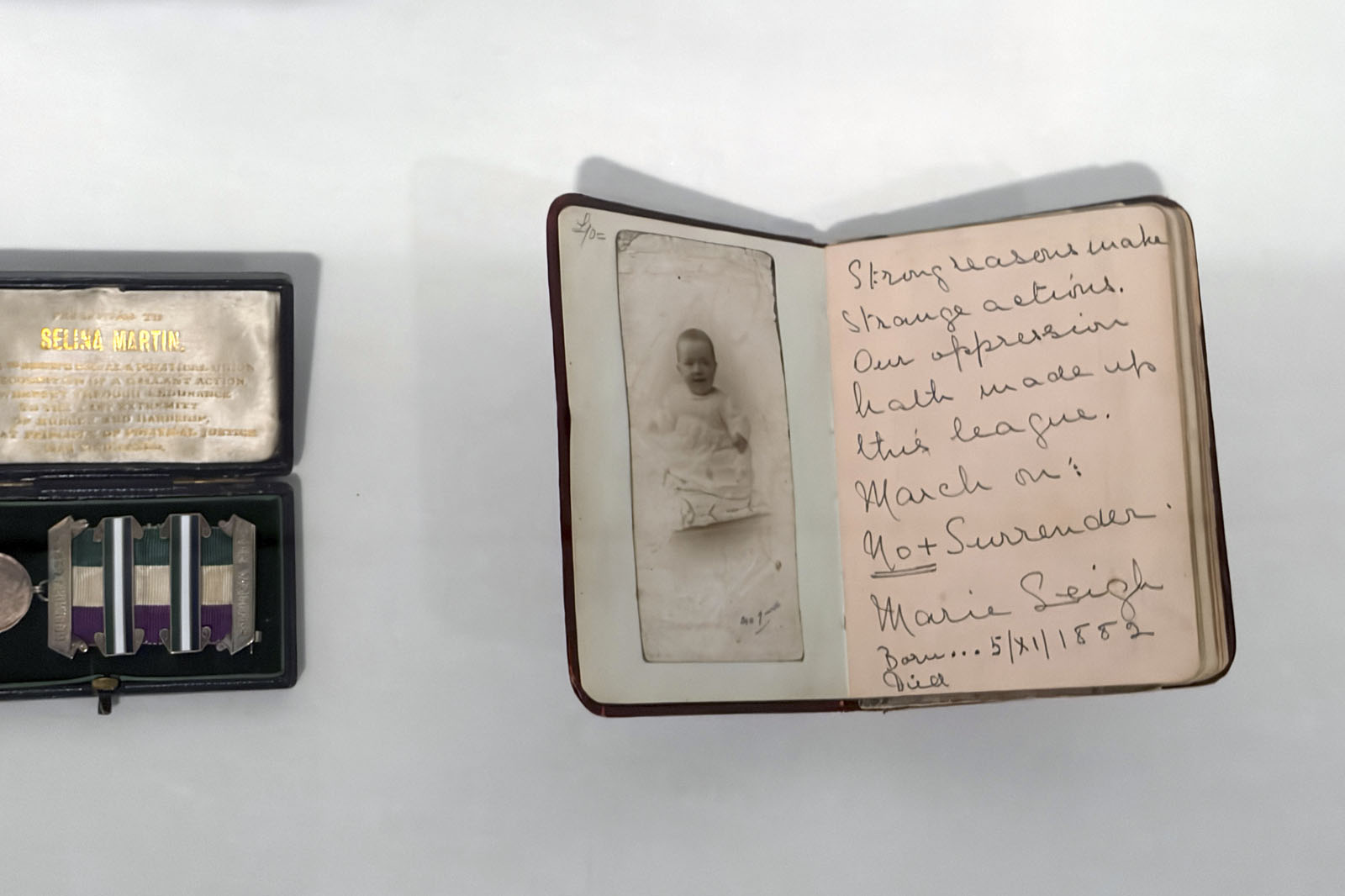
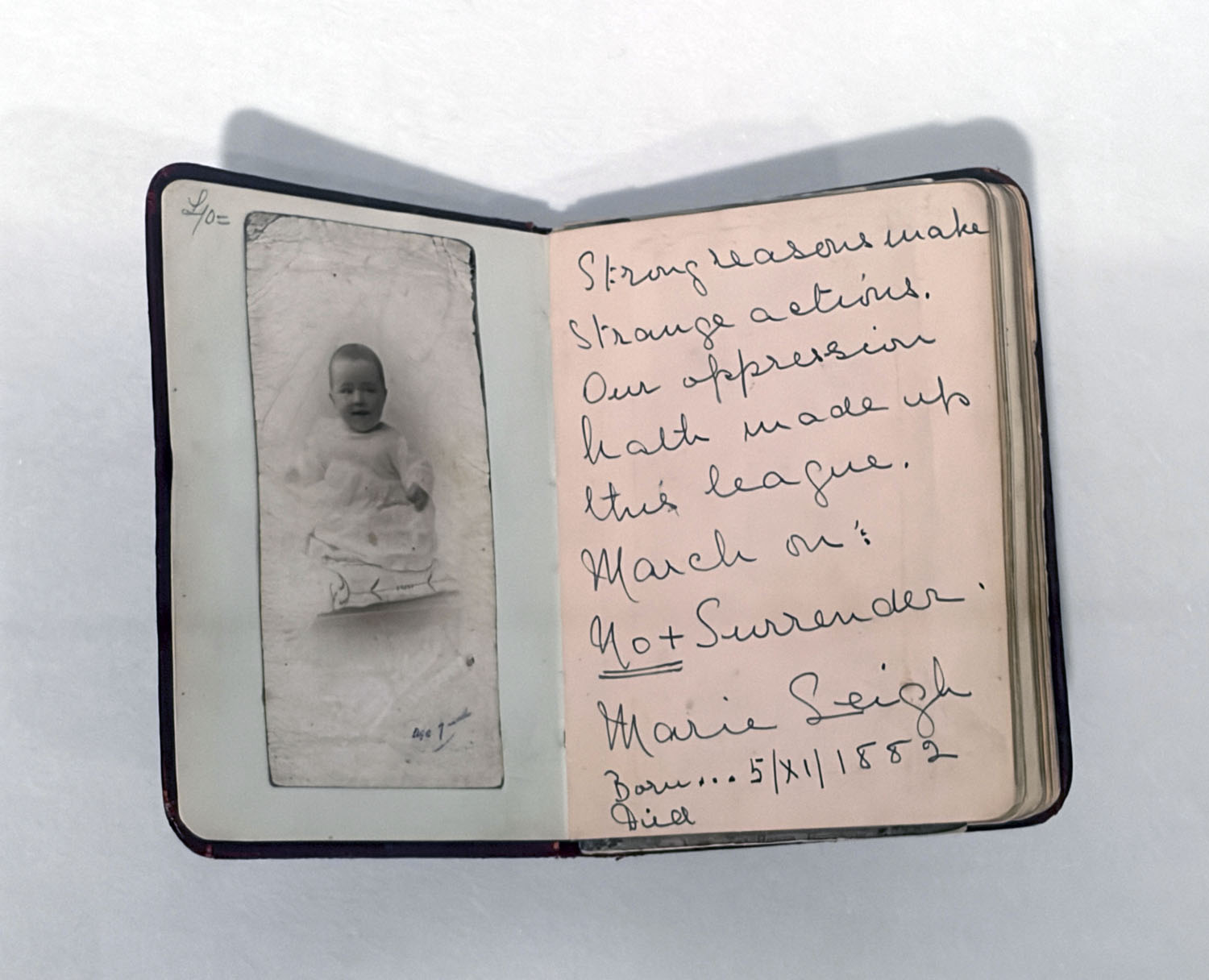
 

Installation view of the exhibition 'Women Photographers 1900-1975: A Legacy of Light' at NGV International, Melbourne, November 2025 - May 2026


Installation view of the exhibition Women Photographers 1900-1975: A Legacy of Light at NGV International, Melbourne, November 2025 – May 2026 showing at left, Woman’s Social and Political Union (distributor) Toye & Co. (manufacturer) Medal for Valour, awarded to Selina Martin, with original box (1909) and at right, Selina Martin (England, 1882-1972) No title (Photographic album containing images and handwritten text relating to Selina Martin) (c. 1910)
Photos: Marcus Bunyan

New acquisition


The suffragette Selina Martin joined the Women’s Social and Political Union (WSPU) in 1908. She was imprisoned on several occasions due to her activism and was awarded a Hunger Strike Medal for valour by the WSPU. This album is Martin’s personal compilation of photographs, postcards and writings, many of which relate to the suffragette cause. It includes writing from notable acquaintances such as political activist and suffragette Mary Leigh, and human rights activist and feminist Ethel Snowden.

Vitrine text from the exhibition

Selina Martin (English, 1882-1972) was a member of the suffragette movement in the early 20th century. She was arrested several times. Her Hunger Strike Medal given ‘for Valour’ by the Women’s Social and Political Union (WSPU) was sold at auction in Nottingham in 2019.
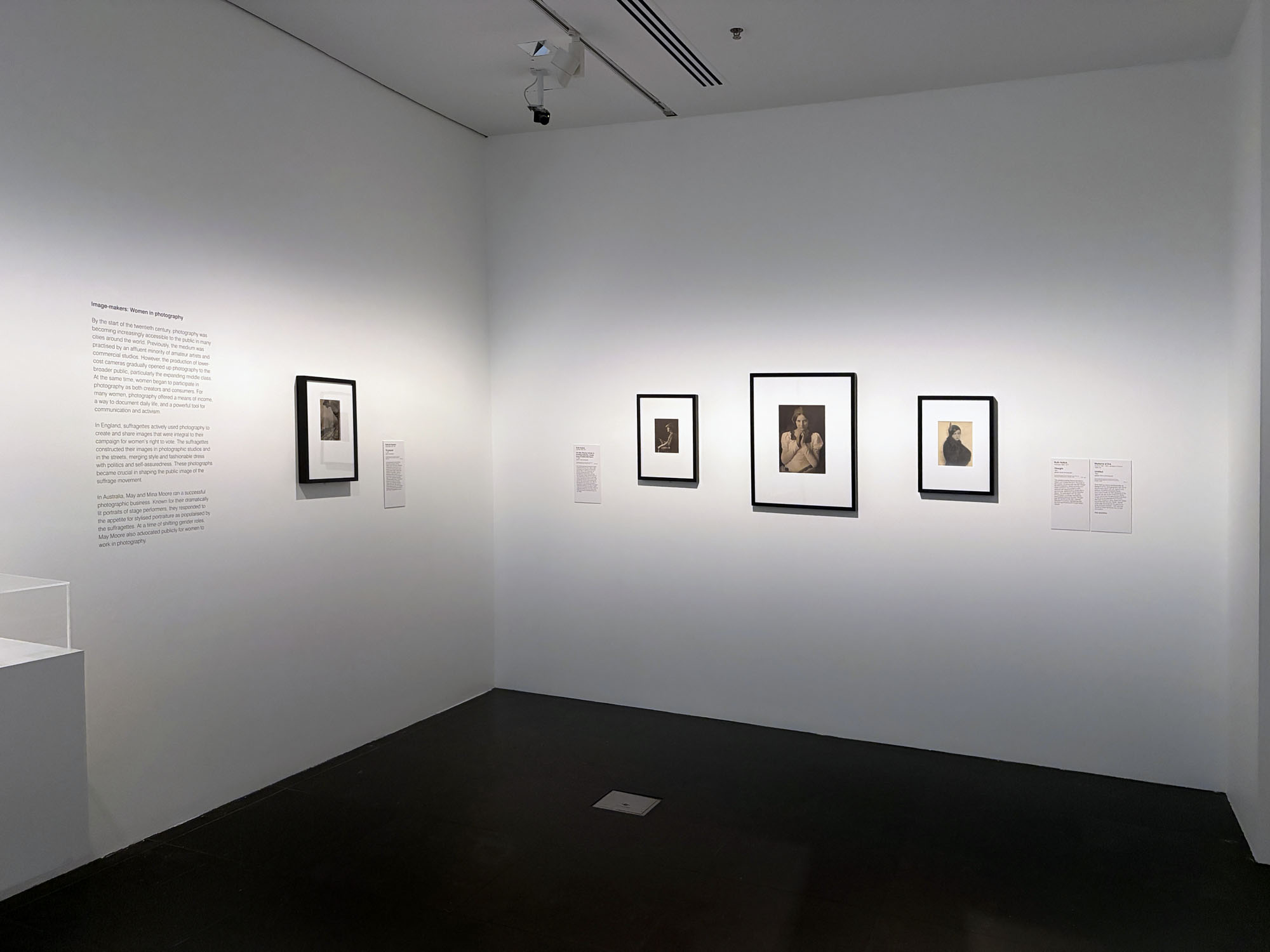
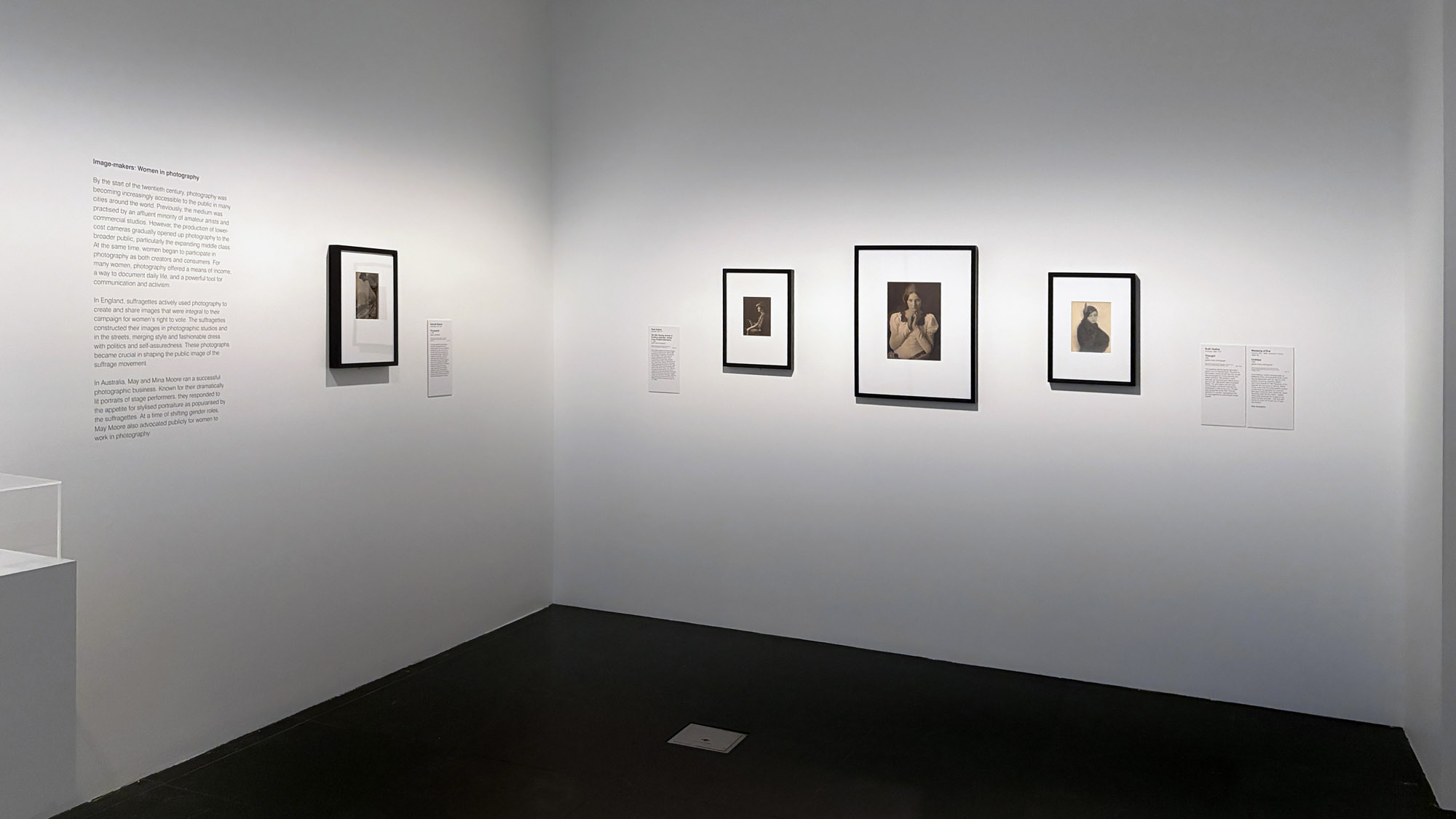
 

Installation view of the exhibition 'Women Photographers 1900-1975: A Legacy of Light' at NGV International, Melbourne, November 2025 - May 2026 showing at left, Gertrude Kasebier 'The gargoyle' (c. 1900, below); at third right, Ruth Hollick 'No title (Young woman in hunting costume, model Lucy Crosbie Morrison)' (c. 1920); at second right, Ruth Hollick 'Thought' (1921); and at right, Madame d'Ora 'Untitled' (1931)


Installation views of the exhibition Women Photographers 1900-1975: A Legacy of Light at NGV International, Melbourne, November 2025 – May 2026 showing at left, Gertrude Kasebier The gargoyle (c. 1900, below); at third right, Ruth Hollick No title (Young woman in hunting costume, model Lucy Crosbie Morrison) (c. 1920, below); at second right, Ruth Hollick Thought (1921, below); and at right, Madame d’Ora Untitled (1931, below)
Photos: Marcus Bunyan


Image-Makers: Women in Photography

By the start of the twentieth century, photography was becoming increasingly accessible to the public in many cities around the world. Previously, the medium was practised by an affluent minority of amateur artists and commercial studios. However, the production of lower-cost cameras gradually opened up photography to the broader public, particularly the expanding middle class. At the same time, women began to participate in photography as both creators and consumers. For many women, photography offered a means of income, a way to document daily life, and a powerful tool for communication and activism.

In England, suffragettes actively used photography to create and share images that were integral to their campaign for women’s right to vote. The suffragettes constructed their images in photographic studios and in the streets, merging style and fashionable dress with politics and self-assuredness. These photographs became crucial in shaping the public image of the suffrage movement.

In Australia, May and Mina Moore ran a successful photographic business. Known for their dramatically lit portraits of stage performers, they responded to the appetite for stylised portraiture as popularised by the suffragettes. At a time of shifting gender roles, May Moore also advocated publicly for women to work in photography.
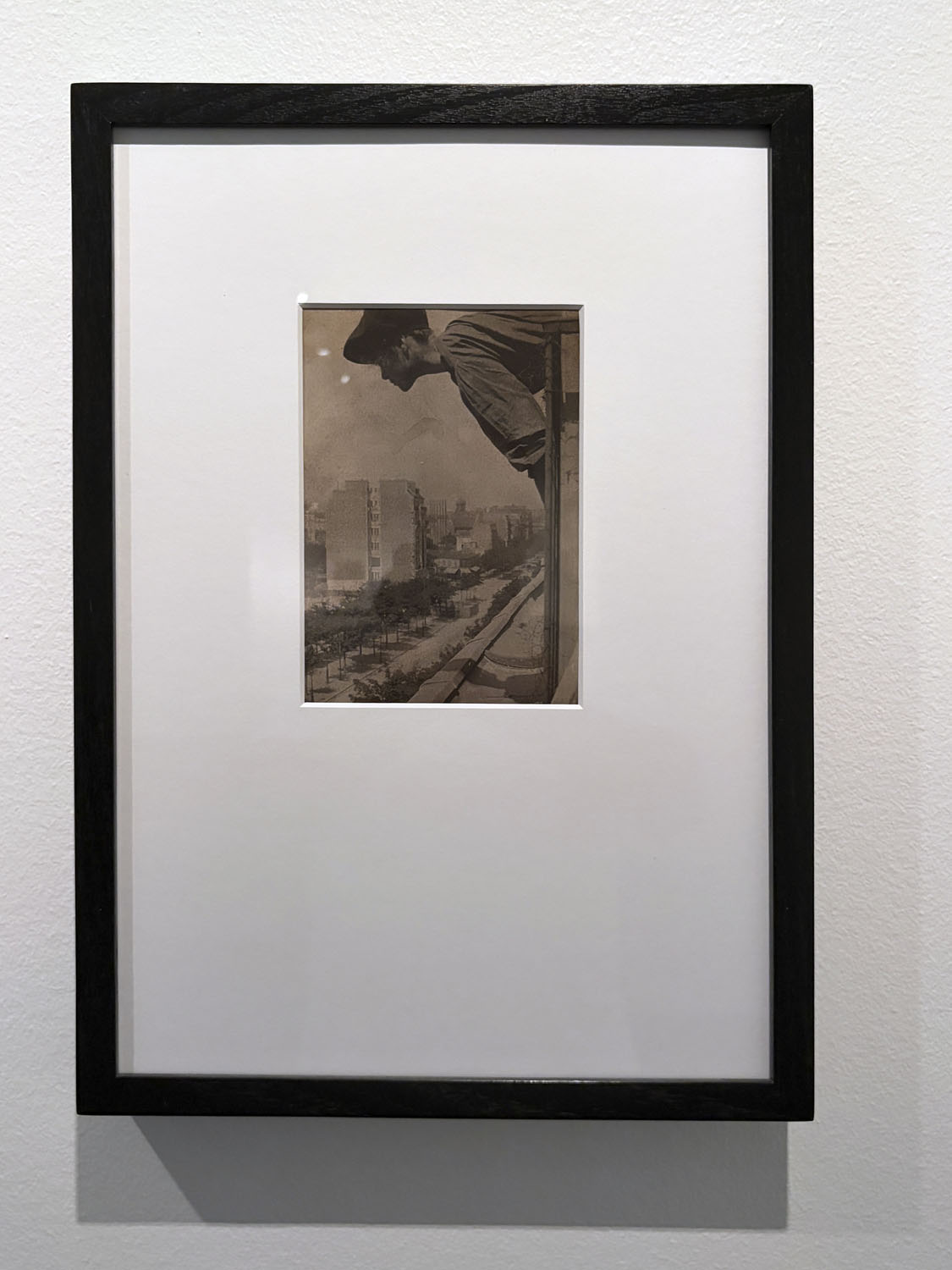
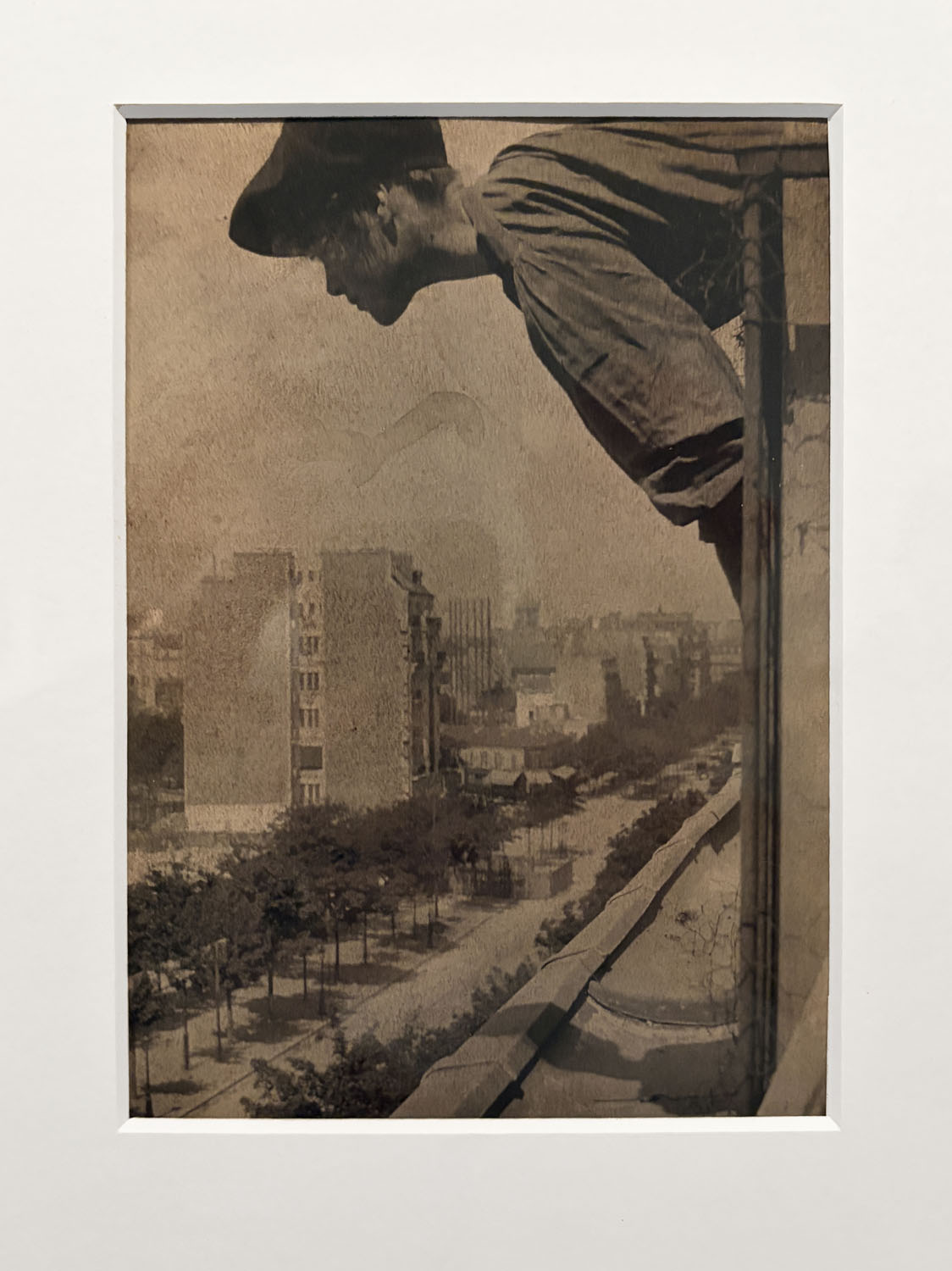
 

Installation view of the exhibition 'Women Photographers 1900-1975: A Legacy of Light' at NGV International, Melbourne, November 2025 - May 2026 showing Gertrude Kasebier 'The gargoyle' (c. 1900)


Installation views of the exhibition Women Photographers 1900-1975: A Legacy of Light at NGV International, Melbourne, November 2025 – May 2026 showing Gertrude Kasebier The gargoyle (c. 1900, below)
Photos: Marcus Bunyan


Gertrude Kasebier (American, 1852-1934) 'Gargoyle' 1901


Gertrude Kasebier (American, 1852-1934)
The gargoyle
c. 1900
Platinum photograph
20.6 x 13.5 cm (image and sheet)
National Gallery of Victoria, Melbourne
Purchased through The Art Foundation of Victoria with the assistance of the Herald & Weekly Times Limited, Fellow, 1979


In the early twentieth century, leading Pictorialist photographer Gertrude Käsebier played a key role in establishing photography as a form of fine art. As a member of the Photo-Secession group alongside Alfred Stieglitz, Käsebier was dedicated to Pictorialism, a style that emphasised artistic expression over documentary accuracy. This photograph, taken in Paris, highlights the painterly, emotional qualities inherent in Pictorialism. Käsebier has created an evocative image using composition and light to transform the scene. After leaving the Photo-Secession group in 1912, Käsebier became a founder and active member of the Pictorial Photographers of America.

Wall text from the exhibition
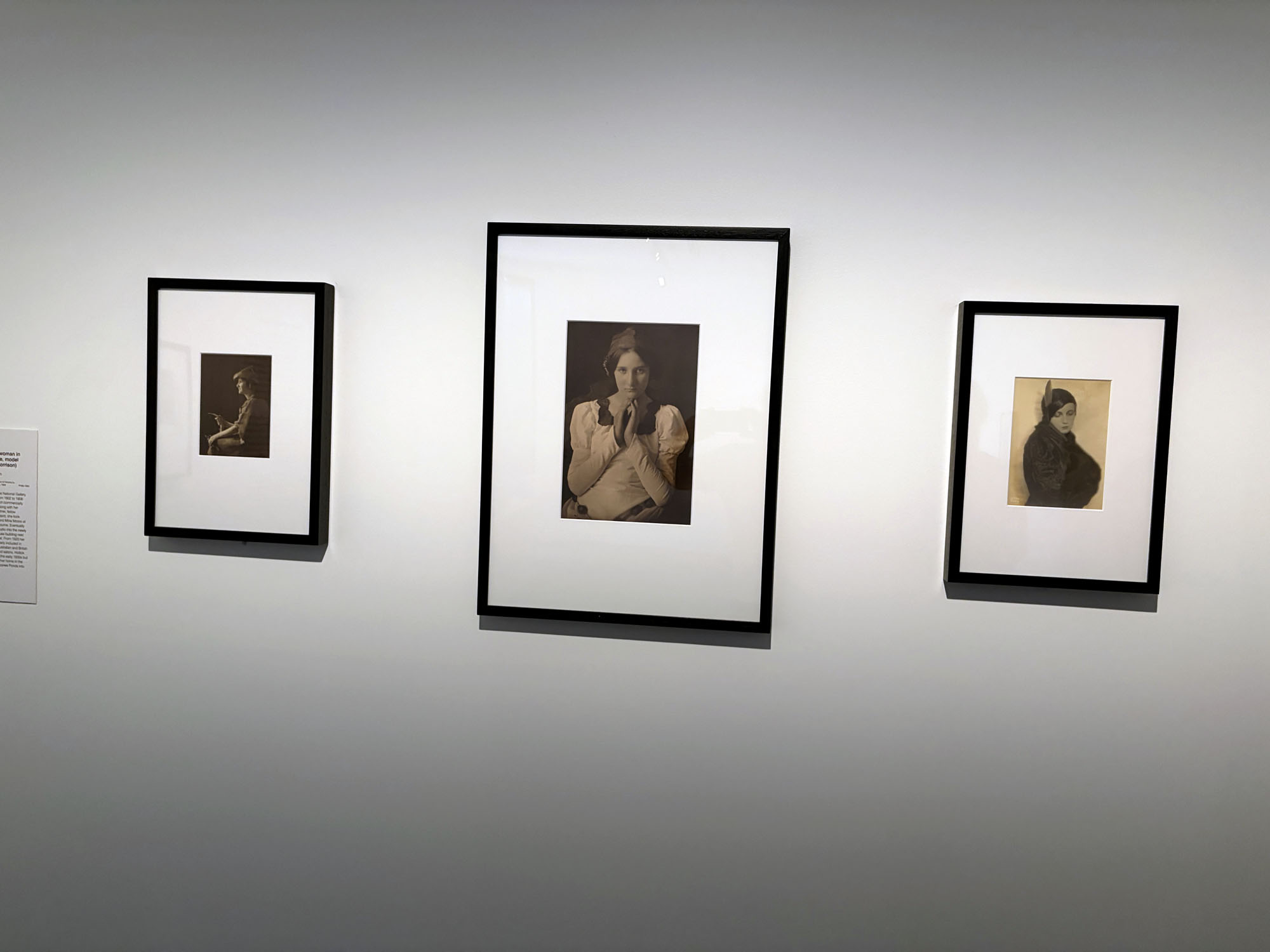
 

Installation view of the exhibition 'Women Photographers 1900-1975: A Legacy of Light' at NGV International, Melbourne, November 2025 - May 2026 showing at left, Ruth Hollick 'No title (Young woman in hunting costume, model Lucy Crosbie Morrison)' (c. 1920); at second left, Ruth Hollick 'Thought' (1921); and at right, Madame d'Ora 'Untitled' (1931)


Installation view of the exhibition Women Photographers 1900-1975: A Legacy of Light at NGV International, Melbourne, November 2025 – May 2026 showing at left, Ruth Hollick No title (Young woman in hunting costume, model Lucy Crosbie Morrison) (c. 1920, below); at second left, Ruth Hollick Thought (1921, below); and at right, Madame d’Ora Untitled (1931, below)
Photos: Marcus Bunyan
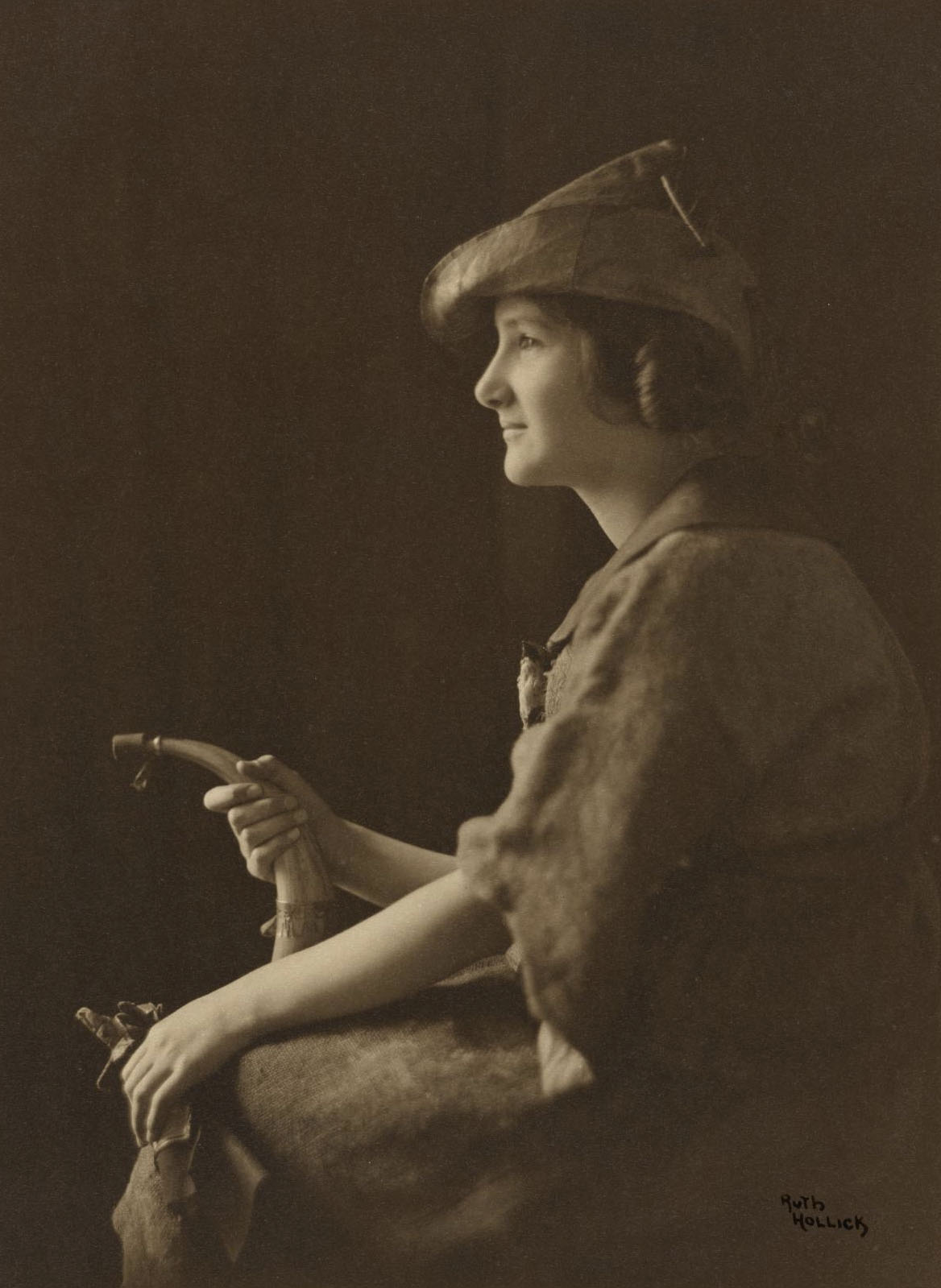
 

Ruth Hollick (Australian, 1883-1977) 'No title (Young woman in hunting costume, model Lucy Crosbie Morrison)' c. 1920


Ruth Hollick (Australian, 1883-1977)
No title (Young woman in hunting costume, model Lucy Crosbie Morrison)
c. 1920
Gelatin silver photograph
20.0 x 14.6cm (image)
National Gallery of Victoria, Melbourne
Presented through The Art Foundation of Victoria by Mrs Lucy Crosbie Morrison, Member, 1993
Public domain


Ruth Hollick attended the National Gallery of Victoria Art School from 1902 to 1906 and began to photograph commercially around 1908. In 1918, along with her life and professional partner, fellow photographer Dorothy Izard, she took over the studio of May and Mina Moore at 167 Collins Street, Melbourne. Eventually Hollick expanded her studio into the newly completed Chartres House building next door at 165 Collins Street. From 1920 her photographs were regularly included in magazines as well as Australian and British Pictorialist exhibitions and salons. Hollick closed her city studio in the early 1930s but continued working from her home in the Melbourne suburb of Moonee Ponds into the 1960s.

Wall text from the exhibition
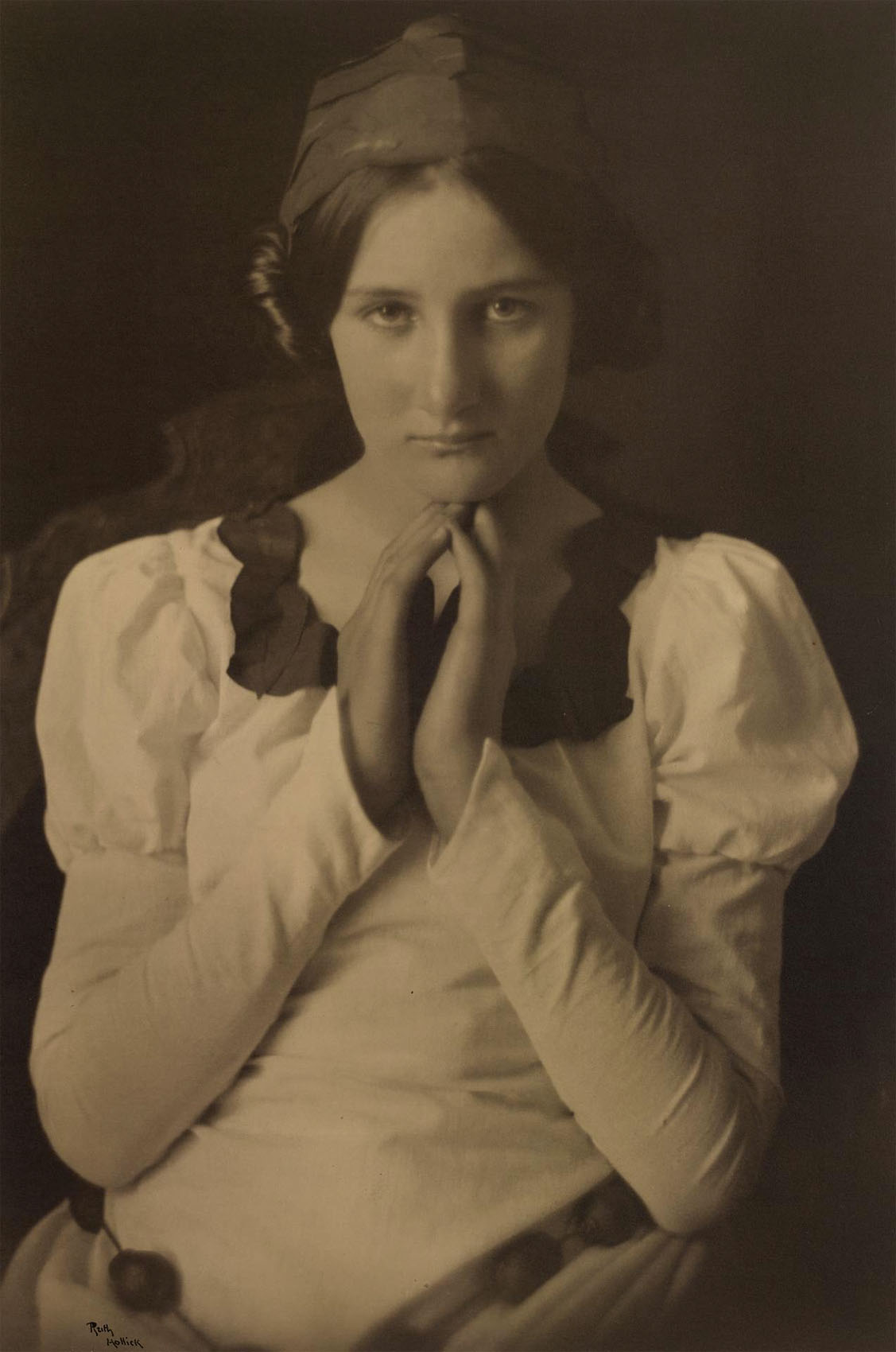
 

Ruth Hollick (Australian, 1883-1977) 'Thought' 1921


Ruth Hollick (Australian, 1883-1977)
Thought
1921
Gelatin silver photograph
37.4 x 25.3cm (image)
National Gallery of Victoria, Melbourne
Presented through The Art Foundation of Victoria by Mrs Lucy Crosbie Morrison, Member, 1993
Public domain


This sensitive portrait depicts the artist’s niece Lucy Crosbie Morrison. The pose of the subject, combined with the title, reveals the photographer’s careful direction and artistic ambition. The subject’s outfit, adorned with appliqué gum leaves and a gumnut belt, references native Australian plants. The work aligns with the style of Pictorialism, a popular international photographic trend at the time. Thought was recognised at the 1921 Colonial Exhibition in London, highlighting both its local significance and broader artistic appeal.

Wall text from the exhibition
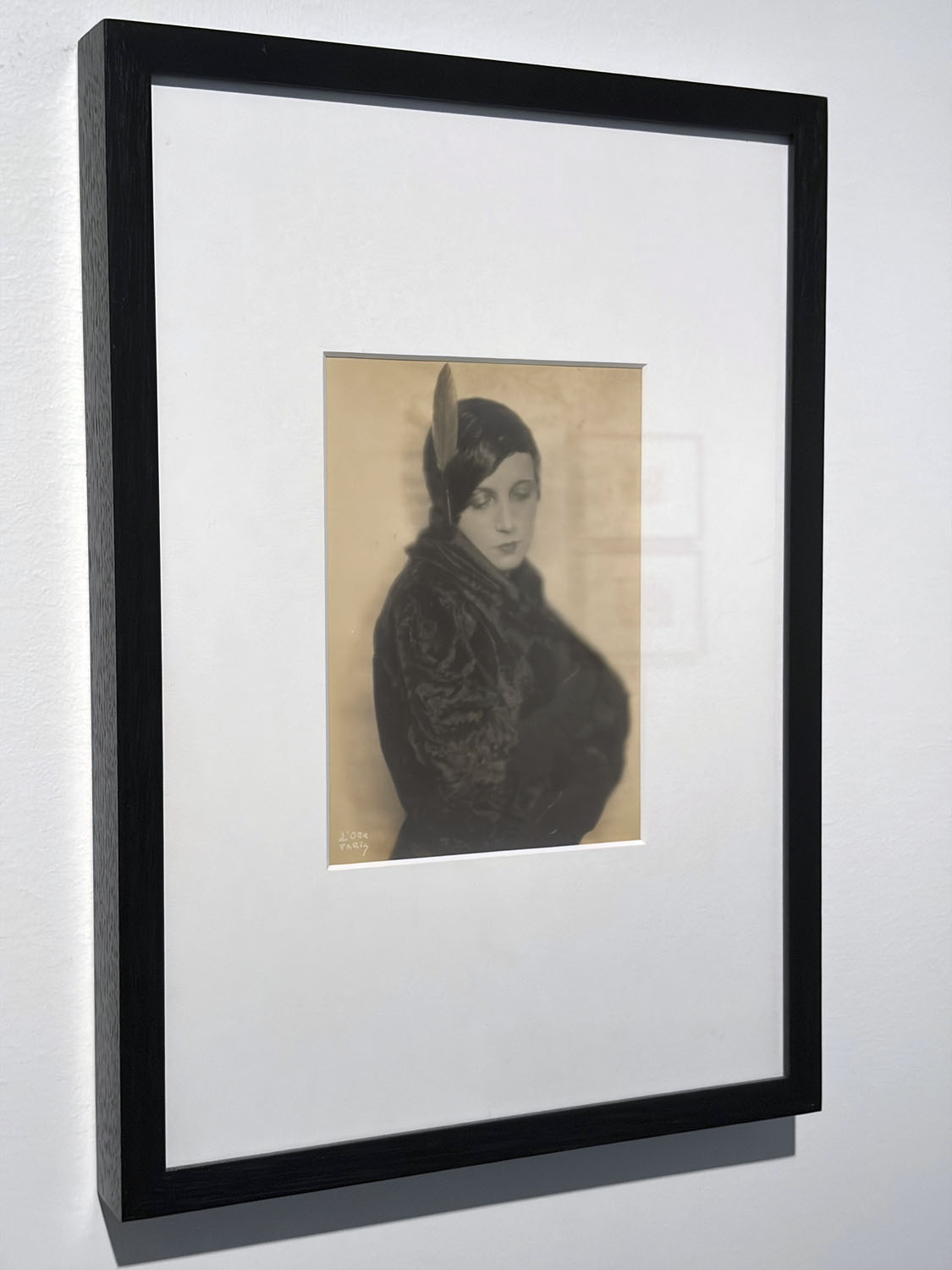
 

Dora Kallmus (Madame d'Ora) (Austrian, 1881–1963) 'Untitled' 1931 (installation view)


Dora Kallmus (Madame d’Ora) (Austrian, 1881–1963)
Untitled (installation view)
1931
Gelatin silver photograph
22.4 x 16.4cm (image and sheet)
National Gallery of Victoria, Melbourne
Gift of Krystyna Campbell-Pretty AM and Family through the Australian Government’s Cultural Gifts Program, 2023
Photo: Marcus Bunyan


Dora Kallmus, known professionally as Madame d’Ora, photographed high-profile figures associated with art, fashion and politics, including Josephine Baker and Coco Chanel. In 1907 Madame d’Ora opened her first studio in Vienna, Atelier d’Ora, one of the first photography studios in Vienna to be operated by a woman. She later moved to Paris, where her career flourished well into the 1930s – Atelier d’Ora was renowned for its glamorous, softly focused portraits – until she was forced to close her studio due to Nazi occupation.

Wall text from the exhibition


Dora Kallmus (1881-1963), better known as Madame d’Ora, was an unusual woman for her time with a spectacular career as one of the leading photographic portraitists of the early twentieth century. This exhibition, the largest museum retrospective on the Austrian photographer to date in the United States, presents the different periods of her life, from her early upbringing as the daughter of Jewish intellectuals in Vienna, to her days as a premier society photographer, through her survival during the Holocaust. Forging a path in a field that was dominated by men, d’Ora enjoyed an illustrious 50-year career, from 1907 until 1957. The show includes more than 100 examples of her work, which is distinguished for its extreme elegance, and utter depth and darkness.

Born into a privileged background and coming of age amidst the creative and intellectual atmosphere of fin-de-siècle Vienna, Kallmus was extremely well cultured. At age 23 while on a trip to the Côte d’Azur, she purchased her first camera, a Kodak box camera. She was the first woman photographer in Vienna to open her own studio and in May 1906, she was listed in the commercial register as a photographer for the first time. Self-styled simply as d’Ora, she initially took portraits of friends and members from her social circle. In the autumn of 1909, an exhibition of her work received a lively response from the press. Critics both praised the artistic style of her portraits and emphasized the prominent individuals who streamed in to view the show.

Over the course of her lifetime, d’Ora turned her lens on many artists, including Josephine Baker, Colette, Gustav Klimt, Tamara de Lempicka, and Pablo Picasso, among others. Alongside these commissions, she also photographed members of the Habsburg family and Viennese aristocracy, the Rothschild family, and other prominent cultural figures and politicians. D’Ora had close ties to avant-garde artistic circles and captured members of the Expressionist dance movement with her lens, including Anita Berber and Sebastian Droste. Fashion and glamor subjects were another important mainstay of her business. She regularly photographed Wiener Werkstätte fashion models and the designer Emilie Flöge of the Schwestern Flöge salon wearing artistic reform dresses. When d’Ora moved to Paris in 1925, she shifted her focus to fashion, covering the couture scene and leading lights of the period until 1940. She befriended key figures, such as the French milliner Madame Agnès and the Spanish designer Cristóbal Balenciaga, as well as the top fashion magazine editors of the day. She also helped create and sustain glamorous images for a variety of celebrities, including Cecil Beaton, Maurice Chevalier, and Colette.

When the Nazis seized control of Paris in 1940, she was forced to close her studio and flee. She spent the war years in a semi-underground existence living in Ardèche in the southeast of France. Her sister Anna Kallmus, along with other family and friends, died in the Chełmno concentration camp. After World War II, d’Ora returned to Paris, profoundly affected by personal losses. While she lacked an elegant studio in Paris, d’Ora’s lasting connections to wealthy clients remained and many of them returned to her. While she accepted portrait commissions, mostly for financial stability, she also pushed into new, sometimes darker directions. Around 1948, she embarked on an astonishing series of photographs in displaced persons or refugee camps, which was commissioned by the United Nations. From around 1949 to 1958, d’Ora worked on a project, which she called “my big final work.” She visited numerous slaughterhouses in Paris, and amid the pools of blood and deathly screams, she stood in an elegant suit and a hat photographing the butchered animals hundreds of times.

Anonymous. “Madame d’Ora,” on the Neue Galerie website Nd [Online] Cited 30/03/2026. Used under fair use conditions for the purposes of education and research
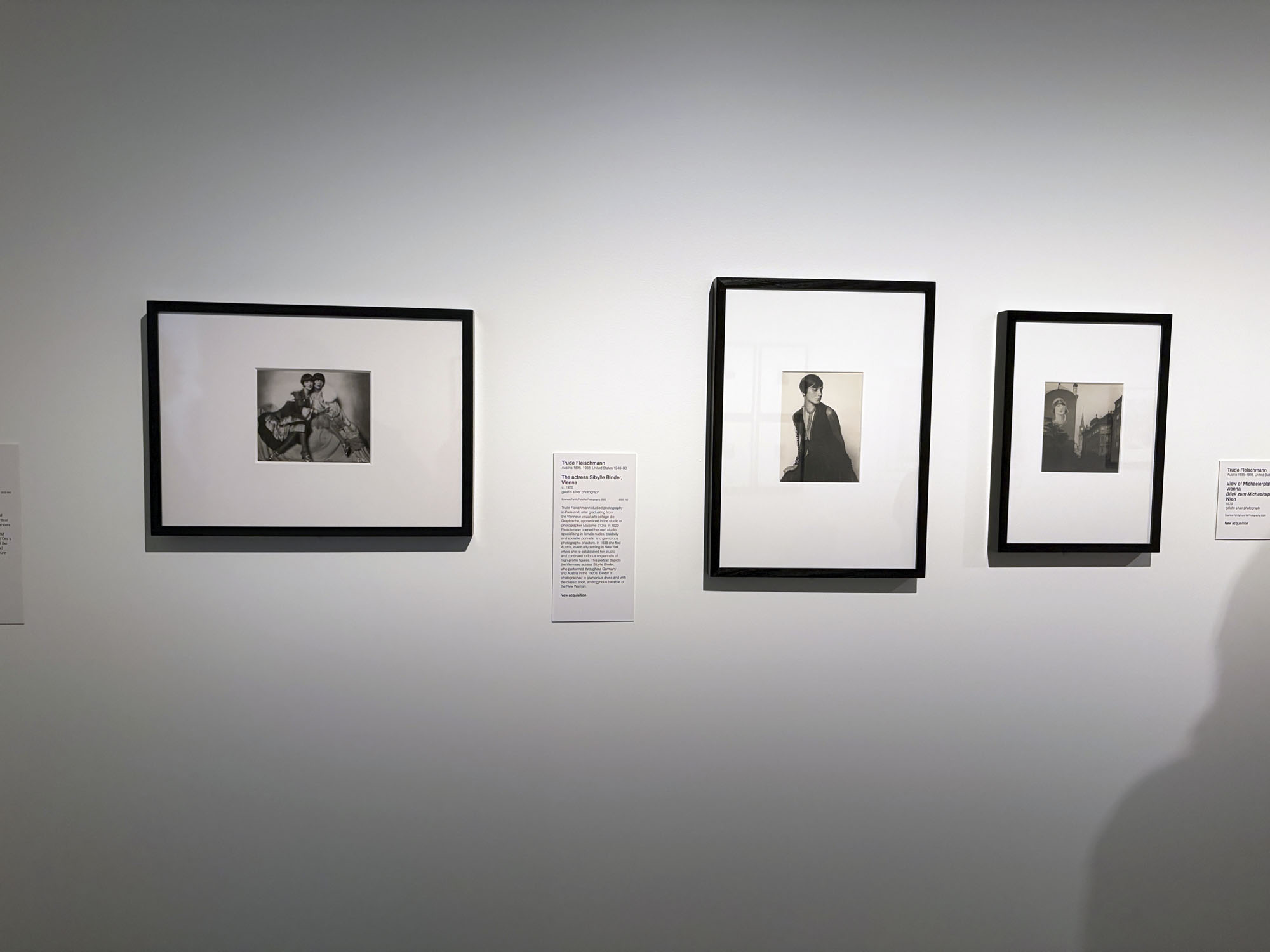
 

Installation view of the exhibition 'Women Photographers 1900-1975: A Legacy of Light' at NGV International, Melbourne, November 2025 - May 2026 showing at left, Madame D'Ora 'The Dolly Sisters' (c. 1928); at second right, Trude Fleischmann 'The actress Sibylle Binder, Vienna' (c. 1926); and at right, Trude Fleischmann 'View of Michaelerplatz, Vienna' (1929)


Installation view of the exhibition Women Photographers 1900-1975: A Legacy of Light at NGV International, Melbourne, November 2025 – May 2026 showing at left, Madame D’Ora The Dolly Sisters (c. 1928, below); at second right, Trude Fleischmann The actress Sibylle Binder, Vienna (c. 1926, below); and at right, Trude Fleischmann View of Michaelerplatz, Vienna (1929, below)
Photo: Marcus Bunyan
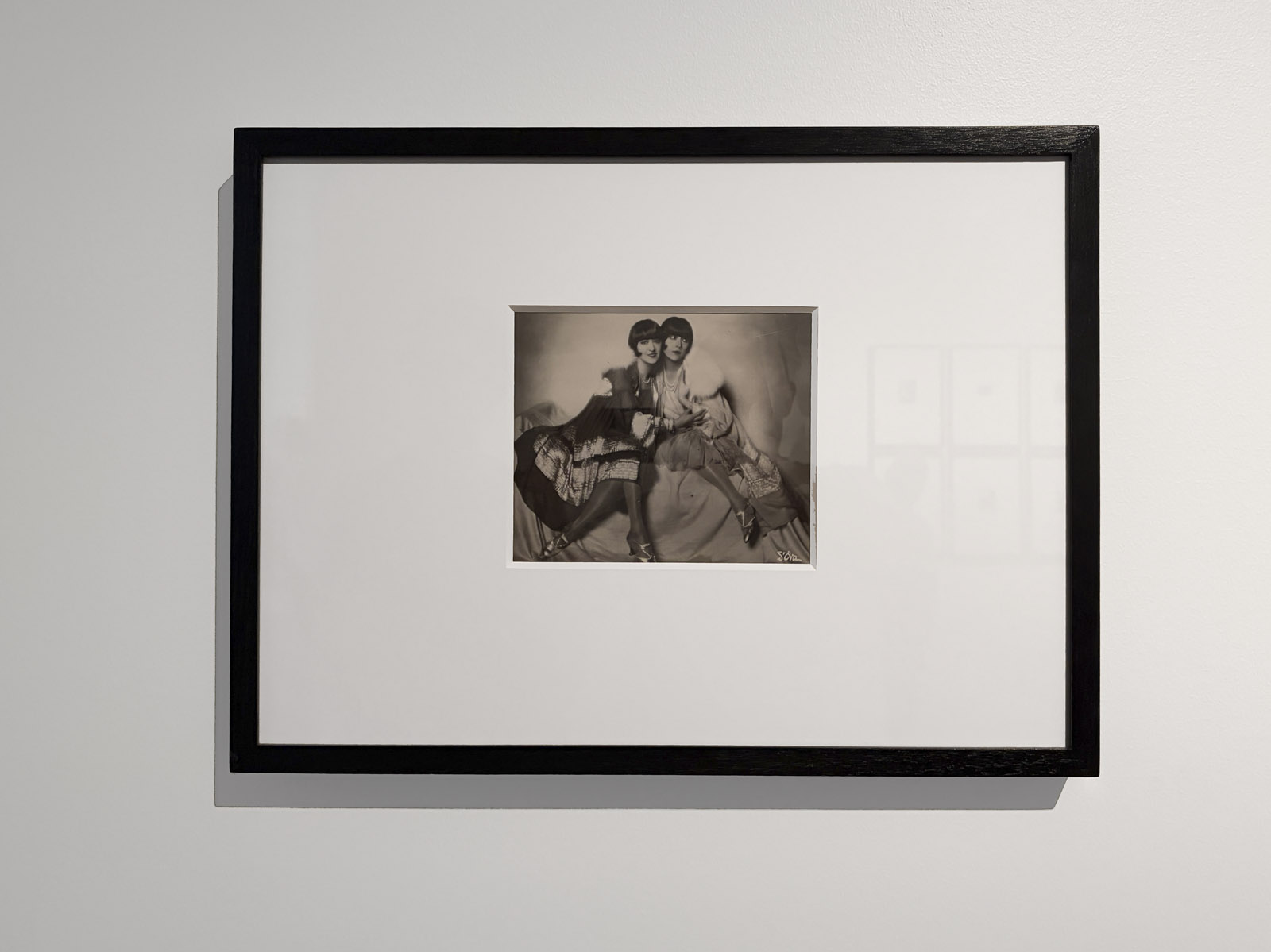
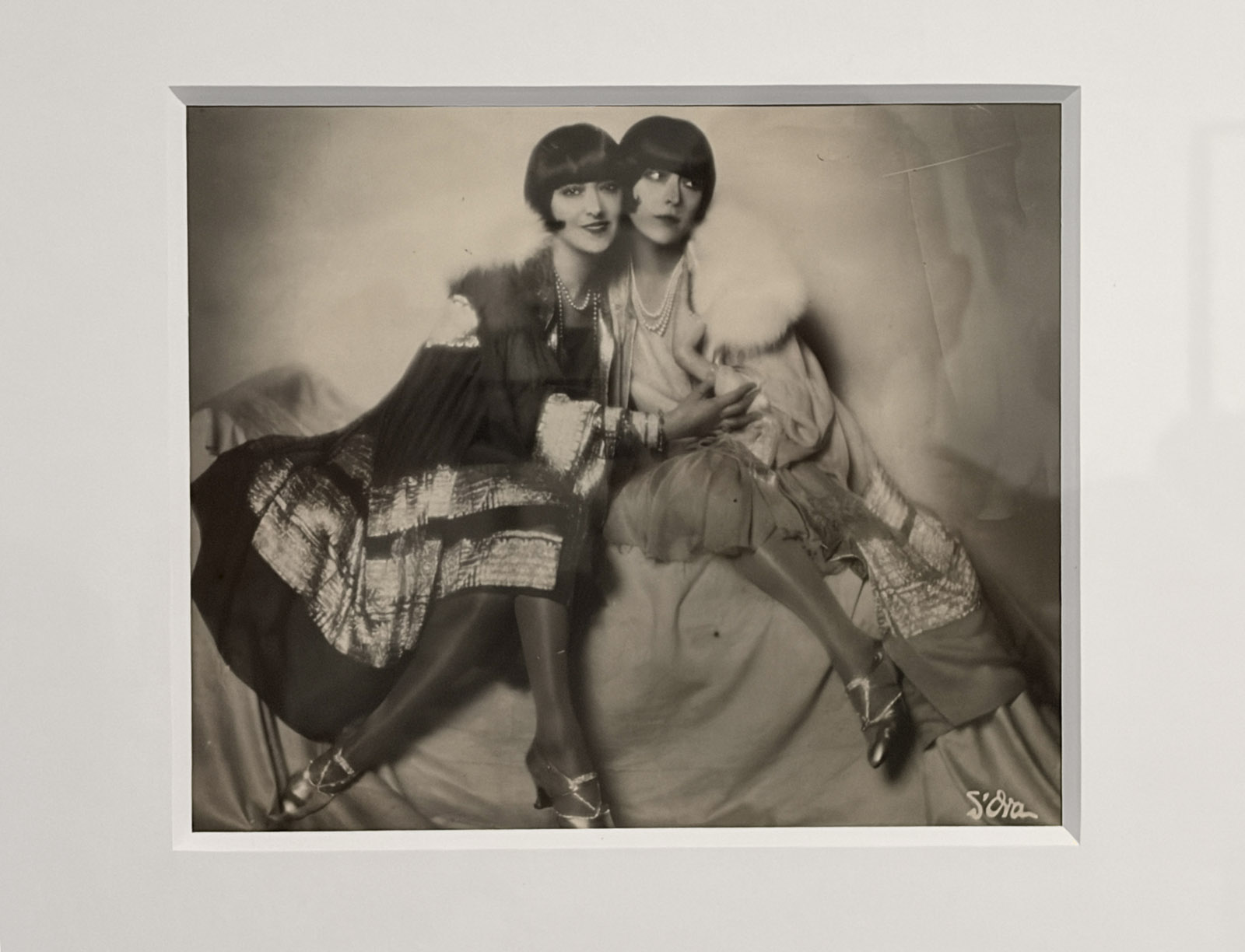
 

Dora Kallmus (Madame d'Ora) (Austrian, 1881–1963) 'The Dolly sisters' c. 1928 (installation view)


Dora Kallmus (Madame d’Ora) (Austrian, 1881–1963)
The Dolly sisters (installation views)
c. 1928
Gelatin silver photograph
18.0 x 21.1cm
National Gallery of Victoria, Melbourne
Bowness Family Fund for Photography, 2022
Photos: Marcus Bunyan


Around 1928 Madame d’Ora photographed the Dolly Sisters, who were celebrated for their glamorous performances in the 1920s. Jenny and Rosie Dolly, Hungarian-American identical twins, were vaudeville and cabaret dancers adored in Britain, the United States and across Europe for their beauty and erotically charged performances. In d’Ora’s photograph they embody the ideal of the modern woman, with bobbed hair and short skirts, dressed in glittering couture costumes and adorned with pearls.

Wall text from the exhibition
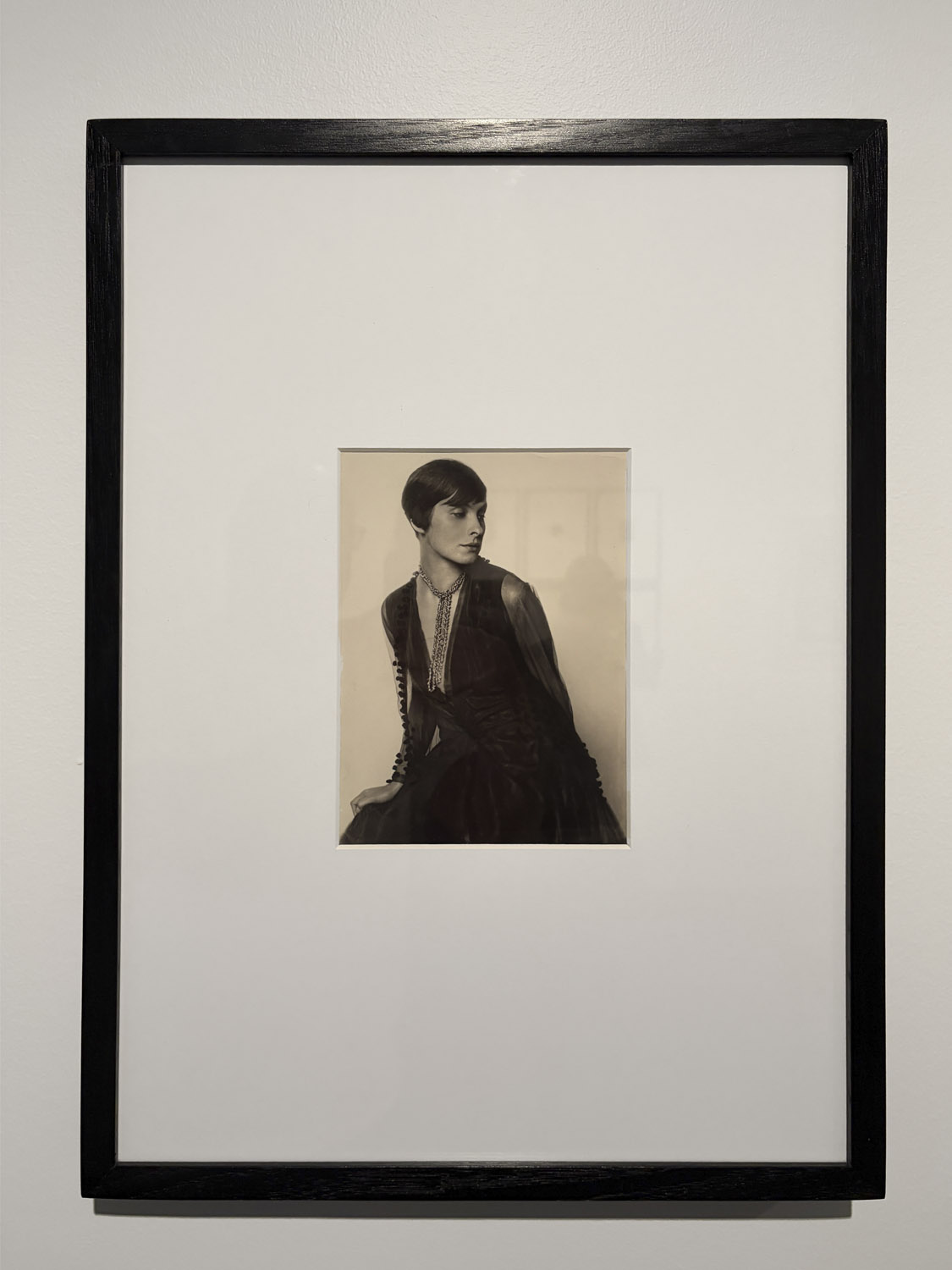
 

Trude Fleischmann (American born Austria, 1895-1990) 'The actress Sibylle Binder, Vienna' c. 1926 (installation view)


Trude Fleischmann (American born Austria, 1895-1990)
The actress Sibylle Binder, Vienna
c. 1926
Gelatin silver photograph
21.9 x 16.2cm (image)
22.9 x 17.1cm (sheet)
National Gallery of Victoria, Melbourne
Bowness Family Fund for Photography, 2022
Photo: Marcus Bunyan
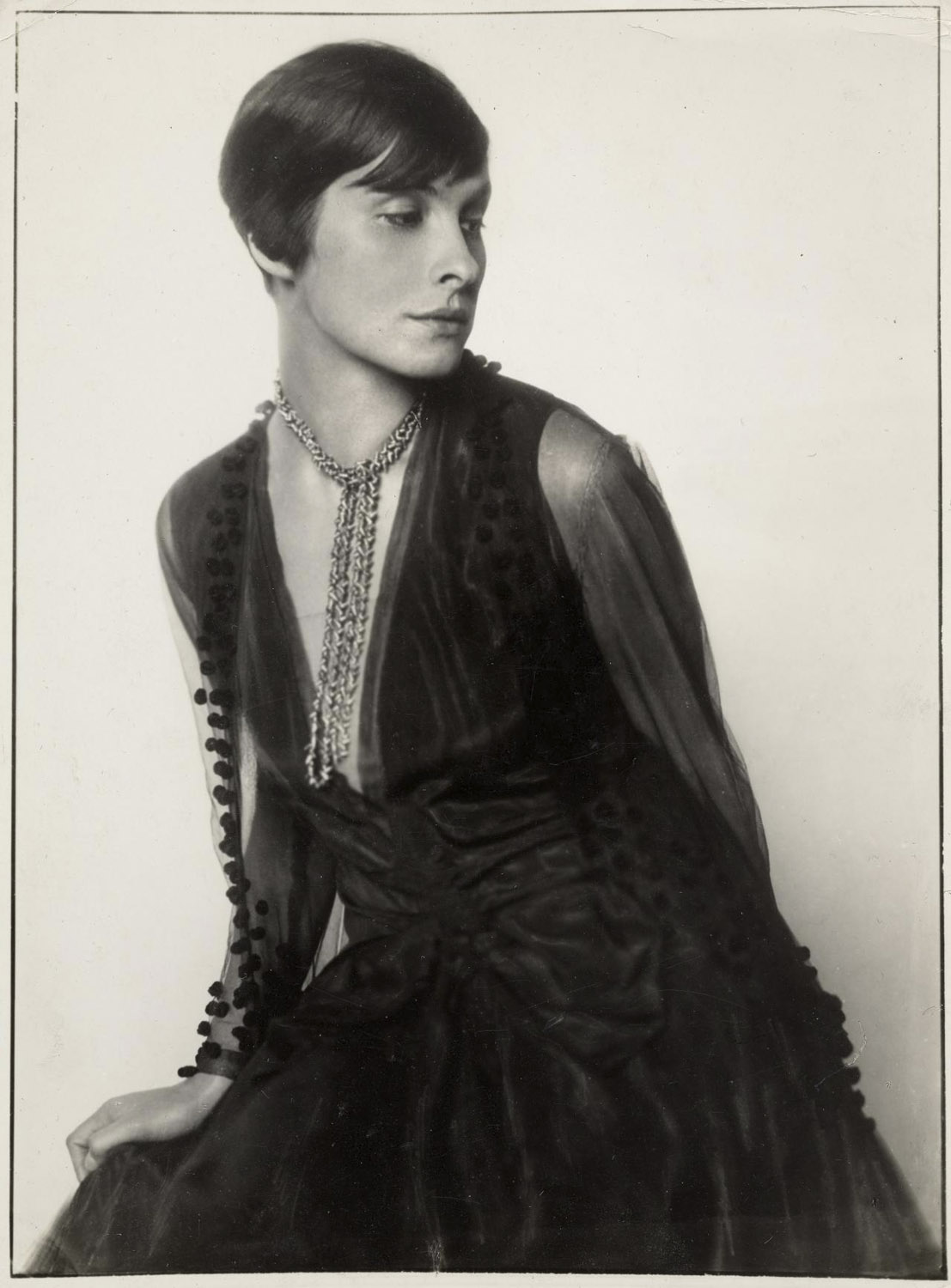
 

Trude Fleischmann (American born Austria, 1895-1990) 'The actress Sibylle Binder, Vienna' c. 1926


Trude Fleischmann (American born Austria, 1895-1990)
The actress Sibylle Binder, Vienna
c. 1926
Gelatin silver photograph
21.9 x 16.2cm (image)
22.9 x 17.1cm (sheet)
National Gallery of Victoria, Melbourne
Bowness Family Fund for Photography, 2022
Public domain


Trude Fleischmann studied photography in Paris and, after graduating from the Viennese visual arts college die Graphische, apprenticed in the studio of photographer Madame d’Ora. In 1920 Fleischmann opened her own studio, specialising in female nudes, celebrity and socialite portraits, and glamorous photographs of actors. In 1938 she fled Austria, eventually settling in New York, where she re-established her studio and continued to focus on portraits of high-profile figures. This portrait depicts the Viennese actress Sibylle Binder, who performed throughout Germany and Austria in the 1920s. Binder is photographed in glamorous dress and with the classic short, androgynous hairstyle of the New Woman.

Wall text from the exhibition


Sybille Binder (Austrian, 1895-1962)

Sybille Binder (5 January 1895 – 30 June 1962) was an Austrian actress of Jewish descent whose career of over 40 years was based variously in her home country, Germany and Britain, where she found success in films during the 1940s.

Career

Binder began her stage career in Berlin in 1915, then in 1918 moved to Munich, where she enjoyed success in classical drama. Between 1916 and 1918 she also appeared in a handful of silent films. In 1922, she returned to Berlin and received acclaim for her performance in Frank Wedekind’s Earth Spirit. Over the next few years she performed regularly in Germany and Austria then, in the mid-1930s as war approached and conditions in Germany became difficult, she made the decision to move to England.

Between 1942 and 1950 Binder featured in 13 British films, including several of superior quality. Her first screen appearance in Britain came auspiciously in the highly acclaimed supernatural drama Thunder Rock, playing opposite dramatic heavyweights including Michael Redgrave, James Mason and Frederick Valk. Other notable films in which Binder appeared were war drama Candlelight in Algeria (1944), hugely popular period melodrama Blanche Fury, espionage thriller Against the Wind and amnesia-themed romance Portrait from Life (all 1948).

Binder returned to Germany in 1950, settling in Düsseldorf, where she successfully picked up her stage career but did not attempt to break into the German film industry. She died on 30 June 1962, aged 67.

Text from the Wikipedia website
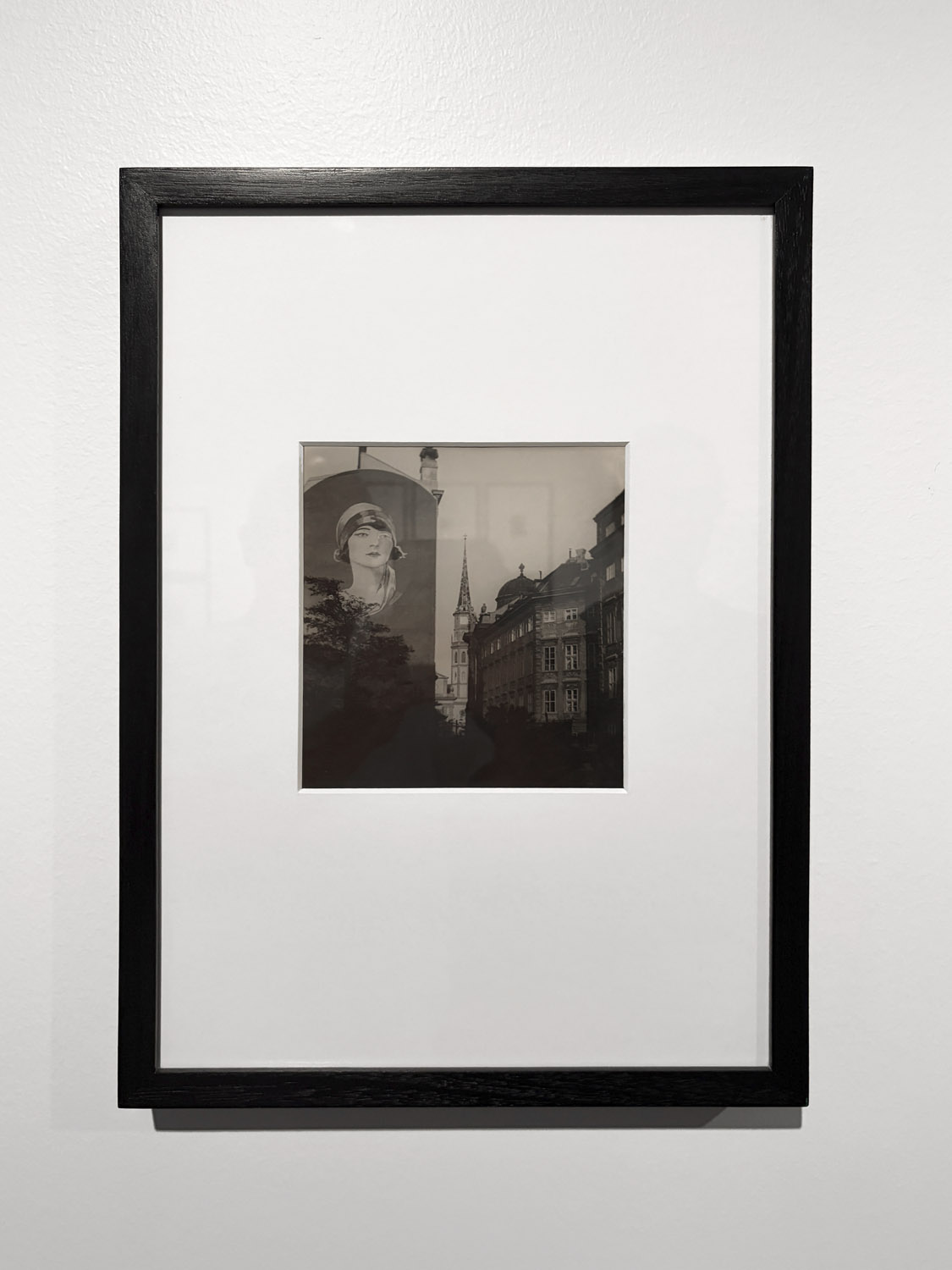
 

Trude Fleischmann (American born Austria, 1895-1990) 'View of Michaelerplatz, Vienna' (Blick zum Michaelerplatz Wien) 1929 (installation view)


Trude Fleischmann (American born Austria, 1895-1990)
View of Michaelerplatz, Vienna (Blick zum Michaelerplatz Wien)
1929
Gelatin silver photograph
18.4 x 16.6cm (image)
19.0 x 17.3cm (sheet)
National Gallery of Victoria, Melbourne
Bowness Family Fund for Photography, 2024
Photo: Marcus Bunyan
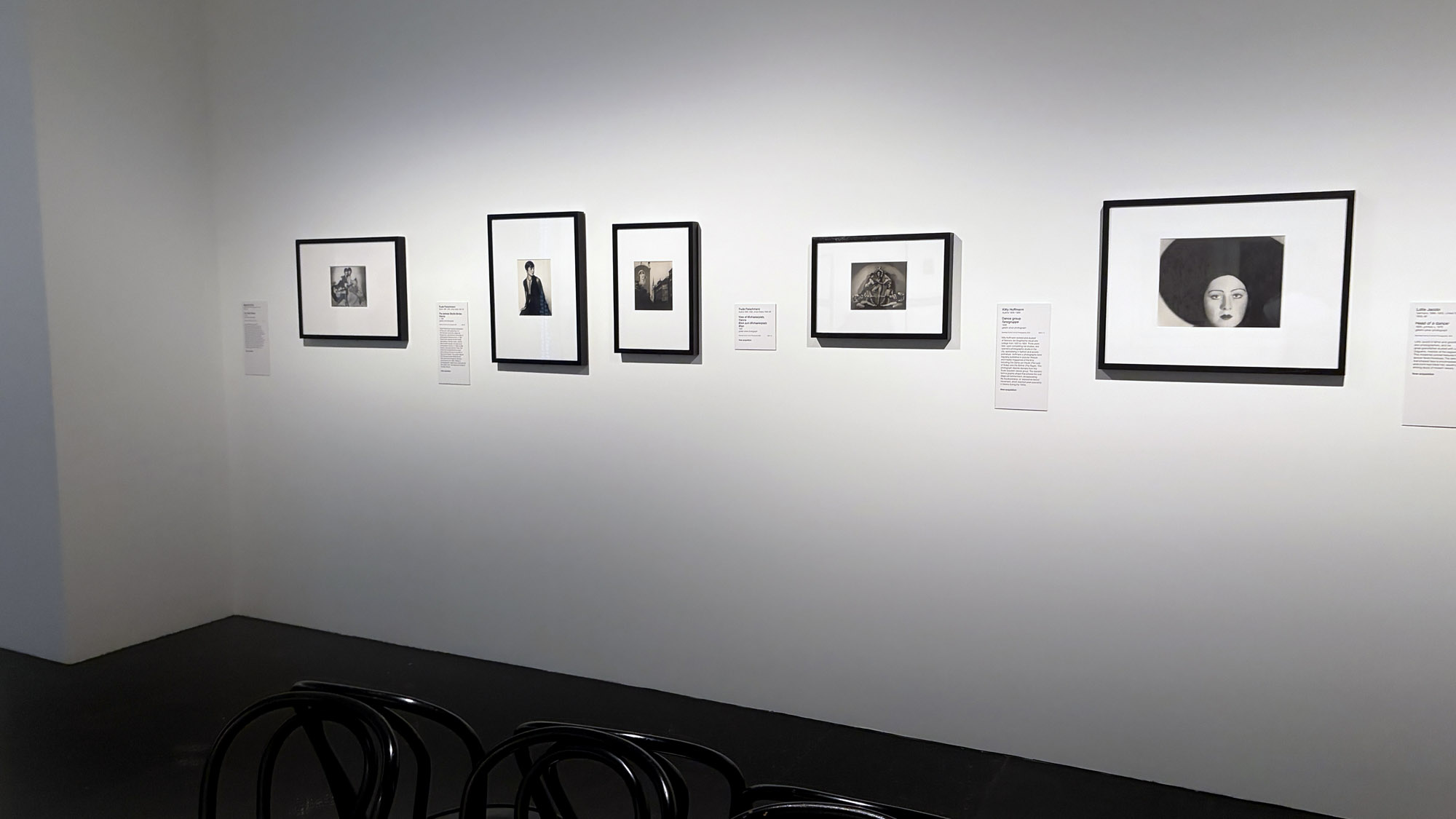
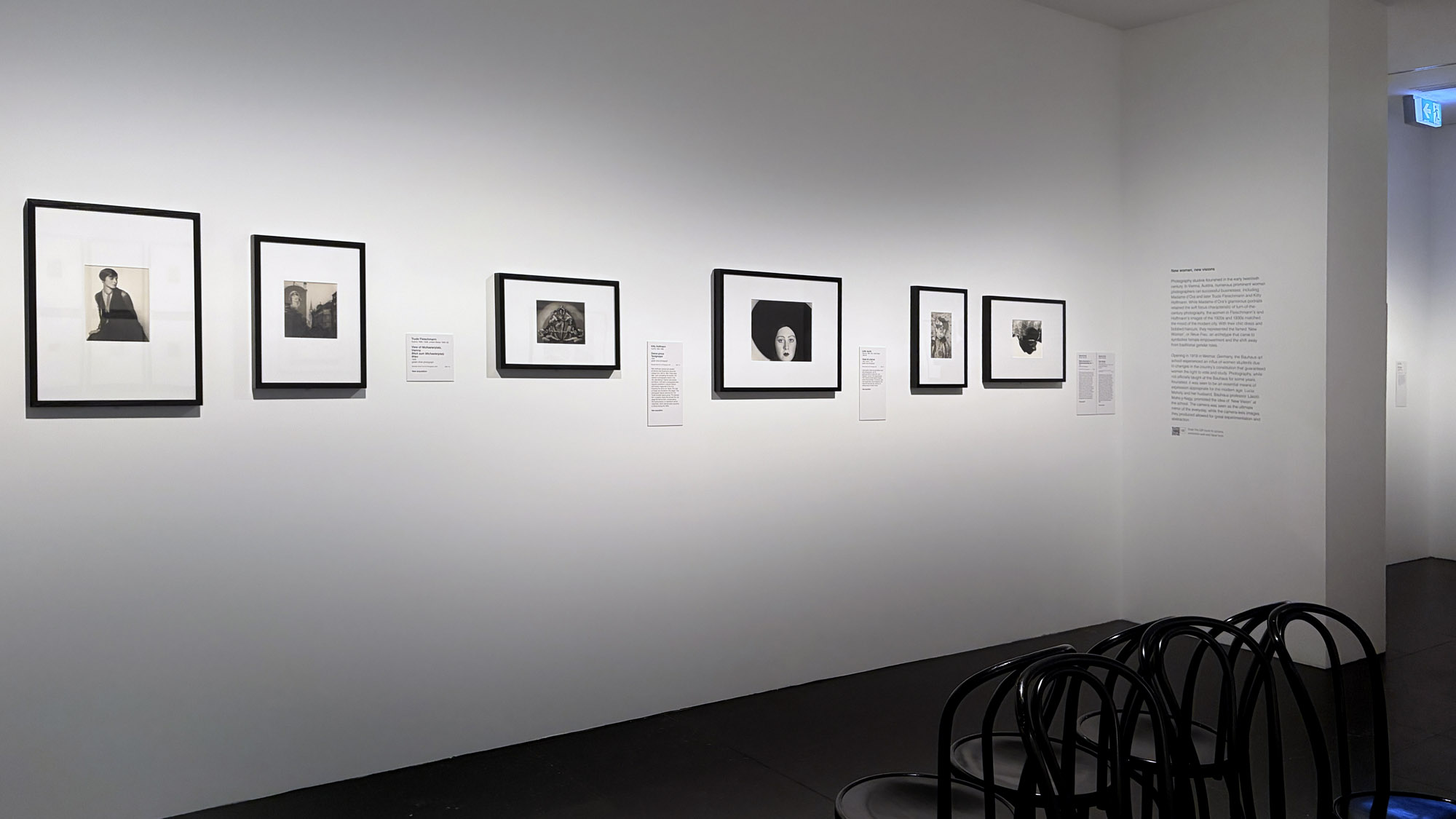
 

Installation view of the exhibition 'Women Photographers 1900-1975: A Legacy of Light' at NGV International, Melbourne, November 2025 - May 2026
Installation view of the exhibition 'Women Photographers 1900-1975: A Legacy of Light' at NGV International, Melbourne, November 2025 - May 2026 showing at third left, Kitty Hoffmann 'Posing dance group' (Tanzgruppe Trude Goodwin) (1930); at third right, Lotte Jacobi 'Head of a dancer' (1929); at second right, Gertrud Arndt 'Mask self-portrait No. 11' (1930); and at right, Gertrud Arndt 'Wera Waldek' (1930)


Installation view of the exhibition Women Photographers 1900-1975: A Legacy of Light at NGV International, Melbourne, November 2025 – May 2026 showing in the bottom image at third left, Kitty Hoffmann Posing dance group (Tanzgruppe Trude Goodwin) (1930, below); at third right, Lotte Jacobi Head of a dancer (1929, below); at second right, Gertrud Arndt Mask self-portrait No. 11 (1930, below); and at right, Gertrud Arndt Wera Waldek (1930, below)
Photos: Marcus Bunyan


New Women, New Visions

Photography studios flourished in the early twentieth century. In Vienna, Austria, numerous prominent women photographers ran successful businesses, including Madame d’Ora and later Trude Fleischmann and Kitty Hoffmann. While Madame d’Ora’s glamorous portraits retained the soft focus characteristic of turn-of-the-century photography, the women in Fleischmann’s and Hoffmann’s images of the 1920s and 1930s matched the mood of the modern city. With their chic dress and bobbed haircuts, they represented the famed ‘New Woman’, or Neue Frau, an archetype that came to symbolise female empowerment and the shift away from traditional gender roles.

Opening in 1919 in Weimar, Germany, the Bauhaus art school experienced an influx of women students due to changes in the country’s constitution that guaranteed women the right to vote and study. Photography, while not officially taught at the Bauhaus for some years, flourished: it was seen to be an essential means of expression appropriate for the modern age. Lucia Moholy and her husband, Bauhaus professor László Moholy-Nagy, promoted the idea of ‘New Vision’ at the school. The camera was seen as the ultimate mirror of the everyday, while the camera-less images they produced allowed for great experimentation and abstraction.
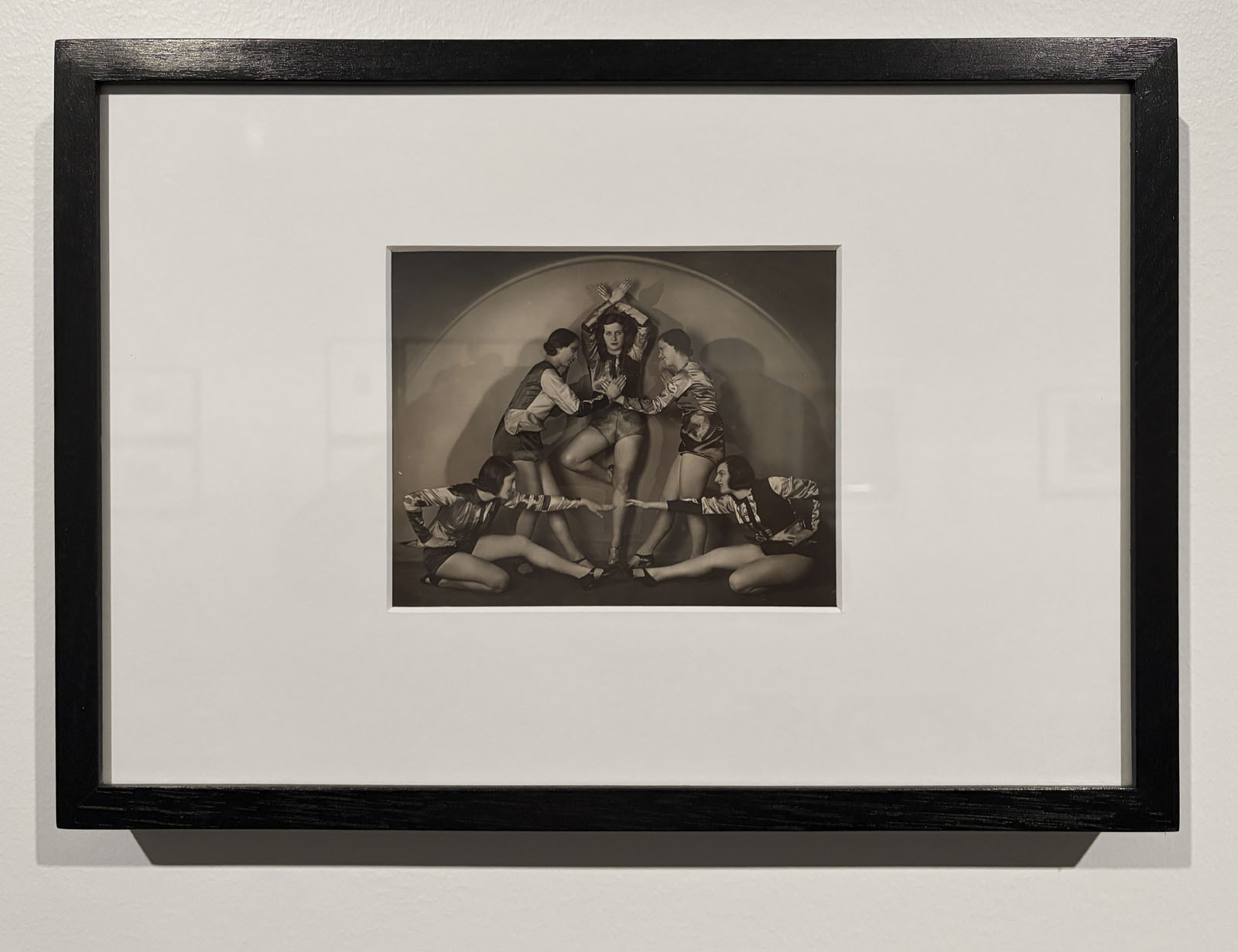
 

Kitty Hoffmann (Austrian, 1900-1968) 'Posing dance group' (Tanzgruppe Trude Goodwin) 1930 (installation view)


Kitty Hoffmann (Austrian, 1900-1968)
Posing dance group (Tanzgruppe Trude Goodwin) (installation view)
1930
Gelatin silver photograph
15.9 x 19.8cm (image)
16.8 x 20.7cm (sheet)
National Gallery of Victoria, Melbourne
Bowness Family Fund for Photography, 2024
Photo: Marcus Bunyan
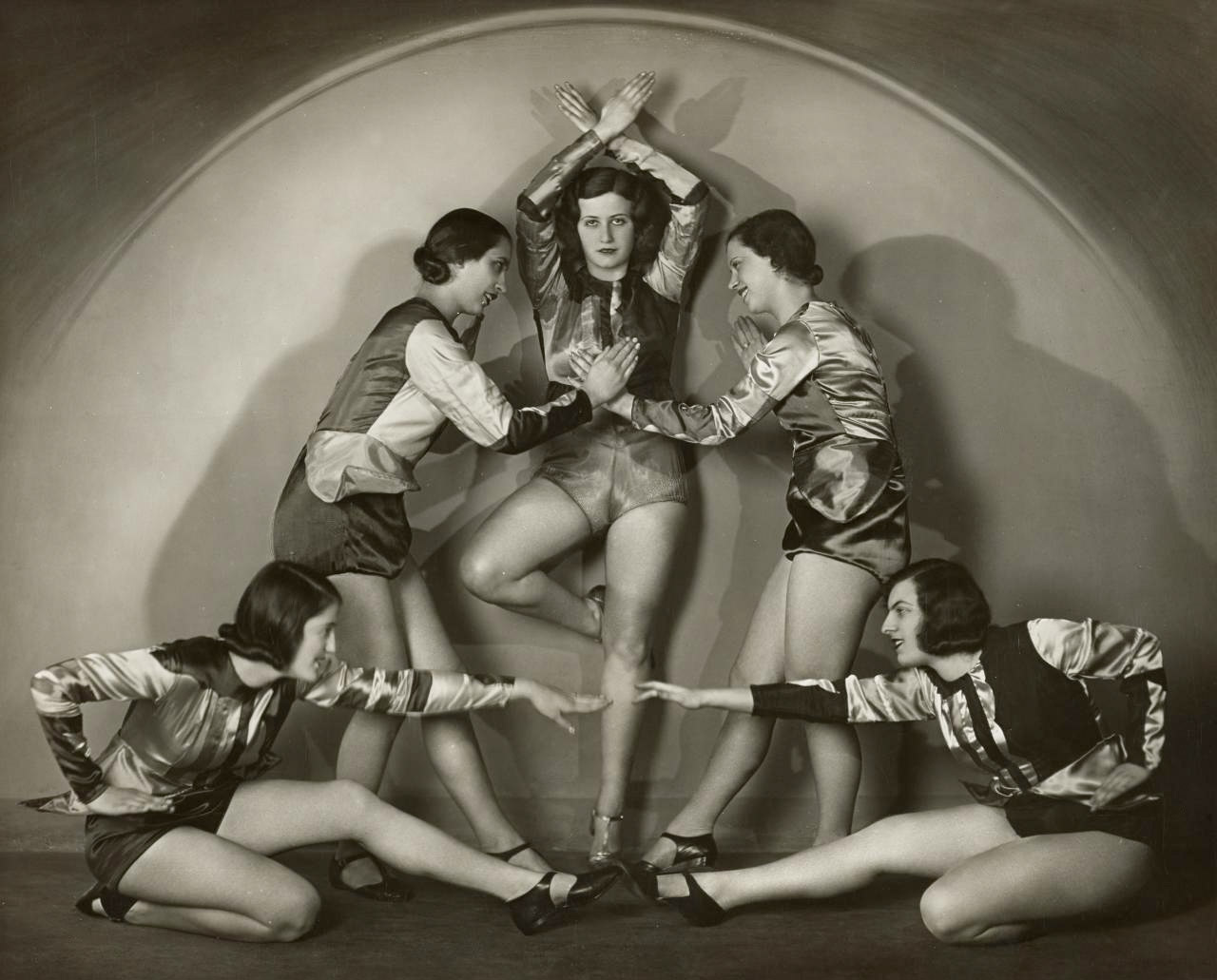
 

Kitty Hoffmann (Austrian, 1900-1968) 'Posing dance group' (Tanzgruppe Trude Goodwin) 1930


Kitty Hoffmann (Austrian, 1900-1968)
Posing dance group (Tanzgruppe Trude Goodwin)
1930
Gelatin silver photograph
15.9 x 19.8cm (image) 16.8 x 20.7cm (sheet)
National Gallery of Victoria, Melbourne
Bowness Family Fund for Photography, 2024


Kitty Hoffmann worked and studied at Vienna’s die Graphische visual arts college from 1922 to 1924. Three years later, upon completing her studies, she opened a photographic studio in the city, specialising in fashion and society portraiture. Hoffmann’s photographs were regularly published in popular lifestyle and theatre magazines of the time, including Die Dame von Heute (The Lady of Today) and Die Bühne (The Stage). This photograph depicts dancers from the Trude Goodwin dance group. The dancers form a graphic shape that echoes the oval stage-set behind them, encapsulating the Ausdruckstanz, or ‘expressive dance’ movement, which reached peak popularity in Vienna during the 1920s.

Wall text from the exhibition


Lotte Jacobi (German-American, 1896-1990) 'Head of a dancer' 1929, printed c. 1970


Lotte Jacobi (German-American, 1896-1990)
Head of a dancer
1929, printed c. 1970
Gelatin silver photograph
26.4 x 33.2cm (image)
27.7 x 35.3cm (sheet)
National Gallery of Victoria, Melbourne
Bowness Family Fund for Photography, 2021
Public domain


Lotte Jacobi’s father and grandfather were also photographers, and her great-grandfather studied with Louis Daguerre, inventor of the daguerreotype. This modernist portrait features Russian dancer Niuta Norskaya. The dancer’s pale, oval-shaped face is encompassed by her wide-brimmed black hat, resulting in a striking study of modern beauty.

Wall text from the exhibition
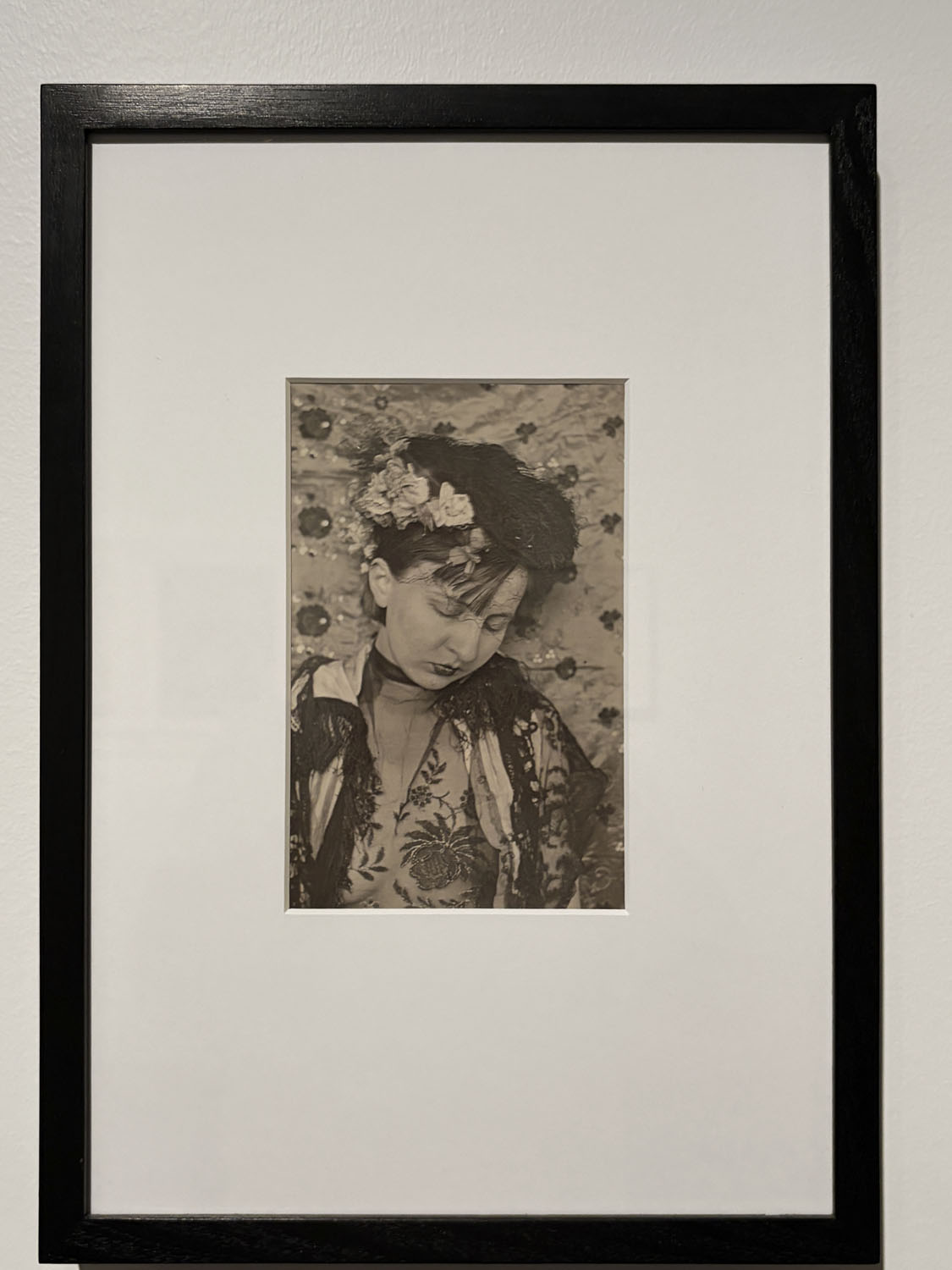
 

Gertrud Arndt (German, 1903-2000) 'Mask self-portrait no. 11' (Maskenselbstbildnis Nr. 11) 1930 (installation view)


Gertrud Arndt (German, 1903-2000)
Mask self-portrait no. 11 (Maskenselbstbildnis Nr. 11) (installation views)
1930
Gelatin silver photograph
22.9 x 14.7cm (image and sheet)
National Gallery of Victoria, Melbourne
Bowness Family Fund for Photography, 2024
Photos: Marcus Bunyan


Gertrud Arndt (born Gertrud Hantschk in Upper Silicia) set out to become an architect, beginning a three-year apprenticeship in 1919 at the architecture firm of Karl Meinhardt in Erfurt, where her family lived at the time. While there, she began teaching herself photography by taking pictures of buildings in town. She also attended courses in typography, drawing, and art history at the Kunstgewerbeschule (School of design). Encouraged by Meinhardt, a friend of Walter Gropius, Arndt was awarded a scholarship to continue her studies at the Bauhaus in Weimar. Enrolled from 1923 to 1927, Arndt took the Vorkurs (foundation course) from László Moholy-Nagy, who was a chief proponent of the value of experimentation with photography. After her Vorkurs, Georg Muche, leader of the weaving workshop, persuaded her to join his course, which then became the formal focus of her studies. Upon graduation, in March 1927, she married fellow Bauhaus graduate and architect Alfred Arndt. The couple moved to Probstzella in Eastern Germany, where Arndt photographed buildings for her husband’s architecture firm. 

In 1929, Hannes Meyer invited Alfred Arndt to teach at the Bauhaus, where Arndt focused her energy on photography, entering her period of greatest activity, featuring portraits of friends, still-lifes, and a series of performative self-portraits, as well as At the Masters’ Houses, which shows the influence of her studies with Moholy-Nagy as well as her keen eye for architecture. After the Bauhaus closed, in 1932, the couple left Dessau and moved back to Probstzella. Three years after the end of World War II the family moved to Darmstadt; Arndt almost completely stopped making photographs.

Mitra Abbaspour, Associate Curator, Department of Photography “Gertrud Arndt,” on the MoMA website 2014 [Online] Cited 31/03/2026. Used under fair use conditions for the purposes of education and research
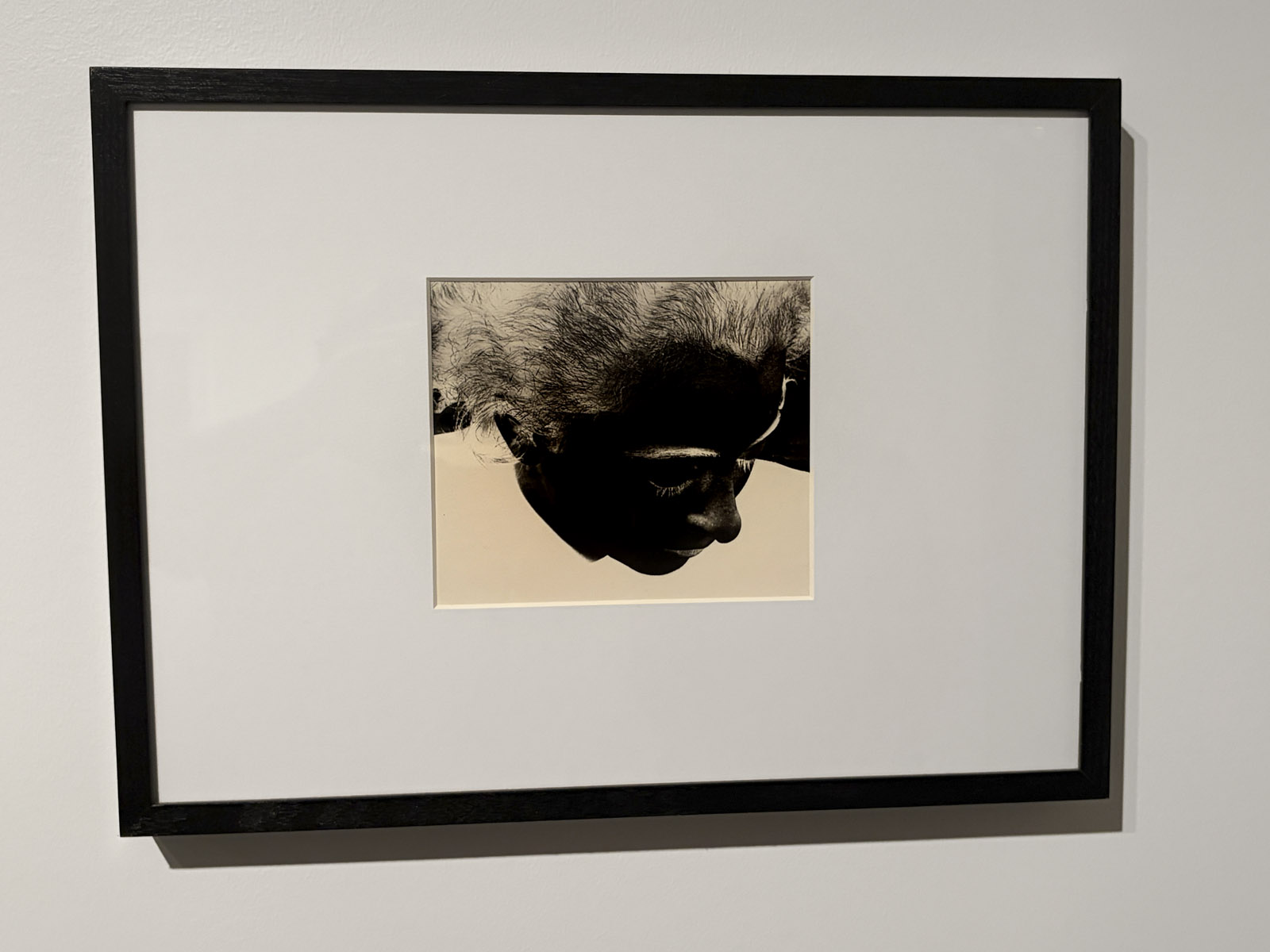
 

Gertrud Arndt (German, 1903-2000) 'Wera Waldek' 1930, printed 1984 (installation view)


Gertrud Arndt (German, 1903-2000)
Wera Waldek
1930, printed 1984
From the Bauhaus portfolio I (1919-1933) 1984
Gelatin silver photograph
(19.0 x 22.5cm) irreg. (image)
27.0 x 35.3cm (sheet)
National Gallery of Victoria, Melbourne
Gift of Galerie Kicken Berlin in memory of Rudolf Kicken (1947-2014), 2024
Photo: Marcus Bunyan


Originally wanting to study architecture, Gertrud Arndt enrolled at the Bauhaus school in 1923-1924, ultimately specialising in weaving. A self-taught photographer, she informally developed her skills while apprenticing at an architect’s office in Erfurt prior to her studies, later photographing buildings for her husband’s architecture firm. Printing this picture in its negative state, rather than turning it into a positive image, Arndt creates a striking dreamlike effect. The portrait depicts fellow Bauhaus architecture student Wera Waldek, who made designs for children’s play furniture and housing interiors. The image forms part of the Bauhaus Portfolio I 1919-1933, published by Rudolf Kicken Galerie in 1984.

Wall text from the exhibition
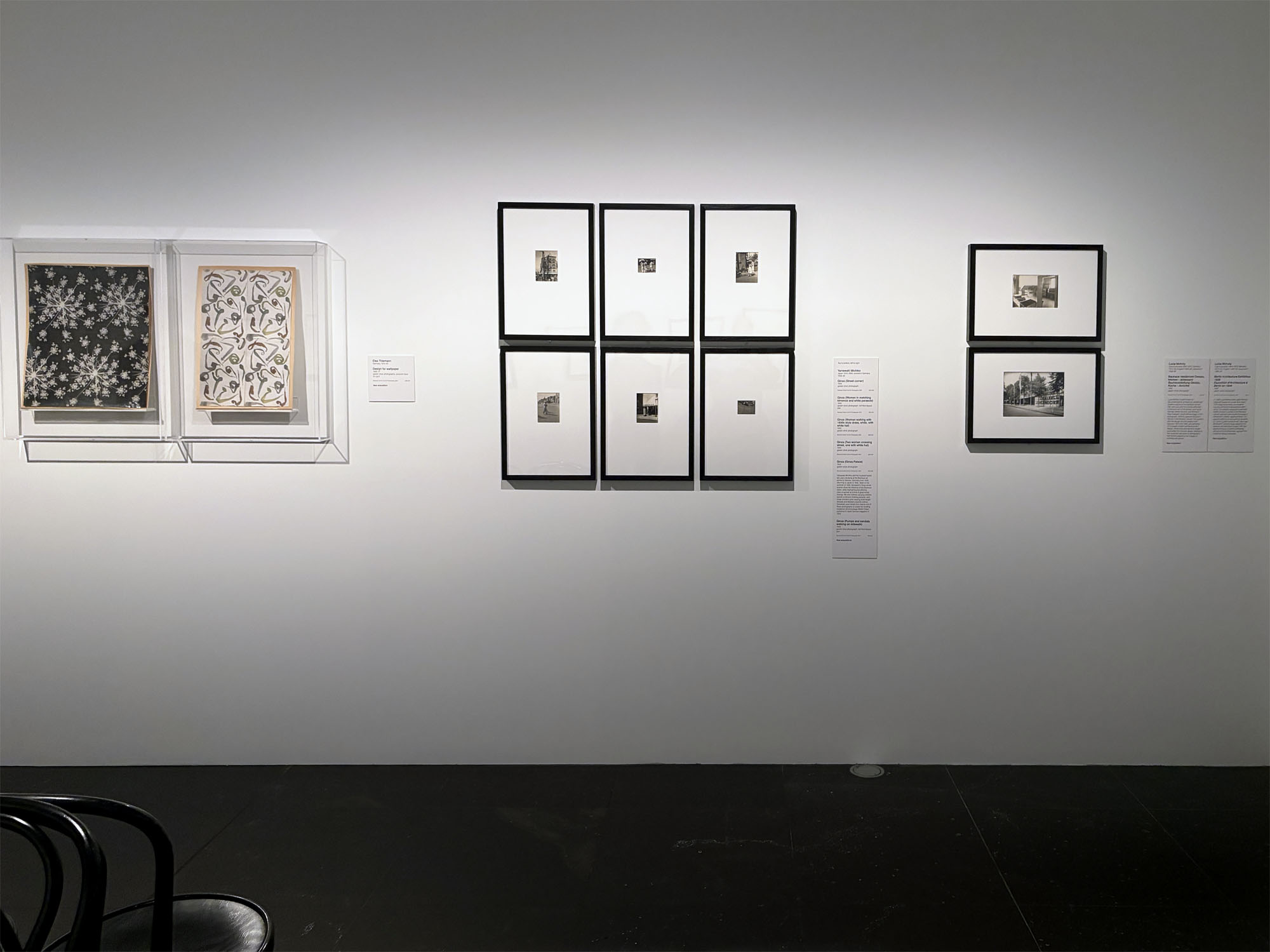
 

Installation view of the exhibition 'Women Photographers 1900-1975: A Legacy of Light' at NGV International, Melbourne, November 2025 - May 2026
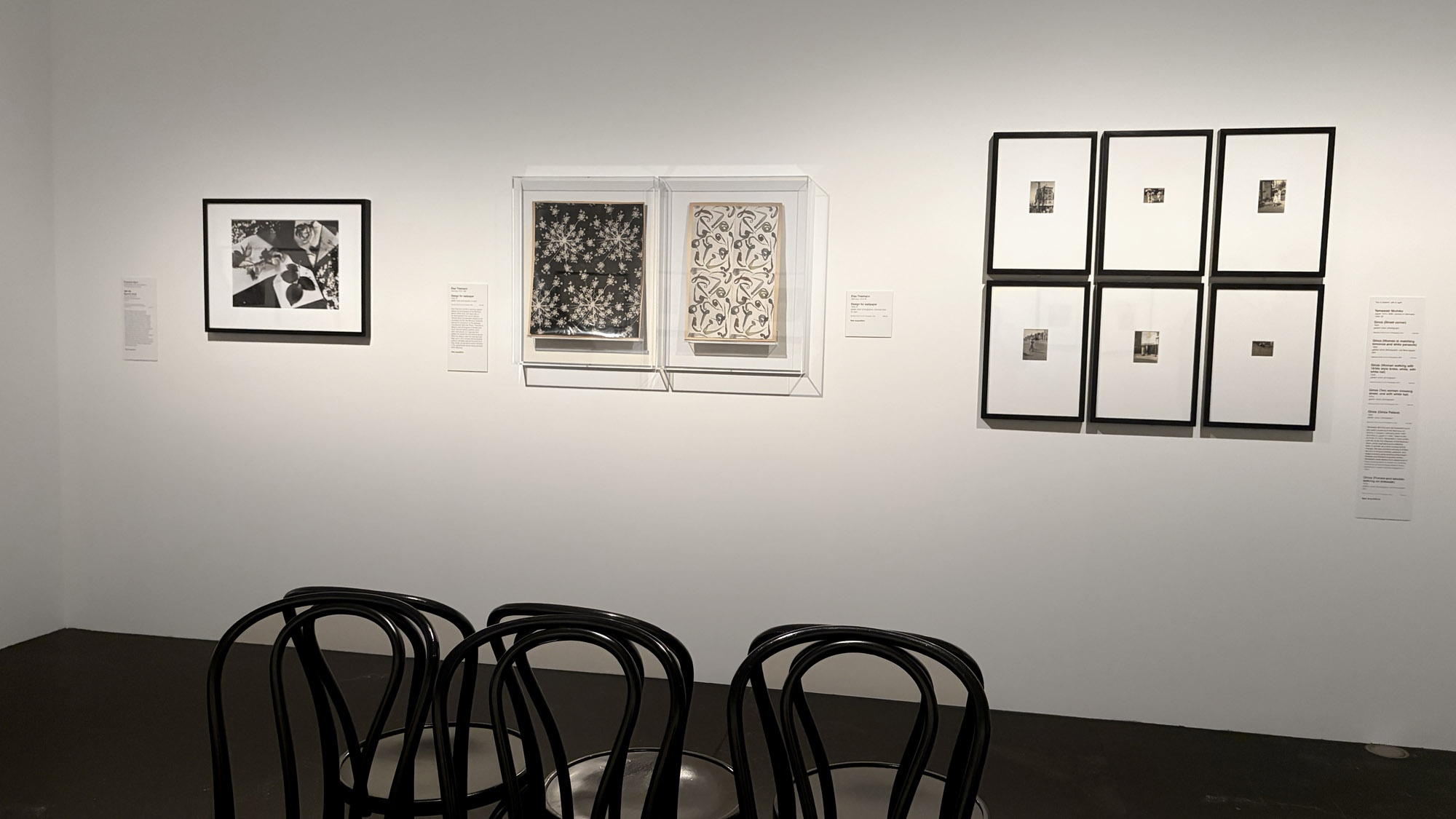
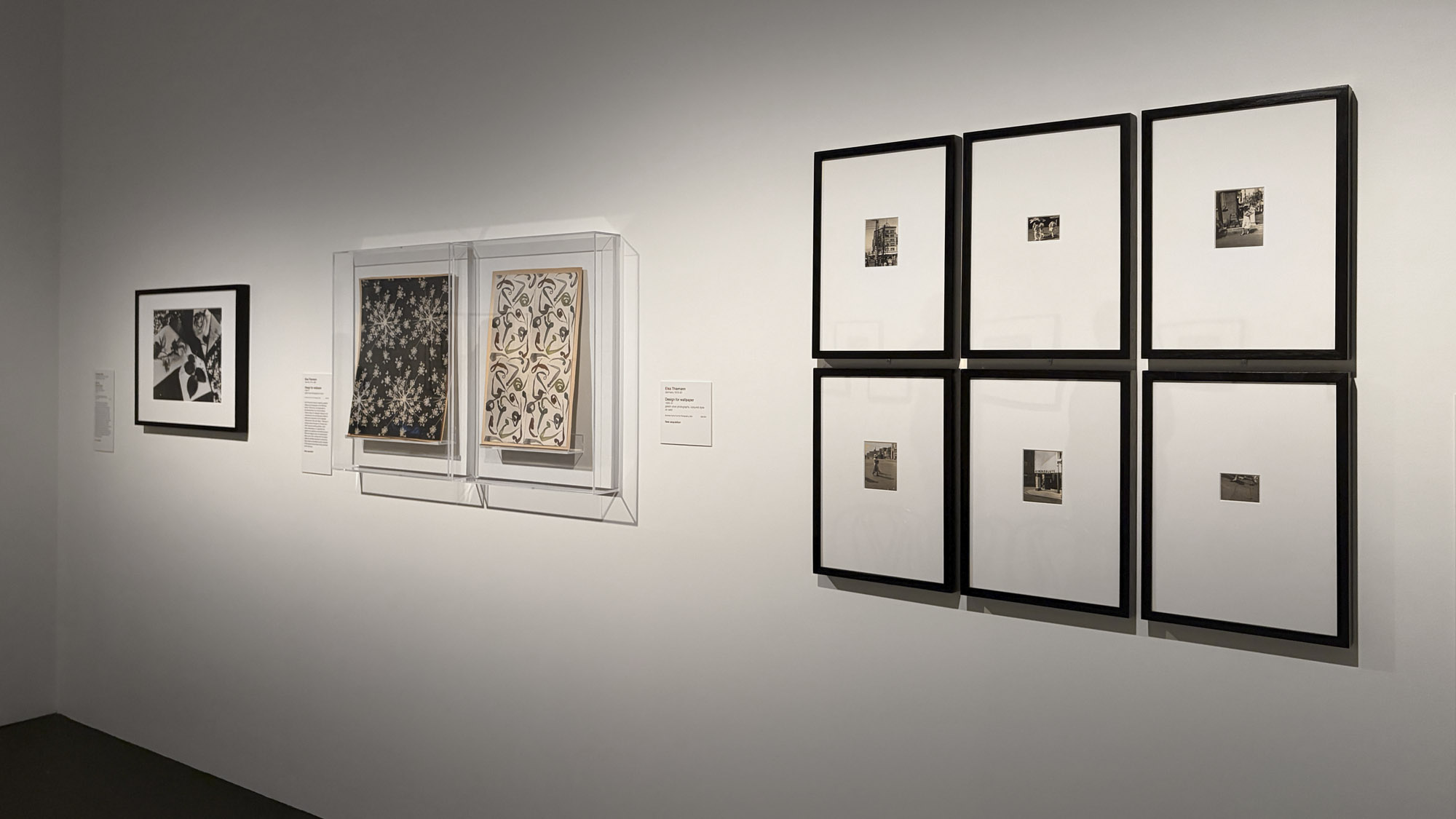
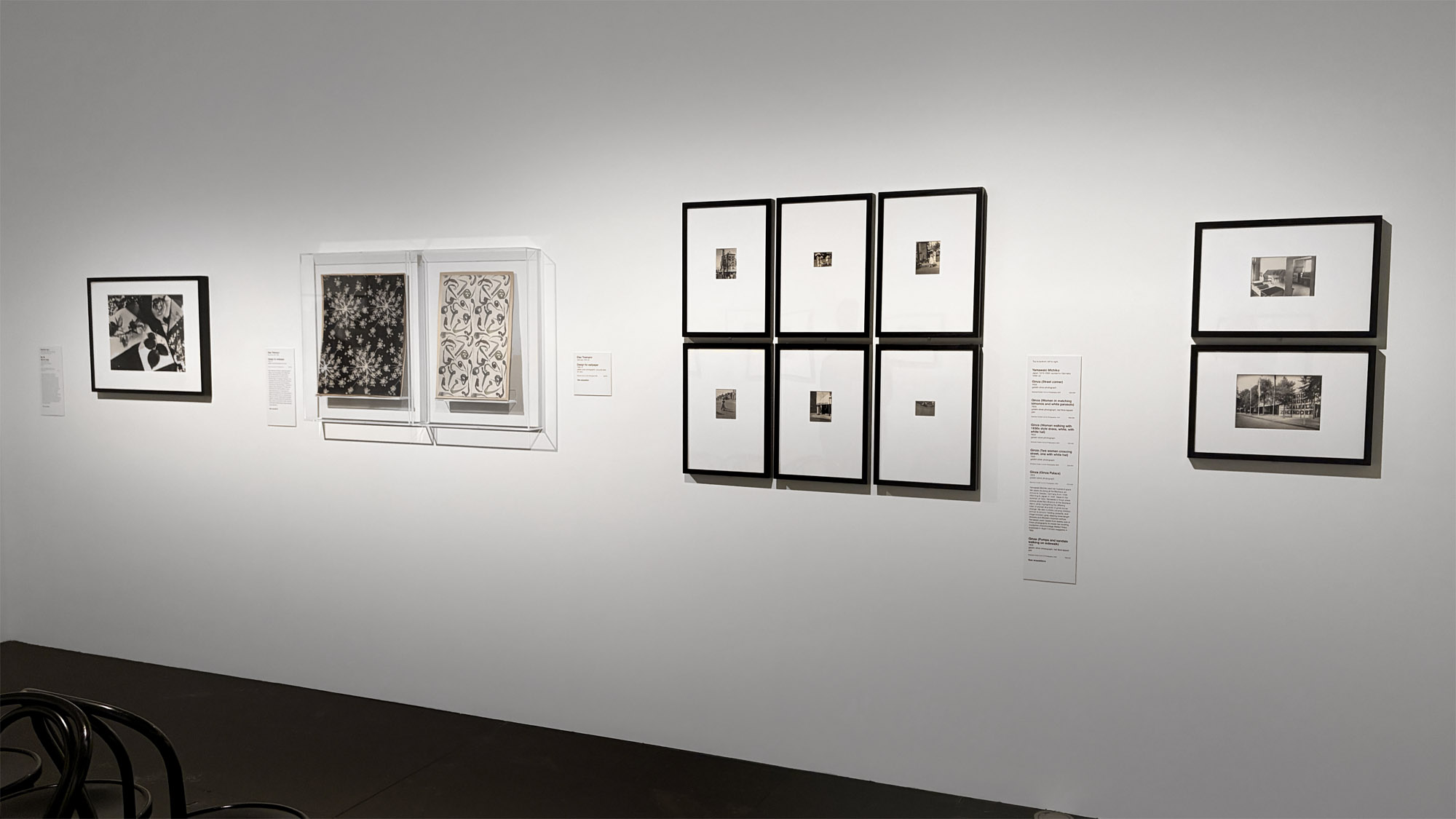
Installation view of the exhibition 'Women Photographers 1900-1975: A Legacy of Light' at NGV International, Melbourne, November 2025 - May 2026 showing from left to right in the bottom image, Florence Henri 'Still life' (Nature morte) (1931 printed 1975, below); Elsa Thiemann (German, 1910-1981) 'Design for wallpaper' (1930-1931); 1930s photographs by Yamawaki Michiko (Japan, 1910-2000, worked in Germany 1930-1932); and two 1920s photographs by Lucia Moholy of the Bauhaus, Dessau


Installation view of the exhibition Women Photographers 1900-1975: A Legacy of Light at NGV International, Melbourne, November 2025 – May 2026 showing from left to right in the bottom image, Florence Henri Still life (Nature morte) (1931 printed 1975, below); Elsa Thiemann (German, 1910-1981) Design for wallpaper (1930-1931); 1930s photographs by Yamawaki Michiko (Japan, 1910-2000, worked in Germany 1930-1932) see below; and two 1920s photographs by Lucia Moholy of the Bauhaus, Dessau, see below
Photos: Marcus Bunyan


Elsa Thiemann trained in painting, graphic design and photography at the Bauhaus school. While there, she responded to an advertisement from school director Hannes Meyer for wallpaper designs to be considered for the new Bauhaus collection, planned for production by the wallpaper manufacturer Gebrüder Rasch. Thiemann’s designs used photograms of flowers and hand-coloured swirling patterns, which were meticulously cut, organised and pasted into repetitious symmetrical layouts. While her designs were not manufactured, likely due to their contrast with the brighter patterns ultimately selected for production, they remain as standalone works indicative of the experimental design being practised at the Bauhaus.

New acquisition. Wall text from the exhibition
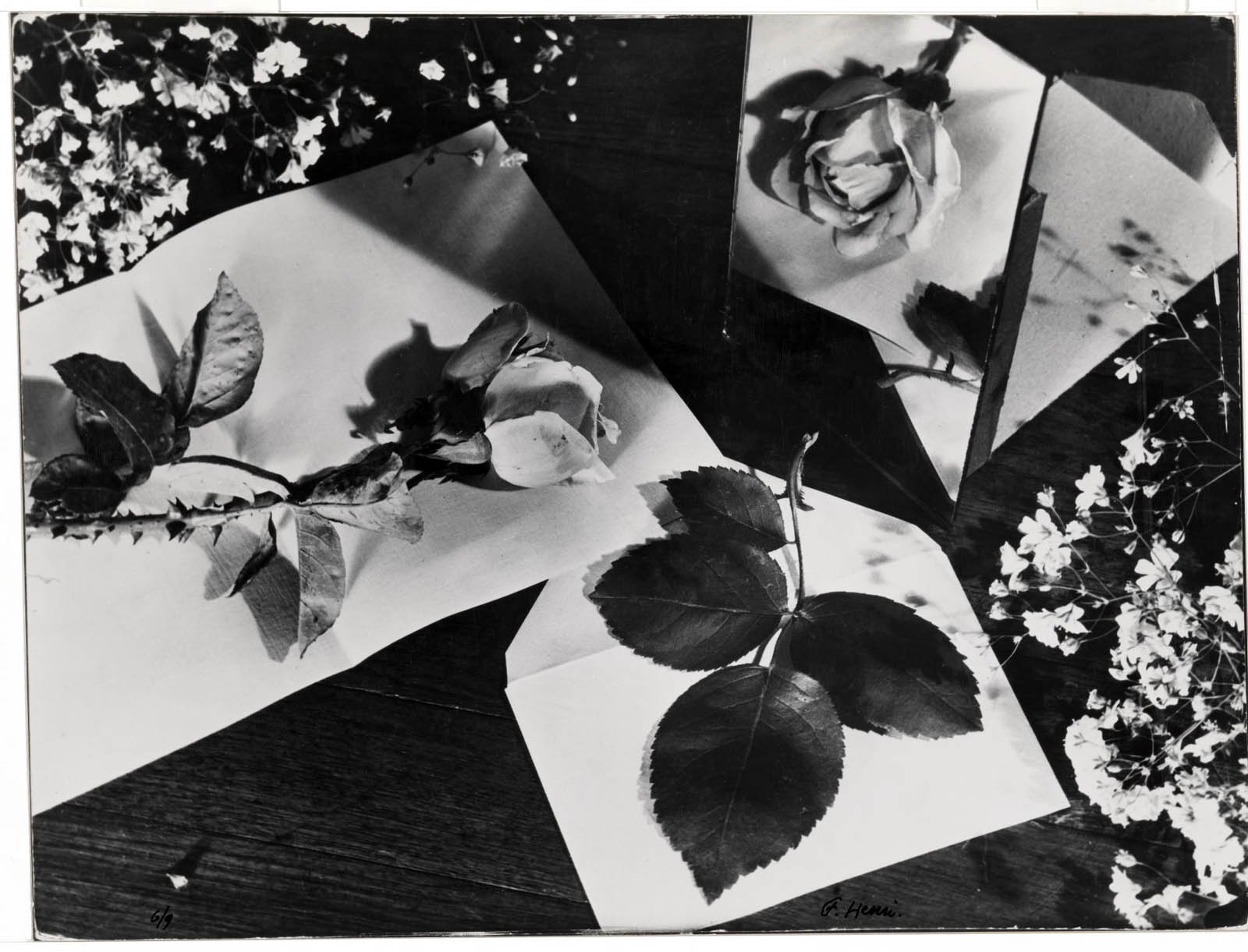
 

Florence Henri (European, 1893-1982) 'Still life' (Nature morte) 1931, printed 1975


Florence Henri (European, 1893-1982)
Still life (Nature morte)
1931, printed 1975
Gelatin silver photograph
35.9 x 47.9cm (image and sheet)
ed. 6/9
National Gallery of Victoria, Melbourne
Gift of Krystyna Campbell-Pretty AM and Family through the Australian Government’s Cultural Gifts Program, 2022
© Florence Henri / Licensed by the Copyright Agency, Australia


After studying music and painting, Florence Henri was introduced to photography in 1927 while attending the Bauhaus school. There, she met László Moholy-Nagy and Lucia Moholy, whose influence (especially Moholy’s) led Henri to focus solely on photography. In 1929 she established a studio in Paris, where she became renowned for her avant-garde and experimental practice. In addition to portraits of women, her work often features still-life compositions that combine everyday objects like envelopes and sheets of paper with natural elements such as flowers and leaves. Henri also frequently used mirrors as a means of fragmenting the pictorial space.

Wall text from the exhibition. New acquisition
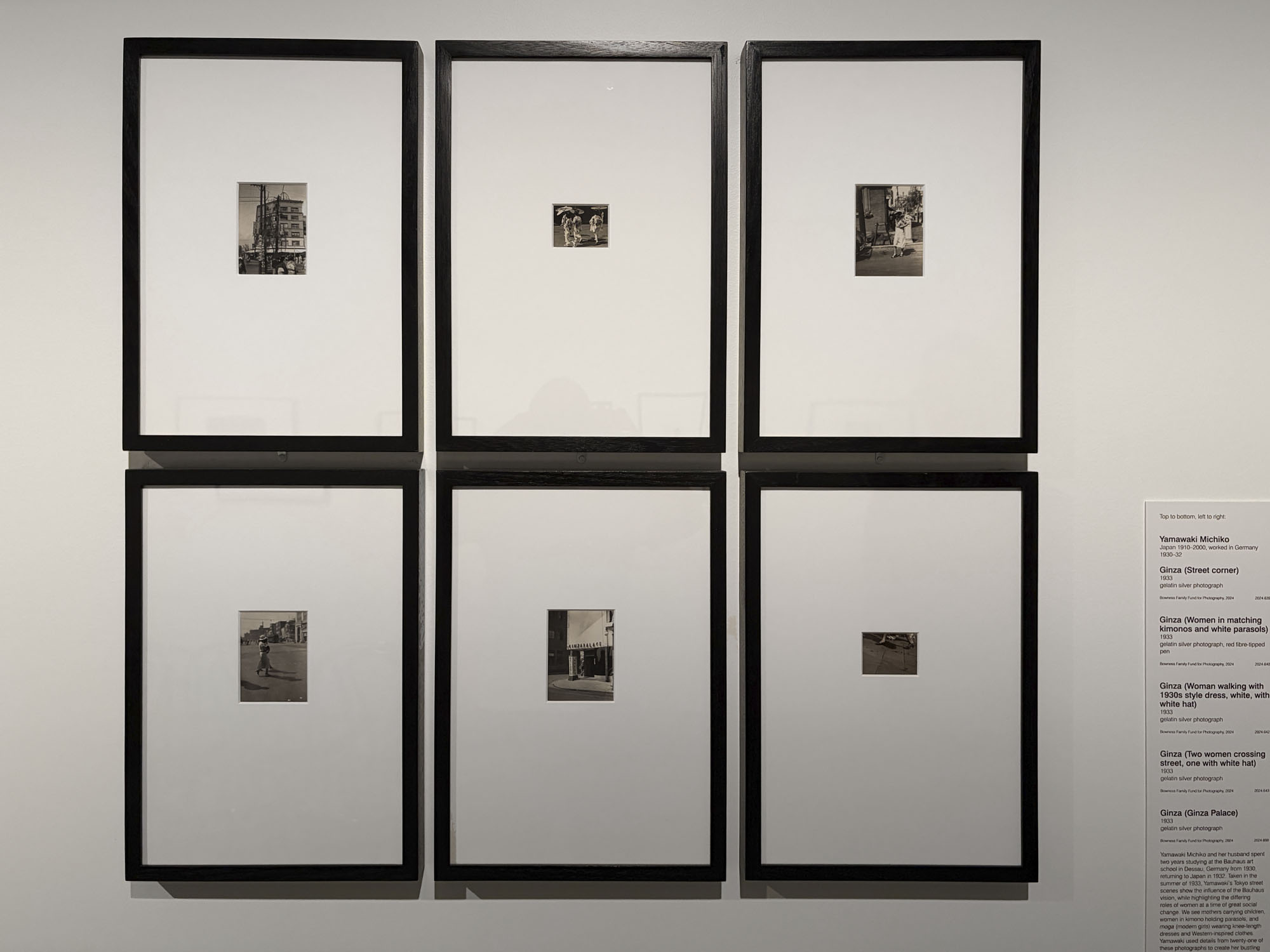
  

Installation view of the exhibition 'Women Photographers 1900-1975: A Legacy of Light' at NGV International, Melbourne, November 2025 - May 2026


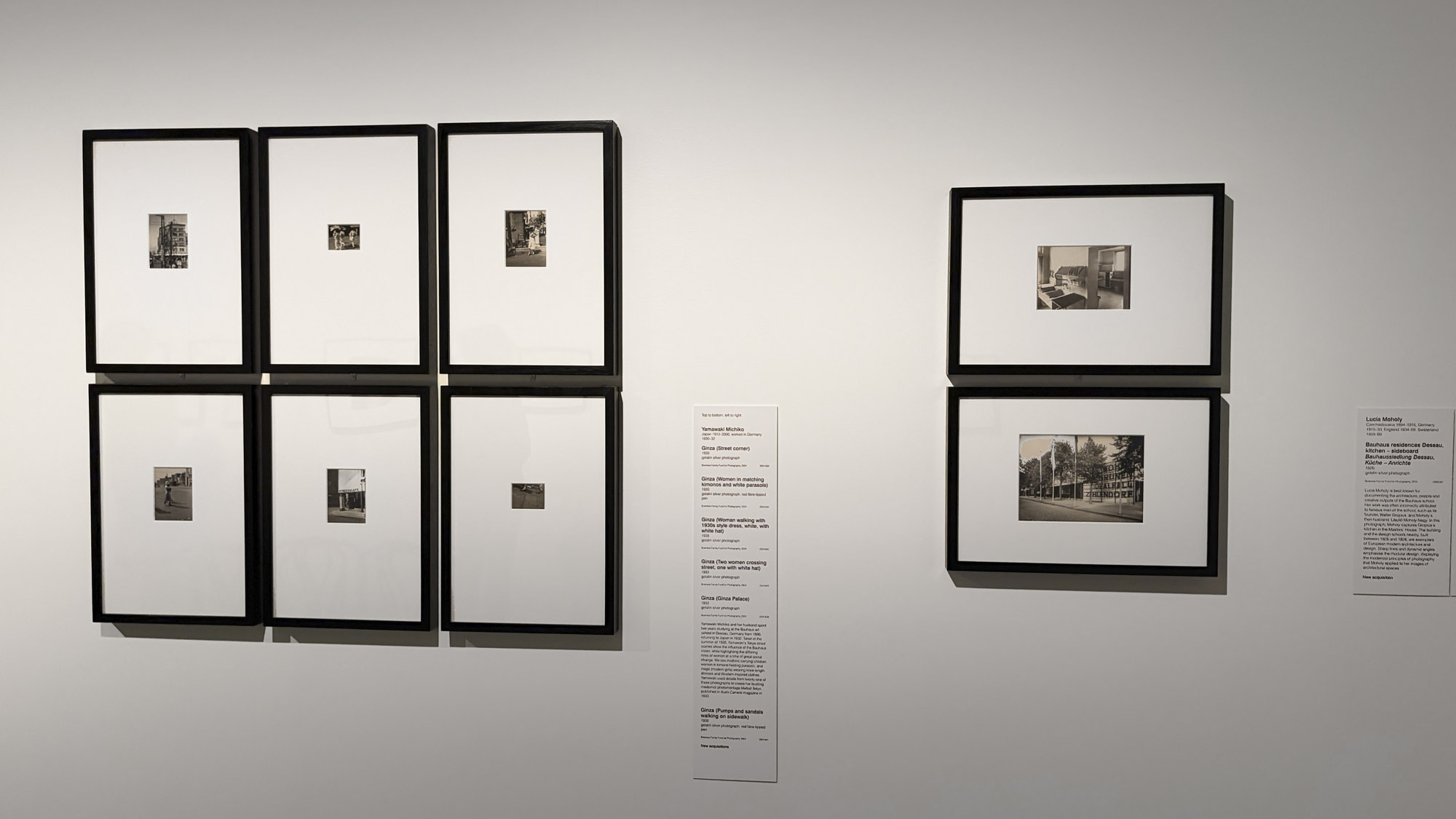
Installation view of the exhibition Women Photographers 1900-1975: A Legacy of Light at NGV International, Melbourne, November 2025 – May 2026 showing photographs by Yamawaki Michiko, top to bottom, left to right: Ginza (Street corner) (1932, below); Ginza (Women in matching kimonos and white parasols) (1932); Ginza (Woman walking with 1930s style dress, white, with white hat) (1932, below); Ginza (Two women crossing street, one with white hat) (1932, below); Ginza (Ginza Palace) (1932, below); Ginza (Pumps and sandals walking on sidewalk) (1932). New acquisitions
Photo: Marcus Bunyan


Yamawaki Michiko and her husband spent two years studying at the Bauhaus art school in Dessau, Germany from 1930, returning to Japan in 1932. Taken in the summer of 1933, Yamawaki’s Tokyo street scenes show the influence of the Bauhaus vision, while highlighting the differing roles of women at a time of great social change. We see mothers carrying children, women in kimono holding parasols, and moga (modern girls) wearing knee-length dresses and Western-inspired clothes. Yamawaki used details from twenty-one of these photographs to create her bustling modernist photomontage Melted Tokyo, published in Asahi Camera magazine in 1933.

Wall text from the exhibition
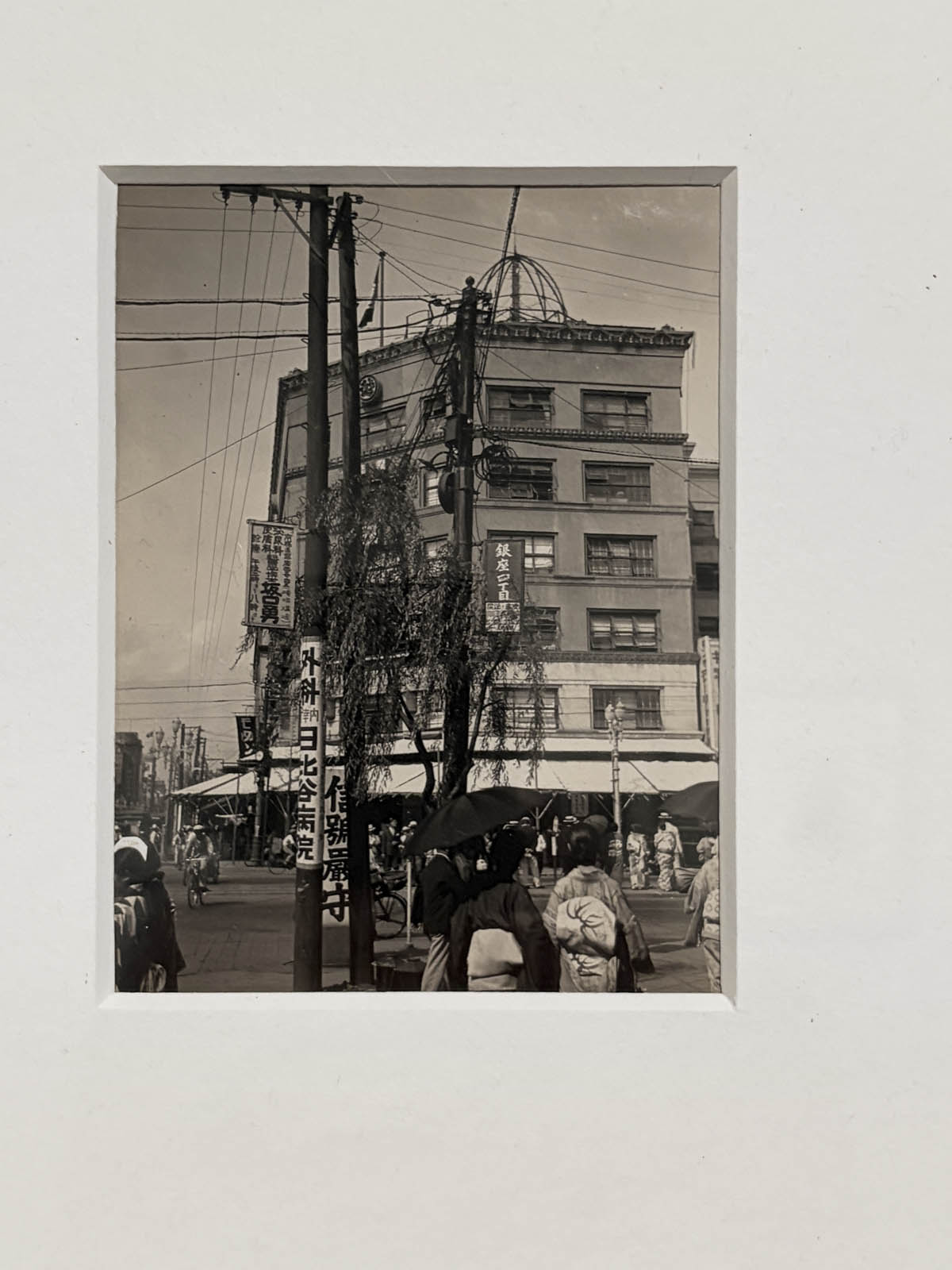
 

Yamawaki Michiko (Japan, 1910-2000, worked in Germany 1930-1932) 'Ginza (Street corner)' 1932 (installation view)


Yamawaki Michiko (Japan, 1910-2000, worked in Germany 1930-1932)
Ginza (Street corner) (installation view)
1932
Gelatin silver photograph
11.0 x 8.2 cm (image and sheet)
National Gallery of Victoria, Melbourne
Bowness Family Fund for Photography, 2024
Photo: Marcus Bunyan
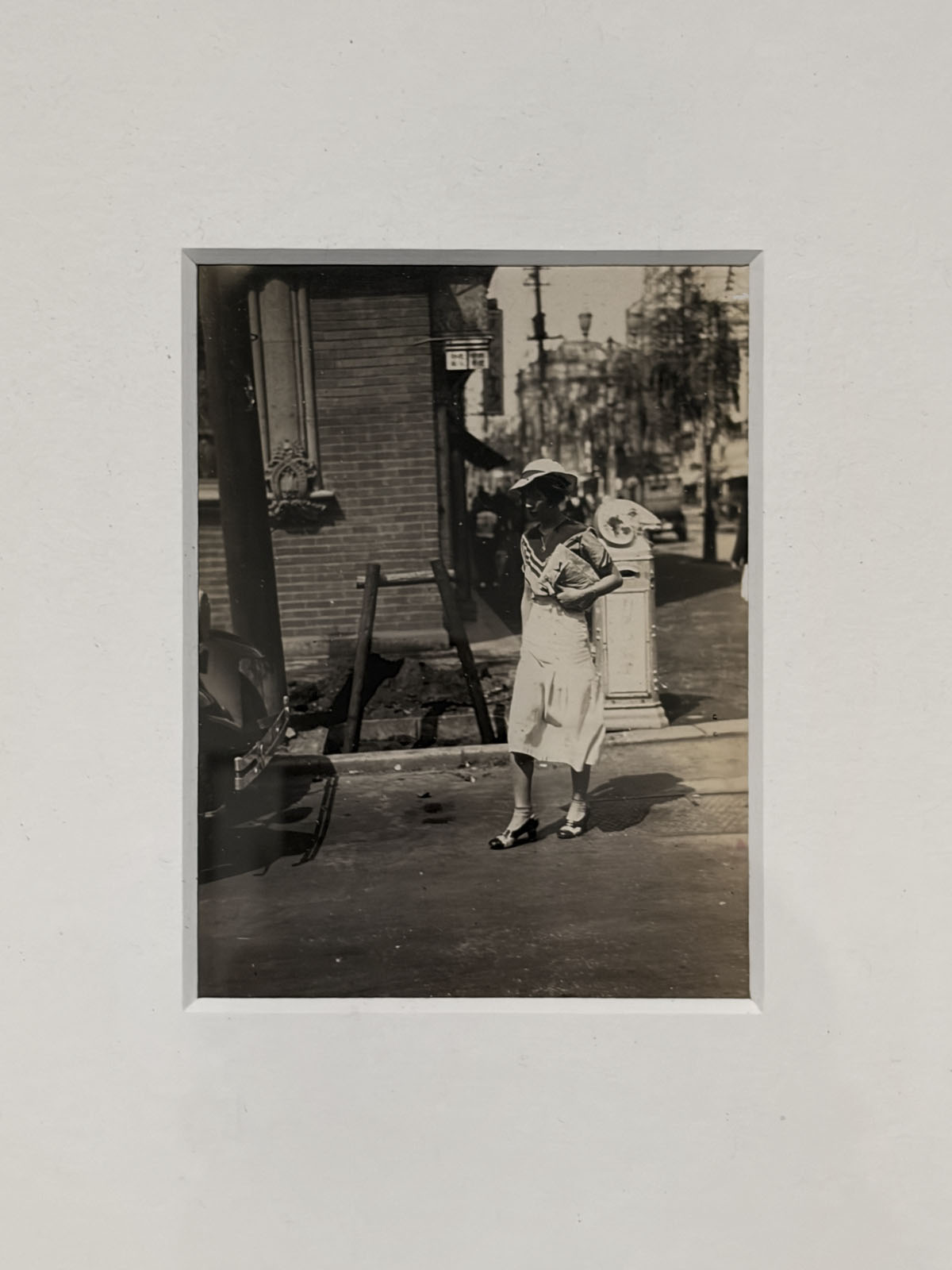
 

Yamawaki Michiko (Japan, 1910-2000, worked in Germany 1930-1932) 'Ginza (Woman walking with 1930s style dress, white, with white hat)' 1932 (installation view)


Yamawaki Michiko (Japan, 1910-2000, worked in Germany 1930-1932)
Ginza (Woman walking with 1930s style dress, white, with white hat) (installation view)
1932
Gelatin silver photograph
11.2 x 8.3cm (image)
12.6 x 10.0cm (sheet)
National Gallery of Victoria, Melbourne
Bowness Family Fund for Photography, 2024
Photo: Marcus Bunyan
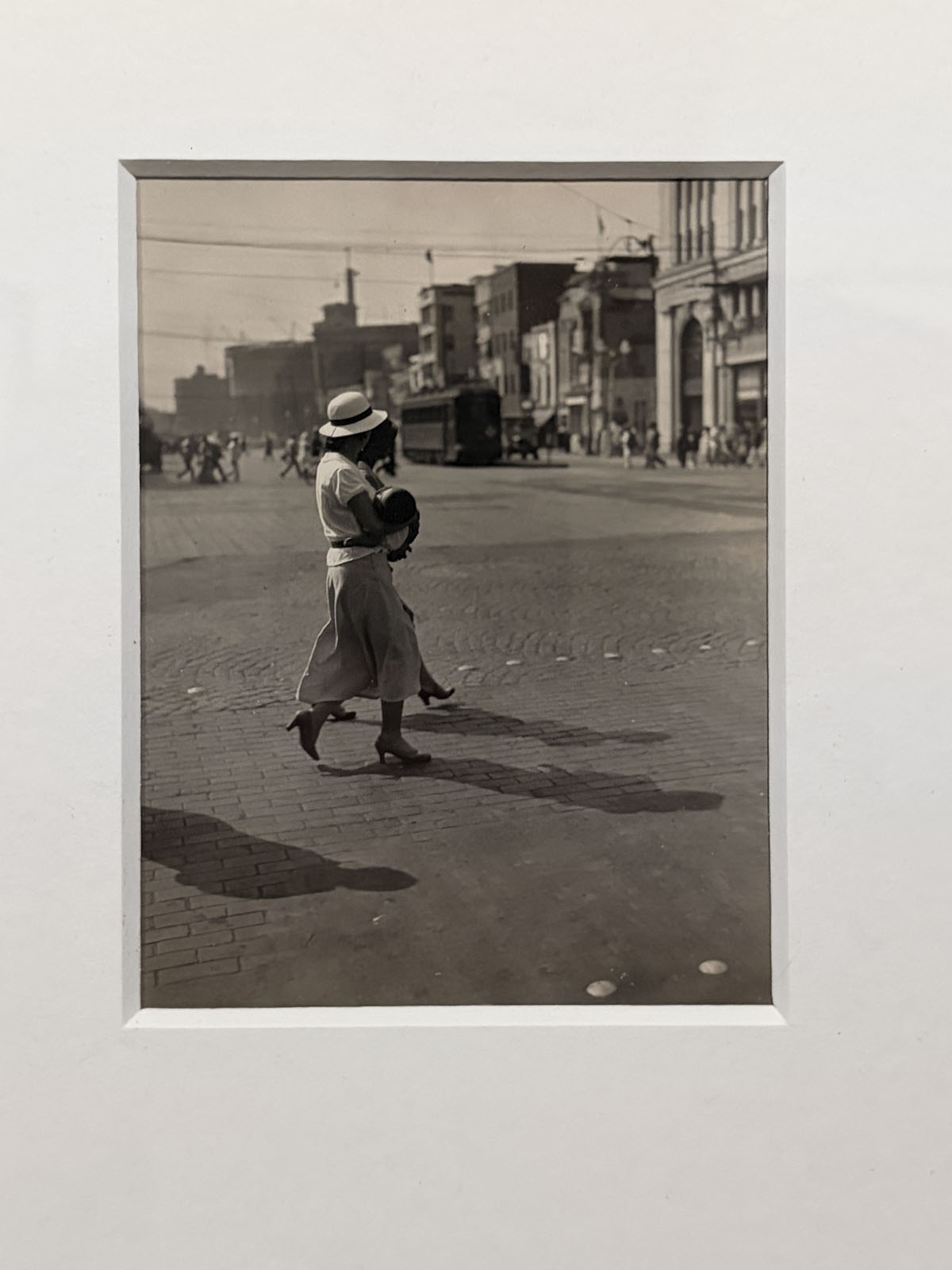
 

Yamawaki Michiko (Japan, 1910-2000, worked in Germany 1930-1932) 'Ginza (Two women crossing street, one with white hat)' 1932 (installation view)


Yamawaki Michiko (Japan, 1910-2000, worked in Germany 1930-1932)
Ginza (Two women crossing street, one with white hat) (installation view)
1932
Gelatin silver photograph
11.2 x 8.2cm (image)
12.6 x 10.0cm (sheet)
National Gallery of Victoria, Melbourne
Bowness Family Fund for Photography, 2024
Photo: Marcus Bunyan
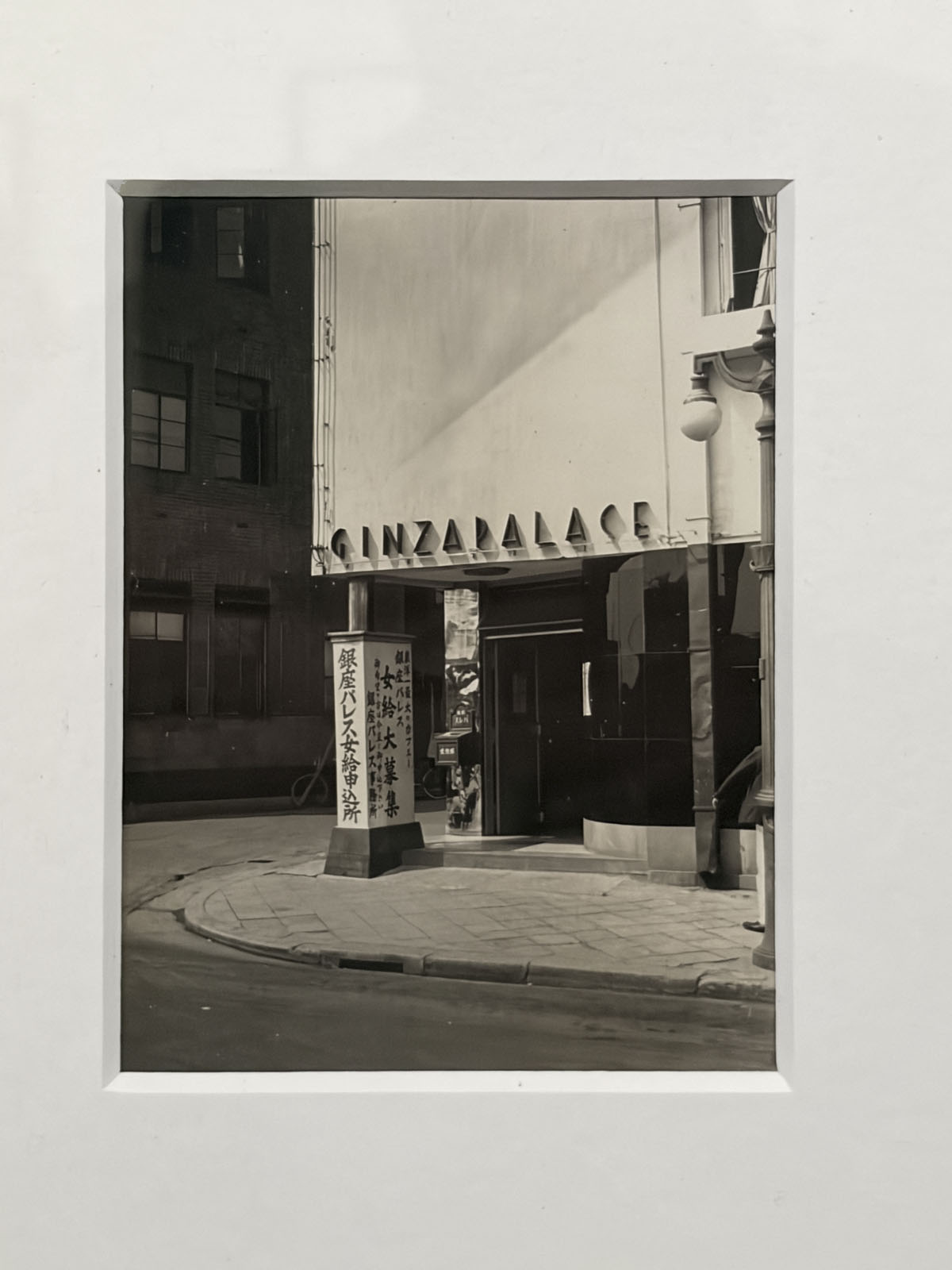
  

Yamawaki Michiko (Japan, 1910-2000, worked in Germany 1930-1932) 'Ginza (Ginza Palace)' (installation view)


Yamawaki Michiko (Japan, 1910-2000, worked in Germany 1930-1932)
Ginza (Ginza Palace) (installation view)
1932
Gelatin silver photograph
11.2 x 8.3cm (image)
12.5 x 10.0cm (sheet)
National Gallery of Victoria, Melbourne
Bowness Family Fund for Photography, 2024
Photo: Marcus Bunyan
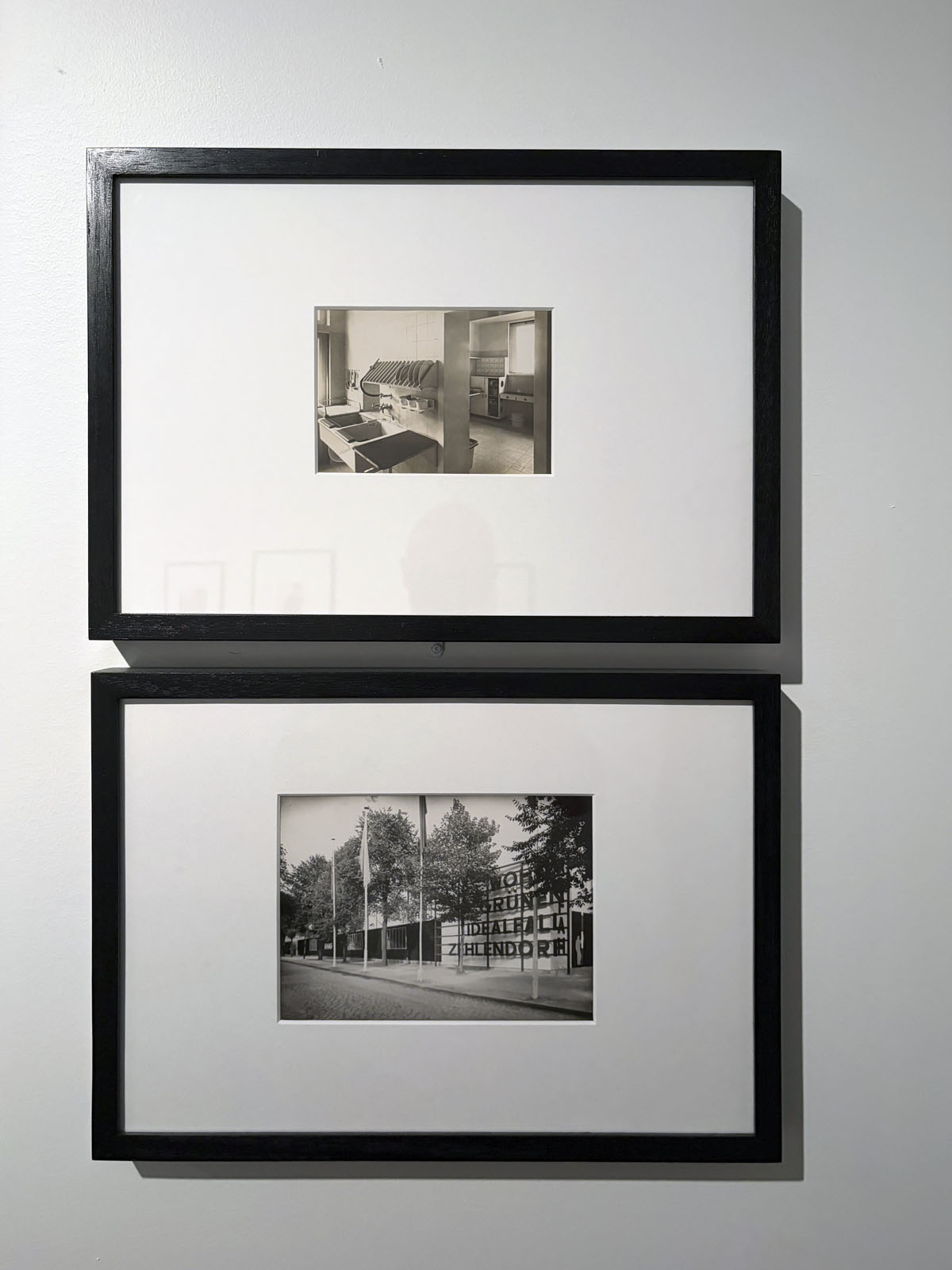
  

Installation view of the exhibition 'Women Photographers 1900-1975: A Legacy of Light' at NGV International, Melbourne, November 2025 - May 2026 showing at top, Lucia Moholy 'Bauhaus residences Dessau, kitchen – sideboard' (1926); and at bottom, 'Berlin Architecture Exhibition' (1928)


Installation view of the exhibition Women Photographers 1900-1975: A Legacy of Light at NGV International, Melbourne, November 2025 – May 2026 showing at top, Lucia Moholy Bauhaus residences Dessau, kitchen – sideboard (1926, below); and at bottom, Lucia Moholy Berlin Architecture Exhibition (1928, below)
Photo: Marcus Bunyan
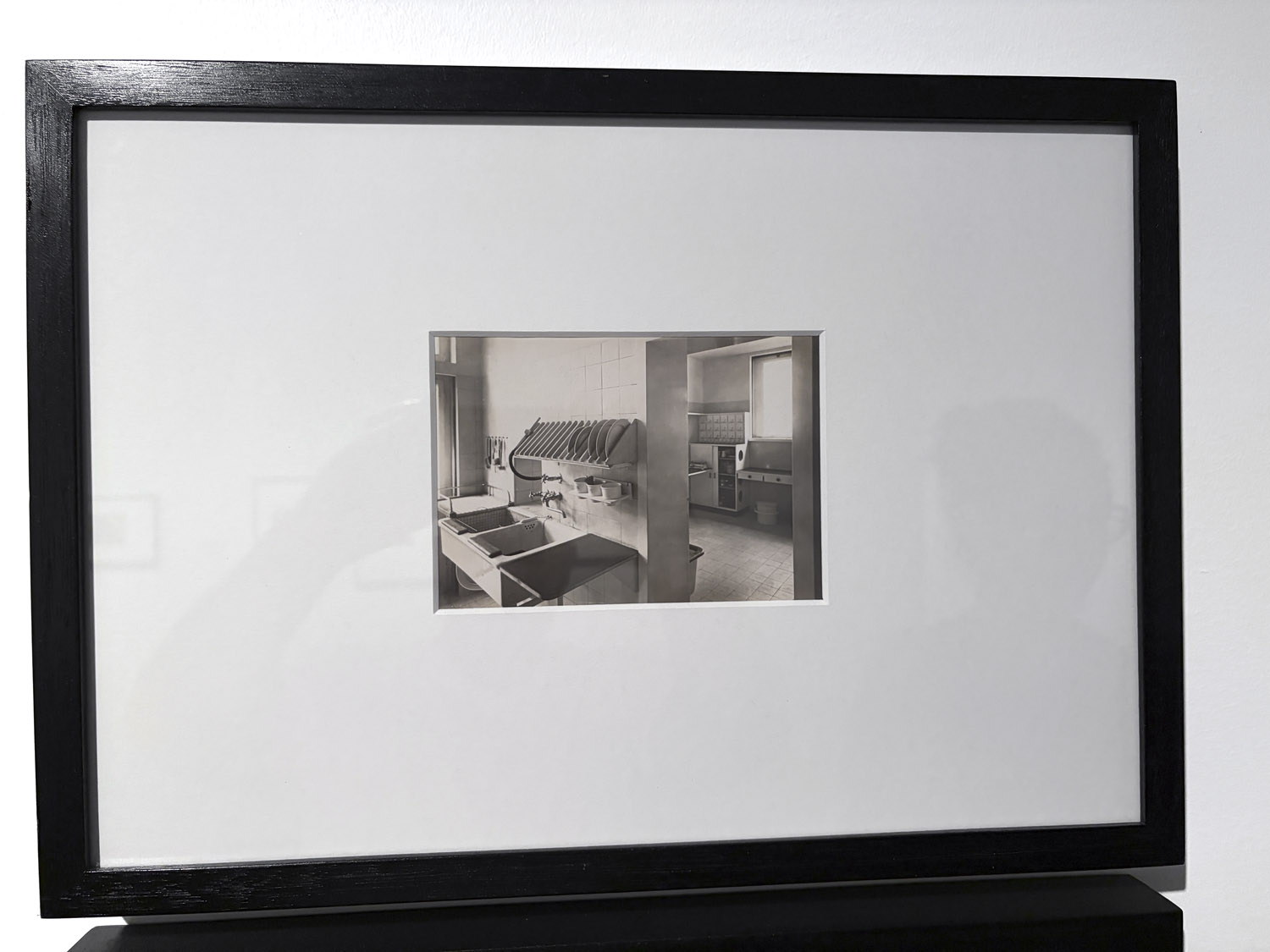
  

Lucia Moholy (British born Czech, 1894-1989) 'Bauhaus residences Dessau, kitchen – sideboard' (Bauhaussiedlung Dessau, küche – anrichte) 1926 (installation view)


Lucia Moholy (British born Czech, 1894-1989)
Bauhaus residences Dessau, kitchen – sideboard (Bauhaussiedlung Dessau, küche – anrichte)
1926
Gelatin silver photograph
11.9 x 16.8cm (image)
13.0 x 17.9cm (sheet)
National Gallery of Victoria, Melbourne
Bowness Family Fund for Photography, 2024
Photo: Marcus Bunyan


Lucia Moholy is best known for documenting the architecture, people and creative outputs of the Bauhaus school. Her work was often incorrectly attributed to famous men of the school, such as its founder, Walter Gropius, and Moholy’s then husband, László Moholy-Nagy. In this photograph, Moholy captures Gropius’s kitchen in the Masters’ House. The building and the design schools nearby, built between 1925 and 1926, are exemplars of European modern architecture and design. Sharp lines and dynamic angles emphasise the modular design, displaying the modernist principles of photography that Moholy applied to her images of architectural spaces.

Wall text from the exhibition
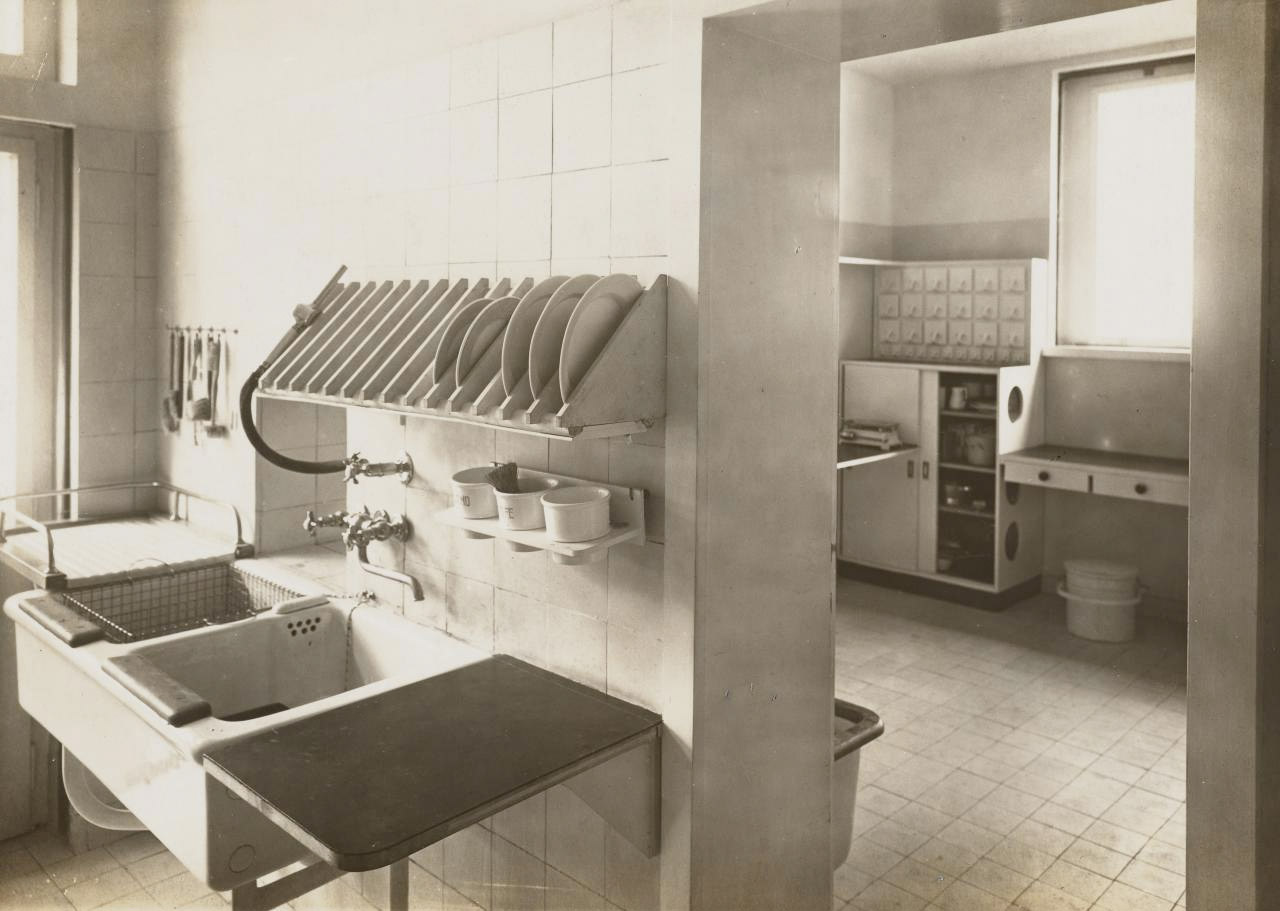
  

Lucia Moholy (British born Czech, 1894-1989) 'Bauhaus residences Dessau, kitchen – sideboard' (Bauhaussiedlung Dessau, küche – anrichte) 1926


Lucia Moholy (British born Czech, 1894-1989)
Bauhaus residences Dessau, kitchen – sideboard (Bauhaussiedlung Dessau, küche – anrichte)
1926
Gelatin silver photograph
11.9 x 16.8cm (image) 13.0 x 17.9cm (sheet)
National Gallery of Victoria, Melbourne
Bowness Family Fund for Photography, 2023
© 2023 Lucia Moholy Estate/Artists Rights Society (ARS), New York/VG Bild-Kunst, Bonn


“I suggest that Walter Gropius was most likely not interested in the ‘design’ of kitchens. These function rooms he would have not visited often nor did he cook. Gropius had a maid while in the Bauhaus as well as in later life. The kitchen at the Bauhaus was functional according to the times and the needs as seen by the employers of the maids who worked in them. Whereas the Frankfurt Kitchens were a result of attention to design as well as function and efficiency. …

Lucia had not enjoyed small town Dessau and intense campus life at the Bauhaus. She worked in Berlin but at in 1933 Moholy had to flee in fear of arrest for her communist association, leaving all her possessions behind including her negatives.

After time on Prague and Paris, Lucia Moholy settled In England in 1934 where she worked as a portrait photographer and teacher. …

After seeing her images as uncredited illustrations in the catalogue of a 1938 exhibition on the Bauhaus at the Museum of Modern Art, New York and many later publications, Lucia Moholy became aware that her negatives had survived. She found they had come into the possession of Walter Gropius who took them to his new teaching post America in 1937. He could easily have found Lucia post war. For years Lucia Moholy asked Gropius to give the plates back but he would not until her lawyers were able to force the return about half the original number in 1957. She complained that Gropius enjoyed the use and income from the photographs while she lived in want.”

Gael Newton AM. “Lucia Moholy: The Kitchen,” on the Photo-web website, March 2026 [Online] Cited 02/04/2026. Used under fair use conditions for the purposes of education and research


The question remains: what happened to the remaining negatives not returned by Walter Gropius to Lucia Moholy in the 1957 settlement? According to Moholy’s own card catalogue, which she used to keep track of her works, 330 negatives remained missing from her collection by the time of her death in 1989. Lost, damaged or stolen … the reputation of Gropius is forever sullied by his unseemly, grasping, patriarchal actions. MB
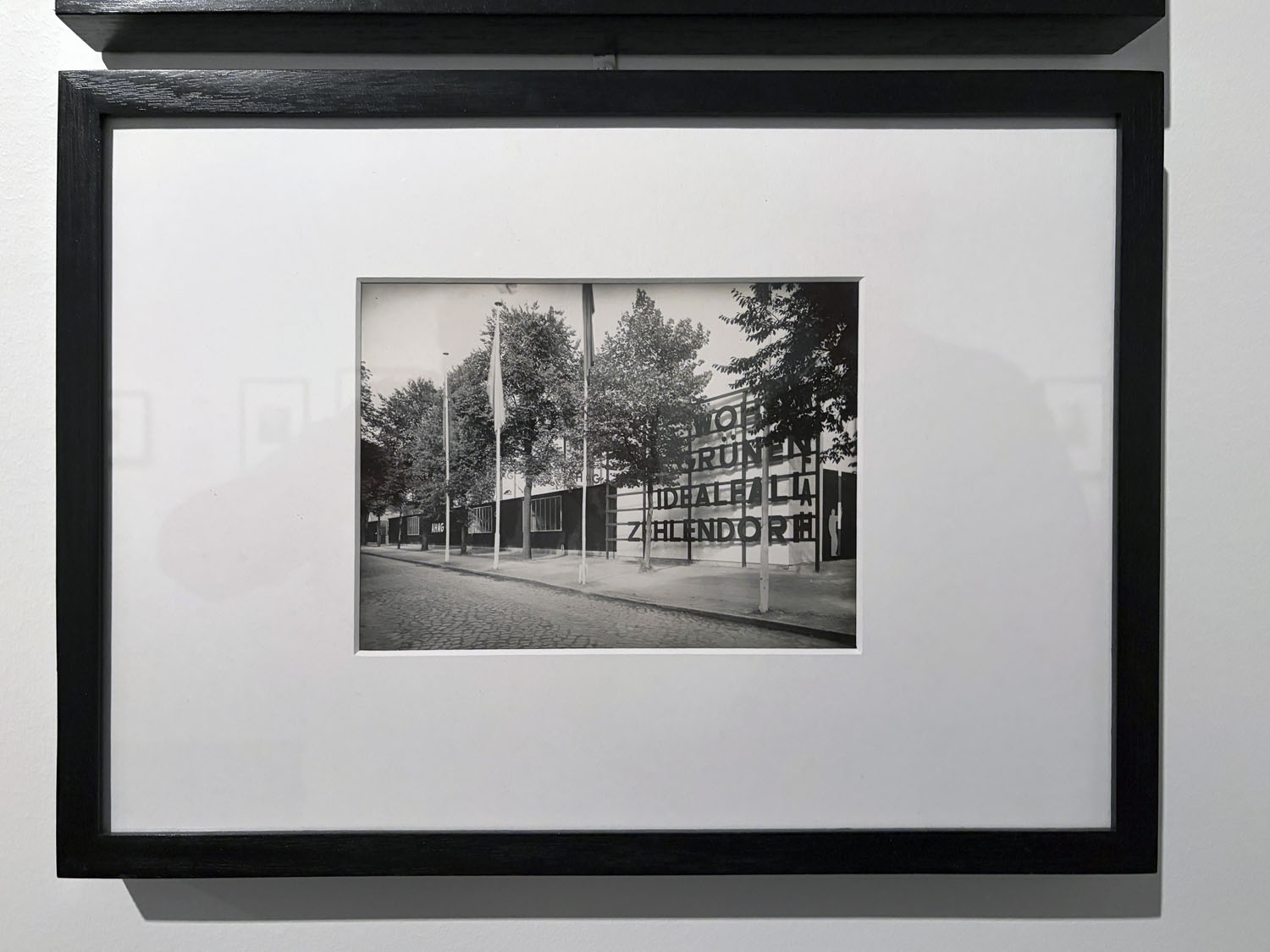


Lucia Moholy (British born Czech, 1894-1989) 'Berlin Architecture Exhibition' (Exposition d'Architecture à Berlin en 1928) 1928 (installation view)


Lucia Moholy (British born Czech, 1894-1989)
Berlin Architecture Exhibition (Exposition d’Architecture à Berlin en 1928)
1928
Gelatin silver photograph
16.3 x 22.4cm (image)
16.9 x 22.9 cm (sheet)
National Gallery of Victoria, Melbourne
Bowness Family Fund for Photography, 2024
Photo: Marcus Bunyan


In 1928 Lucia Moholy and László Moholy-Nagy left Dessau for a new life in Berlin. This image documents an innovative housing exhibition showcasing modern living. The display, designed by architect Walter Gropius, founder of the Bauhaus school, featured new housing concepts in Zehlendorf, a Berlin neighbourhood. The graphic lettering on the building translates to ‘Live in a green environment, ideal case: Zehlendorf’. Moholy-Nagy designed the interiors, and Moholy’s images, with their signature focus on starkly contrasting vertical and horizontal lines, highlight their modernist design principles.

Wall text from the exhibition


Like many women of her time, Lucia Moholy often found herself in the shadow cast by her more conspicuous male peers – one of whom happened to be her husband, the photographer László Moholy-Nagy. After marrying in 1921, the couple moved to Weimar, Germany, so that he could begin a professorship at the Bauhaus, the influential German school of architecture, design, and applied arts. While László taught, Lucia undertook photography training, serving as an apprentice in Otto Eckner’s Bauhaus photography studio. By 1926 she had mastered a wide range of techniques, installed a darkroom in their home, and begun collaborating with her husband on experimental forms of cameraless photography.

As part of her photographic practice, Lucia began documenting the people and architectural spaces of the Bauhaus. Many of her images focus on the women who either supported or participated in the school’s activities. Edith Tschichold (1926), for instance, depicts the wife of German typographer and frequent Bauhaus collaborator Jan Tschichold. Meanwhile, Florence Henri (1927) portrays the notable Surrealist artist at the outset of her career, when she came to the Bauhaus in 1927 as a visiting photography student. Both portraits are tightly cropped around the women’s faces, revealing expressions of wistfulness or self-assurance that pull viewers into a shared emotional space.

One of Lucia’s more iconic portraits is an untitled photograph of her husband, who, sporting a machinist’s coveralls over his shirt and tie, humorously attempts to block the camera lens with his hand. The candid shot hints at the playful nature of the couple’s working relationship; once circulated, it also helped to shape László’s persona as an artist-constructor. Despite happy appearances, their relationship began to deteriorate as László declined to credit Lucia for many of their collaborations, including the celebrated 1925 book Malerei, Photografie, Film (Painting, Photography, Film).

This was not the only – or even the most significant – erasure of Lucia’s career. Forced to flee Germany in 1933 due to the rise of the Nazi Party, she made the difficult decision to leave behind her collection of 560 glass-plate negatives, which she described as “my only tangible asset.”

Following World War II, in the midst of a revival of interest in the Bauhaus, she tried desperately to locate them with no success. It wasn’t until 1954 that Walter Gropius, founder and former head of the Bauhaus, acknowledged that the negatives were in his possession, that he had been reproducing them, and that he had no intention of returning them to her. Lucia Moholy’s precise visual records of the school’s architecture – such as Bauhaus Workshop Building from Below. Oblique View (1926) – had been circulated without attribution for years in order to promote Bauhaus aesthetics. In fact, 49 of her prints appeared uncredited in the catalogue accompanying MoMA’s exhibition Bauhaus, 1919–1928, which was mounted in 1938 with Gropius’s input. 

As part of her legal efforts to reclaim the negatives, Lucia wrote, “Everybody, except myself, have used, and admit to having used my photographs […] and often also without mentioning my name. Everyone – except myself – have derived advantages from using my photographs, either directly, or indirectly, in a number of ways, be it in cash or prestige, or both.”

Her claim was ultimately successful, leading to the return of 230 extant negatives in 1957. However, the acknowledgement of her influence – both as a collaborator in László Moholy-Nagy’s photographic experiments, and as an agent in the construction of Bauhaus visual identity – remains an ongoing project.

Dana Ostrander, Curatorial Assistant, Department of Photography “Lucia Moholy,” on the MoMA website 2020 [Online] Cited 31/03/2026
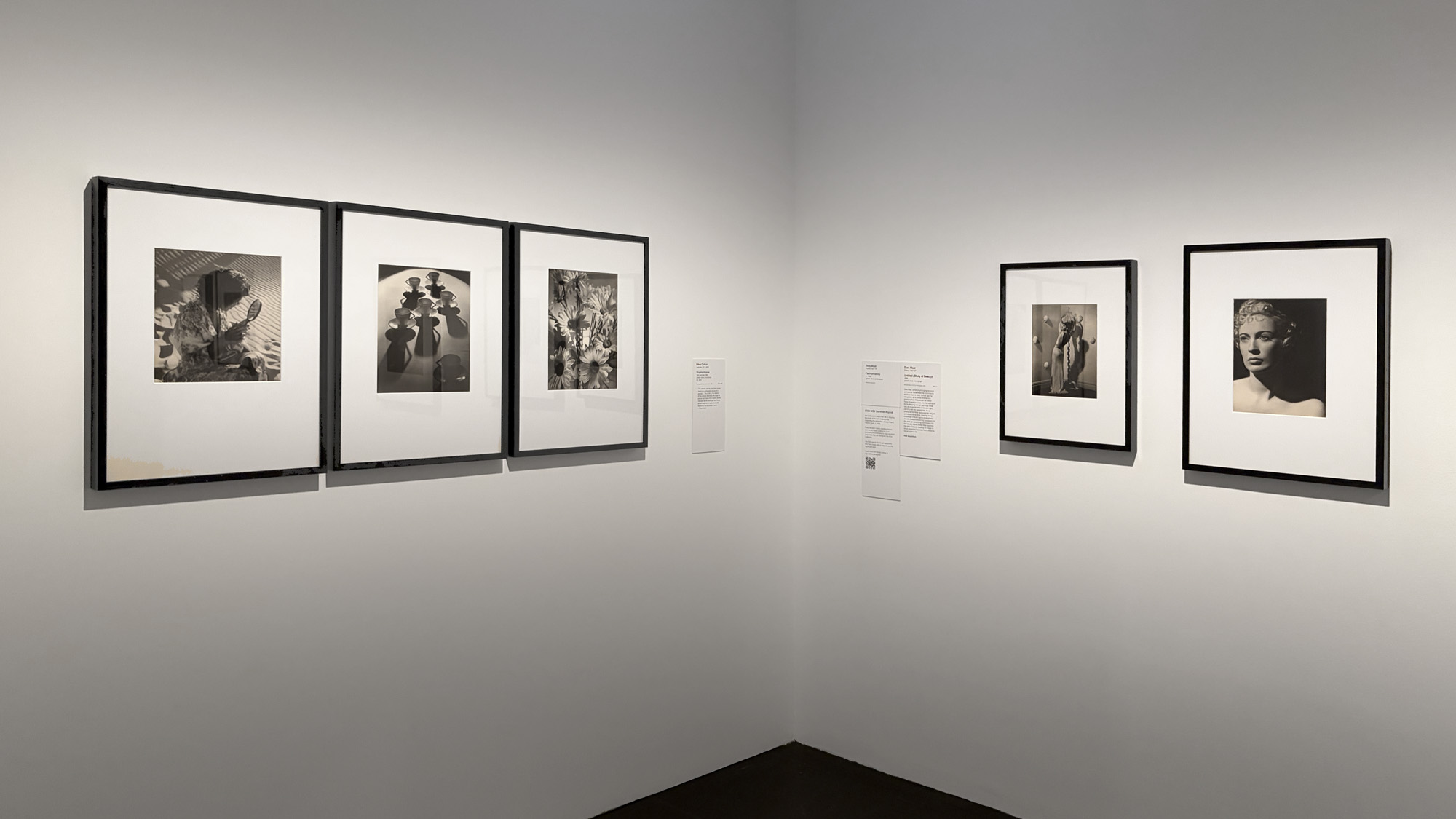
 

Installation view of the exhibition 'Women Photographers 1900-1975: A Legacy of Light' at NGV International, Melbourne, November 2025 - May 2026


Installation view of the exhibition Women Photographers 1900-1975: A Legacy of Light at NGV International, Melbourne, November 2025 – May 2026 showing from left to right, Olive Cotton Girl with mirror (1938, below); Teacup ballet (1935 printed 1992, below); Shasta daisies (1937 printed 1992, below); at second right, Dora Maar Fashion study (c. 1936, below); and at right, Untitled (Study of Beauty (1936, below)
Photo: Marcus Bunyan
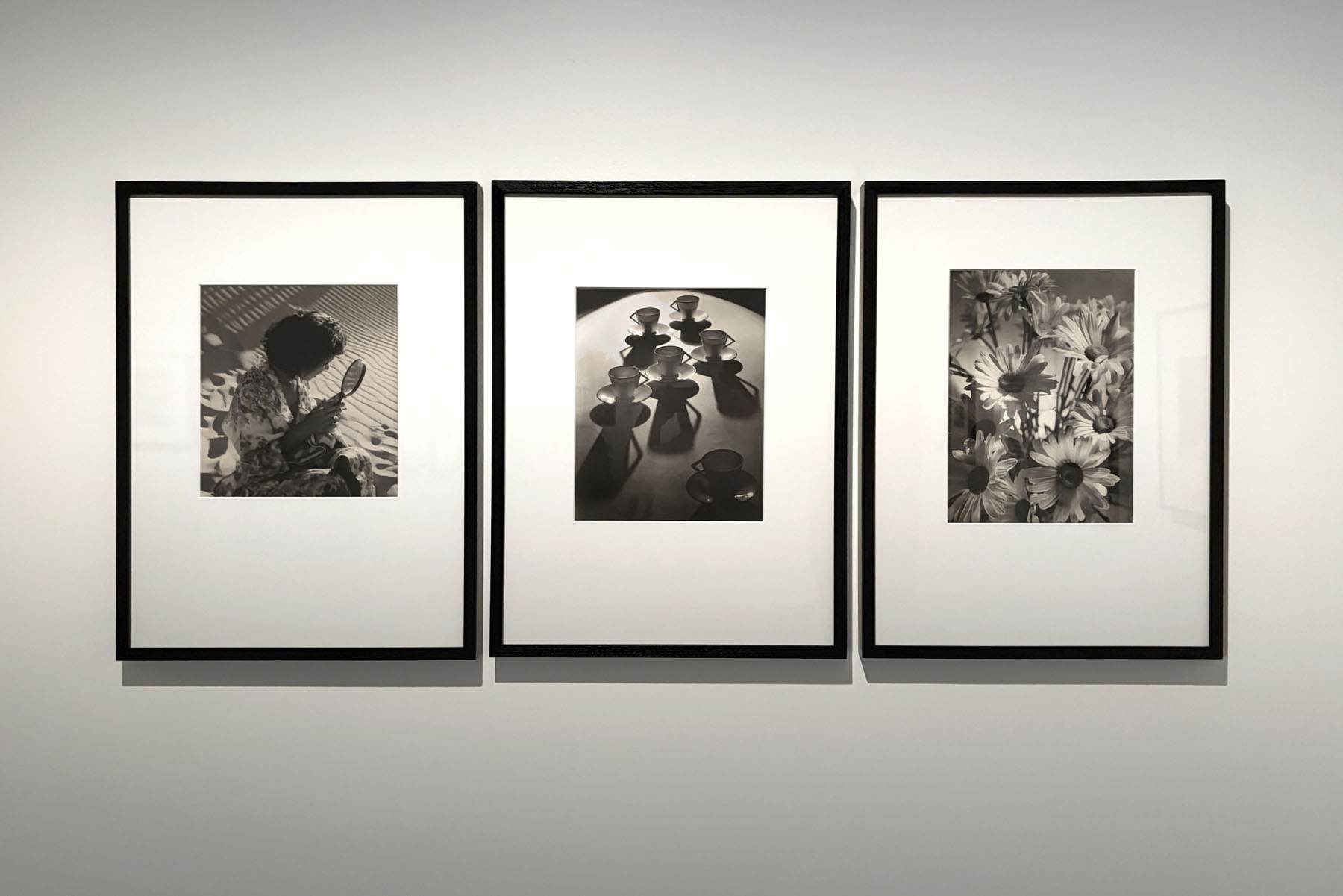
 

Installation view of the exhibition 'Women Photographers 1900-1975: A Legacy of Light' at NGV International, Melbourne, November 2025 - May 2026 showing from left to right, Olive Cotton's 'Girl with mirror' (1938); 'Teacup ballet' (1935 printed 1992); 'Shasta daisies' (1937 printed 1992)


Installation view of the exhibition Women Photographers 1900-1975: A Legacy of Light at NGV International, Melbourne, November 2025 – May 2026 showing from left to right, Olive Cotton’s Girl with mirror (1938, below); Teacup ballet (1935 printed 1992, below); Shasta daisies (1937 printed 1992, below)
Photo: Marcus Bunyan
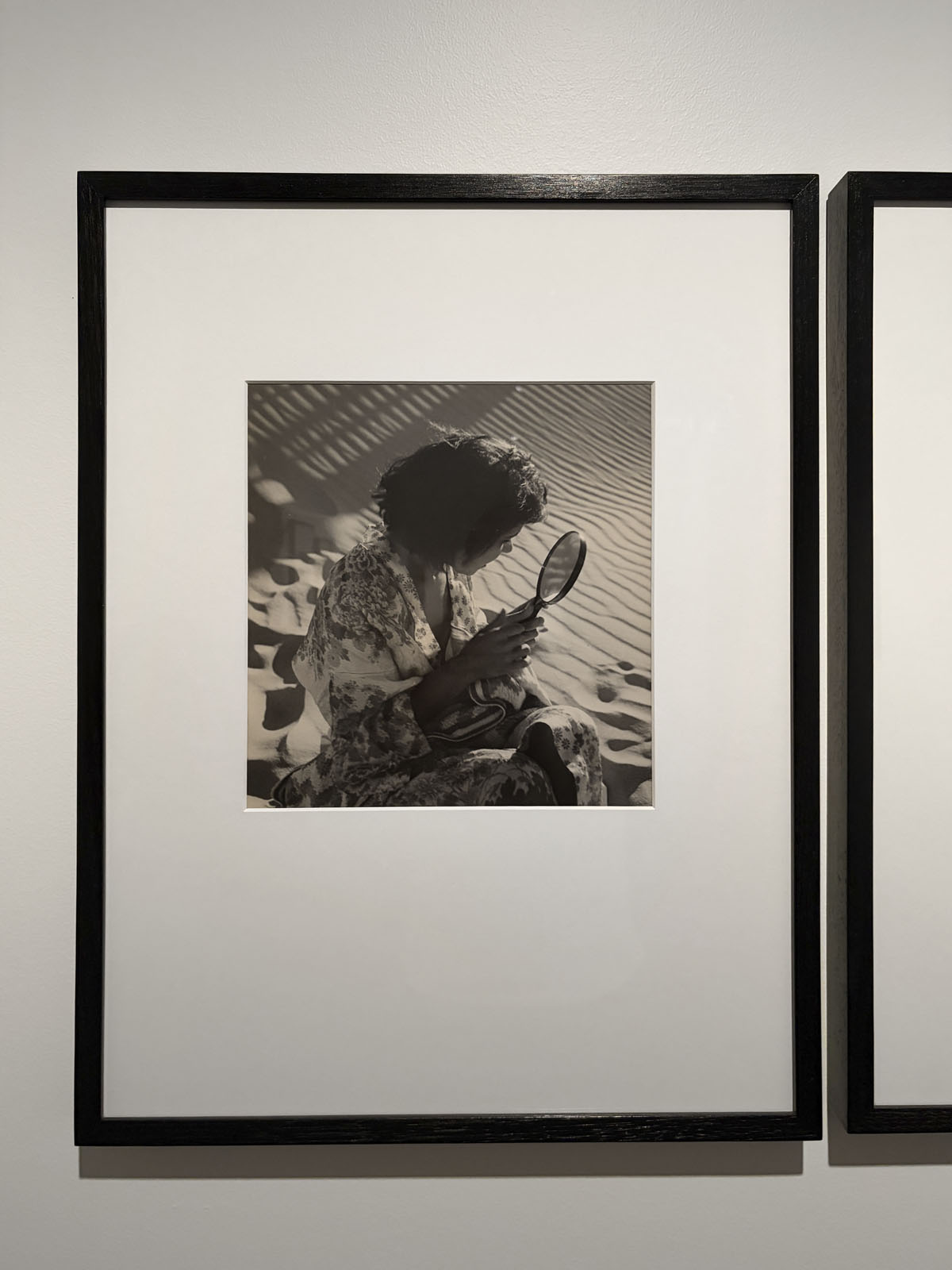
 

Olive Cotton (Australian, 1911-2003) 'Girl with mirror' 1938 (installation view)


Olive Cotton (Australian, 1911-2003)
Girl with mirror (installation view)
1938
Gelatin silver photograph
31.8 x 29.9cm (image)
National Gallery of Victoria, Melbourne
Purchased from Admission Funds, 1992
Photo: Marcus Bunyan


Olive Cotton created this image while assisting her colleague and then partner Max Dupain on location at beaches around Sydney. According to Cotton, when Dupain was shooting fashion photographs, she had the freedom to create her own images while the model was ‘waiting her turn to be photographed by Max’. Dupain’s camera tripod cast ‘long slanting lines of shadow’ against the sand. While its creation was incidental, this photograph demonstrates Cotton’s eye for composition and her mastery of light and shade, emphasising the graphic elements of the scene.

Wall text from the exhibition
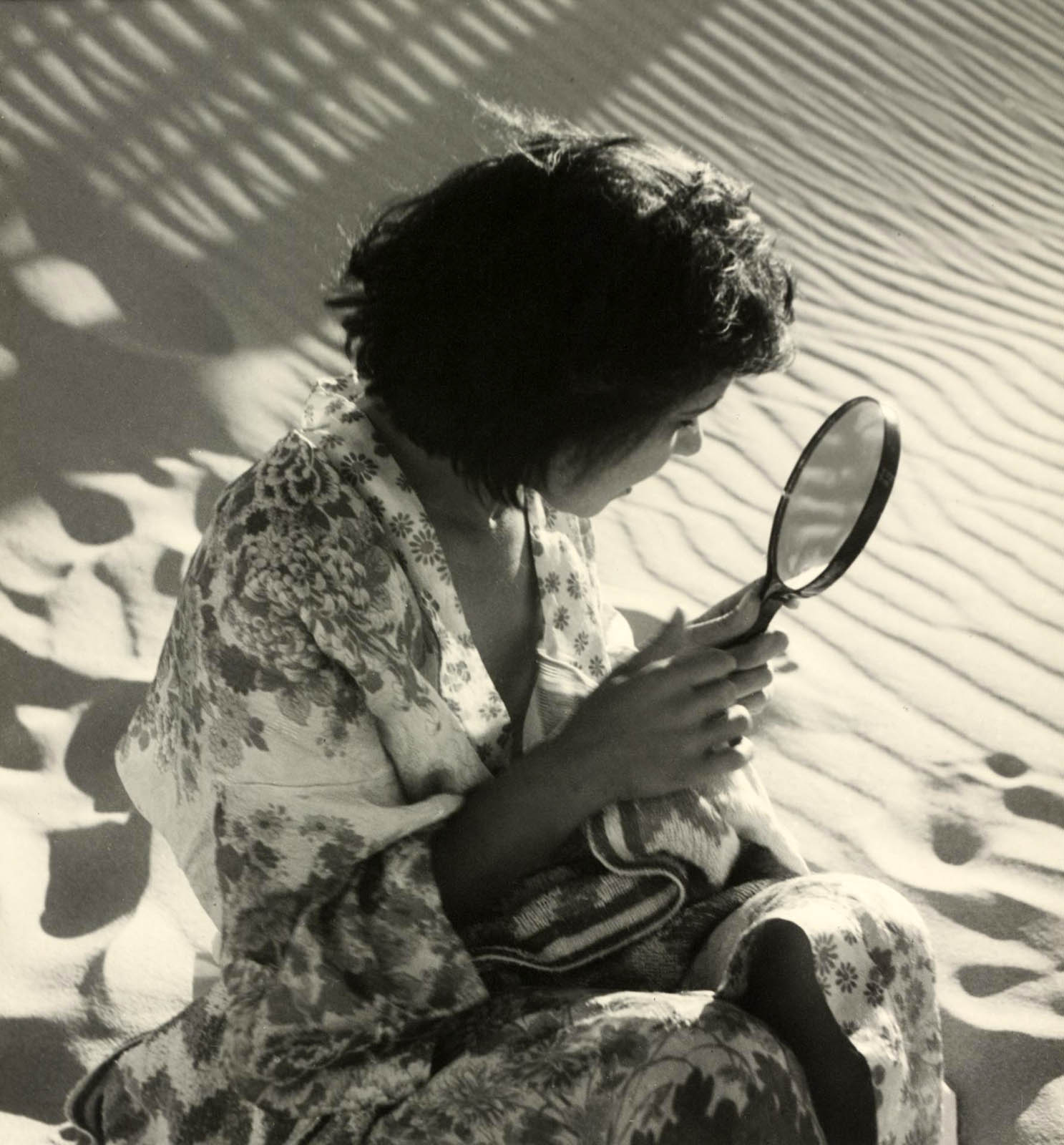
 

Olive Cotton (Australian, 1911-2003) 'Girl with mirror' 1938


Olive Cotton (Australian, 1911-2003)
Girl with mirror
1938
Gelatin silver photograph
31.8 x 29.9cm (image)
National Gallery of Victoria, Melbourne
Purchased from Admission Funds, 1992
© The estate of Olive Cotton
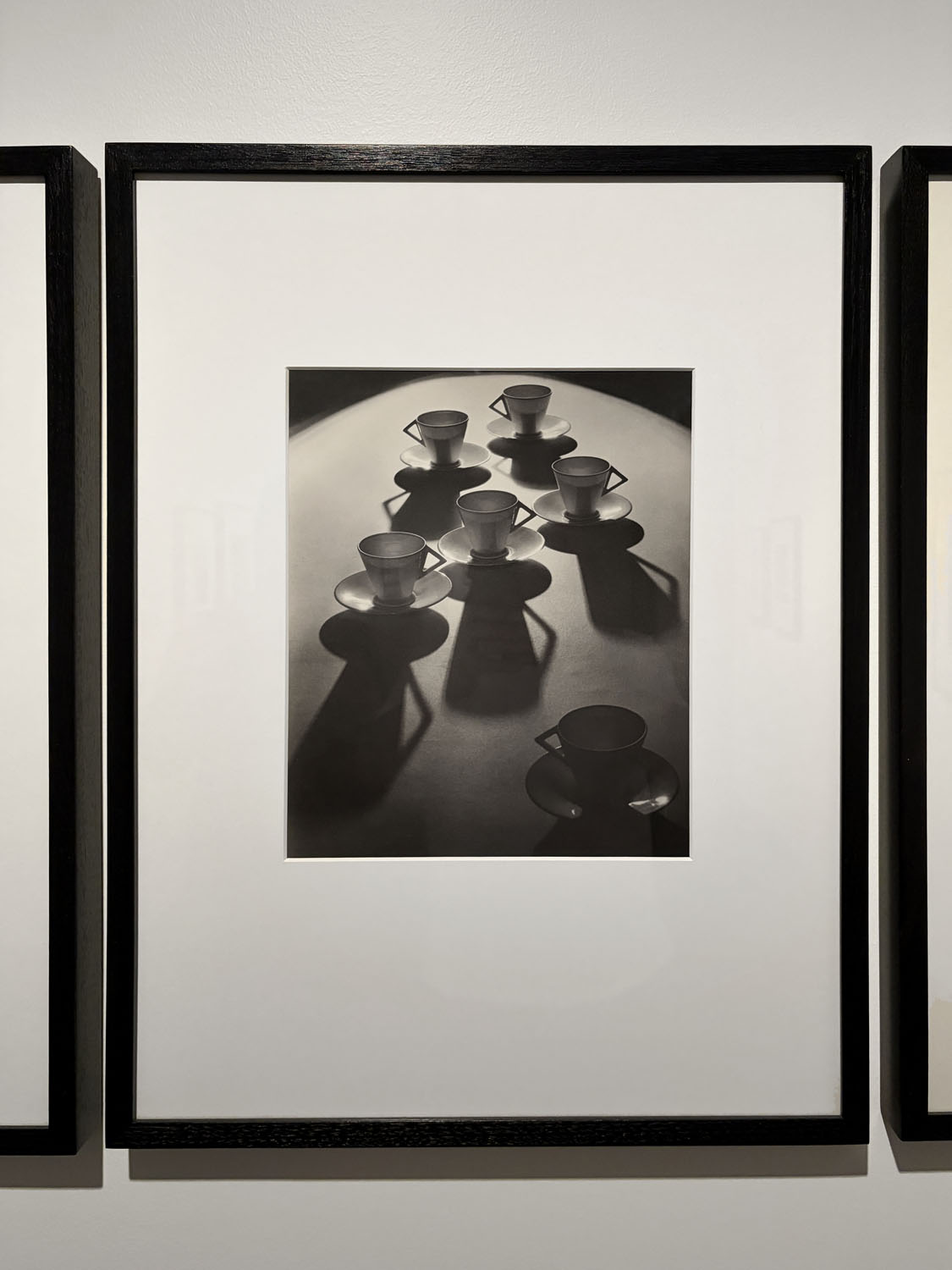
 

Olive Cotton (Australian, 1911-2003) 'Teacup ballet' 1935, printed 1992 (installation view)


Olive Cotton (Australian, 1911-2003)
Teacup ballet (installation view)
1935, printed 1992
Gelatin silver photograph
36.0 x 29.2cm (image)
National Gallery of Victoria, Melbourne
Purchased from Admission Funds, 1992
Photo: Marcus Bunyan


Upon purchasing a set of inexpensive cups and saucers to replace the mugs in photographer Max Dupain’s Sydney studio, where she was a studio assistant, Olive Cotton recognised the potential for a dynamic composition. Later describing the handles of the cups as ‘arms akimbo’, Cotton, in her efforts ‘to express a dance theme’, used a spotlight to accentuate shadows, resulting in a ‘ballet-like composition’. Through her deft use of lighting and arrangement of objects, the teacups appear transformed, as if they are ballerinas performing onstage. The image was immediately successful both in Australia and abroad, being included in the London Salon of Photography from September 1935.

Wall text from the exhibition


Olive Cotton (Australia 1911-2003) 'Teacup ballet' 1935, printed 1992


Olive Cotton (Australian, 1911-2003)
Teacup ballet
1935, printed 1992
Gelatin silver photograph
36.0 x 29.2cm (image)
ed. 21/50
National Gallery of Victoria, Melbourne
Purchased from Admission Funds, 1992
© The estate of Olive Cotton
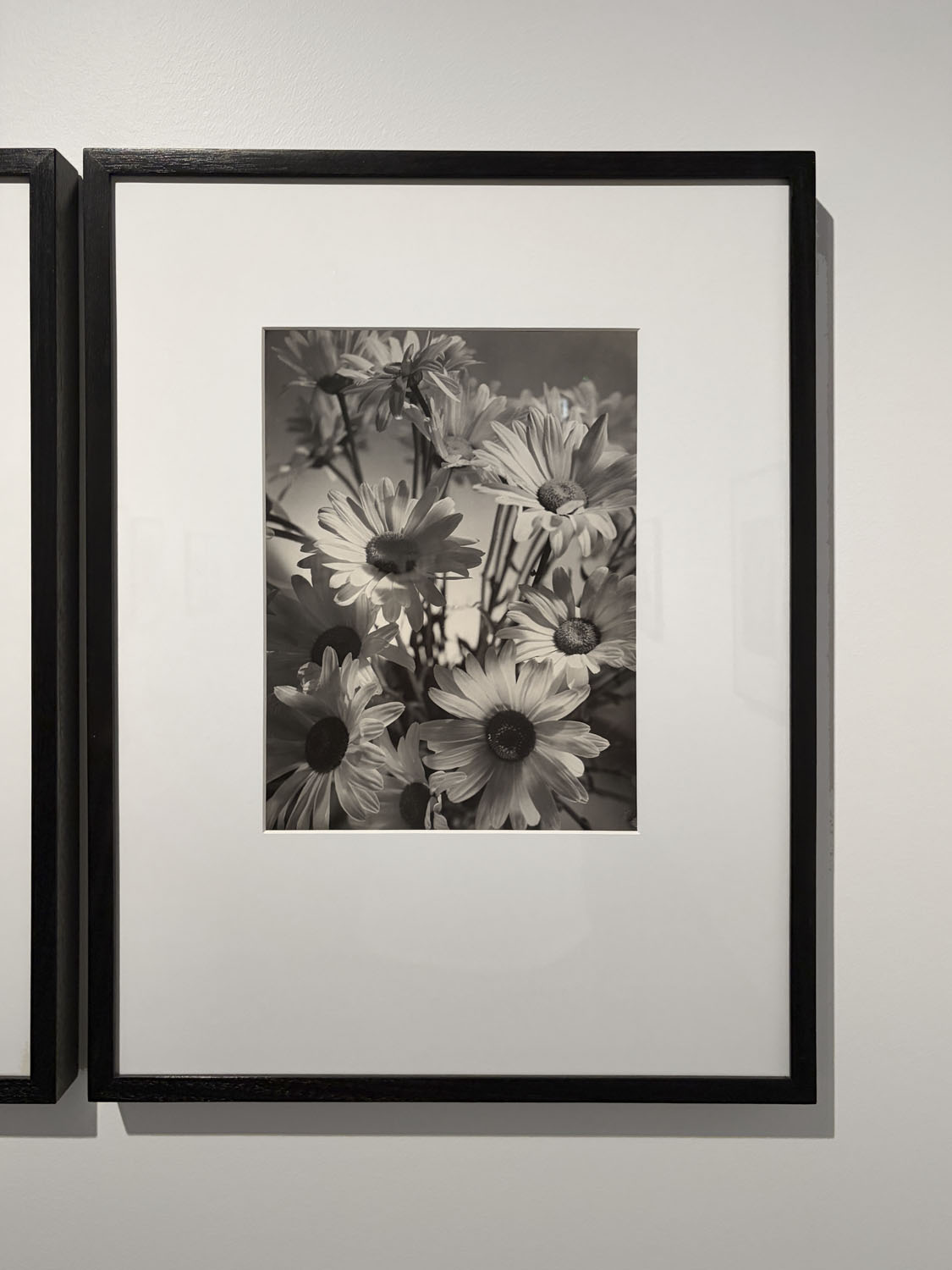
 

Olive Cotton (Australia 1911-2003) 'Shasta daisies' 1937, printed 1992 (installation view)


Olive Cotton (Australia 1911-2003)
Shasta daisies
1937, printed 1992
Gelatin silver photograph
38.2 x 28.1cm (image)
National Gallery of Victoria, Melbourne
Purchased from Admission Funds, 1992
Photo: Marcus Bunyan


‘The camera can do more than merely record an unchanging picture of a subject … The lighting, the relation of the various objects to the shape of picture and many other factors can be changed by the individual, and this is where discernment and personality come into the picture as it were.’

~ Olive Cotton
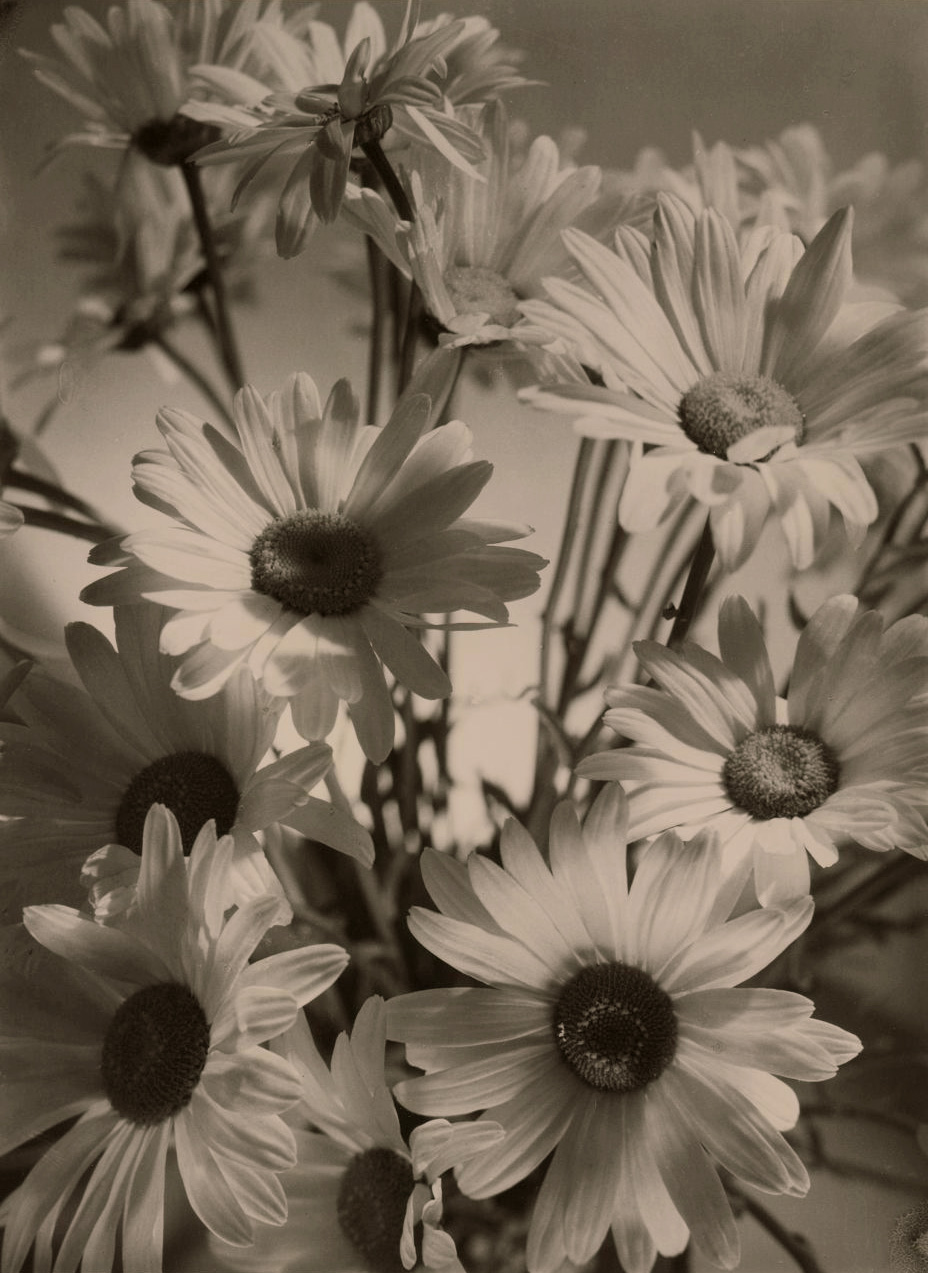
 

Olive Cotton (Australian, 1911 - 2003) 'Shasta daisies' 1937


Olive Cotton (Australian, 1911-2003)
Shasta daisies
1937, printed 1992
Gelatin silver photograph
38.2 x 28.1cm (image)
ed. 8/25
National Gallery of Victoria, Melbourne
Purchased from Admission Funds, 1992
© The estate of Olive Cotton
 

Dora Maar (French, 1907-1997) 'Fashion study' c. 1936 (installation view)


Dora Maar (French, 1907-1997)
Fashion study (installation view)
c. 1936
Gelatin silver photograph
Proposed acquisition
  

Dora Maar (French 1907-1997) 'Untitled (Study of beauty)' 1936 (installation view)


Dora Maar (French 1907-1997)
Untitled (Study of beauty) (installation view)
1936
Gelatin silver photograph
33.0 x 24.1cm
Bowness Family Fund for Photography, 2021


Dora Maar (French 1907-1997) 'Untitled (Study of Beauty)' 1936


Dora Maar (French 1907-1997)
Untitled (Study of beauty)
1936
Gelatin silver photograph
33.0 x 24.1cm
Bowness Family Fund for Photography, 2021
© Dora Maar / Licensed by Copyright Agency, Australia


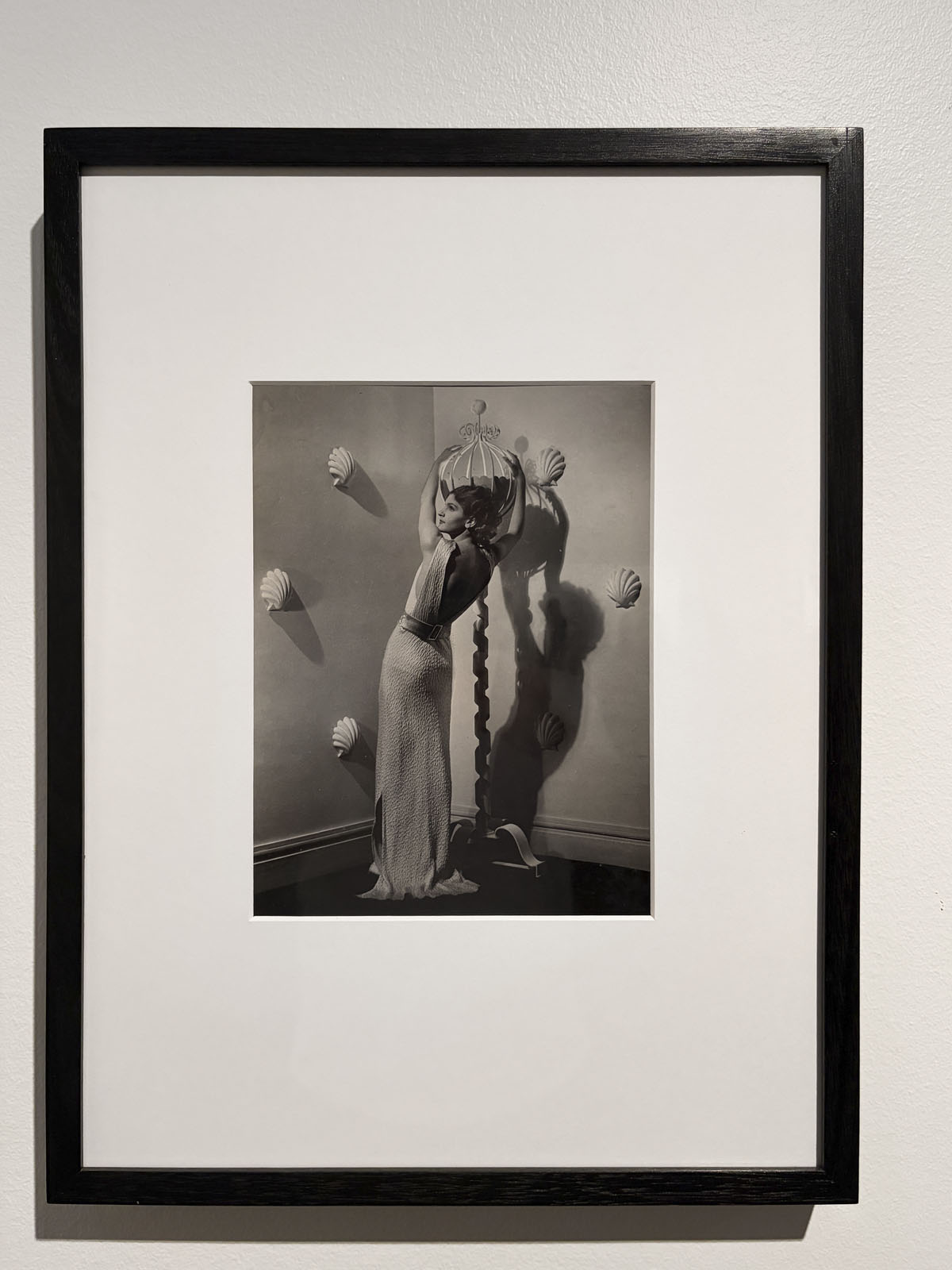
Dora Maar, a French photographer, poet and painter, established her commercial studio in Paris in 1932, quickly gaining recognition as a portrait and fashion photographer. While known as one of Pablo Picasso’s muses and the inspiration for his Weeping woman paintings, Maar was an influential artist in her own right, painting well into her eighties. As a photographer, Maar developed an elegant and experimental style, drawing on her knowledge of avant-garde photography and the ideas underpinning Surrealism. In this work, an advertising commission for the haircare brand Dolfar, Maar explores the ideal of beauty, creating an image in which the subject appears like a classical statue come to life.
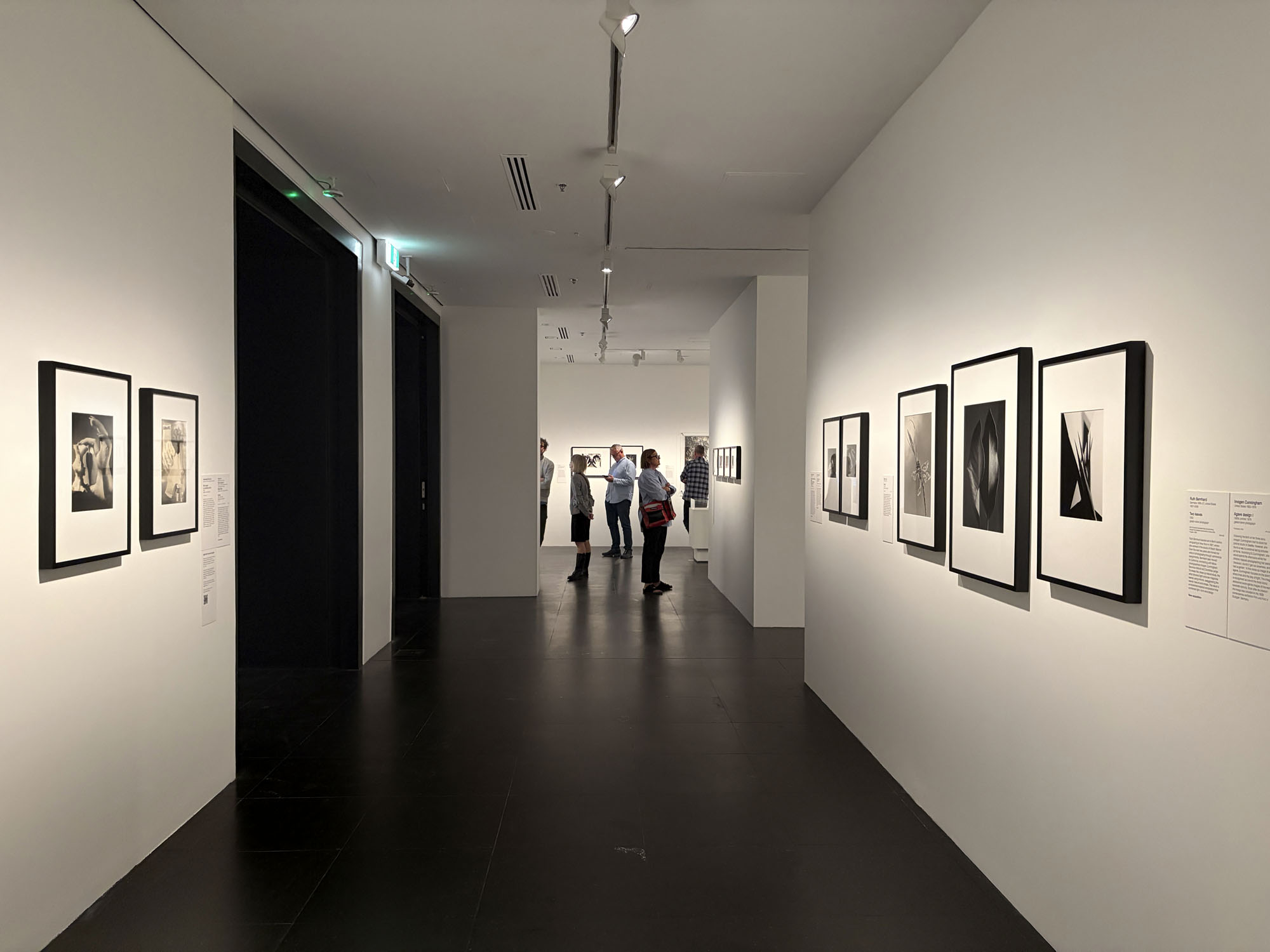
 

Installation view of the exhibition 'Women Photographers 1900-1975: A Legacy of Light' at NGV International, Melbourne, November 2025 - May 2026


Installation view of the exhibition Women Photographers 1900-1975: A Legacy of Light at NGV International, Melbourne, November 2025 – May 2026
Photo: Marcus Bunyan


Featuring some of the most iconic images from the twentieth century by the likes of Diane Arbus, Dora Maar, Lee Miller, Dorothea Lange, Olive Cotton and many more, Women Photographers 1900-1975: A Legacy of Light celebrates the images, lives and stories of more than 70 influential artists working between 1900 to 1975. Opening 28 November 2025 at NGV International, the exhibition features more than 300 rare and innovative photographs, prints, postcards, photobooks and magazines from the NGV Collection – with 170+ recently acquired and 130+ on display for the very first time.

Featuring portraiture, photojournalism, landscape photography, fashion photography, experimental avant-garde imagery and more, Women Photographers 1900-1975: A Legacy of Light explores the work of the artists against the backdrop of significant social, political and cultural events – from Melbourne to Tokyo, Paris to Buenos Aires. From historic images of the suffrage movement at the turn of the twentieth century, through to the women’s liberation movement and beyond, the exhibition reveals how these artists have used key photographic styles to capture, reflect and challenge the world around them. This exhibition highlights the rich networks of exchange of information, ideas and support between many of these women across the world.

The exhibition showcases the work of prominent and leading figures of photography, as well as drawing attention to lesser-known artists. Featured artists include Berenice Abbott, Lola Álvarez Bravo, Claude Cahun and Marcel Moore, Imogen Cunningham, Mikki Ferrill, Sue Ford, Christine Godden, Ponch Hawkes, Annemarie Heinrich, Ruth Hollick, Florence Henri, Kati Horna, Germaine Krull, Tina Modotti, Lucia Moholy, Tokiwa Toyoko, Francesca Woodman, Yamazawa Eiko, among many others.

The exhibition reflects a recent strategic collecting focus on celebrating the contributions of women artists of the early twentieth century in the NGV Photography collection. Many of the new works on display – including by artists previously unrepresented in the NGV Collection – have been acquired with the generous support of the Bowness Family Foundation, who have been involved with the NGV for almost 25 years and who also generously contributed to the publication. There have also been significant works joining the NGV Collection with the generous support of Krystyna Campbell-Pretty AM and Family, as well as Professor Wang Gungwu, and Joy Anderson.

Highlight works include an outstanding selection of photographs by Dora Maar, including fashion photographs, social documentary images and portraiture. Dora Maar was a sophisticated artist and image-maker and deeply connected within the avant-garde community. In 1935-36, she created these studio images of Pablo Picasso, with whom she was romantically involved. In these portraits, on display in the exhibition, Maar turns the gaze of her camera onto Picasso, offering the viewer a candid insight into their private domestic lives.

A further highlight is Dorothea Lange’s instantly recognisable work, Migrant Mother, Nipomo, California, 1936, commissioned as part of a campaign by the US government Farm Security Administration to bring recognition to the impacts of the Great Depression on working class families. Lange created several photographs of the woman, Florence Owens Thompson, and her children. This image, focussed on Thompson’s seemingly anxious face, became a poignant symbol of the times.

In the 1930s German-born Ilse Bing became known as the ‘Queen of Leica’ for her use of the small, hand-held camera which allowed her the flexibility to shoot from dizzying angles, create contrasts of light, shade and shadows, and dynamic perspectives. The exhibition will feature Bing’s iconic modernist image, Self-portrait 1931, showing the artist’s reflection, of herself and her camera, accompanied by her side profile in another angled mirror demonstrating the significance of the camera in her image-making.

Inner-city Melbourne of the 1970s is brought to life in the photographs of Ponch Hawkes, offering audiences a first-hand glimpse into the changing social dynamics and sense of activism of the period. Photographs on display include her documentation of life in communal houses, of urban graffiti calling for childcare and social housing, of celebrations for Gay Pride Week, and documentation of the Women’s Theatre Group, performing outdoors beneath a Women’s Liberation banner.

Also on display is Olive Cotton’s iconic Teacup ballet, 1935, a wonderful study of light, shadows and forms. Cotton had purchased an inexpensive set of cups and saucers to replace the mugs in the Sydney studio of photographer Max Dupain, where she was studio assistant. Realising their potential for a dynamic arrangement, she photographed the teacups with elongated shadows, creating a striking composition of shadow play that Cotton described as “ballet-like”.

American artist Lee Miller moved to Paris in 1929, where she became Man Ray’s photographic student, then colleague, model and lover – all the while creating her own extraordinary photographs. On display in the exhibition is Miller’s portrait of Man Ray, taken in 1931 in Miller’s Paris apartment depicting her subject framed tightly, his gaze diverted.

Lucy Schwob and Suzanne Malherbe, better known by their adopted alliterative pseudonyms Claude Cahun and Marcel Moore, were an artist duo who radically questioned the constraints of gender in their artwork and lives. The pair are represented in this exhibition with the artist’s book Aveux non Avenus, 1930. In this highly experimental book, featuring ‘essay-poems’ and collaborative photomontages, which feature self-portraits of Cahun with a shaved head and androgynous appearance and dress, Cahun and Moore raise powerful questions about identity, sexuality and self-expression.

Las Lavanderas (The Washerwomen) c. 1940, also on display, is one of several photographs created by Mexican artist Lolo Álvarez Bravo of women washing their clothes at a waterfront. The sun casts long shadows from a nearby structure, transforming the scene of everyday labour into one of dynamic angles and forms. Bravo is known for her passionate documentation of the peoples and cultures of Mexico, through such dynamic and vivid compositions.

Parliamentary Secretary for Creative Industries, Katie Hall, said: “This exhibition will celebrate the work of women photographers who documented the world around them from vastly different places and perspectives. The NGV continues to present exhibitions that show us life through different lenses and introduce us to creative trailblazers from around the world.”

Tony Ellwood AM, Director, NGV, said: “Like all collecting institutions globally, the NGV has been actively looking at historically underrepresented areas of our collection, including gender. Though this is a long and ongoing process, this exhibition offers an opportunity to celebrate and share the more than 300 works by women photographers, many of which we’ve collected since 2020. We hope this exhibition gives audiences the chance to discover the work of lesser-known photographers or deepen their appreciation of familiar ones.”

Professor Simon Tormey, Dean, Faculty of Arts and Education, Deakin, said: “This important exhibition foregrounds the often-overlooked contributions of women to the evolution of photography across the twentieth century. At Deakin, where we teach and research across Creative Arts and Photography, we are proud to support initiatives that celebrate artistic innovation and also challenge historical silences. This collaboration with the NGV exemplifies our commitment to the transformative power of the arts.”

The exhibition will be accompanied by a beautifully illustrated publication exploring the images, lives and stories of women photographers from the pivotal period of 1900-1975. The publication will feature new essays from NGV Curators and international contributors including leading American art historian, critic and curator Abigail Solomon-Godeau; Emeritus Professor at the ANU School of Art & Design Helen Ennis; World Press Photo lead curator Amanda Maddox; photographer and writer Carla Williams, and Tokyo Photographic Art Museum curator Yamada Yuri. Women Photographers 1900–1975 will be co-published with Hatje Cantz in Berlin.

This exhibition coincides with the fifty-year anniversary of the first International Women’s Year in 1975, as declared by the United Nations.

Press release from the National Gallery of Victoria
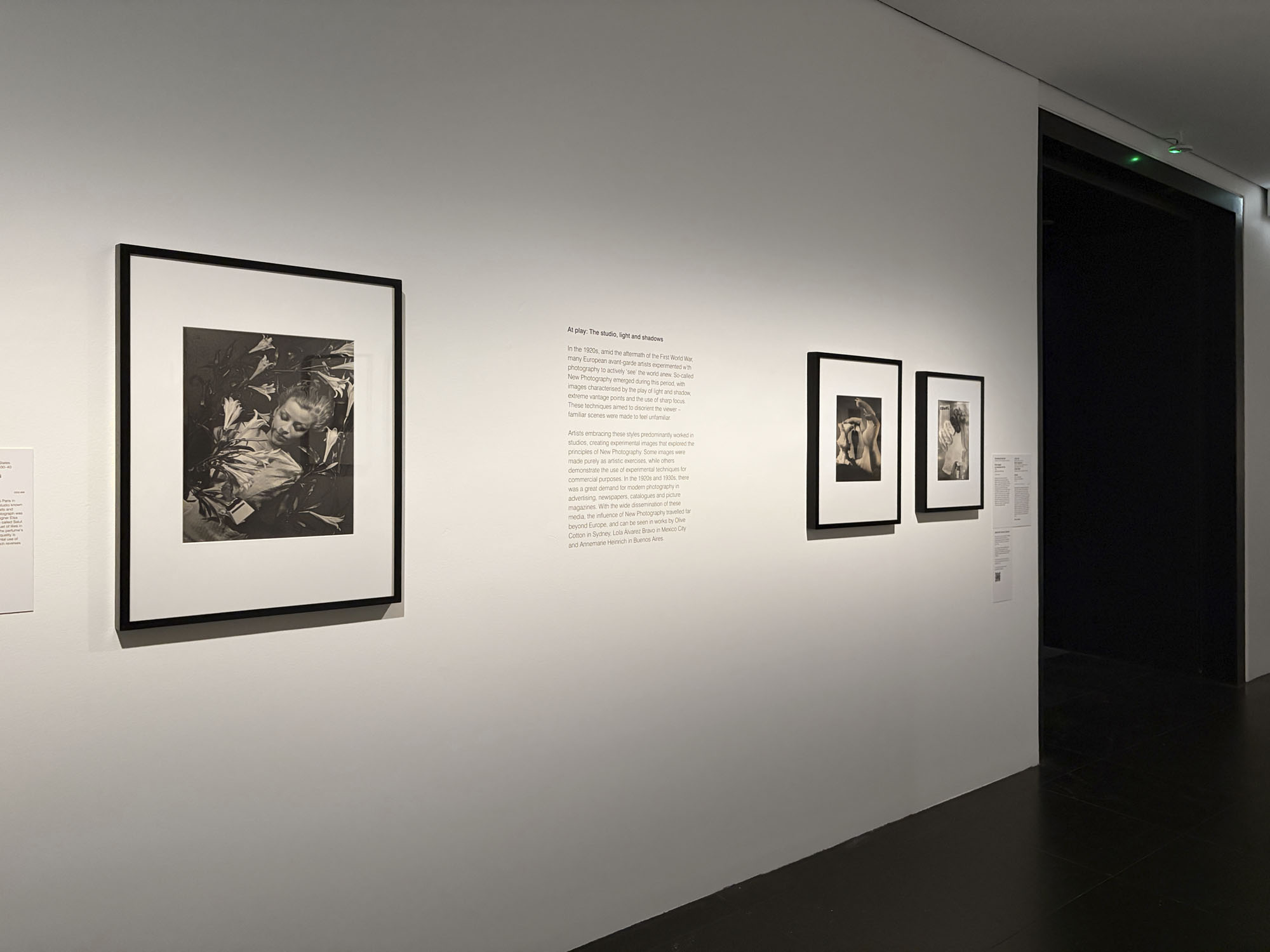
 

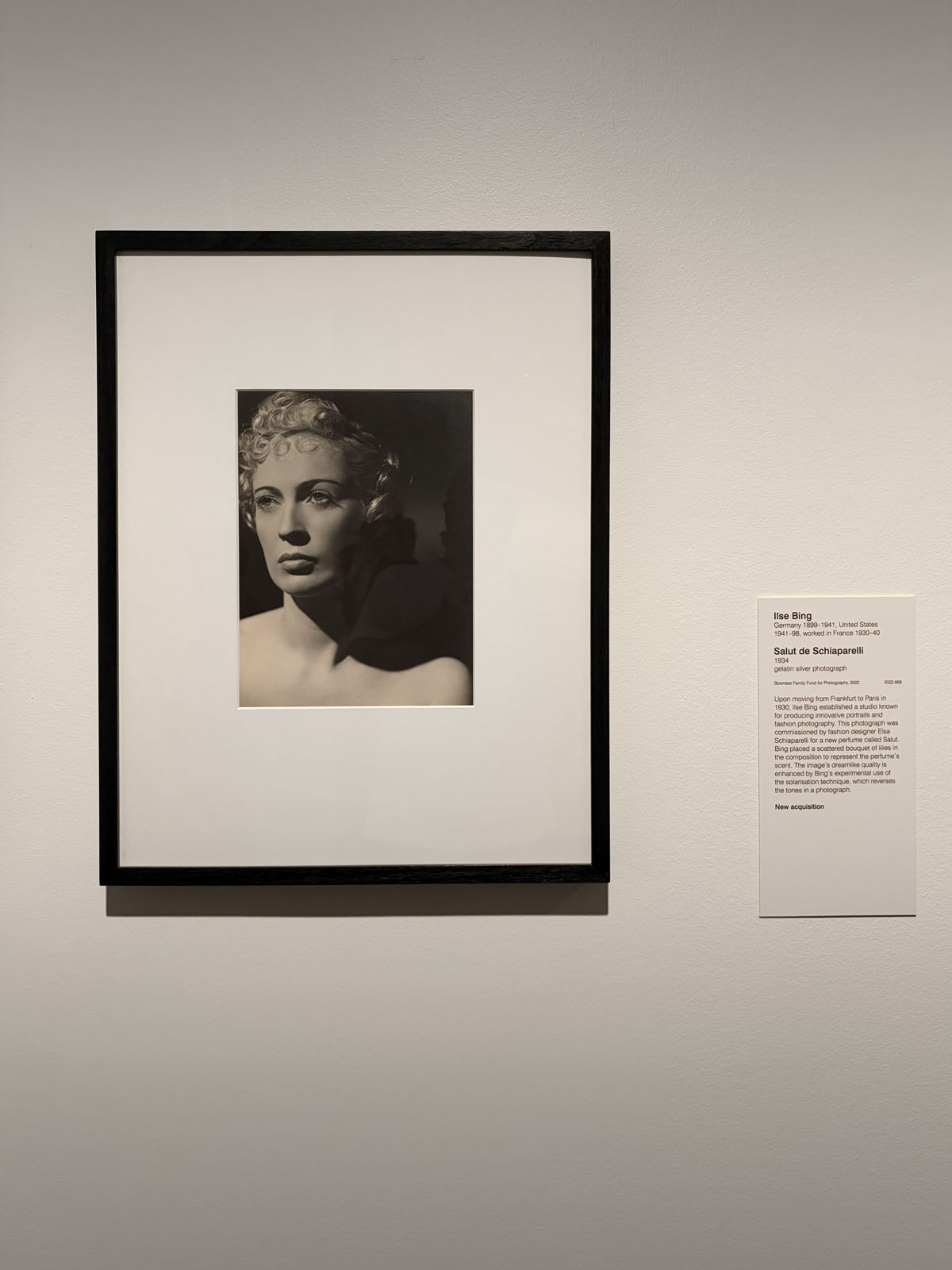
Installation view of the exhibition 'Women Photographers 1900-1975: A Legacy of Light' at NGV International, Melbourne, November 2025 - May 2026 showing at left, Ilse Bing 'Salut de Schiaparelli' (1934)


Installation view of the exhibition Women Photographers 1900-1975: A Legacy of Light at NGV International, Melbourne, November 2025 – May 2026 showing at left, Ilse Bing Salut de Schiaparelli (1934, below)
Photo: Marcus Bunyan
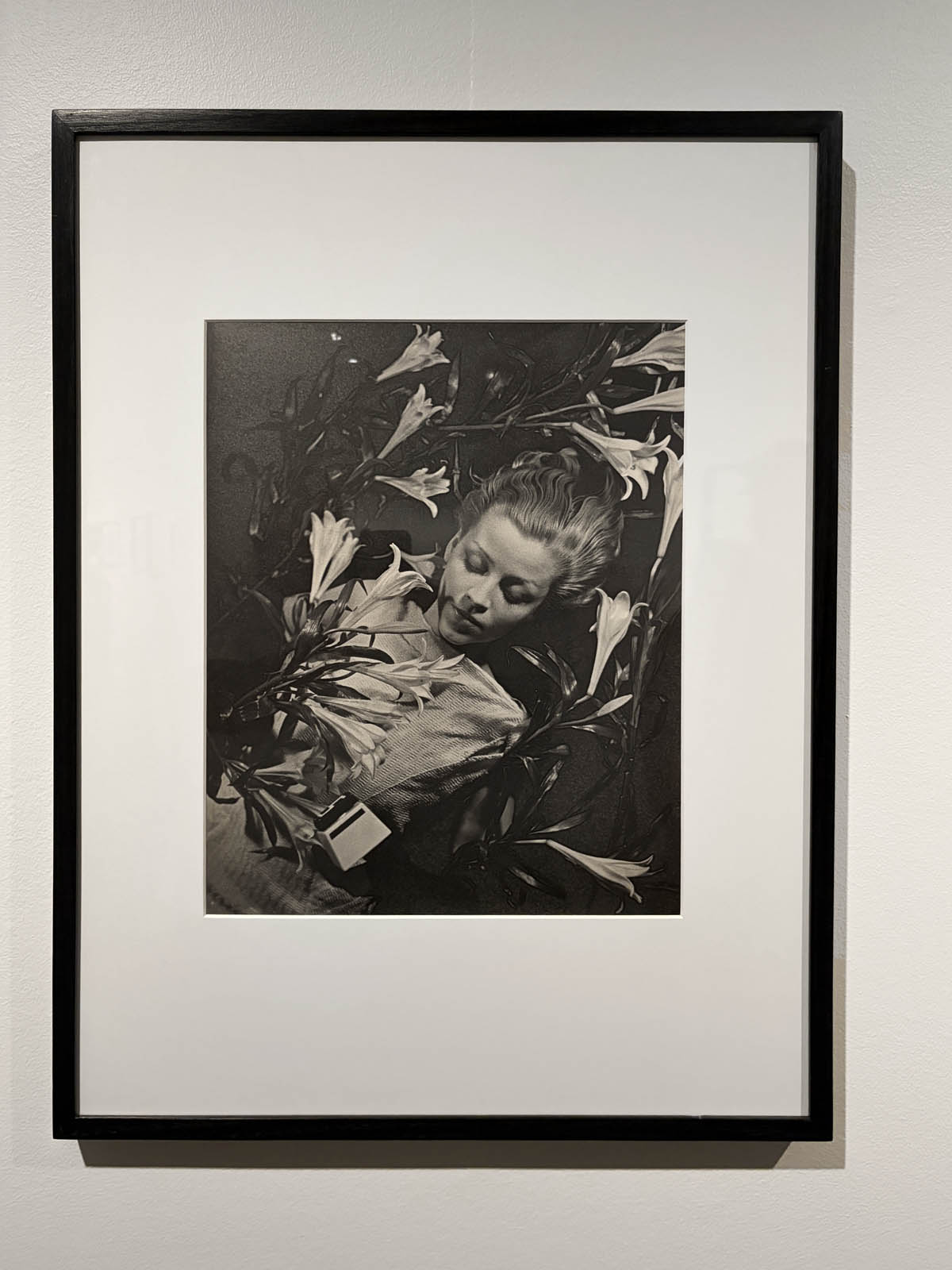
 

Ilse Bing (German, 1899-1998) Salut de Schiaparelli 1934 (installation view)


Ilse Bing (German, 1899-1998)
Salut de Schiaparelli (installation view)
1934
Gelatin silver photograph
49.5 x 39.7cm (image and sheet)
National Gallery of Victoria, Melbourne
Bowness Family Fund for Photography, 2022
Photo: Marcus Bunyan
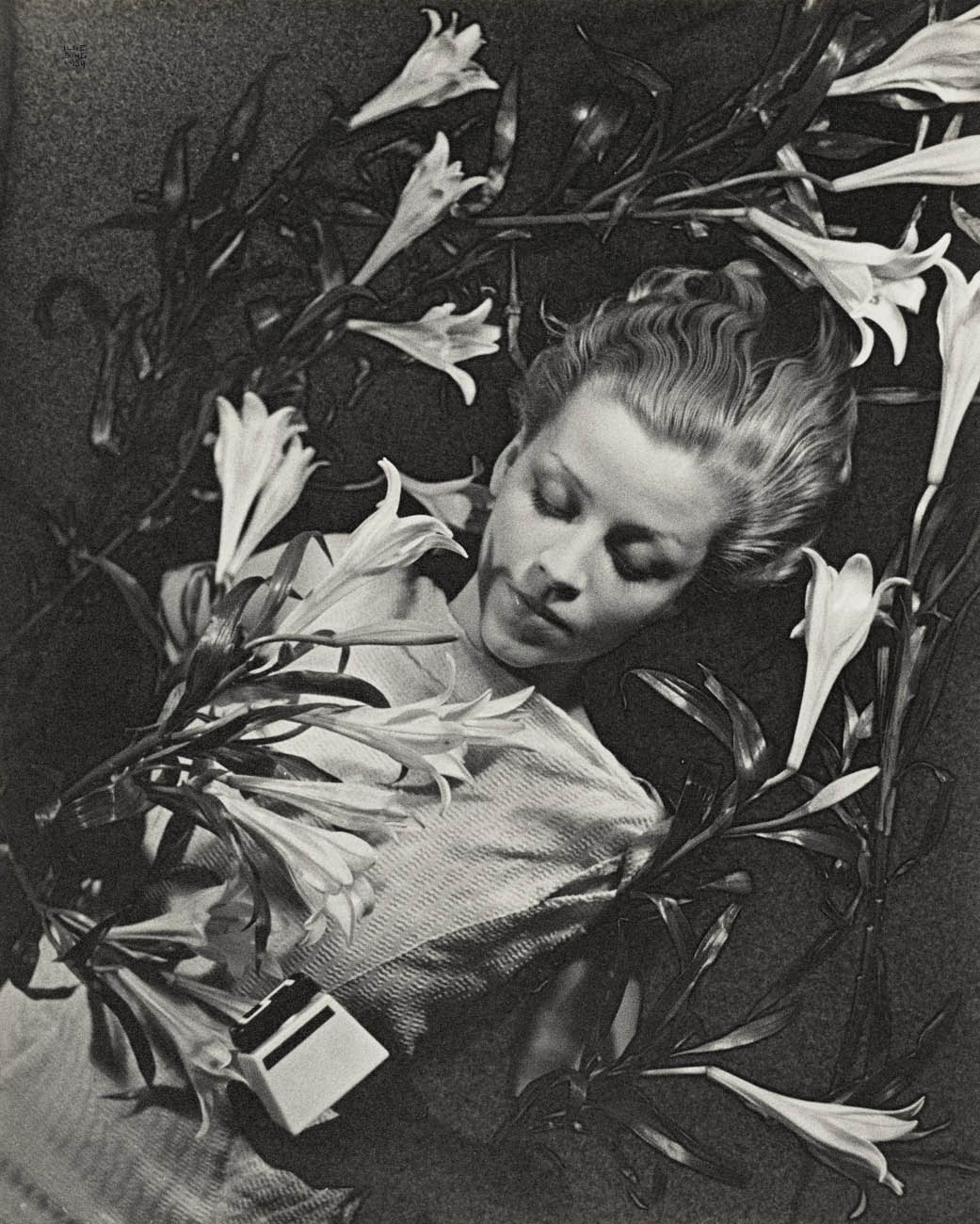
 

Ilse Bing (German, 1899-1998, United States 1941-1998) 'Salut de Schiaparelli' 1934


Ilse Bing (German, 1899-1998)
Salut de Schiaparelli
1934
Gelatin silver photograph
49.5 x 39.7cm (image and sheet)
National Gallery of Victoria, Melbourne
Bowness Family Fund for Photography, 2022


Upon moving from Frankfurt to Paris in 1930, Ilse Bing established a studio known for producing innovative portraits and fashion photography. This photograph was commissioned by fashion designer Elsa Schiaparelli for a new
perfume called Salut. Bing placed a scattered bouquet of lilies in the composition to represent the perfume’s scent. The image’s dreamlike quality is enhanced by Bing’s experimental use of the solarisation technique, which reverses the tones in a photograph.

Wall text from the exhibition


At Play: The Studio, Light and Shadows

In the 1920s, amid the aftermath of the First World War, many European avant-garde artists experimented with photography to actively ‘see’ the world anew. So-called New Photography emerged during this period, with images characterised by the play of light and shadow, extreme vantage points and the use of sharp focus. These techniques aimed to disorient the viewer – familiar scenes were made to feel unfamiliar.

Artists embracing these styles predominantly worked in studios, creating experimental images that explored the principles of New Photography. Some images were made purely as artistic exercises, while others demonstrate the use of experimental techniques for commercial purposes. In the 1920s and 1930s, there was a great demand for modern photography in advertising, newspapers, catalogues and picture magazines. With the wide dissemination of these media, the influence of New Photography travelled far beyond Europe, and can be seen in works by Olive Cotton in Sydney, Lola Álvarez Bravo in Mexico City and Annemarie Heinrich in Buenos Aires.
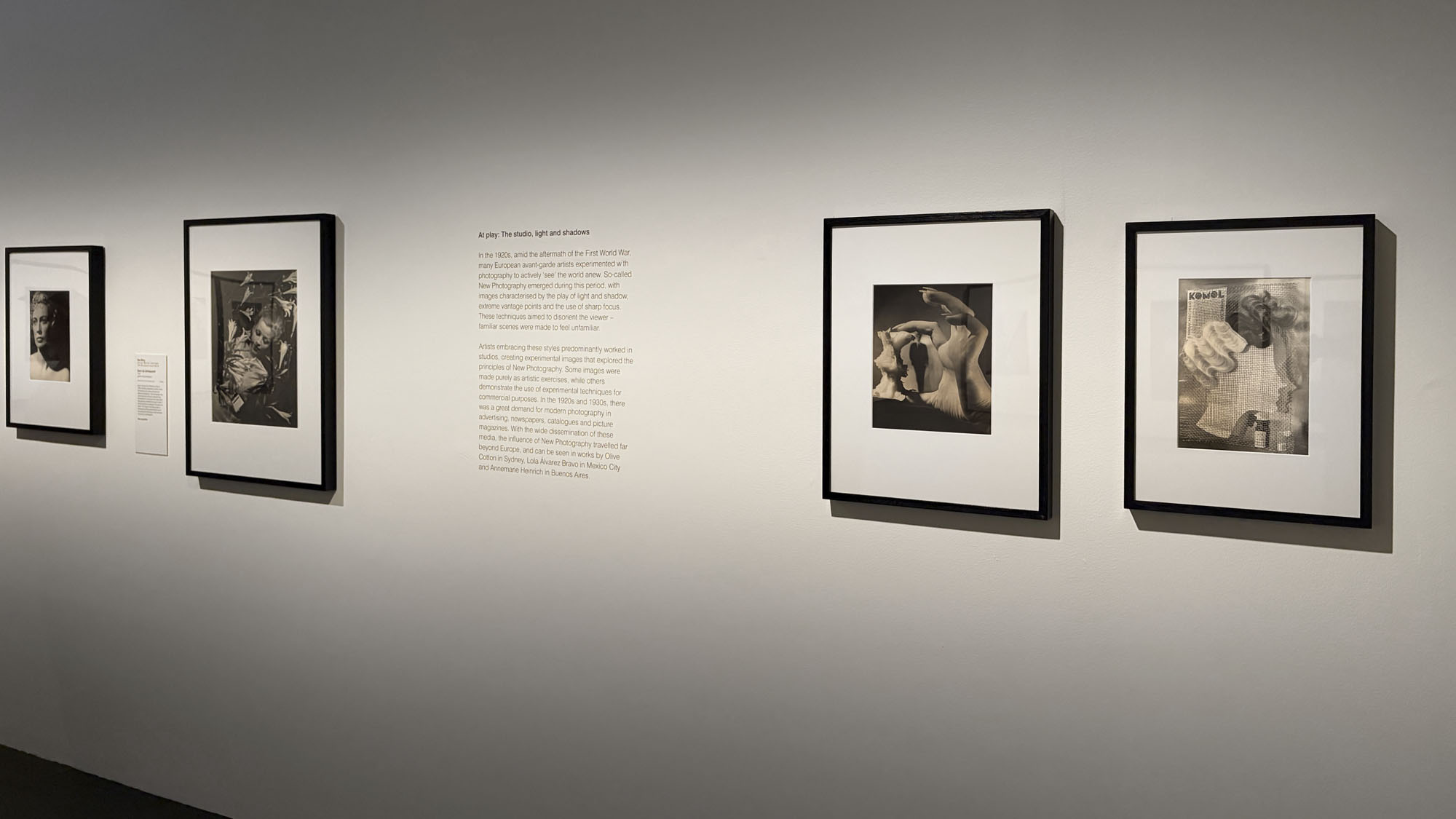
 

Installation view of the exhibition 'Women Photographers 1900-1975: A Legacy of Light' at NGV International, Melbourne, November 2025 - May 2026 showing at second left, Ilse Bing 'Salut de Schiaparelli'(1934); at second right, Annemarie Heinrich (Argentinian born Germany, 1912-2005) 'Eva's apple' (La manzana de Eva) 1953; and at right, ringl+pit (German, active 1930-1933, Ellen Auerbach and Grete Stern) 'Komol' (1931, printed 1984)


Installation view of the exhibition Women Photographers 1900-1975: A Legacy of Light at NGV International, Melbourne, November 2025 – May 2026 showing at second left, Ilse Bing Salut de Schiaparelli (1934, above); at second right, Annemarie Heinrich (Argentinian born Germany, 1912-2005) Eva’s apple (La manzana de Eva) 1953; and at right, ringl+pit (German, active 1930-1933, Ellen Auerbach and Grete Stern) Komol (1931 printed 1984, below)
Photo: Marcus Bunyan
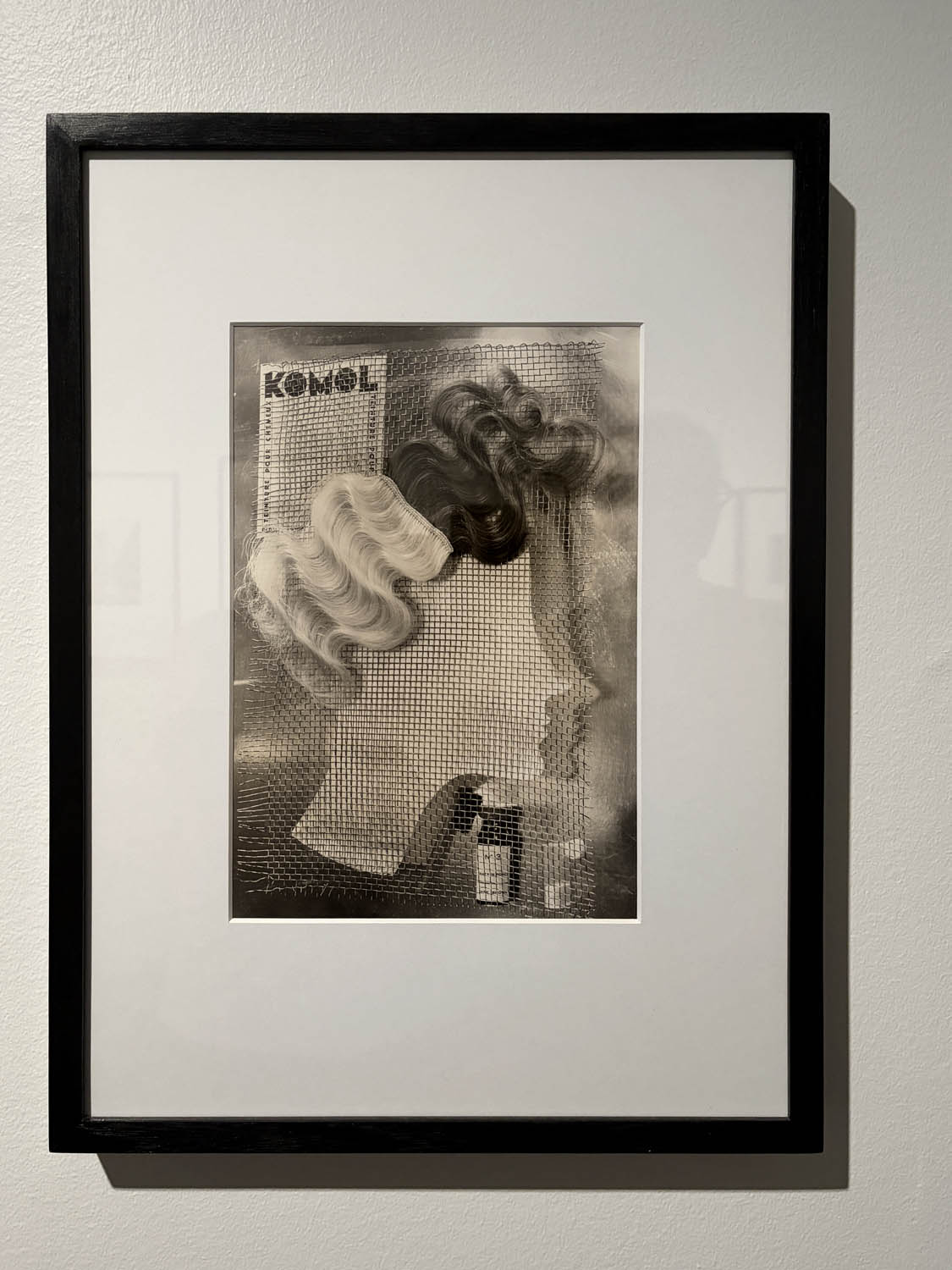
 

ringl+pit, Berlin Grete Stern (Argentine born Germany, 1904-1999) Ellen Auerbach (American born Germany, 1906-2004) 'Komol' 1931, printed 1984 (installation view)


ringl+pit, Berlin
Grete Stern (Argentine born Germany, 1904-1999)
Ellen Auerbach (American born Germany, 1906-2004)
Komol
1931, printed 1984
Gelatin silver photograph
34.4 x 23.3cm (image)
35.2 x 24.0cm (sheet)
National Gallery of Victoria, Melbourne
Bowness Family Fund for Photography, 2022
Photo: Marcus Bunyan


Named after the childhood nicknames of Grete Stern (Ringl) and Ellen Auerbach (Pit), photography studio ringl+pit was sought after for its highly innovative and experimental work. The studio’s work broke free from feminine ideals and expectations. Komol, an unconventional advertisement for hair dye, is a tongue-in-cheek reference to the shallow nature of commercialised femininity. ringl+pit’s playful productions speak to the safety of the artists’ shared space, described by art historian Elizabeth Otto as ‘a haven of humour and honesty for the photographers in contrast to the outside world that does not understand them’.

Wall text from the exhibition
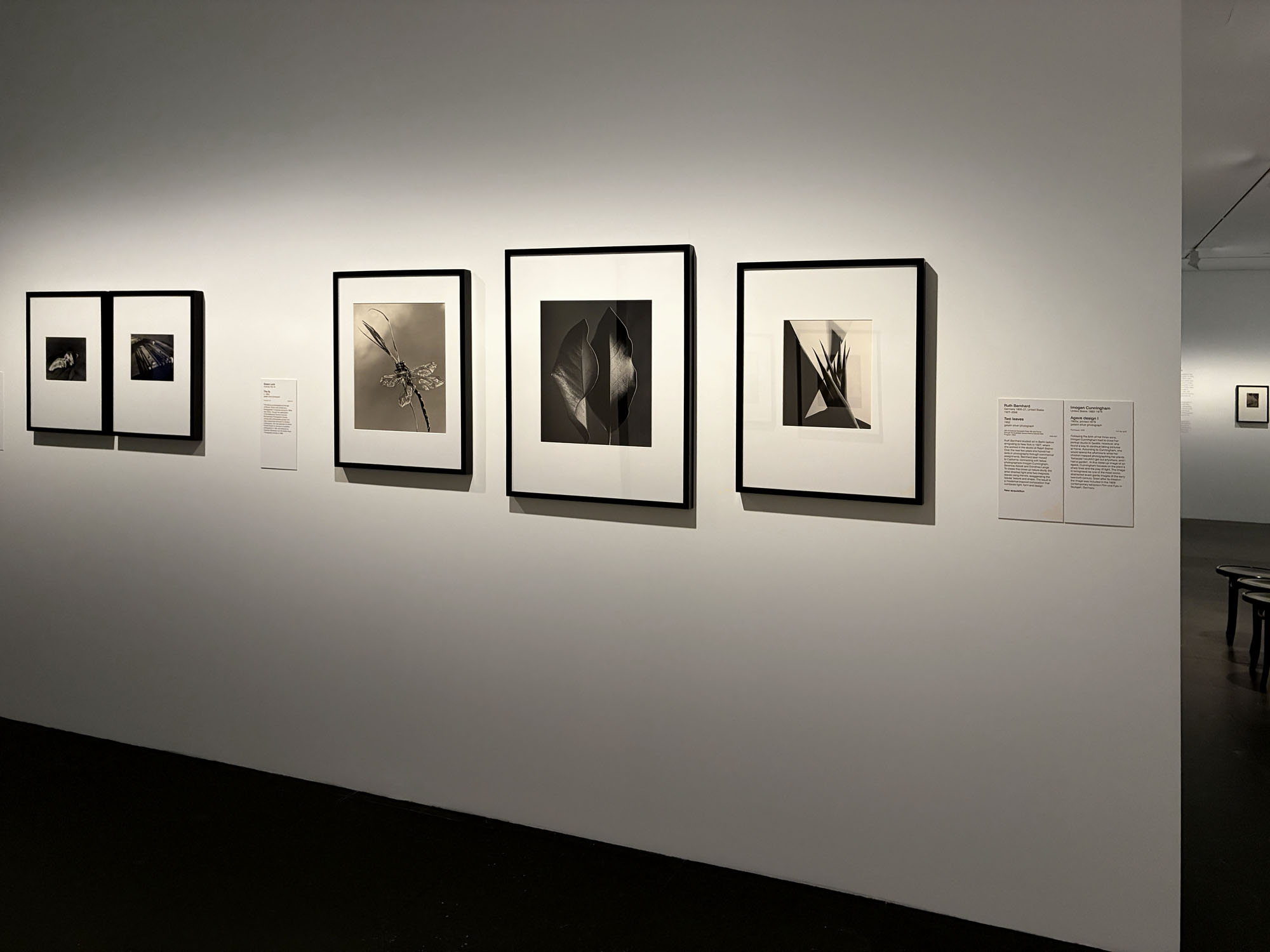
 

Installation view of the exhibition 'Women Photographers 1900-1975: A Legacy of Light' at NGV International, Melbourne, November 2025 - May 2026
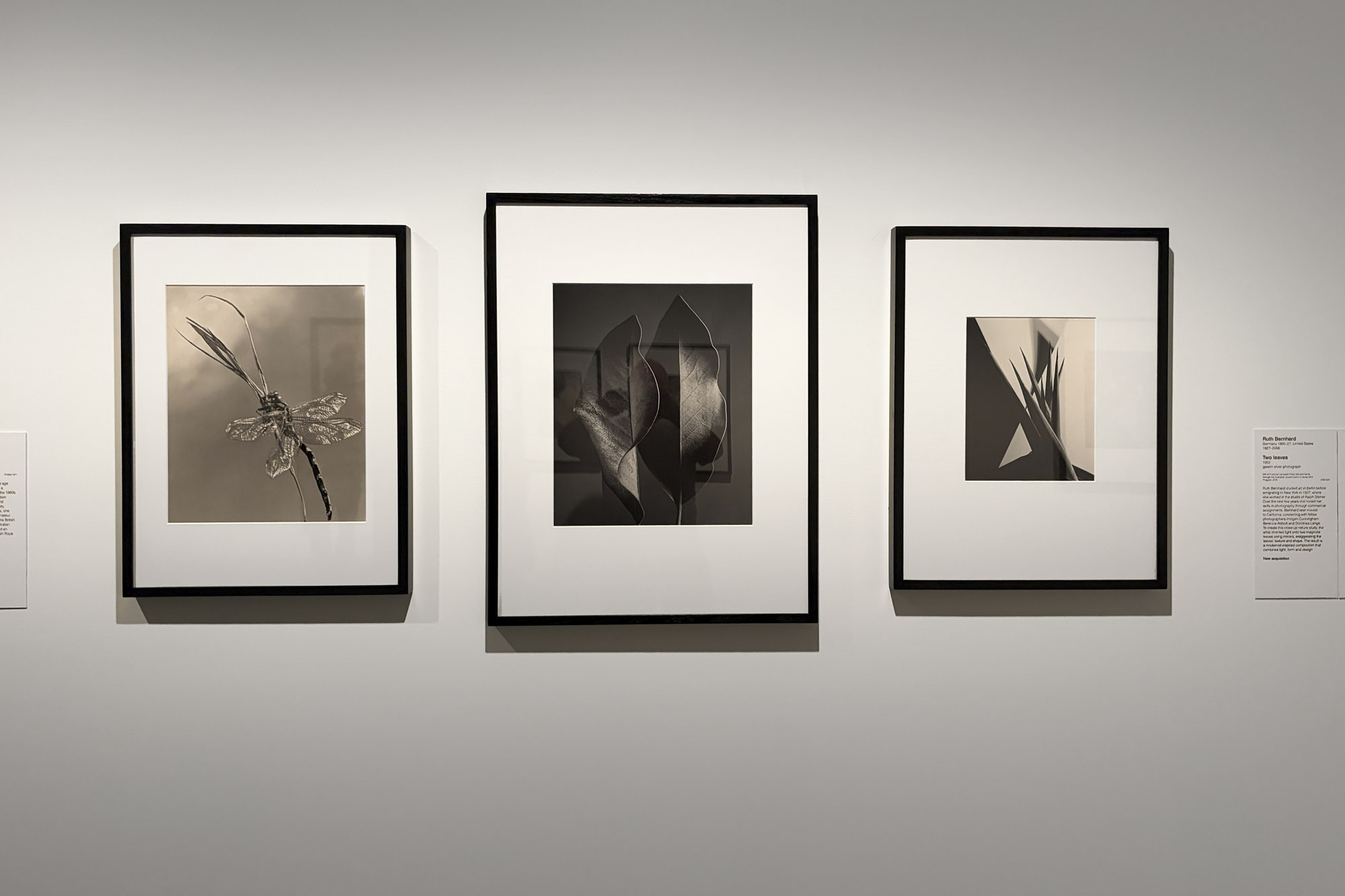
Installation view of the exhibition 'Women Photographers 1900-1975: A Legacy of Light' at NGV International, Melbourne, November 2025 - May 2026 showing at left, Grace Lock 'The fly' (c. 1960s); Ruth Bernhard 'Two Leaves' (1952); and at right, Imogen Cunningham 'Agave design I' (1920s, printed 1979)


Installation view of the exhibition Women Photographers 1900-1975: A Legacy of Light at NGV International, Melbourne, November 2025 – May 2026 showing at left in the bottom image, Grace Lock The fly (c. 1960s); Ruth Bernhard Two Leaves (1952); and at right, Imogen Cunningham Agave design I (1920s, printed 1979)
Photos: Marcus Bunyan
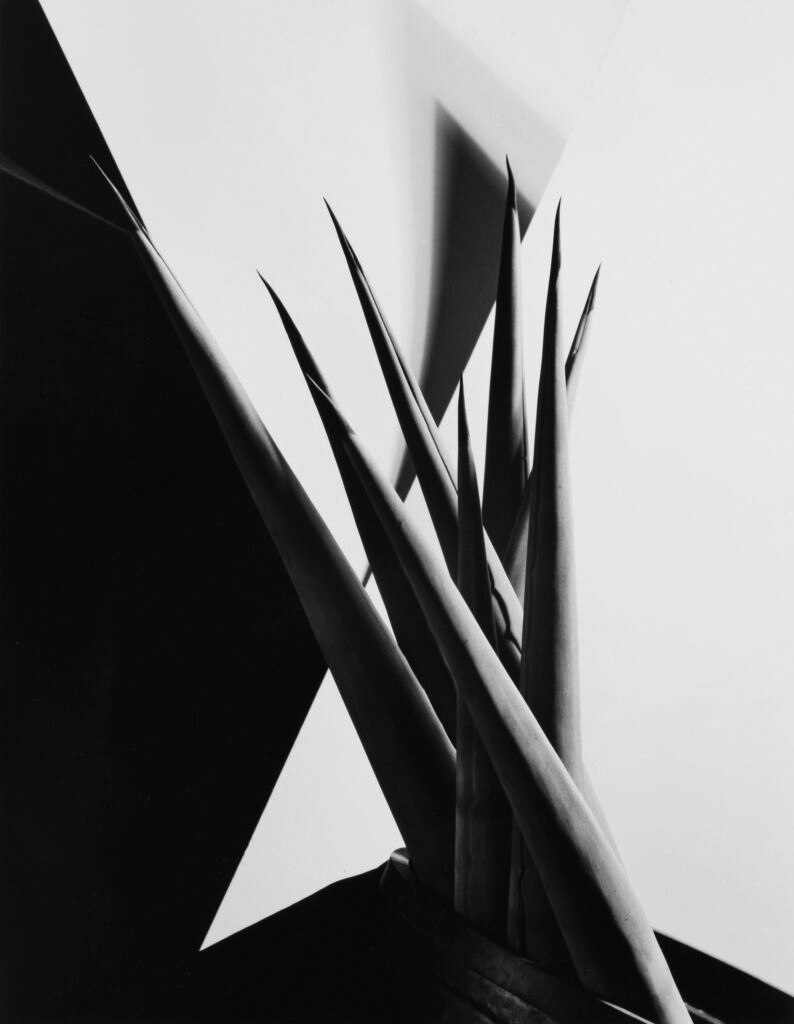
 

Imogen Cunningham (American, 1883-1976) 'Agave Design I' 1920s, printed 1979


Imogen Cunningham (American, 1883-1976)
Agave Design I
1920s, printed 1979
Gelatin silver photograph
32.6 x 25.6cm (image and sheet)
49.6 x 39.8cm (support)
National Gallery of Victoria, Melbourne
Purchased, 1979

Image from the Art Blart archive


Following the birth of her three sons, Imogen Cunningham had to close her portrait studio in Seattle. However, she found a way to continue taking pictures at home. According to Cunningham, she would spend the afternoons while her children napped photographing her plants, ‘because I couldn’t get out anywhere, and I had a garden’. In this close-up image of an agave, Cunningham focuses on the plant’s sharp lines and the play of light. The image is recognised as one of the most iconic abstracted avant-garde images of the early twentieth century. Soon after its creation, the image was included in the 1929 contemporary exhibition Film und Foto in Stuttgart, Germany.

Wall text from the exhibition
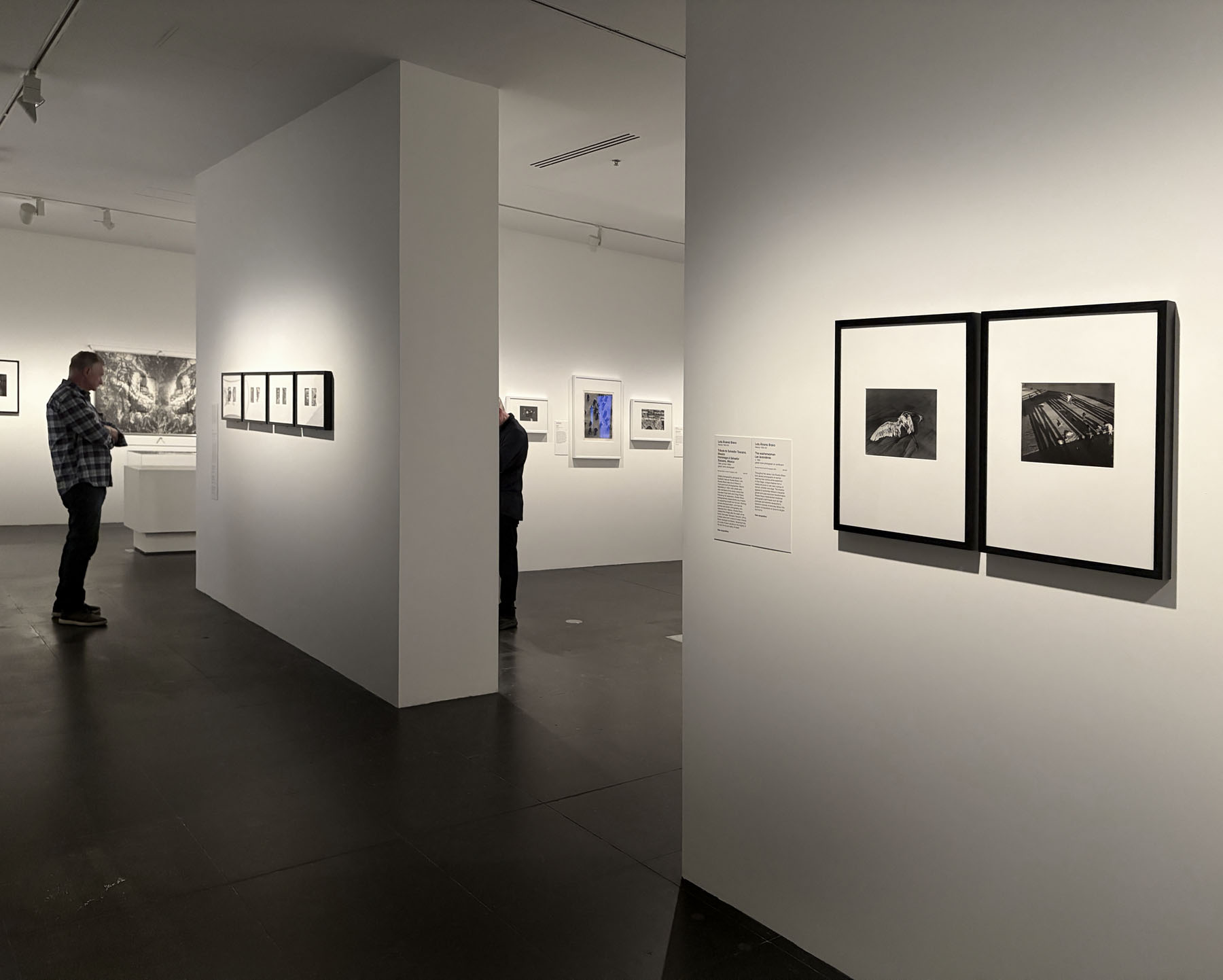
 

Installation view of the exhibition 'Women Photographers 1900-1975: A Legacy of Light' at NGV International, Melbourne, November 2025 - May 2026 showing two photographs by Lola Álvarez Bravo (Mexican, 1903-1993) with at second right, 'Tribute to Salvador Toscano' (1949, printed 1960s) New acquisition; and at right, 'The washerwomen' (Las Lavanderas) (c. 1950, below) New acquisition


Installation view of the exhibition Women Photographers 1900-1975: A Legacy of Light at NGV International, Melbourne, November 2025 – May 2026 showing two photographs by Lola Álvarez Bravo (Mexican, 1903-1993) with at second right, Tribute to Salvador Toscano (1949 printed 1960s, below) New acquisition; and at right, The washerwomen (Las Lavanderas) (c. 1950, below) New acquisition
Photo: Marcus Bunyan
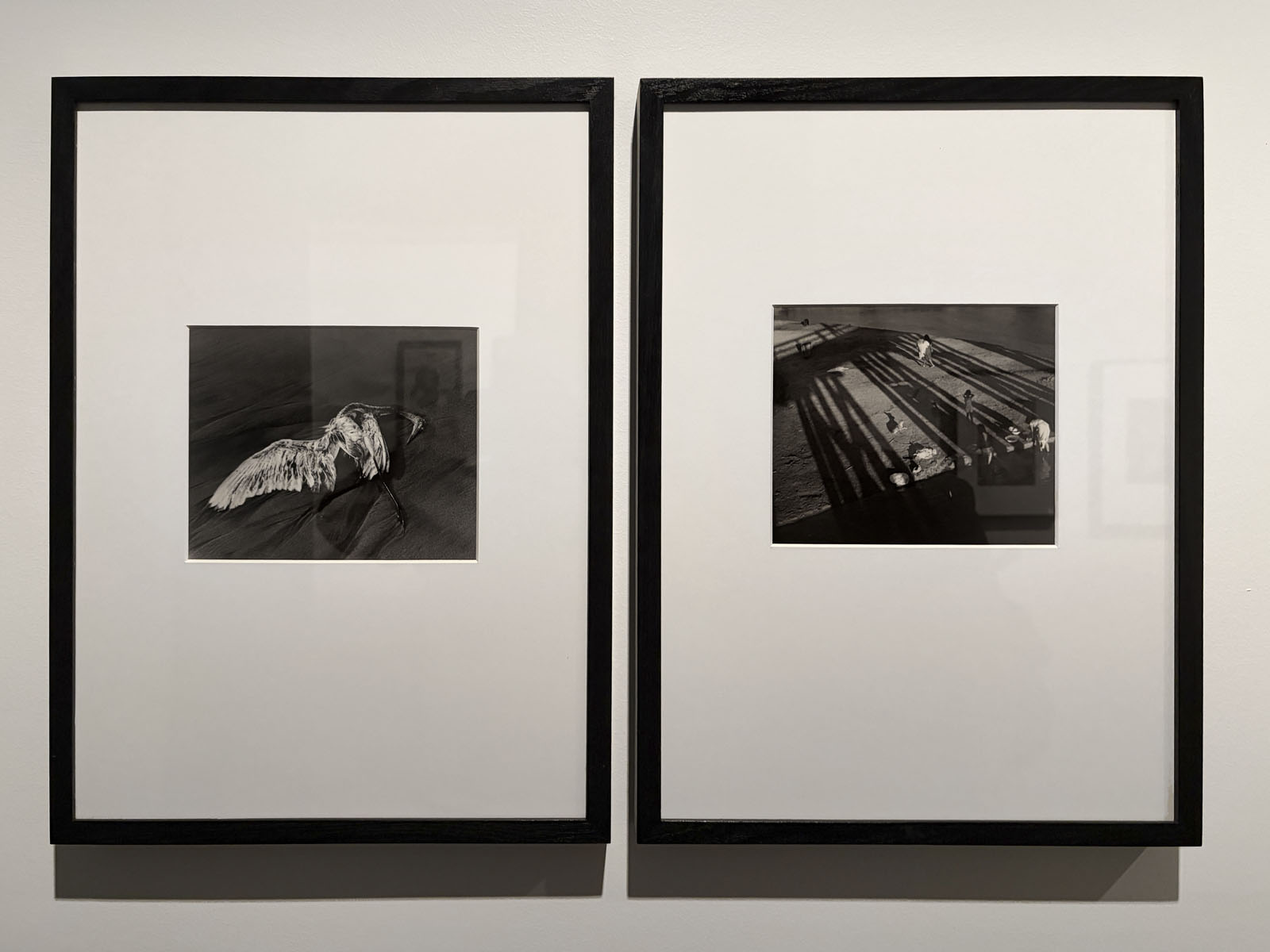
 

Installation view of the exhibition 'Women Photographers 1900-1975: A Legacy of Light' at NGV International, Melbourne, November 2025 - May 2026 showing at left, Lola Álvarez Bravo 'Tribute to Salvador Toscano' (1949, printed 1960s) New acquisition; and at right, Lola Álvarez Bravo 'The washerwomen' (Las Lavanderas) (c. 1950, below) New acquisition


Installation view of the exhibition Women Photographers 1900-1975: A Legacy of Light at NGV International, Melbourne, November 2025 – May 2026 showing at left, Lola Álvarez Bravo Tribute to Salvador Toscano (1949, printed 1960s) New acquisition; and at right, Lola Álvarez Bravo The washerwomen (Las Lavanderas) (c. 1950, below) New acquisition
Photo: Marcus Bunyan

New acquisitions
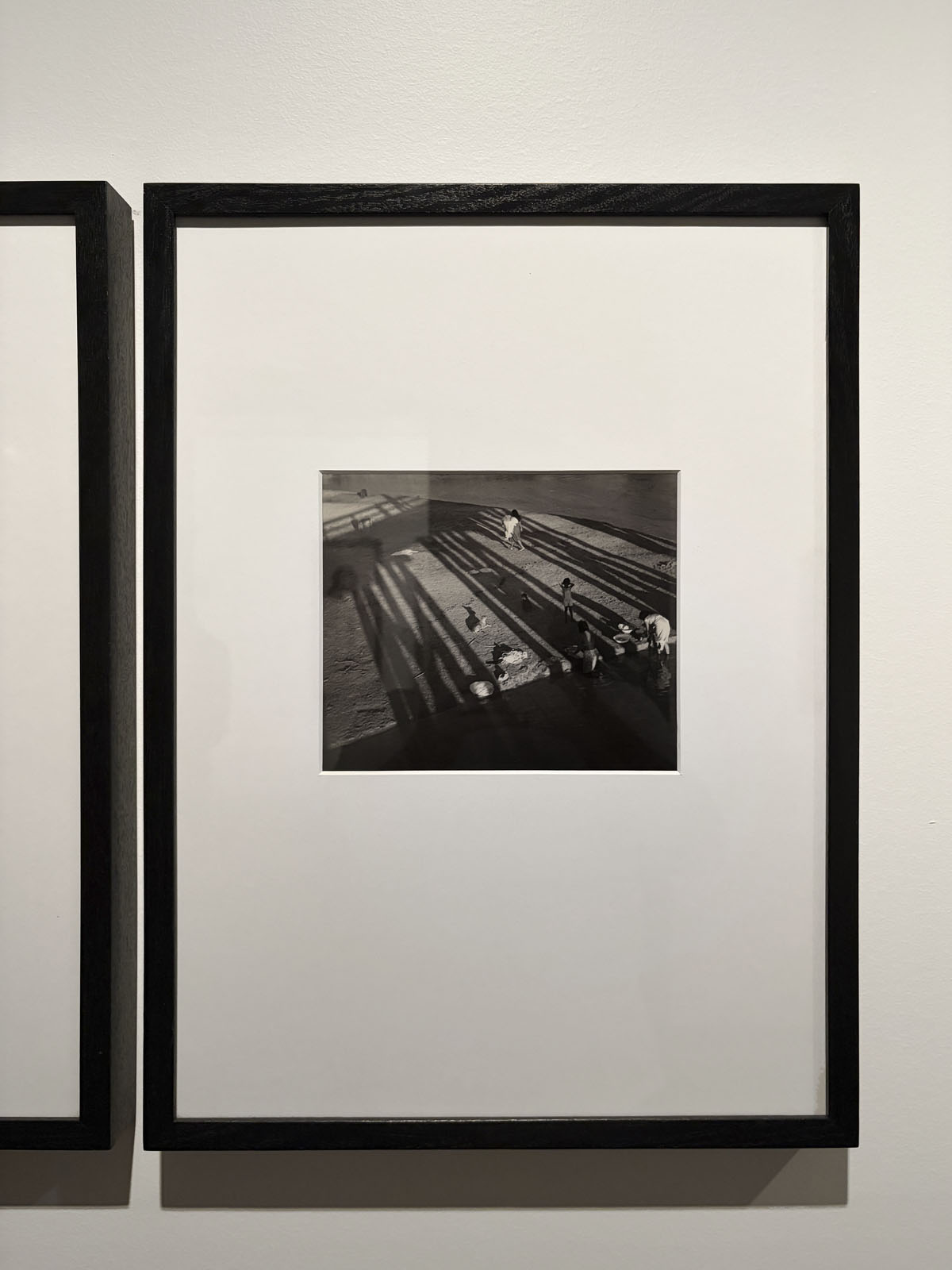
 

Lola Álvarez Bravo (Mexican, 1903-1993) 'The washerwomen (Las Lavanderas) c. 1950 (installation view)


Lola Álvarez Bravo (Mexican, 1903-1993)
The washerwomen (Las Lavanderas)
c. 1950
Gelatin silver photograph on cardboard
18.9 × 22.3cm (image and sheet)
National Gallery of Victoria, Melbourne
Bowness Family Fund for Photography, 2024
Photo: Marcus Bunyan

New acquisition


Throughout her career, Lola Álvarez Bravo took several photographs of women washing their clothes at the waterfront. In this image, a large shadow from a nearby structure is cast over a group of women, children and dogs. The shadow appears to symbolise Mexico’s industrial growth and post-revolution transformation. Álvarez Bravo implemented modernist photography techniques such as high contrasts and extreme viewpoints to transform scenes of everyday labour into graphic compositions of dynamic angles and forms.

Wall text from the exhibition
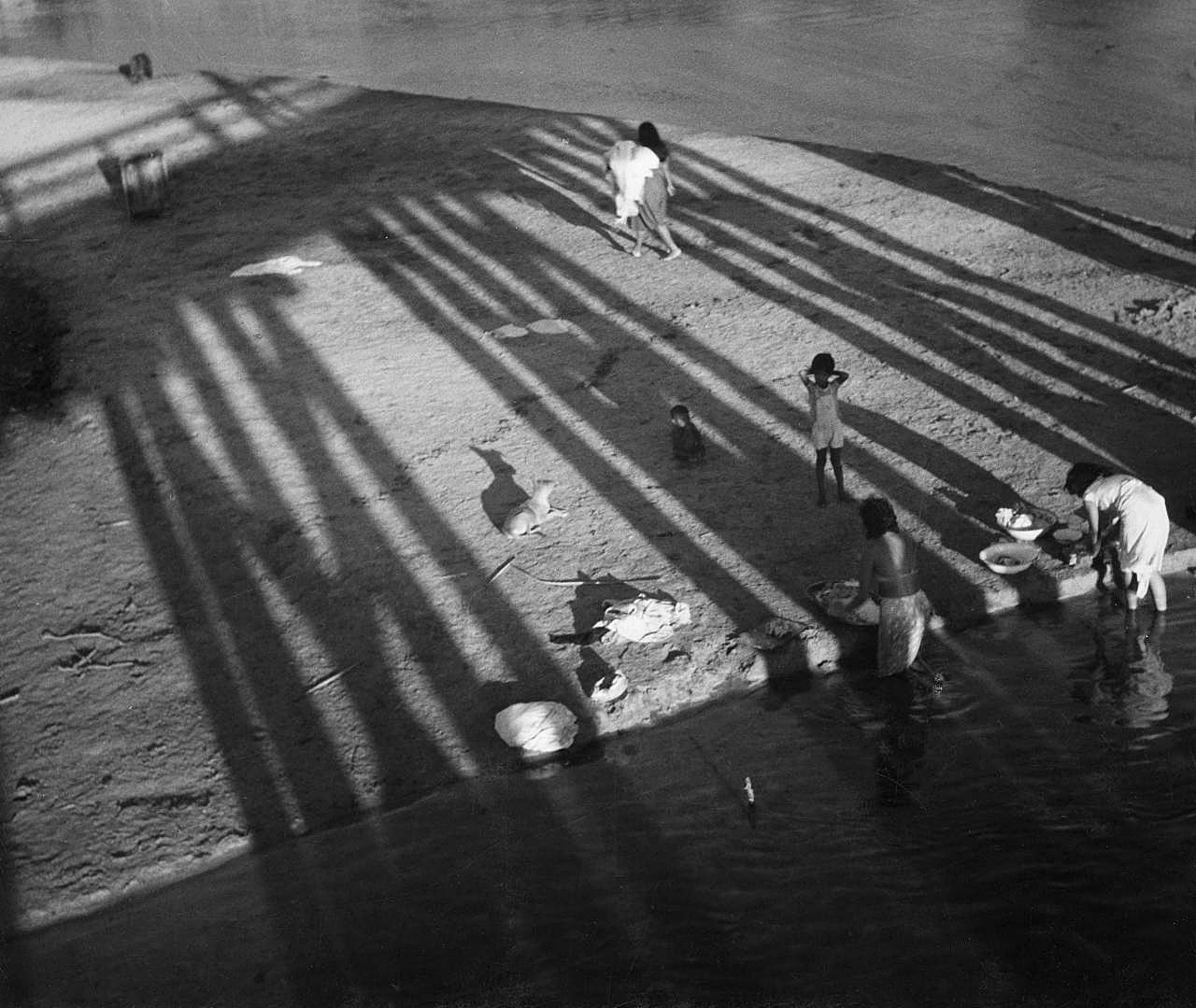
 

Lola Álvarez Bravo (Mexican, 1903-1993) 'The washerwomen' (Las Lavanderas) c. 1950


Lola Álvarez Bravo (Mexican, 1903-1993)
The washerwomen (Las Lavanderas)
c. 1950
Gelatin silver photograph on cardboard
18.9 x 22.3cm (image and sheet)
National Gallery of Victoria, Melbourne
Bowness Family Fund for Photography, 2024
© Center for Creative Photography, The University of Arizona Foundation

New acquisition
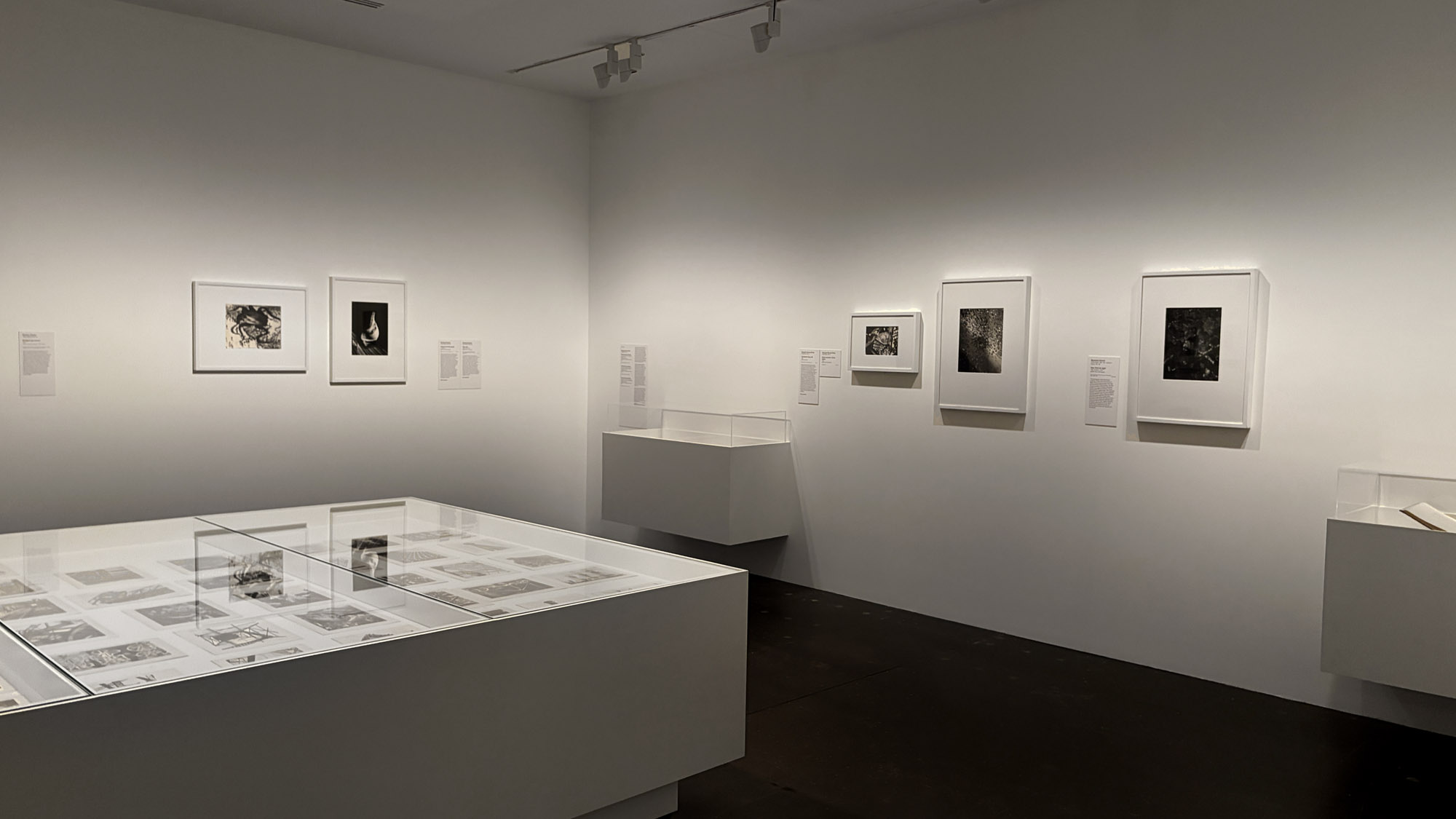
 

Installation view of the exhibition 'Women Photographers 1900-1975: A Legacy of Light' at NGV International, Melbourne, November 2025 - May 2026


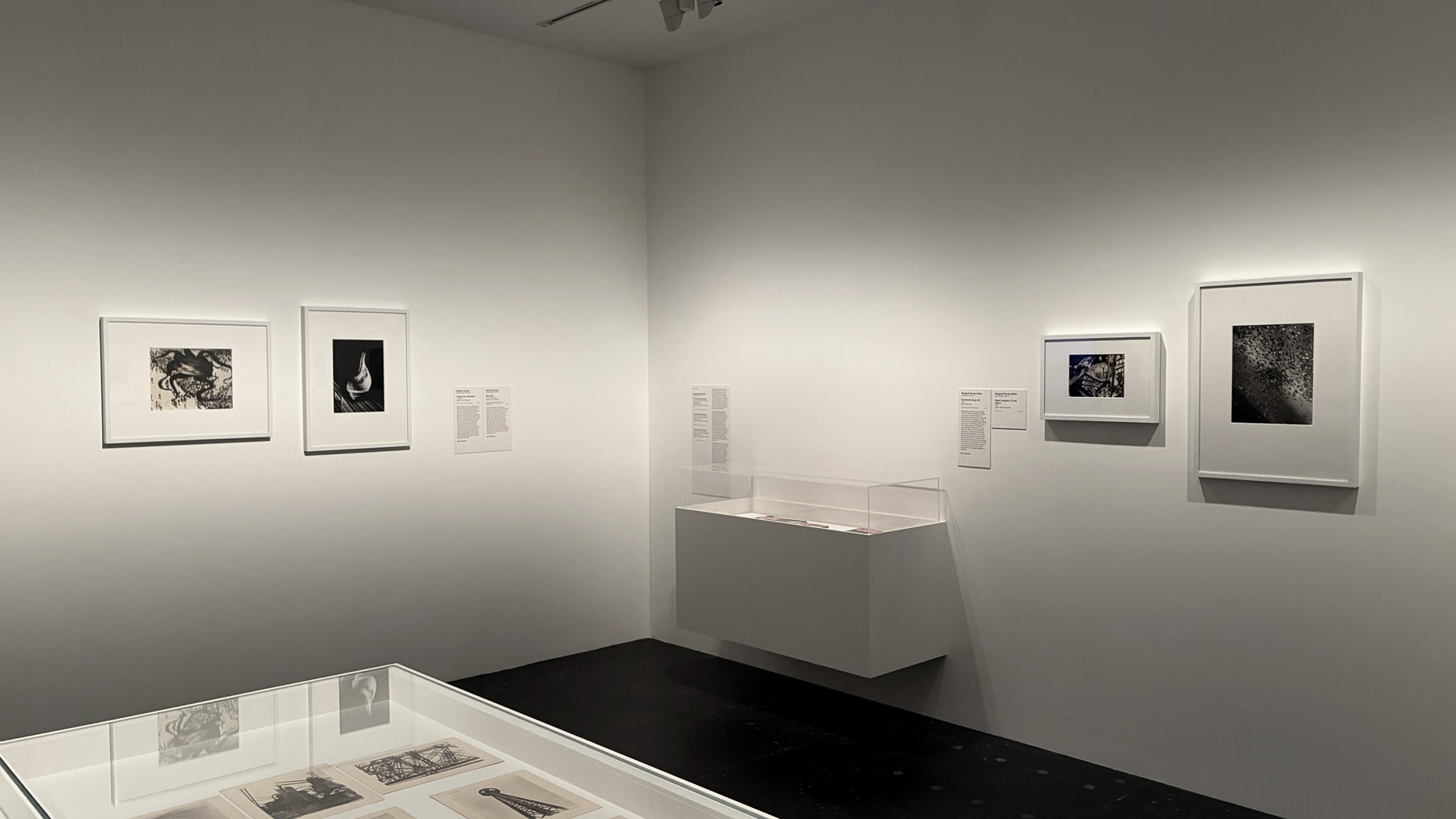
Installation view of the exhibition Women Photographers 1900-1975: A Legacy of Light at NGV International, Melbourne, November 2025 – May 2026 showing in the bottom image at left, Barbara Morgan (United States, 1900-1992) Hearst over the people (c. 1938-1939, below) New acquisition; at second left, Barbara Morgan City shell (1938, printed 1972); at second right, Margaret Bourke-White Campbell’s Soup No. 6 (1935, below) New acquisition; and at right, Margaret Bourke-White Beach accident, Coney Island (1952, below)
Photos: Marcus Bunyan
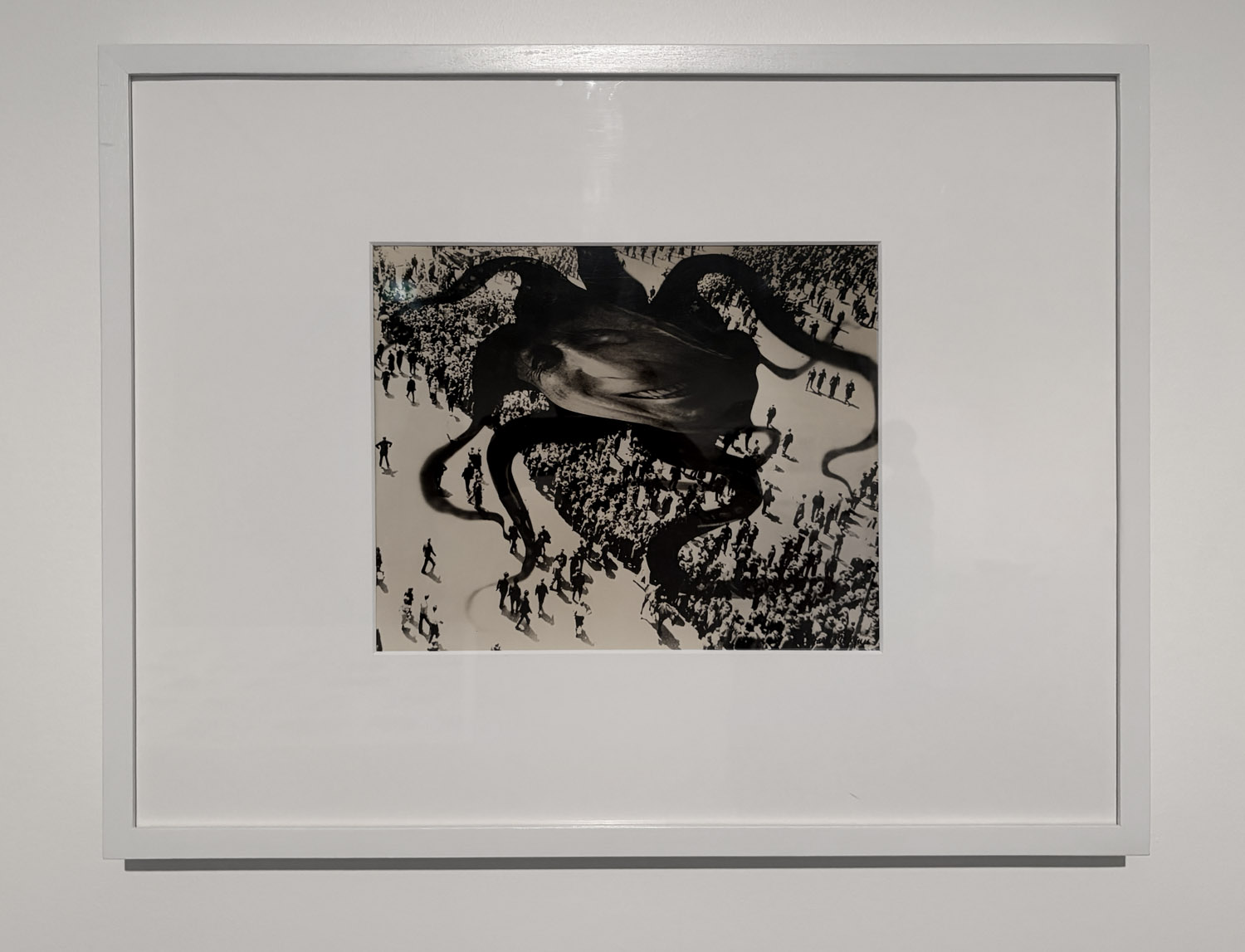
 

Barbara Morgan (American, 1900-1992) 'Hearst over the people' c. 1938-1939 (installation view)


Barbara Morgan (American, 1900-1992)
Hearst over the people (installation view)
c. 1938-1939
Gelatin silver photograph
26.3 x 32.4cm (image)
26.8 x 33.0cm (sheet)
National Gallery of Victoria, Melbourne
Bowness Family Fund for Photography, 2023
Photo: Marcus Bunyan

New acquisition


After moving to New York in 1930 with her photojournalist husband, Barbara Morgan turned to photography after a decade devoted to painting and printmaking. While her children were sleeping, she would experiment with avant-garde photographic techniques. In this photomontage, the artist set out to ‘visually distort the consummate distorter’: media mogul William Randolph Hearst, notorious for his sensationalist news empire. Hearst’s grinning face is stretched into a sinister omniscient octopus, its tentacles writhing into crowds of workers on the street. First published in the influential left-wing magazine New Masses, this is a compelling depiction of psychological infiltration. It also, perhaps, proposes Hearst as an effigy of authority for agitators to protest.

Wall text from the exhibition
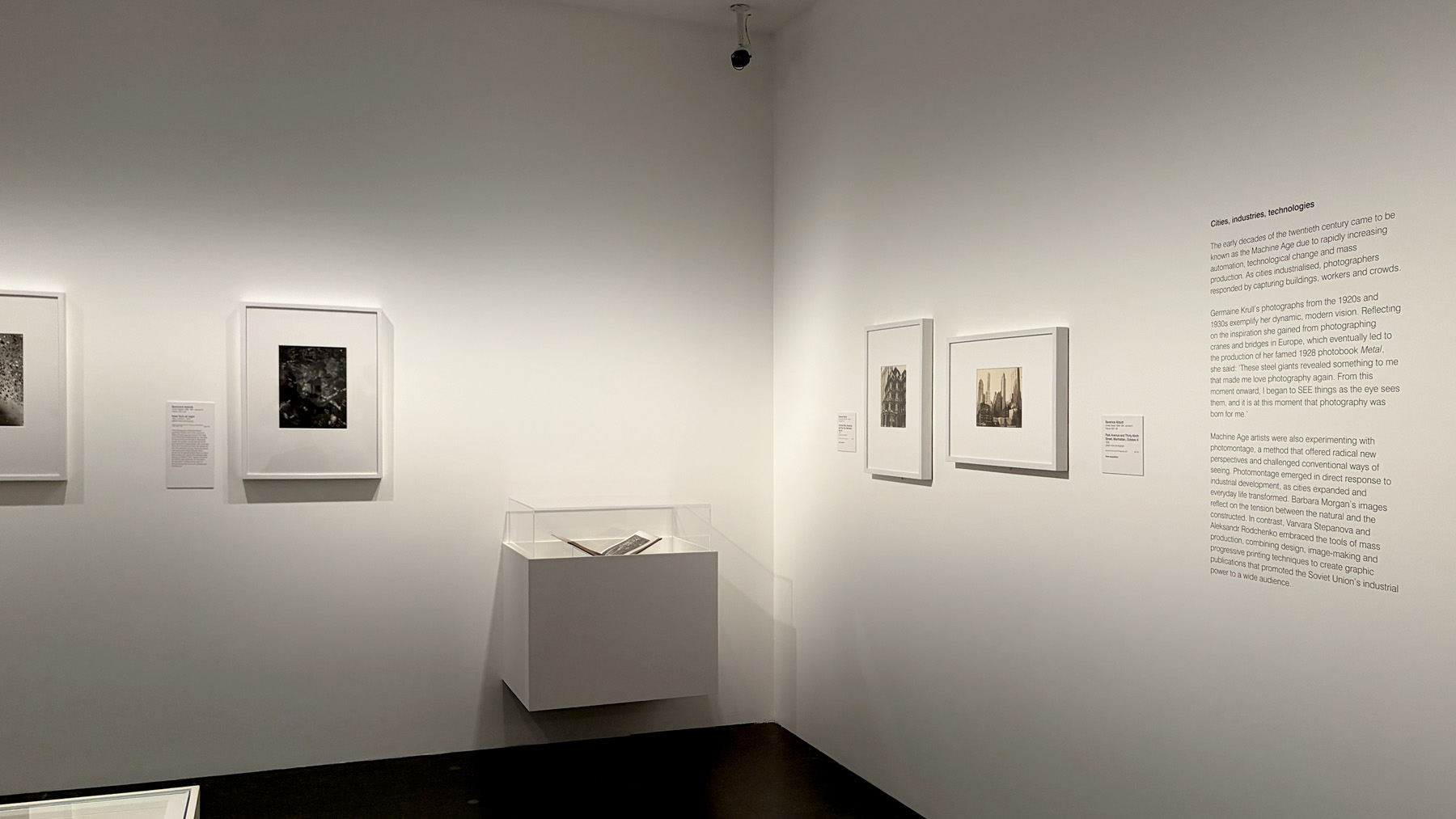
 

Installation view of the exhibition 'Women Photographers 1900-1975: A Legacy of Light' at NGV International, Melbourne, November 2025 - May 2026


Installation view of the exhibition Women Photographers 1900-1975: A Legacy of Light at NGV International, Melbourne, November 2025 – May 2026 showing at left, Berenice Abbott New York at Night (1932); at second left, Berenice Abbott Old Post Office, Broadway and Park Row, Manhattan, May 25 (1938, below); and at right, Berenice Abbott Park Avenue and Thirty-Ninth Street, Manhattan, October 8 (1936)
Photos: Marcus Bunyan


Cities, Industries, Technologies

The early decades of the twentieth century came to be known as the Machine Age due to rapidly increasing automation, technological change and mass production. As cities industrialised, photographers responded by capturing buildings, workers and crowds.

Germaine Krull’s photographs from the 1920s and 1930s exemplify her dynamic, modern vision. Reflecting on the inspiration she gained from photographing cranes and bridges in Europe, which eventually led to the production of her famed 1928 photobook Métal, she said: “These steel giants revealed something to me that made me love photography again. From this moment onward, I began to SEE things as the eye sees them, and it is at this moment that photography was born for me.”

Machine Age artists were also experimenting with photomontage, a method that offered radical new perspectives and challenged conventional ways of seeing. Photomontage emerged in direct response to industrial development, as cities expanded and everyday life transformed. Barbara Morgan’s images reflect on the tension between the natural and the constructed. In contrast, Varvara Stepanova and Aleksandr Rodchenko embraced the tools of mass production, combining design, image-making and progressive printing techniques to create graphic publications that promoted the Soviet Union’s industrial power to a wide audience.
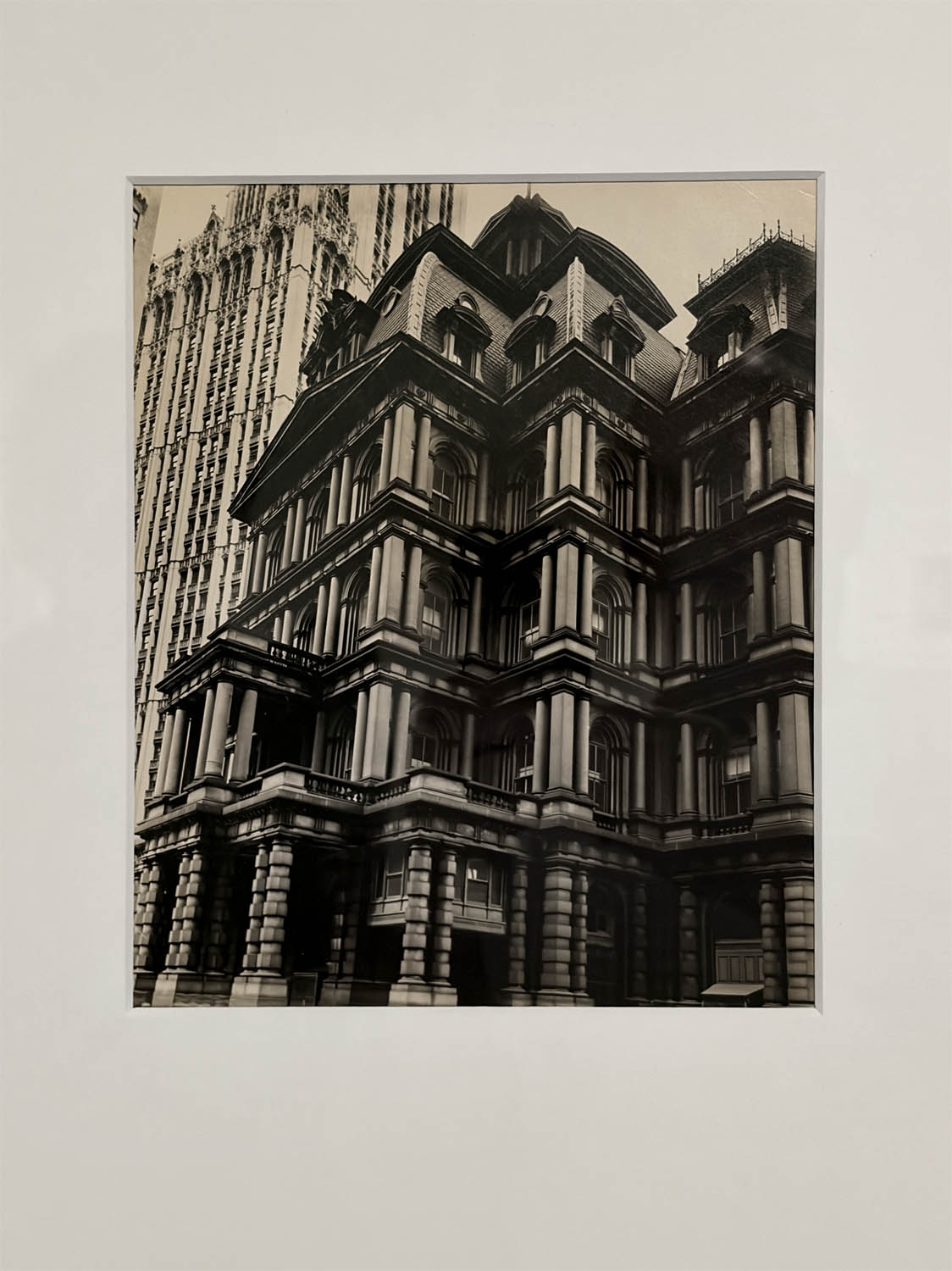
 

Berenice Abbott (American, 1898-1991) 'Old Post Office, Broadway and Park Row, Manhattan, May 25' 1938 (installation view)


Berenice Abbott (American, 1898-1991)
Old Post Office, Broadway and Park Row, Manhattan, May 25 (installation view0
1938
Gelatin silver photograph
23.9 x 19.3cm (image)
25.3 x 20.3cm (sheet)
National Gallery of Victoria, Melbourne
Bowness Family Fund for Photography, 2021
Photo: Marcus Bunyan

New acquisition
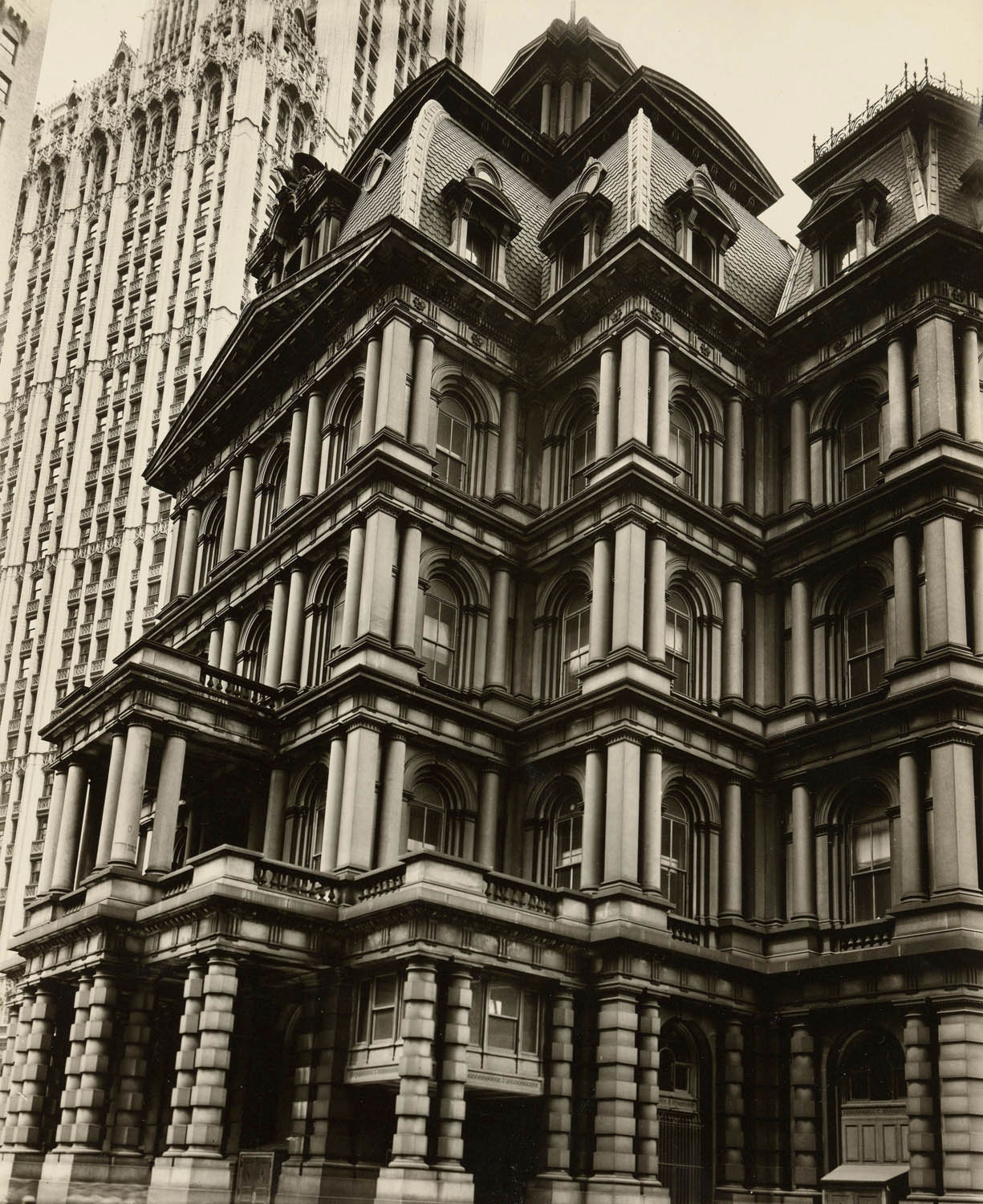
 

Berenice Abbott (American, 1898-1991) 'Old Post Office, Broadway and Park Row, Manhattan, May 25' 1938


Berenice Abbott (American, 1898-1991)
Old Post Office, Broadway and Park Row, Manhattan, May 25
1938
Gelatin silver photograph
23.9 x 19.3cm (image)
25.3 x 20.3cm (sheet)
National Gallery of Victoria, Melbourne
Bowness Family Fund for Photography, 2021

New acquisition
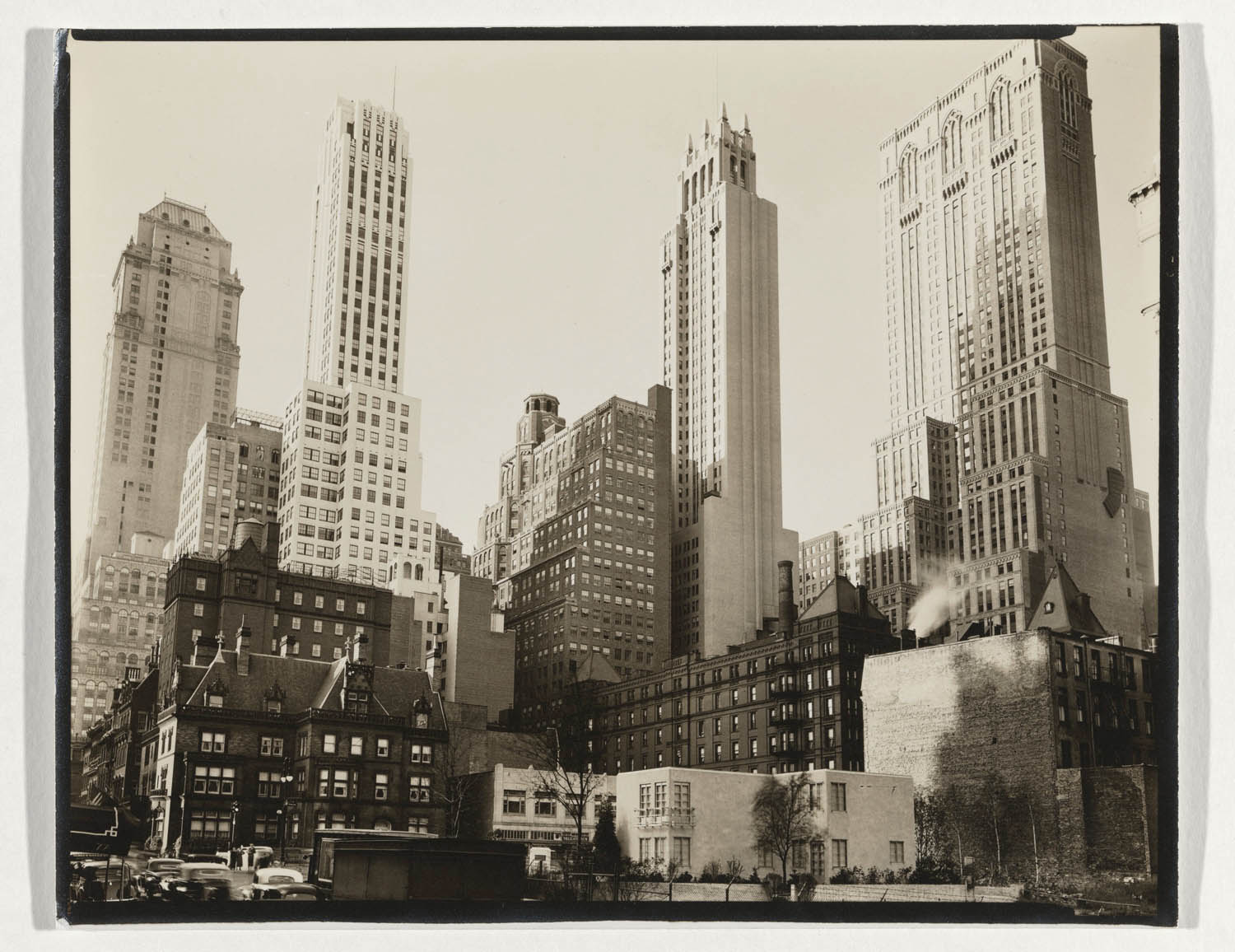
 

Berenice Abbott (American, 1898-1991) 'Park Avenue and Thirty-ninth Street, Manhattan, October 8' 1936
Berenice Abbott (American, 1898-1991) 'Park Avenue and 39th Street, New York' 1936


Berenice Abbott (American, 1898-1991)
Park Avenue and Thirty-ninth Street, Manhattan, October 8
1936
Gelatin silver photograph
19.3 x 24.3cm (image) (irreg)
20.2 x 25.2cm (sheet)
National Gallery of Victoria, Melbourne
Bowness Family Fund for Photography, 2021
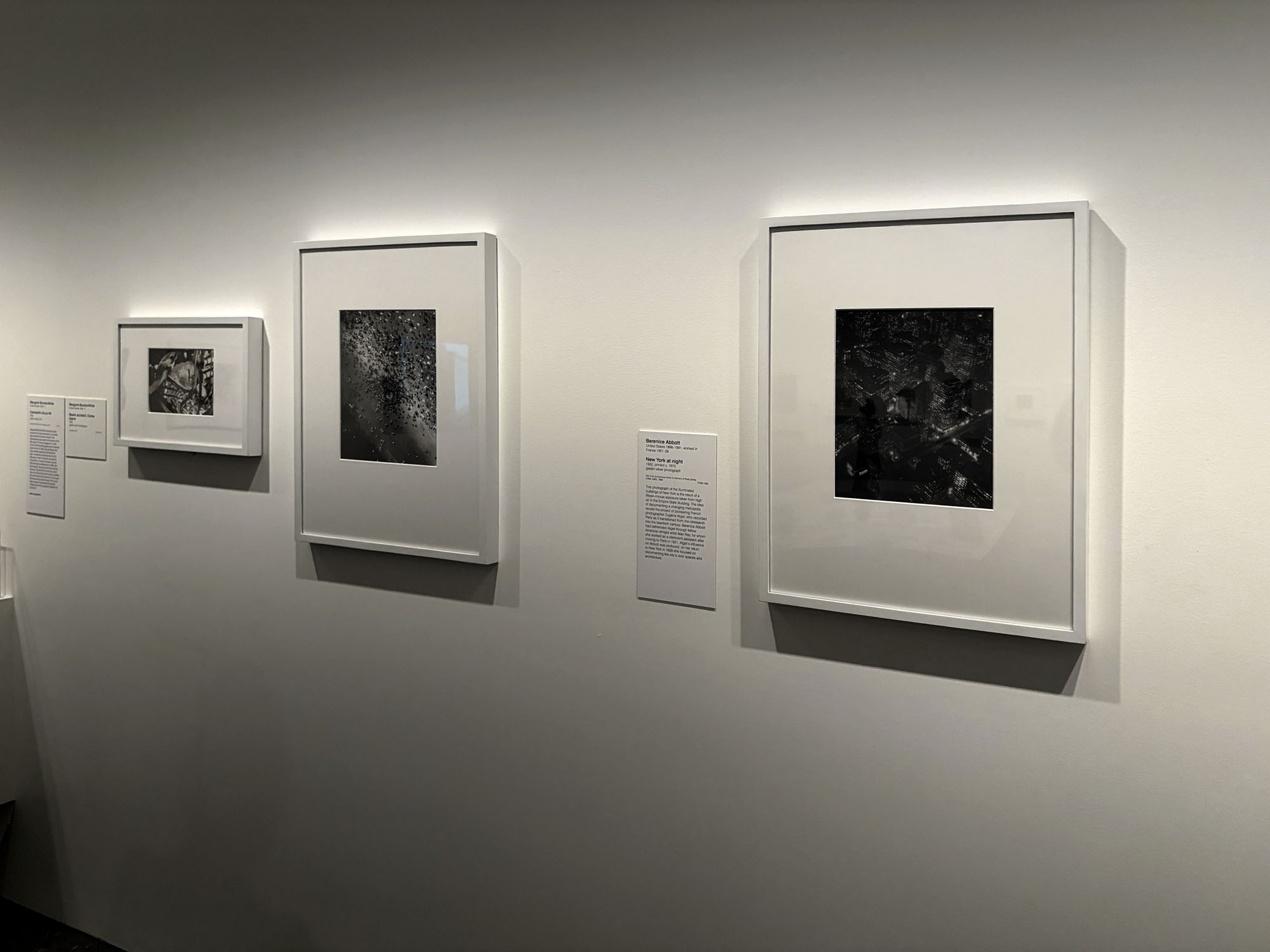
 

Installation view of the exhibition 'Women Photographers 1900-1975: A Legacy of Light' at NGV International, Melbourne, November 2025 - May 2026 showing at left, Margaret Bourke-White 'Campbell's Soup No. 6' (1935); Margaret Bourke-White 'Beach accident, Coney Island' (1952); and at right, Berenice Abbott 'New York at night' (1932 printed c. 1975)


Installation view of the exhibition Women Photographers 1900-1975: A Legacy of Light at NGV International, Melbourne, November 2025 – May 2026 showing at left, Margaret Bourke-White Campbell’s Soup No. 6 (1935, below); Margaret Bourke-White Beach accident, Coney Island (1952, below); and at right, Berenice Abbott New York at night (1932 printed c. 1975, below)
Photo: Marcus Bunyan
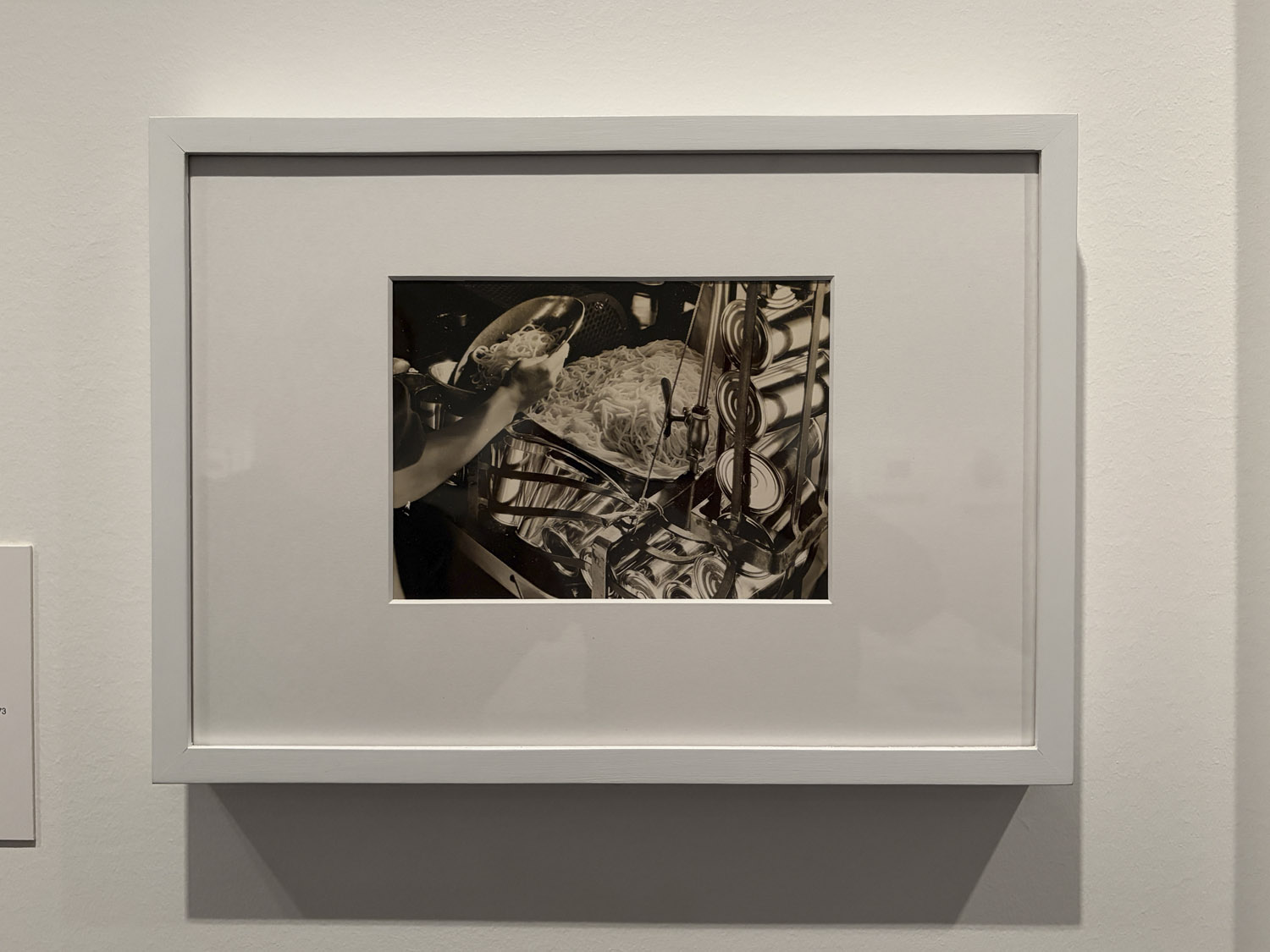
 

Margaret Bourke-White (American, 1904-1971) 'Campbell's Soup #6' 1935 (installation view)


Margaret Bourke-White (American, 1904-1971)
Campbell’s Soup #6 (installation view)
1935
Gelatin silver print
17.3 × 24.1cm (image and sheet)
National Gallery of Victoria, Melbourne
Bowness Family Fund for Photography, 2024
© Public Domain
Photo: Marcus Bunyan

New acquisition
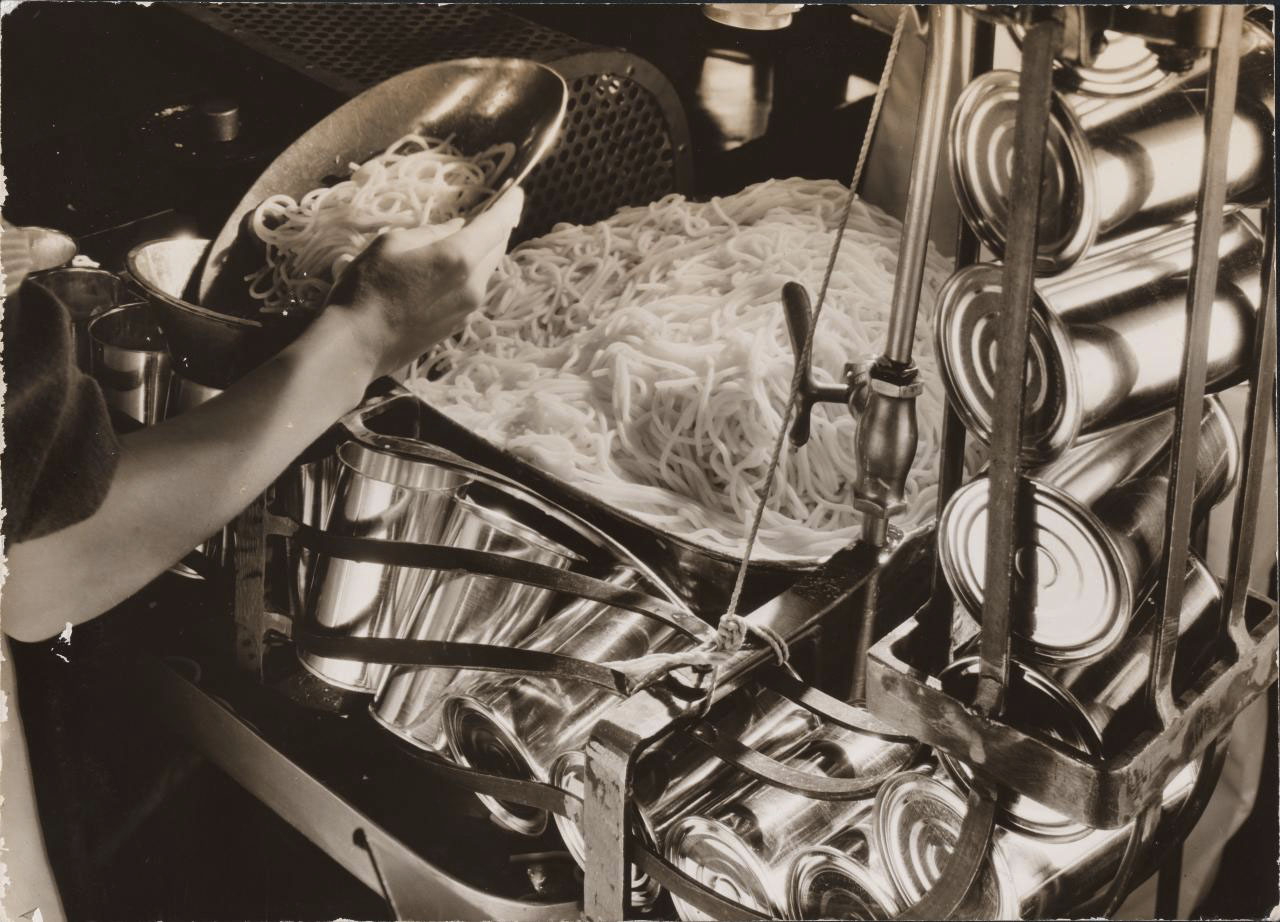
 

Margaret Bourke-White (American, 1904-1971) 'Campbell's Soup #6' 1935


Margaret Bourke-White (American, 1904-1971)
Campbell’s Soup #6
1935
Gelatin silver print
17.3 × 24.1cm (image and sheet)
National Gallery of Victoria, Melbourne
Bowness Family Fund for Photography, 2024
Public Domain

New acquisition


Margaret Bourke-White became widely known for her documentation of workers and scenes of modern industry. Her photography was used on the cover of the first issue of Fortune magazine in 1930, and on the first photographically illustrated cover of Life in 1936. Bourke-White often documented aspects of the Machine Age, contrasting machines and human labourers. Taken in a factory owned by Campbell’s, a major American canned-food company established in 1869, this photograph captures part of the canning process. Bourke-White’s framing, which does not show the worker’s face, amplifies the dominance of the machine. The image first featured as a commission for a local food magazine alongside the caption ‘tangled and tricky, spaghetti defeats the mechanic’.

Wall text from the exhibition
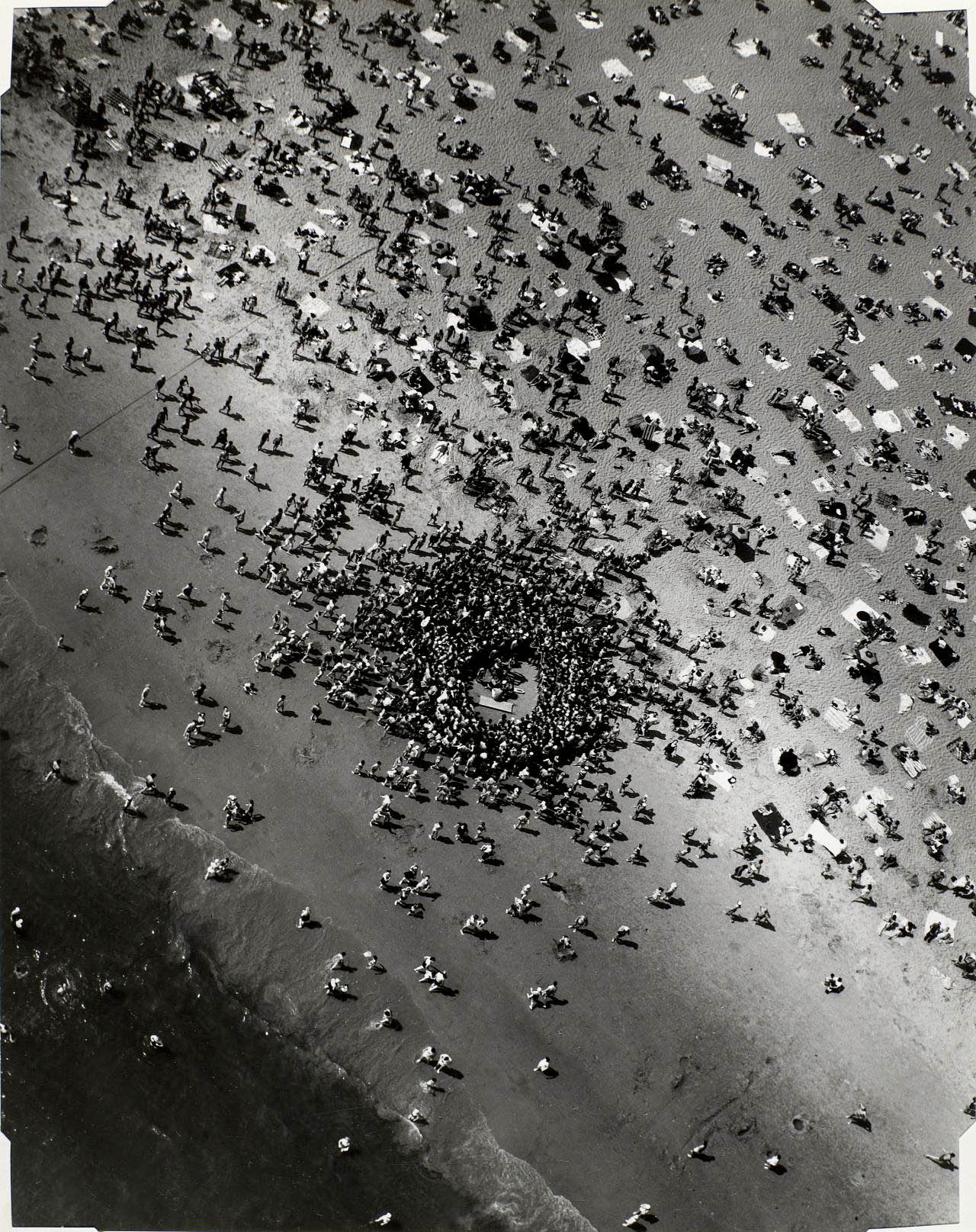
 

Margaret Bourke-White (American, 1904-1971) 'Beach accident, Coney Island' 1952


Margaret Bourke-White (American, 1904-1971)
Beach accident, Coney Island
1952
Gelatin silver photograph
35.2 x 27.9cm (image and sheet)
National Gallery of Victoria, Melbourne
Purchased, 1973
Public domain
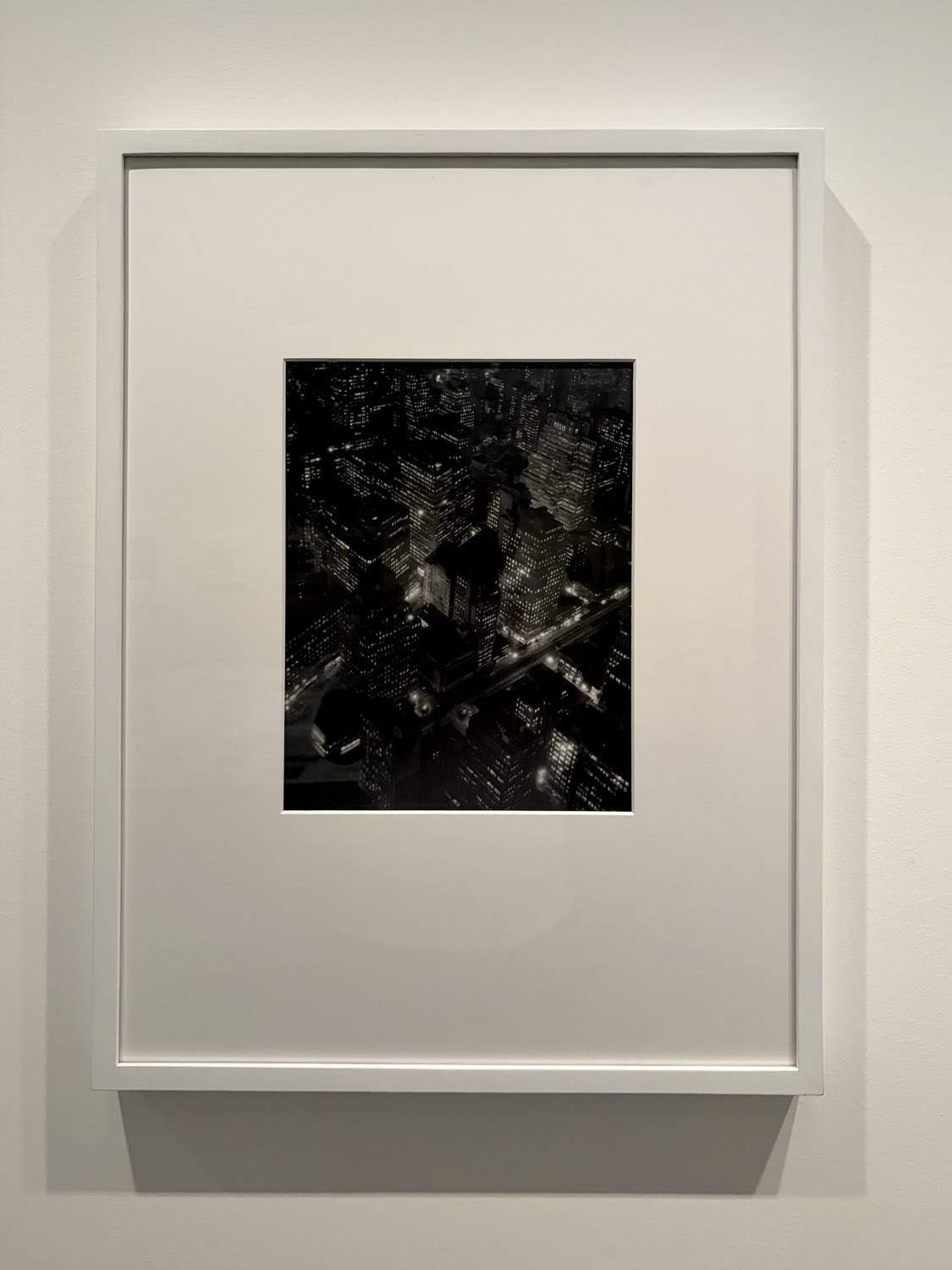
 

Berenice Abbott (American, 1898-1991) 'New York at night' 1932, printed c. 1975 (installation view)


Berenice Abbott (American, 1898-1991)
New York at night
1932, printed c. 1975
Gelatin silver photograph
34.1 x 26.1cm (image and sheet)
49.8 x 40.0cm (support)
National Gallery of Victoria, Melbourne
Gift of an anonymous donor in memory of Rosa Zerfas (1896-1983), 1985
Photo: Marcus Bunyan


This photograph of the illuminated buildings of New York is the result of a fifteen-minute exposure taken from high up in the Empire State Building. The idea of documenting a changing metropolis recalls the project of pioneering French photographer Eugène Atget, who recorded Paris as it transitioned from the nineteenth into the twentieth century. Berenice Abbott had befriended Atget through fellow American émigré artist Man Ray, for whom she worked as a darkroom assistant after moving to Paris in 1921. Atget’s influence on Abbott was profound: on her return to New York in 1929 she focused on documenting the city’s civic spaces and architecture.

Wall text from the exhibition


Berenice Abbott (American, 1898-1991) 'New York at Night' 1932


Berenice Abbott (American, 1898-1991)
New York at Night
1932
Gelatin silver print
12 7/8 x 10 9/16″ (32.7 x 26.9cm)

Photograph from the Art Blart archive
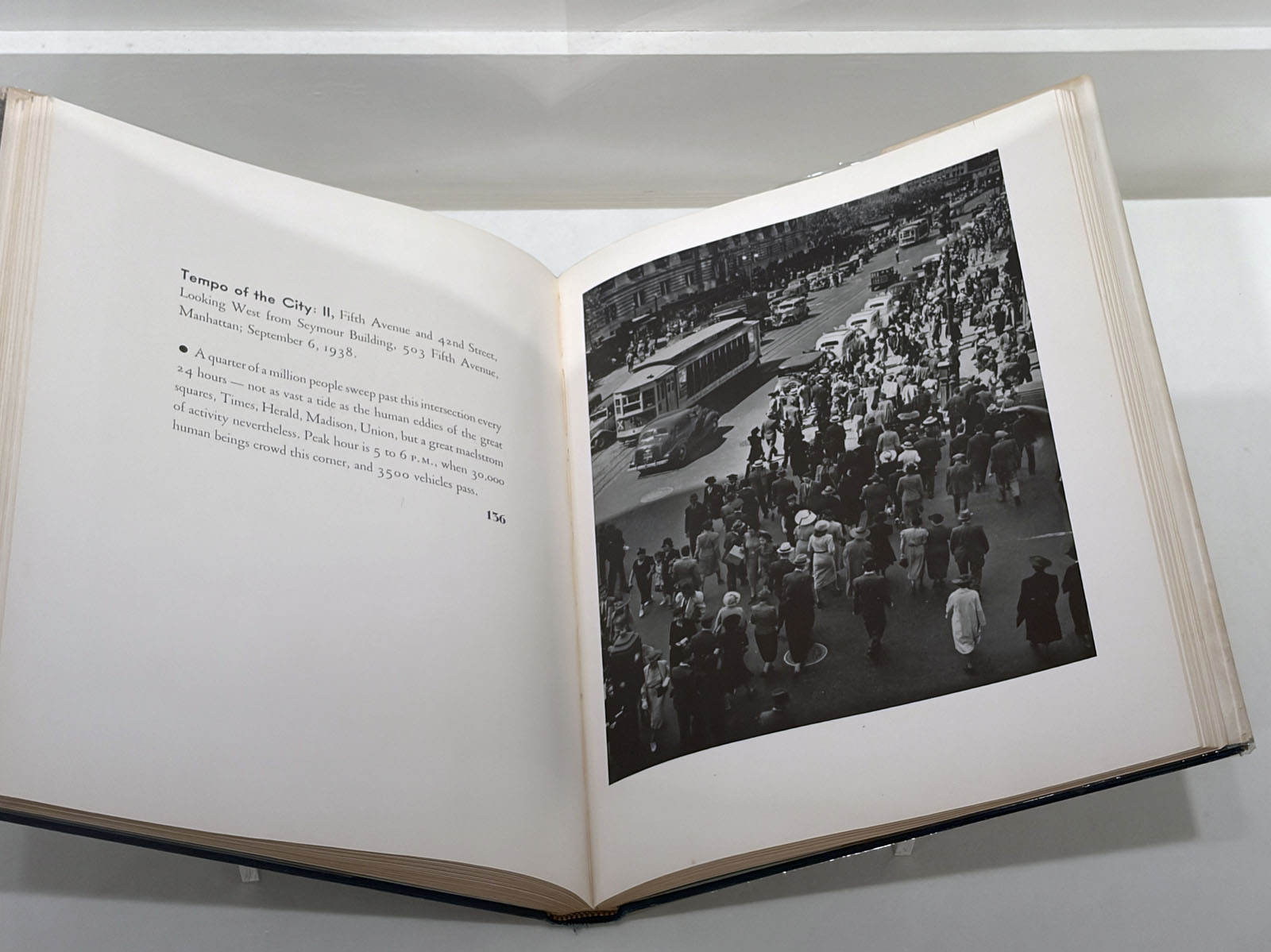
 

Berenice Abbott (American, 1898-1991) 'Changing New York' 1939 (installation view)


Berenice Abbott (American, 1898-1991)
Changing New York
1939
Artist’s book: half-tone and letterpress text, blue cloth cover, photographic dust jacket
1st edition
Purchased NGV Foundation 2022
Photo: Marcus Bunyan

New acquisition


In her funding proposal for the photobook Changing New York, Berenice Abbott described her desire to capture the ‘spirit’ of the city, driven by the realisation that ‘the tempo of the metropolis is not of eternity, or even time, but of the vanishing instant’. The images in the photobook are accompanied by texts written by Abbott’s partner, art critic Elizabeth McCausland. However, recent research has revealed that Abbott and McCausland’s original intentions for the book were significantly different to what was ultimately published, included alternate texts and a more innovative interplay between words and images.

Vitrine text from the exhibition
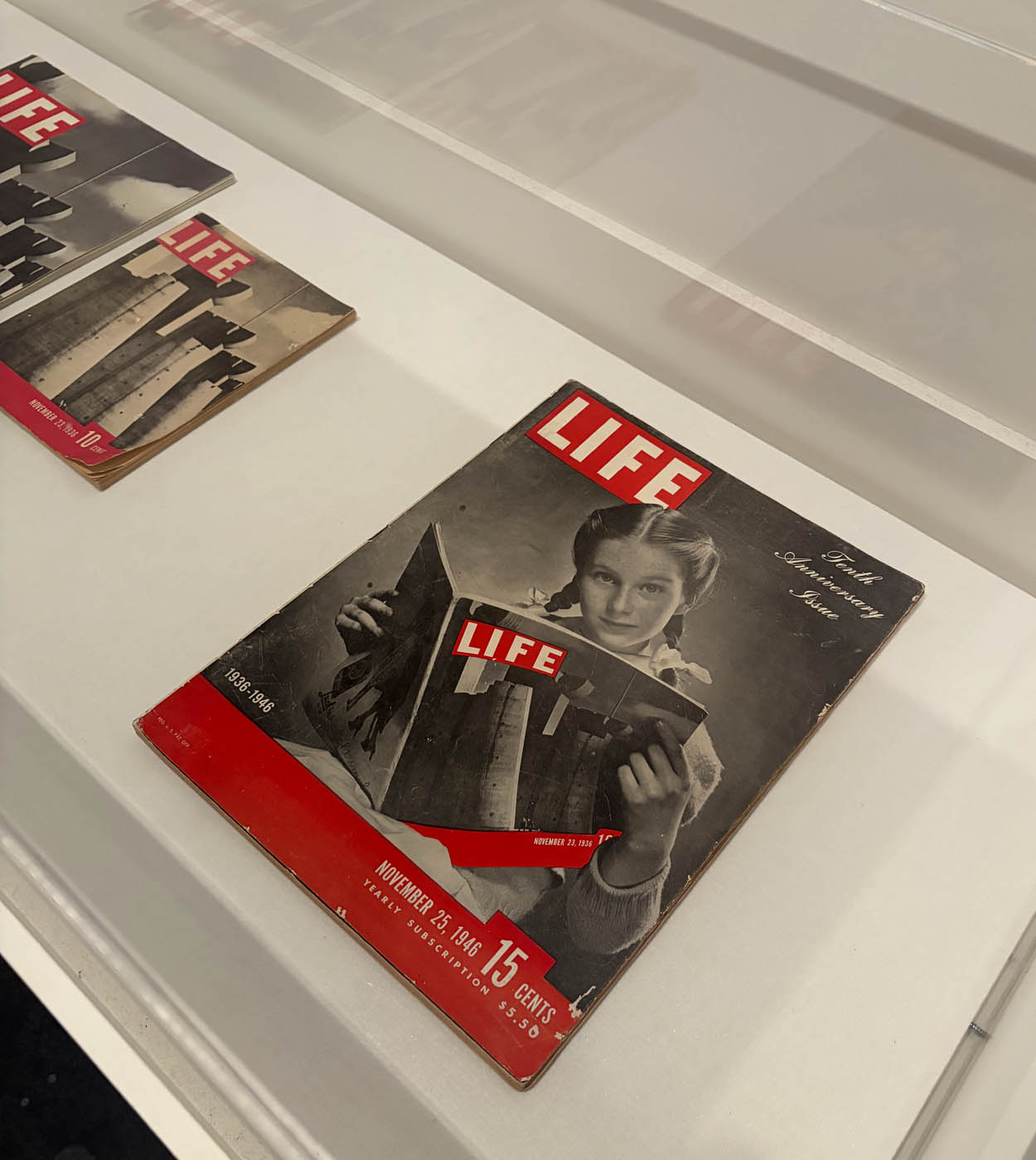
 

Margaret Bourke-White (American, 1904-1971) 'Fort Peck Dam, Montana' Front cover, 'Life' magazine, first issue, November 1936 (left); Margaret Bourke-White (American, 1904-1971) 'Fort Peck Dam, Montana' Front cover, 'Life' magazine, first issue, November 1936, 'Salesman's edition' (second left); Margaret Bourke-White (American, 1904-1971) 'Fort Peck Dam, Montana' reproduced on front cover, Life magazine, tenth anniversary issue, 25 November 1946 (right)


Margaret Bourke-White (American, 1904-1971)
Fort Peck Dam, Montana
Front cover, Life magazine, first issue, November 1936
Published by Time Inc.
Magazine: offset lithographs and printed text
Shaw research Library, Gift of Patrick Pound, 2025

Margaret Bourke-White (American, 1904-1971)
Fort Peck Dam, Montana
Front cover, Life magazine, first issue, November 1936, ‘Salesman’s edition’
Published by Time Inc.
Magazine: offset lithographs and printed text
Shaw research Library, Gift of Patrick Pound, 2025

Margaret Bourke-White (American, 1904-1971)
Fort Peck Dam, Montana
Reproduced on front cover, Life magazine, tenth anniversary issue, 25 November 1946
Published by Time Inc.
Magazine: offset lithographs and printed text
Shaw research Library, Gift of Patrick Pound, 2025
Photo: Marcus Bunyan

New acquisitions


When the American publication Life was purchased by Henry Luce in 1936, it was transformed into a photographic news magazine. Its aim was to let its readers ‘see’ the world. Photojournalist Margaret Bourke-White had preciously worked with Luce at Fortune magazine, and a year later he sent Bourke-White to the Soviet Union as the first official foreign photographer allowed to create images of Soviet industry. Later, she was the first accredited woman photographer assigned to photograph the effects of the Second World War.

In 1936 Life magazine gave Margaret Bourke-White the brief of seeking out something ‘grand’ and aspirational at the chain of dams being built at the Columbia River basin. The dams were being built to stimulate the economy as the United States grappled with the devastating effects of the Great Depression. The resulting photograph was selected for the first cover of the relaunched Life magazine. An image of modern industry, the composition emphasises the graphic forms and patterns created by the bases of the elevated spillway. The pillars seem to repeat endlessly, overshadowing two workers dwarfed by the enormous construction. Bourke-White’s image is considered an iconic representation of the Machine Age.

Vitrine text from the exhibition
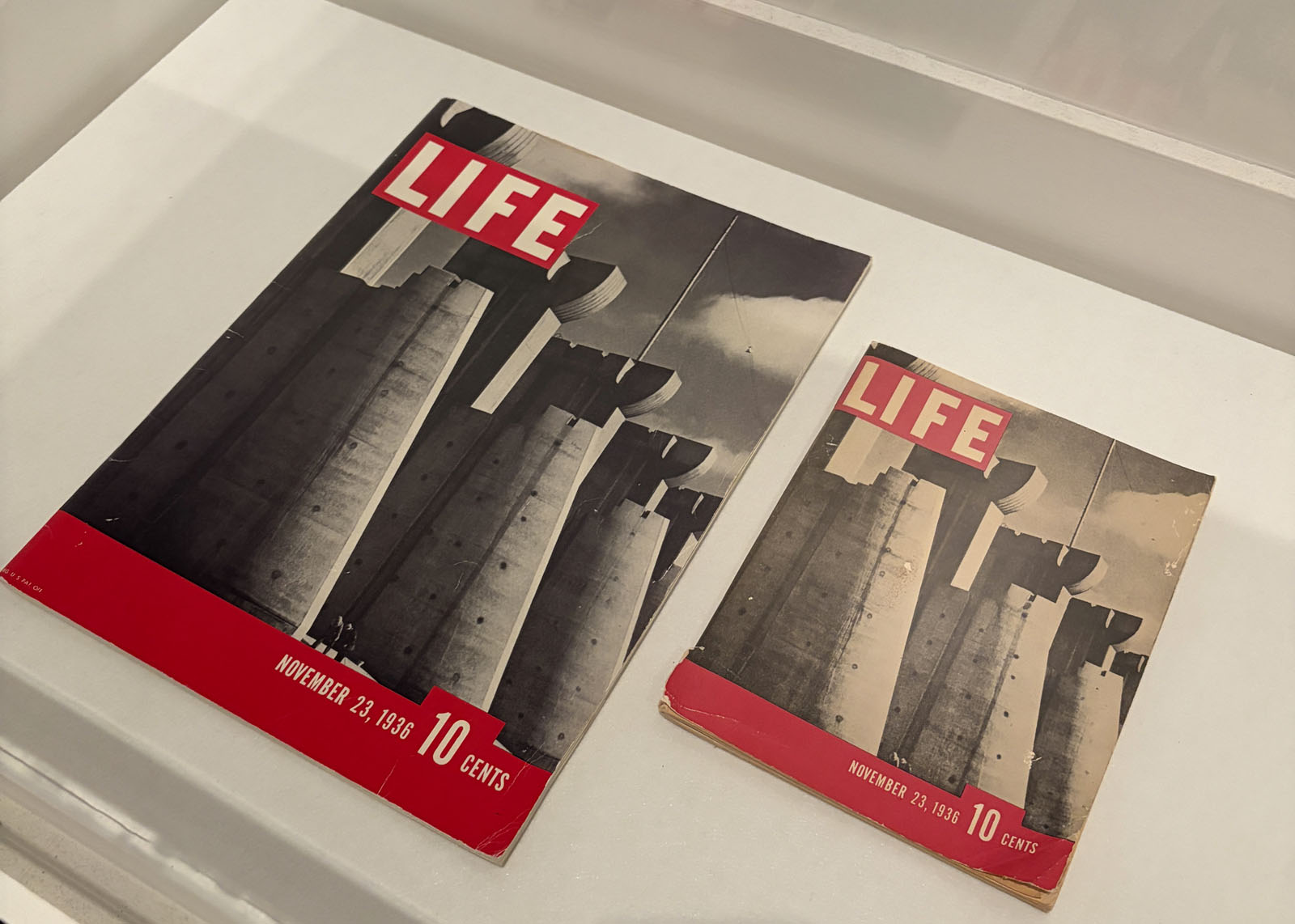
 

Margaret Bourke-White (American, 1904-1971) 'Fort Peck Dam, Montana' Front cover, 'Life' magazine, first issue, November 1936 (left); Margaret Bourke-White (American, 1904-1971) 'Fort Peck Dam, Montana' Front cover, 'Life' magazine, first issue, November 1936, 'Salesman's edition' (second left)


Margaret Bourke-White (American, 1904-1971)
Fort Peck Dam, Montana
Front cover, Life magazine, first issue, November 1936
Published by Time Inc.
Magazine: offset lithographs and printed text
Shaw research Library, Gift of Patrick Pound, 2025

Margaret Bourke-White (American, 1904-1971)
Fort Peck Dam, Montana
Front cover, Life magazine, first issue, November 1936, ‘Salesman’s edition’
Published by Time Inc.
Magazine: offset lithographs and printed text
Shaw research Library, Gift of Patrick Pound, 2025
Photos: Marcus Bunyan

New acquisitions
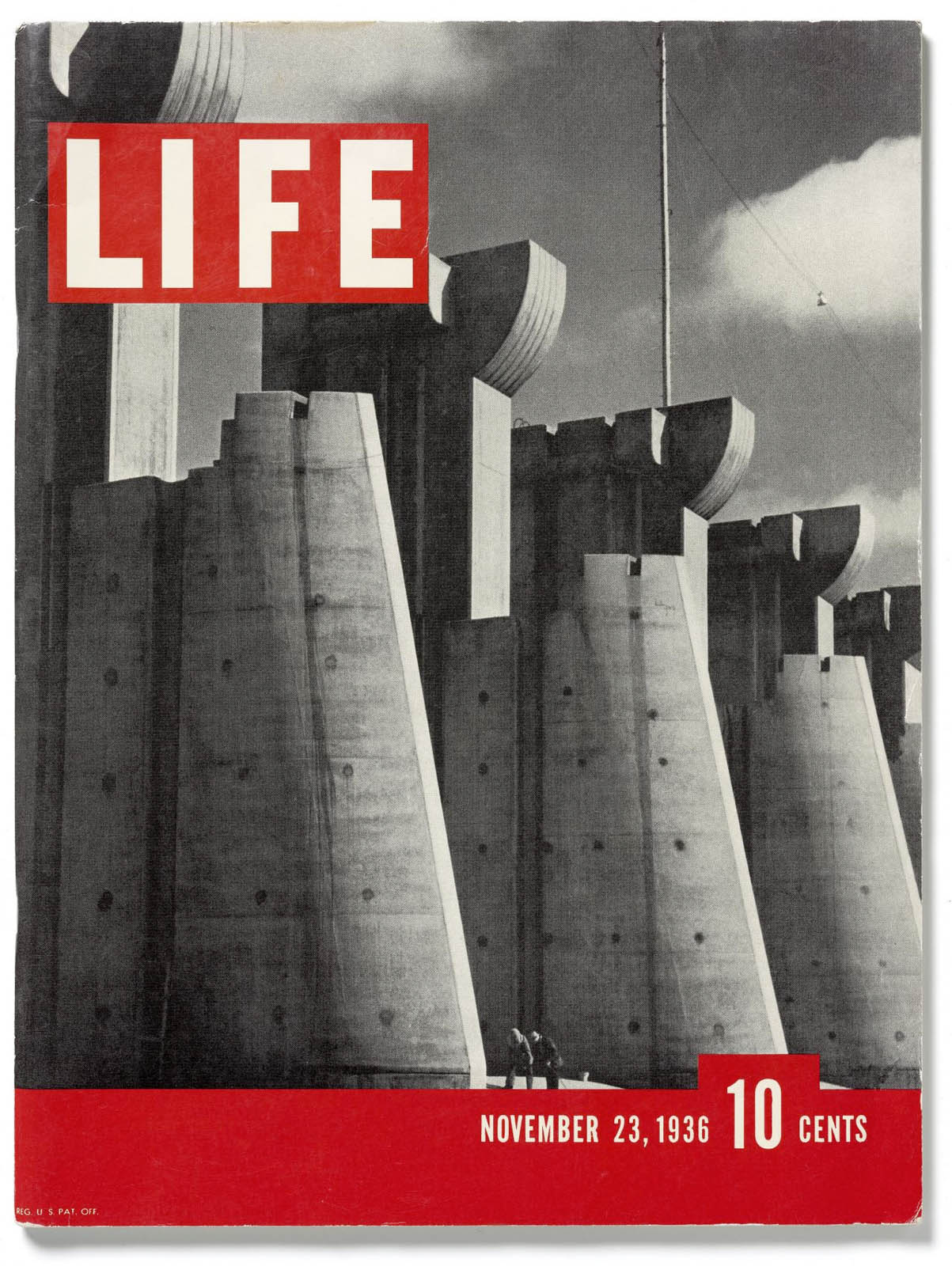
 

Margaret Bourke-White (American, 1904-1971) 'Fort Peck Dam, Montana'
Front cover, 'Life' magazine, first issue, November 1936


Margaret Bourke-White (American, 1904-1971)
Fort Peck Dam, Montana
Front cover, Life magazine, first issue, November 1936
Published by Time Inc.
Magazine: offset lithographs and printed text
Shaw research Library, Gift of Patrick Pound, 2025
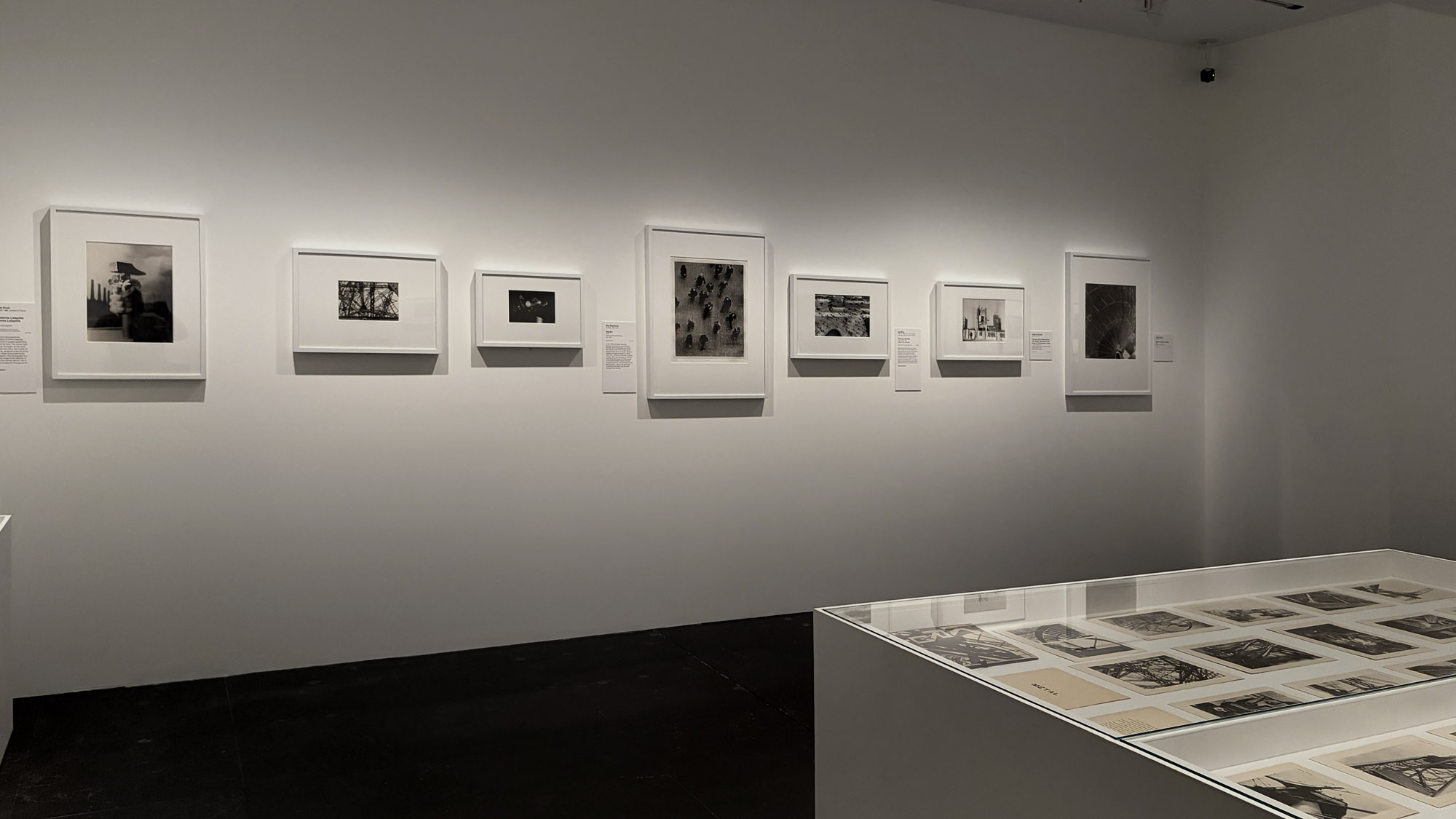
 

Installation view of the exhibition 'Women Photographers 1900-1975: A Legacy of Light' at NGV International, Melbourne, November 2025 - May 2026 showing at left, Laure Albin Guillot (French, 1879-1962) 'Hammer in bloom' 1940s New acquisition; at second left, Germaine Krull 'The Eiffel Tower' (c. 1928); at third left, Germaine Krull 'At the Galeries Lafayette' c. 1930 New acquisition; at centre, Bea Maddock 'Square' (1972); at third right, Ilse Bing 'Champs de Mars' (1931, printed 1994) New acquisition; at second right, Heather George 'The last wall of Melbourne's Old Eastern Markets comes down for the Southern Cross' (c. 1966, printed 1978); and at right, Olive Cotton 'Radio telescope, Parkes' (1964)


Installation view of the exhibition Women Photographers 1900-1975: A Legacy of Light at NGV International, Melbourne, November 2025 – May 2026 showing at left, Laure Albin Guillot (French, 1879-1962) Hammer in bloom 1940s New acquisition; at second left, Germaine Krull The Eiffel Tower (c. 1928, below); at third left, Germaine Krull At the Galeries Lafayette c. 1930 New acquisition; at centre, Bea Maddock Square (1972, below); at third right, Ilse Bing Champs de Mars (1931 printed 1994, below) New acquisition; at second right, Heather George The last wall of Melbourne’s Old Eastern Markets comes down for the Southern Cross (c. 1966 printed 1978, below); and at right, Olive Cotton Radio telescope, Parkes (1964)
Photo: Marcus Bunyan
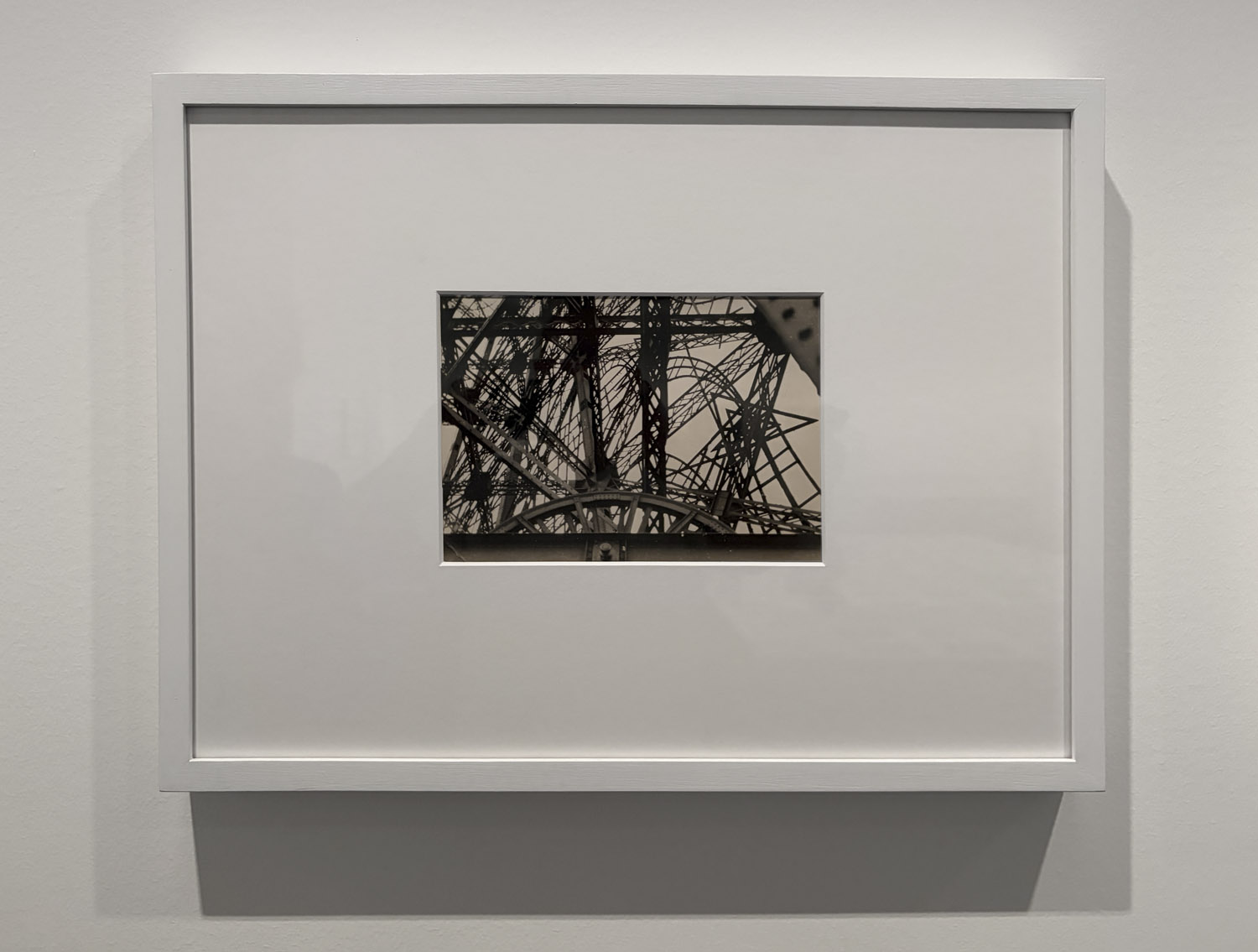
 

Germaine Krull (Dutch born Germany, 1897-1985) 'The Eiffel Tower' c. 1928 (installation view)


Germaine Krull (Dutch born Germany, 1897-1985)
The Eiffel Tower (installation view)
c. 1928
Gelatin silver photograph
17.0 x 24.3cm (image and sheet)
National Gallery of Victoria, Melbourne
Bowness Family Fund for Photography, 2022
Photo: Marcus Bunyan

New acquisition
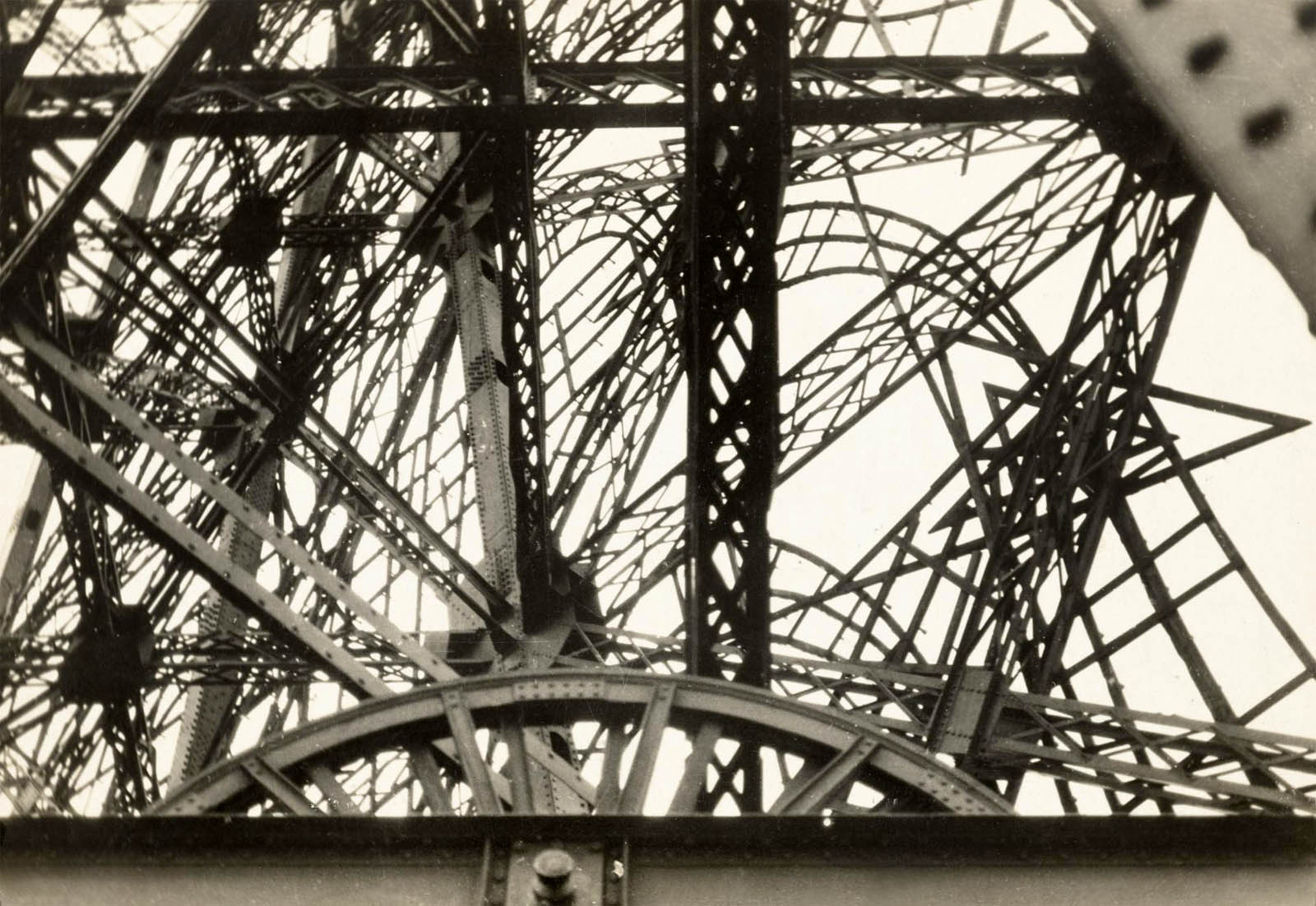
 

Germaine Krull (Dutch born Germany, 1897-1985) 'The Eiffel Tower' c. 1928


Germaine Krull (Dutch born Germany, 1897-1985)
The Eiffel Tower
c. 1928
Gelatin silver photograph
17.0 x 24.3cm (image and sheet)
National Gallery of Victoria, Melbourne
Bowness Family Fund for Photography, 2022

New acquisition


Germaine Krull photographed industrial forms, political upheaval and modern life. Trained in Munich, she opened a portrait studio in 1919, relocating to Paris in 1926. Three years later, Krull’s photographs were included in the renowned 1929 exhibition Film und Foto in Stuttgart, Germany, the first international exhibition of modernist photography. During the 1920s the Eiffel Tower became a symbol of modernity for many artists, including Krull. In this image, she reimagines the visual language of the man-made structure, highlighting both
the beauty and functionality of the famous landmark. Krull led a peripatetic life across four continents, focusing on photojournalism in South-East Asia after the Second World War and later living among Tibetan monks.

Wall text from the exhibition
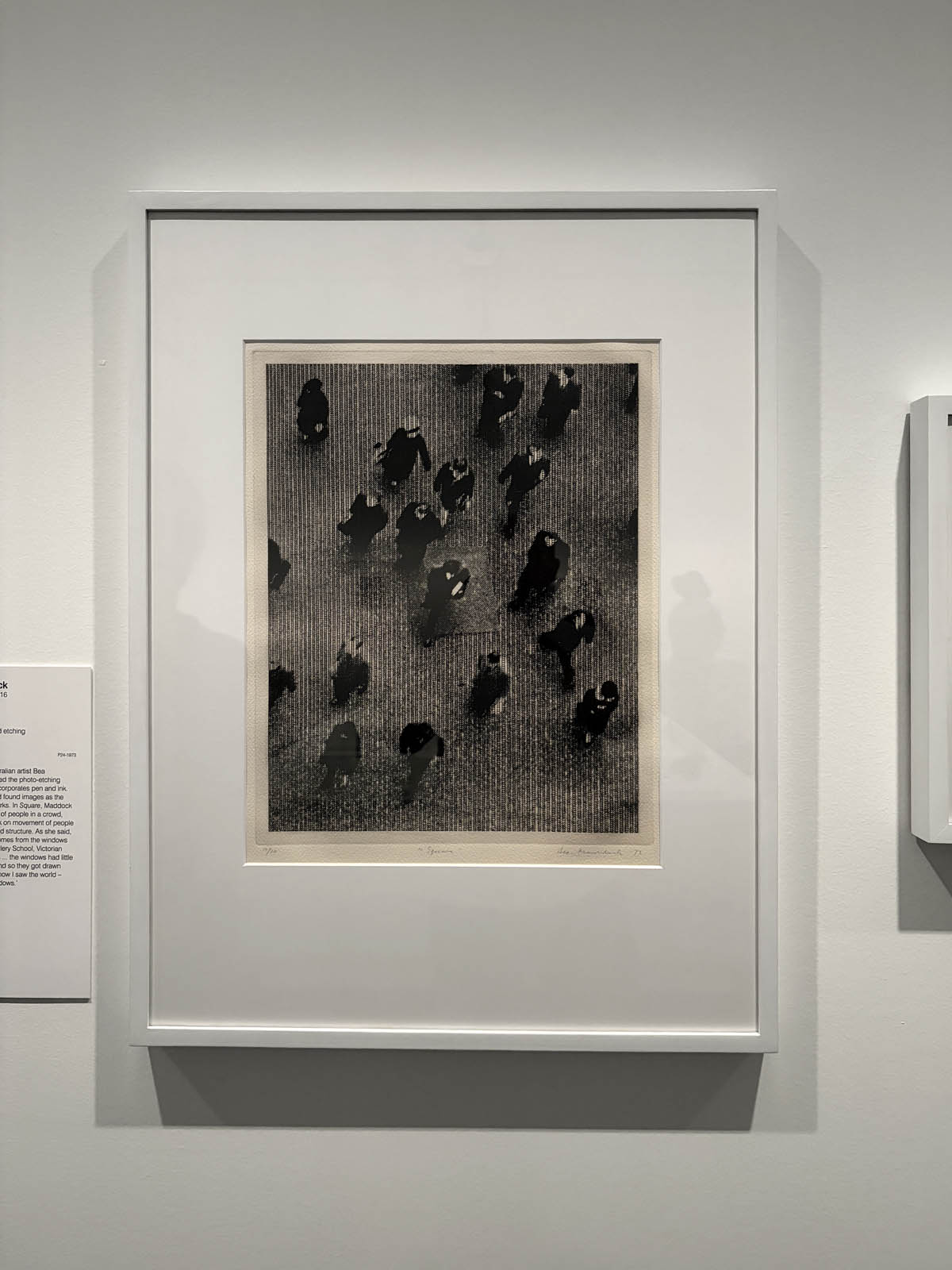
 

Bea Maddock (Australian, 1934-2016)
'Square' 1972 (installation view)
Bea Maddock (Australian, 1934-2016) 'Square' 1972 (installation view)


Bea Maddock (Australian, 1934-2016)
Square
1972
Photo-etching and etching
46.2 × 36.7cm (image) 49.0 × 39.4cm (plate) 76.0 × 56.8cm (sheet)
National Gallery of Victoria, Melbourne
Purchased, 1973
Photos: Marcus Bunyan
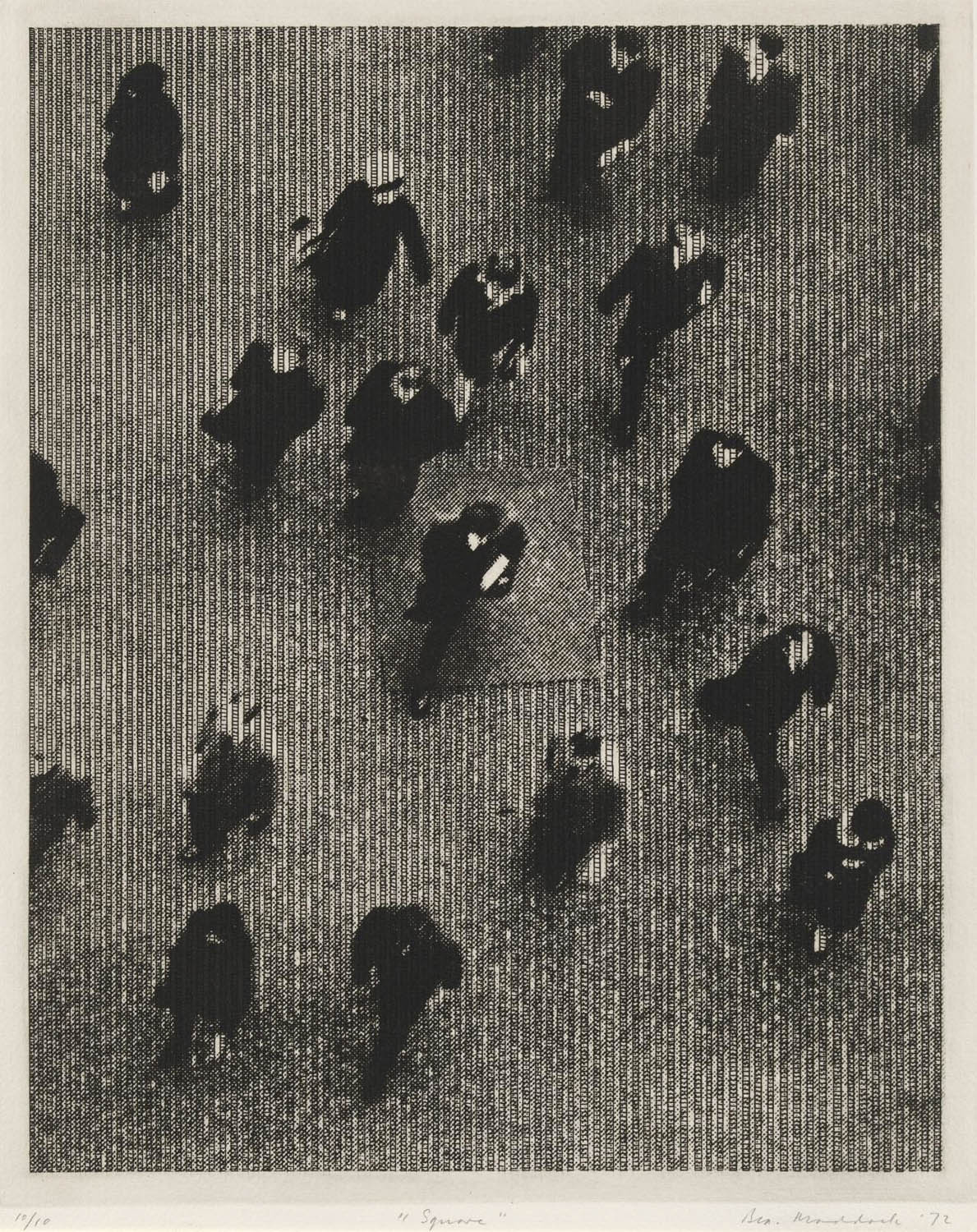
 

Bea Maddock (Australian, 1934-2016) 'Square' 1972


Bea Maddock (Australian, 1934-2016)
Square
1972
Photo-etching and etching
46.2 × 36.7cm (image) 49.0 × 39.4cm (plate) 76.0 × 56.8cm (sheet)
National Gallery of Victoria, Melbourne
Purchased, 1973
© Courtesy of the artist


In the 1970s, Australian artist Bea Maddock embraced the photo-etching process, which incorporates pen and ink. She regularly used found images as the basis for these works. In Square, Maddock overlaid an image of people in a crowd, taken from ‘a book on movement of people in cities’, with a grid structure. As she said, “The actual grid comes from the windows in the National Gallery School, Victorian College of the Arts … the windows had little grills on them … and so they got drawn in because that’s how I saw the world – through those windows.”

Wall text from the exhibition
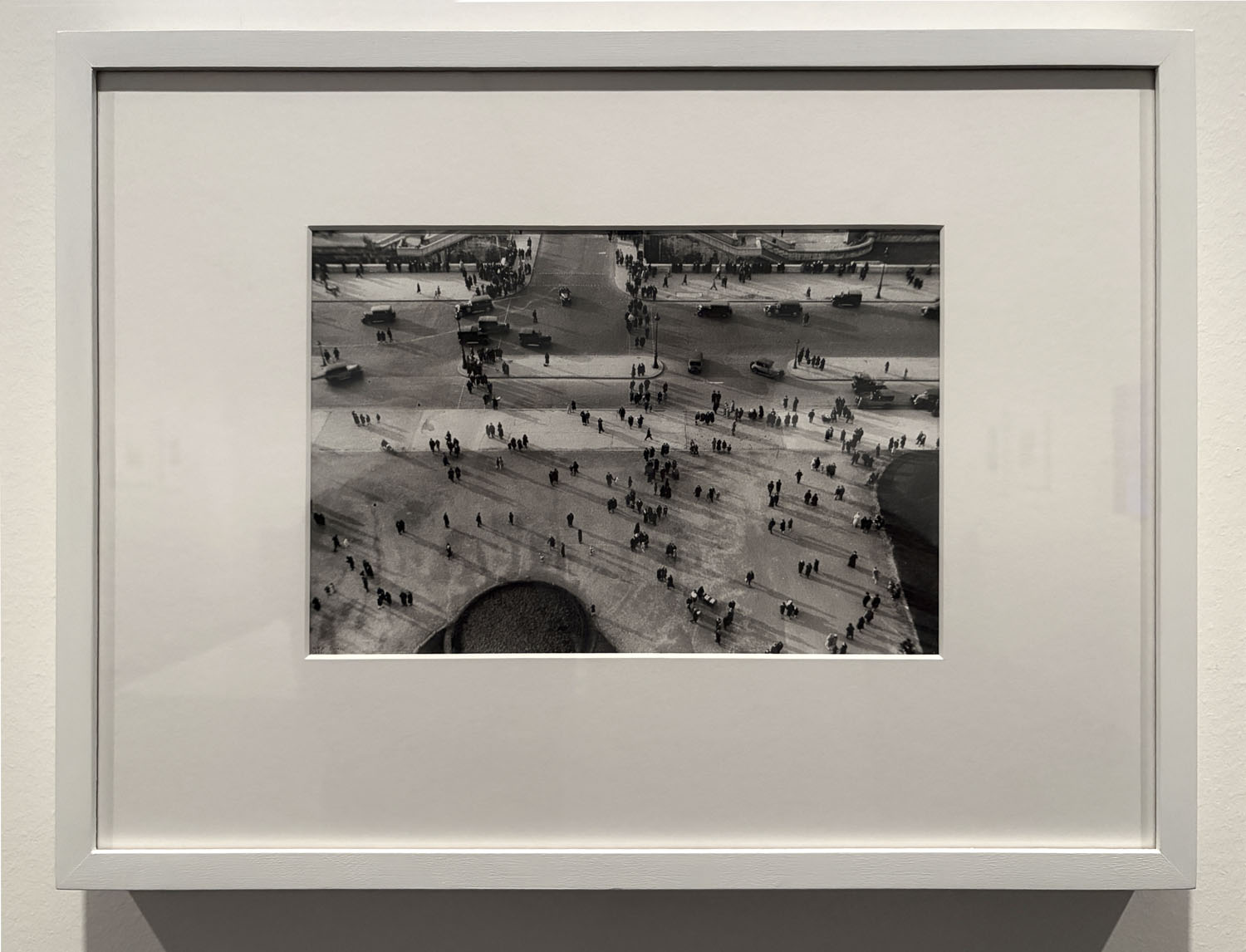
 

Ilse Bing (German, 1899-1998) 'Champs de Mars' 1931, printed 1994 (installation view)


Ilse Bing (German, 1899-1998)
Champs de Mars (installation view)
1931, printed 1994
Gelatin silver photograph
21.9 x 33.1cm (image) 27.6 x 35.3cm (sheet)
National Gallery of Victoria, Melbourne
Bowness Family Fund for Photography, 2022
Photo: Marcus Bunyan
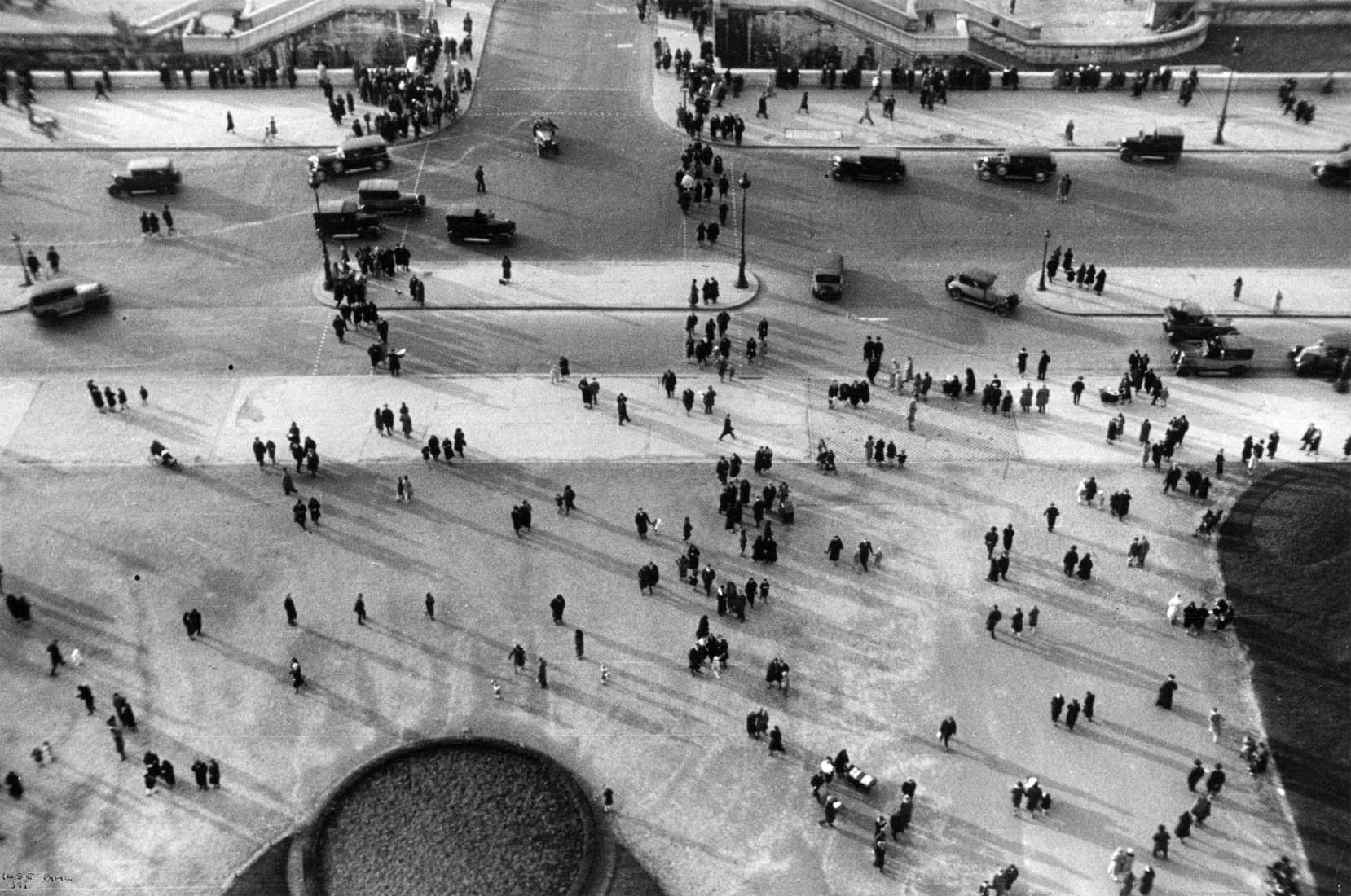
 

Ilse Bing (German, 1899-1998) 'Champs de Mars' 1931, printed 1994


Ilse Bing (German, 1899-1998)
Champs de Mars
1931, printed 1994
Gelatin silver photograph
21.9 x 33.1cm (image) 27.6 x 35.3cm (sheet)
National Gallery of Victoria, Melbourne
Bowness Family Fund for Photography, 2022


Taken atop the Eiffel Tower, this image sees Ilse Bing turn her lightweight 35 mm Leica camera downwards, photographing the people and bustling city below. The distance created by this dizzying viewpoint reduces the scene to a pattern of shapes and forms. Images such as these were characteristic of a ‘new way of seeing’ that was adopted by avant-garde photographers during the interwar period.

Wall text from the exhibition
 

Heather George (Australian, 1907-1983) 'The last wall of Melbourne's Old Eastern Markets comes down for the Southern Cross' c. 1966, printed 1978


Heather George (Australian, 1907-1983)
The last wall of Melbourne’s Old Eastern Markets comes down for the Southern Cross
c. 1966, printed 1978
From the Melbourne, old buildings and new projects series (c. 1966)
Gelatin silver photograph
24.0 × 29.1cm (image)
National Gallery of Victoria, Melbourne
Purchased, 1980
Public domain
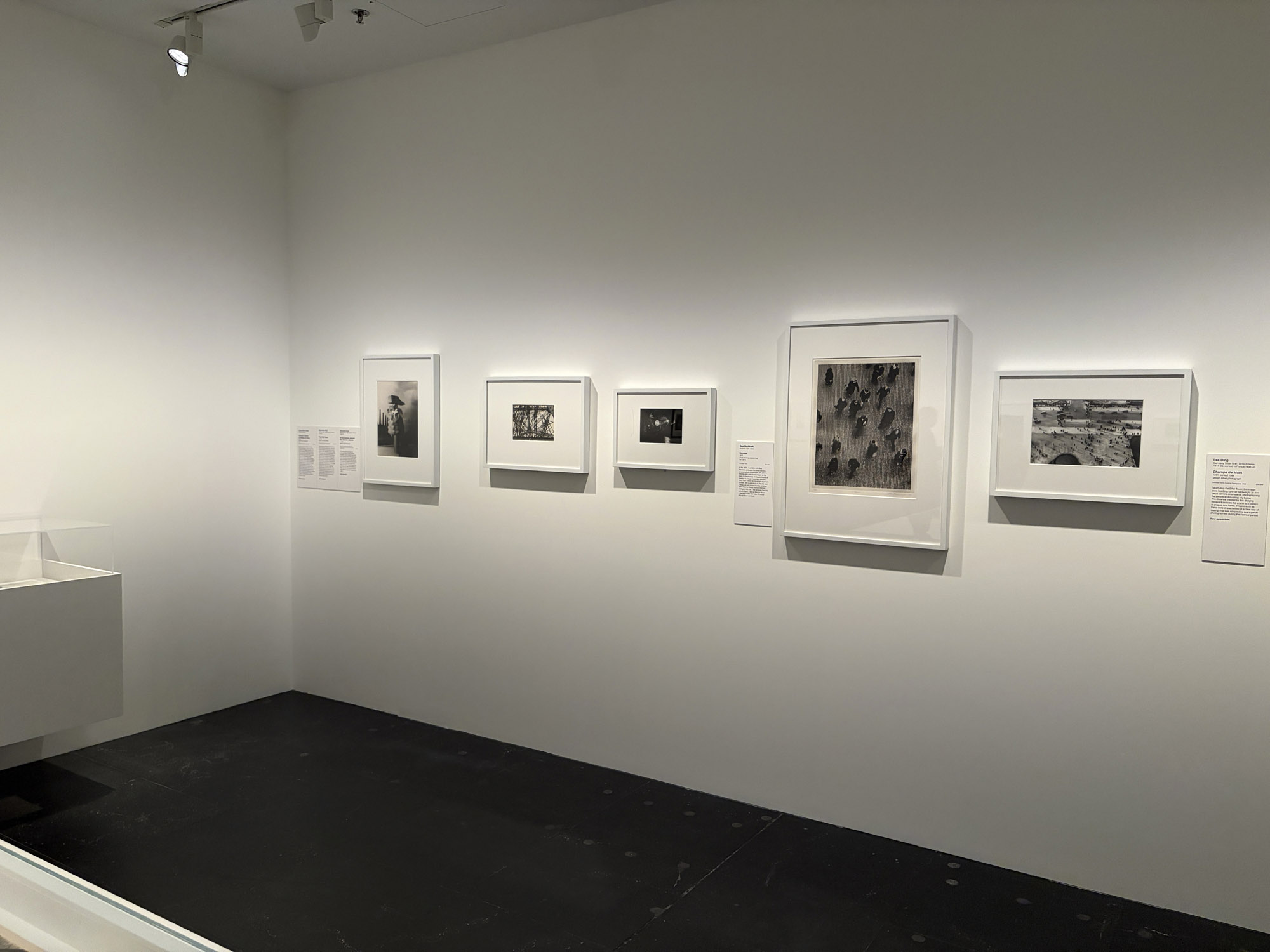
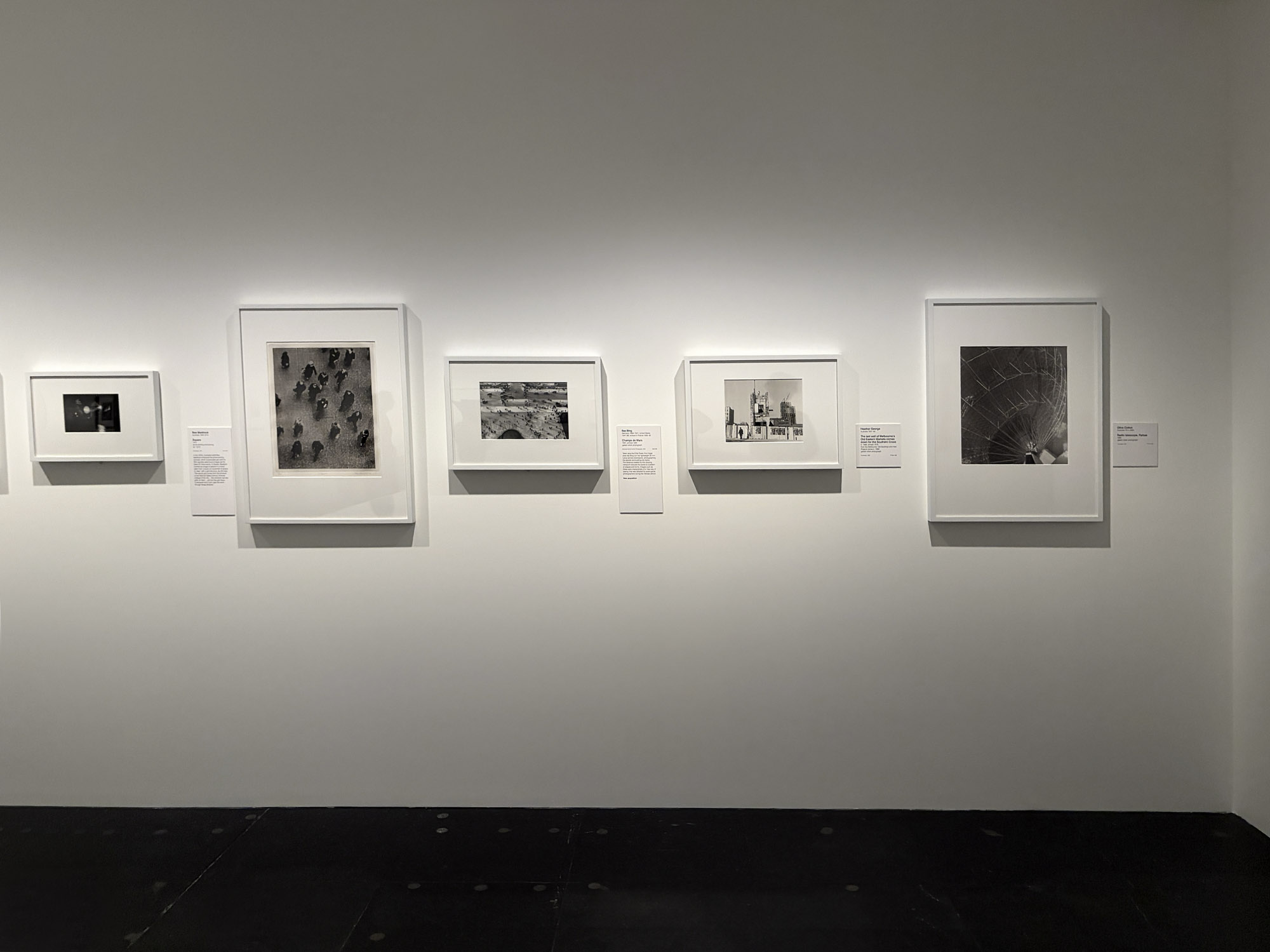
 

Installation view of the exhibition 'Women Photographers 1900-1975: A Legacy of Light' at NGV International, Melbourne, November 2025 - May 2026


Installation view of the exhibition Women Photographers 1900-1975: A Legacy of Light at NGV International, Melbourne, November 2025 – May 2026 showing in the bottom image at left, Germaine Krull At the Galeries Lafayette c. 1930 New acquisition; at second left, Bea Maddock Square (1972, above); at third left, Ilse Bing Champs de Mars (1931 printed 1994, above) New acquisition; at second right, Heather George The last wall of Melbourne’s Old Eastern Markets comes down for the Southern Cross (c. 1966 printed 1978, above); and at right, Olive Cotton Radio telescope, Parkes (1964)
Photos: Marcus Bunyan
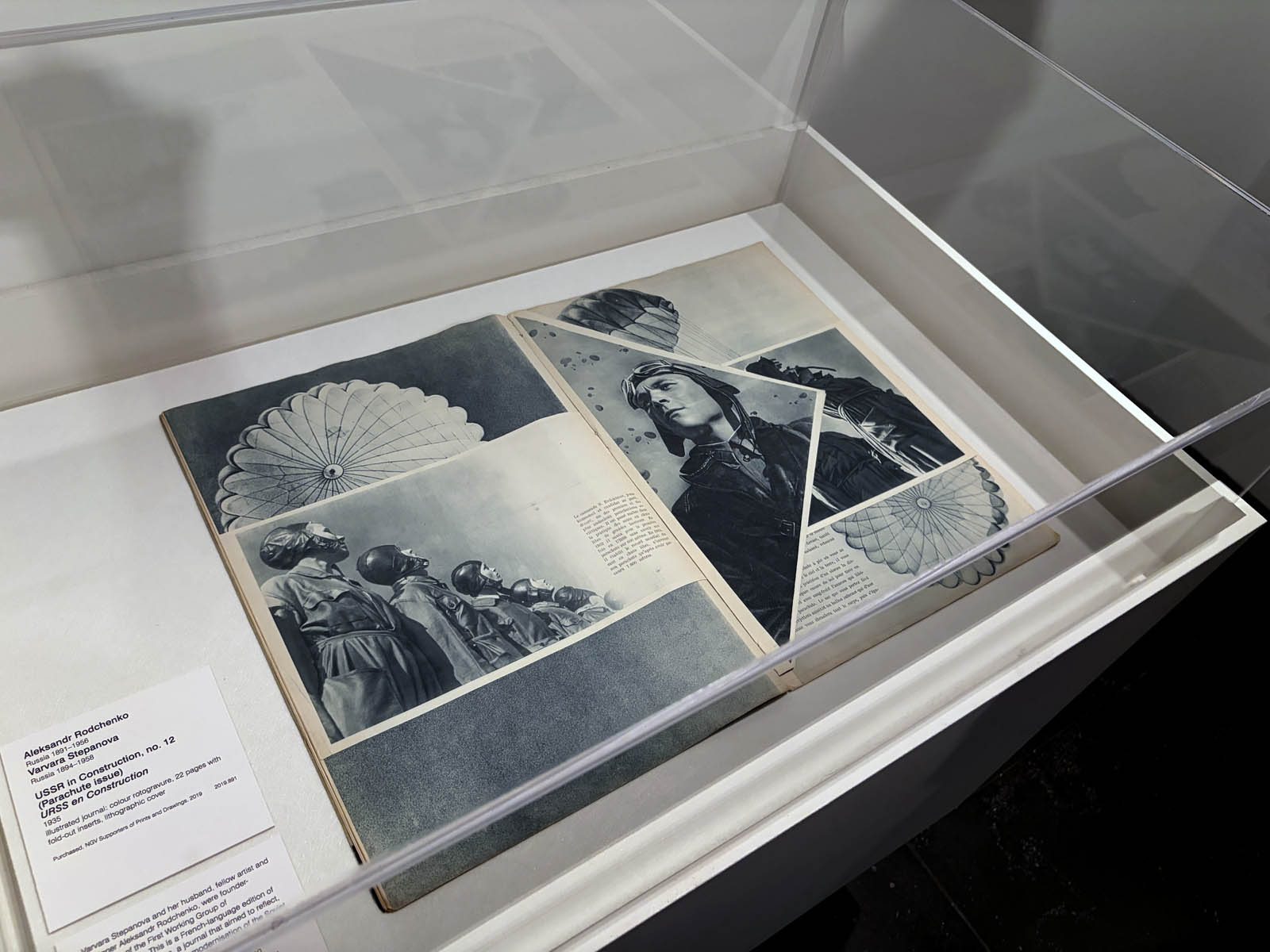
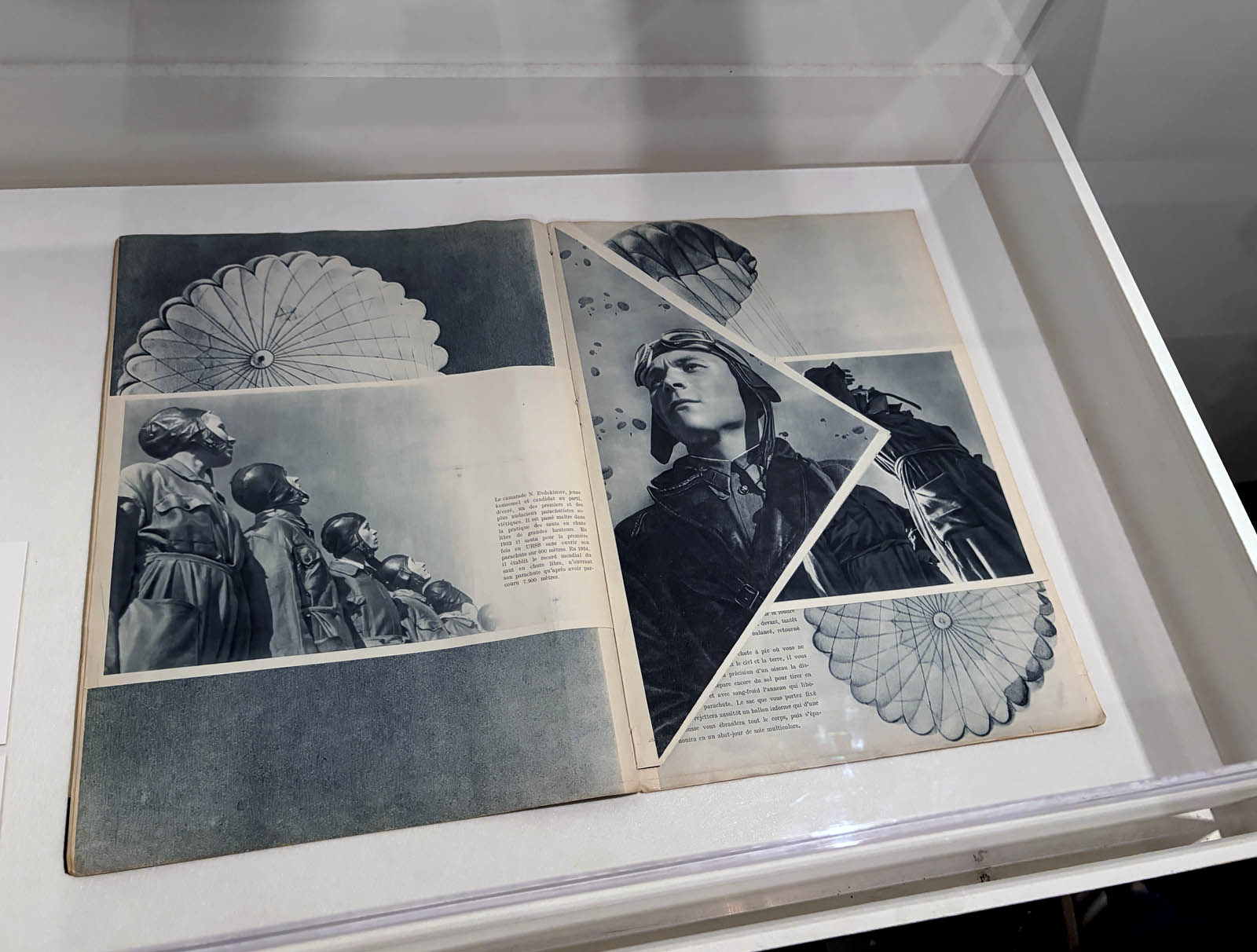
 

Aleksandr Rodchenko (Russian, 1891-1956) and Varvara Stepanova (Russian, 1894-1958) 'USSR in construction, no.12 (Parachute issue)' 1935 (installation view)


Aleksandr Rodchenko (Russian, 1891-1956) and Varvara Stepanova (Russian, 1894-1958)
USSR in construction, no.12 (Parachute issue) (installation views)
1935
Illustrated journal: colour rotogravure, 22 pages with fold-out inserts, lithographic cover
42.3 x 60.3 x 1.2cm (open)
42.3 x 30.3 x 0.4cm (closed)
National Gallery of Victoria, Melbourne
Purchased, NGV Supporters of Prints and Drawings, 2019
Photos: Marcus Bunyan


Varvara Stepanova and her husband, fellow artist and designer Aleksandr Rodchenko, were founder-members of the First Working Group of Constructivists. This is a French-language edition of USSR in Construction, a journal that aimed to reflect, through photography, the modernisation of the Soviet Union and to promote its industrial power. The journal employed cutting-edge artistic and printing developments, and this issue was designed by Stepanova and Rodchenko using original ideas around photomontage and page design. Dedicated to the ‘brave Soviet paratroopers’, the so-called ‘Parachute’ issue draws upon the circular form of the opened parachute.

Wall text from the exhibition
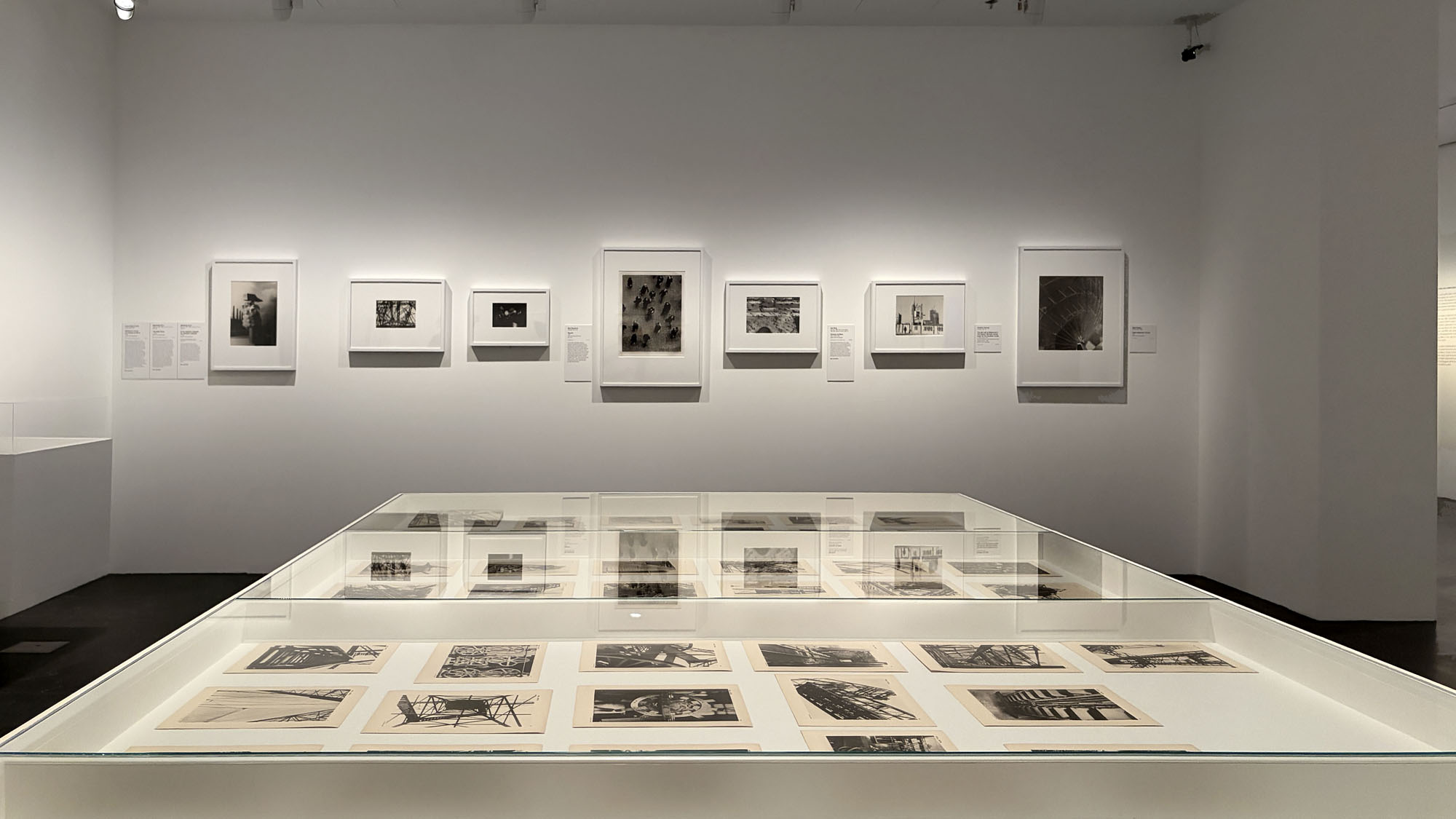
 

Installation view of the exhibition 'Women Photographers 1900-1975: A Legacy of Light' at NGV International, Melbourne, November 2025 - May 2026 showing in the foreground, Germaine Krull's portfolio 'Métal' 1928


Installation view of the exhibition Women Photographers 1900-1975: A Legacy of Light at NGV International, Melbourne, November 2025 – May 2026 showing collotypes from Germaine Krull’s portfolio Métal 1928
Photos: Marcus Bunyan


One of the most significant modernist photobooks of the 1920s, Germaine Krull’s Métal portfolio comprises sixty-four images printed on individual sheets, a title page and a three-page preface by the French writer and journalist Florent Fels. Krull photographed iron structures such as cranes and transport bridges in Amsterdam, Rotterdam, Marseille and Saint-Malo, as well as the Eiffel Tower in Paris. Krull showcases the beauty and innovation of the structures, conveying the sense of awe that accompanied the rapid industrialisation of the time. The presentation of the photographs – loose, to be arranged however the viewer chooses – is also radical, allowing for endless interpretations.

Wall text from the exhibition
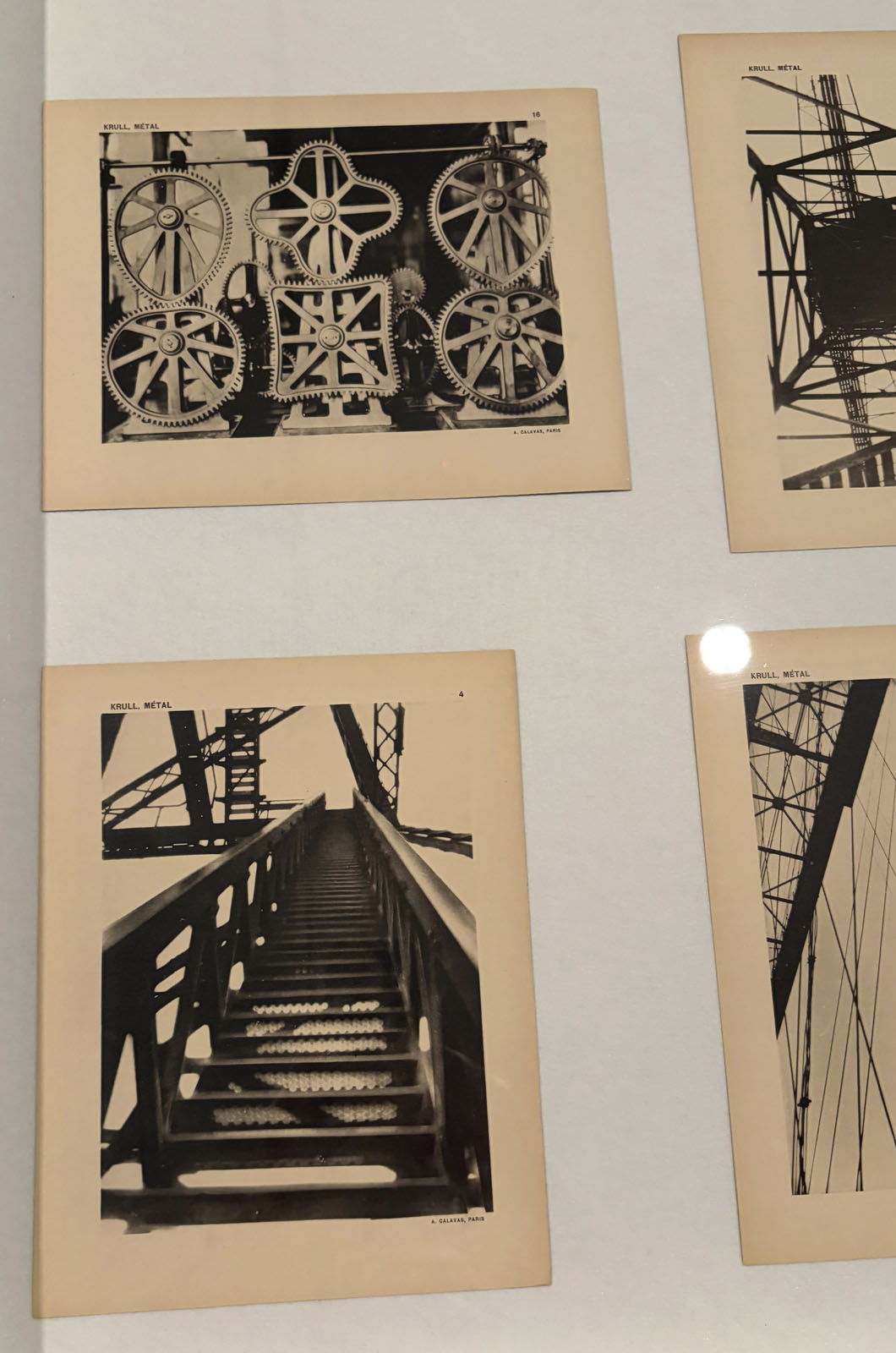
 

Germaine Krull (European, 1897-1985) 'Métal' 1928
Germaine Krull (photographer) Cover design by M. Tchimoukow. 'MÉTAL' cover 1928
Germaine Krull (1897-1985) Image from the portfolio 'MÉTAL' 1928


Germaine Krull (European, 1897-1985)
Métal
1928
64 black and white collotype plates, letterpress on paper, black cloth-backed paper-covered board portfolio with ribbons
30.5 x 23.5 x 2.5cm (overall)
National Gallery of Victoria, Melbourne
Bowness Family Fund for Photography, 2023

Photographs from the Art Blart posting Germaine Krull Métal 1928, December 2018. Used under fair use conditions for the purposes of education and research


Germaine Krull’s 1928 publication Métal is often described as one of the most significant photobooks of the twentieth century. Interestingly, Métal is not a book in a conventional sense, of sequential pages bound together with a narrative to guide the structure. Rather, when looking through this new acquisition to the NGV Collection you can immediately appreciate its unique design as an object. This dynamic format which, along with the vitality of the photography, has continued to inspire graphic designers, book publishers and artists since its publication almost a century ago.

Métal consists of a folded board cover, with ribbons attached, that acts as a folder for the pages within. The cover, designed by artist Lou Tchimoukow, reproduces one of Krull’s photographs of a detail of machinery on Paris’s Eiffel Tower. This image is overlaid with bold, vertically arranged letters spelling out ‘KRULL’ in a staggered pattern that mimics the lines of the structure beneath. Within the folder are sixty-four unbound plates. Each plate reproduces a photograph by Germaine Krull of industrial forms (and on one occasion, two images to a page) printed as collotypes, as well as the words ‘Krull, Métal’ at the top left, the plate number at the top right, and the publisher’s information ‘A. Calavas, Paris’ at the base. There is also an insert of eight pages (two sheets folded) that includes texts by journalist Florent Fels, and words from Krull herself. …

For Métal, Krull brought together a selection of recent photographs which, as she wrote in the introductory text, were from sites that included the Eiffel Tower, as well as the cranes and transport bridges of Amsterdam, Rotterdam, Marseille and Saint-Malo. Apart from the Eiffel Tower, they are emblematic of new industries and engineering emerging in these European cities in the decade after the end of the First World War and could, at first glance, be read as a tribute to modernity as seen through this rapid industrial development.

The presentation of the photographs, however, disrupts the opportunity for any clear narrative, or interpretation. While they are numbered, Krull’s images are printed without any captions (a radical technique in a photobook for the period). The audience is encouraged to actively engage: they are able to construct their own sequences and visual associations. And the composition of the images is highly varied – some close up and cropped, showing the cogs, bolts and mechanics; some reveal dizzying angles and perspectives; some show clear lines, some are abstracted; the majority are taken outside, some are within a factory; some are printed on the vertical, some on the horizontal; some are the result of multiple exposures, as if to emphasise a sense of movement or energy.

Art historian Professor Kim Sichel writes that Krull constructs an ‘activist narrative’ in Métal: ‘Through narrative techniques that are part taxonomy, part lyrical poem, part vertiginous montage, part Industrial-Age adulation, and by making the whole volume uncomfortable and strange to read, she brings her machine parts to life as they oscillate uneasily throughout the album’.2

The photographs in Métal can be linked to contemporary art movements circulating within Europe, such as the visual language of the ‘New Vision’ styles of photography emerging out of the Bauhaus in Germany, or the clean lines of the ‘New Objectivity’ as demonstrated by photographers, such as Albert Renger-Patzsch. Krull’s photographic vision, however, remains dynamic and unique – it does not follow one clear aesthetic or technical path. Métal is an innovative publication: it is open-ended and allows for endless interpretations.

2/ Kim Sichel, “Montage: Germaine Krull’s Métal,” in Sichel, Kim, Making Strange: The Modernist Photobook in France, Yale University Press, Connecticut, 2020, pp. 33–4.

Maggie Finch. “Germaine Krull Métal portfolio 1928,” on the NGV website 22 Oct 25 [Online] Cited 24/12/2025. This article first appeared in the January–February 2024 edition of NGV Magazine. Used under fair use conditions for the purposes of education and research


NGV International
180 St Kilda Rd, Melbourne

Opening hours:
Open daily, 10am – 5pm
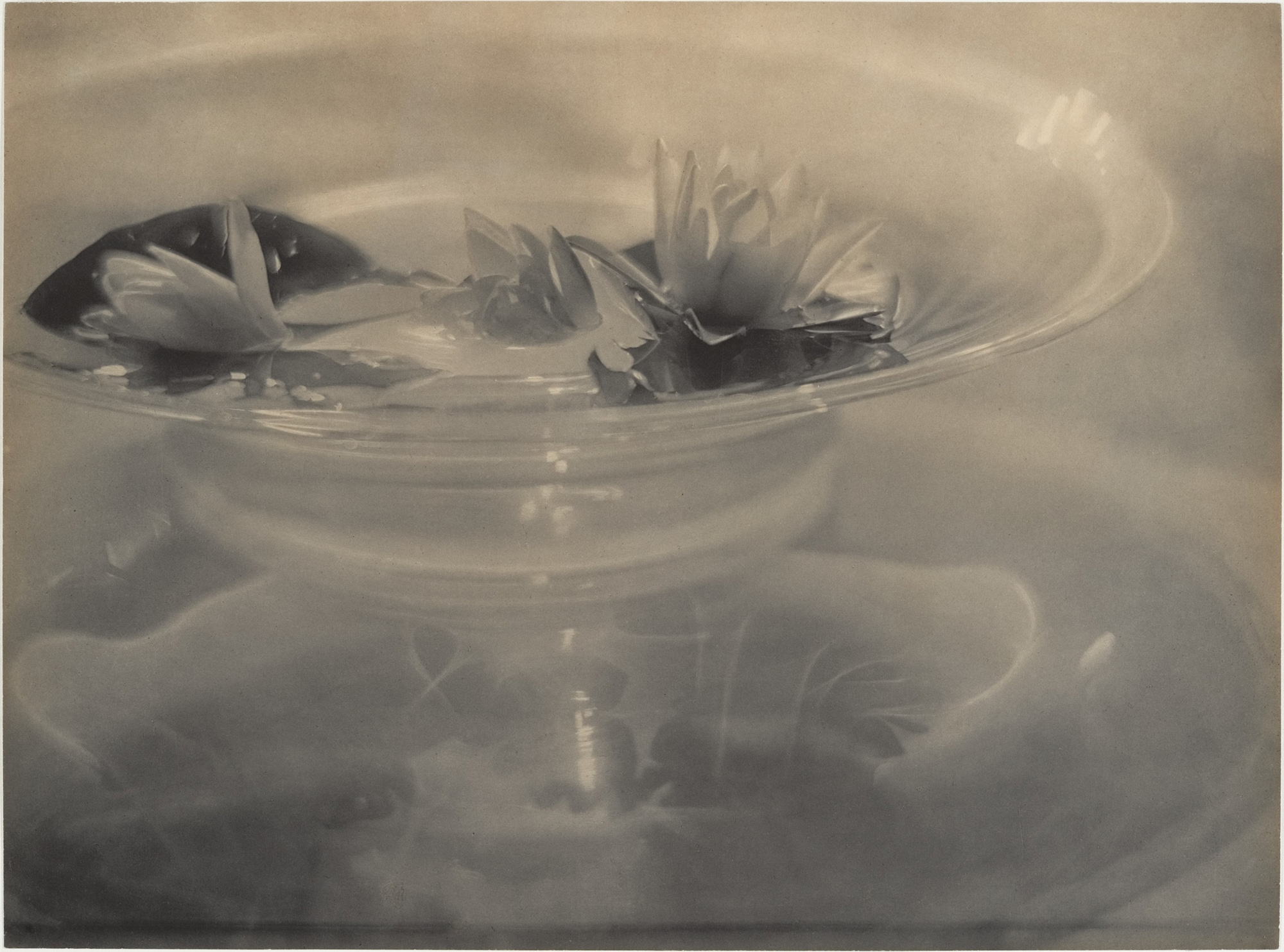
National Gallery of Victoria website

LIKE ART BLART ON FACEBOOK

Back to top

Exhibition: ‘Quicksilver Brilliance: Adolf de Meyer Photographs’ at the Metropolitan Museum of Art, New York

Exhibition dates: 4th December, 2017 – 18th March, 2018

Curator: Beth Saunders, Assistant Curator in The Met’s Department of Photographs


Adolf de Meyer (American born France, 1868-1946) 'Water Lilies' c. 1906, printed 1912 from the exhibition 'Quicksilver Brilliance: Adolf de Meyer Photographs' at the Metropolitan Museum of Art, New York, Dec 2017 - March 2018


Adolf de Meyer (American born France, 1868-1946)
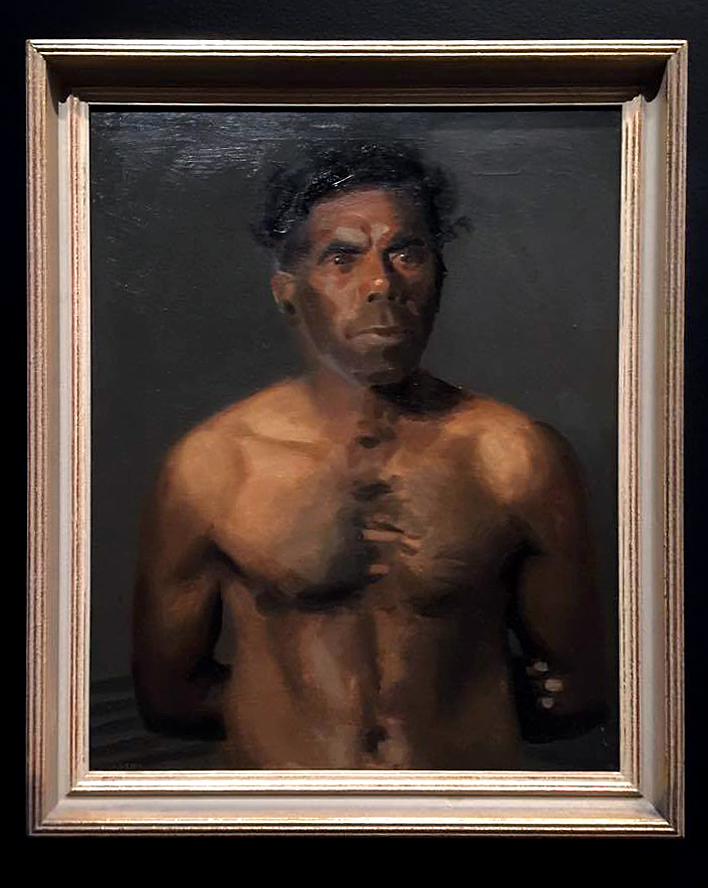
Water Lilies
c. 1906, printed 1912
Platinum print
26.1 x 35.2cm (10 1/4 x 13 7/8 in.)
Alfred Stieglitz Collection, 1933


The critic Charles H. Caffin described this photograph by de Meyer as “a veritable dream of loveliness.” It is one of several floral still life de Meyer made in London around 1906-1909, when he was in close contact with Alvin Langdon Coburn, a fellow photographer and member of the Linked Ring. Both men were inspired by the Belgian writer Maurice Maeterlinck’s 1906 book The Intelligence of Flowers, a mystical musing on the vitality of plant life. De Meyer exhibited several of his flower studies, including this platinum print, at Stieglitz’s influential Photo-Secession galleries in New York in 1909. The image also appeared as a photogravure in an issue of Stieglitz’s art and photography journal Camera Work.


While the “facts of Baron Adolf de Meyer’s early life have been obscured by contradictory accounts from various sources (including himself); he was born in Paris or Germany, spent his childhood in both France and Germany, and entered the international photographic community in 1894-1895,” by circa 1897-1900 he had assumed the title of “Baron.”

“In editions dating from 1898 until 1913, Whitaker’s Peerage stated that de Meyer’s title had been granted in 1897 by Frederick Augustus III of Saxony, though another source states “the photographer inherited it from his grandfather in the 1890s”. Some sources state that no evidence of this nobiliary creation, however, has been found.” (Wikipedia) He then married Donna Olga Caracciolo in 1899, “reputedly the illegitimate daughter of the British king Edward VII, who enjoyed a privileged position within the fashionable international set surrounding the monarch.” The marriage was one of convenience, since he was homosexual and she was bisexual or lesbian, but it was based on a perfect understanding and companionship between two people. As de Meyer observed in an unpublished biography, “Marriage based too much on love and unrestrained passion has rarely a chance to be lasting, whilst perfect understanding and companionship, on the contrary, generally make the most durable union.”

Meyer “gained recognition as a leading figure of Pictorialism and a member of the photographic society known as the Linked Ring Brotherhood in London. Alfred Stieglitz exhibited de Meyer’s work in his Little Galleries of the Photo-Secession and published his images as photogravures in his influential journal Camera Work.” In the early 20th century, he was famed for his photographic portraits and was the preeminent fashion photographer of the day; he was also the first official fashion photographer for the American magazine Vogue, appointed to that position in 1913-1914 until 1921. In 1922 de Meyer accepted an offer to become the Harper’s Bazaar chief photographer in Paris, spending the next 16 years there until he was forced out, his romantic style out of fashion with the modernist taste of the day.

I state these facts only to illustrate the idea that here was a “gay” of dubious lineage (reportedly born in Paris and educated in Dresden, Adolphus Meyer was the son of a German Jewish father and Scottish mother) who rose to associate with and photograph the upper echelons of society. He made it, and he made it good. His photographs of the well to do, film stars and fashion models are undoubtedly beautiful and his control of light magnificent, but they seem to me to be, well… constructed confections. His photographs of the elite and the fashion that they wore possess an ethereal beauty, de Meyer’s shimmering control of light adding to the photographs sense of enacted fantasy played out in the form of timeless classical elegance.

But there is that lingering doubt that these photographs were both his job and his entré (along with the connections and money of his wife) into high society. Look, for example, at the self-portrait of de Meyer in this posting. In the 1900 self-portrait in India when he was 32 and on his honeymoon, we see a coiffed, almost androgynous man who in his pose is as stiff as a board – his body contorted in the strangest way, the right hand gripping the arm of the cane chair, the left splayed and braced, ramrod straight against the seat and the feet crossed in the most unnatural manner. No matter the beautiful light and attractive setting, this is the image that this man wants to portray to the world, this is a man who thinks he has arrived. It is an affectation. And in the portrait of the aristocrat and patron of the avant-garde, Count Etienne de Beaumont (c. 1923, below), this is how he sees himself, as part of that elite. Because in the end, he was. But there is little feeling to any of his portrait work: style, surface, light, form and “the look” reign supreme. Only when he is so overwhelmed by stardust, such as in the brilliant photographs of Josephine Baker and her scintillating personality, does the mask of affection drop away.

Of more interest to me are his early photographs of Japan where you feel he has some personal investment in the work. The “tactile elegance of his early work” was influenced by “Japanese aesthetics, as well as the influence of the painter James McNeill Whistler, a key figure of the Aesthetic movement.” The photograph View Through the Window of a Garden, Japan (1900, below) is an absolute cracker, as are the Japanese influenced Water Lilies (c. 1906, below) and The Shadows on the Wall (Chrysanthemums) (1906, below). In her January 17, 2018 review of the exhibition “Quicksilver Brilliance: Adolf de Meyer Photographs @Met” on the Collector Daily website, Loring Knoblauch states, “While De Meyer’s scenes from Japan, his travel photos of his wife Olga at the Acropolis and in St. Moritz, and his experiments with autochromes in the early 1900s are also included in this eclectic sampler, these rarities aren’t particularly compelling or noteworthy, aside from their supporting role in filling out a broader picture of the artist and his life.” Aren’t particularly compelling! I beg to differ.

I don’t know how people look at photographs and interpret them so differently to how I see them. Perhaps I just feel the music, I see these photographs as if I were taking them, as a personal investment in their previsualisation. While I get very little from de Meyer’s fashion photographs I get a whole lot of pleasure and delight from his transcendent earlier work. I most certainly feel their energy. You only have to look at the reflection of the water lilies. Need I say more.

Dr Marcus Bunyan


Many thankx to the Metropolitan Museum of Art for allowing me to publish the photographs in the posting. Please click on the photographs for a larger version of the image.


Adolf de Meyer (American born France, 1868-1946) '[Nude Models Posing for a Painting Class]' 1890s from the exhibition 'Quicksilver Brilliance: Adolf de Meyer Photographs' at the Metropolitan Museum of Art, New York, Dec 2017 - March 2018


Adolf de Meyer (American born France, 1868-1946)
(Nude Models Posing for a Painting Class)
1890s
Gelatin silver print
Gift of Lunn Gallery, 1980


A member of the “international set” in fin-de-siècle Europe, Baron Adolf de Meyer (1868-1946) was also a pioneering photographer, known for creating works that transformed reality into a beautiful fantasy. Quicksilver Brilliance will be the first museum exhibition devoted to the artist in more than 20 years and the first ever at The Met. Some 40 works, drawn entirely from The Met collection, will demonstrate the impressive breadth of his career.

The exhibition will include dazzling portraits of well-known figures of his time: the American socialite Rita de Acosta Lydig; art patron and designer Count Étienne de Beaumont; aristocrat and society hostess Lady Ottoline Morrell; and celebrated entertainer Josephine Baker, among others. A highlight of the presentation will be an exceptional book – one of only seven known copies – documenting Nijinsky’s scandalous 1912 ballet L’Après-midi d’un faune. This rare album represents de Meyer’s great success in capturing the movement and choreography of dance, a breakthrough in the history of photography. Also on view will be the artist’s early snapshots made in Japan, experiments with colour processes, and inventive fashion photographs.

13 platinum prints, 1900, 1906, 1907, 1912, 1917
2 photogravures, 1908, 1912
2 carbon prints, 1900, 1925-1926
1 autochrome in lightbox (facsimile), 1908
4 gelatin silver prints, 1912, 1923, 1925, 1928
1 set of 9 gelatin silver prints (framed together), 1890s-1910
1 trichrome carbro print, 1929
6 collotypes, 1914 (with full collotype book showing 1 image in nearby vitrine, 1914)
4 magazine spreads (in bound volumes of Vogue and Harper’s Bazaar, 1913, 1919, 1927, in vitrine)

Text from The Metropolitan Museum of Art website


Adolf de Meyer (American born France, 1868-1946) '[Adolf de Meyer Photographing Olga in a Garden]' 1890s


Adolf de Meyer (American born France, 1868-1946)
(Adolf de Meyer Photographing Olga in a Garden)
1890s
Gelatin silver print
Gift of Lunn Gallery, 1980


Like many Pictorialist photographers, de Meyer became interested in the camera through collecting and making snapshots of family and close friends. Olga de Meyer (née Caracciolo) was his companion and muse until her death in 1931. Rumoured to be the illegitimate daughter of the British king Edward VII, she enjoyed a privileged position within the fashionable international set surrounding the monarch. De Meyer made numerous portraits of Olga throughout their famously chic and eccentric life together (in 1916 the couple changed their names to Gayne and Mharah on the advice of an astrologer).


Adolf de Meyer (American born France, 1868-1946) '[Self-Portrait in India]' 1900


Adolf de Meyer (American born France, 1868-1946)
(Self-Portrait in India)
1900
Platinum print
14.8 x 19.8cm (5 13/16 x 7 13/16 in.)
Gift of Isaac Lagnado, 1995


Adolf de Meyer (American born France, 1868-1946) '[Self-Portrait in India]' 1900 (detail)


Adolf de Meyer (American born France, 1868-1946)
(Self-Portrait in India) (detail)
1900
Platinum print
14.8 x 19.8cm (5 13/16 x 7 13/16 in.)
Gift of Isaac Lagnado, 1995


Adolf de Meyer (American born France, 1868-1946) '[Amida Buddah, Japan]' 1900


Adolf de Meyer (American born France, 1868-1946)
(Amida Buddah, Japan)
1900
Platinum print
19.2 x 14.3cm (7 9/16 x 5 5/8 in.)
Purchase, Mrs. Jackson Burke Gift, 1981


Adolf de Meyer (American born France, 1868-1946) 'Ueno Tōshō-gū, Tokyo, Japan' 1900


Adolf de Meyer (American born France, 1868-1946)
Ueno Tōshō-gū, Tokyo, Japan
1900
Platinum print
14.5 x 19.8cm (5 11/16 x 7 13/16 in.)
Purchase, Mrs. Jackson Burke Gift, 1981


Adolf de Meyer (American born France, 1868-1946) 'Olga de Meyer, Japan' 1900


Adolf de Meyer (American born France, 1868-1946)
Olga de Meyer, Japan
1900
Platinum print
19.3 x 15.1cm (7 5/8 x 5 15/16 in.)
Purchase, Mrs. Jackson Burke Gift, 1981


Framed by the gridded panels of a sliding screen door, Olga de Meyer pauses from her reading to look languidly at the camera. De Meyer made this affectionate photograph of his new wife while on their honeymoon to Japan. The composition suggests his interest in Japanese aesthetics, as well as the influence of the painter James McNeill Whistler, a key figure of the Aesthetic movement. In its rebellion against Victorian morals, the movement sought inspiration from outside the European tradition. De Meyer’s travels in Japan – as well as China, Ceylon, India, North Africa, Turkey, and Spain – nourished Orientalist fictions, and gave rise to the subjects and compositions of many of his photographs.


Adolf de Meyer (American born France, 1868-1946) '[View Through the Window of a Garden, Japan]' 1900


Adolf de Meyer (American born France, 1868-1946)
(View Through the Window of a Garden, Japan)
1900
Platinum print
13.8 x 20.3cm (5 7/16 x 8 in.)
Purchase, Mrs. Jackson Burke Gift, 1981


Adolf de Meyer (American born France, 1868-1946) 'The Shadows on the Wall (Chrysanthemums)' 1906


Adolf de Meyer (American born France, 1868-1946)
The Shadows on the Wall (Chrysanthemums)
1906
Platinum print
34.7 x 26.7cm (13 11/16 x 10 1/2 in.)
Alfred Stieglitz Collection, 1933


Focusing his camera not on a still life per se, but on its evanescent trace, de Meyer creates a composition that approaches abstraction. He later applied a similar handling of light and shadow to enhance the drama of his fashion photographs. Here, the shadow of a vase of flowers cast onto the wall has the effect of a Japanese lacquered screen.


Adolf de Meyer (American born France, 1868-1946) 'The Silver Cap' c. 1909, printed 1912


Adolf de Meyer (American born France, 1868-1946)
The Silver Cap
c. 1909, printed 1912
Gelatin silver print
45.7 x 27.6cm (18 x 10 7/8 in.)
Alfred Stieglitz Collection, 1933


Born in Paris, Baron Adolf de Meyer settled in London in 1896. With his wife, Donna Olga Caraciollo, he joined the elegant set surrounding the Prince of Wales, later Edward VII, Olga’s godfather. They entertained lavishly, including concerts and small fancy-dress balls, which gave de Meyer a chance to devise marvellous costumes for Olga. Likely inspired by the de Meyers’ involvement with the Ballets Russes and time spent at their villa on the Bosporus, this dress features Ottoman elements such as the full skirt and decorative trimmings yet conforms to the Western fitted waistline – a fine example of the 1910s fashion trend of exoticism.


A member of the “international set” in fin-de-siècle Europe, Baron Adolf de Meyer (1868-1946) was also a pioneering art, portrait, and fashion photographer, known for creating images that transformed reality into a beautiful fantasy. The “quicksilver brilliance” that characterised de Meyer’s art led fellow photographer Cecil Beaton to dub him the “Debussy of the Camera.” Opening December 4 at The Metropolitan Museum of Art,

Quicksilver Brilliance: Adolf de Meyer Photographs will be the first museum exhibition devoted to the artist in more than 20 years and the first ever at The Met. Some 40 works, drawn entirely from The Met collection, will reveal the impressive breadth of his career.

The exhibition will include dazzling portraits of well-known figures of his time: the American socialite Rita de Acosta Lydig; art patron and designer Count Étienne de Beaumont; aristocrat and society hostess Lady Ottoline Morrell; and celebrated entertainer Josephine Baker, among others. A highlight of the presentation will be an exceptional book – one of only seven known copies – documenting Nijinsky’s scandalous 1912 ballet L’Après-Midi d’un Faune. This rare album represents de Meyer’s great success in capturing the choreography of dance, a breakthrough in the history of photography. Also on view will be the artist’s early snapshots made in Japan, experiments with colour processes, and inventive fashion photographs.

Born in Paris and educated in Germany, de Meyer was of obscure aristocratic German-Jewish and Scottish ancestry. He and his wife, Olga Caracciolo, goddaughter of Edward VII, were at the centre of London’s café society.

After starting in photography as an amateur, de Meyer gained recognition as a leading figure of Pictorialism and a member of the photographic society known as the Linked Ring Brotherhood in London. Alfred Stieglitz exhibited de Meyer’s work in his Little Galleries of the Photo-Secession and published his images as photogravures in his influential journal Camera Work. At the outbreak of World War I, de Meyer settled in the United States and applied his distinctive pictorial style to fashion imagery, helping to define the genre during the interwar period.

The exhibition was organised by Beth Saunders, Assistant Curator in The Met’s Department of Photographs.

Press release from the Metropolitan Museum of Art


Adolf de Meyer (American born France, 1868-1946) 'Tamara Karsavina' c. 1908


Adolf de Meyer (American born France, 1868-1946)
Tamara Karsavina
c. 1908
Autochrome
9 x 11.9cm (3.5 x 4.6 in.)
Gilman Collection, Purchase, Harriette and Noel Levine Gift, 2005


De Meyer enthusiastically embraced the autochrome process at its inception in 1907, writing to Stieglitz the following year that his work in black and white no longer satisfied him. An ardent admirer of Diaghilev’s Ballets Russes, de Meyer created this image of Tamara Karasavina (1885-1978), a leading dancer and partner to Nijinksy, during one of the company’s visits to England. The photographer chose a background of bellflowers and arranged a brocaded shawl to enhance the exotic elegance of the dancer.

The autochrome, which retains in its minuscule prisms the particular luminosity of a misty English day in summer, was thought to represent the Marchioness of Ripon in her garden at Coombe, Surrey. An early patron of de Meyer, Lady Ripon was also a staunch supporter of Diaghilev, bringing the Ballets Russes to London in 1911. She frequently entertained Karasavina and Nijinsky at Coombe, where they danced for Alexandra, the queen consort, and de Meyer dedicated to her his album documenting Nijinsky’s production of L’Après-midi d’un faune. A companion image to this autochrome is in the collection of the Victoria and Albert Museum in London.


Adolf de Meyer (American born France, 1868-1946) '[Lady Ottoline Morrell]' c. 1912


Adolf de Meyer (American born France, 1868-1946)
(Lady Ottoline Morrell)
c. 1912
Platinum print
23.5 x 17.4cm (9 1/4 x 6 7/8 in.)
Gilman Collection, Purchase, Harriette and Noel Levine Gift, 2005


Adolph de Meyer’s portrait of Lady Ottoline Morrell, eccentric hostess to Bloomsbury, is a stunning summation of the character of this aristocratic lady who aspired to live “on the same plane as poetry and as music.” Rebelling against the narrow values of her class, Lady Ottoline Cavendish Bentinck (1873-1938) married Philip Morrell, a lawyer and liberal Member of Parliament, and surrounded herself in London and on their estate at Garsington with a large circle of friends, including Bertrand Russell, W. B. Yeats, D. H. Lawrence, T. S. Eliot, Katherine Mansfield, Lytton Strachey, Virginia Woolf, Aldous Huxley, and E. M. Forster. Tall, wearing fantastic, scented, vaguely Elizabethan clothes, Lady Ottoline made an unforgettable impression. With her dyed red hair, patrician nose, and jutting jaw, she could look, according to Lord David Cecil, at one and the same moment beautiful and grotesque. Henry James saw her as “some gorgeous heraldic creature – a Gryphon perhaps or a Dragon Volant.”

De Meyer made several portraits of Lady Ottoline. None went as far as this one in conjuring up the sitter’s flamboyant persona, capturing, through dramatic lighting and Pre-Raphaelite design, her untamed, baroque quality. “Her long, pale face, that she carried lifted up, somewhat in the Rossetti fashion, seemed almost drugged, as if a strange mass of thoughts coiled in the darkness within her.” D. H. Lawrence’s inspired description of the character based on Lady Ottoline in “Women in Love” finds a vivid counterpart in the photographer’s art.


Baron Adolf De Meyer (American, born France, 1868-1946) 'The Cup' c. 1910


Adolf de Meyer (American born France, 1868-1946)
The Cup
c. 1910
Gum bichromate print


Adolf de Meyer (American born France, 1868-1946) 'Olga de Meyer' c. 1912


Adolf de Meyer (American born France, 1868-1946)
Olga de Meyer
c. 1912
Platinum print
22.4 x 16.4cm (8 13/16 x 6 7/16 in.)
Gift of Paul F. Walter, 2009


Renowned for her beauty and style, de Meyer’s spouse was, in a sense, his first fashion model. Here, dramatic backlighting emphasises her sinuous form, enshrouded in shimmering fabric and fur. Her gaze conveys a haughty bemusement that elevates the tableau from costume play to regal sophistication.


Adolf de Meyer (American born France, 1868-1946) '[Dance Study]' c. 1912


Adolf de Meyer (American born France, 1868-1946)
(Dance Study)
c. 1912
Platinum print
32.7 x 43.5cm (12 7/8 x 17 1/8 in.)
Alfred Stieglitz Collection, 1933


De Meyer photographed the dancer Nijinsky and other members of Diaghilev’s troupe when “L’Après-midi d’un Faun” was presented in Paris in 1912. It has been suggested that this photograph, the only nude by de Meyer, has some connection to the Russian ballet, but if so, it remains mysterious. The image vibrates with an uneasy erotic tension, a product of the figure’s exposed torso, startled body language, and disguised identity.


Adolf de Meyer (American born France, 1868-1946) 'Le Prelude à l'Après-Midi d'un Faune' 1914


Adolf de Meyer (American born France, 1868-1946)
Le Prelude à l’Après-Midi d’un Faune
1914
Collotypes
Album: 15 1/4 x 11 5/8 inches
Gilman Collection, Museum Purchase, 2005


In 1912 de Meyer made a remarkable series of photographs related to the Ballets Russes production L’après-midi d’un faune (Afternoon of a Faun). The avant-garde dance was choreographed by famed Russian performer Vaslav Nijinsky, set to a score by Claude Debussy, and inspired by a poem by Symbolist writer Stéphane Mallarmé. It follows a young faun distracted from his flute-playing by bathing nymphs who seduce and taunt him, leaving behind a scarf with which he allays his desire. When the ballet premiered in Paris on May 29, 1912, the overtly sexual climactic scene and unconventional choreography scandalised audiences. Nijinsky based the angular movements and frieze-like staging on Greek vase paintings, but Ballets Russes founder Sergei Diaghilev also likened them to Cubism.

Thirty of de Meyer’s photographs of the ballet were published as collotypes (photomechanical ink prints) in a 1914 edition of one thousand luxurious handcrafted books. Only seven copies are known today. Using alternately complex and fragmentary compositions, de Meyer’s images generate a rhythm of gesture and form. The thin Japanese papers offer a tactile echo of the diaphanous costumes (designed by artist Léon Bakst), and the heavily manipulated negatives enshroud the angular figures in a dreamlike haze. An object of desire, the book itself embodies the spirit of Nijinsky’s ballet.


Adolf de Meyer (American born France, 1868-1946) 'Nijinsky [Plate from Le Prelude à l'Après-Midi d'un Faune]' 1912


Adolf de Meyer (American born France, 1868-1946)
Nijinsky [Plate from Le Prelude à l’Après-Midi d’un Faune]
1912


Adolf de Meyer (American born France, 1868-1946) 'Nijinsky [Plate from Le Prelude à l'Après-Midi d'un Faune]' 1914


Adolf de Meyer (American born France, 1868-1946)
Nijinsky (Plate from Le Prelude à l’Après-Midi d’un Faune)
1914


Adolf de Meyer (American born France, 1868-1946) '[Image from "Prelude à l'Après-Midi d'un faune"]' 1914


Adolf de Meyer (American born France, 1868-1946)
(Image from Prelude à l’Après-Midi d’un faune)
1914
Platinum print
4 3/16 × 7 1/16 in. (10.6 × 17.9cm)
Gilman Collection, Purchase, Mrs. Walter Annenberg and The Annenberg Foundation Gift, 2005


Adolf de Meyer (American born France, 1868-1946) 'Rita de Acosta Lydig' 1917


Adolf de Meyer (American born France, 1868-1946)
Rita de Acosta Lydig
1917
Platinum print
41.5 x 30.9cm (16 5/16 x 12 3/16 in.)
Gift of Mercedes de Acosta, 1952


De Meyer’s portrait of the socialite, art patron, “shoe queen,” and suffragette Rita de Acosta Lydig is striking in its simplicity of tone and contour. The image, which appeared in Vogue in 1917, resonates with the classical elegance epitomised in the paintings of society portraitists John Singer Sargent and Giovanni Boldini, who also depicted this so-called alabaster lady.


Adolf de Meyer (American born France, 1868-1946) 'Portrait of the Marchesa Casati' 1912


Adolf de Meyer (American born France, 1868-1946)
Portrait of the Marchesa Casati
1912
Plate from Camera Work No. XL August 1912


Luisa, Marchesa Casati Stampa di Soncino (23 January 1881 – 1 June 1957), also known as Luisa Casati, was an Italian heiress, muse, and patroness of the arts in early 20th-century Europe. …

A celebrity, the Marchesa was famed for eccentricities that dominated and delighted European society for nearly three decades. The beautiful and extravagant hostess to the Ballets Russes was something of a legend among her contemporaries. She astonished society by parading with a pair of leashed cheetahs and wearing live snakes as jewellery.

Text from the Wikipedia website


Adolf de Meyer (American born France, 1868-1946) 'Study for Vogue [Jan 1-1918, Betty Lee, Vogue, page 41]' 1918-1921


Adolf de Meyer (American born France, 1868-1946)
Study for Vogue (Jan 1 – 1918, Betty Lee, Vogue, page 41)
1918-1921
Gelatin silver print


Adolf de Meyer (American born France, 1868-1946) 'Dolores' 1921


Adolf de Meyer (American born France, 1868-1946)
Dolores
1921
Gelatin silver print


Adolf de Meyer (American born France, 1868-1946) 'Etienne de Beaumont [Count Etienne de Beaumont (French, 1883-1956)]' c. 1923


Adolf de Meyer (American born France, 1868-1946)
Etienne de Beaumont (Count Etienne de Beaumont (French, 1883-1956))
c. 1923
Gelatin silver print
23.7 x 18.6cm (9 5/16 x 7 5/16 in.)
Gift of Paul F. Walter, 2009


An aristocrat and patron of the avant-garde, Count Etienne de Beaumont (French, 1883-1956) cuts a dashing figure here, posed in one of the grand salons of his hôtel (grand townhouse) in Paris’s rue Masseran. The count hosted a series of legendary masquerade balls at his residence during the interwar period, attended by avant-garde artists such as Jean Cocteau, Pablo Picasso, and Man Ray. De Meyer described these parties, which he and Olga often attended, as “fêtes of unsurpassed magnificence” in a 1923 article for Harper’s Bazaar.


Adolf de Meyer (American born France, 1868-1946) 'Portrait of Josephine Baker' 1925


Adolf de Meyer (American born France, 1868-1946)
Portrait of Josephine Baker
1925


Adolf de Meyer (American born France, 1868-1946) 'Josephine Baker' 1925-1926


Adolf de Meyer (American born France, 1868-1946)
Josephine Baker
1925-1926
Direct carbon print
45.2 x 29.5cm (17 13/16 x 11 5/8 in.)
Ford Motor Company Collection, Gift of Ford Motor Company and John C. Waddell, 1987


The Saint Louis, Missouri-born Josephine Baker arrived in Paris in 1925 and quickly made a sensation as part of the all-black Revue Nègre, a musical entertainment that capitalised on the French craze for American Jazz. Famously donning a banana skirt for her danse sauvage, Baker crafted performances that astutely deployed the stereotypes white Europeans associated with blackness, recouping them as instruments of her own empowerment and success. Baker shines amid the glittering backdrop and soft focus of de Meyer’s photograph, creating an iconic image of stardom.


Gertrude Käsebier (American, 1852-1934) 'Baron Adolf de Meyer' 1903


Gertrude Käsebier (American, 1852-1934)
Baron Adolf de Meyer
1903
Platinum print
13 3/8 x 10″ (34 x 25.5cm)
Museum of Modern Art, Gift of Miss Mina Turner


Taken in the same photo session as the photograph below.


Gertrude Käsebier (American, 1852-1934) 'Baron Adolf de Meyer (Leaning Against Tree)' 1903


Gertrude Käsebier (American, 1852-1934)
Baron Adolph de Meyer (Leaning Against Tree)
1903
Platinum photograph
8.5 x 6.5 in.


Sarah Choate Sears (American, 1858-1935) 'A Mexican [Adolf de Meyer (American (born France), Paris 1868-1946 Los Angeles, California)]' 1905


Sarah Choate Sears (American, 1858-1935)
A Mexican (Adolf de Meyer (American born France, Paris 1868 – 1946 Los Angeles, California))
1905
Platinum print
24.2 x 18.7cm (9 1/2 x 7 3/8 in.)
Alfred Stieglitz Collection, 1933


With his brow arched beneath a tilted hat and hand elegantly grasping a stark white scarf, de Meyer dons a mysterious alter ego. Like de Meyer, Sears was involved with the two major groups devoted to art photography: the Photo-Secession and the Linked Ring Brotherhood. The two artists may have met through a mutual friend, the photographer F. Holland Day, who included their work in his exhibition “New School of American Photography,” on view in London in 1900 and Paris the following year. The title for this portrait follows a Photo-Secession tradition of withholding the sitter’s name when exhibiting publicly.


Sarah Choate Sears (1858-1935) was an American art collector, art patron, cultural entrepreneur, artist and photographer. …

About 1890 she began exploring photography, and soon she was participating in local salons. She joined the Boston Camera Club in 1892, and her beautiful portraits and still lifes attracted the attention of fellow Boston photographer F. Holland Day. Soon her work was gaining international attention. …

In 1899 she was given a one-woman show at the Boston Camera Club, and in 1900 she had several prints in Frances Benjamin Johnson’s famous exhibition in Paris. … In 1907, two of her photographs were published in Camera Work, but by that time she had lost much of her interest in photography.

Text from the Wikipedia website


The Metropolitan Museum of Art
1000 Fifth Avenue at 82nd Street
New York, New York 10028-0198
Phone: 212-535-7710

Opening hours:
Thursday – Tuesday 10am – 5pm
Closed Wednesday

The Metropolitan Museum of Art website

LIKE ART BLART ON FACEBOOK

Back to top

Review: ‘Brave New World: Australia 1930s’ at The Ian Potter Centre: NGV Australia, Melbourne

Exhibition dates: 14th July – 15th October, 2017


Installation view of 'Brave New World: Australia 1930s' at NGVA


Installation view of the exhibition Brave New World: Australia 1930s at NGVA
Photo: Eugene Hyland


Brave New World: Australia 1930s at NGV Australia, Melbourne is a small but stylishly designed exhibition that presents well in the gallery spaces. The look and feel of the exhibition is superb, and it was a joy to see so many works in so many disparate medium brought together to represent a decade in the history of Australia: photography, sculpture, painting, drawing, ceramic art, magazine art, travel posters, Art Deco radios, film, couture, culture, Aboriginal art, and furniture making, to name but a few.

The strong exhibition addresses most of the concerns of the 1930s – The Great Depression, beach and body culture, style, fashion, identity, culture, prelude to WW2, dystopian and utopian cities etc., – but it all felt a little cramped and truncated. Such a challenging time period needed a more expansive investigation. What there is was excellent but one display case on slums or magazine art was not substantive enough. The same can be said for most of the exhibition.

There needed to a lot more about the impact of the Great Depression and people living in poverty, for you get the feeling from this exhibition that everyone was living the Modernist high-life, wearing fashionable frocks and smoking cigarettes sitting around beautifully designed furniture surrounded by geometric textiles. The reality is that this paradigm was the exception rather than the rule. Many people struggled to even feed themselves due to The Great Depression, and it was a time of extreme hardship for people in Australia. Life for many, many people in Australia during the 1930s was a life of disenfranchisement, assimilation, oppression, social struggle, poverty, hunger and a hand to mouth existence.

“After the crash unemployment in Australia more than doubled to twenty-one per cent in mid-1930, and reached its peak in mid-1932 when almost thirty-two per cent of Australians were out of work… The Great Depression’s impact on Australian society was devastating. Without work and a steady income many people lost their homes and were forced to live in makeshift dwellings with poor heating and sanitation.” (Text from “The Great Depression,” on the Australian Government website [Online] Cited 06/10/2017. No longer available online)

New artists and designers may have been emerging, new skyscrapers being built and the new ‘Modern Woman’ may have made her appearance but the changes only affected white, middle and upper social classes. Migrants, particularly those from Italy and southern Europe, were resented because they worked for less wages than others; and only brief mention is made of the White Australia policy in the exhibition but not by name (see text under Indigenous art and culture below). This section was more interested in how white artists appropriated Aboriginal design during this period for their own ends.

With this in mind, it is instructive to read sections of the illustrated handbook (see cover below, handbook not in the exhibition) produced by the National Museum of Victoria (in part, the forerunner of the NGV) to accompany a special exhibition of objects illustrating Australian Aboriginal Art in 1929:

“The subject of aboriginal Art – in this case the Art of the Australian Aboriginal – has to be approached with the utmost caution, for, though it comes directly within the domain of anthropology, it is in an indirect way a very important question in psychology and pedagogies. We possess some knowledge of our own mentality through the kind of offices of psychology; but though we have some – many in certain classes – material relics of our primitive and prehistoric ancestor, the only evidence of evolution of thought and the development of his powers of abstract conception must be derived from his art…

Still it appears possible that the study of primitive man, as represented by our Australian black, will throw some new light on the subject, and even if not more important than the old world pictographs themselves, his art work will enable the efforts of the Aurignacian and Magdalenian artists [cultures of the Upper Paleolithic in western Europe] to be better comprehended, and their import understood. But, for that study to achieve even a modicum of success, it is essential that the inquiring psychologist divest his mind of all civilized conceptions and mentality and assume those of the prehistoric man – or of the infant of the present day.”1


This is the attitude towards Aboriginal art that pervaded major art institutions right across Australia well into the 1950s. That the white has to “divest his mind of all civilised conceptions and mentality and assume those of the prehistoric man” – in other words, he has to become a savage – in order to understand Aboriginal art. It says a lot that the Trustees of the National Museum of Victoria then decided to reprint the illustrated handbook in 1952 without amendment, reprinting the publication originally used for the Exhibition in 1929. Nothing had changed in 22 years!

Other small things in the exhibition rankle. The preponderance of the work of photographer Max Dupain is so overwhelming that from this exhibition, it would seem that he was the only photographer of note working in Australia throughout the decade. While Dupain was the first Modernist photographer in Australia, and a superb artist, Modernist photography was very much on the outer during most of the 1930s… the main art form of photography being that of Pictorialism. None of this under appreciated style of photography makes an appearance in this exhibition because it does not fit the theme of “Brave New World”. This dismisses the work of such people as Cecil Bostock, Harold Cazneaux, Henri Mallard, John Eaton et al as not producing “brave”, or valuable, portraits of a country during this time frame. This is a perspective that needs to be corrected.

Highlights in this exhibition included an earthenware vase by Ethel Blundell; a painting by that most incredible of atmospheric painters, Clarice Beckett (how I long to own one of her paintings!); a wonderful portrait by the underrated Cybil Craig; two stunning Keast Burke photographs; two beautiful stained glass windows of a male and female lifesaver; the slum photographs of F. Oswald Barnett (more please!); and the graphic covers of mostly short-lived radical magazines.

These highlights are worth the price of admission alone. A must see before the exhibition closes.

Dr Marcus Bunyan


Footnotes

1/ A. S. Kenyon. “The Art of the Australian Aboriginal.” in Australian Aboriginal Art. Melbourne: Trustees of the National Museum of Victoria, (1929) reprinted 1952, p. 15.


Many thankx to the National Gallery of Victoria for allowing me to publish the photographs in the posting. Some installation photographs © Dr Marcus Bunyan. Please click on the photographs for a larger version of the image.


Australian Aboriginal Art 1952 (reprint of 1929 illustrated handbook)


National Museum of Victoria
Australian Aboriginal Art (cover)
1952 (reprint of 1929 illustrated handbook)
Brown, Prior, Anderson Pty. Ltd., Melbourne (publishers)
Trustees of the National Museum of Victoria
39 pages

See the whole pamphlet


The 1930s was a turbulent time in Australia’s history. During this decade major world events, including the Depression and the rise of totalitarian regimes in Europe, shaped our nation’s evolving sense of identity. In the arts, progressive ideas jostled with reactionary positions, and artists brought substantial creative efforts to bear in articulating the pressing concerns of the period. Brave New World: Australia 1930s encompasses the multitude of artistic styles, both advanced and conservative, which were practised during the 1930s. Included are commercial art, architecture, fashion, industrial design, film and dance to present a complete picture of this dynamic time.

The exhibition charts the themes of celebrating technological progress and its antithesis in the nostalgia for pastoralism; the emergence of the ‘New Woman’ and consumerism; nationalism and the body culture movement; the increasing interest in Indigenous art against a backdrop of the government policy of assimilation and mounting calls for Indigenous rights; the devastating effects of the Depression and the rise of radical politics; and the arrival of European refugees and the increasing anxiety at the impending threat of the Second World War. Brave New World: Australia 1930s presents a fresh perspective on the extraordinary 1930s, revealing some of the social and political concerns that were pertinent then and remain so today.

Text from the NGV website


Harold Cazneaux (New Zealand 1878 - Australia 1953, Australia from 1886) 'No title (Powerlines and chute)' c. 1935 from the exhibition 'Brave New World: Australia 1930s' at The Ian Potter Centre: NGV Australia, Melbourne, July - Oct, 2017


Harold Cazneaux (New Zealand 1878 – Australia 1953, Australia from 1886)
No title (Powerlines and chute)
c. 1935
Gelatin silver photograph
National Gallery of Victoria, Melbourne
Purchased through The Art Foundation of Victoria with the assistance of the H. J. Heinz II Charitable and Family Trust, Governor, 1993


In 1934 BHP (Broken Hill Proprietary Company Limited) commissioned leading pictorialist photographer Harold Cazneaux to record their mining and steel operations for a special publication to mark their fiftieth anniversary in 1935. Cazneaux’s dramatic industrial images blended a soft, atmospheric focus with a modernist sense of space, form and geometry. In 1935-36 Australia exported close to 300,000 tonnes of iron ore to Japan; however, after Japan’s invasion of China in 1937 fear of its expansionist aims in the Pacific increased and soon afterwards the federal government announced a ban on the export of all iron ore to Japan.


Fred Ward (designer) (Australia 1900-90) Sideboard, side table and tray table' c. 1932 from the exhibition 'Brave New World: Australia 1930s' at The Ian Potter Centre: NGV Australia, Melbourne, July - Oct, 2017


Fred Ward (designer) (Australian, 1900-1990)
E. M. Vary, Fitzroy, Melbourne (attributed to) (manufacturer) active 1920s-1940s

Sideboard
c. 1932
Mountain ash (Eucalyptus sp.), painted wood, painted plywood, steel
(a-e) 84.0 x 119.7 x 48.7cm (overall)
Proposed acquisition

Side table
c. 1932
Mountain ash (Eucalyptus sp.), jarrah (Eucalyptus marginata), steel
55.7 x 66.0 x 49.2cm
Proposed acquisition

Tray table
c. 1932
Mountain ash (Eucalyptus sp.), blackwood (Acacia melanoxylon), steel
(a-b) 52.0 x 60.9 x 42.5cm (overall)
Proposed acquisition


A new generation of artists and designers

While modern art was a source of debate and controversy throughout the 1930s, modernism in architecture, interior design, industrial design and advertising became highly fashionable. In Melbourne a small group of designers pioneered modern design in Australia. Furniture designer Fred Ward first designed and made furniture for his home in Eaglemont, where he had established a studio workshop. It was admired by friends and he was encouraged to produce furniture for sale. In 1932 Ward opened a shop in Collins Street, Melbourne. There he offered his furniture, as well as linens and Scandinavian glass. The fabrics for curtains and upholstery were printed by Australian designer Michael O’Connell with bold designs that shocked some but were favoured by a new generation looking to create modern interiors.

More than in most periods, in the 1930s art, design and architecture were closely integrated with the changing realities of contemporary life. It was a time when the last vestiges of the conservative art establishment were swept away by a new generation of artists and designers who were to drive Australian art in the second half of the twentieth century.


Installation view of 'Brave New World: Australia 1930s' at NGVA

Installation view of the exhibition 'Brave New World: Australia 1930s' at NGVA with Max Dupain's 'Illustration for Kelvinator' advertisement at left and Ethel Blundell's 'Vase' centre on sideboard


Installation views of the exhibition Brave New World: Australia 1930s at NGVA with Max Dupain’s Illustration for Kelvinator advertisement at left and Ethel Blundell’s Vase centre on sideboard
Photos: Courtesy NGV Photographic Services


Fred Ward was one of the first and most important designers of modern furniture in Australia. He began making furniture around 1930, and in 1932 opened a shop in Collins Street selling his furniture, as well as textiles by Michael O’Connell and other modern design pieces. In 1934 Ward went into partnership with Myer Emporium and established the Myer Design Unit, for which he designed a line of modular ‘unit’ furniture for commercial production. Ward’s simple, functional aesthetic and use of local timbers with a natural waxed finish was in contrast to the luxurious materials and decorative motifs of the contemporary Art Deco style.

The armchair, sideboard and occasional tables were designed by Fred Ward and purchased by Maie Casey in the early 1930s. The wife of R. G. Casey, federal treasurer in the Lyons Government, Maie was a prominent supporter of modern art and design. Moving to Canberra in 1932, she furnished her house at Duntroon in a modern style with furniture by Ward and textiles by Michael O’Connell. The design of Ward’s armchair closely resembles a 1920s armchair by German Bauhaus furniture designer Erich Dieckmann, who was known for his standardised wooden furniture based on geometric designs.


Michael O'Connell designer (England 1898-1976, Australia 1920-37) 'Textile' c. 1933 from the exhibition 'Brave New World: Australia 1930s' at The Ian Potter Centre: NGV Australia, Melbourne, July - Oct, 2017


Michael O’Connell designer (England 1898-1976, Australia 1920-1937)
Textile
c. 1933
Block printed linen
National Gallery of Victoria, Melbourne Purchased, 1988


Michael O’Connell pioneered modernist textiles in Melbourne and was an influential advocate of modern design. Working with his wife Ella from his studio in Beaumaris, O’Connell used woodblocks and linocuts to hand print onto raw linens and silks, which were used for fashion garments and home furnishing. O’Connell’s boldly patterned and highly stylised designs were considered startlingly modern. Some of his early fabrics featured ‘jazz age’ scenes of nightclubs and dancing, while later motifs were based on Australian flora and fauna, or derived from Oceanic and Aboriginal art.


Sam Atyeo. 'Album of designs: tables' c. 1933 - c. 1936


Sam Atyeo (Australian, 1910-1990)
Album of designs: tables
c. 1933 – c. 1936
Album: watercolour, brush and coloured inks, coloured pencils, 14 designs tipped into an album of 16 grey pages, card covers, tape and stapled binding
30.0 x 19.2 cm (page) 30.0 x 20.8 x 0.8cm (closed)
National Gallery of Victoria, Melbourne
Gift of the artist, 1988


Sam Atyeo was a leading figure in Melbourne’s emerging modernist circles in the early 1930s, the partner of artist Moya Dyring and lover of Sunday Reed. He had studied at the National Gallery School, where he was a brilliant and rebellious student. Around 1932 Atyeo became friendly with Cynthia Reed, who managed Fred Ward’s furniture shop and interior design consultancy on Collins Street. After she opened Cynthia Reed Modern Furnishings in Little Collins Street, Atyeo designed furniture for Reed, that was strongly influenced by Ward’s designs.


Max Dupain (Australia 1911-92) 'Illustration for Kelvinator advertisement' 1936


Max Dupain (Australia 1911-1992)
Illustration for Kelvinator advertisement
1936
Gelatin silver photograph
32.8 x 25.3cm
Art Gallery of New South Wales, Sydney
Purchased with funds provided by the Photography Collection Benefactors’ Program 2000


Ethel Blundell. 'Vase' 1936


Ethel Blundell (Australian, 1918-2010, worked in Switzerland 1946-2010)
Vase
1936
Earthenware
17.6 x 16.8cm diameter
National Gallery of Victoria, Melbourne
Presented through The Art Foundation of Victoria by Mrs Margaret Howie, Governor, 1999
© Ethel Blundell


Utopian cities

Modernity reflected what was new and progressive in Australian urban life. The image of the city became an allegory for this in art, and efficiency and speed became watchwords for modernity. Many artists celebrated the city and technological advancements in works utilising a modern style of hard-edged forms, flat colours and dynamic compositions. The engineering marvel of the Sydney Harbour Bridge, which opened in 1932, was an ongoing source of fascination for artists, as were images of building the city, industry and modern modes of transport.

The skyscraper was also a powerful symbol of modern prosperity, especially when the Great Depression cast doubt on the inevitability of progress; hence the advent of tall buildings in Australian cities was hailed with relief and optimism. In 1932, at the peak of the Depression, the tallest building in Melbourne was opened: the Manchester Unity Building at the corner of Swanston and Collins streets. With its ornamental tower and spire taking its overall height to 64 metres, the building was welcomed by The Age newspaper as ‘a new symbol of enterprise and confidence, undaunted by the “temporary eclipse” of the country’s economic fortune’.


Installation view of the exhibition 'Brave New World: Australia 1930s' at NGVA with 'Seventh city of the Empire - Melbourne, Victoria' at left; and 'Evening dress' at right


Installation view of the exhibition Brave New World: Australia 1930s at NGVA with Seventh city of the Empire – Melbourne, Victoria at left; and Evening dress at right
Photo: Eugene Hyland


Percy Trompf (Australia 1902-64) 'Seventh city of the Empire - Melbourne, Victoria' 1930s


Percy Trompf (Australian, 1902-1964)
Seventh city of the Empire – Melbourne, Victoria
1930s
Colour lithograph printed by J. E. Hackett, Melbourne
State Library Victoria, Melbourne
Gift of Mr Grant Lee, 2007


Percy Trompf’s poster celebrates Melbourne’s first skyscraper, the iconic Manchester Unity Building on the corner of Swanston and Collins streets. Designed by architect Marcus Barlow in the Art Deco ‘Gothic’ style, it was built at high speed between 1930 and 1932, and provided much needed employment during the Depression. At twelve storeys high and topped with a decorative tower it was Melbourne’s tallest building and contained the city’s first escalators. A powerful symbol of the city’s modernity, it was often featured in images of Melbourne.


Unknown, Australia 'Evening dress' c. 1935


Unknown, Australia
Evening dress
c. 1935
Silk
144cm (centre back), 36cm (waist, flat)
National Gallery of Victoria, Melbourne
Gift of Miss Irene Mitchell, 1975


Ethel Spowers (Australia 1890-1947, England and France 1921-24) 'The works, Yallourn' 1933


Ethel Spowers (Australia 1890-1947, England and France 1921-1924)
The works, Yallourn
1933
Colour linocut, ed. 3/50
National Gallery of Victoria, Melbourne
The Joseph Brown Collection
Presented through the NGV Foundation by Dr Joseph Brown AO OBE, Honorary Life Benefactor, 2004


Ethel Spowers and Eveline Syme were leading figures in modern art in Melbourne. In the 1920s they studied with modernist Claude Flight at the Grosvenor School in London, where they learnt to make colour linocuts that followed Flight’s principles of rhythmic design combined with flat colour. In April 1933 Spowers and Syme visited the Yallourn Power Station in Gippsland, which had been opened in 1928 and was the largest supplier of electricity to the state.


Vida Lahey (Australia 1882-1968) 'Sultry noon (Central Station Brisbane)' 1931


Vida Lahey (Australian, 1882-1968)
Sultry noon (Central Station Brisbane)
1931
Oil on canvas on plywood
44.7 x 49.2cm
Queensland Art Gallery, Brisbane Purchased 1983
© QAGOMA


Clarice Beckett (Australia 1887-1935) 'Taxi rank' c. 1931


Clarice Beckett (Australian, 1887-1935)
Taxi rank
c. 1931
Oil on canvas on board
Kerry Stokes Collection, Perth


Installation view of Herbert Badham's 'George Street, Sydney' (1934) from the exhibition 'Brave New World: Australia 1930s' at NGVA


Installation view of Herbert Badham’s George Street, Sydney (1934) from the exhibition Brave New World: Australia 1930s at NGVA
Photo: Dr Marcus Bunyan


After serving in the Royal Australian Navy during the First World War, Herbert Badham studied at the Sydney Art School and began exhibiting in 1927. In his paintings he was a keen observer of everyday urban life: streets with shoppers, city workers on their lunch break and drinkers in the pub were painted in a contemporary, hard-edged realist style.


Max Dupain (Australia 1911-92) 'Rush hour in King's Cross' 1938, printed c. 1986


Max Dupain (Australian, 1911-1992)
Rush hour in King’s Cross
1938, printed c. 1986
Gelatin silver photograph
41.2 x 40.3cm
National Gallery of Victoria, Melbourne
Purchased through The Art Foundation of Victoria with the assistance of Mr A.C. Goode, Fellow, 1987


During the 1930s the city provided a rich source of imagery for artists working in modern styles, who celebrated the speed and efficiency of modern transport technology and expanding road and rail networks. Yet as car ownership increased during the 1930s, larger cities began to suffer congestion and the rush hour became part of urban life. Throughout the decade the pace and stress of modern life became a topic of public debate, with conservative commentators decrying this transformation of the Australian lifestyle.


Installation view of the exhibition 'Brave New World: Australia 1930s' at NGVA with Max Dupain's Rush hour in King's Cross at right


Installation view of the exhibition Brave New World: Australia 1930s at NGVA with Max Dupain’s Rush hour in King’s Cross at right
Photo: Courtesy NGV Photographic Services


Installation view of the exhibition 'Brave New World: Australia 1930s' at NGVA with Grace Cossington Smith's 'The Bridge in-curve' at right


Installation view of the exhibition Brave New World: Australia 1930s at NGVA with Grace Cossington Smith’s The Bridge in-curve at right
Photo: Courtesy NGV Photographic Services


Grace Cossington Smith. 'The Bridge in-curve' 1930


Grace Cossington Smith (Australia 1892-1984, England and Germany 1912-14, England and Italy 1949-1951)
The Bridge in-curve
1930
Tempera on cardboard
83.6 x 111.8cm
National Gallery of Victoria, Melbourne
Presented by the National Gallery Society of Victoria, 1967
© Estate of Grace Cossington Smith


The slow rise of the Sydney Harbour Bridge above the city was recorded by numerous painters, printmakers and photographers, including Sydney modernist Grace Cossington Smith. Her iconic The Bridge-in-curve depicts the bridge just before its two arches were joined in August 1930, and conveys the sense of wonder, achievement and hope that was inspired by this engineering marvel. By painting the emerging, rather than the complete bridge, Cossington Smith also focuses our attention on the energy and ambition required to create it.


Frank Hinder (Australia 1906-92, United States 1927-34) 'Trains passing' 1940 (installation view)


Installation view of Frank Hinder’s Trains passing (1940) from the exhibition Brave New World: Australia 1930s at NGVA
Photo: Dr Marcus Bunyan


Frank Hinder (Australia 1906-92, United States 1927-34) 'Trains passing' 1940


Frank Hinder (Australian, 1906-1992, United States 1927-1934)
Trains passing
1940
Oil on composition board
National Gallery of Australia, Canberra
Purchased 1974


Frank Hinder was one of the first abstract artists in Australia. After living and studying in the United States, Hinder and his wife, the American sculptor Margel, returned to Sydney in 1934. There they became part of a small avant-garde group that included Grace Crowley, Rah Fizelle, Ralph Balson and the German sculptor and art historian Eleanore Lange, all of whom were interested in Cubist, Constructivist and Futurist art. Hinder later said that this work was inspired by seeing Lange, sitting next to him on a train, reflected in the windows of a passing train.


Frank Hinder (Australia 1906-92, United States 1927-34) 'Commuters' 1938


Frank Hinder (Australia 1906-1992, United States 1927-1934)
Commuters
1938
Tempera on paper on board
Private collection


Victorian Railways, Melbourne (publisher) Australia 1856-1976 'The Victorian Railways present The Spirit of Progress' 1937


Victorian Railways, Melbourne (publisher) (Australia, 1856-1976)
The Victorian Railways present The Spirit of Progress
1937
Booklet: colour photolithographs and letterpress,
12 pages, cardboard cover
printed by Queen City Printers, Melbourne
20.8 x 26.8cm (closed)
State Library Victoria, Melbourne


Launched in November 1937, The Spirit of Progress express passenger train was a source of immense pride to Victorians. Built in Newport, Victoria, the train featured many innovations, including all-steel carriages and full air-conditioning. Designed in the Art Deco, streamlined style by architectural firm Stephenson & Turner, the passenger carriages were fitted out to a level of comfort not previously seen in Australia, and included a full dining carriage. The train ran between Melbourne and the New South Wales state border at Albury, the longest non-stop train journey in Australia at that time, at an average speed of 84 kilometres per hour.


Installation view of Ivor Francis' 'Speed!' from the exhibition 'Brave New World: Australia 1930s' at NGVA


Installation view of Ivor Francis’ Speed! from the exhibition Brave New World: Australia 1930s at NGVA
Photo: Dr Marcus Bunyan


Ivor Francis (England 1906-Australia 1993, Australia from 1924) 'Speed!' 1931


Ivor Francis (England 1906 – Australia 1993, Australia from 1924)
Speed!
1931
Colour process block print
Art Gallery of South Australia
Adelaide South Australian Government Grant 1986


Randille, Melbourne (maker) active 1930s 'Night gown' c. 1938


Randille, Melbourne (maker) active 1930s
Night gown
c. 1938
Silk (a) 166cm (centre back) 38.9cm (waist, flat) (dress) (b) 121cm (centre back) 38cm (waist, flat) (slip)
National Gallery of Victoria, Melbourne
Presented by Mrs A. G. Pringle, 1982


Installation view of the exhibition 'Brave New World: Australia 1930s' at NGVA with Max Dupain's 'Rush hour in King's Cross' left and Frank Hinder's 'Jackhammer' third from right and Margel Hinder's 'Man with jackhammer' second right


Installation view of the exhibition Brave New World: Australia 1930s at NGVA with Max Dupain’s Rush hour in King’s Cross left and Frank Hinder’s Jackhammer third from right and Margel Hinder’s Man with jackhammer second right
Photo: Courtesy NGV Photographic Services


Margel Hinder (United States 1906-Australia 1995, Australia from 1934) 'Man with jackhammer' 1939


Margel Hinder (United States 1906 – Australia 1995, Australia from 1934)
Man with jackhammer
1939
Cedar
National Gallery of Victoria, Melbourne
Purchased through the NGV Foundation with the assistance of J. B. Were & Son, Governor, 2001


American-born Margel Hinder was one of Australia’s leading modernist sculptors. She had studied art in Boston, where she met and married Sydney artist Frank Hinder. In 1934 they moved to Australia and became an important part of Sydney’s small modern art scene. In Man with jackhammer Hinder has simplified and contained the figure within a square frame, the strong diagonal form of the jackhammer creating a sense of compressed energy and force. Man and machine have fused in this celebration of industry and progress.


Frank Hinder (Australia 1906-92, United States 1927-34) 'Jackhammer' 1936


Frank Hinder (Australia 1906-1992, United States 1927-1934)
Jackhammer
1936
Airbrush on black paper
52 x 38cm
Private collection, Sydney
© Enid Hawkins


Modern Woman

In the 1930s the new ‘Modern Woman’ made her appearance as a more serious and emancipated version of the giddy 1920s ‘flapper’. A woman who worked, she often lived alone in one of the new city apartment buildings, visited nightclubs and showed less interest in traditional marriage and child rearing. A lean body type became fashionable and was enhanced by the lengthened hemlines and defined waists introduced by French couturier Jean Patou in 1929. This slender silhouette was supported by form-fitting foundation garments by manufacturers such as Berlei.

The Modern Woman became one of the most potent images of contemporary life, being celebrated in women’s magazines such as the ultra-stylish Home and the Australian Women’s Weekly, launched in 1933. While such magazines were congratulating her and promoting new consumer goods to the Modern Woman, at the same time she was criticised by conservative commentators. In 1937 photographer Max Dupain wrote: ‘There must be a great shattering of modern values if woman is to continue to perpetuate the race… In her shred of a dress and little helmet of a hat, her cropped hair, and stark bearing, the modern woman is a sort of a soldier… It is not her fault it is her doom’.


Installation view of the exhibition 'Brave New World: Australia 1930s' at NGVA with Peter Purves Smith's 'Maisie' left, Cybil Craig's 'Peggy' second left and Peter Purves Smith's 'Lucile' at  top right


Installation view of the exhibition Brave New World: Australia 1930s at NGVA with Peter Purves Smith’s Maisie left, Cybil Craig’s Peggy second left and Peter Purves Smith’s Lucile at  top right
Photo: Eugene Hyland


Installation view of the exhibition 'Brave New World: Australia 1930s' at NGVA with Cybil Craig's 'Peggy' second left and Lina Bryans 'The babe is wise' at right


Installation view of the exhibition Brave New World: Australia 1930s at NGVA with Cybil Craig’s Peggy second left and Lina Bryans The babe is wise at right
Photo: Courtesy NGV Photographic Services


Peter Purves Smith (Australia 1912-1949, England 1935-1936, England and France 1938-1940) 'Maisie' 1938-1939


Peter Purves Smith (Australia 1912-1949, England 1935-1936, England and France 1938-1940)
Maisie
1938-1939
Gouache
National Portrait Gallery, Canberra
Bequest of Lady Maisie Drysdale 2001


In 1937 the striking, auburn-haired Maisie Newbold was a student at the George Bell School in Melbourne, where she met fellow student Peter Purves Smith and his best friend Russell Drysdale. Maisie and Purves Smith were married in 1946, only three years before latter’s premature death from tuberculosis. Purves Smith painted this portrait at the start of their relationship. It depicts Maisie as a stylish woman wearing the latest fashion, the angularity of her features contrasted by the soft fur of her collar and feathers of her hat. Many years later Maisie married Drysdale.


Installation view of Sybil Craig's work 'Peggy' c. 1932


Installation view of Sybil Craig’s work Peggy c. 1932
Photo: Dr Marcus Bunyan


Sybil Craig (England 1901 - Australia 1909, Australia from 1902) 'Peggy' c. 1932


Sybil Craig (England 1901 – Australia 1909, Australia from 1902)
Peggy
c. 1932
Oil on canvas
40.4 x 30.4cm
National Gallery of Victoria, Melbourne Purchased, 1978
© The Estate of Sybil Craig


Lina Bryans (Germany (of Australian parents) 1909-Australia 2000, Australia from 1910) 'The babe is wise' 1940


Lina Bryans (Germany (of Australian parents) 1909 – Australia 2000, Australia from 1910)
The babe is wise
1940
Oil on cardboard
National Gallery of Victoria, Melbourne
Gift of Miss Jean Campbell, 1962


Lina Bryans’s portrait of author Jean Campbell is titled after Campbell’s 1939 novel The Babe is Wise, a contemporary story set in Melbourne and in which the main protagonists are European migrants. A well-known figure in Melbourne’s literary circles, Campbell was noted for her ‘quick and slightly audacious wit’. Bryans had begun painting in 1937 with the support of William Frater. In the late 1930s she lived at Darebin Bridge House, which became an informal artists’ colony and meeting place for writers associated with the journal Meanjin.


Peter Purves Smith (Australia 1912-1949, England 1935-1936, England and France 1938-1940) 'Lucile' 1937


Peter Purves Smith (Australian, 1912-1949, England 1935-1936, England and France 1938-1940)
Lucile
1937
Oil on board
Queensland Art Gallery, Brisbane
Purchased 2011 with funds raised through the Queensland Art Gallery Foundation Appeal


Nora Heysen (Australia 1911-2003, England and Italy 1934-37) 'Self-portrait' 1932


Nora Heysen (Australian, 1911-2003, England and Italy 1934-1937)
Self-portrait
1932
Oil on canvas
National Gallery of Australia, Canberra
Acquired with the assistance of the Masterpieces for the Nation Fund 2011


During the first decade of her life as a professional artist, Nora Heysen completed numerous self-portraits. In many of these she depicts herself in the act of drawing or painting, holding a palette and brush or with other accoutrements of the artist, and thereby asserting her professional identity. Yet these are also highly charged works in which Heysen scrutinises herself (and the viewer) with an unflinching and unsmiling gaze.


Installation view of the exhibition 'Brave New World: Australia 1930s' at NGVA with Arthur Challen's 'Miss Moira Madden' above chair


Installation view of the exhibition Brave New World: Australia 1930s at NGVA with Arthur Challen’s Miss Moira Madden above chair
Photo: Eugene Hyland


Arthur Challen 'Miss Moira Madden' 1937


Arthur Challen (Australian, 1911-1964)
Miss Moira Madden
1937
Oil on canvas
89.8 x 77.4cm (framed)
State Library of Victoria
Gift of Mrs S. M. Challen, 1966
© The Estate of Arthur Challen


Body culture

The terrible physical losses and psychological traumas of the First World War changed Australian society and prompted anxious concerns about the direction of the nation. For some this meant an inward-looking isolationism, a desire that Australian culture should develop independently and untouched by the ‘degenerate’ influences of Europe.

The search for rejuvenation frequently involved explorations of the capabilities and vulnerabilities of the human body. In the hands of artists, corporeal forms came to symbolise nationhood, most often expressed through references to the art of Classical Greece and mythological subjects. The evolution of a new Australian ‘type’ was also proposed in the 1930s – a white Australian drawn from British stock, but with an athletic and streamlined shape honed by time spent swimming and surfing on local beaches.

This art often has a distinctive quality to it, which in the light of history can sometimes make for disquieting viewing. With the terrible knowledge of how the Nazi Party in Germany subsequently used eugenics in its systematic slaughter of those with so-called ‘bad blood’, the Australian enthusiasm for ‘body culture’ can now seem problematic. Images of muscular nationalism soon lost their cache in Australia following the Second World War, tainted by undesirable fascistic overtones.


Keast Burke (New Zealand 1896 - Australia 1974, Australia from 1904) 'Harvest' c. 1940


Keast Burke (New Zealand 1896 – Australia 1974, Australia from 1904)
Harvest
c. 1940
Gelatin silver photograph (25.6 x 30.5cm)
National Gallery of Victoria, Melbourne
Gerstl Bequest, 2000


Keast Burke (New Zealand 1896 - Australia 1974, Australia from 1904) 'Husbandry 1' c. 1940


Keast Burke (New Zealand 1896 – Australia 1974, Australia from 1904)
Husbandry 1
c. 1940
Gelatin silver photograph
Art Gallery of New South Wales, Sydney
Gift of Iris Burke 1989


Max Dupain (Australia 1911-92) 'Discus thrower' 1937, printed (c. 1939)


Max Dupain (Australian, 1911-1992)
Discus thrower
1937, printed (c. 1939)
Gelatin silver photograph
38.5 x 37.5cm
National Gallery of Victoria, Melbourne
Purchased, 2003


Max Dupain (Australia 1911-1992) 'Souvenir of Cronulla' 1937


Max Dupain (Australian, 1911-1992)
Souvenir of Cronulla
1937
Gelatin silver photograph
National Gallery of Victoria, Melbourne
Purchased through The Art Foundation of Victoria with the assistance of National Australia Bank Limited, Honorary Life Benefactor, 1992


In the 1930s Max Dupain responded to Henri Bergson’s book Creative Evolution (1907) in which he considered creativity and intuition as central to the renewed development of society, and the artist as prime possessor of these powers. Vitalism, as this philosophy was termed, was believed to be expressed through polarised sexual energies. In this work Dupain focuses on the sexually differentiated ‘energies’ of men and women, associating women with the forces of nature.


Installation view of the exhibition 'Brave New World: Australia 1930s' at NGVA with Daphne Mayo's 'A young Australian' in foreground


Installation view of the exhibition Brave New World: Australia 1930s at NGVA with Daphne Mayo’s A young Australian in foreground
Photo: Eugene Hyland


Daphne Mayo (Australia 1895-1982, England 1919-1923, France 1923-1925) 'A young Australian' 1930, cast 1931


Daphne Mayo (Australian, 1895-1982, England 1919-1923, France 1923-1925)
A young Australian
1930, cast 1931
Bronze, marble
(a-b) 51.0 x 35.2 x 18.1cm (overall)
Art Gallery of New South Wales, Sydney Purchased 1930
© 1982 by The Surf Life Saving Foundation and the Uniting Church in Australia Property Trust (Q.)


Installation view of the exhibition 'Brave New World: Australia 1930s' at NGVA with Dorothy Thornhill's 'Neo-classical nudes' and 'Resting Diana' at left; Tom Purvis' 'Australia's 150th Anniversary Celebrations' (wall print) at centre rear; and Jean Broome-Norton's 'Abundance' on plinth at right


Installation view of the exhibition Brave New World: Australia 1930s at NGVA with Dorothy Thornhill’s Neo-classical nudes and Resting Diana at left; Tom Purvis’ Australia’s 150th Anniversary Celebrations (wall print) at centre rear; and Jean Broome-Norton’s Abundance on plinth at right
Photo: Courtesy NGV Photographic Services


Tom Purvis (England 1888-1959) 'Australia's 150th Anniversary Celebrations' c. 1938


Tom Purvis (England, 1888-1959)
Australia’s 150th Anniversary Celebrations
c. 1938
Colour lithograph
Courtesy of Josef Lebovic Gallery, Sydney


Installation view of Dorothy Thornhill's 'Neo-classical nudes' from the exhibition 'Brave New World: Australia 1930s' at NGVA


Installation view of Dorothy Thornhill’s Neo-classical nudes from the exhibition Brave New World: Australia 1930s at NGVA
Photo: Dr Marcus Bunyan


Dorothy Thornhill (England 1910 - Australia 1987, New Zealand 1920-1929, Australia from 1929) 'Resting Diana' 1931


Dorothy Thornhill (England 1910 – Australia 1987, New Zealand 1920-1929, Australia from 1929)
Resting Diana
1931
Oil on canvas
National Gallery of Australia, Canberra
Purchased 1977


The invocation of the Classical body as a modern prototype was a powerful idea in the 1930s. The Graeco- Roman goddess Diana, the virgin patron goddess of the hunt, was popularly invoked as an ideal of female perfection, and represented with a slender and athletic physique. Dorothy Thornhill’s Diana is a remarkable visualisation of such a ‘modern Diana’, her angular body and defined musculature reflecting the masculinisation of female bodies at this time. She is a formidable presence, the quiver of arrows slung nonchalantly across her shoulders a trophy of her victory over the male gender.


Jean Broome-Norton (Australia 1911-2002) 'Abundance' 1934


Jean Broome-Norton (Australian, 1911-2002)
Abundance
1934
Plaster, bronze patination
National Gallery of Victoria, Melbourne
Purchased through The Art Foundation of Victoria with the assistance of ICI Australia Limited, Fellow, 1994


“High-rise buildings, fast trains and engineering feats such as the Sydney Harbour Bridge jostled against the Great Depression, conservatism and a looming Second World War during the 1930s, one of the most turbulent decades in Australian history. The major exhibition at the NGV, Brave New World: Australia 1930s, will explore the way artists and designers engaged with these major issues providing a fresh look at a period characterised by both optimism and despair. The exhibition will present a broad-ranging collection of more than 200 works spanning photography, painting, printmaking, sculpture and decorative arts as well as design, architecture, fashion, graphics, film and dance.

Tony Ellwood, Director, NGV, commented, “Brave New World explores an important period of Australian art history during which Abstraction, Surrealism and Expressionism first emerged, and women artists arose as trailblazers of the modern art movement. It will offer an immersive look at the full spectrum of visual and creative culture of the period, from Max Dupain’s iconic depictions of the Australian body and beach culture to a vast display of nearly 40 Art Deco radios, which were an indispensable item for the Australian home during the 1930s.”

Presented thematically, Brave New World will show how artists and designers responded to major social and political concerns of the 1930s. The Great Depression, which saw Australia’s unemployment rate rise to 32% by 1932, is seen through the eyes of photographer F. Oswald Barnett in his powerful images of poverty-stricken inner Melbourne suburbs such as Fitzroy, Collingwood and Carlton, and in the works of Danila Vassilieff, Yosl Bergner, Arthur Boyd and Albert Tucker who were among the first artists to depict Australia’s working class and destitute.

In contrast, many other artists at the time chose to focus upon the vibrant city streets, cafes and buildings of contemporary Australian cities, such as renowned modernist Grace Cossington Smith with her energetic canvasses of flat colours and abstracted forms. Other artists featured in Brave New World including Hilda Rix Nicholas and Elioth Gruner concentrated on more traditional scenes of the Australian bush, which was seen as a place of respite from the frenetic pace of modern city life.

The exhibition will explore artists’ responses to the growing calls for Indigenous rights during the 1930s, which was accompanied by a rising interest in Aboriginal art and particularly the work of Albert Namatjira, the first Indigenous artist of renown in Australia; and the rise of the ‘modern woman’, a female who favoured urban living, freedom and equality over marriage and child rearing.

The 1930s also saw the idea of the ‘Australian body’, a tanned, muscular archetype shaped by sand and surf, come to the fore of the Australian identity. Artists who engaged with this idea, including Max Dupain, Charles Meere and Olive Cotton, will be presented in Brave New World. The exhibition will be accompanied by a fully-illustrated, 212-page hardback publication, featuring essays by leading writers on each of the exhibition themes. A series of public programs will also be offered including a major symposium, an Art Deco walking tour of Melbourne and a dance performance, recreating Demon machine (1924) by the Bodenweiser company that toured Australia in the late 1930s as well as an original solo by the choreographer, Carol Brown (NZ).

Press release from the NGV


Nanette Kuehn (Germany 1911-Australia 1980, Australia from 1937) 'Borislav Runanine and Tamara Grigorieva in Jeux D'Enfants, original Ballets Russes, Australian tour' 1939-1940


Nanette Kuehn (Germany 1911 – Australia 1980, Australia from 1937)
Borislav Runanine and Tamara Grigorieva in Jeux D’Enfants, original Ballets Russes, Australian tour
1939-1940
Gelatin silver photograph
Performing Arts Collection, Arts Centre, Melbourne
The Australian Ballet Collection. Gift of The Australian Ballet, 1998


The expressive body: dance in Australia

If modern art encapsulated the ideals and conflicting forces of the early twentieth century, then modern dance embodied its restless vitality and the quest for a different kind of subjectivity and expression. To many, modern dance is the pivotal art form for a mid twentieth century concerned with plasticity, the expressive body and tensions between the individual and its collective formation.

The decade of the 1930s is framed by the 1928-1929 tour of Anna Pavlova’s dance company and the three tours of the remnant Ballets Russes companies (1936-1937, 1938-1939,1939-1940) that excited many aspiring modernist artists. These tours sowed the seeds for subsequent ballet narratives in Australia, because the eruption of war in 1939 meant that Ballets Russes dancers, including Helene Kirsova and Edouard Borovansky, stayed in the country and established ballet companies. While trained in Russian dance technique, these artists were also influenced by the aesthetics of change in European art and dance that included new bodily techniques, dynamic movement patterns and modern technologies. It was the individual dancers of modern dance, however, including Louise Lightfoot and Sonia Revid, who produced the expressive intensity of a more autonomous art of movement.


Installation view of 'Brave New World: Australia 1930s' at NGVA

Installation views of the exhibition 'Brave New World: Australia 1930s' at NGVA featuring a wall print of 'Sonia Revid dancing on Brighton beach' c. 1935 by an unknown Australian photographer


Installation views of the exhibition Brave New World: Australia 1930s at NGVA featuring a wall print of Sonia Revid dancing on Brighton beach c. 1935 by an unknown Australian photographer
Photos: Courtesy NGV Photographic Services


Australia, Unknown photographer. 'Sonia Revid dancing on Brighton beach' c. 1935


Australia, Unknown photographer
Sonia Revid dancing on Brighton beach
c. 1935
Courtesy of State Library Victoria, Melbourne


Sonia Revid was one of the leading proponents of modern interpretative dance in Melbourne. Born in Latvia, she studied with the great dancer Mary Wigman in Germany before coming to Australia in 1932. Revid is credited with introducing the ‘German Dance’ to Australian audiences, and in the mid 1930s established the Sonia Revid School of Art and Body Culture in Collins Street. She composed her own dances, one of the best known being Bushfire drama (1940), based on the 1939 Victoria Bushfires.


Max Dupain (Australia 1911-1992) 'Ballet (Emmy Towsey and Evelyn Ippen, Bodenwieser Dancers performing Waterlilies)' 1937, printed (c. 1939)


Max Dupain (Australian, 1911-1992)
Ballet (Emmy Towsey and Evelyn Ippen, Bodenwieser Dancers performing Waterlilies)
1937, printed (c. 1939)
Gelatin silver photograph
44.5 x 33.5cm
National Gallery of Victoria, Melbourne
Purchased, 2003


Jack Cato (Australia 1889-1971, England 1909-1914, South Africa 1914-1920) 'Helene Kirsova and Igor Youskevitch in Les Presages, Monte Carlo Russian Ballet' 1936-1937


Jack Cato (Australia 1889-1971, England 1909-1914, South Africa 1914-1920)
Helene Kirsova and Igor Youskevitch in Les Presages, Monte Carlo Russian Ballet
1936-1937
Gelatin silver photograph
24.8 x 19.4cm
Performing Arts Collection, Arts Centre, Melbourne
The Australian Ballet Collection
Gift of The Australian Ballet, 1998


Choreographed by Léonide Massine in 1933, Les Presages (Destiny) was a popular and avant-garde work during the Ballets Russes tours to Australia in 1936-1937. It was one of the first contemporary ballets to be choreographed to an existing musical score, Tchaikovsky’s Fifth Symphony. Portrayed in this picture are two principal dancers from the Monte Carlo Ballets Russes: Hélène Kirsova, who remained in Australia and formed her own ballet company in Sydney in the early 1940s, and Igor Youskevitch, who became a leading American ballet dancer, appearing here in the role of the Hero.


Evelyn Ippen (designer and maker active in Australia 1930s) 'Dress for Slavonic Dances' 1939


Evelyn Ippen designer and maker active in Australia 1930s
Dress for Slavonic Dances
1939
Cotton, silk (velvet) (appliqué), elastic, metal (zip) for a production of the Bodenwieser Ballet, choreographed by Gertrud Bodenwieser
Performing Arts Collection, Arts Centre, Melbourne
Bodenwieser Collection. Gift of Barbara Cuckson, 2000


The Slavonic Dances were choreographed by Gertrud Bodenwieser to represent what she described as the ‘vigour and passionate feelings of the Slavonic people’, and toured with her first company in Australia in 1939. Loosely using folk-dance motifs, this ensemble work would have been a stylish crowd-pleaser in contrast to more serious dances. The appliqué and colourful flower motifs on this dress are similar to designs by Natalia Goncharova for the Ballets Russes, although the simplified appeal of its ‘red bodice, long, swirling skirt, and gathered white sleeves’ were probably designed by one of the company dancers, Evelyn Ippen.


Max Dupain (Australia 1911-1992) 'Tamara Tchinarova in Presages' 1937


Max Dupain (Australian, 1911-1992)
Tamara Tchinarova in Presages
Published in Art in Australia, February 15, 1937
National Gallery of Victoria
Melbourne Shaw Research Library


Australia Tunes Into The World

These radios comprise a selection of Australian designed and manufactured tabletop models from the 1930s at a time when this new method of communication became an integral part of every home. They reflect the rapid spread of the streamlined style to Australia from the United States, England and Europe, where industrial designers applied machine-age styling to everyday household appliances. The use of new synthetic plastics (Bakelite) and mass production helped to make radios affordable for ordinary people, even in the depths of the Depression, and radio transmission brought the world into every Australian home. As cheap alternatives to the expensive wooden console in the lounge room, these small, portable radios allowed individual family members to listen to serials, quizzes and popular music in other rooms such as the kitchen, bedroom and verandah, as well as in the workplace.

Radios of the 1930s are now appreciated as quintessential examples of Art Deco styling, and one of the first expressions of art meeting industry. These colourful and elegant radio sets were one of the first pieces of modern styling in the Australian home. They were also a symbol of modern technology and a new future.


Installation view of Australian Art Deco radios from the exhibition 'Brave New World: Australia 1930s' at NGVA


Installation view of Australian Art Deco radios from the exhibition Brave New World: Australia 1930s at NGVA
Photo: Eugene Hyland


Airzone (1931) Ltd, Sydney (manufacturer) 'Mullard' 1938


Airzone (1931) Ltd, Sydney (manufacturer)
Mullard (white)
1938
Collection of Peter Sheridan and Jan Hatch

Airzone (1931) Ltd, Sydney (manufacturer)
Mullard (speckled green)
1938
Collection of Peter Sheridan and Jan Hatch

Airzone (1931) Ltd, Sydney (manufacturer)
Mullard (black)
1938
Collection of Peter Sheridan and Jan Hatch
Photo © Peter Sheridan


Amalgamated Wireless (Australasia) Ltd., Sydney (manufacturer) est. 1913 'AWA 'Egg crate' (various colours)' 1938


Amalgamated Wireless (Australasia) Ltd., Sydney (manufacturer) est. 1913
AWA ‘Egg crate’ (various colours)
1938
Bakelite
21.0 x 33.0 x 19.0cm (each)
Collection of Peter Sheridan and Jan Hatch
Photo © Peter Sheridan


Amalgamated Wireless (Australasia) Ltd., Sydney (manufacturer) est. 1913 'AWA Radiolette 'Empire State' and cigarette box (green)' 1934


Amalgamated Wireless (Australasia) Ltd., Sydney (manufacturer) est. 1913
AWA Radiolette ‘Empire State’ and cigarette box (green)
1934
Bakelite
(a) 28.0 x 27.0 x 15.0cm (radio) (b) 8.0 x 8.0 x 4.5cm (cigarette box)
Collection of Peter Sheridan and Jan Hatch
Photo © Peter Sheridan


Installation view of Australian Art Deco radios from the exhibition 'Brave New World: Australia 1930s' at NGVA

Installation view of Australian Art Deco radios from the exhibition 'Brave New World: Australia 1930s' at NGVA


Installation views of Australian Art Deco radios from the exhibition Brave New World: Australia 1930s at NGVA
Photos: Courtesy NGV Photographic Services


Sun and surf

The beach was a complex location in the Australian creative imagination. It was a democratic site in which the trappings of wealth and position were abandoned as people stripped down to their bathers. It was a place of hedonistic pleasures that offered sensuous engagement with sun and surf, and a primitive landscape where natural forces restored the bodies of those depleted by modern life. It was a playground for the tourist that was considered distinctively Australian. As war loomed again in the late 1930s, it was also a pseudo-militaristic zone in which the lifesaver was honed for ‘battle’ in the surf.

The lifesavers that helped protect the beach-going public were regularly praised as physical exemplars who could build the eugenic stock of the nation. As the Second World War approached, the connection of these trained lifesavers to military servicemen also became painfully apparent.

Male lifesavers were used by artists in promoting Australia to tourists: a poster commemorating the opening of the Sydney Harbour Bridge in 1932 positioned the lifesaver as the quintessential representative of Australian manhood. Douglas Annand and Arthur Whitmore’s virile lifesaver proudly gestures towards the new bridge, his muscles as strong and protective as the steel girders that span the harbour.


Max Dupain (Australia 1911-1992) 'On the beach. Man, woman, boy' 1938


Max Dupain (Australian, 1911-1992)
On the beach. Man, woman, boy
1938
Gelatin silver photograph
39.2 x 47.2cm
National Gallery of Australia, Canberra
Purchased 1982


Showing a naked family on the beach, Max Dupain’s work is a perfect illustration of social concerns of the times. As Australia moved closer to engagement in another world war, fears about the poor physical fitness of the population were debated, with a ‘national fitness’ campaign instituted by the government in 1938. Dupain’s father, George, was one of the country’s first physical educationalists, opening the Dupain Institute of Physical Education and Medical Gymnastics in 1900 and writing extensively on the subject of health and fitness. Max Dupain attended the gym and was well versed in contemporary concerns about fitness.


Installation view of 'Brave New World: Australia 1930s' at NGVA


Installation view of the exhibition Brave New World: Australia 1930s at NGVA
Photo: Eugene Hyland


Installation view of 'Male lifesaver, window' and 'Female lifesaver, window' (both c. 1935)


Installation view of Male lifesaver, window and Female lifesaver, window (both c. 1935) from the exhibition Brave New World: Australia 1930s at NGVA
Photo: Dr Marcus Bunyan


Unknown, Melbourne. 'Male lifesaver, window' c. 1935


Unknown, Melbourne
Male lifesaver, window
c. 1935
Stained glass, lead
47.5 x 40.8cm
Williamstown Swimming and Life Saving Club, Williamstown
Donated by C. J Dennis


‘On golden and milky sands, bodily excellence is displayed the year round, clearly defined by the sun in an atmosphere as viewless and benign as the air of Hellas as described by Euripides.’

J. S. Macdonald, 1931


Unknown, Melbourne. 'Female lifesaver, window' c. 1935


Unknown, Melbourne
Female lifesaver, window
c. 1935
Stained glass, lead
47.0 x 40.9cm
Williamstown Swimming and Life Saving Club, Williamstown
Donated by Councillor R. T. Bell


Although much was made of the ‘gods of the golden sand’, as one poet glowingly described lifesavers, lifesaving clubs were not entirely male in membership. Women lifesavers also made their mark, albeit in more limited numbers and with much less recognition. At the Williamstown Lifesaving Club in Melbourne a woman lifesaver was included in this fine and very rare stained glass window that, along with its counterpart featuring a male lifesaver, graced the newly established clubhouse around 1935.


Installation view of the exhibition 'Brave New World: Australia 1930s' at NGVA with the male and female lifesavers (centre); Max Dupain's 'The carnival at Bondi' (fourth from right); 'Sydney Bridge celebrations' (second right); and Douglas Annand and Max Dupain's 'Australia' (right)


Installation view of the exhibition Brave New World: Australia 1930s at NGVA with the male and female lifesavers (centre); Max Dupain’s The carnival at Bondi (fourth from right); Sydney Bridge celebrations (second right); and Douglas Annand and Max Dupain’s Australia (right)
Photo: Courtesy NGV Photographic Services


Max Dupain (Australian 1911-1992) 'Sunbaker' 1937


Max Dupain (Australian 1911-1992)
Sunbaker
(1938), dated 1937, printed c. 1975
Gelatin silver photograph
38.0 x 43.1cm
National Gallery of Victoria, Melbourne
Purchased with the assistance of the Visual Arts Board, 1976


Taken on a camping trip near Culburra, on the Shoalhaven River in New South Wales, in January 1938, Max Dupain’s original version of the Sunbaker was a much darker image that existed at the time only in an album gifted to his friend Chris Van Dyke. Dupain lost the original negative and printed this variant version in 1975 for an exhibition. It is an image that is now considered an icon in Australian photography, and has come to represent key values of the interest in ‘body culture’, celebrating health and fitness in the context of the beach.


Max Dupain (Australian, 1911-1992) 'The carnival at Bondi' 1938


Max Dupain (Australian, 1911-1992)
The carnival at Bondi
1938
Gelatin silver photograph
National Gallery of Australia, Canberra
Purchased 1982


‘The lifesaving teams … are splendid examples of the physique, resourcefulness and vitality of our youth and manhood. They are typical of the outdoor life which Australians lead and they are living testimonies to the value of surfing and the vigour and stamina of our race.’

DAILY EXAMINER, July 1935


Max Dupain (Australian, 1911-1992) 'Manly' 1938, printed c. 1986


Max Dupain (Australian, 1911-1992)
Manly
1938, printed c. 1986
Gelatin silver photograph
National Gallery of Victoria, Melbourne
Purchased from funds donated by Hallmark Cards Australia Pty Ltd, 1987


Gert Sellheim (Russia (of German parents) 1901-Australia 1970, Australia from 1926) 'The seaside calls - go by train - take a Kodak' 1930s


Gert Sellheim (Russia (of German parents) 1901 – Australia 1970, Australia from 1926)
The seaside calls – go by train – take a Kodak
1930s
Colour lithograph
Printed by F. W. Niven, Melbourne
State Library Victoria, Melbourne
Gift of Mr Grant Lee


Gert Sellheim was born to German parents in Estonia, at that time part of the Russian Empire. After studying architecture in Europe he travelled to Western Australia in 1926, before settling in Melbourne in 1931, where he began working as an industrial and commercial designer. Working for the Australian National Travel Association, Sellheim created a series of posters promoting beach holidays, which incorporated Art Deco motifs and typography. His most famous design is the flying kangaroo logo for Qantas, which he created in 1947.


Douglas Annand (Australian, 1903-1976) Arthur Whitmore (Australian, 1910-1965) 'Sydney Bridge celebrations' 1932


Douglas Annand (Australian, 1903-1976)
Arthur Whitmore (Australian, 1910-1965)
Sydney Bridge celebrations
1932
Colour lithograph
47.6 x 63.6cm (image and sheet)
Australian National Maritime Museum Purchased, 1991
© Courtesy of the artist’s estate


Douglas Annand (Australian, 1903-1976) Max Dupain (Australian, 1911-1992) 'Australia' c. 1937


Douglas Annand (Australian, 1903-1976)
Max Dupain (Australian, 1911-1992)
Australia
c. 1937
Colour and process lithograph
105.3 x 68.4cm (image and sheet)
Australian National Maritime Museum Purchased, 1991
© Courtesy of the artist’s estate


Douglas Annand (attributed to) (Australian, 1903-1976) 'Follow the sun - Australia's 150th Anniversary celebrations' 1938


Douglas Annand (attributed to) (Australian, 1903-1976)
Follow the sun – Australia’s 150th Anniversary celebrations
1938
Colour lithograph and photolithograph
Courtesy of Josef Lebovic Gallery, Sydney


The 1930s were the heyday of the travel poster. Posters were commissioned by railway and tourism groups or shipping companies and airlines to promote Australian holiday destinations, both at home and overseas. The Australian National Travel Association was formed in 1929 to promote Australia to overseas markets. As part of its strategy it commissioned posters from leading graphic artists, such as Percy Trompf, James Northfield and Douglas Annand. From the late 1920s Australia began to actively promote itself to the world by using the beach, sun and surf as motifs.


Installation view of the exhibition 'Brave New World: Australia 1930s' at NGVA with the work of John Rowell, Hilda Rix Nicholas, Gert Sellheim and Percy Trompf on the far wall, and Robert E. Coates 'Photographs of Australian Pavilion at New York World's Fair' (1939) on the projector screen at left

Installation view of the exhibition 'Brave New World: Australia 1930s' at NGVA with the work of John Rowell, Hilda Rix Nicholas, Gert Sellheim and Percy Trompf on the far wall, and Robert E. Coates 'Photographs of Australian Pavilion at New York World's Fair' (1939) on the projector screen at left


Installation views of the exhibition Brave New World: Australia 1930s at NGVA with the work of John Rowell, Hilda Rix Nicholas, Gert Sellheim and Percy Trompf on the far wall, and Robert E. Coates Photographs of Australian Pavilion at New York World’s Fair (1939) on the projector screen at left
Photos: Courtesy NGV Photographic Services


The Australian Pavilion at the New York World’s Fair projected an image of Australia as a young and healthy nation, a place of industry, sport and tourism. Designed by John Oldham of Sydney architectural firm Stephenson & Turner, the modern design of the building was complemented by Douglas Annand’s interior displays featuring the latest graphic design, and audio-visual and photomontage techniques. These photographs of the Australian Pavilion at the New York World’s Fair were taken by commercial photographer Robert E. Coates.


Installation view of Robert E. Coates' 'Photographs of Australian Pavilion at New York World's Fair' (1939)

Installation view of Robert E. Coates' 'Photographs of Australian Pavilion at New York World's Fair' (1939)

Installation view of Robert E. Coates' 'Photographs of Australian Pavilion at New York World's Fair' (1939)

Installation view of Robert E. Coates' 'Photographs of Australian Pavilion at New York World's Fair' (1939)

Installation view of Robert E. Coates' 'Photographs of Australian Pavilion at New York World's Fair' (1939)


Installation views of Robert E. Coates’ Photographs of Australian Pavilion at New York World’s Fair (1939) (digital images, looped)
Photos: Dr Marcus Bunyan


Pastoral landscapes

Along with the beach, another national myth evolved around the Australian bush. Although most Australians lived in cities, in the years following the First World War the nation became increasingly informed by a mythology centred on the bush and the landscape. For those who considered the modern city a profoundly depleting force, the bush was a touchstone of traditional ‘values’. It was nostalgically conceived of as an idyllic natural realm whose soil, literally and metaphorically, sustained its people. Both the classical Pastoral ideal of a land in which only sheep and cattle roam, and the Georgic tradition, which celebrated the achievements of agriculture, became dominant themes in landscape art.

Pastoral landscapes were admired above all as representing the antithesis of ‘decadent’ modern life. As art critic and gallery director J. S. Macdonald wrote, such art would ‘point the way in which life should be lived in Australia, with the maximum of flocks and the minimum of factories’. With their emphasis on farming and pastoral industries, such works affirmed white landownership, with Indigenous people largely absent.


John Rowell (Australian, 1894-1973) 'Blue hills' c. 1936


John Rowell (Australian, 1894-1973)
Blue hills
c. 1936
Oil on canvas
National Gallery of Victoria, Melbourne Felton Bequest, 1936


Gert Sellheim (Russia (of German parents) 1901-Australia 1970, Australia from 1926) 'Spring in the Grampians' 1930s


Gert Sellheim (Russia (of German parents) 1901 – Australia 1970, Australia from 1926)
Spring in the Grampians
1930s
Colour photolithograph
State Library Victoria, Melbourne
Purchased 2000


Hilda Rix Nicholas (Australian, 1884-1961, Europe 1911-1918) 'The fair musterer' c. 1935


Hilda Rix Nicholas (Australian, 1884-1961, Europe 1911-1918)
The fair musterer
c. 1935
Oil on canvas
Queensland Art Gallery, Brisbane
Purchased 1971


As a young artist Hilda Rix Nicholas had a successful career in France before returning to Australia after the First World War. In 1934, several years after the birth of her son, Rix Nicholas returned to painting and depicted her new life living on the family property Knockalong, on the Monaro Plains in New South Wales. Depicting the governess of her young son holding the reins of her horse, dog at her feet, and sheep in the distance, in The fair musterer Rix Nicholas claims for women an active role in the masculine world of pastoral Australia.


Hilda Rix Nicholas (Australian, 1884-1961, Europe 1911-1918) 'The shepherd of Knockalong' 1933


Hilda Rix Nicholas (Australian, 1884-1961, Europe 1911-1918)
The shepherd of Knockalong
1933
Oil on canvas
Collection of Peter Rix, Sydney
Courtesy of Deutscher & Hackett


Depicting the artist’s husband and young son, The shepherd of Knockalong is a reminder of the traditional importance of the wool industry to the nation’s economy. With his legs firmly connected to the ground and pictured as a large figure dominating the landscape setting, the farmer is the benign owner and ‘shepherd’ of the land spreading out behind him, the presence of his young son ensuring dynastic succession. At a time when Aboriginal people were confined to reservations and denied citizenship, Hilda Rix Nicholas’s painting can also be considered as an assertion of the British colonisers’ right to ownership of Australia.


Percy Trompf (Australian, 1902-1964) 'Western Australia' c. 1936


Percy Trompf (Australian, 1902-1964)
Western Australia
c. 1936
Colour lithograph
Courtesy of Josef Lebovic Gallery, Sydney


Indigenous art and culture

During the 1930s Aboriginal people were often pejoratively referred to as a ‘dying race’. The Australian Government continued to enforce a ‘divide and rule’ assimilationist policy. Determined by eugenics, this entailed removing Aboriginal people of mixed descent from their families and reserves, and absorbing them into the dominant society, with consequent loss of their own language and customary ritual practices. Increasingly during this period, Aboriginal people formed their own organisations and agitated for full citizenship rights.

This was also a decade that saw increasing awareness of, and interest in, Indigenous art. Albert Namatjira astonished Melbourne audiences at his first solo exhibition at the Athenaeum Gallery in 1938. Comprising forty-one watercolour paintings, all of his works sold within three days of the opening. The following year the Art Gallery of South Australia purchased one of Namatjira’s works. Indigenous art also inspired non-Indigenous artists, including Margaret Preston and Frances Derham who appropriated design elements in their works. The idea of ‘Aboriginalism’, in which settlers sought an Australian identity in the context of Britishness and the Empire, saw artists travelling to the outback to paint and sketch subjects they believed connected them to Indigenous history.


Frances Derham (Australian, 1894–1987, New Zealand and Ireland 1902-1908) Kangaroo and 'Aboriginal motifs' 1925-1940


Frances Derham (Australian, 1894-1987, New Zealand and Ireland 1902-1908)
Kangaroo and Aboriginal motifs
1925-1940
Linocut printed in brown ink on buff paper
4.6 x 7.3cm (image) 12.6 x 10.3cm (sheet)
National Gallery of Victoria, Melbourne
Gift of Mr Richard Hodgson Derham, 1988
© Estate of Frances Derham


Best known as a progressive educator and advocate of children’s art, Frances Derham was also an active member of the Arts and Crafts Society of Victoria, and with potter Allan Lowe shared Margaret Preston’s interest in the appropriation of Indigenous art. From the mid 1920s Derham began to incorporate Aboriginal motifs into her linocuts and in 1929, synchronous with the exhibition Australian Aboriginal Art at the Museum of Victoria, Derham presented a lecture to the Arts and Crafts Society, entitled ‘The Interest of Aboriginal Art to the Modern Designer’.


Frances Derham (Australian, 1894-1987, New Zealand and Ireland 1902-1908) 'Kangaroo (at the zoo)' c. 1931


Frances Derham (Australian, 1894-1987, New Zealand and Ireland 1902-1908)
Kangaroo (at the zoo)
c. 1931
Linocut printed in brown ink on Chinese paper
National Gallery of Victoria, Melbourne
Gift of Mr Richard Hodgson Derham, 1988


Frances Derham (Australian, 1894-1987, New Zealand and Ireland 1902-1908) 'The Aboriginal artist' 1931


Frances Derham (Australia 1894-1987, New Zealand and Ireland 1902-1908)
The Aboriginal artist
1931
Colour linocut on Japanese paper
National Gallery of Victoria, Melbourne
Gift of Mr Richard Hodgson Derham, 1988


Margaret Preston (Australian, 1875-1963, Germany and France 1904-1907, France, England and Ireland 1912-1919) 'Shoalhaven Gorge, New South Wales' 1940-1941


Margaret Preston (Australia 1875-1963, Germany and France 1904-1907, France, England and Ireland 1912-1919)
Shoalhaven Gorge, New South Wales
1940-1941
Oil and gouache on canvas
53.7 x 45.8cm
National Gallery of Victoria, Melbourne
Purchased with funds donated from the Estate of Dr Donald Wright, 2008
© Margaret Preston/Licensed by VISCOPY, Australia


During the 1920s Margaret Preston considered Aboriginal art a source of good design in the decoration of household items. In the 1930s her study of Aboriginal culture intensified, as she developed a greater interest in its anthropological and cosmological elements. In 1940 Preston travelled to the Northern Territory to study Aboriginal art. On her return she developed a more explicit Aboriginal style in paintings featuring earthy tones, strong black outlines and patterns of dots and lines.


Unknown Walamangu active (1930s) 'Dhukurra dhaawu (Sacred clan story)' c. 1935


Unknown
Walamangu active (1930s)
Dhukurra dhaawu (Sacred clan story)
c. 1935
Earth pigments on Stringybark (Eucalyptus sp.), resin
128.3 x 63.9cm
The Donald Thomson Collection
Donated by Mrs Dorita Thomson to the University of Melbourne and on loan to Museums Victoria, Melbourne


During the late nineteenth and early twentieth centuries, segregation was the main government policy regarding Aboriginal people. It was re-enforced by the 1909 Aborigines Protection Act, which gave the Aborigines Protection Board the power to control where Aboriginal people lived in New South Wales. In 1937 the Commonwealth Government adopted a policy of assimilation, whereby Aboriginal people of mixed descent were henceforth to be assimilated into white society, while others were confined to reserves. In 1931 Arnhem Land was declared an Aboriginal Reserve by the government and non-Indigenous entry into the region was restricted.


Tjam Yilkari Katani Liyagalawumirr active 1930s 'Wagilag dhaawu (Wagilag Sisters story)' 1937


Tjam Yilkari Katani
Liyagalawumirr active 1930s
Wagilag dhaawu (Wagilag Sisters story) (installation view)
1937
Earth pigments on Stringybark (Eucalyptus sp.)
The Donald Thomson Collection Donated by Mrs Dorita Thomson to the University of Melbourne and on loan to Museums Victoria, Melbourne
Photo: Dr Marcus Bunyan


For Yolgnu people, painting on bark or objects is intimately connected with painting on the body, and the Yolgnu term barrawan means both ‘skin’ and ‘bark’. These paintings are transcriptions of the sacred designs that were painted onto men’s bodies and convey the power of the Yolgnu ancestors whose actions created their world. The Wagilag Sisters Dreaming story chronicles the creative acts of the sisters as they travelled across Arnhem Land. Such stories pass on important knowledge, cultural values and belief systems to later generations.


Arthur Murch (Australian, 1902-1989, Europe 1936-1940) 'Walila, Pintupi tribe' 1934


Arthur Murch (Australian, 1902-1989, Europe 1936-1940)
Walila, Pintupi tribe
1934
Pencil
National Gallery of Victoria, Melbourne
Purchased, 1934


In 1933, on the invitation of Professor H. Whitridge Davies, Sydney artist Arthur Murch accompanied a research team from Sydney University to Hermannsburg Lutheran Mission, south-west of Alice Springs. Murch remained there for six weeks painting the landscapes and making portraits of Indigenous people. These were exhibited in Sydney soon after his return.


Percy Leason (Australia 1888-United States 1959, United States from 1938) 'Thomas Foster' (installation view) 1934


Percy Leason (Australia 1888 – United States 1959, United States from 1938)
Thomas Foster (installation view)
1934
Oil on canvas
State Library Victoria, Melbourne
Gift of Mrs Isabelle Leason, 1969
Photo: Dr Marcus Bunyan


Thomas Foster was born at Coranderrk Station in 1882, the son of Edward Foster and Betsy Benfield. Foster’s was one of the last portraits painted by Leason as part of the unfortunately titled exhibition The Last of the Victorian Aborigines. These portraits were debuted on 11 September at the Athenaeum Gallery in Collins Street, Melbourne, to great public acclaim. Foster, like most of Leason’s subjects, appears shirtless, his arms folded behind his back, pushing forward his chest and clearly showing his scarification marks.


Gert Sellheim (Russia (of German parents) 1901 - Australia 1970, Australia from 1926) 'Corroboree Australia' 1934


Gert Sellheim (Russia (of German parents) 1901 – Australia 1970, Australia from 1926)
Corroboree Australia
1934
Colour lithograph printed by F. W. Niven, Melbourne
State Library Victoria, Melbourne
Gift of the Australian National Travel Association, 1934


Dystopian cities

Australia was hit hard by the Great Depression. The worst year was 1932, when unemployment reached nearly thirty-two per cent, and by the following year almost a third of all unemployed men had been without work for three years. With wages cut and unemployment rising, many families were left struggling to survive and this poverty was most evident in run-down, inner-city areas. Two émigrés, Danila Vassilieff and Yosl Bergner, were the first Australian artists to turn their attention to the plight of the urban poor and the disposed. Their powerful, expressive style was influential upon young artists, including Arthur Boyd and Albert Tucker.

Economic hardship fostered bitterness and political unrest, and membership of radical groups on both the left and right increased. Boundaries between political agendas and art production became porous in this decade, and many artists believed, like Bergner, ‘that by painting we would change the world’. The complex enmeshment of the creative and political became a defining feature of the decade, and art in Australia became increasingly political, with the political realm involving itself with art.

By the end of the decade the worsening political situation overseas and a sense that another world war was inevitable contributed to a growing sense of unease. Many artists expressed this anxiety and foreboding in their works.


Laurence Le Guay (Australian, 1917-1990) 'No title (War montage with globe)' c. 1939


Laurence Le Guay (Australian, 1917-1990)
No title (War montage with globe)
c. 1939
Gelatin silver photograph
30.4 x 24.9cm
National Gallery of Victoria, Melbourne
Purchased through the NGV Foundation with the assistance of Mrs Mem Kirby, Fellow, 2001


Max Dupain (Australian, 1911-1992) 'Hot rhythm!' 1936


Max Dupain (Australian, 1911-1992)
Hot rhythm!
1936
Silver gelatin photograph
24.7 x 17.8cm
National Gallery of Victoria, Melbourne
William Kimpton Bequest, 2016


In this work, Max Dupain has the shadow of a slide trombone seemingly bisect the naked body of a woman in a photograph that, in the context of his known views, is less an erotic celebration of modern jazz culture and nightlife than a comment on the disruptive nature of modernity.


Max Dupain (Australian, 1911-1992) 'Doom of youth' 1937


Max Dupain (Australian, 1911-1992)
Doom of youth
1937
Gelatin silver photograph
National Gallery of Australia, Canberra
Purchased 1982


In Doom of youth – a title taken from Wyndham Lewis’s 1932 polemical book of the same name – Max Dupain creates an allegorical photograph in which a naked male body represents his vision of modern Australia. Using symbols that suggest disempowerment, Dupain implies that the flywheel of mechanisation has doomed youth (the representatives of a nation’s future) to a bleak fate.


Max Dupain (Australian, 1911-1992) 'Night with her train of stars and her gift of sleep' 1936-1937


Max Dupain (Australian, 1911-1992)
Night with her train of stars and her gift of sleep
1936-1937
Gelatin silver photograph
National Gallery of Victoria, Melbourne
William Kimpton Bequest, 2016


Referring to Edward Hughes’s 1912 Symbolist work of the same name, Max Dupain has replaced the painter’s dark-winged goddess of the night, who tries to calm the putti (or ‘stars’) that cling to her, with an updated modern version in which city lights replace starlight. The symbolism of the giant breast that towers over the electric lights of the urban landscape suggests an inversion of the natural for the man-made. The personification of night refers to the Greek goddess Nyx, a powerful force born of Chaos, and the mother of children including Sleep, Death and Pain. Given his often gloomy assessment of modernity, Dupain’s invocation of Nyx seems appropriate in the context.


Installation view of the exhibition 'Brave New World: Australia 1930s' at NGVA with Herbert Badham's 'Paint and morning tea' second left and Albert Tucker's 'Self-portrait' third from right

Installation view of the exhibition 'Brave New World: Australia 1930s' at NGVA with Herbert Badham's 'Paint and morning tea' second left and Albert Tucker's 'Self-portrait' third from right


Installation views of the exhibition Brave New World: Australia 1930s at NGVA with Herbert Badham’s Paint and morning tea second left and Albert Tucker’s Self-portrait third from right
Photos: Courtesy NGV Photographic Services


Herbert Badham (Australian, 1899-1961) 'Paint and morning tea' 1937


Herbert Badham (Australian, 1899-1961)
Paint and morning tea
1937
Oil on cardboard
75.6 x 71.5cm
National Gallery of Victoria, Melbourne Felton Bequest, 1937
© The Estate of Herbert Badham


Installation view of the exhibition 'Brave New World: Australia 1930s' at NGVA with Albert Tucker's 'Self-portrait' (1937) at left


Installation view of the exhibition Brave New World: Australia 1930s at NGVA with Albert Tucker’s Self-portrait (1937) at left
Photo: Eugene Hyland


Installation view of Albert Tucker's 'Self-portrait' from the exhibition 'Brave New World: Australia 1930s' at NGVA


Installation view of Albert Tucker’s Self-portrait (1937) from the exhibition Brave New World: Australia 1930s at NGVA
Photo: Dr Marcus Bunyan


In the late 1930s Albert Tucker’s contact with émigré artists Yosl Bergner and Danila Vassilieff was to provide important encouragement for him to pursue his artistic vocation and to make art that was responsive to the issues of his time. In 1938 Tucker was a founding member of the Contemporary Art Society, and he became one of the most articulate voices in the often bitter debates between modernists and conservatives. In the 1940s, together with his partner Joy Hester, Tucker was a key member of the group of artists and writers that formed around John and Sunday Reed at Heide.

From 1936 until the early 1940s Albert Tucker chronicled himself with numerous painted and drawn self-portraits. In these works we witness a harrowing disintegration of his physical self, which mirrored the artist’s overwrought emotional state. He recalled: ‘It was a period when the whole world, and all the people I knew, seemed to be seething with ideas and energies and experiences; and my own mind was a seething mess … The highly emotional, overwrought expressionist paintings suited my state at the time’.


Installation view of the exhibition 'Brave New World: Australia 1930s' at NGVA with work by Danila Vassilieff on the centre black wall including 'Street scene with graffiti' (left), 'Truth, Woolloomooloo' (second left) and 'Young girl (Shirley)' the large painting at right; and F. Oswald Barnett's photographs of Melbourne slums in the display cabinet


Installation view of the exhibition Brave New World: Australia 1930s at NGVA with work by Danila Vassilieff on the centre black wall including Street scene with graffiti (left), Truth, Woolloomooloo (second left) and Young girl (Shirley) the large painting at right; and F. Oswald Barnett’s photographs of Melbourne slums in the display cabinet
Photos: Courtesy NGV Photographic Services


Danila Vassilieff (Russia 1897-Australia 1958, Australia from 1923, Central and South America, Europe, England 1929-1934) 'Street scene with graffiti' 1938


Installation view of Danila Vassilieff ‘s Street scene with graffiti (1938) from the exhibition Brave New World: Australia 1930s at NGVA
Photo: Dr Marcus Bunyan


Danila Vassilieff (Russia 1897-Australia 1958, Australia from 1923, Central and South America, Europe, England 1929-1934) 'Truth, Woolloomooloo' 1936


Danila Vassilieff (Russia 1897 – Australia 1958, Australia from 1923, Central and South America, Europe, England 1929-1934)
Truth, Woolloomooloo
1936
Oil on canvas
Private collection


It is notable that the first artists to depict the poverty of inner-city slums were two recently arrived émigrés, Danila Vassilieff and Yosl Bergner. Russian-born Vassilieff, who had fought with the white Russian army, first arrived in Australia in 1923 before leaving again in 1929. On his return in 1935 he painted a series of dark streetscapes, depicting the inner suburban areas of Woolloomooloo and Surry Hills in Sydney. Moving to Melbourne, Vassilieff’s expressionist style influenced many young artists, including Lina Bryans, Albert Tucker, Arthur Boyd and Sidney Nolan.


Danila Vassilieff (Russia 1897-Australia 1958, Australia from 1923, Central and South America, Europe, England 1929-1934) 'Young girl (Shirley)' 1937


Danila Vassilieff (Russia 1897 – Australia 1958, Australia from 1923, Central and South America, Europe, England 1929-1934)
Young girl (Shirley)
1937
Oil on canvas on composition board
National Gallery of Victoria, Melbourne
National Gallery Society of Victoria Century Fund, 1984


F. Oswald Barnett (Australian, 1883-1972) 'Fitzroy. View from the Brotherhood of St Lawrence'

F. Oswald Barnett (Australian, 1883-1972) 'Fitzroy. Rear view of house'

F. Oswald Barnett (Australian, 1883-1972) 'North Melbourne. Group of children in Erskine Place'

F. Oswald Barnett (Australian, 1883-1972) 'West Melbourne. A Dudley Mansion'

F. Oswald Barnett (Australian, 1883-1972) 'Carlton. Wash-house and bath-room 48 Palmerston Street'

F. Oswald Barnett (Australian, 1883-1972) 'North Melbourne. No. 19 Byron Street'

F. Oswald Barnett. 'West Melbourne rubbish tip'


F. Oswald Barnett (Australian, 1883-1972)

Fitzroy. View from the Brotherhood of St Lawrence
Fitzroy. Rear view of house
North Melbourne. Group of children in Erskine Place
West Melbourne. A Dudley Mansion
Carlton. Wash-house and bath-room, 48 Palmerston Street
North Melbourne. No. 19 Byron Street
West Melbourne rubbish tip

c. 1930 – c. 1935
Gelatin silver photograph and typewriting on card
State Library Victoria, Melbourne
F. Oswald Barnett Collection
Gift of Department of Human Services, Victoria 2001


One of the most visible and lasting effects of the Great Depression was the housing crisis in the poor working class areas of Melbourne and Sydney. Many of the nineteenth-century houses had fallen into disrepair, overcrowding was endemic and a great number of families lived in squalid and unhealthy conditions. Throughout the decade ‘slum’ abolition movements in Melbourne and Sydney ran public campaigns to place public housing on the political agenda, leading to the creation of the first state Housing Commissions.

In Melbourne, Methodist layman F. Oswald Barnett led a campaign calling for slum demolition and the rehousing of residents in government-financed housing. He took hundreds of photographs that were used in public lectures and to illustrate the 1937 report of the Housing Investigation and Slum Abolition Board. This led to the creation of the Housing Commission of Victoria in 1938, with its first major project being the Garden City estate at Fishermans Bend. In Sydney a similar campaign led to the Housing Improvement Act of 1936 and the construction of the first fifty-six home units at Erskineville. (NGV)

The photographs in the F. Oswald Barnett Collection were taken by Barnett and other unidentified photographers in the 1930s. Many of them were used to illustrate a government report on slum housing and/or made into lantern slides for lectures in a public campaign.  F. Oswald Barnett was born in Brunswick, Victoria. A committed Methodist and housing reformer, he led a crusade against Melbourne’s inner city slums. In 1936 he was appointed to the Slum Abolition Board and from 1938-1948 he was the vice-chair of the Housing Commission. In this position he attempted to shape compassionate public housing policy. He later protested vigorously against proposed high-rise housing (Monash Biographical Dictionary of 20th century Australia).

See my text, “Communities dismantled,” on the photographs of Frederick Oswald Barnett.


Scenes from Melbourne during the depression (extract)
c. 1935
Black and white film transferred to media player
1 min. 51 sec. silent (looped)
Courtesy of National Film and Sound Archive of Australia, Canberra
Video: Dr Marcus Bunyan


While there is an abundance of newspaper and documentary photographs which document the 1930s shanty towns, slums, relief and charity works, there is very little moving image recordings available. Instead, the moving image medium at the time was primarily focused on providing entertainment that would allow the audience temporary relief from the Depression. This rare footage depicts slum areas of inner Melbourne, and provides great insight into the horrible living conditions that many Australian families experienced.


Ola Cohn (Australian, 1892-1964, England 1926-1930) 'The sundowner' 1932


Ola Cohn (Australian, 1892-1964, England 1926-1930)
The sundowner
1932
Painted plaster
National Gallery of Victoria, Melbourne
Gift of Jack and Zena Cohn, 2016


Ola Cohn studied sculpture with Henry Moore at the Royal College of Art in London in the 1920s. She returned to Melbourne in 1930, where the following year her solo exhibition established her as a leading proponent of modern sculpture. During the Depression the sight of ‘swagmen’ or ‘sundowners’ became commonplace as unemployed men travelled across the country in order to find work. In 1932 Cohn submitted this maquette of a sundowner to a competition for a full-scale sculpture to be erected in Fitzroy Gardens in Melbourne: unsurprisingly it was not chosen as the winning entry.


Installation view of the exhibition 'Brave New World: Australia 1930s' at NGVA with Bernard Smith's 'The advance of Lot and his Brethren' at centre and Albert Tucker's 'The futile city' at right


Installation view of the exhibition Brave New World: Australia 1930s at NGVA with Bernard Smith’s The advance of Lot and his Brethren at centre and Albert Tucker’s The futile city at right
Photo: Eugene Hyland


Installation view of Bernard Smith's 'The advance of Lot and his Brethren' from the exhibition 'Brave New World: Australia 1930s' at NGVA


Installation view of Bernard Smith’s The advance of Lot and his Brethren from the exhibition Brave New World: Australia 1930s at NGVA
Photo: Dr Marcus Bunyan


Bernard Smith (Australian, 1916-2011, England and Europe 1948-1951) 'The advance of Lot and his Brethren' 1940


Bernard Smith (Australian, 1916-2011, England and Europe 1948-1951)
The advance of Lot and his Brethren
1940
Oil on canvas
National Gallery of Australia, Canberra
Gift of the artist, 2008


In the early 1930s, artists depicted the city as a modern utopia, a place of triumphant progress and aspiration later in the decades, a new radical iconography of the city as a place of moral decay and corruption appeared. Painted at the start of the Second World War, Lot and his brethren expresses Bernard Smith’s despair at the conflagration that the world had been plunged into. Based on the biblical story of Lot, who fled from God’s destruction of Sodom, Smith depicts Karl Marx as the saviour who leads his people from the burning city.


Albert Tucker (Australian, 1914-1999, Europe and United States 1947-1960) 'The futile city' 1940


Albert Tucker (Australian, 1914-1999, Europe and United States 1947-1960)
The futile city
1940
Oil on cardboard
Heide Museum of Modern Art, Bulleen, Melbourne
Purchased from John and Sunday Reed, 1980


At the start of the Second World War Surrealism was an important influence upon Albert Tucker, as were the writings of T. S. Eliot. The futile city was inspired by Eliot’s epic poem The Waste Land (1922): ‘I came on T. S. Eliot, and instantly I recognised a twin soul because here was horror, outrage, despair, futility, and all the images that went with them. He confirmed my own feelings and also became a source … because of the images that would involuntarily form while I was reading the poetry’.


Installation view of the exhibition 'Brave New World: Australia 1930s' at NGVA with Yosl Bergner's 'Citizen' (c. 1940) at left


Installation view of the exhibition Brave New World: Australia 1930s at NGVA with Yosl Bergner’s Citizen (c. 1940) at left
Photo: Eugene Hyland


Installation view of Yosl Bergner's 'Citizen' from the exhibition 'Brave New World: Australia 1930s' at NGVA


Installation view of Yosl Bergner’s Citizen (c. 1940) from the exhibition Brave New World: Australia 1930s at NGVA
Photo: Dr Marcus Bunyan


Yosl Bergner was one of approximately 7000-8000 Jewish people, mainly from Germany, Austria and Czechoslovakia, who arrived in Australia between 1933 and 1939 fleeing Nazi persecution. This number included many artists, musicians, architects, writers and intellectuals who were to contribute greatly to Australia’s cultural life. However, government policy remained opposed to large-scale intake of Jewish refugees, and some were met with anti-Semitic sentiments upon their arrival.


Yvonne Atkinson (Australia 1918-99) 'The tram stop' 1937


Installation view of Yvonne Atkinson The tram stop (1937) from the exhibition Brave New World: Australia 1930s at NGVA
Photo: Dr Marcus Bunyan


Max Dupain (Australian, 1911-92) 'Brave New World' 1938


Max Dupain (Australian, 1911-1992)
Brave New World
1938
Gelatin silver photograph
29 x 20cm
National Gallery of Victoria, Melbourne
William Kimpton Bequest, 2017


In 1935 Max Dupain referred to Aldous Huxley’s book Brave New World (1932) in his photograph of a woman trapped by technology. Dupain was attracted to this biting satire on the ethical dilemmas of social engineering because it appeared to endorse his own fervently held ideas of how modernity was affecting the individual and national body. At the time his choice to directly reference this book was surprisingly provocative: Brave New World had been banned by the Australian customs department, with existing copies rounded up and burned. Dupain returned again to the theme in 1938, producing this variant version.


Installation view of the exhibition 'Brave New World: Australia 1930s' at NGVA with Max Dupain's 'Brave New World' (wall print) at centre rear with Sideboard and Chest of drawers at right


Installation view of the exhibition Brave New World: Australia 1930s at NGVA with Max Dupain’s Brave New World (wall print) at centre rear with Sideboard and Chest of drawers at right
Photo: Eugene Hyland


Installation view of Sideboard and Chest of drawers from the exhibition 'Brave New World: Australia 1930s' at NGVA


Installation view of Sideboard and Chest of drawers from the exhibition Brave New World: Australia 1930s at NGVA
Photo: Eugene Hyland

Unknown, Australia
Sideboard
1920s-1940s
Painted wood, wood, tin
National Gallery of Victoria, Melbourne
Purchased NGV Foundation, 2013

Unknown, Australia
Chest of drawers
1920s-1940s
Painted wood, wood, tin
National Gallery of Victoria, Melbourne
Purchased NGV Foundation, 2013


Unknown, Australia. 'Sideboard' 1920s-1940s


Unknown, Australia
Sideboard
1920s-1940s
Painted wood, wood, tin
National Gallery of Victoria, Melbourne
Purchased NGV Foundation, 2013


Unknown, Australia. 'Chest of drawers' 1920s-1940s


Unknown, Australia
Chest of drawers
1920s-1940s
Painted wood, wood, tin
National Gallery of Victoria, Melbourne
Purchased NGV Foundation, 2013


Working-class people were the most affected by the high levels of unemployment during the Depression. By 1932 more than 60,000 men, women and children were dependent on the susso, a state-based sustenance payment that enabled families to buy only the bare minimum of food. Many families unable to pay their rent were evicted from their homes. For those suffering economic hardship, ‘making do’ became a way of life, and furniture would be constructed from found items such as kerosene tins and packing crates.


J. M. Harcourt (writer) John Long (publisher) 'Upsurge' 1934


J. M. Harcourt (writer) (Australian, 1902-1971)
John Long (publisher)
Upsurge
1934
London, March 1934
State Library Victoria, Melbourne


Censorship of books was vigorously pursued by federal and state governments during the 1930s. Australia was one of only two countries in the world to ban Aldous Huxley’s Brave New World when it was first published in 1932. Australian author J. M. Harcourt’s novel Upsurge (1934) was the first book to be banned following a recommendation by the newly established Book Censorship Board in 1934. Portraying the lives of Western Australia’s working class during the Depression, it was described by one customs official as ‘thinly disguised propaganda on behalf of Communism and social revolution’.


Activism

During the 1930s a small number of artists became active in the militant working-class struggle through their involvement in social and cultural organisations affiliated with the Communist Party, such as the Friends of the Soviet Union, the Workers’ Art Club and the Workers’ Theatre Group, which were formed in Sydney, Melbourne and other metropolitan centres. A number of these artists were also involved with a variety of mostly short-lived radical magazines, helping with their production, as well as providing covers and illustrations. Linocuts were a preferred medium for these artists, as the materials were inexpensive and the images reproduced well.


Jack Maughan illustrator (Australian, 1897-1980) 'Masses' 1932


Jack Maughan (illustrator) (Australia 1897-1980)
Masses
Cover illustration for Masses, vol. 1, no. 1, printed by Bright Printing Services, published by the Workers’ Art Club, Melbourne, November 1932
1932
Linocut printed in red and black ink
State Library Victoria, Melbourne


Installation view of Herbert McClintock's cover illustration for 'Strife', vol. 1, no. 1


Installation view of Herbert McClintock’s cover illustration for Strife, vol. 1, no. 1 (1930) from the exhibition Brave New World: Australia 1930s at NGVA
Photo: Dr Marcus Bunyan


Edited by eighteen-year-old communist Judah Waten, with Herbert McClintock as art editor, Strife declared itself ‘an organ of the new culture, destructive and constructive’. The first issue was due for release in October 1930; however, a blasphemous poem by Brian Fitzpatrick published in the magazine prompted a police raid on the Strife office and the editor’s hasty destruction of (most) copies of the issue.


Installation view of cover illustration for 'Proletariat', vol. 2, no. 1 (1933) by an unknown illustrator


Installation view of cover illustration for Proletariat, vol. 2, no. 1 (1933) by an unknown illustrator from the exhibition Brave New World: Australia 1930s at NGVA
Photo: Dr Marcus Bunyan


The Ian Potter Centre: NGV Australia
Federation Square
Corner of Russell and 
Flinders Streets, Melbourne

Opening hours:
Open daily 10am – 5pm

National Gallery of Victoria website

LIKE ART BLART ON FACEBOOK

Back to top

Exhibition: ‘Edward Steichen In High Fashion: The Conde Nast Years, 1923 – 1937’ at the International Centre of Photography, New York

Exhibition dates: 16th January – 3rd May, 2009


Edward Steichen (American, 1879-1973) 'Gloria Swanson' 1924 'Edward Steichen In High Fashion: The Conde Nast Years, 1923 - 1937' at the International Centre of Photography, New York, Jan - May, 2009


Edward Steichen (American, 1879-1973)
Gloria Swanson (Vanity Fair, February 1, 1924)
1924
Gelatin silver print
The Sylvio Perlstein Collection Courtesy of Condé Nast Archive, Condé Nast Publications, Inc, New York/ Paul Hawryluk, Dawn Lucas and Rachael Smalley


As part of the International Center of Photography’s 2009 Year of Fashion, the museum will host a retrospective of Edward Steichen’s fashion and celebrity portraiture. Edward Steichen: In High Fashion, The Condé Nast Years, 1923-1937, will be on view at ICP (1133 Avenue of the Americas at 43rd Street) from January 16 through May 3, 2009. It will feature 175 vintage photographs, drawn mainly from the extensive archive of original prints at Condé Nast, along with a selection of important prints from the collection of the George Eastman House Museum. This will be the first exhibition in which the full range of his fashion photography and celebrity portraiture will be shown, including many images that have never been exhibited before. Having previously traveled throughout Europe, the exhibition will be presented on its North American tour in this version only at ICP.

Edward Steichen (1879-1973) was already a famed Pictorialist photographer and painter in the United States and abroad when he was offered the position of chief photographer for Vogue and Vanity Fair by Condé Nast. Upon assuming the job, the forty-four year old artist began one of the most lucrative and controversial careers in photography. To Alfred Stieglitz and his followers, Steichen was seen as damaging the cause of photography as a fine art by agreeing to do commercial editorial work. Nevertheless, Steichen’s years at Condé Nast magazines were extraordinarily prolific and inspired. He began by applying the soft focus style he had helped create to the photography of fashion. But soon he revolutionised the field, banishing the gauzy light of the Pictorialist era and replacing it with the clean, crisp lines of Modernism. In the process he changed the presentation of the fashionable woman from that of a distant, romantic creature to that of a much more direct, appealing, independent figure. At the same time he created lasting portraits of hundreds of leading personalities in movies, theatre, literature, politics, music, and sports, including Gloria Swanson, Gary Cooper, Marlene Dietrich, Joan Crawford, Colette, Winston Churchill, Amelia Earhart, Jack Dempsey, Noel Coward, Greta Garbo, Dorothy Parker, and Cecil B. De Mille.

From the ArtDaily.org website


Many thankx to the International Center of Photography for allowing me to publish the photographs in the posting. Please click on the photographs for a larger version of the image.


Edward Steichen (American, 1879-1973) 'On George Baher's yacht' 1928 Edward Steichen (American, 1879-1973) 'Gloria Swanson' 1924 'Edward Steichen In High Fashion: The Conde Nast Years, 1923 - 1937' at the International Centre of Photography, New York, Jan - May, 2009


Edward Steichen (American, 1879-1973)
On George Baher’s yacht
1928
Gelatin silver print
Courtesy Condé Nast Archive


Edward Steichen (American, 1879-1973) 'Gary Cooper' 1930


Edward Steichen (American, 1879-1973)
Gary Cooper
1930
Gelatin silver print
Courtesy Condé Nast Archive


Edward Steichen (American, 1879-1973) 'Joan Crawford' 1932


Edward Steichen (American, 1879-1973)
Joan Crawford
1932
Gelatin silver print
© 1932 Condé Nast


Edward Steichen (American, 1879-1973) 'Princess Nathalie Paley wearing sandals by Shoecraft' 1934


Edward Steichen (American, 1879-1973)
Princess Nathalie Paley wearing sandals by Shoecraft
1934
Gelatin silver print
© 1934 Condé Nast


Princess Natalia Pavlovna Paley (Russian: Наталья Павловна Палей; 5 December 1905 – 27 December 1981) was a Russian aristocrat who was a non-dynastic member of the Romanov family. A daughter of Grand Duke Paul Alexandrovich of Russia, she was a first cousin of the last Russian emperor, Nicholas II. After the Russian Revolution, she emigrated first to France and later to the United States. She became a fashion model, socialite, vendeuse, and briefly pursued a career as a film actress.

Text from the Wikipedia website


Edward Steichen (American, 1879-1973) 'Sinclair Lewis' 1932


Edward Steichen (American, 1879-1973)
Sinclair Lewis
1932
Gelatin silver print
© 1932 Condé Nast


Harry Sinclair Lewis (February 7, 1885 – January 10, 1951) was an American novelist, short-story writer, and playwright. In 1930, he became the first author from the United States (and the first from the Americas) to receive the Nobel Prize in Literature, which was awarded “for his vigorous and graphic art of description and his ability to create, with wit and humour, new types of characters.” Lewis wrote six popular novels: Main Street (1920), Babbitt (1922), Arrowsmith (1925), Elmer Gantry (1927), Dodsworth(1929), and It Can’t Happen Here (1935).

Several of his notable works were critical of American capitalism and materialism during the interwar period. Lewis is respected for his strong characterisations of modern working women.

Text from the Wikipedia website


Edward Steichen (American, 1879-1973) 'Patricia Bowman' 1932


Edward Steichen (American, 1879-1973)
Patricia Bowman
1932
Gelatin silver print
© 1932 Condé Nast

Patricia Bowman (December 12, 1908 – March 18, 1999) was an American ballerina, ballroom dancer, musical theatre actress, television personality, and dance teacher.

Dance critic Jack Anderson described her as “the first American ballerina to win critical acclaim and wide popularity as a classical and a musical-theater dancer … Her sparkling stage personality won her many fans.” She was the first prima ballerina of the Radio City Music Hall when it opened in 1932, and is chiefly remembered for her work as a founding member of the American Ballet Theatre with whom she was a principal dancer from 1939 to 1941.

Text from the Wikipedia website


An exhibition of 175 works by Edward Steichen drawn largely from the Condé Nast archives, this is the first presentation to give serious consideration to the full range of Steichen’s fashion images. Organised by the Musée de l’Elysée, Lausanne, and the Foundation for the Exhibition of Photography, Minneapolis, in conjunction with the International Center of Photography, the exhibition will open at ICP after an extensive tour in Europe. Steichen’s approach to fashion photography was formative and over the course of his career he changed public perceptions of the American woman. An architect of American Modernism and a Pictorialist, Steichen exhibited his fashion images alongside his art photographs. Steichen’s crisp, detailed, high-key style revolutionised fashion photography, and his influence is felt in the field to this day – Richard Avedon, Robert Mapplethorpe, and Bruce Weber are among his stylistic successors.

Text from the International Centre of Photography website


Edward Steichen (American, 1879-1973) 'Evening shoes by Vida Moore' 1927


Edward Steichen (American, 1879-1973)
Evening shoes by Vida Moore
1927
Gelatin silver print
© 1927 Condé Nast


Edward Steichen (American, 1879-1973) 'Model posing for Beauty Primer on hand and nail care' 1934


Edward Steichen (American, 1879-1973)
Model posing for Beauty Primer on hand and nail care
1934
Gelatin silver print
© 1934 Condé Nast


Edward Steichen (American, 1879-1973) 'Anna May Wong' 1930


Edward Steichen (American, 1879-1973)
Anna May Wong
1930
Gelatin silver print
© 1930 Condé Nast


Wong Liu Tsong (January 3, 1905 – February 3, 1961), known professionally as Anna May Wong, was an American actress, considered the first Chinese American film star in Hollywood, as well as the first Chinese American actress to gain international recognition. Her varied career spanned silent film, sound film, television, stage, and radio.

Text from the Wikipedia website


Edward Steichen (American, 1879-1973) 'Sylvia Sidney' 1929


Edward Steichen (American, 1879-1973)
Sylvia Sidney
1929
Gelatin silver print
© 1929 Condé Nast


Sylvia Sidney (born Sophia Kosow; August 8, 1910 – July 1, 1999) was an American stage, screen, and film actress whose career spanned 70 years. She rose to prominence in dozens of leading roles in the 1930s. She was nominated for the Academy Award for Best Supporting Actress for her performance in Summer Wishes, Winter Dreams in 1973. She later gained attention for her role as Juno, a case worker in the afterlife, in Tim Burton’s 1988 film Beetlejuice, for which she won a Saturn Award for Best Supporting Actress.

Text from the Wikipedia website


Edward Steichen (American, 1879-1973) 'Pola Negri' 1925


Edward Steichen (American, 1879-1973)
Pola Negri
1925
Gelatin silver print
© 1925 Condé Nast


Pola Negri (/ˈpoʊlə ˈnɛɡri/; born Barbara Apolonia Chałupiec [apɔˈlɔɲa xaˈwupʲɛt͡s]; 3 January 1897 – 1 August 1987) was a Polish stage and film actress and singer. She achieved worldwide fame during the silent and golden eras of Hollywood and European film for her tragedienne and femme fatale roles. She was also acknowledged as a sex symbol of her time.

Text from the Wikipedia website


Edward Steichen (American, 1879-1973) 'Loretta Young' 1931


Edward Steichen (American, 1879-1973)
Loretta Young
1931
Gelatin silver print
© 1931 Condé Nast


Loretta Young (born Gretchen Michaela Young; January 6, 1913 – August 12, 2000) was an American actress. Starting as a child, she had a long and varied career in film from 1917 to 1989. She received numerous honors including an Academy Award, two Golden Globe Awards, and three Primetime Emmy Awards as well as two stars on the Hollywood Walk of Fame for her work in film and television.

Text from the Wikipedia website


Edward Steichen (American, 1879-1973) 'Mary Heberden' 1935


Edward Steichen (American, 1879-1973)
Mary Heberden
1935
Gelatin silver print
© 1935 Condé Nast


Edward Steichen (American, 1879-1973) 'Mary Heberden' 1935 'Katharine Hepburn wearing a coat by Clare Potter' 1933


Edward Steichen (American, 1879-1973)
Katharine Hepburn wearing a coat by Clare Potter
1933
Gelatin silver print
Courtesy Condé Nast Archive


International Centre of Photography website

LIKE ART BLART ON FACEBOOK

Back to top