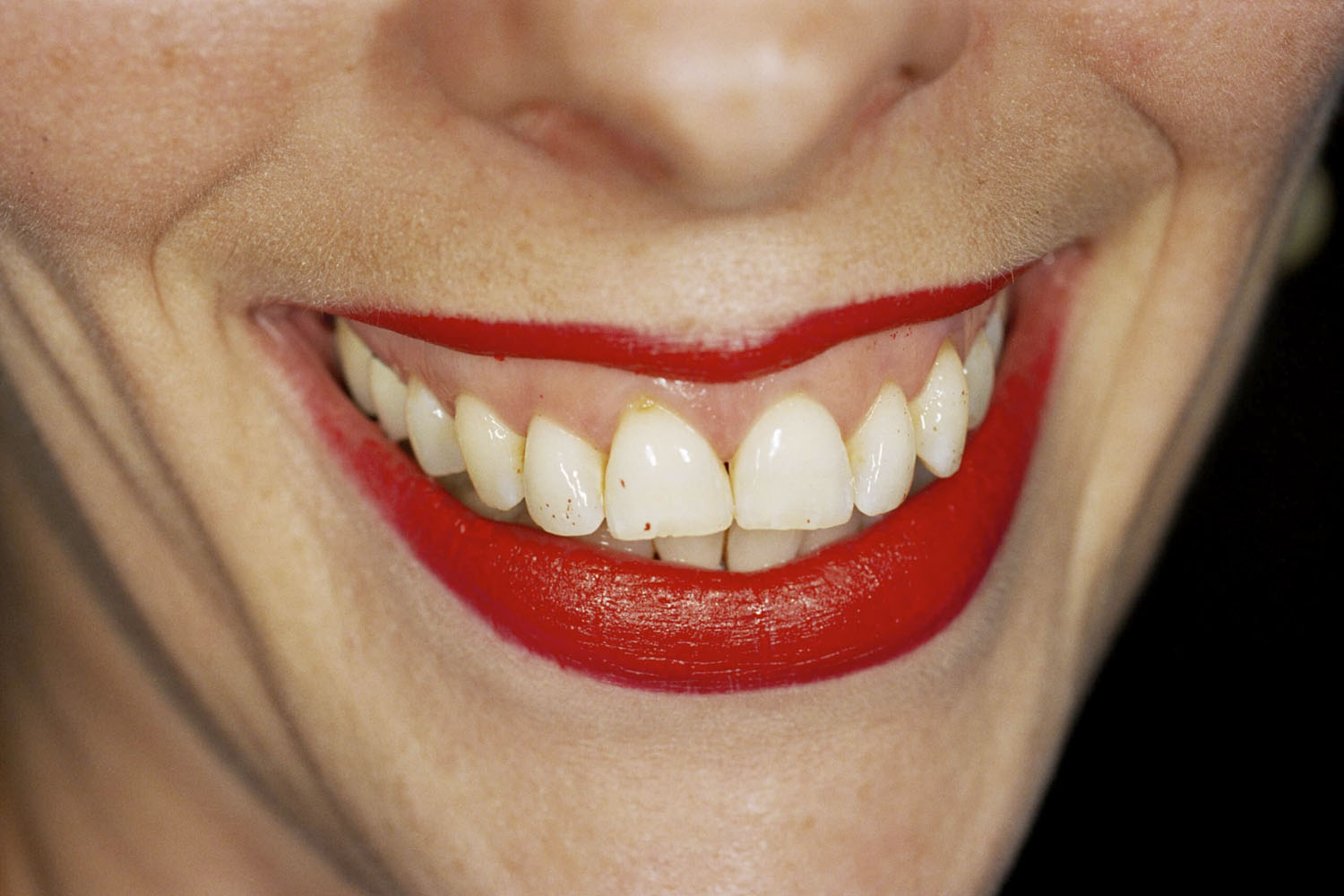
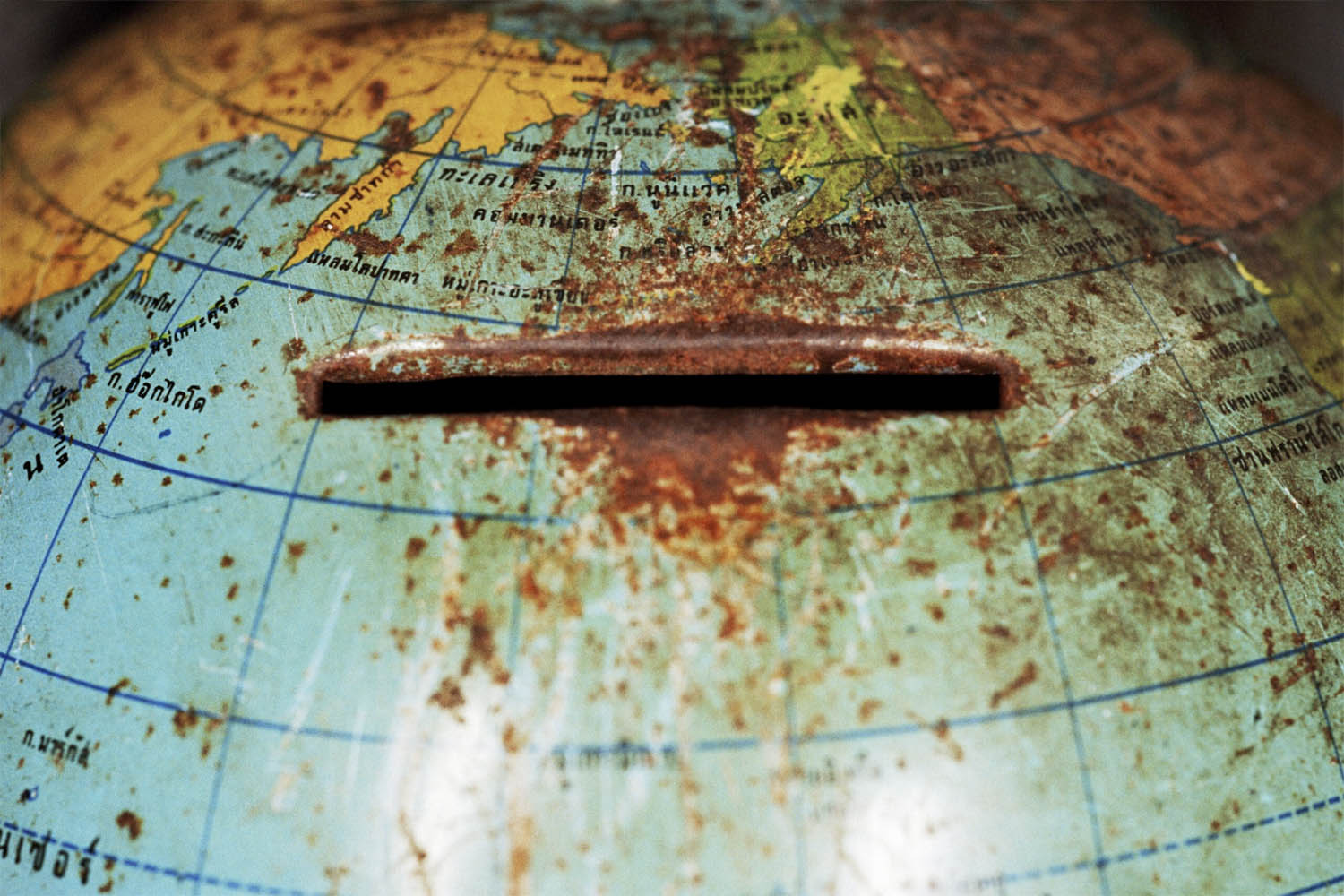
Exhibition: ‘Martin Parr: Global Warning’ at Jeu de Paume, Paris

“Through his surreal, dream sequences captured in pop colour, punctum laden reality, Parr observed the absurdities of life on this planet…” Dr Marcus Bunyan

Exhibition dates: 30th January – 24th May, 2026

Curators: Quentin Bajac, in collaboration with Martin Parr and Clémentine de la Féronnière


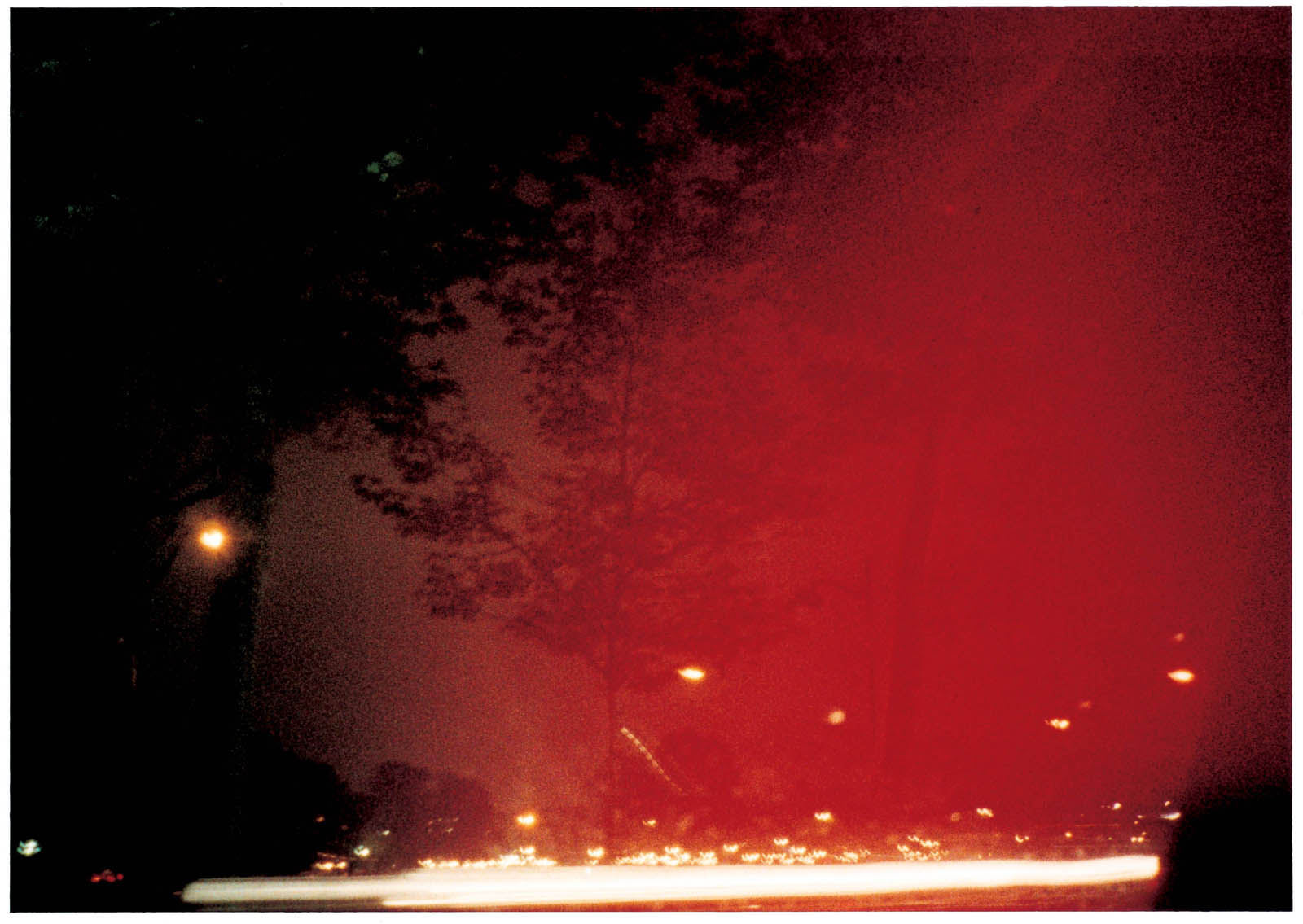
Martin Parr (English, 1952-2025) 'United Arab Emirates, Dubai' 2007


Martin Parr (English, 1952-2025)
United Arab Emirates, Dubai
2007
© Martin Parr / Magnum Photos


“Life is an act of consumption.

To consume is to live.”


From the film Jupiter Ascending 2015


“We are living in a time when, to borrow a phrase and book title of Sigmund Freud’s, civilization and its discontents are becoming painfully evident to us all. Our machine age technology with its private greed, ecologically disastrous policies, crass materialism, human alienation, incessant strife and conflict, and the portent of man’s destroying himself by his own recklessness, is taking its toll in terms of our confidence and optimism about life. …


John Anson Warner. “Introduction” to The Life & Art of the North American Indian. London: Hamlyn, 1975, p. 6.


A bewitching eye / the unfolding moment

A bewitching eye refers to eyes that are so powerfully, seductively attractive or charming that they appear to cast a spell, mesmerising or enchanting an onlooker. They possess an irresistible, magnetic allure that captivates the viewer, having an almost magical ability to draw someone in. This description could metaphorically be applied to the photographs of the legendary (and I don’t use that word lightly) contemporary British photographer Martin Parr (1952-2025).

Parr was an observer of life with a socially critical eye. Through his surreal, dream sequences captured in pop colour, punctum laden reality, Parr observed the absurdities of life on this planet – human, animal, inanimate – with curiosity and a sense of wonder even while questioning our path to destruction. While this exhibition is split into various sections – Leisure & waste lands; Last Chance To Buy; Small World; The Animal Kingdom; and Technological Addictions – in reality most of his images from each of the sections could fit into any other, for the whole world is interconnected in the excesses and grotesqueness of modern life, of civilization and its discontents.

Parr’s exploration of the pyschogeography of the urbanscape, the exploration of urban environments that emphasises interpersonal connections to places, is damming in its technicolor coat of glory. Mass tourism takes us to leisure spaces like the beach where technology is used to take selfies and mountains of waste pile up near the water’s edge. Mass human, mass cultivation (of palm oil or eucalyptus trees for example) is causing mass extinction of species across the planet. Mass consumption means that we are using the Earth’s resources indiscriminately to fuel (ha!) our desire for the latest, larger four-wheel drive we can get our hands on, the latest fashions that end up in landfill every 6 month cycle when they are not bought, or the brightest, pinkest, must luscious cup cakes you have ever seen in your life.

Parr’s colour saturated photos draw us into this consumptive world where the body is racked by disease, where the patient will soon be on life support. Through his mesmerising, enchanting, multilicious photographs he pokes a great big subversive stick at our follies, excesses, self-destructive desires. Unfortunately, while Parr’s photos seep into our subconscious, most images have little power to change public and personal opinion – all they can do is proffer alternate visions and interpretations of the world and hope that some glimmer of recognition of the environmental damage we are doing will permeate the mind of the viewer.

Of course, Parr’s famous photographs did not appear out of thin air. He was a dedicated photographer whose art practice required years of hard work, talent and skill to obtain his images. He emphasises that, “you have to look at the history of photography and learn what they have done and achieved and apply that, think about it and have it in the back of your head and then you can apply that to your own work.” By doing that, “you may have the rare opportunity actually to develop your own voice, and you can become a photographer with a particular voice.”

“What you are going to do, of course, is to find a good connection to the world out there. It is the quality of that connection that is really important. So, you find a subject you feel strongly about. Then work out how to articulate that and that hopefully will give you momentum for you to get good work.”

Nothing comes without hard work and perseverance.

In the video below where he is giving advice to young photographers he states that he might get only ten great photographs a year, sometimes only one, but he shoots heap of photographs and then discards the dross. What he also says that is really important is that he is attentive to the unfolding moment, he is aware and ready for what the energy of the world puts in front of his eye and his camera. If only the human race was so aware.

Parr was a human being that I would have really liked to have met. To have a conversation about the energy of the world, the passion and commitment of human beings to do good things, to see things differently, to make a difference.

We have his images for as long as the human race exists. But I miss him already.

Dr Marcus Bunyan


More postings on Martin Parr on Art Blart

~ Vale Martin Parr (English, 1952-2025), December 2025
~ Text/Exhibition: “Out in the midday sun” on the exhibition Martin Parr. Early Works at Fotografie Forum Frankfurt (FFF), September 2024 – February 2025
~ Exhibition: Glamour stakes: Martin Parr at Monash Gallery of Art, Melbourne, October – December 2016
~ Exhibition: Only in England: Photographs by Tony Ray-Jones and Martin Parr at Media Space at Science Museum, London, September 2013 – March 2014
~ Review: Martin Parr: In Focus at Niagara Galleries, Richmond, Melbourne, March 2012


Many thankx to Jeu de Paume for allowing me to publish the photographs in the posting. Please click on the photographs for a larger version of the image.


“l’m creating entertainment, which has a serious message if you want to read into it, but I’m not trying to convince anyone – l’m just showing them what they think they may know already.”


Martin Parr, 2021


“We are heading towards catastrophe but we are all going there together. Who would dare ban cars or air travel?”

“When I take a photograph, I try to say something. Beyond the garish colours, there is a political message…”


Martin Parr


I now realise that almost all the images I have taken and produced are indirectly linked to climate change.”


Martin Parr 2009


Global Warning gives us Parr in all his gluttonous, giddy glory, an attentive, unabashed and unpretentious observer of everyday absurdities. But through clever curatorial nudges, this show also gives us other unexpected sides to Parr, a creeping sense of a doom we are hurtling towards at breakneck speed.”


Charlotte Jansen. Martin Parr: Global Warning review – the great photographer in all his gluttonous, giddy glory,” on The Guardian website Mon 20 April 2026 [Online] Cited 21/04/2026


Martin Parr’s Advice to Young Photographers | Louisiana Channel

“You are probably going to fail, so unless you are obsessed, almost like a disease, you are not going to make it.” Legendary Martin Parr, regarded as the most crucial figure in contemporary British photography, offers advice to young photographers.

“What you are going to do, of course, is to find a good connection to the world out there. It is the quality of that connection that is really important. So, you find a subject you feel strongly about. Then work out how to articulate that and that hopefully will give you momentum for you to get good work.”

Another thing which is very important for Martin Parr to emphasise is that “you have to look at the history of photography and learn what they have done and achieved and apply that, think about it and have it in the back of your head and then you can apply that to your own work.” By doing that, “you may have the rare opportunity actually to develop your own voice, and you can become a photographer with a particular voice.”

Copyright: Louisiana Channel, Louisiana Museum of Modern Art, 2022

Text from the YouTube website


Martin Parr (English, 1952-2025) 'Galway Races, Ireland' 1997


Martin Parr (English, 1952-2025)
Galway Races, Ireland
1997
From the series Luxury
© Martin Parr / Magnum Photos


Martin Parr (English, 1952-2025) 'London, England' 1997


Martin Parr (English, 1952-2025)
London, England
1997
© Martin Parr / Magnum Photos


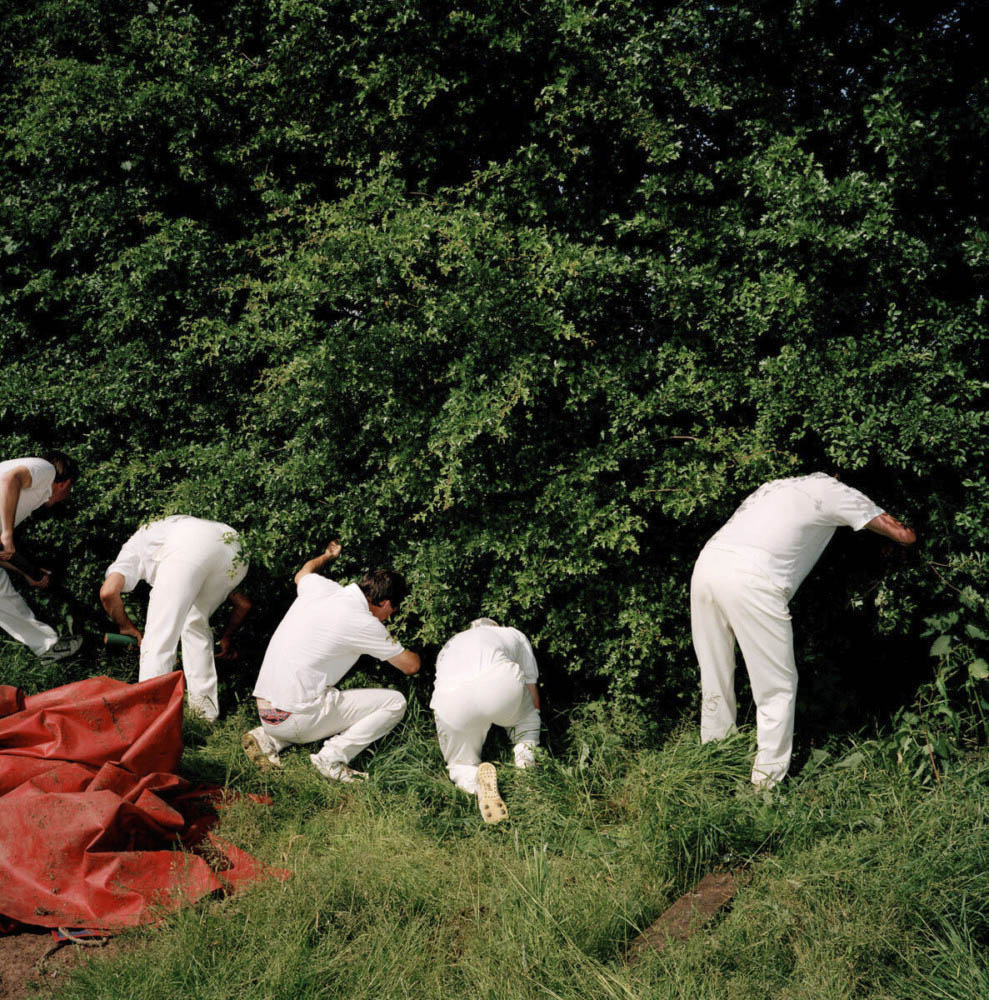
Martin Parr (English, 1952-2025) 'Cricket players looking for a cricket ball, Chew Stoke, England' 1992


Martin Parr (English, 1952-2025)
Cricket players looking for a cricket ball, Chew Stoke, England
1992
© Martin Parr / Magnum Photos


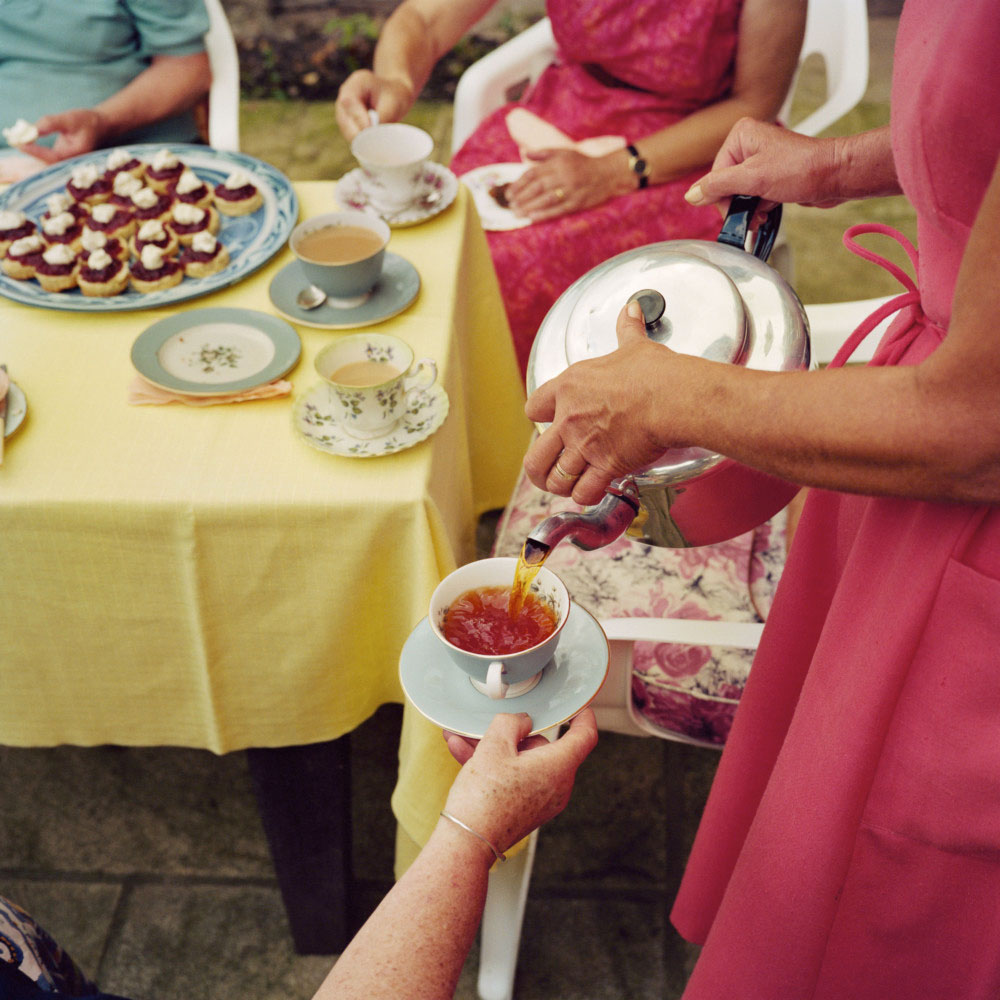
Martin Parr (English, 1952-2025) 'Garden tea party, Chew Stoke, Somerset, England' 1992


Martin Parr (English, 1952-2025)
Garden tea party, Chew Stoke, Somerset, England
1992
© Martin Parr / Magnum Photos


Martin Parr (English, 1952-2025) 'Wells, Somerset, England' 2000


Martin Parr (English, 1952-2025)
Wells, Somerset, England
2000
© Martin Parr / Magnum Photos


This exhibition revisits the work of the late British photographer Martin Parr, bringing together a selection of series produced since the 1970s that find new resonance in light of the growing disarray of the contemporary world. For over fifty years, Parr travelled the globe not as an activist but as a relentless and amused observer, offering a lucid and unsparing portrait of global imbalances and the excesses of contemporary life: the grotesque face and damaging effects of mass tourism, the rise of car culture, our dependence on technology, unbridled consumerism, and our ambivalent relationship with other living beings.

Through his characteristically offbeat vision, Parr also indirectly engaged with the human behaviours driving contemporary climate change: the unrestrained use of transport, reliance on fossil fuels, global overconsumption, and environ mental degradation. Over time, and as social attitudes have shifted, what once appeared merely entertaining has revealed itself to be increasingly serious. ln retrospect, Parr’s corrosive irony places him within a long tradition of British satire: his sharp wit and deadpan humour deliver a critical, and at times merciless, view of the world we inhabit.

Text from the Jeu de Paume website


The Martin Parr: Global Warning exhibition at the Jeu de Paume (on display through May 2026) is organised into five thematic sections. These sections explore the excesses of modern life through about 180 photographs.

Leisure & waste lands: Focuses on recreational spaces like crowded beaches where pleasure often leads to environmental degradation.

Last Chance To Buy: Examines unbridled consumerism in supermarkets, malls, and luxury shops using Parr’s signature saturated colours.

Small World: Documents the rituals and “ravages” of mass tourism across five continents.

The Animal Kingdom: Explores our ambivalent relationship with animals – as pets, entertainment, or consumer products.

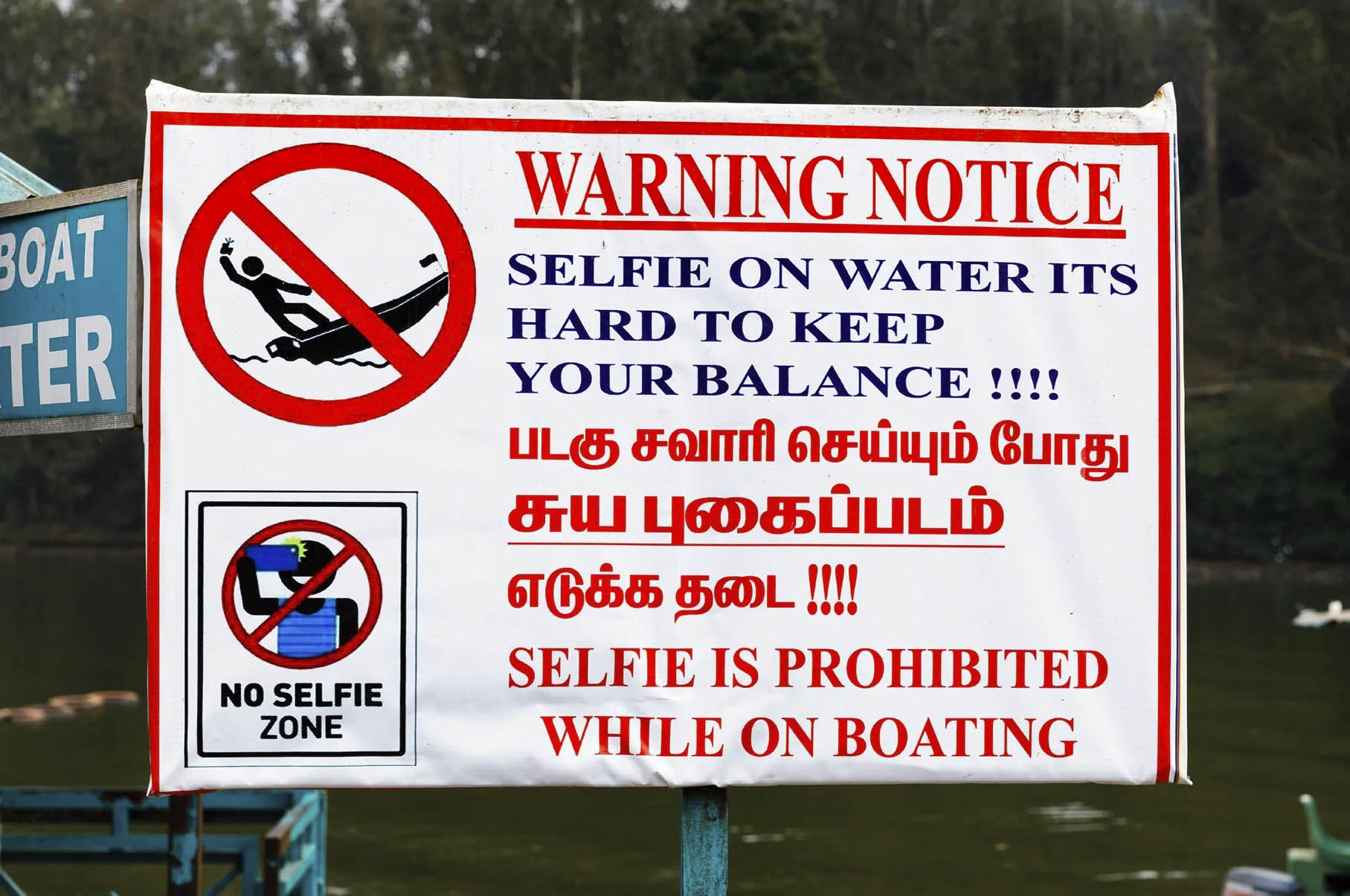
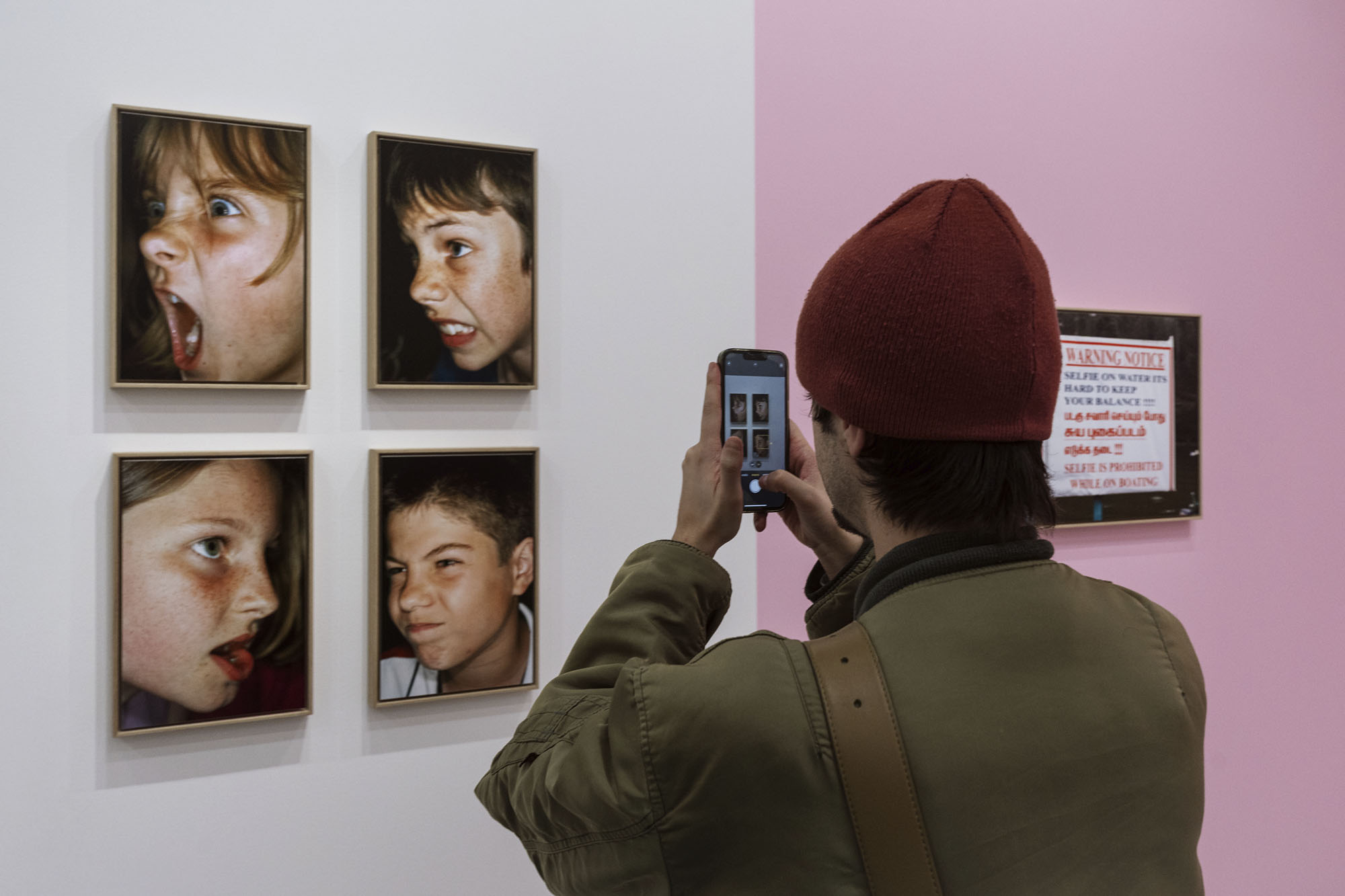
Technological Addictions: Highlights our growing dependence on machines, from slot machines to compulsive selfie-taking


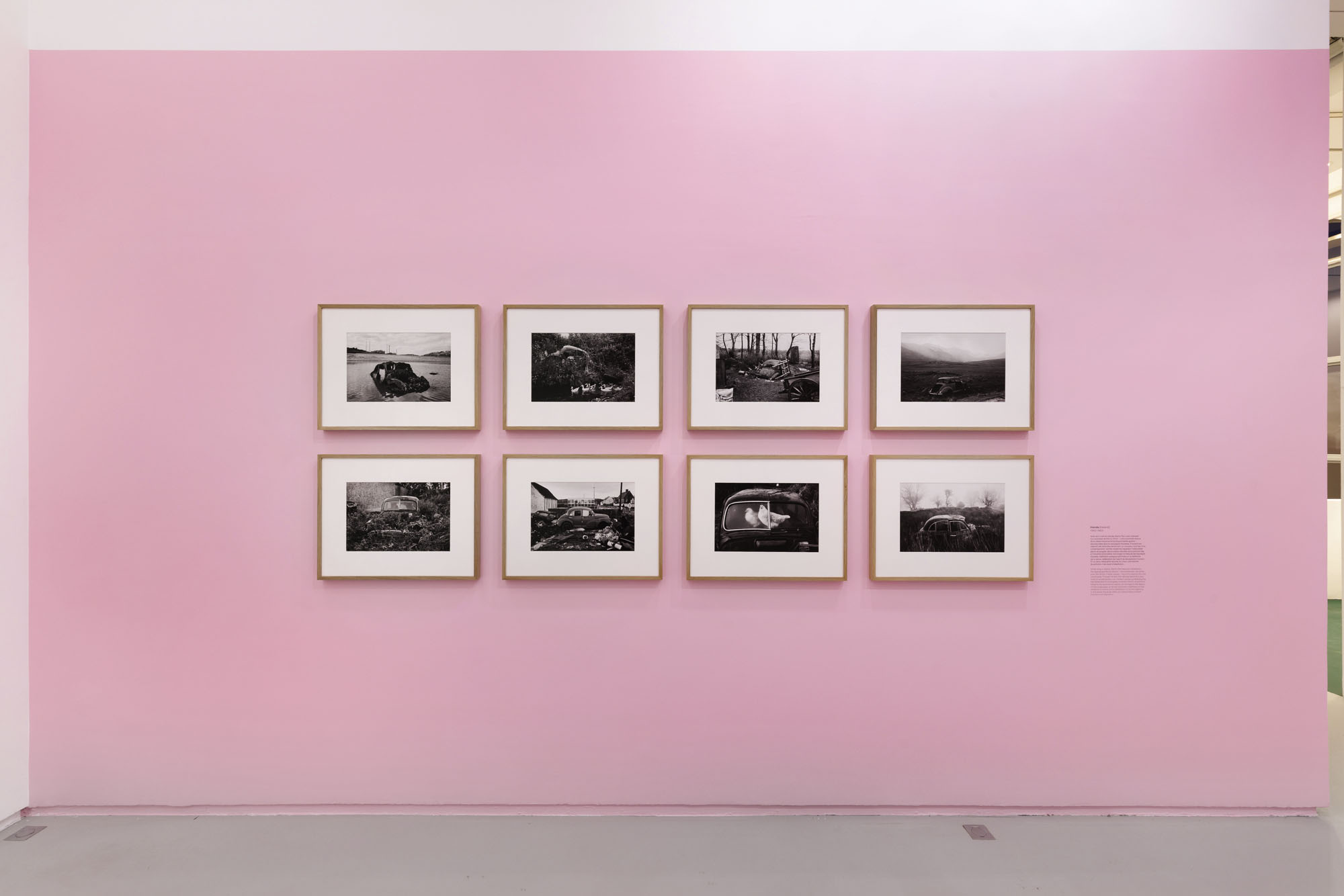
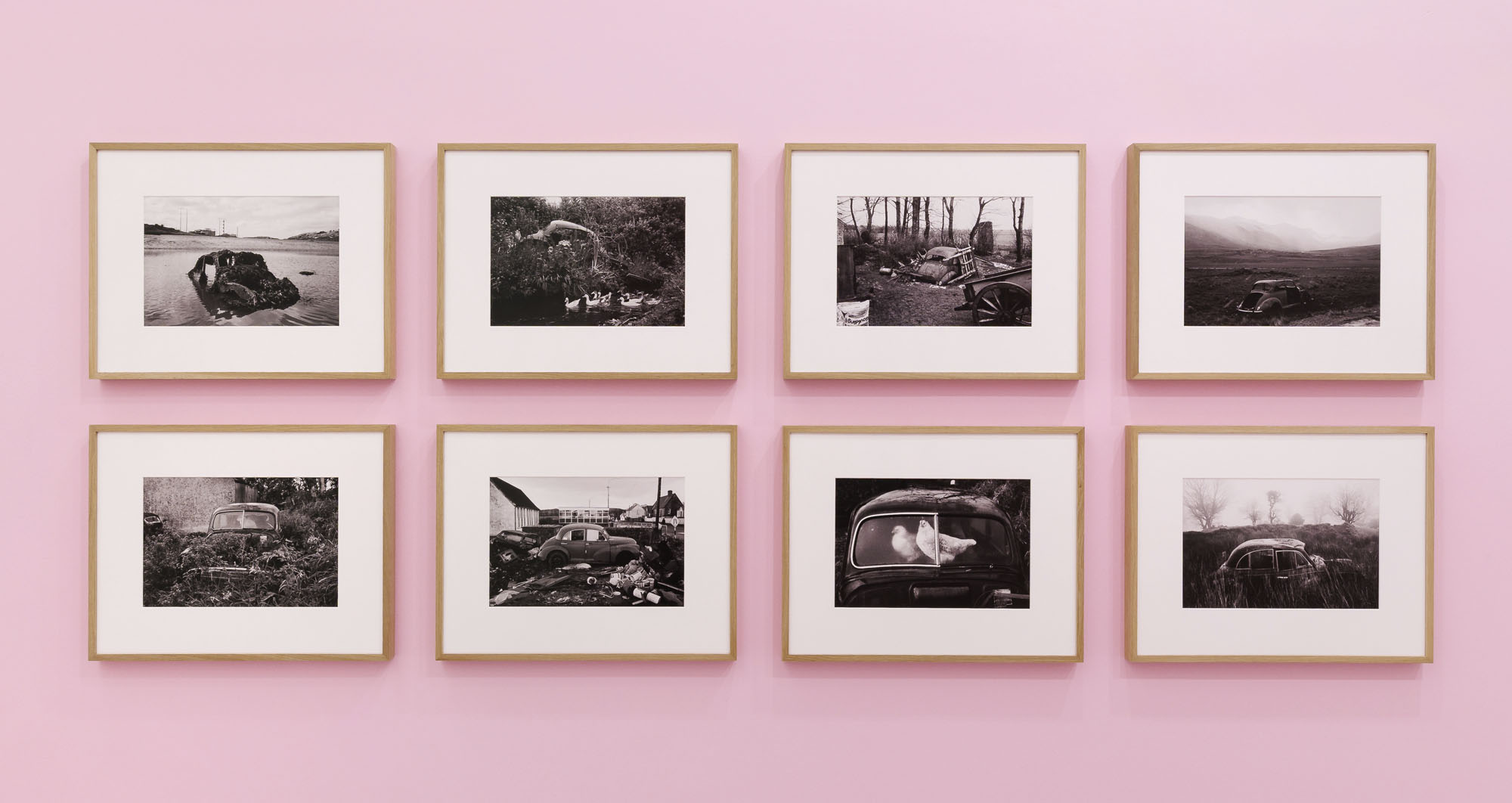
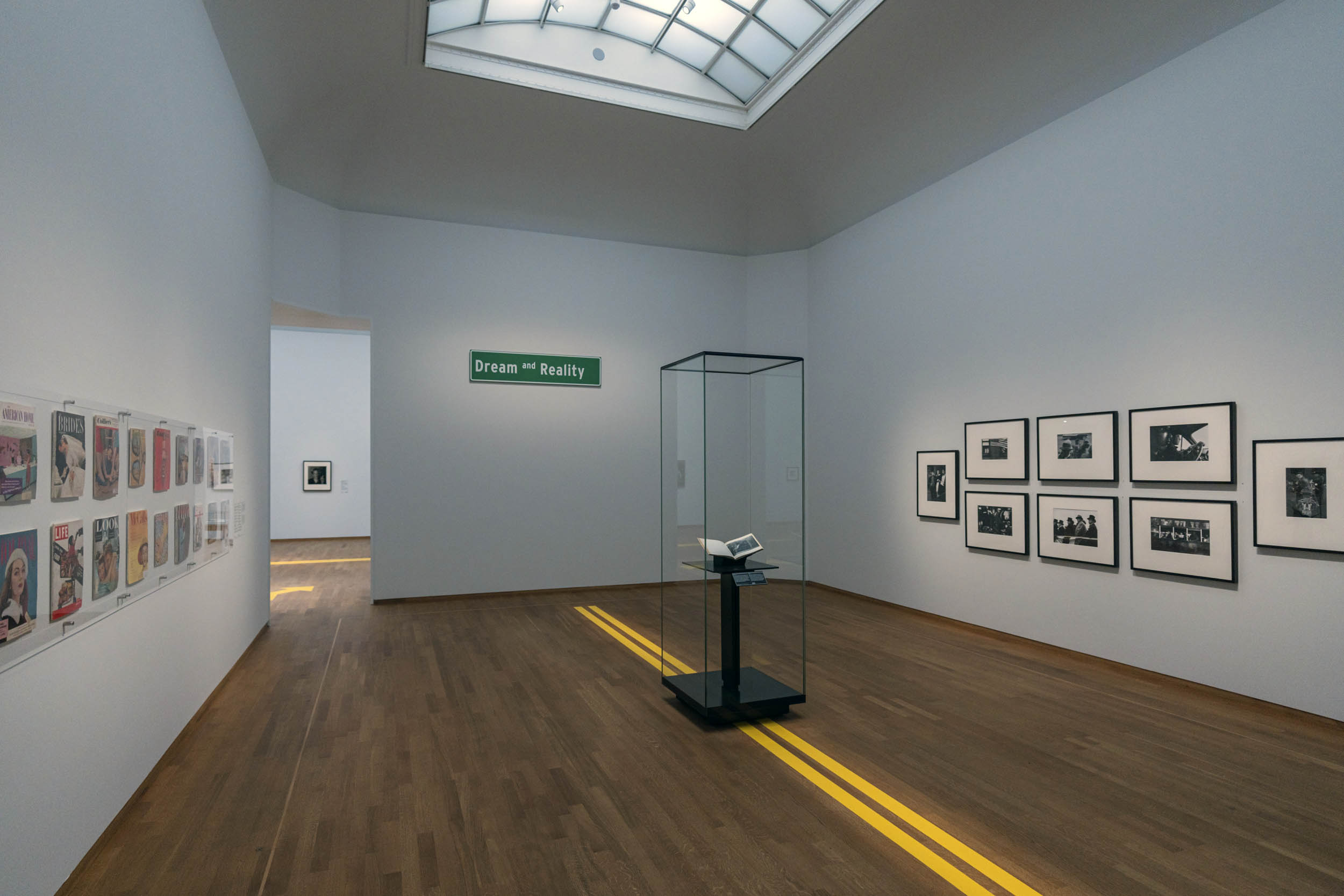
Installation view of the exhibition 'Martin Parr: Global Warning' at Jeu de Paume, Paris, January - May, 2026 showing Martin Parr's black and white photographs of Ireland 1980-83


Installation view of the exhibition Martin Parr: Global Warning at Jeu de Paume, Paris, January – May, 2026 showing Martin Parr’s black and white photographs of Ireland 1980-83
Photos: Salim Santa Lucia


Ireland 1980-1983

While living in Ireland, Martin Parr became interested in the abandoned morris Minors – the emblematic car of the post-war British middle classes – found throughout the Irish countryside. Through his lens, the vehicles become a new motif of contemporary ruin: modern vanities symbolising the inevitable decline of progress, a subtle criticism of pollution linked to the automotive industry, an homage to the beauty of Irish landscapes, an almost optimistic meditation on the resilience of nature, and a celebration of human ingenuity. In this sense, the series offers an implicit history of both pollution and adaptation.

Wall text from the exhibition


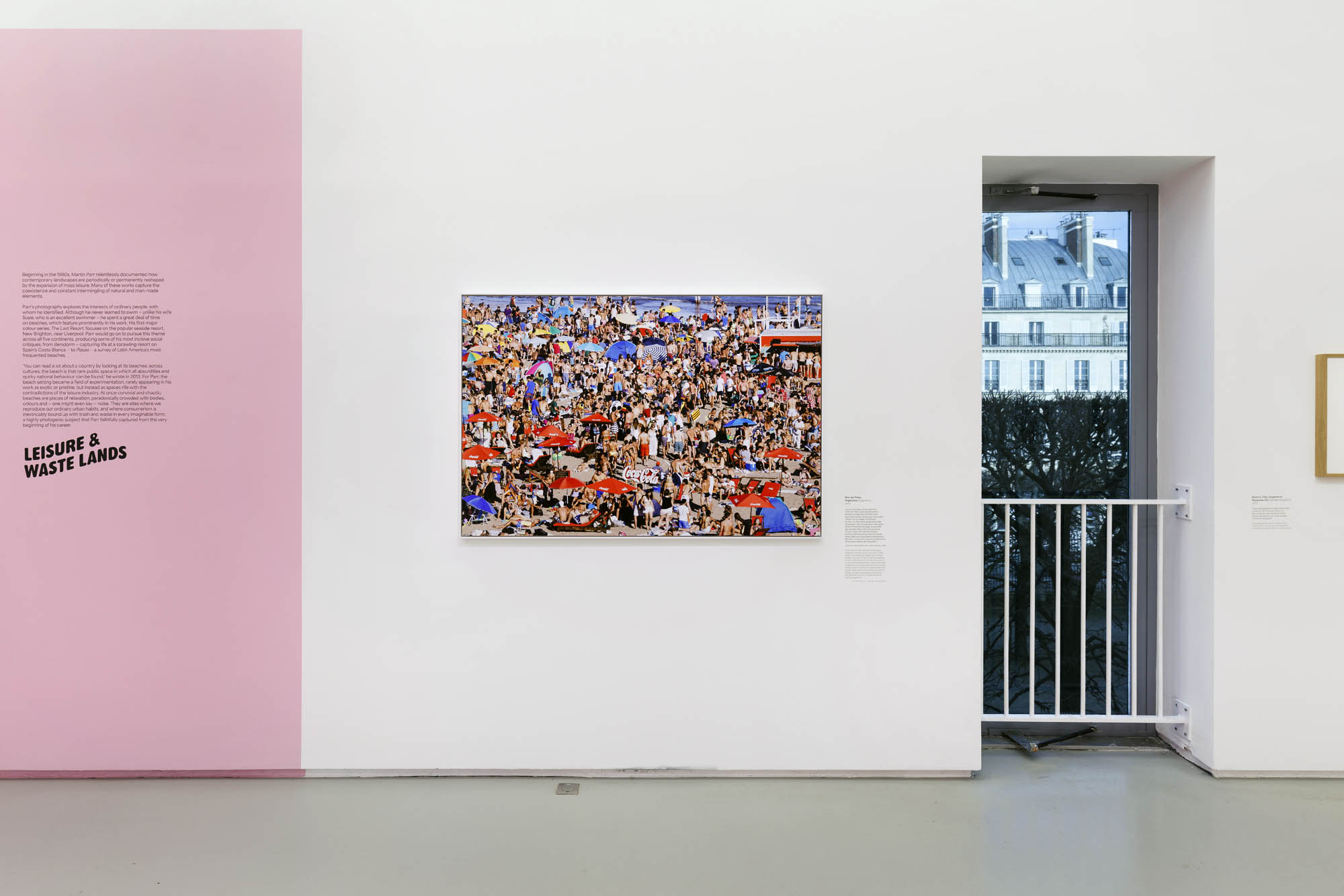
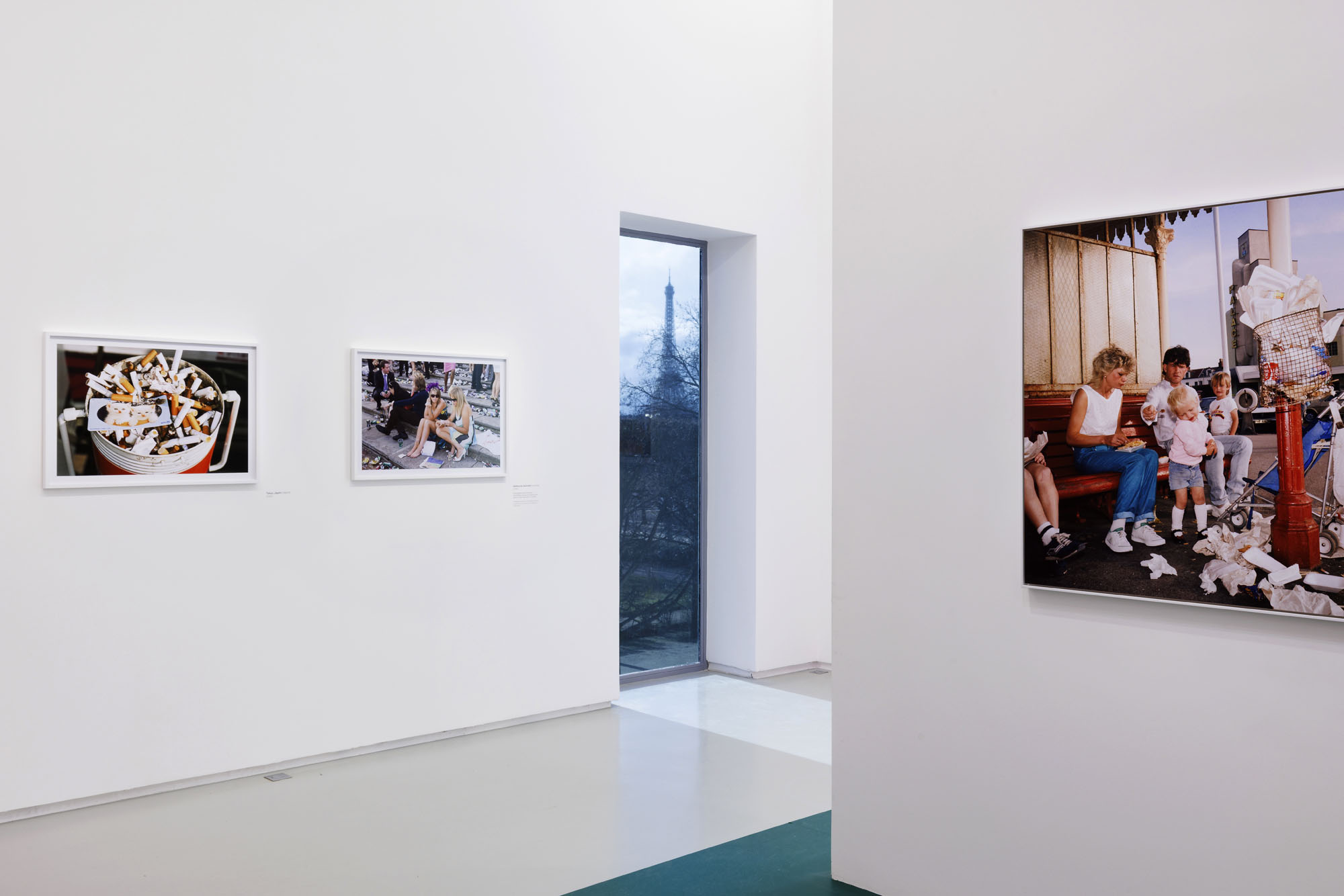
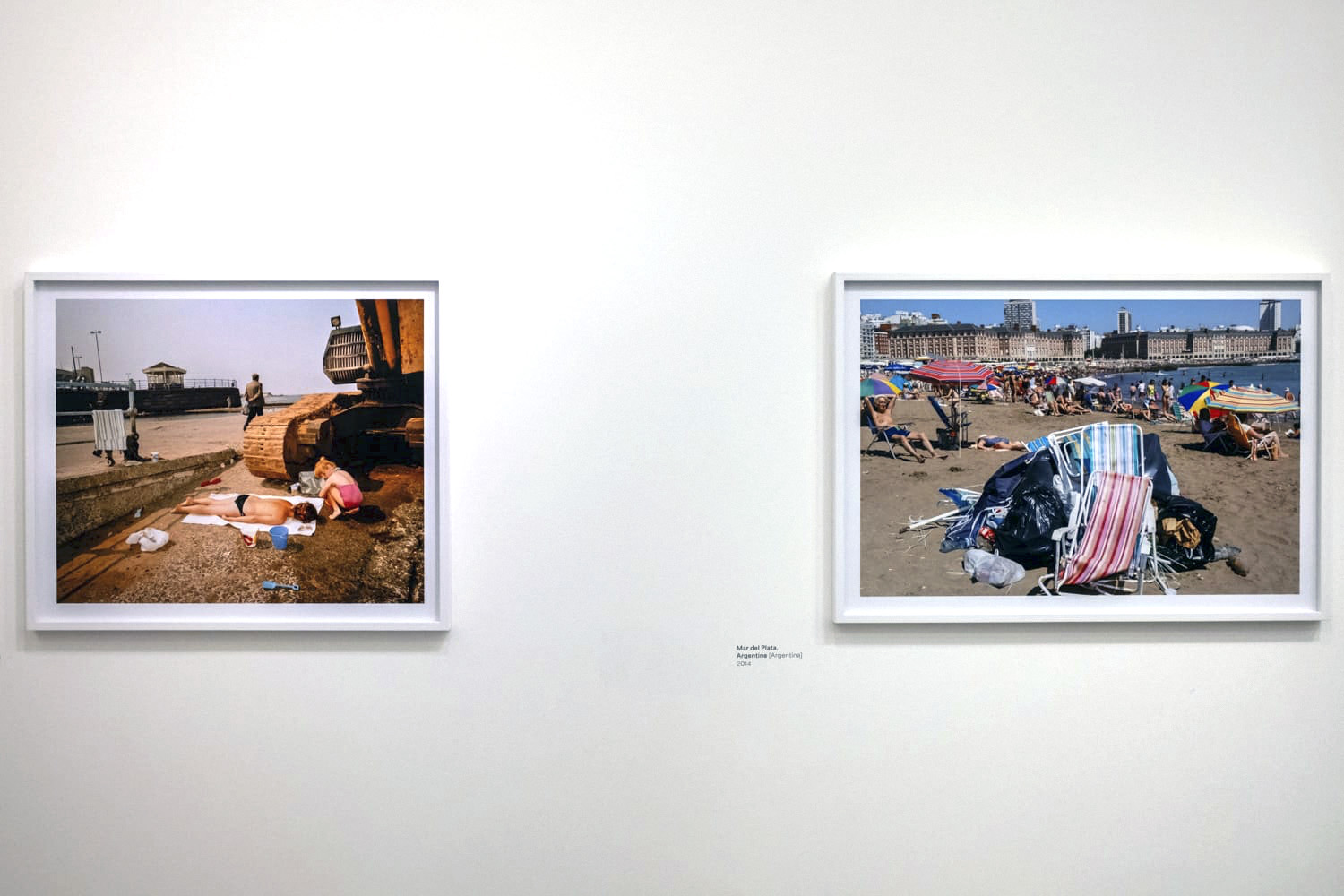
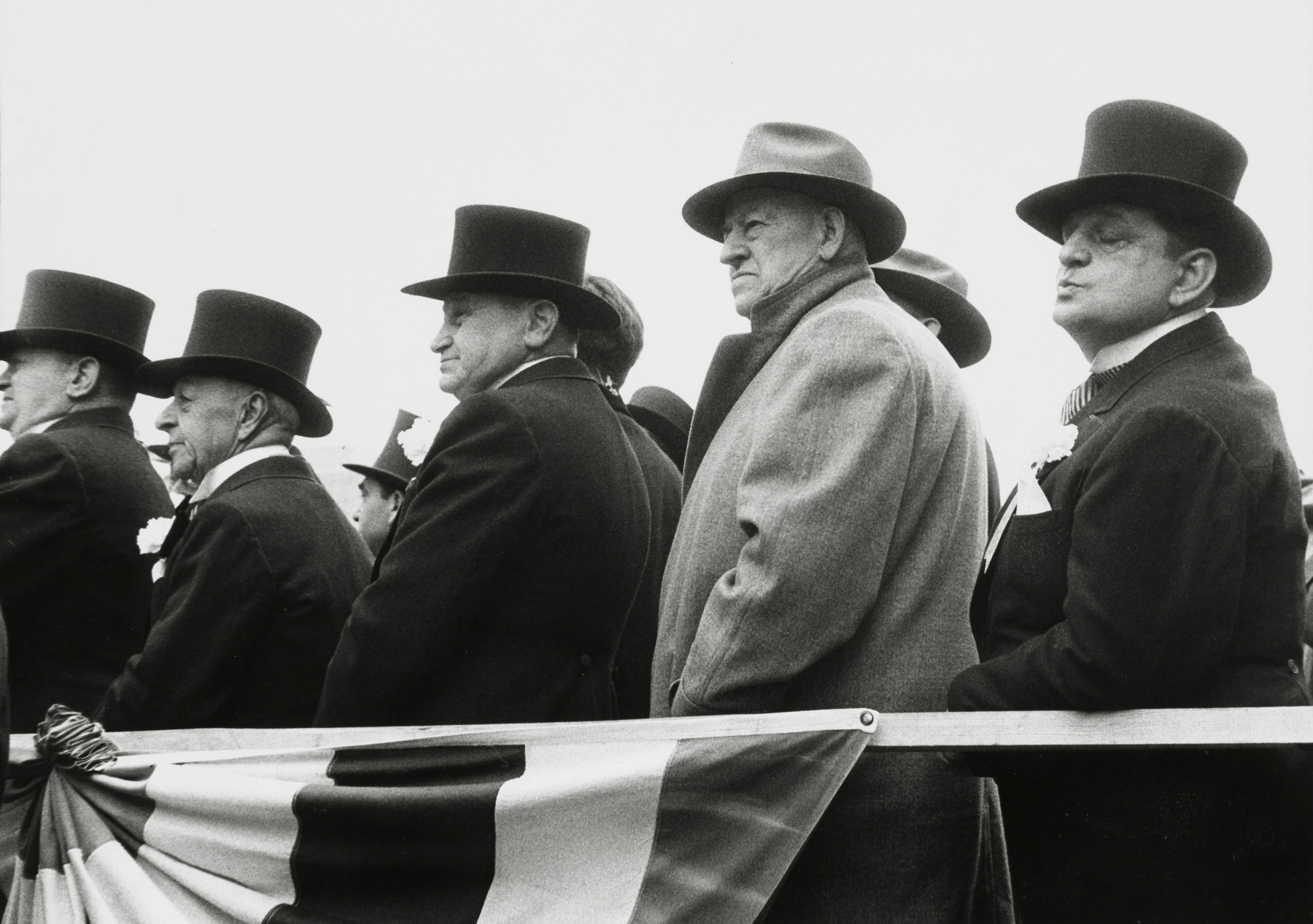
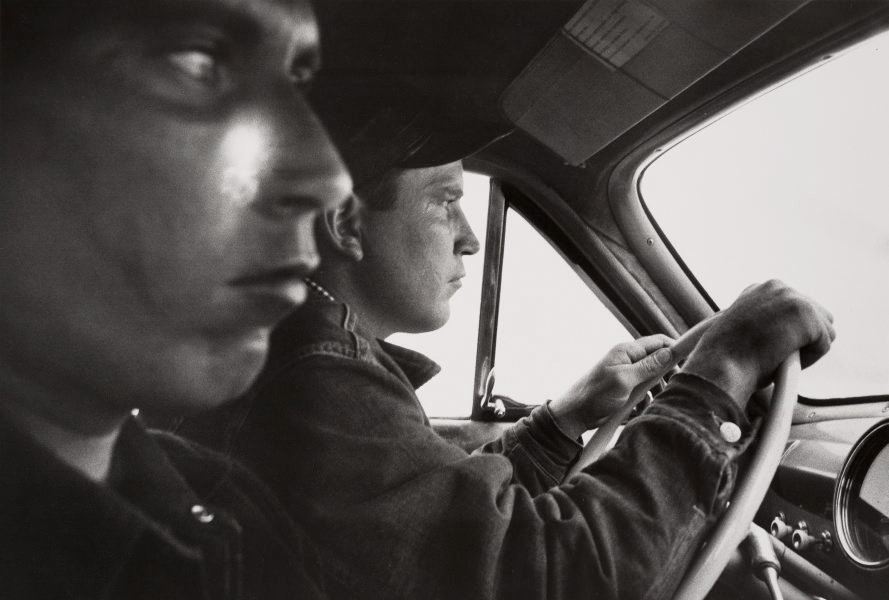
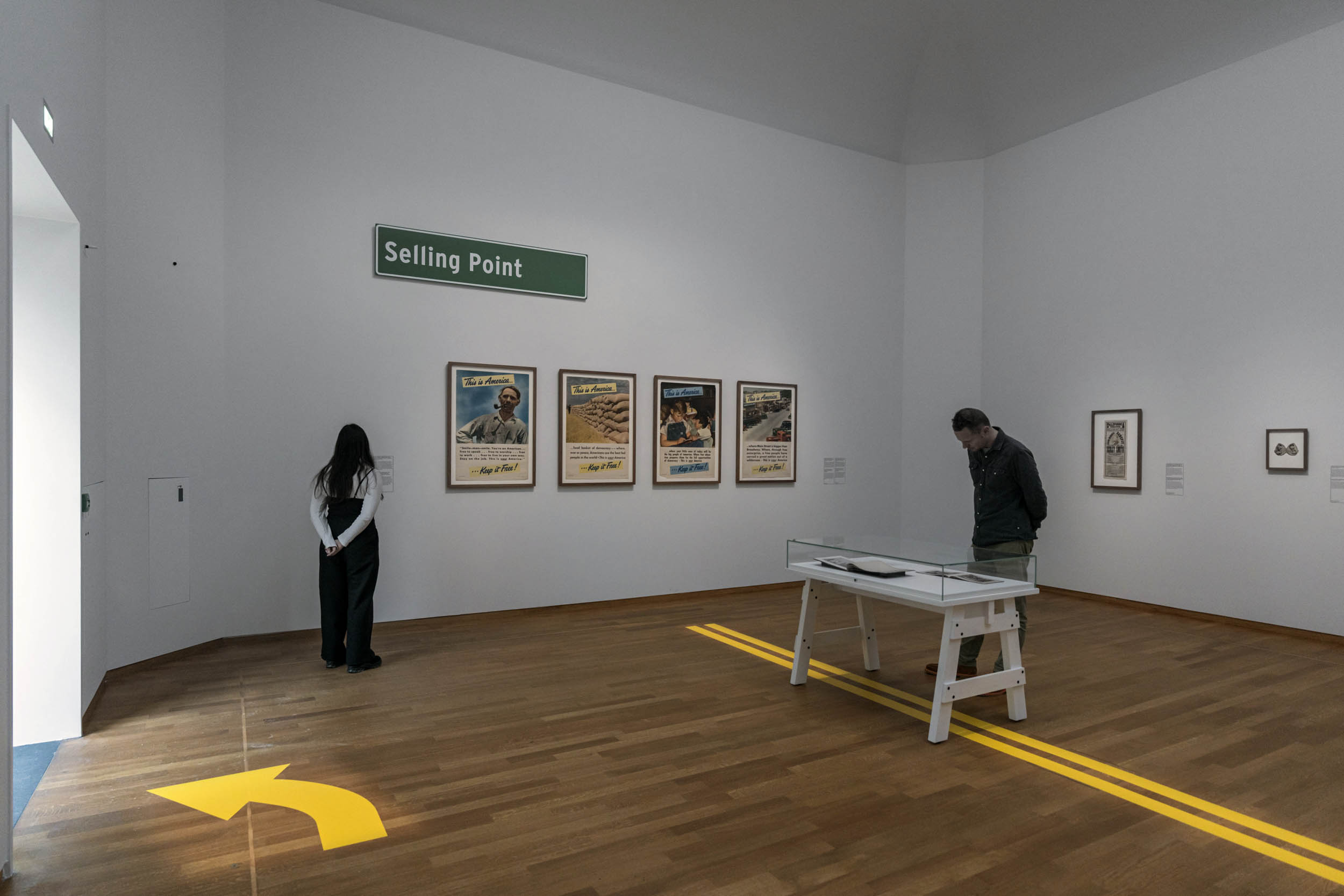
Installation view of the exhibition 'Martin Parr: Global Warning' at Jeu de Paume, Paris, January - May, 2026 showing at left the wall text "Leisure & Waste Lands" and at centre, Martin Parr's 'Mar del Plata, Argentina' (2014)


Installation view of the exhibition Martin Parr: Global Warning at Jeu de Paume, Paris, January – May, 2026 showing at left the wall text “Leisure & Waste Lands” and at centre, Martin Parr’s Mar del Plata, Argentina (2014, below)


Leisure & Waste Lands

Beginning in the 1980s, Martin Parr relentlessly documented how contemporary landscapes are periodically or permanently reshaped by the expansion of mass leisure. Many of these works capture the coexistence and constant intermingling of natural and man-made elements.

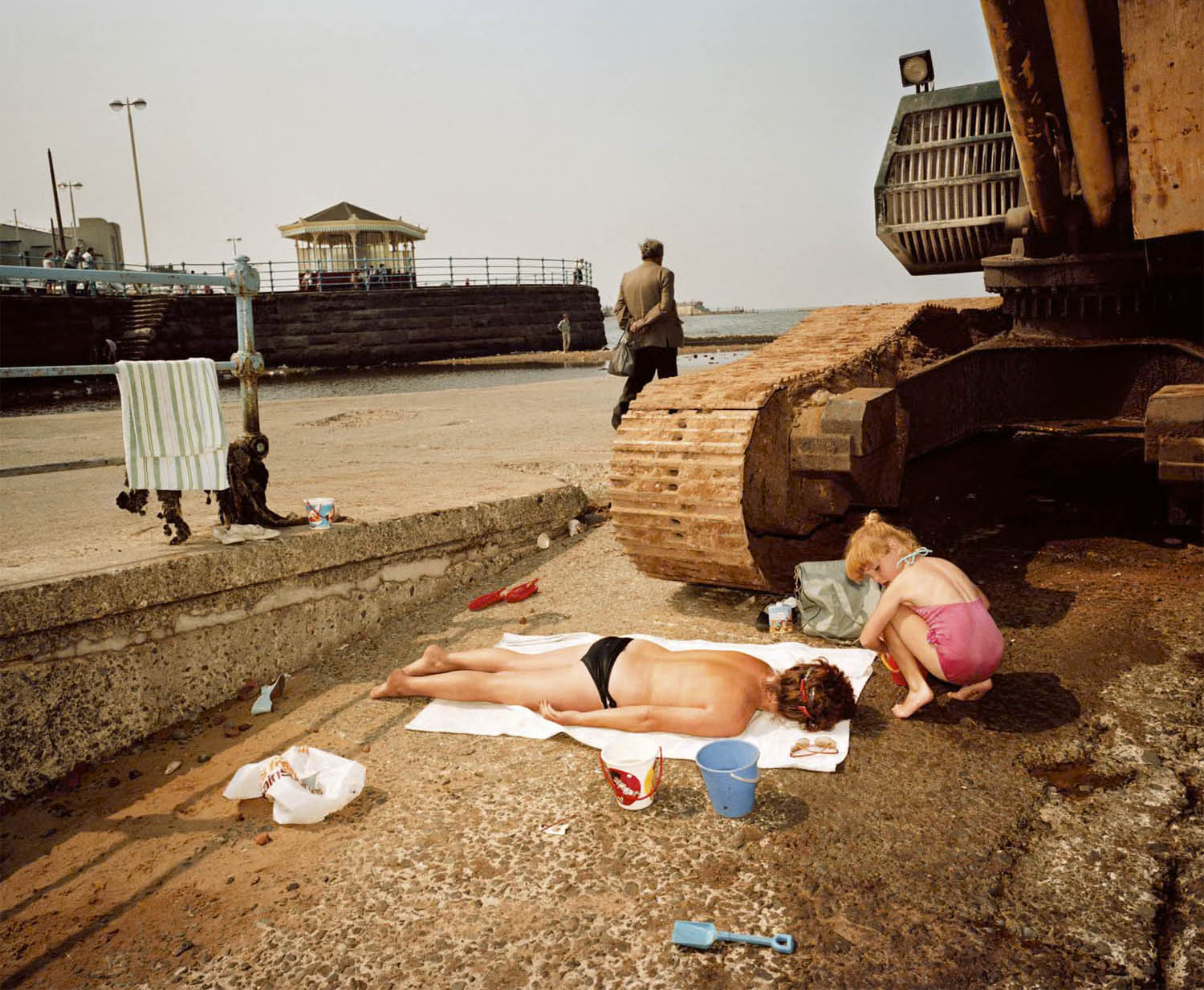
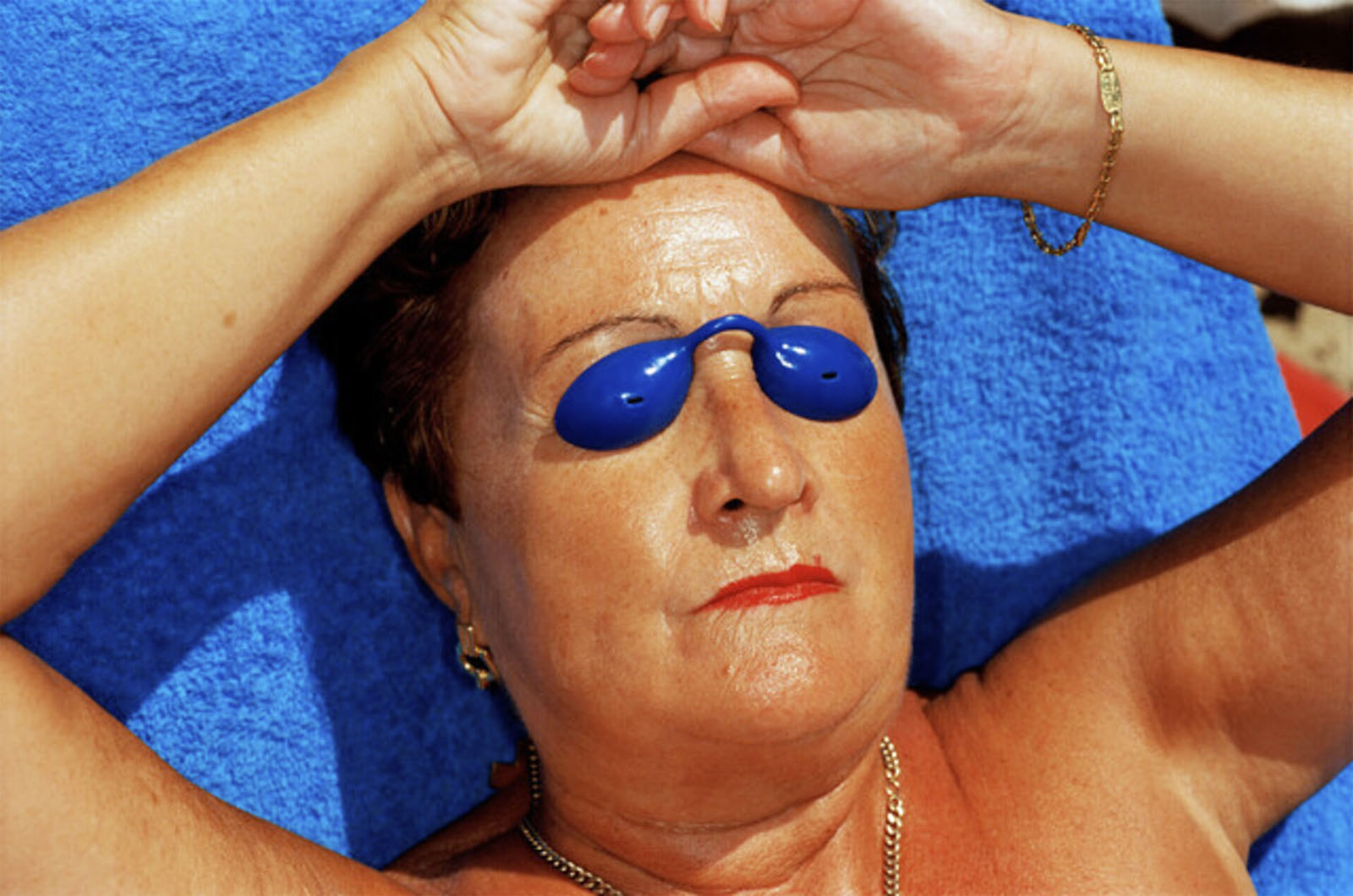
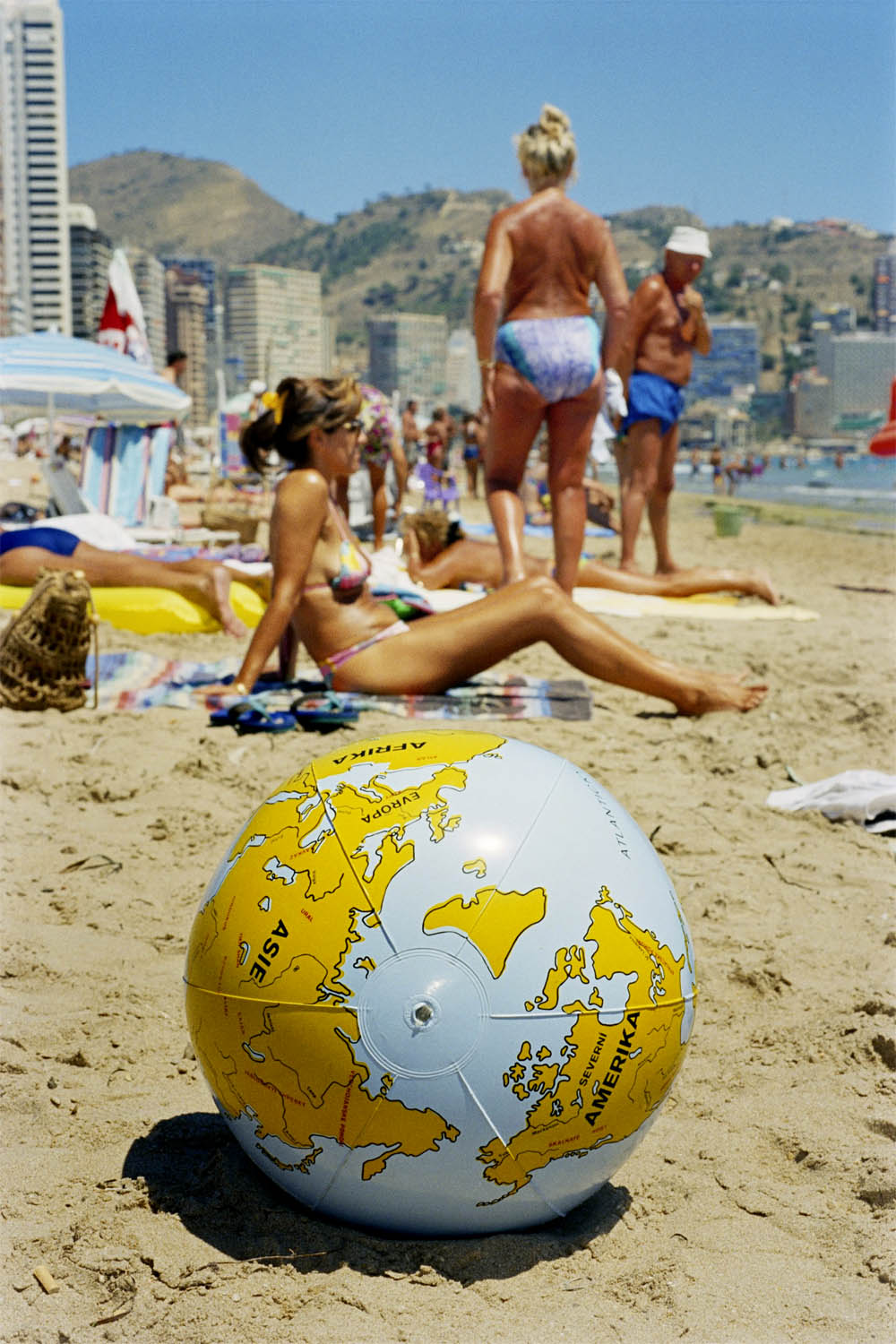
Parr’s photography explores the interests of ordinary people, with whom he identified. Although he never learned to swim – unlike his wife Susie, who is an excellent swimmer – he spent a great deal of time on beaches, which feature prominently in his work. His first major colour series, ‘The Last Resort’, focuses on the popular seaside resort, New Brighton, near Liverpool. Parr would go on to pursue this theme across all five continents, producing some of his most incisive social critiques, from ‘Benidorm’ – capturing life at a sprawling resort on Spain’s Costa Blanca – to ‘Playas’ – a survey of Latin America’s most frequented beaches.

‘You can read a lot about a country by looking at its beaches: across cultures, the beach is that rare public space in which all absurdities and quirky national behaviour can be found,’ he wrote in 2013. For Parr, the beach setting became a field of experimentation, rarely appearing in his work as exotic or pristine, but instead as spaces rife with the contradictions of the leisure industry. At once convivial and chaotic, beaches are places of relaxation, paradoxically crowded with bodies, colours and – on might even say – noise. They are sites where we reproduce our ordinary urban habits, and where consumerism is inextricably bound up with trash and waste in every imaginable form: a highly photogenic subject that Parr faithfully captured from the very beginning of his career.

Wall text from the exhibition


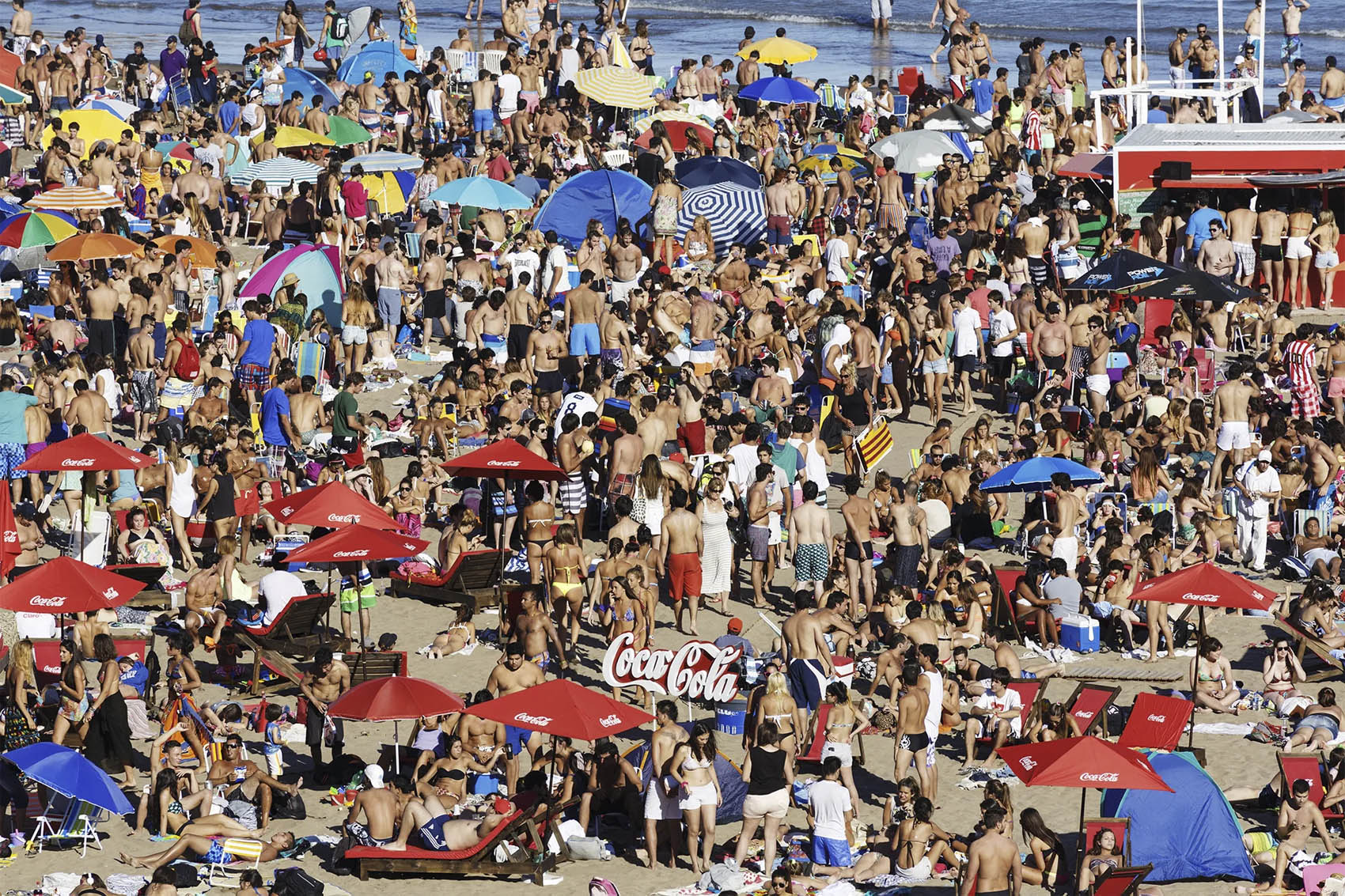
Martin Parr (English, 1952-2025) 'Mar del Plata, Argentina' 2014


Martin Parr (English, 1952-2025)
Mar del Plata, Argentina
2014
© Martin Parr / Magnum Photos


‘I first came to Mar del Plata, the largest Argentine seaside resort, way back in 2007 when I was shooting images for my ‘Playas’ project, a survey of Latin American beaches. I was amazed then at the scale of the resort. It has two thousand hotels, sixteen kilometres of beaches, and welcomes over seven million visitors a year. In terms of scale, Mar del Plata dwarfs other well-known resorts across the globe, including Copacabana, Blackpool and benidorm, yet it is virtually unknown beyond Argentina.’

From Martin parr’s blog, Mar del Pata, 2004
Wall text from the exhibition


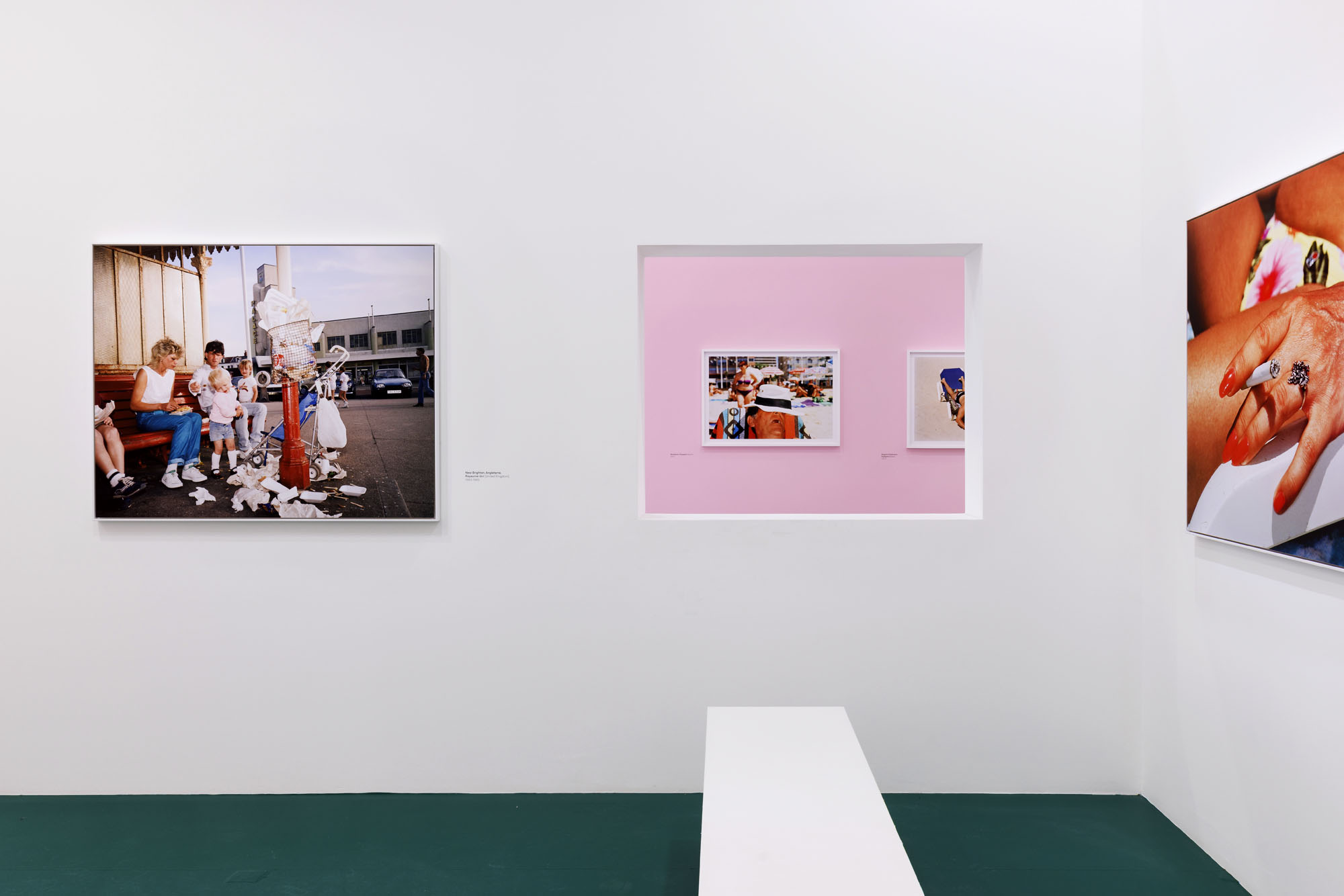
Installation view of the exhibition 'Martin Parr: Global Warning' at Jeu de Paume, Paris, January - May, 2026 showing at left, Martin Parr's 'New Brighton, United Kingdom' (1983-85); and at second left, Benidorm, Spain (1997)


Installation view of the exhibition Martin Parr: Global Warning at Jeu de Paume, Paris, January – May, 2026 showing at left, Martin Parr’s New Brighton, United Kingdom (1983-85, below); and at second left, Benidorm, Spain (1997)


Installation view of the exhibition 'Martin Parr: Global Warning' at Jeu de Paume, Paris, January - May, 2026 showing at left, Martin Parr's 'Tokyo, Japan' (2000); at second left, 'Melbourne, Australia' (2008); and at right, 'New Brighton, United Kingdom' (1983-85)


Installation view of the exhibition Martin Parr: Global Warning at Jeu de Paume, Paris, January – May, 2026 showing at left, Martin Parr’s Tokyo, Japan (2000, below); at second left, Melbourne, Australia (2008); and at right, New Brighton, United Kingdom (1983-85, below)


Martin Parr (English, 1952-2025) 'Tokyo, Japan' 2000


Martin Parr (English, 1952-2025)
Tokyo, Japan
2000
© Martin Parr / Magnum Photos


Martin Parr (English, 1952-2025) 'New Brighton, United Kingdom' 1983-85


Martin Parr (English, 1952-2025)
New Brighton, United Kingdom
1983-85
From Last Resort
© Martin Parr / Magnum Photos


Installation view of the exhibition 'Martin Parr: Global Warning' at Jeu de Paume, Paris, January - May, 2026 showing at left, Martin Parr's photograph 'New Brighton, United Kingdom' (1983-85); at at right, 'Mar del Plata, Argentina' (2014)


Installation view of the exhibition Martin Parr: Global Warning at Jeu de Paume, Paris, January – May, 2026 showing at left, Martin Parr’s photograph New Brighton, United Kingdom (1983-85, below); at at right, Mar del Plata, Argentina (2014)


Martin Parr (British, 1952-2025) 'New Brighton, England' 1983-1985 from the series 'The Last Resort'


Martin Parr (English, 1952-2025)
New Brighton, United Kingdom
1983-85
From Last Resort
© Martin Parr / Magnum Photos


Martin Parr (English, 1952-2025) 'Spending Time, Salford, England' 1986


Martin Parr (English, 1952-2025)
Spending Time, Salford, England
1986
© Martin Parr / Magnum Photos


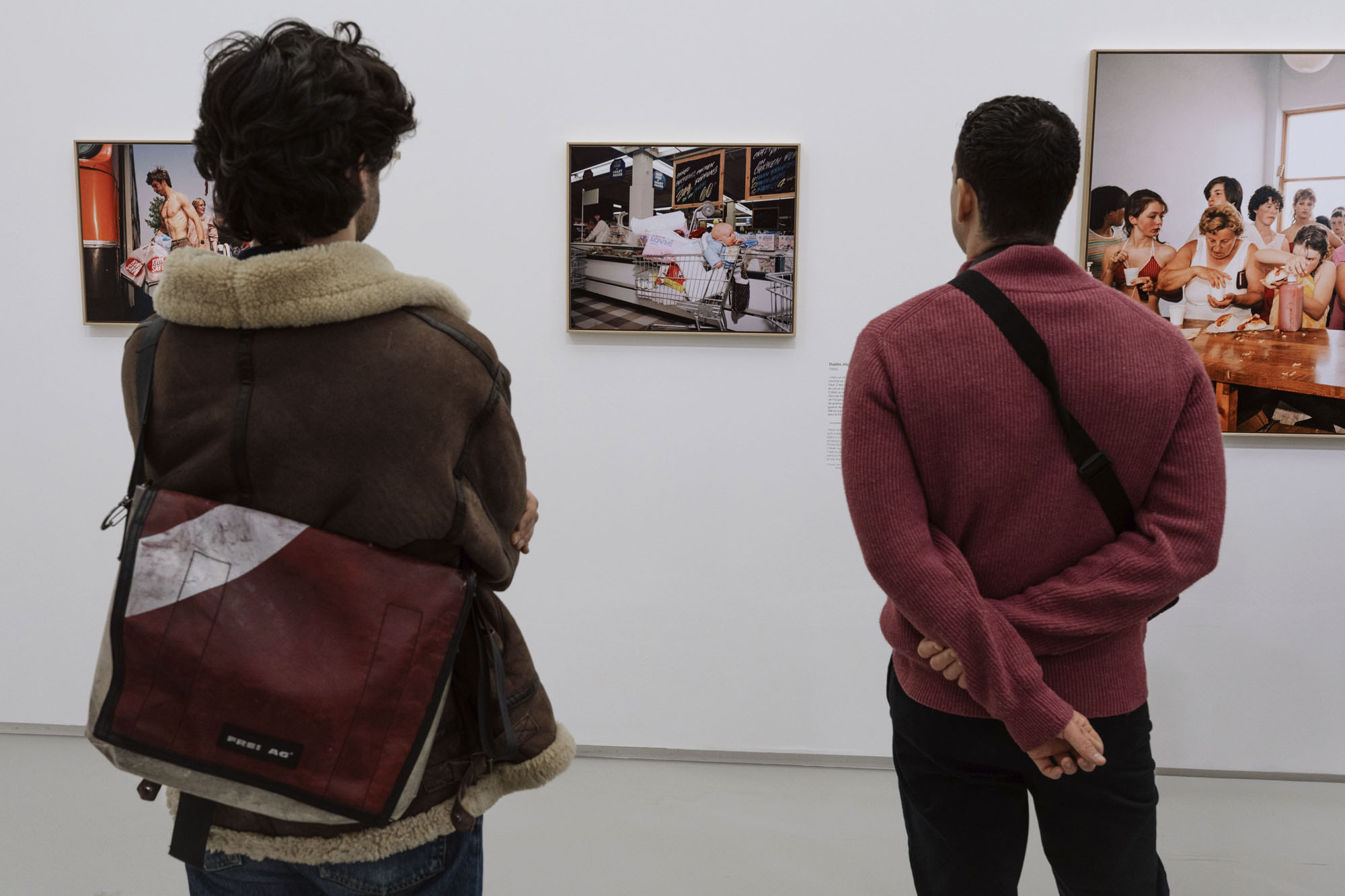
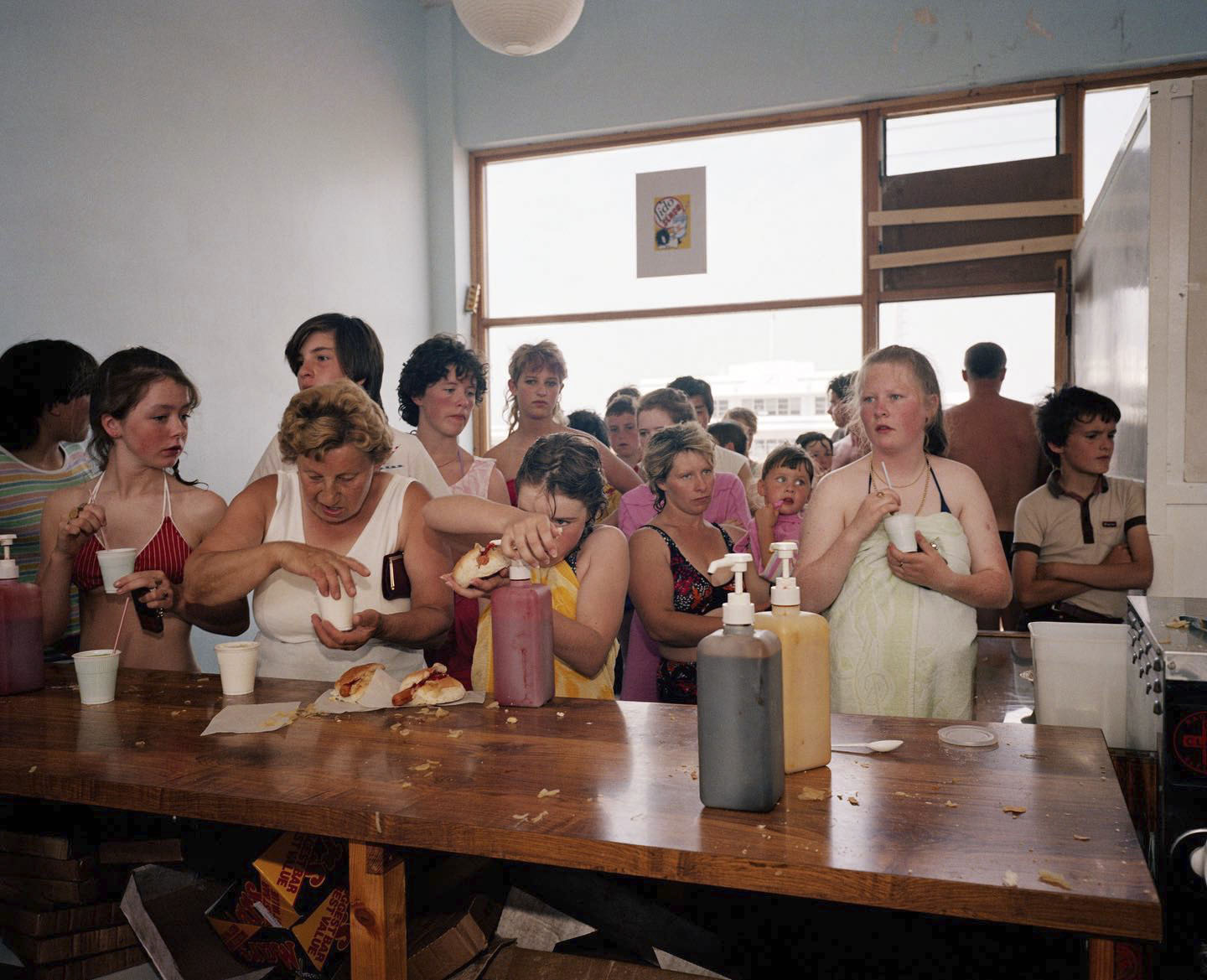
Installation view of the exhibition 'Martin Parr: Global Warning' at Jeu de Paume, Paris, January - May, 2026 showing at right, Martin Parr's photograph 'Untitled (Hot Dog Stand)' (1983-85) from 'Last Resort'


Installation view of the exhibition Martin Parr: Global Warning at Jeu de Paume, Paris, January – May, 2026 showing at right, Martin Parr’s photograph Untitled (Hot Dog Stand), United Kingdom (1983-85, below) from Last Resort


Martin Parr (English, 1952-2025) 'Untitled (Hot Dog Stand), United Kingdom' 1983-85


Martin Parr (English, 1952-2025)
Untitled (Hot Dog Stand), United Kingdom
1983-85
From Last Resort
© Martin Parr / Magnum Photos


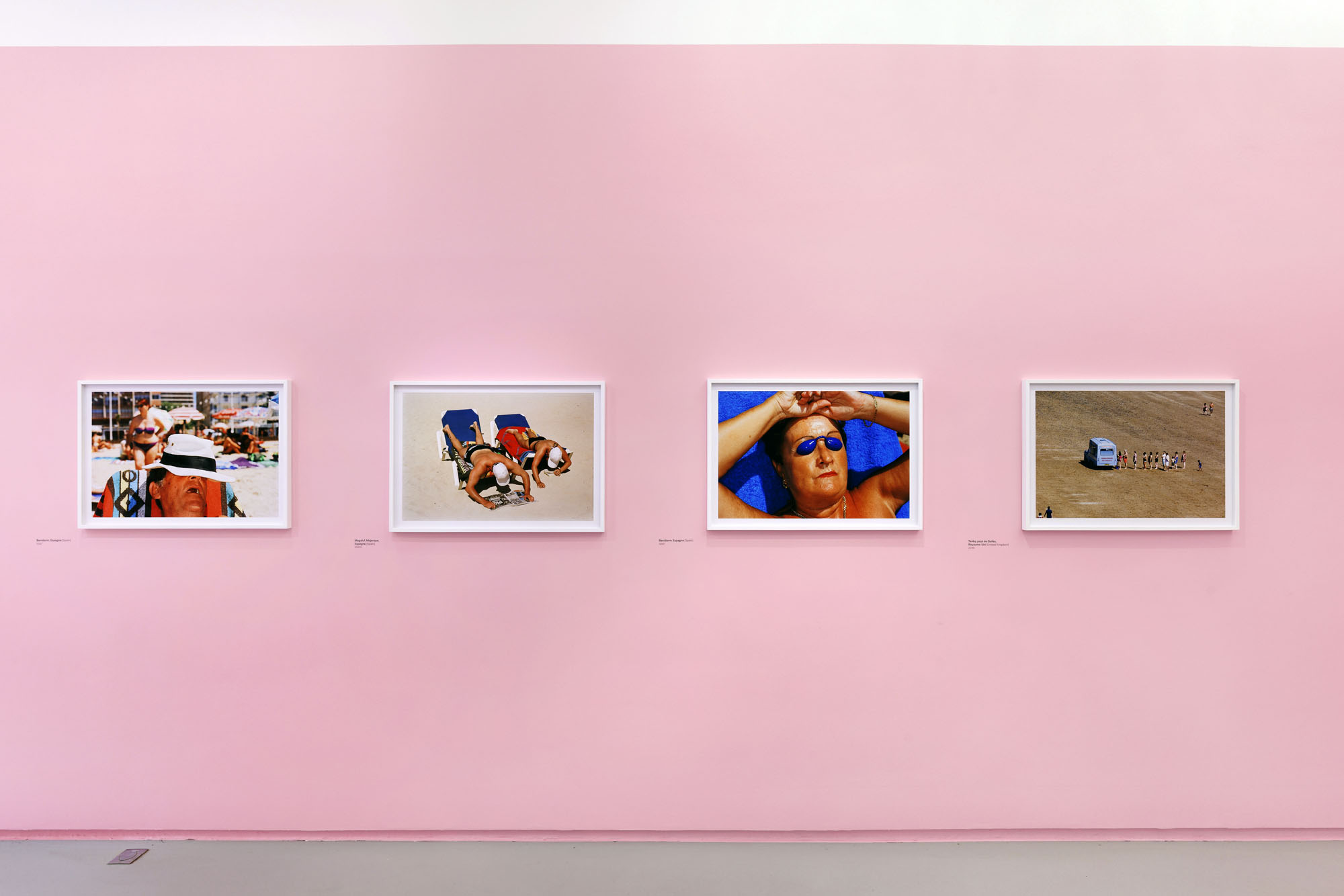
Installation view of the exhibition 'Martin Parr: Global Warning' at Jeu de Paume, Paris, January - May, 2026 showing from left to right, 'Benidorm, Spain' (1997); 'Magaluf, Majorca, Spain' (2003); 'Benidorm, Spain' (1997); and at right, 'Tenby, United Kingdom' (2018)


Installation view of the exhibition Martin Parr: Global Warming at Jeu de Paume, Paris, January – May, 2026 showing from left to right, Benidorm, Spain (1997); Magaluf, Majorca, Spain (2003); Benidorm, Spain (1997); and at right, Tenby, United Kingdom (2018)


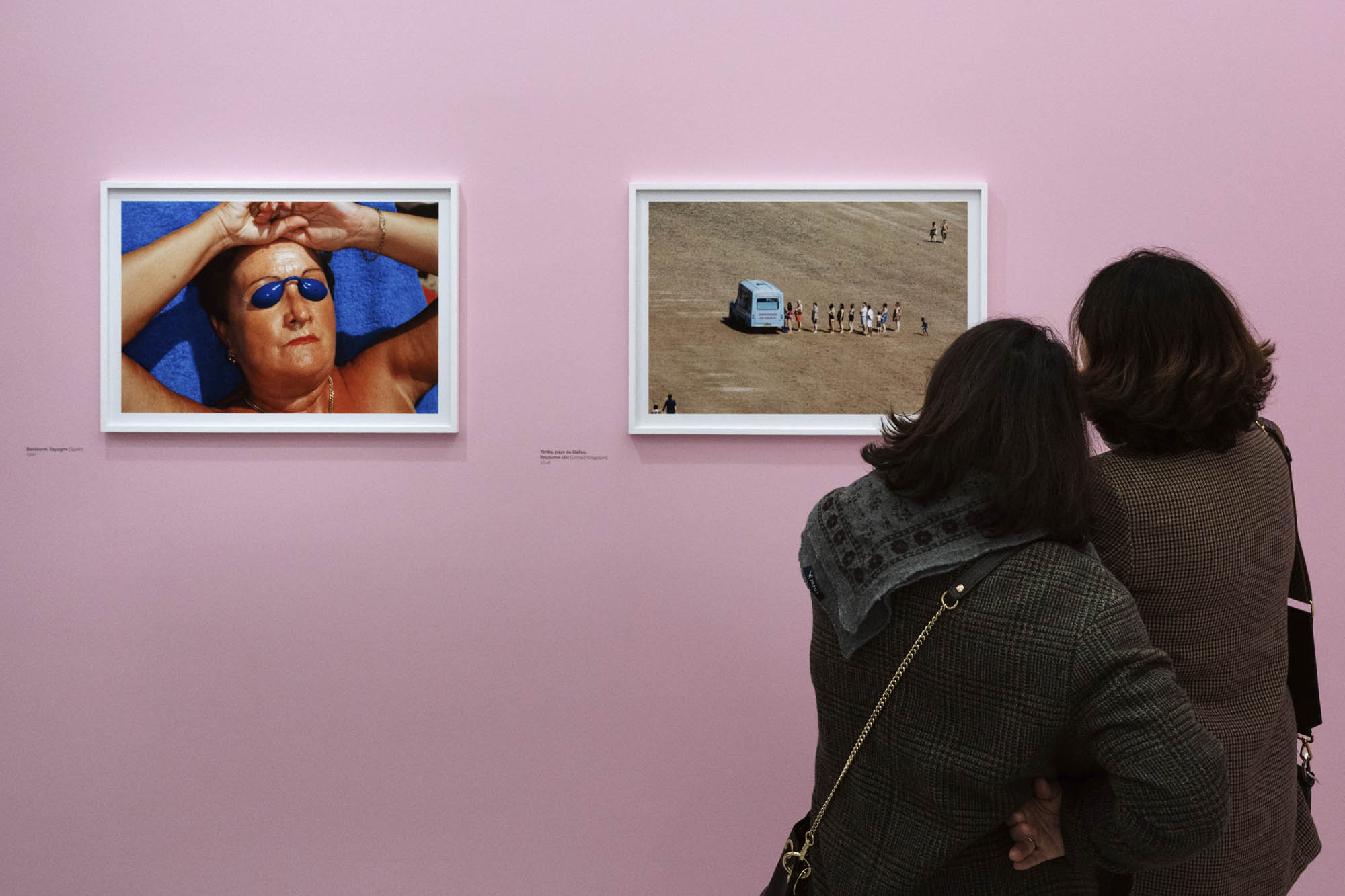
Installation view of the exhibition 'Martin Parr: Global Warning' at Jeu de Paume, Paris, January - May, 2026 showing at left, Martin Parr's 'Benidorm, Spain' (1997) and at right, 'Tenby, United Kingdom' (2018)


Installation view of the exhibition Martin Parr: Global Warming at Jeu de Paume, Paris, January – May, 2026 showing at left, Martin Parr’s Benidorm, Spain (1997, below) and at right, Tenby, United Kingdom (2018)


Martin Parr (English, 1952-2025) Benidorm, Spain' 1997


Martin Parr (English, 1952-2025)
Benidorm, Spain
1997
© Martin Parr / Magnum Photos


Martin Parr (English, 1952-2025) 'Benidorm, Spain' 1997


Martin Parr (English, 1952-2025)
Benidorm, Spain
1997
© Martin Parr / Magnum Photos


This exhibition invites the public to revisit the work of Martin Parr. Through different bodies of work created from the late 1970s to the present day, Parr’s photographs capture the absurdities and malfunctions of our contemporary world. Over 50 years, in locations all round the globe, the photographer has built up a corpus of work that portrays the inequalities and excesses of our modern lifestyle. A number of themes recur throughout. These include: the ravages of tourism, the prevalence of car culture, our dependence on technology, consumer excess, and even our ambivalent relationship with the living world. Martin Parr brings his unique, off-beat perspective to several major causes of climate change and environmental damage: unchecked global travel, reliance on fossil fuels, and world-wide overconsumption. Seemingly light-hearted and humorous, Parr’s work is in fact deeply serious. The ironical nature of his work places Parr firmly within the traditions of British satire and offers an indirect yet profound critique of contemporary life.

Through some 180 images spanning fifty years of work – from his early black
and white images to more recent output – this exhibition addresses the chaos of modern society. Five main sections, organised according to recurring themes, motifs and obsessions, convey the range and depth of Parr’s work. These sections explore the way in which our leisure pursuits impact the environment. Despite being a non-swimmer, Parr is repeatedly drawn to the beach as a site where the natural and artificial worlds coexist and pleasure leads to waste. In the section ‘Everything Must Go!’ our obsessive consumerism is explored. Parr draws up a crude inventory of sought-after objects and modes of consumption. Supermarkets, shopping malls, fairs and exhibitions provide the setting for a frantic materialistic race that is common to all classes of society. Sometimes even human beings become a form of merchandise.

In the ‘Small World’ section, named after one of his most celebrated series, Parr explores the joys, contradictions and dead ends of the tourism industry. In some of the world’s most iconic destinations, he focuses on the habits, behaviours, expectations and disappointments of the global tourist, against the backdrop of North/South, West/East imbalances. In ‘The Animal Kingdom’ he looks at the ambiguous relationship between humans and animals, from fascination and indulgence to neglect and exploitation. The final section – ‘Technological Addictions’ addresses our relationship with machines of all kinds: phones, cars, planes and computers as through them we navigate space, time and reality on a daily basis.

I create entertainment that contains a serious message if you are willing to look for it, but I’m not trying to convince anyone, I’m simply showing people what they think they know’ declared Martin Parr in 2021. Tireless photographer, frequent flyer, beach-lover, Martin Parr never tries to be a moral authority. He has often acknowledged that he himself is fully part of the world he documents and is clear-sighted about the environmental impact of his own lifestyle, particularly his significant carbon footprint: ‘We are heading towards catastrophe but we are all going there together. Who would dare ban cars or air travel?’

Aware that images alone are not enough to change the world, he advocates a form of discreet activism, a subtle visual guerilla warfare. If Parr uses humour it is always in the service of a commentary, often critical and satirical, that seeks to de-stabilise the idealised visions conveyed in the media by the cultural and tourism industries. Many of his images play with cliches, highlighting their inherent absurdity in order to subvert and deconstruct them. Tourist postcards, wildlife photography, foodie habits, selfies, all these and more provide the material that enables him to question, critique and occasionally mock the lifestyles and imagination of large sections of the world population. This exhibition is indeed a global warning.

Press release from Jeu de Paume


Installation view of the exhibition 'Martin Parr: Global Warning' at Jeu de Paume, Paris, January - May, 2026 showing at left, Martin Parr's 'Moscow' (1992) ; and at right, the wall text to "Last chance to buy"


Installation view of the exhibition Martin Parr: Global Warning at Jeu de Paume, Paris, January – May, 2026 showing at left, Martin Parr’s Moscow (1992) ; and at right, the wall text to “Last chance to buy”


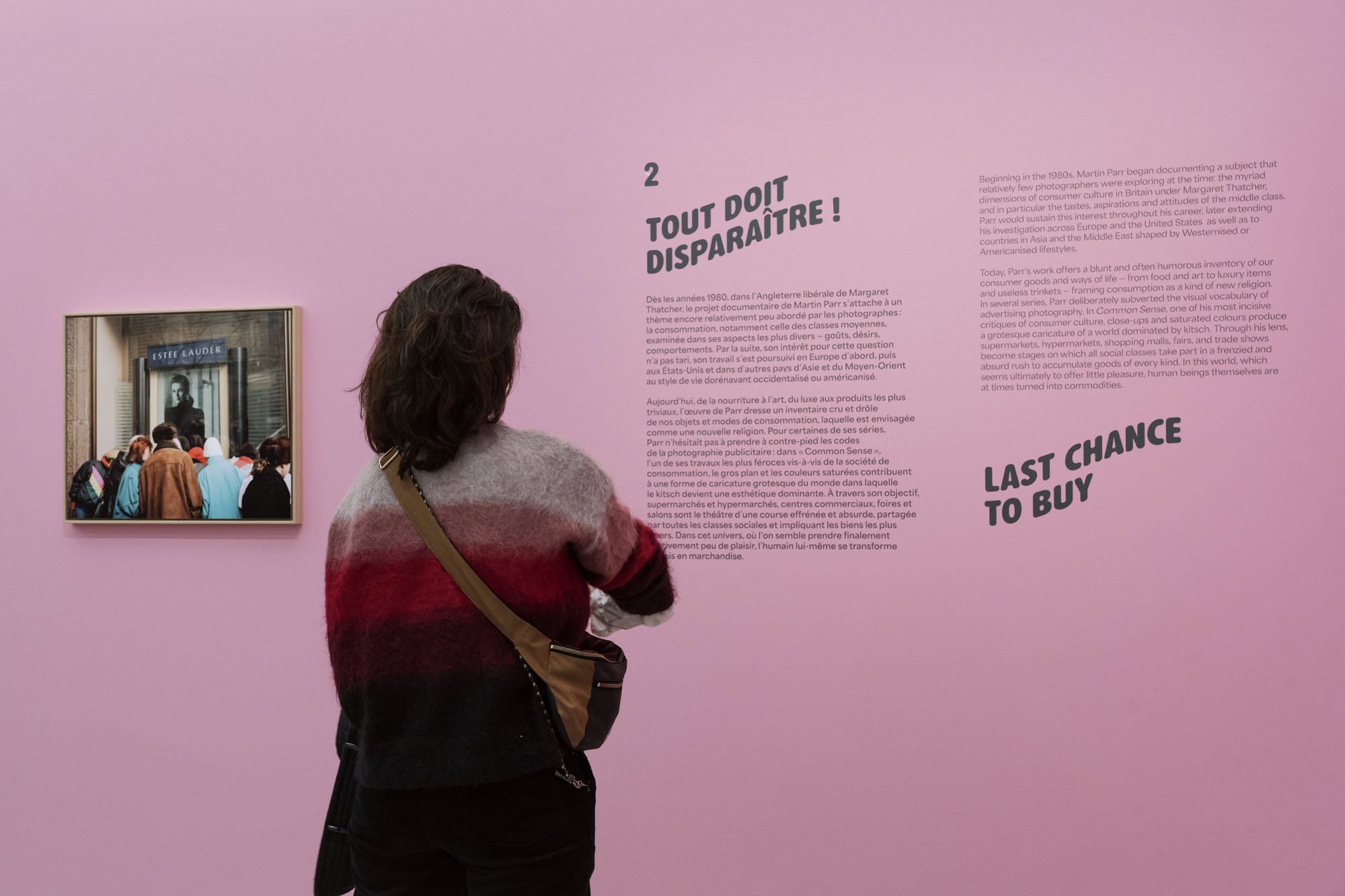
Last chance to buy

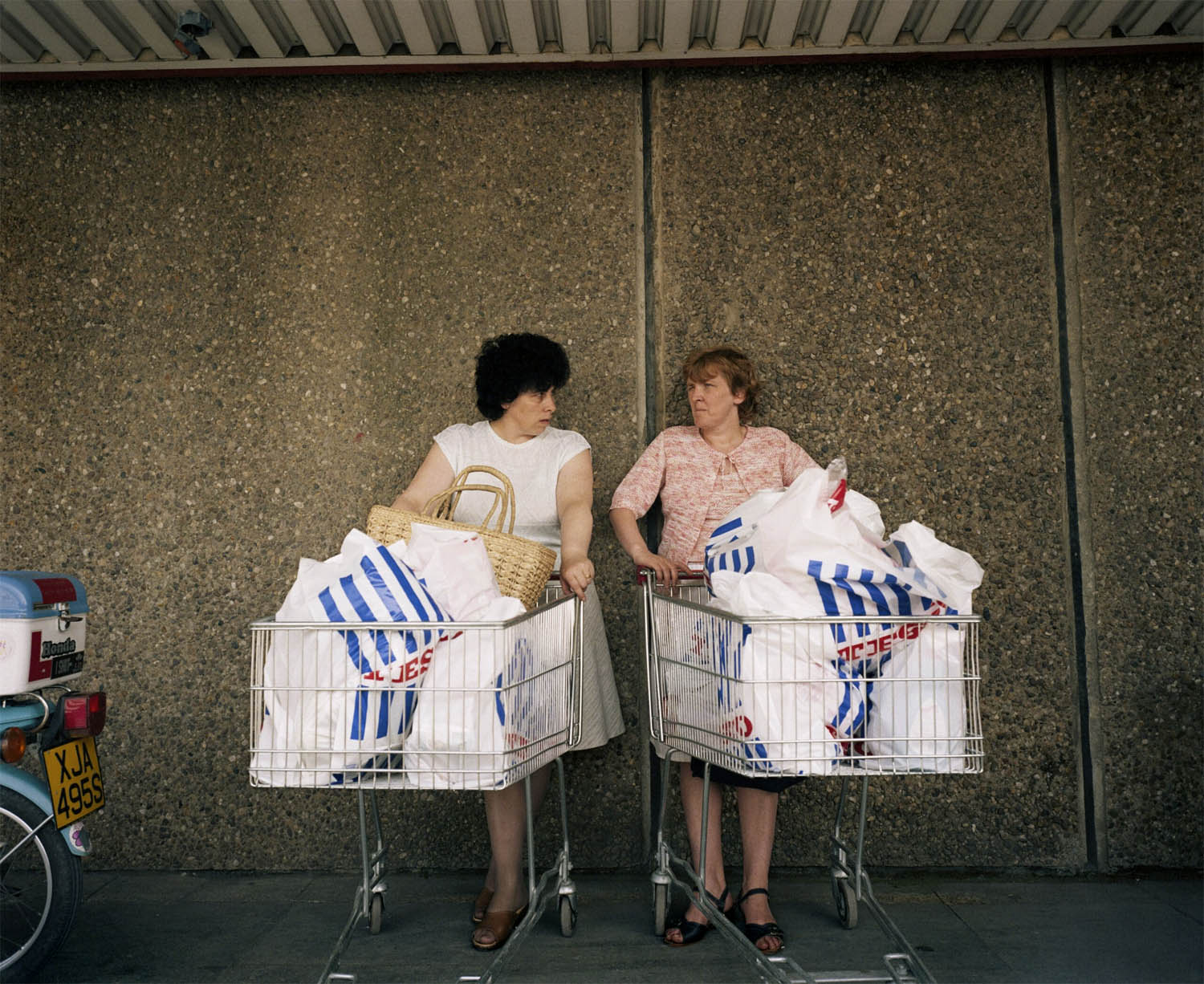
Beginning in the 1980s, Martin Parr began documenting a subject that relatively few photographers were exploring at the time: the myriad dimensions of consumer culture in Britain under Margaret Thatcher, and in particular the tastes, aspirations and attitudes of the middle class. Parr would sustain this interest throughout his career, later extending his investigation across Europe and the United Sates as well as to countries in Asia and the Middle East shaped by Westernised or Americanised lifestyles.

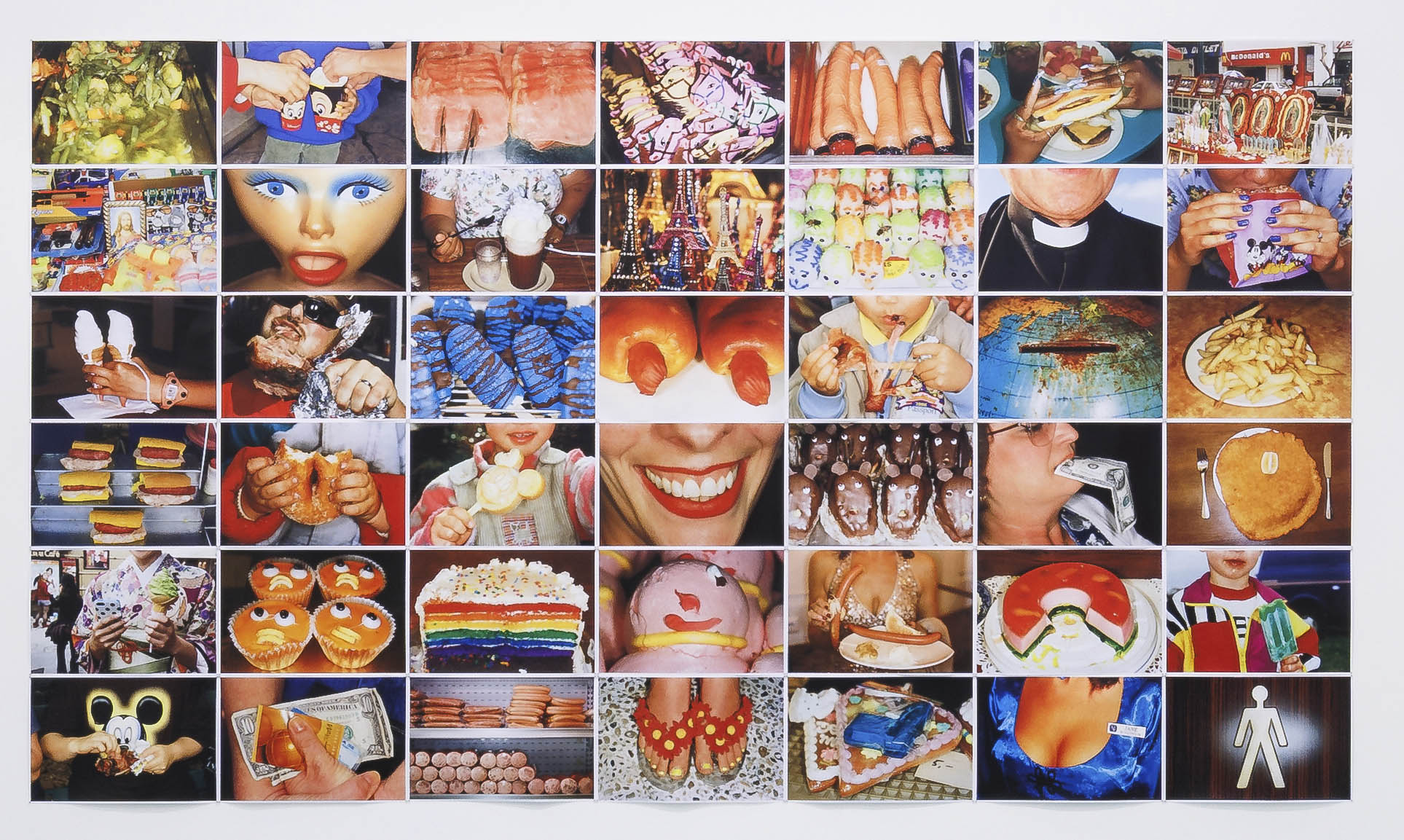
Today, Parr’s work offers a blunt and often humorous inventory of our consumer goods and ways of life – from food and art to luxury items and useless trinkets – framing consumption as a kind of new religion. In several series, parr deliberately subverted the visual vocabulary of advertising photography. In ‘Common Sense’, one of his most incisive critiques of consumer culture, close-ups and saturated colours produce a grotesque caricature of a world dominated by kitsch. Through his lens, supermarkets, hypermarkets, shopping malls, fairs, and trade shows become stages on which all social classes take part in a frenzied and absurd rush to accumulate goods of every kind. In this world, which seems ultimately to offer little pleasure, human beings themselves are at times turned into commodities.

Wall text from the exhibition


Installation view of the exhibition 'Martin Parr: Global Warning' at Jeu de Paume, Paris, January - May, 2026


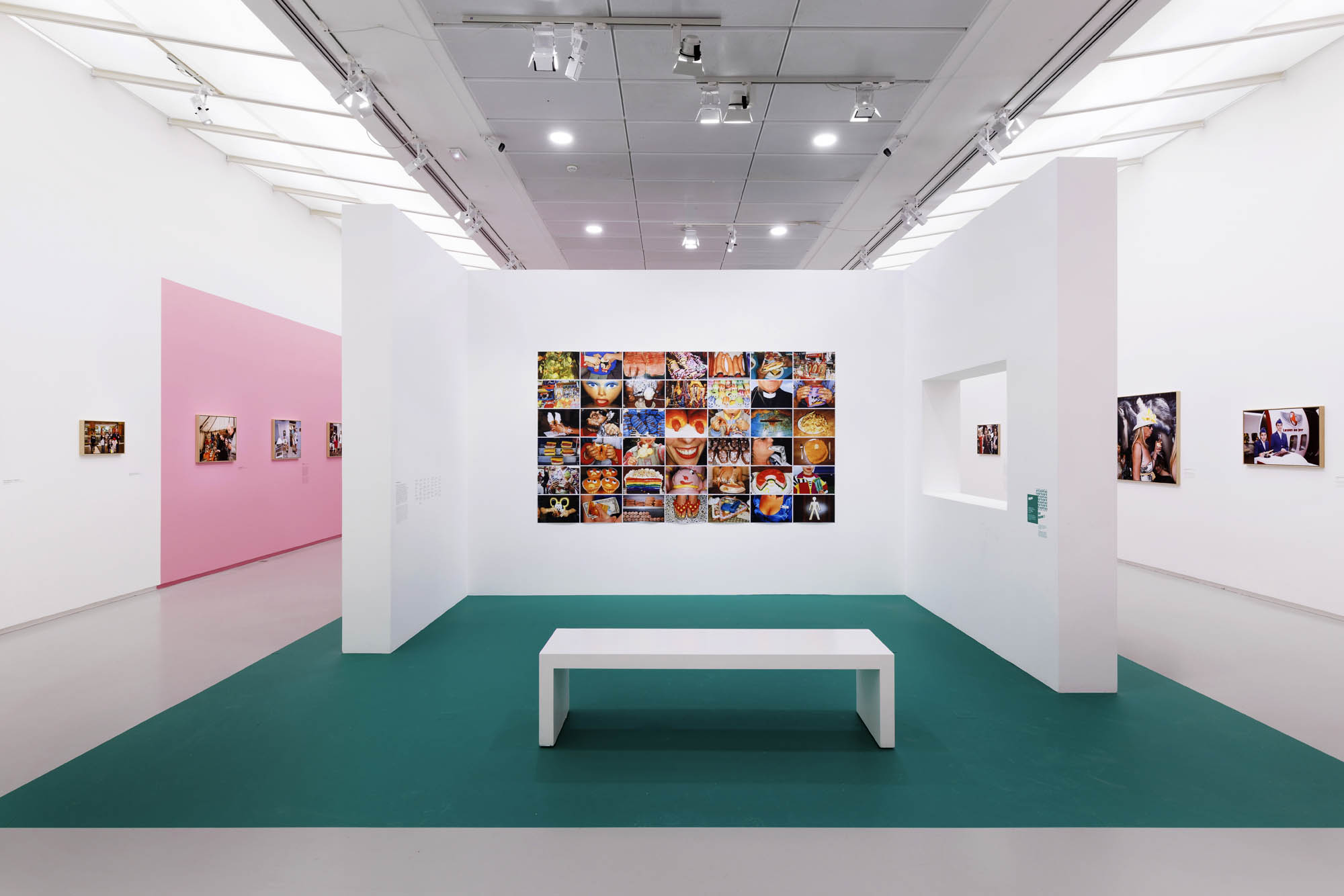
Installation view of the exhibition Martin Parr: Global Warning at Jeu de Paume, Paris, January – May, 2026 showing at centre, photographs from Martin Parr’s series Common Sense (1999)


Installation view of the exhibition 'Martin Parr: Global Warning' at Jeu de Paume, Paris, January - May, 2026 showing photographs from Martin Parr's series 'Common Sense' (1999)
Martin Parr (English, 1952-2025) From 'Common Sense ' 1999


Installation views of the exhibition Martin Parr: Global Warning at Jeu de Paume, Paris, January – May, 2026 showing photographs from Martin Parr’s series Common Sense (1999, below)


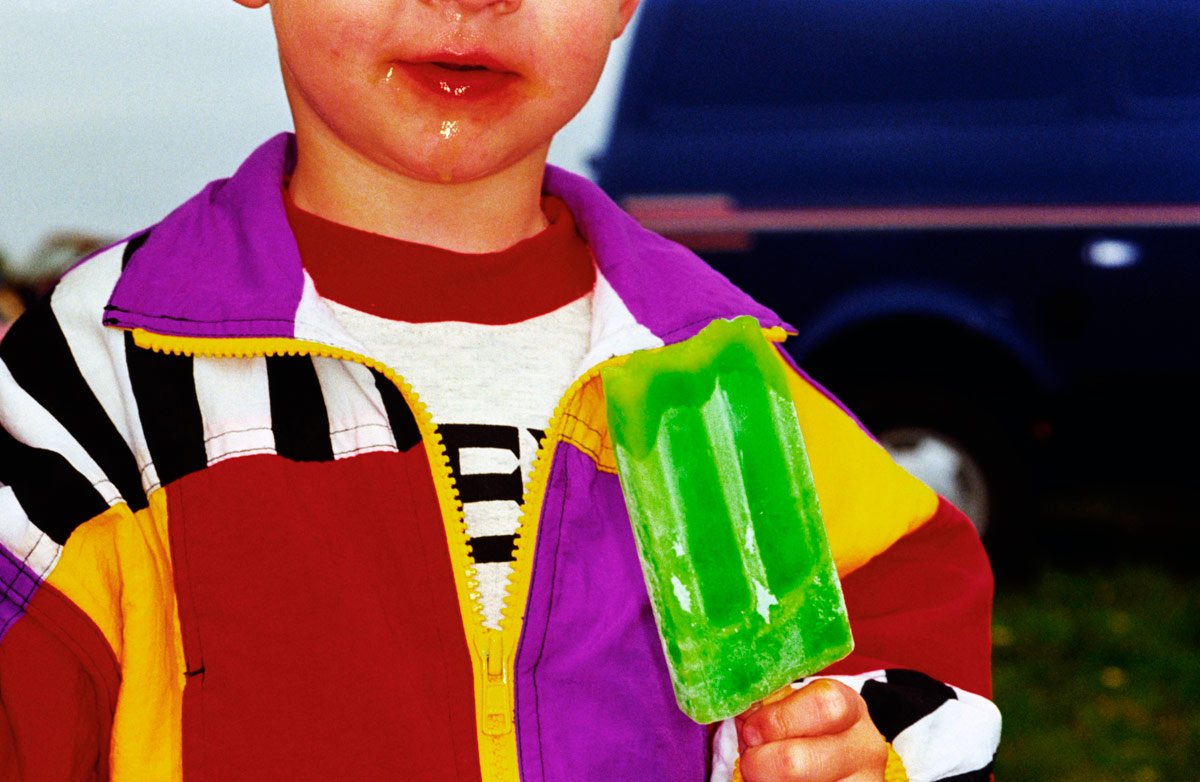
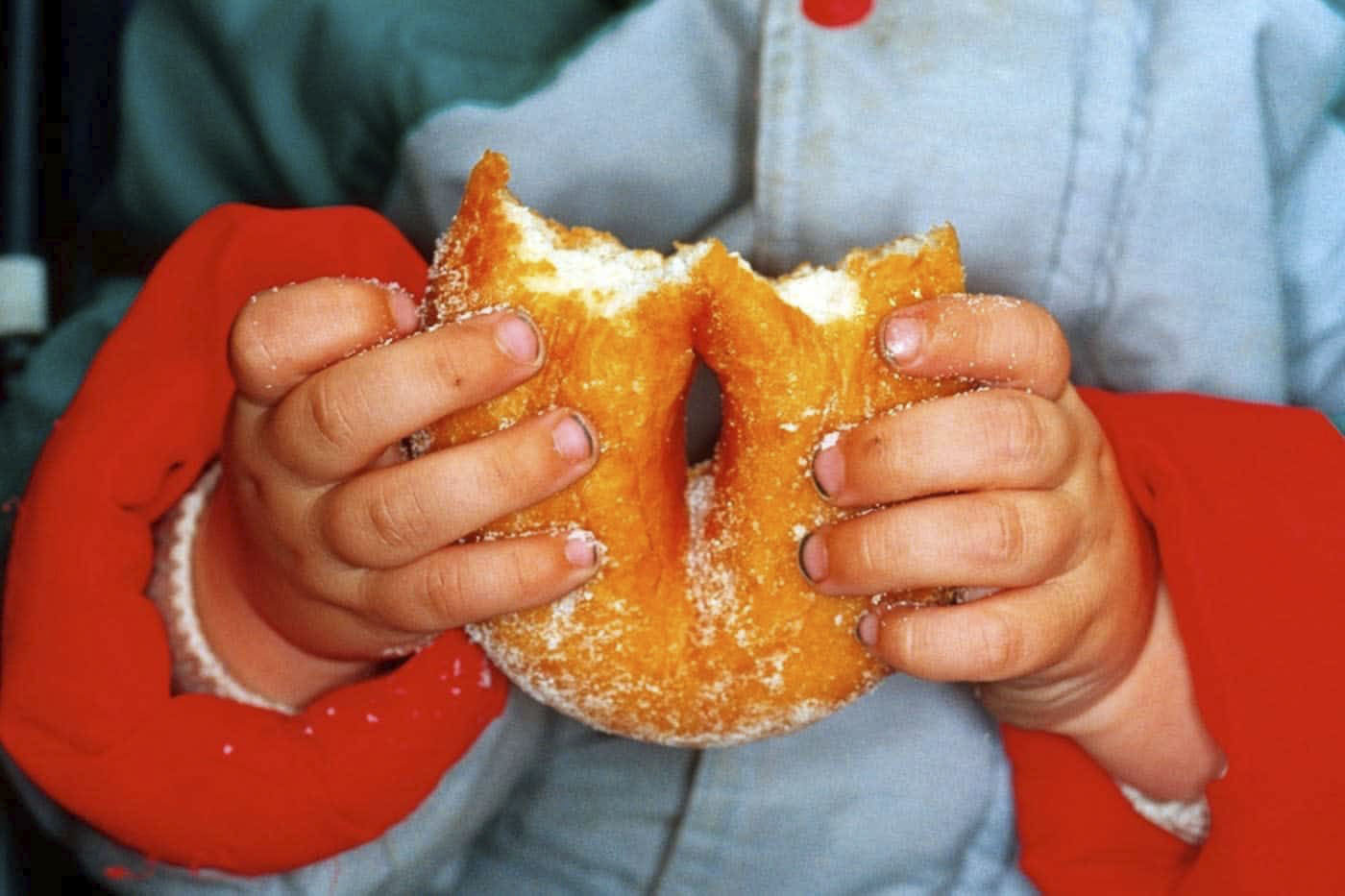
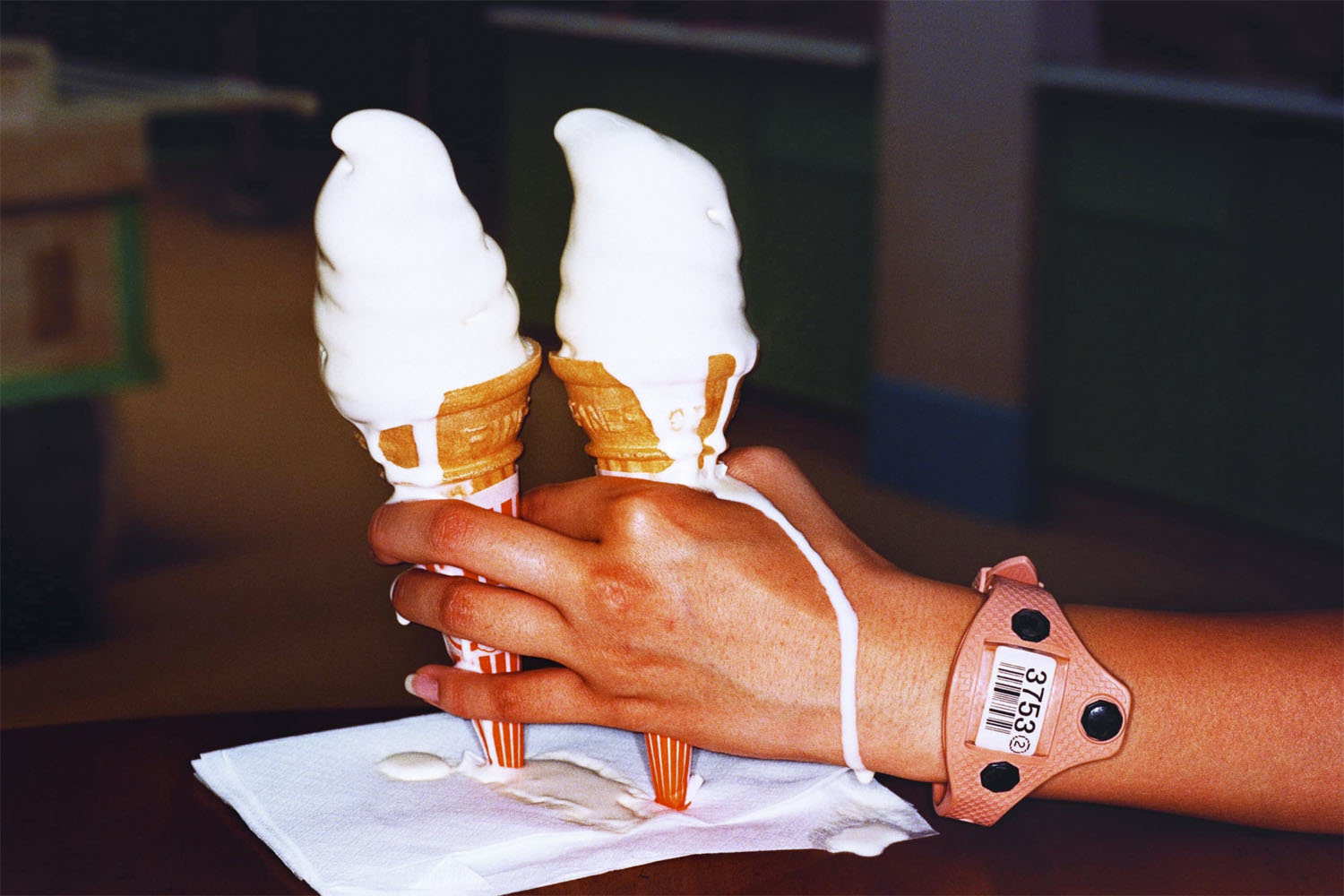
In his playfully titled Common sense series, British photographer Martin Parr confronts and amuses us in a similar way. Each image in the series is an isolated detail revealing one ghastly aspect of excessive consumerism and consumption after another. The images jostle for our attention like billboards on the side of a freeway, employing many of the tactics of advertising, using large-scale, saturated colour and shock value to attract our gaze.

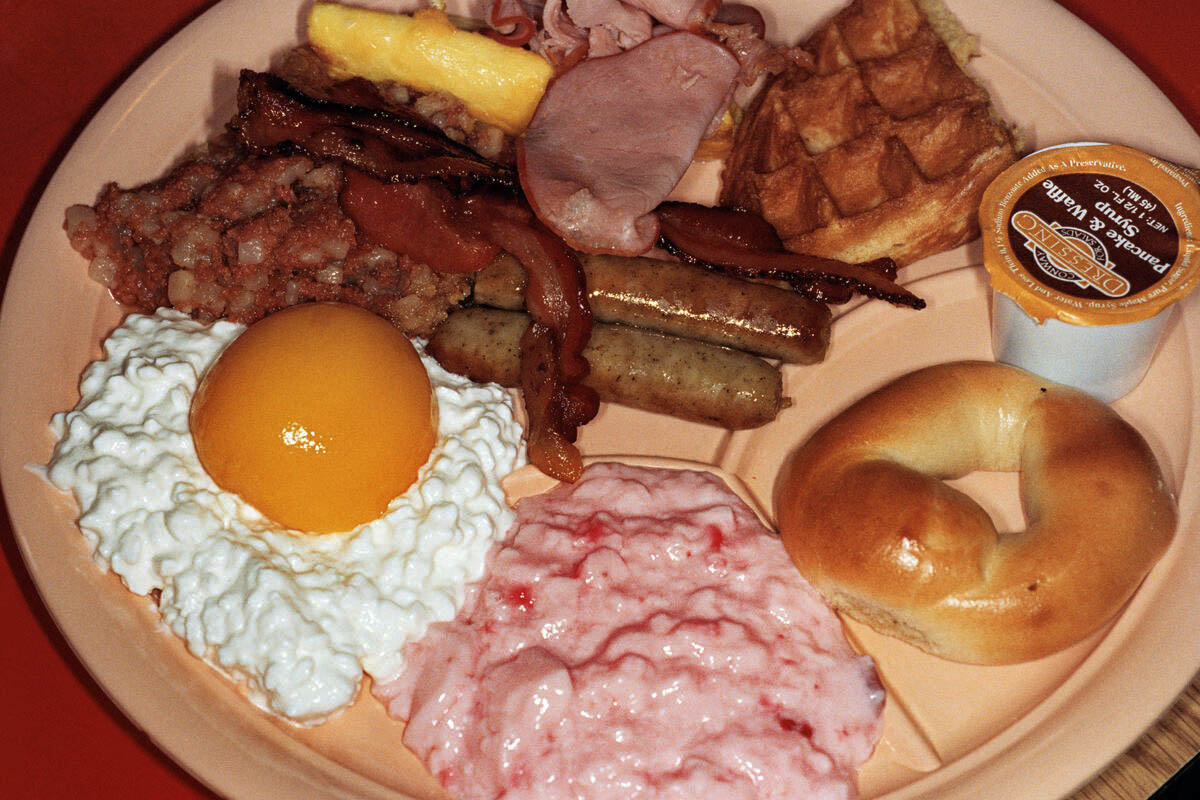
In his photographs of food, Martin Parr pointedly examines the gross indulgence that is encouraged by manufacturers and their advertisers. Shown here as just another commodity, generic and mass-produced food becomes obscene in its abundance…. When seen in such lurid detail, the overblown details on the person’s hands, such as the ring with blue stone, a Band-Aid, and the imperfect application of the gaudy nail polish, become repulsive images of the ordinary. …

The Common sense series is a major body of work within Parr’s ongoing exploration of globalisation, mass tourism, class culture and consumerism. In common with much of his work, this series presents images critical of the contemporary culture with a distinctive sense of irony and British humour. There is something uncomfortable in all these photographs. We laugh at them while being slightly embarrassed by their familiarity and are acutely aware of the gulf between a dream of glamour and the sad synthetic reality.

Susan van Wyk, Curator, Photography, National Gallery of Victoria

Susan van Wyk. “Martin Parr’s Common Sense,” in Art Journal 46, 29 Jan 14 on the National Gallery of Victoria website [Online] Cited 16/04/2026. Used under fair use conditions for the purposes of education and research
 

Martin Parr (British, 1952-2025) 'England. Bristol. Car boot sale. 1995' 1994-1995 from the series 'British Food'


Martin Parr (British, 1952-2025)
England. Bristol. Car boot sale. 1995
1994-1995
From Common Sense
© Martin Parr / Magnum Photos


Martin Parr (British, 1952-2025) 'Ramsgate, England' 1996


Martin Parr (British, 1952-2025)
Ramsgate, England
1996
From Common Sense
© Martin Parr / Magnum Photos


Martin Parr (English, 1952-2025) 'Tokyo, Japan' 1998


Martin Parr (English, 1952-2025)
Tokyo, Japan
1998
From Common Sense
© Martin Parr / Magnum Photos


Martin Parr (English, 1952-2025) 'Zurich, Switzerland' 1997


Martin Parr (English, 1952-2025)
Zurich, Switzerland
1997
From Common Sense
© Martin Parr / Magnum Photos


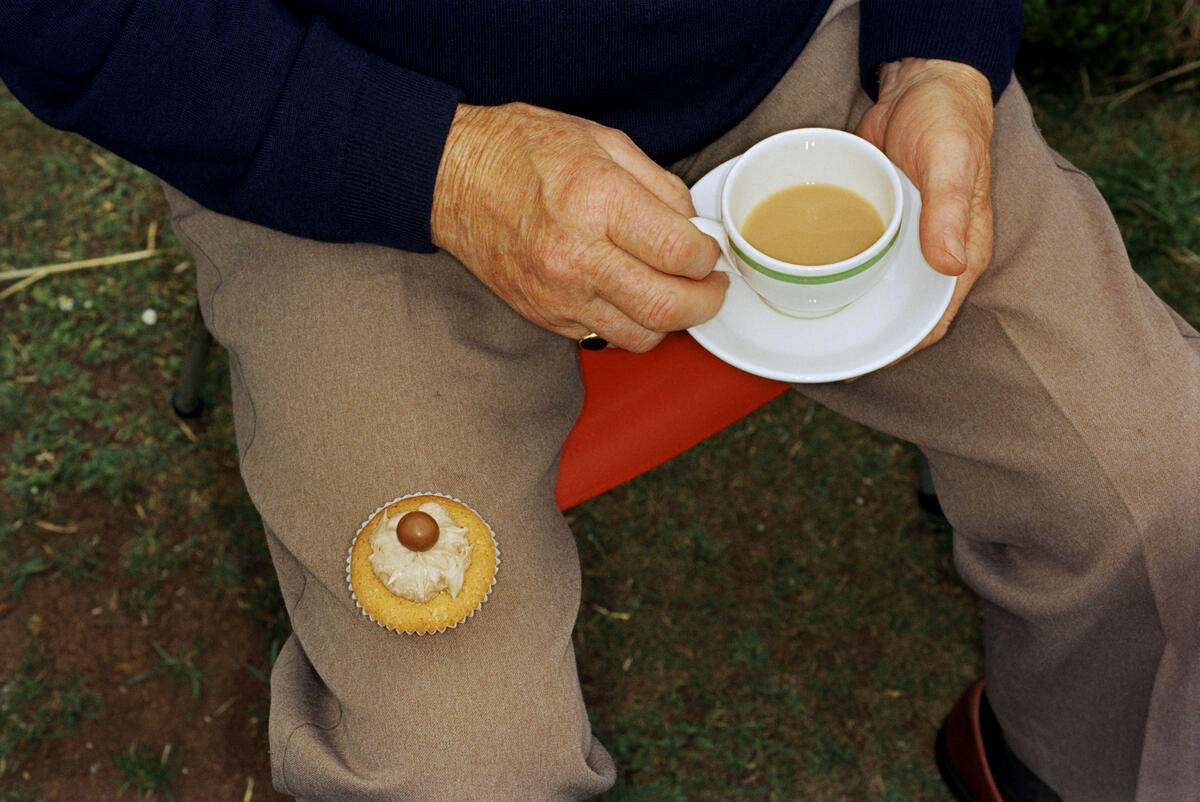
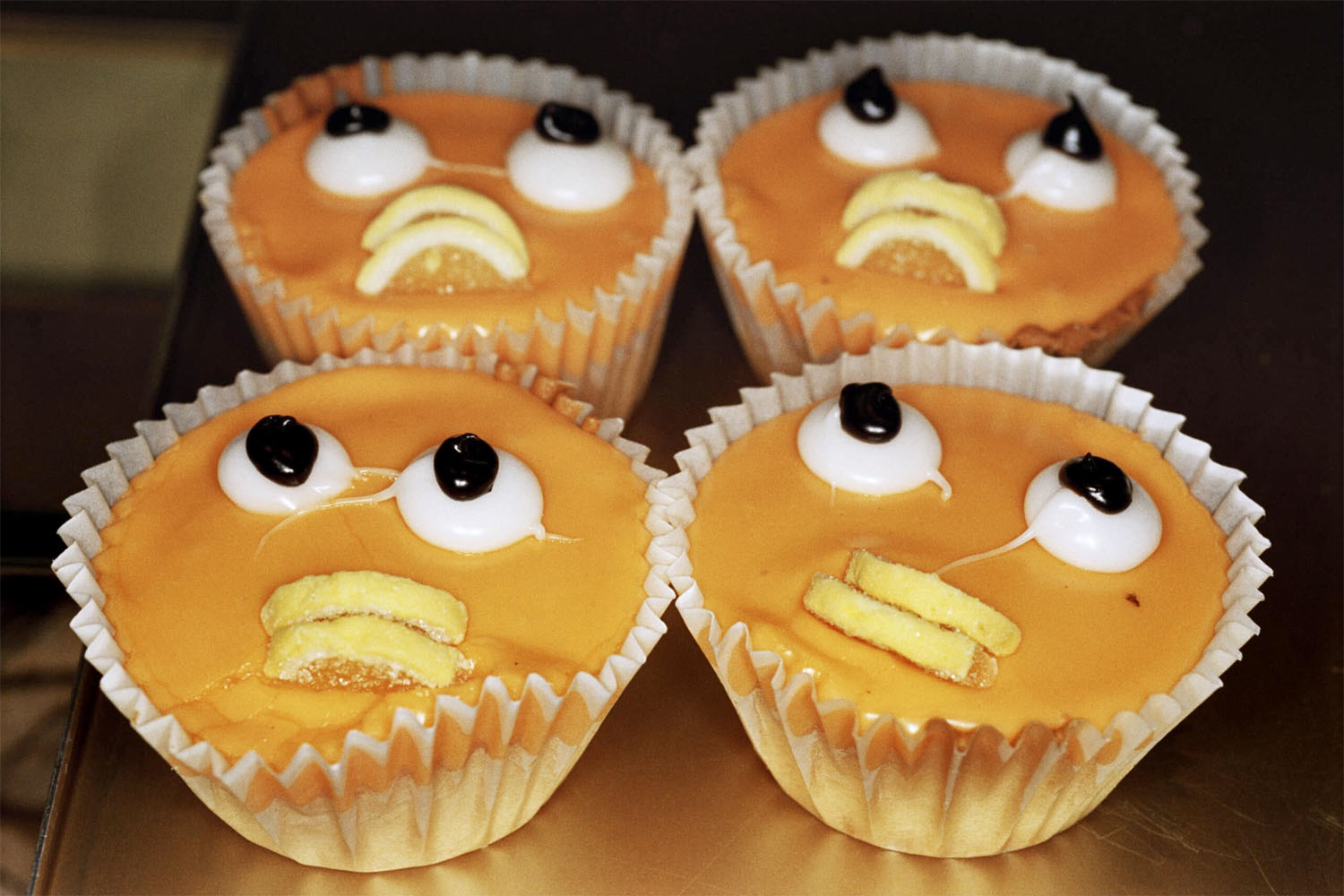
Martin Parr (English, 1952-2025) 'Fairy Cakes, Glasgow, Scotland' 1999


Martin Parr (English, 1952-2025)
Fairy Cakes, Glasgow, Scotland
1999
From Common Sense
© Martin Parr / Magnum Photos


Martin Parr (English, 1952-2025) 'Zurich, Switzerland' 1997


Martin Parr (English, 1952-2025)
Zurich, Switzerland
1997
From Common Sense
© Martin Parr / Magnum Photos


Martin Parr (English, 1952-2025) 'Florida, USA' 1998


Martin Parr (English, 1952-2025)
Florida, USA
1998
© Martin Parr / Magnum Photos


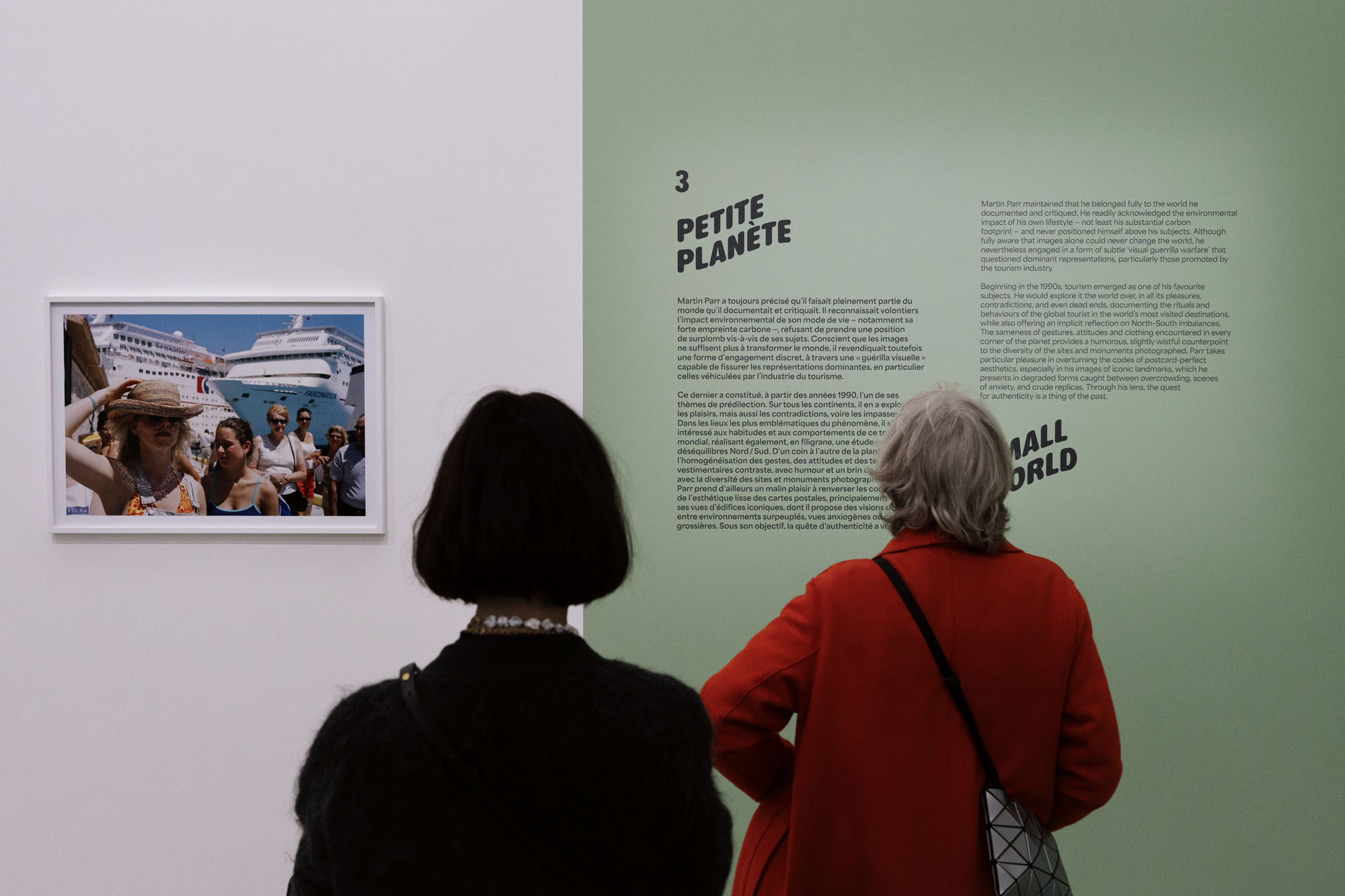
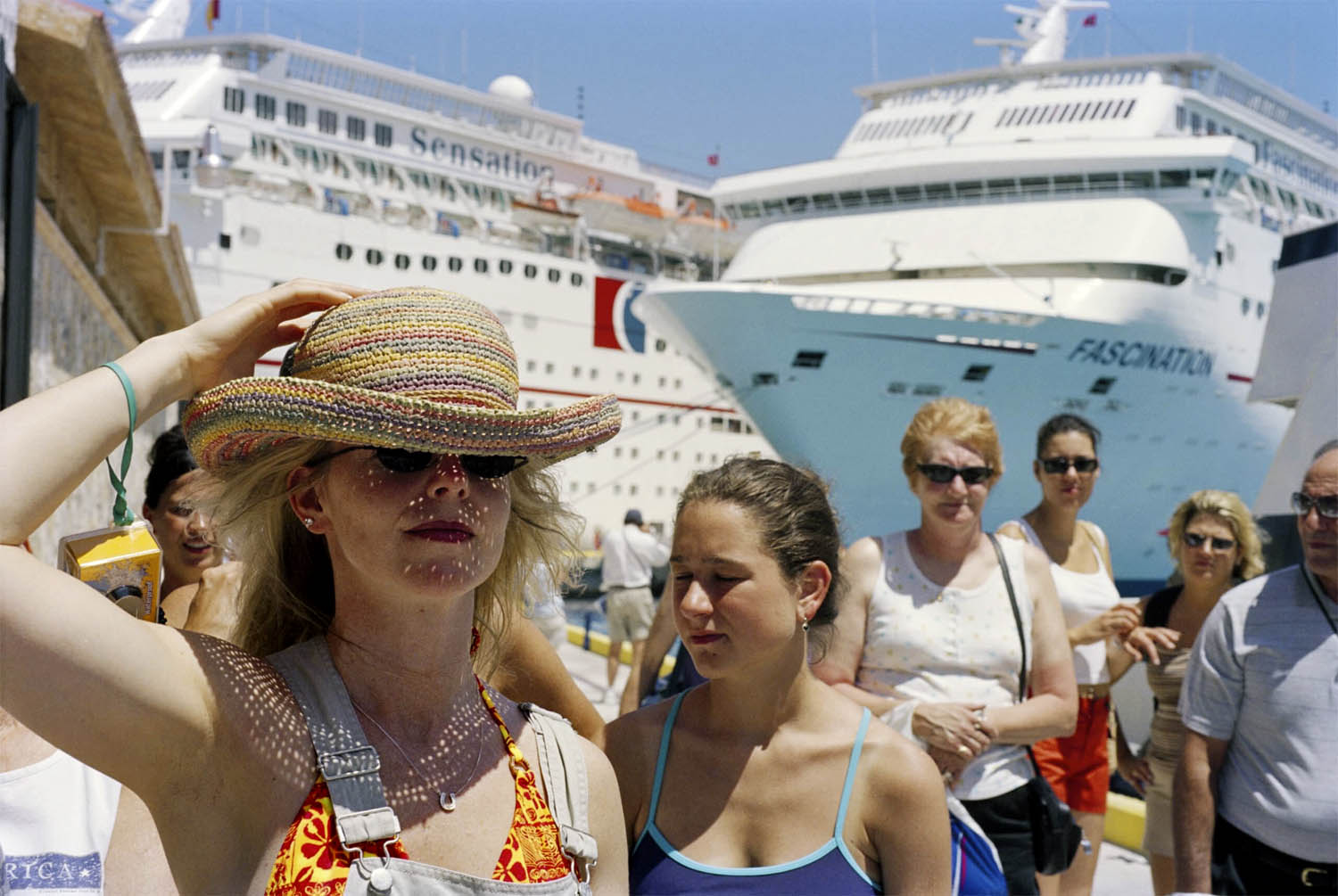
Installation view of the exhibition 'Martin Parr: Global Warning' at Jeu de Paume, Paris, January - May, 2026 showing at left, Martin Parr's 'Cozumel, Mexico' (2002); and at right, the wall text for "Small World"


Installation view of the exhibition Martin Parr: Global Warning at Jeu de Paume, Paris, January – May, 2026 showing at left, Martin Parr’s Cozumel, Mexico (2002, below); and at right, the wall text for “Small World”


Small World

Martin Parr maintained that he belonged fully to the world he documented and critiqued. He readily acknowledged the environmental impact of his own lifestyle – not least his substantial carbon footprint – and near positioned himself above his subjects. Although fully aware that images alone could never change the world, he nevertheless engaged in a form of subtle, visual guerrilla warfare that questioned dominant representations, particularly those promoted by the tourism industry.

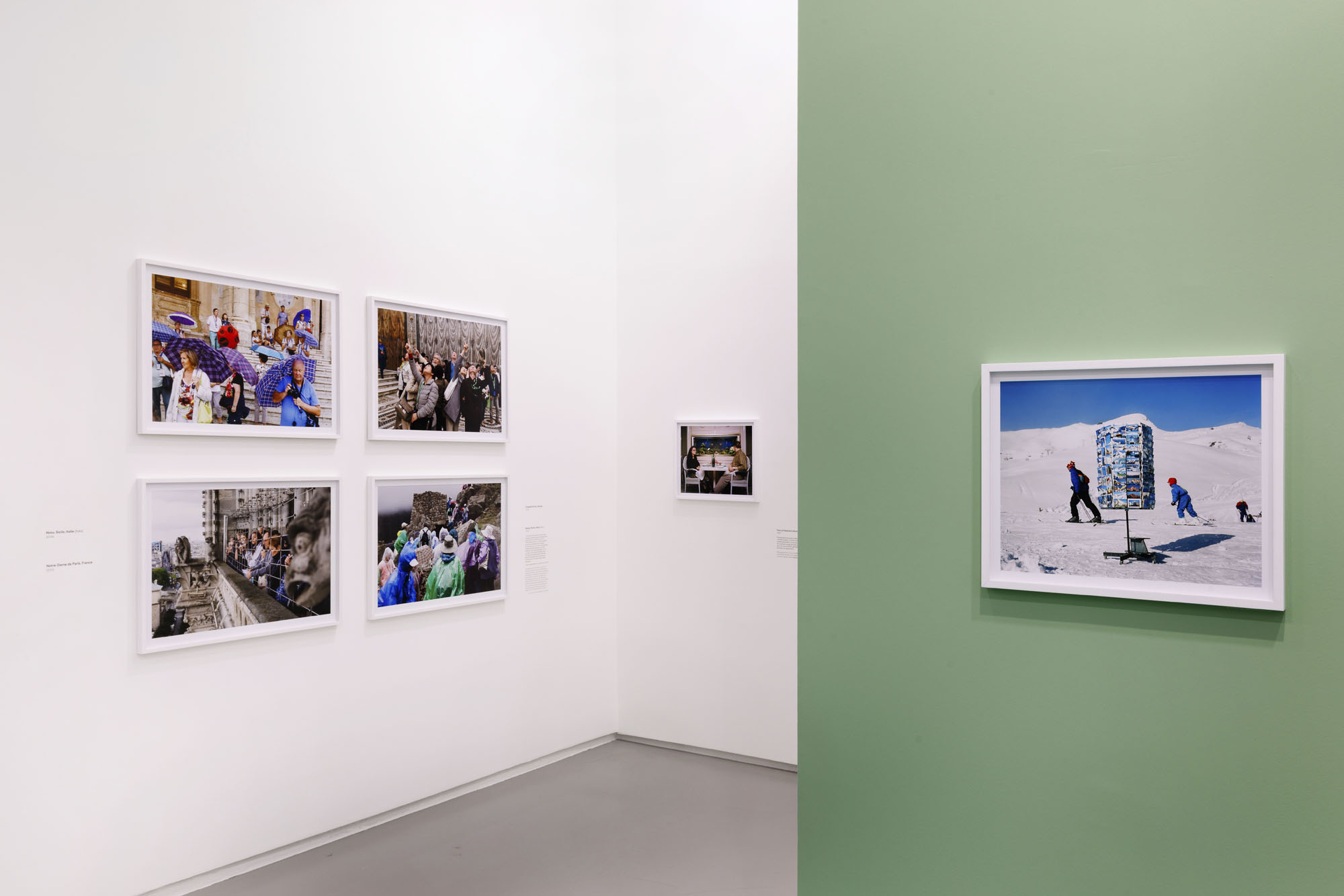
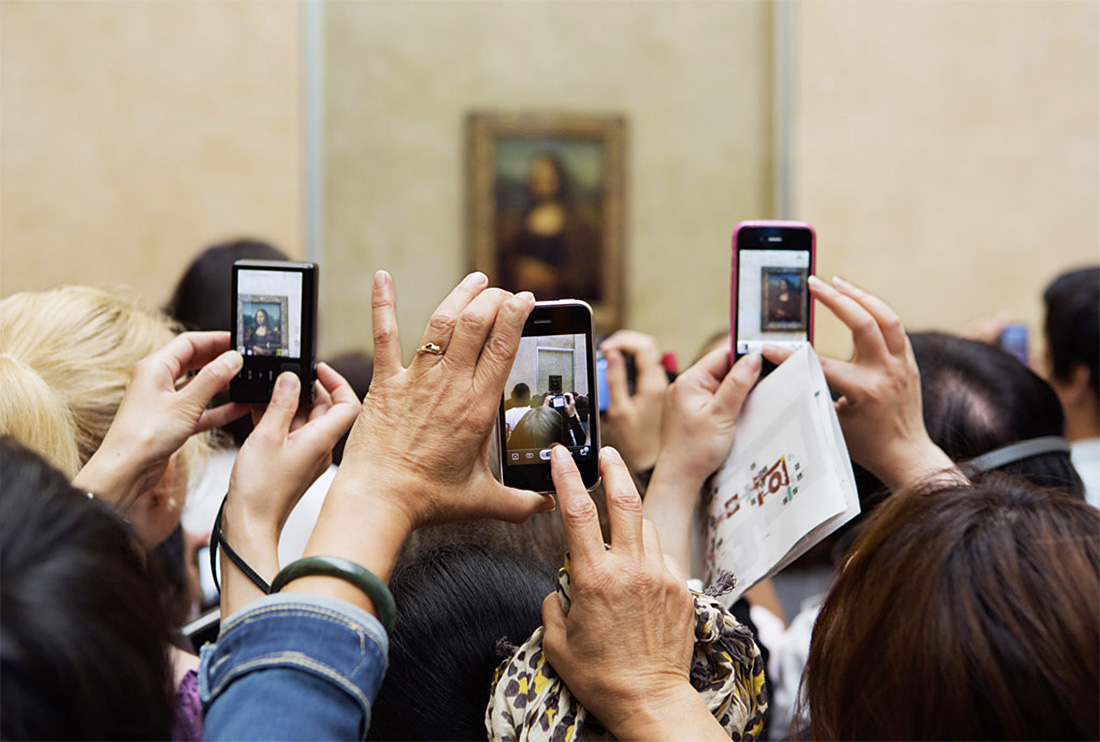
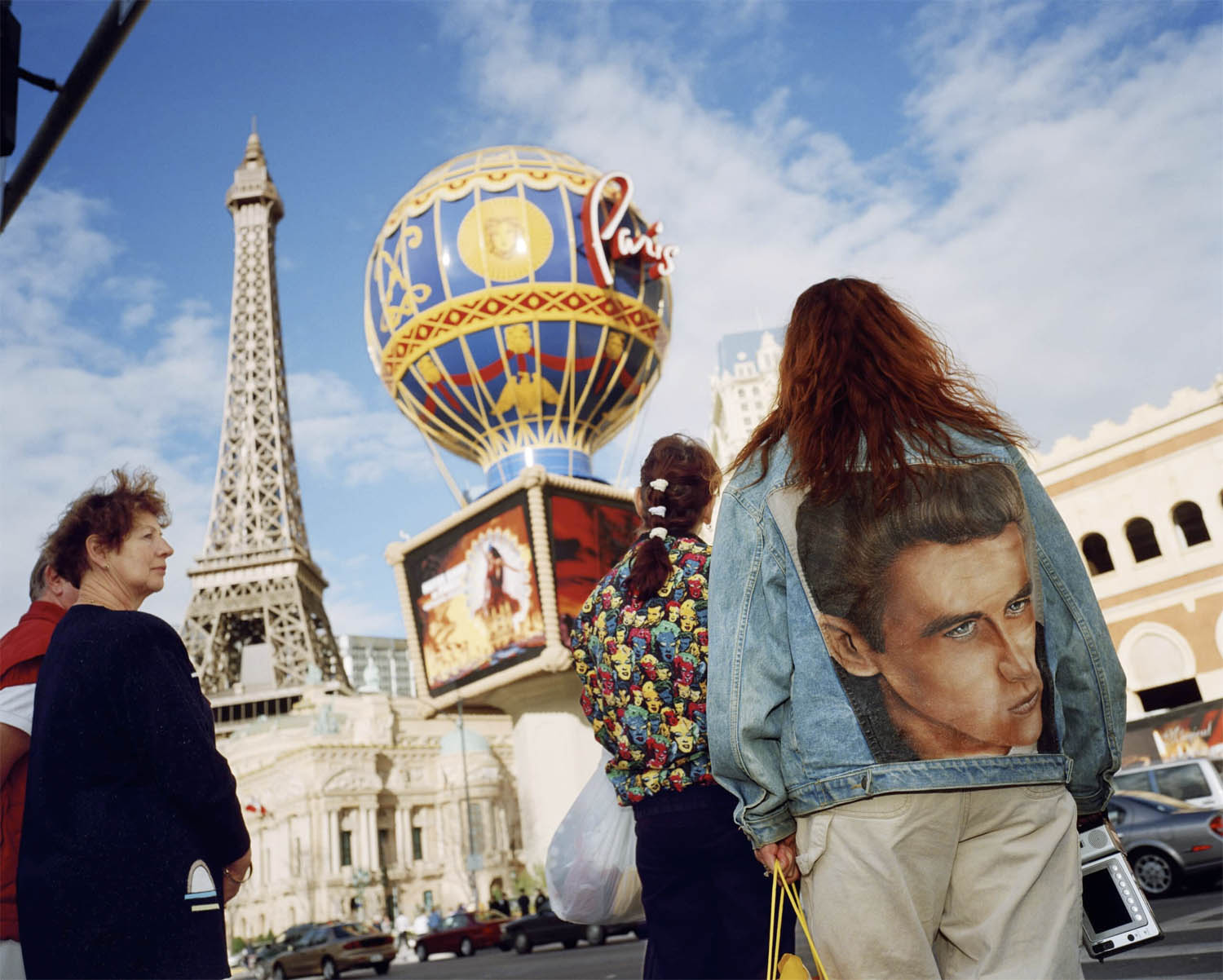
Beginning in the 1990s, tourism emerged as one of his favourite subjects. He would explore it the world over, in all its pleasures, contradictions, and even dead ends, documenting the rituals and behaviours of the global tourist in the world’s most visited destinations. The sameness of gestures, attitudes and clothing encountered in every corner of the planet provides a humorous, slightly wistful counterpoint to the diversity of the sites and monuments photographed. Parr takes particular pleasure in overturning the codes of postcard perfect aesthetics, especially in his images of iconic landmarks, which he presents in degraded forms caught between over crowding, scenes of anxiety, and crude replicas. Through his lens, the quest for authenticity is a thing of the past.

Wall text from the exhibition


Martin Parr (English, 1952-2025) 'Cozumel, Mexico' 2002


Martin Parr (English, 1952-2025)
Cozumel, Mexico
2002
© Martin Parr / Magnum Photos


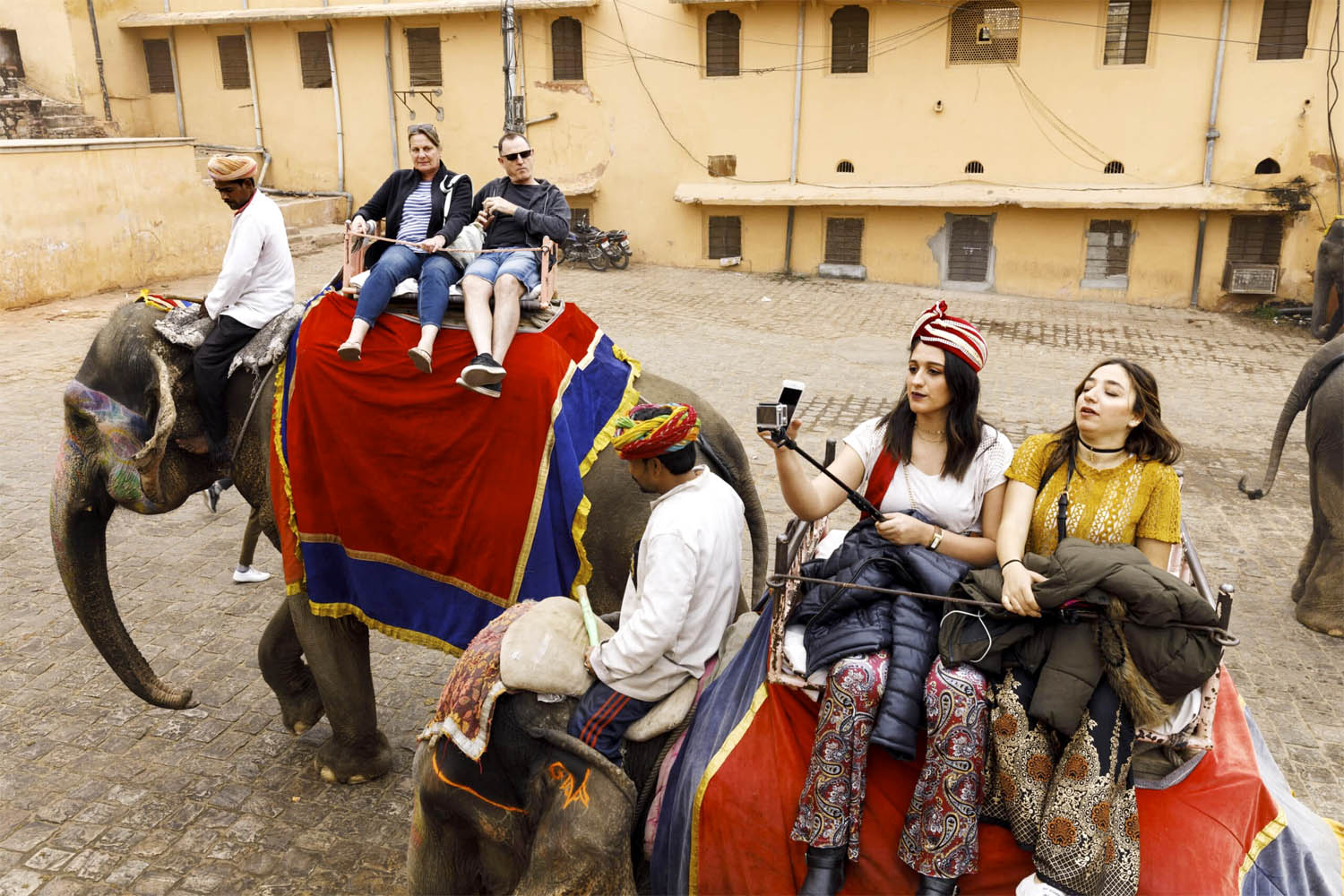
Martin Parr (English, 1952-2025) 'Amer Fort, Jaipur, India' 2019


Martin Parr (English, 1952-2025)
Amer Fort, Jaipur, India
2019
© Martin Parr / Magnum Photos


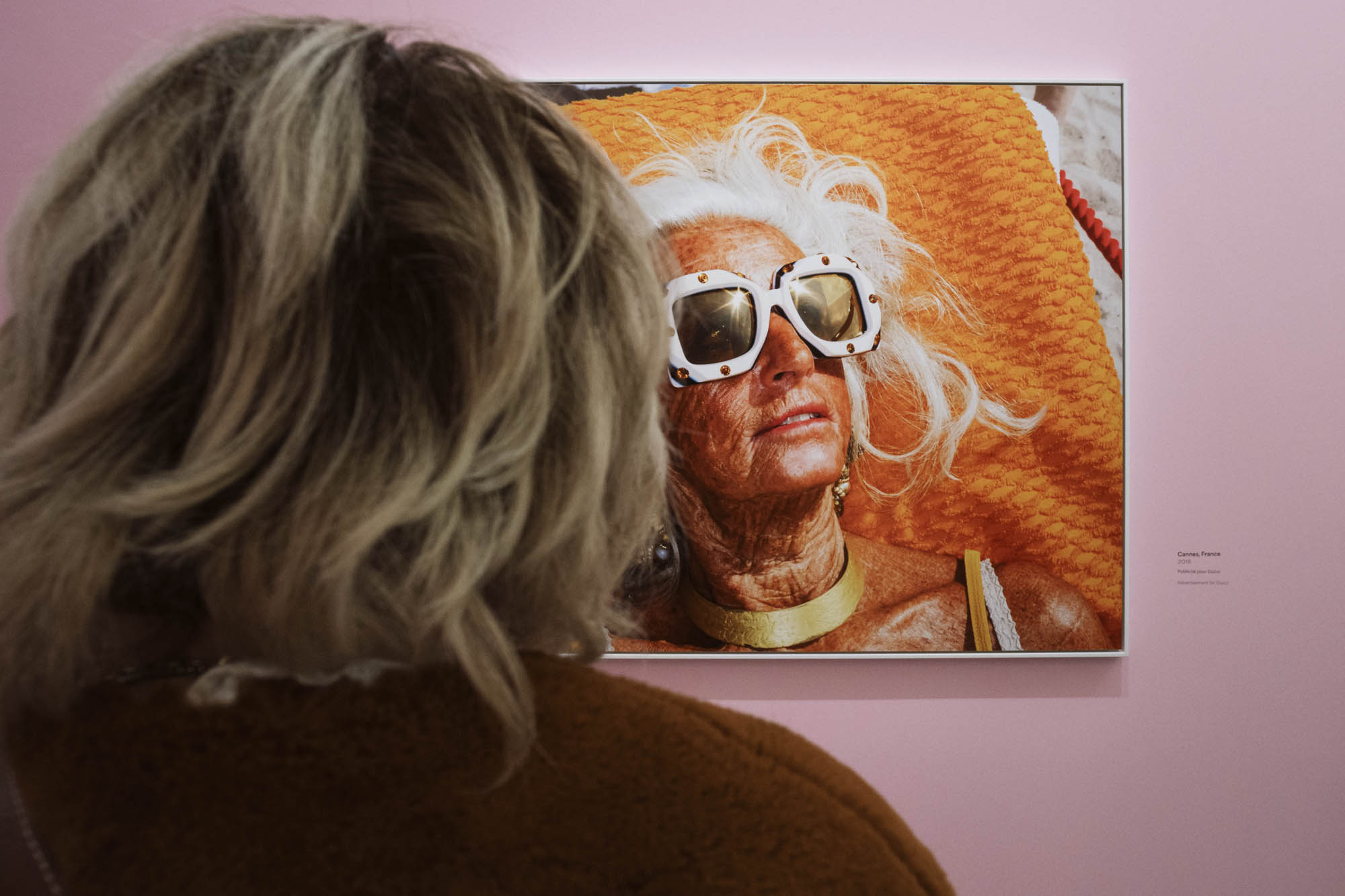
Installation view of the exhibition 'Martin Parr: Global Warning' at Jeu de Paume, Paris, January - May, 2026 showing Parr's photograph 'Cannes, France' (2018)


Installation view of the exhibition Martin Parr: Global Warning at Jeu de Paume, Paris, January – May, 2026 showing Parr’s photograph Cannes, France (2018, below)


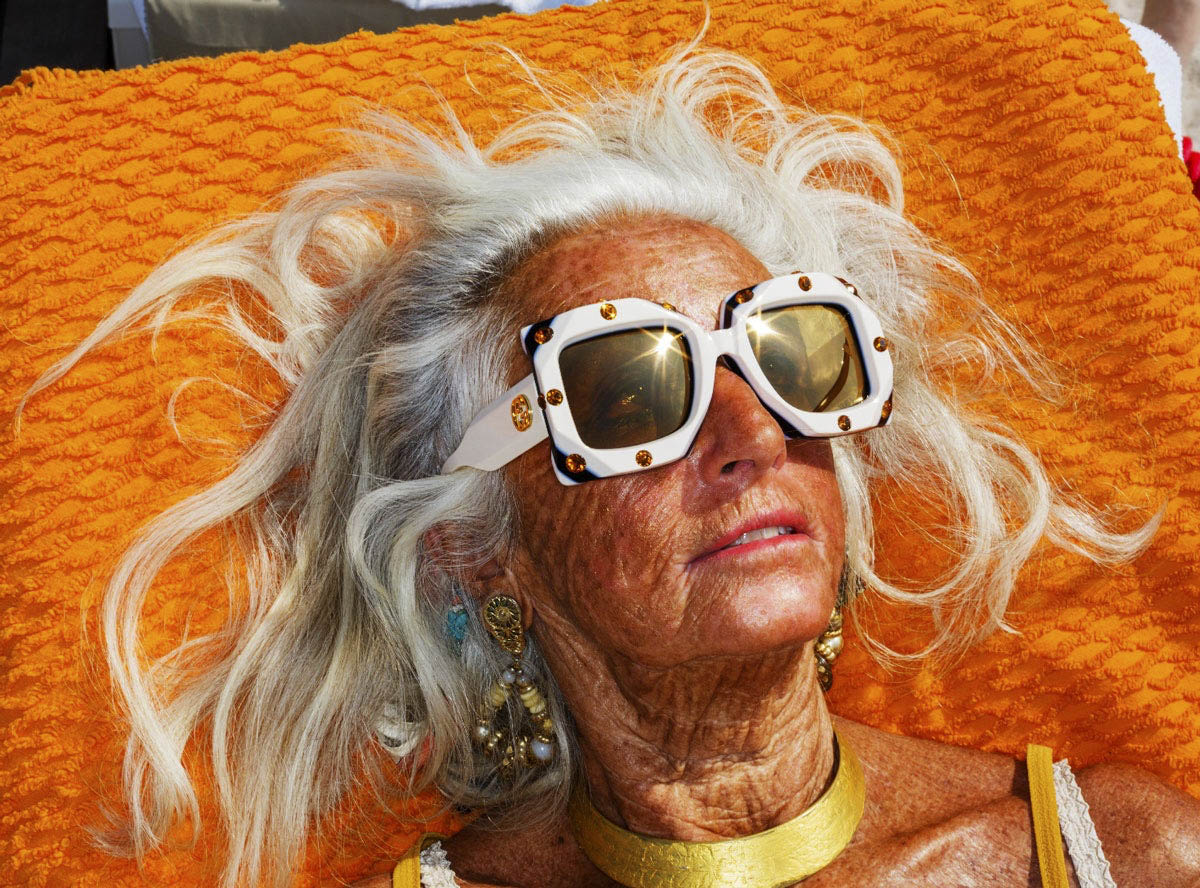
Martin Parr (English, 1952-2025) 'Cannes, France' 2018


Martin Parr (English, 1952-2025)
Cannes, France
2018
© Martin Parr / Magnum Photos

Advertisement for Gucci


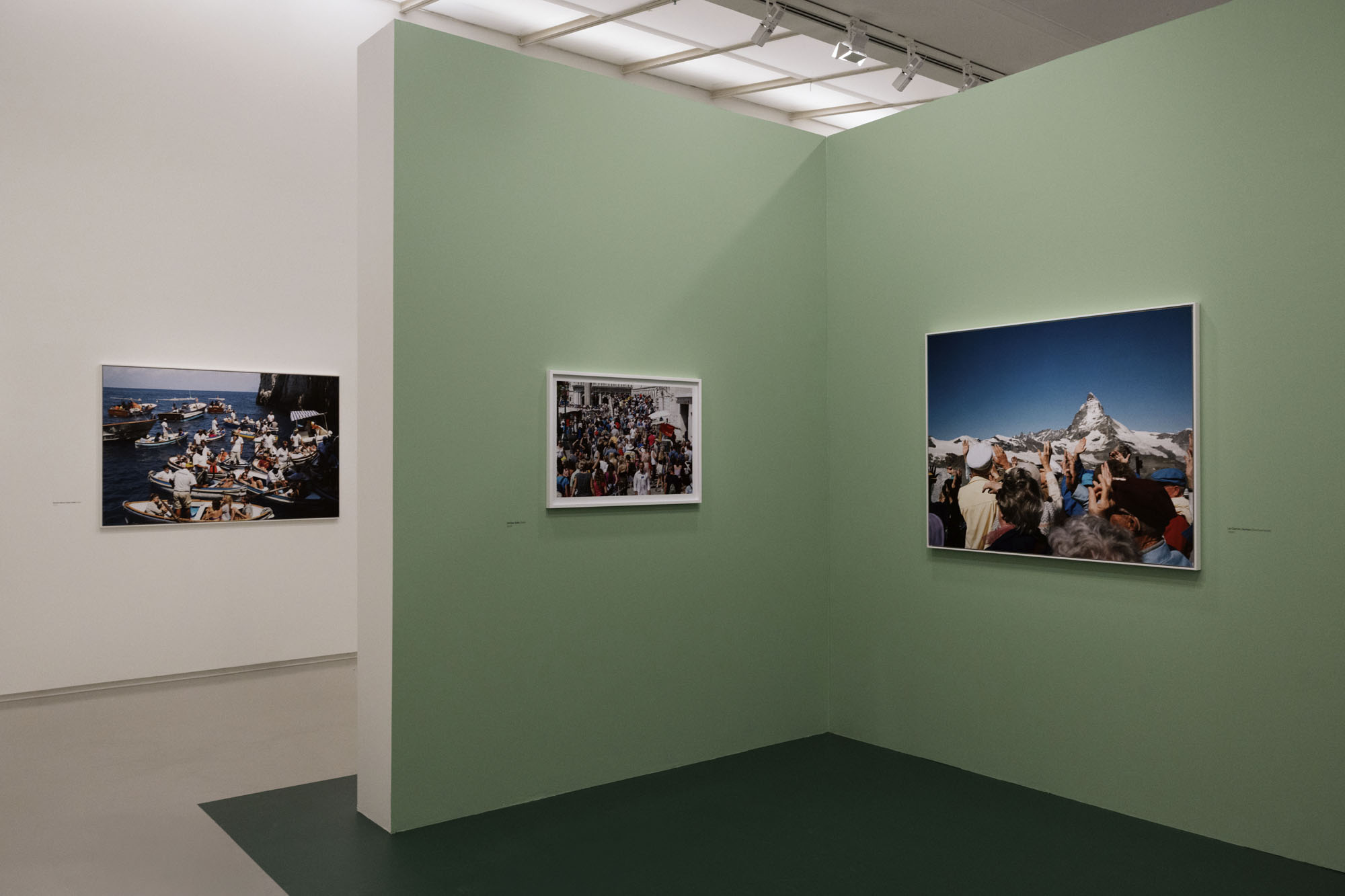
Installation view of the exhibition 'Martin Parr: Global Warning' at Jeu de Paume, Paris, January - May, 2026 showing at left, Martin Parr's photograph 'Sorrento, Italy' (2014); and at right, 'The Matterhorn, Alps, Switzerland' (1990)


Installation view of the exhibition Martin Parr: Global Warning at Jeu de Paume, Paris, January – May, 2026 showing at left, Martin Parr’s photograph Sorrento, Italy (2014, below); and at right, The Matterhorn, Alps, Switzerland (1990)


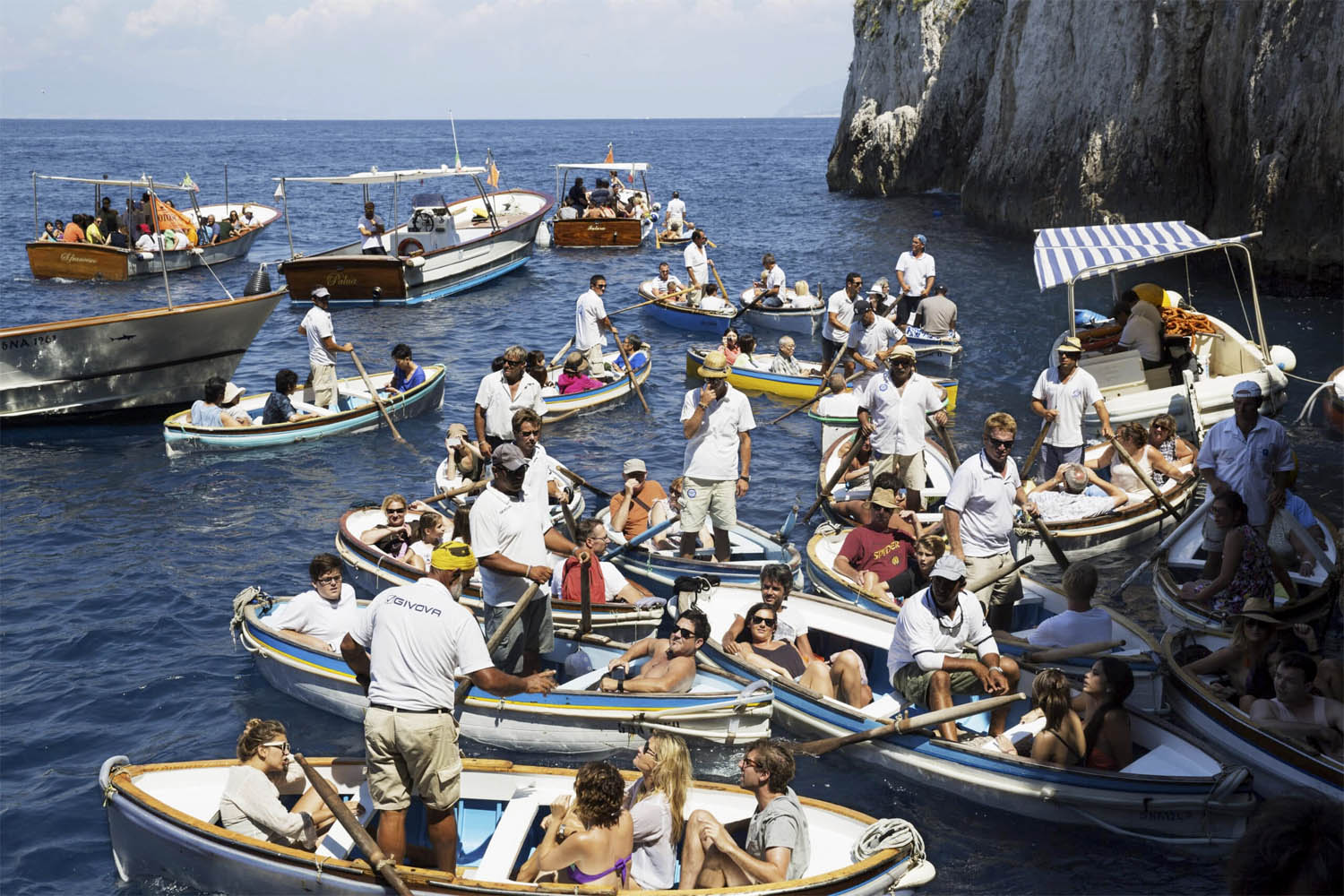
Martin Parr (English, 1952-2025) 'Sorrento, Italy' 2014


Martin Parr (English, 1952-2025)
Sorrento, Italy
2014
© Martin Parr / Magnum Photos


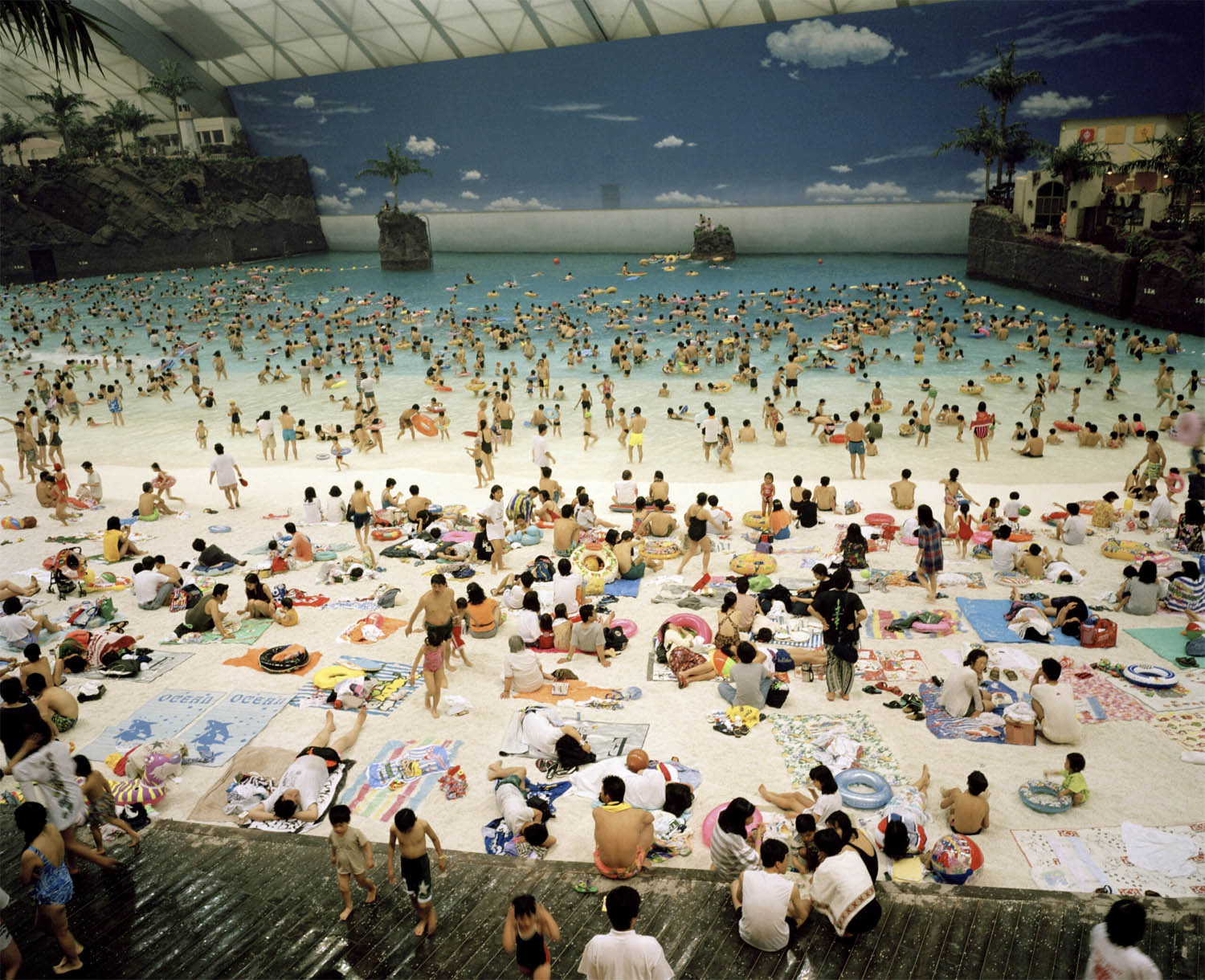
Martin Parr (English, 1952-2025) 'The Artificial beach inside the Ocean Dome' 1996


Martin Parr (English, 1952-2025)
The Artificial beach inside the Ocean Dome, Seagaia Ocean Dome, Miyazaki, Japan
1996
© Martin Parr / Magnum Photos


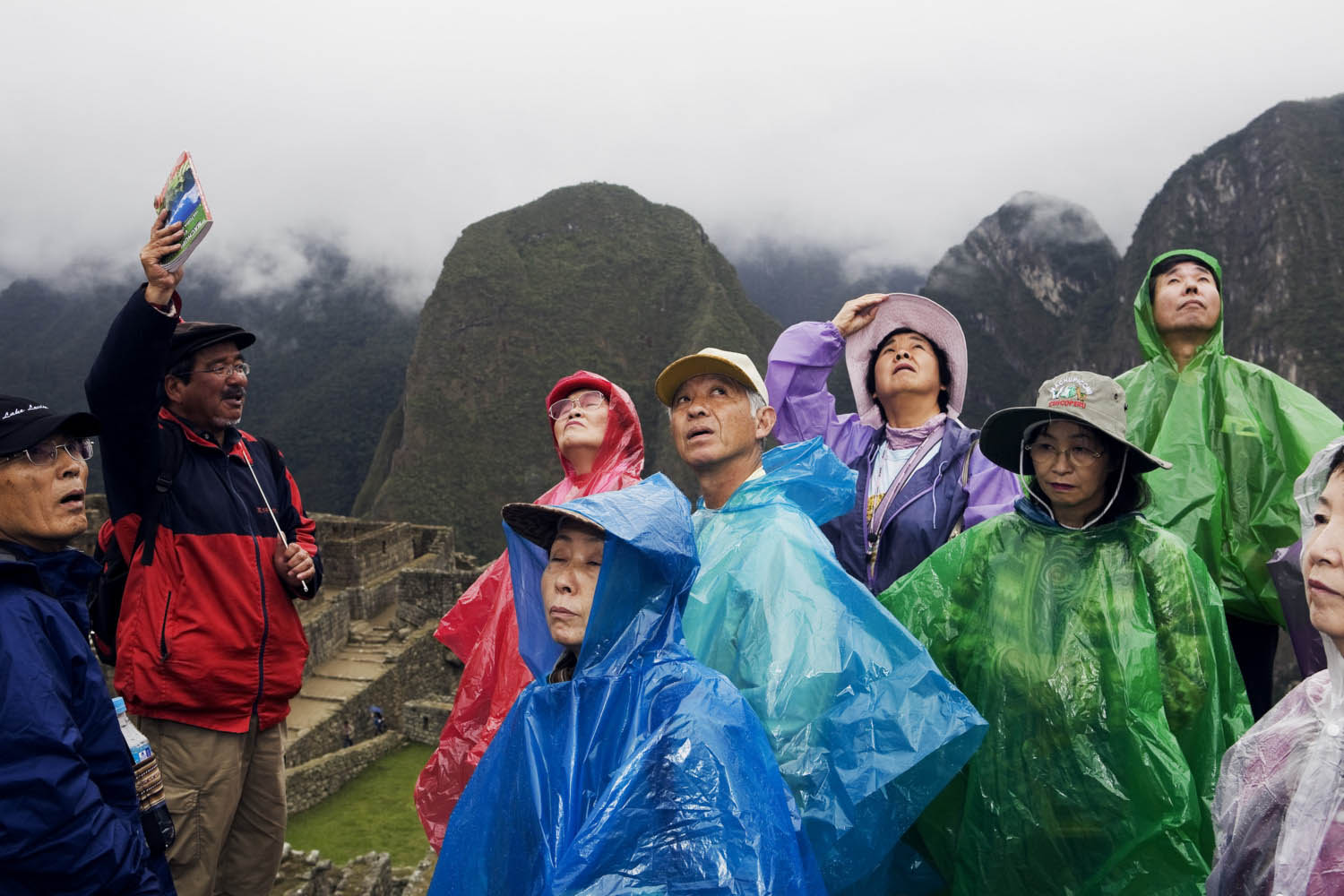
Martin Parr (English, 1952-2025) 'Machu Picchu, Peru' 2008


Martin Parr (English, 1952-2025)
Machu Picchu, Peru
2008
© Martin Parr / Magnum Photos


‘Between the hours of 10am and 2pm the site is at its busiest with up to 4,000 visitors arriving each day. Knowing how inaccessible the place is, it is staggering where and how they emerge. It is also not a cheap visit as each foreign tourist has to pay 122 soies (roughly $40) to enter the site. I am convinced that this entrance payment, together with the cost of the journey and the trekking are probably keeping the Peruvian economy afloat, as 70% of all visitors are foreigners.’

From Martin Parr’s blog, Machu Picchu, 2008
Wall text from the exhibition


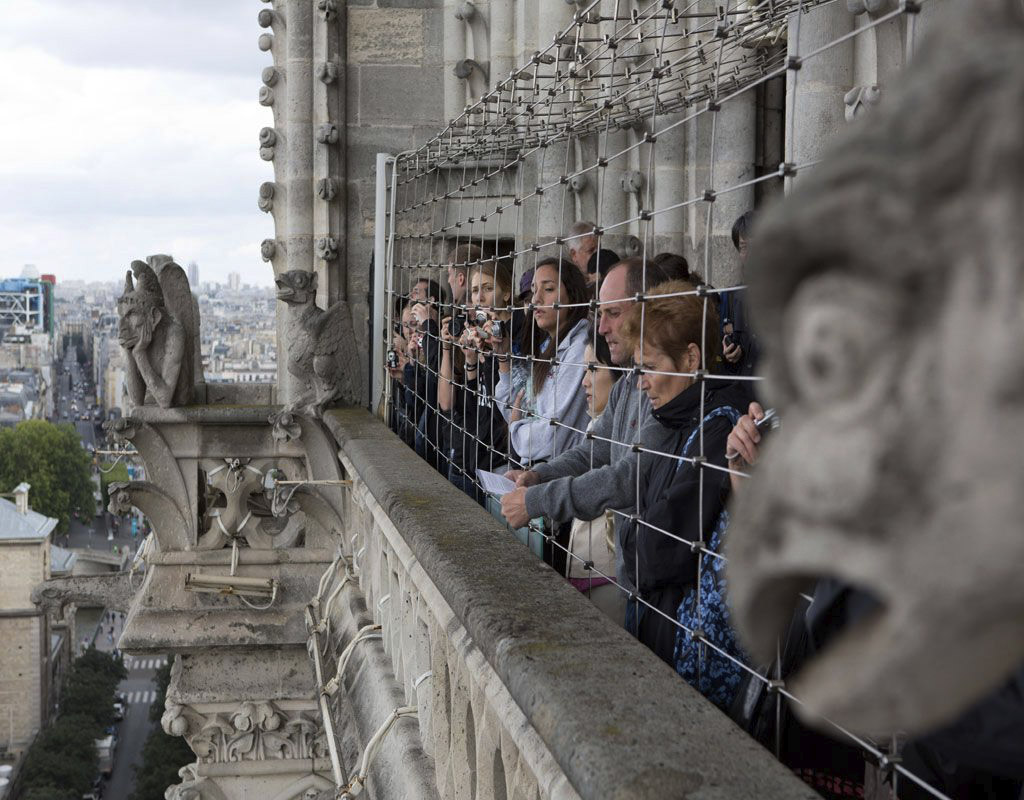
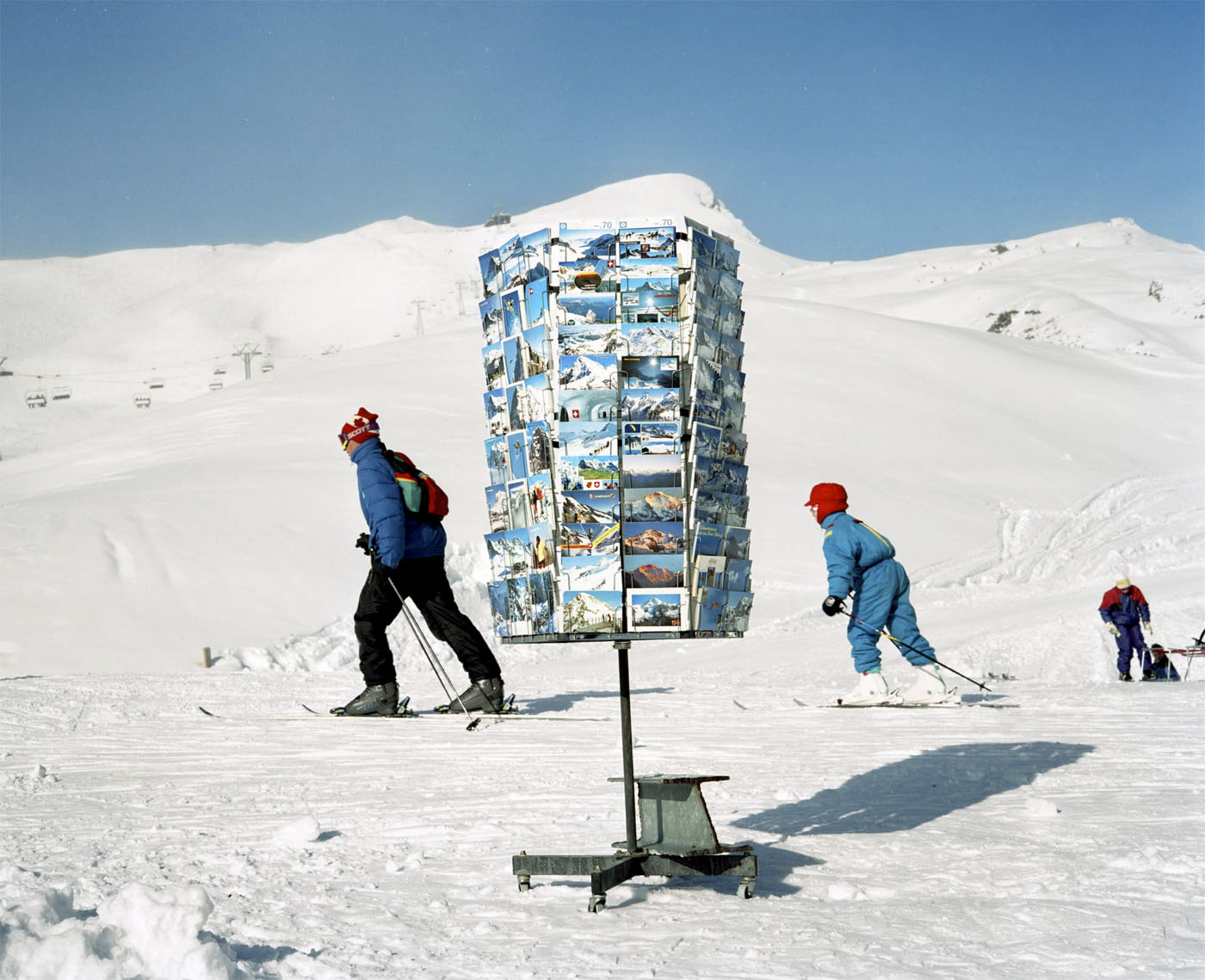
Installation view of the exhibition 'Martin Parr: Global Warning' at Jeu de Paume, Paris, January - May, 2026 showing at bottom left, Martin Parr's photograph 'Notre Dame, Paris, France' (2012); and at right, 'Kleine Scheidegg, Switzerland' (1994)


Installation view of the exhibition Martin Parr: Global Warning at Jeu de Paume, Paris, January – May, 2026 showing at bottom left, Martin Parr’s photograph Notre Dame, Paris, France (2012, below); and at right, Kleine Scheidegg, Switzerland (1994, below)


Martin Parr (English, 1952-2025) 'Notre Dame, Paris, France' 2012


Martin Parr (English, 1952-2025)
Notre Dame, Paris, France
2012
© Martin Parr / Magnum Photos


Martin Parr (English, 1952-2025) 'Kleine Scheidegg, Switzerland' 1994


Martin Parr (English, 1952-2025)
Kleine Scheidegg, Switzerland
1994
© Martin Parr / Magnum Photos


Martin Parr (English, 1952-2025) 'Ooty, India' 2018


Martin Parr (English, 1952-2025)
Ooty, India
2018
© Martin Parr / Magnum Photos


Martin Parr (English, 1952-2025) 'Musée du Louvre, Paris, France' 2012


Martin Parr (English, 1952-2025)
Musée du Louvre, Paris, France
2012
© Martin Parr / Magnum Photos


Martin Parr (English, 1952-2025) 'Las Vegas, USA' 2000


Martin Parr (English, 1952-2025)
Las Vegas, USA
2000
© Martin Parr / Magnum Photos


The Animal Kingdom

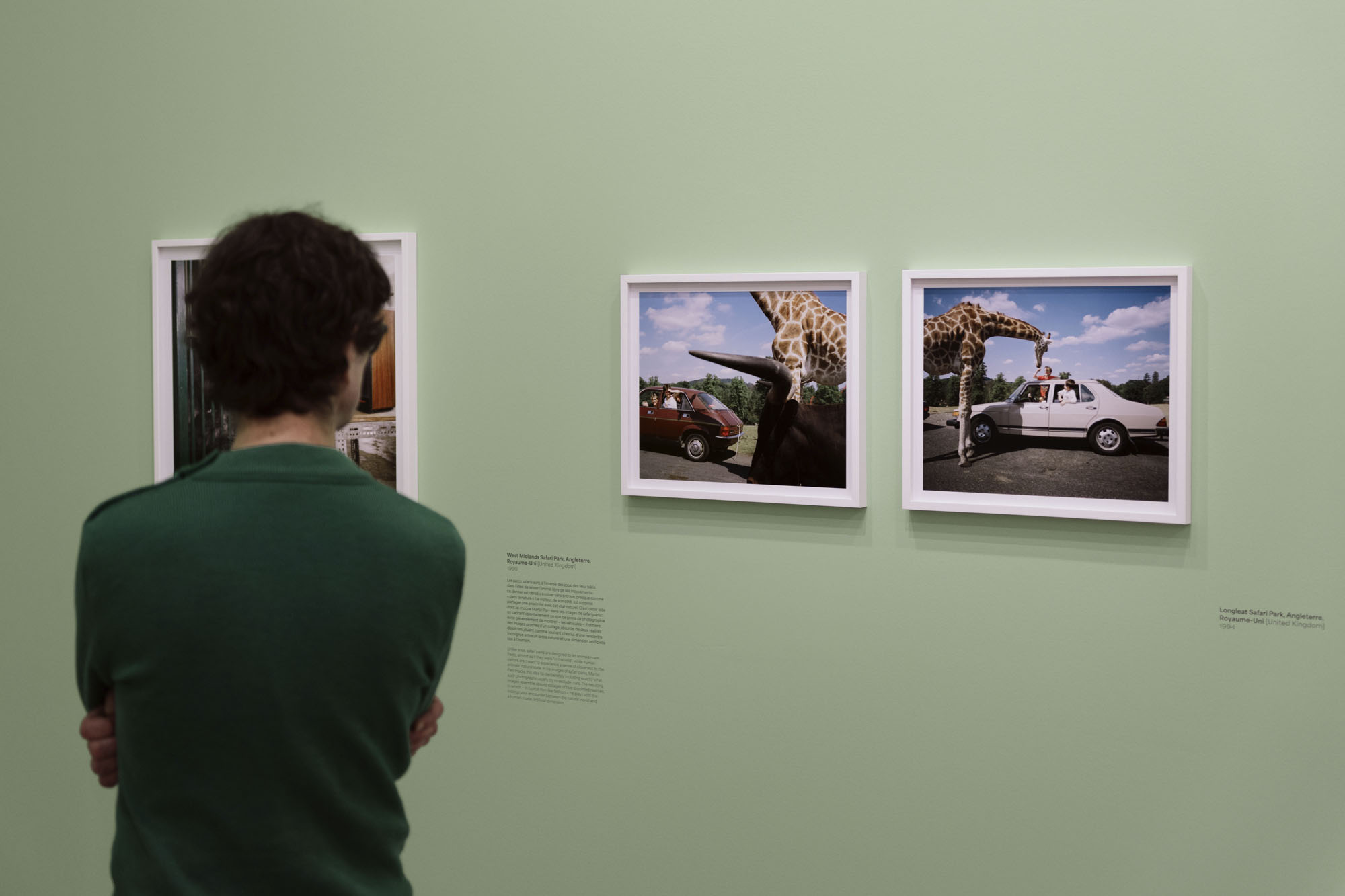
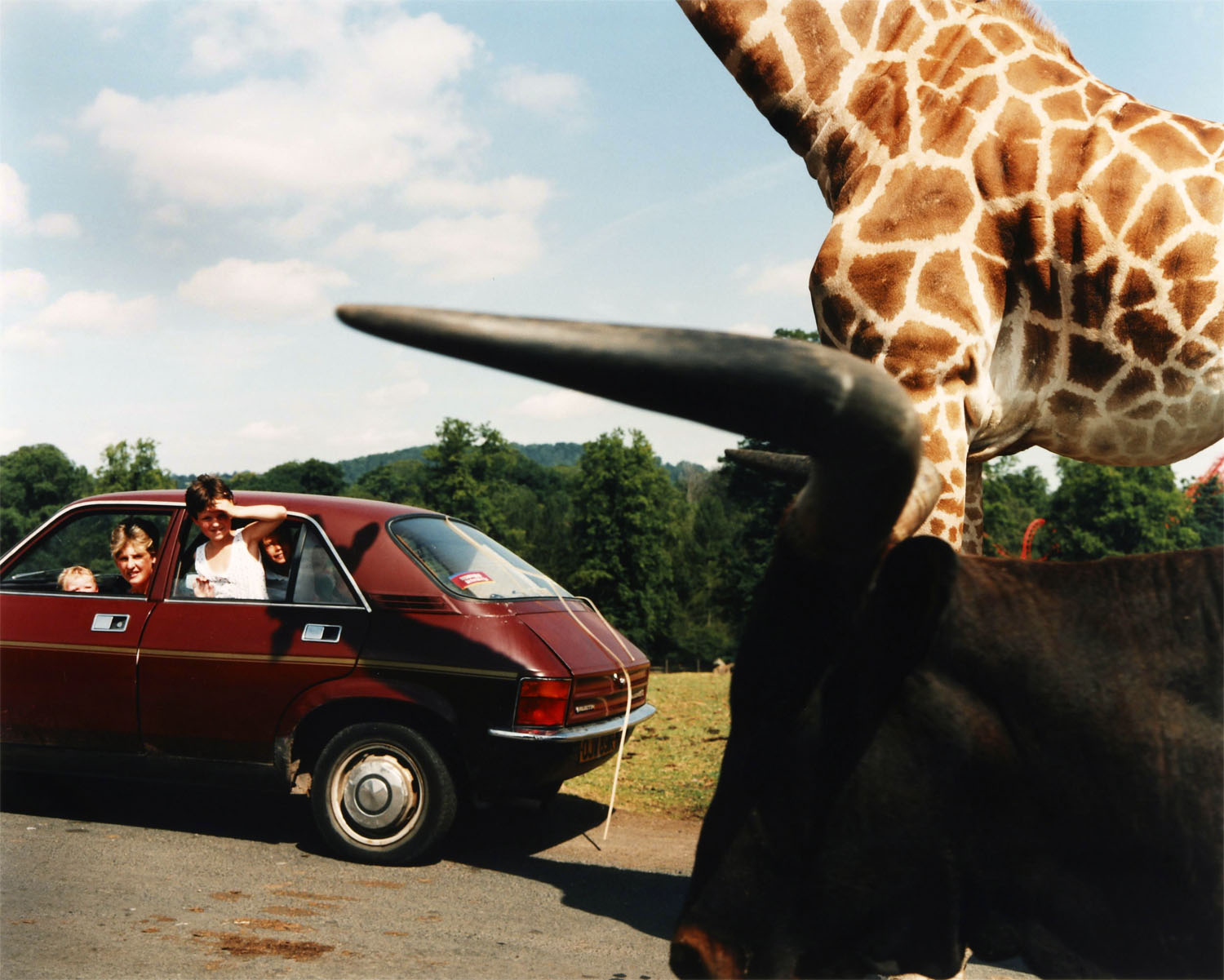
Installation view of the exhibition 'Martin Parr: Global Warning' at Jeu de Paume, Paris, January - May, 2026 showing at left, Martin Parr's 'West Midlands Safari Park, United Kingdom' (1990); and at right, 'Longleat Safari Park, United Kingdom' (1994)


Installation view of the exhibition Martin Parr: Global Warming at Jeu de Paume, Paris, January – May, 2026 showing at left, Martin Parr’s West Midlands Safari Park, United Kingdom (1990); and at right, Longleat Safari Park, United Kingdom (1994)


Martin Parr (English, 1952-2025) 'West Midlands Safari Park, United Kingdom' 1990


Martin Parr (English, 1952-2025)
West Midlands Safari Park, United Kingdom
1990
© Martin Parr / Magnum Photos


Unlike zoos, safari parks are designed to let animals roam freely, almost as if they were “in the wild”, while human visitors are meant to experience a sense of closeness to the animals natural state. In his images of safari parks, Martin Parr mocks this idea by deliberately including exactly what such photographs usually try to exclude: cars. The resulting images resemble absurd collages of two disjointed realities, in which – in typical Par-like fashion – he plays with the incongruous encounter between the natural world and a human-made, artificial dimension

Wall text from the exhibition


Installation view of the exhibition 'Martin Parr: Global Warning' at Jeu de Paume, Paris, January - May, 2026


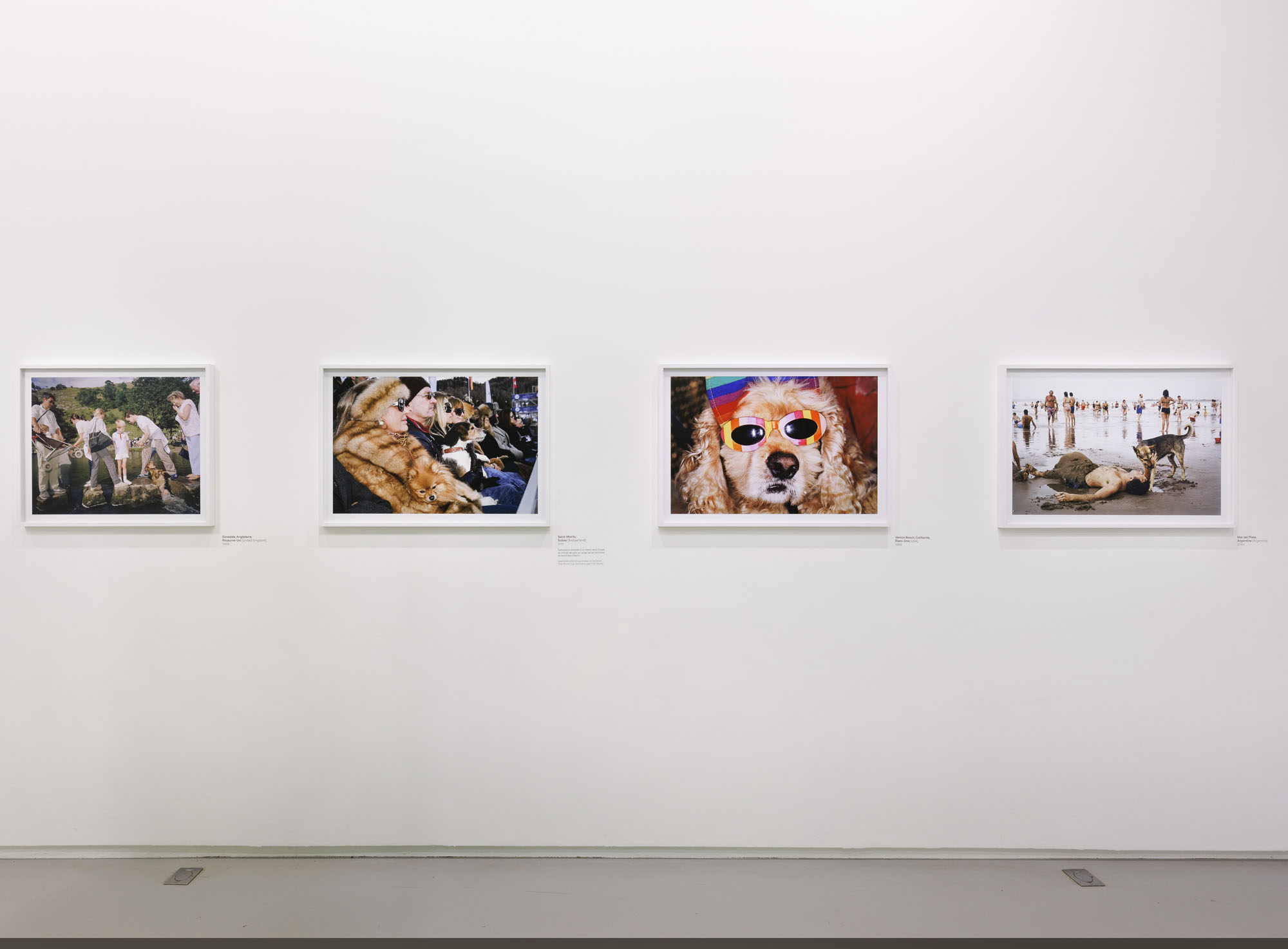
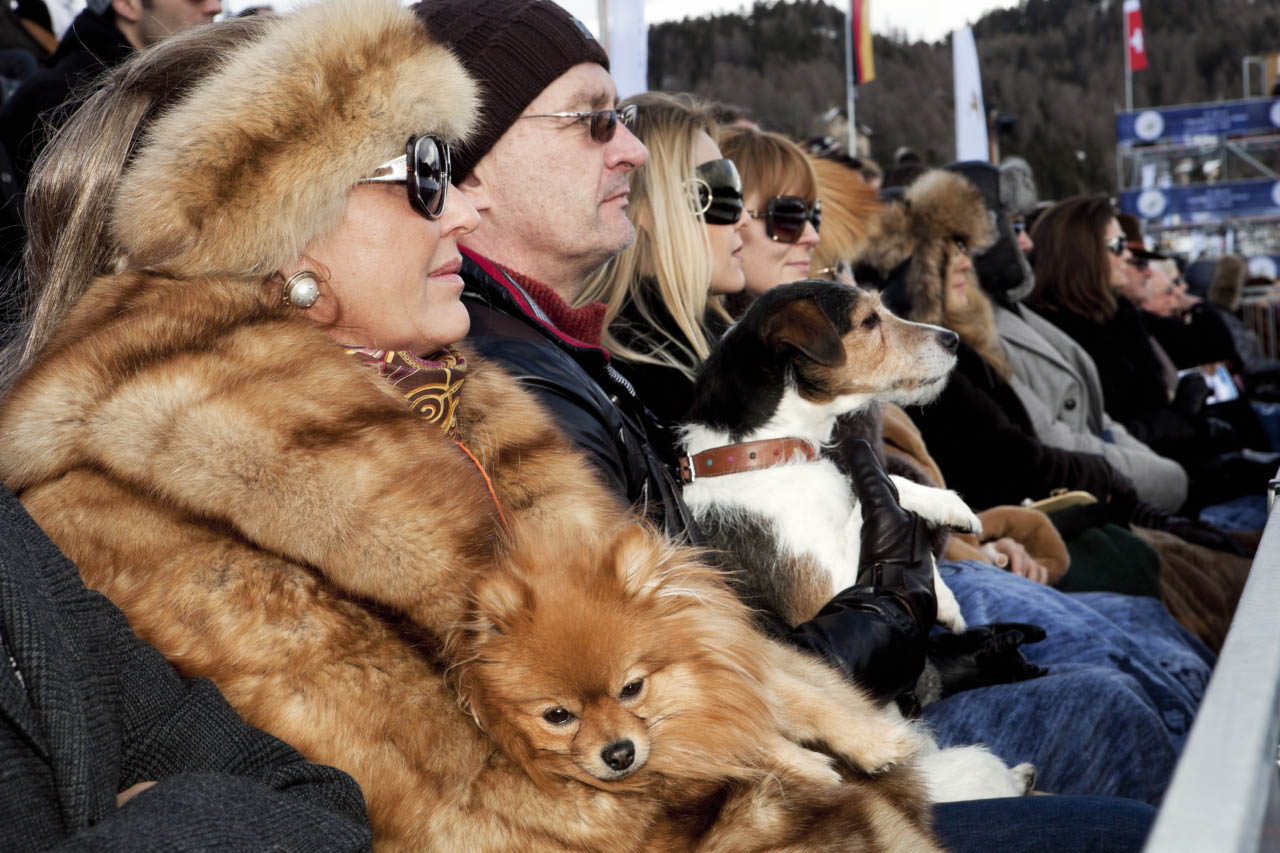
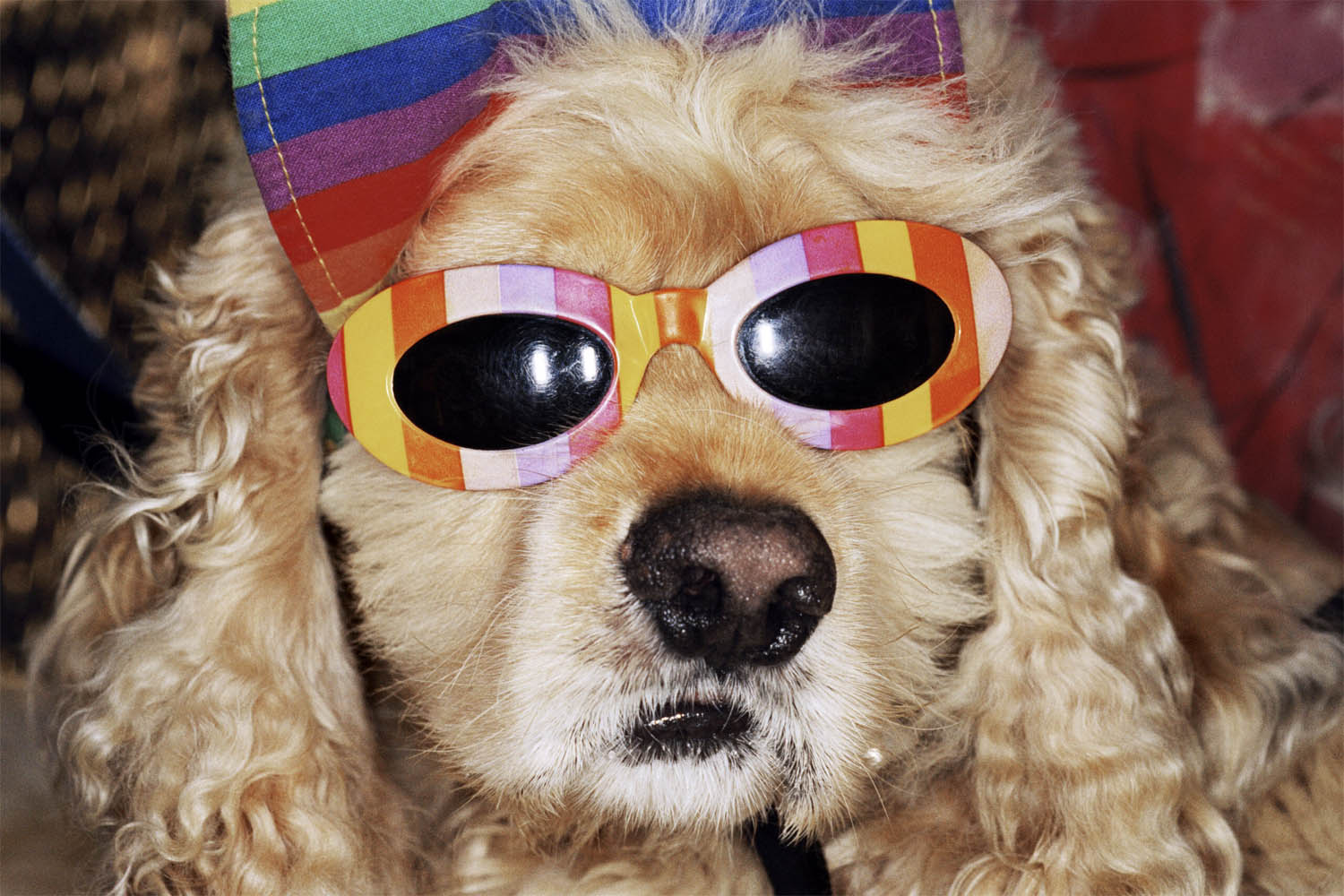
Installation view of the exhibition Martin Parr: Global Warming at Jeu de Paume, Paris, January – May, 2026 showing at second left, Martin Parr’s photograph Snow Polo World Cup, St Moritz, Switzerland (2011, below) from the series Luxury; and at second right, Venice Beach, California, USA (1998, below)


Martin Parr (English, 1952-2025) 'Snow Polo World Cup, St Moritz, Switzerland' 1998


Martin Parr (English, 1952-2025)
Snow Polo World Cup, St Moritz, Switzerland
1998
© Martin Parr / Magnum Photos


Martin Parr (English, 1952-2025) 'Venice Beach, California, USA' 1998


Martin Parr (English, 1952-2025)
Venice Beach, California, USA
1998
© Martin Parr / Magnum Photos


“I am not saying that tourism is bad – far from it as it brings a livelihood for many people. Organisations like Tourism Concern in the UK make a very important contribution to a better understanding of the yin and yang of tourism. This charity highlights the problems caused by tourism – from water shortages in newly developed sites to the pure rape of our ever decreasing natural habitats – and tries to ensure that local people benefit from the fruits of tourism. We need to adopt a better understanding of the issues surrounding this huge business. These photographs, I hope, will offer a good starting point. For remember we, in the wealthy West, are the ones that seek out the pleasures of tourism, so we’re all in this together.”


Martin Parr


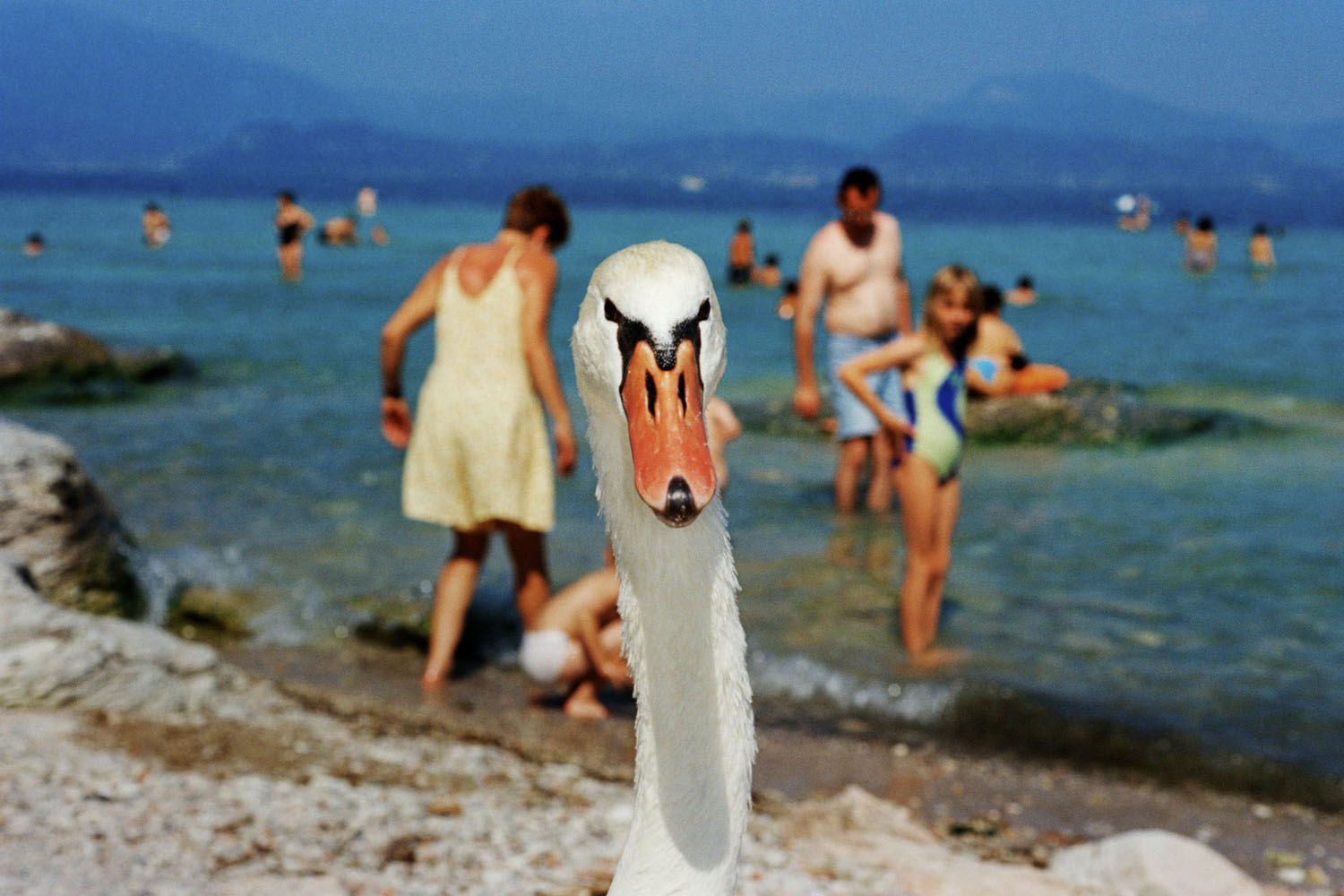
Martin Parr (English, 1952-2025) 'Lake Garda, Italy' 1999


Martin Parr (English, 1952-2025)
Lake Garda, Italy
1999
© Martin Parr / Magnum Photos


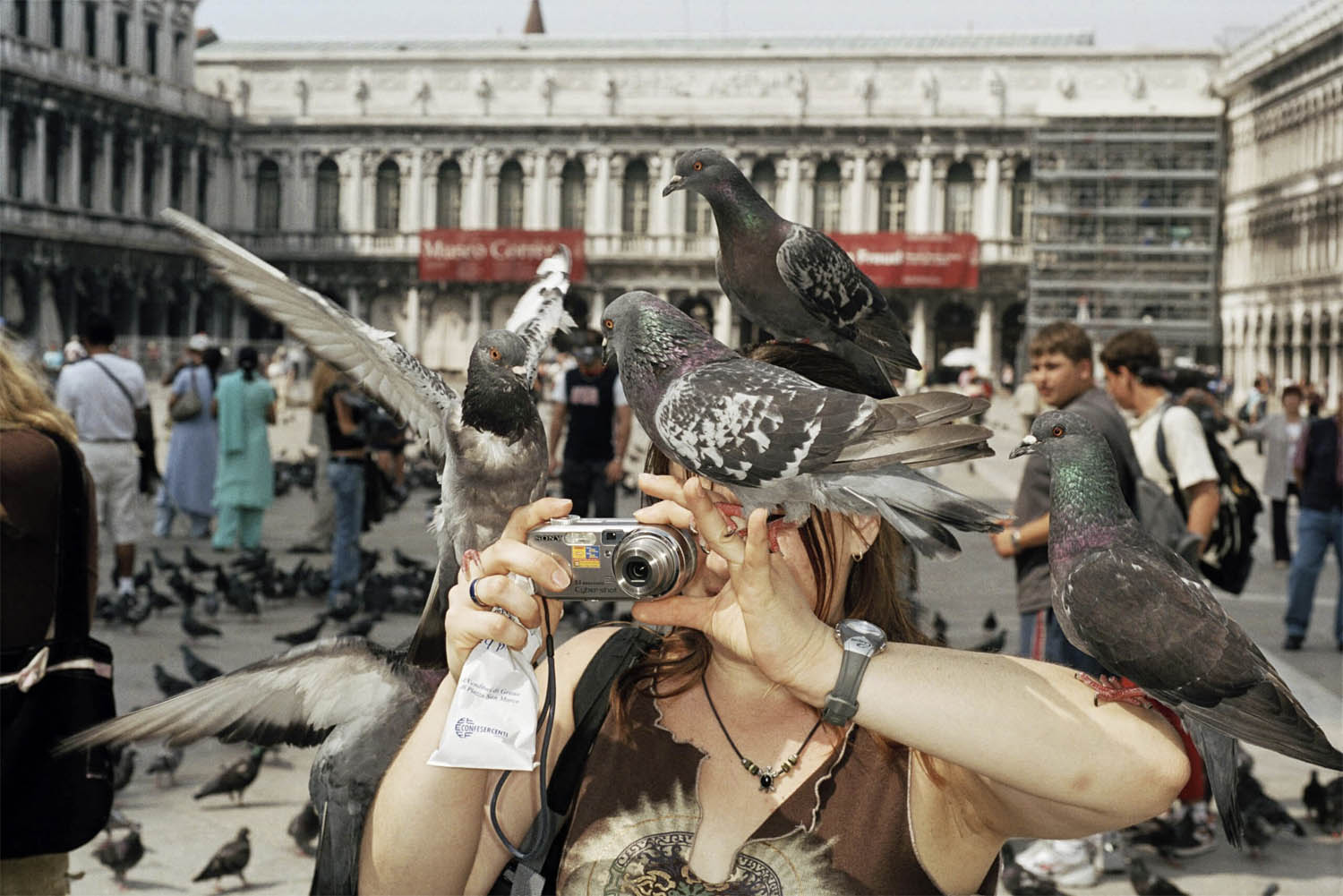
Martin Parr (English, 1952-2025) 'Venice, Italy' 2005


Martin Parr (English, 1952-2025)
Venice, Italy
2005
© Martin Parr / Magnum Photos


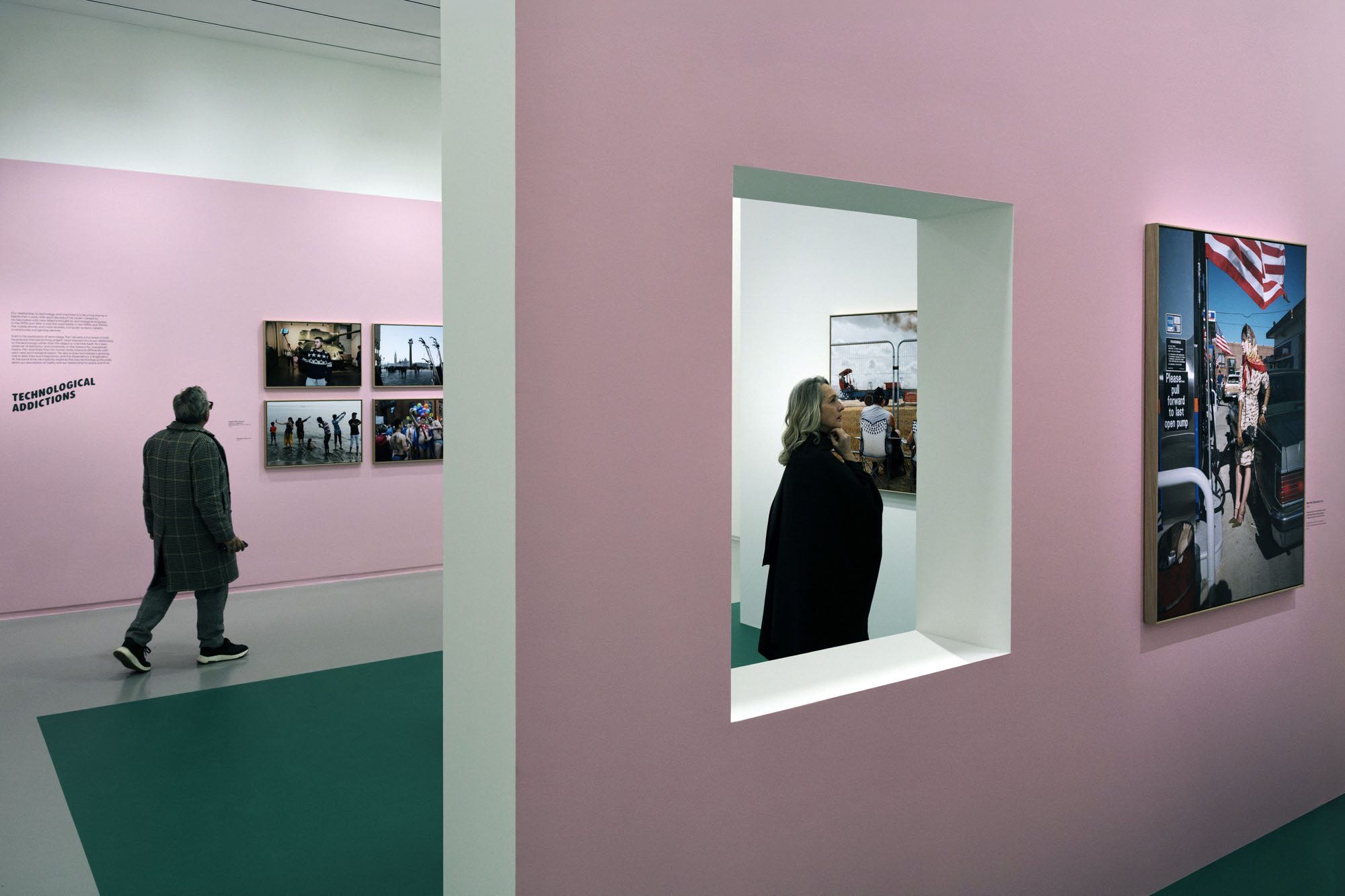
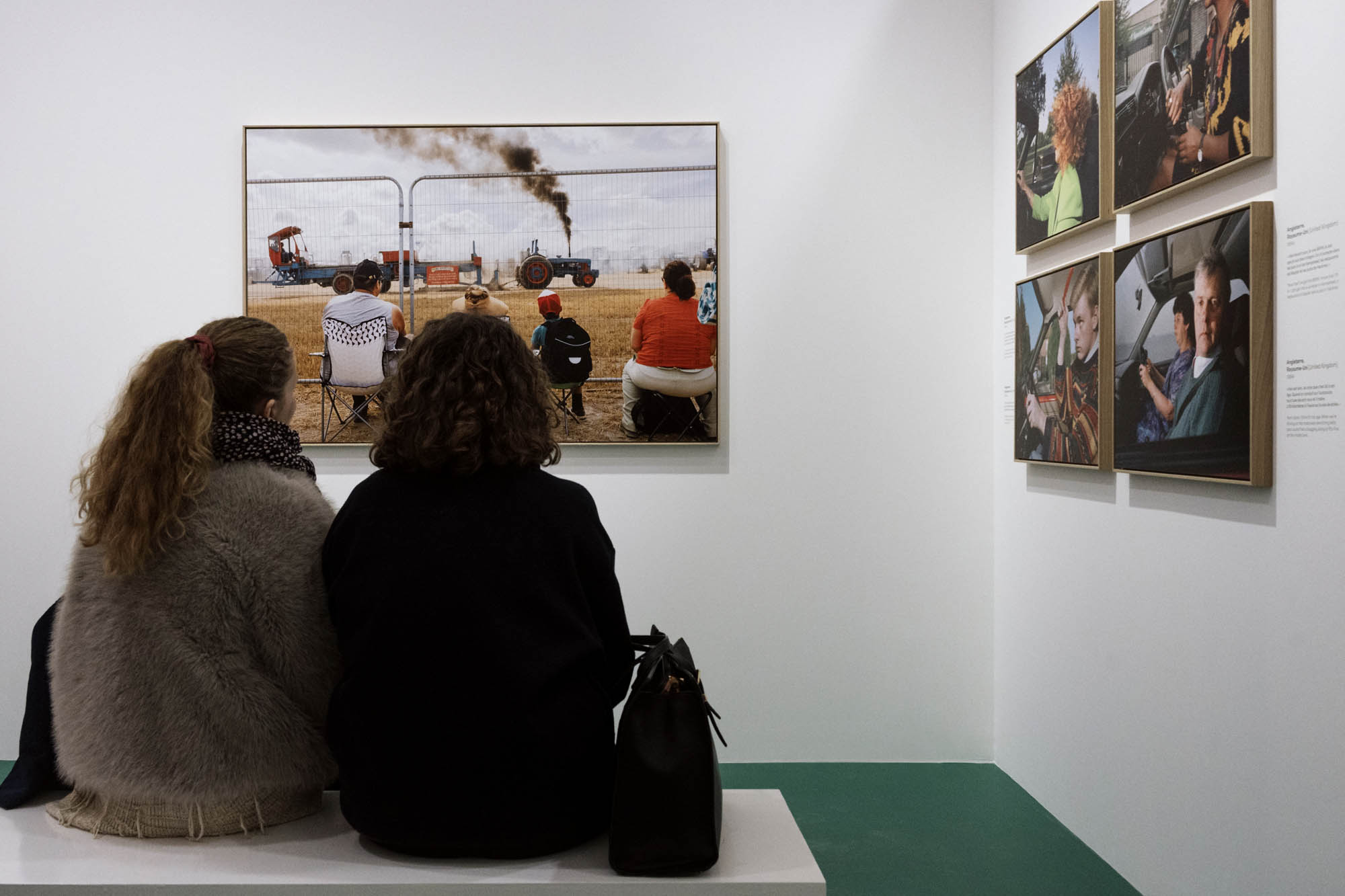
Installation view of the exhibition 'Martin Parr: Global Warning' at Jeu de Paume, Paris, January - May, 2026 showing the wall text "Technological Addictions" with at bottom left, Martin Parr's 'Chowpatty Beach, Mumbai, India' (2018); at second right, 'Great Dorset Steam Fair, Dorset, England' (2022) and at right, 'New York, USA' (1999)


Installation view of the exhibition Martin Parr: Global Warning at Jeu de Paume, Paris, January – May, 2026 showing the wall text “Technological Addictions” with at bottom left, Martin Parr’s Chowpatty Beach, Mumbai, India (2018, below); at second right, Great Dorset Steam Fair, Dorset, England (2022, below) and at right, New York, USA (1999, below)


Technological Addictions

Even in his exploration of technology, Parr remains a humanist in both his practice and overarching project: what interests him is our relationship to the technology rather than the object or machine itself. As a keen observer of behaviour and constantly on the lookout for unexplored for unexplored topics, Parr examined how the human body interacts differently with each new technological object. He also probes technology’s growing role in daily lives and imagination, and the dependency it engenders. At the same time, he implicitly explores the way technology profoundly alters our perception of reality and our relationship to space and time.

Wall text from the exhibition


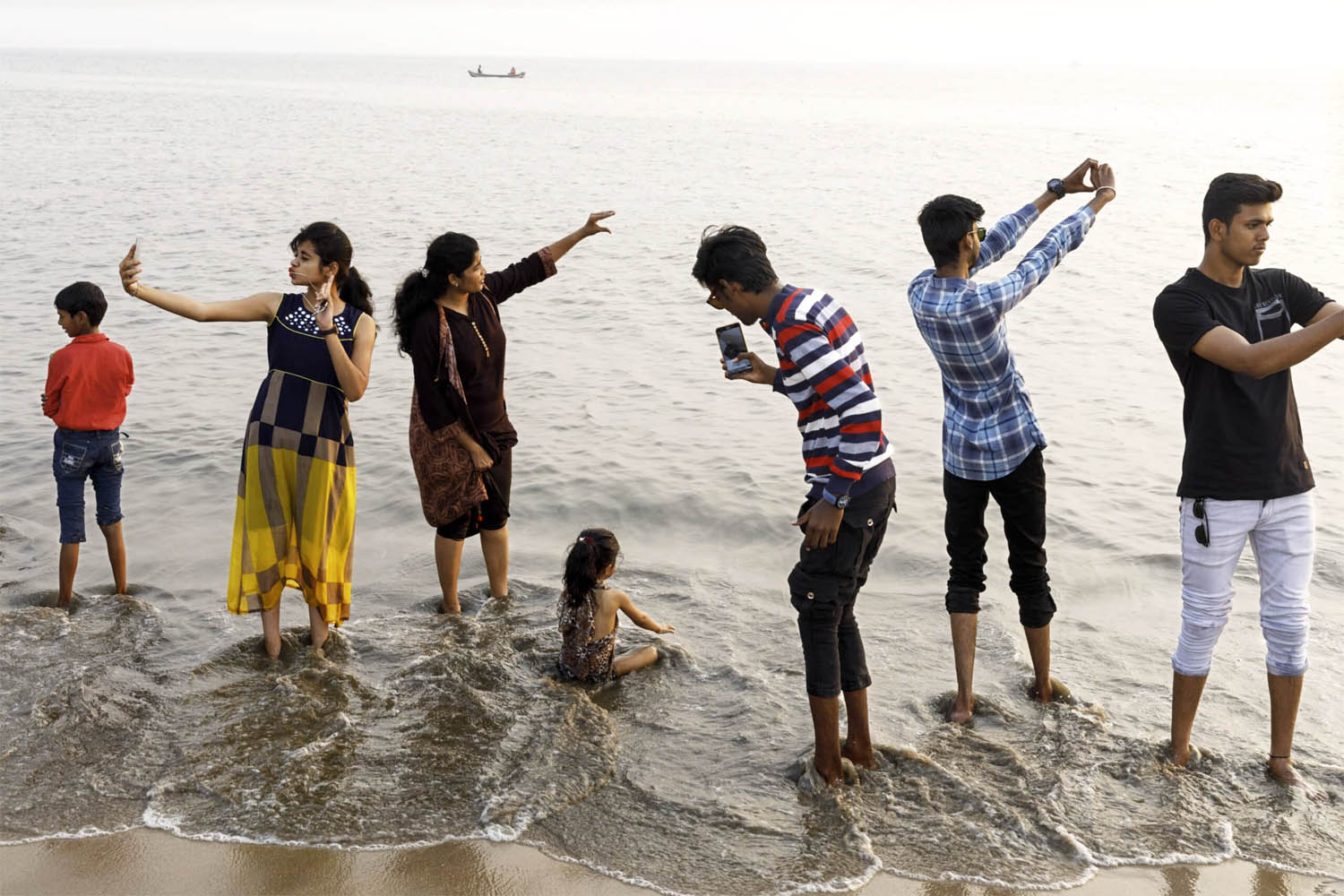
Martin Parr (English, 1952-2025) 'Chowpatty Beach, Mumbai, India' 2018


Martin Parr (English, 1952-2025)
Chowpatty Beach, Mumbai, India
2018
© Martin Parr / Magnum Photos


Installation view of the exhibition 'Martin Parr: Global Warning' at Jeu de Paume, Paris, January - May, 2026 showing at left, Martin Parr's 'Great Dorset Steam Fair, Dorset, England' (2022); and at top right, 'England, United Kingdom' (1994) and at bottom right, 'England, United Kingdom' (1994)


Installation view of the exhibition Martin Parr: Global Warning at Jeu de Paume, Paris, January – May, 2026 showing at left, Martin Parr’s Great Dorset Steam Fair, Dorset, England (2022, below); and at top right, England, United Kingdom (1994) and at bottom right, England, United Kingdom (1994)


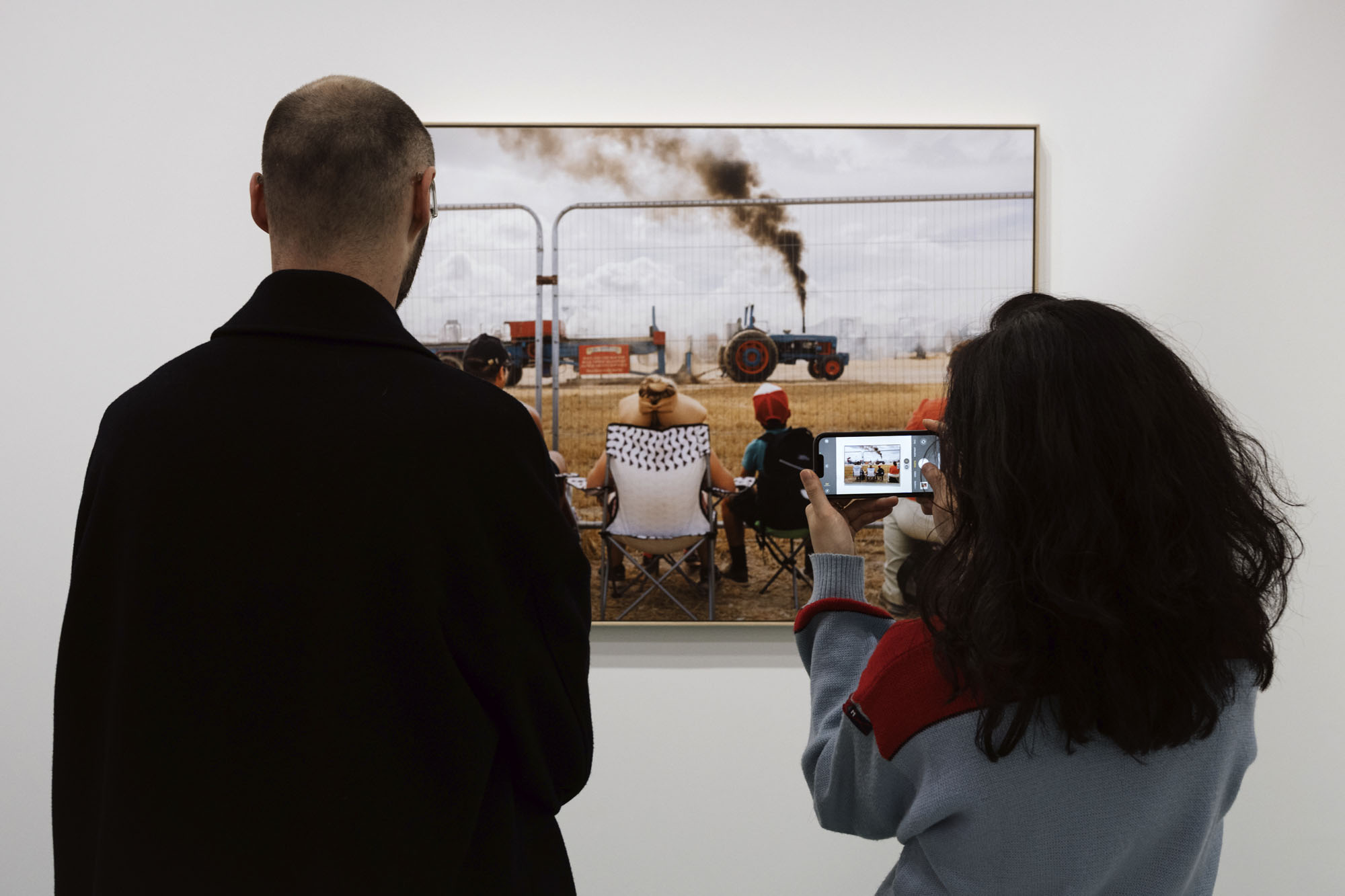
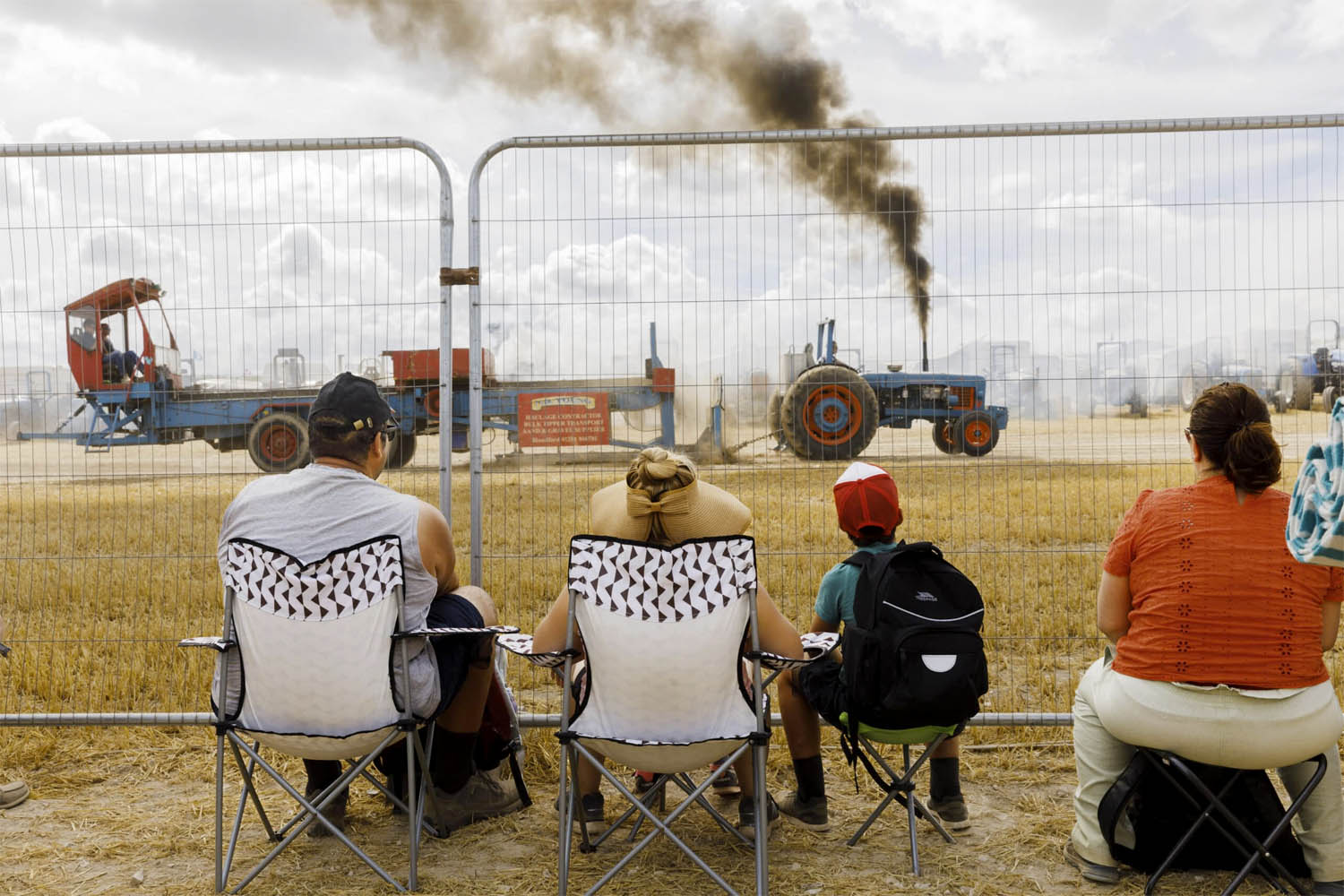
Installation view of the exhibition 'Martin Parr: Global Warning' at Jeu de Paume, Paris, January - May, 2026 showing Martin Parr's 'Great Dorset Steam Fair, Dorset, England' (2022)


Installation view of the exhibition Martin Parr: Global Warning at Jeu de Paume, Paris, January – May, 2026 showing Martin Parr’s Great Dorset Steam Fair, Dorset, England (2022, below)


Martin Parr (English, 1952-2025) 'Great Dorset Steam Fair, Dorset, England' 2022


Martin Parr (English, 1952-2025)
Great Dorset Steam Fair, Dorset, England

2022
© Martin Parr / Magnum Photos


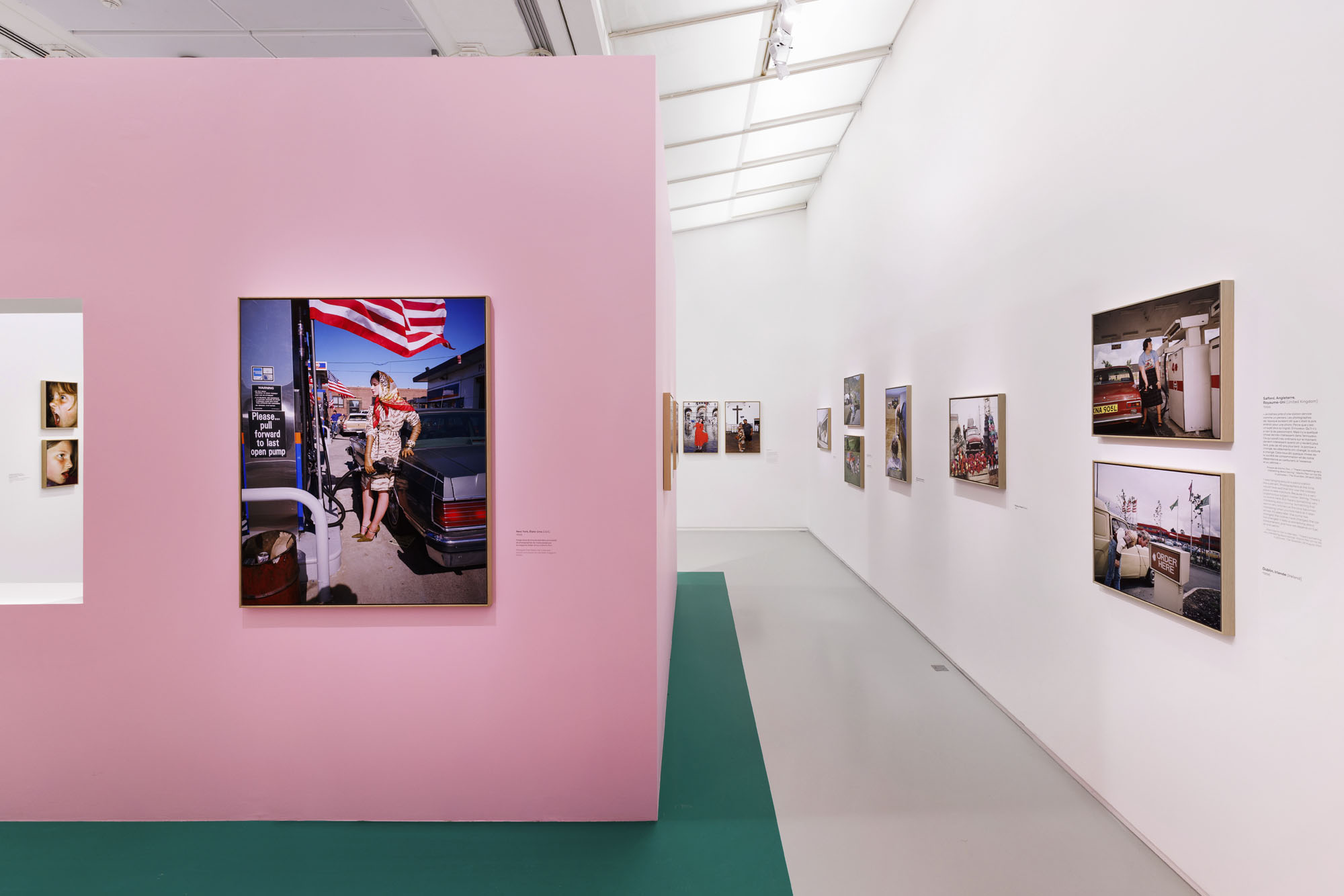
Installation view of the exhibition 'Martin Parr: Global Warning' at Jeu de Paume, Paris, January - May, 2026 showing at left, Martin Parr's 'New York, USA' (1999); and at right top, 'Salford, United Kingdom' (1986) and right bottom, 'Dublin, Ireland' (1986)


Installation view of the exhibition Martin Parr: Global Warning at Jeu de Paume, Paris, January – May, 2026 showing at left, Martin Parr’s New York, USA (1999, below); and at right top, Salford, United Kingdom (1986) and right bottom, Dublin, Ireland (1986)


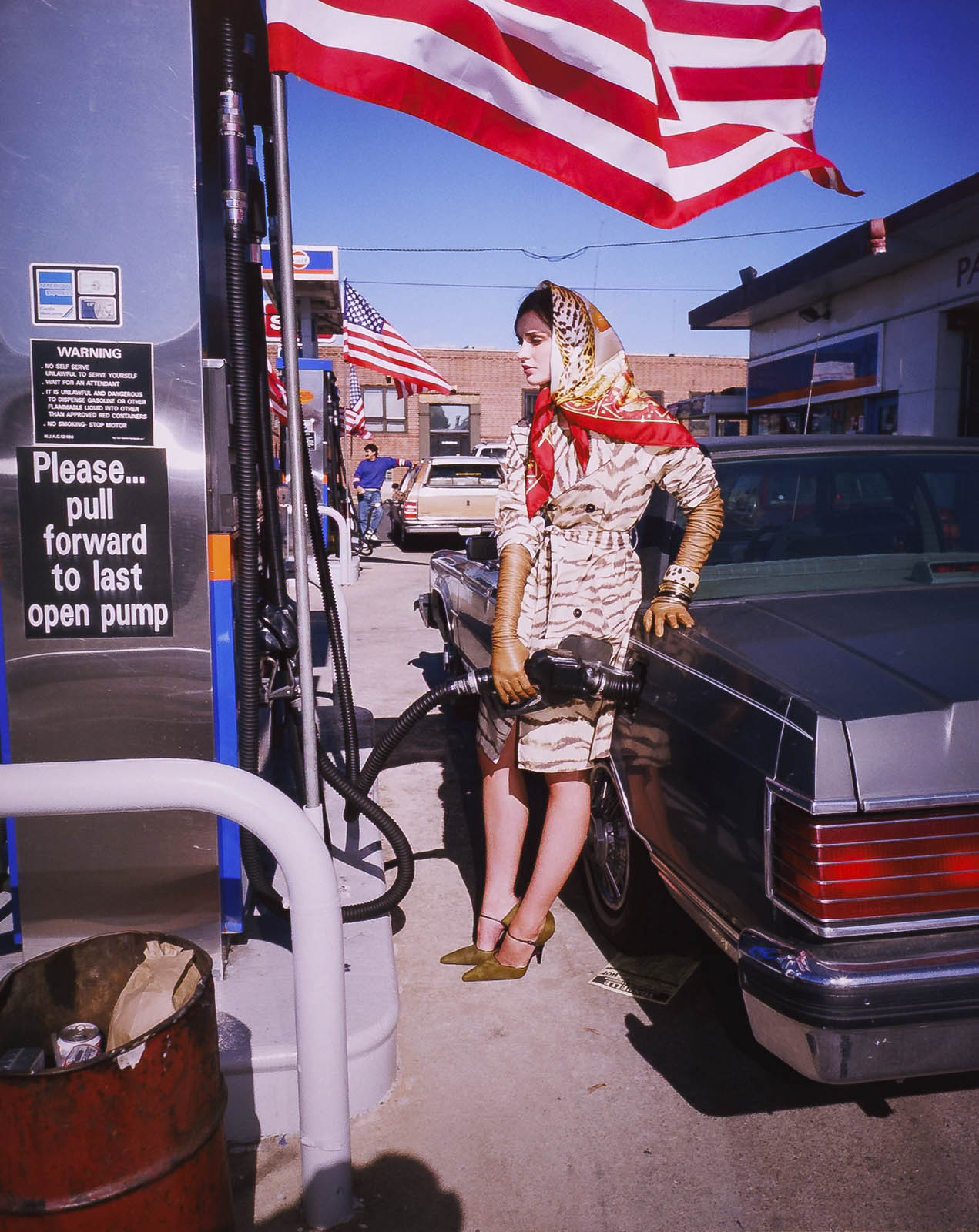
 ‘I was hanging around a petrol station like a pervert. Photographers at the time would have said that this was the craziest place to take a picture. Because it’s a very unglamorous subject matter. Boring. There’s no drama here. But there’s something really interesting about boring. Something that seems very ordinary at the time becomes interesting when you look back at it later, almost 40 years later: the pump has changed, the clothes have changed, the car has changed. It tells us something about consumerism, and how we depend on fuel, oil and petrol.

From Martin Parr’s interview, ‘”There’s something very interesting about boring” Martin Parr on his life in pictures.’ The Guardian, 24 August 2025
Wall text from the exhibition


Martin Parr (English, 1952-2025) 'New York, USA' 1999


Martin Parr (English, 1952-2025)
New York, USA
1999
© Martin Parr / Magnum Photos

Photograph from Martin Parr’s first-ever fashion commission for the Italian magazine Amiga


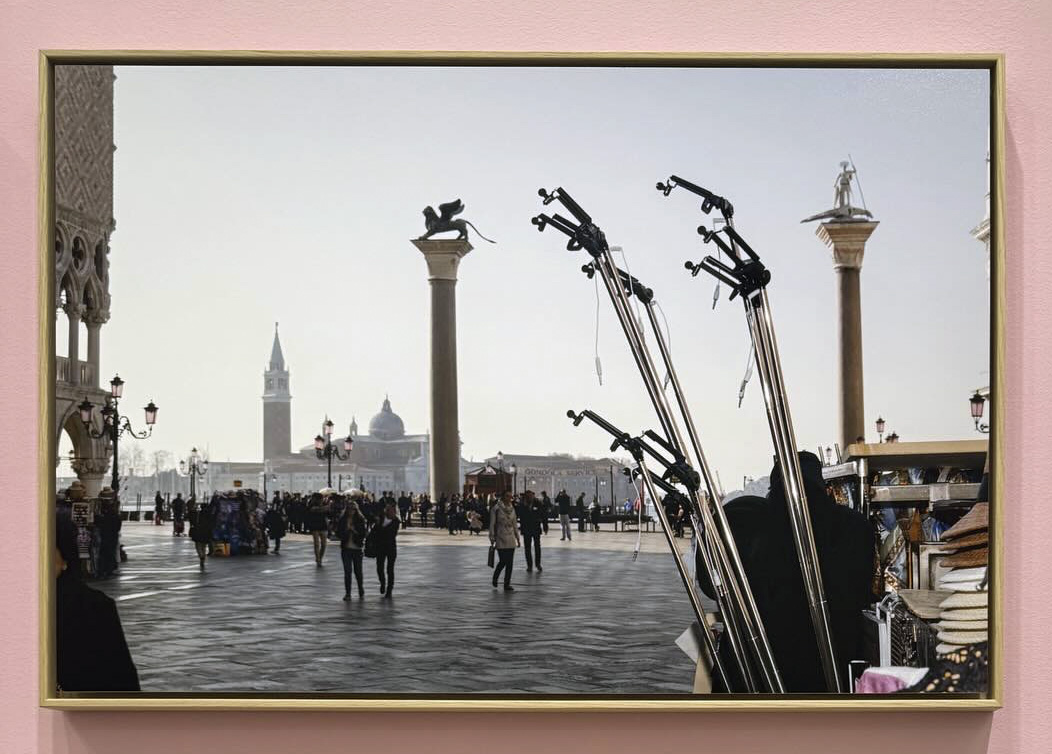
Martin Parr (English, 1952-2025) 'Venice, Italy' 2015 (installation view)


Martin Parr (English, 1952-2025)
Venice, Italy (installation view)
2015
© Martin Parr / Magnum Photos


‘Although many museums have now banned the selfie stick, outside in the street, especially in front of that iconic monument or landmark the stick comes into its own. Getting the photo of you and your loved one(s) with the landmark in the background is de rigueur. The tourism industry, which is the biggest in the world, now dictates that the first requirement of any trip is to prove you were there with the necessary photo. It connects you to the world that we know and understand, and it is a vital part of any successful holiday experience. We used to have to ask a passing tourist to take the photo, but thanks to the selfie stick those days are over and we are now self sufficient.’

From Martin Parr’s blog, The Selfie Stick, 2015
Wall text from the exhibition


Installation view of the exhibition 'Martin Parr: Global Warning' at Jeu de Paume, Paris, January - May, 2026 showing at left, Martin Parr's photographs 'Advertisement for Sony PlayStation, England, United Kingdom' (2003); and at right, Ooty, India (2018)


Installation view of the exhibition Martin Parr: Global Warning at Jeu de Paume, Paris, January – May, 2026 showing at left, Martin Parr’s photographs Advertisement for Sony PlayStation, England, United Kingdom (2003); and at right, Ooty, India (2018, above)


Installation view of the exhibition 'Martin Parr: Global Warning' at Jeu de Paume, Paris, January - May, 2026


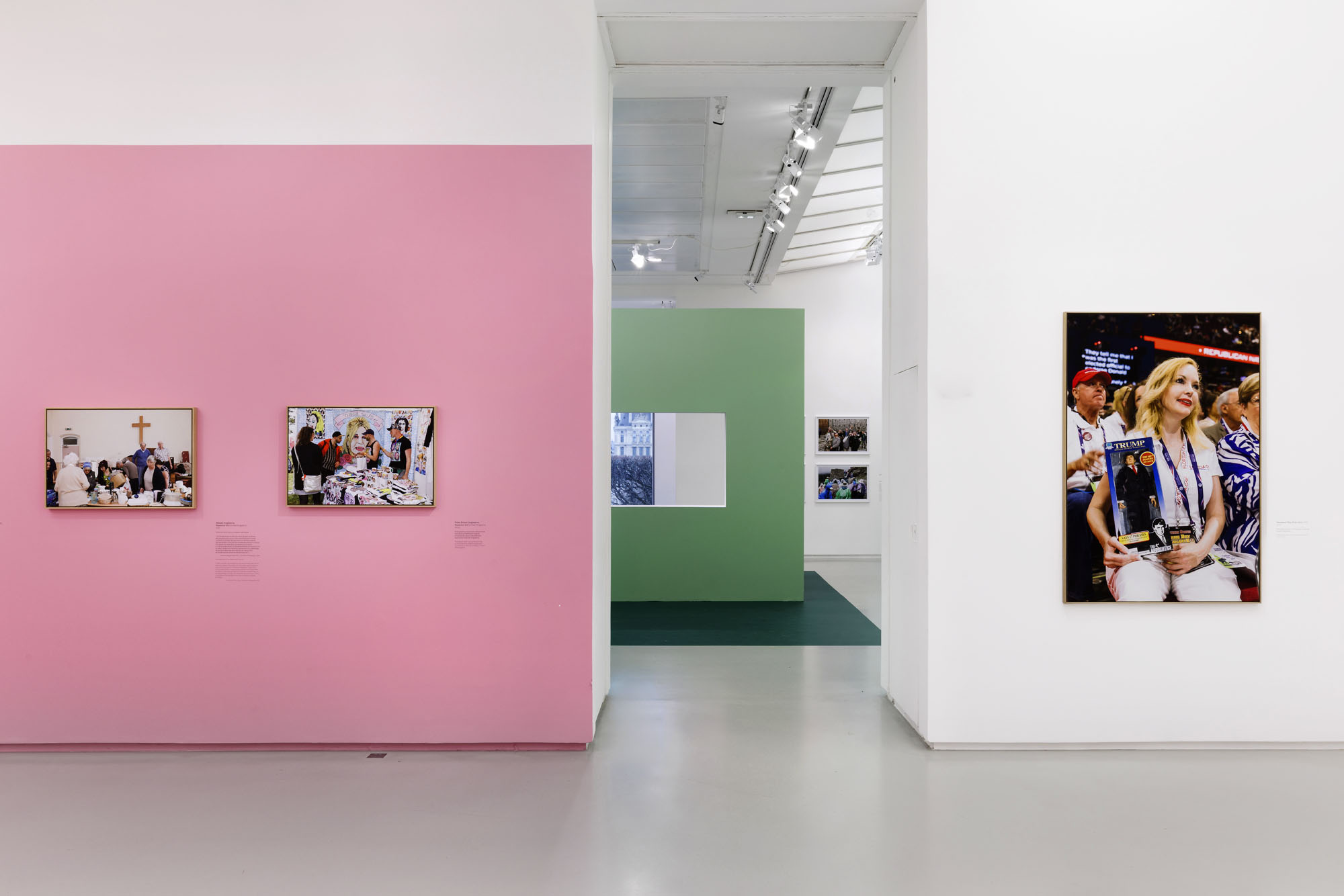
Installation view of the exhibition Martin Parr: Global Warning at Jeu de Paume, Paris, January – May, 2026 showing at right, Martin Parr’s photograph from The Republican National Convention, Cleveland, Ohio, USA (2016, below)


Martin Parr (English, 1952-2025) 'The Republican National Convention, Cleveland, Ohio, USA' 2016


Martin Parr (English, 1952-2025)
The Republican National Convention, Cleveland, Ohio, USA
2016
© Martin Parr / Magnum Photos


Jeu de Paume
1, Place de la Concorde
75008 Paris
métro Concorde
Phone: 01 47 03 12 50

Opening hours:
Tuesday – Sunday 11am – 7pm
Closed Mondays

Jeu de Paume website

LIKE ART BLART ON FACEBOOK

Back to top

Exhibition: ‘Smile! How the Smile Came Into Photography’ at Museum Ludwig, Cologne

Exhibition dates: 1st November, 2025 – 22nd March, 2026

Curators: Miriam Szwast with Brit Meyer


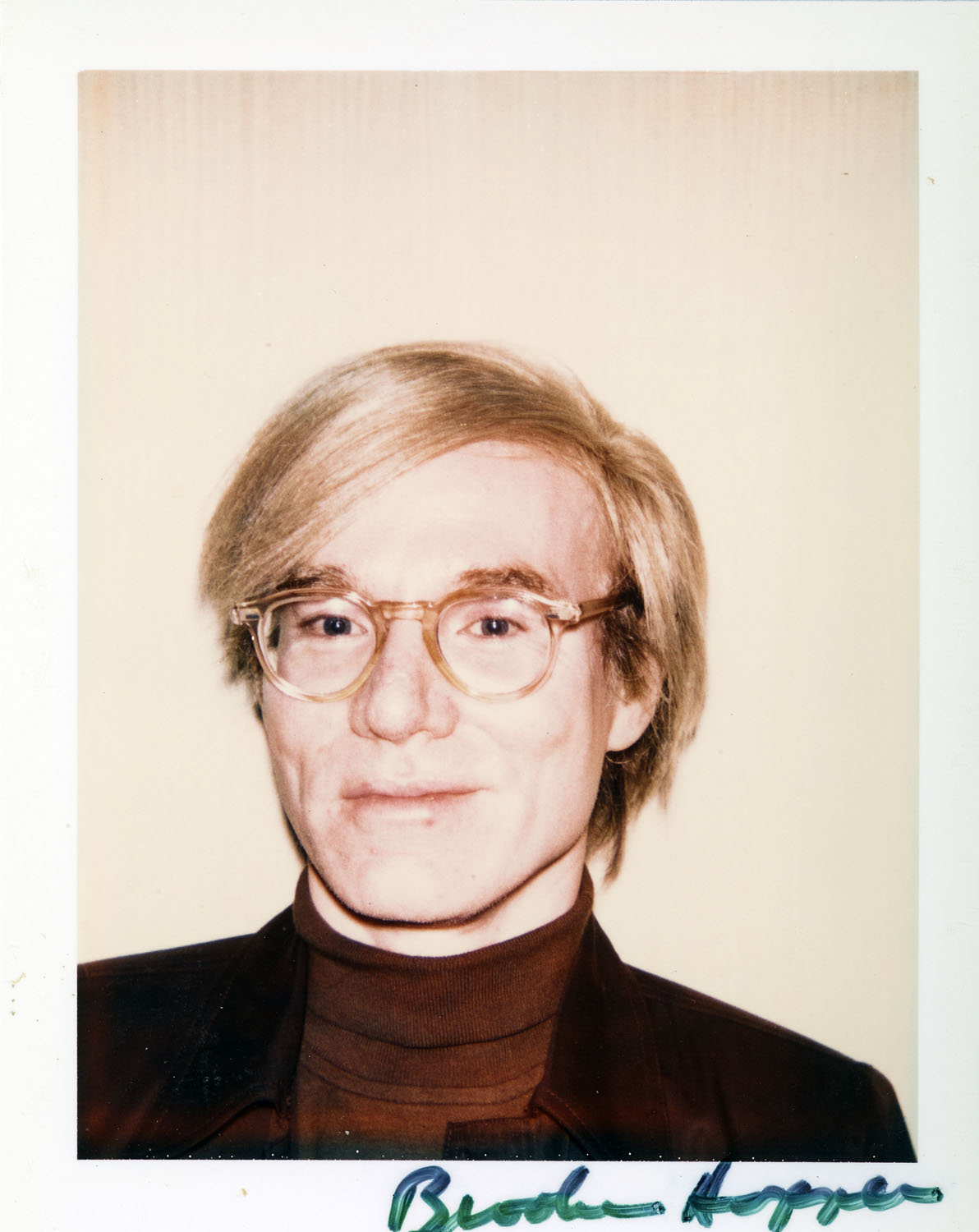
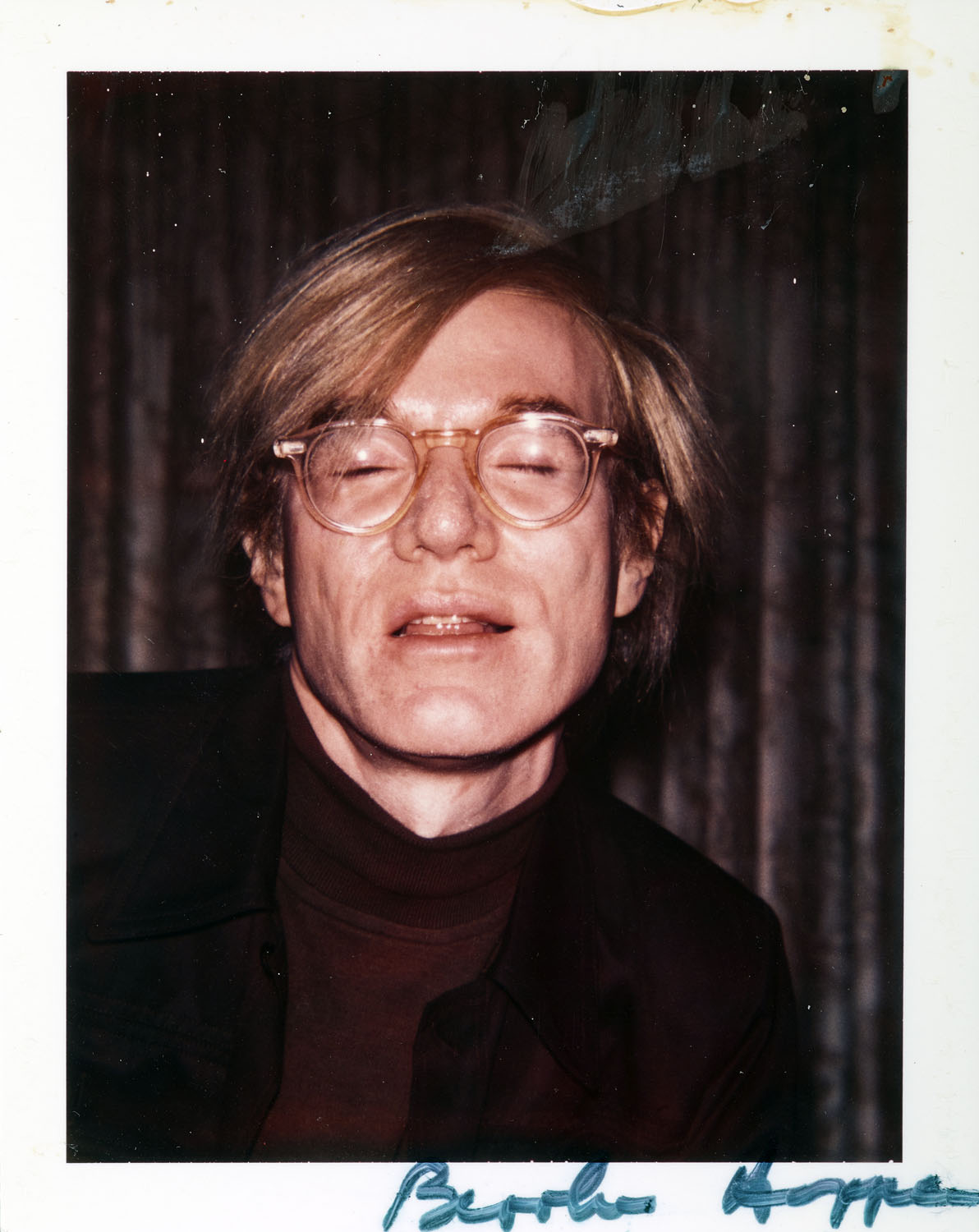
Andy Warhol (American, 1928-1987) 'Warhol, Andy' 1972


Andy Warhol (American, 1928-1987)
Warhol, Andy
1972
Polaroid
10.8 x 8.6cm
Museum Ludwig, Cologne
Repro: Historisches Archiv mit Rheinischem Bildarchiv
©2025 The Andy Warhol Foundation for the Visual Arts, Inc. / Licensed by Artists Rights Society (ARS), New York


I went for a new passport photograph yesterday and the nice person took the first photographs, looked at them, and then said “too much smile”, close your mouth more, and took them again with no teeth exposed and my mouth in a thin, rictus line.

How do our “photographic faces” differ from our everyday faces?

Does not smiling in a photograph prevent us from displaying our individual personality?

What different types of smile are there and what do they signify?

“Smiles are complex, with researchers identifying up to 19 types ranging from genuine joy to social masking, with only six occurring during positive emotions. Key types include the genuine Duchenne smile (involving eyes), polite social smiles, and non-enjoyment smiles like contempt or discomfort, signalling various emotional, social, or, in some cases, aggressive messages.”1

Smiling does not just depend on social norms but researchers have found it may actually be programmed into our DNA, creating in built reactions to certain situations.2 From the miserable smile, to the dampened smile, qualifier smile, contempt smile and fear smile, there are many ways we can interact with others and with the camera lens.

From this distance in Australia and having not see the exhibition in person I can’t tell you whether this exhibition addresses the issues of different smiles pictured in photography but it seems unlikely given the text and media images.

For more information on facial expressions please see my text Facile, Facies, Facticity (January 2014) which examines the facticity of the face, in which only through the “thrownness” of the individual rendered in the lines of the human face can we engage with the intractable conditions of human existence.

Say cheese!

Dr Marcus Bunyan


1/ Zaria Gorvett. “There are 19 types of smile but only six are for happiness,” on the BBC website, 10 April 2017 [Online] Cited 06/03/2026

2/ Ibid.,


Many thankx to Museum Ludwig for allowing me to publish the photographs in the posting. Please click on the photographs for a larger version of the image.


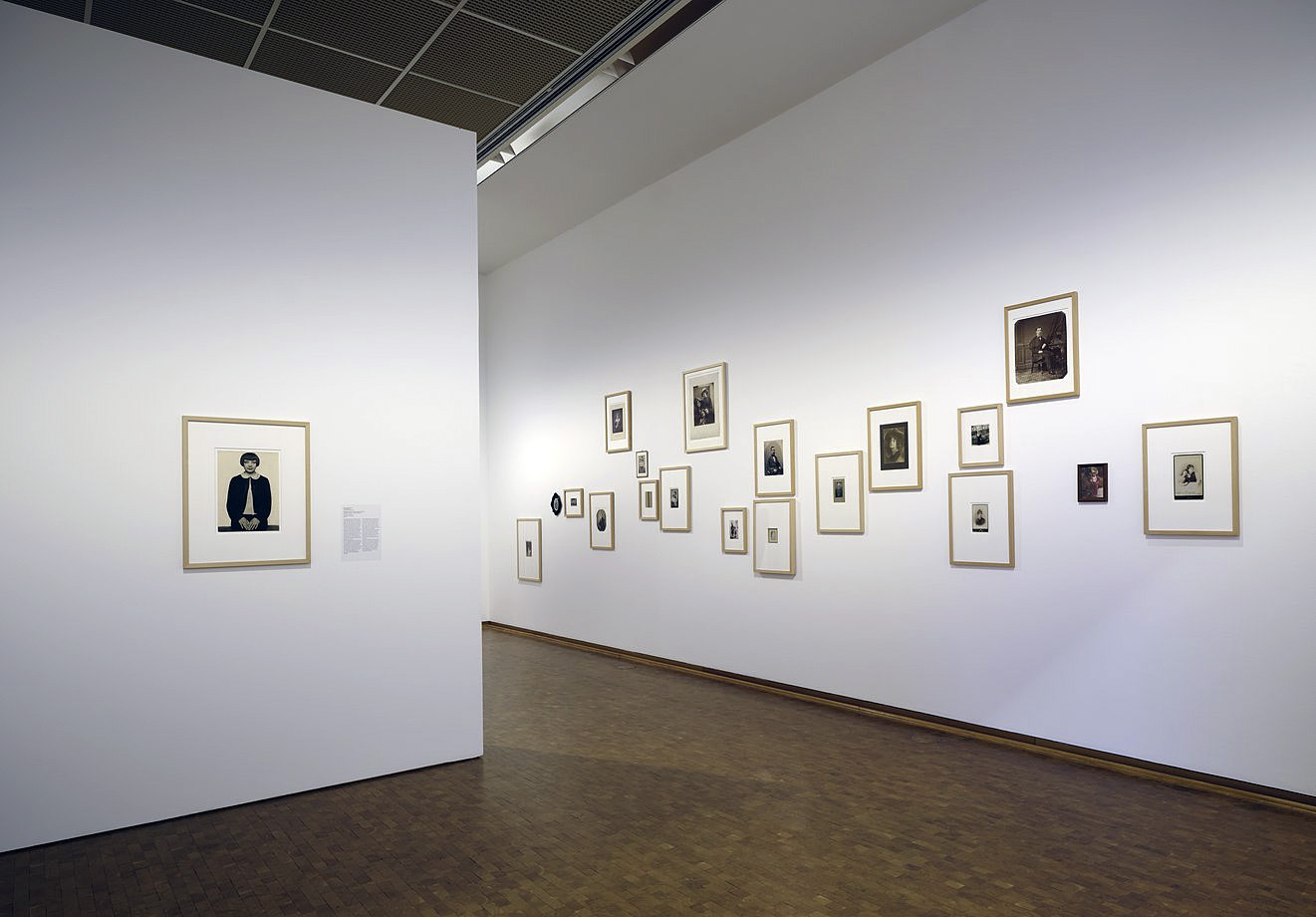
Installation view of the exhibition 'Smile! How the smile came into photography' at the Museum Ludwig, Cologne, November 15, 2025 - March 22, 2026 showing at left, Hugo Erfurth's 'Hildegard Seemann-Wechler (painter)' (1929)


Installation view of the exhibition Smile! How the smile came into photography at the Museum Ludwig, Cologne, November 15, 2025 – March 22, 2026 showing at left, Hugo Erfurth’s Hildegard Seemann-Wechler (painter), (1929, below)
Photo: Historisches Archiv mit Rheinischem Bildarchiv/ Mark Weber


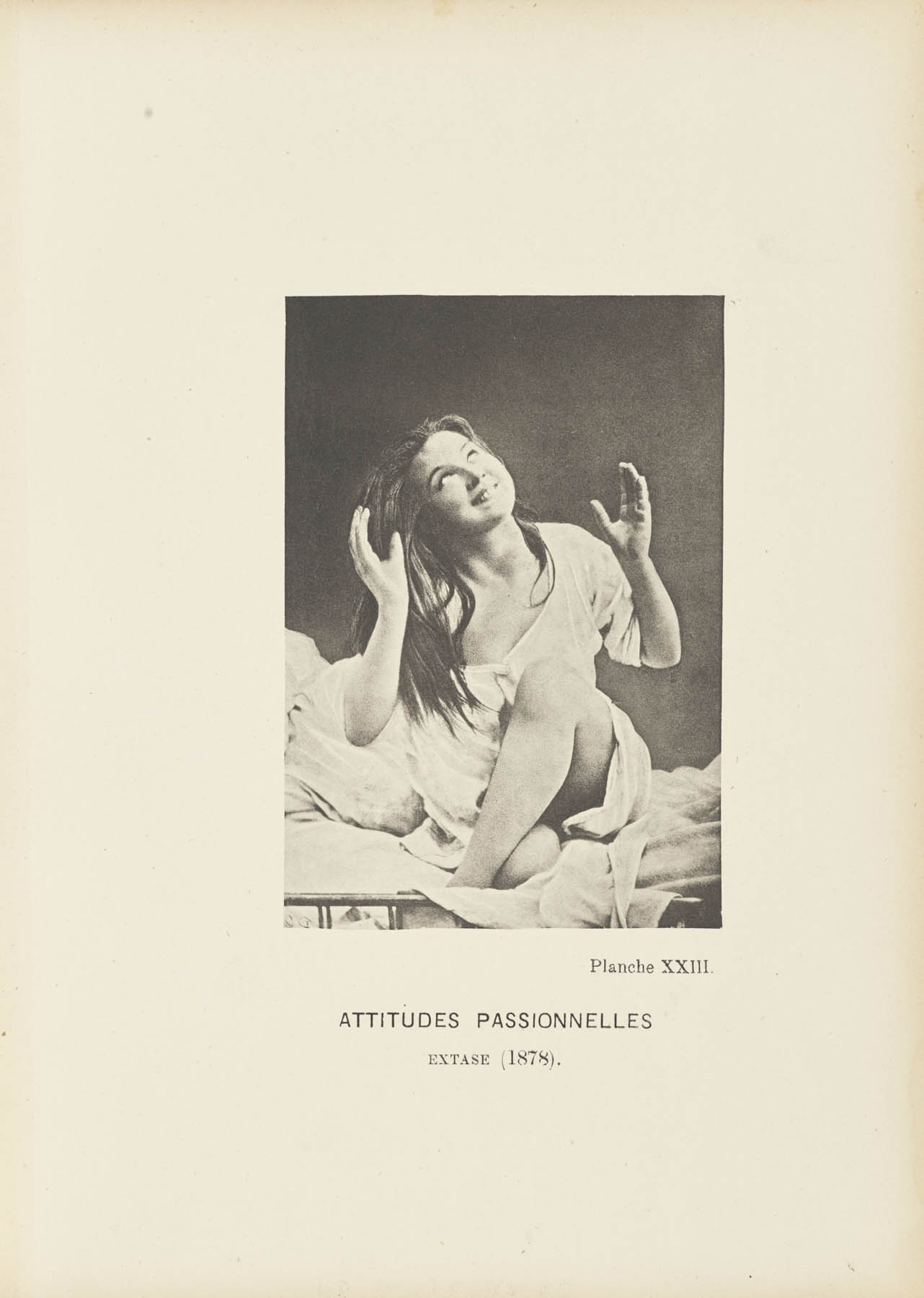
Paul-Marie-Léon Regnard (French, 1850-1927) 'Passionate Ecstatic Position/Expression' 1878 Part of 'Iconographie Photographique de la Salpetriere' (Service de M. Charcot)


Paul-Marie-Léon Regnard (French, 1850-1927)
Passionate Ecstatic Position/Expression
1878
Part of Iconographie Photographique de la Salpetriere (Service de M. Charcot)
Photogravure
Image: 10.3 × 7.1cm (4 1/16 × 2 13/16 in.)
The J. Paul Getty Museum, Los Angeles

NB. PHOTOGRAPH IS NOT IN THE EXHIBITION


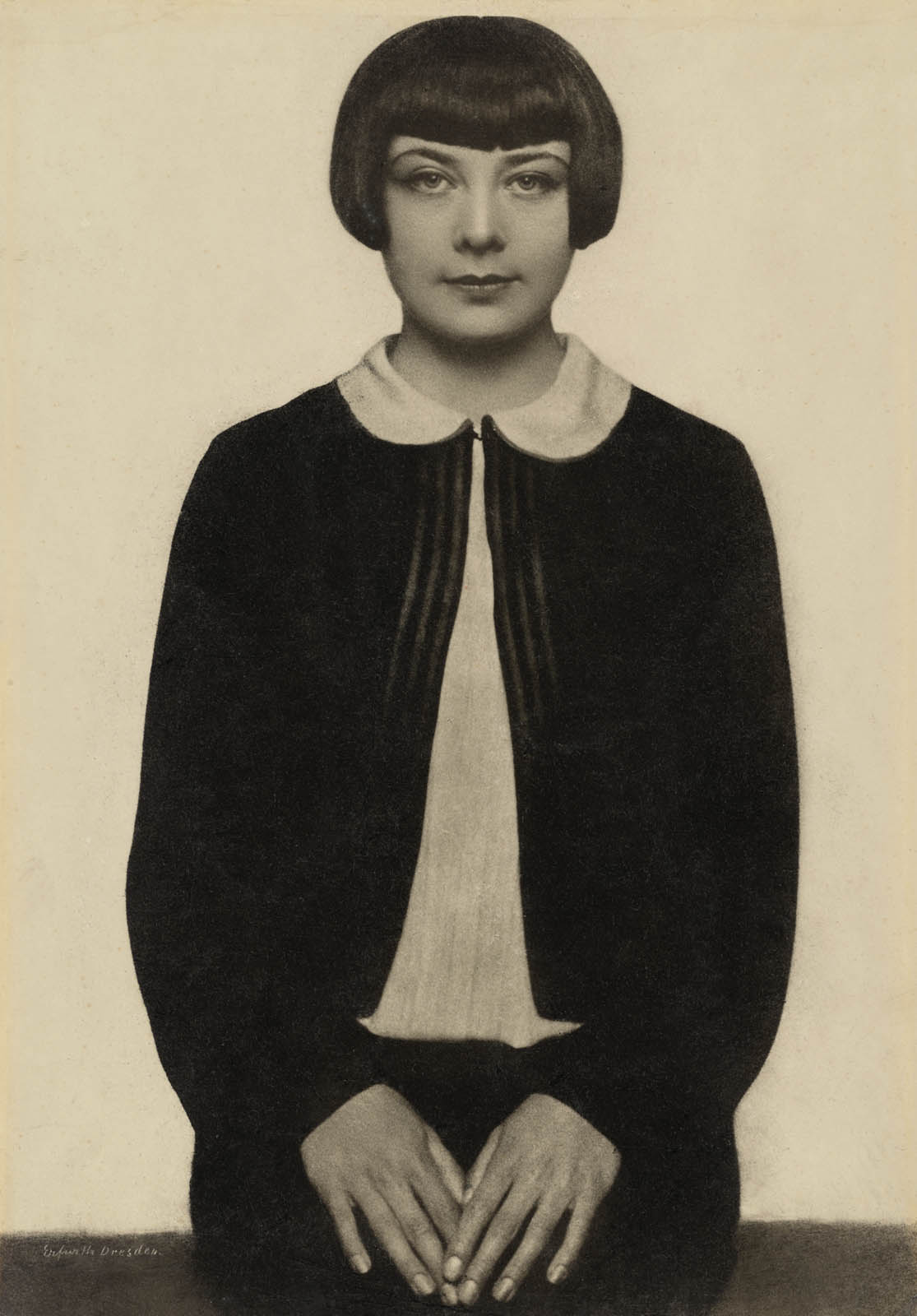
Hugo Erfurth (German, 1874-1948) 'Hildegard Seemann-Wechler (painter)' 1929


Hugo Erfurth (German, 1874-1948)
Hildegard Seemann-Wechler (painter)
1929
Oil pigment print on cardboard
38.3 x 26.6cm
Museum Ludwig, Cologne
Repro: Historisches Archiv mit Rheinischem Bildarchiv


When Hildegard Seemann-Wechler had her portrait taken in Hugo Erfurth’s studio in Dresden, she was studying painting with Otto Dix. The strict frontality of this picture, the neutral background, and the direct gaze into the camera are softened by the slight hint of a smile at the corners of the artist’s mouth. Hildegard Seemann-Wechler’s bob hairstyle identifies her as a New Woman who rejects conservative role models. Her portrait breaks with the tradition of serious facial expressions in the 19th century and marks the threshold between not smiling and smiling. Collection presentations like this help us to explore our own works. On the back of this picture, the name “Hilde Wächler” is written in pencil. It was only during the preparations for Smile! that we noticed the mistake and were able to assign the person portrayed to her real name. In 1940, Hilde Seemann-Wechler was murdered by the Nazis.


Hildegard Seemann-Wechler (German, 1903-1940)

Hildegard Wechler came from a bourgeois background. She began her studies at the Staatliche Akademie für Kunstgewerbe in Dresden and moved to the Dresdener Kunstakademie in 1921, where she studied with Richard Müller, Robert Sterl, Ludwig von Hofmann and from 1927 with Otto Dix, three semesters of which as an individual student. In particular, she was supported by Sterl and Dix. Since that time she was friends with Eva Schulze-Knabe and Fritz Schulze. Since Hans and Lea Grundig also studied at the academy, it can be assumed that she also had contact with them.

After her studies, Hildegard Wechler worked in Dresden as a freelance artist. In 1929 she married the painter Herbert Seemann (1900-1945). In 1931, she had the first symptoms of mental illness. The doctors diagnosed an incurable schizophrenia and referred her to the Landesheil- und Pflegeanstalt Arnsdorf. She spent eight and a half years there. She was forcibly sterilized at the State Women’s Hospital Dresden.

In 1940 she was transferred to the Landesheil- und Pflegeanstalt Leipzig-Dösen, on 18. June 1940 to the Heil- und Pflegeanstalt Großschweidnitz. On the 3rd In September 1940, a transport commando brought her to the Pirna-Sonnenstein killing center. She was murdered there shortly afterwards as part of the euthanasia “Aktion T4” as one of at least 14,751 victims of this institution, including the Dresden painters Gertrud Fleck and Elfriede Lohse-Wächtler, in the gas chamber disguised as a bathroom.

Text from the German Wikipedia website translated by Google Translate


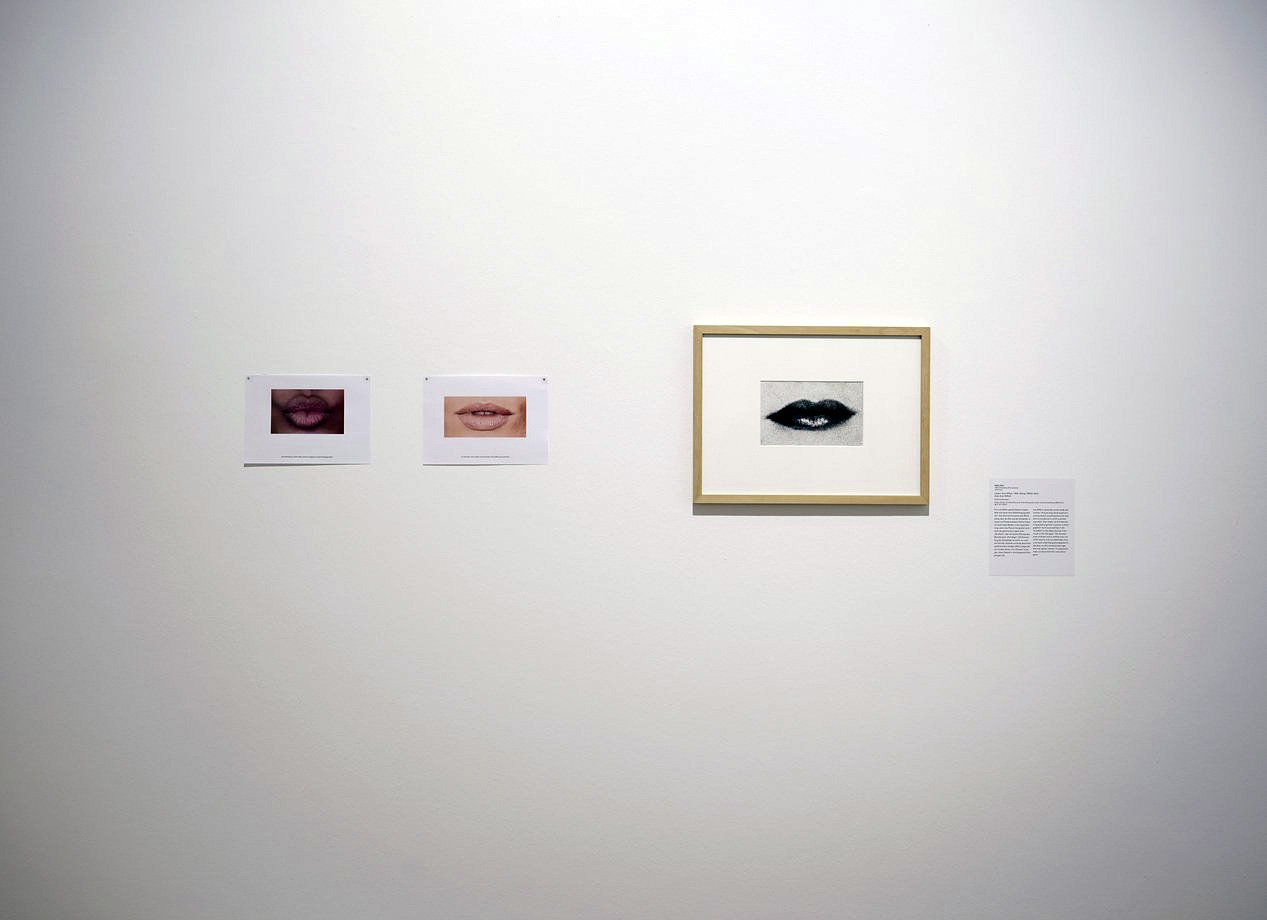
Installation view of the exhibition 'Smile! How the smile came into photography' at the Museum Ludwig, Cologne, November 15, 2025 - March 22, 2026 showing at right, Man Ray's 'Lips, (Lee Miller)' (1930)


Installation view of the exhibition Smile! How the smile came into photography at the Museum Ludwig, Cologne, November 15, 2025 – March 22, 2026 showing at right, Man Ray’s Lips, (Lee Miller), (1930, below)
Photo: Historisches Archiv mit Rheinischem Bildarchiv/ Mark Weber


Man Ray (American, 1890-1976) 'Lips, (Lee Miller)' 1930


Man Ray (American, 1890-1976)
Lips, (Lee Miller)
1930
Print
21 x 25.5cm
Museum Ludwig, Cologne
Repro: Historisches Archiv mit Rheinischem B


Lee Miller’s closed lips reveal hardly any emotion. And yet every facial expression communicates something about the time and circumstances in which a portrait was taken. Even today, we find fashions in lip positioning when a person is photographed – such as pursed lips in the “duckface” or the slight opening of the mouth in the “fish gape.” The development of dental care is certainly only one of the reasons why we statistically show more teeth when being photographed today than we did a hundred years ago, and why saying “cheese” is supposed to make our faces look their most photogenic.


Smizing, squinching, duck face, fish gape, cheese, or prunes: Beauty ideals and social media have given rise to increasingly mercurial trends in portrait photography. Until the late nineteenth century, having one’s photo taken required the sitter to remain absolutely motionless in order to produce a sharp image, which more often than not resulted in a fixed and lifeless expression.

Smile! How the Smile Came Into Photography, presented in the Museum Ludwig Photography Rooms, investigates how our “photographic faces” have evolved over time. The show assembles a range of anonymous and artistic portrait photographs from the nineteenth to the twenty-first century to recount a history of the smile.

Whether or not we smile when being photographed, or whether we show our teeth, depends on social norms and the photographic technology available. In 1878, the photographer Josef Janssen observed that “the awkward situation in which a person finds themselves at the moment of having their photo taken is in itself enough to prevent them from displaying their individual personality. Motionless and with a fixed gaze, their head leaning on that dreaded, detestable head rest, they are required for a set period of time to stare at a certain point in space that generally offers the eye nothing of interest. What else could this result in but stiffness and lifelessness?”

The fact that people in the nineteenth century rarely smiled when having their picture taken in a photographic studio also reflected contemporary norms regarding how one should appear in a portrait, norms based on conventional ideas of class, gender, and context. Emotions were considered a private matter that had no place in a portrait.

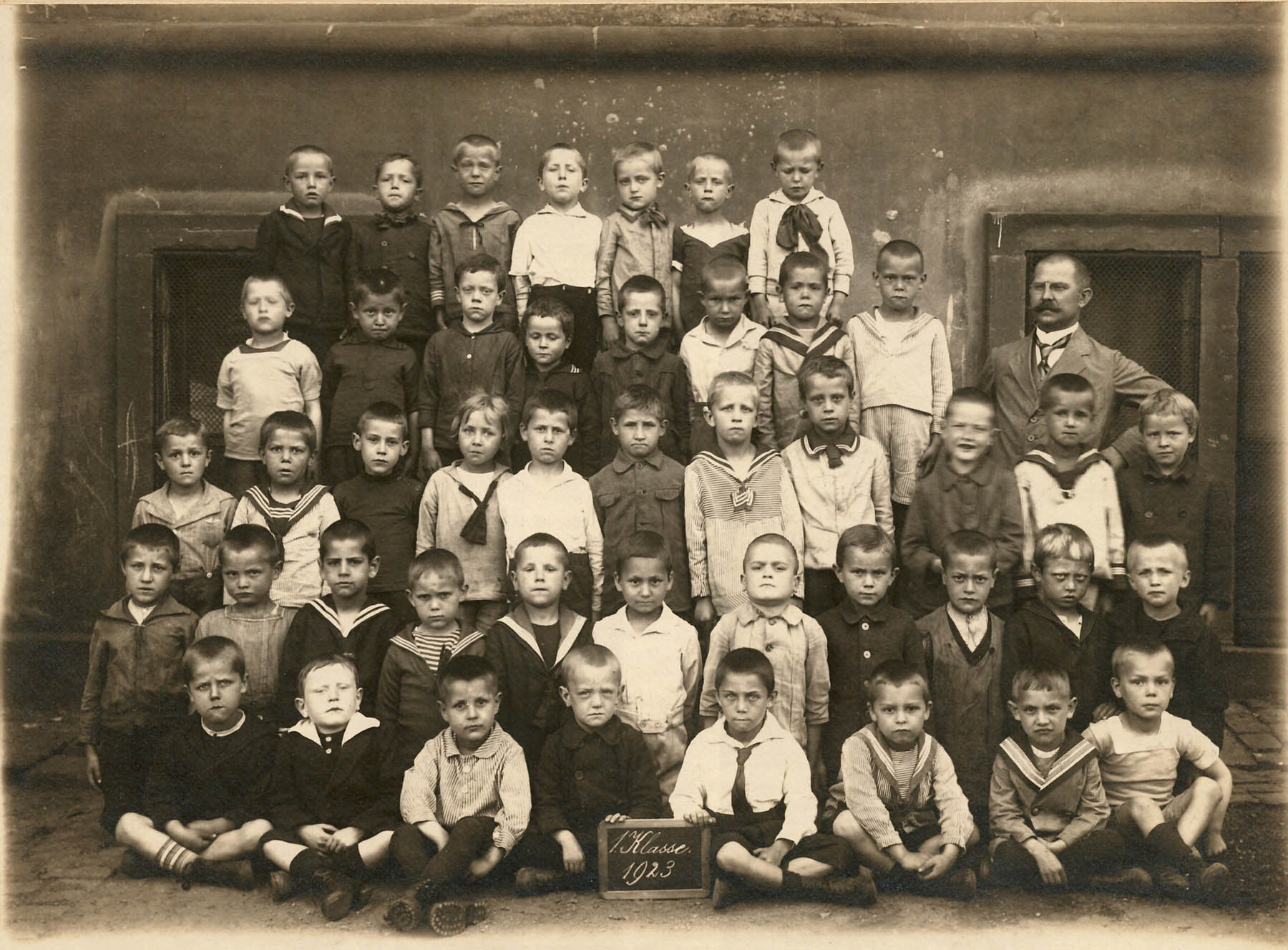
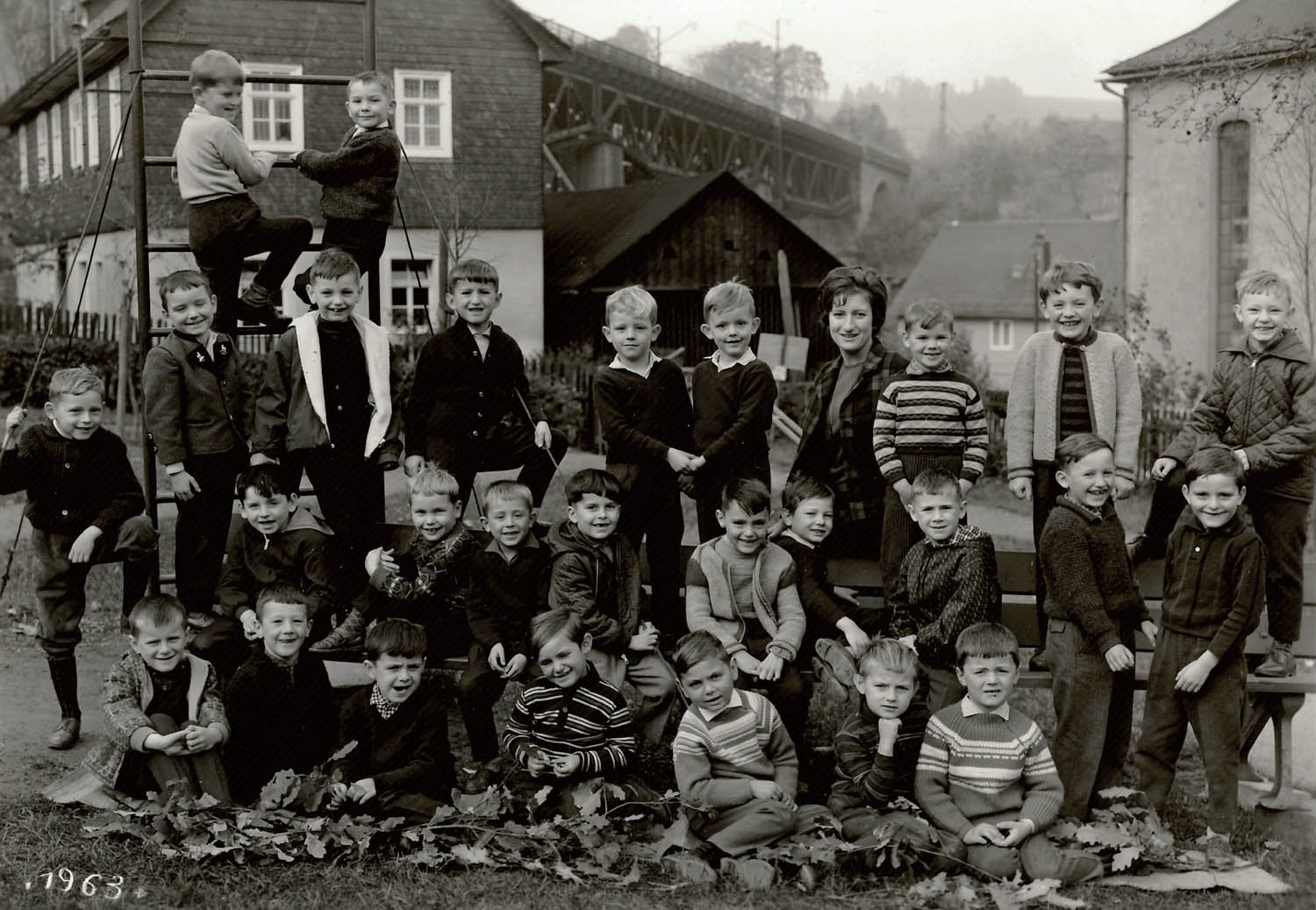
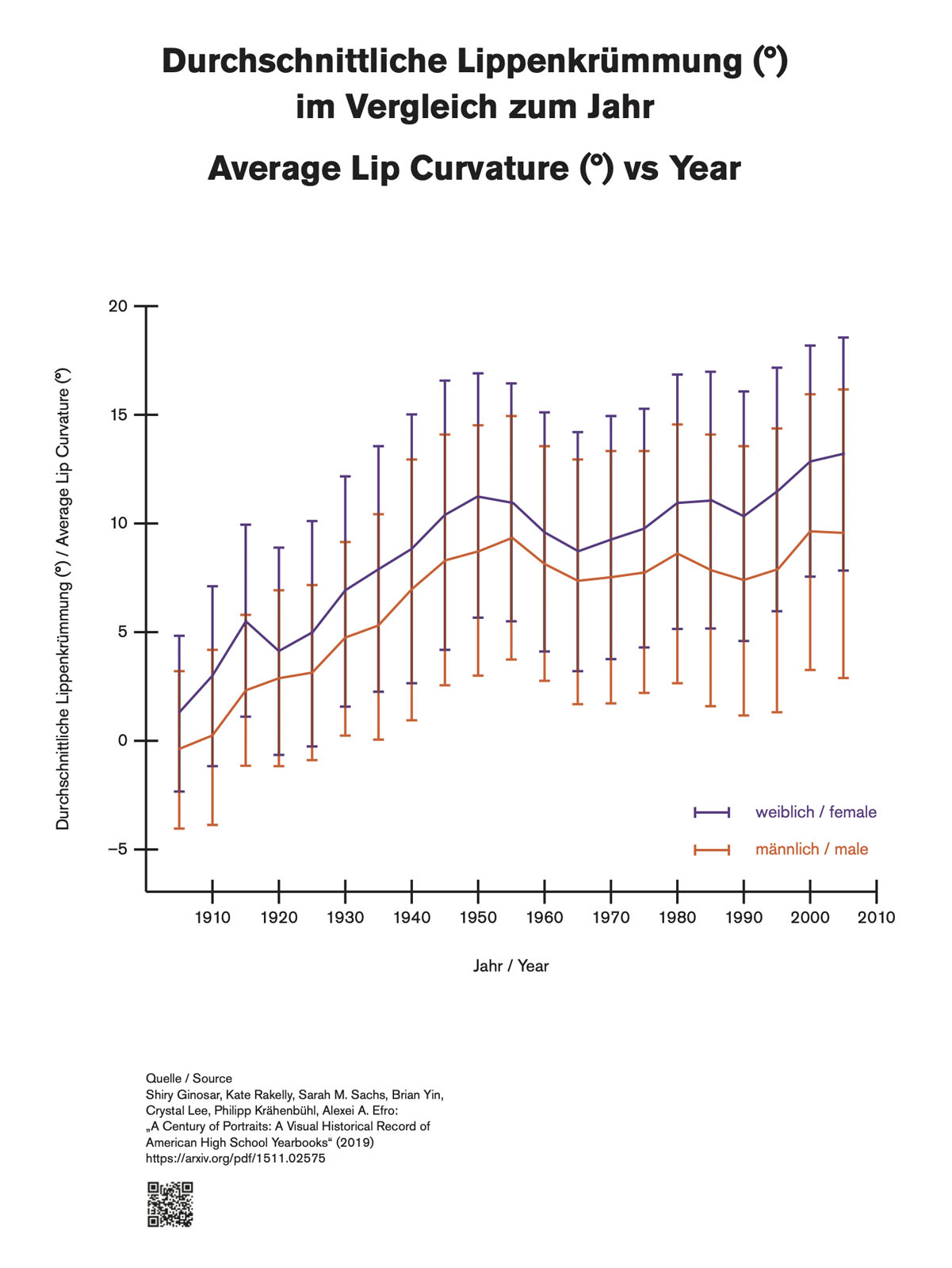
The emergence of silent film played a key role in the appearance of the smile in twentieth-century portraits. Facial expressions were used to convey emotions, filling the frame in tight close-up shots. Parallel to this, headshots increasingly replaced full-body portraits. Then came advertising, where the beaming smiles of actors served to embody the allure of products. The corners of the mouth began to rise ever upward. A 2015 study of student portraits in American yearbooks revealed that smiling in photographs has consistently increased since the start of the twentieth century, with results confirming that women smile more than men. A trend toward increased facial expressiveness can be observed the world over. A look at fashion photography, however, shows that status and coolness are conveyed with barely a smile. As early as 1927, the sociologist Siegfried Kracauer noted that the world – and thus the people in it – had taken on a “photographic face.” The presentation at the Museum Ludwig aims to show that this observation still holds true today and that the smile has a history.

The show is accompanied by a publication with a text by Katharina Sykora. #PhotographyFaces #MLxPhotography

Press release from Museum Ludwig


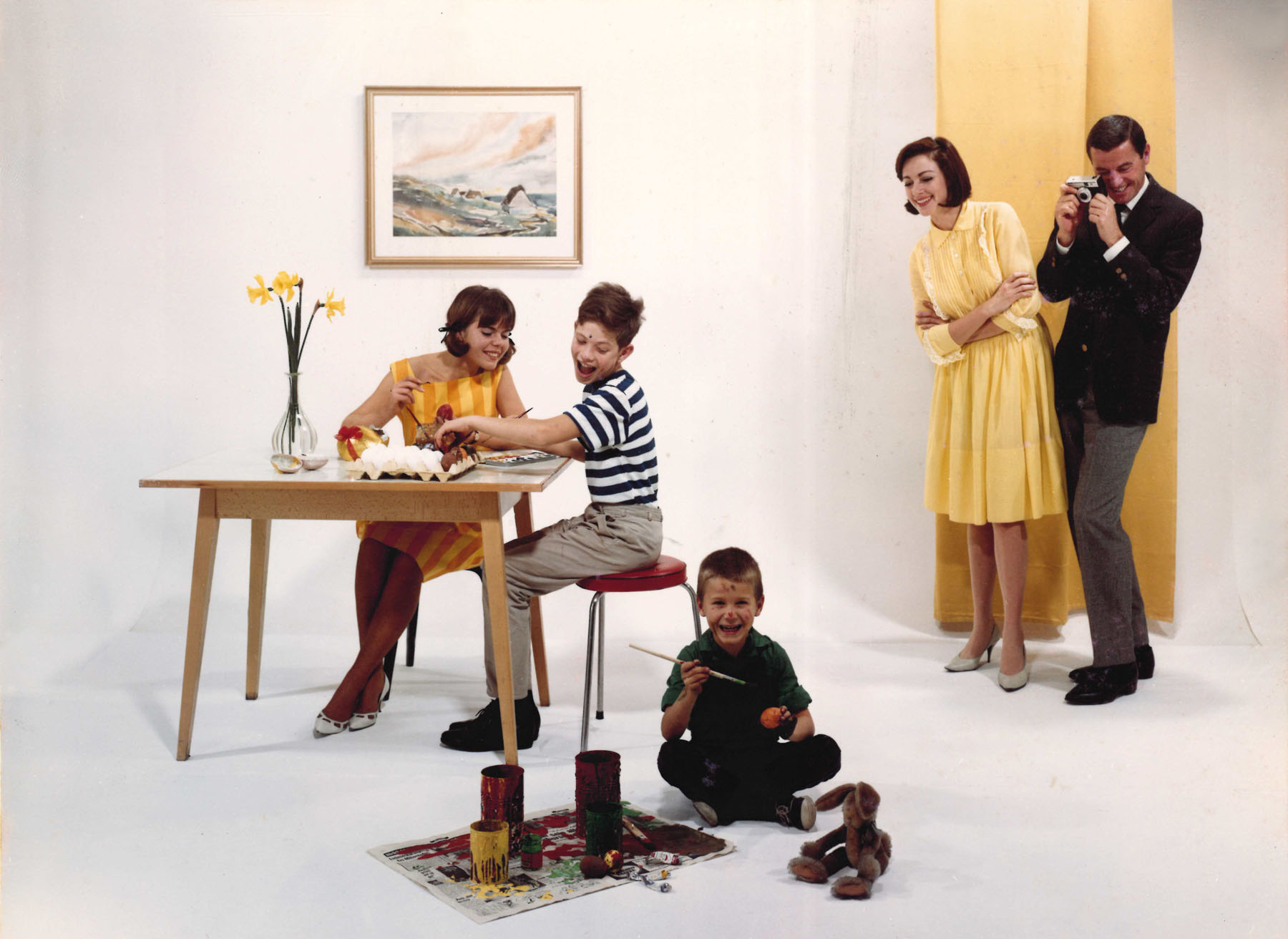
Installation view of the exhibition 'Smile! How the smile came into photography' at the Museum Ludwig, Cologne, November 15, 2025 - March 22, 2026 showing Agfa advertising test, around 1965


Installation view of the exhibition Smile! How the smile came into photography at the Museum Ludwig, Cologne, November 15, 2025 – March 22, 2026 showing Afga Advertising tests (around 1965, below)
Photo: Historisches Archiv mit Rheinischem Bildarchiv/ Mark Weber


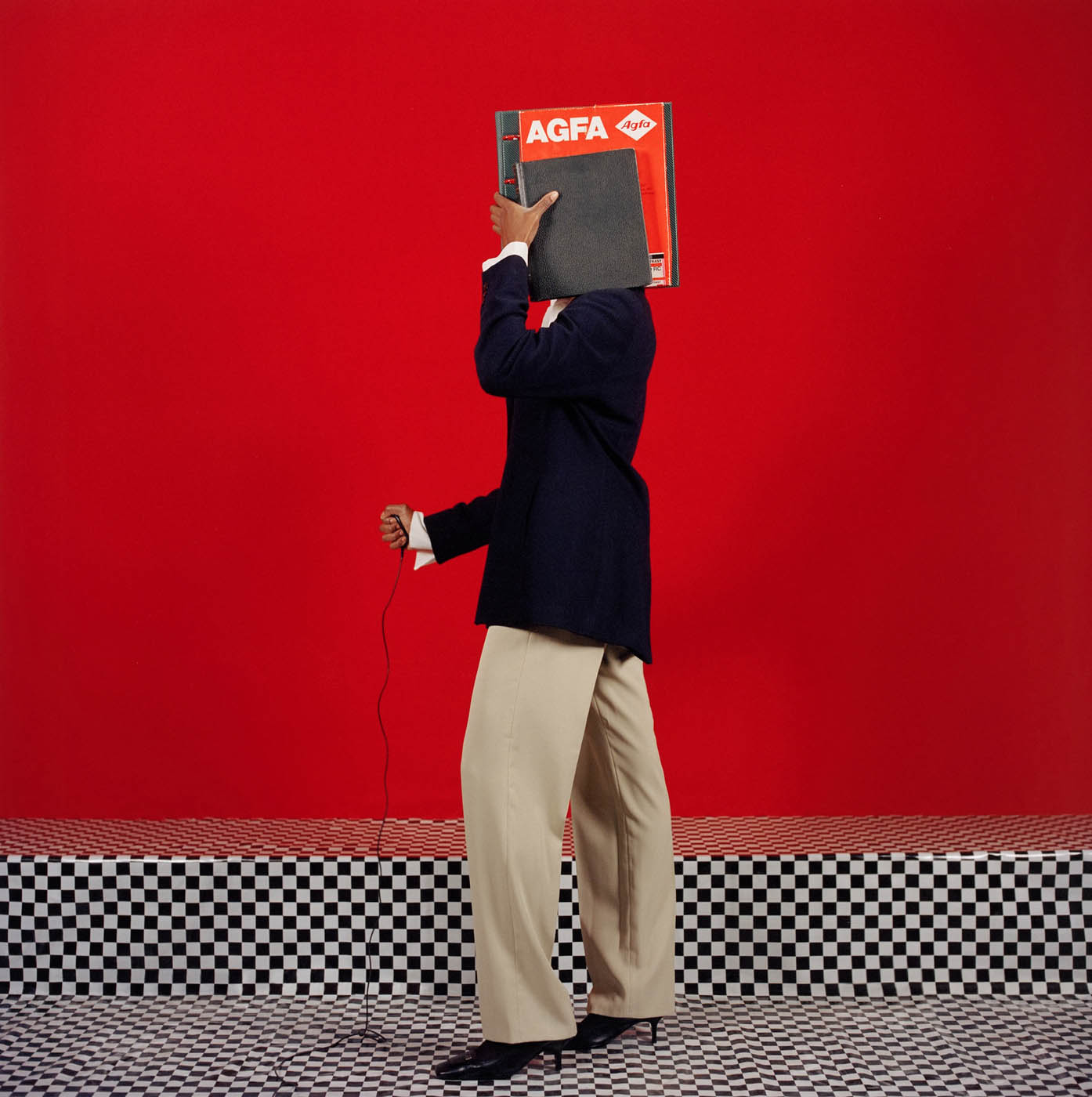
These two photographs can be found in the archives of Agfa’s advertising department, which are now kept at the Museum Ludwig. While the color chart in one picture reveals that it is an informal test shot for the photographer, the other picture shows the official version of the advertisement. Only in the official version is everyone smiling – even the man holding the camera in front of his face to take a snapshot of his family. Since advertising has to communicate people’s happiness with a particular product, it contributed enormously to the spread and normalisation of smiling, laughing people in pictures. This is particularly the case with the advertisement of the photo industry. As Christina Kotchemidova writes in her article “Why we say ‘Chesse’: Producing the Smile in Snapshot Photography”: “Obviously, amateurs learned from advertisements (…). The visuals ensured that the advertising ideal was accurately replicated, thus making popular photography an extension of advertising culture.”


Unknown Photographer. 'Agfa advertising test' around 1965


Unknown Photographer
Agfa advertising test
around 1965
Color photography
Museum Ludwig, Cologne


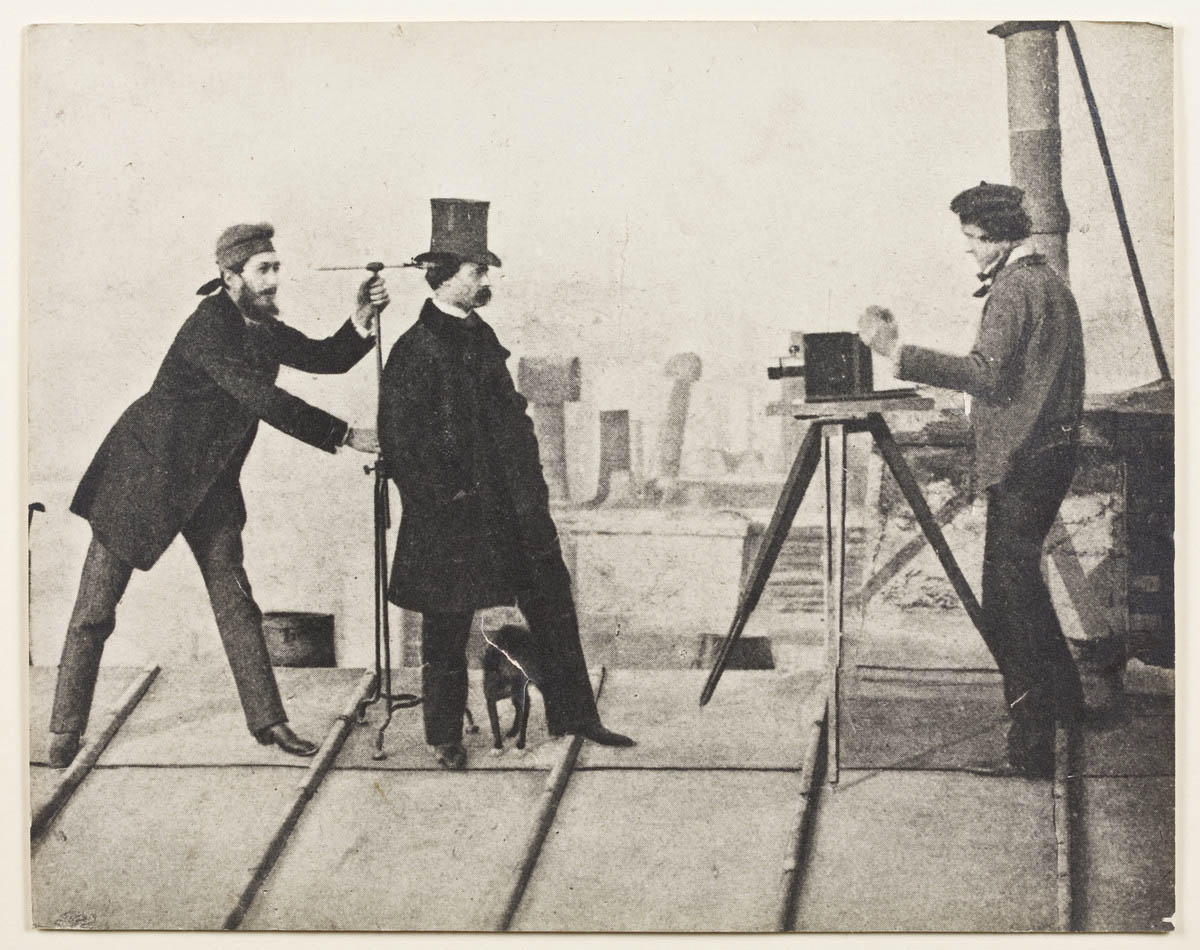
'Photo studio on the roof' 1845, illustration from 'Erich Stenger: Siegeszug der Photographie in Kultur, Wissenschaft, Technik' 1950


Photo studio on the roof
1845
Illustration from Erich Stenger: Siegeszug der Photographie in Kultur, Wissenschaft, Technik, 1950
Archiv Museum Ludwig, Köln


The more light there is, the shorter the exposure time when taking photographs. That is why photo studios in the 19th century were often set up in attics with large windows. In good weather, photographs were sometimes taken directly on the roof. Nevertheless, we can still see the head support that kept the person being photographed motionless for the duration of the shot and helped to ensure that the image was sharp. Such head supports were part of the necessary equipment of a photo studio and certainly did not help the subject to relax. In 1878, photographer Josef Janssen observed: “[…] the predicament in which the person finds themselves at the moment of the shot is enough to prevent them from freely expressing their individuality. Leaning against the much-hated and feared, yet indispensable head support, they are supposed to remain motionless and stare intently for a while at a certain point that usually offers nothing for the eye to look at. What else can be the result of this but rigidity and lifelessness?”


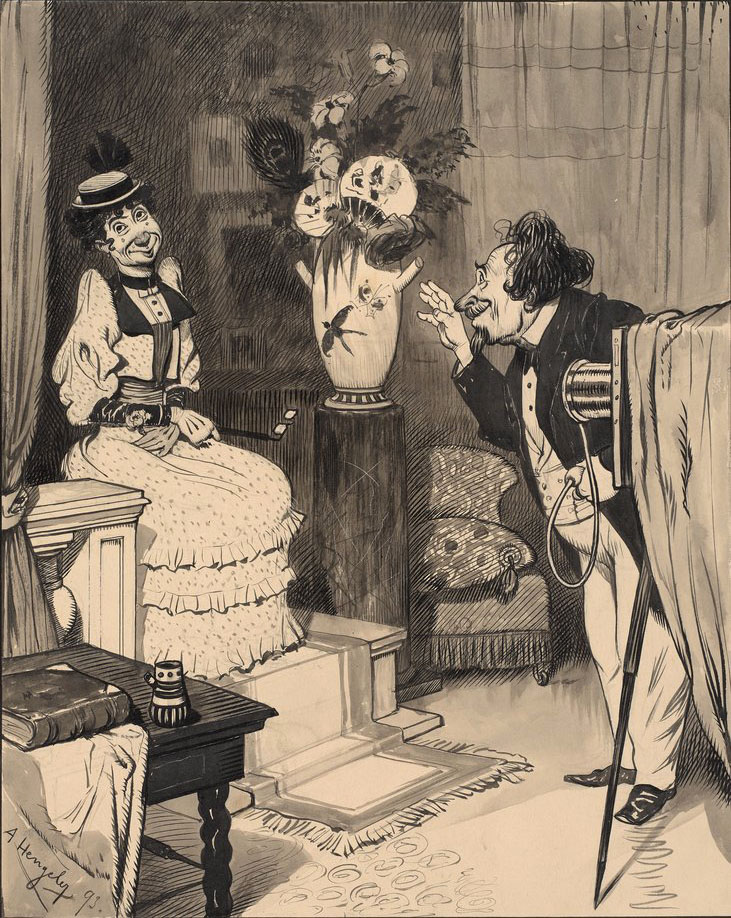
Adolf Hengeler (German, 1863-1927) "At the photographer's: 'Now, young lady, please smile nicely and look friendly!…One, two, three!… That's it, thank you! Now you can go back to your natural expression!'" Published in 'Fliegende Blätter' 1893


Adolf Hengeler (German, 1863-1927)
“At the photographer’s: ‘Now, young lady, please smile nicely and look friendly!…One, two, three!… That’s it, thank you! Now you can go back to your natural expression!'”
Published in Fliegende Blätter, 1893
Print
47 x 36.4cm
Museum Ludwig, Cologne
Repro: Historisches Archiv mit Rheinischem Bildarchiv


“Now, young lady, please make a nice and friendly!… One, two, three!… That’s it, thank you! Now you can go back to your natural expression!” This was the caption accompanying the caricature when it was published in the magazine Fliegende Blätter in 1893. The fact that the subject is depicted wearing a clown mask shows, on the one hand, that people were already familiar with smiling “photography faces” at the end of the 19th century and, on the other hand, that the women portrayed were supposed to appear ‘nice’ and ‘friendly’ through their smiles. The fact that there are other types of smiles was already mentioned in Grimm’s dictionary from 1885, such as happy, cheerful, mischievous, furtive, shy, malicious, bitter, scornful, mocking, and forced. In 2020, Carolita Johnson described in her article “‘I don’t have to smile if I don’t feel like it!’: Covid freed me from politeness and unwanted touching” in The Guardian how wearing face masks during the coronavirus pandemic freed her from the pressure of having to wear the mask of the friendly smiling woman.


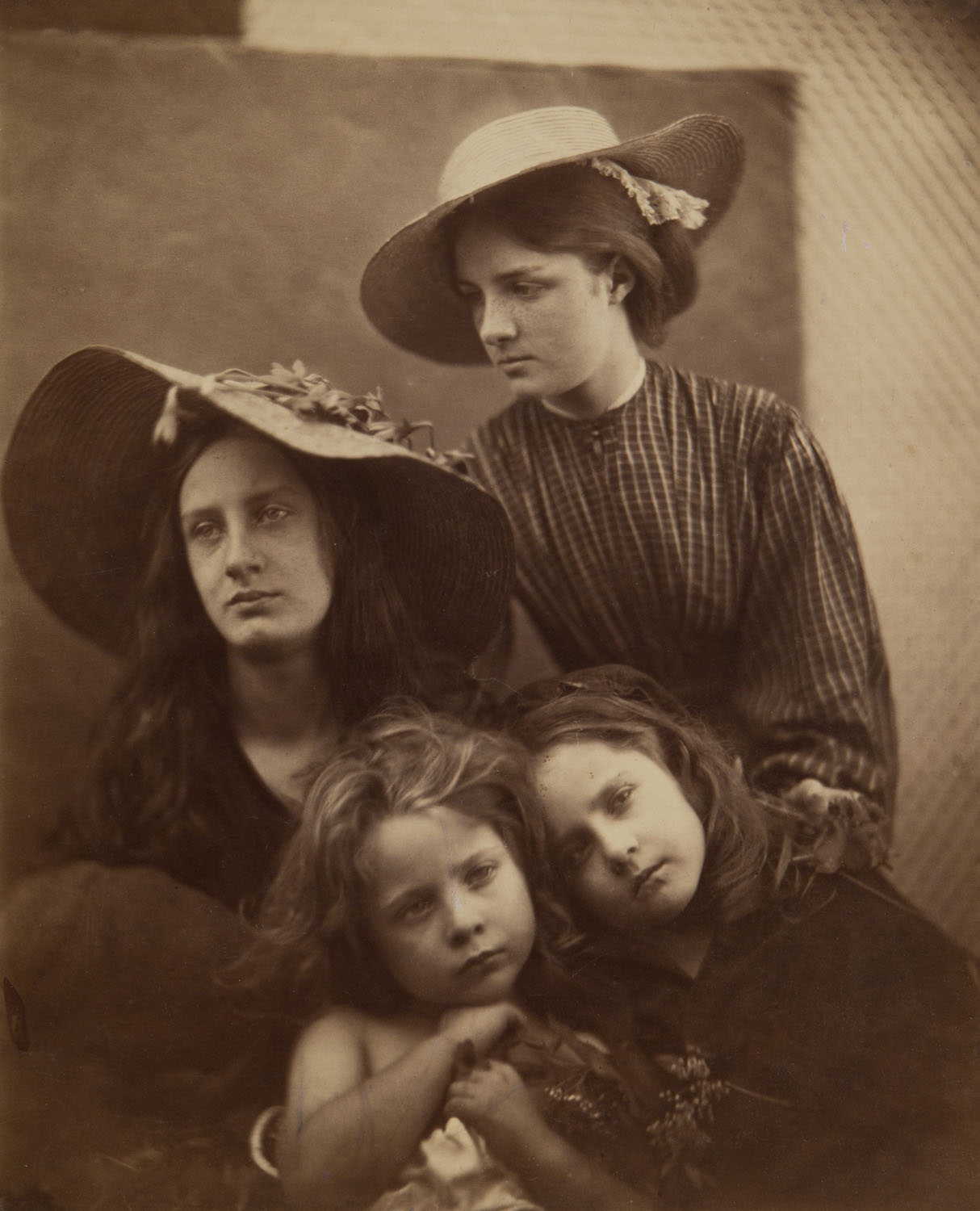
Julia Margaret Cameron (English born India, 1815-1879) 'Summer-days' 1866


Julia Margaret Cameron (English born India, 1815-1879)
Summer-days
1866
Albumen print on cardboard
34.0 x 27.6cm
Museum Ludwig, Cologne
Repro: Historisches Archiv mit Rheinischem Bildarchiv


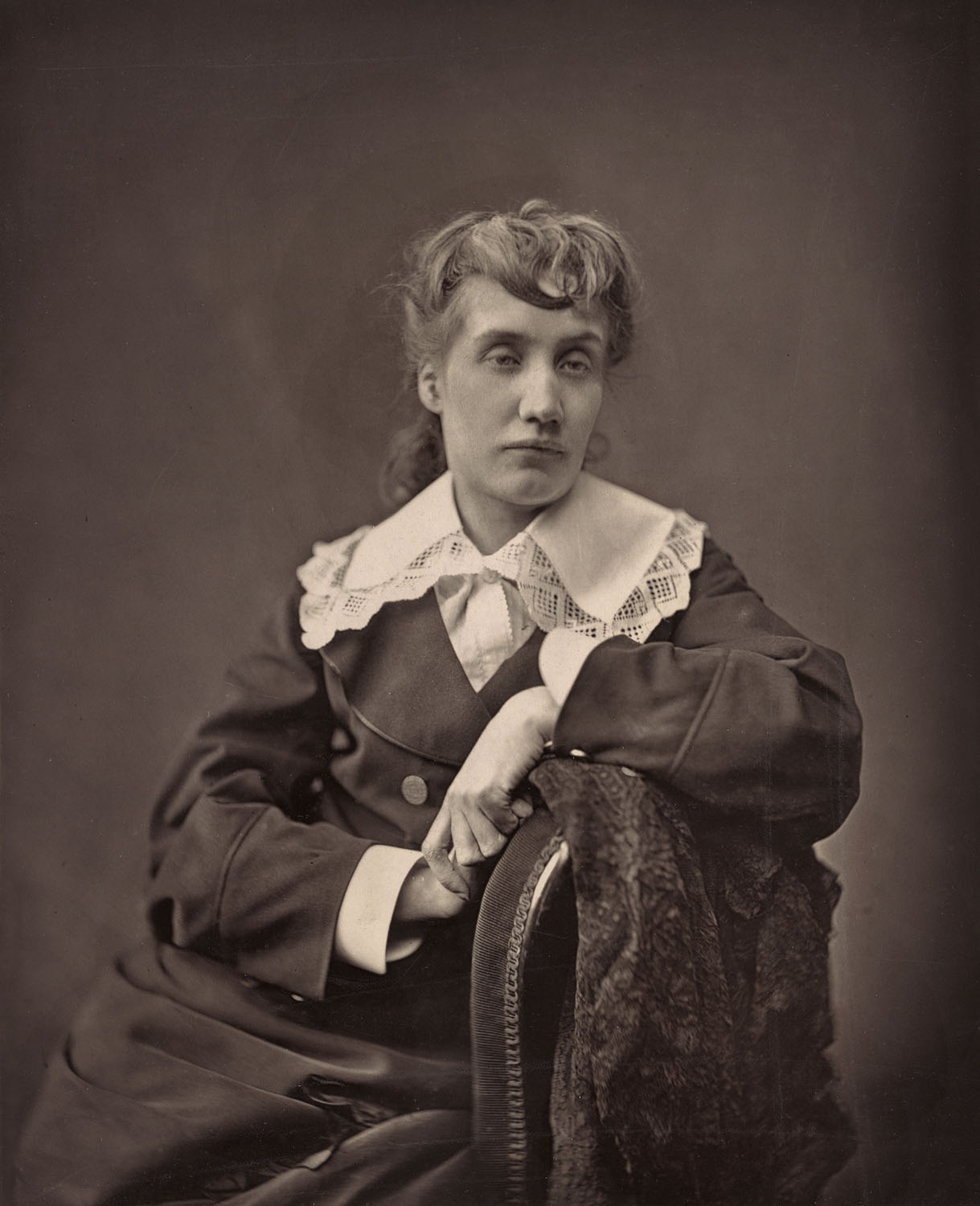
Nadar (Gaspard-Félix Tournachon) (French, 1820-1910) 'Portrait of Marc de Montifaut' around 1877


Nadar (Gaspard-Félix Tournachon) (French, 1820-1910)
Portrait of Marc de Montifaut
around 1877
Woodburytype on cardboard
22.9 x 18.6 cm
Museum Ludwig, Cologne
Repro: Historisches Archiv mit Rheinischem Bildarchiv


Gaspard-Félix Tournachon (French, 5 April 1820 – 20 March 1910), known by the pseudonym Nadar or Félix Nadar, was a French photographer, caricaturist, journalist, novelist and balloonist who was a proponent of heavier-than-air flight. In 1858, he became the first person to take aerial photographs. Photographic portraits by Nadar are held by many of the great national collections of photographs. His son, Paul Nadar, continued the studio after his death.


Smiling: A Photographic Balancing Act between Seriousness and Laughter

Katharina Sykora


Between spontaneity and strategy: smiling as an indicator of emotion

In everyday life, a smile immediately inspires feelings of happiness. While today we experience smiling as a spontaneous expression of affection, our understanding of smiling as a legible, socially acceptable facial gesture is the result of centuries of debate. It was oten viewed as an expression that sat midway between seriousness and laughter. Discussions around the nature of the smile gained in intensity in the nineteenth century with the invention of photography, which saw many in the aristocracy and the upwardly-mobile bourgeoisie discovering themselves anew in portrait studios. Meyers Encyclopaedia (1865) describes smiling as a weaker version of laughing because “it lacks the intermittent exhalation,”1 while in his remarks on The Expression of the Emotions in Man and Animals (1872), Charles Darwin describes laughter as “the full development of a smile or … a gentle smile as the last trace of a habit, firmly fixed during many generations, of laughing.”2 In both cases, smiling is cast not as an emotion in its own right but as a relative form derived from a strong, joyful feeling. This contrasts with the expressive range of smiles allowed for by the Brothers Grimm: “Smiling,” they write in their German Dictionary (1885) “may be friendly, happy, cheerful, affectionate, gentle, mischievous, furtive, shy, even malevolent, biter, mocking, scornful, or forced.”3

This highlights the long-standing controversy that has historically accompanied discussions around smiling and that continues today. On the one hand, a smile is evaluated based on where it is perceived to sit on a spectrum between seriousness and laughter and – depending on its proximity to either extreme – subjected to positive or negative moral, societal, or aesthetic judgements. On the other hand, because the spectrum between seriousness and laughter contains many nuances, smiling is perceived as a versatile
expression that can attest to a variety of different feelings and communicate a broad range of meanings in social interactions depending on the socio-historical context. The first perspective tends to view smiling within normative parameters, while the second situates it within a kaleidoscope of micro-sociological observations.

An important question running through historical and historiographical discussions of seriousness, smiling, and laughter asks whether these are expressions of inner emotion or learned facial gestures and behaviour patterns. In other words, whether laughing and smiling are anthropological constants common to all humans as immediate expressions of emotion, or whether they are a strategic means of communication used to one’s own advantage in specific situations.

In the mid-nineteenth century, photography played a prominent role in this debate. In his book The Mechanism of Human Facial Expression, published in 1862 and containing a hundred photographs,4 the doctor and physiologist Guillaume-Benjamin-Armand Duchenne de Boulogne presented an experiment in which he used targeted electric shocks to trigger a wide range of expressions on a test person whose facial nerves lacked sensation. One of these included a homogenous smile involving all of his features that resembled the kind of
facial expression observed in everyday settngs. But Duchenne was also able to trigger paradoxical facial expressions that could only be induced by electric shocks, such as a smiling mouth combined with eyes and forehead contorted by pain. Through such experiments, Duchenne sought a systematic “orthography of a supposedly universal language”5 of human physiognomy in order to render it more legible. Paradoxically, he disconnected inner affects from their outer manifestations while connectng them all the more strongly in terms of their
meaning, as when, by analogy with the laughing muscle, he describes the nasalis (nose) muscle as a “muscle of aggression” or the frontalis muscle (that moves the eyebrows) as a “muscle of suffering.”6

One far-reaching side effect of Duchenne’s test setup was the realization that
manifestations of human emotion can be manufactured without necessarily corresponding to a felt equivalent. By twinning electro-physical and photographic procedures, Duchenne proved in the field of science what had long been commonplace in the world of the theater – where professional actors routinely simulate emotions – and everyday life – where individuals control their expressions when interacting with others. In this way, Duchenne contributed his “theater of science”7 to the list of “production sites” for the decoupling of facial expression from emotion, where it joined the theatrical stage and milieus of social interaction.

At the same time, Duchenne’s use of electric shocks to produce expressions revealed their dual social function: Anyone could use them as a systematic means of portraying emotion detached from any corresponding internal feeling, and they could be decoded just as systematically by others as “artificial” rather than “natural” displays of sentiment. This benefited another site invested in the social coding of emotions: the increasingly numerous
photographic studios where the middle classes were now able to have portraits made of themselves, creating a specific repertoire of facial expressions as part of a class-specific pose. What these theatrical, scientific, and photographic settings all demonstrate is that seriousness, smiling, and laughter can be performed in a way that is legible. They are part of a social act that always involves two or more people.8 With Duchenne’s contribution to the
visual ordering and classification of seriousness, smiling, and laughter, photography advanced over the course of the nineteenth century to become the primary medium for the representation, communication, and standardisation of emotions. It became a platform for self-portrayal, for the negotiation of social hierarchies and values, and for the establishment and reinforcement of universal forms of emotional expression.

Looking back: a brief discursive and visual history of smiling

The history of smiling, as traced through past discourses and visual representations, reflects the shifts in society’s acceptance of the portrayal of specific emotions and the influence this has had on photographic (self-) presentations of people since the nineteenth century. What immediately becomes clear is that smiling has not always been understood as the midpoint between seriousness and laughter but situated somewhere closer to the later. Even more surprisingly from today’s perspective, laughter and especially smiling historically occupied no place at all in social behaviours and visual representations, and when they did appear, their initial connotations were largely negative.

“Before the twelfth century,” writes the art historian Monika E. Müller, “one can expect to find almost no illustrations of emotion in the form of facial expressions.”9 The reason for this was the dominance of Christian morals, which opposed the portrayal of strong emotions in general. The Greek and Roman Church Fathers shared a negative view of laughter, considering it antithetical to the ideal of a God-fearing person leading a life of humility and atonement. As a result, books of monastic precepts banned laughter as sinful behaviour.10

In the twelfth and thirteenth centuries, grinning devils increasingly appeared in
portrayals of the Apocalypse, there were chortling henchmen along Christ’s route to Calvary, and there were grotesque heads guffawing on the capitals of cathedrals or in the margins of illuminated manuscripts. These polarising counter-figures were depicted as bystanders, relegated to the edges of the sacred realm. Here, laughter was not an expression of cheerfulness but a sign of vice and evil.

In the thirteenth century, smiling made its first appearance as a positive trait in
Christian iconography but was reserved for Mary, the Christ Child, angels, and those souls resurrected into a state of heavenly bliss. Here, too, exceptions gradually emerged: In the portal of the Last Judgement at Strasbourg Cathedral, for example, we find the Prince of this World (c. 1280) flashing a mischievous grin in the direction of a Foolish Virgin with a flirtatiously simpering smile. This erotically charged tête-à-tête takes on a negative tone, however, once one notices that the Prince’s back is being devoured by snakes and vermin. Moreover, the coquette is shown to be doubly foolish – distracted by her “sinful” fleshly desire for a figure whose true nature is hidden from her, unlike the lamenting Wise Virgins, she has unwittingly dropped the oil lamp that was meant to remain lit in anticipation of Christ’s arrival. In this way, depictions of smiling joined those of laughter in Christian iconography, where their differentiation into the beatific and the seductive supported theological morals.

Once smiling began to feature in secular imagery – as in the statue of Margravine Regelinda in the west choir at Naumburg Cathedral (c. 1250) – the binary Christian model underwent a fundamental reevaluation. In the thirteenth century, a tradition of courtly politeness emerged in which smiling carried positive connotations, signalling friendly attentiveness guided by self-restraint. Books on courtly etiquete established gestural moderation as the norm. Smiling was courtly in a double sense: It bound the nobility together through a shared code of conduct while also distinguishing them from the “uncouth” populous.

As the modern age progressed, further differentiation took place. Courtiers amused each other by engaging in witty repartee. Eliciting a subtle smile that acknowledged one’s skill while remaining shielded from ridicule behind a noncommittal smile of one’s own was the basis of an amicable but increasingly competitive court culture. Smiling became an instrument with which to perpetually renegotiate one’s position within the court hierarchy. As a result, the rules governing seriousness, laughter, and smiling became ever more rigid
and complex, so that only a select few courtiers ever mastered the art of it. This in turn created gender and aesthetic norms: Young girls and high-ranking ladies were expected to wholly avoid displays of loud laughter, as they pointed to a lack of self-control in the “weaker sex,” and its distortion of the facial features was considered inappropriate for the “fairer sex.”

In the Renaissance, these norms were applied to portraits of the wealthy burghers of the urban centers. Here, the hint of a smile was considered acceptable, while open laughter was viewed as the hallmark of courtesans, marginal figures at court who, together with the fool or jester, broke with the rules of politeness through displays of untamed conduct while simultaneously affirming them.

A similarly paradoxical relationship emerged in the sixteenth and seventeenth centuries with the rise in popularity of genre paintings, which often depicted members of the lower classes boisterously laughing during exuberant scenes of eating and drinking and were often filled with erotic allusions. These paintings, mostly by Dutch artists, both challenged and affirmed the cultural conventions around laughter, often involving the viewer by establishing direct eye contact, creating a sense of complicity and shared amusement.

By contrast, in the eighteenth century, the aspiring bourgeoisie increasingly set itself apart, imposing stricter limits on exuberant laughter. With reference to the aristocratic norm of disciplined facial expressions, it adopted smiling as its hallmark. At the same time, it distanced itself from the courtly performance of smiling. Since those at court were all trying to functionalise their facial expressions and tame their emotions, it was no longer possible to trust their smiles.11 From the viewpoint of the bourgeoisie, courtly smiling was now
considered unnatural. This reflected changes in affect theory, as Johann Caspar Lavater’s physiognomy and Georg Christoph Lichtenberg’s pathognomy now postulated congruency between facial expressions and inner emotions.12 The “forced” smiles of the aristocrats at court were contrasted with the “genuine,” “heartfelt” bourgeois laughter that did not hurt anyone or assume superiority. However, such amiable laughter among equals was not part of public displays of bourgeois identity. In public and in official portraits, the bourgeoisie presented themselves with a seriousness that matched their social aspirations. The network building, convivial laughter of bourgeois men and the smiles of bourgeois women were reserved for smaller, more intimate formats such as drawings or miniatures. In other words, such displays of emotion were privatised, confined to salons and the home.

Photography and the smile: a tense relationship

At the end of the 1830s, during this transitional phase when bourgeois culture was still navigating between seriousness and smiling, photography emerged as a new medium for recording and representation. Its specific qualities allowed facial expressions to be captured with great precision while also imposing limits on the expression of emotions such as smiling and laughter.

The indexicality of photography – namely, the fact that the subject must have been present while their likeness was being transferred onto the image – meant that photographs were like a second skin. Just as it was assumed that one’s facial expression was a direct translation of one’s emotion, it was also believed that this emotion was directly imprinted onto the photograph. The indexical promise of photography thus suggested that one was looking directly – through a kind of double, transparent membrane – into the soul of the sitter. For the bourgeoisie, with its imperative of natural, uncontrived expression of emotions, photography thus served as proof of the authenticity of the emotions on display. It is all the more surprising, then, that it was well into the twentieth century before smiles began to appear on the faces of the bourgeoisie in studio photographs. For bourgeois men in particular, the expression of seriousness that prevailed in this context was a strategy that allowed them to present themselves as level-headed, stabilising members of society. The resulting contradiction remained a blind spot in their self-image: Photography as an
apparatus for capturing an indexical authentication of “genuine feelings” turned into its opposite as demonstrative seriousness became part of a bourgeois pose that was legitimated as “real” by the medium’s promise of truth.

Just as important as indexicality is another specific quality of the photographic
medium: the way it cuts through space and time. Since laughing and smiling are “fleeting signs of an emotion as expressive movement,”13 the moment in which a photograph is taken, fixing a single instant in the flow of living time, is especially precarious. While it is easy to maintain a serious expression for a long exposure time, laughter is comparatively brief and consists of a sequence of different expressions. Capturing a laugh at the peak of its crescendo requires a short exposure time, as well as technical skill and psychological foresight on the part of the photographer; they must be able to quickly intuit when to press
the shutter in order to capture the laugh on the sitter’s face, in turn underscoring the photographer’s ultimate control over the image compared to that of the subject. In temporal terms, photographs of laughter thus tend to be “stolen” images, a quality that can be compensated for by the consenting gaze of the sitter. The belated arrival of laughter as a viable photographic motif in the 1920s was, on the one hand, due to technical developments that allowed for shorter exposure times and, on the other, the result of a renegotiation of the power dynamics between the photographer and their subject.

Photographing a smile is different to capturing laughter. A smile can be maintained for considerably longer than a laugh, though not as long as a serious expression. Since smiling is a fluid movement of the mouth and the corners of the eyes, the way a photograph severs the sequence of a smile is both all the more obvious and all the more arbitrary. In the twentieth century, the request to “smile please” performed a function similar to that of “don’t move”
in the studio photography of the previous century. It directed the subject to “freeze” their smile, thus detaching it from any emotion that might have prompted it and seeing it into a pose. As a stabilised facial expression, smiling complied with the technical parameters of photography at the time. On a cultural level, however, it was precisely this compatibility that led to the smiling photo face becoming the norm – as witnessed in the monotony of smiles from family photographs after World War II to the selfies of the 2000s.

How the smiling photo face came to be

“Why do we smile in photographs?” asks the art historian André Gunthert,14 who suggests that this phenomenon may be due to the coincidence of two important developments: the evolving concept of the individual and its self-portrayal in the Western world and the emergence of visual mass media – first illustrated newspapers, then photography, and finally film. These developments influenced each other and continue to do so today: Thanks to
mass media, images are propagated at an increasingly rapid speed, reaching ever greater numbers of people, who model their behaviour on them. Photography, as a genuinely reproducible medium, has been foundational to these developments. As a result, the spread of the smile in photographs is closely linked to the medium’s technical developments and its growing accessibility. It wasn’t until the 1890s that cameras fell into the hands of amateur photographers, a transition made possible by the roll-film camera developed in 1888 by George Eastman. This was followed by ever more lightweight, user-friendly cameras, such as the first Leica made for small-format negatives, prototyped in 1913 and mass produced from 1925, or the Ermanox, designed in 1924, which played a crucial role in photojournalism,
enabling images to be taken in low-light conditions. The studios, where the standards of bourgeois seriousness were still largely upheld, now found themselves in competition with amateur photographers.

This shift altered the relationship between photographers and their subjects. The intimacy of the family or circle of friends made it possible to capture forms of coexistence that were not bound to the strict rules of public image. In such familiar settings, private “snapshots” of laughing or smiling people no longer risked being viewed as “stolen images” that would be exposed to an unpredictable public response. Instead, the pictures remained private, with viewing sessions and the exchange of prints strengthening ties among friends
and family members. As an agent of social cohesion, smiling demonstrated the sitter’s consent to being photographed and was just as important as the shared private enjoyment the resulting pictures generated. From this time, family albums began to contain more and more images of people smiling and laughing. Even in these private photographs, smiles often varied depending on the gender of the subject; bourgeois women and children of the late nineteenth and early twentieth centuries were still confined primarily to the private sphere, with smiling the “natural,” morally acceptable, and aesthetically appropriate mode of expression in this domain. A broad smile while looking directly into the camera continued to be associated more with the lower classes and those on the fringes of society, such as demimondaines, sex workers, and stage performers.

For a long time, studio photography clung to the tradition of a public image based on serious expressions and rigid poses, but it was unable to entirely prevent the new tendency toward smiling from creeping in. The studios countered this with biting satires that ridiculed smiling as improper and “false.” Spontaneous, private expressions of emotion did not make
the transition to the studios, where smiling remained a mask assumed only for the time it took to take a picture.

This changed over the course of the 1920s and 1930s. In 1932, the photographer
Gilbert de Chambertrand declared the old form of studio photography obsolete. It treated people like statues, he argued, whereas modern portrait photography focused on people influenced by outdoor pursuits, sports, and the cinema whose faces expressed lively emotions.15 Shifts in society, such as the rise of the urban middle classes (the “salaried masses”) and the emancipation of women (the “New Woman”), led to a greater variety of facial expressions in photographic portraits, and an aesthetic shaped by the motion pictures
contributed to a greater expressivity.16 With its extreme close-ups, bold cropping, and shifts in perspective, the New Vision movement was characterised by a formal dynamism that amplified the dynamism of the facial expressions it captured. And the role models multiplied, too: In studio portraits of the 1920s and 1930s, elegant women gaze out at us bearing smiles copied from photographs of famous actresses and sporty young girls laugh warmly at the person behind the camera. In extreme cases, a smile may even appear without a face, in a close-up shot of a mouth with lipstick. As its range expanded, smiling became the norm, fostered by its dissemination via the mass media of magazines and movies through which it eventually conquered the public sphere and official portrait photography.

After World War II, this development intensified, especially in the West, beginning in the United States where the commercialisation of amateur photography had opened up a huge market. An analysis of high school yearbook photographs over several decades shows the gradual trend toward smiling.17 By the 1950s at the latest, “social smiles” that marked those photographed as friendly members of the community had become mandatory.

Spontaneous smiles, which engaged the eye muscles, increasingly gave way to a mere upward curve of the mouth. In public, this more restrained smile became a compulsory sign of polite distance when encountering strangers, as an overly serious expression risked being misconstrued as aggression.18 Pervasive advertising, movies, and later television increasingly blended private and public spheres, ultimately elevating the once-private smile to the status of an omnipresent social norm.

In the United States in particular, this was accompanied by an upgrading of the kind of smile required by photographers, as “please smile” was replaced by calls to “say cheese,” prompting the sitter to smile broadly, showing their teeth. Different reasons have been given for this “cheesy grin”: the need for non-confrontational interactions in times of increasing social insecurity or the desire to display one’s wealth and radiant state of good health. (In the
past, possessing a perfect set of teeth could not be taken for granted and often involved considerable costs.) This time, the media role models were Hollywood stars,19 pin-up models, and the happy families depicted in advertisements.20 In this way, a flourishing post-war America spread its broad smile not only across its own country but across the whole of the Western world.

Since the 1990s, if not before, we have witnessed a strong counter-movement to the dominance of the smile. The concept of “coolness” categorically refuses the call to smile, demonstratively playing with the latent aggression associated with a serious expression, from which it derives the power of its image and gaze. The subject of a “cool” portrait is most often young, versed in street culture and involved in the worlds of music and fashion and their advertising campaigns. The straight face of cool has become the new photo face. Or has
it turned back into the old one? What distinguishes the serious expression of the “cool guy” from that of the bourgeois man in nineteenth-century studio photography? The underlying model of masculinity is comparable, a display of self-confidence, self-control, and defensiveness. The difference lies in the casual pose, the informal clothing, and the overt display of a fit physique, all set against an urban setting or edgy studio backdrop. But it is above all its contrast to the typical cheesy grin that makes not smiling such a surefire fashion
statement. A scene in the movie Triangle of Sadness (2022) offers a striking illustration of this: At a casting session, a number of young male models are asked to pose for the camera. To test their range of facial expressions, instead of asking for “cool” or “cheese,” the photographer alternately calls out “Balenciaga!” and “H&M!” Here, seriousness and smiling have undergone another shift in function and meaning: No longer manifestations of emotion or masks, they have become brands.


Footnotes

1/ Neues Konversations-Lexikon, ein Wörterbuch des allgemeinen Wissens, ed. Hermann J. Meyer, (Hildburgshausen: Bibliographisches Institut, 1865), 10: 474, under “Lachen,” quoted in Timm Starl, “Vom Lächeln: Erörterungen zu einer seltenen fotografischen Erscheinung des 19. Jahrhunderts,” in Fotografische Leidenschaften, ed. Katharina Sykora et al. (Marburg: Jonas, 2006), 34.
2/ Charles Darwin, The Expression of the Emotions in Man and Animals (New York: Appleton, 1872), 209.
3/ Jacob Grimm and Wilhelm Grimm, Deutsches Wörterbuch, vol. 6 (Leipzig: Hirzel, 1885; rep., Munich: dtv, 1984), 14-15, quoted in Starl, “Vom Lächeln,” 33.
4/ Guillaume-Benjamin-Armand Duchenne de Boulogne, Mécanisme de la physiognomie humaine ou analyse électrophysiologique de l’expression des passions (Paris: Asselin, 1862).
5/ Petra Löffler, Fabrikation der Affekte: Fotografien zwischen Wissenschaft und Ästhetik,” in Fotografische Leidenschaften, 43.
6/ Duchenne de Boulogne, quoted in Petra Löffler, Affektbilder: Eine Mediengeschichte der Mimik (Bielefeld: transcript, 2004), 123.
7/ Gunnar Schmidt, Das Gesicht: Eine Mediengeschichte (Munich: Fink, 2003), 51-75.
8/ See Beatrix Müller-Kampel, “Komik und das Komische: Kriterien und Kategorien,” in Lithes, Zeitschrift für Literatur- und Theatersoziologie 7 (2012): 22. See also Werner Rocke and Hans Rudolf Velten, “Einleitung,” in Lachgemeinschaften: Kulturelle Inszenierungen und soziale Wirkungen von Gelächter im Mittelalter und in der Frühen Neuzeit (Berlin: de Gruyter, 2005), 13: 22.
9/ Monika E. Müller, “Das Lachen ist dem Menschen eigen … Seine Darstellung in der Kunst des Mitelalters,” in Seliges Lächeln und höfisches Gelächter, exh. cat., Dom- und Diözesanmuseum Mainz (Regensburg: Schnell & Steiner, 2012), 71. The way strong emotions and passions were portrayed in antiquity, as in the statue of the Laocoön Group or Aristotle’s remarks on the link between affect and physical-facial expressions of emotion, only gained importance later.
10/ Müller, “Das Lachen ist dem Menschen eigen,” 72.
11/ See Adolph Freiherr von Knigge, Über den Umgang mit Menschen, 5th ed. (Hanover: Schmidtsche Buchhandlung, 1796).
12/ See Johann Caspar Lavater, Essays on Physiognomy, Designed to Promote the Knowledge and the Love of Mankind. Georg Christoph Lichtenberg, “On Physiognomy: Against the Physiognomists” (1778).
13/ Löffler, Affektbilder, 164.
14/ André Gunthert, Pourquoi sourit-on en photographie? (Lyon: 205, 2023).
15/ See Gilbert de Chambertrand, Le Portrait et l’Amateur (Paris: Paul Montel, 1937), 5, quoted in Gunthert, Pourquoi sourit-on en photographie?, 36.
16/ In the first half of the twentieth century, Expressionist and Soviet films in particular helped expand the vocabulary of facial expressions seen in modern individuals and their photographic portraits. See Gunthert, Pourquoi sourit-on en photographie?, 36-39.
17/ See Shiry Ginosar et al., “A Century of Portraits: A Visual Historical Record of American Highschool Yearbooks,” in IEEE Transactions on Computational Imaging 3, no.3 (2017): 421-31, quoted in Gunthert, Pourquoi sourit-on en photographie?, 15, fn. 7.
18/ Maria A. Arapova has shown that in the Soviet Union, in contrast to countries influenced by the United States, smiling in public was not customary, reserved instead for the private sphere. See Maria A. Arapova, “Cultural
Differences in Russian and Western Smiling,” Russian Journal of Communication 9 (2017): 34-52, quoted in Gunthert, Pourquoi sourit-on en photographie?, 47, fn. 30.
19/ See Angus Tumble, A Brief History of the Smile (New York: Basic Books, 2004), quoted in Gunthert, Pourquoi sourit-on en photographie?, 12, fn. 2.
20/ See Christina Kotchemidova, “Why We Say ‘Cheese’: Producing the Smile in Snapshot Photography,” Critical Studies in Media Communication 22, no. 1 (March 2005), quoted in Gunthert, Pourquoi sourit-on en photographie?, 14, fn. 6.


August Sander (German, 1876-1964) 'Girl with Ball' (Mädchen mit Ball) 1910s


August Sander (German, 1876-1964)
Girl with Ball (Mädchen mit Ball)
1910s
Gelatin silver paper
10.7 x 6.9cm
Museum Ludwig, Cologne
Repro: Historisches Archiv mit Rheinischem Bildarchiv
© Die Photographische Sammlung/SK Stiftung Kultur-August Sander Archiv, Köln / VG Bild-Kunst, Bonn 2025


'Test images from the photo booth, Kaufhof, Cologne' 1920s


Test images from the photo booth, Kaufhof, Cologne
1920s
Gelatin silver paper
Archiv Museum Ludwig, Köln


The introduction of photo booths in the 1920s meant that portraits could be taken cheaply and without being observed by photographers, which encouraged people to experiment, as we can see in this test strip taken in a Cologne department store.


Unknown photographer. 'Class photo' 1923


Unknown photographer
Class photo
1923
Archive Museum Ludwig


A comparative study of school photographs in the USA showed that the corners of the mouth have been rising steadily in portraits since 1900. A comparison of two class photos from the Museum Ludwig archive, taken forty years apart, confirms this: whereas in 1923 the expressions were still serious, in 1963 there are smiling faces. However, the US study also showed that girls and women smile significantly more than boys and men. “Photography faces,” whether they smile or not, are culturally formed faces.


Unknown photographer. 'Class photo' 1963


Unknown photographer
Class photo
1963
Archive Museum Ludwig


Average lip curvature over the 20th century


Andy Warhol (American, 1928-1987) 'Warhol, Andy' 1972


Andy Warhol (American, 1928-1987)
Warhol, Andy
1972
Polaroid
10.8 x 8.6cm
Museum Ludwig, Cologne
Repro: Historisches Archiv mit Rheinischem Bildarchiv
©2025 The Andy Warhol Foundation for the Visual Arts, Inc. / Licensed by Artists Rights Society (ARS), New York


Andy Warhol experimented early on with the Polaroid instant camera. He photographed himself as well as visitors to his studio, The Factory, in New York in the 1970s. He collected the snapshots in several photo albums. Their spontaneity is evident in the fact that they often appear flawed, whether because only the forehead is visible in the picture or because the face of the person portrayed is not yet a standard “photography face.”


Thomas Struth (German, b. 1954) 'The Schäfer Family, Meerbusch 1990' 1990


Thomas Struth (German, b. 1954)
The Schäfer Family, Meerbusch 1990
1990
C-print
166 x 198cm
Museum Ludwig, Cologne
Acquisition with the support of the Peter and Irene Ludwig Foundation
Repro: Historisches Archiv mit Rheinischem Bildarchiv
© Thomas Struth


Since the 1980s, Thomas Struth has been photographing families from his circle in their familiar surroundings. While the people in his pictures choose their own clothing, gestures, and looks, he asks them not to smile for the camera. In an interview with the Süddeutsche Zeitung, the photographer explained this as follows: “It is often said that when everyone smiles, they all look the same. But they can’t all look different either. In my opinion, there are enough photos of people laughing.” Ann Katrin Harfensteller-Rufenach adds in her book Dazwischen-Sein. Familienporträts von Thomas Struth und jüngere Positionen in der Fotokunst in Deutschland (Being in Between: Family Portraits by Thomas Struth and Recent Positions in Photographic Art in Germany): “But the unusual size of the camera may also have been fascinating and encouraged an appealing facial expression.” In fact, Thomas Struth photographed this image with a large-format camera on a tripod, similar to the photographers of the 19th century.


Museum Ludwig
Heinrich-Böll-Platz, 50667 Köln, Germany

Opening hours:
Tues­­day through Sun­­day: 10am – 6pm

Museum Ludwig website

LIKE ART BLART ON FACEBOOK

Back to top

Exhibition: ‘Boris Mikhailov: Ukrainian Diary’ at The Photographers’ Gallery, London

Exhibition dates: 10th October, 2025 – 22nd February, 2026

Curators: Laurie Hurwitz and Shoair Mavlian in collaboration with Boris and Vita Mikhailov


Installation view of the exhibition 'Boris Mikhailov: Ukrainian Diary' at The Photographers' Gallery, London showing at left, photographs from his series 'Luriki' (1971-1985) and 'Sots Art' (c. 1975-1986); and at right, a photograph from the series 'National Hero' (1991)


Installation view of the exhibition Boris Mikhailov: Ukrainian Diary at The Photographers’ Gallery, London showing at left, photographs from his series Luriki (1971-1985, below) and Sots Art (c. 1975-1986, below); and at right, a photograph from the series National Hero (1991, below)


“The world is made up of many worlds. Some are connected and some are not.”

From the film Perfect Days, 2023 directed by Wim Wenders


I love this man’s work. I feel very connected to his worlds. His constructed discontinuities. His ruptures, compressions, ambiguities. His social codifications of rich, poor, haves and have nots, and, as someone said, his portrayal of “the overlooked, the uncomfortable, and the unabashedly human.”

“Mikhailov’s visual pairings deliver unambiguous messages, almost violent in their straightforwardness. Multiple juxtapositions of unconsciously drunk men prostrating under passers-by feet to that of stray dogs, dead or alive, explicitly comment on human’s life disintegration to the state of an animal, its reduction to bare bones – and yes, an animal carcass, a metaphoric sign of abject poverty, is also present in this visual narrative in a scene with two men dragging a piece of spinal vertebrae of a large creature, a cow or, perhaps, a horse. Rotten banana peels sit across the page from infected flaccid limbs and genitalia. A posture of a naked woman reclining on a sullied mattress echoes that of a rubber sex doll staring from the next page. A close-up of a bruised woman’s breast with a crude stitches over a wound parallels gaping cracks of a damaged mail box. Thus the physical body of a homeless person starts speaking about the city as an organism, equally abused and dismembered. Wounds inflected upon flesh are surface manifestations of wounds inflected upon the city and the society at large.”1

“By subverting idealised Soviet imagery, he proposed a raw, ironic, and unremarkable version of reality, always seeking to capture the spirit of his times through the everyday. Or, better yet, to condense that spirit for others, not through words but through a visual semantics of his own making.”2

Experimental, conceptual, staged, performative, his photographs appeal to my subversive nature, prodding as they do at the status quo. His “rebellious visual language” takes us on a journey – his journey, Ukraine’s journey – “a journey through time, loss, and transformation.”

I wrote of his work in an earlier posting on this exhibition when it was at the Maison Européenne de la Photographie (MEP), Paris:

“Mikhailov’s photographs are emotionally powerful, politically astute and uncannily effective conversations with the world… about subjects that should matter to all of us: war, destitution, poverty, oppression, and the power of an authoritarian state to control the thoughts and actions of human beings under its control. They are about the freedom of individual people to live their lives as they choose; and they are about the freedom of a group of people which form a country to not be subjugated under the rule of another country to which they are historically linked.

His photographs are about choice and difference, they are about life.

They perform a task, that is, they bring into consciousness … the ground on which we stand together, against oppression, for freedom. Of course, no country is without its problems, its historical traumas, prejudices and corruption but the alternative is being ruled over without a choice, which is totally unacceptable.

Against the “failed promises of both communism and capitalism” and the “economic history that is written on the flesh” of the poor, Boris Mikhaïlov’s Ukrainian diary documents day after day the dis-ease and fragility, but also resilience, of his subjects and the world in which they live. He uses his art as a visual tool for cultural resistance. And the thing about his images is: you remember them. They are unlike so much bland, conceptual contemporary photography because these are powerful, emotional images. In their being, in their presence, they resonate within you.”

In this earlier posting you will find a longer text that I wrote, descriptions of the each of the artist’s series and more images. I hope you can view the posting.

Dr Marcus Bunyan


 1/ Extract from Olena Chervonik, “Urban Opera of Boris Mikhailov,” on the MOKSOP website, 9th April 2020 [Online] Cited 27/01/2026

2/ Kateryna Filyuk. “Recalcitrant Diarist of the Everyday,” on The Photographers’ Gallery website Nd [Online] Cited 05/02/2026


Many thankx to The Photographers’ Gallery, London for allowing me to publish the photographs in the posting. Please click on the photographs for a larger version of the image.


“I chose to focus on ordinary, everyday scenes and the search for formal solutions to translate this mundaneness into photography.”


Boris Mikhailov, “Everyone has became more circumspect…,” in Tea Coffee Cappuccino. Köln: König, 2011, p. 230


“Central themes – heroism, failure, power, the body, identity, absurdity, ideology – recur throughout, not as definitive conclusions but as open-ended provocations that invite sustained contemplation. In this way, the exhibition operates as both a temporal sequence and a constellation of moments – fragmented yet interconnected – that collectively evoke the complexity, contradictions, and richness of Mikhailov’s visionary practice.”


Laurie Hurwitz curator


“The explicit, dramatic and total power of the absolute monarch had given place to what Michel Foucault has called a diffuse and pervasive ‘microphysics of power’, operating unremarked in the smallest duties and gestures of everyday life. The seat of this capillary power was a new ‘technology’: that constellation of institutions – including the hospital, the asylum, the school, the prison, the police force – whose disciplinary methods and techniques of regulated examination produced, trained and positioned a hierarchy of docile social subjects in the form required by the capitalist division of labour for the orderly conduct of social and economic life.”


John Tagg. The Burden of Representation. Essays on Photographies and Histories. Minneapolis: University of Minnesota Press, 1993


From the beginning, we conceived two video works as conceptual bookends. At the entrance, Yesterday’s Sandwich – a seminal project from the late 1960s – presents a hallucinatory sequence of double exposures set to music by Pink Floyd. These psychedelic, surreal images, rejecting Soviet visual orthodoxy, open up a new, rebellious visual language. At the exit, Temptation of Death (2019) offers a quieter, meditative counterpoint. Combining images from a crematorium in Ukraine with intimate portraits and cityscapes, it evokes the myth of Charon, ferryman of the dead, and a journey through time, loss, and transformation. Together, these two works, created nearly fifty years apart, frame the exhibition with a meditation on mortality, reinvention, and the fragile persistence of life.


Lucile Brizard. “”Where are we now?”: An Exclusive Interview with Photographer Boris Mikhailov on Ukraine’s Past and Present,” on the United 24 Media website, October 29, 2015 [Online] Cited 27/01/2026


Luriki, 1971-1985

Boris Mikhaïlov (Ukrainian, b. 1938) from the series 'Luriki' (Coloured Soviet Portrait) 1971-1985


Boris Mikhaïlov (Ukrainian, b. 1938)
From the series Luriki (Coloured Soviet Portrait)
1971-1985
Hand-coloured gelatin silver print
© Boris Mikhailov, VG Bild-Kunst, Bonn
Courtesy Boris and Vita Mikhailov


Boris Mikhaïlov (Ukrainian, b. 1938) from the series 'Luriki' (Coloured Soviet Portrait) 1971-1985


Boris Mikhaïlov (Ukrainian, b. 1938)
From the series Luriki (Coloured Soviet Portrait)
1971-1985
Hand-coloured gelatin silver print
© Boris Mikhailov, VG Bild-Kunst, Bonn
Courtesy Boris and Vita Mikhailov


Sots Art, 1975-1986

Boris Mikhaïlov (Ukrainian, b. 1938) from the series 'Sots Art' 1982-1983


Boris Mikhaïlov (Ukrainian, b. 1938)
From the series Sots Art
1982-1983
© Boris Mikhailov, VG Bild-Kunst, Bonn
Courtesy Boris and Vita Mikhailov


National Hero, 1992

Boris Mikhaïlov (Ukrainian, b. 1938) from the series 'National Hero' 1991


Boris Mikhaïlov (Russian, b. 1938)
From the series National Hero
1991
Chromogenic print
120 x 81cm
© Boris Mikhailov, VG Bild-Kunst, Bonn
Courtesy Boris and Vita Mikhailov


Installation view of the exhibition 'Boris Mikhailov: Ukrainian Diary' at The Photographers' Gallery, London showing at left, photographs from his series 'Salt Lake' (1986); at at right in the background, photographs from his series 'I am not I' (1992)


Installation view of the exhibition Boris Mikhailov: Ukrainian Diary at The Photographers’ Gallery, London showing at left, photographs from his series Salt Lake (1986, below); at at right in the background, photographs from his series I am not I (1992, below)


Salt Lake, 1986

Boris Mikhaïlov (Ukrainian, b. 1938) from the series 'Salt Lake' 1986


Boris Mikhaïlov (Russian, b. 1938)
From the series Salt Lake
1986
Chromogenic print toned sepia
75.5 x 104.5cm
© Boris Mikhailov, VG Bild-Kunst, Bonn
Courtesy Boris and Vita Mikhailov


I Am Not I, 1992

Boris Mikhaïlov (Ukrainian, b. 1938) from the series 'I am not I' 1992


Boris Mikhaïlov (Russian, b. 1938)
From the series I am not I
1992
Sepia silver print
30 x 20cm
© Boris Mikhailov, VG Bild-Kunst, Bonn
Courtesy Boris and Vita Mikhailov


A major retrospective of work by influential Ukrainian artist Boris Mikhailov (b. 1938, Kharkiv, Ukraine).

Ukrainian Diary is the first major UK retrospective of work by Boris Mikhailov, one of the most influential contemporary artists from Eastern Europe. Mikhailov has explored social and political subjects for more than fifty years through his experimental photographic work. 

Described as an outsider, a trickster and ‘a kind of proto-punk’, Mikhailov combines humour, mischief and tragedy in his pioneering practice, ranging from documentary photography and conceptual work, to painting and performance. Since the 1960s, he has been creating a powerful record of the tumultuous changes in Ukraine that accompanied the collapse of the Soviet Union. 

Ukrainian Diary brings together work from over twenty of his most important series, up to his more recent projects. Viewed today, against the backdrop of current events and ongoing war in Ukraine, Mikhailov’s work is all the more poignant and enlightening.

Text from The Photographers’ Gallery website


Red, 1965-1978

Boris Mikhaïlov (Ukrainian, b. 1938) from the series 'Red' 1968-1975


Boris Mikhaïlov (Russian, b. 1938)
From the series Red
1968-1975
Digital chromogenic print
© Boris Mikhailov, VG Bild-Kunst, Bonn
Courtesy Boris and Vita Mikhailov


“The word ‘red’ in Russian contains the root of the word for beauty. It also means the Revolution and evokes blood and the red flag. Everyone associates red with Communism. Maybe that’s enough. But few people know that red suffused all our lives, at all levels.”


Boris Mikhailov


Boris Mikhaïlov (Ukrainian, b. 1938) from the series 'Red' 1968-1975


Boris Mikhaïlov (Russian, b. 1938)
From the series Red
1968-1975
Digital chromogenic print
© Boris Mikhailov, VG Bild-Kunst, Bonn
Courtesy Boris and Vita Mikhailov


Boris Mikhaïlov (Ukrainian, b. 1938) from the series 'Red' 1968-1975


Boris Mikhaïlov (Russian, b. 1938)
From the series Red
1968-1975
Digital chromogenic print
© Boris Mikhailov, VG Bild-Kunst, Bonn
Courtesy Boris and Vita Mikhailov


Yesterday’s Sandwich, 1960s-1970s

Boris Mikhaïlov (Ukrainian, b. 1938) from the series 'Yesterday's Sandwich' 1960s-1970s


Boris Mikhaïlov (Ukrainian, b. 1938)
From the series Yesterday’s Sandwich
1960s-1970s
© Boris Mikhailov, VG Bild-Kunst, Bonn
Courtesy Boris and Vita Mikhailov


Boris Mikhaïlov (Ukrainian, b. 1938) from the series 'Yesterday's Sandwich' 1960s-1970s

Boris Mikhaïlov (Ukrainian, b. 1938)
From the series Yesterday’s Sandwich
1966-1968
© Boris Mikhailov, VG Bild-Kunst, Bonn
Courtesy Boris and Vita Mikhailov


Boris Mikhaïlov (Ukrainian, b. 1938) from the series 'Yesterday's Sandwich' 1960s-1970s


Boris Mikhaïlov (Ukrainian, b. 1938)
From the series Yesterday’s Sandwich
1966-1968
© Boris Mikhailov, VG Bild-Kunst, Bonn
Courtesy Boris and Vita Mikhailov


Boris Mikhaïlov (Ukrainian, b. 1938) from the series 'Yesterday's Sandwich' 1966-1968


Boris Mikhaïlov (Ukrainian, b. 1938)
From the series Yesterday’s Sandwich
1966-1968
© Boris Mikhailov, VG Bild-Kunst, Bonn
Courtesy Boris and Vita Mikhailov


Boris Mikhaïlov (Ukrainian, b. 1938) from the series 'Yesterday's Sandwich' 1966-1968


Boris Mikhaïlov (Ukrainian, b. 1938)
From the series Yesterday’s Sandwich
1960s-1970s
© Boris Mikhailov, VG Bild-Kunst, Bonn
Courtesy Boris and Vita Mikhailov


Boris Mikhaïlov (Ukrainian, b. 1938) from the series 'Yesterday's Sandwich' 1960s-1970s


Boris Mikhaïlov (Ukrainian, b. 1938)
From the series Yesterday’s Sandwich
1966-1968
© Boris Mikhailov, VG Bild-Kunst, Bonn
Courtesy Boris and Vita Mikhailov


Ukrainian Diary is the first major UK retrospective of work by Boris Mikhailov (b. 1938, Kharkiv). One of the most influential contemporary artists from Eastern Europe, Mikhailov has explored social and political subjects for more than fifty years through his experimental photographic work.

Described as an outsider, a trickster and ‘a kind of proto-punk’, Mikhailov combines humour, mischief and tragedy in his pioneering work, ranging from documentary photography and conceptual work, to painting and performance. Since the 1960s, he has been creating a powerful record of life in the Ukraine and the tumultuous changes that accompanied the collapse of the Soviet Union.

From early underground works and images of everyday life in Kharkiv, to his self-depreciating self-portraits which mock traditional Soviet masculine stereotypes, Mikhailov creates an ambiguous, fragmented view of a world in constant flux. His photographs contradict the onesideness of Soviet ideology, especially during the time when photography was heavily controlled and censored in the Soviet Union.

Ukrainian Diary brings together work from over twenty of Mikhailov’s most important series, including Yesterday’s Sandwich, I am not I, Salt Lake, Red, Sots Art, Luriki, Case History and Theatre of War.

Self-taught and ‘somewhat careless’ (in his words), Yesterday’s Sandwich (1960s-1970s), one of his most important series, began as an accident when a handful of slides stuck together. He was fascinated by the result and continued to randomly layer slides, creating new combinations which ‘reflected the dualism and contradictions of Soviet Society’.

Mikhailov created ‘bad photography’ as a way to undermine official Soviet aesthetics, as introduced in the series Black Archive (1968-1979). Badly printed, damaged or poor-quality productions were an artistic device that Mikhailov described as ‘lousy photography for a lousy reality’.

The series Red (1965-1978) bridges documentary photography and conceptual art – over 70 images taken in the late 1960s and 1970s highlighting the colour red in everyday objects and scenes. His documenting of red reveals the extent to which communist ideology saturated daily life.

Together his uncompromising, subversive work is a powerful photographic narrative on Ukraine’s contemporary history.

The exhibition is organised in collaboration with the MEP – Maison Européenne de la Photographie, Paris.

About Boris Mikhailov

Born in Kharkiv, Ukraine in 1938, Boris Mikhailov is a self-taught photographer. Having trained as an engineer, he was first introduced to photography when he was given a camera to document the state-owned factory where he worked. With access to a camera, he took advantage of this opportunity to take nude photographs of his first wife – an act forbidden under Soviet norms – which he developed and printed in the factory’s laboratory. He was fired when the photographs were found by KGB agents. From then he pursued photography full time, using it as a subversive tool and operating as part of the underground art scene. His work first gained international exposure in the 1990s with the series Case History, a shockingly direct portrayal of the realities of post-Soviet life in the Ukraine.

Press release from The Photographers’ Gallery


Series of Four, early 1980s

Boris Mikhaïlov (Russian, b. 1938) From the series 'Series of four' 1982-1983


Boris Mikhaïlov (Russian, b. 1938)
From the series Series of four
1982-1983
Silver gelatin print, unique copy
From a 20-part series
Each 18 x 23.80cm
© Boris Mikhailov, VG Bild-Kunst, Bonn
Courtesy Boris and Vita Mikhailov


At Dusk, 1993

Boris Mikhaïlov (Ukrainian, b. 1938) from the series 'At Dusk' 1993


Boris Mikhaïlov (Russian, b. 1938)
From the series At Dusk
1993
Chromogenic print
© Boris Mikhailov, VG Bild-Kunst, Bonn
Courtesy Boris and Vita Mikhailov


Boris Mikhaïlov (Ukrainian, b. 1938) from the series 'At Dusk' 1993


Boris Mikhaïlov (Russian, b. 1938)
From the series At Dusk
1993
Chromogenic print
© Boris Mikhailov, VG Bild-Kunst, Bonn
Courtesy Boris and Vita Mikhailov


Recalcitrant Diarist of the Everyday

Curator and researcher, Kateryna Filyuk, explores the intimate diaristic qualities of Boris Mikhailov’s subversive body of work.

Even before seeing Ukrainian Diary at The Photographers’ Gallery, I found myself thinking about its title. The idea of a diary fits naturally with Mikhailov’s work: instead of creating a grand, official narrative inherent to Soviet photography, he developed an intimate and fragmented way of seeing. The term Ukrainian, however, is less straightforward. Some of his more recent bodies of work that directly address Ukrainian events: Parliament  (2015-17); and Temptation of Death  (2014-19), which adopts the Kyiv Crematorium as its binding motif, are not included in the exhibition.

Mikhailov began challenging Soviet photographic norms as early as the mid-1960s, working with a circle of like-minded friends. At the time, photographing “for no reason” could be equated with spying; showing Soviet life as anything less than ideal was seen as an attack on communist values; and photographing the naked body could result in prison. Mikhailov did all of this and more. He turned his camera toward mundane subjects, mixed genres freely and questioned photography’s claim to present an ultimate truth. By subverting idealised Soviet imagery, he proposed a raw, ironic, and unremarkable version of reality, always seeking to capture the spirit of his times through the everyday. Or, better yet, to condense that spirit for others, not through words but through a visual semantics of his own making.  

Art historian Nadiia Bernard-Kovalchuk reflects on whether Ukrainian is an appropriate label for the Kharkiv School of Photography, of which Mikhailov is a founding figure. She writes that ”the school’s activities stretch between two heterogeneous historical realities: on the one hand, Brezhnev’s ‘stagnation’ and the perestroika fatal to the USSR, and on the other, the economically brutal birth of the Ukrainian state.” [2] This dramatic time span, during which Ukrainians experienced long-awaited yet destabilising transformation, offers a more fitting temporality for understanding Mikhailov’s work in Ukrainian Diary. Geographically, most of his projects take place in what was first Soviet Ukraine and later became independent Ukraine. Temporally, however, they exist within a landscape marked by ruptures, discontinuities, and perpetual new beginnings.

In the preface to one of his most audacious works, Case History  (1997-98), Mikhailov reflects on the lack of a photographic record documenting complex historical shifts in Ukraine: ”I was aware that I was not allowed to let it happen once again that some periods of life would be erased.” [3] After returning to Kharkiv from a year in Berlin, he was struck by the stark divide between the newly rich and the newly poor, a process already in full swing. Yet his aim in photographing the homeless did not follow the classic documentary model, such as the USA Farm Security Administration’s work, which sought to highlight a social problem and prompt state intervention. Instead, by showing the everyday lives of those most affected by the collapse, Mikhailov “directly assaults the onlookers’ sensitivity” [4] and “transgresses the acceptable limits of representation,” [5] His goal was not to provoke pity or shock though.

Rather, Mikhailov asserts something more fundamental: the individual’s right to exist and express themselves beyond convention. Through his unwavering attention to ordinary lives, he bears witness to massive transformations unfolding beyond any single person’s control. Ukrainian Diary, then, is not simply a national label or a chronological record. It is a testament to how one artist has persistently documented a world defined by instability, reinvention, and the fragile, but enduring presence, of everyday life.

Kateryna Filyuk

Kateryna Filyuk is a curator and researcher, who holds PhD from the University of Palermo. In 2017-2021 she served as a chief curator at Izolyatsia., a Platform for cultural initiatives in Kyiv. Before joining Izolyatsia, she was co-curator of the Festival of Young Ukrainian Artists at Mystetskyi Arsenal, Kyiv (2017). The co-founder of the publishing house 89books in Palermo, she has participated in curatorial programmes at Fondazione Sandretto Re Rebaudengo (Turin, 2017), De Appel (Amsterdam, 2015-16), the National Museum of Modern and Contemporary Art (Seoul, 2014) and the Gwangju Biennale (2012). In 2023 Filyuk was a visiting PhD student at the Central European University (Vienna) and in 2024 a visiting researcher at FOTOHOF Archiv (Salzburg) and the Predoctoral Fellow at the Bibliotheca Hertziana (Rome). Currently she develops a two-year scholarly initiative – the Methodology Seminars for Art History in Ukraine in collaboration with the Bibliotheca Hertziana and the Max Weber Foundation’s Research Centre Ukraine.

Footnotes

1/ Boris Mikhailov, “Everyone has became more circumspect…,” in Tea Coffee Cappuccino (Köln: König, 2011), 230.
2/ Nadiia Bernard-Kovalchuk, The Kharkiv School of Photography: Game Against Apparatus. Kharkiv: Museum of Kharkiv School of Photography, 2020, 17.
3/ Boris Mikhailov, Case History (Zurich: Scalo, 1999), 7.
4/ “Symbolic Bodies, Real Pain: Post-Soviet History, Boris Mikhailov and the Impasse of Documentary Photography,” in The Image and the Witness: Trauma, Memory and Visual Culture (London: Wallflower Press, 2007), 58.
5/ Olena Chervonik, “Urban Opera of Boris Mikhailov,” MOKSOP, accessed November 25, 2025

Text from The Photographers’ Gallery website


Installation view of the exhibition 'Boris Mikhailov: Ukrainian Diary' at The Photographers' Gallery, London showing photographs from his series 'Case History' (1997-1998)


Installation view of the exhibition Boris Mikhailov: Ukrainian Diary at The Photographers’ Gallery, London showing photographs from his series Case History (1997-1998, below)


Case History, 1997-1998

Boris Mikhailov (Ukrainian, b. 1938) From the series 'Case History' 1997-1998


Boris Mikhaïlov (Russian, b. 1938)
From the series Case History
1997-1998
Chromogenic print
© Boris Mikhailov, VG Bild-Kunst, Bonn
Courtesy Boris and Vita Mikhailov


Boris Mikhaïlov (Russian, b. 1938) From the series 'Case History' 1997-1998


Boris Mikhaïlov (Russian, b. 1938)
From the series Case History
1997-1998
Chromogenic print
© Boris Mikhailov, VG Bild-Kunst, Bonn
Courtesy Boris and Vita Mikhailov


Boris Mikhaïlov (Ukrainian, b. 1938) from the series 'Case History' 1997-1998


Boris Mikhaïlov (Russian, b. 1938)
From the series Case History
1997-1998
Chromogenic print
© Boris Mikhailov, VG Bild-Kunst, Bonn
Courtesy Boris and Vita Mikhailov


Urban opera of Boris Mikhailov

Olena Chervonik

In the [Case History] book preface, Mikhailov explains that already in 1997 he vividly apprehended the rupture of Ukrainian society into new, burgeoning social strata, when the new rich and the new poor began to acquire features of class identities with their own psychology and behavioural modalities. The new rich were already hard to approach, protecting themselves with bodyguards and other social fences. The new poor, however, specifically the bomzhes (homeless people with no social support) could still allow an outsider in their midst – this was “a chance”, according to Mikhailov, that could only last for a short period of time. Most of the book’s protagonists had only recently lost their homes. Their rapidly deteriorating social position was still uncertain, malleable, and flickering with hope. Yet, the transformation was inevitable, which propelled the artist to act: “For me it was very important that I took their photos when they were still like “normal” people. I made a book about the people who got into trouble but didn’t manage to harden so far.” [2] …

Mikhailov’s visual pairings deliver unambiguous messages, almost violent in their straightforwardness. Multiple juxtapositions of unconsciously drunk men prostrating under passers-by feet to that of stray dogs, dead or alive, explicitly comment on human’s life disintegration to the state of an animal, its reduction to bare bones – and yes, an animal carcass, a metaphoric sign of abject poverty, is also present in this visual narrative in a scene with two men dragging a piece of spinal vertebrae of a large creature, a cow or, perhaps, a horse. Rotten banana peels sit across the page from infected flaccid limbs and genitalia. A posture of a naked woman reclining on a sullied mattress echoes that of a rubber sex doll staring from the next page. A close-up of a bruised woman’s breast with a crude stitches over a wound parallels gaping cracks of a damaged mail box. Thus the physical body of a homeless person starts speaking about the city as an organism, equally abused and dismembered. Wounds inflected upon flesh are surface manifestations of wounds inflected upon the city and the society at large. …

The majority of Mikhailov’s photographs provide no emotional crutches to lean on, no mechanism of ennobling or aestheticising infected abused flesh of the homeless. It is presented “as is”: frontal, looming large with all its detailed naturalistic vividness. If there is a visual code that Mikhailov activates in these images, it comes from a clinical rather than an art discourse, from surveilling patents for medical records. It is a discourse that John Tagg described as a nineteenth century record-keeping practice associated with certain disciplinary institutions such as an asylum or a prison that with the help of photography created a new social body of dependent subjects upon whom power could be exercised due to their newly-minted subaltern position.

Art, following Barthes’ dictum, domesticates and tames photography [21]. It generates the level of “studium”, accepted cultural knowledge that veils the trauma, renders it familiar, therefore trivial, therefore easily dismissed. Mikhailov makes his viewers constantly oscillate between images that give themselves for contemplation and images that confront with their clinical nature that can be scrutinised and observed but certainly not contemplated. Not one or the other type of image, but the switch between the two unsettles the viewing process. Mikhailov orchestrates poses and gestures of his subjects to create this visual roller-coster of plunging in and out of the aesthetic.

2/ Boris Mikhailov, Case History (Zurich: Scalo, 1985)
21/ Matthias Christen, “Symbolic Bodies, Real Pain: Post-Soviet History, Boris Mikhailov and the Impasse of Documentary Photography,” in The Image and the Witness. Trauma, Memory and Visual Culture (London: Wallflower Press, 2007), 52-66

Extract from Olena Chervonik, “Urban Opera of Boris Mikhailov,” on the MOKSOP website, 9th April 2020 [Online] Cited 27/01/2026. Used under fair use conditions for the purposes of education and research


Dance, 1978

Boris Mikhaïlov (Ukrainian, b. 1938) from the series 'Dance' 1978


Boris Mikhaïlov (Ukrainian, b. 1938)
From the series Dance
1978
Chromogenic print
© Boris Mikhailov, VG Bild-Kunst, Bonn
Courtesy Boris and Vita Mikhailov


The Theater of War, Second Act, Time Out, 2013

Boris Mikhaïlov (Russian, b. 1938) From the series 'The Theater of War, Second Act, Time Out' 2013


Boris Mikhaïlov (Russian, b. 1938)
From the series The Theater of War, Second Act, Time Out
2013
Chromogenic print
© Boris Mikhailov, VG Bild-Kunst, Bonn. Collection Akademie der Künste, Berlin


The Photographers’ Gallery
16-18 Ramillies Street
London
W1F 7LW

Opening hours:
Mon – Wed: 10.00 – 18.00
Thursday – Friday: 10.00 – 20.00
Saturday: 10.00 – 18.00
Sunday: 11.00 – 18.00

The Photographers’ Gallery website

LIKE ART BLART ON FACEBOOK

Back to top

Exhibition: ‘Berlin Courtyards: Between Everyday Life, Work, and Encounters’ at the Museum Ephraim-Palais, Berlin

Exhibition dates: 18th July, 2025 – 18th January, 2026

Curators: Duygu Örs and Sinthujan Varatharajah, featuring contributions from junior curators of the Refik Veseli School


André Kirchner (German, b. 1958) 'Stralauer Straße, Ecke Waisenstraße' from the series 'Nachtrag Berlin' 1990-1992 ('Stralauer Straße, corner of Waisenstraße' from the series 'Addendum Berlin') from the exhbition 'Berlin Courtyards: Between Everyday Life, Work, and Encounters' at the Museum Ephraim-Palais, Berlin, July 2025 - January 2026


André Kirchner (German, b. 1958)
Stralauer Straße, Ecke Waisenstraße
From the series Nachtrag Berlin 1990-1992
Silver bromide baryta paper
34cm x 46cm
Collection of the Berlin City Museum Foundation
© André Kirchner
Reproduction: Dorin Alexandru Ionita, Berlin


This is one of those wonderful, idiosyncratic exhibitions that Art Blart has always liked to promote: small, occluded histories that have great importance to local people; spaces and histories that deserve to be acknowledged in a wider sphere; microcosms of everyday life, work and encounters expanded into the macrocosm of the universe, making us aware of the importance of the seemingly in/consequential in this dance of death we call life.

“This exhibition delves into how these spaces have fostered social and cultural exchange since the 19th century, becoming living capsules of history and community. They reflect the complexities of urban life, showcasing how people shape their surroundings and creating a unique atmosphere that has long inspired artists.” (Press release)

Dr Marcus Bunyan


Many thankx to the Museum Ephraim-Palais for allowing me to publish the photographs in the posting. Please click on the photographs for a larger version of the image.


Hans Baluschek (German, 1870-1935) 'Fleisch am Knochen' (Meat on the Bone) 1924 from the exhbition 'Berlin Courtyards: Between Everyday Life, Work, and Encounters' at the Museum Ephraim-Palais, Berlin, July 2025 - January 2026


Hans Baluschek (German, 1870-1935)
Fleisch am Knochen (Meat on the Bone)
Berlin, 1924
Pen and black ink on paper
27.7cm x 35.2cm
Collection of the Berlin City Museum Foundation
Reproduction: Michael Setzpfandt, Berlin


Heinrich Zille (German, 1858-1929) "Eine kleine Freundin hat doch jedermann, eine kleine Freundin braucht man dann und wann…" ("Everyone has a little friend, and one needs a little friend now and then...") 1924
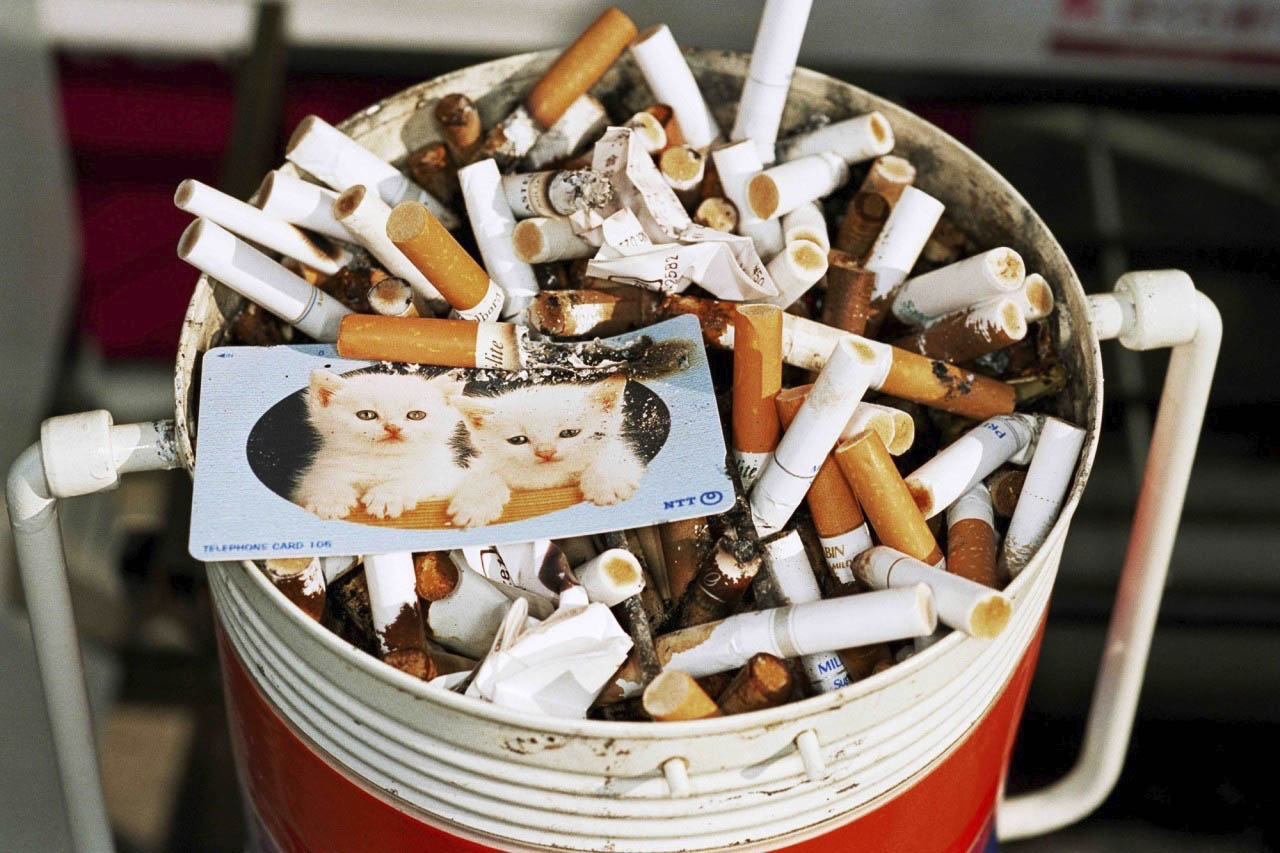
 

Heinrich Zille (German, 1858-1929)
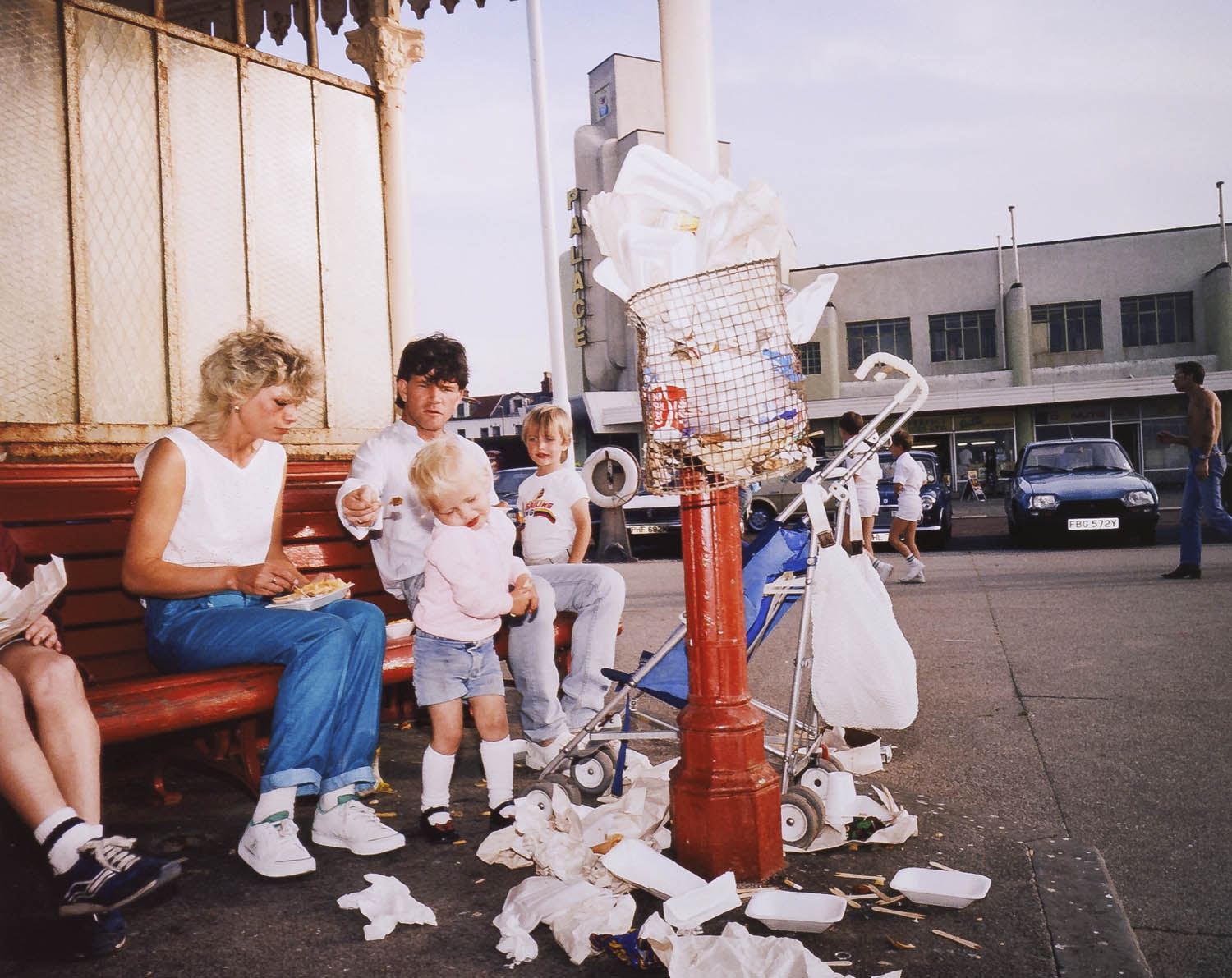
“Eine kleine Freundin hat doch jedermann, eine kleine Freundin braucht man dann und wann…” (“Everyone has a little friend, and one needs a little friend now and then…”)
Berlin, 1924
Lithograph on laid paper
45.5cm x 36.8cm
Collection of the Berlin City Museum Foundation


Mathèos Florakis (Greek, b. 1935) 'Naunynstraße, Hinterhof' 1979


Mathèos Florakis (Greek, b. 1935)
Naunynstraße, Hinterhof
1979
Coloured lithograph on paper
59cm x 42cm
© MathËos Florakis – Stiftung Stadtmuseum Berlin
Reproduction: Michael Setzpfandt Berlin


Manfred Butzmann (German, b. 1942) 'Giebelwand (Chausseestraße 16)' (Gable wall (Chausseestraße 16)) 1988


Manfred Butzmann (German, b. 1942)
Giebelwand (Chausseestraße 16) (Gable wall (Chausseestraße 16))
1988
Watercolour on laid paper
49.8cm x 34cm
© VG Bild-Kunst, Bonn
Reproduction: Michael Setzpfandt, Berlin


Doris Leue (German, b. 1954) 'Hirschhof' 1999


Doris Leue (German, b. 1954)
Hirschhof
Berlin, 1999
Pen and ink on paper
29.5cm x 42cm
Purchased with funds from the German Class Lottery Berlin by the Cultural Administration of the Berlin Senate, 2024
© Doris Leue
Reproduction: Michael Setzpfandt, Berlin


Ever wondered about the secret lives tucked away behind Berlin’s bustling streets?

The Museum Ephraim-Palais is inviting you on a captivating journey with its new exhibition, “Berlin Courtyards: Between Everyday Life, Work, and Encounters,” running from July 18, 2025, to January 18, 2026.

From cozy residential nooks to bustling commercial hubs and serene artist retreats, Berlin’s courtyards tell the vibrant story of a city constantly evolving. This exhibition delves into how these spaces have fostered social and cultural exchange since the 19th century, becoming living capsules of history and community. They reflect the complexities of urban life, showcasing how people shape their surroundings and creating a unique atmosphere that has long inspired artists.

“Berlin Courtyards” brings together nearly 100 striking photographs and graphics from the vast collection of the Stadtmuseum Berlin. Visitors will discover gems from legendary artists like Heinrich Zille, Hans Baluschek, and Manfred Hamm, alongside contemporary perspectives from photographers like André Kirchner and Günther Steffen.

Adding a fresh layer to the historical narrative are new artistic works by urban researchers Duygu Örs and Sinthujan Varatharajah, specially commissioned for the show. Their multi-sensory exploration of Wedding’s backyards, using texts, photos, videos, and sound, offers an intimate look at these overlooked spaces.

What’s more, the exhibition features a dynamic display of modern-day Berlin courtyards, crowdsourced through the Stadtmuseum Berlin’s “Berlin now!” photo campaign. You’ll see 40 framed photos on the walls, plus 50 smaller photo cards that visitors can rearrange, literally co-creating the exhibition experience. Due to overwhelming interest, the “Berlin now!” photo call has been extended until September 18, giving photography enthusiasts more time to submit their own unique views of Berlin’s courtyards. Selected photos will even be rotated into the framed display in October!

Adding another exciting dimension, junior curators from the Refik-Veseli School in Kreuzberg, mentored by Yella Hoepfner, will share their own “courtyard stories” across five dedicated areas within the Museum Ephraim-Palais, including spaces within the “BerlinZEIT” permanent exhibition. Their personal narratives will engage in a dialogue with objects from the Stadtmuseum Berlin’s collection, offering fresh, youthful insights.

Don’t miss this chance to experience Berlin from a new perspective, delving into the hidden heart of its neighborhoods through the eyes of both historical and contemporary artists.

Press release from Museum Ephraim-Palais


Rudolf Dührkoop (German, 1848-1918) From the portfolio 'Das malerische Berlin, Band 1' (Picturesque Berlin, Volume 1) 1911


Rudolf Dührkoop (German, 1848-1918)
From the portfolio Das malerische Berlin, Band 1 (Picturesque Berlin, Volume 1)
1911


Ludwig Binder (German born Serbia, 1928-1980) 'Hofeinfahrt Kottbusser Straße 6' (Courtyard entrance at Kottbusser Straße 6) c. 1976


Ludwig Binder (German born Serbia, 1928-1980)
Hofeinfahrt Kottbusser Straße 6 (Courtyard entrance at Kottbusser Straße 6)
c. 1976
Ludwig Binder’s Photographic Estate – Positives – 43 images titled Ausländer-Läden-Kino
Photograph
24cm x 18.2cm
© Stiftung Stadtmuseum Berlin, Ludwig Binder


Manfred Hamm (German, b. 1944) 'Goerz'sche Höfe, Rheinstraße' 1978


Manfred Hamm (German, b. 1944)
Goerz’sche Höfe, Rheinstraße
Berlin, 1978
Photograph, baryta paper
22cm x 28.1cm
© Stiftung Stadtmuseum Berlin


Reinhard Münch (German, b. 1951) From the series 'Das Haus Dunckerstr. 16 in Berlin 1058' (The House at Dunckerstrasse 16 in Berlin, 1058) 1985


Reinhard Münch (German, b. 1951)
From the series Das Haus Dunckerstr. 16 in Berlin 1058 (The House at Dunckerstrasse 16 in Berlin, 1058)
1985
Baryta paper, silver gelatin
24.9cm x 24.9cm
© Reinhard Münch


Ergun Çağatay (Turkish, 1937-2018) From the report: "Türken in Deutschland. Die zweite Generation" ("Turks in Germany. The Second Generation") 1989/90
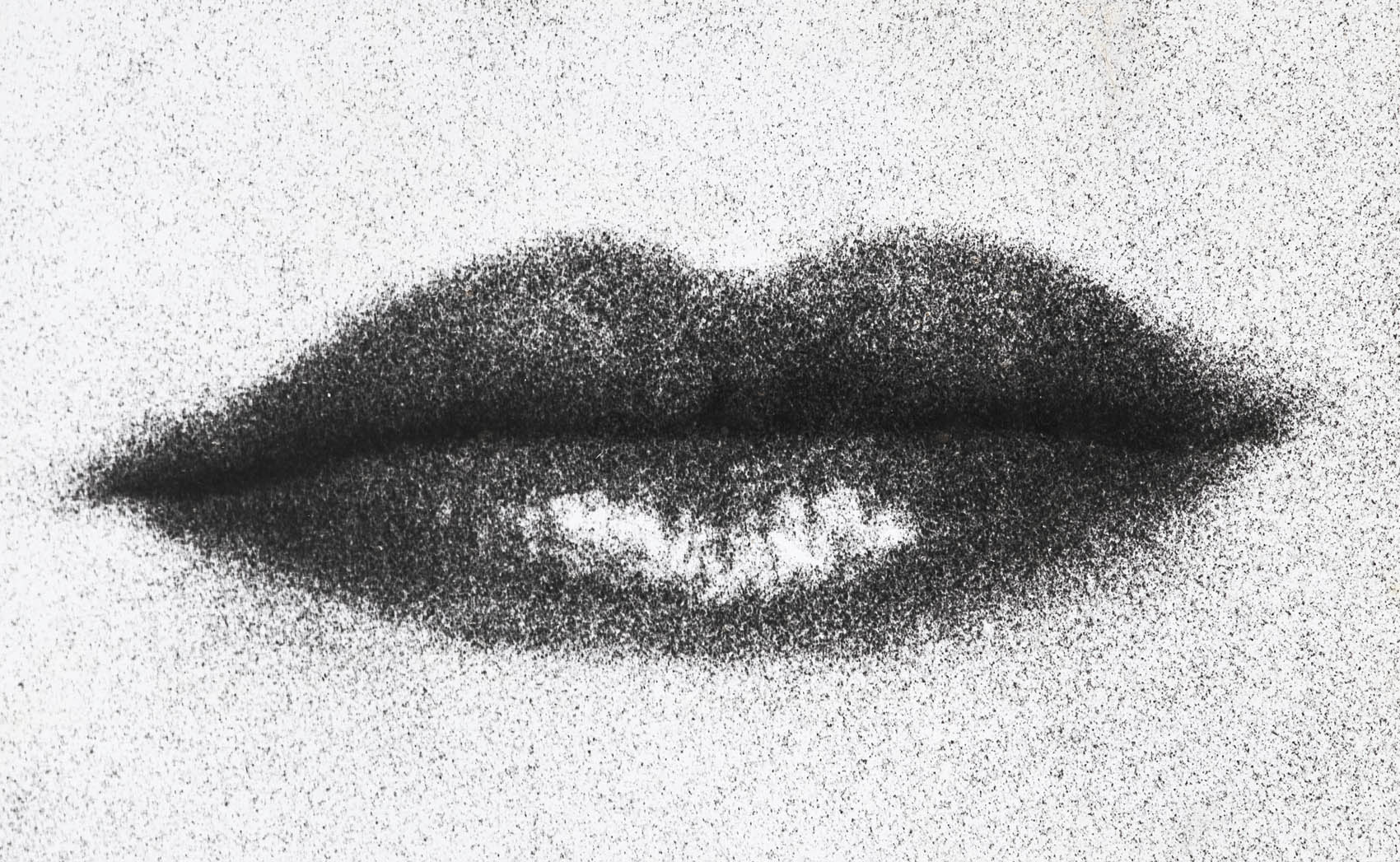
 

Ergun Çağatay (Turkish, 1937-2018)
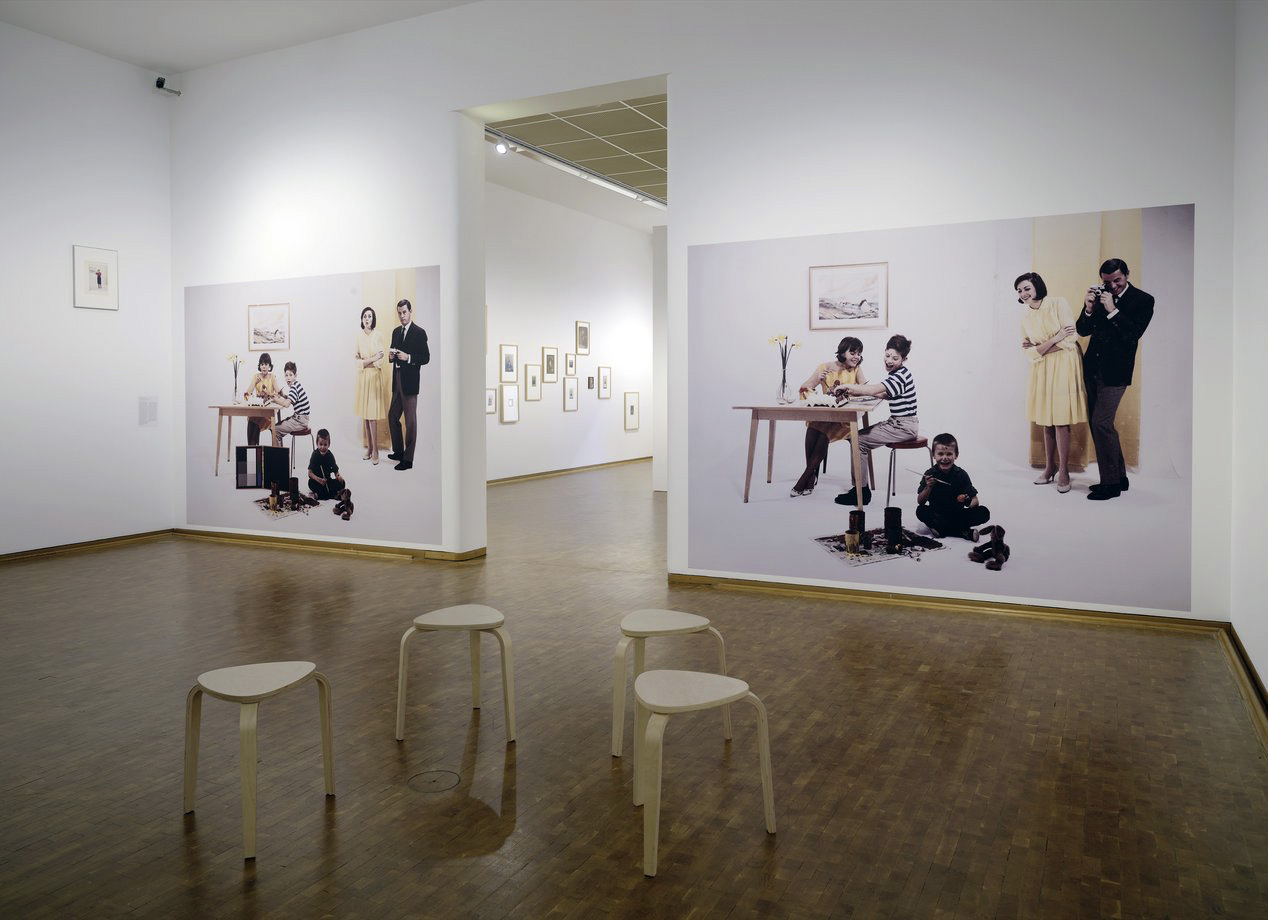
From the report: “Türken in Deutschland. Die zweite Generation” (“Turks in Germany. The Second Generation”)
1989/90


Werner Brunner (German, b. 1941) From the series 'Berliner Wandbilder' (Berlin Murals) 1974-1990 (Berlin-Prenzlauer Berg, Esmarchstraße 26, I. Hinterhof)


Werner Brunner (German, b. 1941)
Berlin-Prenzlauer Berg, Esmarchstraße 26, I. Hinterhof
From the series Berliner Wandbilder (Berlin Murals) 1974-1990
Hahnemühle Digital Fine Art, inkjet printing
30cm x 20cm
© Werner Brunner
Reproduction: Dorin Alexandru Ionita, Berlin


Dr. Barbara Hansen. '"Motive aus dem Osten Berlins 1993-1998. Höfe", Hof in Ostberlin' um 1995 ('"Motives from East Berlin 1993-1998. Courtyards" Courtyard in East Berlin' around 1995)


Dr. Barbara Hansen
“Motive aus dem Osten Berlins 1993-1998. Höfe”, Hof in Ostberlin
(“Motives from East Berlin 1993-1998. Courtyards” Courtyard in East Berlin)

Berlin, around 1995
Colour photograph on PE paper
Approx. 10 x 15cm (HF and QF)
© Stiftung Stadtmuseum Berlin


Unknown photographer. 'Hoffest in der Falckensteinstraße 27' (Garden festival at Falckensteinstraße 27) 1920


Unknown photographer
Hoffest in der Falckensteinstraße 27 (Garden festival at Falckensteinstraße 27)
1920
Postcard
From the collection of Eberhard Müller


Installation view of the exhibition 'Berlin Courtyards: Between Everyday Life, Work, and Encounters' at the Museum Ephraim-Palais, Berlin, July 2025 - January 2026


Installation views of the exhibition Berlin Courtyards: Between Everyday Life, Work, and Encounters at the Museum Ephraim-Palais, Berlin, July 2025 – January 2026
Photos: Alexander Rentsch


Yella Hoepfner. 'Junior Curator at Refik-Veseli-Schule' 2025


Yella Hoepfner
Junior Curator of the Refik Veseli School
2025
© Yella Hoepfner


Berlin backyards have a lot to tell. Since the industrial revolution in the 19th century at the latest, Berlin has been a center of attraction for people from other regions of Germany and from other countries. The history of the city has therefore always been a history of migration.

Due to enormous population growth, spatial expansion and structural densification, Berlin is characterised by backyards like no other city. They are used for residential, educational, commercial, artistic, culinaric and many other purposes. Their history is diverse, just like the people who live there. With the special exhibition “Berliner Höfe” (Berlin Backyards) on the 3rd floor of the Museum Ephraim-Palais, the Stadtmuseum Berlin invites you to explore these urban spaces between past and present.

The backyards are exemplary of urban coexistence with all its contradictions. They show how people shape space. And they encourage us to take a closer look: What can backyards tell us about Berlin? What about ourselves? In short: What is going on there?

Graphics, photography and history

The special atmosphere of the Berlin backyards has repeatedly inspired graphic artists, draughtsmen and photographers to create images. In the exhibition, highlights from the museum collection meet the artistic works of urban researchers Duygu Örs and Sinthujan Varatharajah, which were created especially for “Berliner Höfe”. Using sounds and light, they deal with different sensory impressions from backyards that Örs and Varatharajah encountered in Wedding.

In addition, the junior curators from the Refik Veseli School in Kreuzberg and their mentor Yella Hoepfner present their own spaces in the permanent exhibition “BerlinZEIT” on the first and second floors of the museum. Their individual stories interact with objects from the collection.

Biographical data

Duygu Örs is a researcher, art educator and curator specialising in cultural and urban research. Since 2019 she has headed the education and mediation work of the Berlin Biennale for Contemporary Art, since 2025 with Jas Wenzel. At the Institute for Sociology and Cultural Organisation (ISKO) at Leuphana University Lüneburg, she is working on the role of the museum in the ‘Right to the City’ movement.‍ She is also a co-founder of the curatorial research collective Curating through Conflict with Care (CCC). Translated with DeepL.com (free version)

Sinthujan Varatarajah (சிந்துஜன் வரதராஜா) writes and researches in Berlin. As a political geographer, Varatarajah focuses on issues of statelessness, im-/mobility and displacement from the perspective of infrastructure, logistics and building culture. Varatarajah has published several books since 2022. Varatarajah’s next book, ‘Where Time Stands Still’, will be published by Carl Hanser Verlag in spring 2026.

Text from the Museum Ephraim-Palais website


Lotti Nass (German, b. 1950) 'Hof mit Baum' (Courtyard with Tree) 2010


Lotti Nass (German, b. 1950)
Hof mit Baum (Courtyard with Tree)
2010
© Lotti Nass


Andreas Metz. 'In der Sandkiste' (In the Sandbox) 2020


Andreas Metz
In der Sandkiste (In the Sandbox)
2020


Birgit Hantke. 'Waldstraße, Moabit' 2021


Birgit Hantke (German)
Waldstraße, Moabit
2021
© Birgit Hantke


Andrea Steiner. 'Doch die Toscana?' (But Tuscany?) 2025


Andrea Steiner
Doch die Toscana? (But Tuscany?)
2025
© Andrea Steiner


Duygu Örs and Sinthujan Varatharajah. 'Untitled' 2025


Duygu Örs and Sinthujan Varatharajah
Untitled
2025


Museum Ephraim-Palais
Poststraße 16
10178 Berlin

Opening hours:
Tue – Sun 10am – 6pm (also on public holidays)
Mon closed

Museum Ephraim-Palais website

LIKE ART BLART ON FACEBOOK

Back to top

Exhibition: Anna Malagrida. ‘Opacitas: Veiling Transparency’ at Museu Tàpies, Barcelona

Exhibition dates: 13th March – 28th September, 2025

 Curator: Patricia Sorroche, Head of Exhibitions at the Museu Tàpies


Anna Malagrida (Spanish, b. 1970) 'Rue de Charenton' 2008-2009


Anna Malagrida (Spanish, b. 1970)
Rue de Charenton
2008-2009
Photographic print on Dibond


Contradicting the hobgoblin of little minds

I love the conceptualisation of these photographs: interstitial spaces of the city, liminal spaces that ‘stand between’ one place and another.1

I love the abstract nature of these photographs, abstract paintings of the city which occlude symbols and signs, capture traces and gestures, where nothing is fixed and everything is fluid, up for interpretation through the imagination.

Unfortunately, the digital online reproductions make the spaces seem very flat and one-dimensional, in a liminal and spiritual sense.

I would have loved to have stood in the gallery to breathe in the presences of the photographs, their energy and spirit. Would they have held me? Is there enough for me to hang my hat on? Would they have reverberated in my soul. I don’t know. I can’t feel them through the digital reproductions.

I think of sitting in front of Monet’s massive curved paintings of Water Lillies at the Musée de l’Orangerie in Paris and being surrounded by these beautiful, shifting, elemental / alchemical abstract works of art. And being spell bound.

How would I feel surrounded by these representations, surfaces, depths of the city, these whitewashed absences (with all the connotations of race, power, money, and coverups that the name implies) that proffer different ways of seeing the world, places of the visible and the invisible.

“Her work forces us to confront our social and political condition of being, but from a poetic, liminal space, where contradiction is a symbol of the dualities of the human condition in the postmodern world.”2

Contradiction is NEVER a symbol for that would mean contradiction becomes a conventional representation of an object, function, or process. And the human condition in the postmodern world is far more than a duality … it is an intertextual multiplicity of points of view and nexus (the nexus between industry and political power, the nexus between business and government, the nexus between public space and private space, etc…)

“Do I contradict myself? Very well then I contradict myself, (I am large, I contain multitudes.)”

~ Walt Whitman from Leaves of Grass

Dr Marcus Bunyan


1/ A liminal space is a transitional place or state, like a hallway or adolescence, that is “in-between” two distinct stages or locations, creating a sense of unease or disorientation. The word comes from the Latin for “threshold,” and these spaces, often devoid of people and eerily familiar yet subtly wrong, can evoke feelings of nostalgia, anxiety, and the potential for creativity or personal growth during periods of uncertainty.

AI summary from Google

2/ Patricia Sorroche. Anna Malagrida. (Trans)gazes of the sensible. Curatorial statement, 2025


Many thankx to Colin Vickery for alerting me to this exhibition. Many thankx to Museu Tàpies for allowing me to publish the photographs in the posting. Please click on the photographs for a larger version of the image.


“I’m interested in the intuited spaces on the other side, what isn’t in the image, but is imagined. What lies beyond, outside the frame, is the place that activates the imagination, inventing a story or imagining a space. The things we intuit, which are on the other side, belong to the story or to the space itself. Through the metaphor of the window, I’m trying to create a space of in-betweenness and uncertainty.”


Anna Malagrida in Álvaro de la Rica, “Las fronteras transparentes. A propósito de las fotos de Anna Malagrida,” published in Revisiones, No. 7, 2011, p. 129.


Opacitas: Veiling Transparency takes us on a journey through the work of Anna Malagrida (Barcelona, 1970) and presents a project that explores photography, video and installation. Her gaze focuses on the liminal spaces that unite and separate, bringing opposites into conversation.

Malagrida mainly situates us in the city and in a few constructed natural spaces. Through a play of perspectives, from the interior to the exterior and vice versa, her photographs and video installations become windows that reveal and conceal the tensions that run through society. Her polysemic gaze escapes a univocal interpretation of images in order to inhabit certain entropic spaces that she invites us to discover through her work.

Malagrida’s images capture the remnants and the infralight traces, indexes, signs that refer to previous moments, social tensions or simple anonymous gestures. The visual ambiguity in her work is revealed through the texture of her images, which evoke pictorial references and dissolve the limits between appearance and reality. Images of closed shop windows painted with characteristic whitewash, an opaque veil that prevents us from looking inside and transforms these spaces into abstract surfaces, resembling large pictorial canvases. Poetic actions operate in her works with a multiplicity of meanings: the painter’s gesture is also that of the working body, and the city and the landscape are revealed from within. Said gestures are erased, cleansed or simply fixed by the passage of time, cyclical and mutable.

Her work, which transcends photography and painting, immerses the viewer in a visual experience with multiple meanings and invites them to look at the city and natural surroundings from a new perspective, one that reveals the vestiges of a landscape affected by social and economic change. Her practice is a space for reflecting on vulnerability, resistance and the possibility of reconstruction, both of the individual and the environment they inhabit.

Text from the Museu Tàpies website


Installation view of the exhibition Anna Malagrida. 'Opacitas: Veiling Transparency' at Museu Tàpies, Barcelona


Installation views of the exhibition Anna Malagrida. Opacitas: Veiling Transparency at Museu Tàpies, Barcelona, March – September, 2025


Installation view of the exhibition Anna Malagrida. 'Opacitas: Veiling Transparency' at Museu Tàpies, Barcelona showing 'La laveur du carreau' 2010 (video still)


Installation view of the exhibition Anna Malagrida. Opacitas: Veiling Transparency at Museu Tàpies, Barcelona, March – September, 2025 showing La laveur du carreau 2010 (video still)


The Museu Tàpies presents Anna Malagrida’s exhibition Opacitas. Veiling Transparency. Curated by Patricia Sorroche, Head of Exhibitions at the Museu Tàpies, the exhibition offers a survey of the artist’s work through photography, video and installation.

This exhibition provides an opportunity to see, for the first time in Barcelona, the work of this artist, who was born in the city, but has spent most of her career in France.

Anna Malagrida’s project responds to the Museu Tàpies’ current aim of enabling discourses that institutions have left out and that have not found a space for representation in our most immediate reality.

Anna Malagrida (Barcelona, 1970) works with photography to navigate between that which is public and private, based on a play of perspectives and visions that shuns the realistic image to draw us into a game of collective imaginaries. The idea of the city and its significance as a social agent are present in her photographs, which function as archaeological vestiges of the social crises of contemporary city life.

The exhibition Opacitas. Veiling Transparency, curated by Patricia Sorroche, Head of Exhibitions at the Museu Tàpies, offers a survey of Anna Malagrida’s work through projects that explore photography, video and installation. Focusing on the liminal spaces that unite and separate, her gaze brings opposites into conversation.

Malagrida mainly situates us in the city and in a few constructed natural spaces. Through a play of perspectives, from the interior to the exterior and vice versa, her photographs and video installations become windows that reveal and conceal the tensions that run through society. Her gaze escapes a univocal interpretation of images, in order to inhabit certain spaces that she invites us to discover through her work.

Her images capture remnants and traces, signs that refer to previous moments, social tensions or simple anonymous gestures. The visual ambiguity in her work is revealed through the texture of her photographs and videos, which evoke pictorial references and dissolve the limits between appearance and reality. This can be seen, for example, in the images of closed shop windows painted with characteristic whitewash, an opaque veil that prevents us from looking inside and transforms these spaces into abstract surfaces, resembling large pictorial canvases. Poetic actions operate in her works with a multiplicity of meanings: the painter’s gesture is also that of the working body, and the city and the landscape are revealed from within. These gestures are erased, cleaned or simply fixed by the passage of time, cyclical and mutable.

Malagrida’s work, which transcends photography and painting, immerses the spectator in a visual experience with multiple meanings and invites us to look at the city and natural surroundings from a new perspective, one that reveals the vestiges of a landscape affected by social and economic change. Her practice is a space for reflecting on vulnerability, resistance and the possibility of reconstruction, both of the individual and the environment they inhabit.

The exhibition Opacitas. Veiling Transparency allows visitors to explore and delve into Anna Malagrida’s career through a selection of her works. The itinerary of the exhibition begins with the piece Vitrines (Shop Windows, 2008-2009), in which the artist photographs the windows of shops on the streets of Paris that had to close down due to the economic crisis and concealed their interiors by coating their windows with whitewash. The exercise of gazing through shop windows is also present in Le laveur du carreau (The Window Cleaner, 2010), an audiovisual piece that allows us to observe how a worker lathers and cleans the windows, in a visual play between opacity and transparency that also situates us in the intermediate zones.

In Danza de mujer (Woman Dance, 2017), filmed in the Jordanian desert, ‘Malagrida puts into question, through the movement of the veil, certain social policies in relation to specific groups, and how narrow perspectives promote ways of seeing the world that exclude a large part of it,’ in the words of the exhibition’s curator, Patricia Sorroche. Finally, Point de vue (2006), produced in the architectural complex that housed the Club Med tourist resort inaugurated in 1962 in the protected natural area of Cap de Creus, presents the traces of the economic systems that defied sustainability.

Sorroche concludes that ‘operating through opposites, through the decategorisation of traditional forms of representation and the overlapping of different languages, makes Anna Malagrida’s work move between textures, between the places of the visible and the invisible, to immerse us in a dialogue of opposites’. And she continues: ‘Her work multiplies our gazes, our ways of seeing the world, making it more porous, while at the same time enabling other ways of understanding, transmuting and transcending it. Her work forces us to confront our social and political condition of being, but from a poetic, liminal place, where contradiction is a symbol of the dualities of the human condition in a post-modern world. A space where we can come together to understand each other in possible societies of the common, based on a collective and communal view.’

The project Anna Malagrida. Opacitas. Veiling Transparency is completed with an exhibition booklet featuring texts by the curator and by art critic Marta Gili, as well as an interview with the artist. Malagrida and Gili will take part in the inaugural conversation of the exhibition, on 13 March at 6 pm, in an event that forms part of the project’s public programme, along with the talk by Morena Hanbury. Over the next few months, the Museu Tàpies’ Education Department will be offering a programme of tours and activities for all audiences.

Press release from Museu Tàpies


Anna Malagrida (Spanish, b. 1970) 'Rue Laffitte I' 2008-2009


Anna Malagrida (Spanish, b. 1970)
Rue Laffitte I
2008-2009
Photographic print on Dibond


Anna Malagrida (Spanish, b. 1970) 'Rue Laffitte II' 2008-2009


Anna Malagrida (Spanish, b. 1970)
Rue Laffitte II
2008-2009
Photographic print on Dibond


Anna Malagrida (Spanish, b. 1970) 'Vitrines. Boulevard Sébastopol. Aparadors. Boulevard Sébastopol' 2009


Anna Malagrida (Spanish, b. 1970)
Vitrines. Boulevard Sébastopol. Aparadors. Boulevard Sébastopol
2008-2009
Photographic print on Dibond


Curatorial statement

Anna Malagrida. (Trans)gazes of the sensible

Patricia Sorroche

“Photography is, above all, a way of looking, it is not the same look. It is a way of seeing that has become conscious of itself, that has become reflexive.”

~ Susan Sontag, On Photography, 1977


What happens when we place ourselves in that intermediate space where the visible and the invisible intertwine? Anna Malagrida invites us to explore this question by delving into the dichotomy of opposites in her work, and by directing our gaze toward the space in-between, where our way of looking is amplified, expanded and transformed, blurring the boundaries between the perceptible and the imperceptible. Revisiting some of Malagrida’s works opens a path, a transmutation of our bodies and our drives as we move around her pieces. Like palimpsests, her works hold layers of memory for us to rewrite. Time, memory and narrative intertwine to confront us with a new perspective from which to observe the world.

Opacitas. Veiling Transparency takes as its starting point an apriorism where the poetic gesture reveals the political gesture. When Jacques Rancière speaks of the ‘distribution of the sensible’, what he offers us is the possibility of the gesture to modify and transform what is seen, felt or said within a society from a poetic space. Along the same lines, Martha Rosler maintains that poetry and art are spaces of resistance, as well as political and social reconfiguration. Based on this axiom, we can understand Malagrida’s photographs and works as a space where the poetic and the political intersect in a subtlety of visual nuances, allowing us to recodify ways of inhabiting space and time.

The journey begins with a hypallage, where the city is transformed into a text that is written and rewritten as we move forward. An accumulation of memories and desires, where each street, each wall, seems to tell a story waiting to be read. In the series Vitrines (Shop Windows, 2008-09), the city is highlighted as a place of tension, wherein Malagrida works on ‘the epidermal space of the city’.1 The financial crisis that devastated the economies of a global north during the early twenty-first century led to the bankruptcy of many businesses. The artist photographed and immortalised the shop windows of Parisian businesses forced to close as a consequence of the economic collapse. To conceal the view, the windows were painted or whitewashed, veiling the interior, creating absences. The photographs of these places, now hidden from view, place the postmodern subject in a liminal space, where the gaze is para-actional: we cannot see, but we can reinterpret the void. Here, the painted and erased surfaces invite us to draw upon the unconscious in order to activate these new visual paraphrases. Walking through those streets highlights the fragilities of being, the contemporary narratives marked by the strong tensions of a system alien to our daily lives.

An enormous pile of rubble in the middle of the gallery prevents the body from moving freely through the space. A ruin activated to challenge us directly, to make us reflect and think about our condition. It questions what remains as a memory of a past that projects us into the future; and it questions a present, as Andreas Huyssen recounted.2 In this way, the ruin takes on a double dimension: both of a past with its scars and wounds, and of a future that is being built, which rises and walks, opening up as a space that enables a society continually emerging and re-emerging.

Continuing with the idea of opposites and dualities, our path takes us to the next space, more intimate, more enclosed, darker. As if we were entering a camera obscura or a lens shutter, the viewer is immersed in darkness; but this is a darkness that reveals a transparency, opening windows and walls to the outside, and placing us in the active condition of looking out. 

Danza de mujer (Woman Dance, 2007) invites us to enter into an experience where the body is exposed in its fragile condition, ‘reincorporating a sensitive look at that dialectical movement that, in part, the photographic device itself already deploys without imposing a reification of the world’.3 From a subtle artefact transporting us to a refuge in the Jordanian desert, a veil is swayed by the breeze entering through a small window. This simple poetic action condenses part of the characteristic axioms of Malagrida’s works. The darkness of the refuge, with the light filtering from the desert outside, the black veil fluttering synchronously and asynchronously. These opposites operate with determination, reminding us that what prevents us from looking transparently limits our ways of interpreting and thinking about the world. 

The piece was made at a time of tension, when in France the veil was banned in all public places, and thus, Arab women were rendered invisible and blurred in a system that did not recognise the singularities of certain communities. Through the dance of the veil, Malagrida questions and puts into crisis the politics of the social in relation to certain specific groups, and how these narrow visions propose ways of seeing the world while excluding an important part of it.

From the symbolic and the poetic, Malagrida’s work opens up to the post-human condition of being, understood as a relational and concentric existence with its environment and communities. To understand this relational condition, Édouard Glissant referred to the poetics of relation, where the idea of time is cyclical, and societies can only be conceived in a structure of continuous relationships.

Another work encountered by the viewer is Le laveur de carreau (The Window Cleaner, 2010), where Malagrida draws a ‘parallel between the gesture of a sublimated painter and that of a worker carrying out an entrusted task’.4 Here, the idea permeating the artist’s work is established: the gesture becomes the subject of the action, the idea of genius as addressed by Walter Benjamin is made evident. The cleaner is a metaphor for the painter, who becomes blurred in his condition as a worker, in his social condition of being. In this video work, we find ourselves looking from inside a shop, while a worker lathers the window and then proceeds to remove the remains of water and soap with a squeegee. From the passive condition of the onlooker, we attend to the action happening before our eyes. In this way, we witness the moment of creation and also of destruction. The soapy water our cleaner spreads over the glass surface is a metonymy of the act of painting; a fleeting work, which disappearing shortly after, returns to the transparency of glass. As in previous works, Malagrida again operates from opposites, from the concepts of opacity and transparency. Just for an instant, she places us in an intermediate place, just as Marcel Broodthaers did in some of his most renowned films (for instance, in Abb. 1. Projection d’un film du Musée d’Art Moderne, 1971), where the camera was placed at the midpoint between the inside and the outside, in his case the gallery, but aiming at the same idea, at the place where art is conceived as a process in constant movement, a flow transcending the static to become transmutable.

Both the Vitrines series and Le laveur de carreau can be read as trompe l’oeil references to large Informalist canvases. As both John Berger and Antoni Tàpies remarked, art should allow us to discover the unknown, to enter into places where the tangible, the visible, cannot go. Art is the place of transformation, a place where the unknown emerges in its multiple and polysemic condition.

Although there is no set itinerary for the viewer to follow, the last of the pieces in this exhibition is Point de vue (2006), where new agents appear in dialogue with those we have encountered before. This installation was made in Cap de Creus, in the north of Catalonia, in a protected natural area, close to the border with France. Thanks to the Law of Natural Heritage and Biodiversity, after a few decades the tourist complex built here by Club Med was forced to close. Malagrida installed her camera inside this architectural complex, which remained standing as a vestige and trace of economic systems that try to evade certain norms and sustainability policies. In so doing, Malagrida returns us to the intermediate and intersectional space, since we encounter the traces people have left on the windows, full of dust and sand; scratched phrases proclaiming their condition as the poetics of social archaeology. The dust becomes a ‘residue’5 containing the possibility of the new, of what is to come, and of the passage of time.

The piece is also an allusion, a synecdoche where perspective plays a leading role. Composed of three large photographs, the piece reveals a landscape behind the dust, a perspective revealing our form of representation, whose signs are linked to society’s power and knowledge structures. A theory influenced by Erwin Panofsky,6 who studied Renaissance perspective as a structure for representing time, place and society at a certain moment in history: something which structures the worldview. In this way, perspective becomes a space for representing socio-political systems, while in the Renaissance it adopted a homogeneous, infinite and ordered character, in contrast to the medieval or Romanesque vision where space was hierarchical. The classical and orthodox perspective proposed by this work invites us to think about how the forms of representation are ways of making the world visible and reproducing it. This idea points to the manner in which the telling of history is based on a structure, on a certain perspective that determines what is to be highlighted and ignores other events or facts running counter to historical hegemonies. It is also interesting to notice how the different layers are discovered to the viewer: first the dust, then the inscriptions and finally the landscape. And how, returning to the notion of distance and horizon, by way of passing through the glass we are led to reimagine the possibilities of the outside.

In conclusion, operating from opposites, from the decategorisation of traditional forms of representation and the overlapping of different languages, makes Malagrida’s work move between textures, between places of the visible and the invisible, to immerse us in a dialogue of opposites. This dialogical premise with which we enter her works does not seek to block our view or interpretation, but rather opens up the multiplicity of discourse, of the image. Her work leads us to multiply our views, our ways of seeing the world, to make it more porous, while enabling other ways of understanding it, of transmuting it and traversing it. Her work forces us to confront our social and political condition of being, but from a poetic, liminal space, where contradiction is a symbol of the dualities of the human condition in the postmodern world. A place where we can meet and understand each other in possible societies of the common, from a collective and community-based place.


Footnotes

1/ Muriel Barthou, “Entretien à Anna Malagrida,” in L’invisible photographique ; pour une histoire de la photographie, Paris: La lettre volée, 2019.

2/ Andreas Huyssen, Present Pasts: Urban Palimpsests and the Politics of the Memory. Stanford: Stanford University Press, 2003.

3/ Marta Dahó, “Espacio de la continuidad. Lugares de la intersección. Algunas notas en torno a los trabajos de Anna Malagrida,” in (In)visibilidad (ex. cat.). La Coruña: Museo de Arte Contemporáneo Gas Natural Fenosa, 2016. 

4/ Étienne Hat, “Entretien. Anna Malagrida,” in Anna Malagrida, Vitrines, Paris: Éditions Filigranes, 2025; Paris barricadé, Paris: Éditions Filigranes, 2025; and Los muros hablan, Paris: Éditions Filigranes, 2025. (Author’s translation.)

5/ Nicolas Bourriaud, Estética relacional. Buenos Aires: Adriana Hidalgo, 2006.

6/ Erwin Panofsky, La perspectiva como forma simbólica. Barcelona: Tusquets, 1999 (1927). 


Anna Malagrida (Spanish, b. 1970) 'Rue Bleue' 2008-2009


Anna Malagrida (Spanish, b. 1970)
Rue Bleue
2008-2009
Photographic print on Dibond


Anna Malagrida (Spanish, b. 1970) 'Rue Lecourbe I' 2008-2009


Anna Malagrida (Spanish, b. 1970)
Rue Lecourbe I
2008-2009
Photographic print on Dibond


Anna Malagrida (Spanish, b. 1970) 'Rue Riboutté' 2008-2009


Anna Malagrida (Spanish, b. 1970)
Rue Riboutté
2008-2009
Photographic print on Dibond


Anna Malagrida (Spanish, b. 1970) 'Rue de Châteaudun' 2008-2009


Anna Malagrida (Spanish, b. 1970)
Rue de Châteaudun
2008-2009
Photographic print on Dibond


Museu Tàpies
Carrer d’Aragó 255
08007 Barcelona, Catalonia (Spain)
Phone: +34 934 870 315

Opening hours:
Tuesday – Saturday 10.00am – 7.00pm
Sunday 10.00am – 3.00pm

Museu Tàpies website

LIKE ART BLART ON FACEBOOK

Back to top

Exhibition: ‘American Photography’ at Rijksmuseum, Amsterdam

Exhibition dates: 7th February – 9th June, 2025

Curators: Mattie Boom and Hans Rooseboom


Amanda López (American, b. 1982) 'Homegirls, San Francisco' 2008 from the exhibition 'American Photography' at Rijksmuseum, Amsterdam, Feb - June, 2025


Amanda López (American, b. 1982)
Homegirls, San Francisco
2008
Inkjet print
320 x 435 mm
National Museum for American History, Washington (DC)
© Amanda López


Let’s get down to brass tacks.

While I haven’t physically seen this exhibition – according to Rijksmuseum “the Netherlands’ first major survey exhibition of American photography… the first comprehensive survey of American photography in Europe … reflect[ing] the rich and multifaceted history of photography in the United States. The exhibition presents the country as seen through the eyes of American photographers, and shows how the medium has permeated every aspect of our lives: in art, news, advertising and everyday life” – you can glean a lot about an exhibition from the installation photographs.

The feeling I get from the installation photographs is of a particularly meagre offering – gallery halls with minimal photographs, huge empty spaces (just look at the installation photograph Curio box made of cigarette packets with portraits of roommates, late 1960s below) – and to then consider this is supposed to be “the first comprehensive survey of American photography in Europe” and reflect the large photographic holdings of the Rijksmuseum. Really? You wouldn’t really know it from looking at “the show”.

Perhaps the problem stems from the rationale of the exhibition:

“There is no hierarchy to the selection. A sequence of rooms present numerous fields – portraiture, landscape, advertising work, art photography – like chapters in a novel. “We tried to find surprising images and things we’ve never seen before,” says Boom. The result is a broad mix, shaped with co-curator Hans Rooseboom, of anonymous photography, commercial work, news coverage, medical prints and propaganda, presented in tandem with masterpieces such as Robert Frank’s enigmatic picture of a woman watching a New Jersey parade in 1955, her face partially obscured by an unfurled Stars and Stripes.”1 (see below)

The phrase “a broad mix” says it all: a mishmash of anonymous photography, commercial work, fine art photography, the political power of photography, photographs on racism, war, etc., … taking on too much in one exhibition (the American landscape is largely absent from the walls), proclaiming to be a comprehensive survey of American photography. An impossible task.

“The exhibition has deliberately departed from a “top 100” approach, Rooseboom [one of the curators] adds, stating “that would have been too easy”.”2

Easy to say (and move away from) but not easy to do…

What I feel is lacking in this subjective selection (all exhibitions are subjective) is the focused “energy” present in American photography radiating from the wall – the energy that documents and imagines the growth of a nation and the passion of the artists that capture that energy.

Where is, for example, the passion of Sally Mann’s photographs of the American South, the New York buildings of Berenice Abbott, George Dureau’s portraits of friends and amputees in New Orleans, the narrative stories of Duane Michals or the darkness / otherness that has always been present from the very start in American photography (for example Ralph Eugene Meatyard). In the selection in the posting, the photographs of Robert Frank (a foreigner, whose photographs of America were reviled when they were first published) and Nan Goldin (photographs of counter culture America) come closest to this alternate perspective, both outsiders from the main stream point of view.

Thus, while there are some interesting photographs in the exhibition it’s all too ho hum for me, perhaps a “vapour” of something almost brought into consciousness.

Dr Marcus Bunyan


1/ Christian House. “American Photography: unforgettable images of the beauty and brutality of a nation,” on The Guardian website Thu 13 Feb 2025 [Online] Cited 06/06/2025

2/ Deborah Nicholls-Lee. “Eight images that tell the story of America,” on the BBC website 12 February 2025 [Online] Cited 06/06/2025


Many thankx to the Rijksmuseum for allowing me to publish the photographs in the posting. Please click on the photographs for a larger version of the image.


Installation view of the exhibition ‘American Photography’ at Rijksmuseum, Amsterdam showing at right photography by Robert Frank


Installation view of the exhibition American Photography at Rijksmuseum, Amsterdam showing at right photographs by Robert Frank (below)
Photo: Rijksmuseum/Olivier Middendorp


Robert Frank (Swiss, 1924-2019) 'City fathers – Hoboken, New Jersey' 1955


Robert Frank (Swiss, 1924-2019)
City fathers – Hoboken, New Jersey
1955
Gelatin silver print


Robert Frank (Swiss, 1924-2019) 'Parade - Hoboken, New Jersey' 1955


Robert Frank (Swiss, 1924-2019)
Parade – Hoboken, New Jersey
1955
Gelatin silver print


Robert Frank (Swiss, 1924-2019) 'U.S. 91, Leaving Blackfoot, Idaho' 1956


Robert Frank (Swiss, 1924-2019)
U.S. 91, Leaving Blackfoot, Idaho
1956
Gelatin silver print


Robert Frank (Swiss, 1924-2019) 'New York City' 1955


Robert Frank (Swiss, 1924-2019)
New York City
1955
Gelatin silver print


Rijksmuseum moves you to The American Dream. To the real American. To unexpected recognition. The Rijksmuseum is staging the Netherlands’ first major survey exhibition of American photography.

The more than 200 works on display in American Photography reflect the rich and multifaceted history of photography in the United States. The exhibition presents the country as seen through the eyes of American photographers, and shows how the medium has permeated every aspect of our lives: in art, news, advertising and everyday life.

Over the past decades the Rijksmuseum has been assembling a collection of American photographic work. This is the first time we are exhibiting photographs from the collection, alongside loaned works from American, Dutch and other European collections. This show includes iconic photographs by the likes of Sally Mann, Robert Frank, Lisette Model, Nan Goldin, Richard Avedon, Andy Warhol, Paul Strand, Diane Arbus and James Van Der Zee, as well as surprising images by unknown and anonymous photographers.

Text from the Rijksmuseum website


Installation view of the exhibition ‘American Photography’ at Rijksmuseum, Amsterdam


Installation view of the exhibition American Photography at Rijksmuseum, Amsterdam showing in the bottom image at left, Sally Mann’s Jessie #34
(2004, below); at second left, Chuck Close’s Phil [Photo Maquette of Philip Glass] (1969, below); and at third right, László Moholy-Nagy’s Parking lot in Chicago, 1938 (1938, below)
Photo: Rijksmuseum/Olivier Middendorp


Sally Mann (American, b. 1951) 'Jessie #34' 2004


Sally Mann (American, b. 1951)
Jessie #34
2004
Gelatin Silver enlargement print from 8 x 10 in. collodion wet-plate negative, with Soluvar matte varnish mixed with diatomaceous earth


Chuck Close (American, 1940-2021) 'Phil' [Photo Maquette of Philip Glass] 1969


Chuck Close (American, 1940-2021)
Phil [Photo Maquette of Philip Glass]
1969
16 x 12 inches (40.64 x 30.48cm)
Gelatin silver print mounted on mat board
© Chuck Close


László Moholy-Nagy (Hungarian, 1895-1946) 'Parking Lot in Chicago' 1938


László Moholy-Nagy (Hungarian, 1895-1946)
Parking lot in Chicago, 1938
1938
Gelatin silver photograph
23.8 × 33.8cm


Installation view of the exhibition ‘American Photography’ at Rijksmuseum, Amsterdam showing the work of Nan Goldin from 'The Ballad of Sexual Dependency'


Installation view of the exhibition American Photography at Rijksmuseum, Amsterdam showing the work of Nan Goldin from The Ballad of Sexual Dependency (below)
Photo: Rijksmuseum/Olivier Middendorp


Nan Goldin (American, b. 1953) 'Cookie with Me After Being Hit at the SPE Conference, Baltimore, MD, 1986' 1986


Nan Goldin (American, b. 1953)
Cookie with Me After Being Hit at the SPE Conference, Baltimore, MD, 1986
1986


Nan Goldin (American, b. 1953) 'Cookie and Vittorio’s Wedding: The Ring, NYC, 1986' 1986


Nan Goldin (American, b. 1953)
Cookie and Vittorio’s Wedding: The Ring, NYC, 1986
1986


Nan Goldin (American, b. 1953) 'Cookie in the Bathroom at Hawaii 5.0, NYC, 1986' 1986


Nan Goldin (American, b. 1953)
Cookie in the Bathroom at Hawaii 5.0, NYC, 1986
1986


The Rijksmuseum presents the first comprehensive survey of American photography in Europe. With more than 200 works spanning three centuries, American Photography will be an exploration of the rich and multifaceted history of photography in the United States, showing how the medium has permeated every aspect of our lives: in art, news, advertising and everyday life. 

Over the past decade, the Rijksmuseum has built an extensive collection of American Photography. This exhibition is the first ever presentation of Rijksmuseum’s collection, which will be shown together with loans from over 30 collections in the United States, the Netherlands and other European countries. Works by icons including Sally Mann, Robert Frank, Lisette Model, Nan Goldin, Richard Avedon, Andy Warhol, Paul Strand, Diane Arbus and James Van Der Zee will be on view alongside eye-opening photographs by unknown and anonymous photographers. 

The exhibition is possible by Rijksmuseum’s major partnership with Baker McKenzie. American Photography runs from 7 February to 9 June 2025. Concurrently with American Photography, Carrie Mae Weems’s 2021 series Painting the Town will be on show in the Rijksmuseum’s photography gallery.

American Photography will give picture of the country through the eyes of American photographers, showing the country in all its complexity. The exhibition takes themes such as the American dream, landscapes and portraiture to trace how photographers increasingly reflected on changes and events in their country. A major topic of the show is photography’s evolution as an art form, from 19th-century daguerreotypes of frost flowers on a window to the work of Paul Strand, Charles Sheeler, Sally Mann, Irving Penn, Dawoud Bey and Sarah Sense. Another important theme is how photography has grown to be a part of everyday life, which is demonstrated by family portraits, advertisements, postcards, gramophone record covers and more.

Press release from Rijksmuseum


Installation view of the exhibition ‘American Photography’ at Rijksmuseum, Amsterdam
Installation view of the exhibition ‘American Photography’ at Rijksmuseum, Amsterdam showing at right, Jocelyn Lee's 'Julia in Greenery' (2005)


Installation view of the exhibition American Photography at Rijksmuseum, Amsterdam showing in the bottom photograph at right, Jocelyn Lee’s Julia in Greenery (2005, below)
Photo: Rijksmuseum/Olivier Middendorp


Jocelyn Lee (American, b. 1962) 'Julia in Greenery' 2005


Jocelyn Lee (American, b. 1962)
Julia in Greenery
2005
Archival Pigment Print
20 × 24 in | 50.8 × 61cm


Installation view of the exhibition ‘American Photography’ at Rijksmuseum, Amsterdam


Installation view of the exhibition American Photography at Rijksmuseum, Amsterdam showing in the display case, Curio box made of cigarette packets with portraits of roommates, late 1960s (below)
Photo: Rijksmuseum/Olivier Middendorp


Curio box made of cigarette packets with portraits of roommates, late 1960s from the exhibition 'American Photography' at Rijksmuseum, Amsterdam, Feb - June, 2025


Curio box made of cigarette packets with portraits of roommates, late 1960s
Wood, handwoven cigarette packets, gelatin silver prints
140 x 110 x 195 mm
Collection of Daile Kaplan, Pop Photographica, New York
Photo: Andy Romer Photography, New York


Installation view of the exhibition ‘American Photography’ at Rijksmuseum, Amsterdam showing at left, Diane Arbus' 'A young man in curlers at home on West 20th St., N.Y.C. 1966' (1966); and at second left, Ming Smith's 'America Seen Through Stars and Stripes, New York City' (1976)


Installation view of the exhibition American Photography at Rijksmuseum, Amsterdam showing at left, Diane Arbus’ A young man in curlers at home on West 20th St., N.Y.C. 1966 (1966, below); and at second left, Ming Smith’s America Seen Through Stars and Stripes, New York City (1976, below)
Photo: Rijksmuseum/Olivier Middendorp


Diane Arbus (American, 1923-1971) 'A young man in curlers at home on West 20th St., N.Y.C. 1966' 1966


Diane Arbus (American, 1923-1971)
A young man in curlers at home on West 20th St., N.Y.C. 1966
1966
Gelatin silver print


Ming Smith (American, b. 1951) 'America Seen Through Stars and Stripes, New York City' 1976 from the exhibition 'American Photography' at Rijksmuseum, Amsterdam, Feb - June, 2025


Ming Smith (American, b. 1951)
America Seen Through Stars and Stripes, New York City
1976
Gelatin silver print
318 x 470 mm
Virginia Museum of Fine Arts, Richmond (VA)
Adolph D. and Wiliams C. Williams Fund


In the post-war years, mass immigration to the US brought new ways of thinking. the US took over from Europe as a cultural trendsetter, and photography was eventually accepted as an art form. Playful approaches to photography emerged, moving beyond documenting people and places to provoking emotion and inviting deep questions. Ming Smith’s America Seen Through Stars and Stripes (1976), created on the bicentenary of the Declaration of Independence, turns again to the flag inviting America to reflect on its history. By placing a figure in mirrored sunglasses in front of a shop window, she creates a disorientating mesh of reflective surfaces. The grid structure suggests incarceration but – in combination with the round glasses and the stars on the flag – also creates an abstract composition reminiscent of modern art. “She’s a careful observer, playing with all these layers in the image,” says Boom.

Smith explores the artistic potential of photography, experimenting with double-exposure, shutter speed and collage. In one version of this image, she paints on bold red stripes, altering this snapshot of the US with marks that resemble blood or flames. Smith’s work builds on the civil rights movement that preceded it and features activists such as James Baldwin and Alvin Ailey. She was the first woman to join the African-American photography collective the Kamoinge Workshop and the first black woman to have her work acquired by the Museum of Modern Art (MoMA). Yet her demographic was largely overlooked by the art world. “I worked to capture black culture, the richness, the love. That was my incentive,” she told the Financial Times in 2019. “It wasn’t like I was going to make money from it, or fame – not even love, because there were no shows.”

Deborah Nicholls-Lee. “Eight images that tell the story of America,” on the BBC website 12 February 2025 [Online] Cited 06/06/2025


Henry Fitz Jnr (American, 1808-1863) 'Self-portrait' 1840


Henry Fitz Jnr (American, 1808-1863)
Self-portrait
1840
Daguerreotype
Smithsonian National Museum of American History, Washington (DC)


In 1840, using a self-made copper plate, Henry Fitz Jnr produced one of the world’s first selfies, his eyes gently closed to prevent any blinking from spoiling the result. In creating this striking blue image, he was doing more than record his appearance; he was also documenting America’s first essays into an art form that would tell its story in radical new ways.

Deborah Nicholls-Lee. “Eight images that tell the story of America,” on the BBC website 12 February 2025 [Online] Cited 06/06/2025


Thomas Martin Easterly (American, 1809-1882) 'Chief Keokuk (Watchful Fox)' 1847


Thomas Martin Easterly (American, 1809-1882)
Chief Keokuk (Watchful Fox)
1847
Daguerreotype
Missouri History Museum


Anonymous photographer. 'View of a wooden house or barn with a man and a woman in front' c. 1870-1875


Anonymous photographer
View of a wooden house or barn with a man and a woman in front
c. 1870-1875
Tintype
164 x 215 mm
Rijksmuseum, Amsterdam


A 19th-Century tintype (an image made on a sheet of metal) featuring a man and woman in front of a rustic barn is a case in point. The image was probably sold on the spot by a travelling tin typist “for a modest price”, explains Rooseboom. “Many people had just arrived and were living in the countryside, no big city nearby, so this was the only possibility of having your portrait taken.” The man stands proud, looking at the camera, but the woman’s head is bowed and she is looking away. “Sometimes you can sense that people were simply not used to being photographed,” says Rooseboom. “Nowadays, we’ve seen in magazines and movies how to pose elegantly.” This may be the only time in their whole life that they would be photographed, and the result, adds Boom, “would hang on the wall of the house where they lived forever”.

Deborah Nicholls-Lee. “Eight images that tell the story of America,” on the BBC website 12 February 2025 [Online] Cited 06/06/2025


Detroit Photographic Company. 'Home of Rip Van' Nd


Detroit Photographic Company
Home of Rip Van
Nd
Rijksmuseum, Amsterdam


Bertha E. Jaques (American, 1863-1941) 'Tree - in Governor Gleghorn’s Place Honolulu' 1908


Bertha E. Jaques (American, 1863-1941)
Tree – in Governor Gleghorn’s Place Honolulu
1908
Cyanotype
248 x 152 mm
Rijksmuseum, Amsterdam, purchased with the support of Baker McKenzie


Walker Evans (American, 1903-1975) (photographer) (mentioned on object) 'A free country? This is America … Keep it Free!' Nd


Walker Evans (American, 1903-1975) (photographer) (mentioned on object)
A free country? This is America … Keep it Free!
Nd
Sheldon-Claire Company


United News Company (publisher) ‘12,000 Employees of the Ford Motor Company, Detroit, Mich.' 1913


United News Company (publisher)
12,000 Employees of the Ford Motor Company, Detroit, Mich.
1913
Postcard, relief halftone and colour lithography
88 × 137 mm
Rijksmuseum, Amsterdam


… a 1913 postcard featuring 12,000 employees of the Ford Motor Company in Detroit may have been the “most expensive picture that was ever taken”, quipped a newspaper at the time, as the factory had to shut down for two hours to assemble the staff. The image, the company boasted, was “the largest specially posed group picture ever made” and illustrates a turning point where industry saw the value in investing large sums in promotional photography. Taken in the year when Ford introduced America’s first moving assembly line and the US had become the world’s largest economy, the photograph also depicts the mass production that would shape the country.

The image’s reappearance in Ford marketing also made it an early example of photoshopping. While the same tinted faces swarmed in the foreground, the number of employees cited in the caption increased exponentially, and a building to the left was cropped out in one version and acquired extra floors in another. “Apparently, many photographers and their publishers had no qualms about abandoning their medium’s potential for realism,” write Boom and Rooseboom in the exhibition catalogue.

Deborah Nicholls-Lee. “Eight images that tell the story of America,” on the BBC website 12 February 2025 [Online] Cited 06/06/2025


Schadde Brothers Studio. 'Display, sample or trade catalogue photograph for sweet manufacturer Brandle & Smith Co.,' c. 1915


Schadde Brothers Studio
Display, sample or trade catalogue photograph for sweet manufacturer Brandle & Smith Co.,
c. 1915
Gelatin silver print with applied colour
288 x 240 mm
Rijksmuseum, Amsterdam


Charles Sheeler (American, 1883-1965) 'Nude #3' 1918-1919


Charles Sheeler (American, 1883-1965)
Nude #3
1918-1919
Gelatin silver print
127 × 171 mm
Museum of Fine Arts, Boston


James Van Der Zee (American, 1886-1983) 'Portrait of an Unknown Man, Harlem, New York City' 1938


James Van Der Zee (American, 1886-1983)
Portrait of an Unknown Man, Harlem, New York City
1938
Gelatin silver print
244 x 203 mm
Rijksmuseum, Amsterdam
Purchased with the support of Baker McKenzie
© The James Van Der Zee Archive/The Metropolitan Museum of Art


… the New York portrait photographer James Van Der Zee was also embellishing his work, drawing jewellery on to his subjects and retouching their faces to erase dark lines and wrinkles. “I put my heart and soul into them and tried to see that every picture was better looking than the person,” he said. As a black photographer working from his Harlem studio at the height of the Harlem Renaissance, his work records a period when black migrants fleeing the segregationist South were forging a new life for themselves in the urban North. For the first time, African Americans and other minority groups could be photographed by someone inside their community, and represented in a way that uplifted them. Van Der Zee’s Portrait of an Unknown Man (1938), for example, is carefully posed to suggest confidence. The outfit is elegant and the buttonhole daisy adds a dandyish flourish. It’s an image that reflects the aspirations and upward mobility of African-American people and the pride Van Der Zee had in his culture.

Deborah Nicholls-Lee. “Eight images that tell the story of America,” on the BBC website 12 February 2025 [Online] Cited 06/06/2025


Hy Hirsh (American, 1911-1961) 'Untitled (abstraction)' c. 1950


Hy Hirsh (American, 1911-1961)
Untitled (abstraction)
c. 1950
Chromogenic print, 251 x 200 mm 
Rijksmuseum, Amsterdam
Purchased with the support of Baker McKenzie


Anonymous photographer. 'Family Standing beside their Car' c. 1957–1960


Anonymous photographer
Family Standing beside their Car
c. 1957-1960
Chromogenic print (Kodak Instamatic)
76 x 76 mm 
Rijksmuseum, Amsterdam


Irene Poon (American, b. 1941) 'Virginia' 1965


Irene Poon (American, b. 1941)
Virginia
1965
San Francisco Museum of Modern Art
Gift of Charles Wong
© Irene Poon Photography Archive, Department of Special Collections, Stanford University Libraries


It is the Chinese-American community that is the focus of the work of Irene Poon, who grew up in San Francisco’s Chinatown, where her parents, first-generation immigrants from Guanghzou, ran a herbalist store. A 1965 image features Poon’s sister Virginia in a local sweet shop, crowded out by Hershey’s and Nestlé bars. The letters “Nest” peep out from the densely packed shelves, reinforcing a sense that she is enclosed by this mass of graphic lettering. Beside her head a “Look” bar competes for attention, hinting at that other ever-expanding role for American photography: advertising − a sector in which the US was a forerunner. “Many of the 20th-Century artists started in advertising. It’s part of art history,” Boom says. “This whole field already existed, and the arts, and photography as an art form, draws from it.”

Deborah Nicholls-Lee. “Eight images that tell the story of America,” on the BBC website 12 February 2025 [Online] Cited 06/06/2025


Bruce Wrighton (American, 1950-1988) 'Portrait of a woman, Binghampton, NY ('Woolworth Shopper')' 1987


Bruce Wrighton (American, 1950-1988)
Portrait of a woman, Binghampton, NY (‘Woolworth Shopper’)
1987
Rijksmuseum, Amsterdam
Purchased with the support of Baker McKenzie
© Estate of Bruce Wrighton, Courtesy Laurence Miller Gallery


Hulleah Tsinhnahjinnie (American, b. 1954) 'This is not a commercial, this is my homeland' 1998


Hulleah Tsinhnahjinnie (American, b. 1954)
This is not a commercial, this is my homeland
1998
Platinum lambda print
476 x 609 mm
Courtesy of the artist


The political power of photography is also seen in the work of Native American (Seminole-Muscogee-Navajo) photographer Hulleah Tsinhnahjinnie who uses the camera to correct misconceptions about Indigenous populations and to offer an alternative viewpoint on US history. “No longer is the camera held by an outsider looking in, the camera is held with brown hands opening familiar worlds,” she writes in a 1993 essay. “We document ourselves with a humanising eye, we create new visions with ease, and we can turn the camera and show how we see you.”

Tsinhnahjinnie’s captioning of a touristic image of Monument Valley, Arizona with This is not a commercial, this is my homeland highlights the commodification of American land, and uses what she calls “photographic sovereignty” to take us back to the very beginning and reclaim and retell the story of America. In combination with works such as Bryan Schutmaat’s Tonopah, Nevada (2012), which documents mining’s effect on the landscape of the American West, images like Tsinhnahjinnie’s tell a story of a beautiful land that means different things to different people: financial gain, security or a sacred space.

Deborah Nicholls-Lee. “Eight images that tell the story of America,” on the BBC website 12 February 2025 [Online] Cited 06/06/2025


Bryan Schutmaat (American, b. 1983) 'Tonopah, Nevada' 2012


Bryan Schutmaat (American, b. 1983)
Tonopah, Nevada
2012
Inkjet print
1017 x 1277 mm (printed 2021)
Rijksmuseum, Amsterdam
Purchased with the support of Baker McKenzie


Rijksmuseum
Museumstraat 1
1071 XX Amsterdam

Opening hours:
Open daily 9 – 17h

Rijksmuseum website

LIKE ART BLART ON FACEBOOK

Back to top

Exhibition: ‘Felipe Romero Beltrán. Bravo’ at Fundación MAPFRE, Barcelona

Exhibition dates: 15th February – 18th May, 2025

Curator: Victoria del Val


Felipe Romero Beltrán (Colombian, b. 1992) 'Breach #1' 2021-2024


Felipe Romero Beltrán (Colombian, b. 1992)
Breach #1
2021-2024
40 x 50cm
Lambda print


At their best there are some wonderfully spare and tensioned photographs of “crossing points” in this posting which examine the space between one state and another, one land and another, one country and another.

Other photographs go the usual performative “dead pan” route, some more successfully than others, and documentary observations of seemingly unremarkable spaces, derivative of the work of the Canadian photographer Jeff Wall who did the same thing more effectively way back in 1993 (see Diagonal Composition below).

Dr Marcus Bunyan


Many thankx to Fundación MAPFRE for allowing me to publish the photographs in the posting. Please click on the photographs for a larger version of the image.


Felipe Romero Beltrán (Colombian, b. 1992) 'Breach #18' 2021-2024


Felipe Romero Beltrán (Colombian, b. 1992)
Breach #18
2021-2024
40 x 50cm
Lambda print


After earning a degree in Visual Arts in Buenos Aires, Felipe Romero Beltrán (Bogotá, Colombia, 1992) traveled to Jerusalem on a scholarship, where he developed photographic projects in the Middle East. In 2016, he moved to Madrid to further his studies in photography.

Throughout his work, Felipe Romero has been drawn to territories that have been or continue to be sites of tension, conflict and visual reflection.

In the Bravo project, he focuses on the more than 1,000 kilometers of the Río Bravo (known as the Rio Grande in the United States) that form the border between the United States and Mexico. His images place the viewer in a specific section of the Mexican side. People from Colombia, Honduras, El Salvador and Guatemala arrive, reaching the final stage of a long and arduous journey. In this setting, the river dictates everything, ultimately shaping the identity and way of life of those who encounter it.

Bravo is conceived as a photographic essay composed of fifty-two images that explore this reality through a series of photographs of architecture, people and landscapes: closures, bodies and breaches. Almost bare interiors, walls and surfaces where textures, colors and portraits of individuals the artist has encountered during his travels to the region stand out. Ultimately: a poignant visual essay, both stark and poetic, on the themes of waiting and border identity.

Text from the Fundación MAPFRE website


Felipe Romero Beltrán (Colombian, b. 1992) 'Breach #33' 2021-2024


Felipe Romero Beltrán (Colombian, b. 1992)
Breach #33
2021-2024
40 x 50cm
Lambda print


Felipe Romero Beltrán (Colombian, b. 1992) 'Breach #57' 2021-2024


Felipe Romero Beltrán (Colombian, b. 1992)
Breach #57
2021-2024
40 x 50cm
Lambda print


Felipe Romero Beltrán (Colombian, b. 1992) 'El Friki's friend and pink wall'
2021-2024


Felipe Romero Beltrán (Colombian, b. 1992)
El Friki’s friend and pink wall
2021-2024
120 x 150cm
Lambda print


Felipe Romero Beltrán (Colombian, b. 1992) 'Sound system' 2021-2024


Felipe Romero Beltrán (Colombian, b. 1992)
Sound system
2021-2024
120 x 150cm
Lambda print


Felipe Romero Beltrán (Colombian, b. 1992) 'San Juan Bautista. Nina's visit'
2021-2024


Felipe Romero Beltrán (Colombian, b. 1992)
San Juan Bautista. Nina’s visit
2021-2024
120 x 150cm
Lambda print


Felipe Romero Beltrán (Colombian, b. 1992)
'Sofa and table. Rebeca's house' 2021-2024


Felipe Romero Beltrán (Colombian, b. 1992)
Sofa and table. Rebeca’s house
2021-2024
120 x 150cm
Lambda print


Introduction

In 2021, Fundación MAPFRE launched its first KBr Photo Award, a prize created with the aim of reaffirming the institution’s commitment to emerging artistic creation, offering the winner of the contest significant visibility in both the national and international art scenes. In keeping with the biennial nature of this award, the second edition took place in 2023, with Colombian artist Felipe Romero Beltrán as the winner.

The artist

Felipe Romero Beltrán was born in 1992 in Bogota , Colombia. After studying visual arts in Buenos Aires, he traveled to Jerusalem on a scholarship to work on photographic projects in the Middle East. In 2016, he moved to Madrid to continue his training in photography and in 2024, he received his PhD from the Faculty of Information Sciences of the Complutense University with a thesis on the documentary image. Romero Beltrán’s photographic practice lies at the edge of documentary photography, using typical elements of this genre – direct recordings of everyday life, documentation of specific historical realities, etc. – and placing them in dialogue with other artistic, pictorial, and performative elements. The result consists of images that transcend the purely photographic realm to encompass the entire field of visual representation.

Throughout his career, Romero Beltrán has always been interested in territories that are or have been marked by tension, conflict and visual reflection.

The first project that brought him recognition was Magdalena, one of Colombia’s most important rivers and a witness to the armed struggle that began in 1960 between the guerrilla organisation Revolutionary Armed Forces of Colombia (FARC) and the country’s government, one of the bloodiest events in history, which ended with a peace agreement in late 2016. For more than fifty years, the river became a graveyard where the bodies of those killed were hidden. Many of these bodies, either intact or dismembered, were later swept away by the Magdalena’s powerful currents.

Later, in Dialecto/Dialect, the author explored the situation of the Strait of Gibraltar – a crossing point for immigrants entering Europe through Spain – through a group of migrant minors who, once at their destination – a center in Seville – find themselves in legal limbo under the guardianship of the Spanish State. This second work, which was accompanied by a series of performative audiovisual pieces, Recital (2020), Instrucción/Instruction (2022) and Esta es tu ley/This is Your Law, a reference to immigration law, marked a turning póint in his career, as he began to gain international recognition as an artist and photographer and his work was exhibited at the Fotografiemuseum in Amsterdam (FOAM) in January 2024.

Bravo

Bravo, the winning project of this second edition of the KBr Photo Award, is once again structured around a border as its leitmotif. The Bravo River has a dual identity: it is both a river and a border between the United States and Mexico. Its geography carries a heavy political burden that has accumulated conflicts and tensions since the nineteenth century, reaching an unsustainable situation in recent years. In this case, Romero Beltrán places the viewer in a specific stretch of this river, more than three thousand kilometers long. It is an area near the Mexican city of Monterrey, where both the river and the flow of people attempting to cross it shape the identity and way of life of the local population. This movement of people affects not only Mexican citizens, but extends to all of Central and South America. Migrants also come from Colombia, Honduras, El Salvador and Guatemala; for them, crossing the river is the last stage of a long and arduous journey. The border acts as a magnet, drawing people in despite the risks involved in crossing it and the fact that it has almost become a militarized zone. The author considers the river as a political actor, as a border, although throughout the photographs it only appears as a supporting character. As Romero Beltrán himself points out: “The Bravo River, rather than being the central axis that structures the project, functions as its limit, that is to say, it is an exercise in exhaustion until one reaches the river, without the possibility of crossing it. In this sense, the river exists as its visual negation, focusing interest on what comes after it: the entrance to the United States.”

Bravo was conceived as a photographic essay of fifty-two photographs that explore this reality through a series of images of architecture, people and landscapes: endings, bodies and breaches. Almost bare interiors, walls and surfaces where textures and colors stand out; fragments and remains of roads and buildings that show the traces of the passage of migrants; and portraits of people that the artist encountered during his visits to the area where he carried out the project.

The audiovisual work El cruce (The Crossing), which accompanies the exhibition, was created by the artist before the photographs. Romero Beltran thus expands the visual reflection on the river, showing us scenes that challenge its condition as a border, revealing other uses and situations linked to its dual geographical and political character: a Protestant baptism in the river itself; a fishing competition between the United States and Mexico at La Amistad dam, built in the 20th century to control the waters of the Bravo River; a series of interviews between the author and some migrants focused on linguistic changes; the testimonies of Guadalupe, a man who grew up on the Mexican side of the river and regularly swims in it with no intention of crossing it, and Luis, who frequently crosses the river to collect the wet clothes that migrants leave behind in the illegal breaches after crossing, so that he can sell them once he brings them back to Mexico.

Catalogue

The catalog accompanying the exhibition contains reproductions of all the works on display, as well as an essay by the curator, Victoria del Val, and an interview with Felipe Romero Beltrán himself. The publication also includes texts by Albert Corbí , who writes an essay on the very nature of the photographic medium in the context of migration; by artist Alejandra Aragon, on what it means to be a border person; and by Dominick Bermudez, a migrant of Salvadoran origin who describes how, after a long journey, he arrived in Monterrey, where he currently lives. Finally, the catalog features illustrations from the diary of Thom Díaz, Romero Beltrán’s “traveling companion”.

The catalog is published in Spanish by Fundación MAPFRE. The English version is co-published with Loose Joint Publishing.

Text from Fundación MAPFRE


Felipe Romero Beltrán (Colombian, b. 1992) 'Grecia Evangelina. Thom's house' 2021-2024


Felipe Romero Beltrán (Colombian, b. 1992)
Grecia Evangelina. Thom’s house
2021-2024
120 x 150cm
Lambda print


Jeff Wall (Canadian, b. 1946) 'Diagonal Composition' 1993


Jeff Wall (Canadian, b. 1946)
Diagonal Composition
1993
Transparency in light box, AP
40 x 46cm
Collection of the artist
© Jeff Wall


Felipe Romero Beltrán (Colombian, b. 1992) 'Piping. Dominick's house'
2021-2024


Felipe Romero Beltrán (Colombian, b. 1992)
Piping. Dominick’s house
2021-2024
40 x 50cm
Lambda print


Felipe Romero Beltrán (Colombian, b. 1992)
'Marco. Rafa's room'
2021-2024


Felipe Romero Beltrán (Colombian, b. 1992)
Marco. Rafa’s room
2021-2024
40 x 50cm
Lambda print


Felipe Romero Beltrán (Colombian, b. 1992) 'Martel'
2021-2024


Felipe Romero Beltrán (Colombian, b. 1992)
Martel
2021-2024
40 x 50cm
Lambda print


Felipe Romero Beltrán (Colombian, b. 1992) 'Mirror. El Sower's house'
2021-2024


Felipe Romero Beltrán (Colombian, b. 1992)
Mirror. El Sower’s house
2021-2024
40 x 50cm
Lambda print


Felipe Romero Beltrán (Colombian, b. 1992)
'Wall and two doors. Rebeca's house'
2021-2024


Felipe Romero Beltrán (Colombian, b. 1992)
Wall and two doors. Rebeca’s house
2021-2024
120 x 150cm
Lambda print


KBr Fundación MAPFRE
Av. del Litoral, 30 08005 Barcelona
Phone: +34 932 723 180

Opening hours:
Tuesdays – Sundays (and public holidays) 11am – 8pm

Fundación MAPFRE website

LIKE ART BLART ON FACEBOOK

Back to top

Exhibition: ‘Sakiko Nomura: Tender is the Night’ at Fundación MAPFRE, Madrid

Exhibition dates: 6th February – 11th May, 2025

Curator: Enrique Juncosa


Sakiko Nomura (Japanese, b. 1967)
'Night flight 017' 2008 from the exhibition 'Sakiko Nomura: Tender is the Night' at Fundación MAPFRE, Madrid, February - May, 2025


Sakiko Nomura (Japanese, b. 1967)
Night flight 017
2008
Chromogenic copy
Courtesy of Akio Nagasawa Gallery
© Sakiko Nomura


This photographer was unknown to me before starting to assemble this posting.

I love Japanese photography. In Nomura’s photographs I particularly like the “shadowy atmospheres” contained and revealed in her work, the fact that a female has turned the camera lens on the nude male body, and how the artist has combined bodies “with other nighttime views of animals, urban and natural landscapes, airplanes, ships, empty roads, streets, trees, flowers, fireworks, cemeteries, the sea, the sky, weather events, and bedrooms. The photographs are dark, grainy, and even blurry; they depict a world of ambiguous and mysterious, albeit celebratory, shadows.”

The press release puts it more eloquently than ever I could:

“The black and white male nudes, barely illuminated or sometimes silhouetted against nocturnal and shadowy atmospheres, are the best-known pieces in her body of work. The subjects are young and attractive, like the protagonists of Tender Is the Night, the novel by F. Scott Fitzgerald that is explicitly referenced in the title, as power and erotic tension in these images are wrapped in an air of tenderness and certain mystery. These portraits (a real challenge to certain taboos and traditional stereotypes in Japanese culture) alternate in the exhibition with images of animals, still lifes, urban landscapes, atmospheric phenomena, lights and shifting reflections, creating a series of fragmented narratives with a cinematic quality, rich with allegorical meanings about the fleetingness of existence.”

Making a lateral connection, the idea of “atmosphere” can be related to the theatrical work (both landscape and portrait) of the German born British photographer Bill Brandt (1904-1983) who in his landscapes “aimed to introduce an atmosphere that connects with the viewer in order to provoke an emotional response from contemplation of the work.”1

“When these landscapes started to include stone constructions such as tombs and crosses Brandt considered that he had achieved his aim: “Thus it was I found atmosphere to be the spell that charged the commonplace with beauty. … I only know it is a combination of elements … which reveals the subject as familiar and yet strange.””1

In his book Literary Britain published in 1951 “an explanation of his somewhat imprecise concept of “atmosphere” can be found: the moment when the different elements that make up the landscape (nature, light, viewpoint, weather conditions) converge in an aesthetic canon rooted in a cultural tradition.”1

Extending this principle we acknowledge in Nomura’s photographs of nudes, animals, still lifes, urban landscapes, atmospheric phenomena, lights and shifting reflections et al an aesthetic canon rooted in the Japanese cultural tradition, photographs so Japanese that they could be no other, so utterly familiar and yet so magnificently strange.

Dr Marcus Bunyan


1/ Text from the exhibition Bill Brandt at the Fundación Mapfre, Madrid, June – August, 2021


Many thankx to Fundación MAPFRE for allowing me to publish the photographs in the posting. Please click on the photographs for a larger version of the image.


Sakiko Nomura (Japanese, b. 1967)
'Moonlit Night 015' 2023 from the exhibition 'Sakiko Nomura: Tender is the Night' at Fundación MAPFRE, Madrid, February - May, 2025


Sakiko Nomura (Japanese, b. 1967)
Moonlit Night 015
2023
Chromogenic copy
© Sakiko Nomura
Courtesy of Akio Nagasawa Gallery


Sakiko Nomura (Japanese, b. 1967)
'Fate in spring 001' 2020 from the exhibition 'Sakiko Nomura: Tender is the Night' at Fundación MAPFRE, Madrid, February - May, 2025


Sakiko Nomura (Japanese, b. 1967)
Fate in spring 001
2020
Gelatin silver print
© Sakiko Nomura
Courtesy of Akio Nagasawa Gallery


Sakiko Nomura (Japanese, b. 1967)
'Hotel Pegasus 030' 2013


Sakiko Nomura (Japanese, b. 1967)
Hotel Pegasus 030
2013
Chromogenic copy
© Sakiko Nomura
Courtesy of Akio Nagasawa Gallery


Sakiko Nomura (Japanese, b. 1967)
'Black Darkness 061' 2008


Sakiko Nomura (Japanese, b. 1967)
Black Darkness 061
2008
Gelatin silver print
© Sakiko Nomura
Courtesy of Akio Nagasawa Gallery


Sakiko Nomura (Japanese, b. 1967)
'Black Darkness 017'
2008


Sakiko Nomura (Japanese, b. 1967)
Black Darkness 017
2008
Gelatin silver print
© Sakiko Nomura
Courtesy of Akio Nagasawa Gallery


Sakiko Nomura (Japanese, b. 1967)
'Naked Time 053' 1997


Sakiko Nomura (Japanese, b. 1967)
Naked Time 053
1997
Gelatin silver print
© Sakiko Nomura
Courtesy of Akio Nagasawa Gallery


Sakiko Nomura (Japanese, b. 1967)
'On Love 229' 2017


Sakiko Nomura (Japanese, b. 1967)
On Love 229
2017
Gelatin silver print
© Sakiko Nomura
Courtesy of Akio Nagasawa Gallery


Sakiko Nomura (Japanese, b. 1967) 'GO WEST 011' 2019


Sakiko Nomura (Japanese, b. 1967)
GO WEST 011
2019
Chromogenic copy
© Sakiko Nomura
Courtesy of Akio Nagasawa Gallery


Sakiko Nomura (1967) is one of the most outstanding Japanese photographers of her generation. She worked for 20 years as an assistant to Nobuyoshi Araki and since 1993 has exhibited regularly in Japan and other Asian countries, as well as in Europe and Mexico. This exhibition is her first major retrospective.

The black and white male nudes, barely illuminated or sometimes silhouetted against nocturnal and shadowy atmospheres, are the best-known pieces in her body of work. The subjects are young and attractive, like the protagonists of Tender Is the Night, the novel by F. Scott Fitzgerald that is explicitly referenced in the title, as power and erotic tension in these images are wrapped in an air of tenderness and certain mystery. These portraits (a real challenge to certain taboos and traditional stereotypes in Japanese culture) alternate in the exhibition with images of animals, still lifes, urban landscapes, atmospheric phenomena, lights and shifting reflections, creating a series of fragmented narratives with a cinematic quality, rich with allegorical meanings about the fleetingness of existence.

The exhibition also devotes special attention to her photobooks, which constitute a significant part of her career.

Text from the Fundación MAPFRE website


Sakiko Nomura (Japanese, b. 1967)
'Naked Time 025' 1997


Sakiko Nomura (Japanese, b. 1967)
Naked Time 025
1997
Gelatin silver print
© Sakiko Nomura
Courtesy of Akio Nagasawa Gallery


Sakiko Nomura (Japanese, b. 1967)
'Flower 055' 2015


Sakiko Nomura (Japanese, b. 1967)
Flower 055
2015
Chromogenic copy
© Sakiko Nomura
Courtesy of Akio Nagasawa Gallery


Sakiko Nomura (Japanese, b. 1967)
'NUDE/ A ROOM/ FLOWERS 001' 2012


Sakiko Nomura (Japanese, b. 1967)
NUDE/ A ROOM/ FLOWERS 001
2012
Gelatin silver print
© Sakiko Nomura
Courtesy of Akio Nagasawa Gallery


Sakiko Nomura (Shimonoseki, Yamaguchi Prefecture, 1967) is one of the most prominent Japanese photographers of her generation, the first to include a significant number of women. In 1990 Nomura graduated in photography from the University of Kyushu Sangyo (Fukuoka), known for its innovative artistic and cultural programs. Upon completing her studies, she became the assistant of Nobuyoshi Araki, the renowned Japanese photographer, with whom she worked for twenty years. Nomura’s career began in 1993, exhibiting and publishing photobooks. Now numbering close to forty, these publications have always been carefully produced by the artist herself and represent a key aspect of her work. This exhibition constitutes her first retrospective in Europe.

Sakiko Nomura is best known for her dark and nocturnal photographs of male nudes in black and white. She alternates these works with other nighttime views of animals, urban and natural landscapes, airplanes, ships, empty roads, streets, trees, flowers, fireworks, cemeteries, the sea, the sky, weather events, and bedrooms. The photographs are dark, grainy, and even blurry; they depict a world of ambiguous and mysterious, albeit celebratory, shadows. Seen together, these images form temporal narratives that are reminiscent of cinema. Although she also makes portraits of women, as a woman who photographs male nudes, Nomura breaks Japanese stereotypes, taking on feminist perspectives. 

The 1990s are known as the “lost years” in Japan: the economic bubble and the financial crisis of 1989 had stifled the growth of Japanese society. Conversely, photography and art experienced a period of internationalization and change. Museums and galleries opened, while infrastructures surrounding photography were strengthened and both public and private institutions began to collect photographs. Nevertheless, Japanese society, at that time, harbored enormous discrimination against women, which was no different in the world of photography. There were outstanding women photographers, but they were few and far between, and it was difficult for them to abandon anonymity. It was precisely in this context, within a traditional society, that women’s consciousness changed radically, and a true blossoming of new women artists emerged. Nomura was part of this wave and began to pave her way as an important Japanese photographer.

This exhibition presents the works of Sakiko Nomura in thematic categories, which may be specific, such as flowers, nudes, animals, and portraits of a renowned kabuki actor. Likewise, the show features the artist’s photobooks, including Night Flight, and photographs grouped together based on technical characteristics, such as the series Another Black Darkness. Lastly, a selection of photographs produced in Granada during the summer of 2024 that were commissioned by Fundación MAPFRE on the occasion of this exhibition will also be on display.

Night Flight

Night Flight is the title of a photobook produced by Sakiko Nomura in 2008; one of her few publications in color. In this instance, the artist alternates photographs of nude men – who look directly at the camera as they pose on beds in dark hotel rooms and are either smoking or with their lovers – with images of airplanes taking off or landing, out-of-focus night lights, fuming industrial chimneys, and fireworks that acquire obvious erotic undertones. These images appear to be the memories of different sexual encounters and are centered on the moments before or after said encounters, as if ultimately each one were a journey.

The photobook includes a text authored by the filmmaker Tatsushi Omori, in which he recalls posing nude for Nomura ten years earlier, in a dark room with orange light. According to Omori, Nomura places her subjects in a melancholic, chaotic, and seemingly fleeting world of light and shadow, with no precise boundaries, in which the beds are a representation of the sky. Everything is shifty and unstable, conjuring a metaphor of memory as something emotional that is simultaneously precise and inaccurate.

Flowers

Many of the motifs photographed by Sakiko Nomura evoke the intrinsic relationship between life and death. Likewise, the staging of her compositions, the darkness of their atmospheres, and the monotony of tonalities also suggest the coldness of death, as if – despite the artist’s restraint – they were expressing hidden notions of tenderness and intimacy. An example of this can be found in her series of flowers, in which orchids, lilies, roses, chrysanthemums, and other decomposing flowers are placed in vases in the middle of a room; together their form an extension of baroque vanitas and represent allegories of the fleetingness of existence, its beauty being purely transitory.

Three Photobooks

Black Darkness (2008), NUDE / A ROOM / FLOWERS (2012), and Fate in spring (2020) are three of Nomura’s most cherished photobooks, perhaps because they all include photographs that bear the artist’s hallmarks: dark photographs that convey an epic of intimacy.

Black Darkness – a Buddhist term that is related to hell – was jokingly proposed to the artist as a title by the master photographer Nobuyoshi Araki. This book includes images of male nudes, skyscrapers that become visible through the fog, empty bedrooms, flowers, and the seafoam created by crashing waves, all depicted in black and white. The photographs are rather dark, conjuring a variety of dreamlike meanings and ancient emotions.

NUDE / A ROOM / FLOWERS includes a number of photographs in colour and broadens Nomura’s vocabulary with images of trips through different cities – such as Venice, Berlin, Beijing, and Krakow – combined with interiors of hospitals, churches, cemeteries, and a few daytime scenes.

Conversely, in Fate in spring the artist presents pairs of images – which are not necessarily related to one another – that evoke unexpected ideas when combined. 

Another Black Darkness

After participating at the Rencontres d’Arles photography festival in 2016, Nomura published her first experimental works utilising the technique of solarisation. These images were printed with glossy black ink on matte black paper under the title Another Black Darkness.

Dark and hermetic at first sight, on this occasion the viewer is forced into contemplating this untitled and undated series. One must make a considerable effort to decipher the content of these images, which is practically hidden. The figures appear as landscapes flickering in distant memories – the silhouette of a naked man laying on a bed, another of a man sitting down and smoking with his back turned to the viewer as a woman exposes her buttocks, a kiss, the outlines of a city, a forest, a car, a flower, and a tree can all be spotted amidst the shadows – akin to images found in the work of Junichiro Tanizaki.

Nudes

Nomura’s male nudes first appear in her 1994 photobook titled Naked Room. She has since produced this type of portrait recurrently in private or semi-private spaces. When she published her book in the 1990s, Japanese society exerted much discrimination towards women, which extended into the world of photography. Then it was common for women to be the protagonists of nudes, exhibiting themselves for the patriarchal gaze. Nomura subverted the norms that had been tacitly accepted for decades by featuring males as her subjects, despite her work being distanced from the cliché of the naked body as a sexual fantasy. Hiroki Kurotaki was the first model to pose nude for her. The artist portrayed him over the course of twenty years, until his death. Through Kurotaki, Nomura conveyed one of her main beliefs regarding the medium: “Photography is taking pictures of nudes, confronting bare existence,” as she pointed out in an interview in 2022.

Miscellaneous

Koshiro Matsumoto X is another individual who Nomura has portrayed for decades. Born into a family of male Kabuki actors – a genre of Japanese theater that originated in Kyoto in the early 17th century – dating back to his great grandfather, Matsumoto began his career as Kintaro Matsumoto at the age of six. Two years later, he changed his name to Somegoro Ichikawa and acquired his current name in 2018 at the age of forty-five, which he inherited from his father and had been previously carried by nine actors in his family. Nomura published My Last Remaining Dream in 2018, documenting the actor’s career through 593 photographs.

In the photobook majestic, published in 2022, Nomura gathers images of tattooed men who are part of the Edo-choyukai association in their yearly pilgrimage to Mount Oyama. Along with these photographs, this room also includes images of animals – which the artist is interested in as symbols of instinct and desire – combined with others that capture the precise moment when sight is about to vanish at dawn and dusk.

Exhibition texts from Fundación MAPFRE


Sakiko Nomura (Japanese, b. 1967)
'Naked Room 006 - Nude / A Room / Flowers #041' 1994


Sakiko Nomura (Japanese, b. 1967)
Naked Room 006 – Nude / A Room / Flowers #041
1994
Gelatin silver print
© Sakiko Nomura
Courtesy of Akio Nagasawa Gallery

There seems to be no consensus online about the title, which is either Naked Room 006 OR Nude / A Room / Flowers #041


Sakiko Nomura (Japanese, b. 1967)
'majestic 012' 2022


Sakiko Nomura (Japanese, b. 1967)
majestic 012
2022
Gelatin silver print
© Sakiko Nomura
Courtesy of Akio Nagasawa Gallery


Sakiko Nomura (Japanese, b. 1967)
My Last Remaining 'Dream 460' 2018


Sakiko Nomura (Japanese, b. 1967)
My Last Remaining Dream 460
2018
Gelatin silver print
© Sakiko Nomura
Courtesy of Akio Nagasawa Gallery


The 1990s are known as “the lost years” in Japan: the financial crisis of 1989 and the bursting of the economic bubble inhibited Japanese society’s growth. Conversely, photography and art experienced a period of change and internationalisation. Museums and galleries opened, while infrastructures surrounding photography were strengthened. Public and private institutions alike began to treasure collections that featured this artform. Nevertheless, Japanese society, at that time, harboured enormous discrimination against women, which was no different in the world of photography. There were outstanding women photographers, but they were few and far between, and it was difficult for them to abandon anonymity. It was precisely in this context that women’s consciousness changed radically, and a true blossoming of new women artists – whose work was often disrespectfully referred to as “girl photographs” – emerged.

Sakiko Nomura (Shimonoseki, Yamaguchi Prefecture, 1967) was part of this current and began to shape her path as a relevant photographer in her country, with interests that would differentiate her from her contemporaries. Nomura worked as Nobuyoshi Araki’s (Tokyo, 1940) assistant for twenty years, one of the most prominent Japanese photographers. In 1993 she began to exhibit her work frequently in Japan and other Asian nations, as well as in Europe and Mexico. Aside from her images, photobooks make up a large portion of her artistic production, publishing close to forty to this day.

Presented by Fundación MAPFRE, this retrospective borrows its title from the renowned F. Scott-Fitzgerald novel Tender Is the Night, published in 1934. Much like the book, the protagonists that make up the artist’s photographs are young and attractive. Likewise, Nomura’s images also convey the power and tension of erotic desire, albeit with much tenderness.

Portrayed almost exclusively in black and white, in mysterious nighttime settings that are full of shadows, and often grainy or out-of-focus, Nomura’s male nudes, which she is best known for, alternate with images of animals, still lives (particularly flowers), views of cities, hotel room interiors, weather events, lights, and moving reflections, to name a few of the motifs developed by the artist.

As a whole, these images have temporal connotations that are reminiscent of cinema. Scenes that the viewer can infer and are loaded with allegorical meanings, such as the transient nature of things and the fleetingness of time; in other words, the passing of life.

Photographs often serve as a registry of events or people. They refer to a date, or to the place where they were taken; they speak of one or several specific individuals. However, Nomura avoids these inquiries. Thus, a chronological order encompassing all of her works does not exist.

For this reason, most rooms have been organised according to the photographs that make up the artist’s photobooks. In others, works are grouped thematically, with occasional overlaps. The show also features a selection of images produced in Granada during the summer of 2024, commissioned by Fundación MAPFRE on the occasion of this exhibition, along with eighteen photobooks and a film created from three shorter films – HIROKI, FLOWER, and, SEA – directed by Nomura herself.

KEYS

Nudes

Titled Naked Room, Nomura’s first book was published in 1994 and includes a cover featuring the silhouette of a young man’s naked chest. The image is grainy, low in contrast, and out of focus. These are some of the traits that would define the artist’s work from that point onward. Alternatively, the history of nudes in photography suggests that this genre has been geared toward a male perspective and is often produced by male photographers, who use the female body as an object to portray. By focusing on male bodies, Nomura has subverted the rules and has challenged the stereotypes of an entire tradition that is greatly influential in both the West and the Far East, particularly in Japan.

Journey Into the Night

Attracted to darkness as the counterpart of light, Nomura’s photographs feature out-of-focus nighttime scenes, shadows, and dim light, as if the artist were seeking a way out, or the light at the end of a journey. The elements and subjects that she captures seem to appear within the magic brought about by darkness, which the artist occasionally discovers only after the film is developed.

Photobooks

Sakiko Nomura has published close to fourty photobooks throughout her career, which is still far from the 450 published by her mentor, the renowned photographer Nobuyoshi Araki, yet play a key role in Nomura’s work. The artist herself supervises their publication with great care and often finds meaning in her work through this process. Viewed from a different perspective, perhaps it is the audience who discovers their meaning, since her photographs – which are undated and do not include specific references – are not always easy to decipher and require some effort. Viewers must be committed to their role as active subjects.

Information and texts from Fundación MAPFRE


Sakiko Nomura (Japanese, b. 1967)
'Naked Time 052 - Nude / A Room / Flowers #166' 1997


Sakiko Nomura (Japanese, b. 1967)
Naked Time 052 – Nude / A Room / Flowers #166
1997
Gelatin silver print
© Sakiko Nomura
Courtesy of Akio Nagasawa Gallery

There seems to be no consensus online about the title, which is either Naked Time 052 OR Nude / A Room / Flowers #166


Sakiko Nomura (Japanese, b. 1967)
'Black darkness 072'
2008


Sakiko Nomura (Japanese, b. 1967)
Black darkness 072
2008
Gelatin silver print
© Sakiko Nomura
Courtesy of Akio Nagasawa Gallery


Sakiko Nomura (Japanese, b. 1967)
'Granada' 2024


Sakiko Nomura (Japanese, b. 1967)
Granada
2024
Gelatin silver print
© Sakiko Nomura
Courtesy of Akio Nagasawa Gallery


Sakiko Nomura (Japanese, b. 1967)
'My Last Remaining Dream 578' 2018


Sakiko Nomura (Japanese, b. 1967)
My Last Remaining Dream 578
2018
Gelatin silver print
© Sakiko Nomura
Courtesy of Akio Nagasawa Gallery


Fundación MAPFRE
Paseo de Recoletos, 23
28004 Madrid

Opening hours:
Mondays (except public holidays): 2pm – 8pm
Tuesdays to Saturdays: 11am – 8pm
Sundays and public holidays: 11am – 7pm

Fundación MAPFRE website

LIKE ART BLART ON FACEBOOK

Back to top

Exhibition: ‘Navigating the Waves: Contemporary Cuban Photography’ at the Museum of Fine Arts, Houston

Exhibition dates: 29th September, 2024 – 16th March, 2025


Raúl Cañibano (Cuban, b. 1961) 'Untitled' 2009 from the series 'Country Land' (Tierra guajira) from the exhibition 'Navigating the Waves: Contemporary Cuban Photography' at the Museum of Fine Arts, Houston, Sept 2024 - March 2025


Raúl Cañibano (Cuban, b. 1961)
Untitled
2009
From the series Country Land (Tierra guajira)
Inkjet print
The Museum of Fine Arts, Houston
The Madeleine P. Plonsker Collection, gift of Madeleine and Harvey Plonsker
© 2009 Raúl Cañibano


Raúl Cañibano grew up in both Havana and the eastern part of the country, and in 1998 he returned to the east to develop his series Tierra guajira (Country Land), a project strongly linked to his childhood memories. There, rural life and labor remained little changed despite the vast social and political waves that had swept across the nation in the intervening years.


This is an exhibition on a subject that I had little knowledge of before constructing the posting.

Imagine

Being born after the Cuban Revolution in 1953.

Being a child during the Bay of Pigs Invasion in 1961 (a clandestine invasion of Cuba by a brigade of Cuban exiles planned and executed by the CIA, with the support of the US government) and the Cuban Missile Crisis of 1962 (when nuclear missile sites were being built by the Soviet Union on the island of Cuba).

The fear of invasion and nuclear war.

Imagine

Growing up in a nation full of national fervour and revolutionary heroes, a “cult of personality”.

Growing up in country that defied the United States of America to stand on its own two feet but was plagued by shortages of foods, fuel, and other necessities, where “hundreds of thousands of Cubans, especially skilled workers and wealthy investors, emigrated to the United States (principally to Miami, Florida), Spain, and other countries”1 even as the country drew closer to the Soviet Union.

Growing up in a country where prominent dissidents were jailed and repressive laws enacted.

Imagine

Living under a communist regime where, when Soviet troops withdrew in 1991, there was high unemployment, energy conservation and severe internal “shortages of food, medical supplies, raw materials, and fuel which were exacerbated by the ongoing U.S. trade embargo.”1

Imagine

Growing up gay in a country where during The First Period (1965-1979) LGBTQ+ individuals were imprisoned in labor camps called Unidades Militares de Ayuda a la Producción (UMAPs); and during The Second Period (1980-2004) “the homophobia possessed by the government led to more acts of oppression toward LGBTQ+ individuals, but the government also extended more rights to gays.”2

Imagine

Growing up to be an artist, a photographer, living and working under the regime.

Living in a country as a creative person and trying to subversively comment on the precarious nature of life in present-day Cuba (questioning the power of photography and its relationship to political authority) without ending up in prison.

Despite these conditions of becoming, Cuban photographers continue to photograph their own lives and the life and spirit of the people. Through reality, myth and fantasy, through rituals, personal history, queer identity, race and gender they examine Cuban culture and history from a constructive and/or critical perspective.

The light of the artist and the light of the people shines on.

Dr Marcus Bunyan


1/ Sandra H. Levinson and Franklin W. Knight. “National evolution and Soviet influence,” on the Britannica website last updated Mar 11, 2025 [Online] Cited 13/03/2025

2/ Giovanny Bravo. “the cuban government’s treatment of lgbtq+ cubans since the revolution,” on the Cow Latin America website, May 2, 2020 [Online] Cited 13/03/2025


Many thankx for the Museum of Fine Arts, Houston for allowing me to publish the photographs in the posting. Please click on the photographs for a larger version of the image.


Installation view of the exhibition ‘Navigating the Waves: Contemporary Cuban Photography’ at the Museum of Fine Arts, Houston showing at left, Adrián Fernández's 'Untitled No. 1' 2017 from the series 'Pending Memories' (Memorias pendientes); and at right in the banner image a reproduction of Liudmila & Nelson's photograph 'Absolut Revolution - La Isla' (Absolut Revolution - The Island) 2002
Installation view of the exhibition ‘Navigating the Waves: Contemporary Cuban Photography’ at the Museum of Fine Arts, Houston


Installation views of the exhibition Navigating the Waves: Contemporary Cuban Photography at the Museum of Fine Arts, Houston showing at left, Adrián Fernández’s Untitled No. 1 2017 (below) from the series Pending Memories (Memorias pendientes); and at right in the banner image a reproduction of Liudmila & Nelson’s photograph Absolut Revolution – La Isla (Absolut Revolution – The Island) 2002 (below)


Liudmila & Nelson (active Cuba, founded 1994) Liudmila Velazco (Cuban born Russia, b. 1969) Nelson Ramírez de Arellano (Cuban born Germany, b. 1969) 'Absolut Revolution - La Isla' (Absolut Revolution - The Island) 2002


Liudmila & Nelson (active Cuba, founded 1994)
Liudmila Velazco (Cuban born Russia, b. 1969)
Nelson Ramírez de Arellano (Cuban born Germany, b. 1969)
Absolut Revolution – La Isla (Absolut Revolution – The Island)
2002
From the series Absolut Revolution
Gelatin silver print
15 1/2 × 23 in. (39.3 × 58.4cm)
The Museum of Fine Arts, Houston
The Madeleine P. Plonsker Collection, Gift of Madeleine and Harvey Plonsker


The José Martí monument holds a powerful, symbolic place in the history and psyche of the nation. From its base, Fidel Castro routinely addressed vast crowds gathered in the expansive Plaza de la Revolución. Is Liudmila & Nelson’s imagining of a flooded Havana meant to represent the nation, battered by forces beyond its control, still standing strong, or a revolution that has sacrificed the lives of its people for its own survival? Where art and literature are scrutinised by official censors, it pays to retain plausible deniability, even in photography, a medium often thought to be unambiguously truthful.


Installation view of the exhibition ‘Navigating the Waves: Contemporary Cuban Photography’ at the Museum of Fine Arts, Houston


Installation view of the exhibition Navigating the Waves: Contemporary Cuban Photography at the Museum of Fine Arts, Houston


Navigating the Waves: Contemporary Cuban Photography traces the evolution of photography in Cuba over nearly five decades, from the 1960s to early 2000s.

The exhibition looks at contemporary Cuban photography from its role in promoting the Cuban Revolution after Fidel Castro’s 1959 takeover of the Batista government to engaging in social and political critique following the 1991 collapse of the Soviet Union. Over the subsequent years, Cuban photographers created powerful personal expressions by exploring individual identity, the body and spirit, Afro-Cuban heritage, and the margins of society, all while navigating the changing prescriptions and proscriptions of official cultural policy.

Showcasing approximately 100 images, Navigating the Waves: Contemporary Cuban Photography celebrates the acquisition and promised gift to the MFAH of some 300 photographs from Chicago-based collectors Madeleine and Harvey Plonsker.

Text from the Museum of Fine Arts, Houston website


Installation view of the exhibition ‘Navigating the Waves: Contemporary Cuban Photography’ at the Museum of Fine Arts, Houston showing at left, Reynier Leyva Novo's 'Un día feliz FC No. 11' (A Happy Day FC No. 11) 2016; and at right the section "Celebrating the Revolution" including at third right, Alberto Korda's 'Heroic Guerrilla' (Guerillero heroico) 1960; at second right, Raúl Corrales' 'Caballería' (Cavalry) 1960; and at right, Osvaldo Salas' 'Five Points of Fidel' (Cinco puntos de Fidel) 1982


Installation view of the exhibition Navigating the Waves: Contemporary Cuban Photography at the Museum of Fine Arts, Houston showing at left, Reynier Leyva Novo’s Un día feliz FC No. 11 (A Happy Day FC No. 11) 2016 (below); and at right the section “Celebrating the Revolution” including at third right, Alberto Korda’s Heroic Guerrilla (Guerillero heroico) 1960 (below); at second right, Raúl Corrales’ Caballería (Cavalry) 1960 (below); and at right, Osvaldo Salas’ Five Points of Fidel (Cinco puntos de Fidel) 1982 (below)


Reynier Leyva Novo (Cuban, b. 1983) 'Un día feliz FC No. 11' (A Happy Day FC No. 11) 2016, printed 2024 from the exhibition 'Navigating the Waves: Contemporary Cuban Photography' at the Museum of Fine Arts, Houston, Sept 2024 - March 2025


Reynier Leyva Novo (Cuban, b. 1983)
Un día feliz FC No. 11 (A Happy Day FC No. 11)
2016, printed 2024
From the series Un día feliz
From the series A Happy Day
Inkjet print
39 3/4 × 39 3/4 in. (101 × 101cm)
The Museum of Fine Arts, Houston
Museum purchase funded by Joan Morgenstern, Jereann Chaney, and Carl Niendorff


In meticulous digital postproduction, Reynier Leyva Novo removed Fidel Castro from a photograph by Alberto Korda, the photographer most credited with establishing the iconography of the triumphant revolution and its leaders. Here, Castro’s presence is suggested only by the photographers stretching to film and photograph him addressing the crowds gathered below in the Plaza de la Revolución. What would modern-day Cuba look like without the imagery of its charismatic leader that fed a cult of personality for half a century? This is what Leyva Novo asks in his series Un día feliz (A Happy Day), begun in the year of Castro’s death.


Navigating the Waves: Contemporary Cuban Photography

Just 90 miles from one another, Cuba and the United States are uneasy neighbours. For American tourists, Havana was a permissive playground with cabarets, casinos, beaches, and brothels until Fidel Castro’s revolutionary forces overthrew the Cuban dictator Fulgencio Batista on January 1, 1959, asserted the nation’s independent status, and cracked down on organised crime and prostitution. The new government nationalised many foreign-owned sectors of the economy in 1960, prompting the United States to impose a crippling trade embargo that remains in place. The botched invasion by anti-Castro exiles at the Bay of Pigs in 1961, covertly backed by the CIA, and the construction of Soviet nuclear missile sites in Cuba the following year, turned these close neighbours into seemingly permanent adversaries.

Beyond a few iconic images, the rich photographic production of Cuban artists of the past 65 years largely fell out of view for American audiences because of this estrangement. Inspired by an exhibition of work by young Cuban photographers organised by Houston’s FotoFest International in 1994, the Museum has since built a deep and representative collection that reveals the ways photographers have pictured the realities and aspirations of the Cuban people while skirting the prescriptions of their government’s propagandists and the proscriptions of its censors.

This exhibition celebrates the recent acquisition of some 300 Cuban photographs assembled by the Chicago-based collector Madeleine Plonsker during nearly two decades of visits to the island, an acquisition that propels the Museum to the forefront of institutions collecting Cuban photography.

Celebrating the Revolution: The “Epic” Generation and Contemporaries

Immediately after Fidel Castro’s forces toppled the Cuban dictatorship of Fulgencio Batista on January 1, 1959, photographers rose to the challenge of depicting the heroes of the revolution for a largely illiterate populace on the island and a curious world beyond. Alberto Korda, Raúl Corrales, and Osvaldo Salas were given entrée to the most exclusive circles of power, granted access to all important events, and provided with a platform of mass communication in the official newspapers and magazines. Celebrating the accomplishments of the new government, they came to be known as the “epic” generation. Other photographers of the early post-revolution years paid tribute to the aging veterans of the late 19th-century war for independence from Spain and to the rural peasants and urban labourers who sustained the island.

Wall text from the exhibition


Alberto Korda (Cuban, 1928-2001)
'Heroic Guerrilla' (Guerillero heroico) 1960, printed 1995 from the exhibition 'Navigating the Waves: Contemporary Cuban Photography' at the Museum of Fine Arts, Houston, Sept 2024 - March 2025


Alberto Korda (Cuban, 1928-2001)
Heroic Guerrilla (Guerillero heroico)
1960, printed 1995
Gelatin silver print
The Museum of Fine Arts, Houston
Museum purchase funded by Dan and Mary Solomon
© Estate Alberto Korda


Alberto Korda’s portrait of Che Guevara, stoic and implacable at a memorial for victims of an explosion in Havana’s harbour, is undoubtedly the best known of all Cuban photographs. The image sat mostly unused in the artist’s files from 1960 to 1967, when Che was captured and assassinated by government forces in Bolivia while trying to organize a popular revolution. He was lionised in Cuba as the exemplar of revolutionary self-sacrifice, and Korda’s portrait of him came to function like a secular image of a martyred saint, appearing on everything from billboards to refrigerator magnets and tattoos to book covers.


Raúl Corrales (Cuban, 1925-2006)
'Caballería' (Cavalry) 1960


Raúl Corrales (Cuban, 1925-2006)
Caballería (Cavalry)
1960
Gelatin silver print
The Museum of Fine Arts, Houston
Gift of the estate of Esther Parada


Raúl Corrales’s Cavalry records an event at which the nationalisation and expropriation of a plantation owned by the United Fruit Company were celebrated by reenacting a famous scene from Cuba’s late 19th-century war for independence from Spain. With reenactments such as this, the triumph of the revolution was linked to a decades-long struggle to shake off the bonds of colonialism. Corrales’s photograph of smiling guerrillas wearing matching straw hats, riding horses, and waving Cuban flags also conjures associations with heroic 19th-century history paintings.


Osvaldo Salas (Cuban, 1938-2005)
'Five Points of Fidel' (Cinco puntos de Fidel) 1982


Osvaldo Salas (Cuban, 1938-2005)
Five Points of Fidel (Cinco puntos de Fidel)
1982
Gelatin silver print
The Museum of Fine Arts, Houston
Gift of the estate of Esther Parada
© 1982 Osvaldo Salas


The title of this photograph, taken in 1982, links Fidel Castro’s gesture to a crucial speech 20 years earlier aimed at President John F. Kennedy amid the Cuban Missile Crisis. Castro outlined five conditions for Cuba’s consent to the withdrawal of Soviet missiles from its territory:

1/ Ending the economic blockade and other commercial and economic pressures
2/ Ending subversive activities
3/ Ending pirate attacks
4/ Ending violations of Cuban airspace
5/ Withdrawal from the Guantanamo Naval Base and its return to the Cuban government.

At the time, however, Castro was unaware that President Kennedy and Soviet Premier Nikita Khrushchev were already discussing missile withdrawal without Cuba’s participation.


Installation view of the exhibition ‘Navigating the Waves: Contemporary Cuban Photography’ at the Museum of Fine Arts, Houston showing at left the section "Celebrating the Revolution" including at left, Alberto Korda's 'Heroic Guerrilla' (Guerillero heroico) 1960; at second left, Raúl Corrales' 'Caballería' (Cavalry) 1960; and at third right, Osvaldo Salas' 'Five Points of Fidel' (Cinco puntos de Fidel) 1982


Installation view of the exhibition Navigating the Waves: Contemporary Cuban Photography at the Museum of Fine Arts, Houston showing at left the section “Celebrating the Revolution” including at left, Alberto Korda’s Heroic Guerrilla (Guerillero heroico) 1960 (above); at second left, Raúl Corrales’ Caballería (Cavalry) 1960 (above); and at third right, Osvaldo Salas’ Five Points of Fidel (Cinco puntos de Fidel) 1982 (above)


Celebrating the acquisition of some 300 Cuban photographs from the Chicago-based collectors Madeleine and Harvey Plonsker, Navigating the Waves: Contemporary Cuban Photography traces the medium’s evolution in Cuba over nearly six decades – from promoting the Revolution following Fidel Castro’s 1959 overthrow of the Batista government, to engaging in social and political critique in more recent times as the triumph of the Revolution increasingly gave way to economic hardship and political repression. Particularly in the years after the 1991 collapse of the Soviet Union, Cuban photographers created powerful personal expressions by exploring individual identity, the body and spirit, Afro-Cuban heritage, and the margins of society, all while navigating the fluctuating prescriptions and proscriptions of official cultural policy.

The exhibition of some 100 works will be on view September 29, 2024 through March 16, 2025, in the Museum’s Nancy and Rich Kinder Building for modern and contemporary art.

“With the acquisition of the Madeleine P. Plonsker Collection, the Museum of Fine Arts, Houston, now boasts the most complete collection anywhere of post-Revolution Cuban photography, with an emphasis on the years since 1990: nearly 700 works by more than 80 Cuban artists,” commented Gary Tinterow, director and Margaret Alkek Williams Chair of the Museum of Fine Arts, Houston. “We are enormously grateful to Mrs. Plonsker, who assembled the collection through the lasting relationships she forged with artists over many visits to Cuba from 2005 to 2020.”

“The strengths of the Plonsker Collection are unparalleled, in terms of telling the complex and compelling story of post-Revolution Cuban photography,” commented Malcolm Daniel, Gus and Lyndall Wortham Curator of photography at the MFAH. “Combined in this exhibition with works already in the Museum’s holdings, the collection allows us to chronicle that story from the ‘epic generation,’ whose work would define the image of the Cuban Revolution, to the succeeding generations of photographers, who questioned the power of photography and its relationship to political authority and who created highly personal work in the context of a greater awareness of international contemporary art.”

Prologue: The “Epic” Generation

The exhibition begins with a brief prologue featuring works by the so-called “epic” generation of photographers – Alberto Korda, Raul Corrales and Osvaldo Salas among them – who used the medium to further the ideals of the Cuban Revolution, celebrating its heroes and promoting its ambitions. It opens with Korda’s iconic portrait of Che Guevara, Guerrillero Heroico (1960), the most widely reproduced and recognised of all Cuban photographs.

Gallery 1: Life in Post-Revolution Cuba

The first gallery presents images of daily life in Cuba, primarily from the 1990s and early 2000s, beginning with photographs that reference patriotic themes: the Cuban flag, veterans, a military parade and public portraits of 19th-century Independence hero José Martí and Cuban leader Fidel Castro. While ostensibly honoring the new Cuba, many of the images question both the power of photography and its relationship to political authority. An Untitled 1992 photograph by José Figueroa depicts dozens of freshly made prints of Alberto Korda’s iconic portrait of Che laid out on a bed – Figueroa was Korda’s longtime printer – and suggests the ubiquity of that iconic image as both propaganda and commodity. Other photographs in this section of the exhibition depict the hardships and aspirations of rural Cubans in the post-revolutionary era as well as the day-to-day joys of life divorced from political concerns. Photographers in this section include Pedro Abascal, Raúl Cañibano, María Cienfuegos Leiseca, José Julián Martí, Humberto Mayol and Eduardo Muñoz Ordoqui.

Gallery 2: Memory, the Body, and Identity

The second section of the exhibition marks a pivotal shift in Cuban photography. As the nation plunged into economic, social and political crisis following the collapse of the Soviet Union [1991] and the loss of its financial support, a time that Castro dubbed the “Special Period,” many photographers turned from documentation of the public sphere to a more personal and poetic exploration of the private realm. Photographers treated the body, often their own, as the path through which to examine their present situation through the lens of Afro-Cuban rituals, personal history, queer identity, race and gender. This particularly rich section features exceptional work by Juan Carlos Alom, Arien Chang Castán, José Manuel Fors, Alejandro González, Eduardo Hernandez Santos, Cirenaica Moreira, René Peña, and others.

Gallery 3: Myth and Reality

In the final section of the exhibition, composed primarily of work made since 2005, photographers address the current political, social and economic situation more directly than in previous years – but slyly still, in order not to run afoul of government dictates and official arbiters of culture. This most recent generation of photographers, born well after the Revolution, came of age in the depths of the Special Period, and began their artistic careers with a greater awareness of international contemporary art. Again, national symbols appear – the Cuban flag, currency, stamps, historic events – but this time with a knowing nod to their emptiness. The precarious nature of life in present-day Cuba and the widespread desire for emigration are common subjects.

This gallery includes work by Adrián Fernández, Alejandro González, Glenda Léon, Liudmila & Nelson, Yasser Piña Peña, Sandra Ramos, Esterio Segura, Lisette Solórzano, and others.

Press release from the Museum of Fine Arts, Houston


Installation view of the exhibition ‘Navigating the Waves: Contemporary Cuban Photography’ at the Museum of Fine Arts, Houston showing at right, Adrián Fernández's 'Untitled No. 1' 2017 from the series 'Pending Memories' (Memorias pendientes)


Installation view of the exhibition Navigating the Waves: Contemporary Cuban Photography at the Museum of Fine Arts, Houston showing at right, Adrián Fernández’s Untitled No. 1 2017 (below) from the series Pending Memories (Memorias pendientes)


Adrián Fernández (Cuban, b. 1984)
'Untitled No. 1 (Sin título No. 1)' 2017, printed 2020 from the series 'Pending Memories' (Memorias pendientes) from the exhibition 'Navigating the Waves: Contemporary Cuban Photography' at the Museum of Fine Arts, Houston, Sept 2024 - March 2025


Adrián Fernández (Cuban, b. 1984)
Untitled No. 1 (Sin título No. 1)
2017, printed 2020
From the series Pending Memories (Memorias pendientes)
Inkjet print
The Museum of Fine Arts, Houston
Museum purchase funded by Photo Forum 2021
© 2017 Adrián Fernández


Inspired by industrial remnants, unfinished construction projects, propaganda billboards, and carnival decorations, Adrián Fernández collaborated with architects, engineers, and computer specialists to combine a lens-based photograph (the landscape) with a digitally constructed image of the back of a fictional structure. It is easy to imagine this structure, set along the Malecón (Havana’s seaside esplanade), as the remains of a once-grand declaration, facing north like a challenge to the United States and as a greeting to anyone arriving in Havana by sea. Fernández intends this image to be a metaphor for today’s teetering ruins of the Cuban Revolution’s grand ambitions.


Installation view of the exhibition ‘Navigating the Waves: Contemporary Cuban Photography’ at the Museum of Fine Arts, Houston showing at left the wall text for the section "Picturing Life: Joys and Hardships in Postrevolution Cuba"


Installation view of the exhibition Navigating the Waves: Contemporary Cuban Photography at the Museum of Fine Arts, Houston showing at left the wall text for the section “Picturing Life: Joys and Hardships in Postrevolution Cuba”


Picturing Life: Joys and Hardships in Postrevolution Cuba

As Cuba increasingly adopted Soviet-style economic, social, political, and cultural policies beginning in the 1970s, many photographers referenced patriotic themes such as the Cuban flag, a military parade, and public portraits of Fidel Castro and independence hero José Martí. While ostensibly honouring the new Cuba, some of these artists began questioning both the power of photography and its relationship to political authority. Given the government’s control of culture, however, any criticism of the island’s situation was necessarily masked behind politically defensible images. Some photographers stepped away entirely from government-sanctioned subjects, styles, and platforms, and instead frankly depicted the hardships and aspirations of rural Cubans in the post-revolutionary era, as well as the day-to-day joys of life – particularly in childhood – divorced from political concerns.

Wall text from the exhibition


Installation view of the exhibition ‘Navigating the Waves: Contemporary Cuban Photography’ at the Museum of Fine Arts, Houston showing at second right, José A. Figueroa's 'Untitled' 1992 from the series 'The Image'


Installation view of the exhibition Navigating the Waves: Contemporary Cuban Photography at the Museum of Fine Arts, Houston showing at second right, José A. Figueroa’s Untitled 1992 from the series The Image (below)


José A. Figueroa (Cuban, b. 1946)
'Untitled' 1992, printed 2023 From the series 'The Image'


José A. Figueroa (Cuban, b. 1946)
Untitled
1992, printed 2023
From the series The Image
Gelatin silver print
40 x 50cm
The Museum of Fine Arts, Houston
Museum purchase funded by Joan Morgenstern in honor of Raquel Carrera


Over the course of decades, Alberto Korda’s protégé and longtime printer José Figueroa printed thousands of copies of Korda’s iconic portrait of Che Guevara. As he worked to fulfil the never-ending demand for Guerrillero heroico, in 1992, 25 years after Che’s death, Figueroa photographed dozens of fresh prints laid out on his bed to dry, an image that revealed his own awareness of the changing nature and role of photography in Cuba from servant of the socialist revolution to commodity and social commentary.


Installation view of the exhibition ‘Navigating the Waves: Contemporary Cuban Photography’ at the Museum of Fine Arts, Houston showing at second left, Eduardo Muñoz Ordoqui's 'Untitled' 1992 from the series 'Zoo-Logos'; and at third right, Eduardo Muñoz Ordoqui's 'Untitled' 1992 from the series 'Zoo-Logos'


Installation view of the exhibition Navigating the Waves: Contemporary Cuban Photography at the Museum of Fine Arts, Houston showing at second left, Eduardo Muñoz Ordoqui’s Untitled 1992 from the series Zoo-Logos (below); and at third right, Eduardo Muñoz Ordoqui’s Untitled 1992 from the series Zoo-Logos (below)


Eduardo Muñoz Ordoqui (Cuban, b. 1964) 'Untitled' 1992 From the series 'Zoo-Logos'


Eduardo Muñoz Ordoqui (Cuban, b. 1964)
Untitled
1992
From the series Zoo-Logos
Gelatin silver print
The Museum of Fine Arts, Houston
Museum purchase funded by Clinton T. Willour in honor of Mickey Marvins
© 1992 Eduardo Muñoz Oroqui


The challenge for Cuban artists has long been to find a way to portray life candidly and critically without triggering the attention of censors. For Eduardo Muñoz Ordoqui, this process began with trips to Havana’s zoo, where he photographed visitors, employees, caged animals, and even the adjacent slaughterhouse, where horses were killed to feed the large cats. By the 1990s, the zoo had become home to neglected creatures enduring their confinement as best they could, a metaphor for the extreme circumstances of life in 1990s Cuba.


Eduardo Muñoz Ordoqui (Cuban, b. 1964) 'Untitled' 1990-1992
From the series 'Zoo-Logos'


Eduardo Muñoz Ordoqui (Cuban, b. 1964)
Untitled
1990-1992
From the series Zoo-Logos
Gelatin silver print
The Museum of Fine Arts, Houston
Museum purchase funded by Clinton T. Willour in honor of Mickey Marvins
© 1992 Eduardo Muñoz Oroqui


Installation view of the exhibition ‘Navigating the Waves: Contemporary Cuban Photography’ at the Museum of Fine Arts, Houston


Installation views of the exhibition Navigating the Waves: Contemporary Cuban Photography at the Museum of Fine Arts, Houston


Installation view of the exhibition ‘Navigating the Waves: Contemporary Cuban Photography’ at the Museum of Fine Arts, Houston showing at right, María Cienfuegos Leiseca's 'Untitled' 2011 from the series 'La familia se retrata'


Installation view of the exhibition Navigating the Waves: Contemporary Cuban Photography at the Museum of Fine Arts, Houston showing at right, María Cienfuegos Leiseca’s Untitled 2011 from the series La familia se retrata (below)


María Cienfuegos Leiseca (Cuban, b. 1974) 'Untitled' 2011 From the series 'La familia se retrata'


María Cienfuegos Leiseca (Cuban, b. 1974)
Untitled
2011
From the series La familia se retrata
From the series Family Portrayed
Inkjet print
15 11/16 × 23 5/8 in. (39.9 × 60 cm)
The Museum of Fine Arts, Houston
The Madeleine P. Plonsker Collection, museum purchase funded by the Caroline Wiess Law Accessions Endowment


In Cuba, a narrow island spanning just 118 miles at its widest point, beach excursions are common, often bringing together several generations of a family. For her series of family portraits at the beach, María Cienfuegos Leiseca asked her subjects to choose how they wished to be represented. Unlike the solemn, carefully posed formal portraits seen throughout art history, Cienfuegos Leiseca’s photographs capture the spontaneity of a joyous family reunion.


Installation view of the exhibition ‘Navigating the Waves: Contemporary Cuban Photography’ at the Museum of Fine Arts, Houston showing at third right, Alfredo Sarabia Fajardo's 'Untitled' 2017 from the series 'Casa Redonda'


Installation view of the exhibition Navigating the Waves: Contemporary Cuban Photography at the Museum of Fine Arts, Houston showing at third right, Alfredo Sarabia Fajardo’s Untitled 2017 from the series Casa Redonda (below)


Alfredo Sarabia Fajardo (Cuban, b. 1986) 'Untitled'
2017, printed 2021
From the series 'Casa Redonda'


Alfredo Sarabia Fajardo (Cuban, b. 1986)
Untitled
2017, printed 2021
From the series Casa Redonda
From the series Round House
Inkjet print
13 9/16 × 20 1/2 in. (34.5 × 52cm)
The Museum of Fine Arts, Houston
Museum purchase funded by Madeleine Plonsker


The family Volkswagen dating to his childhood has become a playground for Alfredo Sarabia Fajardo’s young children and a way to connect to his father who died when the younger Alfredo was just six. “I frequently travel with my family, just as my father did with me, even using the same or similar objects,” the photographer explained. “As a natural consequence of this, I reactivate the memories of my childhood, refresh the nostalgia, and end up reliving some of those experiences. I like to think of it as a creative legacy that gets renewed, embodying the very spirit of a journey.”


Installation view of the exhibition ‘Navigating the Waves: Contemporary Cuban Photography’ at the Museum of Fine Arts, Houston showing at left the wall text for the section "Turning Inward: Memory, the Body, and Identity"


Installation view of the exhibition Navigating the Waves: Contemporary Cuban Photography at the Museum of Fine Arts, Houston showing at left the wall text for the section “Turning Inward: Memory, the Body, and Identity”


Turning Inward: Memory, the Body, and Identity

With the collapse of the Soviet Union in the early 1990s, Cuba lost its principal political ally, trade partner, and financial supporter. The nation plunged into desperate economic times, which Fidel Castro dubbed a “special period in a time of peace.” Basic necessities such as food and fuel were rationed, if available at all, even as governmental control of social and cultural life eased. Working with expired or improvised materials, many photographers turned from documentation of the public sphere to a more personal and poetic exploration of the private realm, taking Cuban photography into new aesthetic and social territory. Often, photographers used their own bodies as vehicles to examine Afro-Cuban ritual, personal history, sexual identity, race, and gender.


Gory (Rogelio López Marin) (Cuban, b. 1953) From the series 'It's Only Water in the Teardrop of a Stranger' (Es sólo agua en la lágrima de un extraño) 1986, printed 2023


Gory (Rogelio López Marin) (Cuban, b. 1953)
From the series It’s Only Water in the Teardrop of a Stranger (Es sólo agua en la lágrima de un extraño)
1986, printed 2023
Chromogenic print
The Museum of Fine Arts, Houston
Museum purchase funded by the Photography Subcommittee, 2023
© 1986 Rogelio López Marín (Gory)


Gory originally presented this series – perhaps the most prominent example of experimental Cuban photography of the 1980s – as an installation of nine photographs. Eight are photomontages in which a pool ladder in the foreground
gives access to an alternate world in the middle distance; the final image presents the empty pool, with an aura of abandonment. When first shown, each photograph was accompanied by a text fragment from Michael Ende’s The Mirror in the Mirror: A Labyrinth (1984). The first of those phrases began: “Like a swimmer who has gotten lost under a layer of ice, I look for a place to emerge, but there is no place. All life long I swim holding my breath.”


Installation view of the exhibition ‘Navigating the Waves: Contemporary Cuban Photography’ at the Museum of Fine Arts, Houston


Installation views of the exhibition Navigating the Waves: Contemporary Cuban Photography at the Museum of Fine Arts, Houston


Installation view of the exhibition 'Navigating the Waves: Contemporary Cuban Photography' at the Museum of Fine Arts, Houston showing at right top, Alejandro González's 'Untitled' 2008 from the series 'Conducta impropia'; and at second right, Alejandro González's '2:57 am, 24 de dic de 2005, Vedado, La Habana, Cuba' 2005 from the series 'AM-PM'


Installation view of the exhibition Navigating the Waves: Contemporary Cuban Photography at the Museum of Fine Arts, Houston showing at right top, Alejandro González’s Untitled 2008 from the series Conducta impropia (below); and at second right, Alejandro González’s 2:57 am, 24 de dic de 2005, Vedado, La Habana, Cuba 2005 from the series AM-PM (below)


Alejandro González (Cuban, b. 1974) 'Untitled' 2008 From the series 'Conducta impropia'


Alejandro González (Cuban, b. 1974)
Untitled
2008
From the series Conducta impropia
From the seres Improper Behaviour
Chromogenic print
23 × 22 15/16 in. (58.4 × 58.3cm)
The Museum of Fine Arts, Houston
The Madeleine P. Plonsker Collection, Gift of Madeleine and Harvey Plonsker


Not without setbacks, major advances in LGBTQ+ legal rights had occurred in Cuba by the 2000s, and most legal prohibitions against homosexuality had been lifted. Alejandro González was on hand for the second annual event in observance of the International Day Against Homophobia in 2008. There, he carried out the first part of a series titled Improper Behavior – large, extreme close-up portraits of participants, so close that the subjects’ gender becomes hard to identify. Although frontal and straightforward as a mugshot, they are nonetheless assertive of power rather than subservient to it.

The title of Alejandro González’s series Conducta impropia is an intentional reference to the 1984 documentary of the same name by Cuban exiles Néstor Almendros and Orlando Jiménez Leal detailing the Castro government’s oppression of Cuba’s gay population.


Alejandro González (Cuban, b. 1974)
'2:57 am, 24 de dic de 2005, Vedado, La Habana, Cuba'
2005 From the series 'AM-PM'


Alejandro González (Cuban, b. 1974)
2:57 am, 24 de dic de 2005, Vedado, La Habana, Cuba
2005
From the series AM-PM
Inkjet print
21 1/4 × 21 1/4 in. (54 × 54cm)
The Museum of Fine Arts, Houston
The Madeleine P. Plonsker Collection, museum purchase funded by the Caroline Wiess Law Accessions Endowment


“In 2005, I started getting interested in social topics and people,” Alejandro González has said. “I was seeing what was happening in society, and I was feeling that I was not participating.” A night creature himself at age 31, Alejandro González began with a candid look at youth culture in the wee hours of the morning along Havana’s 23rd Street, a hub of nightlife. Using a Rolleiflex camera, with its square format and characteristically low vantage point, his method was straightforward, and his pictures – almost always made with the permission of his subjects – felt undeniably authentic.


Installation view of the exhibition ‘Navigating the Waves: Contemporary Cuban Photography’ at the Museum of Fine Arts, Houston showing at right top, Alejandro González's 'Untitled' 2008 from the series 'Conducta impropia'; and at second right, Alejandro González's '2:57 am, 24 de dic de 2005, Vedado, La Habana, Cuba' 2005 from the series 'AM-PM'; and at third right, Alejandro González's 'Untitled' 2008 from the series 'Conducta impropia'


Installation view of the exhibition Navigating the Waves: Contemporary Cuban Photography at the Museum of Fine Arts, Houston showing at right top, Alejandro González’s Untitled 2008 from the series Conducta impropia (above); and at second right, Alejandro González’s 2:57 am, 24 de dic de 2005, Vedado, La Habana, Cuba 2005 from the series AM-PM (above); and at third right, Alejandro González’s Untitled 2008 from the series Conducta impropia (below)


Alejandro González (Cuban, b. 1974) 'Untitled' 2008 From the series 'Conducta impropia'


Alejandro González (Cuban, b. 1974)
Untitled
2008
From the series Conducta impropia
From the series Improper Behaviour
Chromogenic print
23 3/8 × 17 3/8 in. (59.3 × 44.2cm)
The Museum of Fine Arts, Houston
The Madeleine P. Plonsker Collection, museum purchase funded by the Caroline Wiess Law Accessions Endowment


A month after beginning his series Improper Behaviour with close-up portraits, Alejandro González continued the project by photographing jubilant young people at a gay pride party at Mi Cayito, a popular gay beach east of Havana that little more than a decade earlier had been subject to police raids, arrests, fines, and threats of imprisonment.


Installation view of the exhibition ‘Navigating the Waves: Contemporary Cuban Photography’ at the Museum of Fine Arts, Houston showing at left the wall text from the section "Questioning the Revolution: Cuban Photography in the Twentieth-First Century"


Installation view of the exhibition Navigating the Waves: Contemporary Cuban Photography at the Museum of Fine Arts, Houston showing at left the wall text from the section “Questioning the Revolution: Cuban Photography in the Twentieth-First Century”


Questioning the Revolution: Cuban Photography in the Twentieth-First Century

Artists of the present generation were born long after the glory days of the Cuban Revolution and came of age in the hardship years of the 1990s. Nonetheless, they began their artistic careers with a greater awareness of international contemporary art. Working in a more conceptual and experimental manner, these artists address the current political, social, and economic situation more pointedly, albeit slyly, so as not to run afoul of government dictates and official arbiters of culture. For many, the very symbols that once celebrated the new nation – its flag, currency, stamps, passports, and more – have become vehicles for a veiled critique of the current state of Cuban society. The precarious nature of life in present-day Cuba and the widespread desire for emigration have become common subjects.


Installation view of the exhibition ‘Navigating the Waves: Contemporary Cuban Photography’ at the Museum of Fine Arts, Houston


Installation views of the exhibition Navigating the Waves: Contemporary Cuban Photography at the Museum of Fine Arts, Houston


Installation view of the exhibition ‘Navigating the Waves: Contemporary Cuban Photography’ at the Museum of Fine Arts, Houston showing at left, Houston Liudmila & Nelson's photograph 'Absolut Revolution - La Isla' (Absolut Revolution - The Island) 2002


Installation view of the exhibition Navigating the Waves: Contemporary Cuban Photography at the Museum of Fine Arts showing at left, Houston Liudmila & Nelson’s photograph Absolut Revolution – La Isla (Absolut Revolution – The Island) 2002


Installation view of the exhibition ‘Navigating the Waves: Contemporary Cuban Photography’ at the Museum of Fine Arts, Houston


Installation view of the exhibition Navigating the Waves: Contemporary Cuban Photography at the Museum of Fine Arts


Jorge Luis Álvarez Pupo (Cuban, b. 1970) 'Wandering Paths No. 15' (Caminos errantes No. 15) 2009


Jorge Luis Álvarez Pupo (Cuban, b. 1970)
Wandering Paths No. 15 (Caminos errantes No. 15)
2009
From the series Wandering Paths (Caminos errantes)
Gelatin silver print
The Museum of Fine Arts, Houston
The Madeleine P. Plonsker Collection, gift of Madeleine and Harvey Plonsker
© 2009 Jorge Luis Álvarez Pupo


Born, raised, and schooled in Havana, Jorge Luis Álvarez Pupo continued to think of himself as Cuban even when residing abroad. His series Wandering Paths is a visual reflection on the theme of migration. Now living and working in Belgium, Álvarez Pupo said the series takes “as inspiration the moment I realised that I myself had become an immigrant, even when visiting my own country. It reflects on people who have been forced to leave their environment to face the unknown, which is not always welcoming.”


Museum of Fine Arts, Houston
1001 Bissonnet Street
Houston, TX 77005

Opening hours:
Wednesday 11am – 5pm
Thursday 11am – 9pm
Friday 11am – 6pm
Saturday 11am – 6pm
Sunday 12.30pm – 6pm
Closed Monday and Tuesday, except Monday holidays
Closed Thanksgiving Day and Christmas Day

Museum of Fine Arts, Boston website

LIKE ART BLART ON FACEBOOK

Back to top

Photographic series: Marcus Bunyan. ‘The shadow takes another form’ 2024-2025

February 2025


  • Marcus Bunyan (Australian, b. 1958) 'Untitled' from the series 'The shadow takes another form' 2024-2025
  • Marcus Bunyan (Australian, b. 1958) 'Untitled' from the series 'The shadow takes another form' 2024-2025
  • Marcus Bunyan (Australian, b. 1958) 'Untitled' from the series 'The shadow takes another form' 2024-2025
  • Marcus Bunyan (Australian, b. 1958) 'Untitled' from the series 'The shadow takes another form' 2024-2025
  • Marcus Bunyan (Australian, b. 1958) 'Untitled' from the series 'The shadow takes another form' 2024-2025
  • Marcus Bunyan (Australian, b. 1958) 'Untitled' from the series 'The shadow takes another form' 2024-2025
  • Marcus Bunyan (Australian, b. 1958) 'Untitled' from the series 'The shadow takes another form' 2024-2025
  • Marcus Bunyan (Australian, b. 1958) 'Untitled' from the series 'The shadow takes another form' 2024-2025
  • Marcus Bunyan (Australian, b. 1958) 'Untitled' from the series 'The shadow takes another form' 2024-2025
  • Marcus Bunyan (Australian, b. 1958) 'Untitled' from the series 'The shadow takes another form' 2024-2025
  • Marcus Bunyan (Australian, b. 1958) 'Untitled' from the series 'The shadow takes another form' 2024-2025
  • Marcus Bunyan (Australian, b. 1958) 'Untitled' from the series 'The shadow takes another form' 2024-2025
  • Marcus Bunyan (Australian, b. 1958) 'Untitled' from the series 'The shadow takes another form' 2024-2025
  • Marcus Bunyan (Australian, b. 1958) 'Untitled' from the series 'The shadow takes another form' 2024-2025
  • Marcus Bunyan (Australian, b. 1958) 'Untitled' from the series 'The shadow takes another form' 2024-2025
  • Marcus Bunyan (Australian, b. 1958) 'Untitled' from the series 'The shadow takes another form' 2024-2025
  • Marcus Bunyan (Australian, b. 1958) 'Untitled' from the series 'The shadow takes another form' 2024-2025
  • Marcus Bunyan (Australian, b. 1958) 'Untitled' from the series 'The shadow takes another form' 2024-2025
  • Marcus Bunyan (Australian, b. 1958) 'Untitled' from the series 'The shadow takes another form' 2024-2025
  • Marcus Bunyan (Australian, b. 1958) 'Untitled' from the series 'The shadow takes another form' 2024-2025
  • Marcus Bunyan (Australian, b. 1958) 'Untitled' from the series 'The shadow takes another form' 2024-2025
  • Marcus Bunyan (Australian, b. 1958) 'Untitled' from the series 'The shadow takes another form' 2024-2025
  • Marcus Bunyan (Australian, b. 1958) 'Untitled' from the series 'The shadow takes another form' 2024-2025
  • Marcus Bunyan (Australian, b. 1958) 'Untitled' from the series 'The shadow takes another form' 2024-2025
  • Marcus Bunyan (Australian, b. 1958) 'Untitled' from the series 'The shadow takes another form' 2024-2025
  • Marcus Bunyan (Australian, b. 1958) 'Untitled' from the series 'The shadow takes another form' 2024-2025
  • Marcus Bunyan (Australian, b. 1958) 'Untitled' from the series 'The shadow takes another form' 2024-2025
  • Marcus Bunyan (Australian, b. 1958) 'Untitled' from the series 'The shadow takes another form' 2024-2025
  • Marcus Bunyan (Australian, b. 1958) 'Untitled' from the series 'The shadow takes another form' 2024-2025
  • Marcus Bunyan (Australian, b. 1958) 'Untitled' from the series 'The shadow takes another form' 2024-2025
  • Marcus Bunyan (Australian, b. 1958) 'Untitled' from the series 'The shadow takes another form' 2024-2025
  • Marcus Bunyan (Australian, b. 1958) 'Untitled' from the series 'The shadow takes another form' 2024-2025
  • Marcus Bunyan (Australian, b. 1958) 'Untitled' from the series 'The shadow takes another form' 2024-2025
  • Marcus Bunyan (Australian, b. 1958) 'Untitled' from the series 'The shadow takes another form' 2024-2025
  • Marcus Bunyan (Australian, b. 1958) 'Untitled' from the series 'The shadow takes another form' 2024-2025
  • Marcus Bunyan (Australian, b. 1958) 'Untitled' from the series 'The shadow takes another form' 2024-2025


“The fate of man is man”

~ Bertolt Brecht


The faces in this series were selected from a group photograph of Australian soldiers taken in 1916 in Melbourne before the volunteer soldiers departed for Flanders and the Battle of Passchendaele.

I do not know how many men returned from the war.

The photograph was behind glass and placed directly on the scanner. The distance between the image and the scanner interface produced the blurred images. Red was added through feeling and intuition. The images were sequenced (as in the slideshow above) as in a piece of music.

The series is meant to be disturbing. You are not meant to like these images. They are anti-war.

36 images in the series
© Marcus Bunyan


Photographs are available from this series for purchase. As a guide, a digital colour 16″ x 20″ print costs $1,000 plus tracked and insured shipping. For more information please see the Store web page.


Marcus Bunyan (Australian, b. 1958)
The Shadow Takes Another Form
2024-2025
Digital photographs

Note: Animation of still image sequence


Marcus Bunyan (Australian, b. 1958) 'Untitled' from the series 'The shadow takes another form' 2024-2025


Marcus Bunyan website

LIKE ART BLART ON FACEBOOK

Back to top