Exhibition: ‘Seydou Keïta: A Tactile Lens’ at the Brooklyn Museum, New York

Exhibition dates: 10th October, 2025 – 17th May, 2026

Curators: Guest curator Catherine E. McKinley with Imani Williford, Curatorial Assistant, Photography, Fashion, and Material Culture, Brooklyn Museum
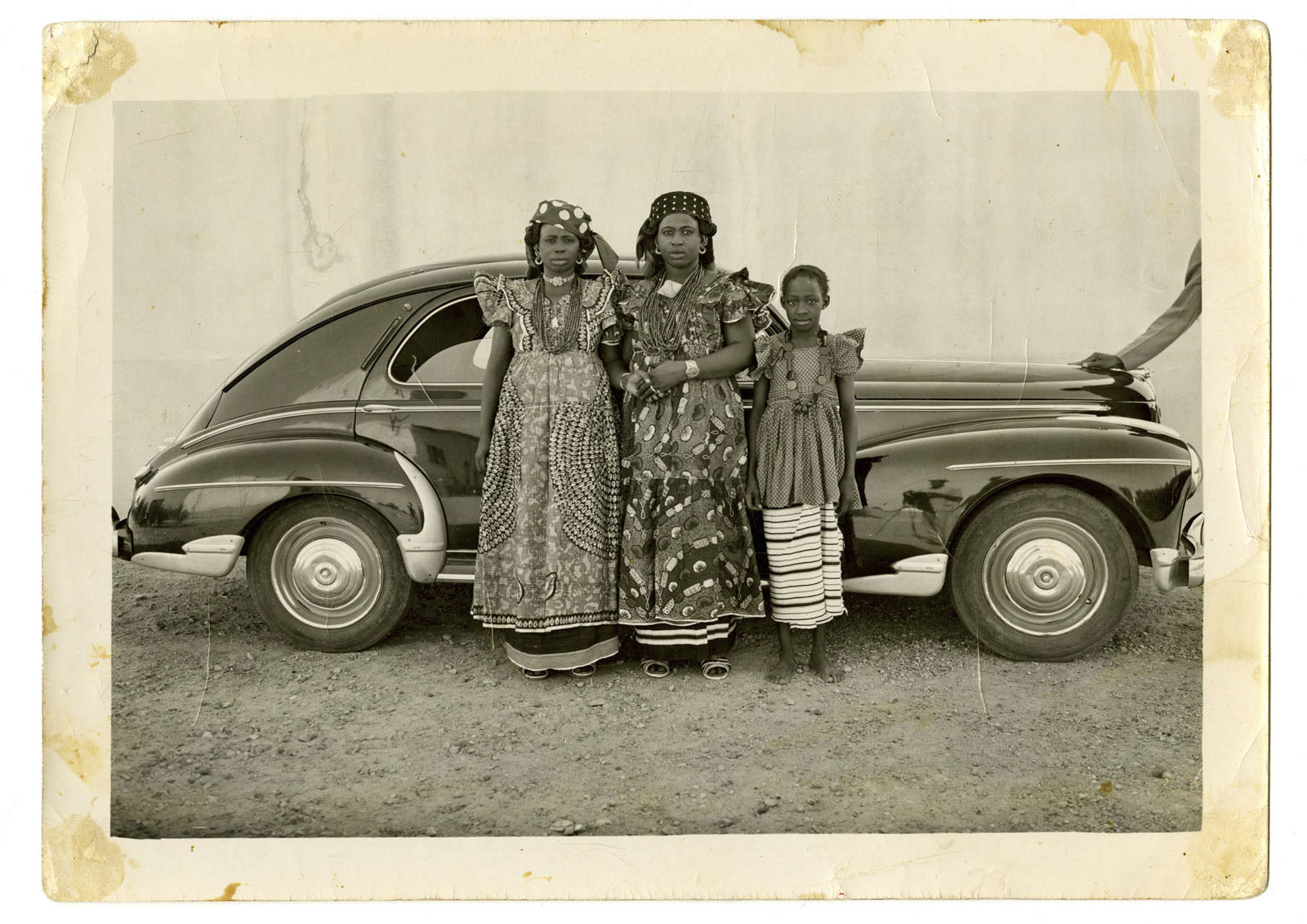
 

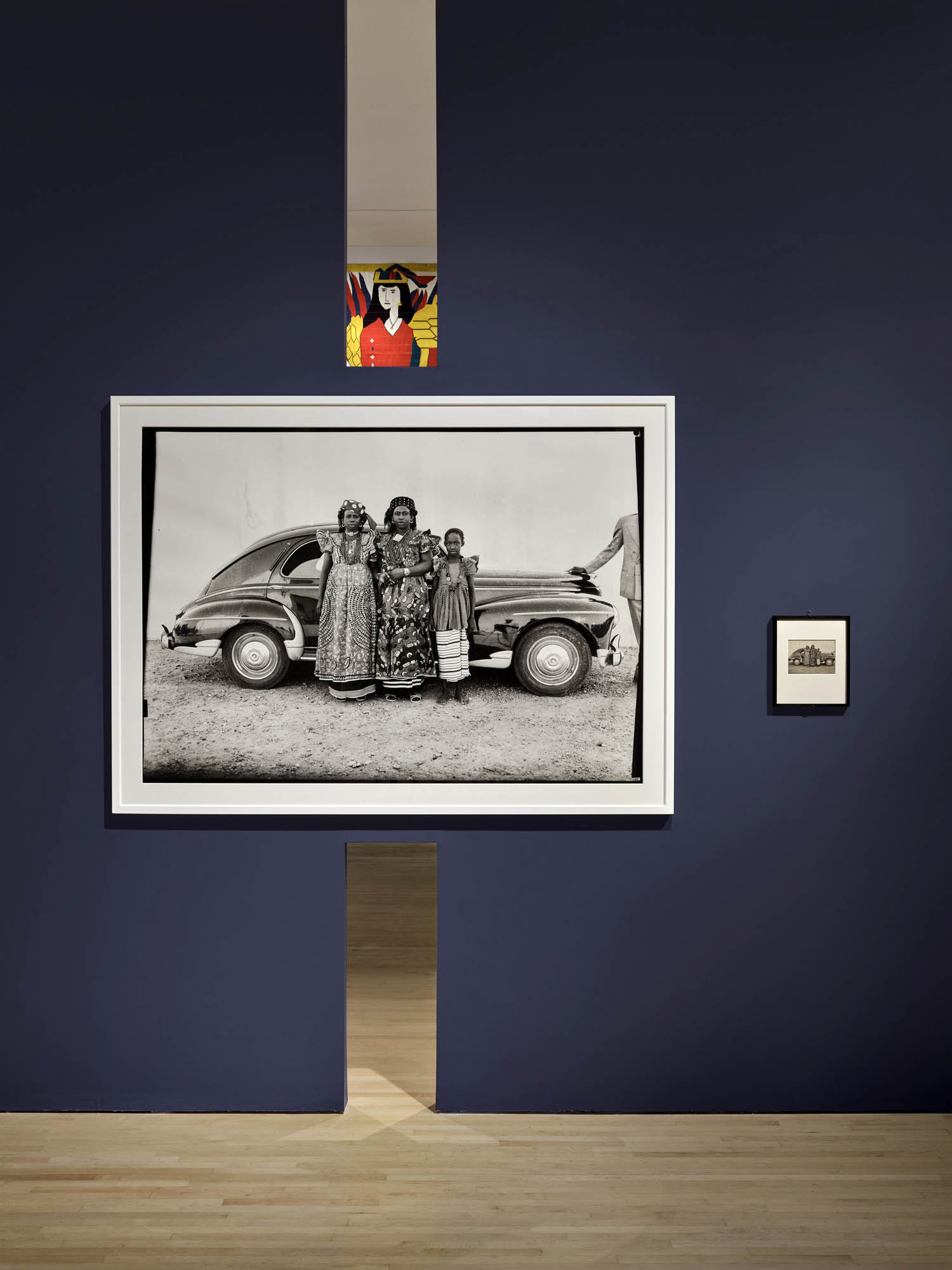
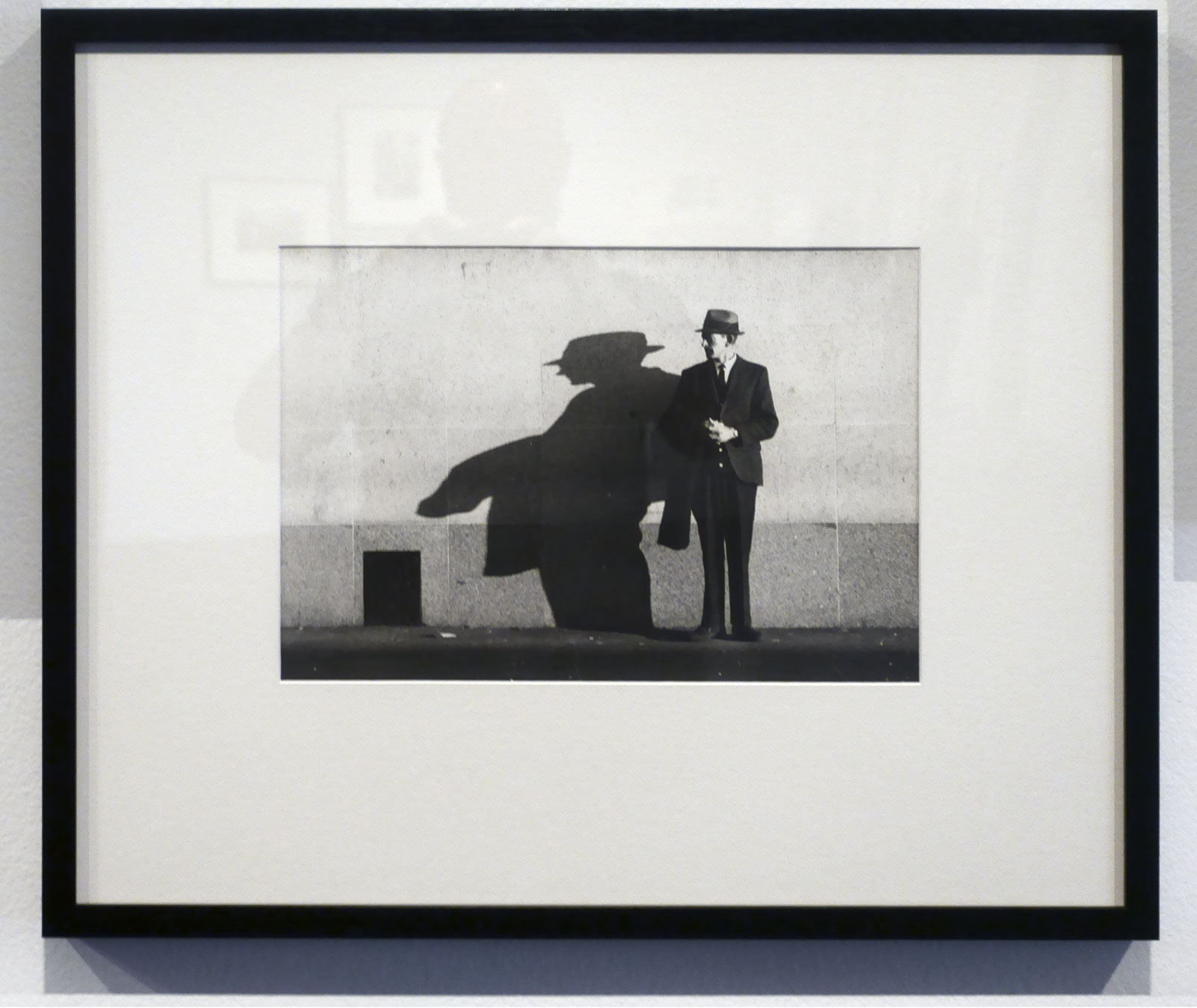
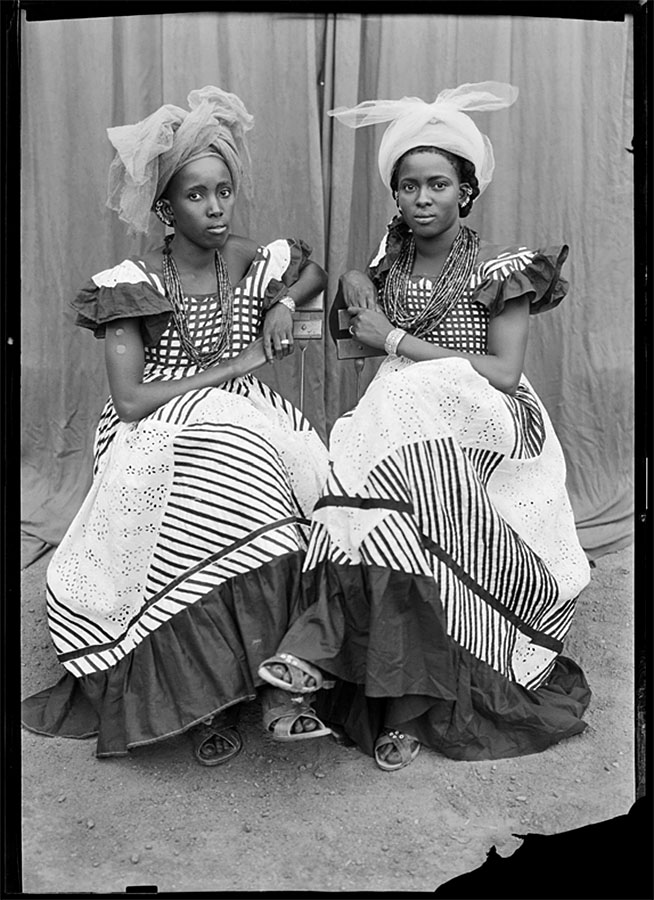
Seydou Keïta (Malian, c. 1921-2001) 'Untitled' 1954 from the exhibition Exhibition: 'Seydou Keïta: A Tactile Lens' at the Brooklyn Museum, New York, October 2025 - May 2026


Seydou Keïta (Malian, c. 1921-2001)
Untitled
1954
Vintage gelatin silver print
Courtesy of The Jean Pigozzi African Art Collection
© SKPEAC/Seydou Keïta
Courtesy The Jean Pigozzi Collection of African Art and Danziger Gallery, NY


In African light

The Brooklyn Museum continues to orchestrate (now that’s an appropriate word) wonderful exhibitions that select, organise, and interpret items in “interpretive exhibitions”- curating and contextualising these items in order to establish their meaning, history, and cultural significance. In this regard the magnificent exhibition Seydou Keïta: A Tactile Lens is no exception.

In the exhibition Keïta’s direct, honest, and incisive black and white photographs – often taken outdoors on bare earth in natural light with mud walls, hanging textiles and blankets as backdrops – are contextualised with regard to West African history, placed in context “in a period defined by a rapidly expanding modern world and a new sense of Bamakois identity.” (Press release)

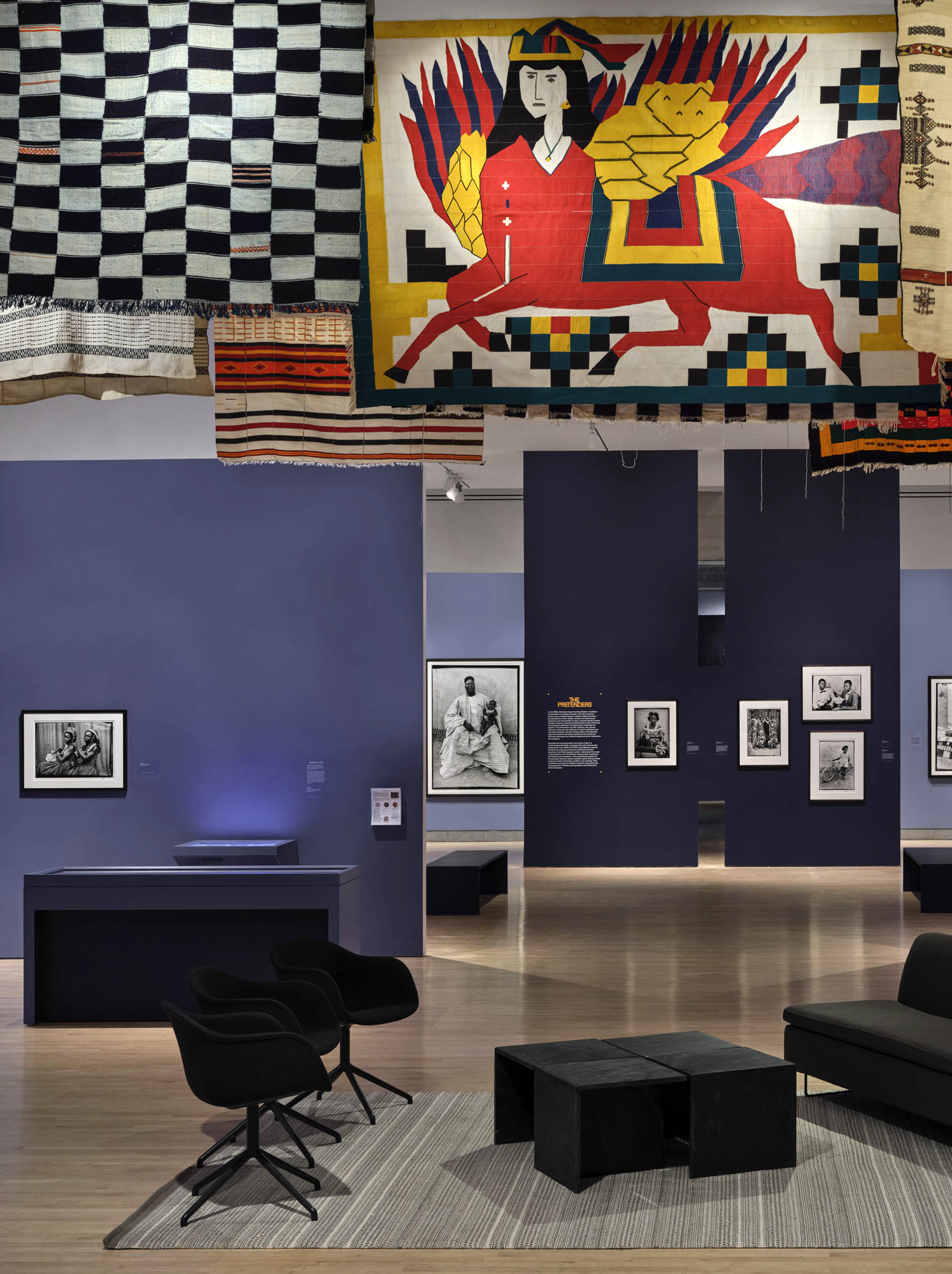
In the Brooklyn show Keïta’s photographs from the African environment are surrounded by cultural artefacts that reflect a new sense of nationhood as Mali moved toward independence post-French colonialism – “clothing, hand-fashioned dresses … pagnes (wrappers), wall hangings, and commemorative cloths that span the rich history of Malian textile design and trade”, gold, jewellery, lace, marabaka (a Czech-style hat that became a widespread symbol of Pan-African solidarity), traditional and modern textiles, blankets, family heirlooms, family photographs and a trove of film negatives – all combining to create a rich mosaic of references, an intertextuality (where things refer to, influence, or interrelate with one another) of identity, place and space.

What is particularly interesting about the presentation at the Brooklyn Museum is the mixture of vintage and modern prints, where the viewer can compare the scale and tonalities of old and new, where small jewel-like gold toned and hand-coloured prints of great presence and intensity can be compared to larger, contrast laden modern prints (for which the artist has become famous) which reveal hidden details in the negative.

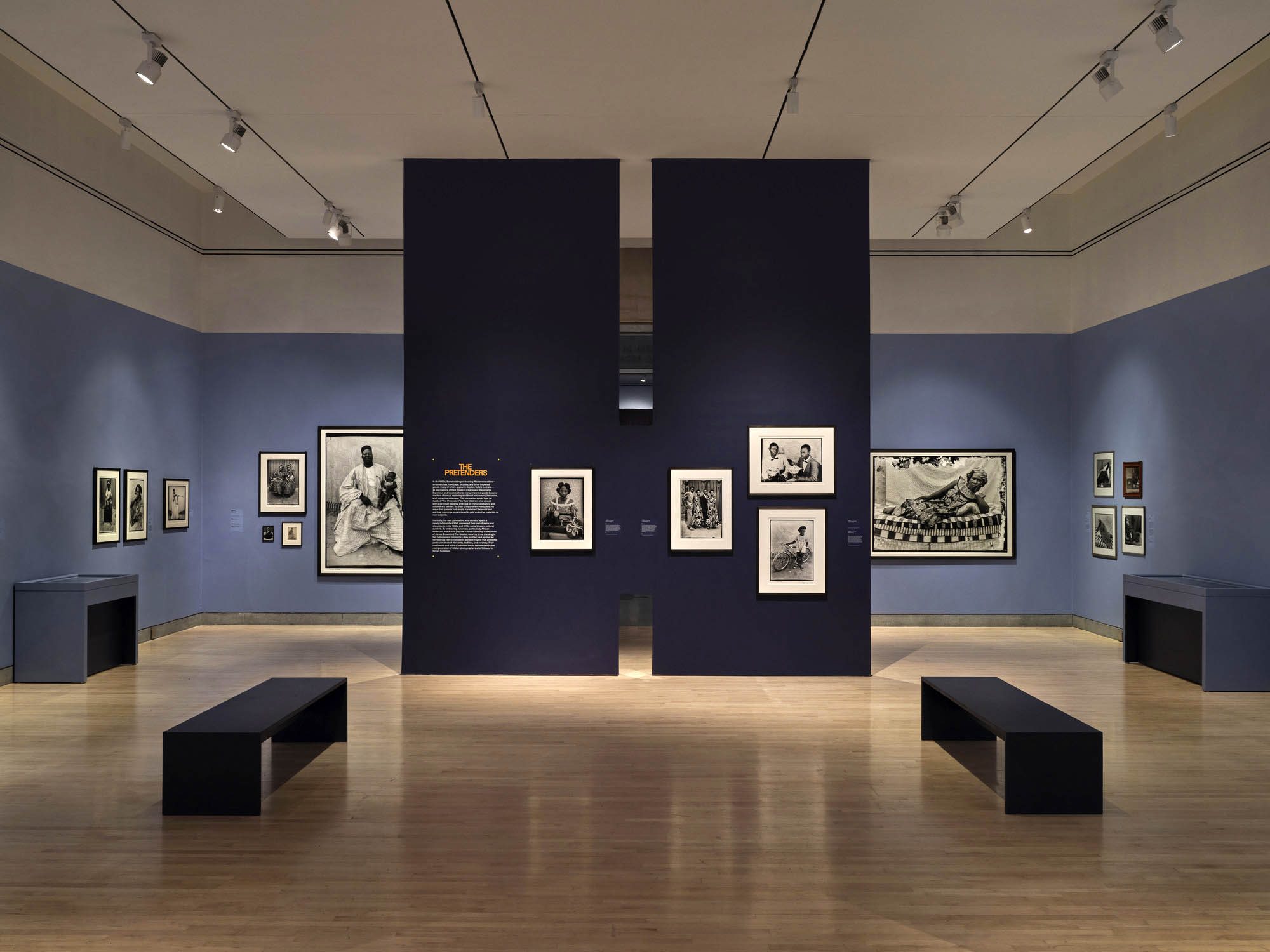
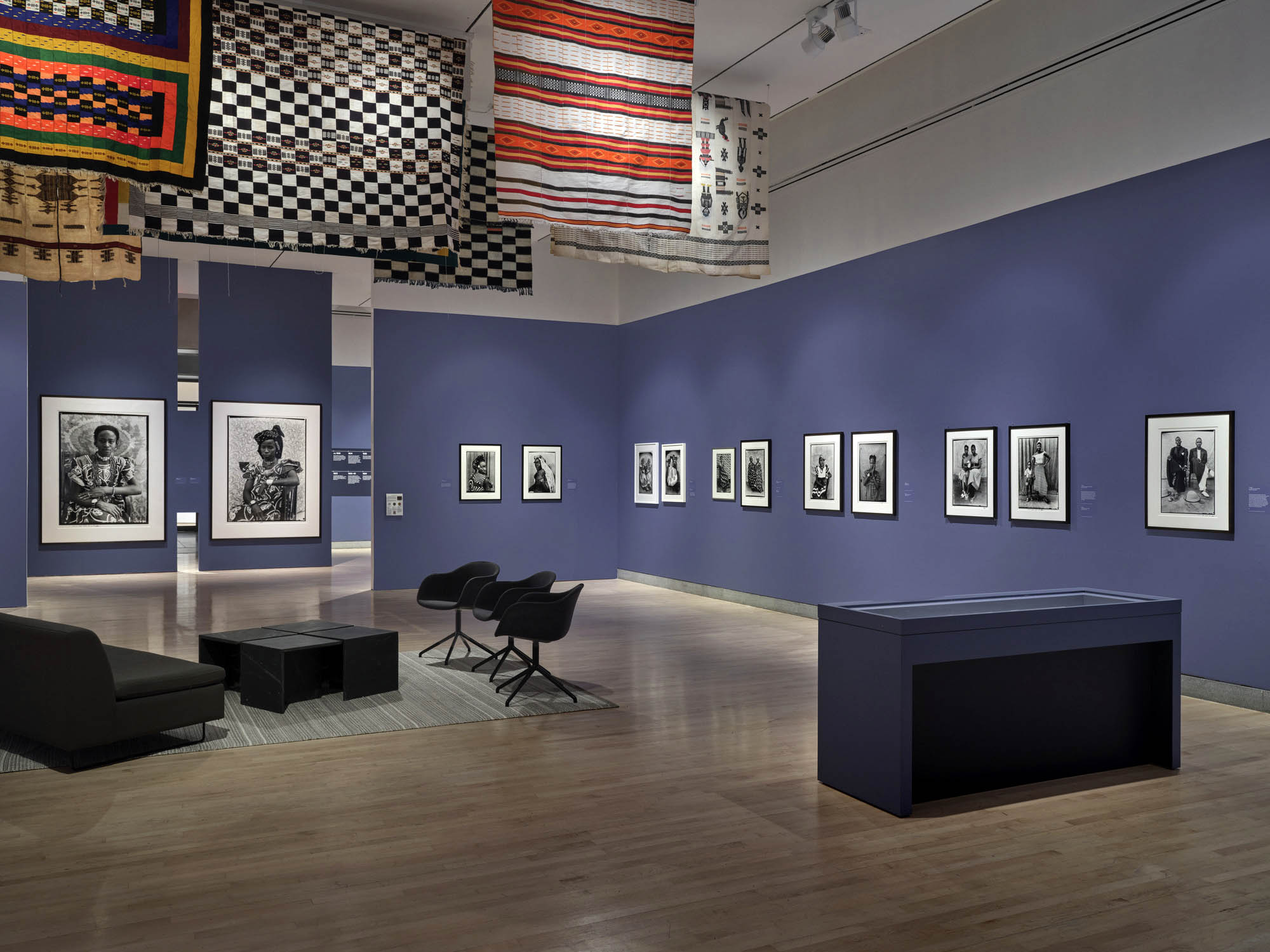
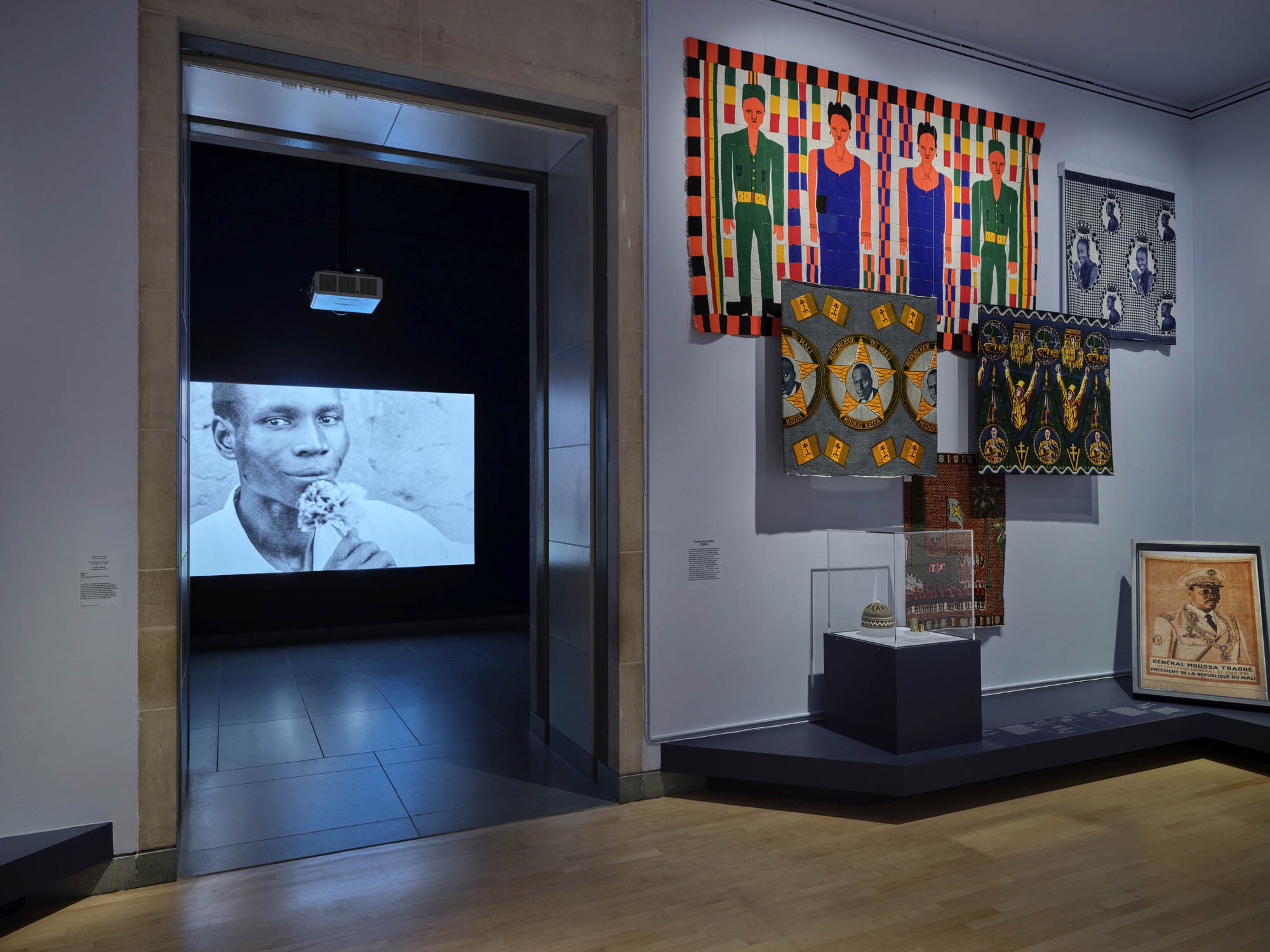
Also of interest is the exhibition design itself in which the different colour of the walls, the spaces between them, the symmetrical layout, together with the clothing, textiles and wall hangings … all add a terrific spatial dimension to the whole. Witness the entrance to the exhibition where Keïta’s vintage photograph Untitled (1954, above) is placed in communion with a larger modern print, allowing the viewer to compare and contrast both old and new, one of the major pictorial themes of the exhibition. Then – and this is to me the essence of good exhibition design – you look at the line of sight of that entrance and in the space between the walls hanging in the distance, hovering above the photographs, is a colourful textile banner with face and garment which the viewer can visually correlate to the garments of the three women standing in front of the car in the modern print below. Just a small thing but inspiring exhibition design nonetheless, which reflects the holism of the exhibition.

Along with the work of other African photographers such as Malike Sidibé (Malian, 1935-2016), James Barnor (Ghanian, b. 1929) and Sanlé Sory (West African, b. 1943), Keïta’s photographs help touch, in African light, that most wonderful sense of the spirit and culture of a nascent independent nation, evidenced in his images through an intimate interconnection between people and place.

What is undeniable is that there is nothing like a photograph to remind you of difference, to challenge your perceptions on how you view and interact with the world around you, to open up new ways of seeing (Professor Stuart Hall). Thus the photographs in this exhibition may allow us a deeper insight into not only the conditions of our own becoming (while human beings have agency, the circumstances under which they act and develop their humanity are largely shaped by existing material, social, and historical conditions that they did not choose) but the conditions of other people’s becoming.

Hopefully these insights in turn promote a greater understanding and acceptance of difference in others in opposition to learnt bigotry and racism.

Just the joy of picturing, and being, and living, human.

Dr Marcus Bunyan


Many thankx to the Brooklyn Museum for allowing me to publish the photographs in the posting. Please click on the photographs for a larger version of the image.
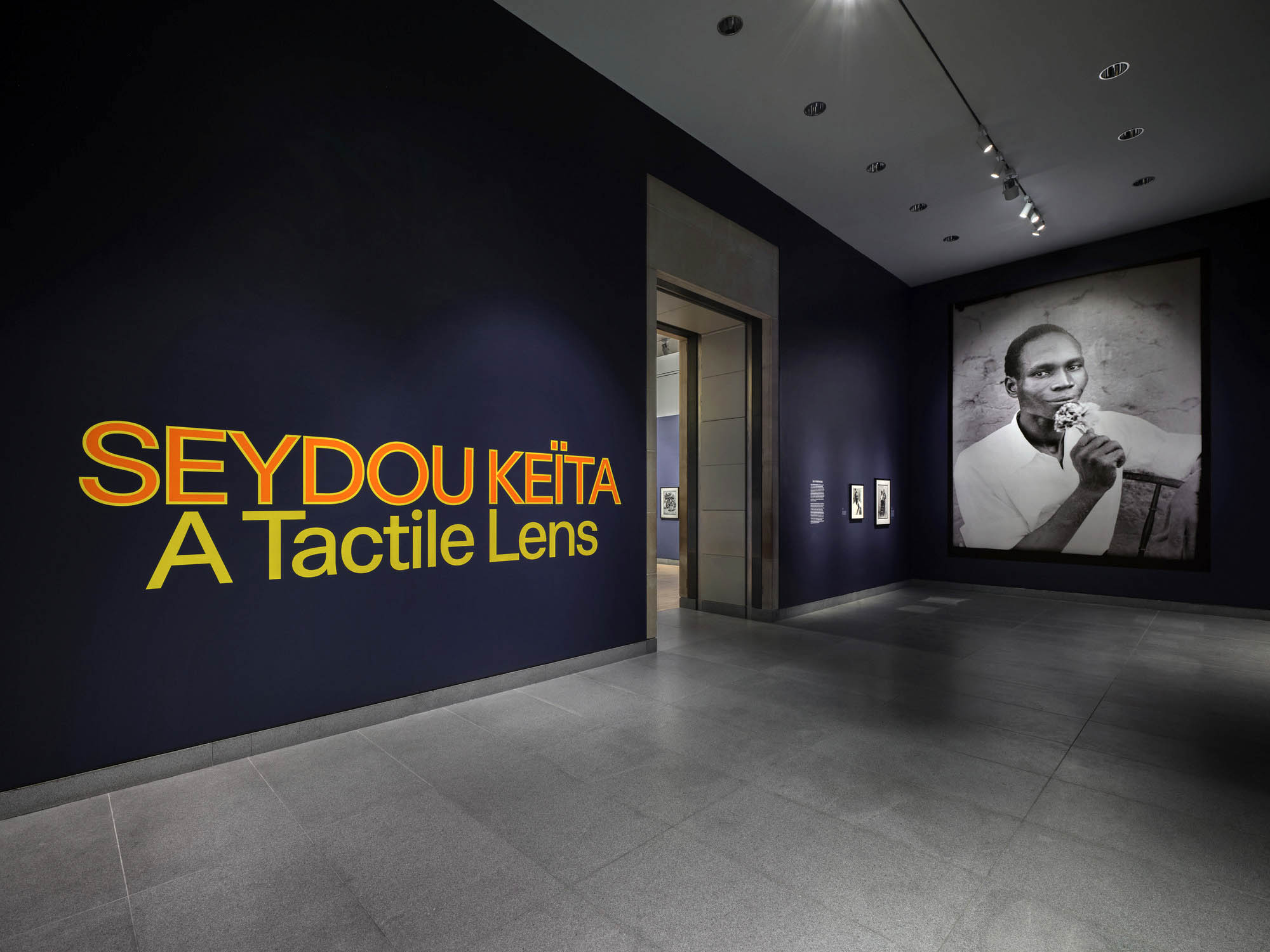
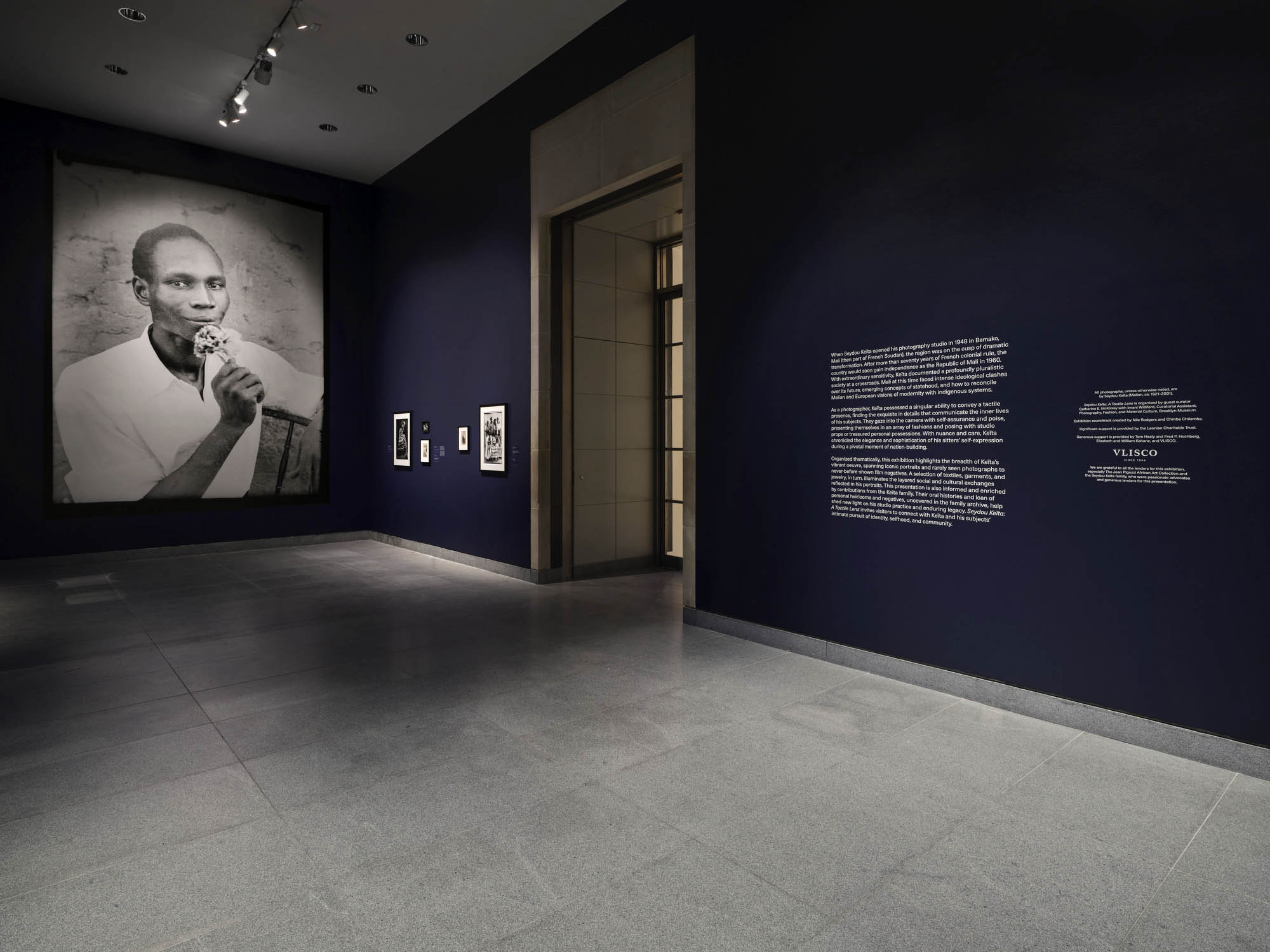


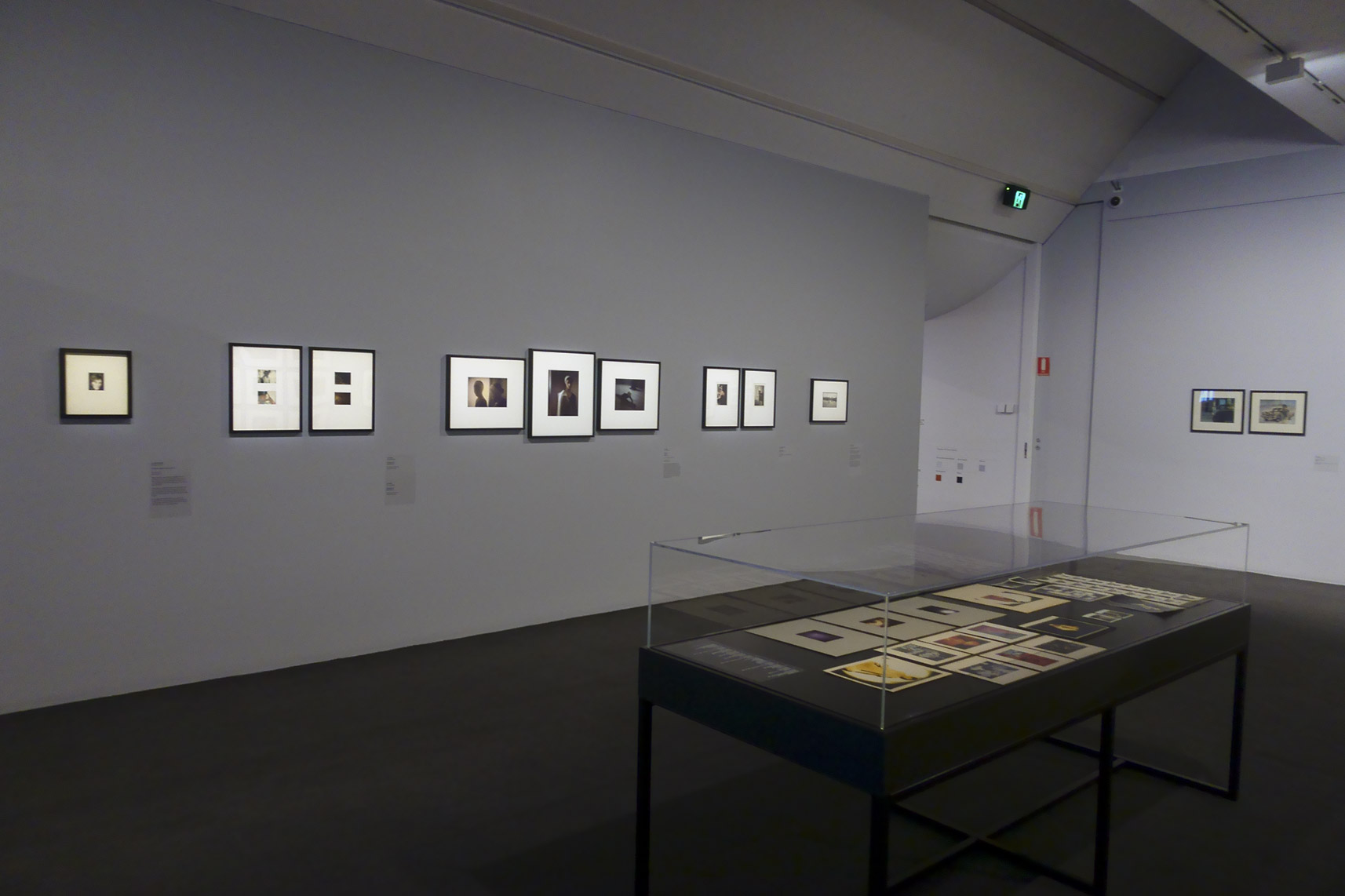
Installation view of the exhibition 'Seydou Keïta: A Tactile Lens' at the Brooklyn Museum, New York, October 2025 - May 2026


Installation views of the exhibition ‘Seydou Keïta: A Tactile Lens’ at the Brooklyn Museum, New York, October 2025 – May 2026 showing Keïta’s self-portrait Untitled, 1956


Dressed in a crisp white shirt, holding a flower gently to his chin, Keïta turns the camera on himself with the same control and precision he granted his subjects. As French Soudan faced political uncertainty and turmoil in the lead-up to independence, Keïta’s studio, whether indoors or on the street, offered sitters a place to create a self of one’s own.
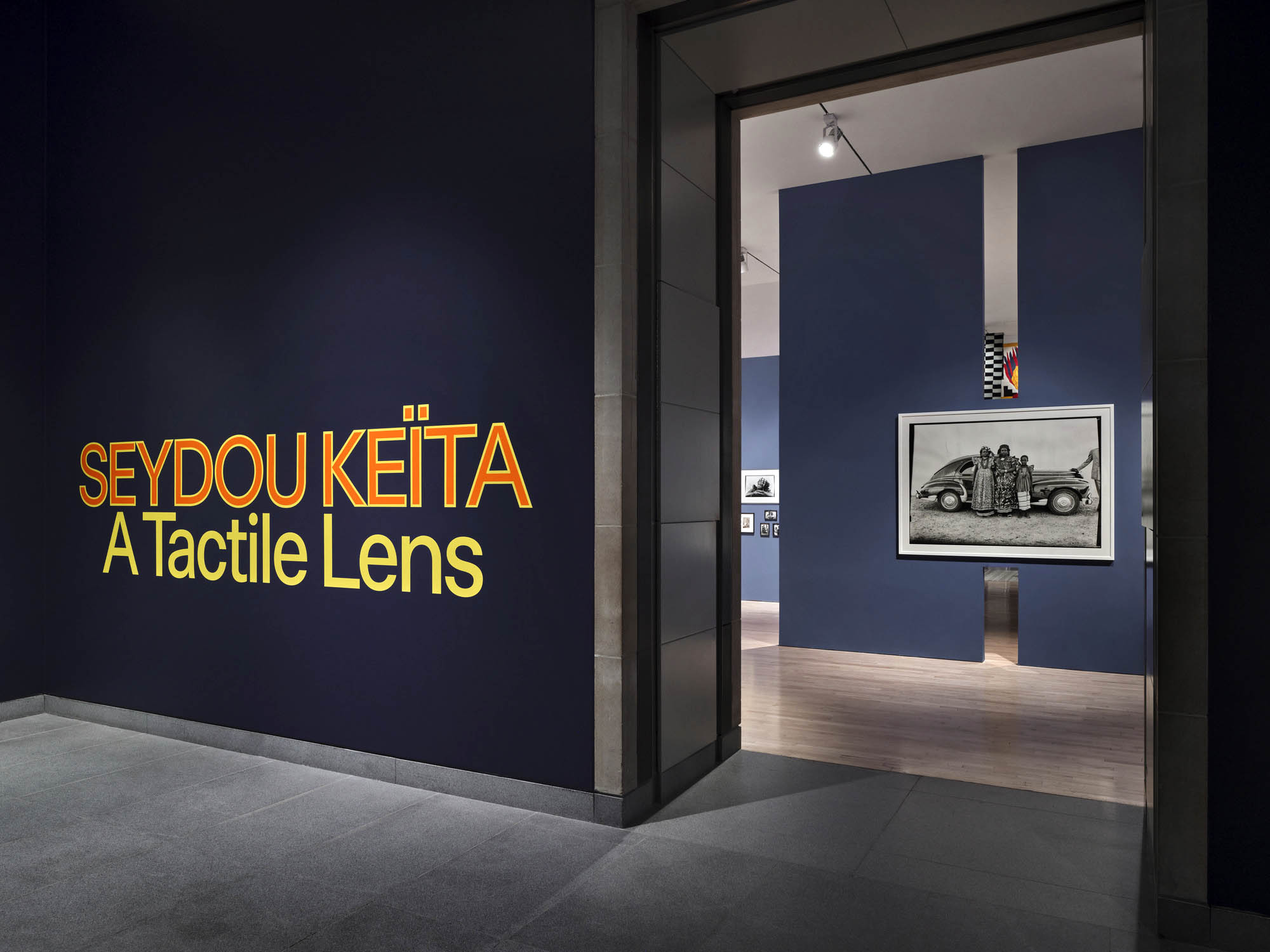
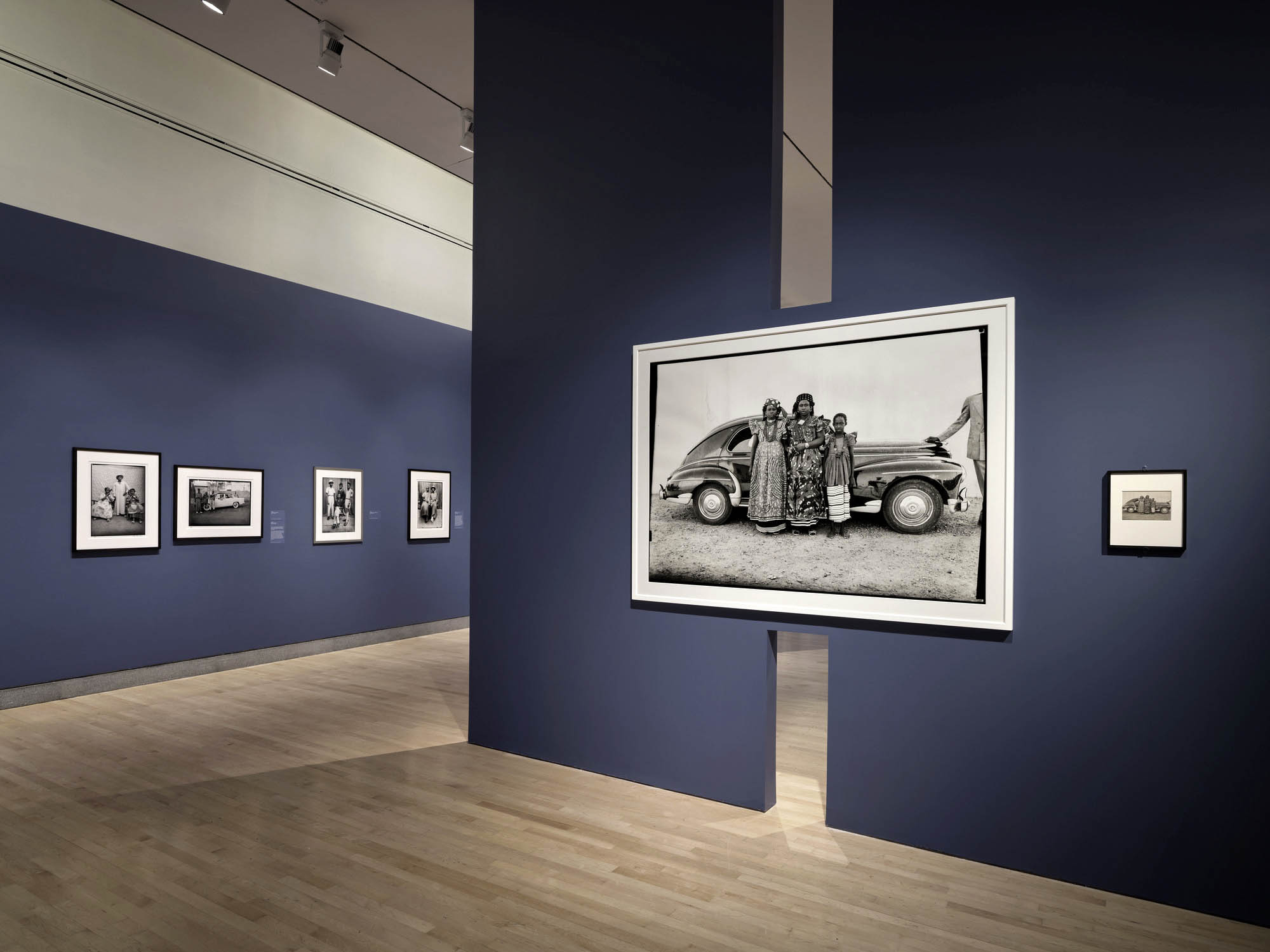
 

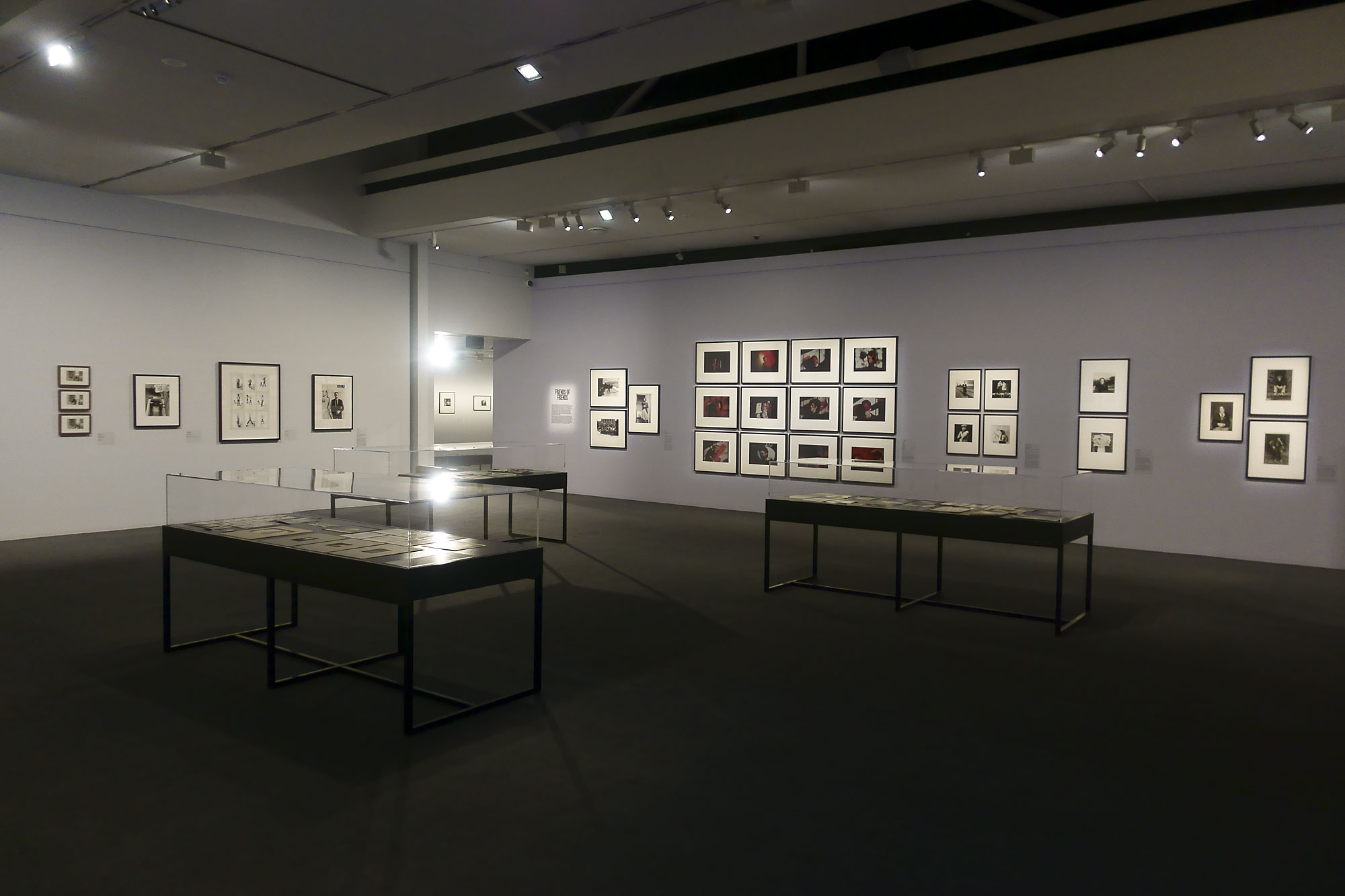
Installation view of the exhibition 'Seydou Keïta: A Tactile Lens' at the Brooklyn Museum, New York, October 2025 - May 2026
Installation view of the exhibition 'Seydou Keïta: A Tactile Lens' at the Brooklyn Museum, New York, October 2025 - May 2026 showing Keïta's photograph 'Untitled' 1954


Installation views of the exhibition Seydou Keïta: A Tactile Lens at the Brooklyn Museum, New York, October 2025 – May 2026 showing in the bottom two images, Keïta’s photograph Untitled 1954 (above)


The smaller, vintage print and the larger, modern one of Keïta’s 1954 photograph highlight the material and historical distinctions between the types of prints on view in the exhibition. Often made by Keïta himself, the vintage prints were produced around the time the photograph was taken. Such works feature a particular range of tonalities – the result of earlier technologies, less environmental control in the darkroom, and the paper’s age. The modern prints were made later in Keïta’s life, some of them posthumously. These works are larger, in part, to accentuate the details of the image, such as Keïta’s own reflection on the car’s surface. Following his landmark New York and Paris exhibitions in the 1990s, Keïta came to be known for the distinctive black-and-white tonalities of these modern prints.

Reflecting on his work in 1997, Keïta revealed he had always hoped to make large-format prints (30 x 40 in., 40 x 50 in., and 50 x 60 in.) but seldom had the chance. Sitters rarely requested them due to cost. Together, both vintage and modern prints demonstrate the range and impact of Keïta’s artistry. They also inspire questions about photography’s nature as both artwork and heirloom objects imbued with social and ritual meaning as they pass from hand to hand.


Encounter an artist who changed the face of portrait photography. Seydou Keïta: A Tactile Lens is the most expansive North American exhibition of the legendary Malian photographer’s work to date. More than 280 works include iconic prints, never-before-seen portraits, textiles, and Keïta’s personal artifacts, all brought to life with unique insights from his family.

Organised by the Brooklyn Museum, the exhibition brings us to Bamako from the late 1940s to early 1960s, an era of profound political and social transformation. Collaborating closely with his sitters, Keïta recorded Mali’s evolution through their choices of backdrops, accessories, and apparel, from traditional finery to European suits. These bold yet sensitive photographs began to circulate in West Africa nearly 80 years ago. In the early 1990s, they reached Western viewers, rocking the art world and cementing Keïta as the premier studio photographer of 20th-century Africa – a peer of August Sander, Irving Penn, and Richard Avedon.

Witness the power of photography through these richly layered images, which reveal not only Malians’ emotional landscapes but also the textures of life in a rapidly changing country.

A fully illustrated catalogue accompanies the exhibition, offering new insights into the photographer, his work, and Malian material culture. The publication features a biography by Catherine E. McKinley based on extensive interviews with Keïta’s heirs, as well as essays by prominent scholars and curators including Drew Sawyer, Howard W. French, Duncan Clarke, Awa Konate, Sana Ginwalla, and Jennifer Bajorek.

Text from the Brooklyn Museum website
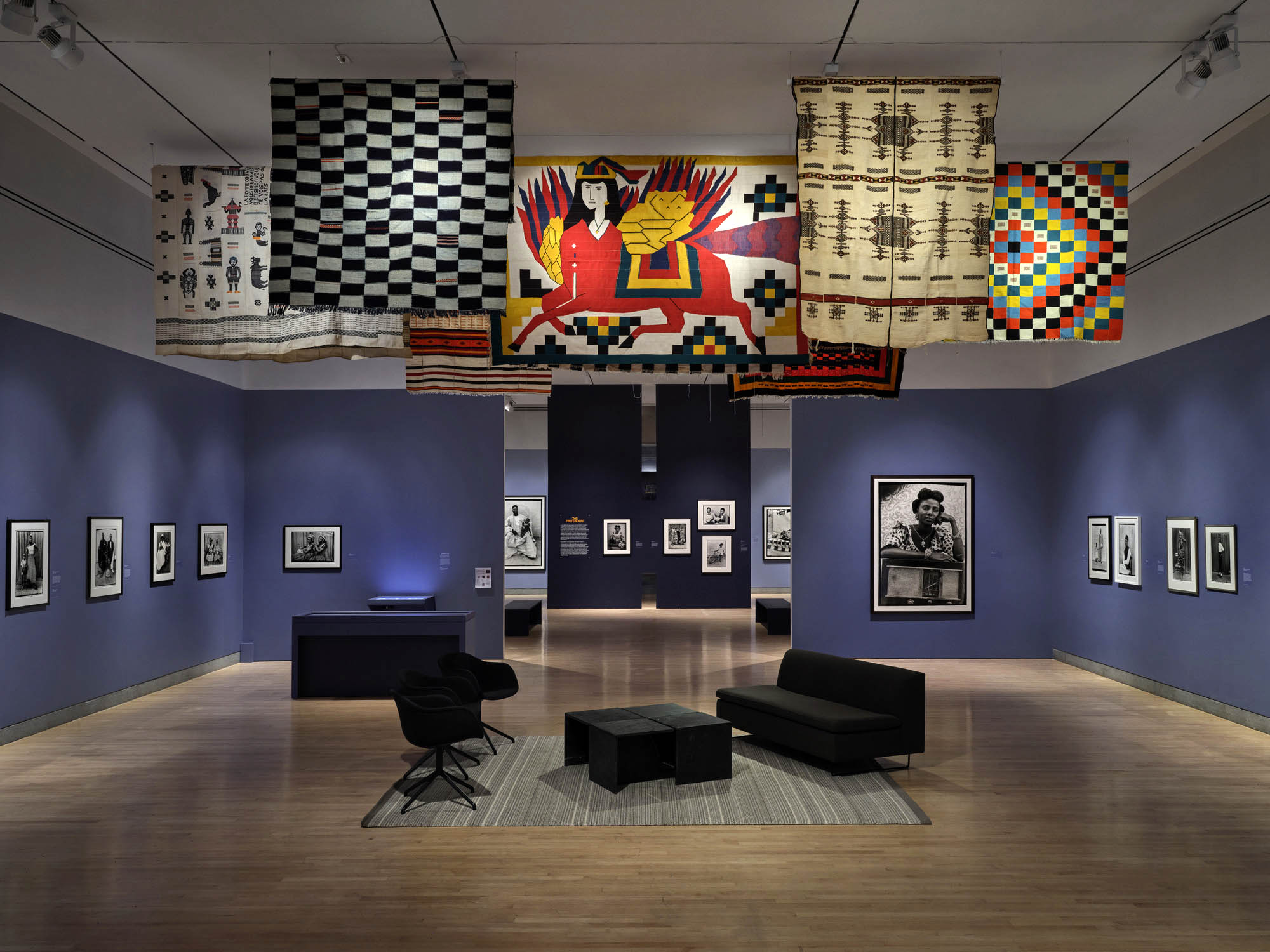
 

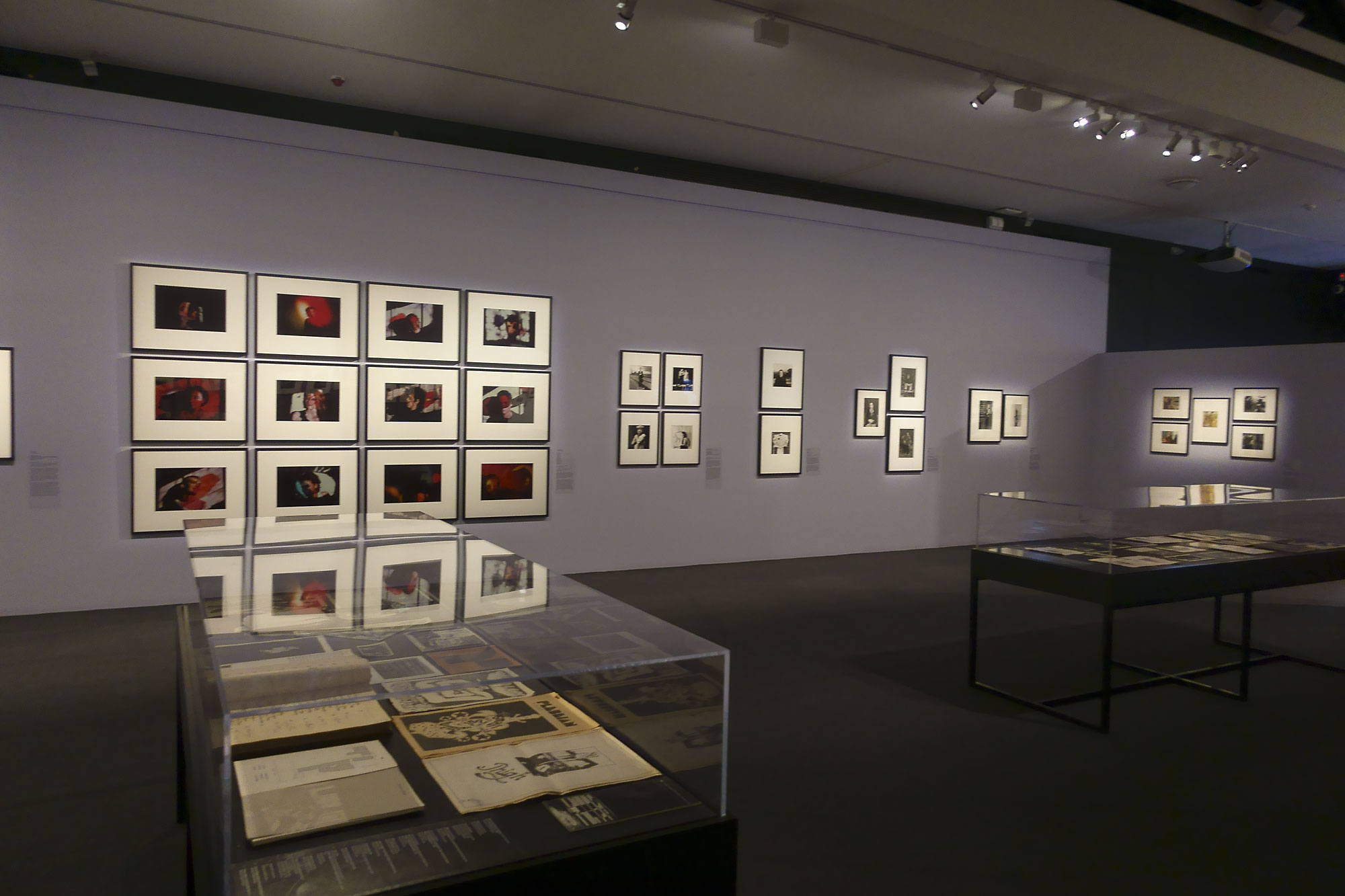
Installation view of the exhibition 'Seydou Keïta: A Tactile Lens' at the Brooklyn Museum, New York, October 2025 - May 2026


Installation views of the exhibition Seydou Keïta: A Tactile Lens at the Brooklyn Museum, New York, October 2025 – May 2026 showing at left in the bottom image, Keïta’s photograph Untitled 1949-1951 (below)
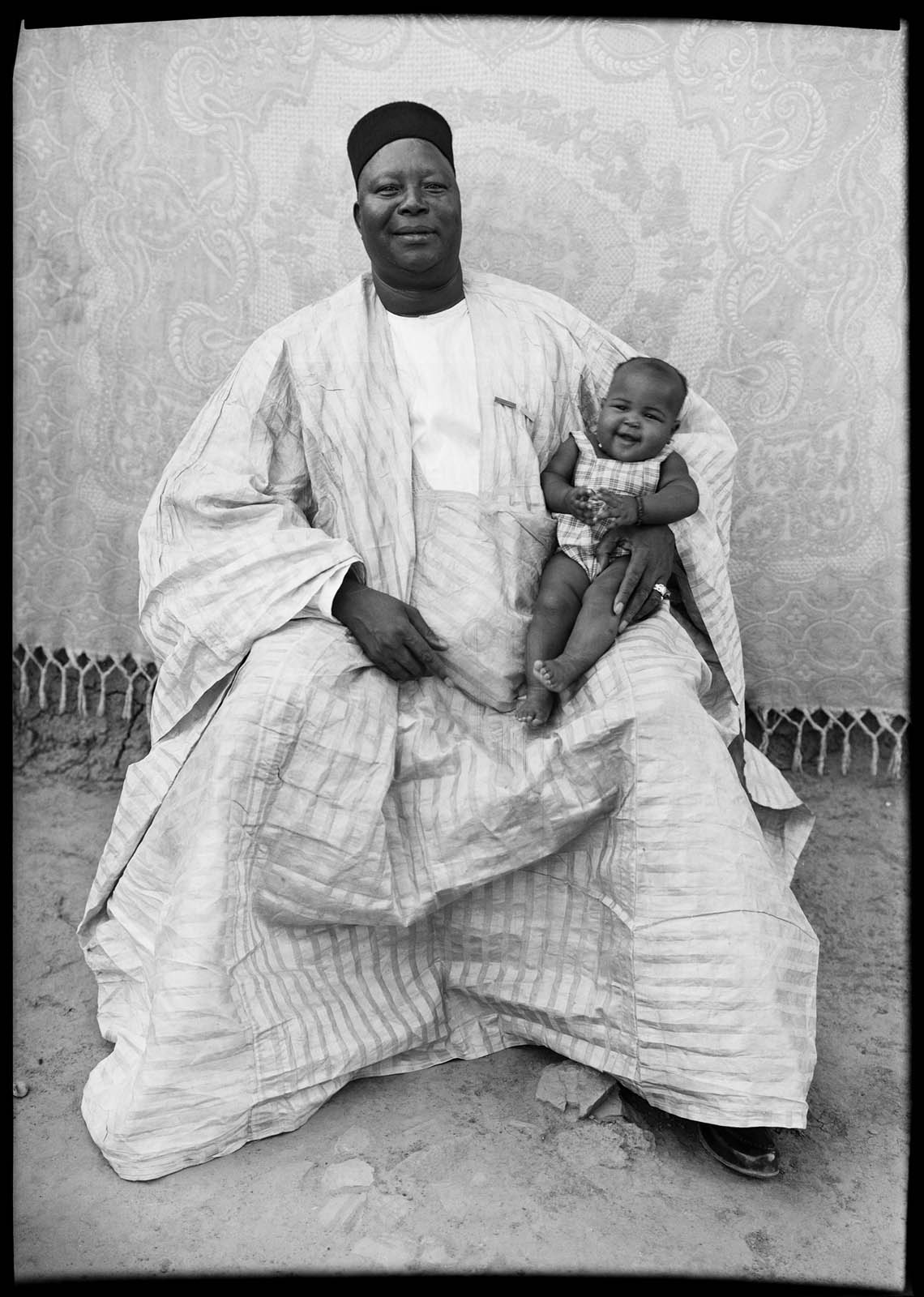
 

Seydou Keïta (Malian, c. 1921-2001) 'Untitled' 1949-1951, printed 1998


Seydou Keïta (Malian, c. 1921-2001)
Untitled
1949-1951, printed 1998
Gelatin silver print
Courtesy of The Jean Pigozzi African Art Collection
© SKPEAC/Seydou Keïta
Courtesy The Jean Pigozzi Collection of African Art and Danziger Gallery, NY


The exhibition Seydou Keïta: A Tactile Lens honors the artistry and legacy of Seydou Keïta (Malian, c. 1921-2001), who documented a critical chapter in West African history – one of immense hope, politically and socially – in a period defined by a rapidly expanding modern world and a new sense of Bamakois identity. The show features over 280 works, including renowned portraits, rare images, and never-before- seen negatives as well as textiles, jewellery, dresses, and personal items that fully immerse visitors in Keïta’s rich photographic landscape. Seydou Keïta: A Tactile Lens is organised by guest curator Catherine E. McKinley with Imani Williford, Curatorial Assistant, Photography, Fashion, and Material Culture, Brooklyn Museum.

Keïta was born around 1921 to a Malinke family in Bamako-Coura, or New Bamako, a growing colonial commercial center within the historic Malian city. His childhood saw emerging liberation struggles across the continent and growing expressions of modernism as Bamako served as the capital of French Soudan and subsequently the newly independent Mali in 1960.

Keïta documented Malian society in the late 1940s to early 1960s, an era of transformation and aspirations for independent statehood. A master at lighting and composition, Keïta has a unique ability to capture the tactile qualities of his sitters – from their fashion and choice of accessories to the personality and self-presentation they put forward. In collaboration with his subjects, he sculpted their poses, clothing, and style, forming monuments to their selfhood. When they first reached Western viewers in the early 1990s, his images drew unprecedented attention in the worlds of art, music, fashion, design, and popular media, forever changing the global cultural landscape. Today, these bold and engaging portraits continue to invite viewers into direct dialogue with Keita’s sitters.

Largely self-taught, Keïta first received a camera as a gift from his uncle at age 14. In 1935, he became an apprentice to his mentor, Mountaga Dembélé (1919-2004), Mali’s first professional photographer to earn a living with his studio. From there, Keïta opened his own studio in 1948 in front of his family home in Bamako-Coura, becoming Mali’s second photographer. The studio became a destination for people from all levels of Malian society, welcoming not just the elite citizens of Bamako but also remote villagers, international travelers, and those passing through on the Dakar-Niger railroad. Keïta’s work is notable for capturing how the people in his studio saw themselves, allowing for a playful self-expression backgrounded by increasing political tensions and rapid evolutions in the government. His studio offered props, including European and Malian clothing, motorbikes, Western watches, and novelties. Through the years, Keïta developed his very own style of portrait photography and a new type of modernist expression.

This period lasted until 1963, when Keïta was enlisted to work for the newly independent Socialist Republic of Mali. Forced to relinquish his studio, he documented state affairs and performed forensics for increasingly punitive governments until 1968 when he retired to work in camera and automotive repairs. In May 1991, the exhibition Africa Explores: Twentieth Century African Arts opened at the Center for African Arts in New York, where Keïta first debuted to Western audiences. In 1994, the Fondation Cartier in Paris presented Keïta’s first solo exhibition, which rocked the art and photography world, cementing him as the premiere African studio photographer of the twentieth century. The exhibition positioned Keïta as a peer of noted photographers such as Irving Penn, August Sander, and Richard Avedon, his contemporaries in portrait photography, and created enormous interest in Keïta’s work.

“Thirty-four years since Keïta was first introduced to American audiences we have an opportunity to view new discoveries in his work and understand just how singular he was, practicing at one of the most pivotal moments in African and world history. He had an extraordinary artist’s ability to render the tactile. We can visually ‘finger the grain’ of the sitter’s lives and better understand them beyond just their relationship to studio photography or documentary,” says Catherine E. McKinley, guest curator, author of The African Lookbook, and director of The McKinley Collection.

“It is very exciting and deeply moving to rediscover Keïta’s work and to feel the presence of his sitters – some of whom we meet here for the very first time – thanks to Catherine E. McKinley’s thoughtful research,” says Pauline Vermare, Phillip and Edith Leonian Curator of Photography. “We hope visitors feel the wonder and possibility that Keïta’s studio represented for so many people.”

A Tactile Lens brings together a remarkable range of Keïta’s photographs, which demonstrate the breadth of his oeuvre and the splendour of his artistry. Thanks to a generous loan from the Keïta family, an extraordinary group of never-before-published works has been preserved and imaged by the Museum on the occasion of the exhibition. A selection of the portraits will be displayed – on lightboxes and as a projection – for the first time. In addition, an array of vintage prints, many made by Keïta himself, and some of which are hand-painted, offer renewed emphasis on the photographic object itself. Rounding out the selection are larger prints made later in Keïta’s life, or posthumously, which feature the distinctive black-and-white tonalities that Keïta came to be known for. Joining the photographs is an immersive installation of personal belongings, textiles, garments, and jewellery that can be seen in Keïta’s portraits.

Together, these objects highlight the self-invention, search for identity, and syncretism of Mali that Keïta’s sitters sought in the mid-twentieth century.

A fully illustrated catalogue will accompany the exhibition, featuring a new biographical essay by Catherine E. McKinley based on extensive interviews with his heirs and from leading art professionals and historians such as Jennifer Bajorek, Duncan Clarke, Howard W. French, Sana Ginwalla, Awa Konaté, and Drew Sawyer, offering new insights into the photographer, his work, and Malian material culture.

Press release from the Brooklyn Museum
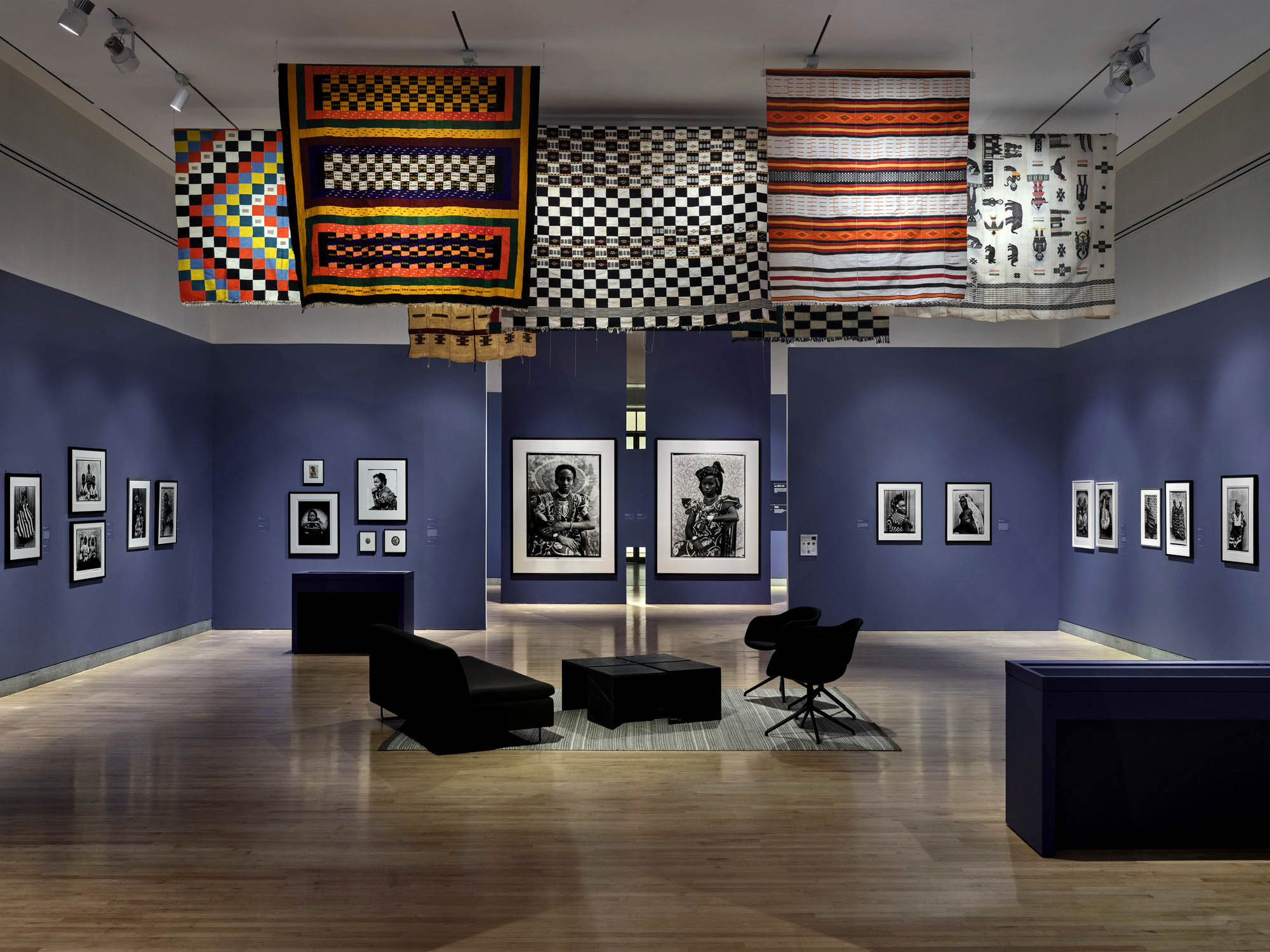
 

Installation view of the exhibition 'Seydou Keïta: A Tactile Lens' at the Brooklyn Museum, New York, October 2025 - May 2026


Installation views of the exhibition Seydou Keïta: A Tactile Lens at the Brooklyn Museum, New York, October 2025 – May 2026 showing at third left in the bottom image, Keïta’s photograph Untitled 1952-1955 (below); and at right, Untitled 1956-1957 (below)
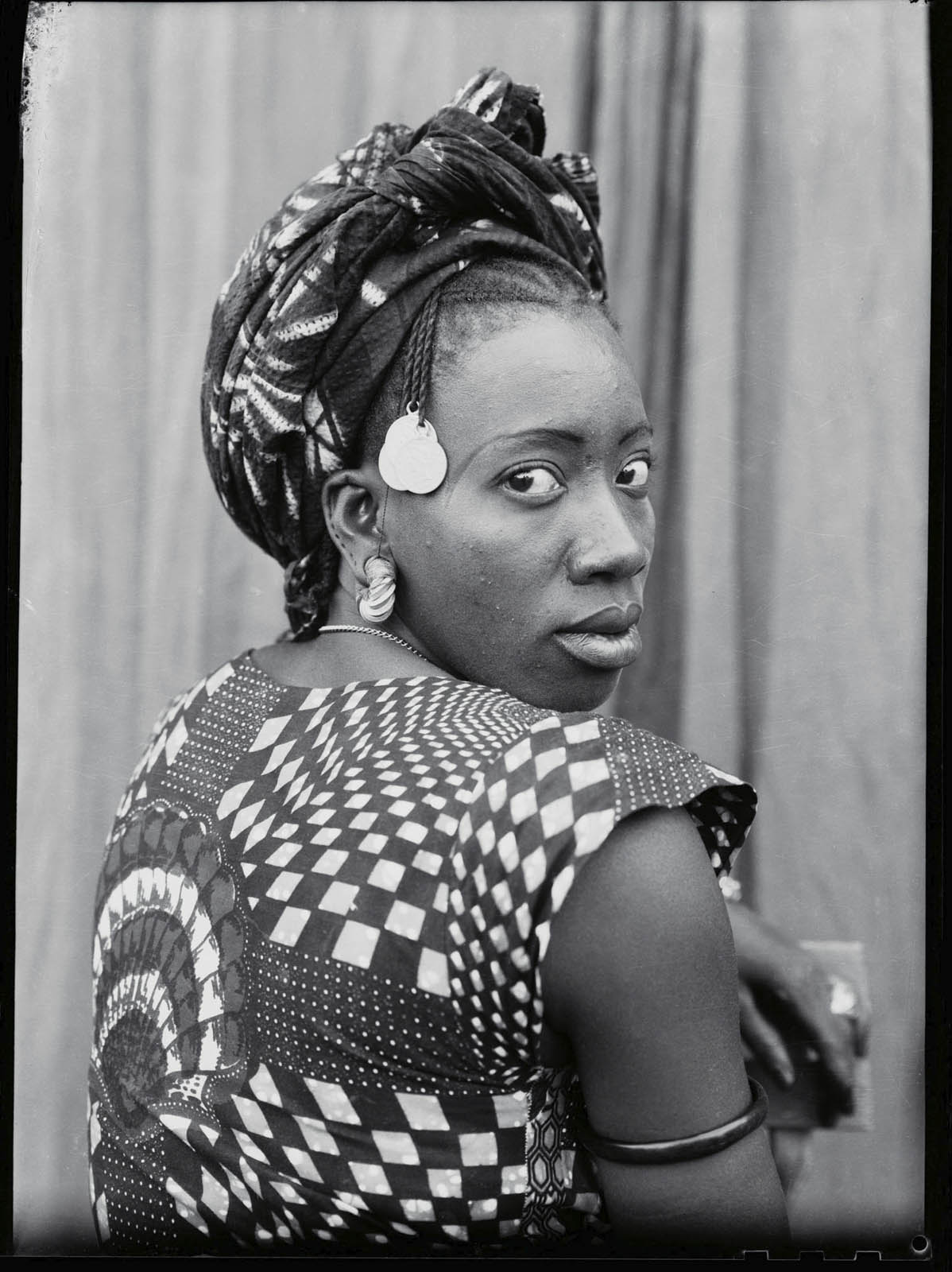
 

Seydou Keïta (Malian, c. 1921-2001) 'Untitled' 1952-1955, printed 1994


Seydou Keïta (Malian, c. 1921-2001)
Untitled
1952-1955, printed 1994
Gelatin silver print
© SKPEAC/Seydou Keïta
Courtesy The Jean Pigozzi Collection of African Art and Danziger Gallery, NY


Looking over her shoulder, her back to the camera, this woman flaunts the French coins – called Louis d’or – hanging at her temples. Gold held decorative and talismanic properties: the shine of the metal was believed to ward off
the evil eye and protect the head and soul of the wearer.
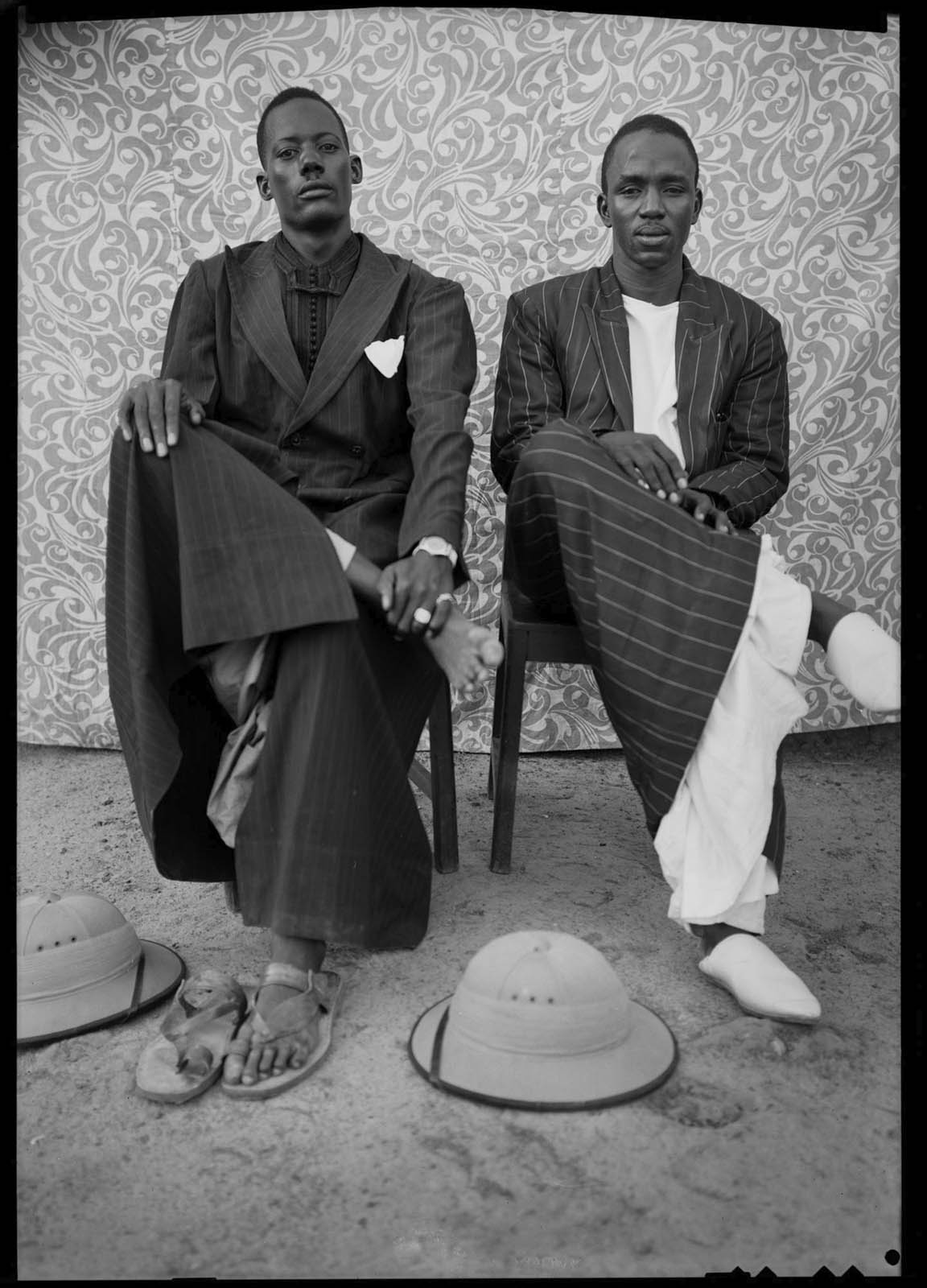
 

Seydou Keïta (Malian, c. 1921-2001) 'Untitled' 1956-1957, printed 1994


Seydou Keïta (Malian, c. 1921-2001)
Untitled
1956-1957, printed 1994
Gelatin silver print
© SKPEAC/Seydou Keïta
Courtesy The Jean Pigozzi Collection of African Art and Danziger Gallery, NY


When Seydou Keïta opened his photography studio in 1948 in Bamako, Mali (then part of French Soudan), the region was on the cusp of dramatic transformation. After more than seventy years of French colonial rule, the country would soon gain independence as the Republic of Mali in 1960. With extraordinary sensitivity, Keïta documented a profoundly pluralistic society at a crossroads. Mali at this time faced intense ideological clashes over its future, emerging concepts of statehood, and how to reconcile Malian and European visions of modernity with indigenous systems. 

As a photographer, Keïta possessed a singular ability to convey a tactile presence, finding the exquisite in details that communicate the inner lives of his subjects. They gaze into the camera with self-assurance and poise, presenting themselves in an array of fashions and posing with studio props or treasured personal possessions. With nuance and care, Keïta chronicled the elegance and sophistication of his sitters’ self-expression during a pivotal moment of nation-building. 

Organised thematically, this exhibition highlights the breadth of Keïta’s vibrant oeuvre, spanning iconic portraits and rarely seen photographs to never-before-shown film negatives. A selection of textiles, garments, and jewellery, in turn, illuminates the layered social and cultural exchanges reflected in his portraits. This presentation is also informed and enriched by contributions from the Keïta family. Their oral histories and loan of personal heirlooms and negatives, uncovered in the family archive, helpshed new light on his studio practice and enduring legacy. Seydou Keïta: A Tactile Lens invites visitors to connect with Keïta and his subjects’ intimate pursuit of identity, selfhood, and community.

Self-portraiture

Seydou Keïta’s photography business expanded and deepened the relationships between the artist, his family, and his art. His younger siblings and children were active participants in his studio. They arranged and held up backdrops as he shot, assisted with equipment, and performed the tea rituals that were at the centre of social exchanges. Family members often waited late into the evening for the final sitters to leave before coming to sleep in the studio – one of the few places in Bamako with electricity – while Keïta worked well into the night in his darkroom. 

Keïta often used the final frames on a roll of film to photograph himself and his family – intimate and striking images that became part of his oeuvre. These portraits reflect his deeply felt responsibility as a Malinke patriarch, able to provide for his large extended family a life of modern comfort due to an unusual and enviable talent that would reach a world stage. His brothers describe Keïta’s “immaculate” presentation of a social self – a man who valued social reserve and Malinke tenets of modesty and stern leadership. In these portraits, we also see him as a self-styled bon vivant, carefree in his European sportswear and playfully connected to those around him.
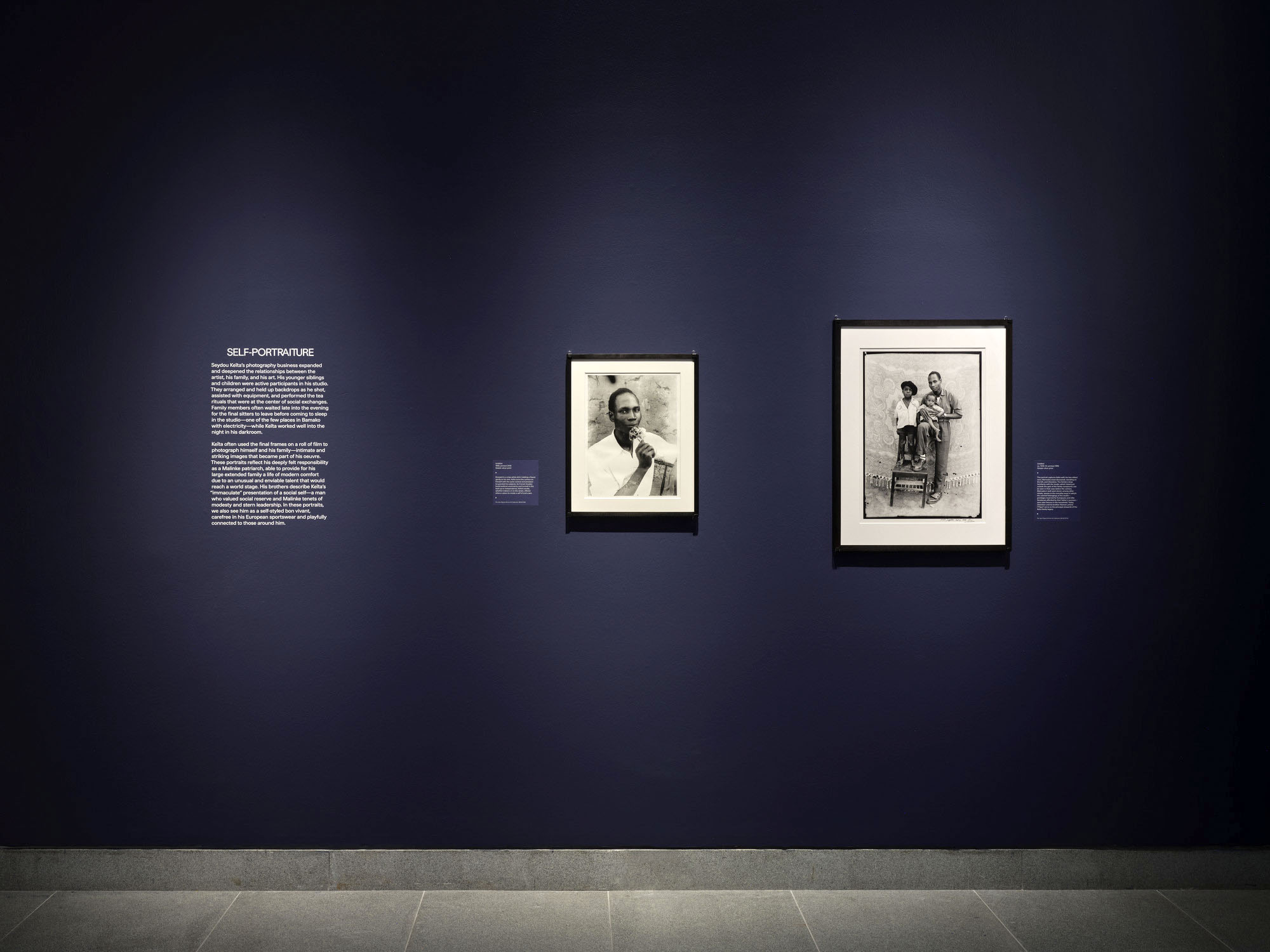
 

Installation view of the exhibition 'Seydou Keïta: A Tactile Lens' at the Brooklyn Museum, New York, October 2025 - May 2026 showing at left text for the section "Self-portraiture" and then Keïta's 'Untitled' 1956, printed 2018


Installation view of the exhibition Seydou Keïta: A Tactile Lens at the Brooklyn Museum, New York, October 2025 – May 2026 showing at left text for the section “Self-portraiture” and then Keïta’s Untitled, 1956, printed 2018


Dressed in a crisp white shirt, holding a flower gently to his chin, Keïta turns the camera on himself with the same control and precision he granted his subjects. As French Soudan faced political uncertainty and turmoil in the lead-up to independence, Keïta’s studio, whether indoors or on the street, offered sitters a place to create a self of one’s own .


Being Bamakois

In 1960 Mali achieved independence, becoming one of seventeen African countries to end colonial rule. “The Year of Africa,” as 1960 became known, intensified vital questions about self-determination, national identity, and the shape of a post-independence future. Even as many Malians embraced the prospect of a free and modern nation-state, debates grew over the roles that religion, the military, and traditional societal structures would play in governance and civil life. 

Bamako’s population doubled in the mid-twentieth century, driven by increased colonial settlement since the 1930s and labor migration from rural areas. Long a cosmopolitan city, post-independence Bamako became a site of new social tensions. The rigid strictures of the systems of French class and indigenous caste, which had coexisted uneasily in the colonial era, were increasingly at odds as Mali became entrenched as a socialist Islamic state. 

In Seydou Keïta’s portraits, Bamako’s citizens sought to express a vision of self and society that mirrored the promises of the growing city. Questions around status, decolonisation, and the ever-evolving definition of what it means to be both Bamakois and modern play out in the symbolic choices behind the making of each photograph.
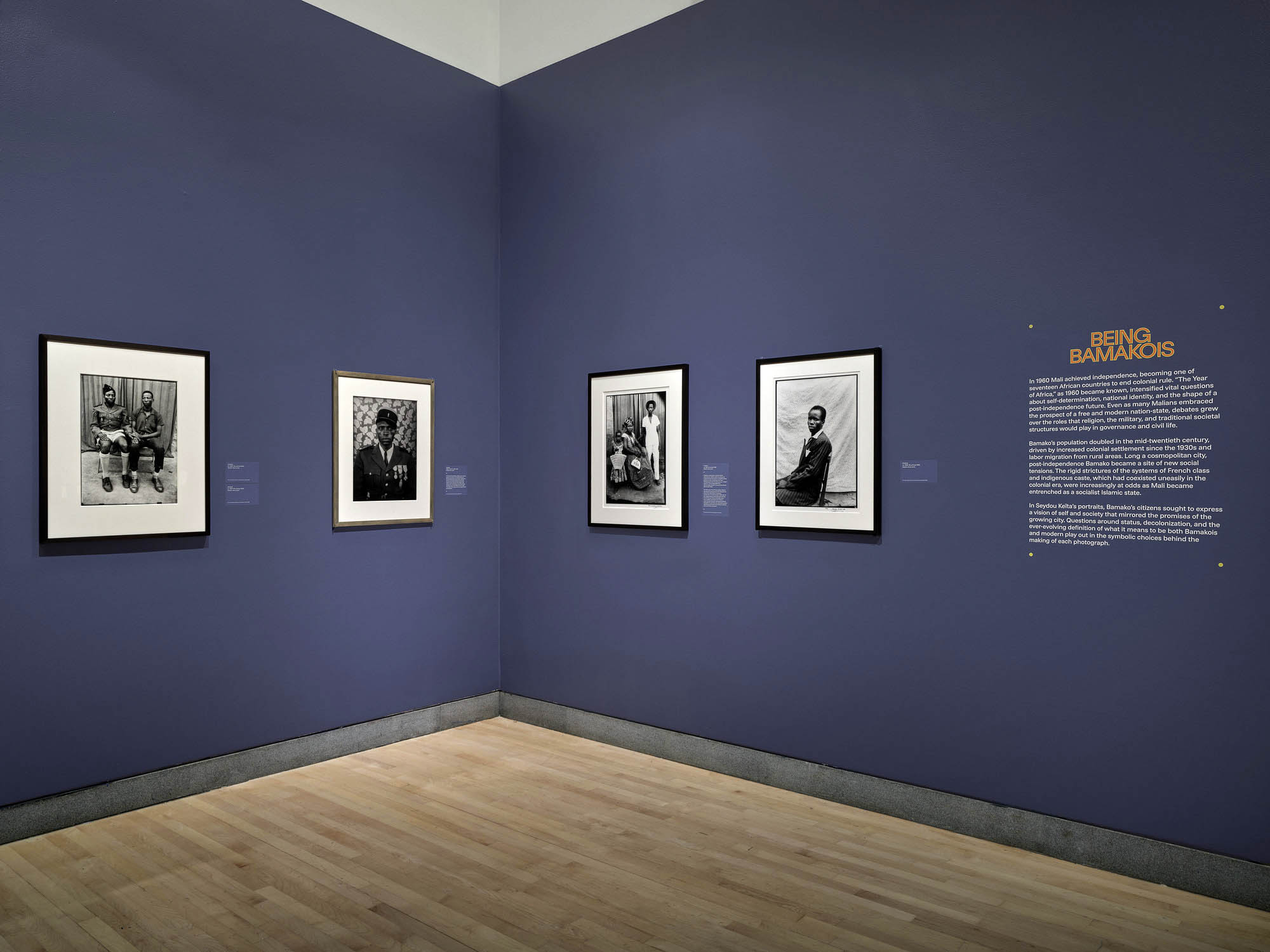
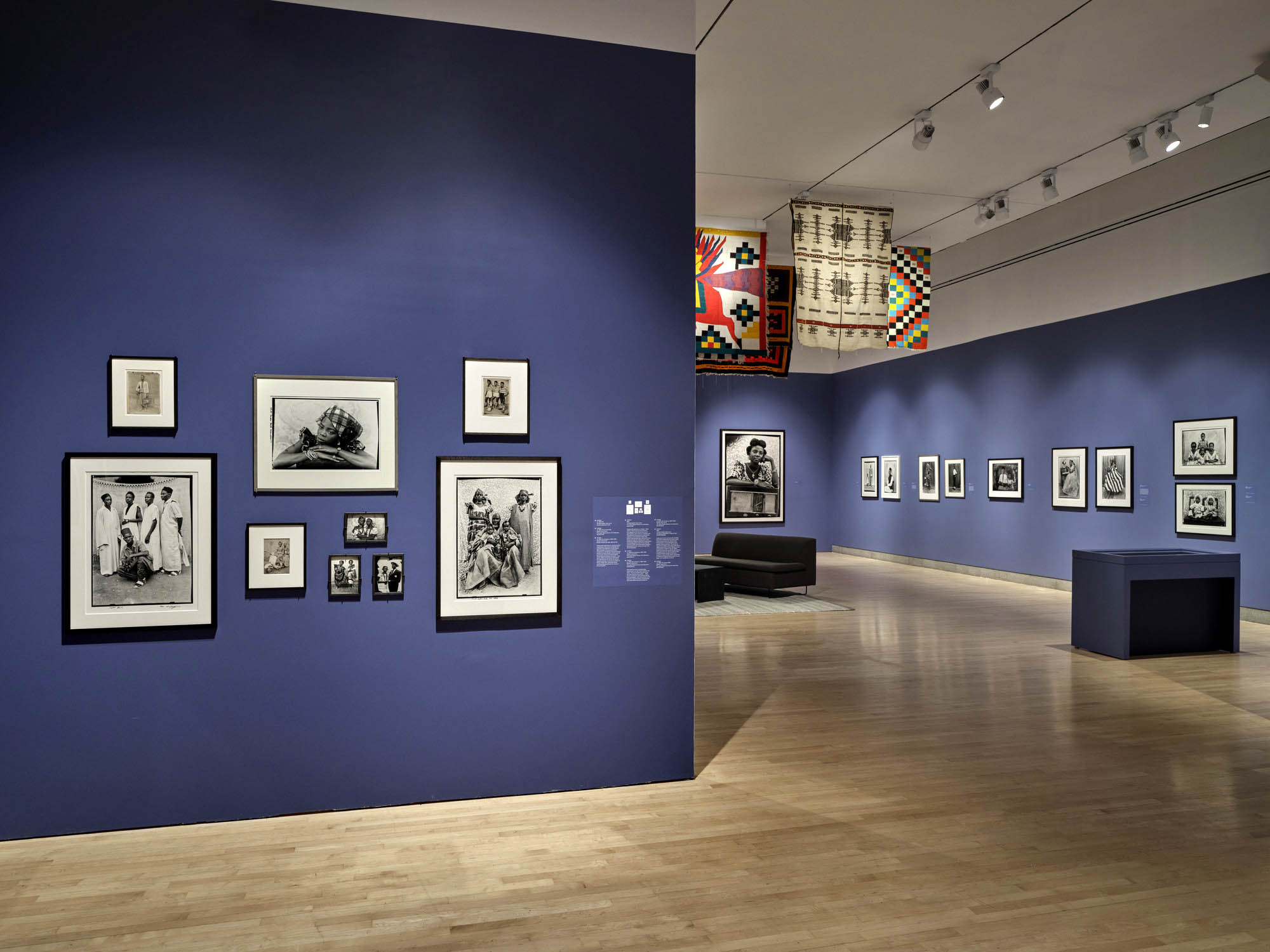
 

Installation view of the exhibition 'Seydou Keïta: A Tactile Lens' at the Brooklyn Museum, New York, October 2025 - May 2026


Installation views of the exhibition Seydou Keïta: A Tactile Lens at the Brooklyn Museum, New York, October 2025 – May 2026 showing in the bottom image at bottom second left, Keïta’s photograph Untitled 1957 (below)
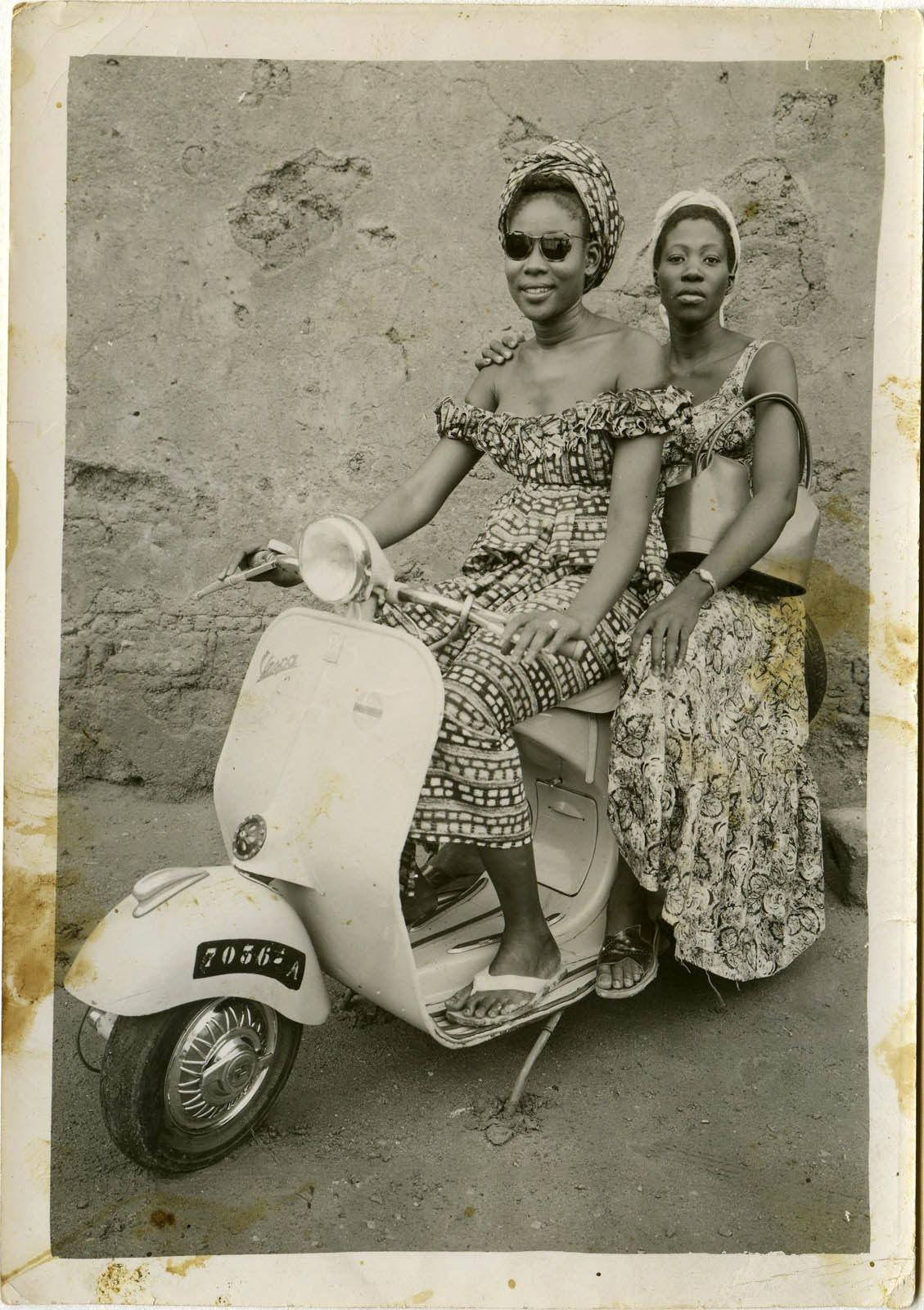
 

Seydou Keïta (Malian, c. 1921-2001) 'Untitled' 1957


Seydou Keïta (Malian, c. 1921-2001)
Untitled
1957
Vintage gelatin silver print
© SKPEAC/Seydou Keïta
Courtesy The Jean Pigozzi Collection of African Art and Danziger Gallery, NY


Posing with aplomb on a Vespa – likely Keïta’s – these women have become the subjects of one of his most iconic photographs, seen here as a vintage print. They present themselves as aspirational members of the Bamako Vespa Club, whose membership was reserved for men. Expensive and rare, Vespas were costly symbols of affluence that were inaccessible to most Bamakois in the French colonial economy. Keïta, one of the club’s founders, purchased his own using earnings from his photography.


The Pretenders

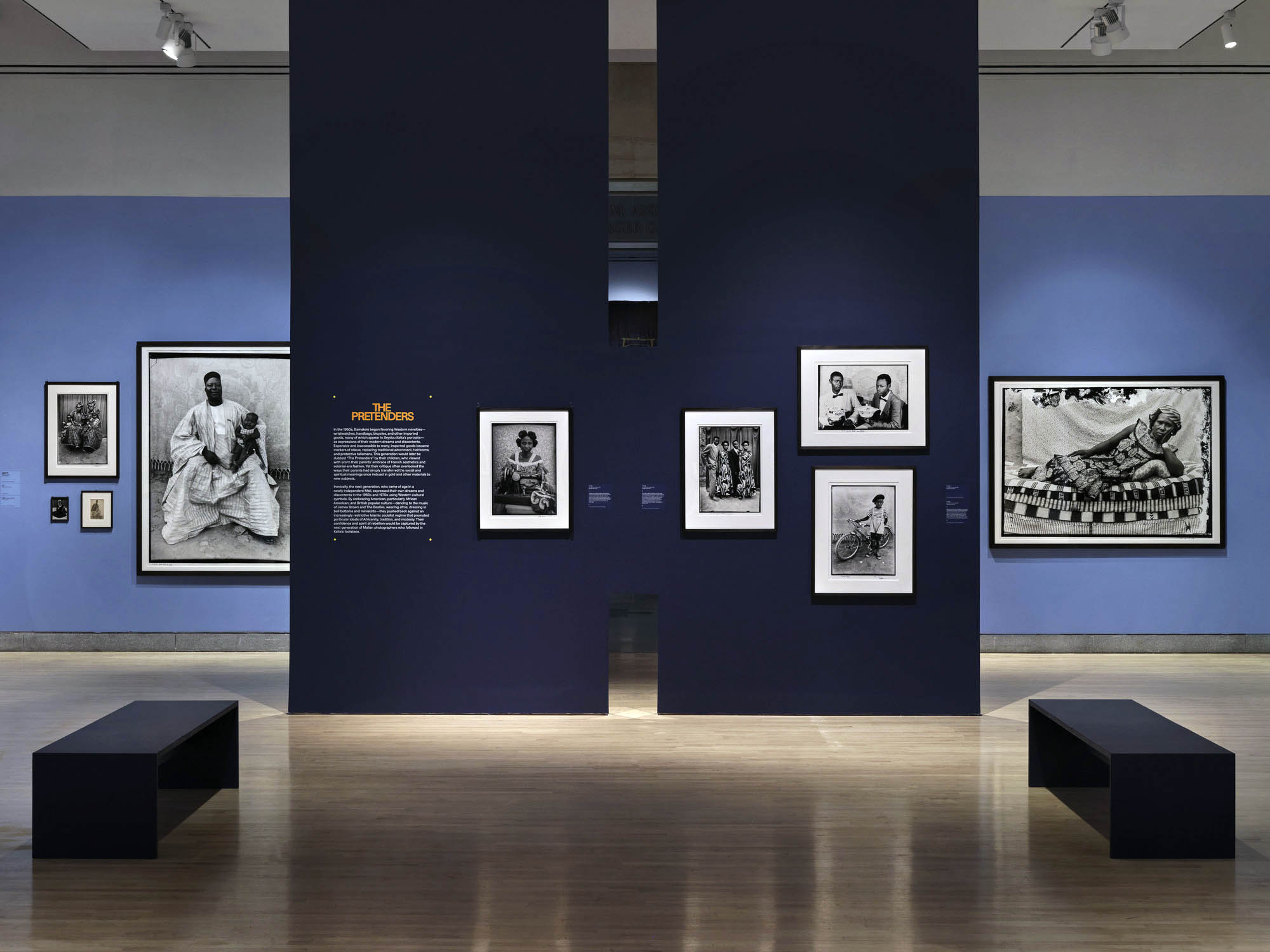
In the 1950s, Bamakois began favouring Western novelties – wristwatches, handbags, bicycles, and other imported goods, many of which appear in Seydou Keïta’s portraits – as expressions of their modern dreams and discontents. Expensive and inaccessible to many, imported goods became markers of status, replacing traditional adornment, heirlooms, and protective talismans. This generation would later be dubbed “The Pretenders” by their children, who viewed with scorn their parents’ embrace of French aesthetics and colonial-era fashion. Yet their critique often overlooked the ways their parents had simply transferred the social and spiritual meanings once imbued in gold and other materials to new subjects. 

Ironically, the next generation, who came of age in a newly independent Mali, expressed their own dreams and discontents in the 1960s and 1970s using Western cultural symbols. By embracing American, particularly African American, and British popular culture – dancing to the music of James Brown and The Beatles, wearing afros, dressing in bell bottoms and miniskirts – they pushed back against an increasingly restrictive Islamic socialist regime that promoted particular ideals of Africanity, tradition, and modesty. Their confidence and spirit of rebellion would be captured by the next generation of Malian photographers who followed in Keïta’s footsteps.

Coming of Age

Young men and women often arrived at Seydou Keïta’s studio dressed in their best clothing and adorned with jewellery that hinted at the worth of future dowries or the scale of family ambitions. They posed for portraits that became cherished mementos. Such small-format photographs were exchanged as offerings of friendship, used in matchmaking and marriage proposals, and commemorated births and weddings. They also served as keepsakes of religious holidays such as Eid and Tabaski (Eid al-Adha). Together, the works on view celebrate the beauty of youth and the significance of coming of age – moments of transformation, growth, and entry into adulthood.

The Elegants

Seydou Keïta’s subjects radiate elegance in every photograph, resplendent in tailor-made ensembles that reflect the wearer’s ingenuity and creativity. Many of the outfits seen in Keïta’s portraits blend handwoven West African textiles with Islamic fabrics and imported European cloth, often in inventive ways. Whether made from velvet, Dutch wax print, or eyelet lace, a gown could always be paired with a traditional pagne (wrapper) showing at the hem, adding the requisite touch of beauty. The men, women, and youths on view present themselves as mirrors to the cultural syncretism and self-invention of mid-twentieth-century Bamako. 

As the Islamic socialist regime rose to power in the 1960s and 1970s, it began imposing increased restrictions on dress, enacting punishments and “re-education” for the wearing of Western or secular clothing. Keïta’s portraits capture a brief window just before these strictures took hold – a moment when his sitters fashioned an expression entirely their own. He helped document, in the words of Nigerian art critic Okwui Enwezor, fashion’s power to offer people a means of “resistance to confining oneself.”
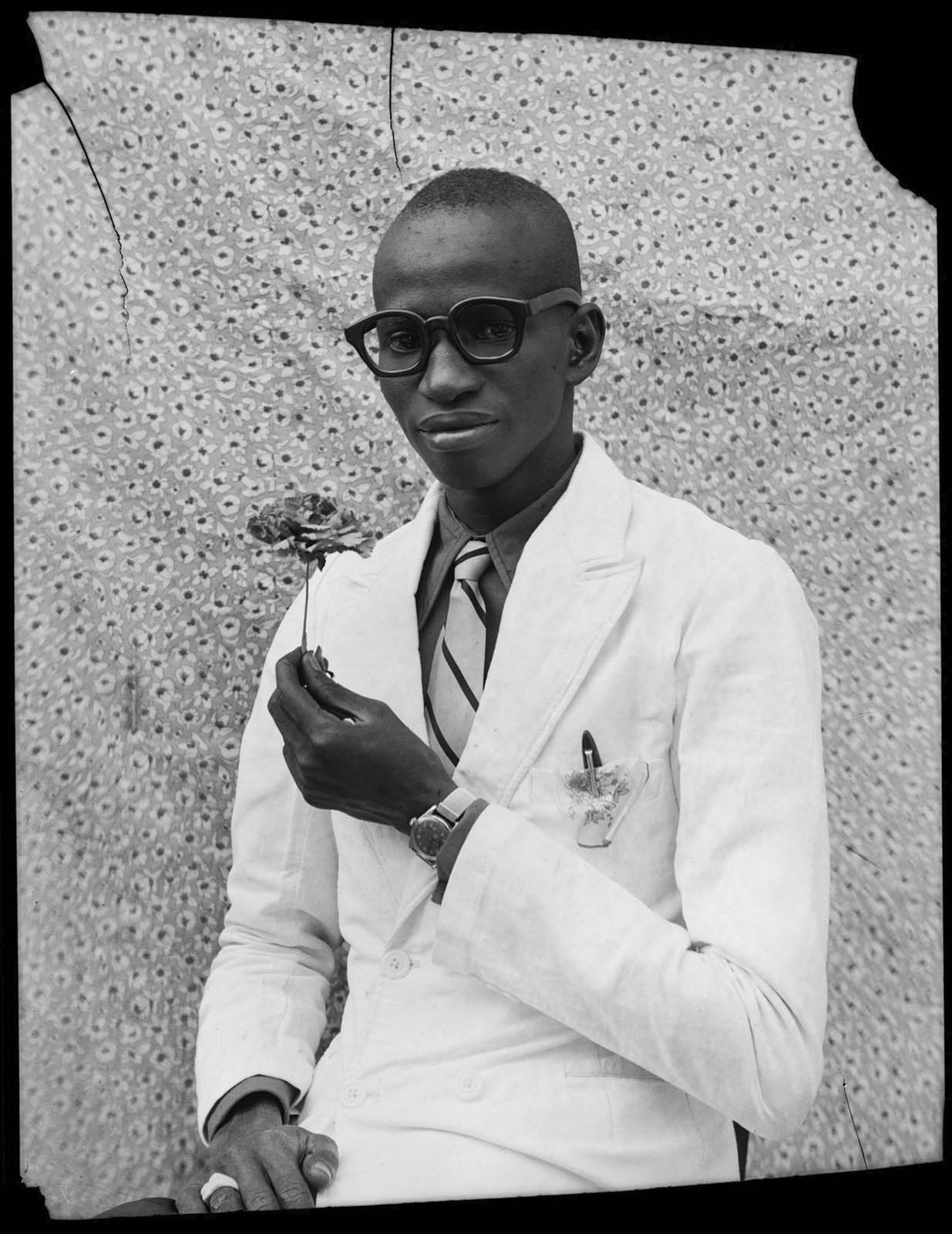
 

Seydou Keïta (Malian, c. 1921-2001) 'Untitled' 1959, printed c. 1994-2001


Seydou Keïta (Malian, c. 1921-2001)
Untitled
1959, printed, c. 1994-2001
Gelatin silver print
© SKPEAC/Seydou Keïta
Courtesy The Jean Pigozzi Collection of African Art and Danziger Gallery, NY


Delicately presenting a plastic flower, this man exudes elegance and poise in his double-breasted suit, silk handkerchief and fountain pen tucked neatly in his breast pocket. He meets the camera’s gaze with inviting eyes that exude a quiet openness. His confident, relaxed presence speaks to Keïta’s gift for making his subjects feel at ease – enabling them to fully express themselves in front of the camera.


The Loungers

The figure of the languid, reclining odalisque, or female attendant, is seen by many American and European viewers as an exoticizing colonial trope. However, in Seydou Keïta’s portraits, the lounger appears as a modern Bamakois – worldly, confident, adorned with the enduring garments, jewellery, and symbols of her heritage. In these portraits, each woman asserts her power, status, wealth, and values. The self-fashioned, richly layered settings re-create the intimate interiors of domestic life. The beds, textiles, and Islamic tea ceremonies shown here reflect the subject’s mastery of hospitality – an essential trait for the model Soudanaise woman – as well as her standing in family and society. 

With slender, henna-stained hands and feet, modest dress, and composed bearing, these women affirm traditional social values even as they shape a modern visual identity. These photographs are an ode – to the women, their world, and the form of the lounger herself.
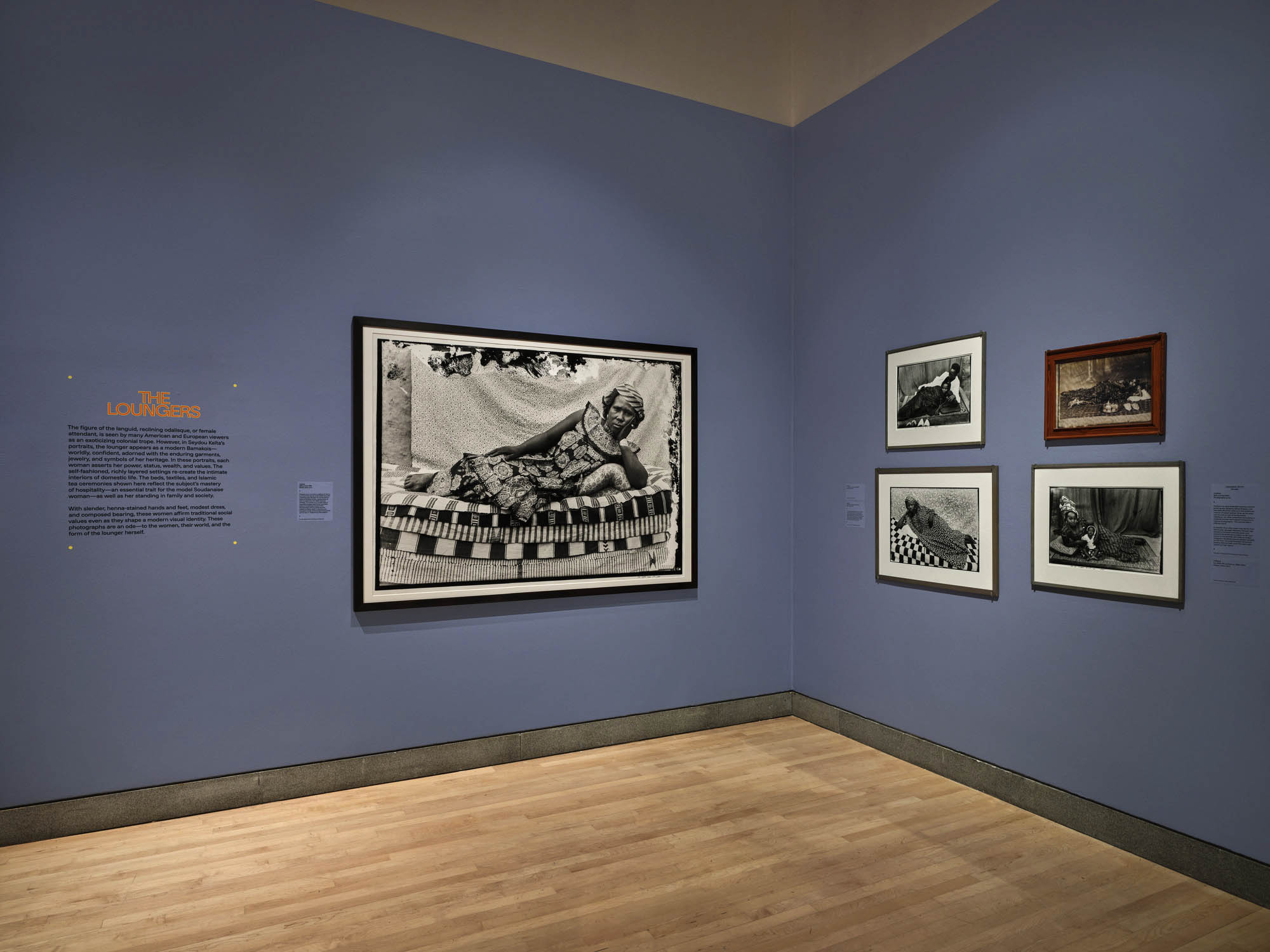
 

Installation view of the exhibition 'Seydou Keïta: A Tactile Lens' at the Brooklyn Museum, New York, October 2025 - May 2026 showing at second right bottom, Keïta's photograph 'Untitled' 1953-1957


Installation view of the exhibition Seydou Keïta: A Tactile Lens at the Brooklyn Museum, New York, October 2025 – May 2026 showing at second right bottom, Keïta’s photograph Untitled 1953-1957 (below)
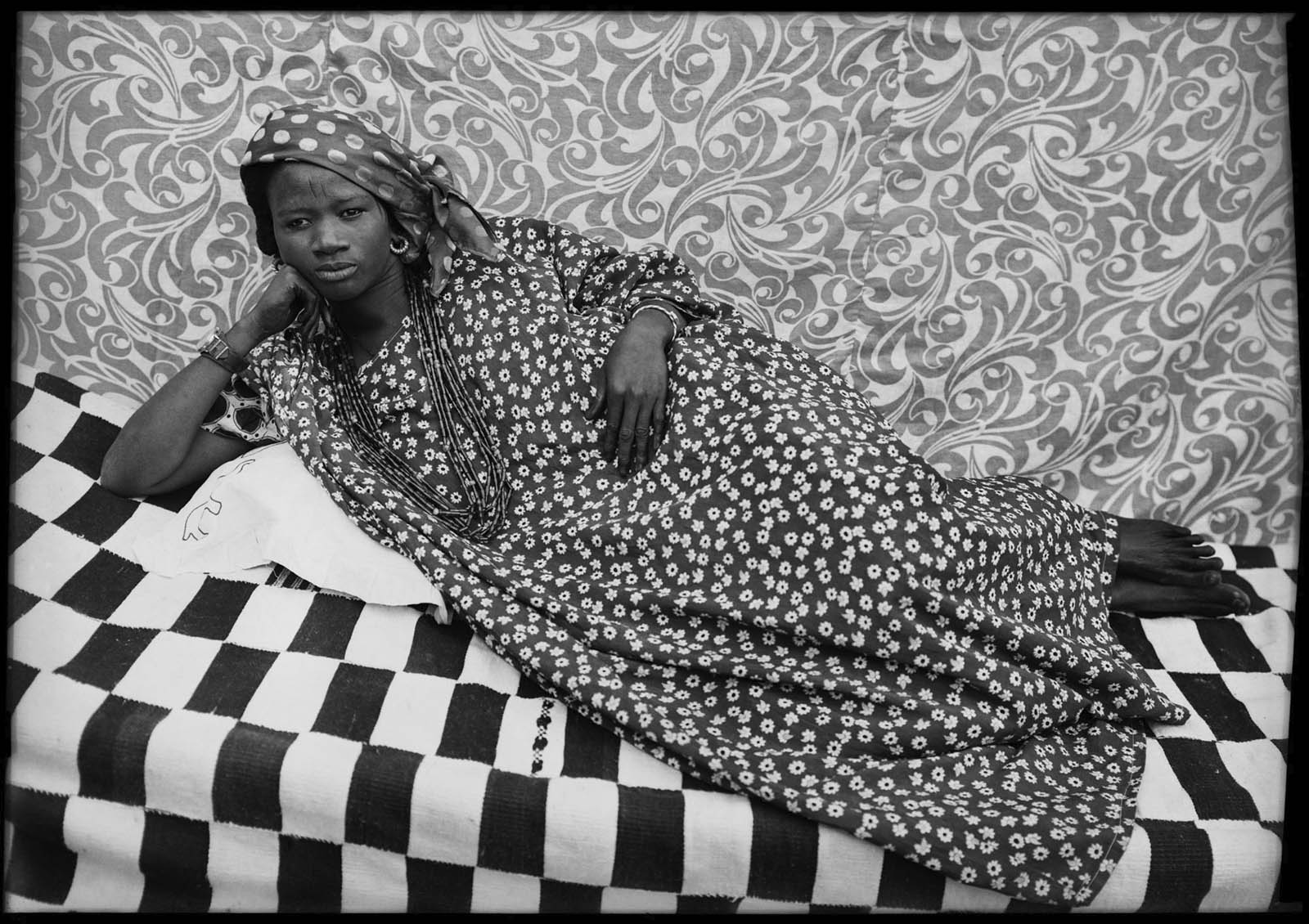
 

Seydou Keïta (Malian, c. 1921-2001) 'Untitled' 1953-1957, printed c. 1994-2001


Seydou Keïta (Malian, c. 1921-2001)
Untitled
1953-1957, printed c. 1994-2001
Gelatin silver print
© SKPEAC/Seydou Keïta
Courtesy The Jean Pigozzi Collection of African Art and Danziger Gallery, NY


Keïta La

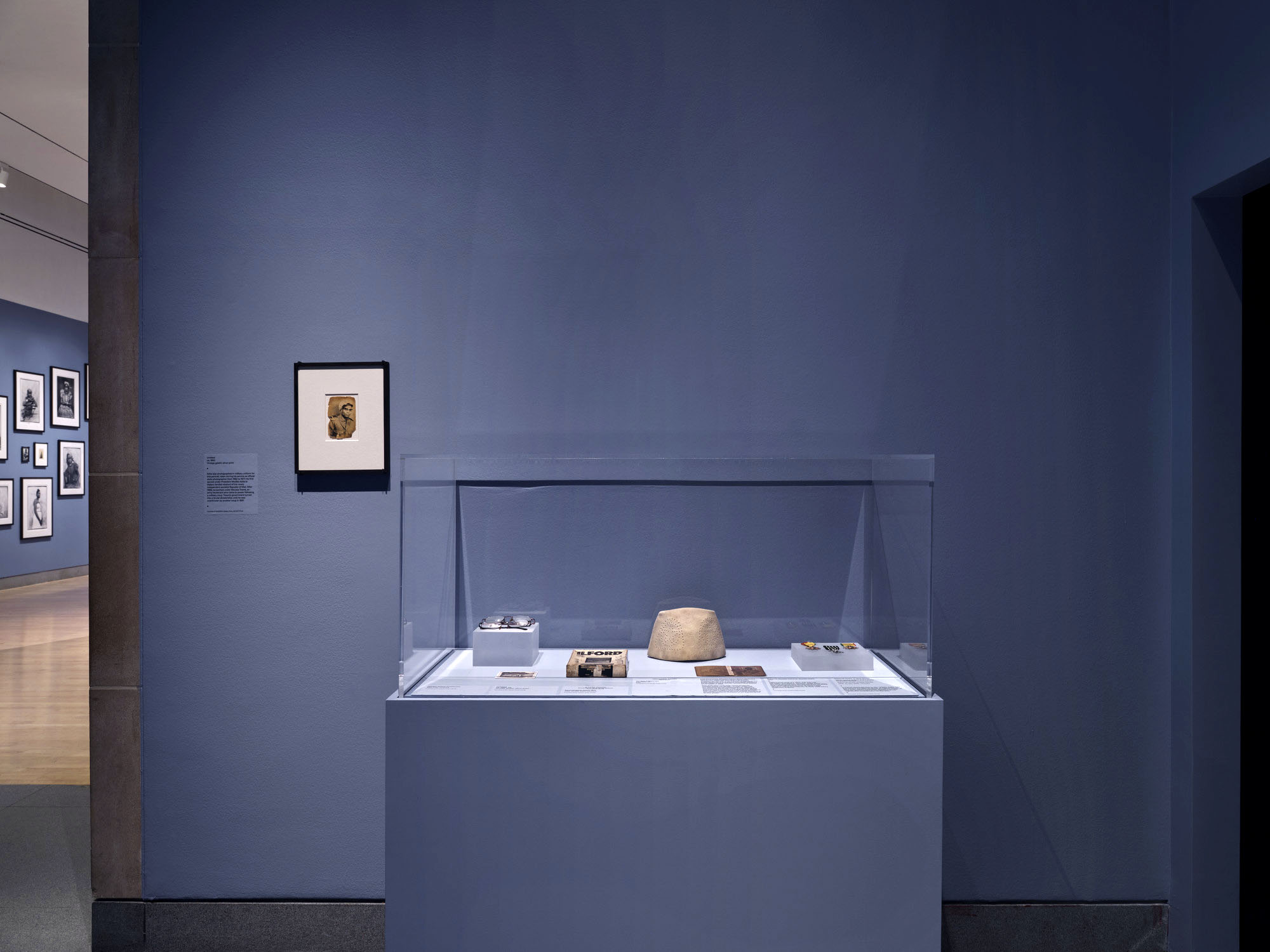
“Keïta La” offers a glimpse into the world of Seydou Keïta’s studio – and into his family’s efforts to steward and preserve his legacy. Together, the objects on view pose important questions about conservation and personal and artistic archives.

In the mid-twentieth century, near the elegant colonial centre of Bamako-Coura, Keïta La, the family compound, sat on a wide avenue that buzzed with traffic and was lined with a canopy of trees, casting dappled shadows that lent a lazy air. Just outside the compound’s walls was the artist’s studio. As a photographer, Keïta moved seamlessly between the compound yard, the avenue, the nearby walls of sites, and the studio and darkroom where he made prints late into the night. Keïta ran the studio until 1963, when he was forced to dedicate himself exclusively to government service. He turned the business over to his brother and sons, who had become familiar with cameras as children. Upon his retirement, he returned to Keïta La – but not to his studio. Instead, he embraced his second love: the repair of cameras and cars.

Today, the Keïta family have been vital collaborators in the conceptualisation of this exhibition, their oral histories enriching our understanding of the man behind the camera. In addition, their loan of the photographer’s few remaining family heirlooms and a trove of film negatives imbues this section with Keïta’s personal presence. These negatives, which have been preserved and imaged by the Brooklyn Museum on the occasion of this exhibition, expand our knowledge of Keïta’s oeuvre. A selection of these portraits is presented here – on lightboxes and as a projection – for the first time.
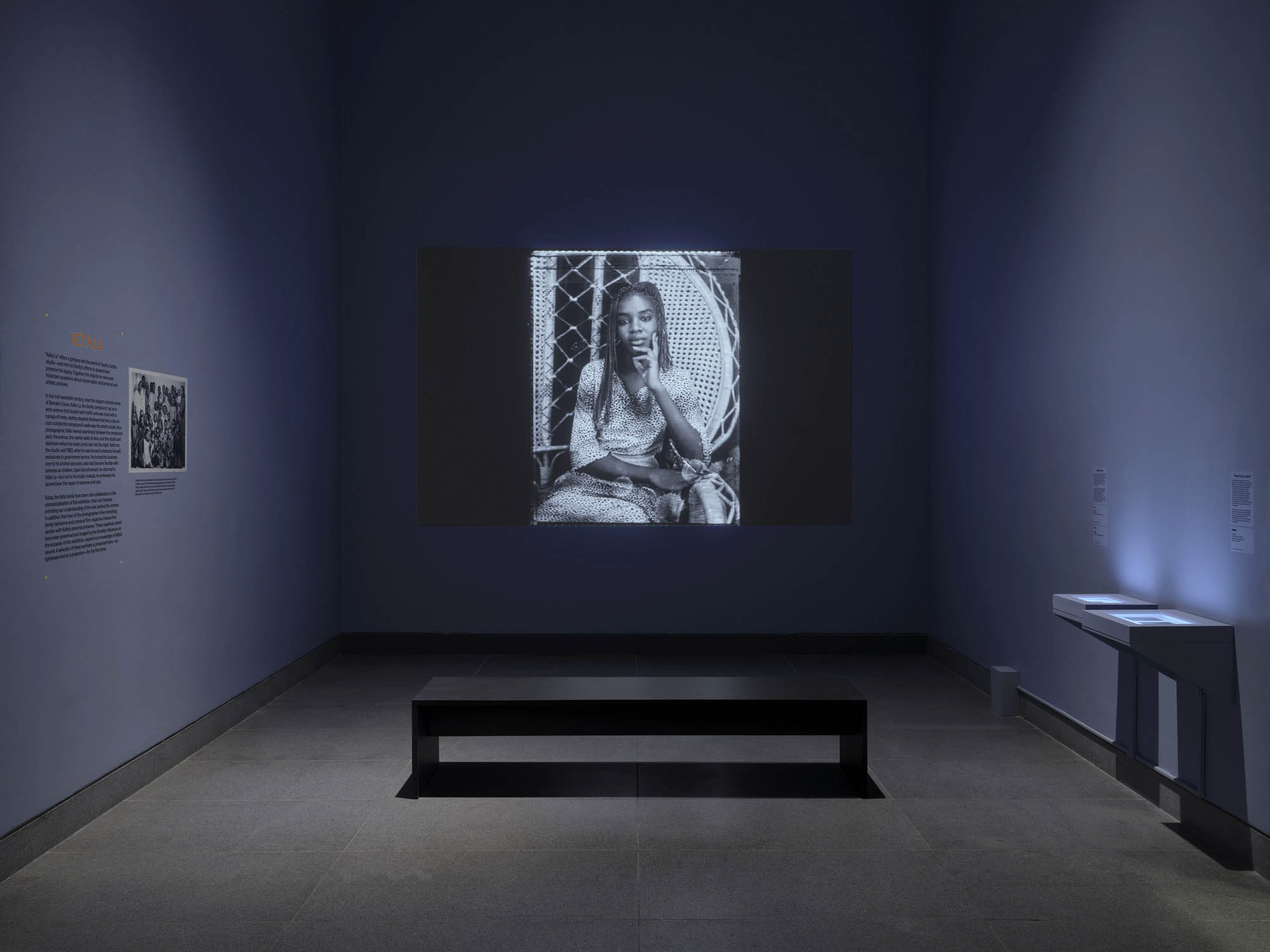
 

Installation view of the exhibition 'Seydou Keïta: A Tactile Lens' at the Brooklyn Museum, New York, October 2025 - May 2026 showing text for the section "Keïta La" on the left hand wall, as well as the photograph 'Undated family portrait taken in Seydou Keïta's studio'


Installation view of the exhibition Seydou Keïta: A Tactile Lens at the Brooklyn Museum, New York, October 2025 – May 2026 showing text for the section “Keïta La” on the left hand wall, as well as the photograph Undated family portrait taken in Seydou Keïta’s studio (below)
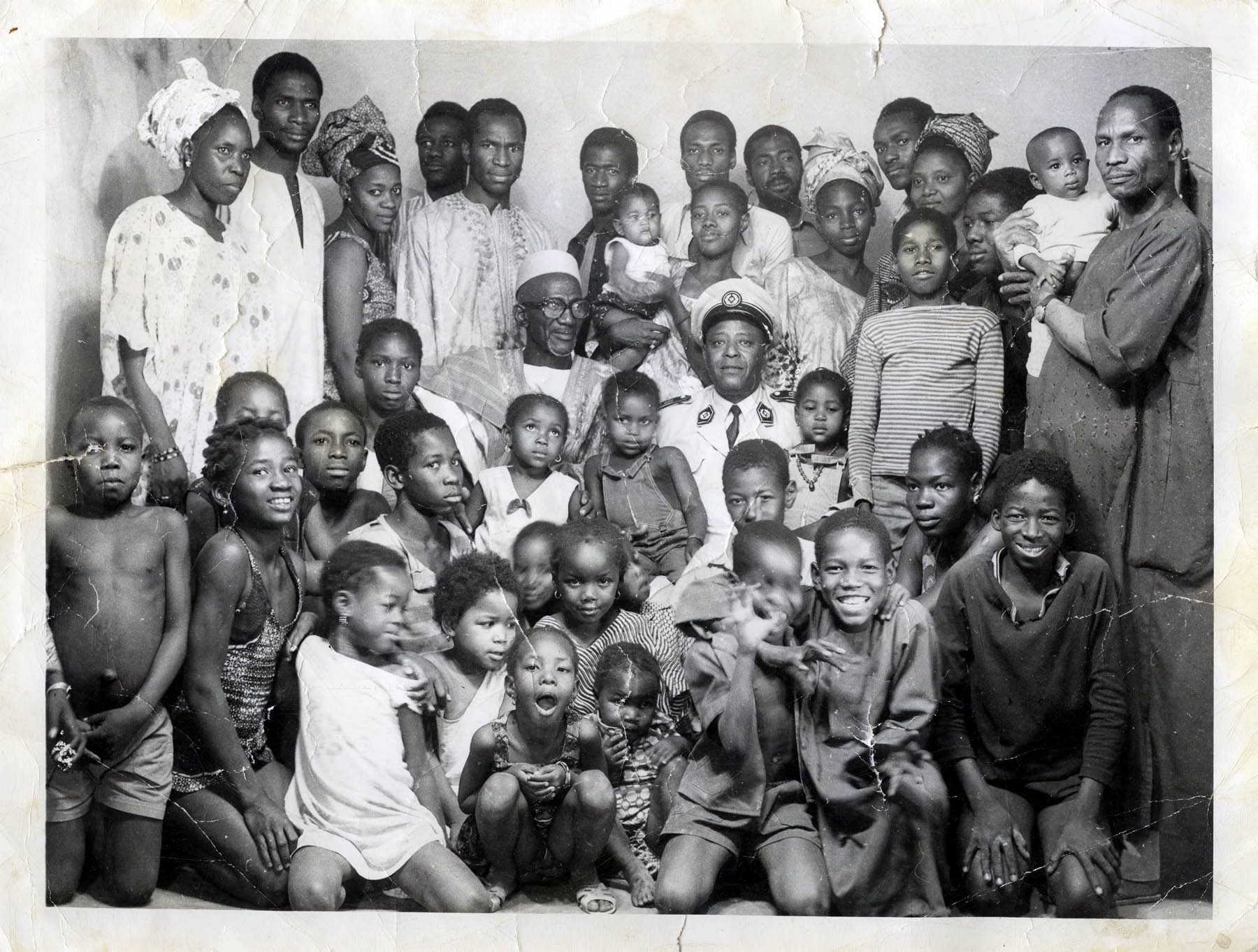
 

Undated family portrait taken in Seydou Keïta's studio


Undated family portrait taken in Seydou Keïta’s studio
Seated left of centre is Keïta’s uncle Tièmòkò Keïta (wearing eyeglasses), with Hamed Lamine “Papa” Keïta behind him at left and Cheickine Keïta at far right (holding child). Today, Papa and Cheickine serve as the principal stewards of the Keïta estate
Courtesy the Seydou Keïta Family
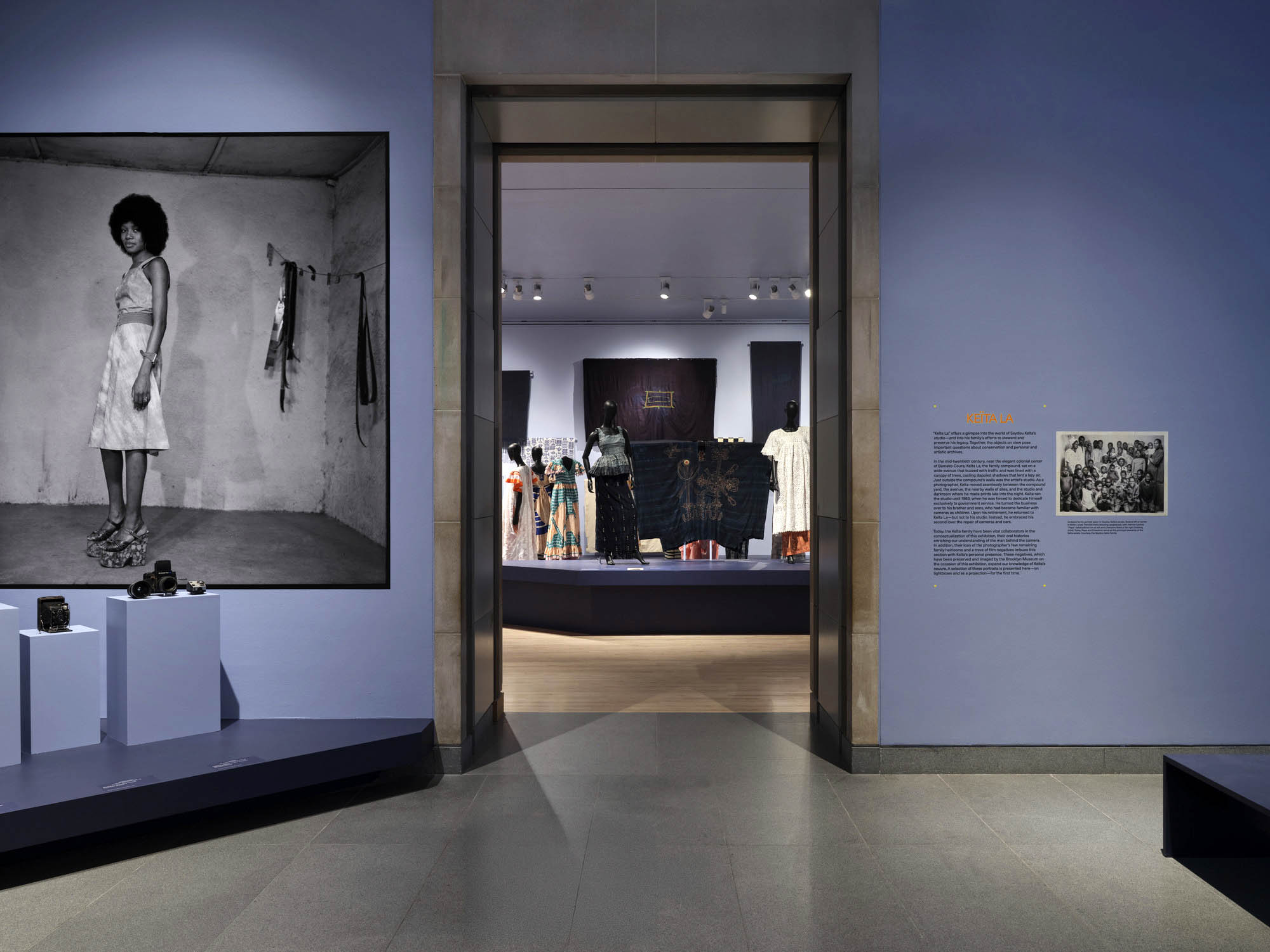
 

Installation view of the exhibition 'Seydou Keïta: A Tactile Lens' at the Brooklyn Museum, New York, October 2025 - May 2026 showing at left, Keïta's photograph 'Untitled' late 1940s to mid-1970s; and at right, text for the section "Keïta La" together with the photograph 'Undated family portrait taken in Seydou Keïta's studio'


Installation view of the exhibition Seydou Keïta: A Tactile Lens at the Brooklyn Museum, New York, October 2025 – May 2026 showing at left, Keïta’s photograph Untitled late 1940s to mid-1970s (below); and at right, text for the section “Keïta La” together with the photograph Undated family portrait taken in Seydou Keïta’s studio (above)


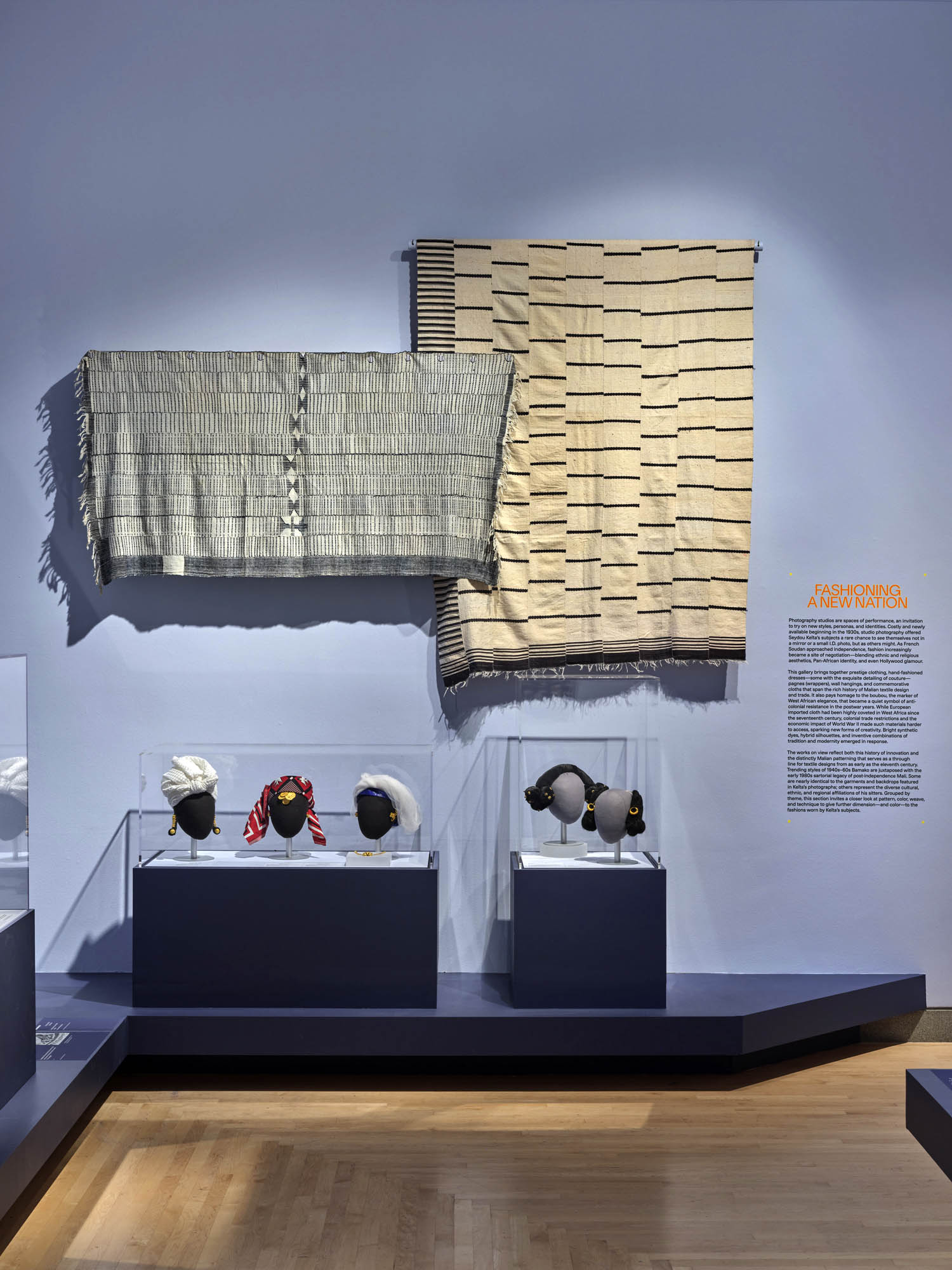
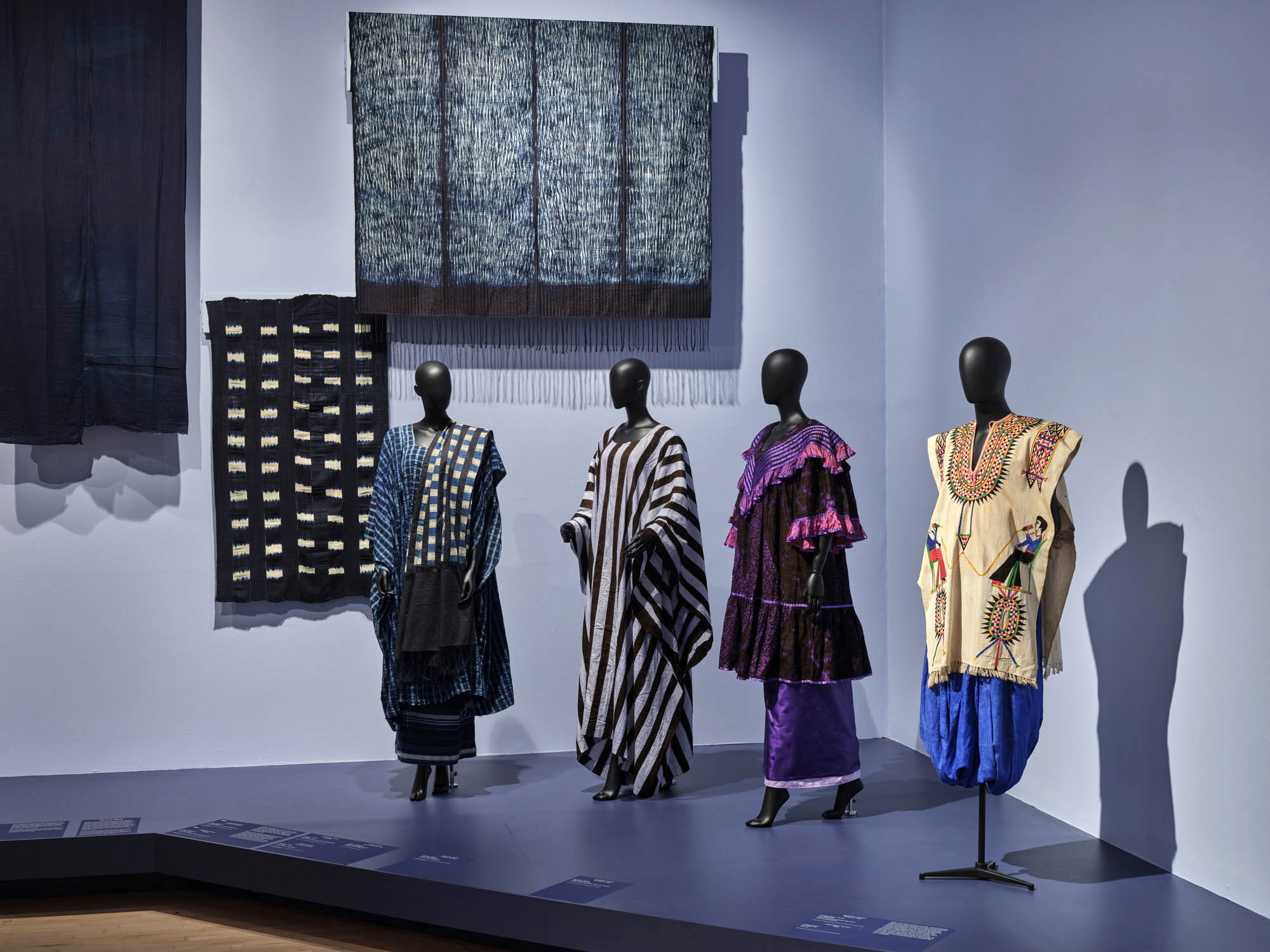
Fashioning A New Nation

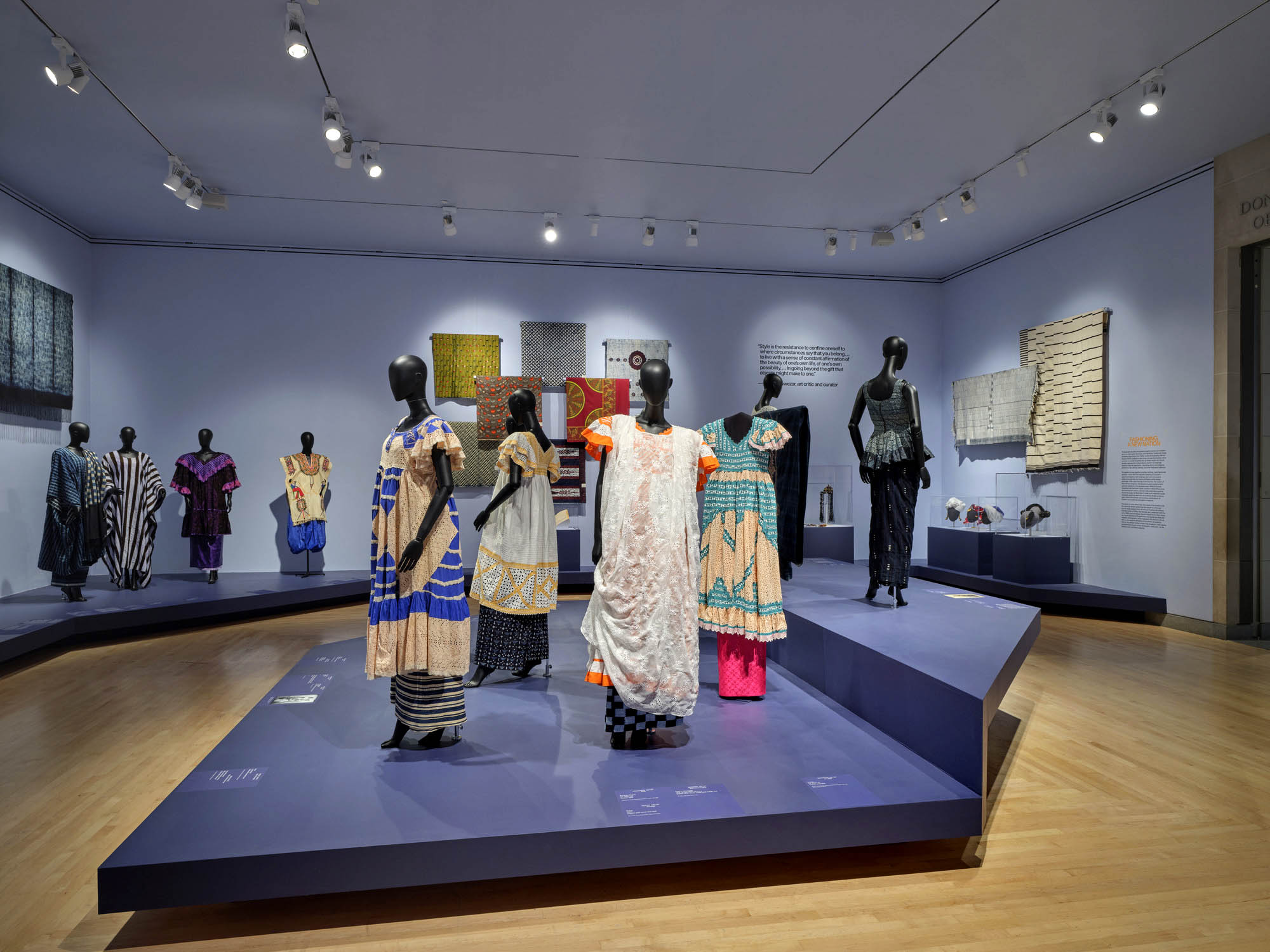
Photography studios are spaces of performance, an invitation to try on new styles, personas, and identities. Costly and newly available beginning in the 1930s, studio photography offered Seydou Keïta’s subjects a rare chance to see themselves not in a mirror or a small I.D. photo, but as others might. As French Soudan approached independence, fashion increasingly became a site of negotiation – blending ethnic and religious aesthetics, Pan-African identity, and even Hollywood glamour. 

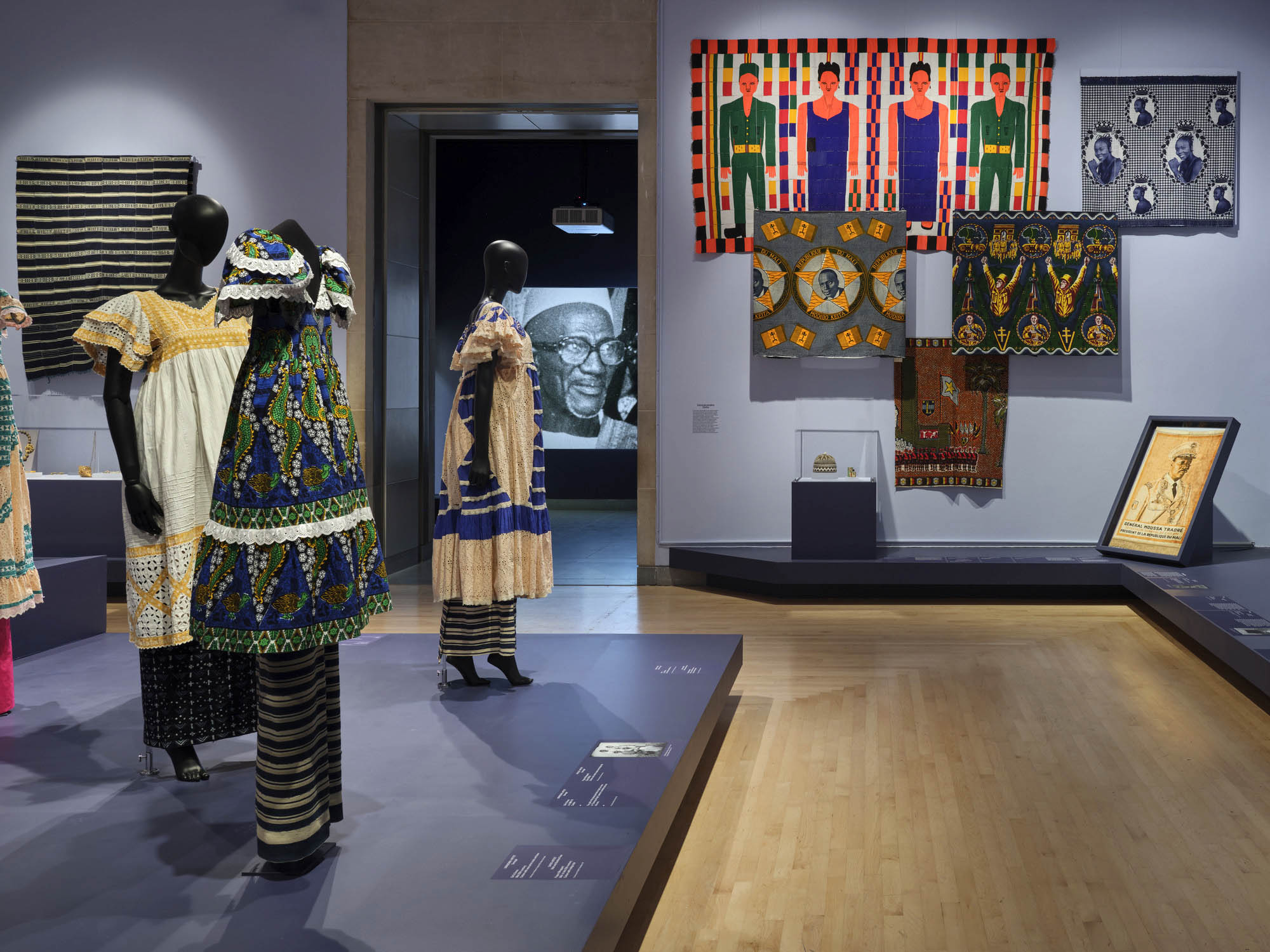
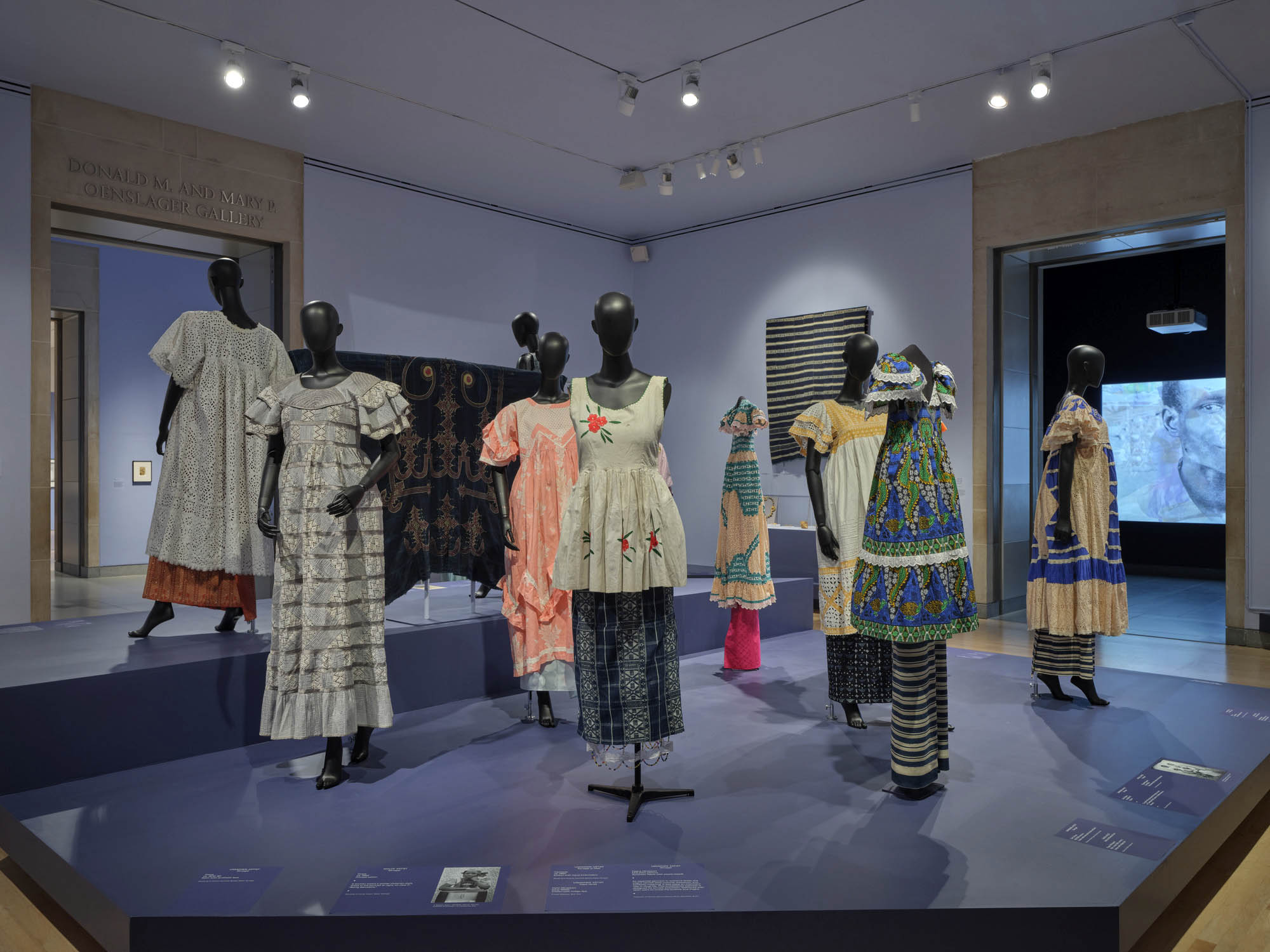
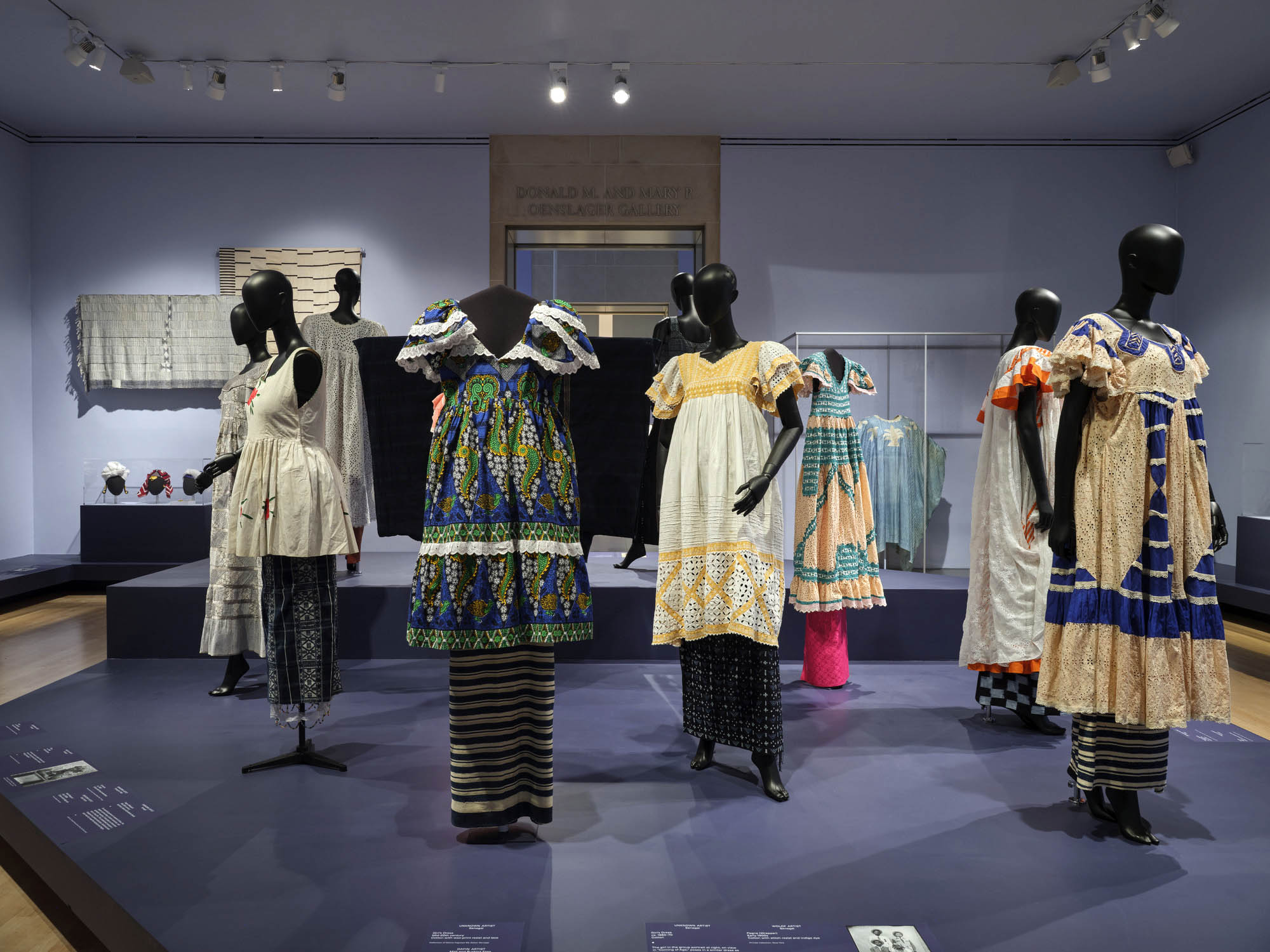
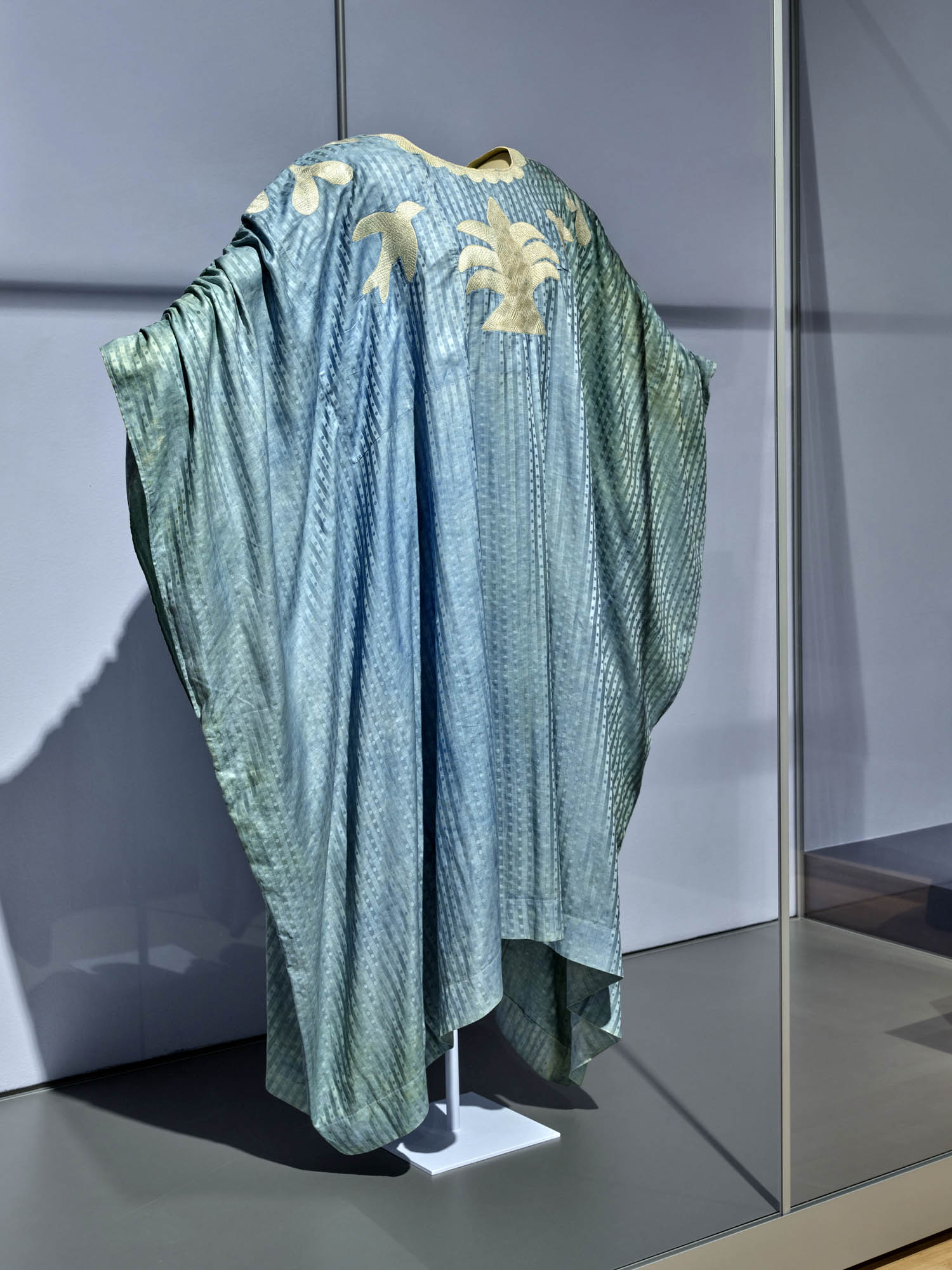
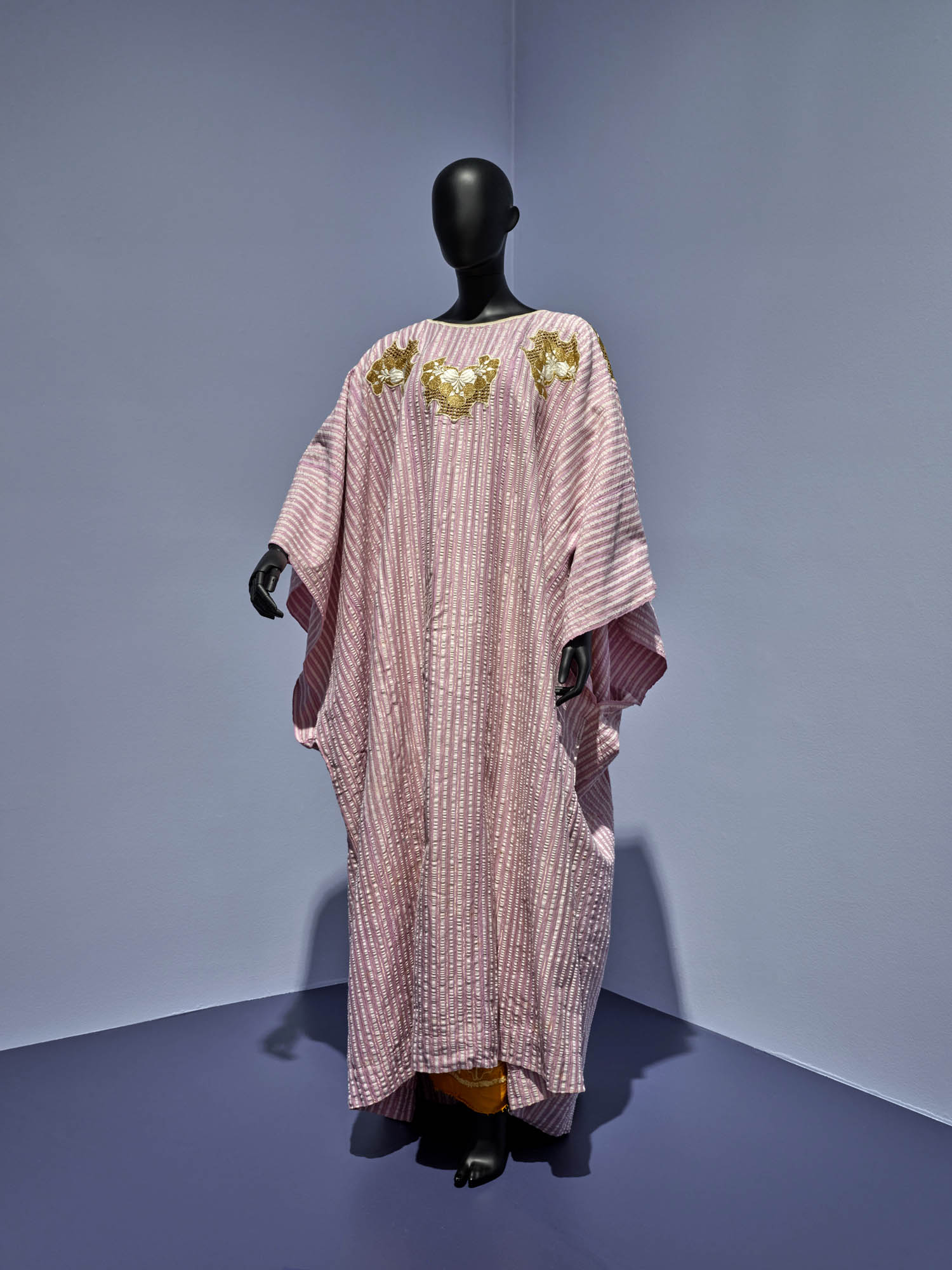
This gallery brings together prestige clothing, hand-fashioned dresses – some with the exquisite detailing of couture – pagnes (wrappers), wall hangings, and commemorative cloths that span the rich history of Malian textile design and trade. It also pays homage to the boubou, the marker of West African elegance, that became a quiet symbol of anti-colonial resistance in the postwar years. While European imported cloth had been highly coveted in West Africa since the seventeenth century, colonial trade restrictions and the economic impact of World War II made such materials harder to access, sparking new forms of creativity. Bright synthetic dyes, hybrid silhouettes, and inventive combinations of tradition and modernity emerged in response. 

The works on view reflect both this history of innovation and the distinctly Malian patterning that serves as a through line for textile designs from as early as the eleventh century. Trending styles of 1940s-60s Bamako are juxtaposed with the early 1980s sartorial legacy of post-independence Mali. Some are nearly identical to the garments and backdrops featured in Keïta’s photographs; others represent the diverse cultural, ethnic, and regional affiliations of his sitters. Grouped by theme, this section invites a closer look at pattern, colour, weave, and technique to give further dimension – and colour – to the fashions worn by Keïta’s subjects.
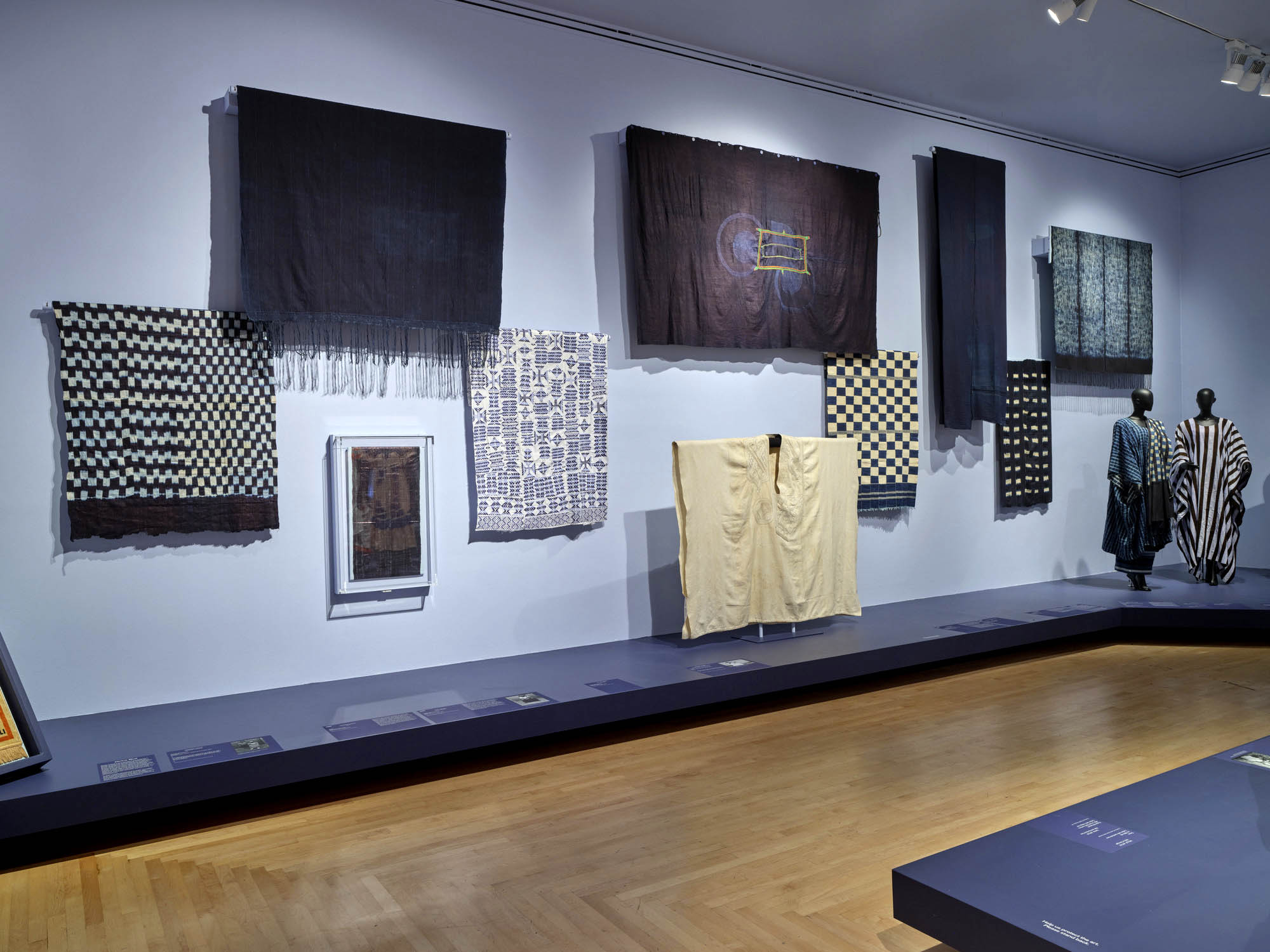
 

Installation view of the exhibition 'Seydou Keïta: A Tactile Lens' at the Brooklyn Museum, New York, October 2025 - May 2026


Installation views of the exhibition Seydou Keïta: A Tactile Lens at the Brooklyn Museum, New York, October 2025 – May 2026 showing text from the section “Fashioning A New Nation”


Handheld

“Fly dirt,” pen marks, dog-eared corners, red Sahelian dust, humidity, and traces of touch infuse Keïta’s vintage prints with a particular life and beauty. Each print is indelibly marked by the photographer, the printer, and the many hands through which it has passed – as tokens, gifts, souvenirs, expressions of love, ritual displays, or precious heirlooms. 

Since Keïta first became known in Europe and the United States in the 1990s, vintage prints of his photographs have made their way into private collections and institutional archives. Despite consisting of the same images, they were often considered secondary to the modern prints that were produced, exhibited, and stored as fine art pieces. Only recently has this value system been upended, reflecting shifts in the art market and in the field of art history. As African studio photography continues to gain recognition, artists and arts professionals of the African diaspora have called for such images to be valued not by colonial or market standards but by their material history and significance as loved, cherished objects.
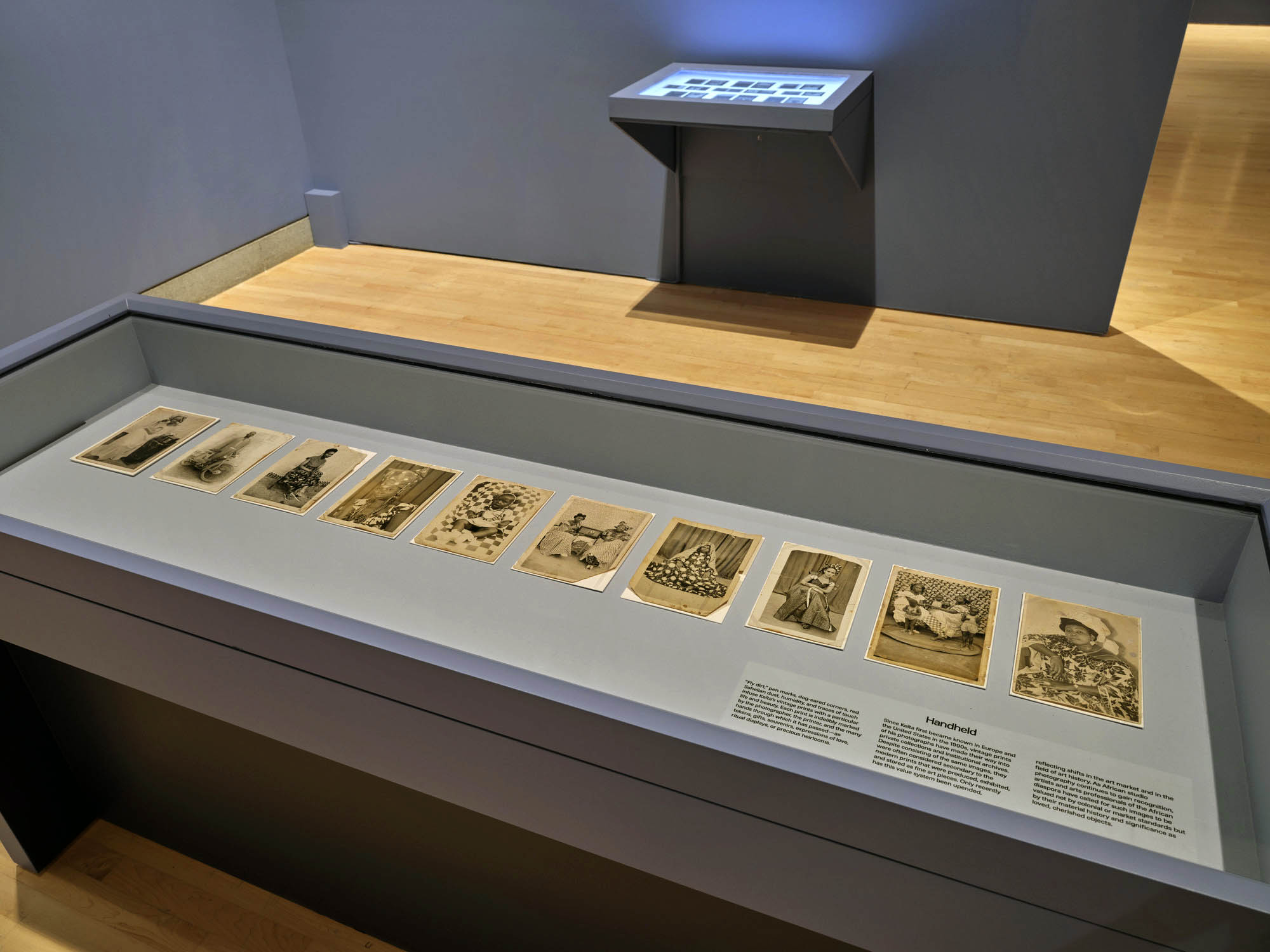
 

Installation view of the exhibition 'Seydou Keïta: A Tactile Lens' at the Brooklyn Museum, New York, October 2025 - May 2026 showing a vitrine with text from the section "Handheld"


Installation view of the exhibition Seydou Keïta: A Tactile Lens at the Brooklyn Museum, New York, October 2025 – May 2026 showing a vitrine with text from the section “Handheld”


The Self That Travels

Over time, African studio photography by Keïta and other artists became part of a global circulation of images. A photographic print could be sent from Bamako to a relative stationed during the war years in France, or Indonesia, or Russia. Portraits were exchanged locally, regionally, and farther afield through a web of relations in matchmaking attempts between families. A private image may have been usurped by a colonial publisher for use on a postcard. Perhaps a collector on eBay, fifty years later, was delighted by the image or recognised Keïta’s stamp and had it shipped to the United States from Belarus. All told, vintage prints are part of an economy that reveals complex histories of commerce and human desire.
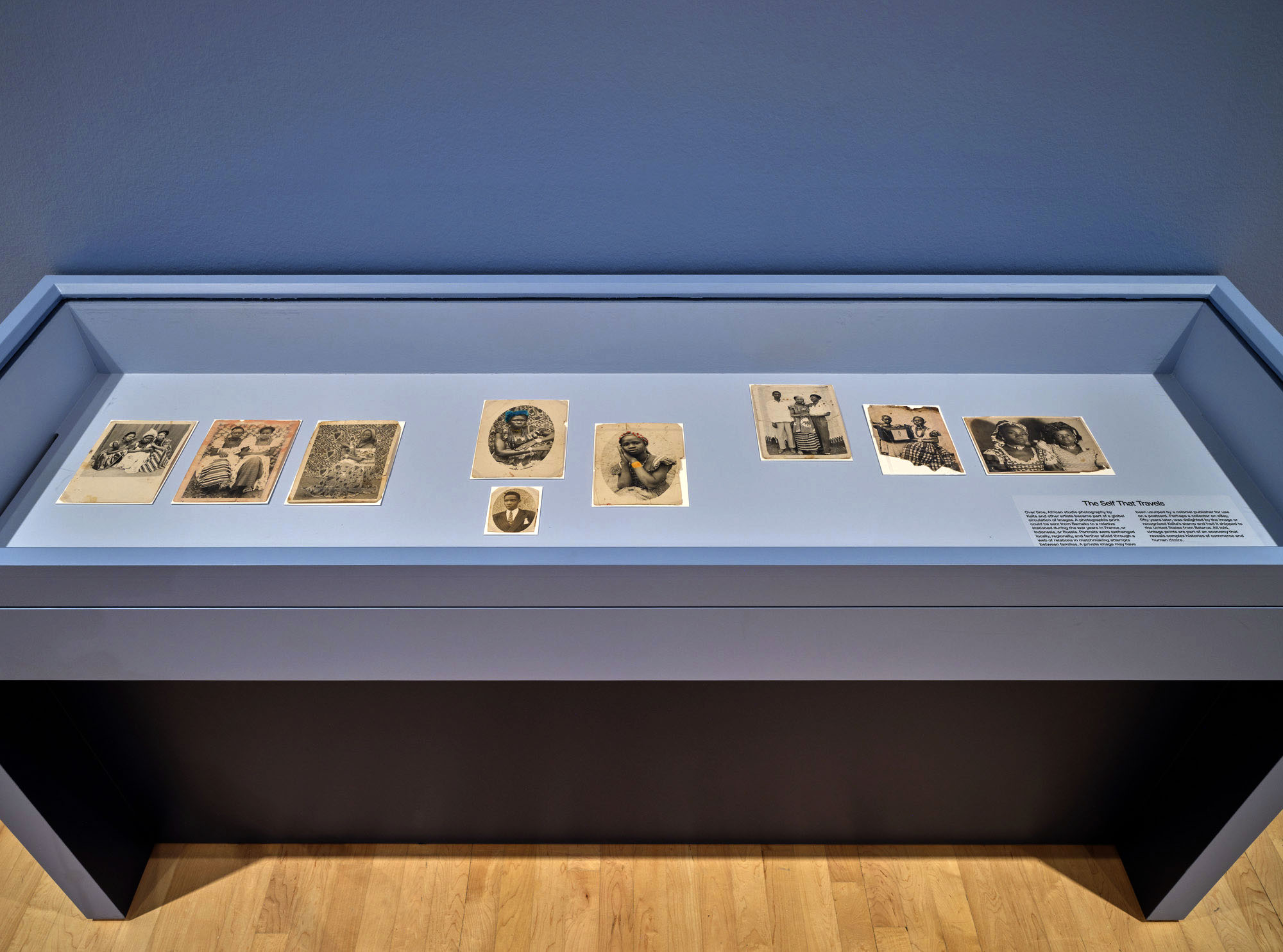
 

Installation view of the exhibition 'Seydou Keïta: A Tactile Lens' at the Brooklyn Museum, New York, October 2025 - May 2026 showing a vitrine with text from the section "The Self That Travels"


Installation view of the exhibition Seydou Keïta: A Tactile Lens at the Brooklyn Museum, New York, October 2025 – May 2026 showing a vitrine with text from the section “The Self That Travels”


A Golden Touch

After printing, photographs could be tinted by hand to heighten the subject’s beauty and status – and to imbue the photograph with the protections afforded by gold. Chekna Touré was a picture framer who hand-coloured photographs for many of Keïta’s clients, often highlighting the subject’s gold jewellery, accessories, and cosmetics. As a marker of wealth, beauty, and identity, gold was essential to Malian women’s dress. 

Mali’s vast gold reserves are some of the world’s oldest and a source of national pride. Its lustrous qualities carried talismanic powers, yet the metal also inspired fear. Believed to be a living organism, gold was said to have its own soul and powers. Goldsmiths would thus meld the element with other metals to help shield the wearer from its full force. 

The vintage prints in this case feature colorisation. While Touré colourised many of Keïta’s photographs, the differing skill levels seen here suggest other people also performed this work, perhaps doing so at home.
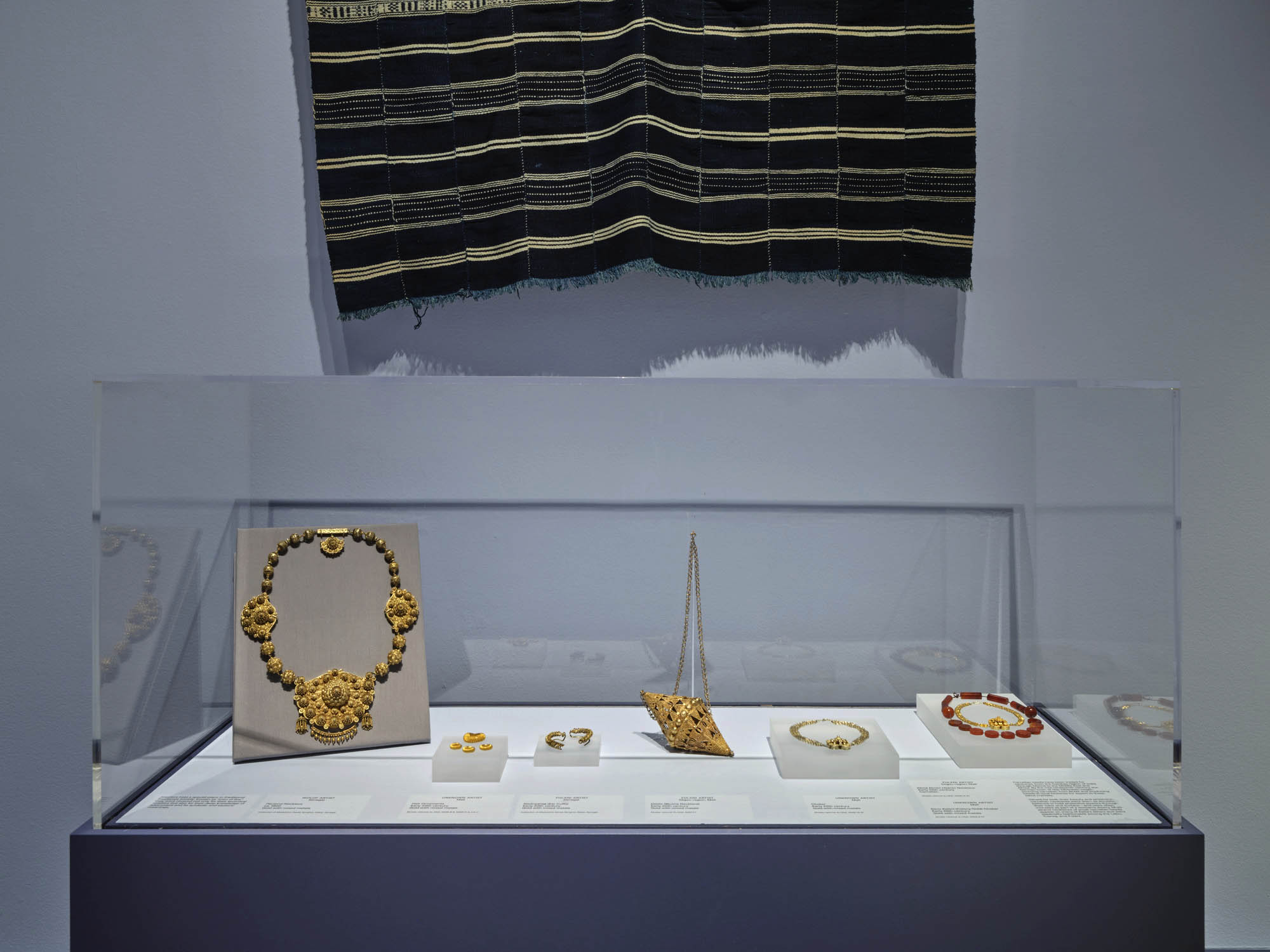
 

Installation view of the exhibition 'Seydou Keïta: A Tactile Lens' at the Brooklyn Museum, New York, October 2025 - May 2026 showing gold and carnelian jewellery


Installation view of the exhibition Seydou Keïta: A Tactile Lens at the Brooklyn Museum, New York, October 2025 – May 2026 showing gold and carnelian jewellery
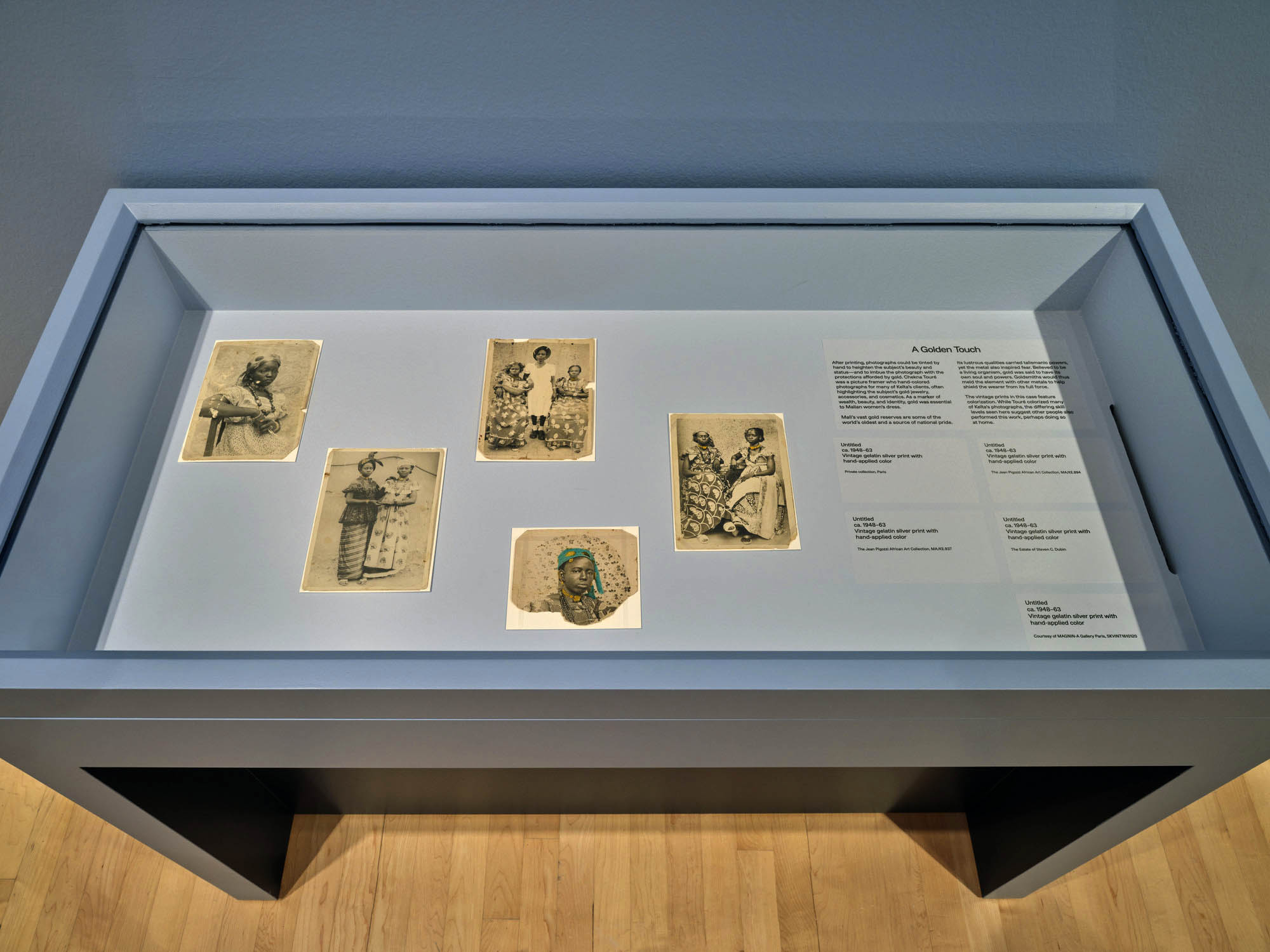
 

Installation view of the exhibition 'Seydou Keïta: A Tactile Lens' at the Brooklyn Museum, New York, October 2025 - May 2026 showing text from the section "A Golden Touch" with at bottom centre, Keïta's photograph 'Untitled' c. 1948-1963


Installation view of the exhibition Seydou Keïta: A Tactile Lens at the Brooklyn Museum, New York, October 2025 – May 2026 showing text from the section “A Golden Touch” with at bottom centre, Keïta’s photograph Untitled c. 1948-1963 (below)
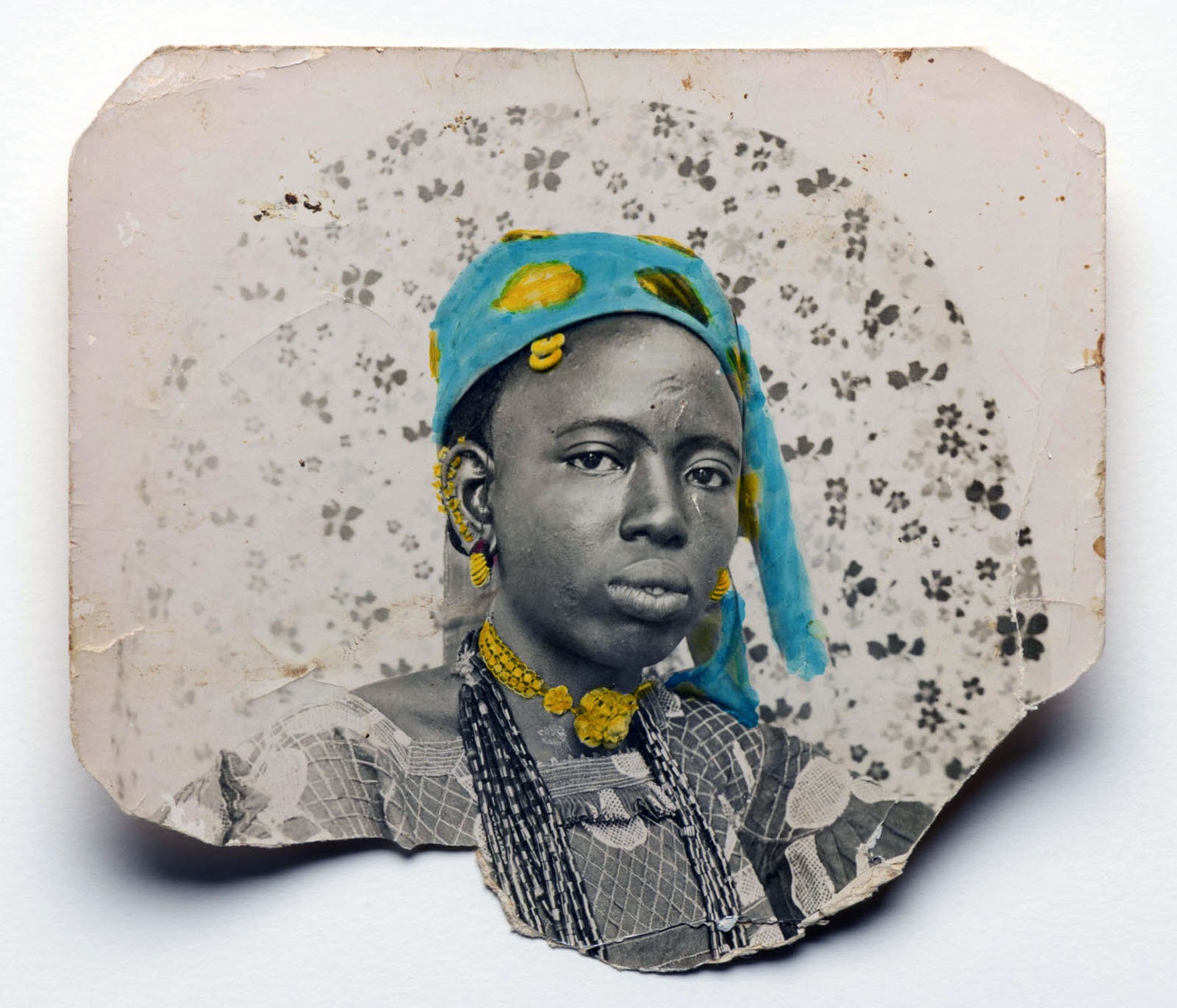
 

Seydou Keïta (Malian, c. 1921-2001) 'Untitled' c. 1948-1963


Seydou Keïta (Malian, c. 1921-2001)
Untitled
c. 1948-1963
Vintage gelatin silver print
The Estate of Steven C. Dubin
© SKPEAC/Seydou Keïta
Courtesy The Jean Pigozzi Collection of African Art and Danziger Gallery, NY
Photo: Brooklyn Museum


Preserving A Legacy

The Keïta family’s generous loan of film negatives from the estate’s remaining archive presents a rare opportunity to reflect on the practical, ethical, and technical questions involved in the preservation of African photography. Conservation of African photographic archives from the continent faces distinct challenges, ranging from climate-related degradation and limited access to preservation materials and technologies to an overall lack of institutional infrastructure and support for artists and their legacies.

Too fragile to survive extensive handling or prolonged light exposure, Keïta’s negatives could not be cleaned or scanned without risking damage. Instead, each was photographed under controlled conditions at a conservation lab and reproduced for the exhibition.

Lace

Lace features prominently in Keïta’s photographs – appearing as trim on dress sleeves, integrated into garments made from wax print and other fabrics, worn as full lace dresses or as sheer boubous layered over other clothing. European lace was highly coveted, expensive, and difficult to obtain. In response, Soudanaise women created their own lace by hand, layering two pieces of white cotton percale and cutting intricate patterns using stencils. These garments, now rare heirlooms, were once considered second to colonial imports. Today, they are recognized for their exceptional beauty and craftsmanship, emblems of pride in Soudanaise women’s creativity and cultural identity.

Carnelian Beads

Carnelian beads have been traded for centuries, from the Cambay region of India through Mecca to the Middle East and Africa. By the mid-nineteenth century, the German town of Idar-Oberstein began sourcing carnelian from Brazil and producing beads in local factories for export to these same markets. 

Valued for both their beauty and protection, carnelian necklaces were worn as amulets – believed to hold protective powers through their colour and surface – and were often included as part of a woman’s dowry. Multi-strand necklaces of small carnelian beads appear on many of Keïta’s sitters and were especially fashionable among the Lebu, Tuareg, and Fulani.

Marabaka

During the independence era, anticolonial leader Amílcar Lopes Cabral popularised the marabaka, a Czech-style hat that became a widespread symbol of Pan-African solidarity. First imported from Czechia, the hat, known as zmijovka in Czech, derives its zigzag pattern from that observed on the skin of a viper (zmije in Czech). 

In West Africa, the hat’s black-and-white design is reminiscent of Islamic aesthetics seen on indigenous textiles such as Dogon and Bamana resist cloths and weaving. The snake motif also speaks to the region’s affinity for the culturally significant serpent and water snake. 

Commemorative Cloths

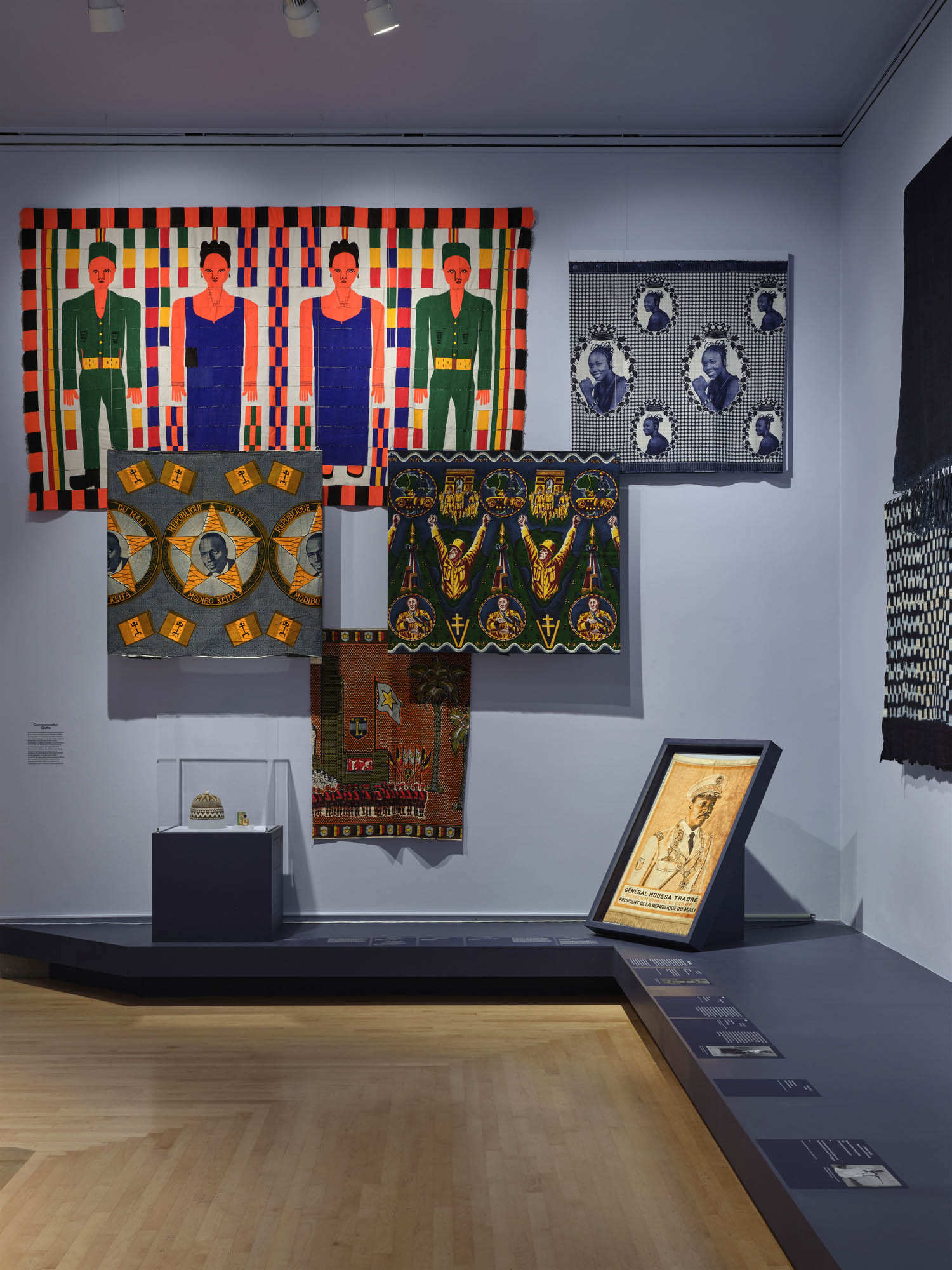
In the post-independence era, political leaders often commissioned commemorative cloths bearing their own images to bolster support and cultivate loyalty – and even foster cults of personality. Citizens wore such cloths regardless of political affiliation, at times out of fear of reprisal. Advances in textile printing and the development of more affordable “fancy print” cloths in the 1940s made many commemorative cloths inexpensive to produce. The examples on view span a range of iconography, from wax-print cloths honouring African soldiers who served in World War II and Mali’s first post-independence president, Modibo Keïta, to a fancy print featuring French President Charles de Gaulle . 

Pagne

A woman’s pagne is the foundation of her wardrobe. Typically woven or cut to a length of about two yards, the pagne functions as a wrap that conceals the waist, thighs, and buttocks. Beyond their function, pagnes also symbolize lineage, protection, and a woman’s evolving identity. 

Finely woven and dyed pagnes are presented at birth and during key life rituals such as dowry exchanges, marriage celebrations, and pregnancies. Women rarely part with their pagnes. Above all, they are talismans – protective layers passed down from generation to generation. A woman selects which ones to give to her children and which, ultimately, will accompany her to the grave. 

Dutch Legacies

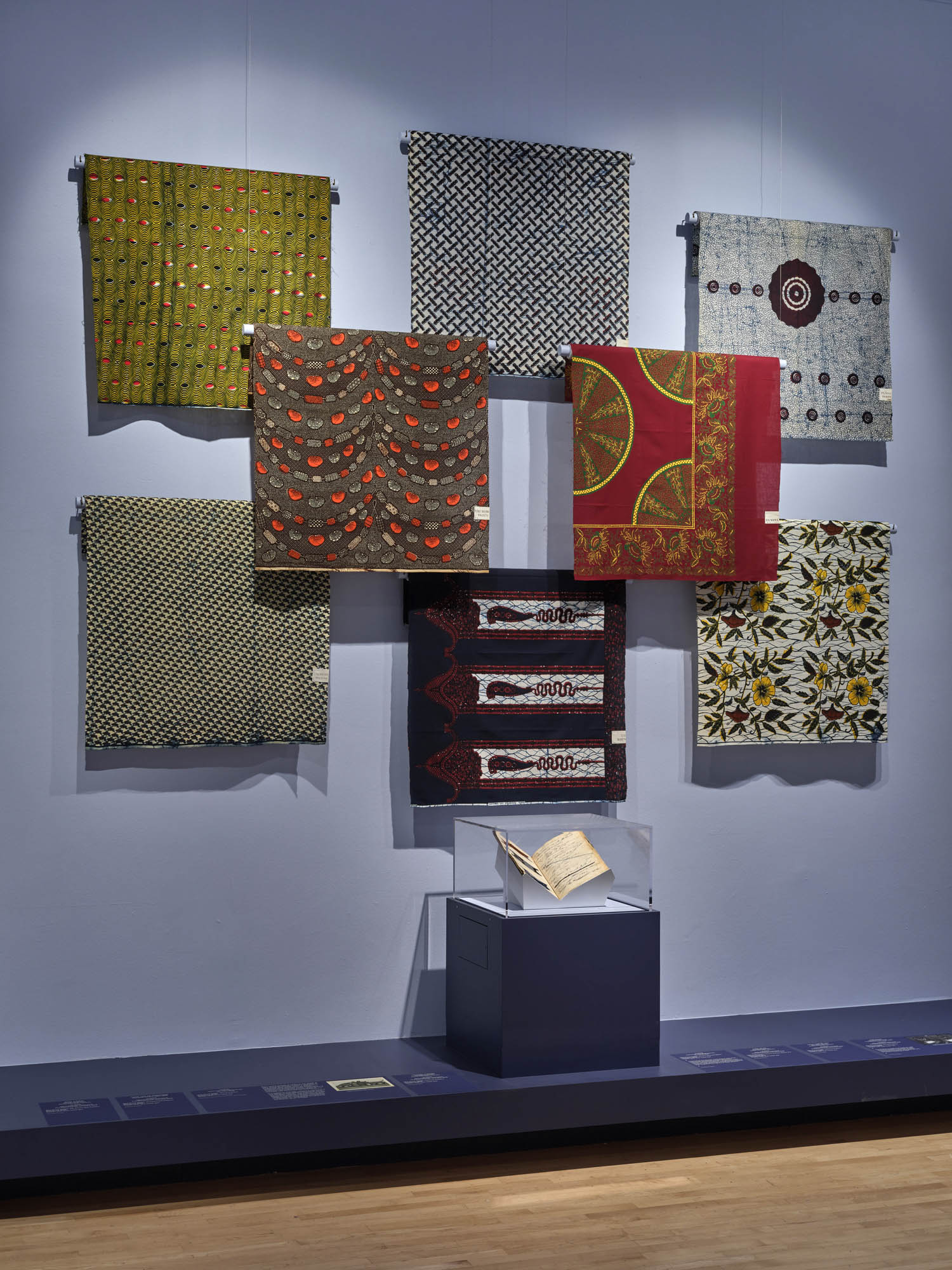
Known in the postwar era as “the Chanel of Africa,” the Dutch textile company Vlisco has been the foremost purveyor of African wax-print textiles since the late nineteenth century. The company industrialised the Indonesian batik process, in which patterns are drawn in wax on cotton fabric that is then dyed. When the wax is removed, the design is revealed, protected from the dye by the wax resist.

Though Vlisco did not actively market its products in the Sahel region in the 1940s to 1970s, wax prints spread through African trade networks and became widely popular, including among many of Keïta’s sitters. While the patterns were created by Dutch designers, they were named by Ghanaian and Togolese female fabric traders and their female clients, who interpreted the patterns’ meanings through a local, social, or spiritual lens .

The colour, design, and pattern names of wax prints thus carry personal and communal meanings – much like Keïta’s photographs.

Widely associated with coming-of-age rituals, wax prints have long marked key life events such as birth, puberty, and marriage. As independence movements gained momentum across the continent, wax-print textiles came to symbolise cosmopolitanism and a growing sense of Pan-African identity.

The Studio Backdrop

In Keïta’s photographs, traditional and modern textiles appear as studio backdrops or layered on European-style beds, their bold patterns often echoed in the sitters’ garments. Featuring examples of such textiles, this installation highlights the evolution of Malian weaving traditions during the independence era. The 1950s and early post-independence years saw rapid innovations in textile design, particularly in the use of colour. In contrast with traditional indigo and earth tones produced using natural dyes, these modern fabrics feature vivid hues made from synthetic dyes and incorporate more elaborate, figurative motifs that reflect the period’s shifting social concerns and aspirations.

These blankets served multiple functions. In everyday use, they provided protection from mosquitoes, cold temperatures, and sandstorms in the Sahel. When folded and draped over the shoulder of a well-dressed man, they signaled status. They were also important in systems of exchange – traded, gifted, and ceremonially displayed, most notably during dowry presentations and marriage celebrations.
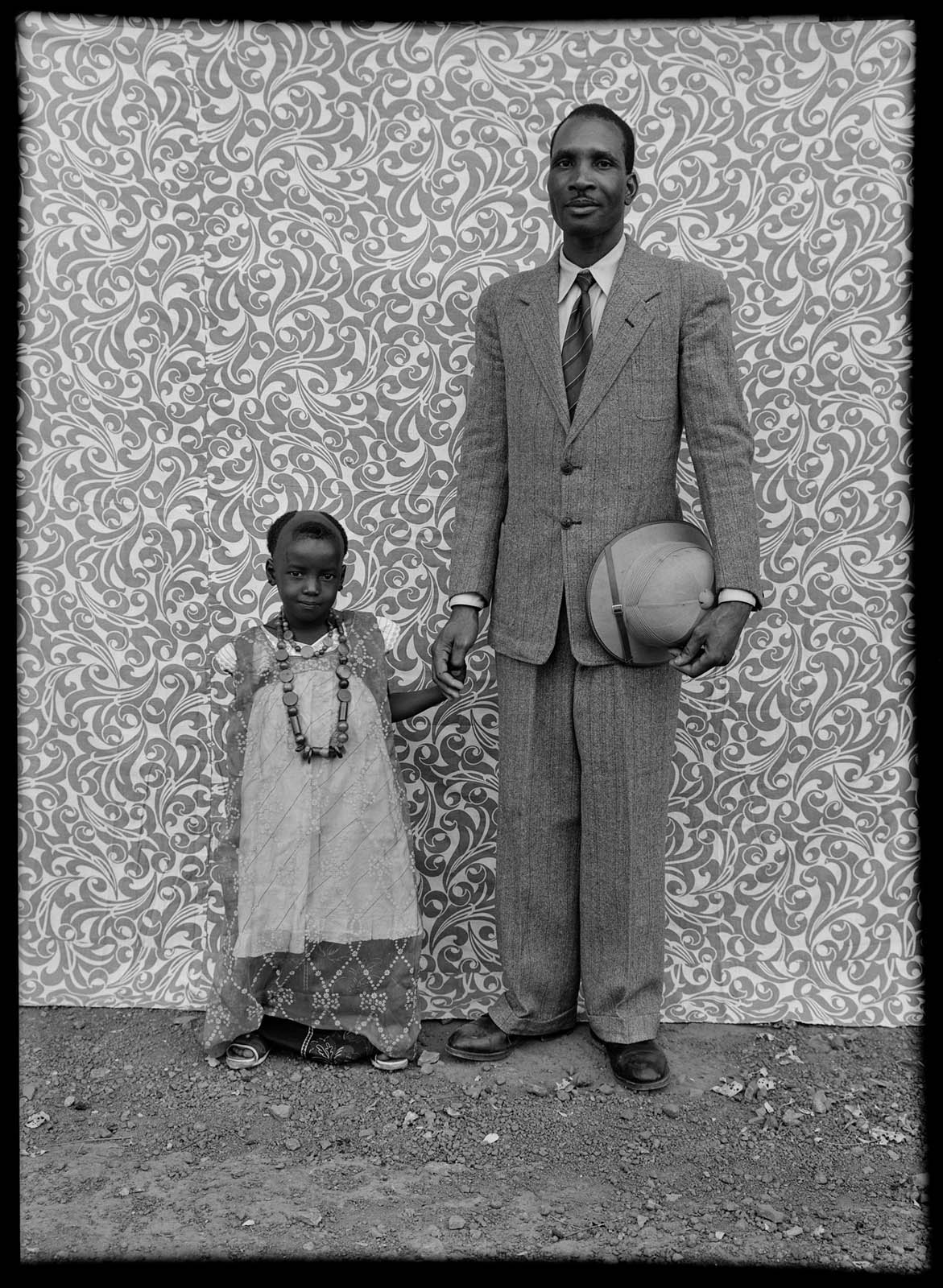
 

Seydou Keïta (Malian, c. 1921-2001) 'Untitled' 1957-1960, printed 1994


Seydou Keïta (Malian, c. 1921-2001)
Untitled
1949-1951, printed 1995
Gelatin silver print
© SKPEAC/Seydou Keïta
Courtesy The Jean Pigozzi Collection of African Art and Danziger Gallery, NY
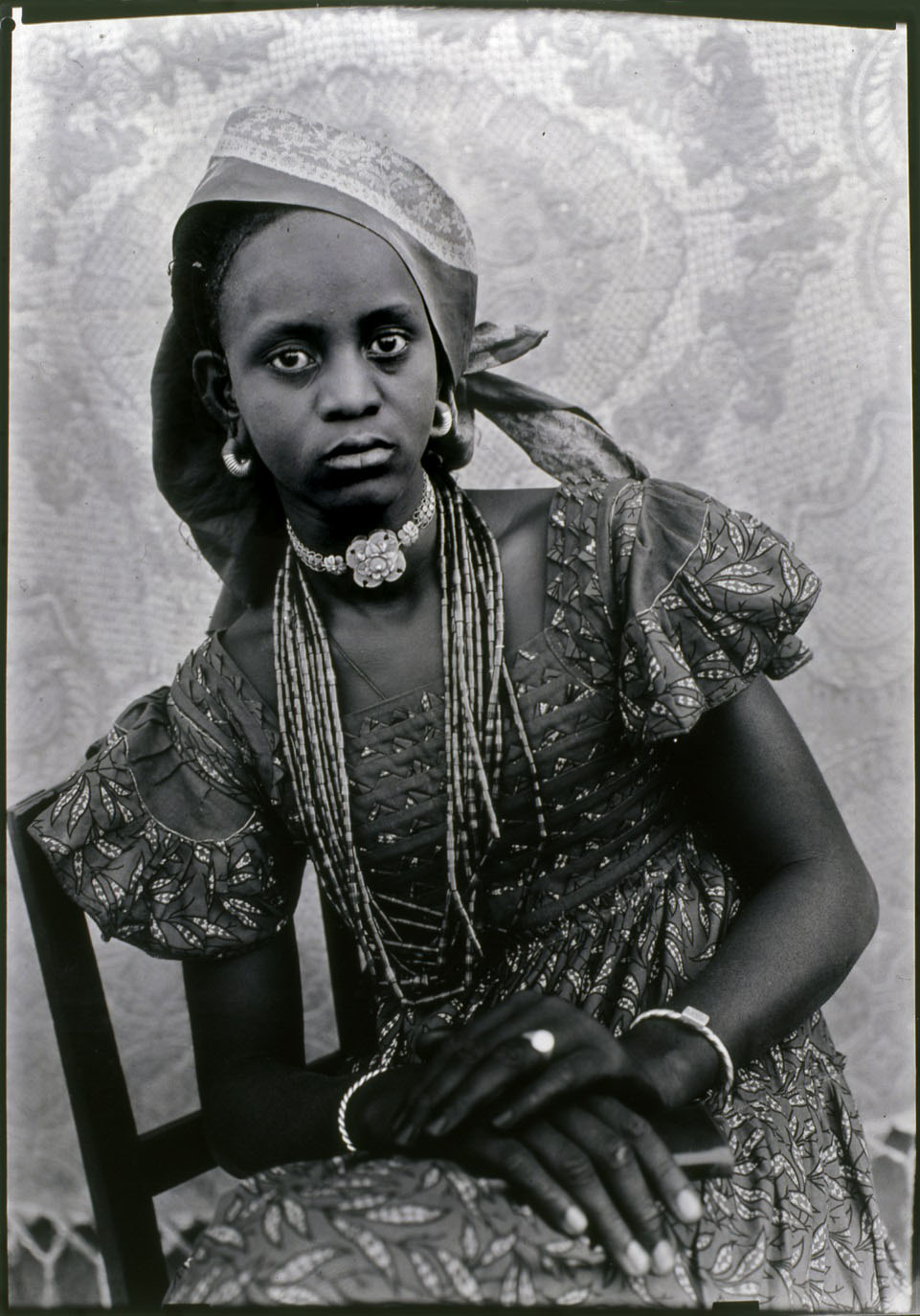
 

Seydou Keïta (Malian, c. 1921-2001) 'Untitled' 1949-1951, printed 1995


Seydou Keïta (Malian, c. 1921-2001)
Untitled
1949-1951, printed 1995
Gelatin silver print
© SKPEAC/Seydou Keïta
Courtesy The Jean Pigozzi Collection of African Art and Danziger Gallery, NY
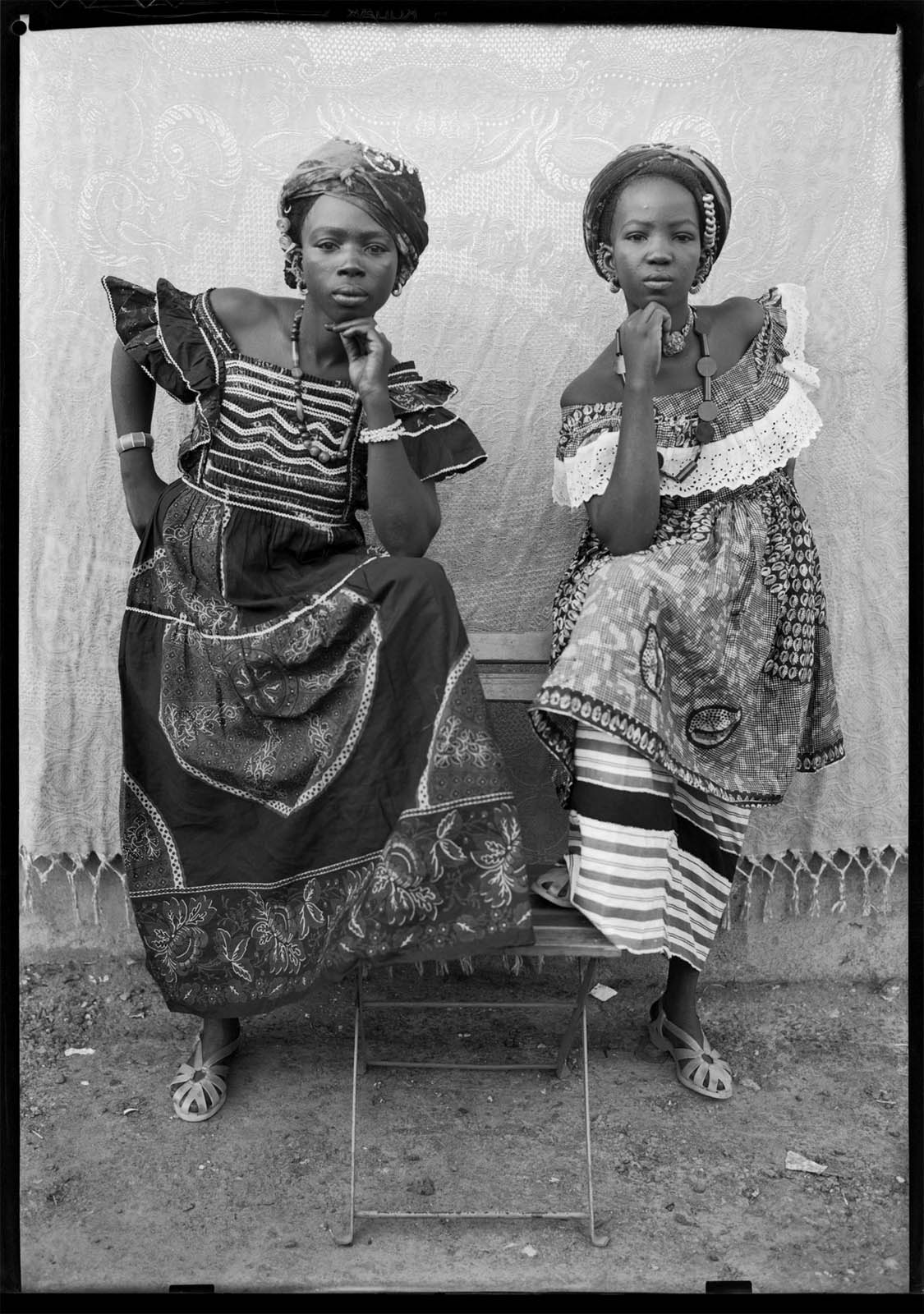
 

Seydou Keïta (Malian, c. 1921-2001) 'Untitled' 1952-1955, printed ca. 1994-2001


Seydou Keïta (Malian, c. 1921-2001)
Untitled
1952-1955, printed c. 1994-2001
Gelatin silver print
© SKPEAC/Seydou Keïta
Courtesy The Jean Pigozzi Collection of African Art and Danziger Gallery, NY
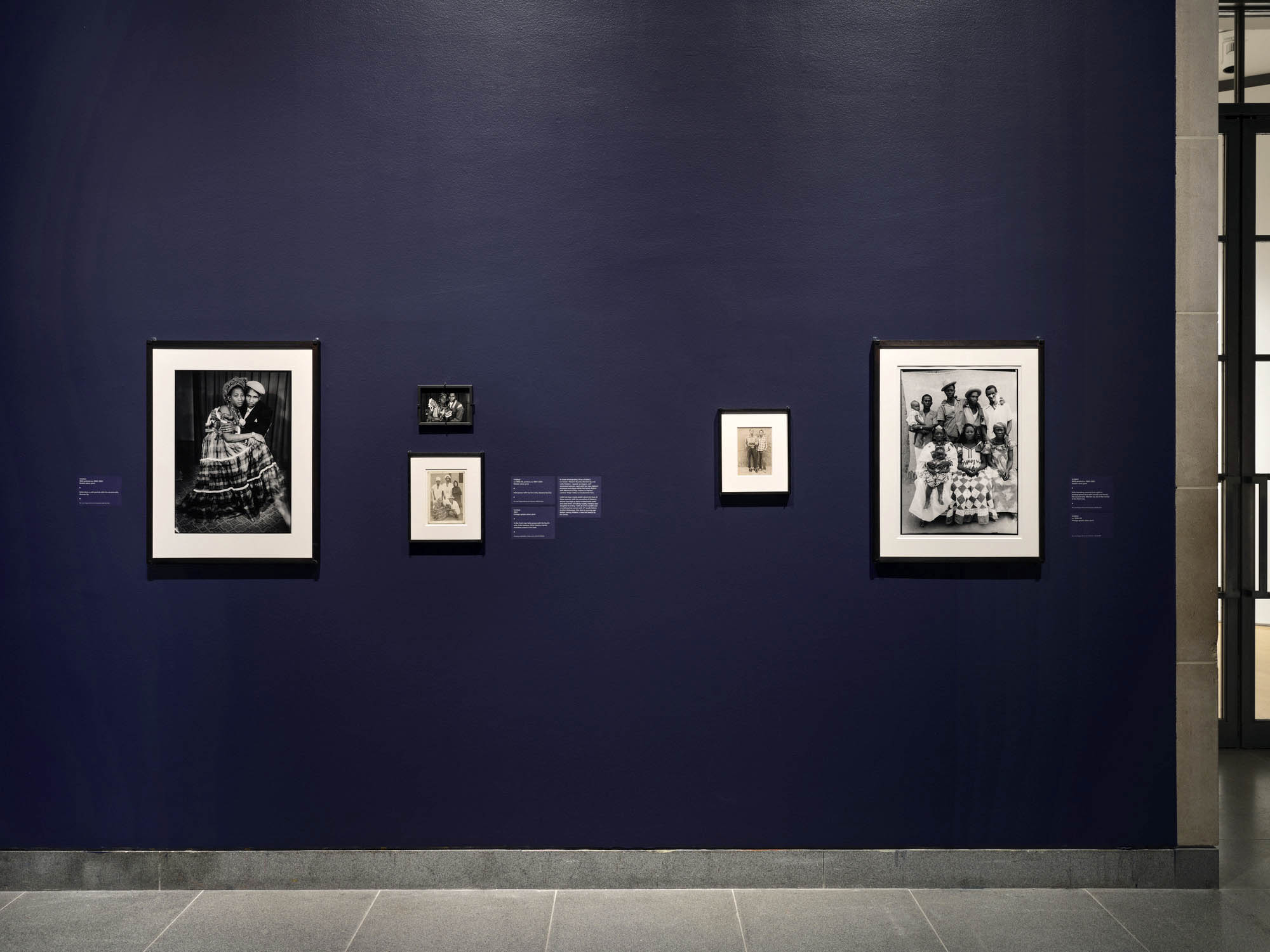
 

Installation view of the exhibition 'Seydou Keïta: A Tactile Lens' at the Brooklyn Museum, New York, October 2025 - May 2026


Installation view of the exhibition Seydou Keïta: A Tactile Lens at the Brooklyn Museum, New York, October 2025 – May 2026
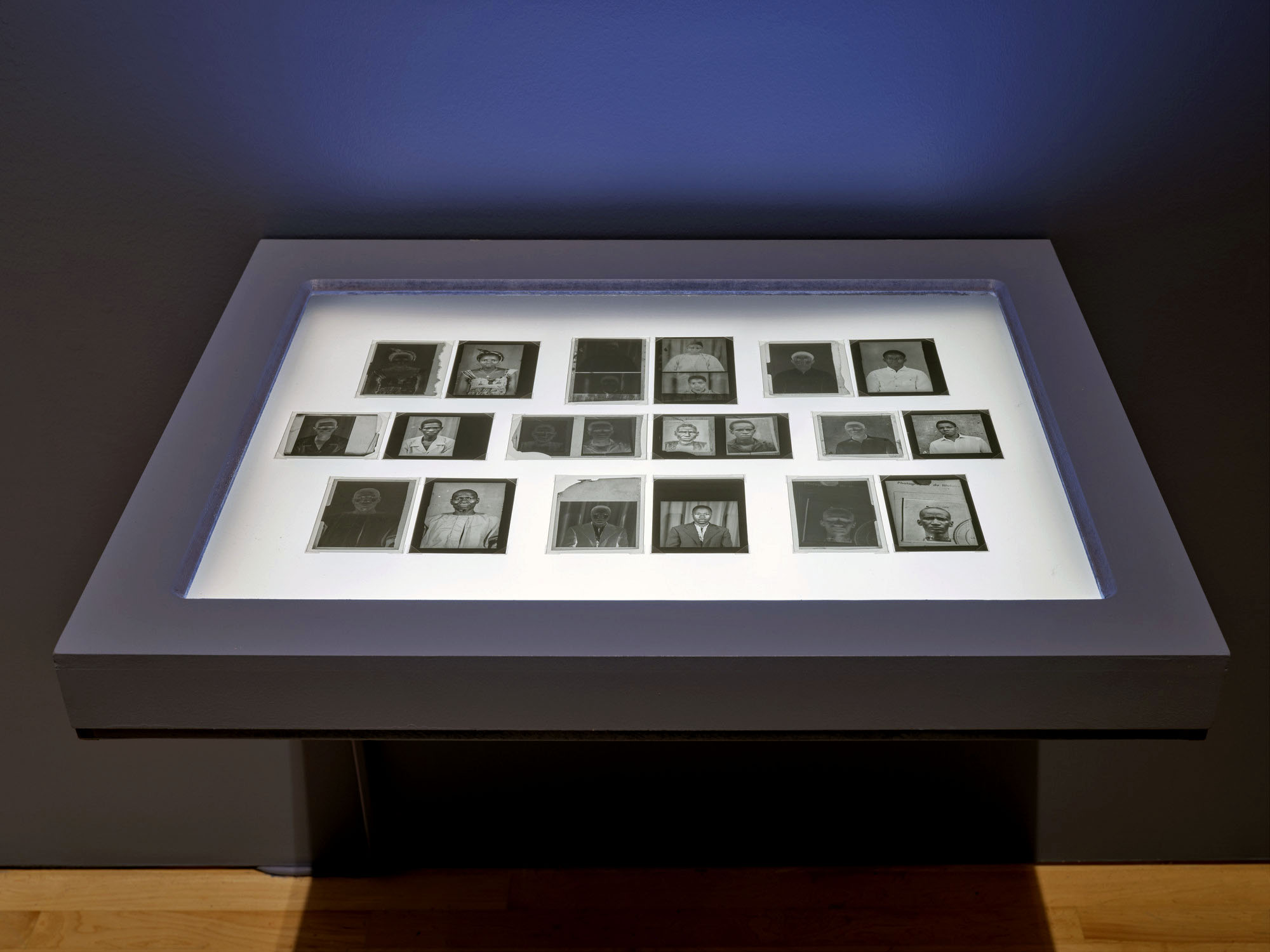
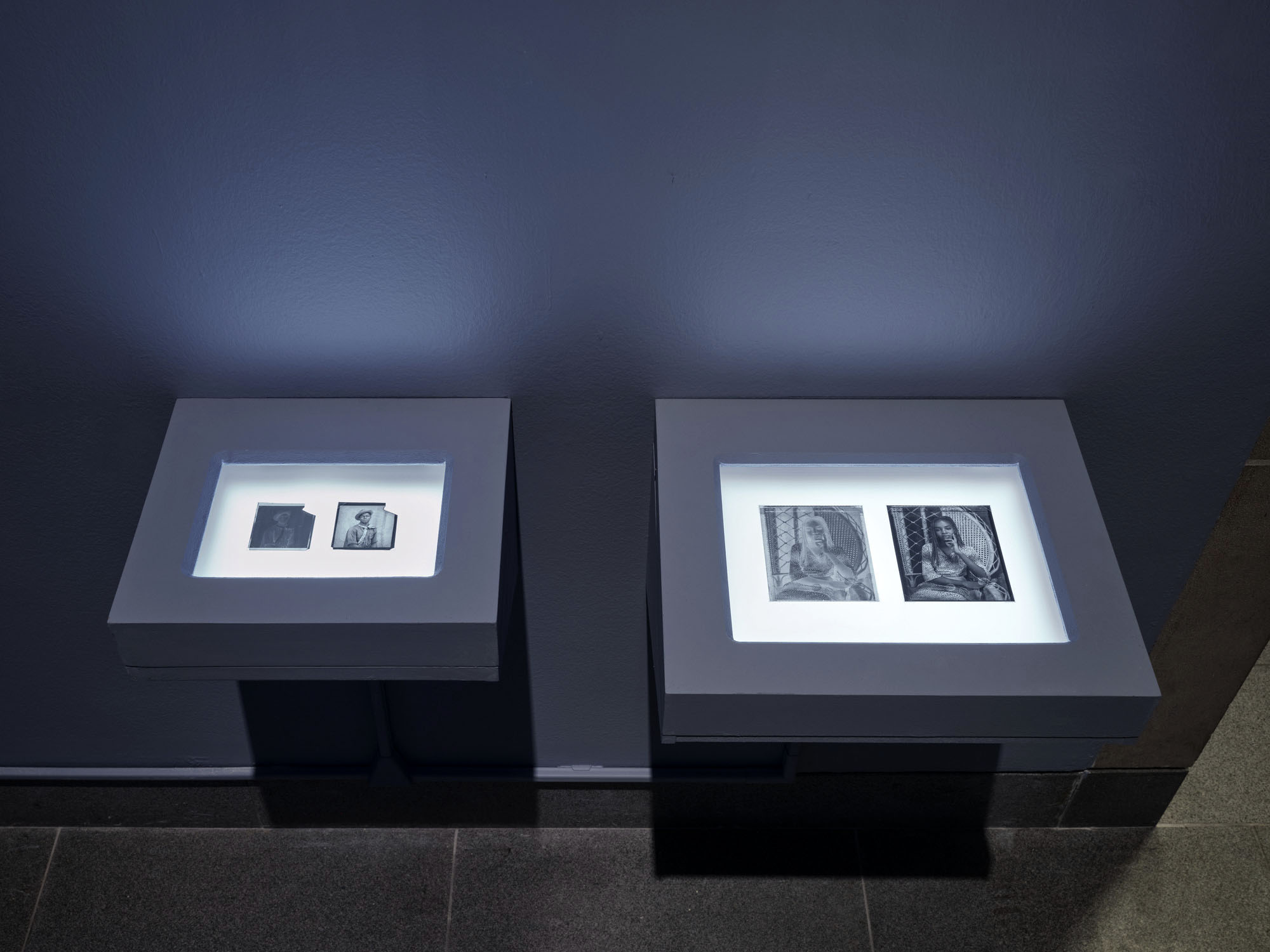
 

Installation view of the exhibition 'Seydou Keïta: A Tactile Lens' at the Brooklyn Museum, New York, October 2025 - May 2026 showing vitrines with facsimile cellulose acetate negatives and positive reproductions from digitised negatives c. 1950-1959


Installation views of the exhibition Seydou Keïta: A Tactile Lens at the Brooklyn Museum, New York, October 2025 – May 2026 showing vitrines with facsimile cellulose acetate negatives and positive reproductions from digitised negatives c. 1950-1959


Seydou Keïta (Malian, c. 1921-2001) 'Untitled' 1959


Seydou Keïta (Malian, c. 1921-2001)
Untitled
1959, printed 1998
Gelatin silver print
© SKPEAC/Seydou Keïta
Courtesy The Jean Pigozzi Collection of African Art
 

Installation view of the exhibition 'Seydou Keïta: A Tactile Lens' at the Brooklyn Museum, New York, October 2025 - May 2026


Installation view of the exhibition Seydou Keïta: A Tactile Lens at the Brooklyn Museum, New York, October 2025 – May 2026
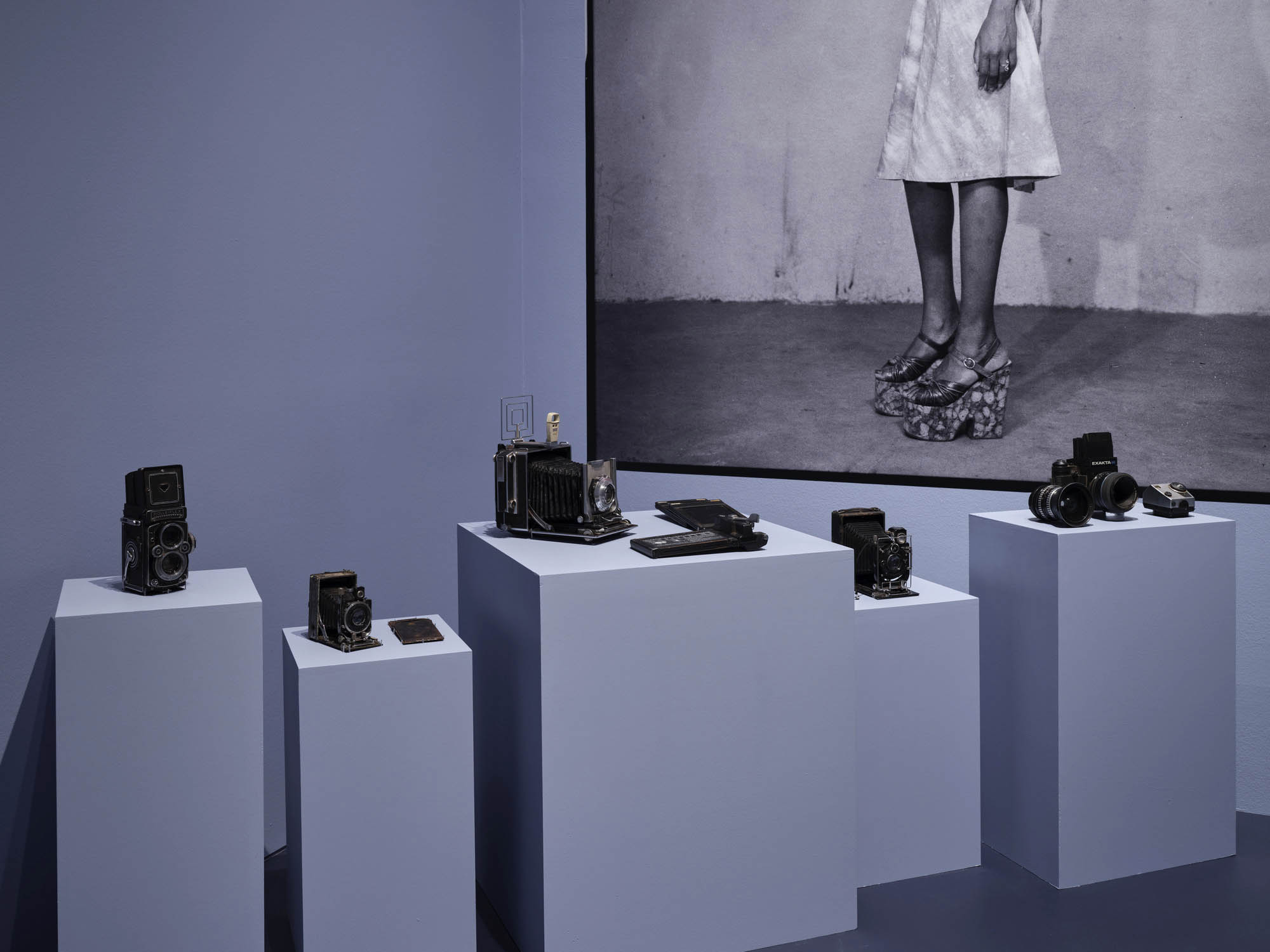
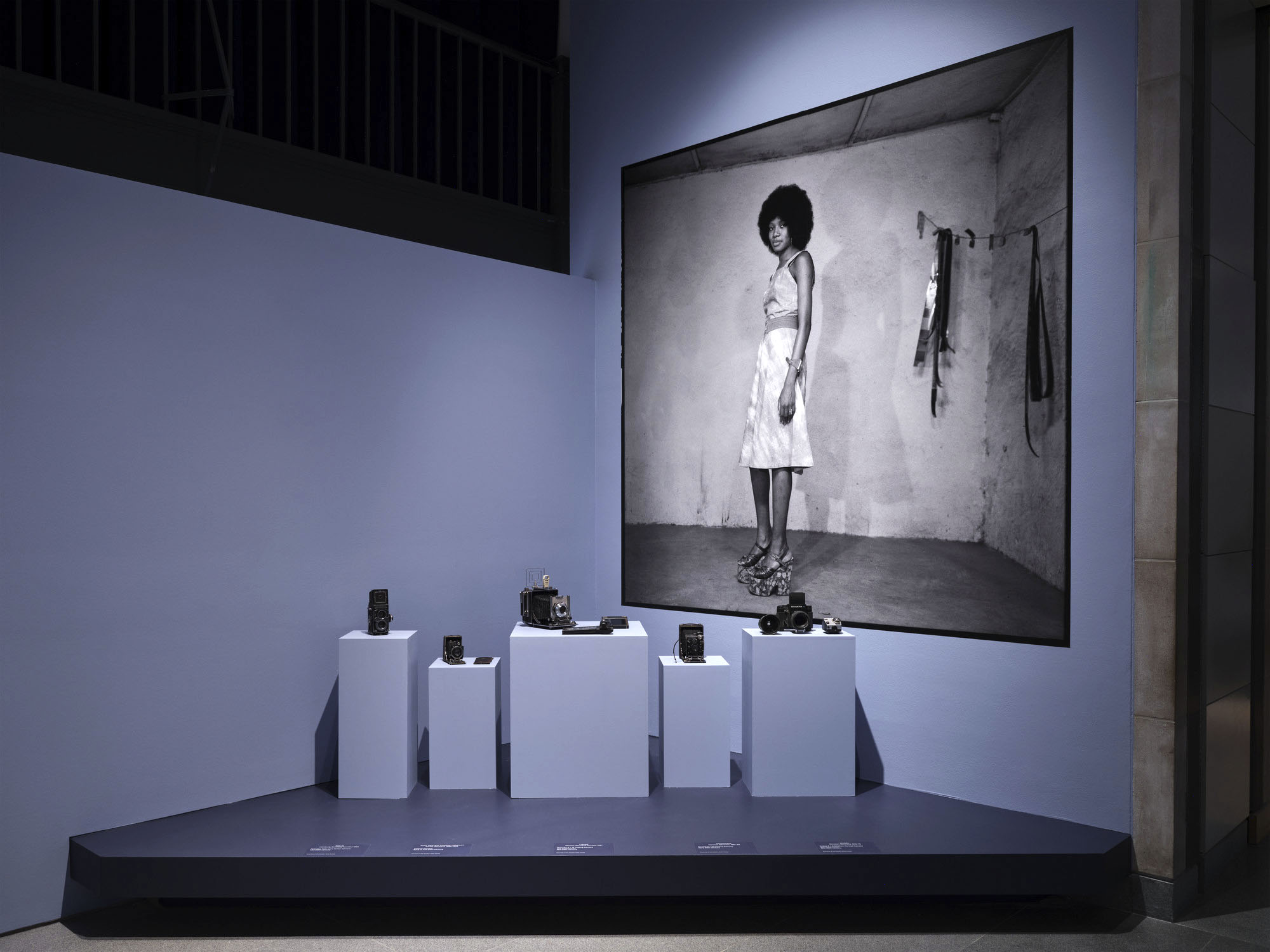
 

Installation view of the exhibition 'Seydou Keïta: A Tactile Lens' at the Brooklyn Museum, New York, October 2025 - May 2026 showing Keïta's medium format cameras and his photograph, 'Untitled' late 1940s to mid-1970s


Installation views of the exhibition Seydou Keïta: A Tactile Lens at the Brooklyn Museum, New York, October 2025 – May 2026 showing Keïta’s medium format cameras and his photograph, Untitled late 1940s to mid-1970s (below)
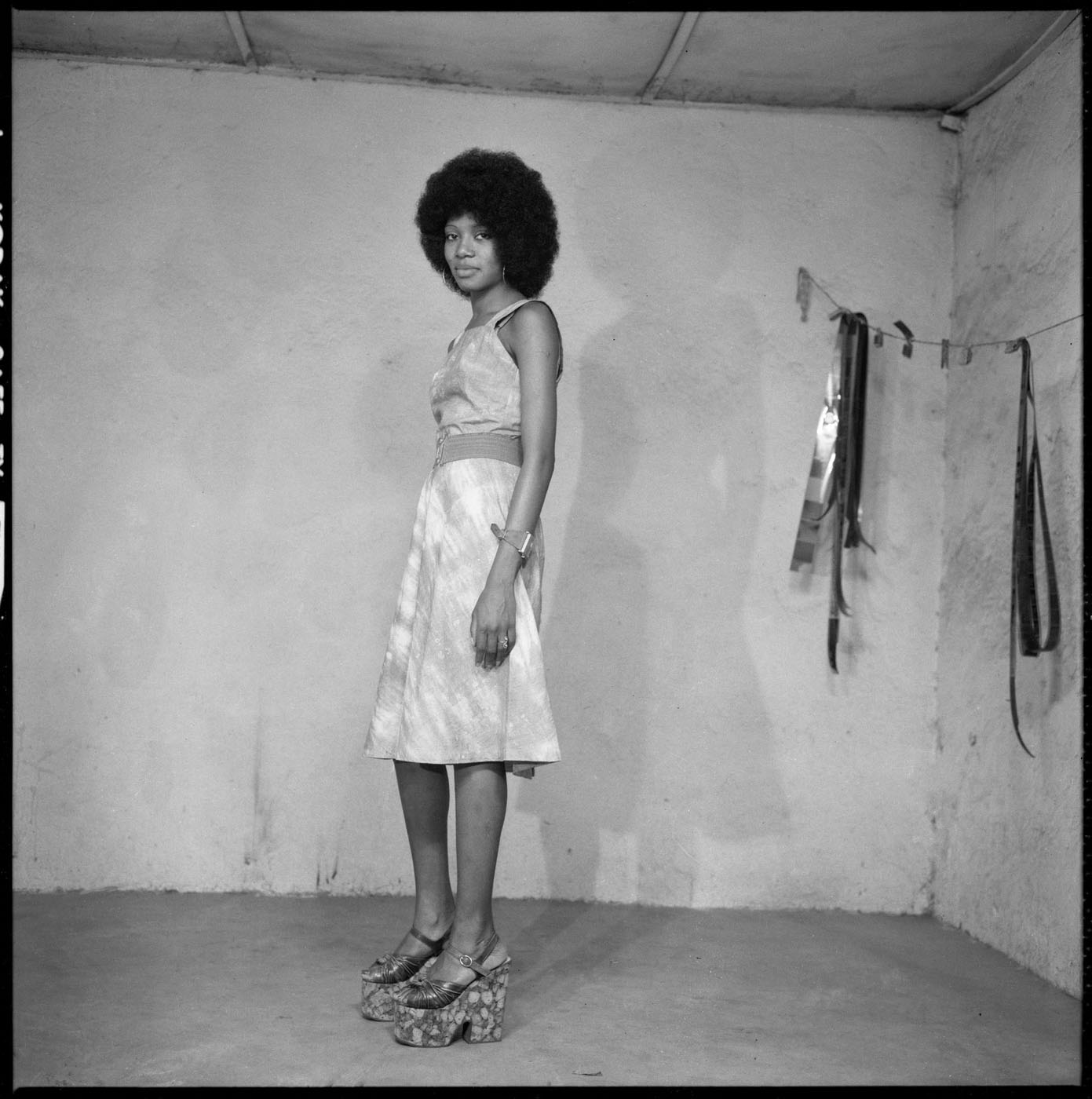
 

Seydou Keïta (Malian, c. 1921-2001) 'Untitled' late 1940s to mid-1970s


Seydou Keïta (Malian, c. 1921-2001)
Untitled
late 1940s to mid-1970s
Positive reproduction from digitised negative
Courtesy of the Seydou Keïta Family
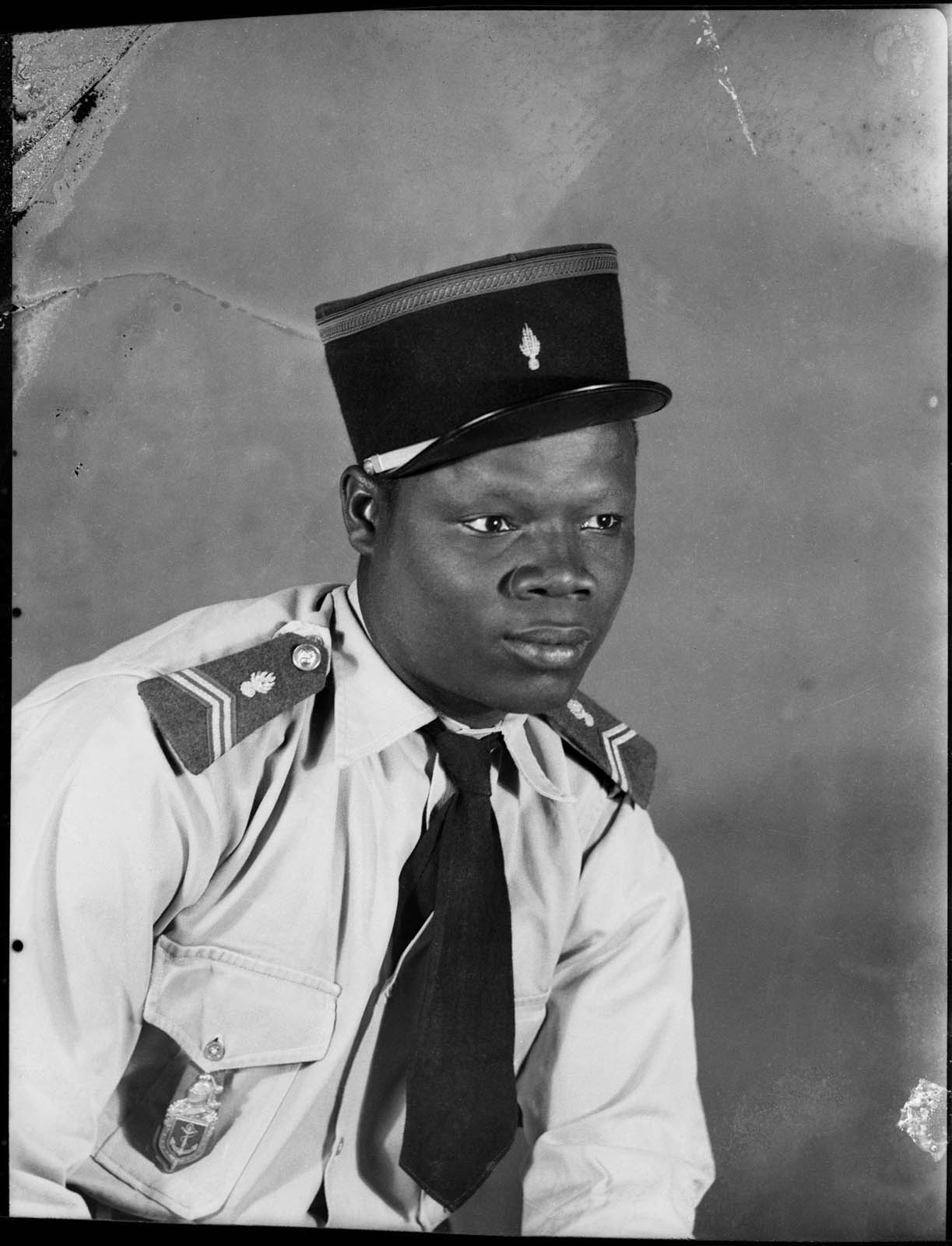
 

Seydou Keïta (Malian, c. 1921-2001) 'Untitled' late 1940s to mid-1970s


Seydou Keïta (Malian, c. 1921-2001)
Untitled
late 1940s to mid-1970s
Positive reproduction from digitised negative
Courtesy of the Seydou Keïta Family
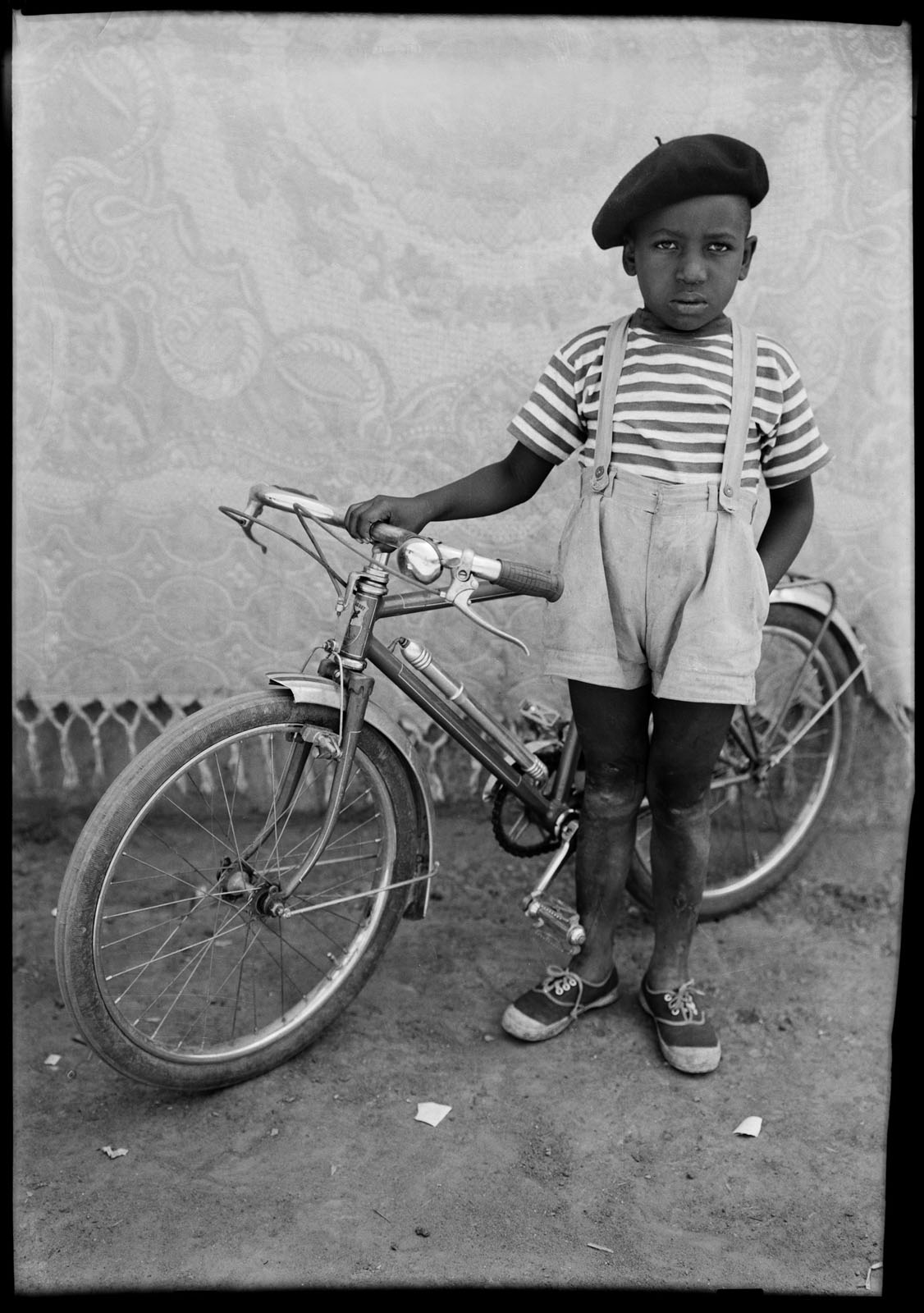
 

Seydou Keïta (Malian, c. 1921-2001) 'Untitled' 1949-1951, printed 1995


Seydou Keïta (Malian, c. 1921-2001)
Untitled
1949-1951, printed 1995
Gelatin silver print
© SKPEAC/Seydou Keïta
Courtesy The Jean Pigozzi Collection of African Art and Danziger Gallery, NY


With one hand on the handlebars of a bicycle and the other tucked in his pocket, this child meets the camera with a stern expression. Here, the boy’s French beret, shoes, and bicycle – imported goods reserved for the elite – speak to the deep-rooted impact of French colonialism across generations, even as the country moved toward independence.
 

Installation view of the exhibition 'Seydou Keïta: A Tactile Lens' at the Brooklyn Museum, New York, October 2025 - May 2026


Installation views of the exhibition Seydou Keïta: A Tactile Lens at the Brooklyn Museum, New York, October 2025 – May 2026


Brooklyn Museum
200 Eastern Parkway
Brooklyn, NY 11238-6052
Phone: (718) 638-5000

Opening hours:
Wednesday – Sunday 11am – 6pm
Closed Mondays and Tuesdays
Closed Thanksgiving, Christmas, and New Year’s Day
Brooklyn Museum website

LIKE ART BLART ON FACEBOOK

Back to top

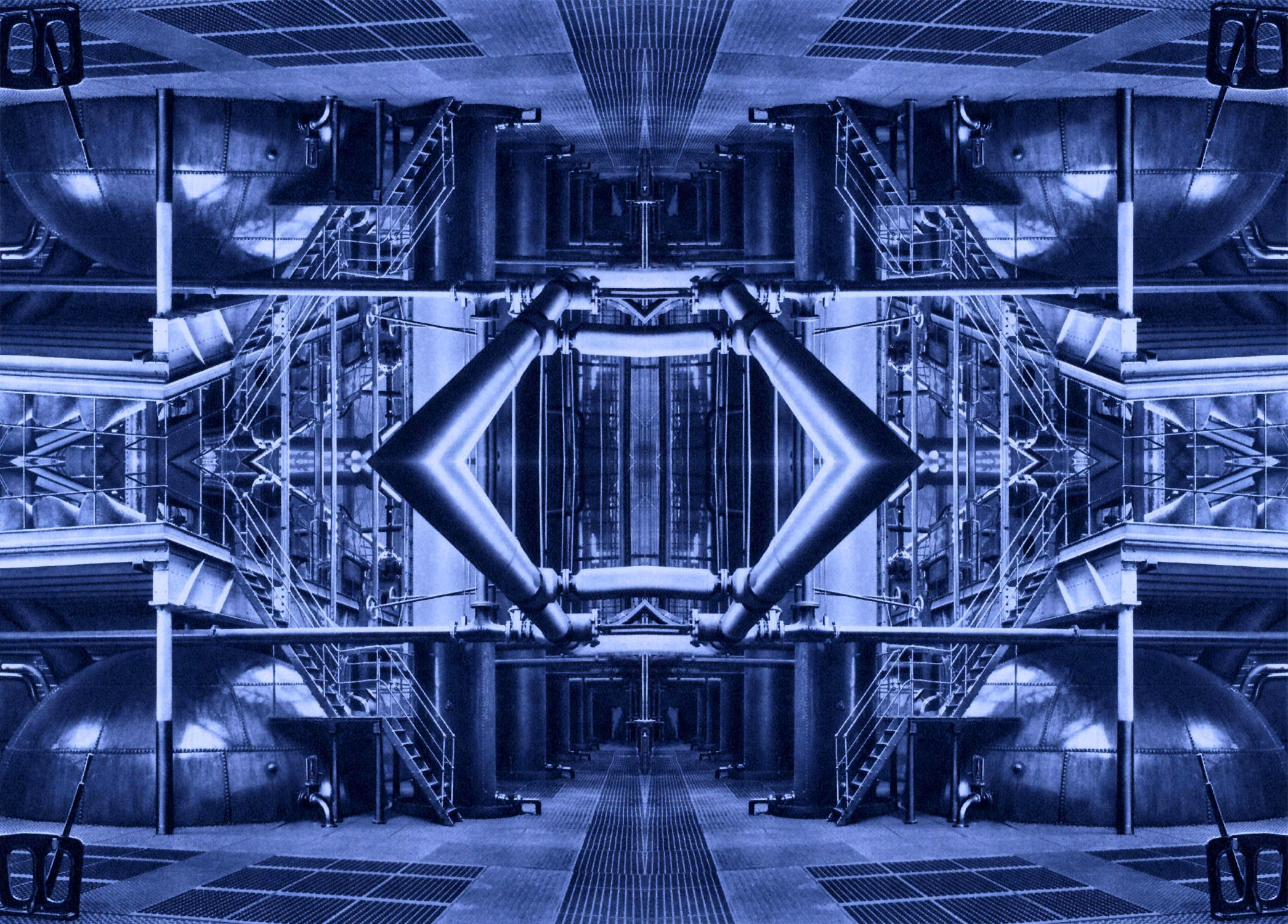
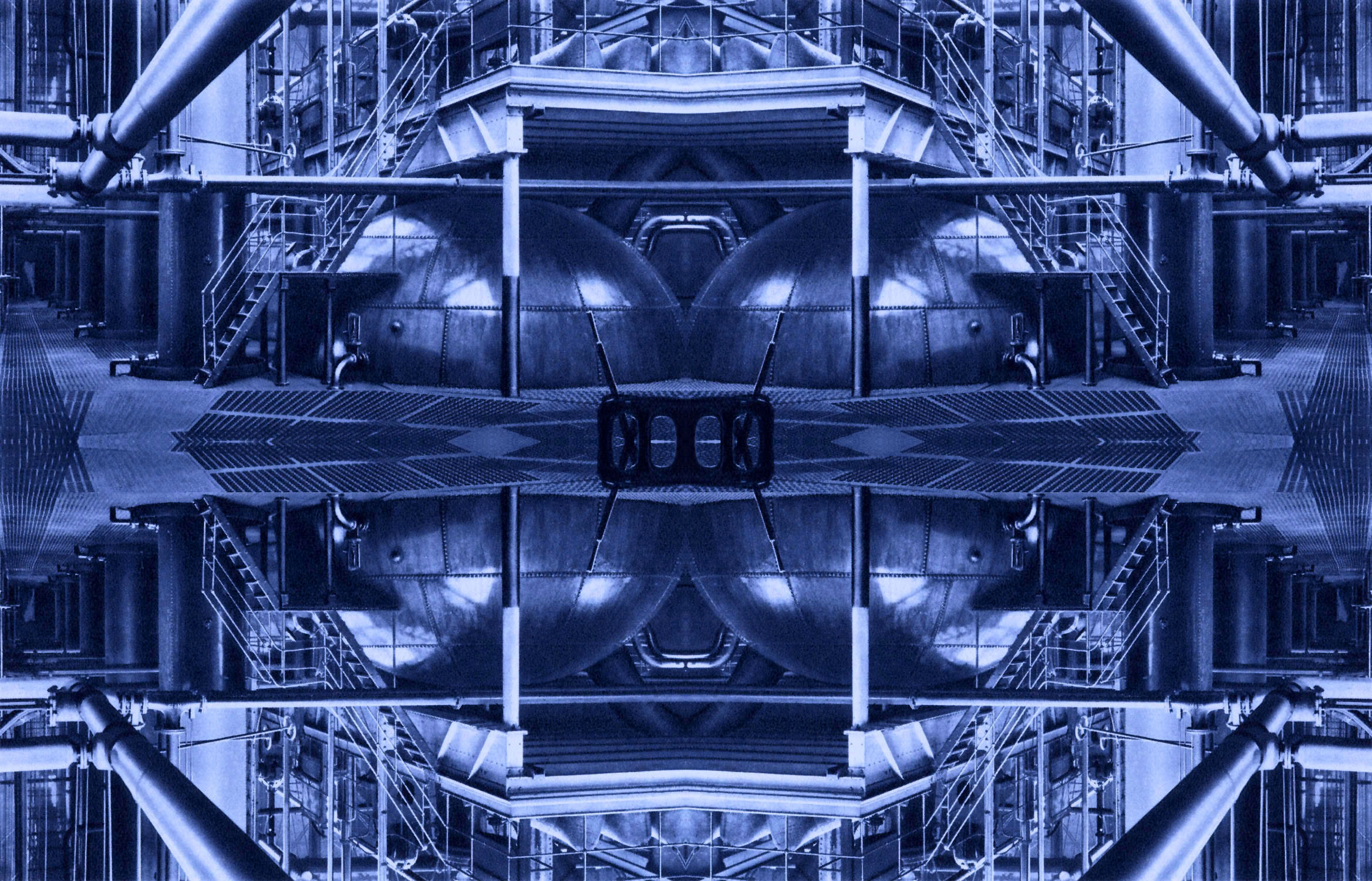
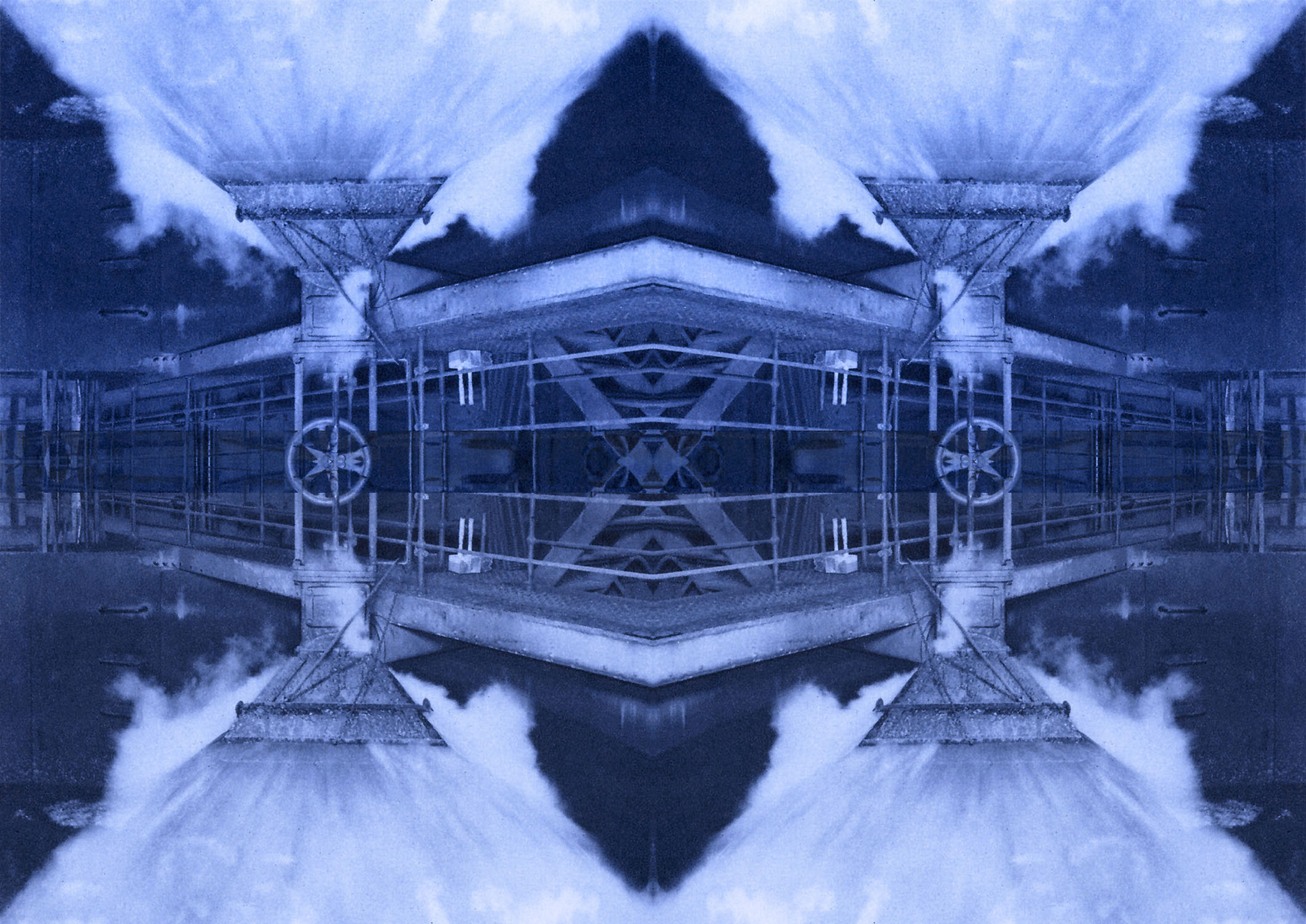
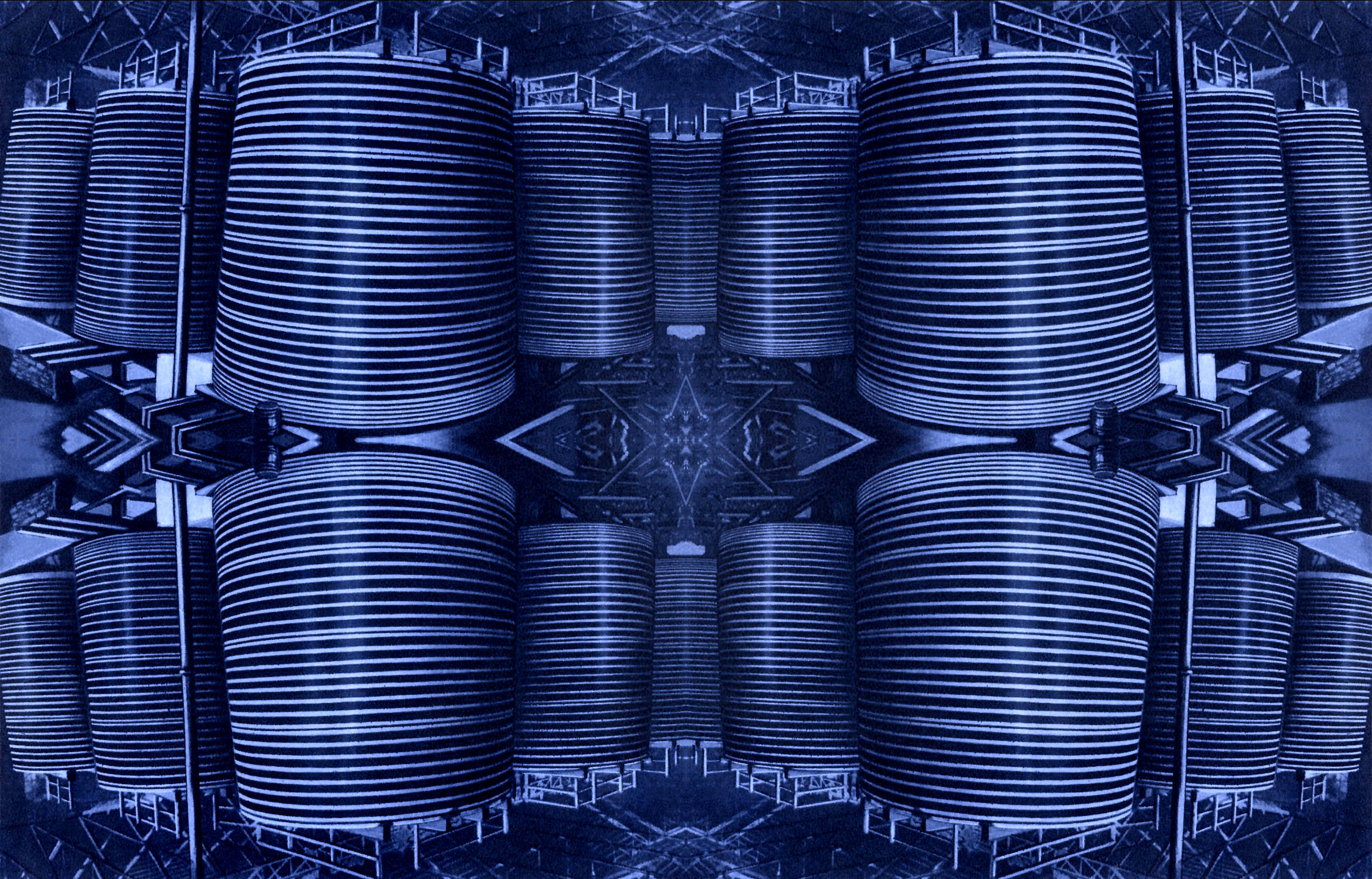
Photographic series: Marcus Bunyan. ‘Metropolis’ 2025-2026

February 2026


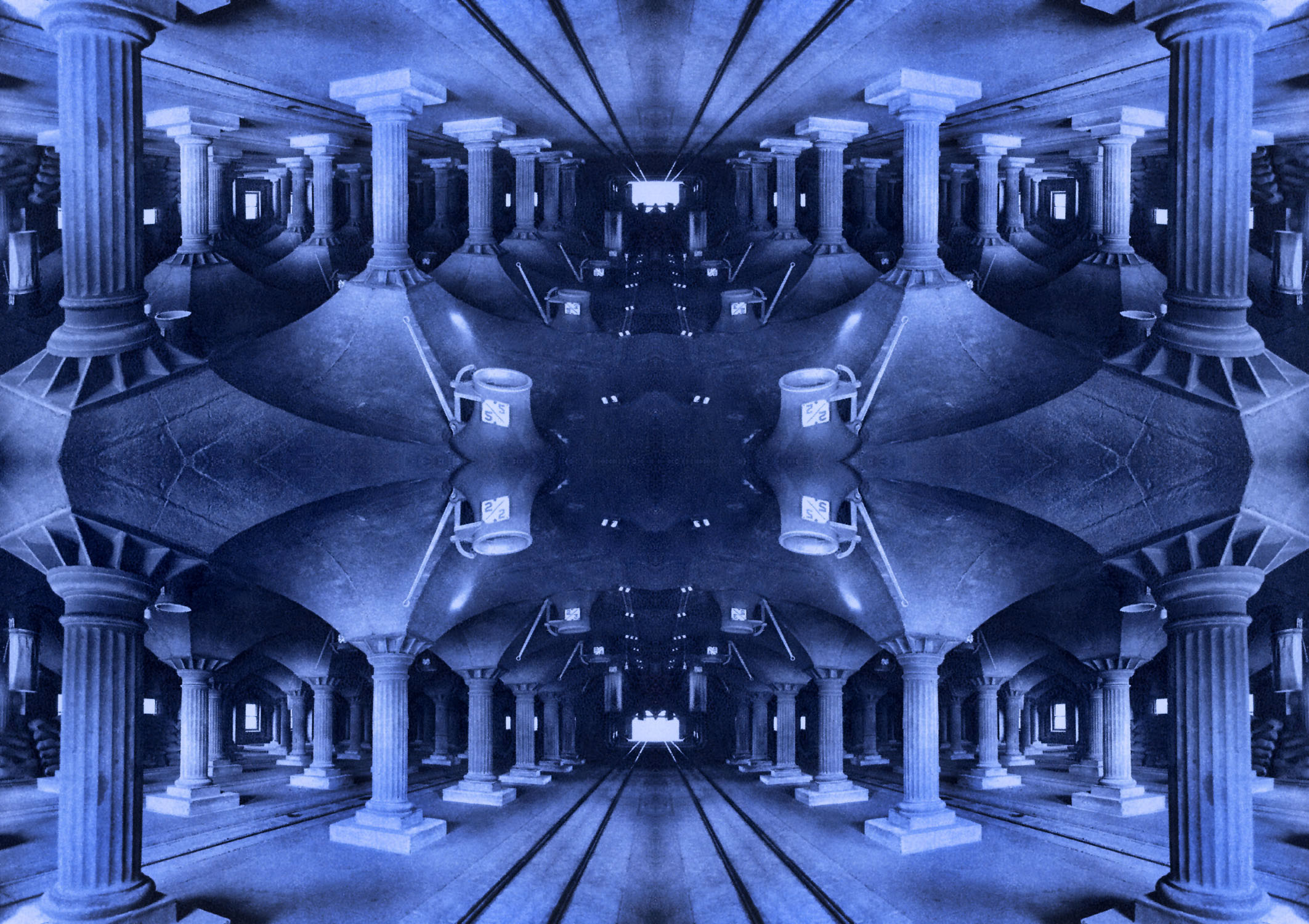
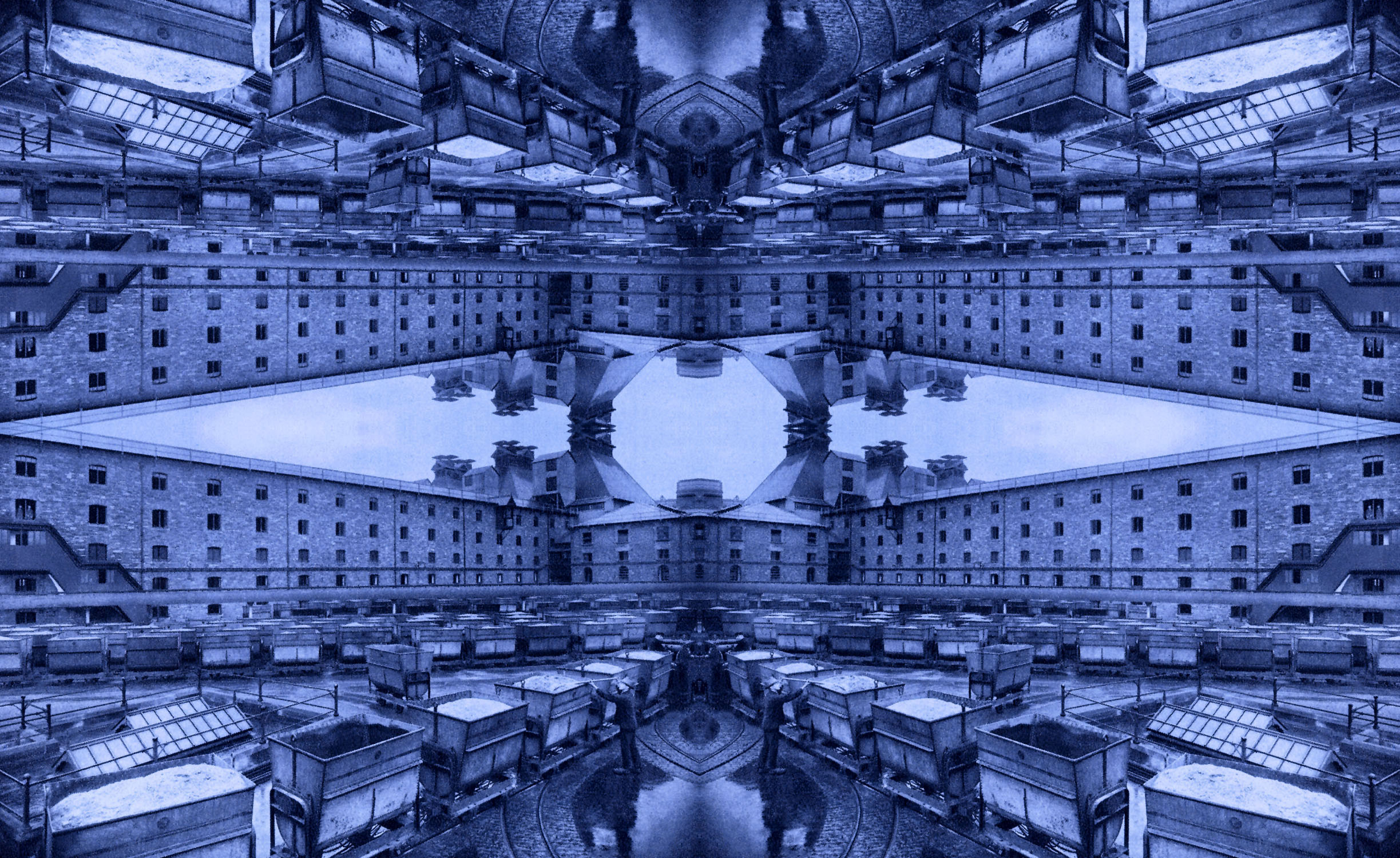
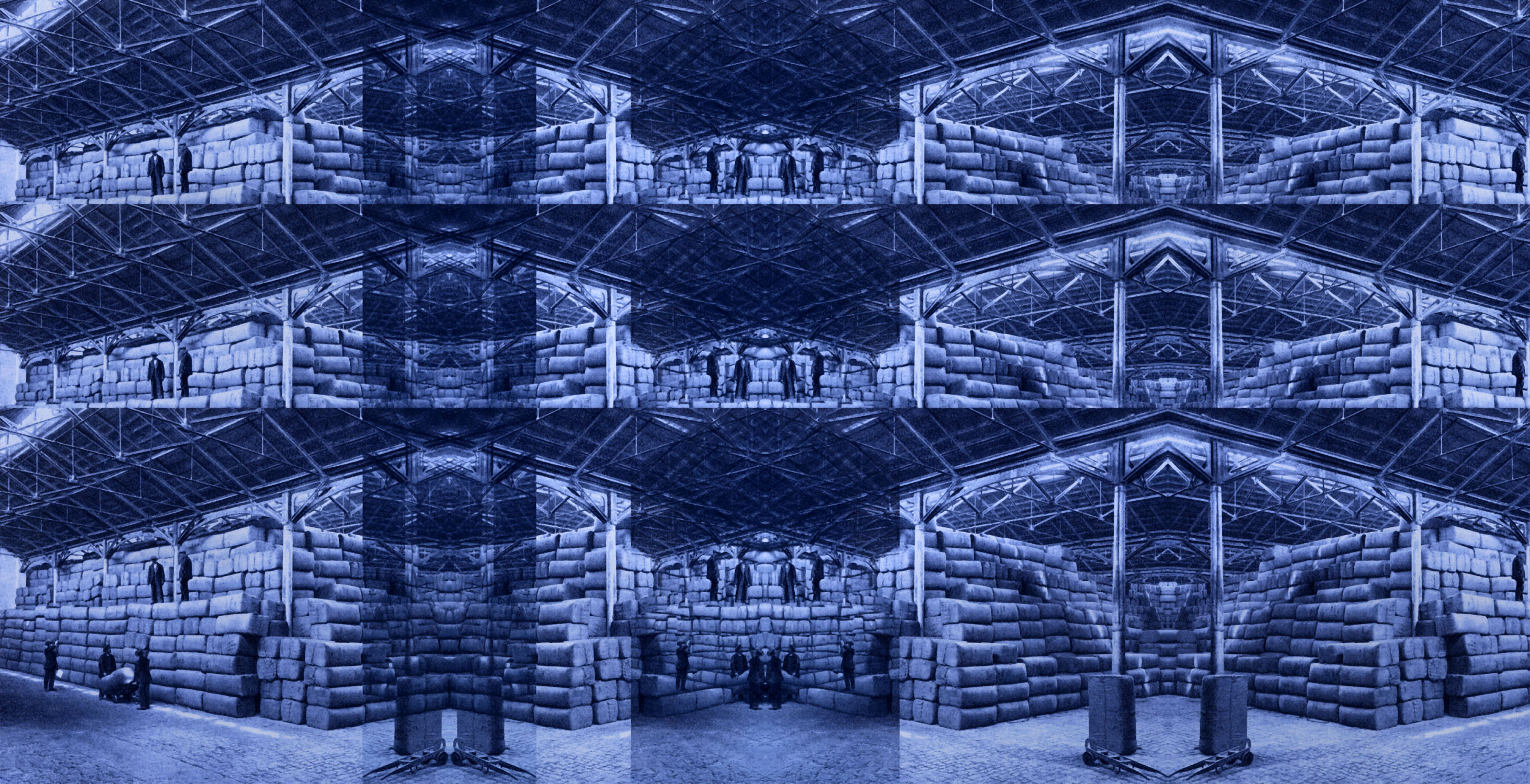
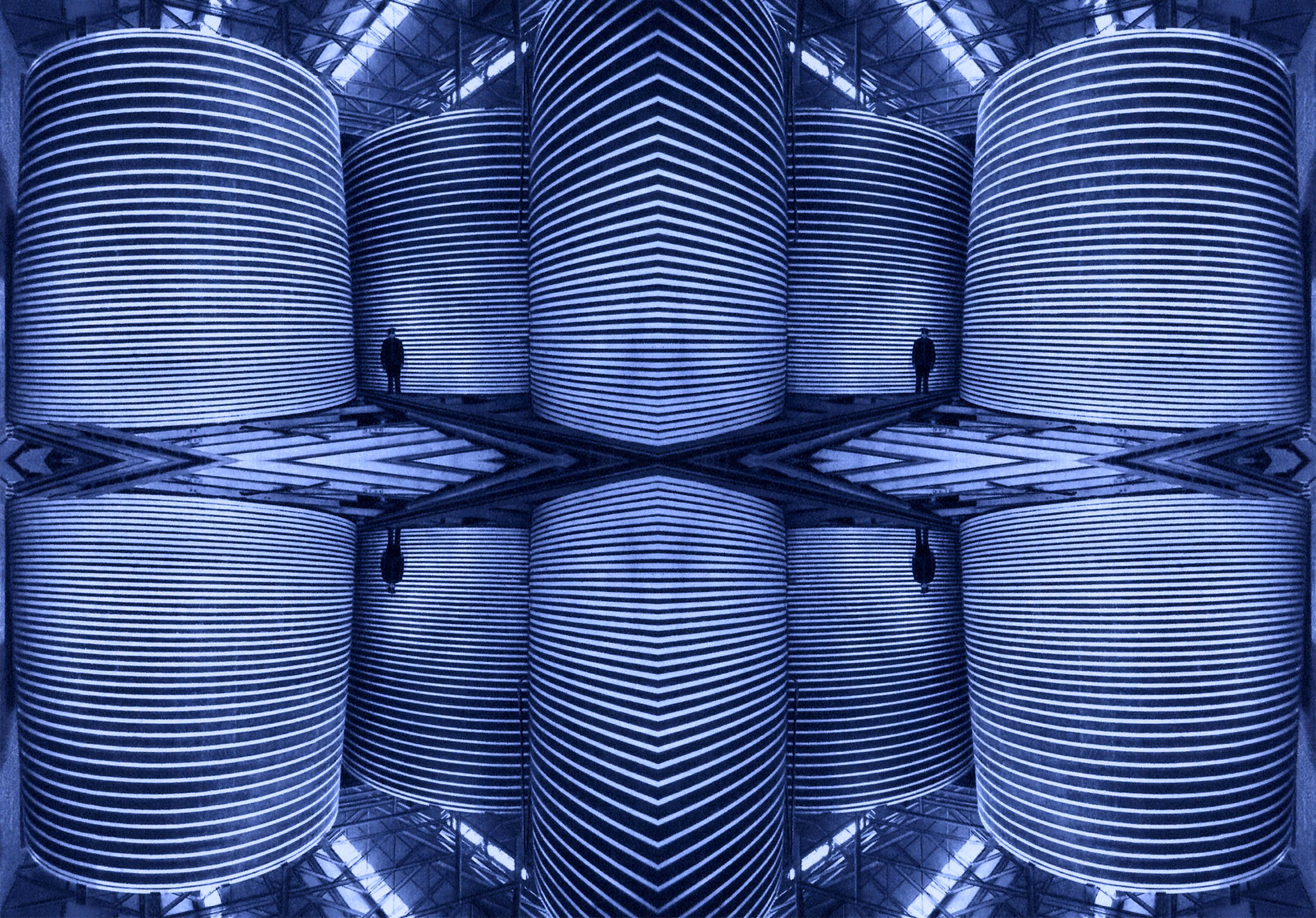
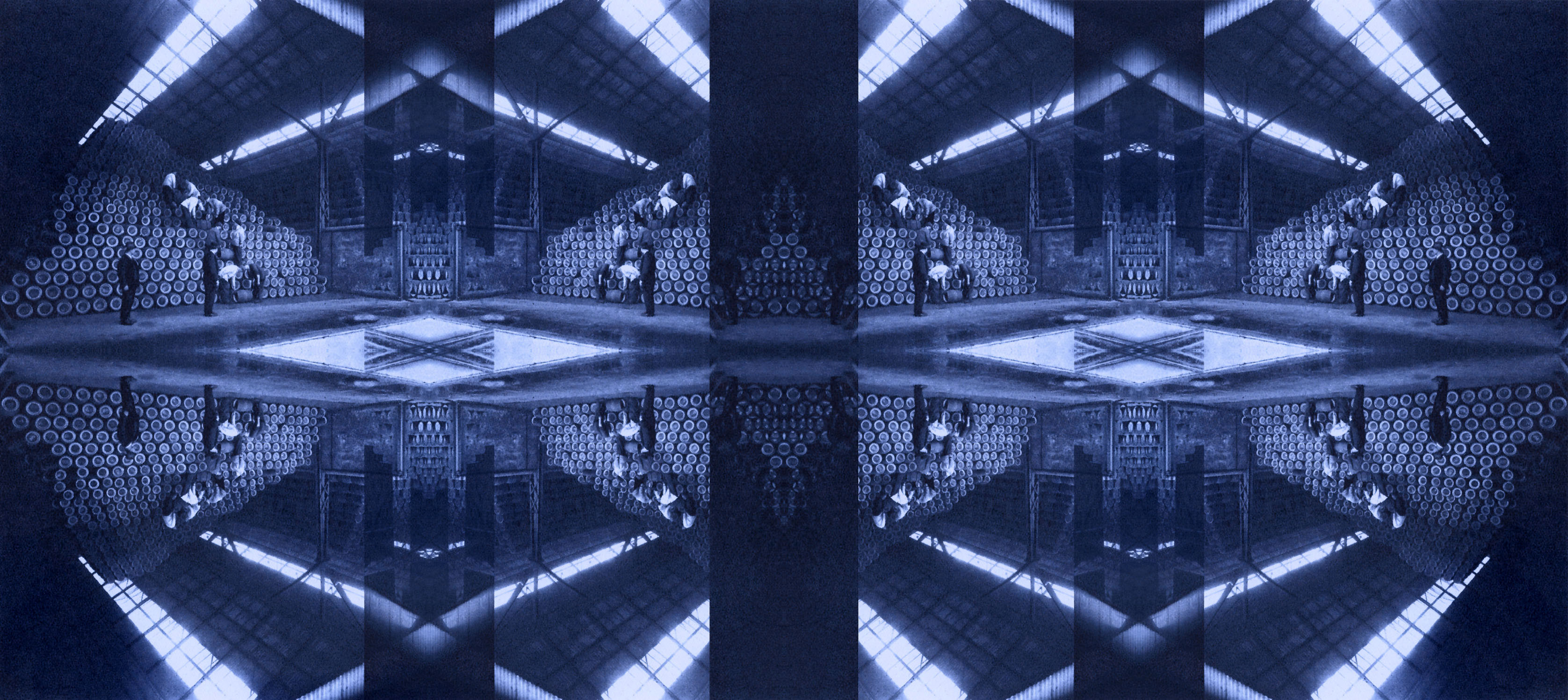
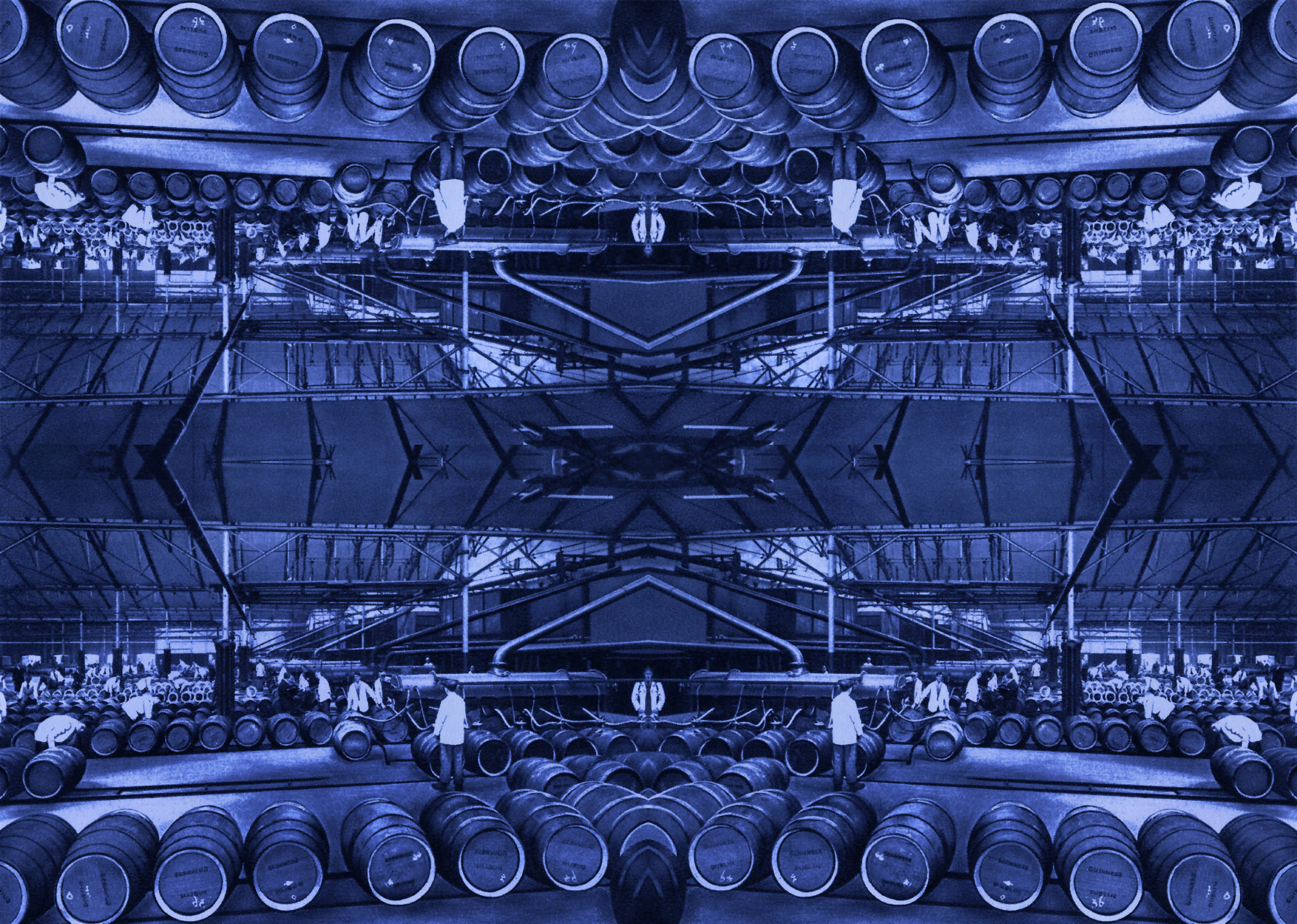
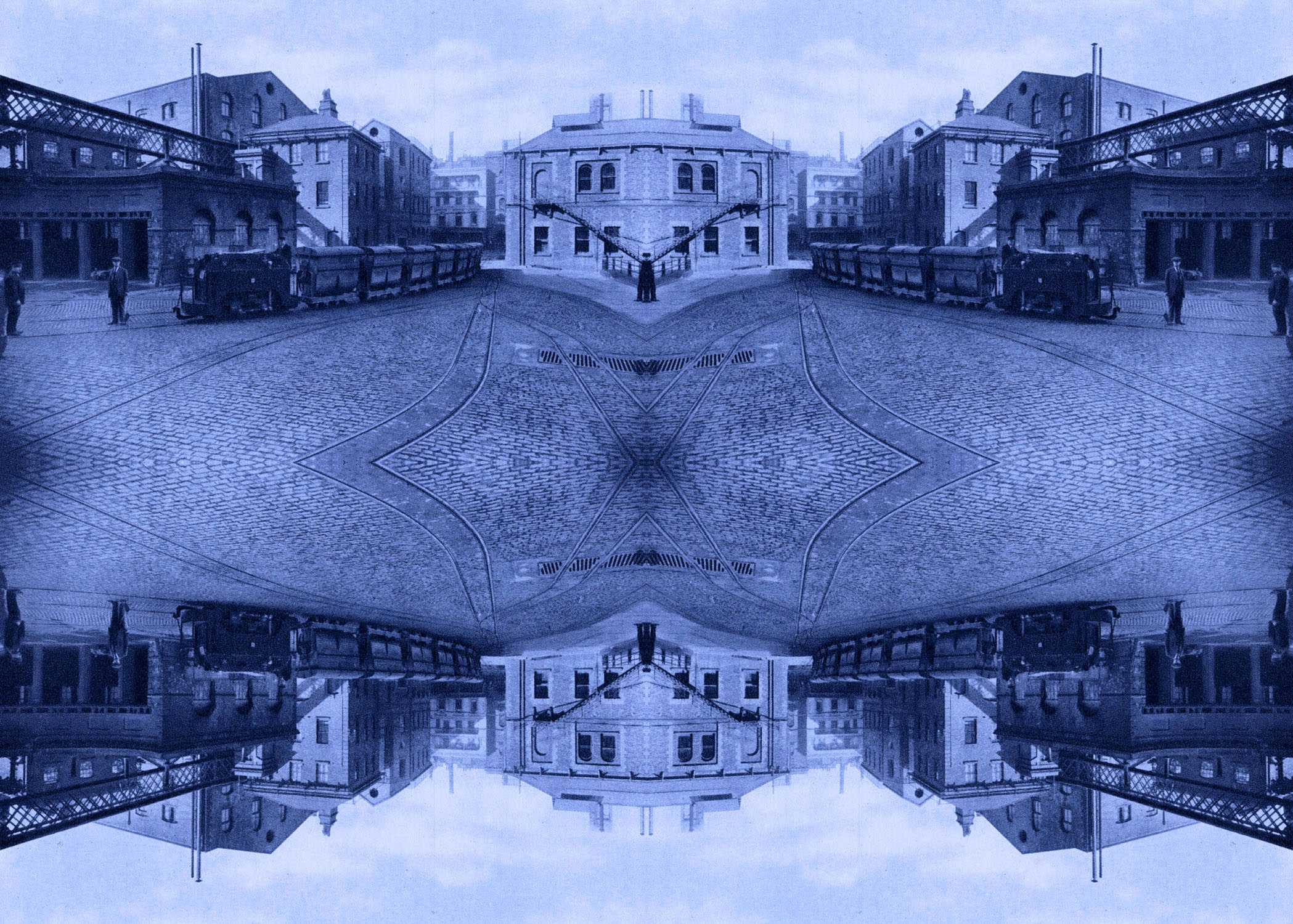
Marcus Bunyan (Australian, b. 1958) 'No. 1 Brewery B' 2026 from the series 'Metropolis'


Marcus Bunyan (Australian, b. 1958)
No. 1 Brewery B
2026
from the series Metropolis


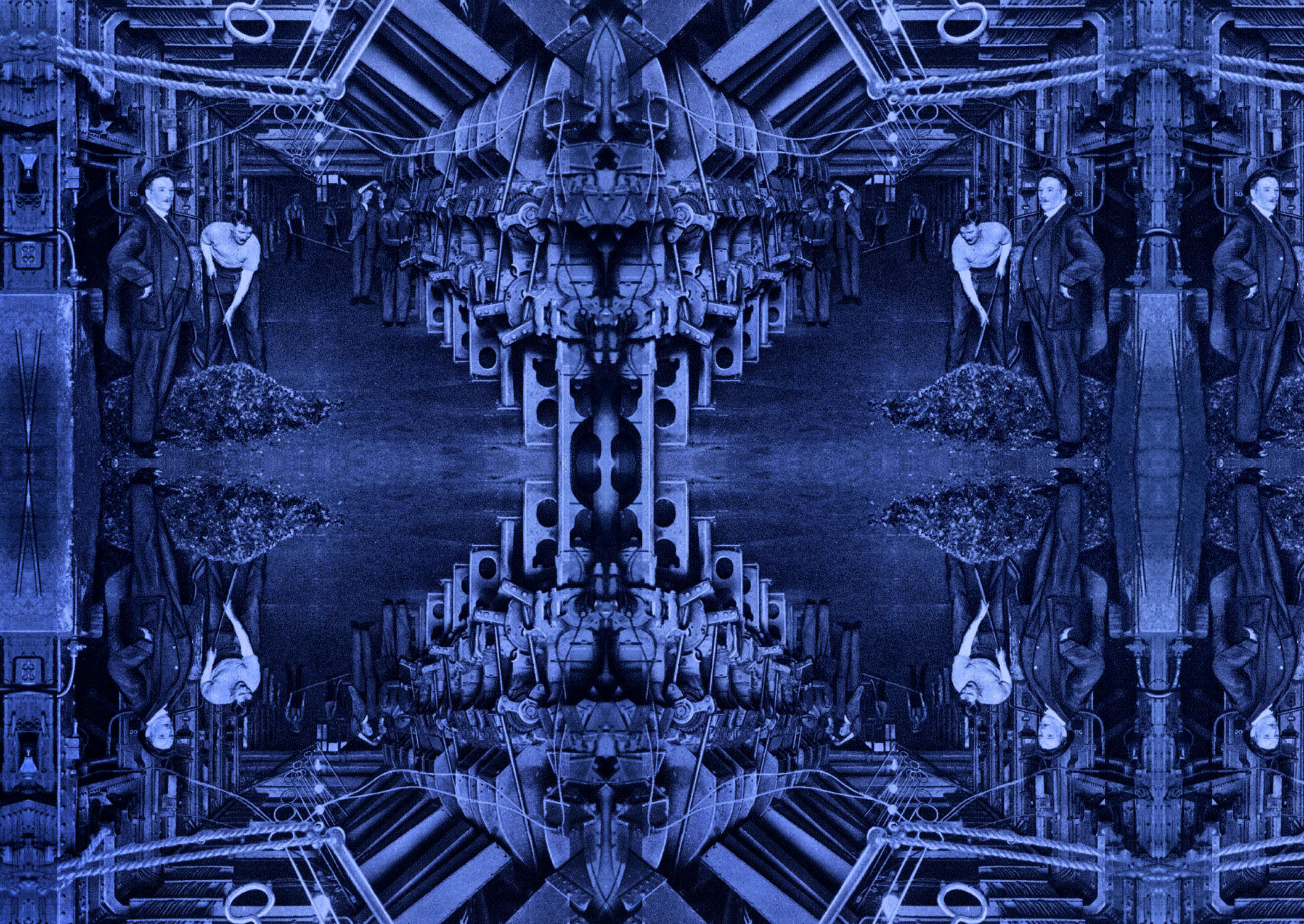
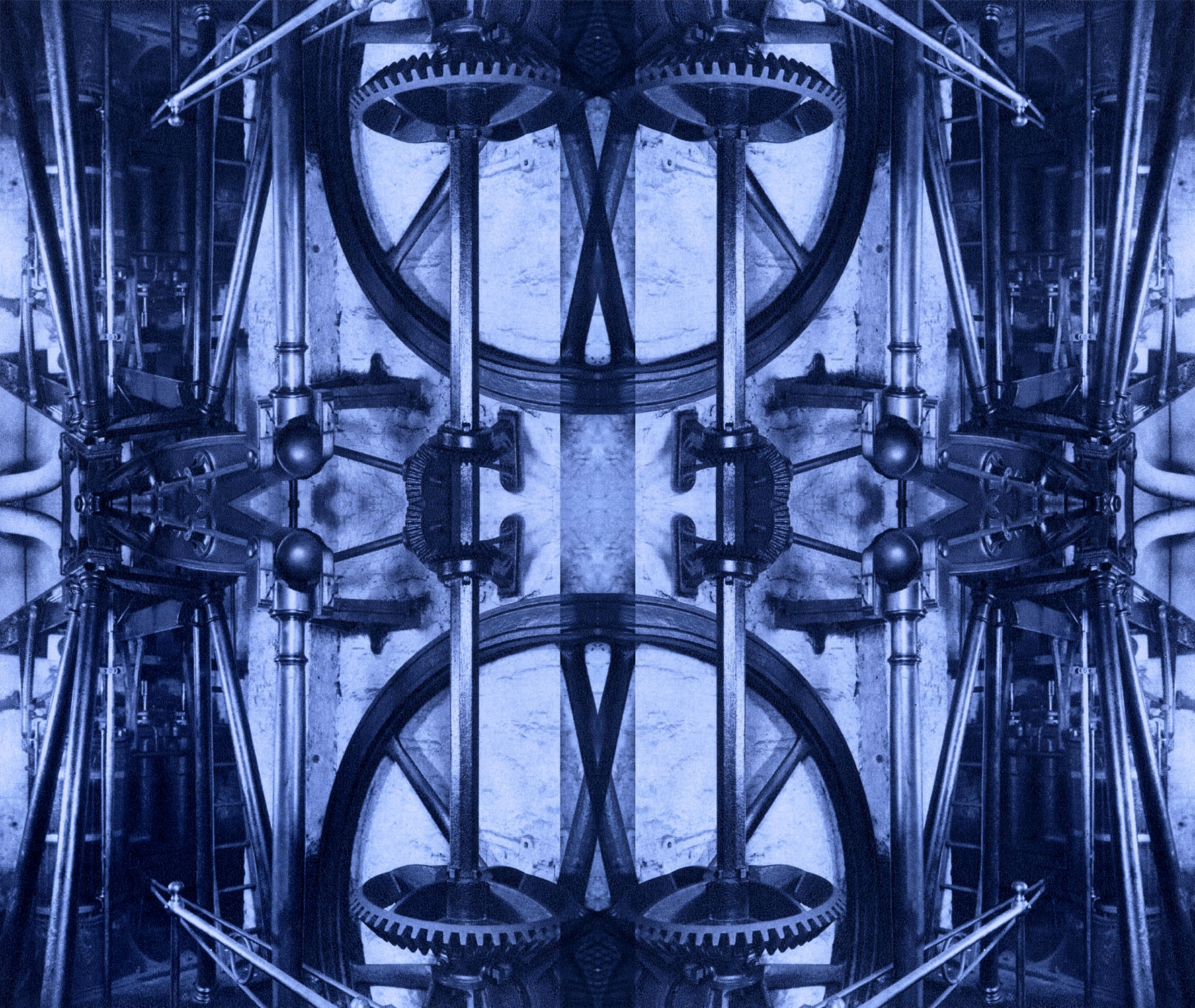
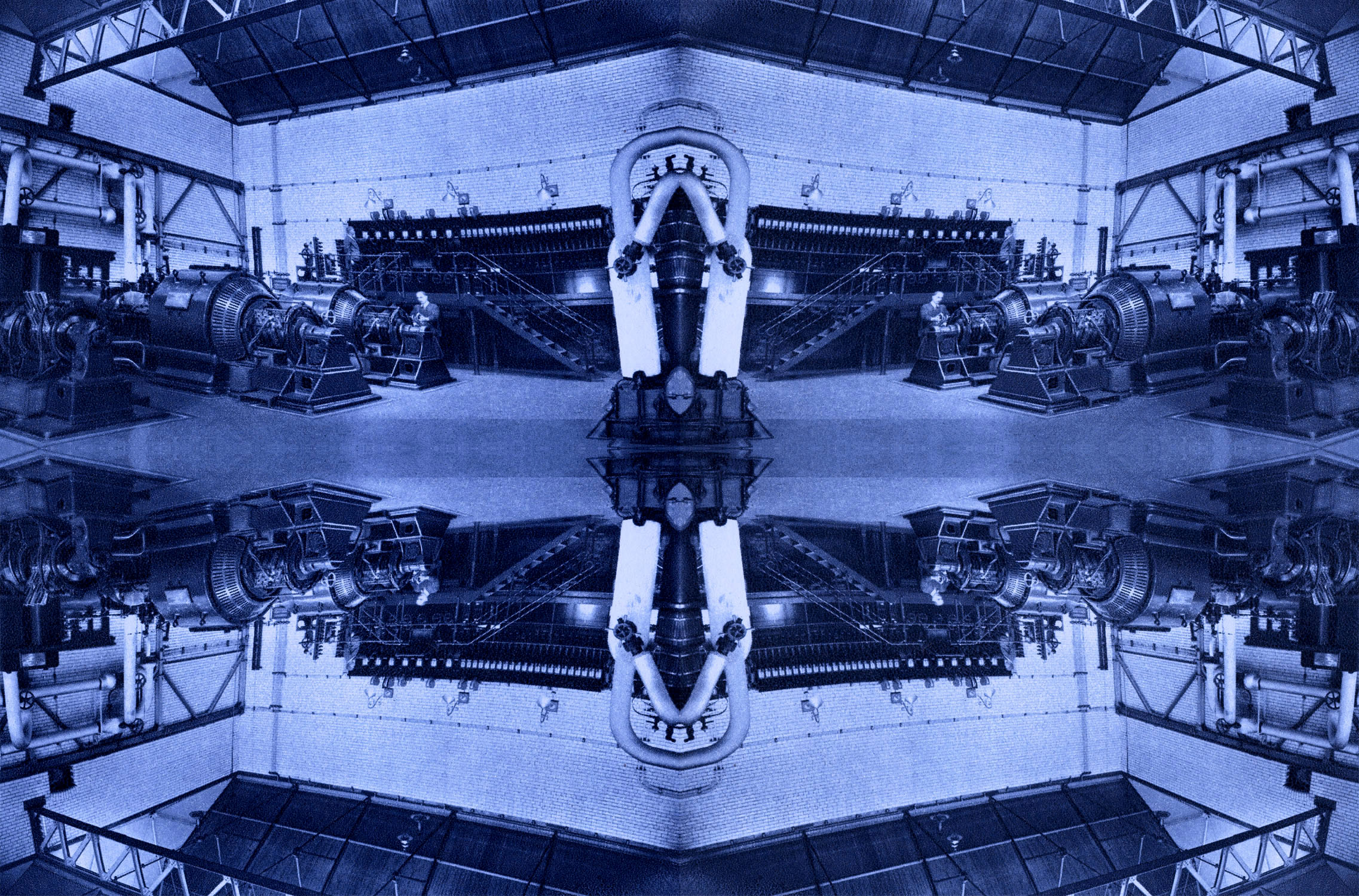
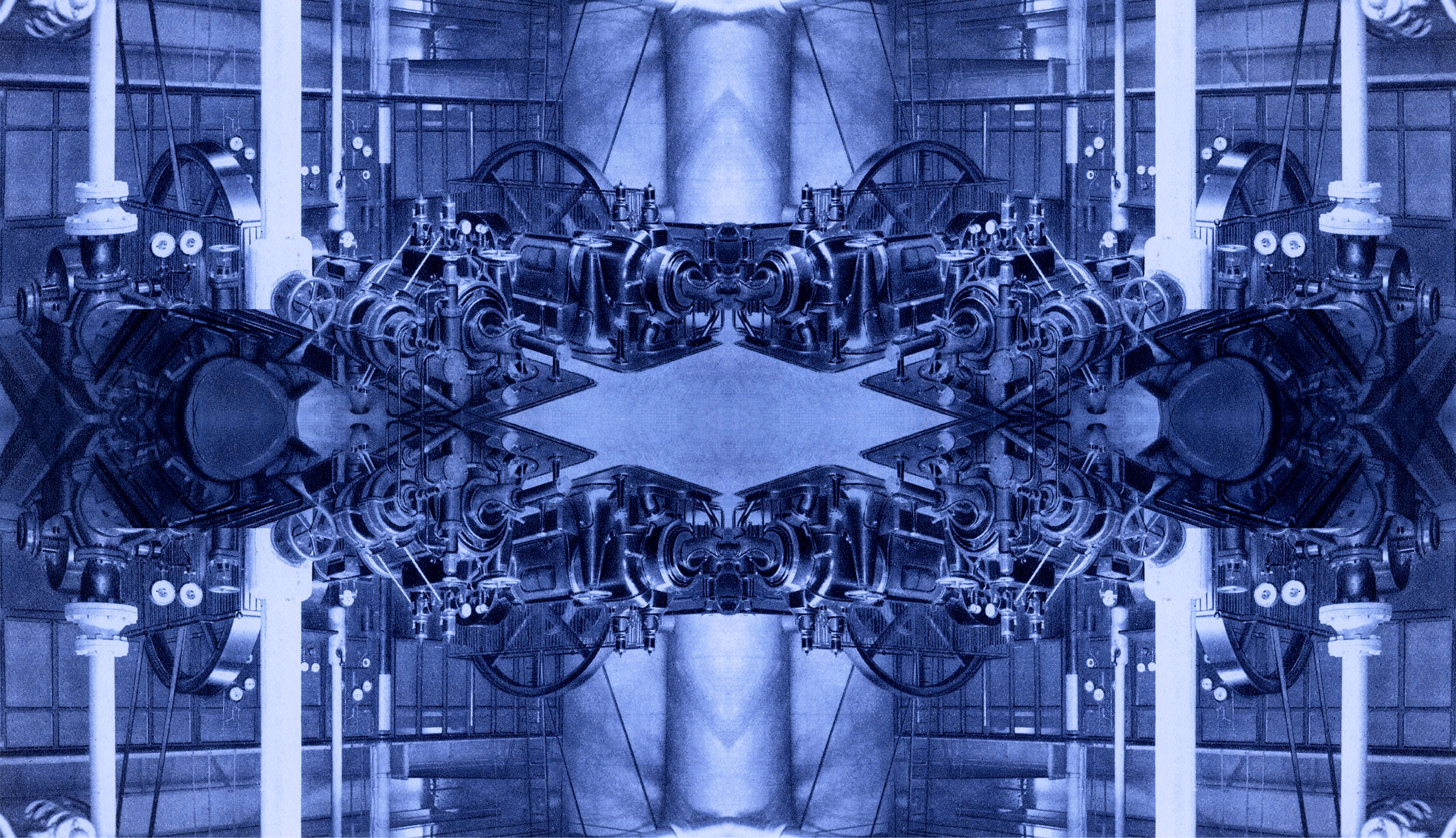
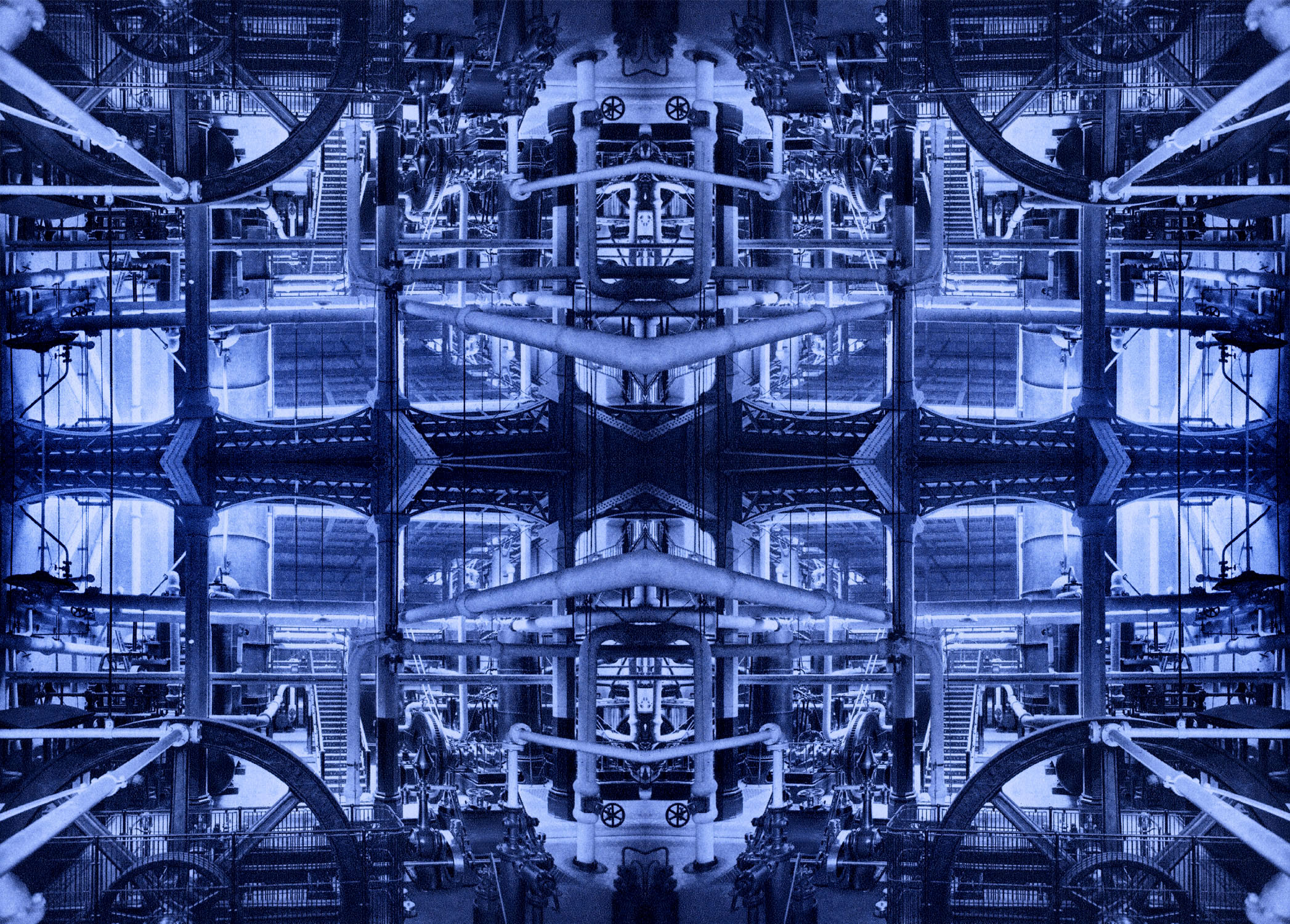
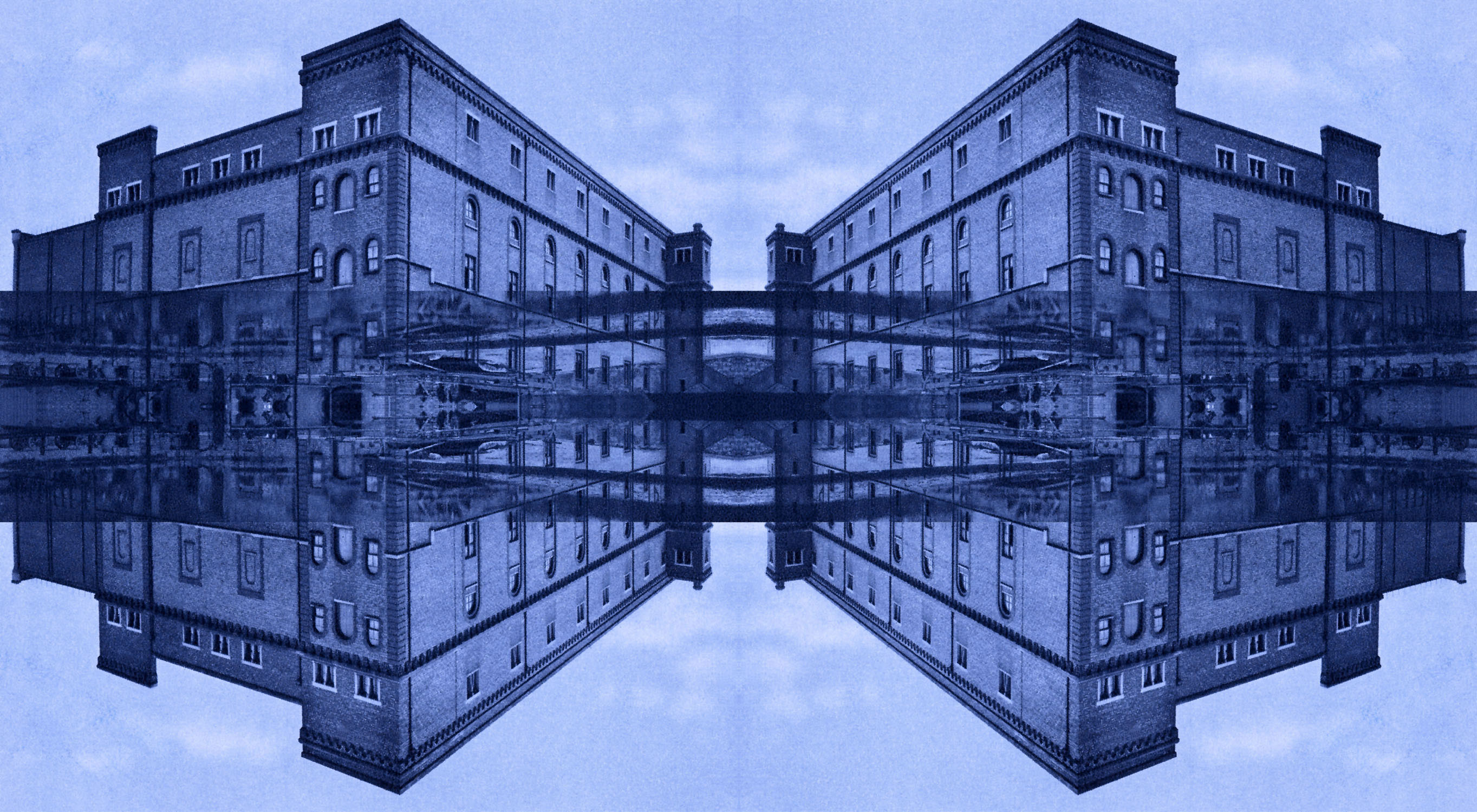
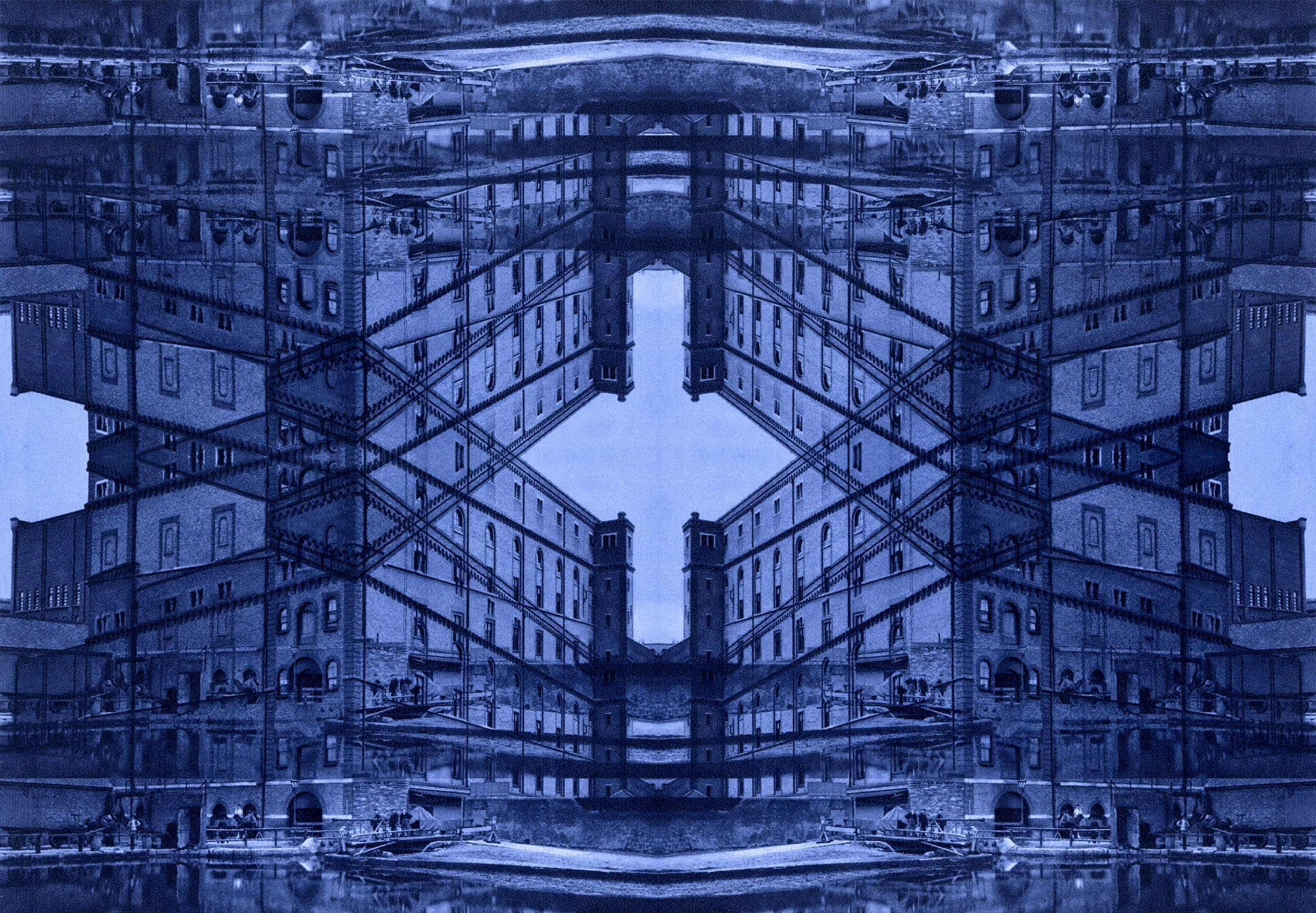
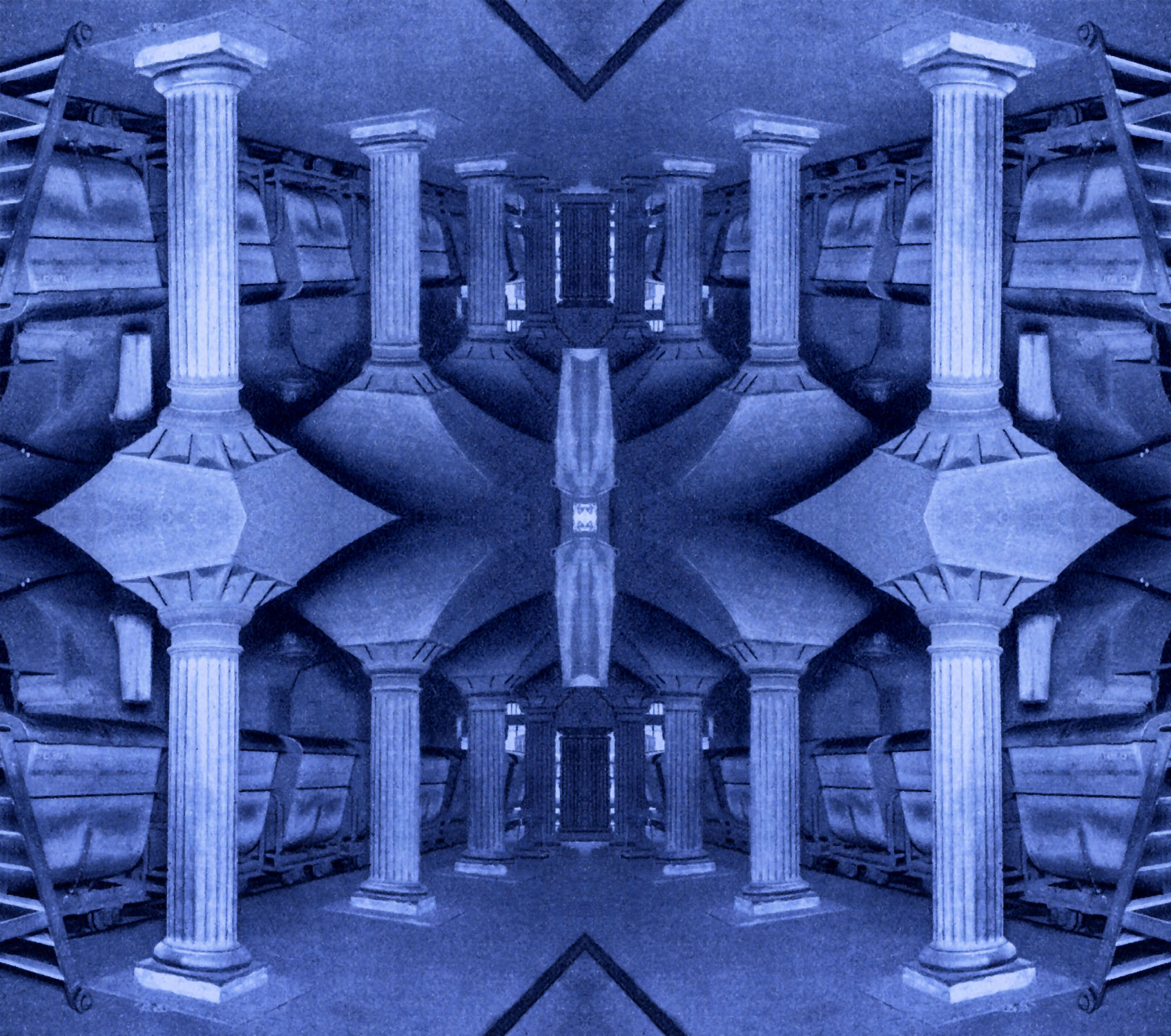
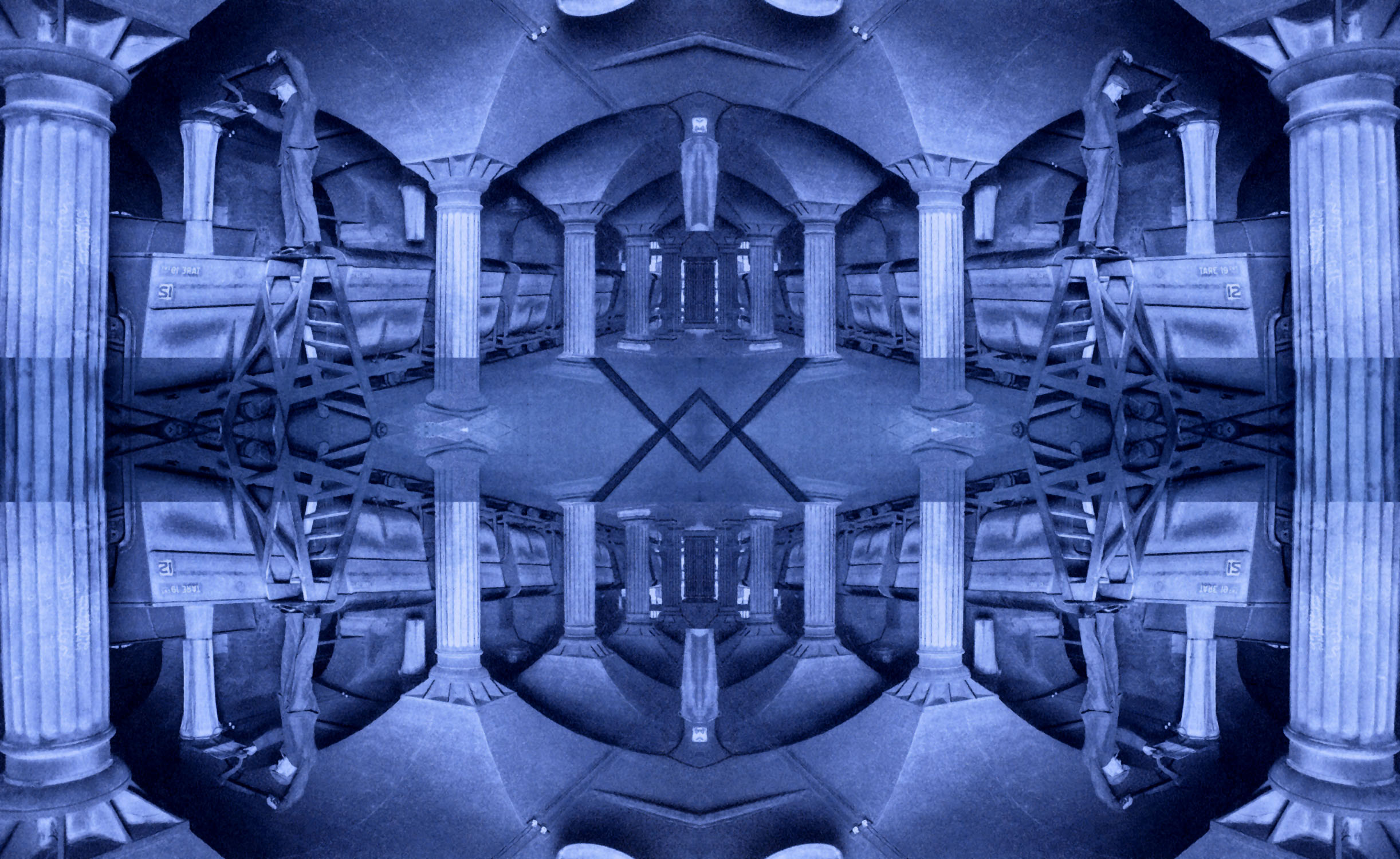
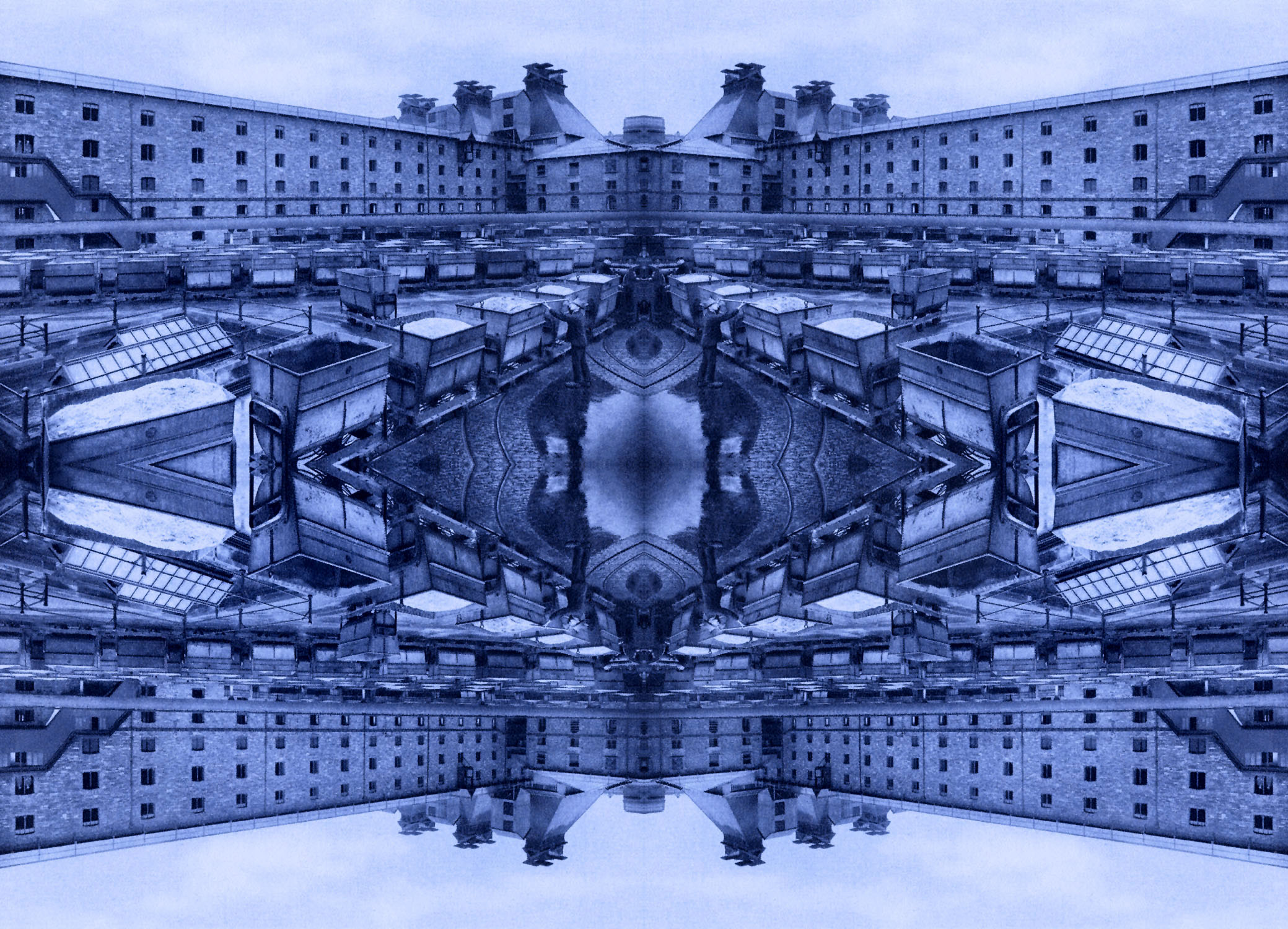
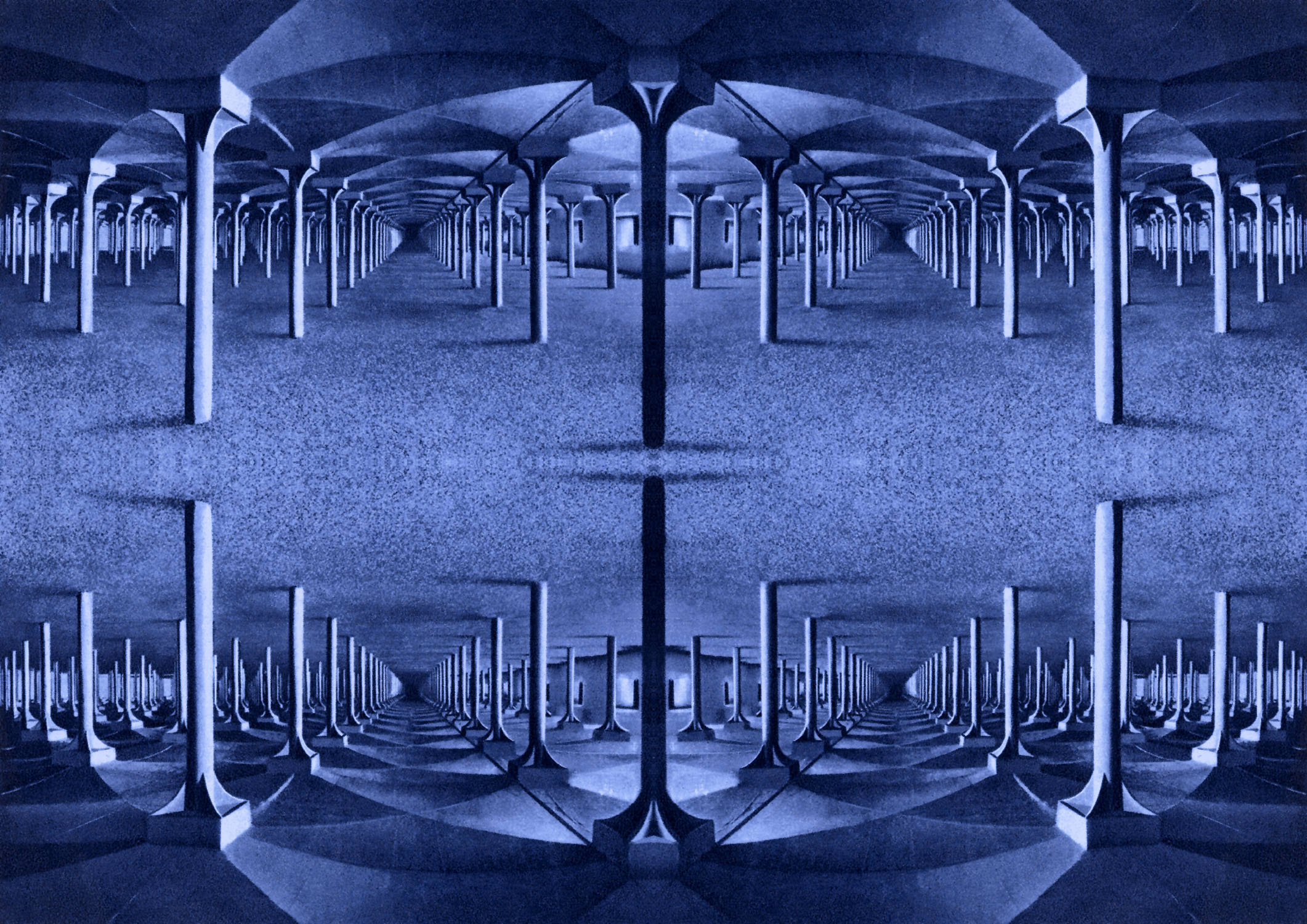
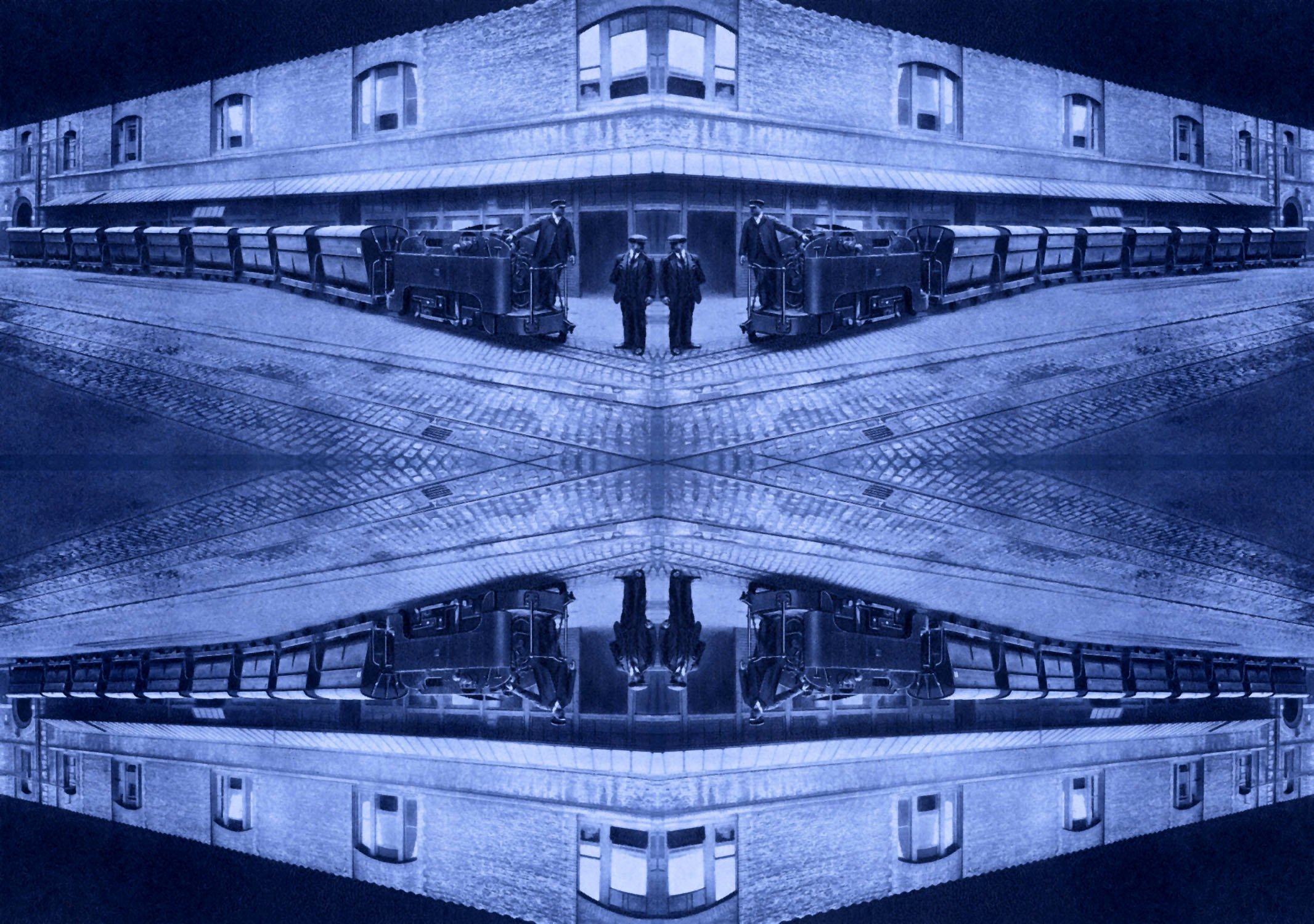
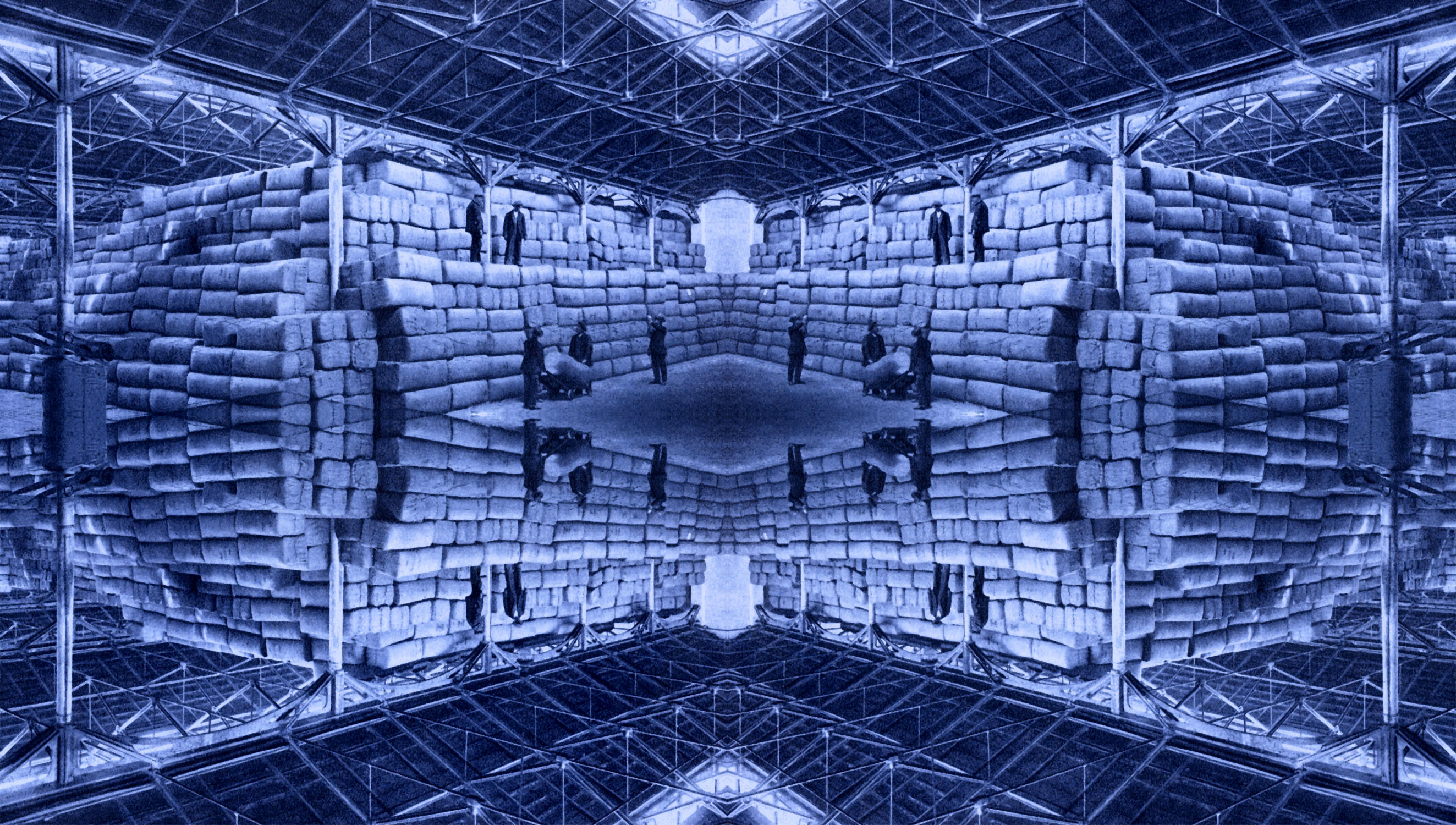
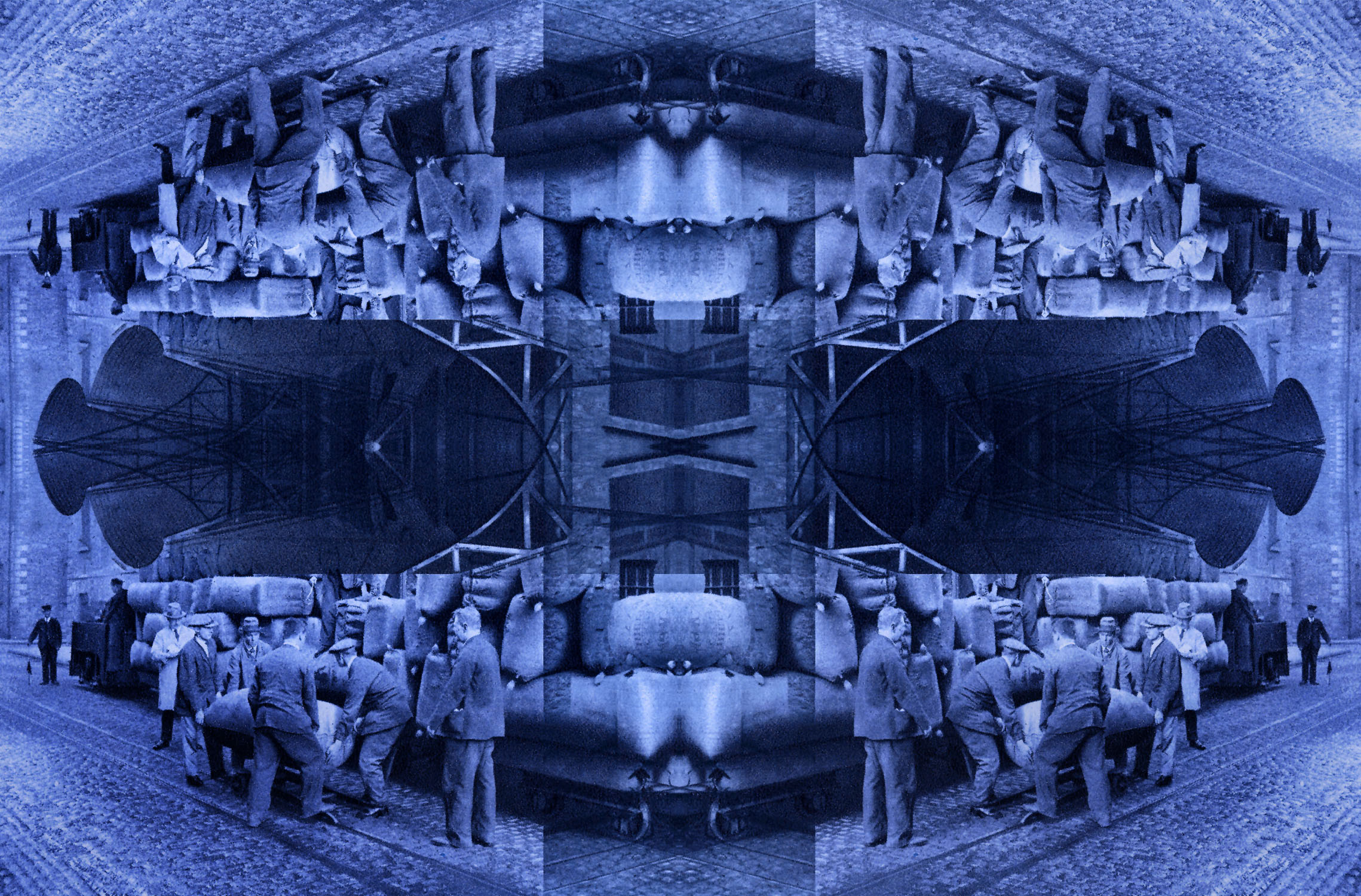
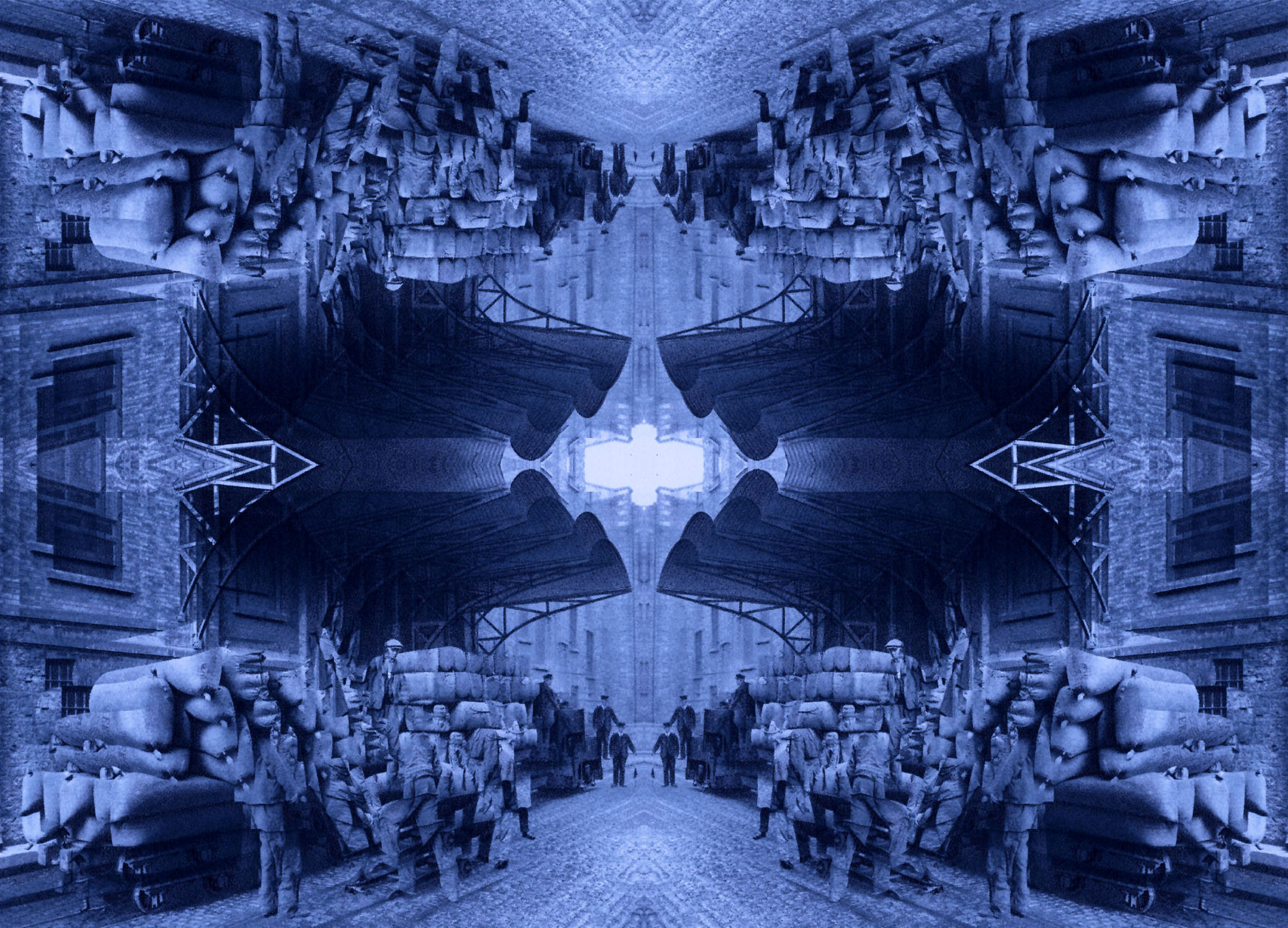
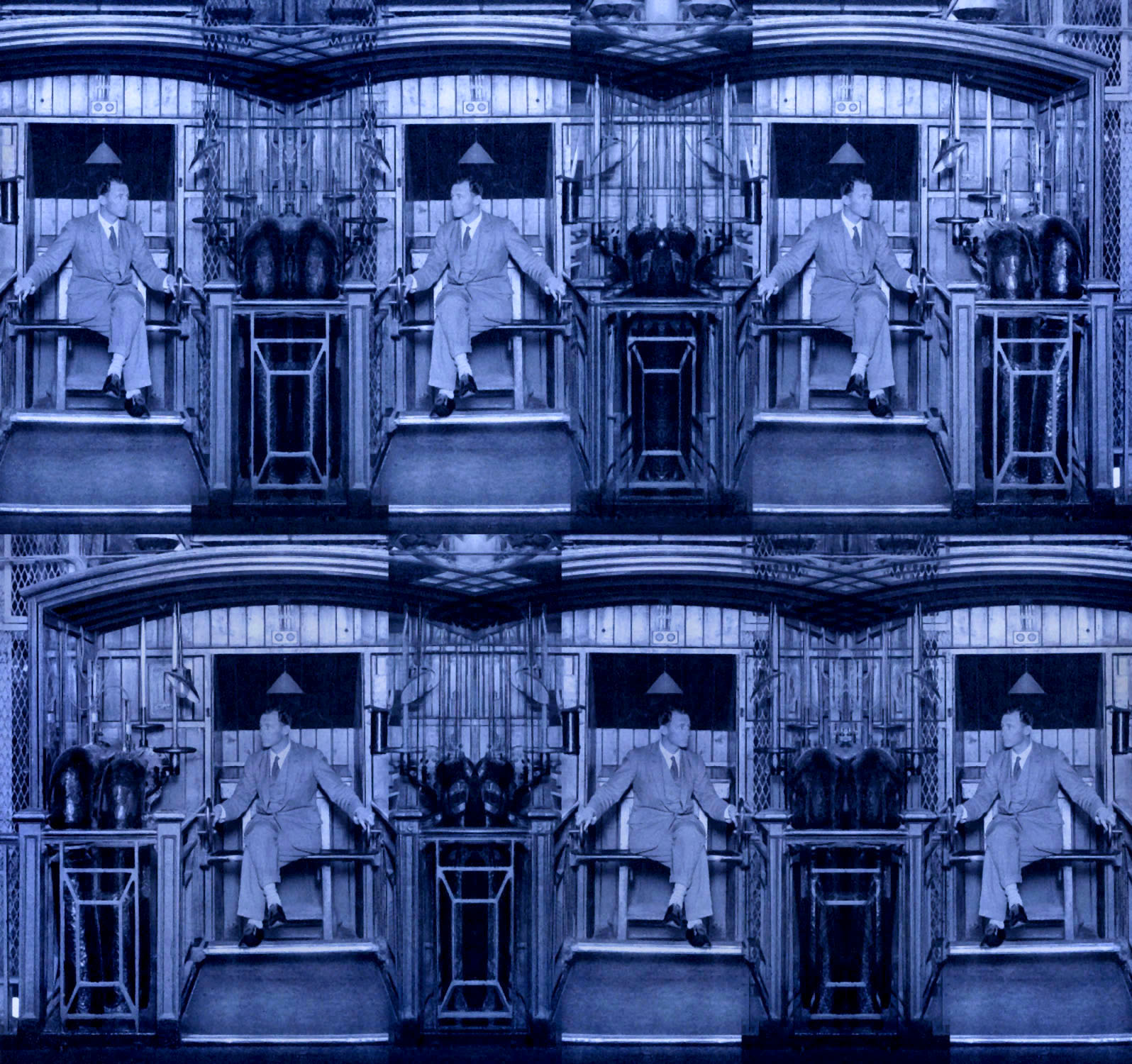
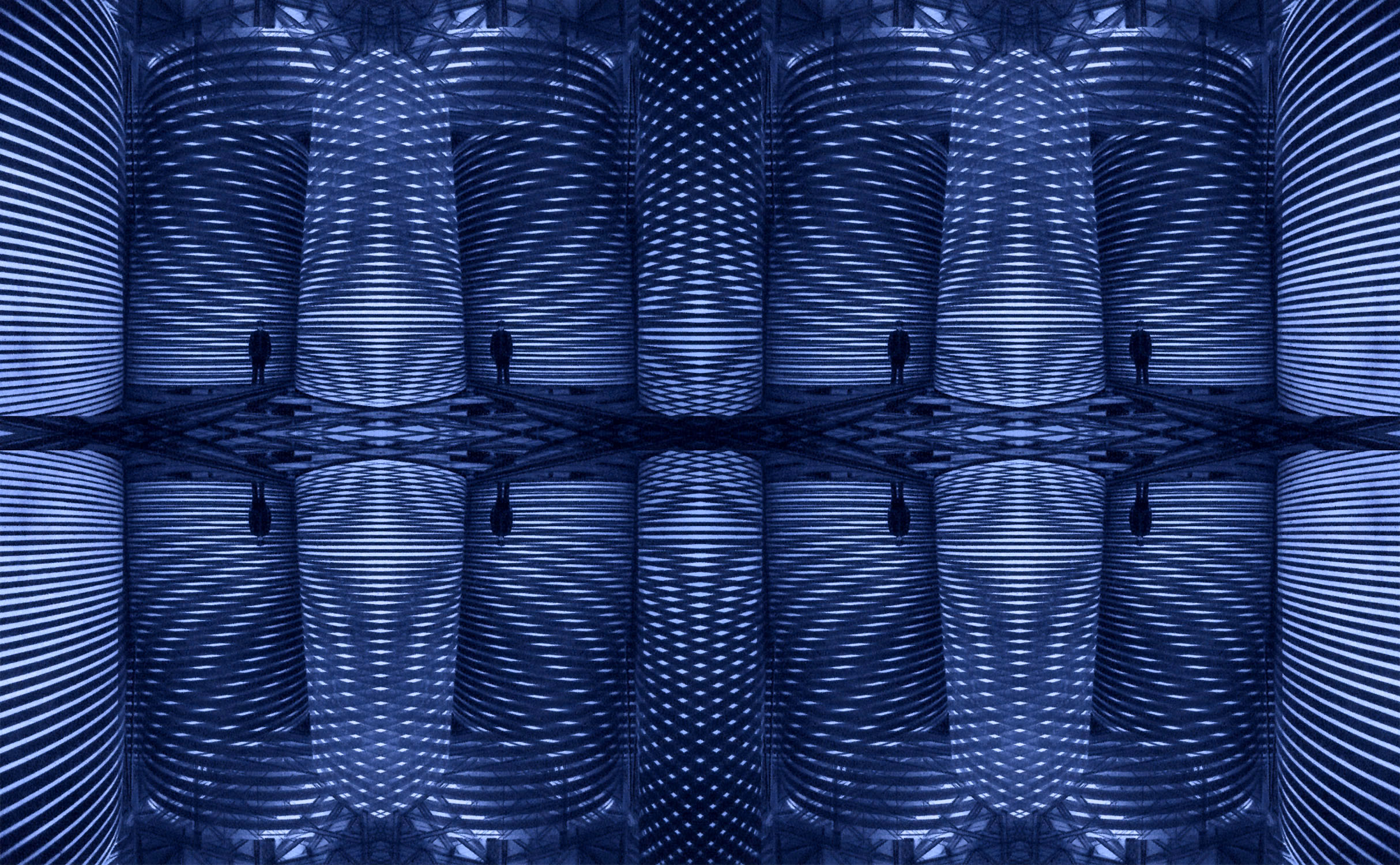
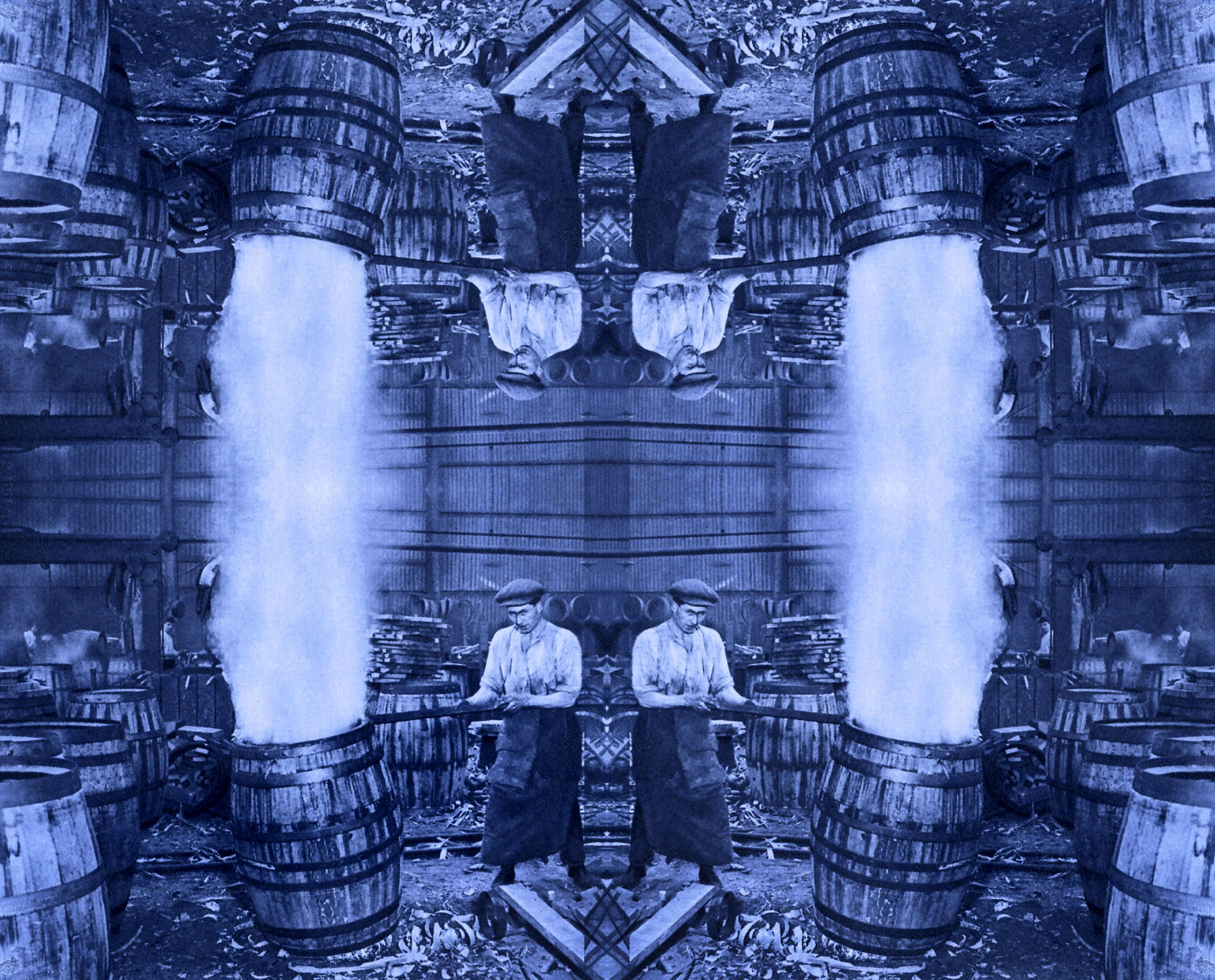
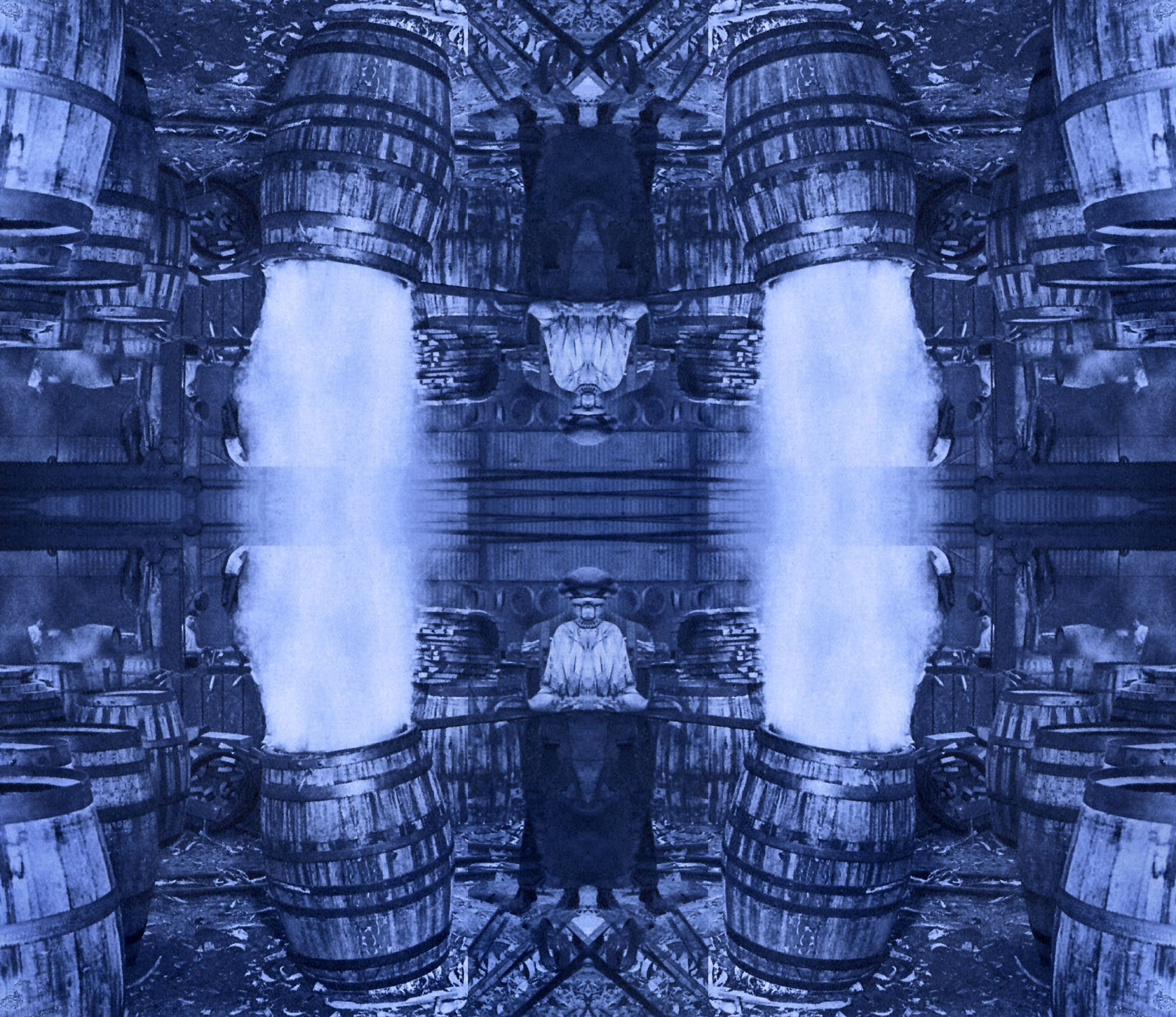
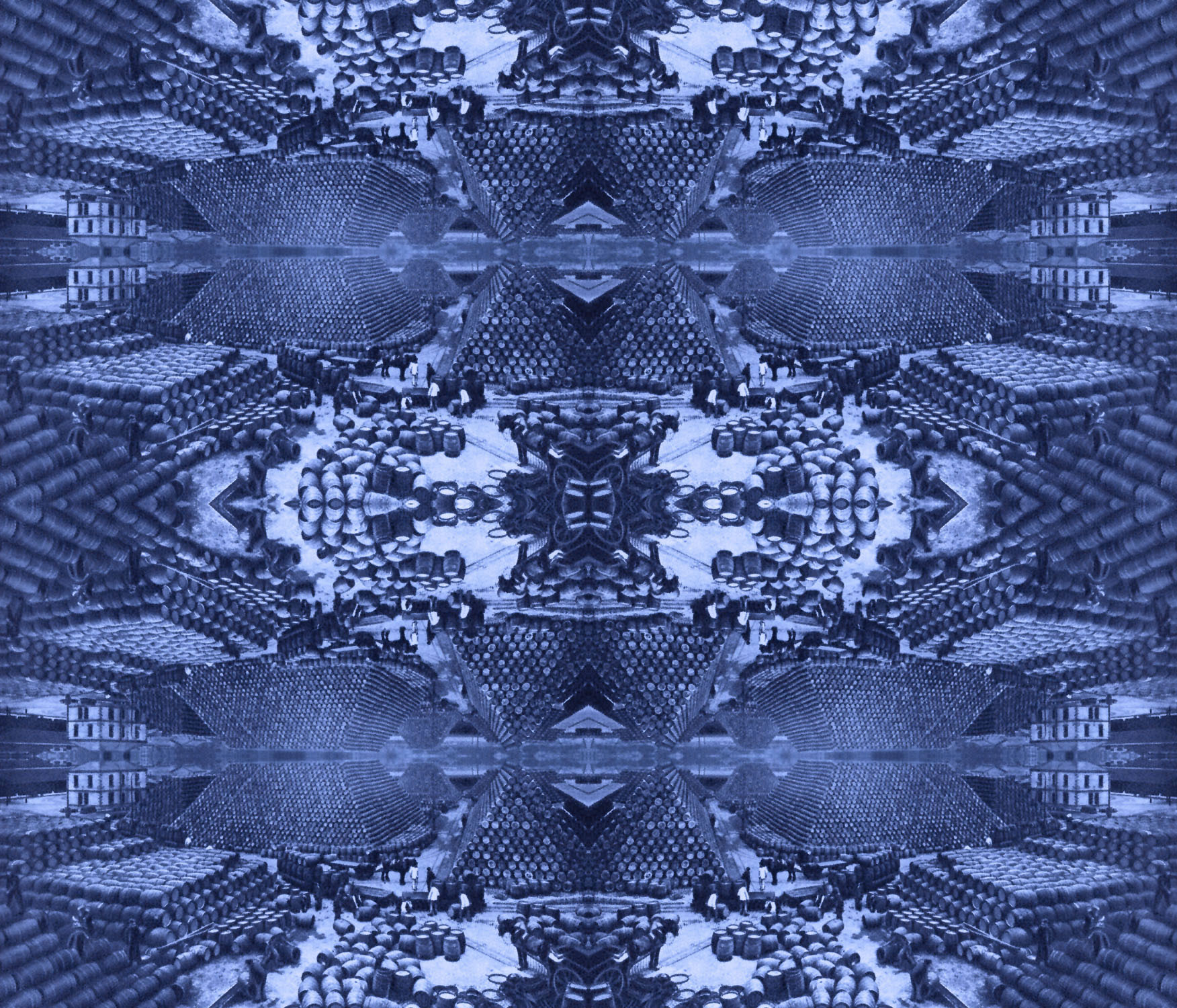
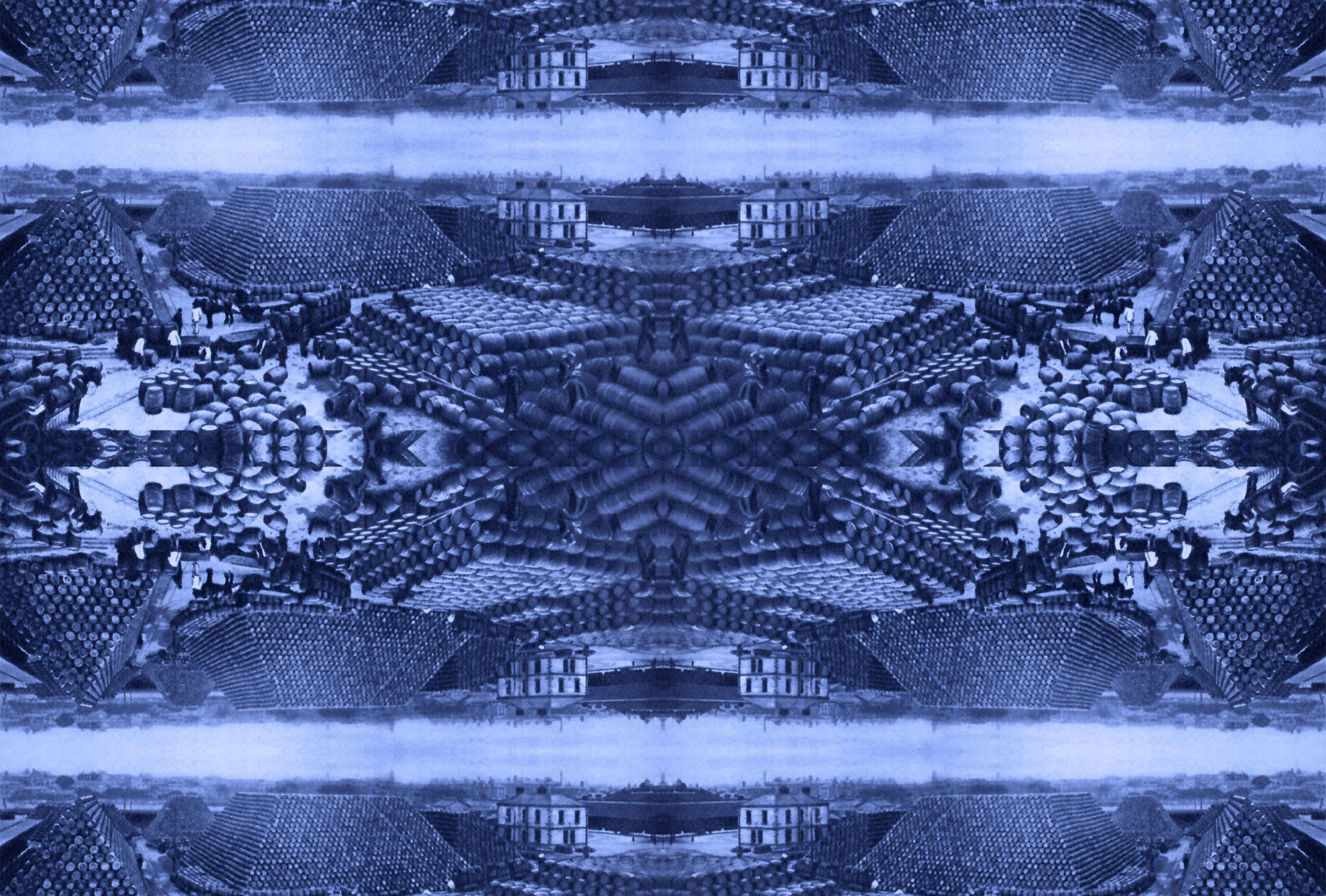
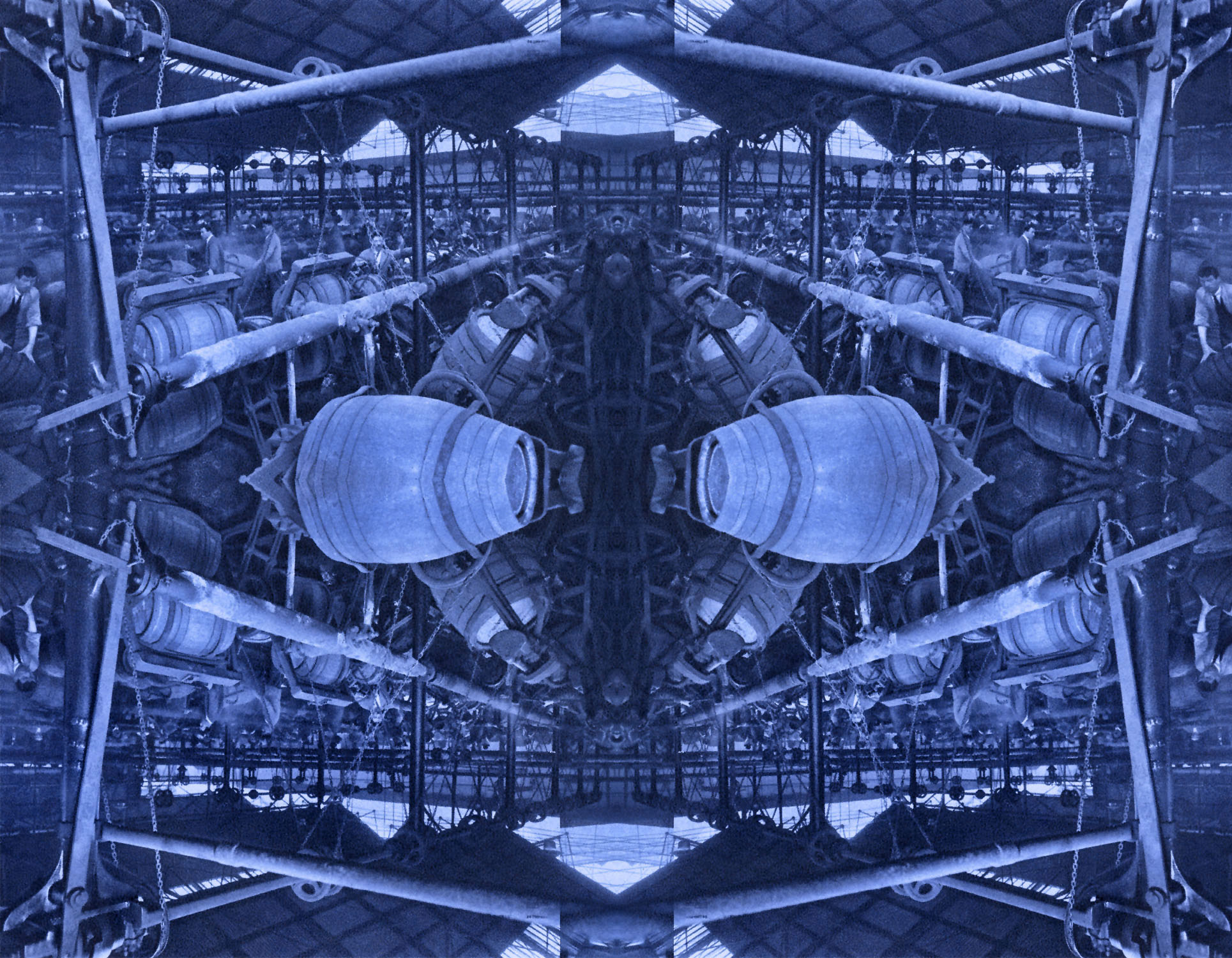
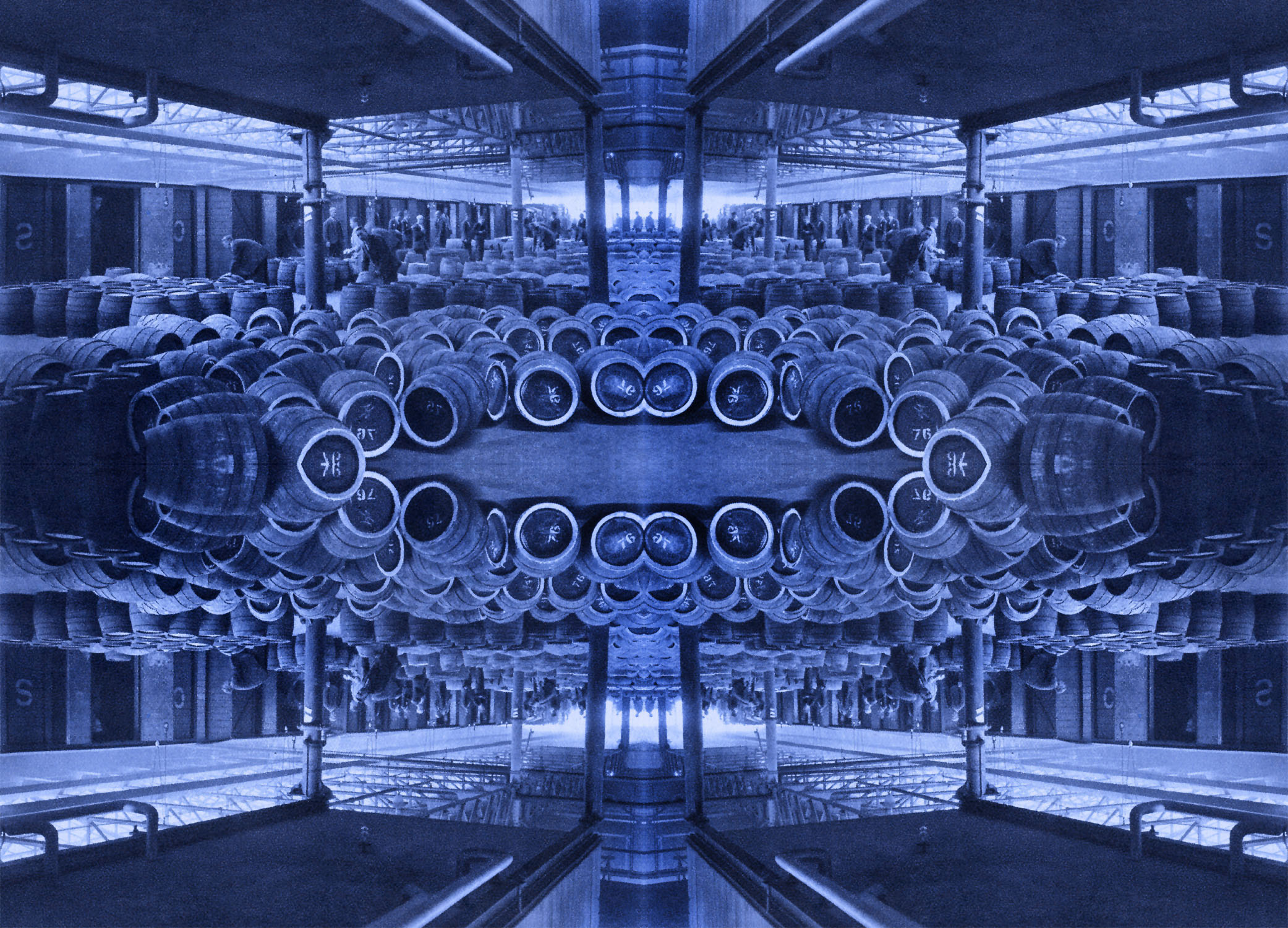
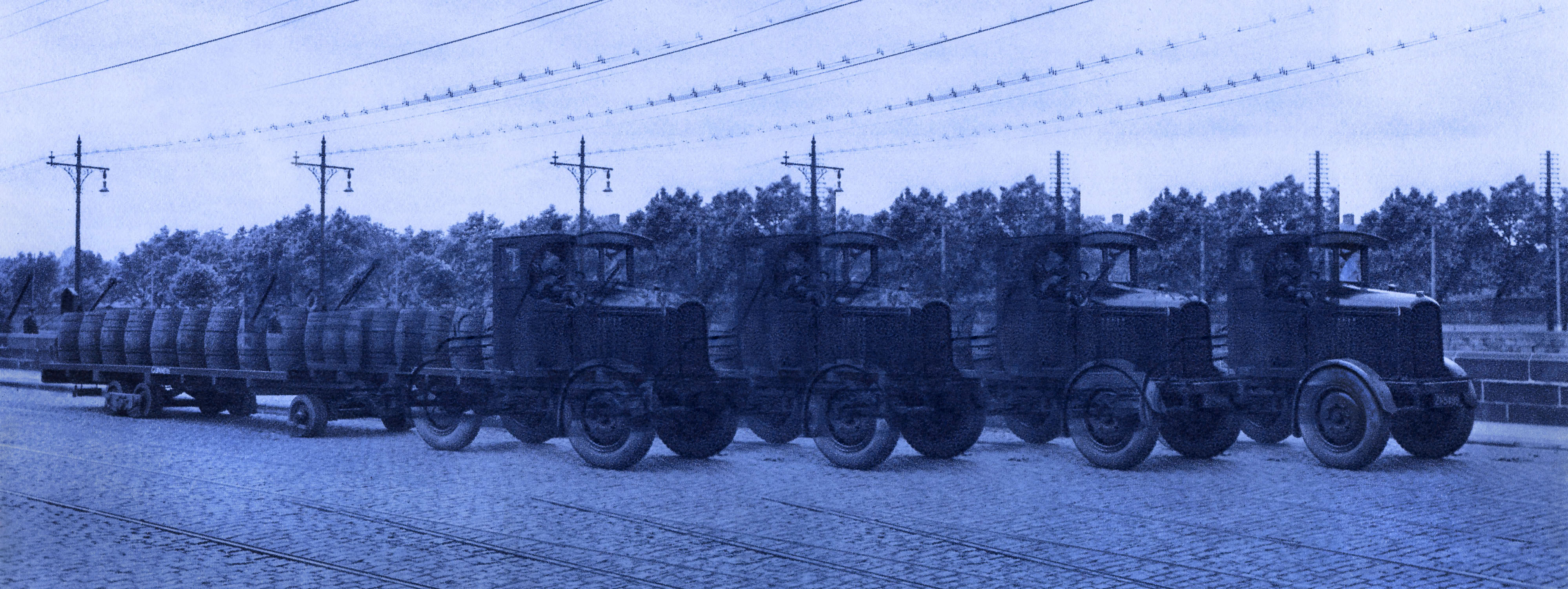
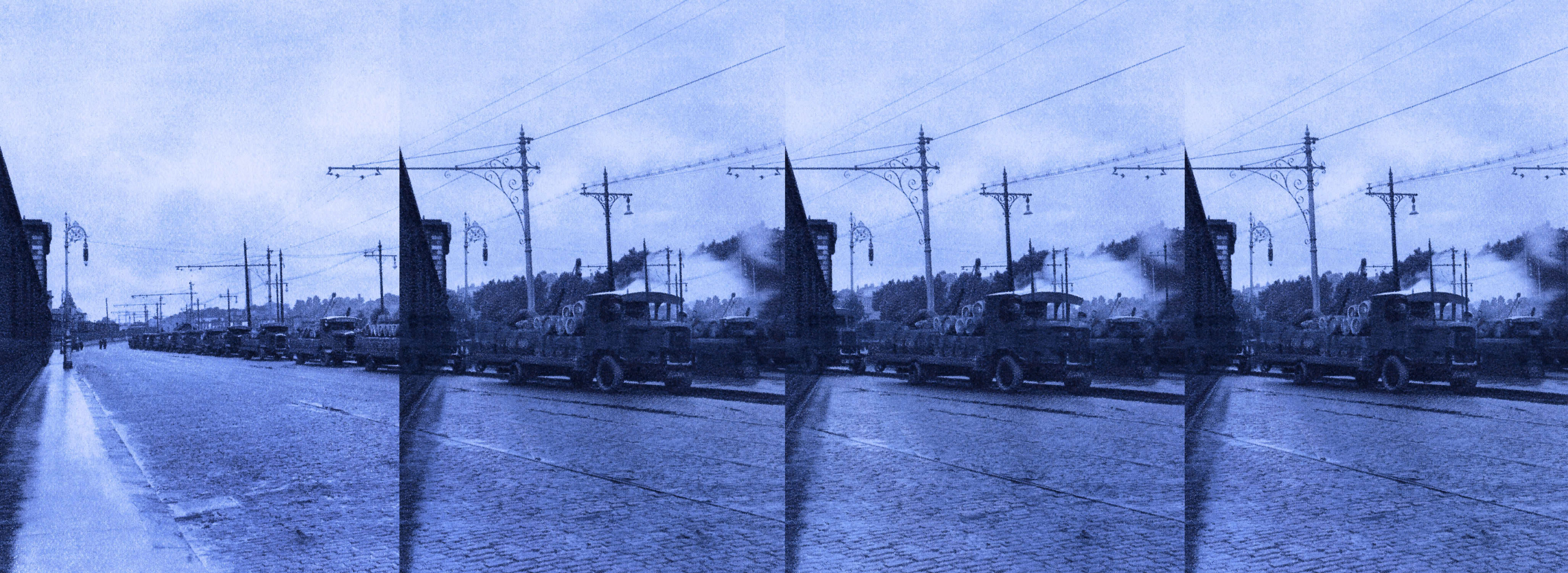
This is a selection of images from the new series. Please see the whole series on my website.

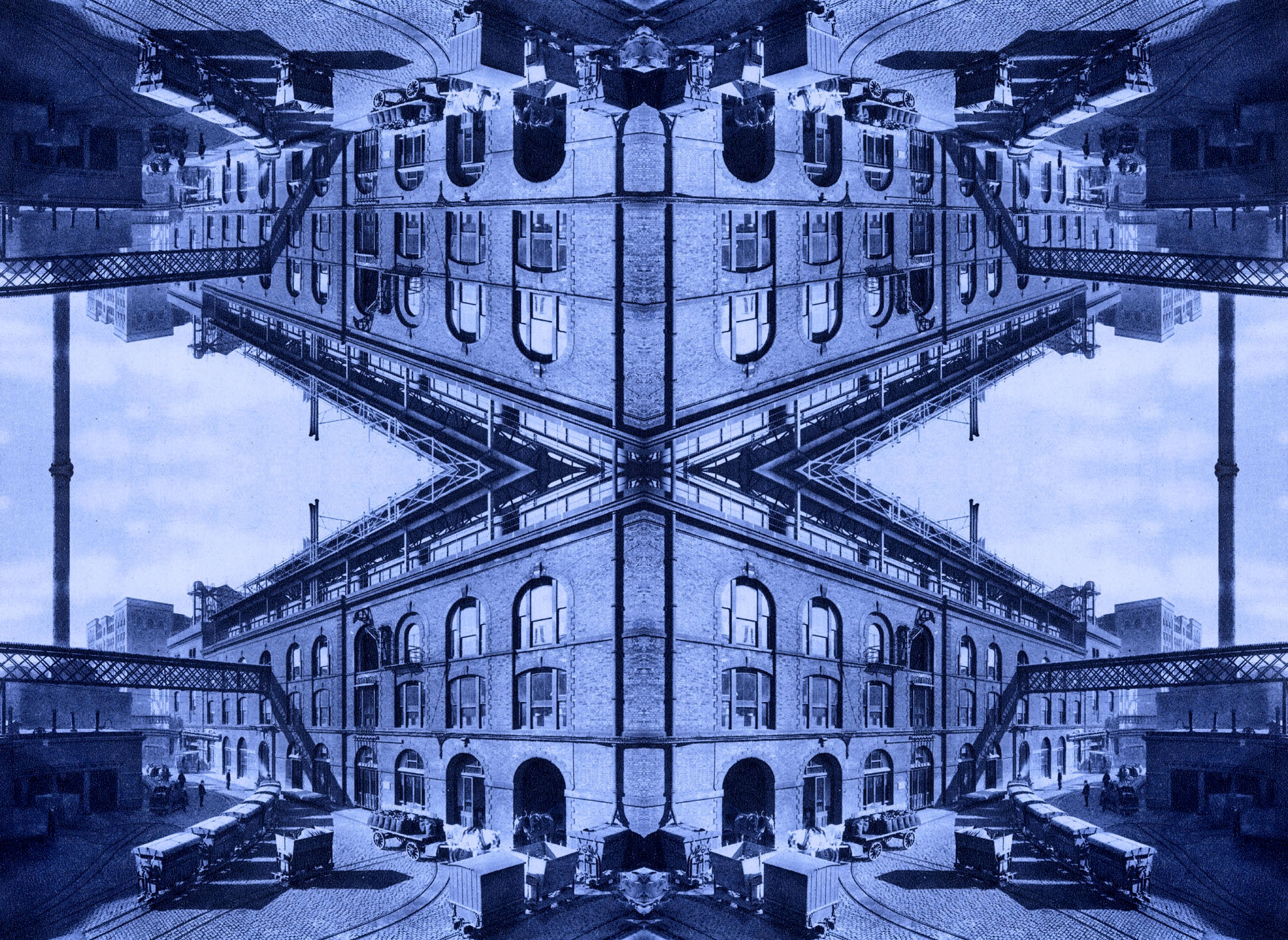
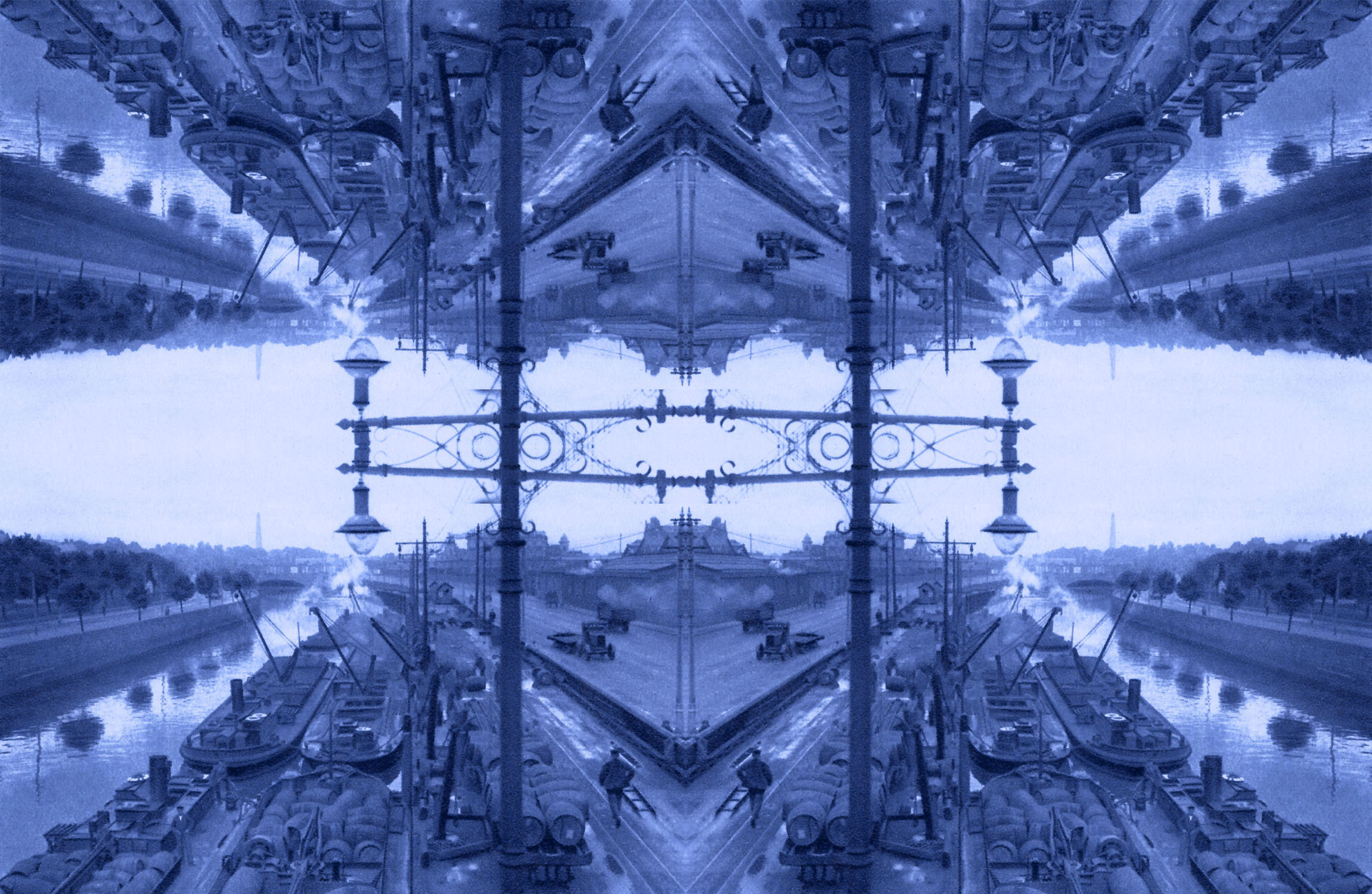
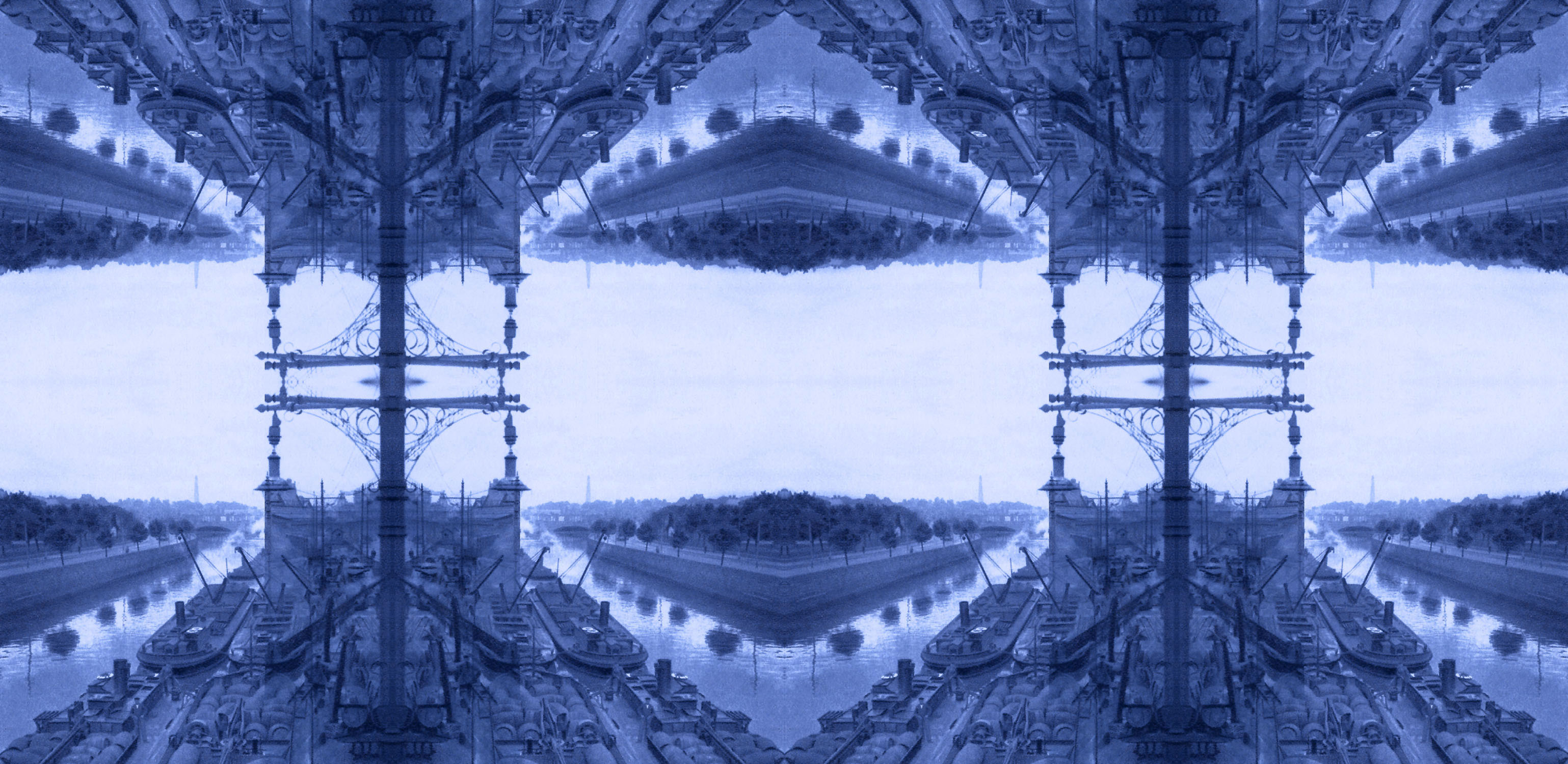
The base images for this series of work come from a book on the history of St. James’s Gate Brewery in Dublin published in 1931. These images have then been reflected, distorted, overlapped and filters have been used to produce the desired feeling. Each image has a different number of variations depending on this feeling. The 75 images in the series are sequenced as in the book.

The influences on the work were the architecture in Fritz Lang’s 1937 film Metropolis; the surrealist photography of Dora Maar notably her image Le Simulateur (The Pretender) 1936; the modernist photographs of factory machines by artists such as Jakob Tuggener and Albert Renger-Patzsch; and the prisons of Piranesi’s etchings published in Carceri d’invenzione, often translated as Imaginary Prisons, c. 1745 to 1750.

© Marcus Bunyan


Please click on the photographs to see a larger version of the image.
Please view the work on a large computer screen if possible.
Please see the whole series on my website.
Many thankx to Elizabeth Gertsakis for her invaluable help.


Marcus Bunyan (Australian, b. 1958) 'No. 2 Brewery' 2026  from the series 'Metropolis'


Marcus Bunyan (Australian, b. 1958)
No. 2 Brewery
2026
from the series Metropolis


Marcus Bunyan (Australian, b. 1958) 'Boiler House B' 2026


Marcus Bunyan (Australian, b. 1958)
Boiler House B
2026
from the series Metropolis


Marcus Bunyan (Australian, b. 1958) 'Old Engine A' 2026


Marcus Bunyan (Australian, b. 1958)
Old Engine A
2026
from the series Metropolis


Marcus Bunyan (Australian, b. 1958)
'Electric Power Station A'
2026


Marcus Bunyan (Australian, b. 1958)
Electric Power Station A-B
2026
from the series Metropolis


Marcus Bunyan (Australian, b. 1958)
'Compressor Machines A' 2026


Marcus Bunyan (Australian, b. 1958)
Compressor Machines A-B
2026
from the series Metropolis


Marcus Bunyan (Australian, b. 1958)
'Refrigerating Plant A' 2026


Marcus Bunyan (Australian, b. 1958)
Refrigerating Plant A
2026
from the series Metropolis


Marcus Bunyan (Australian, b. 1958)
'Robert St. Malt Store – Exterior A' 2026
Marcus Bunyan (Australian, b. 1958) 'Robert St. Malt Store – Exterior B' 2026


Marcus Bunyan (Australian, b. 1958)
Robert St. Malt Store – Exterior A-B
2026
from the series Metropolis


Marcus Bunyan (Australian, b. 1958)
'Robert St. Malt Store – Interior A' 2026


Marcus Bunyan (Australian, b. 1958)
Robert St. Malt Store – Interior A-B
2026
from the series Metropolis


Marcus Bunyan (Australian, b. 1958)
'Loading Malt Wagons B' 2026


Marcus Bunyan (Australian, b. 1958) 'Loading Malt Wagons D' 2026


Marcus Bunyan (Australian, b. 1958)
Loading Malt Wagons B, D
2026
from the series Metropolis


Marcus Bunyan (Australian, b. 1958) 'Cooke's Lane Malt House A' 2026
Marcus Bunyan (Australian, b. 1958) 'Cooke's Lane Malt House C' 2026


Marcus Bunyan (Australian, b. 1958)
Cooke’s Lane Malt House A-C
2026
from the series Metropolis


Marcus Bunyan (Australian, b. 1958)
'Barley in Process of Being Malted' 2026


Marcus Bunyan (Australian, b. 1958)
Barley in Process of Being Malted
2026
from the series Metropolis


Marcus Bunyan (Australian, b. 1958)
'Malt Train Outside No. 2 Brewery B' 2026


Marcus Bunyan (Australian, b. 1958)
Malt Train Outside No. 2 Brewery B
2026
from the series Metropolis


Marcus Bunyan (Australian, b. 1958)
'Hops in Store A' 2026


Marcus Bunyan (Australian, b. 1958) 'Hops in Store C' 2026


Marcus Bunyan (Australian, b. 1958)
Hops in Store A-C
2026
from the series Metropolis


Marcus Bunyan (Australian, b. 1958)
'Loading Hop Wagons A'
2026
Marcus Bunyan (Australian, b. 1958) 'Loading Hop Wagons B' 2026


Marcus Bunyan (Australian, b. 1958)
Loading Hop Wagons A-B
2026
from the series Metropolis


Marcus Bunyan (Australian, b. 1958)
'Regulating Mash Temperatures B' 2026


Marcus Bunyan (Australian, b. 1958)
Regulating Mash Temperatures B
2026
from the series Metropolis


Marcus Bunyan (Australian, b. 1958)
'Copper Stage A' 2026
Marcus Bunyan (Australian, b. 1958)
'Copper Stage B' 2026


Marcus Bunyan (Australian, b. 1958)
Copper Stage A-C
2026
from the series Metropolis


Marcus Bunyan (Australian, b. 1958)
'"Striking Off" a Copper'
2026


Marcus Bunyan (Australian, b. 1958)
“Striking Off” a Copper
2026
from the series Metropolis


Marcus Bunyan (Australian, b. 1958)
'A Corner of No. 11 Vat House A' 2026


Marcus Bunyan (Australian, b. 1958)
A Corner of No. 11 Vat House A
2026
from the series Metropolis


Marcus Bunyan (Australian, b. 1958)
Vat House – Another View B' 2026


Marcus Bunyan (Australian, b. 1958)
Vat House – Another View C' 2026


Marcus Bunyan (Australian, b. 1958)
Vat House – Another View A-C
2026
from the series Metropolis


Marcus Bunyan (Australian, b. 1958)
'Cask Making Shop – Blazing A' 2026
Marcus Bunyan (Australian, b. 1958) 'Cask Making Shop – Blazing B' 2026


Marcus Bunyan (Australian, b. 1958)
Cask Making Shop – Blazing A-C
2026
from the series Metropolis


Marcus Bunyan (Australian, b. 1958)
'Cask Magazine A'
2026 from the series 'Metropolis'


Marcus Bunyan (Australian, b. 1958)
Cask Magazine A-C
2026
from the series Metropolis


Marcus Bunyan (Australian, b. 1958)
'Cooperage Yard – Another View B' 2026


Marcus Bunyan (Australian, b. 1958) 'Cooperage Yard – Another View F' 2026


Marcus Bunyan (Australian, b. 1958)
Cooperage Yard A-B
2026
from the series Metropolis


Marcus Bunyan (Australian, b. 1958)
'Cask Cleansing Shed A'
2026 from the series 'Metropolis'


Marcus Bunyan (Australian, b. 1958)
Cask Cleansing Shed A-D
2026
from the series Metropolis


Marcus Bunyan (Australian, b. 1958)
'Racking Room, Showing Casks being Filled' 2026


Marcus Bunyan (Australian, b. 1958)
Racking Room, Showing Casks being Filled
2026
from the series Metropolis


Marcus Bunyan (Australian, b. 1958)
'Loading Railway Wagons' 2026
 

Marcus Bunyan (Australian, b. 1958)
Loading Railway Wagons
2026
from the series Metropolis


Marcus Bunyan (Australian, b. 1958)
'Low Platform Vehicle B'
2026


Marcus Bunyan (Australian, b. 1958)
Low Platform Vehicle A-B
2026
from the series Metropolis


Marcus Bunyan (Australian, b. 1958)
'Some of the Delivery Fleet About to Start' 2026


Marcus Bunyan (Australian, b. 1958)
Some of the Delivery Fleet About to Start
2026
from the series Metropolis


Marcus Bunyan (Australian, b. 1958)
'Loading Wharf on River Liffey C' 2026


Marcus Bunyan (Australian, b. 1958) 'Loading Wharf on River Liffey D' 2026


Marcus Bunyan (Australian, b. 1958)
Loading Wharf on River Liffey C-D
2026
from the series Metropolis


Marcus Bunyan website

LIKE ART BLART ON FACEBOOK

Back to top

Exhibition: ‘Man Ray: When Objects Dream’ at The Metropolitan Museum of Art, New York

Exhibition dates: 14th September, 2025 – 1st February, 2026

Curators: Stephanie D’Alessandro, Leonard A. Lauder Curator of Modern Art and Senior Research Coordinator in Modern and Contemporary Art at The Met, and Stephen C. Pinson, Curator in the Department of Photographs at The Met, with the assistance of Micayla Bransfield, Research Associate, Modern and Contemporary Art. 


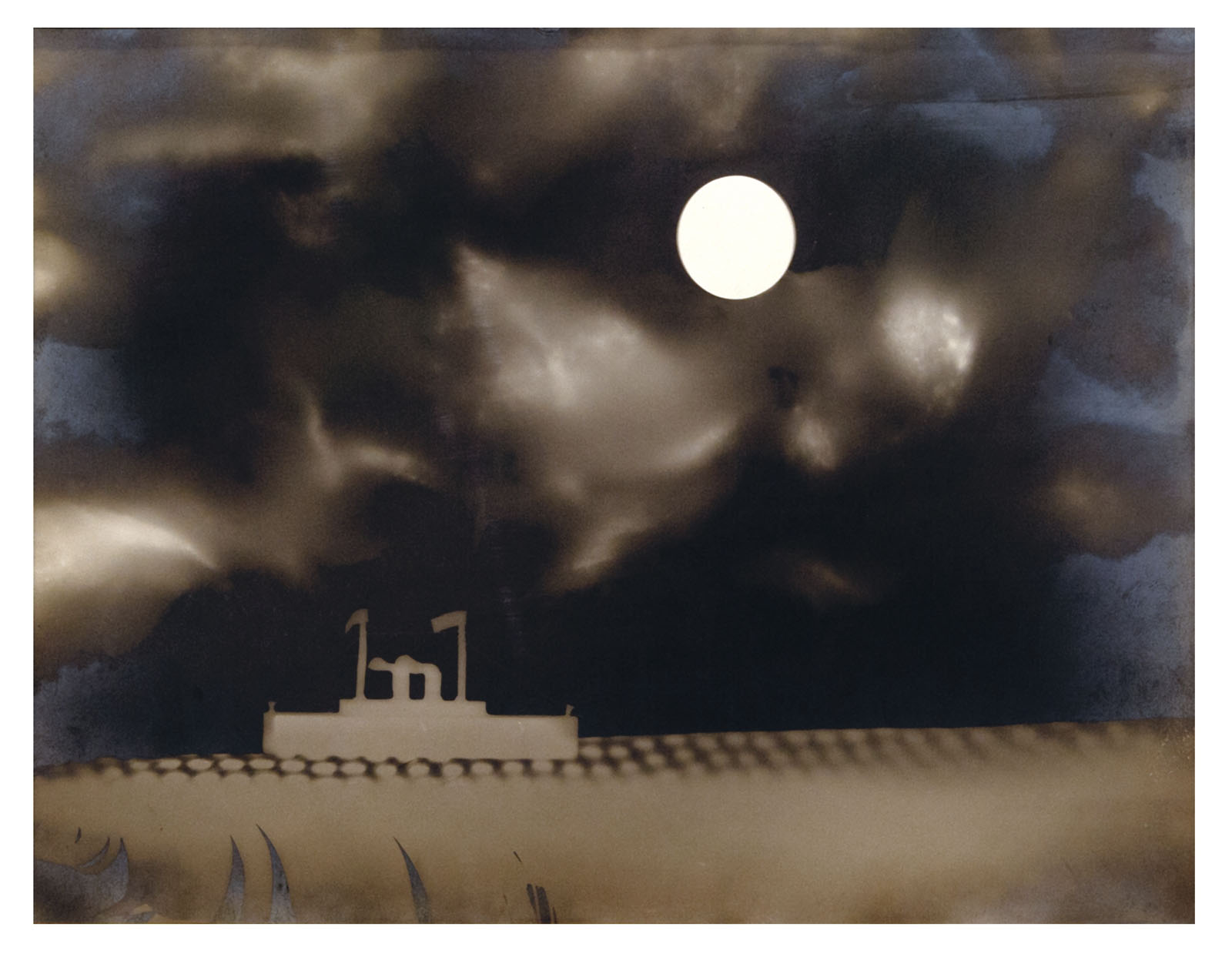
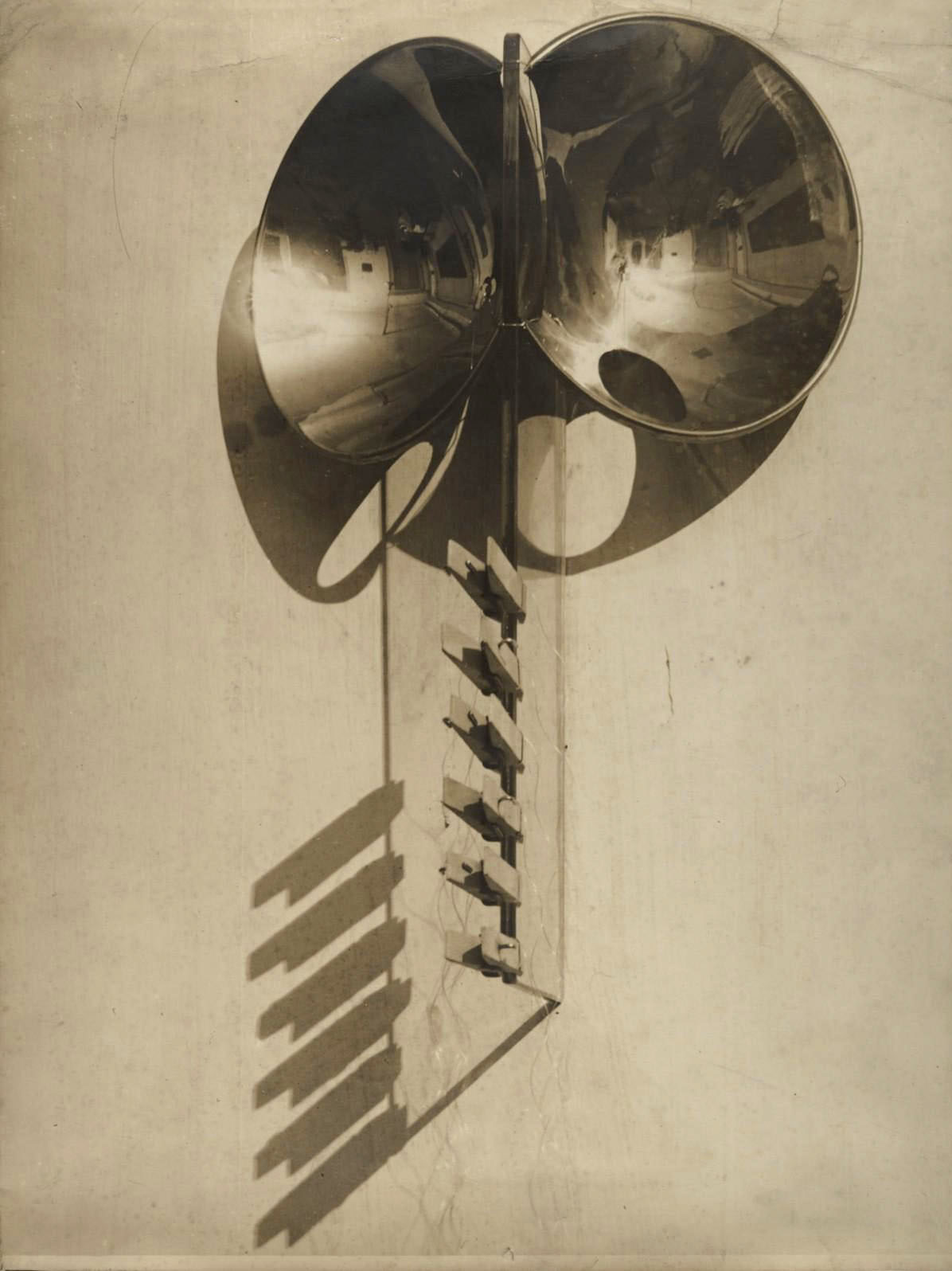
Man Ray (American, 1890-1976) 'Marine' c. 1925 from the exhibition 'Man Ray: When Objects Dream' at The Metropolitan Museum of Art, New York, September 2025 - February 2026


Man Ray (American, 1890-1976) 
Marine 
c. 1925 
Gelatin silver print 
8 3/4 × 11 9/16 in. (22.2 × 29.3cm) 
Private collection; courtesy Galerie 1900-2000, Paris-New York 
© Man Ray 2015 Trust / Artists Rights Society (ARS), NY / ADAGP, Paris 2025 


“Like the undisturbed ashes of an object consumed by flames these images are oxidized residues fixed by light and chemical elements of an experience, an adventure, not an experiment. They are the result of curiosity, inspiration, and these words do not pretend to convey any information.”


Man Ray1


The rayographs

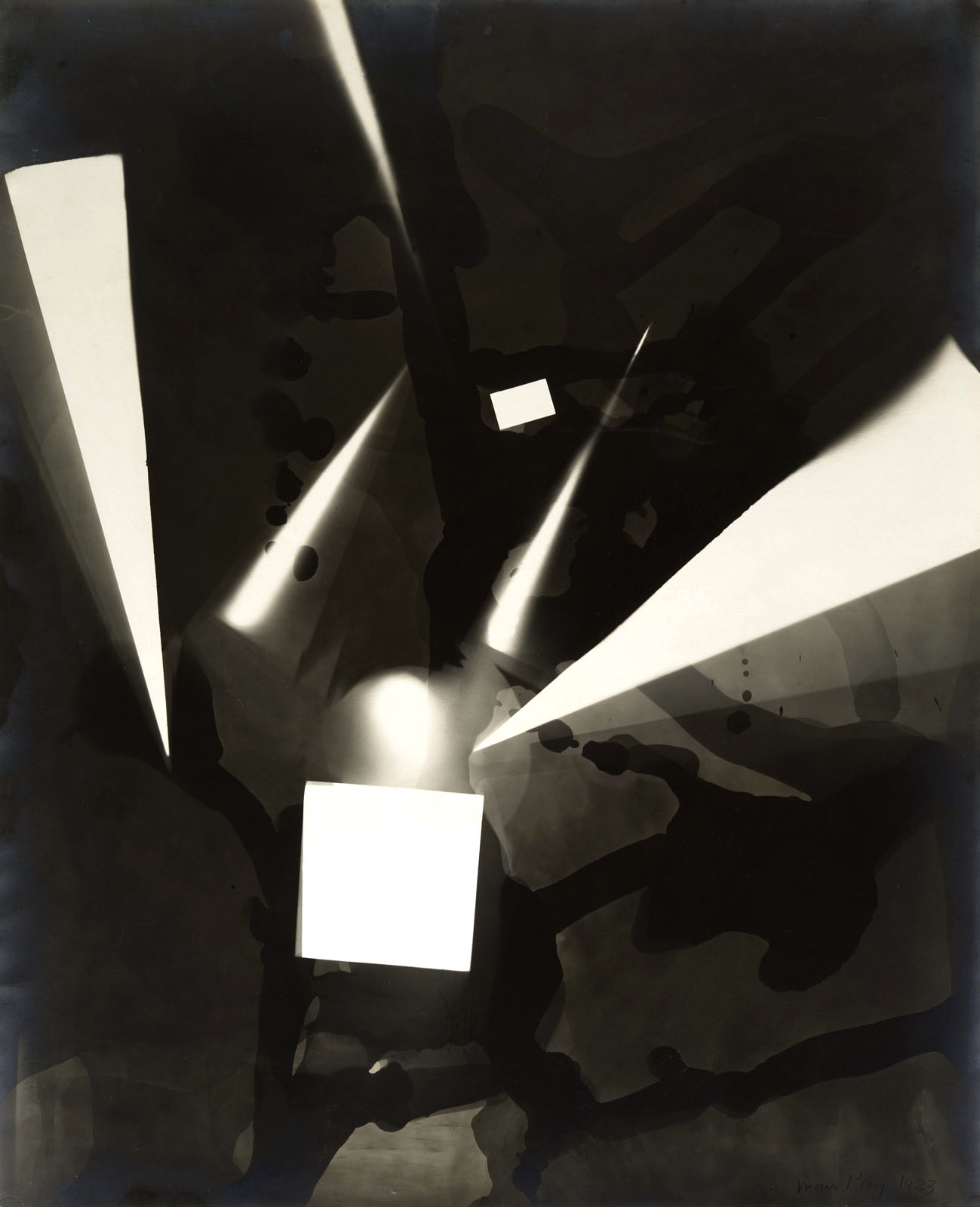
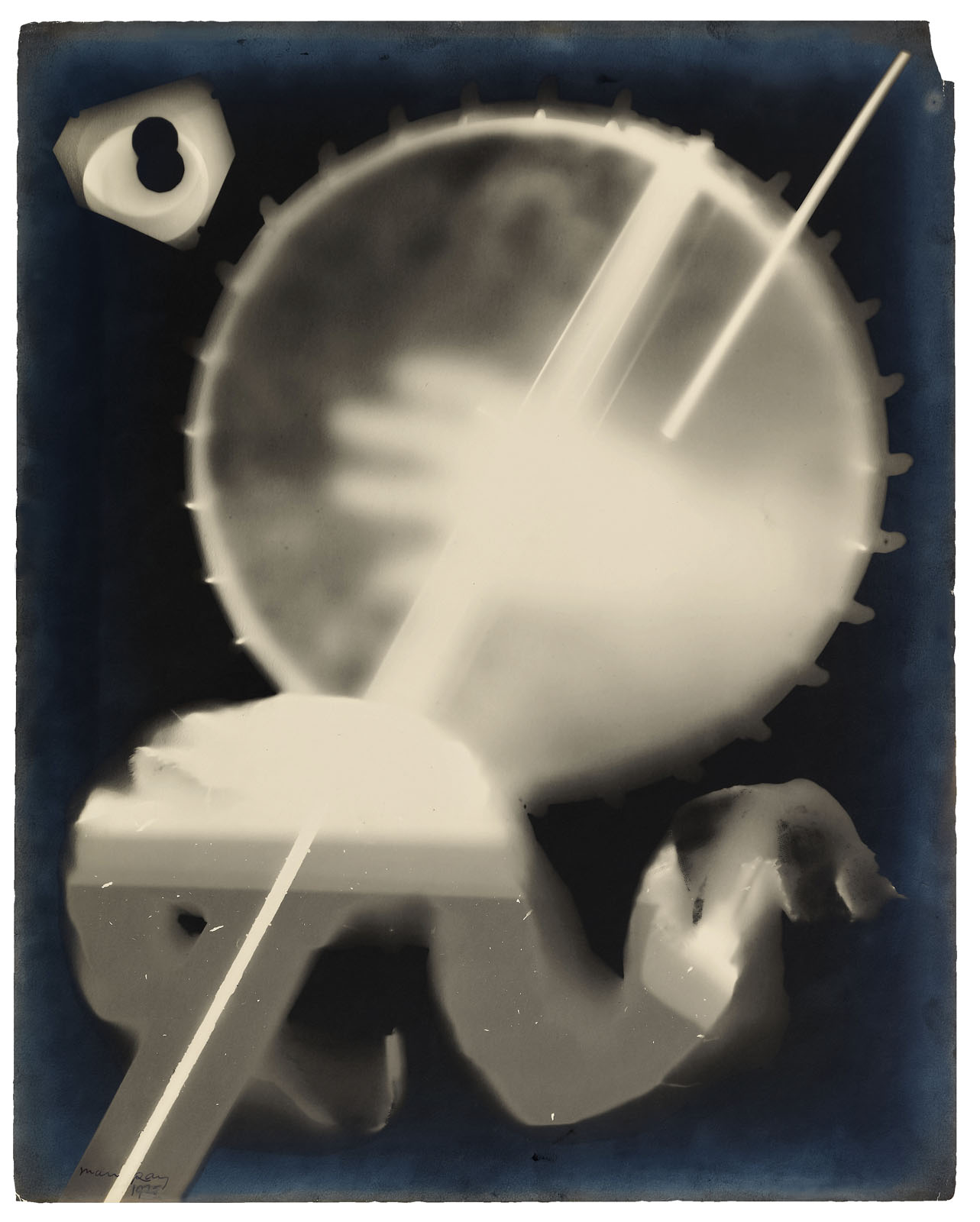
Although not the inventor of the photogram, a photograph made without the use of a camera by placing objects directly onto sensitised photographic paper and then exposing the paper to light, Man Ray’s rayographs have become the most recognisable and famous form that photograms have taken. This is because of their inventiveness, their subliminal connection to the psyche, and the use of “objects from the real world to make ambiguous dreamscapes.”7

It is interesting that Man Ray called his images rayographs, for a graph implies a topographical mapping, a laying out of statistics, whereas Lucia Moholy and László Moholy-Nagy’s photograms imply in the title of their technique the transmission of some form of message, like a telegram. The paradox is that, as the quotation above states, Man Ray always insisted that his rayographs imparted no information at all; perhaps they are only dreams made (un)stable. Contrary to this the other two artists believed that, “photographic images – cameraless and other – should not deal with conventional sentiments or personal feelings but should be concerned with light and form,”8 quite the reverse of the title of their technique.

After his arrival in Paris Man Ray started experimenting in his darkroom and discovered the technique for his rayographs by accident. With the help of his friend the Surrealist poet Tristan Tzara, he published a portfolio of twelve Rayographs in 1922 called Les champs délicieux (The delicious fields). “This title is a reference to ‘Les champs magnétiques’, a collection of writings by André Breton and Philippe Soupault composed from purportedly random thought fragments recorded by the two authors.”9 The rayographs are visual representations of random thought fragments, “photographic equivalents for the Surrealist sensibility that glorified randomness and disjunction.”10

Man Ray, “denied the camera its simplest joy: the ability to capture everything, all the distant details, all the ephemeral lights and shadows of the world”11 but, paradoxically, the rayographs are the most ephemeral of creatures, only being able to be created once, the result not being known until after the photographic paper has been developed. In fact, for Man Ray to create his portfolio Les champs délicieux (The delicious fields), he had to rephotograph the rayographs in order to make multiple copies.12

Man Ray “insisted in nearly every interview that the rayograph was not a photogram in the traditional sense. He did something that a photogram didn’t; he introduced depth into the images,”13 which denied the images their photographic objectivity by depicting an internal landscape rather than an external one.14 What the rayographs do not deny, however, is the subjectivity of the artist, his skill at placing the objects on the photographic paper, expressed in their dream-like nature, both a subjective ephemerality (because they could only be produced once) and an ephemeral subjectivity (because they were expressions of Man Ray’s fantasies, and therefore had little substance).

Through an alchemical process the latent images emerge from the photographic paper, representations of Man Ray’s fantasies as embodied in the ‘presence’ of the objects themselves, in the surface of the paper. Perhaps these objects offer, in Heidegger’s terms, ‘a releasement towards things’,15 “a coexistence between a conscious and unconscious way of perceiving which sustains the mystery of the object confusing the distinction between real time and sensual time, between inside and outside, input and output becoming neither here nor there.”16

Finally, within their depth of field the rayographs can be seen as both dangerous and delicious, for somehow they are both beautiful and unsettling at one and the same time. As Surrealism revels in randomness and chance these images enact the titles of other Man Ray photographs: Danger-Dancer, Anxiety, Dust Raising, Distorted House. The rayographs revel in chance and risk; Man Ray brings his fantasies to the surface, an interior landscape represented externally that can be (re)produced only once – those dangerous delicious fields.

Extract from Marcus Bunyan. “The Delicious Fields: Exploring Man Ray’s ‘Rayographs’ in a Digital Future,” published in The University of Queensland Vanguard magazine ‘Man Ray: Life, Work & Themes’, 2004


Footnotes

1/ Man Ray quoted in Janus (trans. Murtha Baca). Man Ray: The Photographic Image. London: Gordon Fraser, 1980, p. 213

7/ Mark Greenberg (ed.,). In Focus: Man Ray: Photographs from the J. Paul Getty Museum. Los Angeles, The J. Paul Getty Museum, 1998, p. 38

8/ Naomi Rosenblum. A World History of Photography. New York: Abbeville Press, 1997, 394

9/ Greenberg, op. cit., p. 28

10/ Jed Perl (ed.,). Man Ray: Aperture Masters of Photography. New York: Aperture, 1997 pp. 11-12

11/ Perl, op. cit., pp. 5-6

12/ Greenberg, op. cit., p. 28

13/ Greenberg, op. cit., p. 112

14/ Greenberg, op. cit., p. 28

15/ “We stand at once within the realm of that which hides itself from us, and hides itself just in approaching us. That which shows itself and at the same time withdraws is the essential trait of what we call the mystery … Releasement towards things and openness to the mystery belong together. They grant us the possibility of dwelling in the world in a totally different way…”

Martin Heidegger. Discourse on Thinking. New York: Harper & Row, 1966, pp. 55-56 quoted in Mauro Baracco. “Completed Yet Unconcluded: The Poetic Resistance of Some Melbourne Architecture,” in Leon van Schaik (ed.,). Architectural Design Vol. 72. No. 2 (‘Poetics in Architecture’). London: John Wiley and Sons, 2002, 74, Footnote 6.

16/ Marcus Bunyan. Spaces That Matter: Awareness and Entropia in the Imaging of Place (2002) [Online] Cited 07/07/2004.


Many thankx to The Metropolitan Museum of Art for allowing me to publish the photographs in the posting. Please click on the photographs for a larger version of the image.


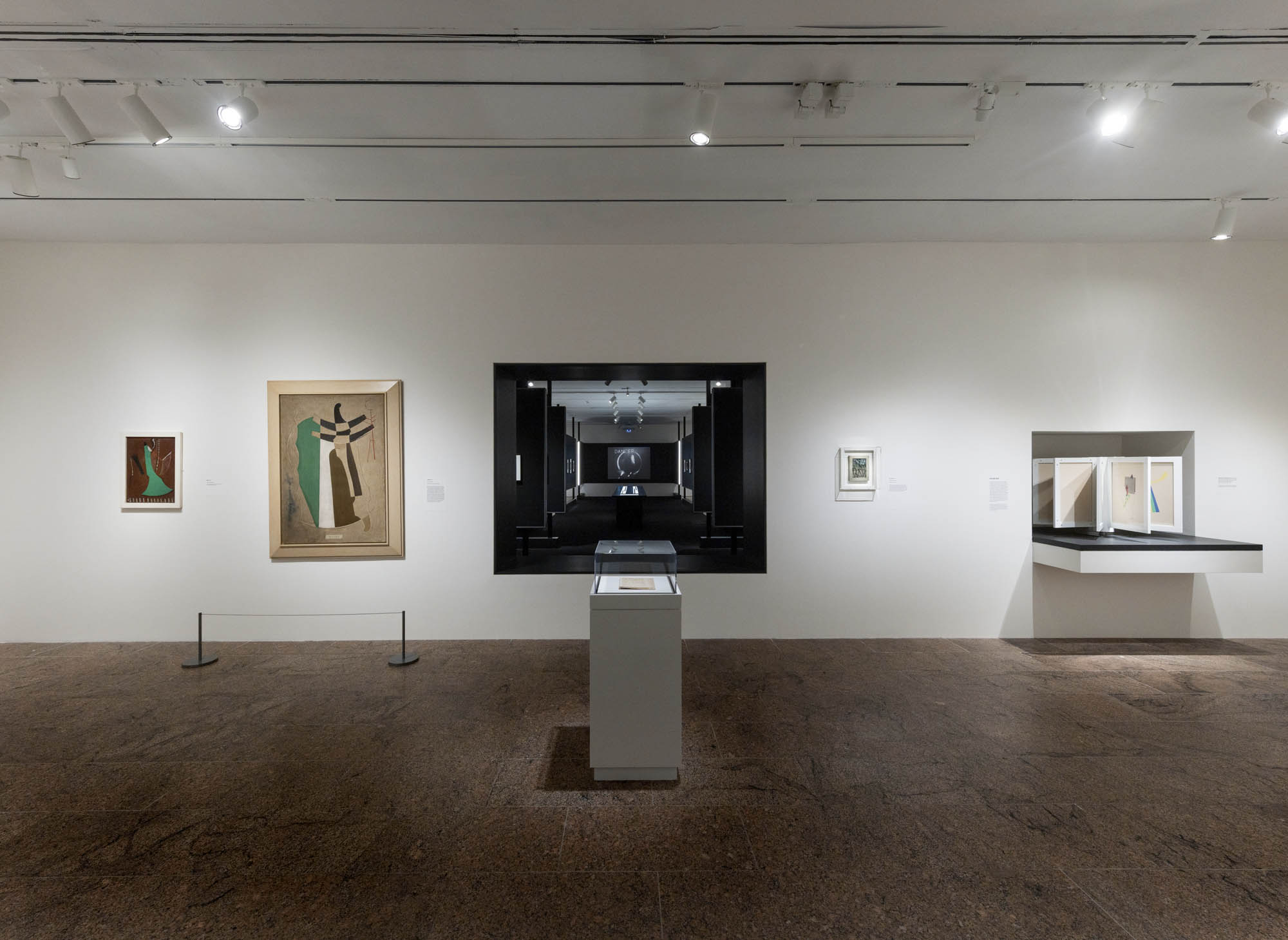
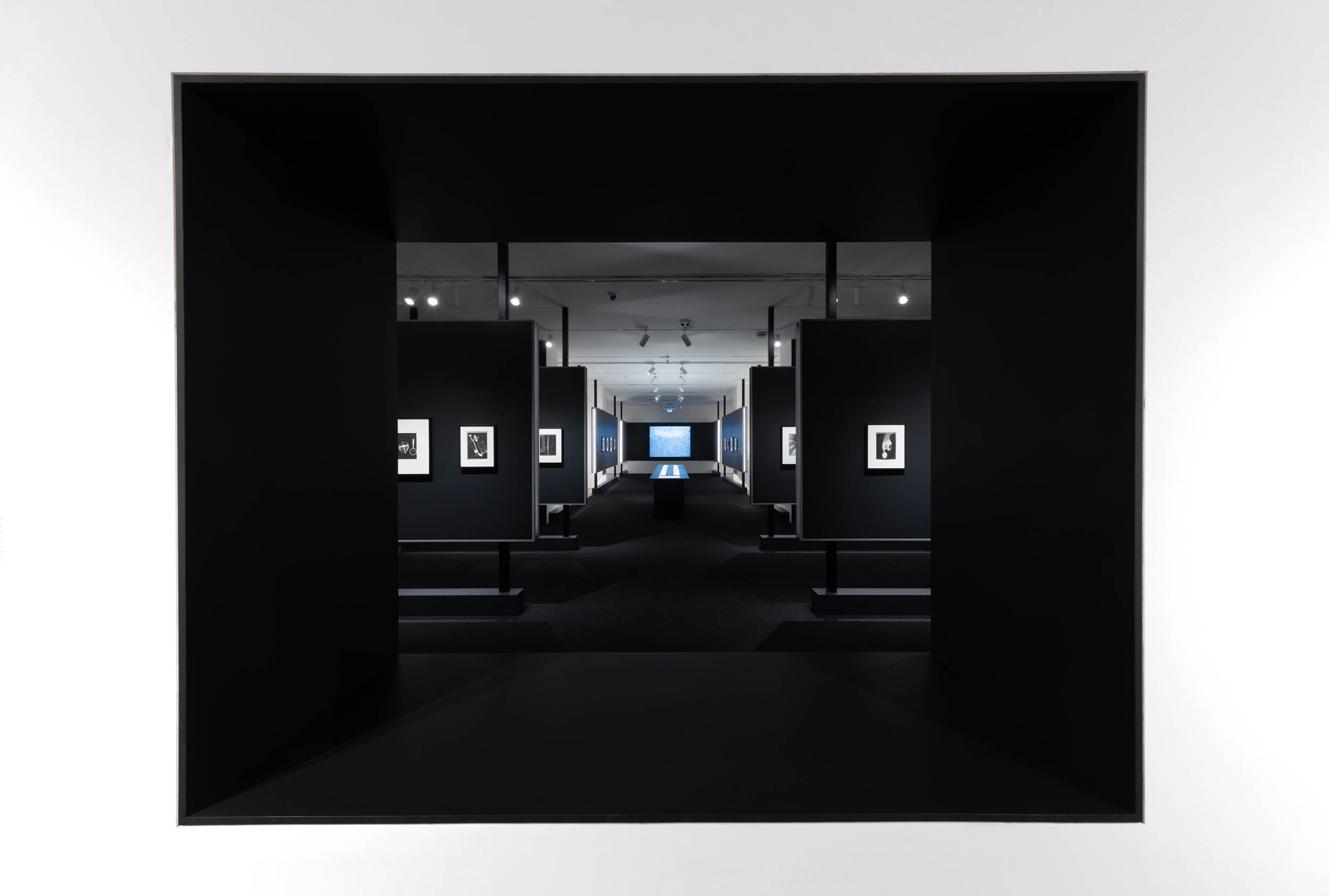
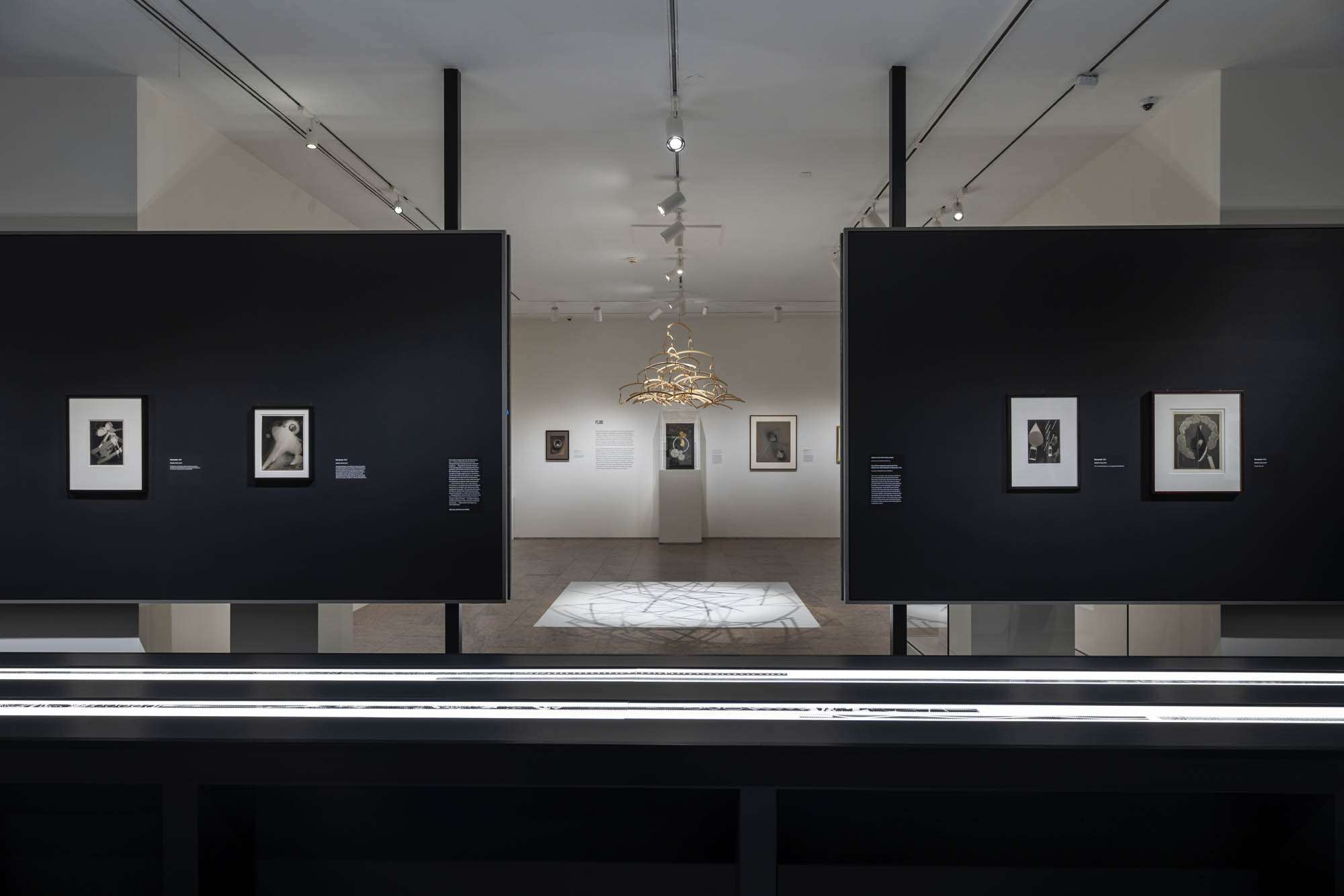
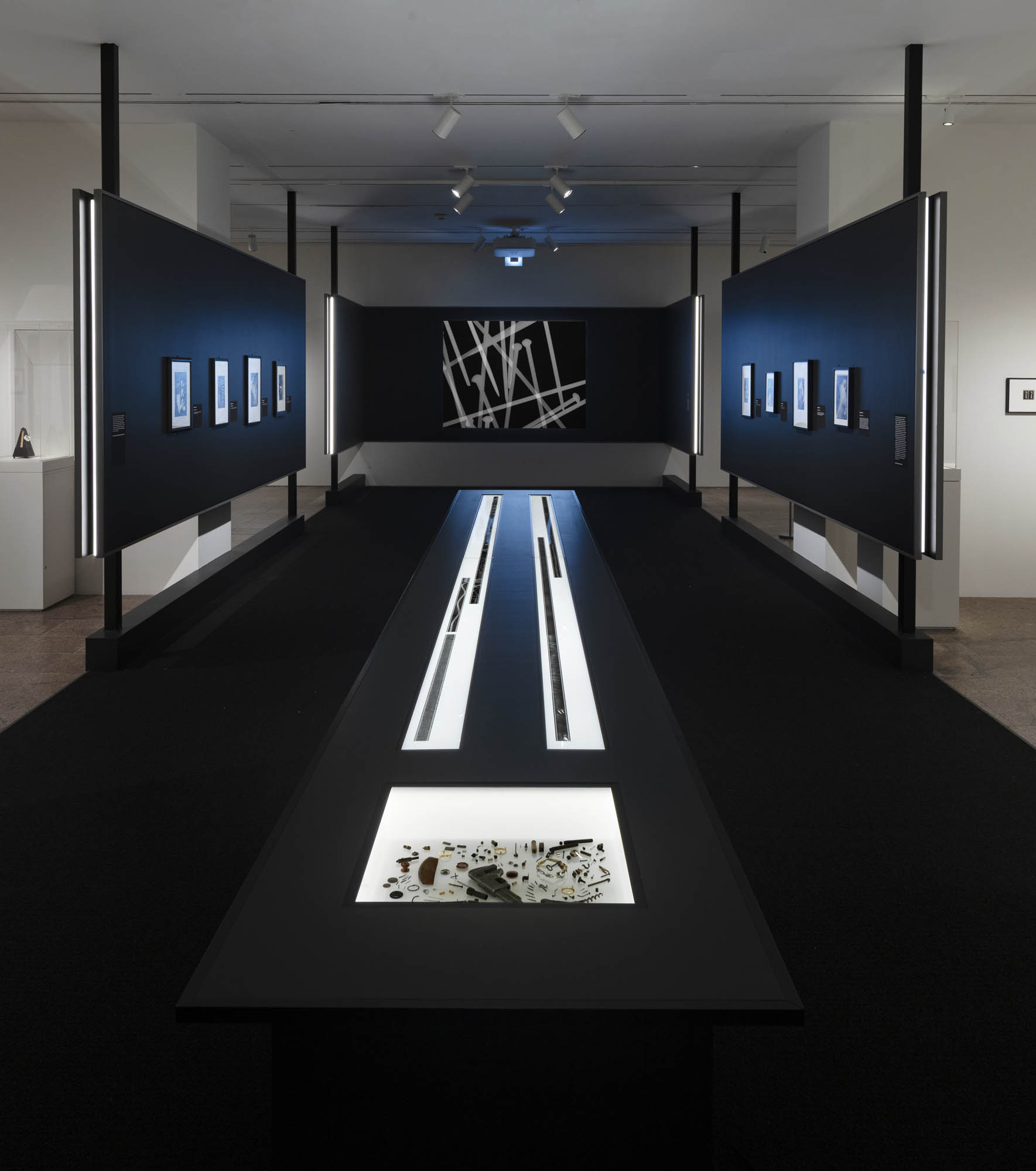
“Stepping into the exhibition Man Ray: When Objects Dream at The Metropolitan Museum of Art feels like entering the bellows of an old camera. Through a rectangular frame cut into the entry, the darkened walls unfold, accordion-like, to reveal a visual feast of the artist’s work, as Man Ray’s earliest film, “Retour à la raison (Return to Reason)” (1923), flickers across the screen opposite. Although the exhibition brings together approximately 160 works from an impressive array of lenders, it reveals itself gradually, taking the viewer through several turns before one can grasp its sheer enormity. When Objects Dream proves, thrillingly, that anyone left feeling jaded from the many, many recent exhibitions surrounding Surrealism’s centennial in 2024 can still see the movement’s key photographer with a fresh set of eyes.”


Julia Curl. “Man Ray Was So Much More Than a Photographer,” on the Hyperallergic website September 16, 2025 [Online] Cited 05/12/2025


“Objects to touch, to eat, to crunch, to apply to the eye, to the skin, to press, to lick, to break, to grind, objects to lie, to flee from, to honor, things cold or hot, feminine or masculine, objects of day or night which absorb through your pores the greater part of our life. … These are the projections surprised in transparence, by the light of tenderness, of objects that dream and talk in their sleep.” 

.
Tristan Tzara, “When Objects Dream,” 1934


“One sheet of paper got into the developing tray – a sheet unexposed that had been mixed with those already exposed under the negatives. … Regretting the waste of paper, I mechanically placed a small glass funnel, the graduate, and the thermometer in the tray on the wetted paper. I turned on the light; before my eyes an image began to form, not quite a simple silhouette of the objects as in a straight photograph, but distorted and refracted by the glass more or less in contact with the paper and standing out against a black background. … I remembered when I was a boy, placing fern leaves in a printing frame with proof paper, exposing it to sunlight, and obtaining a white negative of the leaves. This was the same idea, but with an added three-dimensional quality and tone graduation. I made a few more prints … taking whatever came to hand; my hotel-room key, a handkerchief, some pencils, a brush, a candle, a piece of twine … excitedly, enjoying myself immensely. In the morning I examined the results. … They looked startlingly new and mysterious.”


Man Ray 


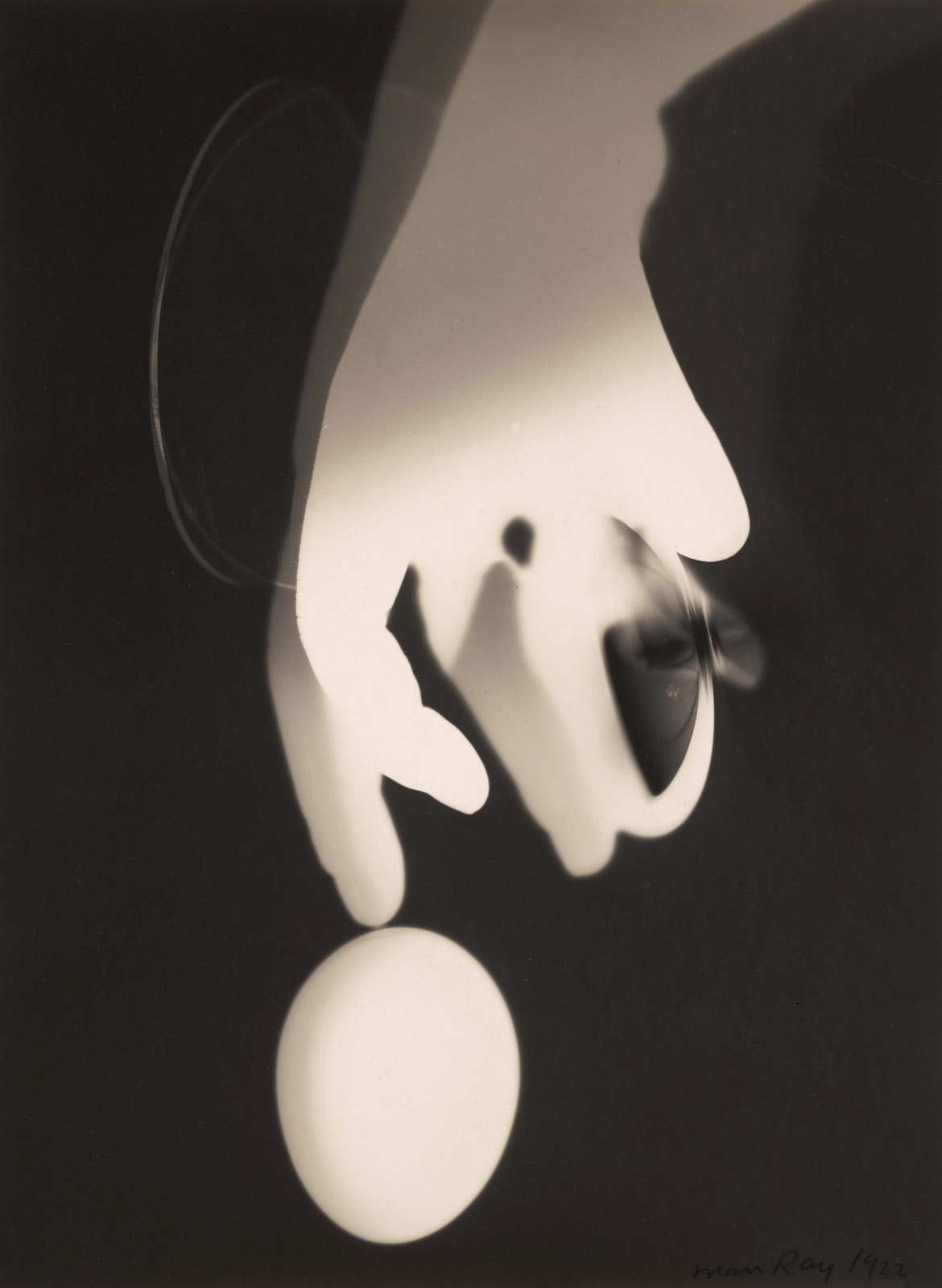
Man Ray (American, 1890-1976) 'Rayograph' 1922 from the exhibition 'Man Ray: When Objects Dream' at The Metropolitan Museum of Art, New York, September 2025 - February 2026


Man Ray (American, 1890-1976) 
Rayograph
1922 
Gelatin silver print 
9 1/2 × 7 in. (24.1 × 17.8cm) 
The Metropolitan Museum of Art, New York, Bluff Collection, Promised Gift of John A. Pritzker 
© Man Ray 2015 Trust / Artists Rights Society (ARS), NY / ADAGP, Paris 2025
Photo by Ben Blackwell 


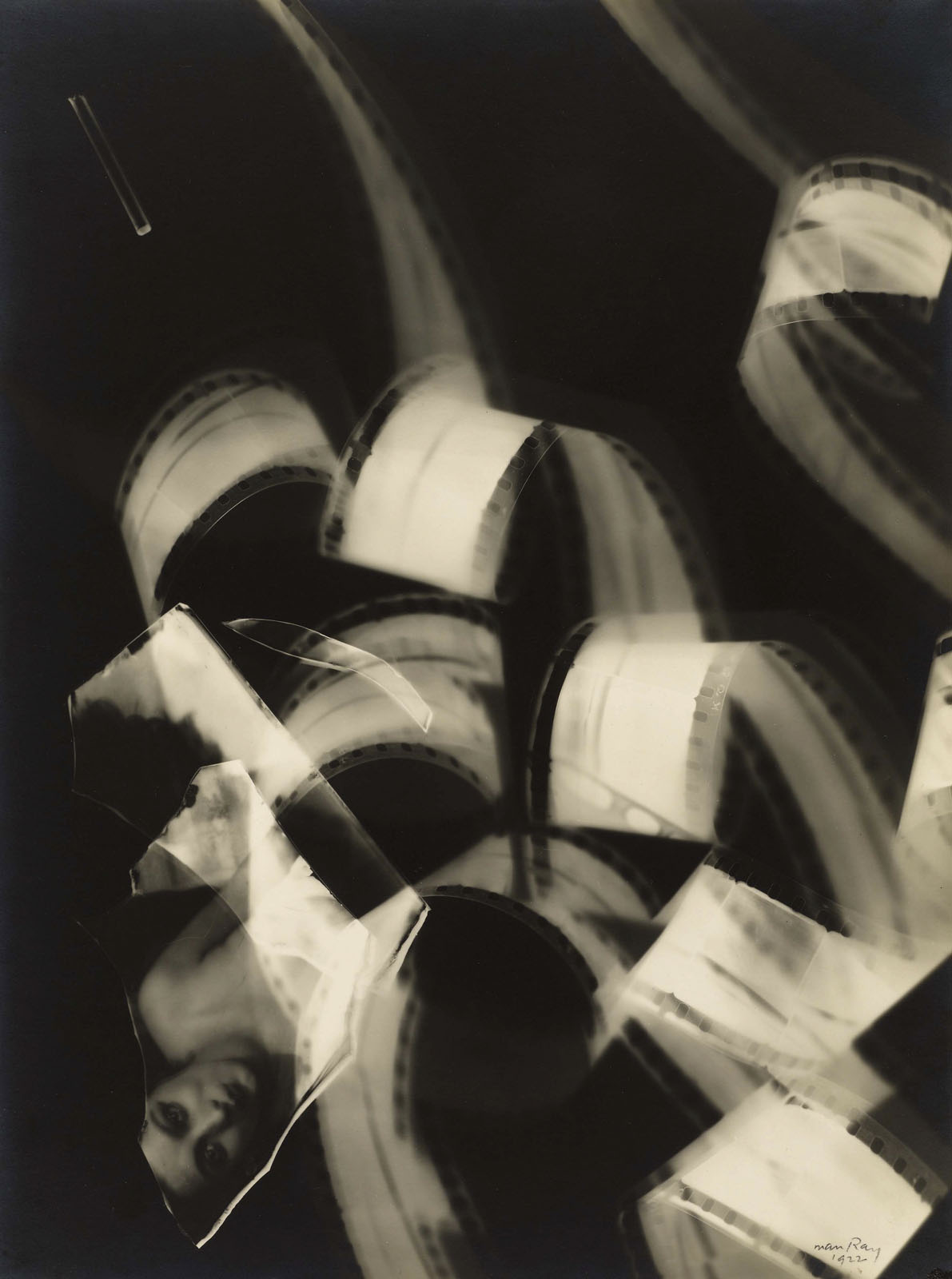
Man Ray (American, 1890-1976) 'Rayograph' 1922


Man Ray (American, 1890-1976) 
Rayograph
1922 
Gelatin silver print 
9 3/8 × 7 in. (23.8 × 17.8cm) 
The J. Paul Getty Museum, Los Angeles
Courtesy The J. Paul Getty Museum, Los Angeles 
© Man Ray 2015 Trust / Artists Rights Society (ARS), NY / ADAGP, Paris 2025


Man Ray (American, 1890-1976) 'Rayograph' 1922


Man Ray (American, 1890-1976) 
Rayograph
1922
Gelatin silver print
9 3/8 x 7 in. (23.8 x 17.8cm)
Private collection
© Man Ray 2015 Trust / Artists Rights Society (ARS), NY / ADAGP, Paris 2025


Man Ray (American, 1890-1976) 'Rayograph' 1923


Man Ray (American, 1890-1976) 
Rayograph 
1923 
Gelatin silver print 
11 1/2 × 9 5/16 in. (29.2 × 23.7cm) 
Yale University Art Gallery, New Haven, Gift of the Estate of Katherine S. Dreier 
© Man Ray 2015 Trust / Artists Rights Society (ARS), NY / ADAGP, Paris 2025
Photo: Yale University Art Gallery, Gift of Collection Société Anonyme 


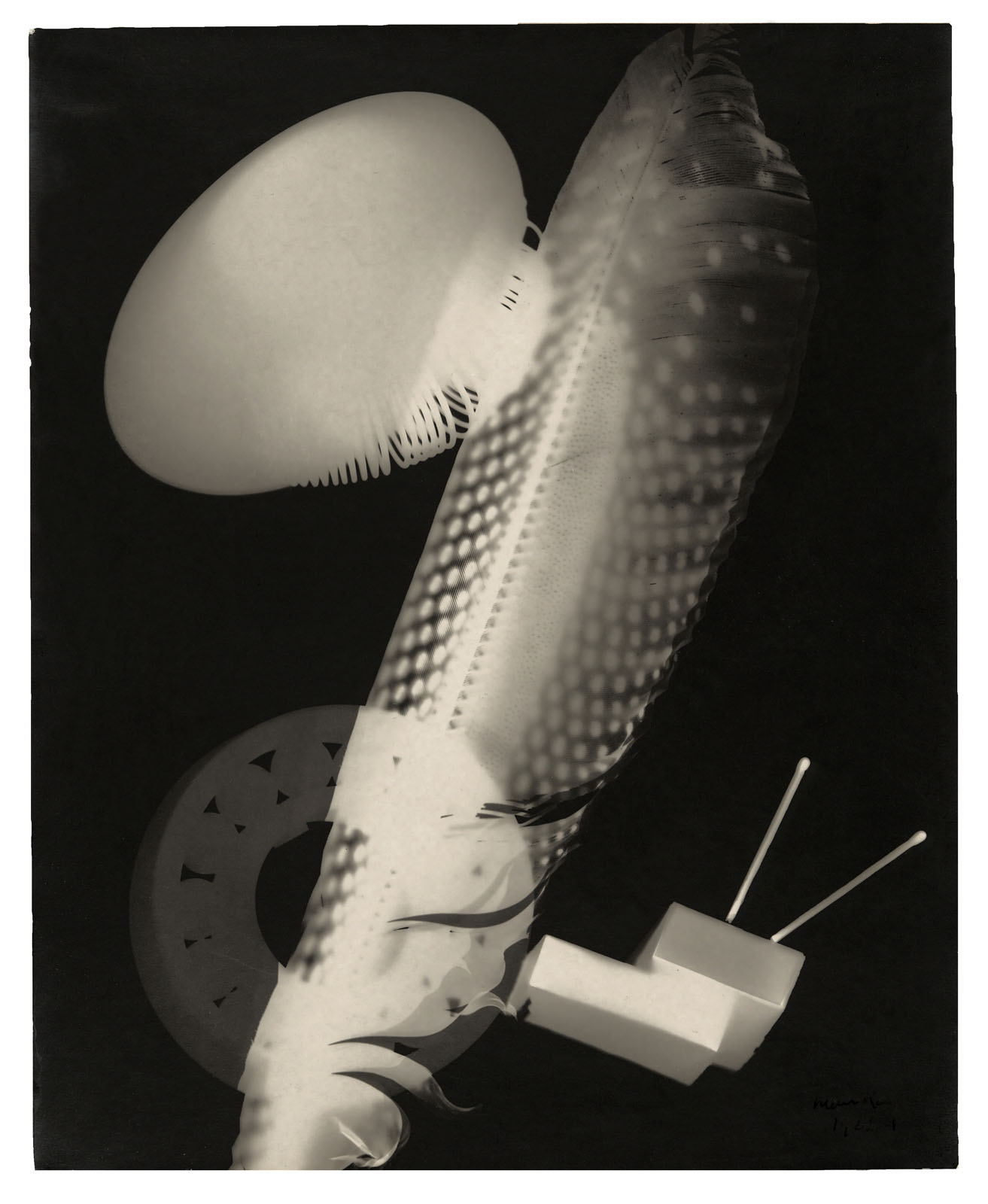
Man Ray (American, 1890-1976) 'Rayograph' 1923-1928


Man Ray (American, 1890-1976) 
Rayograph
1923-1928 
Gelatin silver print 
19 5/16 x 15 11/16 in. (49 x 39.8cm) 
The Metropolitan Museum of Art, New York, Gilman Collection, Purchase, The Horace W. Goldsmith Foundation Gift, through Joyce and Robert Menschel, 2005
Image © The Metropolitan Museum of Art, photo by Mark Morosse 
© Man Ray 2015 Trust / Artists Rights Society (ARS), NY / ADAGP, Paris 2025 


Man Ray (American, 1890-1976) 'Rayography' 1925


Man Ray (American, 1890-1976) 
Rayograph 
1925 
Gelatin silver print 
19 15/16 × 15 13/16 in. (50.6 × 40.2cm) 
MAH Musée d’art et d’histoire, City of Geneva. Purchase, 1968
© Man Ray 2015 Trust / Artists Rights Society (ARS), NY / ADAGP, Paris 2025
Photo © Musée d’art et d’histoire, Ville de Genève, photo by André Longchamp


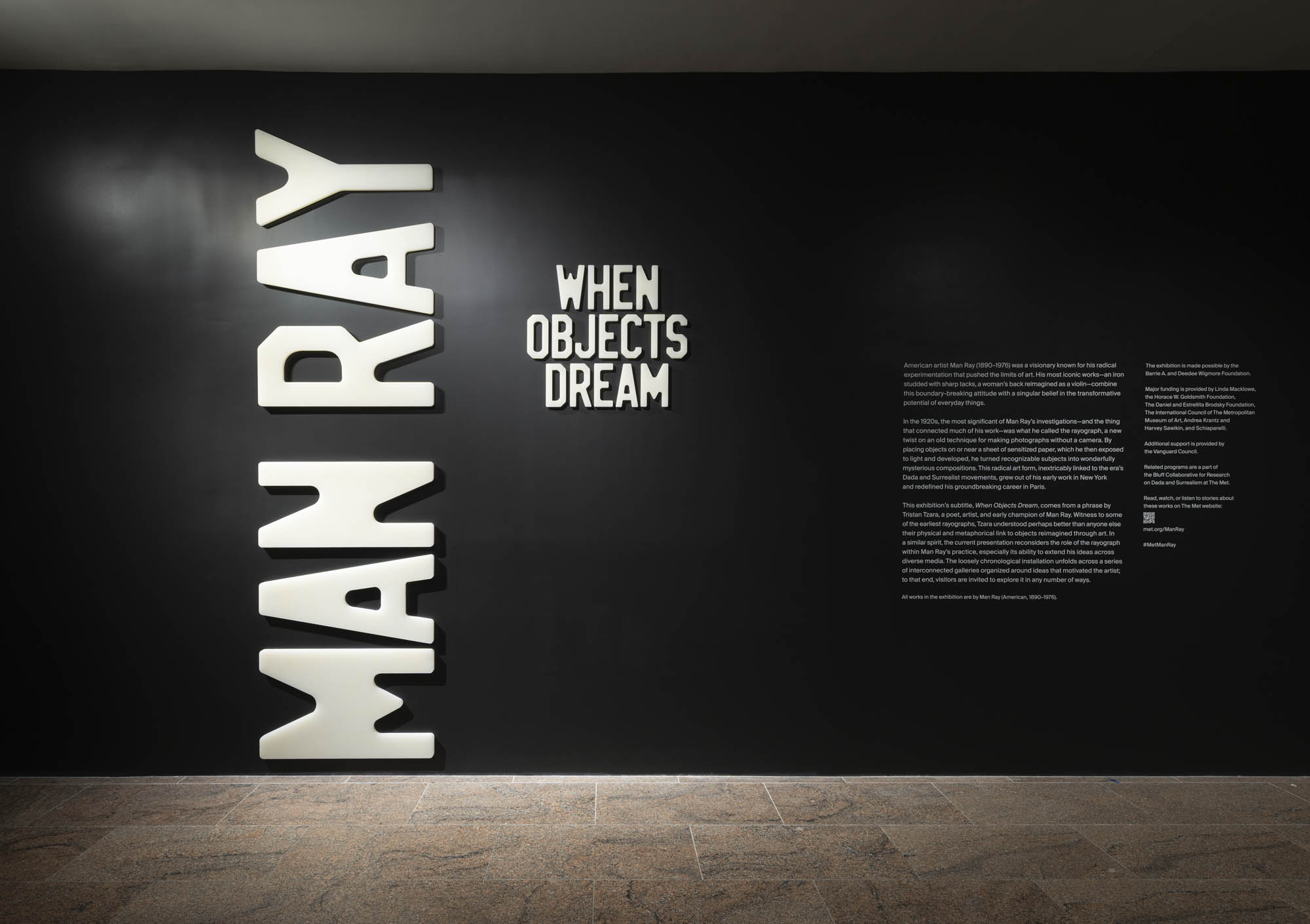
American artist Man Ray (1890-1976) was a visionary known for his radical experiments that pushed the limits of photography, painting, sculpture, and film. In the winter of 1921, he pioneered the rayograph, a new twist on a technique used to make photographs without a camera. By placing objects on or near a sheet of light-sensitive paper, which he exposed to light and developed, Man Ray turned recognisable subjects into wonderfully mysterious compositions. Introduced in the period between Dada and Surrealism, the rayographs’ transformative, magical qualities led the poet Tristan Tzara to describe them as capturing the moments “when objects dream.”

The exhibition will be the first to situate this signature accomplishment in relation to Man Ray’s larger body of work of the 1910s and 1920s. Drawing from the collections of The Met and more than 50 U.S. and international lenders, the exhibition will feature approximately 60 rayographs and 100 paintings, objects, prints, drawings, films, and photographs – including some of the artist’s most iconic works – to highlight the central role of the rayograph in Man Ray’s boundary-breaking practice.

“Before my eyes an image began to form, not quite a simple silhouette of the objects as in a straight photograph, but distorted and refracted … In the morning I examined the results, pinning a couple of the rayographs – as I decided to call them – on the wall. They looked startlingly new and mysterious.” ~ Man Ray

Text from The Metropolitan Museum of Art website


Installation view of the exhibition 'Man Ray: When Objects Dream' at The Metropolitan Museum of Art, New York, September 2025 - February 2026


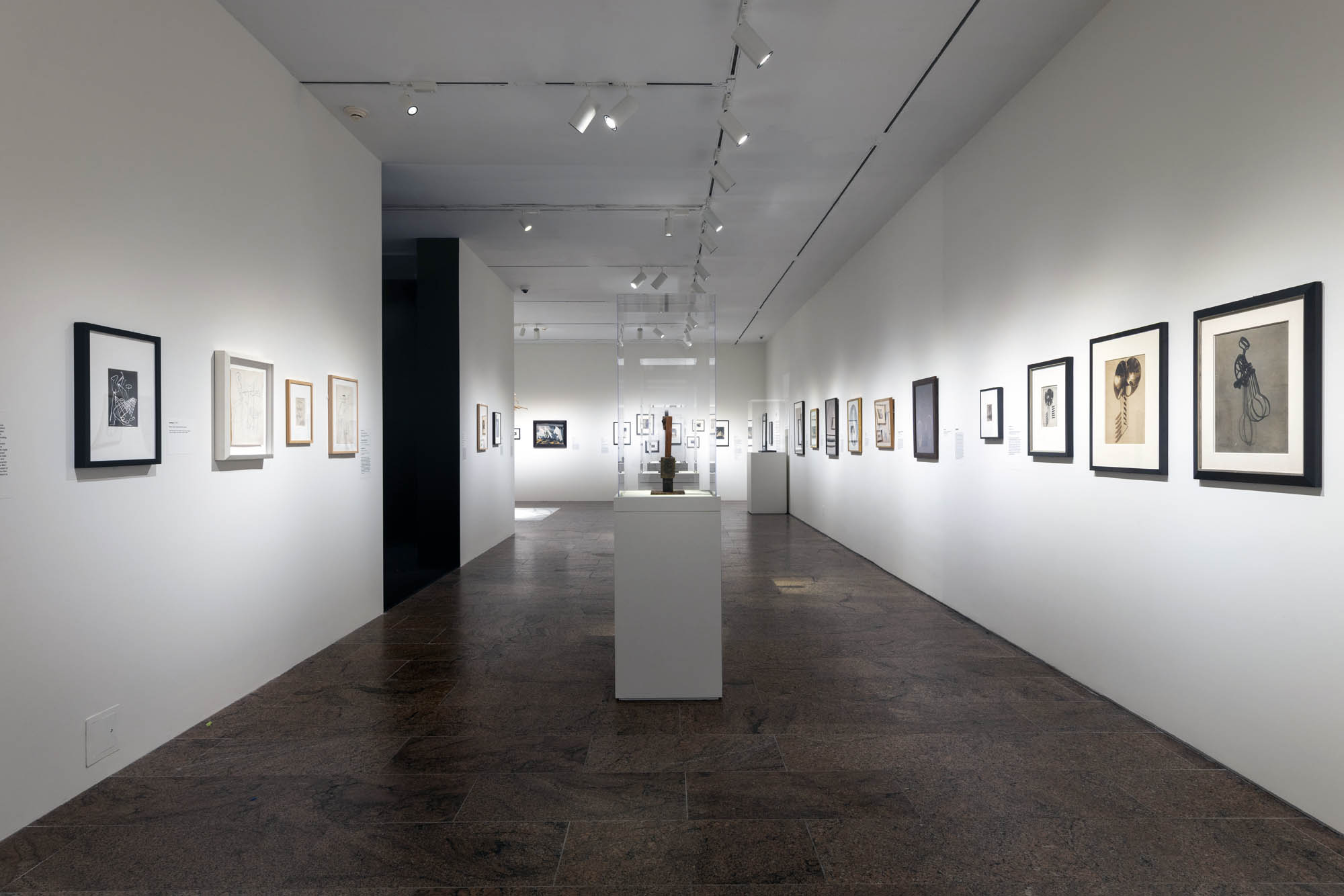
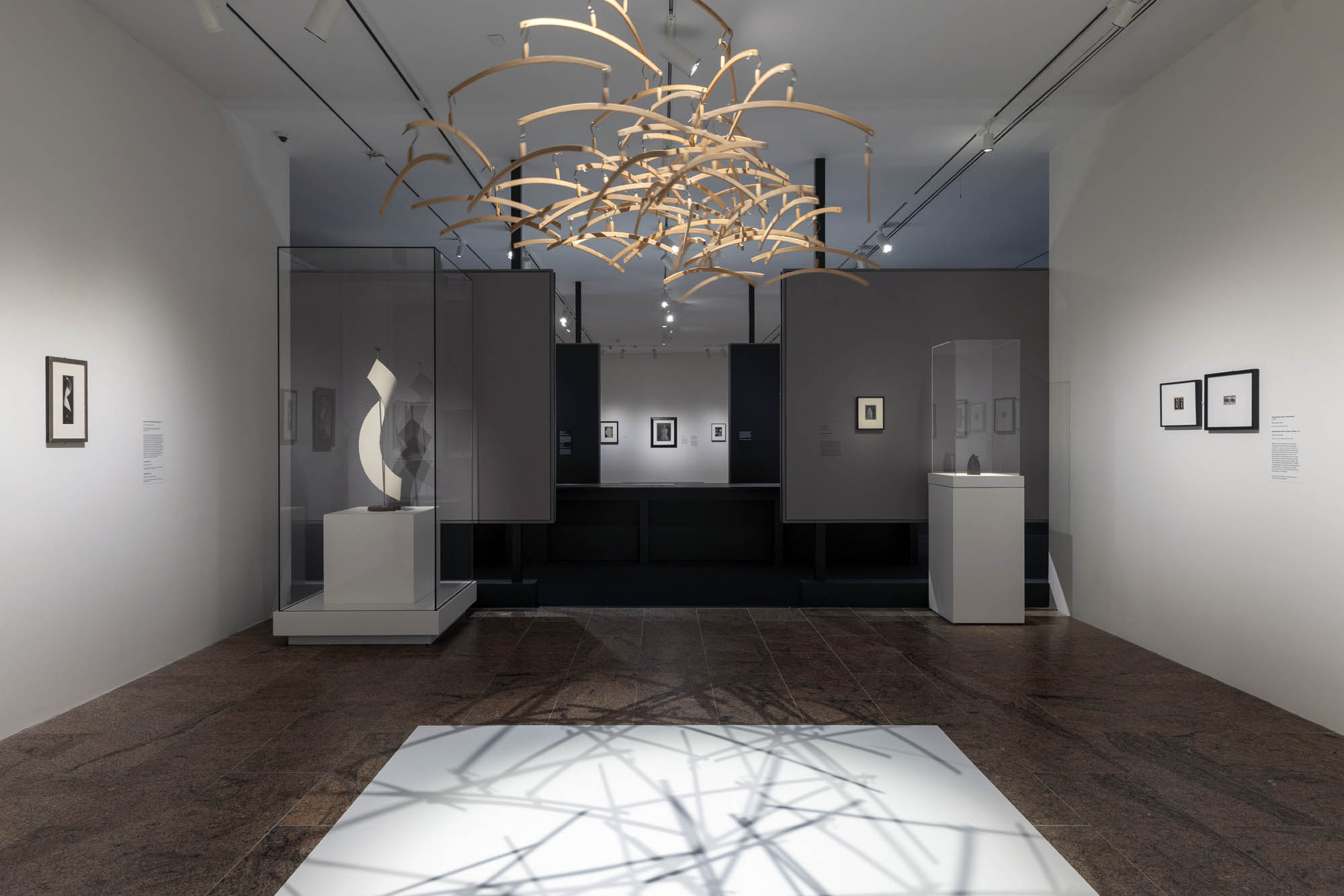
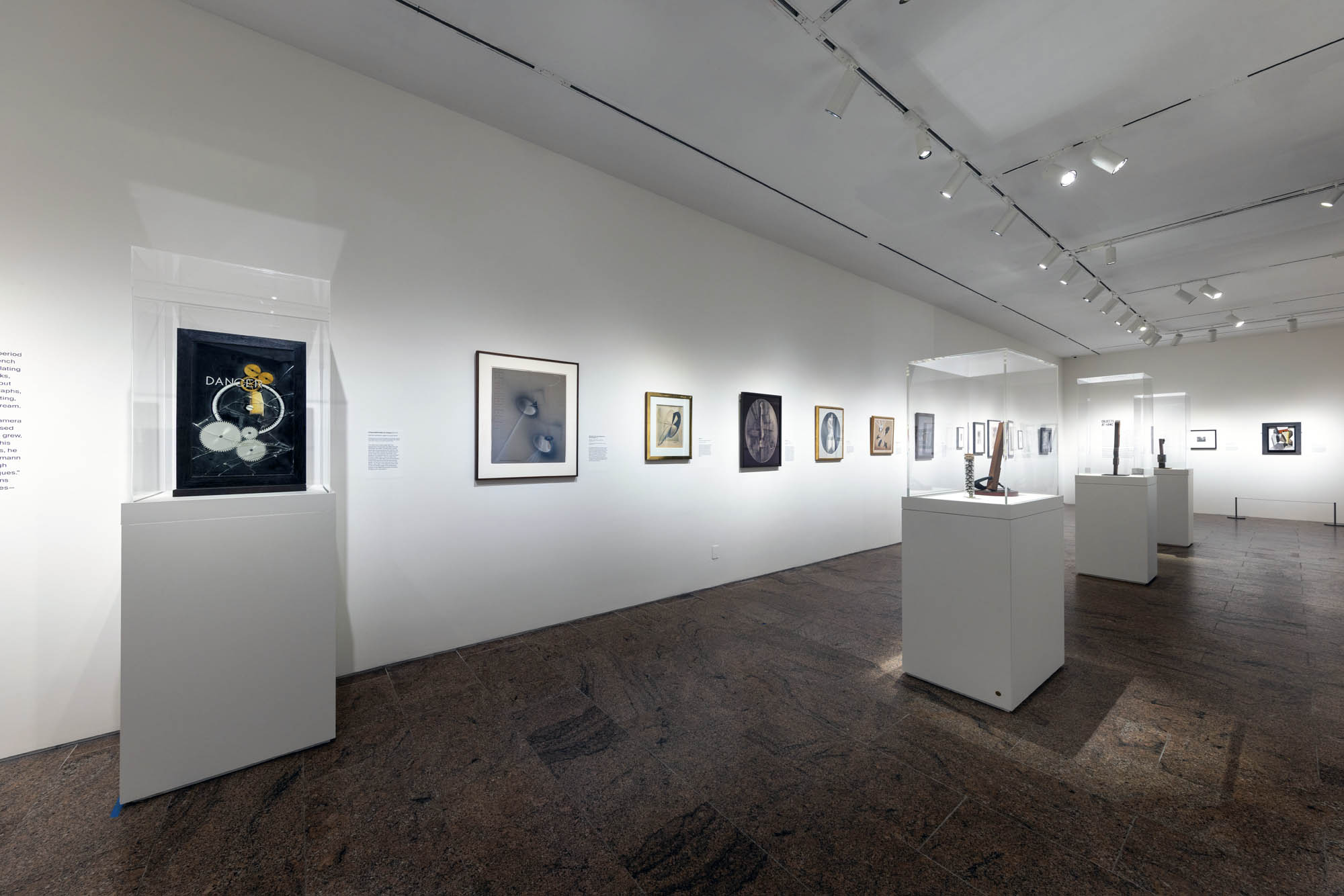
Installation views of the exhibition Man Ray: When Objects Dream at The Metropolitan Museum of Art, New York, September 2025 – February 2026


Man Ray (American, 1890-1976)
'Torse (Retour à la raison)' (Torso [Return to Reason]) 1923, printed c. 1935


Man Ray (American, 1890-1976)
Torse (Retour à la raison) (Torso [Return to Reason])
1923, printed c. 1935
Gelatin silver print
8 1/4 × 6 3/8 in. (21 × 16.2cm)
Private collection
© Man Ray 2015 Trust / Artists Rights Society (ARS), NY / ADAGP, Paris 2025


In the 1923 silent short of the same title, Man Ray filmed barely discernible scenes of Paris at night along with his own enigmatic photograms and conglomerations of spiraling or gyrating objects. The resulting sequence of near-total abstractions seems devoid of sense or purpose. The “return to reason” in the film comes finally in the form of a woman’s torso – modelled by cabaret personality Kiki de Montparnasse – turning to and fro beside a rain-covered windowpane. Man Ray reproduced the seductive finale, as well as other moments from the film, as photographs, singly and in strips. A still from Man Ray’s film, this particular photograph appeared on its own in the first issue of the key avant-garde journal La Révolution surréaliste, in 1924.

Text from the Art Institute of Chicago website


Le retour à la raison (Return to Reason), Man Ray, 1923


Emak-Bakia (1926) – directed by Man Ray

Emak-Bakia (Basque for Leave me alone) is a 1926 film directed by Man Ray. Subtitled as a cinépoéme, it features many techniques Man Ray used in his still photography (for which he is better known), including rayographs, double exposure, soft focus and ambiguous features.

Emak-Bakia shows elements of fluid mechanical motion in parts, rotating artifacts showing his ideas of everyday objects being extended and rendered useless. Kiki of Montparnasse (Alice Prin) is shown driving a car in a scene through a town. Towards the middle of the film Jacques Rigaut appears dressed in female clothing and make-up. Later in the film a caption appears: “La raison de cette extravagance” (the reason for this extravagance). The film then cuts to a car arriving and a passenger leaving with briefcase entering a building, opening the case revealing men’s shirt collars which he proceeds to tear in half. The collars are then used as a focus for the film, rotating through double exposures.

The film features sculptures by Pablo Picasso, and some of Man Ray’s mathematical objects both still and animated using a stop motion technique.

Originally a silent film, recent copies have been dubbed using music taken from Man Ray’s personal record collection of the time. The musical reconstruction was by Jacques Guillot.

When the film was first exhibited, a man in the audience stood up to complain it was giving him a headache and hurting his eyes. Another man told him to shut up, and they both started to fight. The theatre turned into a frenzy, the fighting ended up out in the street, and the police were called in to stop the riot.

Emak bakia can also mean “give peace” (“emak” is the imperative form of the verb “eman”, which means “give”) in Basque.

Text from the YouTube website


L’étoile de mer, Man Ray, 1928

The film was based on Robert Desnon’s surrealist poem L’Étoile de mer.


The Met Presents First Major Exhibition on Man Ray’s Radical Reinvention of Art through the rayograph 

Featuring 160 rayographs, paintings, objects, prints, drawings, films, and photographs, Man Ray: When Objects Dream highlights the principal place of the rayograph – a type of cameraless photograph – within the context of many of the artist’s most important works 

This exhibition includes thirty-five works by Man Ray which are part of the major promised gift of nearly 200 works of Dada and Surrealist art from Trustee John Pritkzer 

Man Ray: When Objects Dream at The Metropolitan Museum of Art is the first major exhibition to examine the radical experimentation of American artist Man Ray (1890-1976) through one of his most significant bodies of work, the rayograph. Man Ray coined the term rayograph to name his version of the 19th-century technique of making photographs without a camera. He created them by placing objects on or near a sheet of light-sensitive paper, which he then exposed to light and developed. These photograms – as they are also called – appear as reversed silhouettes, or negative versions, of their subjects. They often feature recognisable items that become wonderfully mysterious in the artist’s hands. Their transformative nature led the Dada poet Tristan Tzara to describe rayographs as capturing the moments “when objects dream.” While Man Ray acknowledged the photographic origins of his new works, he did not think of them as strictly bound by medium. Taking Man Ray’s lead, this presentation is the first – more than a century since he introduced the rayograph – to situate this signature accomplishment in relation to his larger artistic output. The exhibition is on view September 14, 2025, through February 1, 2026. 

“As one of the most fascinating and multi-faceted artists in the avant-garde movements of the early 20th century, Man Ray challenged traditional narratives of modernism through his daring experimentation with diverse artistic mediums,” said Max Hollein, The Met’s Marina Kellen French Director and Chief Executive Officer. “Anchored by Man Ray’s innovative and mesmerising rayographs along with new research and discoveries, this exhibition invites visitors to explore his ground-breaking manipulation of objects, light, and media, which profoundly reframed his artistic practice and impacted countless other artists. We’re so thrilled to include thirty-five works by Man Ray in this exhibition as part of John’s incredible promised gift.” 

Drawing from the collections of The Met and more than 50 U.S. and international lenders, the presentation includes more than 60 rayographs, many of which were featured in important publications and exhibitions at the time of their making, and 100 paintings, objects, prints, drawings, collages, films, and photographs to highlight the central role of the rayograph in Man Ray’s boundary-breaking practice. The exhibition marks a collaboration with the recently closed Lens Media Lab, Yale University, under the direction of Paul Messier, and with photography conservators and curators at various lending institutions, to study more than fifty rayographs. 

In the winter of 1921, while working late in his Paris darkroom, Man Ray inadvertently produced a photogram by placing some of his glass equipment on top of an unexposed sheet of photographic paper he found among the prints in his developing tray. As he wrote in his 1963 autobiography, “Before my eyes an image began to form, not quite a simple silhouette of the objects as in a straight photograph, but distorted and refracted … In the morning I examined the results, pinning a couple of the rayographs – as I decided to call them – on the wall. They looked startlingly new and mysterious.” This supposed accident, now the stuff of legend, has obscured the fact that rayographs might be seen as the culmination of Man Ray’s work up to 1921 as well as the frame through which he would redefine his work thereafter. They harnessed his interests in working between dimensions, media, and artistic traditions, fittingly at the moment between Dada and Surrealism, which writer Louis Aragon once called the mouvement flou (flou means “hazy, blurry, or out of focus” in French). 

Unfolding in a series of spaces that intersect with a central, dramatic presentation of rayographs, the exhibition illuminates their connections with Man Ray’s work in other media, including assemblage, painting, photography, and film. In approaching the rayograph in this expansive way, the exhibition also offers a reappraisal of the most productive and creatively significant period of his long career, beginning in New York around 1915 with his ambitious paintings and concluding in Paris in 1929 with his fine-tuning of the solarization process with Lee Miller. A critical factor across the exhibition is the central role of objects for Man Ray’s career, both in the creation of many of the rayographs and in his work more generally.

At its core, Man Ray: When Objects Dream focuses new attention on some of the artist’s most recognised, but little-studied, works, most particularly the rayograph. The exhibition opens with Champs délicieux (Delicious Fields) (1922), a portfolio of 12 rayographs which marks the first time Man Ray presented his photograms to the public. Critics hailed them for putting photography on the same plane as original pictorial works. The presentation concludes with the working copy of Champs délicieux, which the artist canceled and dedicated to his friend, Dada artist Tristan Tzara, in 1959. 

Between these two works, twelve thematic sections of the exhibition explore such concepts as the silhouette, the dream, the body, the object, and the game, which are inspired by Man Ray’s experimentation with the rayograph. Other groupings will focus on specific media and techniques, and the artist’s studio, as well as watershed moments in the artist’s production, such as the years of 1923 and 1929, when Man Ray unexpectedly returned to painting. Three of his newly restored films, Retour à la raison (Return to Reason) (1923), Emak Bakia (1926), and L’étoile de mer (The Starfish) (1928), will be screened within the exhibition. 

Highlights include such iconic objects like Man Ray’s iron studded with tacks, known as Cadeau (Gift) (1921), and his metronome, Object to be Destroyed (1923), that keeps time with the swinging eye of his companion, the photographer Lee Miller. Celebrated photographs, including his landmark Le violon d’Ingres (1924), in which the torso of the artist and performer Kiki de Montparnasse (Alice Prin) is depicted as a musical instrument, are also featured. The exhibition brings together some of his boldest but most refined experimental works – compositions like Aerograph (1919), a painting made with an airbrush and pigment sprayed through and around items from his studio. For Man Ray, objects could function as metaphors for the body, as demonstrated in works such as Catherine Barometer (1920) and L’homme (Man). Rarely seen paintings in the exhibition, including Paysage suédois (Swedish Landscape) (1926) record the artist’s great experimentation, working paint without a brush and in an almost sculptural way, building up and scraping down the surface that reflects his experiments in the darkroom.

Man Ray: When Objects Dream is curated by Stephanie D’Alessandro, Leonard A. Lauder Curator of Modern Art and Senior Research Coordinator in Modern and Contemporary Art at The Met, and Stephen C. Pinson, Curator in the Department of Photographs at The Met, with the assistance of Micayla Bransfield, Research Associate, Modern and Contemporary Art.

Press release from The Metropolitan Museum of Art


Man Ray (American, 1890-1976) 'La Femme (Woman)' c. 1918-1920


Man Ray (American, 1890-1976) 
La Femme (Woman)
c. 1918-1920
Gelatin silver print
43.7 x 33.5cm (17 3/16 x 13 3/16in.)
Gilman Collection, Gift of The Howard Gilman Foundation, 2005
© 2016 Man Ray Trust/Artists Rights Society (ARS), New York/ADAGP, Paris


Man Ray (American, 1890-1976) 'L'homme (Man)' 1918-1920


Man Ray (American, 1890-1976) 
L’homme (Man
1918-1920 
Gelatin silver print 
19 × 14 1/2 in. (48.3 × 36.8cm) 
The Metropolitan Museum of Art, New York, Bluff Collection, Promised Gift of John A. Pritzker
© Man Ray 2015 Trust / Artists Rights Society (ARS), NY / ADAGP, Paris 2025
Photo credit: Courtesy of The Bluff Collection, photo by Ben Blackwell


Man Ray (American, 1890-1976) 
'Élevage de poussière (Dust Breeding)' 1920


Man Ray (American, 1890-1976) 
Élevage de poussière (Dust Breeding)
1920
Gelatin silver print
2 13/16 × 4 5/16 in. (7.1 × 11 cm)
Private collection
© Man Ray 2015 Trust / Artists Rights Society (ARS), NY / ADAGP, Paris 2025


Man Ray (American, 1890-1976) 'Marchesa Luisa Casati' 1922


Man Ray (American, 1890-1976) 
Marchesa Luisa Casati 
1922 
Gelatin silver print 
8 1/2 × 6 9/16 in. (21.6 × 16.7 cm) 
Philadelphia Museum of Art: Gift of Carl Van Vechten
© Man Ray 2015 Trust / Artists Rights Society (ARS), NY / ADAGP, Paris 2025
Photo courtesy of the Philadelphia Museum of Art


Installation view of the exhibition 'Man Ray: When Objects Dream' at The Metropolitan Museum of Art, New York, September 2025 - February 2026 showing at centre, Man Ray's photograph 'Le violon d'Ingres' 1924


Installation view of the exhibition Man Ray: When Objects Dream at The Metropolitan Museum of Art, New York, September 2025 – February 2026 showing at centre, Man Ray’s photograph Le violon d’Ingres 1924 (below)


Man Ray (American, 1890-1976) 'Le violon d’Ingres' 1924


Man Ray (American, 1890-1976) 
Le violon d’Ingres
1924 
Gelatin silver print 
19 1/8 × 14 3/4 in. (48.5 × 37.5cm)
The Metropolitan Museum of Art, New York, Bluff Collection, Promised Gift of John A. Pritzker
© Man Ray 2015 Trust / Artists Rights Society (ARS), NY / ADAGP, Paris 2025
Photo by Ian Reeves


Man Ray (American, 1890-1976) 'Self-Portrait in 31 bis rue Campagne-Premiere Studio' 1925


Man Ray (American, 1890-1976) 
Self-Portrait in 31 bis rue Campagne-Première Studio
1925 
Gelatin silver print 
6 1/8 × 4 1/2 in. (15.6 × 11.4cm) 
The Metropolitan Museum of Art, New York, Bluff Collection, Promised Gift of John A. Pritzker
© Man Ray 2015 Trust / Artists Rights Society (ARS), NY / ADAGP, Paris 2025
Photo by Ian Reeves


Man Ray (American, 1890-1976) 'Noire et blanche' 1926


Man Ray (American, 1890-1976)
Noire et blanche
1926
Gelatin silver print
8 1/16 x 11 11/16 in. (20.5 x 29.7cm)
Private collection
© Man Ray 2015 Trust / Artists Rights Society (ARS), NY / ADAGP, Paris 2025


Man Ray (American, 1890-1976) 'Primat de la matière sur la pensée' (Primacy of Matter over Thought) 1929


Man Ray (American, 1890-1976)
Primat de la matière sur la pensée (Primacy of Matter over Thought)
1929
Gelatin silver print
10 1/2 x 14 7/8 in. (26.7 x 37.8cm)
Private collection, San Francisco
© Man Ray 2015 Trust / Artists Rights Society (ARS), NY / ADAGP, Paris 2025


Man Ray (American, 1890-1976) 'Lee Miller' 1929


Man Ray (American, 1890–1976) 
Lee Miller 
1929 
Gelatin silver print 
10 1/2 × 8 1/8 in. (26.7 × 20.6cm) 
The Museum of Modern Art, New York, Gift of James Thrall Soby 
© Man Ray 2015 Trust / Artists Rights Society (ARS), NY / ADAGP, Paris 2025


Man Ray (American, 1890-1976) 'Self-Portrait with Camera' 1930


Man Ray (American, 1890-1976)
Self-Portrait with Camera
1930
Gelatin silver print
4 3/4 x 3 1/2 in. (12.1 x 8.9cm)
The Jewish Museum, New York
Purchase: Photography Acquisitions Committee Fund, Horace W. Goldsmith Fund, and Gift of Judith and Jack Stern
© Man Ray 2015 Trust / Artists Rights Society (ARS), NY / ADAGP, Paris 2025


Man Ray (American, 1890-1976) 'Mary Gill' 1930


Man Ray (American, 1890-1976)
Mary Gill
1930
Gelatin silver print
11 1/2 x 8 1/2 in. (29.2 x 21.6cm)
Harvard Art Museums/Fogg Museum, Robert M. Sedgwick II Fund
© Man Ray 2015 Trust / Artists Rights Society (ARS), NY / ADAGP, Paris 2025


Man Ray (American, 1890-1976)
'Untitled (Glass Tears)' c. 1930-1933, printed 1935 or later


Man Ray (American, 1890-1976)
Untitled (Glass Tears)
c. 1930-1933, printed 1935 or later
Gelatin silver print
8 7/8 x 11 1/4 in. (22.5 x 28.6cm)
Private collection
© Man Ray 2015 Trust / Artists Rights Society (ARS), NY / ADAGP, Paris 2025


Man Ray: When Objects Dream

American artist Man Ray (1890-1976) was a visionary known for his radical experimentation that pushed the limits of art. His most iconic works – an iron studded with sharp tacks, a woman’s back reimagined as a violin – combine this boundary-breaking attitude with a singular belief in the transformative potential of everyday things. 

In the 1920s, the most significant of Man Ray’s investigations – and the thing that connected much of his work – was what he called the rayograph, a new twist on an old technique for making photographs without a camera. By placing objects on or near a sheet of sensitised paper, which he then exposed to light and developed, he turned recognisable subjects into wonderfully mysterious compositions. This radical art form, inextricably linked to the era’s Dada and Surrealist movements, grew out of his early work in New York and redefined his groundbreaking career in Paris.

Introduction

This exhibition’s subtitle, When Objects Dream, comes from a phrase by Tristan Tzara, a poet, artist, and early champion of Man Ray. Witness to some of the earliest rayographs, Tzara understood perhaps better than anyone else their physical and metaphorical link to objects reimagined through art. In a similar spirit, the current presentation reconsiders the role of the rayograph within Man Ray’s practice, especially its ability to extend his ideas across diverse media. The loosely chronological installation unfolds across a series of interconnected galleries organized around ideas that motivated the artist; to that end, visitors are invited to explore it in any number of ways.

All works in the exhibition are by Man Ray (American, 1890-1976).

Champs délicieux

In April 1922, readers of a French literary journal discovered a curious announcement for an album titled Champs délicieux (Delicious Fields). Its twelve “original photographs” by Man Ray feature objects from his studio – tongs, a comb, string, a hotel room key – composed in groupings. The images are ordered without clear logic or narrative. Instead, as advertised, they mark a “state of mind,” the artist’s free play, alone at night and without work obligations, in his studio darkroom. 

Man Ray introduced Champs délicieux in the period between two revolutionary movements that arose in the wake of World War I: Dada and Surrealism. Both challenged conventional art and society by upending traditional subjects, techniques, and expectations. Inspired in part by a collection of unconsciously driven, automatic writings by poets André Breton and Philippe Soupault, Man Ray sought to render everyday objects unfamiliar. As early subscriptions attest, the album found an enthusiastic audience who appreciated the language of the rayograph and its ability to open up a new visual world.

A New Art

Before Man Ray first picked up a camera in 1915, he was focused on painting. He set out to stake his claim in the exhilarating avant-garde scene, his interest fueled by cutting-edge exhibitions at Alfred Stieglitz’s gallery, 291, and thrilling examples of Cubism, Expressionism, Fauvism, and Futurism at the modern art presentation known as The Armory Show in 1913. Unexpectedly, photography offered Man Ray a path forward. Noting the way a camera lens could compress and flatten space, he determined to endow art with a similar “concentration of life” while simultaneously freeing it from the burden of illusionism. “The creative force and the expressiveness of painting,” he wrote at the time, “reside materially in the colour and texture of pigment, in the possibilities of form invention and organisation, and in the flat plane on which these elements are brought to play.” He made paintings using palette knives and other tools instead of brushes and employed patterns, cutouts, and collage to create a self-proclaimed “new art of two dimensions.”

Objects At Hand

NOT RESPONSIBLE FOR GOODS LEFT OVER THIRTY DAYS. So reads a sign in a photo, displayed nearby, of Man Ray’s West Eighth Street studio in New York. It was one of several items the artist discovered in the trash heap at his apartment building and brought up to his top-floor space. He considered retooling the sign to read LEFT OVER GOODS NOT RESPONSIBLE FOR THIRTY DAYS but decided it was perfect as is. This act – of elevating junk to art – is a familiar one in histories of the avant-garde, especially for the Dada movement. Art did not have to be painted or modelled or made with traditional materials and tools; it could be found in the everyday world and appreciated for the idea that it introduced, not for its beauty. 

As Man Ray developed his “new art,” he came to see the latent potential of all the objects within his studio. This spurred further investigations that likewise tested the limits of two and three dimensions and blurred the boundaries between media. At the same time, he continued to explore how the camera could be used not only to document his work but to open new perspectives onto ordinary objects and their creative possibilities.

Clichés-verre

While the rayograph is often described as Man Ray’s first experiment with cameraless photography, that moment occurred years earlier. Around 1917 he explored several photographically based techniques, including the cliché-verre, or “glass-plate” print. A nineteenth-century reproductive process that incorporates both photography and printmaking, a cliché-verre is traditionally made by covering a plate of glass with a darkened medium and drawing into it to produce clear lines. When set onto sensitised paper and exposed to a light source, the plate transmits the scratched away areas as dark lines. Man Ray chose to incise directly into the emulsion of an exposed photographic plate, which he then subjected to light again with paper below it to make a contact print. 

Photography

Man Ray first picked up a camera in 1915, to document his art. Through this experience, he discovered that the works acquired new qualities when reproduced in black and white. He made photographic portraits, too, which in Paris would become a dependable source of income. Revelling in the camera’s transformative optical abilities, Man Ray soon used it as a tool to facilitate his self-appointed role as a “marvellous explorer of those aspects that our retinas will never record.” He sought to reveal the creative potential of objects in his studio and in 1918 began a series of photographs using specifically arranged everyday items.

Aerographs

Still grappling with how to paint without a brush, Man Ray found inspiration at his day job working for an advertising agency, where he was introduced to an airbrush. He later brought the equipment back to his attic studio and began to experiment. Using an air compressor, the artist directed pigment through stencils and around masked areas and objects, which he rested on the composition board and repositioned as he worked. “It was thrilling,” he would later recount, “to paint a picture, hardly touching the surface – a purely cerebral act.” These works, which he termed “aerographs” were made, in effect, before they hit the paper. Objects were carved, shaped, and modeled in the air. Voids register as substance, and what we see on the paper is residue fused to the surface. “I tried above all,” Man Ray explained, “to create three-dimensional paintings on two-dimensional surfaces.”

Flou

Man Ray introduced his rayographs during a transitional period between the Dada and Surrealism movements that the French writer Louis Aragon called the mouvement flou – flou translating to “blurry” or “out of focus.” The term also suits these works, which viewers initially deemed curious and captivating but difficult to pin down. Rayographs, as cameraless photographs, exist in an indistinct place between photography and painting, the mechanical and the handmade, documentation and dream. 

During the 1920s Man Ray also explored blurriness in his camera images. Even as technical improvements facilitated increased focus and detail, and the preference for sharp photographs grew, he generally pursued a flattering, soft-focus technique in his growing business of portrait commissions. At other times, he sought more radical effects, which the director Claude Heymann described as “strange, troubling blurs” produced “through distortions, prolonged poses or special focusing techniques.” The anomalies in the resulting photographs are visible signs of the effort and time Man Ray spent to realise the images – even if he later called them unplanned or accidental.

A New Field of Gravity

In his preface introducing the album Champs délicieux (Delicious Fields), Tristan Tzara remarked that rayographs “present to space an image that exceeds it, and the air, with its clenched fists and superior intelligence, seizes it and holds it next to its heart.” Indeed, objects in Man Ray’s images beckon us in but keep us thrillingly at the edge – or put another way, they test our senses of proximity and location. His experiments in New York expanded the bounds of the photograph, object, painting, and installation, and he developed a novel relationship between object and viewer. These works demonstrate in their construction what the French writer Georges Ribemont-Dessaignes would identify in the artist’s rayographs as a “new field of gravity.”

The rayograph

The term rayograph designates Man Ray’s version of a technique for making photographs without a camera: by setting objects on or near sensitised paper and exposing it to light. In his autobiography, the artist described happening upon the process by chance, late one night, while developing prints in his makeshift darkroom. For subjects, he looked no further than the things in his studio. When exposed to a directed flash of light, they appear as reversed silhouettes – but in Man Ray’s hands they also gained new life. The nature of the image depended on the items’ translucency, reflectivity, density, placement, and distance from the sheet, as well as the source and location of the illumination and the number of exposures. Surfaces could cast unexpected reflections or eclipse elements in darkness. Forms might multiply or transform. Sometimes Man Ray’s objects and the space between them acquired an insistent, compressed volume that registered on the paper. The resulting works present what writer Pierre Migennes described as a “metamorphosis of the most vulgar utensils.” Everyday things became wonderfully unfamiliar as Man Ray wielded light in the darkroom like a brush in paint.

As he prepared to launch his rayographs in Champs délicieux, Man Ray also considered how to disseminate them for reproduction in magazines. On November 1, 1922, he wrote to Harold Loeb, editor of Broom: “Each print is an original, no plate or duplicate exists, as the process is manipulated directly on the paper, like a drawing. If you could assure me that the … originals would be safely handled and returned, I shall gladly send them on [to Berlin]. If, however, you cannot guarantee their safe return, I can re-photograph them … which, while not having the intensity and contrast of the originals, would nevertheless reproduce well.” Loeb offered to transport them personally and published these four in Broom the following March.

Man Ray transformed and energised ordinary objects in his rayographs by tapping their powers of translucency or reflectance. Bodies and their proxies, however, remain stubbornly recognisable. Hands reach out, hold things, and interact with objects; heads turn to kiss and drink, even if the action might be staged. The artist’s rayographs tie the body to a kind of specificity that his objects do not experience; this might explain why there are fewer of these works with bodies than without. As Tristan Tzara explained in his appreciation of the rayographs in 1934, Man Ray approached objects in a manner that allowed them to be free “to dream.”

Dangerous Games

Reactions to Man Ray’s cameraless photographs consistently identified them with the realm of play. The first to comment on the rayograph was French poet Jean Cocteau, who wrote in an open letter, “You, my dear Man Ray, will nourish our minds with those dangerous games it craves.” He was soon joined by Tristan Tzara, who likened the rayograph to a “game of chess with the sun.” 

Man Ray had a strong sense of the game as a strategy for producing art. For him, play was a state of readiness to engage. This comes through in the provocative humour of his objects and collages and in the invitation to chance embedded in the rayograph process – the “discovery” of which, he recounted, entailed real amusement. Marcel Duchamp once playfully defined his friend as synonymous with the joy of the game: “MAN RAY, n.m. synon. de joie, jouer, jouir” (joy, to play, to enjoy).

Chemical Paintings

In April 1922, the same month that the Champs délicieux album was announced, Man Ray proudly reported to friends and patrons that he had freed himself “from the sticky medium of paint.” His rayographs claimed a rebellious position aimed at the traditional hierarchy of fine art – and particularly its apex, painting. Critics asserted they had equal status, and New York’s Little Review even called them “chemical paintings.”

Just a year later, however, while his rayograph production remained steady, Man Ray quietly returned to painting. The works here show how his practice had changed. Abstract and relatively small, they were made on commercially available boards, wood, sandpaper, or metal supports. With their overlapping pictorial elements and dramatic contrasts of luminosity and shadow, angled and geometric forms, the compositions emulate aspects of rayographs. Each is a thorough exploration of depth on a flat surface and a bid to make paint reflect its own material reality.

Objects and Bodies

Man Ray’s experience of making rayographs informed his consideration of the human body, which he handled, at times, like an object, devoid of personhood and open for manipulation. Writing about the artist’s portraits and rayographs, André Breton noted that Man Ray considered the bodies of women in his work no different from the objects at hand in his darkroom: 

The very elegant, very beautiful women who expose their tresses night and day to the fierce lights in Man Ray’s studios are certainly not aware that they are taking part in any kind of demonstration. How astonished they would be if I told them that they are participating for exactly the same reasons as a quartz gun, a bunch of keys, hoar-frost or fern!

For Man Ray, a body could function as a kind of concentrated equivalence, like the essence represented by an object. This attitude is visible in some of the most iconic works of his career, in which his presentation of female models such as the artist and performer Kiki de Montparnasse (Alice Prin) also involved darkroom manipulation. While his approach to men’s bodies was notably less sexualised, they too were posed and set up like the objects in his rayographs.

Darkroom Manoeuvres 

Like other pictures of Kiki de Montparnasse in this gallery, Le violon d’Ingres involved multiple darkroom campaigns. For the version published in Littérature, Man Ray worked on a print to sharpen the contours and smooth the forms; he added f-shaped sound holes directly onto it with dark ink. 

The version here, larger than the first, is the result of further experimentation. Man Ray covered the entire print with a mask from which he hand cut two f-shaped forms. He then made a second exposure, which turned the exposed spaces black. Instead of ink shapes that disrupt the surface, these marks read as deep, dark space compressed within the flat surface of the photograph. Man Ray described this version as “a combination of a photo and a rayograph.” As such, the f-holes are eerily – seamlessly – part of the woman’s body. She appears as a kind of dreamlike human-instrument hybrid, a whole object to be visually taken in and possessed.

Dreams

Even before the Surrealist manifesto of 1924 claimed the fertile ground of the unconscious, many poets and artists in Man Ray’s circle focused on dreams. The same group, two years earlier, had followed André Breton’s experiments with hypnosis and trance states. They practiced séances and so‑called sleeping fits, writing down or drawing what came to them in order to reveal hidden desires. The poet Louis Aragon wrote of these slumberous escapades: “Dreams, dreams, dreams, the domain of dreams expands with every step.” 

Apart from photographing the sleep sessions, Man Ray remained an independent supporter of the group, explaining, “It has never been my object to record my dreams, just the determination to realise them.” Even so, Aragon included him in his multipage inventory of dreamers, with a nod to the rayographs: “Man Ray … dreams in his own way with knife rests and salt cellars: he gives meaning to light, which now knows how to speak.” The artist found great support among the Surrealist circle in Paris, whose members acquired his work and included him in exhibitions and publications.

Dream Objects 

Man Ray’s dreamlike rayographs have counterparts in the new kinds of hybrid objects he began to make at the same time. These mysterious works seize upon unexpected transformations: a fragile soap bubble rendered solid; the taut strings on a musical instrument’s neck turned loose and sensuous; or a budding plant metamorphosed into a pudgy hand. 

The strange bundle wrapped with string has long been associated with the power of objects to stir the unconscious. In 1920 Man Ray assembled, photographed, and deconstructed the original object. The Untitled photograph appeared in the first issue of La revolution surréaliste, in 1924, with the text “Surrealism opens the door of the dream to all those for whom night is miserly.” Over the next decade, the image came to embody another phrase popular among the Paris Surrealist group, by the poet Isidore Ducasse: “as beautiful … as the chance encounter of a sewing machine and an umbrella on a dissecting table.” 

“Objects to touch, to eat, to crunch, to apply to the eye, to the skin, to press, to lick, to break, to grind, objects to lie, to flee from, to honor, things cold or hot, feminine or masculine, objects of day or night which absorb through your pores the greater part of our life. … These are the projections surprised in transparence, by the light of tenderness, of objects that dream and talk in their sleep.” (Tristan Tzara, “When Objects Dream,” 1934)

Returns

In 1929 Man Ray found himself “longing to touch paint again.” By the fall, he had taken a second Paris studio, near the Luxembourg Gardens, where he painted in the mornings before returning home to oversee photographic portraits and magazine work. In his new compositions, he let paint drip across a canvas from a poured line and squeezed pigment directly from the tube onto a support in a loose, calligraphic manner. Trading on narratives of chance and automatism, he later called these paintings “unpremeditated.” 

Another return accompanied the arrival in Paris of Lee Miller, who became Man Ray’s apprentice in photography and then his personal and professional partner. As a result, he again embraced the camera as his primary tool of photographic experimentation, after years of making rayographs without one. Together, Miller and Man Ray discovered a creative synergy that led to their joint development of the solarization process. The same year signalled the near culmination of Man Ray’s exploration of the rayograph: by some accounts, he made one hundred in 1922, but just one in 1929.

Solarization 

Together with Lee Miller, Man Ray developed a darkroom technique that complemented his return to painting. Like the rayograph, solarization was not entirely new, and both he and Miller claimed that it similarly resulted from an accident. The process involves exposing a negative a second time during development, which causes a reversal of the expected tonalities. Honed by Miller and Man Ray and applied to their portraits and nudes beginning in fall 1929, the process often endowed subjects with subtly glowing black contours that Miller called “halos.” This feature became so well-known – largely through reproductions of the solarized portrait of Miller shown nearby – that a 1932 article called it both “the beacon and despair of experimenters.” Like the drips and skeins in Man Ray’s 1929 paintings, these lines create a friction between the subject and surface of the image – a noted departure from the artist’s earlier approach to the flat plane.

Revisiting Champs délicieux 

Man Ray completed his Champs délicieux project nearly forty years after its debut. A handwritten inscription to Tristan Tzara in the final copy (number 41, displayed here) refers to the sparks set off by their initial exploration of the rayograph; he added an almost identical inscription in his 1922 working copy. This suggests a Dada game between the two artists: the announcement laid out the rules and the inscriptions signified its end. 

As promised in the 1922 first announcement of the album, the last copy features the canceled proofs (a practice meant to show that no further prints can be made from the originals). A canceled print edition is not unusual. In this case, however, a purposeful ambiguity was in play from the beginning of the project – when it was presented as an album of “original photographs” copied from unique rayographs – to the end. Only the negatives used to produce the album were canceled, meaning that the primary rayographs might still exist. Ever the prankster, Man Ray ensured that the game continues.

Text from The Metropolitan Museum of Art


Man Ray (American, 1890-1976) 'Legend' 1916


Man Ray (American, 1890-1976) 
Legend 
1916 
Oil on canvas 
52 × 36 in. (132.1 × 91.4 cm) 
Collection of Deborah and Edward Shein
© Man Ray 2015 Trust / Artists Rights Society (ARS), NY / ADAGP, Paris 2025
Photo by Stephen Petegorsky


Man Ray (American, 1890-1976) 'Boardwalk' 1917


Man Ray (American, 1890-1976) 
Boardwalk 
1917 
Oil, wood handles, and yarn on wood 
26 9/16 × 29 × 15/16 in. (67.4 × 73.6 × 2.4cm) 
Staatsgalerie Stuttgart, acquired 1973 with Lotto Funds
© Man Ray 2015 Trust / Artists Rights Society (ARS), NY / ADAGP, Paris 2025


Man Ray (American, 1890-1976) 'By Itself I' 1918


Man Ray (American, 1890-1976) 
By Itself I 
1918 
Wood, iron, and cork 
17 1/4 × 7 11/16 × 7 5/16 in. (43.8 × 19.5 × 18.6cm) 
LWL–Museum für Kunst und Kultur, Münster, Germany 
© Man Ray 2015 Trust / Artists Rights Society (ARS), NY / ADAGP, Paris 2025 


Man Ray (American, 1890-1976) 'ANPOR' 1919


Man Ray (American, 1890-1976) 
ANPOR 
1919 
Gouache, ink, and colored pencils on paper 
15 1/2 × 11 1/2 in. (39.4 × 29.2cm) 
Collection of Gale and Ira Drukier
© Man Ray 2015 Trust / Artists Rights Society (ARS), NY / ADAGP, Paris 2025 
Image © The Metropolitan Museum of Art, photo by Bruce Schwarz


Man Ray (American, 1890-1976) 'Aerograph' 1919


Man Ray (American, 1890-1976)
Aerograph
1919
Gouache on paperboard
26 3/8 x 19 11/16 in. (67 x 50cm)
Staatsgalerie Stuttgart, Graphische Sammlung, acquired 1987
© Man Ray 2015 Trust / Artists Rights Society (ARS), NY / ADAGP, Paris 2025


Man Ray (American, 1890-1976) 'Catherine Barometer' 1920


Man Ray (American, 1890-1976) 
Catherine Barometer 
1920 
Glass, metal, felt, washboard, tube, wire, wood, steel wool, gouache on paper, and paper stamp 
48 1/8 × 12 × 2 1/8 in. (122.2 × 30.5 × 5.4cm) 
The Metropolitan Museum of Art, New York, Bluff Collection, Promised Gift of John A. Pritzker 
Photo courtesy of The Bluff Collection, photo by Ian Reeves


Man Ray (American, 1890-1976) 'Cadeau (Gift)' 1921 reconstructed 1970 (installation view)


Man Ray (American, 1890-1976)
Cadeau (Gift) (installation view)
1921 reconstructed 1970
Iron with brass tacks and wooden base
Overall: 19.0 x 14.9 x 14.9cm; iron & base: 17.9 x 14.9 x 14.9cm; glass cover: 19.0cm (h.)
Photo: Â© Marcus Bunyan

An example of this art work, not the actual one in the exhibition


Man Ray (American, 1890-1976) 'Paysage suedois' (Swedish Landscape) 1926


Man Ray (American, 1890-1976) 
Paysage suédois (Swedish Landscape
1926 
Oil on canvas 
18 × 25 1/2 in. (45.7 × 64.8 cm) 
The Mayor Gallery, London
© Man Ray 2015 Trust / Artists Rights Society (ARS), NY / ADAGP, Paris 2025
Photo courtesy of The Mayor Gallery, London


Man Ray (American, 1890-1976) 'Torso' 1929


Man Ray (American, 1890-1976) 
Torso 
1929 
Oil and gouache on gold foil paper on canvas 
18 1/16 × 14 15/16 in. (45.9 × 38 cm) 
The Penrose Collection
© Man Ray 2015 Trust / Artists Rights Society (ARS), NY / ADAGP, Paris 2025
Image © The Metropolitan Museum of Art, photo by Mark Morosse 


The Metropolitan Museum of Art
1000 Fifth Avenue at 82nd Street
New York, New York 10028-0198
Phone: 212-535-7710

Opening hours:
Thursday – Tuesday 10am – 5pm
Closed Wednesday

The Metropolitan Museum of Art website

LIKE ART BLART ON FACEBOOK

Back to top

Exhibition: ‘The basement: photography from Prahran College (1968-1981)’ at the Museum of Australian Photography, Wheelers Hill, Melbourne

“This is a magnificent exhibition which showcases the work of students and teachers at Prahran College between 1958-1981.” Dr Marcus Bunyan

Exhibition dates: 1st March – 25th May, 2025

Curators: Angela Connor, MAPh Senior Curator, and Stella Loftus-Hills, MAPh Curator

Exhibiting artists: Colin Abbott, Robert Ashton, Con Aslanis, Polly Borland, Peter Bowes, John Brash, Peter Burgess, Nanette Carter, John Cato, Andrew Chapman, Lyn Cheong, Jon Conte, Kim Corbel, Paul Cox, Mimmo Cozzolino, Christina de Water, Duncan Frost, Rob Gale, Sandra Graham, Bill Henson, Julie Higginbotham, Graham Howe, Carol Jerrems, Moira Joseph, Peter Kelly, Christopher Köller, Johann Krix, Paul Lambeth, Derrick Lee, Peter Leiss, Carolyn Lewens, Steven Lojewski, Ian Macrae, James McArdle, Jim McFarlane, Rod McNicol, Julie Millowick, Peter Milne, Jacqueline Mitelman, Richard Muggleton, Martin Munz, Nicholas Nedelkopoulos, Greg Neville, Glen O’Malley, Viki Petherbridge, Ross Powell, Philip Quirk, Leonie Reisberg, Susan Russell, Stella Sallman, Athol Shmith, Geoff Strong, Ian Tippett, George Volakos, Stephen Wickham, Andrew Wittner, Ken Wright, Lynette Zeeng


Andrew Chapman (Australian, b. 1954) 'Lest we forget' 1980 from the exhibition 'The basement: photography from Prahran College (1968-1981)' at the Museum of Australian Photography, Wheelers Hill, Melbourne, March - May 2025


Andrew Chapman (Australian, b. 1954)
Lest we forget
1980
Gelatin silver print
Museum of Australian Photography, City of Monash Collection donated 2024


Nurture

A world of creativity and transformation

This is a magnificent exhibition at the Museum of Australian Photography which showcases the work of students and teachers at Prahran College between 1958-1981.

People more eminent than myself have commented on the exhibition.

Gael Newton AM – formerly curator of photography at the Art Gallery of New South Wales, and the Senior Curator of Australian and International Photography at the National Gallery of Australia (NGA) in Canberra – “highlights the diverse and passionate nature of the Prahran College community, where an unstructured curriculum and open debates encouraged multiple approaches – from documentary and still life to collage and staged tableau – while the influence of European cinematic sensibilities and the local film and music scenes added depth to the artistic expression.”1

Daniel Palmer – Professor in the School of Art at RMIT University, his research and professional practice focuses on contemporary art and cultural theory, with a particular emphasis on photography and digital media – commenting on the era “frames the 1970s as a transformative era for Australian society and photography, characterised by social activism.”1

Helen Ennis – formerly Curator of Photography at the National Gallery of Australia and outstanding writer on Australian photography and photographers – emphasises “productive intergenerational exchanges between students and their older educators Prahran represented a space of creative possibility and hope” while acknowledging Prahran’s limitations including gender imbalance, “noting examination records from 1974 showing only five of twenty students were female, with the first woman (Julie Millowick) not appointed to teach until 1983.”1

“Ennis’s address brings to light from The Basement a critical reassessment of how we understand and present 1970s Australian photography. She advocated for approaches that preserve the complexity, contradictions, and energy of this formative period rather than imposing retrospective order that might simplify or misrepresent it. Her reflections bridge historical understanding with contemporary curatorial practice, suggesting ways to engage more authentically with photography’s rich past.”2

Bill Henson AO – former student and internationally acclaimed photographer – acknowledges that “that political movements such as feminism were present among Prahran’s students in the 1970s – “there were the feminists; there were little groups doing their social diligence” – he noted that these stances did not overshadow the college’s overarching emphasis on beauty and creative exploration. “There wasn’t this righteousness, this indignation, this kind of territorial thing about issues,” he said. In contrast there was an openness and enthusiasm that defined Prahran during his time there – a place where beauty and creativity were paramount.”3

On reflection

What struck me most about this exhibition was the creative strength of the STUDENT work … and that is something nobody mentions. This was student work.

These were artists finding their personal voice, exploring the world, being creative, learning how to envision the world in their photographs – through social documentary or conceptual, experimental photographs that challenged how Australian viewed itself. As Assoc. Professor James McArdle, a former student and one of the many driving forces behind this exhibition, insightfully observes:

“Prahran, at this time, was a nexus for the ‘New Photography’ movement in Australia, bringing to our country international developments from the 1960s, the candid, loosely structured photographic language that contrasted sharply with the rigid narratives of photojournalism and the increasingly commercial aesthetics of colour photography.

Prahran College itself played a critical role in the legitimisation of photography as an art form within Australia. It spearheaded the integration of art photography into tertiary education curricula, fostering an environment where young artists … could experiment formally and conceptually.”4

Indeed, Melbourne in the late 1960s and early 1970s could be seen as the nurturing centre of photography in Australia.

As my friend Ian Lobb said to me before he died, “In 1970 where did you go to see a fine art photograph on exhibition in a non-institutional gallery in Melbourne? The only place was the doorway to the John Cato / Athol Shmith / Peter Barr studio in Collins Street. You would never know which of the three photographers would have a print placed in that doorway.”5

But then things changed.

Variously, Melbourne had Jenny Boddington appointed curator of photography in 1972 at the National Gallery of Victoria, becoming the first such curator in Australia and perhaps only the third in the world.

Melbourne also had three commercial art photography galleries that supported local and international exhibitions, exposing major international photographers to local artists. These included Brummels Gallery of Photography reopened in the early 1970s by that wonderful photographer Rennie Ellis and deputy director Robert Ashton (Prahran), the first privately run art gallery in the country to be devoted specifically to photography; The Photographers’ Gallery and Workshop founded in 1973 by Paul Cox (Prahran), Ingeborg Tyssen, John F. Williams and Rod McNicol (Prahran), taken over by Ian Lobb in 1974 and joined by co-director Bill Heimerman in 1976 showcasing mostly American and some European original fine prints from major artists which were influential on Australian audiences and practitioners; and Church Street Photographic Centre opened by Joyce Evans OAM in 1976, the third commercial photographic gallery in 1970s Melbourne which exhibited international 19th and 20th Century photography

Prahran College was closely followed by Phillip Institute of Technology (PIT) which was a tertiary college in Bundoora which had an art photography course run by Ian Lobb and Les Walkling, from 6 January 1982 to 30 June 1992 at which time the school integrated as part of RMIT University. I attended PIT in 1991 and then RMIT University where I completed by doctorate, after having undertaken two years at Brighton Technical College completing two years on the basics of photography, a grounding for many budding photographers in those years under the direction of Peter Barker.

I remember at RMIT fine art photography course we would have reviews of student work every 4 weeks, where over 2 days students put up new work and we all sat together with the lecturers and discussed the ideas contained in the work. The atmosphere was electric, the disparate work, the in-depth conversations, the passion. Look at Greg Neville’s photograph Tutorial: lecturers and students [back row L–R Derrick Lee, Bryan Gracey, Athol Shmith, Paul Cox, Elizabeth Tainsh] (c. 1971, below) and you can feel a similar energy…

So Melbourne has been particularly blessed – I dislike that word but there is no other that really conveys what I mean – by this confluence of events, people and places that supported the rigorous investigation of photography and life that Prahran College was a part of. At Prahran there was optimism, social conscience, and an engagement with the street and with life, there was “creative rebellion and intellectual engagement”. I asked James McArdle at an artist’s talk about this: how exciting this would have been, the bouncing of ideas one off another, the sense of community and camaraderie, and yes they were all there … encouraging an “atmosphere” of creativity which has produced a generation of outstanding photographers who will leave a lasting legacy in the history of Australian photography.

As an artist who arrived as a “second generation” photographer after Prahran College I have a great affection for the people and the work produced in the exhibition.

I knew John Cato and his delightful wife Dawn Cato well and went down to their house for afternoon tea to discuss photography and life; together with Bill Heimerman I co-curated his retrospective at The Photographers’ Galley and Workshop in 2002, the text ‘and his forms were without number’ used in the book accompanying the exhibition John Cato Retrospective at the Ballarat International Foto Biennale in 2013 where Paul Cox and I made opening speeches. Both were good friends.

Joyce Evans was my substitute mother in Australia. What a wonderful, bohemian, creative, intelligent woman she was. I wrote “Nothing emerges from nothing,” foreword to her book We Had Such High Hopes: Student Activism and the Peace Movement 1949-1952, A Photographic Memoir by Joyce Evans 2019 published before she died, a book that instils the social conscience ethos emerging in postwar Australia which leads into the work of the Prahran College photographers. I still her miss greatly.

As I do both Ian Lobb and Bill Heimerman (pictured below in Peter Leiss’ Untitled [Bill Heimerman (right) and Ian Lobb (left) at the rear of The Photographers’ Gallery] c. 1975-1980), both good friends. Ian Lobb was my first photography lecturer at PIT and became my mentor and friend for over 30 years; Bill gave me three solo exhibitions at The Photographer’s Gallery and Workshop in my early days as an artist, and much excellent advice, for which I am forever grateful.

James McArdle and Gael Newton remain valued friends, both amazing fonts of knowledge in all aspects of photography and photographic research.


In conclusion, congratulations to all who have been involved in bringing this exhibition to fruition: artists, writers and curators. It is a magnificent achievement and a testament to the creativity and passion of the times, both theatre and document reflecting an era that sadly can no longer be repeated.

Prahran College photographers followed their heart and their eye, they possessed a curiosity which “evokes the care one takes for what exists or could exist; an acute sense of the real which, however, never becomes fixed; a readiness to find our surroundings strange and singular; a certain restlessness in ridding ourselves of our familiarities and looking at things otherwise; a passion for seizing what is happening now and what is passing away; a lack of respect for traditional hierarchies of the important and the essential.”6

However long I live, it has always been a privilege to be part of this community, to be part of the Melbourne photographic community.

Dr Marcus Bunyan


1/ James McArdle. “Launched!,” on the On This Date in Photography website, 6th April 2025 [Online] Cited 06/04/2025

2/ Helen Ennis quoted in James McArdle. “Unfixing,” on the On This Date in Photography website, 29th March 2025 [Online] Cited 06/04/2025

3/ Bill Henson opening speech summarised in James McArdle. “Opening!” on the On This Date in Photography website, 1st March, 2025 [Online] Cited 18/04/2025

4/ James McArdle. “Epoch,” on the On This Date in Photography website, 25th April, 2025 [Online] Cited 28/04/2025

5/ “Steve Lojewski [in the year ahead of me at PCAE] and I job shared at Shmith / Cato / Barr. A fantastic opportunity to work mainly in the darkroom, occasionally assisting in the studio and as they gained confidence in me sent out on [mickey mouse] jobs when they were double booked. A HUGE break and when Peter Barr bought out John and Athol and established Peter Barr & Associates he invited me to freelance out of his new studio. That offer would not have happened without the prior experience of the darkroom & studio work. My first job on the Monday morning of my 2 week trial for Athol, John and Peter was 250 prints [on fibre paper] of Malcom Fraser by 11.00 am [ie the wet deadline was 11.00. Dry and out the door was, from memory, 12.noon].”

Julie Millowick in conversation with Marcus Bunyan via Facebook, 20th May 2025

6/ Michel Foucault, “The Masked Philosopher” in Politics, philosophy, culture: interviews and other writings, 1977-1984. London: Routledge, 1988, p. 328


All installation photographs © Marcus Bunyan. Please click on the photographs for a larger version of the image.

Apologies if a couple of the photographs are slightly out of focus, these were digital RAW files shot on a Sony rx100 handheld at 1000ASA with low depth of field.

For more information please see The Prahran Photography website which upholds the legacy of Prahran College 1970s photography through posts on profiles of the alumni and lecturers (an ongoing project).


“Curiosity is a vice that has been stigmatized in turn by Christianity, by philosophy and even by a certain conception of science. Curiosity, futility. I like the word however. To me it suggests something all together different: it evokes concern; it evokes the care one takes for what exists or could exist; an acute sense of the real which, however, never becomes fixed; a readiness to find our surroundings strange and singular; a certain restlessness in ridding ourselves of our familiarities and looking at things otherwise; a passion for seizing what is happening now and what is passing away; a lack of respect for traditional hierarchies of the important and the essential.”


Michel Foucault, “The Masked Philosopher” in Politics, philosophy, culture: interviews and other writings, 1977-1984. London: Routledge, 1988, p. 328


Gallery One (clockwise)


Installation view of the exhibition 'The basement: photography from Prahran College (1968-1981)' at the Museum of Australian Photography, Wheelers Hill, Melbourne
Wall text from the exhibition 'The basement: photography from Prahran College (1968-1981)' at the Museum of Australian Photography, Wheelers Hill, Melbourne, March - May, 2025
Installation view of the exhibition 'The basement: photography from Prahran College (1968-1981)' at the Museum of Australian Photography, Wheelers Hill, Melbourne, March - May, 2025


Installation views of the exhibition The basement: photography from Prahran College (1968-1981) at the Museum of Australian Photography, Wheelers Hill, Melbourne
Photos: Marcus Bunyan


In May 1968 the newly formed photography department of Prahran Technical School (known as Prahran College of Advanced Education (PCAE) from 1973) moved into the basement of a freshly completed art and design building on the corner of High Street and Thomas Street in Melbourne’s inner southeastern suburb of Prahran. Here, for the first time in Australia, photography was taught as an artform.

Featuring the work of approximately 60 artists, The basement brings to light rare vintage prints from the 1960s through to the early 1980s, key archival ephemera and folio work – from students and teachers of the College’s Diploma of Art & Design (Photography). It was a period where new discussions developed quickly around the possibilities of what photography could be. These students and teachers were part of a progressive, edgy wave of image-makers excited about the medium’s potential.

Under the vanguard of influential photographers such as John Cato, Paul Cox and Athol Shmith, the school became a breeding ground for some of this country’s most important art photographers: Carol Jerrems, Bill Henson, Nanette Carter, Rod McNicol, Polly Borland, Peter Milne, Robert Ashton, Philip Quirk, Peter Leiss, Jacqueline Mitelman, Mimmo Cozzolino, Graham Howe and Julie Millowick, among many others.

The exhibition’s accompanying publication elucidates the experience from several perspectives. As we hear from the curators, students, colleagues and academics, it’s clear that this course, in this time, was of great consequence to our photographic ecosystem and its development.

Curated by Angela Connor, MAPh Senior Curator, and Stella Loftus-Hills, MAPh Curator, The basement gathers works from close to 60 artists, traversing over 13 years of image-making and adjacent subcultures in music, protest, fashion and art criticism. This landmark exhibition will deliver new research into the canon of Australia’s cultural history through its assembled works and attendant publication.

Text from the Museum of Australian Photography website


Installation view of the reverse of the opening wall of the exhibition 'The basement: photography from Prahran College (1968-1981)' at the Museum of Australian Photography, Wheelers Hill, Melbourne


Installation view of the reverse of the opening wall of the exhibition The basement: photography from Prahran College (1968-1981) at the Museum of Australian Photography, Wheelers Hill, Melbourne
Photo: Marcus Bunyan


Moira Joseph (Australian, b. 1955)
'Jack with a cigarette sitting in the church garden, St Kilda'  1974 (installation view) from the exhibition 'The basement: photography from Prahran College (1968-1981)' at the Museum of Australian Photography, March - May, 2025


Moira Joseph (Australian, b. 1955)
Jack with a cigarette sitting in the church garden, St Kilda (installation view)
1974
Gelatin silver print
Museum of Australian Photography, City of Monash Collection
Acquired 2024
Photo: Marcus Bunyan


Moira Joseph (Australian, b. 1955)
'Herald boys, Fitzroy Street, St Kilda' 1975 (installation view)


Moira Joseph (Australian, b. 1955)
Herald boys, Fitzroy Street, St Kilda (installation view)
1975
Gelatin silver print
Museum of Australian Photography, City of Monash Collection
Acquired 2024
Photo: Marcus Bunyan


Moira Joseph is a Melbourne-based professional photographer, filmmaker and teacher. She studied photography at Prahran College from 1974 to 1977. Joseph created the works on display here while she was a student. Armed with her Mamiya 220 medium-format camera, Joesph often walked between the College and her home in St Kilda, affectionately documenting the characters she regularly encountered. Jack with a cigarette sitting in the church garden, St Kilda (1974), for example, shows an elderly gentleman from a nearby men’s refuge sitting alone in Acland Street’s church square. Children regularly feature in Joseph’s student work, and she spent time photographing at luna park, as well as Prahran Primary School.

Wall text from the exhibition

Moira Joseph alumni profile on the Prahran Legacy website


Moira Joseph (Australian, b. 1955)
'Three Herald boys, Acland Street, St Kilda' 1975 (installation view)


Moira Joseph (Australian, b. 1955)
Three Herald boys, Acland Street, St Kilda (installation view)
1975
Gelatin silver print
Museum of Australian Photography, City of Monash Collection
Acquired 2024
Photo: Marcus Bunyan


Installation view of the exhibition 'The basement: photography from Prahran College (1968-1981)' at the Museum of Australian Photography, Wheelers Hill, Melbourne showing Julie Millowick 's photographs


Installation view of the first gallery of the exhibition The basement: photography from Prahran College (1968-1981) at the Museum of Australian Photography, Wheelers Hill, Melbourne showing Julie Millowick ‘s photographs from clockwise: ANZAC woman alone, draped in leopard skin coat, 1975; Carlisle Street shopping, 1975; Luna Park, St Kilda, 1975; Mother and child from 46 Blanche Street, St Kilda, 1977 from the series Portraits of women
Photo: Marcus Bunyan


Julie Millowick studied photography at Prahran College from 1974 to 1976 and gained early experience working in the darkroom of Athol Shmith, John Cato and Peter Bart. She is widely known for her work as a commercial photographer and photojournalist as well as her personal documentary projects.

1975 was Millowick’s second year at Prahran College, and also International Women’s Year, as designated by the United Nations. With the spotlight set firmly on women’s rights, Millowick made an extensive series of photographs entitled Portraits of women, which she continued in subsequent years. This human-centred series with feminist undertones, sympathetically captured women in a variety of locations and depicted moments of motherhood, friendship, loneliness, old-age and youth.

Wall text from the exhibition

Read my review “Down with Earth,” on the exhibition Julie Millowick: Surrounding at the Castlemaine Art Museum, June 2024

Julie Millowick Alumni profile on the Prahran Legacy website


Julie Millowick (Australian, b. 1948)
'Mother and child from 46 Blanche Street, St Kilda' 1977 from the exhibition 'The basement: photography from Prahran College (1968-1981)' at the Museum of Australian Photography, Wheelers Hill, Melbourne, March - May 2025


Julie Millowick (Australian, b. 1948)
Mother and child from 46 Blanche Street, St Kilda
1977
Gelatin silver print
15.9 x 23.7cm
Museum of Australian Photography, City of Monash Collection donated by Julie Millowick 2024


Wall text from the exhibition 'The basement: photography from Prahran College (1968-1981)' at the Museum of Australian Photography, Wheelers Hill, Melbourne


Wall text from the exhibition The basement: photography from Prahran College (1968-1981) at the Museum of Australian Photography, Wheelers Hill, Melbourne
Photo: Marcus Bunyan


Installation view of the exhibition 'The basement: photography from Prahran College (1968-1981)' at the Museum of Australian Photography, Wheelers Hill, Melbourne
Installation view of the first gallery of the exhibition 'The basement: photography from Prahran College (1968-1981)' at the Museum of Australian Photography, Wheelers Hill, Melbourne


Installation views of the first gallery of the exhibition The basement: photography from Prahran College (1968-1981) at the Museum of Australian Photography, Wheelers Hill, Melbourne
Photos: Marcus Bunyan


Installation view of the exhibition 'The basement: photography from Prahran College (1968-1981)' at the Museum of Australian Photography, Wheelers Hill, Melbourne showing photography by George Volakos and Graham Howe


Installation view of the first gallery of the exhibition The basement: photography from Prahran College (1968-1981) at the Museum of Australian Photography, Wheelers Hill, Melbourne showing at left, George Volakos’ photograph Vietnam moratorium 1 1970; at top centre, Graham Howe’s photograph Protester, moratorium to end the war in Vietnam 1970 followed by two photographs Moratorium to end the war in Vietnam 1970 (below)
Photo: Marcus Bunyan


As a student at Prahran College in the early 1970s, Graham Howe embraced photography’s ability to document social change. For Howe, photography was the perfect medium for observing the world around him and expressing a point of view. This is evident in his images of a Vietnam War moratorium in Melbourne in September 1970. Immersed in a sea of people, placards and peace signs, Howe made a series of tightly framed and often close-up views of the protesters, showing the event from his perspective as an impassioned participant rather than an objective observer. Other Prahran College students, such as Johann Kris and George Volvos, also took photographs at these demonstrations, documenting the intensity of the activist movement

Wall text from the exhibition

Graham Howe alumni profile on the Prahran Legacy website


Graham Howe (Australian, b. 1950)
'Moratorium to end the war in Vietnam' 1970, printed 2024  (installation view)


Graham Howe (Australian, b. 1950)
Moratorium to end the war in Vietnam (installation view)
1970, printed 2024
Pigment inkjet print
Collection of the artist
Photo: Marcus Bunyan


Graham Howe (Australian, b. 1950)
'Moratorium to end the war in Vietnam' 1970, printed 2024  (installation view) from the exhibition 'The basement: photography from Prahran College (1968-1981)' at the Museum of Australian Photography, March - May, 2025


Graham Howe (Australian, b. 1950)
Moratorium to end the war in Vietnam (installation view)
1970, printed 2024
Pigment inkjet print
Collection of the artist
Photo: Marcus Bunyan


Installation view of the exhibition 'The basement: photography from Prahran College (1968-1981)' at the Museum of Australian Photography, Wheelers Hill, Melbourne showing from left clockwise, Ken Wright's 'Rally for Gough' 1975; Andrew Chapman's 'Street protest, November 11th' 1975; Richard Muggleton's 'Untitled (F19 protest)' c. 1977; and Andrew Chapman's 'Lest we forget' 1980


Installation view of the first gallery of the exhibition The basement: photography from Prahran College (1968-1981) at the Museum of Australian Photography, Wheelers Hill, Melbourne showing from left clockwise, Ken Wright’s Rally for Gough 1975; Andrew Chapman’s Street protest, November 11th 1975; Richard Muggleton’s Untitled (F19 protest) c. 1977; and Andrew Chapman’s Lest we forget 1980
Photo: Marcus Bunyan


Ken Wright (Australian / New Zealand, 1948-1998)
'Rally for Gough' 1975 (installation view)


Ken Wright (Australian/New Zealand, 1948-1998)
Rally for Gough (installation view)
1975
Gelatin silver print
Private collection
Photo: Marcus Bunyan


Andrew Chapman (Australian, b. 1954) 'Lest we forget' 1980 (installation view)


Andrew Chapman (Australian, b. 1954)
Lest we forget (installation view)
1980
Gelatin silver print
Museum of Australian Photography, City of Monash Collection donated 2024
Photo: Marcus Bunyan


Andrew Chapman studied photography at Prahran College from 1974 to 1976 and then again in 1980. His Street protest, November 11th (1975) documents a politically motivated rally. It was taken on the corner of Albert Street and moray Street in South Melbourne. Chapman was in his second year at Prahran College and had been listening to parliament on the radio in the office of the then photography technician Murray White. When the news broke of the Whitlam Government’s dismissal, Chapman was quick to join the rallies that broke out in the streets. Later, in 1980, the streets were still politically charged when Chapman returned to Prahran to complete his course. His image, Lest we forget (1980) was made in City Square on Swanston Street at an anti-Fraser demonstration in the lead-up to the 1980 federal election. Described by Julie Millowick as the student who never stopped photographing, even during class, Chapman always has his Leica camera ready. Throughout his career Chapman has photographed much of Australia’s social and political landscape, working both personally and for clients, including as a photojournalist for major Australian newspapers and magazines.

Wall text from the exhibition

Andrew Chapman alumni profile on the Prahran Legacy website


Wall text from the exhibition 'The basement: photography from Prahran College (1968-1981)' at the Museum of Australian Photography, Wheelers Hill, Melbourne


Wall text from the exhibition The basement: photography from Prahran College (1968-1981) at the Museum of Australian Photography, Wheelers Hill, Melbourne
Photo: Marcus Bunyan


Installation view of the exhibition 'The basement: photography from Prahran College (1968-1981)' at the Museum of Australian Photography, Wheelers Hill, Melbourne showing from top left clockwise photographs by Julie Higginbotham: 'Greville Street Market', 1975; 'Catching butterflies, Prahran Park', 1974; and 'Greville Street', 1976


Installation view of the first gallery of the exhibition The basement: photography from Prahran College (1968-1981) at the Museum of Australian Photography, Wheelers Hill, Melbourne showing from top left clockwise photographs by Julie Higginbotham: Greville Street Market, 1975; Catching butterflies, Prahran Park, 1974; and Greville Street, 1976
Photo: Marcus Bunyan


Julie Higginbotham practiced a style of unobtrusive street photography in the mid-1970s, making candid expressive images such as ‘Catching butterflies, Prahran Park’ (1974), which records a moment of human interaction with a keen eye for composition and synchronicity. Higginbotham recalls being offered a bohemian, European-inspired style of education at Prahran College while she was there from 1971 to 1974, particularly by Cox whose emphasis on freedom of expression and personal choice resonated. Through her street photography, Higginbotham was interested in recording the cultural changes that were taking place in Melbourne at the time. Living above a shop in the heart of Greville Street in 1975, she was part of a lively hippie community in Prahran. While living conditions were squalid, the cheap rents attracted artists, musicians and alternative thinkers to the area. Greville Street at this time was one of Melbourne’s key counterculture locations, known for live music, organic food and second-hand clothes shops. Higginbotham produced several images that document the vibrancy of this movement, including a series of street photographs she made at the Greville Street Market on Saturday in 1975.

Wall text from the exhibition

Julie Higginbotham alumni profile on the Prahran Legacy website


Julie Higginbotham interview Prahran CAE 1971 – 74 Photography


Installation view of the exhibition 'The basement: photography from Prahran College (1968-1981)' at the Museum of Australian Photography, Wheelers Hill, Melbourne showing from left, Andrew Chapman's photographs 'Anti Fraser demonstrator, Collins Street Melbourne' 1979; 'Tribune newspaper seller, Melbourne' 1980; 'Party supporter, Liberal Party campaign launch, Moorabbin Town Hall' 1980


Installation view of the first gallery of the exhibition The basement: photography from Prahran College (1968-1981) at the Museum of Australian Photography, Wheelers Hill, Melbourne showing from left, Andrew Chapman’s photographs Anti Fraser demonstrator, Collins Street Melbourne 1979; Tribune newspaper seller, Melbourne 1980; Party supporter, Liberal Party campaign launch, Moorabbin Town Hall 1980
Photo: Marcus Bunyan


Andrew Chapman (Australian, b. 1954) 'Tribune newspaper seller, Melbourne' 1980 (installation view)


Andrew Chapman (Australian, b. 1954)
Tribune newspaper seller, Melbourne (installation view)
1980
Gelatin silver print
Museum of Australian Photography, City of Monash Collection donated 2024
Photo: Marcus Bunyan


Andrew Chapman (Australian, b. 1954) 'Tribune newspaper seller, Melbourne' 1980 from the exhibition 'The basement: photography from Prahran College (1968-1981)' at the Museum of Australian Photography, Wheelers Hill, Melbourne, March - May 2025


Andrew Chapman (Australian, b. 1954)
Tribune newspaper seller, Melbourne (installation view)
1980
Gelatin silver print
Museum of Australian Photography, City of Monash Collection donated 2024


Andrew Chapman (Australian, b. 1954) 'Party supporter, Liberal Party campaign launch, Moorabbin Town Hall' 1980 (installation view)


Andrew Chapman (Australian, b. 1954)
Party supporter, Liberal Party campaign launch, Moorabbin Town Hall (installation view)
1980
Gelatin silver print
Museum of Australian Photography, City of Monash Collection donated 2024
Photo: Marcus Bunyan


Installation view of the exhibition 'The basement: photography from Prahran College (1968-1981)' at the Museum of Australian Photography, Wheelers Hill, Melbourne showing at left, George Volakos' 'Flinders Street Station' 1972; and at right, Graham Howe's 'Man on tram, Melbourne' 1970


Installation view of the exhibition The basement: photography from Prahran College (1968-1981) at the Museum of Australian Photography, Wheelers Hill, Melbourne showing at left, George Volakos’ Flinders Street Station 1972; and at right, Graham Howe’s Man on tram, Melbourne 1970
Photo: Marcus Bunyan


Installation view of the exhibition 'The basement: photography from Prahran College (1968-1981)' at the Museum of Australian Photography, Wheelers Hill, Melbourne


Installation view of the exhibition The basement: photography from Prahran College (1968-1981) at the Museum of Australian Photography, Wheelers Hill, Melbourne showing photographs by Rob Gale from his Dogs and their humans (1978) and Swanston Street 5pm (1978) series
Photo: Marcus Bunyan


Rob Gale (Australian, b. 1953) 'Untitled 01' 1978 (installation view)


Rob Gale (Australian, b. 1953)
Untitled 01 (installation view)
1978
From the series Swanston Street 5pm
Pigment ink-jet print, printed 2024
Collection of the artist
Photo: Marcus Bunyan


Rob Gale studied photography at Prahran Collect from 1976 to 1978. For his series, Swanston Street, 5pm (1978), Gale took inspiration from an iconic painting by the Australian artist John Brack, Collins Street, 5pm (1955). Gale’s photographic exploration of Brack’s stylised view of Melbourne’s office workers was made during peak hour at a busy tram stop near Flinders Street Station. Influenced by American street photographers such as Bruce Golden and Weegee, Gale used a hand-held flash to illuminate his subjects. In a nod to Brack’s painting, this technique allowed Gale to create harsh, stylised views of impatient commuters. The flash also seems to have induced grimaces and sideways stares which, along with the harsh lighting, shadows and unusual camera angles, served to accentuate the strange and surreal atmosphere in the photographs.

Wall text from the exhibition

Rob Gale alumni profile on the Prahran Legacy website


Rob Gale (Australian, b. 1953)
'Untitled 12' 1978 from the series 'Swanston Street 5pm' from the exhibition 'The basement: photography from Prahran College (1968-1981)' at the Museum of Australian Photography, Wheelers Hill, Melbourne, March - May 2025


Rob Gale (Australian, b. 1953)
Untitled 12
1978
From the series Swanston Street 5pm
Pigment ink-jet print, printed 2024
Collection of the artist


Installation view of the exhibition 'The basement: photography from Prahran College (1968-1981)' at the Museum of Australian Photography, Wheelers Hill, Melbourne showing photographs from left clockwise, Steven Lojewsi's 'Man with umbrella near curb, Melbourne' 1975; Johann Krix's 'Proud moment, Moomba' c. 1971; and Andrew Wittner's 'Where's my car, Melbourne' 1973


Installation view of the exhibition The basement: photography from Prahran College (1968-1981) at the Museum of Australian Photography, Wheelers Hill, Melbourne showing photographs from left clockwise, Steven Lojewsi’s Man with umbrella near curb, Melbourne 1975; Johann Krix’s Proud moment, Moomba c. 1971; and Andrew Wittner’s Where’s my car, Melbourne 1973
Photo: Marcus Bunyan


Andrew Wittner (Australian, b. 1955) 'Where's My Car?' 1973, printed 2024


Andrew Wittner (Australian, b. 1955)
Where’s My Car?
1973, printed 2024
Gelatin silver print
Collection of the artist

Andrew Wittner alumni profile on the Prahran Legacy website


Steven Lojewsi (Australian born England, b. 1952) 'Man with umbrella near curb, Melbourne' 1975 (installation view)


Steven Lojewsi (Australian born England, b. 1952)
Man with umbrella near curb, Melbourne (installation view)
1975
Gelatin silver print
Museum of Australian Photography, City of Monash Collection donated 2025
Photo: Marcus Bunyan


Steven Lojewski was born in London and grea up in Canada before arriving in Australian in 1969. He studied photography at Prahran College from 1974 to 1976 and later at Sydney College of the Arts. While studying at Prahran, Lojewski made a number of photographs on the streets of Melbourne. Sparsely populated, these early-career vintage prints demonstrate Lojewski’s highly defined, formal approach to documenting the urban landscape and illustrate his ability to produce a subtle range of silvery mid-tones and carefully styled compositions.

Wall text from the exhibition

Steven Lojewski alumni profile on the Prahran Legacy website


Steven Lojewsi (Australian born England, b. 1952) 'Man with umbrella near curb, Melbourne' 1975


Steven Lojewsi (Australian born England, b. 1952)
Man with umbrella near curb, Melbourne
1975
Gelatin silver print
Museum of Australian Photography, City of Monash Collection donated 2025


Installation view of the exhibition 'The basement: photography from Prahran College (1968-1981)' at the Museum of Australian Photography, Wheelers Hill, Melbourne showing at left, John Conte's 'Telephone, Prahran' 1971; at centre top, Philip Quirk's 'Lone ranger (Prahran resident with Royal Show souvenirs)' 1973; at centre bottom, Philip Quirk's 'The headmistress, sports day, Como Park' 1975; and at right, Johann Krix's 'Toorak Road, South Yarra' 1972


Installation view of the exhibition The basement: photography from Prahran College (1968-1981) at the Museum of Australian Photography, Wheelers Hill, Melbourne showing at left, John Conte’s Telephone, Prahran 1971; at centre top, Philip Quirk’s Lone ranger (Prahran resident with Royal Show souvenirs) 1973; at centre bottom, Philip Quirk’s The headmistress, sports day, Como Park 1975; and at right, Johann Krix’s Toorak Road, South Yarra 1972
Photo: Marcus Bunyan


Philip Quirk (Australian, b. 1948)
'Lone ranger (Prahran resident with Royal Show souvenirs)' 1973 (installation view)


Philip Quirk (Australian, b. 1948)
Lone ranger (Prahran resident with Royal Show souvenirs) (installation view)
1973
Gelatin silver print
15.9 x 23.8cm
Museum of Australian Photography, City of Monash Collection acquired 2024
Photo: Marcus Bunyan


Based in Sydney, Philip Quirk has been a practising documentary photographer since the 1970s. He studied photography at Prahran College from 1971 to 1973 and has frequently used his camera to capture endearing images of humanity. Influenced by international photographers such as Henri Cartier-Bresson and Diane Arbus, Quirk’s images feature unusual characters and situations, often incorporating humour and incongruity. His work, Lone ranger (Prahran resident with Royal Show souvenirs) (1973) formed part of his final portfolio assessment at Prahran College. Walking through the streets of Prahran, Quirk stopped to talk to this elderly resident and photographed him in the afternoon sunlight. With its emphasis on light and composition combined with an interest in Australian culture, this photograph is a precursor to the street and social documentary work Quirk produced in the years immediately following his time at Prahran College.

Wall text from the exhibition

Phil Quirk alumni profile on the Prahran Legacy website


Johann Krix (Australian born Austria, b. 1948) 'Toorak Road, South Yarra' 1972 (installation view)


Johann Krix (Australian born Austria, b. 1948)
Toorak Road, South Yarra (installation view)
1972
Gelatin silver print
Collection of the artist
Photo: Marcus Bunyan


Installation view of the exhibition 'The basement: photography from Prahran College (1968-1981)' at the Museum of Australian Photography, Wheelers Hill, Melbourne showing Robert Ashton's photographs, 'Champion Jackpot' 1974; 'Builders Arms Hotel' 1974; 'Family' 1974 from the series 'Fitzroy'


Installation view of the exhibition The basement: photography from Prahran College (1968-1981) at the Museum of Australian Photography, Wheelers Hill, Melbourne showing Robert Ashton’s photographs, Champion Jackpot 1974; Builders Arms Hotel 1974; Family 1974 from the series Fitzroy
Photo: Marcus Bunyan


Robert Ashton (Australian, b. 1950)
'Champion Jackpot' 1974, printed 2008 (installation view)


Robert Ashton (Australian, b. 1950)
Champion Jackpot (installation view)
1974, printed 2008
Pigment inkjet print
Museum of Australian Photography, City of Monash Collection acquired 2010
Photo: Marcus Bunyan


Robert Ashton studied photography at Prahran college from 1968 to 1970 and first exhibited his work at Brummels Gallery of Photography in 1973. As a student at Prahran, Ashton recalls being taught to follow his heart and his eye in a way that was free of constraints, developing a visual language influenced by the style of European black-and-white photography that he was introduced to by Paul Cox. His early documentary work concentrated on inner-city subjects, and he is widely known for his acclaimed series Fitzroy, which warmly documents the people of Fitzroy, focusing on human life and community connection. This series was originally published as a photobook, Into the hollow mountains a portrait of Fitzroy, in 1974.

Wall text from the exhibition

Robert Ashton alumni profile on the Prahran Legacy website


Installation view of the exhibition 'The basement: photography from Prahran College (1968-1981)' at the Museum of Australian Photography, Wheelers Hill, Melbourne  showing from left clockwise, Geoff Strong's 'Bald man enjoying the sun, St Kilda' 1975; Steven Lojewski's 'Man with hat and lighthouse, St Kilda' 1975; Glen O'Malley's 'St Kilda' 1973; and Steven Lojewski's 'Man on bench, Stardust St Kilda' 1975


Installation view of the exhibition The basement: photography from Prahran College (1968-1981) at the Museum of Australian Photography, Wheelers Hill, Melbourne showing from left clockwise, Geoff Strong’s Bald man enjoying the sun, St Kilda 1975; Steven Lojewski’s Man with hat and lighthouse, St Kilda 1975; Glen O’Malley’s St Kilda 1973; and Steven Lojewski’s Man on bench, Stardust St Kilda 1975
Photo: Marcus Bunyan


Geoff Strong (Australian, b. 1950) 'Bald man enjoying the sun, St Kilda'
1975


Geoff Strong (Australian, b. 1950)
Bald man enjoying the sun, St Kilda
1975
Gelatin silver print
19.1 x 26.3cm
Museum of Australian Photography, City of Monash Collection donated 2025


Geoff Strong moved to Melbourne from Brisbane for the photography course at Prahran College, which he began in 1975 after already having established himself as a political journalist. Strong’s image, Bald man enjoying the sun, St Kilda (1975) showcases his acute interest in the qualities of Melbourne’s sunlight. The human element, a man’s bald head, becomes a formal, compositional device, which appears more like a bronze ball than a human form. Strong’s depiction of harsh light in this sparse composition accentuates the photograph’s formal elements and calls to mind the surreal paintings of Georgio de Chirico.

Text from the Museum of Australian Photography website

Geoff Strong alumni profile on the Prahran Legacy website


Steven Lojewsi (Australian born England, b. 1952) 'Man with hat and lighthouse, St Kilda' 1975 (installation view)


Steven Lojewsi (Australian born England, b. 1952)
Man with hat and lighthouse, St Kilda (installation view)
1975
Gelatin silver print
Museum of Australian Photography, City of Monash Collection donated 2025
Photo: Marcus Bunyan


James McArdle (Australian, b. 1950)
'Couple, Luna Park' 1976 (installation view)


James McArdle (Australian, b. 1950)
Couple, Luna Park (installation view)
1976
Gelatin silver print
Museum of Australian Photography, City of Monash Collection donated 2025
Photo: Marcus Bunyan


James McArdle (Australian, b. 1950)
'Conscript, Luna Park' 1976 (installation view)


James McArdle (Australian, b. 1950)
Conscript, Luna Park (installation view)
1976
Gelatin silver print
Museum of Australian Photography, City of Monash Collection donated 2025
Photo: Marcus Bunyan


James McArdle is a photographic artist, curator, writer and educator based in Castlemaine, Victoria. While studying photography at Prahran College from 1974 to 1976, McArdle took his camera out onto the streets of Melbourne. He made several social documentary images as well as more playful, abstract compositions, which highlight his interest in shadow and form. The vintage silver gelatin prints on display here come mostly from McArdle’s first-and second-year street photography folios. They were made during long walks around St Kilda and Elwood. Conscript, Luna Park (1976) formed part of McArdle’s third-year major project on Luna Park, which included portraits taken in the Penny Arcade. Created using a Linhof 4 x 5 inch press camera and flash, this folio was assessed by Wolfgang Sievers.

Wall text from the exhibition

Dr James McArdle profile on the Academia website


Installation view of the exhibition 'The basement: photography from Prahran College (1968-1981)' at the Museum of Australian Photography, Wheelers Hill, Melbourne


Installation view of the exhibition The basement: photography from Prahran College (1968-1981) at the Museum of Australian Photography, Wheelers Hill, Melbourne
Photo: Marcus Bunyan


Installation view of the exhibition 'The basement: photography from Prahran College (1968-1981)' at the Museum of Australian Photography, Wheelers Hill, Melbourne showing from left clockwise, James McArdle's 'Hungry puddle, Elwood' 1975 and 'St Kilda Courthouse' 1974; Martin Munz's 'Man at crossing, Lower Esplanade St Kilda' 1979; and Greg Neville's 'Man and shadow' 1971


Installation view of the exhibition The basement: photography from Prahran College (1968-1981) at the Museum of Australian Photography, Wheelers Hill, Melbourne showing from left clockwise, James McArdle’s Hungry puddle, Elwood 1975 and St Kilda Courthouse 1974; Martin Munz’s Man at crossing, Lower Esplanade St Kilda 1979; and Greg Neville’s Man and shadow 1971
Photo: Marcus Bunyan


James McArdle (Australian, b. 1950)
'Hungry puddle, Elwood' 1975


James McArdle (Australian, b. 1950)
Hungry puddle, Elwood
1975
Gelatin silver print
27.0 x 18.5cm
Museum of Australian Photography, City of Monash Collection donated by James McArdle in honour of John Cato 2025


Greg Neville (Australian, b. 1950) 'Man and shadow' 1971 (installation view)


Greg Neville (Australian, b. 1950)
Man and shadow (installation view)
1971
Gelatin silver print
Collection of the artist
Photo: Marcus Bunyan


Installation view of the exhibition 'The basement: photography from Prahran College (1968-1981)' at the Museum of Australian Photography, Wheelers Hill, Melbourne showing Sandra Graham's photographs 'Walls 3 (Joseph)' and 'Walls 2 (cloak 1)' 1976 from the series 'Walls' (left); and 'Backstage, Chapel street bridge, Prahran' 1976 (right)


Installation view of the exhibition The basement: photography from Prahran College (1968-1981) at the Museum of Australian Photography, Wheelers Hill, Melbourne showing Sandra Graham’s photographs Walls 3 (Joseph) and Walls 2 (cloak 1) 1976 from the series Walls (left); and Backstage, Chapel street bridge, Prahran 1976 (right)
Photo: Marcus Bunyan


Sandra Graham (Australian, b. 1947)
'Walls 3 (Joseph)' 1976 (installation view)


Sandra Graham (Australian, b. 1947)
Walls 3 (Joseph) (installation view)
1976
Gelatin silver print
Collection of the artist
Photo: Marcus Bunyan


Formal concerns permeate the street portraits by Sandra Graham who studied photography at Prahran college fromollege from 1974-1975. In her series Walls, Graham relates the human forms of her subjects to the textured walls behind them. For instance, in Walls 3 (Joseph) (1976), the weathered face and stained clothes of a painter are shown in front of a mottled wall that he is about to paint white. Graham blends figure and ground in this image, playing with tonal relationships in black and white. She creates a painterly style of flatness through this series, which was made on streets around St Kilda and Albert Park.

Wall text from the exhibition

Sandra Graham alumni profile on the Prahran Legacy website


Sandra Graham (Australian, b. 1947)
'Walls 3 (Joseph)' 1976


Sandra Graham (Australian, b. 1947)
Walls 3 (Joseph)
1976
Gelatin silver print
Collection of the artist


Gallery two section one (clockwise)


Installation view of the exhibition 'The basement: photography from Prahran College (1968-1981)' at the Museum of Australian Photography, Wheelers Hill, Melbourne


Installation views of the second gallery part A of the exhibition The basement: photography from Prahran College (1968-1981) at the Museum of Australian Photography, Wheelers Hill, Melbourne
Photos: Marcus Bunyan


Wall text from the exhibition 'The basement: photography from Prahran College (1968-1981)' at the Museum of Australian Photography, Wheelers Hill, Melbourne


Wall text from the exhibition The basement: photography from Prahran College (1968-1981) at the Museum of Australian Photography, Wheelers Hill, Melbourne
Photo: Marcus Bunyan


Lyn Cheong (Australian, b. 1954)
'Self-portrait' 1977; 'Self-portrait' 1977 (installation view)


Lyn Cheong (Australian, b. 1954)
Self-portrait (installation view)
1977
Self-portrait (installation view)
1977
Dye diffusion transfer prints
Collection of the artist
Photo: Marcus Bunyan


Nicholas Nedelkopoulos (Australian, b. 1955)
'Shrunken head' 1978-1991; 'Dark wedding' 1978-1990 (installation view)


Nicholas Nedelkopoulos (Australian, b. 1955)
Shrunken head (installation view)
1978-1991
Dark wedding (installation view)
1978-1990
Chromogenic prints
Museum of Australian Photography, City of Monash Collection acquired 1992
Photo: Marcus Bunyan


Nicholas Nedelkopoulos (Australian, b. 1955) 'Shrunken head' 1978-1991 (installation view)


Nicholas Nedelkopoulos (Australian, b. 1955)
Shrunken head (installation view)
1978-1991
Chromogenic print
Museum of Australian Photography, City of Monash Collection acquired 1992
Photo: Marcus Bunyan


Leonie Reisberg (Australian, b. 1955) 'Portrait of Peggy Silinski, Merimbula, NSW' 1974 (installation view)


Leonie Reisberg (Australian, b. 1955)
Portrait of Peggy Silinski, Merimbula, NSW (installation view)
1974
Gelatin silver print
Museum of Australian Photography, City of Monash Collection donated by Janice Hinderaker through the Australian Government’s Cultural Gifts Program 2023
Photo: Marcus Bunyan


Leonie Reisberg attended Prahran College between 1974 and 1975, where she developed her photographic practice. Her work from this period is often associated with a growing interest in experimental and documentary photography that emerged in Melbourne during the 1970s.

Reisberg’s approach blends real-life moments with a more composed and conceptual style, often exploring themes of intimacy, femininity and social dynamics. She is part of a cohort of photographers that helped shape the trajectory of contemporary Australian photography, particularly within the context feminist and documentary practices.

Wall text from the exhibition

Leonie Reisberg alumni profile on the Prahran Legacy website


Leonie Reisberg (Australian, b. 1955)
'Portrait of Peggy Silinski, Merimbula, NSW' 1974


Leonie Reisberg (Australian, b. 1955)
Portrait of Peggy Silinski, Merimbula, NSW
1974
Gelatin silver print
Museum of Australian Photography, City of Monash Collection donated by Janice Hinderaker through the Australian Government’s Cultural Gifts Program 2023


Installation view of the exhibition 'The basement: photography from Prahran College (1968-1981)' at the Museum of Australian Photography, Wheelers Hill, Melbourne


Installation view of the exhibition The basement: photography from Prahran College (1968-1981) at the Museum of Australian Photography, Wheelers Hill, Melbourne showing at centre, Andrew Chapman’s Self-portrait in bath 1975; and at right, Viki Petherbridge’s Frames 10-18 1975 from the series Frames
Photo: Marcus Bunyan


Viki Petherbridge (Australian, b. 1954) 'Frames 10-18' 1975 (installation view)


Viki Petherbridge (Australian, b. 1954)
Frames 10-18 (installation view)
1975
from the series Frames
Gelatin silver print
Collection of the artist
Photo: Marcus Bunyan


Wall text from the exhibition 'The basement: photography from Prahran College (1968-1981)' at the Museum of Australian Photography, Wheelers Hill, Melbourne


Wall text from the exhibition The basement: photography from Prahran College (1968-1981) at the Museum of Australian Photography, Wheelers Hill, Melbourne
Photo: Marcus Bunyan


Installation view of the exhibition 'The basement: photography from Prahran College (1968-1981)' at the Museum of Australian Photography, Wheelers Hill, Melbourne showing Peter Milne's photographs from top clockwise, 'Rowland S Howard' 1977; 'Polly Borland' 1979; and 'Rowland S Howard, Nick Cave, Ollie Olsen, Megan Bannister, Anita Lane, Bronwyn Adams' 1977


Installation view of the exhibition The basement: photography from Prahran College (1968-1981) at the Museum of Australian Photography, Wheelers Hill, Melbourne showing Peter Milne’s photographs from top clockwise, Rowland S Howard 1977; Polly Borland 1979; and Rowland S Howard, Nick Cave, Ollie Olsen, Megan Bannister, Anita Lane, Bronwyn Adams 1977
Photo: Marcus Bunyan


Peter Milne (Australian, b. 1960)
'Rowland S Howard' 1977 (installation view)


Peter Milne (Australian, b. 1960)
Rowland S Howard (installation view)
1977
Pigment inkjet print
Museum of Australian Photography, City of Monash Collection donated by Helen Frajman 2023
Photo: Marcus Bunyan


Peter Milne began his studies at Prahran College in 1980. Prior to this, he had already begun photographing his friends, family, and the Melbourne punk scene in the mid-to late 1970s. Over the following decades, Milne captured a range of cultural icons, including Nick Cave, Rowland S Howard and Polly Borland. Known for his intimate and warm portraiture, Milne uses dramatic lighting to create strong compositions. His images of Rowland S Howard, in particular, highlight these techniques, with some photographs featuring Howard in striking light or set against brutalist architecture.

Wall text from the exhibition

See the exhibition Juvenilia: Peter Milne at Strange Neighbour, Fitzroy, Melbourne February – March 2015


Peter Milne (Australian, b. 1960)
'Polly Borland' 1979


Peter Milne (Australian, b. 1960)
Polly Borland
1979
Pigment ink-jet print
48 x 32cm
Museum of Australian Photography, City of Monash Collection donated by Helen Frajman 2021


Installation view of the exhibition 'The basement: photography from Prahran College (1968-1981)' at the Museum of Australian Photography, Wheelers Hill, Melbourne showing portraits by Polly Borland from 1983


Installation view of the exhibition The basement: photography from Prahran College (1968-1981) at the Museum of Australian Photography, Wheelers Hill, Melbourne showing portraits by Polly Borland from 1983
Photo: Marcus Bunyan


Polly Borland (Australian, b. 1959)
'Dave' 1983, printed 2025 (installation view)


Polly Borland (Australian, b. 1959)
Dave (installation view)
1983, printed 2025
Silver dye bleach print
Collection of the artist
Photo: Marcus Bunyan


Polly Borland attended Prahran College between 1980 and 1983. Borland shot most of her student work, featured here, on Kodachrome. She shot the works in her Camberwell apartment with direct sunlight pouring through the window. Pieces of carefully placed cellophane on the window created coloured shadows across the subjects’ faces. …

Borland and Cave first began working together in the early 1980s after they met at a party in St Kilda in 1979. The image of Borland at the St Kilda party is documented by fellow friend Peter Milne. Borland’s formative photographs in the early 1980s were part of a new wave of experimental images that departed from renderings of ordinary life.

Wall text from the exhibition


Polly Borland (Australian, b. 1959) 'Nick' 1983, printed 2025 (installation view)


Polly Borland (Australian, b. 1959)
Nick (installation view)
1983, printed 2025
Silver dye bleach print
Museum of Australian Photography, City of Monash Collection acquired 2025
Photo: Marcus Bunyan


Polly Borland (Australian, b. 1959) 'Nick' 1983, printed 2025


Polly Borland (Australian, b. 1959)
Nick
1983, printed 2025
Silver dye bleach print
Museum of Australian Photography, City of Monash Collection acquired 2025


Polly Borland made this work during her student days at Prahran College where she studied between 1980 and 1983. Borland shot most of her student work on Kodachrome. Shot on Kodachrome, this work forms part of a series of portraits Borland made in her Camberwell apartment with direct sunlight pouring through the window. Pieces of carefully placed cellophane on the window created coloured shadows across the subjects’ faces. 

Borland’s images of Nick Cave from the 1980s and 1990s have become legendary. Often described as raw and intense, these images highlight the tension between the public persona of the famous musician and the more vulnerable, human side of the singer and artist. Borland and Cave first began working together in the early 1980s after they met at a party in St Kilda in 1979.

Text from the Museum of Australian Photography website


Installation view of the exhibition 'The basement: photography from Prahran College (1968-1981)' at the Museum of Australian Photography, Wheelers Hill, Melbourne showing from top left clockwise, Christopher Köller's photographs 'Past self portrait' 1980; 'Philip and Maria' 1981; 'Joe as a Russian soldier' 1980; and 'Bauhausler (homage to Oscar Schlemmer and August Sander)' 1980


Installation view of the exhibition The basement: photography from Prahran College (1968-1981) at the Museum of Australian Photography, Wheelers Hill, Melbourne showing from top left clockwise, Christopher Köller’s photographs Past self portrait 1980; Philip and Maria 1981; Joe as a Russian soldier 1980; and Bauhausler (homage to Oscar Schlemmer and August Sander) 1980
Photo: Marcus Bunyan


Christopher Köller (Australian born England, b. 1943) 'Past self-portrait' 1980


Christopher Köller (Australian born England, b. 1943)
Past self-portrait
1980
Gelatin silver print
23.0 x 24.0cm
Museum of Australian Photography, City of Monash Collection acquired 2024


Christopher Köller trained as a silk-screen printer before travelling extensively throughout the late 1960s and 1970s. Upon his return to Australia, Köller studied photography at Prahran college fromollege, graduating in 1980. Köller enrolled in Prahran with the intention of doing an expose on the conditions experienced by the miners of Bolivia as he had learnt about their plight while travelling in South America.

In his second year Köller stopped looking at photography books and started poring over the pages of art book, influenced by his now partner and historian Nanette Carter and lecturer Norbert Loeffler. Inspired by these teachings, Köller started to set up his images. His first self-portrait titled Past self portrait (1980) is an image of a young artist arriving at Station Pier, Melbourne with his passport in hand. It was part of a series of self-portraits that were shown at The Photographers’ Gallery and Workshop. Other works in this period were influenced by Russian Constructivism – particularly Vladimir Mayakovsky – and 1930s German avant-garde art. In another image, Köller’s subject, dressed in a shirt and tie, stand in front of an Oskar Schlemmer drawing, made by the artist.

Wall text from the exhibition

Christopher Köller alumni profile on the Prahran Legacy website


Christopher Köller (Australian born England, b. 1943) 'Joe as a Russian soldier' 1980 (installation view)


Christopher Köller (Australian born England, b. 1943)
Joe as a Russian soldier (installation view)
1980
Gelatin silver print
Museum of Australian Photography, City of Monash Collection acquired 2024
Photo: Marcus Bunyan


Christopher Köller (Australian born England, b. 1943) 'Joe as a Russian soldier' 1980


Christopher Köller (Australian born England, b. 1943)
Joe as a Russian soldier
1980
Gelatin silver print
Museum of Australian Photography, City of Monash Collection acquired 2024


Installation view of the exhibition 'The basement: photography from Prahran College (1968-1981)' at the Museum of Australian Photography, Wheelers Hill, Melbourne showing Nanette Carter's photographs 'Proof' 1979 and 'Newspaper' 1980


Installation view of the exhibition The basement: photography from Prahran College (1968-1981) at the Museum of Australian Photography, Wheelers Hill, Melbourne showing Nanette Carter’s photographs Proof 1979 and Newspaper 1980
Photo: Marcus Bunyan


Nanette Carter (Australian, b. 1954) 'Proof' 1979 (installation view)


Nanette Carter (Australian, b. 1954)
Proof (installation view)
1979
Gelatin silver print
Museum of Australian Photography, City of Monash Collection acquired 1981
Photo: Marcus Bunyan


Nanette Carter studied first-year photography at Prahran College in 1974 and then completed a diploma (1977) and post graduate diploma (1980) in fine art at the Phillip Institute of Technology, majoring in photography. Her practice explored feminist issues with autobiographical overtones, and she exhibited her work widely between 1981 and 1995. She ceased practising as a Photographer in the early 1990s to pursue her career as a lecturer in design history.

Carter’s image Proof (1979) is a striking self-portrait that reflects on the concept of identity and addresses the idea of photographic ‘proof’ in a multifaceted way. The word written across her face explores the proof of identity and the assertion of existence that photography claims. Newspaper (1980) utilities her partner Christopher Köller as subject. From early on in their relationship, Carter and Köller used each other as models.

Wall text from the exhibition

Nanette Carter alumni profile on the Prahran Legacy website


Nanette Carter (Australian, b. 1954)
'Proof' 1979


Nanette Carter (Australian, b. 1954)
Proof
1979
Gelatin silver print
Museum of Australian Photography, City of Monash Collection acquired 1981


Installation view of the exhibition 'The basement: photography from Prahran College (1968-1981)' at the Museum of Australian Photography, Wheelers Hill, Melbourne showing from left clockwise, Rod McNicol's photographs 'Nanette' 1978; 'Stewart' 1978; and 'Kent' 1978 from the series 'Permanent mirrors'


Installation view of the exhibition The basement: photography from Prahran College (1968-1981) at the Museum of Australian Photography, Wheelers Hill, Melbourne showing from left clockwise, Rod McNicol’s photographs Nanette 1978; Stewart 1978; and Kent 1978 from the series Permanent mirrors
Photo: Marcus Bunyan


Rod McNicol (Australian, b. 1946)
'Nanette' 1978 (installation view)


Rod McNicol (Australian, b. 1946)
Nanette (installation view)
1978
From the series Permanent mirrors
Gelatin silver print
Museum of Australian Photography, City of Monash Collection donated 2024
Photo: Marcus Bunyan


Rod McNicol (Australian, b. 1946) 'Nanette' 1978 from the series 'Permanent mirrors'


Rod McNicol (Australian, b. 1946)
Nanette
1978
From the series Permanent mirrors
Gelatin silver print
Museum of Australian Photography, City of Monash Collection donated 2024


Rod McNicol has been drawn to portraiture ever since he attended Prahran College in 1974. His fellow classmates included Nanette Carter and Bill Henson, and he formed a close connection with Athol Shmith, who would become, in McNicol’s words, ‘a lifelong mentor and friend’. McNicol held his first exhibition and Brummels Gallery of Photography with Carol Jerrems, where he exhibited works from his Permanent mirrors series. This exhibition marked a transition to what McNicol would call his structured approach to portraiture. In the image Nanette, McNicol made a makeshift studio on Paul Cox’s front veranda and placed Carter against a neutral backdrop.

In late 1978, McNicol moved into his warehouse apartment on Smith Street, Fitzroy. Since this move, he has incorporated this space into his work and it has become an important component, both as a location and as an aesthetic context.

Wall text from the exhibition

Rod McNicol alumni profile on the Prahran Legacy website


Rod McNicol (Australian, b. 1946)
'Kent' 1978 (installation view)


Rod McNicol (Australian, b. 1946)
Kent (installation view)
1978
From the series Permanent mirrors
Gelatin silver print
Museum of Australian Photography, City of Monash Collection acquired 2013
Photo: Marcus Bunyan


Rod McNicol’s series of portraits Permanent mirrors grew out of his interest in nineteenth-century photographic portraiture, whereby the slow exposure times necessitated what he calls a ‘gauche, self-conscious, fatalist stare’. For McNicol, these portraits carried the ‘spectre of mortality itself’. The environmental portraits that make up his Permanent mirrors series embody many of the formal attributes of nineteenth-century portraiture that appealed to him, insofar as the sitters are seated in highly static poses, staring directly and blankly at the camera. Soon after, McNicol introduced a range of highly significant formal changes to his portraits, whereby sitters were photographed on a kitchen chair against a plain, neutral background in the artist’s Fitzroy studio. McNicol continues to photograph people from his neighbourhood in this way.

Text from the Museum of Australian Photography website


Installation view of the exhibition 'The basement: photography from Prahran College (1968-1981)' at the Museum of Australian Photography, Wheelers Hill, Melbourne showing from left top to bottom, Stella Sallman's photographs 'Sue at the mirror' 1977; 'Sue on the bed' 1977; 'Sue and Carmen' 1978; 'Sue, Simon and Carmen' 1977; 'Beautiful transvestite' 1975


Installation view of the exhibition The basement: photography from Prahran College (1968-1981) at the Museum of Australian Photography, Wheelers Hill, Melbourne showing from left top to bottom, Stella Sallman’s photographs Sue at the mirror 1977; Sue on the bed 1977; Sue and Carmen 1978; Sue, Simon and Carmen 1977; Beautiful transvestite 1975
Photo: Marcus Bunyan


Stella Sallman (Australian, b. 1956)
'Sue and Carmen' 1978 (installation view)


Stella Sallman (Australian, b. 1956)
Sue and Carmen (installation view)
1978
Chromogenic print
Museum of Australian Photography, City of Monash Collection acquired 2025
Photo: Marcus Bunyan


Stella Sallman attended Prahran College from 1976 to 1978. She had originally planned to study fashion design at RMIT, but she was unable pursue the course because she didn’t have a folio. Instead, after completing the preliminary year in Art and Design at Prahran College, she discovered a deep fascination with photography.

Sallman was invited by Rennie Ellis to exhibit her series of glam punks, which she started in her second year, at Brummels Gallery of Photography in 1978, as a support for fellow photographer Jon Rhodes. She said, ‘Rennie came and did some lectures at Prahran. I found him very inspiring because he wasn’t about things looking technically correct.’ He was also brimming with ‘exuberant enthusiastic positive energy.’ The 13 works exhibited at Brummels were portraits of people that Sallman had encountered. Sallman had seen Sue whilst travelling on a train and asked if she could take her portrait. ‘I was very curious about people that didn’t conform.’ In Sallman’s images, she uses colour to emphasise the personality and mood of her subjects, challenging the more traditional, formal portraiture that had prevailed at the time.

Wall text from the exhibition

Stella Sallman alumni profile on the Prahran Legacy website


Gallery two section two (clockwise)


Installation view of the exhibition 'The basement: photography from Prahran College (1968-1981)' at the Museum of Australian Photography, Wheelers Hill, Melbourne
Installation view of the exhibition 'The basement: photography from Prahran College (1968-1981)' at the Museum of Australian Photography, Wheelers Hill, Melbourne showing at left, Carol Jerrems 'Alphabet folio' 1968 dated 1969


Installation view of the exhibition The basement: photography from Prahran College (1968-1981) at the Museum of Australian Photography, Wheelers Hill, Melbourne showing at left, Carol Jerrems Alphabet folio 1968 dated 1969
Photos: Marcus Bunyan


Carol Jerrems (Australian, 1949-1980) Letter from the 'Alphabet folio' 1968 dated 1969 (installation view)


Carol Jerrems (Australian, 1949-1980)
Letters from the Alphabet folio (installation views)
1968 dated 1969
Gelatin silver print
National Gallery of Victoria, Melbourne
Purchased 1971
Photos: Marcus Bunyan


Carol Jerrem’s Alphabet folio is one of her most celebrated and iconic works, and it holds an important place in the history of Australian photography, Created as an assignment during her time as a student at Prahran College, the Alphabet folio consists of 25 letters, with the letter ‘S’ deliberately omitted by Jerrems. The assignment left a lasting impression on Jerrems, as she regularly set this assignment for her own students when she was teaching at the Heidelberg Technical School and the Tasmania School of Art.

Wall text from the exhibition

Carol Jerrems studied at Prahran College between 1967-1969 and graduated in 1970, studying under lecturers McKenzie, Cox, and Lee.

Carol Jerrems alumni profile on the Prahran Legacy website


Installation view of the exhibition 'The basement: photography from Prahran College (1968-1981)' at the Museum of Australian Photography, Wheelers Hill, Melbourne


Installation view of the exhibition The basement: photography from Prahran College (1968-1981) at the Museum of Australian Photography, Wheelers Hill, Melbourne showing Carol Jerrems’ No title photographs 1968/1969
Photos: Marcus Bunyan


These photographs of the model Lynn Allen and her then boyfriend are part of a set of assignment images from the late 1960s, when Jerrems was studying at Prahran College. Jerrems and Allen met at High School (Jerrems was one year ahead) and they lived one street apart from each other when these images were taken. Allen modelled for Jerrems for two years.

Wall text from the exhibition


Carol Jerrems (Australian, 1949-1980) 'No title' 1969; 'No title' 1969 (installation view)


Carol Jerrems (Australian, 1949-1980)
No title (installation view)
1969
No title (installation view)
1969
Gelatin silver print
Museum of Australian Photography, City of Monash Collection donated 2024
Photo: Marcus Bunyan


Carol Jerrems (Australian, 1949-1980) 'No title' 1969 (installation view)


Carol Jerrems (Australian, 1949-1980)
No title (installation view)
1969
Gelatin silver print
Museum of Australian Photography, City of Monash Collection donated 2024
Photo: Marcus Bunyan


Installation view of the exhibition 'The basement: photography from Prahran College (1968-1981)' at the Museum of Australian Photography, Wheelers Hill, Melbourne showing photographs by Carol Jerrems


Installation view of the exhibition The basement: photography from Prahran College (1968-1981) at the Museum of Australian Photography, Wheelers Hill, Melbourne showing photographs by Carol Jerrems
Photo: Marcus Bunyan


Installation view of the exhibition 'The basement: photography from Prahran College (1968-1981)' at the Museum of Australian Photography, Wheelers Hill, Melbourne


Installation view of the exhibition The basement: photography from Prahran College (1968-1981) at the Museum of Australian Photography, Wheelers Hill, Melbourne showing Carol Jerrems’ photographs at left top, Kath Walker 1974; at bottom left, Thancouple (Gloria Fletcher) and Carole Johnson 1974; and at right, Ron Johnson 1974
Photo: Marcus Bunyan


Carol Jerrems (Australian, 1949-1980) 'Thancouple (Gloria Fletcher) and Carole Johnson' 1974 (installation view)


Carol Jerrems (Australian, 1949-1980)
Thancouple (Gloria Fletcher) and Carole Johnson (installation view)
1974
Gelatin silver print
National Gallery of Australia, Canberra
Gift of Mrs Joy Jerrems 1981
Photo: Marcus Bunyan


Carol Jerrems (Australian, 1949-1980) 'Ron Johnson' 1974


Carol Jerrems (Australian, 1949-1980)
Ron Johnson
1974
Gelatin silver print
Museum of Australia Photography, City of Monash Collection donated through the Australian Government’s Cultural Gifts Program 2015
Photo: Marcus Bunyan


Installation view of the exhibition 'The basement: photography from Prahran College (1968-1981)' at the Museum of Australian Photography, Wheelers Hill, Melbourne


Installation view of the exhibition The basement: photography from Prahran College (1968-1981) at the Museum of Australian Photography, Wheelers Hill, Melbourne showing Carol Jerrem’s photographs at left, Esoteric personal (mini) recent exhibition 1976; at top right, Vale Street 1975; at bottom right, Juliet holding ‘Vale Street’ at Murray Road 1976
Photo: Marcus Bunyan


Carol Jerrems (Australian, 1949-1980) 'Esoteric personal (mini) recent exhibition' 1976 (installation view)


Carol Jerrems (Australian, 1949-1980)
Esoteric personal (mini) recent exhibition (installation view)
1976
Gelatin silver prints
Private collection
Photo: Marcus Bunyan


Carol Jerrems (Australian, 1949-1980) 'Vale Street' 1975 (installation view)


Carol Jerrems (Australian, 1949-1980)
Vale Street (installation view)
1975
Gelatin silver print
Museum of Australia Photography, City of Monash Collection donated through the Australian Government’s Cultural Gifts Program by Susan Hesse 2012
Photo: Marcus Bunyan


Carol Jerrems (Australian, 1949-1980) 'Vale Street' 1975


Carol Jerrems (Australian, 1949-1980)
Vale Street
1975
Gelatin silver print
Museum of Australia Photography, City of Monash Collection donated through the Australian Government’s Cultural Gifts Program by Susan Hesse 2012


In 1975, Carol Jerrems made what would become her most famous photograph. Vale Street shows Jerrem’s friend Catriona Brown standing in front of Mark Lean and Jon Bourke, teenage boys from Heidelberg Technical School where Jerrems was teaching at the time. The photograph, taken in the back yard of a house at 52 Vale Street, St Kilda, comes from a series of pictures that show the three subjects socialising, smoking and, under the direction of Jerrems, gradually disrobing. Jerrems carefully set up and managed this no-iconic image, which quickly came to personify the optimism and ambitions of countercultural and feminist politics at the time

Wall text from the exhibition


Installation view of the exhibition 'The basement: photography from Prahran College (1968-1981)' at the Museum of Australian Photography, Wheelers Hill, Melbourne showing photographs by Carol Jerrems (left) and Paul Cox (centre)


Installation view of the exhibition The basement: photography from Prahran College (1968-1981) at the Museum of Australian Photography, Wheelers Hill, Melbourne showing photographs by Carol Jerrems (left) and Paul Cox (centre)
Photo: Marcus Bunyan


Installation view of the exhibition 'The basement: photography from Prahran College (1968-1981)' at the Museum of Australian Photography, Wheelers Hill, Melbourne


Installation view of the exhibition The basement: photography from Prahran College (1968-1981) at the Museum of Australian Photography, Wheelers Hill, Melbourne showing Paul Cox’s photographs with at left, Age of Aquarius (Carol Jerrems, Jan Hurrell) 1970; at centre top, Elizabeth 1 1972; at centre bottom, Fantasy of divine illusion 1972; and at right, Prahran 2 1974
Photo: Marcus Bunyan


Paul Cox (Australian born Netherlands, 1940-2016) 'Age of Aquarius (Carol Jerrems, Jan Hurrell)' 1970 (installation view)


Paul Cox (Australian born Netherlands, 1940-2016)
Age of Aquarius (Carol Jerrems, Jan Hurrell)
1970
Gelatin silver print
Museum of Australia Photography, City of Monash Collection donated by the artist through the Australian Government’s Cultural Gifts Program
Photo: Marcus Bunyan


Paul Cox played a pivotal role in the Photography Department at Prharan College, initially appointed part-time in February 1968, he transitioned to full-time position in 1970 and continued teaching photography and filmmaking until his departure in 1982. Younger than colleagues such as Cato and Shmith, Cox’s age helped him forge strong, personal connections with his students. Many alumni attribute their exposure to international photography luminaries to Cox’s influence. However, it was Cox’s own distinctive approach to photography that left a lasting impact on his students. Cox moved to Australia from the Netherlands in 1965 and although he was not formally trained as a teacher, he brought with him a European sensibility.

In 1973, Cox founded The Photographers’ Gallery and Workshop, alongside Ingeborg Tyssen, John F William and Rod McNicol, a groundbreaking space that played a crucial role in establishing photography as a respected art form in Australia and provided a vital platform for contemporary photographers.

Wall text from the exhibition

Paul Cox on the Prahran Legacy website


Paul Cox (Australian born Netherlands, 1940-2016) 'Age of Aquarius (Carol Jerrems, Jan Hurrell)' 1970


Paul Cox (Australian born Netherlands, 1940-2016)
Age of Aquarius (Carol Jerrems, Jan Hurrell)
1970
Gelatin silver print
Museum of Australia Photography, City of Monash Collection donated by the artist through the Australian Government’s Cultural Gifts Program


Paul Cox (Australian born Netherlands, 1940-2016) 'Fantasy of divine illusion' 1972 (installation view)


Paul Cox (Australian born Netherlands, 1940-2016)
Fantasy of divine illusion (installation view)
1972
Gelatin silver print
Museum of Australia Photography, City of Monash Collection donated by the artist through the Australian Government’s Cultural Gifts Program
Photo: Marcus Bunyan


Paul Cox (Australian born Netherlands, 1940-2016) 'Prahran 2' 1974 (installation view)


Paul Cox (Australian born Netherlands, 1940-2016)
Prahran 2 (installation view)
1974
Gelatin silver print
Museum of Australia Photography, City of Monash Collection donated by the artist through the Australian Government’s Cultural Gifts Program
Photo: Marcus Bunyan


Wall text from the exhibition 'The basement: photography from Prahran College (1968-1981)' at the Museum of Australian Photography, Wheelers Hill, Melbourne


Wall text from the exhibition The basement: photography from Prahran College (1968-1981) at the Museum of Australian Photography, Wheelers Hill, Melbourne
Photo: Marcus Bunyan


Installation view of the exhibition 'The basement: photography from Prahran College (1968-1981)' at the Museum of Australian Photography, Wheelers Hill, Melbourne showing a poster for an exhibition by Tod McNicol and Carol Jerrems at Brummels Gallery of Photography, August - September 1978
Installation view of the exhibition 'The basement: photography from Prahran College (1968-1981)' at the Museum of Australian Photography, Wheelers Hill, Melbourne two letters from Carol Jerrems including at bottom a letter to William (Bill) Heimerman (1950-2017) co-director at the time of The Photographers' Gallery and Workshop
Installation view of the exhibition 'The basement: photography from Prahran College (1968-1981)' at the Museum of Australian Photography, Wheelers Hill, Melbourne


Installation views of the exhibition The basement: photography from Prahran College (1968-1981) at the Museum of Australian Photography, Wheelers Hill, Melbourne with artefacts in a vitrine, showing a poster for an exhibition by Tod McNicol and Carol Jerrems at Brummels Gallery of Photography, August – September 1978; two letters from Carol Jerrems including at bottom a letter to William (Bill) Heimerman (1950-2017) co-director at the time of The Photographers’ Gallery and Workshop; and two gelatin silver prints by Carol Jerrems
Photos: Marcus Bunyan


Installation view of the exhibition 'The basement: photography from Prahran College (1968-1981)' at the Museum of Australian Photography, Wheelers Hill, Melbourne showing at centre, work by John Cato


Installation view of the exhibition The basement: photography from Prahran College (1968-1981) at the Museum of Australian Photography, Wheelers Hill, Melbourne showing at far left a photograph by Paul Cox, at second and third left photographs by Athol Shmith and at centre, photographs by John Cato
Photo: Marcus Bunyan


Installation view of the exhibition 'The basement: photography from Prahran College (1968-1981)' at the Museum of Australian Photography, Wheelers Hill, Melbourne


Installation view of the exhibition The basement: photography from Prahran College (1968-1981) at the Museum of Australian Photography, Wheelers Hill, Melbourne showing at left, Paul Cox’s Portrait of Athol Shmith 2 1983; and at right, Athol Shmith’s Anamorphic image No. 17 and Anamorphic image No. 1 both 1973
Photo: Marcus Bunyan


Athol Shmith is widely known for his commercial portraiture and fashion photography. His style became emblematic of an era that was transitioning from the more formal rigid photographic style of the early 20th century to something more dramatic. His portraits are highly polished, sophisticated and capture the essence of the post-war era’s glamour.

Shmith’s sale was characterised by a strong focus on lighting and composition, often using dramatic lighting setups to create bold, striking images. As Head of the Photography Department from 1972 to 1979 Art Prahran College, Shmith brought a high level of technical expertise.

Shmith created his Anamorphic series while teaching at Prahran College, and exhibited the series at Realities Gallery in 1973. Student Suzanne Budds recalls being a model for one of the images in this series.

Wall text from the exhibition

Athol Shmith Lecturer profile on the Prahran Legacy website


Paul Cox (Australian born Netherlands, 1940-2016) 'Portrait of Athol Shmith 2' 1983 (installation view)


Paul Cox (Australian born Netherlands, 1940-2016)
Portrait of Athol Shmith 2 (installation view)
1983
Gelatin silver print
Museum of Australia Photography, City of Monash Collection donated by the artist through the Australian Government’s Cultural Gifts Program 2000
Photo: Marcus Bunyan


Installation view of the exhibition 'The basement: photography from Prahran College (1968-1981)' at the Museum of Australian Photography, Wheelers Hill, Melbourne showing from left, John Cato's photographs 'Seawind' 1871-1975; 'Tree - a journey' 1971-1973; and 'Tree - a journey #13' 1971-1973 from the series 'Essay I: landscape in a figure' 1971-1979


Installation view of the exhibition The basement: photography from Prahran College (1968-1981) at the Museum of Australian Photography, Wheelers Hill, Melbourne showing from left, John Cato’s photographs Seawind 1871-1975; Tree – a journey 1971-1973; and Tree – a journey #13 1971-1973 from the series Essay I: landscape in a figure 1971-1979
Photo: Marcus Bunyan


John Cato (Australian, 1926-2011) 'Tree - a journey' 1971-1973 (installation view)


John Cato (Australian, 1926-2011)
Tree – a journey (installation views)
1971-1973
Gelatin silver print
Museum of Australian Photography, City of Monash Collection donated by the Cato Estate 2021


John Cato (Australian, 1926-2011) 'Tree - a journey' 1971-1973


John Cato (Australian, 1926-2011)
Tree – a journey
1971-1973
Gelatin silver print
Museum of Australian Photography, City of Monash Collection donated by the Cato Estate 2021


John Cato began his informal studies in photography with his father, the photographer Jack Cato, in 1938. He worked as a commercial photographer from 1947 to 1974, including a notable stint as a press photographer for The Argus from 1947 to 1950. Over the course of his career, Cato collaborated with Athol Shmith for more than two decades, before shifting away from commercial photography in 1974 to focus on his own fine art practice. That same year, Cato also embarked on his career as a photography educator, taking a teaching position at Prahran College, eventually succeeding Shmith as Head of the Photography Department in 1980.

Cato was known for his mystical and spiritual approach to photography, a philosophy that deeply influenced both his teaching style and his own photographic work. His method was unconventional, emphasising not just technical skill, but the creation of images with a deeper, almost transcendent resonance. Many of Cato’s works are minimalist, capturing quiet, still moments in nature, where form and texture take precedence over literal representation. These images often have an abstract quality, inviting the viewer to engage with the landscape on a more introspective, emotional level. Cato’s photography was not just about capturing a scene, it was about evoking a deeper connection to the transformative power of the natural world.

Wall text from the exhibition

Read my Vale to Dr John Cato (1926-2011)

John Cato on the Prahran Legacy website


John Cato (Australian, 1926-2011) 'Tree - a journey #13' 1971-1973 (installation view)


John Cato (Australian, 1926-2011)
Tree – a journey #13 (installation views)
1971-1973
Gelatin silver print
Museum of Australian Photography, City of Monash Collection donated by the artist
Acquired 1981


John Cato (Australian, 1926-2011) 'Tree - a journey #13' 1971-1973


John Cato (Australian, 1926-2011)
Tree – a journey #13
1971-1973
Gelatin silver print
Museum of Australian Photography, City of Monash Collection donated by the artist
Acquired 1981


“Thanks are due to…. Phil Quirk, Peter Leiss, and the now deceased Jon Conte, who started finding alumni (starting with those of 1968-1972) in 2012; Colin Abbott who encouraged Photonet gallery (now MAGNET) in 2014 to put on a show of 1 sample each of student-era and contemporary work of most of the 1974-1976 cohort; Colin has generously part-funded the book that MAPh has produced; designer and archivist Mimmo Cozzolino has contributed beautifully preserved ephemera from his College years, as well as donating his design skills to the ongoing project. Peter Leiss, assisted by Nicholas Nedelkopoulos, produced fine video interviews with alumni… a labour of love!

James McArdle joined the project in 2017. Merle Hathaway, who accepted an invitation to work with the team in 2021, has been an invaluable and key driver of the project in getting this exhibition (and future showings). Merle has secured upcoming shows of contemporary work by 1968-1991 alumni for MAGNET (through May 2025),  the BIFB (August 2025) and elsewhere…

Above all, MAPh curators, Angela Connor and Stella-Loftus-Hills, have been extraordinary in their enthusiasm for the concept, and their realisation of it through their expertise and hard work and is beyond our wildest expectations.  To have contributing writers of the calibre of Gael Newton, Helen Ennis, Daniel Palmer, Adrian Danks et al. is an honour and a further tribute to MAPh organisation and thoroughness.”

Associate Professor James McArdle


For more information please see The Prahran Photography website which upholds the legacy of Prahran College 1970s photography through posts on profiles of the alumni (an ongoing project). The site was initiated by James McArdle, who graduated in 1977 with a Diploma of Art and Design from Prahran College and Merle Hathaway, who coined the title, and who joins James in writing some of the posts.


Making film

Required to collaborate on a class film or create one of their own, photography students often took on multiple roles in each other’s projects. Paul Cox frequently cast his students as actors in his films, forging relationships that continued long after they graduated from college. In Cox’s productions, students also filled essential technical roles such as stills photographer and cinematographer. As well as developing their skills, this collaborative environment fostered a sense of community among aspiring filmmakers.

Paul Cox is known for his distinctive, often introspective films that explore human relationships, emotions, and existential themes. His work, while not always mainstream, is highly regarded in the Australian film industry and internationally for its emotional depth and unique storytelling style.

Mirka is a short film that features French-Australian visual artist Mirka Mora, a key figure in the Melbourne art scene. Mora gained recognition for her distinctive and colourful works, and her blend of surrealism, fantasy and personal experiences. The film explores her journey as an artist and her personal life, showcasing her experiences and her unique approach to art. The film offers a personal perspective into her world and is a rare glimpse into the life of one of Australia’s most beloved and influential artists.

Mirka was a collaborative project, directed by Paul Cox with the assistance of several Prahran students.

Student life

The students at Prahran College were part of a vibrant and dynamic environment that nurtured creativity, experimentation and community. Many drew inspiration from their immediate circles – friends and acquaintances – for their class assignments. They actively participated in exhibitions, showcasing their work to the public and their peers. Students presented their works in critique sessions that played a vital role in the learning process, providing a forum for discussion, debate and critical feedback.

Assignments often revolved around chosen topics such as fashion, portraiture or family, and sometimes involved field trips out into the landscape or excursions to places like hospitals, factories and the beach. Taking advantage of a ‘free assignment’ in 1976 a group of rebellious students got together to produce images of themselves dressed as revolutionaries, wearing clothes sourced from local opportunity shops and carrying real guns.

The images of students from Prahran College in the 1970s serve as visual documents of the bohemian spirit and encapsulate the idealism of the time. The way students were photographed, often in unposed and relaxed settings, captures the free-spirited nature of the College, with the camera becoming a tool for exploring vulnerability and personal expression, rather than just recording events or situations.

The legacy of the bohemian spirit that was cultivated at Prahran College during the 1970s is still evident in the work of contemporary Australian artists today, many of whom continue to embrace self-expression, individuality and alternative narratives.

Text from the Museum of Australian Photography website


Gallery three


Installation view of the exhibition 'The basement: photography from Prahran College (1968-1981)' at the Museum of Australian Photography, Wheelers Hill, Melbourne


Installation view of the exhibition The basement: photography from Prahran College (1968-1981) at the Museum of Australian Photography, Wheelers Hill, Melbourne
Photo: Marcus Bunyan


Installation view of the exhibition 'The basement: photography from Prahran College (1968-1981)' at the Museum of Australian Photography, Wheelers Hill, Melbourne showing Andrew Wittner's photograph 'John Cato leading a group on a photographic expedition, Steve Lojewski using a film camera' 1975; and George Volakos' 'Rye back beach 1' 1972


Installation view of the exhibition The basement: photography from Prahran College (1968-1981) at the Museum of Australian Photography, Wheelers Hill, Melbourne showing at left, Andrew Wittner’s photograph John Cato leading a group on a photographic expedition, Steve Lojewski using a film camera 1975; and at right, George Volakos’ Rye back beach 1 1972
Photo: Marcus Bunyan


Andrew Wittner (Australian, b. 1955) 'John Cato leading a group on a photographic expedition, Steve Lojewski using a film camera' 1975, printed 2024 (installation view)


Andrew Wittner (Australian, b. 1955)
John Cato leading a group on a photographic expedition, Steve Lojewski using a film camera (installation view)
1975, printed 2024
Gelatin silver print
Collection of the artist
Photo: Marcus Bunyan


George Volakos (Australian born Greece, b. 1948) 'Rye back beach 1' 1972, printed 2024 (installation view)


George Volakos (Australian born Greece, b. 1948)
Rye back beach 1 (installation view)
1972, printed 2024
Gelatin silver print
Collection of the artist
Photo: Marcus Bunyan


Installation view of the exhibition 'The basement: photography from Prahran College (1968-1981)' at the Museum of Australian Photography, Wheelers Hill, Melbourne showing photographs by Richard Muggleton, George Volakos, Colin Abbott, Graham Howe, Philip Quirk, Jim McFarlane, Greg Neville, Andrew Wittner, Peter Bowes, and an unknown photographer


Installation view of the exhibition The basement: photography from Prahran College (1968-1981) at the Museum of Australian Photography, Wheelers Hill, Melbourne showing photographs by Richard Muggleton, George Volakos, Colin Abbott, Graham Howe, Philip Quirk, Jim McFarlane, Greg Neville, Andrew Wittner, Peter Bowes, and an unknown photographer
Photo: Marcus Bunyan


Installation view of the exhibition 'The basement: photography from Prahran College (1968-1981)' at the Museum of Australian Photography, Wheelers Hill, Melbourne showing photographs by Philip Quirk, Jim McFarlane, Peter Bowes, and Peter Leiss


Installation view of the exhibition The basement: photography from Prahran College (1968-1981) at the Museum of Australian Photography, Wheelers Hill, Melbourne showing photographs by Philip Quirk, Jim McFarlane, Peter Bowes, and Peter Leiss
Photo: Marcus Bunyan


Installation view of the exhibition 'The basement: photography from Prahran College (1968-1981)' at the Museum of Australian Photography, Wheelers Hill, Melbourne showing photographs by Julie Higginbotham, Andrew Wittner, and Colin Abbott


Installation view of the exhibition The basement: photography from Prahran College (1968-1981) at the Museum of Australian Photography, Wheelers Hill, Melbourne showing photographs by Julie Higginbotham, Andrew Wittner, and Colin Abbott
Photo: Marcus Bunyan


Julie Higginbotham (Australian, b. 1953) 'Mirka film' 1973


Julie Higginbotham (Australian, b. 1953)
Mirka film
1973
Pigment ink-jet print
Courtesy of the artist


Installation view of the exhibition 'The basement: photography from Prahran College (1968-1981)' at the Museum of Australian Photography, Wheelers Hill, Melbourne


Installation view of the exhibition The basement: photography from Prahran College (1968-1981) at the Museum of Australian Photography, Wheelers Hill, Melbourne showing photographs by Philip Quirk, Peter Leiss, and Peter Bowes including at centre left, Peter Leiss’ Untitled [Bill Heimerman (right) and Ian Lobb (left) at the rear of The Photographers’ Gallery] c. 1975-1980 (below); and at centre Peter Leiss’ Jean-Marc Le Pechoux 1976
Photo: Marcus Bunyan


Ian Lobb was co-director of The Photographers’ Gallery and Workshop with Bill Heimerman. Jean-Marc Le Pechoux was editor of the important Light Vision: Australia’s international photography magazine launched in September 1977.

Read my Vale Ian Lobb (1948-2023), photographer
Read my Vale William Heimerman (1950-2017)


Peter Leiss (Australian born England, b. 1951) 'Untitled [Bill Heimerman and Ian Lobb at the rear of the Photographers' Gallery]' c. 1975-1980


Peter Leiss (Australian born England, b. 1951)
Untitled [Bill Heimerman and Ian Lobb at the rear of the Photographers’ Gallery]
c. 1975-1980
Silver gelatin print


Greg Neville (Australian, b. 1950)
'Tutorial: lecturers and students [back row L–R Derrick Lee, Bryan Gracey, Athol Shmith, Paul Cox, Elizabeth Tainsh]' c. 1971 (installation view)


Greg Neville (Australian, b. 1950)
Tutorial: lecturers and students [back row L–R Derrick Lee, Bryan Gracey, Athol Shmith, Paul Cox, Elizabeth Tainsh] (installation view)
c. 1971
Pigment ink-jet print
Collection of the artist
Photo: Marcus Bunyan

Greg Neville alumni profile on the Prahran Legacy website


Greg Neville (Australian, b. 1950)
'Tutorial: lecturers and students [back row L–R Derrick Lee, Bryan Gracey, Athol Shmith, Paul Cox, Elizabeth Tainsh]' c. 1971


Greg Neville (Australian, b. 1950)
Tutorial: lecturers and students [back row L–R Derrick Lee, Bryan Gracey, Athol Shmith, Paul Cox, Elizabeth Tainsh]
c. 1971
Pigment ink-jet print
Collection of the artist

Unidentified students with lecturers editing 35mm transparencies on a light box.


Summary of Bill Henson’s opening speech for The basement exhibition, 1st March, 2025

Internationally acclaimed photographer Bill Henson delivered a characteristically personal, challenging and reflective speech to mark the opening of The Basement.

He began his address by reminiscing about his time at Prahran in the mid-1970s – a period he remembered as unconventional and formative, despite his own intermittent attendance. “The only catch in my experience there is that I never went,” he quipped to rising laughter from the audience. Henson recalled how his interactions with lecturers such as John Cato and Athol Shmith shaped his artistic philosophy more than technical instruction ever could. “They were setting a moral example, an ethical example, an example of empathy,” he said, emphasising the profound impact their mentorship had on him.

Henson fondly and colourfully described Shmith, a glamorous portraitist who photographed Hollywood stars, and Cato, a figure of quiet wisdom, conjuring their style as an “imperious insouciance” – a blend of grandeur and carefree independence. He emphasised that, unlike today’s art educators who have to navigate academic formalities, these lecturers were practicing artists who brought hard-won experience into the classroom.

“They hadn’t gone through a professional teaching career,” Henson explained. “They weren’t like the kind of lecturer that I seem to see in art schools now, who have to go and get a ‘doctorate of painting’ to keep their job,” but were decidedly “outlandish” and unorthodox.

Their focus was not on rigid curricula but on fostering creativity and curiosity. “They were very generous with their comments,” Henson noted, recalling how they encouraged him to pursue his own path. He would disappear for months at a time, working on his own projects before returning with a bundle of photographs to share with his lecturers; “John would turn around and say, ‘Fuck, we thought you’d left!'” Despite his absences, they were formative in shaping his artistic independence, Shmith advised him to “just piss off and do your own work.”

Henson also shared anecdotes that highlighted the camaraderie and spontaneity of those years. One memorable moment was when Shmith surprised Henson by arranging for his work to be shown at the National Gallery of Victoria – a gesture that underscored his pride in his students’ potential. “That was as big a shock for me as anyone else,” Henson admitted.

Henson advised aspiring young artists to “try to be true to yourself, and don’t… stop… working!” Also important was intergenerational dialogue in art; he urged young people to seek wisdom from older artists before their insights are lost. Drawing on his own friendships with figures like Barry Humphries, Leo Schofield and Marc Newson, he highlighted how such exchanges enrich both parties through shared experiences and perspectives.

Beyond personal anecdotes, Henson used his speech to reflect on broader themes in art education and practice. He lamented what he sees as the increasing politicisation of contemporary art, which he believes has shifted focus away from aesthetics toward “box-ticking exercises” driven by ideology. While acknowledging that political movements such as feminism were present among Prahran’s students in the 1970s – “there were the feminists; there were little groups doing their social diligence” – he noted that these stances did not overshadow the college’s overarching emphasis on beauty and creative exploration. “There wasn’t this righteousness, this indignation, this kind of territorial thing about issues,” he said. In contrast was an openness and enthusiasm that defined Prahran during his time there – a place where beauty and creativity were paramount. Quoting Plato, he remarked, “Beauty is the splendour of truth,” positioning this ideal as central to artistic endeavour.

In opening The Basement exhibition Henson’s speech served not only as a tribute to Prahran College’s legacy – the enduring influence of its educators and alumni on Australia’s photographic landscape – but also as a call to preserve the values of curiosity, independence, and beauty in art.

Bill Henson opening speech summarised in James McArdle. “Opening!” on the On This Date in Photography website, 1st March, 2025 [Online] Cited 18/04/2025

Many thankx to James McArdle for allowing me to reproduce this text.


 Julie Millowick (Australian, b. 1948)
'John Cato, PCAE basement, Prahran' 1976 (installation view)


Julie Millowick (Australian, b. 1948)
John Cato, PCAE basement, Prahran (installation view)
1976
Gelatin silver print
Museum of Australian Photography, City of Monash Collection donated by Julie Millowick 2024
Photo: Marcus Bunyan


Julie Millowick (Australian, b. 1948)
'John Cato, PCAE basement, Prahran'
1976


Julie Millowick (Australian, b. 1948)
John Cato, PCAE basement, Prahran
1976
Gelatin silver print
Museum of Australian Photography, City of Monash Collection donated by Julie Millowick 2024
Photo: Marcus Bunyan


Peter Leiss (Australian born United Kingdom, b. 1951) 'Robert Besanko and Nanette Carter at The Photographers' Gallery, Punt Road' 1976 (installation view)


Peter Leiss (Australian born United Kingdom, b. 1951)
Robert Besanko and Nanette Carter at The Photographers’ Gallery, Punt Road (installation view)
1976
Gelatin silver print
Collection of the artist
Photo: Marcus Bunyan

Peter Leiss alumni profile on the Prahran Legacy website


Stella Sallman (Australian, b. 1956)
'Peter Leiss' 1976 (installation view)


Stella Sallman (Australian, b. 1956)
Peter Leiss (installation view)
1976
Gelatin silver print
Private collection
Photo: Marcus Bunyan


Carol Jerrems (Australian, 1949-1980) 'Rennie Ellis and Robert Ashton'
1976 (installation view)


Carol Jerrems (Australian, 1949-1980)
Rennie Ellis and Robert Ashton (installation view)
1976
Gelatin silver print
Private collection
Photo: Marcus Bunyan


In the early 1970s, advertising photographer and photojournalist Rennie Ellis with deputy director Robert Ashton reopened the space as Brummels Gallery of Photography. Assisted with two Arts Council grants, it was non-profit, and the first privately run art gallery in the country to be devoted specifically to photography…

The gallery closed in January 1980, the month before the premature death of its inaugural exhibitor, Carol Jerrems. Having run for eight years, the gallery had advanced the standing of photography as art and the careers of many Australian photographers including Warren Breninger, Godwin BradbeerPonch HawkesDavid Moore, Gerard Groeneveld, Peter Leiss, Steven Lojewski, Rod McNicol, Wesley Stacey, Robert Ashton, Ian Dodd, Sue FordGeorge Gittoes, Ashe Venn, John Williams, Jon Rhodes, Geoff Strong, Jean-Marc Le Pechoux and Henry Talbot.

“Brummels Gallery,” on the Wikipedia website


Carol Jerrems (Australian, 1949-1980) 'Paul Cox' 1977 (installation view)


Carol Jerrems (Australian, 1949-1980)
Paul Cox (installation view)
1977
Gelatin silver print
Private collection
Photo: Marcus Bunyan


Museum of Australian Photography
860 Ferntree Gully Road, Wheelers Hill
Victoria 3150 Australia
Phone: + 61 3 8544 0500

Opening hours:
Tue – Fri: 10am – 5pm
Sat – Sun: 10pm – 5pm
Mon/public holidays: closed

Museum of Australian Photography website

LIKE ART BLART ON FACEBOOK

Back to top

Photographic series: Marcus Bunyan. ‘The shadow takes another form’ 2024-2025

February 2025


  • Marcus Bunyan (Australian, b. 1958) 'Untitled' from the series 'The shadow takes another form' 2024-2025
  • Marcus Bunyan (Australian, b. 1958) 'Untitled' from the series 'The shadow takes another form' 2024-2025
  • Marcus Bunyan (Australian, b. 1958) 'Untitled' from the series 'The shadow takes another form' 2024-2025
  • Marcus Bunyan (Australian, b. 1958) 'Untitled' from the series 'The shadow takes another form' 2024-2025
  • Marcus Bunyan (Australian, b. 1958) 'Untitled' from the series 'The shadow takes another form' 2024-2025
  • Marcus Bunyan (Australian, b. 1958) 'Untitled' from the series 'The shadow takes another form' 2024-2025
  • Marcus Bunyan (Australian, b. 1958) 'Untitled' from the series 'The shadow takes another form' 2024-2025
  • Marcus Bunyan (Australian, b. 1958) 'Untitled' from the series 'The shadow takes another form' 2024-2025
  • Marcus Bunyan (Australian, b. 1958) 'Untitled' from the series 'The shadow takes another form' 2024-2025
  • Marcus Bunyan (Australian, b. 1958) 'Untitled' from the series 'The shadow takes another form' 2024-2025
  • Marcus Bunyan (Australian, b. 1958) 'Untitled' from the series 'The shadow takes another form' 2024-2025
  • Marcus Bunyan (Australian, b. 1958) 'Untitled' from the series 'The shadow takes another form' 2024-2025
  • Marcus Bunyan (Australian, b. 1958) 'Untitled' from the series 'The shadow takes another form' 2024-2025
  • Marcus Bunyan (Australian, b. 1958) 'Untitled' from the series 'The shadow takes another form' 2024-2025
  • Marcus Bunyan (Australian, b. 1958) 'Untitled' from the series 'The shadow takes another form' 2024-2025
  • Marcus Bunyan (Australian, b. 1958) 'Untitled' from the series 'The shadow takes another form' 2024-2025
  • Marcus Bunyan (Australian, b. 1958) 'Untitled' from the series 'The shadow takes another form' 2024-2025
  • Marcus Bunyan (Australian, b. 1958) 'Untitled' from the series 'The shadow takes another form' 2024-2025
  • Marcus Bunyan (Australian, b. 1958) 'Untitled' from the series 'The shadow takes another form' 2024-2025
  • Marcus Bunyan (Australian, b. 1958) 'Untitled' from the series 'The shadow takes another form' 2024-2025
  • Marcus Bunyan (Australian, b. 1958) 'Untitled' from the series 'The shadow takes another form' 2024-2025
  • Marcus Bunyan (Australian, b. 1958) 'Untitled' from the series 'The shadow takes another form' 2024-2025
  • Marcus Bunyan (Australian, b. 1958) 'Untitled' from the series 'The shadow takes another form' 2024-2025
  • Marcus Bunyan (Australian, b. 1958) 'Untitled' from the series 'The shadow takes another form' 2024-2025
  • Marcus Bunyan (Australian, b. 1958) 'Untitled' from the series 'The shadow takes another form' 2024-2025
  • Marcus Bunyan (Australian, b. 1958) 'Untitled' from the series 'The shadow takes another form' 2024-2025
  • Marcus Bunyan (Australian, b. 1958) 'Untitled' from the series 'The shadow takes another form' 2024-2025
  • Marcus Bunyan (Australian, b. 1958) 'Untitled' from the series 'The shadow takes another form' 2024-2025
  • Marcus Bunyan (Australian, b. 1958) 'Untitled' from the series 'The shadow takes another form' 2024-2025
  • Marcus Bunyan (Australian, b. 1958) 'Untitled' from the series 'The shadow takes another form' 2024-2025
  • Marcus Bunyan (Australian, b. 1958) 'Untitled' from the series 'The shadow takes another form' 2024-2025
  • Marcus Bunyan (Australian, b. 1958) 'Untitled' from the series 'The shadow takes another form' 2024-2025
  • Marcus Bunyan (Australian, b. 1958) 'Untitled' from the series 'The shadow takes another form' 2024-2025
  • Marcus Bunyan (Australian, b. 1958) 'Untitled' from the series 'The shadow takes another form' 2024-2025
  • Marcus Bunyan (Australian, b. 1958) 'Untitled' from the series 'The shadow takes another form' 2024-2025
  • Marcus Bunyan (Australian, b. 1958) 'Untitled' from the series 'The shadow takes another form' 2024-2025


“The fate of man is man”

~ Bertolt Brecht


The faces in this series were selected from a group photograph of Australian soldiers taken in 1916 in Melbourne before the volunteer soldiers departed for Flanders and the Battle of Passchendaele.

I do not know how many men returned from the war.

The photograph was behind glass and placed directly on the scanner. The distance between the image and the scanner interface produced the blurred images. Red was added through feeling and intuition. The images were sequenced (as in the slideshow above) as in a piece of music.

The series is meant to be disturbing. You are not meant to like these images. They are anti-war.

36 images in the series
© Marcus Bunyan


Photographs are available from this series for purchase. As a guide, a digital colour 16″ x 20″ print costs $1,000 plus tracked and insured shipping. For more information please see the Store web page.


Marcus Bunyan (Australian, b. 1958)
The Shadow Takes Another Form
2024-2025
Digital photographs

Note: Animation of still image sequence


Marcus Bunyan (Australian, b. 1958) 'Untitled' from the series 'The shadow takes another form' 2024-2025


Marcus Bunyan website

LIKE ART BLART ON FACEBOOK

Back to top

Exhibition: ‘The Real Thing: Unpackaging Product Photography’ at the Metropolitan Museum of Art, New York

“These photographs awaken in the consumer a desire to possess the object of the camera’s attention, the aesthetisication of the object as a form of “readymade” available for immediate consumption.” Dr Marcus Bunyan

Exhibition dates: 11th March – 4th August, 2024

Curator: Virgina McBride, Research Associate in the Department of Photographs at The Met


Anton Bruehl (American born Australia, 1900-1982) 'Four Roses Whiskey: Worth Reaching For' 1949 from the exhibition 'The Real Thing: Unpackaging Product Photography' at the Metropolitan Museum of Art, New York, March - August, 2024


Anton Bruehl (American born Australia, 1900-1982)
Four Roses Whiskey: Worth Reaching For
1949
Laminated photomechanical printer’s proof
26.1 x 27.4cm (10 1/4 x 10 13/16 in.)
The Metropolitan Museum of Art, New York
Ford Motor Company Collection, Gift of Ford Motor Company and John C. Waddell, 1987
© Estate of Anton Bruehl


Meticulously staged by the pioneering colour photographer Anton Bruehl, this work was part of a series showing the whiskey in many exciting scenarios: the glass appeared to travel by train and cruise liner, as well as hot air balloon. Bruehl’s pictures ran as ads in LIFE and Newsweek, conjuring worldly associations for his client, the Kentucky distiller Four Roses.

Against all odds, these eye-catching scenes were not darkroom fabrications – Bruehl arranged them by hand, with the help of miniaturists, set dressers, and a celebrity florist.

Testing appetites for novelty, illusion, and abundance against the limits of good taste, he wagered that this crisp construction would quench your thirst, then melt into hot air.

Text from the Metropolitan Museum of Art Instagram page


Anton Bruehl was born in 1900 of German émigré parents in the small town of Hawker, Australia. By 1919, when he moved to the United States to work as an electrical engineer, he was a skilled amateur photographer. A show of student work from the Clarence H. White School of Photography at the Art Center, New York, in 1923 convinced Bruehl to quit his engineering job to become a photographer. White taught Bruehl privately for six months and then asked him to teach at his school, including its summer sessions in Maine. White’s sudden death, in 1925, prompted Bruehl to open a studio, at first partnering with photographer Ralph Steiner and then with his older brother, Martin Bruehl; it was immediately successful. Specializing in elaborately designed and lit tableaux, Bruehl won top advertising awards throughout the late 1920s and early 1930s. A favourite of Condé Nast Publications, he developed the Bruehl-Bourges colour process with colour specialist Fernand Bourges, which gave Condé Nast a monopoly on colour magazine reproduction from 1932 to 1935.

Text from the MoMA Object: Photo website


What a thoughtful, stimulating and well presented exhibition which contains some absolutely beautiful product photographs. These photographs awaken in the consumer a desire to possess the object of the camera’s attention, the aesthetisication of the object as a form of “readymade” available for immediate consumption.

It’s such a pity that for some of sections – such as “The Array”, “The Montage”, and “The Ideal user” – I only have one or two media image to illustrate the theme.

I have included in the posting a wonderful photograph from my own collection – a postcard with a real photograph on the front by an unknown photographer, showing a proprietor standing by the front door of his shop advertising the wares for “Howard, Watchmaker & Jeweller”, no date – probably British from 1890s-1910s due to his attire, the typeface on the front of the shop, and how “jewellery” is spelt. In the window there is an effusive display of clocks, watches, rings and Prince Albert watch chains.

My favourite photographs in the posting are the portrait of The Silver Merchants (c. 1850, below); the photograph of a tombstone from the Vermont Marble Tombstone Catalogue (1880s, below); the hand-coloured photograph by the Schadde Brothers of High Grade Jelly Eggs, from a Brandle & Smith Co. Catalogue (c. 1915, below); and the sublime Edward G. Budd Manufacturing Co. photograph Automotive Component (February 22, 1927, below)

Through these product photographs we begin to understand how, “The conventions of the past inform these norms and explain the advertisements that we see in our daily lives.” And how we have lost that spark of creativity, use of colour and form and appreciation of beauty in product photography that was the essence of what has gone before.

For those that are interested, I have included some expressive quotations on the complexity of the relationship between the construction of the self, commodities and consumer culture at the bottom of the posting.

Dr Marcus Bunyan


Many thankx to the Metropolitan Museum of Art for allowing me to publish the photographs in the posting. Please click on the photographs for a larger version of the image.


“Consumer capitalism, with its efforts to standardise consumption and to shape tastes through advertising, plays a basic role in furthering narcissism. The idea of generating an educated and discerning public has long since succumbed to the pervasiveness of consumerism, which is a ‘society dominated by appearances’. Consumption addresses the alienated qualities of modern social life and claims to be their solution: it promises the very things the narcissist desires – attractiveness, beauty and personal popularity – through the consumption of the ‘right’ kinds of goods and services. Hence all of us, in modern social conditions, live as though surrounded by mirrors; in these we search for the appearance of an unblemished, socially valued self.”


Anthony Giddens. Modernity and Self-Identity: Self and Society in the Late Modern Age. California: Stanford University Press, 1991, p. 172.


Unknown photographer (British?) 'Howard – Watchmaker and Jeweller' 1890s-1910s?

Unknown photographer (British?) 'Howard – Watchmaker and Jeweller' 1890s-1910s? (verso)


Unknown photographer (Brtish?)
Howard – Watchmaker and Jeweller (front and verso)
1890s-1910s?
Silver gelatin photograph on postcard
Collection of Marcus Bunyan

This photograph is not in the exhibition


“”Product photography is, now, completely inescapable – it follows you around and stalks you on social media – and that condition is very interesting,” said [curator] McBride. The conventions of the past inform these norms and explain the advertisements that we see in our daily lives…

When I visited the exhibition, I was lucky enough to meet Drew, an advertisement photographer who spoke to me about her impressions of The Real Thing: Unpackaging Product Photography. “As someone who works in advertising photography, I find it quite interesting how I think we’ve lost some of the creativity that I see here in this imagery, as far back as the 1920s. It makes me wonder about how I could implement or think about new ways of composition or exploring basic objects in a more exciting way. I’m curious about how these objects were received as advertisements back then. Now, I think we see them more as fine art, so it is interesting to think about what our advertising images could look like twenty years from now.” Drew was strong in her belief that much of the beauty and wonder of advertisement photography has been lost over the decades.

In the 1920s, rising industrial output and consumer demand led executives to seek ways to make their products stand out in a crowded market. Applied psychology shifted managers’ focus to the consumer’s mind, emphasizing the need to persuade consumers that they could find individuality and personal meaning in standardized goods. Consumers “believe what the camera tells them because they know that nothing tells the truth so well.” …

The Real Thing: Unpackaging Product Photography exposes the truth in an entirely new way. It exposes the secrets of photography and how the truth shifted through years of capitalism and consumerism, demanding different sales strategies from producers… [By the 1950s] As the American capitalist market demanded printed ads and mass consumption increased, photographers lost their creative control, with advertisement directors taking up the mantle. There is a straightforward appeal and very little left to the imagination.”


Ayana Chari. “A Review of the Met Museum’s ‘The Real Thing: Unpackaging Product Photography’,” on The Science Survey website July 10, 2024 [Online] Cited 26/07/2024. Used under fair use conditions for the purposes of education and research


The photographs in this exhibition do not depict rare or special things. They show toothpaste, tombstones, and hats. But these familiar trappings of everyday life will be, at times, unrecognisable – so altered by the camera as to constitute something entirely new. Enticing consumers with increasingly experimental approaches to the still life genre, the photographs featured transform everyday objects into covetable commodities. The camera abstracts them from functional use, at times distorting them through dizzying perspectives and modulations of scale. Spanning the first century of photographic advertising, the exhibition will illustrate how commercial camerawork contributed to the visual language of modernism, suggesting new links between the promotional strategies of vernacular studios and the tactics of the interwar avant-garde. Corporate commissions by celebrated innovators, including Paul Outerbridge, August Sander, and Piet Zwart, will appear alongside obscure catalogues and trade publications, united by a common cause: to snatch the ordinary out of context, and sell it back at full price.

The exhibition is made possible by The Robert Mapplethorpe Foundation, Inc.

Text from the Metropolitan Museum of Art website


Installation view of the exhibition 'The Real Thing: Unpackaging Product Photography' at the Metropolitan Museum of Art, New York 

Installation view of the exhibition 'The Real Thing: Unpackaging Product Photography' at the Metropolitan Museum of Art, New York showing at right, introductory wall text to the exhibition (below) and F. D. Hampson's Panama Hats, from a Sloan-Force Co. Catalogue c. 1916 (below)


Installation views of the exhibition The Real Thing: Unpackaging Product Photography at the Metropolitan Museum of Art, New York showing at right in the bottom image, introductory wall text to the exhibition (below) and F. D. Hampson’s Panama Hats, from a Sloan-Force Co. Catalogue (c. 1916, below)


Introduction to the exhibition

The photographs in this exhibition do not depict rare or special things. They show toothpaste, tombstones, and hats. But here these familiar trappings of everyday life are, at times, unrecognisable – so altered by the camera as to constitute something entirely new. The Real Thing charts these tactics across the first century of photographic advertising.

If functional objects can be difficult to see, the camera is uniquely equipped to bring them into focus. Excised from mundane contexts and ushered into the studio, they assume new allure, independent of their value or means of production. For early retailers and ad agencies, photography bolstered consumer confidence; the medium offered unprecedented realism, and better still, an aura of truth. Beginning in the late 1850s, new demand for manufactured goods subsidised commercial photography, and the industry grew quickly, spurred by evolving technologies of image reproduction. In the decades that followed, photographers’ increasingly experimental still lives adapted modernism for the mass market.

In the spirit of early photo manuals and how-to guides, the exhibition unfolds thematically, exploring a range of approaches to what is today termed product photography. Pictures from across the commercial section – made in storerooms, corporate studios, and avant-garde ateliers – entice buyers and invent needs, transforming everyday objects into covetable commodities. Works by celebrated innovators appear here alongside obscure catalogues and trade publications, united by a common cause to snatch the ordinary out of context and sell it back at full price.

Wall text from the exhibition


Installation view of the exhibition 'The Real Thing: Unpackaging Product Photography' at the Metropolitan Museum of Art, New York 


Installation views of the exhibition The Real Thing: Unpackaging Product Photography at the Metropolitan Museum of Art, New York showing at right, Irving Penn’s Theatre Accident, New York (1947)


The Inventory

Installation view of the exhibition 'The Real Thing: Unpackaging Product Photography' at the Metropolitan Museum of Art, New York showing the section 'The Inventory' including at second left, 'Fashions 1837-1887, by William Charles Brown' (1888); and at third right, 'Vermont Marble Tombstone Catalogue' (1880s)


Installation view of the exhibition The Real Thing: Unpackaging Product Photography at the Metropolitan Museum of Art, New York showing the section The Inventory including at second left, Fashions 1837-1887, by William Charles Brown (1888, below); and at third right, Vermont Marble Tombstone Catalogue (1880s, below)


William Henry Fox Talbot (English, 1800-1877) 'Articles of Glass' before June 1844 from the exhibition 'The Real Thing: Unpackaging Product Photography' at the Metropolitan Museum of Art, New York, March - August, 2024


William Henry Fox Talbot (English, 1800-1877)
Articles of Glass
before June 1844
Salted paper print from paper negative
Image: 13.2 x 15.1 cm. (5 3/16 x 5 15/16 in.)
Frame: 14 3/4 x 14 3/4 in.
Metropolitan Museum of Art
Purchase, The Horace W. Goldsmith Foundation Gift, through Joyce and Robert Menschel, and Harrison D. Horblit Gift, 1988
Public domain


Talbot’s negative-positive photographic process, first made public in 1839, would change the dissemination of knowledge as had no other invention since movable type. To demonstrate the paper photograph’s potential for widespread distribution – its chief advantage over the contemporaneous French daguerreotype – Talbot produced The Pencil of Nature, the first commercially published book illustrated with photographs. With extraordinary prescience, Talbot’s images and brief texts proposed a wide array of applications for the medium, including portraiture, reproduction of paintings, sculptures, and manuscripts, travel views, visual inventories, scientific records, and essays in art.

This photograph and the plate preceding it, “Articles of China,” were offered as examples of photography’s usefulness as a tool for creating visual inventories of unprecedented accuracy. Talbot wrote: “The articles presented on this plate are numerous: but, however numerous the objects – however complicated the arrangement – the Camera depicts them all at once.”

Text from the Metropolitan Museum of Art website


Unknown photographer (American) Case manufactured by Hiram Studley (American, active 1840s) 'The Silver Merchants' c. 1850


Unknown photographer (American)
Case manufactured by Hiram Studley (American, active 1840s)
The Silver Merchants
c. 1850
Daguerreotype
Image: 2 3/16 × 2 3/4 in. (5.5 × 7cm)
Case: 3 1/8 × 3 11/16 × 9/16 in. (8 × 9.3 × 1.5cm)
Approx. 6 1/2 x 3 1/2 in. open
The Metropolitan Museum of Art
Purchase, Joyce F. Menschel Gift, 2017
Public domain


The first product photographs doubled as portraits. Posing with their wares, peddlers demonstrated a standard of work and an assurance of quality. The daguerreotype, a direct-positive image on silver-plated copper, offered all manner of workers an increasingly affordable likeness. Here, silver dealers make the most of the medium, modelling careful attention to their inventory. They examine pocket watches, pendants, and fobs splayed in a sales case. Plying their trade before the camera, they mirror the work of the era’s newest silver merchants: photographers themselves.

Text from the Metropolitan Museum of Art website


Ludwig Belitski (German, 1830-1902) 'Pitcher and Two Glasses, Venetian, 15th Century' 1854


Ludwig Belitski (German, 1830-1902)
Pitcher and Two Glasses, Venetian, 15th Century
1854
Salted paper print from glass negative
8 3/4 × 6 15/16 in. (22.2 × 17.7cm)
The Metropolitan Museum of Art
The Horace W. Goldsmith Foundation Fund, through Joyce and Robert Menschel, 2016
Public domain


Charles Nègre (French, 1820-1880) '[Plaster Casts of Bishops' Miters, South Porch, Chartres]' c. 1855


Charles Nègre (French, 1820-1880)
[Plaster Casts of Bishops’ Miters, South Porch, Chartres]
c. 1855
Salted paper print from paper negative
Image: 22 x 32.5cm (8 11/16 x 12 13/16 in.)
Frame: 18 1/2 x 22 1/2 in.
Metropolitan Museum of Art
Gilman Collection, Purchase, The Howard Gilman Foundation Gift, 2002
Public domain


When early photographers turned to the material world of things, it was often to document property or record cultural heritage. Their efforts reveal the camera’s remarkable capacity to abstract and transform the objects before its lens. In 1855, Charles Nègre accepted a commission to make architectural studies of Chartres Cathedral as part of a larger initiative to preserve and promote French patrimony. A complement to his sweeping views of sculpted facades, this still life monumentalises the site’s smaller details. It shows plaster replicas of ecclesiastical headgear, taken from the cathedral exterior. These are simulacra of simulacra, yet Nègre recasts them anew, registering their textured surfaces in a splendid study of shadow and mass.

Text from the Metropolitan Museum of Art website


Unknown maker (American) 'Man Demonstrating Patent Model for Sash Window' Late 1850s-1860s


Unknown maker (American)
Man Demonstrating Patent Model for Sash Window
Late 1850s-1860s
Tintype with applied colour
4.8 x 3.6cm (1 7/8 x 1 7/16 in.)
Metropolitan Museum of Art
Bequest of Herbert Mitchell, 2008
Public domain


Pine & Bell (photographic studio) (American, active 1860s, Troy, New York) William H. Bell (American born England, Liverpool 1831-1910 Philadelphia, Pennsylvania) George W. Pine (American, active 1860s, Troy, New York) '[Display of Hats and Accessories of 1868]' 1868


Pine & Bell (photographic studio) (American, active 1860s, Troy, New York)
William H. Bell (American born England, Liverpool 1831-1910 Philadelphia, Pennsylvania)
George W. Pine (American, active 1860s, Troy, New York)
[Display of Hats and Accessories of 1868]
1868
Albumen silver print from glass negative
Image: 3 9/16 × 2 1/8 in. (9 × 5.4 cm)
Mount: 3 11/16 in. × 2 3/8 in. (9.3 × 6 cm)
The Metropolitan Museum of Art
William L. Schaeffer Collection, Promised Gift of Jennifer and Philip Maritz, in celebration of the Museum’s 150th Anniversary


Unknown photographer. '[E. Adkins Gun Merchant]' c. 1874


Unknown photographer
[E. Adkins Gun Merchant]
c. 1874
Ambrotype
6.3 x 7.5cm (2 1/2 x 2 15/16 in.) visible
The Metropolitan Museum of Art
Gift of Charles Wilkinson, 1965
Public domain


Unknown maker (American) 'Rock Island Stove Company Catalogue' 1878-1883


Unknown maker (American)
Rock Island Stove Company Catalogue
1878-1883
Albumen silver prints
The Metropolitan Museum of Art
Joyce F. Menschel Photography Library Fund, 2003
Public domain


Unknown maker (British) 'Fashions 1837-1887 by William Charles Brown (British, active late 19th century)' 1888


Unknown maker (British)
Fashions 1837-1887 by William Charles Brown (British, active late 19th century)
1888
Woodburytypes
22.5 x 17cm (8 7/8 x 6 11/16 in.)
Approx. 9 x 14 in. open
The Metropolitan Museum of Art
Joyce F. Menschel Photography Library Fund, 2011


In the back of this catalogue from Queen Victoria’s milliner, a disclaimer confirms that no British songbirds were sacrificed for its production. Nevertheless, a flock of hats in fine feather fills this page spread, flaunting designs fit for the royal family. The deluxe volume is illustrated with woodburytypes, an early photomechanical process with a rich tonal range to register varied velvets, silks, straws, and plumes. Hatstands and supports have been edited out of these images to suspend the specimens midair. Surreal to modern eyes, the effect accentuates the hats’ commodity status and implies inventory soaring out of stock.

Text from the Metropolitan Museum of Art website


Frank M. Sutcliffe (British, 1853-1941) '[Display of Whitby Seascape Photographs]' c. 1888


Frank M. Sutcliffe (British, 1853-1941)
[Display of Whitby Seascape Photographs]
c. 1888
Albumen silver print
Image: 4 1/4 × 5 1/2 in. (10.8 × 14 cm)
Sheet: 6 15/16 × 9 1/2 in. (17.7 × 24.1 cm)
Frame: 11 x 14 in.
Metropolitan Museum of Art
Purchase, Anonymous Gift, 2023
Public domain


“Choose one subject, anything will do,” Frank Sutcliffe advised aspiring photographers. If his career-spanning preoccupation with the British seaside town of Whitby seemed myopic to some peers, it allowed him to cultivate a distinctive brand. This typology of seascapes testifies to his years of work along the town harbour, where he weathered storms and punishing wind in pursuit of the perfect view. Pinned up for purchase at an exhibition, his photographs here become products. This rudimentary style of display seems to have served him well; at one such showcase, he counted the Prince of Wales among his customers.

Text from the Metropolitan Museum of Art website


Unknown (American) '[Vermont Marble Tombstone Catalogue]' 1880s


Unknown (American)
[Vermont Marble Tombstone Catalogue]
1880s
Albumen silver prints
Approx. 17 1/4 x 4 in. open
The Metropolitan Museum of Art
Jefferson R. Burdick Bequest, 1972
Public domain


“When you are met with a flood of tears, the best thing to do is politely say that you will call again,” advised one traveling salesman in the tombstone trade. For Cyrus Creigh, a thirty-something Virginian who sold stones from this annotated catalogue, such considerations were part of the job. In each new town, he might solicit names of bereaved families from undertakers and local cemetery staff. Slipped from a suit pocket and proffered door-to-door, his book of bluntly descriptive photographs sold surviving relatives a modicum of consolation. The stones, posed in a corporate studio and silhouetted in darkness, assume a solemn universality, as if any of their blank faces might soon bear a familiar name.

Text from the Metropolitan Museum of Art website


Schadde Brothers (American, active Minneapolis, 1890s-1910s) Alvin J. Schadde (American, 1872-1937) Herman T. Schadde (American, 1874-1937) '[High Grade Jelly Eggs, from a Brandle & Smith Co. Catalogue]' c. 1915


Schadde Brothers (American, active Minneapolis, 1890s-1910s)
Alvin J. Schadde (American, 1872-1937)
Herman T. Schadde (American, 1874-1937)
[High Grade Jelly Eggs, from a Brandle & Smith Co. Catalogue]
c. 1915
Gelatin silver print with applied colour
Image: 8 1/4 × 9 3/4 in. (21 × 24.8cm)
Frame: 18 x 20 in.
Metropolitan Museum of Art
Twentieth-Century Photography Fund, 2013


Schadde Brothers (American, active Minneapolis, 1890s-1910s) Alvin J. Schadde (American, 1872-1937) Herman T. Schadde (American, 1874-1937) '[Satinettes, Filled Confections and Ye Old Style Stick Candy, from a Brandle & Smith Co. Catalogue]' c. 1915


Schadde Brothers (American, active Minneapolis, 1890s-1910s)
Alvin J. Schadde (American, 1872-1937)
Herman T. Schadde (American, 1874-1937)
[Satinettes, Filled Confections and Ye Old Style Stick Candy, from a Brandle & Smith Co. Catalogue]
c. 1915
Gelatin silver print with applied colour
Image: 8 1/2 × 10 5/8 in. (21.6 × 27cm)
Frame: 18 x 20 in.
Metropolitan Museum of Art
Twentieth-Century Photography Fund, 2013


This trade catalogue tricks the eye to tempt the tongue. An artisan has coloured its black-and-white prints, illustrating each sugar stripe and speckled bean. Philadelphia confectioner Brandle & Smith understood that their candy was its own best advertisement, and at one point even induced a museum to accession it for display. Wider distribution was achieved by the salesmen who carried catalogues across the country, taking bulk orders from local shops. Here, the limitations of hand-colouring work to their advantage. Because sweets in jars proved too tricky to tint, the satinettes and candy sticks seem to burst into brilliant colour as they spill from their packaging, satiating the viewer and assisting the sale.

Text from the Metropolitan Museum of Art website


F. D. Hampson (American, 1871-1947) 'Panama Hats, from a Sloan-Force Co. Catalogue' c. 1916


F. D. Hampson (American, 1871-1947)
Panama Hats, from a Sloan-Force Co. Catalogue
c. 1916
Gelatin silver print
Image: 18.5 x 23.4 cm (7 5/16 x 9 3/16 in. )
Frame: 16 x 20 in.
Metropolitan Museum of Art
Purchase, The Horace W. Goldsmith Foundation Gift, through Joyce and Robert Menschel, 2001


Like satellites, these straw hats hover in a void. Their absence of context invites imaginative projection: how easy to envision this or that model touching down on one’s head. Popularised by association with the new Panama Canal, the hats were photographed for a St. Louis sales catalogue. Their spare, surreal configuration anticipates an avant-garde approach; in the coming years, disembodied hats would pop up in works by Max Ernst and Hans Richter, evoking the callous consumer – a bourgeois icon ripe for critique. Here, such premonitions of modernism serve practical ends. Suspended together, their varied brims and bands elicit comparison, demanding scrutiny. In an era of exponentially increasing consumer choice, such photographic displays could make anyone into a connoisseur.

Text from the Metropolitan Museum of Art website


Ralph Bartholomew Jr. (American, 1907-1985) '[Soap Packaging]' 1936


Ralph Bartholomew Jr. (American, 1907-1985)
[Soap Packaging]
1936
Carbro print
32.8 x 25.7cm (12 15/16 x 10 1/8 in.)
The Metropolitan Museum of Art
Ford Motor Company Collection, Gift of Ford Motor Company and John C. Waddell, 1987
© Estate of Ralph Bartholomew, Courtesy Keith de Lellis Gallery, NY


If mouthwatering soap seems a contradiction in terms, commercial photographer Ralph Bartholomew Jr. confounds the senses with eye candy to rival the confections nearby. Photographed two decades later, this work did not depend on paint for its delectable palette. It is an example of the early carbro process – a complex tricolor printing technique that gained popularity in the 1930s, as art directors courted Depression-era audiences. Brilliant colour is essential here, in a photograph likely commissioned to sell not the soap but its packaging. Marketed to producers in an array of trade publications (including Modern Packaging, and the industry-specific standby Soap), fine paper wrappers were a booming industry unto themselves. Here, Bartholomew parades his bedecked bars across a page of newsprint showing stock prices to suggest that in this market, even cleanliness was a commodity.

Bartholomew was a successful commercial photographer best known for his innovative use of stop-action and multiple exposure techniques in advertising and editorial work. He made this photograph while he was a student at the Clarence H. White School of Photography.

Text from the Metropolitan Museum of Art website


The Array

Margaret Bourke-White (American, 1904-1971) 'RCA Speakers' 1933


Margaret Bourke-White (American, 1904-1971)
RCA Speakers
1933
Gelatin silver print
Image: 33.3 x 23.3 cm (13 1/8 x 9 3/16 in.)
Frame: 22 1/2 x 18 1/2 in.
The Metropolitan Museum of Art
Warner Communications Inc. Purchase Fund, 1976


In a single voice, the assembled speakers broadcast the scope and influence of American radio. Commissioned by audio manufacturer RCA Victor, this photograph is one component of a monumental photomural for the NBC rotunda at Rockefeller Center. Amplified to a height of ten feet, this and other views of radio technology comprised a work of corporate propaganda to rival those public projects Margaret Bourke-White had recently seen on tours of the Soviet Union. She completed the mural at breakneck speed, often working through the night to photograph equipment at regional stations (lest she risk electrocution during daytime transmission hours). Seeking a visual analogue to audio, she captured the speakers in staccato sequence, their scalloped shapes reverberating beyond the frame.

Text from the Metropolitan Museum of Art website


On March 11, 2024, The Metropolitan Museum of Art opened The Real Thing: Unpackaging Product Photography, an exhibition exploring how commercial camerawork contributed to the visual language of modernism. The photographs featured depict the familiar trappings of everyday life – from toothpaste to tombstones to hats – but at times these subjects will be unrecognisable, so altered by the camera as to constitute an entirely new view.

Spanning the first century of photographic advertising, The Real Thing unites more than 60 works from across the commercial sector. In these photographs, artists – some famous, some forgotten – transform common objects into covetable commodities. Corporate commissions by celebrated innovators, such as Paul Outerbridge, August Sander, and Piet Zwart, appear alongside obscure catalogues and trade publications. Bringing these photographs together, the exhibition reveals links between the promotional strategies of vernacular studios and the radical tactics of the interwar avant-garde.

“This dynamic exhibition looks anew at the commercial history of photographs in the Museum’s collection,” said Max Hollein, The Met’s Marina Kellen French Director and Chief Executive Officer. “By embracing this discerning lens, we gain a renewed appreciation of the intricacies and aesthetics of our everyday surroundings.”

“Not many of the photographers in this exhibition would have identified as fine artists, but their inventive commercial work harnesses the artistic potential of the camera to persuade and enchant,” added the show’s curator, Virginia McBride, Research Associate in the Department of Photographs. “Now that photography’s place in museums no longer needs defending, The Real Thing considers how working photographers, in corporate studios and industrial storerooms, advanced modern art’s visual revolution.”

The first advertising photographs were published in albums and used to peddle products door to door. For early retailers and ad agencies, photography offered unprecedented realism and, better still, an aura of truth; the medium’s perceived objectivity bolstered consumer confidence. Beginning in the late 1850s, new demand for manufactured goods subsidised commercial photography, spurred by evolving technologies of image reproduction. In the decades that followed, increasingly inventive approaches to the still life, from dizzying perspectives to extreme modulations of scale, adapted modernism for the mass market. Historically framed as avant-garde experimentation, this work is rarely acknowledged in its original context of commercial enterprise. This exhibition resituates such innovation within the realm of advertising and investigate its unlikely origins.

Drawn entirely from The Met collection and featuring many photographs from The Ford Motor Company Collection of modernist European and American photography, the exhibition brings together a wide range of photographic media. Included are proof prints, tear sheets, and sample books used by travelling merchants, along with photomontages and rare examples of early colour printing. Such masterworks as André Kertész’s elegant study of a fork and Grete Stern and Ellen Auerbach’s surrealist-inflected advertisements for hair dye and gloves are presented together with the projects of overlooked studios and anonymous makers. Debuting dozens of objects from the Department of Photographs that have never before been shown, and introducing timely new acquisitions, the exhibition considers photography in an expanded field of commercial practice.

The Real Thing: Unpackaging Product Photography is organised by Virgina McBride, Research Associate in the Department of Photographs at The Met.

Press release from the Metropolitan Museum of Art


Grit Kallin-Fischer (German, 1897-1973) 'KPM Ceramics' 1930


Grit Kallin-Fischer (German, 1897-1973)
KPM Ceramics
1930
Gelatin silver print
6 5/8 × 4 3/16 in. (16.8 × 10.7cm)
The Metropolitan Museum of Art
Funds from various donors, 2023


The Isolated Object

Paul Outerbridge Jr. (American, 1896-1959) 'Ide Collar' 1922


Paul Outerbridge Jr. (American, 1896-1959)
Ide Collar
1922
Platinum print
Image: 11.8 x 9.3 cm (4 5/8 x 3 11/16 in.)
Frame: approx. 14 x 17 in.
The Metropolitan Museum of Art
Ford Motor Company Collection, Gift of Ford Motor Company and John C. Waddell, 1987


“I have attempted to interpret the beauty of the simplest and humblest of objects,” Paul Outerbridge Jr. wrote in 1922. Inspired by his teacher Clarence H. White’s artistic vision for applied photography, Outerbridge regarded the aperture as a kind of canvas in which to arrange compositions with absolute balance. In this, his first commercial assignment, he achieved such equilibrium by custom-cutting a grid of linoleum squares to the scale of his subject. When published as an ad in Vanity Fair, the photograph was ensnared in a scrollwork frame. Such a Victorian flourish seems incongruous today, but at the time, a picture as stark as this seemed to need dressing up. Nevertheless, Marcel Duchamp was said to have clipped the ad and pinned it to his studio wall, apprehending the mass-market collar’s readymade style.

Text from the Metropolitan Museum of Art website


Edward G. Budd Manufacturing Co. (American) 'Automotive Component' February 22, 1927


Edward G. Budd Manufacturing Co. (American)
Automotive Component
February 22, 1927
Gelatin silver print
7 1/2 × 9 1/2 in. (19 × 24.1 cm)
The Metropolitan Museum of Art
Purchase, David Hunter McAlpin Fund, by exchange, 2024


Fay Sturtevant Lincoln (American, 1894-1975) 'Pass & Seymour Switch Plate' c. 1949


Fay Sturtevant Lincoln (American, 1894-1975)
Pass & Seymour Switch Plate
c. 1949
Gelatin silver print
Image: 23.8 x 17.9 cm (9 3/8 x 7 1/16 in.)
Frame: approx. 20 x 16 in.
The Metropolitan Museum of Art
Ford Motor Company Collection, Gift of Ford Motor Company and John C. Waddell, 1987


Please resist the urge to flip this light switch. Photographed at close range, the switch plate is so crisply articulated that it tempts touch. Fay Sturtevant Lincoln captures the sculptural quality of this mundane fixture, revealing a keen eye for the texture and detail of domestic life. Now coveted for their retro cachet, molded Bakelite furnishings like this one were ubiquitous in the late 1940s. Though Lincoln was better known for views of glamorous art deco interiors, his attention to the vernacular architecture of homes and offices offers an intimate view of everyday design.

Text from the Metropolitan Museum of Art website


Murray Duitz (American, 1917-2010) 'A.S. Beck "Executive" Shoe' 1957


Murray Duitz (American, 1917-2010)
A.S. Beck “Executive” Shoe
1957
Gelatin silver print
Image: 12 1/2 x 9 1/2 in. (31.8 x 22.9cm)
Frame: 20 x 16 in.
The Metropolitan Museum of Art
Gift of the artist, 1975
© Estate of Murray Duitz


The Unfamiliar Thing

Installation view of the exhibition 'The Real Thing: Unpackaging Product Photography' at the Metropolitan Museum of Art, New York showing the section 'The Unfamiliar Thing' including at third left, August Sander's 'Osram Light Bulbs' (c. 1930); and at third right, H. Raymond Ball's 'Pocket Comb' (1930s)


Installation view of the exhibition ‘The Real Thing: Unpackaging Product Photography’ at the Metropolitan Museum of Art, New York showing the section The Unfamiliar Thing including at third left, August Sander’s Osram Light Bulbs (c. 1930, below); and at third right, H. Raymond Ball’s Pocket Comb (1930s, below)


Edward J. Steichen (American born Luxembourg, Bivange 1879 - 1973 West Redding, Connecticut) '["Sugar Lumps" Pattern Design for Stehli Silks]' 1927


Edward J. Steichen (American born Luxembourg, Bivange 1879 – 1973 West Redding, Connecticut)
[“Sugar Lumps” Pattern Design for Stehli Silks]
1927
Gelatin silver print
25.3 x 20.3cm (9 15/16 x 8 in.)
The Metropolitan Museum of Art
Ford Motor Company Collection, Gift of Ford Motor Company and John C. Waddell, 1987
© 2024 Artists Rights Society (ARS), New York


For a project promoting not sugar but silk, Edward Steichen devised textile patterns from photographs of everyday objects. His arrangements of sugar cubes, matches, and mothballs were printed onto Stehli’s “Americana” line of dress fabrics. The success of these designs speaks to the proliferation and popularity of object photography – a genre so culturally ingrained that, by the late 1920s, it could become a fashion phenomenon. Steichen helped shape these conditions in his influential role as chief photographer for Condé Nast. The Stehli project reflected his populist vision for commercial photography, at least insofar as these chic silks ever reached the mainstream.

Text from the Metropolitan Museum of Art website


August Sander (German, 1876-1964) '[Osram Light Bulbs]' c. 1930


August Sander (German, 1876-1964)
[Osram Light Bulbs]
c. 1930
Gelatin silver print
Image: 29.5 x 22.9 cm (11 5/8 x 9 in.)
Frame: 22 1/2 x 18 1/2 in.
The Metropolitan Museum of Art
Ford Motor Company Collection, Gift of Ford Motor Company and John C. Waddell, 1987
© 2024 Artists Rights Society (ARS), New York


Photography itself makes the case for artificial light in this commission for the German manufacturer Osram. Leveraging the camera’s codependence on their products, the lightbulb company sought out experimental practitioners, including August Sander, to promote the transformative potential of illumination. Sander is best known as the great portraitist of German society between the wars, but the commercial projects that supported his studio remain obscure. With a simple shift in perspective, he radically reorients viewer and subject, abstracting a spiral staircase into a swirl of pearls. His hypnotic image reveals how the shock and pleasure of modernist aesthetics – of looking for its own sake – could seamlessly convey the joys of consumption.

Text from the Metropolitan Museum of Art website


H. Raymond Ball (American, 1903-1983) 'Pocket Comb' 1930s


H. Raymond Ball (American, 1903-1983)
Pocket Comb
1930s
Gelatin silver print
Image: 25.2 x 19.8 cm (9 15/16 x 7 13/16 in.)
Frame: 20 x 16 in.
The Metropolitan Museum of Art
Ford Motor Company Collection, Gift of Ford Motor Company and John C. Waddell, 1987


The Montage

César Domela (Dutch, 1900-1992) '[Ruthsspiecher Tanks]' 1928


César Domela (Dutch, 1900-1992)
[Ruthsspiecher Tanks]
1928
Gelatin silver print
Image: 19.3 x 16.6 cm (7 5/8 x 6 9/16 in.)
Frame: 17 x 14 in.
The Metropolitan Museum of Art
Ford Motor Company Collection, Gift of Ford Motor Company and John C. Waddell, 1987
© 2024 Artists Rights Society (ARS), New York


Unknown (American) '[Montage for Packard Super Eight]' c. 1940


Unknown (American)
[Montage for Packard Super Eight]
c. 1940
Gelatin silver print
Image: 22.9 x 18.6 cm (9 x 7 5/16 in.)
Frame: 17 x 14 in.
The Metropolitan Museum of Art
Ford Motor Company Collection, Gift of Ford Motor Company and John C. Waddell, 1987


The Tableau

Installation view of the exhibition 'The Real Thing: Unpackaging Product Photography' at the Metropolitan Museum of Art, New York showing photographs from the section 'The Tableau' including at left, André Kertész's 'Fork' (1928); and at second and third right, ringl + pit's 'Dents' (c. 1934) and 'Komol' (1931)


Installation view of the exhibition The Real Thing: Unpackaging Product Photography at the Metropolitan Museum of Art, New York showing photographs from the section The Tableau including at left, André Kertész’s Fork (1928, below); and at second and third right, ringl + pit’s Dents (c. 1934) and Komol (1931, below)


André Kertész (American born Hungary, 1894-1985) 'Fork' 1928


André Kertész (American born Hungary, 1894-1985)
Fork
1928
Gelatin silver print
7.5 x 9.2cm (2 15/16 x 3 5/8 in.)
The Metropolitan Museum of Art
Ford Motor Company Collection, Gift of Ford Motor Company and John C. Waddell, 1987
© The Estate of André Kertész / Higher Pictures


As a dinner party wound down in his friend Fernand Léger’s Paris studio, André Kertész found an unlikely tableau left on the table. In this chance encounter between fork and plate, he locates an incidental elegance. The photograph was never intended as an ad – Kertész instead chose it to represent his work in a series of European photography shows. On the exhibition circuit, it came to exemplify a strain of New Vision photography characterised by its clear-eyed reassessment of ordinary things. Only after this did Kertész grant permission for its use in a German silverware campaign. In the ad layout, the photograph was credited and uncropped – atypically presented as a true work of art. The truth of the ad was another question: despite its German rebranding, this fork remained a French department-store product.

Text from the Metropolitan Museum of Art website


ringl+pit (German active 1930-1933) Grete Stern (German, 1904-1999) Ellen Auerbach (German 1906-2004) 'Komol' 1931


ringl + pit (German active 1930-1933)
Grete Stern (German, 1904-1999)
Ellen Auerbach (German 1906-2004)
Komol
1931
Gelatin silver print
Image: 35.9 x 24.4 cm (14 1/8 x 9 5/8 in.)
Frame: 20 x 15 5/8
The Metropolitan Museum of Art
Ford Motor Company Collection, Gift of Ford Motor Company and John C. Waddell, 1987
© ringl+pit, Courtesy Robert Mann Gallery


Grancel Fitz (American, 1894-1963) 'Ipana Toothpaste' c. 1937


Grancel Fitz (American, 1894-1963)
Ipana Toothpaste
c. 1937
Gelatin silver print
Image: 12.9 x 32.5cm (5 1/16 x 12 13/16 in.)
Frame: approx. 12 x 20 in.
The Metropolitan Museum of Art
Ford Motor Company Collection, Gift of Ford Motor Company and John C. Waddell, 1987


The Ideal User

Paul Outerbridge Jr. (American, 1896-1959) 'The Coffee Drinkers' 1940


Paul Outerbridge Jr. (American, 1896-1959)
The Coffee Drinkers
1940
Carbro print
Image (overall): 27 x 38cm (10 5/8 x 14 15/16 in.)
Mount: 40.7 x 50.7cm (16 x 19 15/16 in.)
Frame: 18 1/2 x 22 1/2 in.
The Metropolitan Museum of Art
Ford Motor Company Collection, Gift of Ford Motor Company and John C. Waddell, 1987


With a background in staging and an unwavering belief in the power of images to inspire a better life, Paul Outerbridge Jr. was well suited to the directorial tasks of advertising photography. For A&P Grocery’s Eight O’Clock Coffee, he orchestrated this scene in the display kitchen of a department store, painstakingly diagramming the setup in advance.

“How’d you learn to make such swell coffee, Dick?” the copy teased, when the ad ran in LIFE magazine. Such work exceeds the sum of its parts, selling more than just a jolt of caffeine. The after-dinner air of repose courts camp, conjuring an intimate blend of leisure and power. With it, Outerbridge offers the consumer the chance to be a man among men, all for the price of a can of coffee.

Text from the Metropolitan Museum of Art website


Some expressive quotations about the construction of the self, commodities and consumer culture

 “Although the value of commodities is materially embodied in them, it is not visible in the objects themselves as a physical property. The illusion that value resides in objects rather than in the social relations between individuals and objects Marx calls commodity fetishism. When the commodity is fetishized, the labour that has gone into its production is rendered invisible.”

Rosemary Hennessey. “Queer Visibility in Commodity Culture,” Chapter 6 in Nicholson, Linda and Seidman, Steven (eds.,). Social Postmodernism – Beyond Identity Politics. Cambridge: Cambridge University Press, 1995, pp. 161-162.


“When the commodity is dealt with merely as a matter of signification, meaning, or identities, only one of the elements of its production – the process of image making it relies on – is made visible. The exploitation of human labour on which the commodities appearance as an object depends remains out of sight.”

Rosemary Hennessey. “Queer Visibility in Commodity Culture,” Chapter 6 in Nicholson, Linda and Seidman, Steven (eds.,). Social Postmodernism – Beyond Identity Politics. Cambridge: Cambridge University Press, 1995, p. 162.


“The processes of capitalist relationships reproduce themselves in the consciousness of man and, in turn, reproduce a society that reflects an image of man as the seller and buyer of work, talent, aspiration and fantasies.”

Frankl, G. The Failure of the Sexual Revolution. Hove: Kahn and Averill, 1974, p. 26 quoted in Evans, David. Sexual Citizenship, The Material Construction of Sexualities. London: Routledge, 1993, p. 47.


“What was achieved was unprecedented scientific and technical progress and, eventually, the subordination of all other values to those of a world market which treats everything, including people and their labour and their lives and their deaths, as a commodity.”

John Berger and Jean Mohr. Another Way of Telling. New York: Pantheon Books, 1982, p. 99.


“Consumption produces production … because a product becomes a real product only by being consumed. For example, a garment becomes a real garment only in the act of being worn; a house were no one lives is in fact not a real house; thus the product, unlike a mere natural object, proves itself to be, becomes, a product only through consumption. Only by decomposing the product does consumption give the product the finishing touch.”

Karl Marx and Frederick Engels. On Literature and Art. New York: International General, 1973, p. 91 quoted in Wolff, Janet. The Social Production of Art. Basingstoke: Macmillan, 1993, p. 95.


“… the propaganda of consumption turns alienation itself into a commodity. It addresses itself to the spiritual desolation of modern life and proposes consumption as the cure. It not only promises to palliate all the old unhappiness to which flesh is heir; it creates or exacerbates new forms of unhappiness – personal insecurity, status anxiety …”

Christopher Lasch. The Culture of Narcissism. New York: W.W.Norton and Company, 1978, p.73.


“Consumer culture is notoriously awash with signs, images, publicity. Most obviously, it involves an aestheticization of commodities and their environment …

Firstly, problems of status and identity … promote a new flexibility in the relations between consumption, communication and meaning. It is not so much that goods and acts of consumption become more important in signalling status (they were always crucial) but that both the structure of status and the structure of meaning become unstable, flexible, and highly negotiable. Appearance becomes a privileged site of strategic action in unprecedented ways.

Secondly, the nature of market exchange seems intrinsically bound up with aestheticization. As indicated above, commodities circulate through impersonal and anonymous networks: the split between producer and consumer extends beyond simple commissioning (where a personal relationship still exists) to the production for an anonymous general public … Haug (1986) theorizes this in the notion of ‘commodity aesthetics’: the producer must create an image of use value in which potential buyers can recognize themselves. All aspects of the product’s meaning and all channels through which its meaning can be constructed and represented become subject to intense and radical calculation.

This gives rise to some of the central issues of sociological debate on consumer culture. On the one hand, the eminently modern notion of the social subject as a self-creating, self-defining individual is bound up with self-creation through consumption: it is partly through the use of goods and services that we formulate ourselves as social identities and display these identities. This renders consumption as the privileged site of autonomy, meaning, subjectivity, privacy and freedom. On the other hand, all these meanings around social identity and consumption become objects of strategic action by dominating institutions. The sense of autonomy and identity in consumption is placed constantly under threat.”

Don Slater. Consumer Culture and Modernity. London: Polity Press, 1997, p. 31.


The Metropolitan Museum of Art
1000 Fifth Avenue at 82nd Street
New York, New York 10028-0198
Phone: 212-535-7710

Opening hours:
Thursday – Tuesday 10am – 5pm
Closed Wednesday

The Metropolitan Museum of Art website

LIKE ART BLART ON FACEBOOK

Back to top

Photographs: Marcus Bunyan. ‘Dark Light’

“The spirit has left the earth, the body; something is not quite right; ambiguous forces of the (under) world are at play.” MB

from the series Travelling the wonderful loneliness 2019-2024

April 2024


Marcus Bunyan (Australian, b. 1958) 'Two Towers' from the sequence 'Dark Light' 2019-2024
Two Towers


This sequence (my favourite in my latest body of work), Dark Light, is one of the four sequences in the series collectively titled Travelling the wonderful loneliness (2019-2024). Traces of order / chaos seen clearly; previsualisation was strong.

My friend and mentor Ian Lobb said:

“It all works brilliantly, and they are all like that – there are subtle things that can’t be traced: i.e. are they the photographer: or are they the camera or are they just inevitable in this world? It is a type of anti-spirituality meets spirituality… and any number of other meeting points.”


My friend Elizabeth Gertsakis said:

“Spatial as well as surface tactile. Fascinated randomness. The human figure appears as a singular frozen device. Post-apocalyptic as well.”


I said:

“The spirit has left the earth, the body; something is not quite right; ambiguous forces of the (under) world are at play.”


Dr Marcus Bunyan

50 images
© Marcus Bunyan 


Please click on the photographs for a larger version of the image. Other sequences in the series include Material Witness; Tell Me Why; and (How I) Wish You Were Here (all 2019-2024).


Marcus Bunyan (Australian, b. 1958) 'The Great Wave (Gustave Le Gray)' from the sequence 'Dark Light' 2019-2024
The Great Wave (Gustave Le Gray)


Marcus Bunyan (Australian, b. 1958) 'Untitled' from the sequence 'Dark Light' 2019-2024


Marcus Bunyan (Australian, b. 1958) 'Untitled' from the sequence 'Dark Light' 2019-2024


Marcus Bunyan (Australian, b. 1958) 'Soul marker' from the sequence 'Dark Light' 2019-2024
Soul marker


Marcus Bunyan (Australian, b. 1958) 'Untitled' from the sequence 'Dark Light' 2019-2024


Marcus Bunyan (Australian, b. 1958) 'JCB' from the sequence 'Dark Light' 2019-2024
JCB


Marcus Bunyan (Australian, b. 1958) 'Sacrifice, Bendlerblock, Berlin' from the sequence 'Dark Light' 2019-2024
Sacrifice, Bendlerblock, Berlin


Marcus Bunyan (Australian, b. 1958) 'Untitled' from the sequence 'Dark Light' 2019-2024


Marcus Bunyan (Australian, b. 1958) 'Untitled' from the sequence 'Dark Light' 2019-2024


Marcus Bunyan (Australian, b. 1958) 'Dark City I' from the sequence 'Dark Light' 2019-2024
Dark City I


Marcus Bunyan (Australian, b. 1958) 'Golden Tulip' from the sequence 'Dark Light' 2019-2024
Golden Tulip


Marcus Bunyan (Australian, b. 1958) 'Monolith' from the sequence 'Dark Light' 2019-2024
Monolith


Marcus Bunyan (Australian, b. 1958) 'Creature' from the sequence 'Dark Light' 2019-2024
Creature


Marcus Bunyan (Australian, b. 1958) 'Twenty / One' from the sequence 'Dark Light' 2019-2024
Twenty / One


Marcus Bunyan (Australian, b. 1958) 'Tendril' from the sequence 'Dark Light' 2019-2024
Tendril


Marcus Bunyan (Australian, b. 1958) 'Tribulation' from the sequence 'Dark Light' 2019-2024
Tribulation


Marcus Bunyan (Australian, b. 1958) 'Yellow' from the sequence 'Dark Light' 2019-2024
Yellow


Marcus Bunyan (Australian, b. 1958) 'Black Star' from the sequence 'Dark Light' 2019-2024
Black Star


Marcus Bunyan (Australian, b. 1958) 'Duct' from the sequence 'Dark Light' 2019-2024
Duct


Marcus Bunyan (Australian, b. 1958) 'Wraith' from the sequence 'Dark Light' 2019-2024
Wraith


Marcus Bunyan (Australian, b. 1958) 'Untitled' from the sequence 'Dark Light' 2019-2024


Marcus Bunyan (Australian, b. 1958) 'Benediction' from the sequence 'Dark Light' 2019-2024
Benediction


Marcus Bunyan (Australian, b. 1958) 'Untitled' from the sequence 'Dark Light' 2019-2024


Marcus Bunyan (Australian, b. 1958) 'Memorial, Berlin' from the sequence 'Dark Light' 2019-2024
Memorial, Berlin


Marcus Bunyan (Australian, b. 1958) 'Medusa, Yerebatan Sarnici, Istanbul' from the sequence 'Dark Light' 2019-2024
Medusa, Yerebatan Sarnici, Istanbul


Marcus Bunyan (Australian, b. 1958) 'Running Man' from the sequence 'Dark Light' 2019-2024
Running Man


Marcus Bunyan (Australian, b. 1958) 'Untitled' from the sequence 'Dark Light' 2019-2024


Marcus Bunyan (Australian, b. 1958) 'Dark City II' from the sequence 'Dark Light' 2019-2024
Dark City II


Marcus Bunyan (Australian, b. 1958) 'In the darkness of forests' from the sequence 'Dark Light' 2019-2024
In the darkness of forests


Marcus Bunyan (Australian, b. 1958) 'Peeling' from the sequence 'Dark Light' 2019-2024
Peeling


Marcus Bunyan (Australian, b. 1958) 'Lust' from the sequence 'Dark Light' 2019-2024
Lust


Marcus Bunyan (Australian, b. 1958) 'Pierce' from the sequence 'Dark Light' 2019-2024
Pierce


Marcus Bunyan (Australian, b. 1958) 'Untitled' from the sequence 'Dark Light' 2019-2024


Marcus Bunyan (Australian, b. 1958) 'Conductor' from the sequence 'Dark Light' 2019-2024
Conductor


Marcus Bunyan (Australian, b. 1958) 'Despair' from the sequence 'Dark Light' 2019-2024
Despair


Marcus Bunyan (Australian, b. 1958) 'Below Above' from the sequence 'Dark Light' 2019-2024
Below Above


Marcus Bunyan (Australian, b. 1958) 'Parallel' from the sequence 'Dark Light' 2019-2024
Parallel


Marcus Bunyan (Australian, b. 1958) 'Enclosure' from the sequence 'Dark Light' 2019-2024
Enclosure


Marcus Bunyan (Australian, b. 1958) 'Block' from the sequence 'Dark Light' 2019-2024
Block


Marcus Bunyan (Australian, b. 1958) 'Old Jewish Cemetery, Prague' from the sequence 'Dark Light' 2019-2024
Old Jewish Cemetery, Prague


Marcus Bunyan (Australian, b. 1958) 'Untitled' from the sequence 'Dark Light' 2019-2024


Marcus Bunyan (Australian, b. 1958) 'Untitled' from the sequence 'Dark Light' 2019-2024


Marcus Bunyan (Australian, b. 1958) 'Untitled' from the sequence 'Dark Light' 2019-2024


Marcus Bunyan (Australian, b. 1958) 'Chaos' from the sequence 'Dark Light' 2019-2024
Chaos


Marcus Bunyan (Australian, b. 1958) 'Approaching Thunderstorm' from the sequence 'Dark Light' 2019-2024
Approaching Thunderstorm


Marcus Bunyan (Australian, b. 1958) 'Entombment' from the sequence 'Dark Light' 2019-2024
Entombment


Marcus Bunyan (Australian, b. 1958) 'Untitled' from the sequence 'Dark Light' 2019-2024


Marcus Bunyan (Australian, b. 1958) 'Dark Light, Pavillon de Marsan, Paris' from the sequence 'Dark Light' 2019-2024
Dark Light, Pavillon de Marsan, Paris


Marcus Bunyan (Australian, b. 1958) 'Fiat Lux (Let There Be Light)' from the sequence 'Dark Light' 2019-2024
Fiat Lux (Let There Be Light)


Photographs are available from this series for purchase. As a guide, a digital colour 16″ x 20″ print costs $1,000 plus tracked and insured shipping. For more information please see the Store web page.


Marcus Bunyan website

LIKE ART BLART ON FACEBOOK

Back to top

Photographs: Marcus Bunyan. ‘Tell Me Why’

from the series Travelling the wonderful loneliness 2019-2024

March 2024


Marcus Bunyan (Australian, b. 1958) 'Untitled' 2019 from the sequence 'Tell Me Why' 2019-2024


The third sequence from my new series.

Urban wandering, or travel as Hadjicostis writes, “more than any other activity
cultivates the art of asking questions.“1

During 2019 I took a photographic journey through Europe. The trip was an ascetic experience, hardly talking to anyone for 2 months, immersed in photography, taking almost 10,000 photographs on three digital cameras. I have whittled these photographs down to around 120 images in four sequences.

This sequence, Tell Me Why, is one of the four sequences in the series collectively titled Travelling the wonderful loneliness (2019-2024).

Other sequences in the series include (How I) Wish You Were Here; Material Witness; and Dark Light (all 2019-2024).

Dr Marcus Bunyan


1/ Nicos Hadjicostis. Destination Earth : A New Philosophy of Travel by a World-Traveler. Bamboo Leaf Press, 2016, p. 85 quoted in quoted in Olivia Schlichting. “Women in Cities & the Art of the Flaneuse,” in Urban Space & Women paper November 30, 2018, p. 11.

34 images
© Marcus Bunyan

Please click on the photographs for a larger version of the image.


Marcus Bunyan (Australian, b. 1958) 'Elongation' 2019 from the sequence 'Tell Me Why' 2019-2024


Marcus Bunyan (Australian, b. 1958) 'Untitled' 2019 from the sequence 'Tell Me Why' 2019-2024


Marcus Bunyan (Australian, b. 1958) 'The Red Car' 2019 from the sequence 'Tell Me Why' 2019-2024
The Red Car
Marcus Bunyan (Australian, b. 1958) 'Man in blue' 2019 from the sequence 'Tell Me Why' 2019-2024
Man in blue


Marcus Bunyan (Australian, b. 1958) 'The Green Man' 2019 from the sequence 'Tell Me Why' 2019-2024
The Green Man


Marcus Bunyan (Australian, b. 1958) 'Clare Castle, England' 2019 from the sequence 'Tell Me Why' 2019-2024
Clare Castle, England


Marcus Bunyan (Australian, b. 1958) 'Suspension' 2019 from the sequence 'Tell Me Why' 2019-2024


Marcus Bunyan (Australian, b. 1958) 'Three cracked eggs' 2019 from the sequence 'Tell Me Why' 2019-2024
Three cracked eggs


Marcus Bunyan (Australian, b. 1958) 'Untitled' 2019 from the sequence 'Tell Me Why' 2019-2024


Marcus Bunyan (Australian, b. 1958) 'Silver' 2019 from the sequence 'Tell Me Why' 2019-2024


Marcus Bunyan (Australian, b. 1958) 'Southbound Northbound' 2019 from the sequence 'Tell Me Why' 2019-2024
Marcus Bunyan (Australian, b. 1958) 'Untitled' 2019 from the sequence 'Tell Me Why' 2019-2024


Marcus Bunyan (Australian, b. 1958) 'Push' 2019 from the sequence 'Tell Me Why' 2019-2024


Marcus Bunyan (Australian, b. 1958) 'Catch' 2019 from the sequence 'Tell Me Why' 2019-2024
Marcus Bunyan (Australian, b. 1958) 'Untitled' 2019 from the sequence 'Tell Me Why' 2019-2024


Marcus Bunyan (Australian, b. 1958) 'The profit of industry' 2019 from the sequence 'Tell Me Why' 2019-2024
The profit of industry


Marcus Bunyan (Australian, b. 1958) 'Untitled' 2019 from the sequence 'Tell Me Why' 2019-2024


Marcus Bunyan (Australian, b. 1958) 'Rue des Ursulines, Paris' 2019 from the sequence 'Tell Me Why' 2019-2024
Rue des Ursulines, Paris


Marcus Bunyan (Australian, b. 1958) 'Untitled' 2019 from the sequence 'Tell Me Why' 2019-2024


Marcus Bunyan (Australian, b. 1958) 'Photospheres' 2019 from the sequence 'Tell Me Why' 2019-2024
Photospheres
Marcus Bunyan (Australian, b. 1958) 'In Memory Of' 2019 from the sequence 'Tell Me Why' 2019-2024
In Memory Of
(In Memory of the forty three people who died as a result of the tragic accident at Moorgate Underground Station on the 28th February 1975)


Marcus Bunyan (Australian, b. 1958) 'Christmas in October' 2019 from the sequence 'Tell Me Why' 2019-2024
Christmas in October


Marcus Bunyan (Australian, b. 1958) 'The Riding School, England' 2019 from the sequence 'Tell Me Why' 2019-2024
The Riding School, England


Marcus Bunyan (Australian, b. 1958) 'The Blue Fan' 2019 from the sequence 'Tell Me Why' 2019-2024
The Blue Fan


Marcus Bunyan (Australian, b. 1958) 'The Casualities of War' 2019 from the sequence 'Tell Me Why' 2019-2024
The Casualities of War


Marcus Bunyan (Australian, b. 1958) 'Untitled' 2019 from the sequence 'Tell Me Why' 2019-2024


Marcus Bunyan (Australian, b. 1958) 'Atget (colour)' 2019 from the sequence 'Tell Me Why' 2019-2024
Atget (colour)


Marcus Bunyan (Australian, b. 1958) 'Untitled' 2019 from the sequence 'Tell Me Why' 2019-2024


Marcus Bunyan (Australian, b. 1958) 'Untitled' 2019 from the sequence 'Tell Me Why' 2019-2024


Marcus Bunyan (Australian, b. 1958) 'Suspension' 2019 from the sequence 'Tell Me Why' 2019-2024


Marcus Bunyan (Australian, b. 1958) 'Untitled' 2019 from the sequence 'Tell Me Why' 2019-2024


Marcus Bunyan (Australian, b. 1958) 'Self-portrait with dog' 2019 from the sequence 'Tell Me Why' 2019-2024
Self-portrait with dog


Marcus Bunyan (Australian, b. 1958) 'After (Hokusai)' 2019 from the sequence 'Tell Me Why' 2019-2024
After (Hokusai)


Photographs are available from this series for purchase. As a guide, a digital colour 16″ x 20″ print costs $1,000 plus tracked and insured shipping. For more information please see the Store web page.


Marcus Bunyan website

LIKE ART BLART ON FACEBOOK

Back to top

Photographs: Marcus Bunyan. ‘Material Witness’


from the series Travelling the wonderful loneliness 2019-2024

March 2024


Marcus Bunyan (Australian, b. 1958) 'Untitled' from the sequence 'Material Witness' from the series 'Travelling the wonderful loneliness' (2019-2024)


Photographs from the sequence Material Witness from the series Travelling the wonderful loneliness (2019-2024)


During 2019 I took a photographic journey through Europe. The trip was an ascetic experience, hardly talking to anyone for 2 months, immersed in photography, taking almost 10,000 photographs on three digital cameras. I have whittled these photographs down to around 120 images in four sequences.

This sequence, Material Witness, is one of the four sequences in the series collectively titled Travelling the wonderful loneliness (2019-2024).

Notice the hole in the carpet and the hole in the wall. Ian Lobb loved the conjunction of the creeper up the side of the building and the yellow plastic with orange tape, in the repose of a dead body. Minor White’s ice/fire…

Other sequences in the series include (How I) Wish You Were Here; Tell Me Why; and Dark Light (all 2019-2024).

Dr Marcus Bunyan
34 images

© Marcus Bunyan


Please click on the photographs for a larger version of the image.


Marcus Bunyan (Australian, b. 1958) 'Untitled' from the sequence 'Material Witness' from the series 'Travelling the wonderful loneliness' (2019-2024)


Photographs from the sequence Material Witness from the series Travelling the wonderful loneliness (2019-2024)


Photographs are available from this series for purchase. As a guide, a digital colour 16″ x 20″ print costs $1,000 plus tracked and insured shipping. For more information please see the Store web page.


Marcus Bunyan website

LIKE ART BLART ON FACEBOOK

Back to top

Photographs: Marcus Bunyan. ‘(How I) Wish You Were Here’

from the series Travelling the wonderful loneliness 2019-2024

March 2024


Marcus Bunyan (Australian, b. 1958) 'My mother's apples' from the sequence '(How I) Wish You Were Here' 2019-2024
My mother’s apples


During 2019 I took a photographic journey through Europe. The trip was an ascetic experience, hardly talking to anyone for 2 months, immersed in photography, taking almost 10,000 photographs on three digital cameras. I have whittled these photographs down to around 120 images in four sequences.

This sequence, (How I) Wish You Were Here, is one of the four sequences in the series collectively titled Travelling the wonderful loneliness (2019-2024).

Other sequences in the series include Material Witness; Tell Me Why; and Dark Light (all 2019-2024).

Dr Marcus Bunyan

43 images
© Marcus Bunyan

Please click on the photographs for a larger version of the image.


Marcus Bunyan (Australian, b. 1958) 'EL 25' from the sequence '(How I) Wish You Were Here' 2019-2024


Marcus Bunyan (Australian, b. 1958) 'Untitled' from the sequence '(How I) Wish You Were Here' 2019-2024


Marcus Bunyan (Australian, b. 1958) 'Looking at you looking at me' from the sequence '(How I) Wish You Were Here' 2019-2024


Marcus Bunyan (Australian, b. 1958) 'Crossing' from the sequence '(How I) Wish You Were Here' 2019-2024


Marcus Bunyan (Australian, b. 1958) 'Crossing' from the sequence '(How I) Wish You Were Here' 2019-2024


Marcus Bunyan (Australian, b. 1958) 'Untitled' from the sequence '(How I) Wish You Were Here' 2019-2024


Marcus Bunyan (Australian, b. 1958) 'Dawn, Prague' from the sequence '(How I) Wish You Were Here' 2019-2024
Dawn, Prague


Marcus Bunyan (Australian, b. 1958) 'Untitled' from the sequence '(How I) Wish You Were Here' 2019-2024


Marcus Bunyan (Australian, b. 1958) 'Only You' from the sequence '(How I) Wish You Were Here' 2019-2024
Only You


Marcus Bunyan (Australian, b. 1958) 'Untitled' from the sequence '(How I) Wish You Were Here' 2019-2024


Marcus Bunyan (Australian, b. 1958) 'Untitled' from the sequence '(How I) Wish You Were Here' 2019-2024


Marcus Bunyan (Australian, b. 1958) 'Photoautomat' from the sequence '(How I) Wish You Were Here' 2019-2024
Photoautomat


Marcus Bunyan (Australian, b. 1958) 'Imaginary friends' from the sequence '(How I) Wish You Were Here' 2019-2024


Marcus Bunyan (Australian, b. 1958) 'Ascending' from the sequence '(How I) Wish You Were Here' 2019-2024


Marcus Bunyan (Australian, b. 1958) 'Liberté, Egalité, Fraternité' from the sequence '(How I) Wish You Were Here' 2019-2024


Marcus Bunyan (Australian, b. 1958) 'Infinity, Centre Pompidou' from the sequence '(How I) Wish You Were Here' 2019-2024


Marcus Bunyan (Australian, b. 1958) 'Mr Skull is Not for sale!' from the sequence '(How I) Wish You Were Here' 2019-2024
Mr Skull is Not for sale!


Marcus Bunyan (Australian, b. 1958) 'Golden angel' from the sequence '(How I) Wish You Were Here' 2019-2024


Marcus Bunyan (Australian, b. 1958) 'Pastoral landscape, No. 2' from the sequence '(How I) Wish You Were Here' 2019-2024
Pastoral landscape, No. 2


Marcus Bunyan (Australian, b. 1958) 'Untitled' from the sequence '(How I) Wish You Were Here' 2019-2024


Marcus Bunyan (Australian, b. 1958) 'Purple chair' from the sequence '(How I) Wish You Were Here' 2019-2024
Purple chair


Marcus Bunyan (Australian, b. 1958) 'Untitled' from the sequence '(How I) Wish You Were Here' 2019-2024


Marcus Bunyan (Australian, b. 1958) 'Blue jeans' from the sequence '(How I) Wish You Were Here' 2019-2024


Marcus Bunyan (Australian, b. 1958) 'Untitled' from the sequence '(How I) Wish You Were Here' 2019-2024


Marcus Bunyan (Australian, b. 1958) 'White Coach' from the sequence '(How I) Wish You Were Here' 2019-2024


Marcus Bunyan (Australian, b. 1958) 'Love' from the sequence '(How I) Wish You Were Here' 2019-2024


Marcus Bunyan (Australian, b. 1958) 'Untitled' from the sequence '(How I) Wish You Were Here' 2019-2024


Marcus Bunyan (Australian, b. 1958) 'V&A Photography Centre, London' from the sequence '(How I) Wish You Were Here' 2019-2024
V&A Photography Centre, London


Marcus Bunyan (Australian, b. 1958) 'Dawn, Prague' from the sequence '(How I) Wish You Were Here' 2019-2024
Dawn, Prague


Marcus Bunyan (Australian, b. 1958) 'The Bell' from the sequence '(How I) Wish You Were Here' 2019-2024


Marcus Bunyan (Australian, b. 1958) 'An American in Amsterdam (Berenice Abbott)' from the sequence '(How I) Wish You Were Here' 2019-2024
An American in Amsterdam (Berenice Abbott)


Marcus Bunyan (Australian, b. 1958) 'C  D' from the sequence '(How I) Wish You Were Here' 2019-2024


Marcus Bunyan (Australian, b. 1958) 'Arriving leaving, Stowmarket' from the sequence '(How I) Wish You Were Here' 2019-2024
Arriving leaving, Stowmarket


Marcus Bunyan (Australian, b. 1958) 'Untitled' from the sequence '(How I) Wish You Were Here' 2019-2024


Marcus Bunyan (Australian, b. 1958) 'Untitled' from the sequence '(How I) Wish You Were Here' 2019-2024


Marcus Bunyan (Australian, b. 1958) 'Untitled' from the sequence '(How I) Wish You Were Here' 2019-2024


Marcus Bunyan (Australian, b. 1958) 'Pink, blue and green' from the sequence '(How I) Wish You Were Here' 2019-2024


Marcus Bunyan (Australian, b. 1958) 'Untitled' from the sequence '(How I) Wish You Were Here' 2019-2024


Marcus Bunyan (Australian, b. 1958) 'Untitled' from the sequence '(How I) Wish You Were Here' 2019-2024


Marcus Bunyan (Australian, b. 1958) 'Ovule' from the sequence '(How I) Wish You Were Here' 2019-2024


Marcus Bunyan (Australian, b. 1958) 'Untitled' from the sequence '(How I) Wish You Were Here' 2019-2024


Marcus Bunyan (Australian, b. 1958) 'Heads I win tails you loose' from the sequence '(How I) Wish You Were Here' 2019-2024
Heads I win tails you loose


Photographs are available from this series for purchase. As a guide, a digital colour 16″ x 20″ print costs $1,000 plus tracked and insured shipping. For more information please see the Store web page.


Marcus Bunyan website

LIKE ART BLART ON FACEBOOK

Back to top