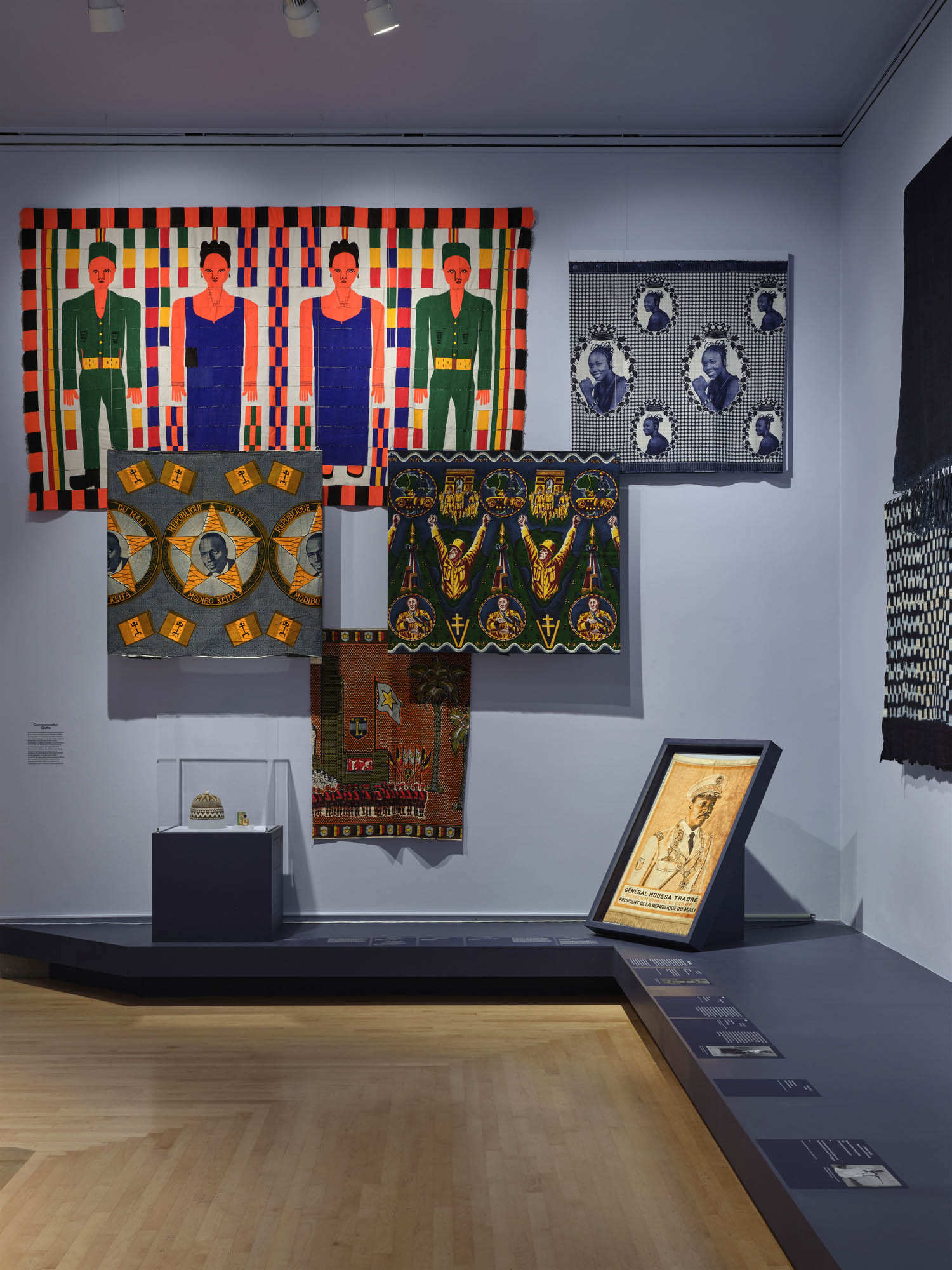
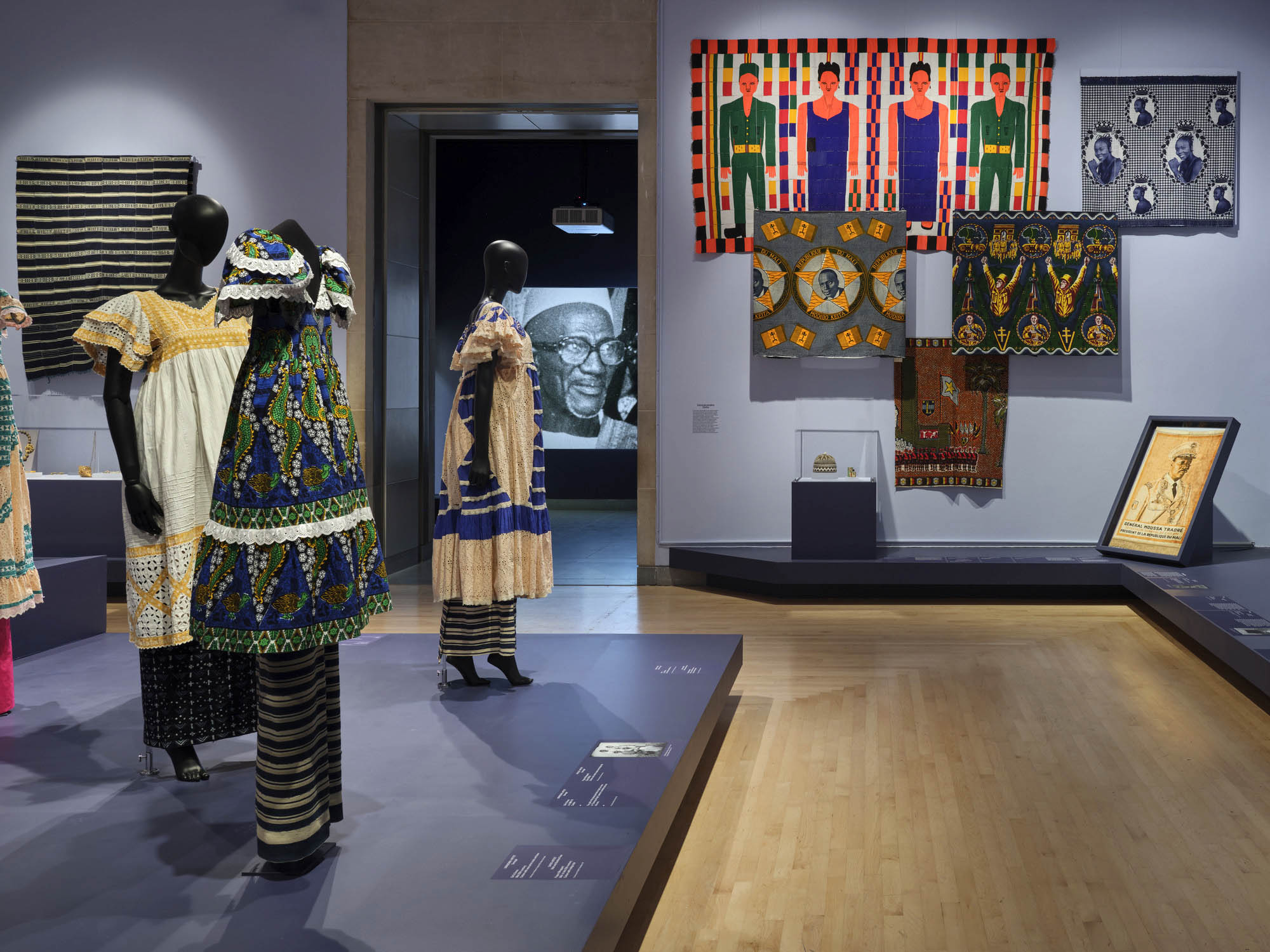
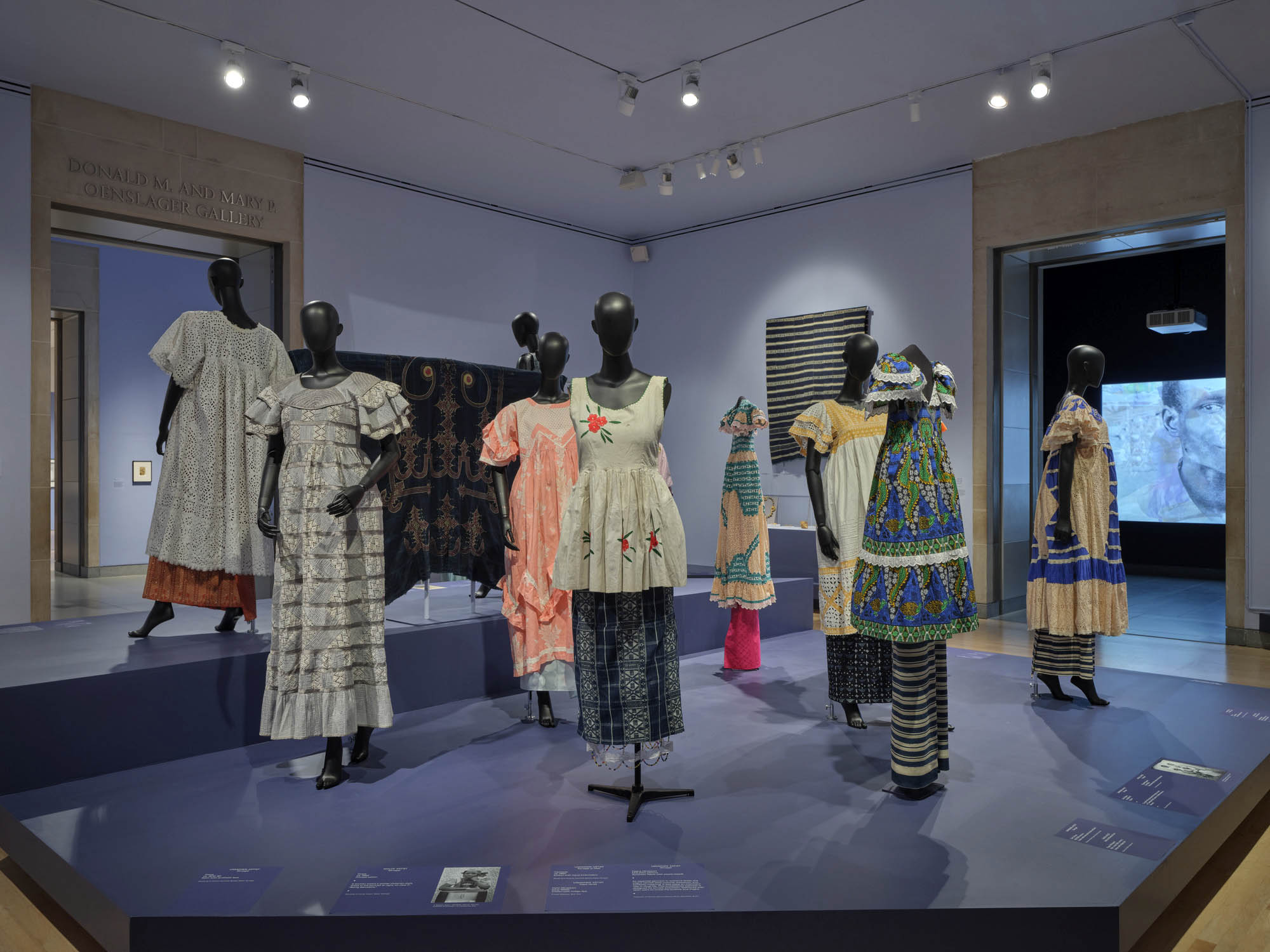
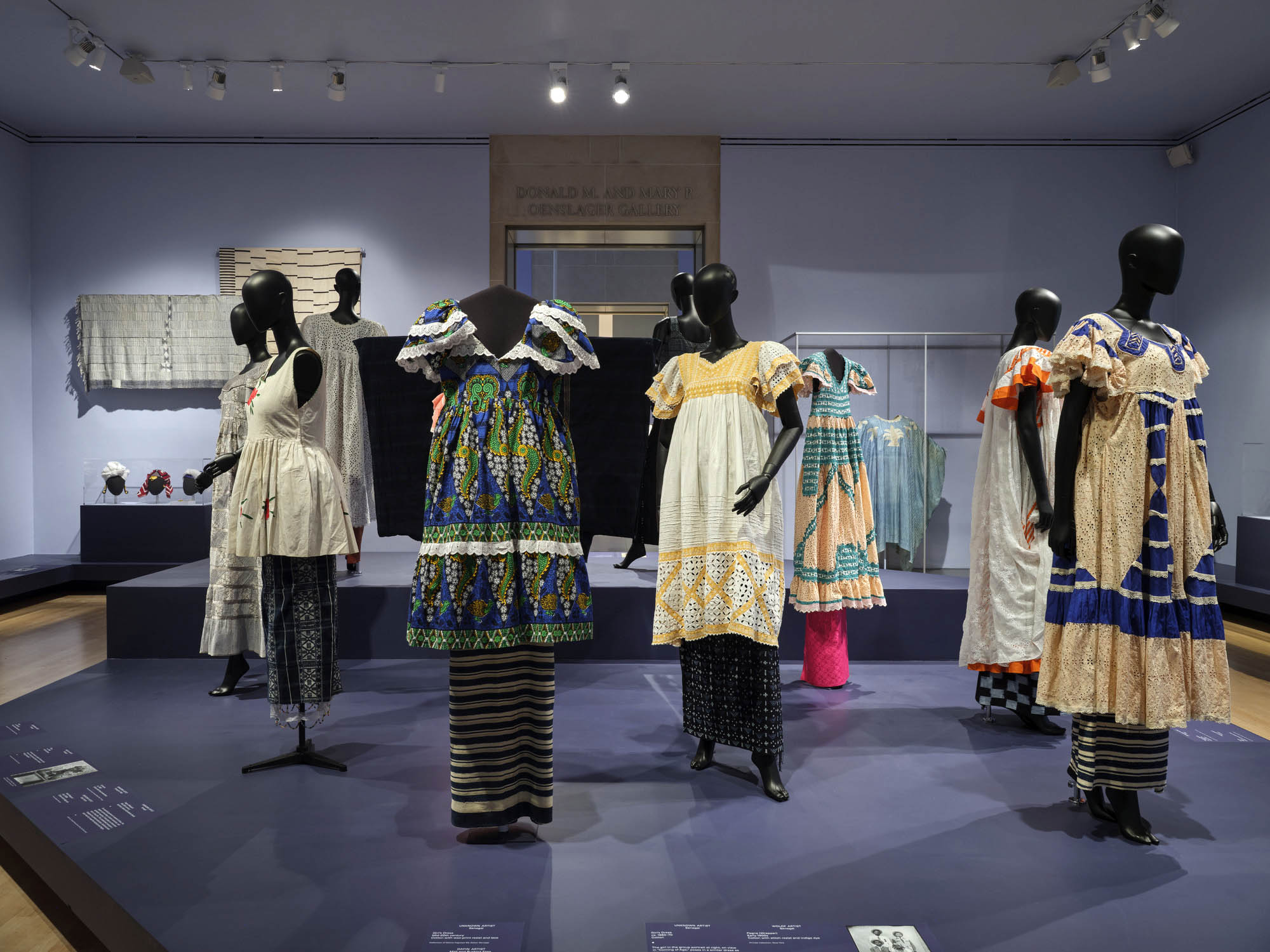
Exhibition: ‘Ideas of Africa: Portraiture and Political Imagination’ at The Museum of Modern Art (MoMA), New York

“There is something so infectious and engaging about these photographs, something that draws you into the transformative freedom of African identities.” Dr Marcus Bunyan

Exhibition dates: 14th December, 2025 – 25th July, 2026

Curator: Oluremi C. Onabanjo, The Peter Schub Curator, with the assistance of Chiara M. Mannarino, Curatorial Assistant, The Robert B. Menschel Department of Photography
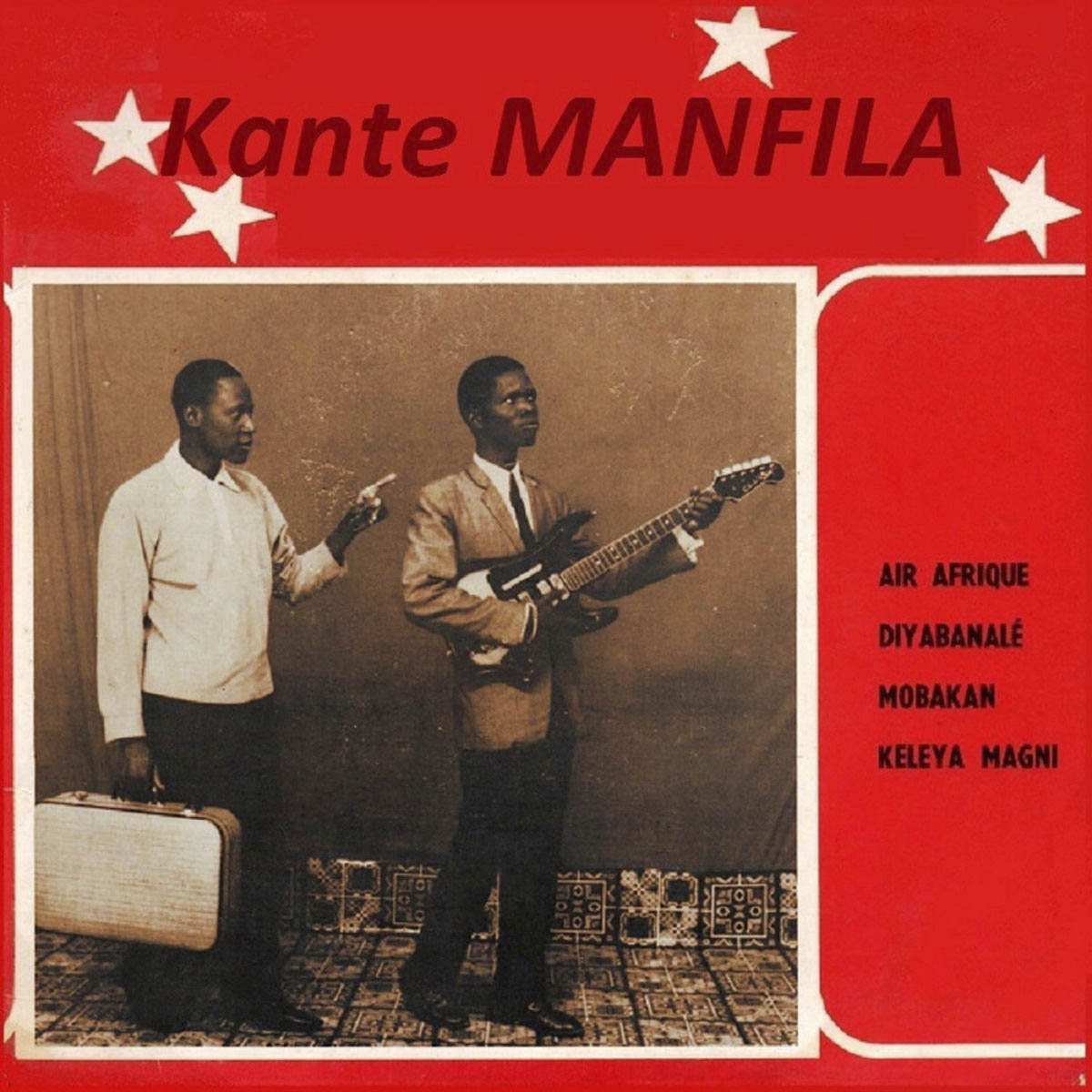
 

Air Afrique. 'DJIMA RECORDS' 1969


Air Afrique
DJIMA RECORDS
1969
Vinyl 45tour Mono
7 1/16 x 7 1/16″ (18 x 18cm)
Air Afrique Collective, courtesy of Lamine Diaoune,
Ahmadou-Bamba Thiam, Djiby Kebe, Jeremy Konko


Of being and becoming

Why do I love African photography so much after the “winds of decolonial change” swept through the continent which “saw the disintegration of colonial territories and the formation of transnational solidarity across the African continent and diaspora.”

Firstly, I love the vibrancy present in photographs of everyday life – at the club, with friends, dancing, drinking. I love the hairstyles, I love the fabrics, I love the way people are proud of themselves and their cultural heritage. Joy, love, exuberance, passion. There is something so infectious and engaging about these photographs, something that draws you into the transformative freedom of African identities.

Secondly, I love the studio photographs that enable the sitter to dream the great dreams of life, to imagine who they want to be before the camera. Here, in a symbiotic relationship between the photographer and the sitter, the “studio becomes a kind of imaginative enterprise. You can go and be who you are, or you can go and be who you want to be.” In Sanlé Sory’s studio his “portraits made possible a particular process of being and becoming for his sitters. He reflected the ideas that they wanted to communicate – whether to friends, lovers, strangers, or themselves.” (Gallery label) The resulting portrait made the sitter feel connected to a cosmopolitan world. Both a world of dreams and aspirations and Africans’ lived experiences and realities.

Thirdly, I love how the photographer turns the camera towards himself, conceptually enacting in a staged theatricality of becoming, envisioning himself as different personalities through the act of constructing identities. Heroes, travellers, intellectuals, philosophers and, in Samuel Fosso’s case, prominent figures from 20th-century Pan-African liberation and American civil rights movements. African spirits and activists, intellectuals, and political leaders who fought for Black emancipation across the globe.

Pan-African modes of image-making after the end of colonisation open up, as curator Oluremi C. Onabanjo so eloquently states, “dazzling modes of Pan-African possibility” where everything is possible in every/body. There is no wringing of the hands here, no use of colonial photographs rehashed for contemporary consumption, just a joy, joy, joy in present and future becoming.

Dr Marcus Bunyan


Many thankx to the Museum of Modern Art for allowing me to publish the photographs in the posting. Please click on the photographs for a larger version of the image.


“Imagination is a Magic carpet
Upon which we may soar
To distant lands and climes
And even go beyond the moon
To any planet in the sky
If we came from nowhere here
Why can’t we go somewhere there?

.
Sun Ra, “Imagination,” 1970


The Museum of Modern Art’s exhibition Ideas of Africa: Portraiture and Political Imagination showcases how photographic portraits fuel ideas of Pan-African subjectivity and solidarity. On view from December 14, 2025, through July 25, 2026, the exhibition considers the transatlantic call and response that constructed Africa as a political idea, due to the “winds of decolonial change” that swept the African continent in tandem with the Civil Rights movement in the United States. Ideas of Africa is the third exhibition organised at The Museum of Modern Art in celebration of the 2019 gift of modern and contemporary African art from prolific collector Jean Pigozzi. The exhibition features core works from this gift, alongside a selection of recent acquisitions and key loans.

Text from The Museum of Modern Art website
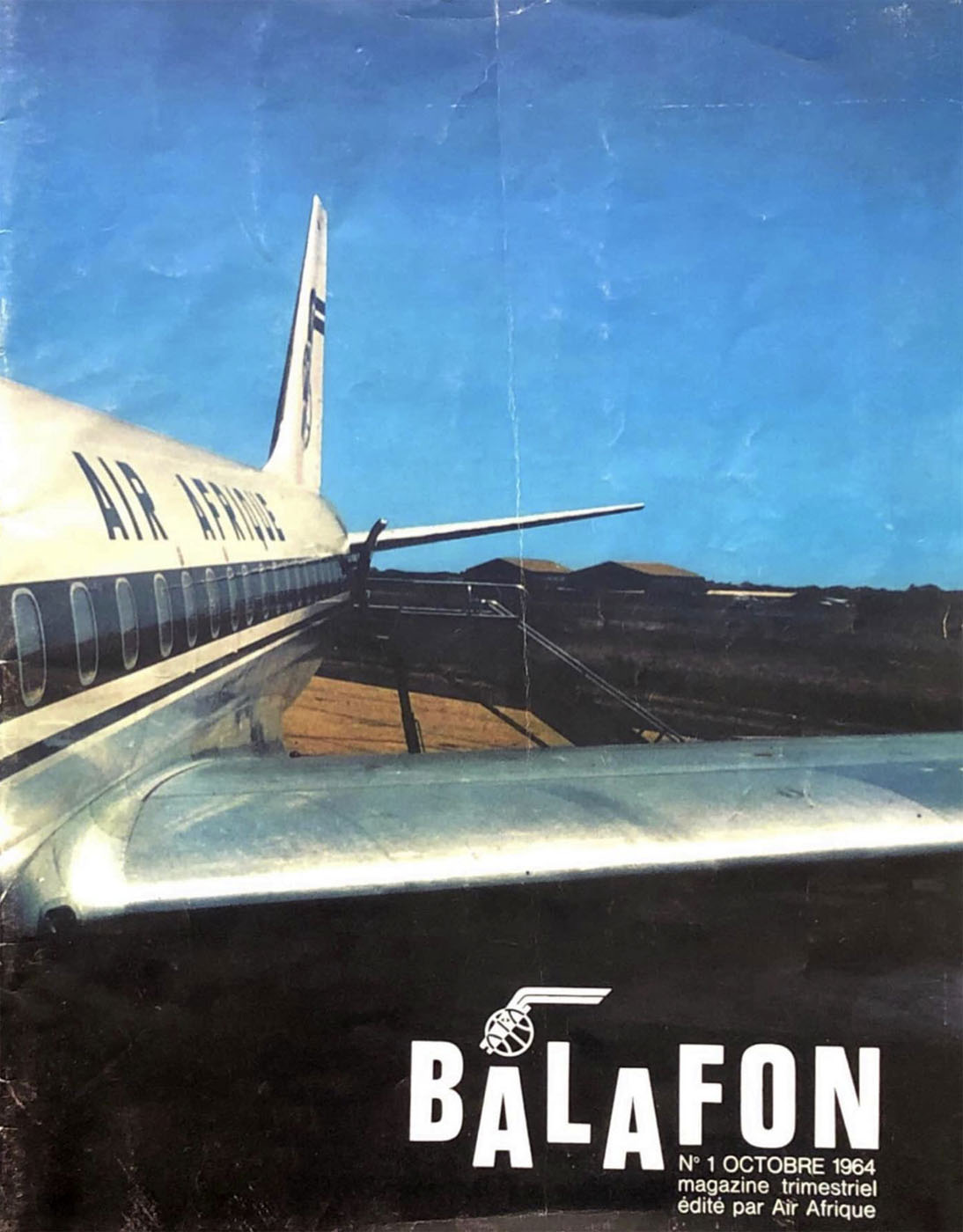
 

Air Afrique. 'Balafon No. 1' 1964


Air Afrique
Balafon No. 1
1964
Magazine, softcover
10 5/8 x 8 1/4″ (27 x 21cm)
Air Afrique Collective, courtesy of Lamine Diaoune,
Ahmadou-Bamba Thiam, Djiby Kebe, Jeremy Konko


From 1961 to 2002, Air Afrique served as the official transnational carrier for francophone West and Central Africa, providing regular jet service throughout the continent and internationally. The airline was also deeply committed to the production of Pan-African arts and culture. It funded vinyl records, published books on African history, and produced the in-flight magazine Balafon, which reported on events across Africa and beyond. Twenty years after the airline shuttered, a Paris-based artist collective formed to revitalise the spirit of Air Afrique through design collaborations, film programs, and a magazine. Their collection of archival ephemera, on view here, comprises gifts and purchases from former Air Afrique staff.

Inspired by the international activities of Air Afrique, both past and present, this reading table presents issues of the airline’s in-flight magazine, Balafon, one of which features a portrait of the Malian photographer Malick Sidibé on its cover. This table also includes a selection of photobooks, catalogues, and scholarly publications, celebrating the circulation of images and ideas in Africa during the decolonial era. These books are additionally available to browse within the gallery, offering further directions for reading, thinking, dreaming, and imagining.

Gallery label from Ideas of Africa: Portraiture and Political Imagination, 2025
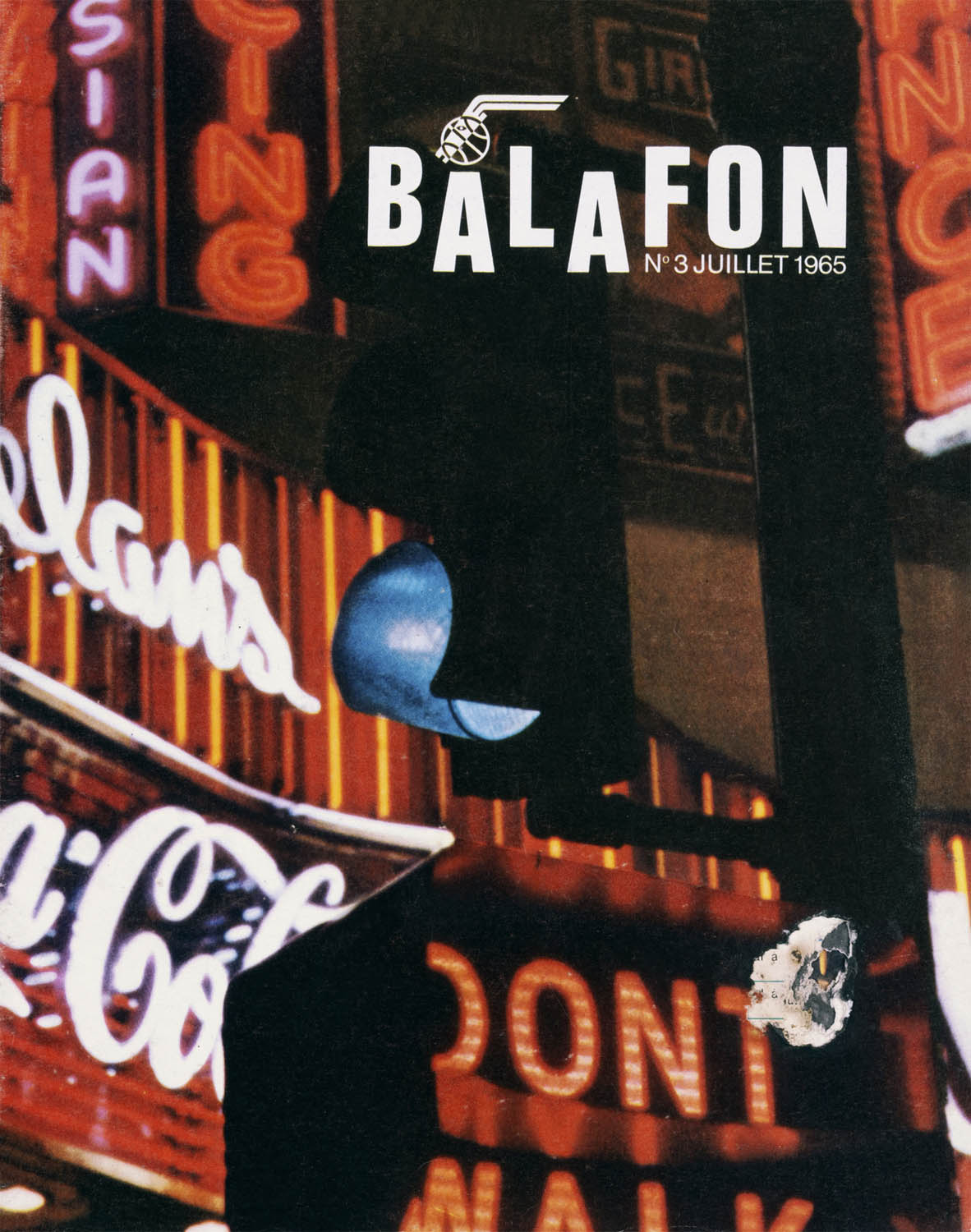
 

Air Afrique. 'Balafon No. 3' 1965


Air Afrique
Balafon No. 3
1965
Magazine, softcover
10 5/8 x 8 1/4″ (27 x 21cm)
Air Afrique Collective, courtesy of Lamine Diaoune,
Ahmadou-Bamba Thiam, Djiby Kebe, Jeremy Konko
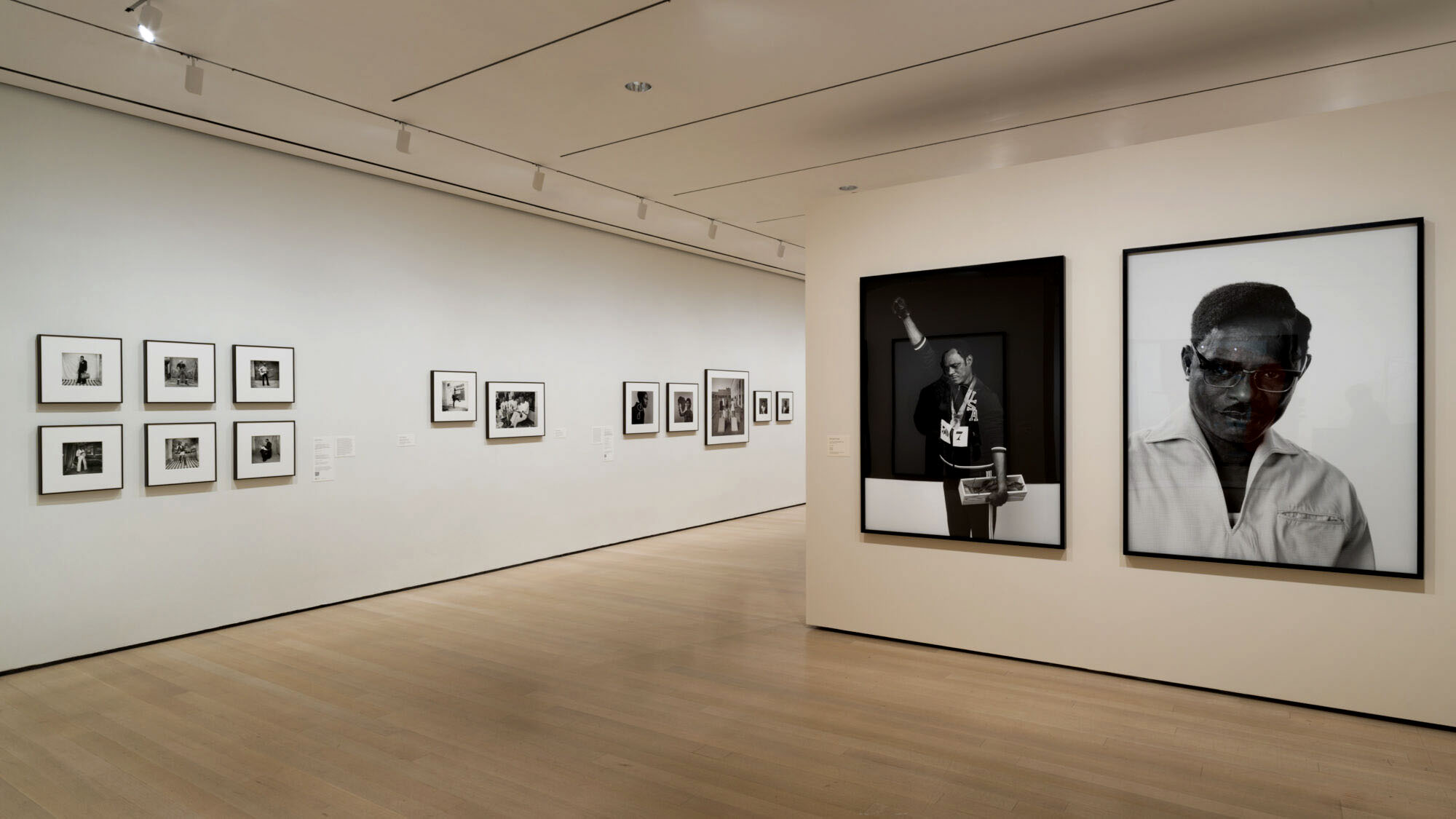
 

Installation view of the exhibition 'Ideas of Africa: Portraiture and Political Imagination' at The Museum of Modern Art (MoMA), New York, December 2025 - July 2026 showing at right two 'Untitled' photographs from the series 'African Spirits' (2008) by Samuel Fosso (French and Central African born Cameroon, b. 1962)


Installation view of the exhibition Ideas of Africa: Portraiture and Political Imagination at The Museum of Modern Art (MoMA), New York, December 2025 – July 2026 showing at right two Untitled photographs from the series African Spirits (2008, below) by Samuel Fosso (French and Central African born Cameroon, b. 1962)
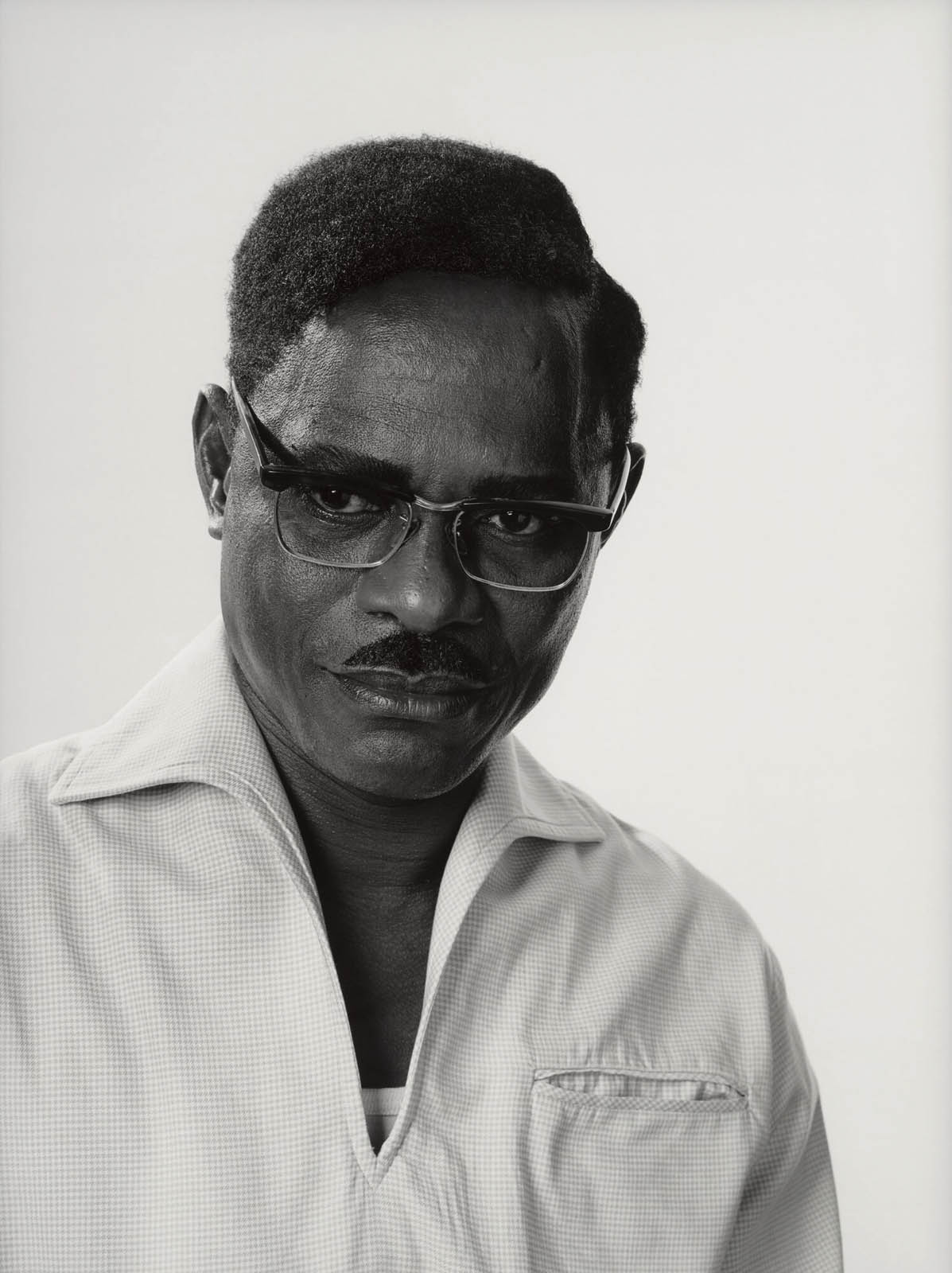
 

Samuel Fosso (French and Central African, born Cameroon 1962) 'Untitled' from the series 'African Spirits' 2008


Samuel Fosso (French and Central African born Cameroon, b. 1962)
Untitled from the series African Spirits
2008
Gelatin silver print
64 1/8 x 48 1/16″ (162.8 x 122cm)
Museum of Modern Art, New York
The Family of Man Fund
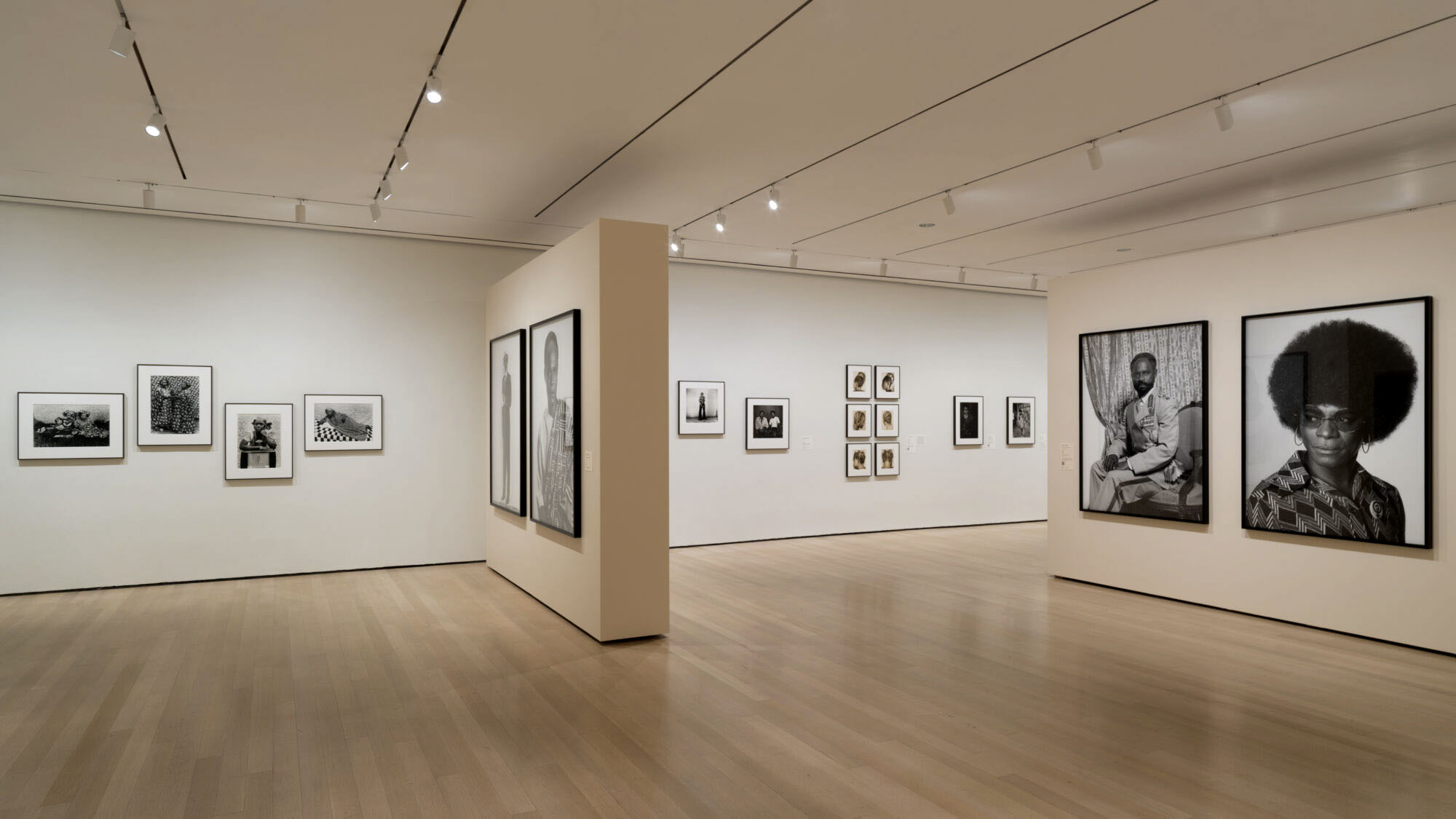
 

Installation view of the exhibition 'Ideas of Africa: Portraiture and Political Imagination' at The Museum of Modern Art (MoMA), New York, December 2025 - July 2026 showing at left photographs by Seydou Keïta (Malian, 1923-2001); and at right, two 'Untitled' photographs from the series 'African Spirits' (2008) by Samuel Fosso (French and Central African born Cameroon, b. 1962)


Installation view of the exhibition Ideas of Africa: Portraiture and Political Imagination at The Museum of Modern Art (MoMA), New York, December 2025 – July 2026 showing at left photographs by Seydou Keïta (Malian, 1923-2001); and at right, two Untitled photographs from the series African Spirits (2008, below) by Samuel Fosso (French and Central African born Cameroon, b. 1962)
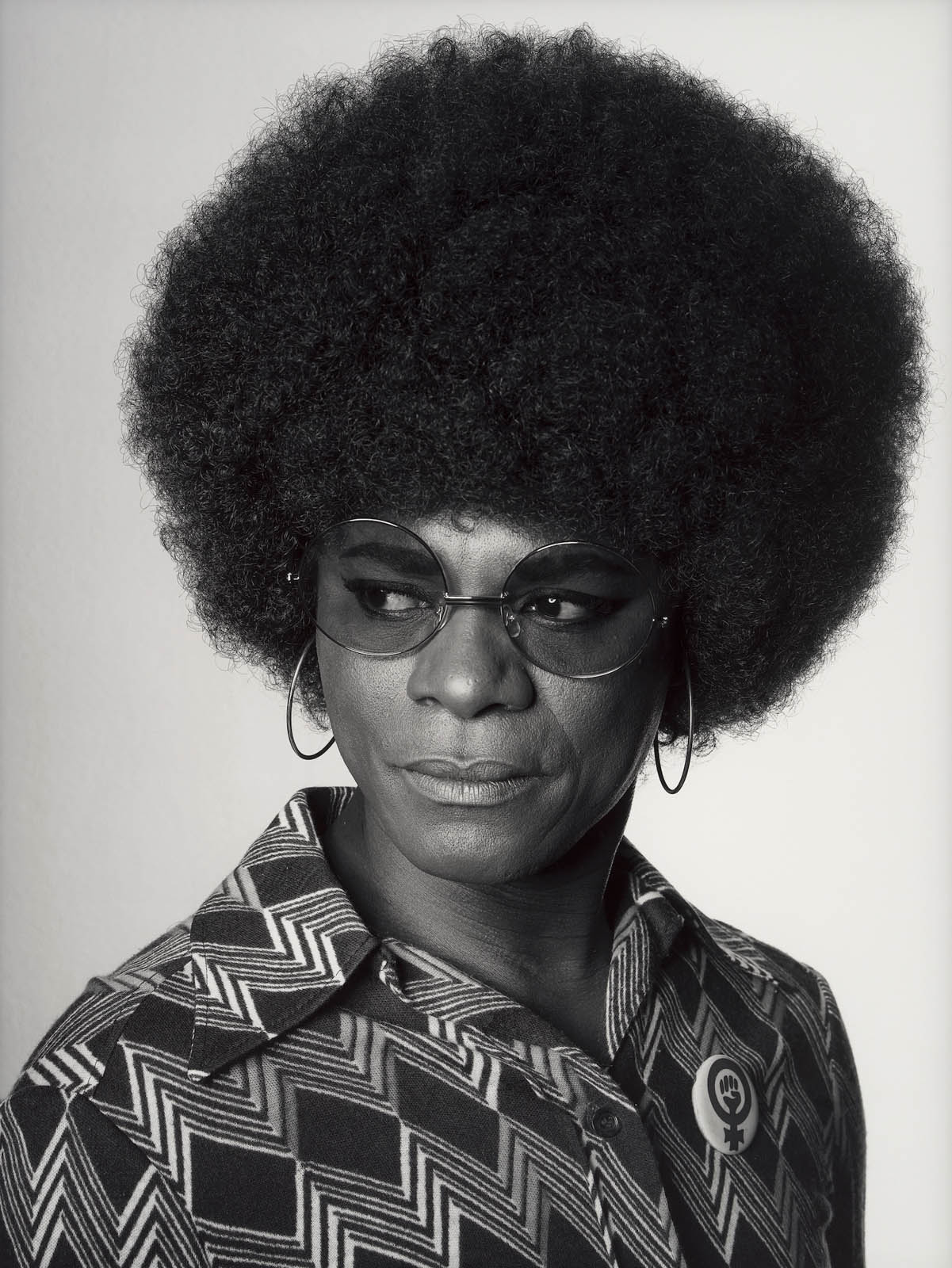
  

Samuel Fosso (French and Central African, born Cameroon 1962) 'Untitled' from the series 'African Spirits' 2008


Samuel Fosso (French and Central African born Cameroon, b. 1962)
Untitled from the series African Spirits
2008
Gelatin silver print
64 1/8 x 48 1/16″ (162.8 x 122cm)
Museum of Modern Art, New York
The Family of Man Fund


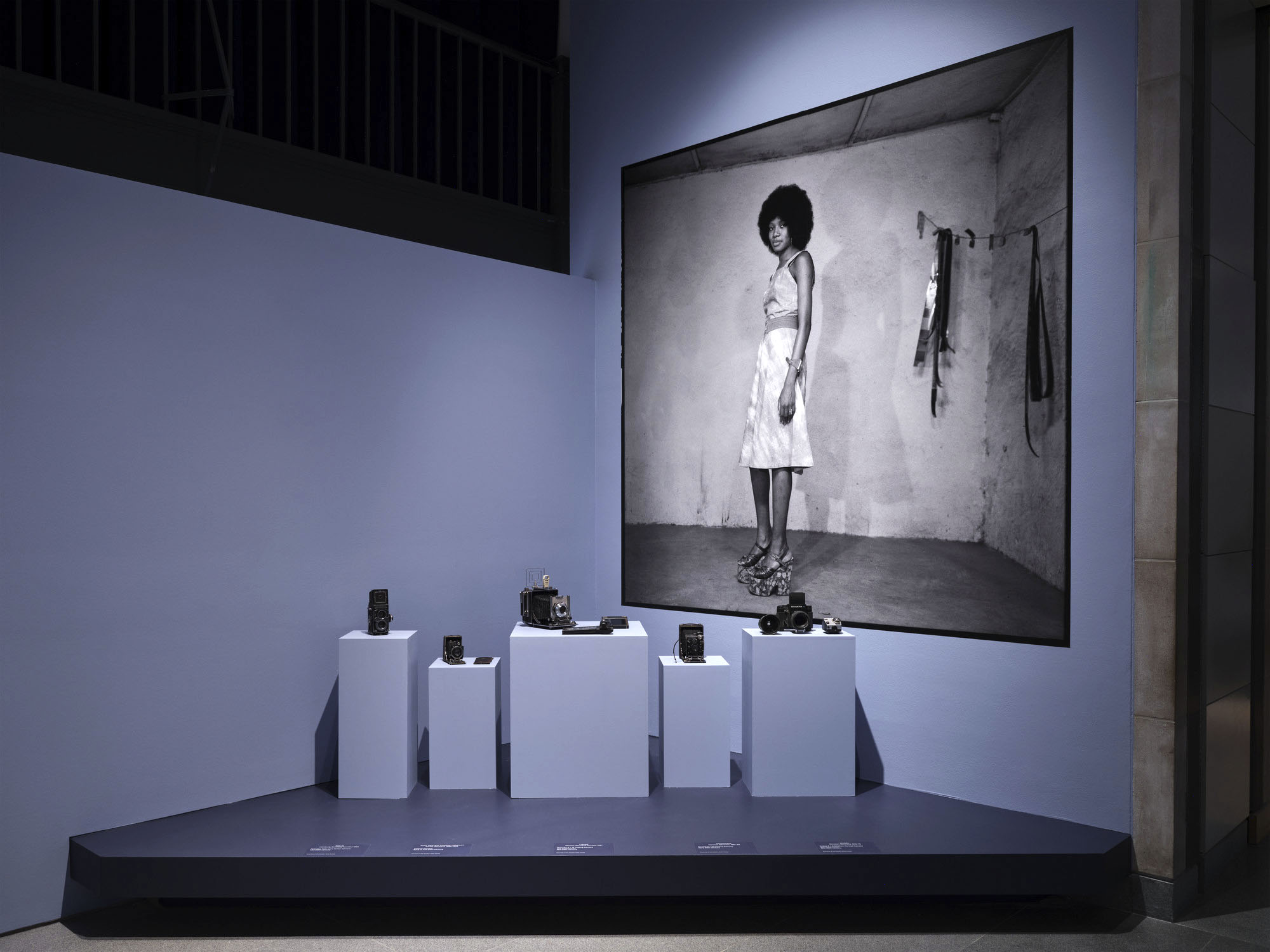
Artist, Silvia Rosi:  African Spirit is a series of self-portraits where Fosso transforms himself into key figures of the Pan-African liberation movement of the 1960s and 70s.

I’m Silvia Rosi. I’m an artist working with photography and moving image.

Samuel Fosso started his career taking portraits of people in the studio, where there was always this act of constructing identities through props, poses, and the photographer’s imagination. At the end of each workday, Fosso would turn the camera toward himself.

In this series, he recreates these iconic photographs, taking on the faces of Angela Davis, of Martin Luther King, while at the same time remaining himself.  For me, there’s this sense of recognition but also his own presence makes us question what it means to embody these figures.

The lighting and the poses and the composition echo this studio portrait tradition, but there’s always an element of theatricality that keeps you aware of the labor of becoming someone else. He neutralises the scene, removing the backdrop, and we’re forced to look at the subject that we have in front.

Turning the camera inwards can be really revolutionary. I think that’s something that deeply resonates with me, this idea of being in charge of my own representation and giving yourself complexity through images.

Text from the MoMA website
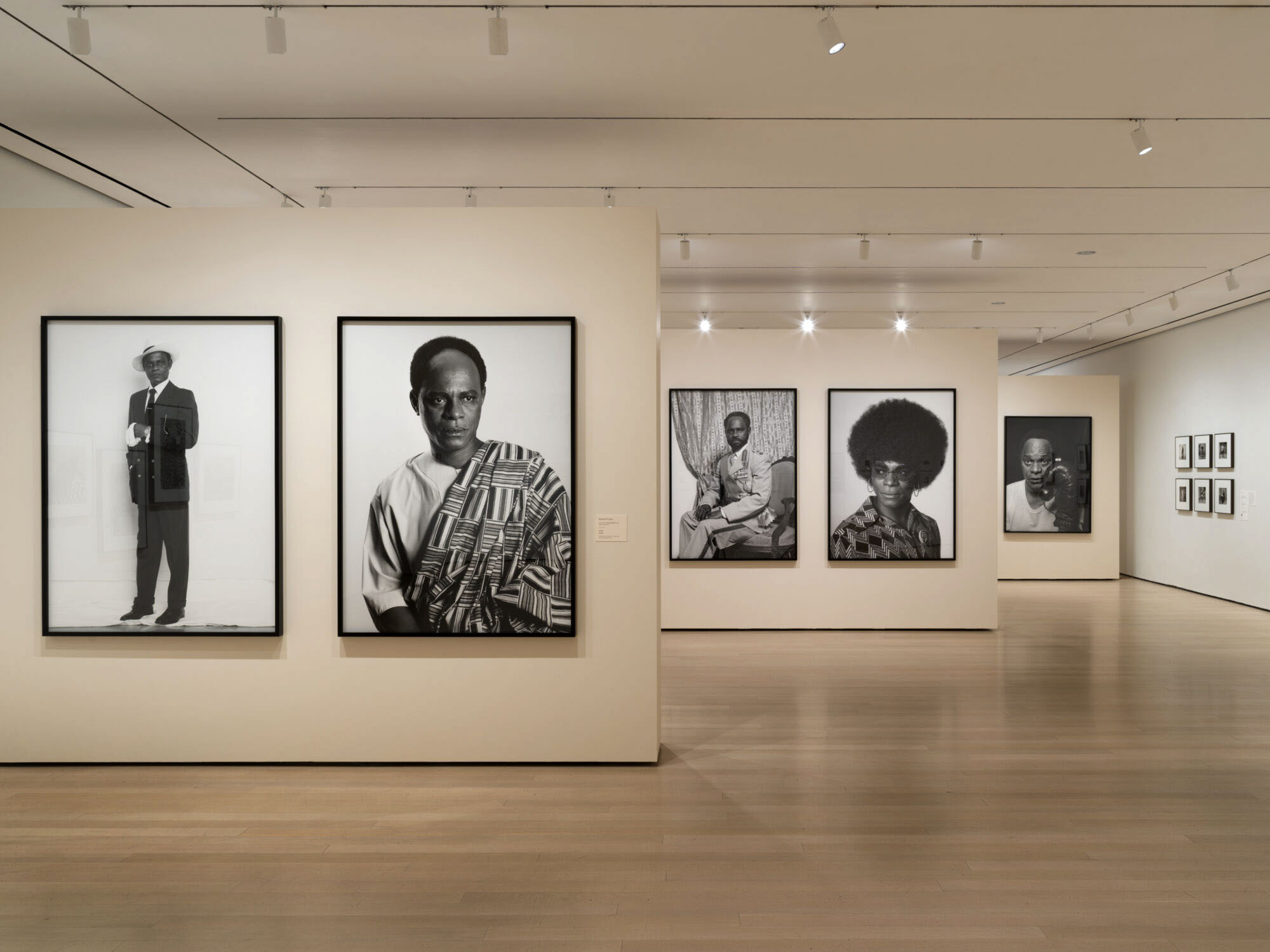
  

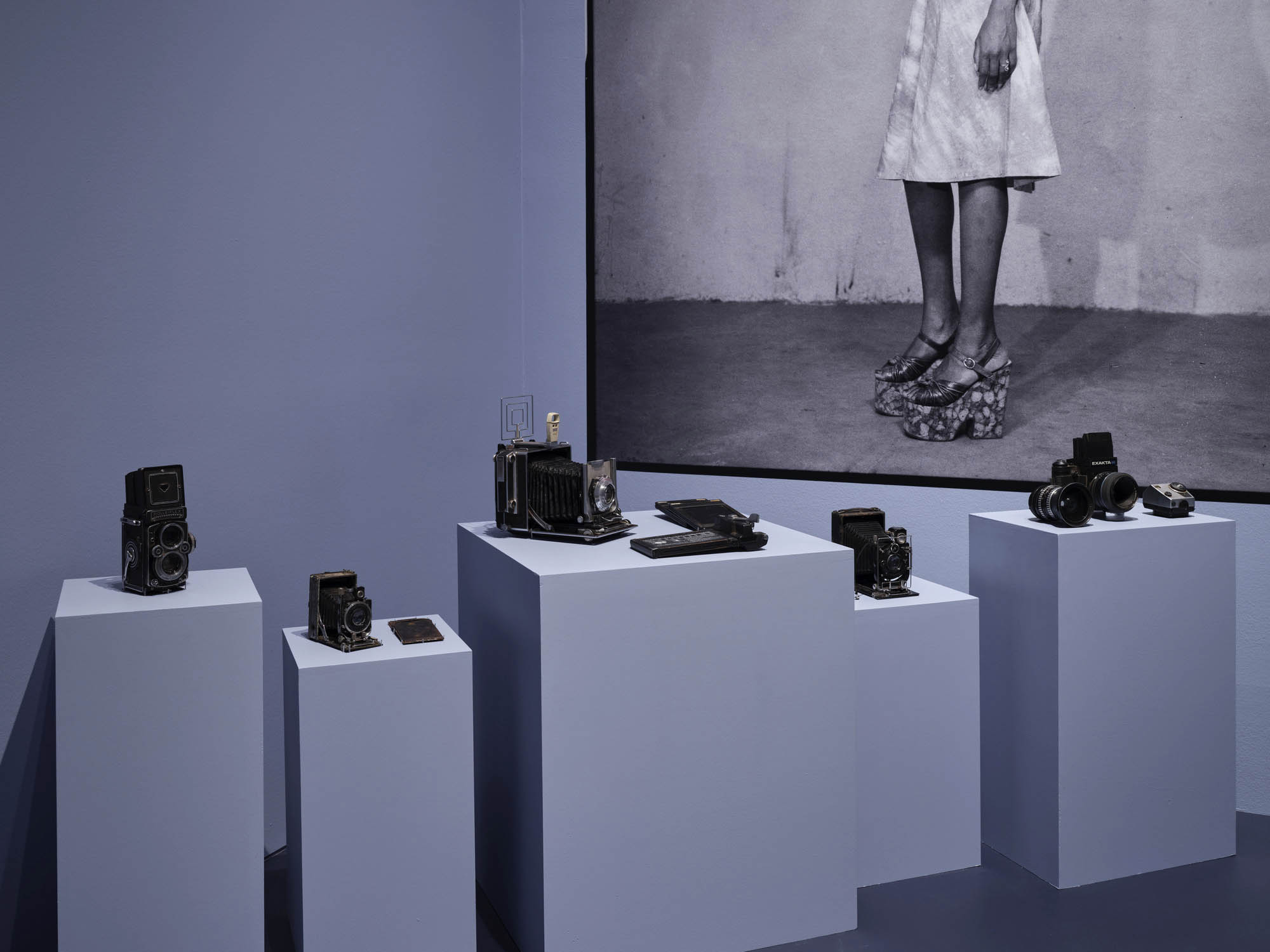
Installation view of the exhibition 'Ideas of Africa: Portraiture and Political Imagination' at The Museum of Modern Art (MoMA), New York, December 2025 - July 2026 showing five 'Untitled' photographs from the series 'African Spirits' (2008) by Samuel Fosso (French and Central African born Cameroon, b. 1962)


Installation view of the exhibition Ideas of Africa: Portraiture and Political Imagination at The Museum of Modern Art (MoMA), New York, December 2025 – July 2026 showing five Untitled photographs from the series African Spirits (2008) by Samuel Fosso (French and Central African born Cameroon, b. 1962)


The Museum of Modern Art’s exhibition Ideas of Africa: Portraiture and Political Imagination showcases how photographic portraits fuel ideas of Pan-African subjectivity and solidarity. On view from December 14, 2025, through July 25, 2026, the exhibition considers the transatlantic call and response that constructed Africa as a political idea, due to the “winds of decolonial change” that swept the African continent in tandem with the Civil Rights movement in the United States. Ideas of Africa is the third exhibition organised at The Museum of Modern Art in celebration of the 2019 gift of modern and contemporary African art from prolific collector Jean Pigozzi. The exhibition features core works from this gift, alongside a selection of recent acquisitions and key loans. Ideas of Africa: Portraiture and Political Imagination is organised by Oluremi C. Onabanjo, The Peter Schub Curator, with the assistance of Chiara M. Mannarino, Curatorial Assistant, The Robert B. Menschel Department of Photography. 

Conceptually influenced by The Idea of Africa, a landmark publication by the late philosopher V. Y. Mudimbe (1941-2025), the exhibition brings together works by 20th-century photographers such as Seydou Keïta, Malick Sidibé, Jean Depara, Sanlé Sory, and Ambroise Ngaimoko, who worked across key urban centers in West and Central Africa during the “golden age of African portraiture.” Images by James Barnor and Kwame Brathwaite illuminate Pan-African modes of image-making across the African diaspora. Works by contemporary artists of African descent, including Samuel Fosso, Silvia Rosi, and Njideka Akunyili Crosby, alongside ephemera selected from the archive of the artist collective Air Afrique, embody the physical circulation of these ideas across space and time. 

“As we continue to witness transformative shifts in the global geopolitical order, it is instructive to revisit a moment in history that saw the disintegration of colonial territories and the formation of transnational solidarity across the African continent and diaspora. This exhibition locates dazzling modes of Pan-African possibility in images made by inventive photographers who registered and beckoned in new worlds,” says Oluremi C. Onabanjo. 

Ideas of Africa features a reading room as a tribute to the aspirations of knowledge production and the proliferation of the photographic image in print media during the decolonial era. In the reading room, visitors can access a selection of historical and contemporary photobooks and publications. 

On the occasion of the exhibition, MoMA is publishing a richly illustrated catalogue featuring a lead essay by Oluremi C. Onabanjo, contributions by poet Momtaza Mehri and film programmer Yasmina Price, and reproductions of key texts by Brent Hayes Edwards and V. Y. Mudimbe. 140 pages, 105 color illustrations. Hardcover, $50. ISBN: 978-1-63345-171-1.

Press release from The Museum of Modern Art


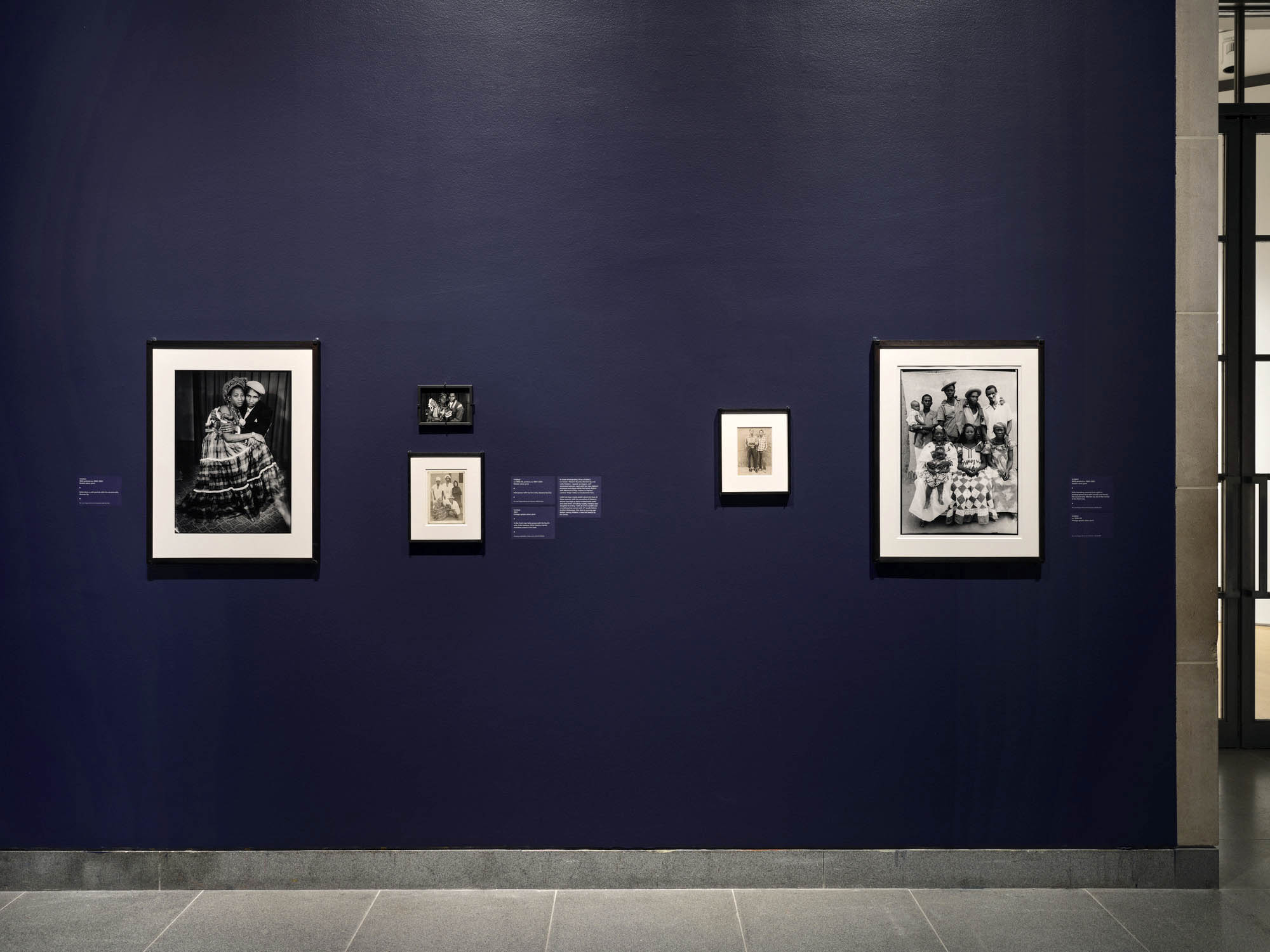
Installation view of the exhibition 'Ideas of Africa: Portraiture and Political Imagination' at The Museum of Modern Art (MoMA), New York, December 2025 - July 2026 showing at left, Malick Sidibé 'Nuit de Noël' (Happy Club) [Christmas Eve] 1963; and at second left, Malick Sidibé 'Regardez-Moi' [Look at Me!] 1962


Installation view of the exhibition Ideas of Africa: Portraiture and Political Imagination at The Museum of Modern Art (MoMA), New York, December 2025 – July 2026 showing at left, Malick Sidibé Nuit de Noël (Happy Club) [Christmas Eve] (1963, below); and at second left, Malick Sidibé Regardez-Moi [Look at Me!] (1962, below)


Malick Sidibé (Malian, 1936–2016) 'Nuit de Noël' (Happy Club) [Christmas Eve] 1963 (printed January 2006)


Malick Sidibé (Malian, 1936-2016)
Nuit de Noël (Happy Club) [Christmas Eve]
1963 (printed January 2006)
Gelatin silver print
Image: 39 x 39″ (99 x 99.1cm)
Sheet: 47 1/4 x 47 1/4″ (120 x 120cm)
Frame: 53 9/16 x 53 9/16″ (136 x 136cm)
Courtesy The Walther Collection, New York / Neu-Ulm


Malick Sidibé (Malian, 1936–2016) 'Regardez-Moi' [Look at Me!] 1962 (printed January 2006)


Malick Sidibé (Malian, 1936-2016)
Regardez-Moi [Look at Me!]
1962 (printed January 2006)
Gelatin silver print
Image: 39 3/8 x 39″ (100 x 99cm)
Sheet: 47 1/4 x 47 1/4″ (120 x 120cm)
Frame: 52 3/16 x 52 3/16 x 1″ (132.5 x 132.5 x 2.5cm)
Courtesy The Walther Collection, New York / Neu-Ulm
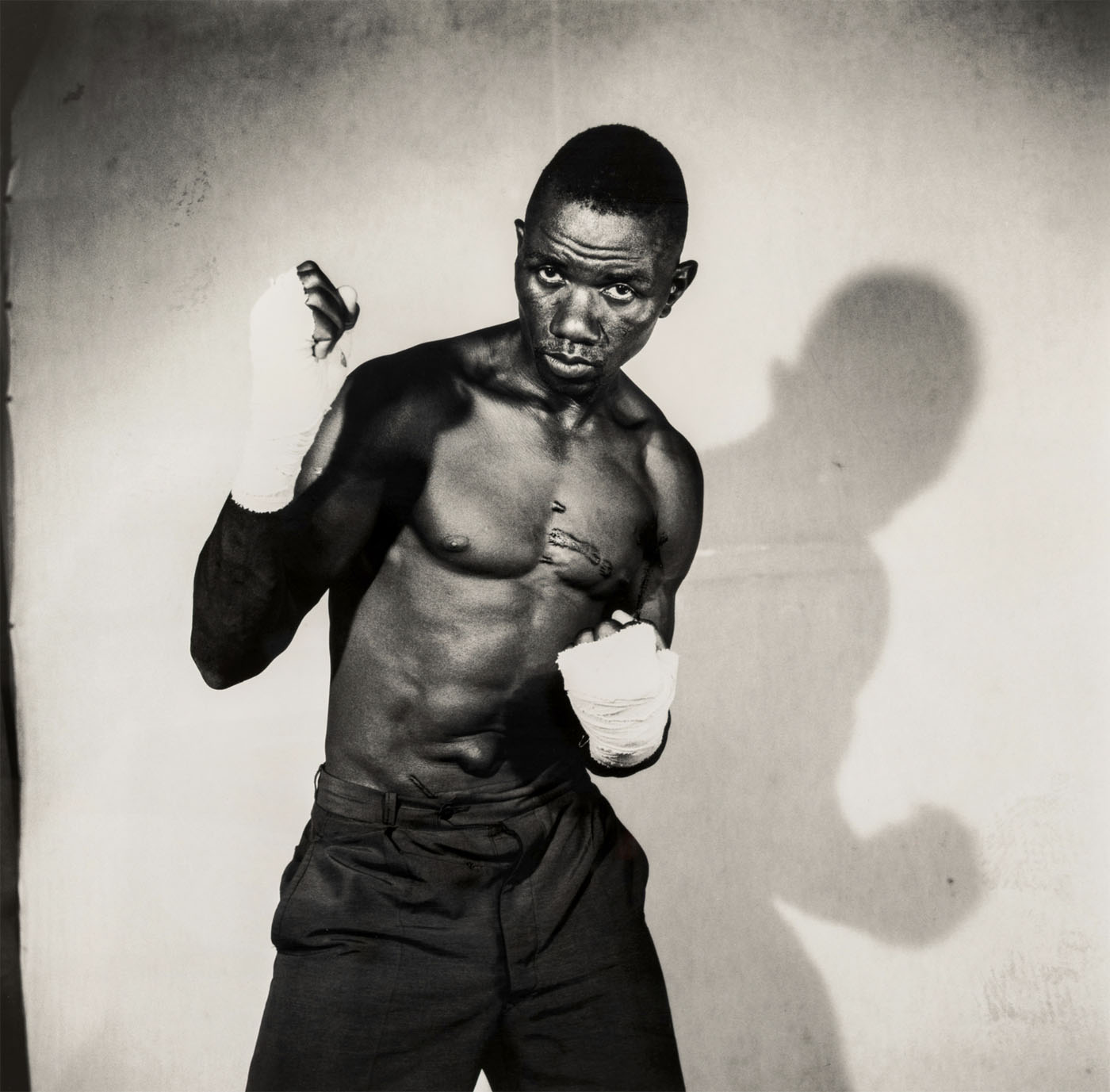
 

Malick Sidibé (Malian, 1936–2016) 'Boxeur' (Boxer) 1966


Malick Sidibé (Malian, 1936–2016)
Boxeur (Boxer)
1966
Gelatin silver print
Image: 16 15/16 x 16 15/16″ (43 x 43 cm)
Frame: 27 9/16 x 27 9/16 x 9/16″ (70 x 70 x 1.5cm)
Museum of Modern Art, New York
The Jean Pigozzi African Art Collection


For Sidibé, the roving “eye of Bamako,” the city was his studio. Active during the 1960s and ’70s, Sidibé shot on 35mm film and often printed proofs of the exposures he took at weekend parties. He arranged them sequentially on pastel cardstock and displayed them at his studio so that clients might purchase souvenirs of their exploits. Sidibé’s images of youth culture emphatically pushed back against Mali’s normative state attitudes and expectations of decorum. Revelling in effusive gestures and strong poses, he deftly photographed a community full of elegance, style, and sensational flair that staked its claim on a connection to a global African Diaspora.

Gallery label from Ideas of Africa: Portraiture and Political Imagination, 2025


Malick Sidibé (Malian, 1936–2016) 'Nuit du 10 octobre 1970' (Night of October 10, 1970) 1970


Malick Sidibé (Malian, 1936-2016)
Nuit du 10 octobre 1970 (Night of October 10, 1970)
1970
Twenty-two gelatin silver prints mounted on paper
12 3/4 x 19 3/4″ (32.4 x 50.2cm)
Museum of Modern Art, New York
Judith and Wm. Brian Little Fund
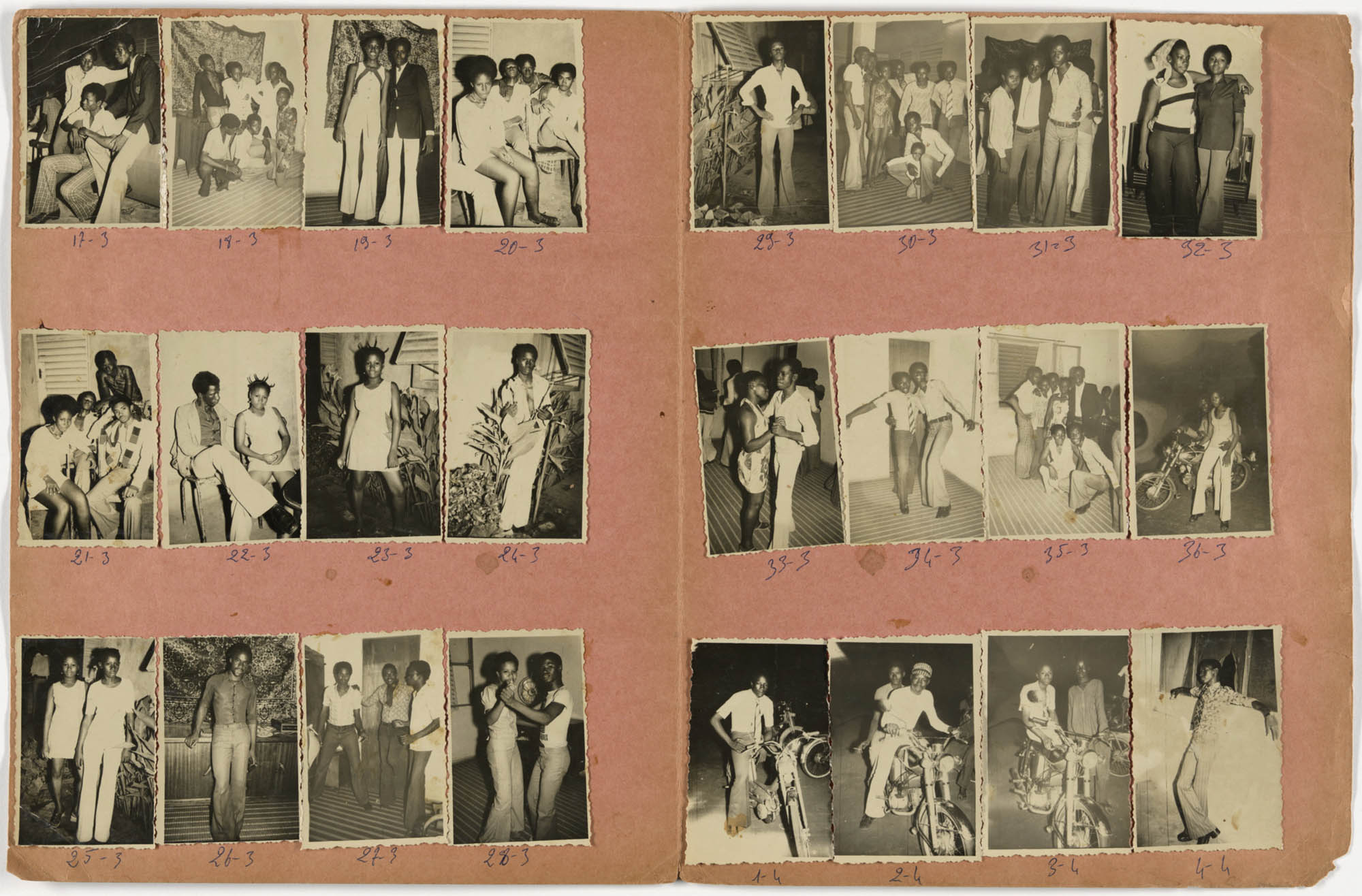
  

Malick Sidibé (Malian, 1936–2016) 'Untitled' July 28, 1973


Malick Sidibé (Malian, 1936-2016)
Untitled
July 28, 1973
Twenty-four gelatin silver prints mounted on paper
12 3/4 x 19 3/4″ (32.4 x 50.2cm)
Museum of Modern Art, New York
Judith and Wm. Brian Little Fund


“This wind of change blowing through Africa … is no ordinary wind,” wrote Ghana’s first president, Kwame Nkrumah, in 1963. “It is a raging hurricane against which the old order cannot stand.” In the 1960s, independence movements swept across the African continent, resulting in the disintegration of colonial territories. These transformative struggles coincided with an exhilarating campaign for civil rights in the United States, forging a transatlantic call-and-response that established “Africa” as a political idea.

Ideas of Africa: Portraiture and Political Imagination examines the role of portrait photography within this emerging sense of Pan-Africanism. It unites portraits by mid-century photographers from across West and Central Africa and works by contemporary artists of African descent, illuminating different modes of image making and forms of transnational solidarity. As the art historian Kobena Mercer has argued, “‘Africa’ has never been a static entity, confined to the boundaries of geography, but has always had a diasporic dimension.” Embedded within the exhibition is a reading room featuring a selection of photobooks, alongside archival ephemera from the Paris-based collective Air Afrique. Following in the wake of the eponymous international airline, the group has continued the circulation of Pan-African culture and ideas into the present day.

Conceptually influenced by the late philosopher V. Y. Mudimbe’s book The Idea of Africa (1994), in which he exposes Western views of Africa as politicised constructions, this exhibition demonstrates how African photographers grappled with Africa as a political idea in their own ways. Presenting subjects for whom the personal was undeniably political, their images assert photography’s unique potential to creatively reflect our surroundings and beckon new worlds. At a time when profound shifts are once again transforming the global geopolitical order, Ideas of Africa attests to the enduring relevance of these themes.

Gallery text from Ideas of Africa: Portraiture and Political Imagination, 2025
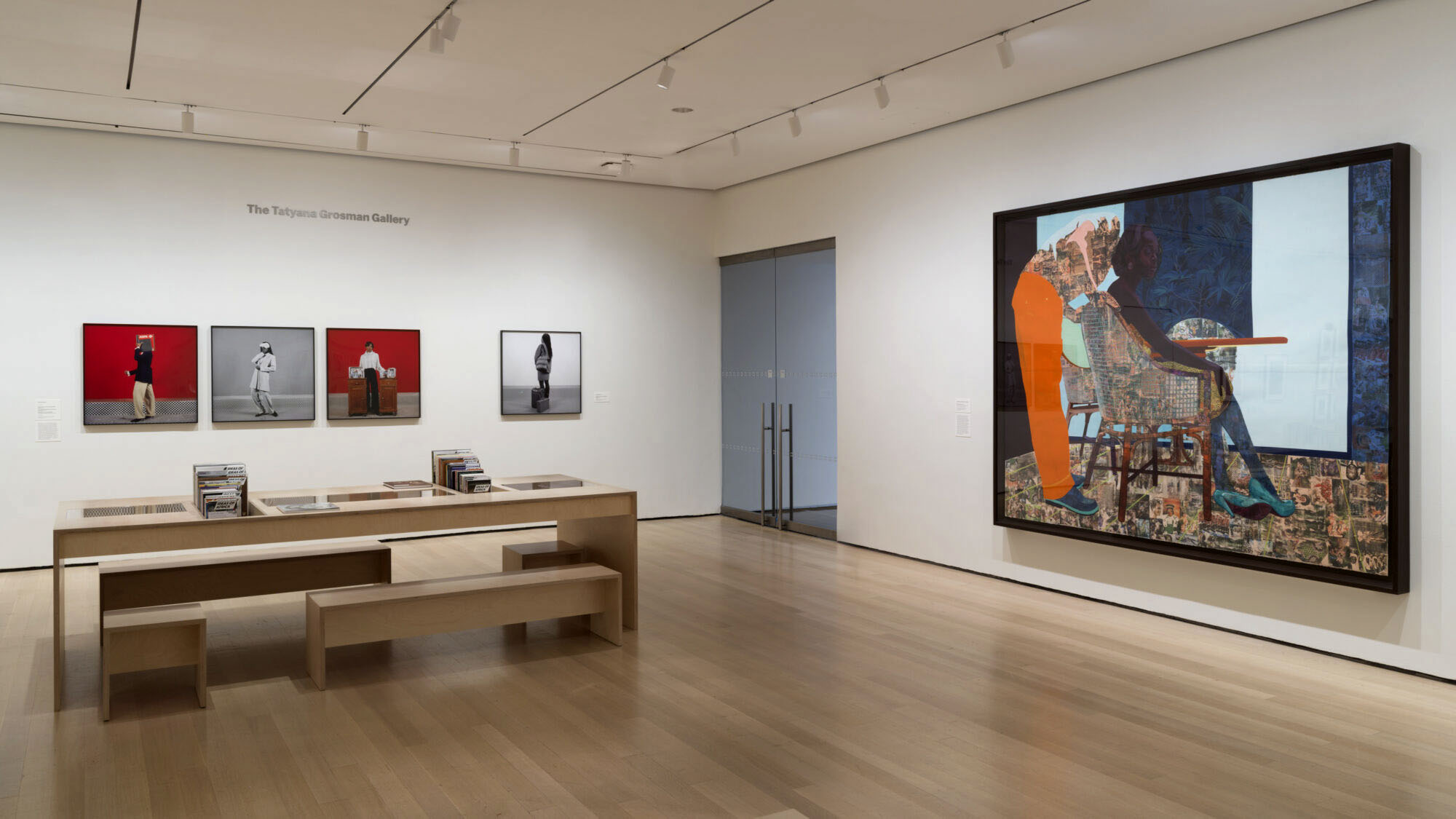
  

Installation view of the exhibition 'Ideas of Africa: Portraiture and Political Imagination' at The Museum of Modern Art (MoMA), New York, December 2025 - July 2026 showing at left the work of Silvia Rosi; and at right, Njideka Akunyili Crosby's 'And We Begin to Let Go' (2013)


Installation view of the exhibition Ideas of Africa: Portraiture and Political Imagination at The Museum of Modern Art (MoMA), New York, December 2025 – July 2026 showing at left the work of Silvia Rosi (below); and at right, Njideka Akunyili Crosby And We Begin to Let Go (2013, below)
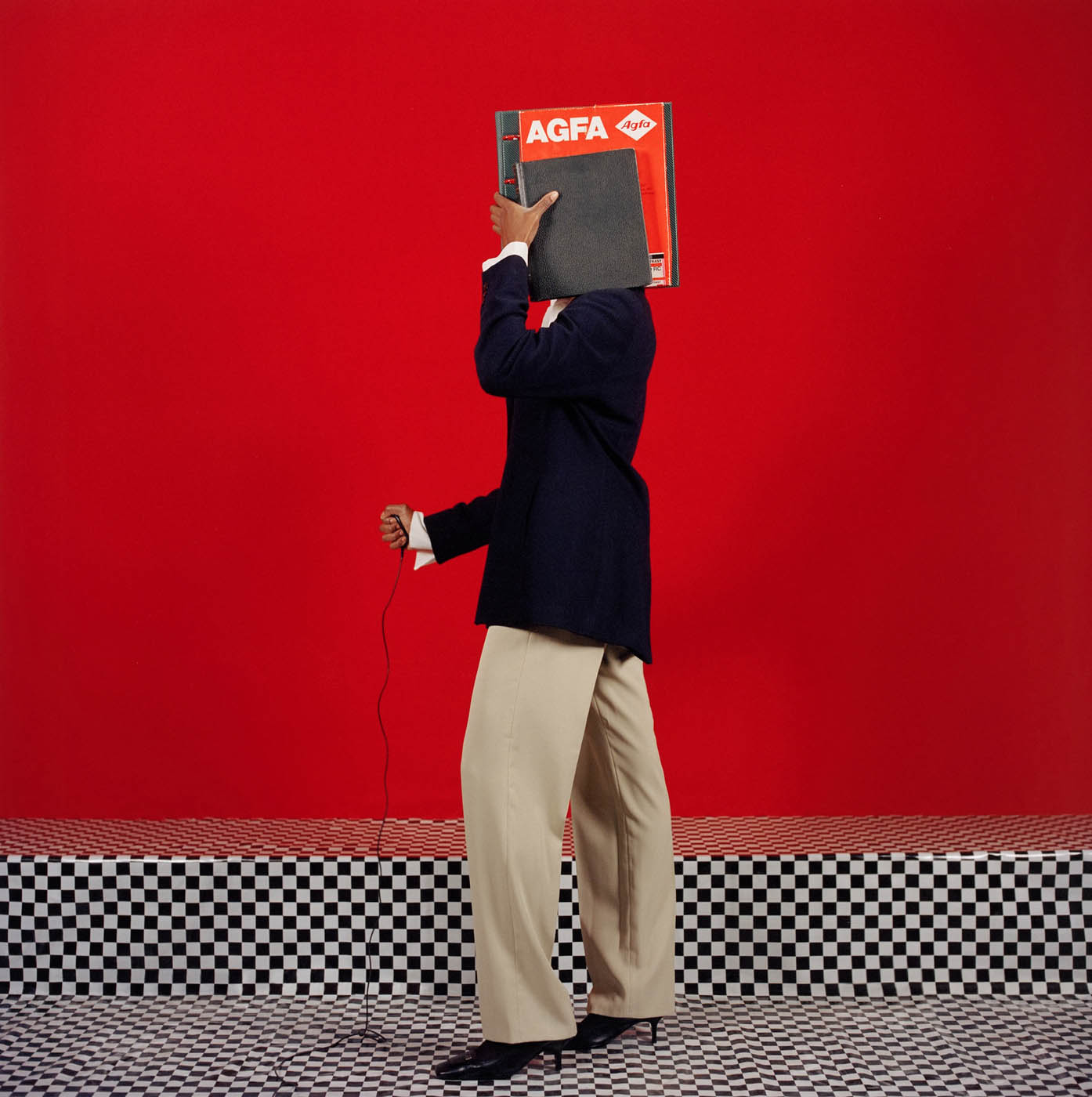
  

Silvia Rosi (Togolese and Italian, born 1992) 'Disintegrata di profilo' (Disintegrated in Profile) 2024


Silvia Rosi (Togolese and Italian, b. 1992)
Disintegrata di profilo (Disintegrated in Profile)
2024
Inkjet print
31 1/2 x 31 1/2″ (80 x 80cm)
Museum of Modern Art, New York
Carl Jacobs Fund


Rosi has said, “I’m not just performing, but reflecting on history.” Through photographic self-portraits, the artist examines personal, familial, and national narratives of migration, memory, and belonging. Deeply informed by the history of West African studio portraiture, Rosi’s images elegantly synthesise the formal strategies of mid-century African photographers, including many of those represented in this exhibition. Rosi often reenacts moments from her family’s past. Disintegrated Waiting, for instance, recalls when her mother first arrived in Italy from Togo. “She once said, ‘I used to be integrated, now I’m disintegrated,'” the artist shared. “To me this phrase is … an expression of the experience of diaspora.”

Gallery label from Ideas of Africa: Portraiture and Political Imagination, 2025
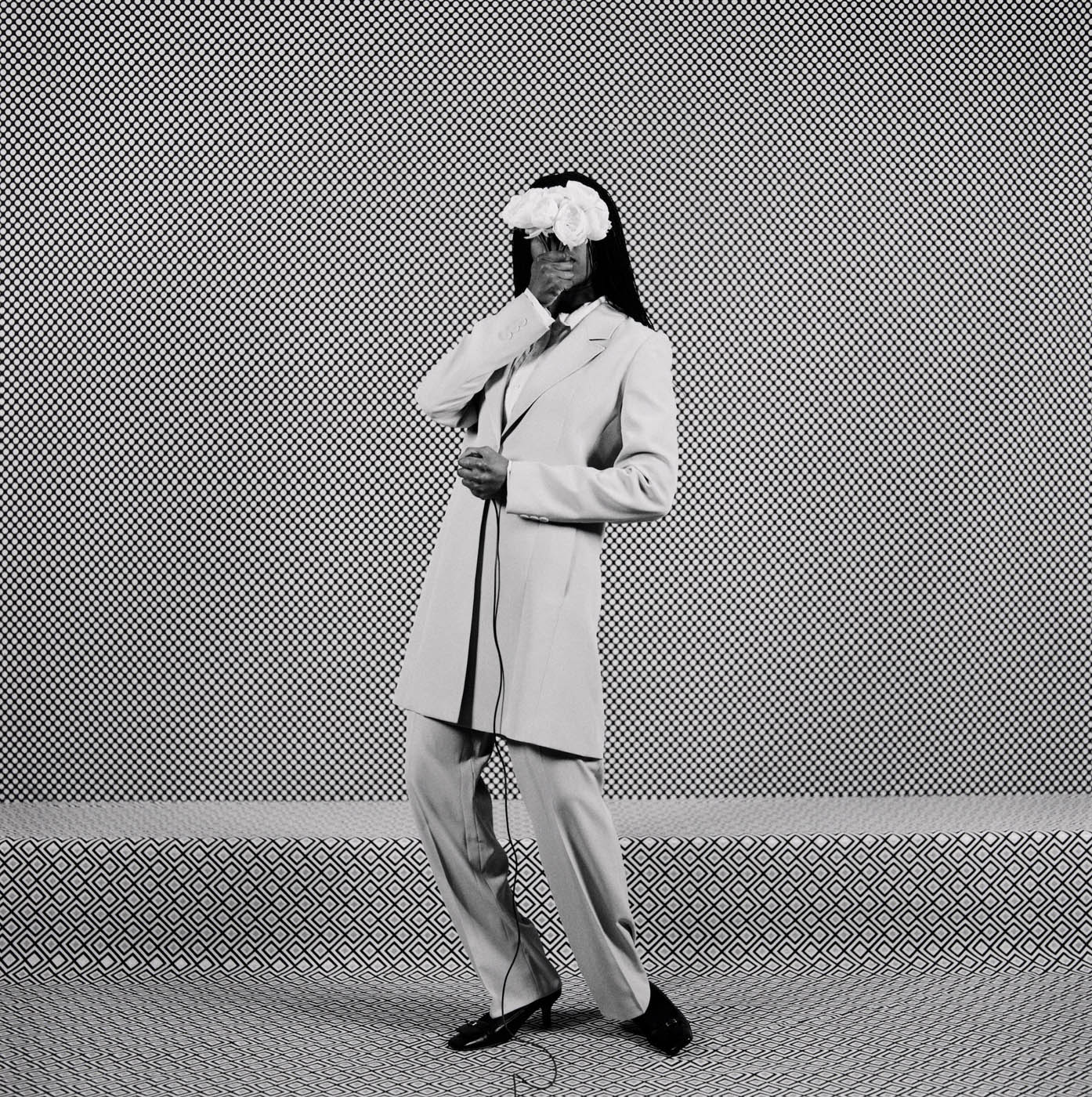
  

Silvia Rosi (Togolese and Italian, born 1992) 'Sposa italiana disintegrata' (Disintegrated Italian Wife) 2024


Silvia Rosi (Togolese and Italian, b. 1992)
Sposa italiana disintegrata (Disintegrated Italian Wife)
2024
Inkjet print
31 1/2 x 31 1/2″ (80 x 80cm)
Museum of Modern Art, New York
Carl Jacobs Fund


Njideka Akunyili Crosby (Nigerian, born 1983) 'And We Begin to Let Go' 2013


Njideka Akunyili Crosby (Nigerian, born 1983)
And We Begin to Let Go
2013
Acrylic, acetone transfers, charcoal, pastel, marble dust, and
collage on paper
Sheet: 84 x 105″ (213.4 x 266.7cm)
Museum of Modern Art, New York
Promised gift of Jerry I. Speyer and Katherine Farley


Nigerian-born, Los Angeles-based artist Njideka Akunyili Crosby moved to the US at the age of 17 (after winning the green card lottery in her home town) to train as a painter at the Pennsylvania Academy of Fine Art and, later, Yale University. Here, as in many of her portraits, Crosby gives an intimate portrayal of her interracial marriage and day-to-day life in America. She combines photo-transfer processes with painting and collaged fabrics, fusing Nigerian and American materials, images, and cultural traditions.

In her practice, Akunyili Crosby meditates on familial life within a transcultural context. Her large-scale compositions of everyday domestic scenes synthesise drawing, painting, printmaking, and photography. And We Begin to Let Go depicts the artist and her husband, who leans over her shoulder. To make it, Akunyili Crosby drew from Nigerian print media publications and her family’s photographic archive. She united these images’ varied photographic textures through the same formal treatment: acetone transfer, a printmaking technique through which a printed image is transferred onto another surface using an acetone solvent. Images of smiling faces, elaborate coifs, and patterned clothing suffuse the picture plane, accruing on the surfaces this marital encounter.

Gallery label from Ideas of Africa: Portraiture and Political Imagination, 2025
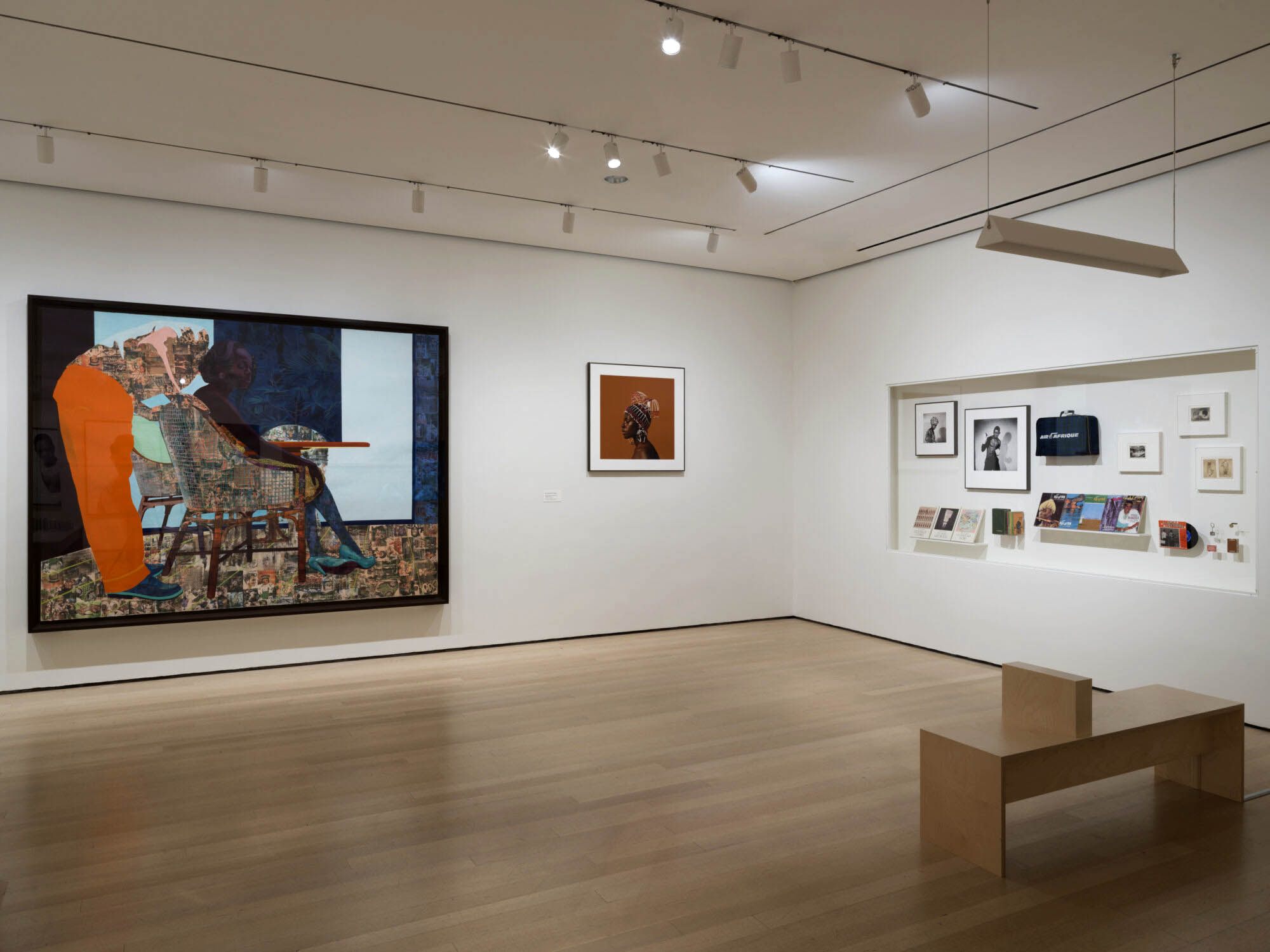
  

Installation view of the exhibition 'Ideas of Africa: Portraiture and Political Imagination' at The Museum of Modern Art (MoMA), New York, December 2025 - July 2026 showing at left, Njideka Akunyili Crosby 'And We Begin to Let Go' (2013); and at centre, Kwame Brathwaite 'Untitled (Sikolo with Carolee Prince Designs)' 1964-1968


Installation view of the exhibition Ideas of Africa: Portraiture and Political Imagination at The Museum of Modern Art (MoMA), New York, December 2025 – July 2026 showing at left, Njideka Akunyili Crosby And We Begin to Let Go (2013, above); and at centre, Kwame Brathwaite Untitled (Sikolo with Carolee Prince Designs) (1964-1968, below)
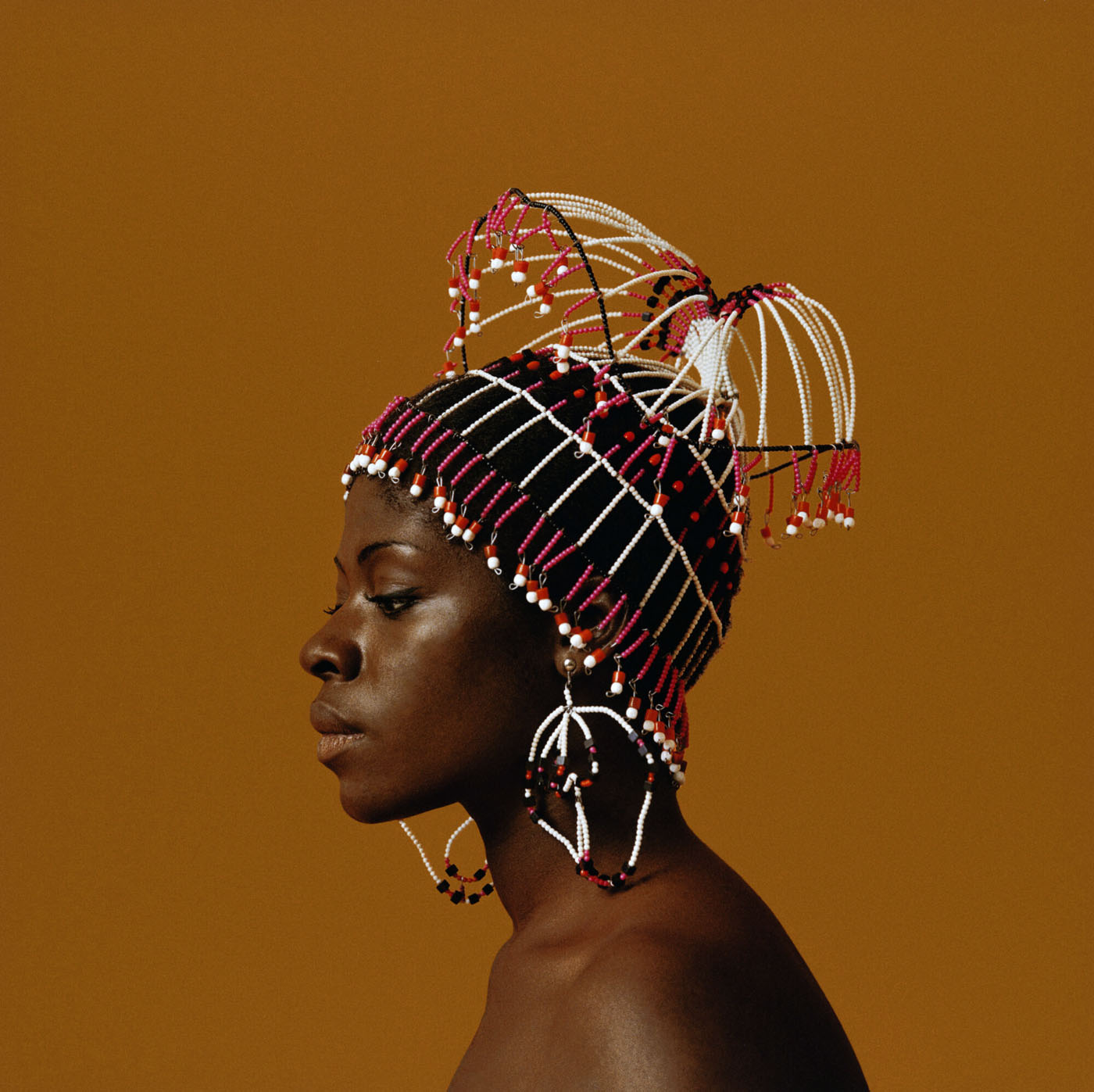
  

Kwame Brathwaite (American, 1938–2023) 'Untitled (Sikolo with Carolee Prince Designs)' 1964-1968


Kwame Brathwaite (American, 1938-2023)
Untitled (Sikolo with Carolee Prince Designs)
1964-1968
Inkjet print, printed 2024
30 x 30″ (76.2 x 76.2cm)
Museum of Modern Art, New York
Committee on Photography Fund


Brathwaite, for whom photography functioned at the nexus of Black artistic, political, and cultural expression, rhythmically documented jazz scenes in Harlem and the Bronx. In 1956 he cofounded the African Jazz-Art Society and Studios (AJASS) in the South Bronx, where he made structured portraits of the Grandassa Models, a group of women who were part of the Black Is Beautiful movement of the 1960s and ’70s. “Black Is Beautiful was my directive … It was a time when people were protesting injustices related to race, class, and human rights around the globe,” Brathwaite said. “I focused on perfecting my craft so that I could use my gift to inspire thought, relay ideas, and tell stories of our struggle, our work, our liberation. … Oppression still exists today, and we must keep fighting, keep on pushing until we are free.”

Gallery label from Ideas of Africa: Portraiture and Political Imagination, 2025
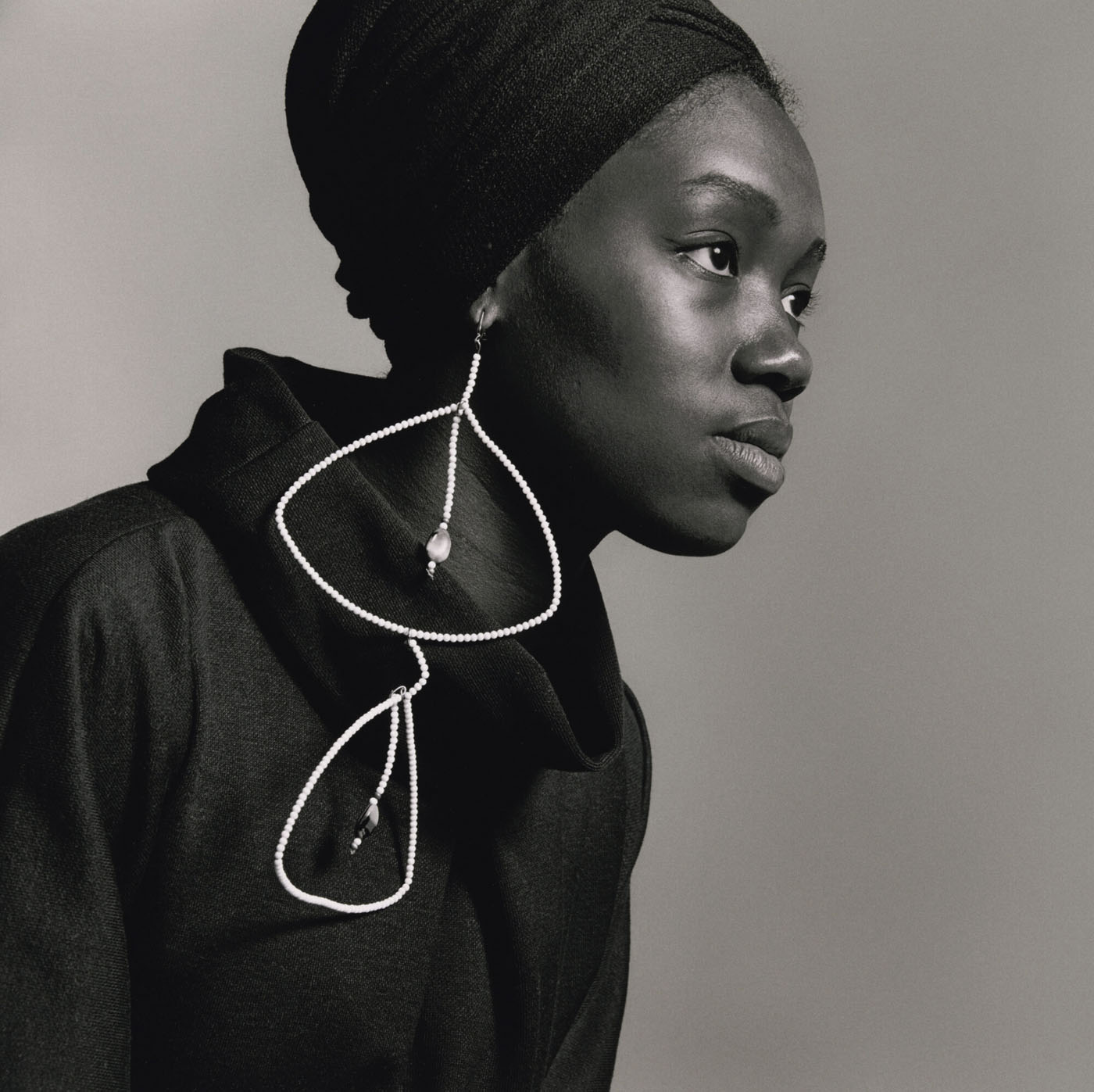
 

Kwame Brathwaite (American, 1938–2023) 'Untitled (Nomsa with Earrings)' 1964-1968


Kwame Brathwaite (American, 1938-2023)
Untitled (Nomsa with Earrings)
1964-1968
Inkjet print, printed 2024
15 x 15″ (38.1 x 38.1cm)
Museum of Modern Art, New York
Committee on Photography Fund
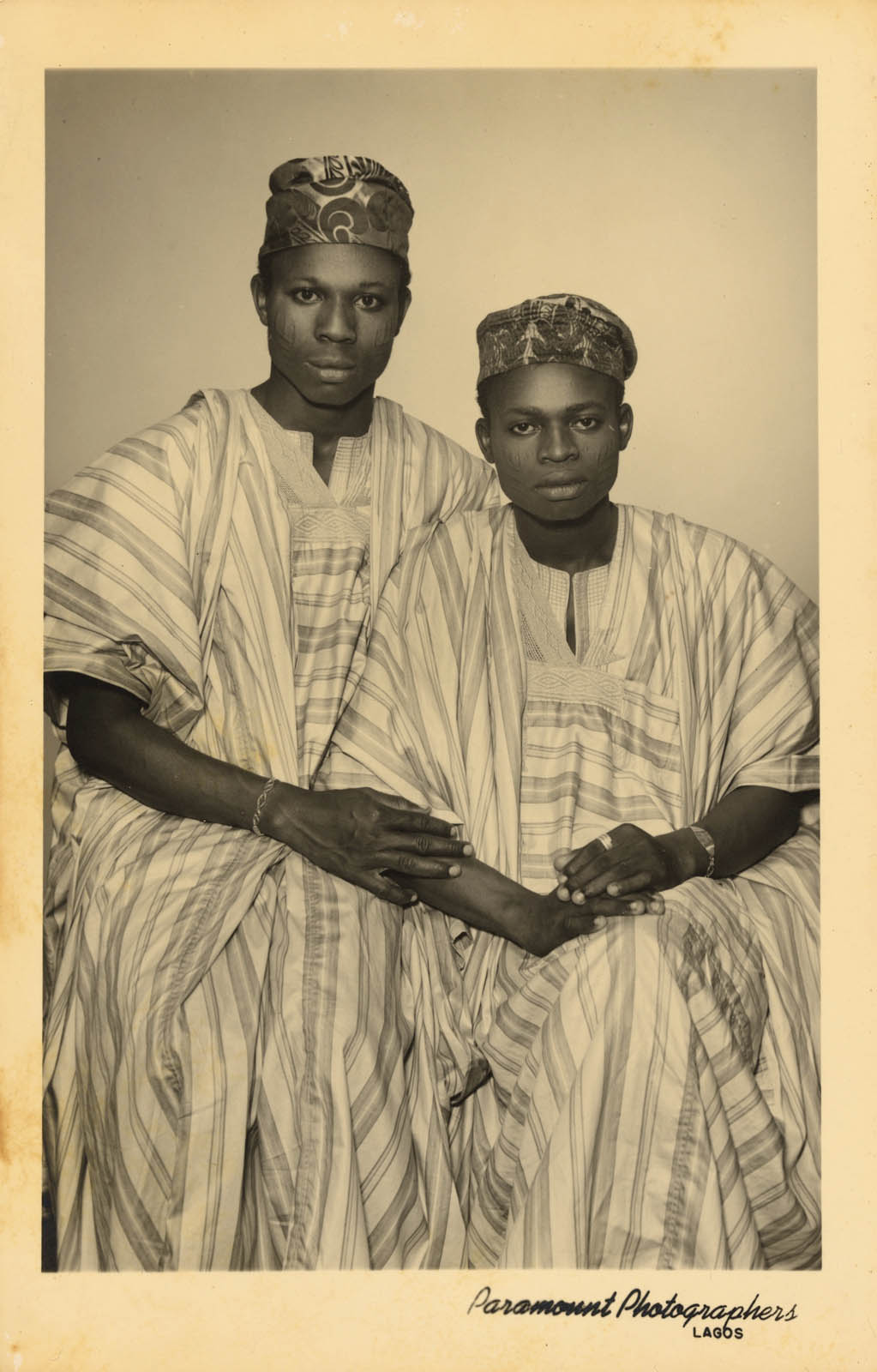
 

Felix Akinniran Olunloyo (Nigerian) 'Untitled' c. 1950-1970


Felix Akinniran Olunloyo (Nigerian)
Untitled
c. 1950-1970
Gelatin silver print
5 1/2 x 3 9/16″ (13.9 x 9cm)
Museum of Modern Art, New York
The Jean Pigozzi African Art Collection. Gift of Jean Pigozzi
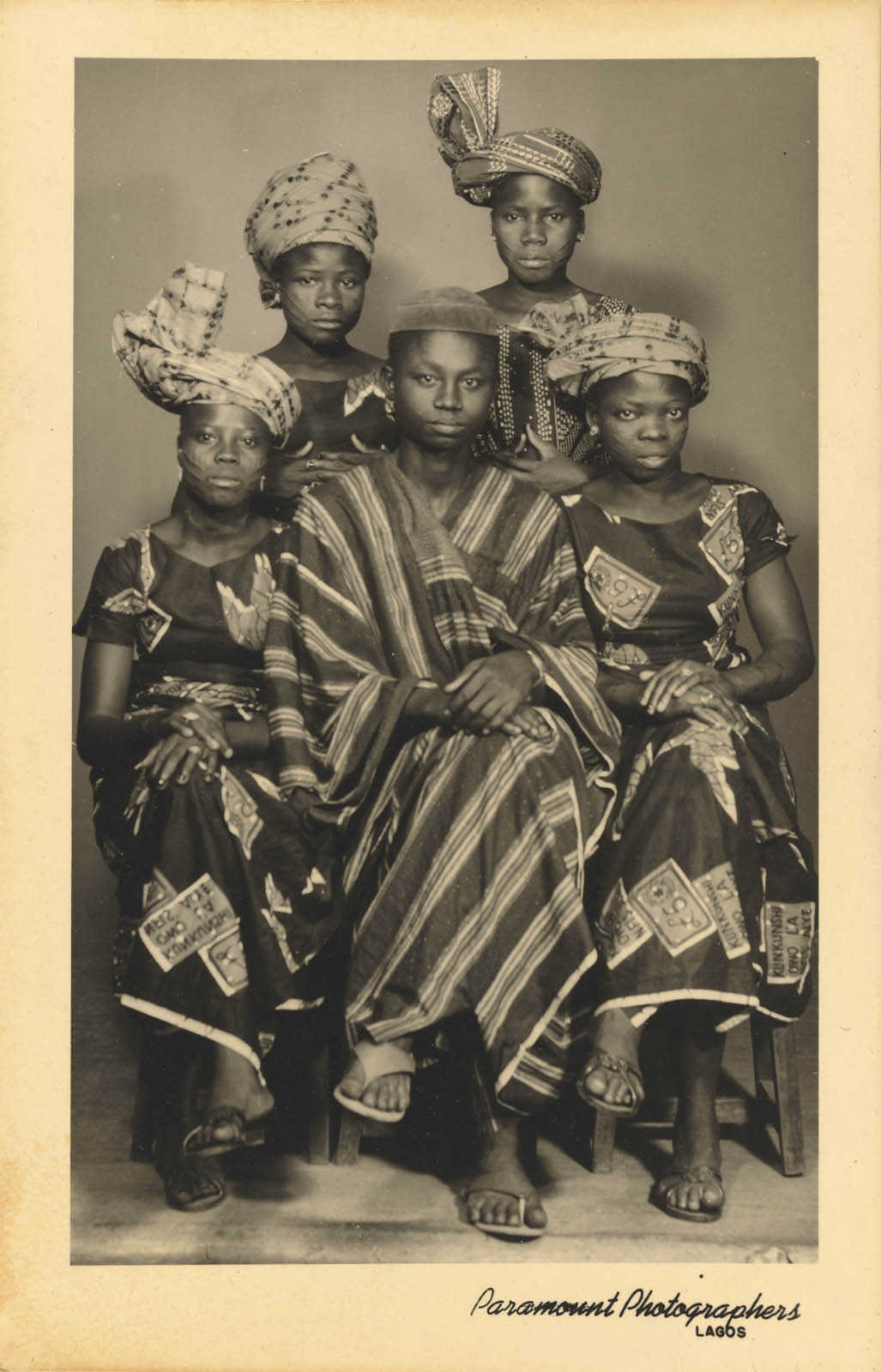
 

Felix Akinniran Olunloyo (Nigerian) 'Untitled' c. 1950-1970


Felix Akinniran Olunloyo (Nigerian)
Untitled
c. 1950-1970
Gelatin silver print
5 1/2 x 3 9/16″ (13.9 x 9cm)
Museum of Modern Art, New York
The Jean Pigozzi African Art Collection. Gift of Jean Pigozzi
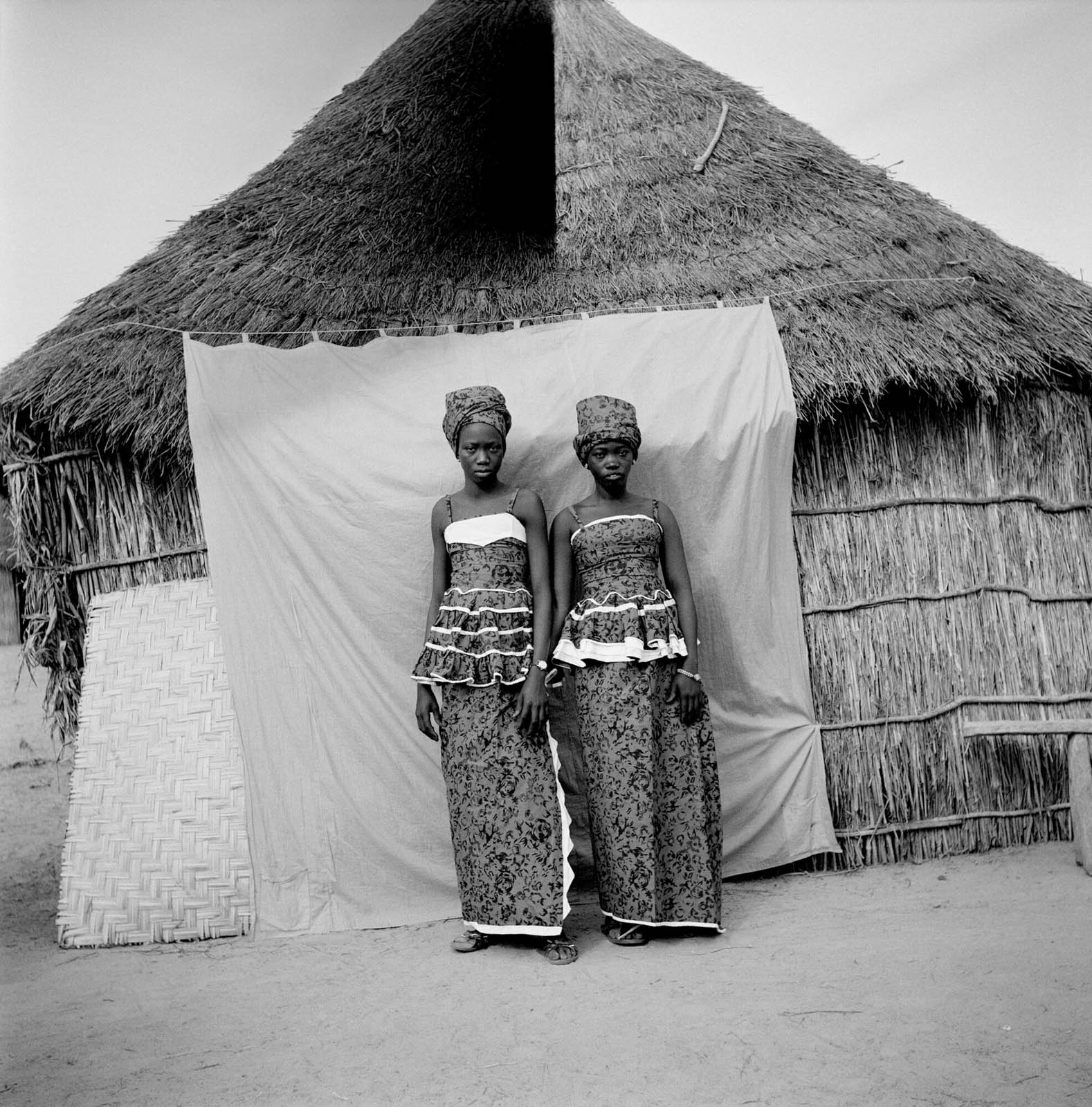
 

Oumar Ka (Senegalese, 1930–2020) 'Untitled (Two Women with Thatched Roof House)' 1959-1968


Oumar Ka (Senegalese, 1930-2020)
Untitled (Two Women with Thatched Roof House)
1959-1968
Gelatin silver print, printed 2024
17 × 17″ (43.2 × 43.2 cm)
Museum of Modern Art, New York
Gift of Bernard Lumpkin and Carmine Boccuzzi in honor of Darren Walker


Historian, Giulia Paoletti:  Getting a portrait done was a serious business, because this single portrait would circulate and stand for this person.

My name is Giulia Paoletti, and I am a researcher on photography and modern art in Africa.

In 1959, Oumar Ka  met a photographer who gave him a camera, so he learned by himself.  Photography in Senegal was extremely popular. Dozens and dozens of studios existed. But he started going from village to village taking portraits, and then he would go home, develop the negatives, and return the following week with the prints. So, you meet  his sitters by their own home, in towns, sometimes in this open landscape. And that is a major distinction from other photographers who worked in a studio.

In this photograph, we see two young women in matching outfits, posing for the camera against a white backdrop attached to this thatched-roof house.  The landscape, the architecture, the sky – this is part of who they are and how they want to be perceived.  They’re young, they’re serious, they’re confident.

As Senegal is shifting from a colonised place to an independent country, these are sitters that are making visible their experience of modernisation, which looked very different from the experience if someone lived in the capital city. There is often this tendency to flatten what is African modernity, and instead it’s important to show the variety of experiences and subjects at the time.

Text from the MoMA website
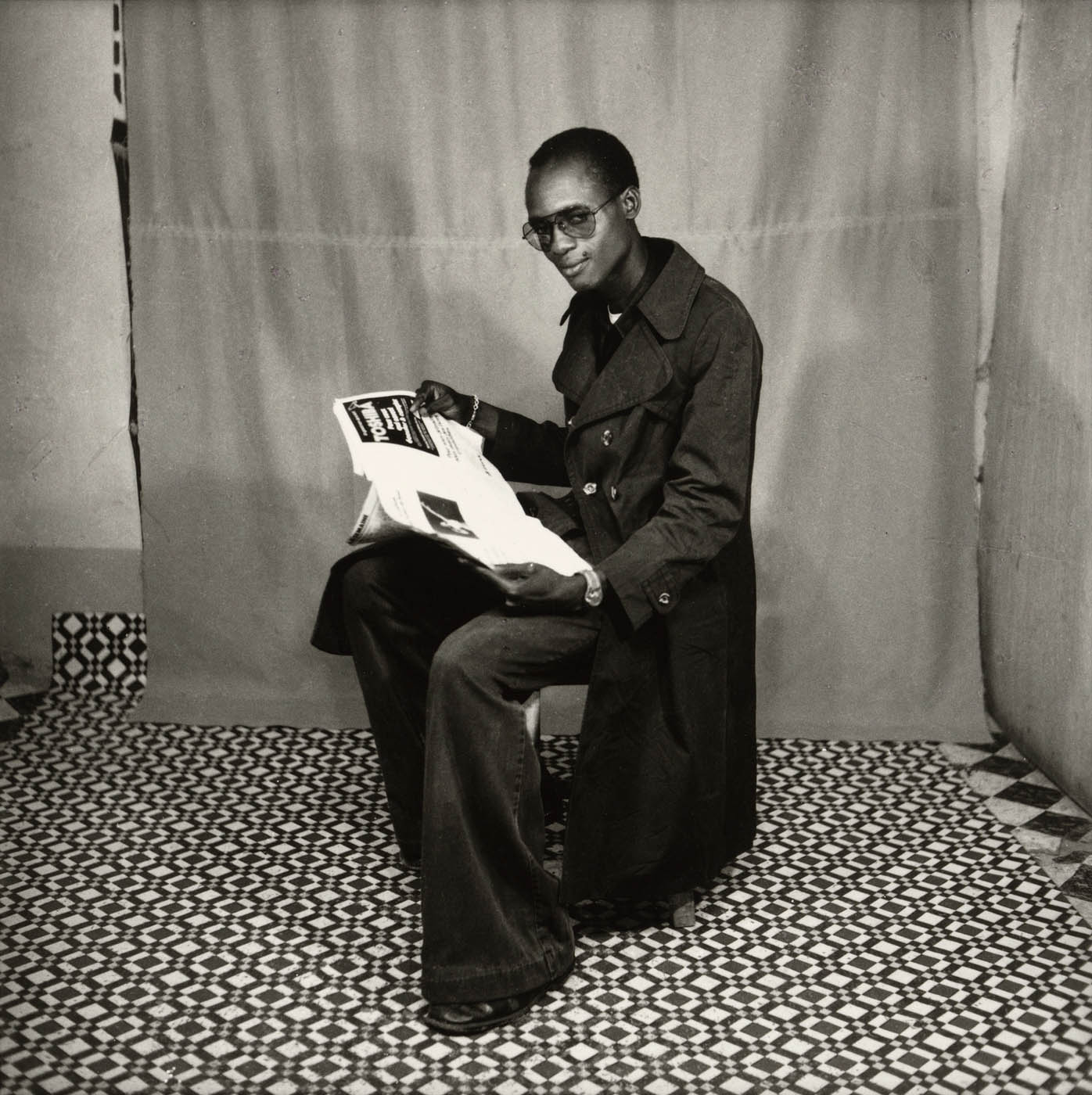
 

Sanlé Sory (Burkinabé, born 1943) 'L'Intellectuel' (The Intellectual) 1970-1985


Sanlé Sory (Burkinabé, b. 1943)
L’Intellectuel (The Intellectual)
1970-85
Gelatin silver print
8 1/8 x 8 1/8″ (20.6 x 20.6cm)
Museum of Modern Art, New York
Committee on Photography Fund


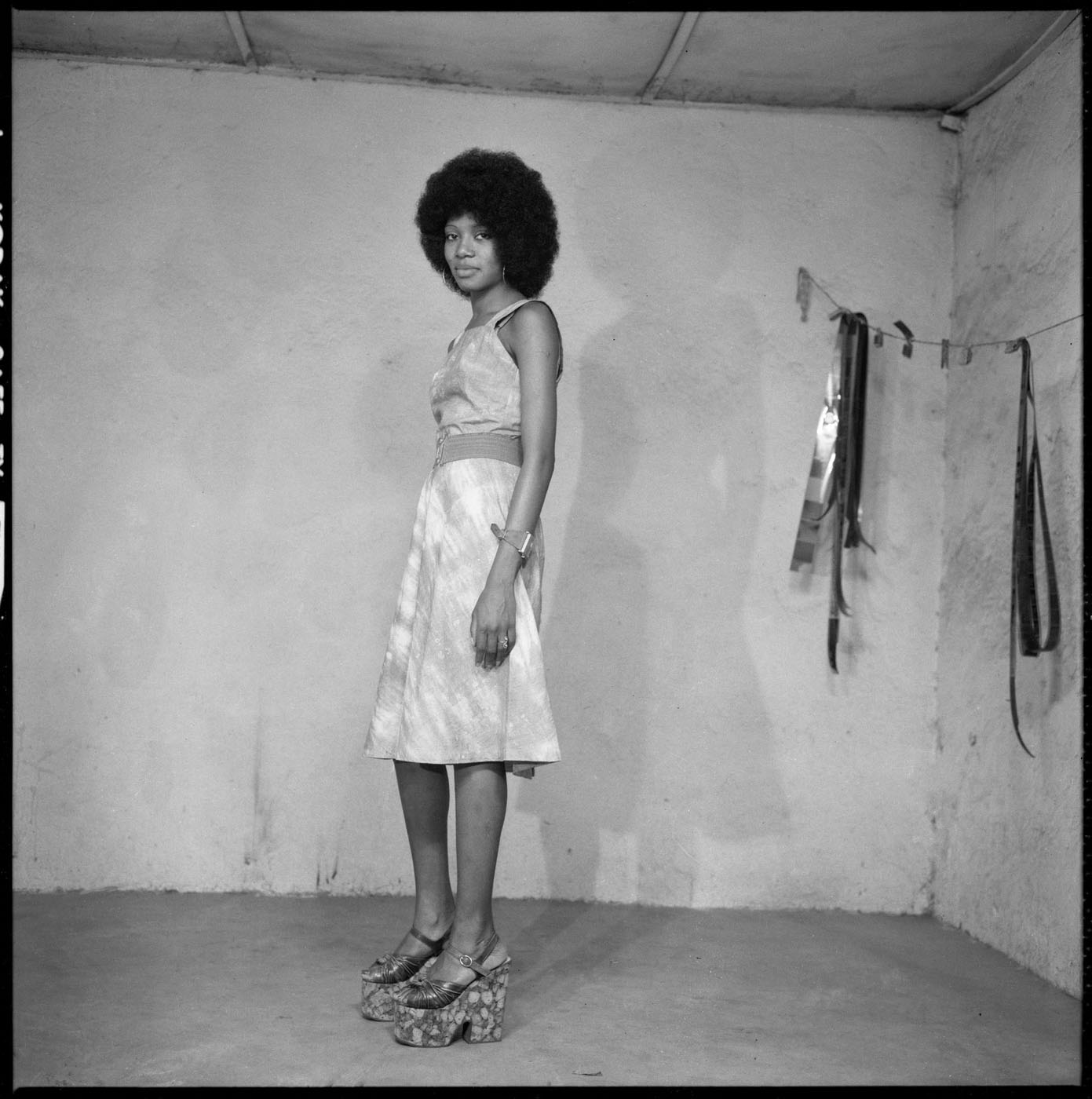
“Everyone chooses what they want in photography,” Sory once said. First opening his studio, Volta Photo, in Bobo-Dioulasso, Upper Volta (present-day Burkina Faso), in 1960, Sory organised bals poussières (or “dust balls,” named after the dirt clouds that dancers kicked up) in the fields of the nearby Kou Valley. The sound of his Multiblitz flash accompanied the percussion at parties, setting an elusive tone for his reportage de nuit (nighttime journalism). At Volta Photo, Sory’s portraits made possible a particular process of being and becoming for his sitters. He reflected the ideas that they wanted to communicate – whether to friends, lovers, strangers, or themselves.

Gallery label from Ideas of Africa: Portraiture and Political Imagination, 2025
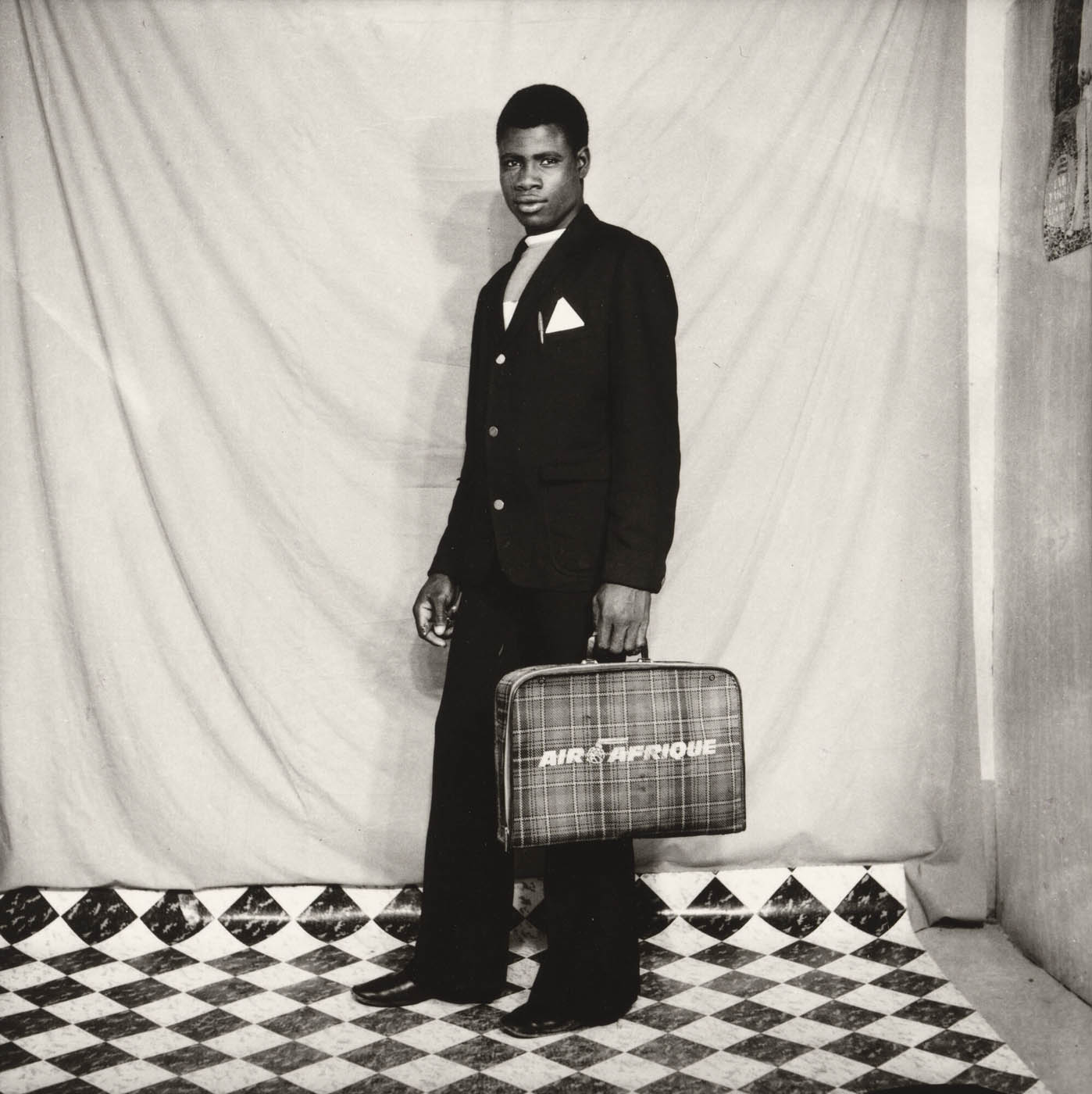
 

Sanlé Sory (Burkinabé, born 1943) 'Le Voyageur' (The Traveler) 1970-1985


Sanlé Sory (Burkinabé, b. 1943)
Le Voyageur (The Traveller)
1970-1985
Gelatin silver print
8 1/8 x 8 1/8″ (20.6 x 20.6cm)
Museum of Modern Art, New York
Committee on Photography Fund


Historian, Antawan I. Byrd:  One of the fundamental principles of studio portraiture, especially as it developed in West Africa, is that the studio becomes a kind of imaginative enterprise. You can go and be who you are, or you can go and be who you want to be.

Hello, I’m Antawan I. Byrd. I am a curator, and my research focuses on photography in West Africa during the mid-20th century.

Sanlé Sory opened up his own photography studio in Bobo-Dioulasso, one of the major cities in present-day Burkina Faso. This is a time right after independence, in 1960, and so there is this sense of optimism and hope about the sovereign nation.

Sory once remarked, “Fun is central to my work.” I think he’s speaking about the dynamics of collaboration. Oftentimes, clients would line up outside of the studio, and Sory would have a sort of menu that they can choose from. They could point and say, “Sory, I’d like this portrait here, and I’d like to pose with that prop there.”

Here we’re looking at six portraits, and they’re assuming different personalities. There’s one figure who appears as the intellectual, reading a newspaper. Another figure standing powerfully with his hands in the air as if he’s a boxer. There’s another wielding a Air Afrique briefcase, suggesting that he is a traveller.

 When we think about the studio as a kind of imaginative space, it’s possible that the figure with the briefcase has just come back from a trip. But it’s entirely possible that he’s never left  Bobo-Dioulasso at all, and holding that briefcase is a way to signal his ambition to travel.

Text from the MoMA website
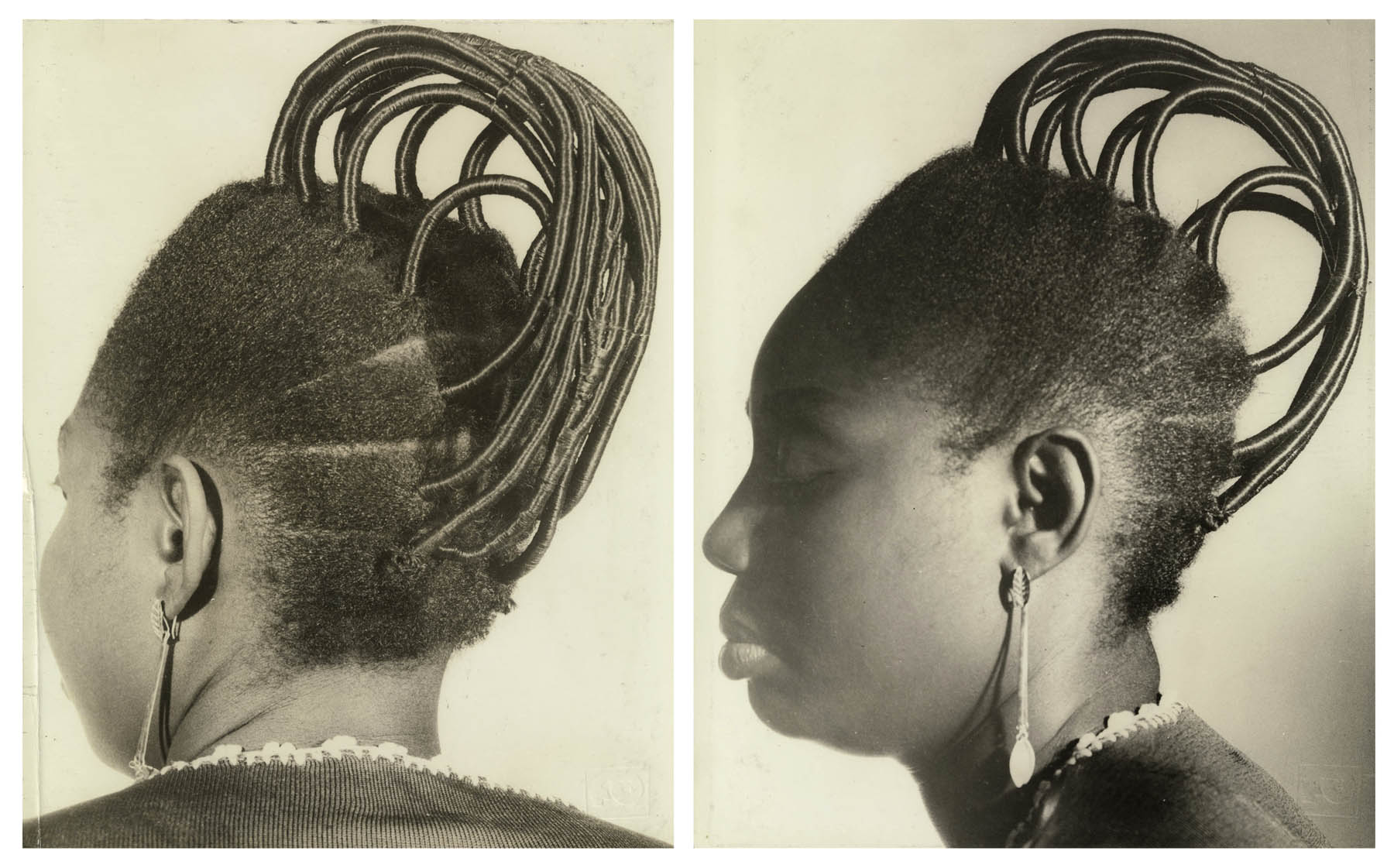
 

J.D. 'Okhai Ojeikere (Nigerian, 1930-2014) 'Brush Eko Bridge' 1973


J.D. ‘Okhai Ojeikere (Nigerian, 1930-2014)
Brush Eko Bridge
1973
Two gelatin silver prints
Each 11 x 8″ (27.9 x 20.3cm)
Museum of Modern Art, New York
The Family of Man Fund


In 1968 Ojeikere embarked on a monumental project to document the myriad hairstyles worn by women across a newly independent Nigeria. Over the next seven years, he amassed more than one thousand photographs. Together, these rigorously composed images form a portrait of a nation undergoing social and physical transformation – with feminine beauty standards providing the ultimate symbol. In Brush Eko Bridge, clean lines appear across a woman’s carefully parted scalp, her hair threaded to sculptural effect. In profile her hairdo evokes the highways and architectural developments that were then populating the Lagos skyline.

Gallery label from Ideas of Africa: Portraiture and Political Imagination, 2025


Historian, Antawan I. Byrd:   The hairstyles project is often described as Ojeikere’s most ambitious body of work, and it’s a body of work that he pursued over nearly half a century.

My name’s Antawan Byrd. I’m an art historian and curator based in Chicago.

J. D. ‘Okhai Ojeikere evolved as a photographer alongside major political shifts in Nigerian history. 1960 is when the country attains independence from British rule.  Ojeikere began to attend many of the festivals that were celebrating traditional culture. Hair design was coming back into fashion after a long period of being regarded as retrograde by the colonial government.  It was at one of those festivals that he began to make his earliest images of Nigerian hairstyles.

 He was so fascinated by the nuances of the designs as you encounter them from different angles. Some of the hair designs are straightforward cornrow styles, whereas others are realised through the use of thread that’s been wrapped around strands of hair.

Many of the hair designs carry references to contemporary bridges and buildings in terms of their architectural design. That’s in part because after independence, the nation is being built, the skyline is being built, the hairstyles are being built. And so I think for Ojeikere, he was conscious of the multiplicity of changes that were happening. It’s simultaneously about hair and the tradition of hair, and yet it’s also about architecture and commerce and trade.

Text from the MoMA website


James Barnor (Ghanian, b. 1929) 'Ever Young studio. Accra' 1954-1959


James Barnor (Ghanaian, born 1929)
Ever Young Studio, Accra
c. 1954-1959
Gelatin silver print, printed 2018-20
9 1/2 x 9 1/2″ (24.1 x 24.1cm)
Museum of Modern Art, New York
Acquired through the generosity of Heidi and Richard Rieger


Artist, James Barnor:  Everything that happened in Accra passed through my street, and I call myself Lucky Jim. Anything that was happening, I was there.

I’m James Barnor. I was born on the 6th of June 1929. I had witnessed photography from a very small age because my mother’s brother was a professional photographer. My cousin was practicing in Accra, in Ghana. Because it was in the family, I must have thought, “Ah, this is something I could do in the future.”

Portraiture was number one. People are more important than places. I love people. ’53, I got a studio and I called it Ever Young. I thought about making people young, or even [laughs] better than they were before.

My sister was a nurse, and so I knew some nurses, and Evelyn was at the nursing training college. This is a portrait that I took of her. I had so many different backgrounds. And this was actually drawn on the wall. This is a sky. You can see the clouds. When I look at the different tones, from the white highlight to the black of the hair, it’s so very nice. This is a picture that I like very much.

I’m lucky to be alive and to be telling the story about my work. The inspiration that people get from my work will carry on and inspire others to develop their own way. The future is going to be grander because of photography.

Text from the MoMA website
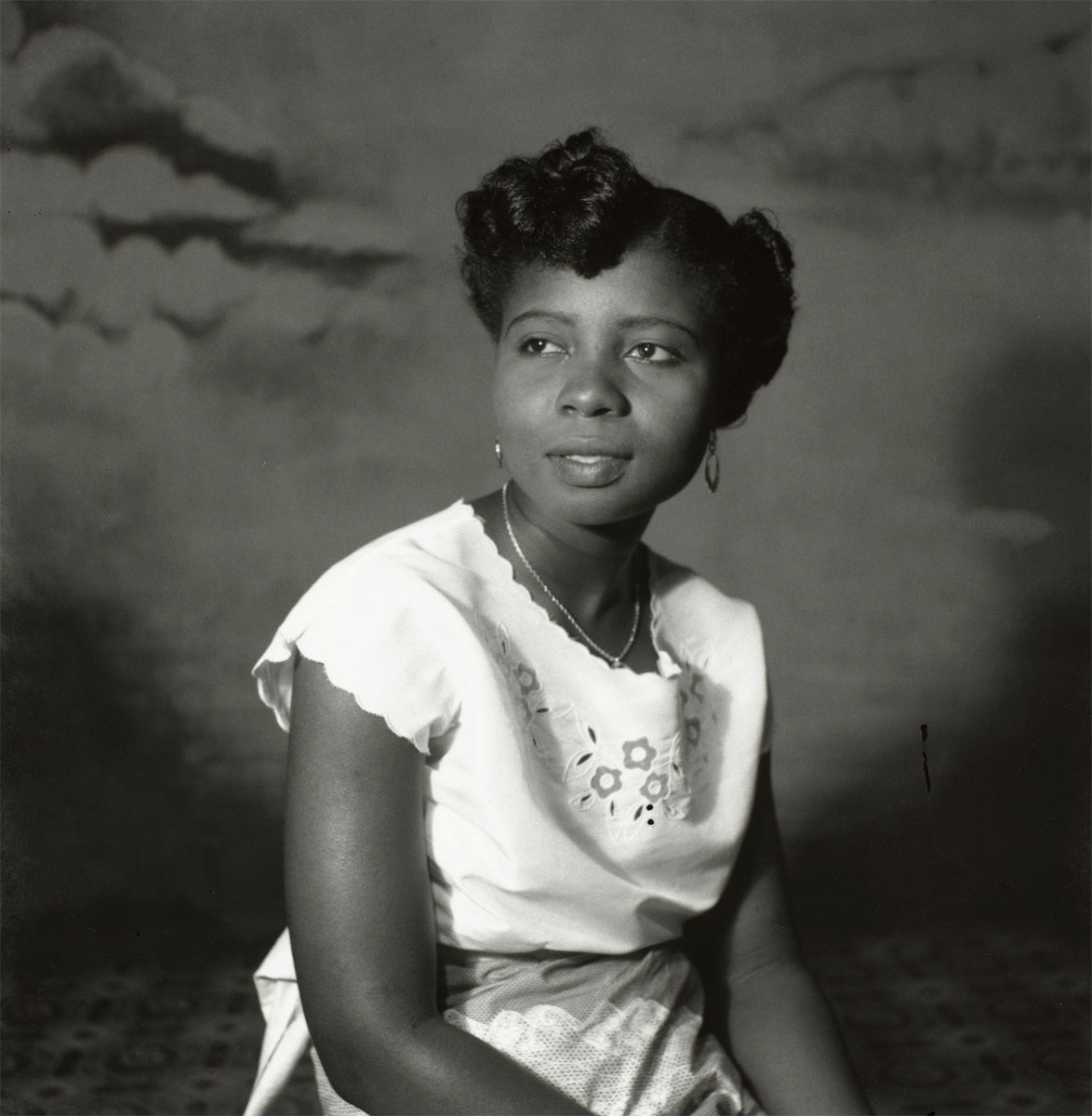
 

James Barnor (Ghanaian, born 1929) 'Portrait of Evelyn Abbew, Ever Young Studio, Accra' c. 1954-1959


James Barnor (Ghanaian, b. 1929)
Portrait of Evelyn Abbew, Ever Young Studio, Accra
c. 1954-1959
Gelatin silver print, printed 2018-2020
9 1/2 x 9 1/2″ (24.1 x 24.1cm)
Museum of Modern Art, New York
Acquired through the generosity of Ruth Nordenbrook
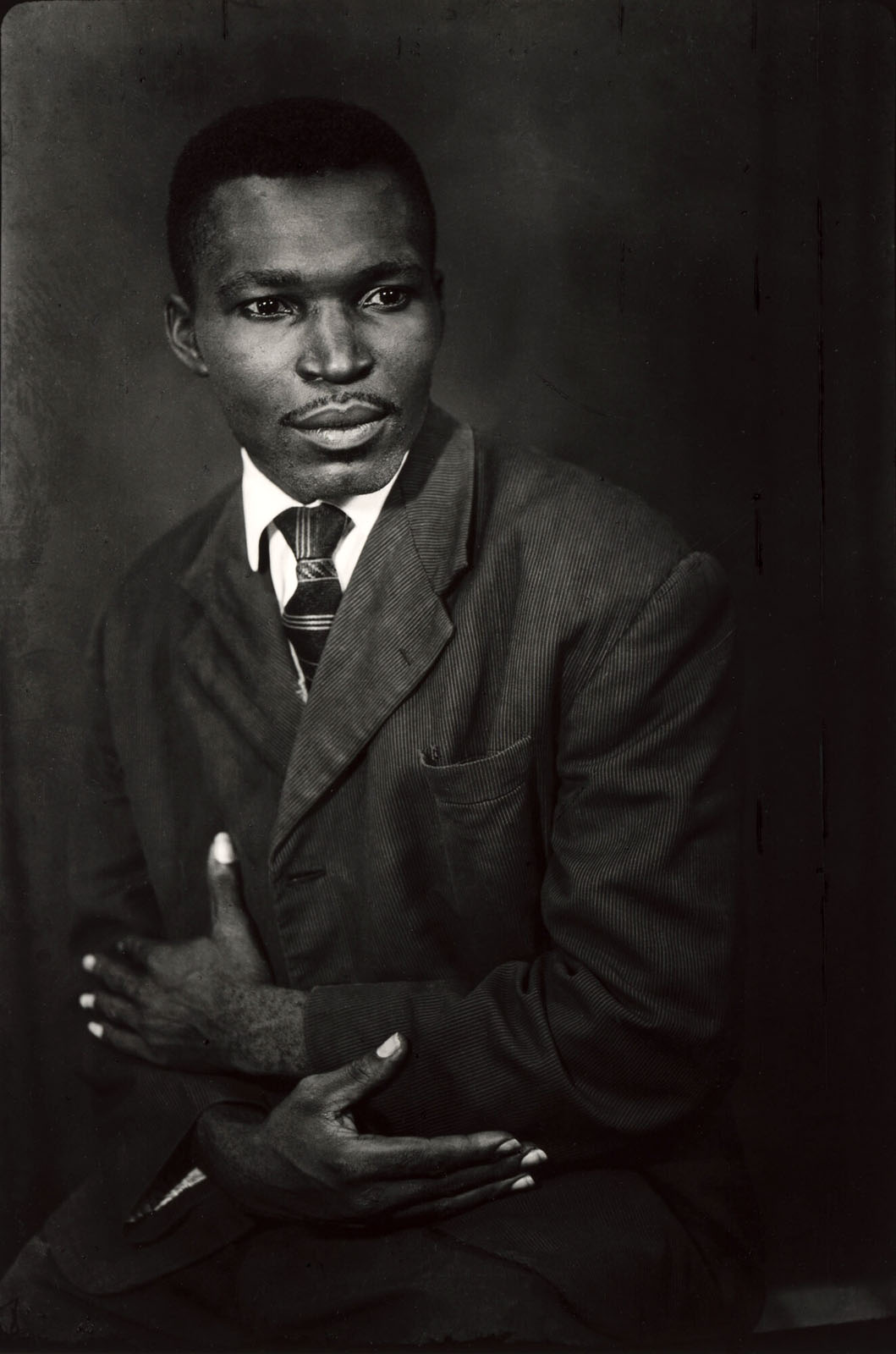
 

Jean Depara (Congolese, born Angola, 1928–1997) 'Un Jazzeur (Jazzman)' 1960


Jean Depara (Congolese born Angola, 1928-1997)
Un Jazzeur (Jazzman)
1960
Gelatin silver print, printed later
23 x 19″ (58.4 x 48.3cm)
Museum of Modern Art, New York
The Jean Pigozzi African Art Collection. Gift of Jean Pigozzi


Historian, Sandrine Colard:  Depara’s images, when you look at them, you see mostly people partying at nighttime or in his studio. So you don’t directly see people articulating a political discourse, but their bodies are.

My name is Sandrine Colard, and I’m a historian of African art and photography.

Jean Depara was living in Léopoldville, which will become Kinshasa. It was the capital of the Belgian Congo, seen as a very modern city for Africa at that time.

This is a portrait of a Black man in a suit and tie. The way the arms of this man are folded upon themselves – he’s touching himself in a delicate way.   Under a colonial system,  Black men are seen as a workforce. Your body is to be put into service of colonial power,  and so the very fact of dressing up,  this delicate relationship to his own body – for pleasure, enjoyment, beauty – is just something that’s radically opposing the construction of Black masculinity in the colonial Congo.   

The fact that it’s also entitled Jazzeur makes a connection with music. Jazz is a diasporic language throughout the world, and a musician is definitely not someone who is enlisted into the colonial economy. All of that together, I would say, is really a sort of different portrait being constructed for Congolese masculinity at that time.

Text from the MoMA website
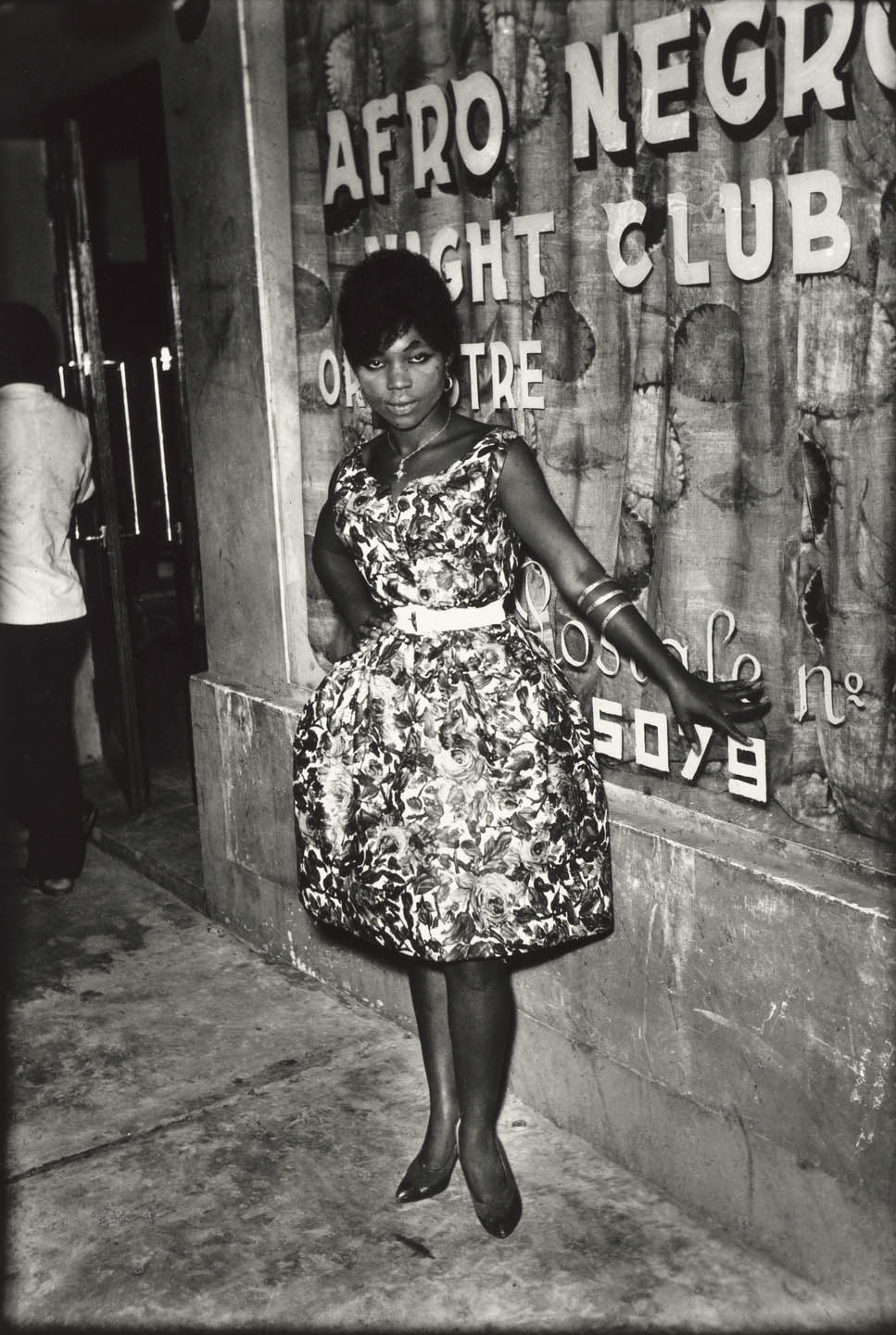
 

Jean Depara (Congolese, born Angola, 1928-1997) 'Una Moziki' c. 1960


Jean Depara (Congolese, born Angola, 1928-1997)
Una Moziki
c. 1960
Gelatin silver print, printed later
23 x 19″ (58.4 x 48.3cm)
Museum of Modern Art, New York
The Jean Pigozzi African Art Collection. Gift of Jean Pigozzi


Jean Depara (Congolese, born Angola, 1928–1997) 'Le Progrès' (The Progress) 1975


Jean Depara (Congolese, born Angola, 1928-1997)
Le Progrès (The Progress)
1975
Gelatin silver print, printed later
15 3/4 x 11 13/16″ (40 x 30cm)
Museum of Modern Art, New York
The Jean Pigozzi African Art Collection. Gift of Jean Pigozzi
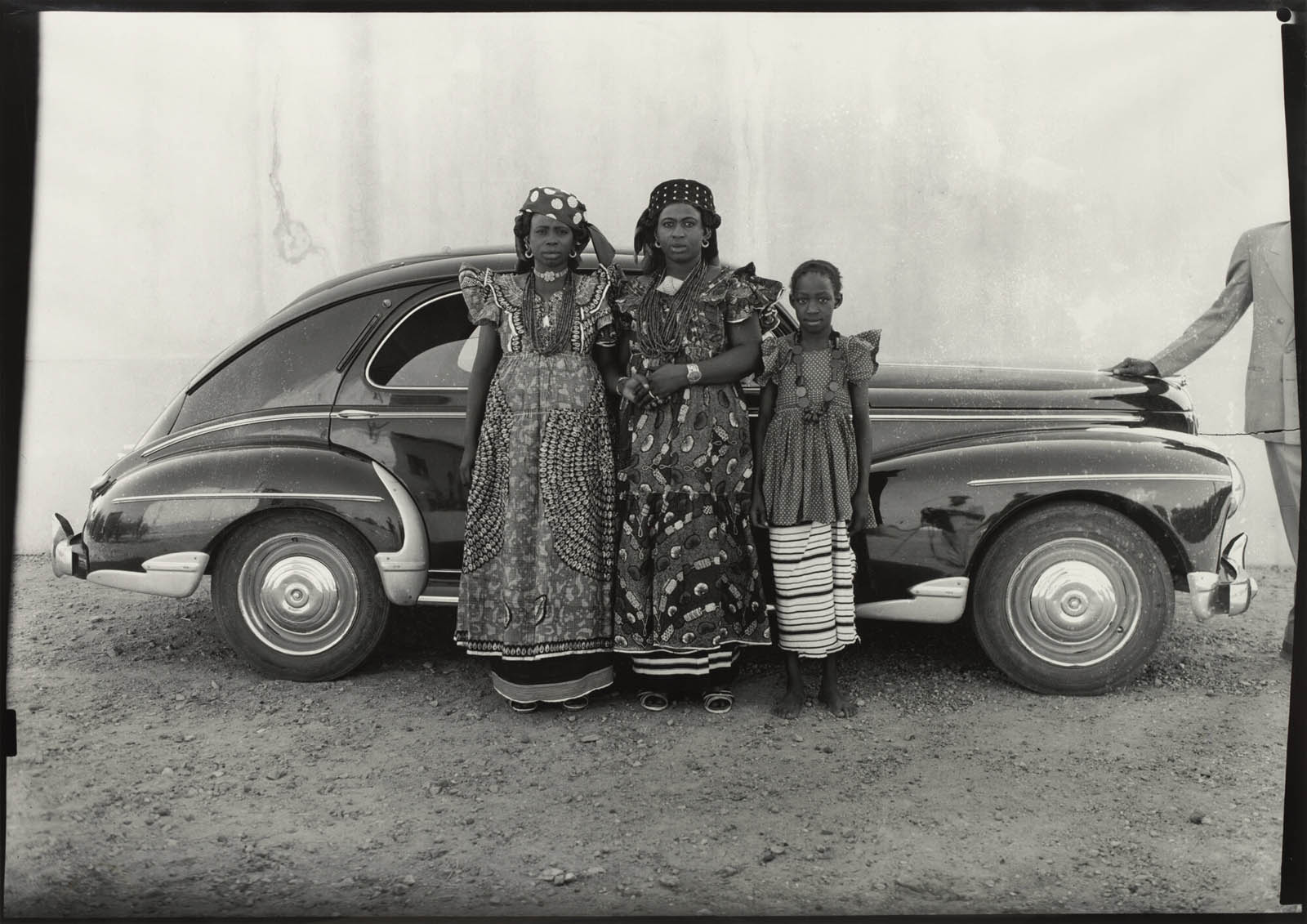
 

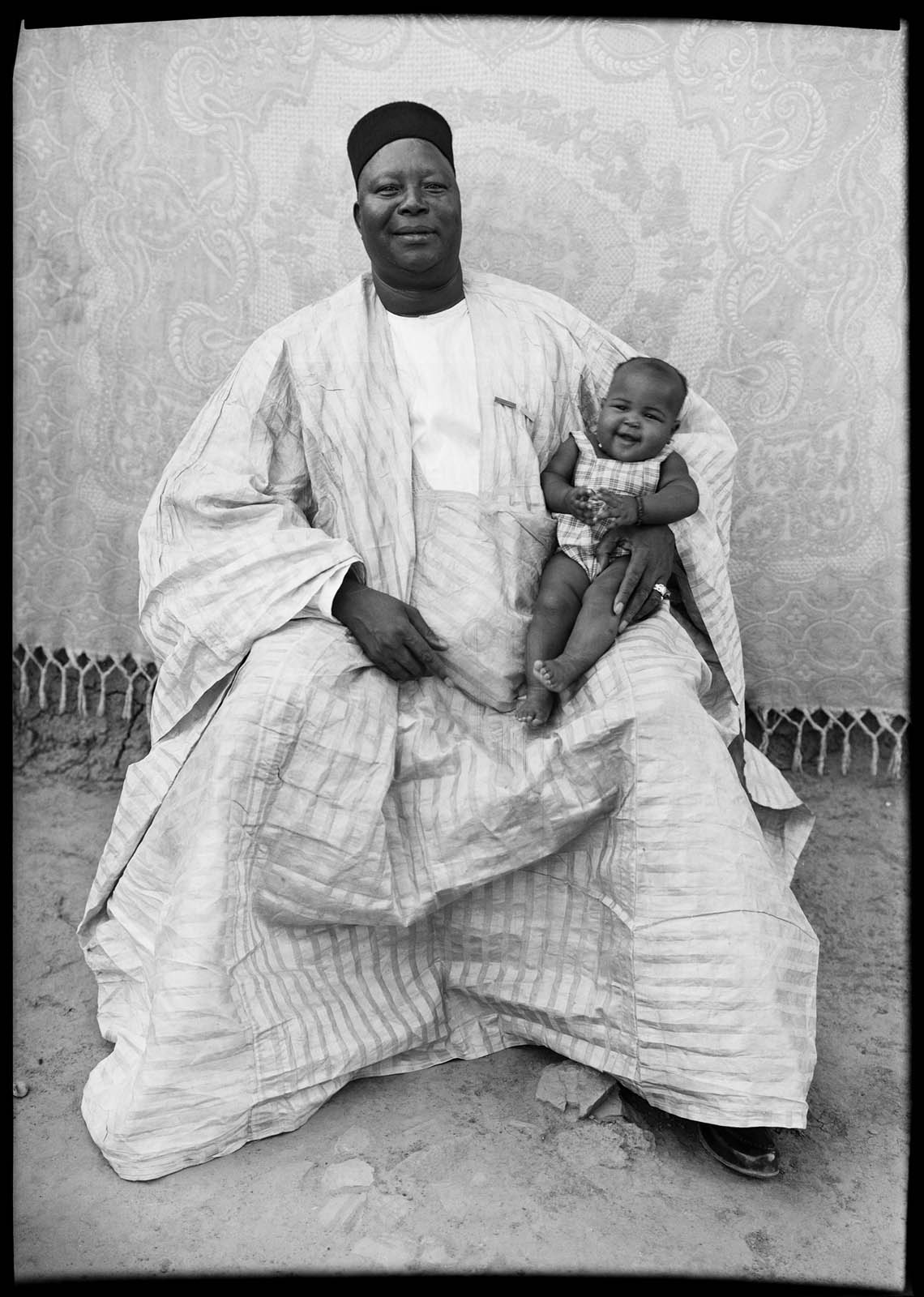
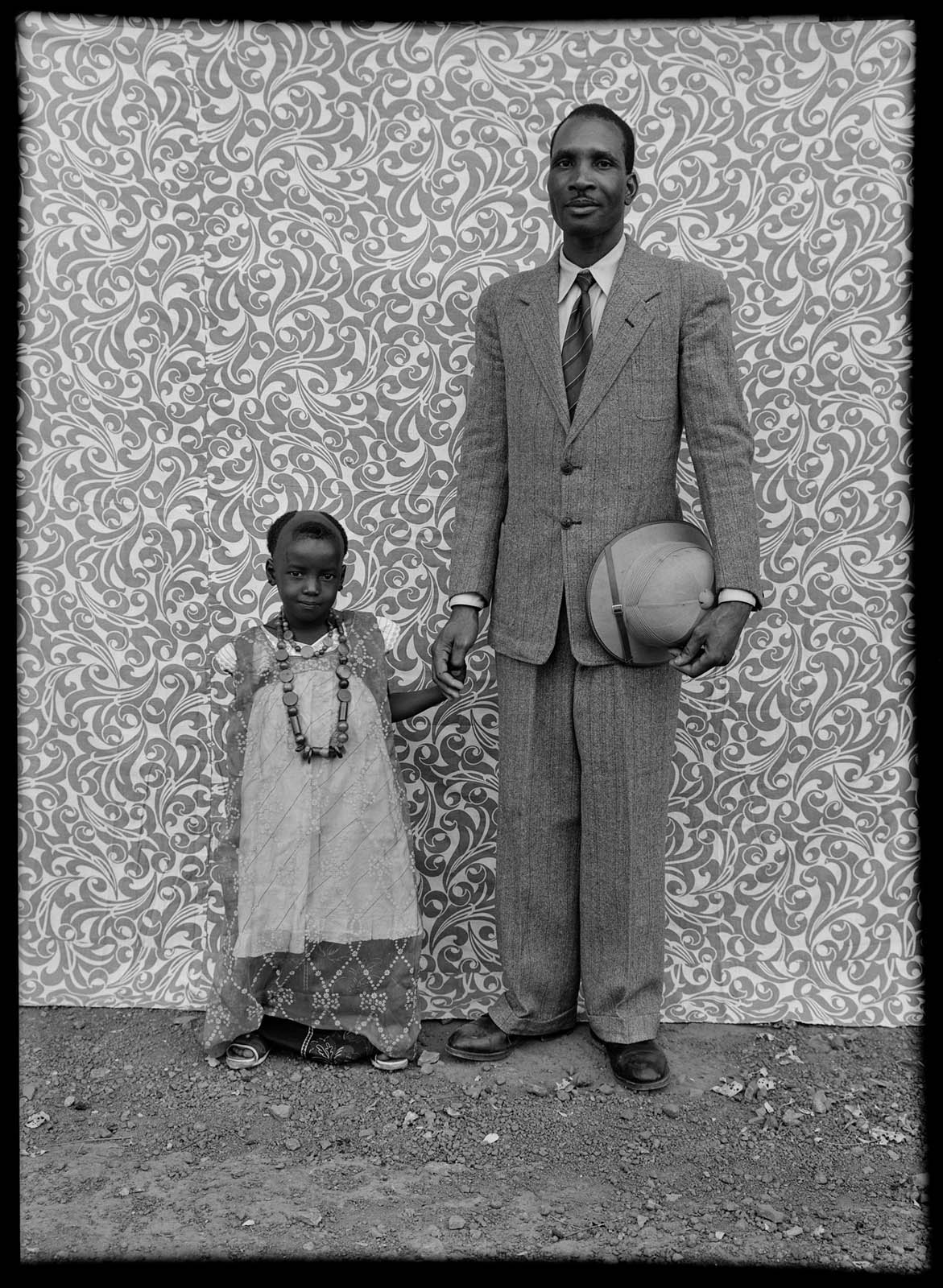
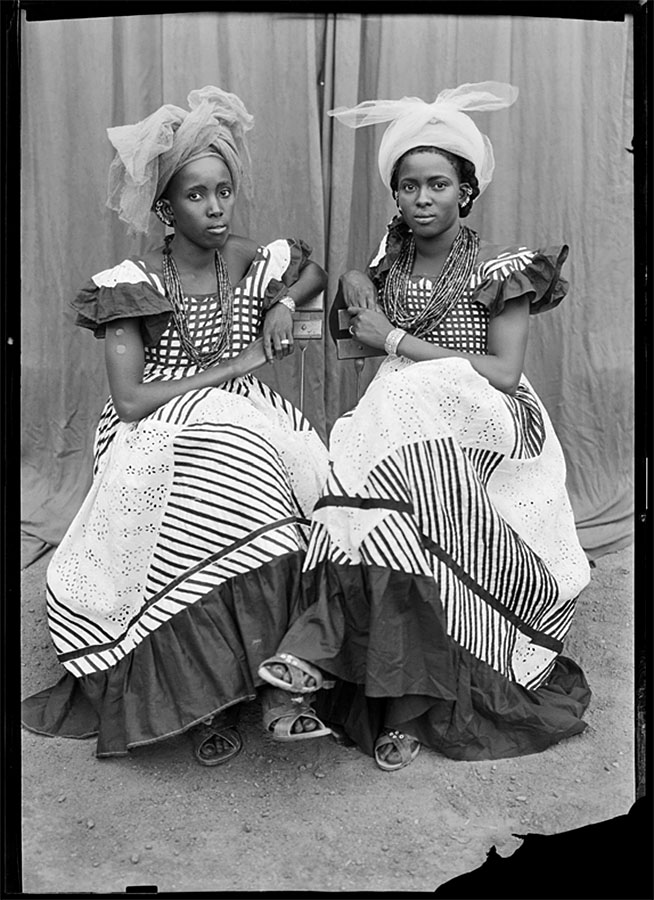
Seydou Keïta (Malian, 1923–2001) 'Untitled' 1954


Seydou Keïta (Malian, 1923-2001)
Untitled
1954
Gelatin silver print, printed later
46 15/16 x 65 7/8″ (119.2 x 167.3cm)
Museum of Modern Art, New York
The Jean Pigozzi African Art Collection. Gift of Jean Pigozzi


Introduction

Curator, Oluremi C. Onabanjo: I’m Oluremi Onabanjo. I’m the Peter Schub Curator of Photography at The Museum of Modern Art.

This exhibition includes some of the most iconic image-makers working across cities in West and Central Africa, at a moment when the continent was transitioning from European colonial powers to independent nations run by Africans themselves. Within this context, people are really interested in what it means to be themselves. What are the dreams you have, the places you want to go? How do you see yourself? Photographic portraits are the perfect way to wrestle with these questions.

 And that’s important for understanding the great Seydou Keïta, who was working in Bamako, in French Sudan, but which became, in 1960, an independent Mali.  People who came to Keïta’s studio were interested in being seen as connected to a cosmopolitan world. Keïta was extremely proud of making people look beautiful.  He used sunlight for all of his photographs. He had a number of props – watches, radios, rings – to gesture to their investment in this global imaginary that they are constructing with Keïta.

With this exhibition, I encourage you to really think about how a portrait is made. These are deliberately constructed compositions, and when we are attentive to those moves, we might see things anew.

Text from the MoMA website
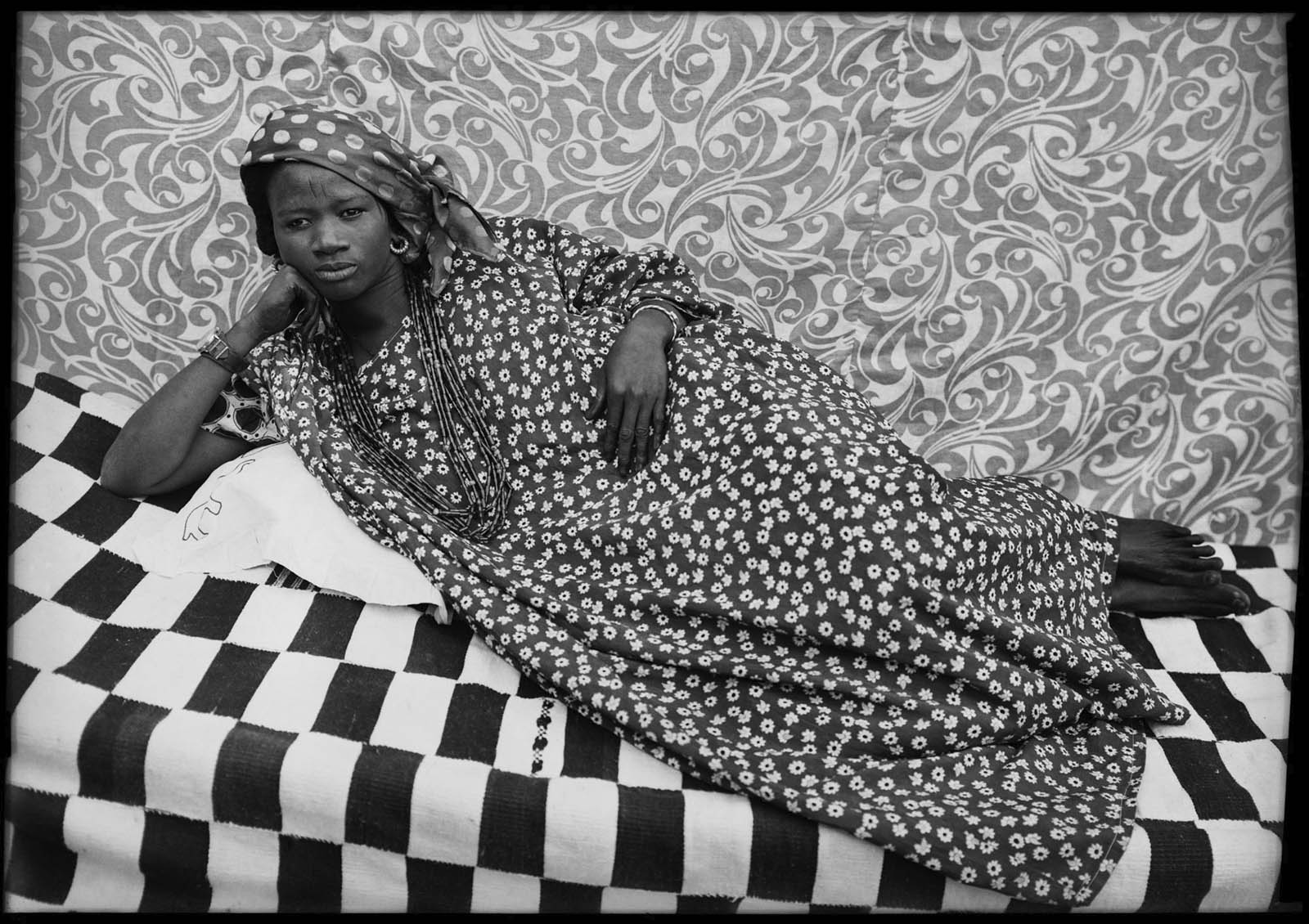
 

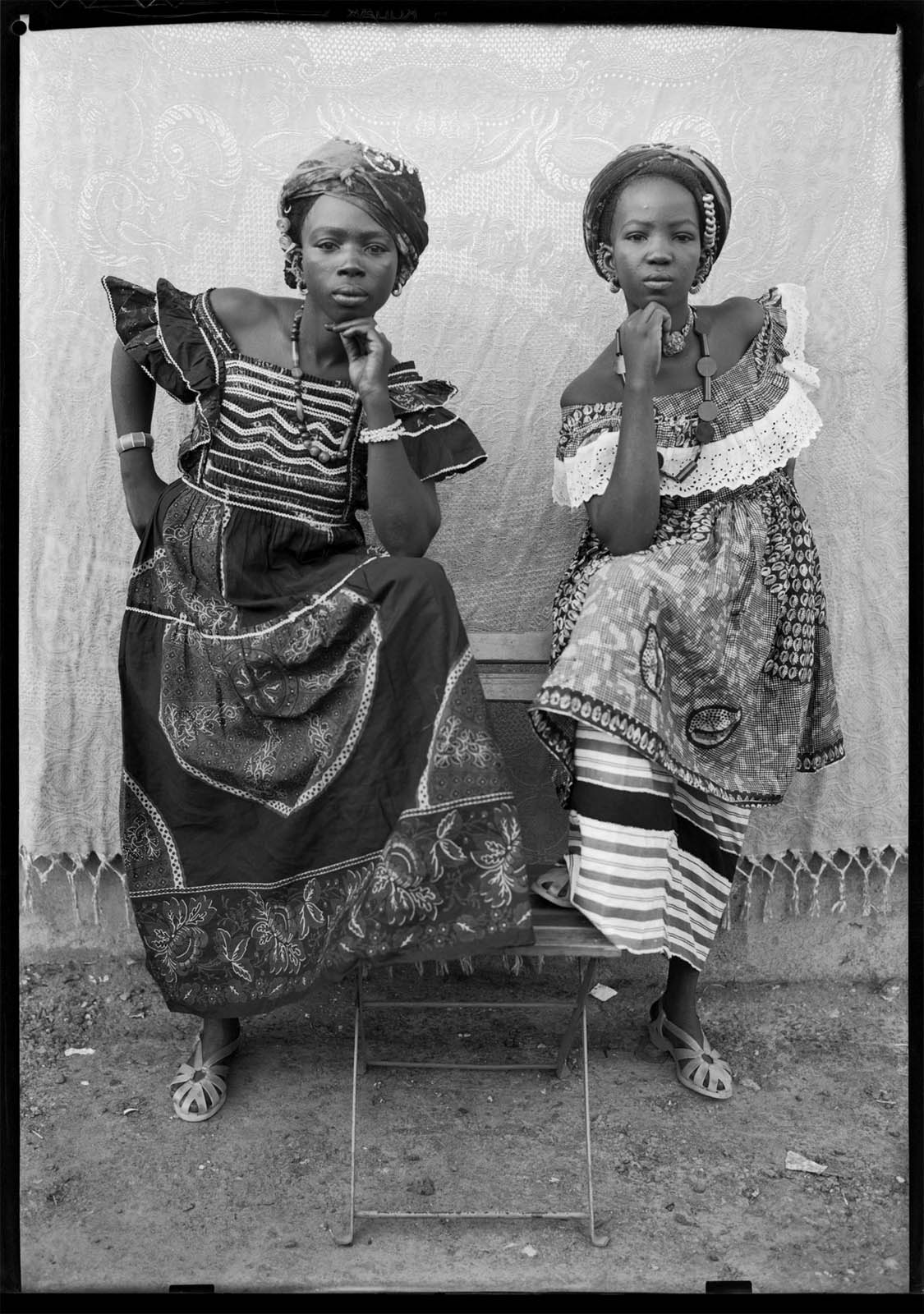
Seydou Keïta (Malian, c. 1921-2001) 'Untitled' 1953-1957, printed c. 1994-2001


Seydou Keïta (Malian, 1923-2001)
Untitled (Bamako)
1956-1957
Gelatin silver print, printed 1997
15 9/16 x 22 1/8″ (39.5 x 56.2cm)
Museum of Modern Art, New York
The Family of Man Fund
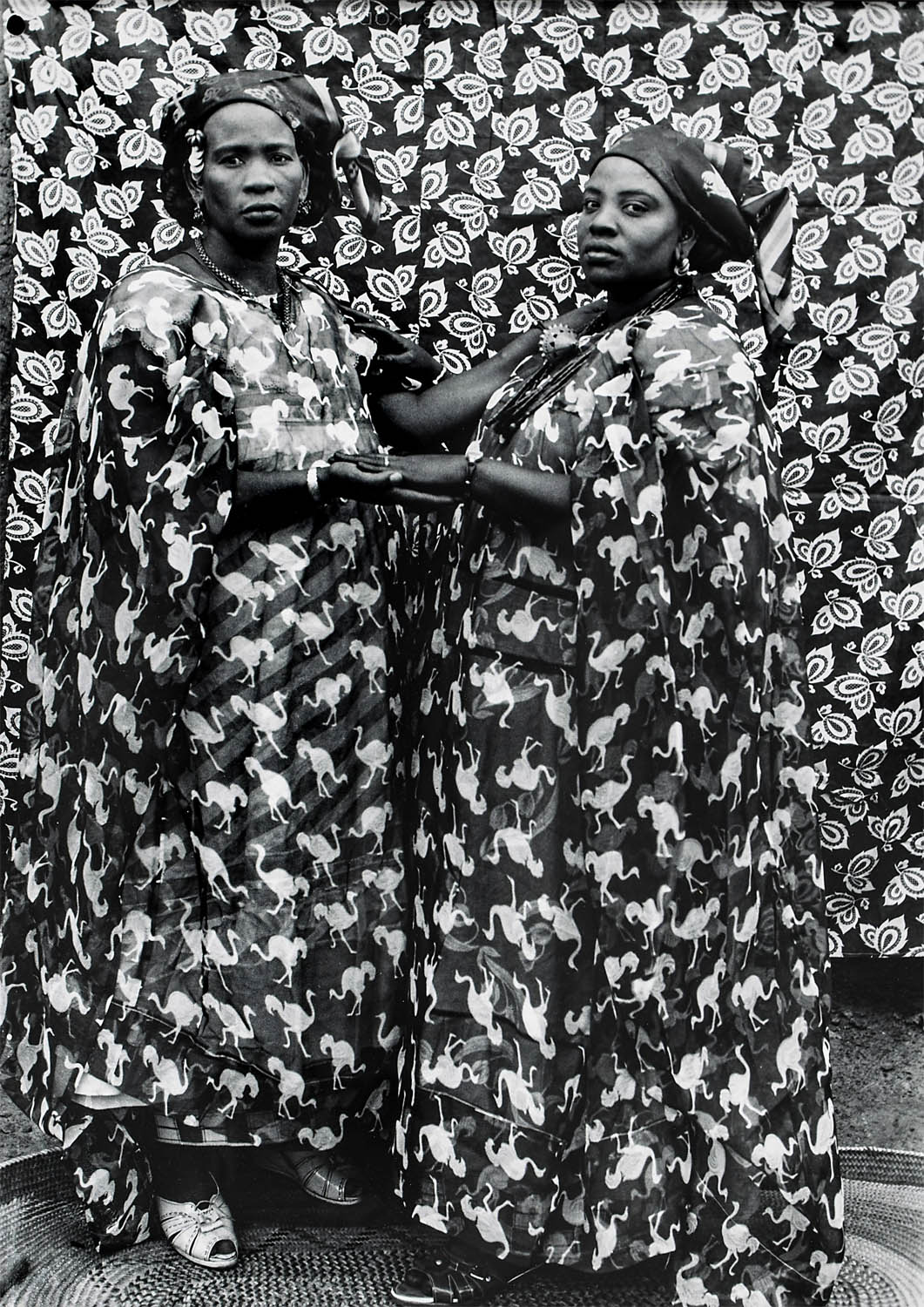
 

Seydou Keïta (Malian, 1923–2001) 'Untitled' 1956


Seydou Keïta (Malian, 1923-2001)
Untitled
1956
Modern gelatin silver print
Image: 22 3/8 x 15 11/16″ (56.8 x 39.8cm)
Frame: 30 3/16 x 23 7/16″ (76.7 x 59.6cm)
Sheet: 23 7/8 x 19 15/16″ (60.7 x 50.7cm)
Museum of Modern Art, New York
The Jean Pigozzi African Art Collection
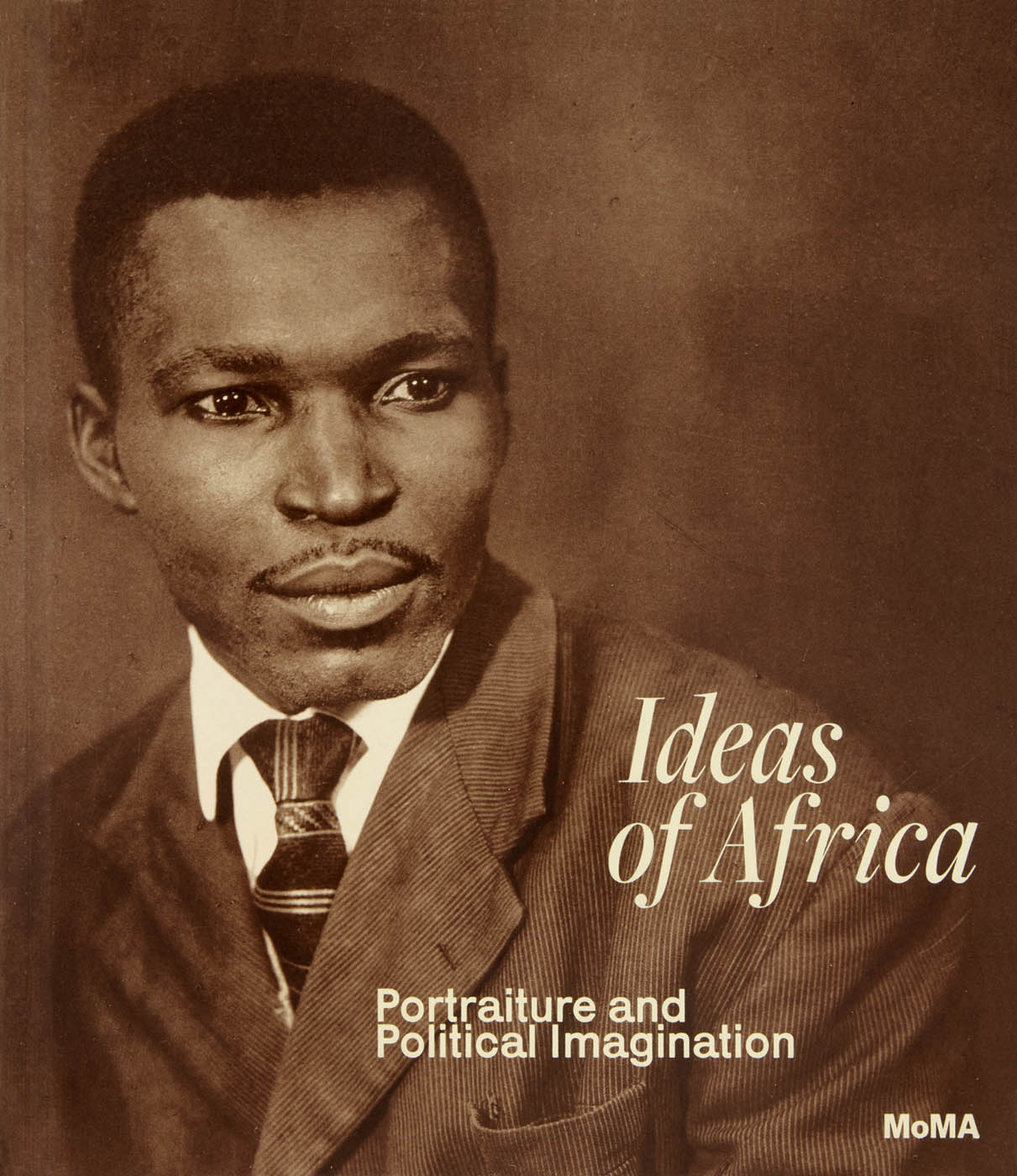
 

'Ideas of Africa: Portraiture and Political Imagination' catalogue cover


Ideas of Africa: Portraiture and Political Imagination catalogue cover

Buy the book on Amazon


The Museum of Modern Art
11 West 53 Street
New York, NY 10019
Phone: (212) 708-9400

Opening hours:
10.30am – 5.30pm
Open seven days a week
MoMA website

LIKE ART BLART ON FACEBOOK

Back to top

Exhibition: ‘Seydou Keïta: A Tactile Lens’ at the Brooklyn Museum, New York

Exhibition dates: 10th October, 2025 – 17th May, 2026

Curators: Guest curator Catherine E. McKinley with Imani Williford, Curatorial Assistant, Photography, Fashion, and Material Culture, Brooklyn Museum


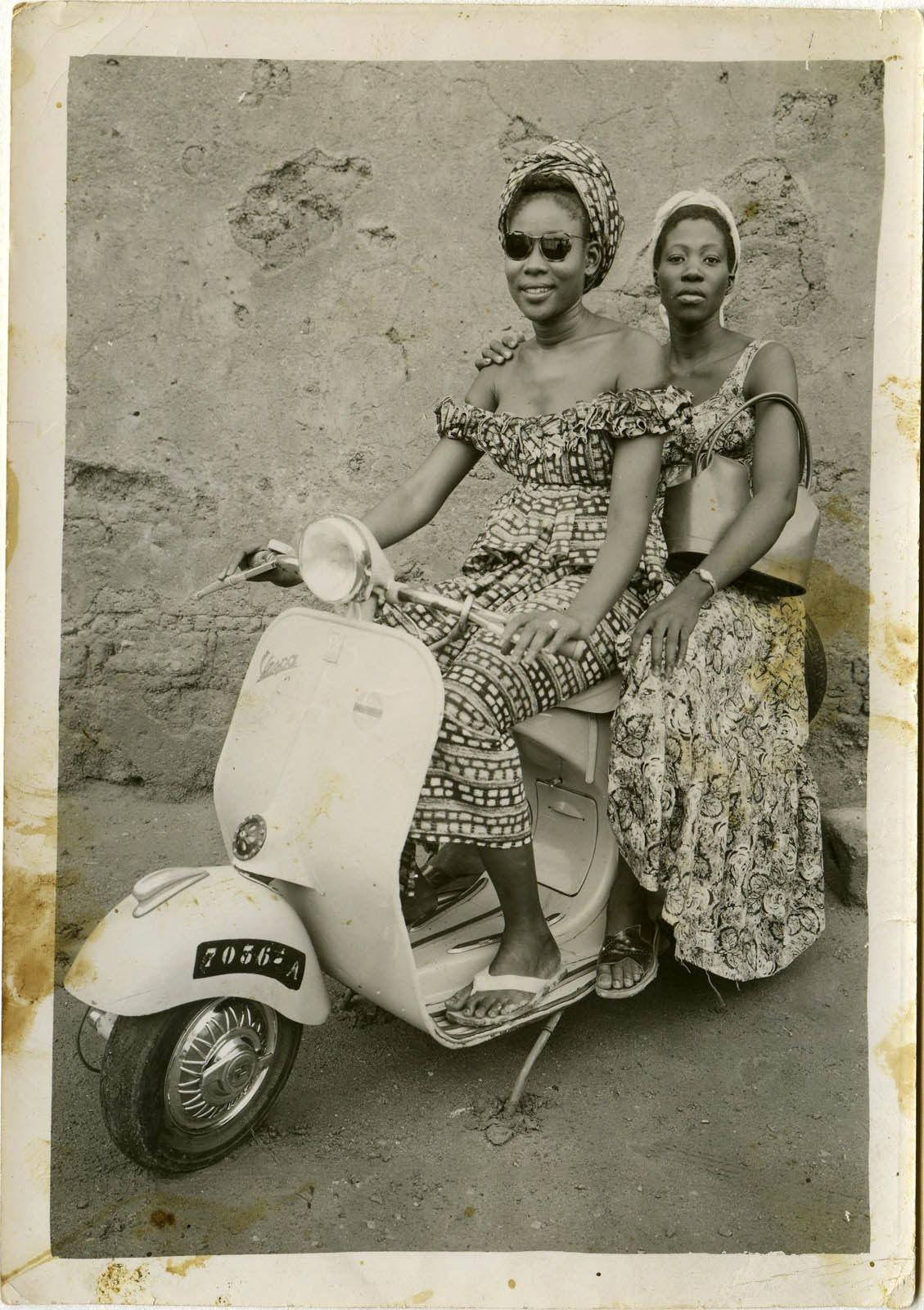
Seydou Keïta (Malian, c. 1921-2001) 'Untitled' 1954 from the exhibition Exhibition: 'Seydou Keïta: A Tactile Lens' at the Brooklyn Museum, New York, October 2025 - May 2026


Seydou Keïta (Malian, c. 1921-2001)
Untitled
1954
Vintage gelatin silver print
Courtesy of The Jean Pigozzi African Art Collection
© SKPEAC/Seydou Keïta
Courtesy The Jean Pigozzi Collection of African Art and Danziger Gallery, NY


In African light

The Brooklyn Museum continues to orchestrate (now that’s an appropriate word) wonderful exhibitions that select, organise, and interpret items in “interpretive exhibitions”- curating and contextualising these items in order to establish their meaning, history, and cultural significance. In this regard the magnificent exhibition Seydou Keïta: A Tactile Lens is no exception.

In the exhibition Keïta’s direct, honest, and incisive black and white photographs – often taken outdoors on bare earth in natural light with mud walls, hanging textiles and blankets as backdrops – are contextualised with regard to West African history, placed in context “in a period defined by a rapidly expanding modern world and a new sense of Bamakois identity.” (Press release)

In the Brooklyn show Keïta’s photographs from the African environment are surrounded by cultural artefacts that reflect a new sense of nationhood as Mali moved toward independence post-French colonialism – “clothing, hand-fashioned dresses … pagnes (wrappers), wall hangings, and commemorative cloths that span the rich history of Malian textile design and trade”, gold, jewellery, lace, marabaka (a Czech-style hat that became a widespread symbol of Pan-African solidarity), traditional and modern textiles, blankets, family heirlooms, family photographs and a trove of film negatives – all combining to create a rich mosaic of references, an intertextuality (where things refer to, influence, or interrelate with one another) of identity, place and space.

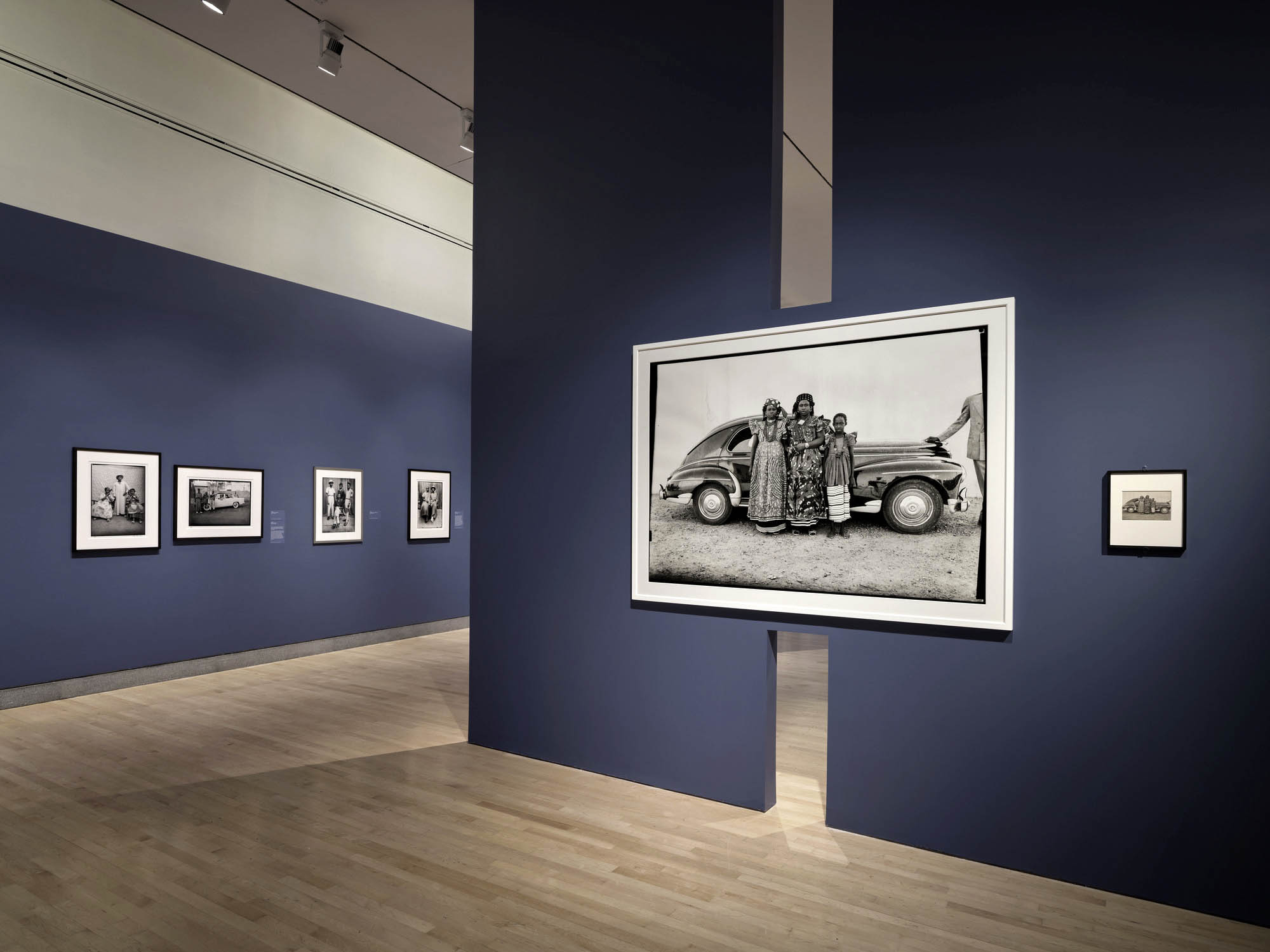
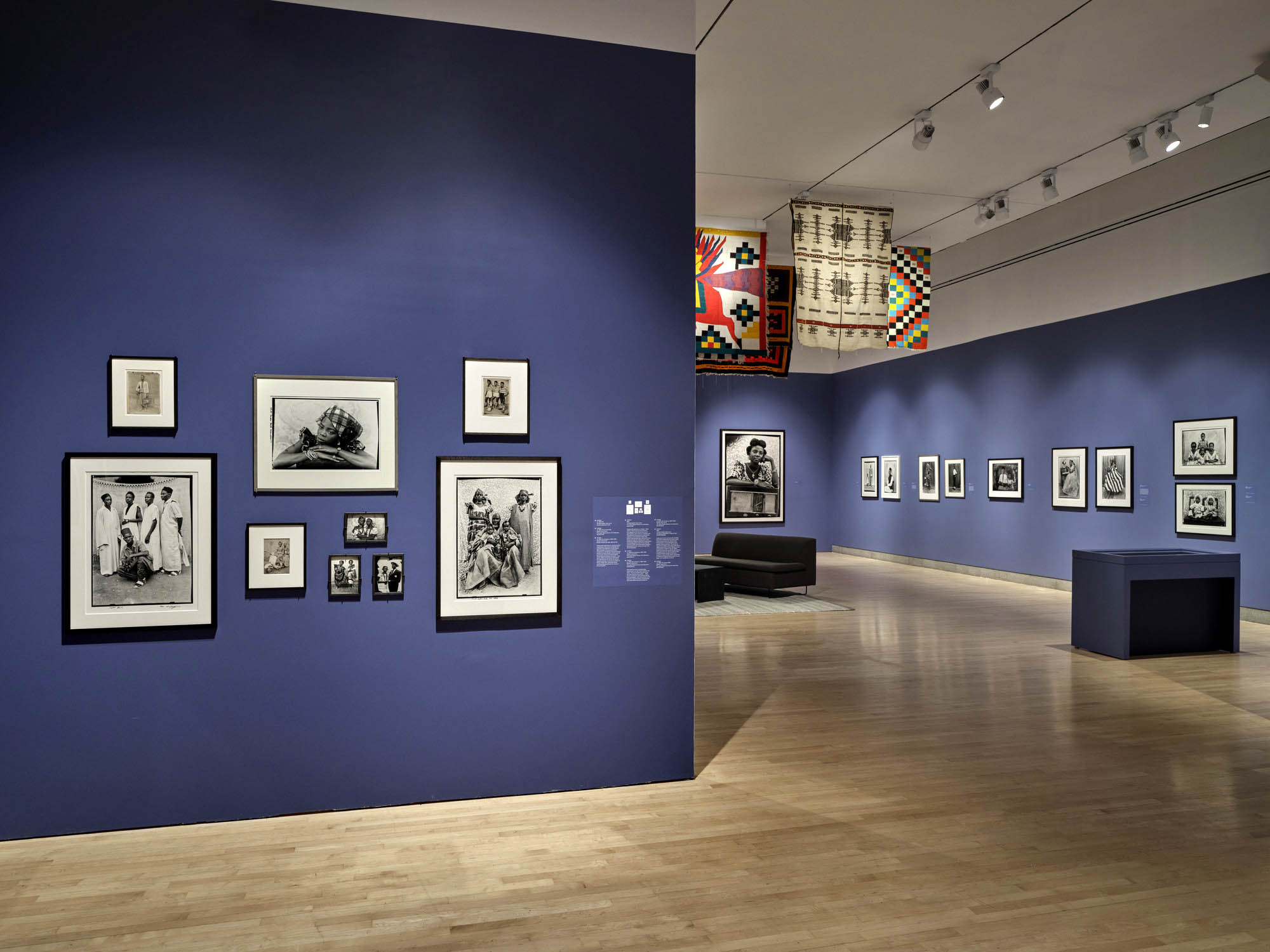
What is particularly interesting about the presentation at the Brooklyn Museum is the mixture of vintage and modern prints, where the viewer can compare the scale and tonalities of old and new, where small jewel-like gold toned and hand-coloured prints of great presence and intensity can be compared to larger, contrast laden modern prints (for which the artist has become famous) which reveal hidden details in the negative.

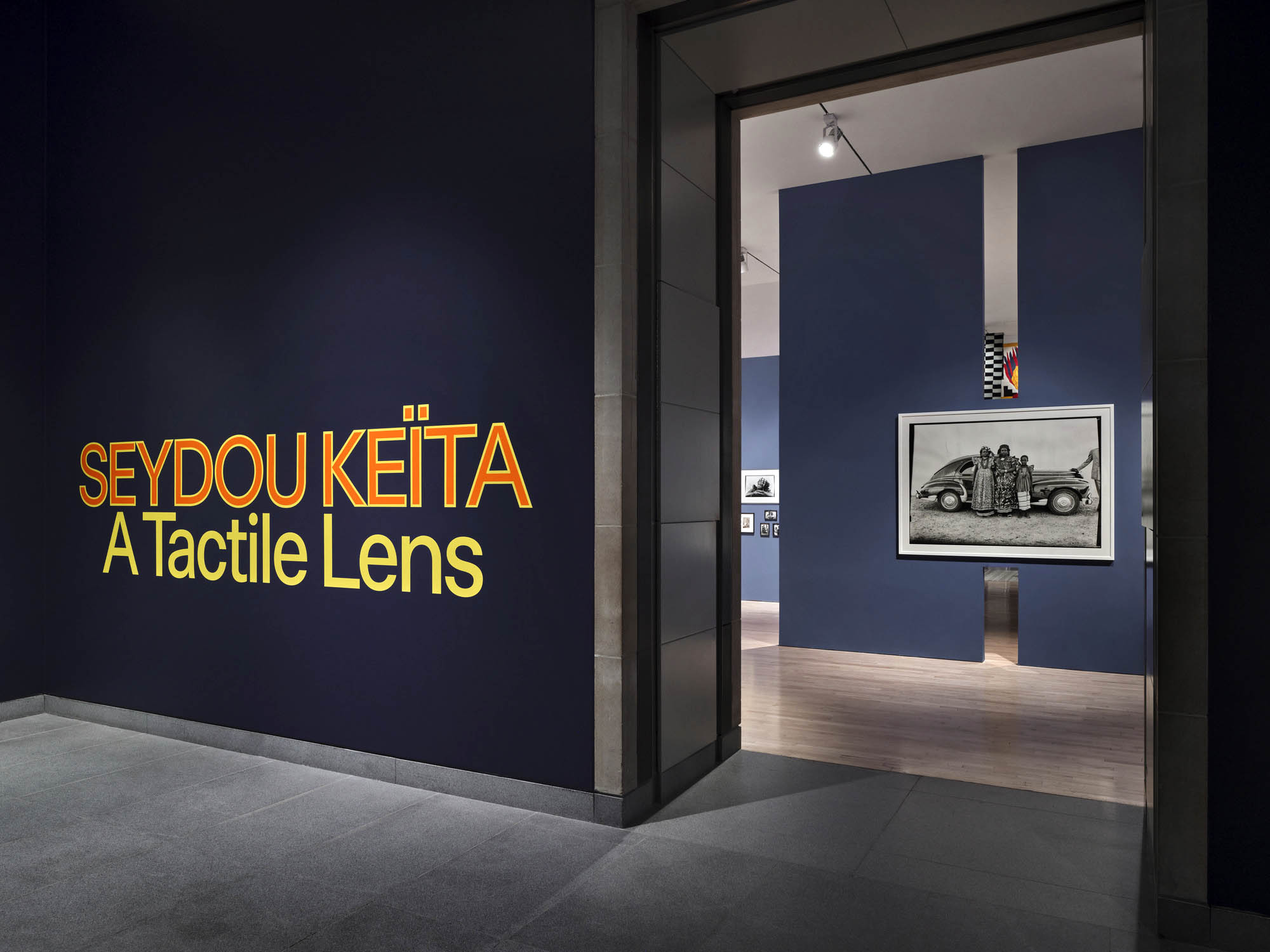
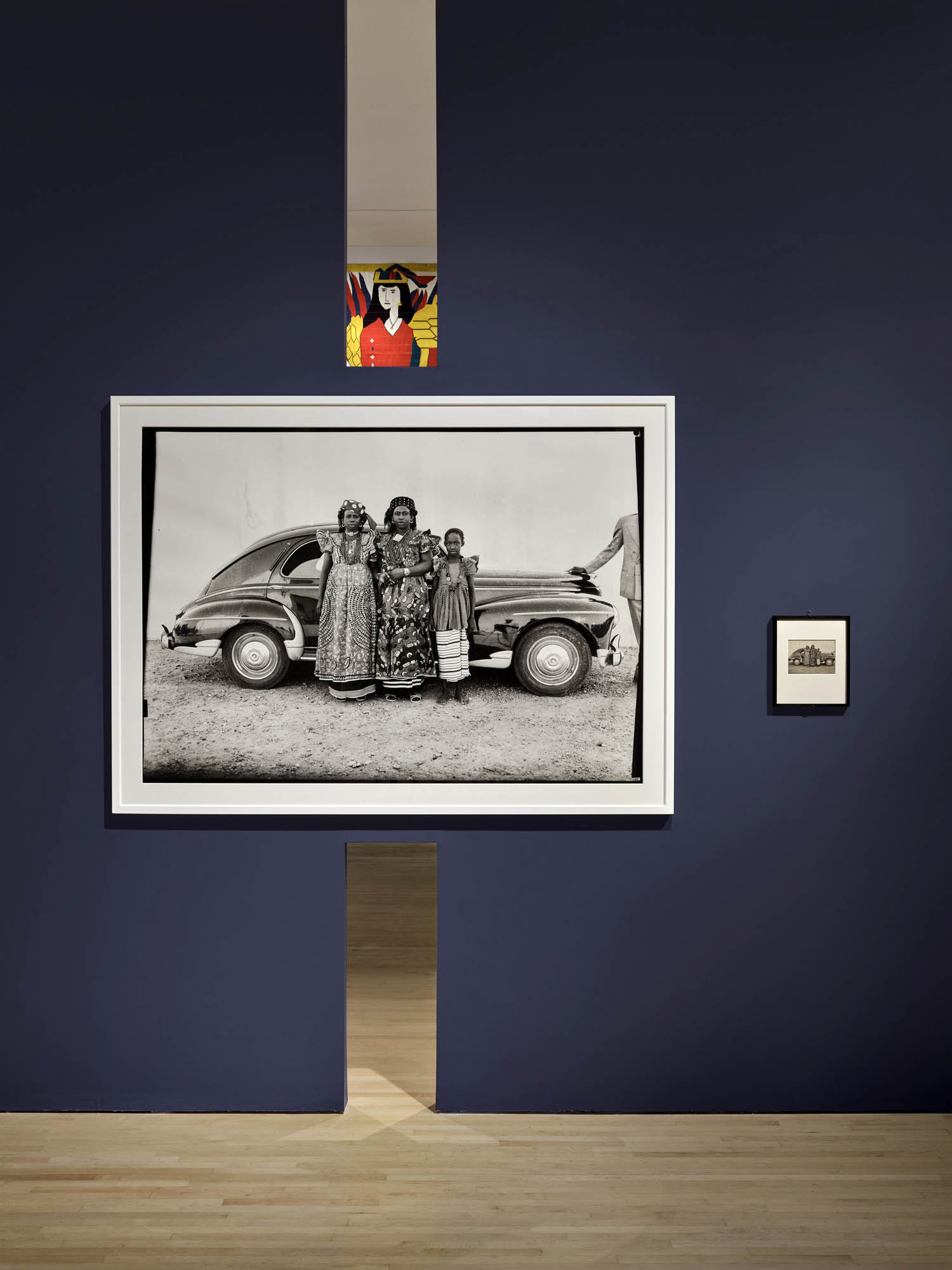
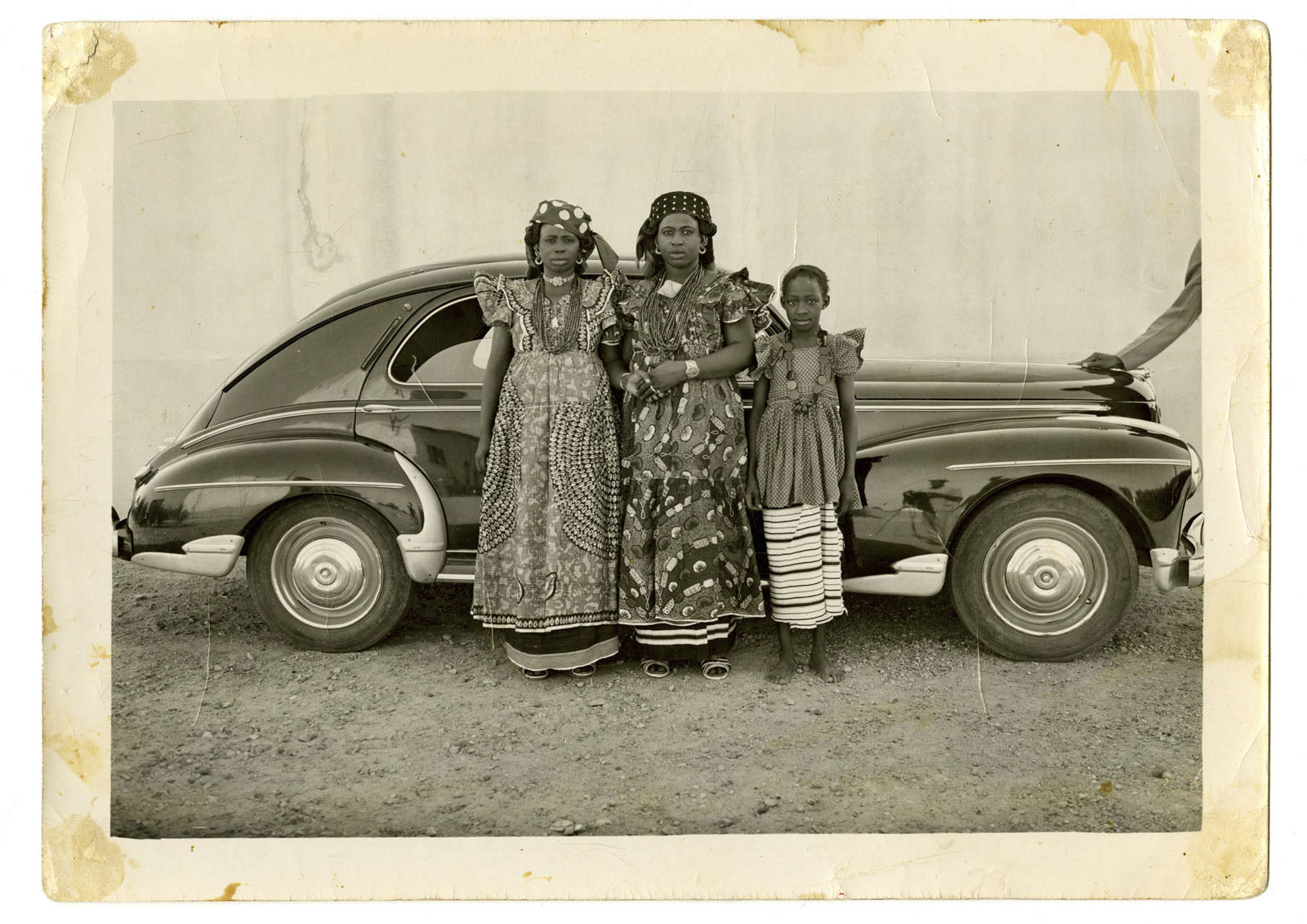
Also of interest is the exhibition design itself in which the different colour of the walls, the spaces between them, the symmetrical layout, together with the clothing, textiles and wall hangings … all add a terrific spatial dimension to the whole. Witness the entrance to the exhibition where Keïta’s vintage photograph Untitled (1954, above) is placed in communion with a larger modern print, allowing the viewer to compare and contrast both old and new, one of the major pictorial themes of the exhibition. Then – and this is to me the essence of good exhibition design – you look at the line of sight of that entrance and in the space between the walls hanging in the distance, hovering above the photographs, is a colourful textile banner with face and garment which the viewer can visually correlate to the garments of the three women standing in front of the car in the modern print below. Just a small thing but inspiring exhibition design nonetheless, which reflects the holism of the exhibition.

Along with the work of other African photographers such as Malike Sidibé (Malian, 1935-2016), James Barnor (Ghanian, b. 1929) and Sanlé Sory (West African, b. 1943), Keïta’s photographs help touch, in African light, that most wonderful sense of the spirit and culture of a nascent independent nation, evidenced in his images through an intimate interconnection between people and place.

What is undeniable is that there is nothing like a photograph to remind you of difference, to challenge your perceptions on how you view and interact with the world around you, to open up new ways of seeing (Professor Stuart Hall). Thus the photographs in this exhibition may allow us a deeper insight into not only the conditions of our own becoming (while human beings have agency, the circumstances under which they act and develop their humanity are largely shaped by existing material, social, and historical conditions that they did not choose) but the conditions of other people’s becoming.

Hopefully these insights in turn promote a greater understanding and acceptance of difference in others in opposition to learnt bigotry and racism.

Just the joy of picturing, and being, and living, human.

Dr Marcus Bunyan


Many thankx to the Brooklyn Museum for allowing me to publish the photographs in the posting. Please click on the photographs for a larger version of the image.


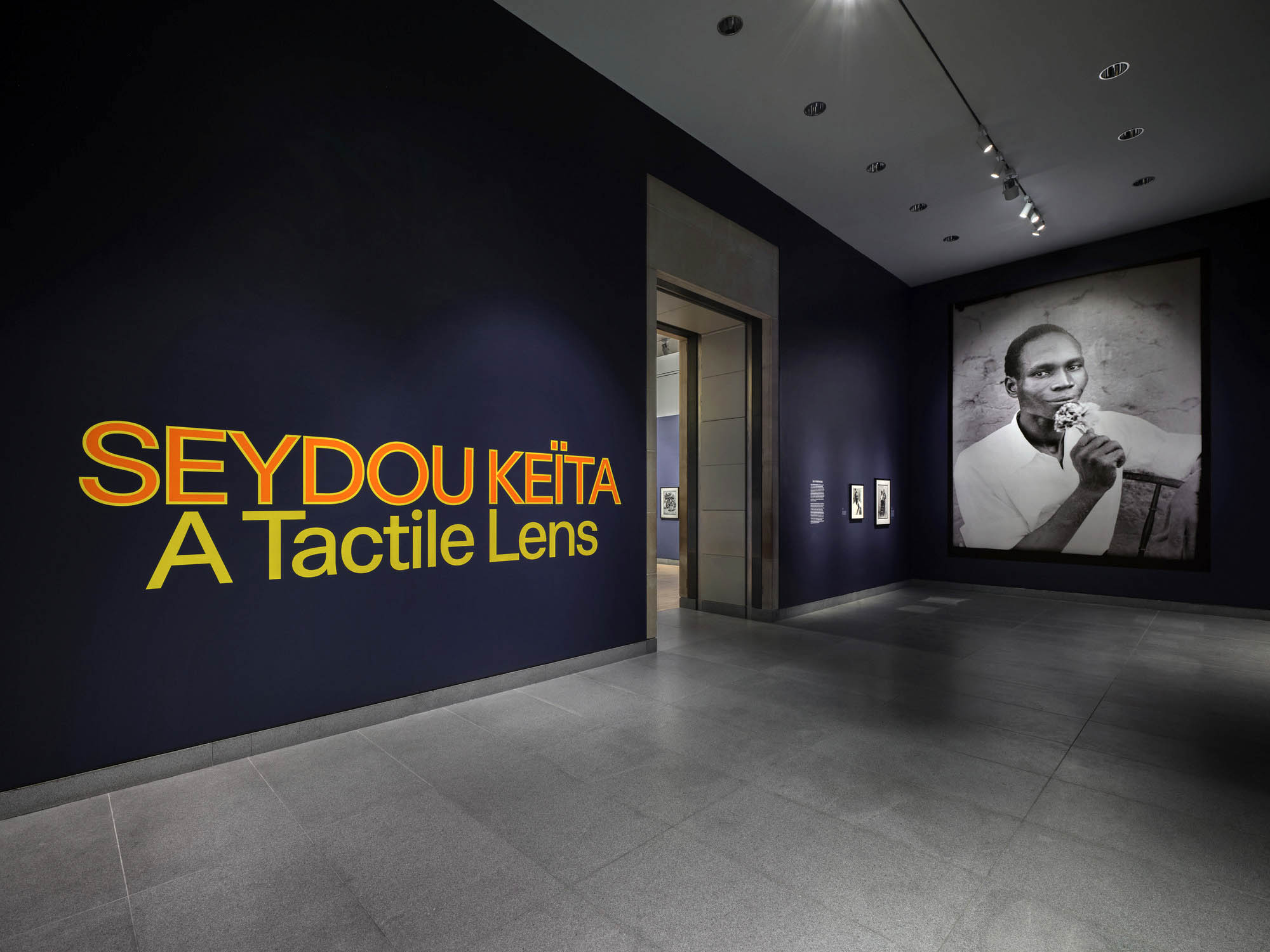
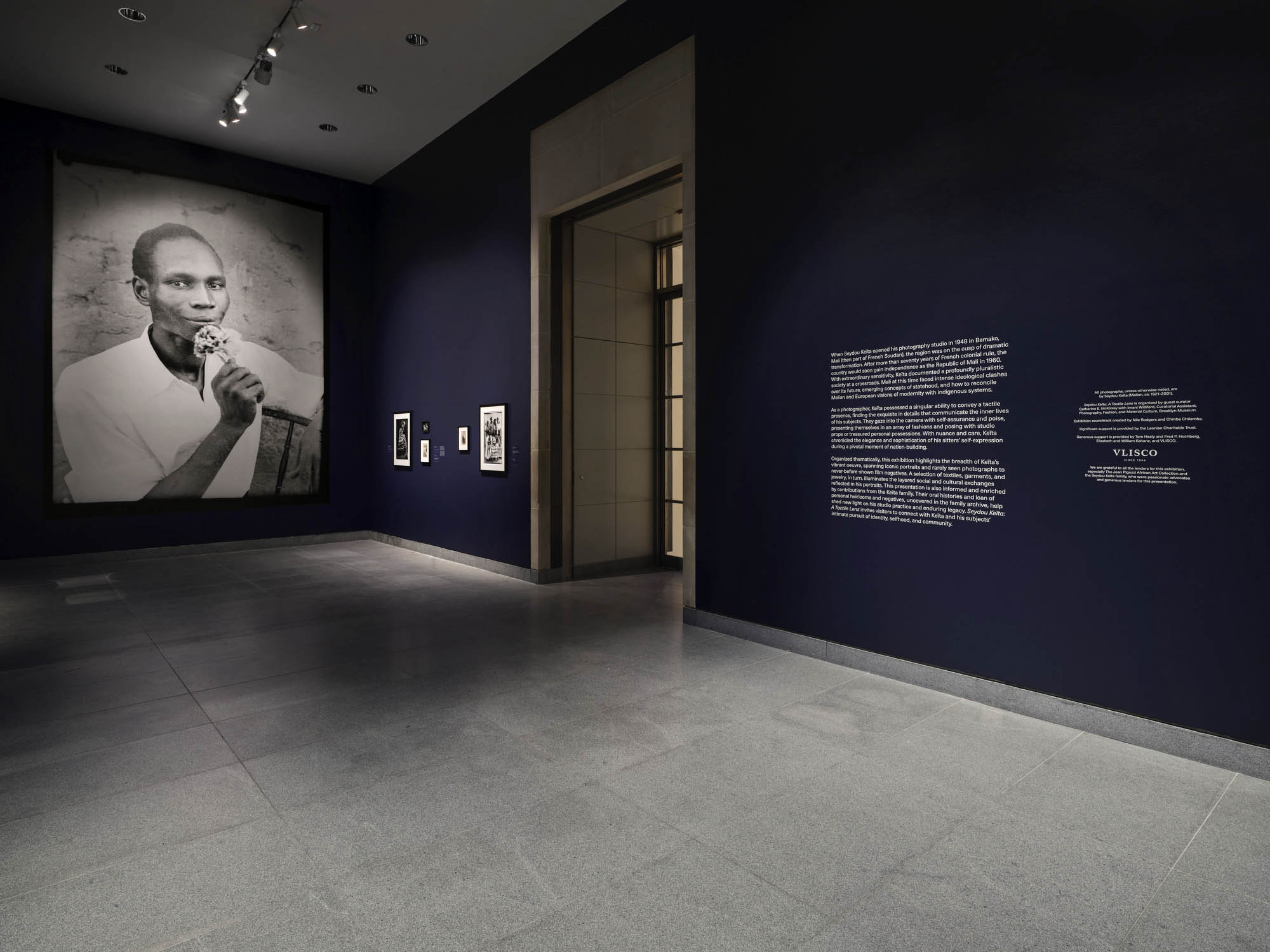
Installation view of the exhibition 'Seydou Keïta: A Tactile Lens' at the Brooklyn Museum, New York, October 2025 - May 2026


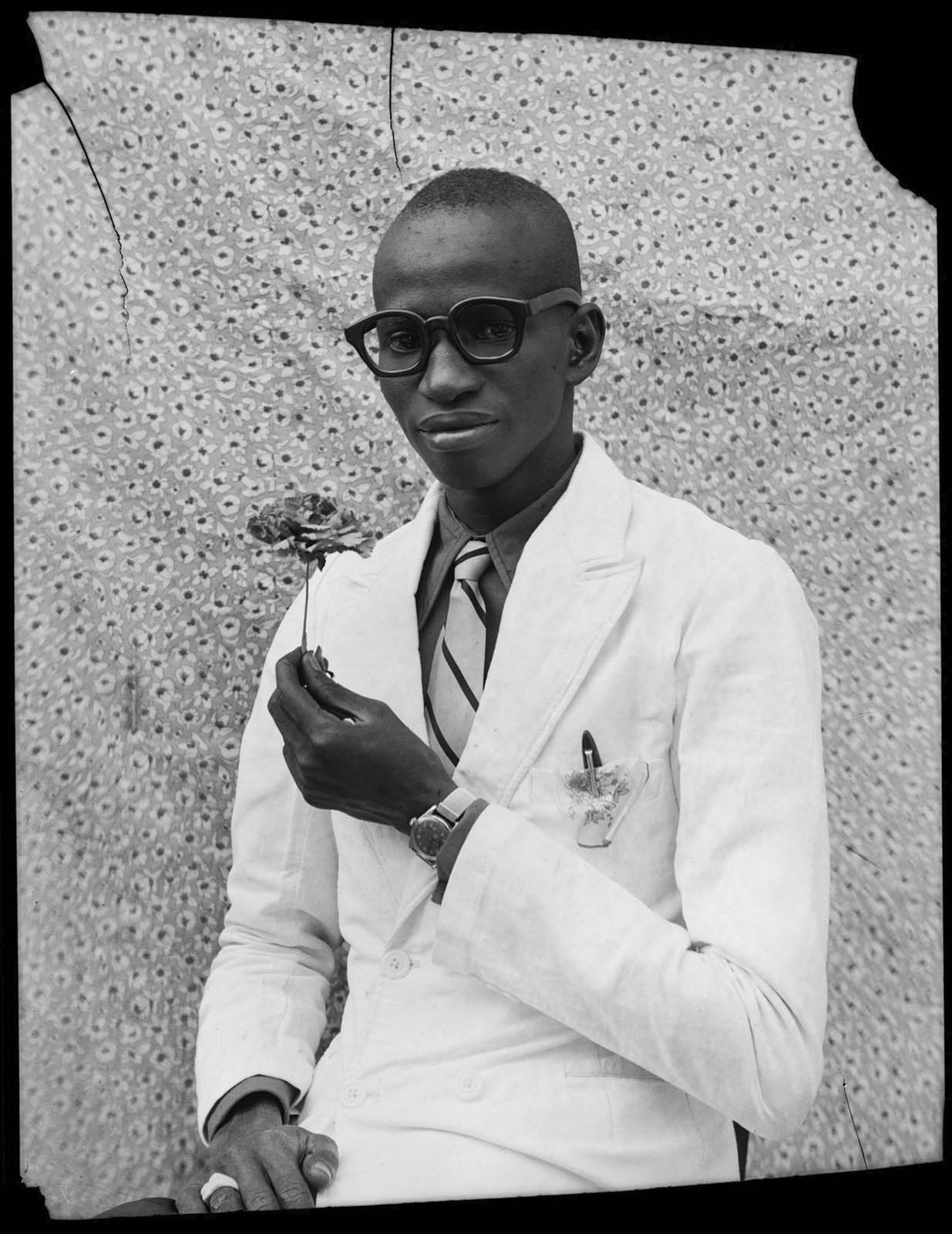
Installation views of the exhibition ‘Seydou Keïta: A Tactile Lens’ at the Brooklyn Museum, New York, October 2025 – May 2026 showing Keïta’s self-portrait Untitled, 1956


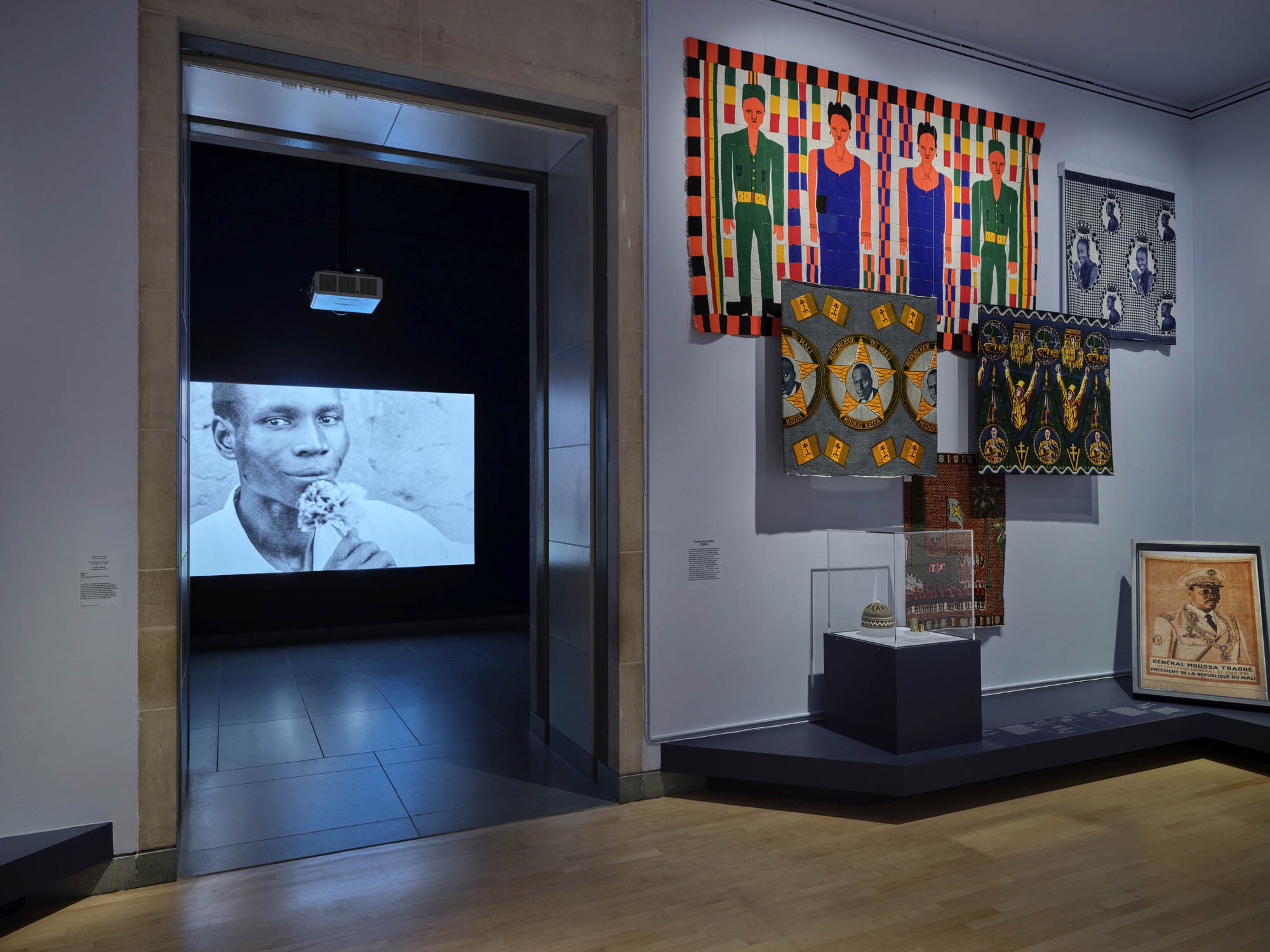
Dressed in a crisp white shirt, holding a flower gently to his chin, Keïta turns the camera on himself with the same control and precision he granted his subjects. As French Soudan faced political uncertainty and turmoil in the lead-up to independence, Keïta’s studio, whether indoors or on the street, offered sitters a place to create a self of one’s own.


Installation view of the exhibition 'Seydou Keïta: A Tactile Lens' at the Brooklyn Museum, New York, October 2025 - May 2026
Installation view of the exhibition 'Seydou Keïta: A Tactile Lens' at the Brooklyn Museum, New York, October 2025 - May 2026 showing Keïta's photograph 'Untitled' 1954


Installation views of the exhibition Seydou Keïta: A Tactile Lens at the Brooklyn Museum, New York, October 2025 – May 2026 showing in the bottom two images, Keïta’s photograph Untitled 1954 (above)


The smaller, vintage print and the larger, modern one of Keïta’s 1954 photograph highlight the material and historical distinctions between the types of prints on view in the exhibition. Often made by Keïta himself, the vintage prints were produced around the time the photograph was taken. Such works feature a particular range of tonalities – the result of earlier technologies, less environmental control in the darkroom, and the paper’s age. The modern prints were made later in Keïta’s life, some of them posthumously. These works are larger, in part, to accentuate the details of the image, such as Keïta’s own reflection on the car’s surface. Following his landmark New York and Paris exhibitions in the 1990s, Keïta came to be known for the distinctive black-and-white tonalities of these modern prints.

Reflecting on his work in 1997, Keïta revealed he had always hoped to make large-format prints (30 x 40 in., 40 x 50 in., and 50 x 60 in.) but seldom had the chance. Sitters rarely requested them due to cost. Together, both vintage and modern prints demonstrate the range and impact of Keïta’s artistry. They also inspire questions about photography’s nature as both artwork and heirloom objects imbued with social and ritual meaning as they pass from hand to hand.


Encounter an artist who changed the face of portrait photography. Seydou Keïta: A Tactile Lens is the most expansive North American exhibition of the legendary Malian photographer’s work to date. More than 280 works include iconic prints, never-before-seen portraits, textiles, and Keïta’s personal artifacts, all brought to life with unique insights from his family.

Organised by the Brooklyn Museum, the exhibition brings us to Bamako from the late 1940s to early 1960s, an era of profound political and social transformation. Collaborating closely with his sitters, Keïta recorded Mali’s evolution through their choices of backdrops, accessories, and apparel, from traditional finery to European suits. These bold yet sensitive photographs began to circulate in West Africa nearly 80 years ago. In the early 1990s, they reached Western viewers, rocking the art world and cementing Keïta as the premier studio photographer of 20th-century Africa – a peer of August Sander, Irving Penn, and Richard Avedon.

Witness the power of photography through these richly layered images, which reveal not only Malians’ emotional landscapes but also the textures of life in a rapidly changing country.

A fully illustrated catalogue accompanies the exhibition, offering new insights into the photographer, his work, and Malian material culture. The publication features a biography by Catherine E. McKinley based on extensive interviews with Keïta’s heirs, as well as essays by prominent scholars and curators including Drew Sawyer, Howard W. French, Duncan Clarke, Awa Konate, Sana Ginwalla, and Jennifer Bajorek.

Text from the Brooklyn Museum website


Installation view of the exhibition 'Seydou Keïta: A Tactile Lens' at the Brooklyn Museum, New York, October 2025 - May 2026


Installation views of the exhibition Seydou Keïta: A Tactile Lens at the Brooklyn Museum, New York, October 2025 – May 2026 showing at left in the bottom image, Keïta’s photograph Untitled 1949-1951 (below)


Seydou Keïta (Malian, c. 1921-2001) 'Untitled' 1949-1951, printed 1998


Seydou Keïta (Malian, c. 1921-2001)
Untitled
1949-1951, printed 1998
Gelatin silver print
Courtesy of The Jean Pigozzi African Art Collection
© SKPEAC/Seydou Keïta
Courtesy The Jean Pigozzi Collection of African Art and Danziger Gallery, NY


The exhibition Seydou Keïta: A Tactile Lens honors the artistry and legacy of Seydou Keïta (Malian, c. 1921-2001), who documented a critical chapter in West African history – one of immense hope, politically and socially – in a period defined by a rapidly expanding modern world and a new sense of Bamakois identity. The show features over 280 works, including renowned portraits, rare images, and never-before- seen negatives as well as textiles, jewellery, dresses, and personal items that fully immerse visitors in Keïta’s rich photographic landscape. Seydou Keïta: A Tactile Lens is organised by guest curator Catherine E. McKinley with Imani Williford, Curatorial Assistant, Photography, Fashion, and Material Culture, Brooklyn Museum.

Keïta was born around 1921 to a Malinke family in Bamako-Coura, or New Bamako, a growing colonial commercial center within the historic Malian city. His childhood saw emerging liberation struggles across the continent and growing expressions of modernism as Bamako served as the capital of French Soudan and subsequently the newly independent Mali in 1960.

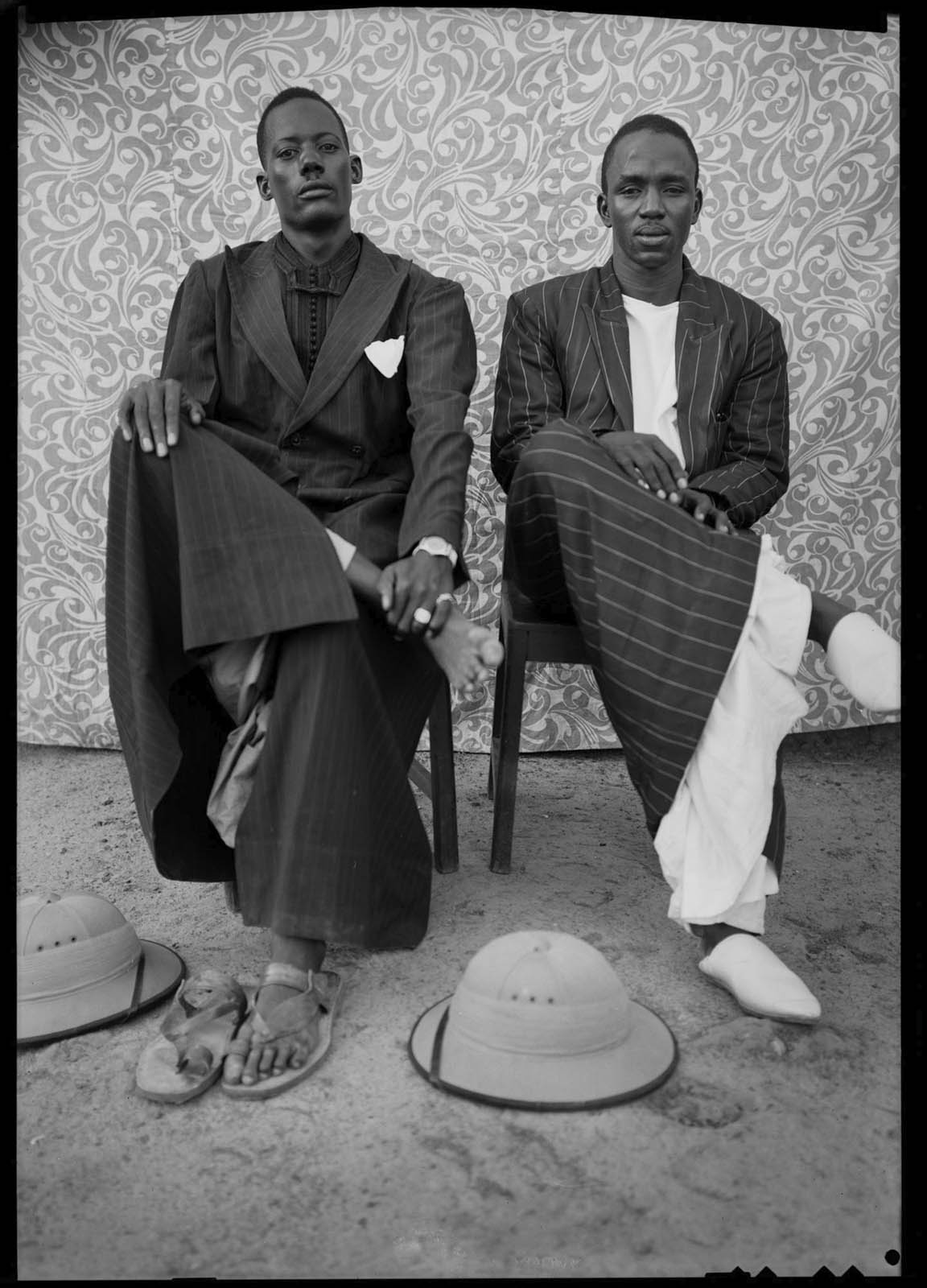
Keïta documented Malian society in the late 1940s to early 1960s, an era of transformation and aspirations for independent statehood. A master at lighting and composition, Keïta has a unique ability to capture the tactile qualities of his sitters – from their fashion and choice of accessories to the personality and self-presentation they put forward. In collaboration with his subjects, he sculpted their poses, clothing, and style, forming monuments to their selfhood. When they first reached Western viewers in the early 1990s, his images drew unprecedented attention in the worlds of art, music, fashion, design, and popular media, forever changing the global cultural landscape. Today, these bold and engaging portraits continue to invite viewers into direct dialogue with Keita’s sitters.

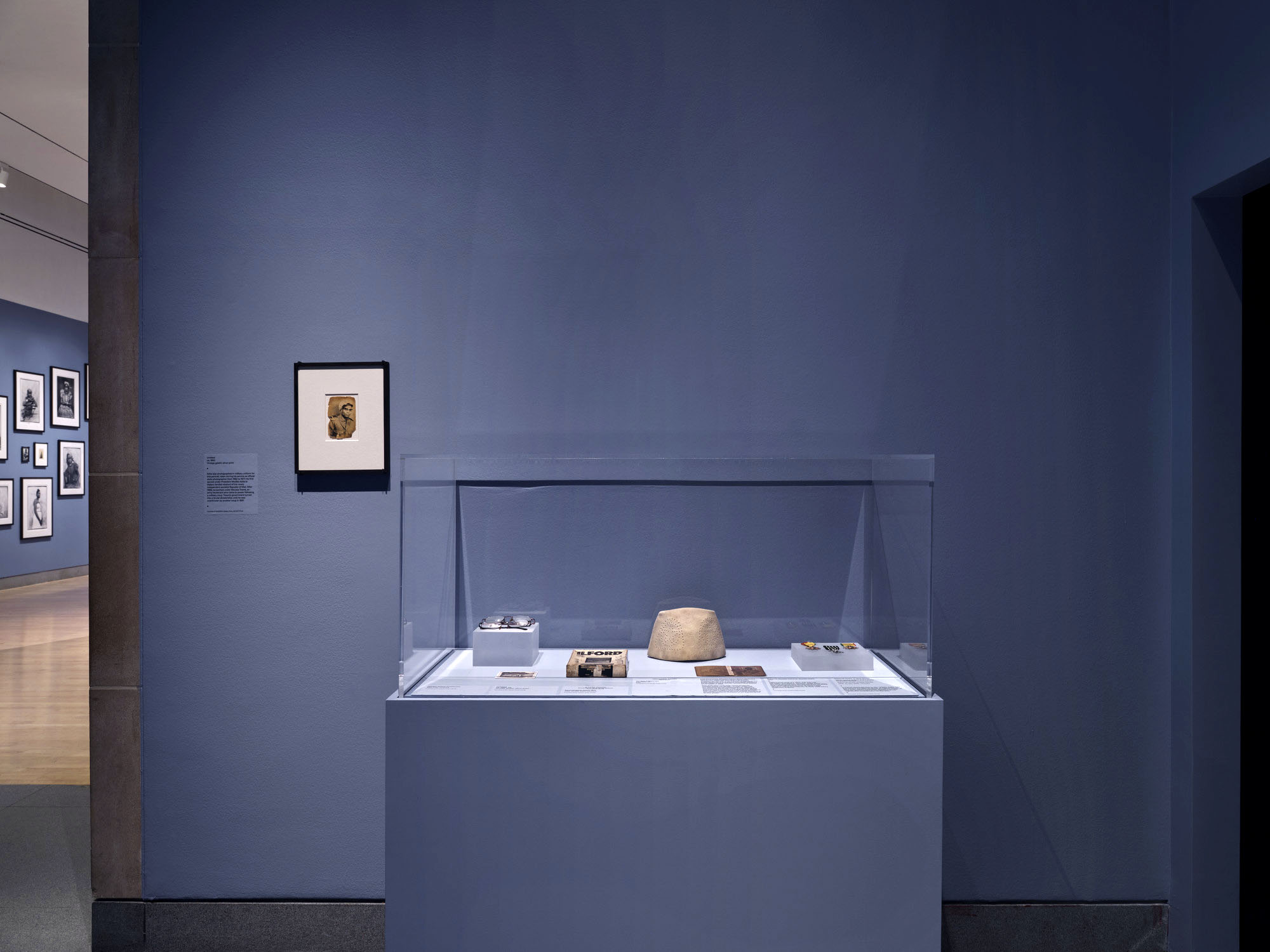
Largely self-taught, Keïta first received a camera as a gift from his uncle at age 14. In 1935, he became an apprentice to his mentor, Mountaga Dembélé (1919-2004), Mali’s first professional photographer to earn a living with his studio. From there, Keïta opened his own studio in 1948 in front of his family home in Bamako-Coura, becoming Mali’s second photographer. The studio became a destination for people from all levels of Malian society, welcoming not just the elite citizens of Bamako but also remote villagers, international travelers, and those passing through on the Dakar-Niger railroad. Keïta’s work is notable for capturing how the people in his studio saw themselves, allowing for a playful self-expression backgrounded by increasing political tensions and rapid evolutions in the government. His studio offered props, including European and Malian clothing, motorbikes, Western watches, and novelties. Through the years, Keïta developed his very own style of portrait photography and a new type of modernist expression.

This period lasted until 1963, when Keïta was enlisted to work for the newly independent Socialist Republic of Mali. Forced to relinquish his studio, he documented state affairs and performed forensics for increasingly punitive governments until 1968 when he retired to work in camera and automotive repairs. In May 1991, the exhibition Africa Explores: Twentieth Century African Arts opened at the Center for African Arts in New York, where Keïta first debuted to Western audiences. In 1994, the Fondation Cartier in Paris presented Keïta’s first solo exhibition, which rocked the art and photography world, cementing him as the premiere African studio photographer of the twentieth century. The exhibition positioned Keïta as a peer of noted photographers such as Irving Penn, August Sander, and Richard Avedon, his contemporaries in portrait photography, and created enormous interest in Keïta’s work.

“Thirty-four years since Keïta was first introduced to American audiences we have an opportunity to view new discoveries in his work and understand just how singular he was, practicing at one of the most pivotal moments in African and world history. He had an extraordinary artist’s ability to render the tactile. We can visually ‘finger the grain’ of the sitter’s lives and better understand them beyond just their relationship to studio photography or documentary,” says Catherine E. McKinley, guest curator, author of The African Lookbook, and director of The McKinley Collection.

“It is very exciting and deeply moving to rediscover Keïta’s work and to feel the presence of his sitters – some of whom we meet here for the very first time – thanks to Catherine E. McKinley’s thoughtful research,” says Pauline Vermare, Phillip and Edith Leonian Curator of Photography. “We hope visitors feel the wonder and possibility that Keïta’s studio represented for so many people.”

A Tactile Lens brings together a remarkable range of Keïta’s photographs, which demonstrate the breadth of his oeuvre and the splendour of his artistry. Thanks to a generous loan from the Keïta family, an extraordinary group of never-before-published works has been preserved and imaged by the Museum on the occasion of the exhibition. A selection of the portraits will be displayed – on lightboxes and as a projection – for the first time. In addition, an array of vintage prints, many made by Keïta himself, and some of which are hand-painted, offer renewed emphasis on the photographic object itself. Rounding out the selection are larger prints made later in Keïta’s life, or posthumously, which feature the distinctive black-and-white tonalities that Keïta came to be known for. Joining the photographs is an immersive installation of personal belongings, textiles, garments, and jewellery that can be seen in Keïta’s portraits.

Together, these objects highlight the self-invention, search for identity, and syncretism of Mali that Keïta’s sitters sought in the mid-twentieth century.

A fully illustrated catalogue will accompany the exhibition, featuring a new biographical essay by Catherine E. McKinley based on extensive interviews with his heirs and from leading art professionals and historians such as Jennifer Bajorek, Duncan Clarke, Howard W. French, Sana Ginwalla, Awa Konaté, and Drew Sawyer, offering new insights into the photographer, his work, and Malian material culture.

Press release from the Brooklyn Museum


Installation view of the exhibition 'Seydou Keïta: A Tactile Lens' at the Brooklyn Museum, New York, October 2025 - May 2026


Installation views of the exhibition Seydou Keïta: A Tactile Lens at the Brooklyn Museum, New York, October 2025 – May 2026 showing at third left in the bottom image, Keïta’s photograph Untitled 1952-1955 (below); and at right, Untitled 1956-1957 (below)


Seydou Keïta (Malian, c. 1921-2001) 'Untitled' 1952-1955, printed 1994


Seydou Keïta (Malian, c. 1921-2001)
Untitled
1952-1955, printed 1994
Gelatin silver print
© SKPEAC/Seydou Keïta
Courtesy The Jean Pigozzi Collection of African Art and Danziger Gallery, NY


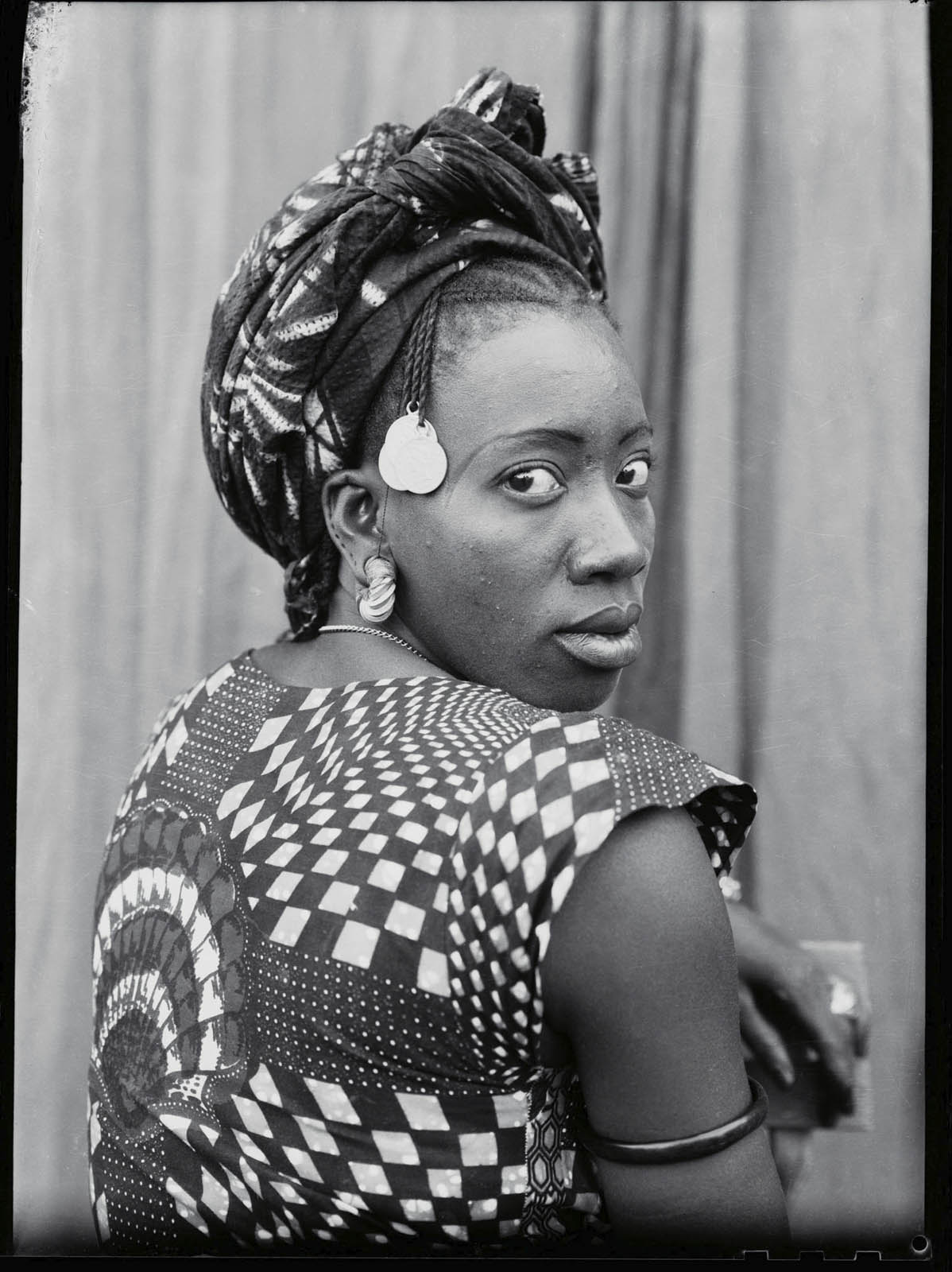
Looking over her shoulder, her back to the camera, this woman flaunts the French coins – called Louis d’or – hanging at her temples. Gold held decorative and talismanic properties: the shine of the metal was believed to ward off
the evil eye and protect the head and soul of the wearer.


Seydou Keïta (Malian, c. 1921-2001) 'Untitled' 1956-1957, printed 1994


Seydou Keïta (Malian, c. 1921-2001)
Untitled
1956-1957, printed 1994
Gelatin silver print
© SKPEAC/Seydou Keïta
Courtesy The Jean Pigozzi Collection of African Art and Danziger Gallery, NY


When Seydou Keïta opened his photography studio in 1948 in Bamako, Mali (then part of French Soudan), the region was on the cusp of dramatic transformation. After more than seventy years of French colonial rule, the country would soon gain independence as the Republic of Mali in 1960. With extraordinary sensitivity, Keïta documented a profoundly pluralistic society at a crossroads. Mali at this time faced intense ideological clashes over its future, emerging concepts of statehood, and how to reconcile Malian and European visions of modernity with indigenous systems. 

As a photographer, Keïta possessed a singular ability to convey a tactile presence, finding the exquisite in details that communicate the inner lives of his subjects. They gaze into the camera with self-assurance and poise, presenting themselves in an array of fashions and posing with studio props or treasured personal possessions. With nuance and care, Keïta chronicled the elegance and sophistication of his sitters’ self-expression during a pivotal moment of nation-building. 

Organised thematically, this exhibition highlights the breadth of Keïta’s vibrant oeuvre, spanning iconic portraits and rarely seen photographs to never-before-shown film negatives. A selection of textiles, garments, and jewellery, in turn, illuminates the layered social and cultural exchanges reflected in his portraits. This presentation is also informed and enriched by contributions from the Keïta family. Their oral histories and loan of personal heirlooms and negatives, uncovered in the family archive, helpshed new light on his studio practice and enduring legacy. Seydou Keïta: A Tactile Lens invites visitors to connect with Keïta and his subjects’ intimate pursuit of identity, selfhood, and community.

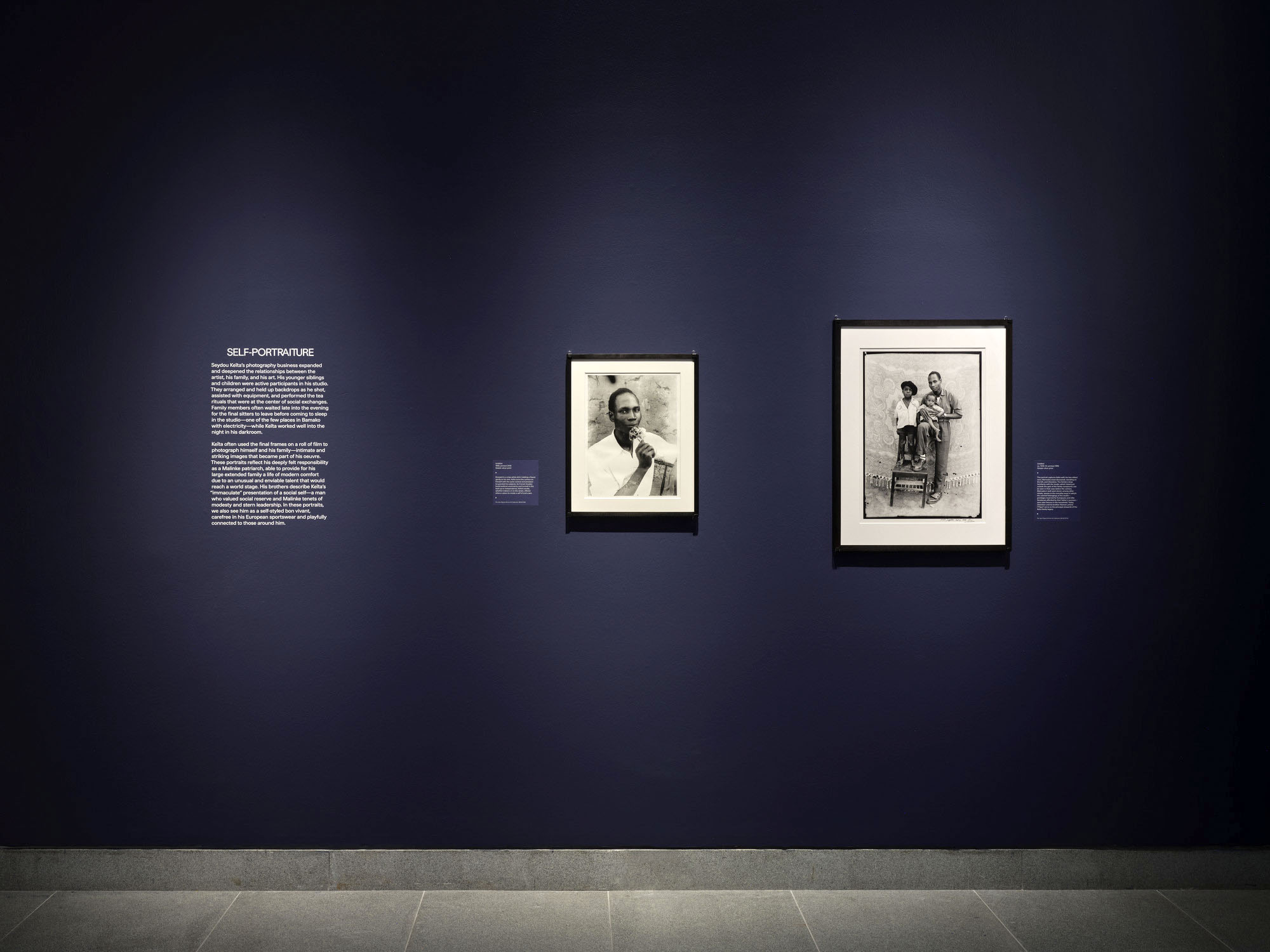
Self-portraiture

Seydou Keïta’s photography business expanded and deepened the relationships between the artist, his family, and his art. His younger siblings and children were active participants in his studio. They arranged and held up backdrops as he shot, assisted with equipment, and performed the tea rituals that were at the centre of social exchanges. Family members often waited late into the evening for the final sitters to leave before coming to sleep in the studio – one of the few places in Bamako with electricity – while Keïta worked well into the night in his darkroom. 

Keïta often used the final frames on a roll of film to photograph himself and his family – intimate and striking images that became part of his oeuvre. These portraits reflect his deeply felt responsibility as a Malinke patriarch, able to provide for his large extended family a life of modern comfort due to an unusual and enviable talent that would reach a world stage. His brothers describe Keïta’s “immaculate” presentation of a social self – a man who valued social reserve and Malinke tenets of modesty and stern leadership. In these portraits, we also see him as a self-styled bon vivant, carefree in his European sportswear and playfully connected to those around him.


Installation view of the exhibition 'Seydou Keïta: A Tactile Lens' at the Brooklyn Museum, New York, October 2025 - May 2026 showing at left text for the section "Self-portraiture" and then Keïta's 'Untitled' 1956, printed 2018


Installation view of the exhibition Seydou Keïta: A Tactile Lens at the Brooklyn Museum, New York, October 2025 – May 2026 showing at left text for the section “Self-portraiture” and then Keïta’s Untitled, 1956, printed 2018


Dressed in a crisp white shirt, holding a flower gently to his chin, Keïta turns the camera on himself with the same control and precision he granted his subjects. As French Soudan faced political uncertainty and turmoil in the lead-up to independence, Keïta’s studio, whether indoors or on the street, offered sitters a place to create a self of one’s own .


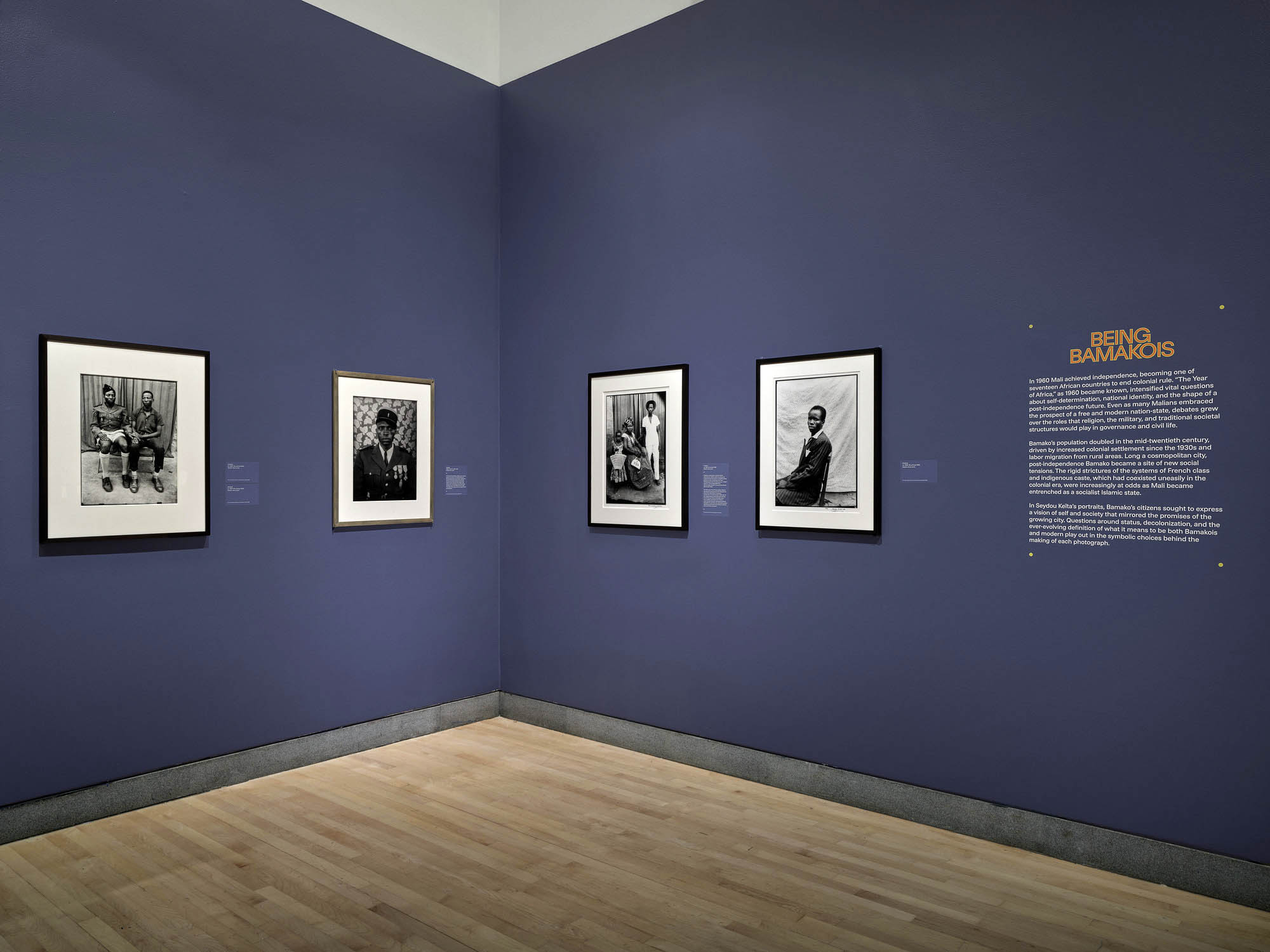
Being Bamakois

In 1960 Mali achieved independence, becoming one of seventeen African countries to end colonial rule. “The Year of Africa,” as 1960 became known, intensified vital questions about self-determination, national identity, and the shape of a post-independence future. Even as many Malians embraced the prospect of a free and modern nation-state, debates grew over the roles that religion, the military, and traditional societal structures would play in governance and civil life. 

Bamako’s population doubled in the mid-twentieth century, driven by increased colonial settlement since the 1930s and labor migration from rural areas. Long a cosmopolitan city, post-independence Bamako became a site of new social tensions. The rigid strictures of the systems of French class and indigenous caste, which had coexisted uneasily in the colonial era, were increasingly at odds as Mali became entrenched as a socialist Islamic state. 

In Seydou Keïta’s portraits, Bamako’s citizens sought to express a vision of self and society that mirrored the promises of the growing city. Questions around status, decolonisation, and the ever-evolving definition of what it means to be both Bamakois and modern play out in the symbolic choices behind the making of each photograph.


Installation view of the exhibition 'Seydou Keïta: A Tactile Lens' at the Brooklyn Museum, New York, October 2025 - May 2026


Installation views of the exhibition Seydou Keïta: A Tactile Lens at the Brooklyn Museum, New York, October 2025 – May 2026 showing in the bottom image at bottom second left, Keïta’s photograph Untitled 1957 (below)


Seydou Keïta (Malian, c. 1921-2001) 'Untitled' 1957


Seydou Keïta (Malian, c. 1921-2001)
Untitled
1957
Vintage gelatin silver print
© SKPEAC/Seydou Keïta
Courtesy The Jean Pigozzi Collection of African Art and Danziger Gallery, NY


Posing with aplomb on a Vespa – likely Keïta’s – these women have become the subjects of one of his most iconic photographs, seen here as a vintage print. They present themselves as aspirational members of the Bamako Vespa Club, whose membership was reserved for men. Expensive and rare, Vespas were costly symbols of affluence that were inaccessible to most Bamakois in the French colonial economy. Keïta, one of the club’s founders, purchased his own using earnings from his photography.


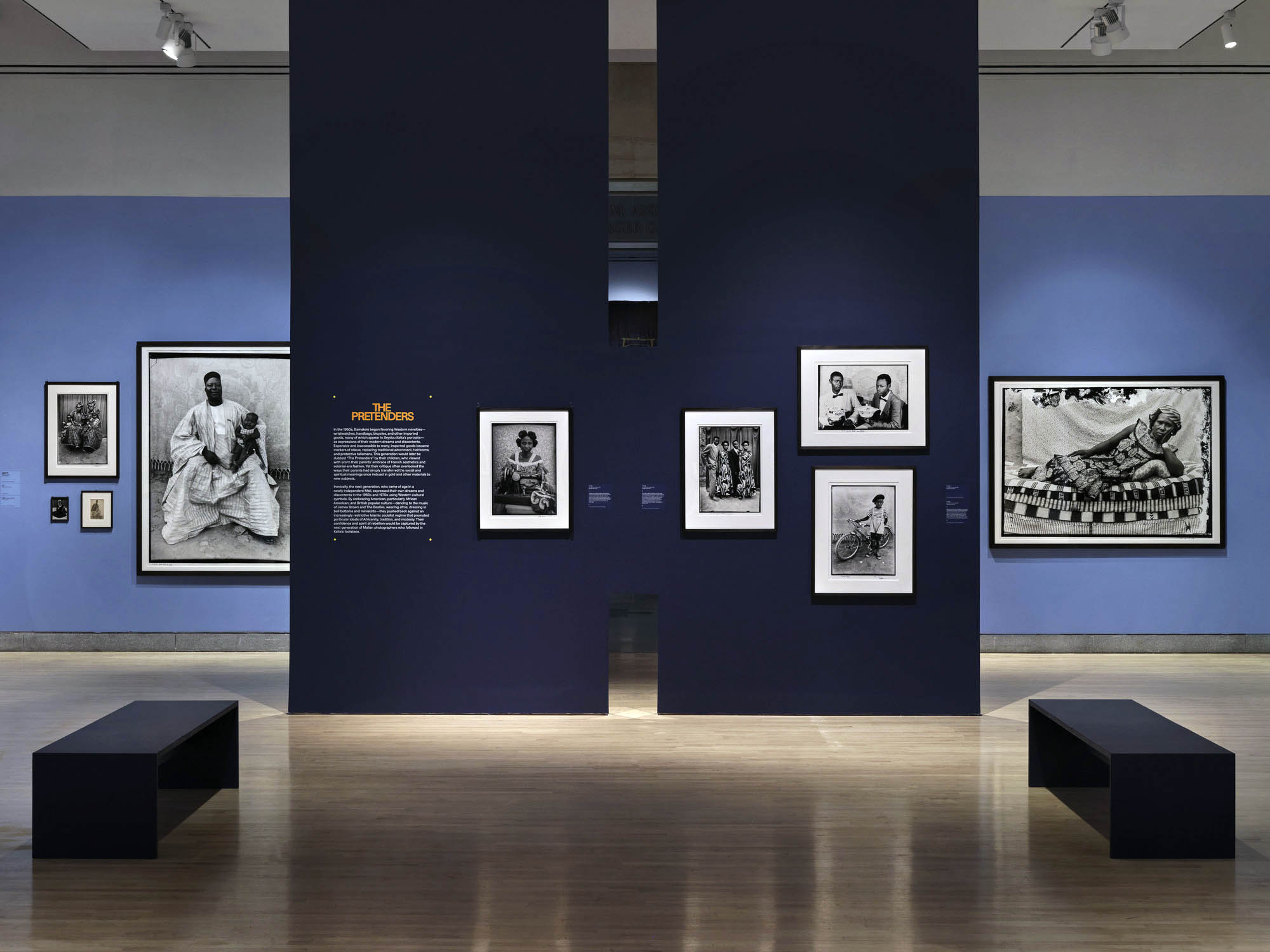
The Pretenders

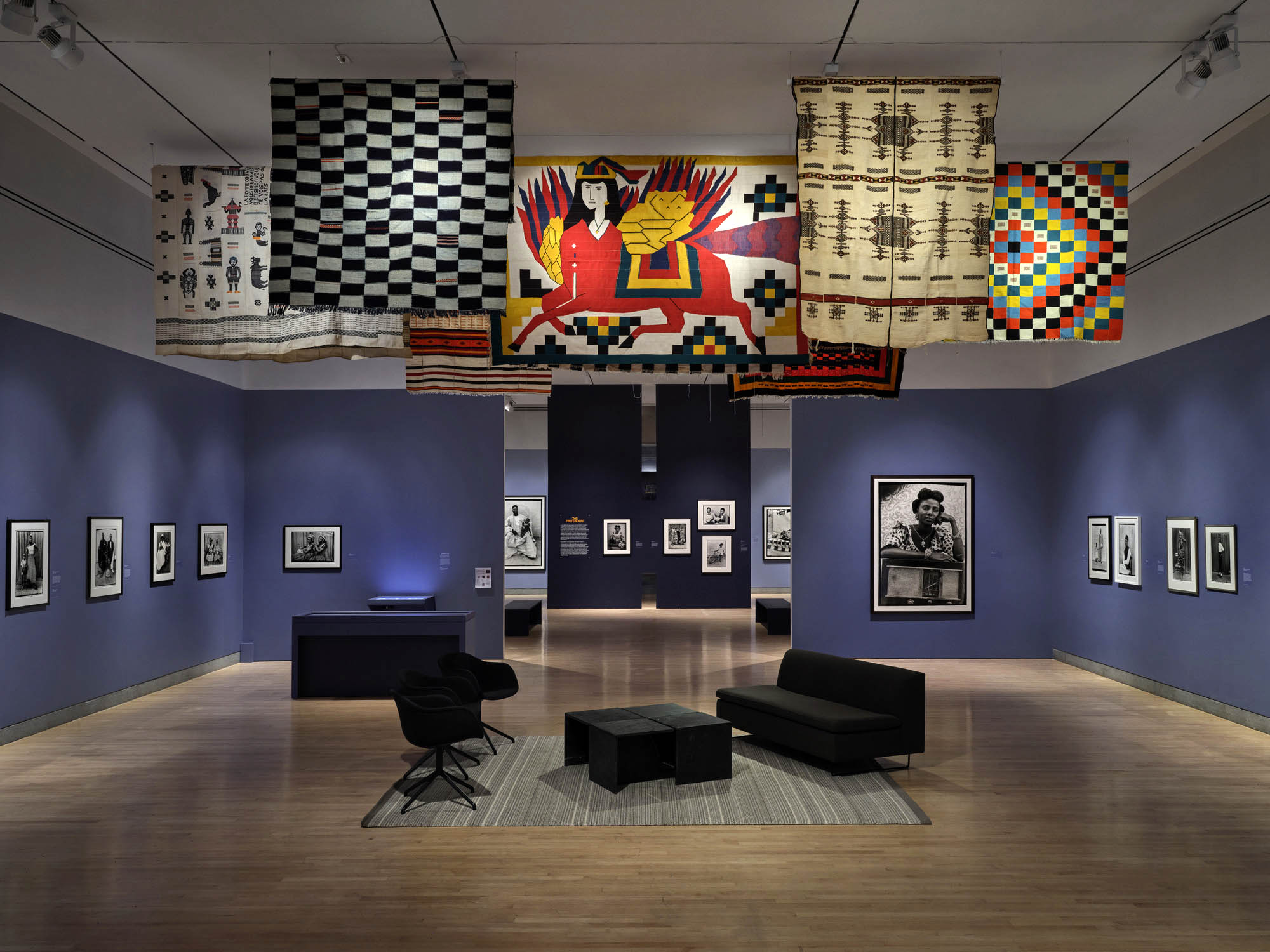
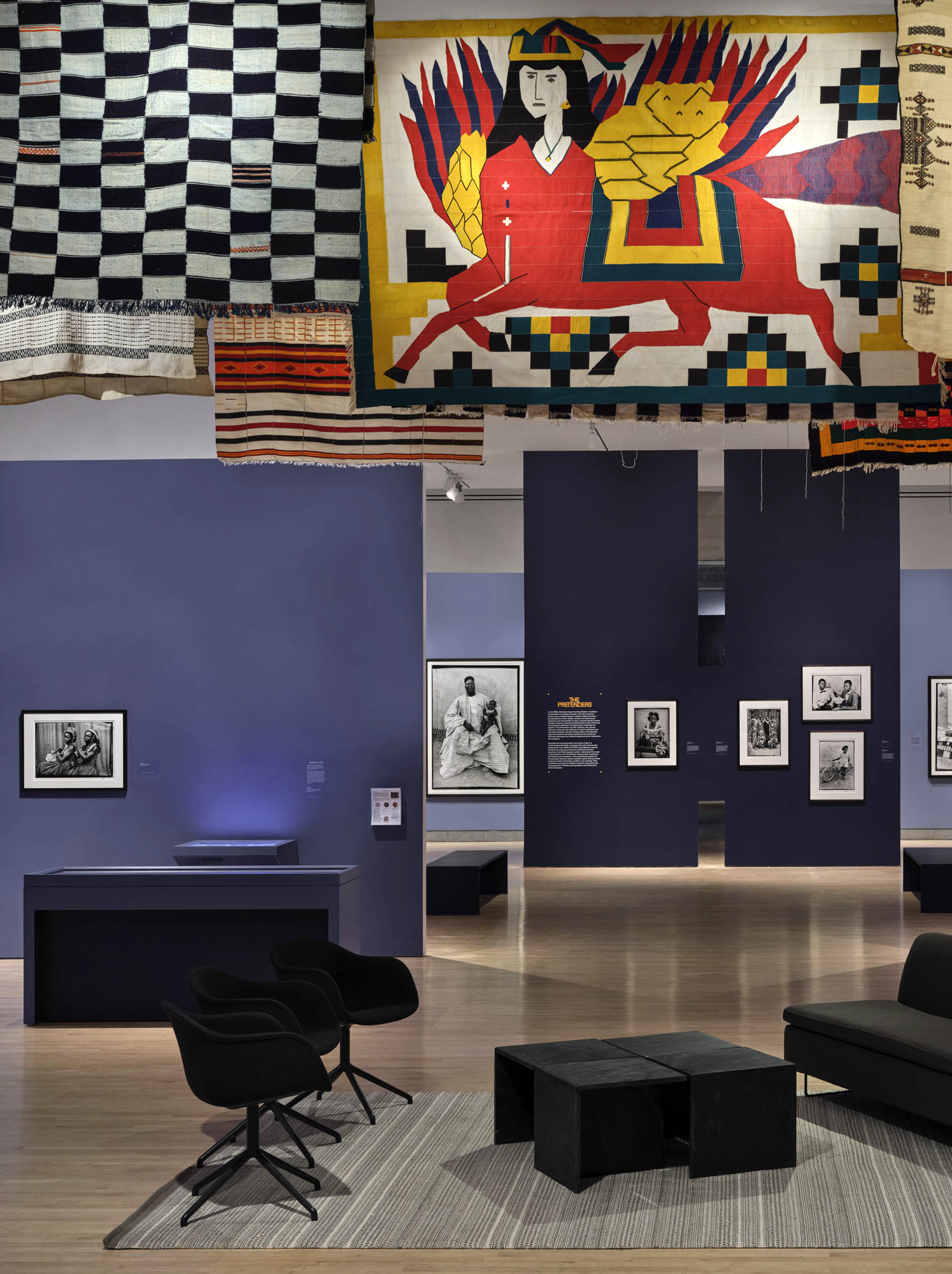
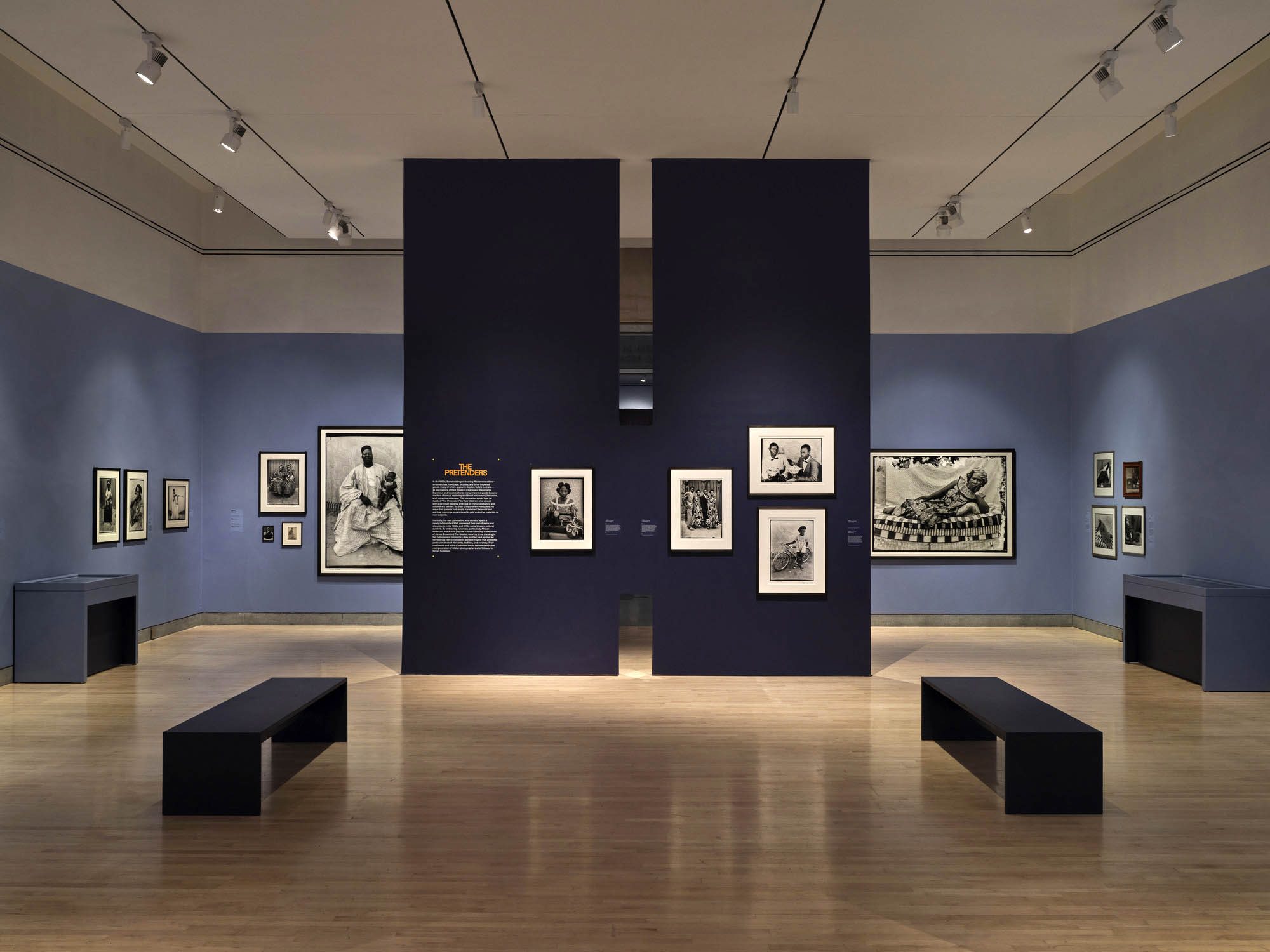
In the 1950s, Bamakois began favouring Western novelties – wristwatches, handbags, bicycles, and other imported goods, many of which appear in Seydou Keïta’s portraits – as expressions of their modern dreams and discontents. Expensive and inaccessible to many, imported goods became markers of status, replacing traditional adornment, heirlooms, and protective talismans. This generation would later be dubbed “The Pretenders” by their children, who viewed with scorn their parents’ embrace of French aesthetics and colonial-era fashion. Yet their critique often overlooked the ways their parents had simply transferred the social and spiritual meanings once imbued in gold and other materials to new subjects. 

Ironically, the next generation, who came of age in a newly independent Mali, expressed their own dreams and discontents in the 1960s and 1970s using Western cultural symbols. By embracing American, particularly African American, and British popular culture – dancing to the music of James Brown and The Beatles, wearing afros, dressing in bell bottoms and miniskirts – they pushed back against an increasingly restrictive Islamic socialist regime that promoted particular ideals of Africanity, tradition, and modesty. Their confidence and spirit of rebellion would be captured by the next generation of Malian photographers who followed in Keïta’s footsteps.

Coming of Age

Young men and women often arrived at Seydou Keïta’s studio dressed in their best clothing and adorned with jewellery that hinted at the worth of future dowries or the scale of family ambitions. They posed for portraits that became cherished mementos. Such small-format photographs were exchanged as offerings of friendship, used in matchmaking and marriage proposals, and commemorated births and weddings. They also served as keepsakes of religious holidays such as Eid and Tabaski (Eid al-Adha). Together, the works on view celebrate the beauty of youth and the significance of coming of age – moments of transformation, growth, and entry into adulthood.

The Elegants

Seydou Keïta’s subjects radiate elegance in every photograph, resplendent in tailor-made ensembles that reflect the wearer’s ingenuity and creativity. Many of the outfits seen in Keïta’s portraits blend handwoven West African textiles with Islamic fabrics and imported European cloth, often in inventive ways. Whether made from velvet, Dutch wax print, or eyelet lace, a gown could always be paired with a traditional pagne (wrapper) showing at the hem, adding the requisite touch of beauty. The men, women, and youths on view present themselves as mirrors to the cultural syncretism and self-invention of mid-twentieth-century Bamako. 

As the Islamic socialist regime rose to power in the 1960s and 1970s, it began imposing increased restrictions on dress, enacting punishments and “re-education” for the wearing of Western or secular clothing. Keïta’s portraits capture a brief window just before these strictures took hold – a moment when his sitters fashioned an expression entirely their own. He helped document, in the words of Nigerian art critic Okwui Enwezor, fashion’s power to offer people a means of “resistance to confining oneself.”


Seydou Keïta (Malian, c. 1921-2001) 'Untitled' 1959, printed c. 1994-2001


Seydou Keïta (Malian, c. 1921-2001)
Untitled
1959, printed, c. 1994-2001
Gelatin silver print
© SKPEAC/Seydou Keïta
Courtesy The Jean Pigozzi Collection of African Art and Danziger Gallery, NY


Delicately presenting a plastic flower, this man exudes elegance and poise in his double-breasted suit, silk handkerchief and fountain pen tucked neatly in his breast pocket. He meets the camera’s gaze with inviting eyes that exude a quiet openness. His confident, relaxed presence speaks to Keïta’s gift for making his subjects feel at ease – enabling them to fully express themselves in front of the camera.


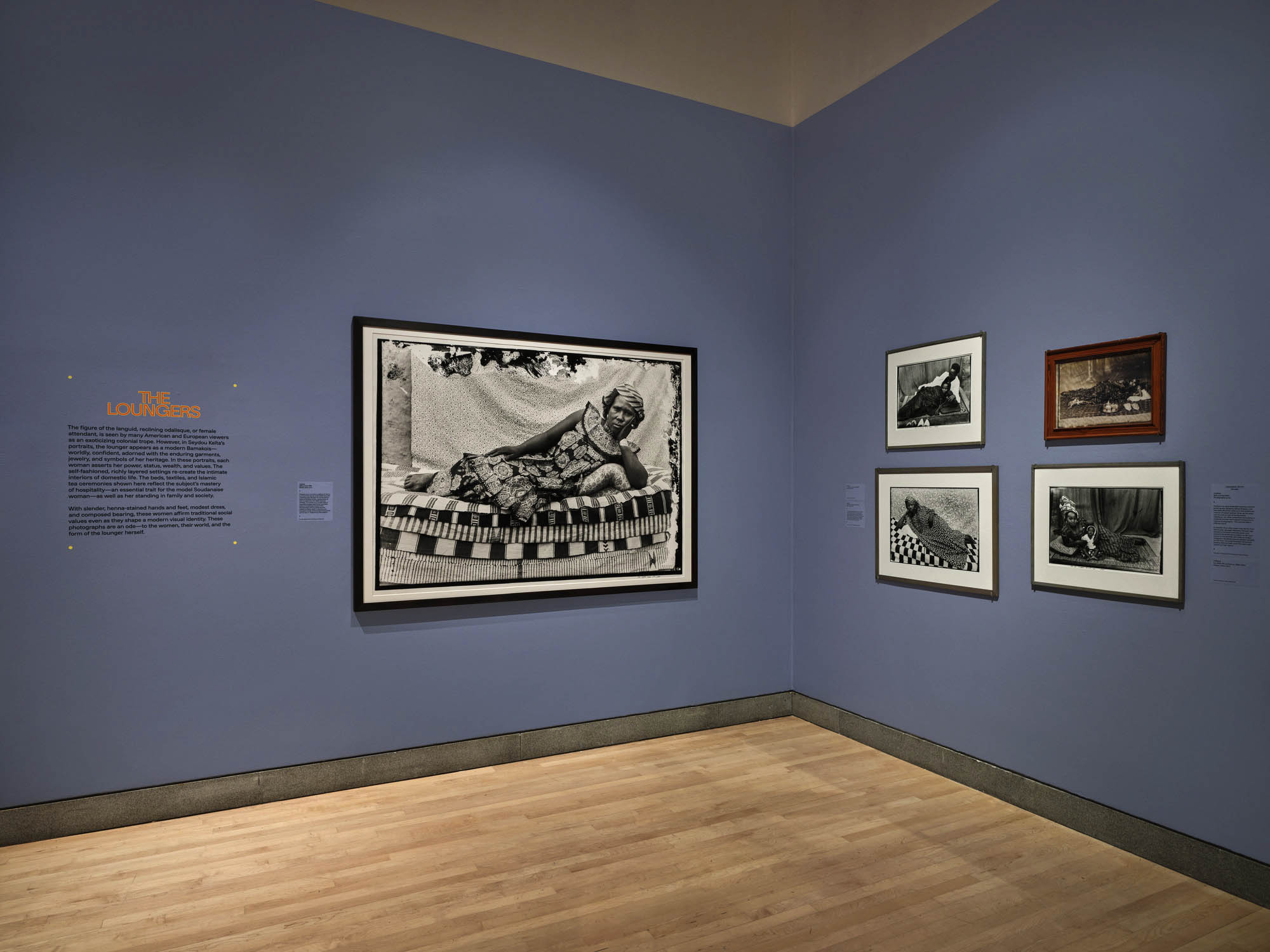
The Loungers

The figure of the languid, reclining odalisque, or female attendant, is seen by many American and European viewers as an exoticizing colonial trope. However, in Seydou Keïta’s portraits, the lounger appears as a modern Bamakois – worldly, confident, adorned with the enduring garments, jewellery, and symbols of her heritage. In these portraits, each woman asserts her power, status, wealth, and values. The self-fashioned, richly layered settings re-create the intimate interiors of domestic life. The beds, textiles, and Islamic tea ceremonies shown here reflect the subject’s mastery of hospitality – an essential trait for the model Soudanaise woman – as well as her standing in family and society. 

With slender, henna-stained hands and feet, modest dress, and composed bearing, these women affirm traditional social values even as they shape a modern visual identity. These photographs are an ode – to the women, their world, and the form of the lounger herself.


Installation view of the exhibition 'Seydou Keïta: A Tactile Lens' at the Brooklyn Museum, New York, October 2025 - May 2026 showing at second right bottom, Keïta's photograph 'Untitled' 1953-1957


Installation view of the exhibition Seydou Keïta: A Tactile Lens at the Brooklyn Museum, New York, October 2025 – May 2026 showing at second right bottom, Keïta’s photograph Untitled 1953-1957 (below)


Seydou Keïta (Malian, c. 1921-2001) 'Untitled' 1953-1957, printed c. 1994-2001


Seydou Keïta (Malian, c. 1921-2001)
Untitled
1953-1957, printed c. 1994-2001
Gelatin silver print
© SKPEAC/Seydou Keïta
Courtesy The Jean Pigozzi Collection of African Art and Danziger Gallery, NY


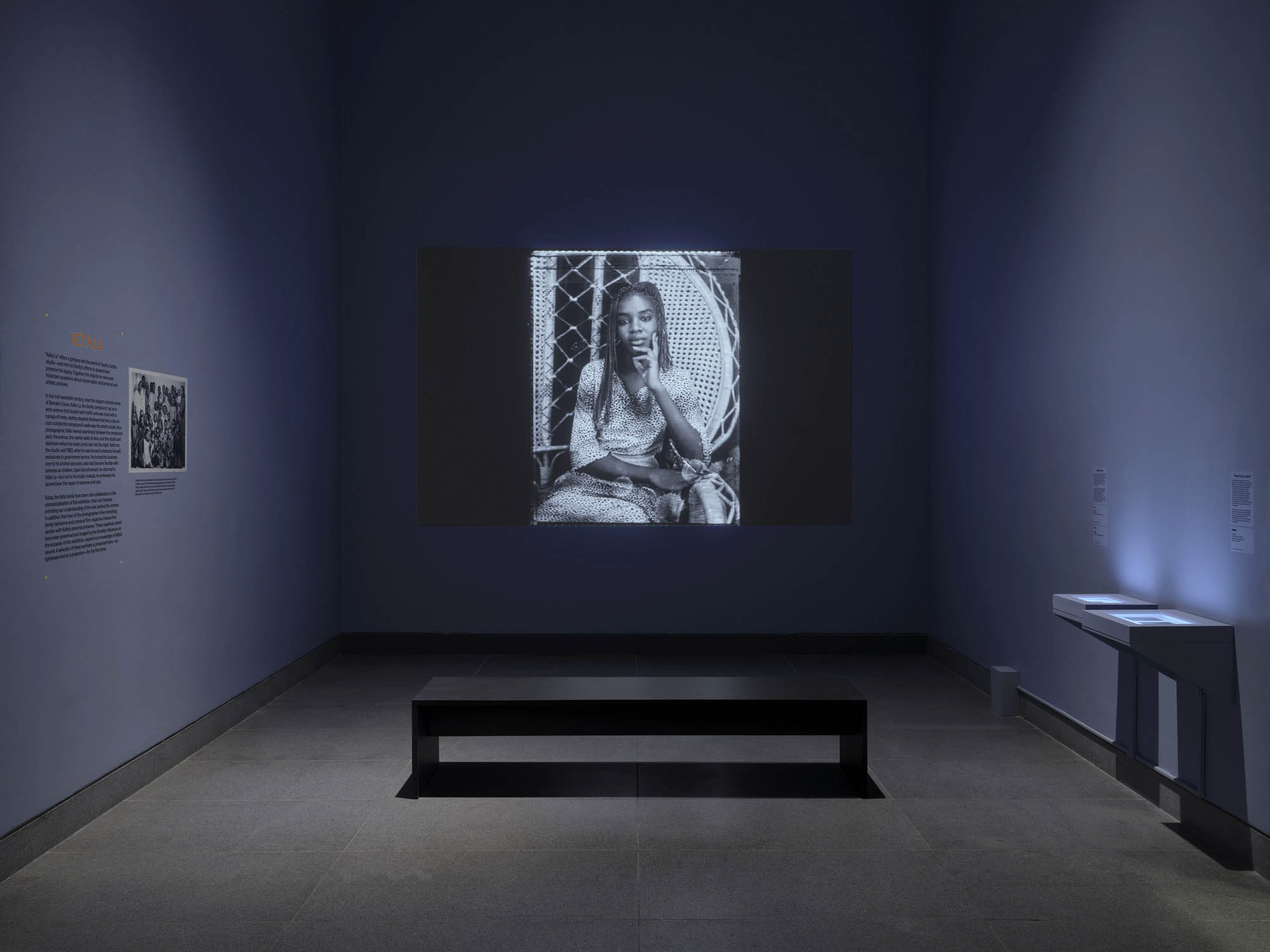
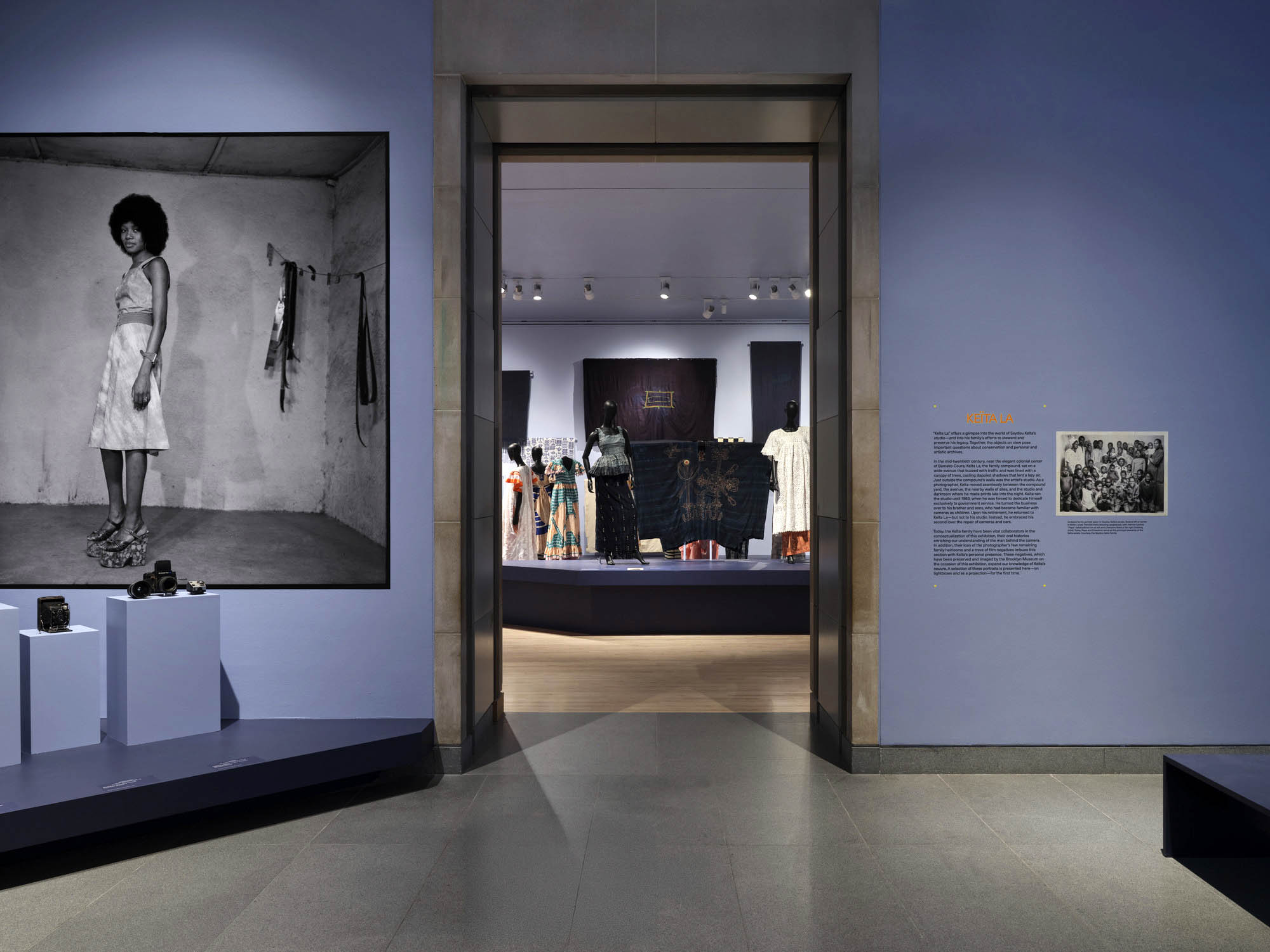
Keïta La

“Keïta La” offers a glimpse into the world of Seydou Keïta’s studio – and into his family’s efforts to steward and preserve his legacy. Together, the objects on view pose important questions about conservation and personal and artistic archives.

In the mid-twentieth century, near the elegant colonial centre of Bamako-Coura, Keïta La, the family compound, sat on a wide avenue that buzzed with traffic and was lined with a canopy of trees, casting dappled shadows that lent a lazy air. Just outside the compound’s walls was the artist’s studio. As a photographer, Keïta moved seamlessly between the compound yard, the avenue, the nearby walls of sites, and the studio and darkroom where he made prints late into the night. Keïta ran the studio until 1963, when he was forced to dedicate himself exclusively to government service. He turned the business over to his brother and sons, who had become familiar with cameras as children. Upon his retirement, he returned to Keïta La – but not to his studio. Instead, he embraced his second love: the repair of cameras and cars.

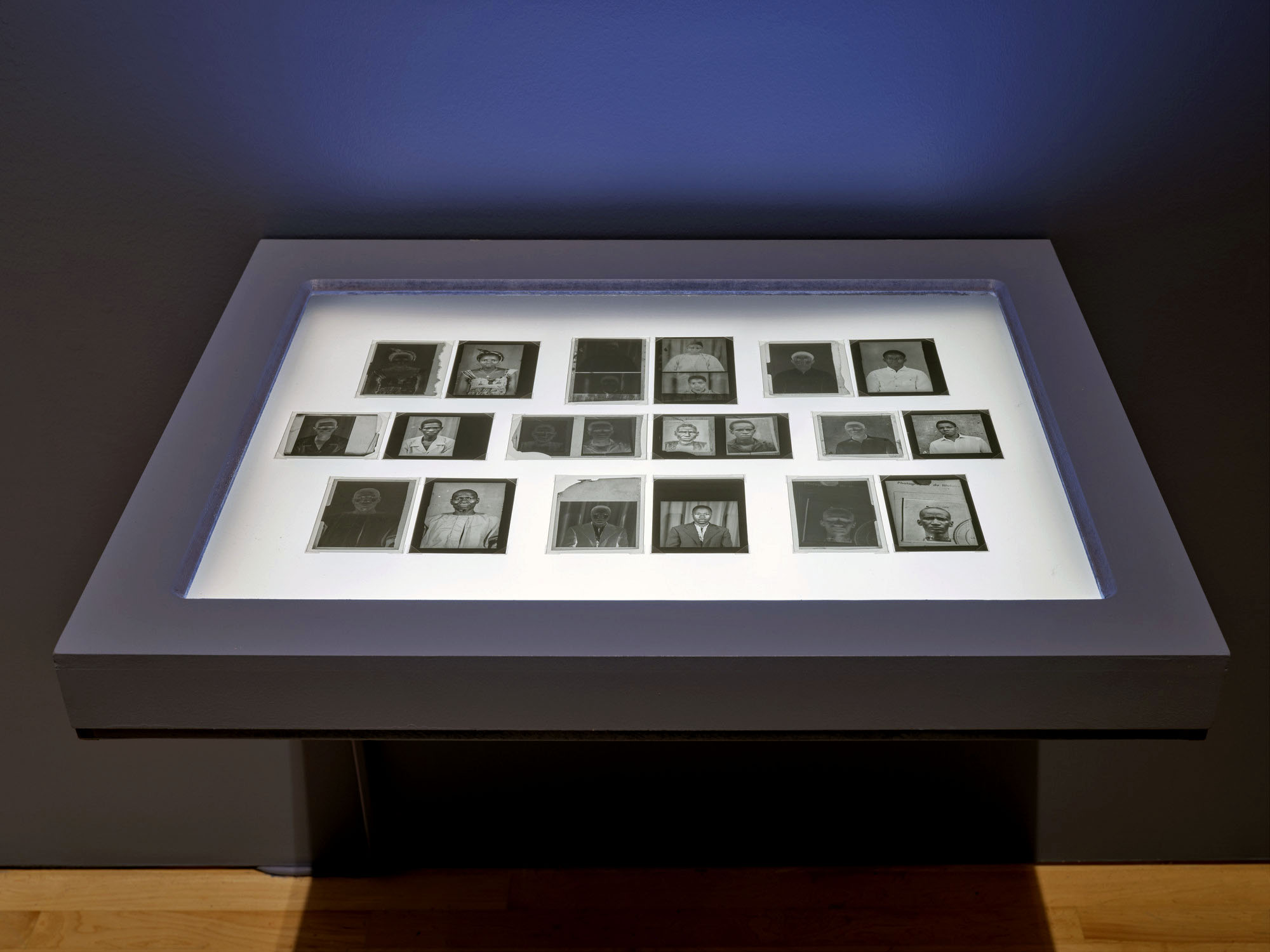
Today, the Keïta family have been vital collaborators in the conceptualisation of this exhibition, their oral histories enriching our understanding of the man behind the camera. In addition, their loan of the photographer’s few remaining family heirlooms and a trove of film negatives imbues this section with Keïta’s personal presence. These negatives, which have been preserved and imaged by the Brooklyn Museum on the occasion of this exhibition, expand our knowledge of Keïta’s oeuvre. A selection of these portraits is presented here – on lightboxes and as a projection – for the first time.


Installation view of the exhibition 'Seydou Keïta: A Tactile Lens' at the Brooklyn Museum, New York, October 2025 - May 2026 showing text for the section "Keïta La" on the left hand wall, as well as the photograph 'Undated family portrait taken in Seydou Keïta's studio'


Installation view of the exhibition Seydou Keïta: A Tactile Lens at the Brooklyn Museum, New York, October 2025 – May 2026 showing text for the section “Keïta La” on the left hand wall, as well as the photograph Undated family portrait taken in Seydou Keïta’s studio (below)


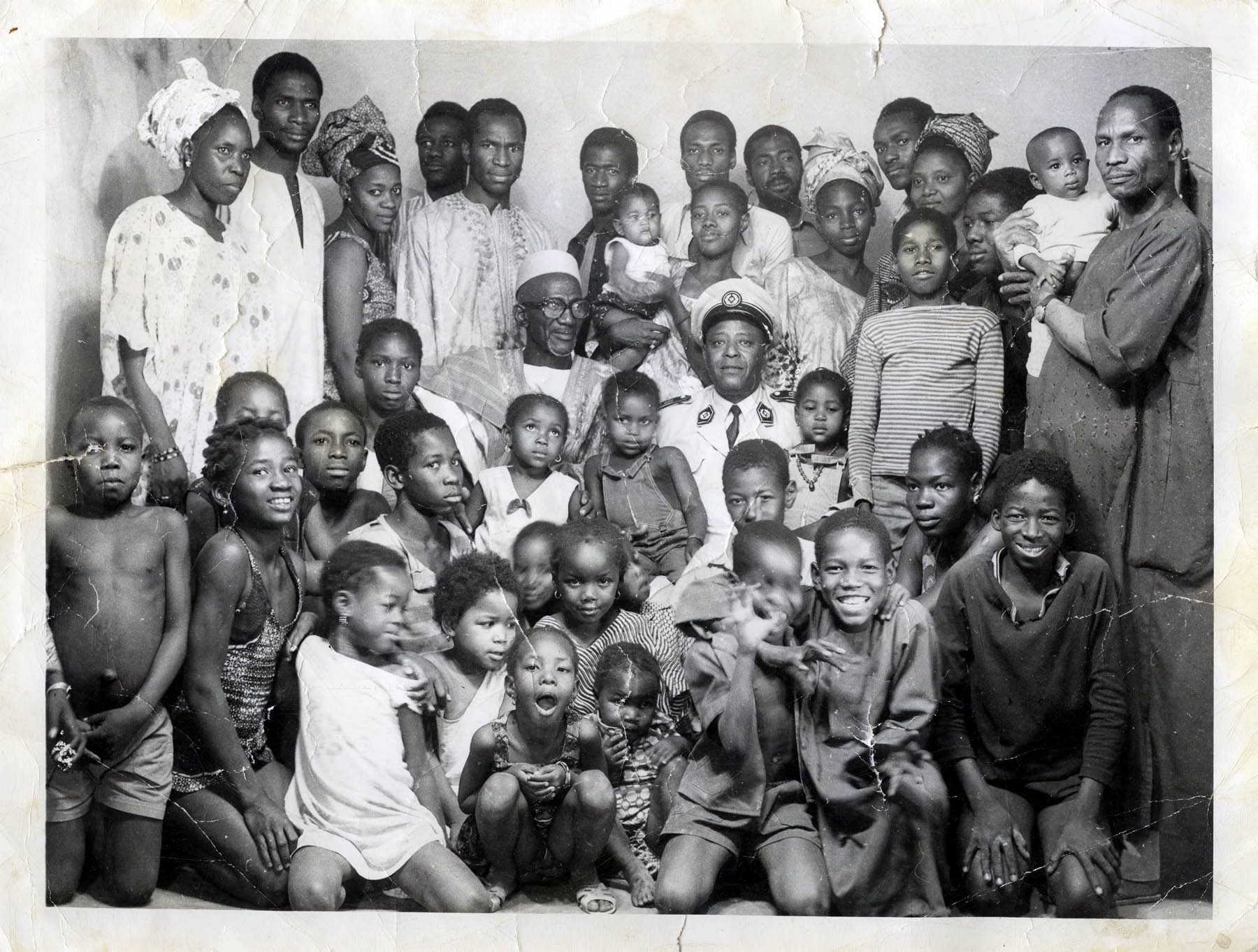
Undated family portrait taken in Seydou Keïta's studio


Undated family portrait taken in Seydou Keïta’s studio
Seated left of centre is Keïta’s uncle Tièmòkò Keïta (wearing eyeglasses), with Hamed Lamine “Papa” Keïta behind him at left and Cheickine Keïta at far right (holding child). Today, Papa and Cheickine serve as the principal stewards of the Keïta estate
Courtesy the Seydou Keïta Family


Installation view of the exhibition 'Seydou Keïta: A Tactile Lens' at the Brooklyn Museum, New York, October 2025 - May 2026 showing at left, Keïta's photograph 'Untitled' late 1940s to mid-1970s; and at right, text for the section "Keïta La" together with the photograph 'Undated family portrait taken in Seydou Keïta's studio'


Installation view of the exhibition Seydou Keïta: A Tactile Lens at the Brooklyn Museum, New York, October 2025 – May 2026 showing at left, Keïta’s photograph Untitled late 1940s to mid-1970s (below); and at right, text for the section “Keïta La” together with the photograph Undated family portrait taken in Seydou Keïta’s studio (above)


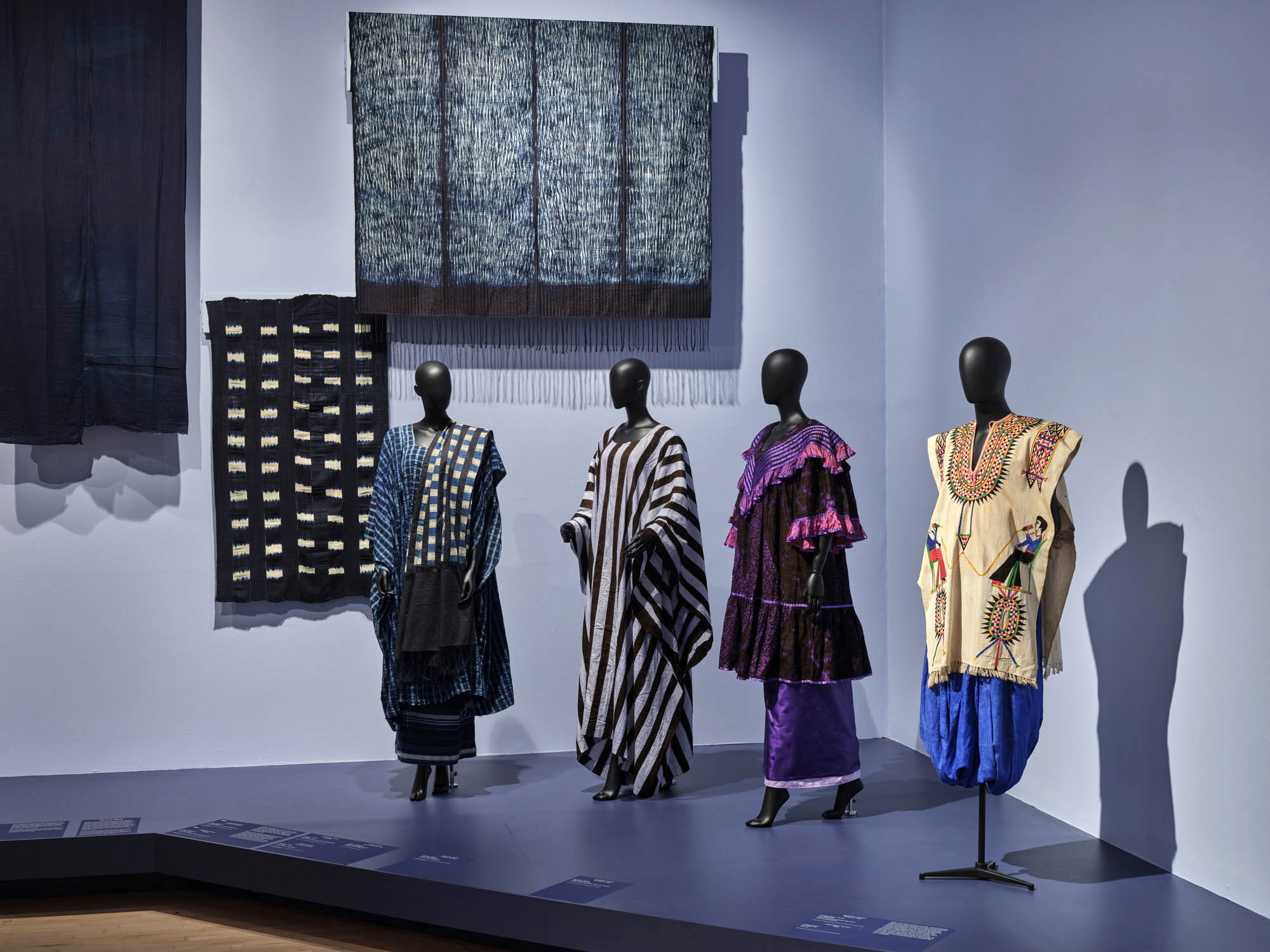
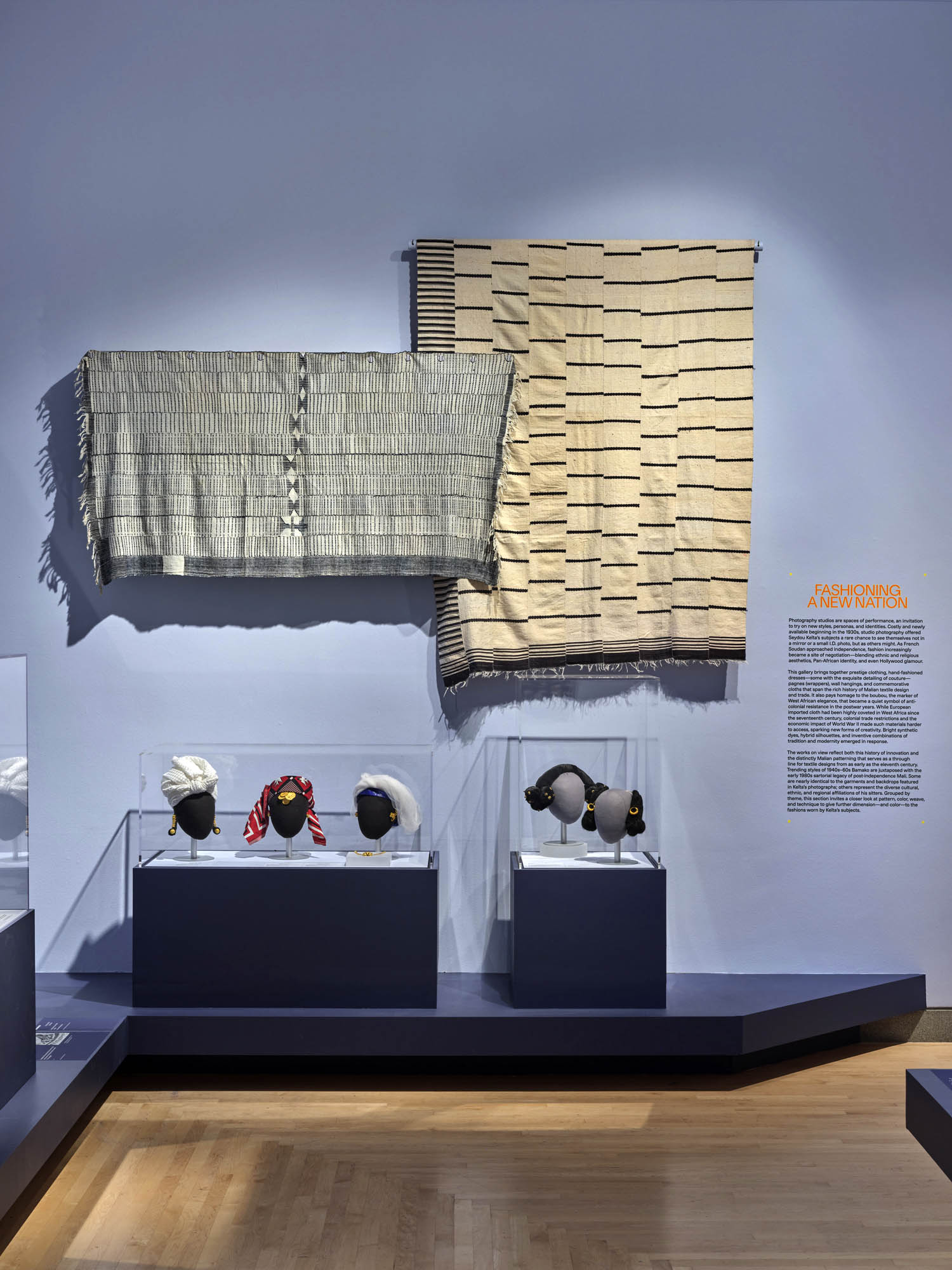
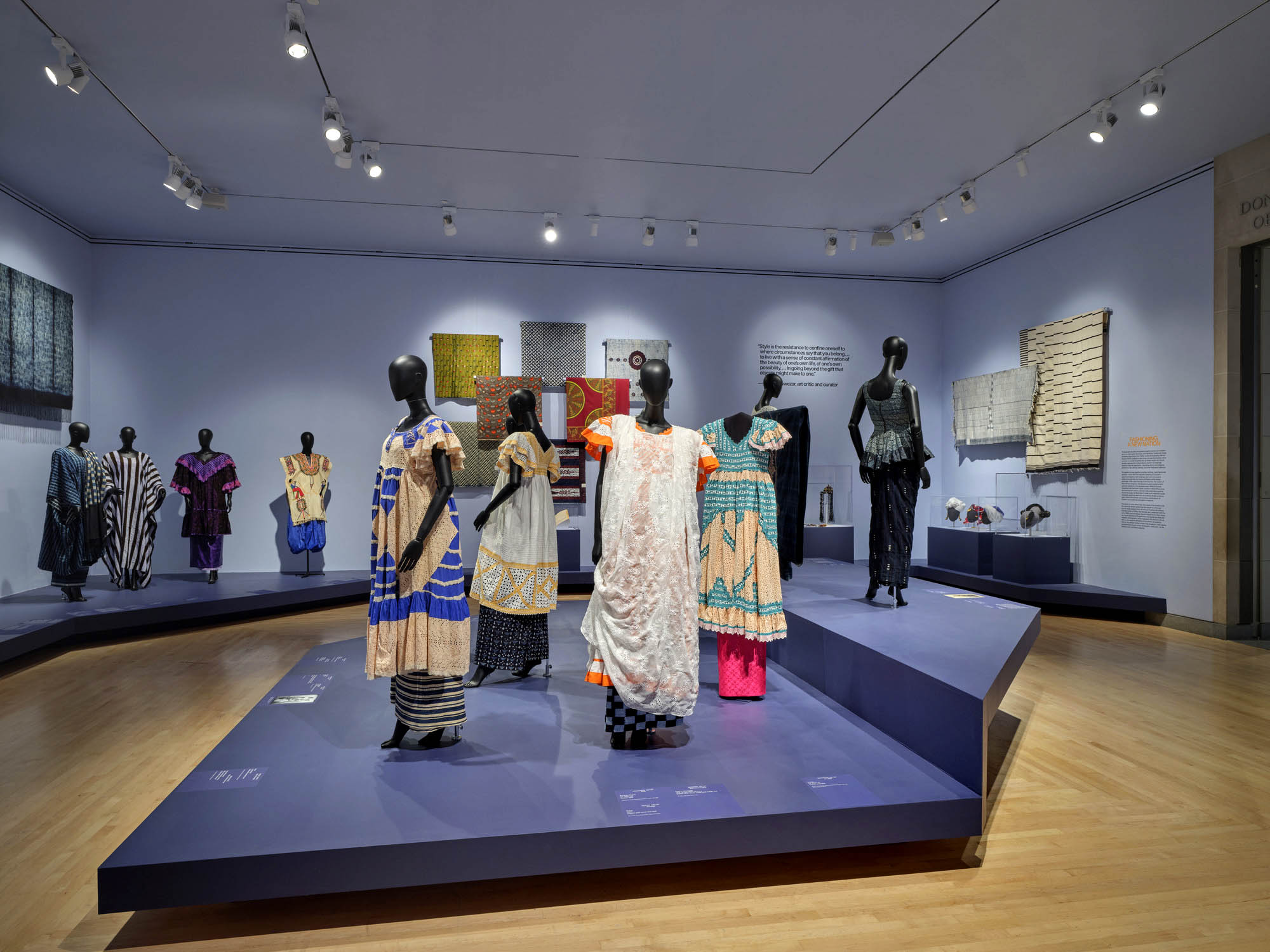
Fashioning A New Nation

Photography studios are spaces of performance, an invitation to try on new styles, personas, and identities. Costly and newly available beginning in the 1930s, studio photography offered Seydou Keïta’s subjects a rare chance to see themselves not in a mirror or a small I.D. photo, but as others might. As French Soudan approached independence, fashion increasingly became a site of negotiation – blending ethnic and religious aesthetics, Pan-African identity, and even Hollywood glamour. 

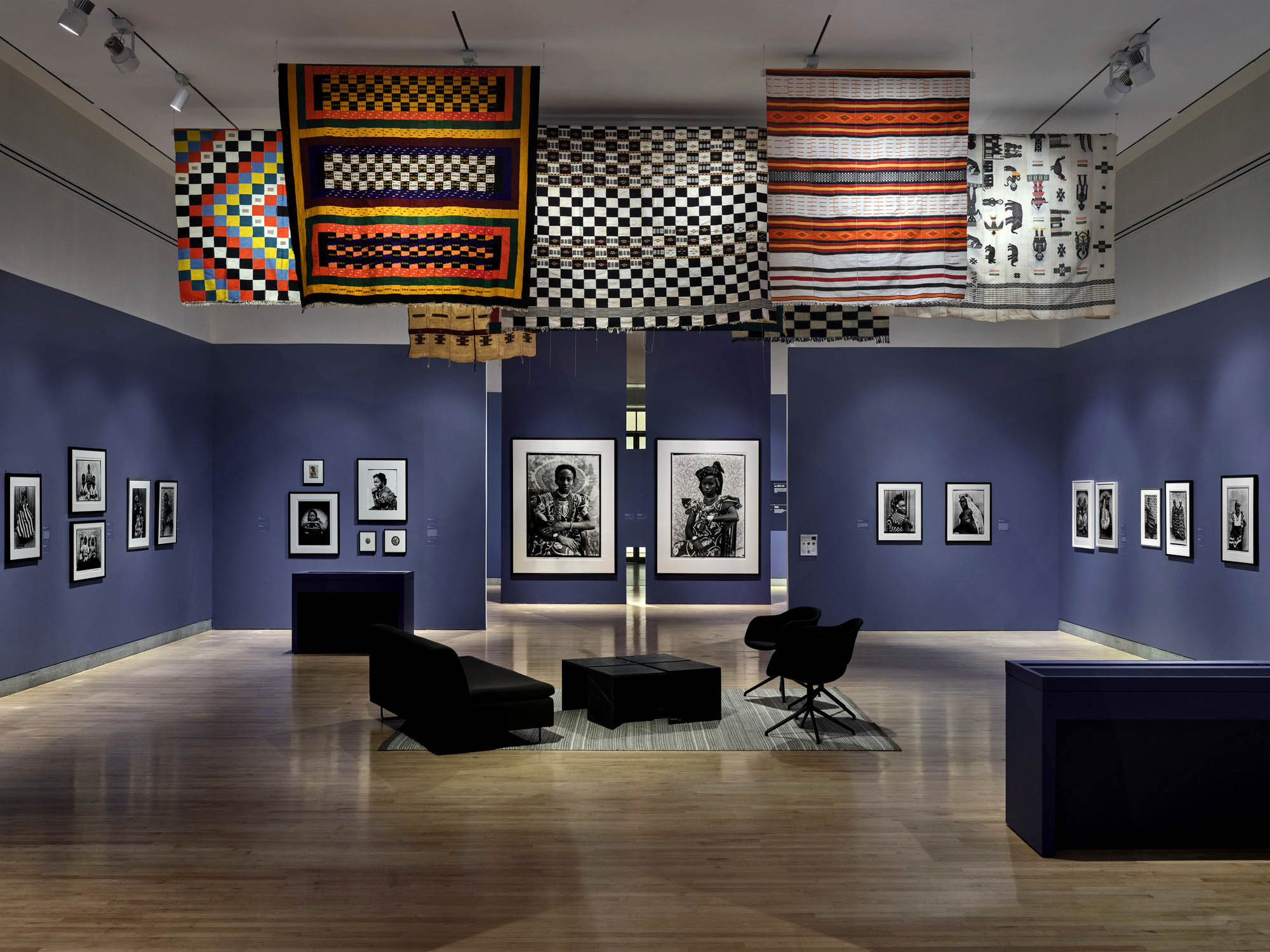
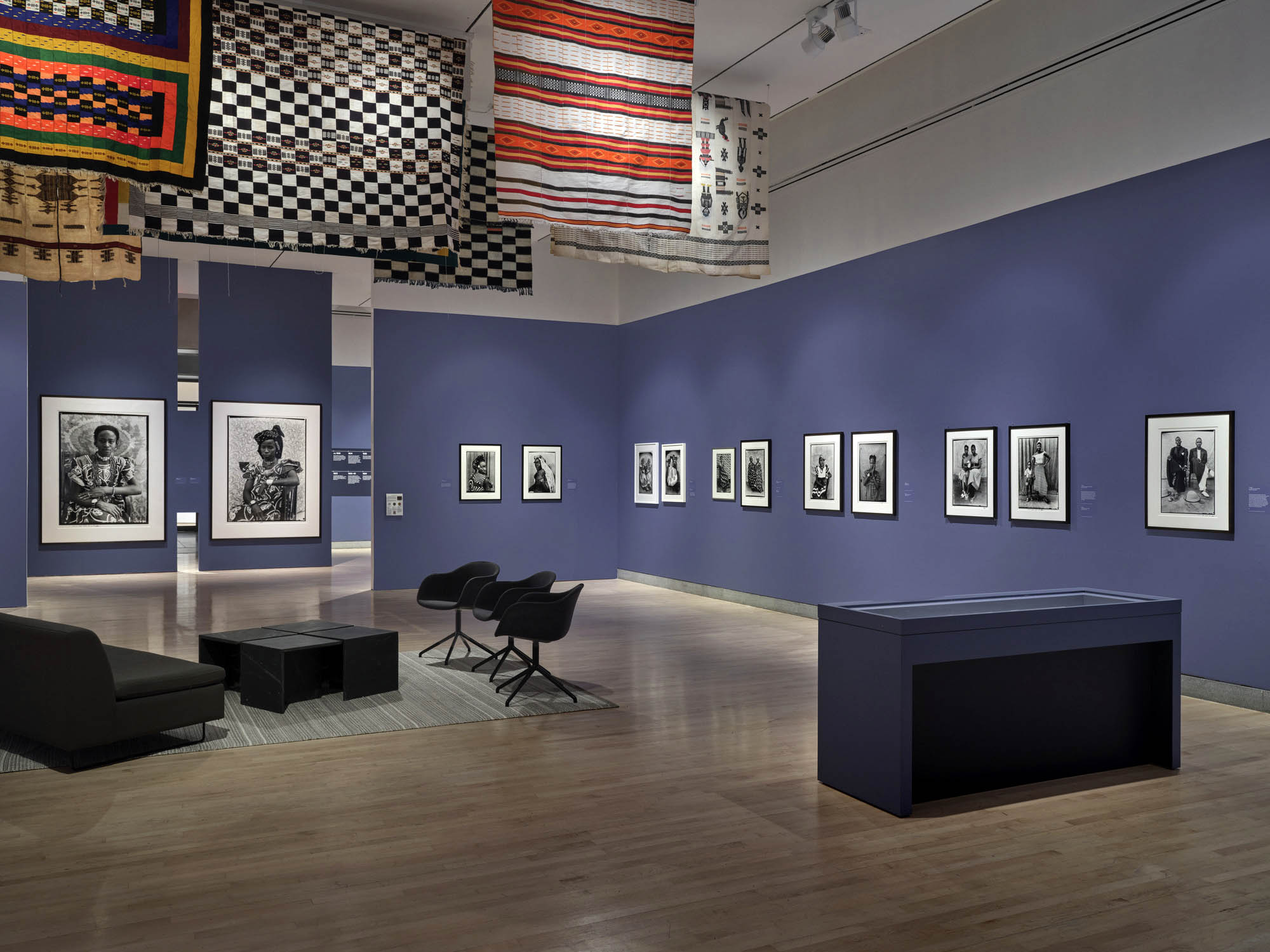
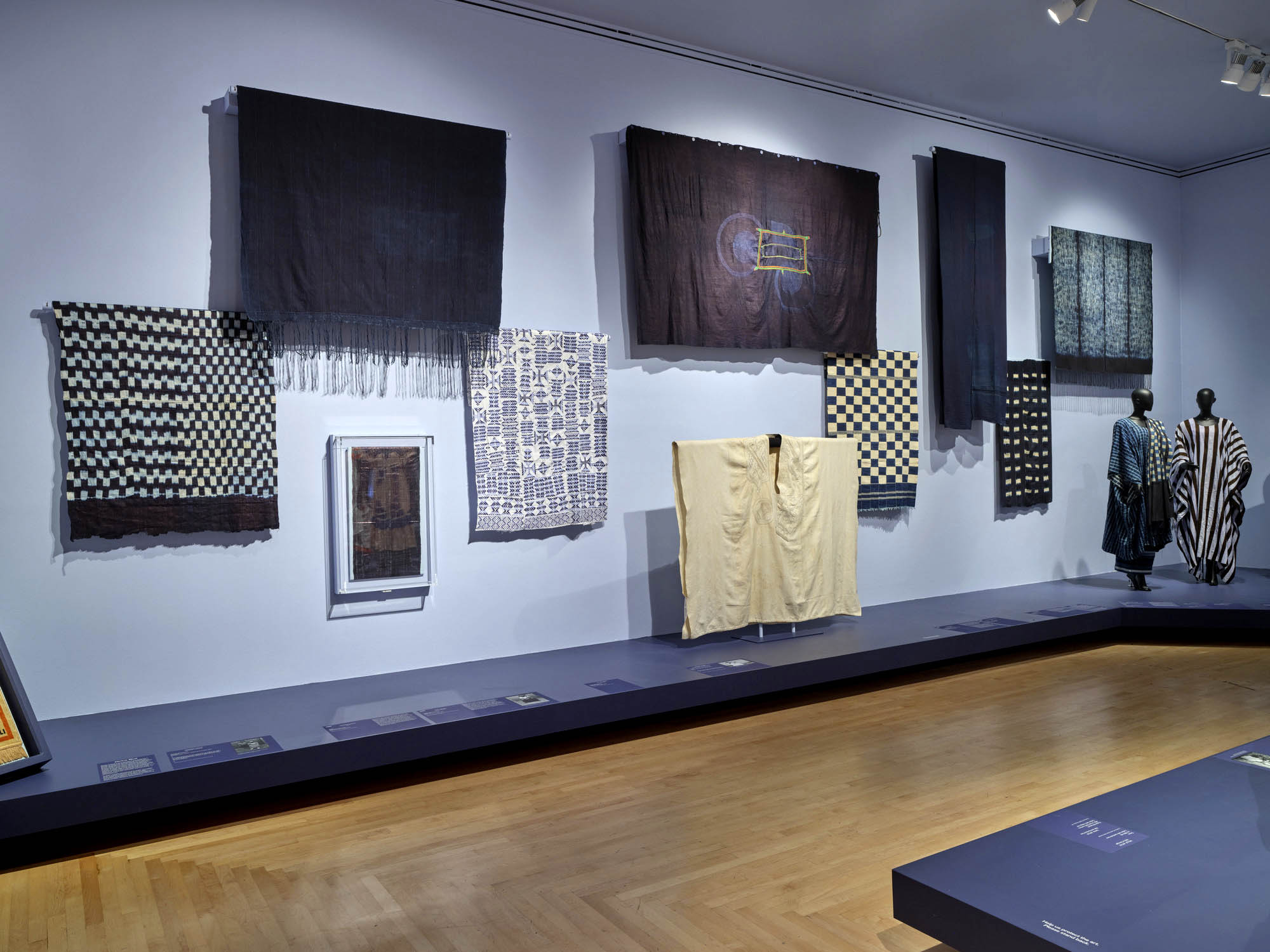
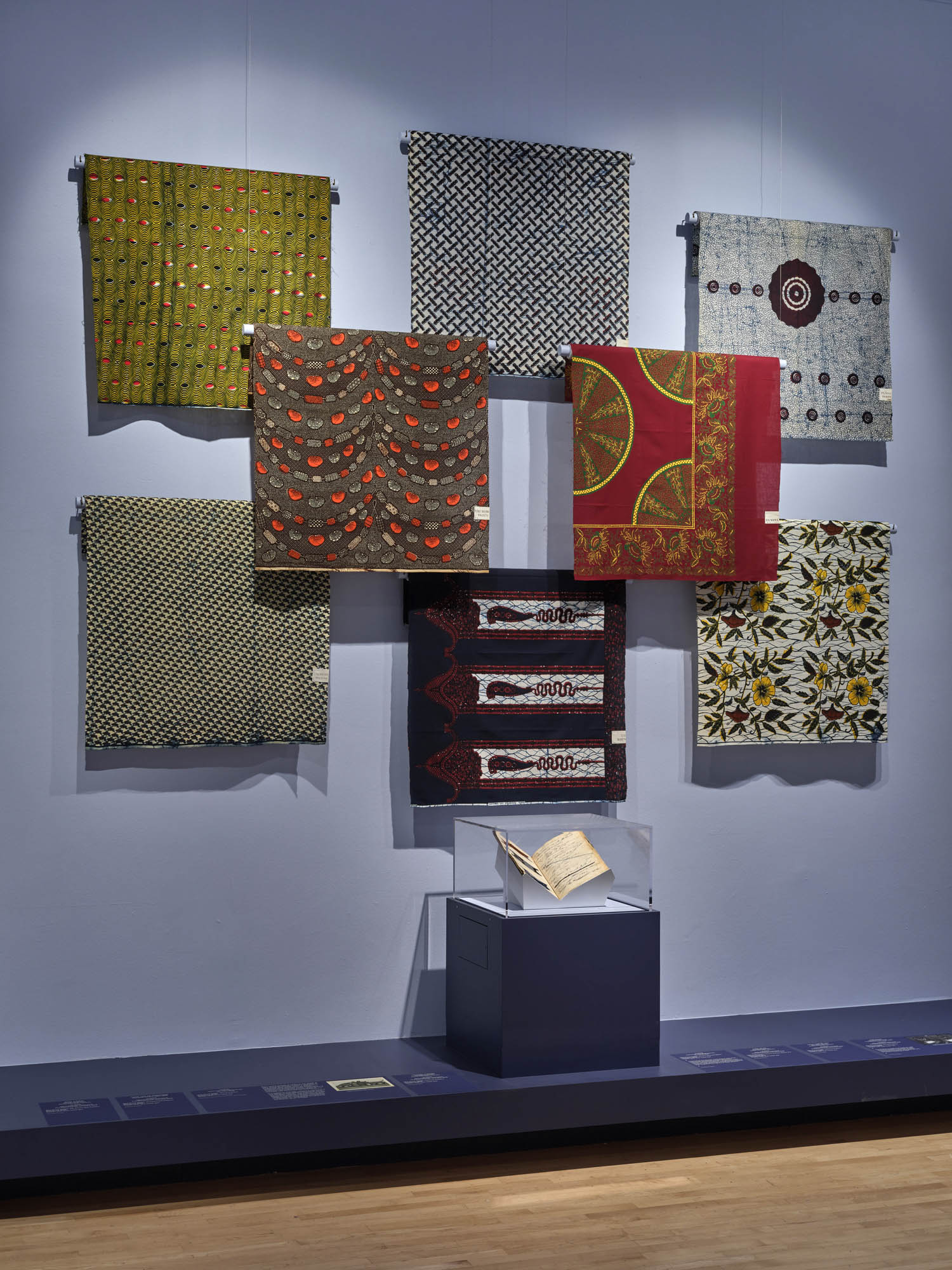
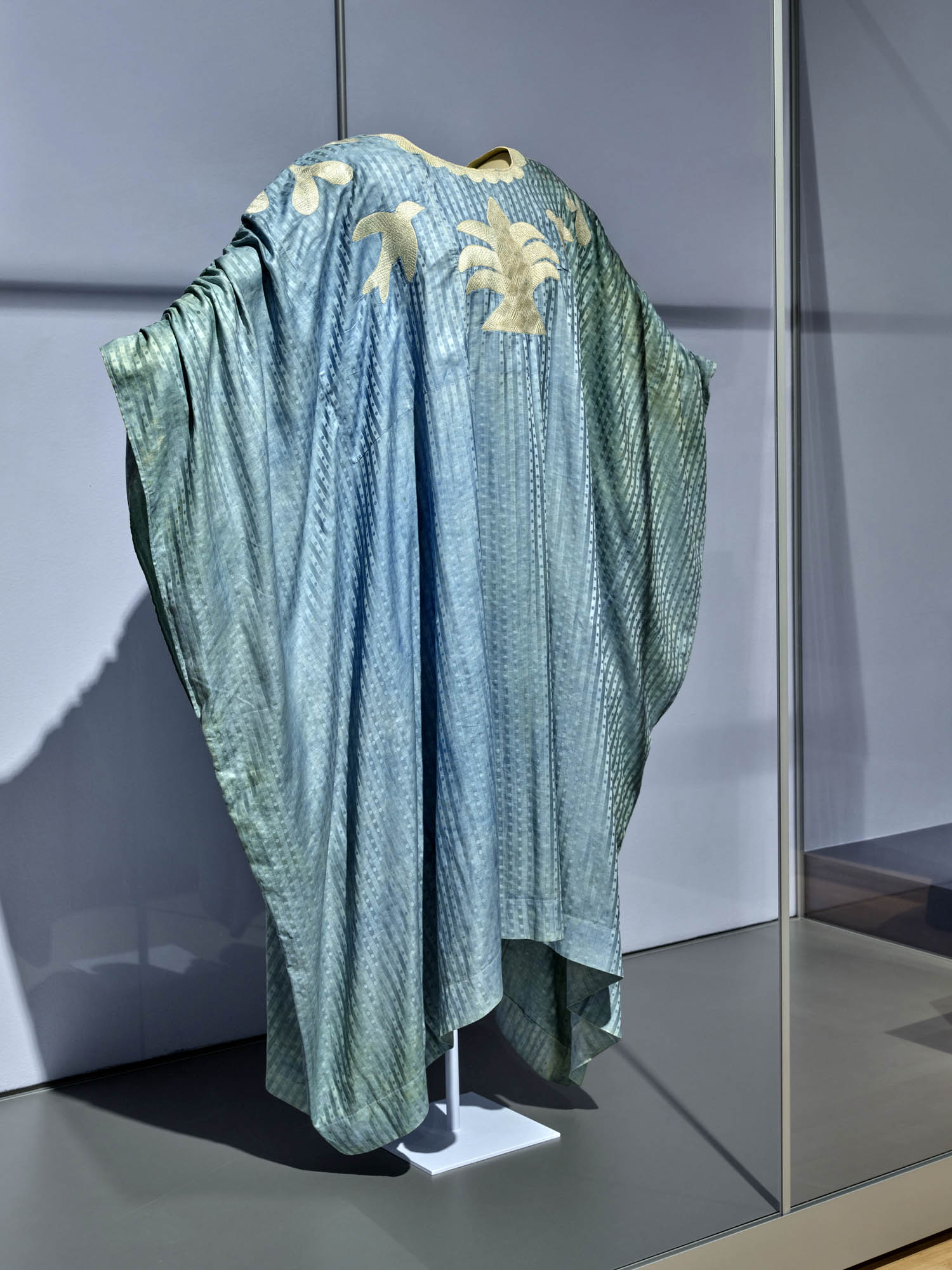
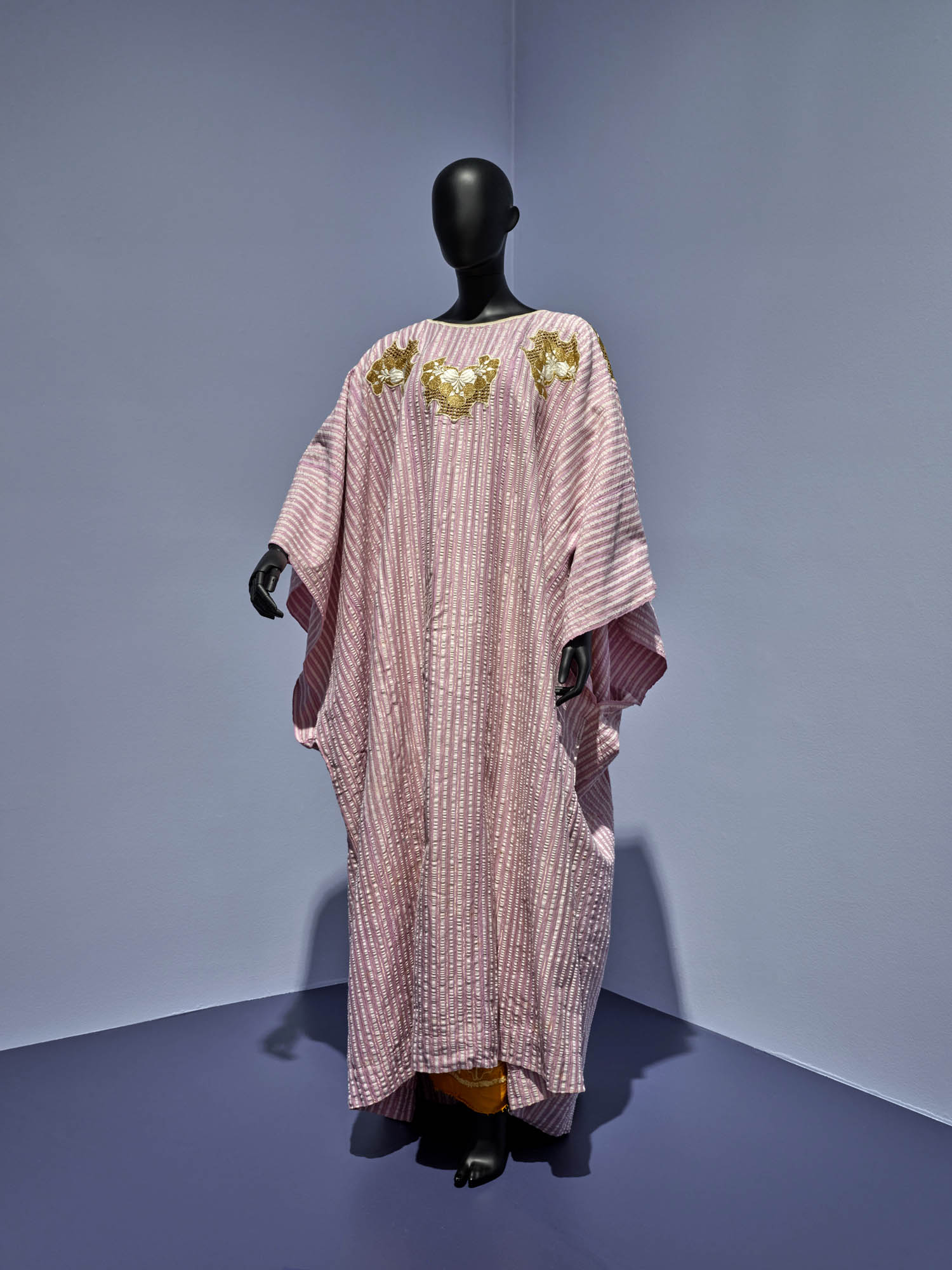
This gallery brings together prestige clothing, hand-fashioned dresses – some with the exquisite detailing of couture – pagnes (wrappers), wall hangings, and commemorative cloths that span the rich history of Malian textile design and trade. It also pays homage to the boubou, the marker of West African elegance, that became a quiet symbol of anti-colonial resistance in the postwar years. While European imported cloth had been highly coveted in West Africa since the seventeenth century, colonial trade restrictions and the economic impact of World War II made such materials harder to access, sparking new forms of creativity. Bright synthetic dyes, hybrid silhouettes, and inventive combinations of tradition and modernity emerged in response. 

The works on view reflect both this history of innovation and the distinctly Malian patterning that serves as a through line for textile designs from as early as the eleventh century. Trending styles of 1940s-60s Bamako are juxtaposed with the early 1980s sartorial legacy of post-independence Mali. Some are nearly identical to the garments and backdrops featured in Keïta’s photographs; others represent the diverse cultural, ethnic, and regional affiliations of his sitters. Grouped by theme, this section invites a closer look at pattern, colour, weave, and technique to give further dimension – and colour – to the fashions worn by Keïta’s subjects.


Installation view of the exhibition 'Seydou Keïta: A Tactile Lens' at the Brooklyn Museum, New York, October 2025 - May 2026


Installation views of the exhibition Seydou Keïta: A Tactile Lens at the Brooklyn Museum, New York, October 2025 – May 2026 showing text from the section “Fashioning A New Nation”


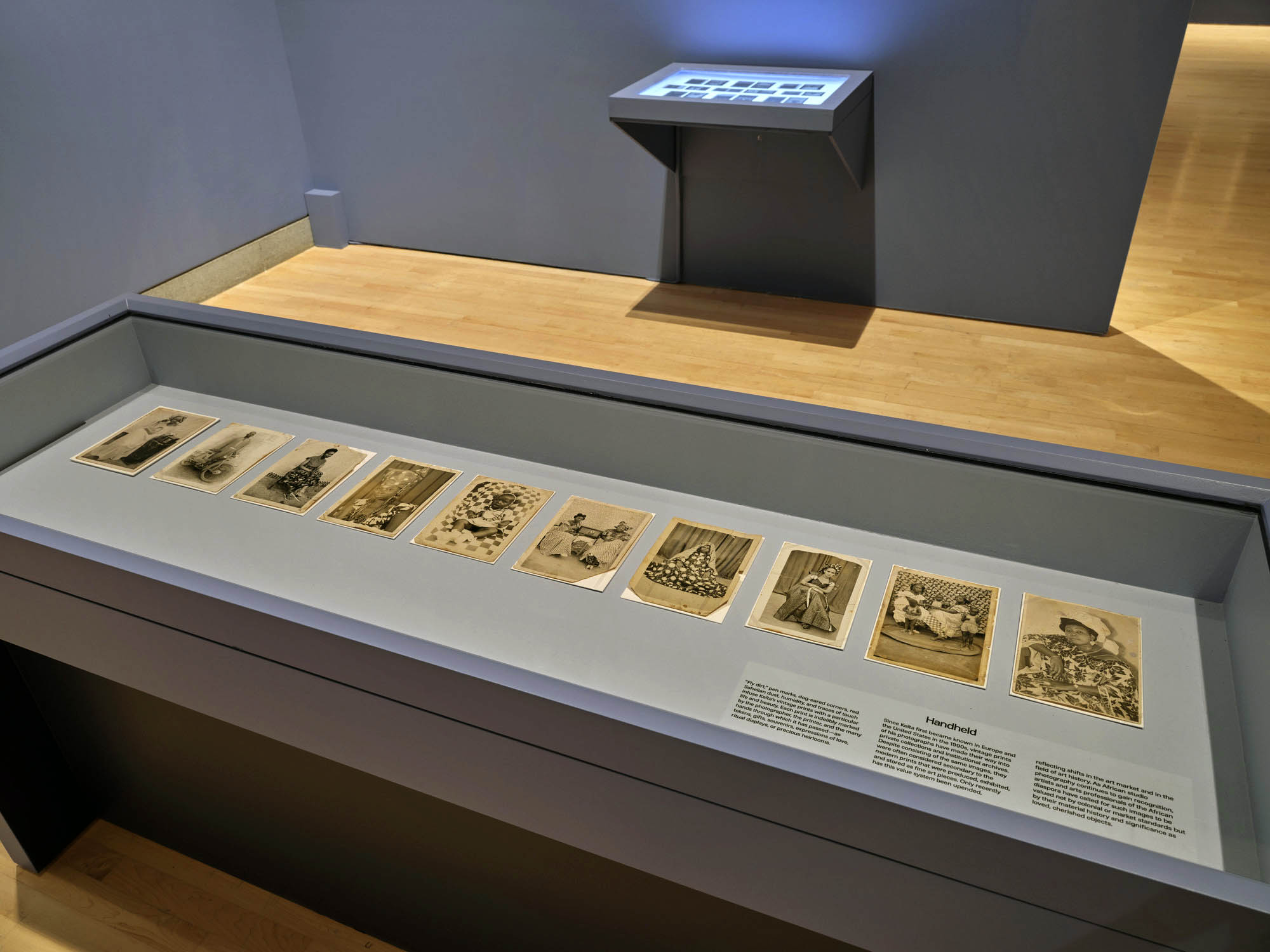
Handheld

“Fly dirt,” pen marks, dog-eared corners, red Sahelian dust, humidity, and traces of touch infuse Keïta’s vintage prints with a particular life and beauty. Each print is indelibly marked by the photographer, the printer, and the many hands through which it has passed – as tokens, gifts, souvenirs, expressions of love, ritual displays, or precious heirlooms. 

Since Keïta first became known in Europe and the United States in the 1990s, vintage prints of his photographs have made their way into private collections and institutional archives. Despite consisting of the same images, they were often considered secondary to the modern prints that were produced, exhibited, and stored as fine art pieces. Only recently has this value system been upended, reflecting shifts in the art market and in the field of art history. As African studio photography continues to gain recognition, artists and arts professionals of the African diaspora have called for such images to be valued not by colonial or market standards but by their material history and significance as loved, cherished objects.


Installation view of the exhibition 'Seydou Keïta: A Tactile Lens' at the Brooklyn Museum, New York, October 2025 - May 2026 showing a vitrine with text from the section "Handheld"


Installation view of the exhibition Seydou Keïta: A Tactile Lens at the Brooklyn Museum, New York, October 2025 – May 2026 showing a vitrine with text from the section “Handheld”


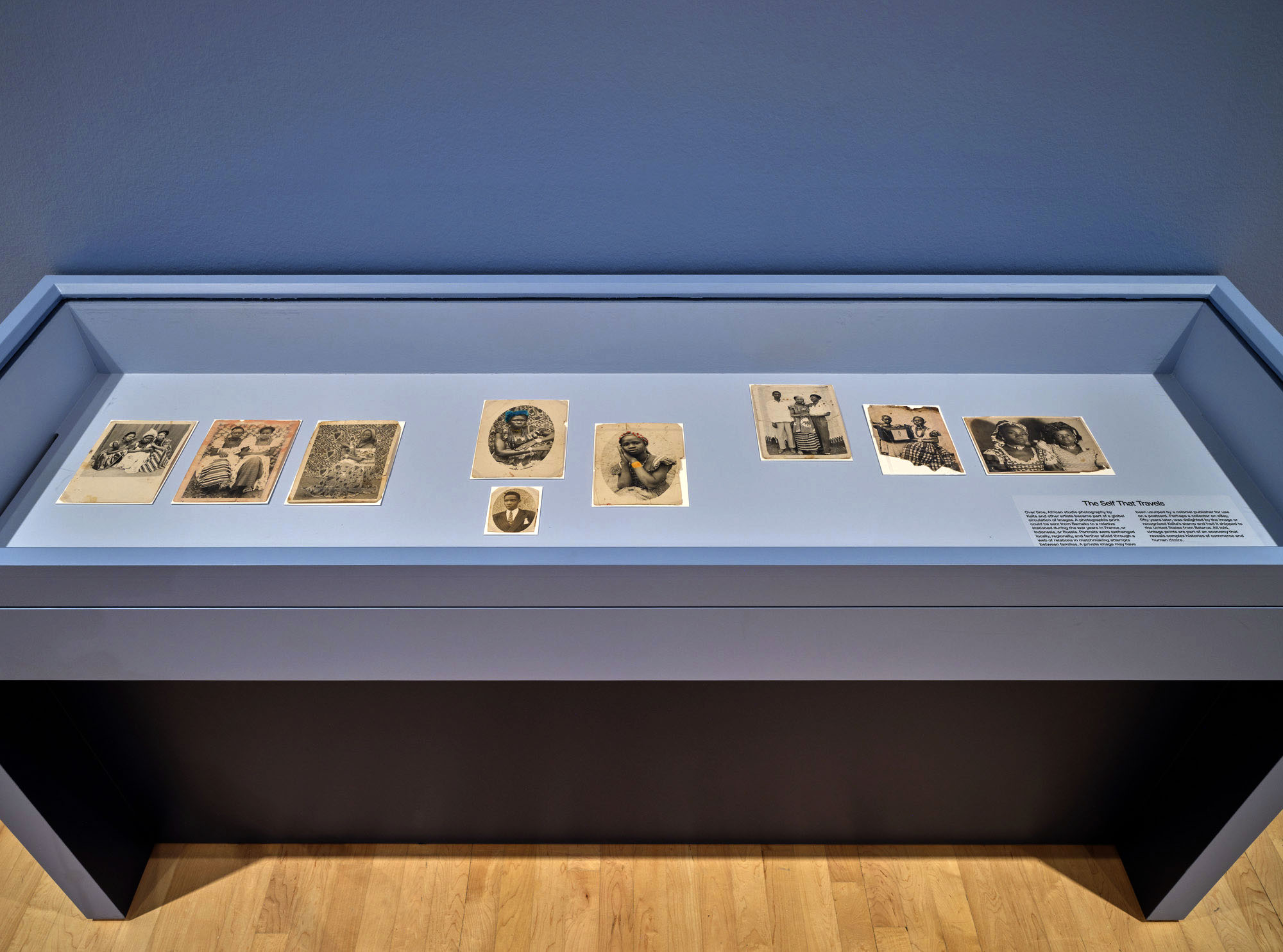
The Self That Travels

Over time, African studio photography by Keïta and other artists became part of a global circulation of images. A photographic print could be sent from Bamako to a relative stationed during the war years in France, or Indonesia, or Russia. Portraits were exchanged locally, regionally, and farther afield through a web of relations in matchmaking attempts between families. A private image may have been usurped by a colonial publisher for use on a postcard. Perhaps a collector on eBay, fifty years later, was delighted by the image or recognised Keïta’s stamp and had it shipped to the United States from Belarus. All told, vintage prints are part of an economy that reveals complex histories of commerce and human desire.


Installation view of the exhibition 'Seydou Keïta: A Tactile Lens' at the Brooklyn Museum, New York, October 2025 - May 2026 showing a vitrine with text from the section "The Self That Travels"


Installation view of the exhibition Seydou Keïta: A Tactile Lens at the Brooklyn Museum, New York, October 2025 – May 2026 showing a vitrine with text from the section “The Self That Travels”


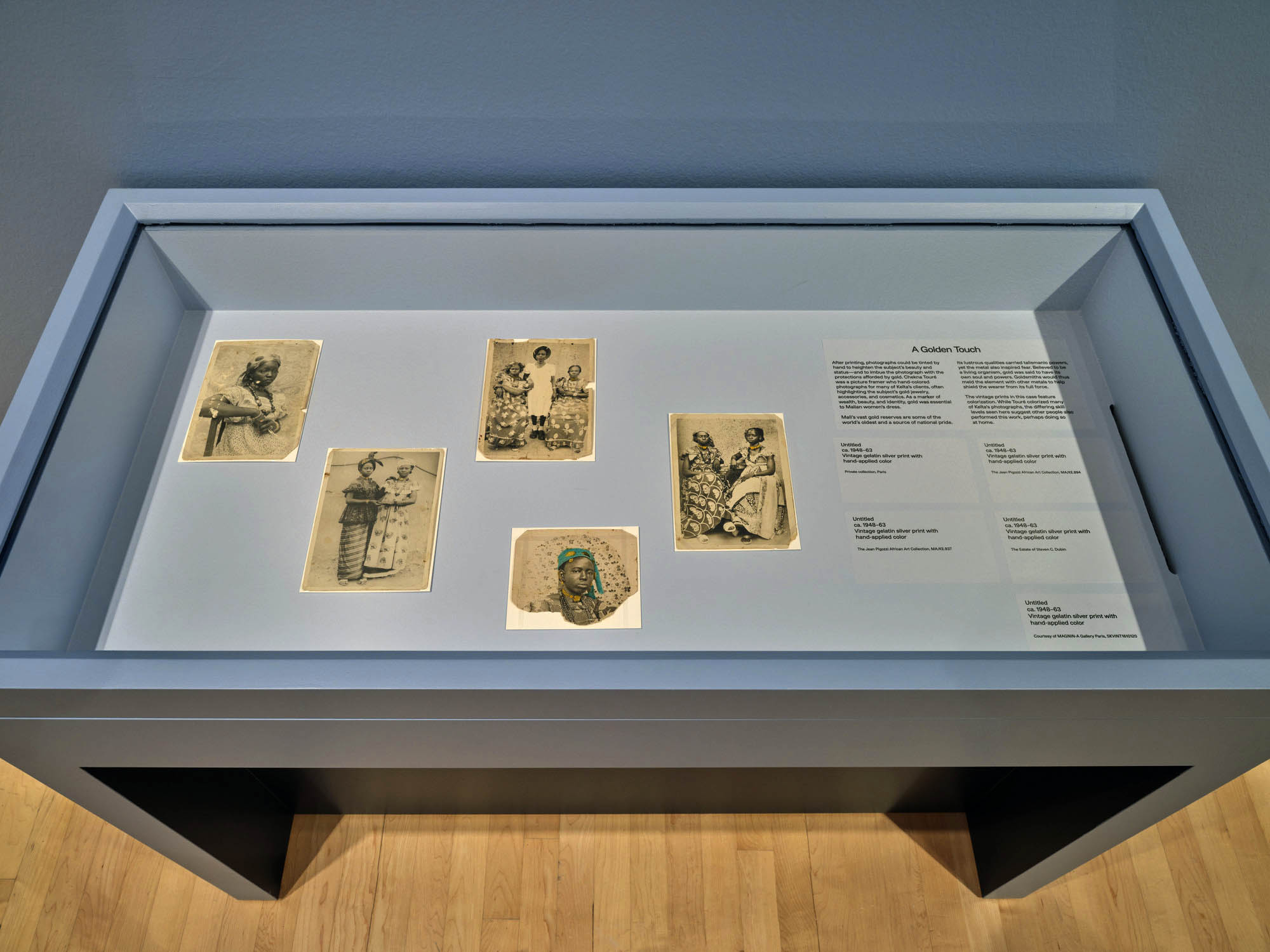
A Golden Touch

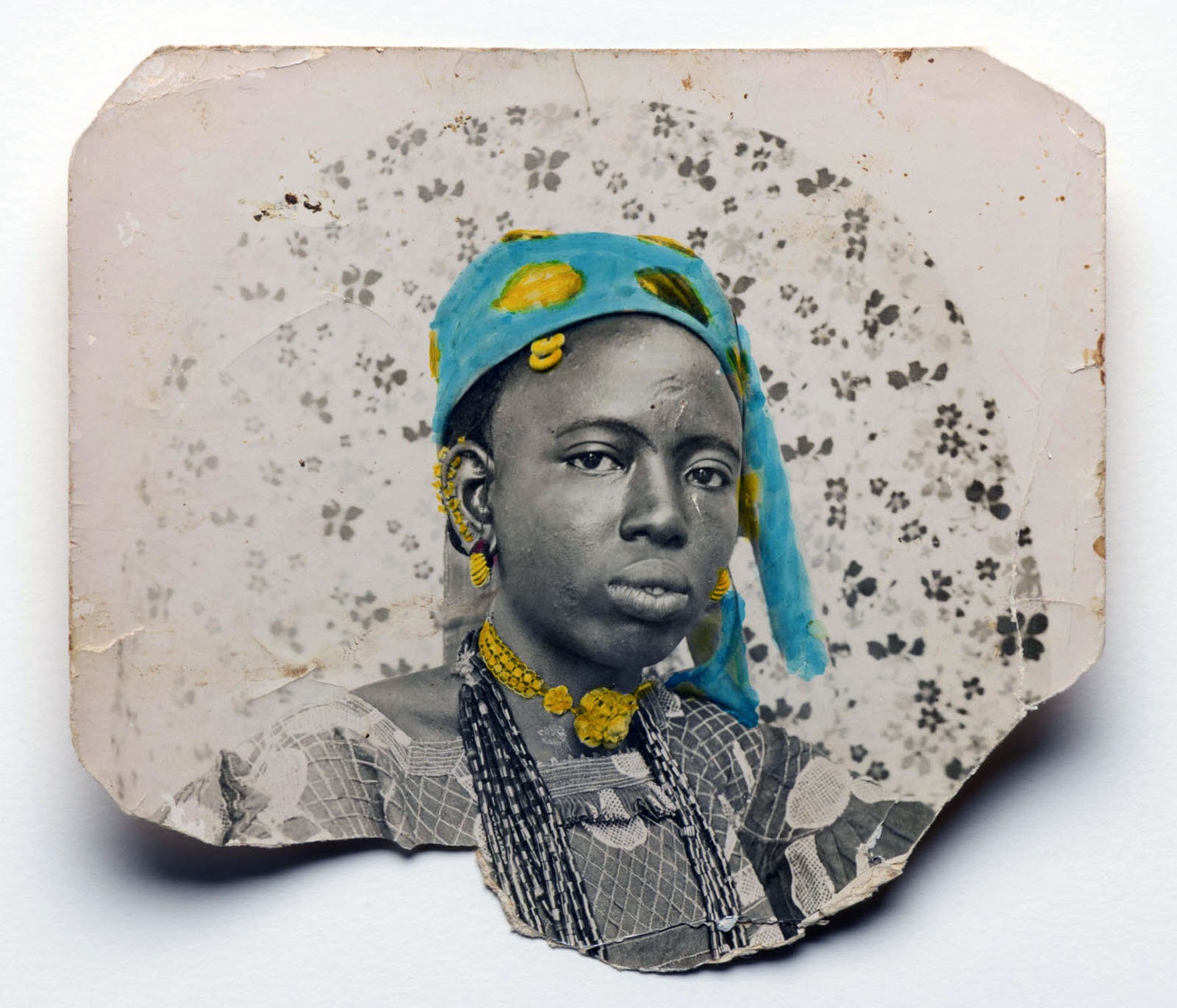
After printing, photographs could be tinted by hand to heighten the subject’s beauty and status – and to imbue the photograph with the protections afforded by gold. Chekna Touré was a picture framer who hand-coloured photographs for many of Keïta’s clients, often highlighting the subject’s gold jewellery, accessories, and cosmetics. As a marker of wealth, beauty, and identity, gold was essential to Malian women’s dress. 

Mali’s vast gold reserves are some of the world’s oldest and a source of national pride. Its lustrous qualities carried talismanic powers, yet the metal also inspired fear. Believed to be a living organism, gold was said to have its own soul and powers. Goldsmiths would thus meld the element with other metals to help shield the wearer from its full force. 

The vintage prints in this case feature colorisation. While Touré colourised many of Keïta’s photographs, the differing skill levels seen here suggest other people also performed this work, perhaps doing so at home.


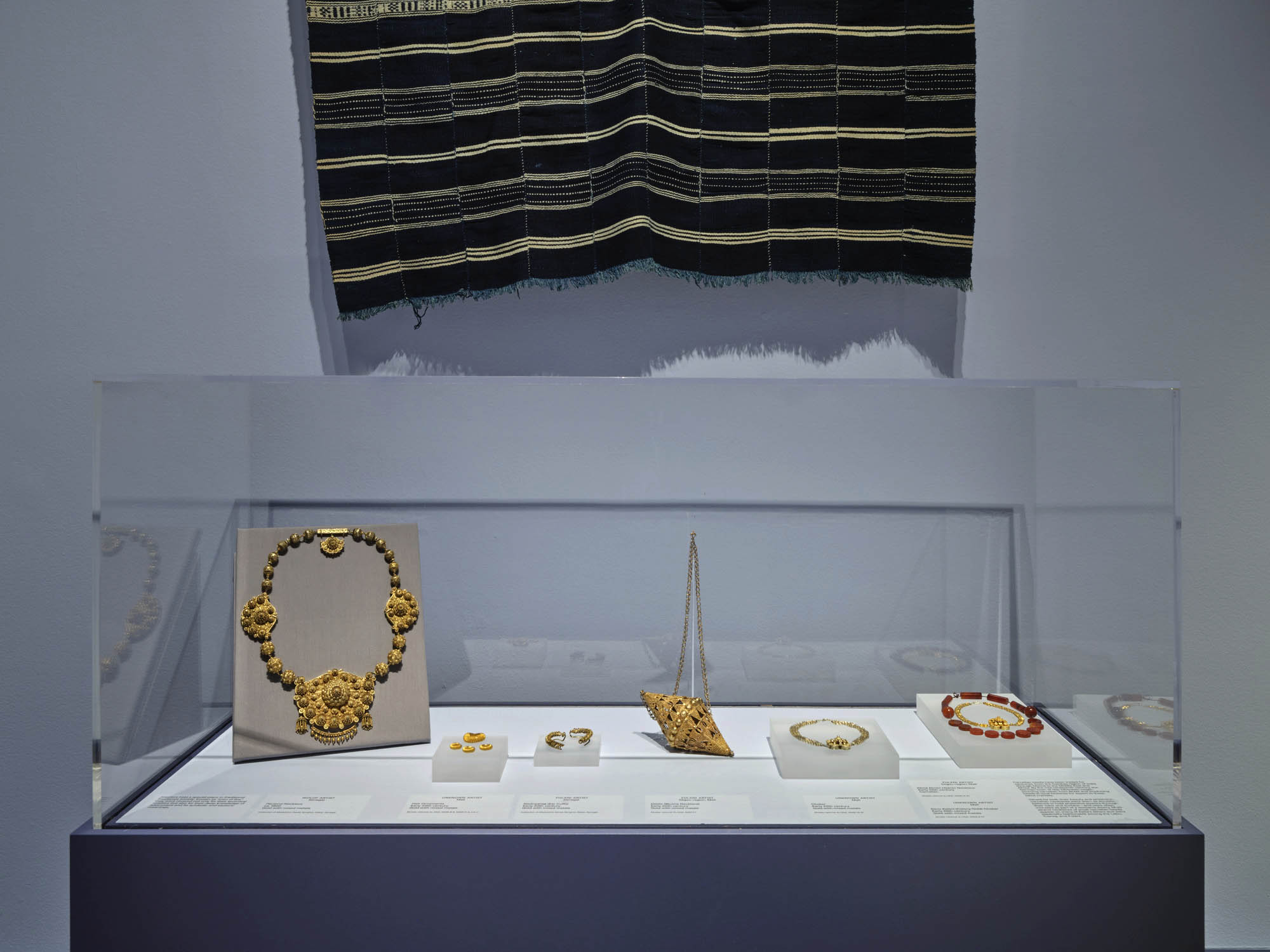
Installation view of the exhibition 'Seydou Keïta: A Tactile Lens' at the Brooklyn Museum, New York, October 2025 - May 2026 showing gold and carnelian jewellery


Installation view of the exhibition Seydou Keïta: A Tactile Lens at the Brooklyn Museum, New York, October 2025 – May 2026 showing gold and carnelian jewellery


Installation view of the exhibition 'Seydou Keïta: A Tactile Lens' at the Brooklyn Museum, New York, October 2025 - May 2026 showing text from the section "A Golden Touch" with at bottom centre, Keïta's photograph 'Untitled' c. 1948-1963


Installation view of the exhibition Seydou Keïta: A Tactile Lens at the Brooklyn Museum, New York, October 2025 – May 2026 showing text from the section “A Golden Touch” with at bottom centre, Keïta’s photograph Untitled c. 1948-1963 (below)


Seydou Keïta (Malian, c. 1921-2001) 'Untitled' c. 1948-1963


Seydou Keïta (Malian, c. 1921-2001)
Untitled
c. 1948-1963
Vintage gelatin silver print
The Estate of Steven C. Dubin
© SKPEAC/Seydou Keïta
Courtesy The Jean Pigozzi Collection of African Art and Danziger Gallery, NY
Photo: Brooklyn Museum


Preserving A Legacy

The Keïta family’s generous loan of film negatives from the estate’s remaining archive presents a rare opportunity to reflect on the practical, ethical, and technical questions involved in the preservation of African photography. Conservation of African photographic archives from the continent faces distinct challenges, ranging from climate-related degradation and limited access to preservation materials and technologies to an overall lack of institutional infrastructure and support for artists and their legacies.

Too fragile to survive extensive handling or prolonged light exposure, Keïta’s negatives could not be cleaned or scanned without risking damage. Instead, each was photographed under controlled conditions at a conservation lab and reproduced for the exhibition.

Lace

Lace features prominently in Keïta’s photographs – appearing as trim on dress sleeves, integrated into garments made from wax print and other fabrics, worn as full lace dresses or as sheer boubous layered over other clothing. European lace was highly coveted, expensive, and difficult to obtain. In response, Soudanaise women created their own lace by hand, layering two pieces of white cotton percale and cutting intricate patterns using stencils. These garments, now rare heirlooms, were once considered second to colonial imports. Today, they are recognized for their exceptional beauty and craftsmanship, emblems of pride in Soudanaise women’s creativity and cultural identity.

Carnelian Beads

Carnelian beads have been traded for centuries, from the Cambay region of India through Mecca to the Middle East and Africa. By the mid-nineteenth century, the German town of Idar-Oberstein began sourcing carnelian from Brazil and producing beads in local factories for export to these same markets. 

Valued for both their beauty and protection, carnelian necklaces were worn as amulets – believed to hold protective powers through their colour and surface – and were often included as part of a woman’s dowry. Multi-strand necklaces of small carnelian beads appear on many of Keïta’s sitters and were especially fashionable among the Lebu, Tuareg, and Fulani.

Marabaka

During the independence era, anticolonial leader Amílcar Lopes Cabral popularised the marabaka, a Czech-style hat that became a widespread symbol of Pan-African solidarity. First imported from Czechia, the hat, known as zmijovka in Czech, derives its zigzag pattern from that observed on the skin of a viper (zmije in Czech). 

In West Africa, the hat’s black-and-white design is reminiscent of Islamic aesthetics seen on indigenous textiles such as Dogon and Bamana resist cloths and weaving. The snake motif also speaks to the region’s affinity for the culturally significant serpent and water snake. 

Commemorative Cloths

In the post-independence era, political leaders often commissioned commemorative cloths bearing their own images to bolster support and cultivate loyalty – and even foster cults of personality. Citizens wore such cloths regardless of political affiliation, at times out of fear of reprisal. Advances in textile printing and the development of more affordable “fancy print” cloths in the 1940s made many commemorative cloths inexpensive to produce. The examples on view span a range of iconography, from wax-print cloths honouring African soldiers who served in World War II and Mali’s first post-independence president, Modibo Keïta, to a fancy print featuring French President Charles de Gaulle . 

Pagne

A woman’s pagne is the foundation of her wardrobe. Typically woven or cut to a length of about two yards, the pagne functions as a wrap that conceals the waist, thighs, and buttocks. Beyond their function, pagnes also symbolize lineage, protection, and a woman’s evolving identity. 

Finely woven and dyed pagnes are presented at birth and during key life rituals such as dowry exchanges, marriage celebrations, and pregnancies. Women rarely part with their pagnes. Above all, they are talismans – protective layers passed down from generation to generation. A woman selects which ones to give to her children and which, ultimately, will accompany her to the grave. 

Dutch Legacies

Known in the postwar era as “the Chanel of Africa,” the Dutch textile company Vlisco has been the foremost purveyor of African wax-print textiles since the late nineteenth century. The company industrialised the Indonesian batik process, in which patterns are drawn in wax on cotton fabric that is then dyed. When the wax is removed, the design is revealed, protected from the dye by the wax resist.

Though Vlisco did not actively market its products in the Sahel region in the 1940s to 1970s, wax prints spread through African trade networks and became widely popular, including among many of Keïta’s sitters. While the patterns were created by Dutch designers, they were named by Ghanaian and Togolese female fabric traders and their female clients, who interpreted the patterns’ meanings through a local, social, or spiritual lens .

The colour, design, and pattern names of wax prints thus carry personal and communal meanings – much like Keïta’s photographs.

Widely associated with coming-of-age rituals, wax prints have long marked key life events such as birth, puberty, and marriage. As independence movements gained momentum across the continent, wax-print textiles came to symbolise cosmopolitanism and a growing sense of Pan-African identity.

The Studio Backdrop

In Keïta’s photographs, traditional and modern textiles appear as studio backdrops or layered on European-style beds, their bold patterns often echoed in the sitters’ garments. Featuring examples of such textiles, this installation highlights the evolution of Malian weaving traditions during the independence era. The 1950s and early post-independence years saw rapid innovations in textile design, particularly in the use of colour. In contrast with traditional indigo and earth tones produced using natural dyes, these modern fabrics feature vivid hues made from synthetic dyes and incorporate more elaborate, figurative motifs that reflect the period’s shifting social concerns and aspirations.

These blankets served multiple functions. In everyday use, they provided protection from mosquitoes, cold temperatures, and sandstorms in the Sahel. When folded and draped over the shoulder of a well-dressed man, they signaled status. They were also important in systems of exchange – traded, gifted, and ceremonially displayed, most notably during dowry presentations and marriage celebrations.


Seydou Keïta (Malian, c. 1921-2001) 'Untitled' 1957-1960, printed 1994


Seydou Keïta (Malian, c. 1921-2001)
Untitled
1949-1951, printed 1995
Gelatin silver print
© SKPEAC/Seydou Keïta
Courtesy The Jean Pigozzi Collection of African Art and Danziger Gallery, NY


Seydou Keïta (Malian, c. 1921-2001) 'Untitled' 1949-1951, printed 1995


Seydou Keïta (Malian, c. 1921-2001)
Untitled
1949-1951, printed 1995
Gelatin silver print
© SKPEAC/Seydou Keïta
Courtesy The Jean Pigozzi Collection of African Art and Danziger Gallery, NY


Seydou Keïta (Malian, c. 1921-2001) 'Untitled' 1952-1955, printed ca. 1994-2001


Seydou Keïta (Malian, c. 1921-2001)
Untitled
1952-1955, printed c. 1994-2001
Gelatin silver print
© SKPEAC/Seydou Keïta
Courtesy The Jean Pigozzi Collection of African Art and Danziger Gallery, NY


Installation view of the exhibition 'Seydou Keïta: A Tactile Lens' at the Brooklyn Museum, New York, October 2025 - May 2026


Installation view of the exhibition Seydou Keïta: A Tactile Lens at the Brooklyn Museum, New York, October 2025 – May 2026


Installation view of the exhibition 'Seydou Keïta: A Tactile Lens' at the Brooklyn Museum, New York, October 2025 - May 2026 showing vitrines with facsimile cellulose acetate negatives and positive reproductions from digitised negatives c. 1950-1959


Installation views of the exhibition Seydou Keïta: A Tactile Lens at the Brooklyn Museum, New York, October 2025 – May 2026 showing vitrines with facsimile cellulose acetate negatives and positive reproductions from digitised negatives c. 1950-1959


Seydou Keïta (Malian, c. 1921-2001) 'Untitled' 1959


Seydou Keïta (Malian, c. 1921-2001)
Untitled
1959, printed 1998
Gelatin silver print
© SKPEAC/Seydou Keïta
Courtesy The Jean Pigozzi Collection of African Art


Installation view of the exhibition 'Seydou Keïta: A Tactile Lens' at the Brooklyn Museum, New York, October 2025 - May 2026


Installation view of the exhibition Seydou Keïta: A Tactile Lens at the Brooklyn Museum, New York, October 2025 – May 2026


Installation view of the exhibition 'Seydou Keïta: A Tactile Lens' at the Brooklyn Museum, New York, October 2025 - May 2026 showing Keïta's medium format cameras and his photograph, 'Untitled' late 1940s to mid-1970s


Installation views of the exhibition Seydou Keïta: A Tactile Lens at the Brooklyn Museum, New York, October 2025 – May 2026 showing Keïta’s medium format cameras and his photograph, Untitled late 1940s to mid-1970s (below)


Seydou Keïta (Malian, c. 1921-2001) 'Untitled' late 1940s to mid-1970s


Seydou Keïta (Malian, c. 1921-2001)
Untitled
late 1940s to mid-1970s
Positive reproduction from digitised negative
Courtesy of the Seydou Keïta Family


Seydou Keïta (Malian, c. 1921-2001) 'Untitled' late 1940s to mid-1970s


Seydou Keïta (Malian, c. 1921-2001)
Untitled
late 1940s to mid-1970s
Positive reproduction from digitised negative
Courtesy of the Seydou Keïta Family


Seydou Keïta (Malian, c. 1921-2001) 'Untitled' 1949-1951, printed 1995


Seydou Keïta (Malian, c. 1921-2001)
Untitled
1949-1951, printed 1995
Gelatin silver print
© SKPEAC/Seydou Keïta
Courtesy The Jean Pigozzi Collection of African Art and Danziger Gallery, NY


With one hand on the handlebars of a bicycle and the other tucked in his pocket, this child meets the camera with a stern expression. Here, the boy’s French beret, shoes, and bicycle – imported goods reserved for the elite – speak to the deep-rooted impact of French colonialism across generations, even as the country moved toward independence.


Installation view of the exhibition 'Seydou Keïta: A Tactile Lens' at the Brooklyn Museum, New York, October 2025 - May 2026


Installation views of the exhibition Seydou Keïta: A Tactile Lens at the Brooklyn Museum, New York, October 2025 – May 2026


Brooklyn Museum
200 Eastern Parkway
Brooklyn, NY 11238-6052
Phone: (718) 638-5000

Opening hours:
Wednesday – Sunday 11am – 6pm
Closed Mondays and Tuesdays
Closed Thanksgiving, Christmas, and New Year’s Day

Brooklyn Museum website

LIKE ART BLART ON FACEBOOK

Back to top

Exhibition: ‘Autophoto’ at Fondation Cartier pour l’art contemporain, Paris

Exhibition dates: 20th April – 24th September, 2017

Artists: Robert Adams • Eve Arnold • Bernard Asset • Éric Aupol • Theo Baart Et Cary Markerink • Sue Barr • Valérie Belin • Martin Bogren • Nicolas Bouvier • David Bradford • Brassaï • Alain Bublex • Edward Burtynsky • Andrew Bush • Ronni Campana • Gilles Caron • Alejandro Cartagena • Kurt Caviezel • Philippe Chancel • Larry Clark • Langdon Clay • Stéphane Couturier • Bruce Davidson • Jean Depara • Raymond Depardon • John Divola • Robert Doisneau • William Eggleston • Elliott Erwitt • Walker Evans • Barry Feinstein • Pierre De Fenoÿl • Alain Fleischer • Robert Frank • Lee Friedlander • Bernhard Fuchs • Paolo Gasparini • Óscar Fernando Gómez • Jeff Guess • Andreas Gursky • Fernando Gutiérrez • Jacqueline Hassink • Anthony Hernandez • Yasuhiro Ishimoto • Peter Keetman • Seydou Keïta • Germaine Krull • Seiji Kurata • Justine Kurland • Jacques Henri Lartigue • O. Winston Link • Peter Lippmann • Marcos López • Alex Maclean • Ella Maillart • Man Ray • Mary Ellen Mark • Arwed Messmer • Ray K. Metzker • Sylvie Meunier Et Patrick Tourneboeuf • Joel Meyerowitz • Kay Michalak et Sven Völker • Óscar Monzón • Basile Mookherjee • Daido Moriyama • Patrick Nagatani • Arnold Odermatt • Catherine Opie • Trent Parke • Martin Parr • Mateo Pérez • Jean Pigozzi • Bernard Plossu • Matthew Porter • Edward Quinn • Bill Rauhauser • Rosângela Rennó • Luciano Rigolini • Miguel Rio Branco • Ed Ruscha • Sory Sanlé • Hans-christian Schink • Antoine Schnek • Stephen Shore • Malick Sidibé • Guido Sigriste • Raghubir Singh • Melle Smets Et Joost Van Onna • Jules Spinatsch • Dennis Stock • Hiroshi Sugimoto • Juergen Teller • Tendance Floue • Thierry Vernet • Weegee • Henry Wessel • Alain Willaume


Jacques Henri Lartigue (French, 1894-1986) 'Une Delage au Grand Prix de l’Automobile Club de France, circuit de Dieppe' June 26, 1912 from the exhibition 'Autophoto' at Fondation Cartier pour l'art contemporain, Paris, April - Sept, 2017


Jacques Henri Lartigue (French, 1894-1986)
Une Delage au Grand Prix de l’Automobile Club de France, circuit de Dieppe
June 26, 1912
Gelatin silver print
30 x 40cm
Donation Jacques Henri Lartigue, Charenton-le-Pont Photographie Jacques Henri Lartigue
© Ministère de la Culture – France/AAJHL
Exhibition Autophoto from April 20 to September 24, 2017
Fondation Cartier pour l’art contemporain, Paris


I missed this exhibition when I was in Paris recently. A great pity, I would have liked to have seen it. Some rare photographs that I have never laid eyes on before. I especially love Ray K. Metzker’s Washington, DC. The photography in both Paris and London was disappointing during my month overseas. Other than a large exhibition of Gregory Crewdson’s photographs at the Photographers’ Gallery London, there was not much of interest on offer.

Dr Marcus Bunyan

PS. So many more horizontal photographs than vertical, the automobile obviously lending itself to this orientation. I love this observation: “Photography, a tool of immobility, benefited from the automobile, a mobility tool.” And this from Jean Baudrillard: “Riding is a form spectacular amnesia. Everything to discover, everything to be erased.”


Many thankx to Fondation Cartier pour l’art contemporain for allowing me to publish the photographs in the posting. Please click on the photographs for a larger version of the image.


“Photographing is a profession. Craftsmanship. A job that one learns, that one makes more or less well, like all trades. The photographer is a witness. The witness of his time. The true photographer is the witness of every day, they are the reporter. “


Germaine Krull


“I think that cars today are almost the exact equivalent of the great Gothic cathedrals; I mean the supreme creation of an era, conceived with passion by unknown artists, and consumed in image if not in usage by a whole population which appropriates them as a purely magical object.”


Roland Barthes, Mythologies, Le Seuil, Paris, 1970, p. 150


Thirty years after the exhibition Hommage à Ferrari, the Fondation Cartier pour l’art contemporain will once again focus its attention on the world of cars with the exhibition Autophoto, dedicated to photography’s relationship to the automobile. Since its invention, the automobile has reshaped our landscape, extended our geographic horizons, and radically altered our conception of space and time. The car has also influenced the approach and practice of photographers, providing them not only with a new subject but also a new way of exploring the world and a new means of expression. Based on an idea by Xavier Barral and Philippe Séclier, Autophoto will present over 500 works from the beginning of the 20th century to the present. It will invite us to discover the many facets of automotive culture – aesthetic, social, environmental, and industrial – through the eyes of photographers from around the world. The exhibition will bring together over 90 photographers including both famous and lesser-known figures such as Jacques Henri Lartigue, William Eggleston, Justine Kurland and Jacqueline Hassink, who have shown a fascination for the automobile as a subject or have used it as a tool to take their pictures.


Visite de l’exposition – Autophoto – 2017

Thirty years after the Hommage à Ferrari exhibition which put the spotlight on these legendary cars, the Fondation Cartier pour l’art contemporain presents, on a proposal by Xavier Barral and Philippe Séclier, the Autophoto exhibition devoted to the relationship between photography and the automobile. Since its creation, the automobile has shaped the landscape, allowed the discovery of new horizons and upset our conception of time and space.


Juergen Teller (German, b. 1964) 'OJ Simpson no. 5' Miami 2000 from the exhibition 'Autophoto' at Fondation Cartier pour l'art contemporain, Paris, April - Sept, 2017


Juergen Teller (German, b. 1964)
OJ Simpson no. 5
Miami 2000
Giclee print
51 x 61cm
Collection of the artist
© Juergen Teller, 2017


'Relevé photographique des voies de circulation mondiales réalisé par Michelin' c. 1930


Relevé photographique des voies de circulation mondiales réalisé par Michelin
c. 1930
Collection Michelin, Clermont-Ferrand
© Michelin


Studio portraits, 'China' c. 1950, collected by Thomas Sauvin


Studio portraits
China
c. 1950
Collected by Thomas Sauvin
Colourised gelatin silver print
7.5 x 11.5cm
Collection Beijing Silvermine/Thomas Sauvin, Paris Photo all rights reserved


Seydou Keïta (Malian, 1921-2001) 'Untitled' 1952–1955 from the exhibition 'Autophoto' at Fondation Cartier pour l'art contemporain, Paris, April - Sept, 2017


Seydou Keïta (Malian, 1921-2001)
Untitled
1952-1955
Gelatin silver print
50 × 60cm
CAAC – The Pigozzi Collection, Geneva
© SKPEAC (The Seydou Keïta Photography Estate Advisor Corporation)


Nicolas Bouvier (Swiss, 1929-1998) 'Entre Prilep et Istanbul, Turquie' 1953


Nicolas Bouvier (Swiss, 1929-1998)
Entre Prilep et Istanbul, Turquie
1953
Musée de l’Élysée, Lausanne
© Fonds Nicolas Bouvier / Musée de l’Élysée, Lausanne


O. Winston Link (American, 1914-2001) 'Hot Shot Eastbound' 1956


O. Winston Link (American, 1914-2001)
Hot Shot Eastbound
1956
Collection Mathé Perrin, Bruxelles
© O. Winston Link


Ray K. Metzker (American, 1931-2014) 'Washington, DC' 1964


Ray K. Metzker (American, 1931-2014)
Washington, DC
1964
Gelatin silver print
20 × 25.5cm
Courtesy Les Douches la Galerie, Paris/Laurence Miller Gallery, New York
© Estate Ray K. Metzker, courtesy Les Douches la Galerie, Paris/Laurence Miller Gallery, New York


Bernard Plossu (French, b. 1945) 'Sur la route d'Acapulco, Mexique' 1966


Bernard Plossu (French, b. 1945)
Sur la route d’Acapulco, Mexique
1966
From Le Voyage mexicain series
Gelatin silver print
18 × 27cm
Courtesy of the artist/Galerie Camera Obscura, Paris
© Bernard Plossu


Bernard Plossu (French, b. 1945) 'Chiapas, Mexique' 1966


Bernard Plossu (French, b. 1945)
Chiapas, Mexique
1966
From Le Voyage mexicain series
Gelatin silver print
18 × 27cm
Courtesy of the artist/Galerie Camera Obscura, Paris
© Bernard Plossu


“A panorama framed by the rectangle of the windshield. A long ribbon of asphalt, a line of flight that stretches towards the horizon. For more than a century, we can capture this image and travel the world by car, this photographic “box”. Automotive and photography, two tools to model the landscape, two mechanics of the traction and attraction, have emerged at the end of the nineteenth century, through new rhythms and new rites, the society of modern times. If the photograph allows multiple views and list them, to memorise the movement and leave a trace, the automobile makes it possible to move in space. Photography, a tool of immobility, benefited from the automobile, a mobility tool. And if the automobile like photography is constantly evolving, these two inventions have parallel paths in order to better, to master space-time. “Riding is a form spectacular amnesia. Everything to discover, everything to be erased,”1 writes Jean Baudrillard.”

From the foreword by commissioners of the exhibition Xavier Barral and Philippe Séclier

1/ Jean Baudrillard, Amérique, Grasset, Paris, 1986, p. 15


Henry Wessel (American, 1942-2018) 'Pennsylvania' 1968


Henry Wessel (American, 1942-2018)
Pennsylvania
1968
Courtesy Galerie Thomas Zander, Cologne
© Henry Wessel, courtesy Galerie Thomas Zander, Cologne.


William Eggleston (American, b. 1939) 'Los Alamos' series 1965-1968


William Eggleston (American, b. 1939)
Los Alamos series
1965-1968
Dye-transfer print
40.5 × 50.5cm
Eggleston Artistic Trust, courtesy David Zwirner, New York/London
© Eggleston Artistic Trust. Courtesy David Zwirner, New York/London


Henry Wessel (American, 1942-2018) 'Los Alamos' series c. 1974


Henry Wessel (American, 1942-2018)
Los Alamos series
c. 1974
Inkjet print
56 × 73.5cm
Eggleston Artistic Trust, Memphis
© Eggleston Artistic Trust, Memphis


Bill Rauhauser (American, 1918-2017) 'Detroit Auto Show' series c. 1975


Bill Rauhauser (American, 1918-2017)
Detroit Auto Show series
c. 1975
Detroit Institute of Arts, don de l’artiste en mémoire de Doris Rauhauser
© 2007 Rauhauser Photographic Trust. All Rights Reserved


Langdon Clay (American, b. 1949) 'Zizka Cleaners car, Buick Electra' 1976


Langdon Clay (American, b. 1949)
Zizka Cleaners car, Buick Electra
Series Cars, New York City, 1976
Slide-show
Courtesy of the artist
© Langdon Clay


Joel Meyerowitz (American, b. 1938) 'Upstate New York' 1977


Joel Meyerowitz (American, b. 1938)
Upstate New York
1977
Collection Joel Meyerowitz Photography, New York
© Joel Meyerowitz, courtesy Polka Galerie, Paris


Bernard Asset (French, b. 1955) 'Passager d'Alain Prost (Alain Prost au volant d’une Renault RE30B, tests F1 sur le circuit Dijon-Prenois)' 1982


Bernard Asset (French, b. 1955)
Passager d’Alain Prost (Alain Prost au volant d’une Renault RE30B, tests F1 sur le circuit Dijon-Prenois)
1982
Collection de l’artiste
© Bernard Asset


David Bradford (American, b. 1951) 'Coaster Ride Stealth' 1994


David Bradford (American, b. 1951)
Coaster Ride Stealth
1994
From Drive-By Shootings series
C-print
28 × 35.5cm
Courtesy of the artist
© David Bradford


Andrew Bush (American, b. 1956) 'Woman Waiting to Proceed South at Sunset and Highland Boulevards, Los Angeles, at Approximately 11:59 a.m. One Day in February 1997' 1997


Andrew Bush (American, b. 1956)
Woman Waiting to Proceed South at Sunset and Highland Boulevards, Los Angeles, at Approximately 11:59 a.m. One Day in February 1997
1997
From Vector Portraits series
C-print
122 × 151cm
Courtesy M+B Gallery, Los Angeles
© Andrew Bush


Rosângela Rennó (Brazilian, b. 1962) 'Cerimônia do Adeus' series,1997-2003


Rosângela Rennó (Brazilian, b. 1962)
Cerimônia do Adeus series
1997-2003
C-print face-mounted on Plexiglas
50 × 68 cm
Courtesy of the artist/Cristina Guerra Contemporary Art, Lisbon
© Rosângela Rennó


Valérie Belin (French, b. 1964) 'Untitled' 2002


Valérie Belin (French, b. 1964)
Untitled
2002
Gelatin silver print
61 x 71.5cm (framed)
Courtesy of the artist/Galerie Nathalie Obadia, Paris/Brussels
© Valérie Belin/ADAGP, Paris 2017


Stéphane Couturier (French, b. 1957) 'MELT, Toyota No 8' 2005


Stéphane Couturier (French, b. 1957)
MELT, Toyota No. 8
2005
From Melting Point, Usine Toyota, Valenciennes series
C-print
92 × 137cm
Collection of the artist
Courtesy La Galerie Particulière, Paris/Brussels
© Stéphane Couturier


Óscar Fernando Gómez (Mexican, b. 1970) 'Windows' series, 2009

Óscar Fernando Gómez (Mexican, b. 1970) 'Windows' series, 2009

Óscar Fernando Gómez (Mexican, b. 1970) 'Windows' series, 2009

Óscar Fernando Gómez (Mexican, b. 1970) 'Windows' series, 2009

Óscar Fernando Gómez (Mexican, b. 1970) 'Windows' series, 2009


Óscar Fernando Gómez (Mexican, b. 1970)
Windows series
2009
Slide show
Courtesy Martin Parr Studio, Bristol
© Óscar Fernando Gómez


Alain Willaume (French, b. 1956) '#5069' 2012


Alain Willaume (French, b. 1956)
#5069
2012
From the Échos de la poussière et de la fracturation series
Collection de l’artiste
© Alain Willaume (Tendance Floue)


Peter Lippmann (American works Paris, b. 1956) 'Citroën Traction 7' 2012


Peter Lippmann (American works Paris, b. 1956)
Citroën Traction 7
2012
From the Paradise Parking series
C-print
75 × 100cm
Collection of the artist
© Peter Lippmann


Justine Kurland (American, b. 1969) '280 Coup' 2012


Justine Kurland (American, b. 1969)
280 Coup
2012
Inkjet Print
47 x 61cm
Courtesy of the artist/Mitchell-Innes & Nash, New York
© Justine Kurland


Melle Smets and Joost Van Onna. 'Turtle 1. Building a Car in Africa' 2016


Melle Smets and Joost Van Onna
Turtle 1. Building a Car in Africa
2016
Courtesy des artistes / Paradox, Edam
© Melle Smets et Joost Van Onna


Luciano Rigolini (Swiss, b. 1950) 'Tribute to Giorgio de Chirico' 2017


Luciano Rigolini (Swiss, b. 1950)
Tribute to Giorgio de Chirico
2017
Duratrans in lightbox
124 x 154cm
Collection of the artist
© Luciano Rigolini (appropriation – unknown photographer, 1958)


First Visions: A New Subject for Photography

In the early 20th century, the automobile and its impact on the landscape had already become a subject of predilection for many photographers, influencing both the form and content of their work. The exhibition will begin by focusing on early photographers like Jacques Henri Lartigue, Germaine Krull, and Brassaï, who used the automobile to varying degrees in their work. They registered the thrill of speed, the chaos of Parisian traffic or the city’s dramatic car-illuminated nocturnal landscape to represent a society in transition at the birth of the modern age. Other photographers of the time were attracted by the promise of freedom and mobility offered by the automobile. Anticipating the modern road trip, Swiss writers and photographers Ella Maillart and Nicolas Bouvier, travelled throughout Asia in the 1930s and 1950s respectively, using their cars and cameras to record their adventures along the way.

Auto Portraits

The exhibition will also present a series of “auto portraits”* made by a variety of photographers from the mi-twentieth century to the present. Yashuhiro Ishimoto and Langdon Clay’s photographs, for example, are portraits in profile of cars parked on sparsely inhabited city streets, that immerse the viewer in a different eras and atmospheres. Ishimoto’s black and white photographs, taken in Chicago in the 1950s, emphasise their polished, curved silhouettes in a distanced and serial manner, while Langdon Clay’s colour pictures taken in New York in the 1970s, show their decaying and dented chassis in an eerie nocturnal light. Other works in this section, such as the found photographs of Sylvie Meunier and Patrick Tourneboeuf’s American Dream series, or the flamboyant portraits of African photographers Seydou Keïta and Sory Sanlé, focus on the role of the automobile as a emblem of social mobility showing proud owners posing with their cars.

*A play on words in French: auto portrait meaning self-portrait.

The Car as a Medium: New Perspectives on the Landscape

Many photographers have exploited the technical and aesthetic possibilities offered by the automobile, using it like a camera to capture the surrounding landscape through car windows or the reflections in rear-view mirrors.

Cars have determined the framing and composition as well as the serial nature of the photographs of Joel Meyerowitz, Daido Moriyama, John Divola and David Bradford who have all worked from moving cars. From behind their windshields, these photographers capture an amusing store sign, a white car behind a wire fence, a dog running along a dusty road, a highway stretching out into the horizon. Other photographers, including Sue Barr, Robert Adams, Ed Ruscha, and Alex MacLean scrutinise our car-altered environment. Their landscape is no longer one of magnificent mountains, wondrous waterfalls or awe-inspiring canyons, but of a world transformed by the automobile with its suburban housing complexes, parking lots, and highway infrastructure.

Our Car Culture: Industry, History and New Ways of Life

Many photographers have explored other aspects of our car culture, from the car industry and its impact on the environment to its role in history and society. Both Robert Doisneau and Robert Frank registered life in the factory, from the machines and productions lines to the activities of the workers lives, the first at the Renault plant in the 1930s and the second at Ford River Rouge in the 1950s. Their photographs, unique in their attention to individual assembly line workers, contrast with the work of contemporary photographer Stéphane Couturier whose deliberately distanced, impersonal pictures taken at a Toyota factory reflect the increasingly dehumanised nature of contemporary industry. Working in Ghana, far from the automated factory photographed by Stéphane Couturier, Dutch artist Melle Smets, and sociologist Joost Van Onna, put industrial waste from the car industry to good use. Collaborating with local craftsman in a region called Suame Magazine, where cars are disassembled and their parts traded, they created a car specifically for the African market called Turtle 1, using parts from different brands that happened to be available. Their installation, which includes photographs, drawings, and videos, documents the entire fabrication process of this car.

Photographers such as Philippe Chancel, Éric Aupol and Edward Burtynsky are concerned with the car industry’s damage to the environment. Philippe Chancel’s work focuses on the city of Flint and its dismantled General Motors factory, while Éric Aupol’s and Ed Burtynsky’s photographs reveal the sculptural yet apocalyptic beauty of industrial waste sites.

Other photographers reveal how the car plays an important role in historical events, in society and in daily life. Arwed Messmer’s Reenactement series brings together photographs from the archives of the Stasi showing how people used cars in unusual ways to escape from East Germany, and Fernando Gutiérrez work, Secuelas, explores the role of the Ford Falcon, a symbol of Argentina’s military dictatorship, in the collective imaginary of the Argentinean people. Jacqueline Hassink’s immersive projection Car Girls investigates the role and status of women who work in car shows around the world. Martin Parr’s series From A to B chronicles the thoughts dreams and anxieties of British motorists. Still other series by photographers such as Rosângela Rennó, Óscar Monzón, Kurt Caviezel and Bruce Davidson show how the car has become an extension of the home, used for weddings and picnics, living and sleeping, arguments and making love.

The Fondation Cartier has also invited artist Alain Bublex to create for the exhibition a series of 10 model cars that cast a fresh eye on the history of automobile design. His installation combines photographs, drawings and models to explore how the car design has evolved over time incorporating new techniques, forms, and practices.

Despite energy crises, ecology movements, and industrial mismanagement, the car remains essential to our daily lives. At a time when we are questioning the role and the future of the automobile in our society, the Autophoto exhibition reexamines, with nostalgia, humour, and a critical eye, this 20th century symbol of freedom and independence.

The Catalogue

Bringing together over 600 images, the catalogue of the Autophoto exhibition reveals how photography, a tool privileging immobility, benefited from the automobile, a tool privileging mobility. The catalogue features iconic images by both historic and contemporary photographers who have captured the automobile, and transformed this popular accessible object through their passionate and creative vision. Quotes by the artists, and a chronology of automobile design, as well as interviews and texts by specialists provide a deeper understanding of this vast topic through a variety of aesthetic, sociological, and historical perspectives.

Press release from The Fondation Cartier


Peter Keetman (German, 1916-2005) 'Hintere Kotflügel' 1953


Peter Keetman (German, 1916-2005)
Hintere Kotflügel (Rear fenders)
1953
From Eine Woche im Volkswagenwerk (A week at the Volkswagenwerk) series
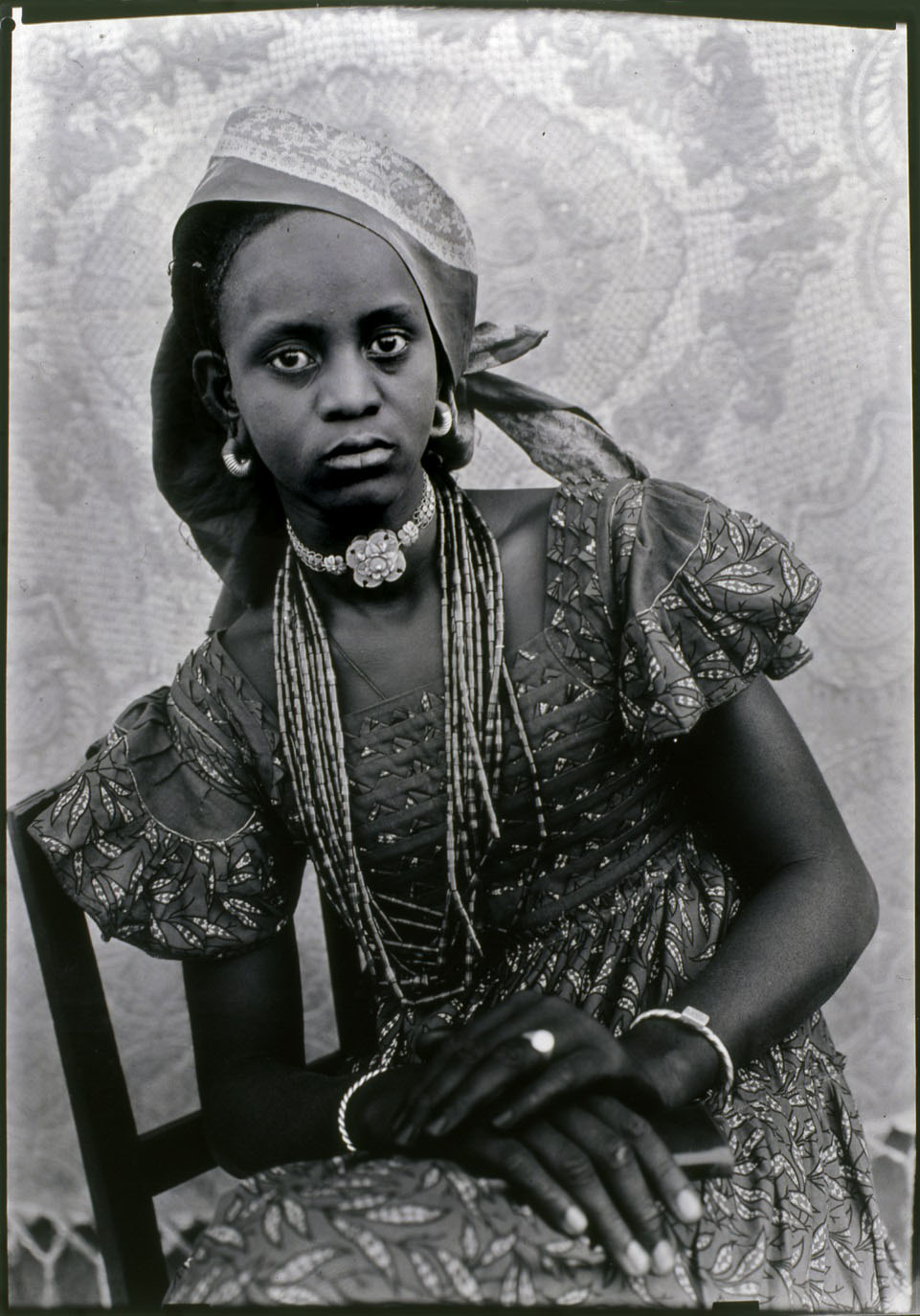
Gelatin silver print
27 × 24.5cm
Nachlass Peter Keetman/Stiftung F.C. Gundlach, Hamburg
© Nachlass Peter Keetman/Stiftung F.C. Gundlach, Hamburg


Ed Ruscha (American, b. 1937) '7133 Kester, Van Nuys' 1967


Ed Ruscha (American, b. 1937)
7133 Kester, Van Nuys
1967
Thirtyfour Parking Lots series
Chipmunk Collection
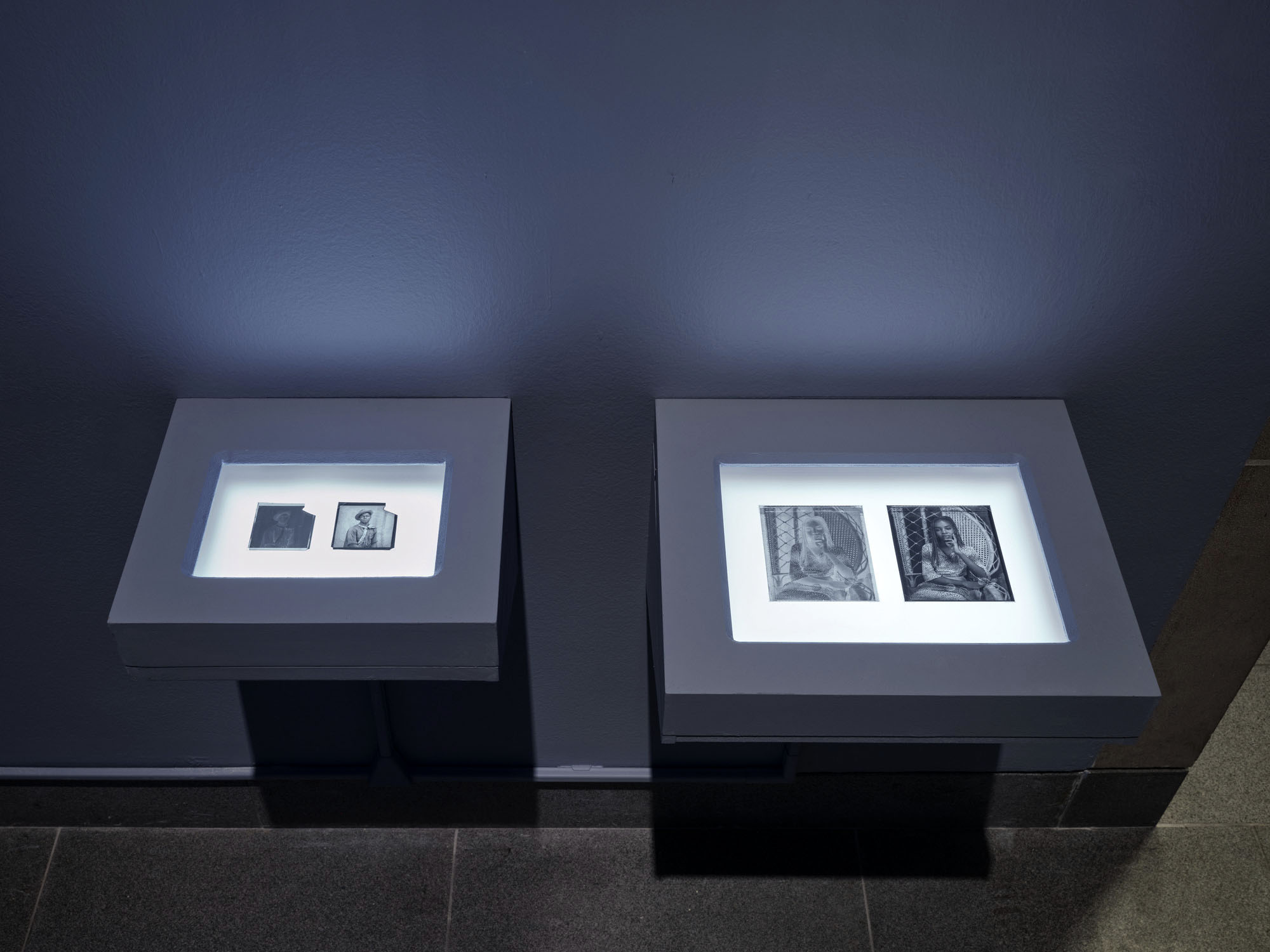
© Ed Ruscha, courtesy Gagosian Gallery


Malick Sidibé (Malian, 1935-2016) 'Taximan avec voiture' 1970


Malick Sidibé (Malian, 1935-2016)
Taximan avec voiture
1970
Gelatin silver print
40 x 30cm
Courtesy Galerie Magnin-A, Paris
© Malick Sidibé


Lee Friedlander (American, b. 1934) 'Montana' 2008


Lee Friedlander (American, b. 1934)
Montana
2008
From the America by Car series
Gelatin silver print
37.5 × 37.5cm
Courtesy Fraenkel Gallery, San Francisco
© Lee Friedlander, courtesy Fraenkel Gallery, San Francisco


Lee Friedlander (American, b. 1934) 'California' 2008


Lee Friedlander (American, b. 1934)
California
2008
From the America by Car series
Gelatin silver print
37.5 × 37.5cm
Courtesy Fraenkel Gallery, San Francisco
© Lee Friedlander, courtesy Fraenkel Gallery, San Francisco


Alejandro Cartagena (Mexican, b. 1977) 'The Carpoolers' series 2011–2012


Alejandro Cartagena (Mexican, b. 1977)
The Carpoolers series
2011-12
Installation of 15 inkjet prints
55.5 × 35.5cm (each)
Courtesy Patricia Conde Galería, Mexico City
© Alejandro Cartagena


Ronni Campana (Italian, b. 1987) 'Badly Repaired Cars' series 2016


Ronni Campana (Italian, b. 1987)
Badly Repaired Cars series
2016
Inkjet print
60 × 40cm
Collection of the artist
© Ronni Campana


Fondation Cartier pour l’art contemporain
261 Boulevard Raspail, Paris

Opening hours: Every day except Mondays, 11am – 8pm
Opening Tuesday evenings until 10pm

Fondation Cartier website

LIKE ART BLART ON FACEBOOK

Back to top