
Exhibition dates: 22nd July – 26th October, 2026
Curator: Anna Hanreich
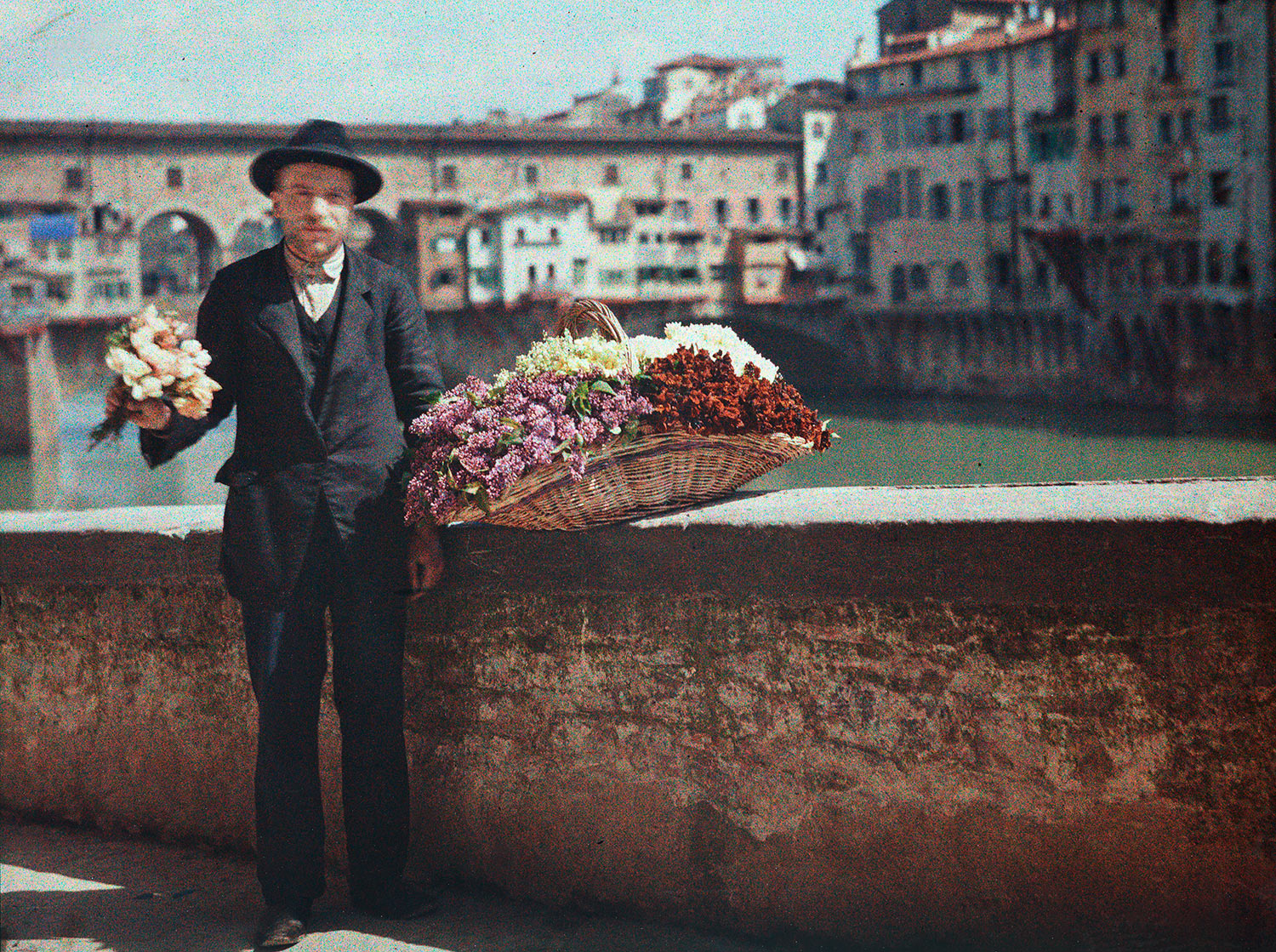
Anonymous photographer
Flower Seller in front of the Ponte Vecchio in Florence, Italy
1907-1930
Autochrome
ALBERTINA, Vienna. Dauerleihgabe der Höheren Graphischen Bundes-Lehr- und Versuchsanstalt
Travel, as a verb, means to make a journey, proceed along a route, or transmit signals (such as light or sound). Thus photography and travel are inextricably linked, for photography transmits light in the form of the representation of (a) reality, from place to place, from time to time. From past time to present time.
The travel photographs in this posting “document the landscape, people, cultures, customs, and history of a specific area to express the feeling of a time and place.” (Wikipedia)
While acknowledging the institutional and political control over the creation of some of these photographs, their creation for the commercial reasons to feed the tourist market, and their Western perspective picturing foreign and “exotic” countries and people (closely linked to colonialism in those very countries) … having acknowledged all that, these photographs still remain valuable “signals” that transmit the feeling of a time and place to us today, in all their beauty and majesty.
These early photographers knew how to frame subject matter, how to use the transmission of light, to embed aspects of the sublime in a photograph, the viewer standing at the limen – meaning threshold – standing at the threshold of another time and space brought into the present.
Sphinx, Imperial Castle, railway bridge, glacier, city, all transport us to another world, vanished worlds.
Dr Marcus Bunyan
Many thankx to Albertina for allowing me to publish the photographs in the posting. Please click on the photographs for a larger version of the image.
When photography emerged during the nineteenth century, it revolutionised visual culture. Landscapes, monuments and distant civilisations could suddenly be reproduced with remarkable precision, replacing drawings and engravings as seemingly objective representations of reality.
Yet the exhibition also demonstrates that photographs have never been neutral…
Behind every remarkable image stood extraordinary effort. Early photographers transported heavy cameras, glass plates and portable darkrooms across continents while working for governments, scientific institutions or commercial publishers. Their photographs circulated through exhibitions, books and portfolios, fundamentally influencing how distant places became known…
In an age where billions of photographs are created every day, The World in Focus offers a timely reminder that images never simply reflect reality – they construct it.
Thomas Holzleithner. “The World in Focus,” on The Style Mate website, 21 July 2026 [Online] Cited 06/10/2026. Used under fair use conditions for the purposes of education and research

Anonymous photographer
Part of the Chintalarayaswami Temple Complex in Tadipatri, Andhra Pradesh, India
1858/59
Albumen print
26 x 21cm
ALBERTINA, Vienna
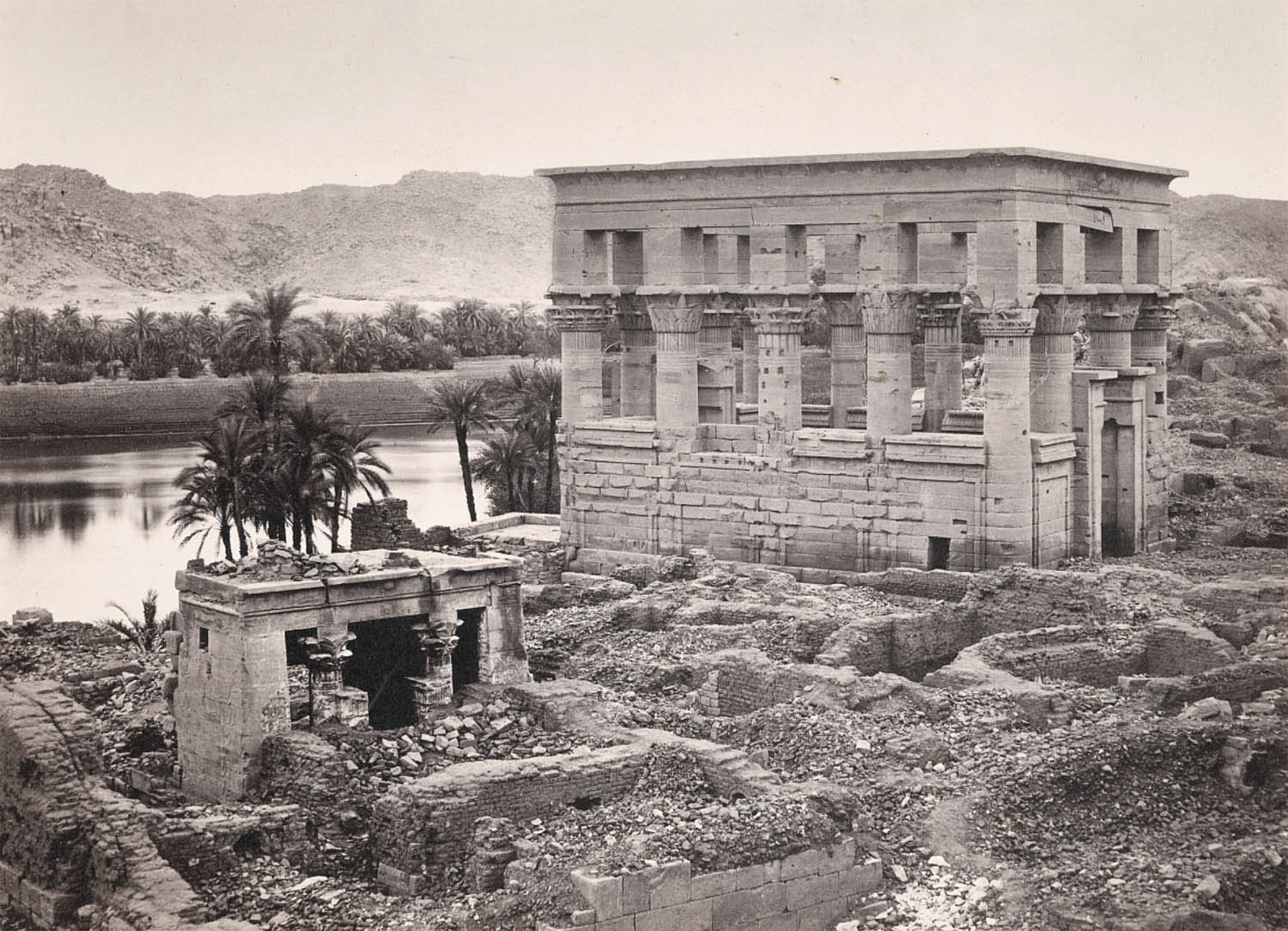
Francis Bedford (English, 1815-1894)
The Hypaethral Temple at Philae
1862
Albumen print
21.1 x 28.8cm
ALBERTINA, Vienna. Dauerleihgabe der Höheren Graphischen Bundes–Lehr–und Versuchsanstalt
For much of his career Bedford tended towards photography as an art form, painting in clouds, enhancing fine detail with pencil or brushes, and using tissue paper to darken negatives to improve lighting, but by the late 1870s, he was an advocate of simplicity. Between 1851 and 1894 he produced nearly 9,000 wet collodion negatives and albumen prints, making him one of the most prolific landscape photographers of his time
Text from the Wikipedia website
Today, photography and travel are inextricably linked – yet this connection dates back to the establishment of the new medium in the nineteenth century. The exhibition The World in Focus is dedicated to travel and expedition photography from the mid-nineteenth century onwards, when photography was increasingly employed to capture images of the world. Photographs were valued for their precision, wealth of detail, and reproducibility. Compared with the draughtsmen who had previously accompanied expeditions and were gradually replaced by photographers, work on site could also be carried out much more quickly.
The extensive series at the heart of the exhibition depict different regions of the world and tell of shifting claims to power, the expansion of mobility, the exploration of remote landscapes, and the emergence of tourism. The presentation also sheds light on the contexts in which photographers were sent on journeys, the conditions under which the images were created, and the ways in which they were presented in exhibitions, facilitated the transfer of knowledge, and had a lasting impact on perceptions of distant territories.
The World in Focus exclusively presents photographs from the ALBERTINA collection and from the collection of the Höhere Graphische Bundes-Lehr- und Versuchsanstalt, which is held at the ALBERTINA on permanent loan. With this exhibition, the ALBERTINA continues its series of thematic presentations drawn from its important photographic collection, revealing yet another facet of one of Austria’s most extensive photographic holdings.
Text from the ALBERTINA website
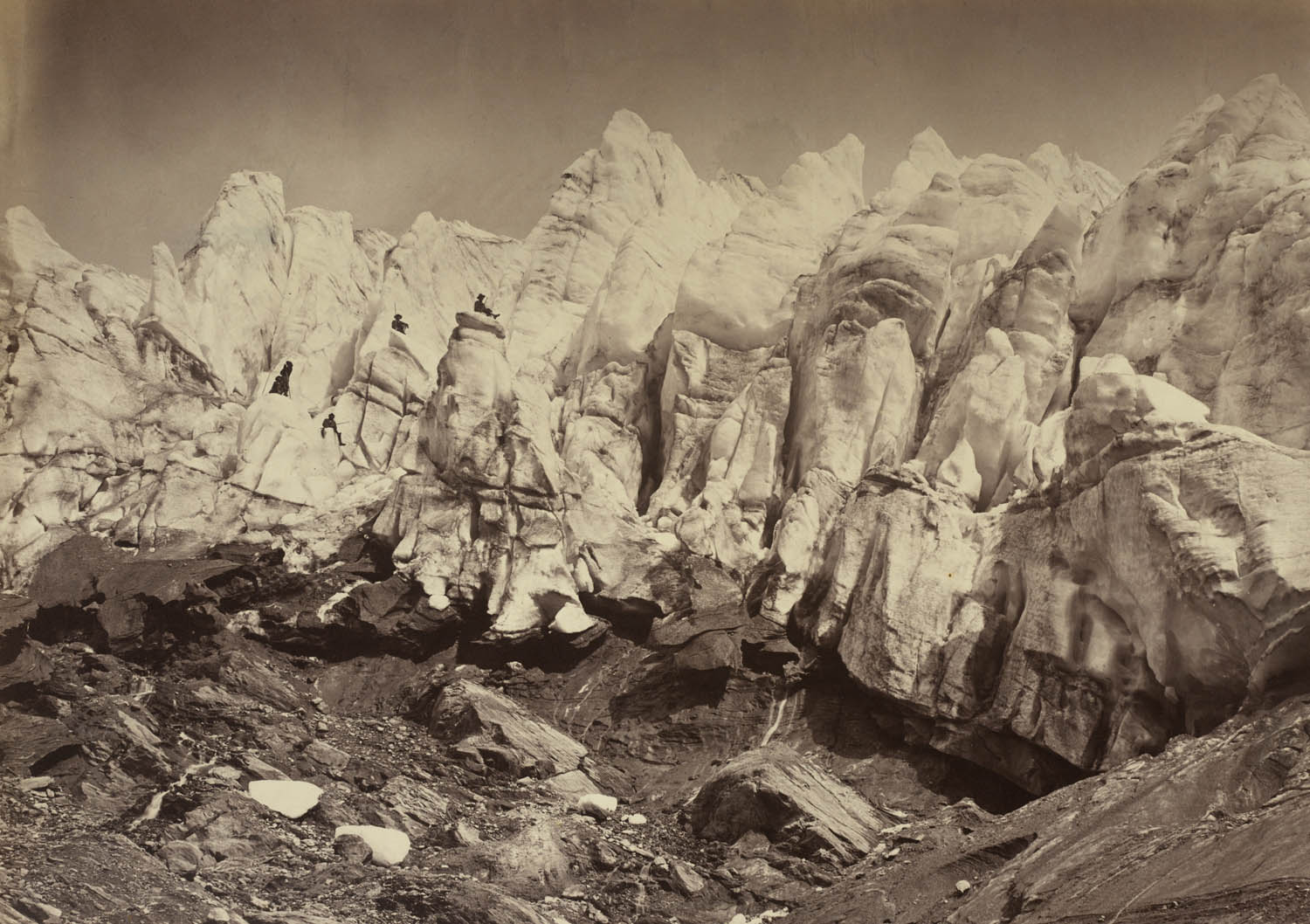
Gustav Jägermayer (Austrian, 1834-1901)
The Crystal Water Glacier from North-West
1863
Albumen print
30 x 42.2cm
ALBERTINA, Vienna
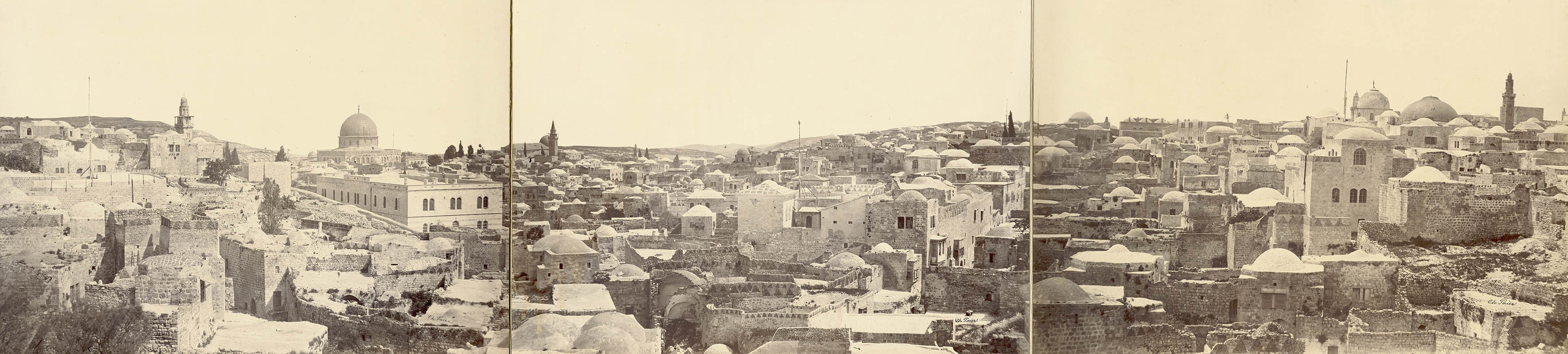
Christian Paier (Slovenian, 1839-1895)
Panoramic View over the Old City of Jerusalem
1864
Albumen print
ALBERTINA, Vienna
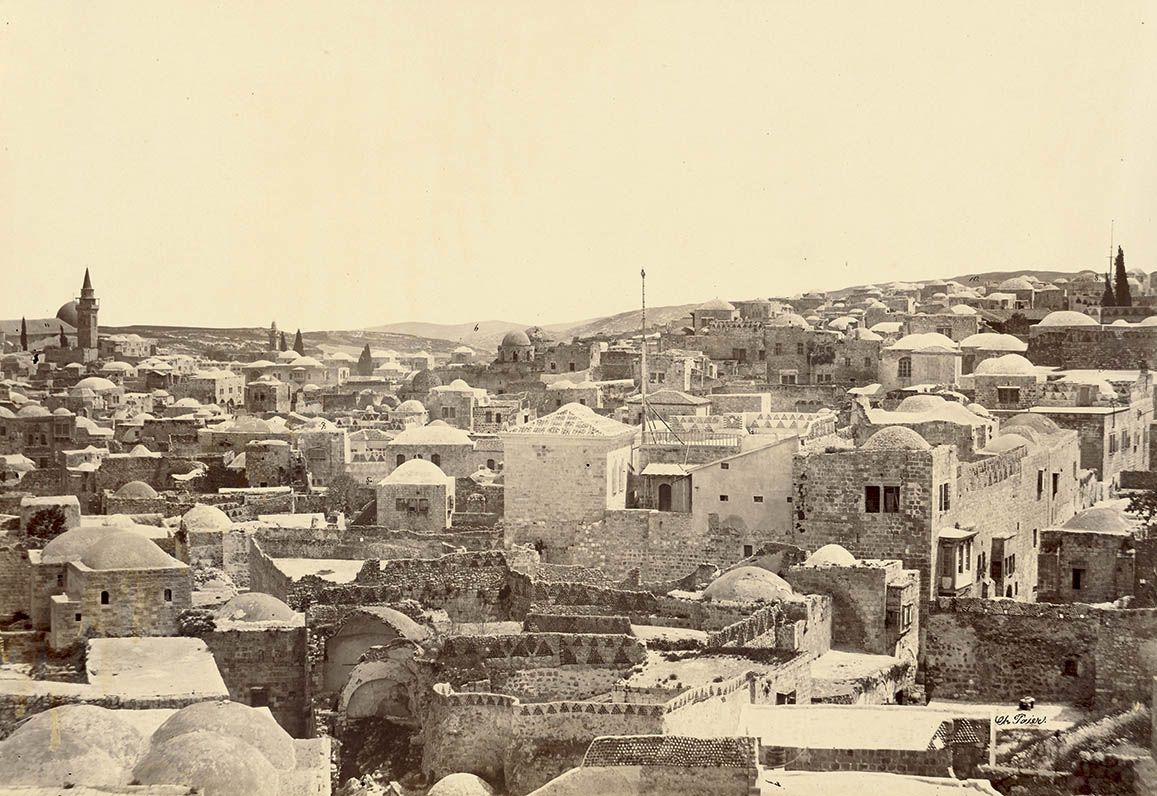
Christian Paier (Slovenian, 1839-1895)
Panoramic View over the Old City of Jerusalem (detail)
1864
Albumen print
ALBERTINA, Vienna
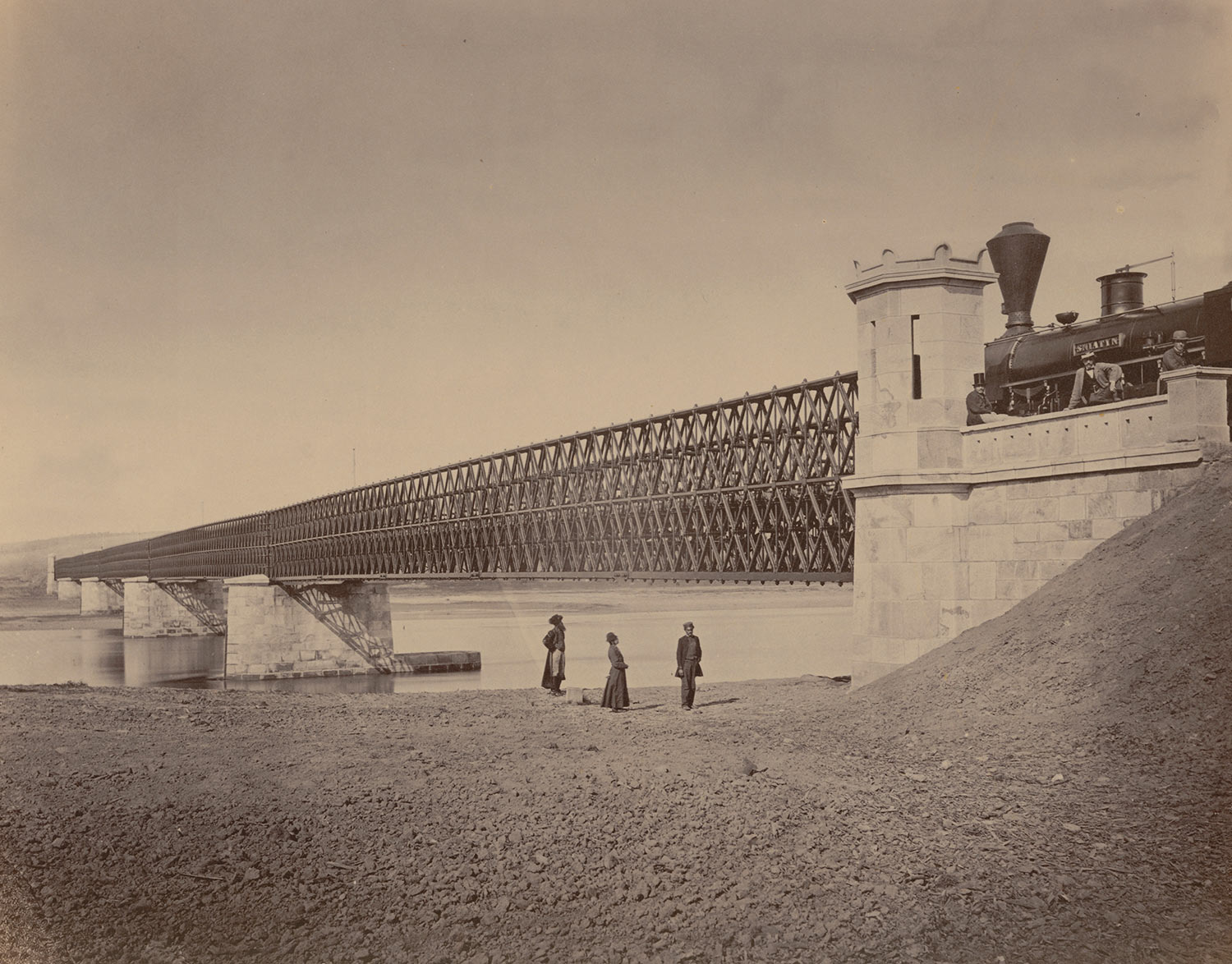
Adolf Schoon von Corbitzthal (Austrian, 1830-1904)
Railway Bridge over the Dniester River near Halicz (today: Halych, Ukraine)
1866/67
Albumen print
20 x 25cm
ALBERTINA, Vienna
Corbitzthal served as a soldier in the Austrian army and later worked as a railway official for the Lviv-Chernivtsi Railway (Lemberg-Czernowitz-Jassy Railway), where he famously documented the rail line’s infrastructure and surrounding cultural landscapes.
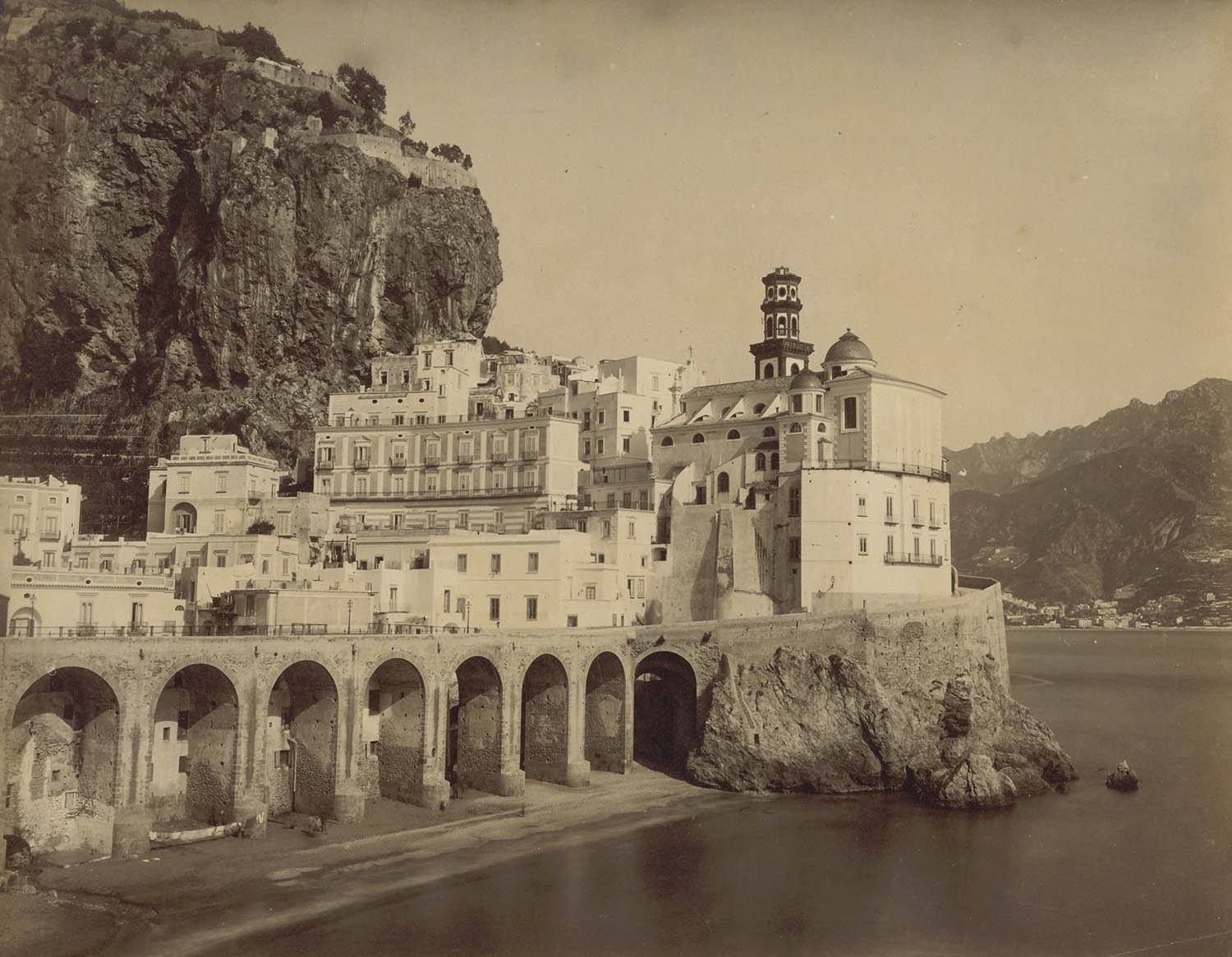
Giorgio Sommer (Italian born Germany, 1834-1914)
Atrani, Italien
1868-1870
Albumen print
20.4 x 25.7cm
ALBERTINA, Vienna
Giorgio Sommer (2 September 1834 – 7 August 1914) was one of Europe’s most important and prolific photographers of the 19th century. Active from 1857 to 1888, he produced thousands of images of archaeological ruins, landscapes, art objects, and portraits. …
Sommer’s catalog included images from the Vatican Museums, the National Archeological Museum at Naples, the Roman ruins at Pompeii, as well as street and architectural scenes of Naples, Florence, Rome, Capri, and Sicily. Most notably, Sommer published his comprehensive album Dintorni di Napoli, which contained over one hundred images of everyday scenes in Naples. In April 1872, he documented a very large eruption of Mount Vesuvius in a series of stunning photographs.
Text from the Wikipedia website
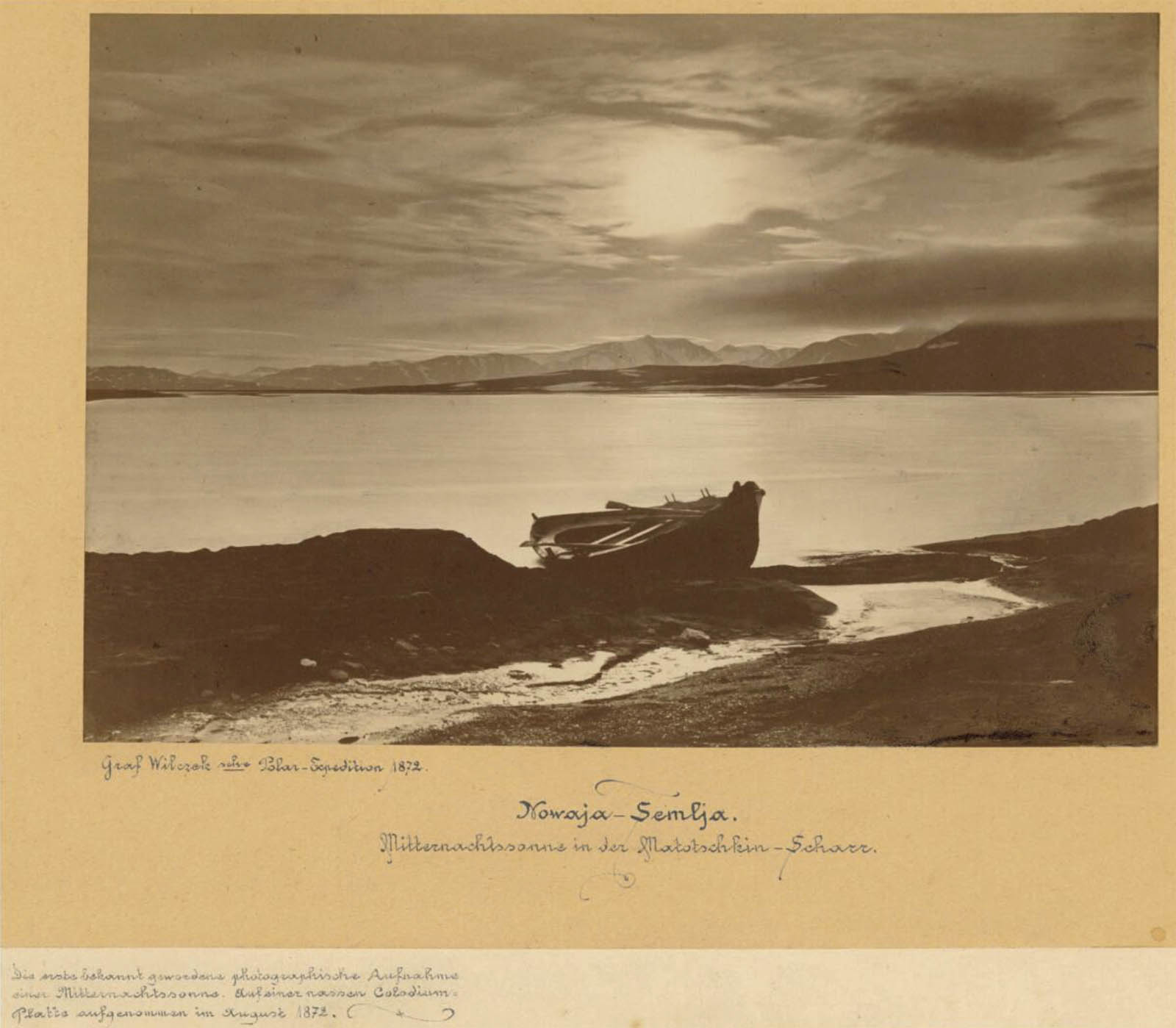
Wilhelm Burger (Austria, 1844-1920)
Count Hans Wilczek (Austria, 1837-1922)
Mitternachtssonne in der Meeresenge Matotschkin, Russland (Midnight sun in the Matochkin Strait, Russia)
July 30, 1872
Albumen print, mounted on card
Overall: 14.6 x 21.4cm (5 3/4 x 8 7/16 in.)
Mount: 40 x 50cm
ALBERTINA, Vienna. Dauerleihgabe der Höheren Graphischen Bundes-Lehr-und Versuchsanstalt
Inscribed: Mounting paper: lower left “Graf Wilczek sche Polar-Expedition 1872”; lower center “Nowaja-Semlja. / Mitternachtssonne in der Matotschkin-Scharr.”; Mount: verso: lower left “Die erste bekannt gewordenen photographische Aufnahme / einer Mitternachtssonne. Auf einer nassen Collodium- / Platte aufgenommen im August 1872.”; Mount: verso: lower left “BURGER, Wilhelm / WILCZEK, Hans”
NB. I’m not sure this photograph is in the exhibition but Burger’s photographs of a Polar expedition are mentioned in the press release
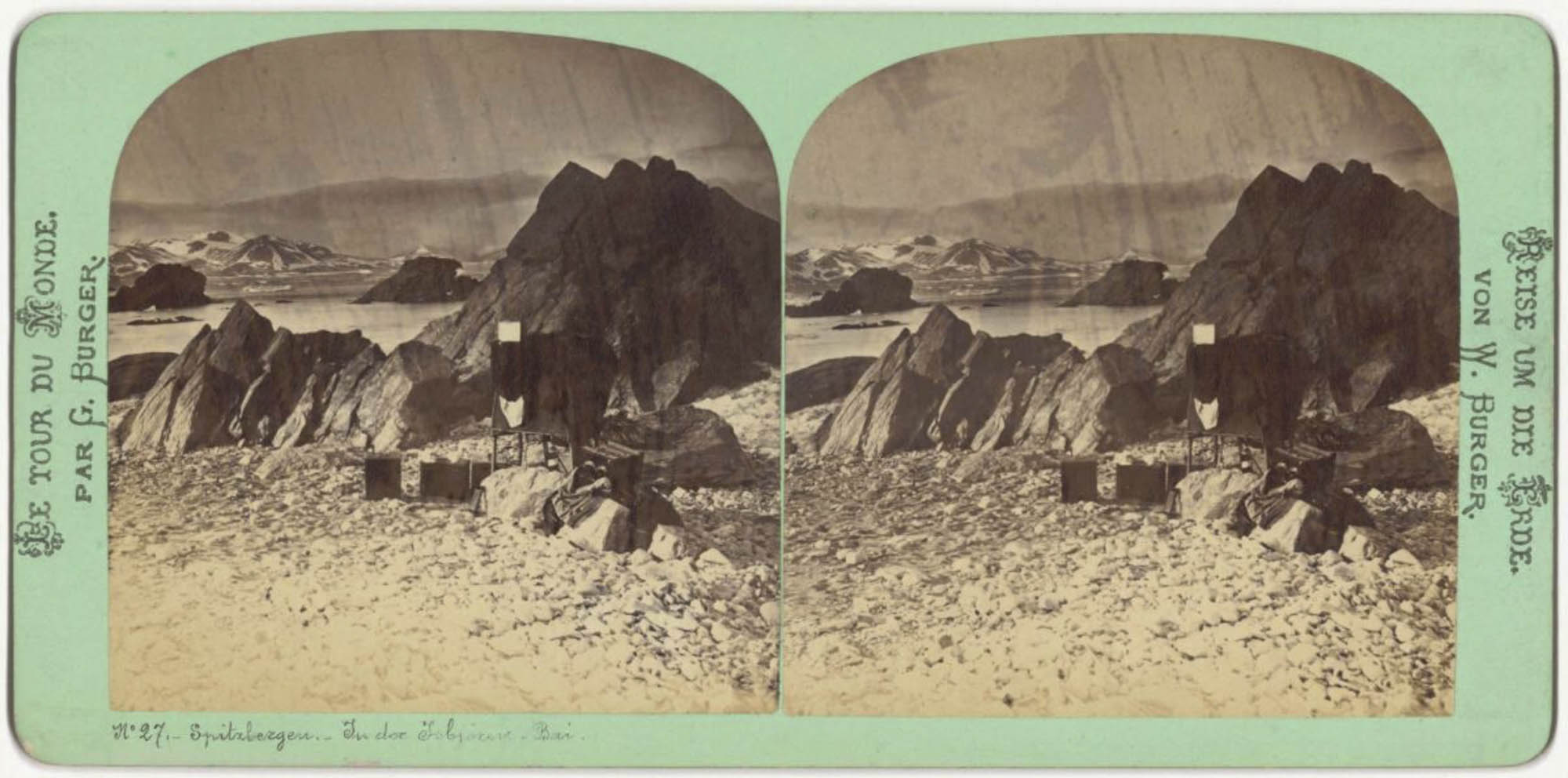
Wilhelm Burger (Austria, 1844-1920)
Count Hans Wilczek (Austria, 1837-1922)
Tragbare Dunkelkammer, Isbjörnbai, Spitzbergen (Portable darkroom, Isbjörnbai, Spitsbergen)
1872
Albumen print, on mount / stereo format
Photographic paper (per image): 7.8 x 7.7cm (3 1/16 x 3 1/16 in.)
Mount: 8.7 x 17.7cm
ALBERTINA, Vienna. Dauerleihgabe der Höheren Graphischen Bundes-Lehr-und Versuchsanstalt
NB. I’m not sure this photograph is in the exhibition but Burger’s photographs of a Polar expedition are mentioned in the press release
Long before smartphones turned every journey into an endless stream of images, photography was already transforming the way people encountered distant places. Beginning July 22, the ALBERTINA explores that history in The World in Focus, an exhibition tracing the development of travel and expedition photography from the mid-19th century through the early decades of colour photography.
On view in the museum’s Tietze Galleries through October 26, 2026, the exhibition brings together 107 photographs from the ALBERTINA’s photographic collection, along with a projection of several early autochromes. Curated by Anna Hanreich, the presentation looks beyond the scenic appeal of travel images to examine the political, scientific, commercial and cultural forces that shaped their production.
Photography and travel became closely linked almost as soon as the medium emerged. Compared with drawing, photography offered a faster and apparently more precise way to document landscapes, monuments, cities and people. Images could also be reproduced and distributed widely, allowing distant territories to enter the public imagination with unprecedented immediacy.
Yet the exhibition makes clear that these photographs were never neutral records. Many were produced during expeditions financed by governments, scientific institutions or commercial interests. Others were created for a growing tourist market eager for views of places that most Europeans would never visit themselves. In both cases, the images often reflected a distinctly Western perspective, shaping ideas about foreign cultures through assumptions that were tied to colonialism, imperial ambition and the conventions of the period.
The exhibition moves across an expansive geography, from the frozen heights of the Alps and the Arctic to Egypt, the Holy Land, Japan, India, Bosnia and Herzegovina, Italy and Norway. Together, the works show how photography accompanied the expansion of mobility, the growth of tourism and the increasing accessibility of remote regions.
Egypt occupies a prominent place in the exhibition. European fascination with the country intensified after Napoleon Bonaparte’s military campaign of 1798-1801, which helped trigger a widespread wave of “Egyptomania.” By the middle of the 19th century, photographers were travelling along the Nile and documenting ancient monuments, often before they underwent later restoration or alteration. Their images circulated through albums, books and international exhibitions, establishing visual routes that would eventually become familiar tourist itineraries.
Another section focuses on Wilhelm Burger, one of the Habsburg monarchy’s most sought-after expedition photographers. Working at a time when photography required heavy wooden cameras, glass plates, chemicals and portable darkrooms, Burger took part in the Austro-Hungarian East Asia expedition of 1868-1869 and later joined a support mission connected to the Austro-Hungarian North Pole expedition. His photographs rank among the earliest images made in the Arctic region.
The exhibition also highlights Raimund von Stillfried-Rathenitz, who established an influential studio in Yokohama in 1871. Stillfried photographed historically important sites around Tokyo and Yokohama during a period of rapid transformation following the Meiji Restoration. His carefully composed landscapes appealed to the growing number of international travellers arriving in Japan and helped define how the country was represented abroad.
Images of Jerusalem, Bethlehem and surrounding areas reveal the close relationship between pilgrimage, politics and the emerging market for travel photography. Photographers such as Christian Paier produced views of sacred sites for European audiences already familiar with biblical narratives. These photographs did more than document religious landmarks; they connected contemporary travel with long-established ideas about history, faith and cultural identity.
Photography also served as a tool of political representation within the Austro-Hungarian Empire. After the occupation of Bosnia and Herzegovina in 1878, Josef Löwy was commissioned to document the territory. Rather than concentrating on military action, he photographed roads, infrastructure and landscapes, presenting the occupation through images of modernisation and development. Stillfried returned to the region years later, producing more atmospheric scenes of daily life and local dress.
As railway networks expanded during the 19th century, travel became faster and more accessible. Railway companies quickly recognized photography’s promotional power and hired photographers to document stations, bridges, construction projects and the landscapes opened by new routes. These images functioned as corporate records, tributes to engineering and advertisements for destinations that had previously seemed unreachable.
By the end of the century, lighter cameras brought a more personal form of travel photography. Artists and wealthy amateurs began making spontaneous images based on their own interests rather than official assignments. The painter Johann Victor Krämer, for example, carried a portable Kodak camera during travels through Egypt and Palestine between 1898 and 1900, later using some of his photographs as material for paintings.
The arrival of autochrome plates in 1907 introduced another major shift. These early colour transparencies were especially popular for landscapes and travel scenes, although they had to be viewed through transmitted light or projected onto a screen. Public and private projection evenings became popular forms of entertainment, allowing audiences to experience vivid color views of Italy, the French Riviera, Norway and other destinations.
Among the press images associated with the exhibition are an autochrome of a flower seller standing before Florence’s Ponte Vecchio, an early colour view of Digermulen in Norway, Giorgio Sommer’s photograph of Atrani on the Amalfi Coast, and Stillfried’s image of the imperial palace in Tokyo. Seen together, the works reveal how travel photography gradually moved from heavy expeditionary equipment and official commissions toward the personal, immediate and colorful visual language still familiar today.
The World in Focus is on view at the ALBERTINA in Vienna from July 22 through October 26, 2026. The accompanying bilingual catalogue, edited by Anna Hanreich, is available in German and English.
Press release from ALBERTINA
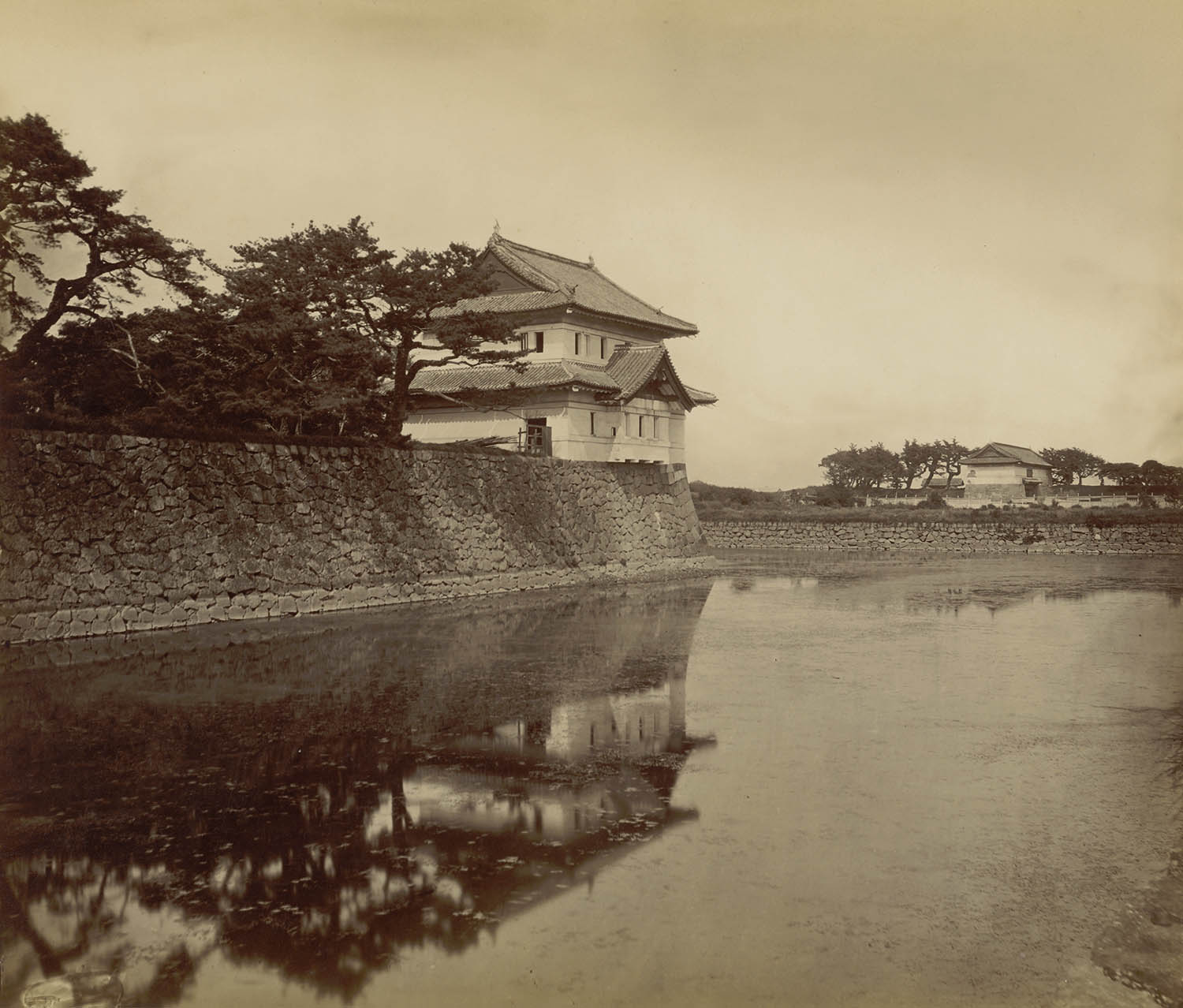
Raimund Stillfried von Rathenitz (Austrian, 1839-1911)
Imperial Castle, Tokyo, Japan
c. 1875
Albumen print
37.6 x 44.6cm
ALBERTINA, Vienna. Dauerleihgabe der Höheren Graphischen Bundes-Lehr- und Versuchsanstalt
Baron Raimund von Stillfried, also known as Baron Raimund von Stillfried-Rathenitz (6 August 1839, in Komotau, Bohemia – 12 August 1911, in Vienna, Austrian-Hungarian Empire), was an Austrian military officer and early professional photographer in Japan. His historical photographs of Japan following the end of the Tokugawa shogunate in the 1870s have been appreciated for their documentary and artistic value and collected in international archives.
Text from the Wikipedia website
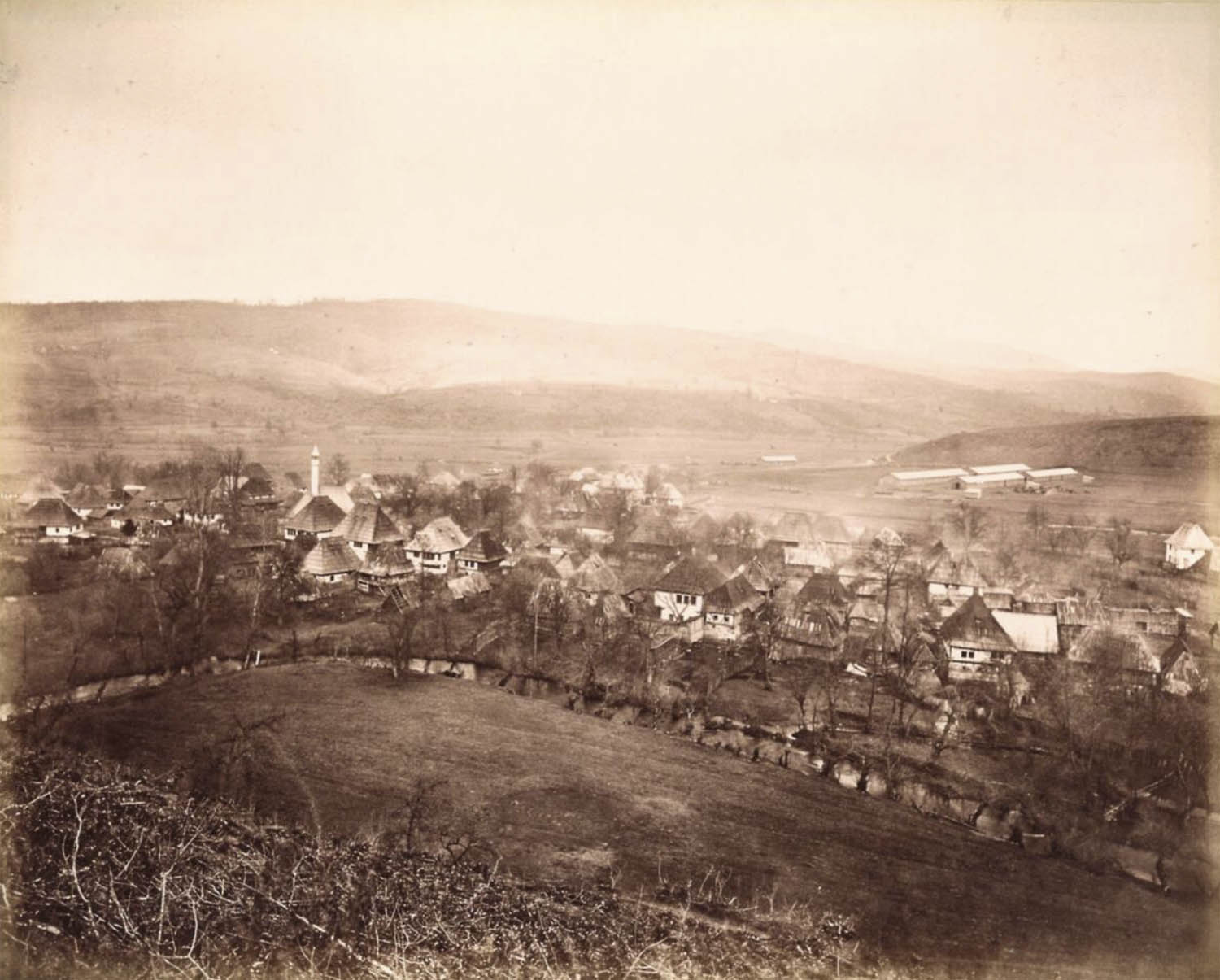
Josef Löwy (Austrian, 1834-1902)
Busovaca im Kanton Zentralbosnien, ca. 20 km südlich von Zenica, im Hintergrund Baracken der österreichisch-ungarischen Besatzung (Busovača in the Central Bosnia Canton, approx. 20 km south of Zenica; in the background, barracks of the Austro-Hungarian occupation forces)
1878
Albumen print, on backing card
Image: 20.6 x 25.5cm (8 1/8 x 10 1/16 in.)
Card: 43.4 x 32.8cm (17 1/16 x 12 15/16 in.)
ALBERTINA, Wien
NB. I’m not sure this photograph is in the exhibition but Löwy‘s photographs of Bosnia and the Austro-Hungarian occupation are mentioned in the press release
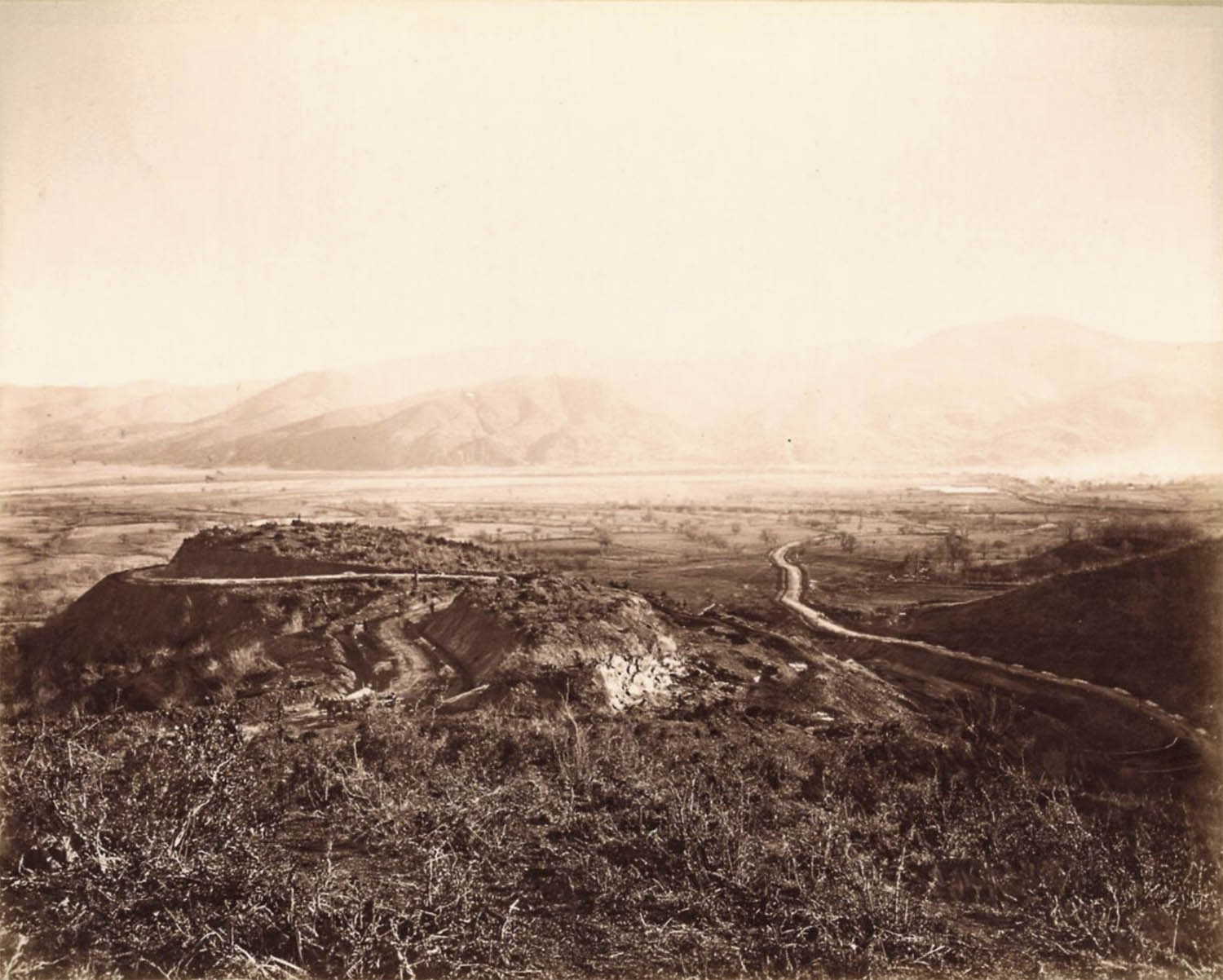
Josef Löwy (Austrian, 1834-1902)
Strassencorrection vor Žepce an der Bosna zwischen Doboj und Zenica (heute: Kanton Zenica-Doboj in Bosnien und Herzegowina) (Road realignment near Žepce on the Bosna River, between Doboj and Zenica (present-day Zenica-Doboj Canton in Bosnia and Herzegovina))
1878
Albumen print, on backing card
Image: 20.6 x 25.5cm (8 1/8 x 10 1/16 in.)
Card: 43.4 x 32.8cm (17 1/16 x 12 15/16 in.)
ALBERTINA, Wien
NB. I’m not sure this photograph is in the exhibition but Löwy‘s photographs of Bosnia and the Austro-Hungarian occupation are mentioned in the press release
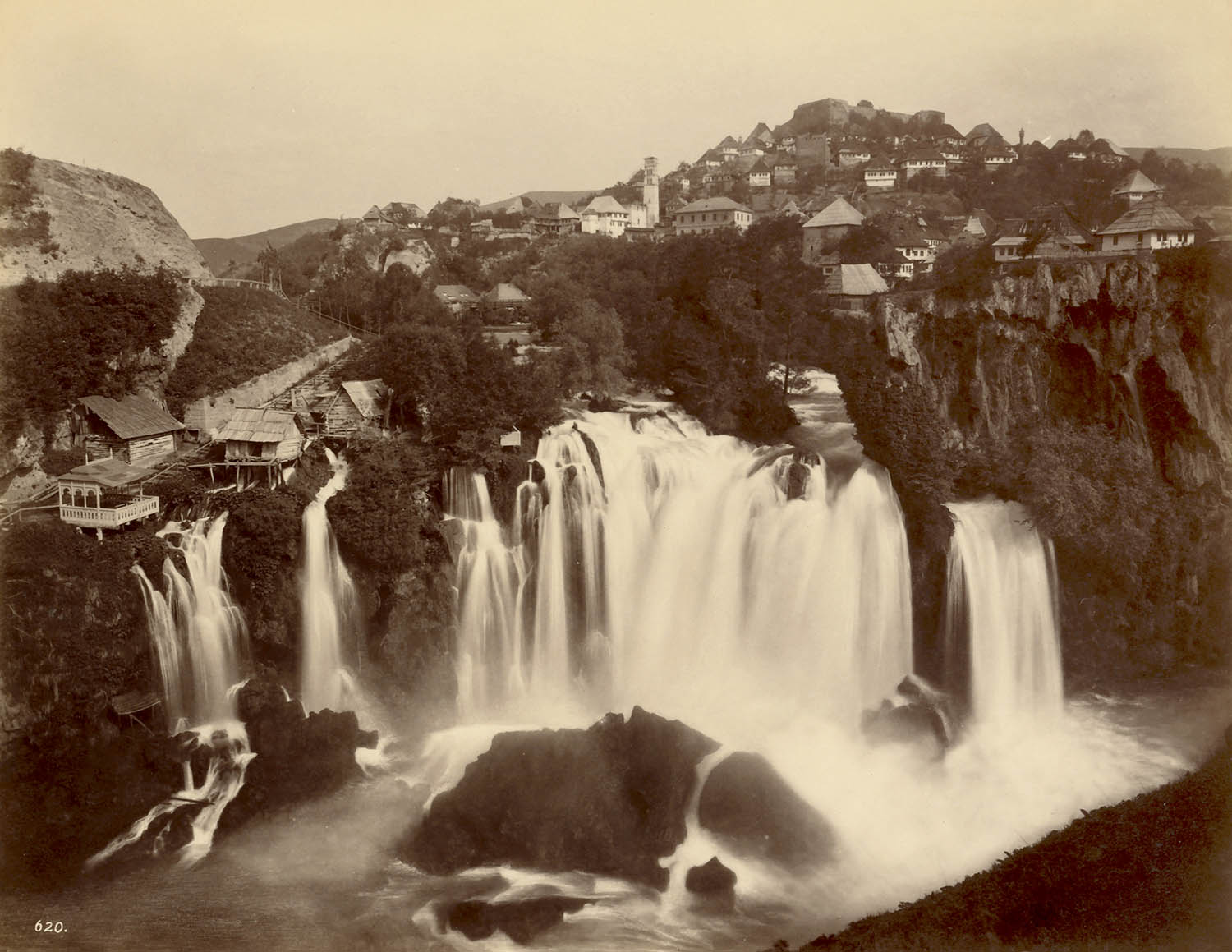
Raimund Stillfried von Rathenitz (Austrian, 1839-1911)
Jajce with the Pliva Waterfall, Bosnia and Herzegovina
1889
Albumen print
19.5 x 24.5cm
ALBERTINA, Wien
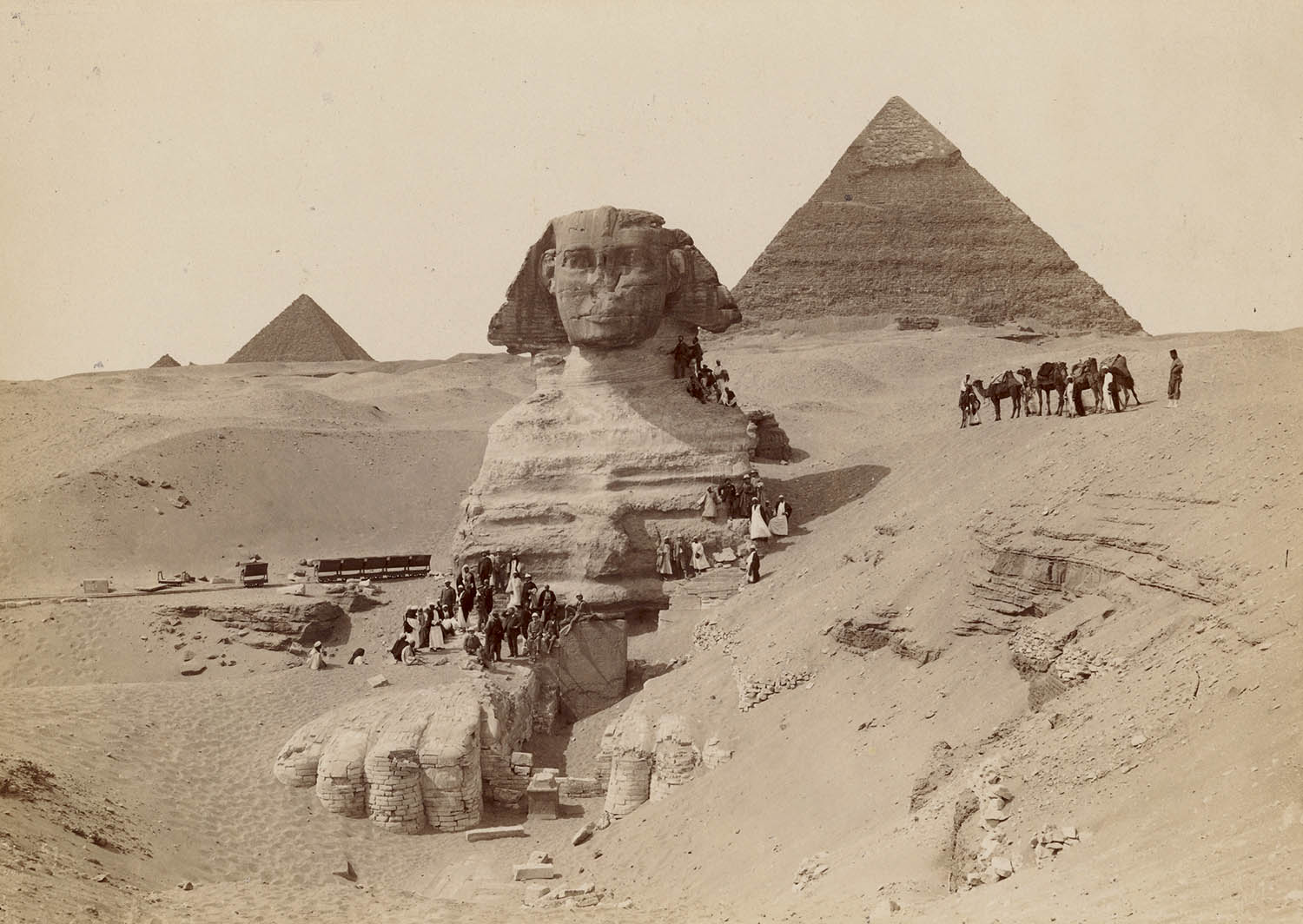
Anton Silberhuber (Austrian, 1839-1899)
The Sphinx and the Pyramids, Egypt
c. 1890
Collodion paper
16.6 x 23.4cm
ALBERTINA, Vienna. Dauerleihgabe der Höheren Graphischen Bundes-Lehr- und Versuchsanstalt
Anton Silberhuber (1839-1899) was an influential 19th-century Austrian travel and documentary photographer. He is best known for capturing early archaeological and expedition photography across regions such as Egypt, Greece, and the Balkans.
One of his most celebrated pieces is a collodion paper print depicting tourists interacting with the Great Sphinx of Giza. This specific photograph captures a striking cultural moment of early global tourism, showing tourists physically climbing onto the paws and shoulders of the Sphinx for a portrait.
Text from various sources
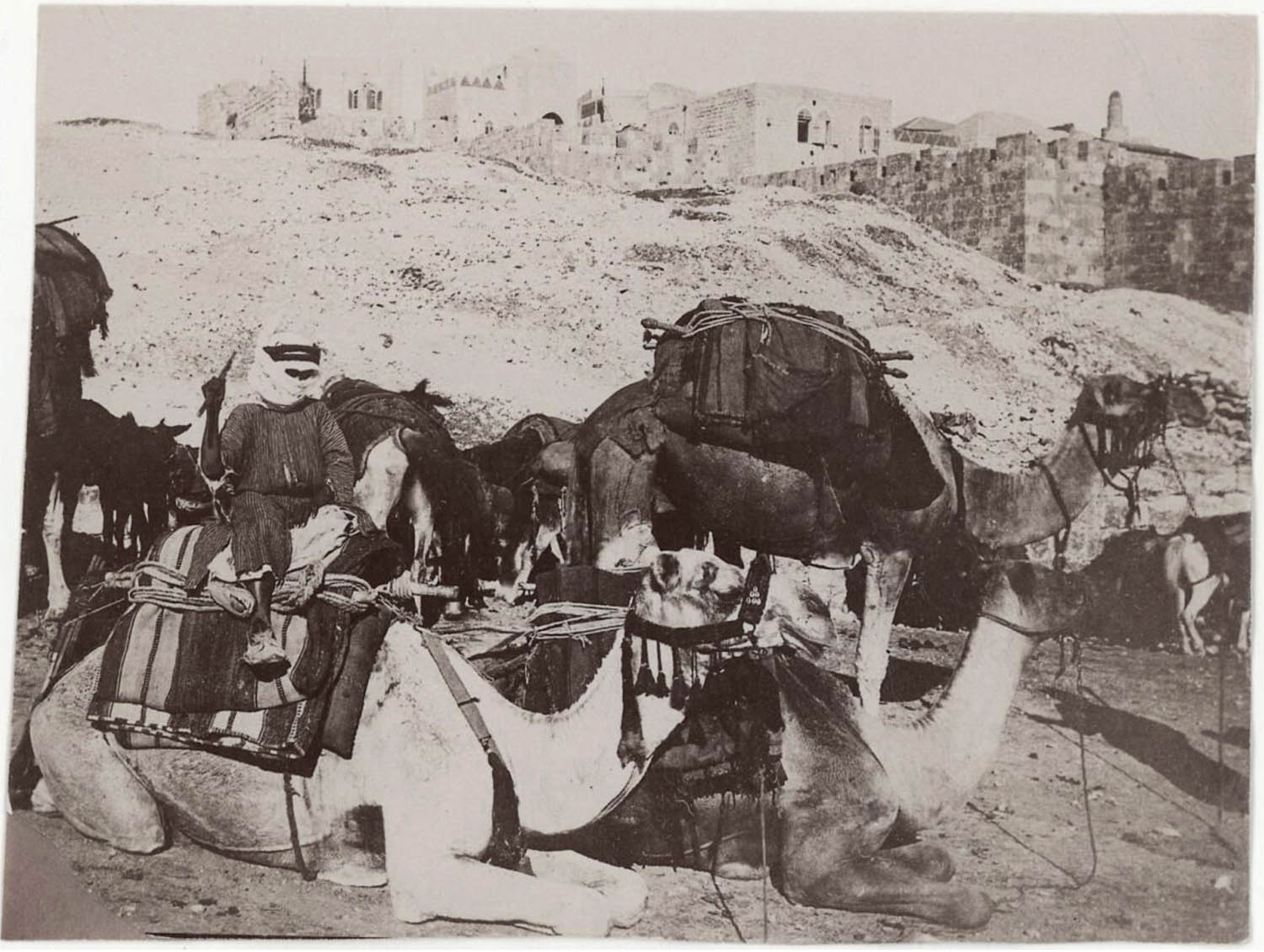
Johann Victor Krämer (Austria, 1861-1949)
Künstlervorlagen (Artist templates)
1898-1900
Albumen print
ALBERTINA, Vienna
NB. I’m not sure this photograph is in the exhibition but Krämer‘s photographs of Palestine are mentioned in the press release
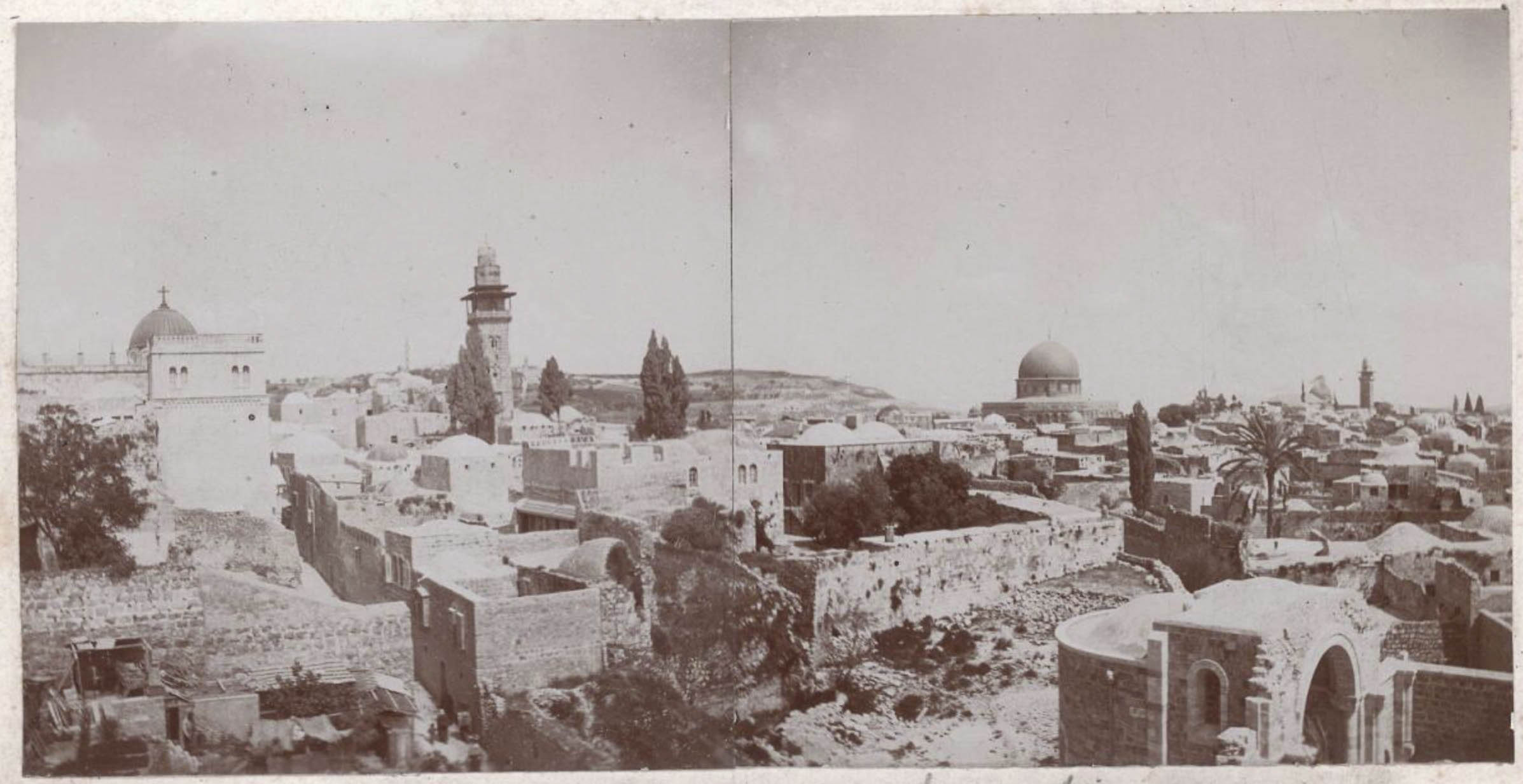
Johann Victor Krämer (Austria, 1861-1949)
Jerusalem
Around 1900
Albumen paper (?), on backing card
Photographic paper: 8.3 x 16.4cm (3 1/4 x 6 7/16 in.)
Card: 14.1 x 20.5cm
ALBERTINA, Vienna
NB. I’m not sure this photograph is in the exhibition but Krämer‘s photographs of Palestine are mentioned in the press release
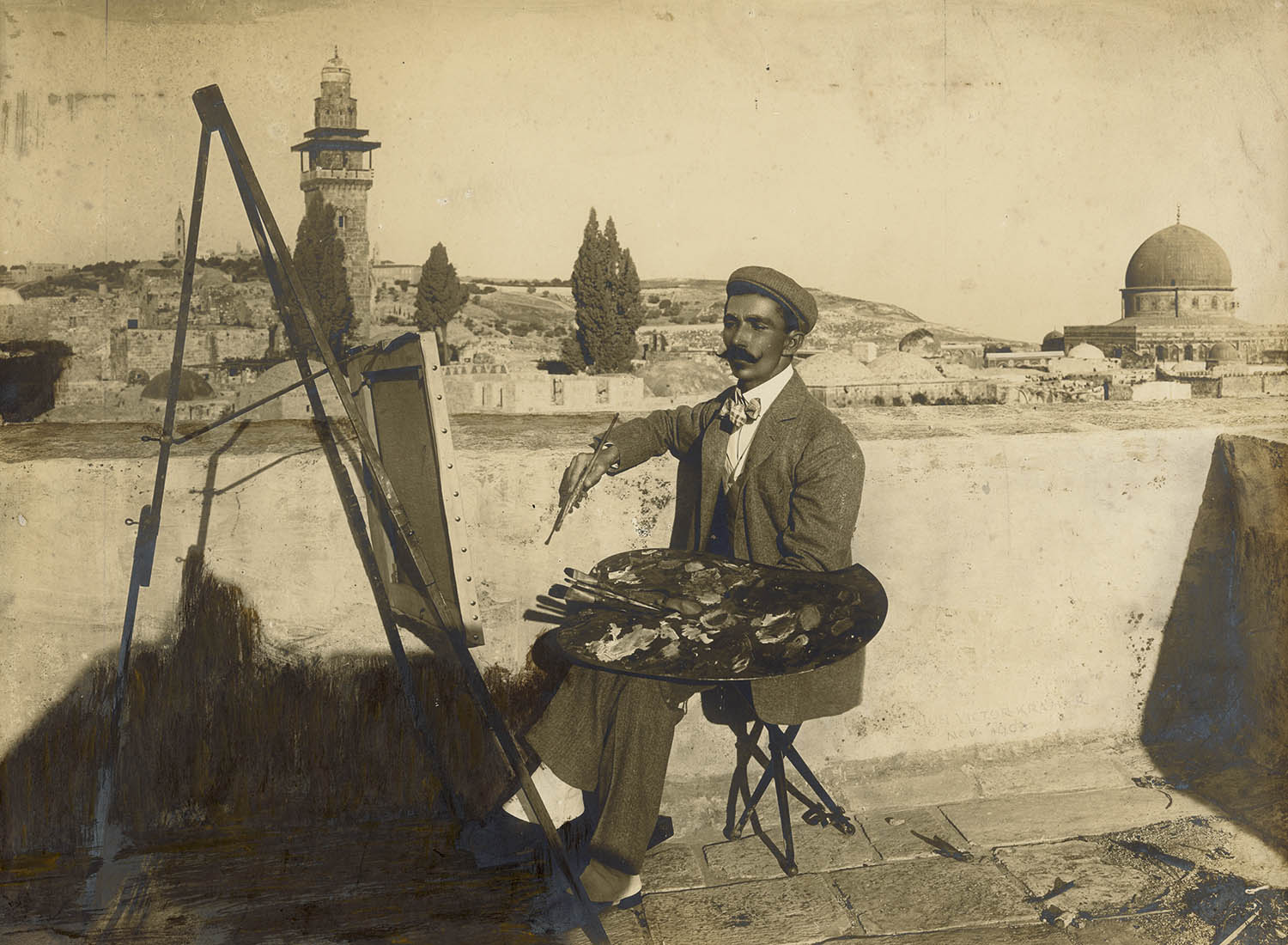
Johann Victor Krämer (Austria, 1861-1949)
Self-Portrait on the Terrace of the Austrian Pilgrims’ Hospice in Jerusalem
c. 1900
20.6 x 28cm
Gelatin silver print, retouched
ALBERTINA, Vienna
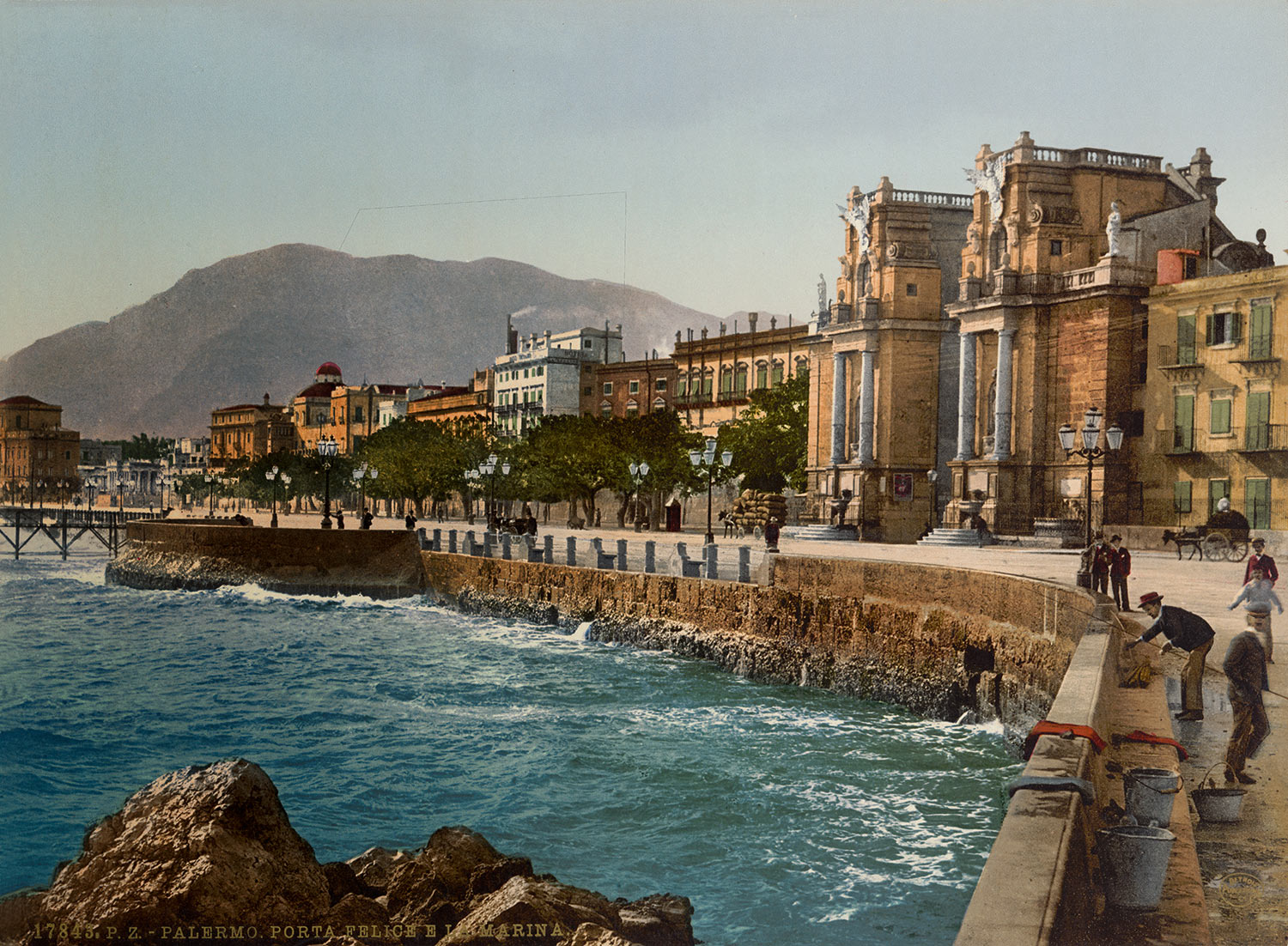
Anonymous photographer (Photoglob & Co., Zurich)
Porta Felice and the Marina, Palermo, Italy
1889-1905
Photochrome
16.51 x 22.23cm
ALBERTINA, Vienna – Schenkung Harald Woschitz, Nachlass Christopher Cardozo, US
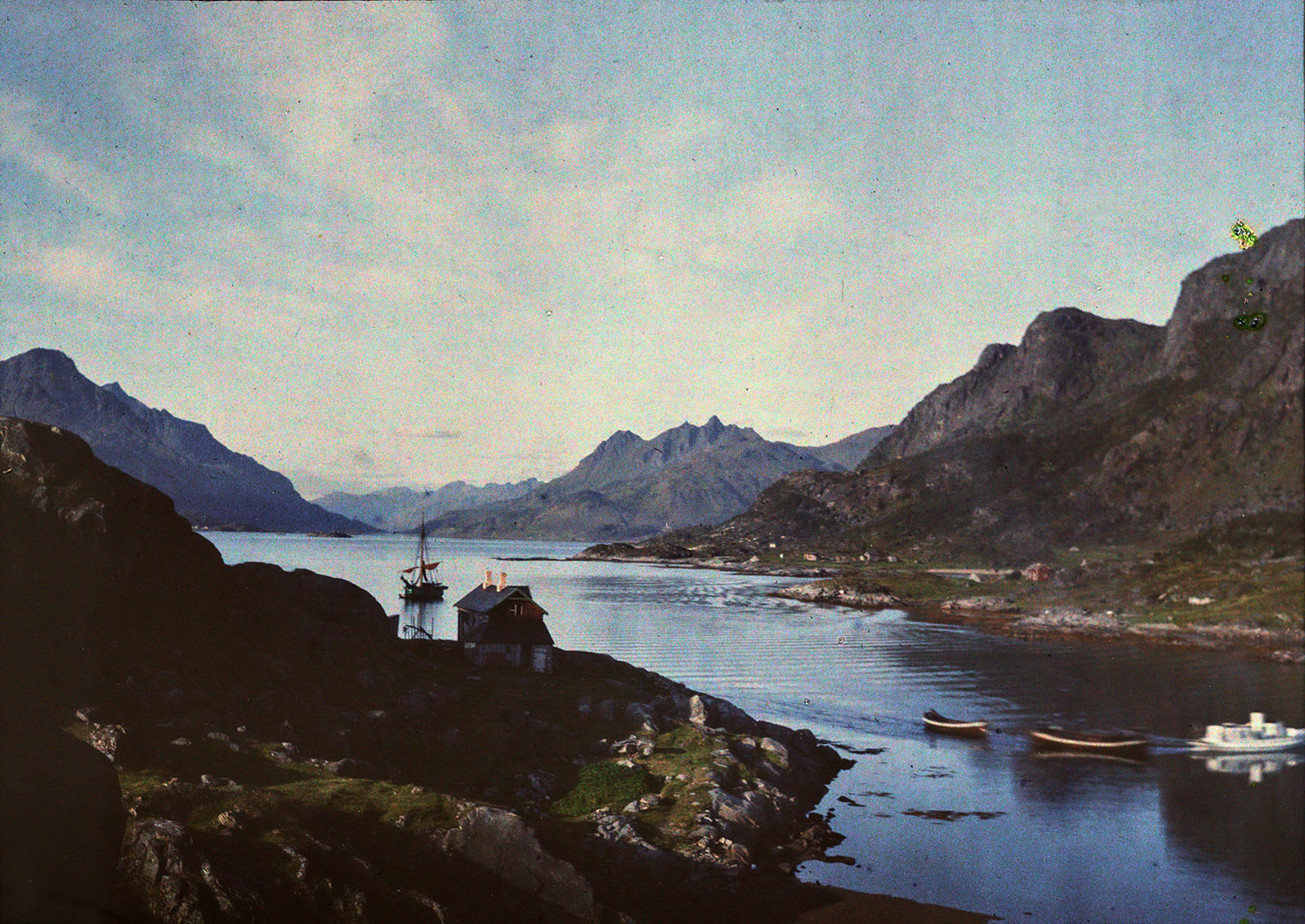
Anonymous photographer
Digermulen, Norway
1913
Autochrome
9 x 12cm
ALBERTINA, Vienna. Dauerleihgabe der Höheren Graphischen Bundes-Lehr- und Versuchsanstalt
The Albertina Museum
Albertinaplatz 1
1010 Vienna
Phone: +43 (0)1 534 83 0
Daily 10am – 6pm
Except Wednesday and Friday 10am – 9pm


You must be logged in to post a comment.