Exhibition: ‘Avatar: Forms of Vishnu’ at the Art Gallery of New South Wales, Sydney

Exhibition dates: 20th June – 5th October, 2026

Curators: Melanie Eastburn, Art Gallery of New South Wales senior curator of Asian art and in collaboration with Dr Chaitanya Sambrani, associate professor of art history and curatorial studies at the Australian National University
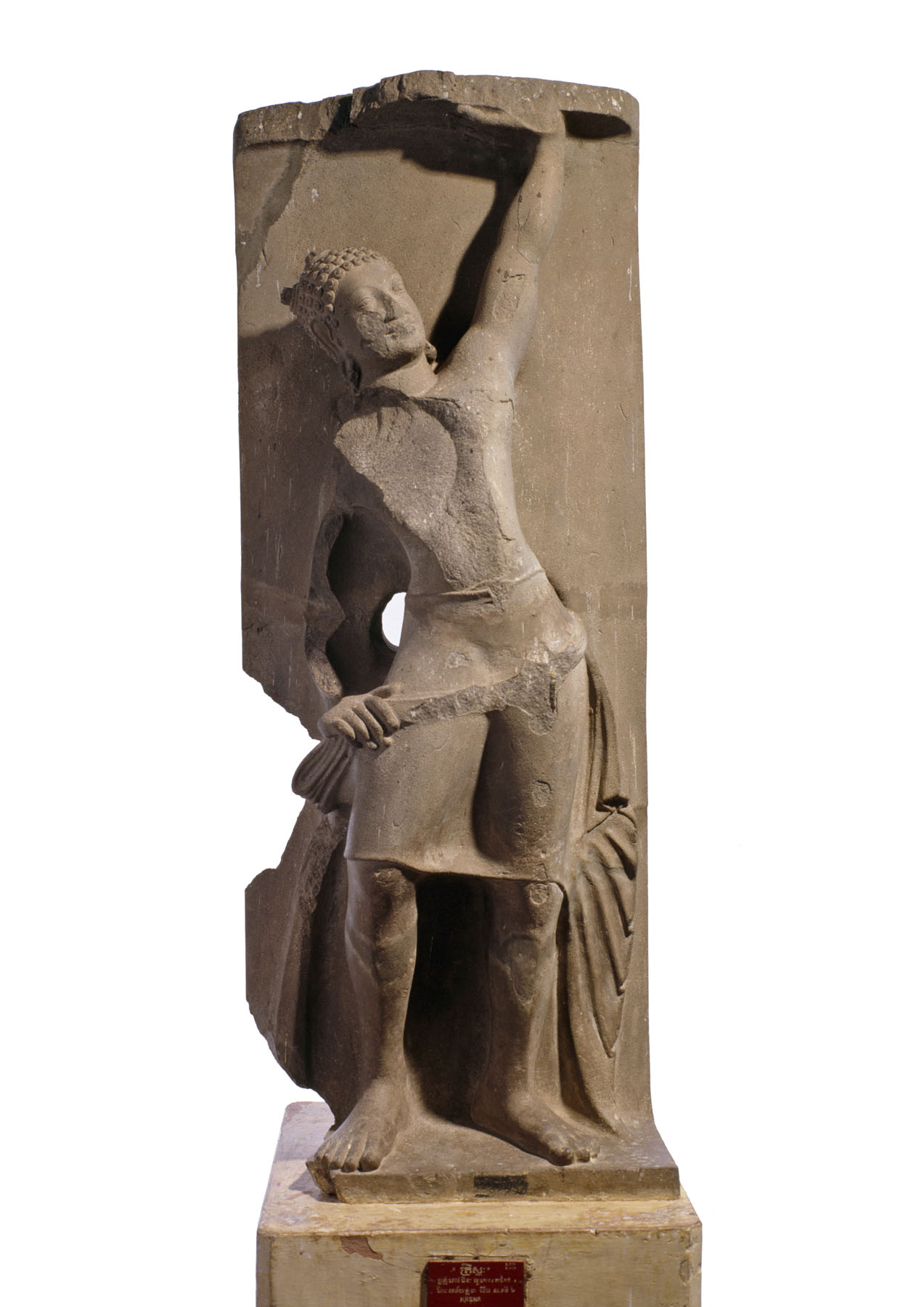
 

Cambodia, Takeo, Angkor Borei, Wat Koh, Pre-Angkor period (c. 100-800) Phnom Da style. 'Krishna Govardhana' Late 500s


Cambodia, Takeo, Angkor Borei, Wat Koh, Pre-Angkor period (c. 100-800) Phnom Da style
Krishna Govardhana
Late 500s
Sandstone
161 x 65.5 x 35.2 cm excl tenon
National Museum of Cambodia, Phnom Penh


Krishna Govardhana refers to the divine episode and iconic iconography of the Hindu deity Lord Krishna lifting Govardhan Hill on his finger to protect the people and animals of Braj from a torrential storm.


Among other things, form is the visible outer appearance or physical makeup of an object or body. But form can also represent something intangible, a vibration of energy, a belief, a faith, in god (or God), whatever form they may take.

The physical objects in this exhibition, created by human hand, give “form” to the majesty of the divine – the sacred nature, power, or presence of a god or supreme being – a representation of the ineffable, the unknowable, for nobody can know whether god exists. They can believe, they can have faith, but they can never absolutely know.

To me faith, a trust in a higher power or the sacred teachings of a religion, is an entirely personal choice. I myself form my nebulous consciousness about the world, the cosmos and god from parts of Zen Buddhism, Krishnamurti, Carlos Castaneda, William Blake, Carl Jung, mandalas, tarot and more. To me, nothing is excluded, everything is open and receptive to spirit – of yourself, the earth, the stars and the cosmos. God even.

I believe that god (a general supernatural being, a deity in a polytheistic religion) and God is inside everyone and everything. But it is up to the individual to bring their rich personal stories to the inquiry into what you believe, including the fact that our understanding of god must acknowledge that the divine is never purely good, “it must encompass all opposites, including darkness and destructive power.” (Carl Jung)

All gods are interconnected in their creation stories; all humans are connected to the energy and spirit of the cosmos. Inter-connected, inter-stellar, inter can be a verb meaning to bury a dead body, or a common prefix meaning “between” or “among” – for in this discontinuous life while we may bury our physical body we may continue to live among the energy of the stars.

Dr Marcus Bunyan


Many thankx to the AGNSW for allowing me to publish the photographs in the posting. Please click on the photographs for a larger version of the image.
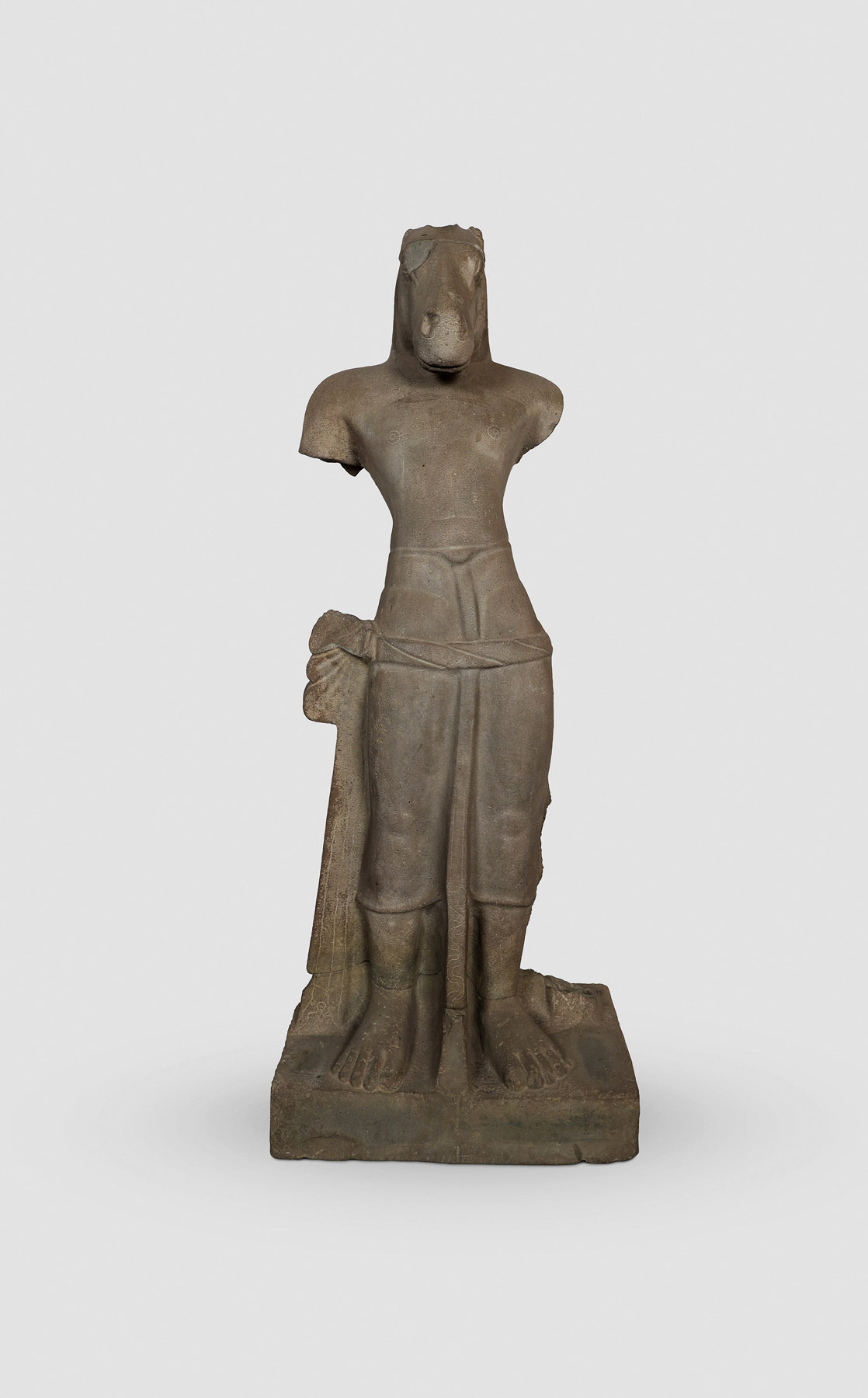


Cambodia, Svay Rieng, Kouk Trap, Pre-Angkor period (c. 100-800) 'Vajimukha (Hayagriva or Kalkin)' Late 500s to early 600s


Cambodia, Svay Rieng, Kouk Trap, Pre-Angkor period (c. 100-800)
Vajimukha (Hayagriva or Kalkin)
Late 500s to early 600s
Sandstone
134.5 x 60.5 x 33.3cm
National Museum of Cambodia, Phnom Penh


This captivating exhibition brings together centuries of art and storytelling from South and Southeast Asia celebrating Vishnu, the Hindu deity who preserves order in the universe.

Avatar, meaning ‘descent’ in Sanskrit, describes the many forms Vishnu takes to descend from the heavens to restore balance on earth. In sculpture, painting, textiles and photographs, the exhibition traces the ways artists have envisioned Vishnu’s various avatars, including Matsya the fish, Kurma the tortoise, the beloved Krishna, the noble prince Rāma, and Kalki, the future avatar who will bring renewal.

Brimming with tales of heroism, love and devotion, the exhibition presents exceptional historical and contemporary art from renowned collections in Australia, India, Cambodia, Switzerland and the United Kingdom. It also includes work by contemporary artists Gitanjali Das, Kalyan Joshi, Jumaadi, Desmond Lazaro, Kalam Patua, Nalini Malani, Pushpamala N, Sumakshi Singh and Satyanarayan Suthar.

With thanks to Dr Chaitanya Sambrani, and the School of Art and Design, Australian National University.

Text from the AGNSW website
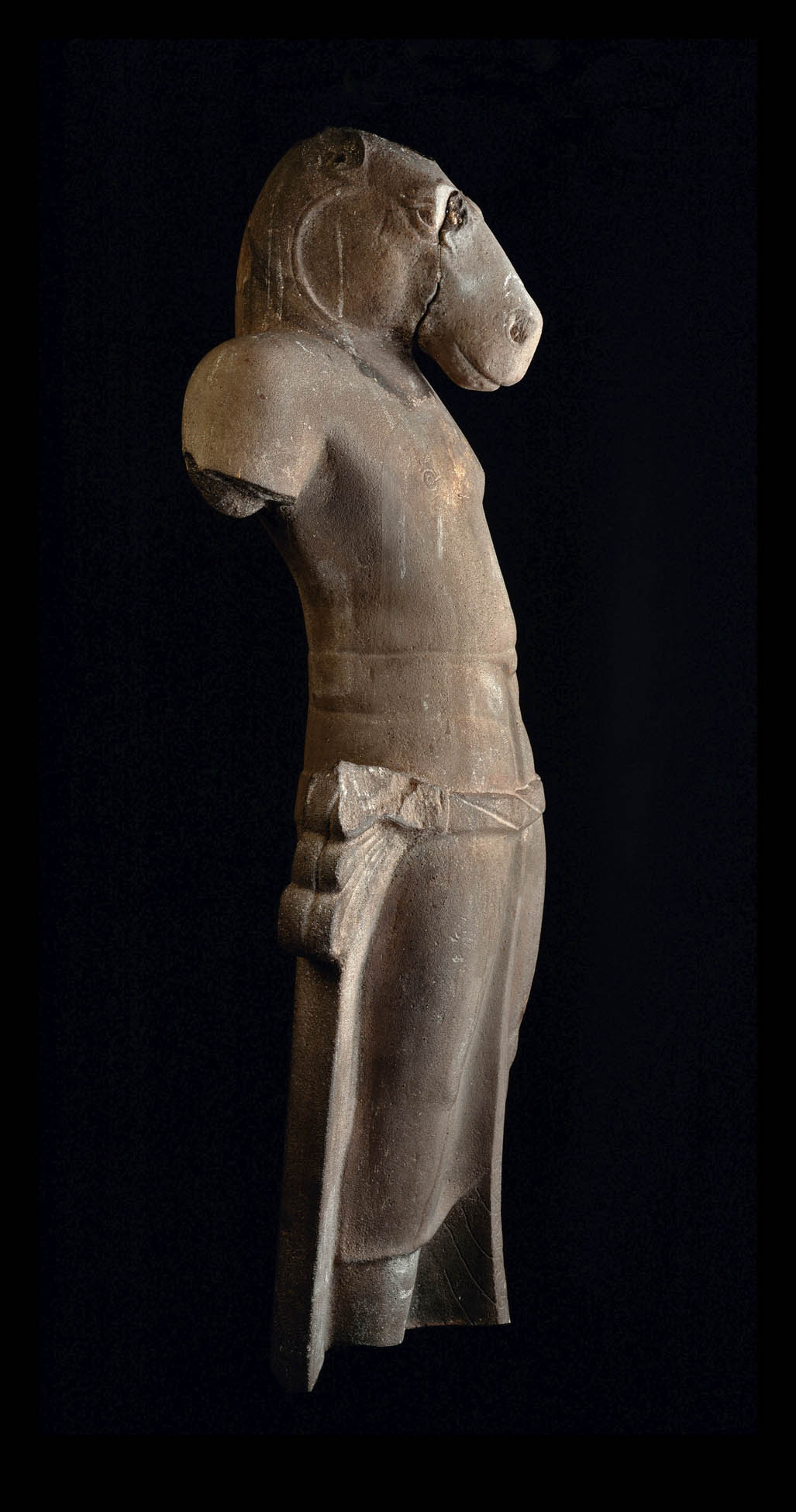
 

Cambodia, Svay Rieng, Kouk Trap, Pre-Angkor period (c. 100-800) 'Vajimukha (Hayagriva or Kalkin)' Late 500s to early 600s


Cambodia, Svay Rieng, Kouk Trap, Pre-Angkor period (c. 100-800)
Vajimukha (Hayagriva or Kalkin)
Late 500s to early 600s
Sandstone
134.5 x 60.5 x 33.3cm
National Museum of Cambodia, Phnom Penh


Vajimukha translates from Sanskrit as “horse-faced” (vaji meaning horse and mukha meaning face). It refers to a rare horse-headed divine sculpture in Southeast Asian (Khmer) art. It typically depicts a human body with a crowned horse head, representing an equine avatar of the Hindu god Vishnu – either Hayagriva or Kalkin.
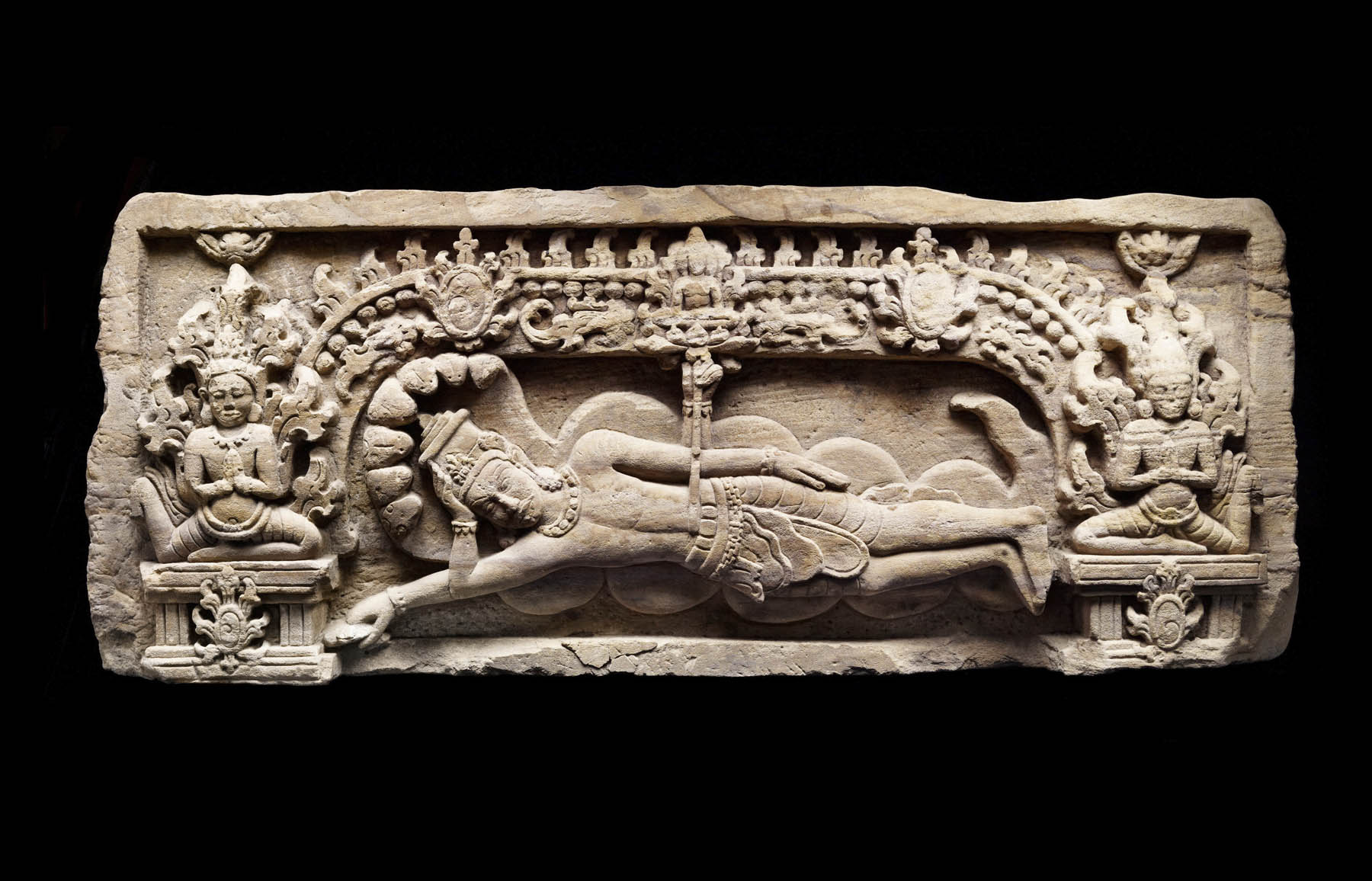
 

Cambodia, Battambang, Tuol Baset, Pre-Angkor period (c. 100-800) 'Lintel depicting Vishnu reclining on the serpent Ananta Shesha (Anantashayin) and the birth of Brahma' mid 600s


Cambodia, Battambang, Tuol Baset, Pre-Angkor period (c. 100-800)
Lintel depicting Vishnu reclining on the serpent Ananta Shesha (Anantashayin) and the birth of Brahma
mid 600s
Sandstone
63 x 158 x 28cm
Battambang Provincial Museum, transferred from National Museum of Cambodia, Phnom Pen
Photo © The Metropolitan Museum of Art/Art Resource, NY


Ananta Shesha (also known as Adi-shesha or Sheshanaga) is the king of serpents and a primordial being in Hindu mythology. The term Anantashayin (or Anantashayana) describes the iconic iconography of Lord Vishnu reclining or sleeping upon the endless coils of Ananta Shesha amidst the cosmic ocean.
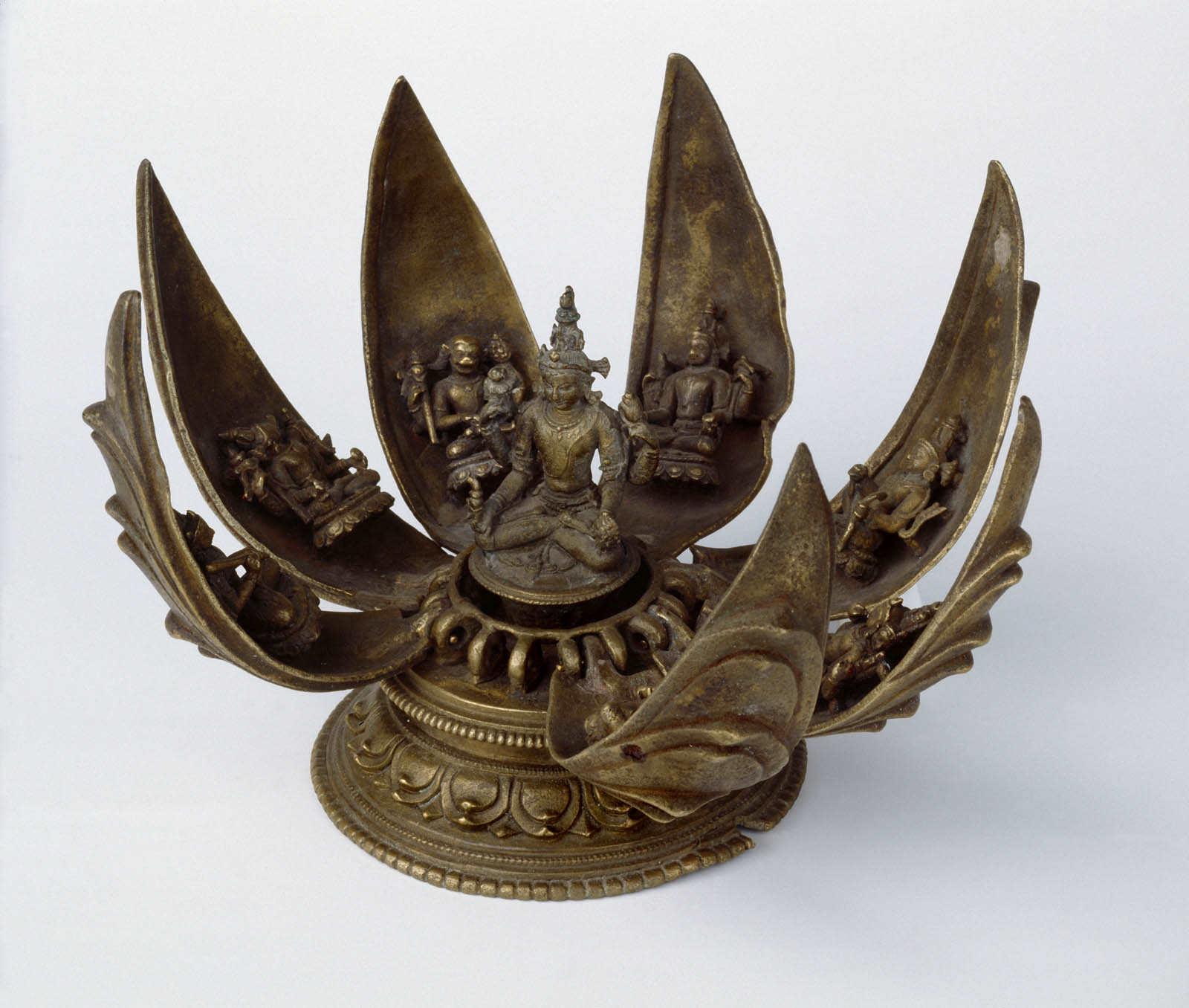
 

East India/Nepal. 'Figure of Vishnu in the lotus' 1100s


East India/Nepal
Figure of Vishnu in the lotus
1100s
Bronze
13 x 20cm (diam)
Ashmolean Museum, Oxford
Presented by Mrs Hoey
Photo © Ashmolean Museum, University of Oxford
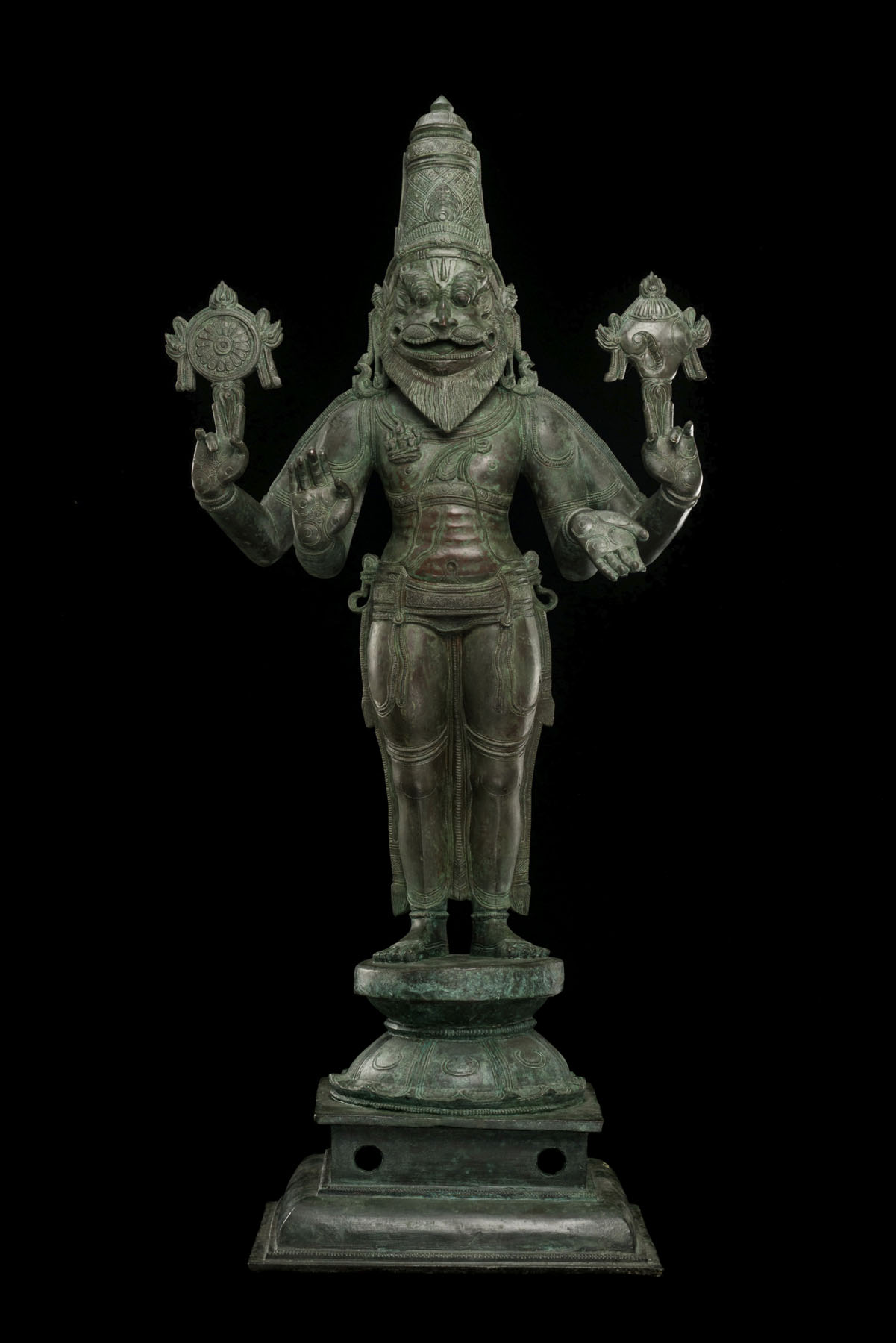
 

India, Tamil Nadu, Nayaka period (c. 1529-1736) 'Narasimha' 1600s


India, Tamil Nadu, Nayaka period (c. 1529-1736)
Narasimha
1600s
Bronze
96 x 46 x 31cm
Courtesy of the trustees of Chhatrapati Shivaji Maharaj Vastu Sangrahalaya, Mumbai
Gift of Cowasji Jehangir


Narasimha (meaning “man-lion” in Sanskrit) is the fourth major avatar of the Hindu god Vishnu. He manifested as a fierce, half-man, half-lion deity to destroy the tyrannical demon king Hiranyakashipu and protect his devoted son, Prahlada.

The legend of the man-lion is celebrated for how Vishnu brilliantly outsmarted the demon’s seemingly invincible boons:

The Trap: Hiranyakashipu had a boon from Brahma that he could not be killed by man or animal, indoors or outdoors, on earth or in the sky, by day or night, and by any weapon.

The Slaying: Bursting from a palace pillar, Narasimha caught the demon at twilight (neither day nor night), on the threshold of the palace (neither inside nor outside), placed him on his lap (neither ground nor sky), and killed him using only his claws (not considered a weapon).

Narasimha is revered as the ultimate protector who destroys evil and safeguards the vulnerable when all other logic fails.


Avatar: Forms of Vishnu | A curatorial introduction

 Join Avatar: Forms of Vishnu co-curators Melanie Eastburn, Art Gallery of New South Wales and Chaitanya Sambrani, Australian National University as they introduce the exhibition and explore its key themes and ideas.
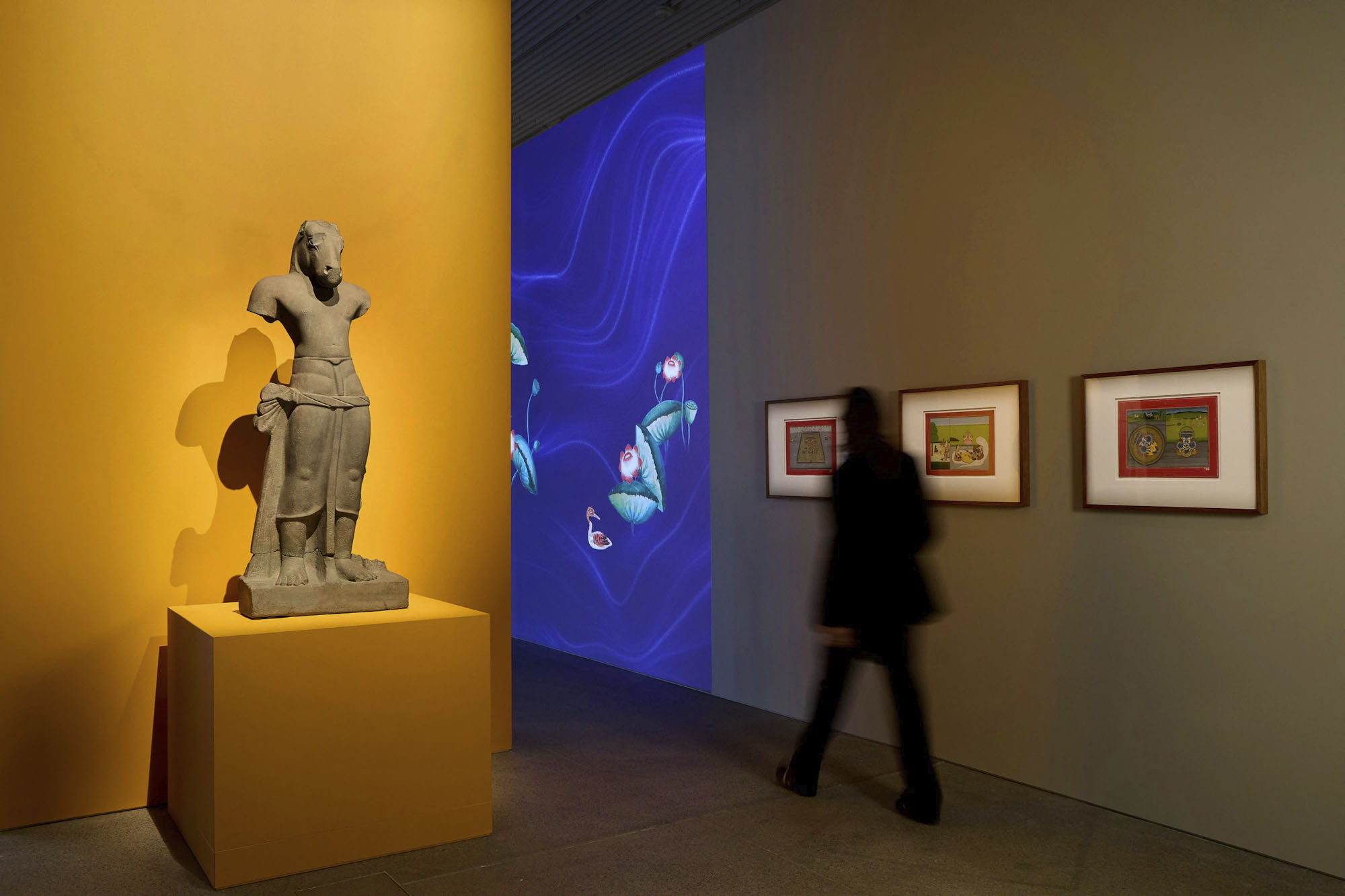
 

Installation view of the 'Avatar - Forms of Vishnu' exhibition at the Art Gallery of New South Wales, Sydney showing at left, Cambodia, Svay Rieng, Kouk Trap, Pre-Angkor period (c. 100-800) 'Vajimukha (Hayagriva or Kalkin)' Late 500s to early 600s


Installation view of the Avatar – Forms of Vishnu exhibition at the Art Gallery of New South Wales, Sydney showing at left, Cambodia, Svay Rieng, Kouk Trap, Pre-Angkor period (c. 100-800) Vajimukha (Hayagriva or Kalkin) Late 500s to early 600s (above)
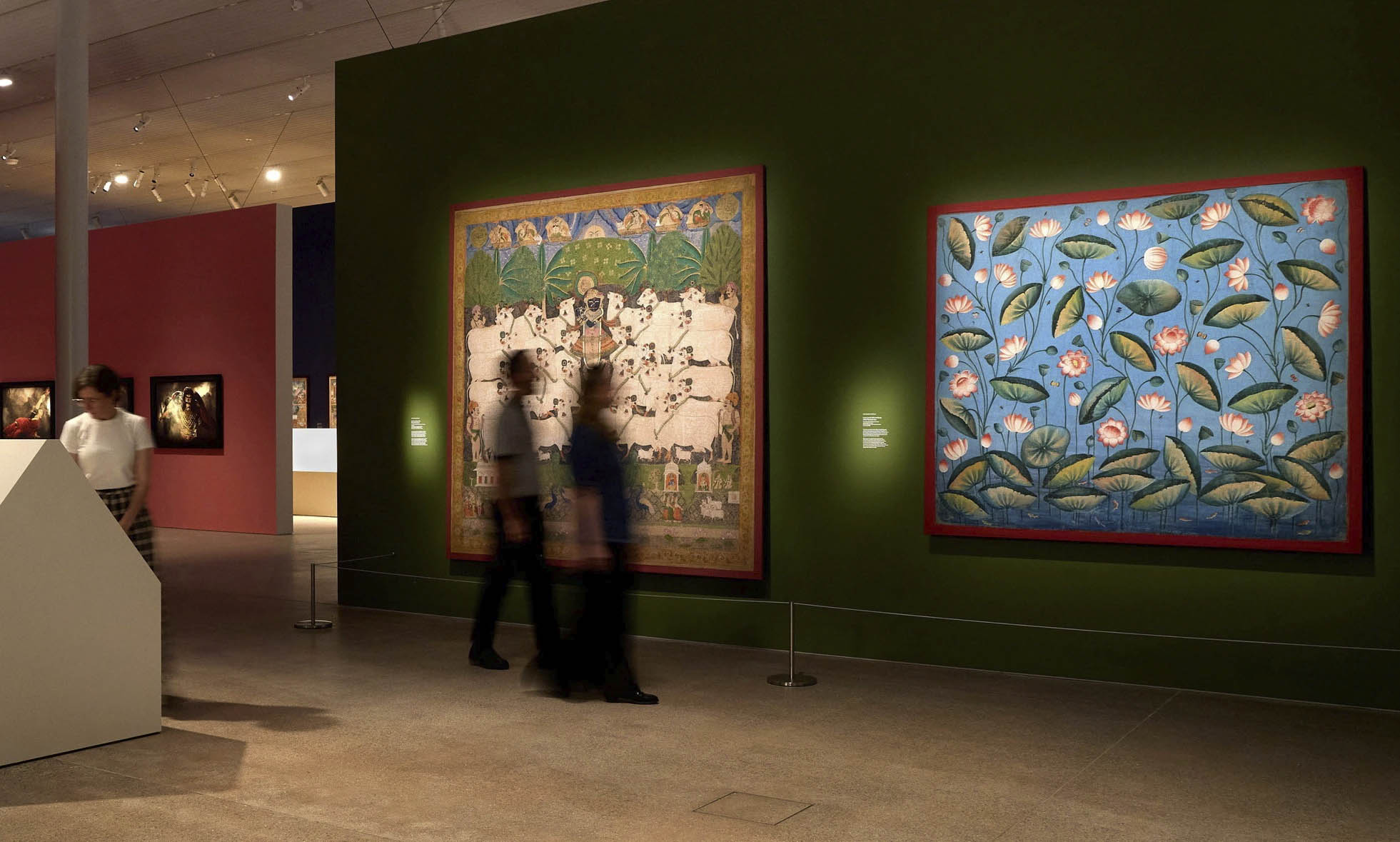
 

Installation view of the 'Avatar - Forms of Vishnu' exhibition at the Art Gallery of New South Wales, Sydney showing at right, (Indian) 'Lotus ponds (Kamal Vana) of the Yamuna' 1800s


Installation view of the Avatar – Forms of Vishnu exhibition at the Art Gallery of New South Wales, Sydney showing at right, (Indian) Lotus ponds (Kamal Vana) of the Yamuna 1800s (below)
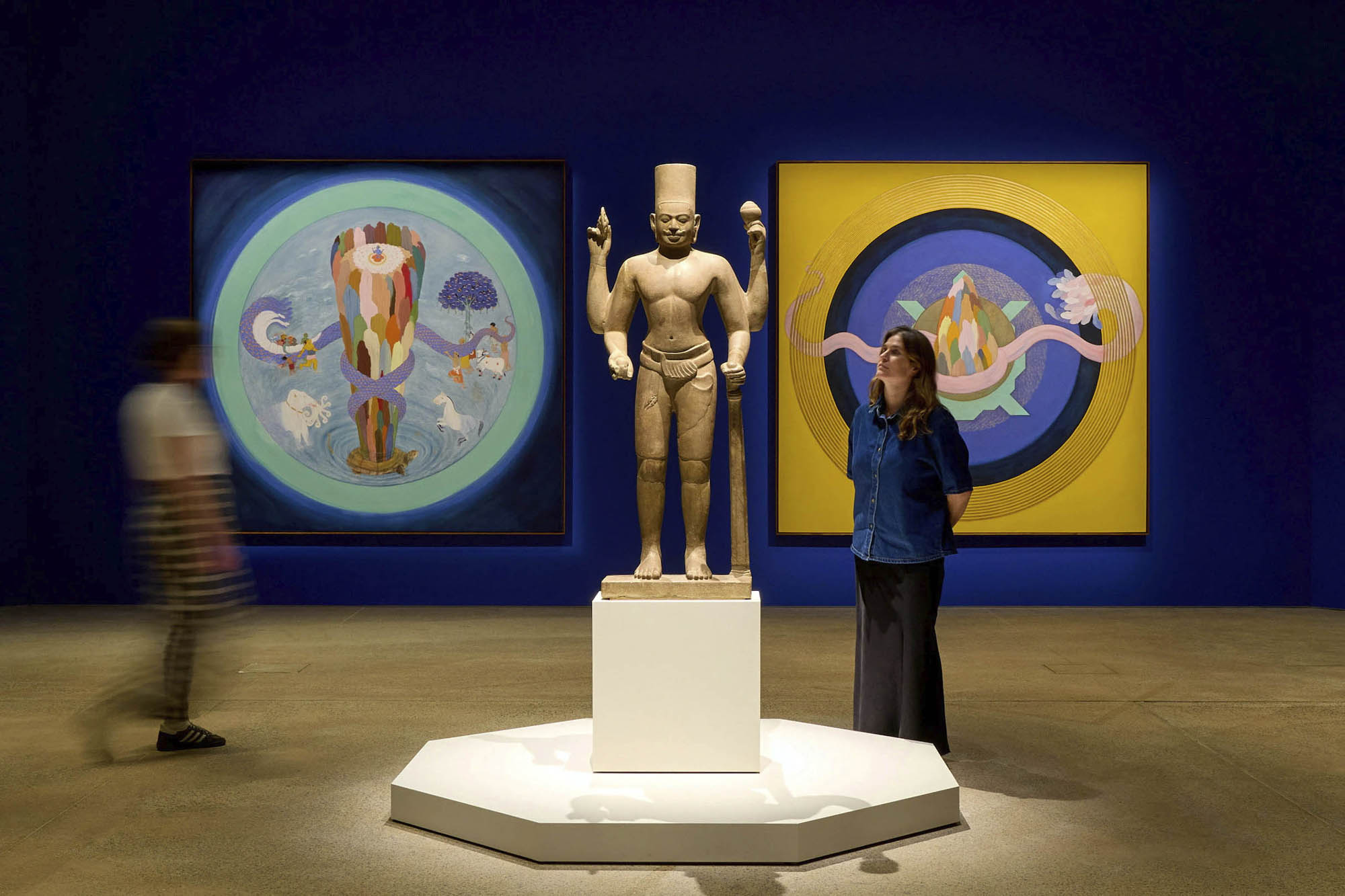
 

Installation view of the 'Avatar - Forms of Vishnu' exhibition at the Art Gallery of New South Wales, Sydney showing at left, Desmond Lazaro (Australia, India, England, b. 1968) 'Samudra Manthana, Churning of the Ocean of Milk' 2026; and at right, Desmond Lazaro (Australia, India, England, b. 1968) 'Mount Mandara' 2026


Installation view of the Avatar – Forms of Vishnu exhibition at the Art Gallery of New South Wales, Sydney showing at left, Desmond Lazaro. Samudra Manthana, Churning of the Ocean of Milk 2026 (below); and at right, Desmond Lazaro. Mount Mandara 2026 (below)
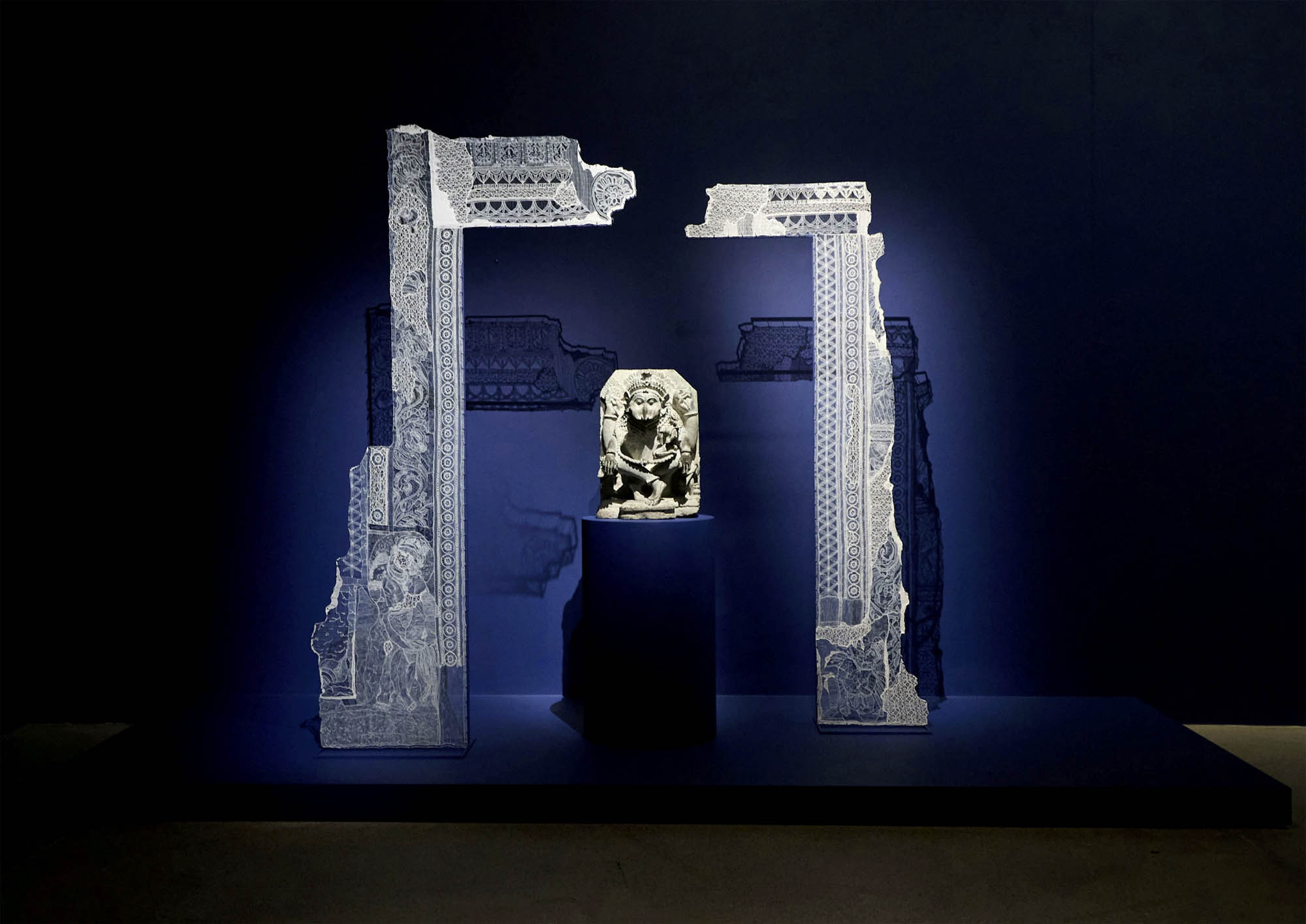
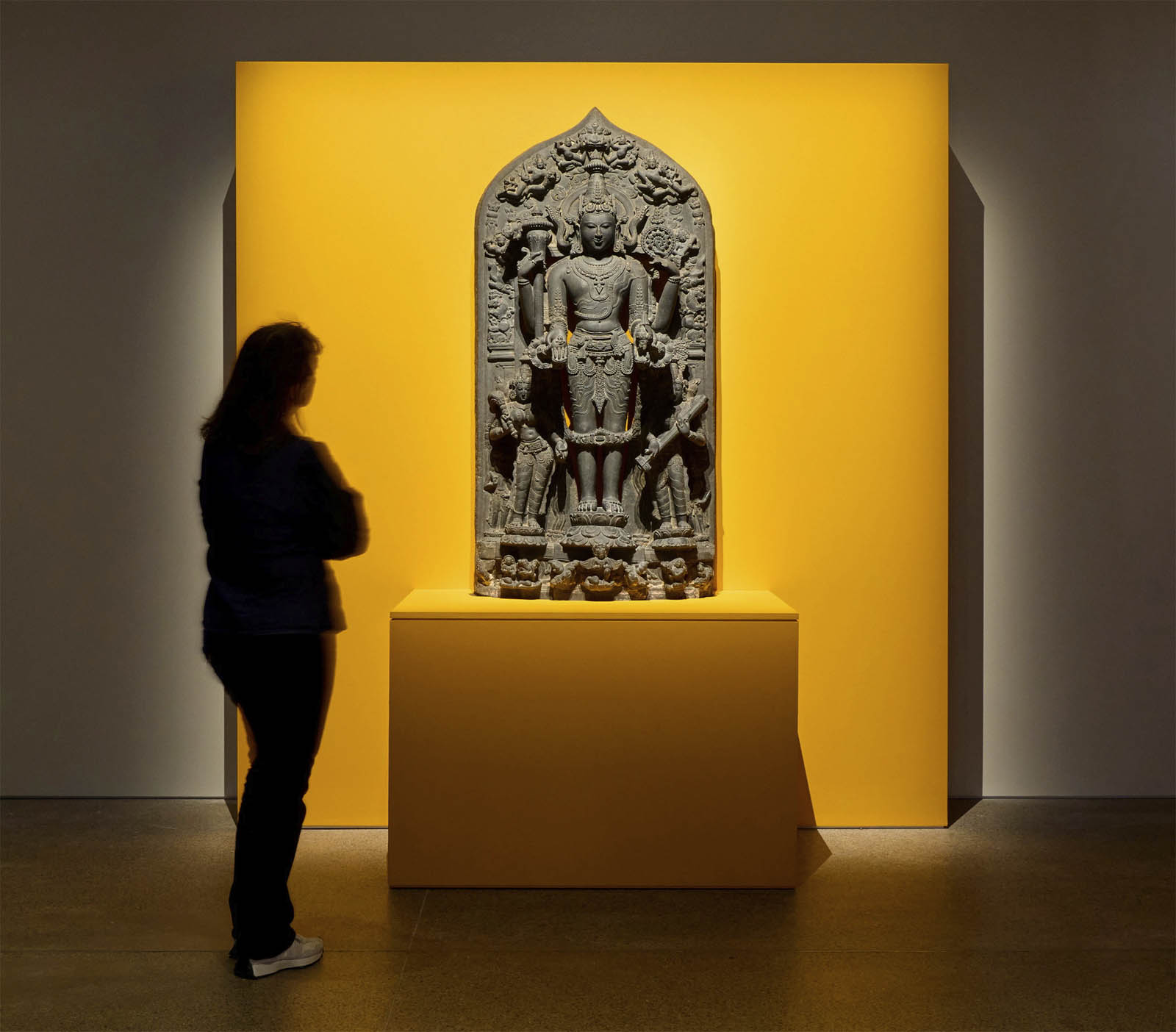
 

Installation view of the 'Avatar - Forms of Vishnu' exhibition at the Art Gallery of New South Wales, Sydney


Installation views of the Avatar – Forms of Vishnu exhibition at the Art Gallery of New South Wales, Sydney
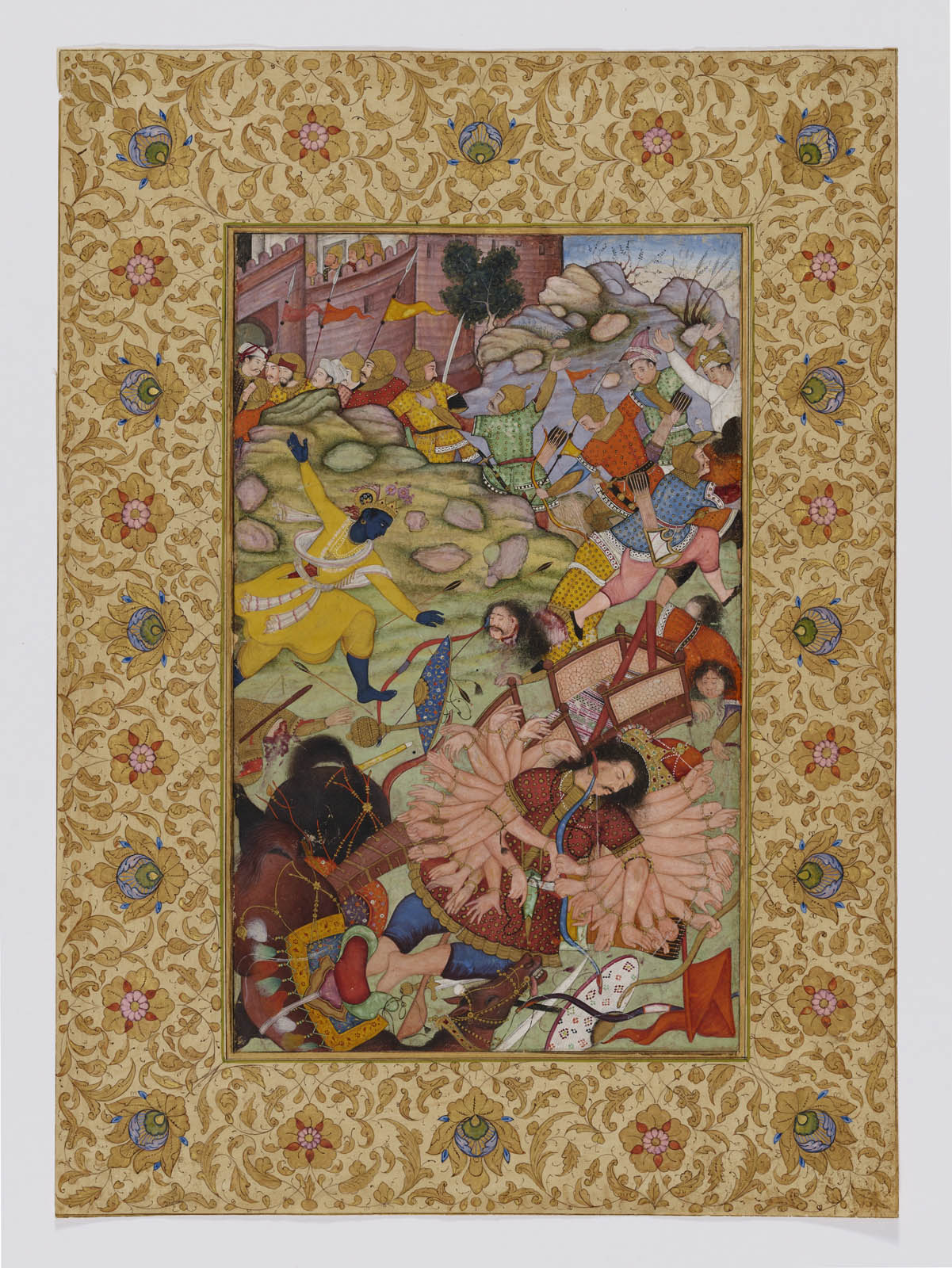
 

India/Pakistan, Agra/Lahore, Mughal style, Akbar period (1556-1605) 'Krishna defeats the demon Bāna' c. 1585-1590


India/Pakistan, Agra/Lahore, Mughal style, Akbar period (1556-1605)
Krishna defeats the demon Bāna
c. 1585-1590
Folio from a Harivamsa (Legend of Hari)
Opaque watercolour and gold on paper; margins completed in Lucknow, late 1700s
28.7 × 17.8cm
Museum Rietberg, Zurich
Gift of Catharina Dohrn


Lord Krishna defeated the thousand-armed demon king Bāṇāsura (Bana) in an epic battle at Shonitapura after Bana imprisoned Krishna’s grandson, Aniruddha, who had married Bana’s daughter Usha. Bound by a promise to protect Bana, Lord Shiva initially intervened and fought Krishna, but Krishna subdued Shiva and severed most of Bana’s arms, sparing his life.
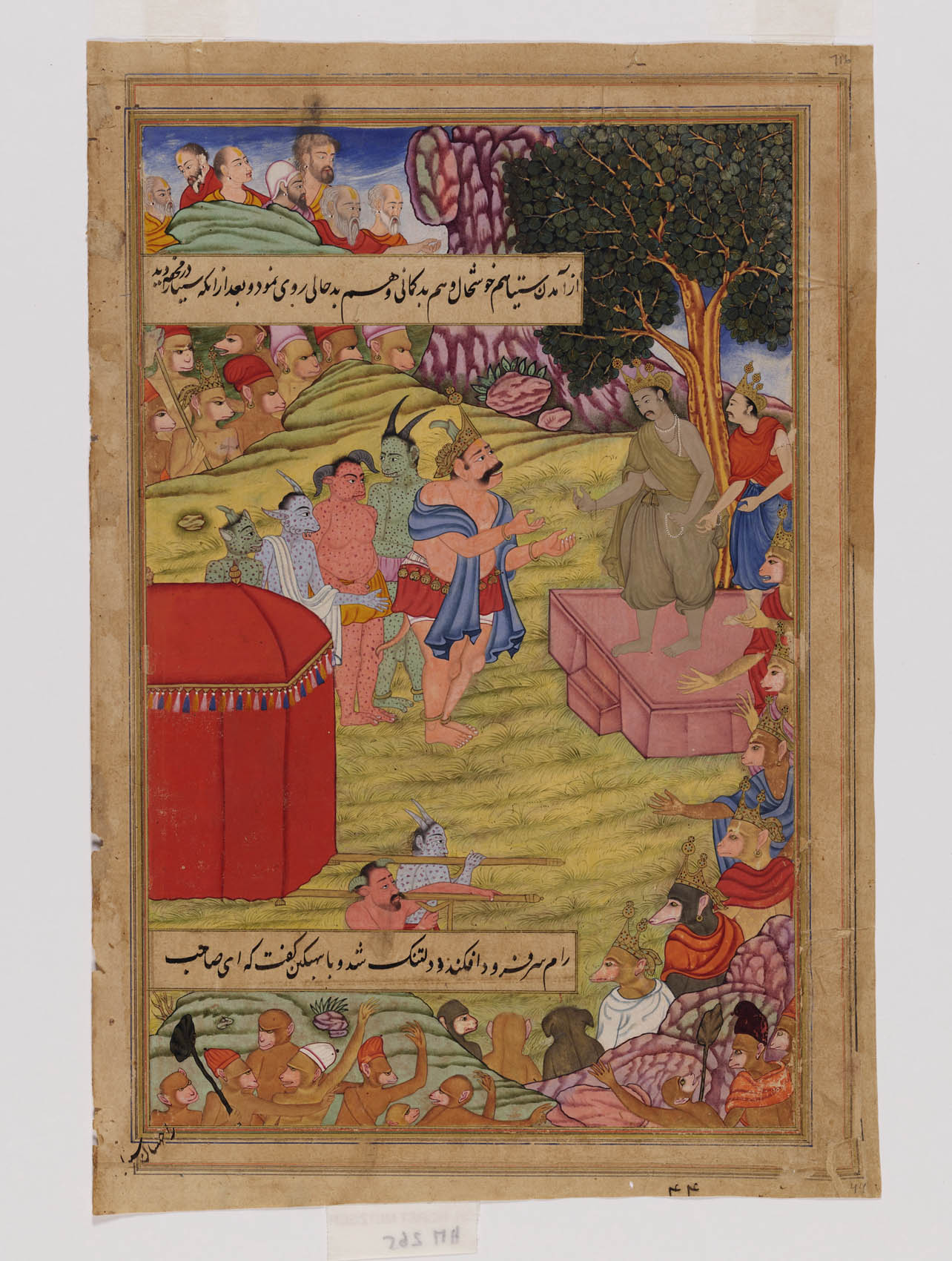
 

India, Mughal style, Akbar period (1556-1605) 'Vibhishana meeting Rāma and Lakshmana' 16 May 1594 (colophon dated)


India, Mughal style, Akbar period (1556-1605)
Vibhishana meeting Rāma and Lakshmana
16 May 1594 (colophon dated)
From the Ramayana of Hamida Banu Begum
Opaque watercolour and gold on paper
32.6 x 21.2cm
Museum Rietberg, Zurich
Gift of Balthasar and Nanni Reinhart


Vibhishana, the younger brother of Ravana, met Lord Rama and Lakshmana by surrendering to them across the ocean near Lanka. After Ravana rejected his advice to return Sita, Vibhishana chose righteousness (dharma), crossed the sea, and sought Rama’s protection. Despite doubts from some leaders like Sugriva, Rama accepted him with compassion and promised to crown him king.
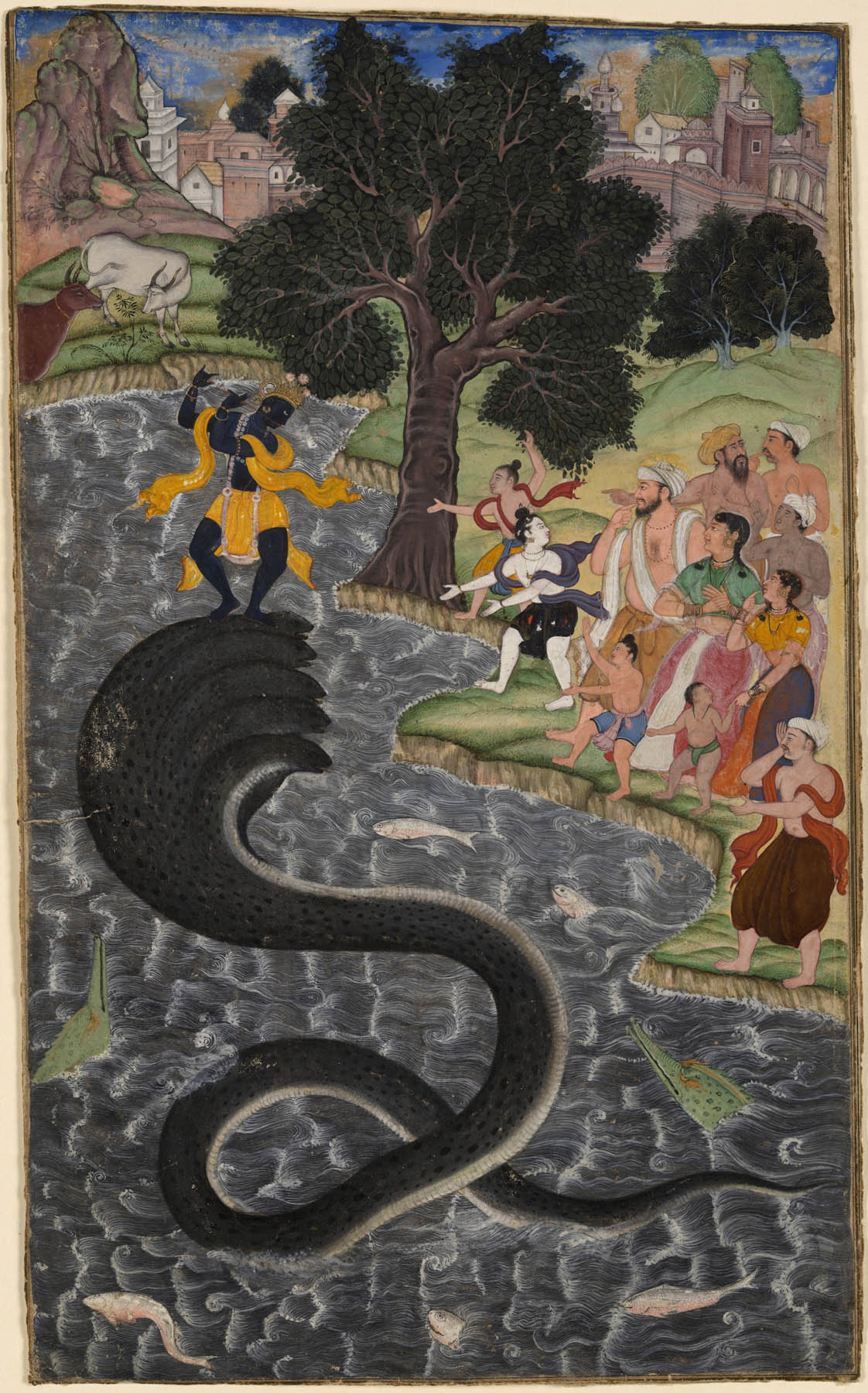
 

India. 'Krishna Dances on the Head of Kaliya' c. 1590-1595


India
Krishna Dances on the Head of Kaliya
c. 1590-1595
Opaque pigments and gold on paper
29 x 32.2cm
Metropolitan Museum of Art, New York, Howard Hodgkin Collection
Purchase, Florence and Herbert Irving Acquisitions, Harris Brisbane Dick, and 2020 Benefit Funds; Howard S and Nancy Marks, Lila Acheson Wallace, and Friends of Islamic Art Gifts; Louis V Bell, Harris Brisbane Dick, Fletcher, and Rogers Funds and Joseph Pulitzer Bequest; and funds from various donors, 2022


Lord Krishna jumped into the poisoned Yamuna River in Vrindavan, fought the giant multi-headed snake Kaliya, and danced lightly on his hoods. This divine act – known as Kaliya Mardan – forced the serpent to yield, cleared the toxic water, and spared the village
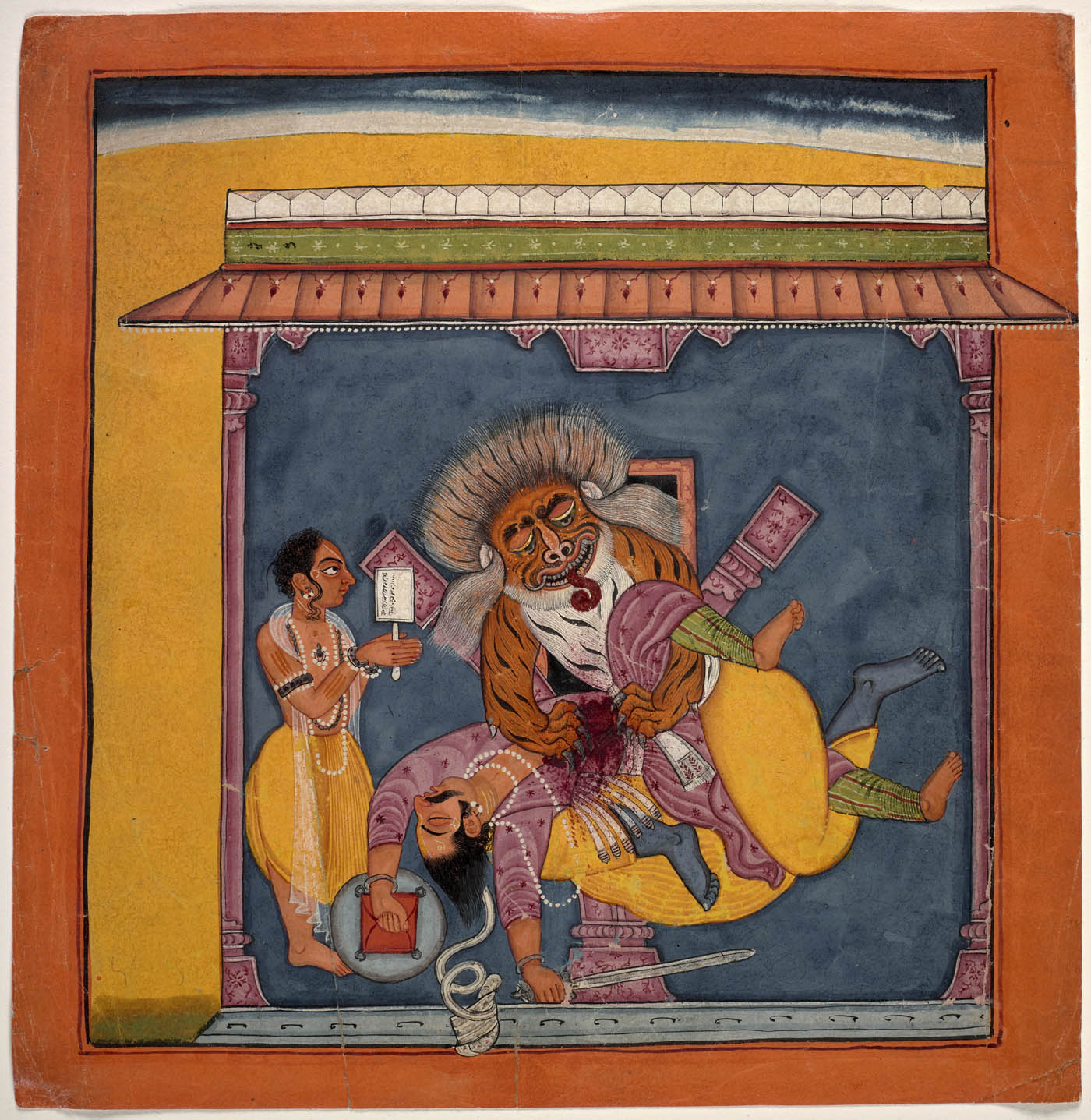
 

Devidasa (attrib) 'Vishnu as the man-lion Narasimha killing Hiranyakashipu' c. 1690-1700


Devidasa (attrib)
Vishnu as the man-lion Narasimha killing Hiranyakashipu
c. 1690-1700
Opaque watercolour and gold on paper
17 x 18cm
Art Gallery of New South Wales, Peter and Pam Binnie Bequest
Purchased 2020


Lord Vishnu took the fierce form of Narasimha – half-man and half-lion – to kill the tyrant demon king Hiranyakashipu. He did this to protect his young devotee Prahlada, Hiranyakashipu’s own son, who worshipped Vishnu despite his father’s cruel abuse.

Narasimha is the fourth avatar of the Hindu god Vishnu. Here he is attacking the demon Hiranyakashipu. Their location between courtyard pillars is significant as the god Brahma promised Hiranyakashipu that he could not be killed by a human or animal, on earth or in the heavens, inside or outside. Hiranyakasipu swore revenge on Vishnu who, in his boar-headed form Varaha, had killed the demon’s brother Hiranyakhsa. In order to defeat Hiranyakashipu, Vishnu took a half human, half lion form, laid the creature across his thighs and killed him with his claws on a threshold at twilight.

The demon’s son Prahlada was a devotee of Vishnu and it was Prahlada’s prayers that called the god to conquer Hiranyakashipu. Prahlada appears beside Narasimha and his victim with his hands held together around a board inscribed with a prayer to Vishnu.

Text from the AGNSW website
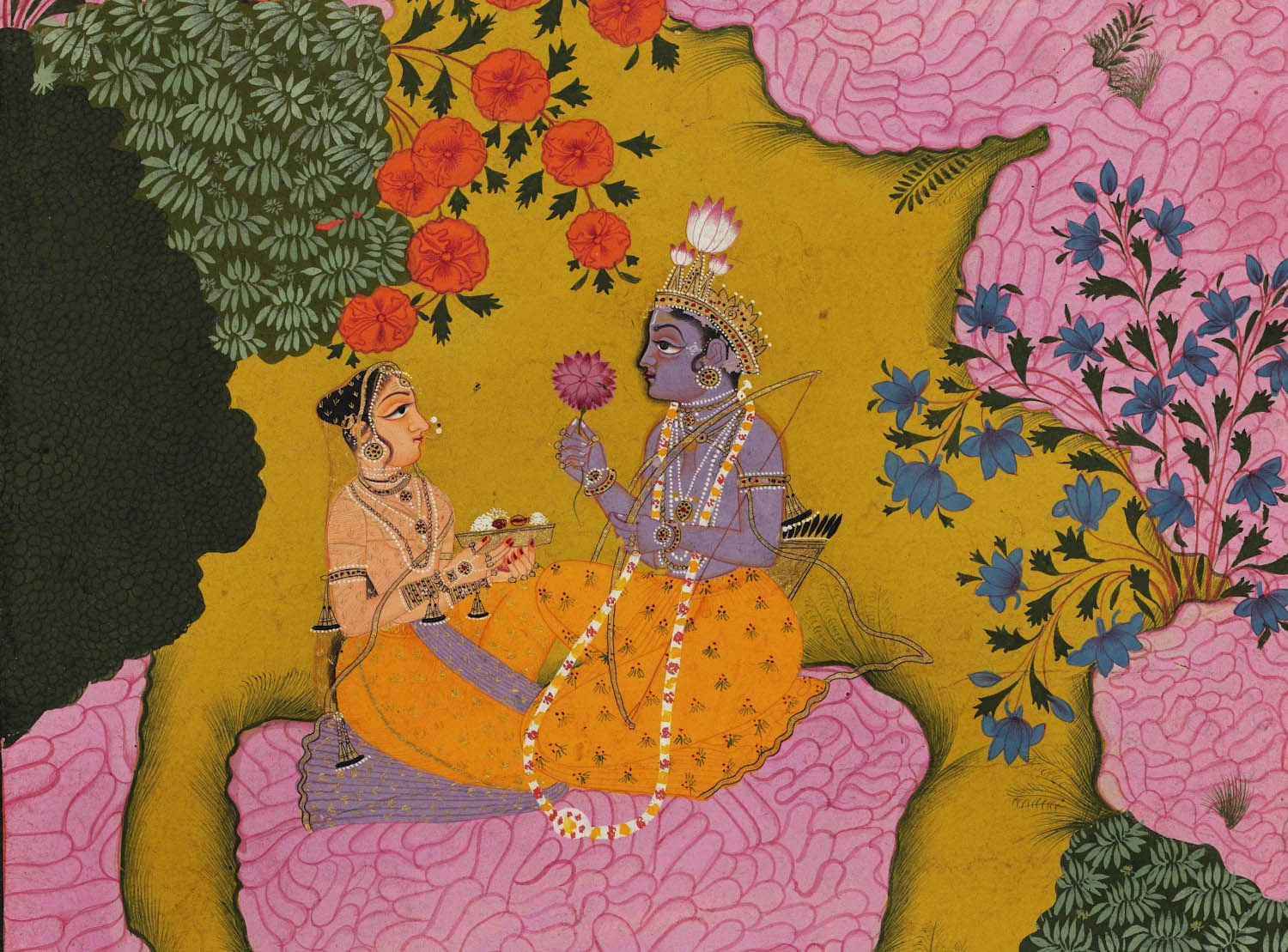
 

India, Raghogarh style. 'Sita offering fruits to Rāma in the Dandaka forest' Late 1700s (detail)


India, Raghogarh style
Sita offering fruits to Rāma in the Dandaka forest (detail)
Late 1700s
National Museum, New Delhi


“Sita offering fruits to Rāma in the Dandaka forest” is a famous late 18th-century Indian miniature painting from Raghogarh (Central India), housed in the National Museum, New Delhi. It portrays an intimate, quiet moment of exile from the Ramayana, showing Rāma and Sítā seated together on a small hillock amidst a stylised, vibrant wilderness.

The painting depicts a scene from the epic Ramayana during the period of exile of the prince of Ayodhya, Rama. Here amidst the woodlands of Dandaka, a forest infested with a host of demons, Rama and Sita sit oblivious to their wild surroundings. On top of a hillock, in solemn stillness, Rama and Sita sit facing each other; Sita holds up a tray bearing fruit for Rama. Everything is forgotten however, as their gazes are intertwined in rapturous adoration. Against a plain mustard-olive hue, the colour of their skin is almost luminescent. The beautiful purple-blue of Rama’s face is contrasted with the light skin tone of Sita’s skin. The vibrant yellow lower garments that they wear however erases the differences – Rama’s blue hue is echoed in the skirt that Sita wears…

The couple’s charged interaction is echoed in the elements. The artist conjures up a visionary forest – nature is reconstructed in a colored dream. Swaying rocks painted in mauves rise against a mustard-olive meadow. Colourful patches of patterns jostle playfully; the pungent mauves are thrown with dark seaweed green. Joyful sprigs of flowers burst forth in happy abandon. Each tree, mound or hillock fits into the composition like a coloured puzzle piece enlivening the entire landscape.

Text from Google Arts & Culture
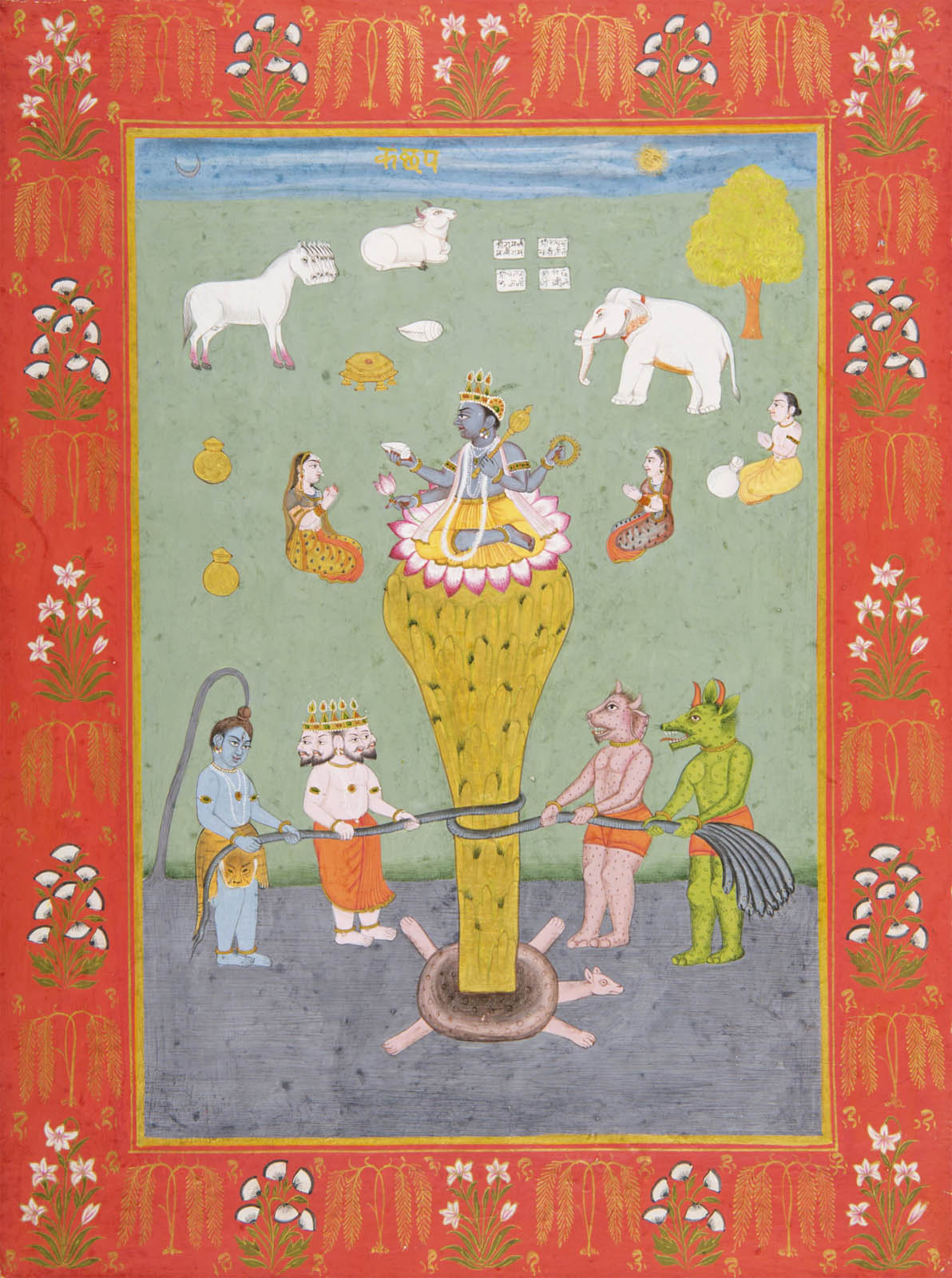
 

Central India. 'Kurma Avatar' 18th century 'Folio from a series depicting Vishnu's avatars'


Central India
Kurma Avatar
18th century
Folio from a series depicting Vishnu’s avatars​
Museum of Art and Photography, Bengaluru


Kurma Avatar is the second avatar (incarnation) of the Hindu god Vishnu, taking the form of a giant turtle or tortoise to support Mount Mandara on his back during the cosmic ocean churning (Samudra Manthan)
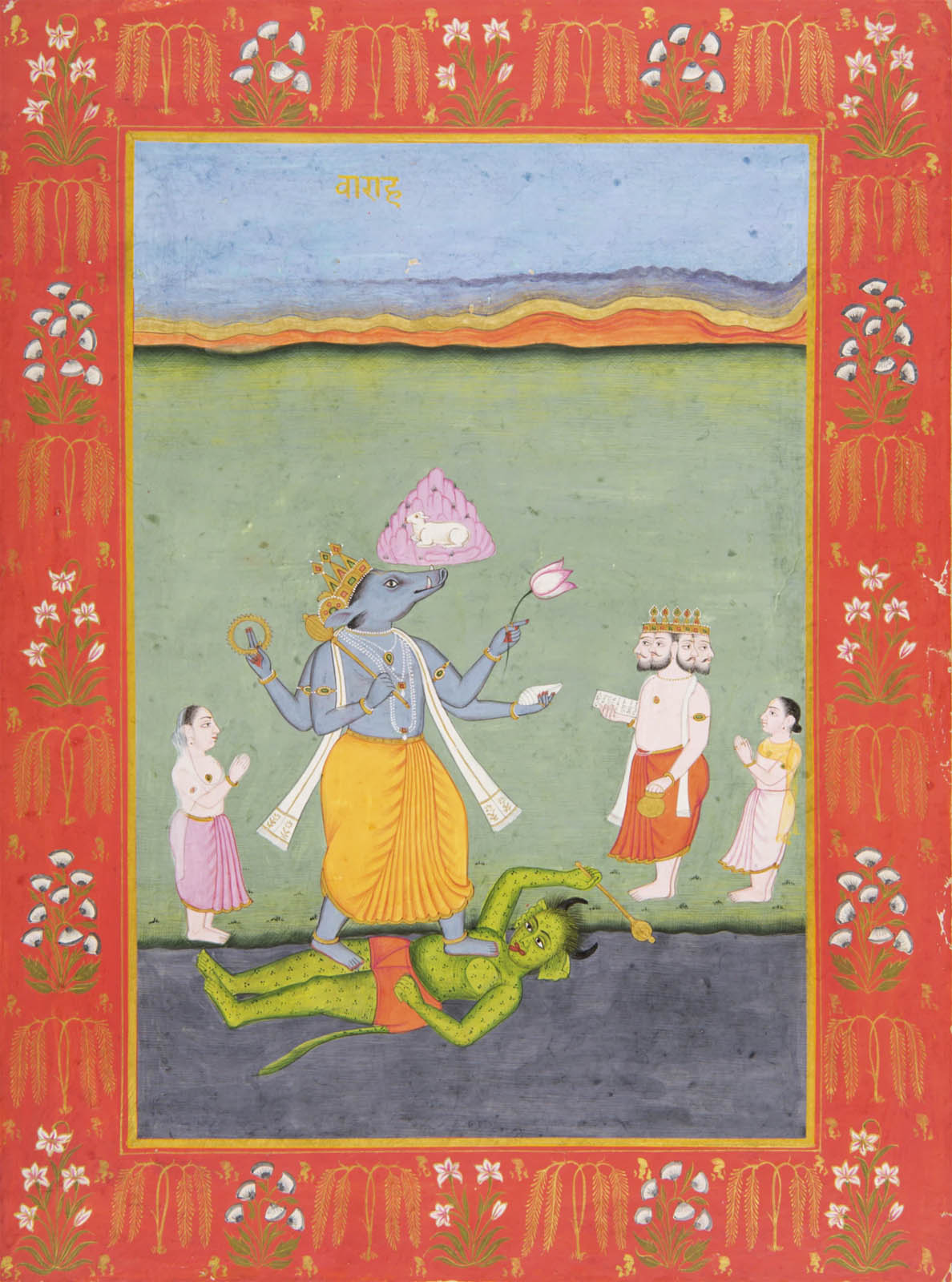
 

Central India. 'Varaha Avatar' 18th century 'Folio from a series depicting Vishnu's avatars'


Central India
Varaha Avatar
18th century
Folio from a series depicting Vishnu’s avatars​
Museum of Art and Photography, Bengaluru


Varaha Avatar is the third incarnation of the Hindu deity Vishnu, appearing as a boar to rescue the earth. Vishnu is shown with a boar head and blue skin, defeating a demon while lifting the earth, represented by a white figure on a lotus, with his tusk.
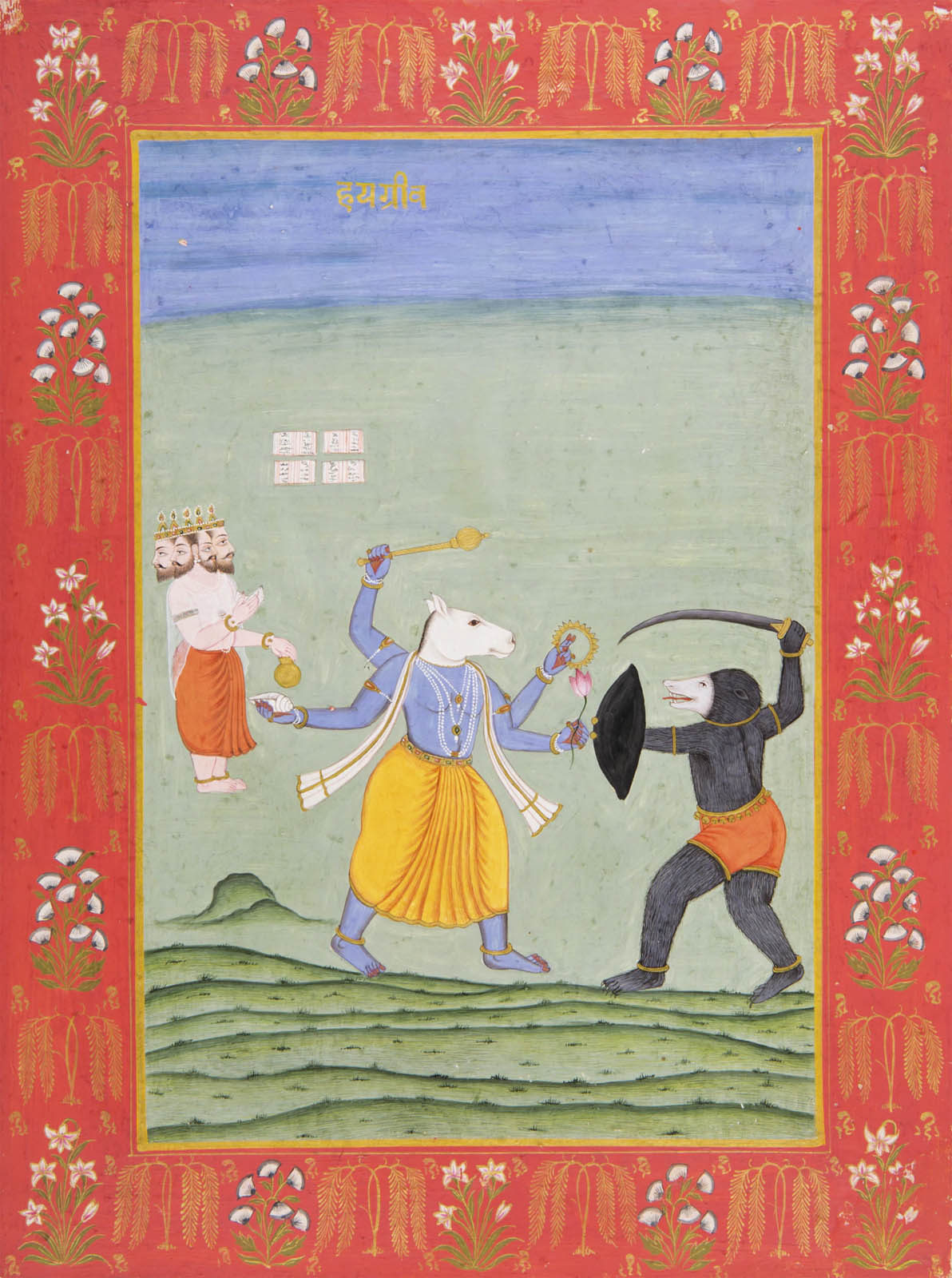
 

Central India. 'Hayagriva Avatar' 18th century 'Folio from a series depicting Vishnu's avatars'


Central India
Hayagriva Avatar
18th century
Folio from a series depicting Vishnu’s avatars​
Museum of Art and Photography, Bengaluru


Hayagriva Avatar is a four-armed, horse-headed avatar of the Hindu deity Lord Vishnu. He is worshipped as the divine god of knowledge, wisdom, and learning, and is often considered a guru to both Lord Brahma and Goddess Saraswati. The painting depicts the Hayagriva avatar of Vishnu engaging in battle with a demon. The four-headed deity in the background is Brahma.


The Art Gallery of New South Wales presents an ambitious exhibition devoted to the infinite stories of the Hindu god Vishnu.

Spanning 15 centuries of transformation, devotion and imagination, Avatar: Forms of Vishnu will be the largest presentation of South and Southeast Asian art shown at the Art Gallery of New South Wales in over 20 years, and the first Australian exhibition devoted to the Hindu deity Vishnu. Across many times, places and mediums, artists have reimagined Vishnu and his many avatars, giving form to one of the world’s most enduring and richly visual traditions.

Opening on 20 June and featuring more than 200 works, the exhibition brings together historical and contemporary art, ranging from ancient sculptures, textiles and paintings to photography and installation. Contemporary artists have a strong presence in the exhibition, which features works by leading Australian and Indian artists, including Gitanjali Das, Jumaadi, Desmond Lazaro, Nalini Malani, Pushpamala N, Kalam Patua, Sumakshi Singh and Gulammohammed Sheikh.

Art Gallery of New South Wales director Maud Page said: ‘Avatar: Forms of Vishnu is unmissable. Expansive in scope and unprecedented in scale, it’s the evocative power of visual storytelling from South and Southeast Asia – spanning history to the present – that makes this exhibition so compelling.’

‘Through Avatar, we open a deeper way of seeing and understanding this rich and captivating subject, while furthering the Art Gallery’s longstanding commitment to staging exemplary exhibitions of Asian art. We invite visitors to journey through centuries of extraordinary storytelling and to witness incredible works of art from Cambodia and India, some that have never before travelled for exhibition.’

In Hindu tradition, Vishnu preserves order in the universe and manifests to restore peace and justice. While he is thought to have ten main avatars, their number can be endless. Brimming with tales of heroism, love and devotion, the exhibition traces the ways in which artists have envisioned Vishnu’s various transformations.

His avatars include those that are entirely in animal form or combine human and animal characteristics such as Matsya the fish, Kurma the tortoise, Varaha the boar and Narasimha the man-lion. Other avatars appear in human form and include Prince Rāma, the hero of the Ramayana; Krishna, the beloved cowherd and spiritual guide; and Mohini, the only female manifestation of Vishnu. Vishnu’s final avatar is Kalki, a being depicted either in human form and accompanied by a brilliant white horse, or as a horse-headed human. All of Vishnu’s avatars share the same purpose: to defeat forces of disorder and restore justice and harmony.

The Art Gallery has collaborated closely with museums across the world to present significant works on loan from their collections. Lenders to the exhibition include the National Museum of Cambodia, Phnom Penh; the National Museum of India, New Delhi; the Chhatrapati Shivaji Maharaj Vastu Sangrahalaya, Mumbai; Museum of Art and Photography, Bengaluru; the Kiran Nadar Museum of Art, New Delhi; Museum Rietberg, Zurich; Ashmolean Museum, Oxford; and the British Museum, London. Many of these artworks are being shown for the first time in Australia, with some works rarely leaving their countries of origin. The exhibition also brings together a remarkable selection of works from the Art Gallery’s own collection alongside key works from other state and national collections.

The exhibition has been developed and curated by Art Gallery of New South Wales senior curator of Asian art, Melanie Eastburn, in collaboration with associate professor of art history and curatorial studies at the Australian National University, Dr Chaitanya Sambrani.

On the exhibition, Melanie Eastburn said: ‘Across South and Southeast Asia, tales of Vishnu’s avatars have inspired contemplation and devotion, as well as entertainment. Vishnu’s avatars are responsive, dynamic and shaped by the cultures and communities that embrace them – whether in centuries past or today.’

Dr Chaitanya Sambrani added: ‘Being the focus of worship for many hundreds of millions of people in India and beyond, the avatars of Vishnu and their marvellous narratives have also provided plentiful opportunities for artistic imagination. Artists have engaged with the mythological lore of Vishnu’s avatars to express philosophical, emotional, ethical and political meanings that reflect the full spectrum of human experience.’

Among the exhibition highlights are some of the earliest paintings made to illustrate India’s great Ramayana and Mahabharata epics. Made in 1594, during the reign of Mughal Emperor Akbar, they highlight the engagement of the Islamic Mughal court with Hindu literature and mythology. Other extraordinary works include a sixth-century Cambodian representation of Krishna holding up Mount Govardhana and the Australian debut of a recently restored seventh-century Cambodian sculpture of a horse-headed avatar of Vishnu.

New works made especially for the exhibition include a pair of large paintings by Desmond Lazaro interpreting the creation legend of the Churning of the Ocean of Milk, and an intricate lace installation by the New Delhi-based artist Sumakshi Singh referencing the legend of Vishnu’s man-lion avatar, Narasimha. Singh is one of five artists representing India at this year’s Venice Biennale.

A significant accompanying publication brings together essays offering new scholarship and critical insight into the exhibition’s themes. Contributors include the exhibition curators Melanie Eastburn and Dr Chaitanya Sambrani, assistant curator Johanna Bear, and contributing authors Carol Cains, Neeraja Poddar, Seang Sokha and Caroline Widmer.

Avatar: Forms of Vishnu  is exclusively on show at the Art Gallery of New South Wales from 20th June to 5th October 2026.

Press release from AGNSW
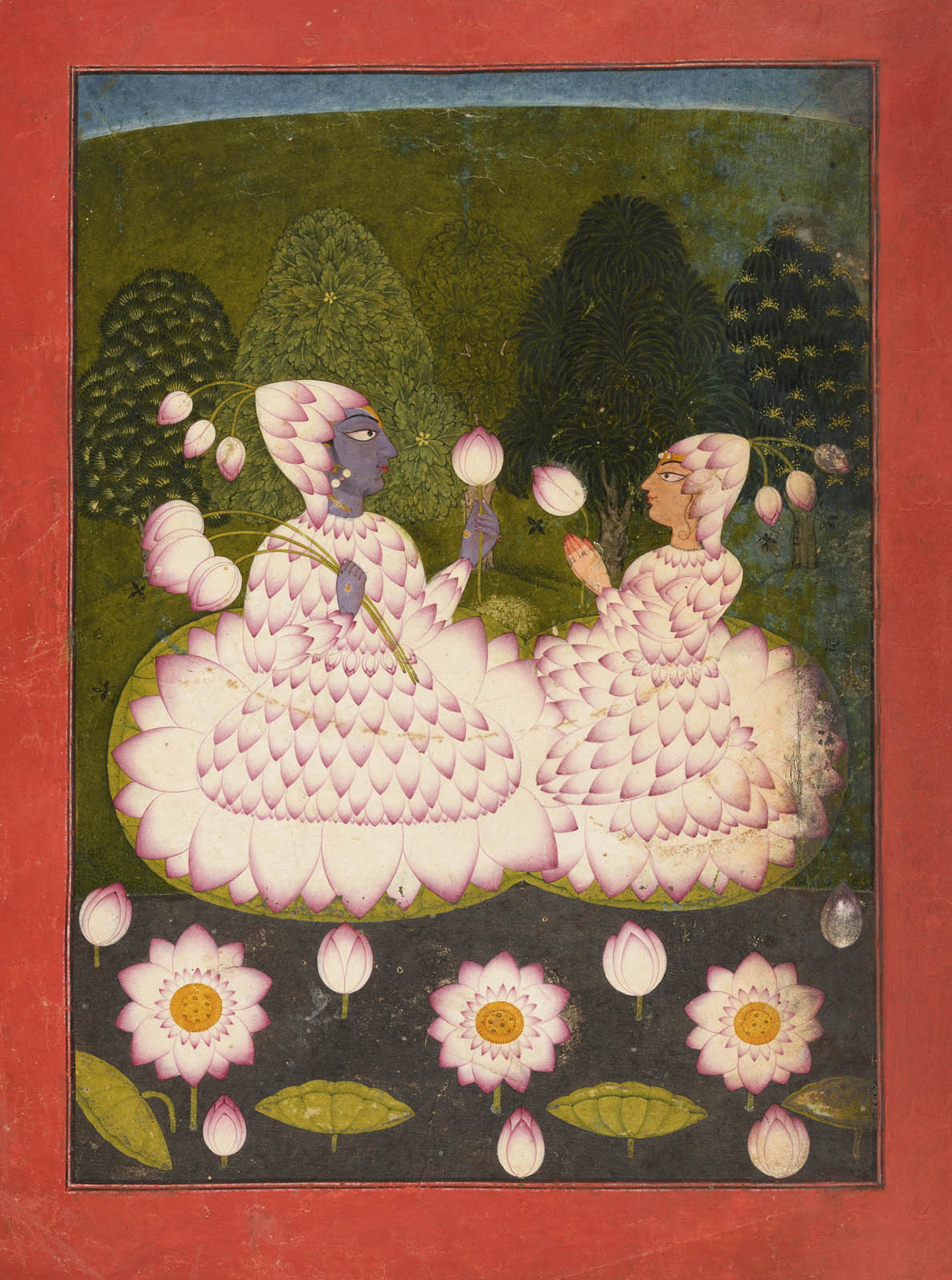
 

India. 'Lotus-clad Radha and Krishna' c. 1700-1710


India
Lotus-clad Radha and Krishna
c. 1700-1710
Opaque watercolour on paper
Image: 21.9 x 16.2cm
Sheet: 28.6 x 21.3cm
Art Gallery of New South Wales
Purchased 2007


In this painting, the divine couple, Radha and Krishna, clad in lotus petals, sit amidst a lush grove, by the edge of a lotus-filled pond. The pair appears to be exchanging lotus blossoms as they gaze adoringly at each other. The dark-skinned Krishna holds a bouquet of three flowers in his right hand and a single stem in his left. Radha, with folded hands, clutches the long stalk of another delicate blossom. Sprigs of buds spring jauntily from their lotus headdresses. Adding to the profusion of petals, lotuses in full bloom form the seat on which each figure sits.

While such paintings on the one hand express a tender earthly love, on the other they reference profound religious ideas. The paintings reflect the mystical doctrine of ‘bhakti’, which dictates that devotees may seek unity with god through ardent devotion and unquestioning faith. The intense passion that Radha feels for Krishna and her consuming love for him, therefore, serve as metaphors for deep spiritual yearning and a devotee’s desire for union with the divine. The theme of Radha and Krishna clad in lotus petals also alludes to the practice of ‘phulasiya’, or flower-dressing, wherein venerated images are lovingly dressed and decorated.

The painting was produced in the region of what is today Jammu and Himachal Pradesh in north India. Nestled among the snow-capped peaks and fertile gorges of the Himalayan foothills, this region – often referred to as the Punjab Hills, a name by which it was known prior to Indian independence – developed an artistic convention that paralleled in vision, creativity and excellence the Imperial Mughal school as well as those of the contemporaneous Rajput principalities to Rajasthan. The Punjab Hills region comprised a number small feudal states, each with a ruling Rajput court and its distinctive style of painting. This painting betrays features of the art of the state of Mankot. The heavily-outlined, elongated eyes of the figures, as well as their somewhat fleshy chins are characteristic of the early 18th century Mankot style. As is common with paintings from the Punjab Hills, the artist revels in the depiction of nature, particularly the leafy trees that form a verdant backdrop for the couple.

Chaya Chandrasekhar, ‘Love amongst the lotuses: Radha and Krishna Find Bliss in the AGNSW Collection’ in Look, August 2007, pg. 15 published on the AGNSW website Nd [Online] Cited 25/07/2026. Used under fair use conditions for the purposes of education and research
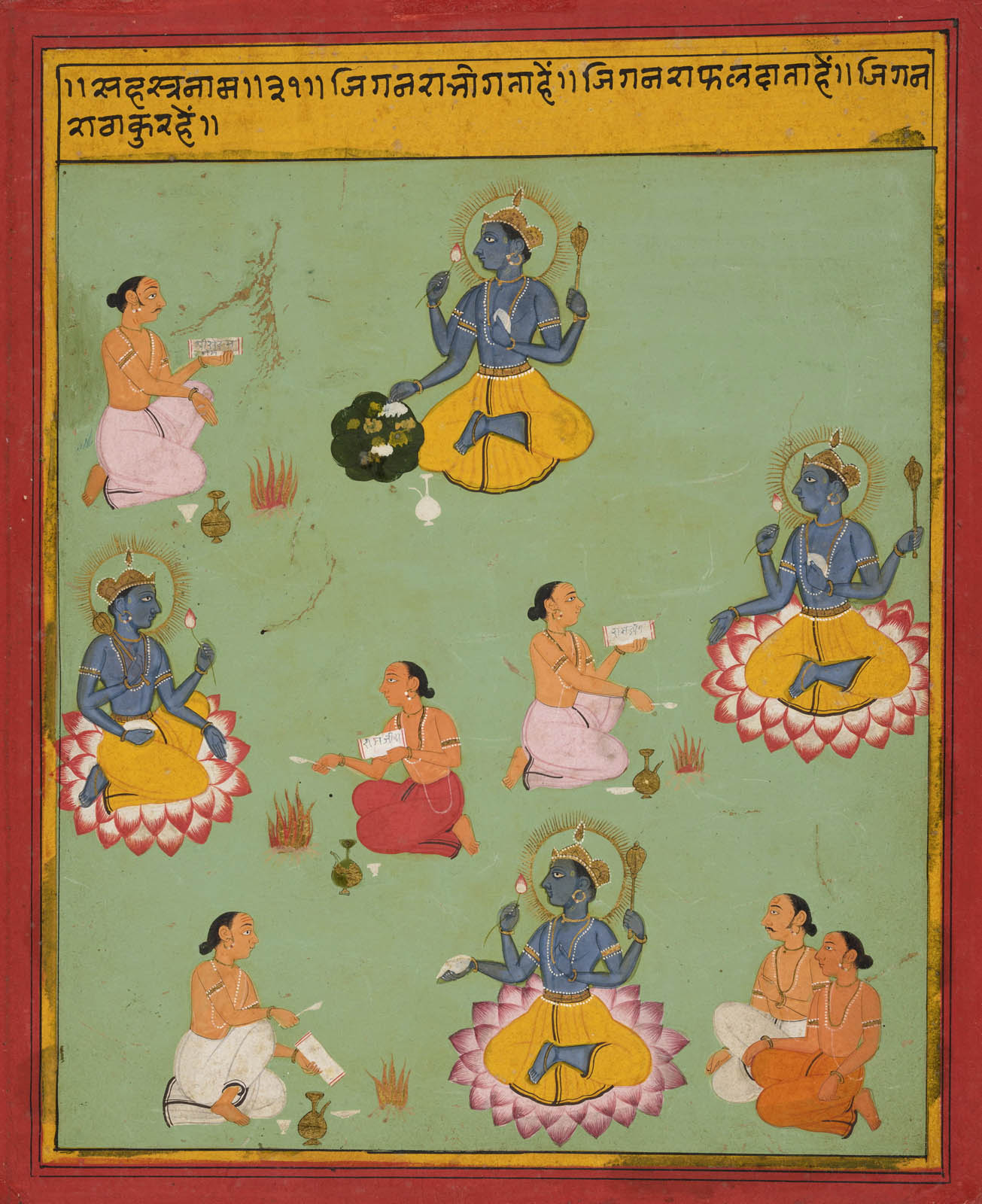
 

India, Rajasthan, Mewar. 'The worship of Vishnu' c. 1730


India, Rajasthan, Mewar
The worship of Vishnu
c. 1730
Opaque watercolour on paper
25.7 x 21cm
Art Gallery of New South Wales
Bequest of Mr J Kitto 1986
Image © Art Gallery of New South Wales
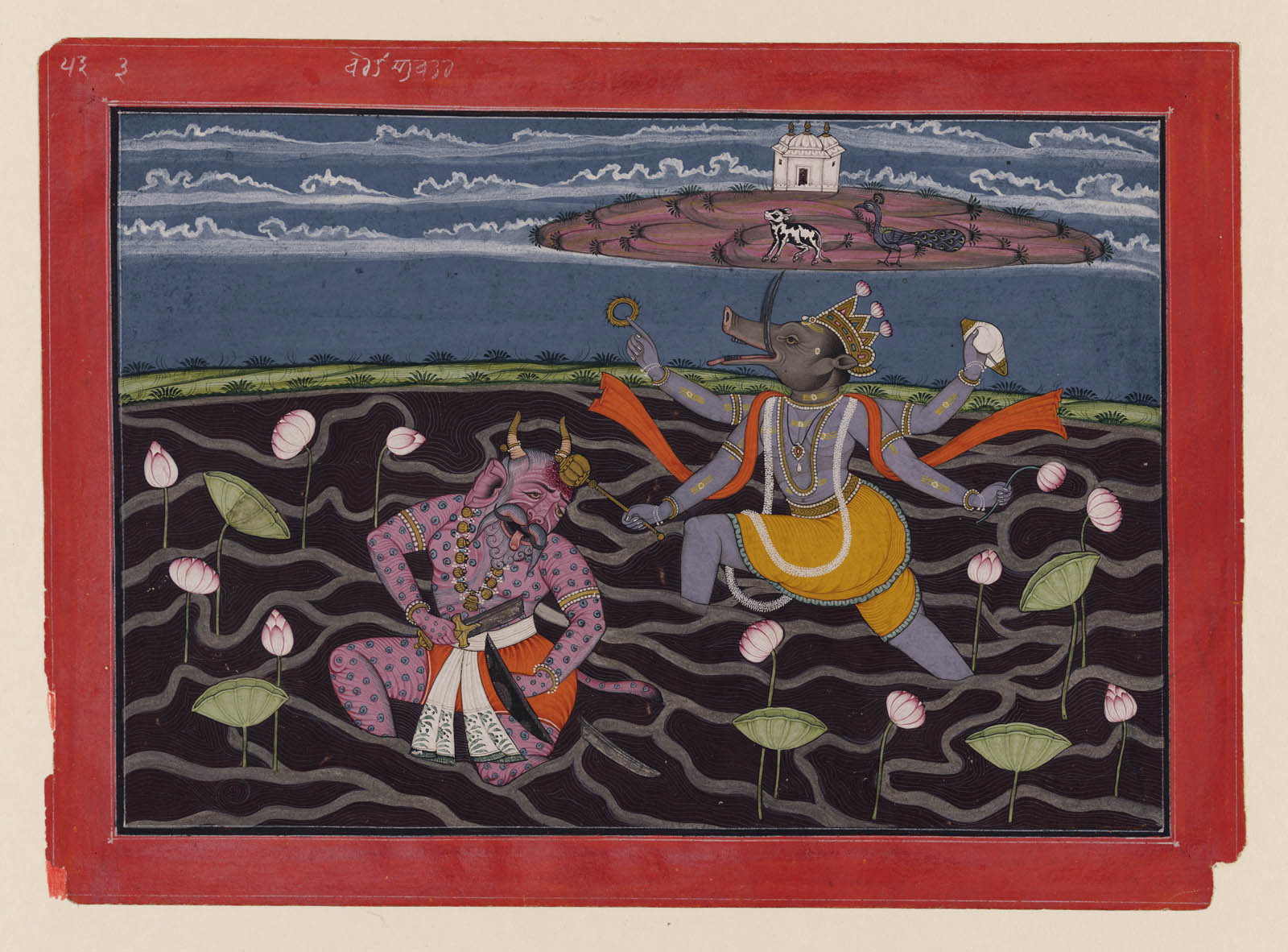
 

Mahesh of Chamba (India active c. 1730-1775) 'Varāha avatar' c. 1750-1775 'Folio from a Dashāvatara series'


Mahesh of Chamba (India active c. 1730-1775)
Varāha avatar
c. 1750-1775
Folio from a Dashāvatara series
Opaque watercolour on paper
16.3 x 24.1cm
Museum Rietberg, Zurich
Purchased with funds from Balthasar and Nanni Reinhart
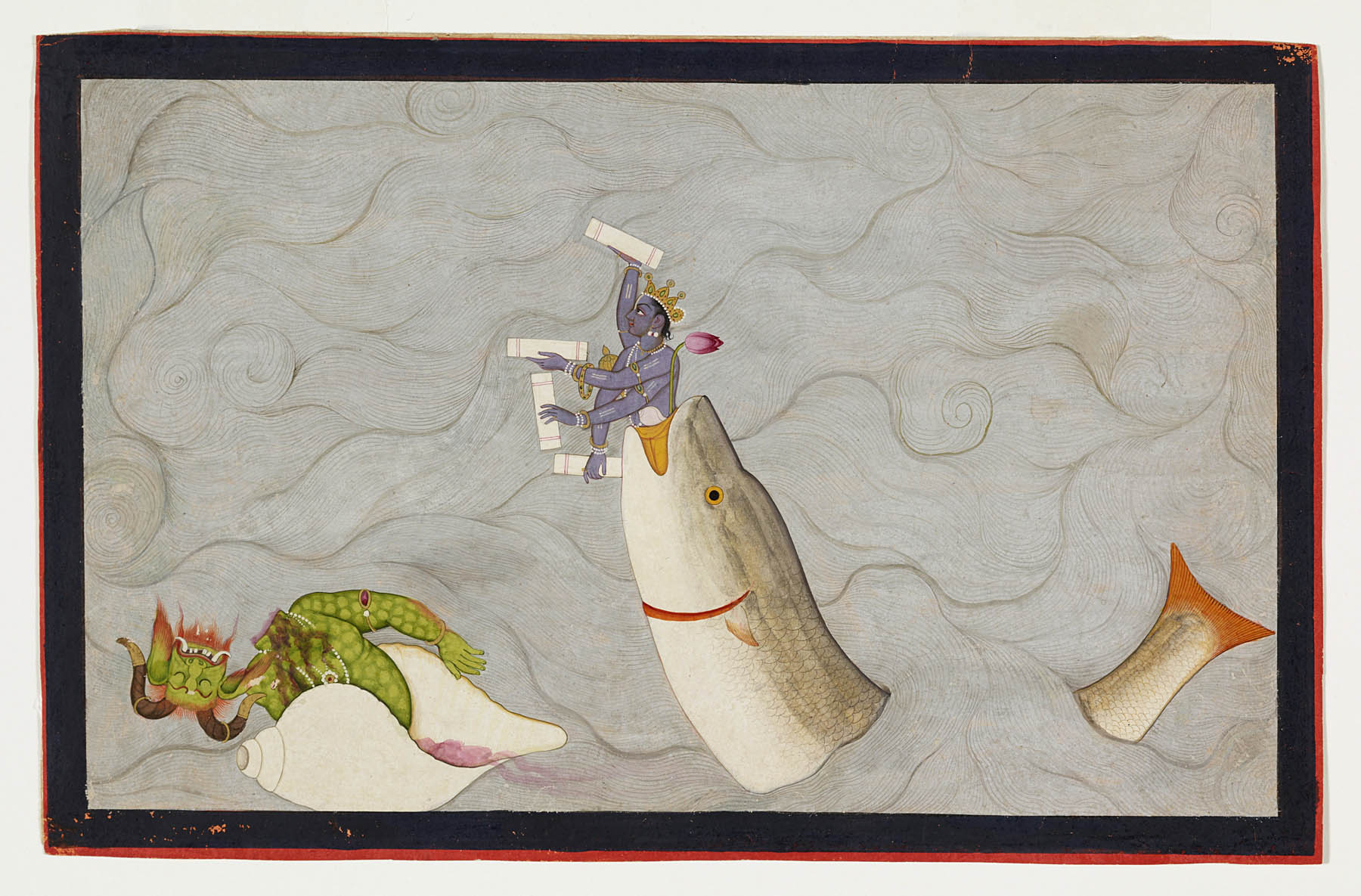
 

Master of the first generation after Manaku and Nainsukh of Guler. 'Matsya avatar' c. 1775


Master of the first generation after Manaku and Nainsukh of Guler
Matsya avatar
c. 1775
Folio from the second Guler Gita Govinda series
Opaque watercolour and gold on paper
15.4 x 25.2cm
Museum Rietberg, Zurich
Gift of Horst Metzger


Matsya is the first primary fish incarnation (avatar) of the Hindu god Vishnu, who saved King Manu, the sacred Vedas, and seeds of life from a great universal flood.
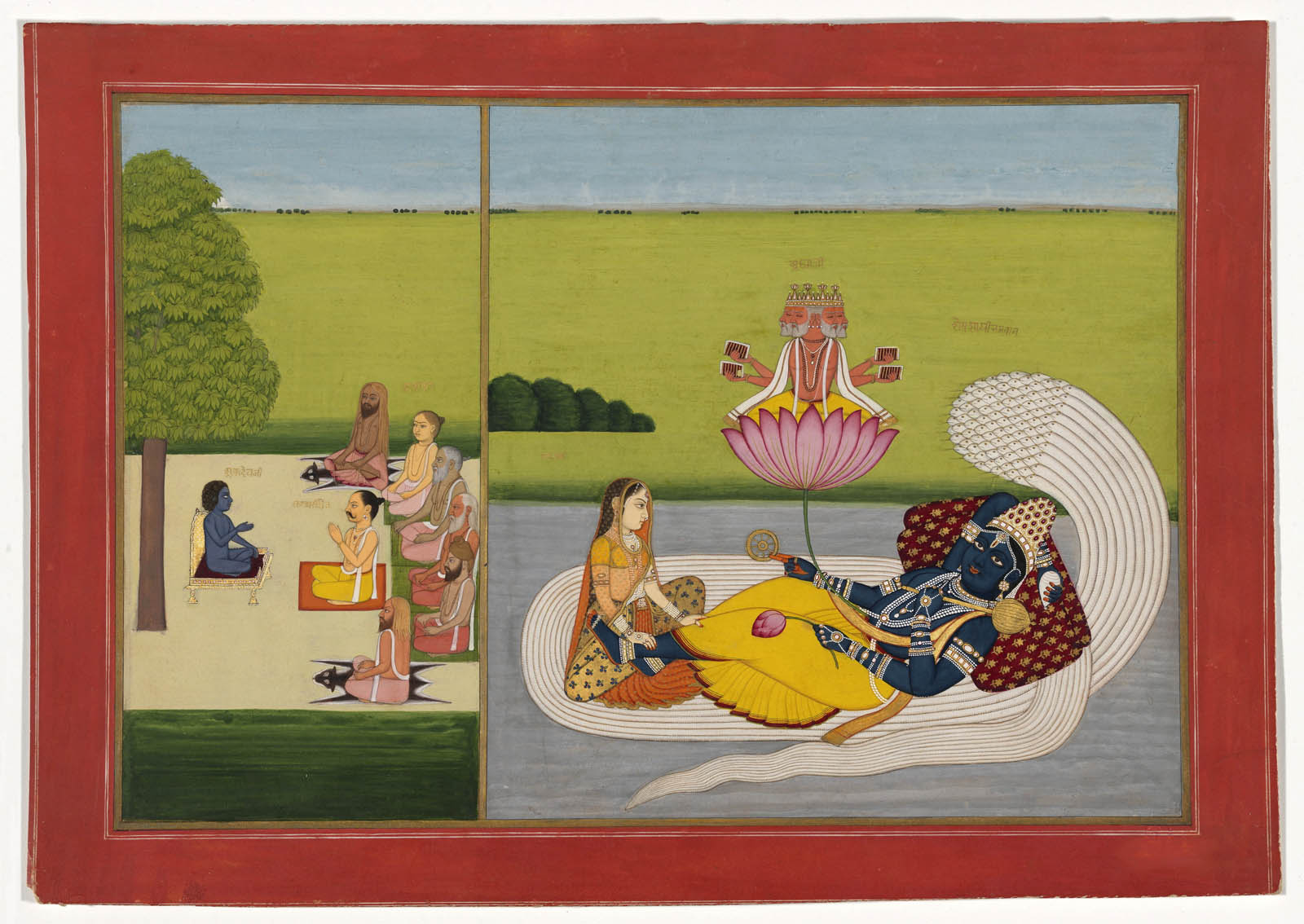
 

India, Rajasthan, Jaipur. 'Vishnu reclines on the cosmic serpent' mid 1800s


India, Rajasthan, Jaipur
Vishnu reclines on the cosmic serpent
mid 1800s
Opaque watercolour, gold and silver on paper
23 x 35 cm
National Gallery of Australia, Canberra
Purchased 2013


In Hindu mythology, Lord Vishnu reclines on the multi-headed cosmic serpent named Shesha (or Ananta Shesha) upon the primordial cosmic ocean (Kshira Sagara) during the interval between cycles of creation. This posture is known as Anantasayin, representing eternal order, preservation, and the universe resting in pure potential.
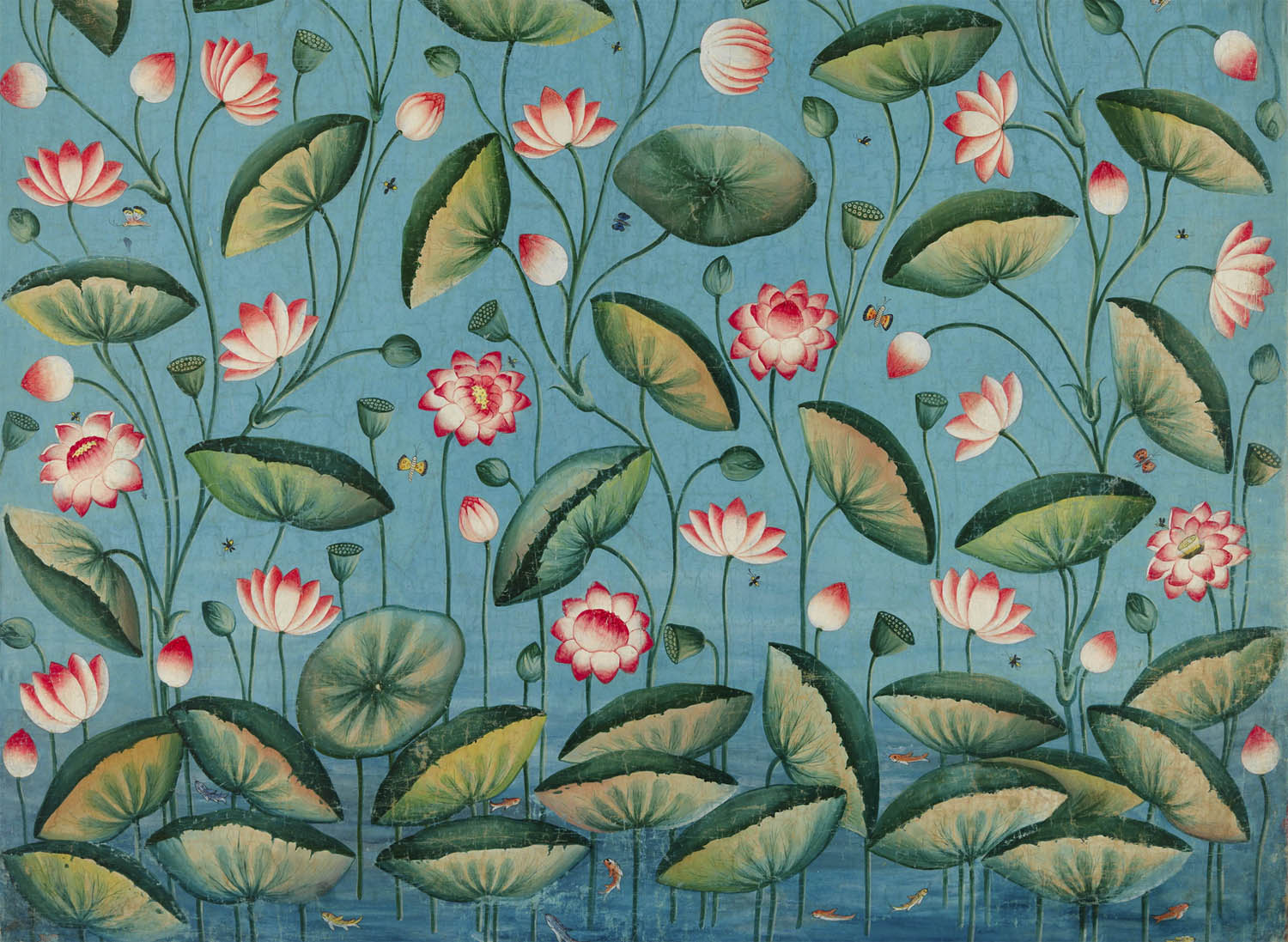
 

India. 'Lotus ponds (Kamal Vana) of the Yamuna' 1800s


India
Lotus ponds (Kamal Vana) of the Yamuna
1800s
National Gallery of Australia, Canberra
Purchased 2009


In this pichhavai, lotus blooms and images of fish and insects play against the blue background of the Yamuna River. The sacred Yamuna winds through the landscape in which the legendary Krishna spent his childhood and youth. This jal vihara, water games, image commemorates the hot summer days when Krishna played in the river with the milkmaids, gopis, of his village. Hangings of this type are shown behind sculptures of Krishna, dressed in diaphanous muslin, to cool and comfort the deity.

Text from the National Gallery of Australia website


Pichhwai (also pichwai, pichhavai, pichhvai, pechhavai etc), literally meaning ‘that which hangs from the back’ from the Sanskrit words “Pichh” means back and “wais” means hanging, are large devotional Hindu painted pictures, normally on cloth.
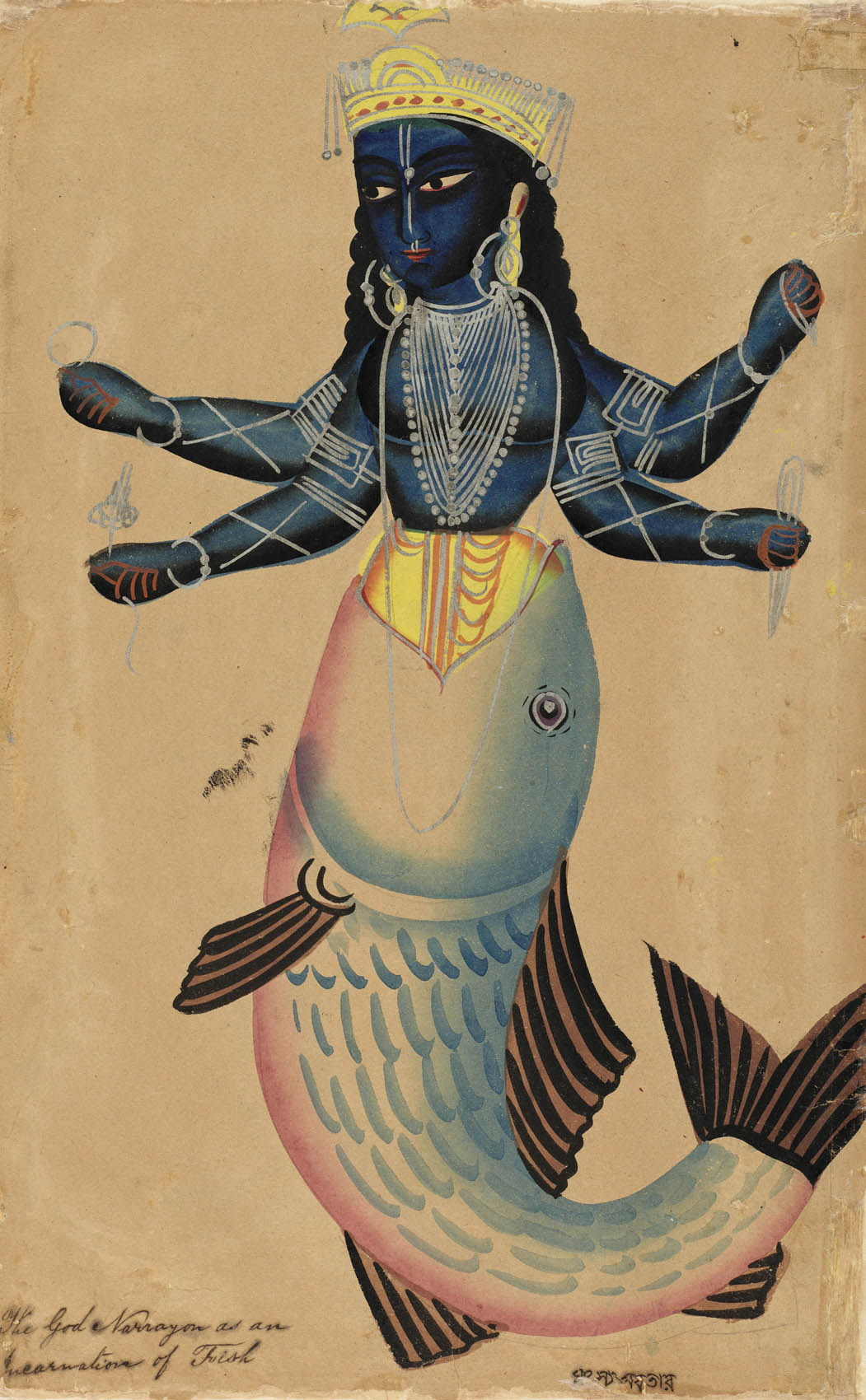
 

India, Kalighat style. 'Matsya, the fish incarnation of Vishnu' 1880-1899


India, Kalighat style
Matsya, the fish incarnation of Vishnu
1880-1899
Watercolour with silver paint on paper
42.5 x 27.3cm
Art Gallery of New South Wales
Purchased 1959


Matsya is the first primary fish incarnation (avatar) of the Hindu god Vishnu, who saved King Manu, the sacred Vedas, and seeds of life from a great universal flood.
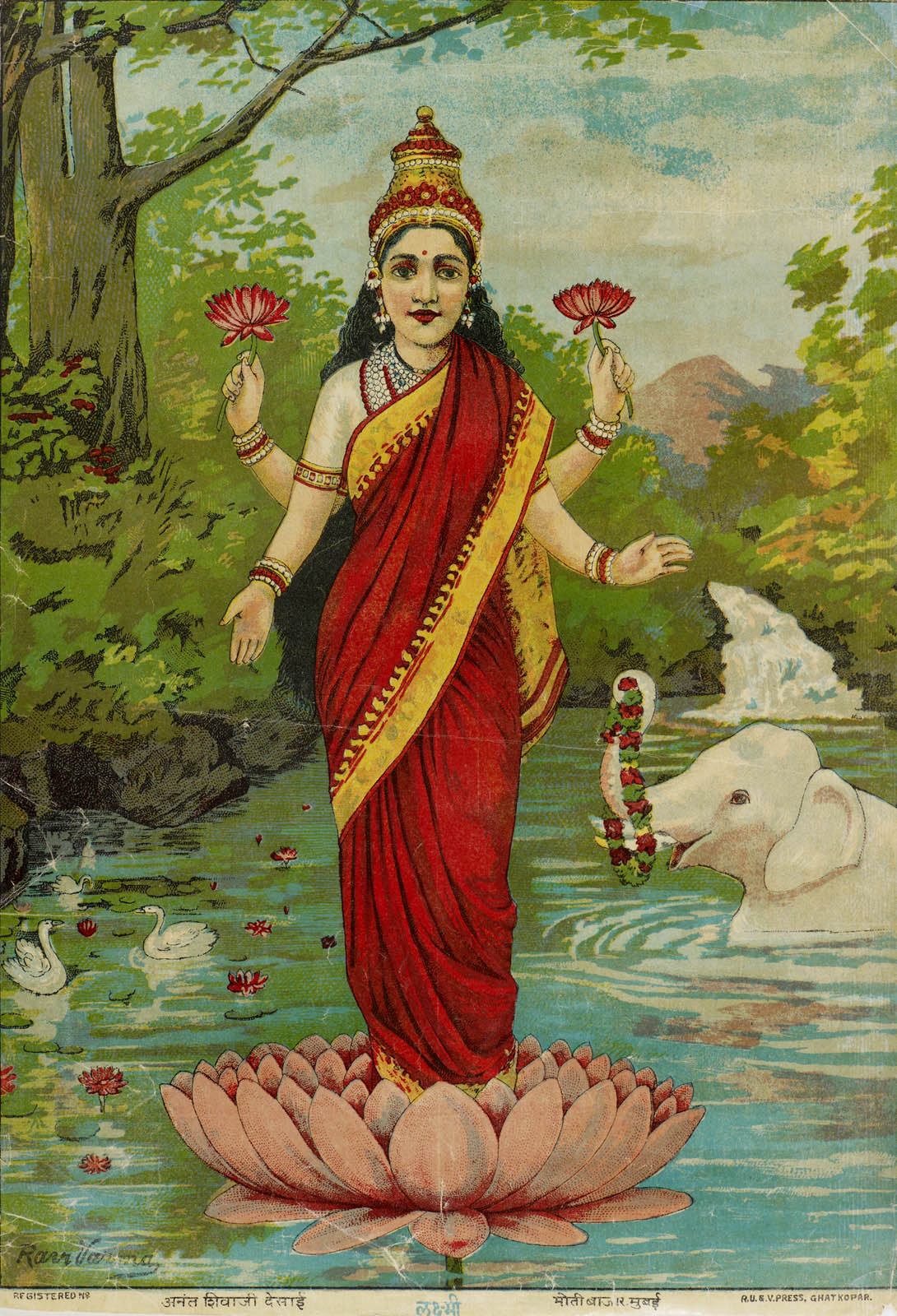
 

Ravi Varma Press (India, 1894-1972) 'Lakshmi' Designed 1894, printed early 1900s


Ravi Varma Press (India, 1894-1972)
Lakshmi
Designed 1894, printed early 1900s
Chromolithograph
35.8 x 25cm
Art Gallery of New South Wales
Gift of Dr Jim Masselos 2011
Image © Art Gallery of New South Wales


Lakshmi is the Hindu goddess of wealth, good fortune, and beauty, best known as the consort of Lord Vishnu and the central deity celebrated during the festival of Diwali.
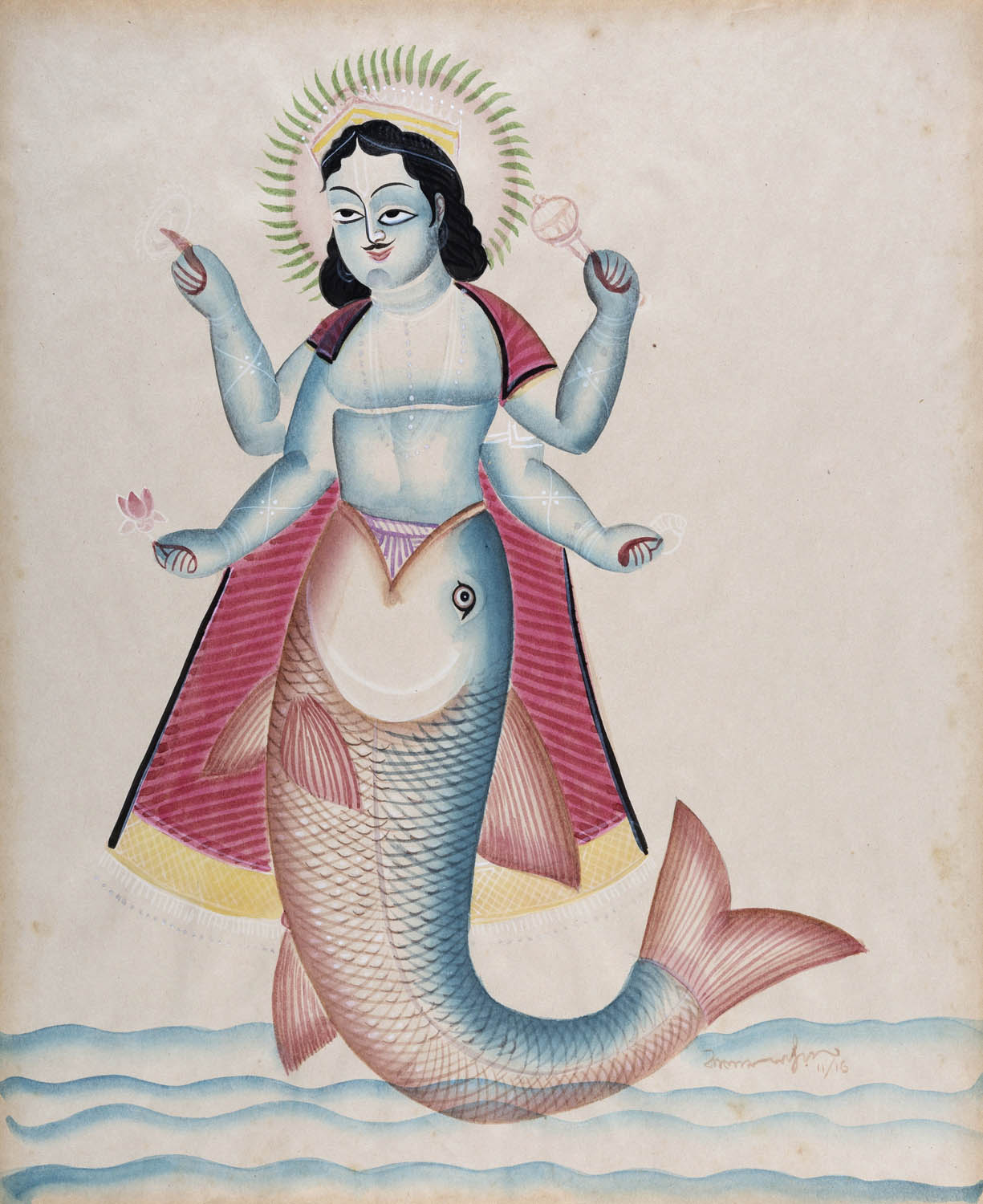
 

Kalam Patua (Indian, b. 1962) 'One of 'Dashāvatara (Ten Avatars)'' 2015-2016


Kalam Patua (Indian, b. 1962)
One of ‘Dashāvatara (Ten Avatars)’
2015-2016
Watercolour and silver pigment on paper
Each 41 x 33cm
Courtesy of Museum of Art and Photography (MAP), Bengaluru
© Kalam Patua


Kalam Patua is a contemporary exponent of Kalighat painting. He was born into the Patua community of scroll painters and storytellers and subsequently taught himself the Kalighat style, which draws on conventions from West Bengal scroll paintings and Indian miniature painting. Kalighat painting developed in the vicinity of the Kali temple in Kolkata in the mid nineteenth century and departs from the linear, narrative style of the scrolls to focus on single scenes, with graphic, simplified forms and often satirical, contemporary content. Patua’s watercolours include elements of autobiography and myth, and reflect on social issues or current news events. This has included the changing nature of Indian society, dowry deaths, or violence against women, but also light, humorous works such as a series about working in the postal system, or depicting crowds that gather at art gallery openings.

Text from the QAGOMA website
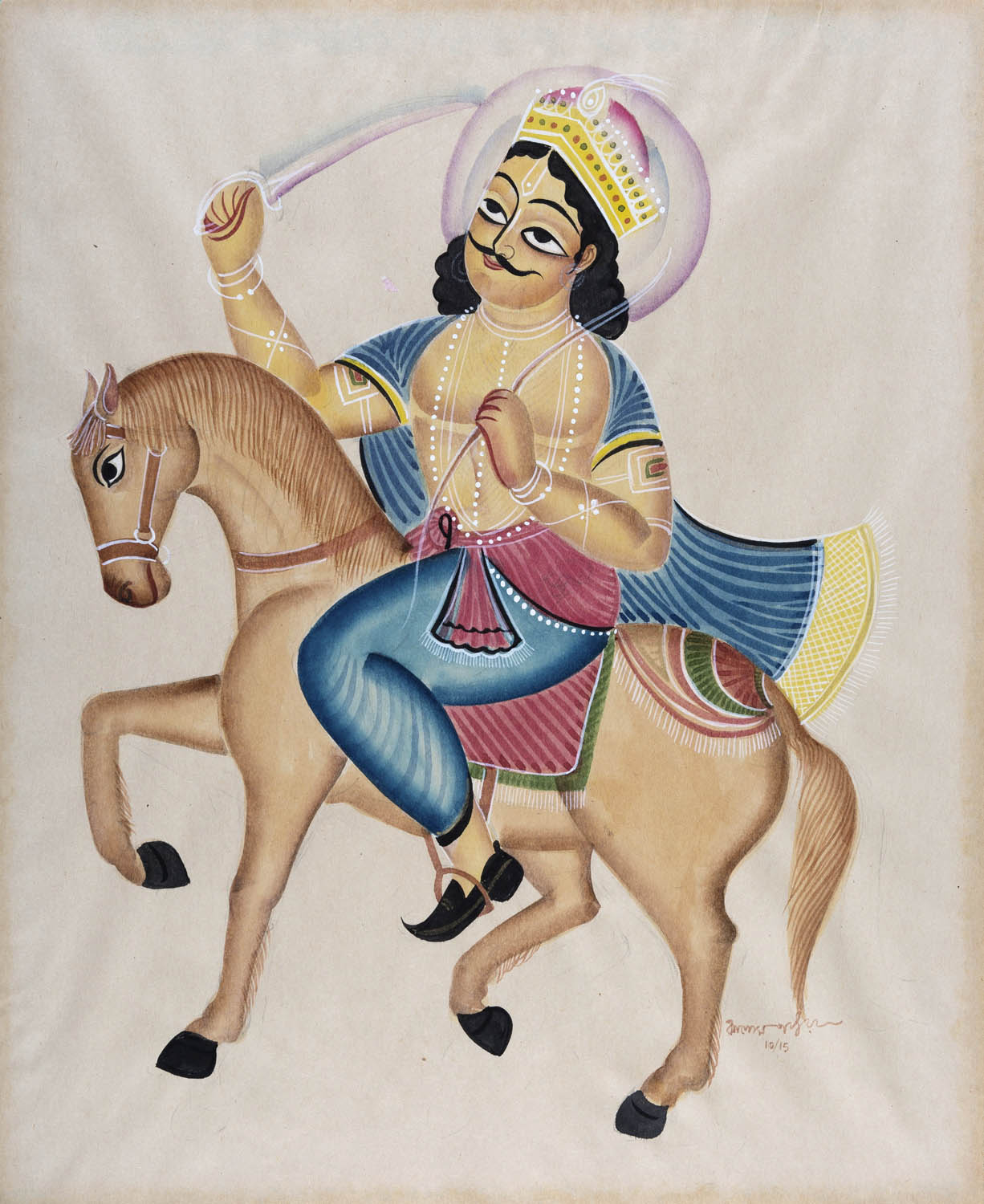
 

Kalam Patua (Indian, b. 1962) 'One of 'Dashāvatara (Ten Avatars)'' 2015-2016


Kalam Patua (Indian, b. 1962)
One of ‘Dashāvatara (Ten Avatars)’
2015-2016
Watercolour and silver pigment on paper
Each 41 x 33cm
Courtesy of Museum of Art and Photography (MAP), Bengaluru
© Kalam Patua
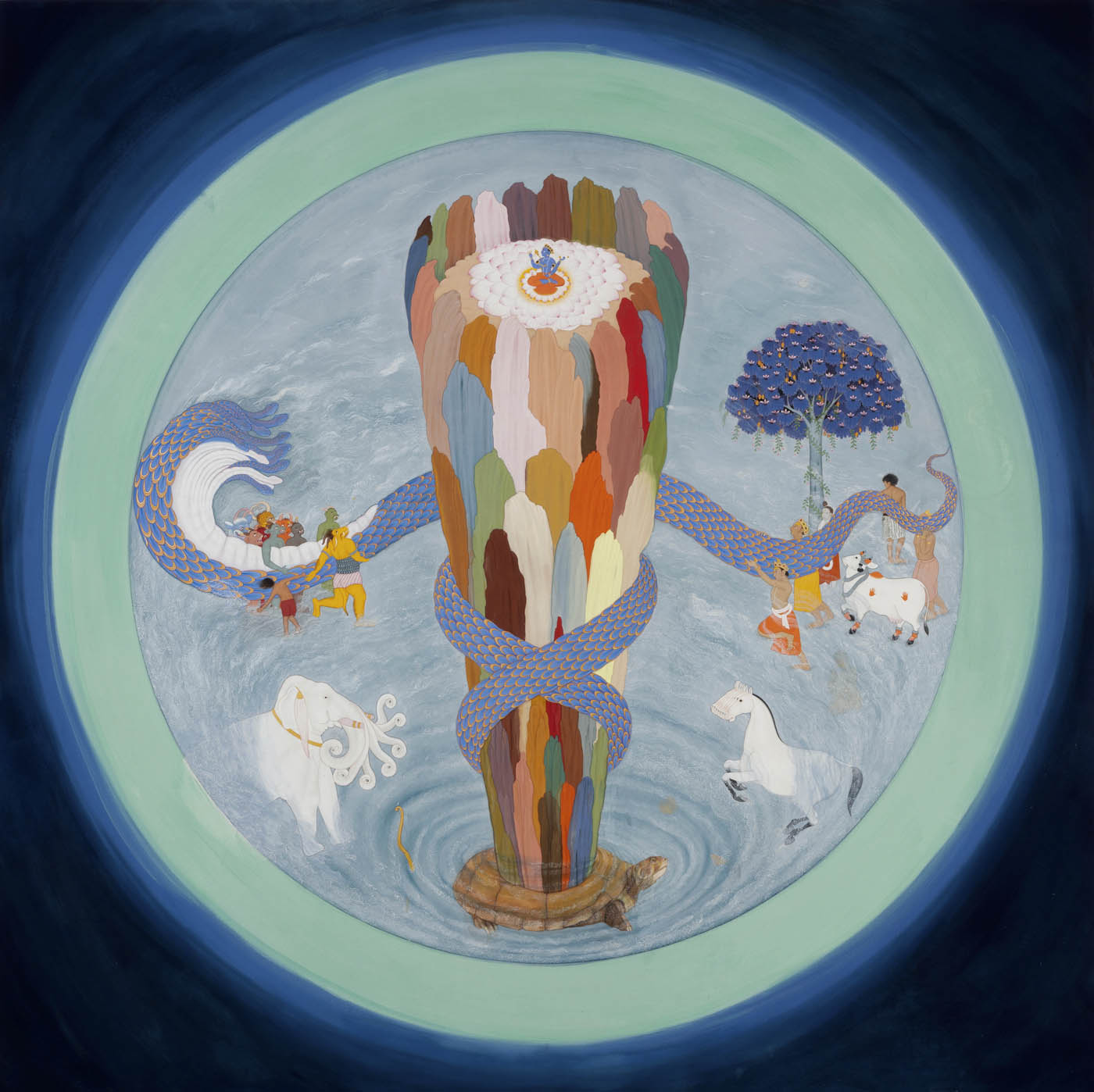
 

Desmond Lazaro (Australia, India, England, b. 1968) 'Samudra Manthana, Churning of the Ocean of Milk' 2026


Desmond Lazaro (Australia, India, England, b. 1968)
Samudra Manthana, Churning of the Ocean of Milk
2026
Natural pigments and gold on birch board
200 x 200cm
Courtesy of the artist
© Desmond Lazaro


Samudra Manthana is a famous story in Hindu writing. Gods and demons worked together to churn the cosmic ocean of milk to get Amrita, the sweet drink of eternal life.

To churn the ocean, the devas and asuras uprooted Mount Mandara – a spur of Mount Meru, the world axis – and used it as a churning stick. Vishnu, in his avatar (incarnation) as the tortoise Kurma, supported the mountain on his back to keep it from sinking into the ocean. The asuras held the head of the naga (half-human, half-cobra) Vasuki, who was procured as a churning rope, and the devas held Vasuki’s tail.
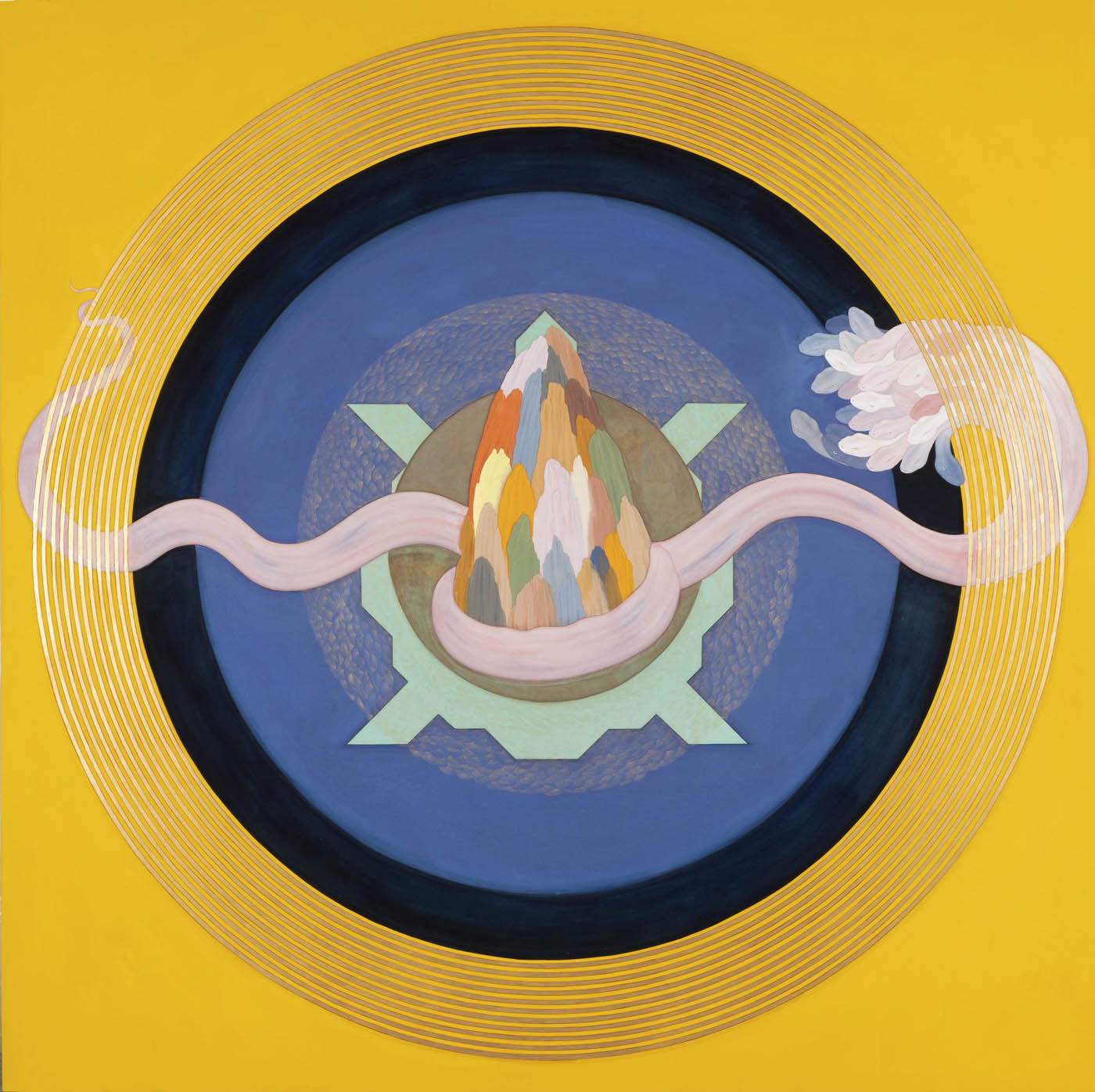
 

Desmond Lazaro (Australia, India, England, b. 1968) 'Mount Mandara' 2026


Desmond Lazaro (Australia, India, England, b. 1968)
Mount Mandara
2026
Natural pigments and gold on birch board
200 x 200cm
Courtesy of the artist
© Desmond Lazaro


The name of the mountain that appears in the Samudra Manthana episode in the Hindu Puranas, where it was used as a churning rod to churn the ocean of milk.


Art Gallery of New South Wales
Art Gallery Road, The Domain
Sydney NSW 2000, Australia

Opening hours:
Open every day 10am – 5pm
except Christmas Day and Good Friday
Art Gallery of New South Wales website

LIKE ART BLART ON FACEBOOK

Back to top

Exhibition: ‘New Woman, New Vision. Women Photographers of the Bauhaus’ at the Bauhaus-Archiv / Museum für Gestaltung at the Museum für Fotografie, Berlin

Exhibition dates: 17th April – 4th October, 2026

Curators: Kristin Bartels, with Carla Huttenloher serving as the assistant (or curatorial) curator

Artists featured in the exhibition: Gertrud Arndt; Ellen Auerbach; Irene Bayer; Lotte Beese; Irena Blühov; Marianne Brandt; Lotte Gerson-Collein; Barbara Crane (New Bauhaus); Margarete Dambeck-Keller; Charlotte Grunert; Ise Gropius; Ise Gropius; Toni von Haken-Schrammen; Florence Henri; Catherine Hinkle (New Bauhaus); Irene Hoffmann; Hilde Hubbuch; Grit Kallin-Fischer; Judit Kárász; Ivana Meller-Tomljenović; Etel Mittag-Fodor; Lucia Moholy; Lony Neumann; Ricarda Schwerin; Ré Soupault; Grete Stern; Elsa Thiemann; Else Tholstrup (New Bauhaus); Mili Thompson (New Bauhaus); Edith Tudor-Hart


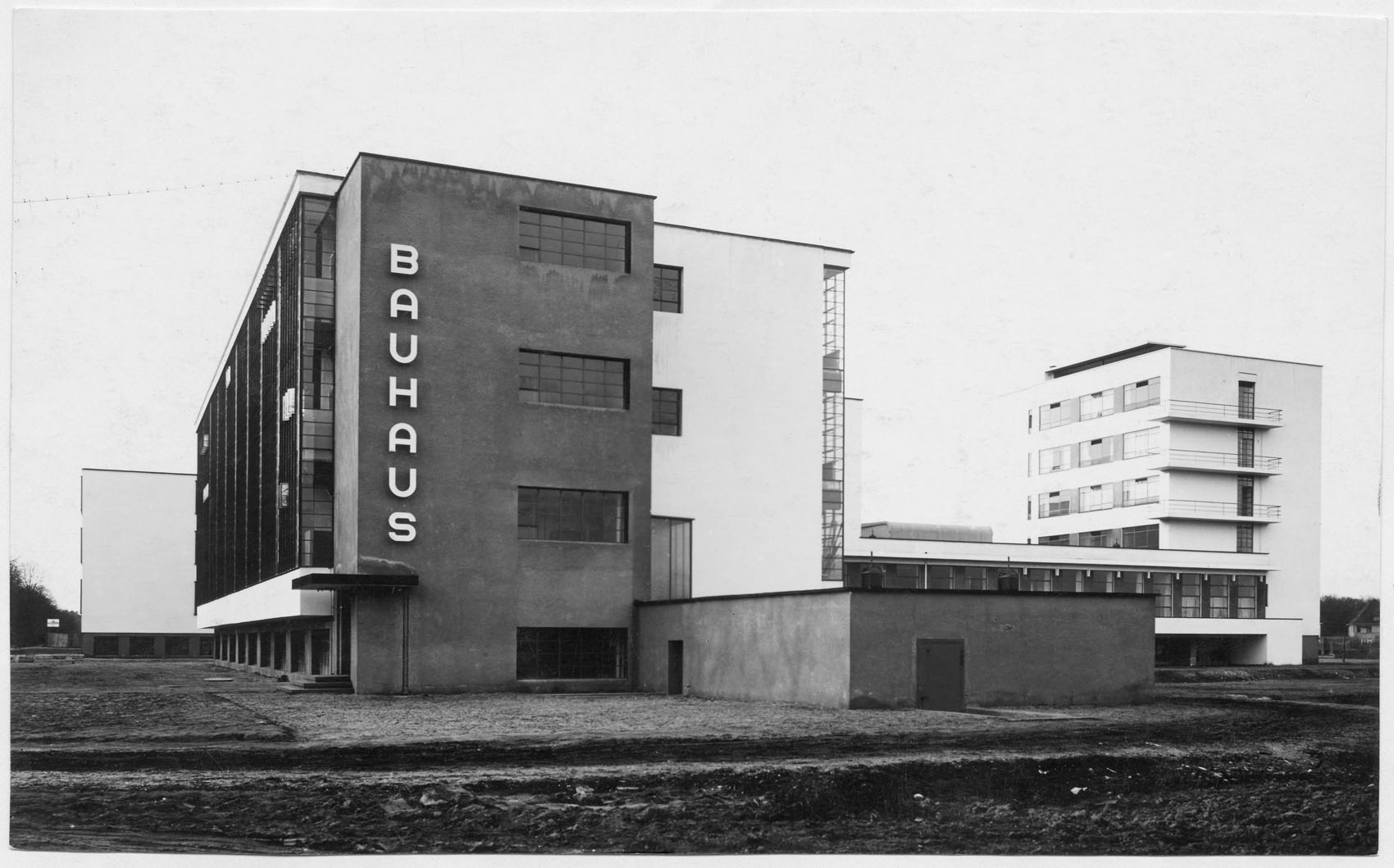
Lucia Moholy (British born Czech, 1894-1989) 'Architekt - Walter Gropius Bauhaus-Gebäude Dessau (1925-1926)' (Architect: Walter Gropius, Bauhaus building Dessau (1925-1926)) 1927


Lucia Moholy (British born Czech, 1894-1989)
Architekt – Walter Gropius Bauhaus-Gebäude Dessau (1925-1926) (Architect: Walter Gropius, Bauhaus building Dessau (1925-1926))
1927
Bauhaus-Archiv Berlin
© VG Bild-Kunst, Bonn 2026


I am always learning about photography.

This is the case with some of the female photographers in this posting, many unknown to me. What a joy it is to see their photographs.

It is a blessing to be able to study their life story, to imbibe (take in ideas and knowledge) of their art, to acknowledge and admire these New Women who had a passion for seeing the world in new ways, using photography as an artistic and social instrument.

I know the work of that accomplished artist Lucia Moholy (British born Czech, 1894-1989) who made focused, thoughtful, beautiful photographs; Marianne Brandt (German, 1893-1983); socialist Edith Tudor-Hart (British born Austria, 1908-1973); modernist, surrealist Grete Stern (Argentine born Germany, 1904-1999); and the ever inventive Gertrud Arndt (German, 1903-2000) who has never had a posting on Art Blart because of the paucity of exhibitions on her work.

What I didn’t know were the photographs of Etel Mittag-Fodor (Hungarian, 1905-2005), Grit Kallin-Fischer (German, 1897-1973), Ivana Meller-Tomljenović (Croatia, 1906-1988) – I love all these double-barrelled surnames! – Lotte Collein (German, 1905-1995), Lony Neumann (German, 1902-1996), Ré Soupault (French-German born Poland, 1901-1996) and Elsa Thiemann (German born Poland, 1910-1981).

How exciting and a little dangerous it must have been to have studied at the Bauhaus during this period,1 early 1920s-1933 (the photography course established in 1929), before the “school’s leadership voted to dissolve it in July 1933 under intense police raids, harassment, and crushing political pressure from the Nazi regime who labelled its avant-garde, modern style as “degenerate”.” (Google AI)

To be part of a school that contained an incredible coterie of friends and artists which, then and now, continues to construct important social, cultural and artistic legacies.

Through knowledge hopefully wisdom.

Dr Marcus Bunyan


1/ “Under the Nazi regime, about twenty Bauhauslers are known to have been killed in prison or concentration camps. Some emigrated, while others adapted and participated in propaganda exhibitions and design fairs, produced photographic and graphic works such as magazine covers, movie posters, and designed furniture, carpets, household objects and even busts of Hitler. Of 119 teaching staff c. 15 emigrated between 1933 and 1938. Of the c. 1,250 students who were enrolled when Hitler came to power in 1933, approximately 900 are thought to have remained in Germany. Of those, 188 joined the National Socialist Party (170 men and 18 women), 14 were part of the brown shirts, 12 joined the SS, and one was involved in the design of the crematoria at Auschwitz.”

Anonymous. “Bauhaus,” on the Wikipedia website Nd [Online] Cited 18/09/2026


Many thankx to the Museum für Fotografie for allowing me to publish the photographs in the posting. Please click on the photographs for a larger version of the image.


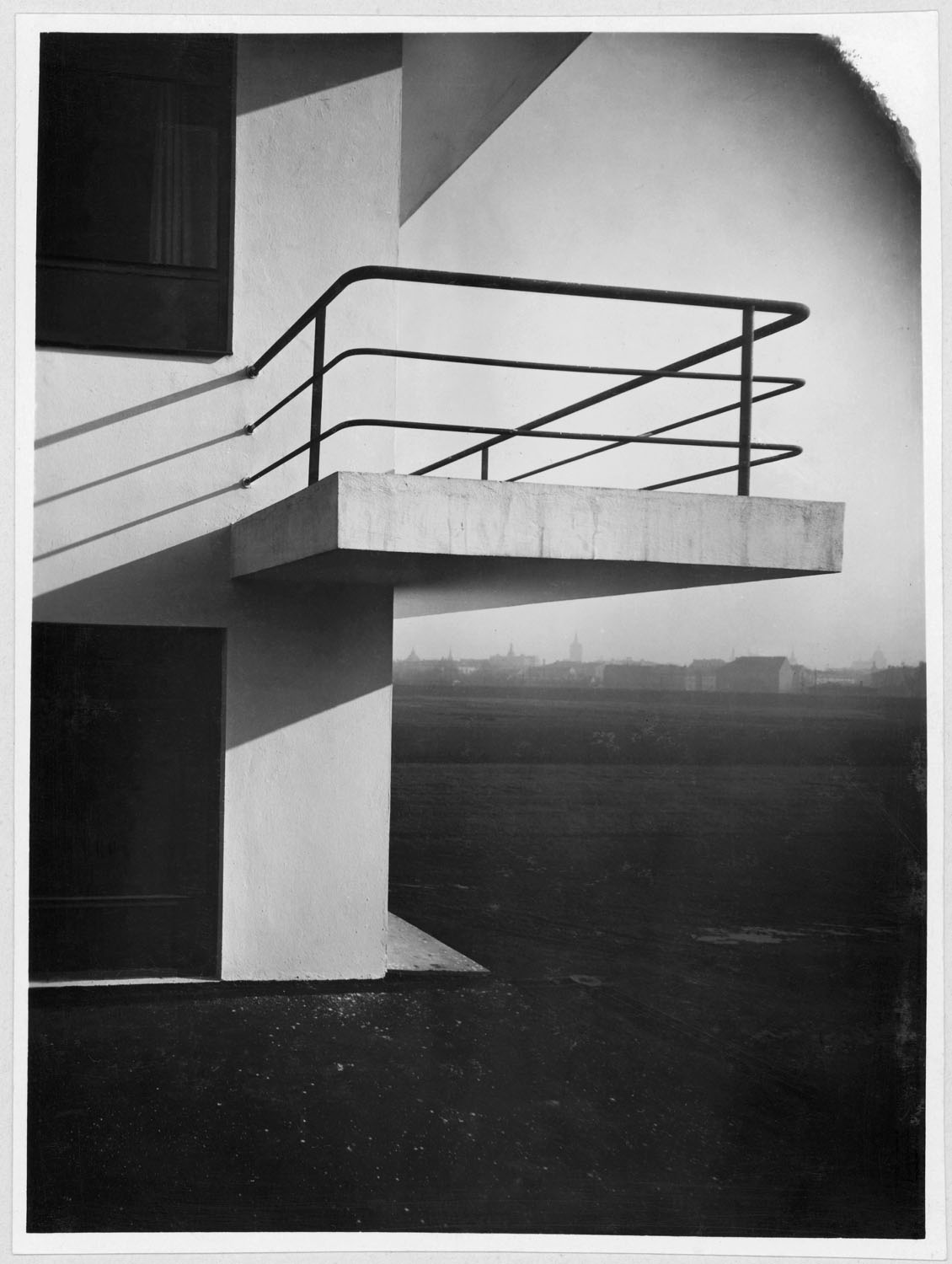
Lucia Moholy (British born Czech, 1894-1989) 'Architekt - Walter Gropius Bauhaus-Gebäude Dessau (1925-1926) Balkon am Ateliergebäude' (Architect - Walter Gropius Bauhaus building Dessau (1925-1926) Balcony on the studio building) 1926


Lucia Moholy (British born Czech, 1894-1989)
Architekt – Walter Gropius Bauhaus-Gebäude Dessau (1925-1926) Balkon am Ateliergebäude (Architect – Walter Gropius Bauhaus building Dessau (1925-1926) Balcony on the studio building
1926
Bauhaus-Archiv Berlin
© VG Bild-Kunst, Bonn 2026


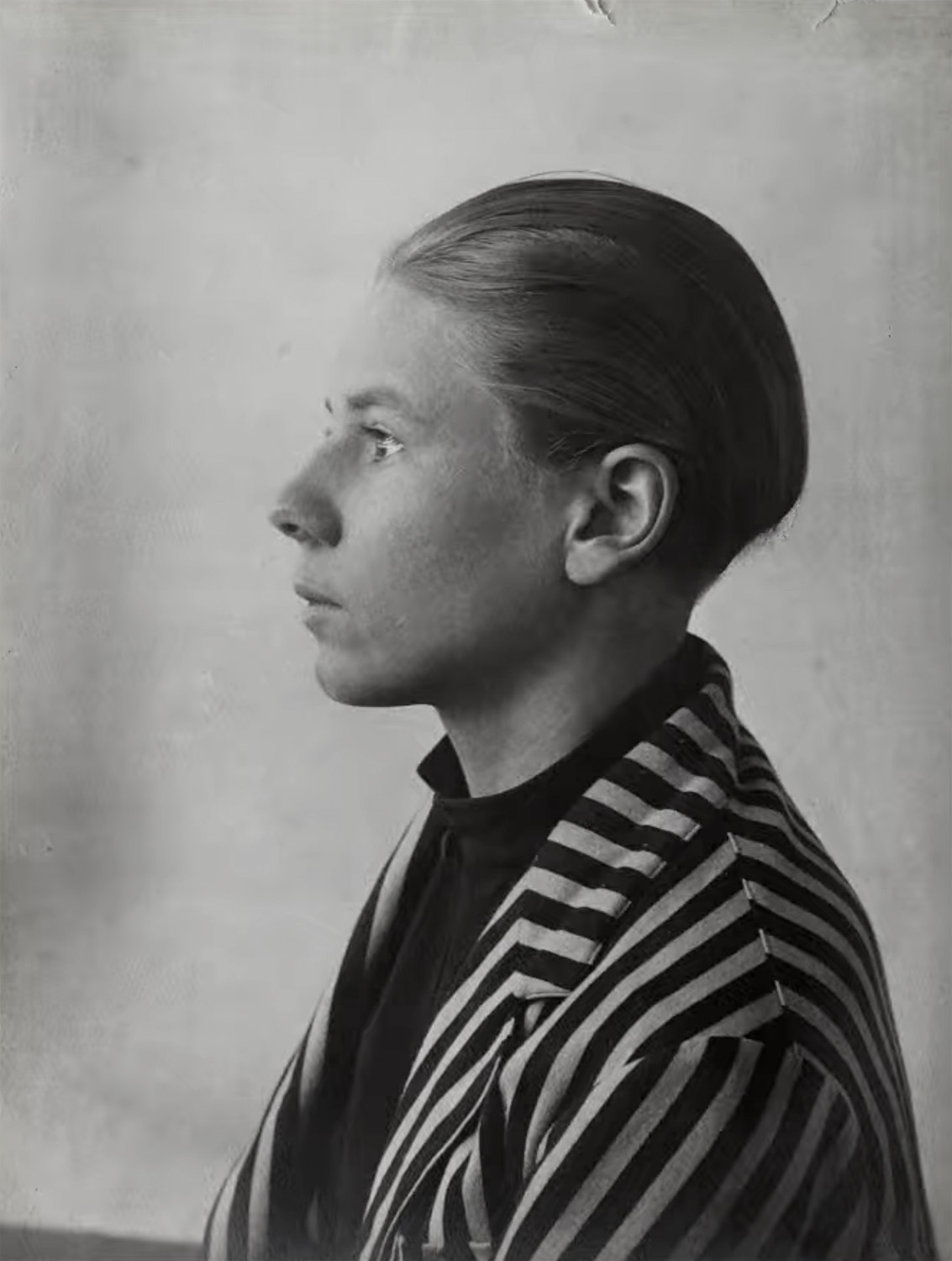
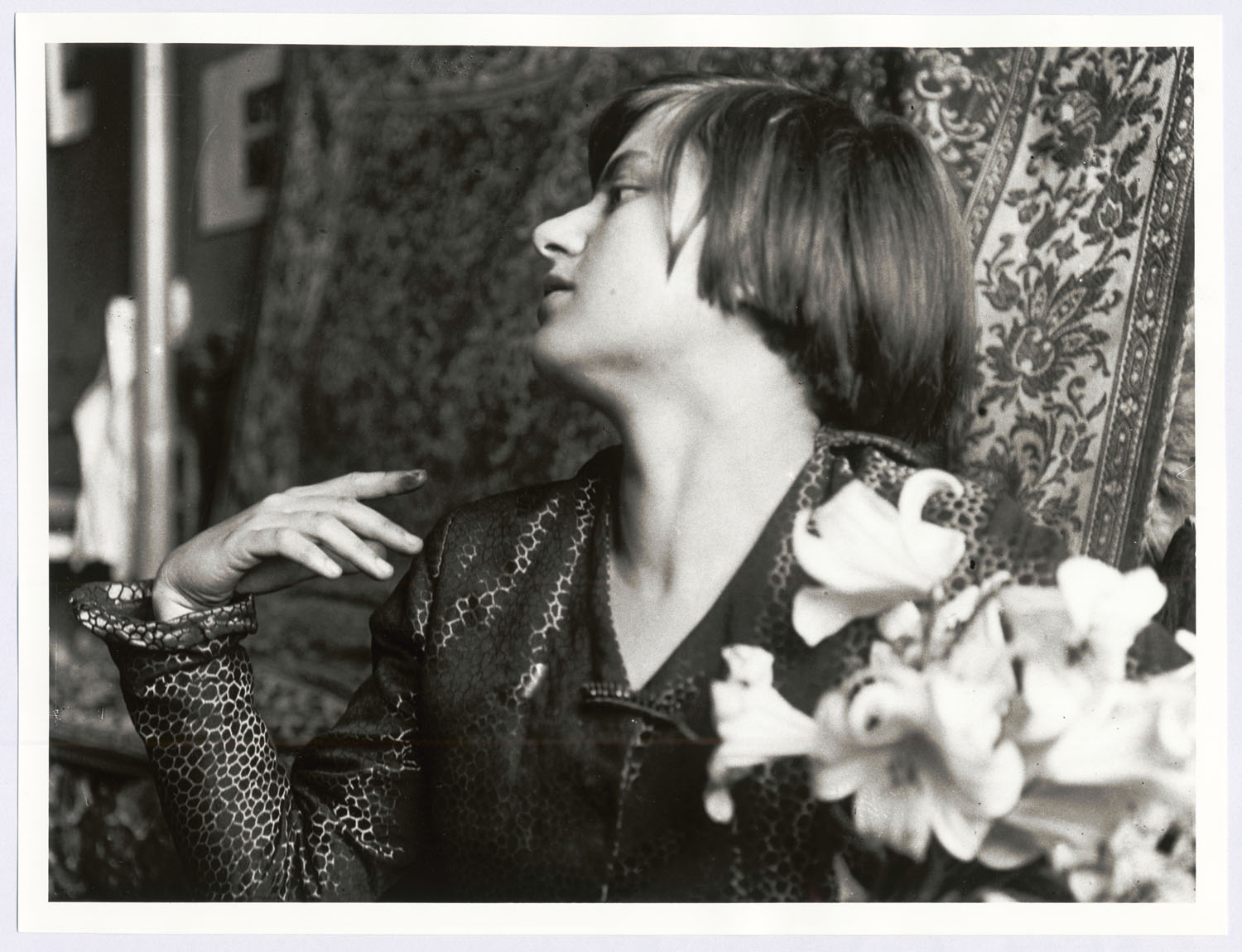
Lucia Moholy (British born Czech, 1894-1989) 'Porträt Lou Scheper Im Profil von links' (Portrait of Lou Scheper In profile from left) 1927


Lucia Moholy (British born Czech, 1894-1989)
Porträt Lou Scheper Im Profil von links (Portrait of Lou Scheper in profile from left)
1927
Bauhaus-Archiv Berlin
© VG Bild-Kunst, Bonn 2026


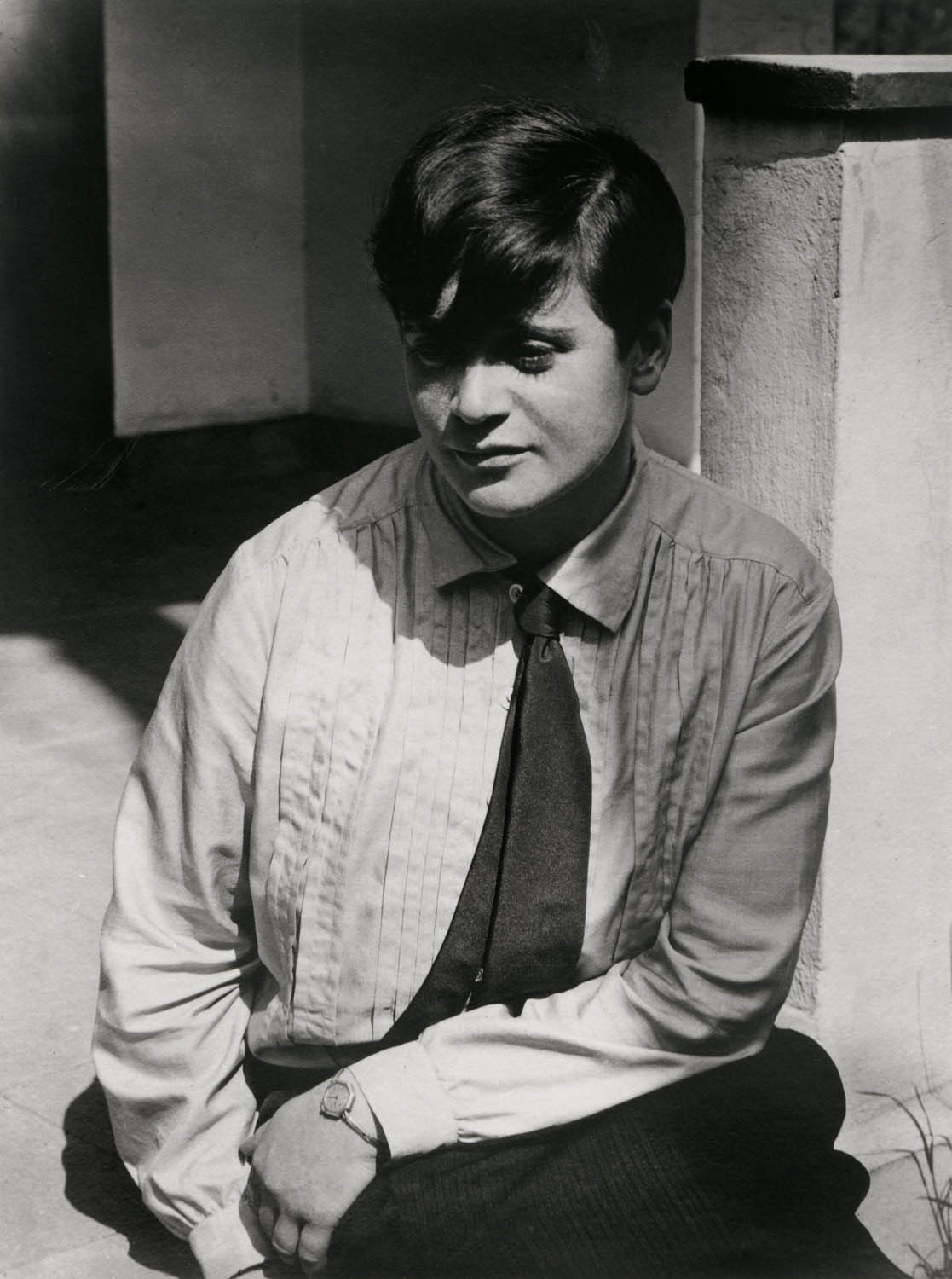
Lucia Moholy (British born Czech, 1894-1989) 'Porträt Eva Weininger auf der Treppe zur Veranda eines Meisterhauses in Dessau' (Portrait of Eva Weininger on the steps to the veranda of a master's house in Dessau) 1927


Lucia Moholy (British born Czech, 1894-1989)
Porträt Eva Weininger auf der Treppe zur Veranda eines Meisterhauses in Dessau (Portrait of Eva Weininger on the steps to the veranda of a master’s house in Dessau)
1927
Bauhaus-Archiv Berlin
© VG Bild-Kunst, Bonn 2026


Lucia Moholy (British born Czech, 1894-1989) 'László Moholy-Nagy' 1925-1926


Lucia Moholy (British born Czech, 1894-1989)
László Moholy-Nagy
1925-1926
Bauhaus-Archiv Berlin
© VG Bild-Kunst, Bonn 2026


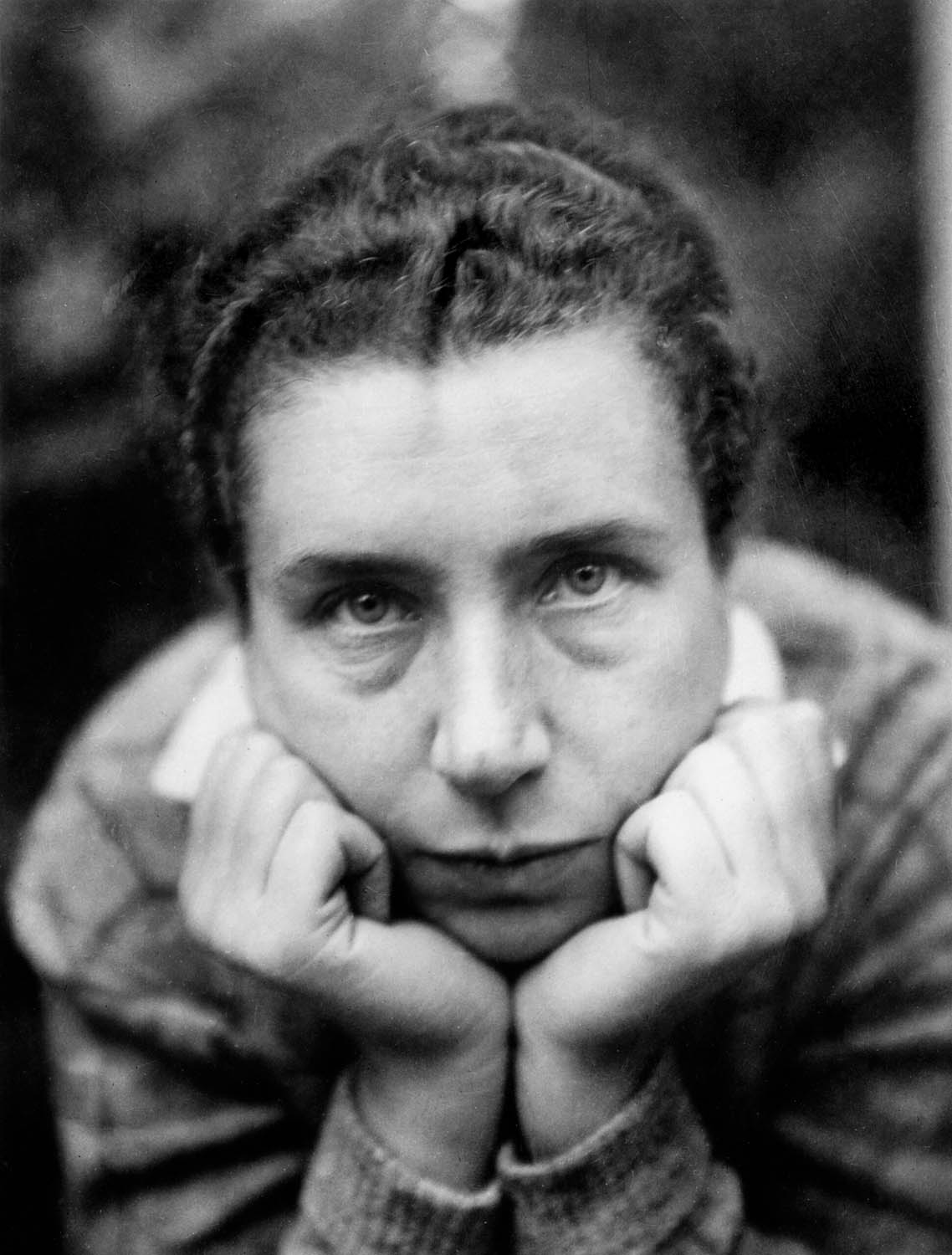
Lucia Moholy (British born Czech, 1894-1989) 'Selbstporträt' (Self-portrait) 1930


Lucia Moholy (British born Czech, 1894-1989)
Selbstporträt (Self-portrait)
1930
Bauhaus-Archiv Berlin
© VG Bild-Kunst, Bonn 2026


Lucia Moholy (British born Czech, 1894-1989)

Lucia Moholy, née Schulz, was born in Prague on 18 January 1894. After studying art history and philosophy, she began working as an editor and proofreader at various publishing houses in Germany in 1915. In 1921 she married the artist László Moholy-Nagy. The couple experimented with photograms and wrote texts on the theory of photography. In 1923 Moholy-Nagy received a teaching position at the Bauhaus in Weimar. Lucia Moholy trained in Otto Eckner’s photography studio there, and she additionally attended photo and printing courses at Leipzig’s Academy of Graphic Arts and Book Trade. Between 1923 and 1928, Moholy photographed the Bauhaus: buildings, workshops, products, teachers and students. Her photos continue to shape the image of the school today. In 1928 the couple left the Bauhaus and moved to Berlin. They separated one year later. In 1930 Moholy became head of the photography class at the Itten-School in Berlin. At the same time, she started gathering material for a history of photography. In 1933 her partner, the communist politician Theodor Neubauer, was arrested by the Nazis and Moholy had to flee Berlin. By way of Prague, Vienna and Paris, she reached London, where she established herself as a portrait photographer. Her book “A Hundred Years of Photography” appeared in 1939 and became a bestseller. She began documenting British archival material on microfilm in 1941 and later worked for UNESCO. In 1959 Lucia Moholy moved to Zurich, where she worked as an author and art critic. She died there on 17 May 1989.

Text from the Bauhaus-Archiv website


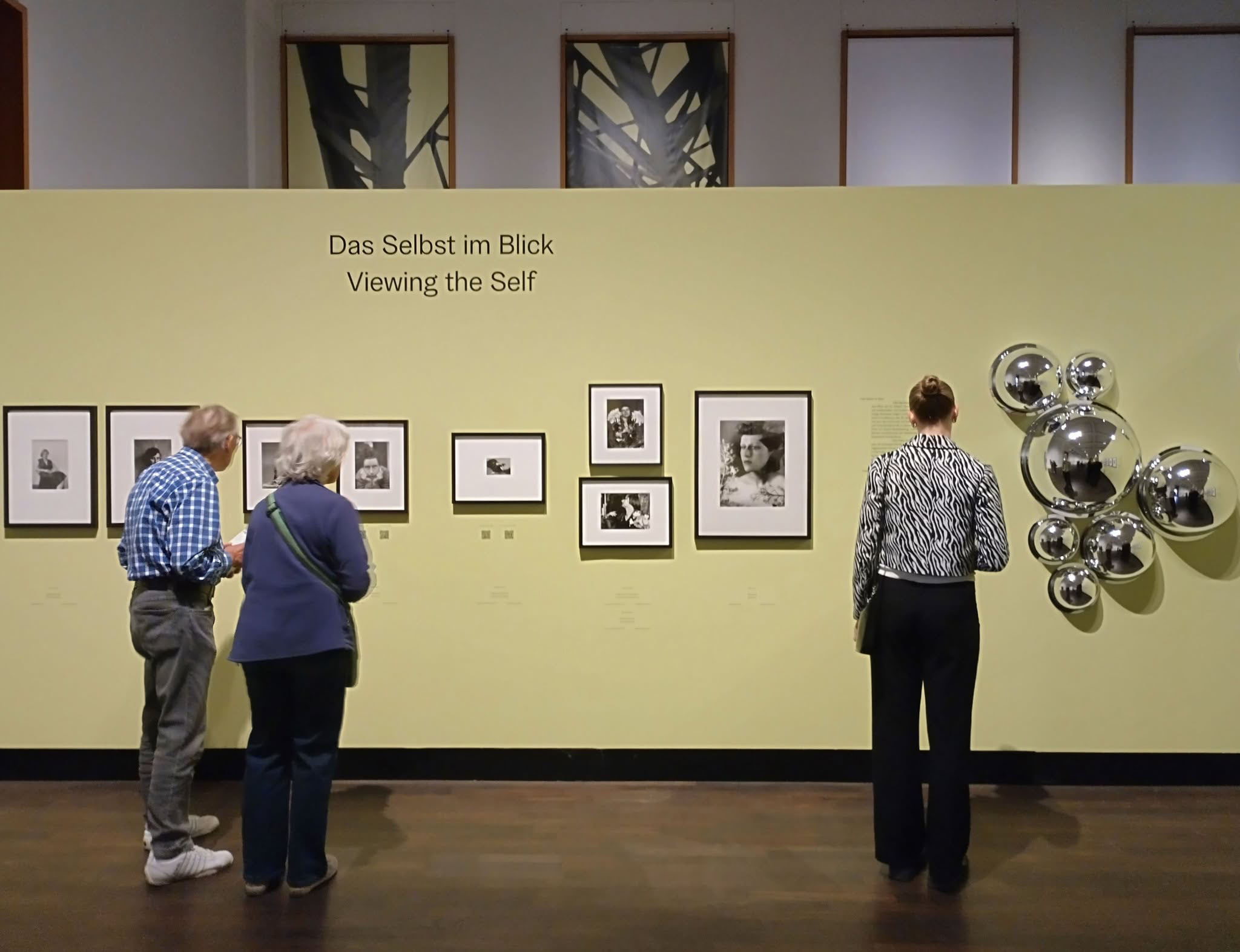
Installation view of the exhibition 'New Woman, New Vision. Women Photographers of the Bauhaus' at the Bauhaus-Archiv / Museum für Gestaltung at the Museum für Fotografie, April - October 2026


Installation view of the exhibition New Woman, New Vision. Women Photographers of the Bauhaus at the Bauhaus-Archiv / Museum für Gestaltung at the Museum für Fotografie, April – October 2026, showing the work of Lucia Moholy and Marianne Brandt


Lucia Moholy (British born Czech, 1894-1989) 'Porträt Clara Zetkin' (Portrait of Clara Zetkin) c. 1930


Lucia Moholy (British born Czech, 1894-1989)
Porträt Clara Zetkin (Portrait of Clara Zetkin)
c. 1930
Bauhaus-Archiv Berlin
© VG Bild-Kunst, Bonn 2026


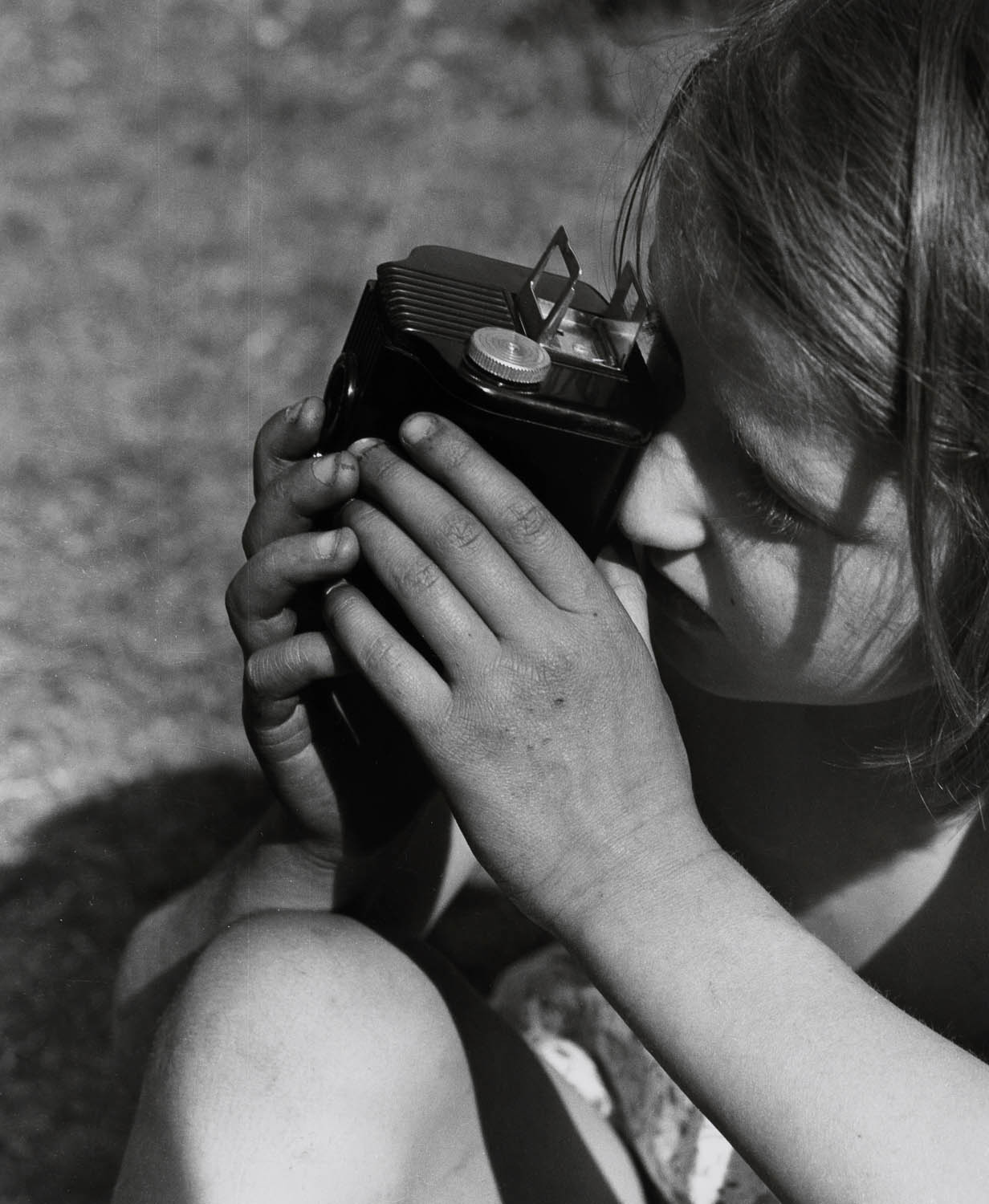
Lucia Moholy (British born Czech, 1894-1989) 'Mädchen mit Kamera beim Fotograeren (Lucia Tochter von Yella und Hans Curjel)' (Girl with camera taking photos (Lucia, daughter of Yella and Hans Curjel)) c. 1929


Lucia Moholy (British born Czech, 1894-1989)
Mädchen mit Kamera beim Fotograeren (Lucia Tochter von Yella und Hans Curjel) (Girl with camera taking photos (Lucia, daughter of Yella and Hans Curjel))
c. 1929
Bauhaus-Archiv Berlin
© VG Bild-Kunst, Bonn 2026


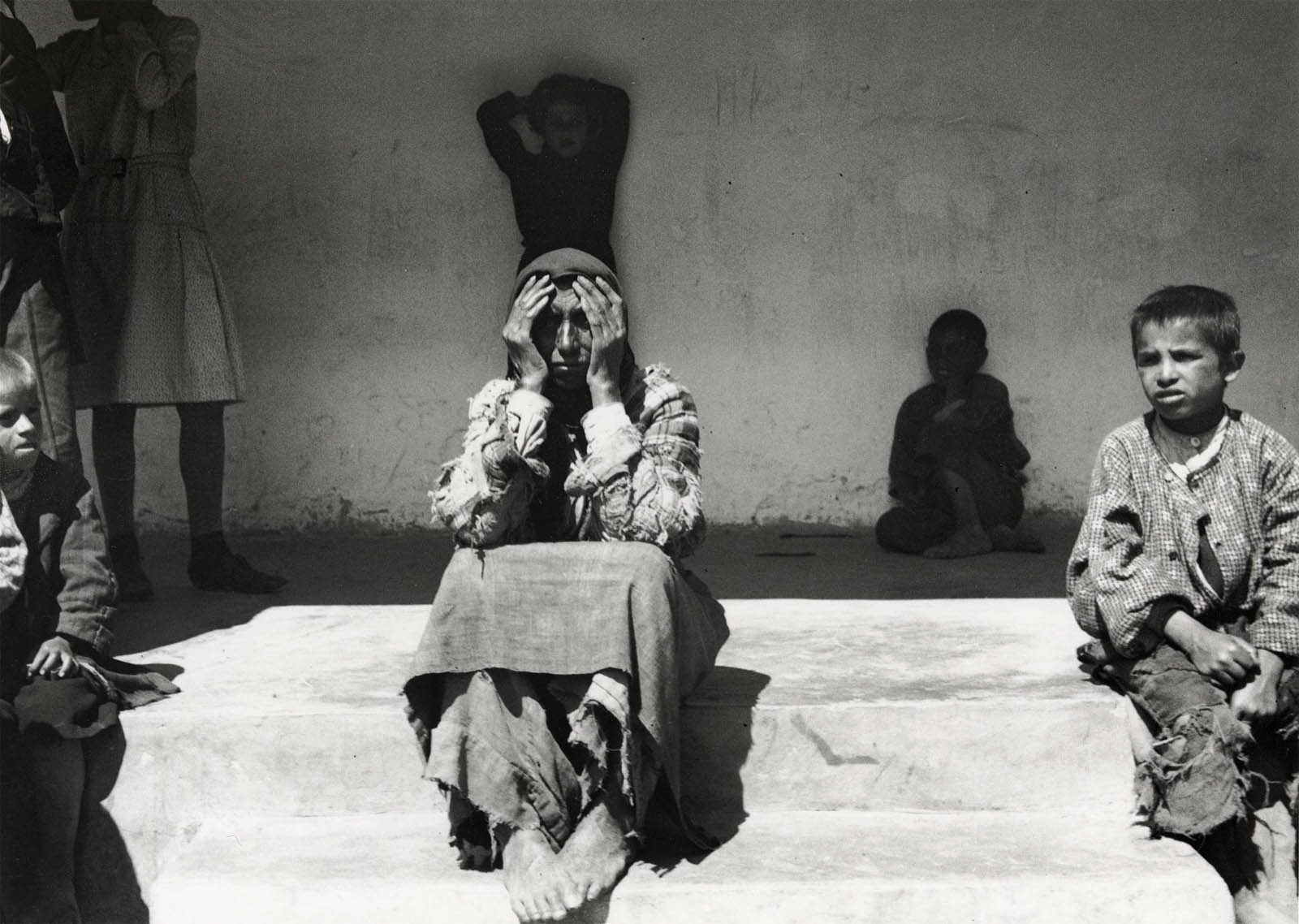
Lucia Moholy (British born Czech, 1894-1989) 'Frau auf Treppe Jugoslawien' (Woman on stairs, Yugoslavia) 1932


Lucia Moholy (British born Czech, 1894-1989)
Frau auf Treppe Jugoslawien (Woman on stairs, Yugoslavia)
1932
Bauhaus-Archiv Berlin
© VG Bild-Kunst, Bonn 2026


Outstanding women photographers have been around since the invention of photography in the early 19th century. They experimented with photographic and artistic techniques and probed the boundaries of the new medium. So too did the women photographers of the Bauhaus. They observed the world around them through the camera lens and often captured subjects from novel and unconventional perspectives. The spectrum of their artistic production ranges from figurative portraits and architectural photography to abstract photographic experimentation.

The exhibition features some 300 photographs from the collection of the Bauhaus-Archiv / Museum für Gestaltung in Berlin. Many people today are familiar with the iconic images, but only few are aware of the women who recorded them. With this exhibition, the Bauhaus-Archiv celebrates the significant contribution of these women artists and their photographic oeuvre for the first time. The photographs by these Bauhaus artists will be complemented by others produced by women artists from the Institute of Design in Chicago (New Bauhaus), the successor institution of the Bauhaus in the USA.
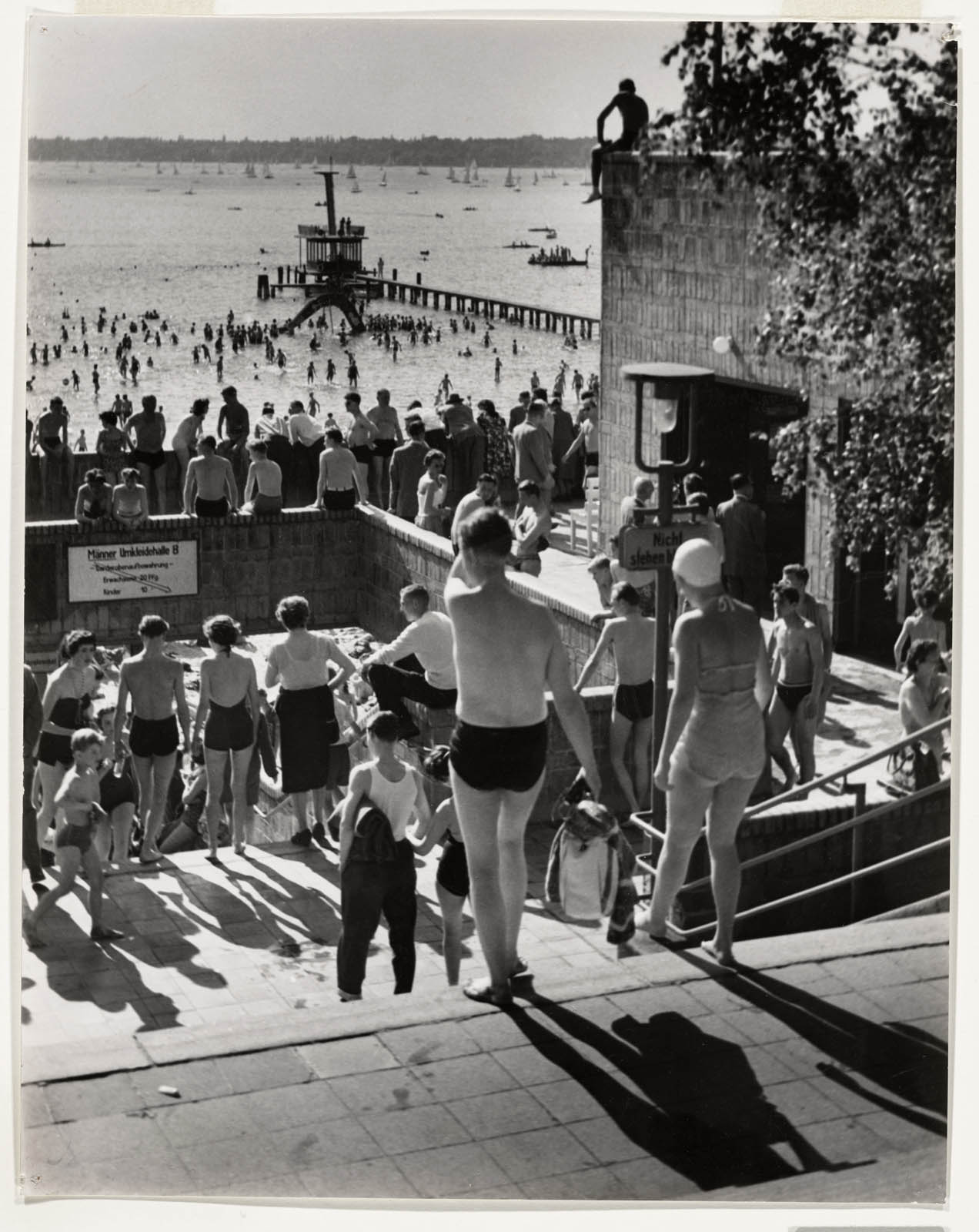
Even now in the 21st century, women artists continue to explore the multifaceted potential of photography. Like the Bauhaus women before them, they seek to capture the present day in the photographic moment while challenging the conventional forms of the medium. For this exhibition, the Bauhaus-Archiv has invited three contemporary women artists – Kalinka Gieseler, Caroline Kynast and Sinta Werner – to engage in dialogue with the historic photographs

A special exhibition of the Bauhaus-Archiv / Museum für Gestaltung in cooperation with the Kunstbibliothek – Staatliche Museen zu Berlin

Text from the Staatliche Museen zu Berlin website


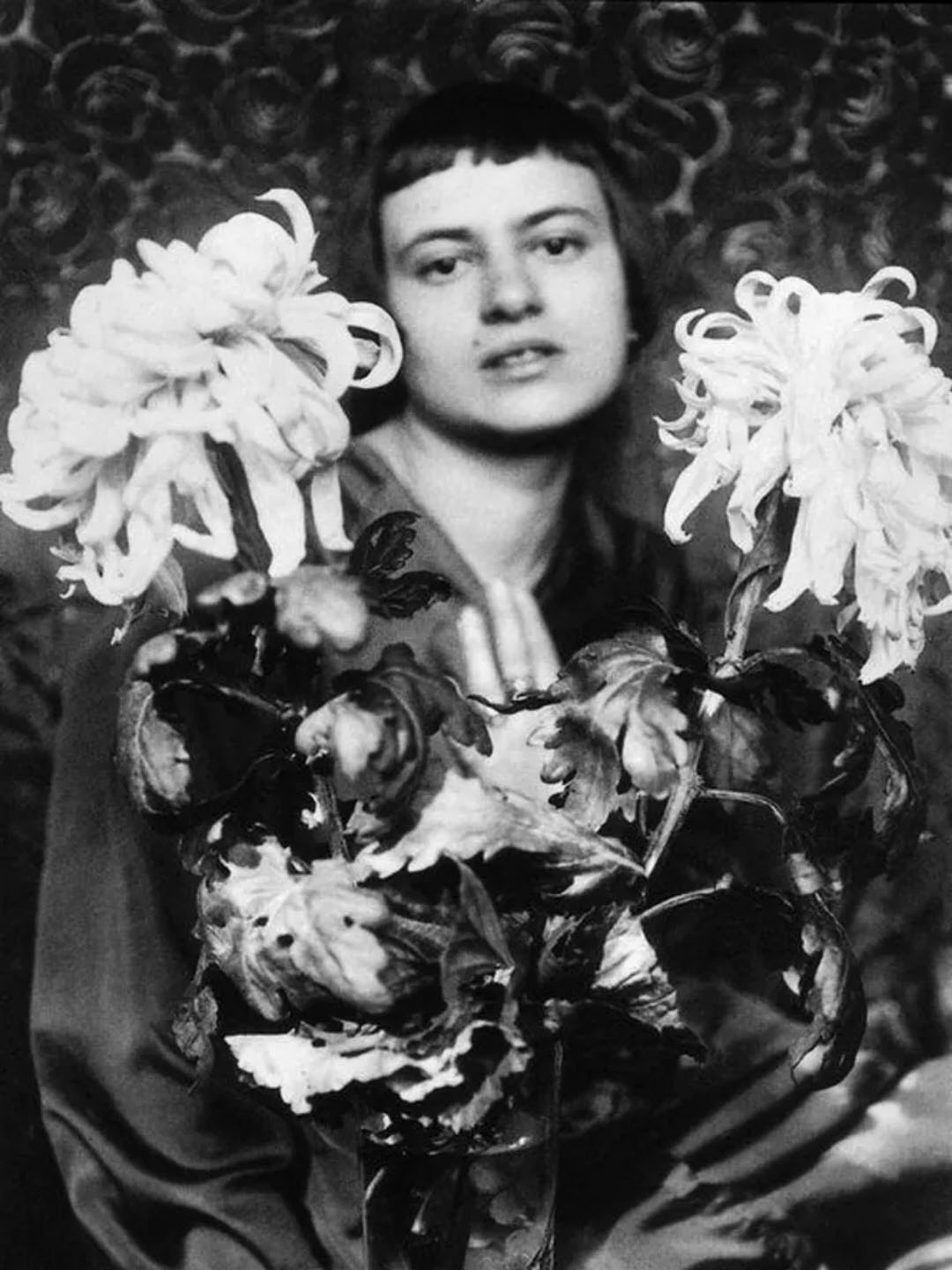
Marianne Brandt (German, 1893-1983) 'Selbstporträt mit Lilien' (Self-portrait with lilies) c. 1923


Marianne Brandt (German, 1893-1983)
Selbstporträt mit Lilien (Self-portrait with lilies)
c. 1923
Bauhaus-Archiv Berlin
© VG Bild-Kunst, Bonn 2026


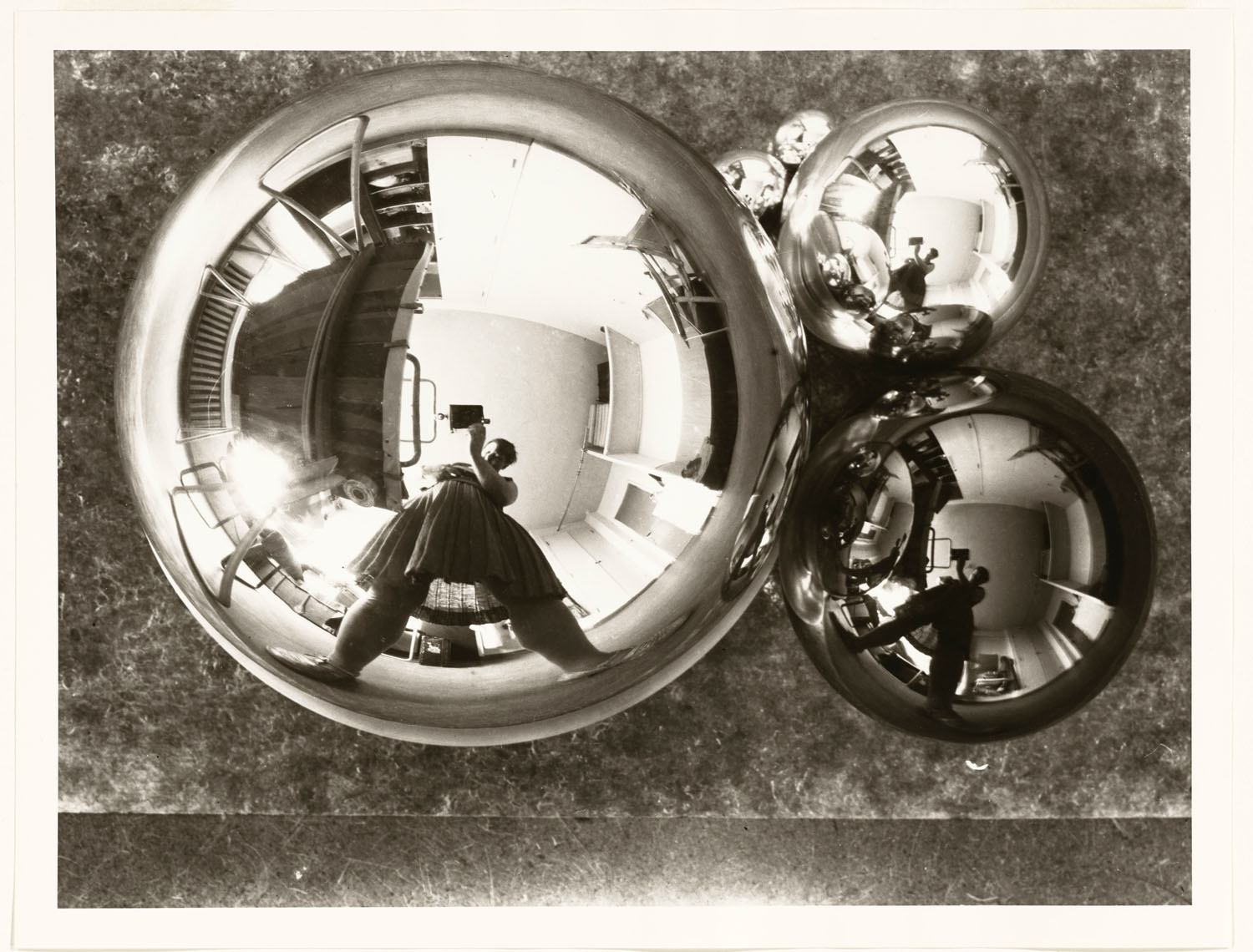
Marianne Brandt (German, 1893-1983)

Marianne Brandt, née Liebe, was born in Chemnitz on 1 October 1893. In 1911 she began studying painting at the School for Fine Arts in Weimar. In 1919 she married the painter Erik Brandt. The couple lived together in Oslo and Paris for a number of years. After she returned to Germany, Brandt initially studied sculpture in Weimar. In 1924 the artist switched to the Bauhaus, where she was trained by László Moholy-Nagy in the metal workshop. She celebrated her first successes as a designer and became acting head of the workshop in 1928. Inspired by the Parisian avant-garde as well as by Moholy-Nagy, Brandt also began to occupy herself intensively with photography. She created self-portraits, photocollages and experimental images. Instead of accepting an offer to receive training in Walter Peterhans’s photo class, she decided to leave the Bauhaus in 1929. Several of her photographs could be seen that same year in the section “Photography at the Bauhaus” at the “Film und Foto” exhibition in Stuttgart. After briefly working at Walter Gropius’s construction office in Berlin, Brandt worked as a designer for the Ruppelwerke metalware factory in Gotha until 1932. She continued to shoot photographs, particularly private ones. When the Nazis came to power, Brandt lost her job and returned back to Chemnitz. From 1949 to 1954, she taught at the University of Applied Arts in Dresden and the institute of industrial design at School of Art and Design Berlin-Weissensee. She then designed lamps and radiators for production in East Germany and once again dedicated her attention to painting and photography. Marianne Brandt died in Kirchberg on 18 June 1983.

Text from the Bauhaus-Archiv website


Marianne Brandt (German, 1893-1983) 'Selbstporträt' (Self-portrait) c. 1929


Marianne Brandt (German, 1893-1983)
Selbstporträt (Self-portrait)
c. 1929
Bauhaus-Archiv Berlin
© VG Bild-Kunst, Bonn 2026


Marianne Brandt (German, 1893-1983) 'Selbstporträt mit Kamera im Atelier in der Kugel gespiegelt Bauhaus Dessau' (Self-portrait with camera in the studio, reflected in the sphere, Bauhaus Dessau) c. 1928-1929


Marianne Brandt (German, 1893-1983)
Selbstporträt mit Kamera im Atelier in der Kugel gespiegelt Bauhaus Dessau (Self-portrait with camera in the studio, reflected in the sphere, Bauhaus Dessau)
c. 1928-1929
Bauhaus-Archiv Berlin
© VG Bild-Kunst, Bonn 2026


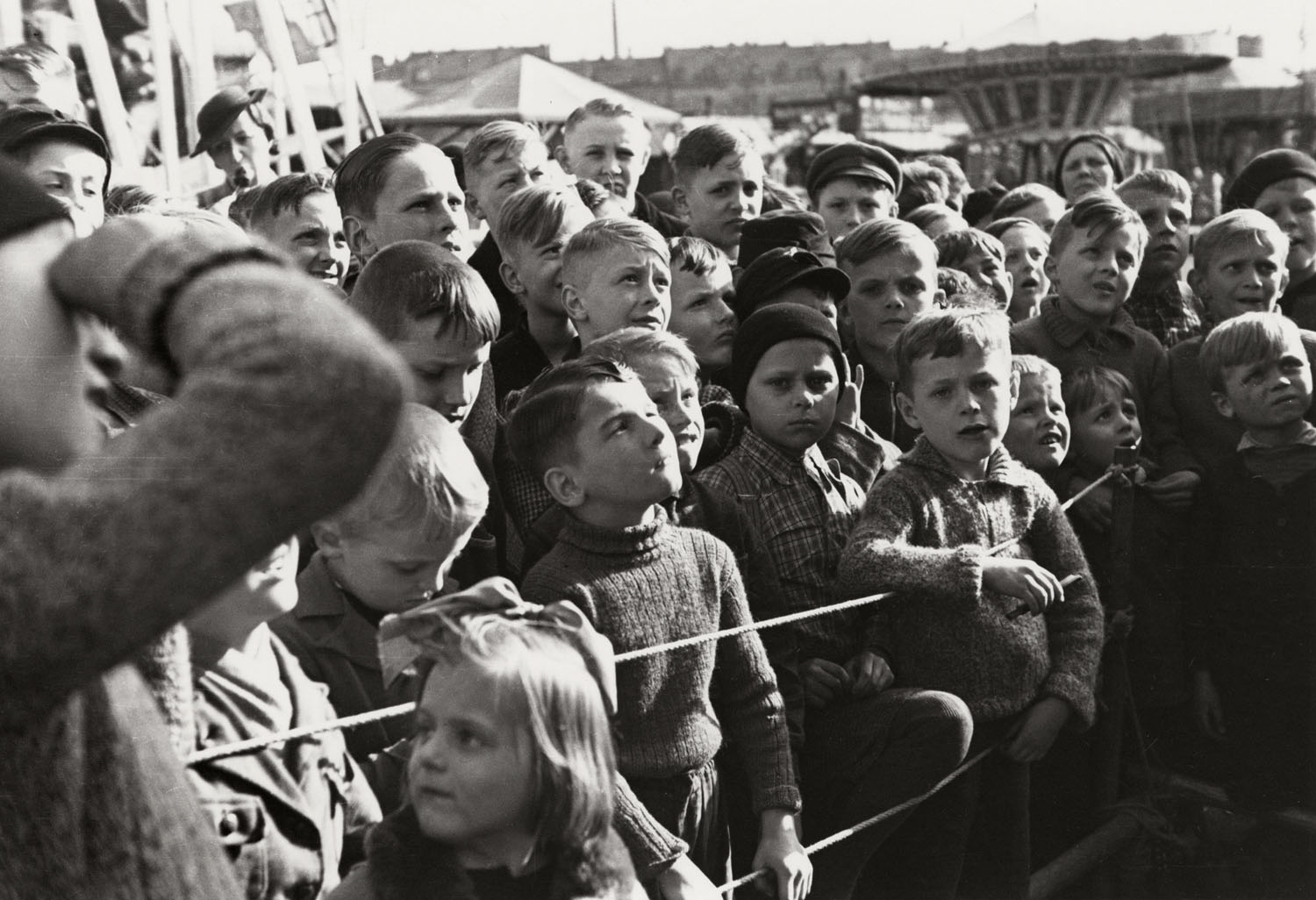
Marianne Brandt (German, 1893-1983) 'Wartende Kinder' (Waiting children) 1928


Marianne Brandt (German, 1893-1983)
Wartende Kinder (Waiting children)
1928
Bauhaus-Archiv Berlin
© VG Bild-Kunst, Bonn 2026


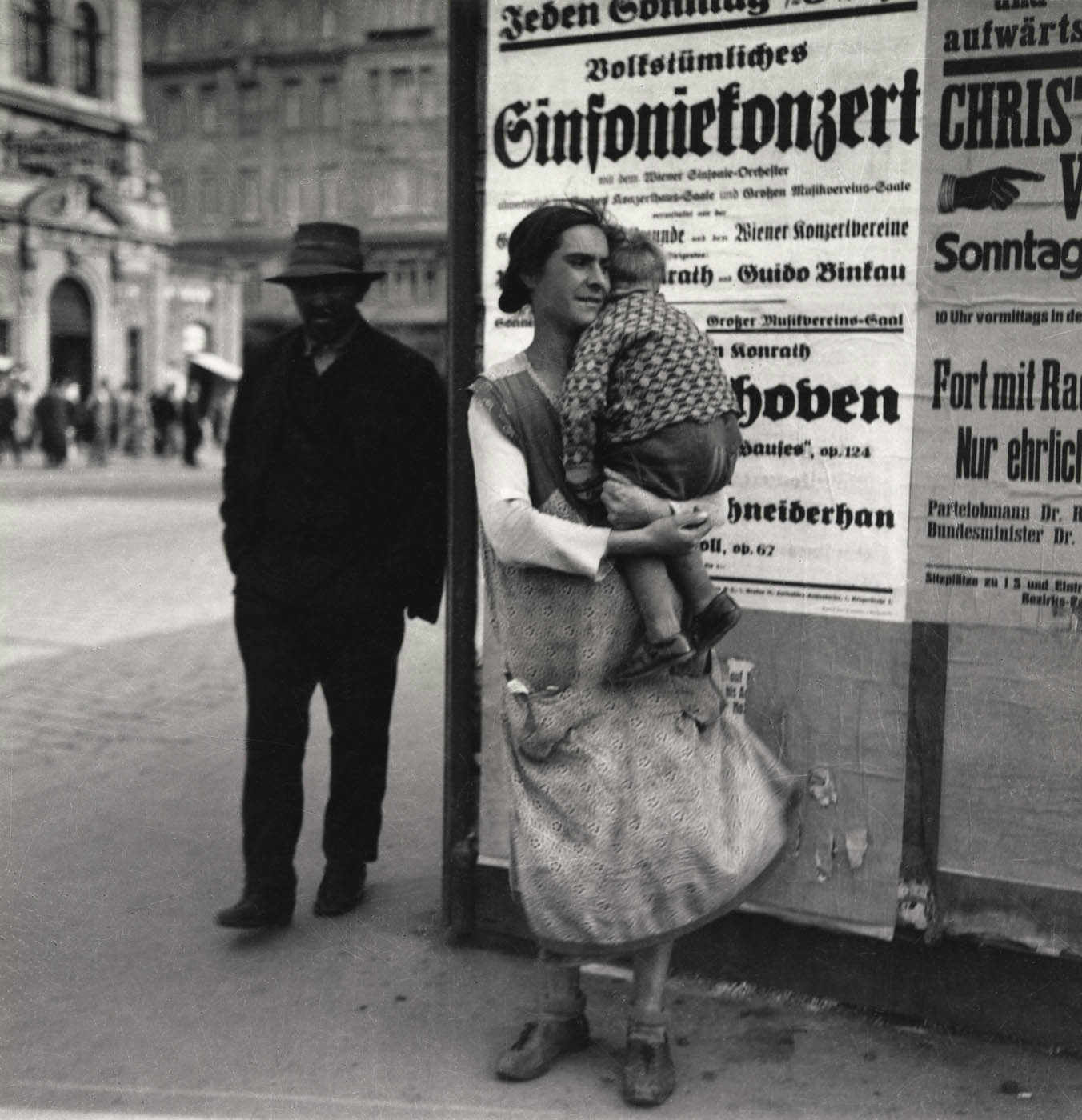
Edith Tudor-Hart (British born Austria, 1908-1973) 'Frau und Kind Wien' (Woman and child Vienna) c. 1930


Edith Tudor-Hart (British born Austria, 1908-1973)
Frau und Kind Wien (Woman and child Vienna)
c. 1930
Bauhaus-Archiv Berlin
© Peter Suschitzky


Edith Tudor-Hart (British born Austria, 1908-1973)

Edith Tudor-Hart, née Suschitzky, was born in Vienna on 28 August 1908. Her father and uncle ran a left-wing bookstore in a working-class neighborhood. In 1925 her training as a Montessori educator led her to London for an internship. Tudor-Hart began studying at the Bauhaus in Dessau in 1929, and she attended Walter Peterhans’s photography class there in 1930. During a 1931 stay in England, her connections to the Communist Party led to her deportation, and she returned to Vienna. There she produced photographs for the Soviet news agency TASS. Her social-documentary photo essays were published in periodicals such as the “Arbeiter-Illustrierte-Zeitung (AIZ)” as well as “Kuckuck”. In 1933 she was arrested for spying for the Communist Party, and large portions of her photographic work were confiscated. She was able to avoid conviction by marrying the doctor Alexander Tudor-Hart. That same year, the couple emigrated to England, where their son was born in 1936. Tudor-Hart’s photography provided the family’s sole source of income while her husband was serving as a doctor in the Spanish Civil War. She concentrated on documentary photography. For example, she created a photo essay on child education for England and Wales’s Ministry of Education. Her continued espionage activities repeatedly drew the scrutiny of the British secret service. This constant surveillance led her to destroy large portions of her work. Impoverished, she moved to Brighton, where she worked as an antique dealer. Edith Tudor-Hart died there on 12 May 1973.

Text from the Bauhaus-Archiv website


Gertrud Arndt (German, 1903-2000) 'Selbstporträt im Atelier Bauhaus Dessau' (Self-portrait in the Bauhaus Dessau studio) 1926


Gertrud Arndt (German, 1903-2000)
Selbstporträt im Atelier Bauhaus Dessau (Self-portrait in the Bauhaus Dessau studio)
1926
Bauhaus-Archiv Berlin
© VG Bild-Kunst, Bonn 2026


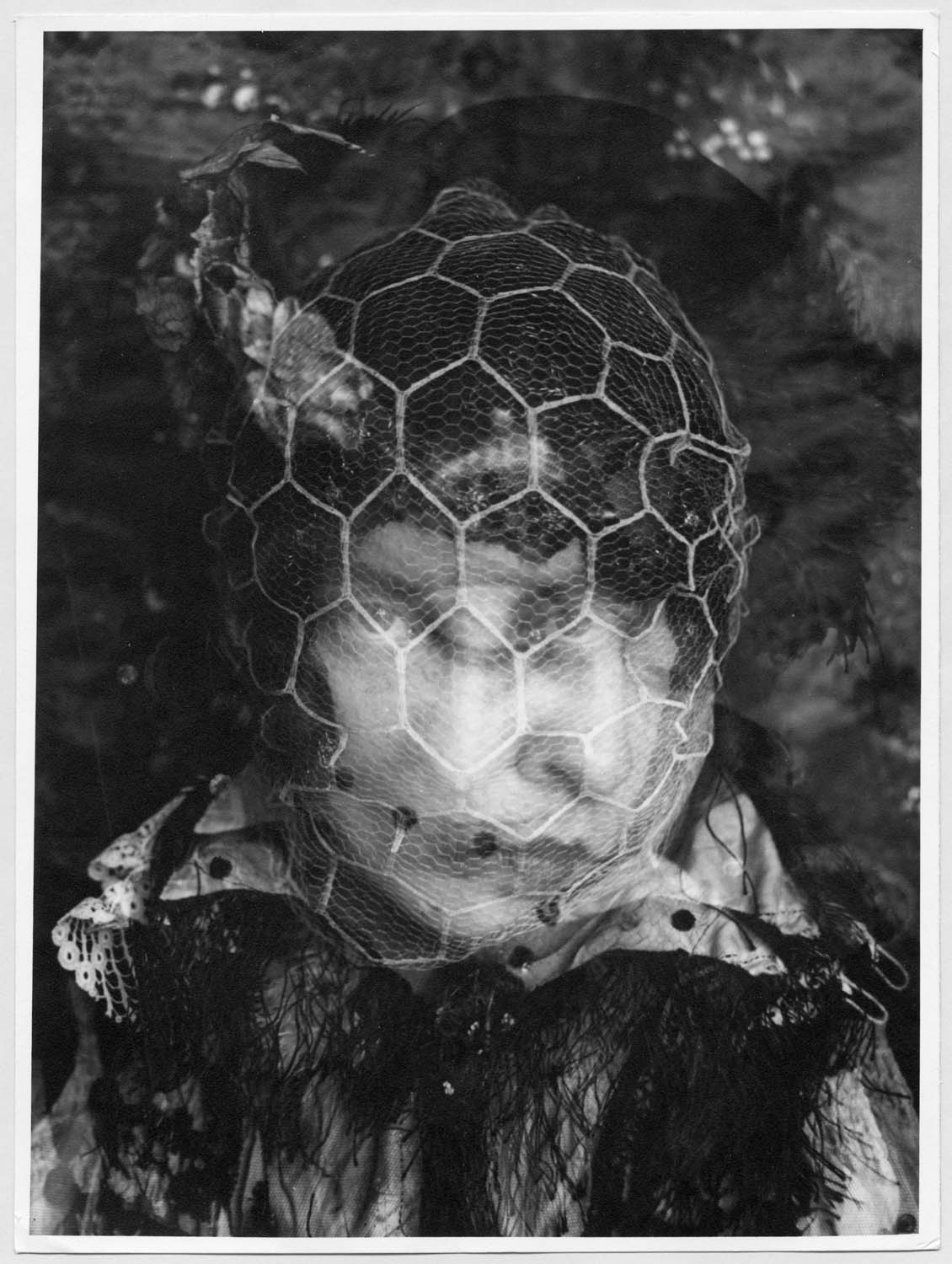
Gertrud Arndt (German, 1903-2000)

Gertrud Arndt, née Hantschk, was born in Racibórz (Silesia, Poland) on 20 September 1903. Seeking to become an architect, she began working at the architectural office of Karl Meinhardt in Erfurt in 1919. She simultaneously attended the school of applied arts there. Arndt taught herself photography so that she could document buildings for the architectural office. In 1923 she began studying at the Bauhaus and trained in the weaving workshop. After her final exam in 1927, she stopped weaving and focused on photography again. That same year, she married fellow Bauhaus member and architect Alfred Arndt and moved to Probstzella in Thuringia. There she photographed his construction projects. At the same time, she also created private photographs and photocollages. In 1929 Alfred Arndt was offered a teaching position at the Bauhaus in Dessau. Gertrud Arndt set up a darkroom for herself in the masters’ house and began photographing the activities and life at the school. She created documentary and portrait photos as well as numerous self-portraits. Although Arndt was not a student in Walter Peterhans’s photo class, several of her images were shown together with works from his students in the 1930 travelling exhibition on the Bauhaus. Arndt had her first child in 1931. One year later, the couple returned to Probstzella and, from then on, Arndt devoted her time to her family. In 1948 they fled from the Soviet-occupied zone to western Germany. In 1979 an exhibition at the Folkwang Museum in Essen led to Arndt’s discovery as a photographer. Since that time, her works have been presented in a number of exhibitions and publications. Gertrud Arndt died in Darmstadt on 10 July 2000.

Text from the Bauhaus-Archiv website


Gertrud Arndt (German, 1903-2000) 'Maskenfoto Nr. 16' (Mask photo no. 16) 1930


Gertrud Arndt (German, 1903-2000)
Maskenfoto Nr. 16 (Mask photo no. 16)
1930
Bauhaus-Archiv Berlin
© VG Bild-Kunst, Bonn 2026


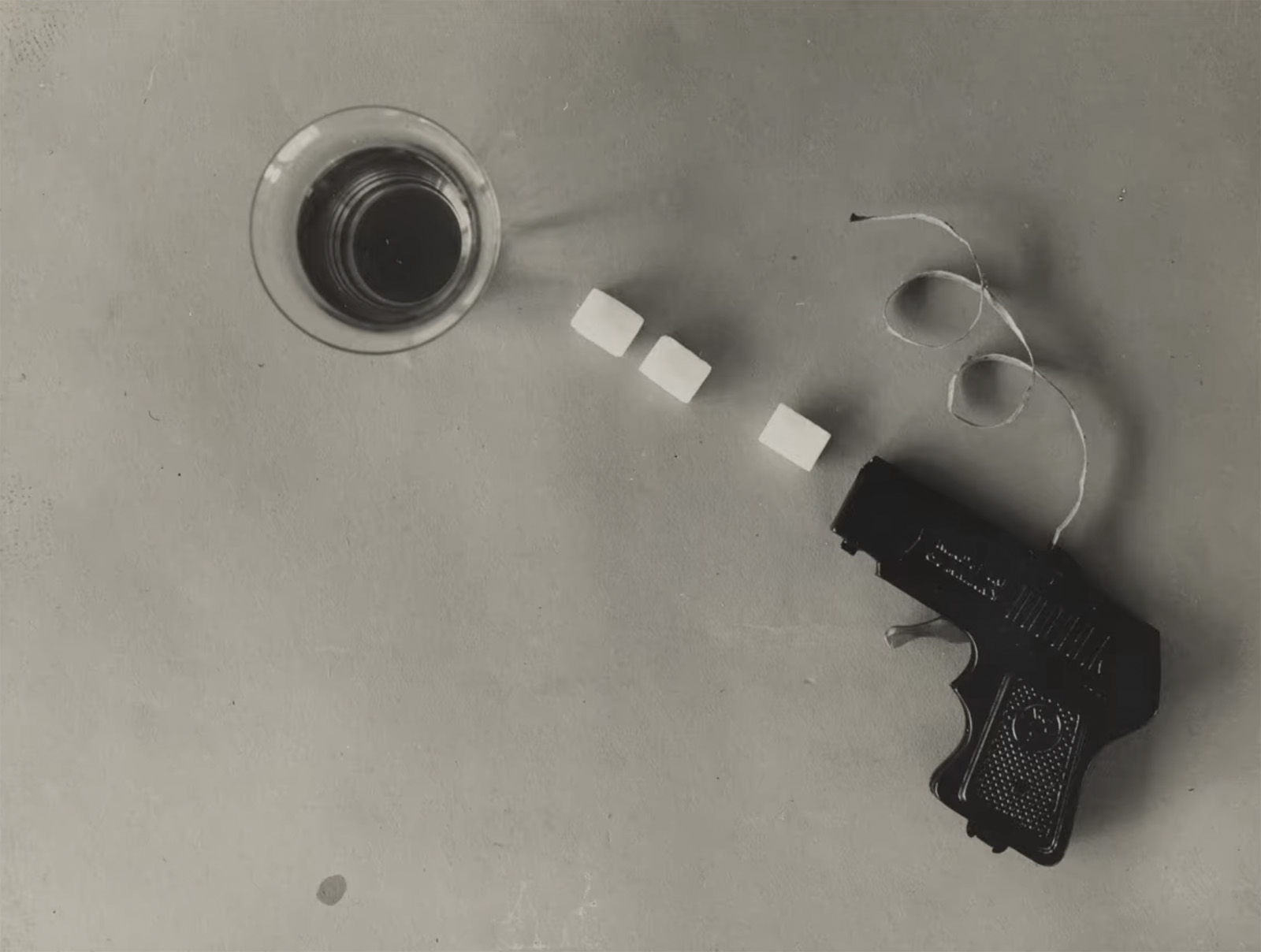
Etel Mittag-Fodor (Hungarian, 1905-2005) 'Materialstudie mit Spielzeugpistole, Zuckerstucken und Glas' (Material study with toy gun, sugar cubes and glass) 1928


Etel Mittag-Fodor (Hungarian, 1905-2005)
Materialstudie mit Spielzeugpistole, Zuckerstucken und Glas (Material study with toy gun, sugar cubes and glass)
1928
Bauhaus-Archiv Berlin
© VG Bild-Kunst, Bonn 2026


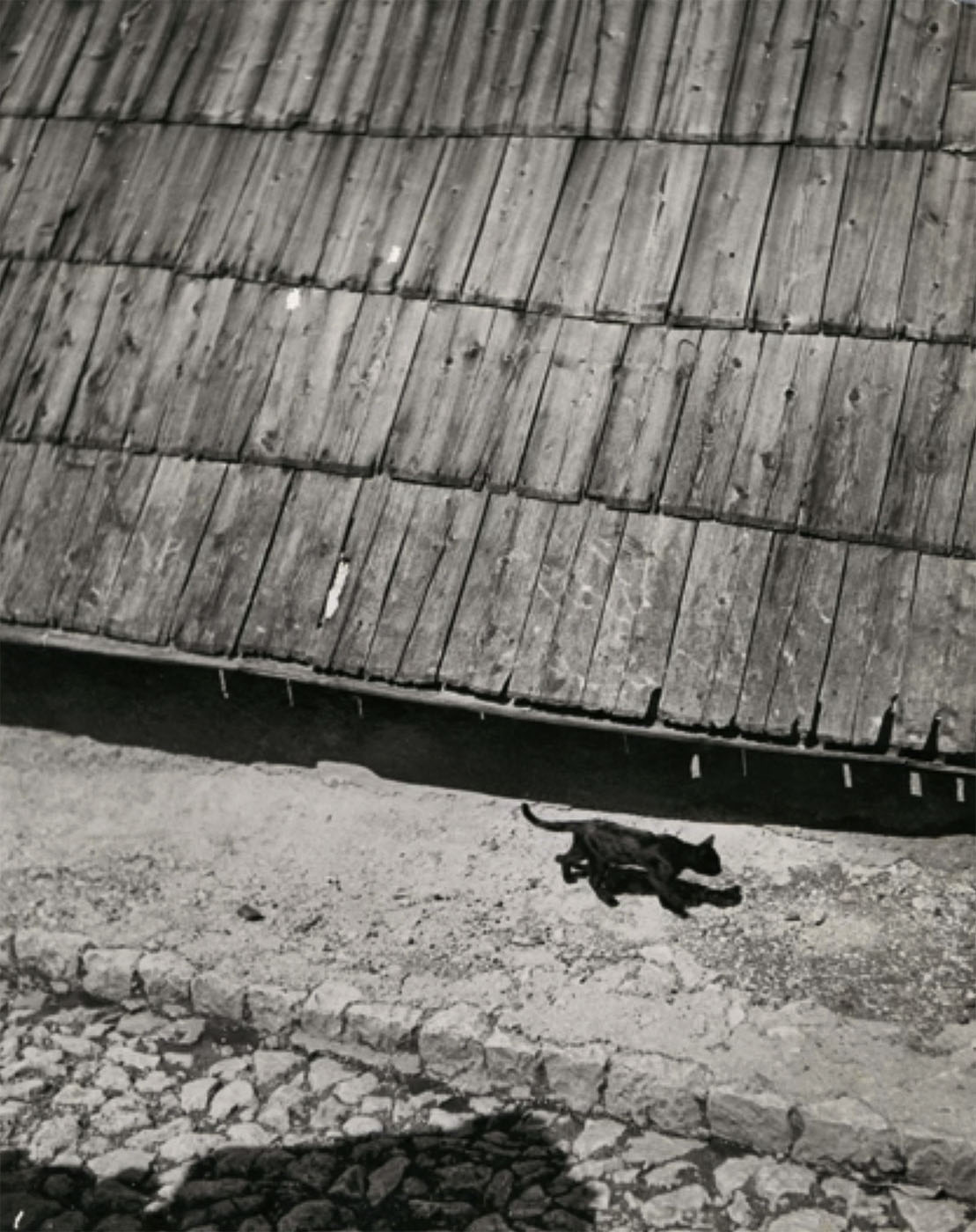
Etel Mittag-Fodor (Hungarian, 1905-2005)

Etel Mittag-Fodor, née Fodor, was born in Zagreb on 28 December 1905, and grew up in Pécs and Budapest. In 1925 she began studying photography and graphic design at Vienna’s Federal Education and Research Institute for Graphics in Vienna, while also working part-time in a photo studio. In 1928 she decided to study at the Bauhaus in Dessau, where she attended Walter Peterhans’s photography class. She was in a relationship with fellow student Ernst Mittag, whom she married in 1930 to gain independence from her parents’ home and its rules. After Mittag-Fodor left the Bauhaus in 1932, she worked as a freelance photographer for clients, including the newspaper “Arbeiter-Illustrierte-Zeitung (AIZ)”. She was also active in the antifascist resistance from 1933 on. As a Jew, she was no longer granted a work permit. In 1936 she and her husband fled to Pécs by way of Bratislava, where she earned money creating portraits of children. After the birth of their first son in 1938, the family emigrated to South Africa. There, Mittag-Fodor initially photographed architecture but soon began to work as a translator for financial reasons. At the same time, she assisted Ernst Mittag at his architectural office. She turned her attention to weaving in the mid-1960s. Etel Mittag-Fodor died in the Cape Town suburb of Wynberg on 13 August 2005.

Text from the Bauhaus-Archiv website


Etel Mittag-Fodor (Hungarian, 1905-2005) 'Albert Mentzel und Lotte Rothschild' (Albert Mentzel and Lotte Rothschild) c. 1930


Etel Mittag-Fodor (Hungarian, 1905-2005)
Albert Mentzel und Lotte Rothschild (Albert Mentzel and Lotte Rothschild)
c. 1930
Bauhaus-Archiv Berlin
© VG Bild-Kunst, Bonn 2026


Etel Mittag-Fodor (Hungarian, 1905-2005) "The Cat who walks alone" Sarajevo, 1936


Etel Mittag-Fodor (Hungarian, 1905-2005)
“The Cat who walks alone”
Sarajevo, 1936
Bauhaus-Archiv Berlin
© VG Bild-Kunst, Bonn 2026


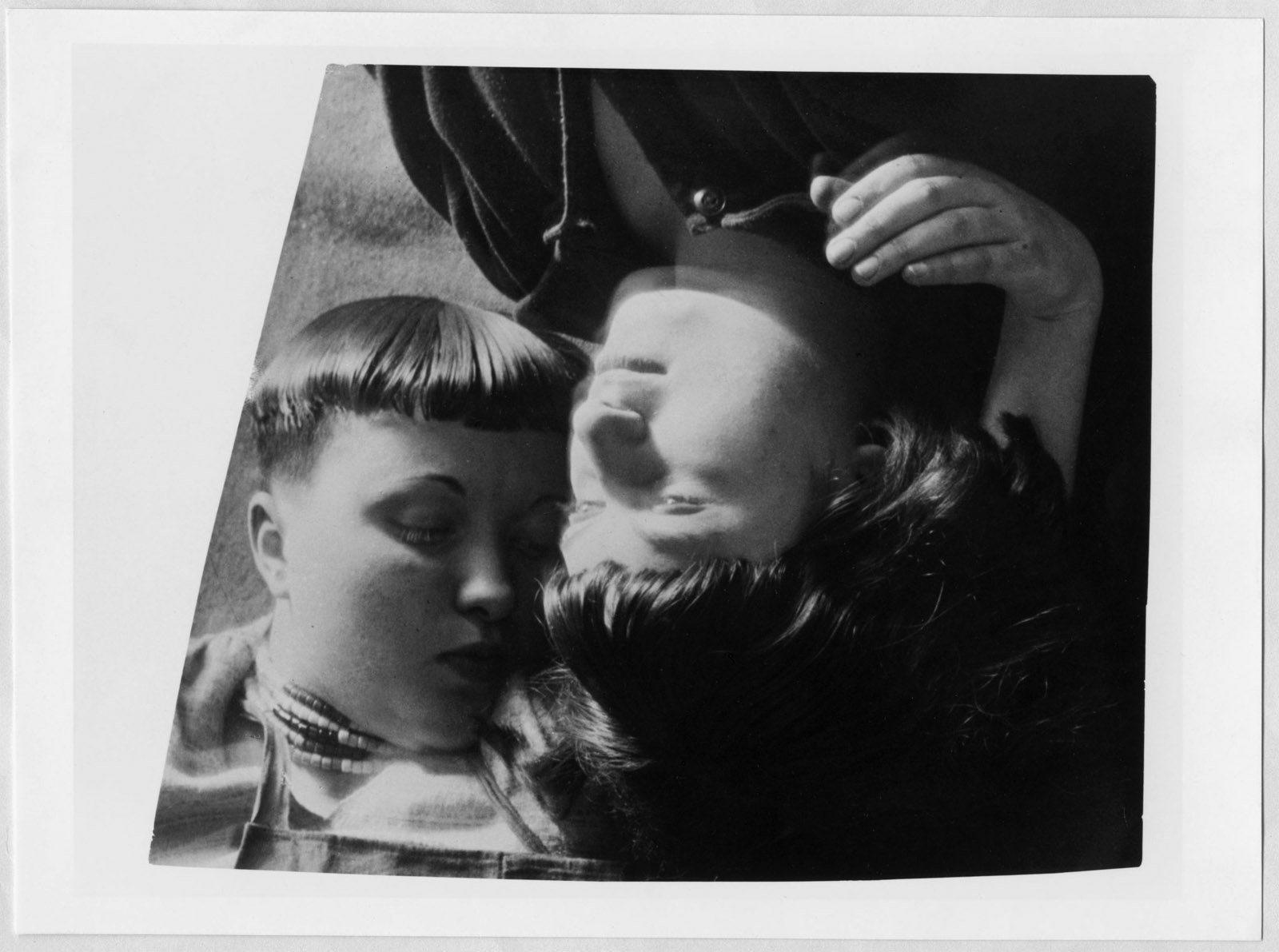
Grit Kallin-Fischer (German, 1897–1973) 'Hilde Rantzsch und Miriam Manuckiam' (Hilde Rantzsch und Miriam Manuckiam) 1928


Grit Kallin-Fischer (German, 1897-1973)
Hilde Rantzsch und Miriam Manuckiam (Hilde Rantzsch und Miriam Manuckiam)
1928
Bauhaus-Archiv Berlin
© VG Bild-Kunst, Bonn 2026


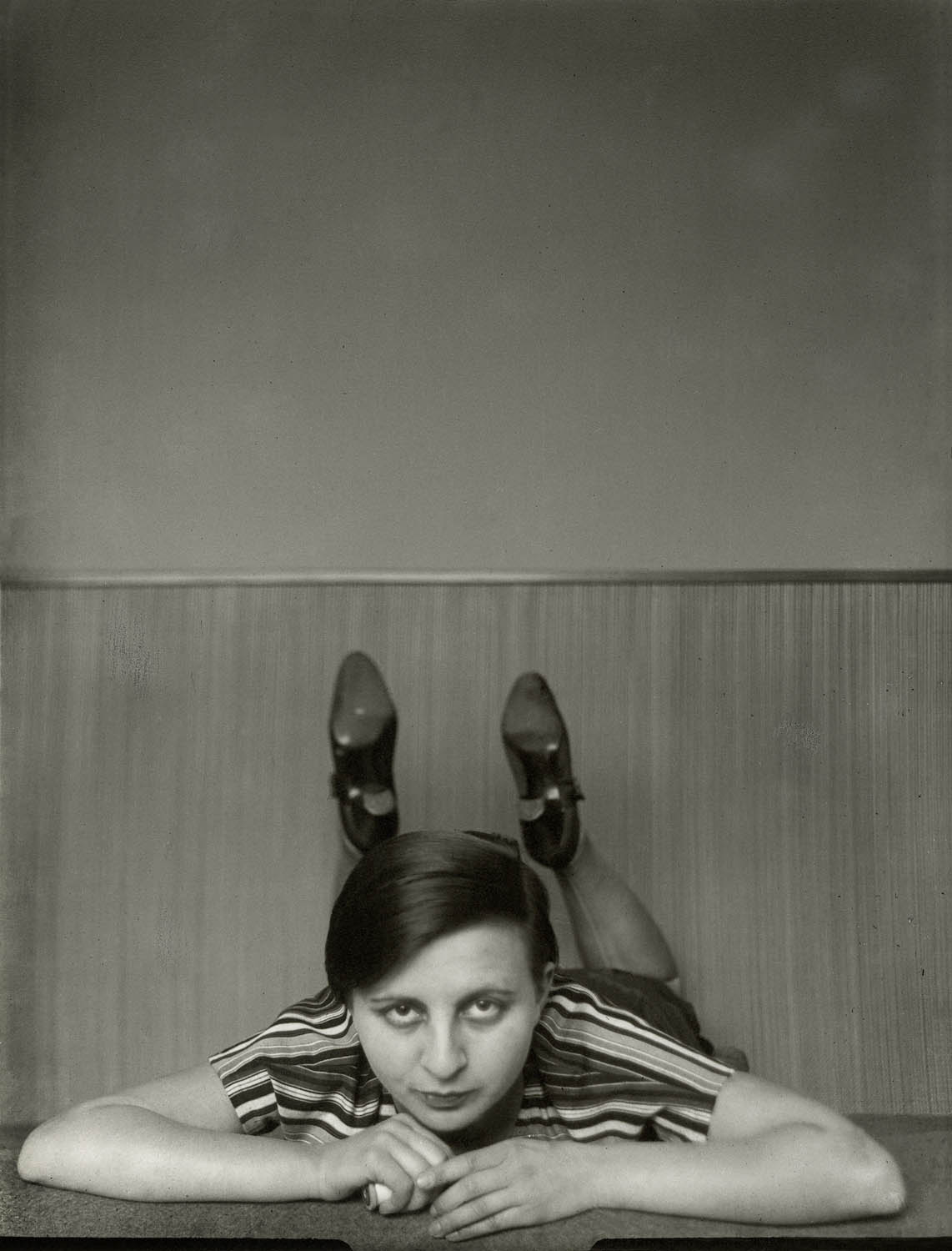
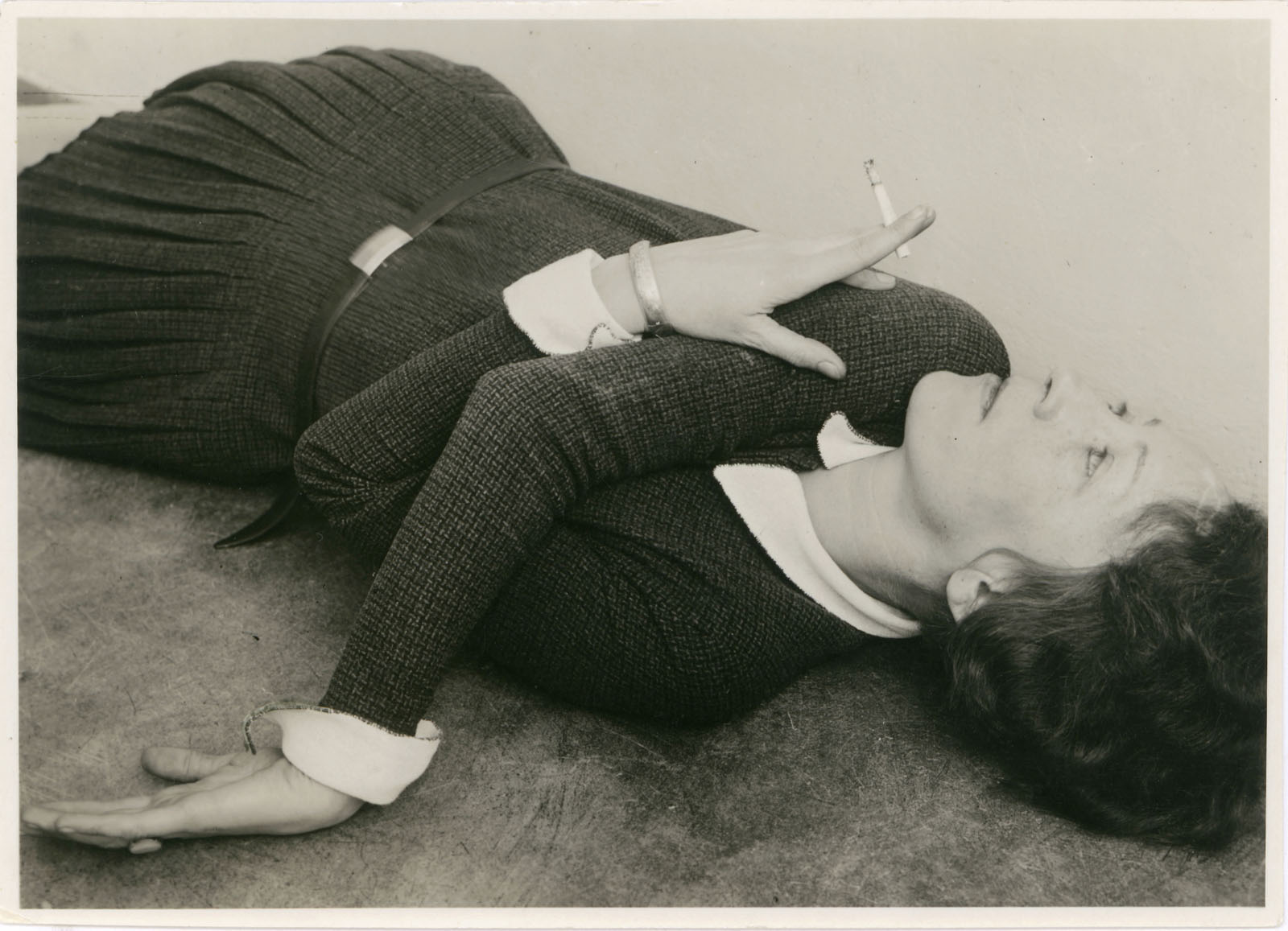
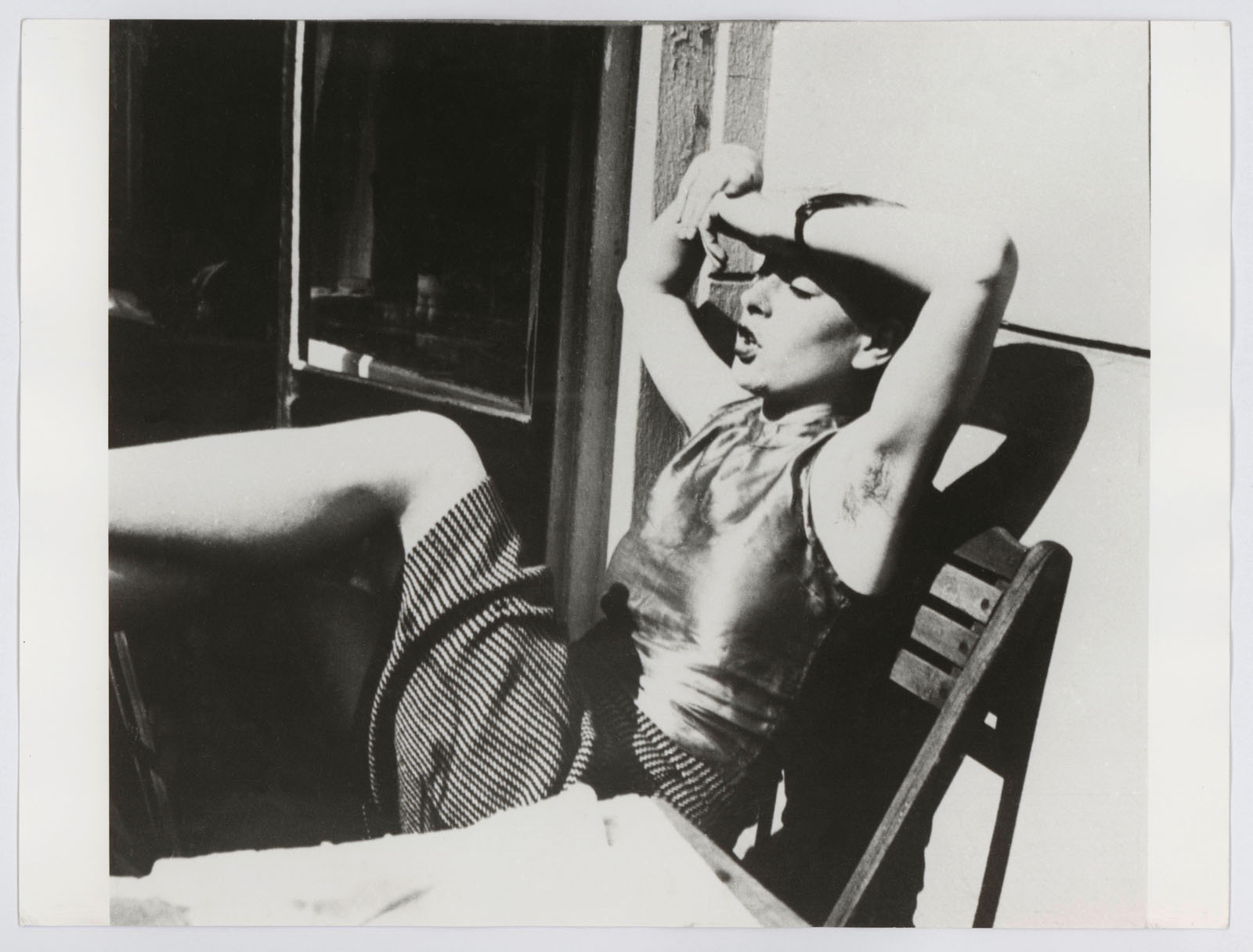
Grit Kallin-Fischer (German, 1897-1973) 'Selbstporträt mit Zigarette' (Self-portrait with cigarette) c. 1928


Grit Kallin-Fischer (German, 1897-1973)
Selbstporträt mit Zigarette (Self-portrait with cigarette)
c. 1928
Bauhaus-Archiv Berlin
© VG Bild-Kunst, Bonn 2026


Grit Kallin-Fischer (German, 1897-1973)

Grit Kallin-Fischer was born as Margit Vries in Frankfurt am Main on 26 April 1896. She received her first art lessons, focusing on landscapes and still lifes, at a boarding school in Belgium. In 1910 she began studying painting in Marburg and then continued under Lovis Corinth at Leipzig’s Academy for Graphic Art and Book Trade. She developed tuberculosis during the First World War and suffered from the after-effects for the rest of her life. In 1919 Kallin-Fischer went to Berlin, where she met the Russian musician Marik Kallin. The couple married in 1920, lived in London and separated after six years. In the autumn of 1927, Kallin-Fischer enrolled at the Bauhaus in Dessau. She began taking pictures there and developed portrait studies in the style of the New Vision. She also attended László Moholy-Nagy’s metal workshop and was involved with the Bauhaus stage, creating numerous portraits of its members. In late 1928, she went to Berlin with the American Bauhaus member Edward Fischer and continued to shoot photographs there. Several of her designs were published in the monthly graphic-design journal “Gebrauchsgraphik” in 1930; one year later, her works were shown at the exhibition “Foreign Advertising Photography” in New York. She married Edward Fischer in 1934 and emigrated to the US with him. Grit Kallin-Fischer gave up photography after 1945 and turned her attention to sculpture. She died in Newton, Pennsylvania, on 17 July 1973.

Text from the Bauhaus-Archiv website


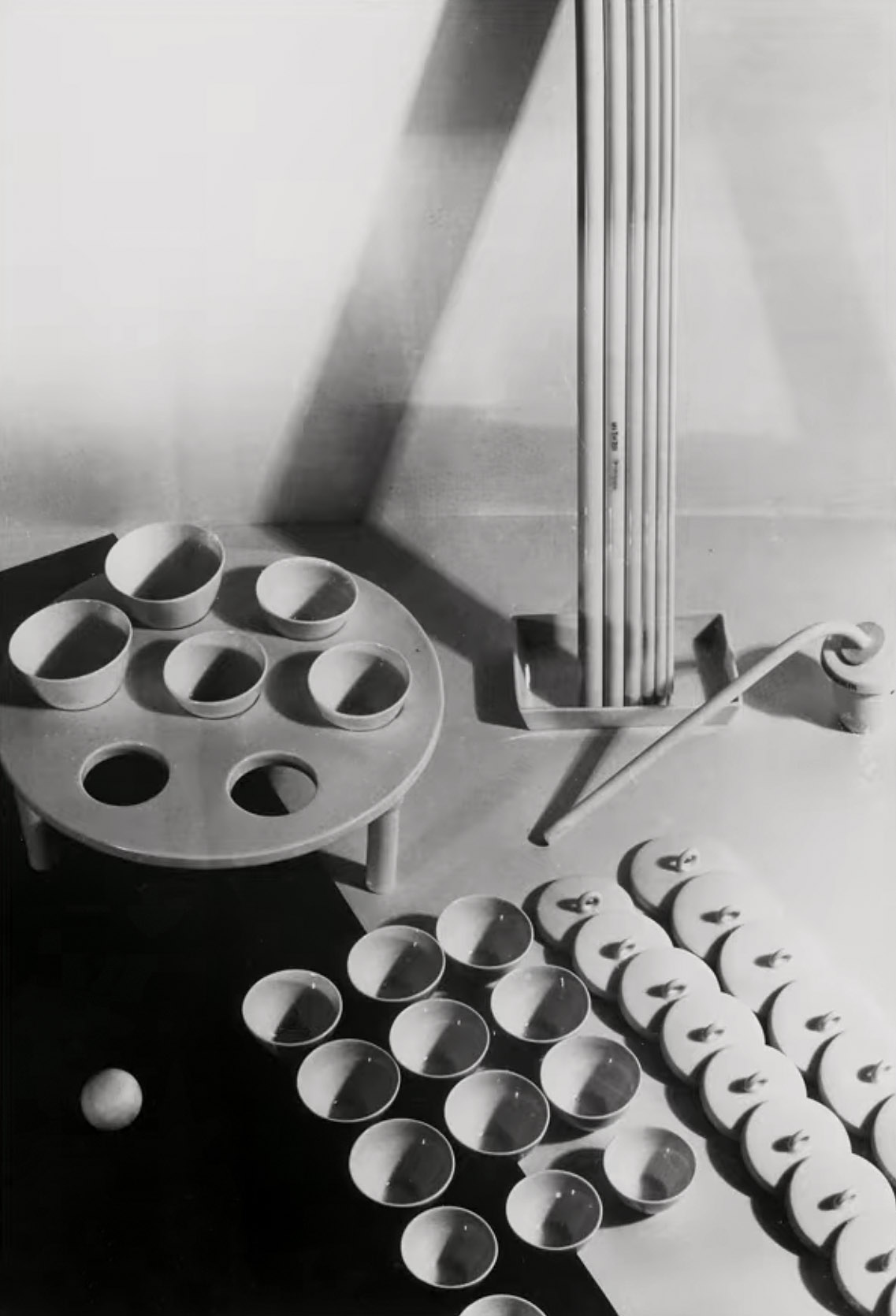
Grit Kallin-Fischer (German, 1897-1973) 'Industrie Porzellan der Königlichen Porzellan Manufaktur, Berlin' (Industrial porcelain from the Royal Porcelain Manufactory, Berlin) c. 1930


Grit Kallin-Fischer (German, 1897-1973)
Industrie Porzellan der Königlichen Porzellan Manufaktur, Berlin (Industrial porcelain from the Royal Porcelain Manufactory, Berlin)
c. 1930
Bauhaus-Archiv Berlin
© VG Bild-Kunst, Bonn 2026


The Weimar Republic (1919-1933) was a time of social and cultural upheaval. The young democracy was confronted not only with the consequences of World War I, but also a rapid succession of technical advances, the rise of new media and a society that was questioning traditional values.

Women’s role in society was changing as well. As voting rights were granted to women for the first time in November 1918, a new chapter of political participation began. It was also a time when more and more women aspired to financial independence and professional self-realisation. Photography offered them an ideal opportunity in both arenas – it promised artistic freedom and a living income. The camera became the tool of female self-empowerment.

By the late 19th century, photography had become a significant occupational field for women. Because it was a relatively young field, regarded as a handcraft and not yet academically anchored, photography offered women career opportunities at an early stage. Women were believed to have skills that were well-suited to certain photographic activities, such as portrait photography or retouching. Consequently, a growing number of women began learning the trade in photo studios. In 1890 the Berlin Lette Association started a photography course for women, and in 1905, the Teaching and Research Institute for Photography in Munich followed suit with institutional training for women photographers.

The number of women photographers rose steadily in the Weimar Republic. This occurred as an increasing number of higher education institutions began offering training courses in photography. The Bauhaus Dessau established a photography course in 1929. Many students – almost half of them women – received professional training there. Yet women photographers had been playing a central role at the Bauhaus even years before. In the early 1920s, photography was used to advertise the products and works created by the influential school of art, design and architecture – and many of those photos were taken by professional women photographers, such as Paula Stockmar, the women-managed Atelier Hüttich und Oemler, and Lucia Moholy. The increasing prevalence of the small-format camera after 1925 sparked a surge of interest in the medium among the students. Many female students began observing their surroundings through the camera lens and captured new and unusual perspectives. While many of these photos have since become world-famous, the women who took them have often been forgotten.

The Exhibition

The exhibition “New Woman, New Vision. Women Photographers of the Bauhaus” is the first ever to explore the extensive impact of these photographers and tell their story from a gender-historical perspective. The presentation, comprising some 300 works from 29 photographers from the Bauhaus-Archiv / Museum für Gestaltung collection, explores art- and media-historical questions and how they relate to such topics as authorship, visibility and social participation. The exhibition presents photographs by well-known figures such as Lucia Moholy and Florence Henri, as well as works by artists who have received less recognition, including Irene Hoffmann and Grit Kallin-Fischer. Not only does its scope extend beyond the era of the historic Bauhaus, it also highlights the later works by these remarkable artists. The presentation is supplemented by works by women artists from the Institute of Design in Chicago, the American successor institution to the Bauhaus founded by Bauhaus master László Moholy-Nagy in 1937.

Key Themes

One of the central themes of the exhibition is portrait photography. The chapters “Viewing the Self” and “Woman’s Images” examine how the photographers and their fellow female classmates presented themselves against the backdrop of society’s evolving image of women. Oftentimes they referred to the ideal of the New Woman – which had become ubiquitous in the Weimar Republic – and translated it into the modern visual imagery of New Vision. Another chapter sheds light on the photography lessons taught by Walter Peterhans at the Bauhaus. In portraits, landscapes, nature studies and still lifes, the students experimented with and selectively integrated photographic design elements into their works, e.g. textures, materiality, directed lighting and image sharpness. The chapter “Art and Experimentation” focuses specifically on experimental practice; photo collages and photograms offered forms of expression beyond what the camera could capture and illustrate how readily the women photographers embraced the avant-garde. The chapter “People and Countries” is dedicated to social-documentary and photo-journalistic works. The photos capture everyday life, social inequality and moments of political upheaval. They also show how the photographers, who were often forced into exile, safeguarded their work under changing political circumstances. The chapter “The Allure of Architecture” examines modern architectural photography. Unusual perspectives, extreme high- and low-angle shots, and close-ups helped architectural photography break away from its original documentary function and transform it into artistic and sometimes abstract visual compositions.
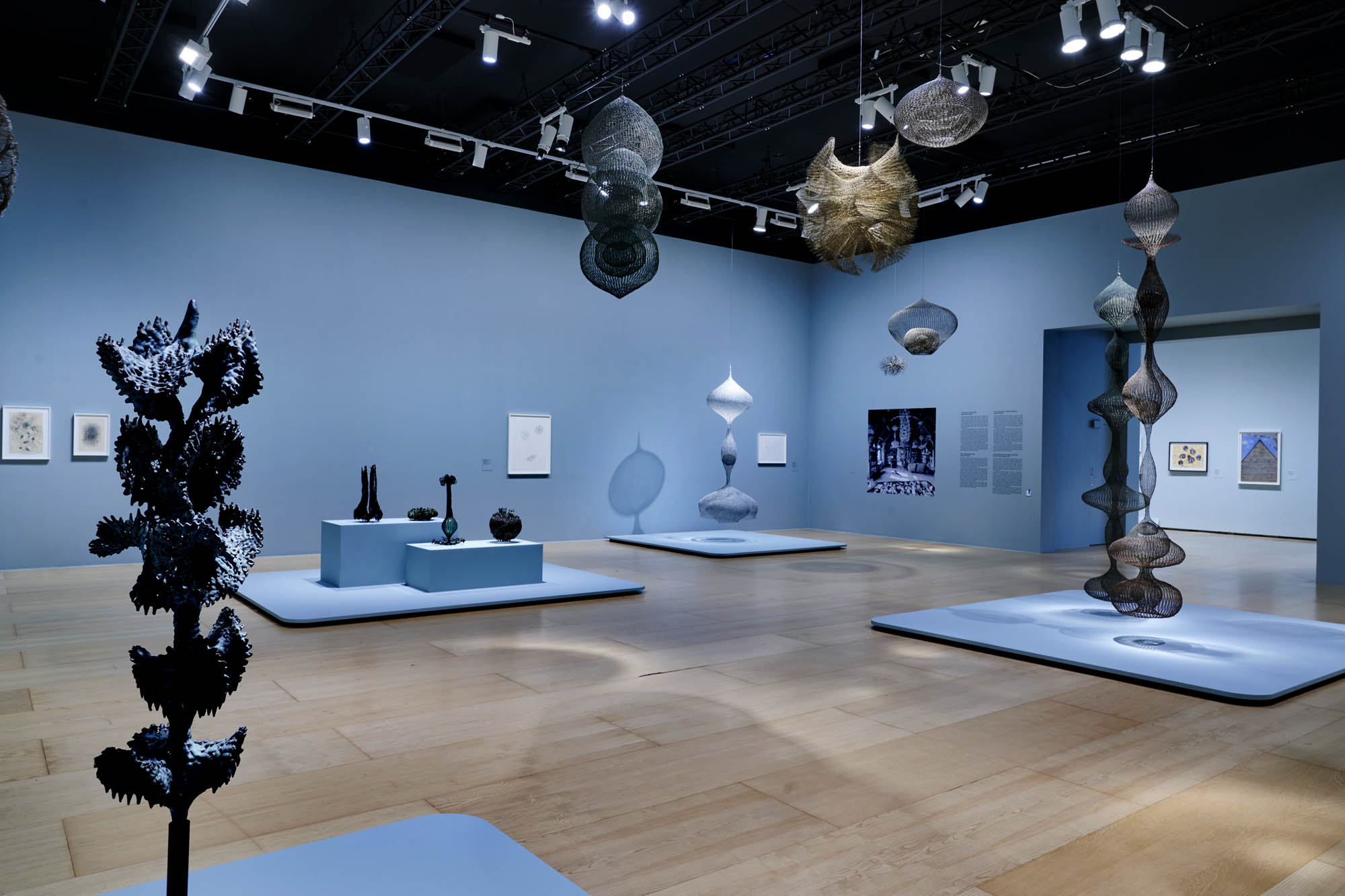
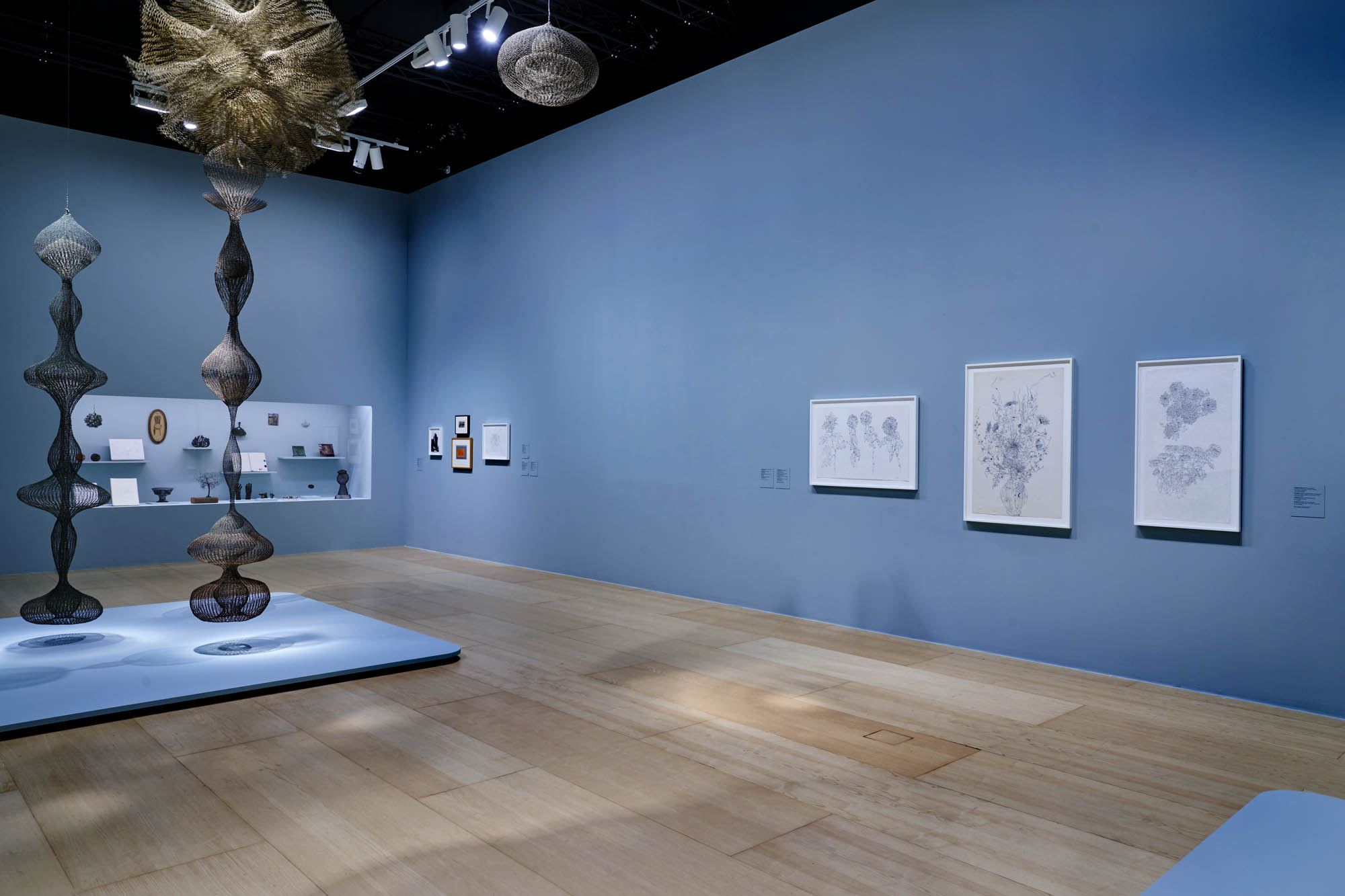
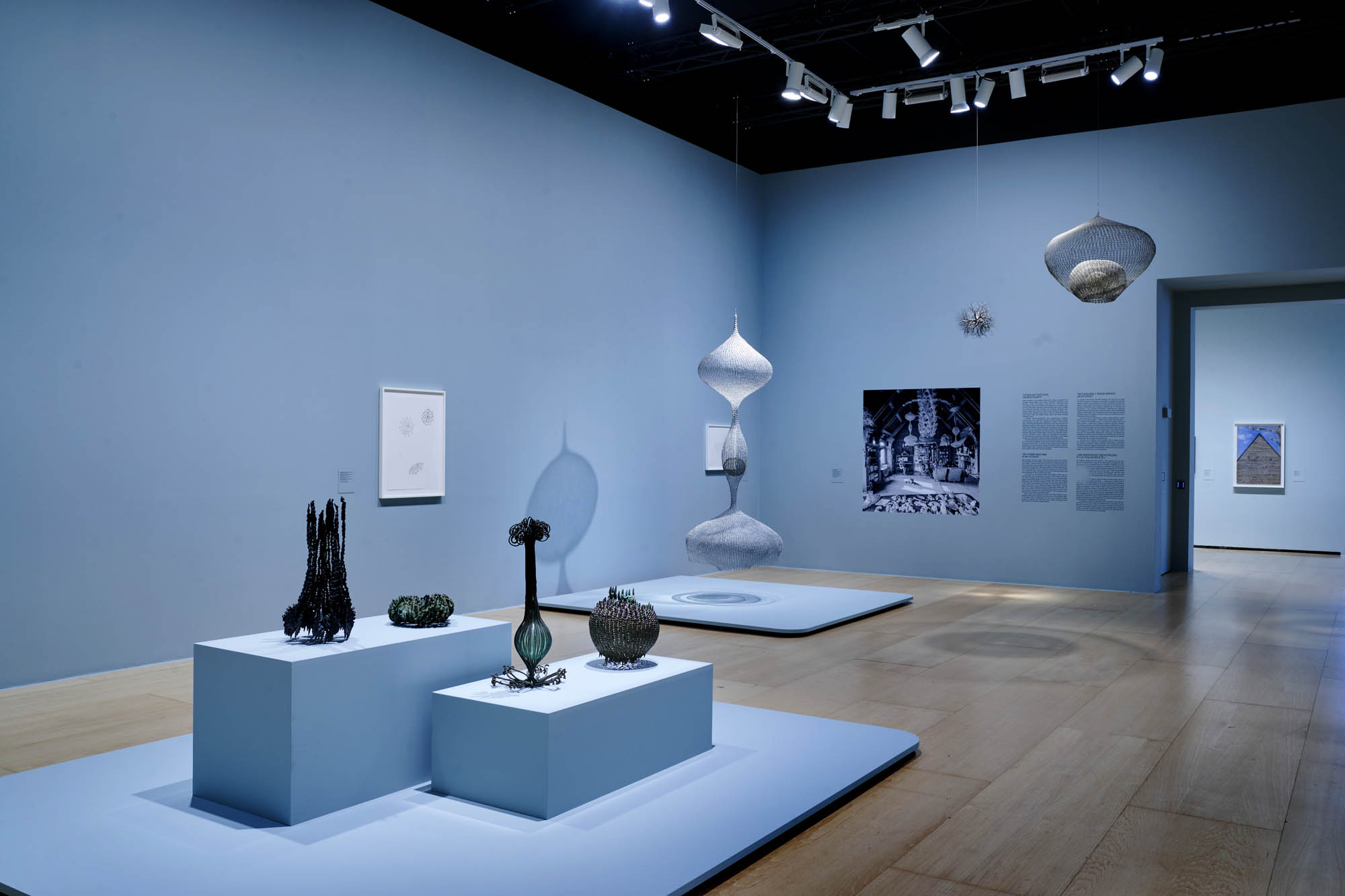
The exhibition shows how the women photographers of the Bauhaus used photography as an artistic and social instrument – for achieving greater self-determination, conducting artistic experimentation and documenting social and political realities. Its relevance today is evident in how integral these methods have become in contemporary art. The Berlin artists Kalinka Gieseler, Caroline Kynast and Sinta Werner engage in the discourse as contemporary voices. Like their historic role models, they too use photographic images to analyse space and society and probe the boundaries of the medium.

Relevance Today

When reflecting on women photographers and their life stories from a gender-critical perspective, the first question we encounter is what we mean by the term “women”. We do not mean a clearly defined or homogenous group, but rather a historical attribution that mirrors the respective social norms of the time. The biographies of these women photographers are as varied as their personal convictions, predilections and relationships. What they all have in common, however, is the traditional gender roles they were assigned which limited their career opportunities and even worsened them under National Socialism and in post-war Western Europe. In that male-dominated art world, their works were marginalised and driven from art-historical memory – a structurally induced invisibility, the effects of which are still felt today.

Against this background, we must ask what role exhibitions have that are specifically dedicated to women artists. Do we not run the risk of perpetuating existing attributions and designating female-perceived individuals once again as a special case? The answer is complex. Back in 1914 the art historian Emmy Voigtländer, reporting on the Leipzig exhibition “Das Haus der Frau”, remarked: ‘Perhaps in the future the most valuable outcome of these special exhibitions will be to prove their superfluousness, in that women’s achievements will gradually become a widely accepted part of general cultural activity where one recognises the value of the work and then of its creators […].’ Based on current figures, however, this goal has not yet been achieved. Recent studies show, such as one conducted by the Berlin initiative “fair share!”, that works by female-perceived persons and especially mothers are presented and collected less often and obtain lower market prices and less funding. As long as gender equality in the art world remains elusive, visibility in the form of such exhibitions will remain necessary – not to emphasise distinction, but as a means to combat structural forgetting.

Text from the Bauhaus-Archiv / Museum für Gestaltung at the Museum für Fotografie website


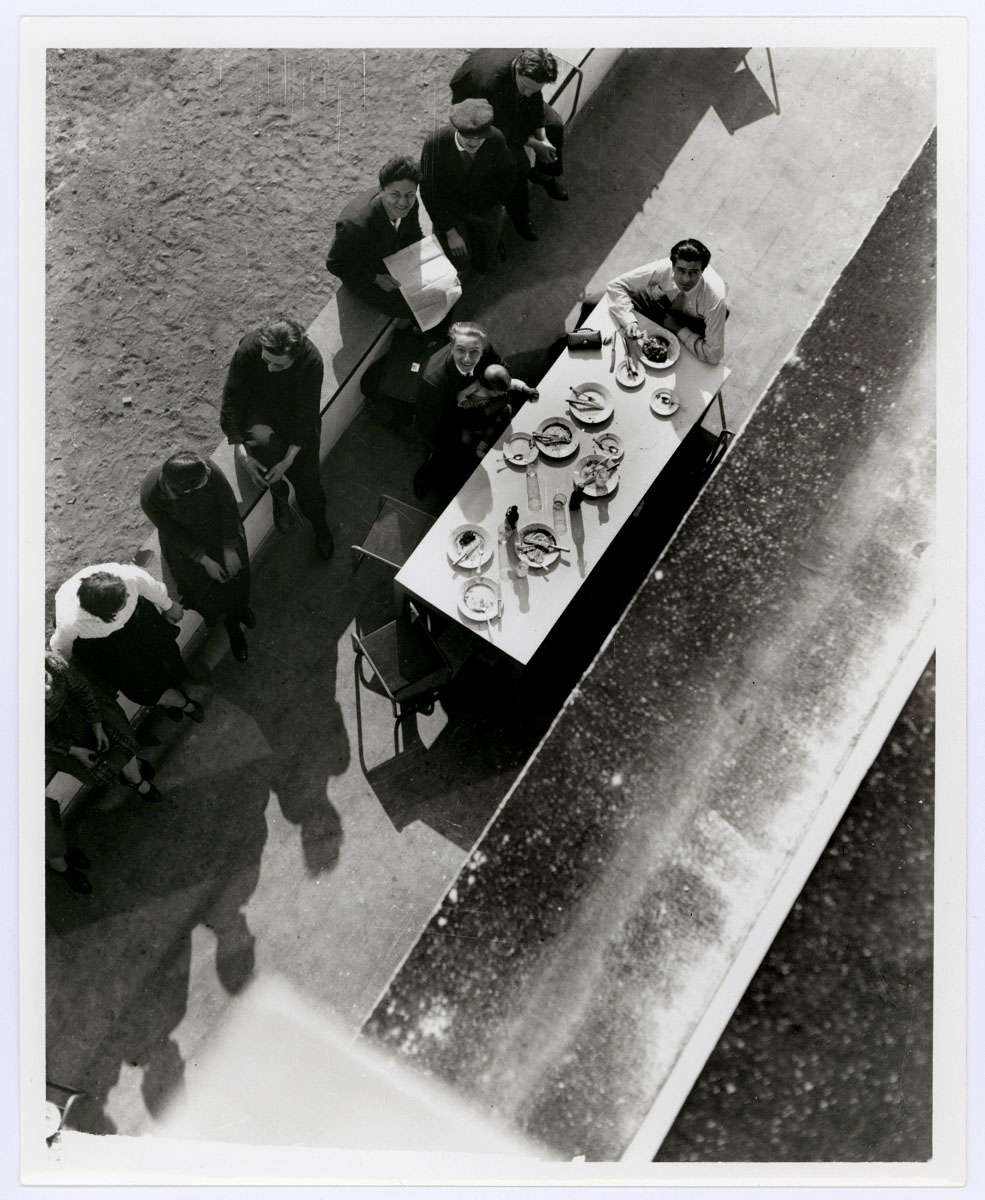
Irene Bayer (American, 1898-1991) 'Blick auf die Terrasse der Bauhaus-Kantine in Dessau' (View onto the terrace of the Bauhaus Dessau canteen)' c. 1927


Irene Bayer (American, 1898-1991)
Blick auf die Terrasse der Bauhaus-Kantine in Dessau (View onto the terrace of the Bauhaus Dessau canteen)
c. 1927
Bauhaus-Archiv Berlin
© VG Bild-Kunst, Bonn 2026


Irene Bayer (American, 1898-1991)

Irene Bayer was born as Irene Angela Hecht in Chicago on 28 October 1898 and grew up in Budapest. In 1920 she began studying at the Berlin University of the Arts. She applied to the Bauhaus in 1923 but was not accepted. She then moved to Paris and audited classes at the Sorbonne and the École des Beaux-Arts. She established connections with the avant-garde there. In 1925 she married Bauhaus member Herbert Bayer. She then attended the preliminary course at the Bauhaus without being officially enrolled. In 1926 she began training as a photographer at the State Academy of Graphic Arts and Books in Leipzig. From then on, she documented life and work at the Bauhaus as well as her husband’s works. She additionally created portrait and advertising photos. Several of her images were used for Bauhaus publications. László Moholy-Nagy also published a number of her photos in his article “Photography as Light Design”. In 1928 the Bayers left the Bauhaus and moved to Berlin. In 1929 Irene Bayer’s work was presented at the “Film und Foto” exhibition in Stuttgart. She stopped working in photography when her daughter was born later that year; she had been separated from the child’s father, Herbert Bayer, since 1928. In 1938 Irene Bayer moved to the US, where she worked as a translator. She also briefly returned to Germany after the Second World War to work in this role for the American military administration in Munich. Irene Bayer died in Los Angeles on 12 July 1991.

Text from the Bauhaus-Archiv website


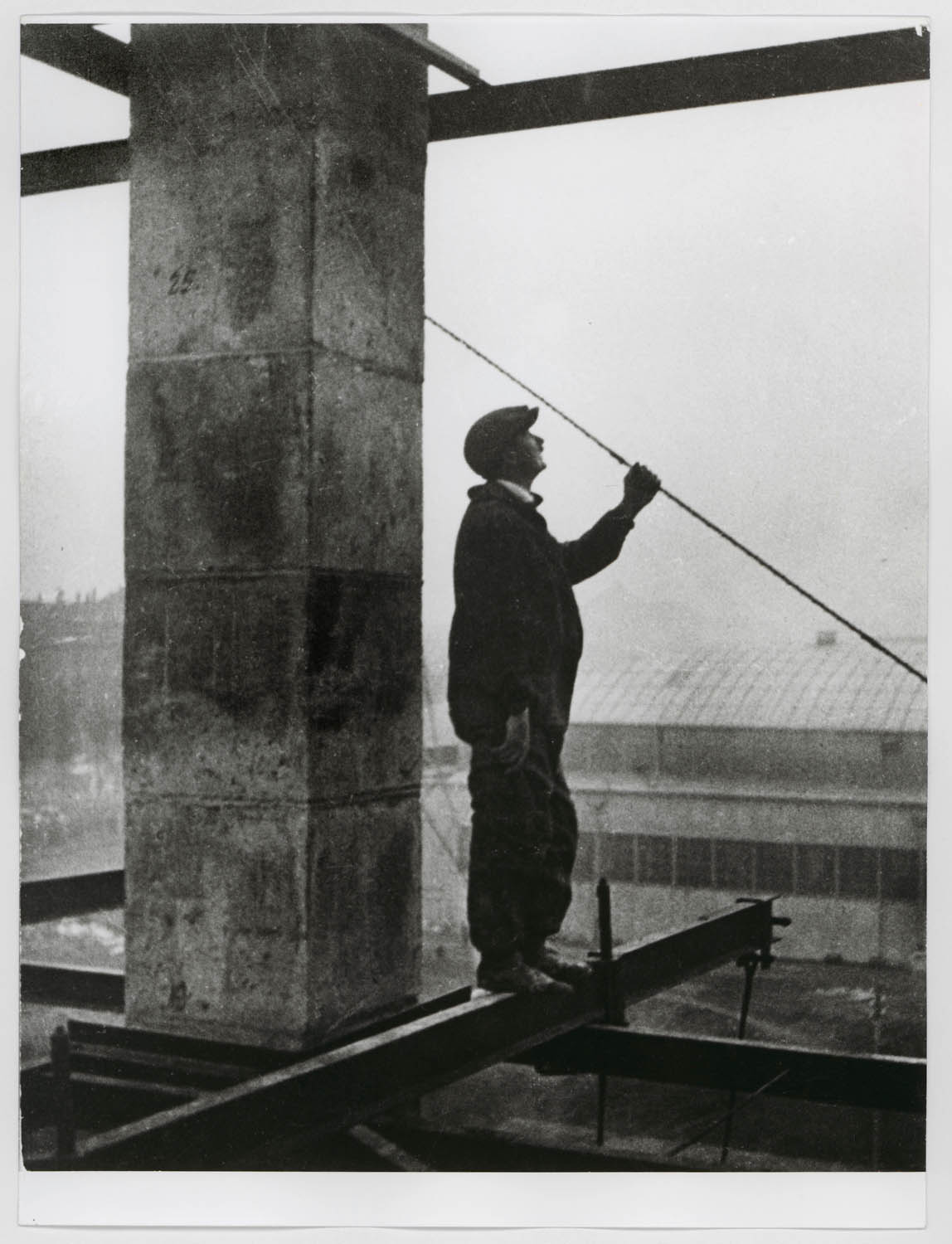
Ivana Meller-Tomljenović (Croatia, 1906-1988) 'Auf dem Bau' (On the construction site) 1930


Ivana Meller-Tomljenović (Croatia, 1906-1988)
Auf dem Bau (On the construction site)
1930
Bauhaus-Archiv Berlin
© VG Bild-Kunst, Bonn 2026


Ivana Meller-Tomljenović (Croatia, 1906-1988)

Ivana Meller-Tomljenović, née Tomljenović, was born in Zagreb on 2 September 1906. As a young woman, she initially made a name for herself in the 1920s as a track-and-field athlete and basketball player. From 1924 to 1928, she completed a degree at the Royal College of Arts and Crafts in Zagreb, graduating with honours. In 1929 she began studying metal design at Vienna’s University of Applied Arts. Impressed by a lecture given by Bauhaus director Hannes Meyer, Meller-Tomljenović transferred to the Bauhaus Dessau that same year. She experimented with photomontage and printing techniques in Walter Peterhans’s photography class. During this period, she also filmed life at the Bauhaus. Meller-Tomljenović joined the Communist Student Faction. She was among the students who left the Bauhaus when Hannes Meyer was dismissed in 1930. She initially worked in Berlin as a set designer for the Piscator Stage as well as a freelance graphic designer. In 1931 she briefly studied literature at the Sorbonne in Paris before moving to Prague. There she married Alfred Meller, the owner of a large advertising agency. After his death, Meller-Tomljenović returned to Yugoslavia in 1934. In Belgrade she taught art, graphic design and poster design until the 1960s. A late reception of her photographic work began in the 1980s. Ivana Meller-Tomljenović died in Zagreb on 30 August 1988.

Text from the Bauhaus-Archiv website


Ivana Meller-Tomljenović (Croatia, 1906-1988) 'Porträt Grete Krebs' (Portrait of Grete Krebs) 1930


Ivana Meller-Tomljenović (Croatia, 1906-1988)
Porträt Grete Krebs (Portrait of Grete Krebs)
1930


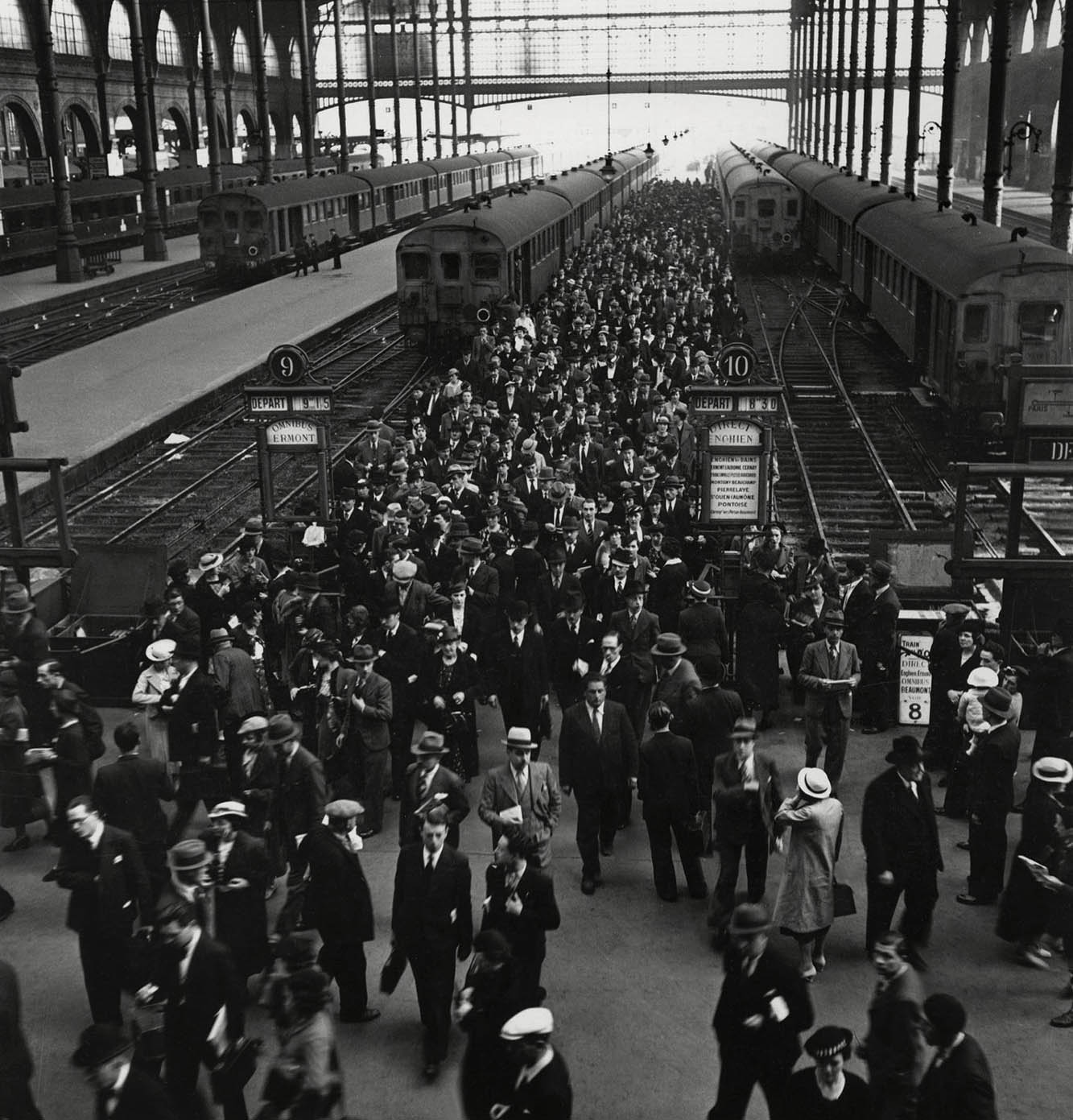
Ré Soupault (French-German born Poland, 1901-1996) 'Menschenmenge am Bahnhof St. Lazare' (Crowd at St. Lazare train station) c. 1936


Ré Soupault (French-German born Poland, 1901-1996)
Menschenmenge am Bahnhof St. Lazare (Crowd at St. Lazare train station)
c. 1936
Bauhaus-Archiv Berlin
© VG Bild-Kunst, Bonn 2026


Ré Soupault (French-German born Poland, 1901-1996)

Ré Soupault was born as Meta Erna Niemeyer in Bobolice (then German Pomerania, now Poland) on 29 October 1901. In 1921 she began studying at the Bauhaus in Weimar. She attended the preliminary course and then studied in the weaving workshop. At the Bauhaus, she also began to experiment with photography. In 1923 she met the avant-garde filmmaker Viking Eggeling and played a substantial role in the creation of his film “Diagonal Symphony”. After her brief marriage to the Dadaist Hans Richter in 1926, she worked as a fashion journalist for the magazine “Sport im Bild” in Berlin. Her work led her to Paris in 1929. There, she once again situated herself at the center of the artistic avant-garde and founded her fashion studio “Ré Sport” in 1931. In 1933 she met the author and journalist Philippe Soupault. While accompanying him on his journalistic tours, she began documenting them in photographs. The couple married in 1937. In 1938 they went to Tunis, where Ré Soupault continued with her social-documentary photography. Because of Philippe Soupault’s openly antifascist position, the couple had to flee, only narrowly evading German troops by escaping to Algeria. They travelled to New York in 1943 and separated in 1945. It was not until after the war that Ré Soupault learned parts of her photographic work had survived in Tunis. In 1948 Ré Soupault returned to Europe and lived in Basel, where she worked as a translator and radio commentator. She created her final photojournalistic work in the mid-1950s: photographs of German refugees from the former eastern territories. In 1958 she moved back to Paris and concentrated on her literary work. Ré Soupault died in Versailles on 12 March 1996.

Text from the Bauhaus-Archiv website


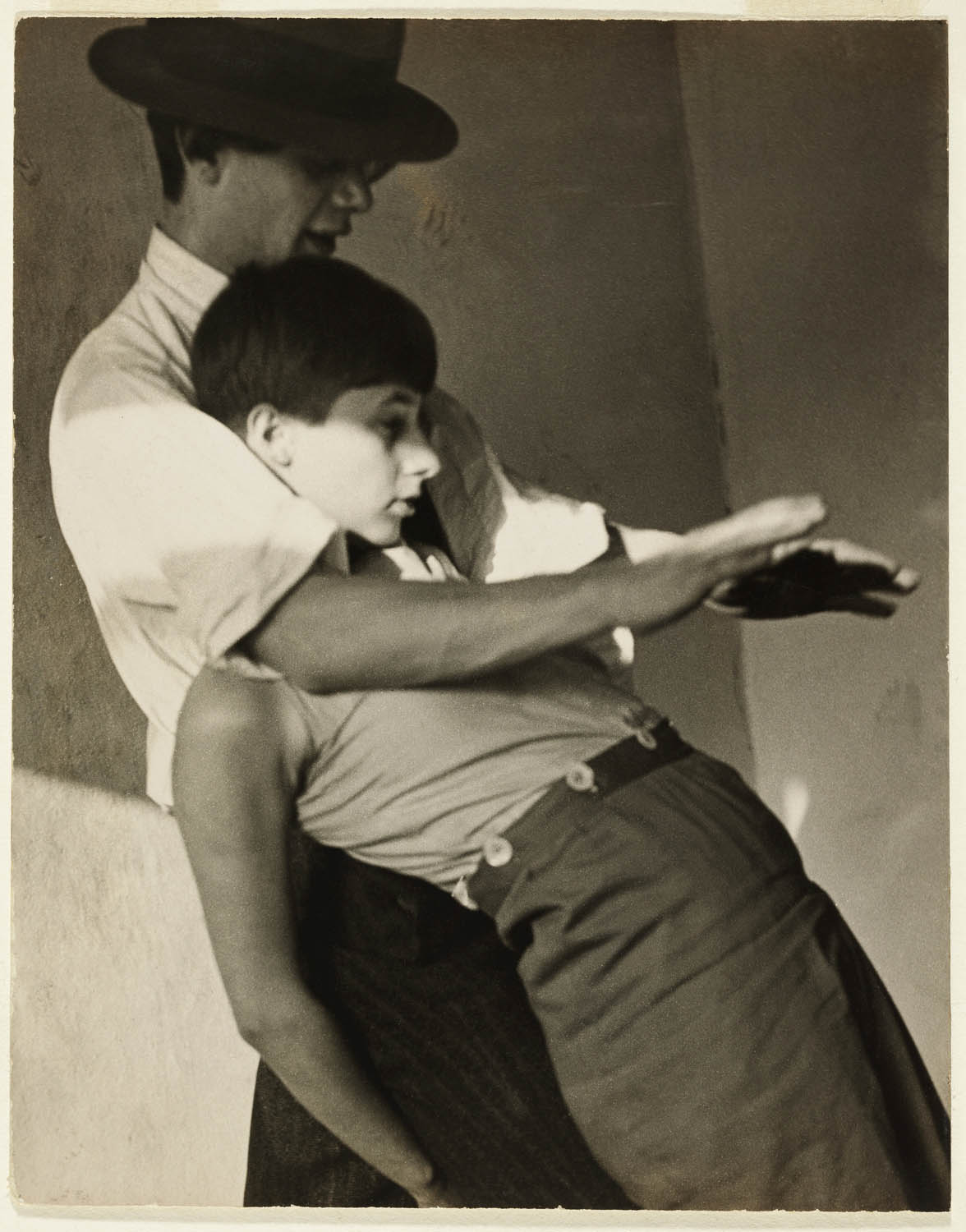
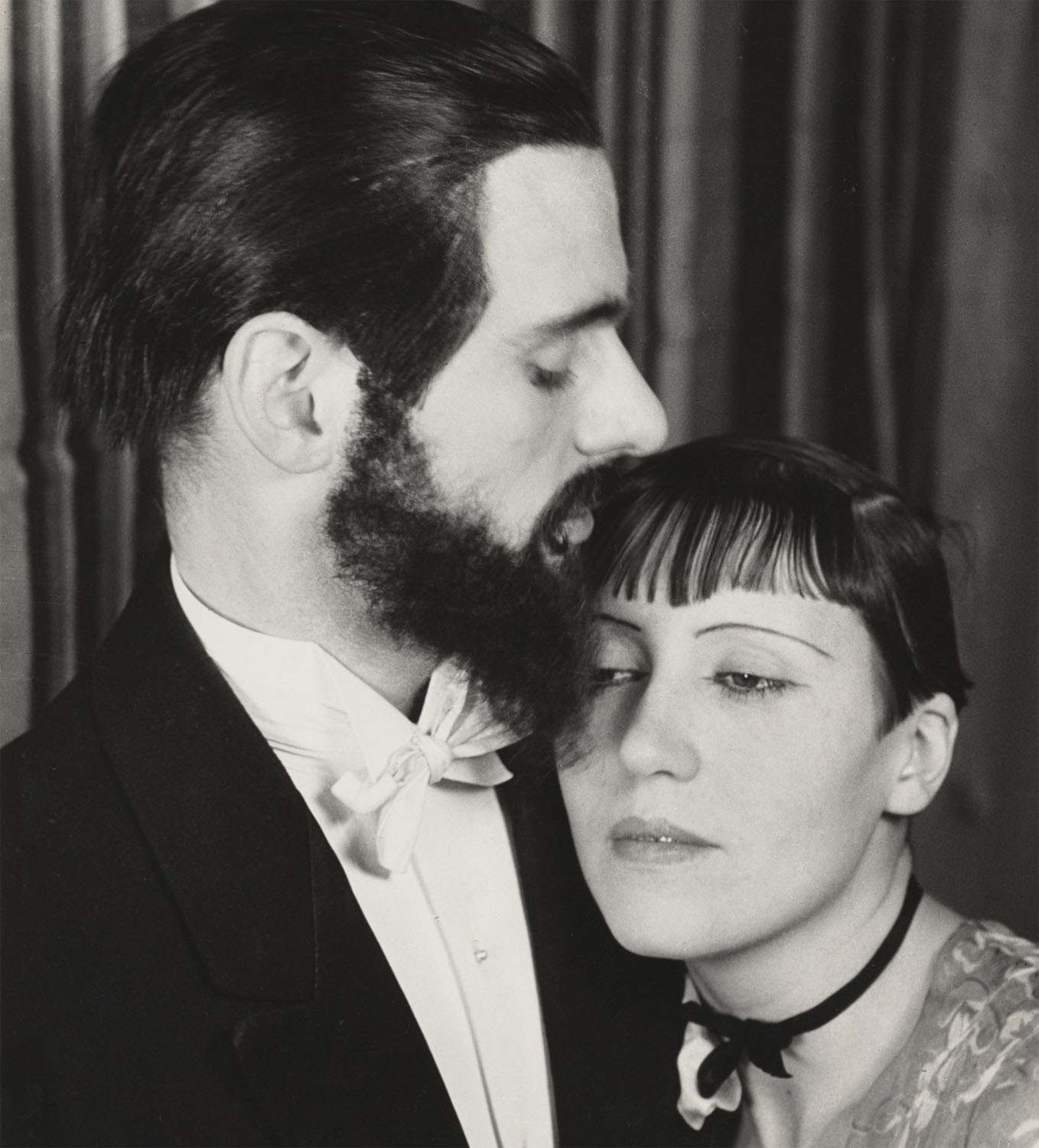
Grete Stern (Argentine born Germany, 1904-1999) 'Porträt Claire Eckstein und Edwin Denby, deutsch-amerikanisches Tanzpaar' (Portrait of Claire Eckstein and Edwin Denby, German-American dance couple) 1929


Grete Stern (Argentine born Germany, 1904-1999)
Porträt Claire Eckstein und Edwin Denby, deutsch-amerikanisches Tanzpaar (Portrait of Claire Eckstein and Edwin Denby, German-American dance couple)
1929
Bauhaus-Archiv Berlin
© VG Bild-Kunst, Bonn 2026


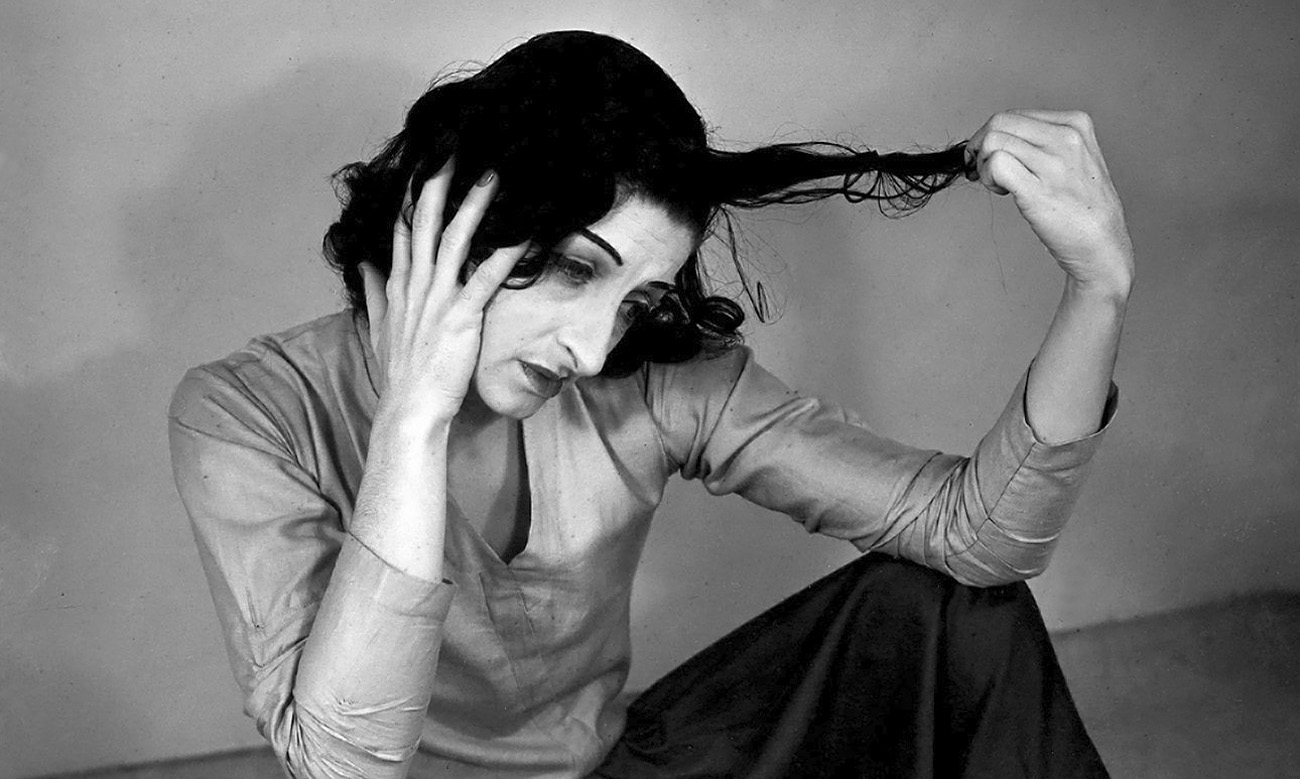
Grete Stern (Argentine born Germany, 1904-1999)

Grete Stern was born in Wuppertal on 9 May 1904. Due to her father’s work in international trade, she grew up in London as well as Wuppertal. After studying graphic design in Stuttgart and then briefly working, she began training as a photographer with Walter Peterhans in 1927. There she met Ellen Auerbach, who was also being taught by Peterhans. When he received a position at the Bauhaus in Dessau in 1929, Stern and Auerbach founded the agency ringl + pit in his former studio. In 1932 Stern attended Peterhans’s photography class at the Bauhaus. Just one year later, her Jewish descent forced her to emigrate to London. Her British passport made her life in exile easier: she was able to work as a portrait photographer in England without facing any major bureaucratic obstacles. Stern and Auerbach worked together again in London for a short time. In 1935 Stern married the Argentinian photographer and former Bauhaus student Horacio Coppola. In 1936 they moved to Buenos Aires, where they opened a studio. Their home became a meeting place for the local art scene. After separating from Coppola, Stern worked as a freelance photographer. Among other things, she created surrealistic photomontages for the magazine “Idilio”. Stern founded the photography workshop of the Argentinian Museo Nacional de Bellas Artes in 1956. Additionally, she documented the indigenous people of the Gran Chaco up into the 1960s. She stopped working as a photographer in 1985. Grete Stern died in Buenos Aires on 24 December 1999.

Text from the Bauhaus-Archiv website


Grete Stern (Argentine born Germany, 1904-1999) 'Porträt Miriam Winslow, US-amerikanische Tänzerin' (Portrait of Miriam Winslow, American dancer) 1944


Grete Stern (Argentine born Germany, 1904-1999)
Porträt Miriam Winslow, US-amerikanische Tänzerin (Portrait of Miriam Winslow, American dancer)
1944
Bauhaus-Archiv Berlin
© VG Bild-Kunst, Bonn 2026


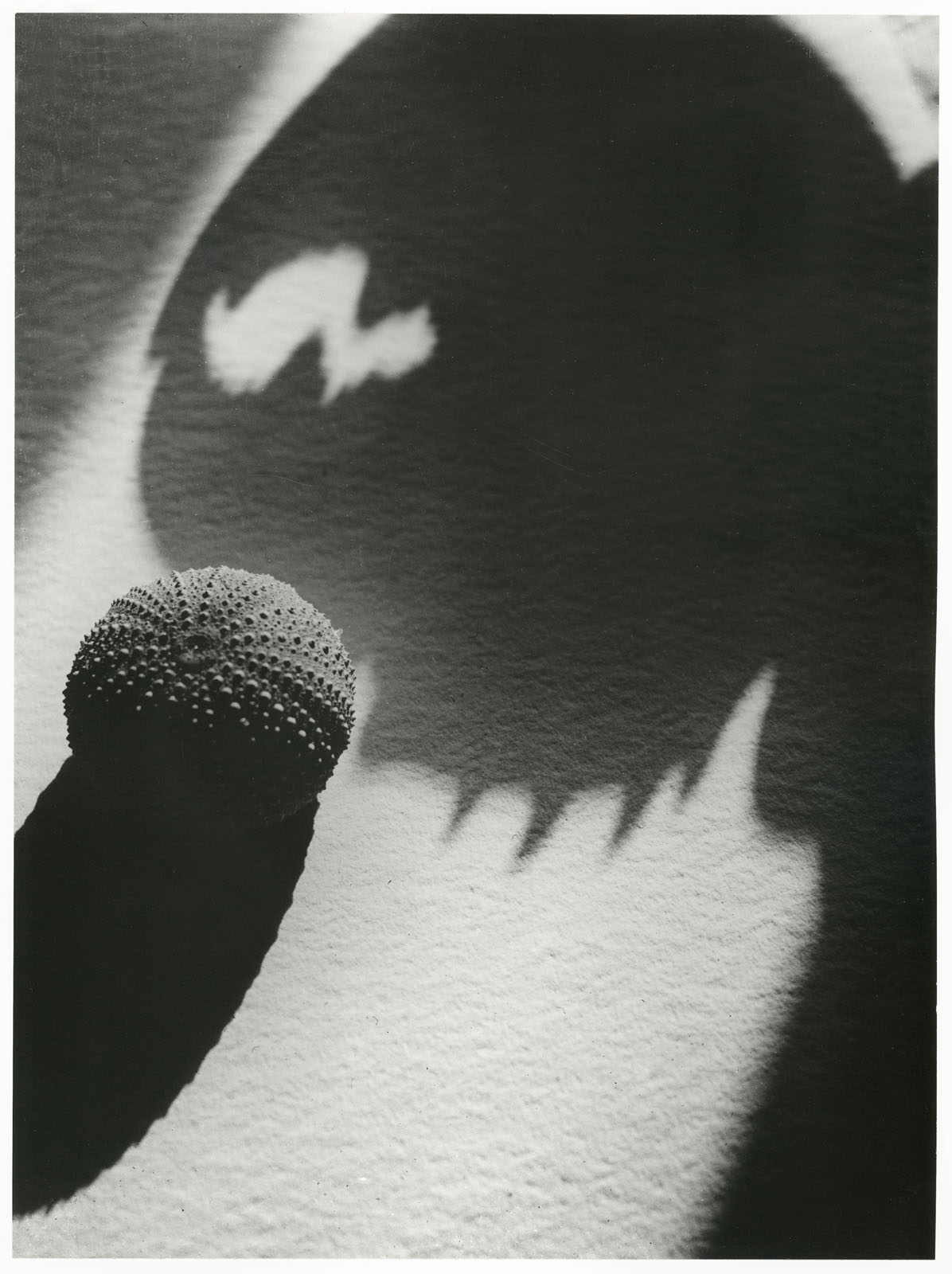
Lotte Collein (German, 1905-1995) 'Seeigel und Schatten einer Krebsschere' (Sea urchin and shadow of a crab claw) 1928


Lotte Collein (German, 1905-1995)
Seeigel und Schatten einer Krebsschere (Sea urchin and shadow of a crab claw)
1928
Bauhaus-Archiv Berlin
© VG Bild-Kunst, Bonn 2026


Lotte Collein (German, 1905-1995)

Lotte Collein was born as Anny Amely Lotte Gerson in Essen on 17 March 1905. After training in a tailoring workshop in Munich and a hand-weaving workshop in Dachau, she attended the women’s social school in Bremen. In 1927 she began studying at the Bauhaus. She wanted to become an architect. After the preliminary course, she went to the furniture workshop and then switched to the department of architecture and interior design. Collein also began taking photographs during the period she spent at the Bauhaus. She recorded life at the school and documented works by other members of the Bauhaus, such as Erich Borchert. Although she did not attend any photography classes, one of her images was featured in an article about the current state of photography published by Walter Peterhans in the journal “ReD” in 1930. In the autumn of that year, Collein submitted a request for her diploma as an architect, but was rejected. She then left the school and moved to Vienna with the architect Edmund Collein. The two married in 1931, and their child was born that same year. In 1938 the couple returned to Germany. Collein, who was half Jewish and a communist, survived the Nazi period through her marriage to an “Aryan” husband. After the war, the couple moved to the Soviet-occupied sector of Berlin. While Edmund Collein pursued a career as an East German architectural official, Lotte Collein supported his work from behind the scenes. She died in Berlin on 3 May 1995.


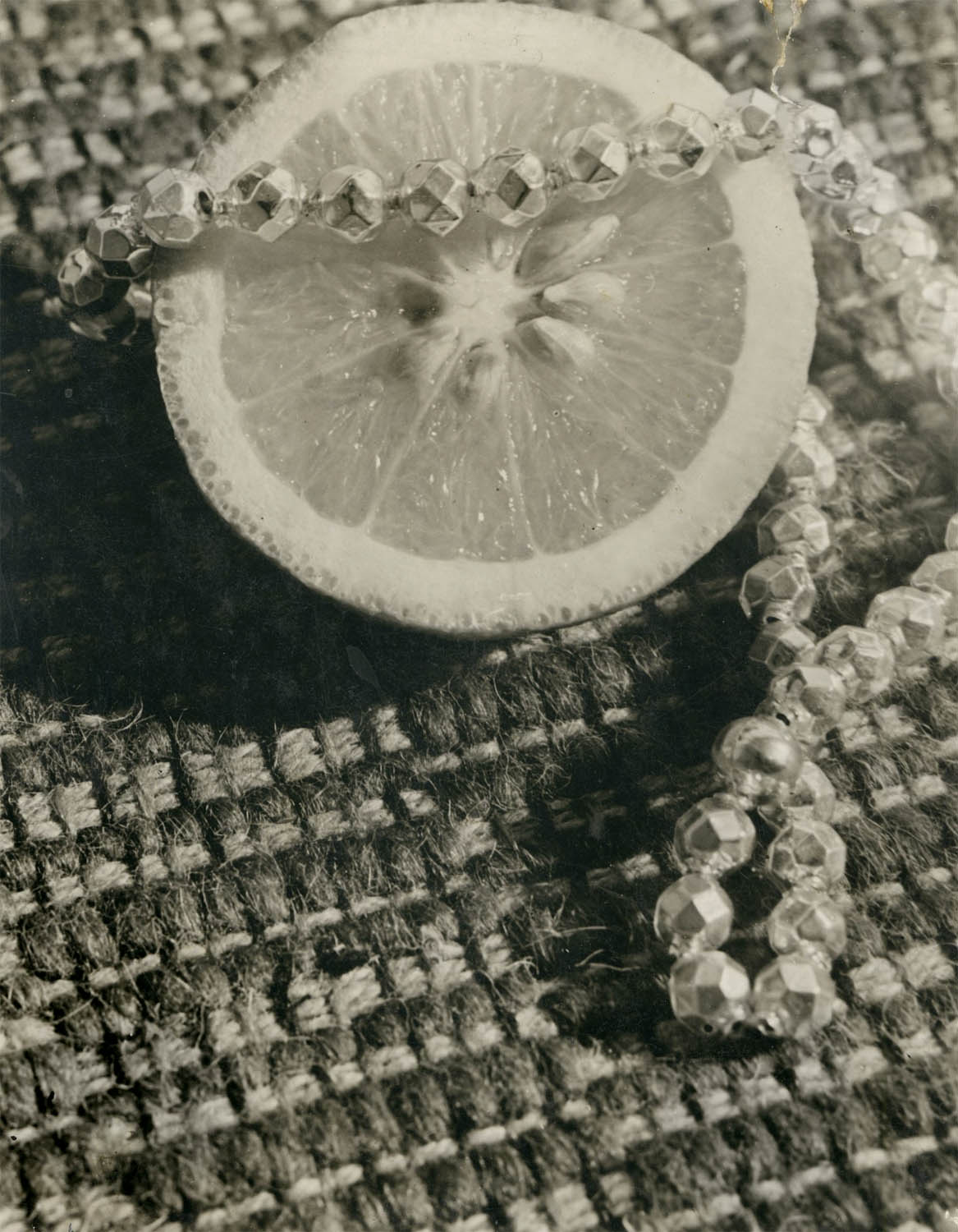
Lony Neumann (German, 1902-1996) 'Stillleben mit Zitrone und Perlenkette auf Webteppich' (Still life with lemon and pearl necklace on a woven carpet) 1930


Lony Neumann (German, 1902-1996)
Stillleben mit Zitrone und Perlenkette auf Webteppich (Still life with lemon and pearl necklace on a woven carpet)
1930
Bauhaus-Archiv Berlin
© VG Bild-Kunst, Bonn 2026


Lony Neumann (German, 1902-1996)

Lony Neumann was born as Leoni Cohn in Bytom (then German Silesia, now Poland) on 15 April 1902. In 1919 she began an apprenticeship as a tailor and passed the final examination. Parallel to this, she attended courses at the Wrocław State Academy of Arts and Crafts, where she met and then married the student Theodor Neumann. After the couple moved to Leipzig, their son was born in 1926. In 1928 Neumann became a student at the Bauhaus Dessau. She attended Walter Peterhans’s photography class and the advertising workshop. Her role as a parent meant she was largely forced to carry out the assignments from her classes at the Bauhaus in Leipzig, where she continued to live. Neumann was already politically active at this point. She photographed workers and participated in left-wing demonstrations. In 1931 she separated from her husband. Together with her new partner, the architect and Bauhaus graduate Philipp Tolziner, she joined a group of Bauhaus students immigrating to Russia. She left her son with his father. From 1931 to 1938, she worked as an art journalist and designer in Moscow and continued to create photographs, particularly of women and children. She married the Russian painter Aleksandr Labas during this period. Neumann was presumably able to escape the Soviet state’s persecution of German immigrants under Stalin by withdrawing from the cultural public sphere: she began providing foreign-language lessons. After the Second World War, she worked as a translator. Lony Neumann died in Moscow on 27 February 1996.

Text from the Bauhaus-Archiv website


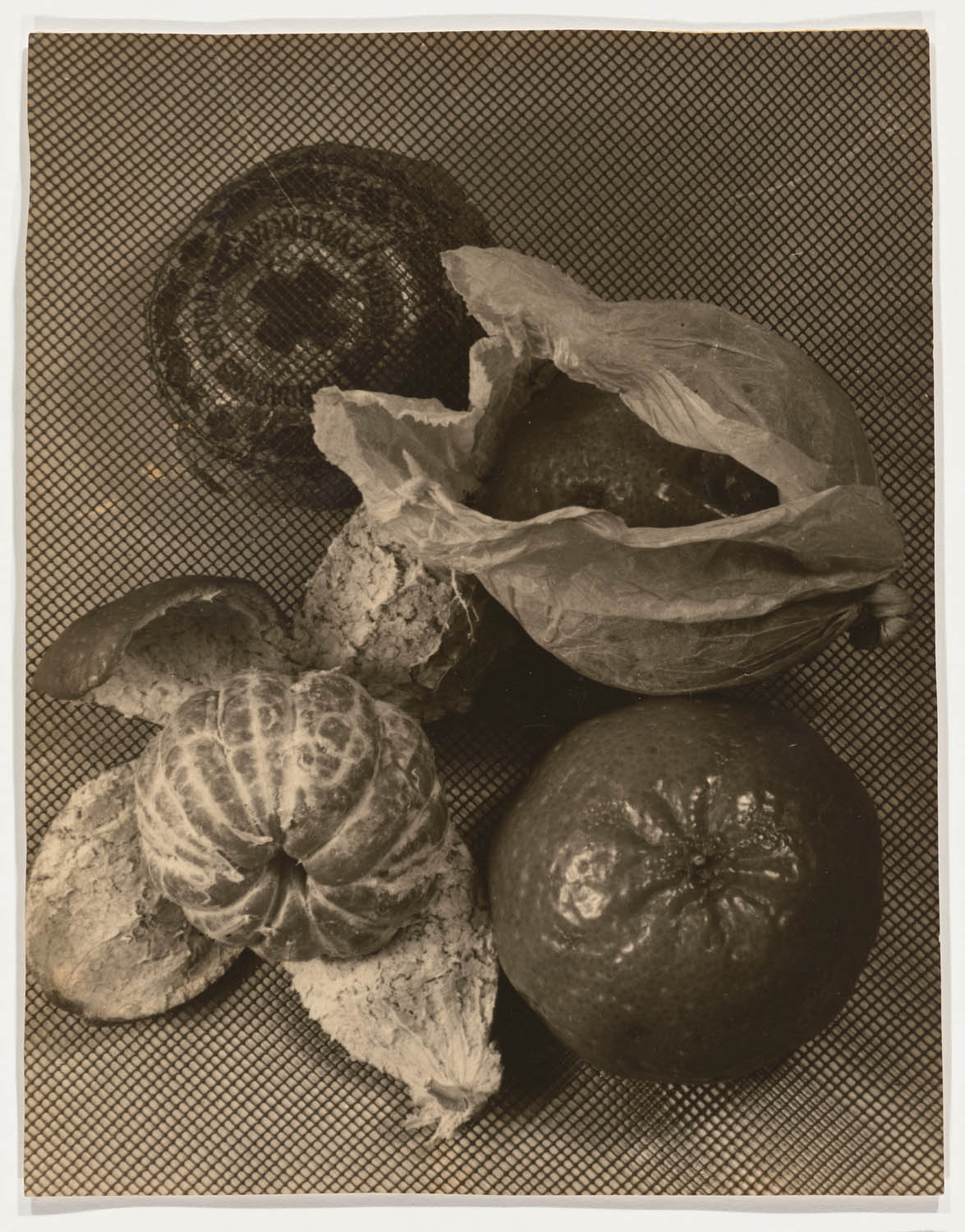
Irene Hoffmann (American born Germany, 1903-1982) 'Stillleben mit Orangen' (Still life with oranges) 1932


Irene Hoffmann (American born Germany, 1903-1982)
Stillleben mit Orangen (Still life with oranges)
1932
Bauhaus-Archiv Berlin
© VG Bild-Kunst, Bonn 2026


Irene Hoffmann (American born Germany, 1903-1982)

Irene Hoffmann, née Wallbrecht, was born in Hanover on 14 December 1903. In 1928 she became a student at the Bauhaus in Dessau. She studied in the advertising department and began attending classes taught by Walter Peterhans in 1932. In addition to photographs, graphic designs and experimental photograms, she also created collages during this period. She met the architecture student Hubert Hoffmann at the Bauhaus. The couple married in 1929. One of Irene Hoffmann’s works was presented at the Bauhaus’s travelling exhibition the following year. In 1933 she completed her studies at the Bauhaus with a diploma from the advertising workshop. She then ran a studio for advertising and portrait photography in Berlin together with fellow Bauhaus graduate Hannes Schmitt. She also did freelance work for the graphic and design studio of former Bauhaus master László Moholy-Nagy until 1934. Between 1934 and 1936, she created additional projects in the field of advertising-related graphic design together with Hubert Hoffmann. Irene Hoffmann emigrated to the US in 1936, but her husband remained in Germany. They were divorced in 1938. Irene Hoffmann died in Allentown, Pennsylvania, on 16 February 1982.

Text from the Bauhaus-Archiv website


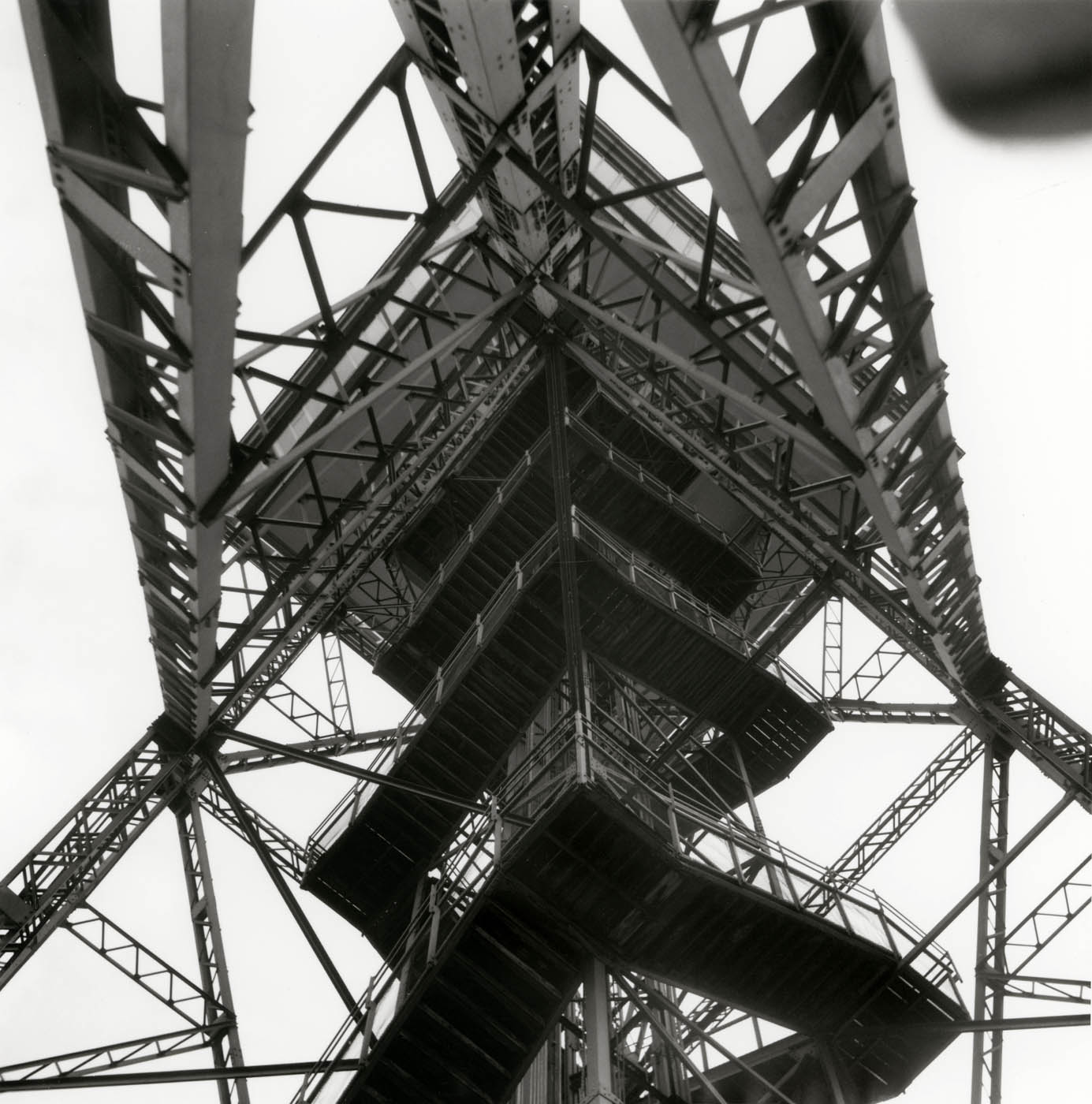
Elsa Thiemann (German born Poland, 1910-1981) 'Funkturm Berlin' (Berlin Radio Tower) 1930s


Elsa Thiemann (German born Poland, 1910-1981)
Funkturm Berlin (Berlin Radio Tower)
1930s
Bauhaus-Archiv Berlin
© VG Bild-Kunst, Bonn 2026


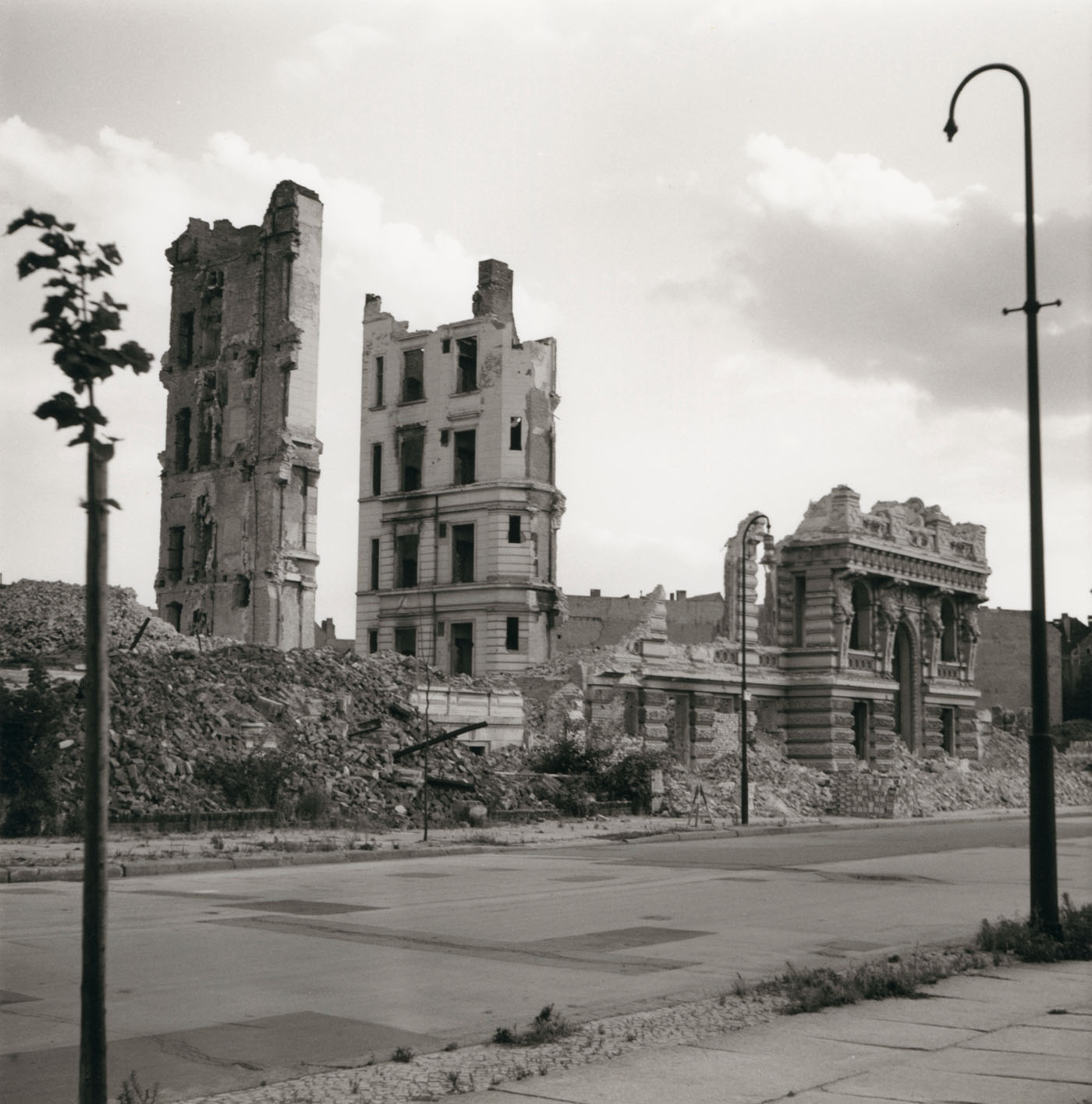
Elsa Thiemann (German born Poland, 1910-1981) 'Berlin Ruinen' (Berlin Ruins) c. 1945


Elsa Thiemann (German born Poland, 1910-1981)
Berlin Ruinen (Berlin Ruins)
c. 1945
Bauhaus-Archiv Berlin
© VG Bild-Kunst, Bonn 2026


Elsa Thiemann (German born Poland, 1910-1981)

Elsa Thiemann, née Franke, was born in Toruń, then West Prussia, on 7 February 1910. In 1927 she began studying applied art at Berlin-Charlottenburg’s United State Schools for Fine and Applied Arts. In 1929 she transferred to the Bauhaus in Dessau. After her preliminary training, she studied in Joost Schmidt’s advertising workshop and, from the summer of 1930, in Walter Peterhans’s photography class. In 1931 she completed her studies with a Bauhaus diploma. From then on, Thiemann worked in Berlin as a freelance photojournalist and captured life in the city. In 1944 she accepted a position as a secretary in the Berlin editorial office of the Hoffmann und Campe publishing house. After the war she resumed her work as an independent photojournalist. She used her photographs to document the transformation of the German capital: from the ruins of a devastated Berlin after 1945 to the renewed flourishing of urban life in the West Berlin of the 1950s. She also created numerous portraits of artists. In 1947 she married the painter Hans Thiemann, whom she knew from their time at the Bauhaus. When the couple moved to Hamburg in 1960, Elsa Thiemann stopped working as a professional photographer and began documenting the work of her husband. After his death in 1977, she managed his estate while also tending to her own photo archive. Elsa Thiemann died in Hamburg on 15 November 1981.

Text from the Bauhaus-Archiv website


Elsa Thiemann (German born Poland, 1910-1981) 'Lampenputzer, Berlin' 1950s


Elsa Thiemann (German born Poland, 1910-1981)
Lampenputzer, Berlin
1950s
Modern print
Bauhaus-Archiv Berlin
© VG Bild-Kunst, Bonn 2026


Elsa Thiemann (German born Poland, 1910-1981) 'Berlin Kinder am U-Bahneingang in Neukölln' (Berlin children at the subway entrance in Neukölln) 1950s


Elsa Thiemann (German born Poland, 1910-1981)
Berlin Kinder am U-Bahneingang in Neukölln (Berlin children at the subway entrance in Neukölln)
1950s
Bauhaus-Archiv Berlin
© VG Bild-Kunst, Bonn 2026


Elsa Thiemann (German born Poland, 1910-1981) 'Berlin die grosse Treppe im Freibad Wannsee' (Berlin, the large staircase in the Wannsee open-air swimming pool) 1950s


Elsa Thiemann (German born Poland, 1910-1981)
Berlin die grosse Treppe im Freibad Wannsee (Berlin, the large staircase in the Wannsee open-air swimming pool)
1950s
Bauhaus-Archiv Berlin
© VG Bild-Kunst, Bonn 2026


Museum für Fotografie
Jebensstraße 2, 10623 Berlin

Opening hours:
Mon closed
Tue 11.00am – 7.00pm
Wed 11.00am – 7.00pm
Thu 11.00am – 8.00pm
Fri 11.00am – 7.00pm
Sat 11.00am – 7.00pm
Sun 11.00am – 7.00pm

Museum für Fotografie website

LIKE ART BLART ON FACEBOOK

Back to top

Exhibition: ‘Brassaï – The Secret Signs of Paris’ at Moderna Museet, Stockholm

Exhibition dates: 28th March – 4th October, 2026

Curators: Curated by Anna Tellgren, Moderna Museet, in collaboration with Philippe Ribeyrolles, Estate Brassaï Succession


Brassaï (Hungarian-French, 1899-1984) 'L'allumeur de becs de gaz, rue Emile Richard/Lamplighter, Rue Émile-Richard' c. 1931


Brassaï (Hungarian-French, 1899-1984)
L’allumeur de becs de gaz, rue Emile Richard/Lamplighter, Rue Émile-Richard
c. 1931
Vintage silver gelatin print
© Estate Brassaï Succession – Philippe Ribeyrolles 2026


Brassaï’s chimerical – an idea that seems real or possible but is actually an impossible illusion – shimmering, urban light creations are photographs, sometimes staged, from the imagination and nocturnal life of the photographer.

As I have written elsewhere, “It takes a great eye and a great mind, and the liberation of that mind, to be able to transform the mundane, the everyday, the vernacular – into art. Brassaï’s folklore, his mythology of life, suggests that the life of others (those living on the edge) is as valuable and essential to the formation of culture as any other part of existence.”

Brassaï saw something clearly, so that we might see it now.

Dr Marcus Bunyan


Many thankx to the Moderna Museet for allowing me to publish the photographs in the posting. Please click on the photographs for a larger version of the image.


“Brassaï’s photographs invite us to decipher signs – the traces of events and human presence – and to search for the answer to the city’s many mysteries.”


Anna Tellgren, Curator


Brassaï | Introduction by Anna Tellgren with Martina Hoogland Ivanow

In this video, you meet curator Anna Tellgren and artist Martina Hoogland Ivanow, who introduce the exhibition “Brassaï – The Secret Signs of Paris” at Moderna Museet in Stockholm.

Brassaï is one of the most famous photographers in the history of photography. In the early 1930s, he set out with his camera on long nocturnal walks through Paris. Revolving around this treasure of images, the exhibition “Brassaï – The Secret Signs of Paris” includes over 160 black-and-white photographs.

Text from the YouTube website


Installation view of the exhibition 'Brassaï - The Secret Signs of Paris' at Moderna Museet, Stockholm, March - October, 2026
Installation view of the exhibition 'Brassaï - The Secret Signs of Paris' at Moderna Museet, Stockholm, March - October, 2026 showing at right, Brassaï's 'Open Gutter' (c. 1931/1956)


Installation view of the exhibition Brassaï – The Secret Signs of Paris at Moderna Museet, Stockholm, March – October, 2026 showing at right in the bottom image, Brassaï’s Open Gutter (c. 1931/1956, below)


Brassaï (Hungarian-French, 1899-1984) 'Open Gutter' c. 1931/1956


Brassaï (Hungarian-French, 1899-1984)
Open Gutter
c. 1931/1956
Gelatin silver print


Installation view of the exhibition 'Brassaï - The Secret Signs of Paris' at Moderna Museet, Stockholm, March - October, 2026 showing at left, Brassaï's 'Night View Old Paris from Notre Dame - "the Devil" Chimaera' (1933); at top right, 'Morris Column' (1933); and at bottom right, 'Urinal on Boulevard Auguste-Blanqui' (c. 1930-32)


Installation view of the exhibition Brassaï – The Secret Signs of Paris at Moderna Museet, Stockholm, March – October, 2026 showing at left, Brassaï’s Night View Old Paris from Notre Dame – “the Devil” Chimaera (1933); at top right, Morris Column (1933, below); and at bottom right, Urinal on Boulevard Auguste-Blanqui (c. 1930-32)


Brassaï (French, 1899-1984) 'Morris Column, avenue de l'Observatoire' 1933


Brassaï (Hungarian-French, 1899-1984)
Morris Column
1933
Gelatin silver print


About the exhibition

Brassaï (1899-1984) is the pseudonym of Gyula Halász, who grew up in Brassó in Transylvania, then Hungary. After studying in Budapest and Berlin, he moved to Paris at the age of twenty-five.

There are three themes in Brassaï’s photographic production and in the exhibition “Brassaï – The Secret Signs of Paris”: the city of Paris with its inhabitants and environments, the portraits of artists and their works, and the city’s graffiti.

Nocturnal Environments and People

When Brassaï moved to Paris in 1924, he first worked as a journalist. His major breakthrough as a photographer came with the book “Paris de nuit” (Paris by Night), published in 1933. Many of his famous motifs can be found here – Notre-Dame and the Eiffel Tower, bars and dance halls, artists and workers, policemen and petty thieves.

The black-and-white photographs with motifs in soft tones were the result of his long nocturnal walks through Paris – his camera lens captures environments and people in the light of street lamps and the light falling from the buildings of the city.

Bars, Dance Halls and Brothels

After the success of “Paris de nuit”, Brassaï received requests to publish the material that includes his more intimate photographs of Paris by night – the bars, dance halls, gay clubs and brothels. But at that time, in post-war Paris, censorship had become stricter and publication had to wait.

It was not until about forty years later, in 1976, that the book “Le Paris secret des années 30” (The Secret Paris of the 30’s) was published, based on Brassaï’s large collection of photographs.

Night Photographs, Graffiti, and Life in Paris

The exhibition “Brassaï – The Secret Signs of Paris” includes more than 160 vintage gelatine silver prints made by the photographer himself.

The first room of the exhibition features Brassaï’s legendary night photographs of Paris, its inhabitants and environments. The middle room shows his extensive documentation of the city’s graffiti, and the last room of the exhibition presents more of his images of life in Paris.

Brassaï’s film from the mid-1950s, “Tant qu’il y aura des bêtes” (As Long as There Are Animals), which was awarded as the most innovative short film at at the Cannes Film Festival in 1956, is also included in the exhibition.

Biography Gyula Halász

Gyula Halász (1899-1984) grew up in Brassó in Transylvania, then Hungary.

After studying art in Budapest and Berlin, he moved to Paris in 1924 and took the name Brassaï, which means “from Brassó”. He was versatile and devoted himself to drawing, painting, sculpture and photography in parallel. Literature was another great interest.

Brassaï moved in Parisian artist circles and his contact with the surrealists, as well as his friendship with Pablo Picasso, sharpened his eye for the unexpected and overlooked. His major breakthrough as a photographer came with the book “Paris de nuit” (“Paris by Night”), published in 1933.

On his wanderings in Paris, Brassaï also discovered street graffiti, which he documented in an extensive series of photographs until the 1950s. At the same time, he also made reporting trips for the magazine “Harper’s Bazaar” to Brazil, Greece and Sweden, among other places.

Brassaï died in 1984, after receiving several awards and participating in exhibitions throughout Europe and the United States during his final years.

Text from the Moderna Museet website


Installation view of the exhibition 'Brassaï - The Secret Signs of Paris' at Moderna Museet, Stockholm, March - October, 2026 showing at centre second left, Brassaï's 'Bal des Quatre Saisons, rue de Lappe' (c. 1932)


Installation view of the exhibition Brassaï – The Secret Signs of Paris at Moderna Museet, Stockholm, March – October, 2026 showing at centre second left, Brassaï’s Bal des Quatre Saisons, rue de Lappe (c. 1932, below)


Brassaï (Hungarian-French, 1899-1984) 'Bal des Quatre Saisons, rue de Lappe' c. 1932


Brassaï (Hungarian-French, 1899-1984)
Bal des Quatre Saisons, rue de Lappe
c. 1932
Gelatin silver print


Brassaï (Hungarian-French, 1899-1984) 'Couple d'amoureux dans un petit café, quartier Italie' c. 1932


Brassaï (Hungarian-French, 1899-1984)
Couple d’amoureux dans un petit café, quartier Italie
c. 1932
Gelatin silver print


Installation view of the exhibition 'Brassaï - The Secret Signs of Paris' at Moderna Museet, Stockholm, March - October, 2026 showing from left to right, top to bottom, Brassaï's 'A Couple at the Magic-City Dance Hall, Rue Cognacq-Jay' (c. 1931-32); 'A Two-in-One Suit, the Magic-City Dance Hall' (1931); 'Magic-City Dance Hall, Rue de l'Universite' (1931); 'The Magic-City Dance Hall, Rue Cognacq-Jay' (c. 1931-32)


Installation view of the exhibition Brassaï – The Secret Signs of Paris at Moderna Museet, Stockholm, March – October, 2026 showing from left to right, top to bottom, Brassaï’s A Couple at the Magic-City Dance Hall, Rue Cognacq-Jay (c. 1931-32); A Two-in-One Suit, the Magic-City Dance Hall (1931, below); Magic-City Dance Hall, Rue de l’Universite (1931); The Magic-City Dance Hall, Rue Cognacq-Jay (c. 1931-32)


Brassaï (Hungarian-French, 1899-1984) 'Young couple wearing a two-in-one suit at Bal De La Montagne Saint-Genevieve' 1931


Brassaï (Hungarian-French, 1899-1984)
A Two-in-One Suit, the Magic-City Dance Hall
1931
Gelatin silver print


Brassaï is one of the most famous photographers in the history of photography. In the early 1930s, he set out with his camera on long nocturnal walks through Paris. Revolving around this treasure of images, the exhibition at Moderna Museet includes over 160 black-and-white photographs and is the first major presentation of Brassaï in Sweden.

Brassaï (1899-1984) is a pseudonym for Gyula Halász, who grew up in Brassó in Transylvania, then Hungary. After studying in Budapest and Berlin, he moved to Paris at the age of twenty-five. There he became part of the Humanist Photography that emerged during the interwar period. The street and the life that unfolded on the sidewalks and cafes became typical motifs for the genre.

Paris, Portraits and Graffiti

The exhibition “Brassaï – The Secret Signs of Paris” includes more than 160 vinted gelatin silver prints, made by the photographer himself.

The audience encounters three central themes in Brassaï’s photographic production: the city of Paris with its inhabitants and environments, the portraits of artists and their works, as well as his extensive documentation of the city’s graffiti.

The title of the exhibition alludes to how Brassaï opens up a hidden world with the help of his camera, his curiosity and his artistic practice, curator Anna Tellgren says.

His photographs invite us to decipher signs – the traces of events and human presence – and to search for the answer to the city’s many mysteries. Here, the extensive series of photographs of graffiti becomes an important part of understanding what Brassaï saw and how he moved in the city. In the exhibition, we follow in his footsteps.

In the exhibition, Brassaï’s short film “Tant qu’il y aura des bêtes” (As long as there are animals) from the mid-1950s is also shown. At the Cannes Film Festival in 1956 it was named the most innovative short film.

The Environments and People of the Night

Brassaï’s major breakthrough as a photographer came with the book “Paris de nuit” (“Paris by Night”), published in 1933. The black-and-white photographs with motifs in soft tones were the result of his long nocturnal walks through Paris – a city in transition between history and modernity. His camera lens captures environments and people in the light of street lamps and the light falling from the city’s most characteristic buildings.

After the success of “Paris de nuit”, Brassaï received requests to publish the material that includes his more intimate photographs of Paris by night – the bars, dance halls, gay clubs and brothels. But at that time, in post-war Paris, censorship had become stricter and publication had to wait.

It was not until about forty years later, in 1976, that the book “Le Paris secret des années 30” (The Secret Paris of the 30’s, 1976) was published, based on Brassaï’s large collection of photographs. In the book, he himself wrote and told the stories behind the images and about the personalities he had met and portrayed.

Press release from Moderna Museet


Installation view of the exhibition 'Brassaï - The Secret Signs of Paris' at Moderna Museet, Stockholm, March - October, 2026 showing from left to right, Brassaï's 'Fairgrounds, Place d'Italie' (c. 1931); '"No One Under 18 Allowed", at the Fairgrounds' (1932-33); 'Three Women Masked for the Parade' (1931); 'The Hands of the Fortune Teller' (1933)


Installation view of the exhibition Brassaï – The Secret Signs of Paris at Moderna Museet, Stockholm, March – October, 2026 showing from left to right, Brassaï’s Fairgrounds, Place d’Italie (c. 1931); “No One Under 18 Allowed”, at the Fairgrounds (1932-33); Three Women Masked for the Parade (1931, below); The Hands of the Fortune Teller (1933, below)


Brassaï (Hungarian-French, 1899-1984) 'Three Women Masked for the Parade' 1931


Brassaï (Hungarian-French, 1899-1984)
Three Women Masked for the Parade
1931
Vintage gelatin silver print
© Estate Brassaï Succession – Philippe Ribeyrolles 2026


Brassaï (Hungarian-French, 1899-1984) 'Les mains de la cartomancienne/The Hands of the Fortune Teller' 1933


Brassaï (Hungarian-French, 1899-1984)
Les mains de la cartomancienne/The Hands of the Fortune Teller
1933
Vintage silver gelatin print
© Estate Brassaï Succession – Philippe Ribeyrolles 2026


Installation view of the exhibition 'Brassaï - The Secret Signs of Paris' at Moderna Museet, Stockholm, March - October, 2026 showing from left to right, Brassaï's 'Hotel du lion d'Or in the Chaconne Neighbourhood' (c. 1934); 'Marlene, Paris' (1937); 'Kiss on a Swing at a Street' Fair (c. 1935-37)


Installation view of the exhibition Brassaï – The Secret Signs of Paris at Moderna Museet, Stockholm, March – October, 2026 showing from left to right, Brassaï’s Hotel du lion d’Or in the Chaconne Neighbourhood (c. 1934); Marlene, Paris (1937, below); Kiss on a Swing at a Street Fair (c. 1935-37)


Brassaï (Hungarian-French, 1899-1984) 'Marlene, Paris' 1937


Brassaï (Hungarian-French, 1899-1984)
Marlene, Paris
1937
Vintage silver gelatin print
© Estate Brassaï Succession – Philippe Ribeyrolles 2026


Brassaï – The Secret Signs of Paris

Text by curator Anna Tellgren

At the age of twenty-five, the Hungarian-born Gyula Halász, better known as Brassaï, moved to Paris, the city that became his home and which came to shape his entire life and oeuvre. Brassaï was multifaceted, using a variety of media, including drawing, sculpture, painting and photography. Literature was another of his major interests and writing was part of his practice throughout his career.

In different contexts, Brassaï has elaborated on why he started photographing, on his longing to preserve everything he experienced and was fascinated by as a flâneur through Paris. Photography became the form of expression that best corresponded to what he wanted to achieve. A shimmer lies over the memories from the first years in the French capital, from the bars in the neighbourhoods around Montparnasse and Montmartre where he hung out with his friends until the early hours of the morning. Through the images, we gain access to the famous monuments, bridges, the small squares, markets, and fairgrounds – magically illuminated by the glow of gas lanterns. But we see them captured from another perspective, from other angles, presenting an alternative Paris, beyond the tourist hotspots. The exhibition focuses on the intense period in the 1930s when Brassaï became an innovator of nocturnal photography and one of the foremost portraitists of the city and life in Paris. The title of the exhibition, “The Secret Signs of Paris”, alludes to how the photographer opened the door to a hidden world using his camera, his curiosity, and his artistic practice [1]. His photographs challenge us to interpret signs – the traces of events and human presence – and to look for the answer to the many mysteries of the city. Here, the comprehensive series of photographs of graffiti becomes an important element in understanding what Brassaï saw and how he moved through the city. The exhibition allows us to follow in his footsteps.

Gyula Halász was born in 1899 in Brassó, Transylvania, which was part of Hungary at the time [2]. That was also where he grew up, with the exception of when his father, a professor of French, stayed in Paris with his family from 1903 to 1904 [3]. In the lead-up to the First World War, the family fled to Budapest. After serving a year in the Austro-Hungarian cavalry, Gyula Halász started studying at the art academy in Budapest in 1918. He moved to Berlin in 1920, where he continued studying art. In February 1924 he arrived in Paris, where he stayed for the rest of his life, never returning to his home country.

In the early years in Paris, he supported himself by writing articles for Hungarian and German magazines, illustrated with his photographs and those of other photographers. He assumed the pseudonym Brassaï, which means “from Brassó”, and continued to publish and work under this artist name. He moved in artist circles, and contacts in the Hungarian diaspora led to different kinds of commissions. Photographer André Kertész and Charles Rado were among his compatriots. The latter started the photo agency Rapho, which represented Brassaï both in Paris and New York. Around 1930 he began photographing more seriously, using a folding camera of the brand Voigtländer Bergheil with glass negatives (6.5 x 9 cm), switching to a Rolleiflex in the mid-1930s with medium-format (6 x 6 cm) negatives. His career as aphotographer took off fast and photography became his main source of income. He took all kinds of jobs, even photographing hairstyles for the famous hairdresser Monsieur Antoine and hiring two assistants to keep up [4]. In the early years, Brassaï moved around between small hotels in Montparnasse, where he even installed a darkroom to develop his own photographs, which he continued doing throughout his career.

Brassaï’s photographic production encompasses three main themes, of which the city of Paris is the most famous; but his portraits of artists and their work, as well as his interest in graffiti are also well-known. One of the many writers and artists that Brassaï met and socialised with over the years was Henry Miller, who lived in Paris from 1930 to 1939, becoming a friend and champion of Brassaï’s photography in several contexts [5]. Another major influence was Pablo Picasso. They were introduced to each other in 1932 by the publisher Tériade, ahead of a commission for the Surrealist magazine Minotaure, leading to a lifelong friendship. Brassaï continued to photograph Picasso’s sculptures and published the book “Conversations avec Picasso” (Conversations with Picasso) in 1964, which presents personal and everyday images of one of modern art’s most celebrated artists [6]. Other artists that he portrayed in text and image include Pierre Bonnard, Georges Braque, Salvador Dalí, Henri Matisse, Germaine Richier, and Jacques Villon – later collecting the portraits in a book about the artists in his life [7].

Brassaï’s major breakthrough as photographer came with the book “Paris de nuit” (Paris by night) which was published by Arts et Métiers graphiques in 1933, with a text by the writer and diplomat Paul Morand. The book contains sixty-four carefully selected photographs published in a spiral-bound soft-cover book (25 x 19.3 cm). The photographs are printed as full-page bleeds on matt, black, relatively thick paper. The title on the cover is written with red dots to resemble the city’s many neon lights. The book includes many of the famous motifs – the dark cobblestone streets, the narrow alleyways, the prostitutes, Notre-Dame, the metro, the Eiffel Tower, and the cats – all rendered in dark tones, only illuminated by the light emanating from the many characteristic buildings around Paris. The production of the book is a complex story, with Brassaï collaborating closely with the designer and publisher Charles Peignot and the journalist Jean Bernier, who wrote all the captions [8]. The book was part of a tradition from the late nineteenth century, in which established writers, and later filmmakers, were fascinated by the underworld of Paris, describing it from the perspective of a flâneur. Other popular publications at the time were the many magazines reporting on crime and publishing detective stories illustrated with images by Brassaï and other photographers who specialised in these nocturnal adventures.

After the success of “Paris de nuit”, Brassaï started a new collaboration around his more intimate photographs of Paris by night – the bars, dance establishments, the homosexual clubs, bordellos [9]. Despite the interest it generated, he decided to pursue other projects instead. After the war, the atmosphere had shifted and stricter censorship than in the 1930s was put into place, making it simply too difficult to publish these types of images openly. It wasn’t until the mid-1970s that Brassaï got in touch with the publisher Claude Gallimard, suggesting a number of book projects based on the vast material from Paris. This led to the book “Le Paris secret des années 30” (1976) for which Brassaï himself developed the design idea and was closely involved in the entire process [10]. With the distance of forty years, he told the story behind the images and whom we encounter. We learn of Grand Albert and his gang, La Môme Bijou, Kiki de Montparnasse, of the atmosphere at Le Monocle and Chez Suzy. But, as it turns out, we weren’t told everything – it was later revealed that Brassaï’s assistant Gabriel Kiss played the role of customer in the series from Chez Suzy, but the prostitutes were really working there. Brassaï staged a sequence of events at the brothel, which was probably necessary to fulfil the discretion guaranteed to customers and to obtain permission to enter as a photographer. The photographs included in the book were all taken between 1929 and 1934, and it’s as if Brassaï here achieved his photographic zenith and is one with the events, people, and surroundings he lived in and documented. The book has become one of the most important sources with regards to his practice as a photographer and is a classic within the history of photobooks.

At the time of Brassaï’s breakthrough as a photographer, the medium was in an intense phase of development, which was influenced by the breakthrough of the small-format camera and the major entry that photography made into the illustrated press [11]. News from all corners of the world was reported in the form of large photo reportages. There was a high demand for photographs and a market emerged in which different types of photo agencies and photo editors handled the assignments and managed the contacts. Examples of these popular magazines include the French Vu, and the English Picture Post, American Life and Look and in Sweden, from 1938 onwards, the illustrated magazine Se. While press photography was professionalised, many of the avant-garde movements, like Futurism, Bauhaus, Russian Constructivism, Dada, and Surrealism, were also interested in photography. Paris was a hub and had been the epicentre of new ideas since the discovery and establishment of photography from the mid-nineteenth century onwards. This is where many of the most famous photographers came to live and work, including Brassaï and his colleagues Henri Cartier-Bresson, Robert Doisneau, André Kertész, Germaine Krull, and Sabine Weiss. They were all representatives of the so-called humanist photography, a movement that arose in the interbellum years in parallel with technological, artistic, and commercial progress [12]. The streets and the life that unfolded on their sidewalks and in the cafés, became symbols in themselves for this special visual poetry, which enticed the photographers, like the writers and artists, to go on long, lonely rambles through the city.

On his recurring walks through Paris, Brassaï discovered street graffiti [13]. Throughout his entire oeuvre from the early 1930s onwards, these signs from walls are present. His work on the graffiti images continued until the late 1950s and was collected in a book by the photographer in 1960, where he sorted them into nine different themes [14]. The collection included the well-known “Le Roi Soleil” (The sun king) and other images of primitive masks, faces, and animals, as well as expressions of magic, love, and death. Brassaï wrote about his extensive series of graffiti photographs in several articles, interpreting these signs on the city walls as a kind of original writing, reading mythological figures into the motifs – demons, heroes, and gods [15]. One could define his collection of graffiti as a kind of archive of human expressivity and creativity. Later he wrote specifically about graffiti in Paris and reflected on his interest in this art form with neither name nor status [16].

In connection with his interest in graffiti, Brassaï collaborated with and moved in Surrealist circles for some years [17]. His first commission was to photograph Picasso’s sculptures for the debut issue of Minotaure in 1933 [18]. Thereafter his article on graffiti was published in the double number 3-4 and in the same number he collaborated with Salvador Dalí on an article about unintended sculptures, as well as one about modern architecture, in which his close-ups of the famous Art Nouveau Paris metro entrances were included [19]. He had many friends in the group and also shared Surrealism’s interest in the rediscovered French photographer Eugène Atget, who had documented the old Paris during the decade following the turn of the twentieth century. Later, Brassaï came to oppose the view of his photographs as “Surrealist” and unreal, claiming that everything he documented was real – which did not, however, hinder him from participating in Minotaure or André Breton’s books [20]. In this period he also created a series of nude studies, whose forms made their way into his sculptures and the series “Transmutations” (1934), a kind of engravings executed on his already exposed photographic glass plates, clearly influenced by his association with the Surrealist movement.

In the war years, Brassaï stayed in Paris, since he didn’t want to leave his photographic archive of negatives in the apartment on rue du Faubourg Saint-Jacques, where he had moved in 1935 and that he kept for the rest of his life. But he refused to have his photographs published during the war or to work for the German occupying forces and spent his time writing and drawing instead. After the war, he started photographing again and his photographs were among other things shown as enormous enlargements as part of the set design in several theatre productions. This was when he met Gilberte Boyer. They married in 1948 and she would accompany her husband on trips and work assignments. One of his most important employers at the time was Carmel Snow, the legendary editor of the fashion magazine Harper’s Bazaar in New York [21]. They had met in 1937 and collaborated for over twenty-five years. Initially he took portraits of artists in their studios for the magazine, but later he also engaged in fashion photography – from balls, exclusive dinner parties, and Parisian high society. In the 1950s he started producing photographic travel reportages for Harper’s Bazaar, travelling to Brazil, Greece, Italy, Morocco, Spain, and Sweden.

When the borders reopened after the Second World War, many young photographers went out into the world and established themselves for shorter or longer periods in the French capital to learn and experience. One of this next generation of photographers was the American photographer Louis Stettner, who made the acquaintance of Brassaï when he settled in Paris [22]. Stettner’s inner circle included the Frenchman Édouard Boubat and the Swedish photographers Rune Hassner and Tore Johnson [23]. They were inspired by and worked in the tradition of the humanist photographers. Rune Hassner was based in Paris from 1949 to 1957; he took on reportage commissions from various magazines, as well as working as a fashion photographer. Through the years he wrote a large number of articles for Swedish photo magazines, in which he introduced European photography and its practitioners to Swedish readers [24]. Brassaï was one of the people he met and interviewed, describing him as one of the most innovative photographers of our time and a well-known personality in French cultural circles [25]. The article is one of several published to highlight Brassaï’s visit to Stockholm and Vålådalen in December 1953.

In the 1950s, Brassaï became the object of several retrospective exhibitions and new book projects. Early on, he had participated in a number of group exhibitions of contemporary photography at galleries in Paris and already in 1937 six photographs by him were included in the exhibition “Photography 1839-1937” at the Museum of Modern Art in New York. Later, in 1956, MoMA presented the celebrated exhibition “Language of the Wall: Parisian Graffiti Photographed by Brassaï”, which was followed by a retrospective in 1968. The exhibition led to him being rediscovered by American photo historians, curators, and gallerists, which resulted in further exhibitions and inclusion in the collections of many of the major art institutions in the US, as well as the many important museums and collections in France. He stopped photographing in the 1970s, stating that he preferred to travel in his own universe of photographs and make them better known [26]. In the last ten years of his life, he received several prizes and distinctions, such as the first Grand Prix National de la Photographie in 1978. Brassaï died in 1984 in Beaulieu-sur-Mer on the French Riviera. His spirit hovers over all of us who love Paris and return again and again to visit our own favourite places – and over new generations of young people who travel there for several months or years to find themselves and the soul of the city.

Anna Tellgren


Notes

1/ The title is inspired by the book Paris’ hemliga tecken, Stockholm: Wahlström & Widstrand, 1952, with texts by Göran Schildt and photographs by Tore Johnson. The book is one of many slightly more poetic travelogues from Paris that came about as a collaboration between a writer or poet and a photographer.

2/ For a detailed biography see Giberte Brassaï, “Biographie”, in Alain Sayag and Annick Lionel-Marie, Brassaï, Paris: Centre Pompidou and Éditions du Seuil, 2000, pp. 303-305. See also, Stuart Alexander, “Chronology”, Brassaï, ed. Peter Galassi, Madrid: Fundación Mapfre, 2018, pp. 338-343.

3/ Brassaï’s father, whose name was also Gyula Halász, was professor of French literature at the local university. His mother’s name was Matilde Verzár, and he had two younger brothers, Kálmán Halász (1900-1978) and Endre “Bandi” Halász (1913-1944). Brassaï wrote to his parents regularly – these letters were published in Hungarian in 1980 and later in translation. They are the main source of information when it comes to his early life and career, see Brassaï, Letters to My Parents, Chicago: The University of Chicago Press, 1997.

4/ For an in-depth analysis and interpretation of all the different steps in Brassaï’s career, see Peter Galassi, “Brassaï: Photographer”, Brassaï, ed. Peter Galassi, Madrid: Fundación Mapfre, 2018, pp. 10-71.

5/ Henry Miller wrote an essay about Brassaï, “The Eye of Paris”, c. 1932, which was published in Henry Miller, Max and the White Phagocytes, Paris: Obelisk Press, 1938. The essay was also published in the photobook Brassaï, Paris: Édition Neuf, 1952, edited by Robert Delpire and Pierre Faucheux.

6/ The book was illustrated with 53 photographs by the photographer, Brassaï, Conversations avec Picasso, Paris: Gallimard, 1964.

7/ Brassaï, Les artistes de ma vie , Paris: Éditions Denoël, 1982.

8/ See also Sylvie Aubenas and Quentin Bajac, “From Paris After Dark to the Secret Paris of the 1930s”, Brassaï Paris Nocturne, London: Thames & Hudson, 2013, pp. 11-33. The book was printed in an edition of 12,000 starting at the end of 1932 and into early 1933, which is why both years of publication occur in bibliographies.

9/ It resulted in the book Volupté de Paris, Paris: Paris-Publications, 1934, published in a small edition by Victor Vidal, who worked with erotic literature. Brassaï was very critical of how the content was changed without consulting him and he never included it in his own bibliography. When it came to the photographs in Paris de nuit, the publisher never returned the negatives to the photographer and they were first found in 1984 in the archives of the publishing house Flammarion, which had bought up Arts et Métiers graphiques, see Kim Sichel, Brassaï: Paris le jour, Paris la nuit, Paris: Musée Carnavalet, 1988.

10/ Brassaï, Le Paris secret des années 30, Paris: Éditions Gallimard, 1976. In English translation by Richard Miller, The Secret Paris of the ’30s, London: Thames & Hudson, 1976.

11/ See Stuart Alexander, “Brassaï and the Illustrated Press”, Brassaï, ed. Peter Galassi, Madrid: Fundación Mapfre, 2018, pp. 72-87.

12/ On humanist photography see Marie de Thézy, La photographie humaniste 1930-1960, Histoire d’un movement, Paris: Contrejour, 1992.

13/ See also Karolina Lewandowska, Graffiti Brassaï. Le langage du mur, Paris: Édition du Centre Pompidou and Édition Xavier Barral, 2016.

14/ Brassaï Graffiti. Zwei Gespräche mit Picasso, Stuttgart: Chr. Belser Verlag, 1961. Graffiti de Brassaï, Paris: Les éditions du temps, 1960. See also the later expanded edition in English Brassaï Graffiti, Paris: Flammarion, 2002.

15/ Brassaï, “Du mur des cavernes au mur d’usine”, Minotaure, no. 3-4, 1933, pp. 6-7.

16/ “Graffiti parisiens”, XXe siècle (Paris), no. 10, 1958, pp. 21-24.

17/ See further La Subversion des images: Surréalisme, photographie, film, eds. Quentin Bajac and Clément Chéroux, Paris: Édition du Centre Pompidou, 2009.

18/ André Breton, “Picasso dans son element”, Minotaure, no. 1, 1933, pp. 8-29.

19/ Salvador Dalí and Brassaï, “Sculptures involontaires”, Minotaure, no. 3-4, 1933, p. 68; Salvador Dalí, “De la beauté terrifiante et comestible, de l’architecture modern’ style”, Minotaure, no. 3-4, 1933, pp. 69-76.

20/ Sylvie Aubenas, “Brassaï and Paris by Night”, Brassaï Paris Nocturne, London: Thames & Hudson, 2013, pp. 110-113. Three night photographs by Brassaï are included in André Breton, L’Amour fou, Paris: Gallimard, 1937.

21/ Together with the Russian art director Alexey Brodovitch, Carmel Snow made the fashion magazine Harper’s Bazaar into one of the more innovative magazines in the 1940s and ’50s, both in terms of form and content. See also Gabriel Bauret, Alexey Brodovitch, Paris: Éditions Assouline, 1998.

22/ Brassaï later wrote a foreword dated 1983, published in the book by Louis Stettner, Early Joys. Photographs from 1947-1972, New York: Janet Iffland, 1987, pp. 7-9.

23/ For more information on the young Swedish photographers in Paris, see Anna Tellgren, Tio fotografer. Självsyn och bildsyn. Svensk fotografi under 1950-talet i ett internationellt perspektiv (Ten Photographers. Self-perception and Pictorial Perception. Swedish Photography in the 1950s in an International Perspective), diss., Linköping Studies in Arts and Science no. 151, Stockholm: Informationsförlaget, 1997, pp. 151-229.

24/ See for example Rune Hassner, “Fotobohemer, skickliga yrkesmän och ‘konstfotografer'”, Svensk Fotografisk Tidskrift, no. 7, 1949, pp. 139-142. For a compilation see also Rune Hassner, Bilder & Ord. Bibliografi, filmografi, utställningsförteckning med mera, eds. Rune Hassner and Birgitta Forsell, Visuellt. Konst- och bildvetenskapliga institutionens skriftserie no. 7, Gothenburg: Gothenburg University, 2002. In 1988 Rune Hassner (1928-2003) became the first director of the Hasselblad Centre (part of the Hasselblad Foundation in Gothenburg) – a position that he held until his retirement in 1994.

25/ Rune Hassner, “Brassaï”, Nordisk Tidskrift för Fotografi, no. 1, 1954, pp. 13-15.

26/ From an interview with Brassaï in 1974 in Paul Hill and Thomas Cooper, “Brassaï”, Dialogue with Photography, Manchester: Cornerhouse Publication, 1979/1992, pp. 38-42.


Installation view of the exhibition 'Brassaï - The Secret Signs of Paris' at Moderna Museet, Stockholm, March - October, 2026 showing Brassaï's 'Graffiti - Croix de Lorraine (Series II)' c. 1945


Installation view of the exhibition Brassaï – The Secret Signs of Paris at Moderna Museet, Stockholm, March – October, 2026 showing Brassaï’s Graffiti – Croix de Lorraine (Series II) (c. 1945)


Installation view of the exhibition 'Brassaï - The Secret Signs of Paris' at Moderna Museet, Stockholm, March - October, 2026 showing from left to right, top to bottom, Brassaï's 'Graffiti from series III The Birth of Mankind' c. 1932/1956; 'Graffiti from series III The Birth of Mankind' c. 1932/1956; 'Graffiti from series VII Death' c. 1932/1956; 'Graffiti from series VIII Magic' c. 1932/1956


Installation view of the exhibition Brassaï – The Secret Signs of Paris at Moderna Museet, Stockholm, March – October, 2026 showing from left to right, top to bottom, Brassaï’s Graffiti from series III The Birth of Mankind c. 1932/1956; Graffiti from series III The Birth of Mankind c. 1932/1956; Graffiti from series VII Death c. 1932/1956; Graffiti from series VIII Magic c. 1932/1956


Installation view of the exhibition 'Brassaï - The Secret Signs of Paris' at Moderna Museet, Stockholm, March - October, 2026 showing  Brassaï's 'Graffiti de la série IX "Images primitives"/Graffiti from Series IX "Primitive Images"' (c. 1932-1956)


Installation view of the exhibition Brassaï – The Secret Signs of Paris at Moderna Museet, Stockholm, March – October, 2026 showing Brassaï’s Graffiti de la série IX “Images primitives”/Graffiti from Series IX “Primitive Images” (c. 1932-1956)


Brassaï (Hungarian-French, 1899-1984) 'Graffiti de la série IX "Images primitives"/Graffiti from Series IX "Primitive Images"' c. 1932-1956


Brassaï (Hungarian-French, 1899-1984)
Graffiti de la série IX “Images primitives”/Graffiti from Series IX “Primitive Images”
c. 1932-1956
Vintage silver gelatin print
© Estate Brassaï Succession – Philippe Ribeyrolles 2026


Brassaï – The Secret Signs of Paris

Hungarian-born Gyula Halász, better known as Brassaï, was only twenty-five when he moved to Paris, the city that became his home and shaped the rest of his life and work. His walks through the city awakened a longing to preserve all the fascinating things he saw and experienced, not least the people and milieus that emerged after nightfall. The exhibition focuses on the intense period in the 1930s when Brassaï became an innovator of nocturnal photography and one of the foremost portraitists of Paris.

Brassaï was born in 1899 in Brassó, Transylvania, and studied art in Budapest and Berlin. Versatile in his practice, he worked across drawing, painting, sculpture and photography. Literature was another major interest, and writing remained important to him throughout his career. After arriving in Paris in 1924, he initially worked as a journalist. His breakthrough as photographer came with the 1933 book Paris de nuit. It features many of the city’s famous motifs, evocatively illuminated by the glow of gas streetlights – Notre-Dame and the Eiffel Tower, bars and dancehalls, performers and workers, policemen and thieves.

He moved in artist circles and his interaction with the Surrealists, as well as his friendship with Pablo Picasso, sharpened his awareness of the unexpected and overlooked. On his rambles through the city, Brassaï also discovered street graffiti and he continued to document these signs, symbols and traces of life in a comprehensive series of photographs until the 1950s. He compared them to children’s drawings and cave paintings, but also saw similarities with contemporary art. In the final years before his death in 1984, Brassaï received major recognition, including numerous awards and exhibitions around Europe and the USA.

The title of the exhibition, The Secret Signs of Paris, alludes to how the photographer revealed a hidden world through his camera. His photographs
become clues to interpreting the city’s poetry. In the exhibition, we follow Brassaï through all hours of the day, from evening to early morning, during the day in the streets and squares of Paris, and back to the night’s shadowy activities.

Technique and Practice

Around 1930, Brassaï started photographing in earnest. He used a Voigtländer Bergheil folding camera with a glass negative (6.5 x 9cm), and, from the mid-1930s onwards, a Rolleiflex with medium-format negatives (6 x 6cm). In the early years he installed a darkroom in the hotel he was staying at, in which he developed his own photographs. In 1935, he bought an apartment on rue du Faubourg Saint-Jacques in Montparnasse, which was both his home and his studio, including a darkroom and his photographic archive. Throughout his career he continued to develop his own photographs. Initially the prints were
relatively small, from c. 5 x 5cm to c. 20 x 30cm, on different types of photo papers. From the 1950s onwards, Brassaï worked on larger prints, up to 40 x 50cm, on glossy paper in editions of c. 30, adapted to the American market.

All the photographs by Brassaï in the exhibition belong to Estate Brassaï
Succession, Paris, unless stated otherwise. They are vintage gelatine silver prints, produced by the photographer himself. © Estate Brassaï Succession – Philippe Ribeyrolles 2026

Paris by Night

Paris has long been perceived as the city above all others for lovers and romantic encounters. Many of Brassaï’s nocturnal photographs show couples entwined on benches, in parks and in dark allies. The flip-side of this was the widespread prostitution, that had women offering their services to passing men in the alleyways and hotels around town. Brassaï often photographed the women who worked the streets around the old fresh food market in central Paris, Les Halles, which was demolished in 1971. His images speak the tough lives of the prostitutes, but also the strong sense of community among them and the invisible safety net that it provided. In recent years, his photographs of prostitutes and other marginalised people have been criticised for aestheticising vulnerable lives and reinforcing the position of power that the photographer – and thus also the viewer – occupies. Brassaï himself saw his nocturnal photographs as a way of preserving the old, mythical Paris that writers and artists have depicted for centuries.

Brassaï and Swedish Photographers

When the borders re-opened after the Second World War, a great number of young photographers went abroad. Several of them established themselves in Paris to learn, work, and experience the city – some briefly, others for longer periods of time. Among them were the Swedes Rune Hassner and Tore Johnson. Hassner started his career as a fashion and documentary photographer, but he also wrote articles for Swedish photography magazines, in which he introduced
European photography to his colleagues and photo enthusiasts back home in Sweden. One of the people he met and interviewed was Brassaï, who in turn was producing travel reportages for Harper’s Bazaar, visiting places such as Brazil and Greece – as well as Stockholm and Vålådalen, in December 1953. During this visit, he had his portrait taken by Hans Hammarskiöld, who, together with Hassner and Johnson, belonged to the circle of Swedish photographers who debuted in the early 1950s, and later formed the influential group Tio fotografer (Ten Photographers).

Les Bals Musette

In the 1976 book Le Paris secret des années 30 (The Secret Paris of the ’30s) Brassaï recounts about the dance halls that were popular at the time, the so-called Bals musette, which were often located on the outskirts of Paris. Young working-class women and men gathered there to socialise and dance to small orchestras of brass instruments, drums, and accordions. The bal musette scene had its own fashion, music, codes, and often even interiors, featuring fixed benches upholstered in red imitation leather, glass lights, and multicoloured paper garlands hanging from the ceiling. It radiated poetry, gaiety, and dreams, but also came with risks. This was where pimps found young girls to exploit, and knife fights between rival gangs were not uncommon. Several of these establishments were on the rue de Lappe in the 11th arrondissement. With time they were bought up and remade into a kind of scenography for tourists looking for the “real Paris”, seeking out the city’s underworld.

The Balls

At this time, several large-scale public balls were organised, that would spread across Parisian streets and squares. At the ball for medical students that was held every autumn after their final exams the participants appeared almost naked, covered in nothing but gold glitter. One of the more famous balls was Le Bal des Quat’z’Arts, the art students’ spring ball. Although the theme changed from year to year, for example from Egyptian to Gallic, not many people actually wore a costume. Instead the event was known for its playful atmosphere. The festivities kicked off in the art school courtyard, continuing into the rue Bonaparte and the surrounding quarters, ending in a morning dip in the fountain at the Place de la Concorde. One of the balls that Brassaï attended and documented was Magic-City, the legendary masquerade ball organised for a few years around 1930 for members of the queer community. Here he met all of them who came to dance, party and be seen. Brassaï’s photographs today stand as important testimonies to an early queer nightlife in Paris.

Queer lives

In the 1930s, there were a few meeting places for the city’s queer communities in the area around Montparnasse in Paris. One of the first lesbian bars was Le Monocle on boulevard Edgar-Quinet, or “the temple of Sapphic love”, as Brassaï put it. He was introduced to the scene by “La grosse Claude”, one of the regulars. Fat Claude’s real name was Violette Morris and she was a renowned athlete, who during the Second World War, was recruited as a Nazi spy. She was killed in 1944 by activists in the French Resistance Movement. Brassaï’s photographs of the queer scene were early, unusually candid depictions of what was then a marginalised and often disregarded group. In his writings, he often reiterated how he was drawn to the people who lived and worked at night, describing his method of being introduced and accepted into the scenes that he moved in. He never photographed in secret. Even so, he was more than once threatened and had his plates stolen by those who did not want to risk being recognised and exposed.

Graffiti

Brassaï discovered the city’s graffiti on his recurring rambles through Paris. From the early 1930s until the end of the 1950s he worked on documenting these signs on walls and facades. Over the years he refined his method, carrying a notepad around with him in which he sketched the figures and noted their locations so he could revisit them. Sometimes he returned to photograph them in better light or he would find them several years later to examine how they had developed. In this way he assembled a kind of visual archive of human expression and creativity. Brassaï collated the images in the book Graffiti (1960), where he organises them in nine chapters, each with their own theme. The first chapter was entitled “The Wall as Proposition”, followed by “Language of the Wall”, “The Birth of Mankind”, “Masks and Faces”, “Animals”, “Love”, “Death”, “Magic”, and “Primitive Images”.

Presented here are around forty of Brassaï’s graffiti photographs, including
the well-known Le Roi Soleil (The Sun King). In several articles,
Brassaï wrote about his comprehensive graffiti series, explaining how
he understood these spontaneous signs on the city’s walls as a form
of archetypal writing. He saw the motifs as representing mythological
figures like demons, heroes and gods, comparing them to children’s
drawings and cave paintings. He shared this interest with the Surrealists
and one of Brassaï’s first articles was published under the title
“Du mur et des cavernes au mur d’usine” (From cave walls to factory
walls) in Minotaure no. 3-4 1933, a Surrealist-oriented art journal.

Brassaï developed his thoughts on graffiti in dialogue with others, notably the artist Pablo Picasso and the poet Jacques Prévert. At the same time, the French artist Jean Dubuffet developed the term l’art brut (raw art) in his search for a more original, primitive imagery beyond the art establishment. Graffiti came to be part of this artistic movement and Dubuffet included photographs by Brassaï in his vast collection, now housed at the museum Collection de l’Art Brut in
Lausanne. The first monographic exhibition of the series, Language of the Wall. Parisian Graffiti Photographed by Brassaï, was presented in 1956 at the Museum of Modern Art in New York. It featured some 120 photographs, among them a number in larger formats, a few of which are also included in this exhibition.

Conversations with Picasso

The artist who came to mean the most to Brassaï was Pablo Picasso. They were introduced to each other in 1932 by the publisher Tériade, ahead of an assignment for the Surrealist magazine Minotaure. This led to Brassaï photographing Picasso’s sculptures for an article by André Breton. In the 1930s, they moved in the same circles, but it was not until the war years in the early 1940s that their friendship deepened. Brassaï continued documenting Picasso in his studio – his sculptures, work process, visiting artist friends – collating his recollections of their encounters in the book Conversations with Picasso (1964). Reflected in recurring motifs in their respective oeuvres, such as acrobats, horses and clowns, is their shared love of the circus, which they often attended together. There are several examples from the legendary Cirque Medrano on boulevard Marguerite de Rochechouart in Montmartre, a place that had been a hub for artists and performers since the late nineteenth century.

Chez Suzy

In the 1930s, bordellos were still a lucrative industry. The businesses were spread all over the city, both in affluent areas and in those marked by organised crime. Often there was just an illuminated, enlarged house number sign indicating that there was a bordello behind the closed doors. Chez Suzy was a smaller bordello in the Latin Quarter, where clients could come and go completely anonymously. Brassaï photographed the Madame and “her girls”, for example when meeting with a client. Later, it was revealed that the man seen in these images was Brassaï’s assistant Gabriel Kiss and that the captured events were staged, which was probably necessary in order to uphold the promised customer discretion. When the so-called Marthe Richard law came into power in 1946, the system in which prostitutes were controlled by the state, forced to register with the police and undergo regular medical exams was abolished. The law also criminalised pimping. As a result, over one hundred bordellos in Paris closed down.

As Long as There Are Animals

In the years 1954 and 1955 Brassaï returned again and again to Zoo de Vincennes (Parc zoologique de Paris), not with his still camera but with a 16 mm film camera. The result is the 1956 short film Tant qu’il y aura des bêtes (As Long as There Are Animals), in which the animals’ movements and behaviour produce a kind of visual choreography. The film consists of a series of scenes that register rather than explain, working with repetition, rhythm, and form. It was first shown at the Cannes film festival in 1956, where it won an honorary mention for innovative and experimental short film: Mention au film de recherche – court métrage. In retrospect, it appears as a moving-image work related to Brassaï’s graffiti studies, reflecting his interest in the hidden
patterns of existence.

Wall texts from the exhibition


Brassaï (Hungarian-French, 1899-1984) 'Fumeuse dopium au chat/Opium smoker with cat' c. 1931


Brassaï (Hungarian-French, 1899-1984)
Fumeuse dopium au chat/Opium smoker with cat
c. 1931
Vintage silver gelatin print
© Estate Brassaï Succession – Philippe Ribeyrolles 2026


Brassaï (Hungarian-French, 1899-1984) 'La grosse Claude et son amie, au Monocle/Fat Claude and her Girlfriend, at Le Monocle' c. 1932


Brassaï (Hungarian-French, 1899-1984)
La grosse Claude et son amie, au Monocle/Fat Claude and her Girlfriend, at Le Monocle
c. 1932
Vintage silver gelatin print
© Estate Brassaï Succession – Philippe Ribeyrolles 2026


Violette Morris, known as Fat Claude, was a multi-talented athlete who excelled in soccer, car racing, shot put, and boxing during the 1920s. She was well-known in Parisian bohemian and queer circles, frequently dressed in men’s suits, and captured iconically by Brassaï. During the Nazi occupation of France, Morris became an informer and collaborator for the Gestapo, accused of passing French military secrets and intelligence to Germany. She was assassinated by the French Resistance in 1944 while driving her car in Normandy.


Brassaï (Hungarian-French, 1899-1984) 'Escalier de la Butte Montmartre/Steps of Montmartre' c. 1937


Brassaï (Hungarian-French, 1899-1984)
Escalier de la Butte Montmartre/Steps of Montmartre
c. 1937
Vintage silver gelatin print
© Estate Brassaï Succession – Philippe Ribeyrolles 2026


Brassaï (Hungarian-French, 1899-1984) 'La Tour Eiffel éclairée/The Eiffel Tower Illuminated' 1931


Brassaï (Hungarian-French, 1899-1984)
La Tour Eiffel éclairée/The Eiffel Tower Illuminated
1931
Vintage silver gelatin print
© Estate Brassaï Succession – Philippe Ribeyrolles 2026


'Brassaï - The Secret Signs of Paris' exhibition catalogue cover


Brassaï – The Secret Signs of Paris exhibition catalogue cover


Explore the exhibition catalogue

An extensive catalogue accompanies the exhibition, published by Moderna Museet and Silvana Editoriale, Milan.

The catalogue reproduces all of the more than 160 photographs included in the exhibition and features, among other texts, a piece by Brassaï himself, one by his nephew Philippe Ribeyrolles, along with a newly written essay by the French author Nina Bouraoui. Design: Malmsten Hellberg, Stockholm.

Writers: Nina Bouraoui, Brassaï, Philippe Ribeyrolles, Anna Tellgren
Editor: Anna Tellgren
Binding: Hardcover with dust jacket
Language: English
Graphic design: Malmsten Hellberg
Format: 21.7 × 28 cm
Number of pages: 208
Number of images: approx. 160

ISBN 978-91-988136-1-6

Published in collaboration with Silvana Editoriale, Milan


Moderna Museet, Stockholm

Moderna Museet is ten minutes away from Kungsträdgården, and twenty minutes from T-Centralen or Gamla Stan. Walk past Grand Hotel and Nationalmuseum on Blasieholmen, opposite the Royal Palace. After crossing the bridge to Skeppsholmen, continue up the hill. The entrance to Moderna Museet and Arkitekturmuseet is on the left-hand side.

Opening hours:
Tuesday – Sunday 11 – 18
Monday closed

Moderna Museet website

LIKE ART BLART ON FACEBOOK

Back to top

Exhibition: ‘Ruth Asawa: Retrospective’ at the Guggenheim Museum Bilbao

Exhibition dates: 9th March – 13th September, 2026

Curators: Janet Bishop, Thomas Weisel Family Chief Curator, SFMOMA, and Cara Manes, Associate Curator, Department of Painting and Sculpture, MoMA, in collaboration with Geaninne Gutiérrez-Guimarães, Curator, Guggenheim Museum Bilbao


Ruth Asawa (American, 1926-2013) 'Untitled' (S.363, Freestanding Basket) c. 1948


Ruth Asawa (American, 1926-2013)
Untitled (S.363, Freestanding Basket)
c. 1948
Copper wire
4 1/2 x 7 1/2 x 7 3/4 in. (11.4 x 19.1 x 19.7cm)
Asheville Art Museum, North Carolina. Black Mountain College Collection
Museum purchase with funds provided by 2010 Collectors’ Circle with additional funds provided by Frances Myers
© 2026 Ruth Asawa Lanier, Inc., courtesy David Zwirner
Photo courtesy Christie’s


I have always admired Ruth Asawa’s work.

There are some beautiful photographs of her wire sculptures on display in various exhibitions; of Asawa in her home with her work. Imagine living in such a home surrounded by your creations, continuous form within a form within the home as her studio. A nest of creativity, comfort and production.

What beauty and natural energy emanates from the soul of this work, work which contains ideas of transparency, continuity, and space. For the artist a way of growing and being as one with the energy of the world.

“Everything is connected, continuous.”

Dr Marcus Bunyan


Many thankx to the Guggenheim Museum Bilbao for allowing me to publish the photographs in the posting. Please click on the photographs for a larger version of the image.


“An artist is an ordinary person who can take ordinary things and make them special.”


“I was interested in wire because of the economy of a line, making something in space, enclosing it without blocking it out. It’s still transparent. I realised that if I was going to make these forms, which interlock and interweave, it can only be done with a line because a line can go anywhere.”


“My curiosity was aroused by the idea of giving structural form to the images in my drawings. These forms come from observing plants, the spiral shell of a snail, seeing light through insect wings, watching spiders repair their webs in the early morning, and seeing the sun through the droplets of water suspended from the tips of pine needles while watering my garden.”


Ruth Asawa


“What’s exceptional about Asawa’s practice is the multiplicity of her artistic pursuits and the marvellous ability to turn the simplest things into subjects of lifelong creative contemplation. The exhibition aims to offer multiple points of entry into her work, reflecting what Asawa described as the ‘total act’ of artmaking.”


Cara Manes, curator of Ruth Asawa: A Retrospective


Ruth Asawa (American, 1926-2013) 'Untitled' (S.363, Freestanding Basket) c. 1948


Ruth Asawa (American, 1926-2013)
Untitled (S.363, Freestanding Basket)
c. 1948
Copper wire
4 1/2 x 7 1/2 x 7 3/4 in. (11.4 x 19.1 x 19.7cm)
Asheville Art Museum, North Carolina. Black Mountain College Collection
Museum purchase with funds provided by 2010 Collectors’ Circle with additional funds provided by Frances Myers
© 2026 Ruth Asawa Lanier, Inc., courtesy David Zwirner
Photo courtesy Christie’s


Across mediums and all stages of her practice, Asawa explored continuity, transparency, and the interchangeability of seemingly contradictory concepts like figure and ground, and abstraction and representation. She first articulated these core ideas at Black Mountain College (BMC), a multidisciplinary school with a sensory- and materials-based curriculum that she attended in 1946-49. There, Asawa took courses in mathematics, philosophy, music, and dance. She studied art under Josef Albers, among others, from whom she learned “how to see,” as she later put it.

Asawa’s early drawings, paintings, and wire works in this section took inspiration from natural forms and mathematical patterns, among other sources. A formative trip to Mexico in 1947 introduced Asawa to wire baskets and weaving techniques, which was a major turning point in her own work. By the time she left BMC in 1949, she had made an important discovery. “I continued one basket into a closed form and slowly, while learning to control the medium, began to realize the exciting potential in this way of making sculpture.”


Ruth Asawa (American, 1926-2013) 'Untitled' (BMC.52, Dancers) c. 1948-49


Ruth Asawa (American, 1926-2013)
Untitled (BMC.52, Dancers)
c. 1948-49
Oil on paper
48.3 x 30.5cm
Private collection
© 2026 Ruth Asawa Lanier, Inc., courtesy David Zwirner
Photo courtesy Fine Arts Museums of San Francisco


Ruth Asawa (American, 1926-2013) 'Untitled' (BMC.58, Meander – Curved Lines) c. 1948


Ruth Asawa (American, 1926-2013)
Untitled (BMC.58, Meander – Curved Lines)
c. 1948
Ink on paper
41.9 x 55.9cm
Private collection
© 2026 Ruth Asawa Lanier, Inc., courtesy David Zwirner; photo courtesy Fine Arts Museums of San Francisco


Ruth Asawa (American, 1926-2013) 'Untitled' (S.691, Wall-Mounted Paperfold with Horizontal Stripes) 1951


Ruth Asawa (American, 1926-2013)
Untitled (S.691, Wall-Mounted Paperfold with Horizontal Stripes)
1951
Ink on paper
176.5 x 73.7 x 5.7cm
Whitney Museum of American Art, New York
Gift of the Cuneo Family
© 2026 Ruth Asawa Lanier, Inc., courtesy David Zwirner


In the early 1950s Asawa took classes in dance, commercial design, lettering, screenprinting, and painting at San Francisco State College (now San Francisco State University). In these years her work continued to gain local and national attention through exhibitions at the San Francisco and New York showrooms of the interior design company Laverne Originals, and in publications including Vogue.

During this period Asawa made a range of designs for commercial work, including plastic panels based on her paperfolds and wallpaper and textile patterns incorporating logarithmic spiral forms, the Black Mountain College (BMC) laundry stamp, and the footprints of her young children. Although Laverne Originals invited Asawa to mass-produce her looped-wire baskets as home decor, she declined. She explained: “I am interested in producing to sell, but the more I work the more ideas I get and I want to experiment, but experimenting is not producing, since there are always many flops.”


Ruth Asawa (American, 1926-2013) 'Untitled' (S.427, Hanging Single-Lobed, Five-Layered Continuous Form within a Form) 1953


Ruth Asawa (American, 1926-2013)
Untitled (S.427, Hanging Single-Lobed, Five-Layered Continuous Form within a Form)
1953
Brass wire
18 x 28 x 28 in. (45.7 x 71.1 x 71.1 cm)
Collection Don Kaul and Barbara Bluhm-Kaul, Chicago
© 2026 Ruth Asawa Lanier, Inc., courtesy David Zwirner
Photo: Maris Hutchinson, courtesy David Zwirner


“These sculptures are made of a continuous wire … enclosing volumes transparently … and producing forms within forms. … The wire must be continuous and the hollow shapes can only be shapes that grow this way.”

~ Ruth Asawa


In 1949 Asawa moved to San Francisco, which became her permanent home. Following California’s repeal of laws prohibiting interracial marriage, she married architect and fellow Black Mountain alumnus, Albert Lanier, and together they started a family. In tandem Asawa began building her art career, dedicating herself full-time to experiments with form building both in space with her looped-wire sculptures and on a flat plane in drawings and prints.

Asawa’s unyielding search for new possibilities within her chosen processes resulted in her signature sculptural motif: a “continuous form within a form,” which she described as “a shape that was inside and outside at the same time.” In a single lobe, a sequence of spheres encloses one another, creating one uninterrupted surface. Asawa would continue to elaborate on this motif for decades to come, foregrounding continuity as a through line for her work. “You can show inside and outside, and inside and outside are connected,” she said. “Everything is connected, continuous.”


Ruth Asawa (American, 1926-2013) 'Untitled' (S.797, Hanging Two-Lobed, Three-Layered Continuous Form within a Form) c. 1954


Ruth Asawa (American, 1926-2013)
Untitled (S.797, Hanging Two-Lobed, Three-Layered Continuous Form within a Form)
c. 1954
Steel wire
49.5 x 38.7 x 38.7cm
Private collection
© 2026 Ruth Asawa Lanier, Inc., courtesy David Zwirner


Ruth Asawa (American, 1926-2013) 'Untitled' (S.270, Hanging Six-Lobed, Interlocking Continuous Form within a Form with Spheres in the First and Second Lobes) 1955, refabricated 1957-58


Ruth Asawa (American, 1926-2013)
Untitled (S.270, Hanging Six-Lobed, Interlocking Continuous Form within a Form with Spheres in the First and Second Lobes)
1955, refabricated 1957-58
Brass and steel wire
162.2 x 37.9 x 37.9cm
Whitney Museum of American Art, New York
Gift of Howard Lipman
© 2026 Ruth Asawa Lanier, Inc., courtesy David Zwirner


Ruth Asawa (American, 1926-2013) 'Untitled' (AB.029, Continuous Form Within a Form) 1956


Ruth Asawa (American, 1926-2013)
Untitled (AB.029, Continuous Form Within a Form)
1956
Acrylic on Masonite
83.8 x 109.2cm
Private collection
© 2026 Ruth Asawa Lanier, Inc., courtesy David Zwirner


Ruth Asawa (American, 1926-2013) 'Untitled' (ZP.16B, Twelve Looped-Wire Sculptural Forms) mid- to late 1950s


Ruth Asawa (American, 1926-2013)
Untitled (ZP.16B, Twelve Looped-Wire Sculptural Forms)
mid- to late 1950s
Screentone on mat board
25.4 x 61cm
Private collection
© 2026 Ruth Asawa Lanier, Inc., courtesy David Zwirner
Photo: James Paonessa


Ruth Asawa (American, 1926-2013) 'Untitled' (S.433, Hanging Nine Open Hyperbolic Shapes Joined Laterally) c. 1958


Ruth Asawa (American, 1926-2013)
Untitled (S.433, Hanging Nine Open Hyperbolic Shapes Joined Laterally)
c. 1958
Copper wire
193 x 38.1 x 38.1cm
William Roth Estate
© 2026 Ruth Asawa Lanier, Inc., courtesy David Zwirner
Photo: Laurence Cuneo


Ruth Asawa (American, 1926-2013) 'Untitled' (S.039, Hanging Five Spiraling Columns of Open Windows) c. 1959-1960


Ruth Asawa (American, 1926-2013)
Untitled (S.039, Hanging Five Spiraling Columns of Open Windows)
c. 1959-1960
Monel wire
213.4 x 61 x 61cm
de Young Museum, Fine Arts Museums of San Francisco
Gift of the artist
Artwork © 2026 Ruth Asawa Lanier, Inc., Courtesy David Zwirner
Photo: Laurence Cuneo


Asawa’s famous quote, “My home was and is my studio,” encapsulates her philosophy of seamlessly integrating family life and artistic creation, where her San Francisco home became a living, breathing art space filled with family, projects, and her iconic hanging wire sculptures. Taking inspiration from this motif, this gallery brings together works in different mediums from across the arc of Asawa’s career, alongside works by her lifelong friends, and pays testament to her boundless practice.

The heart of the Asawa-Lanier Noe Valley house was its cathedral-like main living space, which boasted south-facing windows and a double-height ceiling measuring over five meters tall. The space was filled with objects reflective of the constant creative activity the artist encouraged in her children and guests to the home. Its walls featured her own work along with art by friends including Josef Albers, among others. Its shelves displayed pots by Marguerite Wildenhain as well as art books. The most distinguishing feature of her living room was the spectacular array of Asawa’s wire sculptures suspended from the open overhead beams.

Both within and outside her home and studio, Asawa never stopped working: She sketched and drew her surroundings, coiled or bundled wire in preparation for the next sculpture, folded paper for origami, and welcomed other artists, educators, and advocates for continued collaborations.


Ruth Asawa (American, 1926-2013) 'Untitled' (S.046a-d, Hanging Group of Four, Two-Lobed Forms) 1961


Ruth Asawa (American, 1926-2013)
Untitled (S.046a-d, Hanging Group of Four, Two-Lobed Forms)
1961
Copper and brass wire
(a): 152.4 x 43.2 x 17.8cm
(b): 53.3 x 30.5 x 30.5cm
(c): 81.3 x 33 x 33cm
(d): 104.1 x 40.6 x 40.6cm
Collection of Diana Nelson and John Atwater
Promised gift to the San Francisco Museum of Modern Art
© 2026 Ruth Asawa Lanier, Inc., courtesy David Zwirner
Photo: Laurence Cuneo


Ruth Asawa (American, 1926-2013) 'Untitled' (S.184, Hanging Tied-Wire, Single-Stem, Multi-Branched Form Based on Nature) c. 1962


Ruth Asawa (American, 1926-2013)
Untitled (S.184, Hanging Tied-Wire, Single-Stem, Multi-Branched Form Based on Nature)
c. 1962
Galvanized steel wire
76.2 x 101.6 x 101.6cm
Collection of Diana Nelson and John Atwater
© 2026 Ruth Asawa Lanier, Inc., courtesy David Zwirner


Ruth Asawa (American, 1926-2013) 'Poppy' (TAM.1479) 1965


Ruth Asawa (American, 1926-2013)
Poppy (TAM.1479)
1965
Lithograph
76.4 x 52.2cm
The Museum of Modern Art, New York
Gift of Kleiner, Bell & Co
© 2026 Ruth Asawa Lanier, Inc., courtesy David Zwirner
Photo: © 2015 MoMA, NY


Ruth Asawa (American, 1926-2013) 'Untitled' (S.451, Wall-Mounted Tied-Wire, Open-Center, Six-Branched Form Based on Nature) c. 1965


Ruth Asawa (American, 1926-2013)
Untitled (S.451, Wall-Mounted Tied-Wire, Open-Center, Six-Branched Form Based on Nature)
c. 1965
Brass and copper wire
63.5 x 73.7 x 19.1cm
Private collection
© 2026 Ruth Asawa Lanier, Inc., courtesy David Zwirner
Photo: Dan Bradica, courtesy David Zwirner


Ruth Asawa (American, 1926-2013) 'Untitled' (SD.017, Tied-Wire Sculpture Drawing with Open Pentagon in Center) 1980s to mid-1990s


Ruth Asawa (American, 1926-2013)
Untitled (SD.017, Tied-Wire Sculpture Drawing with Open Pentagon in Center)
1980s to mid-1990s
Ink on paper
46.4 x 66cm
Private collection
© 2026 Ruth Asawa Lanier, Inc., courtesy David Zwirner
Photo: James Paonessa


Ruth Asawa (American, 1926-2013) 'Untitled' (WC.090, Voodoo Lily) 1990


Ruth Asawa (American, 1926-2013)
Untitled (WC.090, Voodoo Lily)
1990
Ink and watercolour on paper
63.5 x 48.26cm
Private collection
© 2026 Ruth Asawa Lanier, Inc., courtesy David Zwirner


Over the course of her career, Asawa tirelessly returned to depicting plants and flowers, tracing the shapes of irises, hydrangeas, chrysanthemums, and other flora from her garden in sketchbooks and works on paper. For Asawa, drawing from life was more than simple observation; it became a value and mode of engaging with the world and present moment. “Life draws,” she once wrote, expressing how the events and objects around her defined her work.

In 1985 Asawa was diagnosed with lupus and for nearly a year her physical capacity was significantly reduced, but her creative spirit remained undiminished. In the last decades of her career, she concentrated her creative output on botanical drawings, some of which are gathered in this section. These intimate works, at times extremely realistic, at others abstract, often began with a gesture of generosity: gifts of plants from the artist’s friends and family, after whom many works are titled – such as Albert’s Bouquet from the Garden (1999) or Valentine Bouquet from Adam (1991), referring to her son who often tended his parents’ flowering plants during their later years. Through the daily routine of recording the natural world around her, Asawa documented the extended community she shared it with, as well as the passage of time.


Ruth Asawa (American, 1926-2013) 'Valentine Bouquet from Adam' (PF.555) 1991


Ruth Asawa (American, 1926-2013)
Valentine Bouquet from Adam (PF.555)
1991
Ink on paper
31.8 x 58.4cm
Private collection
© 2026 Ruth Asawa Lanier, Inc., courtesy David Zwirner
Photo: James Paonessa


Unfolding across ten sections that span the arc of a six decade-long career, this exhibition traces the full breadth and depth of the innovative practice of an iconic artist. Ruth Aiko Asawa (b. 1926, Norwalk, California, USA; d. 2013, San Francisco, USA) integrated her creative work with all aspects of her life as an artist, educator and arts advocate. This interconnectedness is illuminated in photographs and ephemera presented alongside and in response to the works featured here, from the suspended looped-wire sculptures for which she is best known to nature-inspired tied-wire pieces, clay and bronze casts, paperfolds, paintings, drawings, sketchbooks, and prints. Challenging distinctions between abstraction and representation, figure and ground, and negative and positive space, her work invites us to contemplate how disparate elements interact in a composition, which in turn engages with its surroundings.

Asawa was the fourth of seven children of Japanese immigrant farmers. During World War II, she and her family were forcibly incarcerated by the United States government because of their Japanese ancestry. In 1946, after being denied an art teaching degree because of anti Japanese prejudice, she enrolled at the progressive Black Mountain College in North Carolina. In the school’s democratic environment, she forged a creative path grounded in experimentation and an ethos of hard, continuous work. From her time at Black Mountain through the end of her life in San Francisco, where she moved in 1949, Asawa situated her artistic practice within set parameters to investigate ideas of transparency, continuity, and space. In the 1960s, she also expanded her life’s work to directly engage her community through public commissions, arts education, and civic advocacy.

Taking its cue from the artist’s multifaceted work, this retrospective charts Asawa’s career and legacy, highlighting her ceaseless experimentation with material and form evident in her radical innovations.

Ruth Asawa: Retrospective is an exhibition partnership between the San Francisco Museum of Modern Art (SFMOMA) and the Museum of Modern Art, New York (MoMA). This presentation was developed in collaboration with the Guggenheim Museum Bilbao.

The exhibition is co-curated by Janet Bishop, Thomas Weisel Family Chief Curator, SFMOMA, and Cara Manes, Associate Curator, Department of Painting and Sculpture, MoMA, in collaboration with Geaninne Gutiérrez-Guimarães, Curator, Guggenheim Museum Bilbao.

Text from the Guggenheim Museum Bilbao website


Installation view of the exhibition 'Ruth Asawa: Retrospective' at the Guggenheim Museum Bilbao, March - September, 2026


Installation views of the exhibition Ruth Asawa: Retrospective at the Guggenheim Museum Bilbao, March – September, 2026


The Guggenheim Museum Bilbao proudly presents Ruth Asawa: Retrospective, an ambitious exhibition devoted to an iconic artist, Ruth Aiko Asawa (born Norwalk, California, 1926 ; died San Francisco, California, 2013) in the year that would have been her 100th birthday.

Asawa was one of the most uniquely gifted and productive artists to emerge in the postwar era in the United States. While the appreciation of her work has grown exponentially in the last decade, this international retrospective is the first major museum exhibition to fully consider every aspect of the artist’s exquisite, varied, and groundbreaking practice.

Unfolding across ten sections that span the arc of a six-decade-long career, this exhibition traces the full breadth and depth of the innovative practice of Ruth Asawa, who integrated her creative work with all aspects of her life as an artist, educator and arts advocate. This interconnectedness is illuminated in photographs and ephemera presented alongside and in response to the works featured in this exhibition, from the suspended looped-wire sculptures for which she is best known to nature-inspired tied-wire pieces, clay and bronze casts, paperfolds, paintings, drawings, sketchbooks, and prints.

Challenging distinctions between abstraction and representation, figure and ground, and negative and positive space, her work invites us to contemplate how disparate elements interact in a composition, which in turn engages with its surroundings.

Asawa was the fourth of seven children of Japanese immigrant farmers. During World War II, she and her family were forcibly incarcerated by the United States government because of their Japanese ancestry. In 1946, after being denied an art teaching degree because of anti-Japanese prejudice, she enrolled at the progressive Black Mountain College in North Carolina. In the school’s democratic environment, she forged a creative path grounded in experimentation and an ethos of hard work. From her time at Black Mountain through the end of her life in San Francisco , where she moved in 1949, Asawa situated her artistic practice within set parameters to investigate ideas of transparency, continuity, and space. In the 1960s, she also expanded her life’s work to directly engage her community through public commissions, arts education, and civic advocacy.

Ruth Asawa: Retrospective is an exhibition partnership between the San Francisco Museum of Modern Art (SFMoMA) and the Museum of Modern Art, New York (MoMA). This presentation was developed in collaboration with the Guggenheim Museum Bilbao. Following its presentation at SFMOMA, MoMA, and the Guggenheim Museum Bilbao, the exhibition will then travel to Fondation Beyeler, Riehen/Basel, Switzerland. International exhibition tour supported by The Henry Luce Foundation.

Press release continued below…


Installation view of the exhibition 'Ruth Asawa: Retrospective' at the Guggenheim Museum Bilbao, March - September, 2026


Installation views of the exhibition Ruth Asawa: Retrospective at the Guggenheim Museum Bilbao, March – September, 2026


Exhibition overview

“How To See”: Black Mountain College, 1940s

Across mediums and all stages of her practice, Ruth Asawa explored continuity, transparency, and the interchangeability of seemingly contradictory concepts like figure and ground, and abstraction and representation. She first articulated these core ideas at Black Mountain College (BMC), a multidisciplinary school with a sensory – and materials – based curriculum that she attended in 1946-49. There, Asawa took courses in mathematics, philosophy, music, and dance. She studied art under Josef Albers, among others, from whom she learned “how to see,” as she later put it.

Untitled (BMC.52, Dancers), c. 1948-49, features abstract dancing figures inspired by dance classes that Asawa took from Merce Cunningham and with Elizabeth Schmitt Jennerjahn in her final year at BMC. The work is composed of layered rounded forms on a yellow ground, and it was a precursor to the artist’s wire sculptures of the 1950s. Moreover, a formative trip to Mexico in 1947 introduced Asawa to wire baskets and weaving techniques, which was a major turning point in her own work. By the time she left BMC in 1949, she had made an important discovery: “I continued one basket into a closed form and slowly, while learning to control the medium, began to realise the exciting potential in this way of making sculpture.”

Commercial Designs, early 1950s

In the early 1950s Ruth Asawa took classes in dance, commercial design, lettering, screenprinting, and painting at San Francisco State College (now San Francisco State University). In these years her work continued to gain local and national attention through exhibitions at the San Francisco and New York showrooms of the interior design company Laverne Originals, and in publications including Vogue. During this period Asawa made a range of designs for commercial work, including plastic panels based on her paperfolds and wallpaper and textile patterns incorporating logarithmic spiral forms, the Black Mountain College (BMC) laundry stamp, and the footprints of her young children. Although Laverne Originals invited Asawa to mass produce her looped-wire baskets as home decor, she declined. She explained: “I am interested in producing to sell, but the more I work the more ideas I get and I want to experiment, but experimenting is not producing, since there are always many flops.”

“Everything is connected”: Forms within Forms, 1950s

“These sculptures are made of a continuous wire … enclosing volumes transparently … and producing forms within forms. … The wire must be continuous and the hollow shapes can only be shapes that grow this way.”

~ Ruth Asawa


In 1949 Ruth Asawa moved to San Francisco, which became her permanent home. Following California’s repeal of laws prohibiting interracial marriage, she married architect and fellow Black Mountain alumnus, Albert Lanier, and together they started a family. In tandem Asawa began building her art career, dedicating herself full-time to experiments with form building both in space with her looped-wire sculptures and on a flat plane in drawings and prints.

Asawa’s unyielding search for new possibilities within her chosen processes resulted in her signature sculptural motif: a “continuous form within a form,” which she described as “a shape that was inside and outside at the same time.” In a single lobe, a sequence of spheres encloses one another, creating one uninterrupted surface. Among those examples featured in this section include Untitled (S.427, Hanging Single-Lobed, Five-Layered Continuous Form within a Form), 1953; and Untitled (S.797, Hanging Two-Lobed, Three-Layered Continuous Form within a Form), c. 1954. Asawa continued to elaborate on this motif for decades to come, foregrounding continuity as a thorough line for her work. “You can show inside and outside, and inside and outside are connected,” she said. “Everything is connected, continuous.”

“Vocabulary of My Sculpture”

“The work is one which dictates a way of growing and the more one learns about this way of growing the more possibilities are opened up for the creating of sculpture peculiar to the process.”

~ Ruth Asawa


The works on view in this section offer a partial inventory of the vast array of sculptural forms Ruth Asawa invented throughout the 1950s using industrially sourced, wire that she looped by hand – what she described in 1955 as the “vocabulary of my sculpture.” These forms by turns layer, nest, interlock, ruffle, and cascade, creating continuous surfaces that delineate volume while remaining porous to surrounding space. Though their composite structures are symmetrical and balanced, the viewer’s experience of their shapes can change depending on the vantage point and proximity to other works.

Asawa used her looped-wire technique to make “sculpture that would itself have a form and volume, whose silhouette would also have volume, and sculptures whose shadow would have volume.” Most of the works in this section were chosen by Asawa to be exhibited in a sequence of solo shows at Peridot Gallery in New York in the 1950s, which introduced her art to a broader audience. Considered together, they shed light on the iterative nature of the artist’s practice. Among those works featured is Untitled (S.270, Hanging Six-Lobed, Interlocking Continuous Form within a Form with Spheres in the First and Second Lobes), 1955, re-fabricated in 1957-58, which contains multiple connected lobes that form long sculptural silhouettes while the interior elements, such as the scones or spheres, create overlapping layers.

The Tamarind Prints, 1965

The Tamarind Lithography Workshop was founded by June Wayne in Los Angeles in 1960 and vastly expanded the possibilities of fine art lithography in the United States. At the suggestion of her former teacher Josef Albers, who had previously printed there himself, Asawa was invited to do a residency for two months in 1965. During her short time there, she worked closely with seven printers to produce fifty-four radically experimental prints.

Asawa’s unique prints featured family members, flowers, plane trees, and chairs, as well as abstractions, of which some are on view in this section, including Poppy (TAM.1479), 1965, a virtuoso depiction of California’s delicate state flower. While never again focusing as intensively on printmaking as she did during her time at Tamarind, Asawa remained convinced of the merits of the medium, resisting “the myth that the crafts and printmaking are less important than painting and sculpture. A good piece is important regardless of category.”

Nature, Tied Wire and Later Sculpture, 1960s-1990s

“Nature is my teacher, and I have used materials that are a product of our twentieth century to study her growth patterns.”

~ Ruth Asawa


In 1962 a gift of a dried desert plant from Death Valley given to Ruth Asawa inspired her to pursue a new direction in her sculpture. Drawing the plant, she found “its intricacy … made it impossible,” and instead turned to wire, working with bundles and spools that she manipulated into complex branches and other botanical forms, as seen in Untitled (S.184, Hanging Tied-Wire, Single-Stem, Multi-Branched Form Based on Nature), c. 1962. Asawa went on to make “tied-wire” sculptures over the course of the decade and beyond. As she described, these works “take an impersonal material like wire, which is very hard, and then make it into a gentle thing that’s natural looking so that you can take an abstract piece of wire and turn it into a plant. And I like the transition from hard to soft.”

Asawa’s tied-wire works often began with a floral, starlike, or geometric centre, as seen in Untitled (S.451, Wall-Mounted Tied-Wire, Open-Center, Six-Branched Form Based on Nature), c. 1965. As she worked, and the form grew progressively outward, she both responded to the properties of her medium in following “what the wire dictates” and mirrored patterns in the natural world. Her hanging and wall-mounted sculpture also reinvigorated her drawing, which like her works in wire explored new possibilities in geometric designs, airy blooms, and branching tree-like patterns, as seen in Untitled (SD.017, Tied-Wire Sculpture Drawing with Open Pentagon in Center), 1980s to mid-1990s.

Throughout the 1970s and beyond, Asawa continued “to explore the limits of materials, growth, and form by making sculpture with wire.” As she created new variations of looped- and tied-wire compositions, some closed and some open, some suspended from above and others wall-mounted, she also furthered her material exploration of resin and experimented with coloured glass.

Public Art and Public Commissions, 1960s-1990s

In 1968 Ruth Asawa began advocating for the role of art in society through her tenures on the San Francisco Arts Commission, California Arts Council, and the National Endowment for the Arts. She also expanded her art practice into San Francisco’s civic life through public artworks and commissions “to make a sculpture that could be enjoyed by everyone.” These works, often collaborative in nature, became places where communities could gather for moments of remembrance and celebration. This section explores Asawa’s expanded engagement with her community through art, arts education and civic advocacy, drawing on artwork, video, photographs, archival documentation and other ephemera.

Her first outdoor commission was the bronze fountain Andrea (1968) in San Francisco’s Ghirardelli Square. Responding to the waterfront location, she delivered a sculpture of two mermaids, one of whom holds an infant, surrounded by frogs and turtles.

Other large-scale works include her Origami Fountains (1975-76) at San Francisco’s Nihonmachi Pedestrian Mall, which explore her long interest in origami and paper folding. In 1994, Asawa debuted her monumental Japanese American Internment Memorial, commissioned by the City of San José. Created in collaboration with her artist-son Paul Lanier and artist Nancy Thompson, this sculpture more directly addressed personal and shared stories of the unlawful incarceration of people of Japanese descent during World War II.

“Life Draws”: From the Garden, 1980s-2000s

Over the course of her career, Ruth Asawa tirelessly returned to depicting plants and flowers, tracing the shapes of irises, hydrangeas, chrysanthemums, and other flora from her garden in sketchbooks and works on paper. For Asawa, drawing from life was more than simple observation; it became a value and mode of engaging with the world and present moment. “Life draws,” she once wrote, expressing how the events and objects around her defined her work.

In 1985 Asawa was diagnosed with lupus and for nearly a year her physical capacity was significantly reduced, but her creative spirit remained undiminished. In the last decades of her career, she concentrated her creative output on botanical drawings, some of which are gathered in this section. These intimate works, at times extremely realistic, at others abstract, often began with a gesture of generosity: gifts of plants from the artist’s friends and family, after whom many works are titled – such as Valentine Bouquet from Adam, 1991, referring to her son who often tended his parents’ flowering plants during their later years. Through the daily routine of recording the natural world around her, Asawa documented the extended community she shared it with, as well as the passage of time.

Noe Valley, 1960s-2000s

By 1960, Ruth Asawa, Albert Lanier, and their six children – Xavier, Aiko, Hudson, Adam, Addie, and Paul – had outgrown three San Francisco residences. Later that year she and Lanier purchased a large house in Noe Valley. The house from 1908 was designed by Walter Ratcliff and Alfred Jacobs in the spirit of Bernard Maybeck, the legendary professor at the University of California, Berkeley, who fuelled the region’s Arts and Crafts movement at the turn of the twentieth century. The cedar-shingled exterior blended with its site, while a deck off the kitchen made for a fluid relationship between indoor and outdoor spaces.

Overall, the design of the house evoked a casual ease of living. Lanier spent a year renovating – including excavating to create a studio for Asawa and additional bedrooms – before the family moved in during the fall of 1961. Asawa designed monumental new front doors, on view in this section, and the family went on to build walkways from cobblestones scavenged from San Francisco beaches, planting beds for flowers, herbs, and vegetables that would prove to be an enduring source of inspiration for her drawings. Additionally, the artist created hundreds of unique face casts of family, friends, and colleagues between 1966 and 2000, some of which are on view here, resulting in a veritable index of the comings and goings at the Noe Valley house.

“My Home was and is My Studio”

Ruth Asawa’s famous quote, “My home was and is my studio,” encapsulates her philosophy of seamlessly integrating family life and artistic creation, where her San Francisco home became a living, breathing art space filled with family, projects, and her iconic hanging wire sculptures. Taking inspiration from this motif, this gallery brings together works in different mediums from across the arc of Asawa’s career, alongside works by her lifelong friends, and pays testament to her boundless practice.

The heart of the Asawa-Lanier Noe Valley house was its cathedral-like main living space, which boasted south-facing windows and a double-height ceiling measuring more than five meters tall. The space was filled with objects reflective of the constant creative activity the artist encouraged in her children and guests to the home. Its walls featured her own work along with art by friends including Josef Albers, among others. Its shelves displayed pots by Marguerite Wildenhain as well as art books. The most distinguishing feature of her living room was the spectacular array of Asawa’s wire sculptures suspended from the open overhead beams. Both within and outside her home and studio, Asawa never stopped working: She sketched and drew her surroundings, coiled or bundled wire in preparation for the next sculpture, folded paper for origami, and welcomed other artists, educators, and advocates for continued collaborations.

Catalogue

The exhibition will be accompanied by a fully illustrated catalogue with essays by exhibition curators Janet Bishop, Cara Manes, and Geaninne Gutiérrez-Guimarães, as well as a chronology by Dominika Tylcz, all shedding light on Ruth Asawa’s six-decade career, her unyielding search for new possibilities, and her unique artistic vocabulary.

 Press release from the Guggenheim Museum Bilbao


Imogen Cunningham (American, 1883-1976) 'Holding a form-within-a-form sculpture' 1951


Imogen Cunningham (American, 1883-1976)
Holding a form-within-a-form sculpture
1951
Gelatin silver print
Photo © 2026 Imogen Cunningham Trust / http://www.ImogenCunningham.com
Artwork © 2026 Ruth Asawa Lanier, Inc., courtesy David Zwirner


Nat Farbman (American born Poland, 1907-1988) 'Artist Ruth Asawa making wire sculptures, California, United States' November 1954


Nat Farbman (American born Poland, 1907-1988)
Artist Ruth Asawa making wire sculptures, California, United States
November 1954
Image: Nat Farbman/The LIFE Picture Collection/Shutterstock
Artwork: © 2026 Ruth Asawa Lanier, Inc., courtesy David Zwirner


Nat Farbman immigrated to United States 1911, was a photographer for LIFE magazine from 1946 to 1961.


Nat Farbman (American born Poland, 1907-1988) 'Portrait of Japanese American artist sculptor Ruth Asawa as she sketches a design' 1954


Nat Farbman (American born Poland, 1907-1988)
Portrait of Japanese American artist sculptor Ruth Asawa as she sketches a design
1954
Image: Nat Farbman/The LIFE Picture Collection/Shutterstock
Artwork: © 2026 Ruth Asawa Lanier, Inc., courtesy David Zwirner


Imogen Cunningham (American, 1883-1976) 'Ruth Asawa' 1957


Imogen Cunningham (American, 1883-1976)
Ruth Asawa
1957
Photo © 2026 Imogen Cunningham Trust / http://www.ImogenCunningham.com
Artwork © 2026 Ruth Asawa Lanier, Inc., courtesy David Zwirner


Imogen Cunningham (American, 1883-1976) 'Ruth Asawa in Her Dining Room with Tied-Wire Sculptures' 1963


Imogen Cunningham (American, 1883-1976)
Ruth Asawa in Her Dining Room with Tied-Wire Sculptures
1963
Gelatin silver print
Photo © 2026 Imogen Cunningham Trust / http://www.ImogenCunningham.com
Artwork © 2026 Ruth Asawa Lanier, Inc., courtesy David Zwirner


Joan Pearson Watkins (American, 1924-2013) 'Ruth Asawa with her children Addie and Paul in front of Doors (S.528, Carved Redwood Doors for Ruth Asawa’s Home), at her home in San Francisco' c. 1965


Joan Pearson Watkins (American, 1924-2013)
Ruth Asawa with her children Addie and Paul in front of Doors (S.528, Carved Redwood Doors for Ruth Asawa’s Home), at her home in San Francisco
c. 1965
© 2026 Ruth Asawa Lanier, Inc., courtesy David Zwirner


Joan Pearson Watkins (also known as Joan Jockwig Pearson Watkins) was an American ceramist, museum curator, and photographer.

Joan Pearson Watkins’ archival photography serves as a vital historical record of the mid-20th century art scene, capturing intimate moments of iconic American artists in their creative spaces. Rather than staging rigid portraits, her camera documented the organic, daily environments where famous mid-century modernism was actively being built.

Her most famous body of photographic work documents the iconic Japanese-American sculptor Ruth Asawa. Watkins captured crucial archival images of Asawa’s life and environment including photos showing how Asawa lived alongside her intricate, hanging looped-wire sculptures, serving as an invaluable visual record for modern museum retrospectives


Rondal Partridge (American, 1917-2015) 'Living room of Ruth Asawa's home in San Francisco’s Noe Valley neighbourhood' 1969


Rondal Partridge (American, 1917-2015)
Living room of Ruth Asawa’s home in San Francisco’s Noe Valley neighbourhood
1969
Photo © 2026 Rondal Partridge Archives
© 2026 Ruth Asawa Lanier, Inc., courtesy David Zwirner


Rondal Partridge (September 4, 1917 – June 19, 2015) was an American photographer. After working as an assistant to well-known photographers Dorothea Lange and Ansel Adams in his youth, he went on to a long career as a photographer and filmmaker. …

Career as a photographer

In 1940, he got a job with a New Deal agency called the National Youth Administration, documenting the problems faced by young people in the final years of the Great Depression.

In contrast to Adams, whose work focused on the beauty of the natural landscape, Partridge documented the human built infrastructure of Yosemite, as well as changes to the built environment of the San Francisco Bay Area. An example of such work is his mid 1960s photograph Pave It and Paint It Green. The photo shows iconic Yosemite peak Half Dome in the background, while the foreground consists of a parking lot filled with cars. In the photo, “the distinction between city and wilderness has disappeared”. Partridge also made a documentary film of the same name, which was shown on television. Adams, who did not appreciate irony or social commentary in photography, disapproved of Partridge’s 1960s work in Yosemite, although he later called Partridge a “fine photographer” in his autobiography.

Partridge has taken portraits of ordinary working people, as well as many notable people including Odetta, Ruth Asawa, Judy Dater, Peter Scott Lewis, John Carl Warnecke, Dorothea Lange, Ansel Adams and Diego Rivera as well as his mother, Imogen Cunningham.

Text from the Wikipedia website


Laurence Cuneo (American) 'Ruth Asawa (second from left) with visitors to her exhibition Ruth Asawa: A Retrospective View, San Francisco Museum of Art (now SFMOMA)' 1973


Laurence Cuneo (American)
Ruth Asawa (second from left) with visitors to her exhibition Ruth Asawa: A Retrospective View, San Francisco Museum of Art (now SFMOMA)
1973
© 2026 Ruth Asawa Lanier, Inc., courtesy David Zwirner


Laurence Cuneo (American) 'Ruth Asawa's Untitled (S.540, Hanging Seven-Lobed, Interlocking Continuous Form within a Form) hanging in front of the artist's Wall of Masks (LC.012) on the exterior of her home in San Francisco' c. 1973


Laurence Cuneo (American)
Ruth Asawa’s Untitled (S.540, Hanging Seven-Lobed, Interlocking Continuous Form within a Form) hanging in front of the artist’s Wall of Masks (LC.012) on the exterior of her home in San Francisco
c. 1973
Artwork © 2026 Ruth Asawa Lanier, Inc., courtesy David Zwirner


By 1960, Asawa, Albert Lanier, and their six children – Xavier, Aiko, Hudson, Adam, Addie, and Paul – had outgrown three San Francisco residences. Later that year she and Lanier purchased a large house in Noe Valley. Lanier spent a year renovating – including excavating to create a studio for Asawa and additional bedrooms – before the family moved in during the fall of 1961.

Asawa designed monumental new front doors, on view in this section and titled Doors (S.528, Carved Redwood Doors for Ruth Asawa’s Home), 1961, which were featured prominently in her new home. She used a durable wood native to the West Coast and drew an allover pattern of interlocking waves that joined across the two doors when closed. Her older children also helped her to carve and finish the surface, using mallets and chisels to carve shallow, raised patterns across both sides of the doors, and smoothing the surface with a blowtorch and wire brushes. The family went on to build walkways from cobblestones scavenged from San Francisco beaches, planting beds for flowers, herbs, and vegetables that would prove to be an enduring source of inspiration for Asawa’s drawings.

Additionally, the artist created hundreds of unique face casts of family, friends, and colleagues between 1966 and 2000, some of which are on view in this section as well, resulting in a veritable index of the comings and goings at the Noe Valley house.


Laurence Cuneo (American) 'Ruth Asawa and her granddaughter with Japanese American Internment Memorial (PC.011)' 1990-1994


Laurence Cuneo (American)
Ruth Asawa and her granddaughter with Japanese American Internment Memorial (PC.011)
1990-1994
Commissioned by the City of San José; 300 South First Street, San José
© 2026 Ruth Asawa Lanier, Inc., courtesy David Zwirner


Guggenheim Museum Bilbao
Abandoibarra Etorb., 2, Abando,
48009 Bilbao, Bizkaia, Spain

Opening hours:
Tuesday – Sunday, 10am – 7pm

Guggenheim Museum Bilbao website

LIKE ART BLART ON FACEBOOK

Back to top