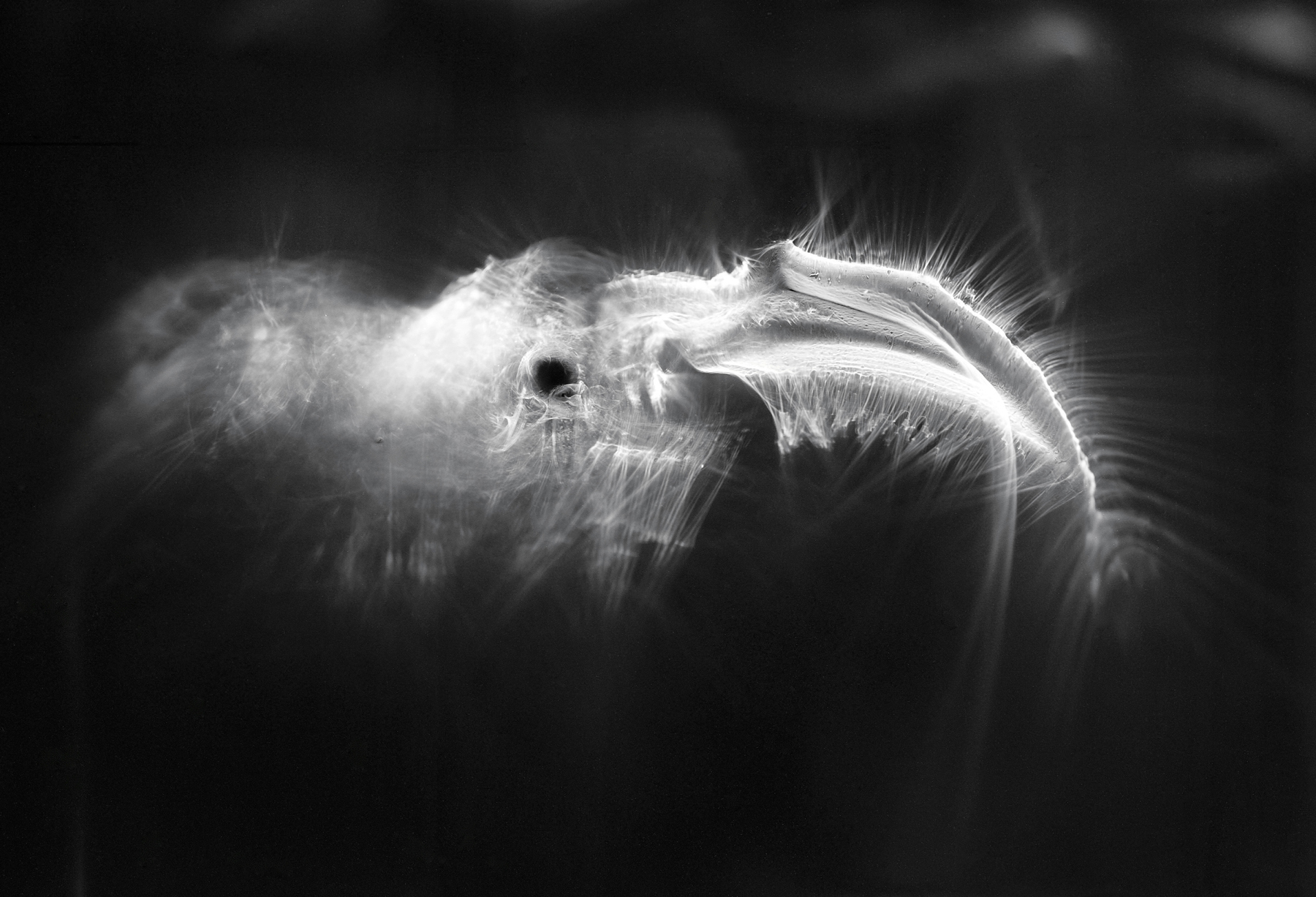
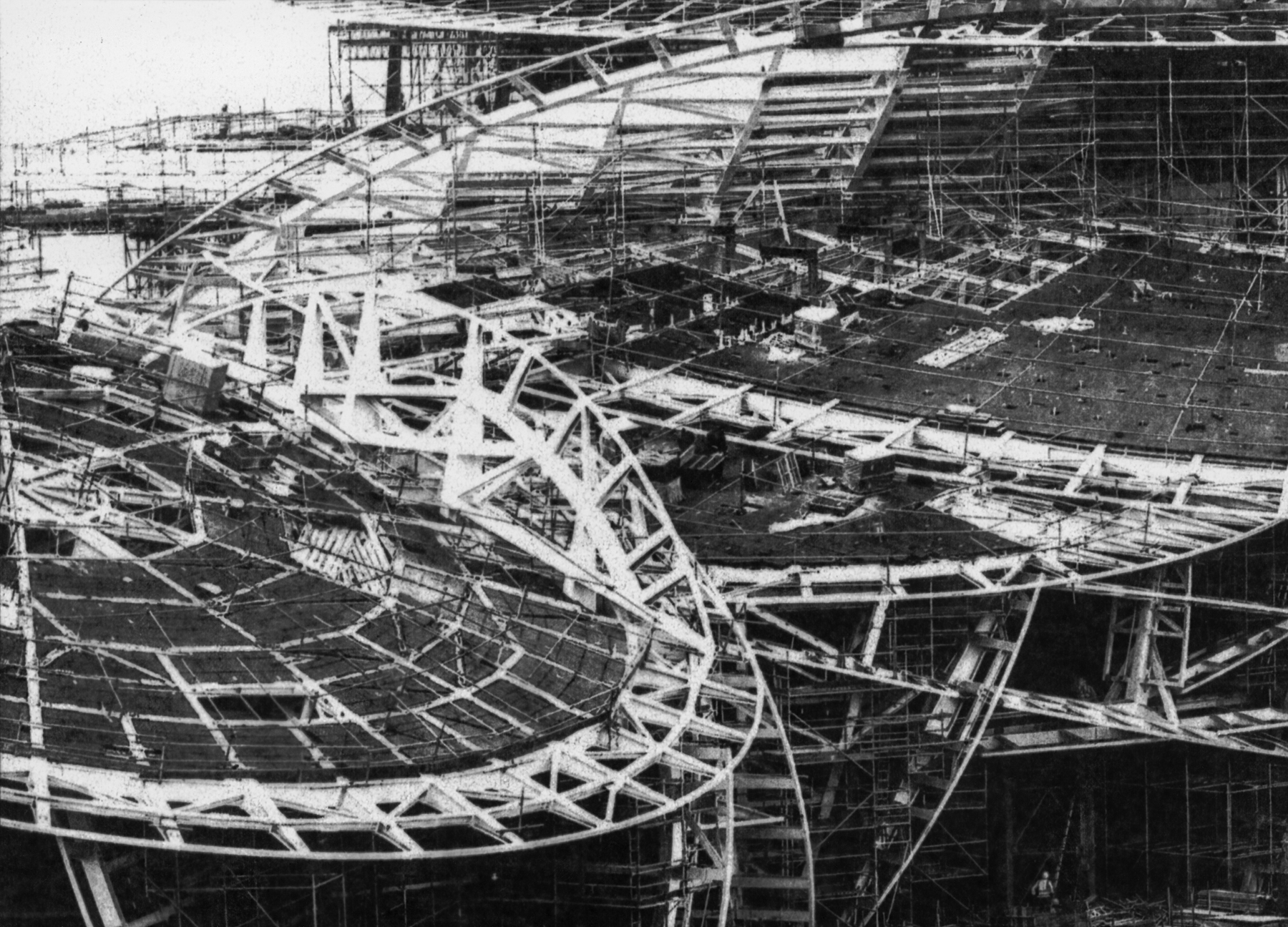
Exhibition: ‘New Woman, New Vision. Women Photographers of the Bauhaus’ at the Bauhaus-Archiv / Museum für Gestaltung at the Museum für Fotografie, Berlin

Exhibition dates: 17th April – 4th October, 2026

Curators: Kristin Bartels, with Carla Huttenloher serving as the assistant (or curatorial) curator

Artists featured in the exhibition: Gertrud Arndt; Ellen Auerbach; Irene Bayer; Lotte Beese; Irena Blühov; Marianne Brandt; Lotte Gerson-Collein; Barbara Crane (New Bauhaus); Margarete Dambeck-Keller; Charlotte Grunert; Ise Gropius; Ise Gropius; Toni von Haken-Schrammen; Florence Henri; Catherine Hinkle (New Bauhaus); Irene Hoffmann; Hilde Hubbuch; Grit Kallin-Fischer; Judit Kárász; Ivana Meller-Tomljenović; Etel Mittag-Fodor; Lucia Moholy; Lony Neumann; Ricarda Schwerin; Ré Soupault; Grete Stern; Elsa Thiemann; Else Tholstrup (New Bauhaus); Mili Thompson (New Bauhaus); Edith Tudor-Hart
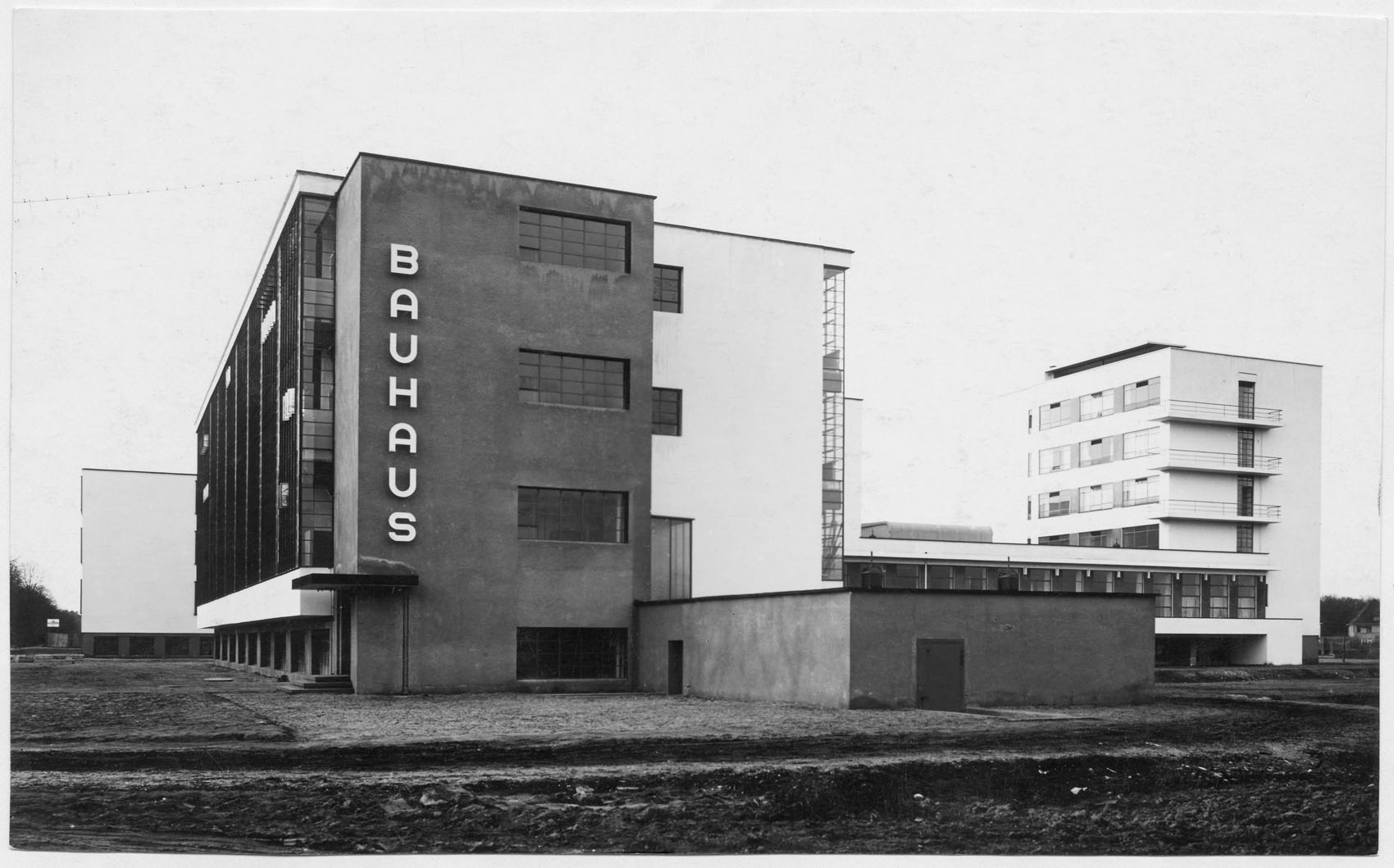
 

Lucia Moholy (British born Czech, 1894-1989) 'Architekt - Walter Gropius Bauhaus-Gebäude Dessau (1925-1926)' (Architect: Walter Gropius, Bauhaus building Dessau (1925-1926)) 1927


Lucia Moholy (British born Czech, 1894-1989)
Architekt – Walter Gropius Bauhaus-Gebäude Dessau (1925-1926) (Architect: Walter Gropius, Bauhaus building Dessau (1925-1926))
1927
Bauhaus-Archiv Berlin
© VG Bild-Kunst, Bonn 2026


I am always learning about photography.

This is the case with some of the female photographers in this posting, many unknown to me. What a joy it is to see their photographs.

It is a blessing to be able to study their life story, to imbibe (take in ideas and knowledge) of their art, to acknowledge and admire these New Women who had a passion for seeing the world in new ways, using photography as an artistic and social instrument.

I know the work of that accomplished artist Lucia Moholy (British born Czech, 1894-1989) who made focused, thoughtful, beautiful photographs; Marianne Brandt (German, 1893-1983); socialist Edith Tudor-Hart (British born Austria, 1908-1973); modernist, surrealist Grete Stern (Argentine born Germany, 1904-1999); and the ever inventive Gertrud Arndt (German, 1903-2000) who has never had a posting on Art Blart because of the paucity of exhibitions on her work.

What I didn’t know were the photographs of Etel Mittag-Fodor (Hungarian, 1905-2005), Grit Kallin-Fischer (German, 1897-1973), Ivana Meller-Tomljenović (Croatia, 1906-1988) – I love all these double-barrelled surnames! – Lotte Collein (German, 1905-1995), Lony Neumann (German, 1902-1996), Ré Soupault (French-German born Poland, 1901-1996) and Elsa Thiemann (German born Poland, 1910-1981).

How exciting and a little dangerous it must have been to have studied at the Bauhaus during this period,1 early 1920s-1933 (the photography course established in 1929), before the “school’s leadership voted to dissolve it in July 1933 under intense police raids, harassment, and crushing political pressure from the Nazi regime who labelled its avant-garde, modern style as “degenerate”.” (Google AI)

To be part of a school that contained an incredible coterie of friends and artists which, then and now, continues to construct important social, cultural and artistic legacies.

Through knowledge hopefully wisdom.

Dr Marcus Bunyan


1/ “Under the Nazi regime, about twenty Bauhauslers are known to have been killed in prison or concentration camps. Some emigrated, while others adapted and participated in propaganda exhibitions and design fairs, produced photographic and graphic works such as magazine covers, movie posters, and designed furniture, carpets, household objects and even busts of Hitler. Of 119 teaching staff c. 15 emigrated between 1933 and 1938. Of the c. 1,250 students who were enrolled when Hitler came to power in 1933, approximately 900 are thought to have remained in Germany. Of those, 188 joined the National Socialist Party (170 men and 18 women), 14 were part of the brown shirts, 12 joined the SS, and one was involved in the design of the crematoria at Auschwitz.”

Anonymous. “Bauhaus,” on the Wikipedia website Nd [Online] Cited 18/09/2026


Many thankx to the Museum für Fotografie for allowing me to publish the photographs in the posting. Please click on the photographs for a larger version of the image.
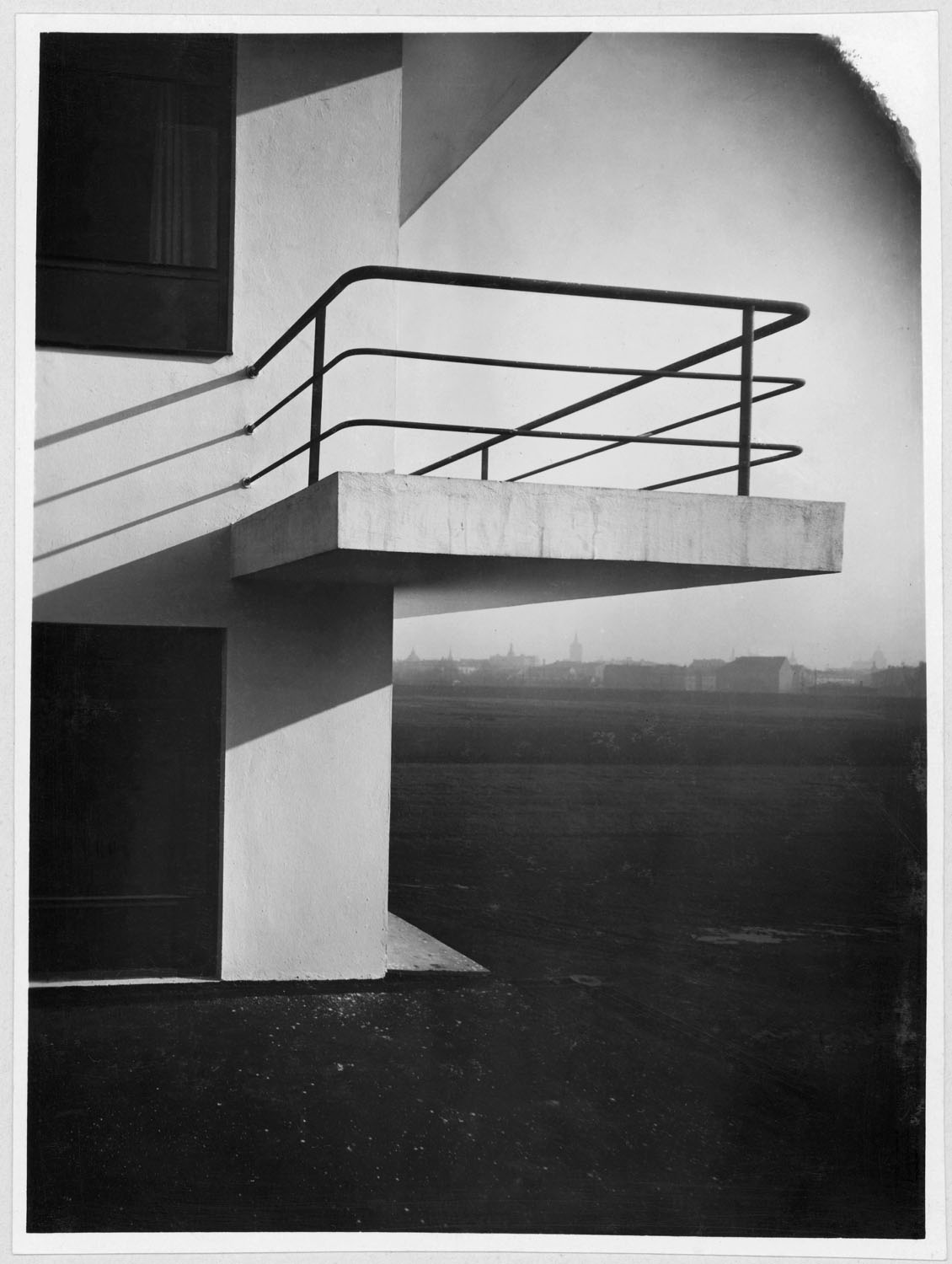


Lucia Moholy (British born Czech, 1894-1989) 'Architekt - Walter Gropius Bauhaus-Gebäude Dessau (1925-1926) Balkon am Ateliergebäude' (Architect - Walter Gropius Bauhaus building Dessau (1925-1926) Balcony on the studio building) 1926


Lucia Moholy (British born Czech, 1894-1989)
Architekt – Walter Gropius Bauhaus-Gebäude Dessau (1925-1926) Balkon am Ateliergebäude (Architect – Walter Gropius Bauhaus building Dessau (1925-1926) Balcony on the studio building
1926
Bauhaus-Archiv Berlin
© VG Bild-Kunst, Bonn 2026
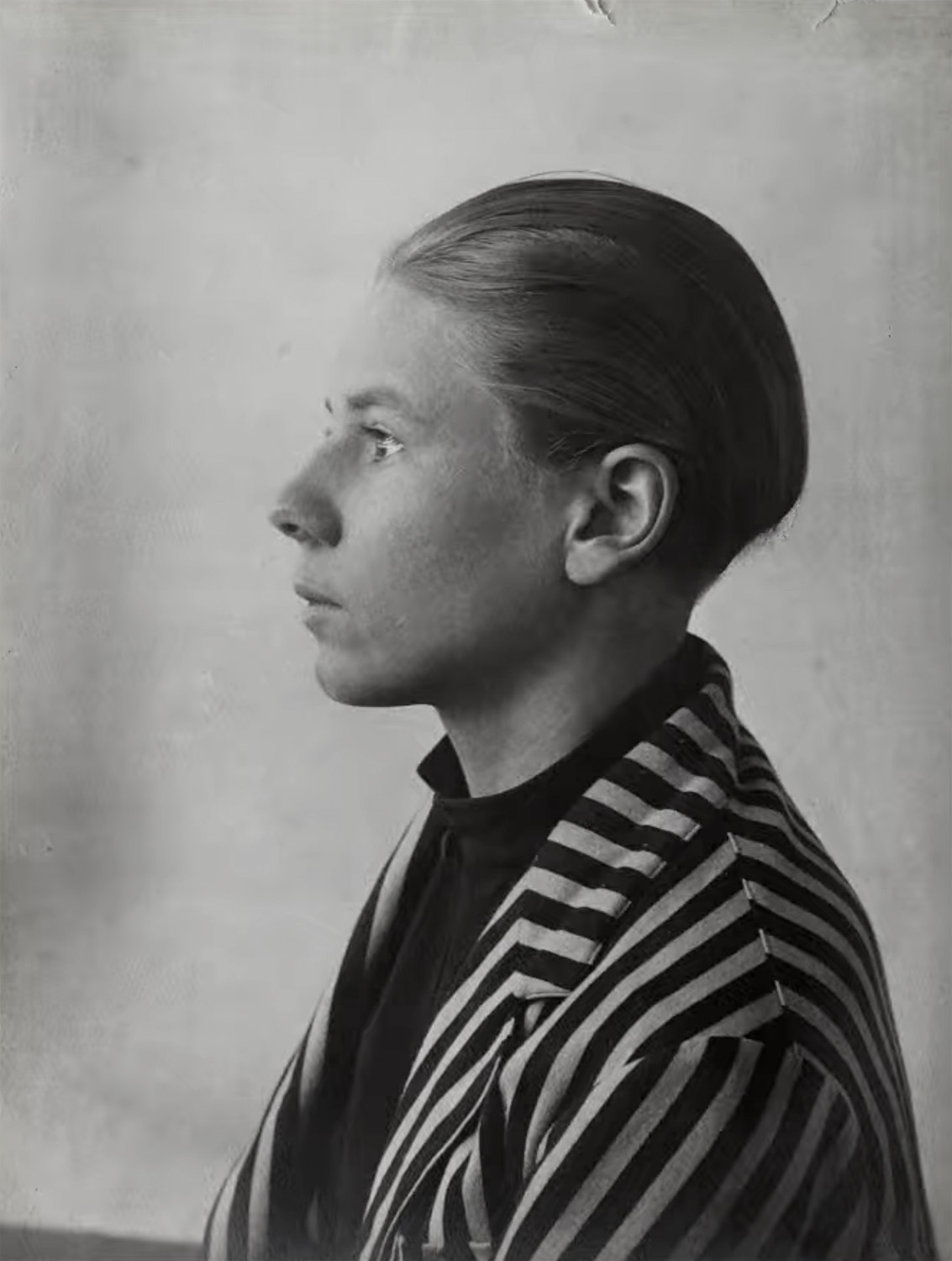
 

Lucia Moholy (British born Czech, 1894-1989) 'Porträt Lou Scheper Im Profil von links' (Portrait of Lou Scheper In profile from left) 1927


Lucia Moholy (British born Czech, 1894-1989)
Porträt Lou Scheper Im Profil von links (Portrait of Lou Scheper in profile from left)
1927
Bauhaus-Archiv Berlin
© VG Bild-Kunst, Bonn 2026
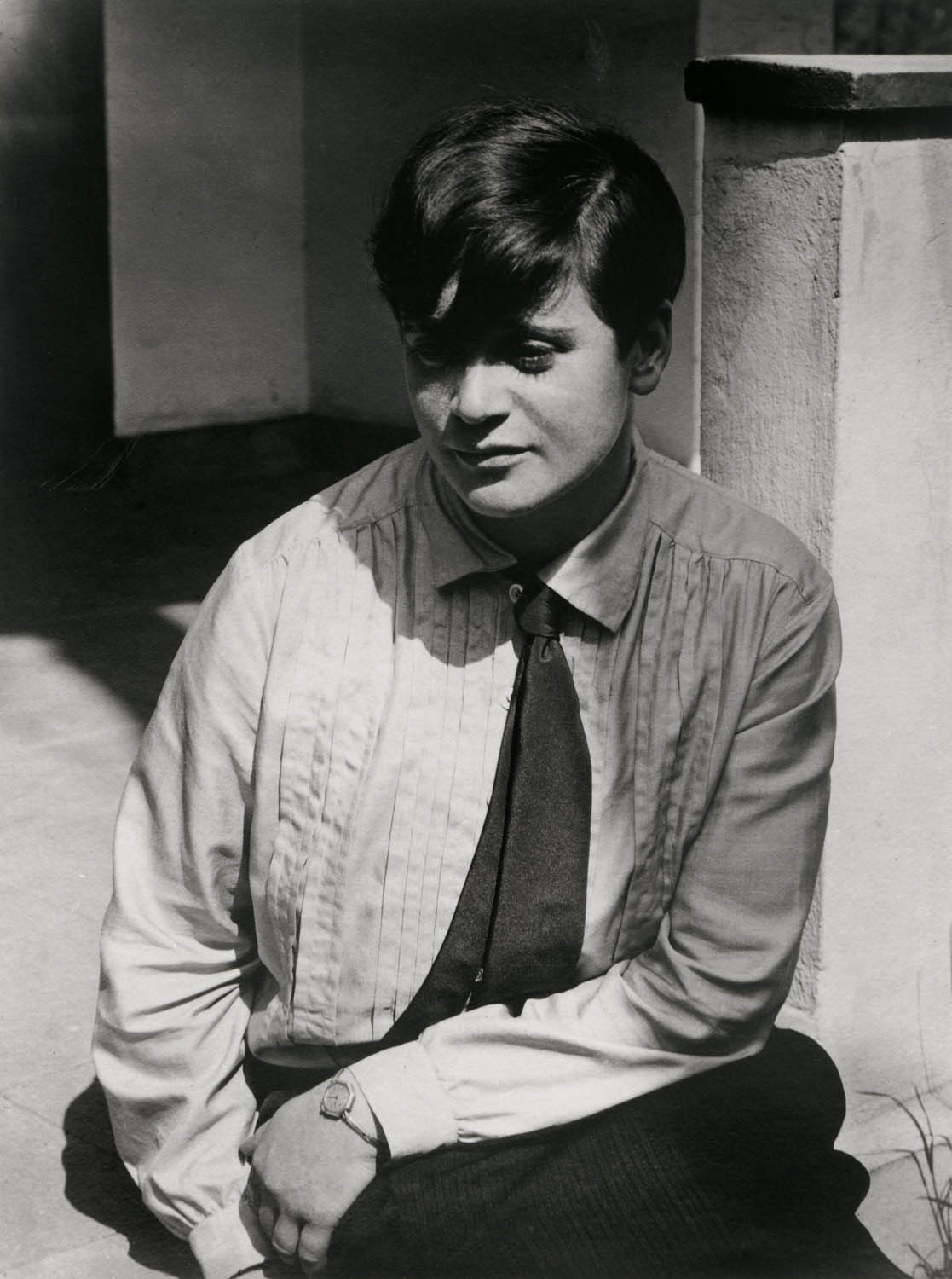
 

Lucia Moholy (British born Czech, 1894-1989) 'Porträt Eva Weininger auf der Treppe zur Veranda eines Meisterhauses in Dessau' (Portrait of Eva Weininger on the steps to the veranda of a master's house in Dessau) 1927


Lucia Moholy (British born Czech, 1894-1989)
Porträt Eva Weininger auf der Treppe zur Veranda eines Meisterhauses in Dessau (Portrait of Eva Weininger on the steps to the veranda of a master’s house in Dessau)
1927
Bauhaus-Archiv Berlin
© VG Bild-Kunst, Bonn 2026
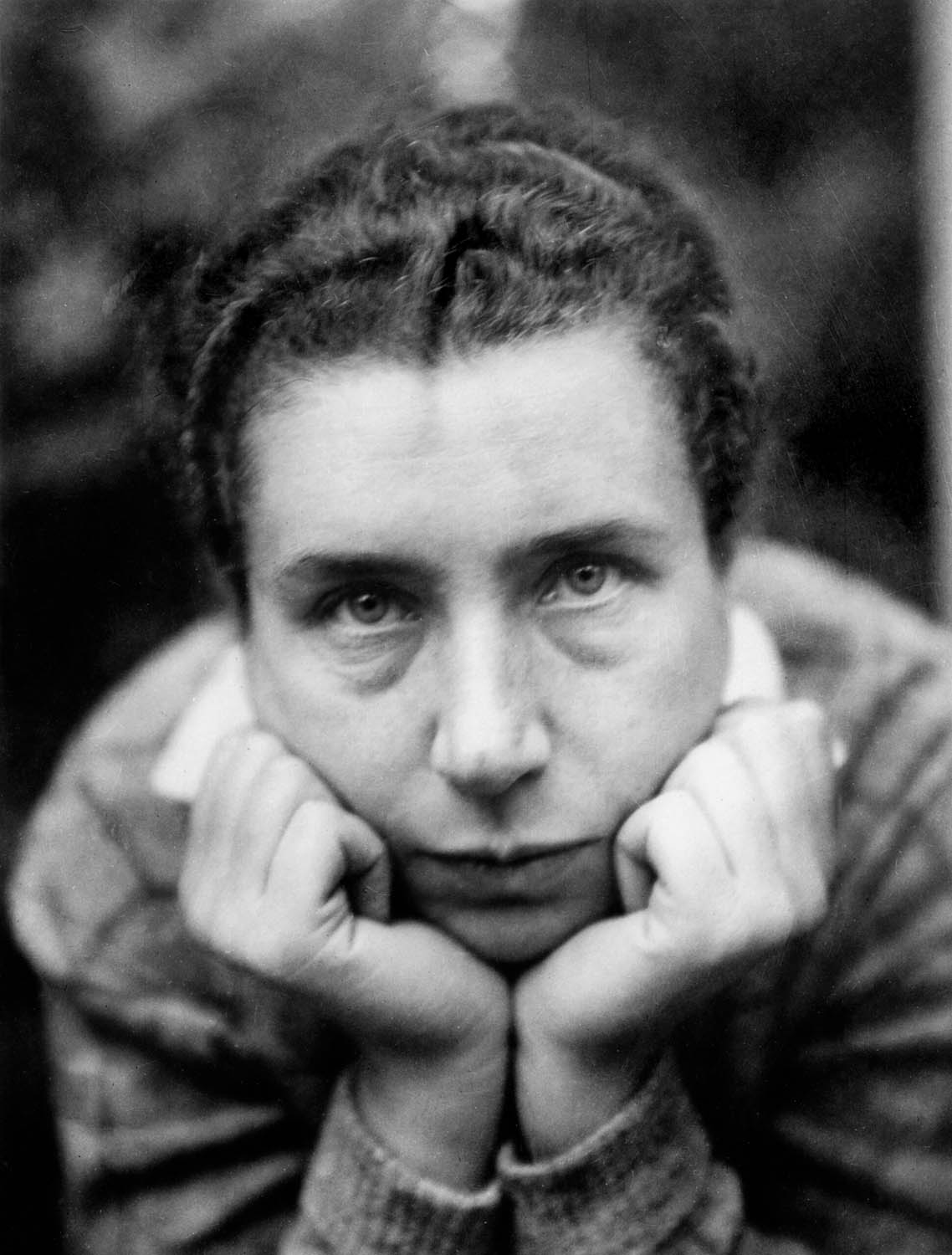
 

Lucia Moholy (British born Czech, 1894-1989) 'Selbstporträt' (Self-portrait) 1930


Lucia Moholy (British born Czech, 1894-1989)
Selbstporträt (Self-portrait)
1930
Bauhaus-Archiv Berlin
© VG Bild-Kunst, Bonn 2026


Lucia Moholy (British born Czech, 1894-1989)

Lucia Moholy, née Schulz, was born in Prague on 18 January 1894. After studying art history and philosophy, she began working as an editor and proofreader at various publishing houses in Germany in 1915. In 1921 she married the artist László Moholy-Nagy. The couple experimented with photograms and wrote texts on the theory of photography. In 1923 Moholy-Nagy received a teaching position at the Bauhaus in Weimar. Lucia Moholy trained in Otto Eckner’s photography studio there, and she additionally attended photo and printing courses at Leipzig’s Academy of Graphic Arts and Book Trade. Between 1923 and 1928, Moholy photographed the Bauhaus: buildings, workshops, products, teachers and students. Her photos continue to shape the image of the school today. In 1928 the couple left the Bauhaus and moved to Berlin. They separated one year later. In 1930 Moholy became head of the photography class at the Itten-School in Berlin. At the same time, she started gathering material for a history of photography. In 1933 her partner, the communist politician Theodor Neubauer, was arrested by the Nazis and Moholy had to flee Berlin. By way of Prague, Vienna and Paris, she reached London, where she established herself as a portrait photographer. Her book “A Hundred Years of Photography” appeared in 1939 and became a bestseller. She began documenting British archival material on microfilm in 1941 and later worked for UNESCO. In 1959 Lucia Moholy moved to Zurich, where she worked as an author and art critic. She died there on 17 May 1989.

Text from the Bauhaus-Archiv website
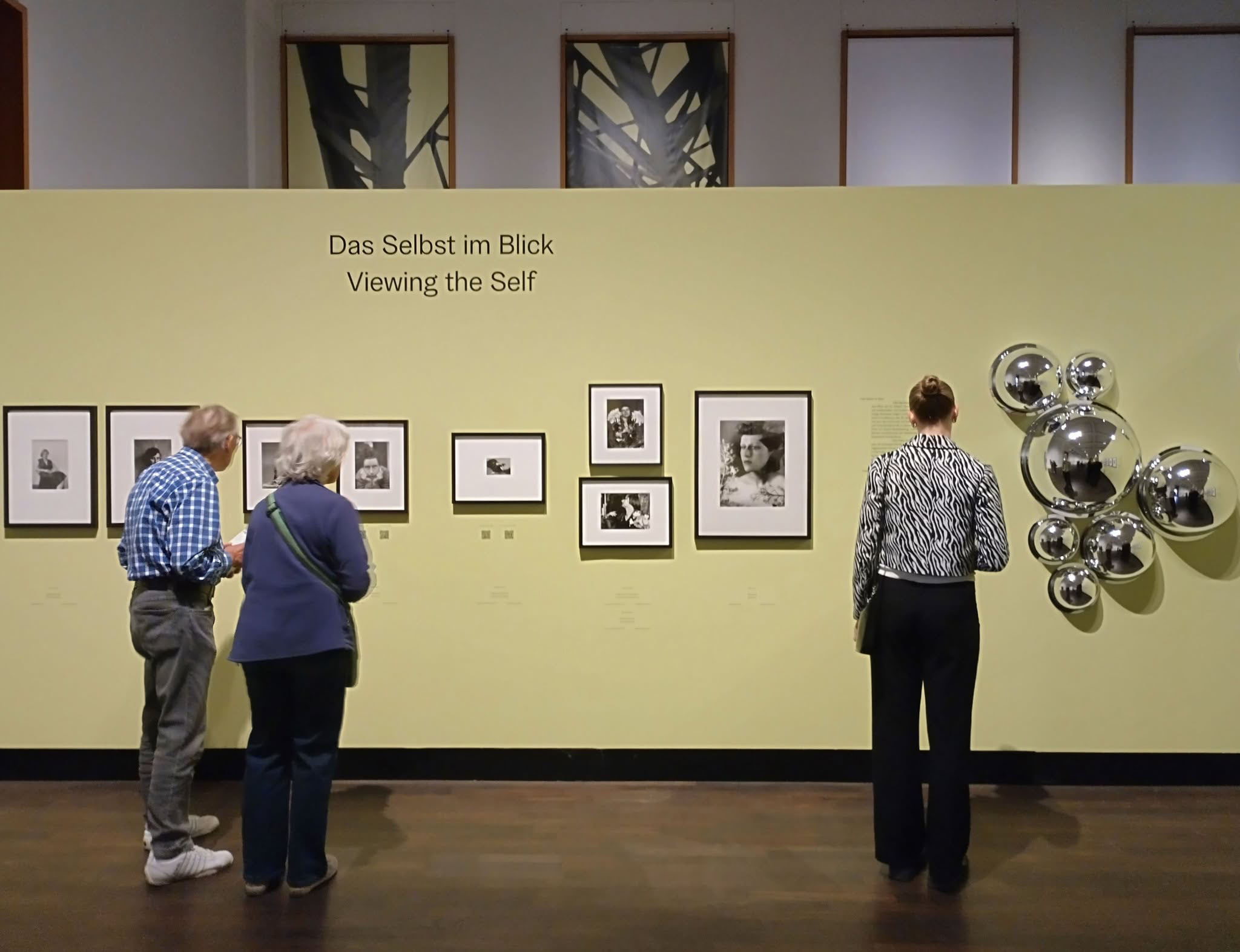
 

Installation view of the exhibition 'New Woman, New Vision. Women Photographers of the Bauhaus' at the Bauhaus-Archiv / Museum für Gestaltung at the Museum für Fotografie, April - October 2026


Installation view of the exhibition New Woman, New Vision. Women Photographers of the Bauhaus at the Bauhaus-Archiv / Museum für Gestaltung at the Museum für Fotografie, April – October 2026, showing the work of Lucia Moholy and Marianne Brandt
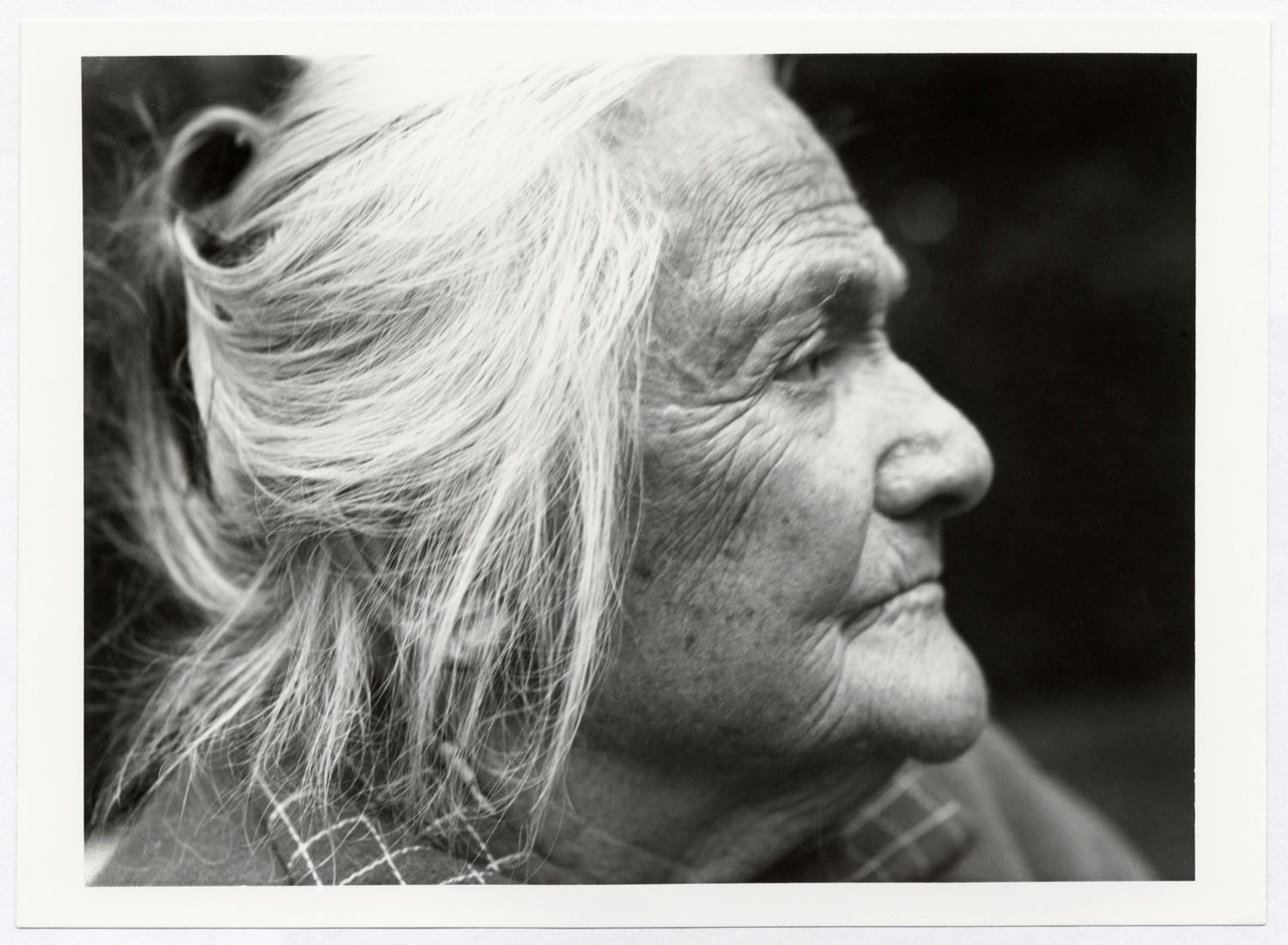
 

Lucia Moholy (British born Czech, 1894-1989) 'Porträt Clara Zetkin' (Portrait of Clara Zetkin) c. 1930


Lucia Moholy (British born Czech, 1894-1989)
Porträt Clara Zetkin (Portrait of Clara Zetkin)
c. 1930
Bauhaus-Archiv Berlin
© VG Bild-Kunst, Bonn 2026
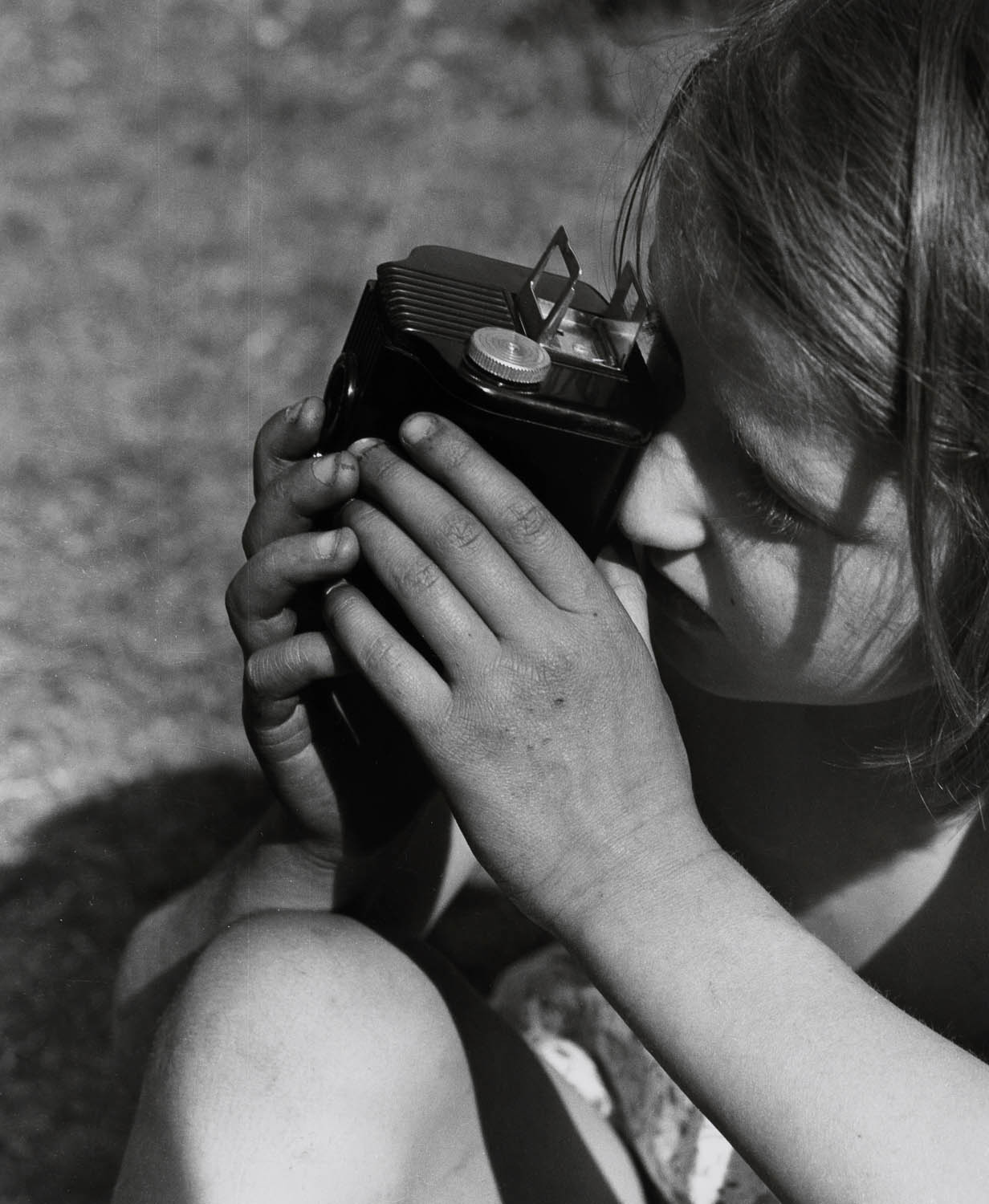
 

Lucia Moholy (British born Czech, 1894-1989) 'Mädchen mit Kamera beim Fotograeren (Lucia Tochter von Yella und Hans Curjel)' (Girl with camera taking photos (Lucia, daughter of Yella and Hans Curjel)) c. 1929


Lucia Moholy (British born Czech, 1894-1989)
Mädchen mit Kamera beim Fotograeren (Lucia Tochter von Yella und Hans Curjel) (Girl with camera taking photos (Lucia, daughter of Yella and Hans Curjel))
c. 1929
Bauhaus-Archiv Berlin
© VG Bild-Kunst, Bonn 2026
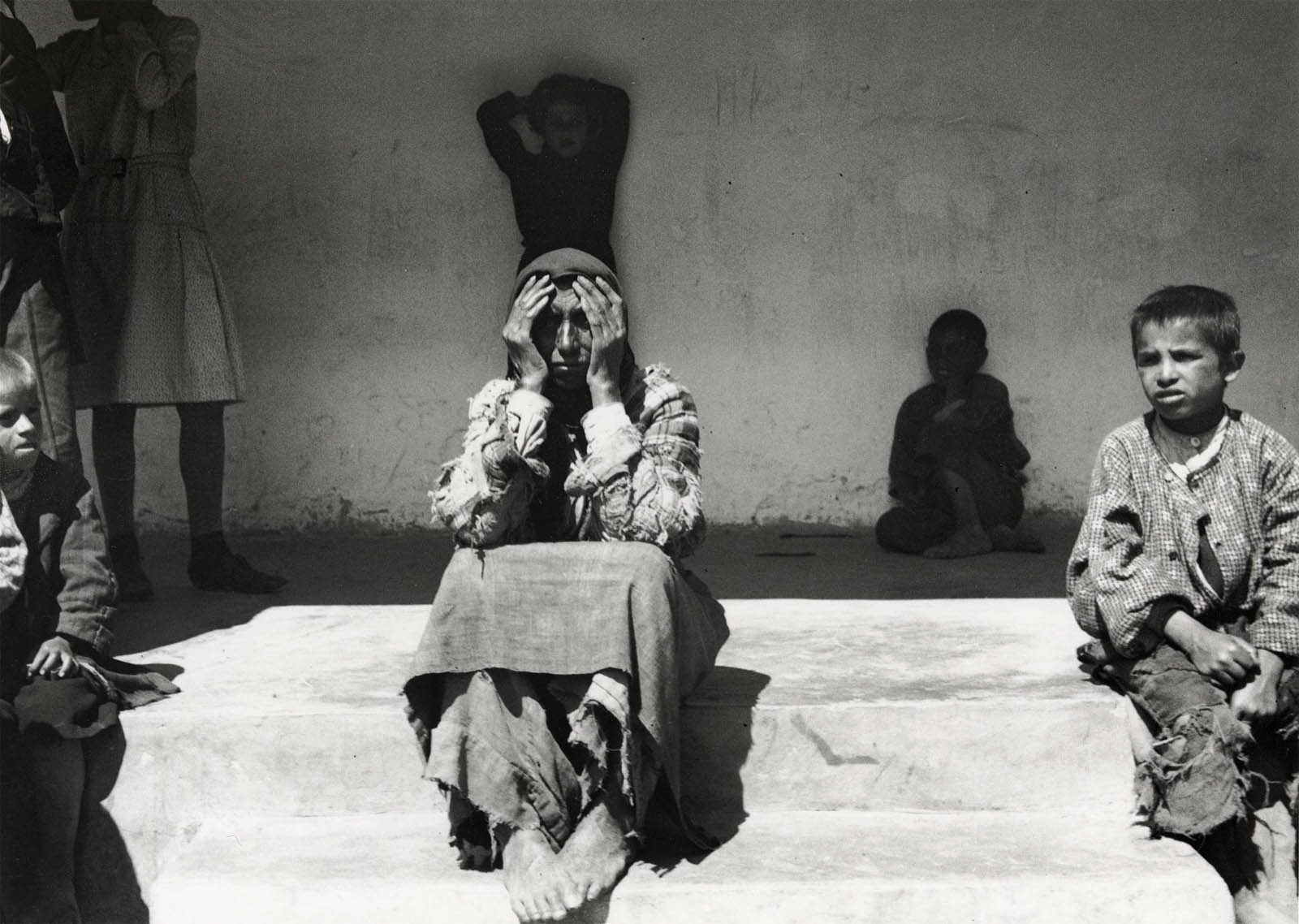
 

Lucia Moholy (British born Czech, 1894-1989) 'Frau auf Treppe Jugoslawien' (Woman on stairs, Yugoslavia) 1932


Lucia Moholy (British born Czech, 1894-1989)
Frau auf Treppe Jugoslawien (Woman on stairs, Yugoslavia)
1932
Bauhaus-Archiv Berlin
© VG Bild-Kunst, Bonn 2026


Outstanding women photographers have been around since the invention of photography in the early 19th century. They experimented with photographic and artistic techniques and probed the boundaries of the new medium. So too did the women photographers of the Bauhaus. They observed the world around them through the camera lens and often captured subjects from novel and unconventional perspectives. The spectrum of their artistic production ranges from figurative portraits and architectural photography to abstract photographic experimentation.

The exhibition features some 300 photographs from the collection of the Bauhaus-Archiv / Museum für Gestaltung in Berlin. Many people today are familiar with the iconic images, but only few are aware of the women who recorded them. With this exhibition, the Bauhaus-Archiv celebrates the significant contribution of these women artists and their photographic oeuvre for the first time. The photographs by these Bauhaus artists will be complemented by others produced by women artists from the Institute of Design in Chicago (New Bauhaus), the successor institution of the Bauhaus in the USA.

Even now in the 21st century, women artists continue to explore the multifaceted potential of photography. Like the Bauhaus women before them, they seek to capture the present day in the photographic moment while challenging the conventional forms of the medium. For this exhibition, the Bauhaus-Archiv has invited three contemporary women artists – Kalinka Gieseler, Caroline Kynast and Sinta Werner – to engage in dialogue with the historic photographs

A special exhibition of the Bauhaus-Archiv / Museum für Gestaltung in cooperation with the Kunstbibliothek – Staatliche Museen zu Berlin

Text from the Staatliche Museen zu Berlin website
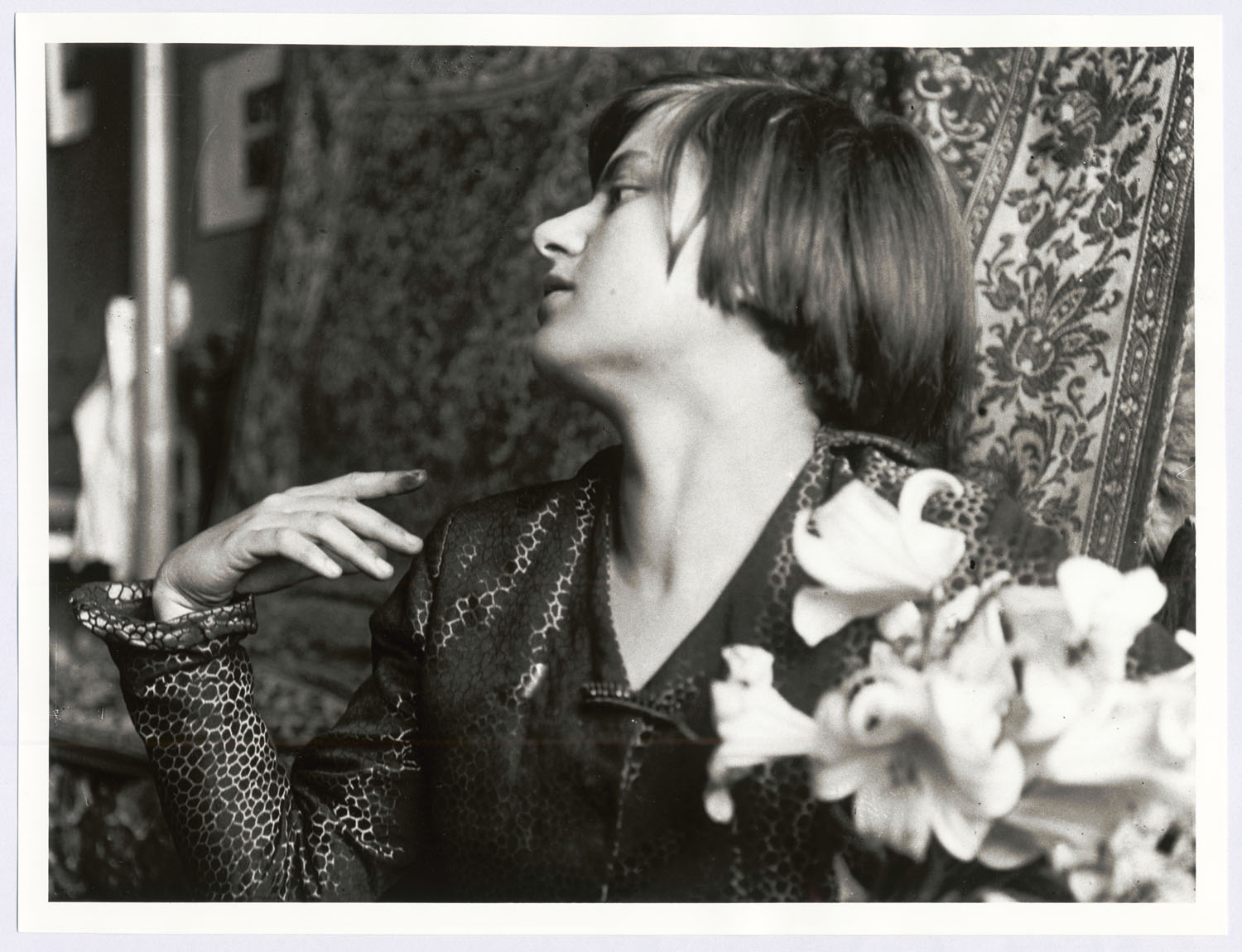
 

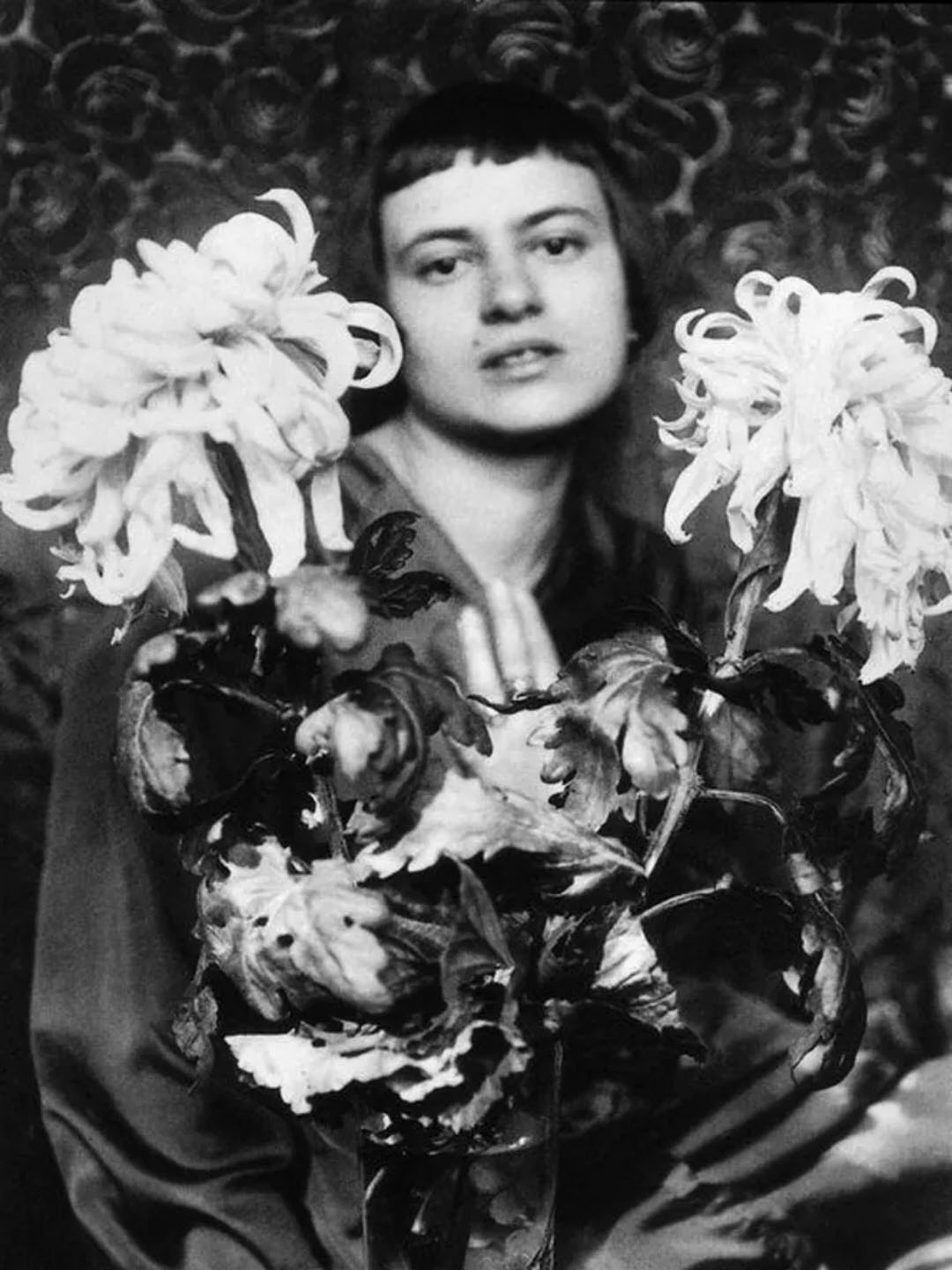
Marianne Brandt (German, 1893-1983) 'Selbstporträt mit Lilien' (Self-portrait with lilies) c. 1923


Marianne Brandt (German, 1893-1983)
Selbstporträt mit Lilien (Self-portrait with lilies)
c. 1923
Bauhaus-Archiv Berlin
© VG Bild-Kunst, Bonn 2026


Marianne Brandt (German, 1893-1983)

Marianne Brandt, née Liebe, was born in Chemnitz on 1 October 1893. In 1911 she began studying painting at the School for Fine Arts in Weimar. In 1919 she married the painter Erik Brandt. The couple lived together in Oslo and Paris for a number of years. After she returned to Germany, Brandt initially studied sculpture in Weimar. In 1924 the artist switched to the Bauhaus, where she was trained by László Moholy-Nagy in the metal workshop. She celebrated her first successes as a designer and became acting head of the workshop in 1928. Inspired by the Parisian avant-garde as well as by Moholy-Nagy, Brandt also began to occupy herself intensively with photography. She created self-portraits, photocollages and experimental images. Instead of accepting an offer to receive training in Walter Peterhans’s photo class, she decided to leave the Bauhaus in 1929. Several of her photographs could be seen that same year in the section “Photography at the Bauhaus” at the “Film und Foto” exhibition in Stuttgart. After briefly working at Walter Gropius’s construction office in Berlin, Brandt worked as a designer for the Ruppelwerke metalware factory in Gotha until 1932. She continued to shoot photographs, particularly private ones. When the Nazis came to power, Brandt lost her job and returned back to Chemnitz. From 1949 to 1954, she taught at the University of Applied Arts in Dresden and the institute of industrial design at School of Art and Design Berlin-Weissensee. She then designed lamps and radiators for production in East Germany and once again dedicated her attention to painting and photography. Marianne Brandt died in Kirchberg on 18 June 1983.

Text from the Bauhaus-Archiv website
 

Marianne Brandt (German, 1893-1983) 'Selbstporträt' (Self-portrait) c. 1929


Marianne Brandt (German, 1893-1983)
Selbstporträt (Self-portrait)
c. 1929
Bauhaus-Archiv Berlin
© VG Bild-Kunst, Bonn 2026
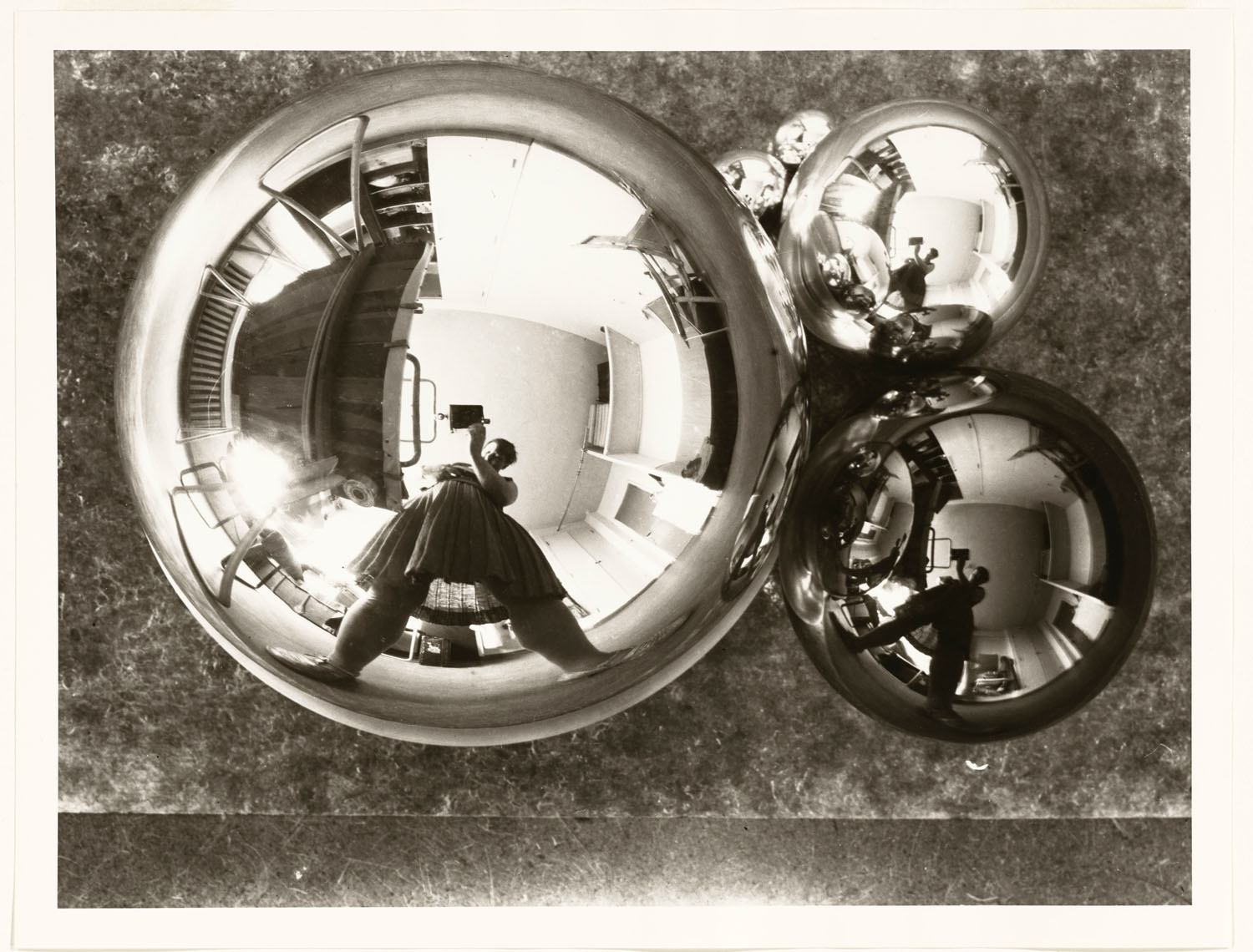
 

Marianne Brandt (German, 1893-1983) 'Selbstporträt mit Kamera im Atelier in der Kugel gespiegelt Bauhaus Dessau' (Self-portrait with camera in the studio, reflected in the sphere, Bauhaus Dessau) c. 1928-1929


Marianne Brandt (German, 1893-1983)
Selbstporträt mit Kamera im Atelier in der Kugel gespiegelt Bauhaus Dessau (Self-portrait with camera in the studio, reflected in the sphere, Bauhaus Dessau)
c. 1928-1929
Bauhaus-Archiv Berlin
© VG Bild-Kunst, Bonn 2026
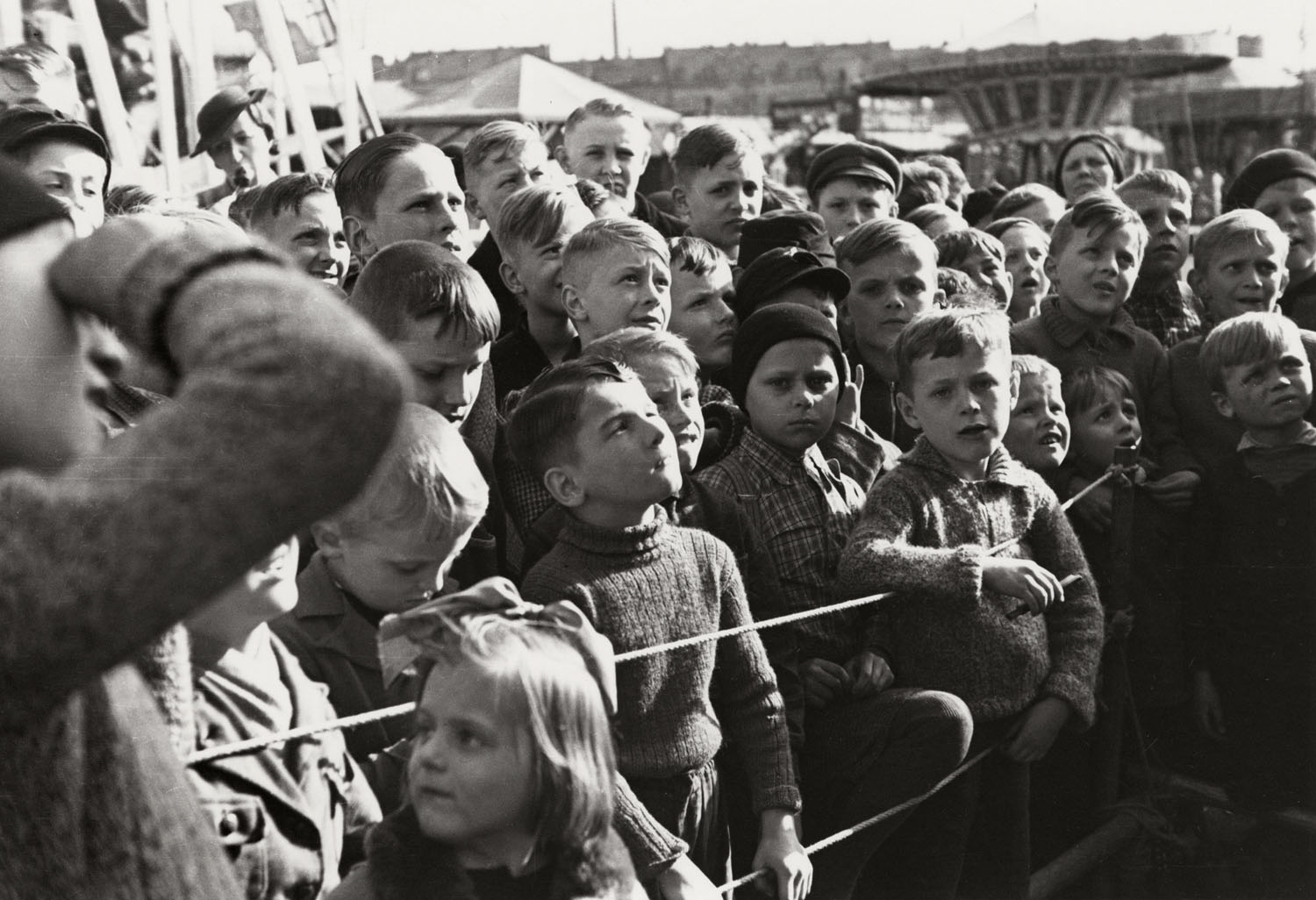
 

Marianne Brandt (German, 1893-1983) 'Wartende Kinder' (Waiting children) 1928


Marianne Brandt (German, 1893-1983)
Wartende Kinder (Waiting children)
1928
Bauhaus-Archiv Berlin
© VG Bild-Kunst, Bonn 2026
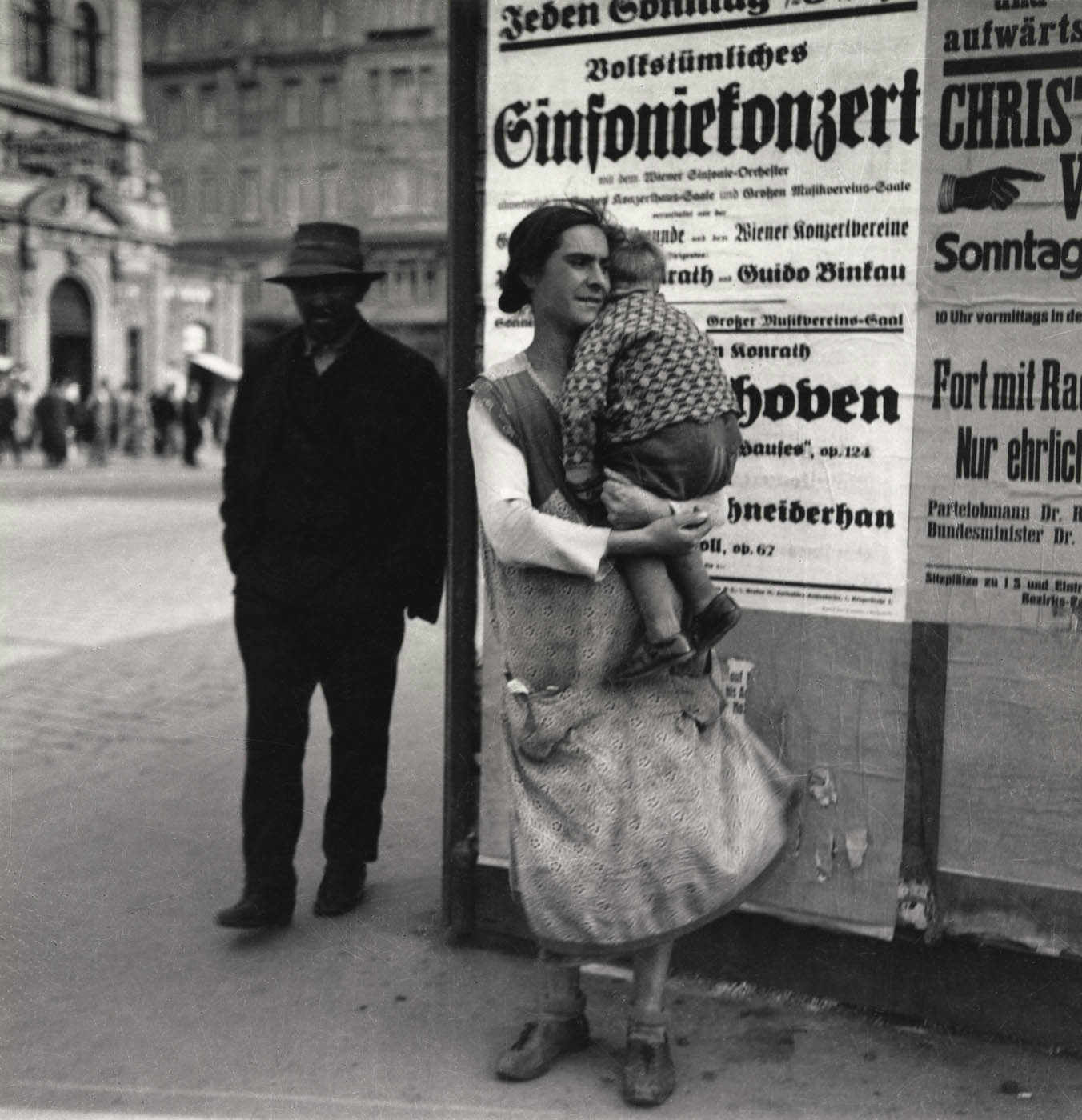
 

Edith Tudor-Hart (British born Austria, 1908-1973) 'Frau und Kind Wien' (Woman and child Vienna) c. 1930


Edith Tudor-Hart (British born Austria, 1908-1973)
Frau und Kind Wien (Woman and child Vienna)
c. 1930
Bauhaus-Archiv Berlin
© Peter Suschitzky


Edith Tudor-Hart (British born Austria, 1908-1973)

Edith Tudor-Hart, née Suschitzky, was born in Vienna on 28 August 1908. Her father and uncle ran a left-wing bookstore in a working-class neighborhood. In 1925 her training as a Montessori educator led her to London for an internship. Tudor-Hart began studying at the Bauhaus in Dessau in 1929, and she attended Walter Peterhans’s photography class there in 1930. During a 1931 stay in England, her connections to the Communist Party led to her deportation, and she returned to Vienna. There she produced photographs for the Soviet news agency TASS. Her social-documentary photo essays were published in periodicals such as the “Arbeiter-Illustrierte-Zeitung (AIZ)” as well as “Kuckuck”. In 1933 she was arrested for spying for the Communist Party, and large portions of her photographic work were confiscated. She was able to avoid conviction by marrying the doctor Alexander Tudor-Hart. That same year, the couple emigrated to England, where their son was born in 1936. Tudor-Hart’s photography provided the family’s sole source of income while her husband was serving as a doctor in the Spanish Civil War. She concentrated on documentary photography. For example, she created a photo essay on child education for England and Wales’s Ministry of Education. Her continued espionage activities repeatedly drew the scrutiny of the British secret service. This constant surveillance led her to destroy large portions of her work. Impoverished, she moved to Brighton, where she worked as an antique dealer. Edith Tudor-Hart died there on 12 May 1973.

Text from the Bauhaus-Archiv website
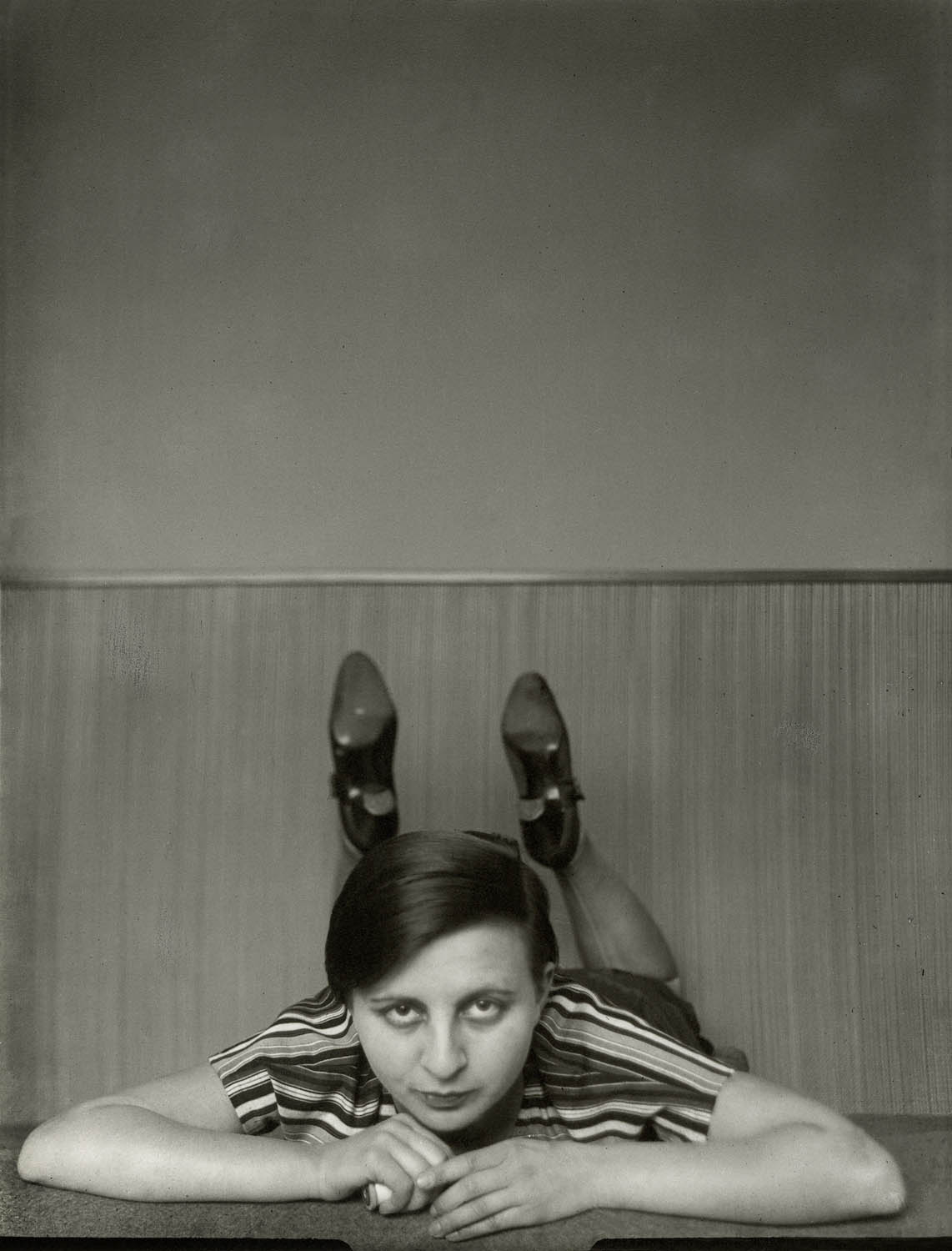
 

Gertrud Arndt (German, 1903-2000) 'Selbstporträt im Atelier Bauhaus Dessau' (Self-portrait in the Bauhaus Dessau studio) 1926


Gertrud Arndt (German, 1903-2000)
Selbstporträt im Atelier Bauhaus Dessau (Self-portrait in the Bauhaus Dessau studio)
1926
Bauhaus-Archiv Berlin
© VG Bild-Kunst, Bonn 2026


Gertrud Arndt (German, 1903-2000)

Gertrud Arndt, née Hantschk, was born in Racibórz (Silesia, Poland) on 20 September 1903. Seeking to become an architect, she began working at the architectural office of Karl Meinhardt in Erfurt in 1919. She simultaneously attended the school of applied arts there. Arndt taught herself photography so that she could document buildings for the architectural office. In 1923 she began studying at the Bauhaus and trained in the weaving workshop. After her final exam in 1927, she stopped weaving and focused on photography again. That same year, she married fellow Bauhaus member and architect Alfred Arndt and moved to Probstzella in Thuringia. There she photographed his construction projects. At the same time, she also created private photographs and photocollages. In 1929 Alfred Arndt was offered a teaching position at the Bauhaus in Dessau. Gertrud Arndt set up a darkroom for herself in the masters’ house and began photographing the activities and life at the school. She created documentary and portrait photos as well as numerous self-portraits. Although Arndt was not a student in Walter Peterhans’s photo class, several of her images were shown together with works from his students in the 1930 travelling exhibition on the Bauhaus. Arndt had her first child in 1931. One year later, the couple returned to Probstzella and, from then on, Arndt devoted her time to her family. In 1948 they fled from the Soviet-occupied zone to western Germany. In 1979 an exhibition at the Folkwang Museum in Essen led to Arndt’s discovery as a photographer. Since that time, her works have been presented in a number of exhibitions and publications. Gertrud Arndt died in Darmstadt on 10 July 2000.

Text from the Bauhaus-Archiv website
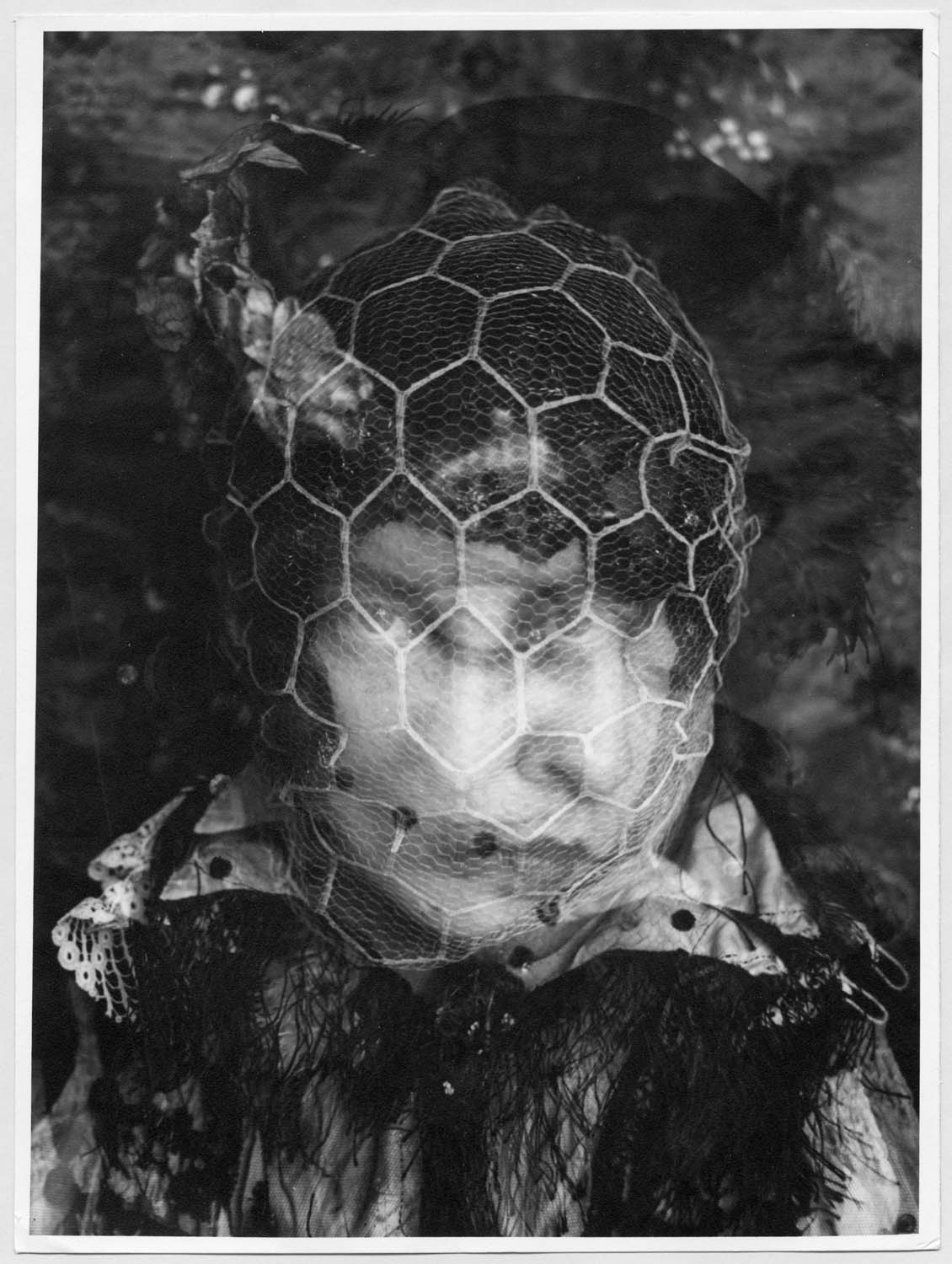
 

Gertrud Arndt (German, 1903-2000) 'Maskenfoto Nr. 16' (Mask photo no. 16) 1930


Gertrud Arndt (German, 1903-2000)
Maskenfoto Nr. 16 (Mask photo no. 16)
1930
Bauhaus-Archiv Berlin
© VG Bild-Kunst, Bonn 2026
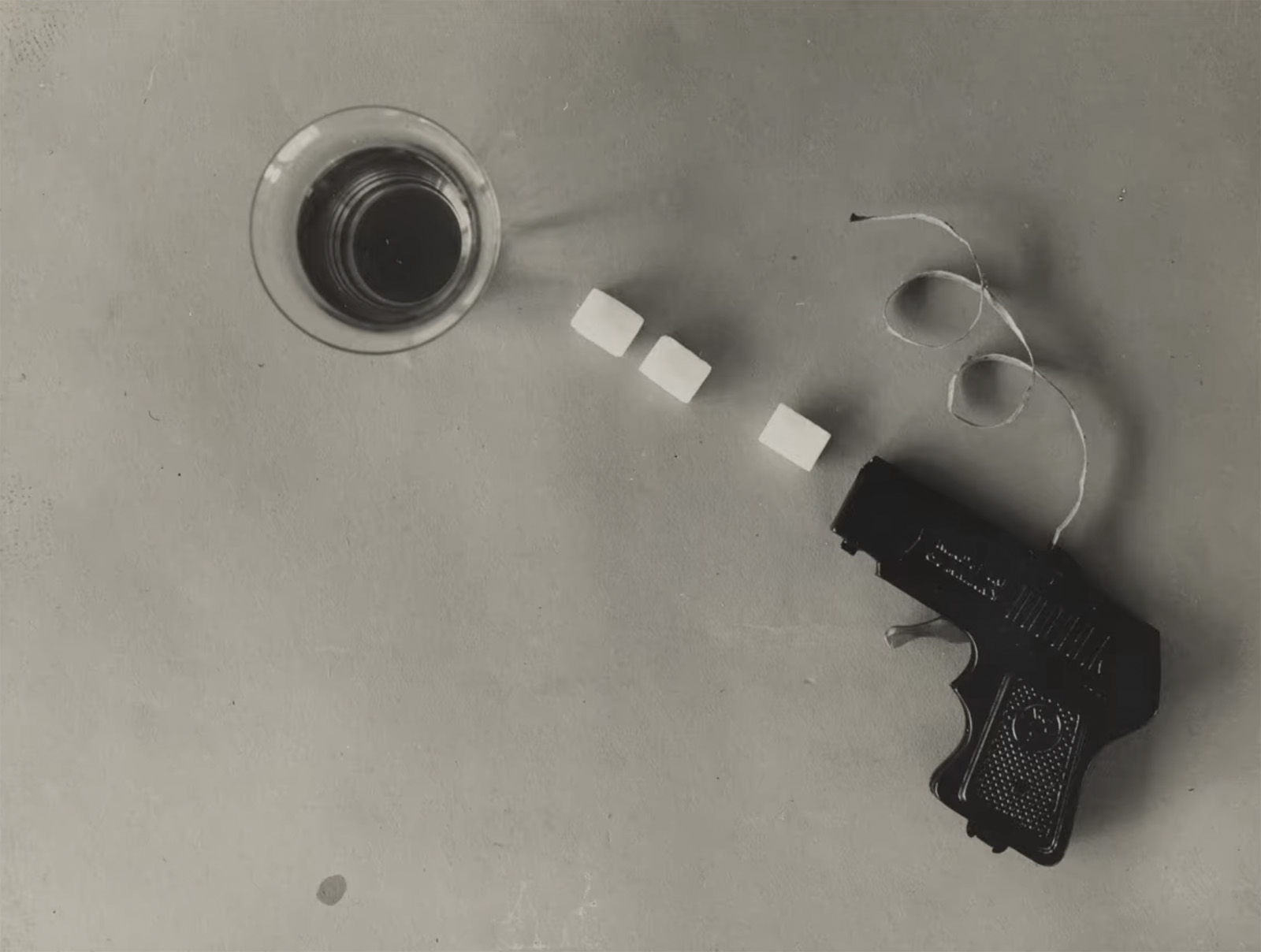
 

Etel Mittag-Fodor (Hungarian, 1905-2005) 'Materialstudie mit Spielzeugpistole, Zuckerstucken und Glas' (Material study with toy gun, sugar cubes and glass) 1928


Etel Mittag-Fodor (Hungarian, 1905-2005)
Materialstudie mit Spielzeugpistole, Zuckerstucken und Glas (Material study with toy gun, sugar cubes and glass)
1928
Bauhaus-Archiv Berlin
© VG Bild-Kunst, Bonn 2026


Etel Mittag-Fodor (Hungarian, 1905-2005)

Etel Mittag-Fodor, née Fodor, was born in Zagreb on 28 December 1905, and grew up in Pécs and Budapest. In 1925 she began studying photography and graphic design at Vienna’s Federal Education and Research Institute for Graphics in Vienna, while also working part-time in a photo studio. In 1928 she decided to study at the Bauhaus in Dessau, where she attended Walter Peterhans’s photography class. She was in a relationship with fellow student Ernst Mittag, whom she married in 1930 to gain independence from her parents’ home and its rules. After Mittag-Fodor left the Bauhaus in 1932, she worked as a freelance photographer for clients, including the newspaper “Arbeiter-Illustrierte-Zeitung (AIZ)”. She was also active in the antifascist resistance from 1933 on. As a Jew, she was no longer granted a work permit. In 1936 she and her husband fled to Pécs by way of Bratislava, where she earned money creating portraits of children. After the birth of their first son in 1938, the family emigrated to South Africa. There, Mittag-Fodor initially photographed architecture but soon began to work as a translator for financial reasons. At the same time, she assisted Ernst Mittag at his architectural office. She turned her attention to weaving in the mid-1960s. Etel Mittag-Fodor died in the Cape Town suburb of Wynberg on 13 August 2005.

Text from the Bauhaus-Archiv website
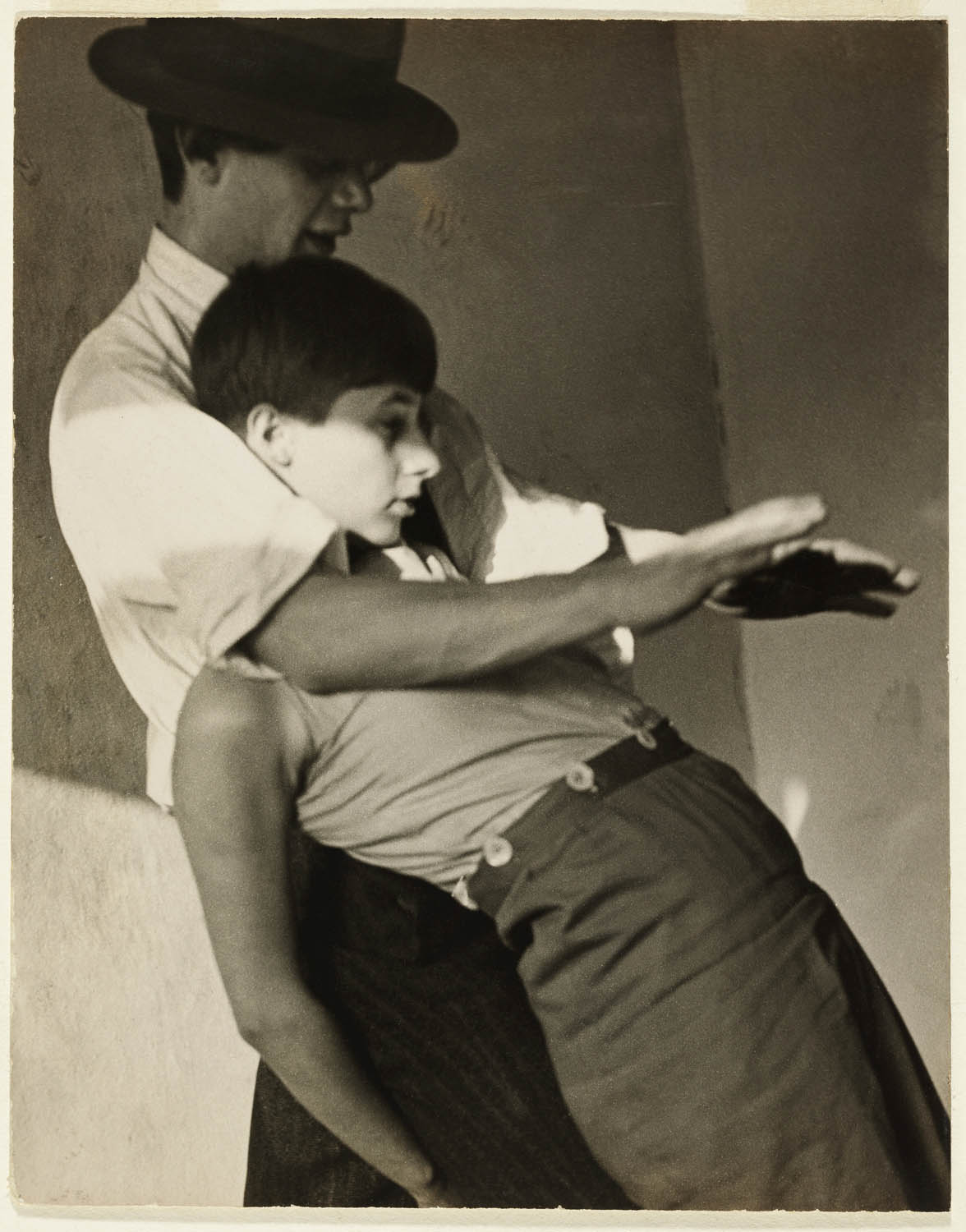
 

Etel Mittag-Fodor (Hungarian, 1905-2005) 'Albert Mentzel und Lotte Rothschild' (Albert Mentzel and Lotte Rothschild) c. 1930


Etel Mittag-Fodor (Hungarian, 1905-2005)
Albert Mentzel und Lotte Rothschild (Albert Mentzel and Lotte Rothschild)
c. 1930
Bauhaus-Archiv Berlin
© VG Bild-Kunst, Bonn 2026
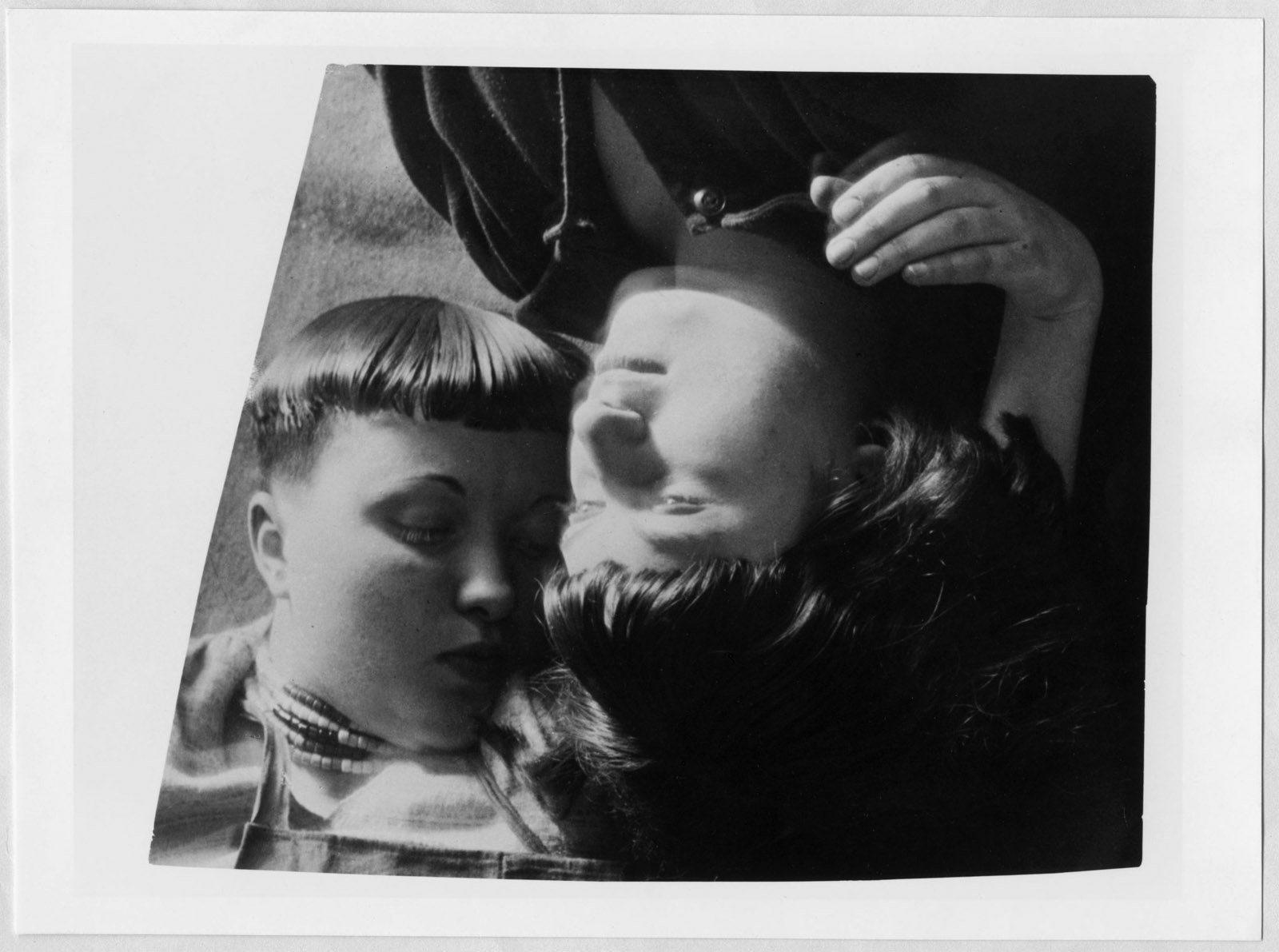
 

Grit Kallin-Fischer (German, 1897–1973) 'Hilde Rantzsch und Miriam Manuckiam' (Hilde Rantzsch und Miriam Manuckiam) 1928


Grit Kallin-Fischer (German, 1897-1973)
Hilde Rantzsch und Miriam Manuckiam (Hilde Rantzsch und Miriam Manuckiam)
1928
Bauhaus-Archiv Berlin
© VG Bild-Kunst, Bonn 2026
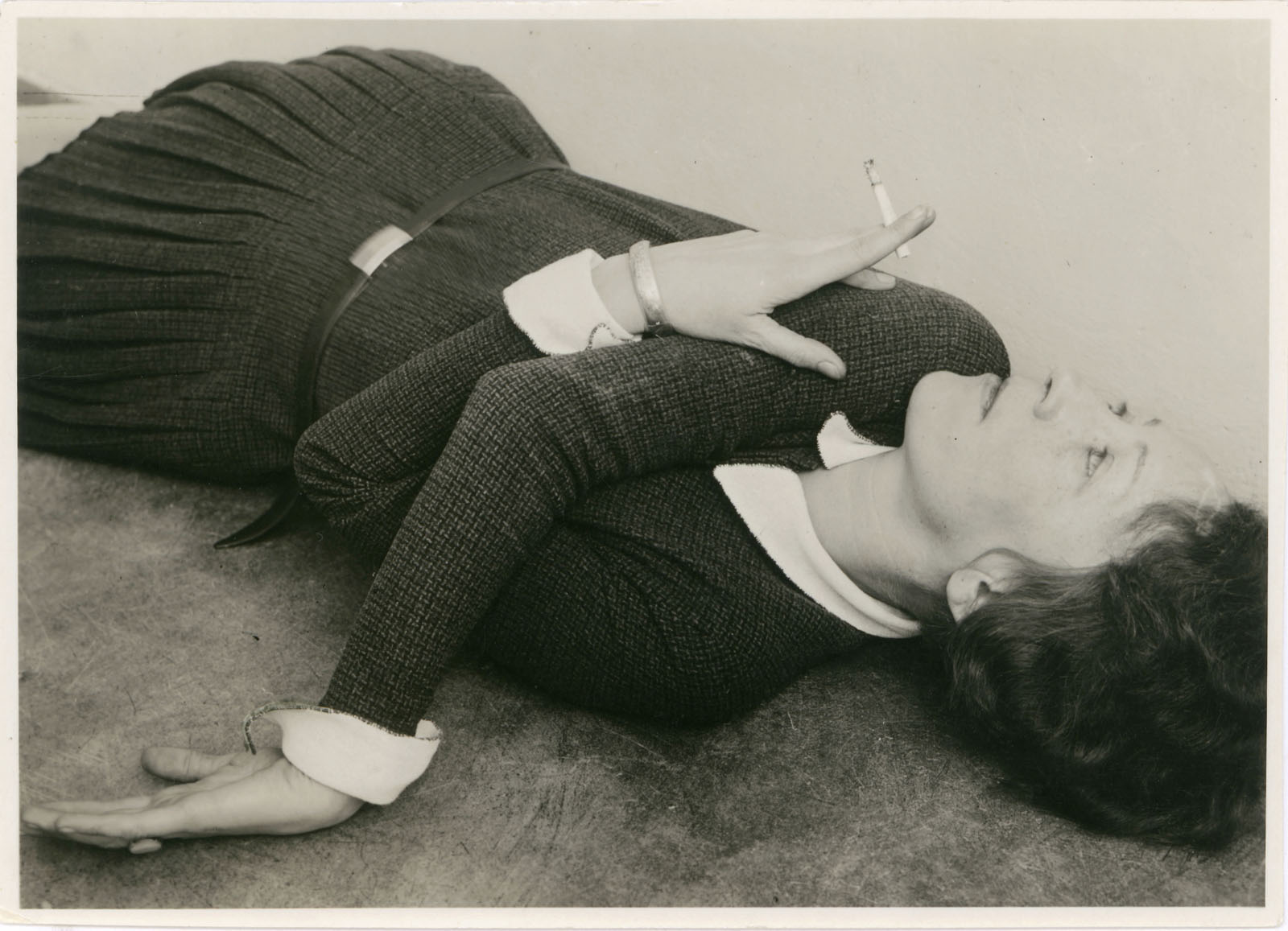
 

Grit Kallin-Fischer (German, 1897-1973) 'Selbstporträt mit Zigarette' (Self-portrait with cigarette) c. 1928


Grit Kallin-Fischer (German, 1897-1973)
Selbstporträt mit Zigarette (Self-portrait with cigarette)
c. 1928
Bauhaus-Archiv Berlin
© VG Bild-Kunst, Bonn 2026


Grit Kallin-Fischer (German, 1897-1973)

Grit Kallin-Fischer was born as Margit Vries in Frankfurt am Main on 26 April 1896. She received her first art lessons, focusing on landscapes and still lifes, at a boarding school in Belgium. In 1910 she began studying painting in Marburg and then continued under Lovis Corinth at Leipzig’s Academy for Graphic Art and Book Trade. She developed tuberculosis during the First World War and suffered from the after-effects for the rest of her life. In 1919 Kallin-Fischer went to Berlin, where she met the Russian musician Marik Kallin. The couple married in 1920, lived in London and separated after six years. In the autumn of 1927, Kallin-Fischer enrolled at the Bauhaus in Dessau. She began taking pictures there and developed portrait studies in the style of the New Vision. She also attended László Moholy-Nagy’s metal workshop and was involved with the Bauhaus stage, creating numerous portraits of its members. In late 1928, she went to Berlin with the American Bauhaus member Edward Fischer and continued to shoot photographs there. Several of her designs were published in the monthly graphic-design journal “Gebrauchsgraphik” in 1930; one year later, her works were shown at the exhibition “Foreign Advertising Photography” in New York. She married Edward Fischer in 1934 and emigrated to the US with him. Grit Kallin-Fischer gave up photography after 1945 and turned her attention to sculpture. She died in Newton, Pennsylvania, on 17 July 1973.

Text from the Bauhaus-Archiv website
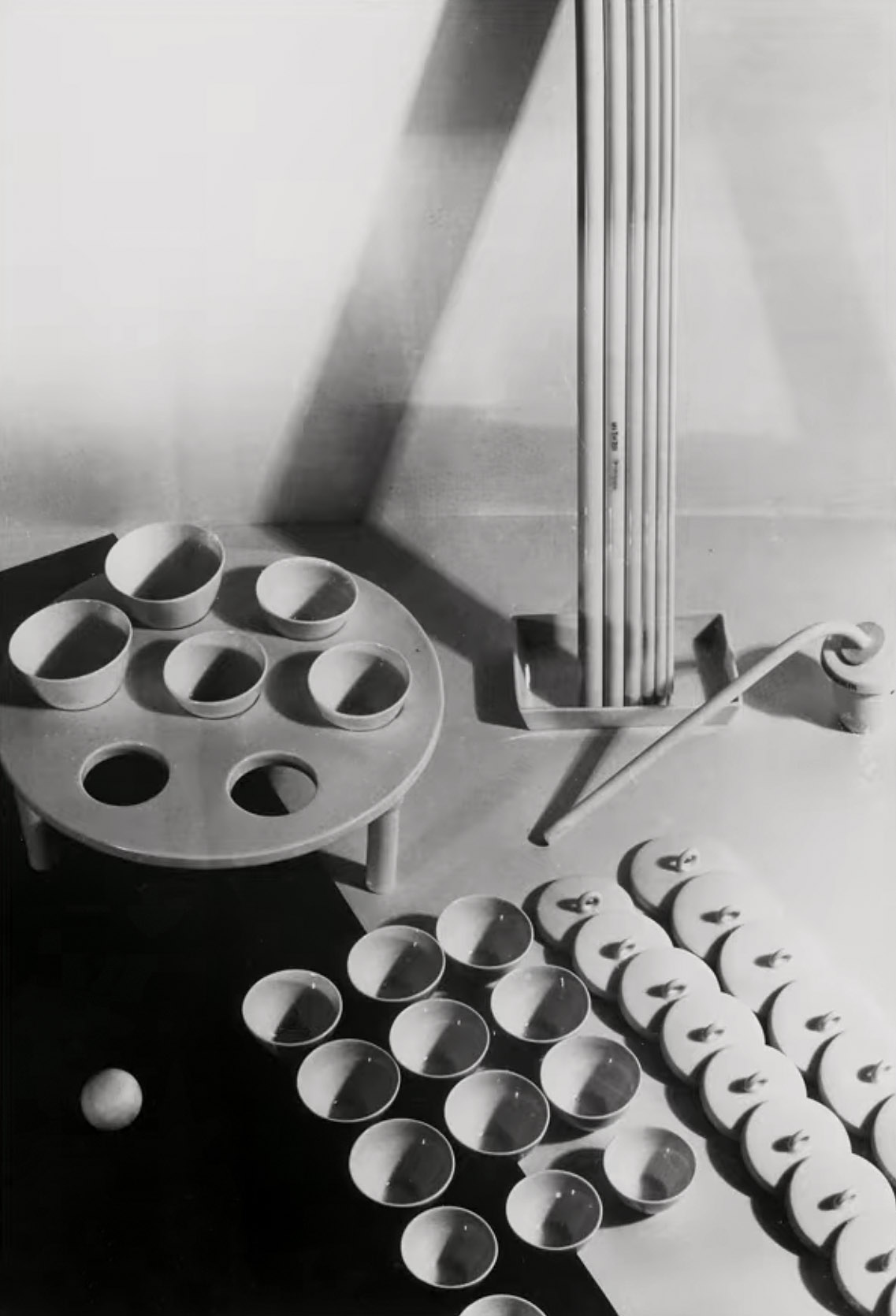
 

Grit Kallin-Fischer (German, 1897-1973) 'Industrie Porzellan der Königlichen Porzellan Manufaktur, Berlin' (Industrial porcelain from the Royal Porcelain Manufactory, Berlin) c. 1930


Grit Kallin-Fischer (German, 1897-1973)
Industrie Porzellan der Königlichen Porzellan Manufaktur, Berlin (Industrial porcelain from the Royal Porcelain Manufactory, Berlin)
c. 1930
Bauhaus-Archiv Berlin
© VG Bild-Kunst, Bonn 2026


The Weimar Republic (1919-1933) was a time of social and cultural upheaval. The young democracy was confronted not only with the consequences of World War I, but also a rapid succession of technical advances, the rise of new media and a society that was questioning traditional values.

Women’s role in society was changing as well. As voting rights were granted to women for the first time in November 1918, a new chapter of political participation began. It was also a time when more and more women aspired to financial independence and professional self-realisation. Photography offered them an ideal opportunity in both arenas – it promised artistic freedom and a living income. The camera became the tool of female self-empowerment.

By the late 19th century, photography had become a significant occupational field for women. Because it was a relatively young field, regarded as a handcraft and not yet academically anchored, photography offered women career opportunities at an early stage. Women were believed to have skills that were well-suited to certain photographic activities, such as portrait photography or retouching. Consequently, a growing number of women began learning the trade in photo studios. In 1890 the Berlin Lette Association started a photography course for women, and in 1905, the Teaching and Research Institute for Photography in Munich followed suit with institutional training for women photographers.

The number of women photographers rose steadily in the Weimar Republic. This occurred as an increasing number of higher education institutions began offering training courses in photography. The Bauhaus Dessau established a photography course in 1929. Many students – almost half of them women – received professional training there. Yet women photographers had been playing a central role at the Bauhaus even years before. In the early 1920s, photography was used to advertise the products and works created by the influential school of art, design and architecture – and many of those photos were taken by professional women photographers, such as Paula Stockmar, the women-managed Atelier Hüttich und Oemler, and Lucia Moholy. The increasing prevalence of the small-format camera after 1925 sparked a surge of interest in the medium among the students. Many female students began observing their surroundings through the camera lens and captured new and unusual perspectives. While many of these photos have since become world-famous, the women who took them have often been forgotten.

The Exhibition

The exhibition “New Woman, New Vision. Women Photographers of the Bauhaus” is the first ever to explore the extensive impact of these photographers and tell their story from a gender-historical perspective. The presentation, comprising some 300 works from 29 photographers from the Bauhaus-Archiv / Museum für Gestaltung collection, explores art- and media-historical questions and how they relate to such topics as authorship, visibility and social participation. The exhibition presents photographs by well-known figures such as Lucia Moholy and Florence Henri, as well as works by artists who have received less recognition, including Irene Hoffmann and Grit Kallin-Fischer. Not only does its scope extend beyond the era of the historic Bauhaus, it also highlights the later works by these remarkable artists. The presentation is supplemented by works by women artists from the Institute of Design in Chicago, the American successor institution to the Bauhaus founded by Bauhaus master László Moholy-Nagy in 1937.

Key Themes

One of the central themes of the exhibition is portrait photography. The chapters “Viewing the Self” and “Woman’s Images” examine how the photographers and their fellow female classmates presented themselves against the backdrop of society’s evolving image of women. Oftentimes they referred to the ideal of the New Woman – which had become ubiquitous in the Weimar Republic – and translated it into the modern visual imagery of New Vision. Another chapter sheds light on the photography lessons taught by Walter Peterhans at the Bauhaus. In portraits, landscapes, nature studies and still lifes, the students experimented with and selectively integrated photographic design elements into their works, e.g. textures, materiality, directed lighting and image sharpness. The chapter “Art and Experimentation” focuses specifically on experimental practice; photo collages and photograms offered forms of expression beyond what the camera could capture and illustrate how readily the women photographers embraced the avant-garde. The chapter “People and Countries” is dedicated to social-documentary and photo-journalistic works. The photos capture everyday life, social inequality and moments of political upheaval. They also show how the photographers, who were often forced into exile, safeguarded their work under changing political circumstances. The chapter “The Allure of Architecture” examines modern architectural photography. Unusual perspectives, extreme high- and low-angle shots, and close-ups helped architectural photography break away from its original documentary function and transform it into artistic and sometimes abstract visual compositions.

The exhibition shows how the women photographers of the Bauhaus used photography as an artistic and social instrument – for achieving greater self-determination, conducting artistic experimentation and documenting social and political realities. Its relevance today is evident in how integral these methods have become in contemporary art. The Berlin artists Kalinka Gieseler, Caroline Kynast and Sinta Werner engage in the discourse as contemporary voices. Like their historic role models, they too use photographic images to analyse space and society and probe the boundaries of the medium.

Relevance Today

When reflecting on women photographers and their life stories from a gender-critical perspective, the first question we encounter is what we mean by the term “women”. We do not mean a clearly defined or homogenous group, but rather a historical attribution that mirrors the respective social norms of the time. The biographies of these women photographers are as varied as their personal convictions, predilections and relationships. What they all have in common, however, is the traditional gender roles they were assigned which limited their career opportunities and even worsened them under National Socialism and in post-war Western Europe. In that male-dominated art world, their works were marginalised and driven from art-historical memory – a structurally induced invisibility, the effects of which are still felt today.

Against this background, we must ask what role exhibitions have that are specifically dedicated to women artists. Do we not run the risk of perpetuating existing attributions and designating female-perceived individuals once again as a special case? The answer is complex. Back in 1914 the art historian Emmy Voigtländer, reporting on the Leipzig exhibition “Das Haus der Frau”, remarked: ‘Perhaps in the future the most valuable outcome of these special exhibitions will be to prove their superfluousness, in that women’s achievements will gradually become a widely accepted part of general cultural activity where one recognises the value of the work and then of its creators […].’ Based on current figures, however, this goal has not yet been achieved. Recent studies show, such as one conducted by the Berlin initiative “fair share!”, that works by female-perceived persons and especially mothers are presented and collected less often and obtain lower market prices and less funding. As long as gender equality in the art world remains elusive, visibility in the form of such exhibitions will remain necessary – not to emphasise distinction, but as a means to combat structural forgetting.

Text from the Bauhaus-Archiv / Museum für Gestaltung at the Museum für Fotografie website
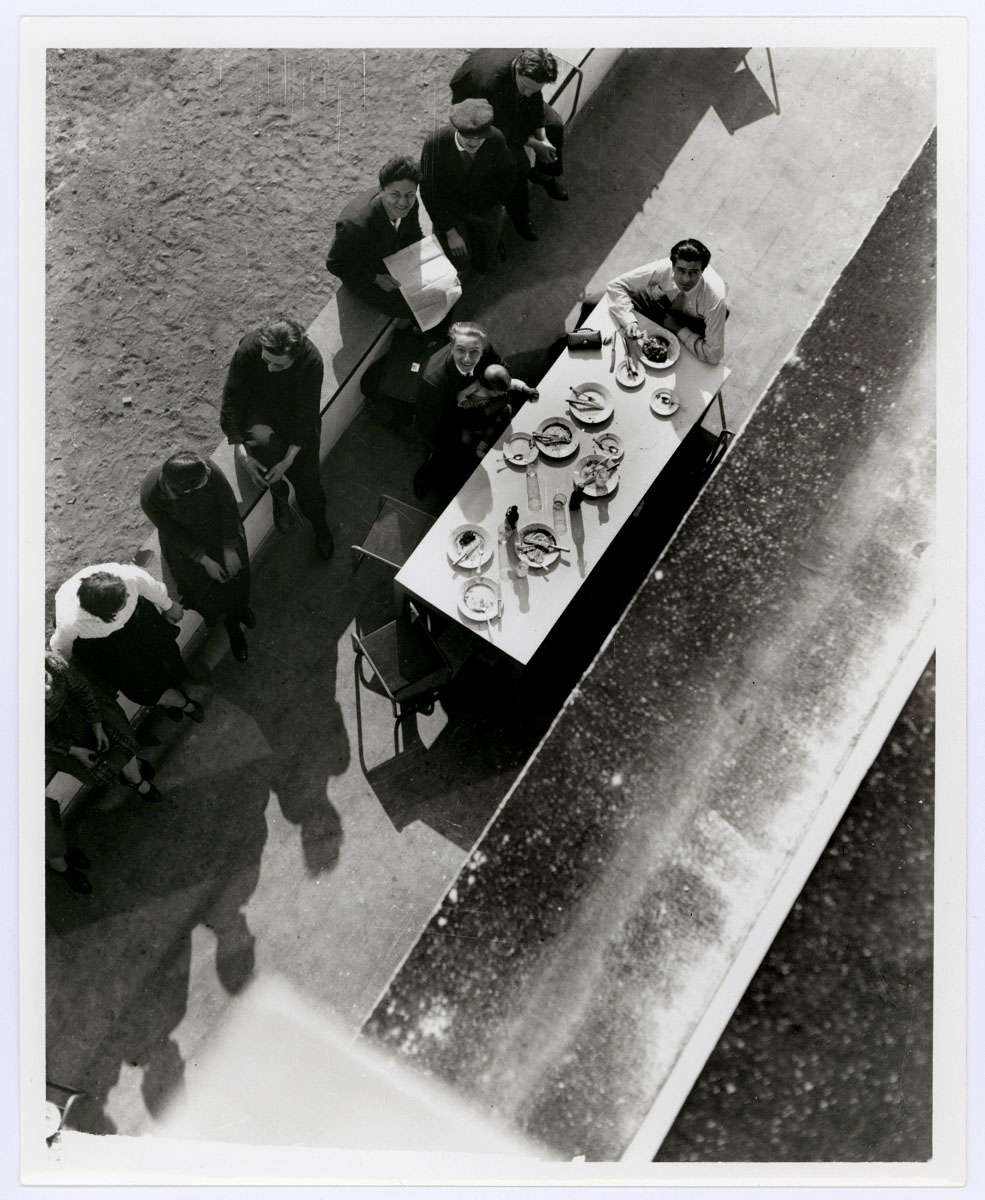
 

Irene Bayer (American, 1898-1991) 'Blick auf die Terrasse der Bauhaus-Kantine in Dessau' (View onto the terrace of the Bauhaus Dessau canteen)' c. 1927


Irene Bayer (American, 1898-1991)
Blick auf die Terrasse der Bauhaus-Kantine in Dessau (View onto the terrace of the Bauhaus Dessau canteen)
c. 1927
Bauhaus-Archiv Berlin
© VG Bild-Kunst, Bonn 2026


Irene Bayer (American, 1898-1991)

Irene Bayer was born as Irene Angela Hecht in Chicago on 28 October 1898 and grew up in Budapest. In 1920 she began studying at the Berlin University of the Arts. She applied to the Bauhaus in 1923 but was not accepted. She then moved to Paris and audited classes at the Sorbonne and the École des Beaux-Arts. She established connections with the avant-garde there. In 1925 she married Bauhaus member Herbert Bayer. She then attended the preliminary course at the Bauhaus without being officially enrolled. In 1926 she began training as a photographer at the State Academy of Graphic Arts and Books in Leipzig. From then on, she documented life and work at the Bauhaus as well as her husband’s works. She additionally created portrait and advertising photos. Several of her images were used for Bauhaus publications. László Moholy-Nagy also published a number of her photos in his article “Photography as Light Design”. In 1928 the Bayers left the Bauhaus and moved to Berlin. In 1929 Irene Bayer’s work was presented at the “Film und Foto” exhibition in Stuttgart. She stopped working in photography when her daughter was born later that year; she had been separated from the child’s father, Herbert Bayer, since 1928. In 1938 Irene Bayer moved to the US, where she worked as a translator. She also briefly returned to Germany after the Second World War to work in this role for the American military administration in Munich. Irene Bayer died in Los Angeles on 12 July 1991.

Text from the Bauhaus-Archiv website
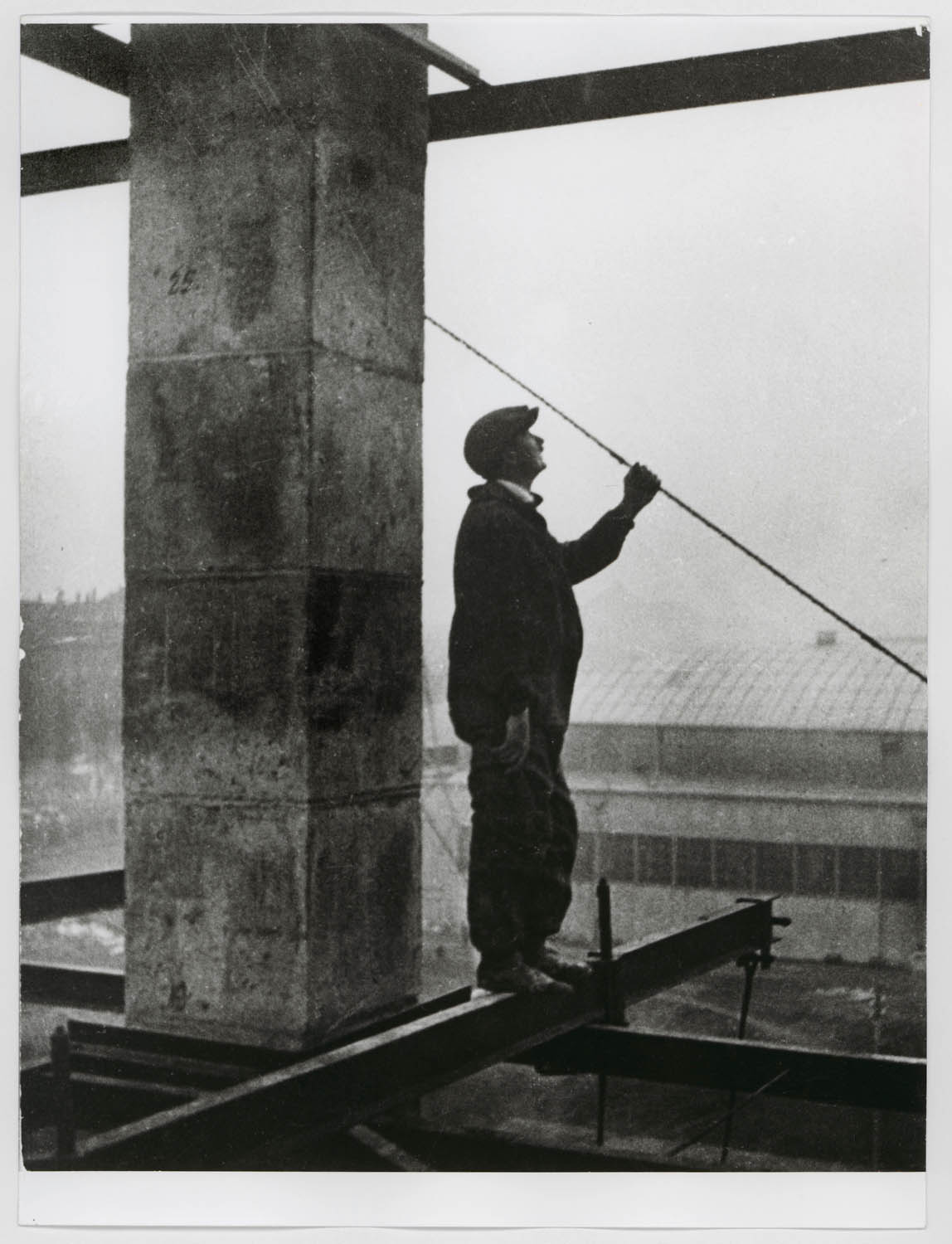
 

Ivana Meller-Tomljenović (Croatia, 1906-1988) 'Auf dem Bau' (On the construction site) 1930


Ivana Meller-Tomljenović (Croatia, 1906-1988)
Auf dem Bau (On the construction site)
1930
Bauhaus-Archiv Berlin
© VG Bild-Kunst, Bonn 2026


Ivana Meller-Tomljenović (Croatia, 1906-1988)

Ivana Meller-Tomljenović, née Tomljenović, was born in Zagreb on 2 September 1906. As a young woman, she initially made a name for herself in the 1920s as a track-and-field athlete and basketball player. From 1924 to 1928, she completed a degree at the Royal College of Arts and Crafts in Zagreb, graduating with honours. In 1929 she began studying metal design at Vienna’s University of Applied Arts. Impressed by a lecture given by Bauhaus director Hannes Meyer, Meller-Tomljenović transferred to the Bauhaus Dessau that same year. She experimented with photomontage and printing techniques in Walter Peterhans’s photography class. During this period, she also filmed life at the Bauhaus. Meller-Tomljenović joined the Communist Student Faction. She was among the students who left the Bauhaus when Hannes Meyer was dismissed in 1930. She initially worked in Berlin as a set designer for the Piscator Stage as well as a freelance graphic designer. In 1931 she briefly studied literature at the Sorbonne in Paris before moving to Prague. There she married Alfred Meller, the owner of a large advertising agency. After his death, Meller-Tomljenović returned to Yugoslavia in 1934. In Belgrade she taught art, graphic design and poster design until the 1960s. A late reception of her photographic work began in the 1980s. Ivana Meller-Tomljenović died in Zagreb on 30 August 1988.

Text from the Bauhaus-Archiv website
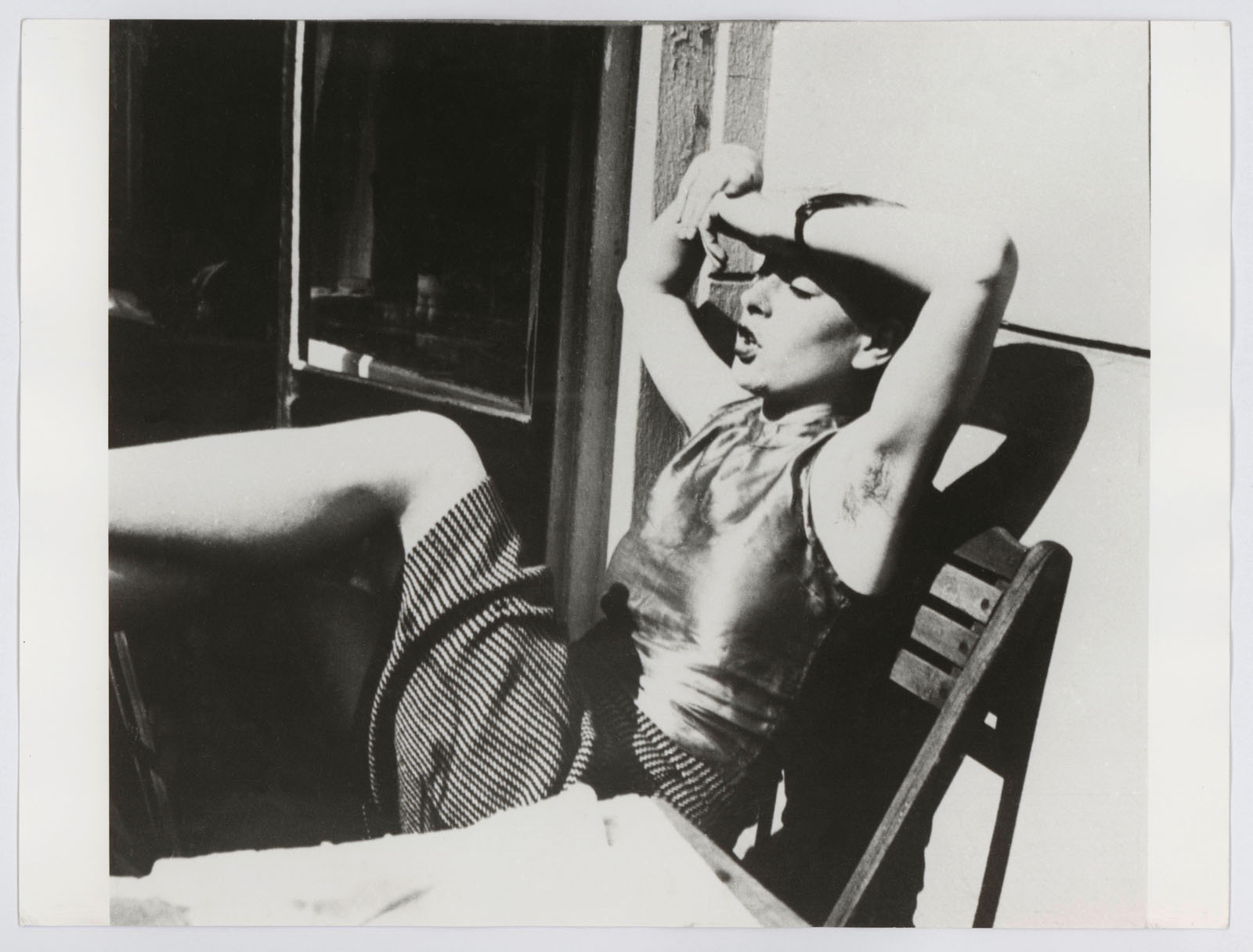
 

Ivana Meller-Tomljenović (Croatia, 1906-1988) 'Porträt Grete Krebs' (Portrait of Grete Krebs) 1930


Ivana Meller-Tomljenović (Croatia, 1906-1988)
Porträt Grete Krebs (Portrait of Grete Krebs)
1930
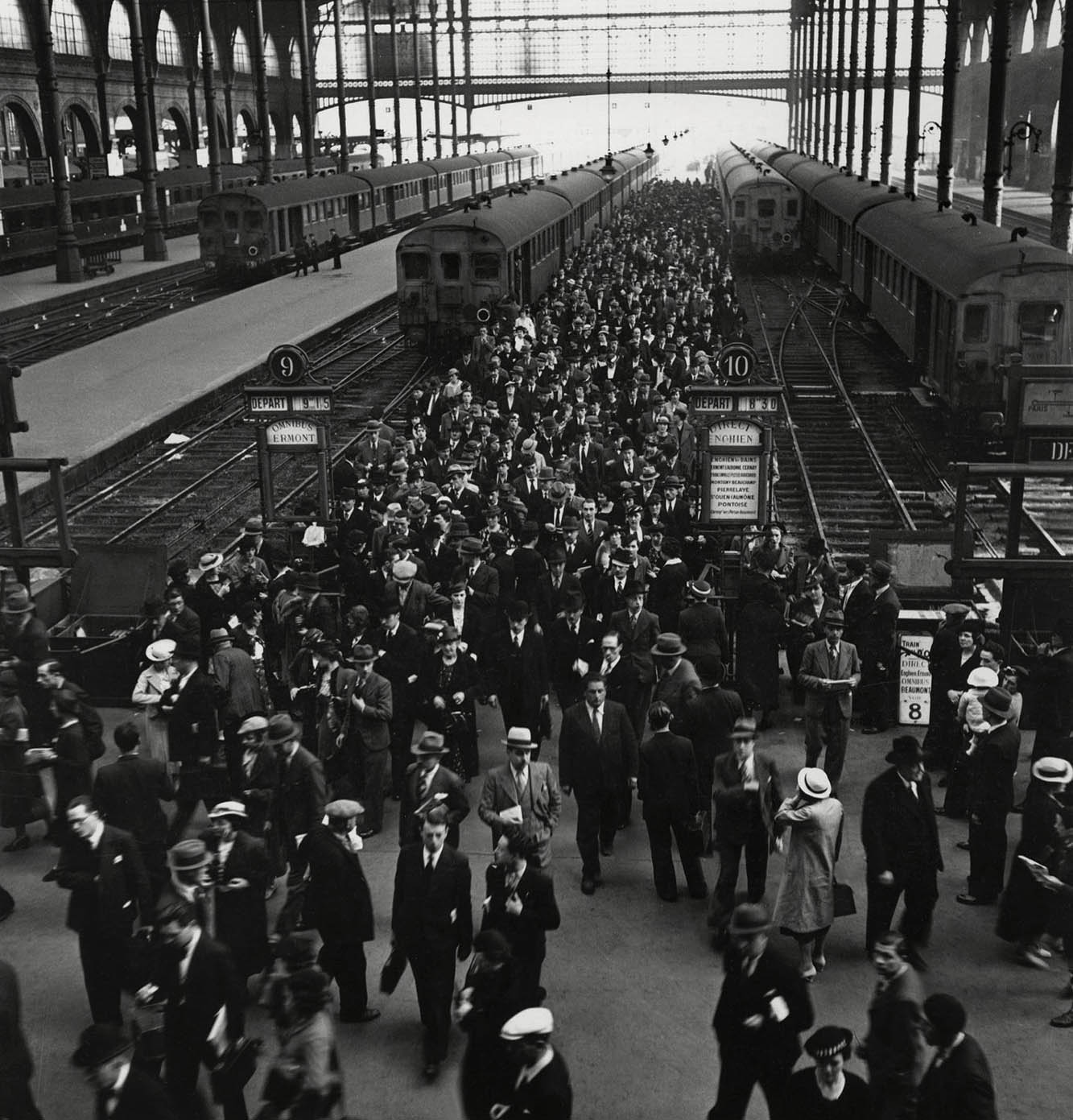
 

Ré Soupault (French-German born Poland, 1901-1996) 'Menschenmenge am Bahnhof St. Lazare' (Crowd at St. Lazare train station) c. 1936


Ré Soupault (French-German born Poland, 1901-1996)
Menschenmenge am Bahnhof St. Lazare (Crowd at St. Lazare train station)
c. 1936
Bauhaus-Archiv Berlin
© VG Bild-Kunst, Bonn 2026


Ré Soupault (French-German born Poland, 1901-1996)

Ré Soupault was born as Meta Erna Niemeyer in Bobolice (then German Pomerania, now Poland) on 29 October 1901. In 1921 she began studying at the Bauhaus in Weimar. She attended the preliminary course and then studied in the weaving workshop. At the Bauhaus, she also began to experiment with photography. In 1923 she met the avant-garde filmmaker Viking Eggeling and played a substantial role in the creation of his film “Diagonal Symphony”. After her brief marriage to the Dadaist Hans Richter in 1926, she worked as a fashion journalist for the magazine “Sport im Bild” in Berlin. Her work led her to Paris in 1929. There, she once again situated herself at the center of the artistic avant-garde and founded her fashion studio “Ré Sport” in 1931. In 1933 she met the author and journalist Philippe Soupault. While accompanying him on his journalistic tours, she began documenting them in photographs. The couple married in 1937. In 1938 they went to Tunis, where Ré Soupault continued with her social-documentary photography. Because of Philippe Soupault’s openly antifascist position, the couple had to flee, only narrowly evading German troops by escaping to Algeria. They travelled to New York in 1943 and separated in 1945. It was not until after the war that Ré Soupault learned parts of her photographic work had survived in Tunis. In 1948 Ré Soupault returned to Europe and lived in Basel, where she worked as a translator and radio commentator. She created her final photojournalistic work in the mid-1950s: photographs of German refugees from the former eastern territories. In 1958 she moved back to Paris and concentrated on her literary work. Ré Soupault died in Versailles on 12 March 1996.

Text from the Bauhaus-Archiv website
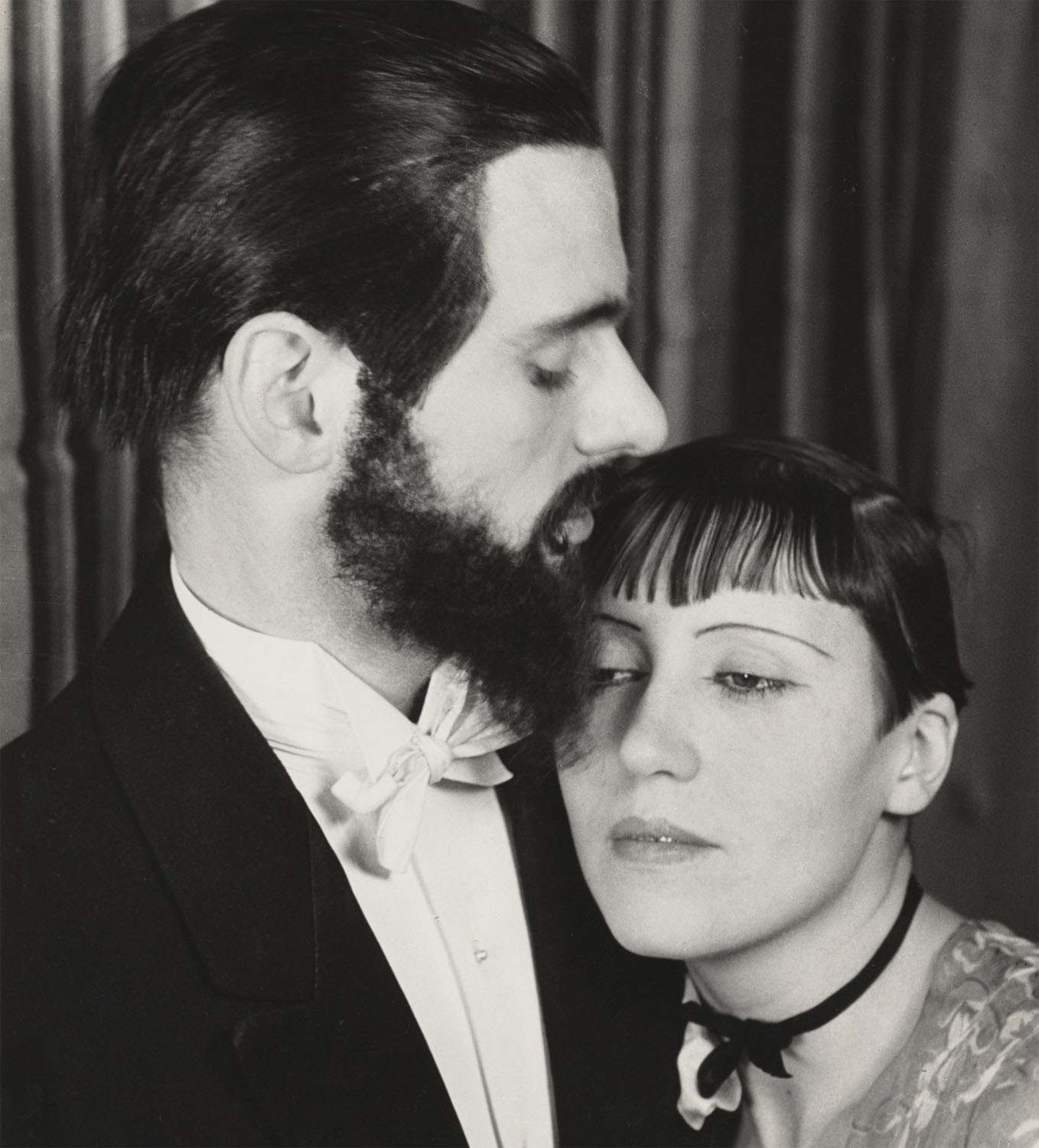
 

Grete Stern (Argentine born Germany, 1904-1999) 'Porträt Claire Eckstein und Edwin Denby, deutsch-amerikanisches Tanzpaar' (Portrait of Claire Eckstein and Edwin Denby, German-American dance couple) 1929


Grete Stern (Argentine born Germany, 1904-1999)
Porträt Claire Eckstein und Edwin Denby, deutsch-amerikanisches Tanzpaar (Portrait of Claire Eckstein and Edwin Denby, German-American dance couple)
1929
Bauhaus-Archiv Berlin
© VG Bild-Kunst, Bonn 2026


Grete Stern (Argentine born Germany, 1904-1999)

Grete Stern was born in Wuppertal on 9 May 1904. Due to her father’s work in international trade, she grew up in London as well as Wuppertal. After studying graphic design in Stuttgart and then briefly working, she began training as a photographer with Walter Peterhans in 1927. There she met Ellen Auerbach, who was also being taught by Peterhans. When he received a position at the Bauhaus in Dessau in 1929, Stern and Auerbach founded the agency ringl + pit in his former studio. In 1932 Stern attended Peterhans’s photography class at the Bauhaus. Just one year later, her Jewish descent forced her to emigrate to London. Her British passport made her life in exile easier: she was able to work as a portrait photographer in England without facing any major bureaucratic obstacles. Stern and Auerbach worked together again in London for a short time. In 1935 Stern married the Argentinian photographer and former Bauhaus student Horacio Coppola. In 1936 they moved to Buenos Aires, where they opened a studio. Their home became a meeting place for the local art scene. After separating from Coppola, Stern worked as a freelance photographer. Among other things, she created surrealistic photomontages for the magazine “Idilio”. Stern founded the photography workshop of the Argentinian Museo Nacional de Bellas Artes in 1956. Additionally, she documented the indigenous people of the Gran Chaco up into the 1960s. She stopped working as a photographer in 1985. Grete Stern died in Buenos Aires on 24 December 1999.

Text from the Bauhaus-Archiv website
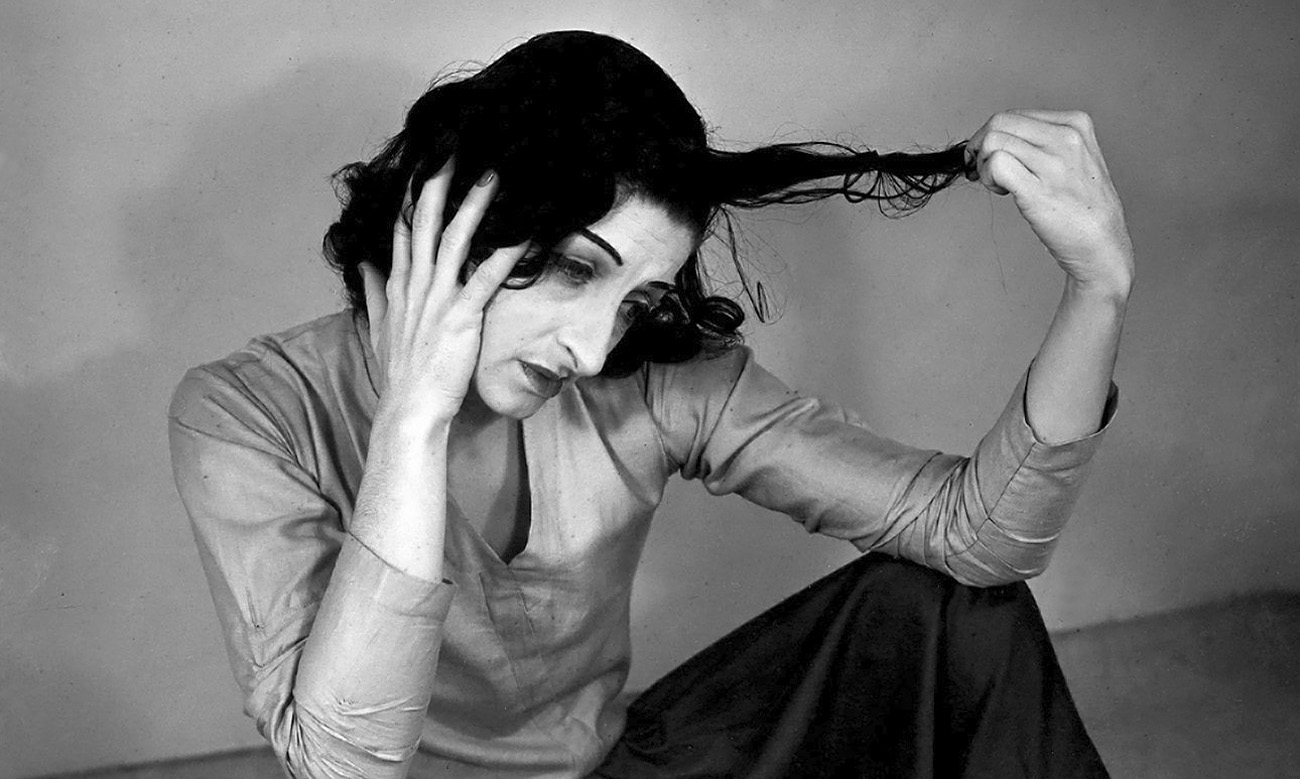
 

Grete Stern (Argentine born Germany, 1904-1999) 'Porträt Miriam Winslow, US-amerikanische Tänzerin' (Portrait of Miriam Winslow, American dancer) 1944


Grete Stern (Argentine born Germany, 1904-1999)
Porträt Miriam Winslow, US-amerikanische Tänzerin (Portrait of Miriam Winslow, American dancer)
1944
Bauhaus-Archiv Berlin
© VG Bild-Kunst, Bonn 2026
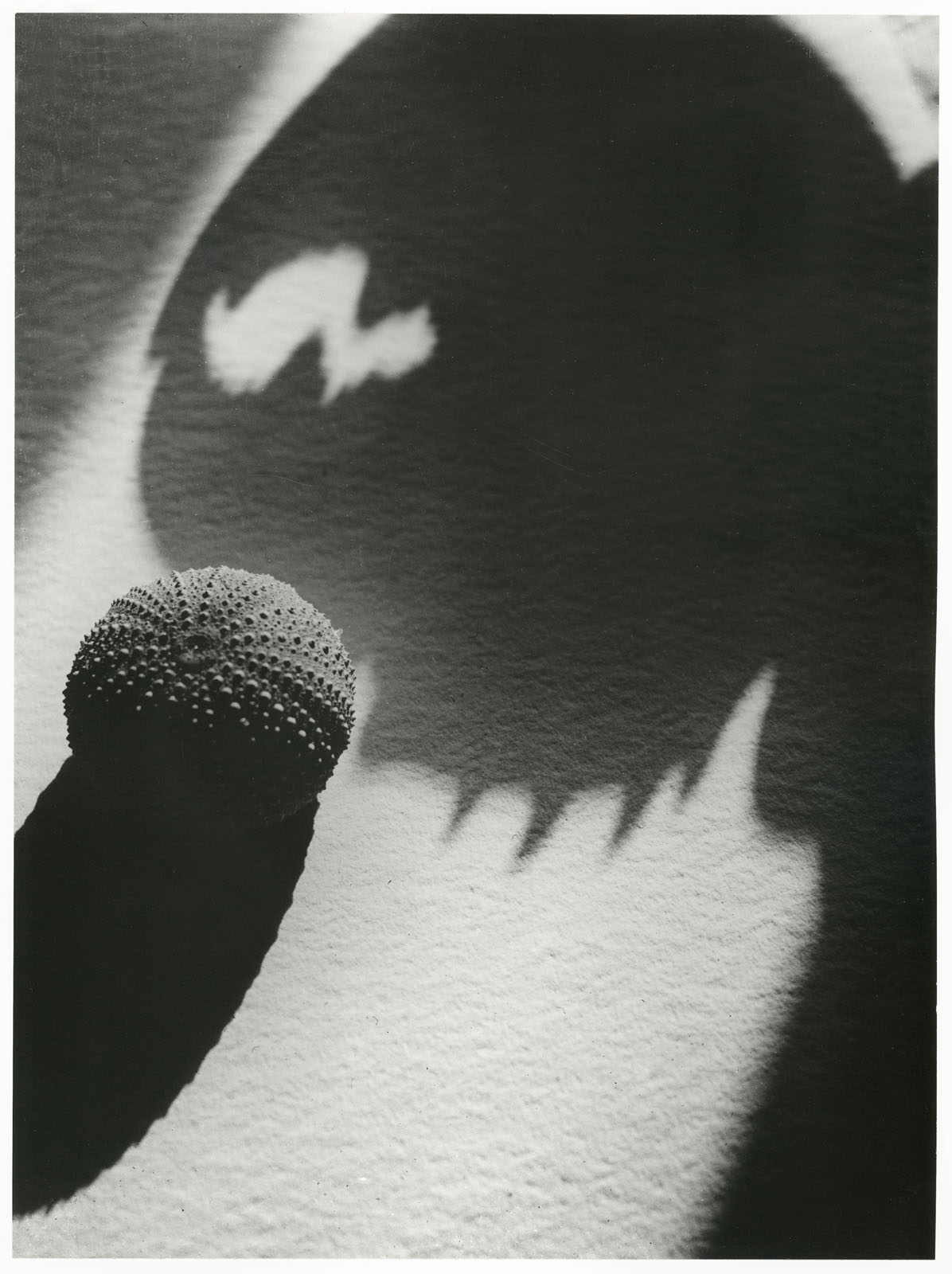
 

Lotte Collein (German, 1905-1995) 'Seeigel und Schatten einer Krebsschere' (Sea urchin and shadow of a crab claw) 1928


Lotte Collein (German, 1905-1995)
Seeigel und Schatten einer Krebsschere (Sea urchin and shadow of a crab claw)
1928
Bauhaus-Archiv Berlin
© VG Bild-Kunst, Bonn 2026


Lotte Collein (German, 1905-1995)

Lotte Collein was born as Anny Amely Lotte Gerson in Essen on 17 March 1905. After training in a tailoring workshop in Munich and a hand-weaving workshop in Dachau, she attended the women’s social school in Bremen. In 1927 she began studying at the Bauhaus. She wanted to become an architect. After the preliminary course, she went to the furniture workshop and then switched to the department of architecture and interior design. Collein also began taking photographs during the period she spent at the Bauhaus. She recorded life at the school and documented works by other members of the Bauhaus, such as Erich Borchert. Although she did not attend any photography classes, one of her images was featured in an article about the current state of photography published by Walter Peterhans in the journal “ReD” in 1930. In the autumn of that year, Collein submitted a request for her diploma as an architect, but was rejected. She then left the school and moved to Vienna with the architect Edmund Collein. The two married in 1931, and their child was born that same year. In 1938 the couple returned to Germany. Collein, who was half Jewish and a communist, survived the Nazi period through her marriage to an “Aryan” husband. After the war, the couple moved to the Soviet-occupied sector of Berlin. While Edmund Collein pursued a career as an East German architectural official, Lotte Collein supported his work from behind the scenes. She died in Berlin on 3 May 1995.
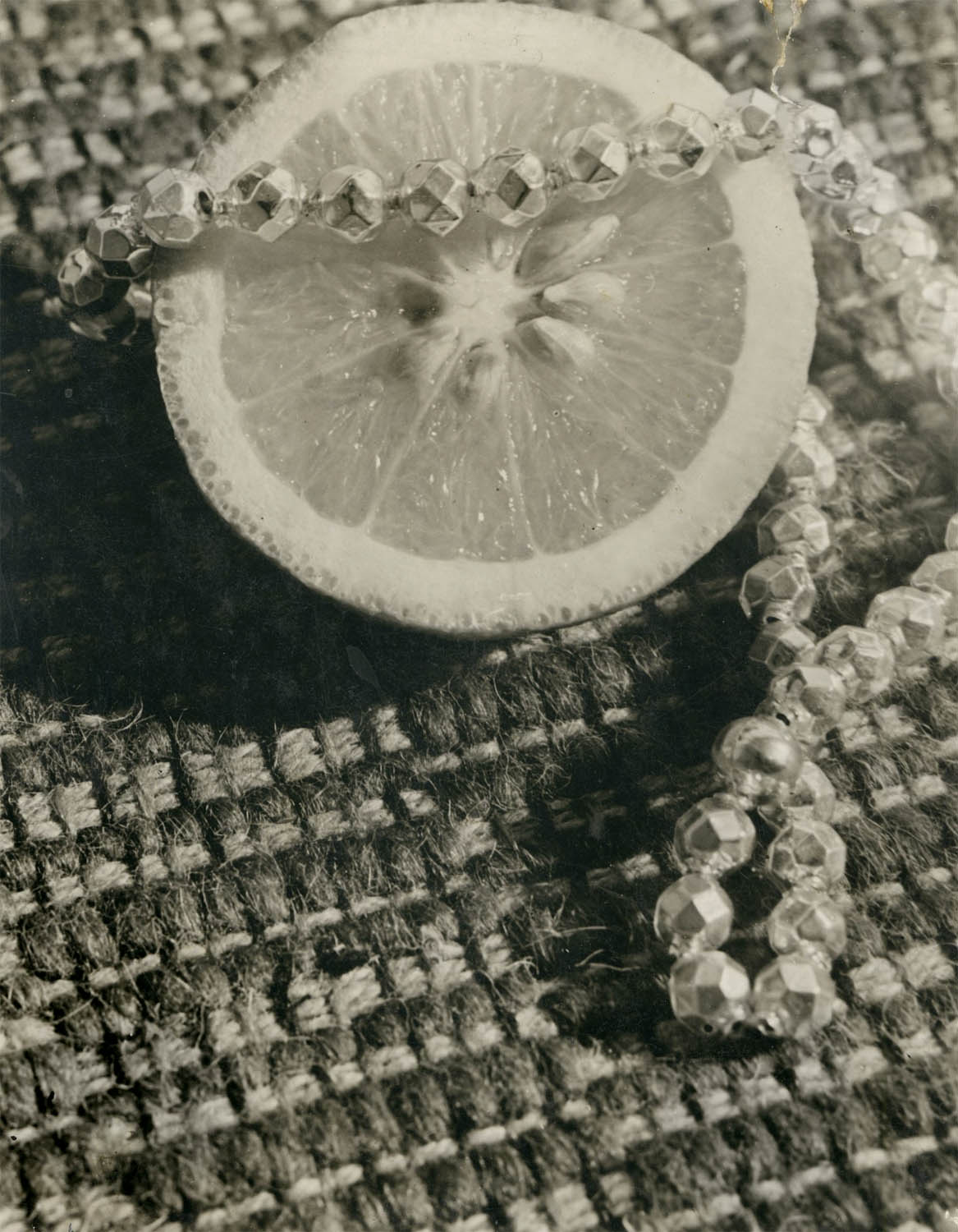
 

Lony Neumann (German, 1902-1996) 'Stillleben mit Zitrone und Perlenkette auf Webteppich' (Still life with lemon and pearl necklace on a woven carpet) 1930


Lony Neumann (German, 1902-1996)
Stillleben mit Zitrone und Perlenkette auf Webteppich (Still life with lemon and pearl necklace on a woven carpet)
1930
Bauhaus-Archiv Berlin
© VG Bild-Kunst, Bonn 2026


Lony Neumann (German, 1902-1996)

Lony Neumann was born as Leoni Cohn in Bytom (then German Silesia, now Poland) on 15 April 1902. In 1919 she began an apprenticeship as a tailor and passed the final examination. Parallel to this, she attended courses at the WrocÅ‚aw State Academy of Arts and Crafts, where she met and then married the student Theodor Neumann. After the couple moved to Leipzig, their son was born in 1926. In 1928 Neumann became a student at the Bauhaus Dessau. She attended Walter Peterhans’s photography class and the advertising workshop. Her role as a parent meant she was largely forced to carry out the assignments from her classes at the Bauhaus in Leipzig, where she continued to live. Neumann was already politically active at this point. She photographed workers and participated in left-wing demonstrations. In 1931 she separated from her husband. Together with her new partner, the architect and Bauhaus graduate Philipp Tolziner, she joined a group of Bauhaus students immigrating to Russia. She left her son with his father. From 1931 to 1938, she worked as an art journalist and designer in Moscow and continued to create photographs, particularly of women and children. She married the Russian painter Aleksandr Labas during this period. Neumann was presumably able to escape the Soviet state’s persecution of German immigrants under Stalin by withdrawing from the cultural public sphere: she began providing foreign-language lessons. After the Second World War, she worked as a translator. Lony Neumann died in Moscow on 27 February 1996.

Text from the Bauhaus-Archiv website
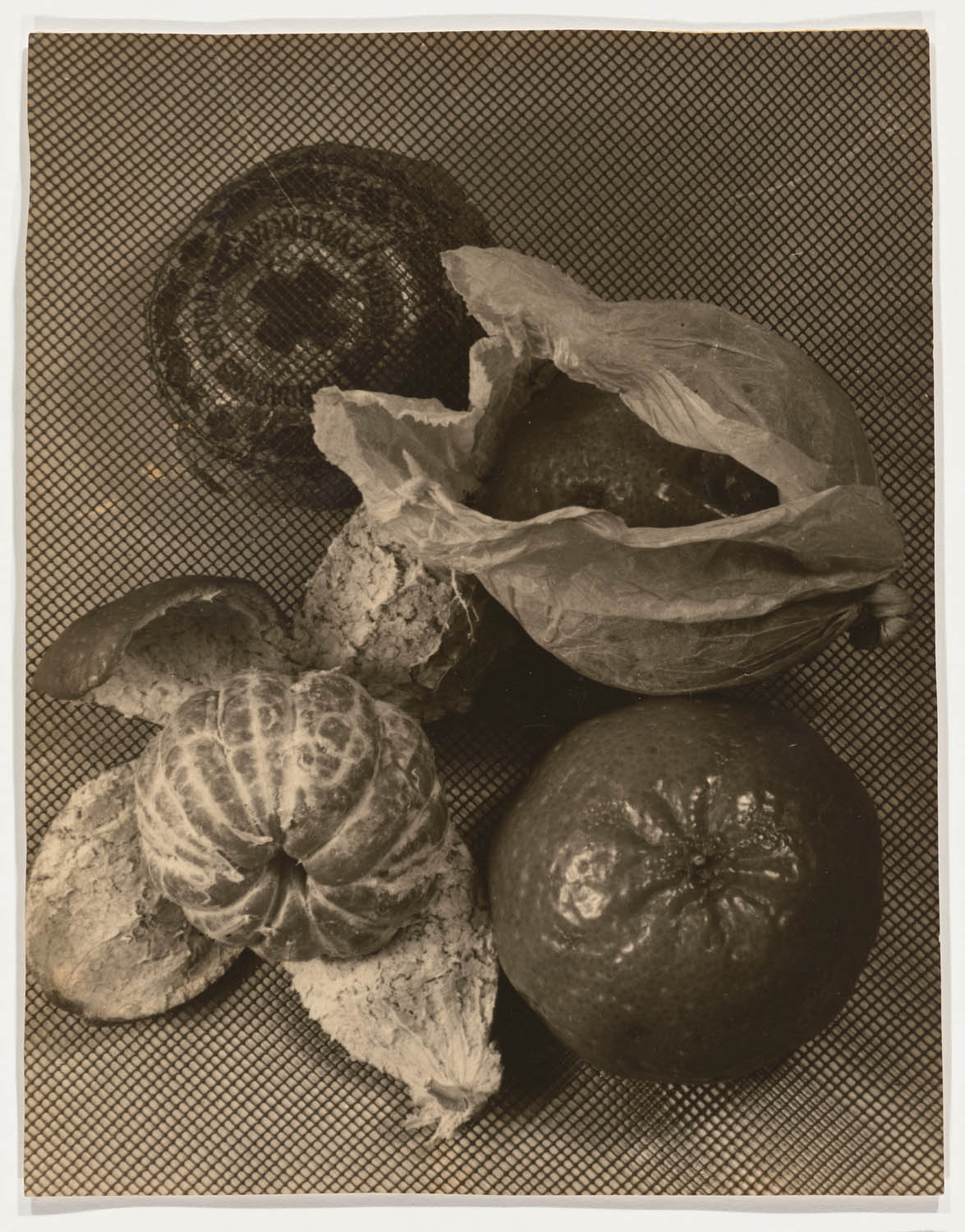
 

Irene Hoffmann (American born Germany, 1903-1982) 'Stillleben mit Orangen' (Still life with oranges) 1932


Irene Hoffmann (American born Germany, 1903-1982)
Stillleben mit Orangen (Still life with oranges)
1932
Bauhaus-Archiv Berlin
© VG Bild-Kunst, Bonn 2026


Irene Hoffmann (American born Germany, 1903-1982)

Irene Hoffmann, née Wallbrecht, was born in Hanover on 14 December 1903. In 1928 she became a student at the Bauhaus in Dessau. She studied in the advertising department and began attending classes taught by Walter Peterhans in 1932. In addition to photographs, graphic designs and experimental photograms, she also created collages during this period. She met the architecture student Hubert Hoffmann at the Bauhaus. The couple married in 1929. One of Irene Hoffmann’s works was presented at the Bauhaus’s travelling exhibition the following year. In 1933 she completed her studies at the Bauhaus with a diploma from the advertising workshop. She then ran a studio for advertising and portrait photography in Berlin together with fellow Bauhaus graduate Hannes Schmitt. She also did freelance work for the graphic and design studio of former Bauhaus master László Moholy-Nagy until 1934. Between 1934 and 1936, she created additional projects in the field of advertising-related graphic design together with Hubert Hoffmann. Irene Hoffmann emigrated to the US in 1936, but her husband remained in Germany. They were divorced in 1938. Irene Hoffmann died in Allentown, Pennsylvania, on 16 February 1982.

Text from the Bauhaus-Archiv website
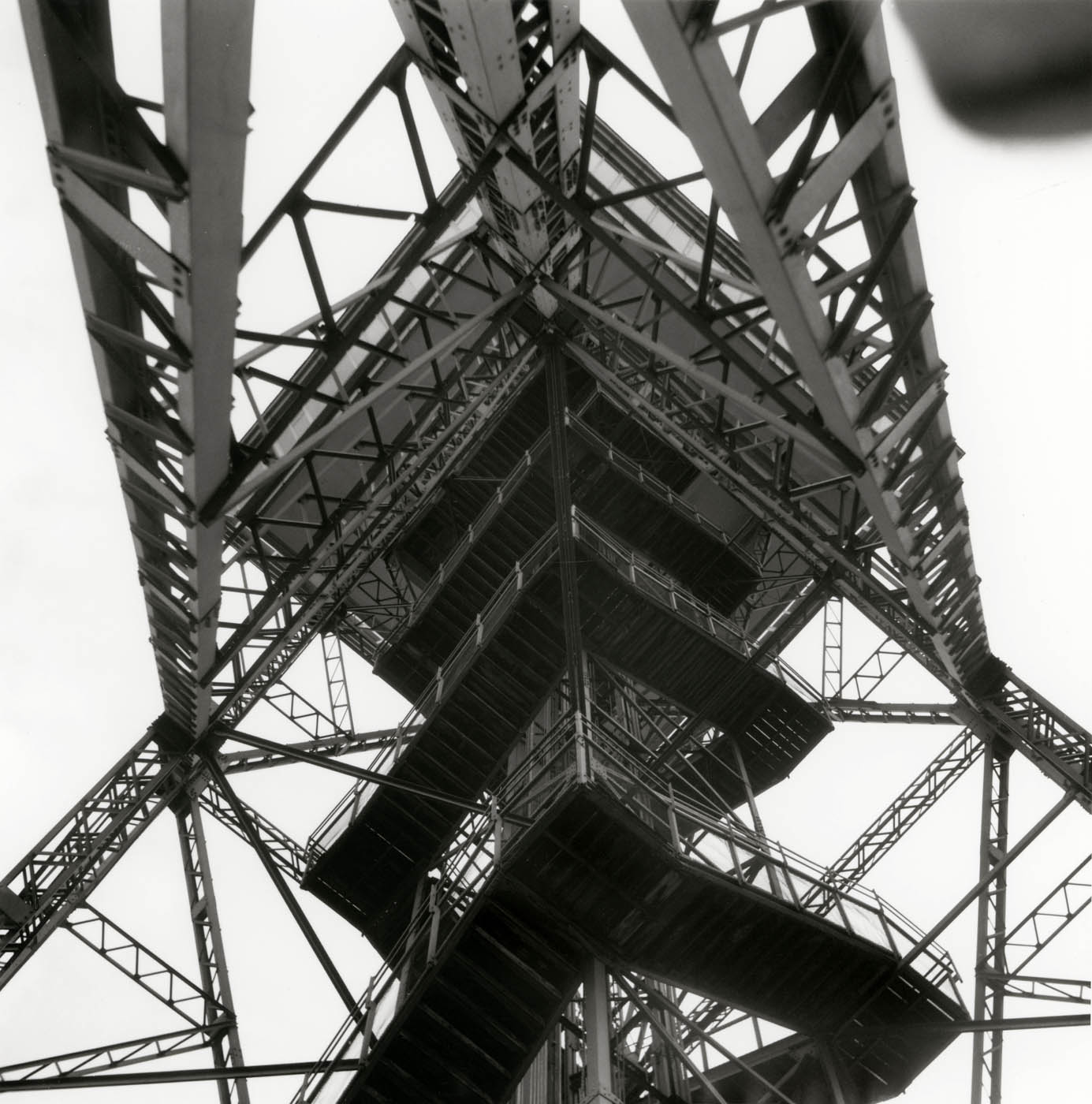
 

Elsa Thiemann (German born Poland, 1910-1981) 'Funkturm Berlin' (Berlin Radio Tower) 1930s


Elsa Thiemann (German born Poland, 1910-1981)
Funkturm Berlin (Berlin Radio Tower)
1930s
Bauhaus-Archiv Berlin
© VG Bild-Kunst, Bonn 2026
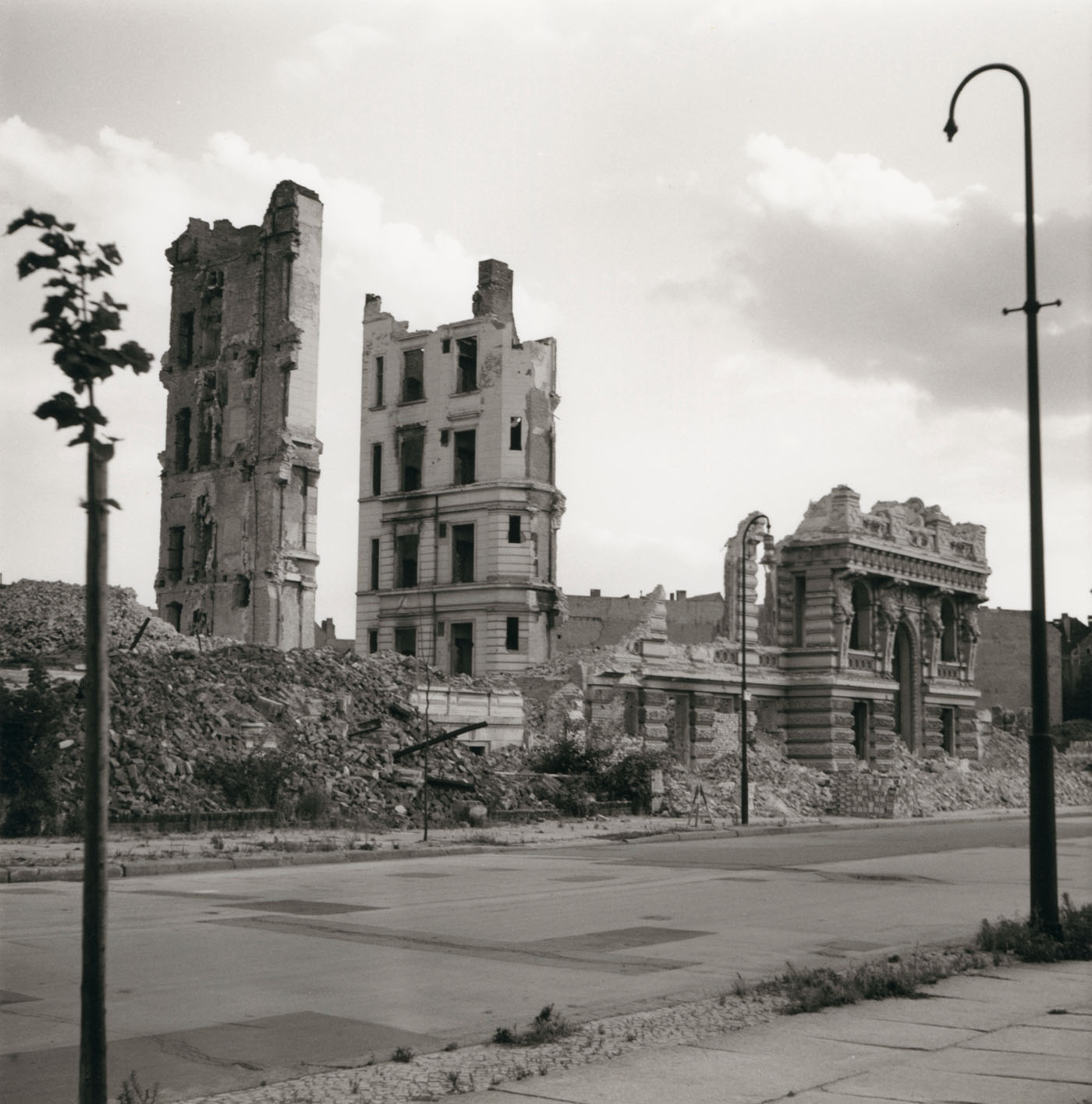
 

Elsa Thiemann (German born Poland, 1910-1981) 'Berlin Ruinen' (Berlin Ruins) c. 1945


Elsa Thiemann (German born Poland, 1910-1981)
Berlin Ruinen (Berlin Ruins)
c. 1945
Bauhaus-Archiv Berlin
© VG Bild-Kunst, Bonn 2026


Elsa Thiemann (German born Poland, 1910-1981)

Elsa Thiemann, née Franke, was born in ToruÅ„, then West Prussia, on 7 February 1910. In 1927 she began studying applied art at Berlin-Charlottenburg’s United State Schools for Fine and Applied Arts. In 1929 she transferred to the Bauhaus in Dessau. After her preliminary training, she studied in Joost Schmidt’s advertising workshop and, from the summer of 1930, in Walter Peterhans’s photography class. In 1931 she completed her studies with a Bauhaus diploma. From then on, Thiemann worked in Berlin as a freelance photojournalist and captured life in the city. In 1944 she accepted a position as a secretary in the Berlin editorial office of the Hoffmann und Campe publishing house. After the war she resumed her work as an independent photojournalist. She used her photographs to document the transformation of the German capital: from the ruins of a devastated Berlin after 1945 to the renewed flourishing of urban life in the West Berlin of the 1950s. She also created numerous portraits of artists. In 1947 she married the painter Hans Thiemann, whom she knew from their time at the Bauhaus. When the couple moved to Hamburg in 1960, Elsa Thiemann stopped working as a professional photographer and began documenting the work of her husband. After his death in 1977, she managed his estate while also tending to her own photo archive. Elsa Thiemann died in Hamburg on 15 November 1981.

Text from the Bauhaus-Archiv website
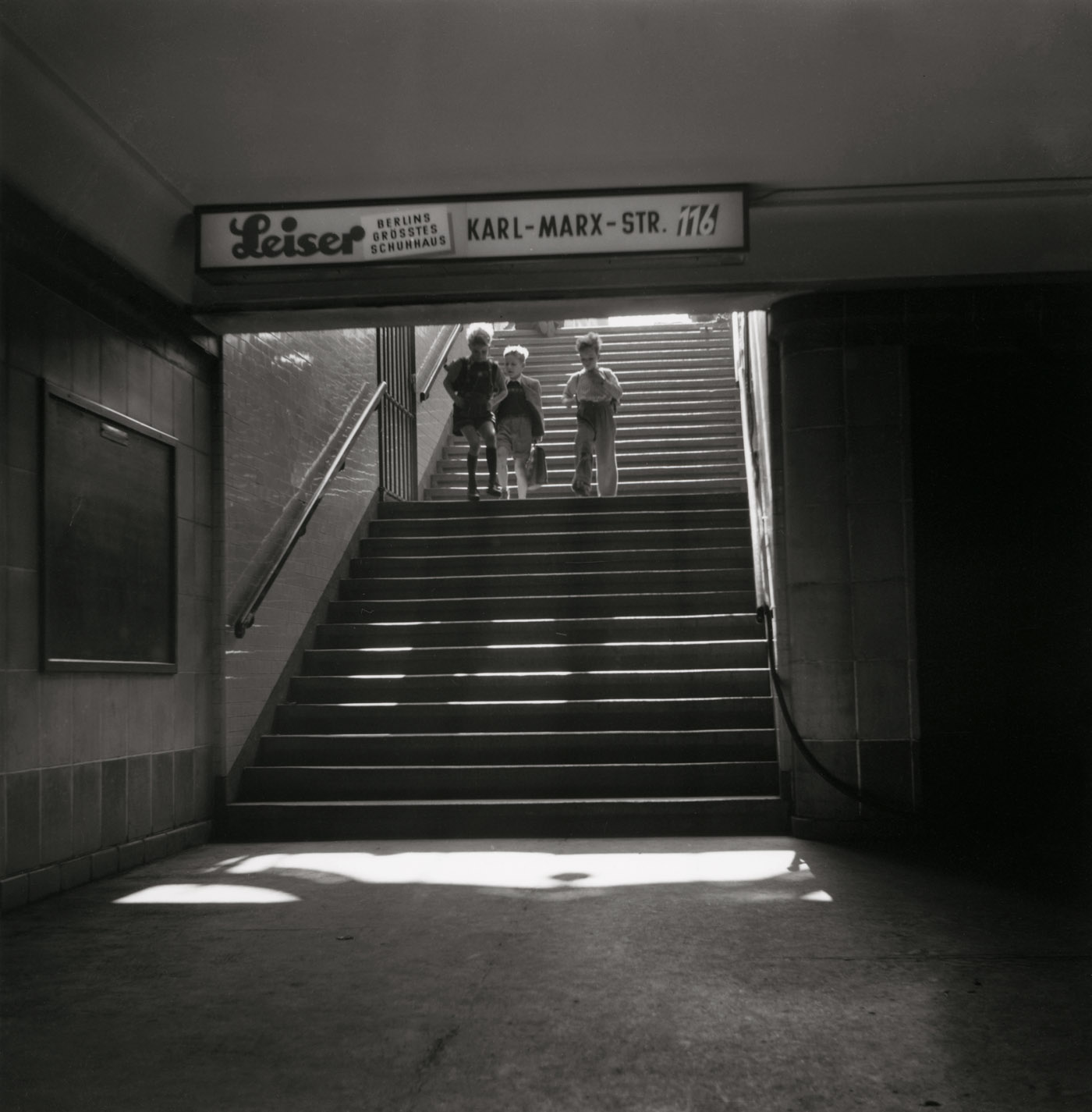
 

Elsa Thiemann (German born Poland, 1910-1981) 'Berlin Kinder am U-Bahneingang in Neukölln' (Berlin children at the subway entrance in Neukölln) 1950s


Elsa Thiemann (German born Poland, 1910-1981)
Berlin Kinder am U-Bahneingang in Neukölln (Berlin children at the subway entrance in Neukölln)
1950s
Bauhaus-Archiv Berlin
© VG Bild-Kunst, Bonn 2026
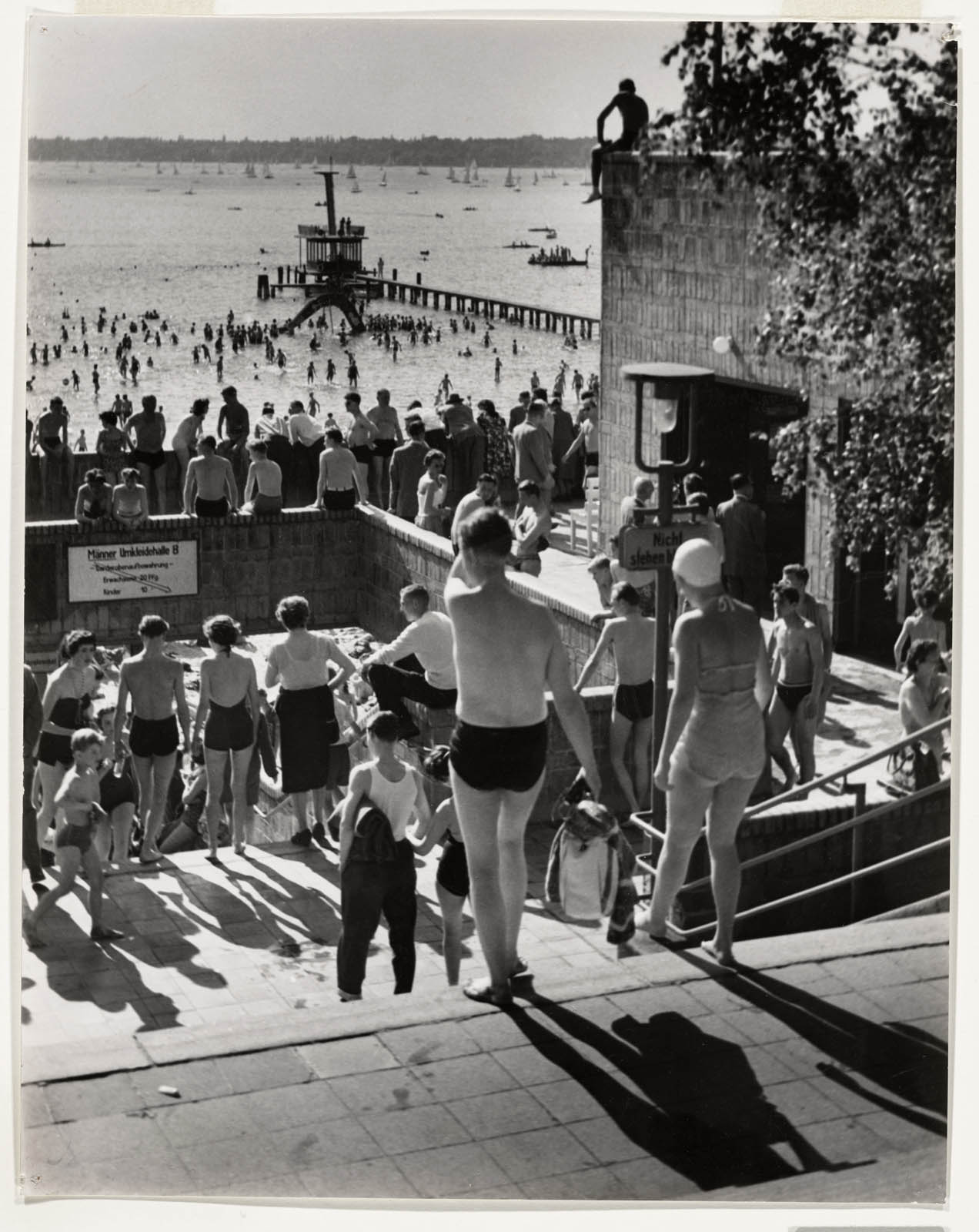
 

Elsa Thiemann (German born Poland, 1910-1981) 'Berlin die grosse Treppe im Freibad Wannsee' (Berlin, the large staircase in the Wannsee open-air swimming pool) 1950s


Elsa Thiemann (German born Poland, 1910-1981)
Berlin die grosse Treppe im Freibad Wannsee (Berlin, the large staircase in the Wannsee open-air swimming pool)
1950s
Bauhaus-Archiv Berlin
© VG Bild-Kunst, Bonn 2026


Museum für Fotografie
Jebensstraße 2, 10623 Berlin

Opening hours:
Mon closed
Tue 11.00am – 7.00pm
Wed 11.00am – 7.00pm
Thu 11.00am – 8.00pm
Fri 11.00am – 7.00pm
Sat 11.00am – 7.00pm
Sun 11.00am – 7.00pm

Museum für Fotografie website

LIKE ART BLART ON FACEBOOK

Back to top

Exhibition: ‘Bauhaus and Photography: On Neues Sehen in Contemporary Art’ at the Museum für Fotografie, Berlin

Exhibition dates: 11th April – 25th August, 2019

PLEASE NOTE: Postings will be limited over the next 2 months as I travel to see photographic prints and exhibitions in Europe: August Sander, Brassai, Kertesz, Josef Sudek, Fortepan and more.


T. Lux Feininger (German-American, 1910-2011) 'Bauhaus Stage Dessau: 'Light Play' by Oskar Schlemmer with the dancer and pantomime Werner Siedhoff' 1927 from the exhibition 'Bauhaus and Photography: On Neues Sehen in Contemporary Art' at the Museum für Fotografie, Berlin, April - August, 2019


T. Lux Feininger (German-American, 1910-2011)
Bauhausbühne Dessau: ‘Lichtspiel’ von Oskar Schlemmer mit dem Tänzer und Pantomimen Werner Siedhoff / Bauhaus Stage Dessau: ‘Light Play’ by Oskar Schlemmer with the dancer and pantomime Werner Siedhoff
1928
Gelatin silver print
© Staatliche Museen zu Berlin, Kunstbibliothek
© Estate of T. Lux Feininger


“Im Grunde ist es nichts anderes als die Welt seiner Bilder, die in den Bühnenschöpfungen Schlemmers Gestalt gewinnt. […] Es ist eine künstliche, aber auch eine in hohem Maße künstlerische Welt, die ihren Eindruck auf ein formenempfindliches Auge nicht verfehlen wird.” (Curt Glaser: Schlemmers Bühnenentwürfe, 1932). / “Essentially, it is nothing but the world of his pictures that takes form in Schlemmer’s stage creations. […] It is an artificial, but also to a high degree artistic world which cannot fail to make an impression on an eye that is sensitive to form.” (Curt Glaser: Schlemmer’s Stage Designs, 1932).


A COSMIC posting of all that is good about the Neues Sehen (New Vision) photographic movement (Neues Sehen considered photography to be an autonomous artistic practice with its own laws of composition and lighting, through which the lens of the camera becomes a second eye for looking at the world. This new way of seeing was based on the use of unexpected framings, the search for contrast in form and light, the use of high and low camera angles, etc… Moholy-Nagy, László, (1932) The new vision, from material to architecture. New York: Brewer, Warren & Putnam).

Alien orchids, dizzying perspectives and superlative light shows. Design, film, photo, collage, photogram, reflection, dance, portrait, fragmentation, architecture, beauty.

I’m in love with Florence Henri 🙂

Dr Marcus Bunyan


Many thankx to the Museum of Photography, Berlin for allowing me to publish the photographs in the posting, and to Nick Henderson for the installation photographs. Please click on the photographs for a larger version of the image.


Installation view of the exhibition 'Bauhaus and Photography' at the Museum für Fotografie, Berlin

Installation view of the exhibition 'Bauhaus and Photography' at the Museum für Fotografie, Berlin

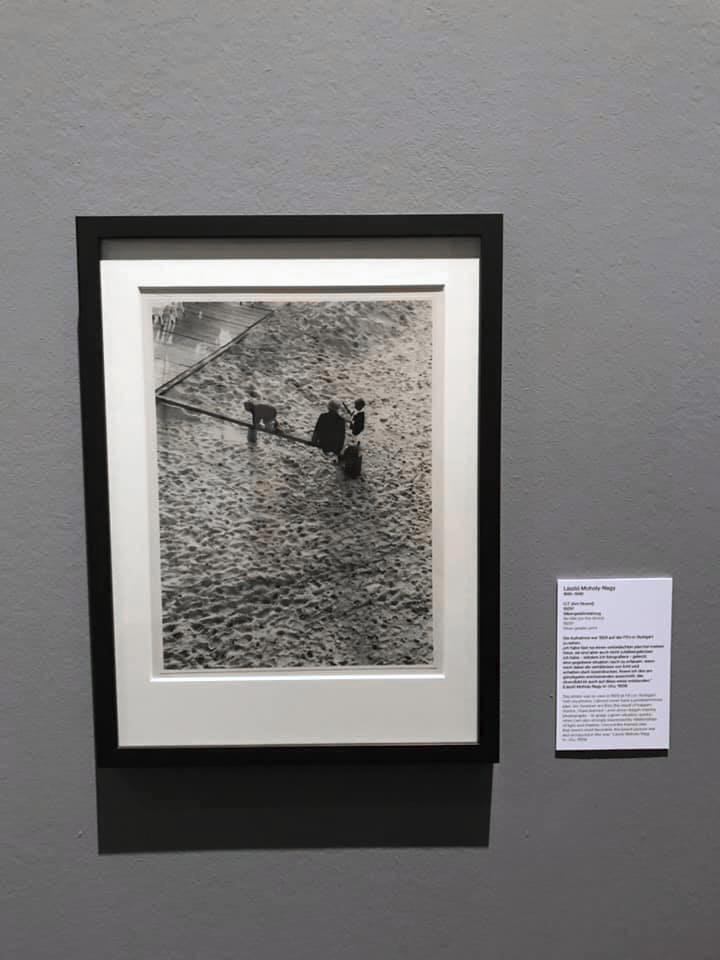
László Moholy-Nagy (Hungarian, 1895-1946) 'No title (on the shore)' c. 1929 (installation view)


László Moholy-Nagy (Hungarian, 1895-1946)
O.T. (Am Strand) / No title (on the shore) (installation view)
c. 1929
Gelatin silver print


Die Aufnahme war 1929 auf der FiFo in Stuttgart zu sehen. “Ich habe fast nie einen vorbedachten plan bei meinen fotos. Sie sind aber auch nicht zufallsergebnisse. Ich habe – seitdem ich fotografiere – gelernt, eine gegebene situation rasch zu erfassen. Wenn mich dabei die verhältnisse von licht und schatten stark beeindrucken, fixiere ich den am günstigsten erscheinenden ausschnitt. Das strandbild ist auch auf diese weise entstanden.” (László Moholy-Nagy in: Uhu, 1929) / This photo was on view in 1929 at FiFo in Stuttgart. “With my photos, I almost never have a predetermined plan. Nor however are they the result of happenstance. I have learned – ever since I began making photographs – to grasp a given situation quickly. When I am also strongly impressed by relationships of light and shadow, I record the framed view that seems most favorable. The beach picture was also produced in this way.” László Moholy-Nagy in: Uhu, 1929)


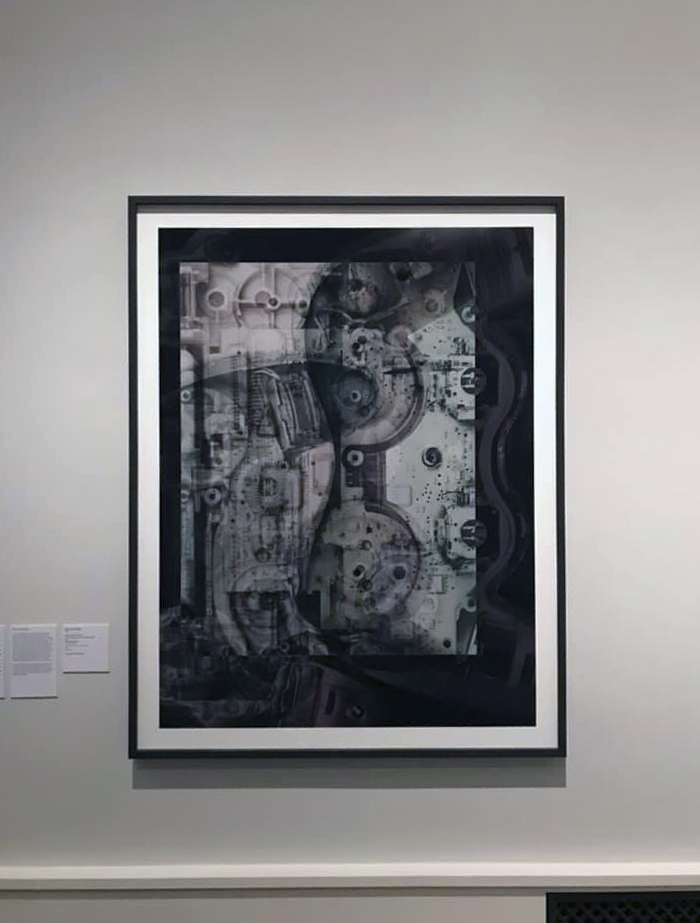
Max de Esteban (Spanish, born 1959) 'TOUCH ME NOT: Fleeing the Presence of Death' 2013


Max de Esteban (Spanish, b. 1959)
TOUCH ME NOT: Fleeing the Presence of Death
2013
Inkjet print
Courtesy of Max de Esteban


In Touch Me Not (2013), Max de Esteban focuses on microelectronic de-vices: CDs, plastic boxes, and electronic circuit boards derived from computers. As data carriers that are X-rayed, the metal surfaces and structures do not reveal any information and refuse to be read.


Catalogue cover from the exhibition 'Bauhaus and Photography' at the Museum für Fotografie, Berlin


Bauhaus and Photography catalogue cover


Installation view of the exhibition 'Bauhaus and Photography' at the Museum für Fotografie, Berlin


Installation views of the exhibition Bauhaus and Photography at the Museum für Fotografie, Berlin


Poster for 'Film und Foto' 1929


International Exhibition of the Deutscher Werkbund Film und Foto (FiFo) at Städtische Ausstellungshallen

Poster for Film und Foto
1929
Offset lithograph
33 x 23 1/8″ (84 x 58.5cm)


Willi Ruge (German, 1892-1961) 'Self-portrait from earthworm perspective' c. 1927 from the exhibition 'Bauhaus and Photography: On Neues Sehen in Contemporary Art' at the Museum für Fotografie, Berlin, April - August, 2019


Willi Ruge (German, 1892-1961)
Selbstbildnis aus der Regenwurm-Perspektive / Self-portrait from earthworm perspective
c. 1927
Gelatin silver print
© Staatliche Museen zu Berlin, Kunstbibliothek
© Erbengemeinschaft Ruge


To mark the centenary of the founding of the Bauhaus, this exhibition opens up a dialogue between contemporary art and the photographic avant-garde of the 1930s.

The Bauhaus is not just a key figure in the history of twentieth-century design and art, but also of photography. How are the innovations that were made then still influencing the evolution of the visual language of today’s photography and contemporary aesthetic concepts? What role does the photographic avant-garde of circa 1930 play for contemporary artists? This exhibition juxtaposes works by artists such as László Moholy-Nagy, Lucia Moholy, Man Ray, Jan Tschichold, Hedda Walther, Florence Henri, Hans Robertson and Erich Consemüller with groups of works by Thomas Ruff, Dominique Teufen, Daniel T. Braun, Wolfgang Tillmans, Doug Fogelson, Max de Esteban, Viviane Sassen, Stephanie Seufert, Kris Scholz, Taiyo Onorato & Nico Krebs, Antje Hanebeck and Douglas Gordon.

The historical reference point of the exhibition is the Werkbund exhibition Film and Photo, which was shown in Stuttgart, Berlin and Zurich, among other locations in 1929/1930. The Berlin leg was put together by the Kunstbibliothek. The Hungarian artist László Moholy-Nagy (1895-1946), who had already made a name for himself with his experimental photographic works, curated one room on the history of photography, and one on the future. The Bauhaus artist was interested in conducting a systematic investigation of Neues Sehen (New Vision) in photography. The historical exhibition, which functioned as a kind of manifesto, intervening in the debates of the time around the position of photography in the hierarchy of art, is reconstructed virtually with over 300 exhibits. Additionally, there will be a recreation of part of the Berlin exhibition. The reconstruction of the original exhibition design will be complemented by numerous vintage prints from the holdings of the Kunstbibliothek and a presentation of films from the 1920s. In combination with photographic works by contemporary artists, the exhibition opens up a dialogue between this historical event and the present moment.

Students from the design department at the Darmstadt University of Applied Sciences and the faculty of design at Nuremberg Tech offer a glimpse into the future, presenting their own forward-looking designs, which also incorporate digital media.

Text from the Museum für Fotografie website [Online] Cited 03/08/2019


David Octavius Hill / Robert Adamson (1802-1870 / 1821-1848) 'Lady Mary Hamilton (Campbell) Ruthven' 1843 from the exhibition 'Bauhaus and Photography: On Neues Sehen in Contemporary Art' at the Museum für Fotografie, Berlin, April - August, 2019


David Octavius Hill / Robert Adamson (Scottish, 1802-1870 / 1821-1848)
Lady Mary Hamilton (Campbell) Ruthven
1843 / Reprint 1890-1900 by James Craig Annan
Pigment print


David Octavius Hill / Robert Adamson (1802-1870 / 1821-1848) 'Newhaven Fisherman'. John Henning and Alex H. Ritchie 1843


David Octavius Hill / Robert Adamson (Scottish, 1802-1870 / 1821-1848)
Newhaven Fisherman. John Henning and Alex H. Ritchie
1843 / Reprint 1890-1900 by James Craig Annan
Oil/bromide transfer print or pigment print


Eugène Atget (French, 1857-1927) 'Shopfront, Quai Bourbon, Paris, France' c. 1900


Eugène Atget (French, 1857-1927)
Au Franc Pinot, quai Bourbon, 1
1902
Aus der Folge / From the series L’Art dans le Vieux Paris
Albumen print


Atget, der sich selbst als Dokumentarfotograf verstand, wurde auf der FiFo als Erneuerer der Fotografie vorgestellt. / Atget, who saw himself as a documentary photographer, was presented at FiFo as a renewer of photography.


László Moholy-Nagy (Hungarian, 1895-1946) 'Photogram (photogram with Eiffel Tower)' 1925 / 1989


László Moholy-Nagy (Hungarian, 1895-1946)
Fotogramm (Fotogramm mit Eiffelturm) / Photogram (photogram with Eiffel Tower)
1925 / 1989
Reproduction by the artist from the unique specimen, Silver gelatin print
© Staatliche Museen zu Berlin, Kunstbibliothek


Das Fotogramm war 1929 auf der FiFo in Stuttgart und Berlin zu sehen. Die Motivvorlage ist 1929 in Moholy-Nagys Buch von material zu architektur abgebildet: “spielzeug / durch die bewegung erzeugtes, virtuelles volumen – optische auflösung des festen materials […] spielzeuge sind in vielen fällen die zeitgemäßen plastiken. Sie enthalten oft geistreiche übersetzungen technischer ideen, die meist mehr von dem wesen technischer vorgänge vermitteln als gelehrte vorträge.” / The photogram was on view in 1929 at FiFo in Stuttgart and Berlin. The template for this motif is reproduced in Moholy-Nagy’s book from material towards architecture (1929): “toy / through the virtual volumes generated by movement – optical dissolution of the solid material […] toys are in many cases contemporary sculptures. They often contain ingenious translations of technical ideas, most convey more concerning the nature of technical procedures than learned lectures.”


Erich Consemüller (German, 1902-1957) 'Bauhaus Stage Dessau: 'Curtain Play' by Oskar Schlemmer with the dancer and pantomime Werner Siedhoff' 1927


Erich Consemüller (German, 1902-1957)
Bauhausbühne Dessau: ‘Vorhangspiel’ von Oskar Schlemmer mit dem Tänzer und Pantomimen Werner Siedhoff / Bauhaus Stage Dessau: ‘Curtain Play’ by Oskar Schlemmer with the dancer and pantomime Werner Siedhoff
1927
Gelatin silver print
© Staatliche Museen zu Berlin, Kunstbibliothek
© Stephan Consemüller


In 1927, Consemüller was commissioned by Gropius to photographically document Bauhaus’s activities and people. This resulted in the creation of around 300 photographs documenting the school’s work and environment. “Bauhaus Scene,” a frequently reproduced photograph of his, combines three works by Bauhaus artists in one photo. It depicts a woman sitting in Breuer’s Wassily Chair, wearing a theatrical mask made by Oskar Schlemmer and a dress designed by Lis Volger-Beyer [de]. Other notable photographs of his feature Bauhaus architecture, often with figures interposed.

Text from the Wikipedia website


László Moholy-Nagy (Hungarian, 1895-1946) 'Radio Tower Berlin' 1925


László Moholy-Nagy (Hungarian, 1895-1946)
Funkturm Berlin / Radio Tower Berlin
1925
Gelatin silver print


Albert Renger-Patzsch (German, 1897-1966) 'Catasetum tridentatum. Orchidaceae' 1922-1923


Albert Renger-Patzsch (German, 1897-1966)
Catasetum tridentatum. Orchidaceae
1922-1923
Gelatin silver print


“Eines der wundervollsten Fotos, das überhaupt in unserer Zeit entstanden ist, ist die Rengersche Orchideenblüte […]. Hier ist ein fotografischer Bildraum entstanden, der mehr räumlich als plastisch lebendig ist.” (Die Form, 1929) / “One of the most marvellous photographs produced during our time is the orchid blossom by Renger […]. Emerging here is a photographic picture space that is more lively in spatial than in sculptural terms.” (Die Form, 1929)


Albert Renger-Patzsch (German, 1897-1966) 'Bügeleisen für Schuhfabrikation, Faguswerk Alfeld [Shoemakers' irons, Fagus factory, Alfeld]' 1928


Albert Renger-Patzsch (German, 1897-1966)
Bügeleisen für Schuhfabrikation. Fagus-Werk Benscheidt in Alfeld / Flat iron for shoe fabrication. Fagus-Werk Benscheidt in Alfeld
1926
Gelatin silver print


Albert Renger-Patzsch (German, 1897-1966) 'Gebirgsforst im Winter (Fichtenwald im Winter)' [Mountain forest in winter (spruce forest in winter)] 1926


Albert Renger-Patzsch (German, 1897-1966)
Gebirgsforst im Winter / Montane woods in winter
1926
Gelatin silver print


Albert Renger-Patzsch (German, 1897-1966) 'Potter's hands' 1925-1927


Albert Renger-Patzsch (German, 1897-1966)
Töpferhände / Potter’s hands
1925-1927
Gelatin silver print


Aenne Biermann (German, 1898-1933) 'View into a piano' c. 1928


Aenne Biermann (German, 1898-1933)
Einblick in ein Klavier. Scherzo / View into a piano
1928 or earlier
Gelatin silver print


Die Aufnahme war 1929 auf der FiFo in Stuttgart zu sehen. / This photo was on view in 1929 at FiFo in Stuttgart.


Aenne Biermann (1898-1933) 'Finale' before October 1928


Aenne Biermann (German, 1898-1933)
Finale
before October 1928
Gelatin silver print


Die Aufnahme war 1929 auf der FiFo in Stuttgart zu sehen. / This photo was on view in 1929 at FiFo in Stuttgart.


Jan Tschichold (German, 1902-1974) 'Vice of Humanity' 1927


Jan Tschichold (German, 1902-1974)
Laster der Menschheit / Vice of Humanity
1927
Plakat (Raster- und Tiefdruck) / Poster (halftone and intaglio)
© Staatliche Museen zu Berlin, Kunstbibliothek
© Familie Tschichold


Das Plakat war 1929 im Raum 1 der FiFo in Berlin zu sehen. “Zu den elementaren Mitteln neuer Typographie gehört in der heutigen, auf Optik eingestellten Welt auch das exakte Bild: die Photographie.” (Jan Tschichold: Elementare Typographie, 1925). / The poster was shown in 1929 in Room 1 at FiFo in Berlin. “In the contemporary world, with its orientation toward optics, among the elementary resources of the new typography is the exact image: photography.” (Jan Tschichold: Elementary Typography, 1925).


Jan Tschichold (2 April 1902 Leipzig, Germany – 11 August 1974 Locarno, Switzerland) (born as Johannes Tzschichhold, also Iwan Tschichold, Ivan Tschichold) was a calligrapher, typographer and book designer. He played a significant role in the development of graphic design in the 20th century – first, by developing and promoting principles of typographic modernism, and subsequently (and ironically) idealising conservative typographic structures. His direction of the visual identity of Penguin Books in the decade following World War II served as a model for the burgeoning design practice of planning corporate identity programs. He also designed the much-admired typeface Sabon.

Text from the Wikipedia website


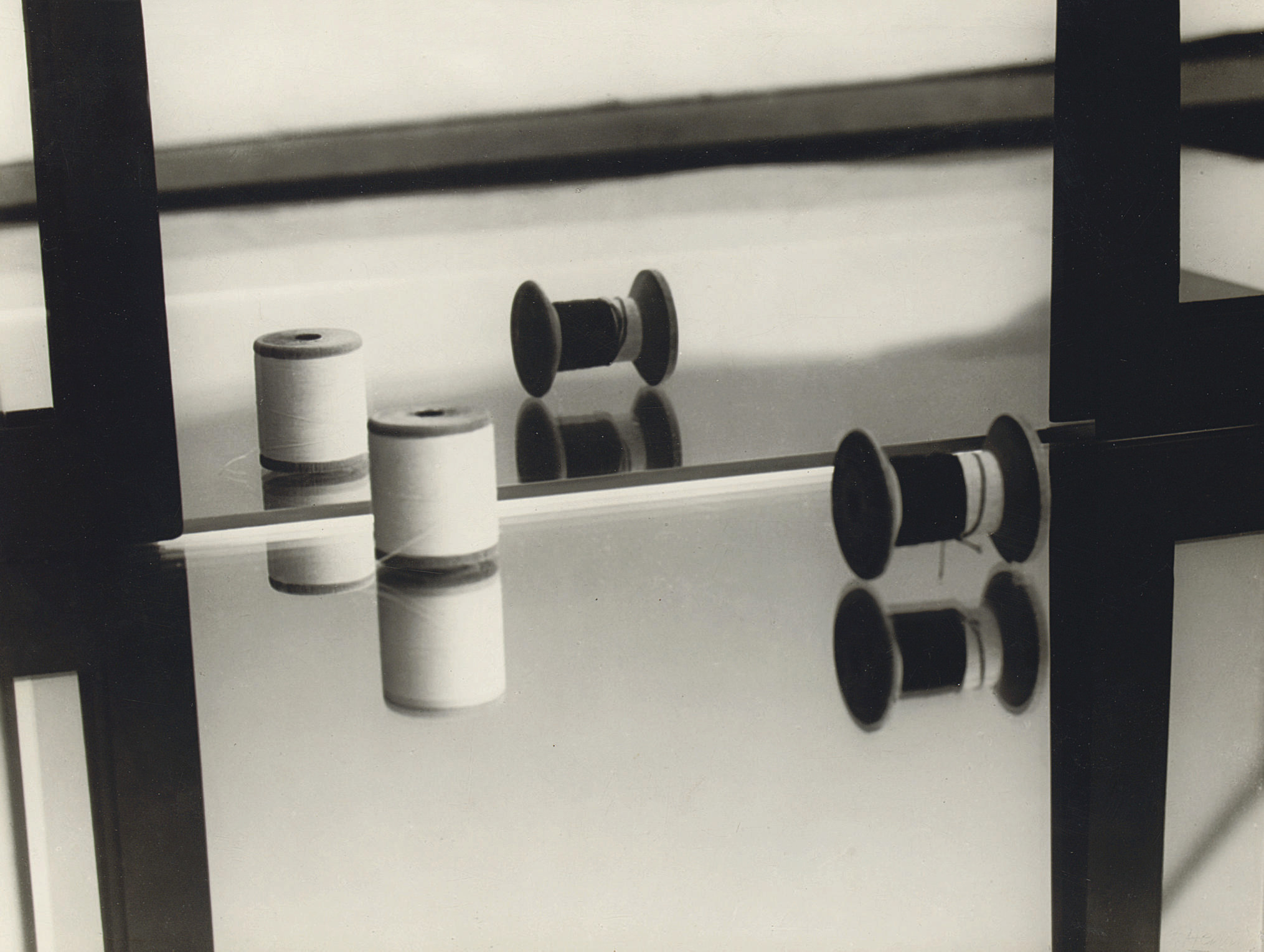
Florence Henri (French, 1893-1982) 'Composition with spools of thread' 1928


Florence Henri (French, 1893-1982)
Komposition mit Garnrollen / Composition with spools of thread
1928
Gelatin silver print
© Florence Henri


Die Aufnahme war 1929 auf der FiFo in Stuttgart zu sehen. / This photo was on view in 1929 at FiFo in Stuttgart.


Max Burchartz (German, 1887-1961) 'Lotte (Eye)' (Lotte [Auge]) 1928


Max Burchartz (German, 1887-1961)
Lotte (Eye) (Lotte [Auge])
1928
Gelatin silver print
11 7/8 x 15 3/4″ (30.2 x 40cm)


Max Burchartz (German, 1887-1961) 'Grete W. (eyes)' c. 1928


Max Burchartz (German, 1887-1961)
Grete W. (Augen) / Grete W. (eyes)
c. 1928
Gelatin silver print


Die Aufnahme war 1929 auf der FiFo in Stuttgart zu sehen. / This photo was on view in 1929 at FiFo in Stuttgart.


Charlotte Rudolph (German, 1896-1983) 'Leap (Gret Palucca)' 1928


Charlotte Rudolph (German, 1896-1983)
Sprung / Leap (Gret Palucca)
1928
Gelatin silver print
On permanent loan from Österreichischen Ludwig-Stiftung für Kunst und Wissenschaft
© Albertina, Vienna


Eine ähnliche Aufnahme der Fotografin Charlotte Rudolph von Palucca bildete László Moholy-Nagy 1925 in dem Buch Malerei Photographie Film ab. / This shot of Palucca by the photographer Charlotte Rudolph was reproduced by László Moholy-Nagy in the book Painting Photography Film in 1925.


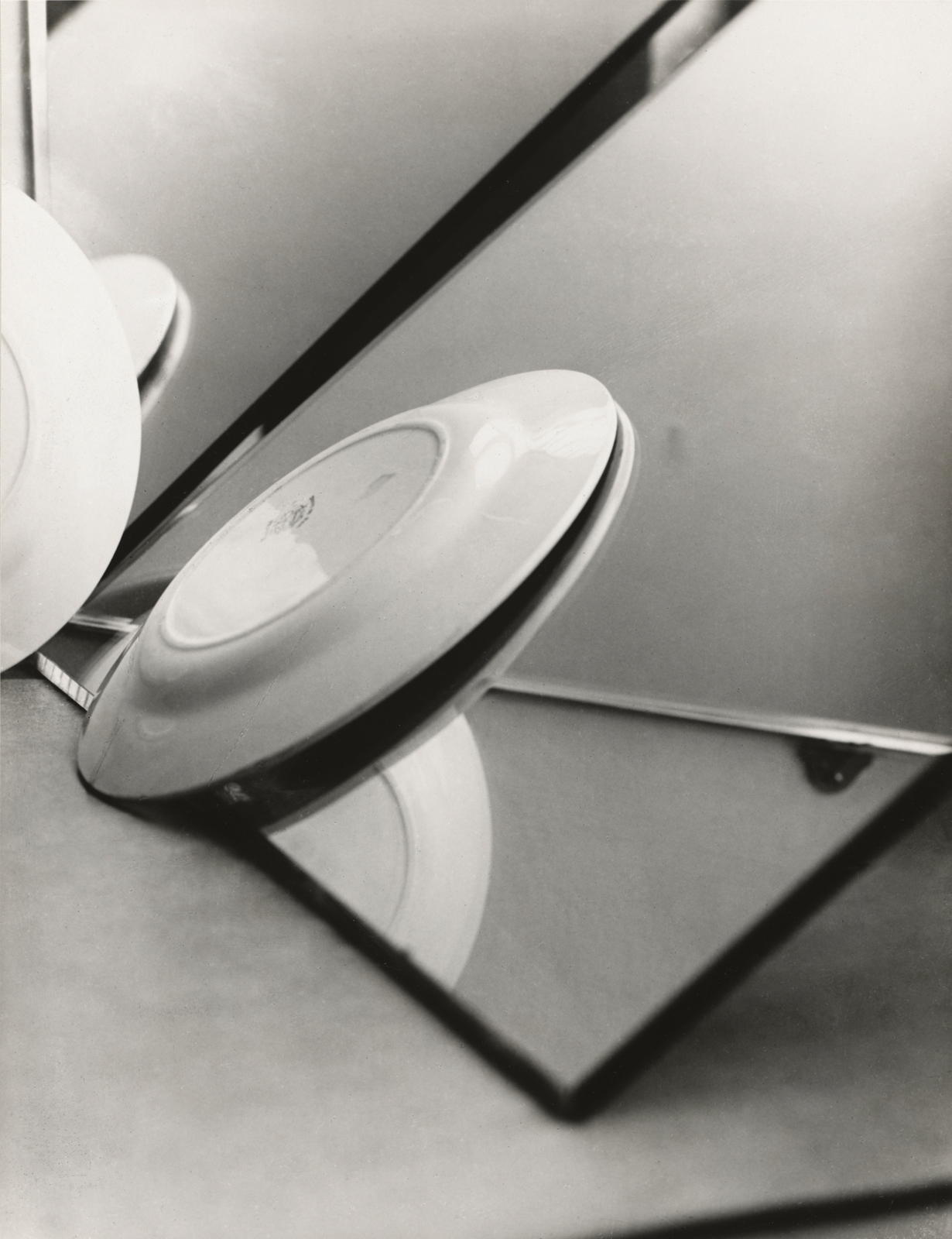
Florence Henri (French, 1893-1982) 'No title (composition with plate and mirror)' 1929 or earlier


Florence Henri (French, 1893-1982)
O.T. (Komposition mit Teller und Spiegel) / No title (composition with plate and mirror)
1929 or earlier
Gelatin silver print
© Staatliche Museen zu Berlin, Kunstbibliothek
© Florence Henri
© Galleria Martini & Ronchetti
Courtesy Archives Florence Henri


Die Aufnahme war 1929 auf der FiFo in Stuttgart zu sehen. / This photo was on view in 1929 at FiFo in Stuttgart.


Florence Henri. 'Fenêtre [Window]' 1929


Florence Henri (French, 1893-1982)
Pariser Fenster / Parisian window
1929 or earlier
Gelatin silver print
© Florence Henri


Die Aufnahme war 1929 auf der FiFo in Stuttgart zu sehen. / This photo was on view in 1929 at FiFo in Stuttgart.


Walter Funkat (German, 1906-2006) 'Glass spheres' 1929


Walter Funkat (German, 1906-2006)
Glaskugeln / Glass spheres
1929
Gelatin silver print
© NRW-Forum


Man Ray (American, 1902-1958) 'Rayograph' 1921-1928


Man Ray (American, 1902-1958)
Rayograph
1921-1928, print 1963
Fotogramm
Gelatin silver print
© Staatliche Museen zu Berlin, Kunstbibliothek
© Man Ray Trust, Paris / VG Bild-Kunst, Bonn 2019


László Moholy-Nagy and the FiFo

László Moholy-Nagy – Bauhaus artist and pioneer of media art – co-curated the legendary exhibition Film und Foto (FiFo) in 1929, which was set up by the Deutscher Werkbund in the exhibition halls on Interimtheaterplatz in Stuttgart. The FiFo, which subsequently travelled to Zurich, Berlin, Gdansk, Vienna, Agram, Munich, Tokyo and Osaka, presented a total of around 200 artists with 1200 works and showed the creations of the international film and photography scene of those years. Moholy-Nagy curated the hall, which reflected the history and present of photography. His artistic perspective on the history of photography and his efforts to provide a comprehensive overview of the contemporary fields of photo-graphic application were fundamental. At the exit of the large hall, Moholy-Nagy suggestively posed the question of the future of photographic development. On the basis of extensive scientific research, the Moholy-Nagy room was virtually reconstructed with approximately 300 exhibits.

The exhibition Film und Foto took its starting point in 1929 in Stuttgart, but was opened only a short time later in the Kunstgewerbemuseum (today: Gropius Bau) in Berlin. In the inner courtyard of the museum, large partition walls were erected to present the numerous photo exhibits. The hanging concept, handed down through three documentary photos, apparently deviated from the Stuttgart hanging. A corner situation, mainly showing photographs by Lucia Moholy and László Moholy-Nagy, was restored in a 1:1 reconstruction. In this way, the curatorial concept of comparative contemplation, as envisioned by Moholy-Nagy, can be re-experienced.

Play with Images

The rooms organised by László Moholy-Nagy at FiFo illustrated the continuity between the formal and optical qualities of photography, as well as the forward-looking influence of technical image media on contemporary culture. Moholy-Nagy’s works were interpretable as exemplifying visual modernism. They comprised close-up portrait fragments, architectural photographs using unconventional perspectives, and playful photo collages. Appearing entirely new at the time were the technical and material qualities of these photographs, as well as the aesthetic principles upon which they functioned. This was true in particular for the boldly configured light spaces of his photograms. These cameraless photographs embodied Moholy-Nagy’s artistic intentions in a very special way, and the medium offered him maximal autonomy in the use of light as a creative resource.

As examples of the photography of the Neue Sehen (New Vision), his works also entered the Kunstbibliothek, which – as the organiser of the Berlin FiFo – also acquired works by other artists from the show. The selection on view here evokes the comparative play with images and with modes of perception and use that was instigated by Moholy-Nagy, while confronting photographs from the 1920s with those from the 19th century. The form of presentation using passe-partouts and frames, prescribed by museum custom, renders the material and formal properties of each individual original print sensuously graspable.

A New Way of Seeing: An Homage to Film und Foto

In the exhibition Film und Foto, the camera emerged as the key to an expanded perception of the world, and as a mediator of new modes of seeing. In conjunction with photographic and cinematic experimentation, the New Objectivity and the New Vision came to epitomise avant-garde production. The central role of film for 20th-century culture was now recognised and manifested for the first time. Today, devices that can produce photographs or filmic scenes depending upon the chosen setting are at our disposal. This medial juxtaposition was conceptualised for the first time at FiFo – not coincidentally in 1929, the year sound film was inaugurated. Questions such as: “What is a photograph?” “What is a cinematic image?” “What is a technically produced image?” were investigated. In the Russian room, El Lissitzky hung photographs in open frames that were reminiscent of filmstrips, and ran excerpts from Soviet films on continuous loops from daylight projectors directly adjacent to them. The presentation of both media in both tandem and on equal terms was realised for the first time here in a modern dispositive. The program The Good Film, assembled by Victor Schamoni, ran at the former Kunstgewerbemuseum, today the GropiusBau, and at other Berlin cinemas, establishing cinema as an art form.

Daniel T. Braun

Daniel T. Braun describes his pictorial work as performative form research. Behind this lies an actionist stubbornness that wrestles unknown facets from the analogue forms of photography. The work group of Rocketograms may serve as an apt example. Following the action forms of action painting, Braun brings light-sensitive colour photographic paper into physical contact with burning pyrotechnics. With the uncommon use of magnesium torches, he refers to undertakings largely forgotten today, which were used for lighting in the early days of photography. In addition, the artefacts created in this way have an emphatically expressive effect. The moment of explosion is inscribed in the unique pieces in a virtually picture-creative way. Referring to Susan Sontag, Braun explicitly directs his goal “not to the creation of harmony, but to the overexpansion of the medium through destructive processes.”

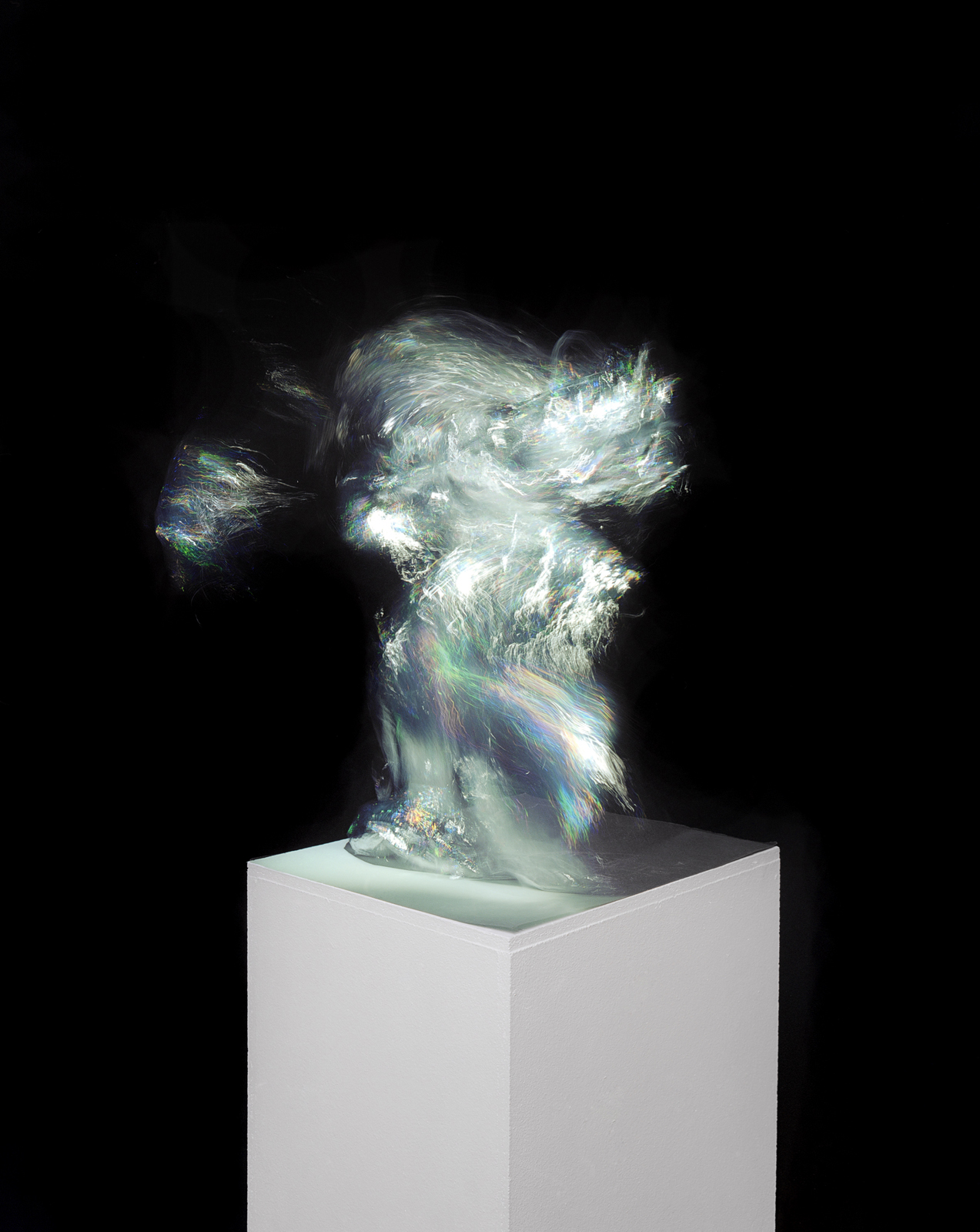
A material-based exploration of light is also reflected in several sculptures, which Daniel T. Braun has transferred into another aspect of being through nuanced lighting and rotations in the studio. In the photographic image, the recorded light traces of the objects develop a strange independence. They seem to elude the observer’s gaze and yet are present in a peculiar way.

Max de Esteban

In the photographic works of Max de Esteban we encounter references critical of civilisation. His digital photo collages are designed as visual textures. They are inscribed with a skepticism based on media theory. He already indicates the vertigo that the works can trigger in their titles: Heads Will Roll is the name of a series of works from 2014. Fragments of perception from the media world are transformed into a visual totality. A spectrum of constructive forms and colour surfaces, as handed down from Modernism, is combined with individual motif elements from the image pool of mass media. In the sense of Zygmunt Bauman, the motifs of Heads Will Roll represent the unredeemed world of a “retrotopia”.

In Touch Me Not (2013), Max de Esteban focuses on microelectronic devices: CDs, plastic boxes, and electronic circuit boards derived from computers. As data carriers that are X-rayed, the metal surfaces and structures do not reveal any information and refuse to be read.

Doug Fogelson

For his series Forms & Records, the American artist Doug Fogelson visited a historically significant site of the New Bauhaus. His analogue black-and-white and colour photographs were taken in the darkroom of the IIT Institute of Design (ID) photography school in Chicago, which was founded by László Moholy-Nagy.

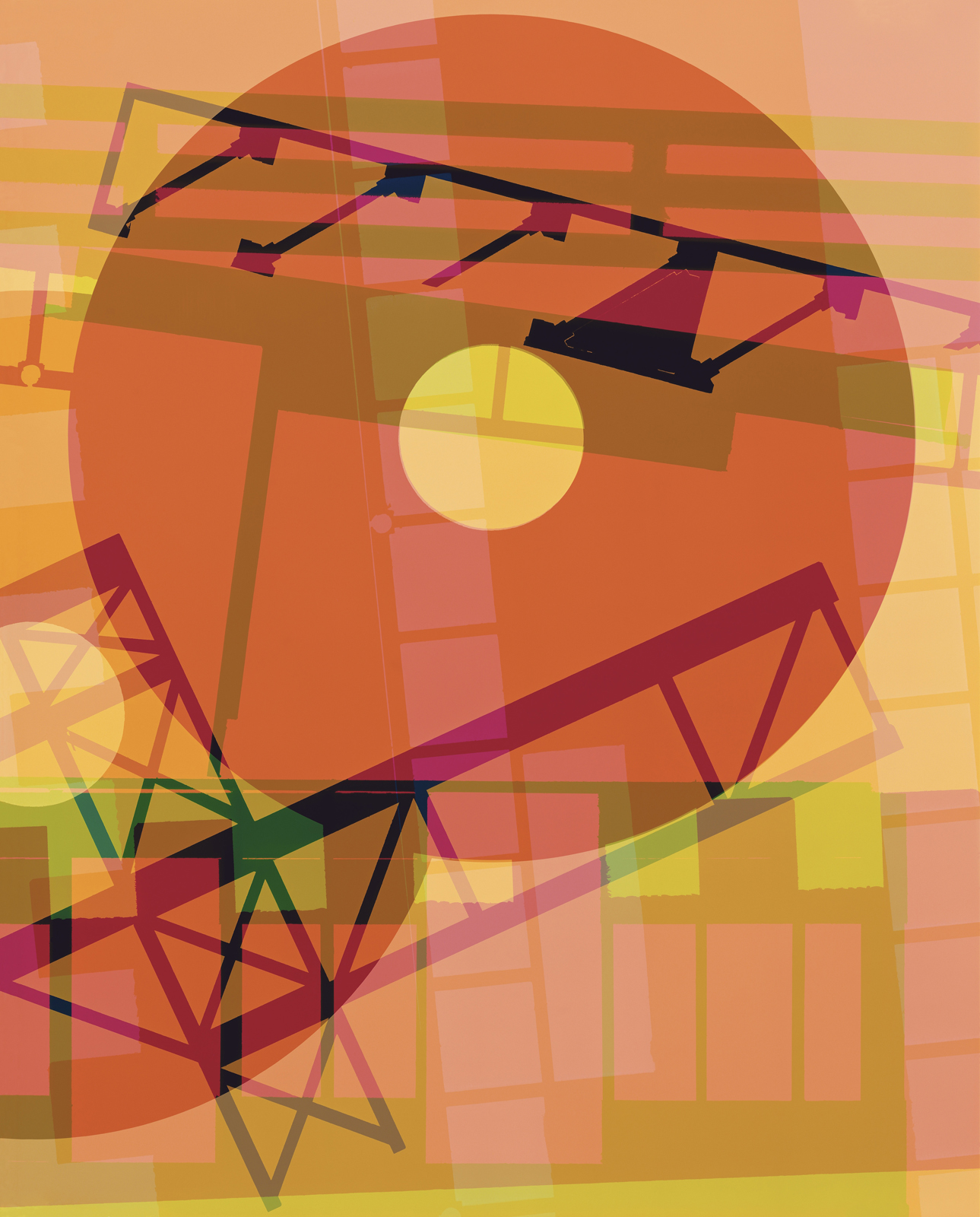
Fogelson’s graphically adept pictorial inventions can be understood as an expression of visual archaeology. He uses architectural models, vinyl singles, film and tape strips from the immediate post-war era as found motifs. In doing so, he refers to concepts of recording, designing, documenting and ephemerality in order to find his way back from a historical distance to the basics of form-finding with light. In addition, Moholy-Nagy’s series also refers to suggestions published in 1922 in his essay “New Plasticism in Music. Possibilities of the Gramophone”. The Bauhaus teacher there implements his ideas on the manipulative use of wax records with the intention of creating new sounds.

Douglas Gordon

In an obsessive way, the video and photographic works of Douglas Gordon wrestle with the receptive parameters of New Vision. His passionate engagement reveals itself in the leitmotif of the eye. For the artist’s book Punishment Exercise in Gothic (2001), the Scottish Turner Prize winner portrays himself in a black-and-white photograph, which shows his bleached portrait in cut. The fragmented cyclopean gaze is directed straight at the viewer and can be interpreted ambiguously. The motif is based on Max Burchartz’s photograph Lotte (eye), a key image of photo-graphic modernism presented in 1929 at the Stuttgart exhibition Film und Foto. In the book, the artist repeats his self-portrait no less than 118 times.

Antje Hanebeck

Antje Hanebeck dedicates her artistic photography to the architecture of post-war Modernism and the present. A moment of the documentary does not apply to her. Instead, she operates with a coarse-grained, tonal black-and-white aesthetic that seems pre-modern in an confounding way. Graphic and photographic elements are subtly intertwined and contrasted with the captured buildings, which retain their strictly constructive character. “Her pictures are picture puzzles, riddles, question marks, which – also – resist any temporal classification” (Hans-Michael Koetzle). This also applies to the large-format work Borough (2008). Hanebeck’s motif refers to photographs taken by László Moholy-Nagy in 1928 on the viewing platform of the Berlin Radio Tower. However, her spectacular downward gaze leads to a new irritation of perception. The irritation can only be resolved by a change of view – a 90 degree turn of the head to the left. Of course, the artist’s intervention is not limited to the formal. “The Borough motif undergoes transformation into a newly created, utopian, urban land-scape through a rotation.” (Ellen Maurer Zilioli).

Behind the poetic name of the work Desert Rose lies the National Museum of Qatar, designed by Jean Nouvel, which is due to open in March 2019. The French star architect develops his representative buildings from various stylistic concepts, including Bauhaus modernist architecture. It is not uncommon for the buildings to be symbolically formulated. In her horizontal-format photographs, Hanebeck exposes a section of the constructive sub-layers of the “desert rose”. She interprets the functional longwall system of the steel pillars as a deeply vital, vibrating fabric.

Taiyo Onorato & Nico Krebs

“The enemy of photography is the convention, the fixed rules, the ‘how to do it’. The rescue of photography takes place through experimentation.” Programmatically, this quotation by László Moholy-Nagy is prefixed in a catalogue on the works of Taiyo Onorato and Nico Krebs. The Swiss artist duo, who have been working together since 2003, is interested in the shifting of photo-technical boundaries, in a productive confusion of the perception of things and their representation. Onorato & Krebs act inventively, ironically and always with analogue means in their image findings. For their work group Color Spins, created in 2012, they have developed their own rotational apparatuses. The dynamic light sculptures, which are captured by colour photography, create a surprising illusionism. With a wink, the figurations recall the famous ensembles that Oskar Schlemmer developed more than a hundred years ago and later performed on the Bauhaus stage in Dessau.

The ephemeral light sculptures of the black-and-white series Ghost from 2012, on the other hand, step in front of the dreary backdrop of a piece of woodland. A disturbing surreality emanates from the appearances. The medium of photography still retains its magical character in the works of Onorato & Krebs.

Thomas Ruff

The phg series by Thomas Ruff is characterised by digital processes. They can be interpreted as an homage. The work phg.05_II, in its spiral form, recites one of László Moholy-Nagy’s most famous photograms from 1922. The three-letter abbreviation, which recalls the name of a file format, refers to a contemporary approach to image generation. The process is completely virtualised. Both the generation of the objects and the simulation of the shadows on the paper take place in an immaterial space.

“With phg, Ruff transfers an analogue technique into virtual space – and at the same time questions all attributes assigned to the photogram, such as immediacy and objectivity, as they were relevant to Moholy-Nagy’s ‘Photography of New Vision'” (Martin Germann). But the phg series can also be thought of in the opposite way. By radically erasing the analogue essence of the photogram, but retaining the terminology of the photograms, Ruff redeems a central doctrine of photography for the digital present. As early as 1928, László Moholy-Nagy brought the doctrine to a formula: “Photography is the shaping of light.”

Viviane Sassen

What is photography? Viviane Sassen understands the imaging process as a peculiar “art of darkening”. Umbra (Latin: “shadow”) is the title of her group of works created in 2014. In it, the Dutch fashion and art photographer explores in a number of variations the effect aspects of semi-transparent colour surfaces placed in desert sceneries. For the three-part work Vlei, Viviane Sassen locates square plates of coloured glass in a hollow. In their form and colour, these plates are reminiscent of the abstract paintings by Bauhaus master Josef Albers. The surfaces of the Umbra series are also partly captured in perspective foreshortening. They, too, assert themselves as an autonomous, colour-shaded picture within the picture. Sassen’s arrangements always retain a slight contradictoriness. Moments of realism and abstraction are equally effective in them.

The artist’s book Umbra from 2015 brings together eleven coloured shadow motifs in the form of a loose-leaf collection. The motifs once again operate with variations of gaze and reflections. Sassen’s artistic oeuvre often contains feminist references to modernist photography. The work Marte #03, for example, is based on Germaine Krull’s experimental self-portraits.

Kris Scholz

In the age of the digital, there can be no question of a demand for ahistoricity, as evoked by the New Vision. This is documented by the series Marks and Traces by Kris Scholz. His large-format colour photographs show worn floors, floor boards, and tabletops from German, Spanish, Moroccan and Chinese studios and art academies. One may initially classify the motifs as pictorial documents. “But just as important is the question of who left these markings and traces. As documents, his pictures ‘fail’ because they hardly provide any information” (Gérard A. Goodrow). The perceptual perspective of the pictures is based on a radically lowered gaze that was already applied by Umbo and László Moholy-Nagy in the 1920s. Scholz also uses stretched linen as a medium for his highly abstract large formats, which, despite their sharpness of detail, are, from a greater distance, perceived as painterly artefacts.

Stefanie Seufert

The works of Stefanie Seufert show an architectural reference. Her sculptures from 2016 are titled Towers. Photographic papers serve as the start-ing point for her experimental exploration. In the darkroom, these papers are edited by elaborate folding and exposure processes. From the respective layers and trace-like superimpositions, a materiality of its own is formulated, which the artist consciously expands into space. “Fragile, strangely monumental and oddly alien to themselves, they arise from a folding of the picture, which now occupies a space, encloses a space and suggests the idea of an (interior) space of the pictures themselves” (Ma-en Lübbke-Tidow). As tower-like artefacts, Seufert’s Towers, which are reminiscent of contemporary high-rise buildings, literally stand in the way of the viewer. Like an ensemble of materialised metaphors, they insist on autonomy that includes both alienation and abstraction.

Dominique Teufen

The artistic works of Dominique Teufen are characterised by an expansive drive of photography towards the genres of sculpture and architecture. Her group of Blitzlicht-Skulpturen (flashlight sculptures) was created in 2013. The setting follows a strict arrangement. Like architectural models, glass structures composed of shapes of cubes, slabs, and pyramids are positioned on the stage of a black plinth or white table. Something theatrical happens on it. The camera flashes. Reflective surfaces reflect the light onto the walls, catch these light forms again and connect the perspectival surfaces and lines to an illusion: the concrete moves into the background, the light as a sculpture enters the room; as soon as the eye suspects it, only the photograph remains as a witness to its existence. Teufen’s tableaus explore border areas. What already is architecture? What is sculpture? What, in turn, is photography?

In an ironic way, a catalogue of questions opens up in Teufen’s installation Selfiepoint from 2016. The expansive work formulates the invitation to shoot a selfie with the smartphone and thus to practice a central iconic gesture of our time. The backdrop of a mountain landscape quickly turns out to be a whimsically composed mountain of paper. It originated solely from the copier. What remains is a creative desire for self-reflection. Selfiepoint reminds us that the snapshot aesthetics of amateur photography have already been tried out by the students at the Bauhaus. At that time, the students were already playfully exploring new ways of presenting individual and group portraits with the 35 mm camera.

Wolfgang Tillmans

To what extent was the Bauhaus politically oriented? With a view to photography, the question still arises today as to the degree to which New Vision can be assigned to an artistic avant-garde of Modernism. Because the latter “aims, beyond the aesthetic, at radical social change […] which hardly applies to the protagonists of the New Vision. They were interested in little more than new perspectives from which they put people and things into the picture” (Timm Starl). The accusation of aestheticism arises. It contradicts the thesis that a reflexive visual process already provides political impulses itself. For the self-conception of contemporary art, however, the integration of political fields of thought and action has gained central importance. Both aspects of the political can be found exemplarily in the work of Wolfgang Tillmans. In June 2016, the artist launched an Anti-Brexit campaign for which he designed a 25-part poster series and called for Great Britain to remain in the EU. Tillmans does not want his project to be understood as an art action. He uses images from his Vertical Landscapes, which is a group of motifs of heavens and horizons. His photo-graphs are used as a form of agitation and placed in a tradition of image propaganda. Think, for example, of the collages by John Heartfield.

An edition realised by Wolfgang Tillmans in 2016 at the invitation of Tate Modern in London acts with a different field of photography. The occasion is the reopening of the Switch House, a brick building apse by Swiss architects Herzog & de Meuron. The sequence of images shows the still empty room areas of the museum on colour photocopies. Even this materiality undermines the auratic charge of the building. In their limited colour spectrum, Tillmans’ pictures produce “patterns and reductions that are literally subtracted from the naturalistic image” (Heinz Schütz). Paradoxically enough, the reproductions are transformed back into unique pieces through alienating colour shifts.


Daniel T. Braun (German, b. 1975) 'Overseer' 2003


Daniel T. Braun (German, b. 1975)
Overseer
2003
Raketogramm / colour photogram
c.170 x 106cm
© VG Bild-Kunst, Bonn 2018


Daniel T. Braun (German, b. 1975) 'Rafael Shafir' 2006


Daniel T. Braun (German, b. 1975)
Rafael Shafir
2006
Raketogramm / colour photogram
c. 260 x 130cm
© VG Bild-Kunst, Bonn 2018


Antje Hanebeck. 'Borough' 2008


Antje Hanebeck (German, b. 1968)
Borough
2008
Textildruck im Spannrahmen
230 x 230cm
© VG Bild-Kunst, Bonn 2018


Taiyo Onorato & Nico Krebs. 'Spin 07 (green brown)' 2012


Taiyo Onorato & Nico Krebs (Swiss, both b. 1979)
Spin 07 (green brown)
2012
Colour print
Courtesy the artists & Sies + Höke, Düsseldorf
© Taiyo Onorato & Nico Krebs


Daniel T. Braun (German, b. 1975) 'SBSVI Nr. 6' 2013


Daniel T. Braun (German, b. 1975)
SBSVI Nr. 6
2013
C-Print analog
110 x 90cm
© VG Bild-Kunst, Bonn 2018


Kris Scholz (German, b. 1952) 'Marks and Traces, Caochangdi 1' 2013


Kris Scholz (German, b. 1952)
Marks and Traces, Caochangdi 1
2013
Fine art print on canvas
200 x 150cm
© VG Bild-Kunst, Bonn 2018


Kris Scholz (German, b. 1952) 'Marks and Traces, Chongqing 5' 2018


Kris Scholz (German, b. 1952)
Marks and Traces, Chongqing 5
2018
Fine art print on canvas
200 x 150cm
© VG Bild-Kunst, Bonn 2018


Dominique Teufen (Swiss, b. 1975) 'Flashlight Sculpture #3' 2013


Dominique Teufen (Swiss, b. 1975)
Flashlight Sculpture #3
2013
Colour print
60 x 90cm
Courtesy Christophe Guye Galerie, Zürich
© Dominique Teufen


Dominique Teufen (Swiss, b. 1975) 'Flash Sculpture # 5' 2013


Dominique Teufen (Swiss, b. 1975)
Flash Sculpture # 5
2013
Colour print
60 x 90cm
Courtesy Christophe Guye Galerie, Zürich
© Dominique Teufen


Doug Fogelson (American, b. 1970) 'Forms and Records No. 11' 2014


Doug Fogelson (American, b. 1970)
Forms and Records No. 11
2014
Fotogramm
Silver gelatin paper
Courtesy Doug Fogelson
© Doug Fogelson


Doug Fogelson (American, b. 1970) 'Forms And Records No 06' 2014


Doug Fogelson (American, b. 1970)
Forms And Records No 6
2014
Photogram, light box
© Doug Fogelson


Doug Fogelson (American, b. 1970) 'Forms And Records No 8' 2014


Doug Fogelson (American, b. 1970)
Forms And Records No 8
2014
Photogram, light box
© Doug Fogelson


Doug Fogelson (American, b. 1970) 'Forms And Records No 13' 2014


Doug Fogelson (American, b. 1970)
Forms And Records No 13
2014
Photogram, light box
© Doug Fogelson


Max de Esteban (Spanish, b. 1959) 'HEADS WILL ROLL: Geographies of Permanent Emergency' 2014


Max de Esteban (Spanish, b. 1959)
HEADS WILL ROLL: Geographies of Permanent Emergency
2014
Inkjet print
Courtesy Max de Esteban
© Max de Esteban


Vivianne Sassen (Dutch, b. 1972) 'Red Vlei' 2014


Vivianne Sassen (Dutch, b. 1972)
Red Vlei
2014
Colour print
Courtesy Vivianne Sassen
© Vivianne Sassen


Viviane Sassen (Dutch, b. 1972) 'Yellow Vlei' 2014


Viviane Sassen (Dutch, b. 1972)
Yellow Vlei
2014
Colour print
Courtesy Vivianne Sassen
© Vivianne Sassen


Daniel T. Braun (German, b. 1975) 'Atmozons & Horizspheres no. 11' c. 2015


Daniel T. Braun (German, b. 1975)
Atmozons & Horizspheres no. 11
c. 2015
Photogram / luminogram on colour film
114 × 80cm
C-Print analog, 2+1 AP
© Daniel T. Braun und VG Bild-Kunst


Daniel T. Braun (German, b. 1975) 'AZ Nr. 6' 2016


Daniel T. Braun (German, b. 1975)
AZ Nr. 6
2016
Photogram on coloUr film / C- Print analog
c. 84 x 120cm
© VG Bild-Kunst, Bonn 2018


Stefanie Seufert (German, b. 1969) 'Towers Option #2, Just Yellow, Atlas Grey, Dark Aubergine' 2016


Stefanie Seufert (German, b. 1969)
Towers Option #2, Just Yellow, Atlas Grey, Dark Aubergine
2016
Fotogramm / Colour paper
Courtesy Stefanie Seufert
© Stefanie Seufert


Antje Hanebeck. 'CaSO4•2 H2O 46' 2018


Antje Hanebeck (German, b. 1968)
CaSO4•2 H2O 46
2018
Pigment print
Courtesy Antje Hanebeck
© VG Bild-Kunst, Bonn 2019


Museum für Fotografie
Jebensstraße 2, 10623 Berlin, Germany
Phone: +49 30 266424242

Opening hours:
Tues – Sunday 11am – 7pm

Museum für Fotografie website

LIKE ART BLART ON FACEBOOK

Back to top