Exhibition: ‘New Woman, New Vision. Women Photographers of the Bauhaus’ at the Bauhaus-Archiv / Museum für Gestaltung at the Museum für Fotografie, Berlin

Exhibition dates: 17th April – 4th October, 2026

Curators: Kristin Bartels, with Carla Huttenloher serving as the assistant (or curatorial) curator

Artists featured in the exhibition: Gertrud Arndt; Ellen Auerbach; Irene Bayer; Lotte Beese; Irena Blühov; Marianne Brandt; Lotte Gerson-Collein; Barbara Crane (New Bauhaus); Margarete Dambeck-Keller; Charlotte Grunert; Ise Gropius; Ise Gropius; Toni von Haken-Schrammen; Florence Henri; Catherine Hinkle (New Bauhaus); Irene Hoffmann; Hilde Hubbuch; Grit Kallin-Fischer; Judit Kárász; Ivana Meller-Tomljenović; Etel Mittag-Fodor; Lucia Moholy; Lony Neumann; Ricarda Schwerin; Ré Soupault; Grete Stern; Elsa Thiemann; Else Tholstrup (New Bauhaus); Mili Thompson (New Bauhaus); Edith Tudor-Hart
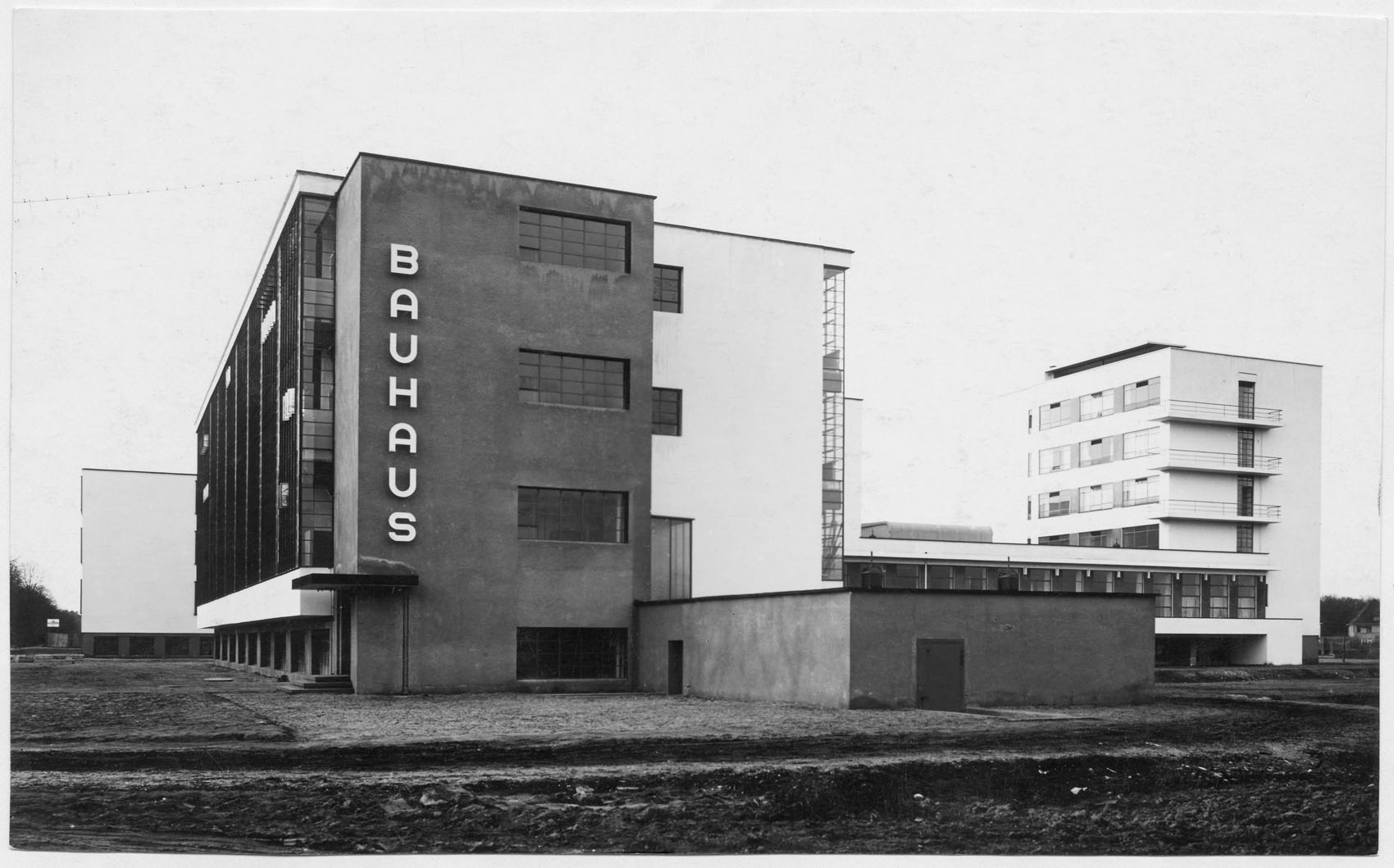
 

Lucia Moholy (British born Czech, 1894-1989) 'Architekt - Walter Gropius Bauhaus-Gebäude Dessau (1925-1926)' (Architect: Walter Gropius, Bauhaus building Dessau (1925-1926)) 1927


Lucia Moholy (British born Czech, 1894-1989)
Architekt – Walter Gropius Bauhaus-Gebäude Dessau (1925-1926) (Architect: Walter Gropius, Bauhaus building Dessau (1925-1926))
1927
Bauhaus-Archiv Berlin
© VG Bild-Kunst, Bonn 2026


I am always learning about photography.

This is the case with some of the female photographers in this posting, many unknown to me. What a joy it is to see their photographs.

It is a blessing to be able to study their life story, to imbibe (take in ideas and knowledge) of their art, to acknowledge and admire these New Women who had a passion for seeing the world in new ways, using photography as an artistic and social instrument.

I know the work of that accomplished artist Lucia Moholy (British born Czech, 1894-1989) who made focused, thoughtful, beautiful photographs; Marianne Brandt (German, 1893-1983); socialist Edith Tudor-Hart (British born Austria, 1908-1973); modernist, surrealist Grete Stern (Argentine born Germany, 1904-1999); and the ever inventive Gertrud Arndt (German, 1903-2000) who has never had a posting on Art Blart because of the paucity of exhibitions on her work.

What I didn’t know were the photographs of Etel Mittag-Fodor (Hungarian, 1905-2005), Grit Kallin-Fischer (German, 1897-1973), Ivana Meller-Tomljenović (Croatia, 1906-1988) – I love all these double-barrelled surnames! – Lotte Collein (German, 1905-1995), Lony Neumann (German, 1902-1996), Ré Soupault (French-German born Poland, 1901-1996) and Elsa Thiemann (German born Poland, 1910-1981).

How exciting and a little dangerous it must have been to have studied at the Bauhaus during this period,1 early 1920s-1933 (the photography course established in 1929), before the “school’s leadership voted to dissolve it in July 1933 under intense police raids, harassment, and crushing political pressure from the Nazi regime who labelled its avant-garde, modern style as “degenerate”.” (Google AI)

To be part of a school that contained an incredible coterie of friends and artists which, then and now, continues to construct important social, cultural and artistic legacies.

Through knowledge hopefully wisdom.

Dr Marcus Bunyan


1/ “Under the Nazi regime, about twenty Bauhauslers are known to have been killed in prison or concentration camps. Some emigrated, while others adapted and participated in propaganda exhibitions and design fairs, produced photographic and graphic works such as magazine covers, movie posters, and designed furniture, carpets, household objects and even busts of Hitler. Of 119 teaching staff c. 15 emigrated between 1933 and 1938. Of the c. 1,250 students who were enrolled when Hitler came to power in 1933, approximately 900 are thought to have remained in Germany. Of those, 188 joined the National Socialist Party (170 men and 18 women), 14 were part of the brown shirts, 12 joined the SS, and one was involved in the design of the crematoria at Auschwitz.”

Anonymous. “Bauhaus,” on the Wikipedia website Nd [Online] Cited 18/09/2026


Many thankx to the Museum für Fotografie for allowing me to publish the photographs in the posting. Please click on the photographs for a larger version of the image.
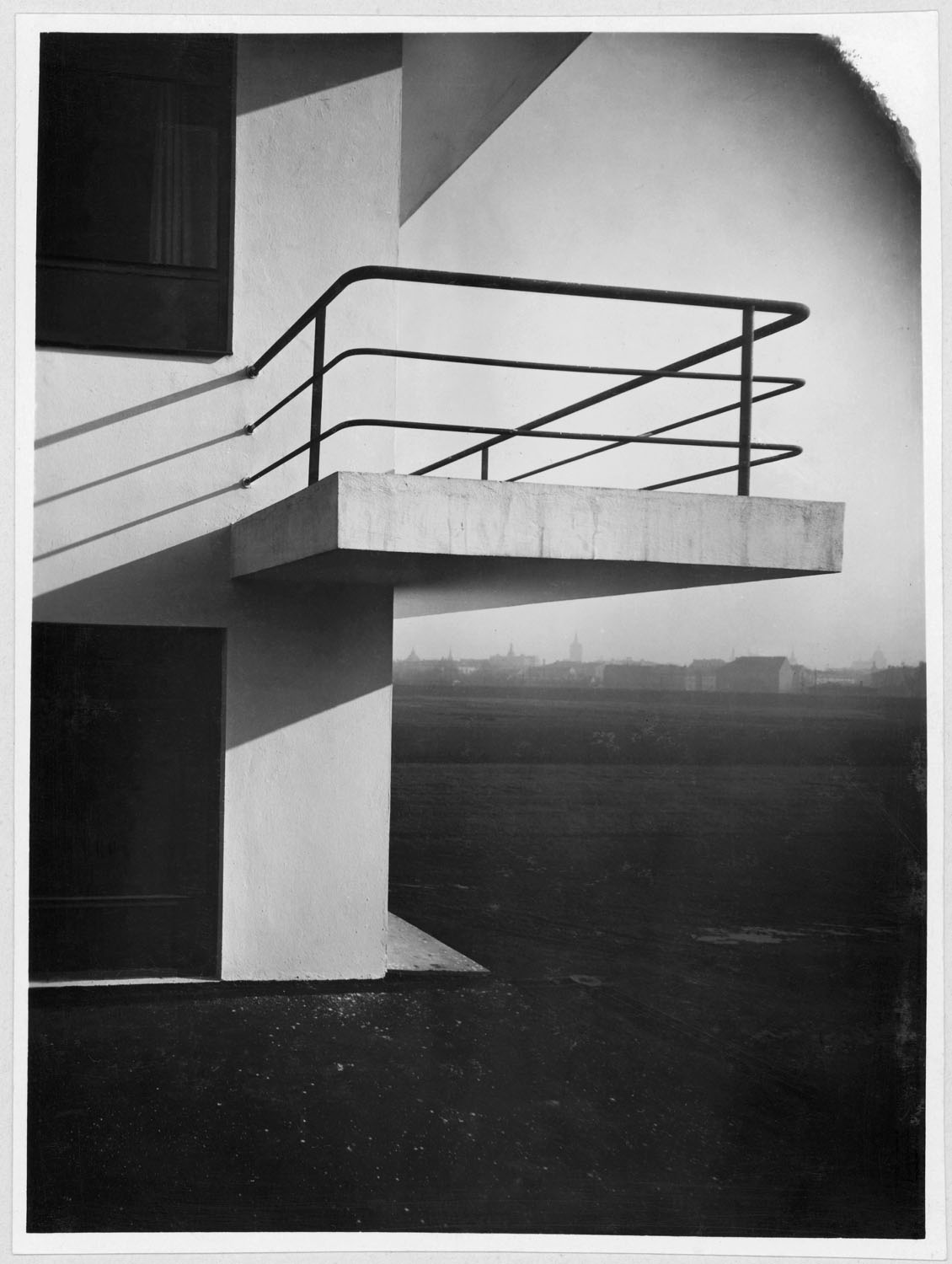


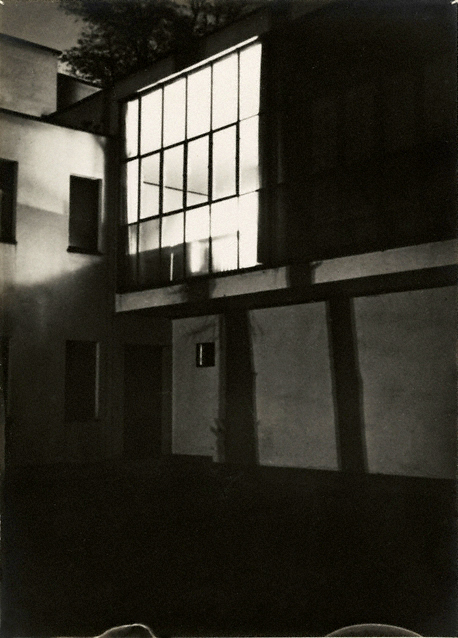
Lucia Moholy (British born Czech, 1894-1989) 'Architekt - Walter Gropius Bauhaus-Gebäude Dessau (1925-1926) Balkon am Ateliergebäude' (Architect - Walter Gropius Bauhaus building Dessau (1925-1926) Balcony on the studio building) 1926


Lucia Moholy (British born Czech, 1894-1989)
Architekt – Walter Gropius Bauhaus-Gebäude Dessau (1925-1926) Balkon am Ateliergebäude (Architect – Walter Gropius Bauhaus building Dessau (1925-1926) Balcony on the studio building
1926
Bauhaus-Archiv Berlin
© VG Bild-Kunst, Bonn 2026
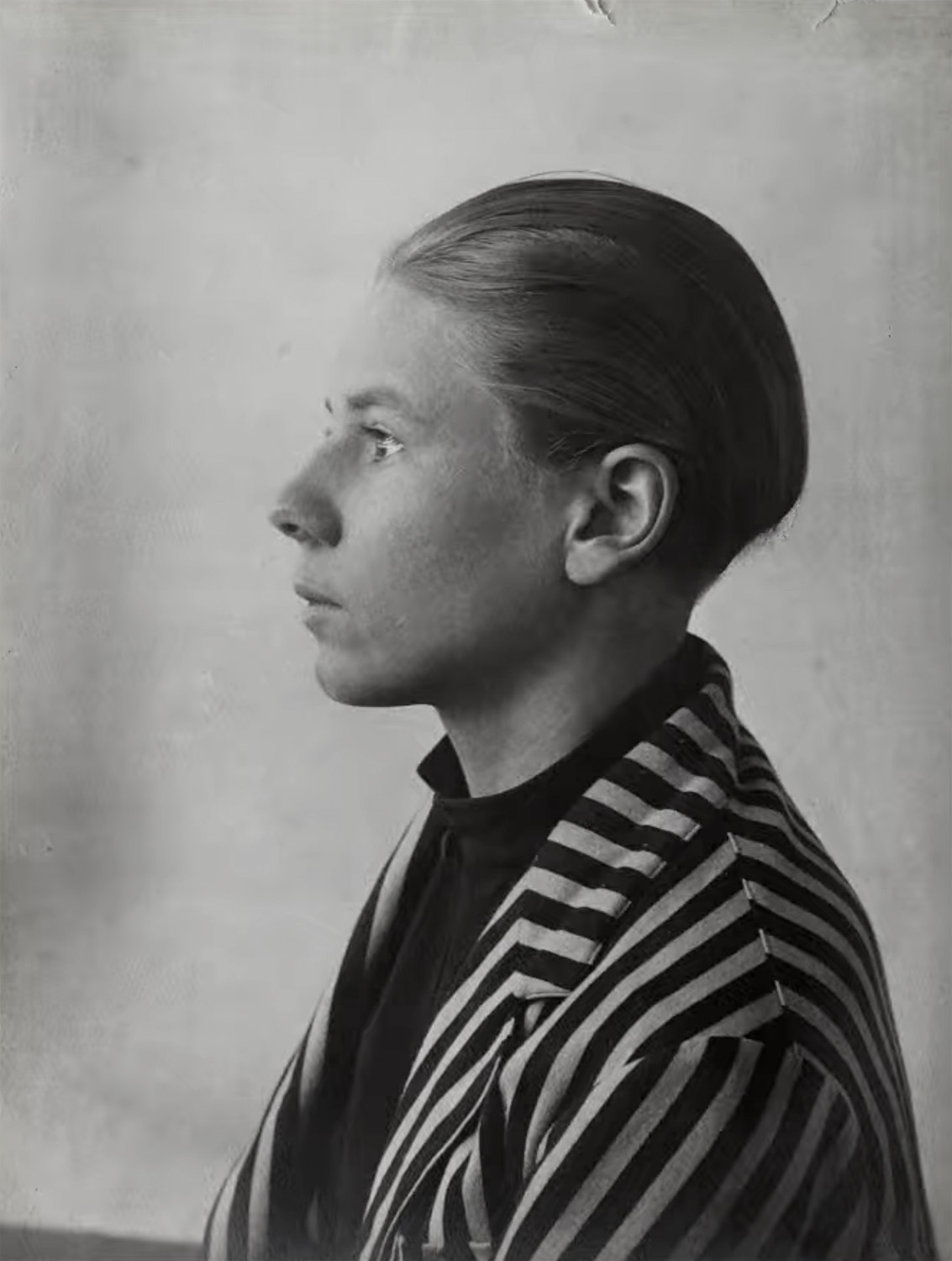
 

Lucia Moholy (British born Czech, 1894-1989) 'Porträt Lou Scheper Im Profil von links' (Portrait of Lou Scheper In profile from left) 1927


Lucia Moholy (British born Czech, 1894-1989)
Porträt Lou Scheper Im Profil von links (Portrait of Lou Scheper in profile from left)
1927
Bauhaus-Archiv Berlin
© VG Bild-Kunst, Bonn 2026
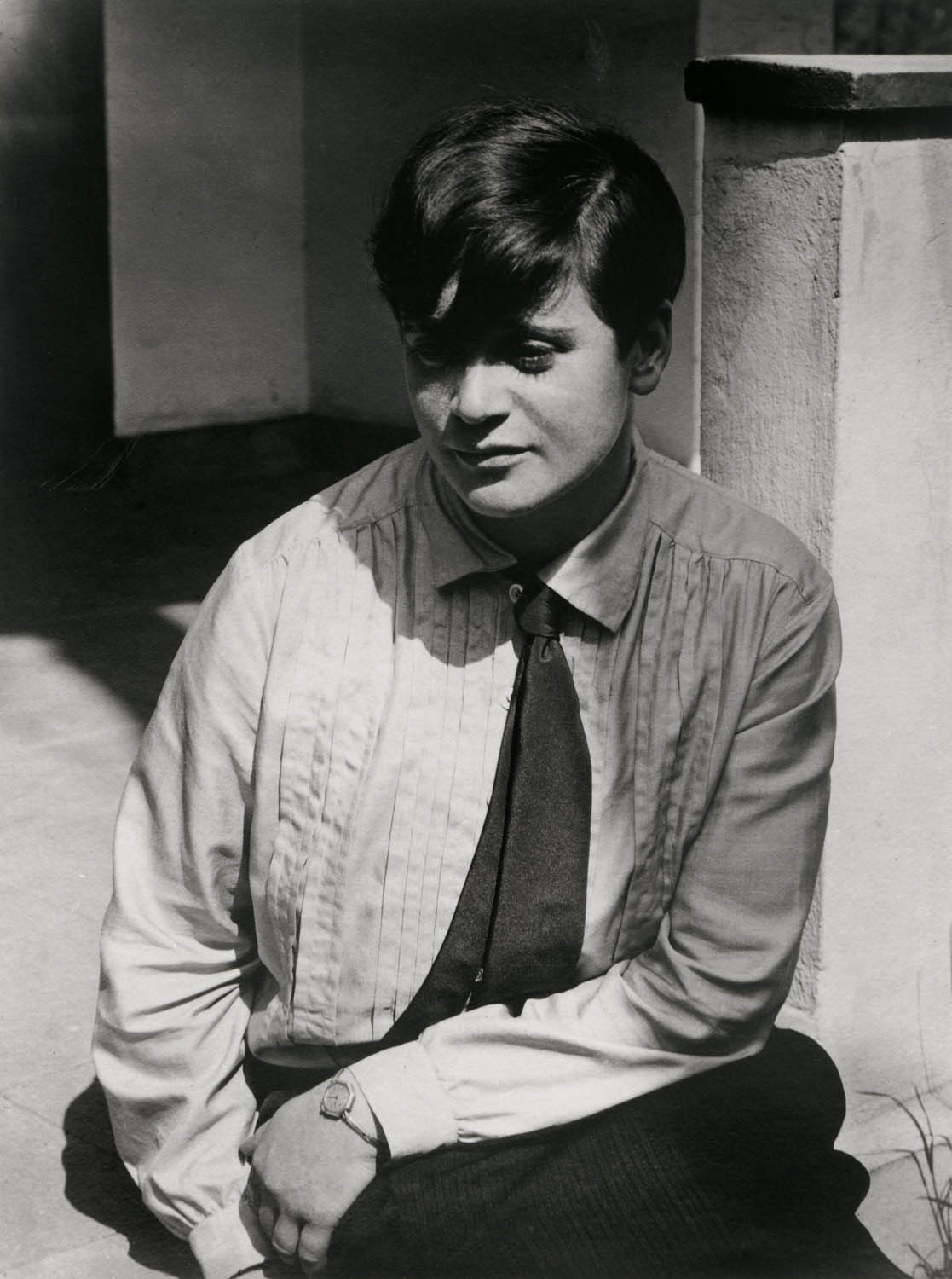
 

Lucia Moholy (British born Czech, 1894-1989) 'Porträt Eva Weininger auf der Treppe zur Veranda eines Meisterhauses in Dessau' (Portrait of Eva Weininger on the steps to the veranda of a master's house in Dessau) 1927


Lucia Moholy (British born Czech, 1894-1989)
Porträt Eva Weininger auf der Treppe zur Veranda eines Meisterhauses in Dessau (Portrait of Eva Weininger on the steps to the veranda of a master’s house in Dessau)
1927
Bauhaus-Archiv Berlin
© VG Bild-Kunst, Bonn 2026
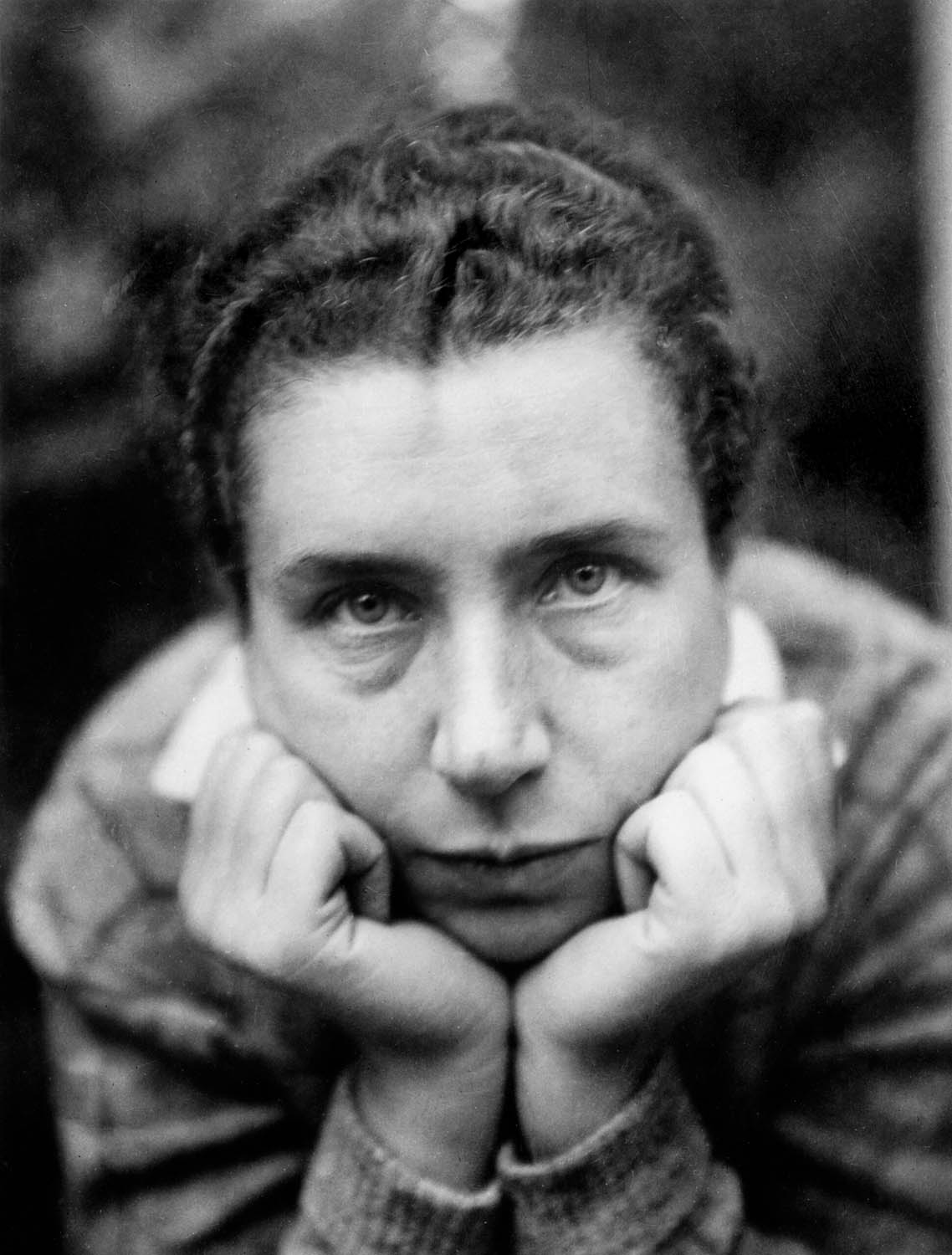
 

Lucia Moholy (British born Czech, 1894-1989) 'Selbstporträt' (Self-portrait) 1930


Lucia Moholy (British born Czech, 1894-1989)
Selbstporträt (Self-portrait)
1930
Bauhaus-Archiv Berlin
© VG Bild-Kunst, Bonn 2026


Lucia Moholy (British born Czech, 1894-1989)

Lucia Moholy, née Schulz, was born in Prague on 18 January 1894. After studying art history and philosophy, she began working as an editor and proofreader at various publishing houses in Germany in 1915. In 1921 she married the artist László Moholy-Nagy. The couple experimented with photograms and wrote texts on the theory of photography. In 1923 Moholy-Nagy received a teaching position at the Bauhaus in Weimar. Lucia Moholy trained in Otto Eckner’s photography studio there, and she additionally attended photo and printing courses at Leipzig’s Academy of Graphic Arts and Book Trade. Between 1923 and 1928, Moholy photographed the Bauhaus: buildings, workshops, products, teachers and students. Her photos continue to shape the image of the school today. In 1928 the couple left the Bauhaus and moved to Berlin. They separated one year later. In 1930 Moholy became head of the photography class at the Itten-School in Berlin. At the same time, she started gathering material for a history of photography. In 1933 her partner, the communist politician Theodor Neubauer, was arrested by the Nazis and Moholy had to flee Berlin. By way of Prague, Vienna and Paris, she reached London, where she established herself as a portrait photographer. Her book “A Hundred Years of Photography” appeared in 1939 and became a bestseller. She began documenting British archival material on microfilm in 1941 and later worked for UNESCO. In 1959 Lucia Moholy moved to Zurich, where she worked as an author and art critic. She died there on 17 May 1989.

Text from the Bauhaus-Archiv website
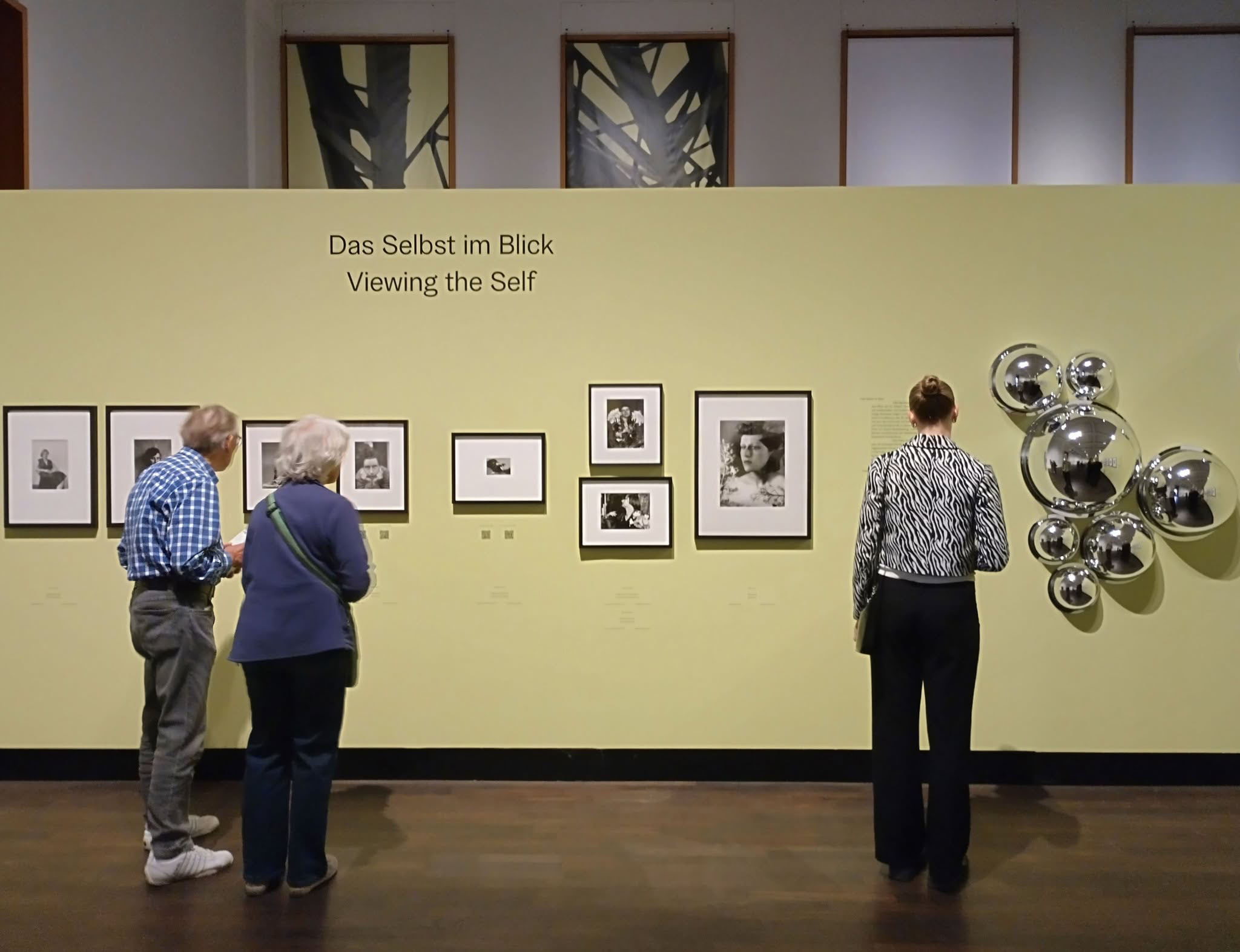
 

Installation view of the exhibition 'New Woman, New Vision. Women Photographers of the Bauhaus' at the Bauhaus-Archiv / Museum für Gestaltung at the Museum für Fotografie, April - October 2026


Installation view of the exhibition New Woman, New Vision. Women Photographers of the Bauhaus at the Bauhaus-Archiv / Museum für Gestaltung at the Museum für Fotografie, April – October 2026, showing the work of Lucia Moholy and Marianne Brandt
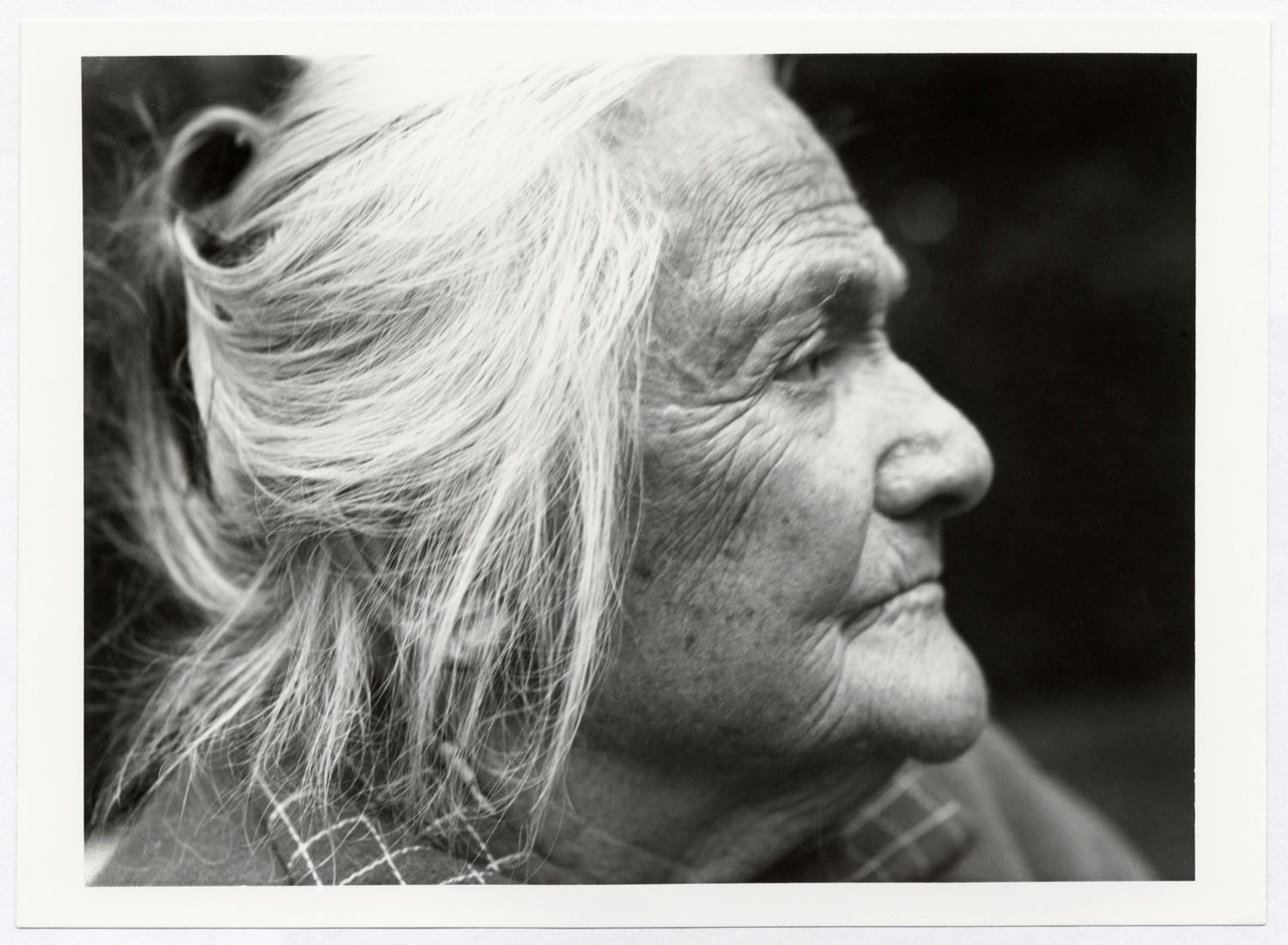
 

Lucia Moholy (British born Czech, 1894-1989) 'Porträt Clara Zetkin' (Portrait of Clara Zetkin) c. 1930


Lucia Moholy (British born Czech, 1894-1989)
Porträt Clara Zetkin (Portrait of Clara Zetkin)
c. 1930
Bauhaus-Archiv Berlin
© VG Bild-Kunst, Bonn 2026
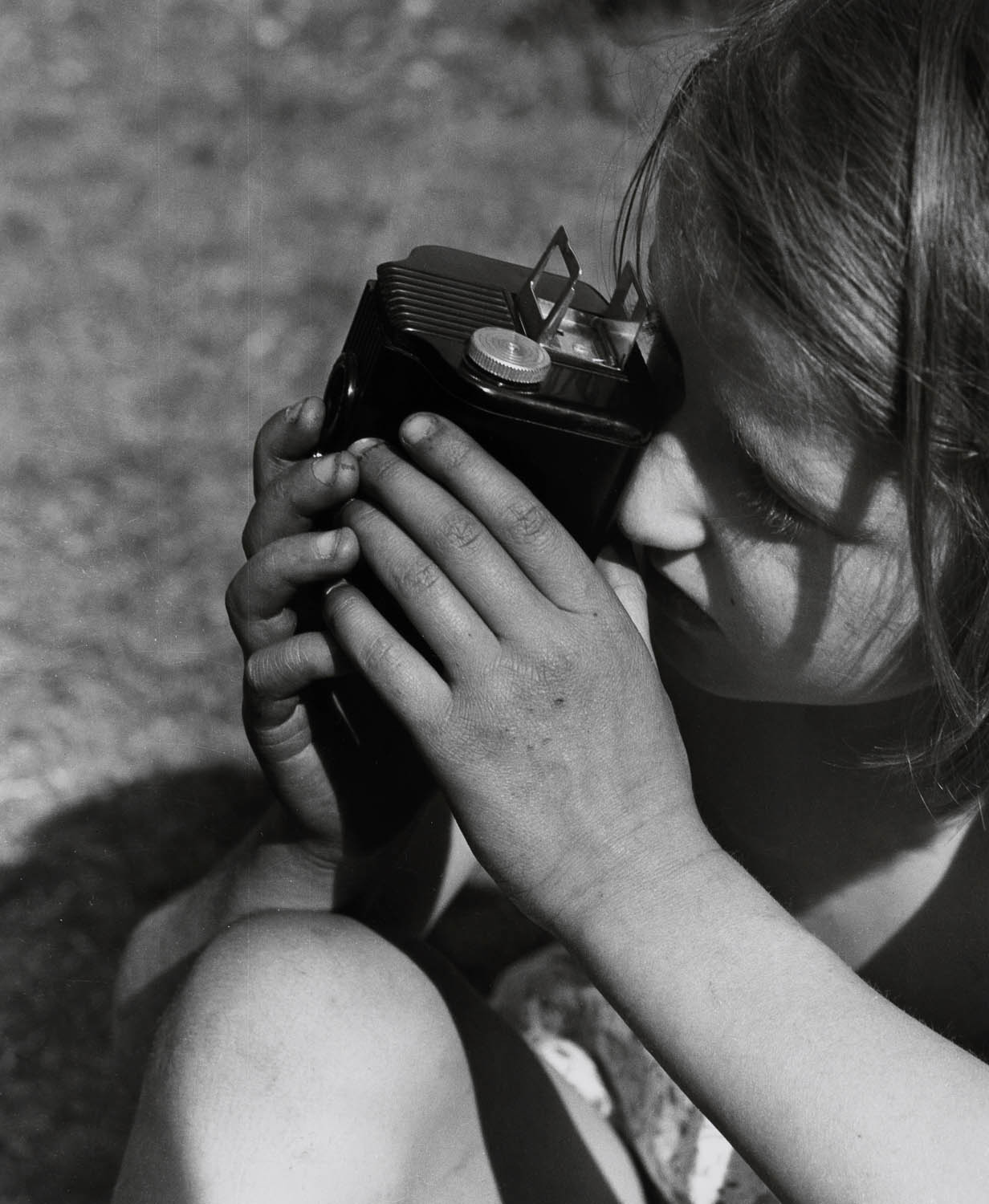
 

Lucia Moholy (British born Czech, 1894-1989) 'Mädchen mit Kamera beim Fotograeren (Lucia Tochter von Yella und Hans Curjel)' (Girl with camera taking photos (Lucia, daughter of Yella and Hans Curjel)) c. 1929


Lucia Moholy (British born Czech, 1894-1989)
Mädchen mit Kamera beim Fotograeren (Lucia Tochter von Yella und Hans Curjel) (Girl with camera taking photos (Lucia, daughter of Yella and Hans Curjel))
c. 1929
Bauhaus-Archiv Berlin
© VG Bild-Kunst, Bonn 2026
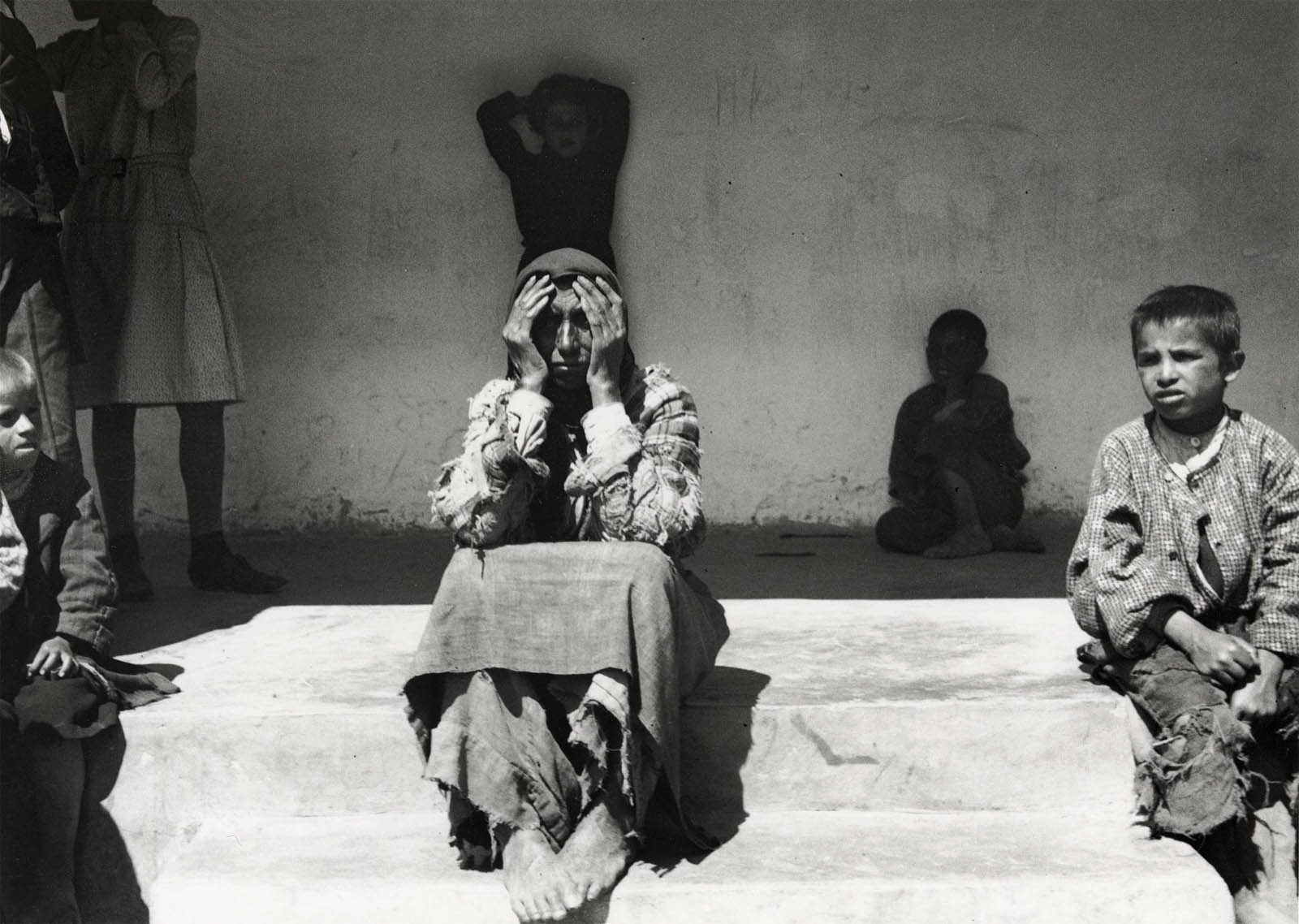
 

Lucia Moholy (British born Czech, 1894-1989) 'Frau auf Treppe Jugoslawien' (Woman on stairs, Yugoslavia) 1932


Lucia Moholy (British born Czech, 1894-1989)
Frau auf Treppe Jugoslawien (Woman on stairs, Yugoslavia)
1932
Bauhaus-Archiv Berlin
© VG Bild-Kunst, Bonn 2026


Outstanding women photographers have been around since the invention of photography in the early 19th century. They experimented with photographic and artistic techniques and probed the boundaries of the new medium. So too did the women photographers of the Bauhaus. They observed the world around them through the camera lens and often captured subjects from novel and unconventional perspectives. The spectrum of their artistic production ranges from figurative portraits and architectural photography to abstract photographic experimentation.

The exhibition features some 300 photographs from the collection of the Bauhaus-Archiv / Museum für Gestaltung in Berlin. Many people today are familiar with the iconic images, but only few are aware of the women who recorded them. With this exhibition, the Bauhaus-Archiv celebrates the significant contribution of these women artists and their photographic oeuvre for the first time. The photographs by these Bauhaus artists will be complemented by others produced by women artists from the Institute of Design in Chicago (New Bauhaus), the successor institution of the Bauhaus in the USA.

Even now in the 21st century, women artists continue to explore the multifaceted potential of photography. Like the Bauhaus women before them, they seek to capture the present day in the photographic moment while challenging the conventional forms of the medium. For this exhibition, the Bauhaus-Archiv has invited three contemporary women artists – Kalinka Gieseler, Caroline Kynast and Sinta Werner – to engage in dialogue with the historic photographs

A special exhibition of the Bauhaus-Archiv / Museum für Gestaltung in cooperation with the Kunstbibliothek – Staatliche Museen zu Berlin

Text from the Staatliche Museen zu Berlin website
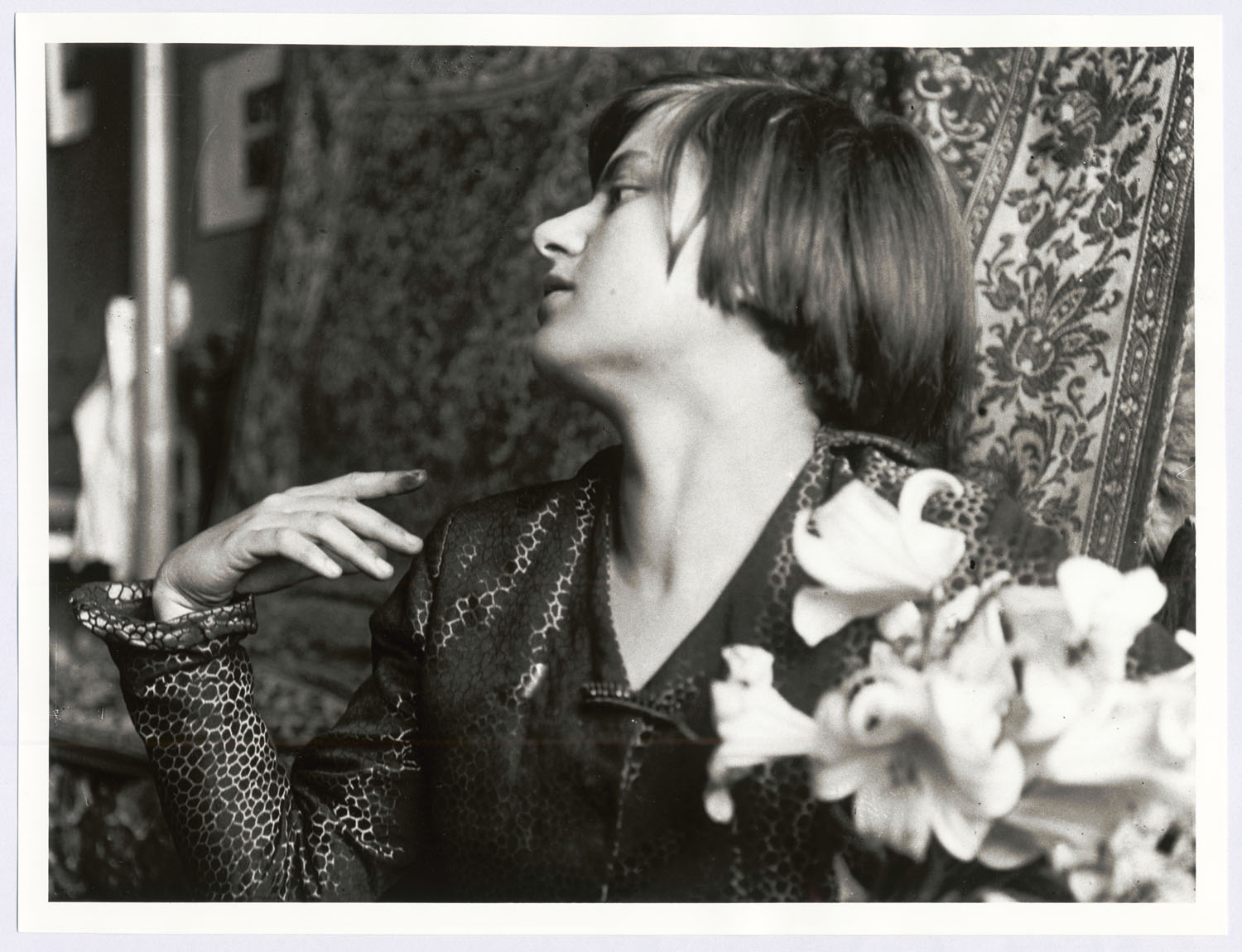
 

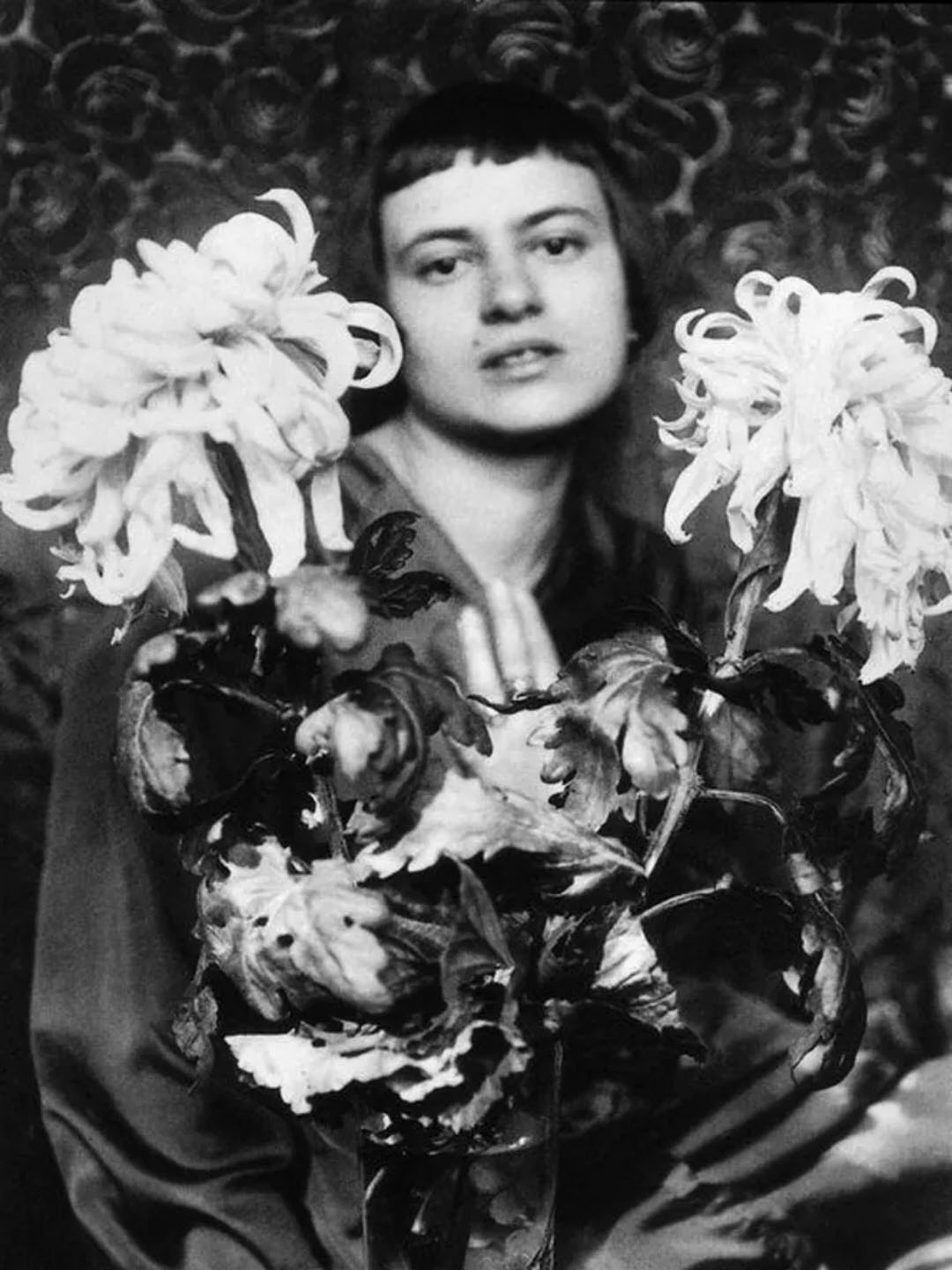
Marianne Brandt (German, 1893-1983) 'Selbstporträt mit Lilien' (Self-portrait with lilies) c. 1923


Marianne Brandt (German, 1893-1983)
Selbstporträt mit Lilien (Self-portrait with lilies)
c. 1923
Bauhaus-Archiv Berlin
© VG Bild-Kunst, Bonn 2026


Marianne Brandt (German, 1893-1983)

Marianne Brandt, née Liebe, was born in Chemnitz on 1 October 1893. In 1911 she began studying painting at the School for Fine Arts in Weimar. In 1919 she married the painter Erik Brandt. The couple lived together in Oslo and Paris for a number of years. After she returned to Germany, Brandt initially studied sculpture in Weimar. In 1924 the artist switched to the Bauhaus, where she was trained by László Moholy-Nagy in the metal workshop. She celebrated her first successes as a designer and became acting head of the workshop in 1928. Inspired by the Parisian avant-garde as well as by Moholy-Nagy, Brandt also began to occupy herself intensively with photography. She created self-portraits, photocollages and experimental images. Instead of accepting an offer to receive training in Walter Peterhans’s photo class, she decided to leave the Bauhaus in 1929. Several of her photographs could be seen that same year in the section “Photography at the Bauhaus” at the “Film und Foto” exhibition in Stuttgart. After briefly working at Walter Gropius’s construction office in Berlin, Brandt worked as a designer for the Ruppelwerke metalware factory in Gotha until 1932. She continued to shoot photographs, particularly private ones. When the Nazis came to power, Brandt lost her job and returned back to Chemnitz. From 1949 to 1954, she taught at the University of Applied Arts in Dresden and the institute of industrial design at School of Art and Design Berlin-Weissensee. She then designed lamps and radiators for production in East Germany and once again dedicated her attention to painting and photography. Marianne Brandt died in Kirchberg on 18 June 1983.

Text from the Bauhaus-Archiv website
 

Marianne Brandt (German, 1893-1983) 'Selbstporträt' (Self-portrait) c. 1929


Marianne Brandt (German, 1893-1983)
Selbstporträt (Self-portrait)
c. 1929
Bauhaus-Archiv Berlin
© VG Bild-Kunst, Bonn 2026
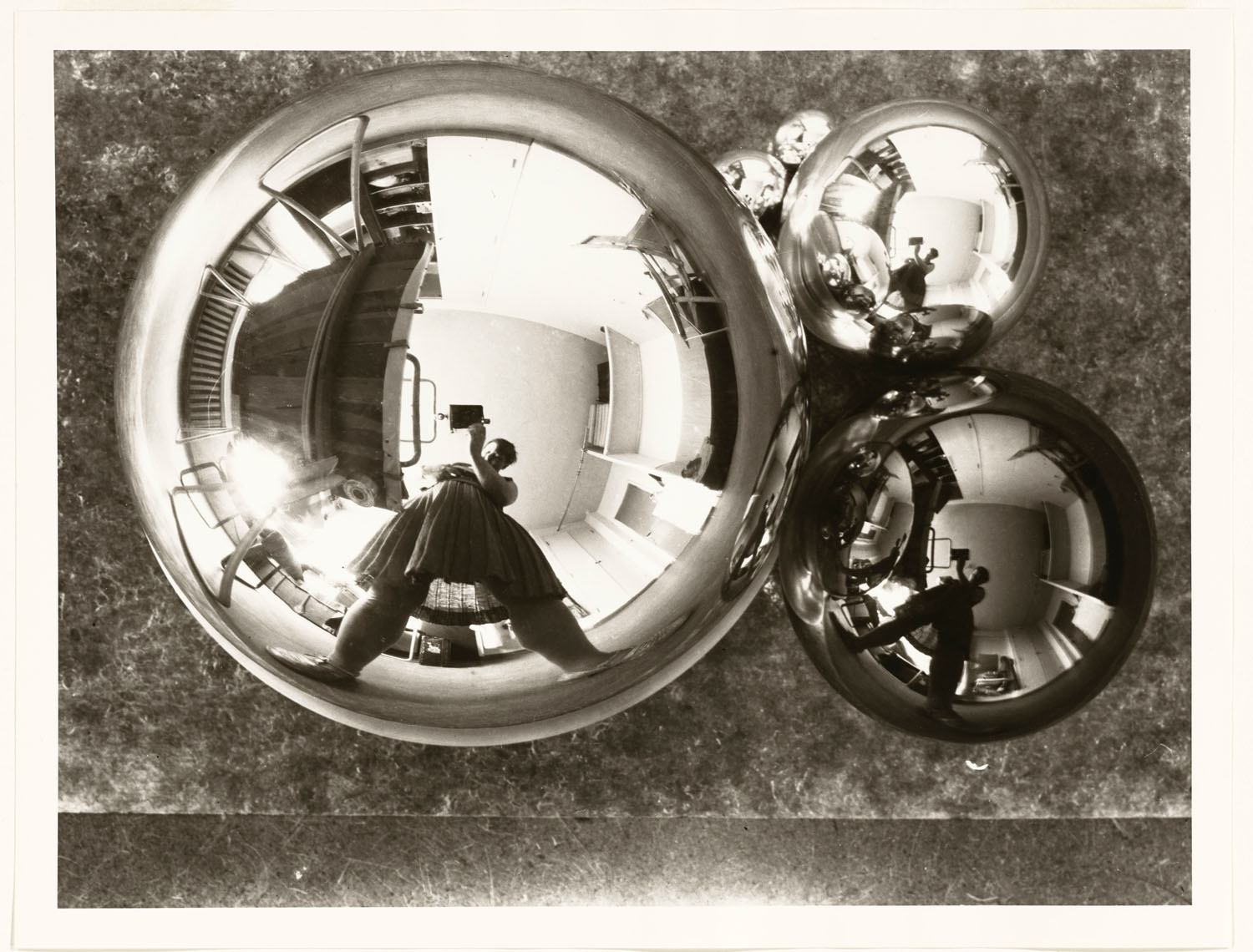
 

Marianne Brandt (German, 1893-1983) 'Selbstporträt mit Kamera im Atelier in der Kugel gespiegelt Bauhaus Dessau' (Self-portrait with camera in the studio, reflected in the sphere, Bauhaus Dessau) c. 1928-1929


Marianne Brandt (German, 1893-1983)
Selbstporträt mit Kamera im Atelier in der Kugel gespiegelt Bauhaus Dessau (Self-portrait with camera in the studio, reflected in the sphere, Bauhaus Dessau)
c. 1928-1929
Bauhaus-Archiv Berlin
© VG Bild-Kunst, Bonn 2026
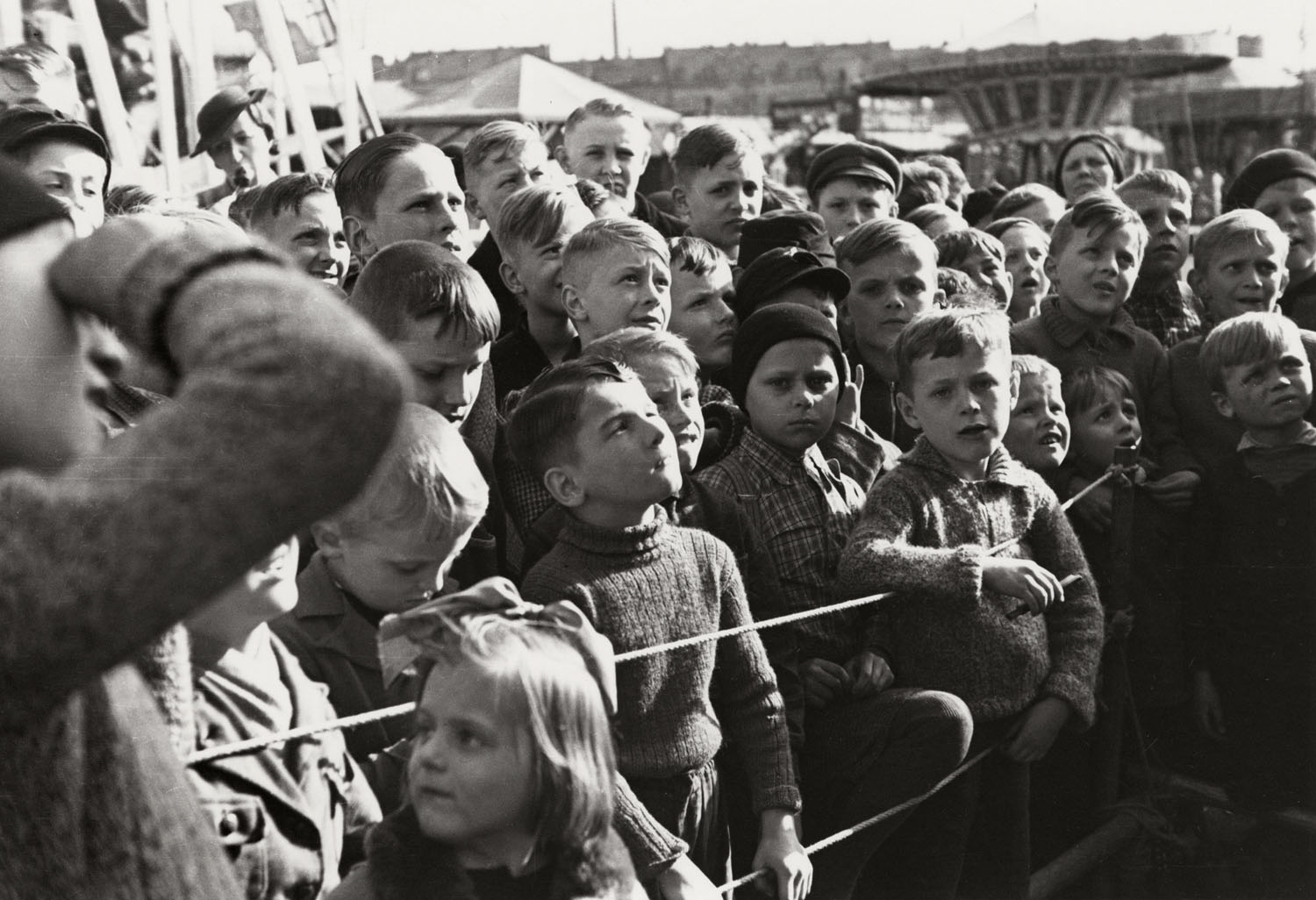
 

Marianne Brandt (German, 1893-1983) 'Wartende Kinder' (Waiting children) 1928


Marianne Brandt (German, 1893-1983)
Wartende Kinder (Waiting children)
1928
Bauhaus-Archiv Berlin
© VG Bild-Kunst, Bonn 2026
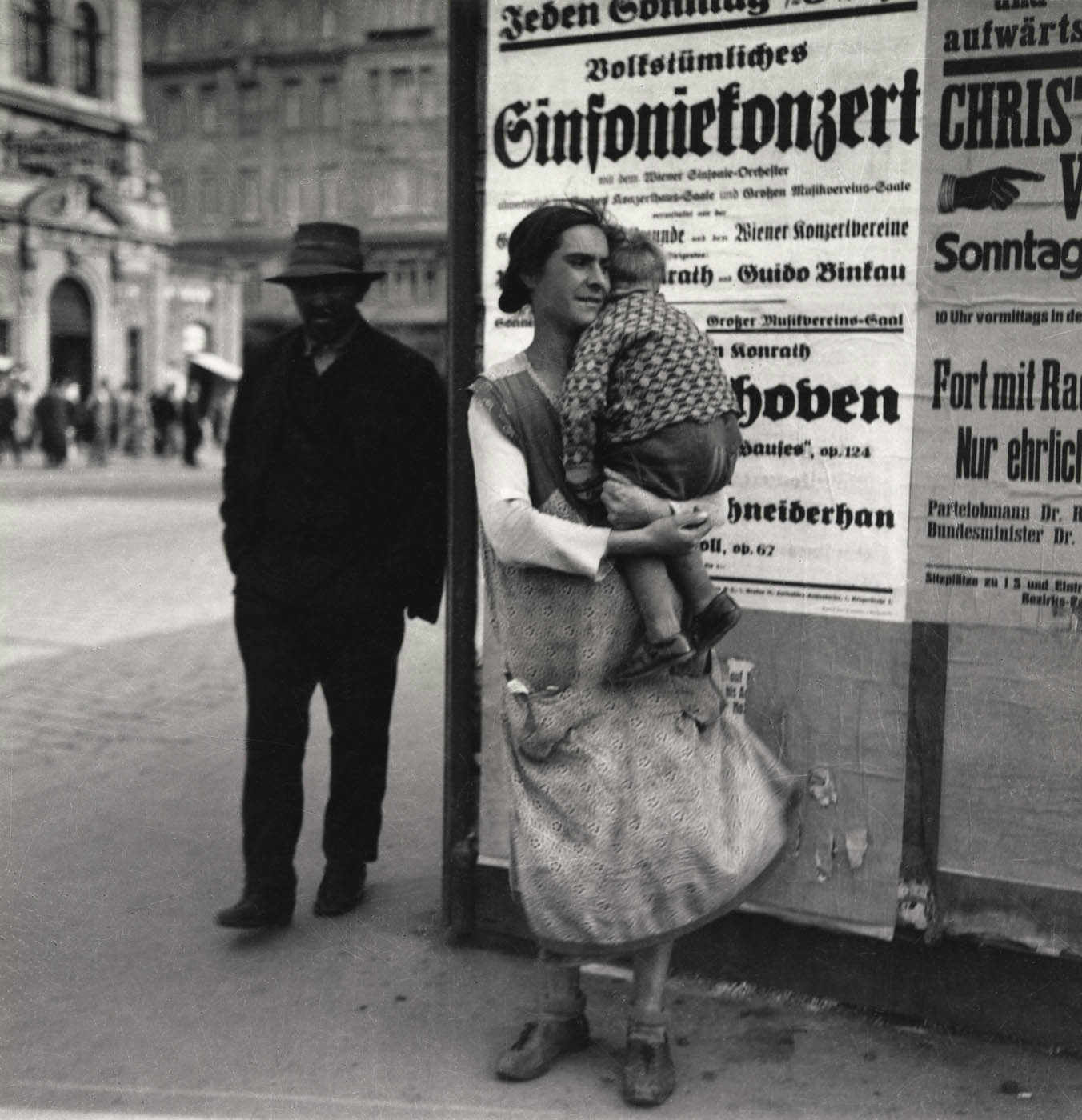
 

Edith Tudor-Hart (British born Austria, 1908-1973) 'Frau und Kind Wien' (Woman and child Vienna) c. 1930


Edith Tudor-Hart (British born Austria, 1908-1973)
Frau und Kind Wien (Woman and child Vienna)
c. 1930
Bauhaus-Archiv Berlin
© Peter Suschitzky


Edith Tudor-Hart (British born Austria, 1908-1973)

Edith Tudor-Hart, née Suschitzky, was born in Vienna on 28 August 1908. Her father and uncle ran a left-wing bookstore in a working-class neighborhood. In 1925 her training as a Montessori educator led her to London for an internship. Tudor-Hart began studying at the Bauhaus in Dessau in 1929, and she attended Walter Peterhans’s photography class there in 1930. During a 1931 stay in England, her connections to the Communist Party led to her deportation, and she returned to Vienna. There she produced photographs for the Soviet news agency TASS. Her social-documentary photo essays were published in periodicals such as the “Arbeiter-Illustrierte-Zeitung (AIZ)” as well as “Kuckuck”. In 1933 she was arrested for spying for the Communist Party, and large portions of her photographic work were confiscated. She was able to avoid conviction by marrying the doctor Alexander Tudor-Hart. That same year, the couple emigrated to England, where their son was born in 1936. Tudor-Hart’s photography provided the family’s sole source of income while her husband was serving as a doctor in the Spanish Civil War. She concentrated on documentary photography. For example, she created a photo essay on child education for England and Wales’s Ministry of Education. Her continued espionage activities repeatedly drew the scrutiny of the British secret service. This constant surveillance led her to destroy large portions of her work. Impoverished, she moved to Brighton, where she worked as an antique dealer. Edith Tudor-Hart died there on 12 May 1973.

Text from the Bauhaus-Archiv website
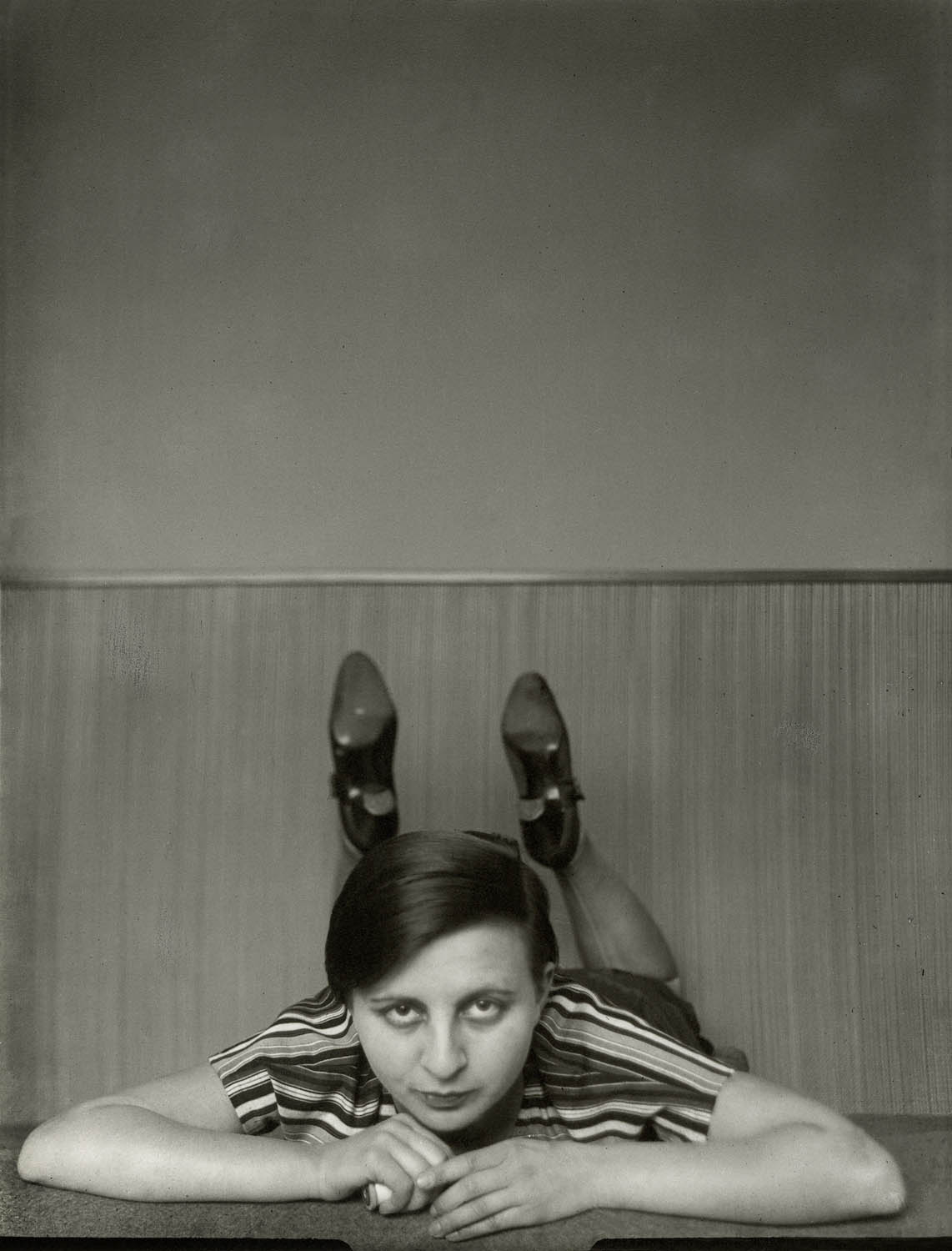
 

Gertrud Arndt (German, 1903-2000) 'Selbstporträt im Atelier Bauhaus Dessau' (Self-portrait in the Bauhaus Dessau studio) 1926


Gertrud Arndt (German, 1903-2000)
Selbstporträt im Atelier Bauhaus Dessau (Self-portrait in the Bauhaus Dessau studio)
1926
Bauhaus-Archiv Berlin
© VG Bild-Kunst, Bonn 2026


Gertrud Arndt (German, 1903-2000)

Gertrud Arndt, née Hantschk, was born in Racibórz (Silesia, Poland) on 20 September 1903. Seeking to become an architect, she began working at the architectural office of Karl Meinhardt in Erfurt in 1919. She simultaneously attended the school of applied arts there. Arndt taught herself photography so that she could document buildings for the architectural office. In 1923 she began studying at the Bauhaus and trained in the weaving workshop. After her final exam in 1927, she stopped weaving and focused on photography again. That same year, she married fellow Bauhaus member and architect Alfred Arndt and moved to Probstzella in Thuringia. There she photographed his construction projects. At the same time, she also created private photographs and photocollages. In 1929 Alfred Arndt was offered a teaching position at the Bauhaus in Dessau. Gertrud Arndt set up a darkroom for herself in the masters’ house and began photographing the activities and life at the school. She created documentary and portrait photos as well as numerous self-portraits. Although Arndt was not a student in Walter Peterhans’s photo class, several of her images were shown together with works from his students in the 1930 travelling exhibition on the Bauhaus. Arndt had her first child in 1931. One year later, the couple returned to Probstzella and, from then on, Arndt devoted her time to her family. In 1948 they fled from the Soviet-occupied zone to western Germany. In 1979 an exhibition at the Folkwang Museum in Essen led to Arndt’s discovery as a photographer. Since that time, her works have been presented in a number of exhibitions and publications. Gertrud Arndt died in Darmstadt on 10 July 2000.

Text from the Bauhaus-Archiv website
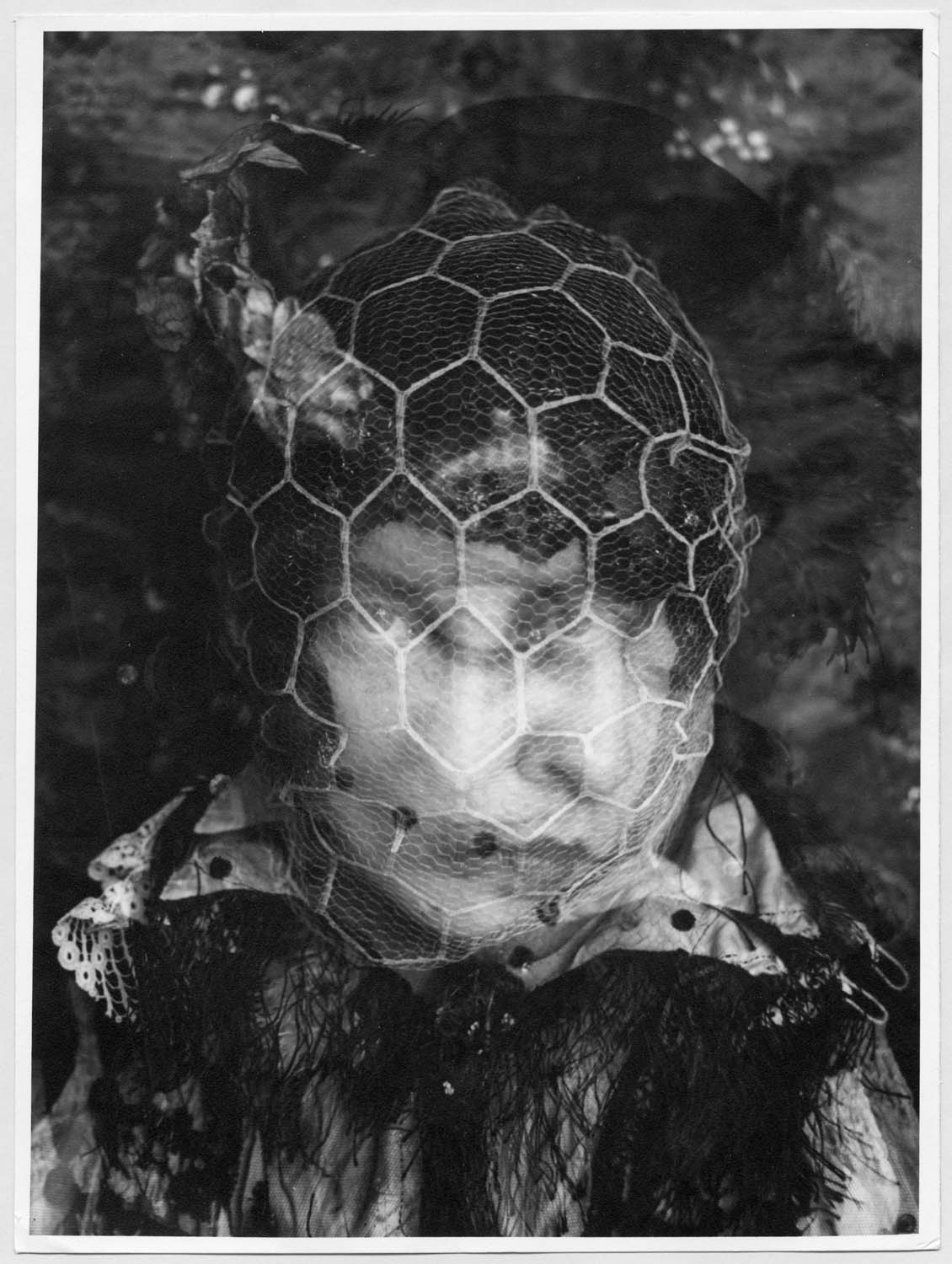
 

Gertrud Arndt (German, 1903-2000) 'Maskenfoto Nr. 16' (Mask photo no. 16) 1930


Gertrud Arndt (German, 1903-2000)
Maskenfoto Nr. 16 (Mask photo no. 16)
1930
Bauhaus-Archiv Berlin
© VG Bild-Kunst, Bonn 2026
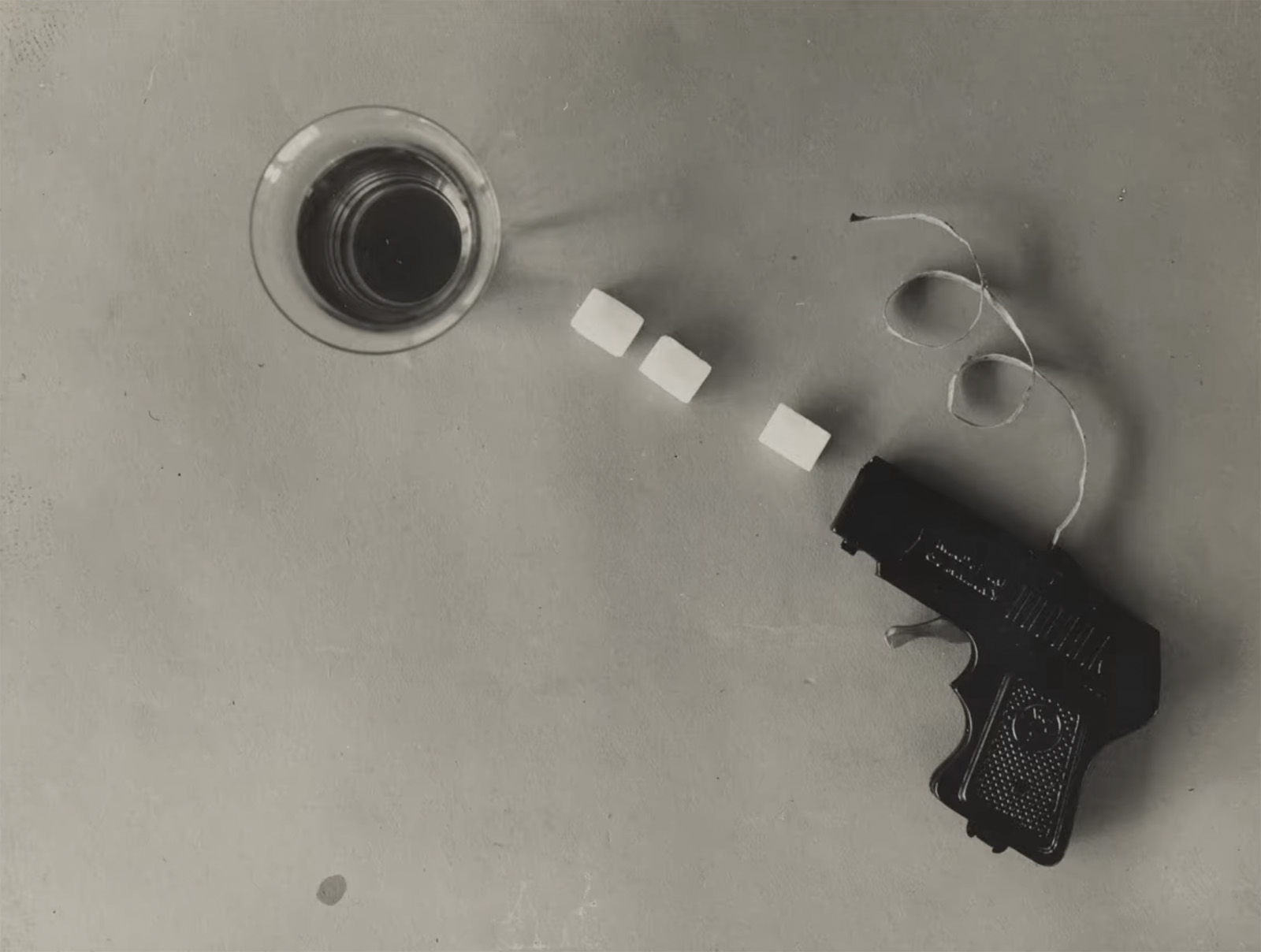
 

Etel Mittag-Fodor (Hungarian, 1905-2005) 'Materialstudie mit Spielzeugpistole, Zuckerstucken und Glas' (Material study with toy gun, sugar cubes and glass) 1928


Etel Mittag-Fodor (Hungarian, 1905-2005)
Materialstudie mit Spielzeugpistole, Zuckerstucken und Glas (Material study with toy gun, sugar cubes and glass)
1928
Bauhaus-Archiv Berlin
© VG Bild-Kunst, Bonn 2026


Etel Mittag-Fodor (Hungarian, 1905-2005)

Etel Mittag-Fodor, née Fodor, was born in Zagreb on 28 December 1905, and grew up in Pécs and Budapest. In 1925 she began studying photography and graphic design at Vienna’s Federal Education and Research Institute for Graphics in Vienna, while also working part-time in a photo studio. In 1928 she decided to study at the Bauhaus in Dessau, where she attended Walter Peterhans’s photography class. She was in a relationship with fellow student Ernst Mittag, whom she married in 1930 to gain independence from her parents’ home and its rules. After Mittag-Fodor left the Bauhaus in 1932, she worked as a freelance photographer for clients, including the newspaper “Arbeiter-Illustrierte-Zeitung (AIZ)”. She was also active in the antifascist resistance from 1933 on. As a Jew, she was no longer granted a work permit. In 1936 she and her husband fled to Pécs by way of Bratislava, where she earned money creating portraits of children. After the birth of their first son in 1938, the family emigrated to South Africa. There, Mittag-Fodor initially photographed architecture but soon began to work as a translator for financial reasons. At the same time, she assisted Ernst Mittag at his architectural office. She turned her attention to weaving in the mid-1960s. Etel Mittag-Fodor died in the Cape Town suburb of Wynberg on 13 August 2005.

Text from the Bauhaus-Archiv website
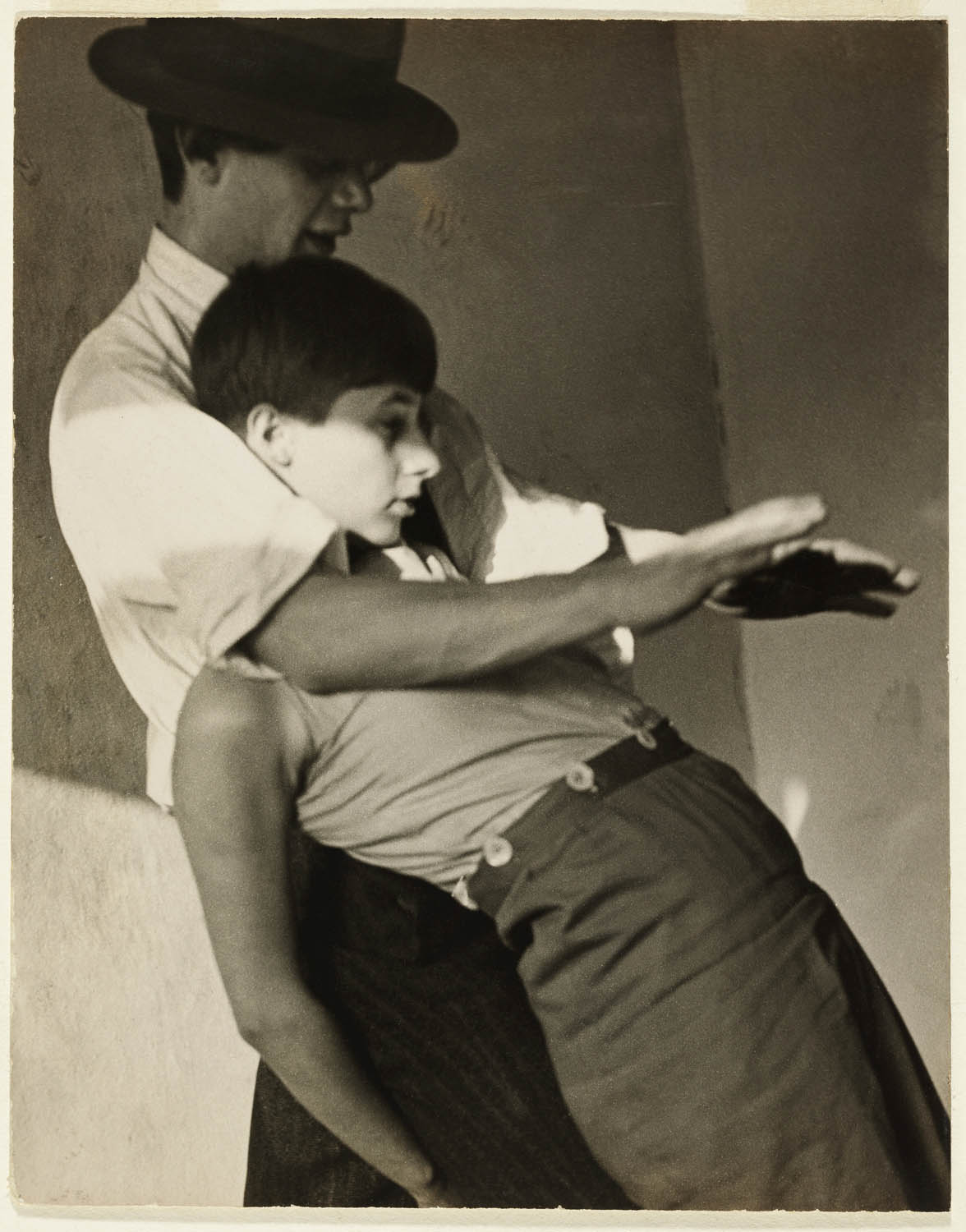
 

Etel Mittag-Fodor (Hungarian, 1905-2005) 'Albert Mentzel und Lotte Rothschild' (Albert Mentzel and Lotte Rothschild) c. 1930


Etel Mittag-Fodor (Hungarian, 1905-2005)
Albert Mentzel und Lotte Rothschild (Albert Mentzel and Lotte Rothschild)
c. 1930
Bauhaus-Archiv Berlin
© VG Bild-Kunst, Bonn 2026
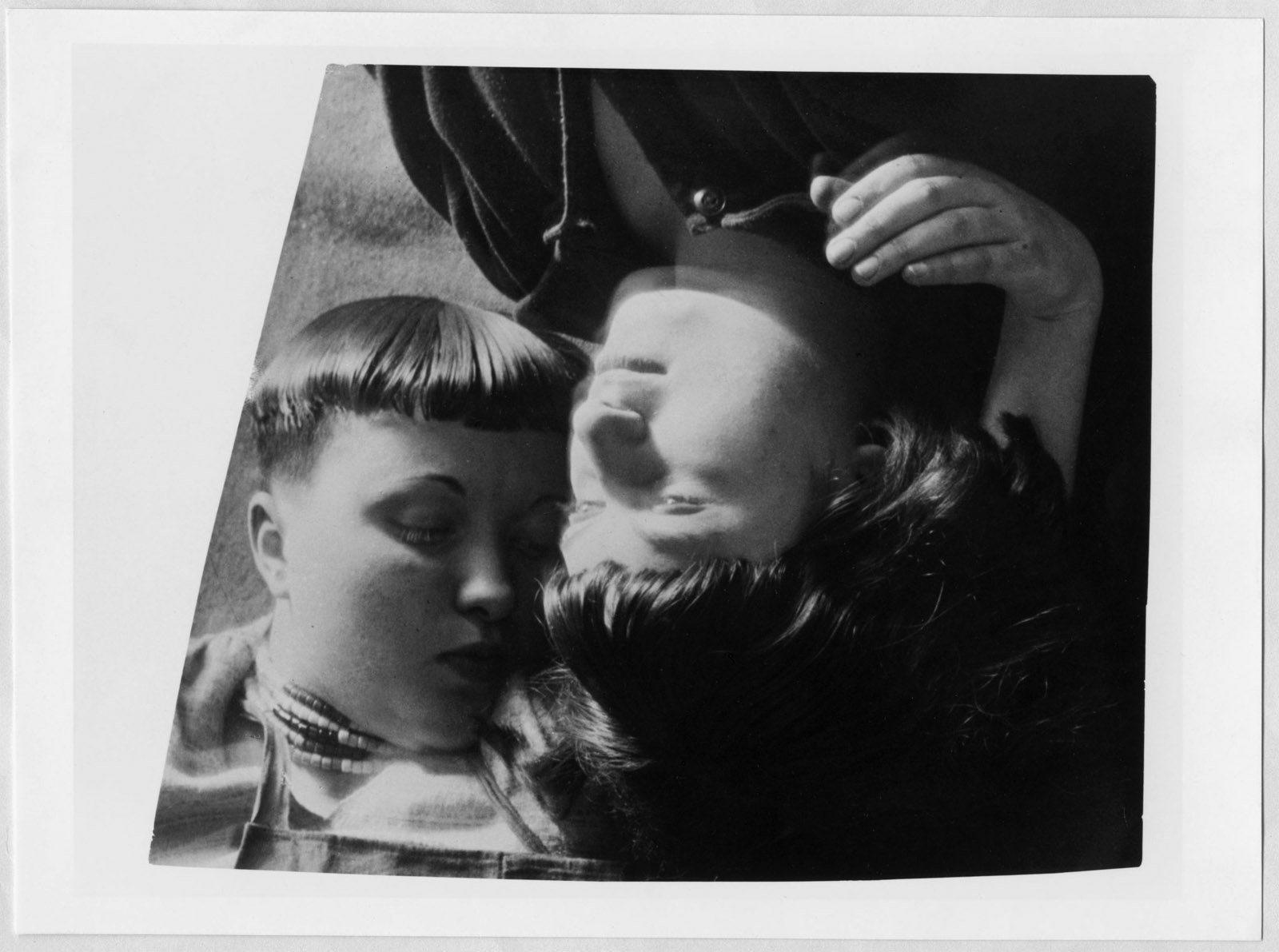
 

Grit Kallin-Fischer (German, 1897–1973) 'Hilde Rantzsch und Miriam Manuckiam' (Hilde Rantzsch und Miriam Manuckiam) 1928


Grit Kallin-Fischer (German, 1897-1973)
Hilde Rantzsch und Miriam Manuckiam (Hilde Rantzsch und Miriam Manuckiam)
1928
Bauhaus-Archiv Berlin
© VG Bild-Kunst, Bonn 2026
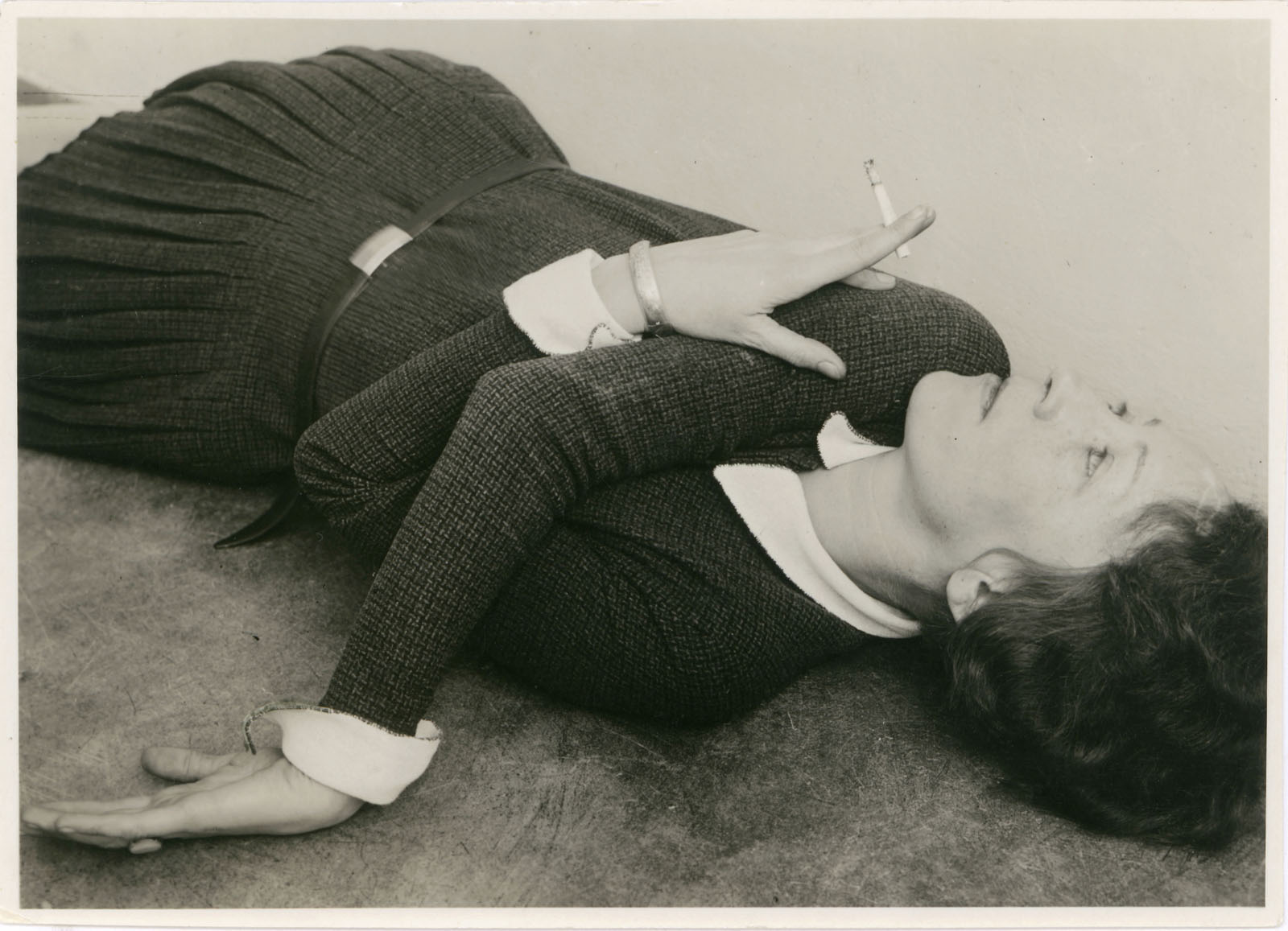
 

Grit Kallin-Fischer (German, 1897-1973) 'Selbstporträt mit Zigarette' (Self-portrait with cigarette) c. 1928


Grit Kallin-Fischer (German, 1897-1973)
Selbstporträt mit Zigarette (Self-portrait with cigarette)
c. 1928
Bauhaus-Archiv Berlin
© VG Bild-Kunst, Bonn 2026


Grit Kallin-Fischer (German, 1897-1973)

Grit Kallin-Fischer was born as Margit Vries in Frankfurt am Main on 26 April 1896. She received her first art lessons, focusing on landscapes and still lifes, at a boarding school in Belgium. In 1910 she began studying painting in Marburg and then continued under Lovis Corinth at Leipzig’s Academy for Graphic Art and Book Trade. She developed tuberculosis during the First World War and suffered from the after-effects for the rest of her life. In 1919 Kallin-Fischer went to Berlin, where she met the Russian musician Marik Kallin. The couple married in 1920, lived in London and separated after six years. In the autumn of 1927, Kallin-Fischer enrolled at the Bauhaus in Dessau. She began taking pictures there and developed portrait studies in the style of the New Vision. She also attended László Moholy-Nagy’s metal workshop and was involved with the Bauhaus stage, creating numerous portraits of its members. In late 1928, she went to Berlin with the American Bauhaus member Edward Fischer and continued to shoot photographs there. Several of her designs were published in the monthly graphic-design journal “Gebrauchsgraphik” in 1930; one year later, her works were shown at the exhibition “Foreign Advertising Photography” in New York. She married Edward Fischer in 1934 and emigrated to the US with him. Grit Kallin-Fischer gave up photography after 1945 and turned her attention to sculpture. She died in Newton, Pennsylvania, on 17 July 1973.

Text from the Bauhaus-Archiv website
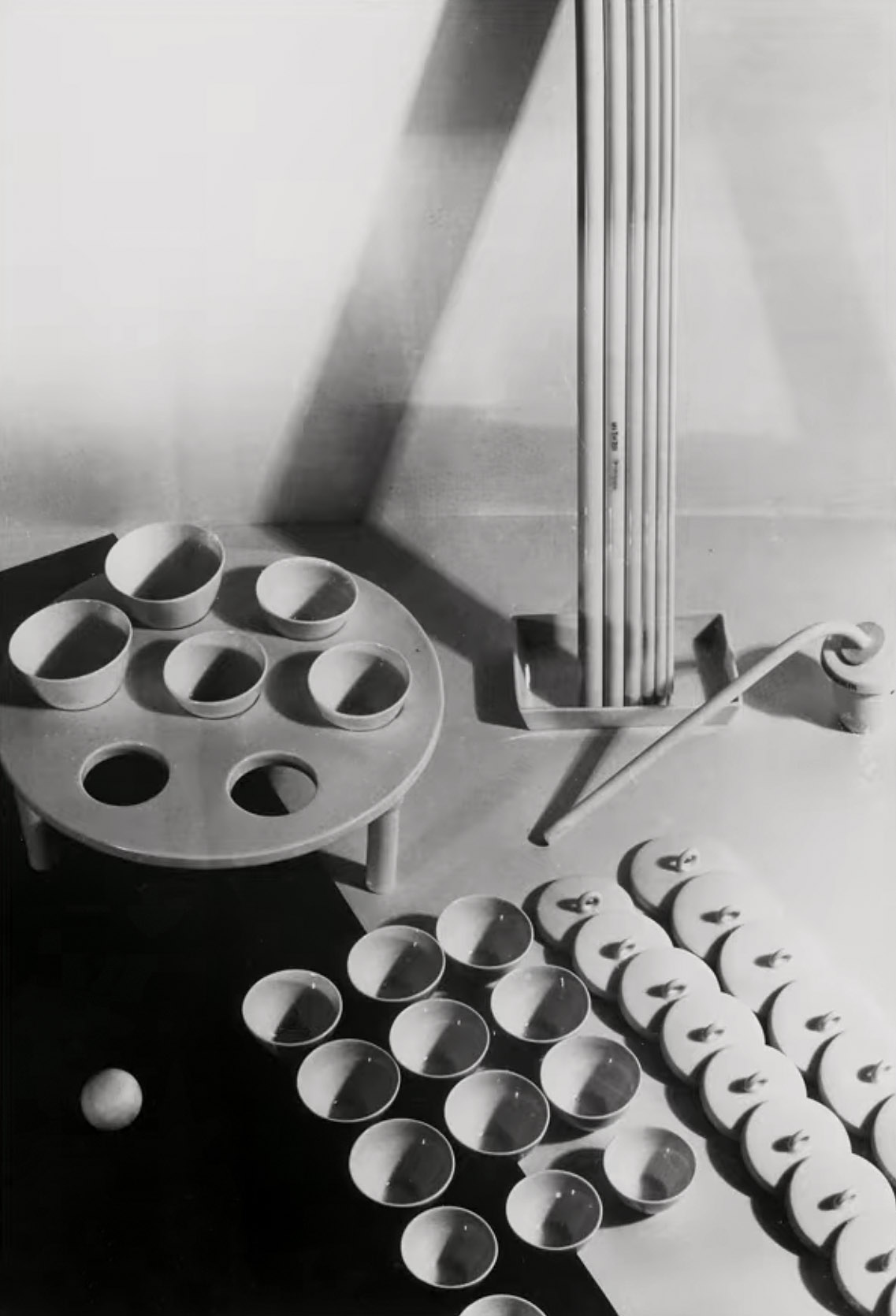
 

Grit Kallin-Fischer (German, 1897-1973) 'Industrie Porzellan der Königlichen Porzellan Manufaktur, Berlin' (Industrial porcelain from the Royal Porcelain Manufactory, Berlin) c. 1930


Grit Kallin-Fischer (German, 1897-1973)
Industrie Porzellan der Königlichen Porzellan Manufaktur, Berlin (Industrial porcelain from the Royal Porcelain Manufactory, Berlin)
c. 1930
Bauhaus-Archiv Berlin
© VG Bild-Kunst, Bonn 2026


The Weimar Republic (1919-1933) was a time of social and cultural upheaval. The young democracy was confronted not only with the consequences of World War I, but also a rapid succession of technical advances, the rise of new media and a society that was questioning traditional values.

Women’s role in society was changing as well. As voting rights were granted to women for the first time in November 1918, a new chapter of political participation began. It was also a time when more and more women aspired to financial independence and professional self-realisation. Photography offered them an ideal opportunity in both arenas – it promised artistic freedom and a living income. The camera became the tool of female self-empowerment.

By the late 19th century, photography had become a significant occupational field for women. Because it was a relatively young field, regarded as a handcraft and not yet academically anchored, photography offered women career opportunities at an early stage. Women were believed to have skills that were well-suited to certain photographic activities, such as portrait photography or retouching. Consequently, a growing number of women began learning the trade in photo studios. In 1890 the Berlin Lette Association started a photography course for women, and in 1905, the Teaching and Research Institute for Photography in Munich followed suit with institutional training for women photographers.

The number of women photographers rose steadily in the Weimar Republic. This occurred as an increasing number of higher education institutions began offering training courses in photography. The Bauhaus Dessau established a photography course in 1929. Many students – almost half of them women – received professional training there. Yet women photographers had been playing a central role at the Bauhaus even years before. In the early 1920s, photography was used to advertise the products and works created by the influential school of art, design and architecture – and many of those photos were taken by professional women photographers, such as Paula Stockmar, the women-managed Atelier Hüttich und Oemler, and Lucia Moholy. The increasing prevalence of the small-format camera after 1925 sparked a surge of interest in the medium among the students. Many female students began observing their surroundings through the camera lens and captured new and unusual perspectives. While many of these photos have since become world-famous, the women who took them have often been forgotten.

The Exhibition

The exhibition “New Woman, New Vision. Women Photographers of the Bauhaus” is the first ever to explore the extensive impact of these photographers and tell their story from a gender-historical perspective. The presentation, comprising some 300 works from 29 photographers from the Bauhaus-Archiv / Museum für Gestaltung collection, explores art- and media-historical questions and how they relate to such topics as authorship, visibility and social participation. The exhibition presents photographs by well-known figures such as Lucia Moholy and Florence Henri, as well as works by artists who have received less recognition, including Irene Hoffmann and Grit Kallin-Fischer. Not only does its scope extend beyond the era of the historic Bauhaus, it also highlights the later works by these remarkable artists. The presentation is supplemented by works by women artists from the Institute of Design in Chicago, the American successor institution to the Bauhaus founded by Bauhaus master László Moholy-Nagy in 1937.

Key Themes

One of the central themes of the exhibition is portrait photography. The chapters “Viewing the Self” and “Woman’s Images” examine how the photographers and their fellow female classmates presented themselves against the backdrop of society’s evolving image of women. Oftentimes they referred to the ideal of the New Woman – which had become ubiquitous in the Weimar Republic – and translated it into the modern visual imagery of New Vision. Another chapter sheds light on the photography lessons taught by Walter Peterhans at the Bauhaus. In portraits, landscapes, nature studies and still lifes, the students experimented with and selectively integrated photographic design elements into their works, e.g. textures, materiality, directed lighting and image sharpness. The chapter “Art and Experimentation” focuses specifically on experimental practice; photo collages and photograms offered forms of expression beyond what the camera could capture and illustrate how readily the women photographers embraced the avant-garde. The chapter “People and Countries” is dedicated to social-documentary and photo-journalistic works. The photos capture everyday life, social inequality and moments of political upheaval. They also show how the photographers, who were often forced into exile, safeguarded their work under changing political circumstances. The chapter “The Allure of Architecture” examines modern architectural photography. Unusual perspectives, extreme high- and low-angle shots, and close-ups helped architectural photography break away from its original documentary function and transform it into artistic and sometimes abstract visual compositions.

The exhibition shows how the women photographers of the Bauhaus used photography as an artistic and social instrument – for achieving greater self-determination, conducting artistic experimentation and documenting social and political realities. Its relevance today is evident in how integral these methods have become in contemporary art. The Berlin artists Kalinka Gieseler, Caroline Kynast and Sinta Werner engage in the discourse as contemporary voices. Like their historic role models, they too use photographic images to analyse space and society and probe the boundaries of the medium.

Relevance Today

When reflecting on women photographers and their life stories from a gender-critical perspective, the first question we encounter is what we mean by the term “women”. We do not mean a clearly defined or homogenous group, but rather a historical attribution that mirrors the respective social norms of the time. The biographies of these women photographers are as varied as their personal convictions, predilections and relationships. What they all have in common, however, is the traditional gender roles they were assigned which limited their career opportunities and even worsened them under National Socialism and in post-war Western Europe. In that male-dominated art world, their works were marginalised and driven from art-historical memory – a structurally induced invisibility, the effects of which are still felt today.

Against this background, we must ask what role exhibitions have that are specifically dedicated to women artists. Do we not run the risk of perpetuating existing attributions and designating female-perceived individuals once again as a special case? The answer is complex. Back in 1914 the art historian Emmy Voigtländer, reporting on the Leipzig exhibition “Das Haus der Frau”, remarked: ‘Perhaps in the future the most valuable outcome of these special exhibitions will be to prove their superfluousness, in that women’s achievements will gradually become a widely accepted part of general cultural activity where one recognises the value of the work and then of its creators […].’ Based on current figures, however, this goal has not yet been achieved. Recent studies show, such as one conducted by the Berlin initiative “fair share!”, that works by female-perceived persons and especially mothers are presented and collected less often and obtain lower market prices and less funding. As long as gender equality in the art world remains elusive, visibility in the form of such exhibitions will remain necessary – not to emphasise distinction, but as a means to combat structural forgetting.

Text from the Bauhaus-Archiv / Museum für Gestaltung at the Museum für Fotografie website
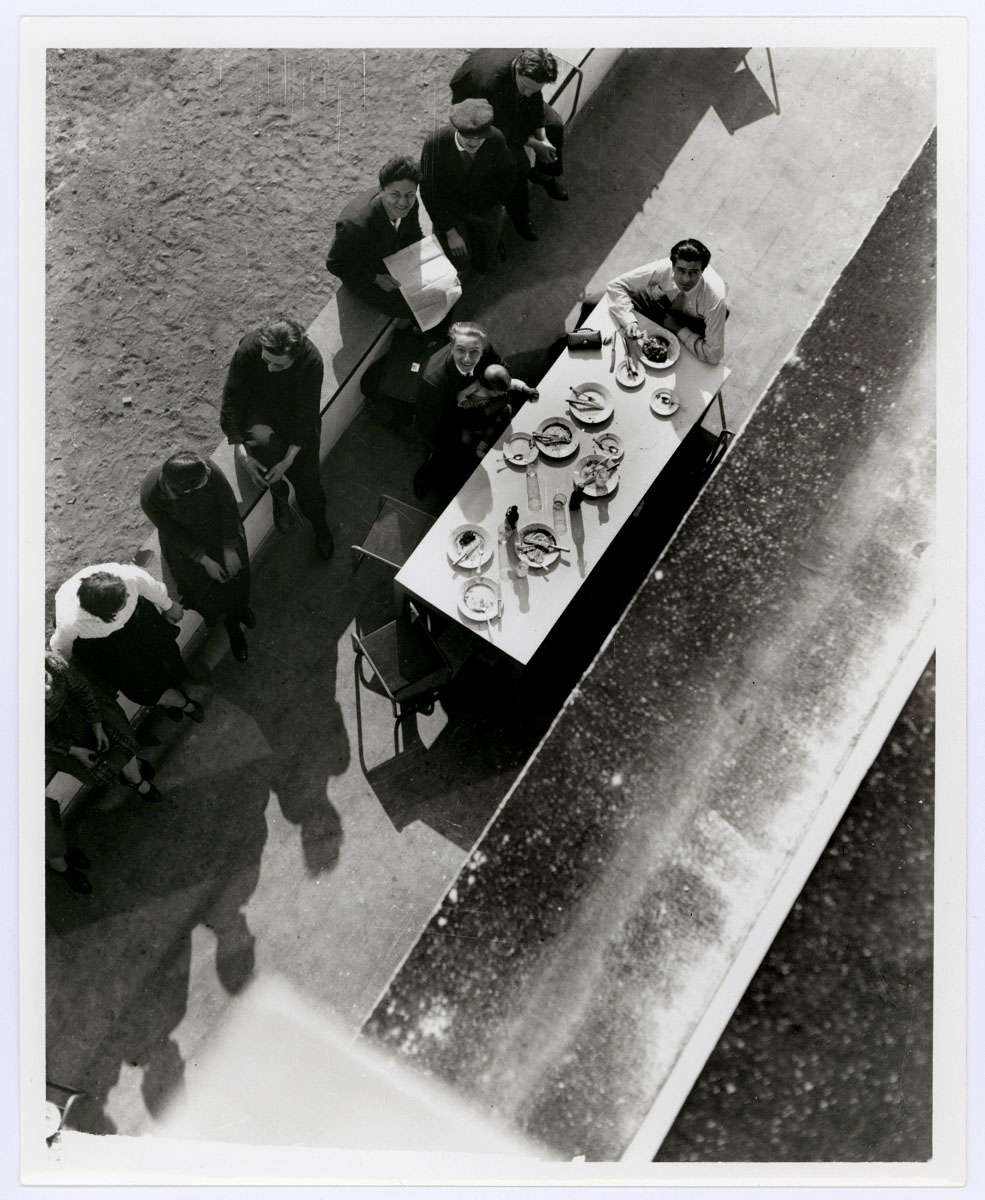
 

Irene Bayer (American, 1898-1991) 'Blick auf die Terrasse der Bauhaus-Kantine in Dessau' (View onto the terrace of the Bauhaus Dessau canteen)' c. 1927


Irene Bayer (American, 1898-1991)
Blick auf die Terrasse der Bauhaus-Kantine in Dessau (View onto the terrace of the Bauhaus Dessau canteen)
c. 1927
Bauhaus-Archiv Berlin
© VG Bild-Kunst, Bonn 2026


Irene Bayer (American, 1898-1991)

Irene Bayer was born as Irene Angela Hecht in Chicago on 28 October 1898 and grew up in Budapest. In 1920 she began studying at the Berlin University of the Arts. She applied to the Bauhaus in 1923 but was not accepted. She then moved to Paris and audited classes at the Sorbonne and the École des Beaux-Arts. She established connections with the avant-garde there. In 1925 she married Bauhaus member Herbert Bayer. She then attended the preliminary course at the Bauhaus without being officially enrolled. In 1926 she began training as a photographer at the State Academy of Graphic Arts and Books in Leipzig. From then on, she documented life and work at the Bauhaus as well as her husband’s works. She additionally created portrait and advertising photos. Several of her images were used for Bauhaus publications. László Moholy-Nagy also published a number of her photos in his article “Photography as Light Design”. In 1928 the Bayers left the Bauhaus and moved to Berlin. In 1929 Irene Bayer’s work was presented at the “Film und Foto” exhibition in Stuttgart. She stopped working in photography when her daughter was born later that year; she had been separated from the child’s father, Herbert Bayer, since 1928. In 1938 Irene Bayer moved to the US, where she worked as a translator. She also briefly returned to Germany after the Second World War to work in this role for the American military administration in Munich. Irene Bayer died in Los Angeles on 12 July 1991.

Text from the Bauhaus-Archiv website
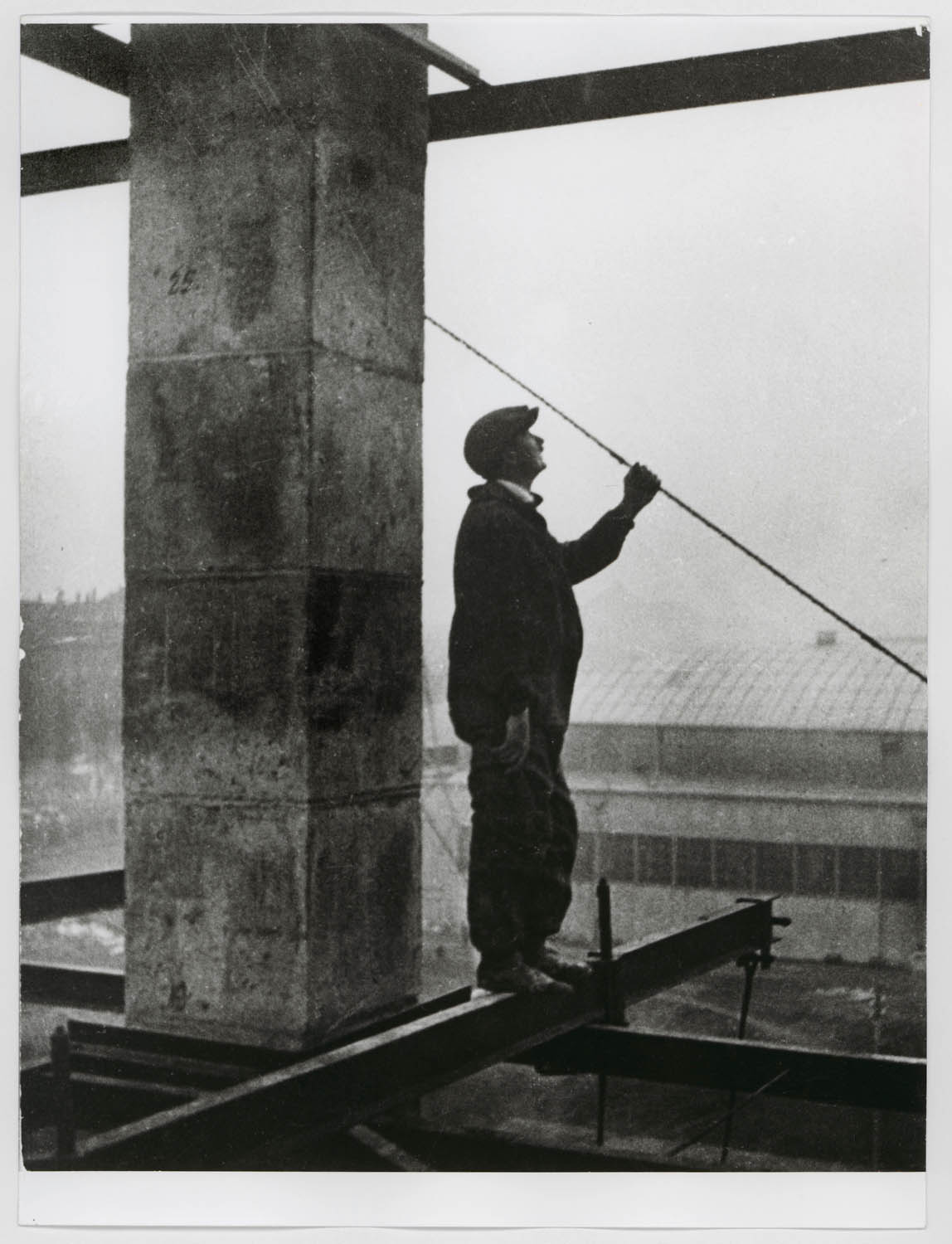
 

Ivana Meller-Tomljenović (Croatia, 1906-1988) 'Auf dem Bau' (On the construction site) 1930


Ivana Meller-Tomljenović (Croatia, 1906-1988)
Auf dem Bau (On the construction site)
1930
Bauhaus-Archiv Berlin
© VG Bild-Kunst, Bonn 2026


Ivana Meller-Tomljenović (Croatia, 1906-1988)

Ivana Meller-Tomljenović, née Tomljenović, was born in Zagreb on 2 September 1906. As a young woman, she initially made a name for herself in the 1920s as a track-and-field athlete and basketball player. From 1924 to 1928, she completed a degree at the Royal College of Arts and Crafts in Zagreb, graduating with honours. In 1929 she began studying metal design at Vienna’s University of Applied Arts. Impressed by a lecture given by Bauhaus director Hannes Meyer, Meller-Tomljenović transferred to the Bauhaus Dessau that same year. She experimented with photomontage and printing techniques in Walter Peterhans’s photography class. During this period, she also filmed life at the Bauhaus. Meller-Tomljenović joined the Communist Student Faction. She was among the students who left the Bauhaus when Hannes Meyer was dismissed in 1930. She initially worked in Berlin as a set designer for the Piscator Stage as well as a freelance graphic designer. In 1931 she briefly studied literature at the Sorbonne in Paris before moving to Prague. There she married Alfred Meller, the owner of a large advertising agency. After his death, Meller-Tomljenović returned to Yugoslavia in 1934. In Belgrade she taught art, graphic design and poster design until the 1960s. A late reception of her photographic work began in the 1980s. Ivana Meller-Tomljenović died in Zagreb on 30 August 1988.

Text from the Bauhaus-Archiv website
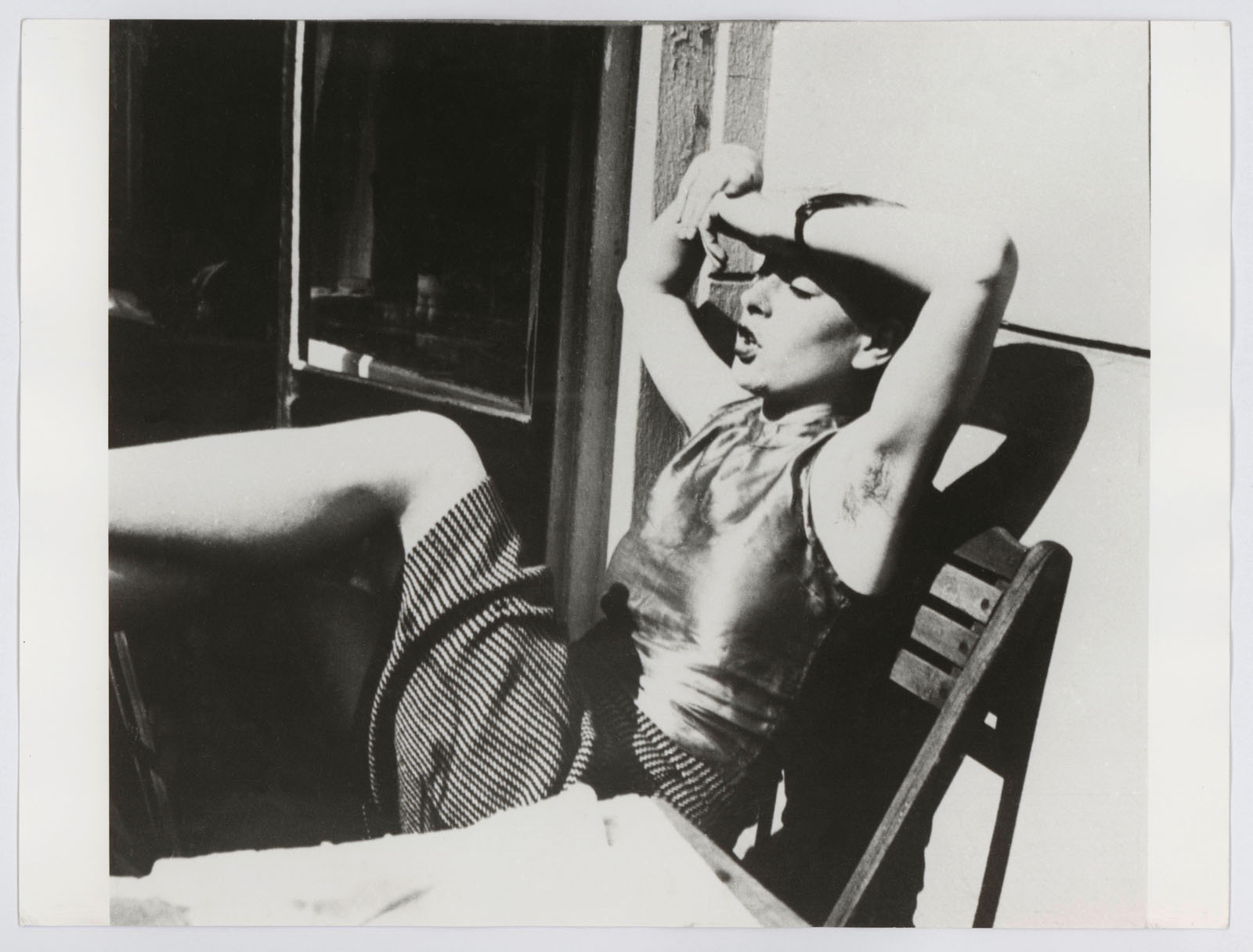
 

Ivana Meller-Tomljenović (Croatia, 1906-1988) 'Porträt Grete Krebs' (Portrait of Grete Krebs) 1930


Ivana Meller-Tomljenović (Croatia, 1906-1988)
Porträt Grete Krebs (Portrait of Grete Krebs)
1930
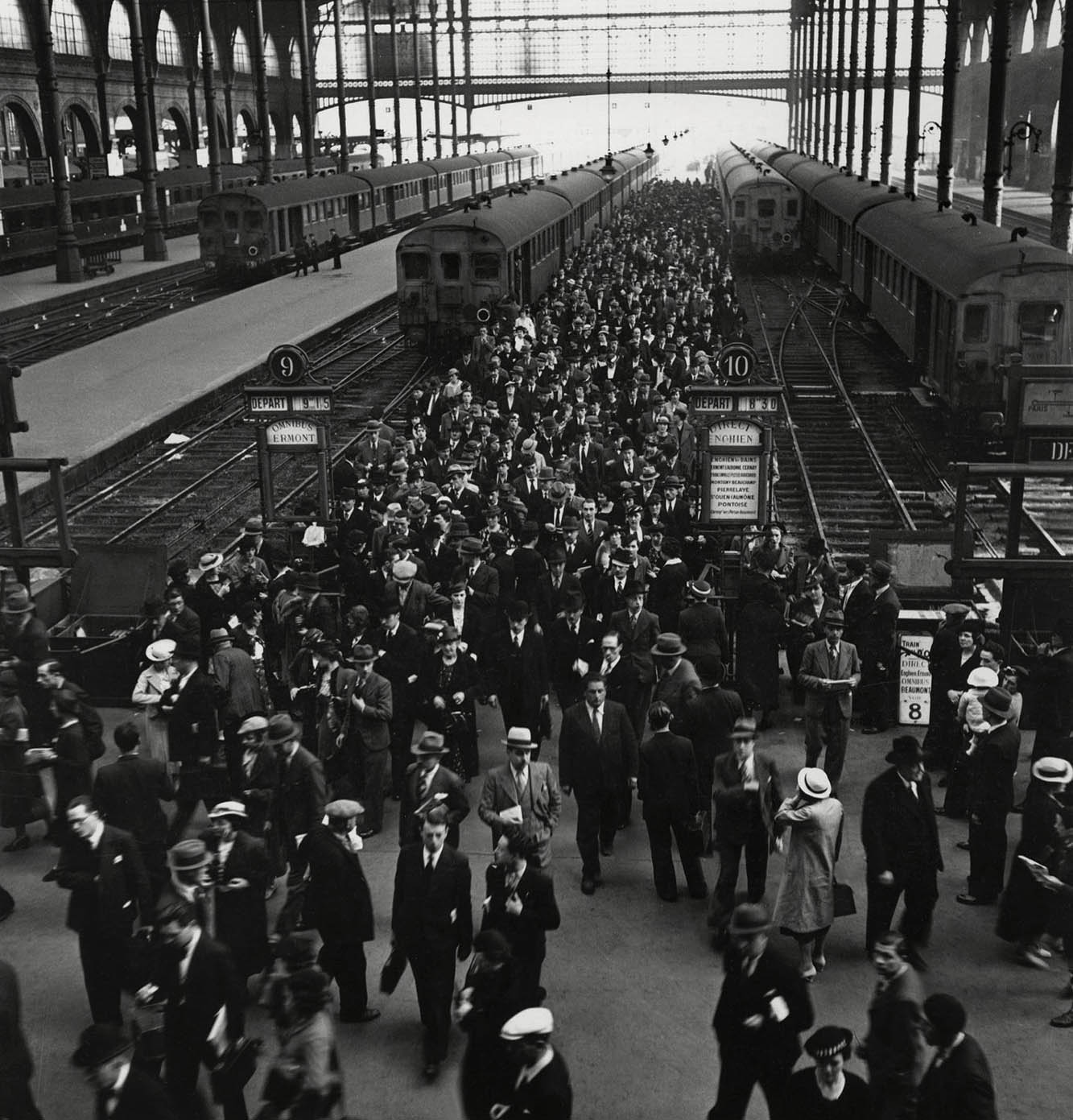
 

Ré Soupault (French-German born Poland, 1901-1996) 'Menschenmenge am Bahnhof St. Lazare' (Crowd at St. Lazare train station) c. 1936


Ré Soupault (French-German born Poland, 1901-1996)
Menschenmenge am Bahnhof St. Lazare (Crowd at St. Lazare train station)
c. 1936
Bauhaus-Archiv Berlin
© VG Bild-Kunst, Bonn 2026


Ré Soupault (French-German born Poland, 1901-1996)

Ré Soupault was born as Meta Erna Niemeyer in Bobolice (then German Pomerania, now Poland) on 29 October 1901. In 1921 she began studying at the Bauhaus in Weimar. She attended the preliminary course and then studied in the weaving workshop. At the Bauhaus, she also began to experiment with photography. In 1923 she met the avant-garde filmmaker Viking Eggeling and played a substantial role in the creation of his film “Diagonal Symphony”. After her brief marriage to the Dadaist Hans Richter in 1926, she worked as a fashion journalist for the magazine “Sport im Bild” in Berlin. Her work led her to Paris in 1929. There, she once again situated herself at the center of the artistic avant-garde and founded her fashion studio “Ré Sport” in 1931. In 1933 she met the author and journalist Philippe Soupault. While accompanying him on his journalistic tours, she began documenting them in photographs. The couple married in 1937. In 1938 they went to Tunis, where Ré Soupault continued with her social-documentary photography. Because of Philippe Soupault’s openly antifascist position, the couple had to flee, only narrowly evading German troops by escaping to Algeria. They travelled to New York in 1943 and separated in 1945. It was not until after the war that Ré Soupault learned parts of her photographic work had survived in Tunis. In 1948 Ré Soupault returned to Europe and lived in Basel, where she worked as a translator and radio commentator. She created her final photojournalistic work in the mid-1950s: photographs of German refugees from the former eastern territories. In 1958 she moved back to Paris and concentrated on her literary work. Ré Soupault died in Versailles on 12 March 1996.

Text from the Bauhaus-Archiv website
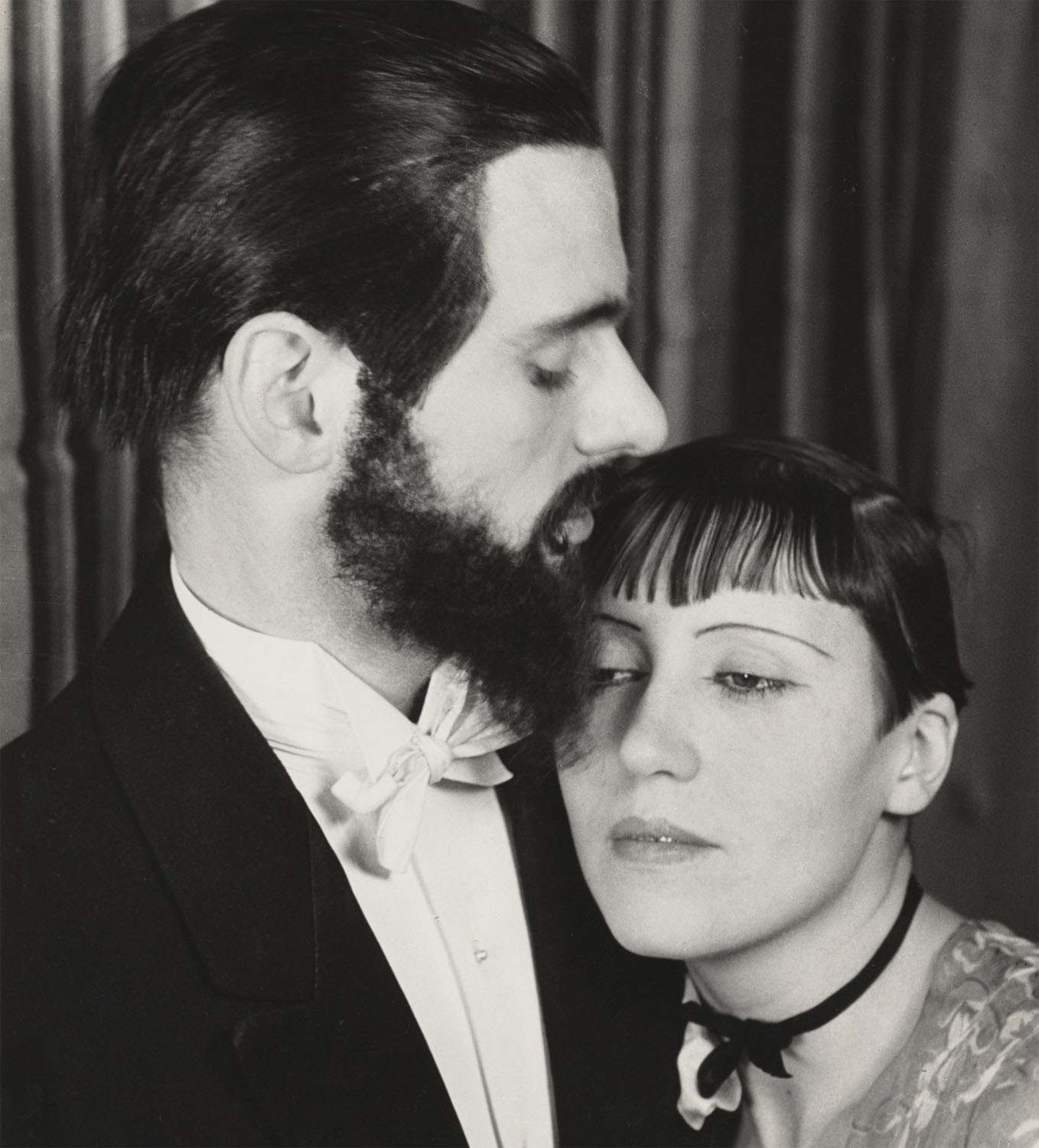
 

Grete Stern (Argentine born Germany, 1904-1999) 'Porträt Claire Eckstein und Edwin Denby, deutsch-amerikanisches Tanzpaar' (Portrait of Claire Eckstein and Edwin Denby, German-American dance couple) 1929


Grete Stern (Argentine born Germany, 1904-1999)
Porträt Claire Eckstein und Edwin Denby, deutsch-amerikanisches Tanzpaar (Portrait of Claire Eckstein and Edwin Denby, German-American dance couple)
1929
Bauhaus-Archiv Berlin
© VG Bild-Kunst, Bonn 2026


Grete Stern (Argentine born Germany, 1904-1999)

Grete Stern was born in Wuppertal on 9 May 1904. Due to her father’s work in international trade, she grew up in London as well as Wuppertal. After studying graphic design in Stuttgart and then briefly working, she began training as a photographer with Walter Peterhans in 1927. There she met Ellen Auerbach, who was also being taught by Peterhans. When he received a position at the Bauhaus in Dessau in 1929, Stern and Auerbach founded the agency ringl + pit in his former studio. In 1932 Stern attended Peterhans’s photography class at the Bauhaus. Just one year later, her Jewish descent forced her to emigrate to London. Her British passport made her life in exile easier: she was able to work as a portrait photographer in England without facing any major bureaucratic obstacles. Stern and Auerbach worked together again in London for a short time. In 1935 Stern married the Argentinian photographer and former Bauhaus student Horacio Coppola. In 1936 they moved to Buenos Aires, where they opened a studio. Their home became a meeting place for the local art scene. After separating from Coppola, Stern worked as a freelance photographer. Among other things, she created surrealistic photomontages for the magazine “Idilio”. Stern founded the photography workshop of the Argentinian Museo Nacional de Bellas Artes in 1956. Additionally, she documented the indigenous people of the Gran Chaco up into the 1960s. She stopped working as a photographer in 1985. Grete Stern died in Buenos Aires on 24 December 1999.

Text from the Bauhaus-Archiv website
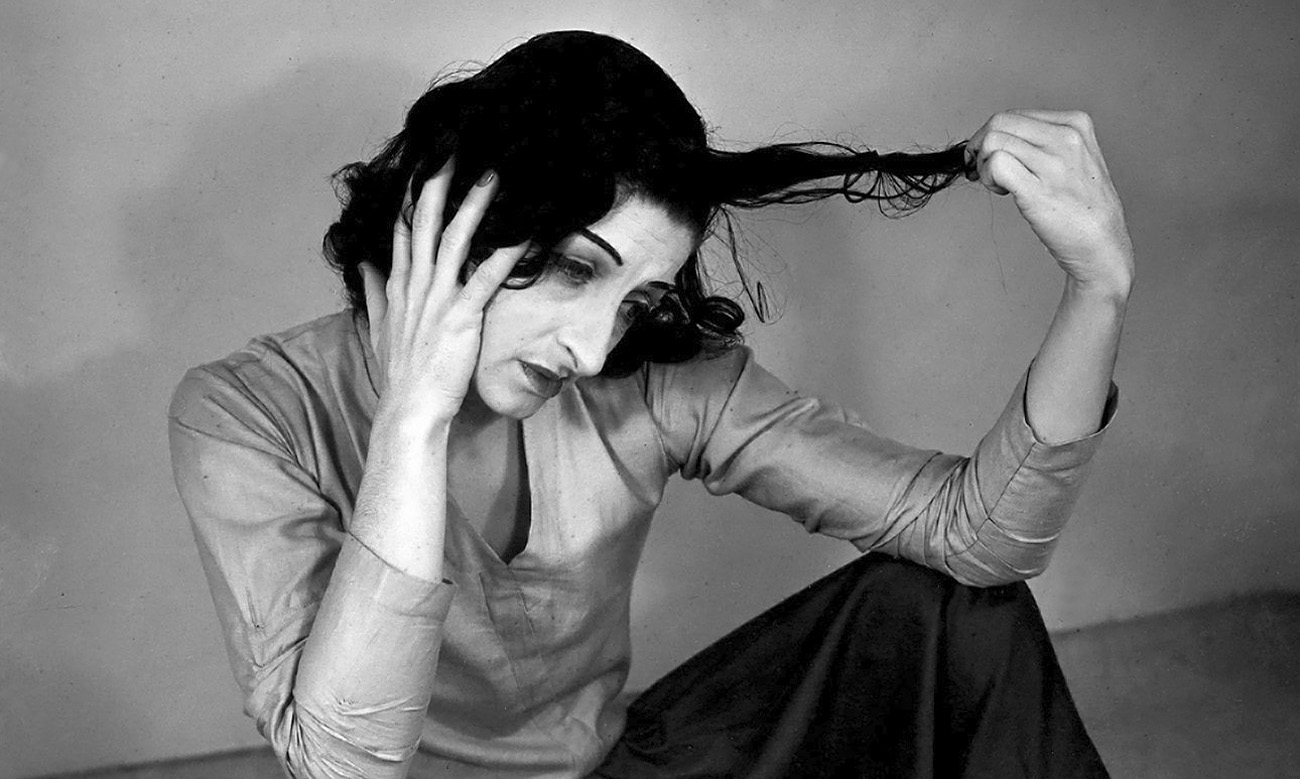
 

Grete Stern (Argentine born Germany, 1904-1999) 'Porträt Miriam Winslow, US-amerikanische Tänzerin' (Portrait of Miriam Winslow, American dancer) 1944


Grete Stern (Argentine born Germany, 1904-1999)
Porträt Miriam Winslow, US-amerikanische Tänzerin (Portrait of Miriam Winslow, American dancer)
1944
Bauhaus-Archiv Berlin
© VG Bild-Kunst, Bonn 2026
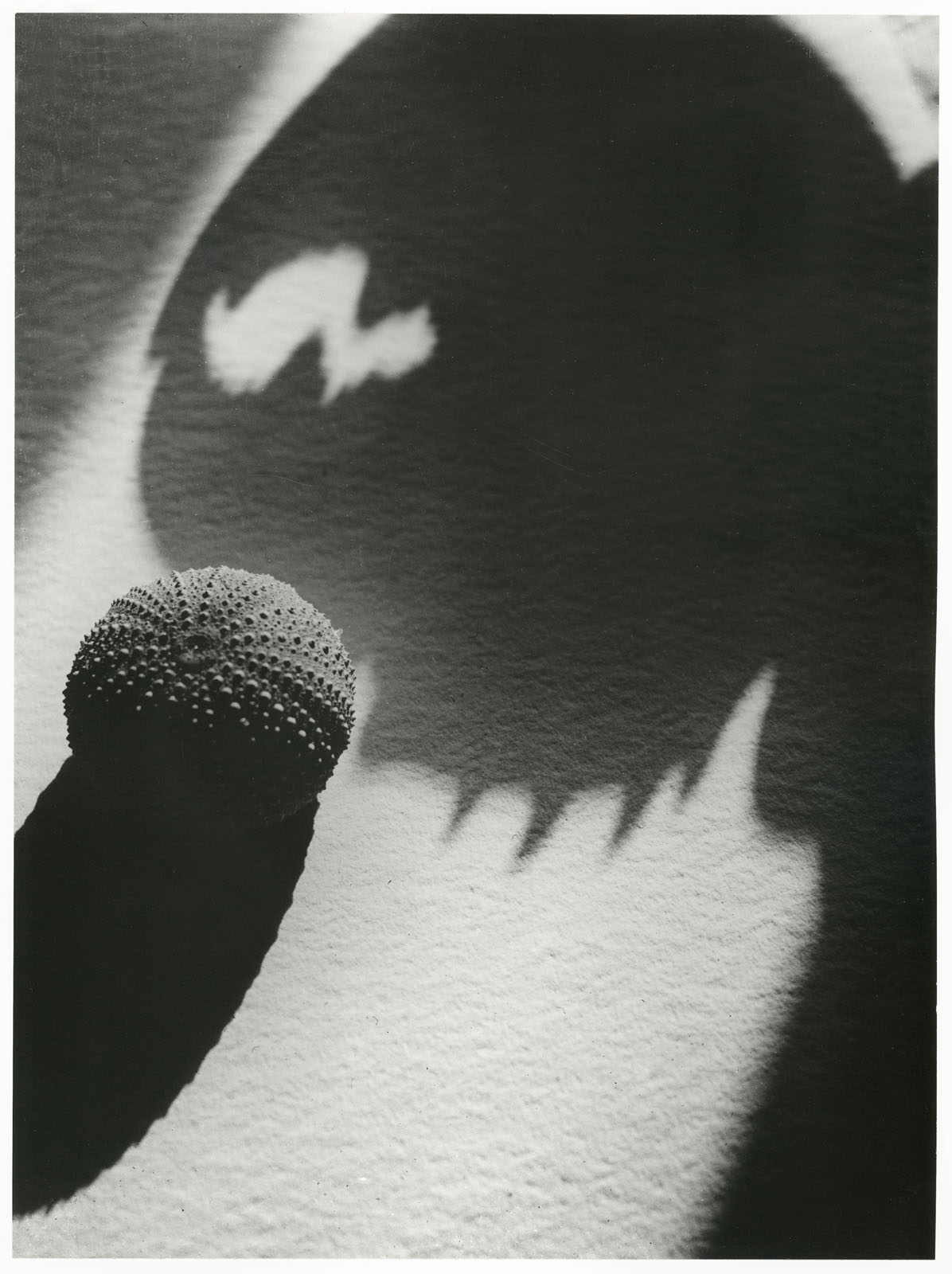
 

Lotte Collein (German, 1905-1995) 'Seeigel und Schatten einer Krebsschere' (Sea urchin and shadow of a crab claw) 1928


Lotte Collein (German, 1905-1995)
Seeigel und Schatten einer Krebsschere (Sea urchin and shadow of a crab claw)
1928
Bauhaus-Archiv Berlin
© VG Bild-Kunst, Bonn 2026


Lotte Collein (German, 1905-1995)

Lotte Collein was born as Anny Amely Lotte Gerson in Essen on 17 March 1905. After training in a tailoring workshop in Munich and a hand-weaving workshop in Dachau, she attended the women’s social school in Bremen. In 1927 she began studying at the Bauhaus. She wanted to become an architect. After the preliminary course, she went to the furniture workshop and then switched to the department of architecture and interior design. Collein also began taking photographs during the period she spent at the Bauhaus. She recorded life at the school and documented works by other members of the Bauhaus, such as Erich Borchert. Although she did not attend any photography classes, one of her images was featured in an article about the current state of photography published by Walter Peterhans in the journal “ReD” in 1930. In the autumn of that year, Collein submitted a request for her diploma as an architect, but was rejected. She then left the school and moved to Vienna with the architect Edmund Collein. The two married in 1931, and their child was born that same year. In 1938 the couple returned to Germany. Collein, who was half Jewish and a communist, survived the Nazi period through her marriage to an “Aryan” husband. After the war, the couple moved to the Soviet-occupied sector of Berlin. While Edmund Collein pursued a career as an East German architectural official, Lotte Collein supported his work from behind the scenes. She died in Berlin on 3 May 1995.
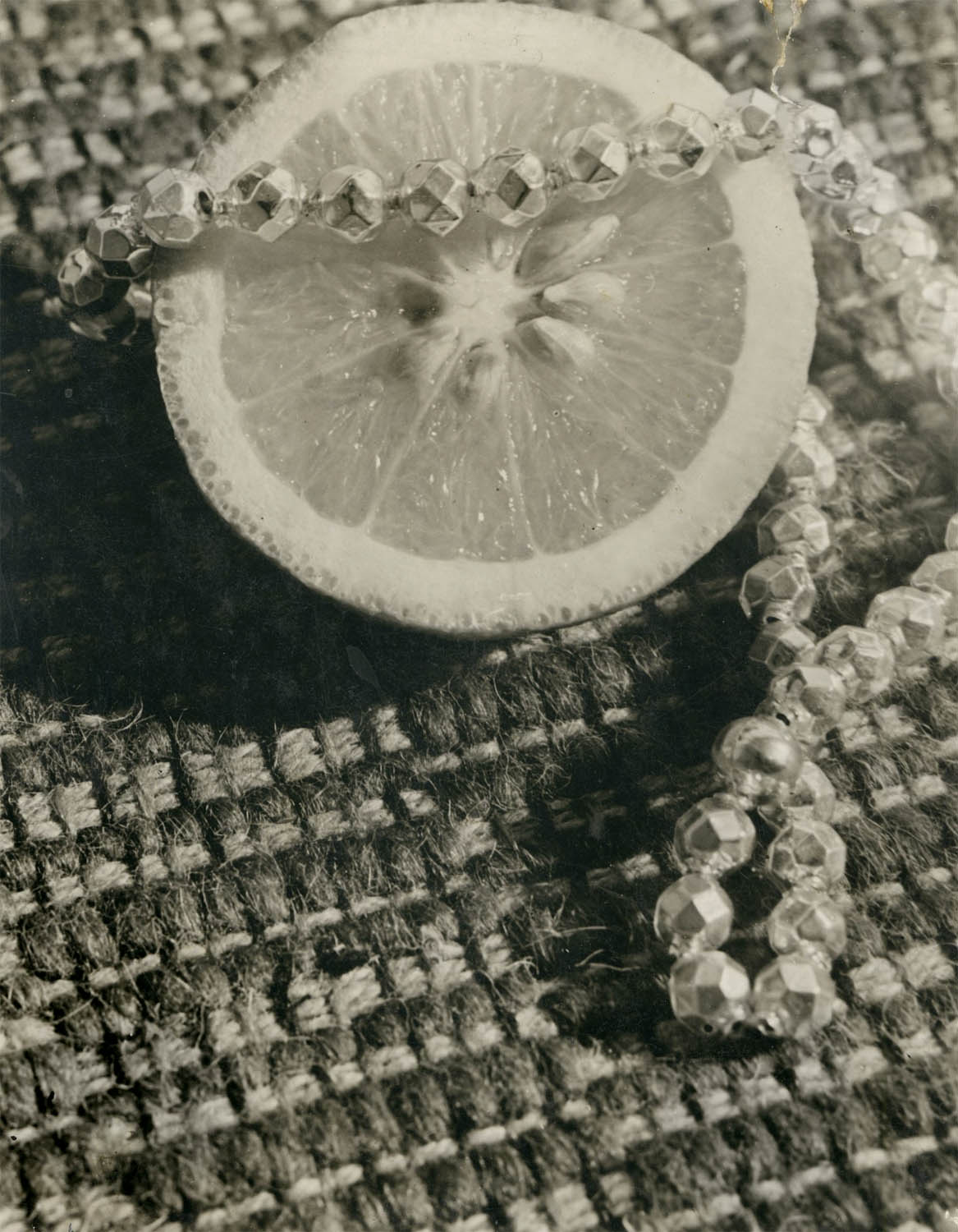
 

Lony Neumann (German, 1902-1996) 'Stillleben mit Zitrone und Perlenkette auf Webteppich' (Still life with lemon and pearl necklace on a woven carpet) 1930


Lony Neumann (German, 1902-1996)
Stillleben mit Zitrone und Perlenkette auf Webteppich (Still life with lemon and pearl necklace on a woven carpet)
1930
Bauhaus-Archiv Berlin
© VG Bild-Kunst, Bonn 2026


Lony Neumann (German, 1902-1996)

Lony Neumann was born as Leoni Cohn in Bytom (then German Silesia, now Poland) on 15 April 1902. In 1919 she began an apprenticeship as a tailor and passed the final examination. Parallel to this, she attended courses at the Wrocław State Academy of Arts and Crafts, where she met and then married the student Theodor Neumann. After the couple moved to Leipzig, their son was born in 1926. In 1928 Neumann became a student at the Bauhaus Dessau. She attended Walter Peterhans’s photography class and the advertising workshop. Her role as a parent meant she was largely forced to carry out the assignments from her classes at the Bauhaus in Leipzig, where she continued to live. Neumann was already politically active at this point. She photographed workers and participated in left-wing demonstrations. In 1931 she separated from her husband. Together with her new partner, the architect and Bauhaus graduate Philipp Tolziner, she joined a group of Bauhaus students immigrating to Russia. She left her son with his father. From 1931 to 1938, she worked as an art journalist and designer in Moscow and continued to create photographs, particularly of women and children. She married the Russian painter Aleksandr Labas during this period. Neumann was presumably able to escape the Soviet state’s persecution of German immigrants under Stalin by withdrawing from the cultural public sphere: she began providing foreign-language lessons. After the Second World War, she worked as a translator. Lony Neumann died in Moscow on 27 February 1996.

Text from the Bauhaus-Archiv website
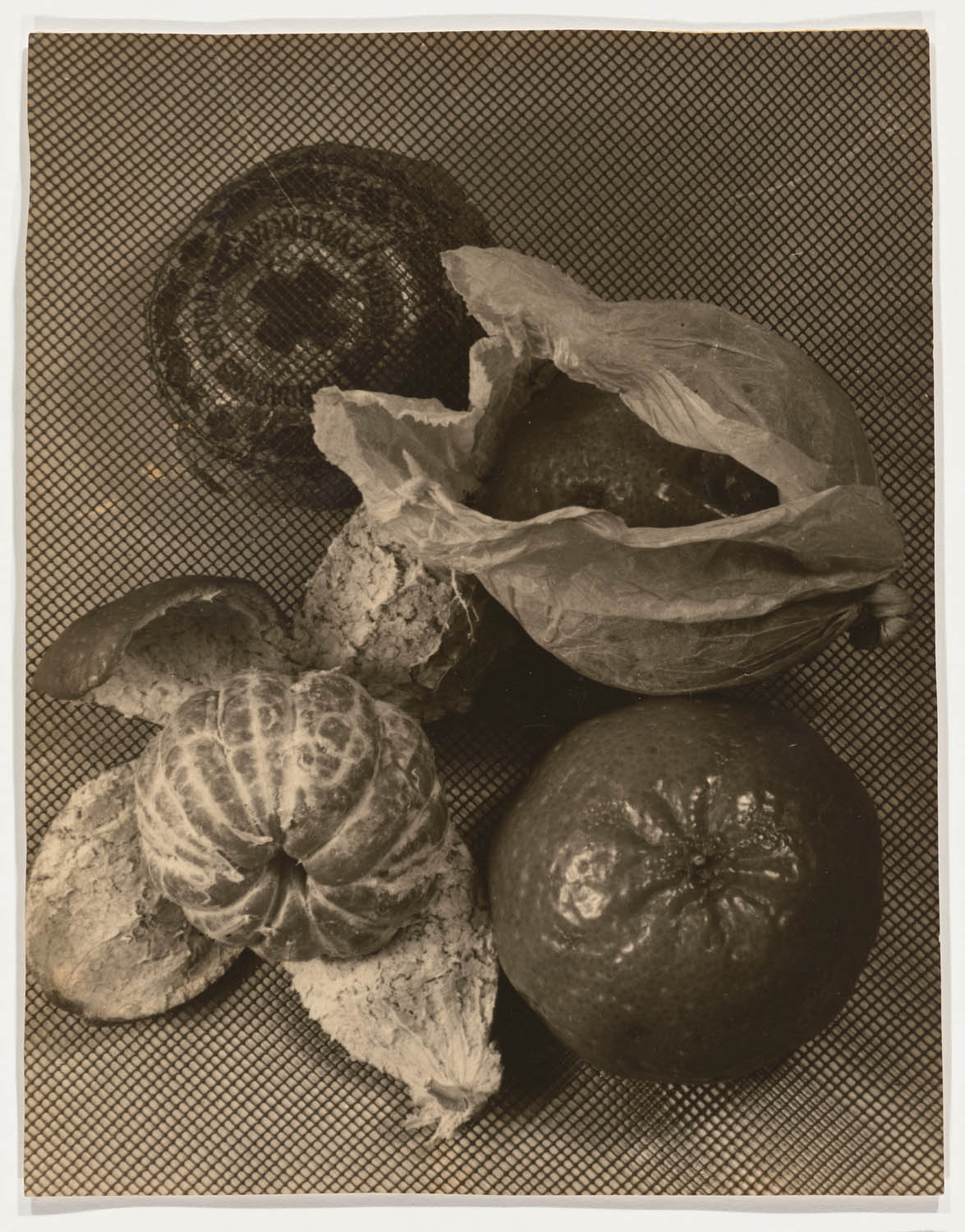
 

Irene Hoffmann (American born Germany, 1903-1982) 'Stillleben mit Orangen' (Still life with oranges) 1932


Irene Hoffmann (American born Germany, 1903-1982)
Stillleben mit Orangen (Still life with oranges)
1932
Bauhaus-Archiv Berlin
© VG Bild-Kunst, Bonn 2026


Irene Hoffmann (American born Germany, 1903-1982)

Irene Hoffmann, née Wallbrecht, was born in Hanover on 14 December 1903. In 1928 she became a student at the Bauhaus in Dessau. She studied in the advertising department and began attending classes taught by Walter Peterhans in 1932. In addition to photographs, graphic designs and experimental photograms, she also created collages during this period. She met the architecture student Hubert Hoffmann at the Bauhaus. The couple married in 1929. One of Irene Hoffmann’s works was presented at the Bauhaus’s travelling exhibition the following year. In 1933 she completed her studies at the Bauhaus with a diploma from the advertising workshop. She then ran a studio for advertising and portrait photography in Berlin together with fellow Bauhaus graduate Hannes Schmitt. She also did freelance work for the graphic and design studio of former Bauhaus master László Moholy-Nagy until 1934. Between 1934 and 1936, she created additional projects in the field of advertising-related graphic design together with Hubert Hoffmann. Irene Hoffmann emigrated to the US in 1936, but her husband remained in Germany. They were divorced in 1938. Irene Hoffmann died in Allentown, Pennsylvania, on 16 February 1982.

Text from the Bauhaus-Archiv website
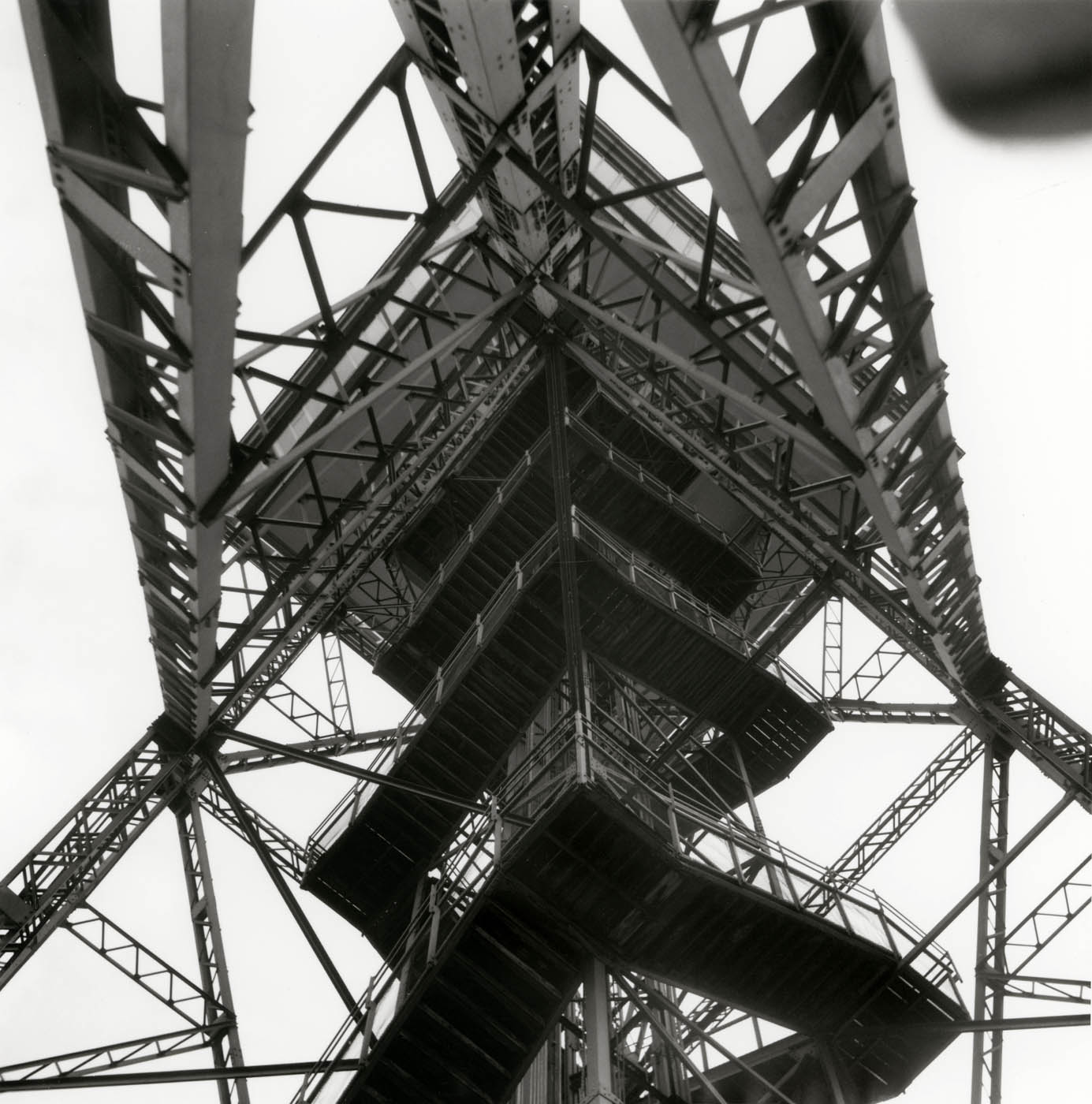
 

Elsa Thiemann (German born Poland, 1910-1981) 'Funkturm Berlin' (Berlin Radio Tower) 1930s


Elsa Thiemann (German born Poland, 1910-1981)
Funkturm Berlin (Berlin Radio Tower)
1930s
Bauhaus-Archiv Berlin
© VG Bild-Kunst, Bonn 2026
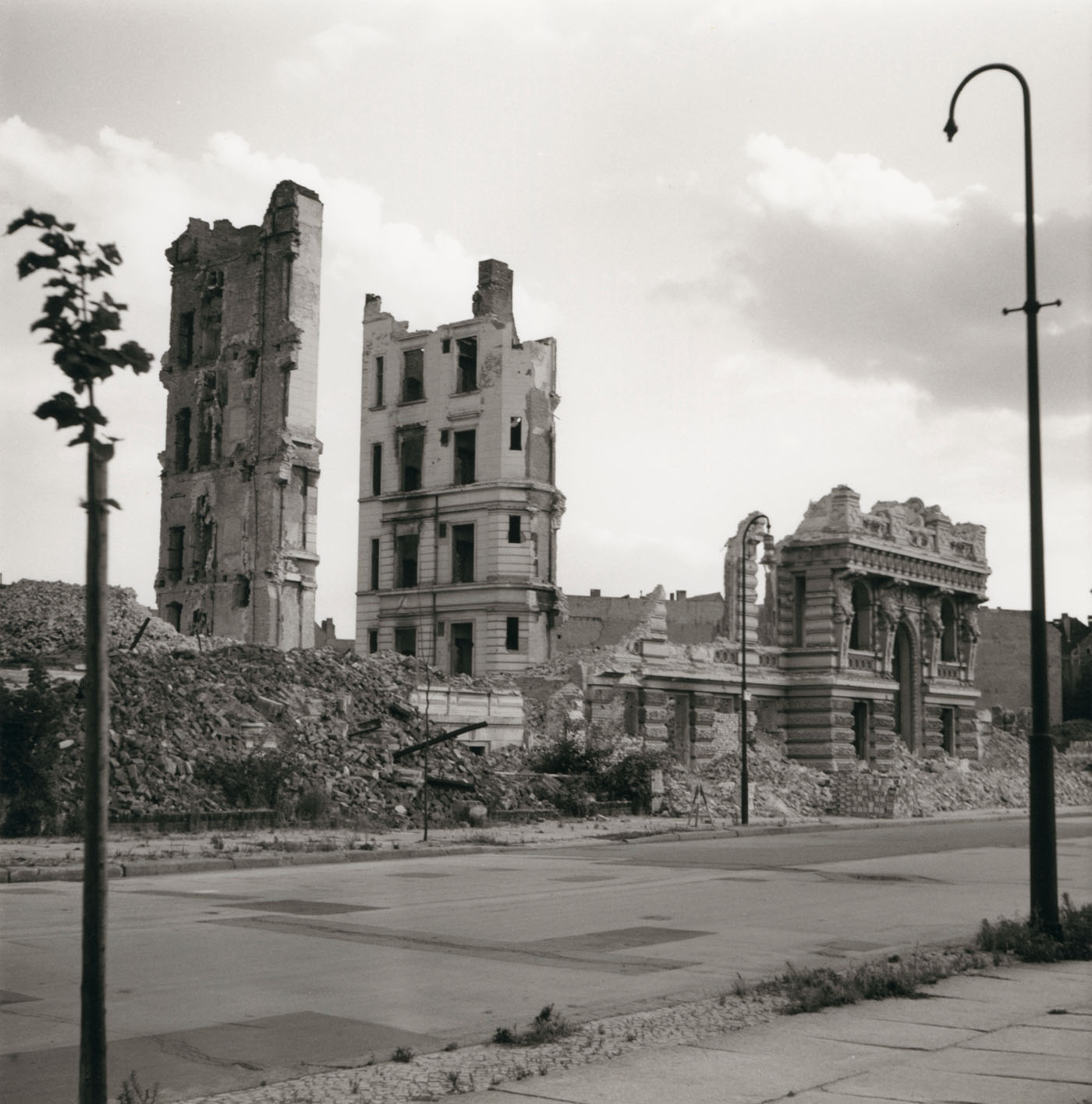
 

Elsa Thiemann (German born Poland, 1910-1981) 'Berlin Ruinen' (Berlin Ruins) c. 1945


Elsa Thiemann (German born Poland, 1910-1981)
Berlin Ruinen (Berlin Ruins)
c. 1945
Bauhaus-Archiv Berlin
© VG Bild-Kunst, Bonn 2026


Elsa Thiemann (German born Poland, 1910-1981)

Elsa Thiemann, née Franke, was born in Toruń, then West Prussia, on 7 February 1910. In 1927 she began studying applied art at Berlin-Charlottenburg’s United State Schools for Fine and Applied Arts. In 1929 she transferred to the Bauhaus in Dessau. After her preliminary training, she studied in Joost Schmidt’s advertising workshop and, from the summer of 1930, in Walter Peterhans’s photography class. In 1931 she completed her studies with a Bauhaus diploma. From then on, Thiemann worked in Berlin as a freelance photojournalist and captured life in the city. In 1944 she accepted a position as a secretary in the Berlin editorial office of the Hoffmann und Campe publishing house. After the war she resumed her work as an independent photojournalist. She used her photographs to document the transformation of the German capital: from the ruins of a devastated Berlin after 1945 to the renewed flourishing of urban life in the West Berlin of the 1950s. She also created numerous portraits of artists. In 1947 she married the painter Hans Thiemann, whom she knew from their time at the Bauhaus. When the couple moved to Hamburg in 1960, Elsa Thiemann stopped working as a professional photographer and began documenting the work of her husband. After his death in 1977, she managed his estate while also tending to her own photo archive. Elsa Thiemann died in Hamburg on 15 November 1981.

Text from the Bauhaus-Archiv website
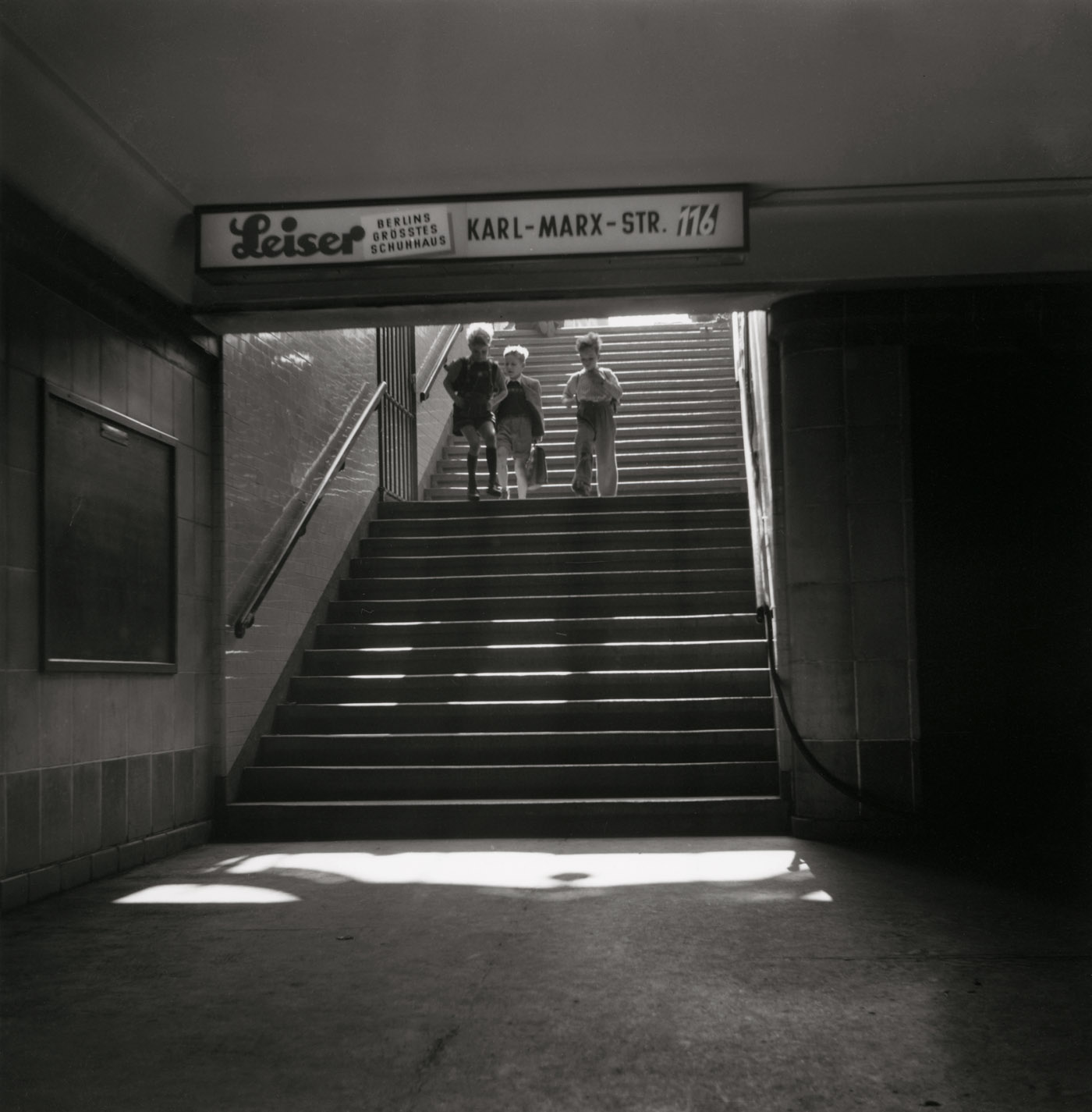
 

Elsa Thiemann (German born Poland, 1910-1981) 'Berlin Kinder am U-Bahneingang in Neukölln' (Berlin children at the subway entrance in Neukölln) 1950s


Elsa Thiemann (German born Poland, 1910-1981)
Berlin Kinder am U-Bahneingang in Neukölln (Berlin children at the subway entrance in Neukölln)
1950s
Bauhaus-Archiv Berlin
© VG Bild-Kunst, Bonn 2026
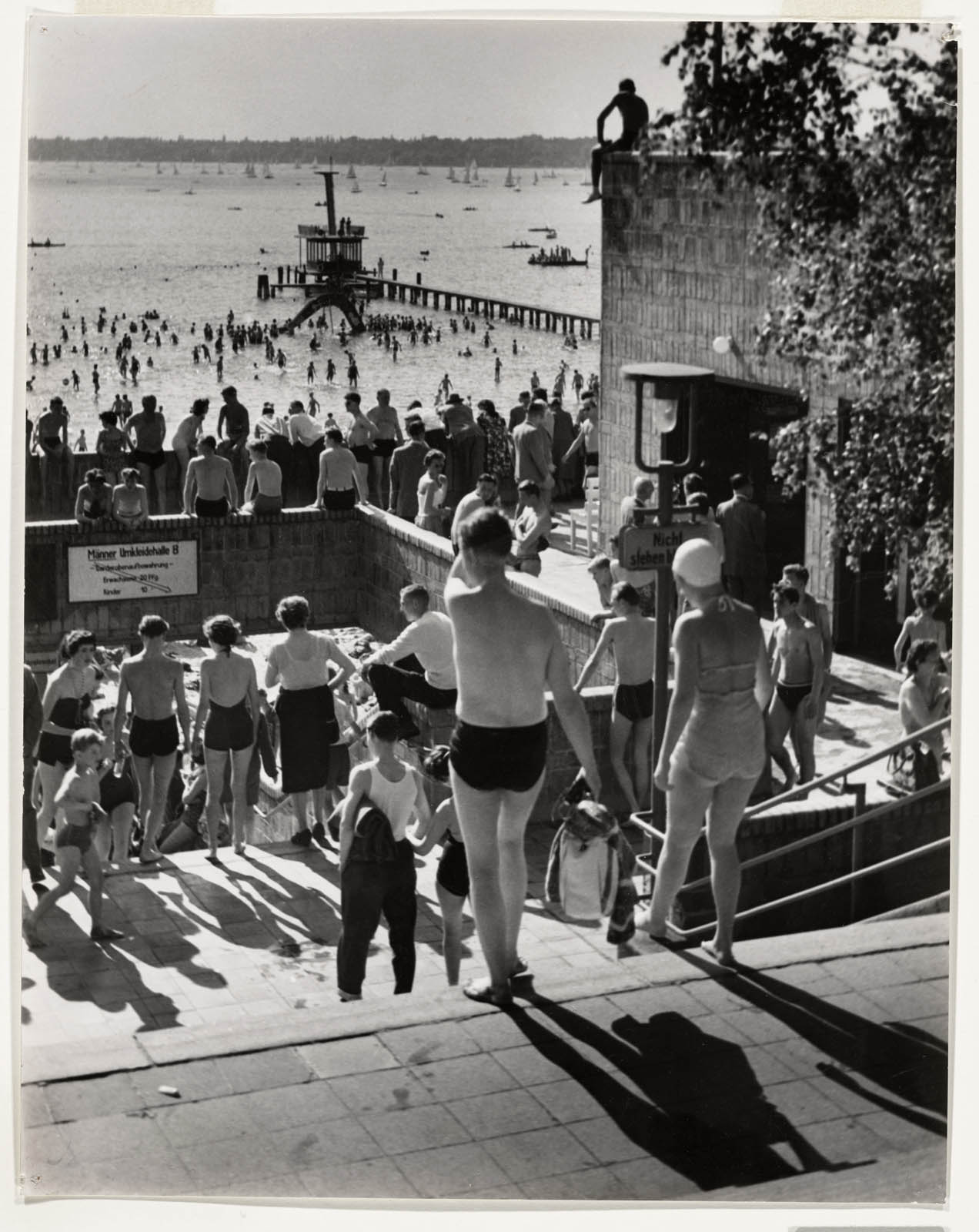
 

Elsa Thiemann (German born Poland, 1910-1981) 'Berlin die grosse Treppe im Freibad Wannsee' (Berlin, the large staircase in the Wannsee open-air swimming pool) 1950s


Elsa Thiemann (German born Poland, 1910-1981)
Berlin die grosse Treppe im Freibad Wannsee (Berlin, the large staircase in the Wannsee open-air swimming pool)
1950s
Bauhaus-Archiv Berlin
© VG Bild-Kunst, Bonn 2026


Museum für Fotografie
Jebensstraße 2, 10623 Berlin

Opening hours:
Mon closed
Tue 11.00am – 7.00pm
Wed 11.00am – 7.00pm
Thu 11.00am – 8.00pm
Fri 11.00am – 7.00pm
Sat 11.00am – 7.00pm
Sun 11.00am – 7.00pm
Museum für Fotografie website

LIKE ART BLART ON FACEBOOK

Back to top

Exhibition: ‘From Bauhaus to Buenos Aires: Grete Stern and Horacio Coppola’ at the Museum of Modern Art (MoMA), New York

Exhibition dates: 17th May – 4th October, 2015

Curators: Roxana Marcoci, Senior Curator, and Sarah Meister, Curator with Drew Sawyer, Beaumont and Nancy Newhall Curatorial Fellow, Department of Photography at MoMA


Horacio Coppola (Argentine, 1906–2012) 'Calle California. Vuelta de Rocha. La Boca' 1931 from the exhibition 'From Bauhaus to Buenos Aires: Grete Stern and Horacio Coppola' at the Museum of Modern Art (MoMA), New York, May - Oct, 2015


Horacio Coppola (Argentine, 1906-2012)
Calle California. Vuelta de Rocha. La Boca
1931
Gelatin silver print, printed 1996
7 5/8 × 11 5/16″ (19.4 × 28.7cm)
IVAM, Institut Valencià d’Art Modern


The work of Greta Stern is the better known of these two artists (Ringl + Pit studio and the surreal, psychoanalytic 1950s work), but I find it is the underrated photographs of Horacio Coppola that are the gems in this posting.

It is a bit rough that Richard B. Woodward, commenting on the exhibition on the Collector Daily website (below), observes that with no production after 1938 it “raises suspicions that he was not an artist who sustained himself at a top level.” I beg to differ. Many illuminati have short, explosive and powerful careers before giving the game away, or changing to a different medium or form.

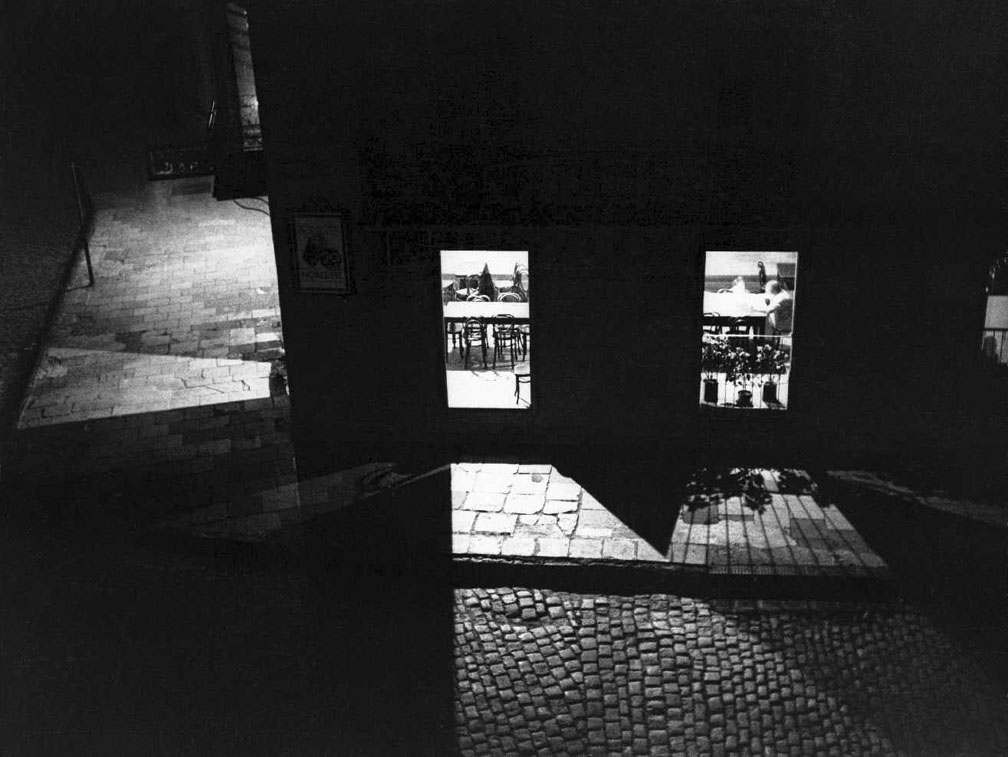
He also observes that, “Coppola failed to channel the nocturnal otherworldliness of the city found in Brassäi and Brandt, only a few of these photos have the haunted quality they achieved,” after the curators of the exhibition, in the catalogue, compare Coppola’s work to those two esteemed individuals. He cites a “sneaky street picture” from 1936 as evidence and instance of an image where Coppola captured a magical moment. I think both curators and critic are missing the point. Coppola is certainly NOT like Brassäi and Brandt in that his photographs at night are not ROMANTIC photographs of the nocturnal fabric of the city. Coppola’s images do NOT possess the kind of magic that Woodward is looking for (that of Brassai’s Paris at Night for example), that he believes should be there, simply because they are of a different order. But that does not make them any less valuable in terms of their insight and energy.

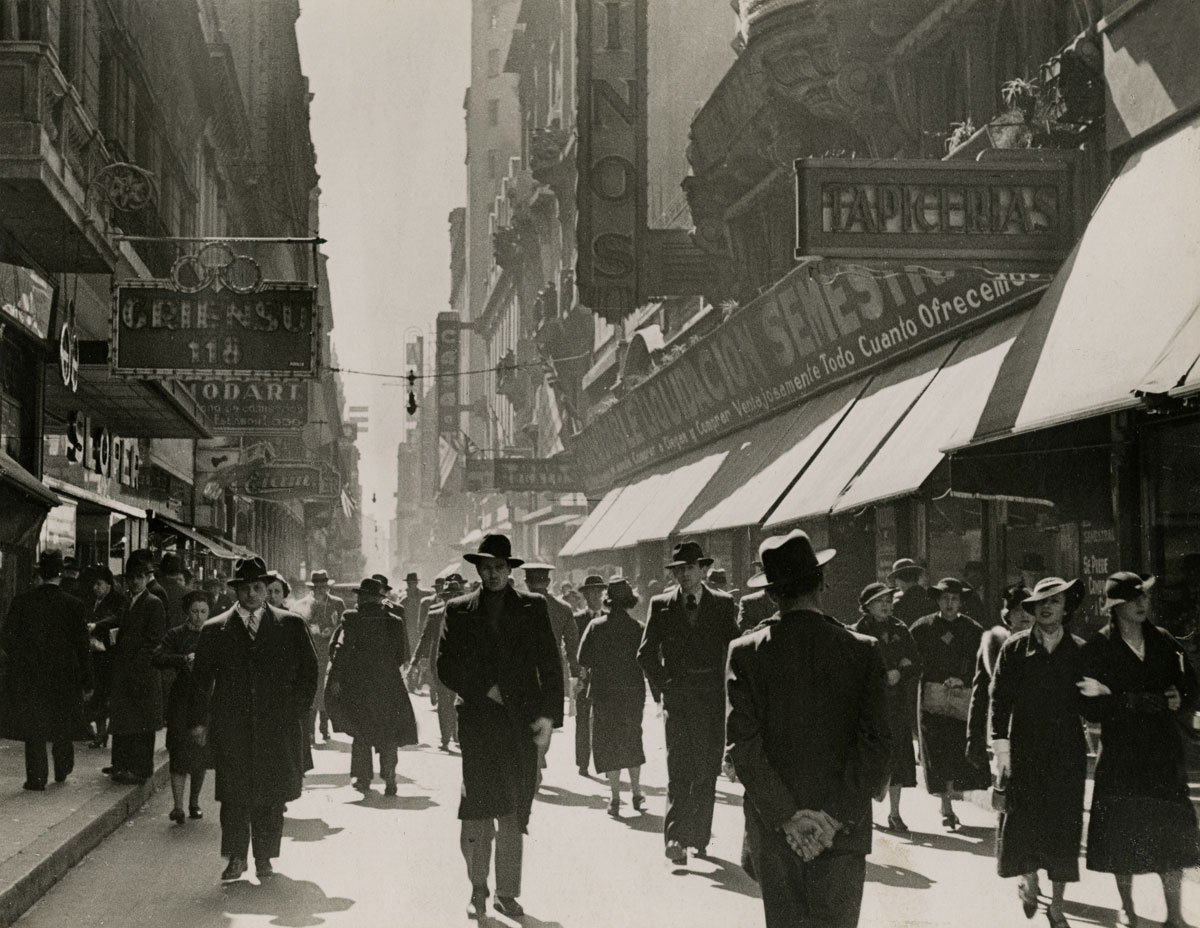
Coppola’s images, steeped in his training at the Bauhaus, are objective, modernist magic. By that I mean they possess a most uncanny use of form, of space and light. Day or night, he places his camera so carefully, in such a controlled and ego-less way, that the precision of his renditions is exquisite. For example, look at Calle Florida (1936, below). What seems an ordinary street, a photograph that anyone could have taken. But no! look again. That perfect rendition of shadow, darkness, movement and the spaces between the figures, The eye is led down the street to the vanishing point and then is released with all that pent up energy in to the V of the sky. Magnificent.

I wish I had more of his photographs to show you, especially his night shots. Coppola wasn’t a Walker Evans or a Paul Strand, certainly not a Kertész, Brassäi or Brandt because he simply was himself, with his own unique signature. He should NEVER be put down for that. I hope this wonderful artist starts to get the recognition he deserves.

Dr Marcus Bunyan


Many thankx to the Museum of Modern Art for allowing me to publish the photographs in the posting. Please click on the photographs for a larger version of the image.


Horacio Coppola (Argentine, 1906–2012) 'Buenos Aires' 1931 from the exhibition 'From Bauhaus to Buenos Aires: Grete Stern and Horacio Coppola' at the Museum of Modern Art (MoMA), New York, May - Oct, 2015


Horacio Coppola (Argentine, 1906-2012)
Buenos Aires
1931
Gelatin silver print
3 1/8 x 4 9/16″ (8 x 11.6cm)
The Museum of Modern Art, New York. Vital Projects Fund, Robert B. Menschel


“The catalog contends that Grete Stern and Horacio Coppola created a stunning body of work, but the show argues, in many ways, for two discrete bodies of work. What might have been accomplished instead of trying to insert two lesser known figures into the canon is to highlight what’s really interesting about their lives and careers: that they – and particularly Stern – were migratory and interdisciplinary, harbingers of the kinds of artistic practice we see today in which commerce, parenthood and politics can no longer be elided, and so they become part of the work. The museum could have showcased their work along with that of their friends and compatriots, from Bauhaus to Buenos Aires, from the literary world to the poets, writers, activists and psychoanalysts with whom they interacted and not just as mute players in this narrative. Now that would have been an extraordinary show.”


Martha Schwendener. “‘From Bauhaus to Buenos Aires: Grete Stern and Horacio Coppola,’ a Bicontinental Couple” on the NY Times website, May 28 2015


“Coppola (1906-2012), on the other hand, has no paper trail of distinction. Outside of his native Argentina, where he was an early convert to Modernism in the late 1920s and later an evangelist for the style, his name draws a blank in most art circles. Parr and Badger cite his Buenos Aires, published in 1937, in volume 2 of their photobook history. But not until 2011 were Coppola’s photographs exhibited in New York, and then only in an imported group show titled Light of Modernity in Buenos Aires (1929-1954) at the Nailya Alexander Gallery. Since then, nothing until now…

The wall of photographs in the next room, done after 1935 when he returned to Argentina – and the basis of the book Buenos Aires – are meant to present Coppola at the height of his powers. Meister puts these views of the Argentine capital – teeming with urban crowds on the streets or at racetracks, shopping at department stores, walking through illuminated streets at night – on a par with Brassäi’s of Paris and Brandt’s of London.

This is a stretch. Perhaps because the prints are hung salon-style, many of them too low for their details to be read, or, more likely, because Coppola failed to channel the nocturnal otherworldliness of the city found in Brassäi and Brandt, only a few these photos have the haunted quality they achieved. If I knew Buenos Aires and had an interior map of these places in my head, I might change my mind. But a sneaky street picture from 1936 of three passersby looking into the front windows of a bridal shop, which are filled with staged, idealised portraits of marriage bliss, is one of the few instances where Coppola captured a magical moment. The absence of anything he did after 1938 raises suspicions that he was not an artist who sustained himself at a top level.”


Richard B. Woodward. “From Bauhaus to Buenos Aires: Grete Stern and Horacio Coppola @MoMA” on the Collector Daily website June 17, 2015 [Online] Cited 01/10/2015. No longer available online


Horacio Coppola (Argentine, 1906–2012) 'Rivadivia between Salguero and Medrano' 1931


Horacio Coppola (Argentine, 1906-2012)
Rivadivia between Salguero and Medrano
1931
Gelatin silver print, printed 1996
7 5/8 × 11 5/16″ (19.4 × 28.7cm)
IVAM, Institut Valencià d’Art Modern


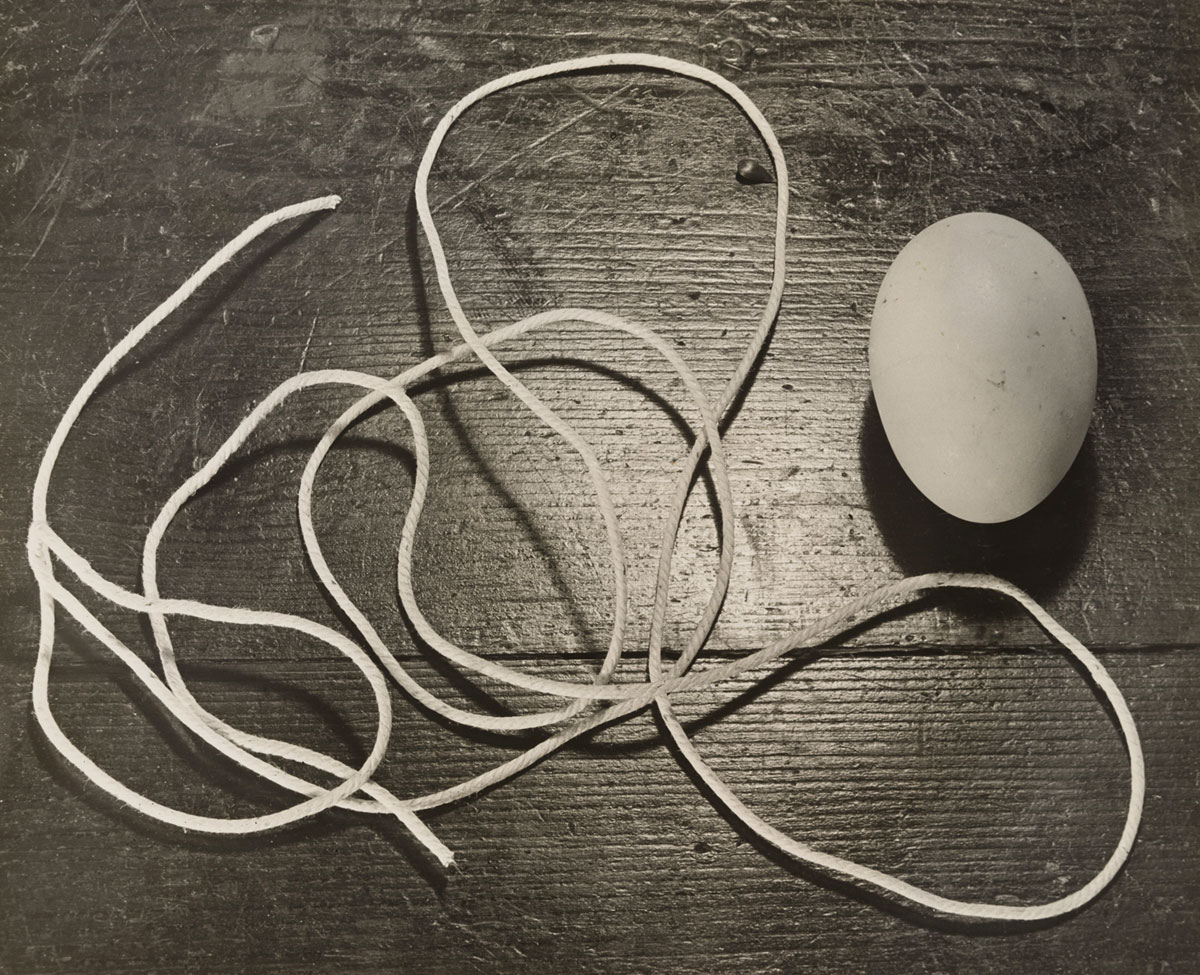
Horacio Coppola (Argentine, 1906–2012) 'Still Life with Egg and Twine' 1932


Horacio Coppola (Argentine, 1906-2012)
Still Life with Egg and Twine
1932
Gelatin silver print
8 1/8 x 10 1/8″ (20.7 x 25.7cm)
The Museum of Modern Art, New York. Thomas Walther Collection. Acquired through the generosity of Peter Norton


Horacio Coppola (Argentine, 1906–2012) 'London' 1934


Horacio Coppola (Argentine, 1906-2012)
London
1934
Gelatin silver print
6 x 7 5/8″ (15.2 x 19.3cm)
The Museum of Modern Art, New York. Latin American and Caribbean Fund


Horacio Coppola (Argentine, 1906–2012) 'London' 1934


Horacio Coppola (Argentine, 1906-2012)
London
1934
Gelatin silver print
5 11/16 x 7 3/8″ (14.5 x 18.7cm)
The Museum of Modern Art, New York. Committee on Photography Fund


Horacio Coppola (Argentine, 1906–2012) 'Avenida Diaz Velez al 4800' 1936


Horacio Coppola (Argentine, 1906-2012)
Avenida Diaz Velez al 4800
1936
Gelatin silver print, printed 1952
16 3/4 x 23 1/2″ (42.5 x 59.7cm)
The Museum of Modern Art, New York. Agnes Rindge Claflin Fund


Horacio Coppola (Argentine, 1906–2012) 'Avenida Diaz Velez al 4800' 1936 (detail)


Horacio Coppola (Argentine, 1906-2012)
Avenida Diaz Velez al 4800 (detail)
1936
Gelatin silver print, printed 1952
16 3/4 x 23 1/2″ (42.5 x 59.7cm)
The Museum of Modern Art, New York. Agnes Rindge Claflin Fund


Horacio Coppola (Argentine, 1906–2012) 'Balneario Municipal' 1936


Horacio Coppola (Argentine, 1906-2012)
Balneario Municipal
1936
Gelatin silver print
8 1/4 x 10 7/16″ (21 x 26.5cm)
Estate of Horacio Coppola; courtesy Galería Jorge Mara – La Ruche, Buenos Aires


Horacio Coppola (Argentine, 1906–2012) 'Balneario Municipal' 1936 (detail)


Horacio Coppola (Argentine, 1906-2012)
Balneario Municipal (detail)
1936
Gelatin silver print
8 1/4 x 10 7/16″ (21 x 26.5cm)
Estate of Horacio Coppola; courtesy Galería Jorge Mara – La Ruche, Buenos Aires


Horacio Coppola (Argentine, 1906–2012) 'Calle Florida' 1936


Horacio Coppola (Argentine, 1906-2012)
Calle Florida
1936
Gelatin silver print
5 11/16 × 7 5/16″ (14.5 × 18.5cm)
Collection Léticia and Stanislas Poniatowski


Horacio Coppola (Argentine, 1906–2012) 'Calle Florida' 1936 (detail)


Horacio Coppola (Argentine, 1906-2012)
Calle Florida (detail)
1936
Gelatin silver print
5 11/16 × 7 5/16″ (14.5 × 18.5cm)
Collection Léticia and Stanislas Poniatowski


Horacio Coppola (Argentine, 1906-2012) 'Directorio and J.M. Moreno' 1936


Horacio Coppola (Argentine, 1906-2012)
Directorio and J.M. Moreno
1936
Gelatin silver print
6 5/8 × 7 13/16″ (16.8 × 19.8cm)
Museo Nacional Centro de Arte Reina Sofía, Madrid


Horacio Coppola (Argentine, 1906-2012) 'Plaza San Martín from Kavanagh' 1936


Horacio Coppola (Argentine, 1906-2012)
Plaza San Martín from Kavanagh
1936
Gelatin silver print
7 5/16 x 10 1/2″ (18.5 x 26.7cm)
Private Collection


From Bauhaus to Buenos Aires: Grete Stern and Horacio Coppola is the first major exhibition of the German-born Grete Stern and the Argentinean Horacio Coppola, two leading figures of avant-garde photography who established themselves on both sides of the Atlantic. In Berlin in 1927, Stern began taking private classes with Walter Peterhans, who was soon to become head of photography at the Bauhaus. A year later, in Peterhans’s studio, she met Ellen (Rosenberg) Auerbach, with whom she opened a pioneering studio specialising in portraiture and advertising. Named after their childhood nicknames, the studio ringl + pit embraced both commercial and avant-garde loyalties, creating proto-feminist works.

In Buenos Aires during the same period, Coppola initiated his photographic experimentations, exploring his surroundings and contributing to the discourse on modernist practices across media in local cultural magazines. In 1929 he founded the Buenos Aires Film Club to introduce the most advanced foreign films to Argentine audiences. His early works show a burgeoning interest in new modes of photographic expression that led him to the Bauhaus in 1932, where he met Stern and they began their joint history.

Following the close of the Bauhaus and the rising threat of the Nazi powers in 1933, Stern and Coppola fled Germany. Stern arrived first in London, where her friends included activists affiliated with leftist circles and where she made her now iconic portraits of German exiles. After traveling through Europe, camera in hand, Coppola joined Stern in London, where he pursued a modernist idiom in his photographs of the fabric of the city, tinged alternately with social concern and surrealist strangeness.

In the summer of 1935, Stern and Coppola embarked for Buenos Aires where they mounted an exhibition in the offices of the avant-garde magazine Sur, announcing the arrival of modern photography in Argentina. The unique character of Buenos Aires was captured in Coppola’s photographic encounters from the city’s centre to its outskirts and in Stern’s numerous portraits of the city’s intelligentsia. The exhibition ends in the early 1950s, with Stern’s forward-thinking Sueños (Dreams), a series of photomontages she contributed to the popular women’s magazine Idilio, portraying women’s dreams with urgency and surreal wit.

The exhibition is accompanied by a major publication edited by Roxana Marcoci and Sarah Meister with a selection of original texts by Stern and Coppola translated into English by Rachel Kaplan. The catalogue will consist of three essays on the artists written by the exhibition curators and scholar Jodi Roberts.

Text from the MoMA website


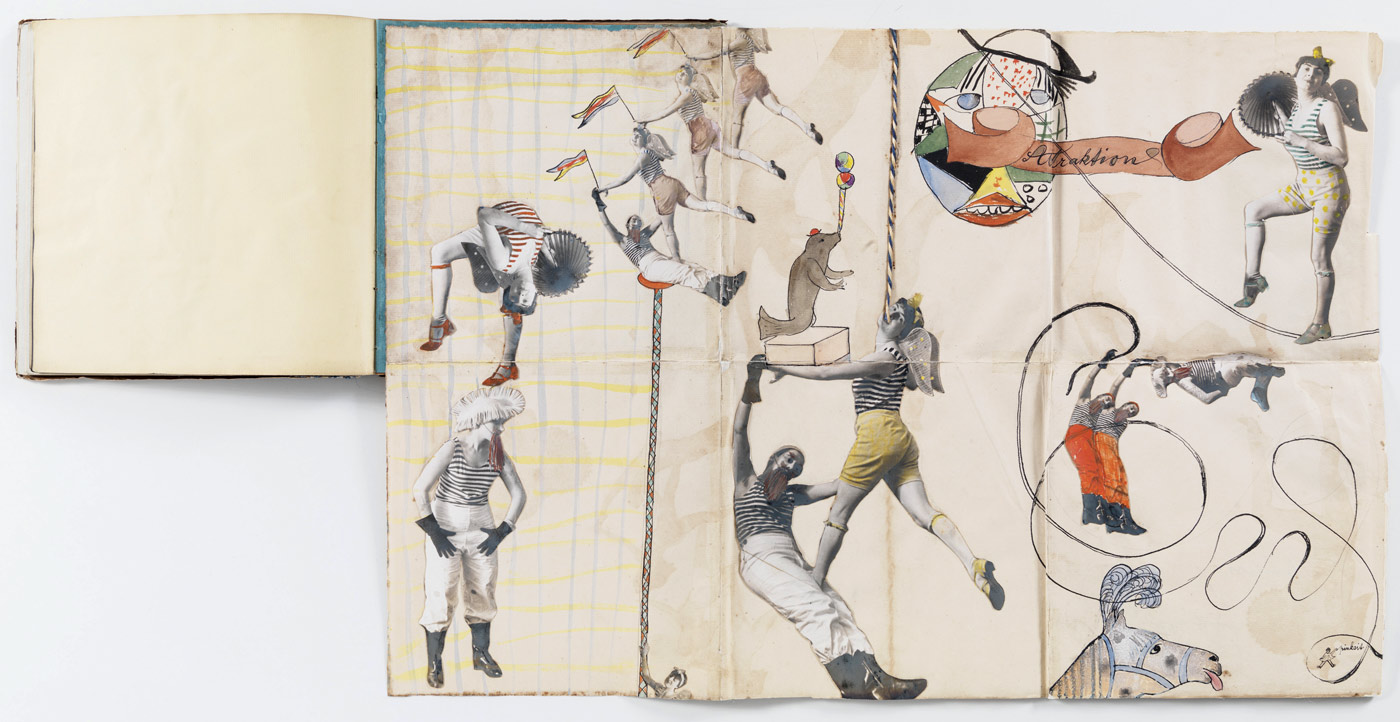
Ringl + Pit (German) 'Ringlpitis' 1931


Ringl + Pit (German)
Ringlpitis
1931
Artist book with collage
7 7/8 x 7 7/8″ (20 x 20cm)
Estate of Horacio Coppola, Buenos Aires


Ringl + Pit (German) 'Ringlpitis' 1931 (detail)


Ringl + Pit (German)
Ringlpitis (detail)
1931
Artist book with collage
7 7/8 x 7 7/8″ (20 x 20cm)
Estate of Horacio Coppola, Buenos Aires


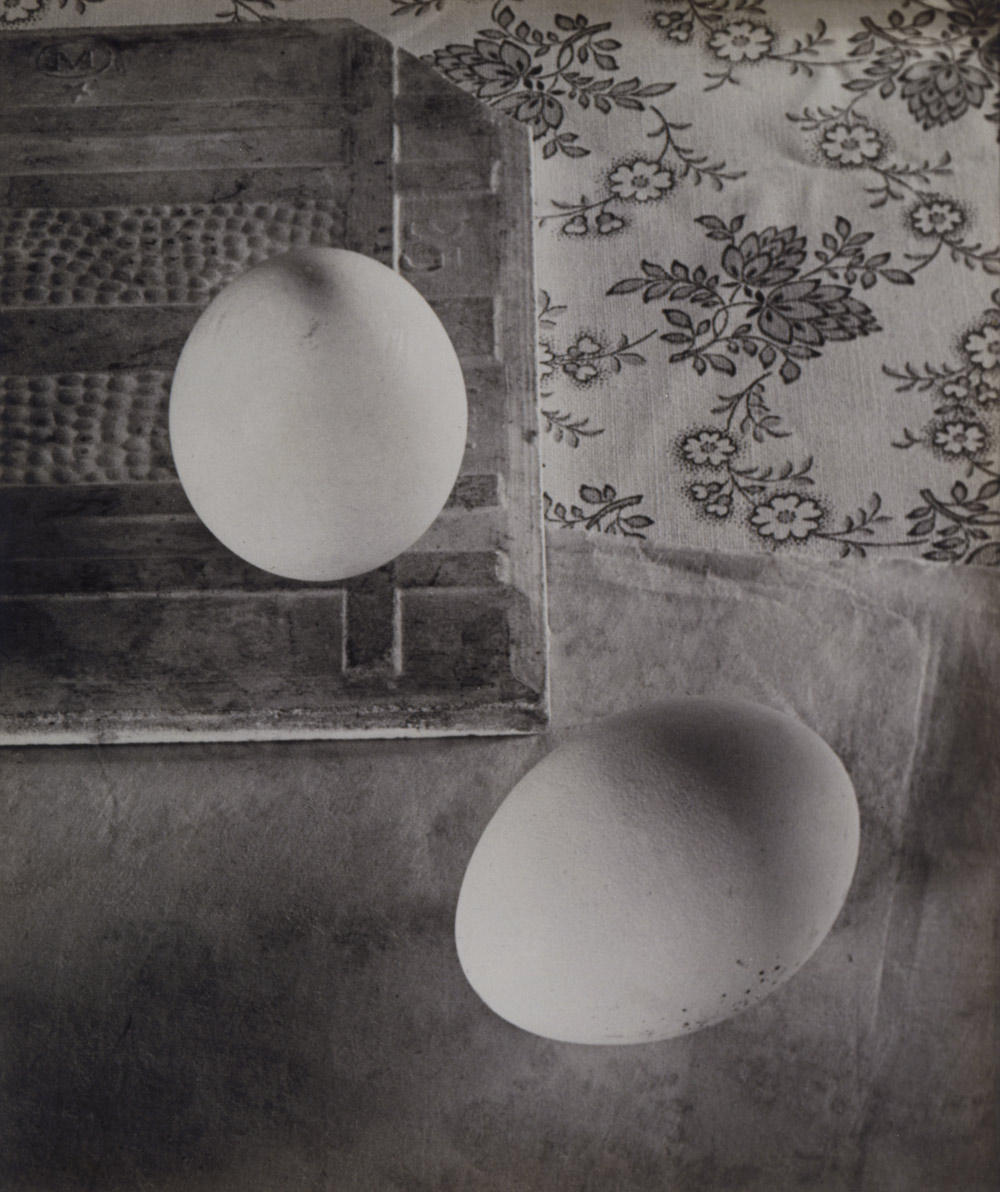
Ringl + Pit (German) 'Columbus' Egg' 1930


Ringl + Pit (German)
Columbus’ Egg
1930
Gelatin silver print
9 1/4 x 7 7/8″ (23.5 x 20cm)
Collection Helen Kornblum


Ringl + Pit (German) 'Hat and Gloves' 1930


Ringl + Pit (German)
Hat and Gloves
1930
Gelatin silver print
Image: 14 7/8 x 9 3/4″ (37.8 x 24.8cm)
Sheet: 15 11/16 x 10 1/2″ (39.8 x 26.7cm)
The J. Paul Getty Museum, Los Angeles


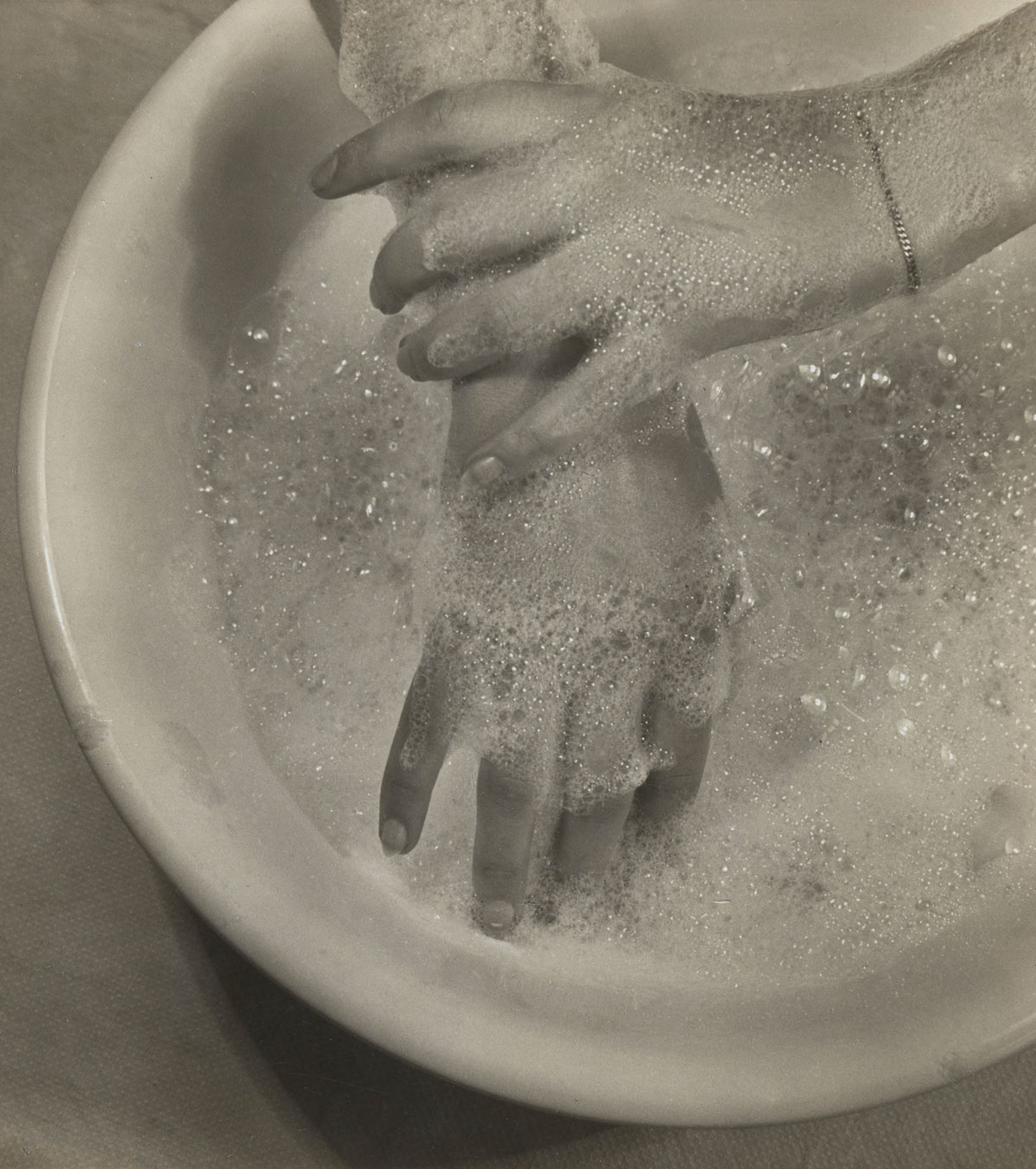
Ringl + Pit (German) Ellen Auerbach Grete Stern. 'Soapsuds' 1930


Ringl + Pit (German)
Ellen Auerbach 
Grete Stern
Soapsuds
1930
Gelatin silver print
7 x 6 1/4″ (17.8 x 15.9cm)
The Museum of Modern Art, New York. Acquired through the generosity of Roxann Taylor


Ringl + Pit (German) 'Komol' 1931


Ringl + Pit (German)
Komol
1931
Gelatin silver print
14 1/8 x 9 5/8″ (35.9 x 24.4cm)
The Metropolitan Museum of Art. Gift of Ford Motor Company and John C. Waddell


Grete Stern (Argentine born Germany, 1904-1999) 'Self-Portrait' 1943


Grete Stern (Argentine born Germany, 1904-1999)
Self-Portrait
1943
Gelatin silver print, printed 1958
11 x 8 11/16″ (28 x 22cm)
Estate of Horacio Coppola, Buenos Aires


The Museum of Modern Art has organised the first major exhibition to examine the individual accomplishments and parallel developments of two of the foremost practitioners of avant-garde photography, film, advertising, and graphic design in the first half of the 20th century: Grete Stern (German, 1904-1999) and Horacio Coppola (Argentine, 1906-2012). From Bauhaus to Buenos Aires: Grete Stern and Horacio Coppola will be on view May 17 through October 4, 2015, and features more than 300 works gathered from museums and private collection across Europe and the Americas – many of which have never before been exhibited in the United States. These include more than 250 vintage photographs and photomontages, 40 works of original typographic design and award-winning advertising materials, 26 photobooks and periodicals, and four experimental 16mm films. From Bauhaus to Buenos Aires is organised by Roxana Marcoci, Senior Curator, and Sarah Meister, Curator; with Drew Sawyer, Beaumont and Nancy Newhall Curatorial Fellow, Department of Photography.

Stern and Coppola were united in their exploration of a modernist idiom, yet despite their relationship as husband and wife (from 1935 to 1943) they pursued this goal along remarkably original paths. Having started their artistic careers within the European avant-garde of the late 1920s and early 1930s, Stern and Coppola produced their major body of works in Argentina, where they thrived amid a vibrant milieu of Argentine and émigré artists and intellectuals. As harbingers of New Vision photography in a country caught up in the throes of forging its own modern identity, their distinctly experimental styles led to their recognition as founders of modern Latin American photography.

The earliest works in the exhibition date from the late 1920s to the early 1930s, when both artists began their initial forays into photography and graphic design. After beginning her studies in Berlin with Walter Peterhans, who became head of photography at the Bauhaus, in 1928 Stern met Ellen (Rosenberg) Auerbach and together they opened the pioneering studio ringl + pit, specialising in portraiture and advertising. Named after their childhood nicknames (Stern was ringl; Auerbach was pit), the studio embraced both commercial and avant-garde loyalties, creating proto-feminist works. The exhibition presents a large number of photographs, graphic design materials, and advertisements by the duo that explored alternative models of the feminine. Defying the conventional style of German advertising photography in this period, ringl + pit emerged as a dissident voice that stirred the interest of critics, artists, and consumers.

Coppola’s first photographs, made in Buenos Aires in the late 1920s, reveal an optical curiosity completely out of sync with prevailing trends in Argentina. Instead of using the camera to accurately render the details of the visible world, Coppola instead explored its potential to complicate traditional understandings of pictorial space. Like Man Ray and László Moholy-Nagy, he was interested in the effects of light, prisms, and glass for their visual and metaphoric potential, and he photographed his native city from unexpected perspectives akin to Germaine Krull’s images of Paris from the same decade. These early works show the burgeoning interest in new modes of photographic expression that led him to the Bauhaus in 1932, where he met Stern.

Following the close of the Bauhaus and the rising threat of the Nazi powers in 1933, Stern and Coppola fled Germany. Stern arrived first in London, where her friends included activists affiliated with leftist circles, and the exhibition presents her now iconic portraits of German exiles, including those of playwright Bertolt Brecht, actress Helene Weigel, Marxist philosopher Karl Korsch, and psychoanalyst Paula Heimann. After traveling and photographing throughout Europe, Coppola joined Stern in London, where his modernist photographs depicting the fabric of the city alternate between social concern and surrealist strangeness.

The exhibition’s third gallery includes films that Coppola produced in Berlin, Paris, and London during these years. The first of these films, Der Traum (The Dream), bears the strongest relationship to Surrealist filmmaking, while his next two films, Un Muelle del Sena (A Quai on the Seine) (1934) and A Sunday on Hampstead Heath (1935), are increasingly ambitious, using the film camera alternately as a still camera and for its unique capacity to pan across a scene and to capture action in urban environments.

In 1935, Stern and Coppola married and embarked for Buenos Aires, where they mounted an exhibition in the offices of the avant-garde magazine Sur, announcing the arrival of modern photography in Argentina. Following the exhibition’s successful critical reception, their home became a hub for artists and intellectuals, both those native to Argentina and the exiles continuously arriving from a war-torn Europe. The fourth gallery in From Bauhaus to Buenos Aires presents Coppola’s photographic encounters from the city’s centre to its outskirts and Stern’s numerous portraits of the city’s intelligentsia.

In 1936, Coppola received a career-defining commission to photograph Buenos Aires for a major publication celebrating the 400th anniversary of the city’s founding. Coppola used the opportunity to construct his own modern vision of the city, one that would incorporate the celebration of the local and his appreciation of the city’s structure inspired by the architect Le Corbusier. Concurrently, Coppola made his final film, The Birth of the Obelisk – an ode to Buenos Aires and its newly constructed monument. The film combines dynamic shots of the city with sequences of carefully constructed stills, demonstrating in six-and-a half minutes a vibrant, confident mix of influences, from Moholy-Nagy and Krull to the Concrete art movement in Argentina to films by Walter Ruttmann, Charles Sheeler, and Paul Strand.

Throughout the 1940s, Stern took incisive portraits of artists and writers, many of whom were aligned with the international antifascist cause and the emergence of an emancipatory feminist consciousness. These included playwright Amparo Alvajar; socialist realist painters Antonio Berni, Gertrudis Chale, and Lino Eneas Spilimbergo; poet Mony Hermelo; and graphic designer Clément Moreau. Among Stern’s numerous other subjects were poet-politician Pablo Neruda, abstract painter Manuel Ángeles Ortiz, and writer Jorge Luis Borges.

The exhibition concludes in the mid-1950s, at the end of Juan Domingo Perón’s era, with a large presentation of Stern’s Sueños (Dreams), a series of forward-thinking photomontages that she contributed on a weekly basis to the women’s magazine Idilio (Idyll) from 1948 to 1951. In Dream No. 1: Electrical Appliances for the Home, an elegantly dressed woman is converted into a table lamp that waits to be turned on by a male hand, using electricity as a sexual pun to expose feminine objectification. In Dream No. 24: Surprise, a female protagonist hides her face in shock as she confronts a larger-than-life baby doll advancing toward her. Debunking fantasies about women’s lives, Stern plumbed the depths of her own experience as a mother and artist to negotiate the terms between blissful domesticity and entrapment, privacy and exposure, cultural sexism and intellectual rebellion.

Press release from the MoMA website


Horacio Coppola (Argentine, 1906-2012) 'Untitled (Staircase at Calle Corrientes)' 1928


Horacio Coppola (Argentine, 1906-2012)
Untitled (Staircase at Calle Corrientes)
1928
Gelatin silver print
13 3/4 x 11 3/4″ (34.9 x 29.9cm)
Collection Alexis Fabry, Paris


Horacio Coppola (Argentine, 1906-2012) '"¡Esto es Buenos Aires!" (Jorge Luis Borges) "This is Buenos Aires!" (Jorge Luis Borges)' 1931


Horacio Coppola (Argentine, 1906-2012)
“¡Esto es Buenos Aires!” (Jorge Luis Borges)
“This is Buenos Aires!” (Jorge Luis Borges)
1931
Gelatin silver print
8 11/16 x 5 7/8″ (22 x 15cm)
Estate of Horacio Coppola, Buenos Aires


Horacio Coppola (Argentine, 1906-2012) 'Avenida Corrientes towards the West' 1936


Horacio Coppola (Argentine, 1906-2012)
Avenida Corrientes towards the West
1936
Gelatin silver print
8 1/16 x 5 5/16″ (20.5 x 13.5cm)
Estate of Horacio Coppola; courtesy Galería Jorge Mara – La Ruche, Buenos Aires


Horacio Coppola (Argentine, 1906-2012) 'Buenos Aires' 1936


Horacio Coppola (Argentine, 1906-2012)
Buenos Aires
1936
Gelatin silver print
8 3/16 x 5 15/16″ (20.8 x 15.1cm)
The Museum of Modern Art, New York. Latin American and Caribbean Fund


Horacio Coppola (Argentine, 1906-2012) 'Calle Corrientes at the Corner of Reconquista' 1936


Horacio Coppola (Argentine, 1906-2012)
Calle Corrientes at the Corner of Reconquista
1936
Gelatin silver print
11 × 7 11/16″ (28 × 19.5cm)
IVAM, Institut Valencià d’Art Modern


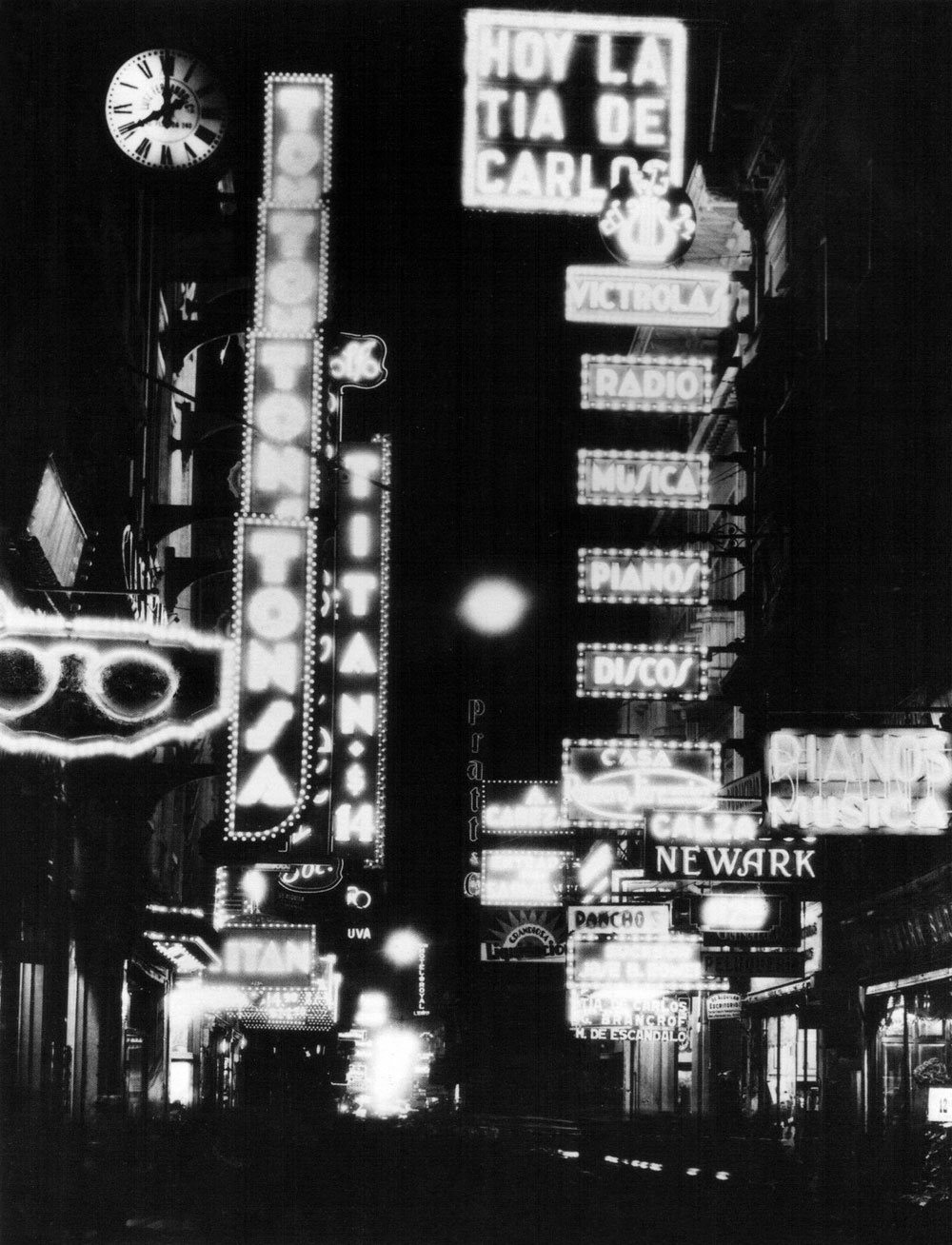
Horacio Coppola (Argentine, 1906-2012) 'Calle Florida at 8 pm' 1936


Horacio Coppola (Argentine, 1906-2012)
Calle Florida at 8 pm
1936
Gelatin silver print
14 3/4 x 11 7/16″ (37.5 x 29cm)
Eric Franck Fine Art, London


Grete Stern (Argentine born Germany, 1904-1999) 'Brecht' 1934


Grete Stern (Argentine born Germany, 1904-1999)
Brecht
1934
Gelatin silver print
10 1/4 x 6 11/16″ (26 x 17cm)
Private Collection, Boston


Grete Stern (Argentine born Germany, 1904-1999) 'Gyula Kosice' 1945


Grete Stern (Argentine born Germany, 1904-1999)
Gyula Kosice
1945
Gelatin silver print
11 7/16 x 9 1/8″ (29.1 x 23.2cm)
Museum Folkwang, Essen, Germany


Gyula Kosice, born Fernando Fallik (April 26, 1924) in Košice (Slovakia) is a naturalised Argentine sculptor, plastic artist, theoretician and poet, one of the most important figures in kinetic and luminal art and luminance vanguard. He used his natal city name as artist name. He was one of the precursors of abstract and non-figurative art in Latin America.


Grete Stern (Argentine born Germany, 1904-1999) 'Jorge Luis Borges' 1951


Grete Stern (Argentine born Germany, 1904-1999)
Jorge Luis Borges
1951
Gelatin silver print
10 13/16 x 8 1/4″ (27.5 x 21cm)
Estate of Horacio Coppola, Buenos Aires


Grete Stern (Argentine born Germany, 1904-1999) 'Sueño No. 7: Who Will She Be?' 1949


Grete Stern (Argentine born Germany, 1904-1999)
Sueño No. 7: Who Will She Be?
1949
Gelatin silver print
15 1/2 × 19 1/16″ (39.4 × 48.4cm)
Museo Nacional Centro de Arte Reina Sofía, Madrid


Grete Stern (Argentine born Germany, 1904-1999) 'Sueño No. 43: Untitled' 1949


Grete Stern (Argentine born Germany, 1904-1999)
Sueño No. 43: Untitled
1949
Gelatin silver print
17 7/16 × 14 5/16″ (44.3 × 36.3cm)
Collection Léticia and Stanislas Poniatowski


Grete Stern (Argentine born Germany, 1904-1999) 'Sueño No. 1: Electrical Appliances for the Home' 1949


Grete Stern (Argentine born Germany, 1904-1999)
Sueño No. 1: Electrical Appliances for the Home
1949
Gelatin silver print
10 1/2 x 9″ (26.6 x 22.9cm)
The Museum of Modern Art, New York. Latin American and Caribbean Fund through gift of Marie-Josée and Henry R. Kravis in honor of Adriana Cisneros de Griffin


Grete Stern (Argentine born Germany, 1904-1999) 'Sueño No. 28: Love without Illusion' 1951


Grete Stern (Argentine born Germany, 1904-1999)
Sueño No. 28: Love without Illusion
1951
Gelatin silver print
19 11/16 × 15 3/4″ (50 × 40cm)
IVAM, Institut Valencià d’ Art Modern


Grete Stern (Argentine born Germany, 1904-1999) 'Sueño No. 27: Doesn't Fade with Water' 1951


Grete Stern (Argentine born Germany, 1904-1999)
Sueño No. 27: Doesn’t Fade with Water
1951
Gelatin silver print, printed 1990s
11 7/16 x 9 1/16″ (29 x 23cm)
Collection Eduardo F. Costantini, Buenos Aires


Grete Stern (Argentine born Germany, 1904-1999) 'Sueño No. 31: Made in England' 1950


Grete Stern (Argentine born Germany, 1904-1999)
Sueño No. 31: Made in England
1950
Gelatin silver print
19 11/16 × 13 3/16″ (50 × 33.5cm)
IVAM, Institut Valencià d’ Art Modern


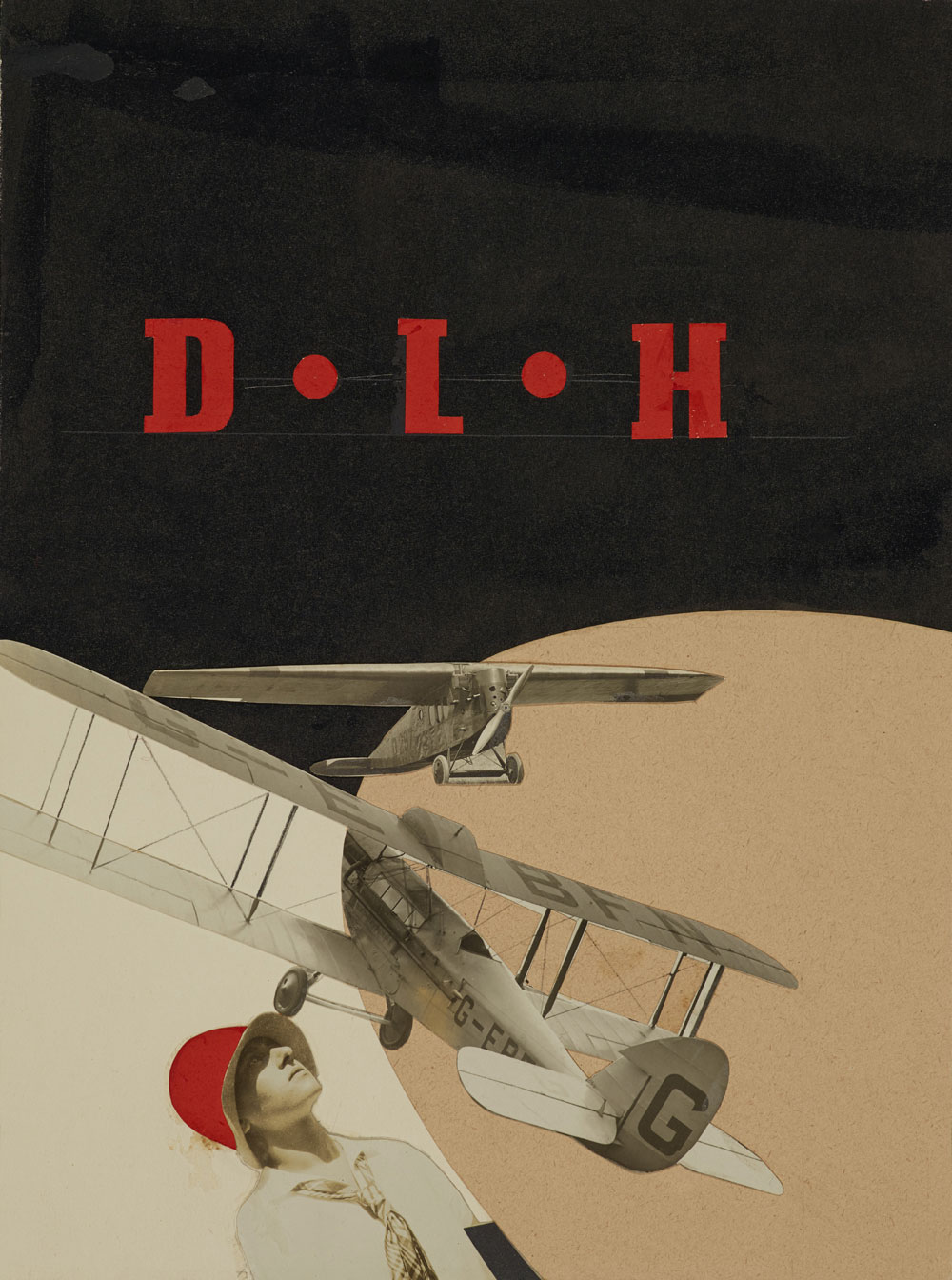
Grete Stern (Argentine born Germany, 1904-1999) 'D.L.H.' 1925


Grete Stern (Argentine born Germany, 1904-1999)
D.L.H.
1925
Photocollage
8 7/16 x 6 5/16″ (21.5 x 16cm)
Museum Folkwang, Essen, Germany


Grete Stern (Argentine born Germany, 1904-1999) 'Photomontage for Madí, Ramos Mejía, Argentina' 1946-1947


Grete Stern (Argentine born Germany, 1904-1999)
Photomontage for Madí, Ramos Mejía, Argentina
1946-1947
Gelatin silver print
23 9/16 x 19 7/16″ (59.8 x 49.4cm)
The Museum of Modern Art, New York. Latin American and Caribbean Fund and partial gift of Mauro Herlitzka


“She also photographed members of Madí (from the first two letters of the words “materialismo dialéctico”), who were committed to abstraction as an antidote to the propaganda disseminated by Juan Perón. One of Ms. Stern’s best-known works, on view here, is the “Photomontage for Madí, Ramos Mejia, Argentina” (1946-1947), which she made for the second issue of their journal. For the images, she used the “M” from a neon sign advertising Movado watches and superimposed “Madí” over the obelisk designed by Alberto Prebisch to celebrate the 400th anniversary of Buenos Aires. The obelisk symbolized, for her milieu, abstract geometry.”

Martha Schwendener. “‘From Bauhaus to Buenos Aires: Grete Stern and Horacio Coppola,’ a Bicontinental Couple” on the NY Times website, May 28 2015


The Museum of Modern Art
11 West 53 Street
New York, NY 10019
Phone: (212) 708-9400

Opening hours:
10.30am – 5.30pm
Open seven days a week

MoMA website

LIKE ART BLART ON FACEBOOK

Back to top

Exhibition: ‘Lyonel Feininger: Photographs, 1928-1939’ at the J. Paul Getty Museum, Getty Center, Los Angeles

Exhibition dates: 25th October 2011 – 11th March 2012


Lyonel Feininger (American, 1871-1956) 'Untitled [Street Scene, Double Exposure, Halle]' 1929-1930


Lyonel Feininger (American, 1871-1956)
Untitled [Street Scene, Double Exposure, Halle]
1929-1930
Gelatin silver print
Image: 17.8 x 23.7cm (7 x 9 5/16 in)
Gift of T. Lux Feininger, Houghton Library, Harvard University
© Artists Rights Society (ARS), New York / VG Bild-Kunst, Bonn


Another photographer whose work was largely unknown to me. His work can be seen to reference Pictorialism, Eugene Atget, Constructivism and Modernism, the latter in the last three photographs of the Bauhaus buildings at night which are just beautiful! The capture of form, light (emanating from windows) and atmosphere is very pleasing.

Dr Marcus Bunyan

P.S. Don’t be confused when looking at the photographs in the posting. Note the difference in the work of Lynonel and his two sons Andreas and Theodore (nicknamed Lux).


Many thankx to the J. Paul Getty Museum for allowing me to publish the photographs in the posting. Please click on the photographs for a larger version of the image.


Lucia Moholy (British born Czechoslovakia, 1894-1989) 'Untitled [Southern View of Newly Completed Bauhaus, Dessau]' 1926


Lucia Moholy (British born Czechoslovakia, 1894-1989)
Untitled [Southern View of Newly Completed Bauhaus, Dessau]
1926
Gelatin silver print
Sheet: 5.7 x 8.1cm (2 1/4 x 3 3/16 in)
The J. Paul Getty Museum, Los Angeles
© Artists Rights Society (ARS), New York / VG Bild-Kunst, Bonn


Lyonel Feininger (American, 1871-1956) 'Untitled [Train Station, Dessau]' 1928-1929


Lyonel Feininger (American, 1871-1956)
Untitled [Train Station, Dessau]
1928-1929
Gelatin silver print
Image: 17.7 x 23.7 cm (6 15/16 x 9 5/16 in.)
Gift of T. Lux Feininger, Houghton Library, Harvard University
© Artists Rights Society (ARS), New York / VG Bild-Kunst, Bonn


Werner Zimmermann (German, 1906-1975) 'In Der Werkstatt' about 1929


Werner Zimmermann (German, 1906-1975)
In Der Werkstatt [In The Workshop]
About 1929
Gelatin silver print
7.9 × 11cm (3 1/8 × 4 5/16 in.)
The J. Paul Getty Museum, Los Angeles


T. Lux Feininger (American born Germany, 1910-2011) 'Metalltanz' 1929


T. Lux Feininger (American born Germany, 1910-2011)
Metalltanz
1929
Gelatin silver print
Image: 10.8 x 14.4cm (4 1/4 x 5 5/8 in.)
The J. Paul Getty Museum, Los Angeles
© Estate of T. Lux Feininger


Widely recognised as a painter, printmaker, and draftsman who taught at the Bauhaus, Lyonel Feininger (American, 1871-1956) turned to photography later in his career as a tool for visual exploration. Drawn mostly from the collections at Harvard University in Cambridge, Massachusetts, Lyonel Feininger: Photographs, 1928-1939 at the J. Paul Getty Museum, Getty Center, October 25, 2011 – March 11, 2012, presents for the first time Feininger’s unknown body of photographic work. The exhibition is accompanied by a selection of photographs by other Bauhaus masters and students from the Getty Museum’s permanent collection. The Getty is the first U.S. venue to present the exhibition, which will have been on view at the Kupferstichkabinett, Staatliche Museen zu Berlin from February 26 – May 15, 2011 and the Staatliche Graphische Sammlung, Pinakothek der Moderne in Munich from June 2 – July 17, 2011. Following the Getty installation, the exhibition will be shown at the Harvard Art Museums from March 30 – June 2, 2012. At the Getty, the exhibition will run concurrently with Narrative Interventions in Photography.

“We are delighted to be the first U.S. venue to present this important exhibition organised by the Harvard Art Museums / Busch-Reisinger Museum,” says Virginia Heckert, curator of photographs at the J. Paul Getty Museum and curator of the Getty’s installation. “The presentation at the Getty provides a unique opportunity to consider Lyonel Feininger’s achievement in photography, juxtaposed with experimental works in photography at the Bauhaus from our collection.”

Lyonel Feininger Photographs

When Lyonel Feininger (1871-1956) took up the camera in 1928, the American painter was among the most prominent artists in Germany and had been on the faculty of the Bauhaus school of art, architecture, and design since it was established by Walter Gropius in 1919. For the next decade, he used the camera to explore transparency, reflection, night imagery, and the effects of light and shadow. Despite his early skepticism about this “mechanical” medium, Feininger was inspired by the enthusiasm of his sons Andreas and Theodore (nicknamed Lux), who had installed a darkroom in the basement of their house, as well as by the innovative work of fellow Bauhaus master, László Moholy-Nagy.

Although Lyonel Feininger would eventually explore many of the experimental techniques promoted by Moholy-Nagy and practiced by others at the school, he remained isolated and out of step with the rest of the Bauhaus. Working alone and often at night, he created expressive, introspective, otherworldly images that have little in common with the playful student photography more typically associated with the school. Using a Voigtländer Bergheil camera (on display in the exhibition), frequently with a tripod, he photographed the neighbourhood around the Bauhaus campus and masters’ houses, and the Dessau railway station, occasionally reversing the tonalities to create negative images.

Lyonel Feininger: Photographs, 1928-1939 also includes the artist’s photographs from his travels in 1929-1931 to Halle, Paris, and Brittany, where he investigated architectural form and urban decay in photographs and works in other media. In Halle, while working on a painting commission for the city, Feininger recorded architectural sites in works such as Halle Market with the Church of St. Mary and the Red Tower (1929-1930), and experimented with multiple exposures in photographs such as Untitled (Street Scene, Double Exposure, Halle) (1929-1930), a hallucinatory image that merges two views of pedestrians and moving vehicles.

Since 1892 Feininger had spent parts of the summer on the Baltic coast, where the sea and dunes, along with the harbours, rustic farmhouses, and medieval towns, became some of his most powerful sources of inspiration. During the summers Feininger also took time off from painting, focusing instead on producing sketches outdoors or making charcoal drawings and watercolours on the veranda of the house he rented. Included in the exhibition are photographs Feininger created in Deep an der Rega (in present-day Poland) between 1929 and 1935 which record the unique character of the locale, the people, and the artistic and leisure activities he pursued.

In the months after the Nazis closed the Bauhaus, and prior to Feininger’s departure from Dessau in March 1933, he made a series of unsettling photographs featuring mannequins in shop windows such as Drunk with Beauty (1932). Feininger’s images emphasise not only the eerily lifelike and strangely seductive quality of the mannequins, but also the disorienting, dreamlike effect created by reflections on the glass.

In 1937 Feininger permanently settled in New York City after a nearly 50-year absence, and photography served as an important means of reacquainting himself with the city in which he had lived until the age of sixteen. The off-kilter bird’s eye view he made from his eleventh-floor apartment of the Second Avenue elevated train tracks, Untitled (Second Avenue El from Window of 235 East 22nd Street, New York) (1939), is a dizzying photograph of an American subject in the style of European avant-garde photography, and mirrors the artist’s own precarious and disorienting position between two worlds, and between past and present.

The Bauhaus

Walter Gropius, director of the Bauhaus from 1919 to 1928, changed the face of art education with his philosophy of integrating art, craft, and technology with everyday life at the Bauhaus. When Gropius’s newly designed building in Dessau was completed in December 1926, its innovative structure did more than house the various components of the school; it became an integral aspect of life at the Bauhaus and a stage for its myriad activities, from studies and leisurely pursuits to theatrical performances. From the beginning, the camera recorded the architecture as the most convincing statement of Gropius’ philosophy as well as the fervour with which the students embraced it. The photographs in this complementary section of the exhibition also examine the various ways photography played a role at the Bauhaus, even before it became part of the curriculum.

In addition to the collaborative environment encouraged in workshops, students found opportunities to bond during their leisure time, whether in a band that played improvisational music or on excursions to nearby beaches, parks, and country fairs. One of the most active recorders of life at the Bauhaus was Lyonel Feininger’s youngest son, T. Lux, who was also a member of the jazz band.

Masters and students alike at the Bauhaus took up the camera as a tool with which to record not only the architecture and daily life of the Bauhaus, but also one another. Although photography was not part of the original curriculum, it found active advocates in the figures of László Moholy-Nagy and his wife Lucia Moholy. With his innovative approach and her technical expertise, the Moholy-Nagys provided inspiration for others to use the camera as a means of both documentation and creative expression. The resulting photographs, which included techniques such as camera-less photographs (photograms), multiple exposures, photomontage and collages (“photo-plastics”), and the combination of text and image (“typo-photo”), contributed to Neues Sehen, or the “new vision,” that characterised photography in Germany between the two world wars.

It was not until 1929 that photography was added to the Bauhaus curriculum by Hannes Meyer, the new director following Gropius’s departure. A part of the advertising department, the newly established workshop was led by Walter Peterhans, who included technical exercises as well as assignments in the genres of portraiture, still life, advertisement, and photojournalism in the three-year course of study.”

Press release from the J.Paul Getty Museum website


Lyonel Feininger (American, 1871-1956) 'Untitled [Night View of Trees and Street Lamp, Burgkühnauer Allee, Dessau]' 1928


Lyonel Feininger (American, 1871-1956)
Untitled [Night View of Trees and Street Lamp, Burgkühnauer Allee, Dessau]
1928
Gelatin silver print
Image: 17.7 x 23.7cm (6 15/16 x 9 5/16 in)
Gift of T. Lux Feininger, Houghton Library, Harvard University
© Artists Rights Society (ARS), New York / VG Bild-Kunst, Bonn


Andreas Feininger (American, 1906-1999) 'Stockholm (Shell sign at night)' 1935


Andreas Feininger (American, 1906-1999)
Stockholm (Shell sign at night)
1935
Gelatin silver print
17.4 x 24.2cm
The J. Paul Getty Museum, Los Angeles, Gift of the Estate of Gertrud E. Feininger
© Estate of Gertrud E. Feininger


Lyonel Feininger (American, 1871-1956) 'Drunk with Beauty' 1932


Lyonel Feininger (American, 1871-1956)
Drunk with Beauty
1932
Gelatin silver print
Image: 17.9 x 23.9cm (7 1/16 x 9 7/16 in)
Gift of T. Lux Feininger, Houghton Library, Harvard University
© Artists Rights Society (ARS), New York / VG Bild-Kunst, Bonn


Lyonel Feininger (American, 1871-1956) 'Bauhaus' March 22, 1929


Lyonel Feininger (American, 1871-1956)
Bauhaus
March 22, 1929
Gelatin silver print
Image: 17.8 x 23.9cm (7 x 9 7/16 in)
Harvard Art Museums/Busch-Reisinger Museum, Gift of Mr. and Mrs. Lyonel Feininger
© Artists Rights Society (ARS), New York / VG Bild-Kunst, Bonn


T. Lux Feininger (American born Germany, 1910-2011) 'Untitled (Georg Hartmann and Werner Siedhoff with Other Students)' 1929


T. Lux Feininger (American born Germany, 1910-2011)
Untitled (Georg Hartmann and Werner Siedhoff with Other Students)
1929
Gelatin silver print
© Estate of T. Lux Feininger


Lyonel Feininger and Photography

Lyonel Feininger took up the camera at the age of 58 in fall 1928. Despite his early skepticism about this “mechanical” medium, the painter was inspired by the enthusiasm of his sons Andreas and Theodore (nicknamed Lux), as well as by the innovative work of László Moholy-Nagy, a fellow master at the Bauhaus in Dessau, Germany.

Photography remained a private endeavour for Feininger. He never exhibited his prints, publishing just a handful during his lifetime and sharing them only with family and a few friends.

Bauhaus Experiments in Photography

Although Feininger explored many of the experimental photographic techniques being practiced at the Bauhaus, he remained isolated and out of step with the rest of the school. Working alone and often at night, he created expressive, introspective, otherworldly images that have little in common with the playful student photography more typically associated with the school.

Using a Voigtländer Bergheil camera (on display in the exhibition), frequently with a tripod, he photographed the neighbourhood around the masters’ houses, the Bauhaus campus, and the Dessau railway station, experimenting with night imagery, reversed tonalities, and severe weather conditions.

Halle, 1929-1931

In 1929 Feininger created numerous photographic sketches to prepare for a series of paintings he was commissioned to make of the city of Halle, Germany.

A photograph of Halle included in the exhibition, Untitled (Bölbergasse, Halle), was the basis for one of these paintings, which is now lost. It was perhaps the most inventive and photographic of the Halle series, transforming a view of an unremarkable street into a dramatic, almost abstract composition through tight framing and an unusual perspective. The painting is visible in a 1931 photograph of the artist’s studio also included in the exhibition

Feininger also made many photographs of his Halle studio and the paintings he produced there. While many are purely documentary, others are sophisticated compositions that explore formal relationships between a particular painting and the space in which it was created, such as the one shown at right.

Feininger would never again use photography so extensively in connection with his paintings as he did in conjunction with the Halle series.

France, 1931

After completing his painting commission in Halle, Feininger spent several weeks in June and July of 1931 in France. In Paris and in the village of Bourron, he created images with his Voigtländer Bergheil camera as well as with his newly acquired Leica (also on display in the exhibition), in which he used 35 mm film for the first time. He also sketched and photographed Brittany on a bicycle tour with his son Lux, capturing views of the architecture and seaside.

In Paris, primed by his recent experience of photographing historic buildings in the streets of Halle, Feininger was drawn to architectural views and urban scenes. On returning from a day trip, he wrote to his wife Julia: “I wandered on foot through the city, flâné! Armed with both cameras, I made photographs… From ‘Boul-Miche’ I crisscrossed through the Quartier Mouffetard… through all possible old narrow and fabulous lanes and I hope that I snapped some very, very good things. Luckily the ‘Leica’ functioned flawlessly” (June 16, 1931, Feininger Papers, Houghton Library).

The Baltic Coast, 1929-1935

Beginning in 1892 Lyonel Feininger spent parts of his summers on the Baltic coast, where the sea and dunes, along with the harbours, rustic farmhouses, and medieval towns, became some of his most powerful sources of inspiration.

Every summer between 1929 and 1935, he used the camera to document family trips to Deep an der Rega (in present-day Poland), where the beach became a playground for his three athletic sons, Andreas, Laurence, and Lux. Feininger looked forward to his time in Deep and the restorative, transformative effect it always had on him.

Shop Windows, 1932-1933

From September 1932, when the National Socialist majority of the Dessau city council voted to close the Bauhaus, through March 1933, when he and his family left for Berlin, Feininger made a series of unsettling photographs that feature mannequins in shop windows. Feininger’s images emphasise not only the eerily lifelike and strangely seductive quality of the mannequins but also the disorienting, dreamlike effect created by reflections on the glass.

In the work shown here, the reflection seems to transport the languid central figure – “drunk with beauty” and oblivious to the camera – beyond the confines of the glass.

Germany to America, 1933 to 1939

Feininger came under increasing scrutiny by the National Socialists, who had stepped up their campaign against the avant-garde after rising to power in January 1933. He produced few paintings during this oppressive period, but continued to photograph regularly in spite of having little access to darkroom facilities. In 1937 he and his wife moved to the United States, renting an apartment in Manhattan – marking his permanent return to New York after an absence of nearly 50 years.

In the years that followed, photography remained an important part of Feininger’s life, though few prints exist from his time in America.

Text from the J. Paul Getty Museum website


T. Lux Feininger (American born Germany, 1910-2011) 'Untitled (Bauhaus Band)' About 1928


T. Lux Feininger (American born Germany, 1910-2011)
Untitled (Bauhaus Band)
About 1928
Gelatin silver print
3 1/4 x 4 1/2 in.
The J. Paul Getty Museum
© Estate of T. Lux Feininger


Photography at the Bauhaus

The exhibition Lyonel Feininger: Photographs, 1928-1939 features a complementary selection of over 90 photographs from the Getty Museum’s permanent collection made at the Bauhaus.

The Bauhaus was founded in 1919 in Weimar, Germany, by the architect Walter Gropius. Students entered specialised workshops after completing a preliminary course that introduced them to materials, form, space, colour, and composition. Lyonel Feininger was one of the first masters appointed by Gropius.

The school moved to Dessau in 1925 and to Berlin in 1932, closing under pressure from the National Socialists in 1933.

The Bauhaus Building as Stage

Walter Gropius’s building in Dessau became an integral aspect of life at the Bauhaus. The camera recorded the architecture as the most convincing statement of Gropius’s philosophy of uniting art, design, and technology with everyday life, and captured the fervor with which the students embraced this philosophy.

Tight framing, dramatic use of light and shadow, and unusual angles from above and below underscored the dynamism generated by the program. The campus’s architecture was often incorporated into rehearsals and performances by the school’s theater workshop.

Masters and Students

Bauhaus masters and students alike took up the camera as a tool for documentation and creative expression.

Photography served as a medium to record student life at the Bauhaus. In addition to the collaborative environment encouraged in classes and workshops, students found opportunities to bond during their leisure time, whether in a band that played improvisational music, in excursions to nearby beaches, parks, and fairs, or at Saturday-night costume parties.

One of the most active recorders of life at the Bauhaus was Lyonel Feininger’s youngest son Theodore, nicknamed Lux, a student who also became a member of the jazz band.

László Moholy-Nagy

At the Bauhaus, photography found active advocates in the figures of László Moholy-Nagy and his wife Lucia Moholy. Hired in 1923 to head the metal workshop and teach the preliminary course, Moholy-Nagy promoted photography as a form of visual literacy and encouraged experimental techniques of what he called a “new vision,” which included dramatic camera angles, multiple exposures, negative printing, collage and photomontage (fotoplastik), the combination of text and image (typofoto), and cameraless photography (the photogram, made by placing objects on photosensitised paper).

Moholy-Nagy did not differentiate between commercial assignments and personally motivated projects; he used the same strategies in both sectors of his practice.

Walter Peterhans

A photography workshop was established at the Bauhaus in 1929, led by Walter Peterhans, a professional photographer and the son of the director of camera lens manufacturer Zeiss Ikon A.G. The three-year course of study included technical exercises as well as assignments in portraiture, still life, advertisement, and photojournalism.

In his own work, Peterhans created haunting still lifes and portraits that are at once straightforward and evocative. Titles such as Portrait of the Beloved, Good Friday Magic, and Dead Hare lend surrealistic overtones to the meticulous arrangements of richly textured, disparate objects that he photographed from above, resulting in ambiguous spatial relationships.

Text from the J. Paul Getty Museum website


Walter Peterhans (German, 1897-1960) 'Untitled (Composition with Nine Glasses and a Decanter)' 1929-1933


Walter Peterhans (German, 1897-1960)
Untitled (Composition with Nine Glasses and a Decanter)
1929-1933
Gelatin silver print
© Estate Walter Peterhans, Museum Folkwang, Essen


Lyonel Feininger (American, 1871-1956) 'Bauhaus' March 26, 1929


Lyonel Feininger (American, 1871-1956)
Bauhaus
March 26, 1929
Gelatin silver print
Image: 17.9 x 14.3cm (7 1/16 x 5 5/8 in)
Bauhaus-Archiv Berlin
© Artists Rights Society (ARS), New York / VG Bild-Kunst, Bonn


Lyonel Feininger (American, 1871-1956) '"Moholy’s Studio Window" around 10 p.m.' 1928


Lyonel Feininger (American, 1871-1956)
“Moholy’s Studio Window” around 10 p.m.
1928
Gelatin silver print
Image: 17.8 x 12.8 cm (7 x 5 1/16 in.)
Bauhaus-Archiv Berlin
© Artists Rights Society (ARS), New York / VG Bild-Kunst, Bonn


Lyonel Feininger (American, 1871-1956) 'On the Lookout, Deep an der Rega' 1932


Lyonel Feininger (American, 1871-1956)
On the Lookout, Deep an der Rega
1932
Gelatin silver print
Image: 17.7 x 12.7cm (6 15/16 x 5 in)
Gift of T. Lux Feininger, Houghton Library, Harvard University
© Artists Rights Society (ARS), New York / VG Bild-Kunst, Bonn


Irene Bayer-Hecht (American, 1898-1991) 'Untitled [Students on the Shore of the Elbe River, near Dessau]' 1925


Irene Bayer-Hecht (American, 1898-1991)
Untitled [Students on the Shore of the Elbe River, near Dessau (Georg Muche, Hinnerk Scheper, Herbert Bayer, Unknown, Unknown, Marcel Breuer, László Moholy Nagy, Unknown, Xanti Schawinsky)]
1925
Gelatin silver print
Image: 7.5 x 5.4cm (2 15/16 x 2 1/8 in)
The J. Paul Getty Museum, Los Angeles


The J. Paul Getty Museum
1200 Getty Center Drive
Los Angeles, California 90049

Opening hours:
Daily 10am – 5pm

The J. Paul Getty Museum website

LIKE ART BLART ON FACEBOOK

Back to top

Exhibition: ‘Kurt Kranz: Programming of Beauty’ at the Bauhaus Dessau, Berlin

Exhibition marking the 100th birthday of Kurt Kranz
19th November 2010 – 29th May 2011


Kurt Kranz (German, 1910-1997) 'Perspective' 1931


Kurt Kranz (German, 1910-1997)
Perspective
1931
Ingrid Kranz / Stiftung Bauhaus Dessau
Foto: Lars Lohrisch / Abdruck mit Genehmigung der Kunsthalle


One of the great pleasures of publishing this archive is that I get to research the life of an artist whose work I never knew before. Kurt Kranz is one such artist.

Dr Marcus Bunyan


Many thankx to the the Bauhaus Dessau for allowing me to publish the photographs in the posting. Please click on the photograph for a larger version of the image.


Kurt Kranz (German, 1910-1997) 'Vereinsamung' Dessau 1930


Kurt Kranz (German, 1910-1997)
Vereinsamung (Isolation)
Dessau
1930
Ingrid Kranz / Stiftung Bauhaus Dessau
Leihgeber: Kunsthalle Bremen


Installation photograph of 'Programming of Beauty' by Kurt Kranz at the Bauhaus Dessau


Installation photograph of Programming of Beauty by Kurt Kranz at the Bauhaus Dessau


Kurt Kranz (German, 1910-1997) 'Versinkende' (Sinking one) 1931


Kurt Kranz (German, 1910-1997)
Versinkende (Sinking one)
1931
Ingrid Kranz / Stiftung Bauhaus Dessau


Kurt Kranz (German, 1910-1997) 'Persischer Garten' (Persian garden) 1970


Kurt Kranz (German, 1910-1997)
Persischer Garten (Persian garden)
1970
Ingrid Kranz / Stiftung Bauhaus Dessau
Foto: Uwe Jacobshagen


The Bauhaus Dessau dedicates a comprehensive exhibition to the painter, graphic designer and photographer Kurt Kranz to mark his 100th birthday. In 1930, the then twenty-year-old lithographer came from Bielefeld to study at the Bauhaus Dessau, where he soon established himself as a pioneer of serial and generative methods. With his avant-garde work, Kranz’s methods anticipated those of later generations.

Inspired by a lecture by László Moholy-Nagy, Kurt Kranz came to the Bauhaus Dessau in April 1930. In Walter Peterhans’s photography class, Kranz began to experiment with photographic techniques and created some of the most striking abstract picture series to emerge from the Bauhaus. Alienated and abstracted faces and hands appear repeatedly in his dynamic picture series. These show Kranz’s early affinity for film as, page for page, the abstract forms interact with one another. Kranz drafted his first concepts for abstract films at the Bauhaus, although he was first able to realise these decades later in 1972.

The exhibition to mark the artist’s 100th birthday shows works from Kranz’s Bauhaus years and his later work as an advertising graphic designer, and focuses on a selection of his large picture cycles. Strikingly diverse leporellos dating from the 1960s onwards take centre stage, as do the so-called “Matrix-und Schiebebilder”

Text from the Bauhaus Dessau website


Kurt Kranz (German, 1910-1997) 'Selbstporträt en face (objektives Foto)' (Self-portrait with face (objective photo)) 1931


Kurt Kranz (German, 1910-1997)
Selbstporträt en face (objektives Foto) (Self-portrait with face (objective photo))
1931
Ingrid Kranz / Stiftung Bauhaus Dessau


Kurt Kranz (German, 1910-1997) 'Rasterfoto' (Raster photograph) 1932


Kurt Kranz (German, 1910-1997)
Rasterfoto (Raster photograph)
1932
Ingrid Kranz / Stiftung Bauhaus Dessau


Kurt Kranz (German, 1910-1997) 'Schwarz : Weiß' (Black: White) 1928-29


Kurt Kranz (German, 1910-1997)
Schwarz: Weiß (Black: White)
1928-1929
Ingrid Kranz / Stiftung Bauhaus Dessau
Privatbesitz


Kurt Kranz (German, 1910-1997) 'Schwarz : Weiß' (Black: White) 1928-29


Kurt Kranz (German, 1910-1997)
Schwarz: Weiß (Black: White)
1928-1929
Ingrid Kranz / Stiftung Bauhaus Dessau
Privatbesitz


Kurt Kranz (German, 1910-1997) 'Schwarz : Weiß' (Black: White) 1928-29


Kurt Kranz (German, 1910-1997)
Schwarz: Weiß (Black: White)
1928-1929
Ingrid Kranz / Stiftung Bauhaus Dessau
Privatbesitz


Kurt Kranz (German, 1910-1997) 'Schrift Entwurf aus Satzmaterial' (Writing draft from sentence material) Dessau 1931


Kurt Kranz (German, 1910-1997)
Schrift Entwurf aus Satzmaterial (Writing draft from sentence material)
Dessau
1931
Ingrid Kranz / Stiftung Bauhaus Dessau


Kurt Kranz (German, 1910-1997) Aus der Serie "Sieben Schritte zum symmetrischen Oval"' (From the series "Seven steps to the symmetrical Oval") 1982


Kurt Kranz (German, 1910-1997)
Aus der Serie “Sieben Schritte zum symmetrischen Oval” (From the series “Seven steps to the symmetrical Oval”)
1982
Ingrid Kranz / Stiftung Bauhaus Dessau
Foto: Uwe Jacobshagen


Kurt Kranz (German, 1910-1997) 'Augenreihe' (Eye rows) 1931


Kurt Kranz (German, 1910-1997)
Augenreihe (Eye rows)
1931 (montiert 1981) (1931 (1981 install))
Ingrid Kranz / Stiftung Bauhaus Dessau
Leihgeber: Kunsthalle Bremen


Kurt Kranz (German, 1910-1997) 'Mund-Reihen' (Mouth rows) 1931


Kurt Kranz (German, 1910-1997)
Mund-Reihen (Mouth rows)
1931
Ingrid Kranz / Stiftung Bauhaus Dessau
Leihgeber: Kunsthalle Bremen
Foto: Ingrid Kranz, Wedel


Bauhaus Dessau
Gropiusalle 38, Dessau, Germany

Opening hours:
Tue – Sun 10am – 6pm

Bauhaus Dessau website

LIKE ART BLART ON FACEBOOK

Back to top