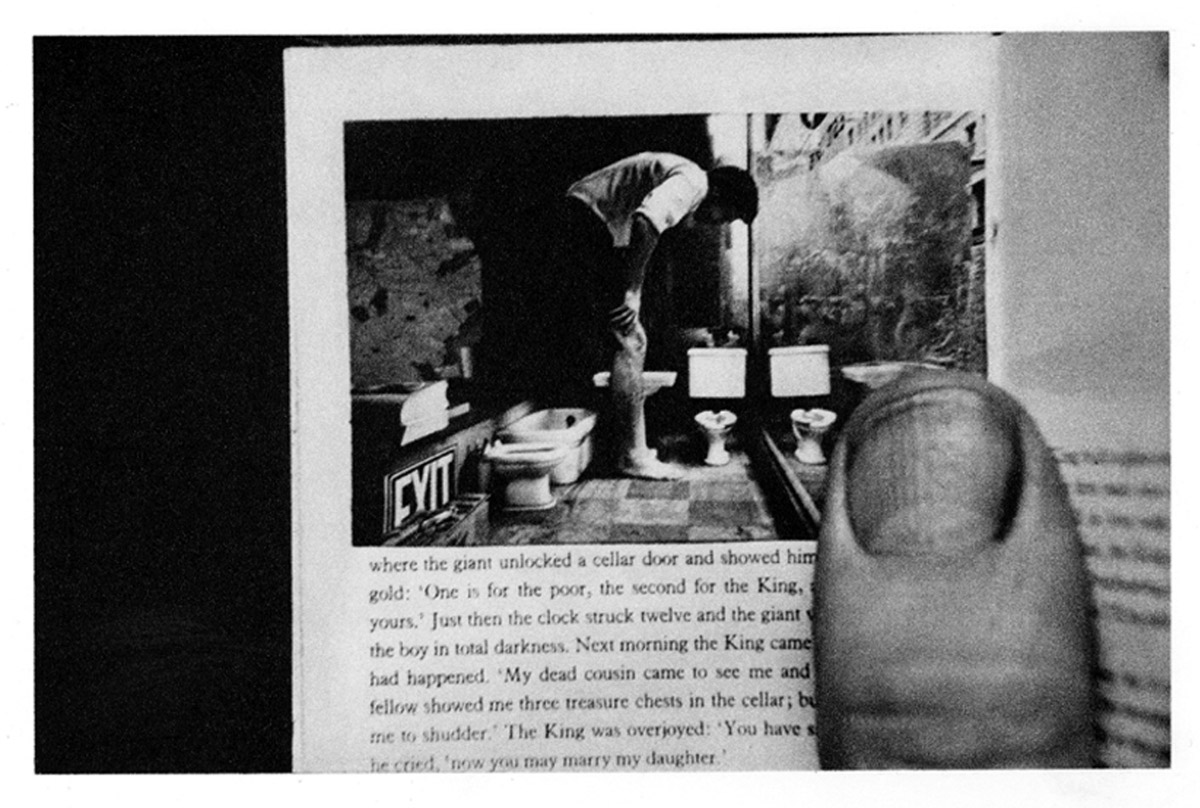
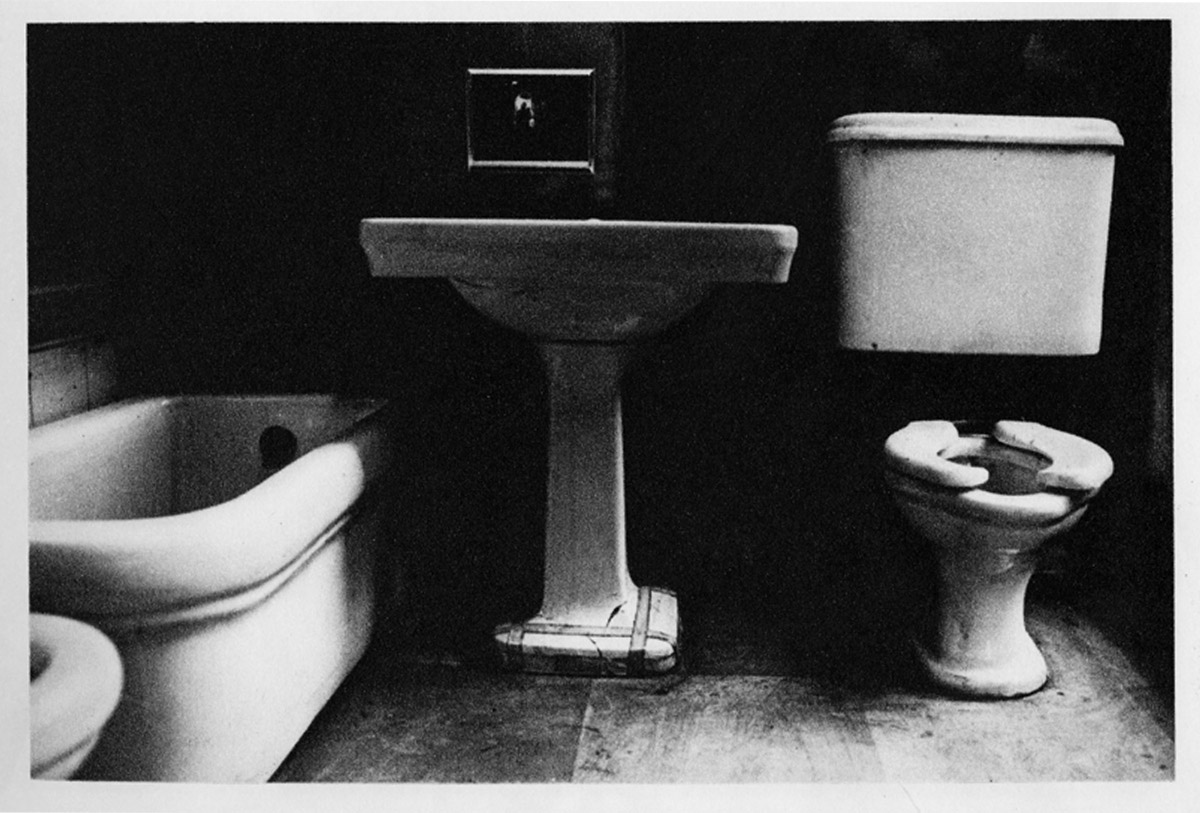
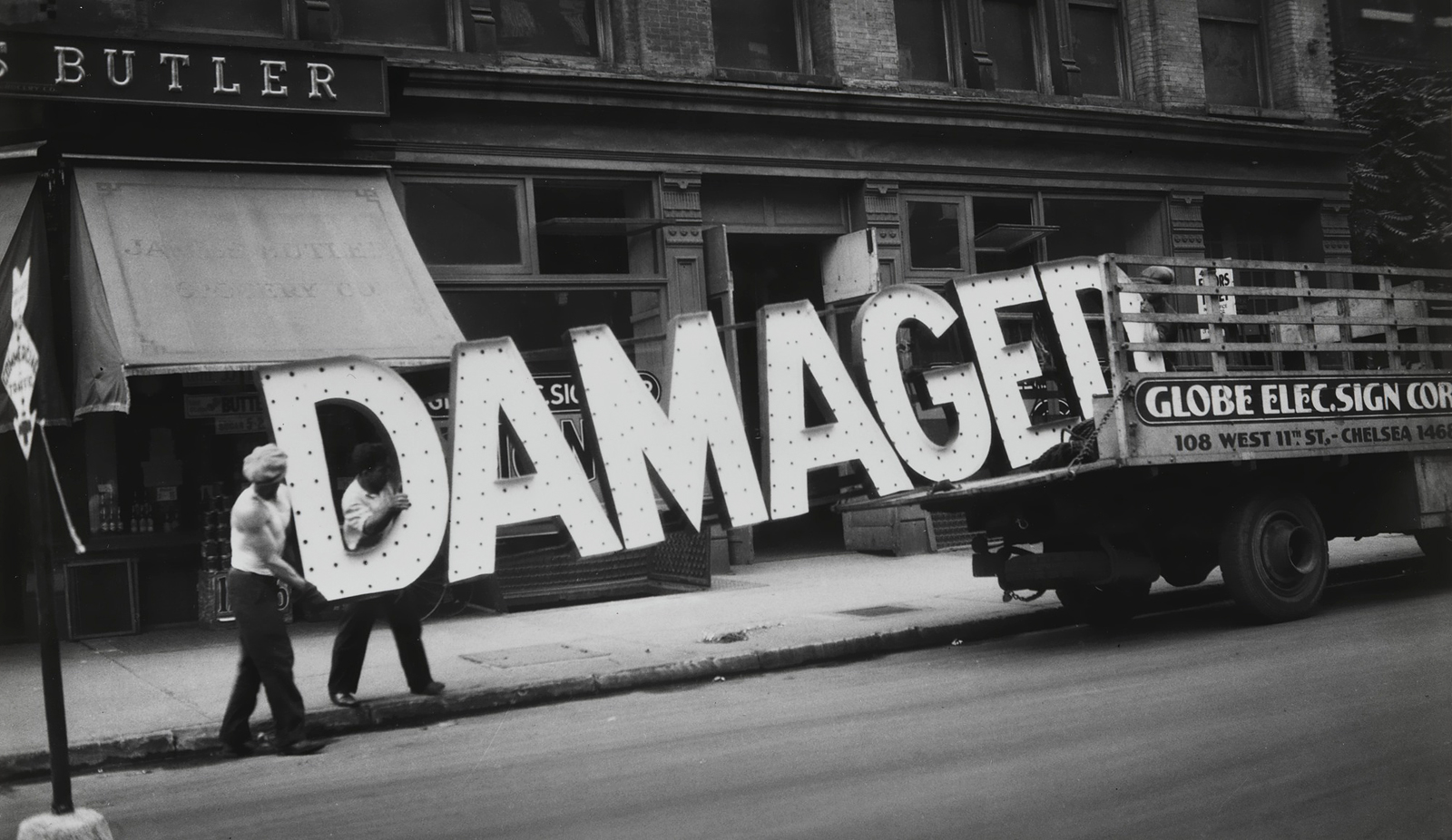
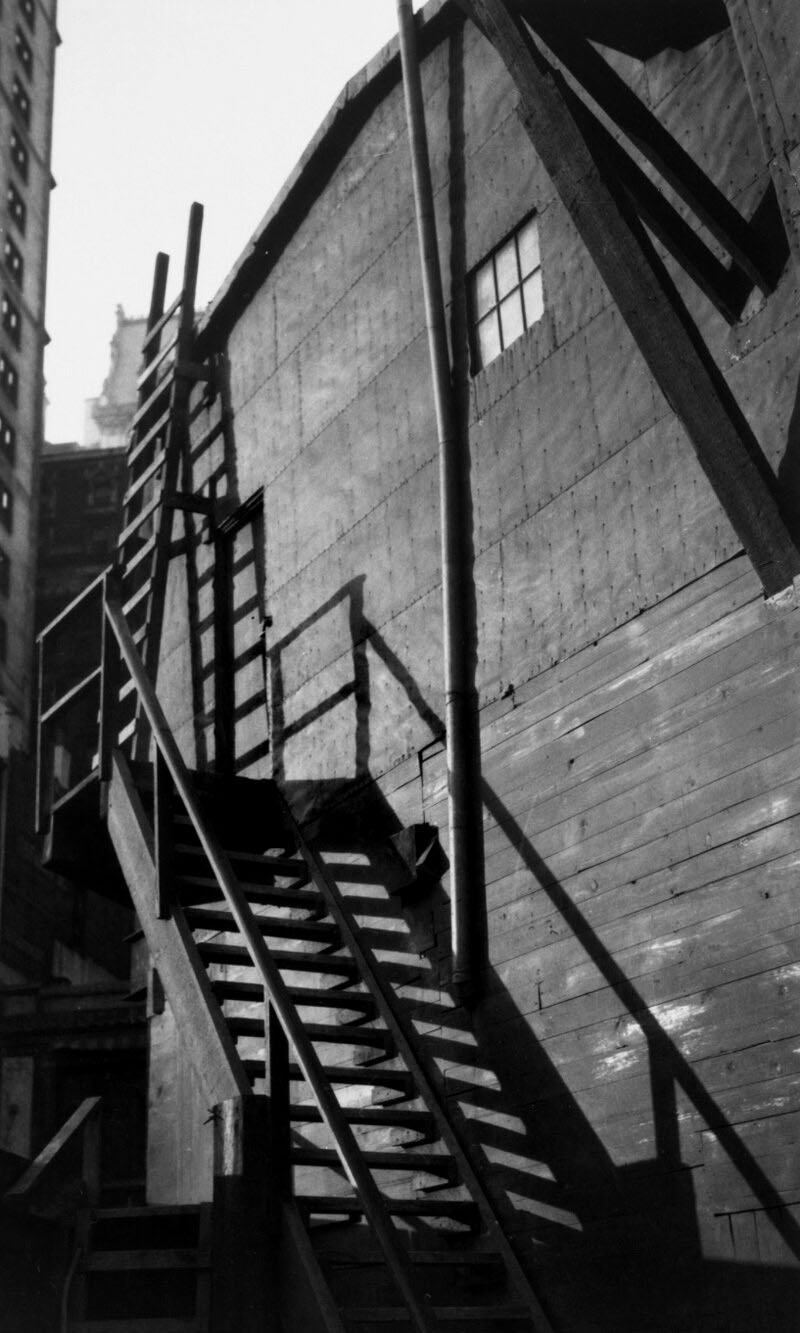
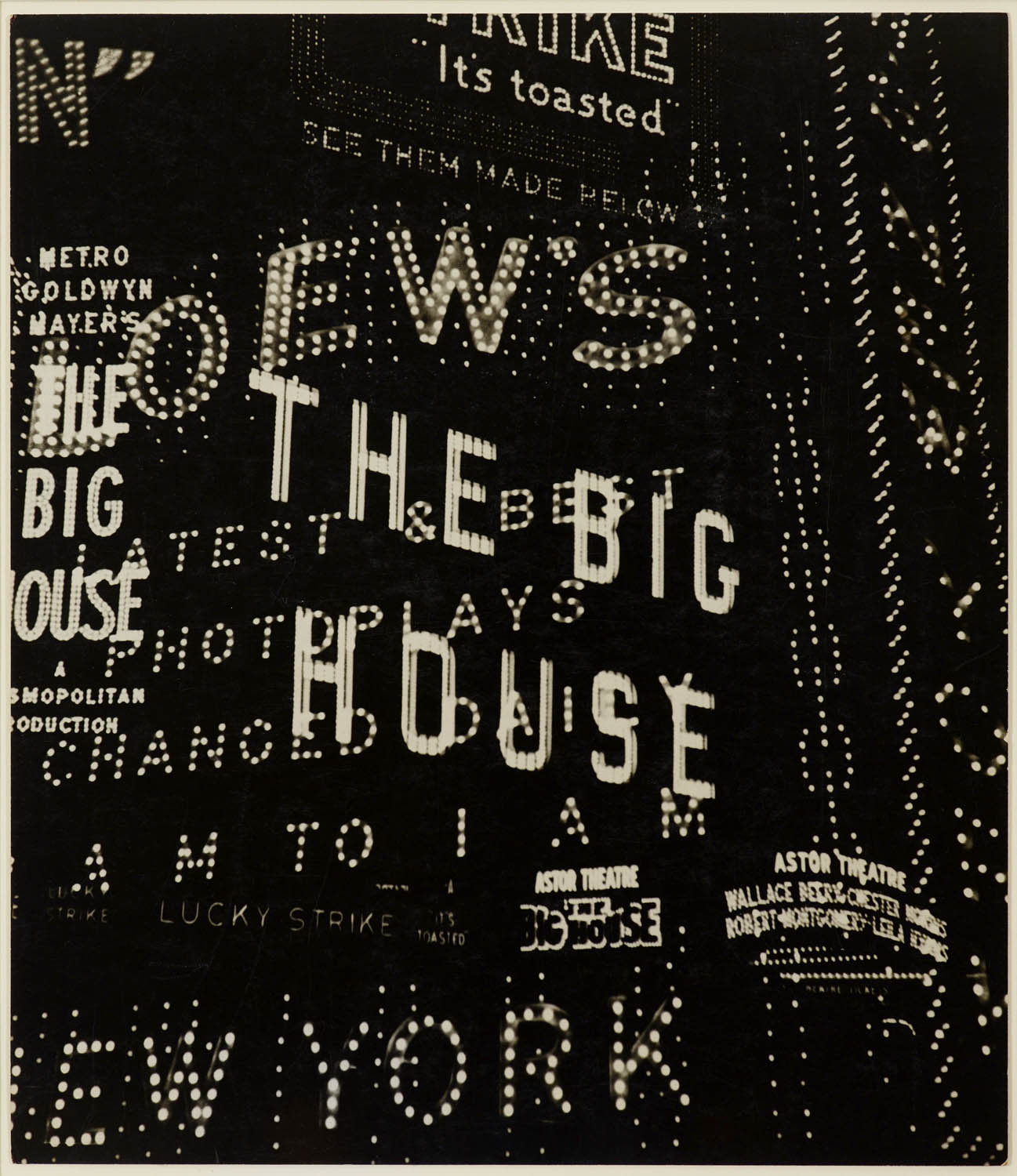
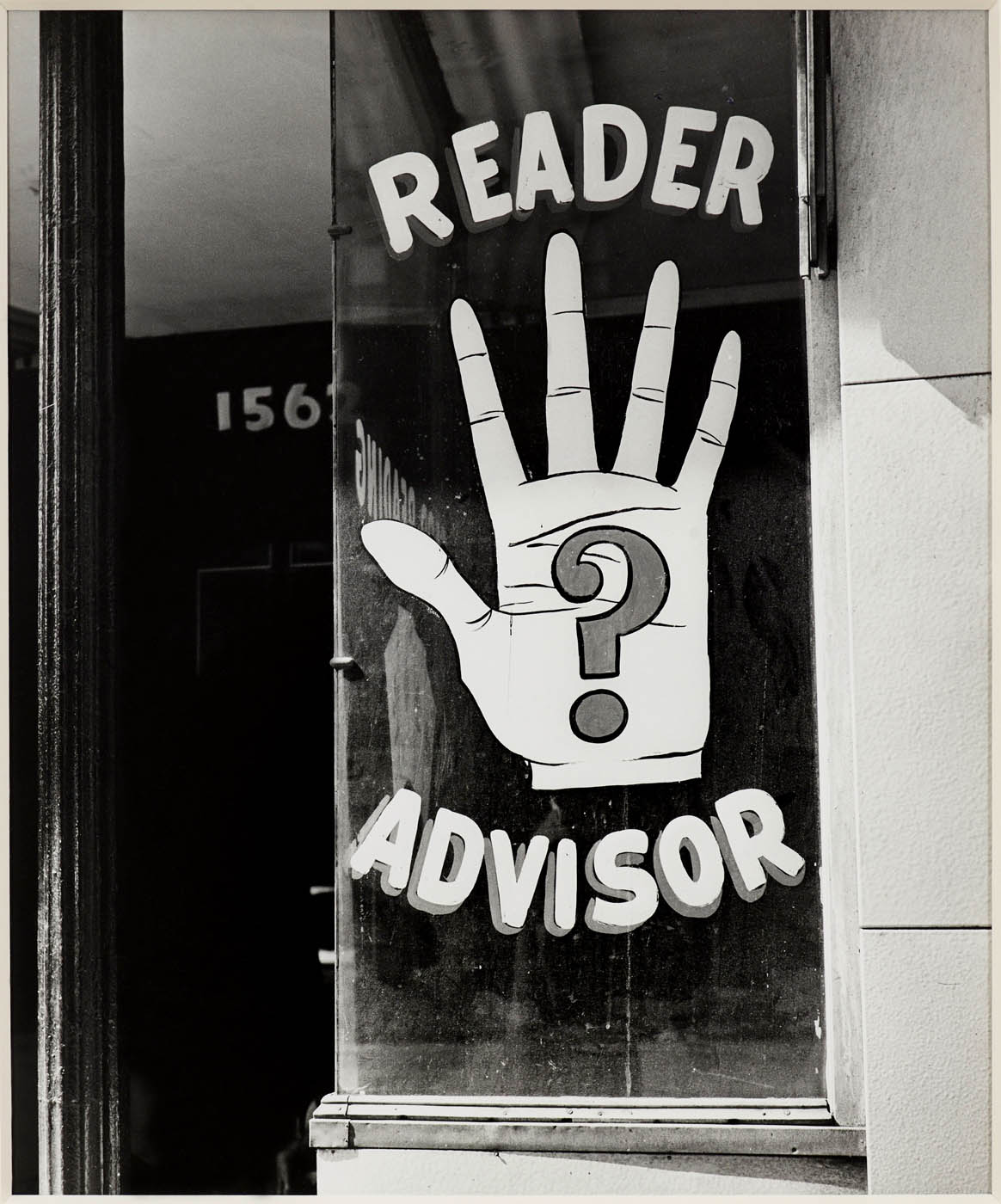
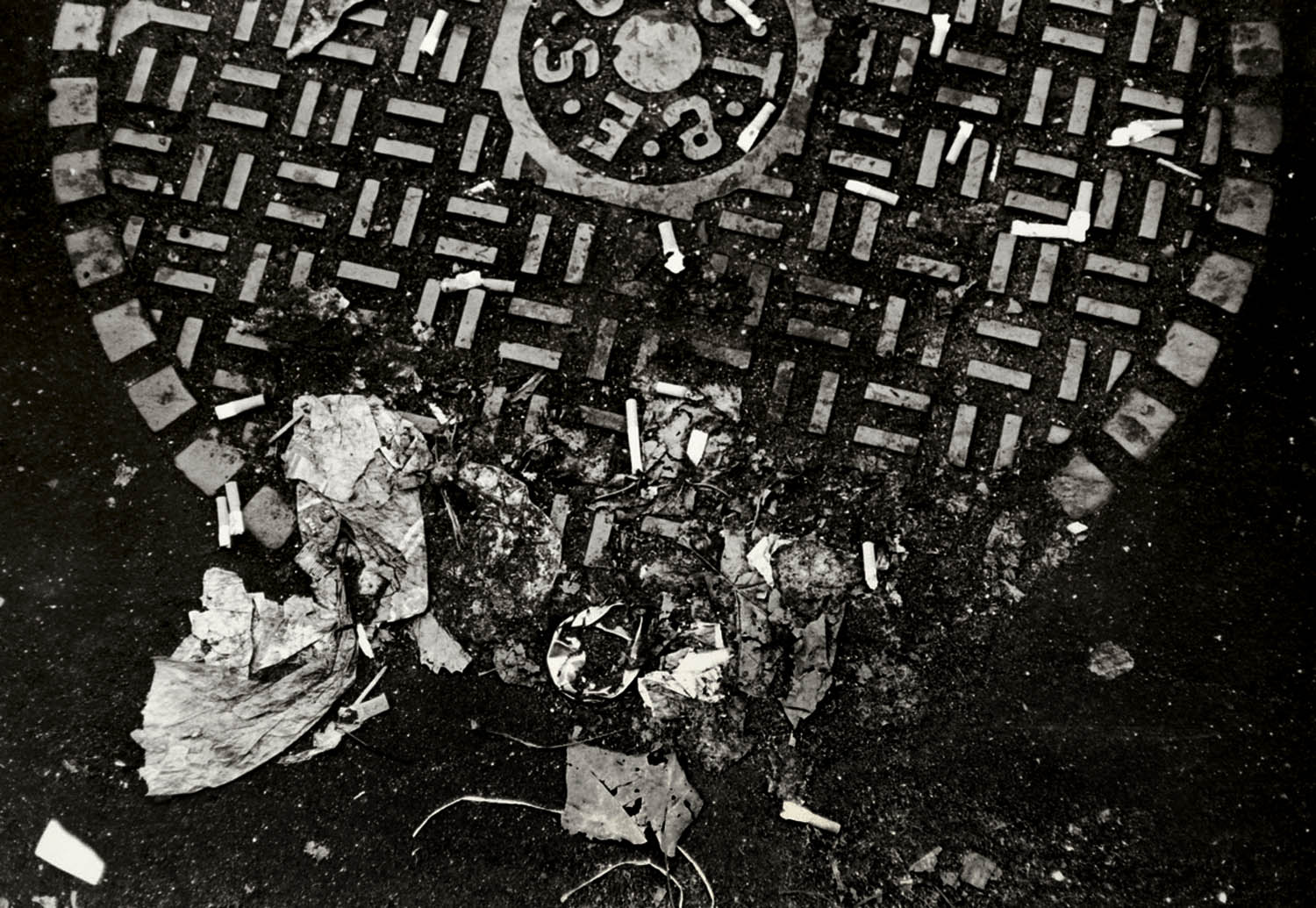
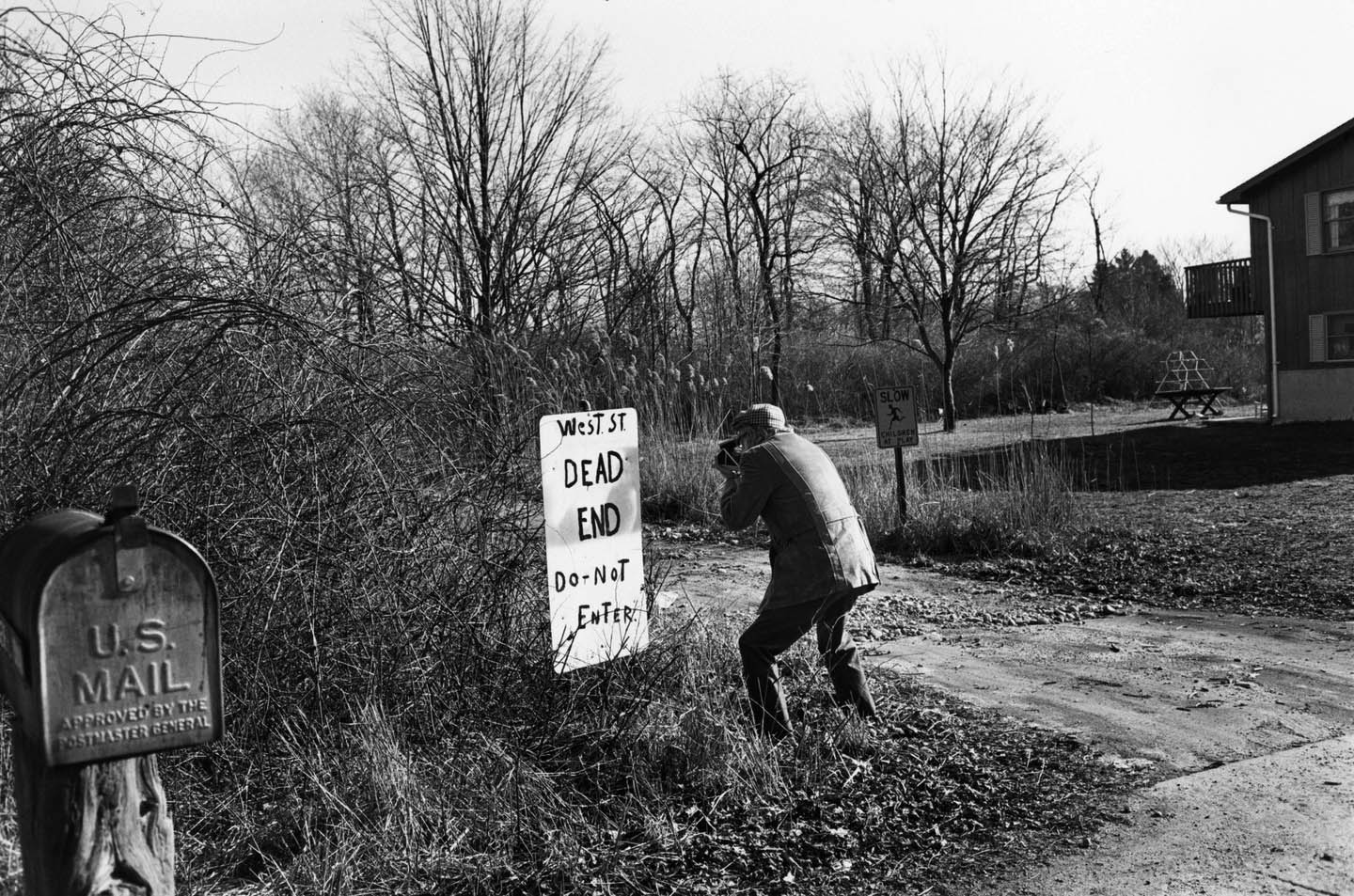
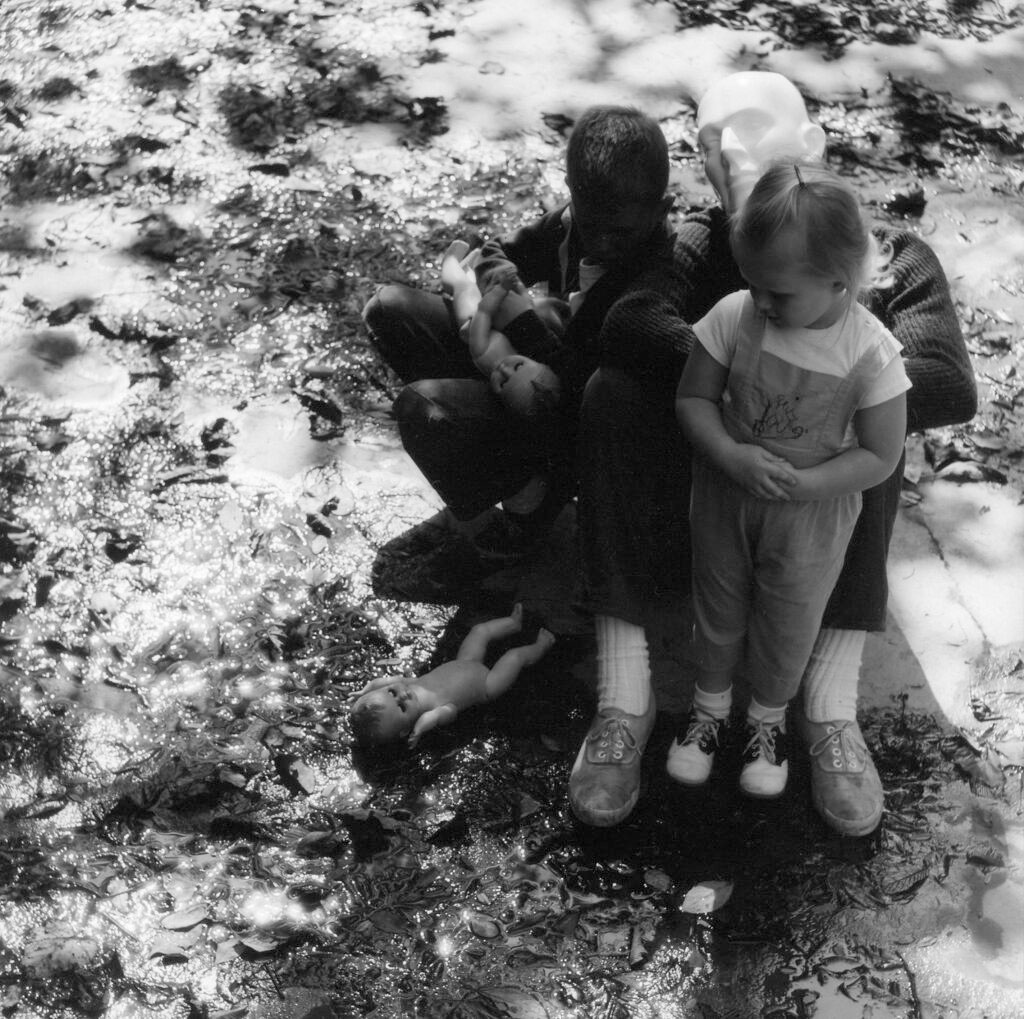
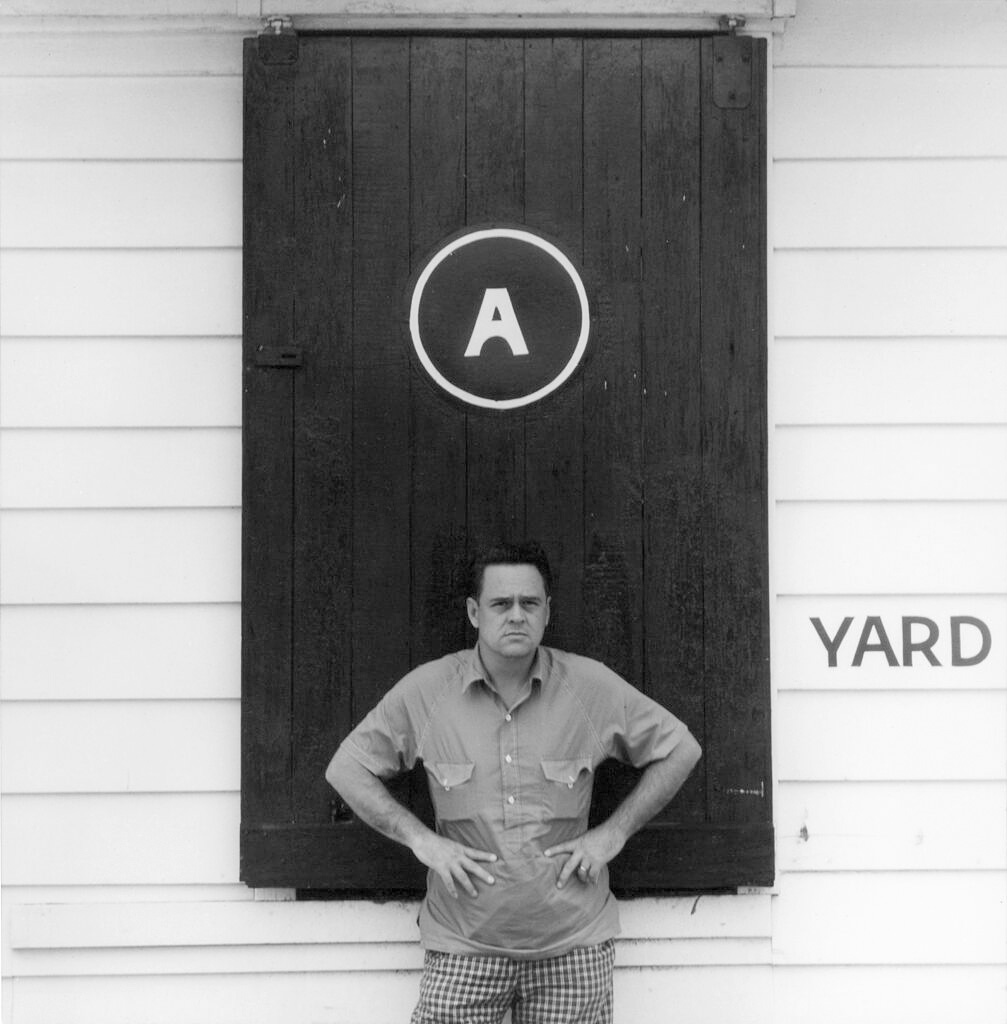
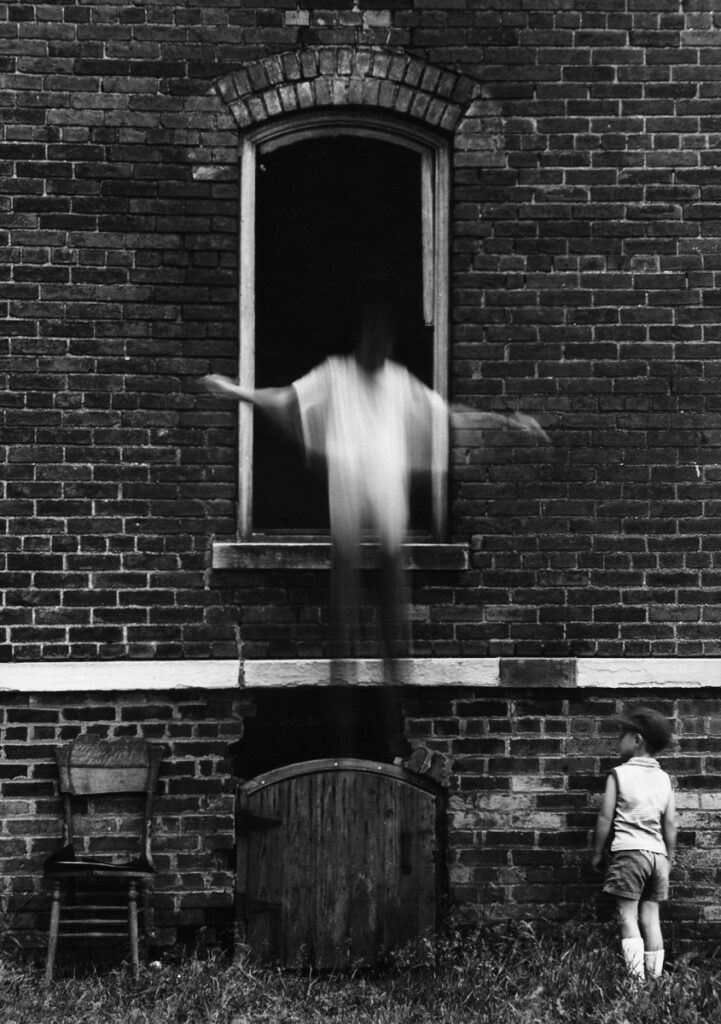
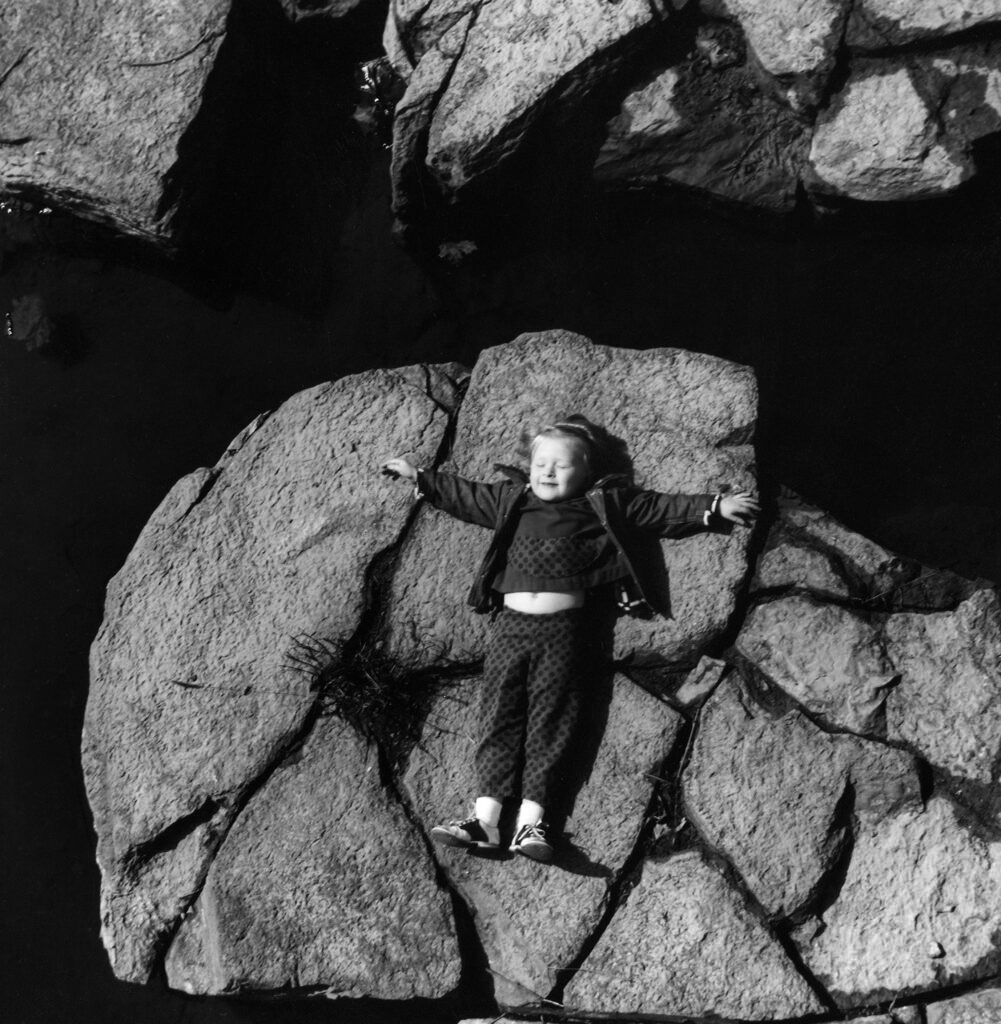
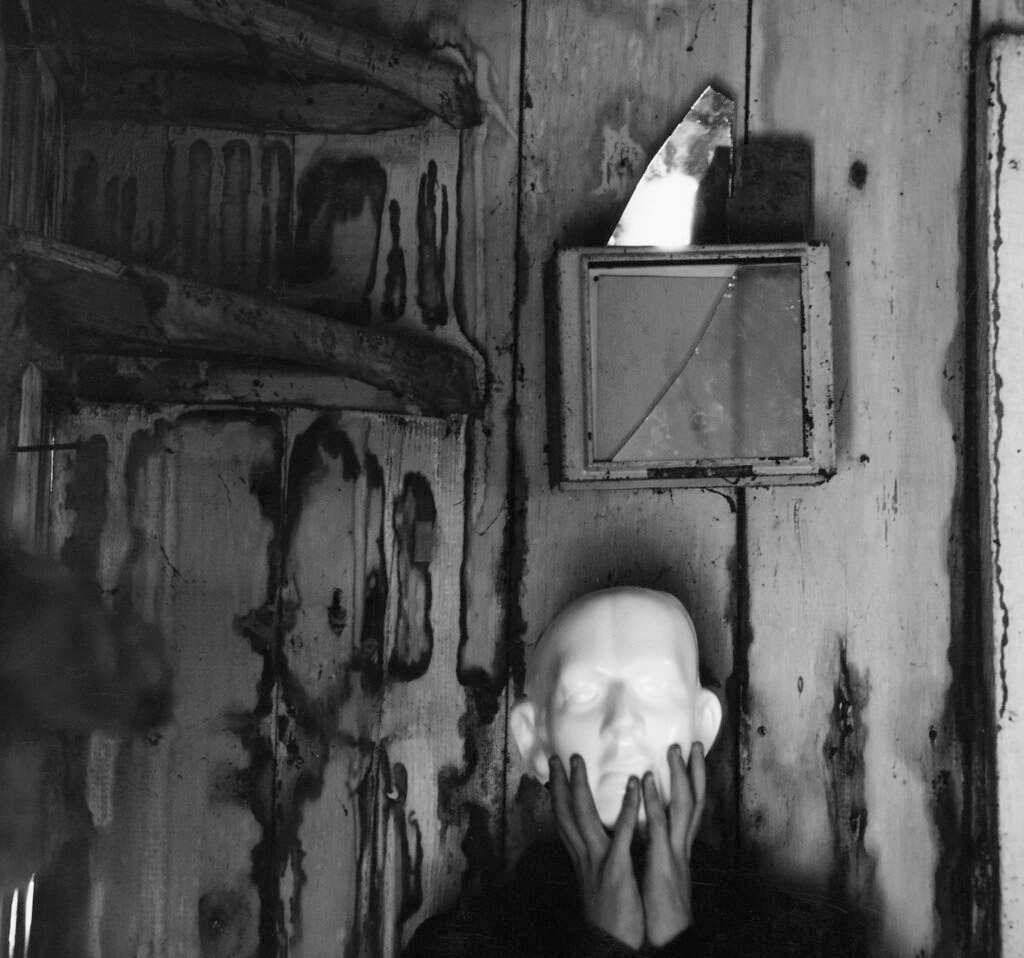
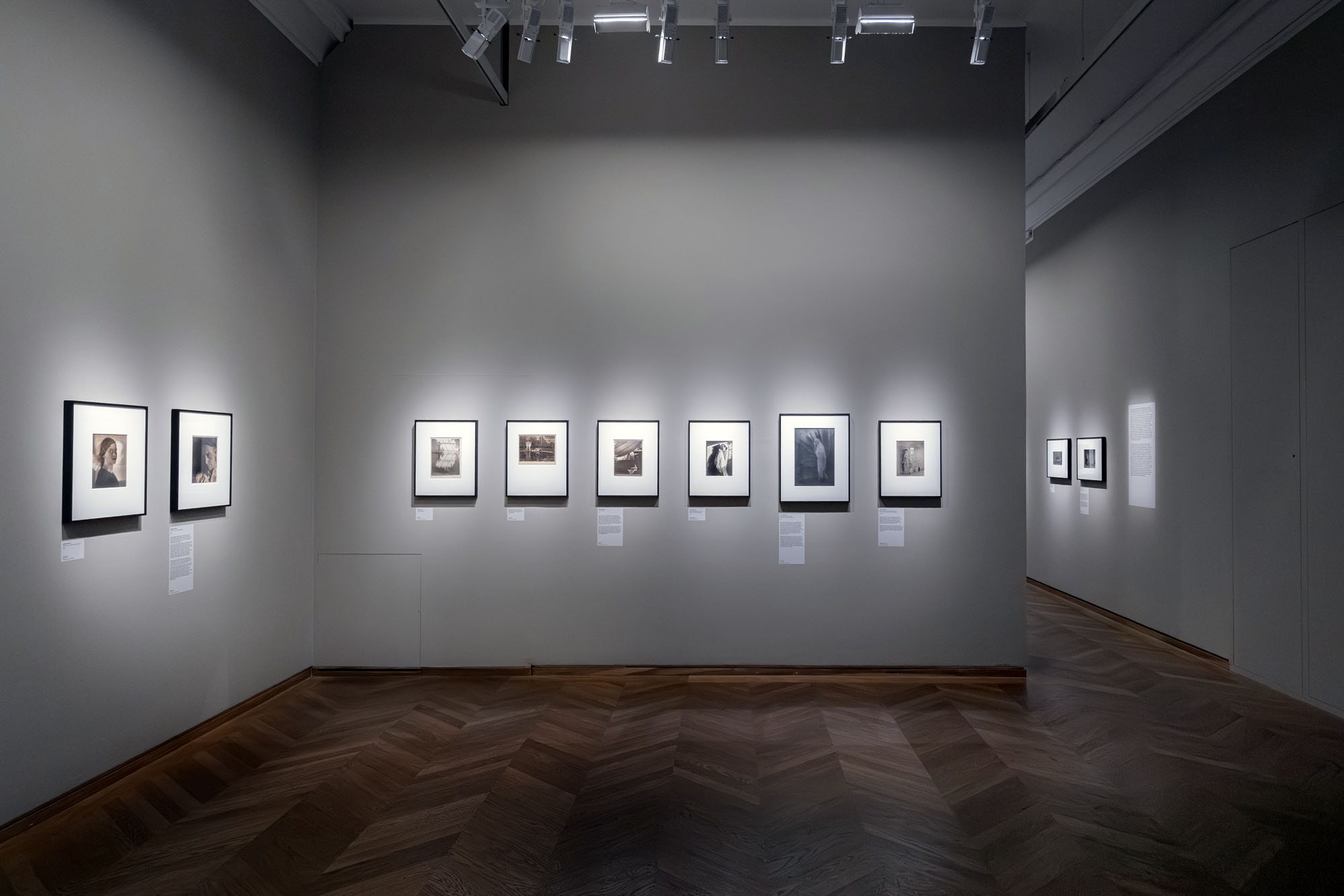
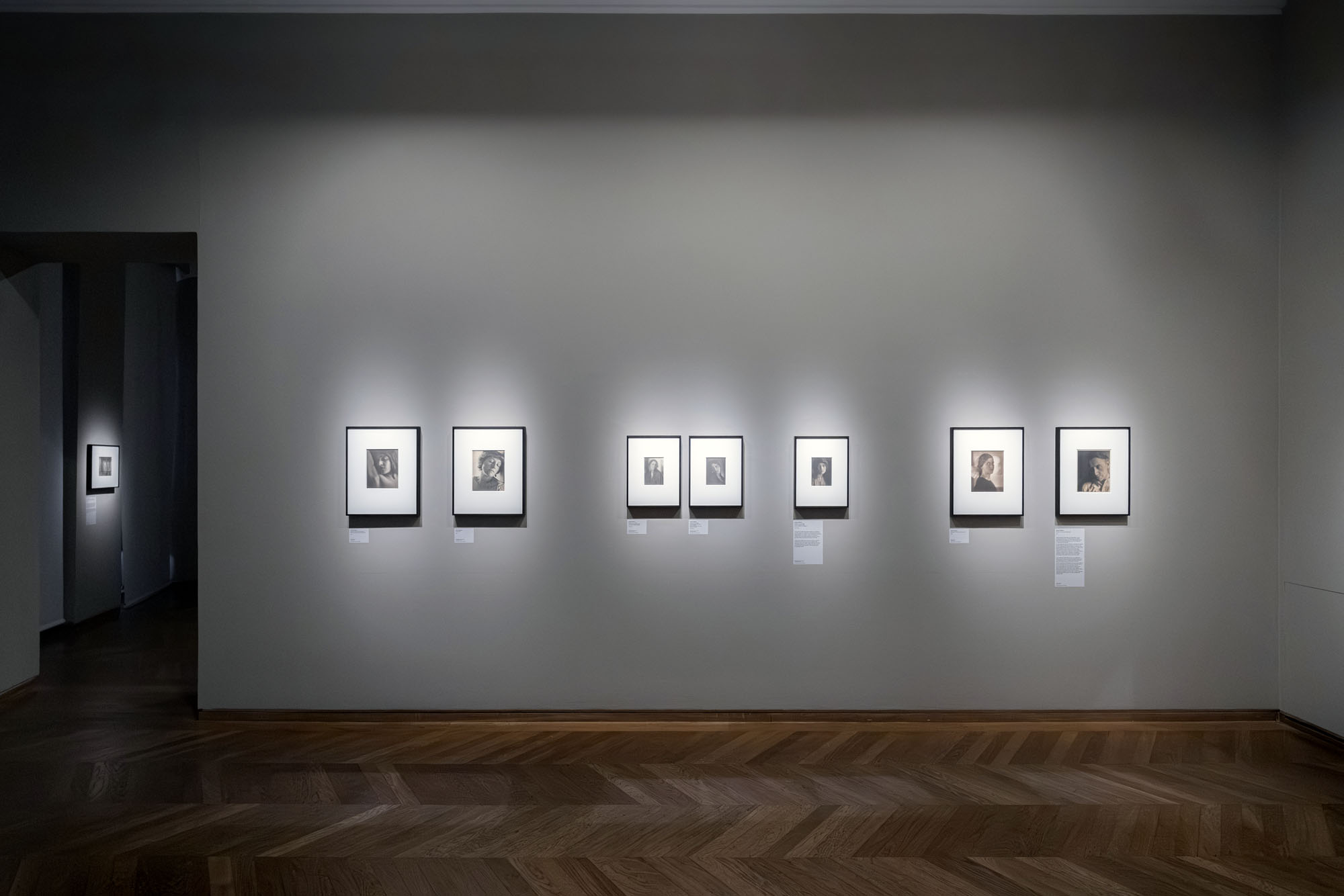
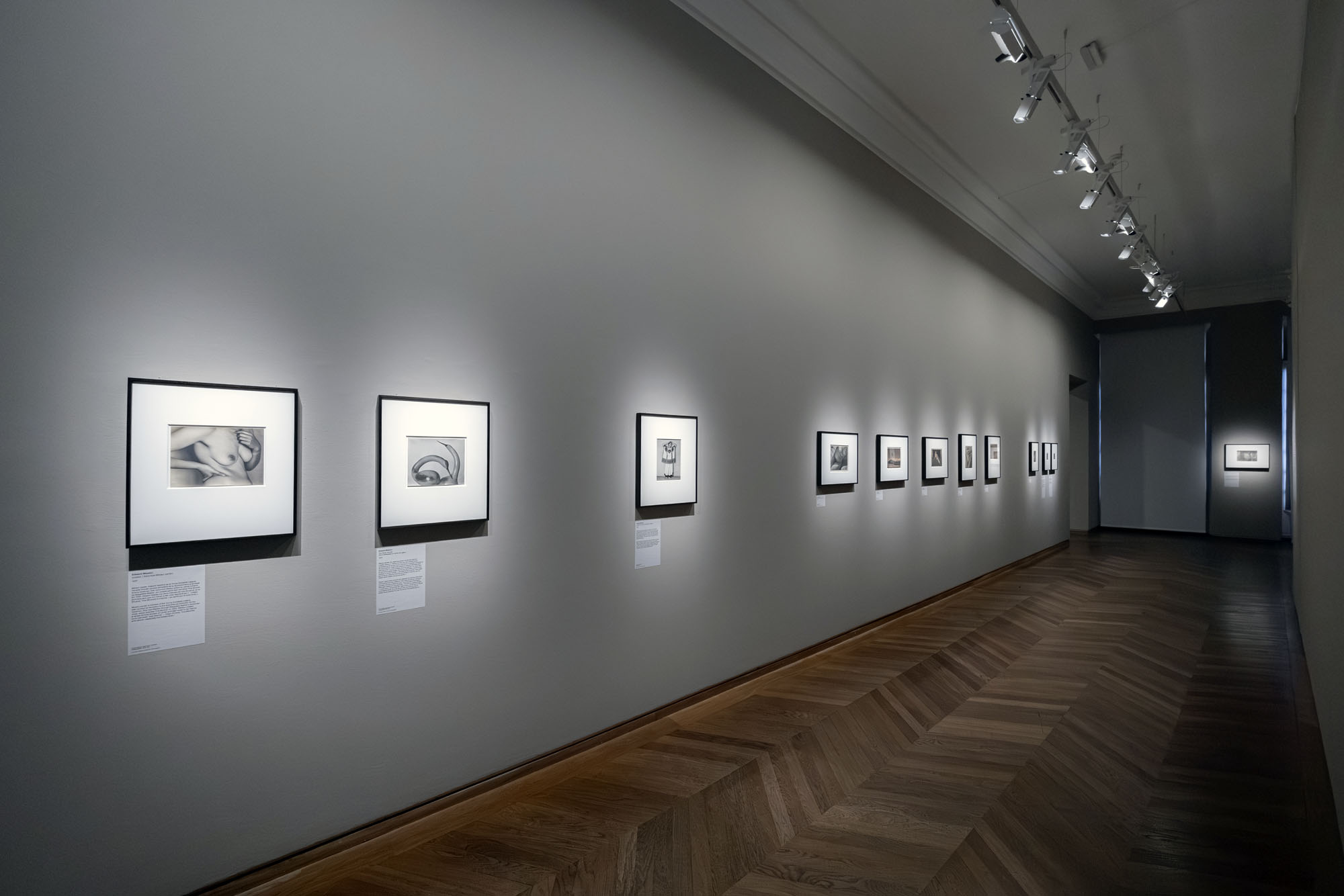
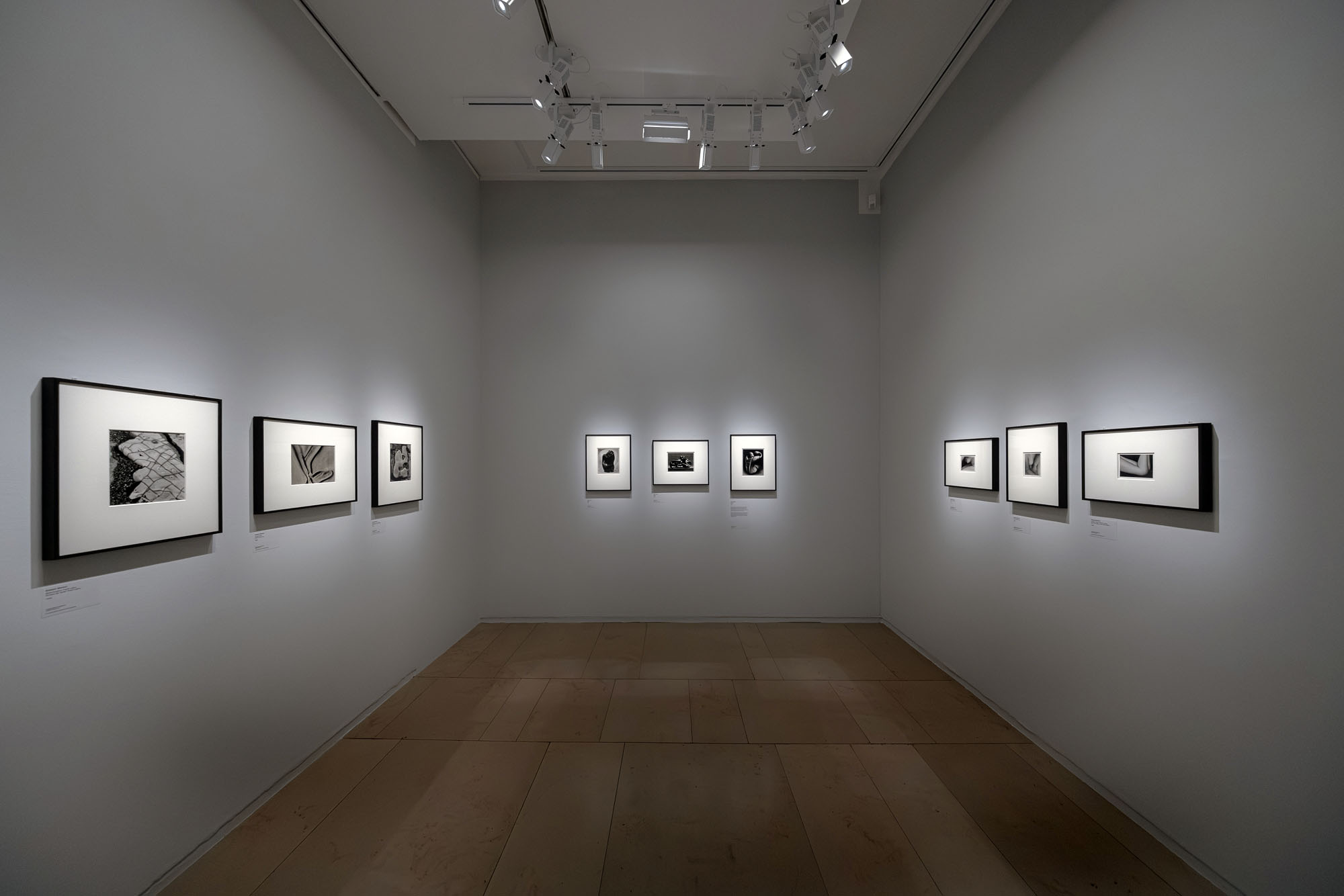
Photographs: Aaron Siskind ‘Harlem Photographs’ 1932-1940

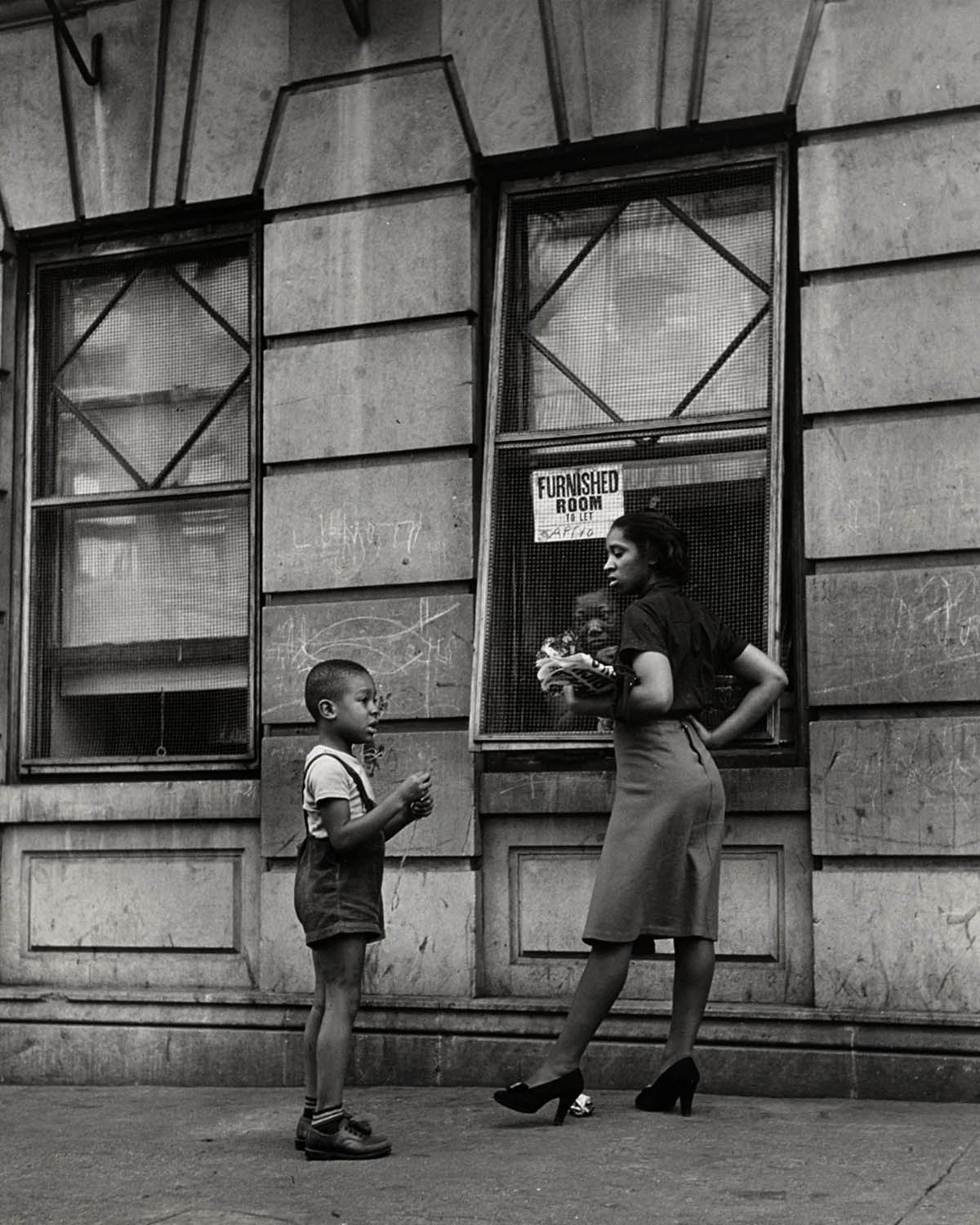
“This is where I think that Siskind was less than happy with the results of his documentary photographs – that they weren’t giving him what he wanted out of his art: that interface of the image and imagination.” Dr Marcus Bunyan

July 2026


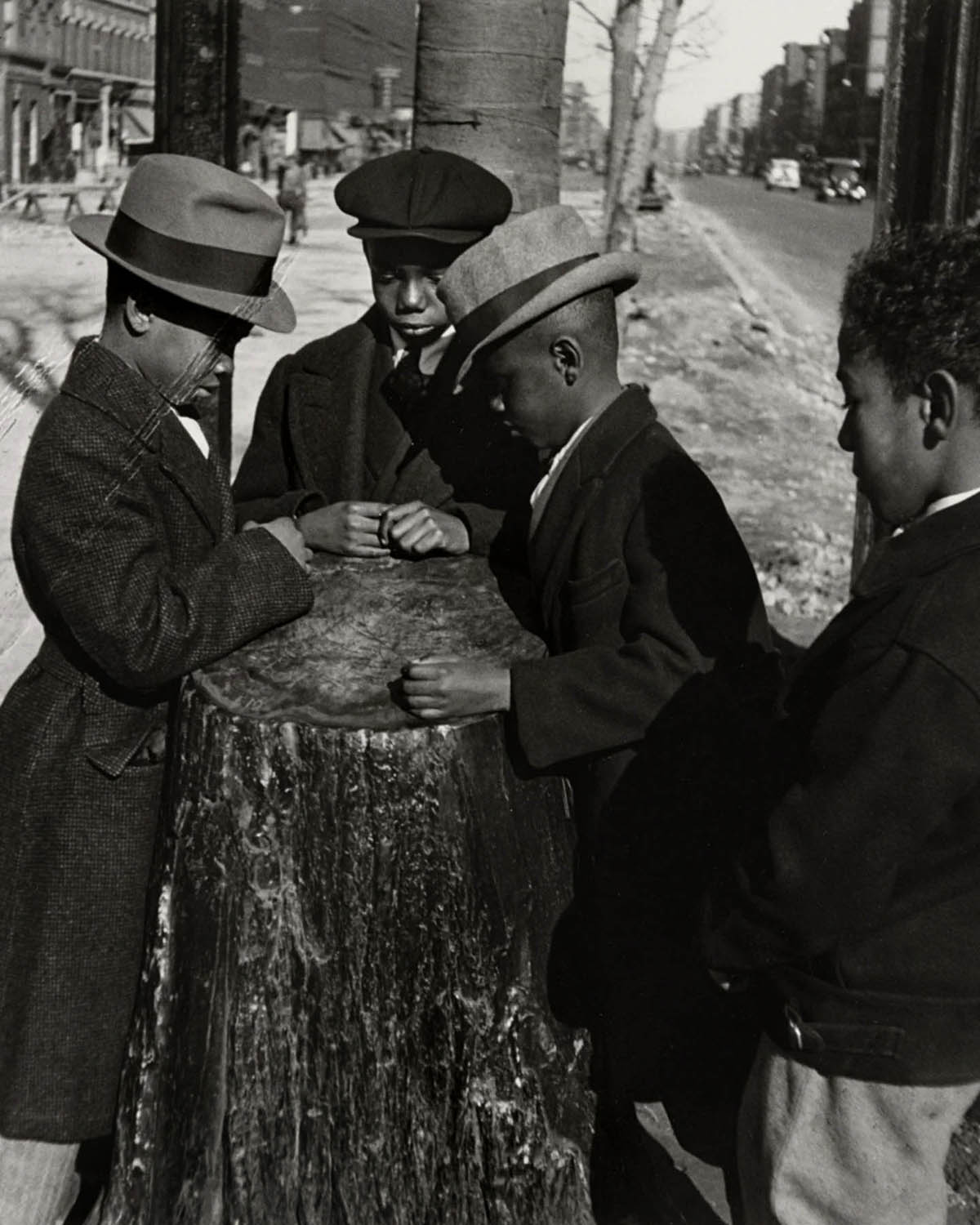
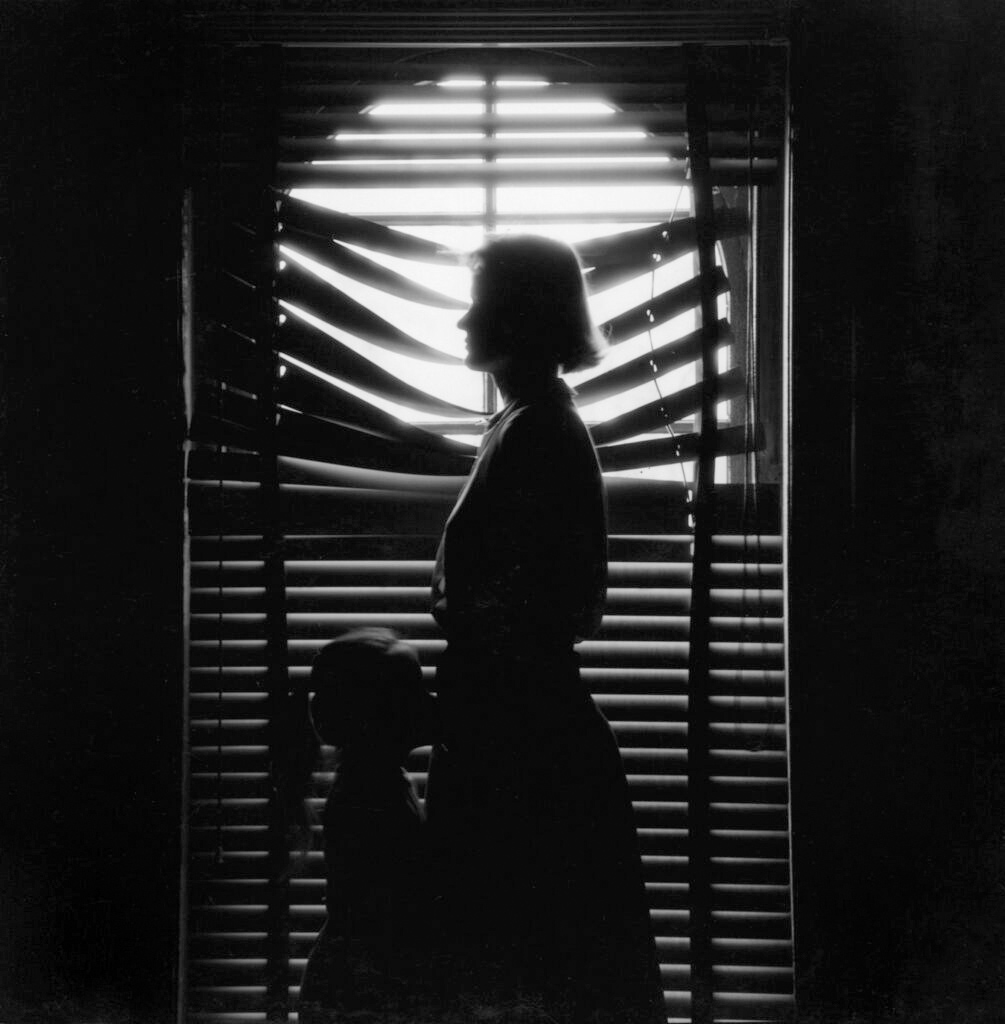
Aaron Siskind (American, 1902-1991) 'Boys in Empty Tenement' c. 1935


Aaron Siskind (American, 1902-1991)
Boys in Empty Tenement
c. 1935
Gelatin silver print


Image and imagination

I always find it fascinating to view the first few years of an artist’s journey, the golden path they take, for it more than likely informs all that is to come.

In the greatest abstract expressionist photographer the world has known, Aaron Siskind (American, 1902-1991), his starting point was as a straight documentary photographer, a member of the New York Photo League, a “left-leaning documentary collective, which prioritised using photography to advocate for social change.”

Using a large format camera and tripod Siskind, for his photo project Harlem Document, captured “the vibrancy, harsh realities, and daily life of the Black community in Harlem” – images which had their roots in American social documentary photography of the period and photographers such as Jacob Riis, Lewis Hine, Walker Evans, Dorothea Lange, Gordon Parks and the photographers of the Farm Security Administration (FSA) government program (1935-1944) which documented the struggles of rural Americans during the Great Depression.

As I have written in a 2023 text titled “Transcending reality”, “To my mind American photographers of the 1930s took photographs not only to document but also to honor what was greater and more interesting than they were. Not as a melding of reality-dream … but as an exploration of what is possible through the interface of the image and imagination, the interface as Ansel Adams put it “between the reality of the world and the reality of yourself”.”

This is where I think that Siskind was less than happy with the results of his documentary photographs – that they weren’t giving him what he wanted out of his art: that interface of the image and imagination.

“In working from the documentary approach, I had always tried to find what kind of meaning you could get in a picture of that kind, and was beginning to feel that I was not getting it. I felt I wasn’t getting anything really personal, really powerful and special…. My documentary pictures were very quiet and very formal.”1

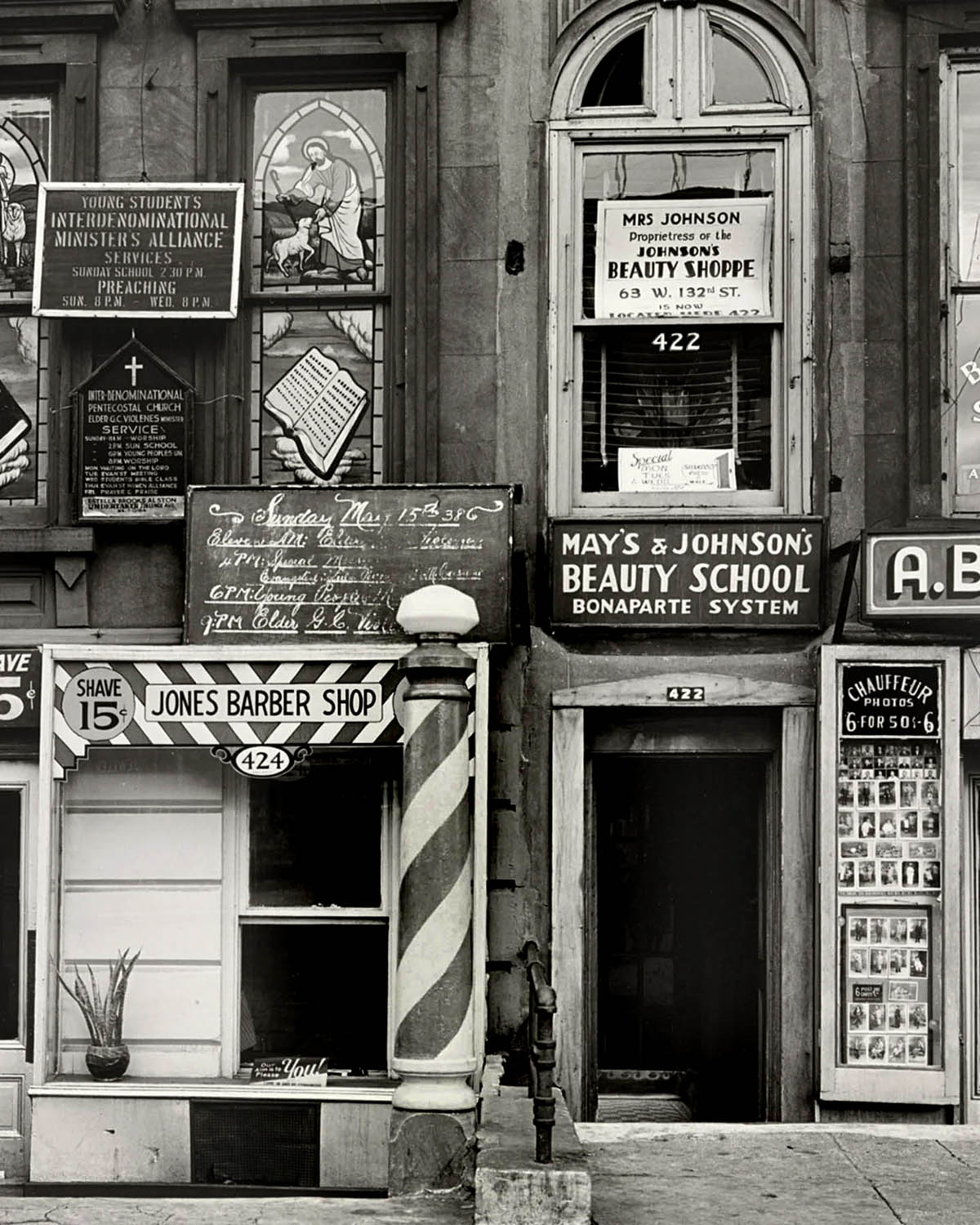
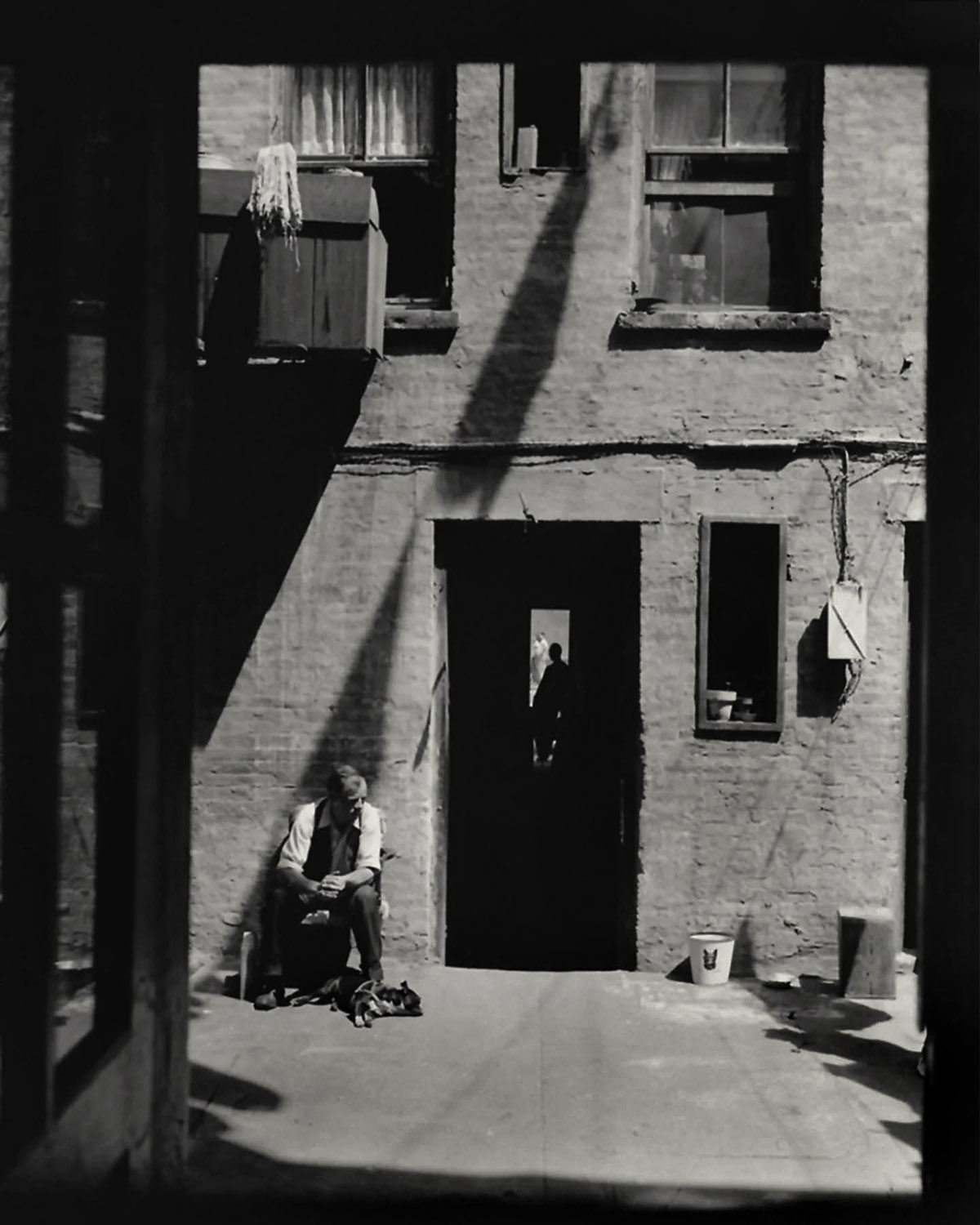
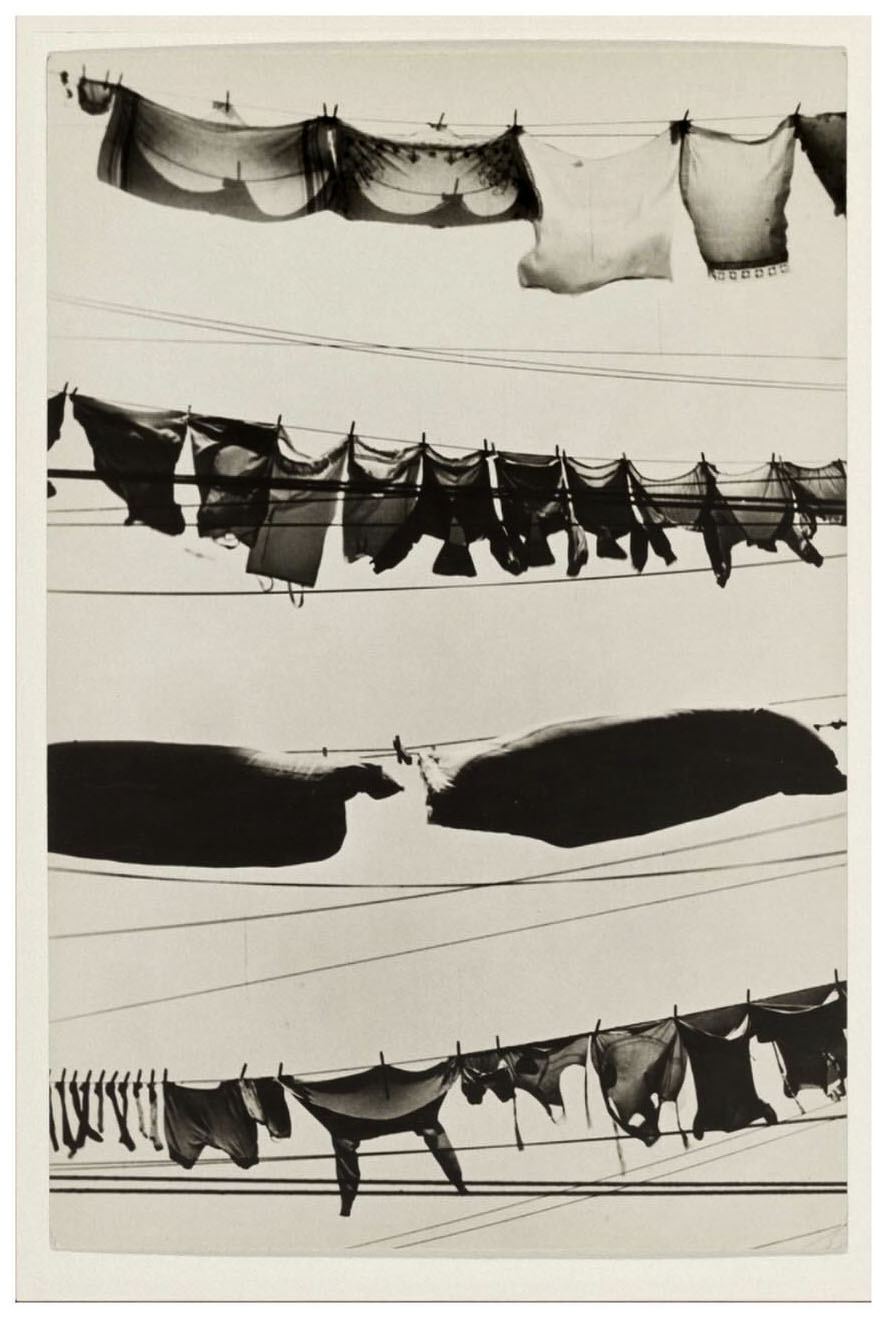
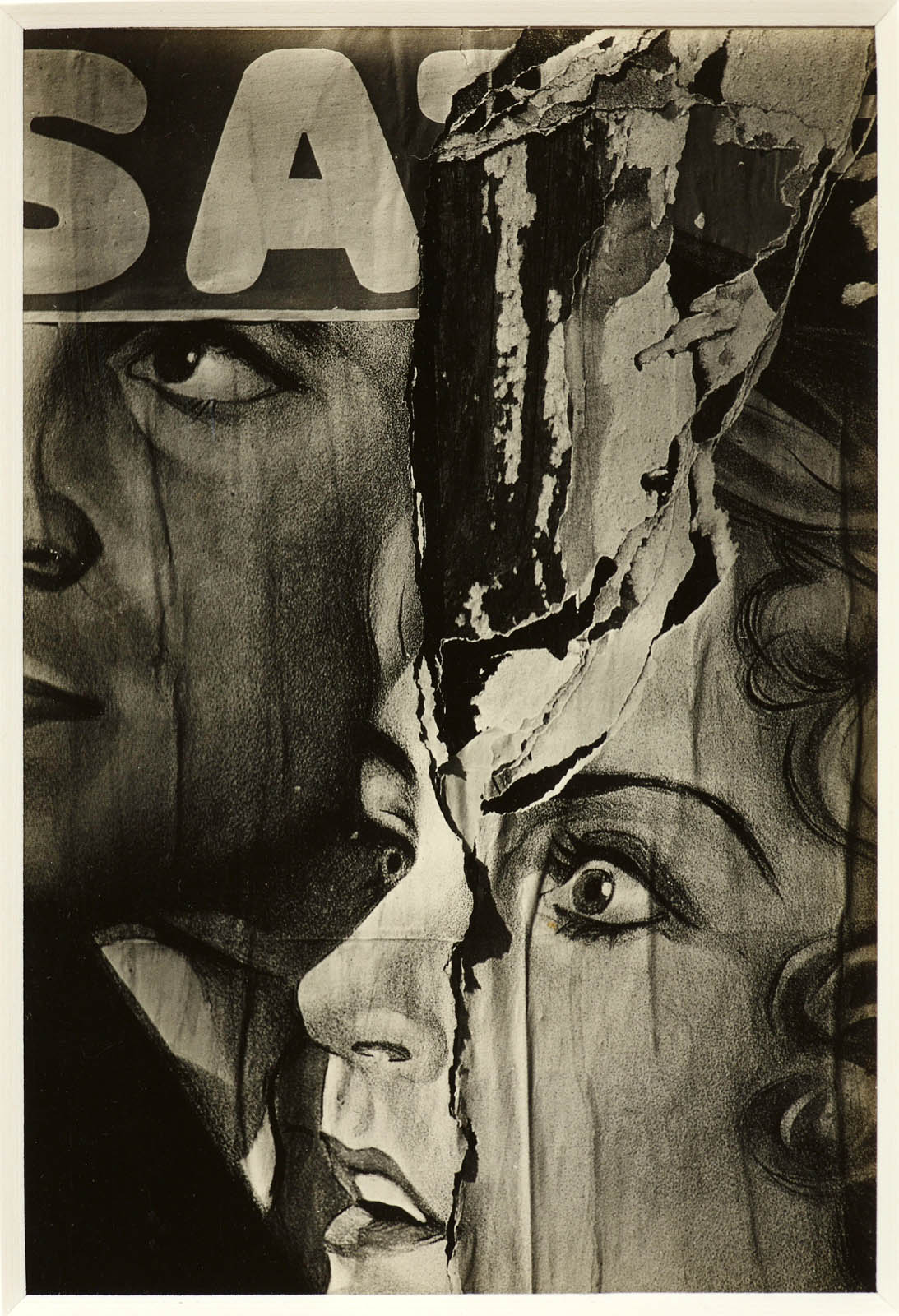
Moving into the 1940s Siskind began experimenting with more abstract compositions (with their link to Abstract Expressionist painting). Evidence of this reorientation in his image making can already be seen in some of the documentary photographs in this posting. For example, the photographs Facades (1938, below) and Harlem (1938, below) both propose the flattening of the photographic surface with an interest in the geometry and abstraction of form – circle, oblong, square, diagonal, curve, line – within the pictorial plane, but with an attendant emphasis on light, texture and tone.

“Though he did not create the lines, shapes, rhythms and patterns in his images, he nonetheless expressed the lyricism of their relationships by harmoniously arriving at the perfect composition. And though his abstract photographs possessed undeniable content, he subverted that content by offering new interpretive possibilities based on the feelings the images conveyed.”2

Image and imagination.

Thus, Siskind was intelligent enough, was aware and informed enough, of his feelings towards the world and the cultural developments around him to approach a crossroads in his development as an artist, to recognise, that is the key word, to recognise the path he needed, he wanted to take.

And so we are forever grateful to have his abstract expressionist photographs that his spirit guided him towards, photographs that may also light our own path.

Dr Marcus Bunyan

PS. I have added relevant information on Siskind’s art practice, theatres, and ballrooms where possible and I have also included an extract from Gordon Parks’ forward to Siskind’s book Harlem Document.


1/ Jaromir Stephany unpublished interview with Aaron Siskind, February 1963. This interview is in the private papers of Jaormir Stephany quoted in Marcia Battle. “Harlem: A Document,” in Harlem Document: Photographs 1932-1940. Washington and London: Smithsonian Institution Press, 1990, pp. 4-6

2/ Phillip Barcio. “How Aaron Siskind Found Abstraction On The Streets,” on the Ideelart website, Feb 15, 2017 [Online] Cited 17/07/2026


Please click on the photographs for a larger version of the image.


“Photography has tremendous social value. Upon the photographer rests the responsibility and duty of recording a true image of the world as it is today. Moreover, he must not only show us how we live, but indicate the logical development of our lives.”


Photo Notes, newsletter of the Photo League, August 1938


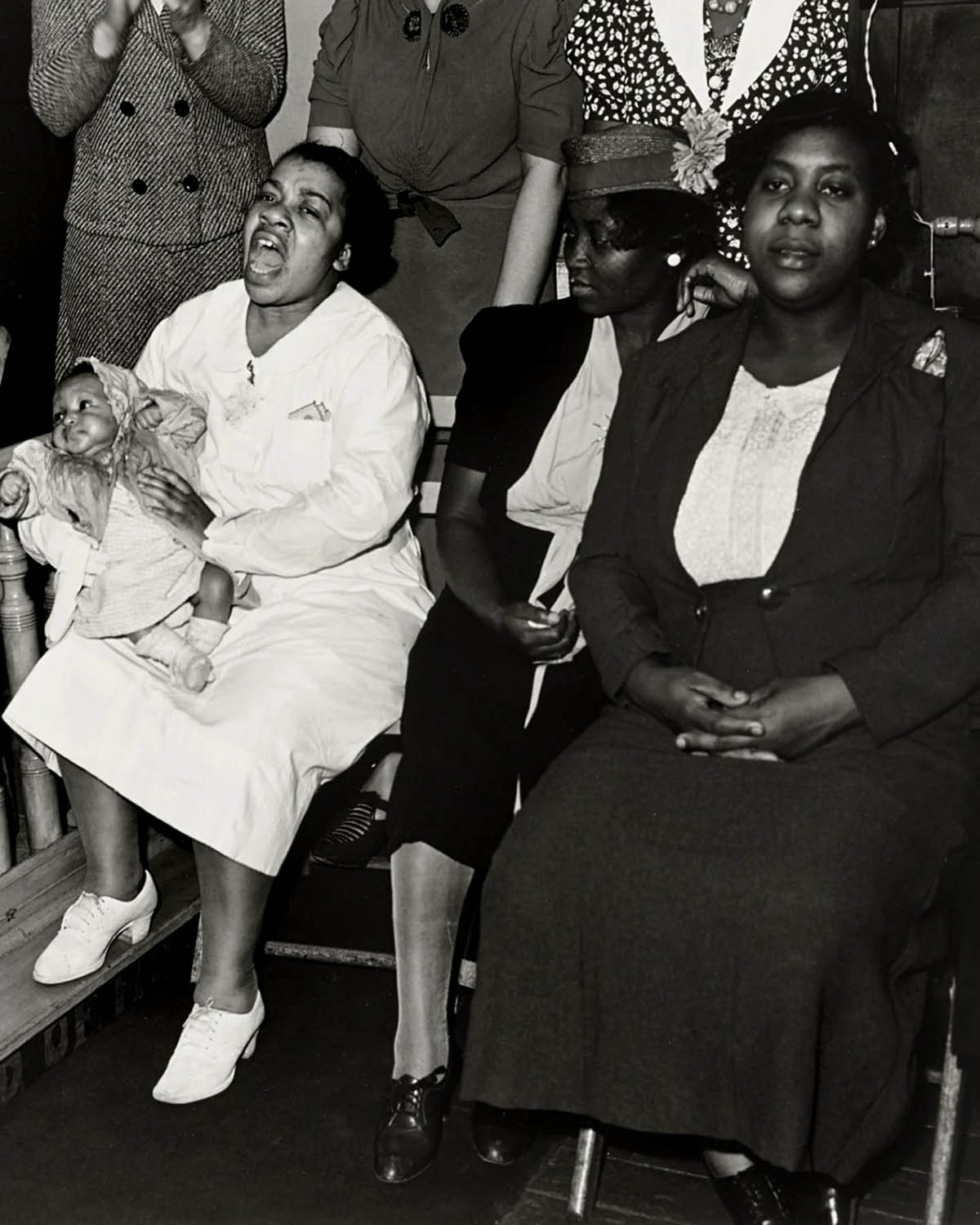
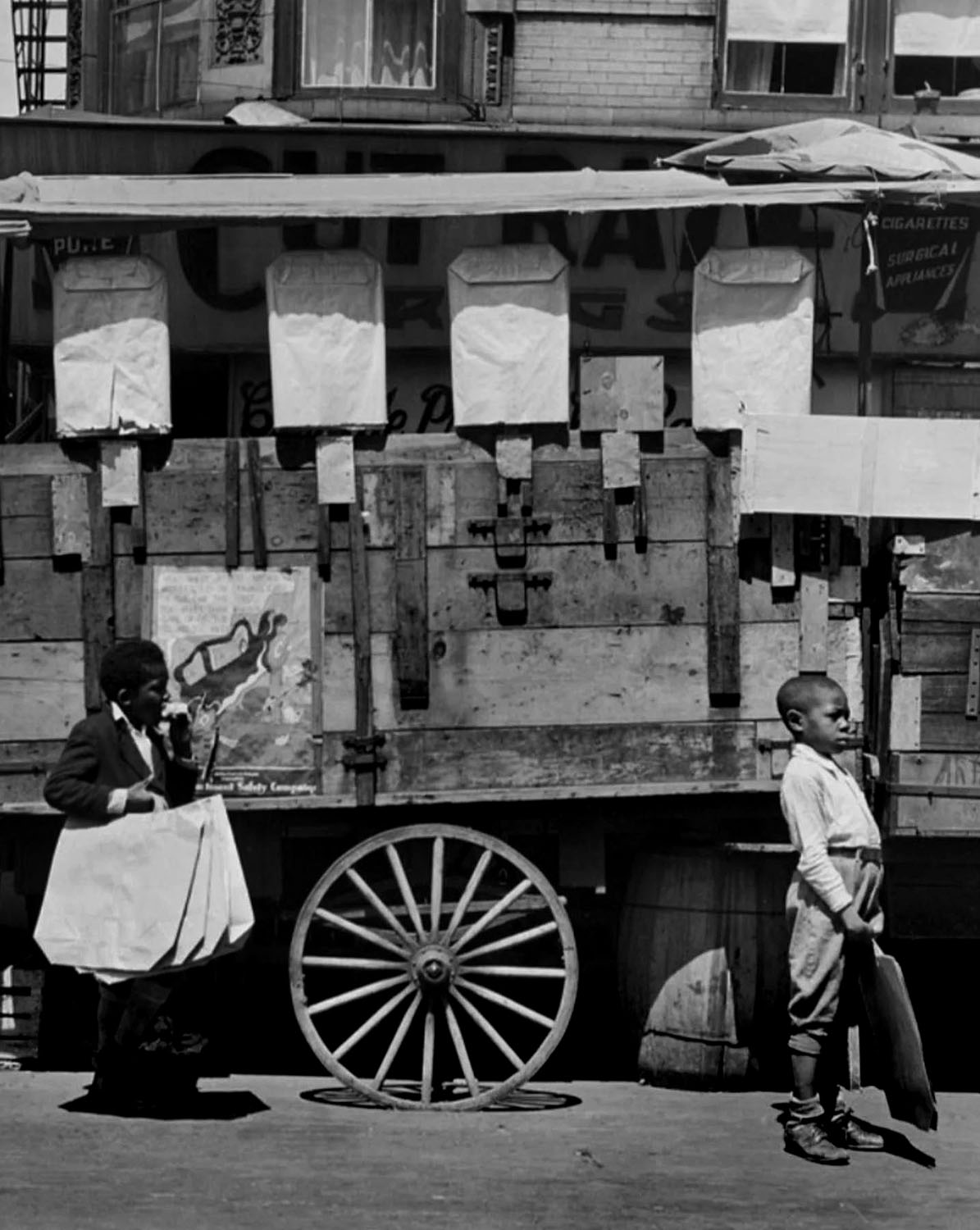
Aaron Siskind’s photographs from 1935-1940 form the core of the Harlem Document, a landmark sociological and visual study commissioned by the New York Photo League. Siskind headed the Feature Group of this radical, left-leaning documentary collective, which prioritised using photography to advocate for social change. The images capture the vibrancy, harsh realities, and daily life of the Black community in Harlem during the Great Depression.

Google AI


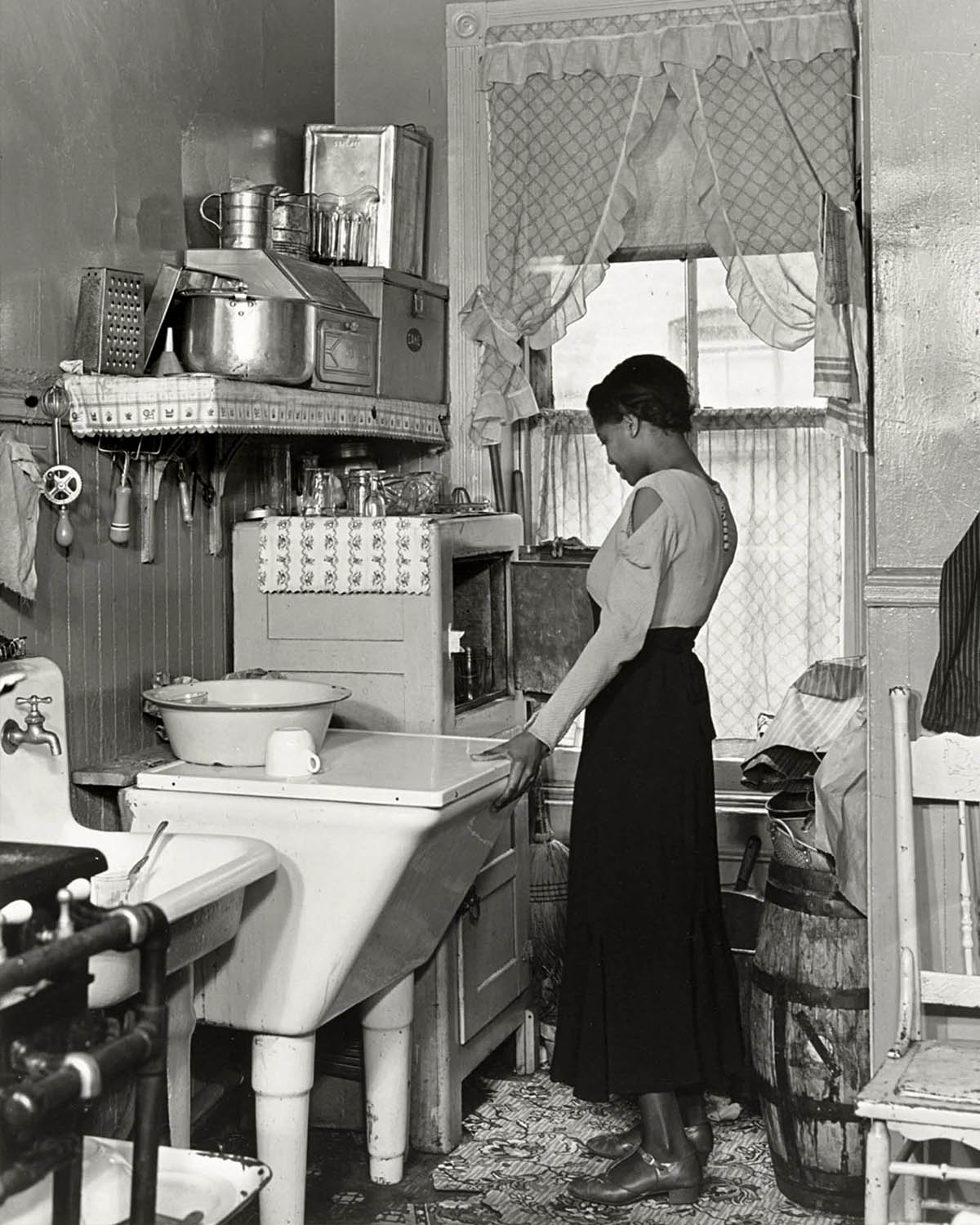
Aaron Siskind (American, 1902-1991) 'Kitchen Scene' 1937


Aaron Siskind (American, 1902-1991)
Kitchen Scene
1937
Gelatin silver print


From 1937 to 1944, Siskind took pictures in and around Harlem – of its businesses, domestic interiors, religious and social organisations, and nightlife. He did so as a member of the New York Photo League – a documentary photography collective with roots in radical leftist politics – and in collaboration with journalist and sociologist Michael Carter and other photographers as part of a cultural study of Harlem. In 1981 fifty-two of Siskind’s images were published in the book Harlem Document: Photographs 1932-1940 alongside first-person interviews conducted in the late 1930s by writers employed by the Federal Writers Project, including novelist and essayist Ralph Ellison.

MoMA Gallery label from 2024


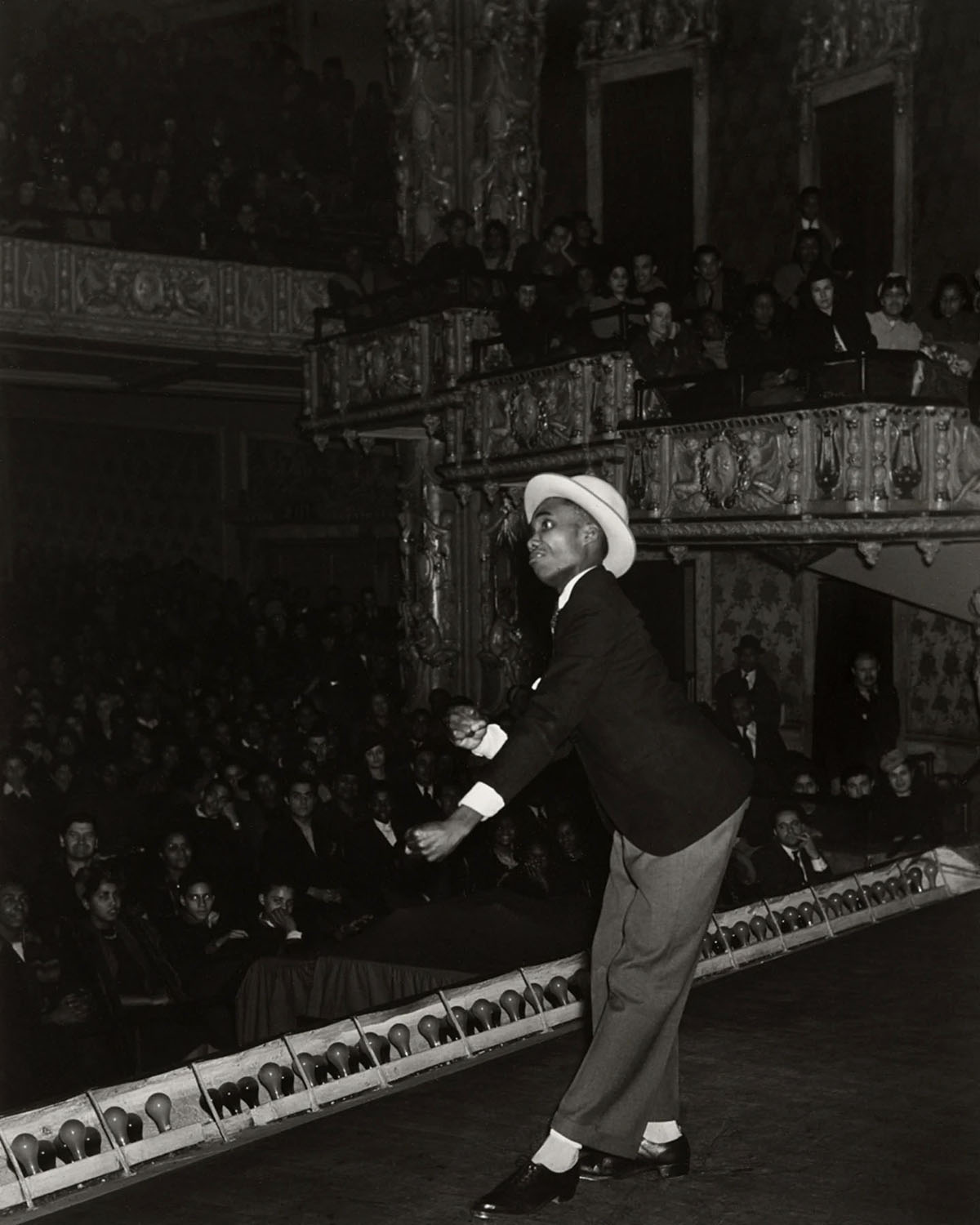
Aaron Siskind (American, 1902-1991) 'Apollo Theatre' 1937


Aaron Siskind (American, 1902-1991)
Apollo Theater
1937
Gelatin silver print


Apollo Theater

Since opening its doors in 1914 and introducing the first Amateur Night contests in 1934, The Apollo has played a major role in the emergence of jazz, swing, bebop, R&B, gospel, blues, and soul – all quintessentially American music genres. Ella Fitzgerald, Sarah Vaughan, Billie Holiday, Sammy Davis Jr., James Brown, Gladys Knight, Luther Vandross, D’Angelo, Lauryn Hill, and countless others began their road to stardom on the Apollo stage. Today, The Apollo is a respected nonprofit presenting concerts, theatrical and dance performances, film screenings, educational programs, and community outreach programs.

The neoclassical theater known today as The Apollo’s Historic Theater was designed by George Keister and first owned by Sidney Cohen. In 1914, Benjamin Hurtig and Harry Seamon obtained a thirty-year lease on the newly constructed theater, calling it Hurtig and Seamon’s New Burlesque Theater. Like many American theaters during this time, African-Americans were not allowed to attend as patrons or to perform.

In 1933, Fiorello La Guardia, who would later become New York City’s Mayor, began a campaign against burlesque, and Hurtig & Seamon’s was one of many theaters that would close down. Cohen reopened the building as the 125th Street Apollo Theatre in 1934 with his partner, Morris Sussman, serving as manager. Cohen and Sussman changed the format of the shows from burlesque to variety revues and redirected their marketing attention to the growing African-American community in Harlem.

Frank Schiffman and Leo Brecher took over The Apollo in 1935. The Schiffman and Brecher families would operate the Theater until the late 1970s. The Apollo reopened briefly in 1978 under new management then closed again in November 1979. In 1981, it was purchased by Percy Sutton, a prominent lawyer, politician, media and technology executive, and a group of private investors. Under Sutton’s ownership, the Theater was equipped with a recording and television studio.

Text from the Apollo Theater website. Used under fair use conditions for the purposes of education and research


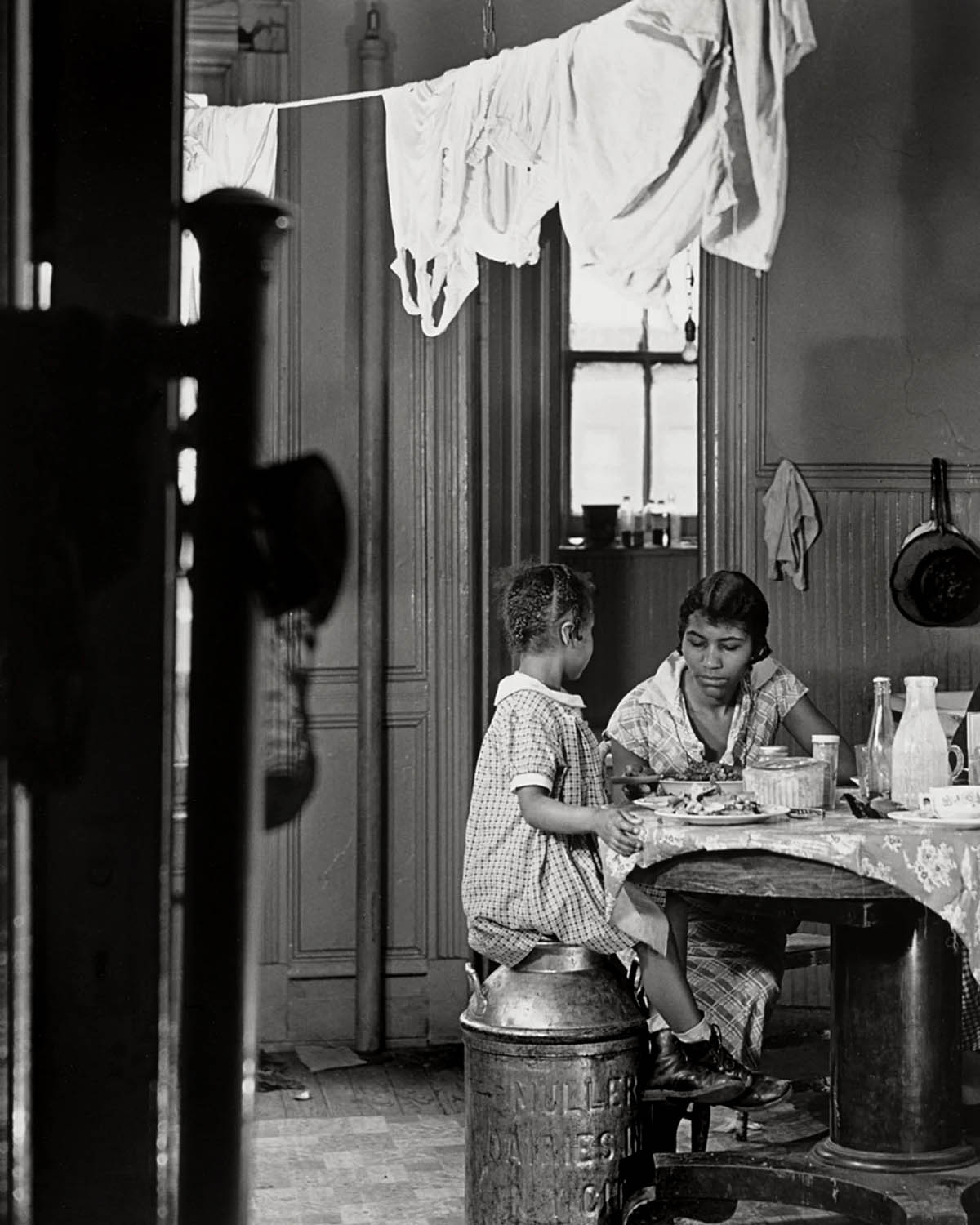
Aaron Siskind (American, 1902-1991) 'Lady In Kitchen' 1937


Aaron Siskind (American, 1902-1991)
Lady In Kitchen
1937
Gelatin silver print


Aaron Siskind’s artistic trajectory parallels broader shifts within mid-20th-century American photography. In the 1930s he cut his teeth as a documentary photographer affiliated with the Workers Film and Photo League, an artists’ cooperative that strove to advance progressive political causes. The following decade saw him turn away from studies of society. For the remainder of his career, he created still lifes that aimed to articulate interior states through near-abstract visual fields. Of this dramatic shift in his practice, the artist said, “For some reason or other there was in me the desire to see the world clean and fresh and alive.”1

Siskind’s documentary work was carefully planned and researched in advance. He honed this approach at the Film and Photo League, which he joined in 1933, only three years after receiving his first camera as a honeymoon gift. Among this community of photographers and filmmakers – many of them, like Siskind, the New York-born children of Jewish immigrants – he found technical guidance and critical feedback. When the League’s photographers broke from its filmmakers to establish the standalone Photo League in 1936, Siskind helped form its Feature Group, a unit dedicated to creating photo essays like those appearing in LIFE magazine and being produced by the Farm Security Administration. Collaborative at its core, the Feature Group prioritised the free exchange of ideas: each project began with a discussion of how to approach photographing its subject and ended with the group assessing their effort collectively. “We discovered a relationship between the clarity of one’s thought and feeling and the clarity of picture-making,” Siskind recalled of these formative dialogues.2

Of the many projects the Feature Group completed during Siskind’s four years of leadership, its most extended and ambitious was Harlem Document. This expansive cultural study of Harlem, undertaken between 1937 and 1940 in close consultation with the sociologist Michael Carter, originally aimed to produce a photographically illustrated book authored by Carter. Although the publication never materialised, Siskind’s photographs for Harlem Document indicate the project’s ambitious scope, depicting street life, domestic interiors, and gathering spots ranging from churches to dance halls to theaters.

Samuel Allen, Curatorial Assistant, The Robert B. Menschel Department of Photography, 2025 on the MoMA website [Online] Cited 14/07/2026. Used under fair use conditions for the purposes of education and research

1/ Aaron Siskind, “The Drama of Objects,” Minicam Photography 8, no. 9 (June 1945), 23. 

2/ Aaron Siskind, “The Feature Group,” Photo Notes (June-July 1940), 7. 


Aaron Siskind (American, 1902-1991) 'Lafayette Theatre' 1937


Aaron Siskind (American, 1902-1991)
Lafayette Theatre
1937
Gelatin silver print


Lafayette Theatre

The Lafayette Theatre (1912–1951), known locally as “the House Beautiful”, was one of the most famous theaters in the Harlem neighbourhood of Manhattan in New York City. It was an entertainment venue located at 132nd Street and 7th Avenue. The first major theatre in New York to desegregate, in its early history the theatre was home to the African American repertory theatre company the Lafayette Players. This group was originally founded by Anita Bush as Anita Bush Stock Company in 1914 and became a part of the Lafayette Theatre in 1916 when the theatre bought the stock company. The Lafayette Players was a successful company from the 1910s through the 1930s; after which the company floundered. In 1951 the theatre closed and was sold to the Williams Institutional Christian Methodist Episcopal Church. The structure was demolished in 2013.

Text from the Wikipedia website


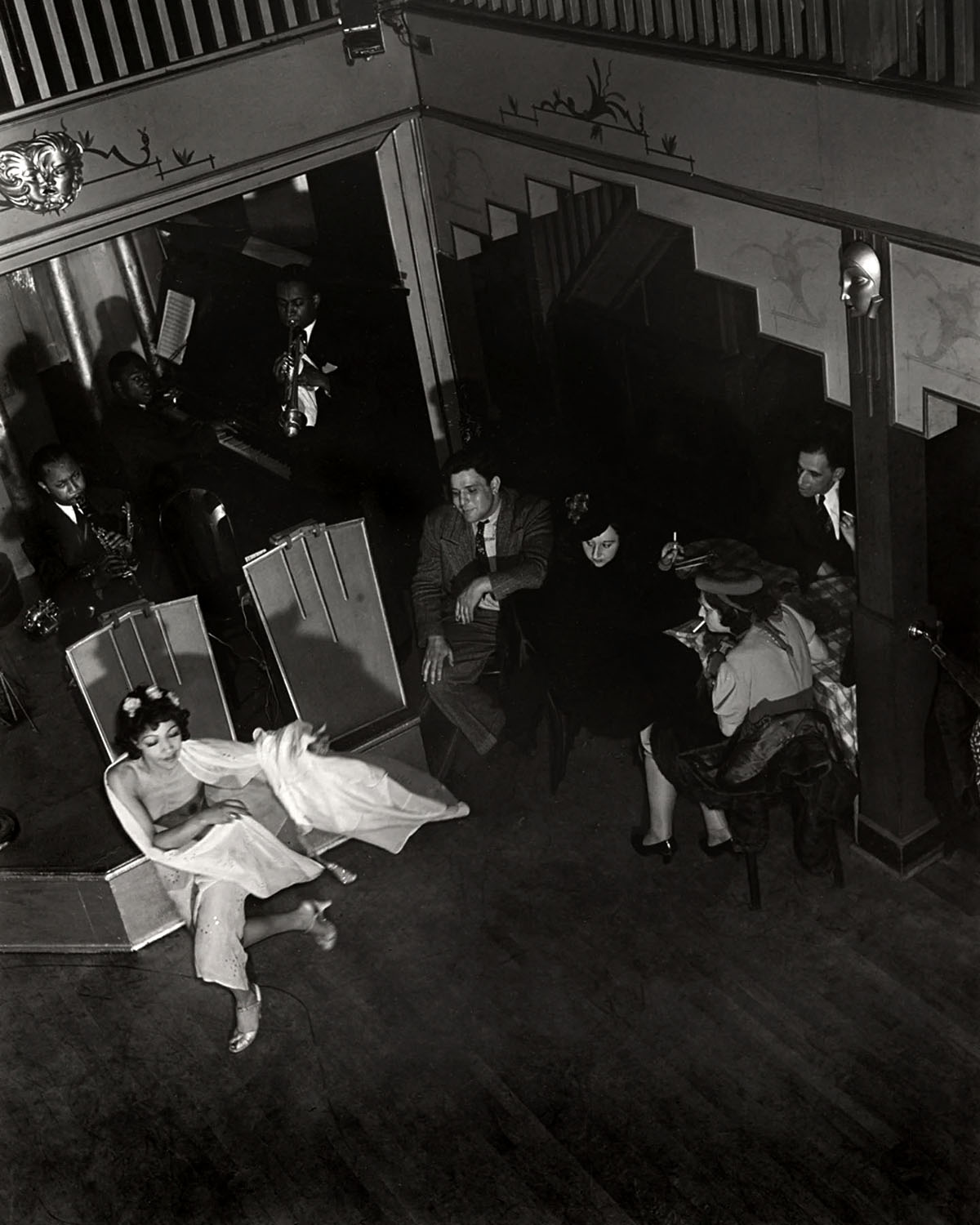
Aaron Siskind (American, 1902-1991) 'Night Club I' 1937


Aaron Siskind (American, 1902-1991)
Night Club I
1937
Gelatin silver print


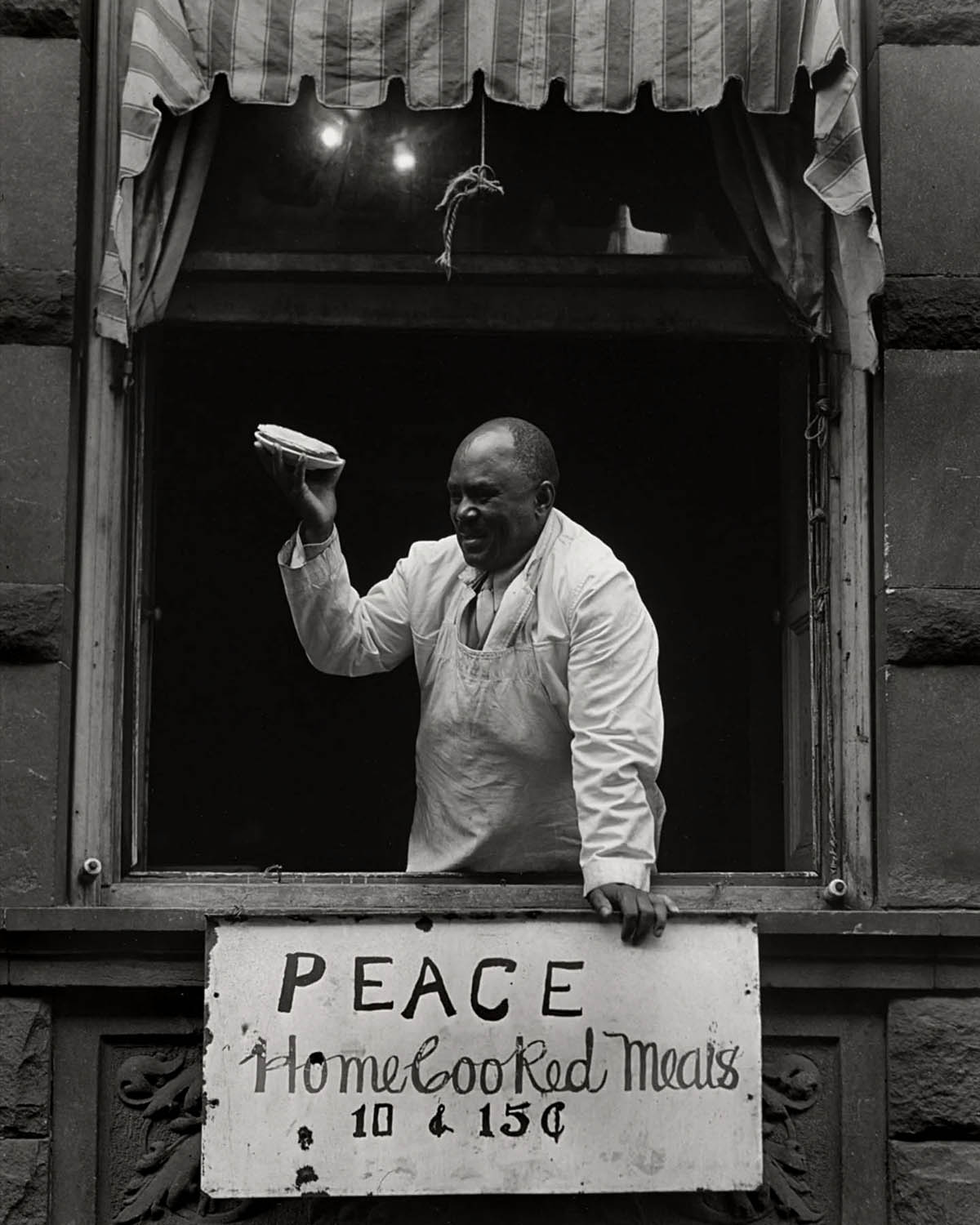
Aaron Siskind (American, 1902-1991) 'Peace Meals' 1937


Aaron Siskind (American, 1902-1991)
Peace Meals
1937
Gelatin silver print


Aaron Siskind’s Harlem document, a mirror of my own past, speaks explicitly for itself. It is an ongoing memory of black people living in crowded kitchenettes; suffering the loneliness of rented bedrooms; prating in leftover churches, and grasping a patch of happiness whenever and wherever they could find it. It is a nostalgic look at a kind of past that threatens to hang around Harlem for a long time to come – to doom it to further frustration and unrest. Those same tenements that once imprisoned me are still there, refusing to crumble, holding other restless black boys for sentence without trial.

I remember swarms of slow-moving people, moving close together up on Lenox Avenue – past child shacks, rib joints, funeral parlours and storefront churches- knowing one another but seldom bothering to speak. A city of blackness crammed inside a white city where, when you walked our the door, you became a stranger. …

Harlem has meant a lot of things to a lot of people. For me, in those days, it meant hunger, cultural devastation, unrequited longing and disillusionment. To others it was the swinging, exciting capitol of the entire Black world, the exotic Mecca of melting music, good times and dancing feet. Yet, for some, it was a sanctuary where loftier dreams were fostered; where now and then some of those dreams were realised, but where mostly they were hopelessly spent. To just about everyone who has worked in the vital processes of its survival, whose life has been textured by its tradition, Harlem is a place that won’t give up. Wobbly now under the impact of the past decades, its history mirror those problems its mother country once endured.

Extract from Gordon Parks. “Foreword,” in Harlem Document: Photographs 1932-1940. Washington and London: Smithsonian Institution Press, 1990. Used under fair use conditions for the purposes of education and research


Aaron Siskind (American, 1902-1991) 'Street Scene' 1937


Aaron Siskind (American, 1902-1991)
Street Scene
1937
Gelatin silver print


Aaron Siskind (American, 1902-1991) 'Wishing Tree' 1937


Aaron Siskind (American, 1902-1991)
Wishing Tree
1937
Gelatin silver print


Aaron Siskind (American, 1902-1991) 'Church Interior' 1938


Aaron Siskind (American, 1902-1991)
Church Interior
1938
Gelatin silver print


Aaron Siskind (American, 1902-1991) 'Facades' 1938


Aaron Siskind (American, 1902-1991)
Facades
1938
Gelatin silver print


Aaron Siskind (American, 1902-1991) 'Harlem' 1938


Aaron Siskind (American, 1902-1991)
Harlem
1938
Gelatin silver print


Aaron Siskind’s interest in photography developed after his experiences with both music and poetry when he was an English teacher in the New York public school system. His early pictures were said to have been attempts at transferring musical and poetic concepts into images.2 Later, as a young adult, Siskind did everything from making political speeches on soapboxes in Manhattan to becoming a member of the Junior Young People’s Socialist League (YPSL).3

A friend gave Siskind his first camera in 1930. He soon discovered his attraction for the instrument, and almost simultaneously he discovered and joined the Photo league. At the League he found people who shared his political and social concerns and who were capable and willing to discuss technical information about photography. Many of the members were children of Jewish immigrants and most, like Siskind, were well educated. Their exhibited images documented illiteracy, discrimination, and poverty and called for social reforms on behalf of the working classes. Before joining the League, Siskind had already photographed some of the poverty-stricken areas of Manhattan and was searching for reaction and criticism to these pictures. …

As a photographer Siskind explored symbols and metaphors to create a visual relationship that balanced aesthetic concerns with social documents. Throughout his career the contrast of subject and symbol have dominated. …

With his work in Harlem Siskind’s style may have been changing. “In working from the documentary approach, I had always tried to find what kind of meaning you could get in a picture of that kind, and was beginning to feel that I was not getting it. I felt I wasn’t getting anything really personal, really powerful and special…. My documentary picture were very quiet and very formal.”4

Extract from Marcia Battle. “Harlem: A Document,” in Harlem Document: Photographs 1932-1940. Washington and London: Smithsonian Institution Press, 1990, pp. 4-6. Used under fair use conditions for the purposes of education and research

2/ Carl Chiarenza, Aaron Siskind: Pleasures and Terrors (Little, Brown and Co.,), 6.

3/ Carl Chiarenza, “Form and Content in the Early Work of Aaron Siskind,” The Massachusetts Review 19:4 (Winter 1978): 810.

4/ Jaromir Stephany unpublished interview with Aaron Siskind, February 1963. This interview is in the private papers of Jaormir Stephany.


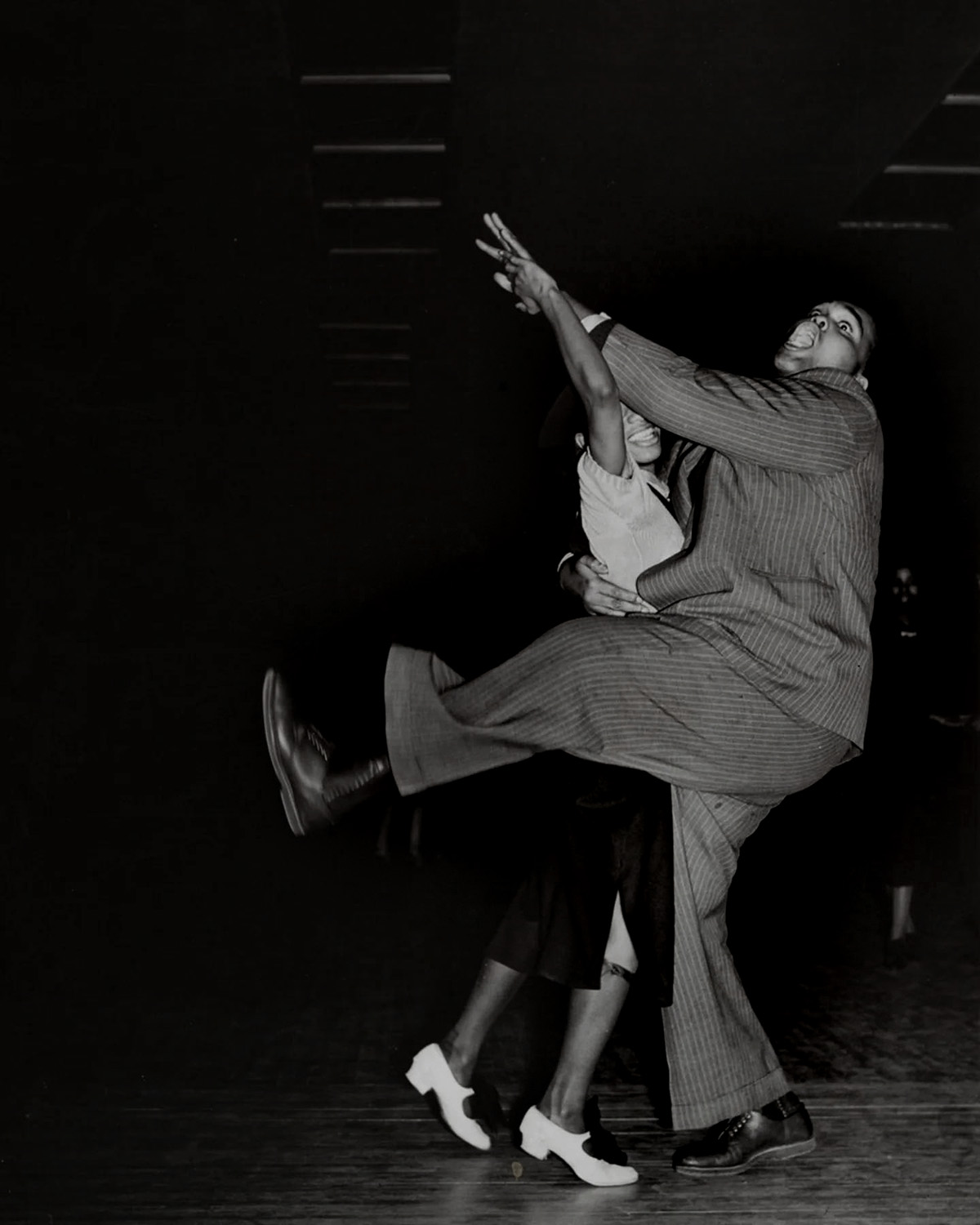
Aaron Siskind (American, 1902-1991) 'Savoy Dancers' 1938


Aaron Siskind (American, 1902-1991)
Savoy Dancers
1938
Gelatin silver print


Savoy Dancers

The “Savoy Dancers” refer to the pioneering African American dancers who developed the Lindy Hop and other swing dances at the legendary Savoy Ballroom in Harlem, New York. Open from 1926 to 1958, the integrated ballroom housed iconic performers like Frankie Manning and Norma Miller who defined the “home of happy feet”.

These legendary dancers revolutionised social dancing by bringing athleticism, airborne aerials, and improvisational jazz styling to the Lindy Hop. Their legacy continues to thrive through modern swing dance communities and archival footage preserved in documentaries like The Spirit Moves.

About the Savoy Ballroom

From 1926 to 1958, the Savoy Ballroom stood at 596 Lenox Avenue as one of the first racially integrated public spaces in the United States. Its 10,000-square-foot, spring-loaded dance floor welcomed thousands nightly and launched a global dance phenomenon. The Savoy hosted legendary artists including Chick Webb, Duke Ellington, Ella Fitzgerald, and Count Basie, cementing its place at the heart of Harlem’s cultural history.


Aaron Siskind (American, 1902-1991) 'St. Joseph's House - The Catholic Worker Movement' c. 1939


Aaron Siskind (American, 1902-1991)
St. Joseph’s House – The Catholic Worker Movement
c. 1939
Gelatin silver print


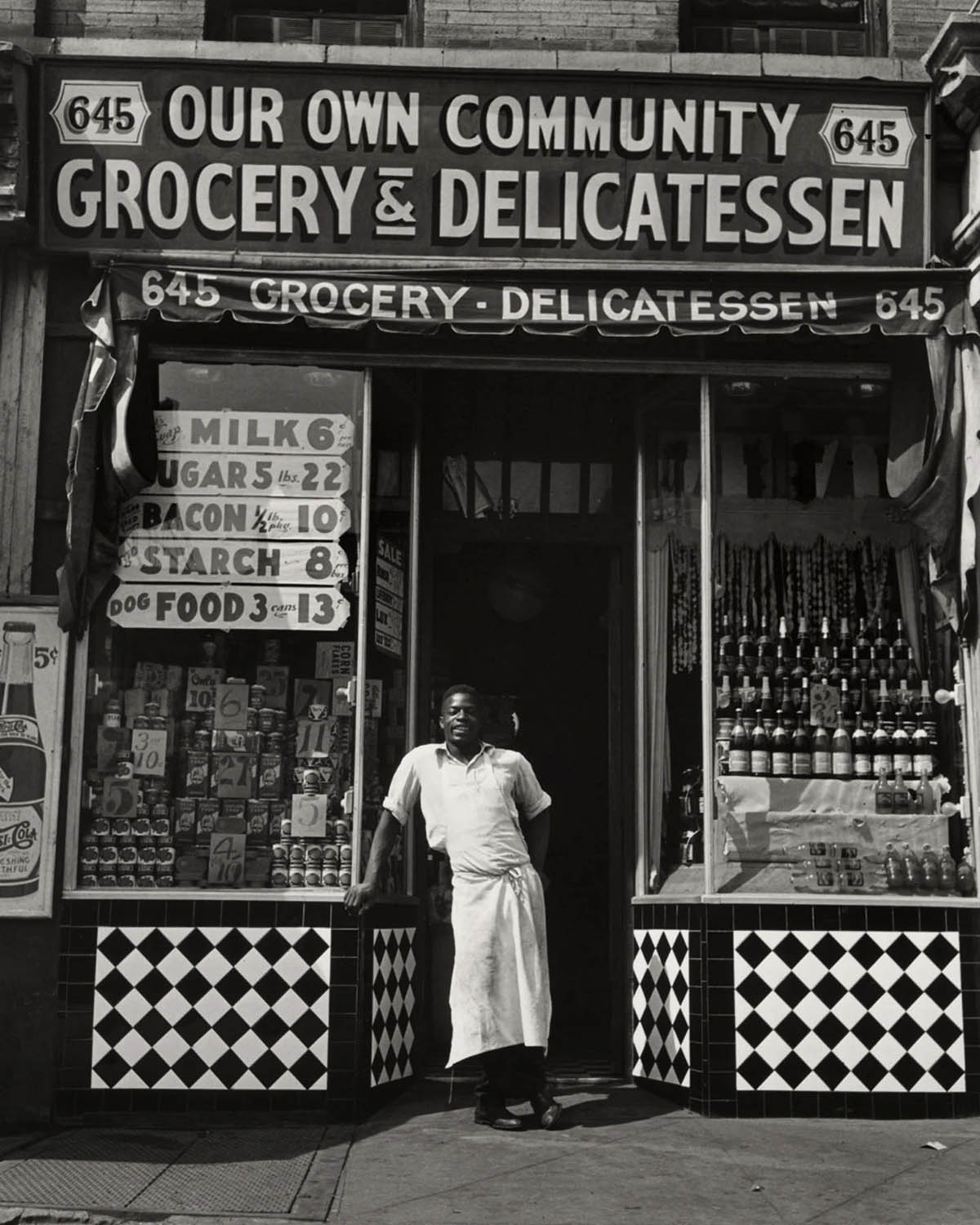
Aaron Siskind (American, 1902-1991) 'Grocery Store' 1940


Aaron Siskind (American, 1902-1991)
Grocery Store
1940
Gelatin silver print


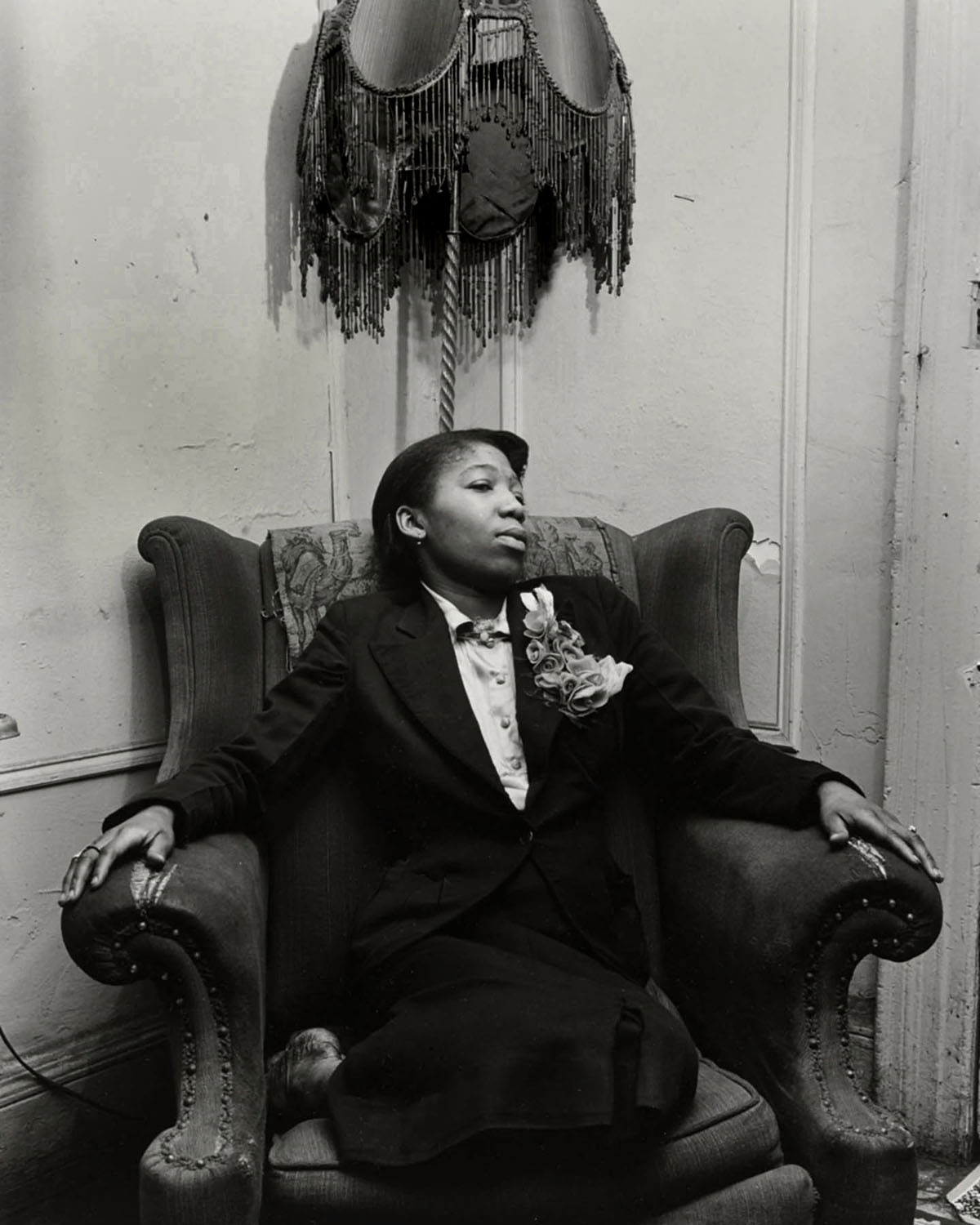
Aaron Siskind (American, 1902-1991) 'Lady and Lamp' 1940


Aaron Siskind (American, 1902-1991)
Lady and Lamp
1940
Gelatin silver print


Aaron Siskind (American, 1902-1991) 'Street Scene' 1940


Aaron Siskind (American, 1902-1991)
Street Scene
1940
Gelatin silver print


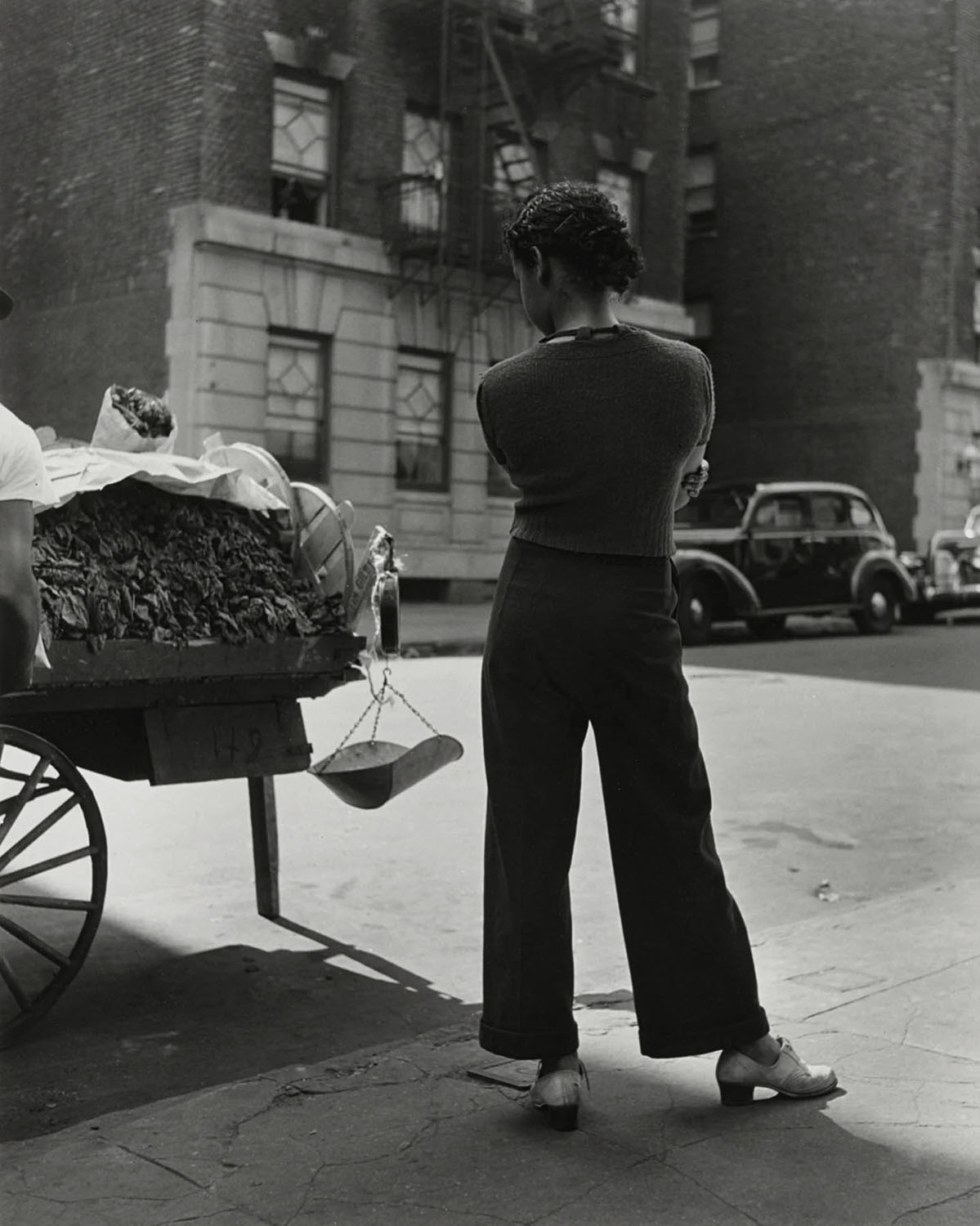
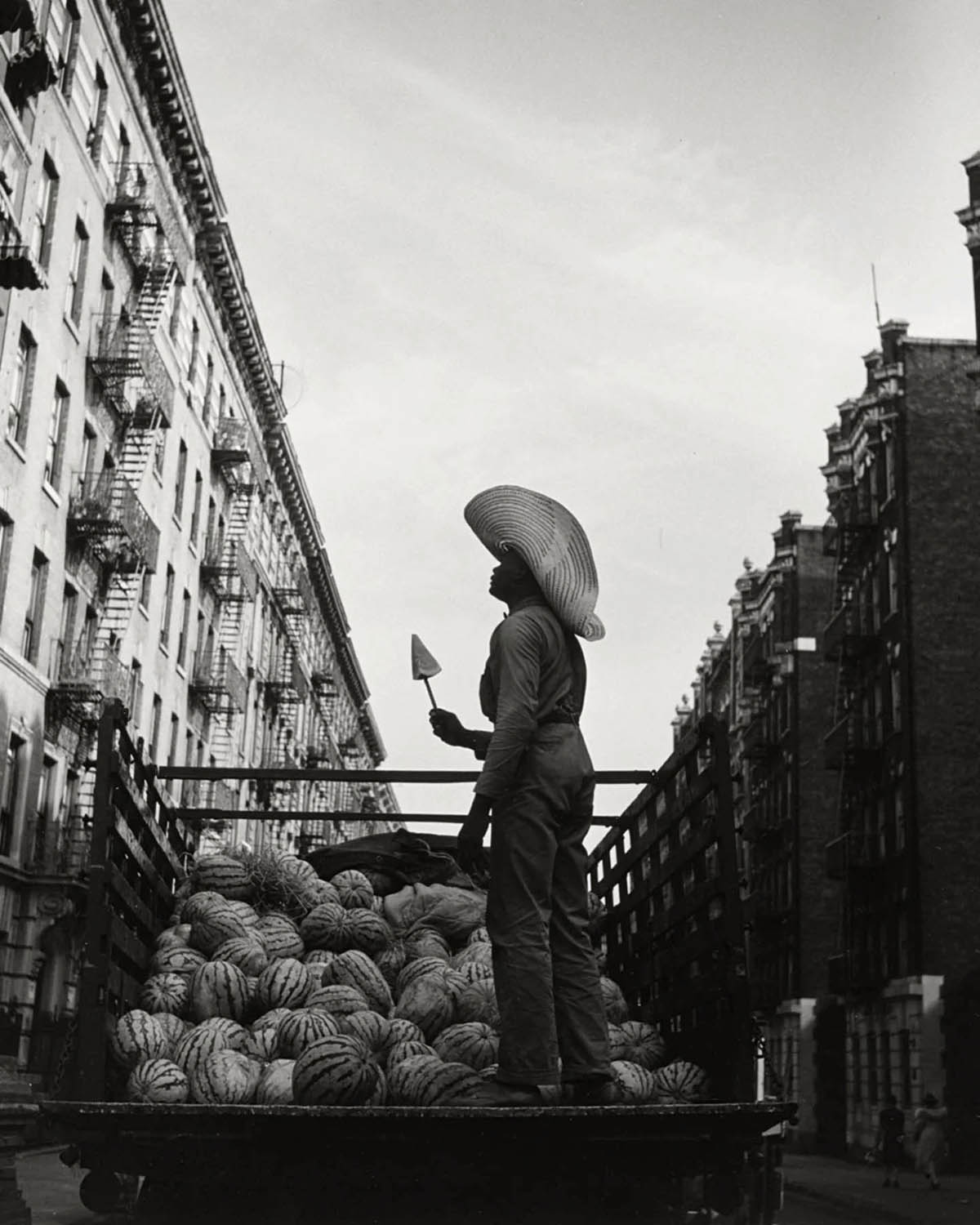
Aaron Siskind (American, 1902-1991) 'Watermelon Man' 1940


Aaron Siskind (American, 1902-1991)
Watermelon Man
1940
Gelatin silver print


LIKE ART BLART ON FACEBOOK

Back to top

Exhibition: ‘Muscle Memory: Lens on the Body’ at the Phoenix Art Museum, Phoenix, AZ

Exhibition dates: 24th January – 28th June, 2026

Curator: Emilia Mickevicius, Norton Family Assistant Curator of Photography at the Phoenix Art Museum


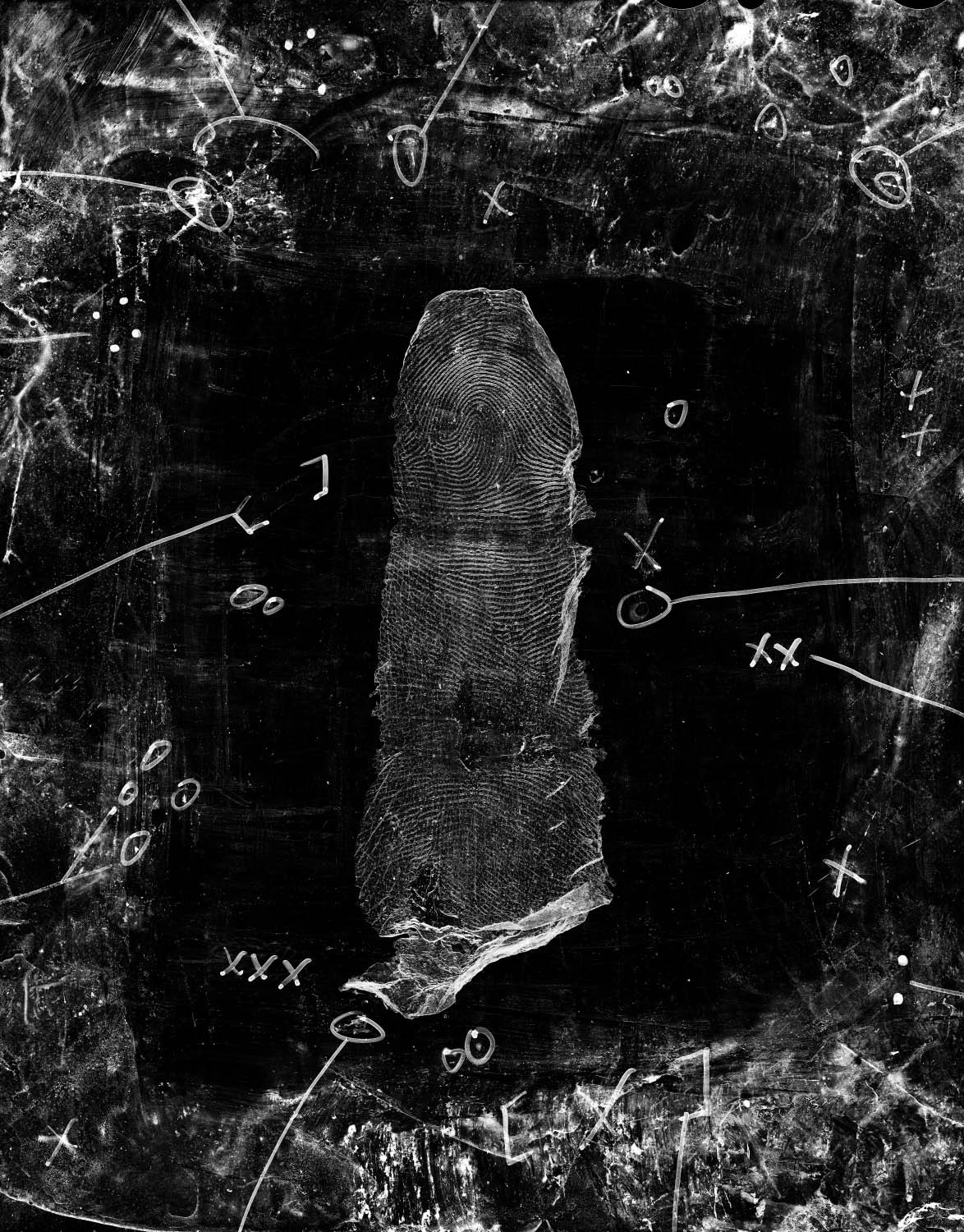
Claire A. Warden (Canadian) 'Genetics' Nd


Claire A. Warden (Canadian)
Genetics
Nd
From the series Mimesis (2015-ongoing)
Cameraless Photograph
© Claire A. Warden 


Surrounded by mirrors

” … the human body does not exist and is not understandable apart from the ‘social construction of reality’.” ~ Ted Polhemus

“Hence all of us, in modern social conditions, live as though surrounded by mirrors; in these we search for the appearance of an unblemished, socially valued self.” ~ Anthony Giddens


Embodiment is the fundamental condition we share.

~ Embodiment refers to the representation or expression of an abstract idea, quality, or feeling in a tangible, visible, or physical form. It describes a person, action, or object that perfectly exemplifies a concept. (Cambridge Dictionary)

~ At its core, the word stems from the root “embody,” meaning “to give a body to”. Philosophically, it refers to the condition of a subject (like a person) inhabiting or being associated with a physical form. (Oxford Academic)

Giving form to the intangible

~ Embodiment links together both broadly cultural and circumstantial usages, the body taking on its meaning at the intersection of narrative, culture, and social interaction… Nowadays, with the current interest in lived experience and embodiment, we assume that some level of cultural meaning is implied in pre-reflection as well. (Cambridge English Corpus)

~ Pre-reflection describes an implicit, automatic awareness that accompanies human experience before you pause to consciously analyse or think about what you are doing. It is an unmediated, “in-the-moment” state of being. (Stanford Encyclopaedia of Philosophy)

~ In continental philosophy – most notably the work of Jean-Paul Sartre and Edmund Husserl – pre-reflective consciousness is the immediate, tacit knowledge that an experience is happening to you.

When you are in the zone, as the energy flows through you, in the background you are implicitly aware of taking a photograph – but not in a reflective state, “I have taken a photograph”.

For me, there is a union of mindfulness, body, subject, camera – a seeming suspension of time and space – which may lead to a “revelatio”, a revelation of spirit, a pulling back of the curtain to reveal what is beyond. As a good friend and fellow photographer Frank Vic observes, “To emerge from “the dreams of omniscience and omnipotence” is to let go of the photographer’s intense desire for control and egoistic attachment. Only by facing the subject with an attitude of utmost humility is it possible for the lens to capture a truly objective and sacred “revelation”.”

In modern psychology, the pre-reflective unconscious refers to how your personal history, organising principles, and mental schemas shape your experience without you actively noticing it (Encyclopaedia.com). Thus, it is how unconsciously aware you are of your surroundings, how informed you are through your conversations and reading, how attuned you are to the energy of the body and the world – that directs your gaze.

Some pertinent quotations below.

Dr Marcus Bunyan

PS. The exhibition is divided into four interesting thematic sections – Surface Tension; Kinetic Beauty; Know Thyself; Enduring. Such a pity there are not more photographs to illustrate the many ideas contained within each section.


Many thankx to the Phoenix Art Museum for allowing me to publish the photographs in the posting. Please click on the photographs for a larger version of the image.


“The faculty to think objectively is reason; the emotional attitude behind reason is that of humility. To be objective, to use one’s reason, is possible only if one has achieved and attitude of humility, if one has emerged from the dreams of omniscience and omnipotence which one has as a child.”


Erich Fromm. The Art of Loving. London: Allen and Unwin, 1957, p. 120.


” … the human body does not exist and is not understandable apart from the ‘social construction of reality’. Our bodies and our perception of them constitute an important part of our socio-cultural heritage. They are not simply objects which we inherit at birth, but are socialized (enculturated) throughout life and this process of collectively sanctioned bodily modification may serve as an important instrument for our socialization (enculturation) in a more general sense. That is, in learning to have a body, we also begin to learn about our ‘social body’ – our society.”


Ted Polhemus. Social Aspects of the Human Body. Penguin: Harmonsworth, 1978, p. 21 quoted in Morag MacSween. Anorexic Bodies: A Feminist and Sociological Perspective on Anorexia Nervosa. London: Routledge, 1993, p. 115.


“Consumer capitalism, with its efforts to standardise consumption and to shape tastes through advertising, plays a basic role in furthering narcissism. The idea of generating an educated and discerning public has long since succumbed to the pervasiveness of consumerism, which is a ‘society dominated by appearances’. Consumption addresses the alienated qualities of modern social life and claims to be their solution: it promises the very things the narcissist desires – attractiveness, beauty and personal popularity – through the consumption of the ‘right’ kinds of goods and services. Hence all of us, in modern social conditions, live as though surrounded by mirrors; in these we search for the appearance of an unblemished, socially valued self.”


Anthony Giddens. Modernity and Self-Identity: Self and Society in the Late Modern Age. California: Stanford University Press, 1991, p. 172.


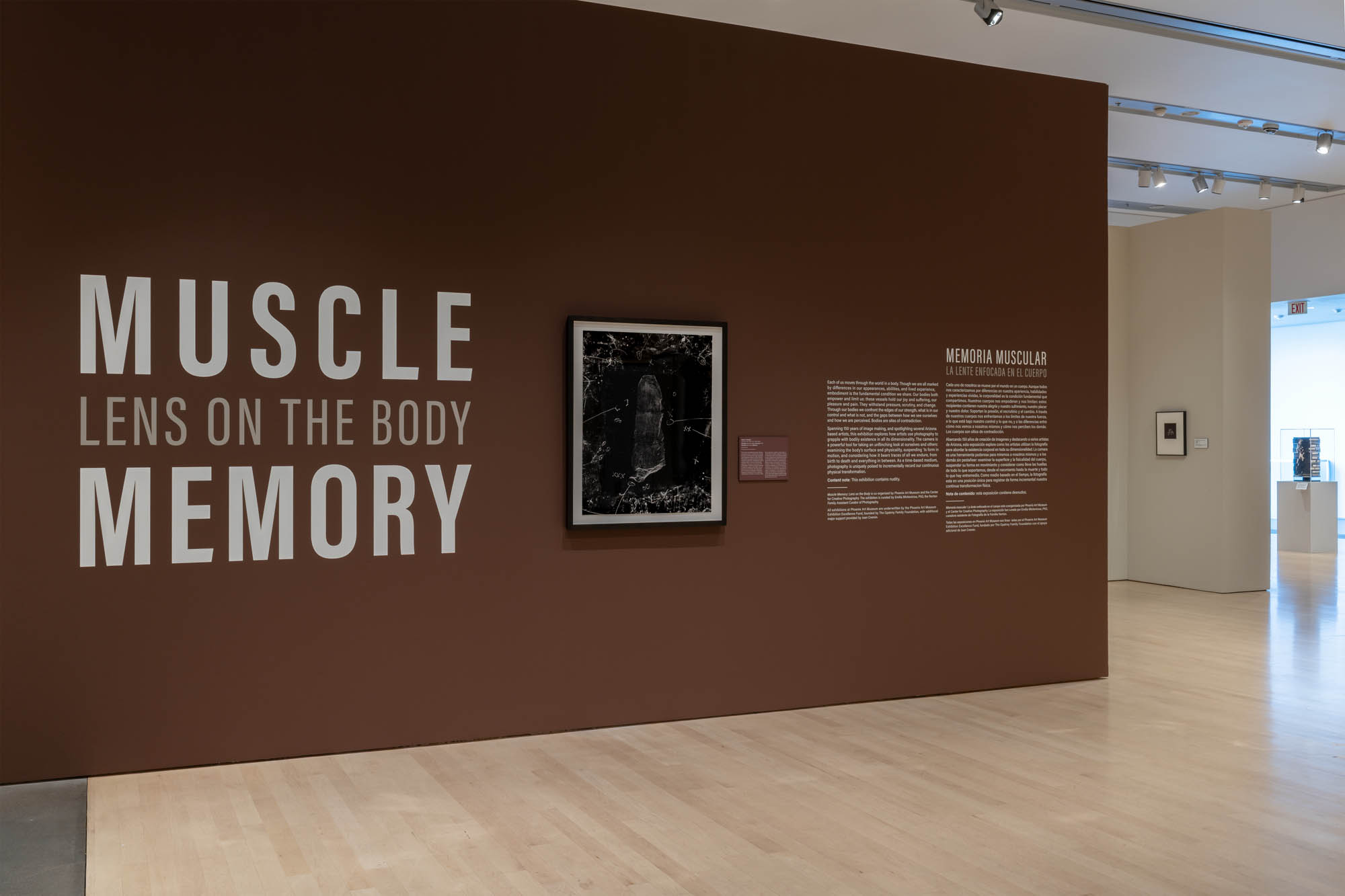
Installation view of the exhibition 'Muscle Memory: Lens on the Body' at the Phoenix Art Museum, Phoenix, AZ, January - June, 2026 showing Claire A. Warden 'Genetics' Nd


Installation view of the exhibition Muscle Memory: Lens on the Body at the Phoenix Art Museum, Phoenix, AZ, January – June, 2026 showing Claire A. Warden’s photograph Genetics Nd (above) from the series Mimesis (2015-ongoing)


Muscle Memory: Lens on the Body

Each of us moves through the world in a body. Though we are marked by differences in our appearances, abilities, and lived experience, embodiment is the fundamental condition we share. Our bodies both empower and limit us: these vessels hold our joy and suffering, our pleasure and pain. They withstand pressure, scrutiny, and change. Through our bodies we confront the edges of our strength, what is in our control and what is not, and the gaps between how we see ourself and how we are perceived. Bodies are sites of contradiction.

Spanning 150 years of images making, and spotlighting several Arizona based artists, this exhibition explores how artists use photography to grapple with bodily existence in all its dimensionality. The camera is a powerful tool for taking an unflinching look at ourselves and others: examining the body’s surface and physicality, suspending its form in motion, and considering how it bears traces of all we endure, from birth to death and everything in between. As a time-based medium, photography is uniquely poised to incrementally record our continuous physical transformation.

Wall text from the exhibition (in the image above)


Mimesis is an ongoing series of large-scale cameraless, abstract photographs that explore identity, representation, resistance, and Opacity.

Mimesis is an ongoing series that engages identity, representation, and language through abstraction and experimental image-making. The creation of this work comes at a time when the struggle to accept the unfamiliar or unkown is pervasive in American culture. When looking at much of my work, the urge to ask “what is it?” echoes the question, “what are you?” – a question directed to me countless times as a person of colour with a diverse ethnocultural heritage and one I increasingly tend to resist. That resistance carries through the work as resistance to definition as well as the hegemonic gaze and, instead, emphasizes Opacity and illegibility. These concepts, informed by anti-essentialism and decolonial theory, ultimately make way for my experimental image-making practice as mode to subvert the problematics of representation in photography, particularly in addressing experiences had by people of color. 

For this reason, I believe it is important to know that the Mimesis series is photographic – cameraless photographs – and that I developed a cameraless process that uses saliva to break down the emulsion of film. What is left is metallic silver and my biologic matter – thus exploring photographic materiality, identity formation, and illegibility. These works of self-portraiture do not show a viewer what I look like but are built from my DNA and shaped by my experiences.

Text from the PhMuseum website. Used under fair use conditions for the purposes of education and research
 

About the exhibition

Drawn primarily from the collections of the Center for Creative Photography and Phoenix Art Museum, Muscle Memory: Lens on the Body showcases a wide range of historical and contemporary works that explore the ways photographers have represented the human figure and bodily experiences of movement, aging, disability, and more.

Featured works demonstrate how artists have grappled with physicality, dimension, beauty, form, and the politics of the body in the landscape and urban environment. Subjects are presented in the context of growing older, sports, and abstraction, offering audiences the opportunity to consider the body’s ability to morph and bear traces of lived experiences.

Text from the Phoenix Art Museum website


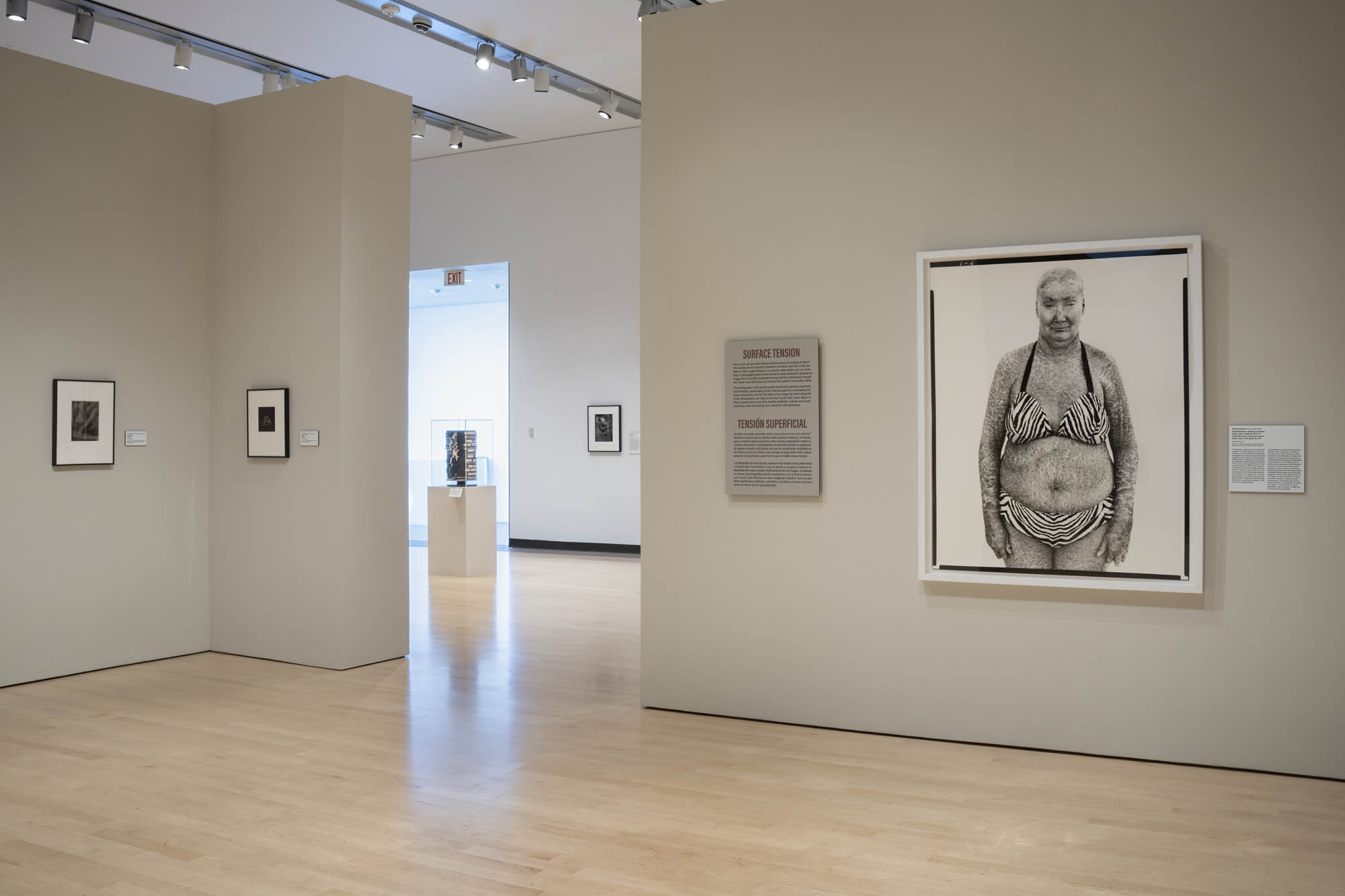
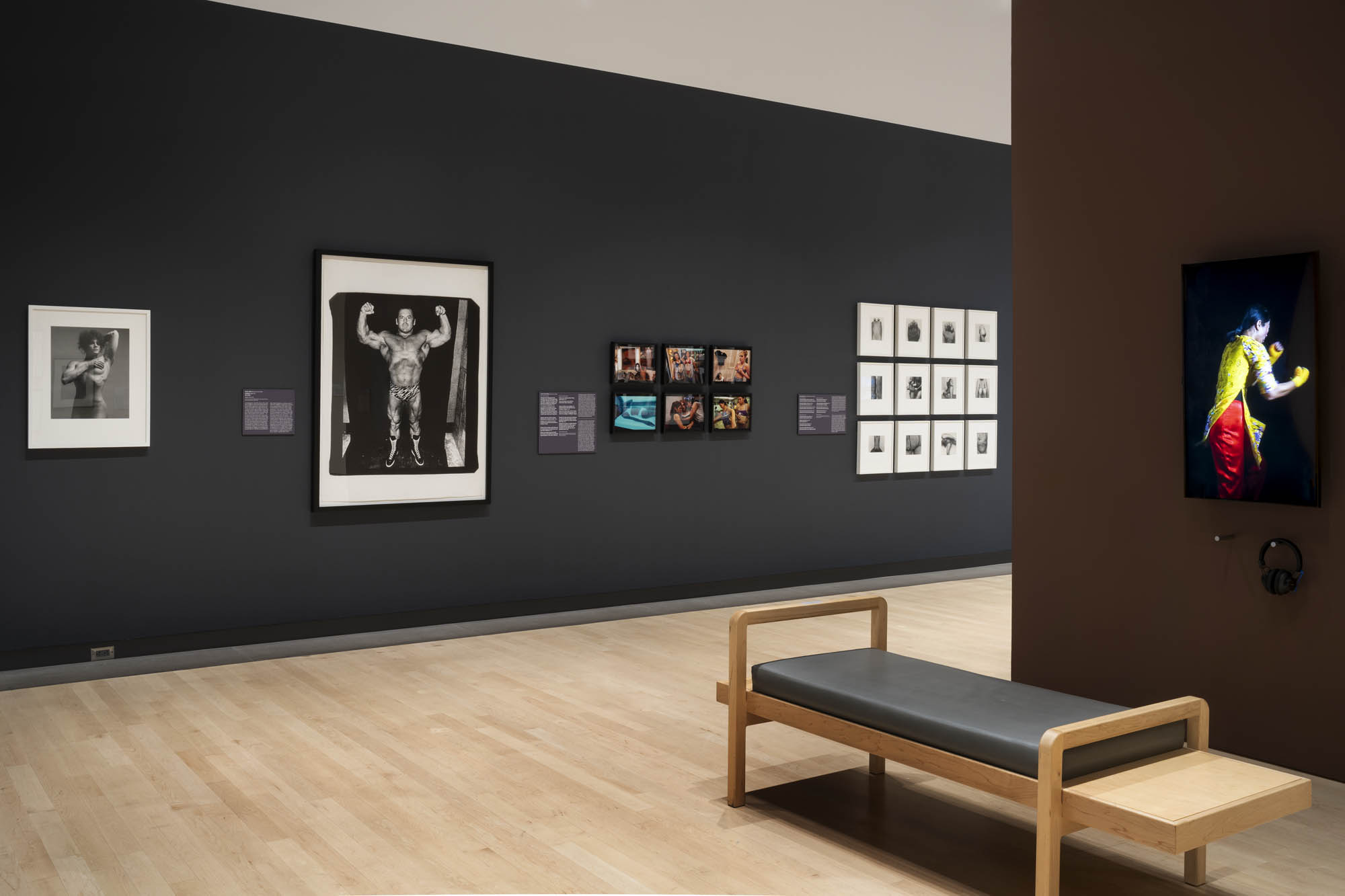
Installation view of the exhibition 'Muscle Memory: Lens on the Body' at the Phoenix Art Museum, Phoenix, AZ, January - June, 2026 showing at right, Richard Avedon 'Esther Blackmon, sideshow performer, Sidney, Iowa, August 12, 1979' (1979)


Installation view of the exhibition Muscle Memory: Lens on the Body at the Phoenix Art Museum, Phoenix, AZ, January – June, 2026 showing at right, Richard Avedon Esther Blackmon, sideshow performer, Sidney, Iowa, August 12, 1979 (1979, below)


Surface Tension

How much can you learn about another person by looking at them? Our bodies are the interface between ourselves and the world, but there is often a gap between our exterior presentation and our inner lives. A photograph grants us the license to study someone’s appearance longer than is socially acceptable during real-time interactions, though the viewer must still draw conclusions from what is outwardly visible.

The photographs in this section probe this tension between exteriority and interiority, showcasing what is lost and gained in translating the body’s physicality in the flat plane of an image. By abstracting the body, photographs can help us see the human form anew. Many of these pictures show how skin signifies aesthetic, cultural, and social meanings, even functioning as a canvas for self-expression.

Wall text from the exhibition


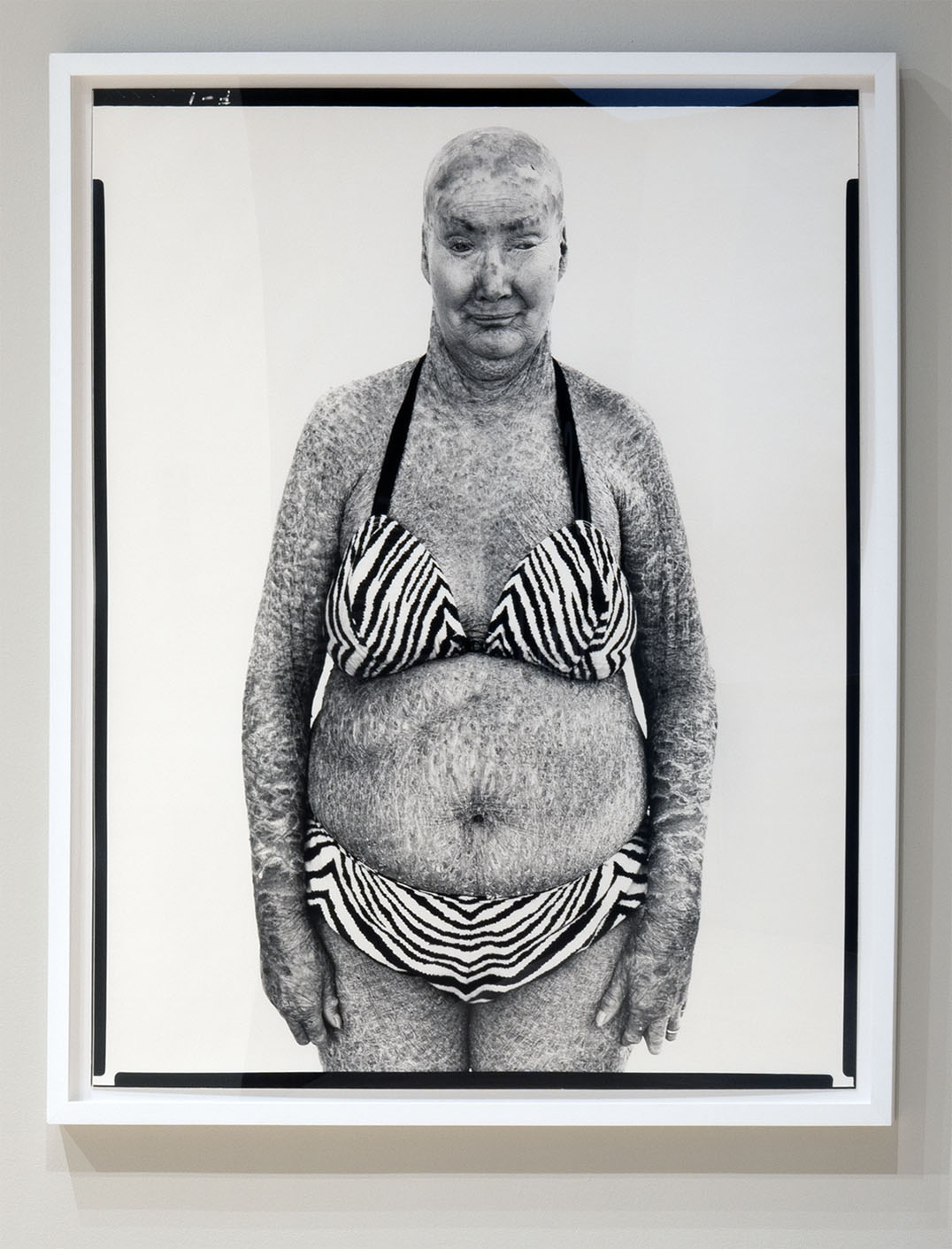
Richard Avedon (American, 1923-2004) 'Esther Blackmon, sideshow performer, Sidney, Iowa, August 12, 1979' 1979 (installation view)


Richard Avedon (American, 1923-2004)
Esther Blackmon, sideshow performer, Sidney, Iowa, August 12, 1979 (installation view)
1979
Gelatin silver print
Center for Creative Photography, University of Arizona
Richard Avedon Archive
Gift of the artist


Photographs of people can both exploit and empower. The power dynamic of a portrait involves not only the interaction between the photographer and subject, but also the viewer’s projections, assumptions and interpretation. Resisting others’ projections of shame about her appearance, Esther Blackmon proclaimed: “I live a normal and happy life.” Born in North Carolina, Blackmon (1926-2003) lived with a hereditary skin disease called ichthyosis which caused dryness and baldness. This unique aspect of her phenotype earned her the nickname “The Alligator Girl.” Actively participating in the carnival industry for 56 years, Blackmon regarded herself with pride. “People born unusual are not freaks … I’d say they are very special people.”

Wall text from the exhibition


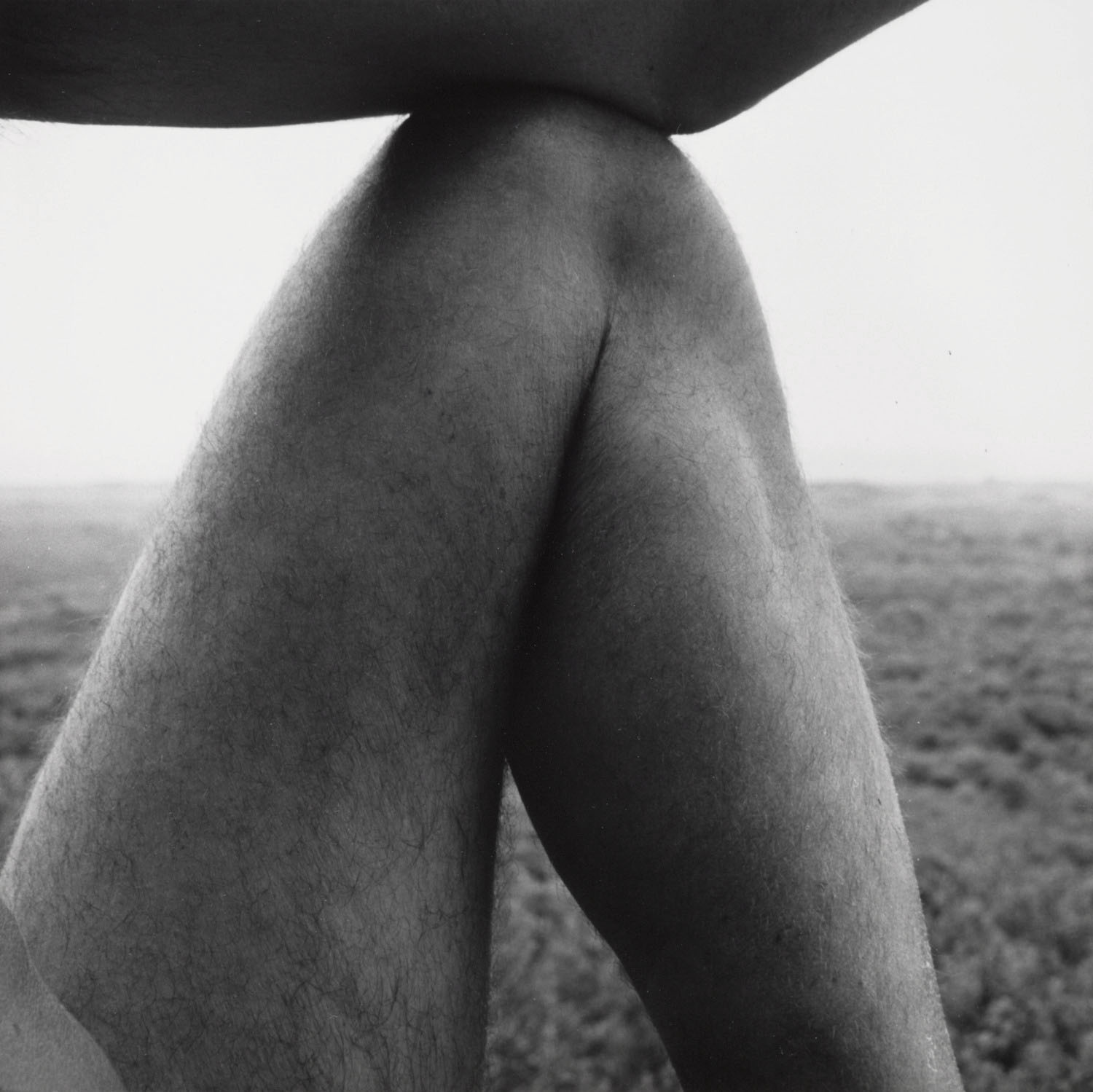
Aaron Siskind (American, 1903-1991) 'Lipkind 33' 1960


Aaron Siskind (American, 1903-1991)
Lipkind 33
1960
Gelatin silver print
Center for Creative Photography
University of Arizona: Aaron Siskind Archive
© Aaron Siskind Foundation 


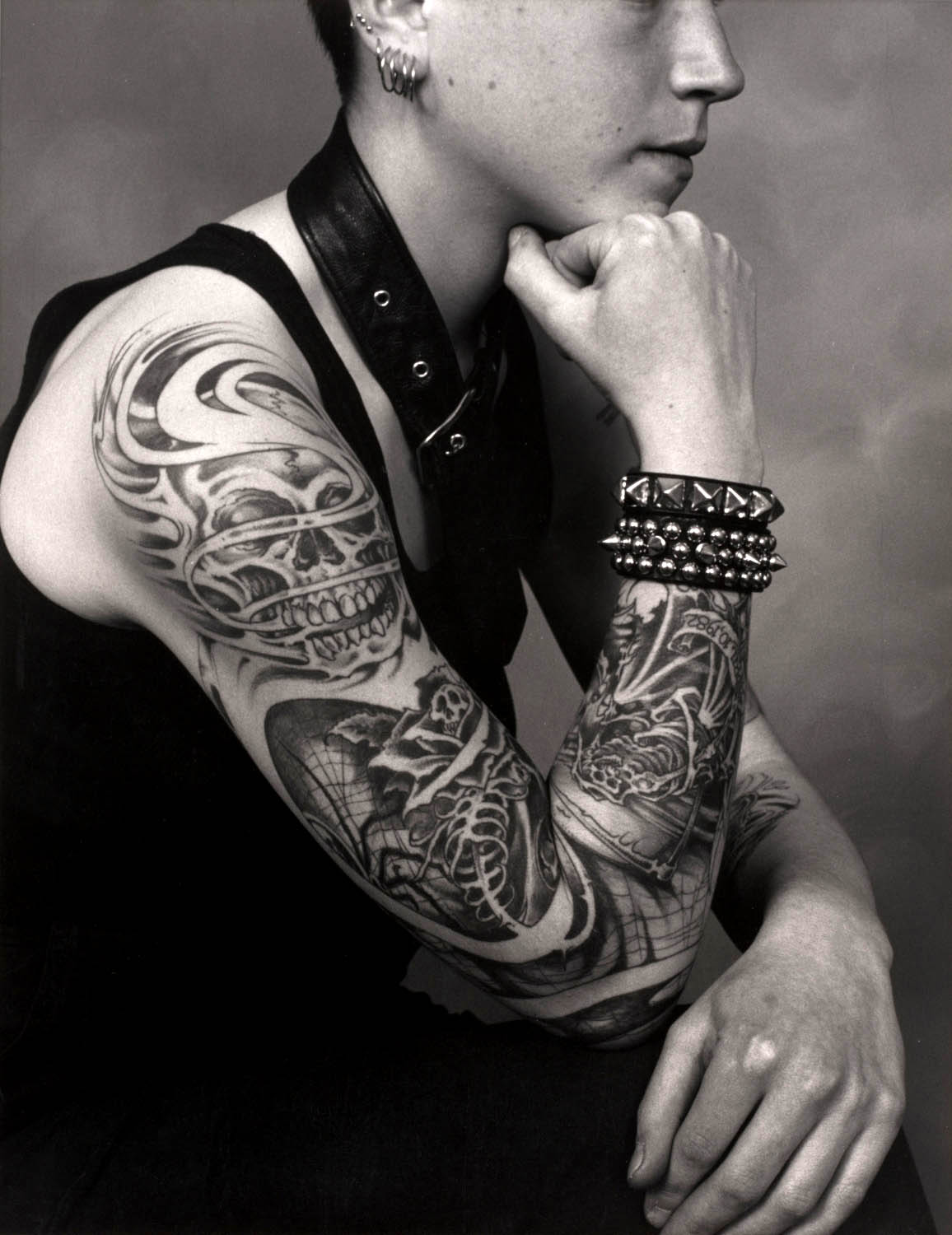
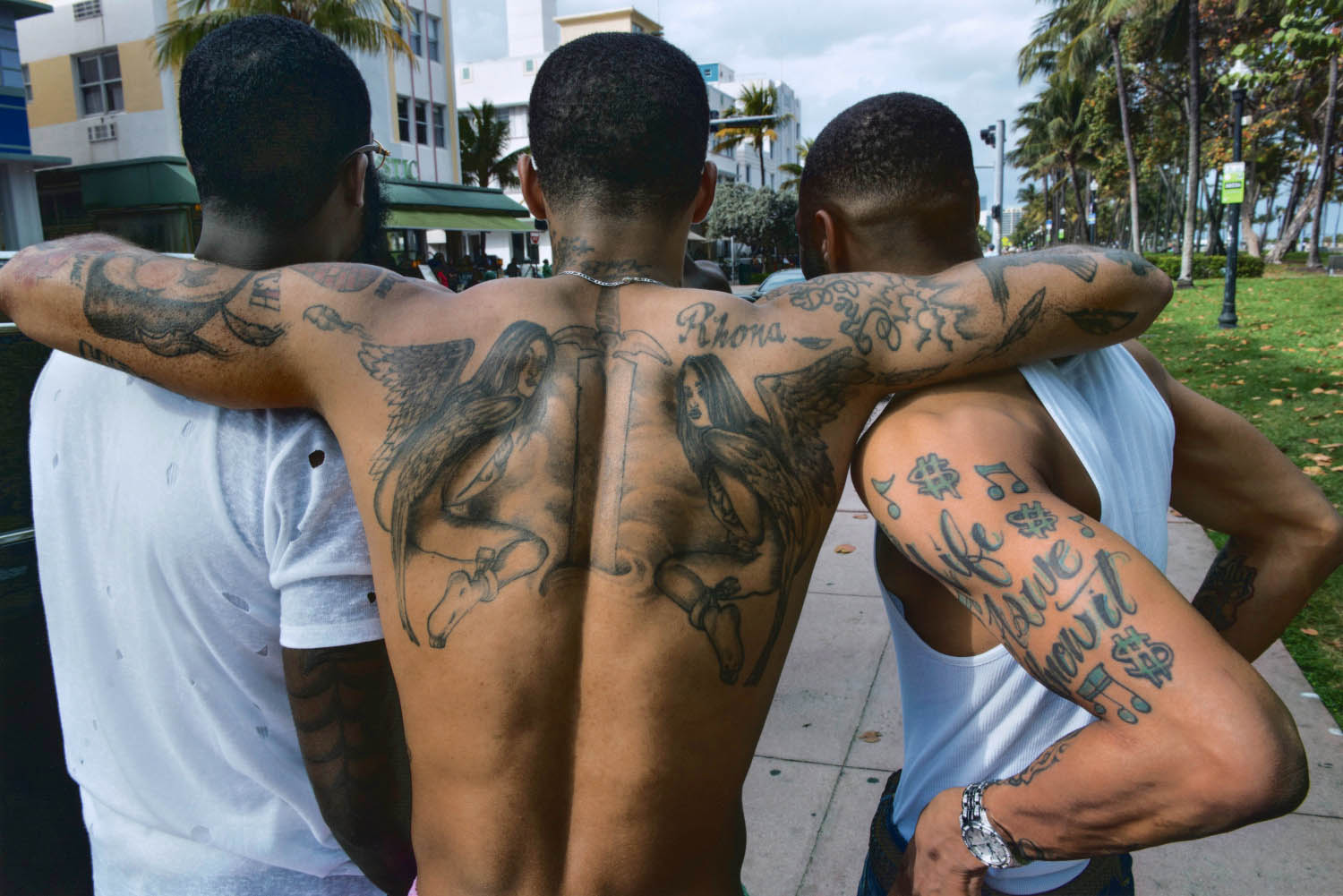
Installation view of the exhibition 'Muscle Memory: Lens on the Body' at the Phoenix Art Museum, Phoenix, AZ, January - June, 2026 showing at left, Leon Borensztein 'Woman with Tattoo, San Francisco' (1984); at second left bottom, Stephen Marc, 'Untitled' (2017); and at third right bottom, Diane Arbus 'Tattooed Man at a Carnival, Md.' (1970)


Installation view of the exhibition Muscle Memory: Lens on the Body at the Phoenix Art Museum, Phoenix, AZ, January – June, 2026 showing at left, Leon Borensztein Woman with Tattoo, San Francisco (1984, below); at second left bottom, Stephen Marc, Untitled (2017, below); and at third right bottom, Diane Arbus Tattooed Man at a Carnival, Md. (1970, below)


Leon Borensztein (American, b. 1947) 'Woman with Tattoo, San Francisco' 1984


Leon Borensztein (American, b. 1947)
Woman with Tattoo, San Francisco
1984
Gelatin silver print
Center for Creative Photography
University of Arizona: Purchase
© Leon Borensztein 


Stephen Marc (American, b. 1954) 'Untitled' 2017


Stephen Marc (American, b. 1954)
Untitled
2017
Inkjet print
Center for Creative Photography
University of Arizona: Gift of the Artist
© Stephen Marc


Diane Arbus (American, 1923-1971) 'Tattooed Man at a Carnival, Md.' 1970


Diane Arbus (American, 1923-1971)
Tattooed Man at a Carnival, Md.
1970
Gelatin silver print


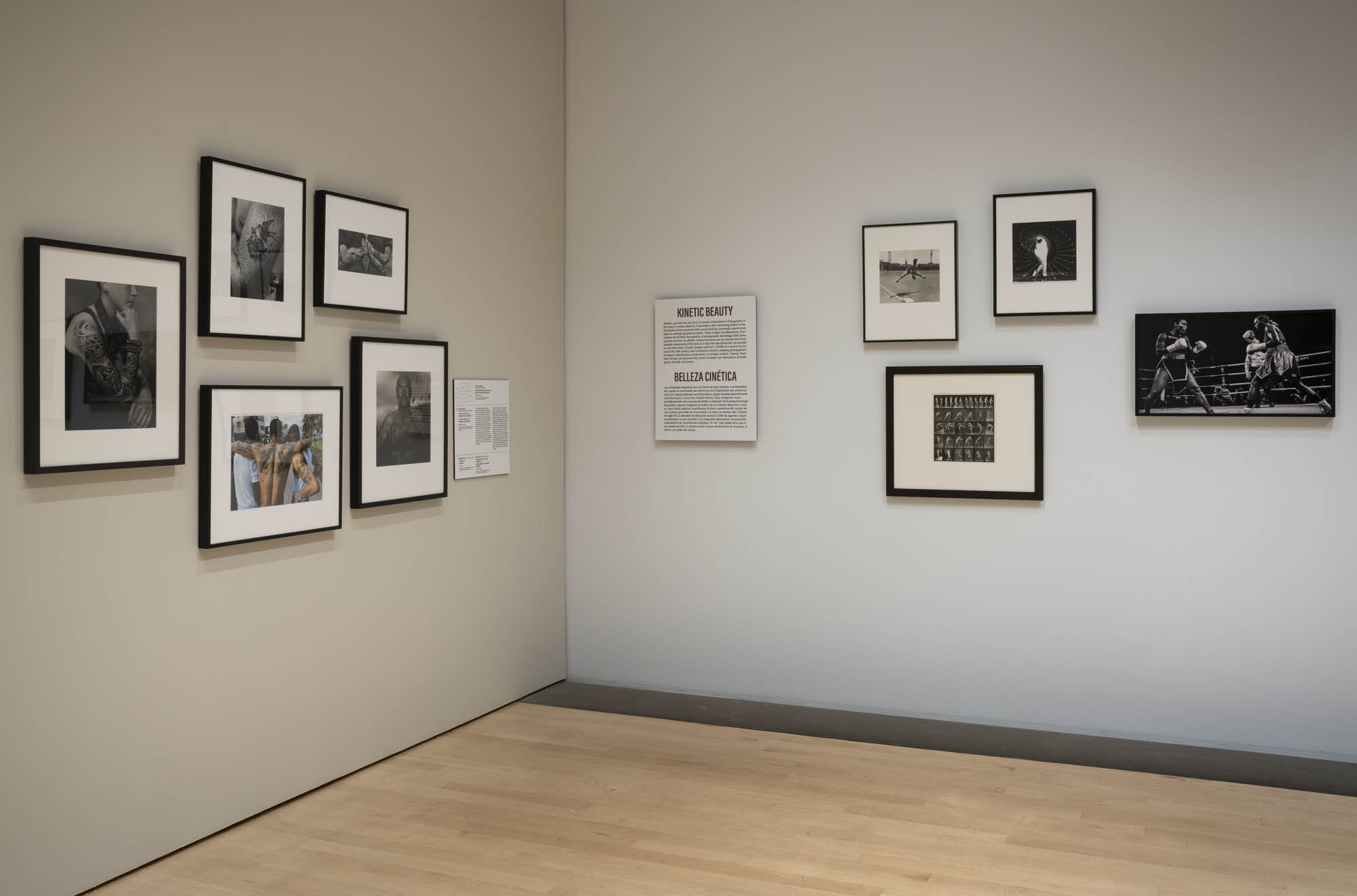
Kinetic Beauty

Athletic pursuits are one form of human achievement. Photographs of the body in motion attest to a fascination with witnessing bodies at the threshold of their physical limits, accomplishing seemingly superhuman feats or embodying physical ideals. These images simultaneously chart another set of limits; the evolution of photographic technology itself. Some pictures are from an athletic context and some are not, but all arrest fluid, operatic movements of the body in a way that was previously inaccessible to real-time vision. Shutter speeds reached 1/1000th of a second by the end of the 19th century and continued to shorten, enabling photographers to dissect instantaneous components of complex motions. “Seeing” faster than the eye can perceive, the camera revealed new dimensions of bodily grace, strength, and power.

Wall text from the exhibition


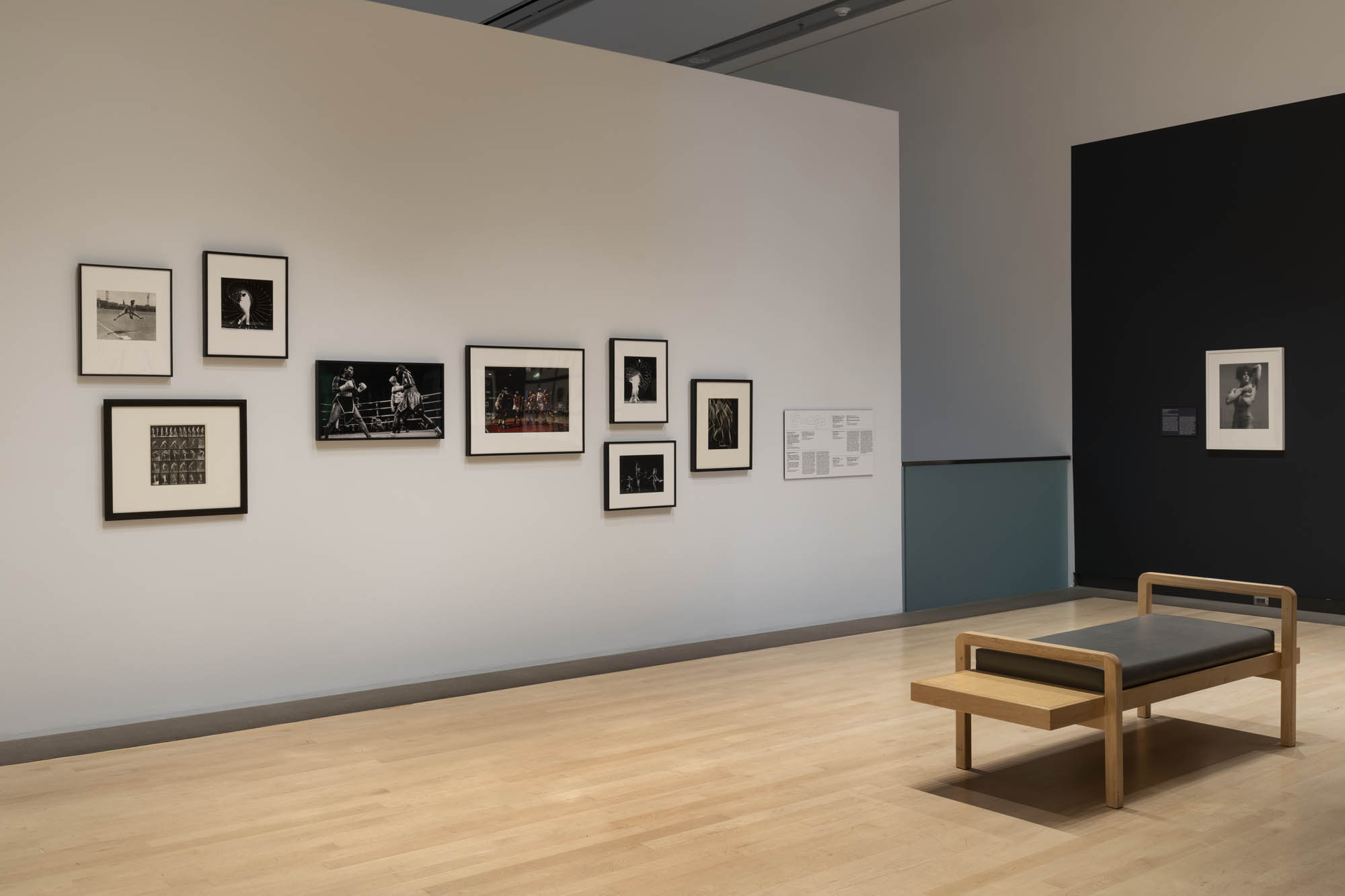
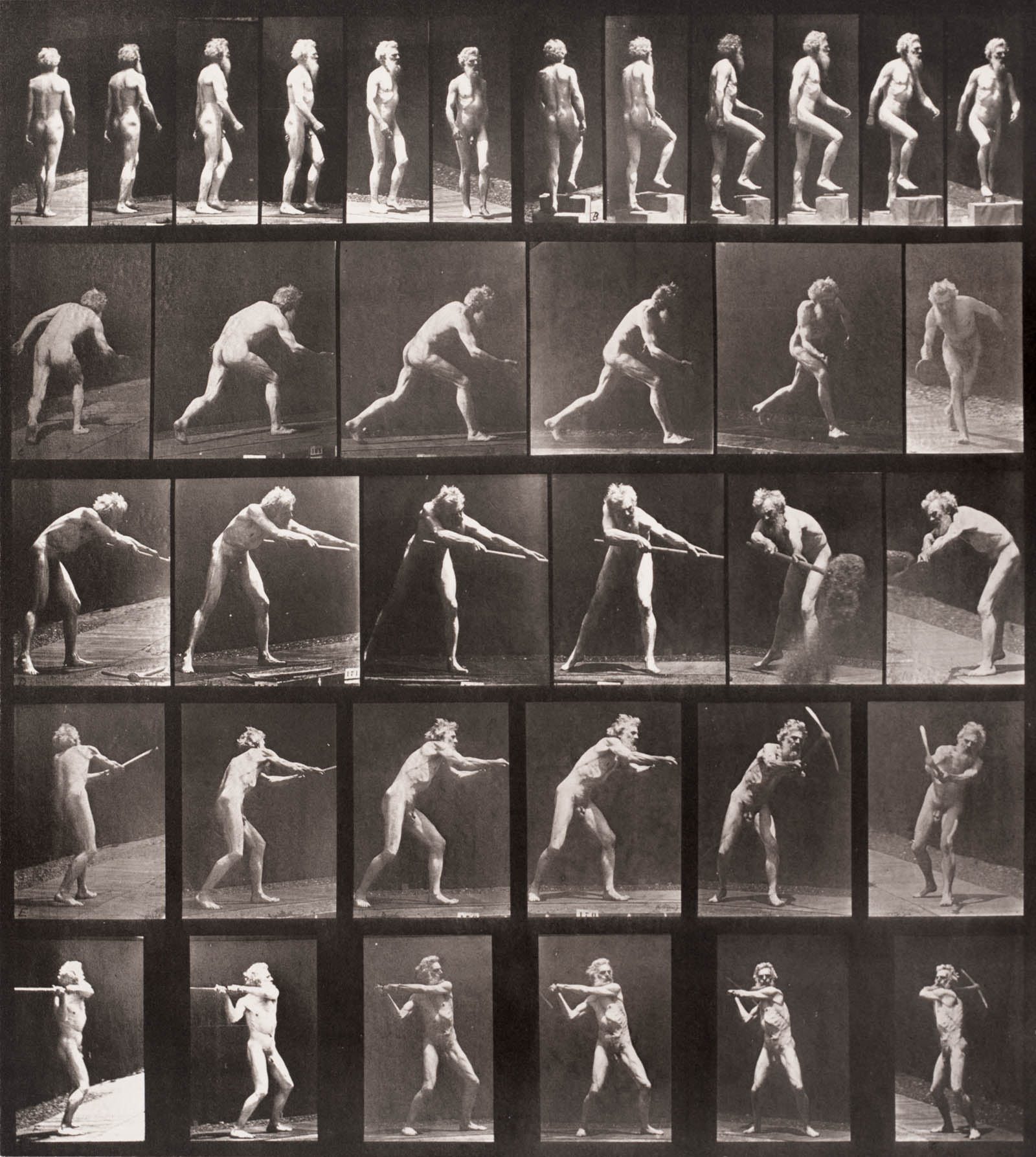
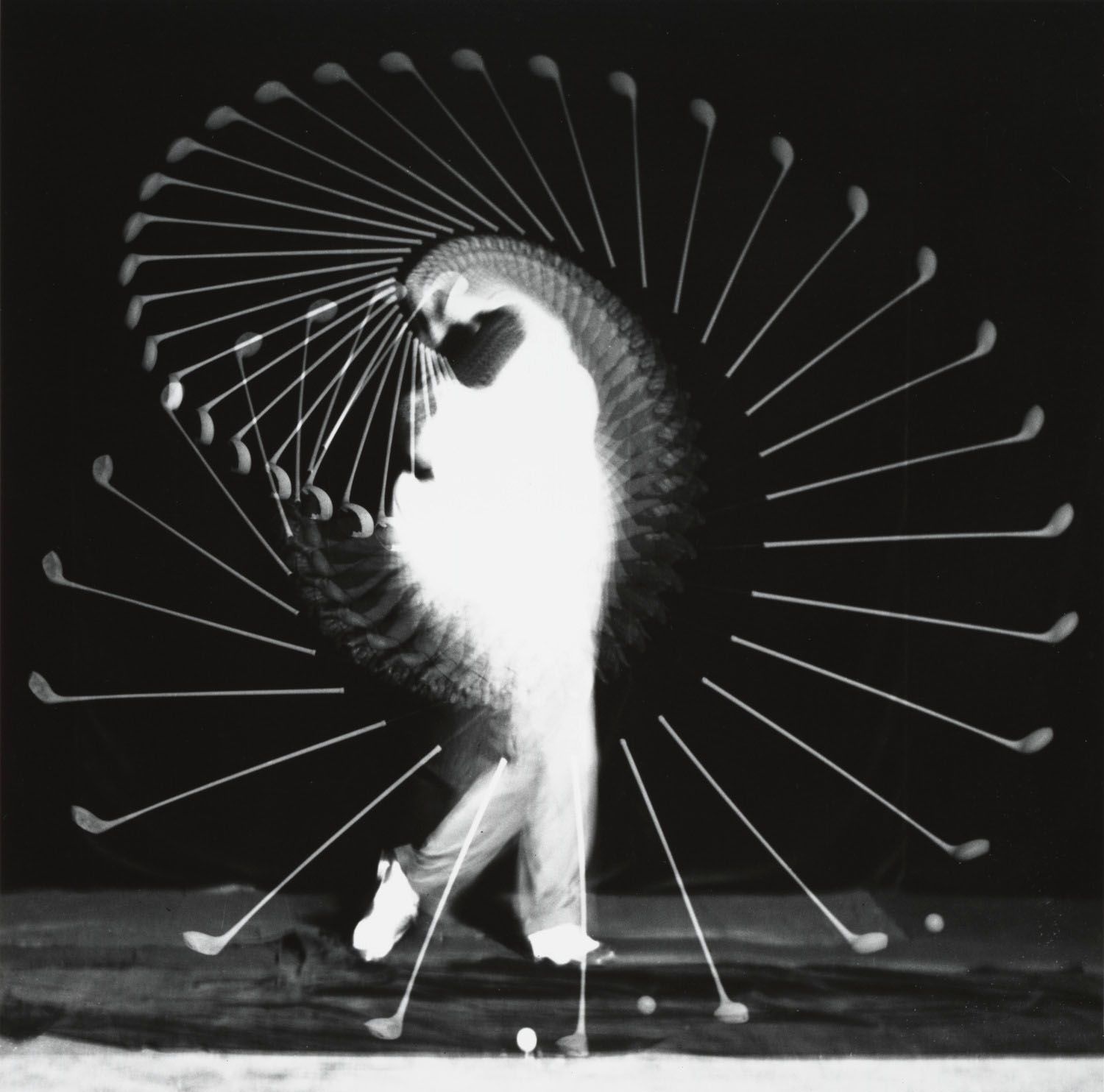
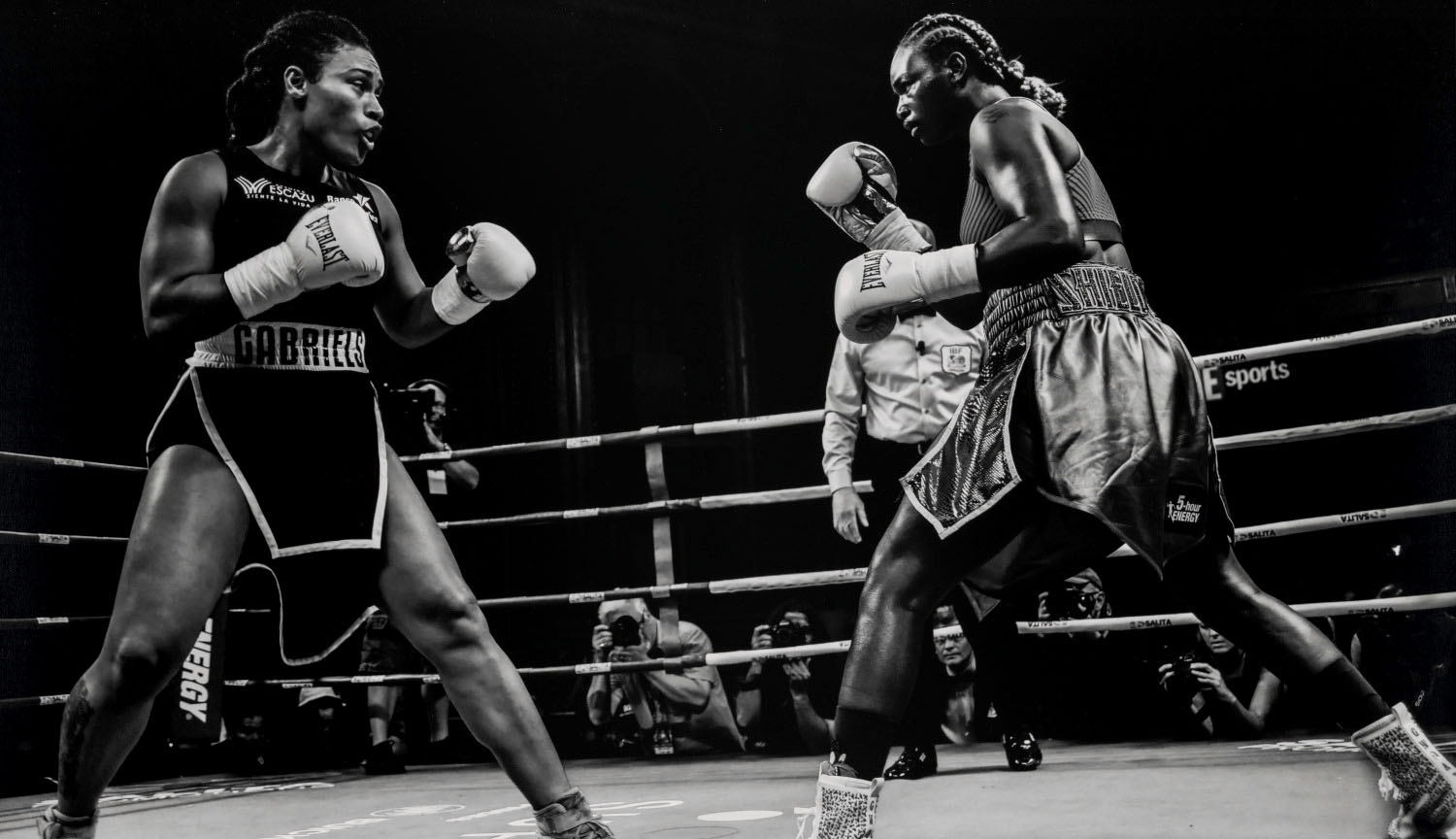
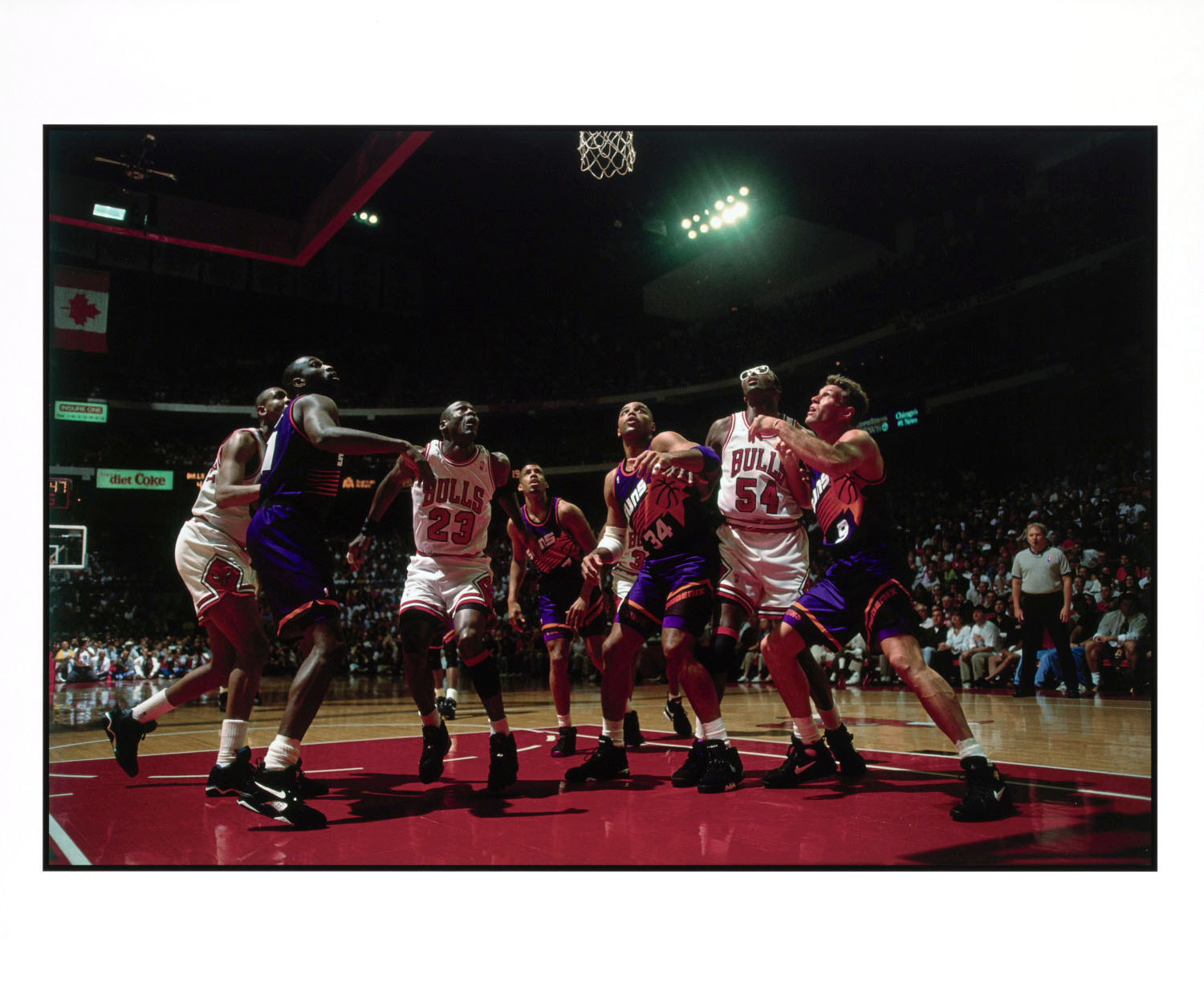
Installation view of the exhibition 'Muscle Memory: Lens on the Body' at the Phoenix Art Museum, Phoenix, AZ, January - June, 2026 showing at top left, Charles "Teenie" Harris 'New York Cubans' (1941); at bottom left, Eadweard J. Muybridge 'Animal Locomotion, Plate 521: A: Walking, B: Ascending a Step, C: Throwing the Disc, D: Using a Shovel, E: Using a Pick, 1884-85' (1887); at second left, Harold Edgerton 'Golf Drive by Densmore Shute, 1938' (1938); at centre left, Terrell Groggins 'Gabriels and Shields Square Up Round 1' (2018); at centre right, Walter Iooss 'Michael Jordan, Phoenix at Chicago, 1933' (1933); and at far right, Robert Mapplethorpe 'Lisa Lyon' (1983)


Installation view of the exhibition Muscle Memory: Lens on the Body at the Phoenix Art Museum, Phoenix, AZ, January – June, 2026 showing at top left, Charles “Teenie” Harris New York Cubans (1941, below); at bottom left, Eadweard J. Muybridge Animal Locomotion, Plate 521: A: Walking, B: Ascending a Step, C: Throwing the Disc, D: Using a Shovel, E: Using a Pick, 1884-85 (1887, below); at second left, Harold Edgerton Golf Drive by Densmore Shute, 1938 (1938, below); at centre left, Terrell Groggins Gabriels and Shields Square Up Round 1 (2018, below); at centre right, Walter Iooss Michael Jordan, Phoenix at Chicago, 1933 (1933, below); and at far right, Robert Mapplethorpe Lisa Lyon (1983)


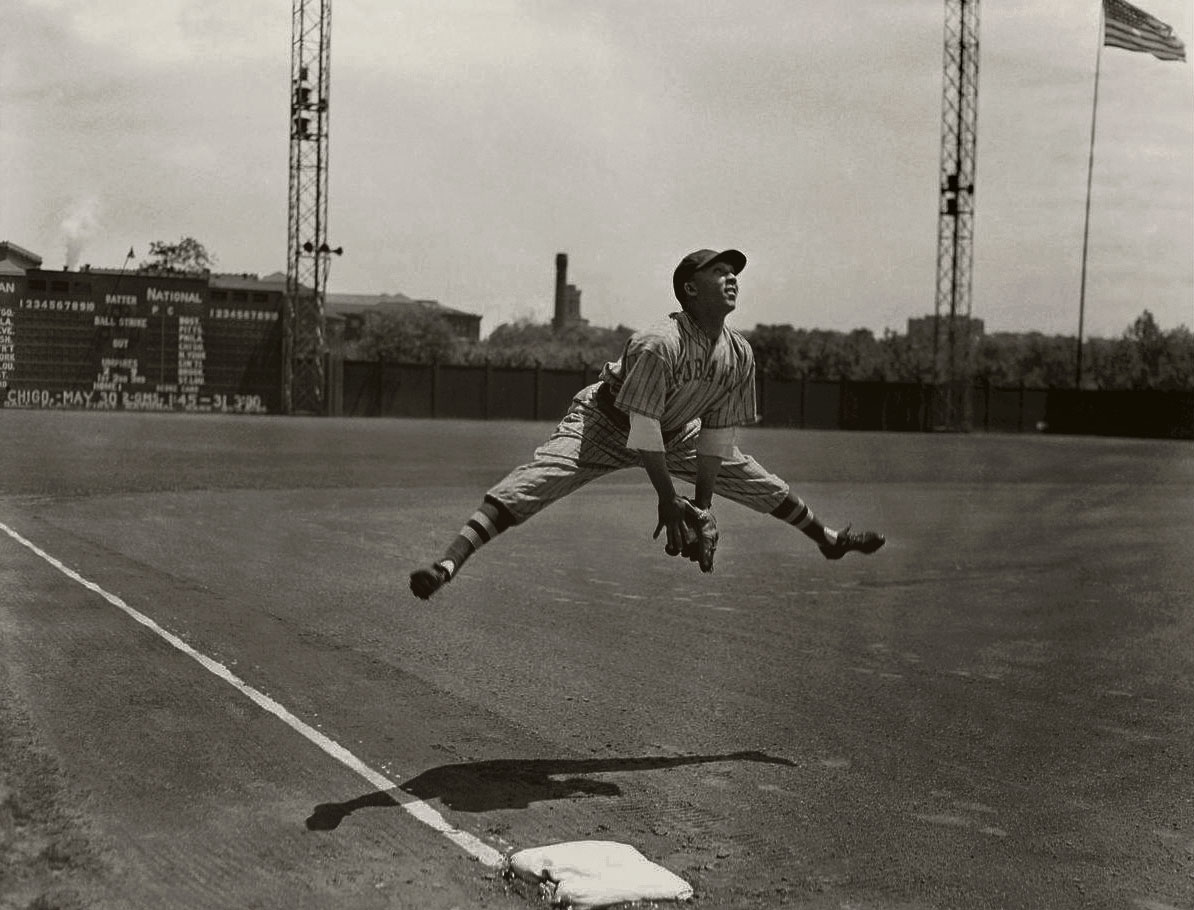
Charles "Teenie" Harris (American, 1908-1998) 'New York Cubans' 1941


Charles “Teenie” Harris (American, 1908-1998)
New York Cubans
1941
Gelatin silver print


New York Cubans baseball player Horacio Martinez leaping above third base at Forbes Field


Eadweard J. Muybridge (English, 1830-1904) 'Animal Locomotion, Plate 521: A: Walking, B: Ascending a Step, C: Throwing the Disc, D: Using a Shovel, E: Using a Pick, 1884-85' 1887


Eadweard J. Muybridge (English, 1830-1904)
Animal Locomotion, Plate 521: A: Walking, B: Ascending a Step, C: Throwing the Disc, D: Using a Shovel, E: Using a Pick, 1884-85
1887
Collotype
Center for Creative Photography
University of Arizona: Purchase 


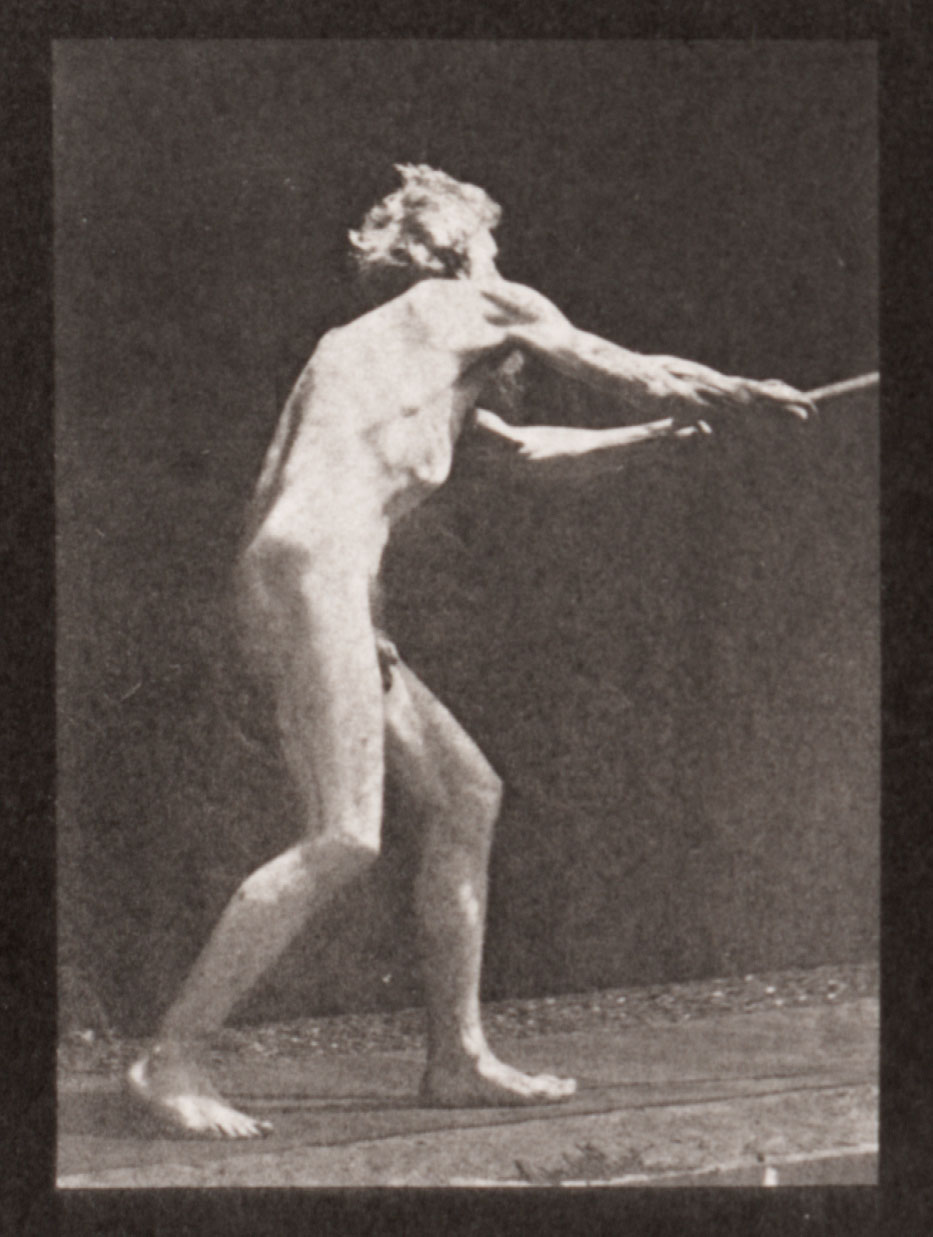
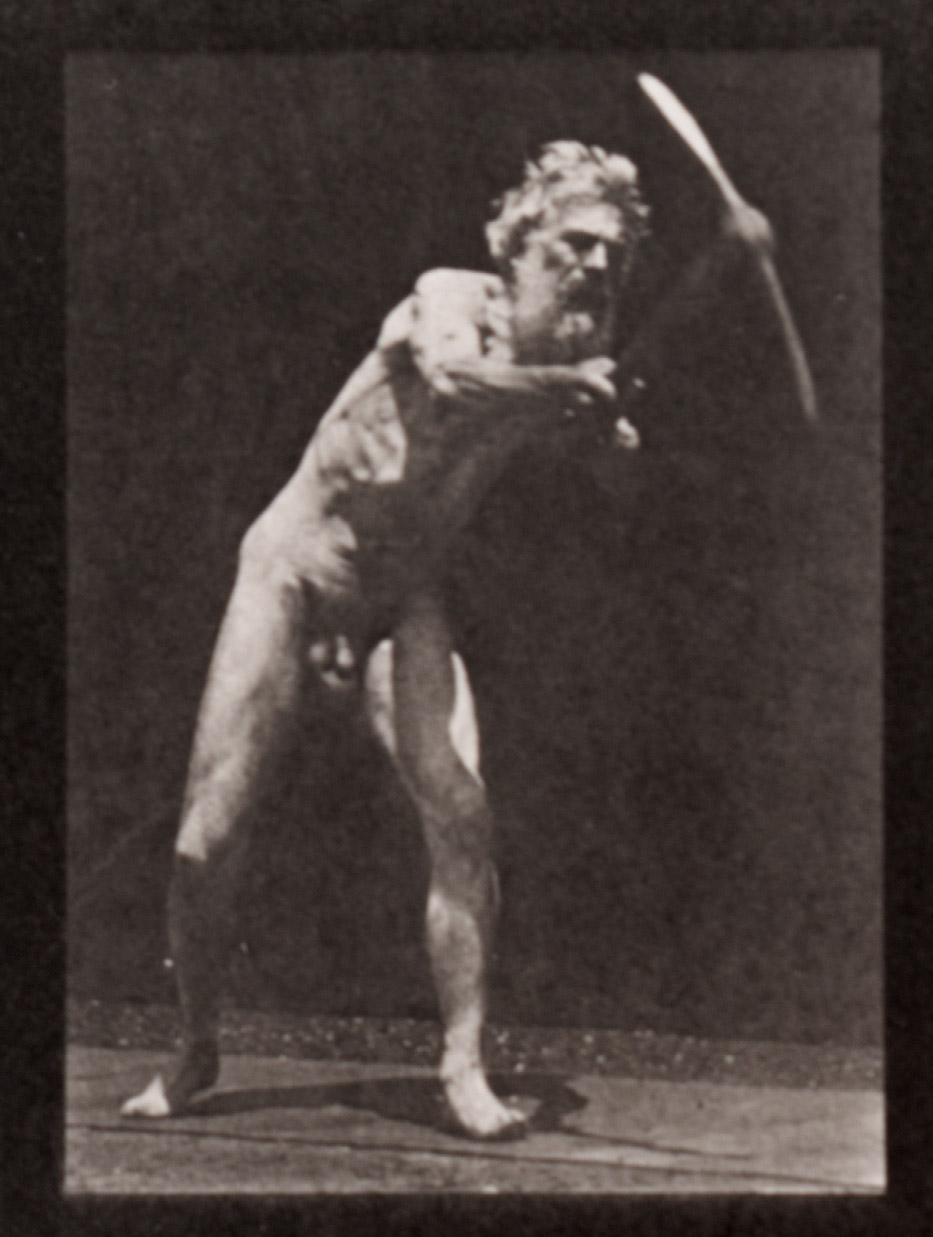
Eadweard J. Muybridge (English, 1830-1904) 'Animal Locomotion, Plate 521: A: Walking, B: Ascending a Step, C: Throwing the Disc, D: Using a Shovel, E: Using a Pick, 1884-85' 1887 (detail)


Eadweard J. Muybridge (English, 1830-1904)
Animal Locomotion, Plate 521: A: Walking, B: Ascending a Step, C: Throwing the Disc, D: Using a Shovel, E: Using a Pick, 1884-85 (details)
1887
Collotype
Center for Creative Photography
University of Arizona: Purchase 


Harold Edgerton (American, 1903-1990) 'Golf Drive by Densmore Shute, 1938' 1938


Harold Edgerton (American, 1903-1990)
Golf Drive by Densmore Shute, 1938
1938
Gelatin silver print
Center for Creative Photography
University of Arizona: Purchase
© Harold Edgerton, MIT, courtesy of Palm Press Inc.


Terrell Groggins (American) 'Gabriels and Shields Square Up Round 1' 2018, printed 2021


Terrell Groggins (American)
Gabriels and Shields Square Up Round 1
2018, printed 2021
Inkjet print
Center for Creative Photography
University of Arizona: Center for Creative Photography Photojournalism Fund
© Terrell Groggins My Art My Rules


Walter Iooss (American, b. 1943) 'Michael Jordan, Phoenix at Chicago, 1993' 1993


Walter Iooss (American, b. 1943)
Michael Jordan, Phoenix at Chicago, 1993
1993
Inkjet print
Center for Creative Photography
University of Arizona: Gift of Rajesh B. Patel
© Walter Iooss 


This winter, Phoenix Art Museum presents Muscle Memory: Lens on the Body, an exploration of the ways in which photographers across history have represented and reckoned with the human body and its associated dimensionality, evolution, and politicization. Drawn primarily from the collection of the Center for Creative Photography (CCP) at the University of Arizona in Tucson, along with select works from the PhxArt Collection and those by Arizona- based contemporary artists, the exhibition showcases more than 80 wide-ranging works that contend with the body’s form, physicality, and limits. Muscle Memory: Lens on the Body will be on view at PhxArt from January 24, 2026, through June 28, 2026.

“Muscle Memory: Lens on the Body offers a view into the human experience that is both compelling and relatable,” said Jeremy Mikolajczak, the Sybil Harrington Director and CEO of Phoenix Art Museum. “From sports imagery and self-portraiture to abstract compositions, this exhibition considers all aspects of the body in every stage of evolution. We are excited to once again work with the Center for Creative Photography to present a captivating collection of photographic works, shown in conversation with new acquisitions to the Phoenix Art Museum Collection by contemporary voices.”

Spanning works captured from the 19th century through the present, Muscle Memory offers a compelling look at the dynamism of the human body with works by artists such as:

John Gutmann • Richard Avedon • Brian Weil • Lauren Greenfield • Rosalind Fox Solomon • Anne Noggle • Frances Murray • Walter Iooss • Diane Arbus • Manuel Álvarez Bravo • Imogen Cunningham • Arno Rafael Minkkinen • Roy DeCarava • Harold Edgerton • Aaron Siskind • Charles “Teenie” Harris • W. Eugene Smith • Leon Borensztein • Jan Groover • Ittetsu Morishita • John Coplans • Robert Mapplethorpe • Eadweard J. Muybridge • Graciela Iturbide • Barbara Crane • Nan Goldin • William Camargo • Marcus Chormicle • Mehrdad Mirzaie • Claire A. Warden • Zhang Huan

The exhibition’s works are presented across four thematic sections that offer varying views on embodiment and how our bodies at once empower and limit us. Surface Tension considers skin as a surface and what is possible to know about a person by looking at them, including how a subject’s outward appearance can exist in tension with their interiority. Works in this section by artists such as Diane Arbus and John Gutmann spotlight individuals who have changed their outward appearance with tattoos, makeup, and other markings, exploring the human impulse to use the body as a canvas for personal expression.

Kinetic Beauty features the body in motion, with a specific focus on sports imagery. It explores how bodies interact and take shape in athletic settings, particularly those that require high levels of physical performance, endurance, and even contortion. Works in this section include images of bodybuilders by Robert Mapplethorpe and Brian Weil and a photograph by Walter Iooss featuring Michael Jordan and Charles Barkley, as well as abstract studies of bodily motion associated with physical training, strength, and aspiration.

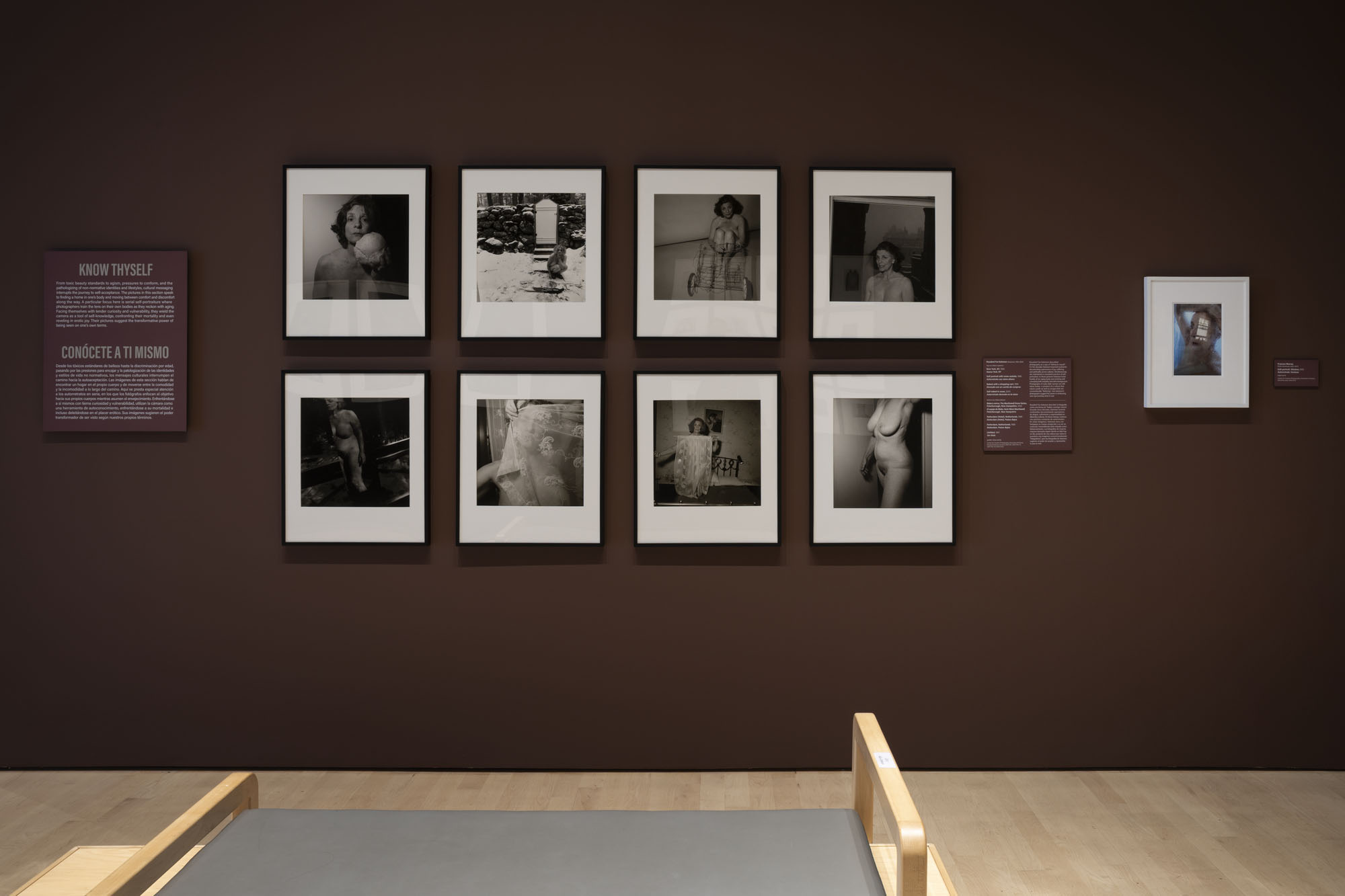
Know Thyself highlights the work of photographers who have used the medium of photography, often in the form of serial self-portraiture, to grapple with issues of aging, beauty standards, and self-image. Featured artists in this section include John Coplans, Lauren Greenfield, Anne Noggle, and Rosalind Fox Solomon.

Enduring presents works by Nan Goldin, Ittetsu Morishita, Marcus Chormicle, and others depicting the body as witness and at its physical limits, whether due to physical exertion, illness, injury, or even death and absence, prompting viewers to consider the concepts of endurance and survival.

“Muscle Memory invites audiences to consider the body’s ability to morph in response to and bear traces of lived experience, while also discovering how photographers have used the medium as a tool for self- knowledge and exploration,” said Emilia Mickevicius, the Norton Family Assistant Curator of Photography at Phoenix Art Museum and the Center for Creative Photography. “Works by living Arizona-based artists Claire A. Warden, Mehrdad Mirzaie, Marcus Chormicle, and Anh-Thuy Nguyen infuse the presentation with contemporary perspectives on the body’s legibility, how it holds memory, and how it becomes a site of negotiation between selves and others, both extending and departing from the concerns of the historical works in the exhibition.”

Press release from the Phoenix Art Museum


Installation view of the exhibition 'Muscle Memory: Lens on the Body' at the Phoenix Art Museum, Phoenix, AZ, January - June, 2026 showing at left, Robert Mapplethorpe 'Lisa Lyon' (1983); and at second right, a group of photographs by John Coplans


Installation view of the exhibition Muscle Memory: Lens on the Body at the Phoenix Art Museum, Phoenix, AZ, January – June, 2026 showing at left, Robert Mapplethorpe Lisa Lyon (1983); and at second right, a group of photographs by John Coplans


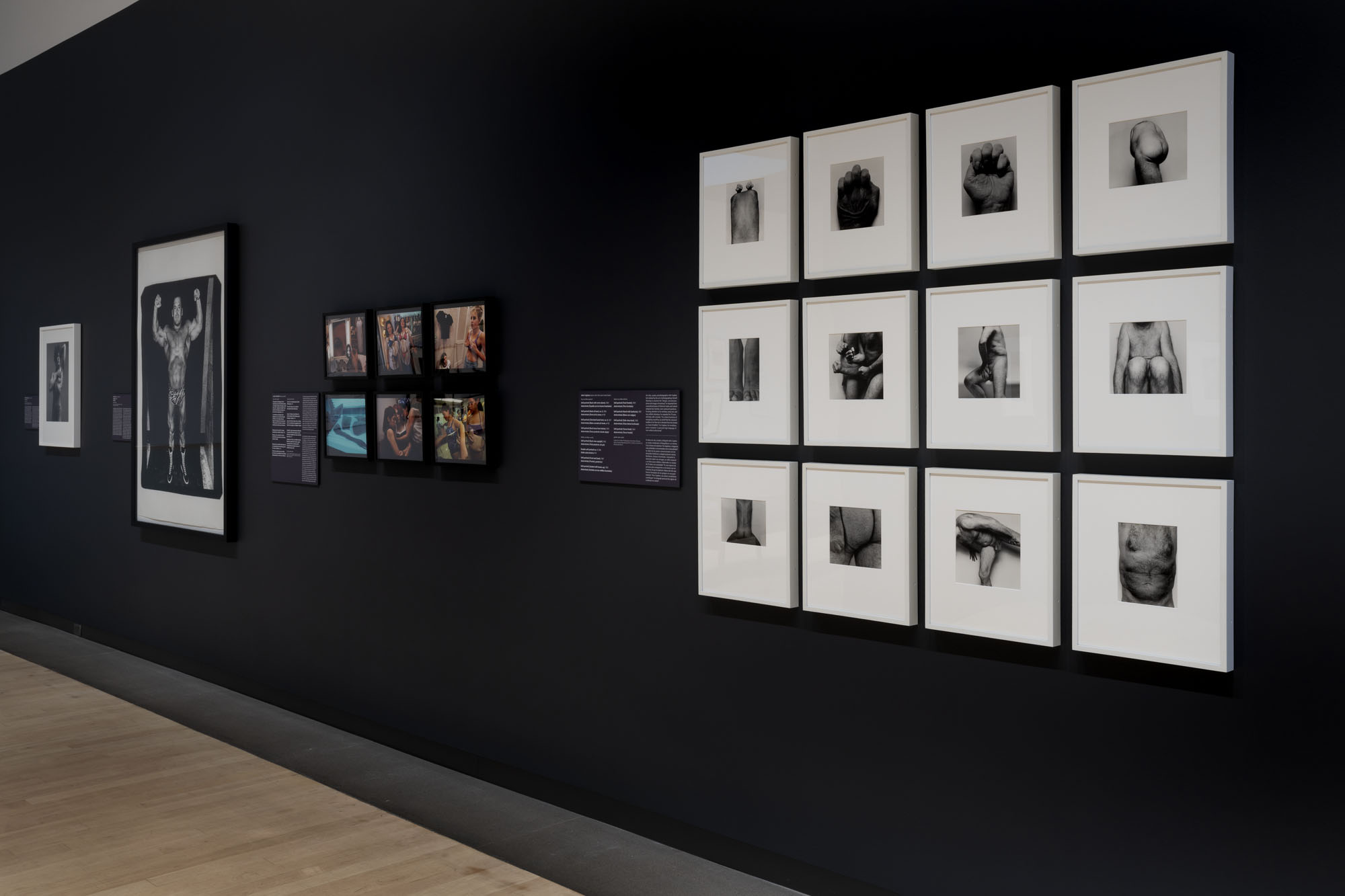
Installation view of the exhibition 'Muscle Memory: Lens on the Body' at the Phoenix Art Museum, Phoenix, AZ, January - June, 2026 showing at right, a group of photographs by John Coplans


Installation view of the exhibition Muscle Memory: Lens on the Body at the Phoenix Art Museum, Phoenix, AZ, January – June, 2026 showing at right, a group of photographs by John Coplans


John Coplans (British, 1920-2003) 'Self-Portrait (Back with Arms Above)' 1984


John Coplans (British, 1920-2003)
Self-portrait (Back with arms above)
1984
Gelatin silver print


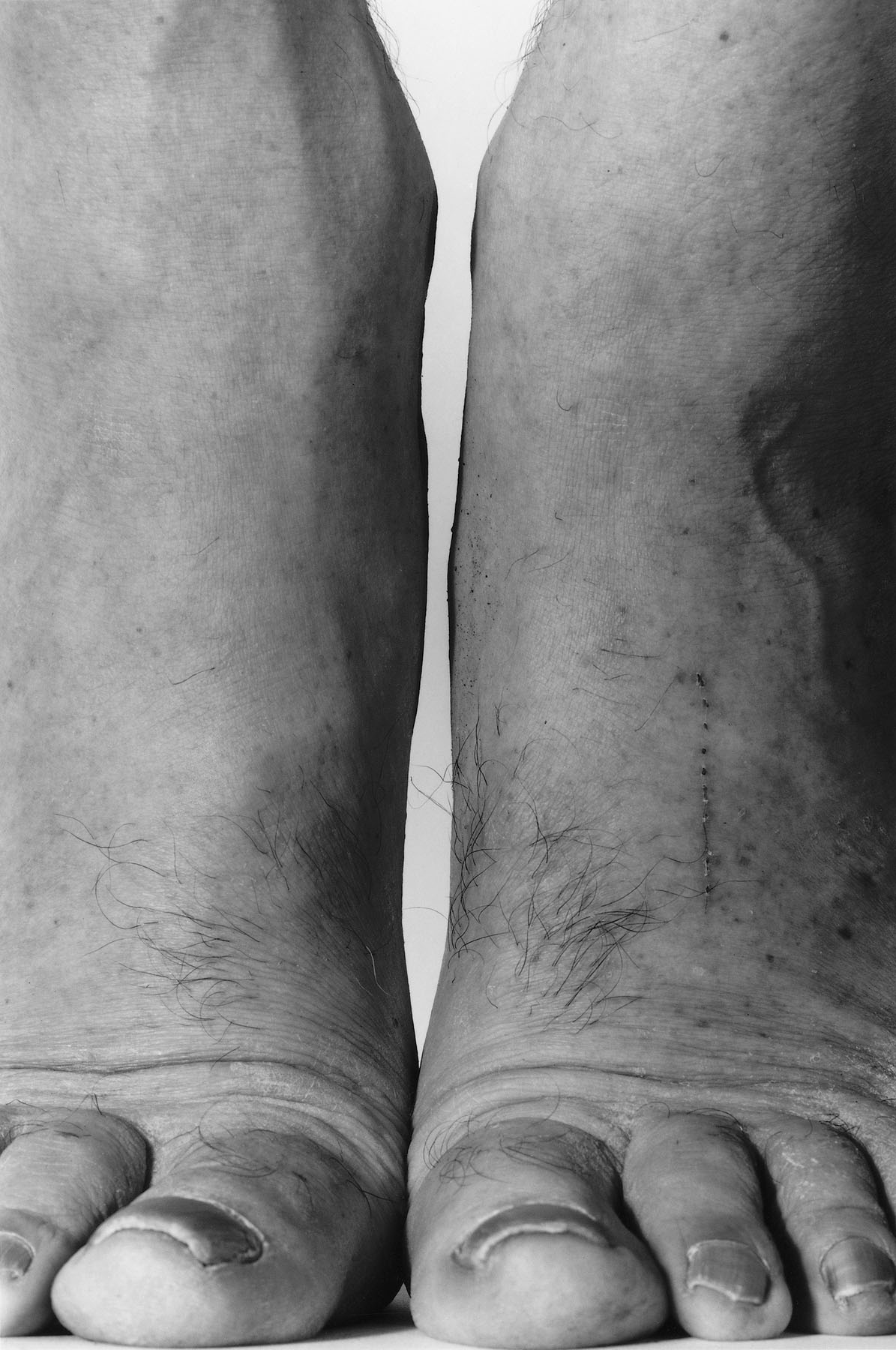
John Coplans (British, 1920-2003) 'Feet, Frontal' 1984


John Coplans (British, 1920-2003)
Feet, Frontal
1984
Gelatin silver print


Know Thyself

From toxic beauty standards to agism, pressures to conform, and the pathologising of non-formative identities and lifestyles, cultural messaging interrupts the journey to self-acceptance. The pictures in this section speak to finding a home in one’s body and moving between comfort and discomfort along the way. A particular focus here is serial self-portraiture where photographers train the lens on their own bodies as they reckon with aging. Facing themselves with tender curiosity and vulnerability, they wield the camera as a tool of self-knowledge, confronting their mortality and even revealing in erotic joy. Their pictures suggest the transformative power being seen on one’s own terms.

Wall text from the exhibition


Installation view of the exhibition 'Muscle Memory: Lens on the Body' at the Phoenix Art Museum, Phoenix, AZ, January - June, 2026 showing photographs by Rosalind Fox Solomon


Installation view of the exhibition Muscle Memory: Lens on the Body at the Phoenix Art Museum, Phoenix, AZ, January – June, 2026 showing photographs by Rosalind Fox Solomon


Rosalind Fox Solomon (American, 1930-2025) 'New York, NY' 1986


Rosalind Fox Solomon (American, 1930-2025)
New York, NY
1986
Gelatin silver print
Center for Creative Photography
University of Arizona: Rosalind Solomon Archive
© Rosalind Solomon, all rights reserved


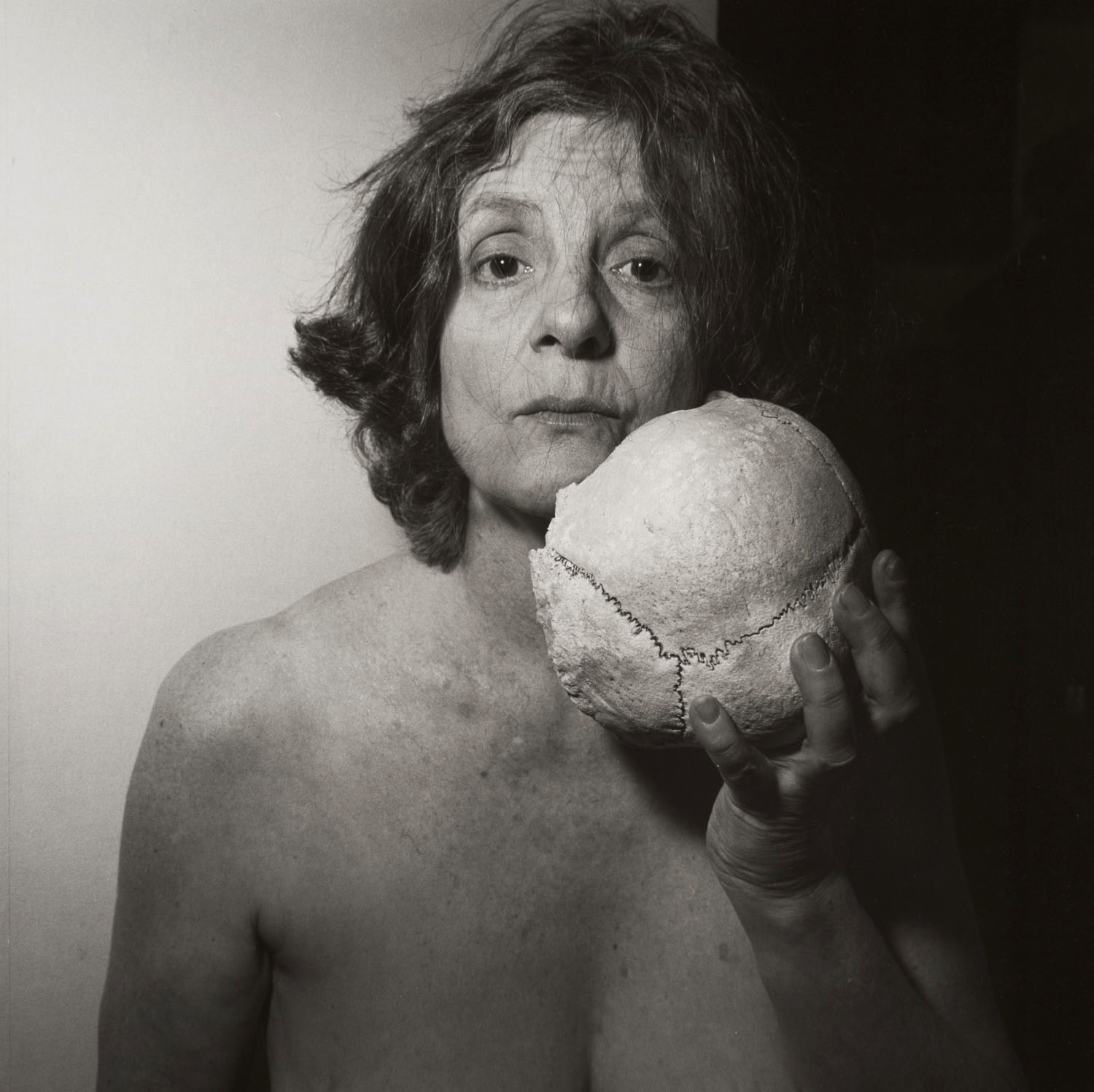
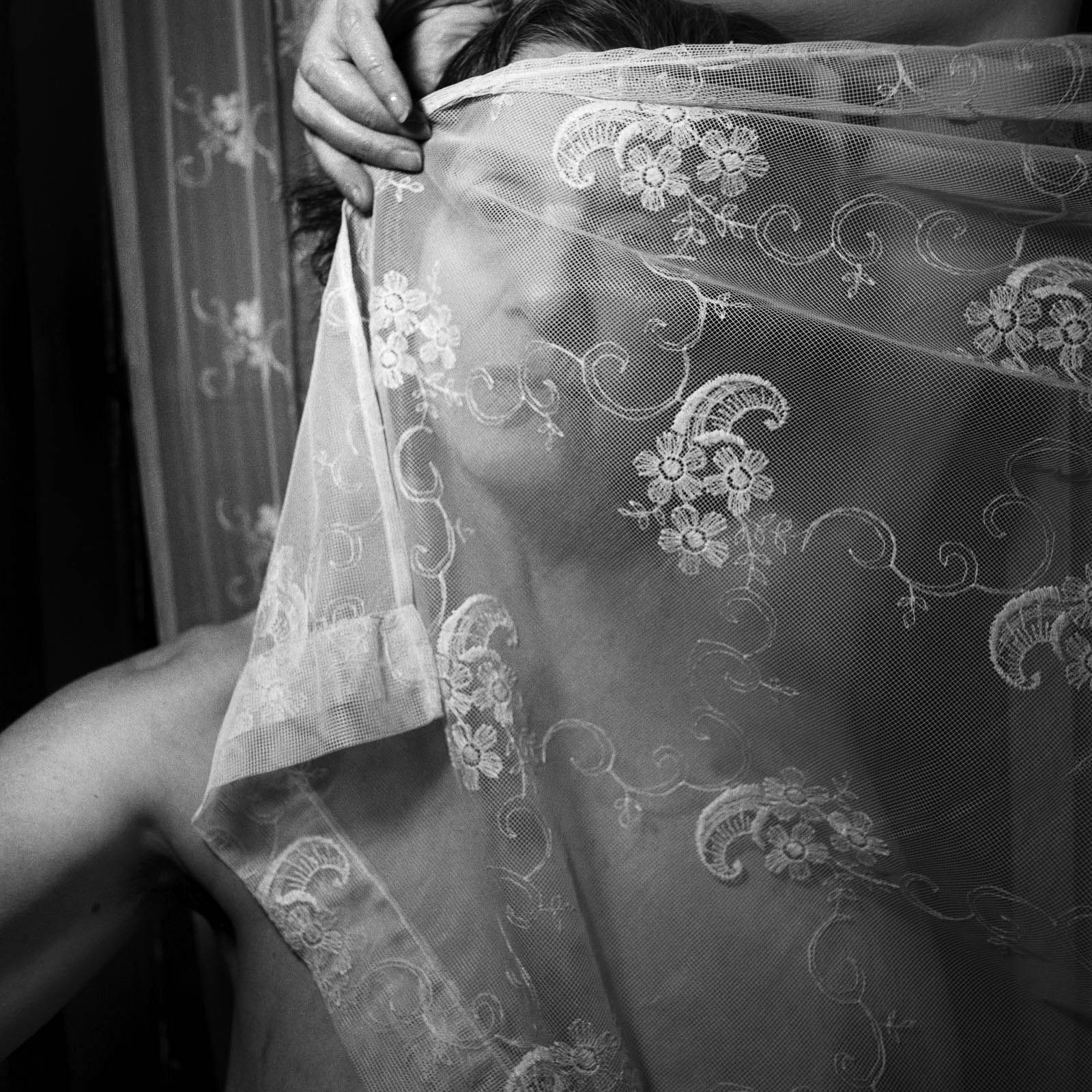
Rosalind Fox Solomon described photography as a way of “talking about myself.” For five decades Solomon traversed continents documenting expressions of joy, suffering and spirituality across cultures. Simultaneously, she maintained a consistent practice of self-portraiture. In these pictures Solomon looks frankly at her aging body and evolving self, conveying both empathy and self-estrangement. Photographs of nude older women are still taboo today – a product of a culture that values youth as well as images that are conventionally “flattering” – but Solomon’s photographs suggest the power in embracing and representing what is real.

Wall text from the exhibition


Rosalind Fox Solomon (American, 1930-2025) 'Rotterdam (Hotel), Netherlands' 1986


Rosalind Fox Solomon (American, 1930-2025)
Rotterdam (Hotel), Netherlands
1986
Gelatin silver print
Center for Creative Photography
University of Arizona: Rosalind Solomon Archive
© Rosalind Solomon, all rights reserved 


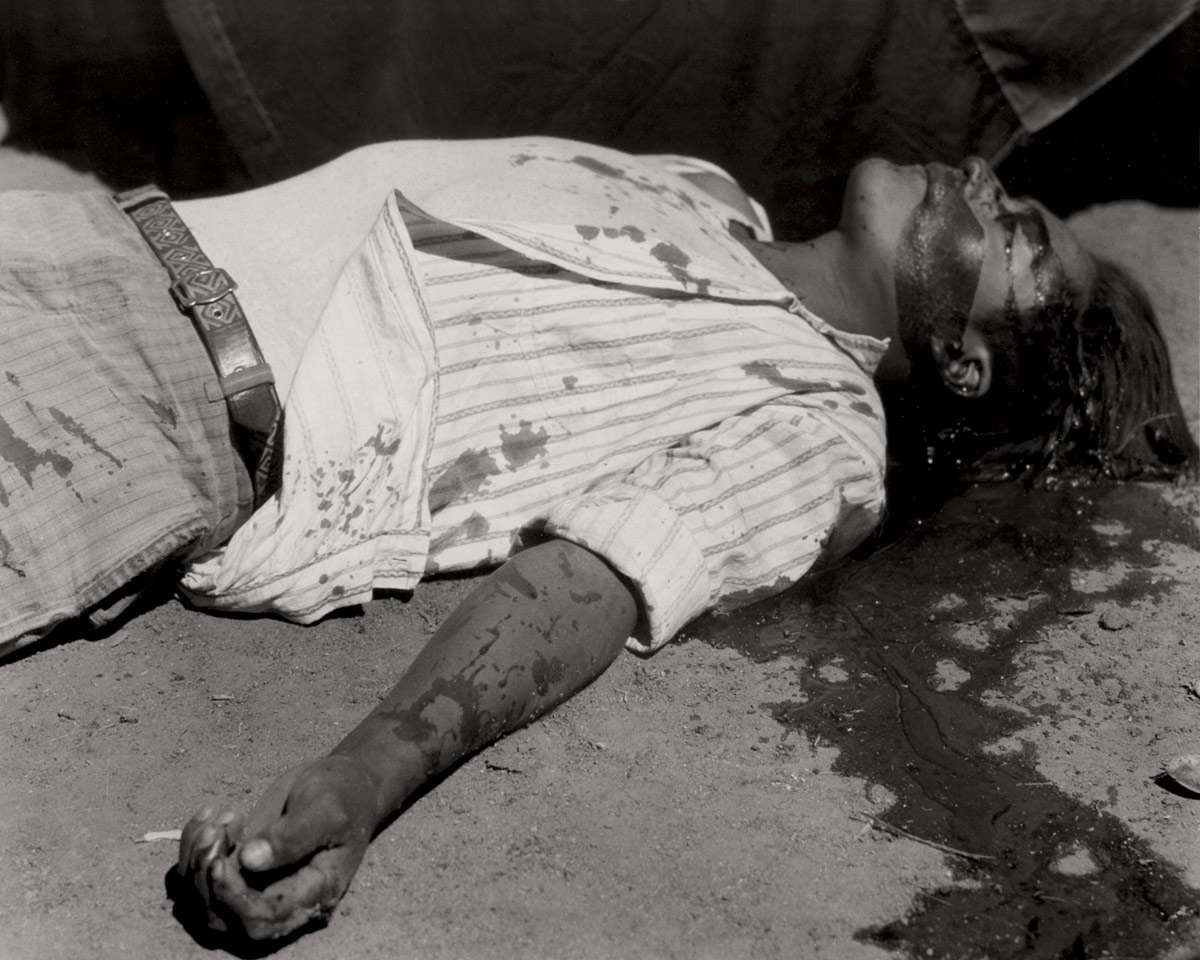
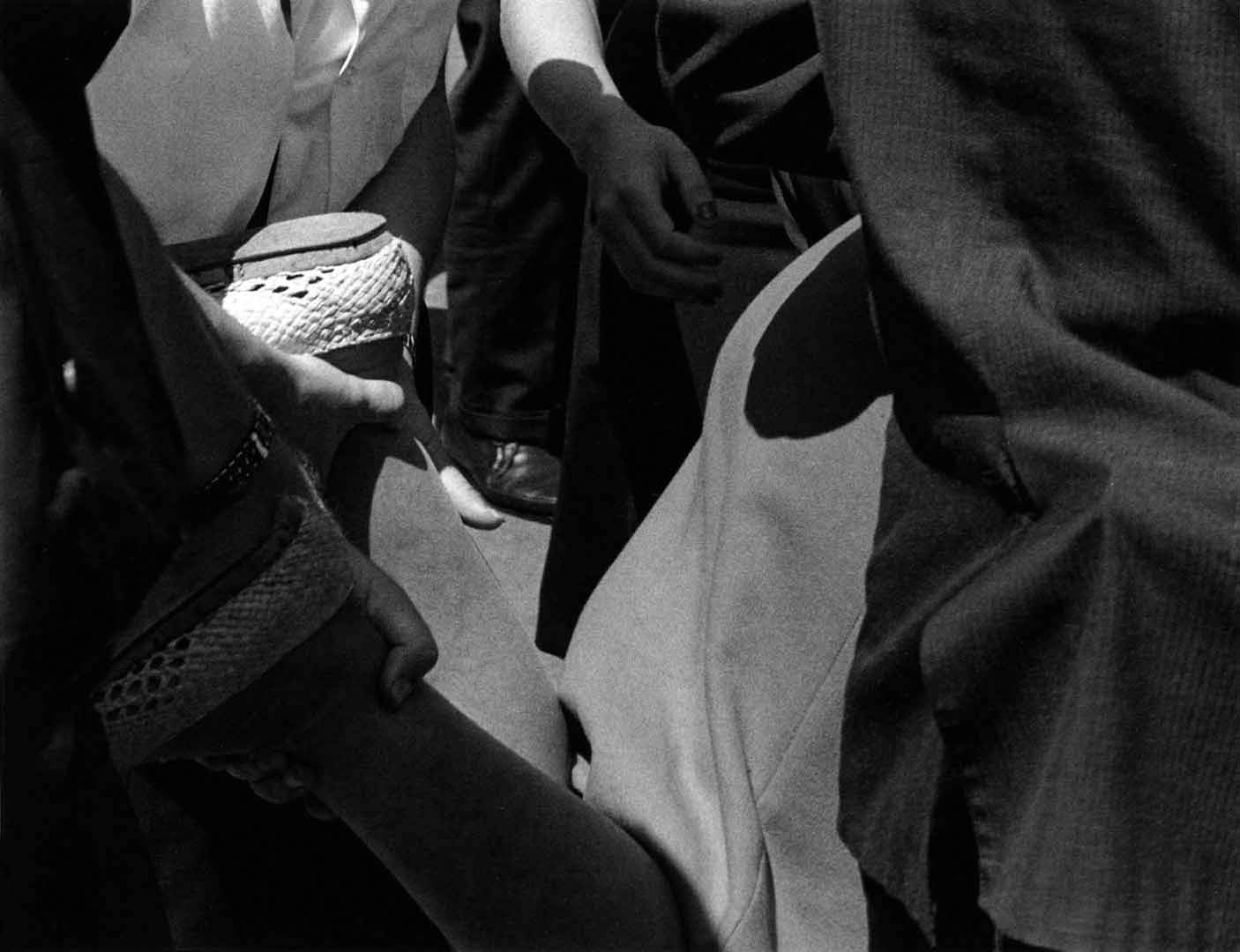
Manuel Alvarez Bravo (Mexican, 1902-2002) 'Obrero en huelga, asesinado' (Striking Worker, Assassinated) 1934


Manuel Alvarez Bravo (Mexican, 1902-2002)
Obrero en huelga, asesinado (Striking Worker, Assassinated)
1934
Gelatin silver print


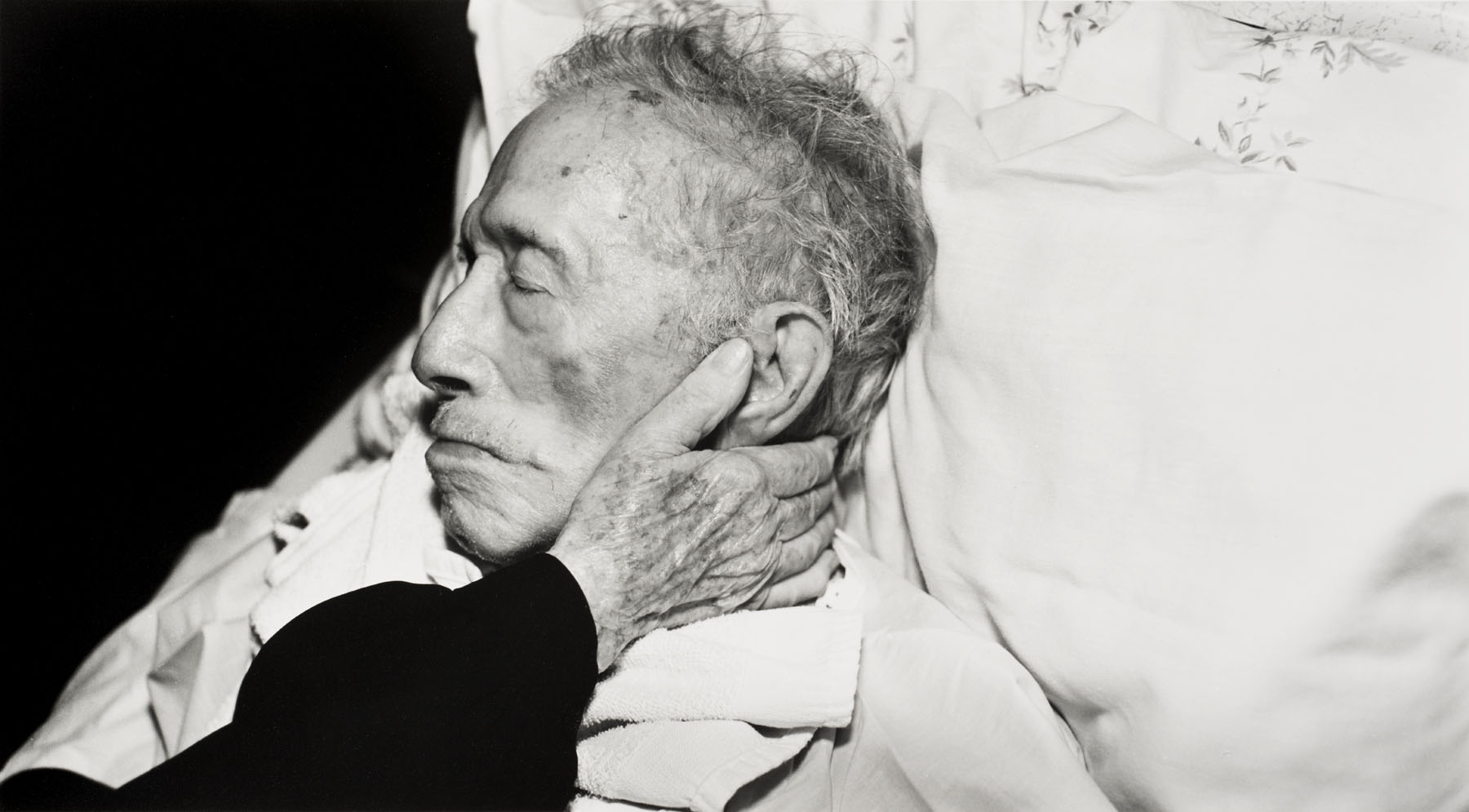
Dan Young. 'My Mother's Hand on My Father's Head, 1992' 1992


Dan Young
My Mother’s Hand on My Father’s Head, 1992
1992
Gelatin silver print
Center for Creative Photography
University of Arizona: Purchase
© Dan Young 


Enduring

As the saying goes, “the body keeps the score.” The photographs in this gallery explore how the body holds memory. Outwardly visible marks like scars and wrinkles are testaments to what we have survived, traces of time that resonate with the nurture of photographic images. No matter how strong or fortunate we are, each of us must sustain wounds visible and invisible, go through cycles of suffering and healing, and eventually experience death. We also inherit not only physical characteristics but also stories and trauma from our ancestors. The pictures here are reminders of our bodily fragility, but they also brim with aliveness, inspiring reverence for all that human beings have endured across generations.


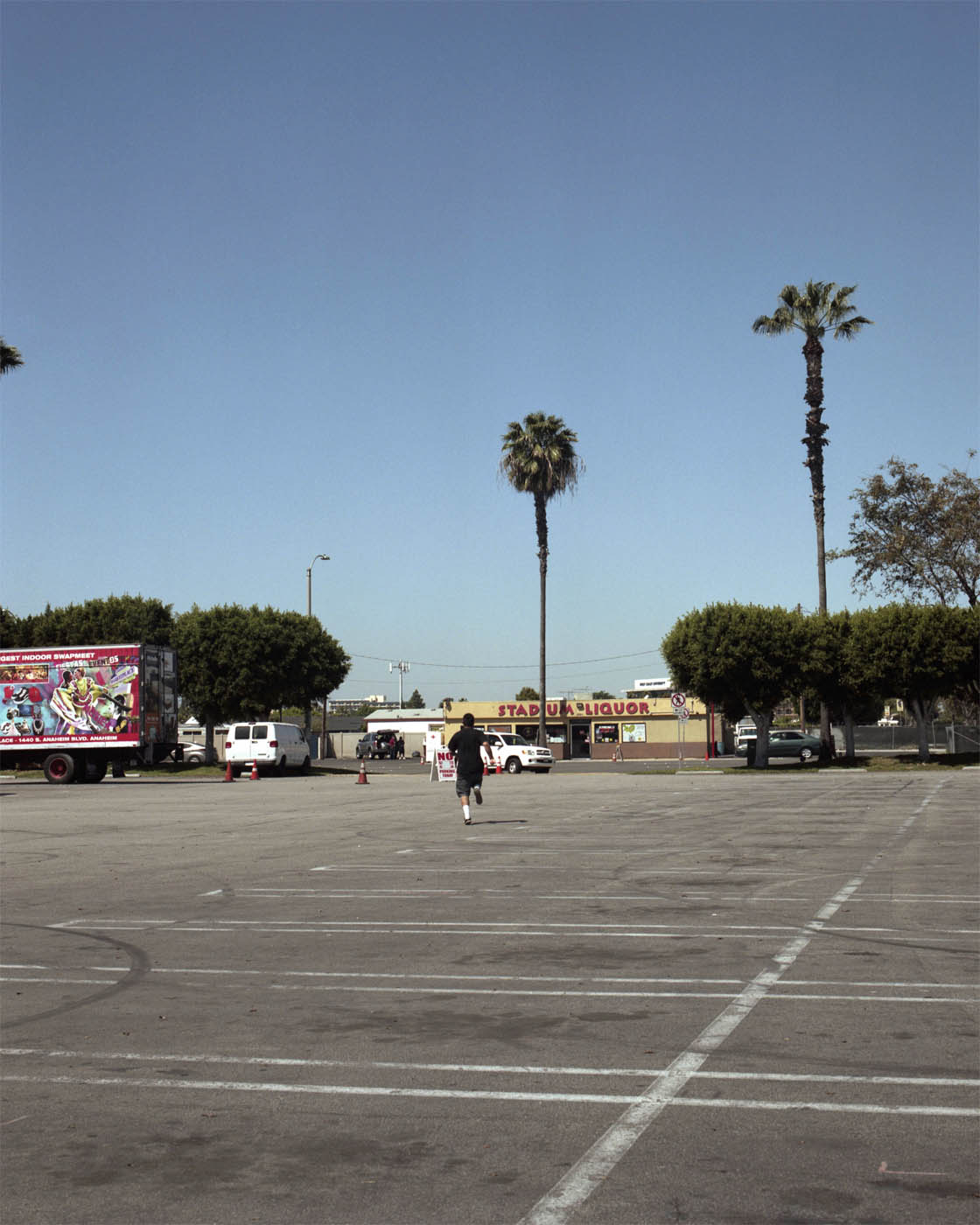
William Camargo (American, b. 1989) 'As Far As I Can Get in 10 Seconds From The Swapmeet Parking Lot to the Liquor Store After Divola' 2020


William Camargo (American, b. 1989)
As Far As I Can Get in 10 Seconds From The Swapmeet Parking Lot to the Liquor Store After Divola
2020
Inkjet print
22 x 18 in.


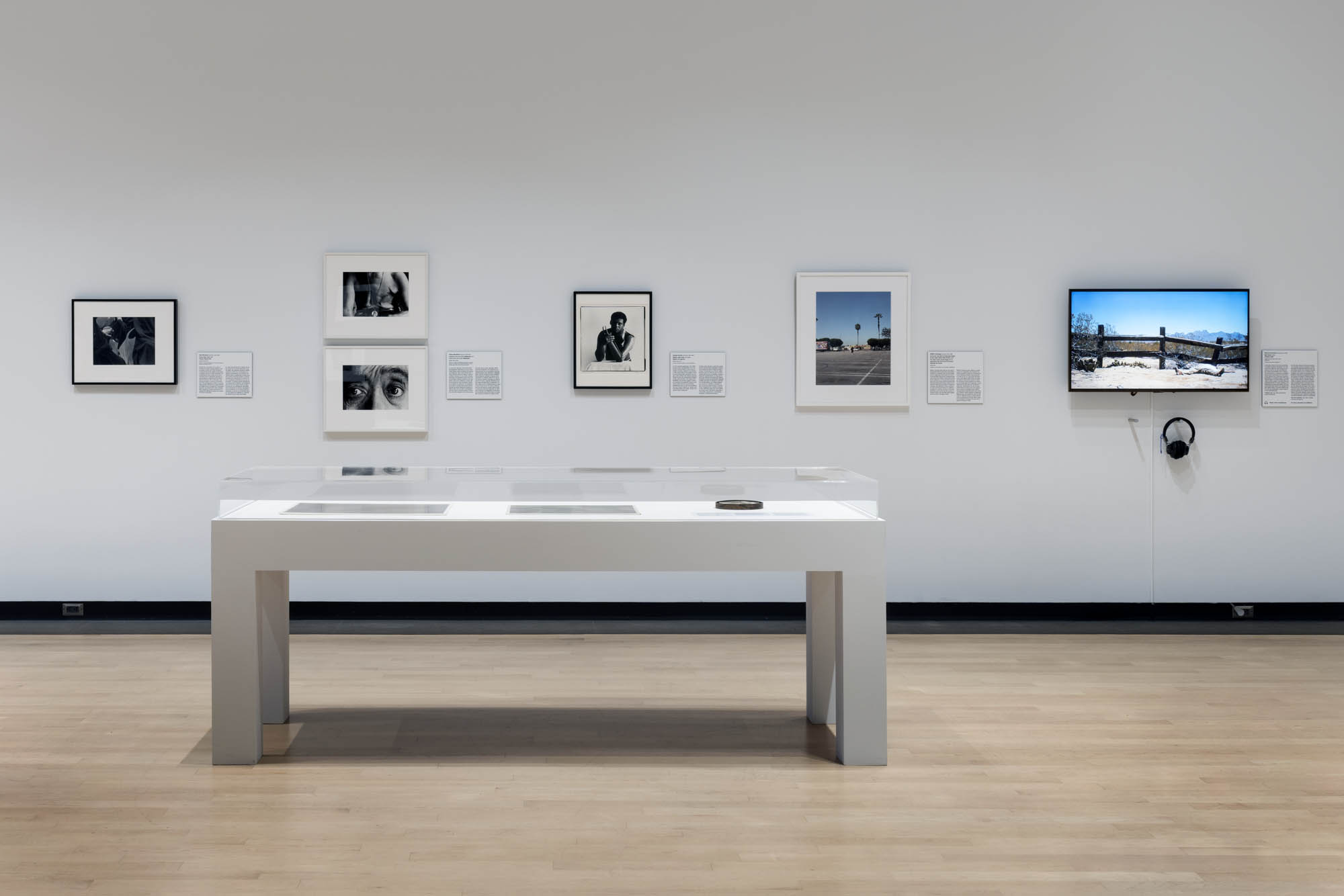
Installation view of the exhibition 'Muscle Memory: Lens on the Body' at the Phoenix Art Museum, Phoenix, AZ, January - June, 2026 showing at left, Roy DeCarava Force, New York (1963); at centre, George Dureau Wilbert with Hook (Nd); and at second right, William Camargo As Far As I Can Get in 10 Seconds From The Swapmeet Parking Lot to the Liquor Store After Divola (2020)


Installation view of the exhibition Muscle Memory: Lens on the Body at the Phoenix Art Museum, Phoenix, AZ, January – June, 2026 showing at left, Roy DeCarava Force, New York (1963, below); at centre, George Dureau Wilbert with Hook (Nd, below); and at second right, William Camargo As Far As I Can Get in 10 Seconds From The Swapmeet Parking Lot to the Liquor Store After Divola (2020, above)


Roy DeCarava (American, 1919-2009) 'Force, New York' 1963


Roy DeCarava (American, 1919-2009)
Force, New York
1963
Gelatin silver print
Center for Creative Photography
University of Arizona: Purchase


A woman being arrested at a New York protest


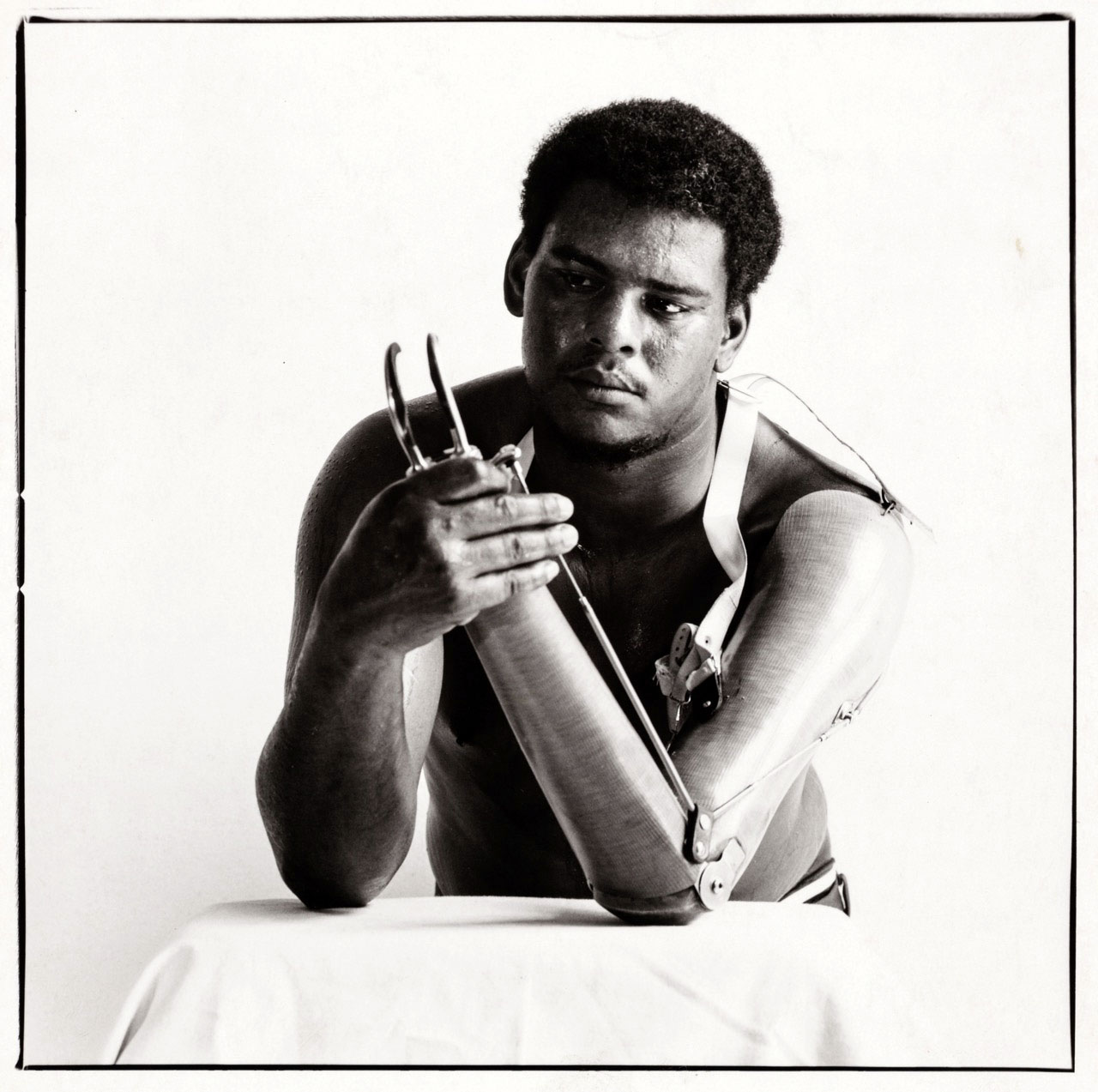
George Dureau (American, 1930-2014) 'Wilbert with Hook' Nd


George Dureau (American, 1930-2014)
Wilbert with Hook
Nd
Gelatin silver print


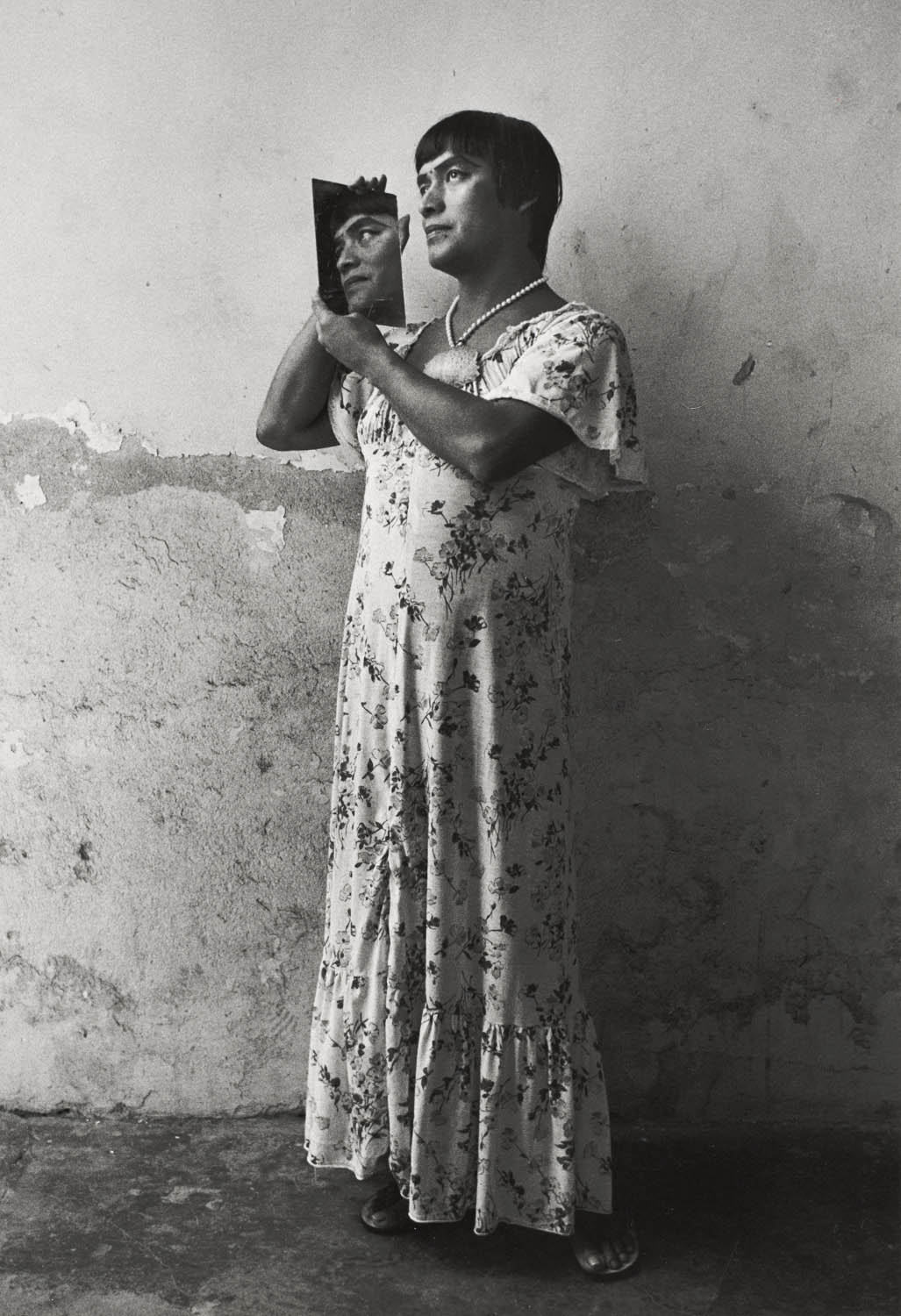
Graciela Iturbide (Mexican, b. 1942) 'Magnolia, Juchitán, Oaxaca, México' 1986


Graciela Iturbide (Mexican, b. 1942)
Magnolia, Juchitán, Oaxaca, México
1986
Gelatin silver print
Center for Creative Photography
University of Arizona: Purchase
© Graciela Iturbide 


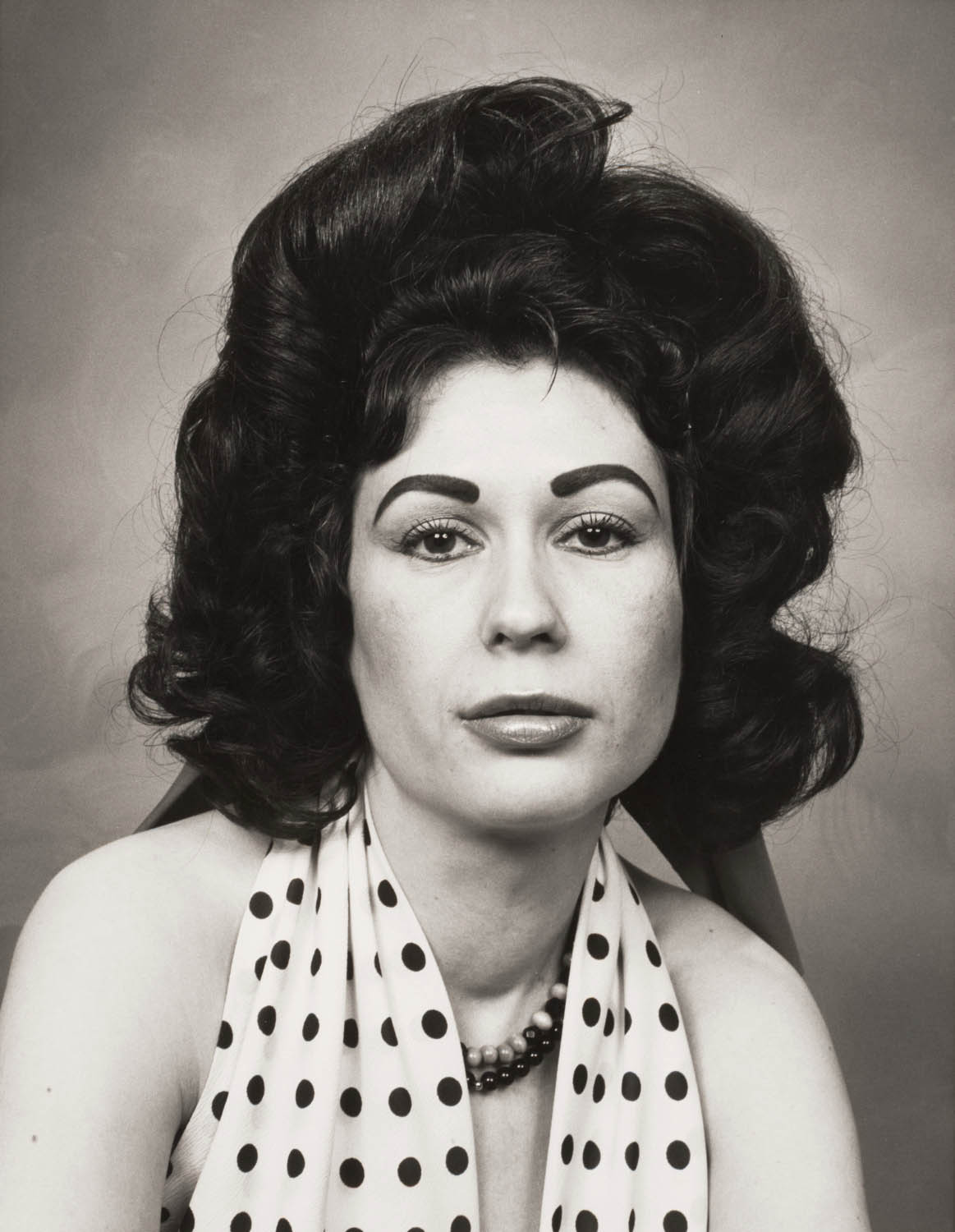
Leon Borensztein (American, b. 1947) 'Woman with Polka Dots, San Francisco' 1984


Leon Borensztein (American, b. 1947)
Woman with Polka Dots, San Francisco
1984
Gelatin silver print
Center for Creative Photography
University of Arizona: Purchase
© Leon Borensztein 


Phoenix Art Museum
McDowell Road & Central Avenue
1625 N. Central Avenue
Phoenix, AZ 85004

Opening hours:
Monday and Tuesday Museum closed
Wednesday: 10am – 7pm
Thursday – Sunday: 10am – 5pm

Phoenix Art Museum website

LIKE ART BLART ON FACEBOOK

Back to top

Vale Duane Michals (American, 1932-2026) – storyteller

June 2026


Duane Michals (American, 1932-2026) 'What is Time?' 1994


Duane Michals (American, 1932-2026)
What is Time?
1994
Gelatin silver print
16 × 19 7/8 inches (40.6 × 50.5cm)
Gift of Duane Michals
The Morgan Library & Museum


“Time is the duration of everything, and life is an event, a fluttering of wings.”

 
Duane Michals


There is no time

Vale the transcendent Duane Michals – storyteller.

Magician, poet, philosopher and dreamer.

An artist, like Joseph Cornell, who I have always felt a special affinity / infinity towards.

I wrote in earlier postings on his work:

“As he says, his work goes beyond description, beyond surfaces, to reveal the subject – not as it looks but as it feels. In his sequences he usually achieves this by posing a question that has no answer, a question that is like a Zen koan… what is the sound of one hand clapping? The grandfather ascends smilingly to heaven with little wings on his back as the child waves goodbye (if youth knew, if age could); the man as human condition turns into a galaxy; and the spirit leaves the body as it was left before. …

Michals staged, narrative scenes take us on a journey into his reality, one which “has entered a realm beyond observation.” He poses difficult questions that force us to examine ideas beyond the world of phenomena, beyond the world of surfaces. He challenges our repressed inner lives and our idealised image of ourselves, disturbing the boundaries of personality, ego, and identity.”1

And

“Duane Michals is one of the greatest photographic storytellers of the twentieth century. His parables – seemingly simple stories used to illustrate a moral or spiritual lesson – resonate, vibrate, with energy, and insight into, the human condition. They are as profound as the air we breathe but cannot see – expressing the invisible, presencing the spiritual. I feel, I know these stories, intimately. Those things-for-which-there-are-no-words. …

There are things here not seen in this photograph. The spirit leaves the body. William Blake and Duane Michals. Enchanted melancholy. The mysterious / music. In swift embrace. In love. In memory. In death. The fluidity of the line of the artist. Things are queer. The world implodes and ravages itself. Paradise is reborn. The letter, and love, from my father that I, also, never did receive. The nature of reality. Truth? … When I was young. What was time?”2


It was Michals great skill as an artist and a human being that enabled us the possibility of accessing some aspect of the mystery of our existence.

Stepping beyond … his spirit has left his body.

Dr Marcus Bunyan


1/ Marcus Bunyan. “Exposing your/self,” on the exhibition ‘Storyteller: The Photographs of Duane Michals’ at Carnegie Museum of Art, Pittsburgh, November 2014 – February 2015 on the Art Blart website January 30, 2015 [Online] Cited 11/06/2026

2/ Marcus Bunyan. “The things-for-which-there-are-no-words,” on the exhibition ‘Illusions of the Photographer: Duane Michals at the Morgan’ at The Morgan Library & Museum, October 2019 – February 2020 on the Art Blart website January 24, 2020 [Online] Cited 11/06/2026


Please click on the photographs for a larger version of the image.


“I write with this photograph not to tell you what you can see, rather to express what is invisible.”


Duane Michals 1966 in Johnson, B. (ed.,) 2004, ‘Photography speaks: 150 photographers on their art’, Aperture, New York p. 150


Duane Michals (American, 1932-2026) 'The Human Condition' 1969


Duane Michals (American, 1932-2026)
The Human Condition
1969
© Duane Michals via DC Moore Gallery
The Morgan Library & Museum


“The nature of consciousness is always the central question,” he asserted. In The Human Condition, his panel of six photographs from 1969 begins with a man standing on the 14th Street subway platform; the train arrives and he is bathed in a halo of light; the light becomes a swirl and in the last frame he is swept into a white disc the size of a galaxy passing through the night sky. From the immediate to the universal in six frames.

Philip Gefter. “Duane Michals Searches the Morgan and Finds Himself,” on The New York Times website Oct 29, 2019 [Online] Cited 14/11/2019


Duane Michals (American, 1932-2026) 'Things are Queer' 1973

Duane Michals (American, 1932-2026) 'Things are Queer' 1973

Duane Michals (American, 1932-2026) 'Things are Queer' 1973

Duane Michals (American, 1932-2026) 'Things are Queer' 1973

Duane Michals (American, 1932-2026) 'Things are Queer' 1973

Duane Michals (American, 1932-2026) 'Things are Queer' 1973

Duane Michals (American, 1932-2026) 'Things are Queer' 1973

Duane Michals (American, 1932-2026) 'Things are Queer' 1973

Duane Michals (American, 1932-2026) 'Things are Queer' 1973


Duane Michals (American, 1932-2026)
Things Are Queer
1973
Nine gelatin silver prints
Images: 5 × 7 inches (12.7 × 17.8cm) each
Gift of Duane Michals
The Morgan Library & Museum


Duane Michals (American, 1932-2026) 'The Spirit Leaves The Body' 1968

Duane Michals (American, 1932-2026) 'The Spirit Leaves The Body' 1968

Duane Michals (American, 1932-2026) 'The Spirit Leaves The Body' 1968

Duane Michals (American, 1932-2026) 'The Spirit Leaves The Body' 1968

Duane Michals (American, 1932-2026) 'The Spirit Leaves The Body' 1968

Duane Michals (American, 1932-2026) 'The Spirit Leaves The Body' 1968

Duane Michals (American, 1932-2026) 'The Spirit Leaves The Body' 1968


Duane Michals (American, b. 1932)
The Spirit Leaves the Body
1968
Gift of Richard and Ronay Menschel
The Morgan Library & Museum


LIKE ART BLART ON FACEBOOK

Back to top

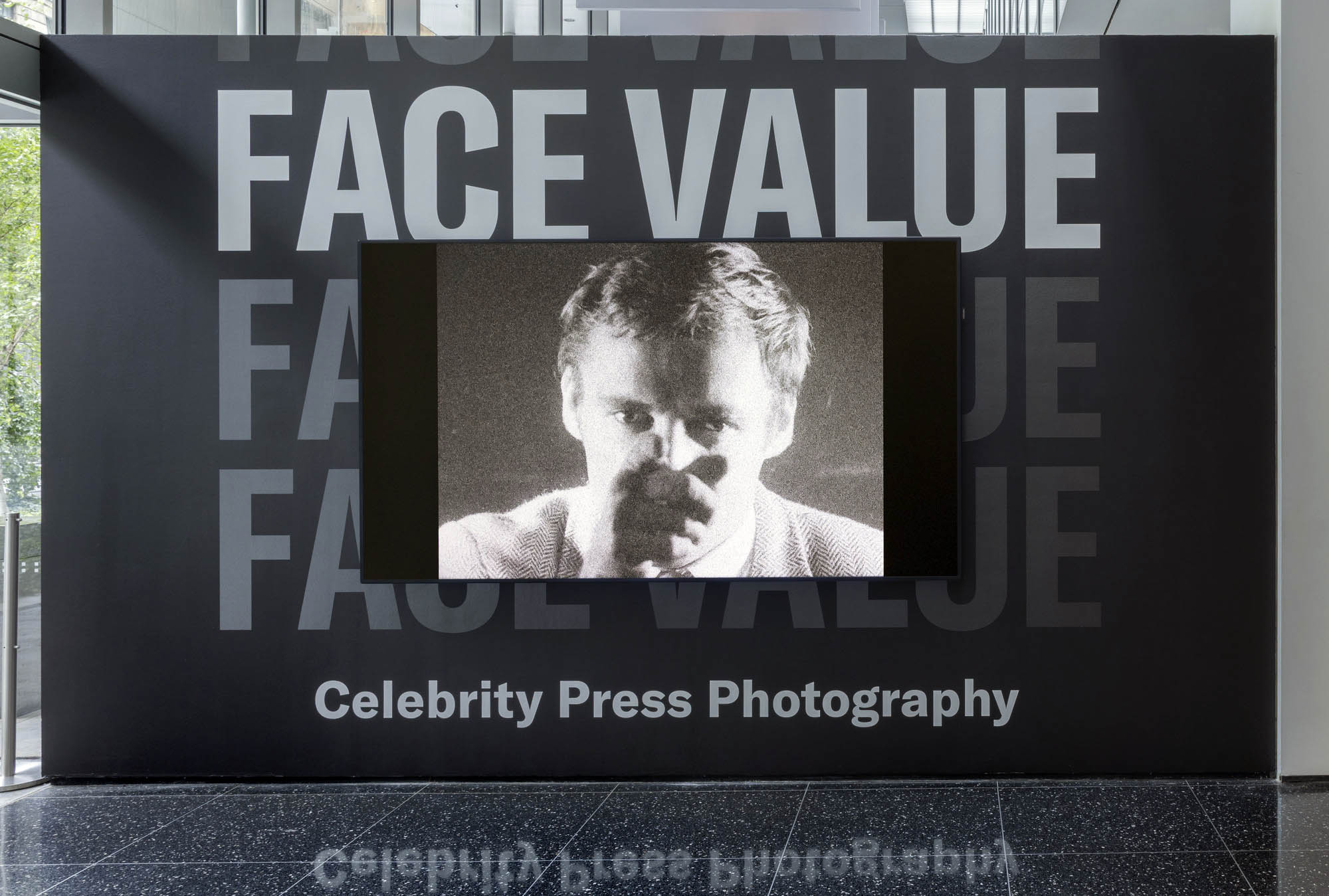
Exhibition: ‘Face Value: Celebrity Press Photography’ at The Museum of Modern Art (MoMA), New York

Exhibition dates: 28th June, 2025 – 21st June, 2026

Curators: Ron Magliozzi, Curator, with Katie Trainor, Film Collections Manager and Cara Shatzman, Collection Specialist, Department of Film.


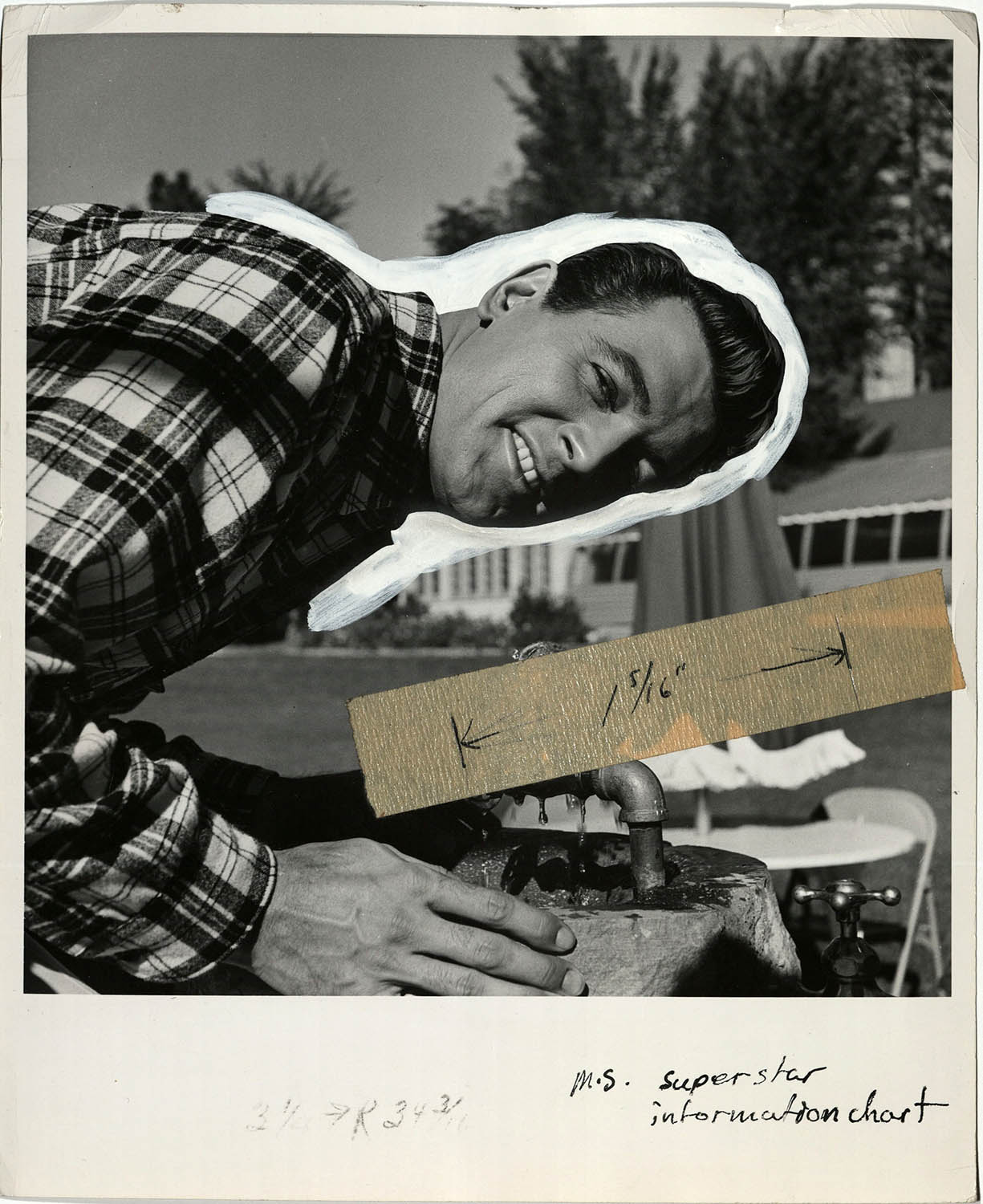
Bob Beerman (American) 'Rock Hudson' c. 1953


Bob Beerman (American)
Rock Hudson
c. 1953
Sheet: 9 15/16 x 8″ (25.2 x 20.3cm)
The Museum of Modern Art Film Stills Collection


Silhouetting the celebrity

MoMA always puts on interesting photography exhibitions and this one is no exception. Of course, they have a huge collection to draw from, but it still takes intelligence and curatorial inspiration to bring it all together.

It took me a long time to compile the posting. There were not many media images available but with a bit of digging around on the MoMA collection web pages, and searching online, I managed to find enough photographs to illustrate the exhibition / plus the installation photographs / and the addition of movie posters and magazines to illuminate the films the still photographs were taken from (please note: not in the exhibition). While many of the publicity shots were taken by unknown stills photographers, I have also added bibliographic information for the known photographers where possible.

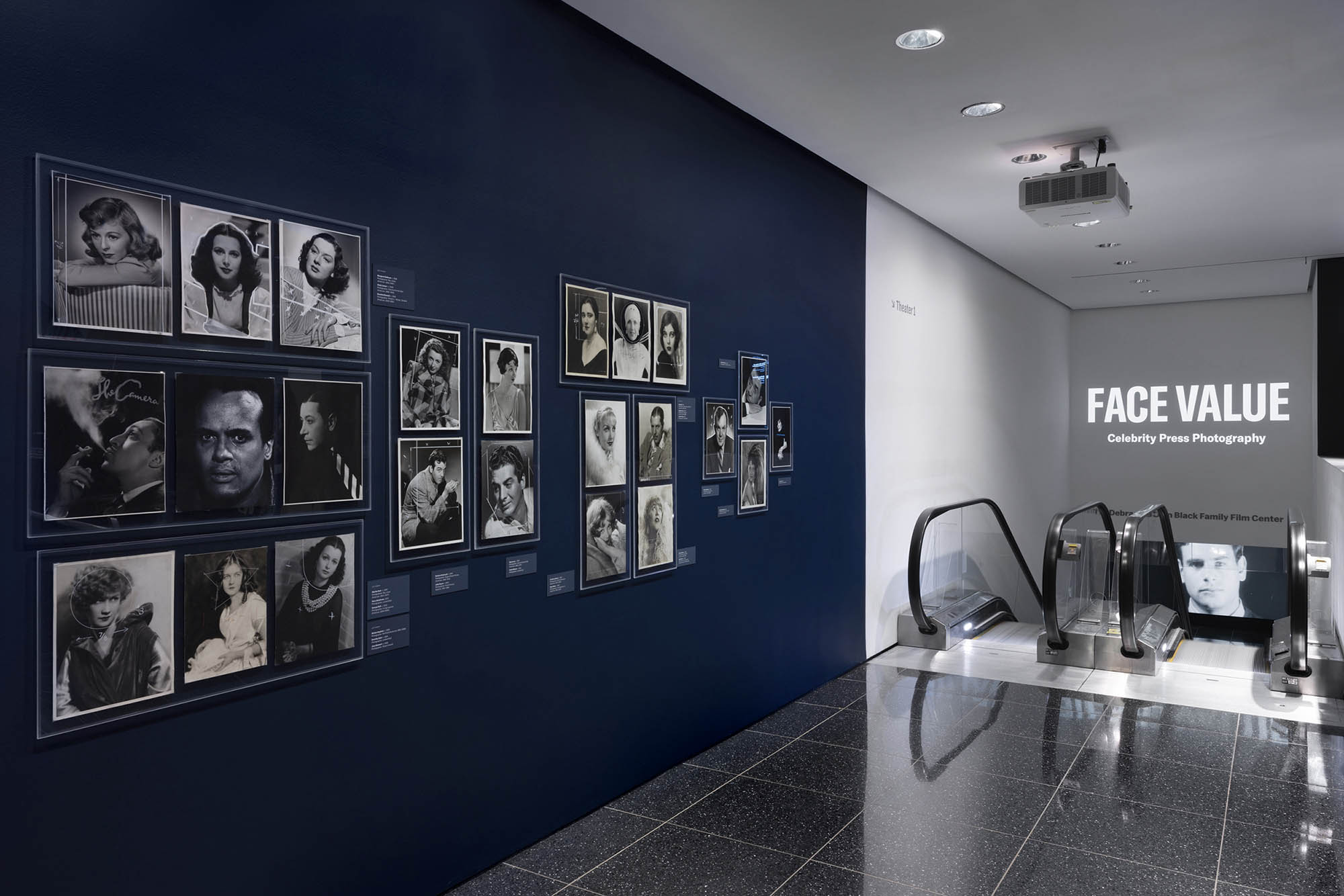
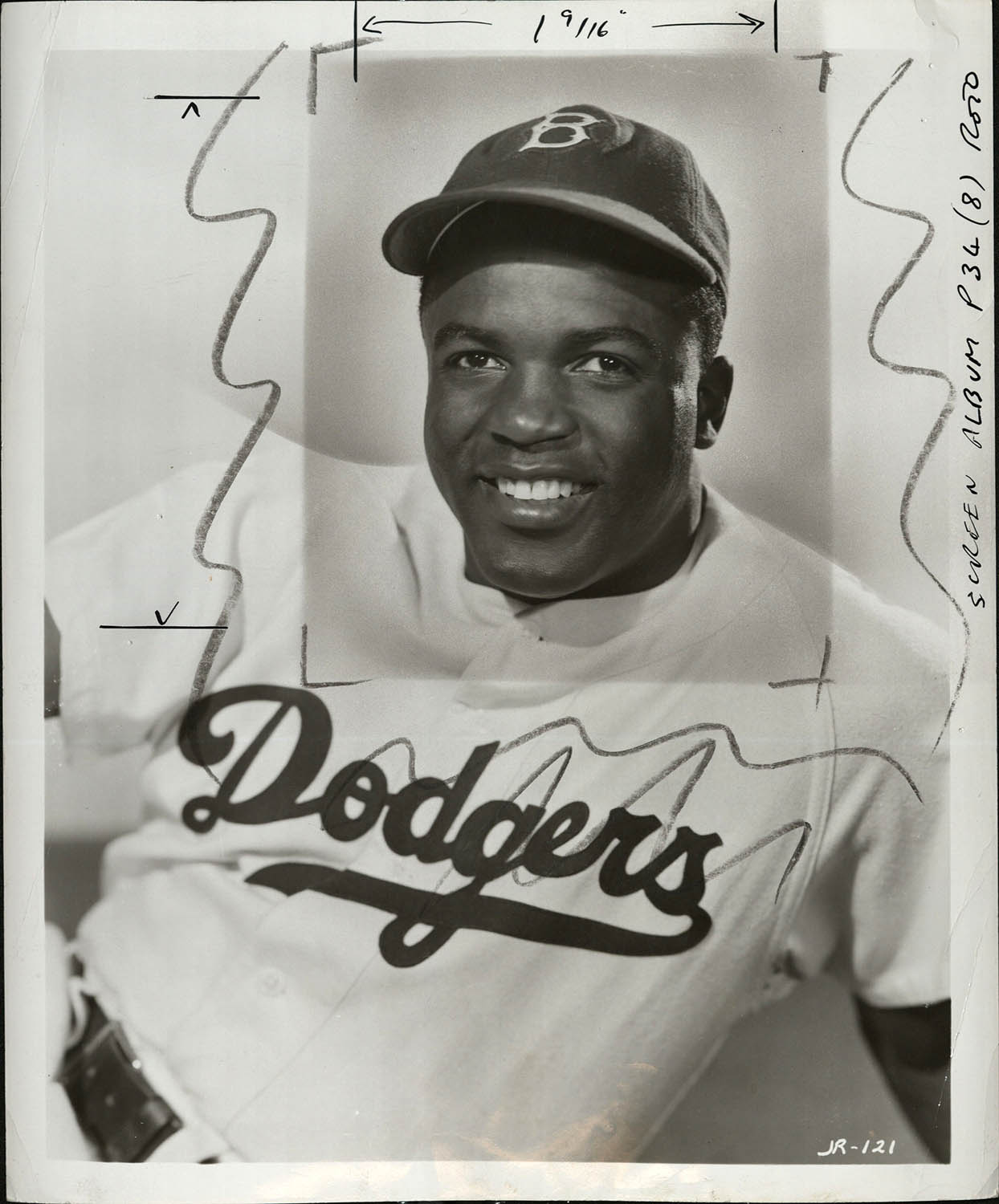
This would be my only criticism of the exhibition: the inability of the viewer to visualise how these “covered with masking tape, marked up with crayon, or reconfigured with ghostly halos of white-out” photographs were actually used (in the press in everyday life) to create the fantasy ideals of Hollywood glamour stars. Perhaps this was a deliberate curatorial strategy, to concentrate on the pre-production rather than the post-production, to concentrate just on the still photos, without the distraction of further stimuli. And I can understand that decision.

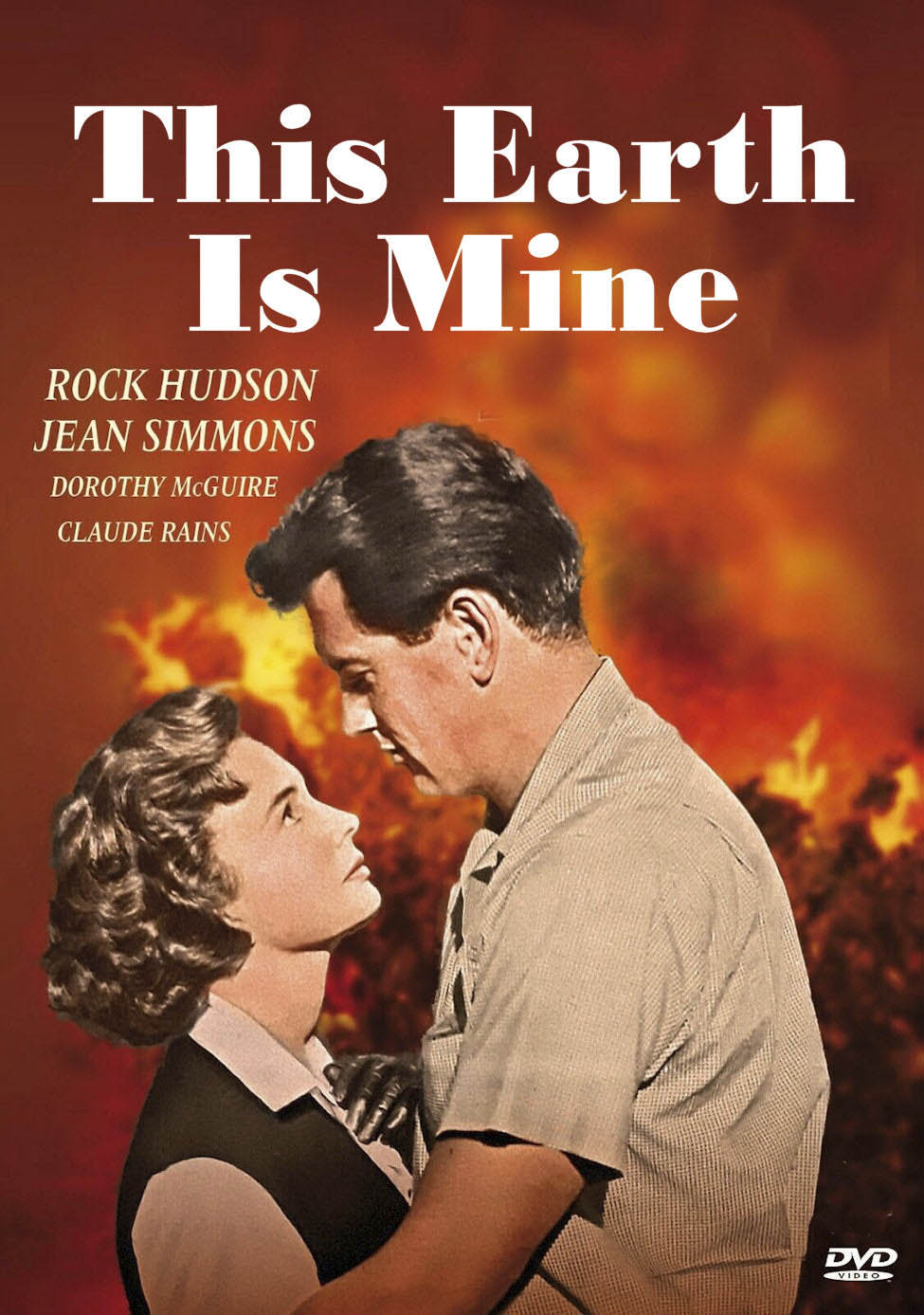
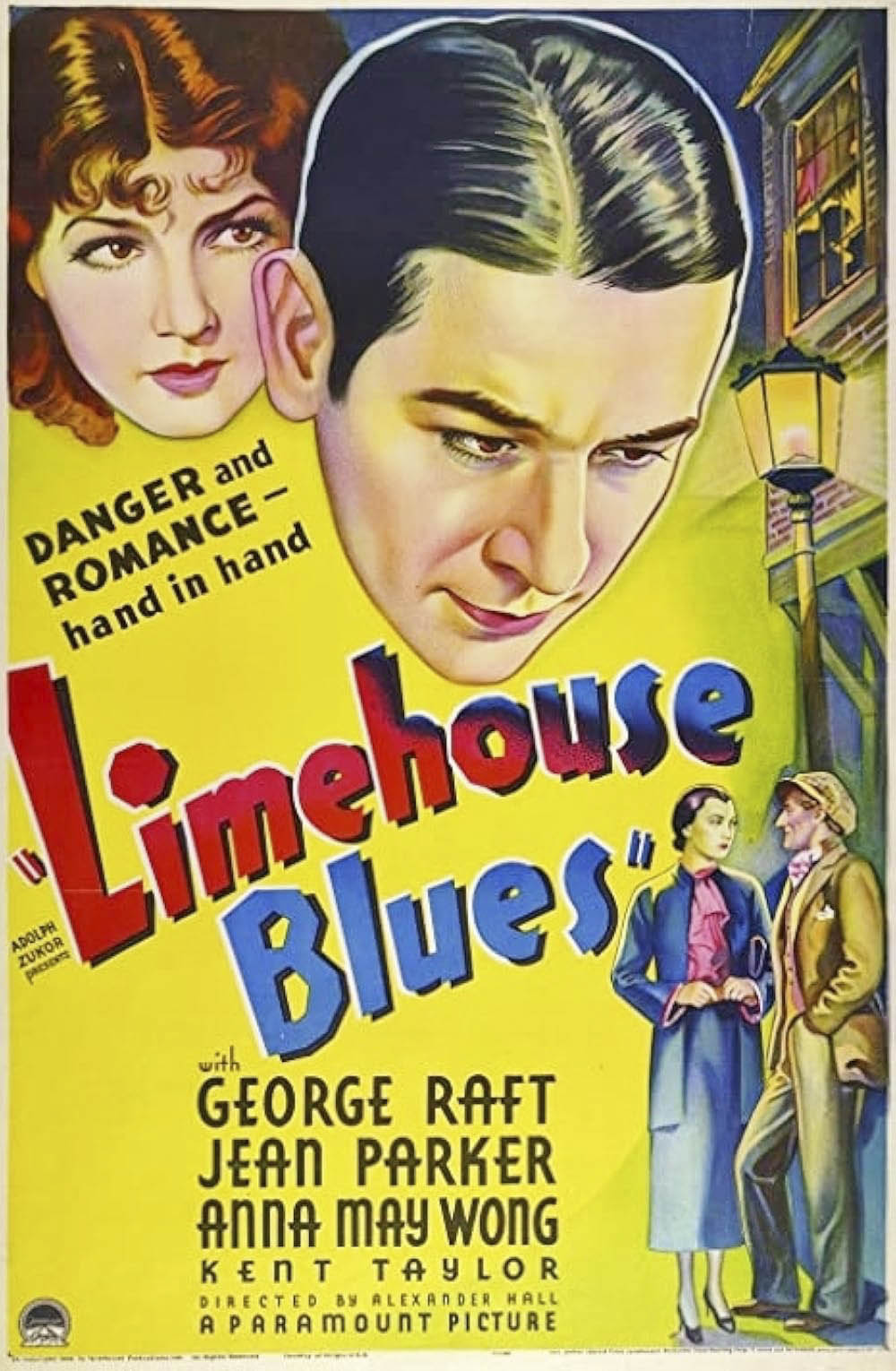
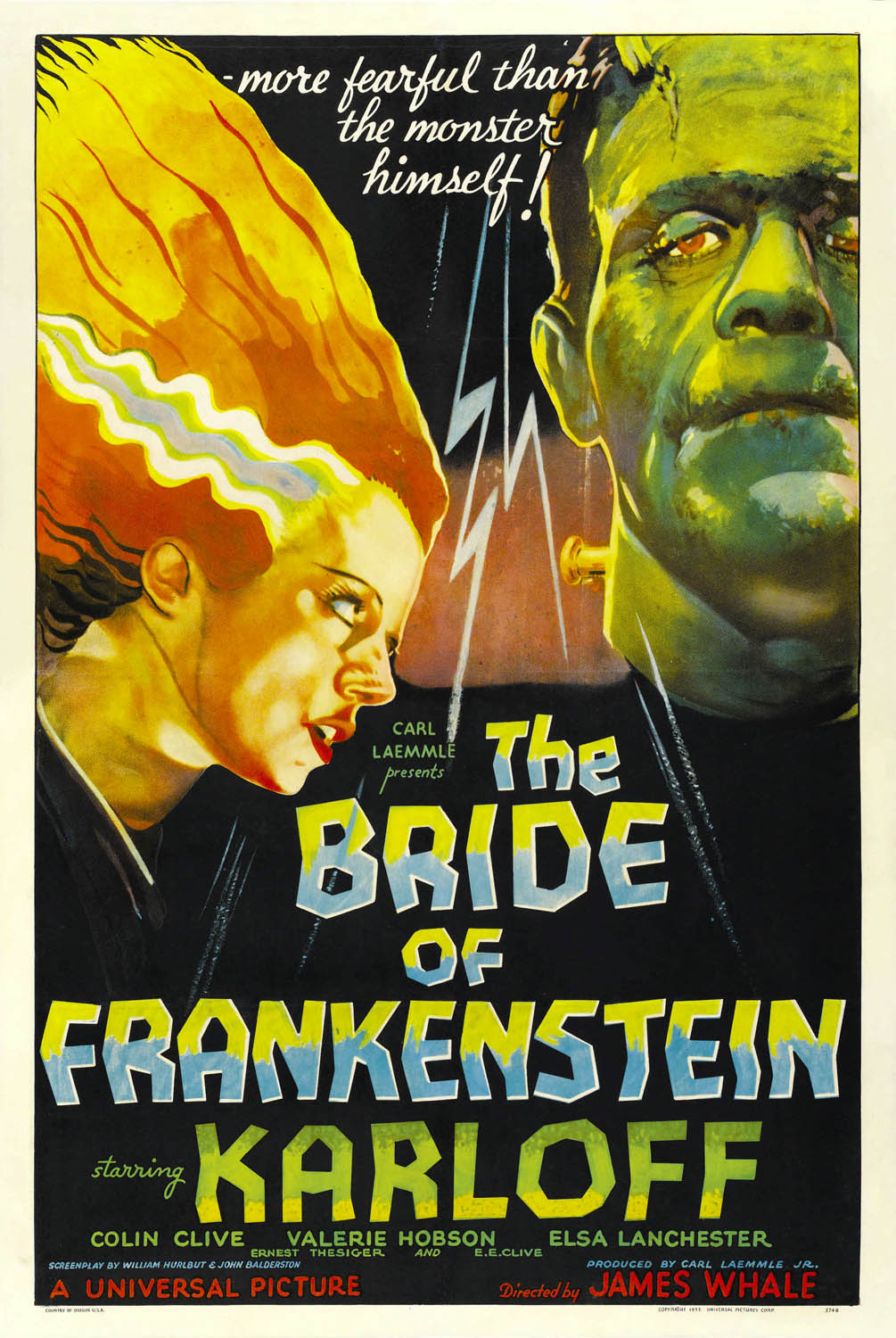
In this posting I can show you three examples of how these still photographs were used: the untouched photograph Jean Simmons, Rock Hudson [in “This Earth is Mine”] by an unknown photographer (1959, below) has then been colourised and used on the front cover of the DVD release of this film; the Limehouse Blues movie poster (1934, below) features a white-out around George Raft’s head, similar to the white-out around Joan Crawford or Rock Hudson (above); and the hair of Elsa Manchester in Elsa Lanchester [in “The Bride of Frankenstein”] by an unknown photographer (1935, below) is graphically stylised and coloured in the The Bride of Frankenstein movie poster (1935, below).

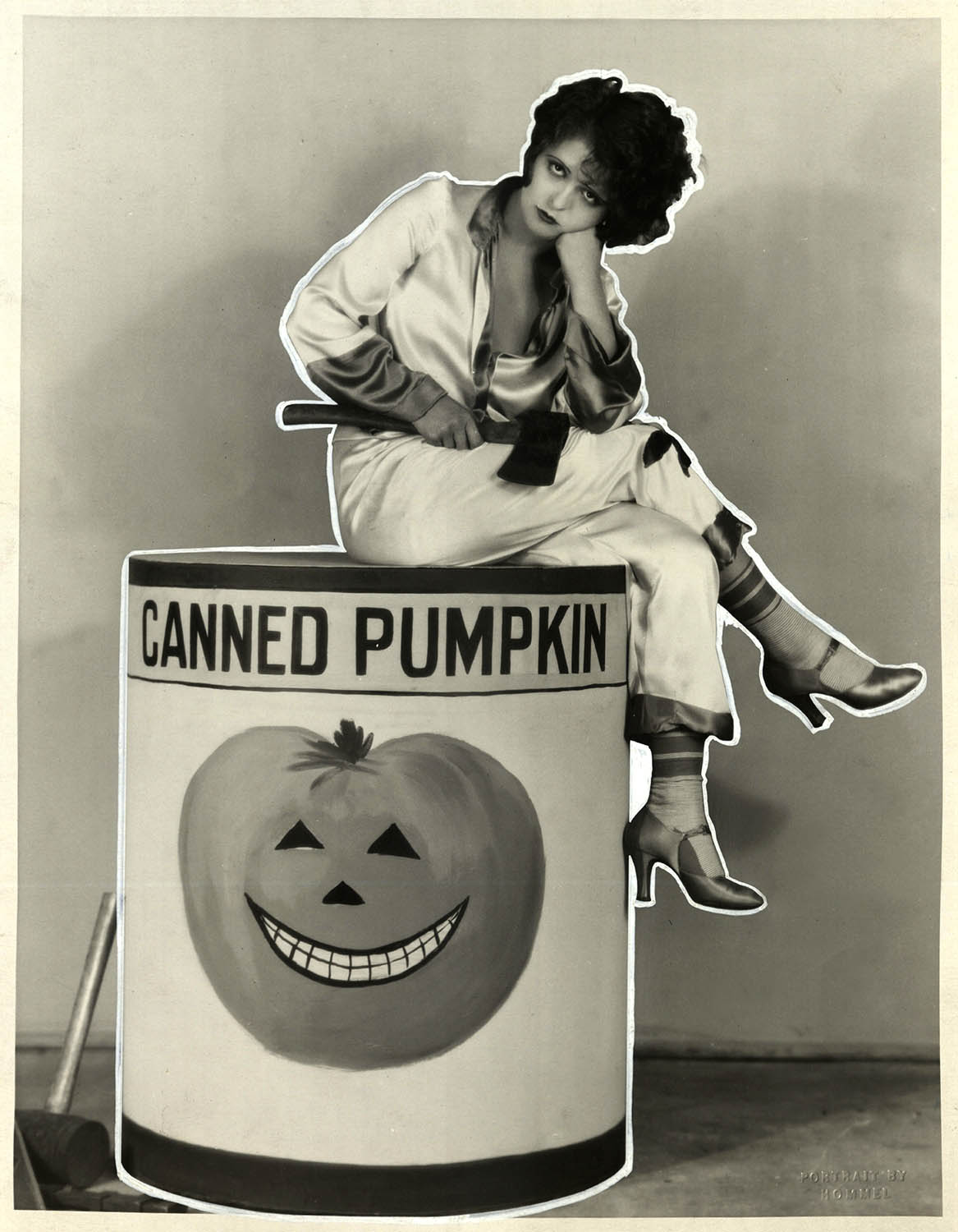
Silhouetting, in-painting, masking, sectioning, and collage were all hands-on practices that readied the photographs for the press whilst in press they promoted the desirous ideal of the glamorous movie starlet, heroic action man, the fantasy ready and available for consumption by the reading public: the beautiful heroine available to the male gaze, aspirational for so many young women.

Dr Marcus Bunyan


Many thankx to MoMA for allowing me to publish the photographs in the posting. Please click on the photographs for a larger version of the image.


“Though Iris Barry, who in 1935 became the founding curator of The Museum of Modern Art’s Film Library, aimed to preserve the history of moving images as an art form, she didn’t stop at moving images. “She was trying to save the record of film history,” explains Ron Magliozzi, a curator in what is today known as the Department of Film. “When the department was founded, the silent period had just ended. And its whole history was considered irrelevant and of no interest. That’s why she was so aggressive in collecting it. Films were the most important thing, and images from film history were second.”

Today, the Museum’s Film Stills Collection includes well over a million publicity photos, production stills, and more – and it’s not all pristine, glossy prints. In the current exhibition Face Value: Celebrity Press Photography, many of the images are covered with masking tape, marked up with crayon, or reconfigured with ghostly halos of white-out. It’s an occasionally startling reminder that the manipulation of photographs – and of celebrity itself – long predates Photoshop and Instagram.”


Jason Persse, Assistant Director, Content Team, MoMA


The Museum of Modern Art announces Face Value: Celebrity Press Photography, the first major exhibition of Hollywood studio portraiture to be drawn from the Museum’s film stills archive since 1993. On view in the Titus and Morita Galleries, the exhibition will offer a revisionist look at the Department of Film’s photographic archive, examining the evolution of editorial practice before the digital age, AI technology, and social media reshaped the experience of celebrity.

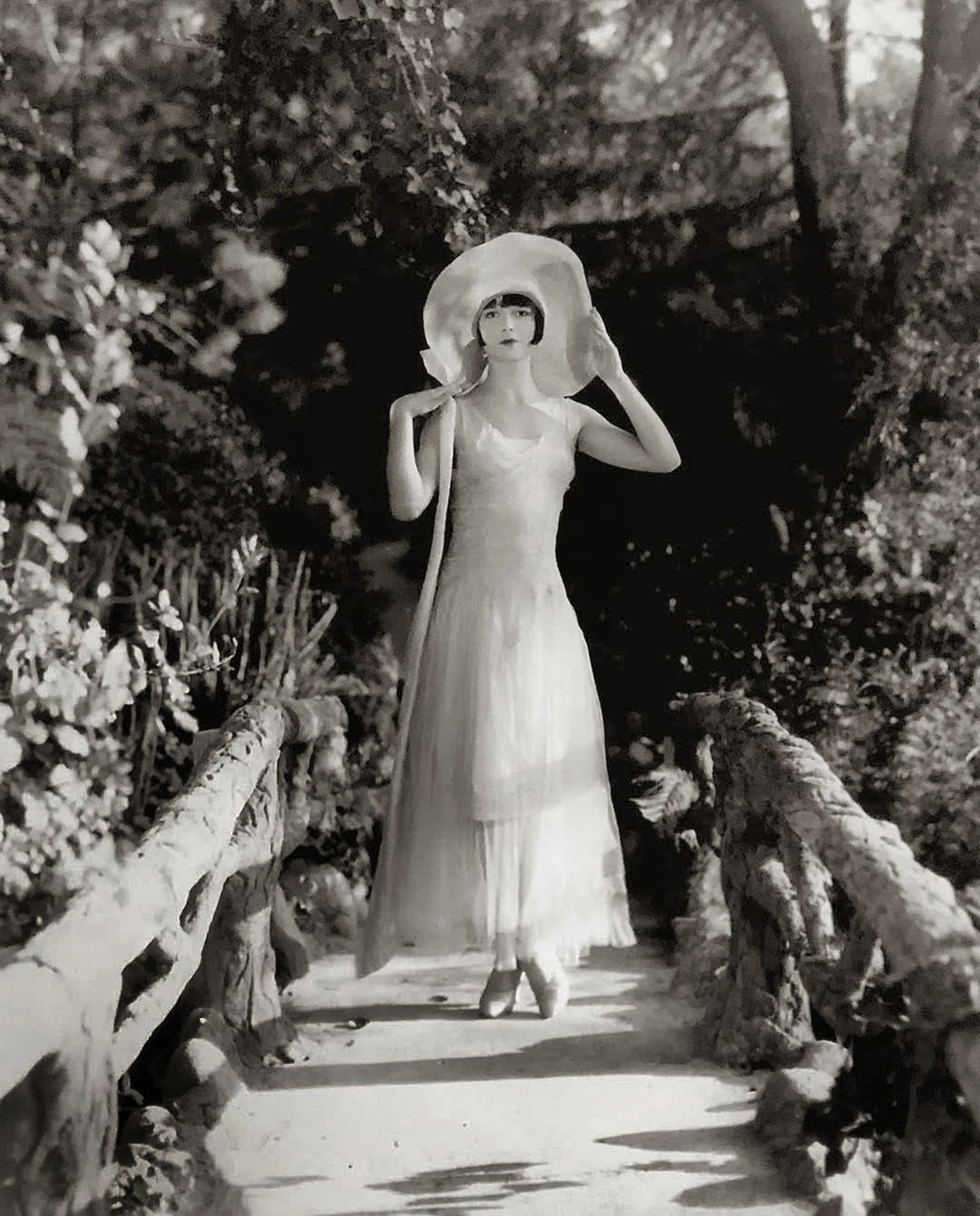
Face Value will feature over 200 works from 1921 to 1996, including studio photography of Louis Armstrong, Harry Belafonte, Clara Bow, Louise Brooks, Bette Davis, Mia Farrow, Katharine Hepburn, Dennis Hopper, Lena Horne, Bela Lugosi, Carmen Miranda, Elvis Presley, Diana Ross, Barbara Stanwyck, Elizabeth Taylor, Spencer Tracy, Oprah Winfrey, and many others.

Text from the MoMA website


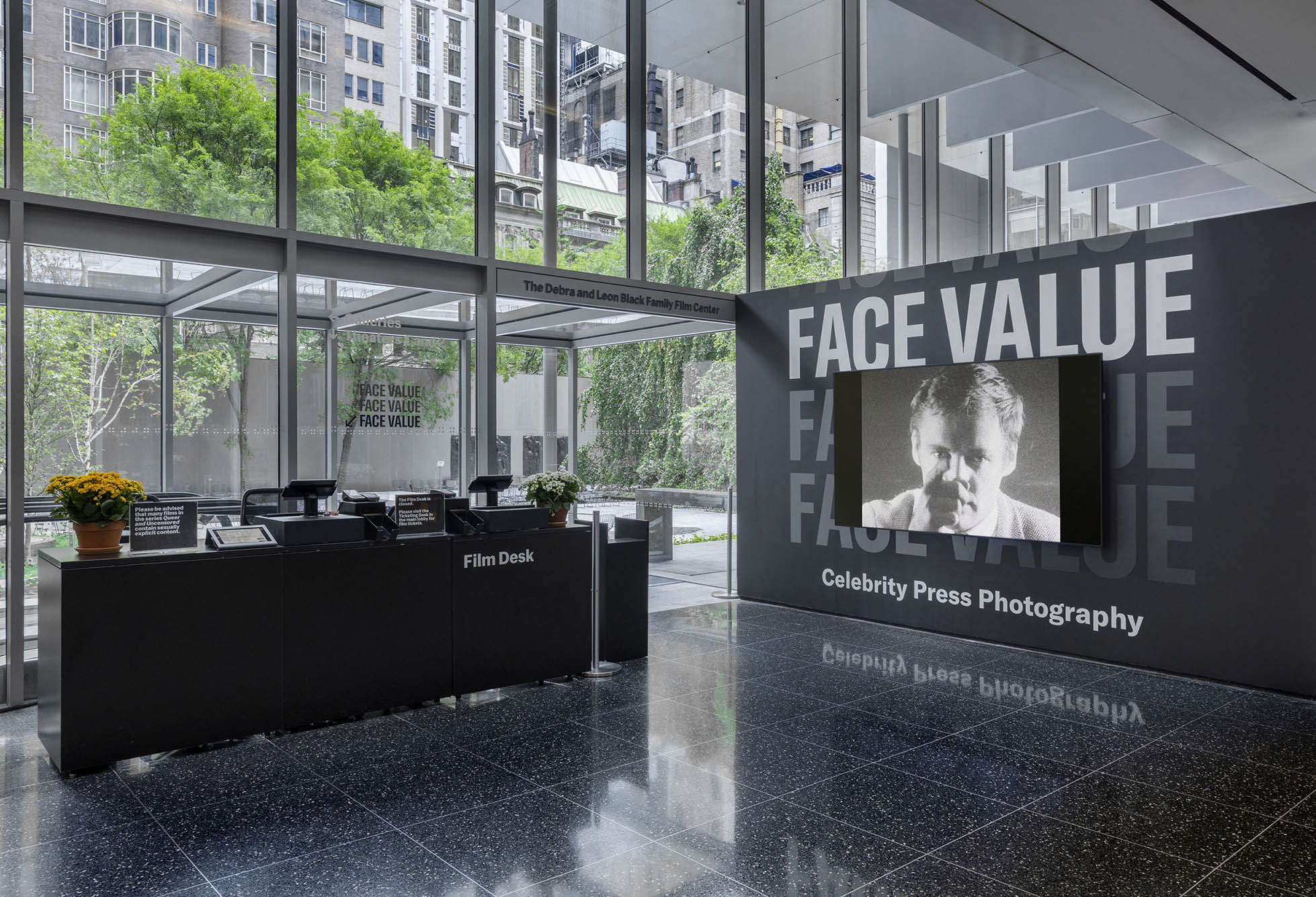
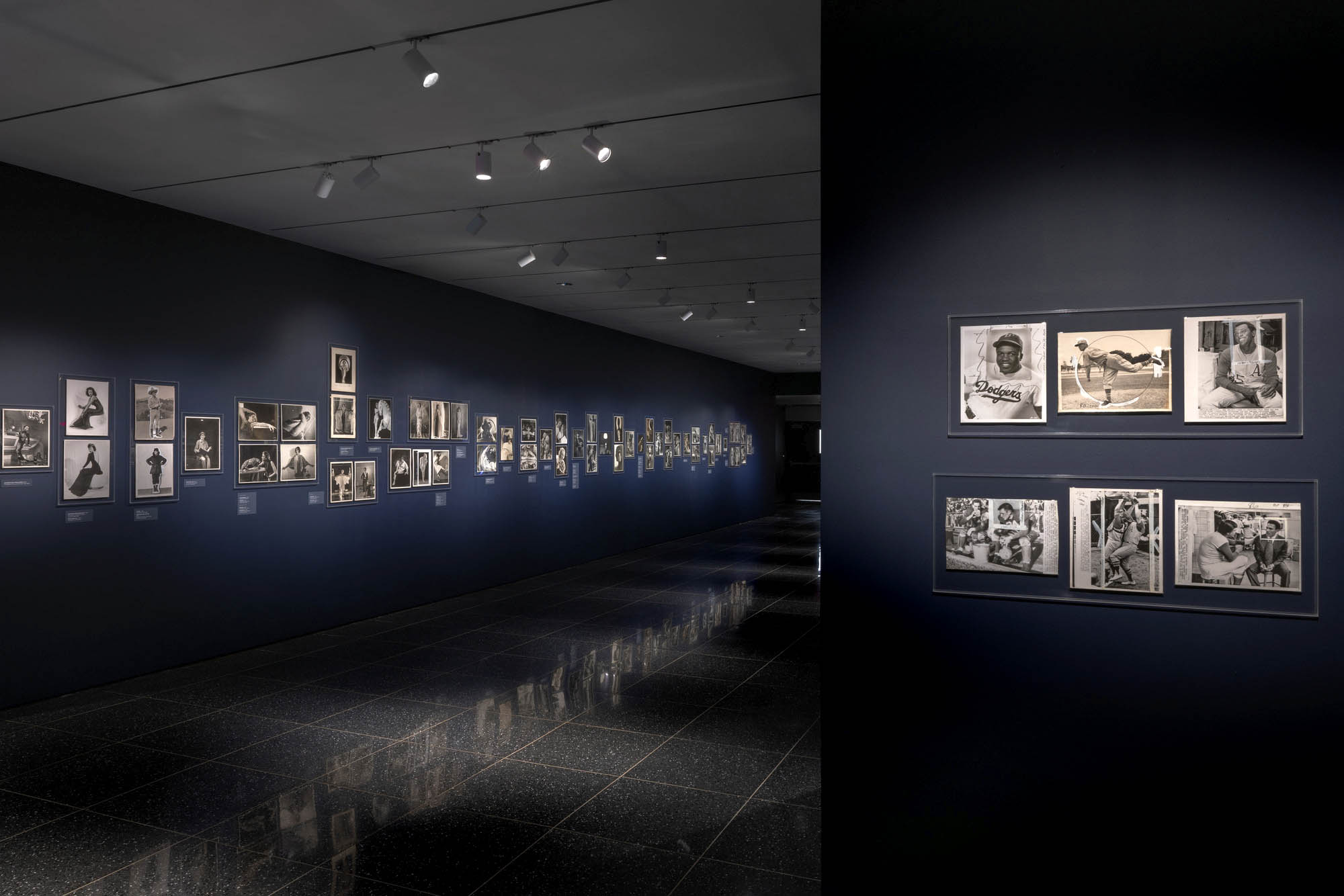
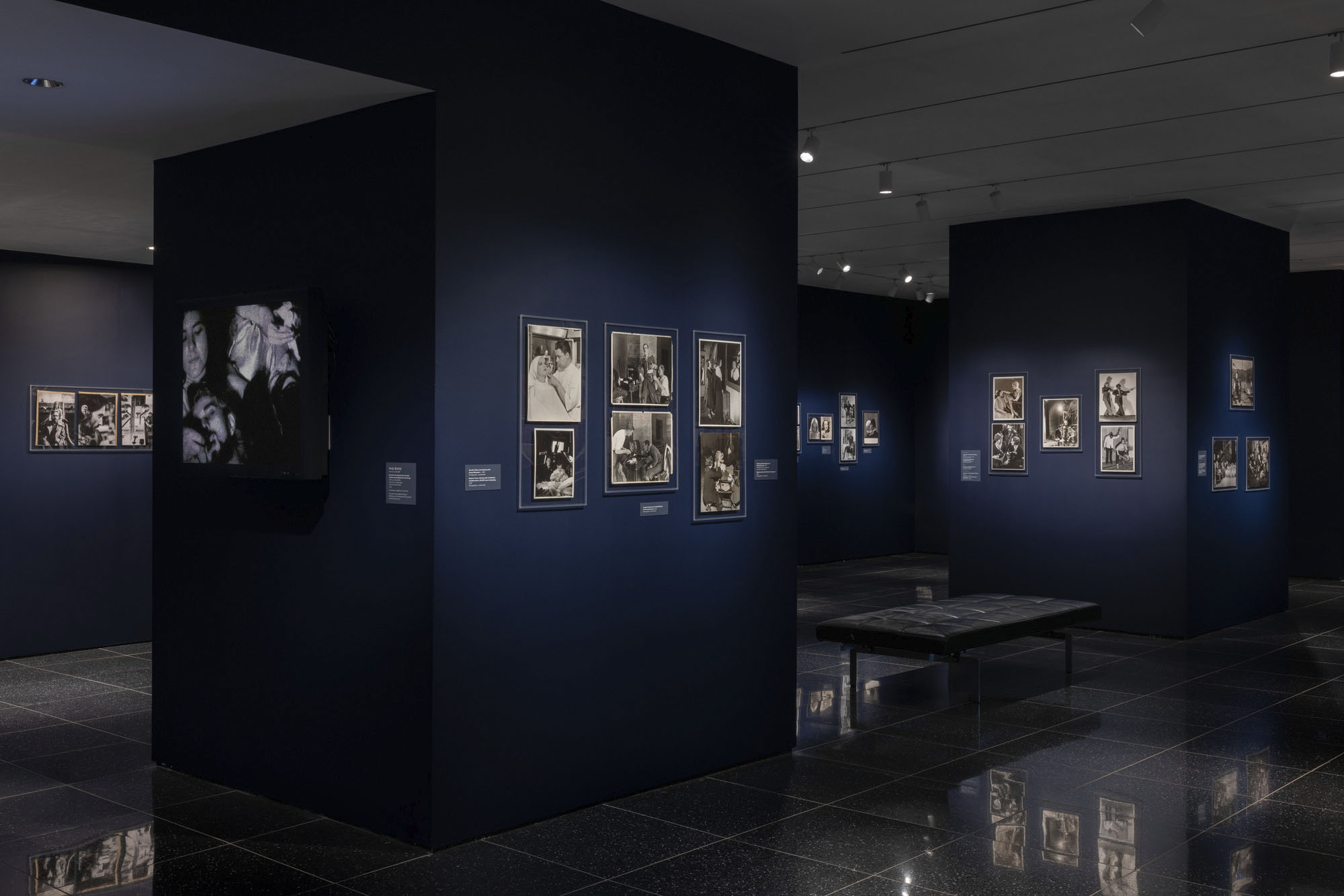
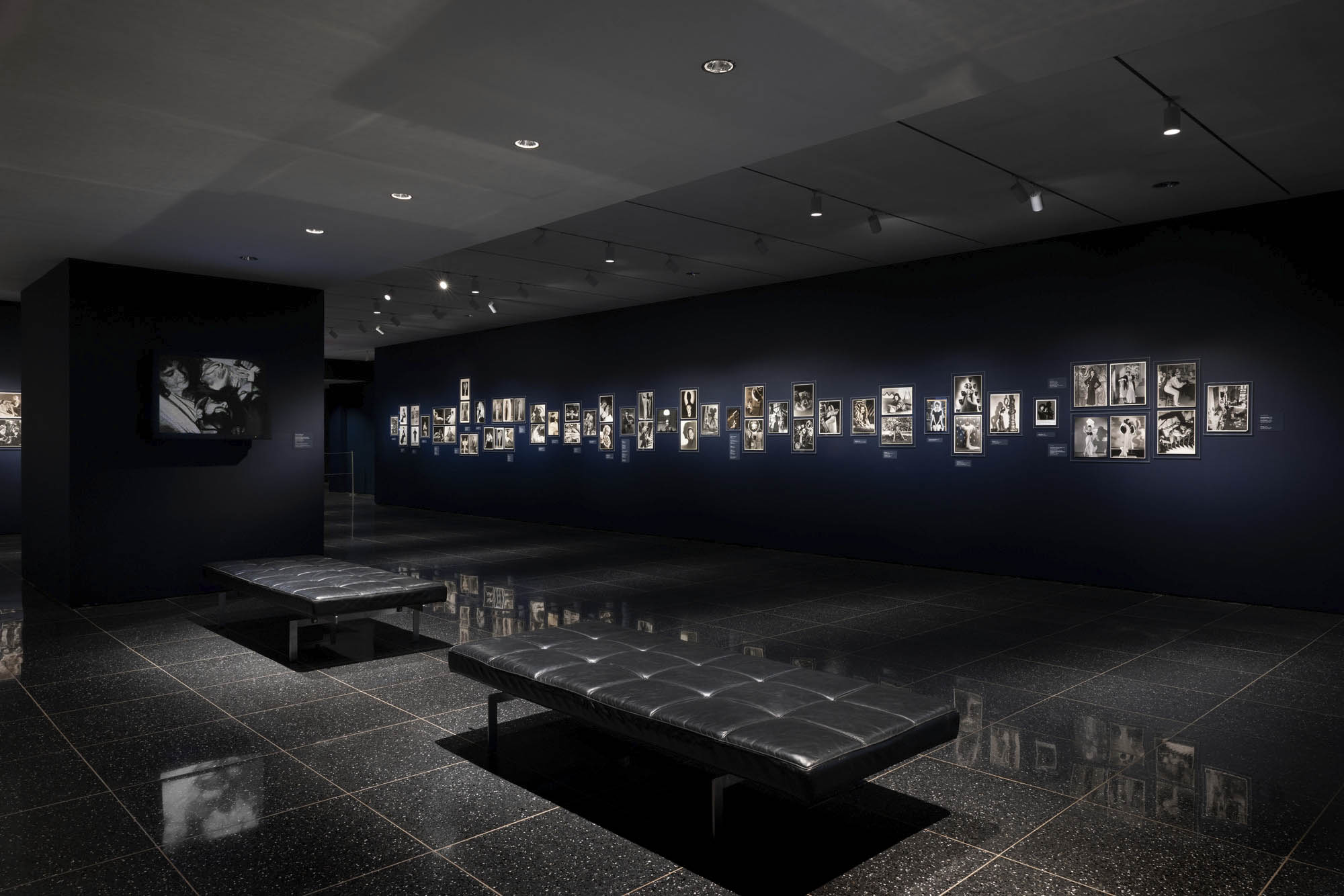
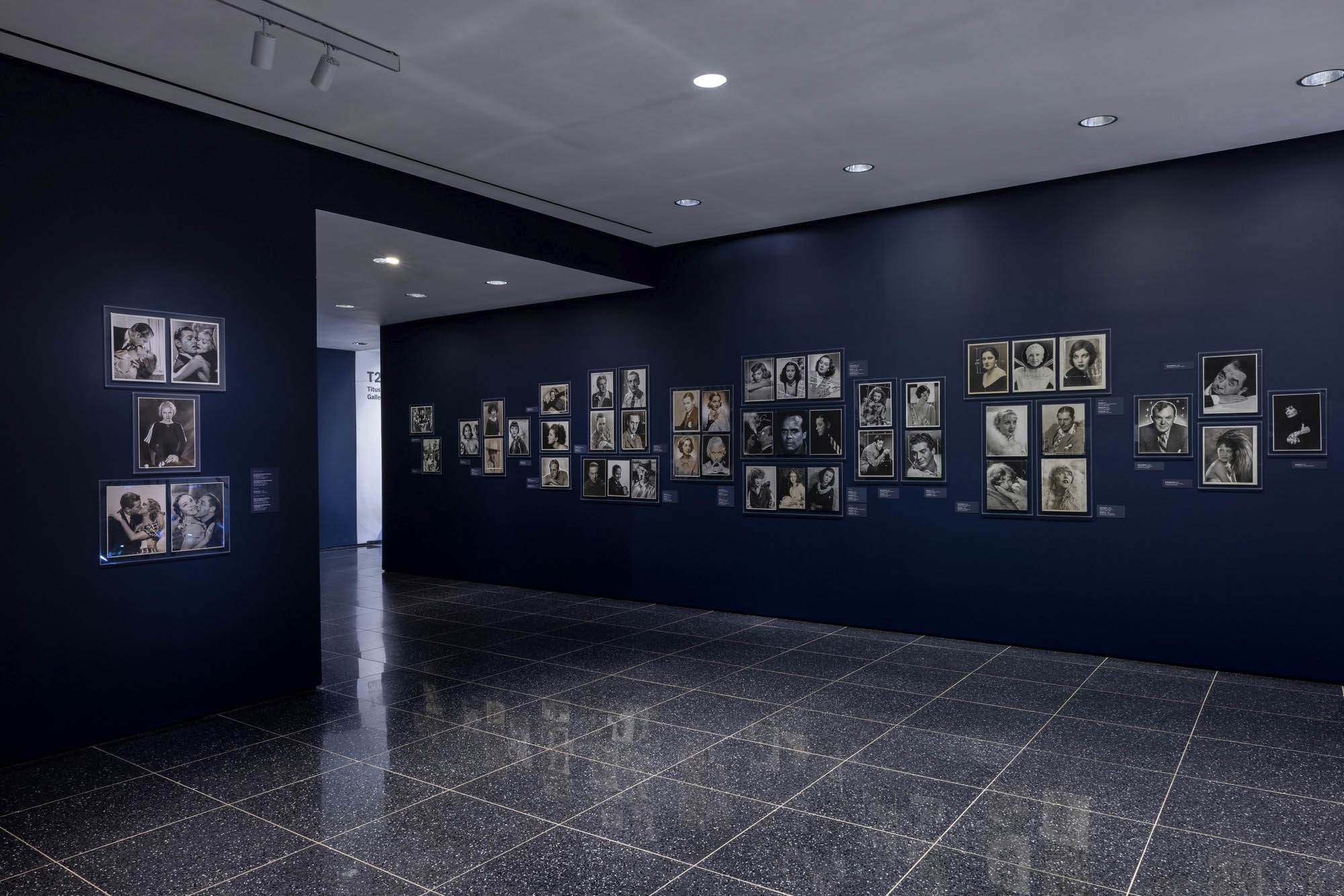
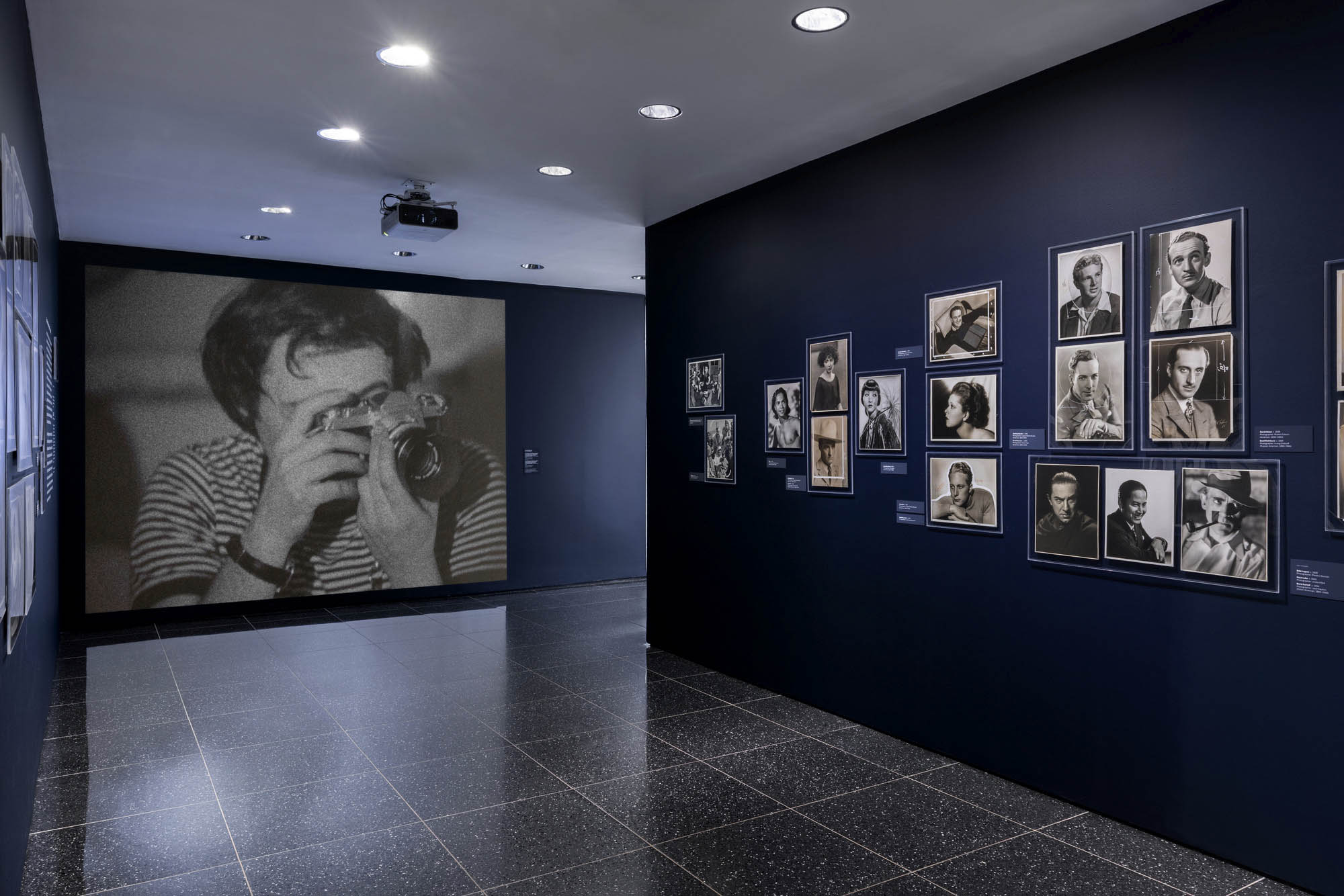
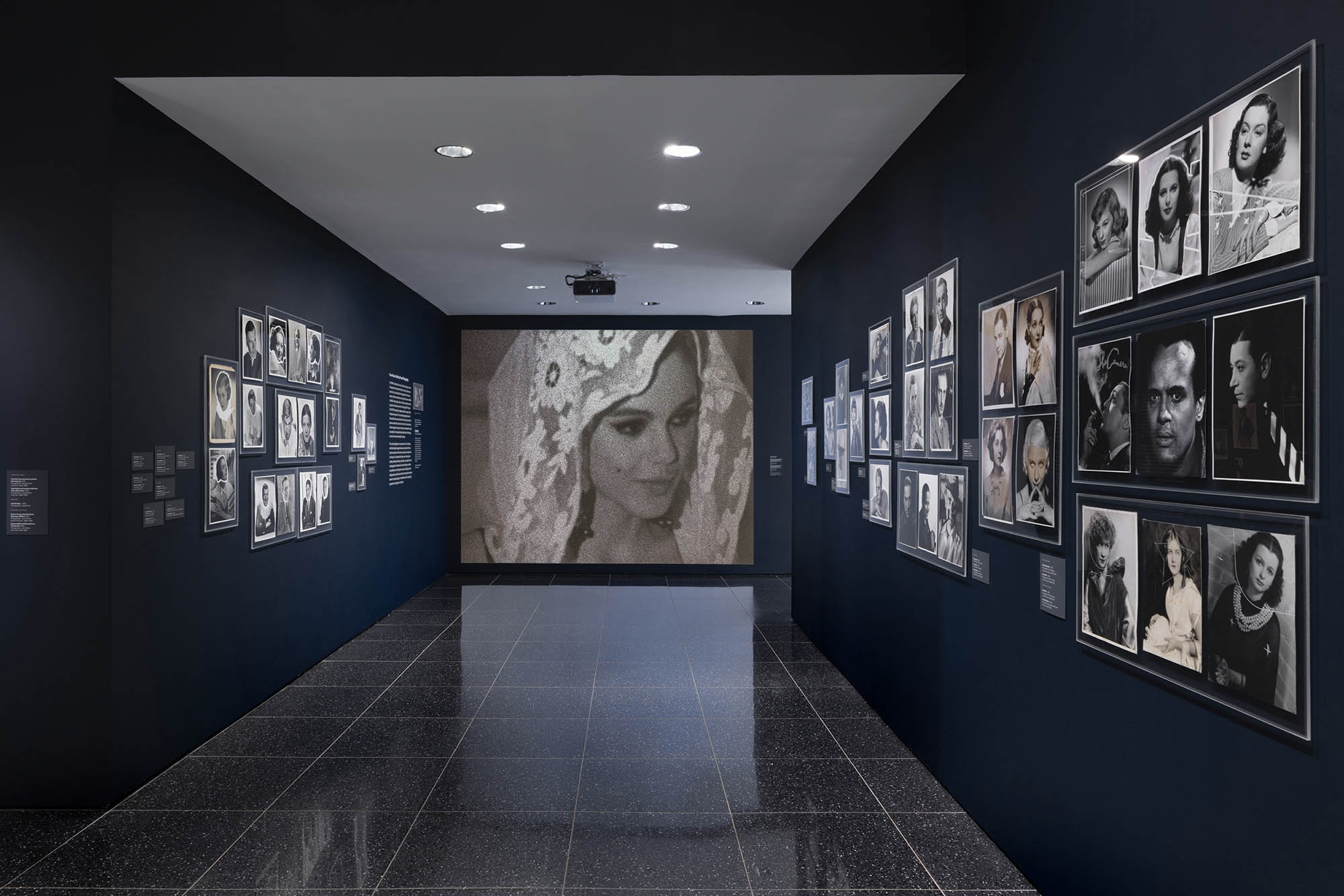
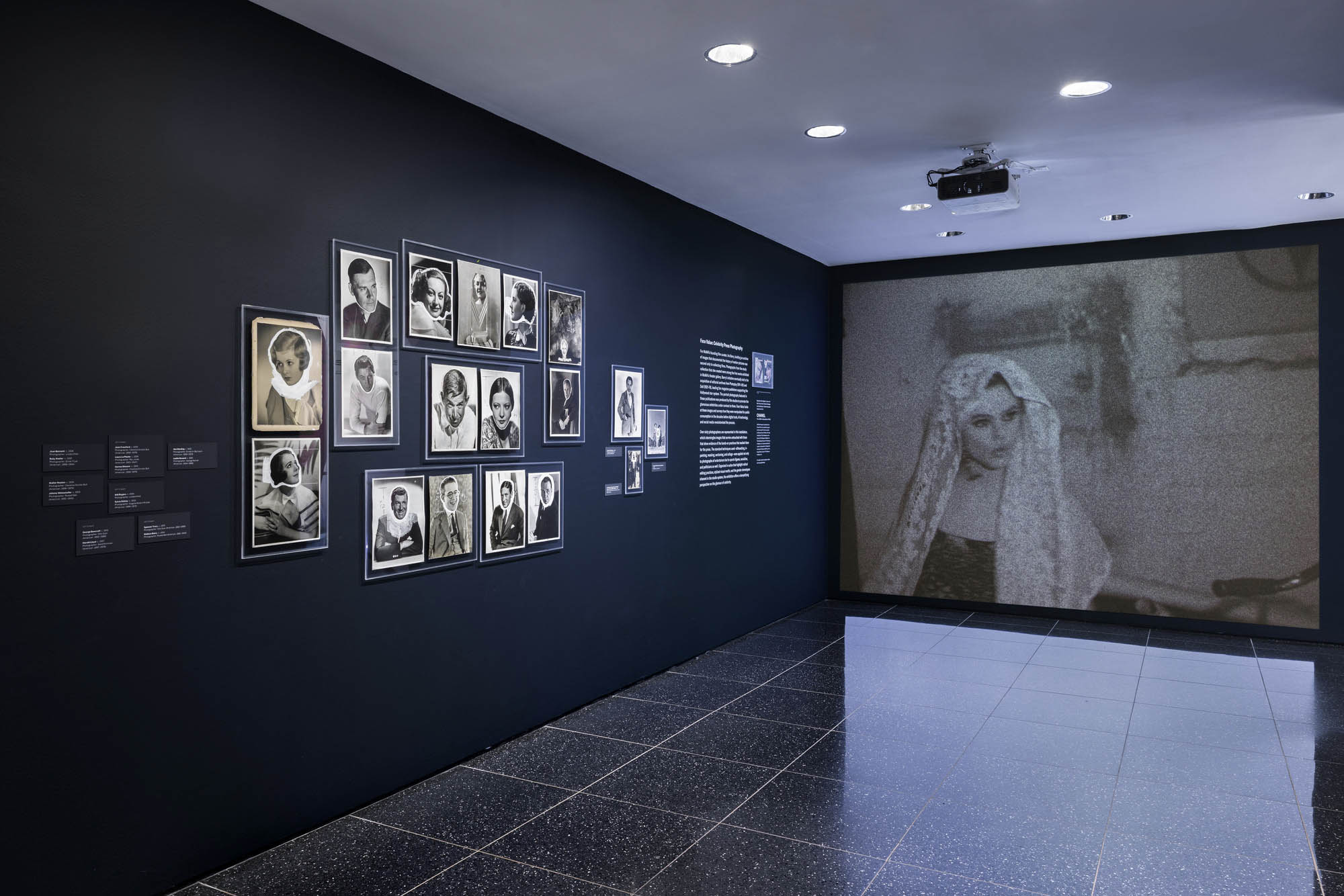
Installation view of the exhibition 'Face Value: Celebrity Press Photography' at The Museum of Modern Art (MoMA), New York, June 2025 - June 2026


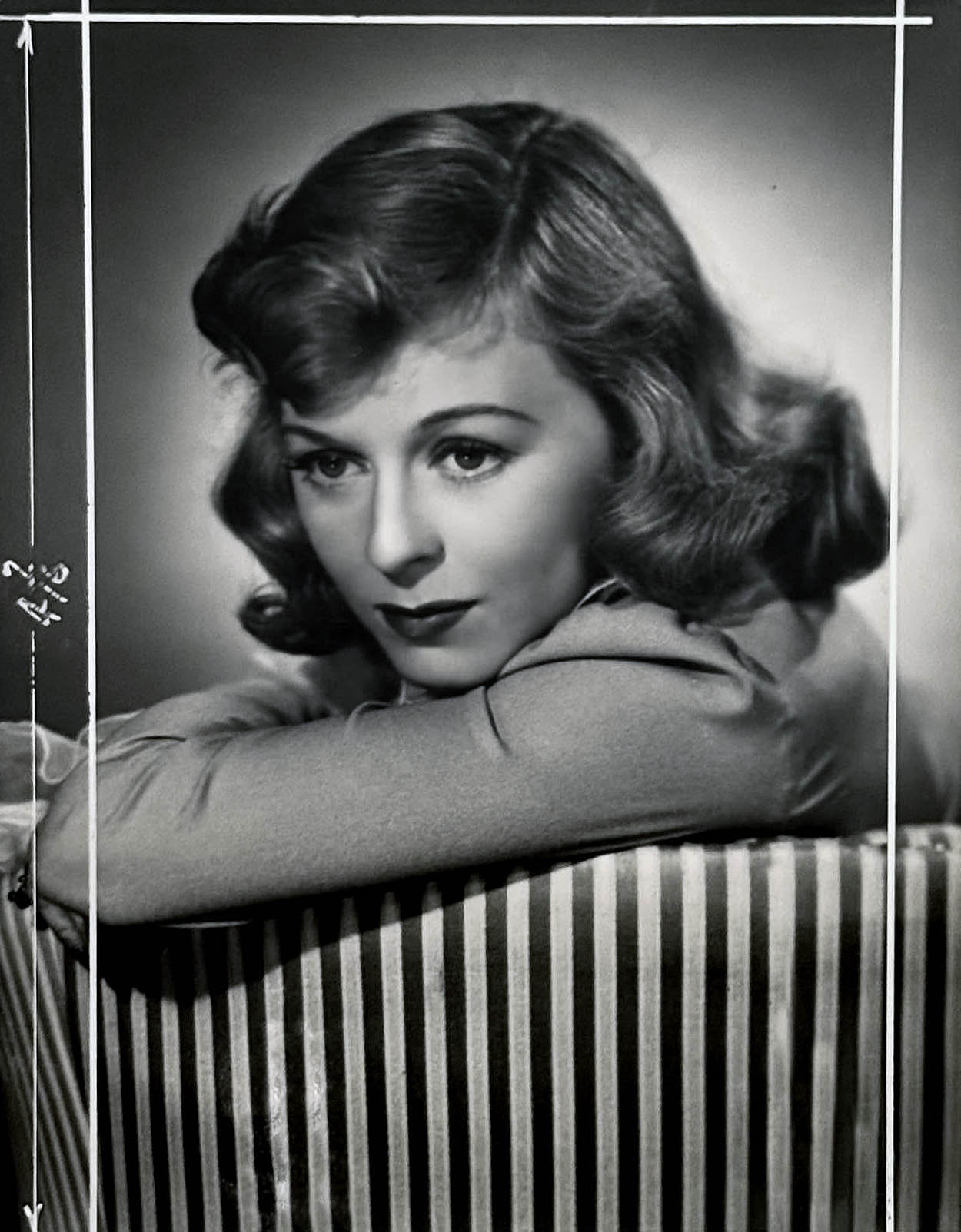
Installation views of the exhibition Face Value: Celebrity Press Photography at The Museum of Modern Art (MoMA), New York, June 2025 – June 2026 showing in the left hand block of 9 photographs of the bottom image, from left to right top row to bottom row: Ray Jones’ Margaret Sullavan c. 1939 (below); Clarence Sinclair Bull’s Hedy Lamarr c. 1940; Adolph L. “Whitey” Schafer’s Rosalind Russell c. 1940; Ray Jones’ Mischa Auer c. 1940; Unknown photographer Harry Belafonte [in “The Angel Levine”] 1970; Irving Lippman’s George Raft c. 1933; Hal Phyfe’s Miriam Hopkins c. 1930; Unknown photographer Dorothy Gish c. 1929; and Imandt’s Joan Bennett c. 1939
Photos: Jonathan Dorado


Ray Jones (American, 1901-1947) 'Margaret Sullavan' c. 1939


Ray Jones (American, 1901-1947)
Margaret Sullavan
c. 1939
Sheet: 13 7/8 x 10 7/8″ (35.2 x 27.6cm)
The Museum of Modern Art Film Stills Collection


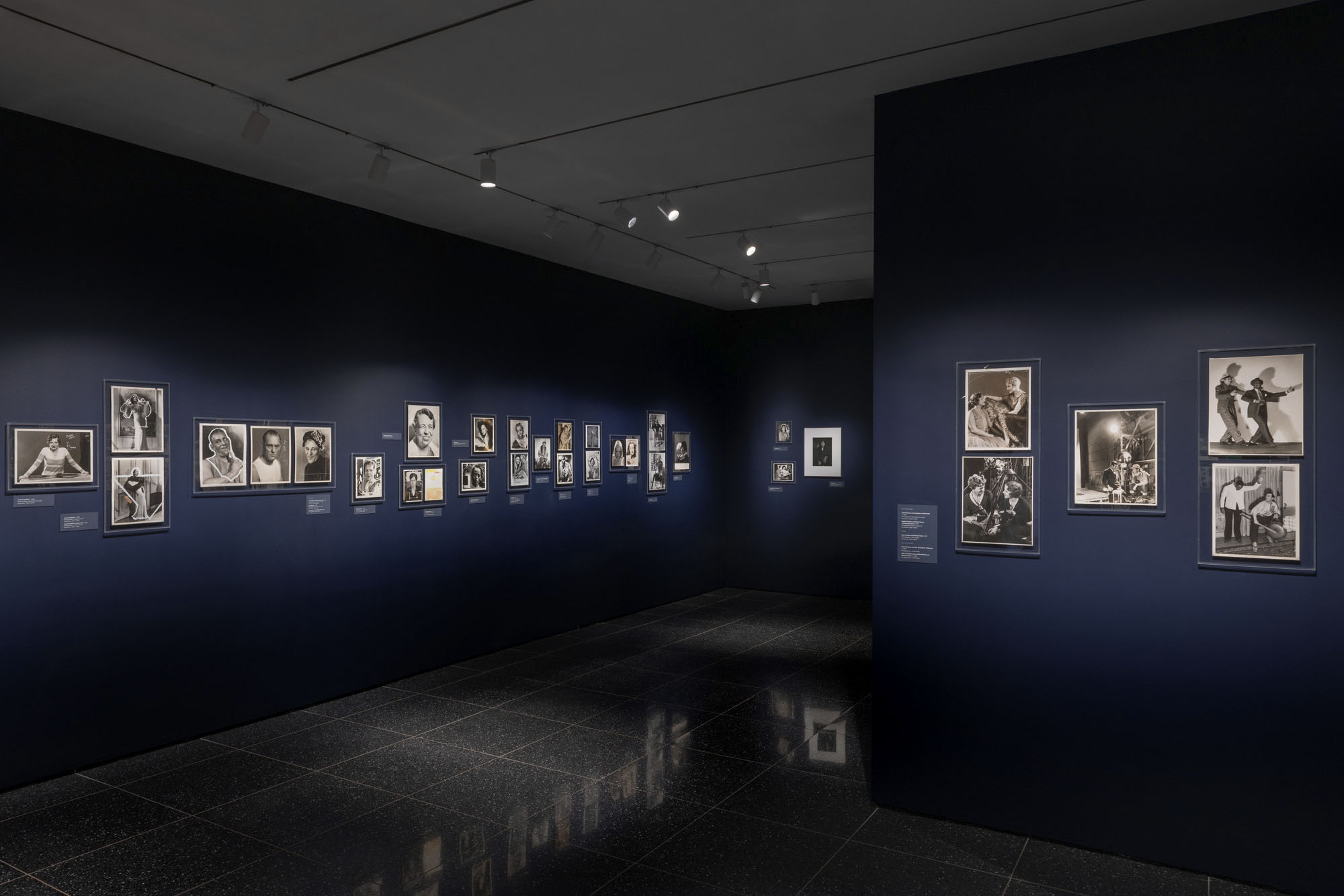
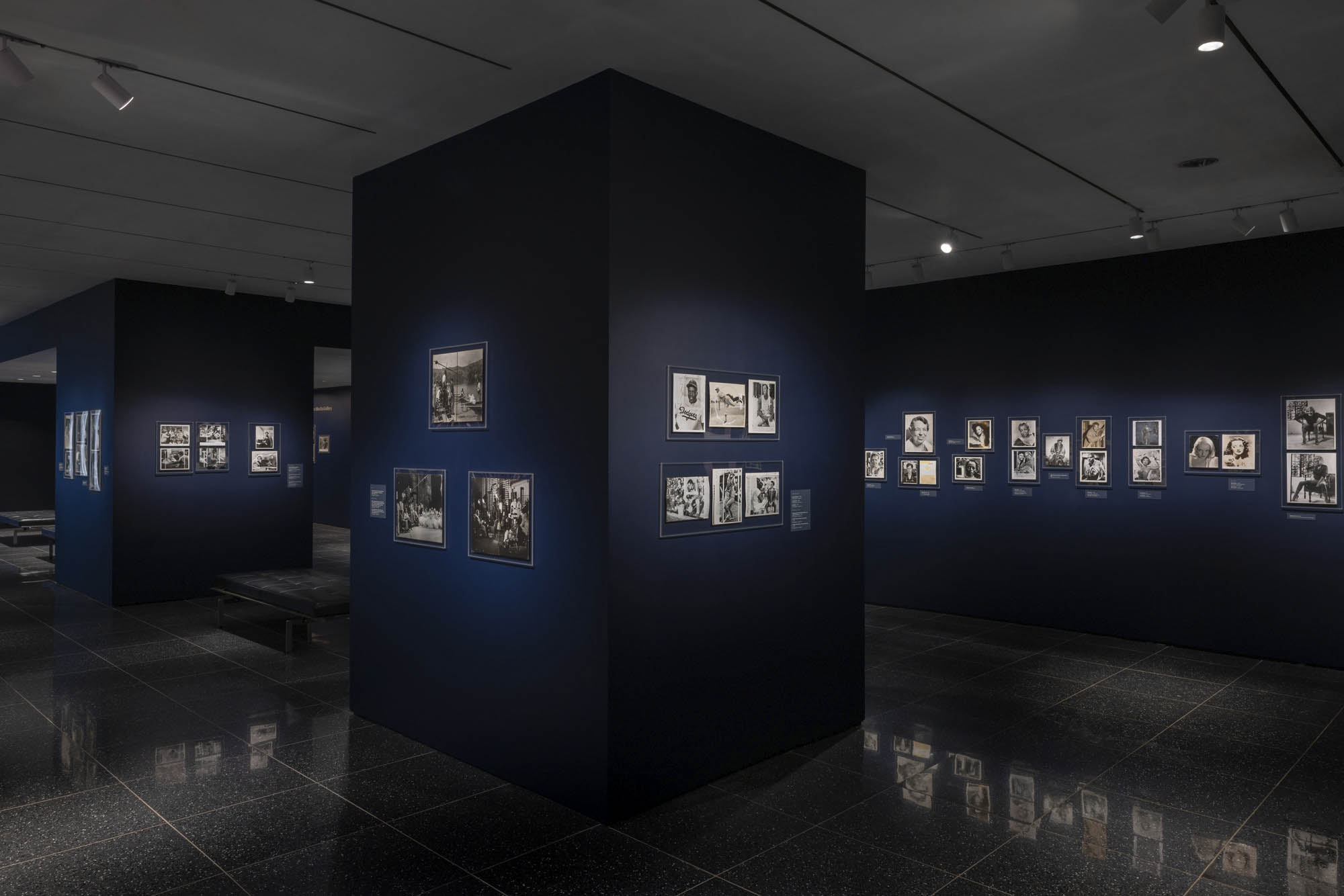
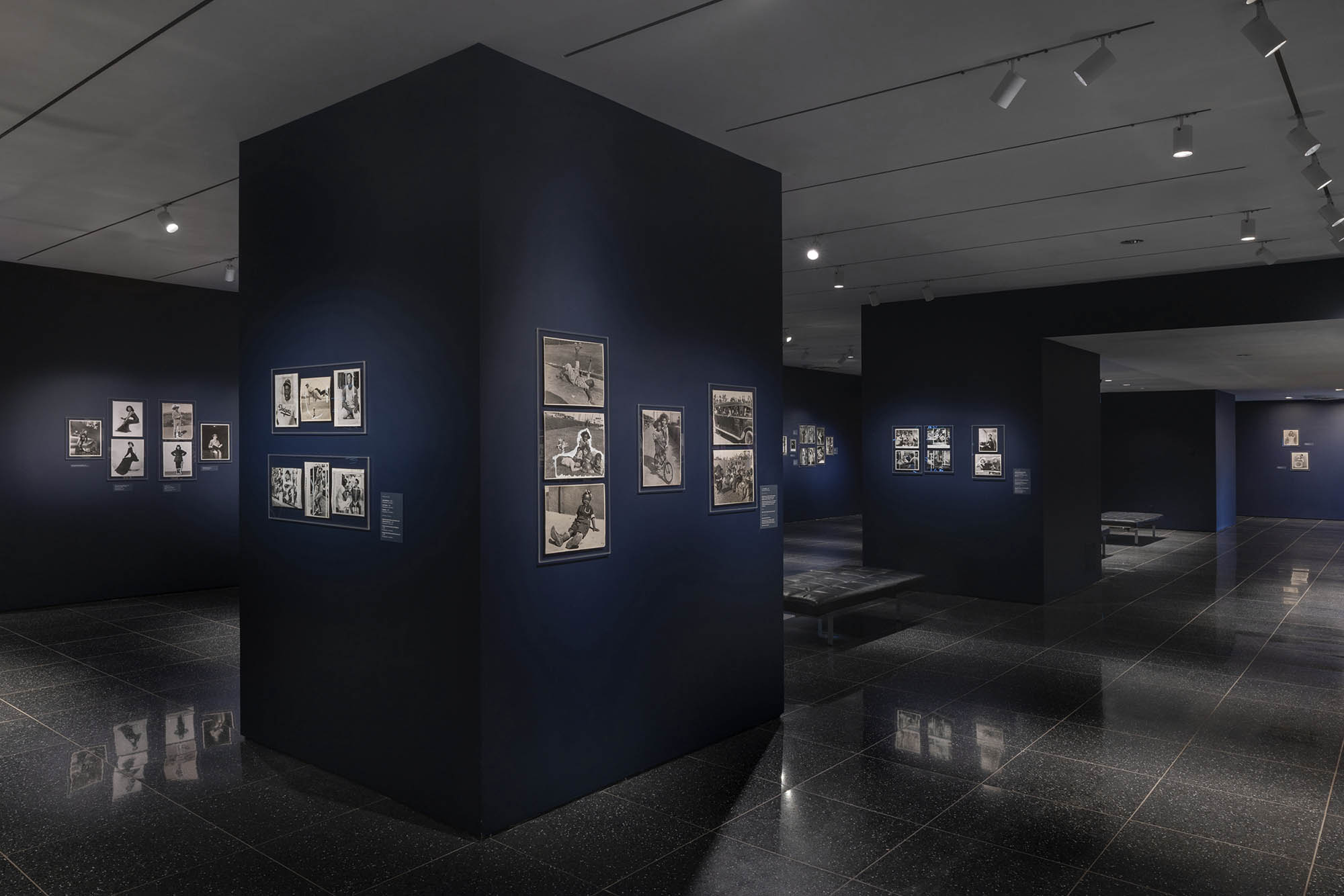
Installation view of the exhibition 'Face Value: Celebrity Press Photography' at The Museum of Modern Art (MoMA), New York, June 2025 - June 2026


Installation view of the exhibition Face Value: Celebrity Press Photography at The Museum of Modern Art (MoMA), New York, June 2025 – June 2026 showing at right in the bottom image at third left in top row, Unknown photographer Jackie Robinson c. 1950
Photos: Jonathan Dorado


Unknown photographer. 'Jackie Robinson' c. 1950


Unknown photographer
Jackie Robinson
c. 1950
Sheet: 10 x 8″ (25.4 x 20.3cm)
The Museum of Modern Art Film Stills Collection


The Museum of Modern Art announces Face Value: Celebrity Press Photography, the first major exhibition of Hollywood studio portraiture to be drawn from the Museum’s film stills archive since 1993. On view in the Titus and Morita Galleries from June 28, 2025, through June 21, 2026, the exhibition will offer a revisionist look at the Department of Film’s photographic archive, examining the evolution of editorial practice before the digital age, AI technology, and social media reshaped the experience of celebrity.

Face Value will feature over 200 works from 1921to 1996, including studio photography of Louis Armstrong, Harry Belafonte, Clara Bow, Louise Brooks, Bette Davis, Mia Farrow, Katharine Hepburn, Dennis Hopper, Lena Horne, Bela Lugosi, Carmen Miranda, Elvis Presley, Diana Ross, Barbara Stanwyck, Elizabeth Taylor, Spencer Tracy, Oprah Winfrey, and many others.

Face Value: Celebrity Press Photography is organised by Ron Magliozzi, Curator, with Katie Trainor, Film Collections Manager, and Cara Shatzman, Collection Specialist, Department of Film.

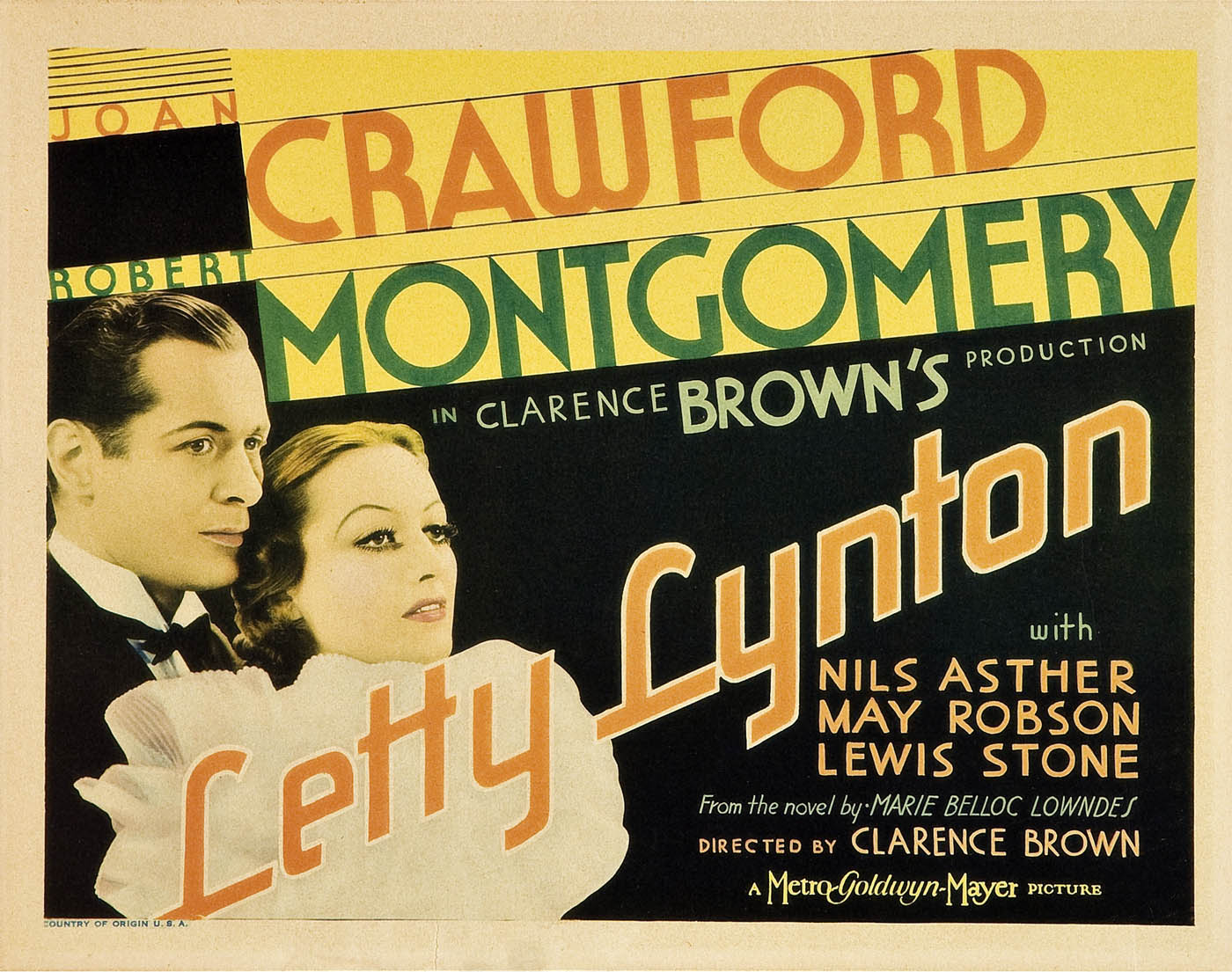
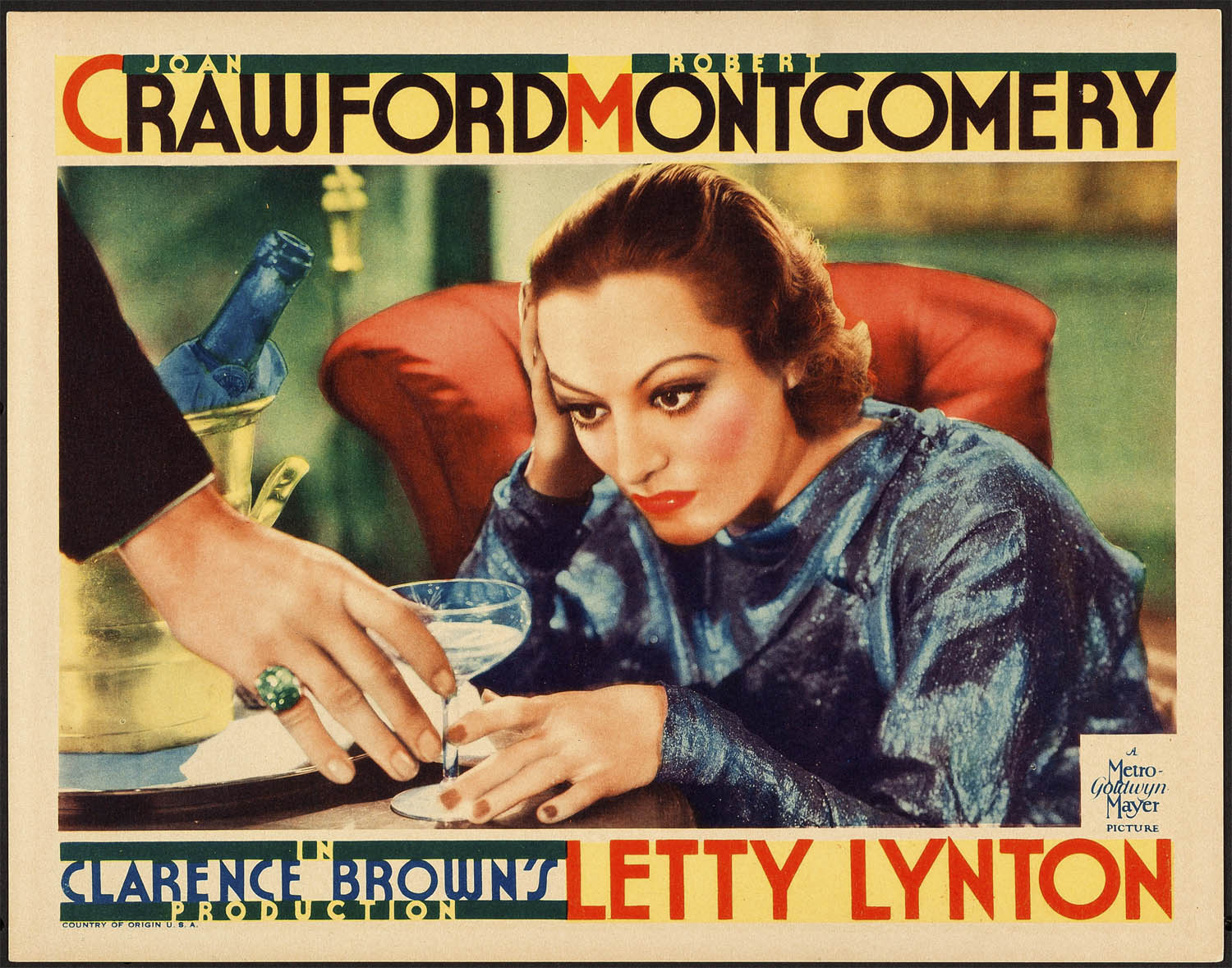
Face Value will encourage viewers to see through the facade of glamour at how celebrity is fabricated and exploited,” says Ron Magliozzi. Showcasing work by over 58 photographers, the exhibition will juxtapose “untouched” images like Otto Dyar’s Carole Lombard (c. 1933) with those altered through traditional press practices such as silhouetting, in-painting, masking, sectioning, and collage, like James Manatt’s Joan Crawford portrait for the film Letty Lynton (1932). Face Value examines how these methods shaped representations of not only film stars but also sports figures, socialites, and politicians, from Jackie Robinson to Jacqueline Kennedy Onassis and Eleanor Roosevelt. Presented in thematic suites, the installation highlights radical editing techniques, stylised visual motifs, and the gendered aesthetics embedded in the system, offering a revealing perspective on the fabrication of glamour and fame.

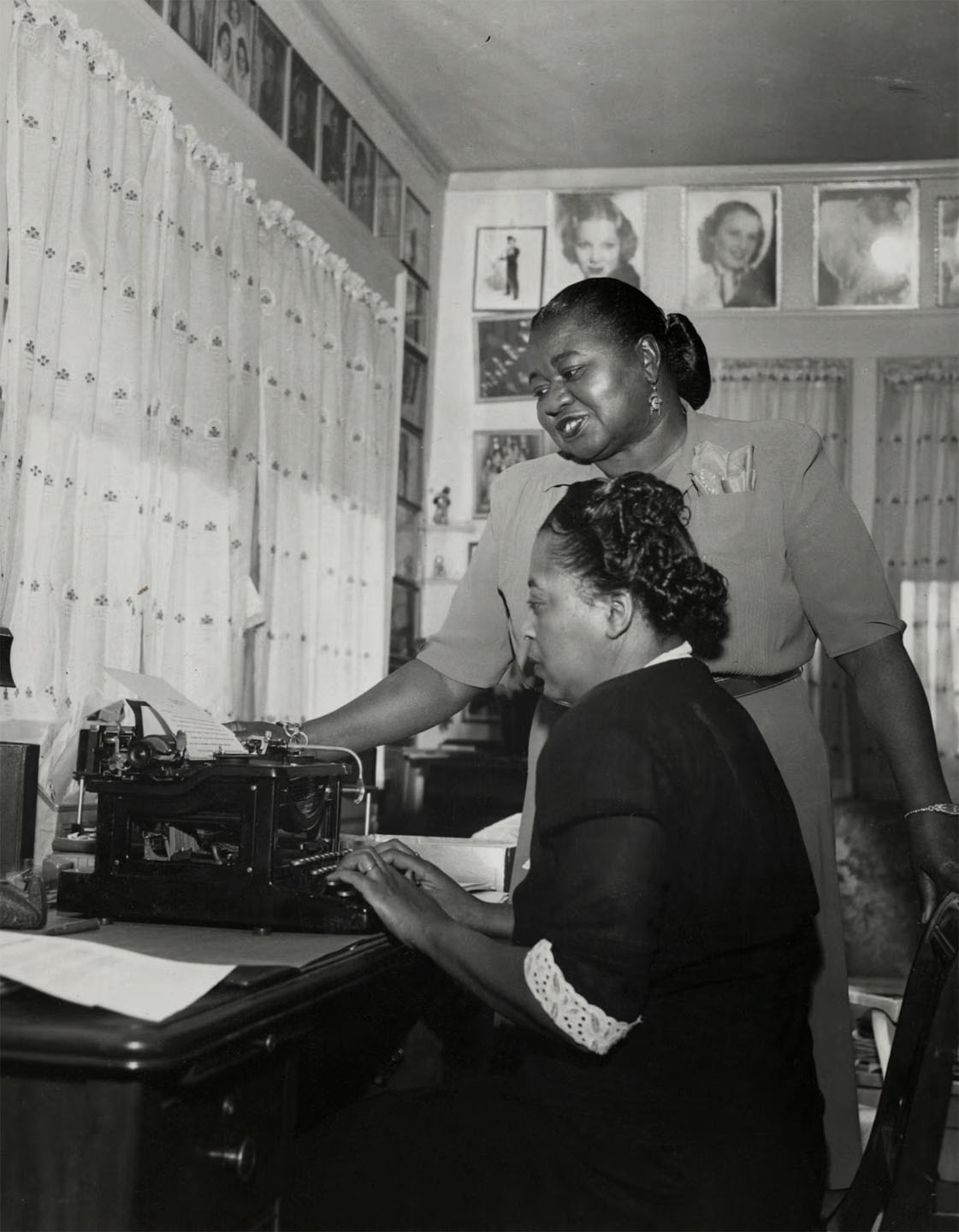
Since the Museum’s founding, photography has played a vital role in how it has documented the history of motion pictures. Face Value traces the origin of this early initiative to MoMA’s first film curator, Iris Barry, whose archival efforts led to the acquisition of editorial collections from Photoplay (1911-1980) and Dell (1921-1976), two leading publications that helped define Hollywood’s star system. The exhibition includes images of comic stars Buster Keaton, W. C. Fields, Lupe Velez, and Mae West; pioneering actress Hattie McDaniel with Ruby Berkley, the first Black accredited Hollywood correspondent; famed aviatrix Amelia Earhart on a Hollywood film set; and the last photo shoot with Marilyn Monroe.

Featuring promotional portraits crafted to cultivate celebrity personas, such as Ray Jones’s Anna May Wong portrait for the film Limehouse Blues, Soul of a Dragon (1934), the exhibition explores how these images were manipulated for public consumption through hands-on editing techniques long before digital tools became standard.

Press release from MoMA


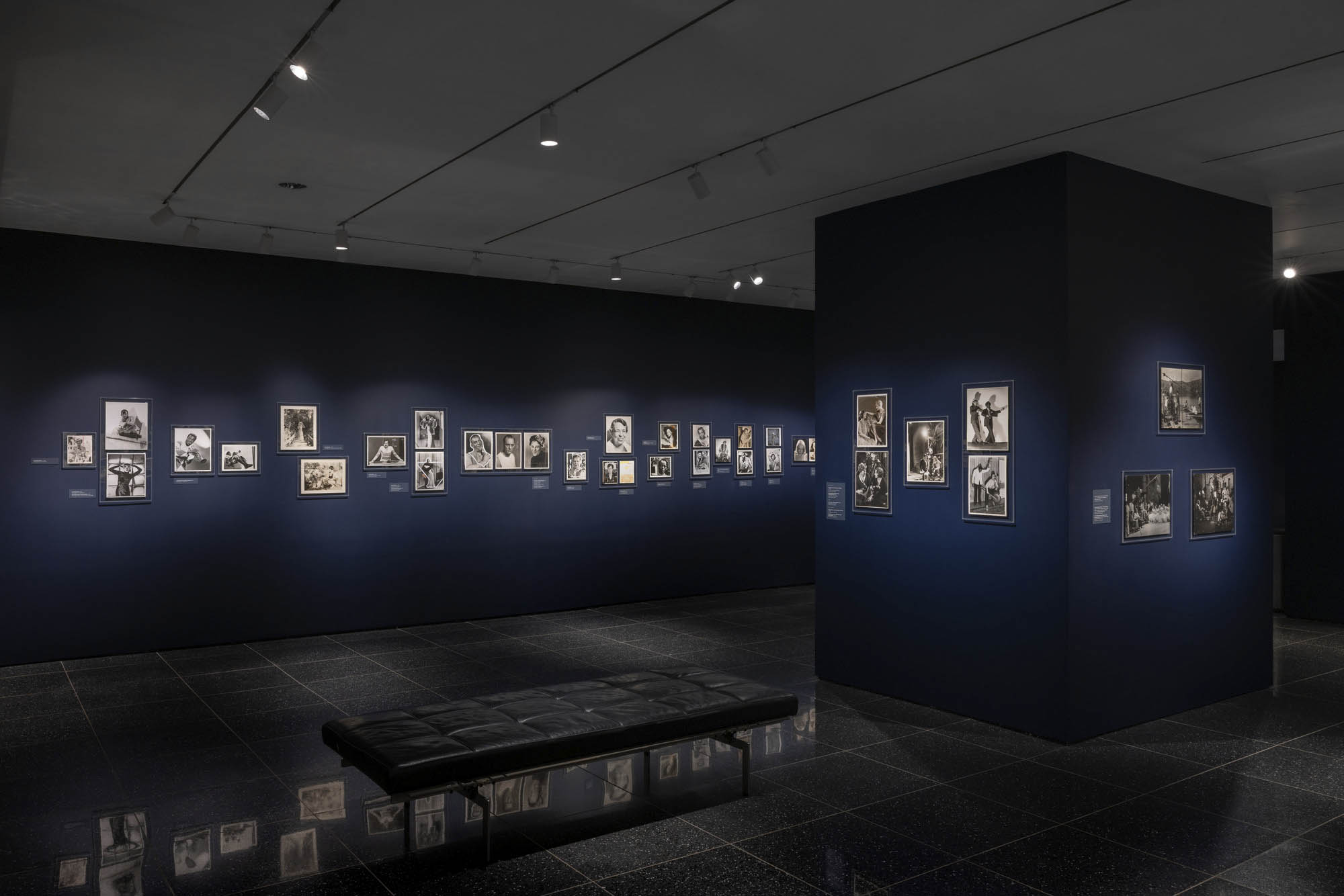
Installation view of the exhibition 'Face Value: Celebrity Press Photography' at The Museum of Modern Art (MoMA), New York, June 2025 - June 2026
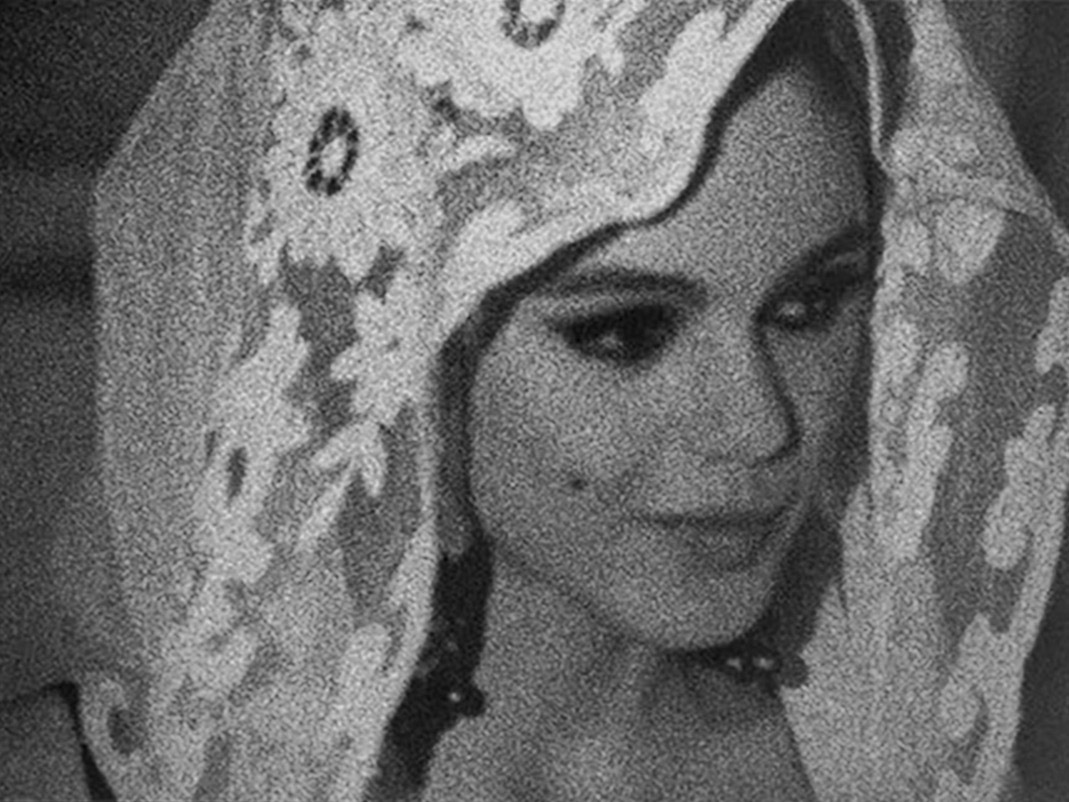
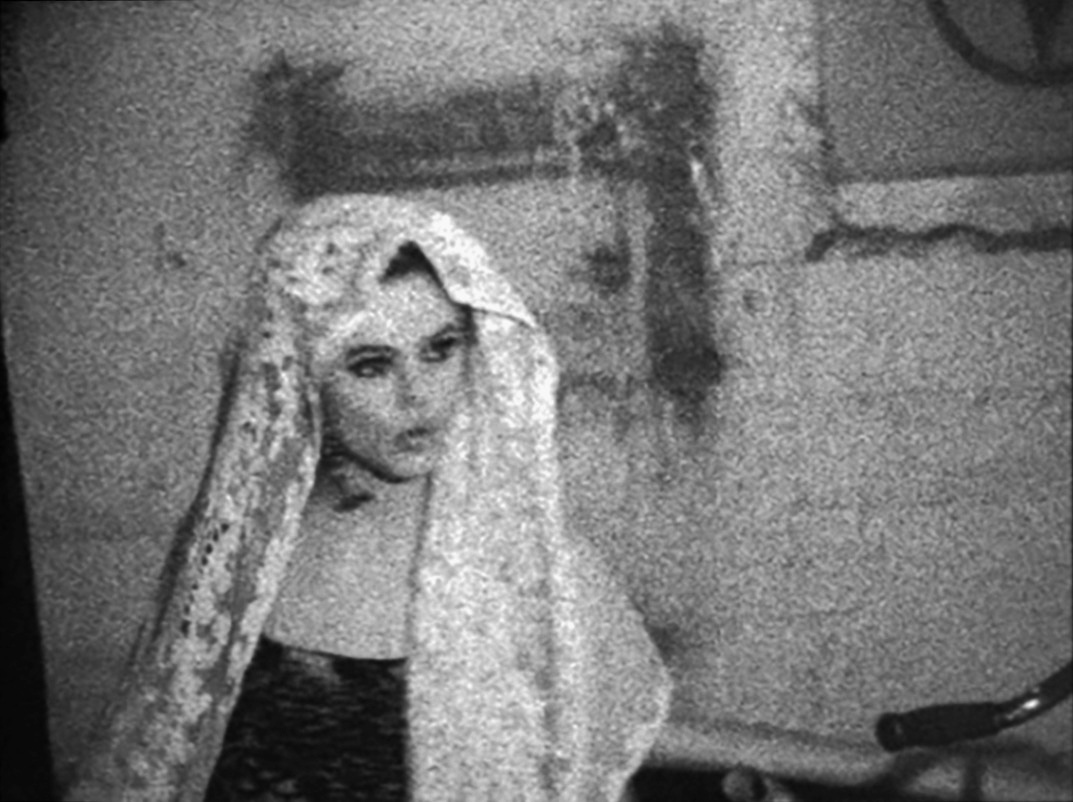
Installation view of the exhibition 'Face Value: Celebrity Press Photography' at The Museum of Modern Art (MoMA), New York, June 2025 - June 2026 showing a video still from 'Edie Sedgwick, Gerard Malanga, Benedetta Barzini, Ingrid Superstar, Nat Finkelstein: Danny Williams footage of unknown documentary film shoot' c. 1965, processed 2024


Installation views of the exhibition Face Value: Celebrity Press Photography at The Museum of Modern Art (MoMA), New York, June 2025 – June 2026 showing in the bottom two photographs, video stills from Edie Sedgwick, Gerard Malanga, Benedetta Barzini, Ingrid Superstar, Nat Finkelstein: Danny Williams footage of unknown documentary film shoot c. 1965, processed 2024 (below)
Photos: Jonathan Dorado


'Edie Sedgwick, Gerard Malanga, Benedetta Barzini, Ingrid Superstar, Nat Finkelstein: Danny Williams footage of unknown documentary film shoot' c. 1965, processed 2024


Edie Sedgwick, Gerard Malanga, Benedetta Barzini, Ingrid Superstar, Nat Finkelstein: Danny Williams footage of unknown documentary film shoot
c. 1965, processed 2024
The Museum of Modern Art Film Stills Collection


Edie Sedgwick dances in Andy Warhol’s Silver Factory during a photoshoot


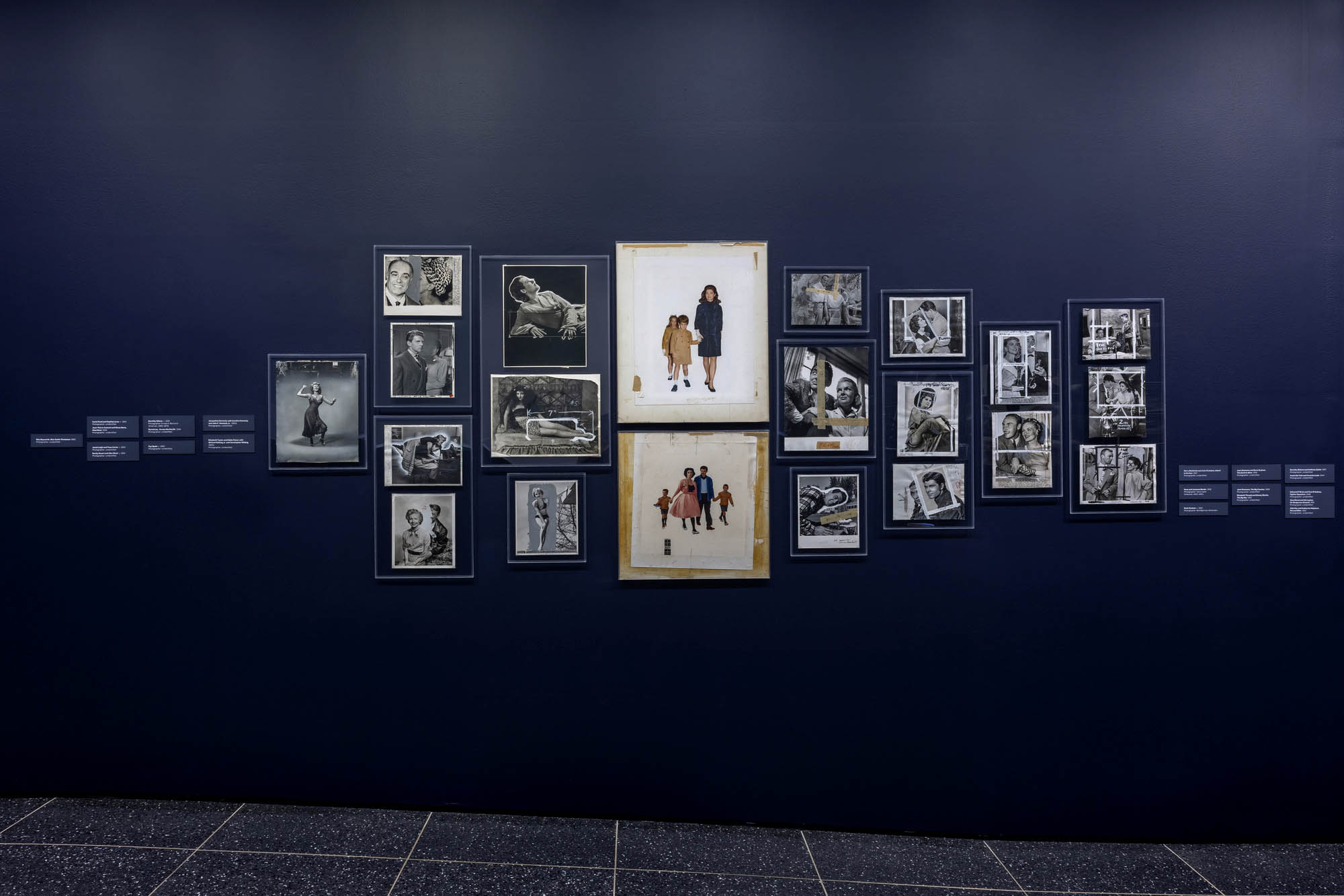
Installation view of the exhibition 'Face Value: Celebrity Press Photography' at The Museum of Modern Art (MoMA), New York, June 2025 - June 2026 showing at top centre, 'Jacqueline Kennedy with Caroline Kennedy, John F. Kennedy Jr.' 1960s; and a bottom centre, 'Elizabeth Taylor and Eddie Fisher with Michael Wilding Jr. and Christopher Wilding' 1960s


Installation view of the exhibition Face Value: Celebrity Press Photography at The Museum of Modern Art (MoMA), New York, June 2025 – June 2026 showing at top centre, Jacqueline Kennedy with Caroline Kennedy, John F. Kennedy Jr. 1960s; and a bottom centre, Elizabeth Taylor and Eddie Fisher with Michael Wilding Jr. and Christopher Wilding 1960s
Photo: Jonathan Dorado


Installation view of the exhibition 'Face Value: Celebrity Press Photography' at The Museum of Modern Art (MoMA), New York, June 2025 - June 2026 showing from top left to right, top to bottom, Unknown photographer Harry 'Belafonte and Joan Fontaine' 1957; Gene Lester (American, 1910-1994) 'Dean and Jeannne Martin' 1958; Bob Beerman (American) 'Rock Hudson' c. 1953; Unknown photographer 'Jean Simmons, Rock Hudson [in "This Earth is Mine"]' 1959; Unknown photographer 'Jean Simmons [in "The Big Country"]' 1958; Unknown photographer 'Elizabeth Threatt and Dewey Martin [in "The Big Sky"]' 1952; Unknown photographer 'Dorothy Malone and Anthony Quinn' 1957; Unknown photographer 'André De Toth and Veronica Lake' 1944; Unknown photographer 'Edmund O'Brien and Tom D'Andrea [in "Fighter Squadron"]' 1948; Unknown photographer 'Ward Bond and Ida Lupino [in "On Dangerous Ground"]' 1951; Unknown photographer 'Aldo Ray and Katharine Hepburn [in "Pat and Mike"]' 1952


Installation view of the exhibition Face Value: Celebrity Press Photography at The Museum of Modern Art (MoMA), New York, June 2025 – June 2026 showing from top left to right, top to bottom, Unknown photographer Harry Belafonte and Joan Fontaine 1957 (below); Gene Lester (American, 1910-1994) Dean and Jeannne Martin 1958; Bob Beerman (American) Rock Hudson c. 1953 (top of posting); Unknown photographer Jean Simmons, Rock Hudson [in “This Earth is Mine”] 1959 (below); Unknown photographer Jean Simmons [in “The Big Country”] 1958; Unknown photographer Elizabeth Threatt and Dewey Martin [in “The Big Sky”] 1952; Unknown photographer Dorothy Malone and Anthony Quinn 1957; Unknown photographer André De Toth and Veronica Lake 1944; Unknown photographer Edmund O’Brien and Tom D’Andrea [in “Fighter Squadron”] 1948; Unknown photographer Ward Bond and Ida Lupino [in “On Dangerous Ground”] 1951; Unknown photographer Aldo Ray and Katharine Hepburn [in “Pat and Mike”] 1952
Photo: Jonathan Dorado


Unknown photographer. 'Harry Belafonte and Joan Fontaine [in "Island in the Sun"]' 1957


Unknown photographer
Harry Belafonte and Joan Fontaine [in “Island in the Sun”]
1957
Sheet: 6 15/16 × 9 1/16″ (17.6 × 23 cm)
The Museum of Modern Art Film Stills Collection


Unknown photographer. 'Jean Simmons, Rock Hudson [in "This Earth is Mine"]' 1959


Unknown photographer
Jean Simmons, Rock Hudson [in “This Earth is Mine”]
1959
Sheet: 8 x 9 15/16″ (20.3 x 25.2cm)
The Museum of Modern Art Film Stills Collection


'This Earth Is Mine' (1959) DVD cover


This Earth is Mine (1959) DVD cover


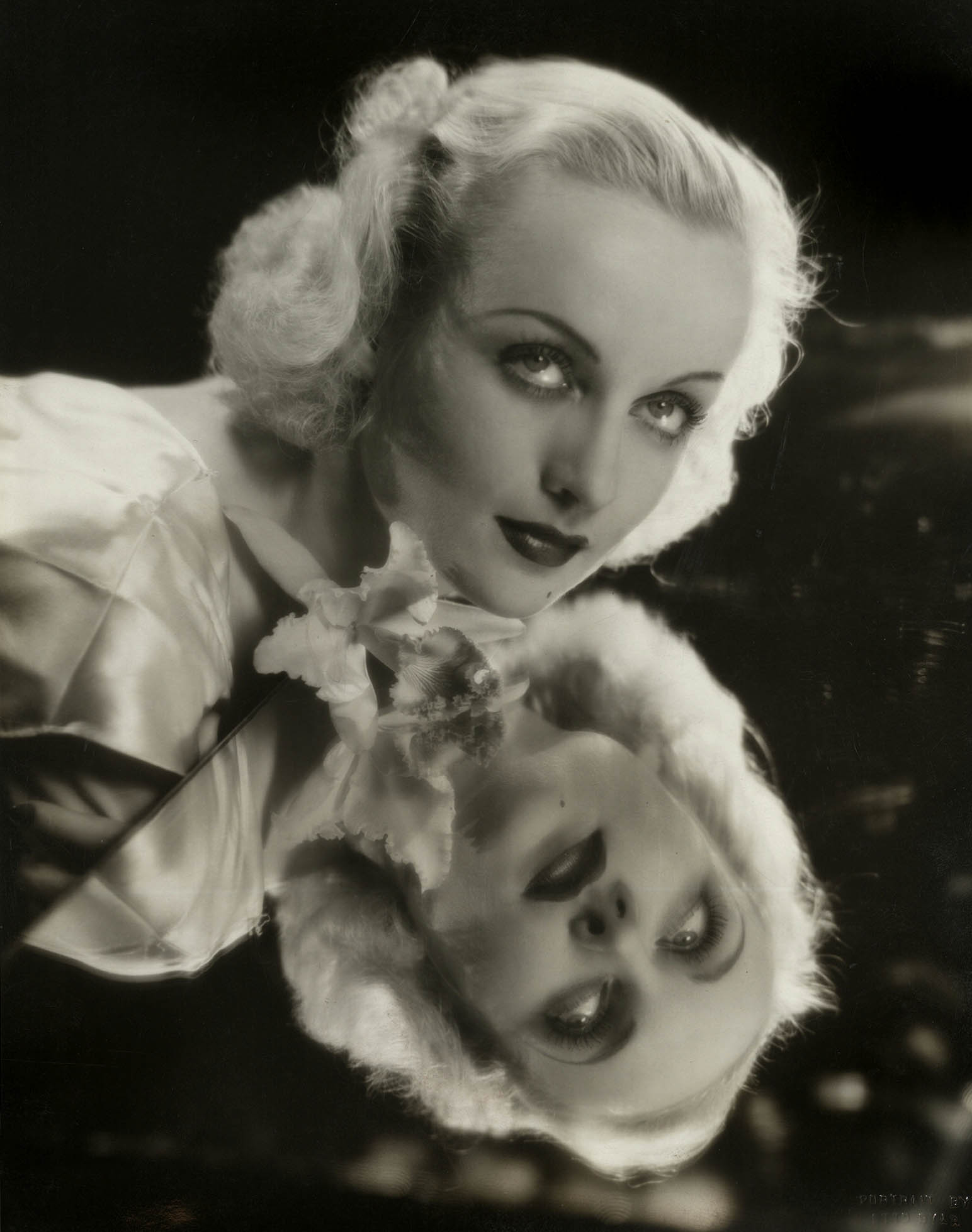
Otto Dyar (American, 1892-1988) 'Carole Lombard' c. 1933


Otto Dyar (American, 1892-1988)
Carole Lombard
c. 1933
Sheet: 13 7/8 x 10 1/2″ (35.2 x 26.7cm)
The Museum of Modern Art Film Stills Collection


Hollywood stills photographers like Dyar “were not mirroring life, but illusion; their subjects were not humans but gods – of love, of allure, of luxury, perfection incarnate from the golden age of Hollywood glamor”


John Kobal (ed), Hollywood glamor portraits, Courier Corporation, 1976, p.V on the Wikipedia website


Otto Dyar was a prominent stills photographer who began his career at the Paramount studios in the 1920s. Initially working as an assistant on major film productions such as the 1927 ‘Wings’, Dyar quickly rose through the ranks to become one of Hollywood’s most notable image-makers.

During the 1930s and 40s, Dyar developed his own, highly dramatic style of lighting and photography that deviated from the neoclassical glamor of the 1920s. Edgy and expressionistic, Dyar’s photographs pushed the iconic features of movie stars like Carole Lombard, Cary Grant, Kay Francis and Joan Crawford to a grittier place that was more in accord with the aesthetics of films made in those decades. Of particular note are Dyar’s star portraits taken outside of the studio, an unusual and daring step at the time.

Despite all the high-contrast lighting, skewed angles and often tiny ‘surrealist’ interventions that point to the influence of photographers like Man Ray, Dyar faithfully accomplished the task of elevating the studio stars to the realm of deities. Like his peers George Hurrell, Ted Allen and Clarence Sinclair Bull, Dyar was not concerned with the psychologies of his sitters. What interested him was amplifying and consolidating the image the stars exuded in their roles, which was usually so powerful that it eclipsed the ‘real’ person that was in front of the camera.

Vigen Galstyan. “Dyar, Otto,” on the Lusadaran: Armenian Photography Foundation website 2015 [Online] Cited 02/04/2026. Used under fair use conditions for the purposes of education and research


Otto Dyar (American, 1892-1988) 'Louise Brooks' c. 1927


Otto Dyar (American, 1892-1988)
Louise Brooks
c. 1927
Sheet: 13 15/16 x 10 15/16″ (35.4 x 27.8cm)
The Museum of Modern Art Film Stills Collection


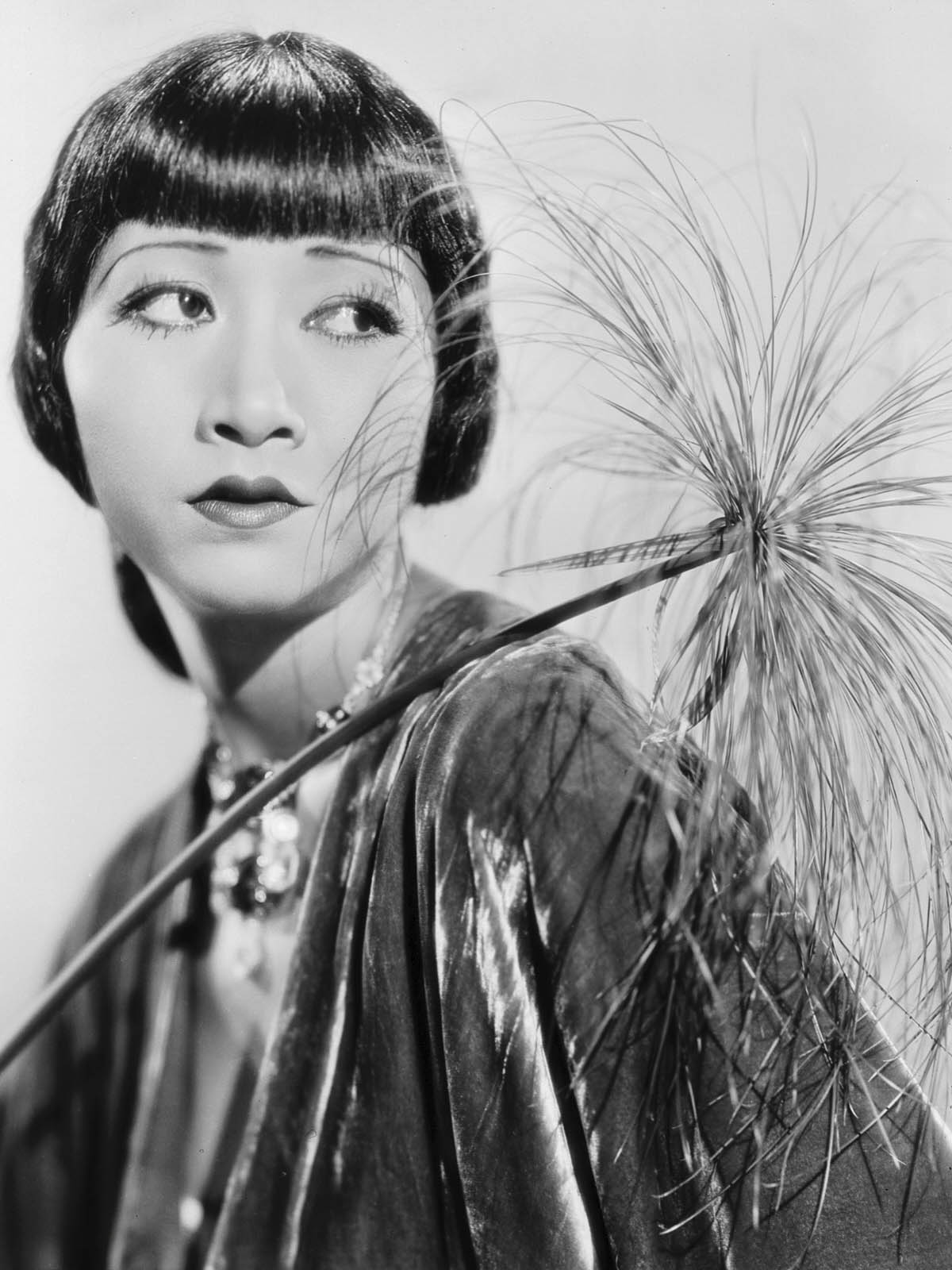
Otto Dyar (American, 1892-1988) 'Anna May Wong' 1930s


Otto Dyar (American, 1892-1988)
Anna May Wong
1930s
Sheet: 13 7/8 x 10 7/8″ (35.2 x 27.6cm)
The Museum of Modern Art Film Stills Collection


Ray Jones (American, 1901-1947) 'Anna May Wong [in "Limehouse Blues"]' 1934


Ray Jones (American, 1901-1947)
Anna May Wong [in “Limehouse Blues”]
1934
Sheet: 12 7/8 x 10″ (32.7 x 25.4cm)
The Museum of Modern Art Film Stills Collection


'Limehouse Blues' (1934) movie poster


Limehouse Blues (1934) movie poster


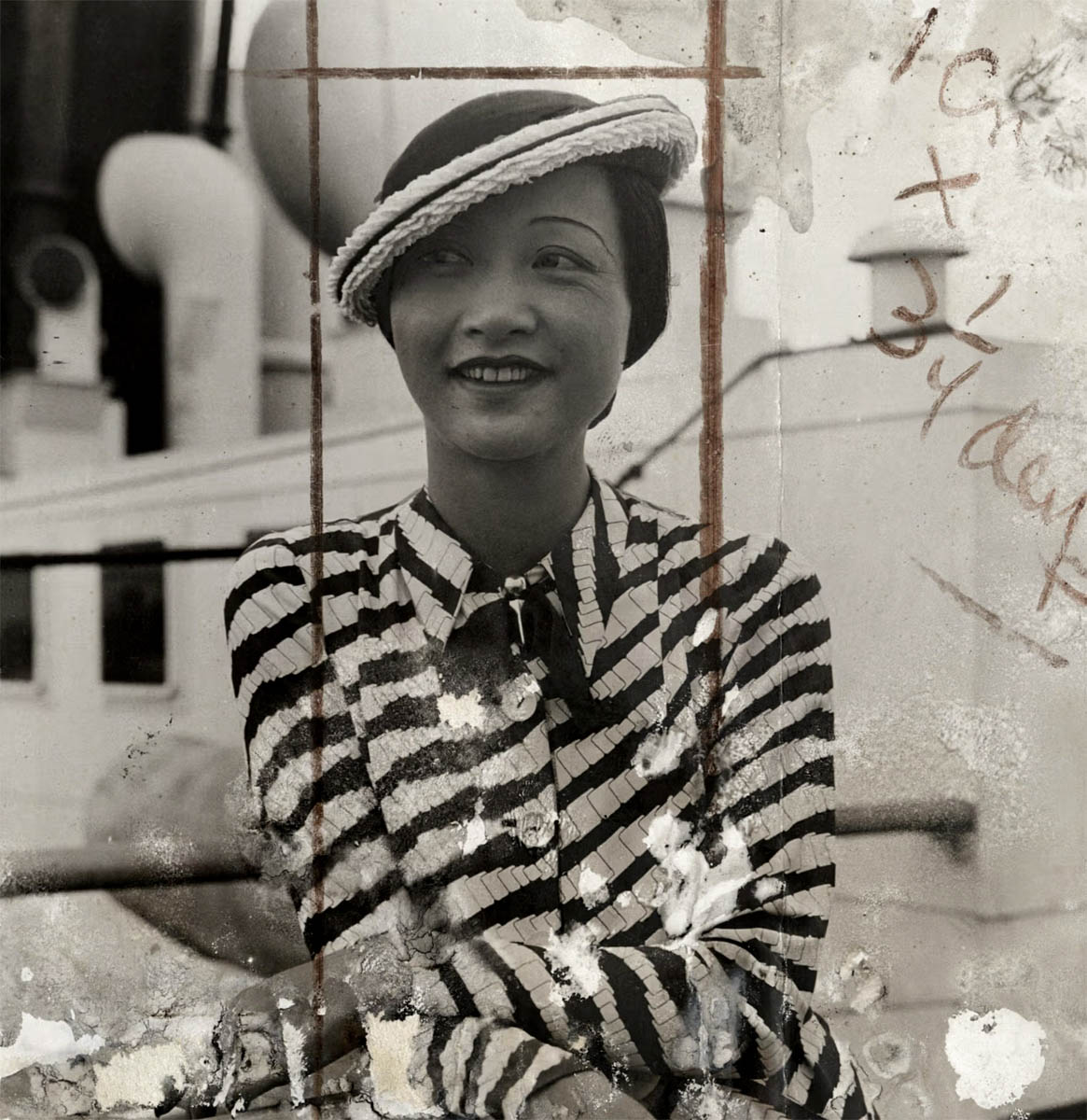
Unknown photographer. 'Anna May Wong' c. 1934


Unknown photographer
Anna May Wong
c. 1934
MoMA Film Stills Archive
Sheet: 8 x 6″ (20.3 x 15.2cm)
The Museum of Modern Art Film Stills Collection


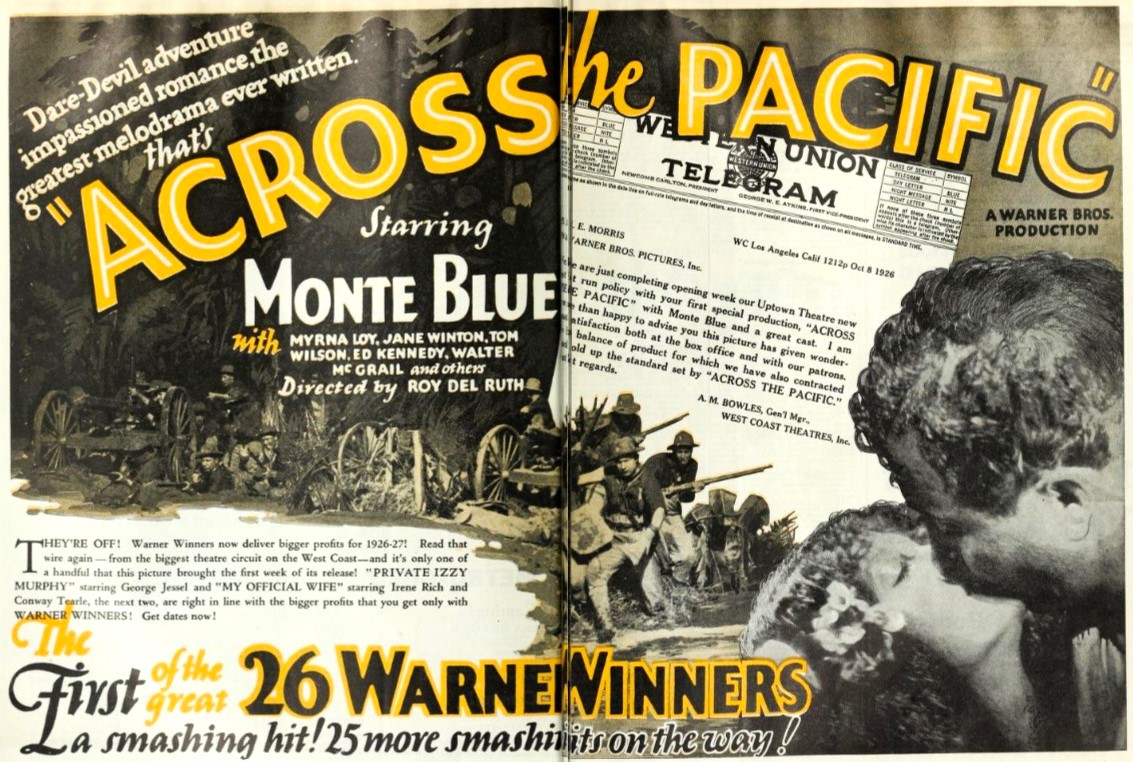
Unknown photographer. 'Myrna Loy [in "Across the Pacific"]' 1926


Unknown photographer
Myrna Loy [in “Across the Pacific”]
1926
Sheet: 11 x 14″ (27.9 x 35.6cm)
The Museum of Modern Art Film Stills Collection


Advertisement for the American romantic adventure film 'Across the Pacific' (1926) with Monte Blue and Myrna Loy, on pages 6 and 7 of the October 26, 1926 'Film Daily'


Advertisement for the American romantic adventure film Across the Pacific (1926) with Monte Blue and Myrna Loy, on pages 6 and 7 of the October 26, 1926 Film Daily


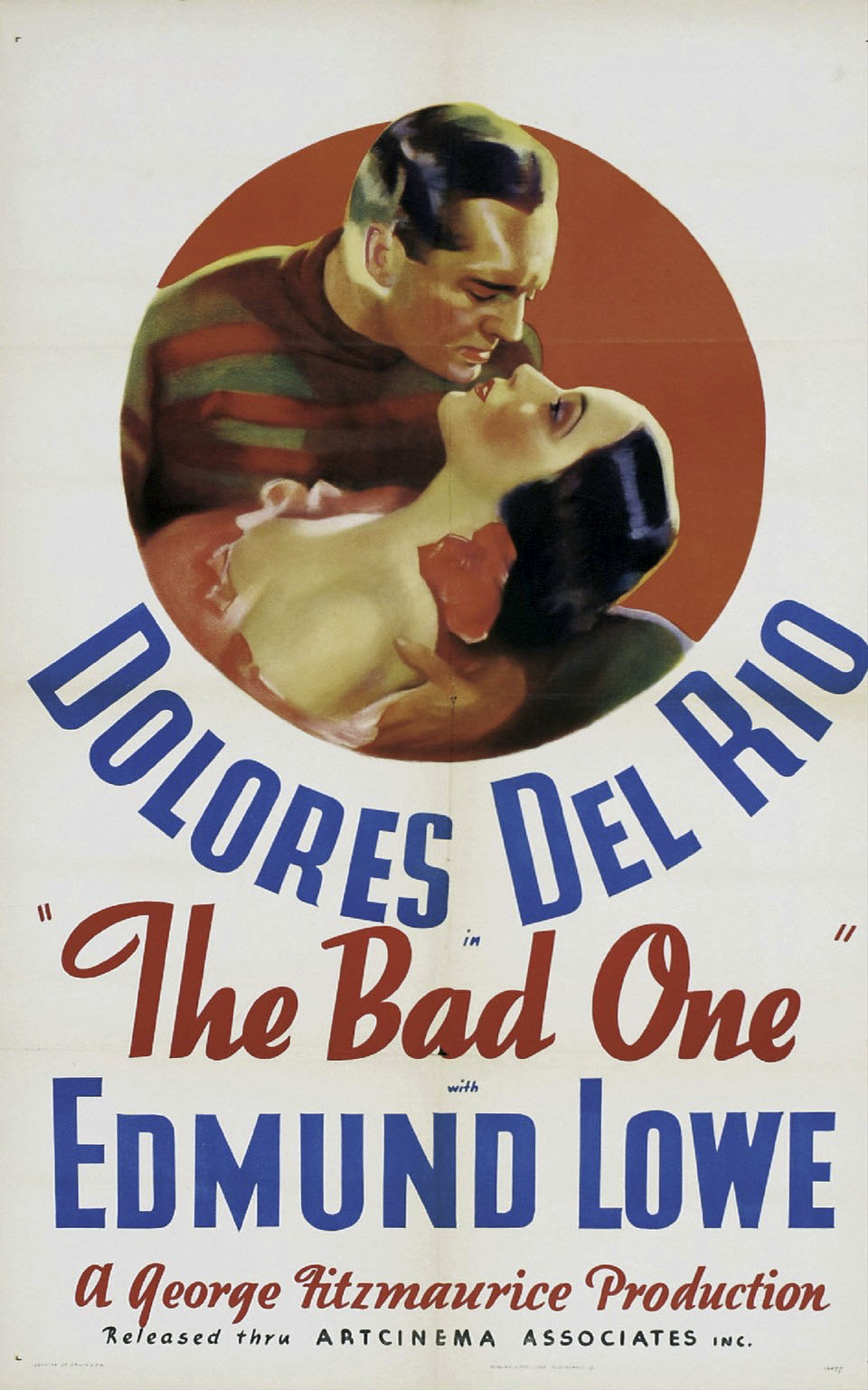
John Miehle (American, 1902-1952) 'Dolores del Rio and Edmund Lowe [in "The Bad One"]' 1930


John Miehle (American, 1902-1952)
Dolores del Rio and Edmund Lowe [in “The Bad One”]
1930
Sheet: 13 7/8 x 10 15/16″ (35.2 x 27.8cm)
The Museum of Modern Art Film Stills Collection


John Miehle was born on August 7, 1902 in Los Angeles, California. Being born so close to Hollywood Miehle went to work as an assistant camera man on the 1931 movie “Delicious” starring Janet Gaynor and Charles Farrell.  

He then worked exclusively in the Camera and Electrical Department doing uncredited still photography on some of the best known films, such as “What Price Hollywood?,” “Rain,” “Little Women,” “Top Hat,” “Kitty Foyle,” “Rope” and “Portrait of Jennie.”

He photographed many of the greats as well including Constance Bennett, Joan Crawford, Irene Dunne, Ginger Rogers, Ann Harding, William Powell, Joel McCrea, Katherine Hepburn, Joan Bennett, Delores Del Rio, Randolph Scott, James Stewart, Cary Grant, Jean Arthur, Ruth Hussey, Jennifer Jones, Joseph Cotten, Ethel Barrymoore, Laraine Day, Franchot Tone, Ann Blyth, Farley Granger, and Dana Andrews…

In addition, he did many publicity shots of such stars as Carole Lombard, Marilyn Monroe, and Lucille Ball.

Don’t Forget The Illustrator! “The Classics and “Ginger Rogers” photographer John Miehle,” on the Vintage Movie Star Photos blog Thursday, March 28, 2013 [Online] Cited 12/05/2026. Used under fair use conditions for the purposes of education and research


'The Bad One' (1930) movie poster


The Bad One (1930) movie poster


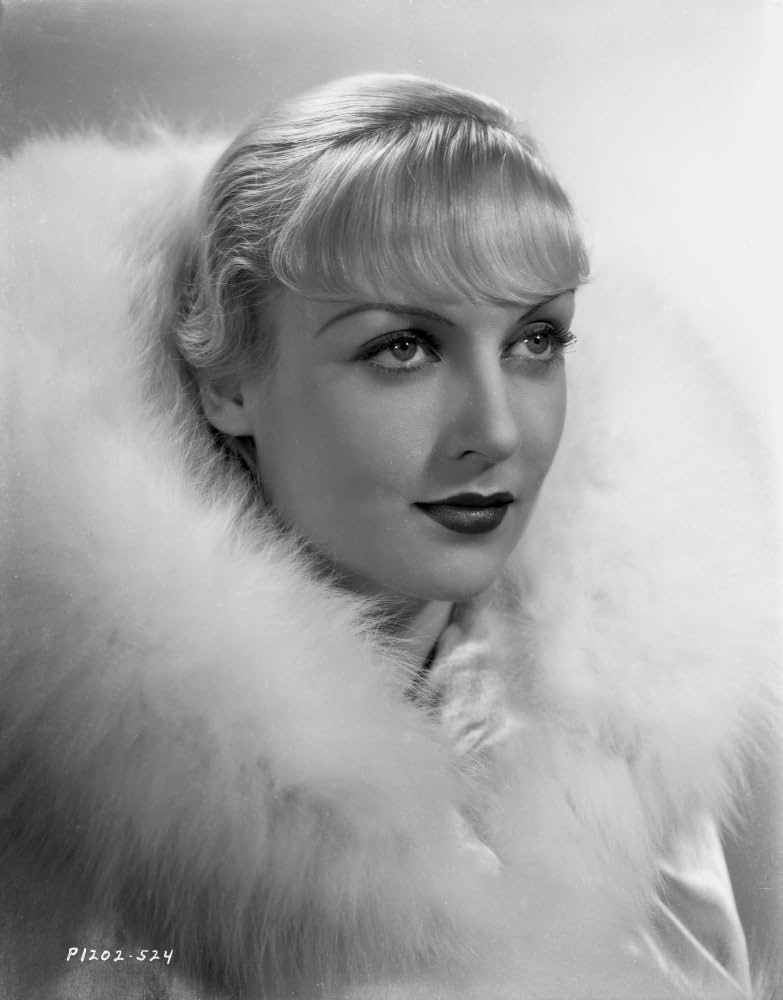
William Walling Jr (American, 1904-1983) 'Carole Lombard' c. 1933


William Walling Jr (American, 1904-1983)
Carole Lombard
c. 1933
Sheet: 13 7/8 x 11 15/16″ (35.2 x 30.3cm)
The Museum of Modern Art Film Stills Collection


William Richard Walling, Jr. (October 6, 1904 – December 11, 1983) was an American actor, inventor, and portrait photographer for film studios.


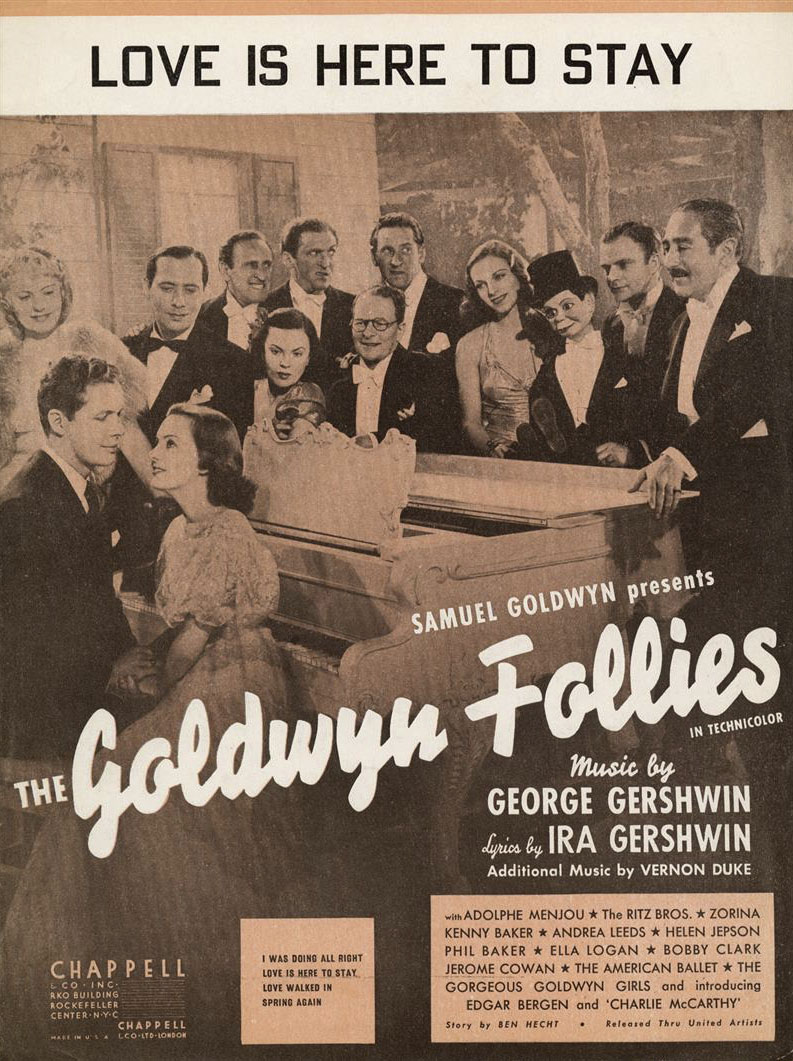
Robert Coburn (American, 1900-1990) 'Vera Zorina [in "The Goldywyn Follies"]' c. 1937


Robert Coburn (American, 1900-1990)
Vera Zorina [in “The Goldywyn Follies”]
c. 1937
Sheet: 13 13/16 x 10 15/16″ (35.1 x 27.8cm)
The Museum of Modern Art Film Stills Collection


Eva Brigitta Hartwig (January 2, 1917 – April 9, 2003), known professionally as Vera Zorina, was a German-Norwegian ballerina, theatre and film actress, and choreographer, chiefly remembered for her films choreographed by her husband George Balanchine. They include the Slaughter on Tenth Avenue sequence from On Your ToesThe Goldwyn FolliesI Was an Adventuress with Erich Von Stroheim and Peter LorreLouisiana Purchase with Bob Hope, and dancing to “That Old Black Magic” in Paramount Pictures’ Star Spangled Rhythm.

Text from the Wikipedia website


Robert Coburn was one of the most influential portrait photographers working in the major Hollywood movie studios from the 1930’s to 1960’s. His star subjects included Rita Hayworth, Joan Crawford, Kim Novak, Carole Lombard, William Holden, Glenn Ford, and Orson Welles. Coburn’s most infamous portraits immortalised Hollywood’s greatest icons and helped to define this era as the Golden Age of Cinema. In 1940, Robert Coburn began a twenty-year career with Columbia Pictures as the head of the still production department and the studio’s chief portrait photographer for many landmark films including “Picnic”, “Gilda”, and “The Big Heat”.

Text from the Fahey/Klein Gallery website


'Goldwyn Follies' (1937) movie poster


Goldwyn Follies (1937) movie poster


Face Value: Celebrity Press Photography Introductory text

For MoMA’s founding film curator, Iris Barry, building an archive of images that documented the history of motion pictures was second only to collecting films. Photographs from the study collection that she created were among the first works exhibited in MoMA’s theater gallery. Barry’s initiative eventually led to the acquisition of editorial archives from Photoplay (1911-1980) and Dell (1921-1976), leading fan magazine publishers supporting the Hollywood star system. The portrait photography featured in these publications was produced by film studios to promote the glamorous celebrities under contract to them. Face Value looks at these images and surveys how they were manipulated for public consumption in the decades before digital tools, AI technology, and social media revolutionized the process. 

Over sixty photographers are represented in this installation, which intermingles images that survive untouched with those that show evidence of the hands-on practices that readied them for the press. The standard techniques used – silhouetting, in-painting, masking, sectioning, and collage – were applied not only to photographs of entertainers but to sports figures, socialites, and politicians as well. Organised in suites that highlight radical editing practices, stylised visual motifs, and the gender stereotypes inherent in the studio system, the exhibition offers a demystifying perspective on the glamour of celebrity.

Wall text from the exhibition


George P. Hommel (American, 1901-1953) 'Clara Bow' c. 1929


George P. Hommel (American, 1901-1953)
Clara Bow
c. 1929
Sheet: 14 x 11″ (35.6 x 27.9 cm)
The Museum of Modern Art Film Stills Collection


Overshadowed by the work of 1920s Paramount colleagues Donald Biddle Keyes and Eugene Robert Richee, stillsman George P. Hommel crafted thoughtful portraits highlighting both the beauty and sorrow of those he photographed. Like Keyes, the peripatetic Hommel always looked for new challenges, new opportunities, keeping him on the move. Unobstrusive and elegant, Hommel’s work reveals hidden depths in those he shot. …

Hommel’s straightforward portraiture captured the vulnerability of his sitters, revealing a wistful and often melancholic look in their expressive eyes. His pensive work focused on serious matters, not straining to create fleeting moods but revealing the heart of those he photographed. Employing simple, dark-textured background, Hommel focused on the eyes and lips, creating a sharp image with an often soft-focus background. His portraits often feature shadows and strong angular lines, creating dramatic composition. Hommel could also capture the sometimes insouciant or even overly exuberant emotions of sitters, often covering their vulnerability and pain, such as in his Pierrot portraits of Clara Bow as clown.

lmharnisch. “Mary Mallory / Hollywood Heights: George P. Hommel, Pensive Photographer,” on The Daily Mirror website, July 27, 2020 [Online] Cited 12/05/2026. Used under fair use conditions for the purposes of education and research


James Manatt (American, 1896-1989) 'Joan Crawford [in "Letty Lynton"]' 1932


James Manatt (American, 1896-1989)
Joan Crawford [in “Letty Lynton”]
1932
Sheet: 13 x 10″ (33 x 25.4cm)
The Museum of Modern Art Film Stills Collection


'Letty Lynton' (1932) movie poster


Letty Lynton (1932) movie posters


Elmer Fryer (American, 1898-1944) 'Lili Damita [in "The Match King"]' c. 1932


Elmer Fryer (American, 1898-1944)
Lili Damita [in “The Match King”]
c. 1932
Sheet: 14 1/16 x 11″ (35.7 x 27.9cm)
The Museum of Modern Art Film Stills Collection


'The Match King' (1932) movie poster


The Match King (1932) movie poster


Bert Longworth (American, 1893-1964) 'Amelia Earhart with Helen Hayes [on set of "A Farewell to Arms"]' 1932


Bert Longworth (American, 1893-1964)
Amelia Earhart with Helen Hayes [on set of “A Farewell to Arms”]
1932
Sheet: 13 15/16 x 10 7/8″ (35.4 x 27.6cm)
The Museum of Modern Art Film Stills Collection


As the studio system came into place with the advent of talkies, studios hired many stillsmen to take scene stills, off-camera images, and candids of both above and below the line talent. Photographers took massive amounts of stills around the lot, at public events, premieres, at homes, in posed shots, to be widely distributed to magazines and newspapers for free publicity promoting upcoming films, new talent, and established stars. The journals, fan magazines, and newspapers splashed these images throughout their pages, building awareness and star popularity.

Bert “Buddy” Longworth was one of the stills photographers taking these images. Longworth began his career shooting scene stills at MGM for Greta Garbo’s first three films, including “Flesh and the Devil,” with Longworth capturing the passion of Garbo and John Gilbert as they fell in love. He was employed for a short time at Paramount, but from 1929 on, he worked at Warner Bros. as an action specialist, working on Busby Berkeley’s spectacular musicals, crime pictures, off-set candids, as well as portraits. Scholar David Shields calls him “Hollywood’s foremost expressionist, often using unusual perspective, occasional use of multiple exposures.”

lmharnisch. “Mary Mallory / Hollywood Heights: Bert Longworth and ‘Hold Still, Hollywood’,” on The Daily Mirror website, June 26, 2023 [Online] Cited 12/05/2026. Used under fair use conditions for the purposes of education and research


'A Farewell To Arms' (1932) movie poster


A Farewell To Arms (1932) movie poster


Unknown photographer. 'Elsa Lanchester [in "The Bride of Frankenstein"]' 1935


Unknown photographer
Elsa Lanchester [in “The Bride of Frankenstein”]
1935
Sheet: 13 1/2 x 9 3/16″ (34.3 x 23.3cm)
The Museum of Modern Art Film Stills Collection


'The Bride of Frankenstein' (1935) movie poster


The Bride of Frankenstein (1935) movie poster


I want to talk more about the edited photographs. In many of the photos white-out has been used to separate the subject’s head or face – and in one notable case, their bare legs – from the rest of the image. What are some ways in which these disembodied segments were used by the studios and by the magazines?

RM: We know they were from Photoplay magazine, so if we have a still that’s been edited for Photoplay, Cara went and looked for the issue that published the photograph to see how it was used. It might have been a feature on women’s legs, so that’s why they only focused on the legs.

There’s one grouping of photographs, I call it the “eat face grouping,” where the stars are very close up. There’s a photograph of someone eating someone’s chin. Those were all taken for a particular issue of Photoplay – that’s why they’re all edited in the same way.

With research and detective work you can determine how they were actually used in print. The floating heads, they would attach to biographies. They call that silhouetting, with the white-out.

CS: A lot of the uses I found were very gossipy, which was interesting, a lot of rumor columns. And then of course, like Ron said, highlighting certain aspects of celebrities’ bodies or features.


Back in 1980 MoMA’s exhibition Hollywood Portrait Photographers, 1921 to 1941 actually used a couple of the same images that appear in this show. But that nnnexhibition celebrated the artistry and glamor of these images. Why did you choose to focus more on the ways that these images have been manipulated and edited?

RM: The audience for photographs like this has changed. In 1980 there was a whole generation of people who knew who these performers were, who appreciated them as performers and appreciated their celebrity. Nowadays, younger audiences, in many cases, have no idea who these folks are. Even we sometimes have trouble identifying everyone. Displaying them in that way seemed dated. We wanted to mount them in a way that reflected how visitors today would need to look at them.

The photographs in 1980 were all matted in a very formal way that encouraged appreciation for the beauty of the photograph. I wasn’t interested in how beautiful the images were. I wasn’t interested in the celebrities. We’re mostly interested in the photographs. I wanted them to look like working photographs, and that’s reflected in the way they’re displayed. We did ours on plexi traps, which turned out to be very elegant, but the notion was that it would be a less precious way of mounting them so we would look at them in a less precious way.

The other thing we did differently was to have large numbers of photographs grouped in very dense clusters. To me that reflects social media today. The way we encounter images daily is so dense, and we’re forced to sort through a lot of images that come our way in any one moment. So I wanted visitors to have a contemporary view. It was meant to reflect a digital-age perspective, because analog-versus-digital was a subtext of the show in our heads.

There were two shows that were touchstones for this one: the Hollywood Portrait show of 1980, and the Fame After Photography show, a wonderful show in 1999 that MoMA’s Photography department mounted. They borrowed a lot of film stills for that show, which was also investigating celebrity and fame.

Ron Magliozzi, Cara Shatzman, Jason Persse. “Cropped, Chopped, and Silhouetted: Taking Celebrity at Face Value,” in the MoMA magazine on the MoMA website Sep 17, 2025 [Online] Cited 10/05/2026. Used under fair use conditions for the purposes of education and research


Unknown photographer. 'Louis Armstrong [in "Cabin in the Sky"]' 1943


Unknown photographer
Louis Armstrong [in “Cabin in the Sky”]
1943
Sheet: 8 x 10″ (20.3 x 25.4 cm)
The Museum of Modern Art Film Stills Collection


'Cabin in the sky' (1943) movie poster


Cabin in the sky (1943) movie poster


Unknown photographer. 'Hattie McDaniel and Ruby Berkley Goodwin' c. 1948


Unknown photographer
Hattie McDaniel and Ruby Berkley Goodwin
c. 1948
Sheet: 9 1/16 x 7″ (23 x 17.8cm)
The Museum of Modern Art Film Stills Collection


“[Ruby Berkley Goodwin] was also Hattie McDaniel’s publicist. And she was Ethel Waters’s publicist. She was the first Black American to have a syndicated newspaper column. She wrote this very famous autobiography called It’s Good to Be Black that was very, very popular. She was a poet. She was a fascinating person, and I was not familiar with her. That was a great aspect of learning about all of these people in these photographs.”

Ron Magliozzi, Cara Shatzman, Jason Persse. “Cropped, Chopped, and Silhouetted: Taking Celebrity at Face Value,” in the MoMA magazine on the MoMA website Sep 17, 2025 [Oline] Cited 10/05/2026. Used under fair use conditions for the purposes of education and research


Unknown photographer. 'Janet Leigh and Tony Curtis' c. 1950 (detail)


Unknown photographer
Janet Leigh and Tony Curtis
c. 1950 (detail)
Sheet: 8 1/16 x 10″ (20.5 x 25.4cm)
The Museum of Modern Art Film Stills Collection


'Elvis Presley [Fans' Star Library magazine, No. 13]' 1959


Elvis Presley [Fans’ Star Library magazine, No. 13]
1959
Sheet: 7 x 5 1/8″ (17.8 x 13cm)
The Museum of Modern Art Film Stills Collection


Yousuf Karsh (Armenian-Canadian born Mardin, Ottoman Empire (now Turkey), 1908-2002) 'Anna Magnani' 1959


Yousuf Karsh (Armenian-Canadian born Mardin, Ottoman Empire (now Turkey), 1908-2002)
Anna Magnani
1959
Sheet: 20 x 15 15/16″ (50.8 x 40.5cm)
The Museum of Modern Art Film Stills Collection


Anna Maria Magnani (Italian, 1908-1973)

Anna Maria Magnani (Italian; 7 March 1908 – 26 September 1973) was an Italian actress. She was the first Italian woman to win an Academy Award.

Born and raised in Rome, Italy or Alexandria, she worked her way through Rome’s Academy of Dramatic Art by singing at night clubs. During her career, her only child was stricken by polio when he was 18 months old and remained disabled. She was referred to as “La Lupa”, the “perennial toast of Rome” and a “living she-wolf symbol” of the cinema. Time described her personality as “fiery”, and drama critic Harold Clurman said her acting was “volcanic”. In the realm of Italian cinema, she was “passionate, fearless, and exciting”, an actress whom film historian Barry Monush calls “the volcanic earth mother of all Italian cinema.” Director Roberto Rossellini called her “the greatest acting genius since Eleonora Duse”. Playwright Tennessee Williams became an admirer of her acting and wrote The Rose Tattoo (1955) specifically for her to star in, a role for which she received an Academy Award for Best Actress.

After meeting director Goffredo Alessandrini, she received her first screen role in The Blind Woman of Sorrento (La cieca di Sorrento, 1934) and later achieved international attention in Rossellini’s Rome, Open City (1945), which is seen as launching the Italian neorealism movement in cinema. As an actress, she became recognised for her dynamic and forceful portrayals of “earthy lower-class women” in such films as L’Amore (1948), Bellissima (1951), The Rose Tattoo (1955), The Fugitive Kind (1960) and Mamma Roma (1962). As early as 1950, Life had already stated that Magnani was “one of the most impressive actresses since Garbo”.

Text from the Wikipedia website


Unknown photographer. 'Carlo Ponti and Sophia Loren' c. 1963


Unknown photographer
Carlo Ponti and Sophia Loren
c. 1963
Sheet: 8 x 10″ (20.3 x 25.4cm)
The Museum of Modern Art Film Stills Collection


Ray Wilson. 'Mia Farrow [in "Rosemary's Baby"]' c. 1967


Ray Wilson
Mia Farrow [in “Rosemary’s Baby”]
c. 1967
Sheet: 12 x 8 3/16″ (30.5 x 20.8cm)
The Museum of Modern Art Film Stills Collection


'Rosemary's Baby' (1968) movie poster


Rosemary’s Baby (1968) movie poster


Kathleen Ballard. 'Lena Horne' 1975


Kathleen Ballard
Lena Horne
1975
Sheet: 13 1/16 x 9″ (33.2 x 22.9cm)
The Museum of Modern Art Film Stills Collection


The Museum of Modern Art
11 West 53 Street
New York, NY 10019
Phone: (212) 708-9400

Opening hours:
10.30am – 5.30pm
Open seven days a week

MoMA website

LIKE ART BLART ON FACEBOOK

Back to top

Exhibition: ‘Walker Evans. Now and Then’ at Fundación Mapfre, Barcelona

“Evans took photographs worth taking – unadorned, clearly seen, focused, descriptive photographs (of ordinary things) of the utmost beauty and honesty.” Dr Marcus Bunyan

Exhibition dates: 26th February – 24th May, 2026

Curator: David Campany


Walker Evans (American, 1903-1975) 'West Virginia Living Room' 1935 from the exhibition 'Walker Evans. Now and Then' at Fundación Mapfre, Barcelona, February - May, 2026


Walker Evans (American, 1903-1975)
West Virginia Living Room
1935
Private Collection, San Francisco
© Walker Evans Archive, The Metropolitan Museum of Art


Take photos worth taking

In the medium of photography the work of the American photographer Walker Evans (1903-1975) is rightly exalted, subject to the highest praise. “His work directly inspired photographers like Robert Frank, Helen Levitt, Diane Arbus, Lee Friedlander, and Bernd and Hilla Becher.” Some of the most important photographers of the 20th century.

In the near 18 year history of Art Blart his importance can be gauged by the number of exhibition postings he has accumulated over the journey, this being the 8th posting on the artist, joining a select few at the top of the tree: Julia Margaret Cameron, August Sander, Robert Frank, William Eggleston, Robert Mapplethorpe and Andy Warhol.

I have written extensively on Evans’s work in previous postings links to which can be found below. Suffice to say that, through awareness, his personal journey of conscious choice and deliberate self-creation has led to his photographs entering the American vernacular – through a direct pointing to a photographic reality that reflects the time in which they were taken. Which transcend the time in which they were taken.

Evans took photographs worth taking – unadorned, clearly seen, focused, descriptive photographs (of ordinary things) of the utmost beauty and honesty. He was a passionate photographer. You can feel that passion in his images. Today with a world full of AI images, fragmentation, and conceptual hoo-hah, it might do us all well to ponder the stare of this great artist so that we, in our own way, can die knowing something.

To transform your own destiny into awareness!

“When I first looked at Walker Evans’ photographs, I thought of something Malraux wrote: ‘To transform destiny into awareness.’ One is embarrassed to want so much for oneself. But, how else are you going to justify your failure and your effort?” ~ Robert Frank

Dr Marcus Bunyan


~ Photographs: ‘Walker Evans – Subway portraits’ 1938-41, January 2021
~ Exhibition: ‘Walker Evans’ at the San Francisco Museum of Modern Art (SFMOMA), September 2017 – February 2018
~ Exhibition: ‘Walker Evans’ at the Centre Pompidou, Paris, April – August 2017
~ Exhibition: ‘Walker Evans. A Life’s Work’ at Martin-Gropius-Bau Berlin, July – November 2014
~ Exhibition: ‘Walker Evans American Photographs’ at The Museum of Modern Art (MoMA), New York, July 2013 – March 2014
~ Exhibition: ‘Walker Evans’ retrospective at Fotomuseum Winterthur, Zurich, May – August 2009
~ Exhibition: ‘Walker Evans and the Picture Postcard’ at The Metropolitan Museum of Art, New York, February – May 2009


Many thankx to Fundación Mapfre for allowing me to publish the photographs in the posting. Please click on the photographs for a larger version of the image.


“I was a passionate photographer and, for a time, I carried a certain feeling of guilt. I thought photography was replacing something else: writing. I wanted to write. But I felt deeply committed to everything that could come out of a camera, and I became a compulsive photographer. I was responding to a genuine impulse.”


“Stare. It is the way to educate the eye, and something more. Stare, pry, listen, eavesdrop. Die knowing something. You are not here long.”


Walker Evans


“Walker Evans is serious and smart and purposeful. He is trying to show you very clearly what he is seeing. It is very unadorned, as if nobody had taken the photograph. He conveys what is in front of him as clearly as possible.”


Interview with Chris Killip about his exhibition Work at Museo Nacional Centro de Arte Renia Sofia, October 2013 [Online] Cited 11/02/2021


”Good clothes and good conversation, wit and erudition, originality and inventiveness, the charms of smart and pretty women – Walker took pleasure in being alive… He photographed objects as if they were people and people as if they were souls. All the while, he never forgot Blind Joe Death. The annihilations of the First War, the extinctions of the epidemic that followed it, the pyres and the pits – these he never forgot. The still silence of his images was, to the very last, transcendental, and always he remembered the skull beneath the skin.”


Michael Levy. Walker Evans: Last Photographs & Life Stories. New York: Blast Books, 2022


Walker Evans (American, 1903-1975) '[Shadow Self-portrait, Juan-les-Pins, France]' 1927 from the exhibition 'Walker Evans. Now and Then' at Fundación Mapfre, Barcelona, February - May, 2026


Walker Evans (American, 1903-1975)
[Shadow Self-portrait, Juan-les-Pins, France]
1927
Vintage gelatin silver print
Private Collection, San Francisco
© Walker Evans Archive, The Metropolitan Museum of Art


Walker Evans. Now and Then offers a renewed look at the career of one of the most influential photographers of the twentieth century. In a broad anthology bringing together images made over more than fifty years, the exhibition invites viewers to rediscover the direct, restrained, and analytical gaze with which Evans documented everyday life in the United States. Far from the theatrical, the artist championed precise and honest photography, always attentive to the cultural and social context.

The exhibition is structured around several essential threads of his work: his interest in the signs of the city (shop signs, storefronts, billboards, etc.), through which Evans captured a compelling reflection of the collective identity of his era; anonymous individuals (pedestrians, subway riders, workers), whom he portrayed with a spontaneity that blends formal precision and deep respect for his subjects; and his fascination with modest environments and small towns, where he found an authenticity that large cities tended to obscure. Alongside these major axes of his oeuvre, the exhibition also presents his late experiments with the Polaroid camera, which reveal a more intimate shift without losing the clarity of his vision.

Text from the Fundación Mapfre website


Walker Evans (1903-1975) 'Truck and Sign' 1928-1930


Walker Evans (American, 1903-1975)
Truck and Sign
1928-1930
Vintage gelatin silver print
Private Collection, San Francisco
© Walker Evans Archive, The Metropolitan Museum of Art


Walker Evans (American, 1903-1975) '42nd Street' 1929


Walker Evans (American, 1903-1975)
42nd Street
1929
Vintage gelatin silver print
Private Collection, San Francisco
© Walker Evans Archive, The Metropolitan Museum of Art


Walker Evans (American, 1903-1975) 'New York City' 1928-1929


Walker Evans (American, 1903-1975)
New York City
1928-1929
Gelatin silver print
Private Collection, San Francisco
© Walker Evans Archive, The Metropolitan Museum of Art


Walker Evans (American, 1903-1975) 'Broadway' 1930


Walker Evans (American, 1903-1975)
Broadway
1930
Vintage gelatin silver print
Private Collection, San Francisco
© Walker Evans Archive, The Metropolitan Museum of Art


Walker Evans (American, 1903-1975) 'Washday, New York City' 1930


Walker Evans (American, 1903-1975)
Washday, New York City
1930
Vintage gelatin silver print
Private Collection, San Francisco
© Walker Evans Archive, The Metropolitan Museum of Art


Walker Evans (American, 1903-1975) 'Torn Movie Poster (Truro, Massachusetts)' 1931


Walker Evans (American, 1903-1975)
Torn Movie Poster (Truro, Massachusetts)
1931
Vintage gelatin silver print
Private Collection, San Francisco
© Walker Evans Archive, The Metropolitan Museum of Art


The photographer Walker Evans (St. Louis, Missouri, 1903 – New Haven, Connecticut, 1975) is an essential figure of modern photography and one of the great visual chroniclers of the United States during the twentieth‑century. His images, seemingly simple yet profoundly complex, lucidly portray everyday life, urban landscapes, and the anonymous faces of a country in transformation. Rooted in the documentary style, Evans combined a direct, austere gaze with an inexhaustible curiosity for the signs of popular culture, which led him to define an era even as he questioned it.

Walker Evans began his work in photography in the 1920s, after a stay in Paris; and over the course of his extensive career, which spanned more than fifty years, he produced some of the most recognized photographs in the medium. He explored a wide range of subjects, from street snapshots taken surreptitiously to meticulous and precise architectural studies, although his best‑known photographs remain those he made in the American South beginning in the 1930s. Evans also embraced new artistic and technical developments, and toward the end of his life he explored the possibilities offered by the Polaroid camera. What unified his entire body of work was a deep interest in and affection for the appearance and essence of everyday life in a society increasingly obsessed with the new and the immediate.

Evans remains, even today, one of the most important and influential photographers of the twentieth century. With a style that is both simple and analytical, his deeply careful way of photographing, resulting in elegant compositions that are free of rigidity, has attracted countless followers. In addition to being an extraordinary photographer, Evans was also an editor, writer, and designer, and he took great care in how his work reached the public through magazines, books, and exhibitions, personally involving himself in the process.

In 2009 Fundación Mapfre launched its photography program with a retrospective dedicated to Walker Evans. Seventeen years later, the institution is pleased to present a new exhibition curated by David Campany, creative director of the International Center of Photography in New York. The show offers an extensive review of his work and of his lasting influence on generations of artists. It brings together key photographs and projects spanning his entire career – from his self‑portraits of the 1920s to his Polaroid experiments in the 1970s – alongside books and publications that reflect his inexhaustible capacity for observation. Through these works, the exhibition reveals a creator who not only documented the world around him, but also invited viewers to question the role of photography.

Key Themes

Signs of the city

Walker Evans stood out for deliberately and systematically incorporating all kinds of urban signage into his photographs – from sophisticated commercial signs to handmade notices, billboards, and shop windows – unlike other photographers of his generation, who often excluded them in pursuit of a supposed aesthetic purity. Evans believed these signs were reflections of society and its values; in this sense, his work resonates with artistic movements such as Pop Art and Postmodernism. His images of signs not only explore the relationship between word and image, but also question the role of photography as art, document, and commercial tool, underscoring the need for dialogue between photography and popular culture.

Anonymous people, anonymous places

Walker Evans showed no interest in portraying celebrities; on the contrary, he was always drawn to the anonymous individuals he encountered on the street or in the subway. He created portraits with a lightweight camera, privileging the spontaneity of isolated figures, crowds, beach scenes, or laborers at work. In this way, the simplicity of what he believed photography should be was reflected in the subjects he chose: a detached, direct, and unadorned kind of photography with carefully composed images that were nonetheless profoundly lyrical.

Tradition and the urban

One of Walker Evans’s core convictions was that the true character of any society was revealed more clearly in small towns than in large cities, which tended to blur individual particularities and traits. This emphasis on the popular and the vernacular set against the standardisation produced by major industries in big cities and metropolitan centers lies at the heart of American culture. Some of Evans’s finest and most celebrated photographs emerged from this belief, resulting in images of small‑town train stations and railcars, wooden buildings, traditional grocery stores and gas stations, as well as quintessential objects such as old pliers, rocking chairs, and fire hydrants.

Walker Evans information and keys from Fundación Mapfre


Walker Evans (1903-1975) 'Main Street, Saratoga Springs, New York' 1931


Walker Evans (American, 1903-1975)
Main Street, Saratoga Springs, New York
1931
Private Collection, San Francisco
© Walker Evans Archive, The Metropolitan Museum of Art


Sometimes a great photograph is a gift of time and space. Main Street, Saratoga Springs, New York, was taken from the United States Hotel in Saratoga Springs, New York, in 1931. Had Evans asked for a room with a picture perfect view? Or did the view only look perfect in Evans’s picture taken on that day, at the moment? The scene has something of the proportioned urban vistas he would have seen on his European trip in 1926. There is something Parisian here.

Recent rain has presented a dreamy shimmer. The light is coming from the clearing weather in the distance. The slick road looks almost like a canal and blends into the sky. In neat rows the shiny automobiles are all black. The filigree of tree branches doodles across the frame.

Although this is one of Evans’s best known and cherished images, the vision of pictorial and social harmony is unusual. No screeching billboards or shop signs. No tension on the street. Sometimes the modern world does offer a rare moment of equanimity.

David Campany from the exhibition catalogue


Walker Evans (American, 1903-1975) 'Parked Car, Small Town Main Street' 1932


Walker Evans (American, 1903-1975)
Parked Car, Small Town Main Street
1932
Gelatin silver print
Private Collection, San Francisco
© Walker Evans Archive, The Metropolitan Museum of Art


The town of Ossining, where Walker Evans lived for a short time, lies up the Hudson River from Manhattan. He made many photographs there. His views of its hillside communities and single building were shot with a large format camera, but he also made a number of snapshots on the street with a 35 mm Leica. He was experimenting, figuring out what could be done with such lightweight and versatile equipment. It was around this time that Henri Cartier-Bresson began to work with a Leica in Europe. Evans took two photographs of this couple in their parked car. In the other exposure the woman is smelling, but Evans preferred the more wary expression he caught here (the stern gaze of women recurs in his work). This photograph was included in his book American Photographs and because a source of inspiration for younger photographers such as Robert Frank and Garry Winogrand.

David Campany from the exhibition catalogue


Map showing Ossining in relation to New York


Map showing Ossining in relation to New York


Walker Evans (American, 1903-1975) 'Balcony Spectators' 1933


Walker Evans (American, 1903-1975)
Balcony Spectators
1933
Gelatin silver print
Private Collection, San Francisco
© Walker Evans Archive, The Metropolitan Museum of Art


Walker Evans (American, 1903-1975) 'Citizen in Downtown Havana' 1933


Walker Evans (American, 1903-1975)
Citizen in Downtown Havana
1933
Gelatin silver print
Private Collection, San Francisco
© Walker Evans Archive, The Metropolitan Museum of Art


Walker Evans (American, 1903-1975) 'Breakfast Room at Belle Grove Plantation, White Chapel, Louisiana' 1935, printed 1974


Walker Evans (American, 1903-1975)
Breakfast Room, Belle Grove Plantation, White Chapel, Lousiana
1935
Copy on baryta paper with gelatin and silver emulsion
Collection Fundación MAPFRE
© Walker Evans Archive, The Metropolitan Museum of Art


Walker Evans (American, 1903-1975) 'Floyde Burroughs, a cotton sharecropper, Hale County, Alabama' 1936


Walker Evans (American, 1903-1975)
Floyde Burroughs, a cotton sharecropper, Hale County, Alabama
1936
Gelatin silver print
Private Collection, San Francisco
© Walker Evans Archive, The Metropolitan Museum of Art


Walker Evans (American, 1903-1975) 'Alabama Tenant Farmer wife (Allie Mae Burroughs, Hale County, Alabama)' 1936


Walker Evans (American, 1903-1975)
Alabama Tenant Farmer wife (Allie Mae Burroughs, Hale County, Alabama)
1936
Vintage gelatin silver print
Private Collection, San Francisco
© Walker Evans Archive, The Metropolitan Museum of Art


Of all the celebrated photographers of the last century, the one who remains the most relevant today, and the one with the widest influence, is Walker Evans (St. Louis, Missouri 1903 – New Haven, Connecticut, 1975). His images, made in what he called the “documentary style”, are among the best known in the history of the medium. Direct and generous, analytical yet lyrical, carefully composed but unforced, his ways of photographing left the door open for countless others.

For a while, Evans’ reputation rested on the photographs he had made in the southern parts of the USA in the 1930s, but his achievement was wider than that. He worked with every camera format and photographed many subjects in different ways, from surreptitious street shots, to meticulous and exacting studies of architecture. He embraced new artistic and technical developments, and at the end of his life he explored what could be done with a Polaroid camera. What united it all was a deep interest in, and affection for, the look and feel of everyday life. In a culture increasingly obsessed with the new, Evans cherished things that were standing the test of time, be it a face or the facade of a warehouse.

Evans was also concerned with the ways photographic meaning is related to context, text, and relations between images, whether on the gallery wall, or on the pages of books and magazines. To be in control of one’s photographs means being in control how they are presented and circulated in the world. So, as well as being a remarkable image-maker, Evans was also an editor, writer and designer, shaping the way his work met its public. In this exhibition we see the range of Evans’ themes and approaches, and his understated resistance to the excesses and shallowness of so much American culture becomes clear.

A Young Modernist

Walker Evans spent most of 1926 in Paris, studying at the Sorbonne but struggling to become a writer. Charles Baudelaire and Gustave Flaubert were his models, while he paid attention to contemporaries such as James Joyce and Blaise Cendrars. He made a handful photographs with a pocket camera, notably a series of self-portraits.

Returning to New York, Evans began to take photography seriously. He knew the city photographs of Ralph Steiner, Charles Sheeler, and especially Paul Strand. Their bold compositions presented Manhattan as a quintessentially modern metropolis. Evans was also aware of the ‘New Vision’ in European photography, with its enthusiastic embrace of modernist form, especially in architecture. He published a portfolio in the journal Architectural Record, and supplied three photographs from around the Brooklyn Bridge for a deluxe publication of Hart Crane’s epic poem The Bridge (1930).

The economic crash of October 1929 and the ensuing cultural turmoil sharpened the creative and political minds of all the ambitious artists of Evans’ generation. He soon stepped back from the celebration of the city to look hard at the lives of those who inhabited it.

A Past Without Nostalgia: Nineteenth Century Architecture

In 1931 Evans was commissioned by Lincoln Kirstein, a wealthy friend and supporter of the arts, to photograph Victorian houses in and around Boston. Two years later, the pictures were presented in the architecture room of the recently established Museum of Modern Art, New York. While Evans was credited, the context and display clearly put the emphasis on the architecture rather than Evans’ authorship. Nevertheless, in the press release for the exhibition, Kirstein noted:

Walker Evans’ photographs are perfect. They have been taken during the last four years and form the beginning of a photographic history of American domestic building during its most fantastic, imaginative, and impermanent period. Many of the houses, neglected and despised, have disappeared in the short period since these photographs were made. Evans worked in bright sunlight, forcing the details into utmost clarity. The focus was so sharpened that some of the houses seem to exist in an airless atmosphere such as Edward Hopper suggests in his painting of similar subjects. These houses were photographed in New England and New York.

Cultural artefacts endangered by contemporary tastes were already a key subject matter for Evans, one he would return to at various points.

Signs of Images, Images of Signs

Slick commercial signs, hand-made vernacular signs, street wayfinding signs, billboards, posters and shop fronts: if anything defines the time and place of an urban situation it is signage. While most photographers of Evans’ generation avoided or limited its presence in their images (searching for some kind of ‘purity’), he embraced it whole-heartedly. His fascination with signage, and his conviction that it has much to say about a society and its values, chimed with everything from the Pop Art that emerged at the end of the 1950s to the postmodern arts of quotation and appropriation that were emerging just as Evans was reaching the end of his life in 1975.

Evans’ photographs of signs seem highly reflexive, bringing photography itself into question as a medium of representation, while blurring the distinction between word and image. Photography may be a fine art, but it is also a means to make functional documents, and a vital tool of commerce. Whatever its aesthetic ambitions, Evans understood that serious photography would have to contend with its place in common culture.

Cuba

In 1933 Evans was on commission to photograph Havana and its environs for Carleton Beals’ book The Crime of Cuba. Beals was a journalist committed to exposing the corruption of Gerardo Machado’s brutal rule and America’s complicity with it. Cuba had gained independence back in 1902 but America reserved the right to interfere in its affairs, overseeing its finances and foreign relations.

Evans was not politically naïve. His street shots are a counterpoint to Beals’ high rhetoric of abstract political force and faceless conspiracy. And yet, his wary self-consciousness makes his pictures of people difficult to assess. His Cuba work continues to challenge critics and historians. Should we read it as the snaps of a curious tourist with a great eye for composition and social detail? Or might they register the slight tremors, the “mood on the street” of a tense society watching its back? Evans rarely presented his Cuban pictures after their moment had passed.

Anonymous & Incognito

Evans came into photography just as anonymity was becoming a touchstone of the modern era. Laborers on production lines. Isolated figures in the street. The crowd through which a wanderer might move unnoticed, or subject to the suspicious gaze of others. His early street portraits had much in common with those made by Eugène Atget in France and August Sander in Germany in the 1920s. Lightweight cameras soon made more candid portraits possible and Evans began to experiment, making serial photographs of New York subway passengers, and people on streets in various cities.

Evans worked through a period marked by increasing surveillance, and increasing presence of photography and photographers in daily life. It made him wary of the idea that people could be judged quickly by their appearance. His texts for ‘Labor Anonymous’ (Fortune, October 1946), and ‘The Unposed Portrait’ (Harper’s Bazaar, March 1962) push the reader to think again about the limits of photography.

Car Culture

In 1903 (the year Walker Evans was born) there were 4,000 cars in America. By 1930 there were 26.7 million: one for every 4.5 people. The transformation was breathless. Roadsides were redefined by billboards, gas stations, and motels. Towns and cities were designed or adapted for car use.

Evans enjoyed driving, and much of his photography beyond New York required a car. However, the rapid changes that cars were bringing to the appearance and the functioning of society left him feeling ambivalent. In the mass media at least, cars were the embodiment of optimism and mobility. Waste and despoilment were kept out of site, on the stage wings of progress. Evans’ view of rusting cars in a field (Joe’s Auto Graveyard, 1936) is a glimpse behind the scenes. This theme stayed with him for life. In 1962 he published a photo-essay in Fortune titled ‘The Auto Junkyard’, and in the 1970s, he also made many Polaroid photographs of cars and trucks rusting in fields.

Three Tenant Farmer Families

In the summer of 1936, the writer James Agee was commissioned to make a report on cotton farm tenancy in the American south. He chose Evans as his photographer. They committed to the project with great energy but while at work they barely overlapped. Evans recalled: “We lived with [the three families] for three weeks, as I remember it. We told them exactly what we were doing, and we worked intensely and separately. I didn’t see Agee. He was working all day interviewing and taking notes, and I was photographing.”

When Agee’s text was ten times longer than planned, Fortune dropped the project leaving him and Evans to pursue it as a book. Evans assembled a discrete sequence of thirty-one photos that would be set apart from the text, with no captions. Such radical separation of word and image stood against the tide of more conventional documentary practices. The resulting book, Let us now Praise Famous Men, finally appeared in 1941. Evans’ sequence shows him perfecting a way of seeing that was stoic and inscrutable, associative yet anti narrative, with images that eventually became some of the most famous of the era, and of his career.

Chicago

In late 1946, Evans opened a major solo exhibition at the Art Institute of Chicago. In February 1947, Fortune published his ambitious photo-essay ‘Chicago: a camera exploration’. Across ten pages he avoided the city’s “prized and remarkable postcard colossi” to show “sights that meet a leisured and untethered eye,” as he put it in his text for the piece. The layout looked celebratory but its tone was not: “Chicago decays as it does everything else
– spectacularly and speedily.” The fourth spread is the most remarkable, showing citizens at the corner of State and Randolph Streets. These are post-war consumers, Caucasian, Asian and African-American. Evans places himself directly in their path. Trapped anxiously in bright sunlight the faces hint at the unrest beneath middle-class decorum.

Beyond street portraits, Evans made a comprehensive study of Chicago’s remarkably mixed architecture, allowing him to resume his ongoing interest in buildings as a kind of indirect portrait of a society. The Chicago photo-essay for Fortune was by far his most significant magazine work to date, giving him the confidence to develop and refine what he wanted to do with the printed page in the coming years.

Small Towns & Neighbourhoods

Although Evans’ photography began in New York and he made a substantial photographic portrait of Chicago, he remained convinced that it was the smaller towns that offered a more accurate sense of the nation. The major cities of the USA are always exceptional, and tend to think of themselves as such. Evans concerned himself with the typical, and with the pragmatic ways small towns work and grow. Away from intense modern progress, artefacts of the past persist until they no longer function, rather than being replaced for the sake of it. Some of Evans’ most loved and complex photographs came out of this commitment to typical places.

Message from the Interior

Evans’ deep interest in rooms was long-lasting, and it suited his slow and careful pace of observation. With no people present, an interior scene can become a portrait of an individual, a family, or a community. Moreover, the way a camera records will allow everything that is present to become significant, as in a still life composition. Details of décor. Treasured objects. Casual objects. Furniture. Fabrics. Even the atmosphere of a room can be communicated.

African Sculpture: an Art of Documentation

In 1935 the Museum of Modern Art, New York, commissioned Evans to document nearly five hundred sculptures gathered for an exhibition of African art. In the museum itself each object was shot separately (with a few objects documented in pairs) in long exposure, during which lights were sometimes moved around to produce an all-over, hyper-factual clarity. Prints were made for extensive teaching folios, and a travelling exhibition. The catalogue for MoMA’s exhibition African Negro Art (in which Evans is not credited) was a serious attempt to look at the origin and complexity of these objects beyond the crude reductions and exoticism of the attitudes of European surrealists and modernist artists of the time. Although it was a free-standing commission, we can view this work in the context of Evans’ earlier commission from the Museum of Modern Art to photograph Victorian architecture, as well commissions to document folk art at New York’s Downtown Gallery, and Diego Rivera’s political murals for the Workers’ School of New York.

Vernacular Designs, Common Objects

Evans took the forces of modernity and modernisation – economic, political, social, aesthetic – as a subject matter to be considered carefully. These forces could be sensed most acutely through objects that had somehow survived the onslaught of modernisation or were about to succumb to it. Even the titles of Evans’ Fortune magazine photo-essays signalled his suspicion of the new: ‘The Wreckers’, ‘These Dark Satanic Mills’, ‘Downtown: A Last Look Backward’, ‘Before they Disappear’, ‘The Last of Railroad Steam’, ‘The Auto-Junkyard’.

Nevertheless, it would be hasty to dismiss this as nostalgia, or a sentimental looking back in the knowledge that the juggernaut of progress could not be stopped. In 1956 Evans observed: “[N]ostalgia has become debased to mean a kind of syrup savoured by self-pitying people conjuring better days, funny hats and an innocence nobody ever had.” In a caption for a series of photographs of antique store window displays he declared: “Nostalgia I disdain: pray keep me forever separated from an atmosphere of moist elderly eyes just about to spill over at the sight of grandmother’s tea set. Design just a little dated will interest any artist. Design current is always terrible. Anyone who has tried to find a good contemporary lamp or clock will know what I mean.”

Exhibition texts from Fundación Mapfre


Walker Evans (American, 1903-1975) 'Sidewalk and Shopfront, New Orleans' 1935


Walker Evans (American, 1903-1975)
Sidewalk and Shopfront, New Orleans
1935
Gelatin silver print
Private Collection, San Francisco
© Walker Evans Archive, The Metropolitan Museum of Art


Walker Evans (American, 1903-1975) 'Penny Picture Display, Savannah' 1936


Walker Evans (American, 1903-1975)
Penny Picture Display, Savannah
1936
Vintage gelatin silver print
Private Collection, San Francisco
© Walker Evans Archive, The Metropolitan Museum of Art


Walker Evans (American, 1903-1975) 'Faces, Pennsilvanya Town' 1936


Walker Evans (American, 1903-1975)
Faces, Pennsilvanya Town
1936
Vintage gelatin silver print
Private Collection, San Francisco
© Walker Evans Archive, The Metropolitan Museum of Art


Walker Evans (1903-1975) 'Shoeshine Stand Detail in Southern Town' 1936


Walker Evans (American, 1903-1975)
Shoeshine Stand Detail in Southern Town
1936
Vintage gelatin silver print
Private Collection, San Francisco
© Walker Evans Archive, The Metropolitan Museum of Art


Walker Evans (American, 1903-1975)
'[Subway Passengers, New York]' 1938


Walker Evans (American, 1903-1975)
[Subway Passengers, New York]
1938
Vintage gelatin silver print
Private Collection, San Francisco
© Walker Evans Archive, The Metropolitan Museum of Art


Walker Evans (American, 1903-1975) 'Subway portrait' 1938-1941


Walker Evans (American, 1903-1975)
Subway portrait
1938-1941
Vintage gelatin silver print
Private Collection, San Francisco
© Walker Evans Archive, The Metropolitan Museum of Art


Walker Evans magazine articles

Walker Evans, ‘Before They Disappear’, Fortune, March 1957

The familiar insignia of the freight cars are like old ditties beating in the back of our heads. Once we knew them all by heart, they were with us like the weather, like the backs of books we collected, and like the streets we walked in.

Brought into focus by selection, you almost expect these brave and naïve emblems to emit the very sound of railroading – the iron whines, the Steely screechers, and the attenuated nocturnal moans of steam transportation.

They don’t quite do that. But they are worth examining, not only for the commemorative thoughts they carry, but because they are going to disappear from the US landscape one day you have only to notice the new, exceedingly distinguished lettering of the New Haven’s car sides, or the redesigned Boston & Maine signature, to see that the fell hand of the contemporary commercial designer is lurking near, T-square poised.

When we can no longer catch sight of the great Chinese red and black double tadpole of the Northern Pacific, or the simple old cross of the Santa Fe, then will a whole world of cherished association have been destroyed. Impiety could go no further.

Walker Evans, ‘The Auto Junkyard’, Fortune, April 1962

The nadir of landscape scenery is the great American auto-junk scrap pile. With the effect of some evil prank, these obscene perversities leer out of the countryside almost anywhere, often in the middle of idyllic rural spots … Pictorially speaking, the result is chaos abstracted, and this has considerable curious interest in itself. There is a secret imp in almost every civilized man that bids him delight in the surprises and in the mockery in the forms of destruction. At times, nothing could be gayer than the complete collapse of our fanciest contrivances. Scenes like these are rich in tragicomic suggestions of the fall of man from his high ride.

Walker Evans, ‘The U.S. Depot’‚ Fortune, February 1953

He who travels by rail over the lesser lines of the USA clangs and shunts straight into his own childhood. Most of the smalltown railroad stations up and down the country are now about fifty years old. Looked at collectively they seem more and more toylike – as model railroad toys grow more and more like the real thing. With only a slight effort of the imagination, these encrusted little buildings turn into miniature stage sets, and the people in them correctly costumed dolls. You feel an old affection for the way a station agent throws the block-signal lever there in his coal-heated office. And what in that green-paper note handed up on its looped stick to the engineer as the 3:52 breaks to a stop? Does it say “Train five Engine eight four nine six delayed at Millerton hot journal box,” or does it say “Tell Jeanie I’ll get pork chops?”

Walker Evans, ‘Beauties of the Common Tool’, Fortune, July 1955

Among the low-priced, factory-produced goods, none is so appealing to the senses as the ordinary hand tool. Hence, a hardware store is a kind of offbeat museum show for the man who responds to good, clear “undesigned” forms. The Swedish steel pliers pictured above, with their somehow swanlike flow, and the objects on the following pages, in all their tough simplicity, illustrate this. Aside from their functions – though they are exclusively wedded to function – each of these tools lures the eye to follow its curves and angles, and invites the hand to test its balance.

Who would sully the lines of the tin-cutting shears on page 105 with a single added bend or whorl? Or clothe in any way the fine naked impression of heft and bite in the crescent wrench on page 107? To be sure, some design-happy manufacturers have tampered with certain tool classics; the beautiful plumb bob, which used to come naively and solemnly shaped like a child’s top, now looks suspiciously like a toy space ship, and is no longer brassy. But not much can be done to spoil a crate opener, that nobly ferocious statement in black steel as may be seen on page 104. In fact, almost all the basic small tools stand, aesthetically speaking, for elegance, candour and purity.


Walker Evans (1903-1975) '"Labor Anonymous,” Fortune 34, no. 5, November 1946' 1946


Walker Evans (American, 1903-1975)
“Labor Anonymous,” ‘Fortune’ 34, no. 5, November 1946
1946
Offset lithography
Private Collection, San Francisco
© Walker Evans Archive, The Metropolitan Museum of Art, New York


Labor Anonymous is a 1946 photo series by Walker Evans, commissioned by Fortune magazine, documenting 50+ candid, close-up street portraits of Detroit workers. Capturing diverse, unposed facial expressions and postures, the project created a “physiognomy of a nation,” exploring modern anonymity and the dignity of laborers.

Shot on assignment for Fortune magazine in 1946, this Walker Evans photograph of an unknown Detroit office worker is reproduced from Labor Anonymous, just out from D.A.P. Publishing and Walther König. “When I knew him, Evans was beset by troubles of all kinds,” Jerry L Thompson writes, “money troubles, tax troubles, marriage troubles (he divorced a second time in 1972), health troubles, advancing age, declining strength: the full catastrophe that flesh is heir to. As he approached 70, most onlookers would have taken him (even by the standards of that time) to be at least a decade older. Yet every time he walked out to start his day he was ready to be an artist. Every day had some work in it – for Evans, work meant being an artist – and the work got done even if every practical concern – what ordinary people call work – fell by the wayside.”

Text from the Artbook website


Walker Evans (American, 1903-1975) 'Corner of State and Randolph Streets, Chicago' 1946


Walker Evans (American, 1903-1975)
Corner of State and Randolph Streets, Chicago
1946
Gelatin silver print
Private Collection, San Francisco
© Walker Evans Archive, The Metropolitan Museum of Art, New York


Opening page from Walker Evans' 1955 Fortune magazine photo essay 'Beauties of the Common Tool', July 1, 1955


Opening page from Walker Evans’ 1955 Fortune magazine photo essay ‘Beauties of the Common Tool’, July 1, 1955


Pages from Walker Evans' 1955 Fortune magazine photo essay 'Beauties of the Common Tool', July 1, 1955


Pages from Walker Evans’ 1955 Fortune magazine photo essay ‘Beauties of the Common Tool’, July 1, 1955


Walker Evans (1903-1975) 'Chain-nose Pliers' 1955


Walker Evans (American, 1903-1975)
Chain-nose Pliers
1955
gelatin silver print
Private Collection, San Francisco
© Walker Evans Archive, The Metropolitan Museum of Art


Opening spread of Walker Evans' 1953 Fortune magazine photo essay 'The US Depot'


Opening spread of Walker Evans’ 1953 Fortune magazine photo essay ‘The US Depot’, on small railroad stations. Photos, text and layout by Evans


Walker Evans (American, 1903-1975) 'Gypsy Shopfront, 1562 Third Avenue' 1962


Walker Evans (American, 1903-1975)
Gypsy Shopfront, 1562 Third Avenue
1962
Vintage gelatin silver print
Private Collection, San Francisco
© Walker Evans Archive, The Metropolitan Museum of Art


Walker Evans (American, 1903-1975) 'Street Debris, New York City' 1968


Walker Evans (American, 1903-1975)
Street Debris, New York City
1968
Gelatin silver print
© Walker Evans Archive, The Metropolitan Museum of Art, New York


Lee Friedlander (American, b. 1934) 'Old Saybrook, Connecticut' 1974⁠


Lee Friedlander (American, b. 1934)
Old Saybrook, Connecticut
1974⁠
Gelatin silver print


Lee Friedlander photographing Walker Evans using his Polaroid SX-70 camera


Walker Evans (American, 1903-1975) '[Boarded-up House, Stonington, Connecticut]' 1974


Walker Evans (American, 1903-1975)
[Boarded-up House, Stonington, Connecticut]
1974
Polaroid SX-70
Private Collection, San Francisco
© Walker Evans Archive, The Metropolitan Museum of Art


Evans was in poor health when he began to work with the Polaroid SX-70 in 1973; he was attracted to the camera’s small, elegant design and the instant color prints it generated that required no tedious lab or darkroom work. Like the developing Polaroid print itself, with its miraculous and immediate image, Evans came to life and worked feverishly with the new camera. At the age of seventy, he returned to many of his lifelong themes, including vernacular architecture, domestic interiors, portraiture, and roadside signage.

Text from The Metropolitan Museum of Art website


KBr Fundación MAPFRE
Av. del Litoral, 30 08005 Barcelona
Phone: +34 932 723 180

Opening hours:
Tuesdays – Sundays (and public holidays) 11am – 8pm

Fundación MAPFRE website

LIKE ART BLART ON FACEBOOK

Back to top

Exhibition: ‘The Family Album of Ralph Eugene Meatyard’ at the High Museum of Art, Atlanta, GA

Exhibition dates: 12th December, 2025 – 10th May, 2026

Curator: Gregory Harris, the High Museum’s Donald and Marilyn Keough Family Curator of Photography


Ralph Eugene Meatyard (American, 1925-1972) 'Untitled (cover)' 1962 from the exhibition 'The Family Album of Ralph Eugene Meatyard' at the High Museum of Art, Atlanta, GA, December 2025 - May 2026


Ralph Eugene Meatyard (American, 1925-1972)
Untitled (cover)
1962
Gelatin silver print
Estate of Ralph Eugene Meatyard
© Estate of Ralph Eugene Meatyard


Gestures on what it is to be human

In the nearly eighteen year history of constructing this archive there has never been a posting on the American photographer Ralph Eugene Meatyard (American, 1925-1972) which tells you a/ how rare exhibitions of his work are today and b/ how under appreciated his art is in recent times when compared to his white, male contemporaries such as Harry Callahan, Minor White and Aaron Siskind. Thus it is a great pleasure to promote this exhibition on Art Blart. I just wish I had more photographs to show you!

His work is polarising. People either hate it or love it. I’m in the latter camp. I admire Meatyard’s disturbing? challenging photographs where youth and innocence meld into a dystopian old age of special beauty, where other worlds of which we know very little are brought close to our imagination.

I admire them for their unconventionality, for their spectral aspect … that fluid dichotomy between reality and fantasy, dreams and nightmares, where the mask comes to stand for another state of being of its subject1 – shadowy, other-worldy phantoms brought into our presence through romantic-surrealist, abstract realisms – un/earthly in/corporealities, bodies and people who are both grounded in the present and transmogrifying in a tumult of magic realism (a literary and artistic genre that seamlessly blends fantastical or mythical elements into otherwise realistic, mundane settings, treating the supernatural as normal).

This unexplained magic, fluid time contains a social critique of childhood, family and adulthood and (most importantly) mortality, merging real-world settings with unbelievable elements.

Meatyards’s staged scenes – often using exposure, shadow (in Jung referencing the unconscious, hidden part of the personality), depth of field, or motion blur – suggest “an absurd fantasy set in the dilapidated houses and banal suburban environs near his home in Lexington, Kentucky … [which] reveal Meatyard’s search for inner truths amid the ordinary.” (Text from the High Museum of Art)

His photographs contain elements of his imagination in segments of the actuality around him, an interface of emotion and feeling about the world which is reflected back to us through his experimental, fantastical images. His subjects simply exist in youth and old age and resonate (that musical influence) “within the infinite possibilities of this fictional world.” Thus, in this fictional world, the masks serve “… to equalise his subjects and shift focus elsewhere – to the poignant juxtaposition of otherworldly faces on human bodies, to the ambiguous and unknowable in human nature.”2

The unknowable in human nature. The phenomenal (appearances) and the noumenal (the harsh reality of things-in-themselves).3 Interstitial. Interspatial. The space between…

Dreams and realities, masks and identities, emotions and fluidities.
Gestures on what it is to be human.

Dr Marcus Bunyan


1/ “The word “persona” originally refers to a theatrical mask worn by actors to depict the roles played by them…

The ego refers to our centre of consciousness which is responsible for our continuing sense of identity throughout our life and the persona is the social mask that we put on. We all embody different masks in different settings, as it is our way to adapt to the demands of society, playing an important part in shaping our social role and in how we deal with other people.”

Anonymous. “The Persona – The Mask That Conceals Your True Self,” on the Eternalised website, December 24, 2021 [Online] Ciuted 20/03/2026

2/ Anonymous. “Ralph Eugene Meatyard: Cranston Ritchie,” on the Artsy website Nd [Online] Cited 20/03/2026

3/ The phenomenal world is the reality we experience through senses and mental structures (space/time), while the noumenal is the unknowable, objective reality existing independently of perception, such as God or the true nature of objects.


Many thankx to the High Museum of Art for allowing me to publish the photographs in the posting. Please click on the photographs for a larger version of the image.


“I seek to create a picture that has implications which may be explored for a new concept of thinking – a picture seen largely from the subjective viewpoint. The man of ideas and ideals will search for and find elements of his imagination in segments of the actuality around him. My pictures are an extension of myself and invite the viewers to participate in my thinking about the object pictured.”


Ralph Eugene Meatyard, Lexington Camera Club, Creative Photography – 1956 catalogue statement


“I adhere to the techniques of the earliest and most sincere workers of the camera – straight, unmanipulated pictures. That which I present is that which I see. However, I work a great deal in romantic-surrealist as well as abstract for I feel that ‘more real than real’ is the special province of the serious photographer.”


Ralph Eugene Meatyard, quoted in Beaumont Newhall, “New Talent in Photography USA,” Art in America 49, No. 1, 1961


Installation view of the exhibition The Family Album of Ralph Eugene Meatyard at the High Museum of Art, Atlanta, GA


Ralph Eugene Meatyard (American, 1925-1972) 'Self-portrait (frontispiece)' c. 1964-1966 from the exhibition 'The Family Album of Ralph Eugene Meatyard' at the High Museum of Art, Atlanta, GA, December 2025 - May 2026


Ralph Eugene Meatyard (American, 1925-1972)
Self-portrait (frontispiece)
c. 1964-1966
Gelatin silver print
High Museum of Art
Purchase with funds from Joe Williams and Tede Fleming, Jane and Clay Jackson, and an anonymous donor
Estate of Ralph Eugene Meatyard
© Estate of Ralph Eugene Meatyard


As an optician by profession, Meatyard’s photography training was largely self-taught. He grew up in Normal, Illinois, and eventually moved to Lexington to take a job at the Tinder-Knaus-Tinder optical shop. Through his occupation, he became fascinated by visual perception, but he did not pick up a camera until the early 1950s when his first son, Michael, was born. He began experimenting with photography and joined the Lexington Camera Club, a group of serious amateur photographers that met regularly to share their work. Meatyard made this self-portrait outside a warehouse in downtown Lexington. The composition, with the artist standing next to the word yard, is a playful visual take on his unusual surname. 


A largely self-taught photographer, Ralph Eugene Meatyard (American, 1925–1972) was a pioneering and inventive artist who created some of the most original images of the mid-twentieth century. His work defies easy categorization as he experimented across various genres and subjects, and throughout his career, he maintained the ethos of an amateur, approaching photography with a sense of affection, discovery, and surprise. He is best known for his staged scenes that suggest an absurd fantasy set in the dilapidated houses and banal suburban environs near his home in Lexington, Kentucky. These scenes, often featuring his family as actors and using props such as masks and dolls, reveal Meatyard’s search for inner truths amid the ordinary.

This exhibition, coinciding with the artist’s centenary, features the thirty-six prints that comprise the artist’s first monograph (Gnomon Press, 1970) – one of only two books he published in his lifetime – which Meatyard intended to stand as his definitive artistic statement. All thirty-six prints were recently acquired by the High for the Museum’s permanent collection. Through his idiosyncratic selection of images, this exhibition explores how Meatyard’s singular approach and voracious curiosity expanded photography’s expressive and conceptual potential.

Text from the High Museum of Art website


Ralph Eugene Meatyard (American, 1925-1972) 'Untitled (plate 1)' 1960


Ralph Eugene Meatyard (American, 1925-1972)
Untitled (plate 1)
1960
Gelatin silver print
Purchase with funds from Purchase with funds from Jane and Clay Jackson
© Estate of Ralph Eugene Meatyard.


Ralph Eugene Meatyard (American, 1925-1972) 'Untitled (plate 7)' 1963


Ralph Eugene Meatyard (American, 1925-1972)
Untitled (plate 7)
1963
Gelatin silver print
Purchase with funds from Joe Williams and Tede Fleming
© Estate of Ralph Eugene Meatyard


Since his untimely death in 1972, American photographer Ralph Eugene Meatyard has come to be regarded among the most pioneering and inventive artists of the medium, and his expressive, surreal photographs are widely celebrated today. This winter, the High Museum of Art presents “The Family Album of Ralph Eugene Meatyard” (Dec. 12, 2025 – May 10, 2026), an exhibition featuring 36 photographs that Meatyard considered his best work, created for one of only two monographs published by the artist in his lifetime. The High recently acquired the prints from his estate, making the museum one of the leading repositories of his photographs in the world.

“Ralph Eugene Meatyard created some of the most original photographs of the mid-20th century, and the prints in this exhibition are exquisite examples of his innovation and creativity,” said the High’s Director Rand Suffolk. “We are grateful to his estate for the opportunity to acquire and present these works and to celebrate his unorthodox yet remarkably generative practice with this exhibition.”

Born in Illinois in 1925, Meatyard eventually settled in Lexington, Kentucky. Because of his professional training as an optician, he was fascinated by visual perception, but he did not pick up a camera until the early 1950s. He began experimenting with photography and joined the Lexington Camera Club, immersing himself in the city’s creative community, which included artists and writers Van Deren Coke, Jonathan Williams, Wendell Berry and Thomas Merton.

Over the next 15 years, Meatyard maintained the ethos of an amateur, approaching the medium with a sense of affection, discovery and surprise. He experimented across various genres and subjects, including portraiture, abstraction, landscape and gothic narrative, constantly seeking to distort proper vision through photographic processes and the unconventional narrative structures that would make him an innovator of the medium.

He is best known for his staged scenes that suggest absurd fantasies, played out in the dilapidated houses and banal suburban environs of Lexington. Often featuring his family as actors and including props such as masks and dolls, the scenes reveal his search for inner truths among the ordinary. Though he wasn’t unknown in his lifetime – he exhibited, lectured and showed his work regularly throughout the 1960s – he worked both geographically and conceptually outside of the mainstream of photographic modernism, and it wasn’t until after his death that his reputation began to grow steadily.

More than a dozen books of Meatyard’s photographs have been released to date, but he only published two monographs in his lifetime. “Ralph Eugene Meatyard” (Gnomon Press, 1970), edited while he was dying of cancer, is a survey of what he considered his best work. He hoped the book would stand as his definitive artistic statement, offering his own perspective on his distinctive photographs.

This exhibition features rare prints the artist made of the 36 photographs in the book. These include signature photographs from Meatyard’s “Romance” series, which depict his family in fantastical scenarios, staged in abandoned buildings and bucolic landscapes. The series subverts the traditional family snapshot with a sense of the uncanny, combining youthful innocence with a sense of mortality. Meatyard often referred to these pictures as “romantic-surrealist,” and their fictional aspects were motivated by his desire to make photographs that weren’t bound by reality but were still grounded in the world as we see it. The exhibition also includes a selection of Meatyard’s portraits of writers, poets and artists from his circle, including Merton, Williams, Berry and Guy Davenport, among others. Collectively, the photographs create an unconventional family album by one of the most distinctive artists of the post-war period. The exhibition delves into Meatyard’s personal perceptions of his photographs and his process as a maker and will underscore the important influence of his artistic and intellectual contemporaries in Lexington, all of whom greatly affected his work. It also explores how Meatyard’s singular approach and voracious curiosity expanded photography’s expressive and conceptual potential.

“A family album is a relatable practice of memory, storytelling, aspiration and fabrication familiar to almost everyone,” said Gregory Harris, the High’s Donald and Marilyn Keough Family curator of photography. “While these works echo that nostalgic format, they also offer plenty of surprises and an extraordinary window into Meatyard’s life and creative process. We’re thrilled to share them with our audience.”

“The Family Album of Ralph Eugene Meatyard” is presented in the Lucinda Weil Bunnen Gallery for Photography on the lower level of the High’s Wieland Pavilion.

Press release from the High Museum of Art


Ralph Eugene Meatyard (American, 1925-1972) 'Untitled (plate 17)' 1962


Ralph Eugene Meatyard (American, 1925-1972)
Untitled (plate 17)
1962
Gelatin silver print
High Museum of Art
Purchase with funds from Joe Williams and Tede Fleming
Estate of Ralph Eugene Meatyard
© Estate of Ralph Eugene Meatyard


Meatyard suffered a heart attack in 1961. After this brush with mortality, he gave himself ten years to master photography. A sense of anxiety runs through many of his photographs. This image of a vacant masked face with hands pressed against its cheeks and a shard of broken mirror floating above embodies the persistent sense of pressure and tenuousness motivated by the finiteness of time.

Meatyard began editing the Gnomon Press book soon after he was diagnosed with cancer in 1970, and the looming reality of his fragility no doubt informed his selection of images. Arnold Gassan echoed the need to confront death in the longer, unpublished version of his essay for the book.


Ralph Eugene Meatyard (American, 1925-1972) 'Untitled (plate 18)' 1963


Ralph Eugene Meatyard (American, 1925-1972)
Untitled (plate 18)
1963
Gelatin silver print
Estate of Ralph Eugene Meatyard
© Estate of Ralph Eugene Meatyard


Ralph Eugene Meatyard (American, 1925-1972) 'Untitled (plate 19)' 1960


Ralph Eugene Meatyard (American, 1925-1972)
Untitled (plate 19)
1960
Gelatin silver print
Estate of Ralph Eugene Meatyard
© Estate of Ralph Eugene Meatyard


The 36 photographs include a number of signature portraits from Meatyard’s series Romance, and portray his family members, sometimes masked, inhabiting abandoned southern landscapes. Meatyard challenges the idea of traditional family portraits. In some images, children play in deserted rooms, maintaining their innocence in disconcerting environments. They are not afraid or amused – they simply exist within the infinite possibilities of this fictional world. In one image, an unrecognisable figure jumps out of a window into a yard where a little boy awaits. The movement of the jumping figure makes it resemble a spirit appearing to the boy in a dream. In creating this series, Meatyard was inspired by Ambrose Bierce’s definition of “romance” in “The Devil’s Dictionary” – defined as “fiction that owes no allegiance to the God of Things as They are.”

Victoria Gonzalez. “The Family Album of Ralph Eugene Meatyard,” on the Musee website December 15, 2025 [Online] Cited 15/02/2026. Used under fair use conditions for the purposes of education and research


As an adult, Meatyard lived in the South but grew up in Normal, Illinois – an apt birthplace for this man who led a very normal life. (“Meatyard” is an arcane 17th century English surname, but its surrealistic sound is an apt byline for the photographer. Meatyard himself collected strange names that he noted in a loose-leaf binder.) He did not consider himself a Southerner, although he has often been associated with Southern photography.

Although Meatyard counted himself as an amateur and hobbyist, he exhibited his work nationally with fine art photographers such as Minor White (who introduced him to Zen Buddhism), Harry CallahanAaron Siskind and Emmet Gowin. His national reputation had grown enough that his 1972 passing garnered a New York Times obituary that described Meatyard as living (somewhat disparagingly) in a backwater. Yet, it was living outside major centers of art and photography that allowed him the freedom to pursue his idiosyncratic creative strategies.

Louise E. Shaw. “Experimentation beyond the lens: a retrospective of Ralph Eugene Meatyard debuts at the High,” on the ArtsATL website, January 8, 2026 [Online] Cited 15/02/2026. Used under fair use conditions for the purposes of education and research


Ralph Eugene Meatyard (American, 1925-1972) 'Untitled (plate 20)' 1962


Ralph Eugene Meatyard (American, 1925-1972)
Untitled (plate 20)
1962
Gelatin silver print
Estate of Ralph Eugene Meatyard
© Estate of Ralph Eugene Meatyard


Ralph Eugene Meatyard (American, 1925-1972) 'Cranston Ritchie (plate 30)' c. 1958-1959


Ralph Eugene Meatyard (American, 1925-1972)
Cranston Ritchie (plate 30)
c. 1958-1959
Gelatin silver print
Estate of Ralph Eugene Meatyard
© Estate of Ralph Eugene Meatyard


The photographs of his friends are more straightforward but equally poetic and surrealistic. An example is his portrait of close friend and fellow Lexington Camera Club member Cranston Ritchie (1923-1961). Like Meatyard, Ritchie received an untimely terminal cancer diagnosis, resulting in multiple amputations of his arm. Facing forward, Cranston stands with an armless mannequin and mirror, a humorous but tragic take on fate and mortality.

Louise E. Shaw. “Experimentation beyond the lens: a retrospective of Ralph Eugene Meatyard debuts at the High,” on the ArtsATL website, January 8, 2026 [Online] Cited 15/02/2026. Used under fair use conditions for the purposes of education and research


Cranston Ritchie was a photographer in the Lexington Camera Club and friend of fellow club member, Ralph Eugene Meatyard. Ritchie died young at the age of 38 from cancer. James Rhem in his essay, Gene’s Friend – Cranston Ritchie, writes, “A little knot the size of a grape and sore to the touch appeared on his right hand. It turned out to be a malignancy. Doctors then thought if the arm were removed above the elbow, the cancer might be stopped from continuing to his lungs. It wasn’t. After five surgeries, each an effort to stop the cancer’s spread, Ritchie died the day after Christmas in 1961.” Rhem quotes Meatyard’s 1971 recollection of Ritchie, “He will certainly be recognised in years to come as an outstanding individual photographer as many of the 19th century men are being recognised today.”

Text from the Gitterman Gallery website


Ralph Eugene Meatyard (American, 1925-1972) 'Untitled (Madonna, plate 34)' 1964


Ralph Eugene Meatyard (American, 1925-1972)
Untitled (Madonna, plate 34)
1964
Gelatin silver print
High Museum of Art
Purchase with funds from the Donald and Marilyn Keough Family Foundation
Estate of Ralph Eugene Meatyard
© Estate of Ralph Eugene Meatyard


While Meatyard regularly photographed his family, his pictures are rarely conventional portraits and are not necessarily indicative of his relationships. Even when he wasn’t including masks, he often obscured his sitters’ identities by skilfully deploying exposure, shadow, depth of field, or motion blur. In this silhouetted image, his wife, Madelyn, and their daughter, Melissa, become the archetypal mother and daughter, their fused forms expressing intimacy and connection. The title of the piece, Madonna, and Meatyard’s use of the arched window as a framing device indicate his desire to place his work within an art historical lineage.


The High Museum of Art
1280 Peachtree St NE
Atlanta, GA
30309

Opening hours:
Tuesday – Saturday 10am – 5pm
Sunday 12 – 5pm
Monday closed

The High Museum of Art website

LIKE ART BLART ON FACEBOOK

Back to top

Exhibition: ‘Edward Weston: Becoming Modern’ at Maison Européenne de la Photographie (MEP), Paris

Exhibition dates: 15th October, 2015 – 25th January, 2026

Curators: Simon Baker & Laurie Hurwitz, MEP and Polly Fleury & Hope Kingsley, Wilson Centre for Photography


Installation view of the exhibition 'Edward Weston: Becoming Modern' at Maison Européenne de la Photographie (MEP), Paris, 15th October, 2015 - 25th January, 2026


Installation view of the exhibition Edward Weston: Becoming Modern at Maison Européenne de la Photographie (MEP), Paris, 15th October, 2015 – 25th January, 2026 showing at left, Edward Weston’s ‘M’ on the Black Horsehair Sofa, 1921 (below); and at right, Tina Modotti (Nude in Studio), 1922 (below)


Shadow man

You can always learn from the great artists now matter how many times you have seen their work, especially when the photographs are simply, effectively hung ‘on the line’ in a beautiful space.

Here are photographs by Edward Weston I have never seen before: Pictorialist photographs of suffused and intimate beauty. An exhibition of Weston’s Pictorialist work would be magnificent to behold.

And then Weston’s Peppers (1929, below).

I don’t know why I have never seen this photograph before, why his Pepper (1930, below) is more famous, for this is a monstrous image of dark, writhing, semi-abstract figurative forms, just as valid an artistic statement (in a completely different way) than the more famous image.

Can you imagine holding a vintage print of this photograph in your hands!

Gloria virtutem tanquam umbra sequitur

Dr Marcus Bunyan


Many thankx to Maison Européenne de la Photographie (MEP) for allowing me to publish the photographs in the posting. Please click on the photographs for a larger version of the image.


“Only rhythm, form and perfect detail to consider – first conceptions coming straight through unadulterated.”

“What I seek now is simplicity – the form reduced to its essence.”


Edward Weston. Daybooks II: California (1930-1945). Aperture, 1961


“The camera should be used for a recording of life, for rendering the very substance and quintessence of the thing itself.”

“To see the Thing Itself is essential: the Quintessence revealed direct without the fog of impressionism.”


Edward Weston. The Daybooks of Edward Weston, from Edward Weston: The Flame of Recognition. Aperture, 1965


Edward Weston (American, 1886-1958) ''M' on the Black Horsehair Sofa' 1921


Edward Weston (American, 1886-1958)
‘M’ on the Black Horsehair Sofa
1921
© Center for Creative Photography, Arizona Board of Regents / Edward Weston, Adagp, Paris, 2025
Courtesy Gregg Wilson


Edward Weston (American, 1886-1958) 'Tina Modotti (Nude in Studio)' 1922


Edward Weston (American, 1886-1958)
Tina Modotti (Nude in Studio)
1922
© Center for Creative Photography, Arizona Board of Regents / Edward Weston, Adagp, Paris, 2025
Courtesy Gregg Wilson


Installation view of the exhibition 'Edward Weston: Becoming Modern' at Maison Européenne de la Photographie (MEP), Paris, 15th October, 2015 - 25th January, 2026


Installation view of the exhibition Edward Weston: Becoming Modern at Maison Européenne de la Photographie (MEP), Paris, 15th October, 2015 – 25th January, 2026 showing at left, Edward Weston’s Shell 1927 (below); and right, Santa Monica (Nude in Doorway) 1936 (below)


Edward Weston (American, 1886-1958) 'Shell' 1927

Edward Weston (American, 1886-1958)
Shell
1927
Gelatin silver print
© Center for Creative Photography, Arizona Board of Regents / Edward Weston, Adagp, Paris, 2025
Courtesy Gregg Wilson


Edward Weston (American, 1886-1958) 'Santa Monica (Nude in Doorway)' 1936


Edward Weston (American, 1886-1958)
Charis, Santa Monica (Nude in Doorway)
1936
Gelatin silver print
© Center for Creative Photography, Arizona Board of Regents / Edward Weston, Adagp, Paris, 2025
Courtesy Wilson Centre for Photography


Installation view of the exhibition 'Edward Weston: Becoming Modern' at Maison Européenne de la Photographie (MEP), Paris, 15th October, 2015 - 25th January, 2026


Installation views of the exhibition Edward Weston: Becoming Modern at Maison Européenne de la Photographie (MEP), Paris, 15th October, 2015 – 25th January, 2026


The exhibition

The MEP presents Edward Weston: Becoming Modern, the most significant exhibition dedicated to Edward Weston in Paris in nearly thirty years. A pioneering figure of photographic modernism, Weston helped forge a new visual language – marked by clarity, formal rigour, and a profound engagement with the essential qualities of the photographic medium.

Originating from an idea by Michael Wilson – founder of the Wilson Centre
for Photography in London and one of the world’s foremost collectors –
Becoming Modern brings together a rare selection of vintage prints from his
collection, many of which have never been exhibited in France. These works
offer an exceptional insight into Weston’s evolving practice and the emergence
of a distinctly photographic modernism.

Spanning more than three decades, from 1908 to 1945, the exhibition traces
Weston’s artistic trajectory. His early pictorialist photographs, created in
California during the 1910s and early 1920s, draw upon 19th-century artistic
traditions, employing soft focus, carefully staged settings, and symbolic imagery. Over time, his vision transformed: his images became sharper, compositions more austere, with an increasing emphasis on form, surface, and structure. By the 1920s, many of his photographs approached geometric abstraction – though Weston was never confined to a single style. This transformation unfolded gradually, as motifs intertwined and techniques evolved in a subtle, ongoing dialogue, revealing an artist continuously refining and deepening his vision.

Highlights include works from Weston’s time in Mexico, where, in close
collaboration with Tina Modotti – an artist, political activist, and his lover –
he created portraits and nudes imbued with a newfound freedom and
radicalism These are complemented by evocative landscapes of the dramatic
California coastline near Point Lobos and Carmel. At the heart of the
exhibition are his most iconic series: sensuous close-up studies of natural
forms – peppers, shells, fruits, and vegetables – captured with an almost
obsessive intensity; dune and rock landscapes from Point Lobos and Death
Valley; and luminous nudes of his muse, Charis Wilson. Throughout, Weston
reveals the universal beauty of everyday subjects, transforming them into
pure, sculptural forms. Recurring themes – portraiture, the nude, still life,
and nature – are placed in dialogue, uncovering deeper connections across
his oeuvre. His work displays remarkable strength and variety, with many natural forms taking on subtle anthropomorphic qualities.

Becoming Modern invites audiences to rediscover a bold innovator whose
visionary approach helped shape the course of photographic history.
The exhibition also includes a selection of rare works by leading Pictorialist
photographers, offering a broader context for Weston’s early influences and
the artistic milieu from which his modernism emerged.

Edward Weston biography

Widely regarded as one of the masters of 20th-century photography, Edward Henry Weston (March 24, 1886 – January 1, 1958) reshaped the medium through a vision rooted in clarity, form, and a profound sensitivity to the physical world. Over a career spanning more than forty years, he forged a style that was both radically modern and deeply grounded in the landscapes and materials of the American West.

Born in Highland Park, Illinois, Weston spent his early years in the Chicago
area, where his fascination with photography first took hold. By 1903,
as a teenager, he was already exhibiting his early works. At sixteen, he
received his first camera – a gift from his father that marked the beginning
of a lifelong creative journey. He studied at the Illinois College of Photography
from 1908 to 1911 before relocating to California, where, at age 25, he opened a portrait studio in Tropico, operating from 1911 to 1922. In his early career, Weston worked within the Pictorialist tradition – a popular style of the early 20th century characterised by soft focus and romantic, painterly effects. His portraits from this period brought him recognition from the art community. Yet by the early 1920s, he began to move away from this approach, embracing a sharper, more precise, and abstract visual language that emphasised form and detail.

A turning point in Weston’s artistic journey occurred in 1922 on a trip to New York, where he met influential modernist photographers such as Alfred Stieglitz, Paul Strand, and Charles Sheeler. They recognised the originality of his work and encouraged him to fully embrace this new direction, which soon included close studies of fruits, vegetables, shells, and stones, rendered with astonishing clarity and sculptural intensity. Through close observation and meticulous composition, he revealed the inherent beauty of form, transforming the ordinary into the iconic.

In the mid-1920s, Weston travelled to Mexico with the photographer and political activist Tina Modotti, with whom he shared a studio and a deep creative partnership. Immersed in the vibrant cultural life of Mexico City, he engaged with a dynamic community of artists and thinkers whose ideas further catalysed his break from tradition.

Returning to California in 1928, Weston found new inspiration in the rugged coastal terrain of Point Lobos. The region’s intricate rock formations, windswept trees, and tide pools became a central focus of his work, offering endless opportunities for visual exploration and formal innovation. In 1932, Weston co-founded Group f/64 – a collective of West Coast photographers dedicated to “straight” photography, emphasising sharp focus, rich tonality, and the use of large-format cameras. The group championed an unmanipulated approach to the medium. Weston’s contributions during this period, especially his landscapes, remain among the most enduring images in American photography.

Text from MEP


Edward Weston (American, 1886-1958) 'Chicago River Harbor' 1908


Edward Weston (American, 1886-1958)
Chicago River Harbor
1908
© Center for Creative Photography, Arizona Board of Regents / Edward Weston, Adagp, Paris, 2025
Courtesy Wilson Centre for Photography


Edward Weston (American, 1886-1958) 'Portrait of Enrique (Enrica, Wearing a Black Cross, Looking Sideways)' 1916-1919


Edward Weston (American, 1886-1958)
Portrait of Enrique (Enrica, Wearing a Black Cross, Looking Sideways)
1916-1919
© Center for Creative Photography, Arizona Board of Regents / Edward Weston, Adagp, Paris, 2025
Courtesy Wilson Centre for Photography


Edward Weston (American, 1886-1958) 'Daughter of John Cotton No. II' 1920


Edward Weston (American, 1886-1958)
Daughter of John Cotton No. II
1920
© Center for Creative Photography, Arizona Board of Regents / Edward Weston, Adagp, Paris, 2025
Courtesy Wilson Centre
for Photography


Edward Weston (American, 1886-1958) 'Tina Reciting (Tina Modotti)' 1924


Edward Weston (American, 1886-1958)
Tina Reciting (Tina Modotti)
1924
© Center for Creative Photography, Arizona Board of Regents / Edward Weston, Adagp, Paris, 2025
Courtesy Gregg Wilson


Edward Weston (American, 1886-1958) 'Heaped Black Ollas' 1926


Edward Weston (American, 1886-1958)
Heaped Black Ollas
1926
Gelatin silver print
© Center for Creative Photography, Arizona Board of Regents / Edward Weston, Adagp, Paris, 2025
Courtesy Wilson Centre for Photography


Edward Weston (American, 1886-1958) 'Excusado (Toilet)' 1926


Edward Weston (American, 1886-1958)
Excusado (Toilet)
1926
© Center for Creative Photography, Arizona Board of Regents / Edward Weston, Adagp, Paris, 2025
Courtesy Wilson Centre for Photography


Exhibition overview

Becoming Modern traces Edward Weston’s evolution from the soft pictorialism
of his early years to the clarity and precision that came to define modern
photography. Spanning nearly three decades, the exhibition presents more
than 100 rare vintage prints from the Wilson Centre for Photography. It invites
viewers to rediscover one of photography’s most visionary pioneers through
an extraordinary body of work.

The exhibition opens with two emblematic photographs that frame its central
theme, reflecting a curatorial concept developed by Michael Wilson to highlight
Weston’s extraordinary range and experimentation. On one side hangs
M on the Black Horsehair Sofa (1921, above), a quintessential example of the
Pictorialist style: a languid pose, softly diffused light, and a painterly atmosphere enriched by symbolic elements – a floral bouquet, a circular mirror. Opposite it, Tina Modotti (Nude in Studio) (1922, above) marks a striking departure. The figure sits upright, smoking, in a bare studio – captured with crisp focus and a stark, modern sensibility. Though created just a year apart, these works embody the transformative arc at the heart of Weston’s career: a restless search for new ways of seeing. From these beginnings, Weston’s exploratory approach soon dissolved strict categories, embracing a practice defined by an ongoing dialogue between subjects and forms.

From here, the exhibition situates Weston’s early work within the broader
context of the Pictorialist movement. His prints are shown alongside key images by photographers who shaped or anticipated his early style – Edward Steichen, George Seeley, Anne Brigman, Dorothea Lange, Margrethe Mather, and Alfred Stieglitz. A tireless advocate for photography as a fine art, Stieglitz helped define the medium’s possibilities through his publications Camera Work and 291, and through his influential New York gallery of the same name. Weston’s own early prints – including a striking self-portrait – are exhibited alongside these historic works. These are placed in conversation with later photographs that capture Weston and his creative circle in 1920s California, evoking a distinct artistic atmosphere. Rooted in the landscape and rhythms of the West Coast, Weston’s early vision subtly diverged from that of his East Coast contemporaries.

The exhibition then turns to the pivotal decade of the 1920s, a period of
remarkable transformation and experimentation in Weston’s practice. Rather
than unfolding in a linear progression, this section reveals how Weston moved
fluidly between subjects and styles – returning repeatedly to certain motifs
while continually refining his formal vocabulary.

This section opens with works from Weston’s extended stays in Mexico
from 1923 to 1926 with photographer and political activist Tina Modotti – his
muse, lover, and collaborator – where he encountered a vibrant avant-garde
community. Immersed in the artistic and political ferment of 1920s Mexico,
Weston developed a bold new visual language focused on form, contrast, and
a sense of immediate presence. A striking portrait of Modotti, presented in both
gelatin silver and palladium prints, showcases Weston’s ongoing technical
experimentation alongside his deepening sensitivity to tonal nuance. Modotti
encouraged Weston toward an even more radical vision, challenging him to
see the world anew through his camera.

His Mexican experience deepened Weston’s experimental impulse, introducing
sharper contrasts and new formal rigor that reverberated through his portraits
and nudes. His obsession with natural forms intensified. He photographed
them repeatedly, seeking the perfect composition and meticulously refining
his prints to reveal the interplay of light, shadow, and volume.

These subjects interact and reflect one another through Weston’s lens.
The sinuous curves of a shell echo the lines of a nude; the gleaming porcelain
of Excusado (Toilet) (1926) takes on the quiet sensuality of the human body.
Shell (1927, above), one of Weston’s most iconic images, exemplifies his singular ability to elevate everyday objects into studies of luminous purity, rendering form, texture, and light with a precision so distilled that they verge on abstraction – not simply photographs of things, but meditations on form itself. During this period, his treatment of the nude also evolved dramatically: the body becomes fragmented and abstracted, its anatomy transformed into sculptural rhythm. This exploration reaches its pinnacle in Charis, Santa Monica (Nude in Doorway) (1936, above), one of Weston’s most celebrated images.

At the heart of the exhibition are many of Weston’s most exceptional works
from the late 1920s and 1930s, in which he famously transformed the ordinary
into something sensuous and unexpected. In his iconic studies of vegetables –
particularly peppers – their curves and folds evoke the flesh and contours
of the human torso, recalling both modernist sculpture and the body. Using
the camera to express, in his words, “the very substance and the quintessence
of the thing itself,” Weston also photographed in close-up what he saw around
him: an egg-slicer, the plank from a barley sifter, a gnarled tree.

His portraits from this period grew sharper in focus and more daring
in composition, echoing the dynamic perspectives emerging in European
Modernist photography. By the late 1920s, after returning to California,
his work had begun to appear in major exhibitions linked to the New Objectivity
movement, which championed photographic clarity and rejected painterly
effects. This evolution is also evident in his treatment of the nude: the body
is fragmented and abstracted, its forms studied as sculptural elements.

Weston’s practice moved fluidly between subjects, embracing both the human
body and the natural world, constantly refining his vision through intense study and formal innovation. Close-up studies of nature – sand patterns, rocks,
and wood – verge on abstraction, including Rock Erosion and Sandstone
Erosion (Point Lobos) – photographs made along the dramatic California
coastline that Weston returned to repeatedly. Jagged rock formations, knotted
seaweed, wind-twisted cypress trees, and bleached driftwood became recurring
motifs, offering endless opportunities for formal exploration. These works also
include a group of powerful portraits, from images of his future wife, Charis Wilson, and her brother Leon, to Weston’s son Brett and daughter-in-law Elinore Stone.

Text from MEP


Edward Weston (American, 1886-1958) 'Peppers' 1929


Edward Weston (American, 1886-1958)
Peppers
1929
Gelatin silver print
© Center for Creative Photography, Arizona Board of Regents /
Edward Weston, Adagp, Paris, 2025
Courtesy Wilson Centre for Photography


Edward Weston (American, 1886-1958) 'Pepper' 1930


Edward Weston (American, 1886-1958)
Pepper
1930
Gelatin silver print
© Center for Creative Photography, Arizona Board of Regents / Edward Weston, Adagp, Paris, 2025
Courtesy Gregg Wilson


Edward Weston (American, 1886-1958) 'Eggs and Slicer' 1930


Edward Weston (American, 1886-1958)
Eggs and Slicer
1930
Gelatin silver print
© Center for Creative Photography, Arizona Board of Regents / Edward Weston, Adagp, Paris, 2025
Courtesy Wilson Centre for Photography


Edward Weston (American, 1886-1958) 'Shell and Rock Arrangement' 1931


Edward Weston (American, 1886-1958)
Shell and Rock Arrangement
1931
Gelatin silver print
© Center for Creative Photography, Arizona Board of Regents / Edward Weston, Adagp, Paris, 2025
Courtesy Wilson Centre for Photography


Edward Weston (American, 1886-1958) 'Nude (Dorris)' 1933


Edward Weston (American, 1886-1958)
Nude (Dorris)
1933
Gelatin silver print
© Center for Creative Photography, Arizona Board of Regents /
Edward Weston, Adagp, Paris, 2025. Courtesy Wilson Centre
for Photography


Edward Weston (American, 1886-1958) 'Nude on Sand, Oceano' 1936


Edward Weston (American, 1886-1958)
Nude on Sand, Oceano
1936
Gelatin silver print
© Center for Creative Photography, Arizona Board of Regents / Edward Weston, Adagp, Paris, 2025
Courtesy Wilson Centre for Photography


Edward Weston (American, 1886-1958) 'Nude on Sand, Oceano' 1936


Edward Weston (American, 1886-1958)
Nude on Sand, Oceano
1936
Gelatin silver print
© Center for Creative Photography, Arizona Board of Regents / Edward Weston, Adagp, Paris, 2025
Courtesy Wilson Centre for Photography


Edward Weston (American, 1886-1958) 'Clouds, Santa Monica' 1936


Edward Weston (American, 1886-1958)
Santa Monica
1936
Gelatin silver print
© Center for Creative Photography, Arizona Board of Regents / Edward Weston, Adagp, Paris, 2025
Courtesy Wilson Centre for Photography


Edward Weston (American, 1886-1958)'Tomato Field, Big Sur' 1937


Edward Weston (American, 1886-1958)
Tomato Field, Big Sur
1937
Gelatin silver print
© Center for Creative Photography, Arizona Board of Regents / Edward Weston, Adagp, Paris, 2025
Courtesy Wilson Centre for Photography


Edward Weston (American, 1886-1958) 'Sandstone Erosion, Point Lobos' 1942


Edward Weston (American, 1886-1958)
Sandstone Erosion, Point Lobos
1942
Gelatin silver print
© Center for Creative Photography, Arizona Board of Regents / Edward Weston, Adagp, Paris, 2025
Courtesy Wilson Centre for Photography


Edward Weston (American, 1886-1958) 'Exposition of Dynamic Symmetry' 1943


Edward Weston (American, 1886-1958)
Exposition of Dynamic Symmetry
1943
Gelatin silver print
© Center for Creative Photography, Arizona Board of Regents / Edward Weston, Adagp, Paris, 2025
Courtesy Wilson Centre for Photography


Maison Européenne de la Photographie (MEP)
5/7 rue de Fourcy
75004 Paris
Phone: +33 (0)1 44 78 75 00

Opening hours:
Wednesday and Friday 11am – 8pm
Thursday 11am – 10pm
Weekend 10am – 8pm (Only for MEP members on Sunday 10 am – 11 am)
Closed Mondays and Tuesdays

Maison Européenne de la Photographie (MEP) website

LIKE ART BLART ON FACEBOOK

Back to top


Exhibition: ‘Man Ray: When Objects Dream’ at The Metropolitan Museum of Art, New York

Exhibition dates: 14th September, 2025 – 1st February, 2026

Curators: Stephanie D’Alessandro, Leonard A. Lauder Curator of Modern Art and Senior Research Coordinator in Modern and Contemporary Art at The Met, and Stephen C. Pinson, Curator in the Department of Photographs at The Met, with the assistance of Micayla Bransfield, Research Associate, Modern and Contemporary Art. 


Man Ray (American, 1890-1976) 'Marine' c. 1925 from the exhibition 'Man Ray: When Objects Dream' at The Metropolitan Museum of Art, New York, September 2025 - February 2026


Man Ray (American, 1890-1976) 
Marine 
c. 1925 
Gelatin silver print 
8 3/4 × 11 9/16 in. (22.2 × 29.3cm) 
Private collection; courtesy Galerie 1900-2000, Paris-New York 
© Man Ray 2015 Trust / Artists Rights Society (ARS), NY / ADAGP, Paris 2025 


“Like the undisturbed ashes of an object consumed by flames these images are oxidized residues fixed by light and chemical elements of an experience, an adventure, not an experiment. They are the result of curiosity, inspiration, and these words do not pretend to convey any information.”


Man Ray1


The rayographs

Although not the inventor of the photogram, a photograph made without the use of a camera by placing objects directly onto sensitised photographic paper and then exposing the paper to light, Man Ray’s rayographs have become the most recognisable and famous form that photograms have taken. This is because of their inventiveness, their subliminal connection to the psyche, and the use of “objects from the real world to make ambiguous dreamscapes.”7

It is interesting that Man Ray called his images rayographs, for a graph implies a topographical mapping, a laying out of statistics, whereas Lucia Moholy and László Moholy-Nagy’s photograms imply in the title of their technique the transmission of some form of message, like a telegram. The paradox is that, as the quotation above states, Man Ray always insisted that his rayographs imparted no information at all; perhaps they are only dreams made (un)stable. Contrary to this the other two artists believed that, “photographic images – cameraless and other – should not deal with conventional sentiments or personal feelings but should be concerned with light and form,”8 quite the reverse of the title of their technique.

After his arrival in Paris Man Ray started experimenting in his darkroom and discovered the technique for his rayographs by accident. With the help of his friend the Surrealist poet Tristan Tzara, he published a portfolio of twelve Rayographs in 1922 called Les champs délicieux (The delicious fields). “This title is a reference to ‘Les champs magnétiques’, a collection of writings by André Breton and Philippe Soupault composed from purportedly random thought fragments recorded by the two authors.”9 The rayographs are visual representations of random thought fragments, “photographic equivalents for the Surrealist sensibility that glorified randomness and disjunction.”10

Man Ray, “denied the camera its simplest joy: the ability to capture everything, all the distant details, all the ephemeral lights and shadows of the world”11 but, paradoxically, the rayographs are the most ephemeral of creatures, only being able to be created once, the result not being known until after the photographic paper has been developed. In fact, for Man Ray to create his portfolio Les champs délicieux (The delicious fields), he had to rephotograph the rayographs in order to make multiple copies.12

Man Ray “insisted in nearly every interview that the rayograph was not a photogram in the traditional sense. He did something that a photogram didn’t; he introduced depth into the images,”13 which denied the images their photographic objectivity by depicting an internal landscape rather than an external one.14 What the rayographs do not deny, however, is the subjectivity of the artist, his skill at placing the objects on the photographic paper, expressed in their dream-like nature, both a subjective ephemerality (because they could only be produced once) and an ephemeral subjectivity (because they were expressions of Man Ray’s fantasies, and therefore had little substance).

Through an alchemical process the latent images emerge from the photographic paper, representations of Man Ray’s fantasies as embodied in the ‘presence’ of the objects themselves, in the surface of the paper. Perhaps these objects offer, in Heidegger’s terms, ‘a releasement towards things’,15 “a coexistence between a conscious and unconscious way of perceiving which sustains the mystery of the object confusing the distinction between real time and sensual time, between inside and outside, input and output becoming neither here nor there.”16

Finally, within their depth of field the rayographs can be seen as both dangerous and delicious, for somehow they are both beautiful and unsettling at one and the same time. As Surrealism revels in randomness and chance these images enact the titles of other Man Ray photographs: Danger-Dancer, Anxiety, Dust Raising, Distorted House. The rayographs revel in chance and risk; Man Ray brings his fantasies to the surface, an interior landscape represented externally that can be (re)produced only once – those dangerous delicious fields.

Extract from Marcus Bunyan. “The Delicious Fields: Exploring Man Ray’s ‘Rayographs’ in a Digital Future,” published in The University of Queensland Vanguard magazine ‘Man Ray: Life, Work & Themes’, 2004


Footnotes

1/ Man Ray quoted in Janus (trans. Murtha Baca). Man Ray: The Photographic Image. London: Gordon Fraser, 1980, p. 213

7/ Mark Greenberg (ed.,). In Focus: Man Ray: Photographs from the J. Paul Getty Museum. Los Angeles, The J. Paul Getty Museum, 1998, p. 38

8/ Naomi Rosenblum. A World History of Photography. New York: Abbeville Press, 1997, 394

9/ Greenberg, op. cit., p. 28

10/ Jed Perl (ed.,). Man Ray: Aperture Masters of Photography. New York: Aperture, 1997 pp. 11-12

11/ Perl, op. cit., pp. 5-6

12/ Greenberg, op. cit., p. 28

13/ Greenberg, op. cit., p. 112

14/ Greenberg, op. cit., p. 28

15/ “We stand at once within the realm of that which hides itself from us, and hides itself just in approaching us. That which shows itself and at the same time withdraws is the essential trait of what we call the mystery … Releasement towards things and openness to the mystery belong together. They grant us the possibility of dwelling in the world in a totally different way…”

Martin Heidegger. Discourse on Thinking. New York: Harper & Row, 1966, pp. 55-56 quoted in Mauro Baracco. “Completed Yet Unconcluded: The Poetic Resistance of Some Melbourne Architecture,” in Leon van Schaik (ed.,). Architectural Design Vol. 72. No. 2 (‘Poetics in Architecture’). London: John Wiley and Sons, 2002, 74, Footnote 6.

16/ Marcus Bunyan. Spaces That Matter: Awareness and Entropia in the Imaging of Place (2002) [Online] Cited 07/07/2004.


Many thankx to The Metropolitan Museum of Art for allowing me to publish the photographs in the posting. Please click on the photographs for a larger version of the image.


“Stepping into the exhibition Man Ray: When Objects Dream at The Metropolitan Museum of Art feels like entering the bellows of an old camera. Through a rectangular frame cut into the entry, the darkened walls unfold, accordion-like, to reveal a visual feast of the artist’s work, as Man Ray’s earliest film, “Retour à la raison (Return to Reason)” (1923), flickers across the screen opposite. Although the exhibition brings together approximately 160 works from an impressive array of lenders, it reveals itself gradually, taking the viewer through several turns before one can grasp its sheer enormity. When Objects Dream proves, thrillingly, that anyone left feeling jaded from the many, many recent exhibitions surrounding Surrealism’s centennial in 2024 can still see the movement’s key photographer with a fresh set of eyes.”


Julia Curl. “Man Ray Was So Much More Than a Photographer,” on the Hyperallergic website September 16, 2025 [Online] Cited 05/12/2025


“Objects to touch, to eat, to crunch, to apply to the eye, to the skin, to press, to lick, to break, to grind, objects to lie, to flee from, to honor, things cold or hot, feminine or masculine, objects of day or night which absorb through your pores the greater part of our life. … These are the projections surprised in transparence, by the light of tenderness, of objects that dream and talk in their sleep.” 

.
Tristan Tzara, “When Objects Dream,” 1934


“One sheet of paper got into the developing tray – a sheet unexposed that had been mixed with those already exposed under the negatives. … Regretting the waste of paper, I mechanically placed a small glass funnel, the graduate, and the thermometer in the tray on the wetted paper. I turned on the light; before my eyes an image began to form, not quite a simple silhouette of the objects as in a straight photograph, but distorted and refracted by the glass more or less in contact with the paper and standing out against a black background. … I remembered when I was a boy, placing fern leaves in a printing frame with proof paper, exposing it to sunlight, and obtaining a white negative of the leaves. This was the same idea, but with an added three-dimensional quality and tone graduation. I made a few more prints … taking whatever came to hand; my hotel-room key, a handkerchief, some pencils, a brush, a candle, a piece of twine … excitedly, enjoying myself immensely. In the morning I examined the results. … They looked startlingly new and mysterious.”


Man Ray 


Man Ray (American, 1890-1976) 'Rayograph' 1922 from the exhibition 'Man Ray: When Objects Dream' at The Metropolitan Museum of Art, New York, September 2025 - February 2026


Man Ray (American, 1890-1976) 
Rayograph
1922 
Gelatin silver print 
9 1/2 × 7 in. (24.1 × 17.8cm) 
The Metropolitan Museum of Art, New York, Bluff Collection, Promised Gift of John A. Pritzker 
© Man Ray 2015 Trust / Artists Rights Society (ARS), NY / ADAGP, Paris 2025
Photo by Ben Blackwell 


Man Ray (American, 1890-1976) 'Rayograph' 1922


Man Ray (American, 1890-1976) 
Rayograph
1922 
Gelatin silver print 
9 3/8 × 7 in. (23.8 × 17.8cm) 
The J. Paul Getty Museum, Los Angeles
Courtesy The J. Paul Getty Museum, Los Angeles 
© Man Ray 2015 Trust / Artists Rights Society (ARS), NY / ADAGP, Paris 2025


Man Ray (American, 1890-1976) 'Rayograph' 1922


Man Ray (American, 1890-1976) 
Rayograph
1922
Gelatin silver print
9 3/8 x 7 in. (23.8 x 17.8cm)
Private collection
© Man Ray 2015 Trust / Artists Rights Society (ARS), NY / ADAGP, Paris 2025


Man Ray (American, 1890-1976) 'Rayograph' 1923


Man Ray (American, 1890-1976) 
Rayograph 
1923 
Gelatin silver print 
11 1/2 × 9 5/16 in. (29.2 × 23.7cm) 
Yale University Art Gallery, New Haven, Gift of the Estate of Katherine S. Dreier 
© Man Ray 2015 Trust / Artists Rights Society (ARS), NY / ADAGP, Paris 2025
Photo: Yale University Art Gallery, Gift of Collection Société Anonyme 


Man Ray (American, 1890-1976) 'Rayograph' 1923-1928


Man Ray (American, 1890-1976) 
Rayograph
1923-1928 
Gelatin silver print 
19 5/16 x 15 11/16 in. (49 x 39.8cm) 
The Metropolitan Museum of Art, New York, Gilman Collection, Purchase, The Horace W. Goldsmith Foundation Gift, through Joyce and Robert Menschel, 2005
Image © The Metropolitan Museum of Art, photo by Mark Morosse 
© Man Ray 2015 Trust / Artists Rights Society (ARS), NY / ADAGP, Paris 2025 


Man Ray (American, 1890-1976) 'Rayography' 1925


Man Ray (American, 1890-1976) 
Rayograph 
1925 
Gelatin silver print 
19 15/16 × 15 13/16 in. (50.6 × 40.2cm) 
MAH Musée d’art et d’histoire, City of Geneva. Purchase, 1968
© Man Ray 2015 Trust / Artists Rights Society (ARS), NY / ADAGP, Paris 2025
Photo © Musée d’art et d’histoire, Ville de Genève, photo by André Longchamp


American artist Man Ray (1890-1976) was a visionary known for his radical experiments that pushed the limits of photography, painting, sculpture, and film. In the winter of 1921, he pioneered the rayograph, a new twist on a technique used to make photographs without a camera. By placing objects on or near a sheet of light-sensitive paper, which he exposed to light and developed, Man Ray turned recognisable subjects into wonderfully mysterious compositions. Introduced in the period between Dada and Surrealism, the rayographs’ transformative, magical qualities led the poet Tristan Tzara to describe them as capturing the moments “when objects dream.”

The exhibition will be the first to situate this signature accomplishment in relation to Man Ray’s larger body of work of the 1910s and 1920s. Drawing from the collections of The Met and more than 50 U.S. and international lenders, the exhibition will feature approximately 60 rayographs and 100 paintings, objects, prints, drawings, films, and photographs – including some of the artist’s most iconic works – to highlight the central role of the rayograph in Man Ray’s boundary-breaking practice.

“Before my eyes an image began to form, not quite a simple silhouette of the objects as in a straight photograph, but distorted and refracted … In the morning I examined the results, pinning a couple of the rayographs – as I decided to call them – on the wall. They looked startlingly new and mysterious.” ~ Man Ray

Text from The Metropolitan Museum of Art website


Installation view of the exhibition 'Man Ray: When Objects Dream' at The Metropolitan Museum of Art, New York, September 2025 - February 2026


Installation views of the exhibition Man Ray: When Objects Dream at The Metropolitan Museum of Art, New York, September 2025 – February 2026


Man Ray (American, 1890-1976)
'Torse (Retour à la raison)' (Torso [Return to Reason]) 1923, printed c. 1935


Man Ray (American, 1890-1976)
Torse (Retour à la raison) (Torso [Return to Reason])
1923, printed c. 1935
Gelatin silver print
8 1/4 × 6 3/8 in. (21 × 16.2cm)
Private collection
© Man Ray 2015 Trust / Artists Rights Society (ARS), NY / ADAGP, Paris 2025


In the 1923 silent short of the same title, Man Ray filmed barely discernible scenes of Paris at night along with his own enigmatic photograms and conglomerations of spiraling or gyrating objects. The resulting sequence of near-total abstractions seems devoid of sense or purpose. The “return to reason” in the film comes finally in the form of a woman’s torso – modelled by cabaret personality Kiki de Montparnasse – turning to and fro beside a rain-covered windowpane. Man Ray reproduced the seductive finale, as well as other moments from the film, as photographs, singly and in strips. A still from Man Ray’s film, this particular photograph appeared on its own in the first issue of the key avant-garde journal La Révolution surréaliste, in 1924.

Text from the Art Institute of Chicago website


Le retour à la raison (Return to Reason), Man Ray, 1923


Emak-Bakia (1926) – directed by Man Ray

Emak-Bakia (Basque for Leave me alone) is a 1926 film directed by Man Ray. Subtitled as a cinépoéme, it features many techniques Man Ray used in his still photography (for which he is better known), including rayographs, double exposure, soft focus and ambiguous features.

Emak-Bakia shows elements of fluid mechanical motion in parts, rotating artifacts showing his ideas of everyday objects being extended and rendered useless. Kiki of Montparnasse (Alice Prin) is shown driving a car in a scene through a town. Towards the middle of the film Jacques Rigaut appears dressed in female clothing and make-up. Later in the film a caption appears: “La raison de cette extravagance” (the reason for this extravagance). The film then cuts to a car arriving and a passenger leaving with briefcase entering a building, opening the case revealing men’s shirt collars which he proceeds to tear in half. The collars are then used as a focus for the film, rotating through double exposures.

The film features sculptures by Pablo Picasso, and some of Man Ray’s mathematical objects both still and animated using a stop motion technique.

Originally a silent film, recent copies have been dubbed using music taken from Man Ray’s personal record collection of the time. The musical reconstruction was by Jacques Guillot.

When the film was first exhibited, a man in the audience stood up to complain it was giving him a headache and hurting his eyes. Another man told him to shut up, and they both started to fight. The theatre turned into a frenzy, the fighting ended up out in the street, and the police were called in to stop the riot.

Emak bakia can also mean “give peace” (“emak” is the imperative form of the verb “eman”, which means “give”) in Basque.

Text from the YouTube website


L’étoile de mer, Man Ray, 1928

The film was based on Robert Desnon’s surrealist poem L’Étoile de mer.


The Met Presents First Major Exhibition on Man Ray’s Radical Reinvention of Art through the rayograph 

Featuring 160 rayographs, paintings, objects, prints, drawings, films, and photographs, Man Ray: When Objects Dream highlights the principal place of the rayograph – a type of cameraless photograph – within the context of many of the artist’s most important works 

This exhibition includes thirty-five works by Man Ray which are part of the major promised gift of nearly 200 works of Dada and Surrealist art from Trustee John Pritkzer 

Man Ray: When Objects Dream at The Metropolitan Museum of Art is the first major exhibition to examine the radical experimentation of American artist Man Ray (1890-1976) through one of his most significant bodies of work, the rayograph. Man Ray coined the term rayograph to name his version of the 19th-century technique of making photographs without a camera. He created them by placing objects on or near a sheet of light-sensitive paper, which he then exposed to light and developed. These photograms – as they are also called – appear as reversed silhouettes, or negative versions, of their subjects. They often feature recognisable items that become wonderfully mysterious in the artist’s hands. Their transformative nature led the Dada poet Tristan Tzara to describe rayographs as capturing the moments “when objects dream.” While Man Ray acknowledged the photographic origins of his new works, he did not think of them as strictly bound by medium. Taking Man Ray’s lead, this presentation is the first – more than a century since he introduced the rayograph – to situate this signature accomplishment in relation to his larger artistic output. The exhibition is on view September 14, 2025, through February 1, 2026. 

“As one of the most fascinating and multi-faceted artists in the avant-garde movements of the early 20th century, Man Ray challenged traditional narratives of modernism through his daring experimentation with diverse artistic mediums,” said Max Hollein, The Met’s Marina Kellen French Director and Chief Executive Officer. “Anchored by Man Ray’s innovative and mesmerising rayographs along with new research and discoveries, this exhibition invites visitors to explore his ground-breaking manipulation of objects, light, and media, which profoundly reframed his artistic practice and impacted countless other artists. We’re so thrilled to include thirty-five works by Man Ray in this exhibition as part of John’s incredible promised gift.” 

Drawing from the collections of The Met and more than 50 U.S. and international lenders, the presentation includes more than 60 rayographs, many of which were featured in important publications and exhibitions at the time of their making, and 100 paintings, objects, prints, drawings, collages, films, and photographs to highlight the central role of the rayograph in Man Ray’s boundary-breaking practice. The exhibition marks a collaboration with the recently closed Lens Media Lab, Yale University, under the direction of Paul Messier, and with photography conservators and curators at various lending institutions, to study more than fifty rayographs. 

In the winter of 1921, while working late in his Paris darkroom, Man Ray inadvertently produced a photogram by placing some of his glass equipment on top of an unexposed sheet of photographic paper he found among the prints in his developing tray. As he wrote in his 1963 autobiography, “Before my eyes an image began to form, not quite a simple silhouette of the objects as in a straight photograph, but distorted and refracted … In the morning I examined the results, pinning a couple of the rayographs – as I decided to call them – on the wall. They looked startlingly new and mysterious.” This supposed accident, now the stuff of legend, has obscured the fact that rayographs might be seen as the culmination of Man Ray’s work up to 1921 as well as the frame through which he would redefine his work thereafter. They harnessed his interests in working between dimensions, media, and artistic traditions, fittingly at the moment between Dada and Surrealism, which writer Louis Aragon once called the mouvement flou (flou means “hazy, blurry, or out of focus” in French). 

Unfolding in a series of spaces that intersect with a central, dramatic presentation of rayographs, the exhibition illuminates their connections with Man Ray’s work in other media, including assemblage, painting, photography, and film. In approaching the rayograph in this expansive way, the exhibition also offers a reappraisal of the most productive and creatively significant period of his long career, beginning in New York around 1915 with his ambitious paintings and concluding in Paris in 1929 with his fine-tuning of the solarization process with Lee Miller. A critical factor across the exhibition is the central role of objects for Man Ray’s career, both in the creation of many of the rayographs and in his work more generally.

At its core, Man Ray: When Objects Dream focuses new attention on some of the artist’s most recognised, but little-studied, works, most particularly the rayograph. The exhibition opens with Champs délicieux (Delicious Fields) (1922), a portfolio of 12 rayographs which marks the first time Man Ray presented his photograms to the public. Critics hailed them for putting photography on the same plane as original pictorial works. The presentation concludes with the working copy of Champs délicieux, which the artist canceled and dedicated to his friend, Dada artist Tristan Tzara, in 1959. 

Between these two works, twelve thematic sections of the exhibition explore such concepts as the silhouette, the dream, the body, the object, and the game, which are inspired by Man Ray’s experimentation with the rayograph. Other groupings will focus on specific media and techniques, and the artist’s studio, as well as watershed moments in the artist’s production, such as the years of 1923 and 1929, when Man Ray unexpectedly returned to painting. Three of his newly restored films, Retour à la raison (Return to Reason) (1923), Emak Bakia (1926), and L’étoile de mer (The Starfish) (1928), will be screened within the exhibition. 

Highlights include such iconic objects like Man Ray’s iron studded with tacks, known as Cadeau (Gift) (1921), and his metronome, Object to be Destroyed (1923), that keeps time with the swinging eye of his companion, the photographer Lee Miller. Celebrated photographs, including his landmark Le violon d’Ingres (1924), in which the torso of the artist and performer Kiki de Montparnasse (Alice Prin) is depicted as a musical instrument, are also featured. The exhibition brings together some of his boldest but most refined experimental works – compositions like Aerograph (1919), a painting made with an airbrush and pigment sprayed through and around items from his studio. For Man Ray, objects could function as metaphors for the body, as demonstrated in works such as Catherine Barometer (1920) and L’homme (Man). Rarely seen paintings in the exhibition, including Paysage suédois (Swedish Landscape) (1926) record the artist’s great experimentation, working paint without a brush and in an almost sculptural way, building up and scraping down the surface that reflects his experiments in the darkroom.

Man Ray: When Objects Dream is curated by Stephanie D’Alessandro, Leonard A. Lauder Curator of Modern Art and Senior Research Coordinator in Modern and Contemporary Art at The Met, and Stephen C. Pinson, Curator in the Department of Photographs at The Met, with the assistance of Micayla Bransfield, Research Associate, Modern and Contemporary Art.

Press release from The Metropolitan Museum of Art


Man Ray (American, 1890-1976) 'La Femme (Woman)' c. 1918-1920


Man Ray (American, 1890-1976) 
La Femme (Woman)
c. 1918-1920
Gelatin silver print
43.7 x 33.5cm (17 3/16 x 13 3/16in.)
Gilman Collection, Gift of The Howard Gilman Foundation, 2005
© 2016 Man Ray Trust/Artists Rights Society (ARS), New York/ADAGP, Paris


Man Ray (American, 1890-1976) 'L'homme (Man)' 1918-1920


Man Ray (American, 1890-1976) 
L’homme (Man
1918-1920 
Gelatin silver print 
19 × 14 1/2 in. (48.3 × 36.8cm) 
The Metropolitan Museum of Art, New York, Bluff Collection, Promised Gift of John A. Pritzker
© Man Ray 2015 Trust / Artists Rights Society (ARS), NY / ADAGP, Paris 2025
Photo credit: Courtesy of The Bluff Collection, photo by Ben Blackwell


Man Ray (American, 1890-1976) 
'Élevage de poussière (Dust Breeding)' 1920


Man Ray (American, 1890-1976) 
Élevage de poussière (Dust Breeding)
1920
Gelatin silver print
2 13/16 × 4 5/16 in. (7.1 × 11 cm)
Private collection
© Man Ray 2015 Trust / Artists Rights Society (ARS), NY / ADAGP, Paris 2025


Man Ray (American, 1890-1976) 'Marchesa Luisa Casati' 1922


Man Ray (American, 1890-1976) 
Marchesa Luisa Casati 
1922 
Gelatin silver print 
8 1/2 × 6 9/16 in. (21.6 × 16.7 cm) 
Philadelphia Museum of Art: Gift of Carl Van Vechten
© Man Ray 2015 Trust / Artists Rights Society (ARS), NY / ADAGP, Paris 2025
Photo courtesy of the Philadelphia Museum of Art


Installation view of the exhibition 'Man Ray: When Objects Dream' at The Metropolitan Museum of Art, New York, September 2025 - February 2026 showing at centre, Man Ray's photograph 'Le violon d'Ingres' 1924


Installation view of the exhibition Man Ray: When Objects Dream at The Metropolitan Museum of Art, New York, September 2025 – February 2026 showing at centre, Man Ray’s photograph Le violon d’Ingres 1924 (below)


Man Ray (American, 1890-1976) 'Le violon d’Ingres' 1924


Man Ray (American, 1890-1976) 
Le violon d’Ingres
1924 
Gelatin silver print 
19 1/8 × 14 3/4 in. (48.5 × 37.5cm)
The Metropolitan Museum of Art, New York, Bluff Collection, Promised Gift of John A. Pritzker
© Man Ray 2015 Trust / Artists Rights Society (ARS), NY / ADAGP, Paris 2025
Photo by Ian Reeves


Man Ray (American, 1890-1976) 'Self-Portrait in 31 bis rue Campagne-Premiere Studio' 1925


Man Ray (American, 1890-1976) 
Self-Portrait in 31 bis rue Campagne-Première Studio
1925 
Gelatin silver print 
6 1/8 × 4 1/2 in. (15.6 × 11.4cm) 
The Metropolitan Museum of Art, New York, Bluff Collection, Promised Gift of John A. Pritzker
© Man Ray 2015 Trust / Artists Rights Society (ARS), NY / ADAGP, Paris 2025
Photo by Ian Reeves


Man Ray (American, 1890-1976) 'Noire et blanche' 1926


Man Ray (American, 1890-1976)
Noire et blanche
1926
Gelatin silver print
8 1/16 x 11 11/16 in. (20.5 x 29.7cm)
Private collection
© Man Ray 2015 Trust / Artists Rights Society (ARS), NY / ADAGP, Paris 2025


Man Ray (American, 1890-1976) 'Primat de la matière sur la pensée' (Primacy of Matter over Thought) 1929


Man Ray (American, 1890-1976)
Primat de la matière sur la pensée (Primacy of Matter over Thought)
1929
Gelatin silver print
10 1/2 x 14 7/8 in. (26.7 x 37.8cm)
Private collection, San Francisco
© Man Ray 2015 Trust / Artists Rights Society (ARS), NY / ADAGP, Paris 2025


Man Ray (American, 1890-1976) 'Lee Miller' 1929


Man Ray (American, 1890–1976) 
Lee Miller 
1929 
Gelatin silver print 
10 1/2 × 8 1/8 in. (26.7 × 20.6cm) 
The Museum of Modern Art, New York, Gift of James Thrall Soby 
© Man Ray 2015 Trust / Artists Rights Society (ARS), NY / ADAGP, Paris 2025


Man Ray (American, 1890-1976) 'Self-Portrait with Camera' 1930


Man Ray (American, 1890-1976)
Self-Portrait with Camera
1930
Gelatin silver print
4 3/4 x 3 1/2 in. (12.1 x 8.9cm)
The Jewish Museum, New York
Purchase: Photography Acquisitions Committee Fund, Horace W. Goldsmith Fund, and Gift of Judith and Jack Stern
© Man Ray 2015 Trust / Artists Rights Society (ARS), NY / ADAGP, Paris 2025


Man Ray (American, 1890-1976) 'Mary Gill' 1930


Man Ray (American, 1890-1976)
Mary Gill
1930
Gelatin silver print
11 1/2 x 8 1/2 in. (29.2 x 21.6cm)
Harvard Art Museums/Fogg Museum, Robert M. Sedgwick II Fund
© Man Ray 2015 Trust / Artists Rights Society (ARS), NY / ADAGP, Paris 2025


Man Ray (American, 1890-1976)
'Untitled (Glass Tears)' c. 1930-1933, printed 1935 or later


Man Ray (American, 1890-1976)
Untitled (Glass Tears)
c. 1930-1933, printed 1935 or later
Gelatin silver print
8 7/8 x 11 1/4 in. (22.5 x 28.6cm)
Private collection
© Man Ray 2015 Trust / Artists Rights Society (ARS), NY / ADAGP, Paris 2025


Man Ray: When Objects Dream

American artist Man Ray (1890-1976) was a visionary known for his radical experimentation that pushed the limits of art. His most iconic works – an iron studded with sharp tacks, a woman’s back reimagined as a violin – combine this boundary-breaking attitude with a singular belief in the transformative potential of everyday things. 

In the 1920s, the most significant of Man Ray’s investigations – and the thing that connected much of his work – was what he called the rayograph, a new twist on an old technique for making photographs without a camera. By placing objects on or near a sheet of sensitised paper, which he then exposed to light and developed, he turned recognisable subjects into wonderfully mysterious compositions. This radical art form, inextricably linked to the era’s Dada and Surrealist movements, grew out of his early work in New York and redefined his groundbreaking career in Paris.

Introduction

This exhibition’s subtitle, When Objects Dream, comes from a phrase by Tristan Tzara, a poet, artist, and early champion of Man Ray. Witness to some of the earliest rayographs, Tzara understood perhaps better than anyone else their physical and metaphorical link to objects reimagined through art. In a similar spirit, the current presentation reconsiders the role of the rayograph within Man Ray’s practice, especially its ability to extend his ideas across diverse media. The loosely chronological installation unfolds across a series of interconnected galleries organized around ideas that motivated the artist; to that end, visitors are invited to explore it in any number of ways.

All works in the exhibition are by Man Ray (American, 1890-1976).

Champs délicieux

In April 1922, readers of a French literary journal discovered a curious announcement for an album titled Champs délicieux (Delicious Fields). Its twelve “original photographs” by Man Ray feature objects from his studio – tongs, a comb, string, a hotel room key – composed in groupings. The images are ordered without clear logic or narrative. Instead, as advertised, they mark a “state of mind,” the artist’s free play, alone at night and without work obligations, in his studio darkroom. 

Man Ray introduced Champs délicieux in the period between two revolutionary movements that arose in the wake of World War I: Dada and Surrealism. Both challenged conventional art and society by upending traditional subjects, techniques, and expectations. Inspired in part by a collection of unconsciously driven, automatic writings by poets André Breton and Philippe Soupault, Man Ray sought to render everyday objects unfamiliar. As early subscriptions attest, the album found an enthusiastic audience who appreciated the language of the rayograph and its ability to open up a new visual world.

A New Art

Before Man Ray first picked up a camera in 1915, he was focused on painting. He set out to stake his claim in the exhilarating avant-garde scene, his interest fueled by cutting-edge exhibitions at Alfred Stieglitz’s gallery, 291, and thrilling examples of Cubism, Expressionism, Fauvism, and Futurism at the modern art presentation known as The Armory Show in 1913. Unexpectedly, photography offered Man Ray a path forward. Noting the way a camera lens could compress and flatten space, he determined to endow art with a similar “concentration of life” while simultaneously freeing it from the burden of illusionism. “The creative force and the expressiveness of painting,” he wrote at the time, “reside materially in the colour and texture of pigment, in the possibilities of form invention and organisation, and in the flat plane on which these elements are brought to play.” He made paintings using palette knives and other tools instead of brushes and employed patterns, cutouts, and collage to create a self-proclaimed “new art of two dimensions.”

Objects At Hand

NOT RESPONSIBLE FOR GOODS LEFT OVER THIRTY DAYS. So reads a sign in a photo, displayed nearby, of Man Ray’s West Eighth Street studio in New York. It was one of several items the artist discovered in the trash heap at his apartment building and brought up to his top-floor space. He considered retooling the sign to read LEFT OVER GOODS NOT RESPONSIBLE FOR THIRTY DAYS but decided it was perfect as is. This act – of elevating junk to art – is a familiar one in histories of the avant-garde, especially for the Dada movement. Art did not have to be painted or modelled or made with traditional materials and tools; it could be found in the everyday world and appreciated for the idea that it introduced, not for its beauty. 

As Man Ray developed his “new art,” he came to see the latent potential of all the objects within his studio. This spurred further investigations that likewise tested the limits of two and three dimensions and blurred the boundaries between media. At the same time, he continued to explore how the camera could be used not only to document his work but to open new perspectives onto ordinary objects and their creative possibilities.

Clichés-verre

While the rayograph is often described as Man Ray’s first experiment with cameraless photography, that moment occurred years earlier. Around 1917 he explored several photographically based techniques, including the cliché-verre, or “glass-plate” print. A nineteenth-century reproductive process that incorporates both photography and printmaking, a cliché-verre is traditionally made by covering a plate of glass with a darkened medium and drawing into it to produce clear lines. When set onto sensitised paper and exposed to a light source, the plate transmits the scratched away areas as dark lines. Man Ray chose to incise directly into the emulsion of an exposed photographic plate, which he then subjected to light again with paper below it to make a contact print. 

Photography

Man Ray first picked up a camera in 1915, to document his art. Through this experience, he discovered that the works acquired new qualities when reproduced in black and white. He made photographic portraits, too, which in Paris would become a dependable source of income. Revelling in the camera’s transformative optical abilities, Man Ray soon used it as a tool to facilitate his self-appointed role as a “marvellous explorer of those aspects that our retinas will never record.” He sought to reveal the creative potential of objects in his studio and in 1918 began a series of photographs using specifically arranged everyday items.

Aerographs

Still grappling with how to paint without a brush, Man Ray found inspiration at his day job working for an advertising agency, where he was introduced to an airbrush. He later brought the equipment back to his attic studio and began to experiment. Using an air compressor, the artist directed pigment through stencils and around masked areas and objects, which he rested on the composition board and repositioned as he worked. “It was thrilling,” he would later recount, “to paint a picture, hardly touching the surface – a purely cerebral act.” These works, which he termed “aerographs” were made, in effect, before they hit the paper. Objects were carved, shaped, and modeled in the air. Voids register as substance, and what we see on the paper is residue fused to the surface. “I tried above all,” Man Ray explained, “to create three-dimensional paintings on two-dimensional surfaces.”

Flou

Man Ray introduced his rayographs during a transitional period between the Dada and Surrealism movements that the French writer Louis Aragon called the mouvement flou – flou translating to “blurry” or “out of focus.” The term also suits these works, which viewers initially deemed curious and captivating but difficult to pin down. Rayographs, as cameraless photographs, exist in an indistinct place between photography and painting, the mechanical and the handmade, documentation and dream. 

During the 1920s Man Ray also explored blurriness in his camera images. Even as technical improvements facilitated increased focus and detail, and the preference for sharp photographs grew, he generally pursued a flattering, soft-focus technique in his growing business of portrait commissions. At other times, he sought more radical effects, which the director Claude Heymann described as “strange, troubling blurs” produced “through distortions, prolonged poses or special focusing techniques.” The anomalies in the resulting photographs are visible signs of the effort and time Man Ray spent to realise the images – even if he later called them unplanned or accidental.

A New Field of Gravity

In his preface introducing the album Champs délicieux (Delicious Fields), Tristan Tzara remarked that rayographs “present to space an image that exceeds it, and the air, with its clenched fists and superior intelligence, seizes it and holds it next to its heart.” Indeed, objects in Man Ray’s images beckon us in but keep us thrillingly at the edge – or put another way, they test our senses of proximity and location. His experiments in New York expanded the bounds of the photograph, object, painting, and installation, and he developed a novel relationship between object and viewer. These works demonstrate in their construction what the French writer Georges Ribemont-Dessaignes would identify in the artist’s rayographs as a “new field of gravity.”

The rayograph

The term rayograph designates Man Ray’s version of a technique for making photographs without a camera: by setting objects on or near sensitised paper and exposing it to light. In his autobiography, the artist described happening upon the process by chance, late one night, while developing prints in his makeshift darkroom. For subjects, he looked no further than the things in his studio. When exposed to a directed flash of light, they appear as reversed silhouettes – but in Man Ray’s hands they also gained new life. The nature of the image depended on the items’ translucency, reflectivity, density, placement, and distance from the sheet, as well as the source and location of the illumination and the number of exposures. Surfaces could cast unexpected reflections or eclipse elements in darkness. Forms might multiply or transform. Sometimes Man Ray’s objects and the space between them acquired an insistent, compressed volume that registered on the paper. The resulting works present what writer Pierre Migennes described as a “metamorphosis of the most vulgar utensils.” Everyday things became wonderfully unfamiliar as Man Ray wielded light in the darkroom like a brush in paint.

As he prepared to launch his rayographs in Champs délicieux, Man Ray also considered how to disseminate them for reproduction in magazines. On November 1, 1922, he wrote to Harold Loeb, editor of Broom: “Each print is an original, no plate or duplicate exists, as the process is manipulated directly on the paper, like a drawing. If you could assure me that the … originals would be safely handled and returned, I shall gladly send them on [to Berlin]. If, however, you cannot guarantee their safe return, I can re-photograph them … which, while not having the intensity and contrast of the originals, would nevertheless reproduce well.” Loeb offered to transport them personally and published these four in Broom the following March.

Man Ray transformed and energised ordinary objects in his rayographs by tapping their powers of translucency or reflectance. Bodies and their proxies, however, remain stubbornly recognisable. Hands reach out, hold things, and interact with objects; heads turn to kiss and drink, even if the action might be staged. The artist’s rayographs tie the body to a kind of specificity that his objects do not experience; this might explain why there are fewer of these works with bodies than without. As Tristan Tzara explained in his appreciation of the rayographs in 1934, Man Ray approached objects in a manner that allowed them to be free “to dream.”

Dangerous Games

Reactions to Man Ray’s cameraless photographs consistently identified them with the realm of play. The first to comment on the rayograph was French poet Jean Cocteau, who wrote in an open letter, “You, my dear Man Ray, will nourish our minds with those dangerous games it craves.” He was soon joined by Tristan Tzara, who likened the rayograph to a “game of chess with the sun.” 

Man Ray had a strong sense of the game as a strategy for producing art. For him, play was a state of readiness to engage. This comes through in the provocative humour of his objects and collages and in the invitation to chance embedded in the rayograph process – the “discovery” of which, he recounted, entailed real amusement. Marcel Duchamp once playfully defined his friend as synonymous with the joy of the game: “MAN RAY, n.m. synon. de joie, jouer, jouir” (joy, to play, to enjoy).

Chemical Paintings

In April 1922, the same month that the Champs délicieux album was announced, Man Ray proudly reported to friends and patrons that he had freed himself “from the sticky medium of paint.” His rayographs claimed a rebellious position aimed at the traditional hierarchy of fine art – and particularly its apex, painting. Critics asserted they had equal status, and New York’s Little Review even called them “chemical paintings.”

Just a year later, however, while his rayograph production remained steady, Man Ray quietly returned to painting. The works here show how his practice had changed. Abstract and relatively small, they were made on commercially available boards, wood, sandpaper, or metal supports. With their overlapping pictorial elements and dramatic contrasts of luminosity and shadow, angled and geometric forms, the compositions emulate aspects of rayographs. Each is a thorough exploration of depth on a flat surface and a bid to make paint reflect its own material reality.

Objects and Bodies

Man Ray’s experience of making rayographs informed his consideration of the human body, which he handled, at times, like an object, devoid of personhood and open for manipulation. Writing about the artist’s portraits and rayographs, André Breton noted that Man Ray considered the bodies of women in his work no different from the objects at hand in his darkroom: 

The very elegant, very beautiful women who expose their tresses night and day to the fierce lights in Man Ray’s studios are certainly not aware that they are taking part in any kind of demonstration. How astonished they would be if I told them that they are participating for exactly the same reasons as a quartz gun, a bunch of keys, hoar-frost or fern!

For Man Ray, a body could function as a kind of concentrated equivalence, like the essence represented by an object. This attitude is visible in some of the most iconic works of his career, in which his presentation of female models such as the artist and performer Kiki de Montparnasse (Alice Prin) also involved darkroom manipulation. While his approach to men’s bodies was notably less sexualised, they too were posed and set up like the objects in his rayographs.

Darkroom Manoeuvres 

Like other pictures of Kiki de Montparnasse in this gallery, Le violon d’Ingres involved multiple darkroom campaigns. For the version published in Littérature, Man Ray worked on a print to sharpen the contours and smooth the forms; he added f-shaped sound holes directly onto it with dark ink. 

The version here, larger than the first, is the result of further experimentation. Man Ray covered the entire print with a mask from which he hand cut two f-shaped forms. He then made a second exposure, which turned the exposed spaces black. Instead of ink shapes that disrupt the surface, these marks read as deep, dark space compressed within the flat surface of the photograph. Man Ray described this version as “a combination of a photo and a rayograph.” As such, the f-holes are eerily – seamlessly – part of the woman’s body. She appears as a kind of dreamlike human-instrument hybrid, a whole object to be visually taken in and possessed.

Dreams

Even before the Surrealist manifesto of 1924 claimed the fertile ground of the unconscious, many poets and artists in Man Ray’s circle focused on dreams. The same group, two years earlier, had followed André Breton’s experiments with hypnosis and trance states. They practiced séances and so‑called sleeping fits, writing down or drawing what came to them in order to reveal hidden desires. The poet Louis Aragon wrote of these slumberous escapades: “Dreams, dreams, dreams, the domain of dreams expands with every step.” 

Apart from photographing the sleep sessions, Man Ray remained an independent supporter of the group, explaining, “It has never been my object to record my dreams, just the determination to realise them.” Even so, Aragon included him in his multipage inventory of dreamers, with a nod to the rayographs: “Man Ray … dreams in his own way with knife rests and salt cellars: he gives meaning to light, which now knows how to speak.” The artist found great support among the Surrealist circle in Paris, whose members acquired his work and included him in exhibitions and publications.

Dream Objects 

Man Ray’s dreamlike rayographs have counterparts in the new kinds of hybrid objects he began to make at the same time. These mysterious works seize upon unexpected transformations: a fragile soap bubble rendered solid; the taut strings on a musical instrument’s neck turned loose and sensuous; or a budding plant metamorphosed into a pudgy hand. 

The strange bundle wrapped with string has long been associated with the power of objects to stir the unconscious. In 1920 Man Ray assembled, photographed, and deconstructed the original object. The Untitled photograph appeared in the first issue of La revolution surréaliste, in 1924, with the text “Surrealism opens the door of the dream to all those for whom night is miserly.” Over the next decade, the image came to embody another phrase popular among the Paris Surrealist group, by the poet Isidore Ducasse: “as beautiful … as the chance encounter of a sewing machine and an umbrella on a dissecting table.” 

“Objects to touch, to eat, to crunch, to apply to the eye, to the skin, to press, to lick, to break, to grind, objects to lie, to flee from, to honor, things cold or hot, feminine or masculine, objects of day or night which absorb through your pores the greater part of our life. … These are the projections surprised in transparence, by the light of tenderness, of objects that dream and talk in their sleep.” (Tristan Tzara, “When Objects Dream,” 1934)

Returns

In 1929 Man Ray found himself “longing to touch paint again.” By the fall, he had taken a second Paris studio, near the Luxembourg Gardens, where he painted in the mornings before returning home to oversee photographic portraits and magazine work. In his new compositions, he let paint drip across a canvas from a poured line and squeezed pigment directly from the tube onto a support in a loose, calligraphic manner. Trading on narratives of chance and automatism, he later called these paintings “unpremeditated.” 

Another return accompanied the arrival in Paris of Lee Miller, who became Man Ray’s apprentice in photography and then his personal and professional partner. As a result, he again embraced the camera as his primary tool of photographic experimentation, after years of making rayographs without one. Together, Miller and Man Ray discovered a creative synergy that led to their joint development of the solarization process. The same year signalled the near culmination of Man Ray’s exploration of the rayograph: by some accounts, he made one hundred in 1922, but just one in 1929.

Solarization 

Together with Lee Miller, Man Ray developed a darkroom technique that complemented his return to painting. Like the rayograph, solarization was not entirely new, and both he and Miller claimed that it similarly resulted from an accident. The process involves exposing a negative a second time during development, which causes a reversal of the expected tonalities. Honed by Miller and Man Ray and applied to their portraits and nudes beginning in fall 1929, the process often endowed subjects with subtly glowing black contours that Miller called “halos.” This feature became so well-known – largely through reproductions of the solarized portrait of Miller shown nearby – that a 1932 article called it both “the beacon and despair of experimenters.” Like the drips and skeins in Man Ray’s 1929 paintings, these lines create a friction between the subject and surface of the image – a noted departure from the artist’s earlier approach to the flat plane.

Revisiting Champs délicieux 

Man Ray completed his Champs délicieux project nearly forty years after its debut. A handwritten inscription to Tristan Tzara in the final copy (number 41, displayed here) refers to the sparks set off by their initial exploration of the rayograph; he added an almost identical inscription in his 1922 working copy. This suggests a Dada game between the two artists: the announcement laid out the rules and the inscriptions signified its end. 

As promised in the 1922 first announcement of the album, the last copy features the canceled proofs (a practice meant to show that no further prints can be made from the originals). A canceled print edition is not unusual. In this case, however, a purposeful ambiguity was in play from the beginning of the project – when it was presented as an album of “original photographs” copied from unique rayographs – to the end. Only the negatives used to produce the album were canceled, meaning that the primary rayographs might still exist. Ever the prankster, Man Ray ensured that the game continues.

Text from The Metropolitan Museum of Art


Man Ray (American, 1890-1976) 'Legend' 1916


Man Ray (American, 1890-1976) 
Legend 
1916 
Oil on canvas 
52 × 36 in. (132.1 × 91.4 cm) 
Collection of Deborah and Edward Shein
© Man Ray 2015 Trust / Artists Rights Society (ARS), NY / ADAGP, Paris 2025
Photo by Stephen Petegorsky


Man Ray (American, 1890-1976) 'Boardwalk' 1917


Man Ray (American, 1890-1976) 
Boardwalk 
1917 
Oil, wood handles, and yarn on wood 
26 9/16 × 29 × 15/16 in. (67.4 × 73.6 × 2.4cm) 
Staatsgalerie Stuttgart, acquired 1973 with Lotto Funds
© Man Ray 2015 Trust / Artists Rights Society (ARS), NY / ADAGP, Paris 2025


Man Ray (American, 1890-1976) 'By Itself I' 1918


Man Ray (American, 1890-1976) 
By Itself I 
1918 
Wood, iron, and cork 
17 1/4 × 7 11/16 × 7 5/16 in. (43.8 × 19.5 × 18.6cm) 
LWL–Museum für Kunst und Kultur, Münster, Germany 
© Man Ray 2015 Trust / Artists Rights Society (ARS), NY / ADAGP, Paris 2025 


Man Ray (American, 1890-1976) 'ANPOR' 1919


Man Ray (American, 1890-1976) 
ANPOR 
1919 
Gouache, ink, and colored pencils on paper 
15 1/2 × 11 1/2 in. (39.4 × 29.2cm) 
Collection of Gale and Ira Drukier
© Man Ray 2015 Trust / Artists Rights Society (ARS), NY / ADAGP, Paris 2025 
Image © The Metropolitan Museum of Art, photo by Bruce Schwarz


Man Ray (American, 1890-1976) 'Aerograph' 1919


Man Ray (American, 1890-1976)
Aerograph
1919
Gouache on paperboard
26 3/8 x 19 11/16 in. (67 x 50cm)
Staatsgalerie Stuttgart, Graphische Sammlung, acquired 1987
© Man Ray 2015 Trust / Artists Rights Society (ARS), NY / ADAGP, Paris 2025


Man Ray (American, 1890-1976) 'Catherine Barometer' 1920


Man Ray (American, 1890-1976) 
Catherine Barometer 
1920 
Glass, metal, felt, washboard, tube, wire, wood, steel wool, gouache on paper, and paper stamp 
48 1/8 × 12 × 2 1/8 in. (122.2 × 30.5 × 5.4cm) 
The Metropolitan Museum of Art, New York, Bluff Collection, Promised Gift of John A. Pritzker 
Photo courtesy of The Bluff Collection, photo by Ian Reeves


Man Ray (American, 1890-1976) 'Cadeau (Gift)' 1921 reconstructed 1970 (installation view)


Man Ray (American, 1890-1976)
Cadeau (Gift) (installation view)
1921 reconstructed 1970
Iron with brass tacks and wooden base
Overall: 19.0 x 14.9 x 14.9cm; iron & base: 17.9 x 14.9 x 14.9cm; glass cover: 19.0cm (h.)
Photo: © Marcus Bunyan

An example of this art work, not the actual one in the exhibition


Man Ray (American, 1890-1976) 'Paysage suedois' (Swedish Landscape) 1926


Man Ray (American, 1890-1976) 
Paysage suédois (Swedish Landscape
1926 
Oil on canvas 
18 × 25 1/2 in. (45.7 × 64.8 cm) 
The Mayor Gallery, London
© Man Ray 2015 Trust / Artists Rights Society (ARS), NY / ADAGP, Paris 2025
Photo courtesy of The Mayor Gallery, London


Man Ray (American, 1890-1976) 'Torso' 1929


Man Ray (American, 1890-1976) 
Torso 
1929 
Oil and gouache on gold foil paper on canvas 
18 1/16 × 14 15/16 in. (45.9 × 38 cm) 
The Penrose Collection
© Man Ray 2015 Trust / Artists Rights Society (ARS), NY / ADAGP, Paris 2025
Image © The Metropolitan Museum of Art, photo by Mark Morosse 


The Metropolitan Museum of Art
1000 Fifth Avenue at 82nd Street
New York, New York 10028-0198
Phone: 212-535-7710

Opening hours:
Thursday – Tuesday 10am – 5pm
Closed Wednesday

The Metropolitan Museum of Art website

LIKE ART BLART ON FACEBOOK

Back to top

Season’s greetings from Art Blart 2025

December 2025


Diane Arbus (American, 1923-1971) 'Xmas tree in a living room in Levittown, L.I. 1963' 1963


Diane Arbus (American, 1923-1971)
Xmas tree in a living room in Levittown, L.I. 1963
1963
Gelatin silver print


Season’s Greetings from Art Blart

Wishing you all a happy festive season and a safe and Happy New Year.

Looking forward to more photographic explorations in 2026.

Thank you to all Art Blart readers for their support in 2025!

Dr Marcus Bunyan


LIKE ART BLART ON FACEBOOK

Back to top

Exhibition: ‘Photography and the Black Arts Movement, 1955-1985’ at the National Gallery of Art, Washington

Exhibition dates: 21st September, 2025 – 11th January, 2026

Curators: The exhibition is co-curated by Philip Brookman, consulting curator of the department of photographs at the National Gallery of Art, and Deborah Willis, university professor and chair of the department of photography and imaging at the Tisch School of the Arts and director of the Center for Black Visual Culture at New York University.


Thomas Ellis (American, 1963-2025) 'The Game' 1947 from the exhibition Exhibition: 'Photography and the Black Arts Movement, 1955-1985' at the National Gallery of Art, Washington, Sept 2025 - Jan 2026


Thomas Ellis (American, 1963-2025)
The Game
1947
Gelatin silver print
21 x 31.8cm (8 1/4 x 12 1/2 in.)
Courtesy of the Darrel Ellis Estate, Hannah Hoffman, Los Angeles, and Candice Madey, New York
Photo: Adam Reich


Thomas Sayers Ellis (October 5, 1963 – July 17, 2025) was an American poet, photographer, musician, bandleader and teacher.


“There’s nothing like a photograph for reminding you about difference. There it is. It stares you ineradicably in the face”

~ Professor Stuart Hall, 2008


This looks to be a “worthy” exhibition on photography and the Black Arts movement but without having seen it in person there is little specific comment I can make about the exhibition. However, some thoughts on the photographs in this posting are possible.

It is a joy for me to be able to learn more about an important area in photographic history, vis a vis “the role of African American photographers and artists working with photographs in developing and fostering a distinctly Black perspective on art and culture.” (Text from the NGA website)

There are many photographers in the posting who I have never heard of before, whose work I have never seen, and I always like learning, for in learning you may gain some small amount of wisdom and appreciation of different cultures and points of view. I have added biographical information for each artist to their images where possible.

The photographs from the period 1955-1985 mark a shift away from an aesthetic and formalist way of looking at the image where the role of the photographer and the reception of the print was in its primacy (the 1950s-1960s) “towards a more polemical, critical and cultural analysis by Tagg, Sekul, Solomon-Godeau and others in the 1980s and 90s. These shifts from the pictorial to the political … decentre the photographer and bring into focus the photographed and viewing subjects…”1

In these photographs it is not so much the primacy of the artist, the aesthetics of the image, nor the photographs status as art objects, but the people within the images that are the focus of attention. They bring to the forefront of the viewer’s consciousness (or should do) the racial politics at work within photography in the context of discussions around race and representation and the ongoing legacies of Western imperialism.

The photographs demonstrate “that if we do not recognise the historical and political conjunctures of racial politics at work within photography, and their effects on those that have been culturally erased, made invisible or less than human by such images, then we remain hemmed within established orthodoxies of colonial thought concerning the racialised body, the subaltern and the politics of human recognition.”2

They bring to light (aha!) “new ways of seeing that bring the Other into focus”, photographs that challenge us to acknowledge the structural racism that is embedded in daily life which produces adverse outcome for people of color. Through such an acknowledgement we may open up a personally and culturally transformative dialogic space, “a “space of possibilities” where participants listen, engage with, and even transcend their own viewpoints to see issues from multiple angles” – as there can never be a single view point when we “examine” social groups that are subaltern (groups that have been marginalised or oppressed).

From a distance this seems to be one of the problems of the exhibition. It’s all so worthy and righteous, full of the injustice of it all, and perhaps that’s as it should be for those were the times and the culture from which these photographs emerged. But I can’t help but get the feeling that this exhibition seems to feel and read more like a study in cultural anthropology, more a sociological statement than any celebration of Black history and culture from the period. Speaking from the standpoint of a white, middle class artist and writer, there seems to be little joy to be had here – to me one of the essential elements of Black culture, the joy of gospel, jazz, laughter, love – but I’m supposedly on the inside looking out (or is it the outside looking in!). Who am I to say.

What is undeniable is that, as Professor Stuart Hall so succinctly observes, there is nothing like a photograph to remind you of difference, to challenge your perceptions on how you view and interact with the world around you, to open up new ways of seeing. As such, the photographs in this exhibition may allow us deeper insight into the “conditions of our own becoming” (while human beings have agency, the circumstances under which they act and develop their humanity are largely shaped by existing material, social, and historical conditions that they did not choose) of the people that live around us, even as we acknowledge that there is no singular point of view, that cultural forms have no single determinate meaning, and that no one, and “no discipline, whether art- or photo-history, or ethnography or geography, speaks with a single voice.”1

Not one way of seeing, but multiple ways of seeing our fellow human beings.

Dr Marcus Bunyan


1/ Catherine De Lorenzo. “Oceanian imaginings in French photographic archives,” in History of Photography, Issue 2, Volume 28, 2004, pp. 137-184

2/ Text from the description of the book by Mark Sealy. Decolonising the Camera: Photography in Racial Time. London: Lawrence & Wishart, 2019.

The book examines how Western photographic practice has been used as a tool for creating Eurocentric and violent visual regimes, and demands that we recognise and disrupt the ingrained racist ideologies that have tainted photography since its inception in 1839.


Many thankx to the National Gallery of Art, Washington for allowing me to publish the photographs in the posting. Please click on the photographs for a larger version of the image.


“The work that was done by artists and photographers before, during, and after the Black Arts Movement establishes a strategy of community engagement. It is that engagement that allows communities to define themselves and also to engage people in new forms of looking.”


Co-curator Philip Brookman


Cultural forms set the wider terms of limitation and possibility for the (re)presentation of particularities and we have to understand how the latter are caught in the former in order to understand why such-and-such gets (re)presented in the way it does. Without understanding the way images function in terms of, say, narrative, genre or spectacle, we don’t really understand why they turn out the way they do.

Secondly, cultural forms do not have single determinate meanings – people make sense of them in different ways, according to the cultural (including sub-cultural) codes available to them. For instance, people do not necessarily read negative images of themselves as negative …


Richard Dyer. The Matter of Images: Essays on Representations. London: Routledge, 1993, pp.2-3


Adger Cowans (American, b. 1936) 'Coltrane at the Gate' 1961 from the exhibition Exhibition: 'Photography and the Black Arts Movement, 1955-1985' at the National Gallery of Art, Washington, Sept 2025 - Jan 2026


Adger Cowans (American, b. 1936)
Coltrane at the Gate
1961
Gelatin silver print
National Gallery of Art, Washington
Charina Endowment Fund


Adger Cowans (American, b. 1936)

Adger Cowans is a pioneering photographer and one of the founding members of the Kamoinge Workshop, a collective that played a key role in shaping Black photography in the 1960s and beyond.

In 1958 Cowans worked as an assistant to renowned photographer Gordon Parks. Throughout the 1960s Cowans became involved with influential groups associated with the Black Arts Movement, including Group 35 and Afri-COBRA, which he joined in 1968. 

His photographic work spans a wide range of approaches and subjects, from street photography in Harlem to documenting major historical events like the rallies and the funeral of Malcolm X. He also captured iconic jazz musicians, including John Coltrane and Pharoah Sanders.

Text from the National Gallery of Art website


Frank Dandridge (American, b. 1938) 'Blinded Birmingham Church Bombing survivor, Sarah Jean Collins, Birmingham, AL, 1963 "Clutching robe in hospital bed, Sarah Jean Collins was near bomb when it exploded in church. Her sister was killed. It will be weeks before she knows whether she can see again."' September 27, 1963


Frank Dandridge (American, b. 1938)
Blinded Birmingham Church Bombing survivor, Sarah Jean Collins, Birmingham, AL, 1963
“Clutching robe in hospital bed, Sarah Jean Collins was near bomb when it exploded in church. Her sister was killed. It will be weeks before she knows whether she can see again.”

September 27, 1963
Gelatin silver print
Overall: 35 x 50 cm (13 3/4 x 19 11/16 in.)
Collection of the Smithsonian National Museum of African American History and Culture
© Frank Dandridge
Photo: Frank Dandridge / The LIFE Picture Collection / Shutterstock


Frank Dandridge is a freelance photojournalist who worked mainly for Life Magazine in the 60’s. He covered numerous assignments, including, The Harlem Riots in 1964, Dr. King’s March on Washington, in 1963, and the terrible Birmingham Bombing in 1963. His photos also appeared in Look, Saturday Evening Post, Pageant, Paris Match, Good Housekeeping, Quick Magazine, the Canadian Film Board, Playboy, and many other national magazines. He won an Art Director’s Award for his photo essay, “The Two Faces of Harlem”, that appeared in Look magazine. His work included photographing many celebrities, including, Bobby Kennedy, Muhammad Ali, President Johnson, Dr. Martin Luther King, Frank Sinatra, The Supremes, Sammy Davis, Jr., and Jimmy Hoffa.

Text from the IMBd website


The photos that Frank Dandridge shot for LIFE magazine paint a vivid portrait of violence and race in 1960s America. He reported on riots in Harlem, in Watts, and in Newark,. He was in Selma, Alabama when Martin Luther King marched in the days immediately after Bloody Sunday. Dandridge’s most famous photo is of Sarah Collins, a 12-year-old girl whose eyes were in bandages after the bombing of a Sunday school class at the16th Street Baptist Church in Birmingham, Alabama. That bombing killed four girls, including Collins’ sister, while wounding many others and leaving Collins blind in one eye. The image of Collins in her hospital bed made vivid for America the cruelty of this horrific bombing by four men who were members of a splinter group of the Klu Klux Klan.

Bill Syken. “Race in the 1960s: The Photography of Frank Dandridge,” on the LIFE website Nd [Online] Cited 26/11/2025


Frank Dandridge (American, b. 1938) 'Martin Luther King and other civil rights leaders watched President Lyndon B. Johnson speak on television' 1965


Frank Dandridge (American, b. 1938)
Martin Luther King and other civil rights leaders watched President Lyndon B. Johnson speak on television
1965
Gelatin silver print
© Frank Dandridge
Photo: Frank Dandridge / The LIFE Picture Collection / Shutterstock

Used under fair use for the purposes of education and research


Racism

Racism, when it is embedded in the structures, policies and practices of our social and political institutions can be termed “institutional”. Institutional racism, which will be described by the authors more fully below, is reflected in professional practice and working methods that result in racialized disparities. Frantz Fanon, psychiatrist and political philosopher, stands out as one of the earliest academics to explore the nature of racism from a psychosocial perspective. Fanon (1967) talked of “vulgar racism in its biological form”, which was evident for several hundreds of years, being replaced in the mid-20th century by “more subtle forms” (p. 35). In a study of Fanon’s clinical psychology and social theories, McCulloch (1983) refers to this new racism as “cultural racism” – describing this as “a more sophisticated form [of racism] in which the object is no longer the physiology of the individual but the cultural style of a people” (p. 120). Cultural racism believes that the dominant group’s culture is superior to the seemingly “lower” minority groups.

Cultural racism champions the supremacy of cultures. Commonly, some version of European culture or, more specifically, white European culture, rather than the white “race” (Amin, 1989), thereby producing a situation of racism without “races” (Balibar, 1991). It was the American civil leaders Stokely Carmichael (later Kwame Ture) and Charles V. Hamilton in their 1967 book, Black Power: The Politics of Liberation (Carmichael & Hamilton, 1967), who first described institutional racism:

It takes two, closely related forms … we call these individual racism and institutional racism. The first consists of overt acts by individuals … the second type is less overt, far more subtle, less identifiable in terms of specific individuals committing acts … and thus receives far less public condemnation than the first type. (p. 2)

Institutional racism forms an array of broader structural racism processes “that exclude … substantial numbers of members of particular groups from significant participation in major social institutions” (Henry & Tator, 2005, p. 352). According to minority mental health models like the racism-induced reactive negative emotionality cycle (Lazaridou & Heinz, 2021), structural racism and institutional racism result in experiences of rejection and emotional alienation in public spaces for Black people and People of Color (Lentin, 2015).

Structural racism in employment, earnings and credit may mutually limit equal access to quality, affordable accommodation. However, when public spaces are sites of surveillance, intimidation and frequent hostility by the police or by ordinary citizens, then the structure of social situations, such as even leaving one’s house and speaking in public, are filled with stress, anxiety, and fear (Chou et al., 2012; Sibrava et al., 2013). There is pervasive evidence that structural racism has destructive impacts on the health and wellbeing of patients from minority groups, including migrants, refugees, and asylum seekers (Alvarez et al., 2016; Bailey et al., 2017; Graham et al., 2016; Noh & Kaspar, 2003).

Felicia Lazaridou and Suman Fernando. “Deconstructing institutional racism and the social construction of whiteness: A strategy for professional competence training in culture and migration mental health,” in Transcult Psychiatry, 2022 Apr 4; 59(2), pp. 175-187.


Installation view of the exhibition 'Photography and the Black Arts Movement, 1955-1985' at the National Gallery of Art, Washington, September 2025 - January 2026


Installation view of the exhibition Photography and the Black Arts Movement, 1955-1985 at the National Gallery of Art, Washington, September 2025 – January 2026


James Barnor (Ghanian, b. 1929) 'Drum Cover Girl Erlin Ibreck, London' 1966, printed 2010


James Barnor (Ghanaian, b. 1929)
Drum cover girl Erlin Ibreck, Kilburn, London
1966, printed 2023
Chromogenic print
29 × 29cm (11 7/16 × 11 7/16 in.)
National Gallery of Art, Washington
Alfred H. Moses and Fern M. Schad Fund
© James Barnor / Courtesy Galerie Clementine de la Feronnière


In the tradition of Black African photographers such as Malick Sidibé, Seydou Keïta and Sanlé Sory, Barnor’s photographs present people of all ages and all walks of life – whether in Accra, Ghana or in the suburbs of London, England – through direct and honest studio portraits or in more candid documents of the communities that surrounded him. …

Barnor’s photographs plant the seed of equality and happiness as a way of transmitting this knowledge to others. “He is a living archive, a link between the birth of photography in West Africa and the development of the discipline for the modern era.”2 It is his passion and feeling for the practice of photography, the stories that it tells and his engagement with the spirit of the people that he encounters – as a conversation between equals – that intuitively ground his work in the history of photography and the history of Black culture and makes them forever young.

Marcus Bunyan. “It’s late, but it’s better late than never,” on the Art Blart website October 17, 2021 [Online] Cited 26/11/2025


Ralph Arnold (American, 1928-2006) 'Above this Earth, Games, Games' 1968


Ralph Arnold (American, 1928-2006)
Above this Earth, Games, Games
1968
Collage and acrylic on canvas
Overall: 114.3 x 114.3 cm (45 x 45 in.)
Collection of Museum of Contemporary Photography at Columbia College, Chicago
Photo: P.D. Young / Spektra Imaging


During the tumultuous 1960s and 70s, the prolific artist Ralph Arnold (1928-2006) made photocollages that appropriated and commented upon mass media portrayals of gender, sexuality, race and politics. Arnold’s complex visual arrangements of photography, painting and text were built upon his own multilayered identity as a black, gay veteran and prominent member of Chicago’s art community…

Text from the Museum of Contemporary Photography in Chicago


Ralph Arnold (American, 1928-2006) 'Soul Box' 1969


Ralph Arnold (American, 1928-2006)
Soul Box
1969
Assemblage with found objects and collage on Masonite
Framed: 71.1 x 56.8 x 14.9cm (28 x 22 3/8 x 5 7/8 in.)
Private collection of Courtney A. Moore
Photo: Courtesy of the Museum of Contemporary Photography at Columbia College Chicago


The first exhibition to consider photography’s impact on a cultural and aesthetic movement that celebrated Black history, identity, and beauty.

Uniting around civil rights and freedom movements of the 1960s and 1970s, many visual artists, poets, playwrights, musicians, photographers, and filmmakers expressed hope and dignity through their art. These creative efforts became known as the Black Arts Movement.

Photography was central to the movement, attracting all kinds of artists – from street photographers and photojournalists to painters and graphic designers. This expansive exhibition presents 150 examples tracing the Black Arts Movement from its roots to its lingering impacts, from 1955 to 1985. Explore the bold vision shaped by generations of artists including Billy Abernathy, Romare Bearden, Kwame Brathwaite, Roy DeCarava, Doris Derby, Emory Douglas, Barkley Hendricks, Barbara McCullough, Betye Saar, and Ming Smith.

Text from the NGA website


Photography and the Black Arts Movement, 1955-1985 investigates the role of African American photographers and artists working with photographs in developing and fostering a distinctly Black perspective on art and culture. The Black Arts Movement was a uniquely American creative initiative, closely linked to the civil rights movement and comparable to the Harlem Renaissance of the 1920s in its impact. Through new institutions and publications, Black writers, musicians, filmmakers, and visual artists explored ways their art could further the American civil rights movement and communicate messages of Black history and identity. Photography and the Black Arts Movement reveals how studio and street photographers, photojournalists, painters, conceptual artists, graphic designers, and community activists used photography to cut across traditional racial boundaries, express messages of empowerment, and advance social justice.

Bringing together some 150 works by more than 100 artists, Photography and the Black Arts Movement also includes objects from Africa, the Caribbean region, and Great Britain, representing artistic dialogues created through travel, migrations, and international engagement with the social, political, and cultural ideas that propelled the movement. Among the artists included are Billy Abernathy, Anthony Barboza, Romare Bearden, Dawoud Bey, Frank Bowling, Kwame Brathwaite, Ernest Cole, Adger Cowans, Roy DeCarava, Emory Douglas, Louis Draper, David C. Driskell, Samuel Fosso, Charles Gaines, Barkley Hendricks, Danny Lyon, Barbara McCullough, Jeanne Moutoussamy-Ashe, Gordon Parks, Adrian Piper, Juan Sánchez, Coreen Simpson, Betye Saar, Jamel Shabazz, Lorna Simpson, Ming Smith, Frank Stewart, and Carrie Mae Weems.

The exhibition is organised by the National Gallery of Art, Washington.

Text from the NGA website


Cecil J. Williams (American, b. 1937) 'During the summer of 1960, the elders of Orangeburg took to the streets as part of ongoing demonstrations and boycotts in support of civil rights. They are standing outside a segregated supermarket where they were allowed to shop but not sit down for lunch' 1960, printed 2024


Cecil J. Williams (American, b. 1937)
During the summer of 1960, the elders of Orangeburg took to the streets as part of ongoing demonstrations and boycotts in support of civil rights. They are standing outside a segregated supermarket where they were allowed to shop but not sit down for lunch
1960, printed 2024
Inkjet print
37.3 x 55.9cm (14 11/16 x 22 in.)


Cecil J. Williams (American, b. 1937)

Cecil J. Williams (born November 26, 1937) is an American photographer, publisher, author and inventor who is best known for his photographs documenting the civil rights movement in South Carolina.

He began his career at an early age, photographing wedding and family parties. He studied art at Claflin University, while also being a photographer for the university. …

At the age of 14, Williams was one of 25 photographers around the world freelancing for JET magazine. JET caught wind of the movement growing in Orangeburg. They needed an onsite correspondent for constant updates, and someone to document the events. The only time Williams’ work appeared on the cover of JET was his picture of Coretta Scott King speaking at the protest during the 1969 Charleston hospital workers’ strike.

Williams has photographed significant desegregation efforts in South Carolina since the 1950s. Some of his most notable pictures are of the activity during the Briggs v. Elliott case in Summerton. It was the first of five desegregation cases pushing to integrate public schools in the United States. The five cases combined into Brown v. Board of Education, the 1954 U.S. Supreme Court case that declared that having “separate but equal” public schools for whites and blacks was unconstitutional.

Text from the Wikipedia website


Cecil J. Williams (American, b. 1937) 'Clara White Mission, Jacksonville, Florida' 1960s, printed 2024


Cecil J. Williams (American, b. 1937)
Clara White Mission, Jacksonville, Florida
1960s, printed 2024
Inkjet print
45.7 x 45.7cm (18 x 18 in.)


Bob Fletcher (American, b. 1938) 'Placards of Goodman, Chaney, and Schwerner at a Demonstration on the boardwalk during the Democratic National Convention, Atlantic City, New Jersey' 1964


Bob Fletcher (American, b. 1938)
Placards of Goodman, Chaney, and Schwerner at a Demonstration on the boardwalk during the Democratic National Convention, Atlantic City, New Jersey
1964
Gelatin silver print
33.97 × 22.86cm (13 3/8 × 9 in.)
National Gallery of Art, Washington
Anonymous gift


Bob Fletcher (American, b. 1938)

Robert E. “Bob” Fletcher is a photographer, filmmaker, writer, and educator. Born in 1938 in Detroit, Michigan, Fletcher majored in History and English at Fisk University and Wayne State University. In 1963, Fletcher became active in the civil rights movement, taking photographs for and administering the National Student Association’s Detroit Tutorial Program. After moving to New York City, he worked at the Harlem Education Project and set up a photographic workshop.

In the summer of 1964, Fletcher became a Freedom School teacher in Mississippi and joined the Student Nonviolent Coordinating Committee (SNCC) staff as a photographer; he documented the Civil Rights Movement throughout the South, between 1964 and 1968. After returning to New York in 1969, Fletcher set up a photography workshop at the Henry Street Settlement, and taught photography at Antioch College and Brooklyn College Film Studio.

Text from the New York Public Library Archives & Manuscripts website


Gordon Parks (American, 1912-2006) 'Ethel Sharrieff in Chicago' 1963


Gordon Parks (American, 1912-2006)
Ethel Sharrieff in Chicago
1963
Gelatin silver print
14.6 × 15.9cm (5 3/4 × 6 1/4 in.)
National Gallery of Art, Washington
Corcoran Collection (The Gordon Parks Collection)


Robert A. Sengstacke (American, 1943-2017) 'Dr. Martin Luther King' January 1, 1965


Robert A. Sengstacke (American, 1943-2017)
Dr. Martin Luther King
January 1, 1965
Gelatin silver print
35.1 × 27.3cm (13 13/16 × 10 3/4 in.)
National Gallery of Art, Washington
Alfred H. Moses and Fern M. Schad Fund


Robert A. Sengstacke (American, 1943-2017)

Robert A. “Bobby” Sengstacke spent more than a half century photographing Chicago’s cultural and political landscape, most notably for the weekly newspaper the Chicago Defender, for which he also worked as an editor. The Defender was founded by Robert’s great-uncle Robert Sengstacke Abbott in 1905, and Robert’s father, John Sengstacke, ran the paper for nearly 60 years. In the mid-1950s, after attending Florida’s Bethune Cookman College, Bobby Sengstacke returned to Chicago and honed his skills with fellow photographers Billy (Fundi) Abernathy, Le Mont Mac Lemore, and Bob Black. In the years that followed, he became a member of a tight-knit network of South Side photojournalists who created intimate documents of Chicago’s Black community, from Civil Rights rallies led by Martin Luther King Jr. to the city’s lively entertainment scene.

Sengstacke was also a founding member of the Organization of Black American Culture (OBAC), which brought together Black artists, writers, intellectuals, and activists on Chicago’s South Side.

Text from The Art Institute of Chicago website


Doris A. Derby (American, 1939-2022) 'Member of Southern Media Photographing a Young Girl, Farish Street, Jackson, Mississippi' 1968


Doris A. Derby (American, 1939-2022)
Member of Southern Media Photographing a Young Girl, Farish Street, Jackson, Mississippi
1968
Gelatin silver print
National Gallery of Art, Washington
Gift of David Knaus


Doris A. Derby (American, 1939-2022)

The photography of the US civil rights activist and academic Doris Derby … began through documenting the struggles of black people in the segregated south. However, rather than recording the dramatic events and protests of the nine years from her arrival in Mississippi from New York in 1963, Doris chose to capture the everyday human effort required to live through them.

She went into rural communities to witness the work of children in the fields and women living in wooden shacks trying to care for families. “They were looking to find some help, some way to get out of their horrible poverty and despair,” she said. …

Influenced both by the German expressionist artist Käthe Kollwitz, who was concerned with the effects of poverty, hunger and war on the working class, and the photographer Roy DeCarava, who captured the creativity of the Harlem Renaissance, she also took pictures of children in urban settings, of old and young people attending election events, and those working for the movement, among them the author Alice Walker.

Hannah Collins. “Doris Derby obituary,” on The Guardian website Wed 13 Apr 2022 [Online] Cited 26/11/2025


Darryl Cowherd (American, b. 1940) 'Stokely Carmichael, Unknown Chicago Church' c. 1968


Darryl Cowherd (American, b. 1940)
Stokely Carmichael, Unknown Chicago Church
c. 1968
Gelatin silver print
24.8 × 15.5cm (9 3/4 × 6 1/8 in.)
National Gallery of Art, Washington
Alfred H. Moses and Fern M. Schad Fund


A key figure in Chicago’s Black Arts Movement, Darryl Cowherd has enjoyed an extensive career ranging from photojournalism to broadcast television. At the age of 20, frustrated with work and school, Cowherd followed the advice of his mentor, Chicago-based photographer Robert Earl Wilson, who encouraged him to travel and photograph abroad. Cowherd had initially studied to become a doctor and then worked for the postal service, but neither role proved a lasting fit. After nearly four years in Europe, during which Cowherd honed his photography skills, he returned to Chicago in 1964 and began taking freelance photography assignments while working at a film processing lab. His return to Chicago coincided with the emergence of the Chicago Freedom Movement (1965-67) and the Black Arts Movement (most active in the years 1965-76). An active participant in both movements, Cowherd frequently photographed the activities surrounding them as they grew and gained momentum.

Cowherd was a founding member of the Organization of Black American Culture (OBAC), a collective that brought together Black artists, writers, intellectuals, and activists on Chicago’s South Side.

Text from The Art Institute of Chicago website


Hiram Maristany (American, 1945-2022) 'Juan González, Minister of Information, in the doorway of the first office of the Young Lords' 1969, printed 2021


Hiram Maristany (American, 1945-2022)
Juan González, Minister of Information, in the doorway of the first office of the Young Lords
1969, printed 2021
Gelatin silver print
33 x 46cm (13 x 18 1/8 in.)
National Gallery of Art, Washington
Alfred H. Moses and Fern M. Schad Fund
© Hiram Maristany


Hiram Sebastian Maristany was a Nuyorican American photographer, and director of El Museo del Barrio (a museum in NYC which specialises in Latin American and Caribbean art, with an emphasis on works from Puerto Rico and the Puerto Rican community in New York City) from 1975 to 1977. He was known for his association with, and documentation of, the Young Lords chapter in Harlem, which he co-founded in 1969.

Juan González was a co-founder of the Young Lords, a radical Puerto Rican rights organisation in New York City, where he helped lead the group in protests for social justice. The Young Lords fought for better healthcare, education, and city services, and against police abuse and Puerto Rico’s colonial status. Following his work with the Young Lords, González became a celebrated journalist, co-hosting Democracy Now! and writing for the New York Daily News.

Texts from the Wikipedia website


What Is the Black Arts Movement? Seven Things to Know

Poet Larry Neal, who coined the term Black Arts Movement, described it as “a cultural revolution in art and ideas.” This movement included poets, playwrights, musicians, filmmakers, photographers, and painters. They came together to make art that advanced civil rights and celebrated Black history, identity, and beauty.

This cultural revolution shook up the art world in the 1950s and ’60s. It embodied the struggle for self-determination championed by global freedom movements. New collectives, workshops, and collaborations emerged. Creatives made art that promoted Black dignity, hope, and freedom. They asked, how could art inspire social and political change? And what would it look like?

Photography was a driving force from the beginning, playing a critical role as both a communications tool and art form. Learn more about the movement and photography’s part in it – major themes in our exhibition Photography and the Black Arts Movement, 1955-1985.

1/ Its origins are in the civil rights movement

Our exhibition begins in 1955, more than a decade before Larry Neal named the Black Arts Movement. That year, several events – and photographs of those events – helped catalyse the civil rights movement.

In September, Jet magazine was one of several publications that printed open-casket photographs of Emmett Till, a 14-year-old boy from Chicago who was lynched in Mississippi. Those disturbing images were seen across the country, including by a woman in Montgomery, Alabama: Rosa Parks. That December, Parks sat in the front, “white only” section of a segregated bus. The driver demanded that she give up her seat to a white passenger. She refused. As she later recounted, Emmett Till was on her mind in that moment.

Parks, in turn, was photographed sitting at the front of the segregated bus. Those images, and others like them, brought widespread awareness to the struggles for equal rights. Organisations like the Student Nonviolent Coordinating Committee (SNCC) encouraged photography of their marches, demonstrations, and acts of nonviolent civil disobedience. SNCC even taught some members to use a camera. Lifelong activist Maria Varela became a SNCC photographer after recognising the need for more images of Black life to support the movement.

2/ Poets, writers, and playwrights led the movement

The beginning of the Black Arts Movement is often pinned to poet, playwright, and writer Amiri Baraka founding the Black Arts Repertory Theatre/School in New York City’s Harlem neighbourhood in 1965. Nikki Giovanni, Gwendolyn Brooks, and Audre Lorde were among the many writers and poets active in the movement. Some collaborated with visual artists, even forming collectives such as the Organization of Black American Culture (OBAC) in Chicago.

OBAC writers, scholars, painters, and photographers collaborated to create the Wall of Respect community mural in 1967. It commemorated key figures in African American history, including W. E. B. Du Bois, Muhammad Ali, and Nina Simone. The mural was like a two-story collage that covered the facade of a building in the city’s South Side neighbourhood. It incorporated paintings by several artists alongside mounted photographs by Roy Lewis and Darryl Cowherd. At the centre was Amiri Baraka’s poem “SOS,” which opens, “Calling all black people.” The mural was demolished in 1972, but photographs by Roy Lewis and Robert Sengstacke continue to spread its message.

3/ It was inspired by jazz

Music was an equally important part of the Black Arts Movement. Musicians John Coltrane and Sun Ra both performed at a fundraiser for Amiri Baraka’s Black Arts Repertory Theatre/School. Their experimental and expressive jazz inspired Black Arts Movement writers and artists.

In Coltrane at the Gate, photographer Adger Cowans depicted the saxophonist’s energy. Ming Smith captured the magic of a Sun Ra performance. For his homage to saxophonist Charlie Parker (who was commonly known as “Bird”), painter Raymond Saunders embraced the spontaneous spirit of jazz. Saunders collaged a newsprint photograph below the word “bird” written in a chalk-like white script.

4/ It celebrated Black beauty

The Black Arts Movement celebrated the “beauty and goodness of being Black,” as Larry Neal put it. Photographer Kwame Brathwaite helped popularise the phrase “Black is beautiful.” Brathwaite was a pioneer of uplifting Black identity. He helped found groups that challenged conventional standards of beauty and celebrated African heritage. They organised fashion shows, created “Black is beautiful” products, and operated a photography studio.

In Untitled (Portrait, Reels as Necklace), Brathwaite adorned the model with a necklace made from film developing reels to “expose” her beauty. More than a decade later, Carla Williams created a self-portrait that echoed Brathwaite’s work. Showing herself in curlers, Williams challenged popular notions of beauty.

5/ It brought artists together

Small collectives of visual artists and photographers came together around the principles of the Black Arts Movement. In New York, the Kamoinge Workshop photography collective met regularly to critique each other’s work, debate photography’s purpose and aesthetics, and share tips. They created a space for their art by developing their own portfolios and exhibitions. The workshop also produced the groundbreaking Black Photographers Annual between 1973 and 1980.

A group of Chicago artists formed AfriCOBRA. The collective’s founders defined their own aesthetic principles, aimed at creating “images that jar the senses and cause movement” and “images designed for mass production.”

6/ It spread across the Atlantic

The Black Arts Movement made an impact beyond the United States. In Great Britain, Raphael Albert organised and photographed Black beauty pageants in London. James Barnor focused on style, migration, and Black city life in London and in Accra, Ghana. Horace Ové photographed the British Black Power Movement. He also captured scenes of the West African and West Indian communities in London, like his Walking Proud, Notting Hill Carnival.

Samuel Fosso opened his first photography studio in Bangui, Central African Republic, at age 13. After finishing with clients, Fosso would use his studio to experiment with self-portraits. He wore an array of costumes and adopted personas, often taking inspiration from the pictures of Black Americans he saw in magazines shared by American Peace Corps volunteers.

7/ It influenced generations of artists

By the end of the 1970s, the literary arm of the Black Arts Movement had waned, but a new generation of artists and photographers carried on its spirit. Coming out of art school, photographers such as Carrie Mae Weems and Lorna Simpson explored more personal, metaphorical, and conceptual ideas.

In her Family Pictures and Stories series, Weems made her own family the subjects. The intimate photographs presented a counterargument to claims that many Black Americans faced poverty and struggle as a result of weak family structures. Weems paired the photographs with brief stories about each family member.

Text from the National Gallery of Art website


Herbert Randall (American, born 1936) 'Untitled (Bed-Stuy, New York)' 1960s


Herbert Randall (American, b. 1936)
Untitled (Bed-Stuy, New York)
c. 1960s
Gelatin silver print
22.8 x 15.6cm (9 x 6 1/8 in.)
National Gallery of Art, Washington
Alfred H. Moses and Fern M. Schad Fund, 2022.89.1
© Herbert Randall


Herbert Randall (American, b. 1936)

Herbert Eugene Randall, Jr. is an American photographer who had documented the effects of the Civil Rights Movement. Randall is of Shinnecock, African-American and West Indian ancestry.

Randall studied photography under Harold Feinstein in 1957. From 1958 to 1966, he worked as a freelance photographer for various media organizations. His photographs were used by the Associated Press, United Press International, Black Star, various television stations, and other American and foreign publications. Randall was also a founding member of the Kamoinge Workshop, a collective of African-American photographers, in New York City in 1963.

In 1964, Sanford R. Leigh, the Director of Mississippi Freedom Summer’s Hattiesburg project, persuaded Randall to photograph the effects of the Civil Rights Movement in Hattiesburg, Mississippi. Randall had a Whitney Fellowship for that year, and had been looking for a project. He spent the entire summer photographing solely in Hattiesburg, among the African-American community and among the volunteers in area projects such as the Freedom Schools, Voter Registration, and the Mississippi Freedom Democratic Party campaign.

Only five of Randall’s photographs were published in the summer of 1964. One seen worldwide was the bloodied, concussed Rabbi Arthur Lelyveld, head of a prominent Cleveland congregation and former conscientious objector to World War II. However, most of his photographs sat in a file at the Shinnecock Reservation, on Long Island, New York.

Text from the Wikipedia website


Billy Abernathy (Fundi) (American, 1939-2016) 'Mother's Day' from the series "Born Hip" 1962


Billy Abernathy (Fundi) (American, 1939-2016)
Mother’s Day from the series “Born Hip”
1962
gelatin silver print
17.5 x 13.3cm (6 7/8 x 5 1/4 in.)
The Art Institute of Chicago, Gift of the Illinois Arts Council
Photo: The Art Institute of Chicago / Art Resource, NY


Billy Abernathy (Fundi) (American, 1939-2016)

Photographer Billy (Fundi) Abernathy was known for creating images that defined Black confidence, elegance, and style. This work extended to his collaborations with his wife, Sylvia (Laini) Abernathy, with whom he designed album covers for Delmark Records in the 1960s. Around that time, the poet and author Amiri Baraka (LeRoi Jones) encountered Abernathy’s photographs of Chicago and proposed a book project that would combine his poetry with Abernathy’s images. The resulting collaboration, In Our Terribleness (Some Elements and Meaning in Black Style), was designed by Laini and published in 1970. In 1971 the New York Times hailed the book as “an example of the new direction that black art is taking.”

Text from The Art Institute of Chicago website


Charles "Teenie" Harris (American, 1908-1998) 'A television playing coverage of James Baldwin at the March for Freedom and Jobs in Washington, DC' 1963/2025


Charles “Teenie” Harris (American, 1908-1998)
A television playing coverage of James Baldwin at the March for Freedom and Jobs in Washington, DC
1963/2025
Gelatin silver print
National Gallery of Art, Washington


African American artist Charles “Teenie” Harris, captured “the essence of daily African-American life in the 20th century. For more than 40 years, Harris – as lead photographer of the influential Pittsburgh Courier newspaper – took almost 80,000 pictures of people from all walks: presidents, housewives, sports stars, babies, civil rights leaders and even cross-dressing drag queens.”

See the Art Blart posting on the exhibition Teenie Harris, Photographer: An American Story at Carnegie Museum of Art, Pittsburgh, Pennsylvania, October 2011 – April 2012


Louis Draper (American, 1935-2002) 'Untitled (Playground)' from the "Playground Series" c. 1965


Louis Draper (American, 1935-2002)
Untitled (Playground) from the “Playground Series”
c. 1965
Gelatin silver print
25.7 x 19.1cm (10 1/8 x 7 1/2 in.)
National Gallery of Art, Washington
Alfred H. Moses and Fern M. Schad Fund
© Draper Preservation Trust, Nell D. Winston, Trustee


Louis Draper (American, 1935-2002)

In 1953, he enrolled at the historically Black college in Petersburg, which was not far from his hometown of Richmond. He began working as a reporter for the school paper, and during that time Draper’s father, who was an amateur photographer himself, sent Louis his first camera. By 1956, Draper’s title at the paper had changed to cameraman. After his revelatory first experience with The Family of Man, a catalogue that accompanied the 1955 photography exhibition at The Museum of Modern Art, he decided to leave school during his final semester and move to New York City to become a photographer. Once there, Draper enrolled in a photography workshop led by Harold Feinstein, and was mentored by W. Eugene Smith, one of the most prominent American photojournalists.

In 1963, the same year as the March on Washington, Draper became a founding member of the Kamoinge Workshop, a New York-based collective of Black photographers. Workshop members met regularly to discuss one another’s work, produced group portfolios, exhibitions, and publications, and mentored young people all over the city. Draper emerged as one of the group’s teachers, which began his long career as an educator (he worked in numerous teaching roles, including at Pratt Institute and Mercer County Community College). The collective aimed to “create the kind of images of our communities that spoke of the truth we’d witnessed and that countered the untruths we’d all seen in mainline publications.” Kamoinge members wanted to avoid the racial stereotypes prevalent in the media and the violence that was typical of journalistic coverage of the Civil Rights Movement, working instead to represent their communities in a positive light.

Jane Pierce, Carl Jacobs Foundation Research Assistant, Department of Photography, “Louis Draper,” on the MoMA website 2021 [Online] Cited 27/11/2025


Louis Draper (American, 1935-2002) 'Untitled (Santos)' from the "Playground Series" 1967


Louis Draper (American, 1935-2002)
Untitled (Santos) from the “Playground Series”
1967
Gelatin silver print
32.9 x 22.8cm (12 15/16 x 9 in.)
National Gallery of Art, Washington
Pepita Milmore Memorial Fund
© Draper Preservation Trust, Nell D. Winston, Trustee


Ernest C. Withers (American, 1922-2007) 'I Am A Man, Sanitation Workers Strike, Memphis, Tennessee' March 28, 1968


Ernest C. Withers (American, 1922-2007)
I Am A Man, Sanitation Workers Strike, Memphis, Tennessee
March 28, 1968
Gelatin silver print
19 × 32.6cm (7 1/2 × 12 13/16 in.)
National Gallery of Art, Washington
Alfred H. Moses and Fern M. Schad Fund


Ernest C. Withers (American, 1922-2007)

Photojournalist Ernest C. Withers was born on August 7, 1922, in Memphis, Tennessee. Withers got his start as a military photographer while serving in the South Pacific during World War II. Upon returning to a segregated Memphis after the war, Withers chose photography as his profession.

In the 1950s, Withers helped spur the movement for equal rights with a self-published photo pamphlet on the Emmitt Till murder. Over the next two decades, Withers formed close personal relationships with Dr. Martin Luther King, Jr., Medgar Evers, and James Meredith. Withers’s pictures of key civil rights events from the Montgomery Bus Boycott to the strike of Memphis sanitation workers are historic. Indeed, Withers was often the only photographer to record these scenes, many of which were not yet of interest to the mainstream press.

Withers photographed more than the southern Civil Rights Movement. Whether Jackie Robinson, Willie Mays, and other Negro League baseball players, or those jazz and blues musicians who frequented Memphis’ Beale Street, Withers photographed the famous and not-so famous. Withers’s collection includes pictures of early performances of Elvis Presley, B.B. King, Ike and Tina Turner, Ray Charles, and Aretha Franklin.

Text from The History Makers website


Louis Draper (American, 1935-2002) 'Fannie Lou Hamer, Mississippi' July 1971


Louis Draper (American, 1935-2002)
Fannie Lou Hamer, Mississippi
July 1971
Gelatin silver print
21.5 x 29.2cm (8 7/16 x 11 1/2 in.)
National Gallery of Art, Washington
Alfred H. Moses and Fern M. Schad Fund
© Draper Preservation Trust, Nell D. Winston, Trustee


First-of-Its-Kind Exhibition Opening at the National Gallery of Art Explores Photography’s Role in the Black Arts Movement

Never-before-seen photographs alongside images of cultural icons reveal the medium’s central role during a pivotal era of creative expression

The National Gallery of Art presents Photography and the Black Arts Movement, 1955-1985, an exhibition exploring the work of American and Afro-Atlantic diaspora photographers in developing and fostering a distinctly Black visual culture and identity. The first presentation to investigate photography’s role in the Black Arts Movement, a creative initiative comparable to the Harlem Renaissance in its scope and impact, which evolved concurrently to the civil rights and international freedom movements, the exhibition reveals how artists developed strategies to engage communities and encourage self-representation in media, laying a foundation for socially engaged art practices that continue today. Photography and the Black Arts Movement will be on view in the West Building from September 21, 2025, to January 11, 2026, before traveling to California and Mississippi.

Photography and the Black Arts Movement brings together approximately 150 works spanning photography, video, collage, painting, installation, and other photo-based media, some of which have rarely or never been on view. Among the over 100 artists included in the exhibition are Billy Abernathy (Fundi), Romare Bearden, Dawoud Bey, Frank Bowling, Kwame Brathwaite, Roy DeCarava, Louis Draper, David C. Driskell, Charles Gaines, James E. Hinton, Danny Lyon, Gordon Parks, Adrian Piper, Nellie Mae Rowe, Betye Saar, Raymond Saunders, Jamel Shabazz, Lorna Simpson, and Carrie Mae Weems.

This expansive selection of work showcases the broad cultural exchange between writers, musicians, photographers, filmmakers, and other visual artists of many backgrounds, who came together during the turbulent decades of the mid-20th century to grapple with social and political changes, the pursuit of civil rights, and the emergence of the Pan-African movement through art. The exhibition also includes art from Africa, the Caribbean, and Great Britain to contextualize the global engagement with the social, political, and cultural ideas that propelled the Black Arts Movement.

“Working on many fronts – literature, poetry, jazz and new music, painting, sculpture, performance, film, and photography – African American artists associated with the Black Arts Movement expressed and exchanged their ideas through publications, organisations, museums, galleries, community centres, theatres, murals, street art, and emerging academic programs. While focusing on African American photography in the United States, the exhibition also includes works by artists from many communities to consider the extensive interchange between North American artists and the African diaspora. The exhibition looks at the important connections between America’s focus on civil rights and the emerging cultural movements that enriched the dialog,” said Philip Brookman, cocurator of the exhibition and consulting curator of the department of photographs at the National Gallery of Art.

“Photography and photographic images were crucial in defining and giving expression to the Black Arts Movement and the civil rights movement. By merging the social concerns and aesthetics of the period, Black artists and photographers were defining a Black aesthetic while expanding conversations around community building and public history,” said Deborah Willis, guest cocurator, university professor and chair of the department of photography and imaging at the Tisch School of the Arts and founding director of the Center for Black Visual Culture at New York University. “The artists and their subjects helped to preserve compelling visual responses to this turbulent time and their images reflect their pride and determination.”

About the Exhibition

The exhibition draws significantly from the National Gallery’s collection – including more than 50 newly acquired works by Dawoud Bey, Kwame Brathwaite, Louis Draper, Ray Francis, Jeanne Moutoussamy-Ashe, Horace Ové, Jamel Shabazz, Malik Sidibé, Ming Smith, and Carrie Mae Weems, among others – and from lenders in the US, Great Britain, and Canada. Photography and the Black Arts Movement, 1955–1985 presents the cultural and political titans of the era, including civil rights leaders, artists, and musicians, as well as everyday people, scenes of daily life, and fashion and commercial photography. Structured around nine thematic sections – including explorations of the self, community, fashion and beauty, the media, and ritual – the exhibition weaves a holistic vision of the period and its cultural impact.

Among the works in the first section of the exhibition is a collage by Romare Bearden, 110th Street Harlem Blues (1972). A dynamic mixture of painted paper and photographs, the work illustrates the ongoing vitality of Harlem’s community, echoing the vibrancy and social content of the Harlem Renaissance, which Bearden was exposed to in his early life. Moving into the section titled Picturing the Self / Picturing the Movement, self-portraits by Coreen Simpson, Alex Harsley, and Barkley L. Hendricks underscore a central theme of the exhibition: artists asserting their presence within the broader narrative of the movement and the era, along with the importance of self-representation in their art. A highlight of Representing the Community – a section filled with everyday scenes of people at work and at rest – is Ralph Arnold’s Soul Box (1969), a mixed-media assemblage of found objects and collage, serving as a time capsule that captures stories of the Black Arts Movement.

Photographs were a crucial tool used to communicate the events of the civil rights movement to a national audience. Artists and news media understood the power of photographs to address inequality and advocate for civil and human rights, and some works in the exhibition are by photojournalists who captured the speeches, marches, and sit-ins that defined the era. A rarely seen 1965 photograph by Frank Dandridge captures Dr. Martin Luther King Jr. watching President Lyndon B. Johnson’s televised address following the Selma, Alabama, marches – events that would ultimately lead to the passage of the Voting Rights Act. Depicting Dr. King in a private, domestic moment, the image underscores not just the personal gravity of the moment but the television’s growing role in shaping public understanding of the era’s historic events. One of several works featured in the In the News section, it reflects how photographers responded to the shifting landscape of news media – from still photography to the rise of television.

The Black Arts Movement was instrumental in reshaping fashion, advertising, and media as tools of self-representation and cultural empowerment. A Kraft Foods advertisement (1977), photographed by Barbara DuMetz and featuring a young Black girl holding her doll, illustrates how the movement prompted advertisers to engage Black audiences more thoughtfully by hiring Black photographers and models in their campaigns. It is among the highlights of the Fashioning the Self section, along with an editorial photograph by Kwame Brathwaite, the photographer who helped coin the “Black is Beautiful” movement, and many depictions of women in beauty shops, showing the importance of these spaces to forming identity and community.

The exhibition’s concluding section, Transformations in Art and Culture, reflects a shift in the Black Arts Movement’s purpose – from its earlier focus on civil rights to a younger generation’s engagement with more historical and conceptual ideas, while still drawing on the movement’s visual language. Highlights include multimedia and time-based works by Ulysses Jenkins, Charles Gaines, and Lorna Simpson, which explore new and experimental ways to explore Black identity.

Exhibition Publication

Published in association with Yale University Press, the fully illustrated catalog accompanying the exhibition examines the vital role photography played in the evolution of the Black Arts Movement, which brought together writers, filmmakers, and artists as they explored ways of using art to advance civil rights and Black self-determination. Edited by Philip Brookman and Deborah Willis, with a preface by Angela Y. Davis and contributions by Makeda Best, Margo Natalie Crawford, Romi Crawford, Cheryl Finley, Sarah Lewis, and Audrey Sands, this book reveals how photographs operated across art, community building, journalism, and political messaging to contribute to the development of a distinctly Black art and culture. Essays by these distinguished scholars focus on topics such as women and the movement, community, activism, and Black photojournalism, and consider the complex connections between American artists and the African diaspora, and the dynamic interchange of Pan-African ideas that propelled the movement.

Press release from the National Gallery of Art
 

Harry Adams (American, 1918-1985) 'Protest Car, Los Angeles' 1962, printed 2024


Harry Adams (American, 1918-1985)
Protest Car, Los Angeles
1962, printed 2024
Inkjet print
27.5 x 35.4 cm (11 x 13 15/16 in.)
Tom & Ethel Bradley Center, California State University, Northridge, Harry Adams Archive
© Harry Adams. All rights reserved and protected.
Courtesy of the Tom & Ethel Bradley Center at California State University, Northridge

Harry Adams (American, 1918-1985)

Harry Adams, also known as “One Shot Harry,” was one of the best-known members of the Los Angeles African American community. Having access to the city’s inner circle, he became known for his images of politicians, entertainers, and society figures. Adams worked as a freelancer for the California Eagle and Los Angeles Sentinel for 35 years and had a number of churches and lawyers as clients. His collection is particularly rich in its documentation of African American social life including images of social organisations, churches, schools, civil rights organisations, protests and cultural events. …

The collection of images for the period 1950-1985 is rich in its depiction of the unique lives of African Americans in and around the Los Angeles area. There are many images of important black political leaders, such as Dr. Martin Luther King, Jr., Rev. Ralph Abernathy, Malcolm X, and many others.

Text from the California State University Northridge website


Raphael Albert (British born Grenada, 1939-2009) 'Beauty Salon, London' c. 1960s


Raphael Albert (British born Grenada, 1939-2009)
Beauty Salon, London
c. 1960s
Gelatin silver print
27.3 x 27.3cm (10 3/4 x 10 3/4 in.)
Collection of Autograph, London
© Raphael Albert


Between the late 1960s and the early 1990s, the cultural promoter, entrepreneur and photographer Raphael Albert organised and documented numerous black beauty pageants and other cultural events in London. His long and successful career as a promoter and chronicler of pageants included the establishment of Miss Black and Beautiful, Miss West Indies in Great Britain, and Miss Grenada.

These competitions celebrated the global ‘Black is Beautiful’ aesthetic in a local west London context: paired with the obligatory bathing costumes and high heels, Albert’s contestants often sported large Afro hairstyles, inventing and reinventing themselves on stage while articulating a particular and multifaceted black femininity as part of a widely contested and ambiguous cultural performance.

Text from the Autograph website


Ernest Cole (South African, 1940-1990) 'Handcuffed blacks were arrested for being in white area illegally' 1960-1966


Ernest Cole (South African, 1940-1990)
Handcuffed blacks were arrested for being in white area illegally
1960-1966
Gelatin silver print
Image/sheet: 24.5 x 16.5 cm (9 5/8 x 6 1/2 in.)
National Gallery of Art, Washington
Alfred H. Moses and Fern M. Schad Fund, 2022.102.2
© Ernest Cole / Magnum Photos

~ Exhibition: ‘Ernest Cole: House of Bondage’ at Foam, Amsterdam, January – June 2023
~ Text/Exhibition: “Ernest Cole: Journeys through Photojournalism, Social Documentary Photography and Art,” on the exhibition ‘Ernest Cole Photographer’ at The Fowler Museum at UCLA, Los Angeles, April – July 2013


Gordon Parks (American, 1912-2006) 'Newsman Being Frisked at Muslim Rally in Chicago' 1963, printed 1997


Gordon Parks (American, 1912-2006)
Newsman Being Frisked at Muslim Rally in Chicago
1963, printed 1997
Gelatin silver print
47.3 x 33.7cm (18 5/8 x 13 1/4 in.)
National Gallery of Art, Washington
Corcoran Collection (The Gordon Parks Collection)


~ Text/Exhibition: “Visible Man / Invisible photographer” on the exhibition Gordon Parks: Stokely Carmichael and Black Power at the Museum of Fine Arts, Houston, October 2022 – January 2023
~ Exhibition: ‘Gordon Parks and “The Atmosphere of Crime”‘ at the Museum of Modern Art (MoMA), New York, February 2021 ongoing
~ Photographs: Gordon Parks “The Atmosphere of Crime”, 1957 February 2020
~ Exhibition: ‘Gordon Parks: The Flávio Story’ at the J. Paul Getty Museum, Getty Center, Los Angeles, July – November 2019
~ Exhibition: ‘Gordon Parks: Back to Fort Scott’ at the Museum of Fine Arts, Boston, January – September 2015
~ Exhibition: ‘Gordon Parks: Segregation Story’ at the High Museum of Art, Atlanta, November 2014 – June 2015
~ Exhibition: ‘Gordon Parks: The Making of an Argument’ at The New Orleans Museum of Art, September 2013 – January 2014
~ Exhibition: ‘Gordon Parks: 100 Moments’ at New York State Museum, January – May 2013
~ Exhibition: ‘Gordon Parks: Centennial’ at Jenkins Johnson Gallery, San Francisco, February – April 2013
~ Exhibition: ‘Bare Witness: Photographs by Gordon Parks’ at the Phoenix Art Museum, August – November 2011


Herman Howard (American, 1942-1980) 'Sweet as a Peach, Harlem, New York City' 1963


Herman Howard (American, 1942-1980)
Sweet as a Peach, Harlem, New York City
1963
Gelatin silver print
16 x 23.1cm (6 5/16 x 9 1/8 in.)
National Gallery of Art, Washington
Alfred H. Moses and Fern M. Schad Fund


John W. Mosley (American, 1907-1969) 'View of the crowd as Dr. Martin Luther King Jr. addresses civil rights demonstrators at 40th Street and Lancaster Avenue, Philadelphia' August 3, 1965


John W. Mosley (American, 1907-1969)
View of the crowd as Dr. Martin Luther King Jr. addresses civil rights demonstrators at 40th Street and Lancaster Avenue, Philadelphia
August 3, 1965
Gelatin silver print
24.8 x 19.7cm (9 3/4 x 7 3/4 in.)
John W. Mosley Photograph Collection, Charles L. Blockson Afro-American Collection, Temple University Libraries


John W. Mosley (American, 1907-1969)

John W. Mosley (May 19, 1907 – October 1, 1969) was a self-taught photojournalist who extensively documented the everyday activities of the African-American community in Philadelphia, Pennsylvania, for more than 30 years, a period including both World War II and the civil rights movement. His work was published widely in newspapers and magazines including The Philadelphia Tribune, The Pittsburgh Courier and Jet magazine.

Mosley has been called a “cultural warrior” for preserving a record of African-American life in Philadelphia and Pennsylvania, one which combats “negative stereotypes and false interpretations of African-American history and culture”. …

Mosley flourished in his career as a photographer from the 1930s to the 1960s. He was known to photograph as many as four events a day, seven days a week. He traveled around Philadelphia on public transit, carrying his cameras and other equipment.

Mosley shot in black and white film. He used a large-format Graflex Speed Graphic camera. and a medium-format Rollieflex.

Proud of his heritage, Mosley chose to portray the black community positively at family, social, and cultural events that were part of daily life. He photographed individuals and families at weddings, picnics, churches, segregated beaches, sporting events, concerts, galas, and civil rights protests. During a time of racism and segregation, he emphasised the achievements of black celebrities, athletes, and political leaders.

Text from the Wikipedia website


Moneta Sleet Jr. (American, 1926-1996) 'Two Teenaged Supporters of the Selma March' 1965, printed c. 1970


Moneta Sleet Jr. (American, 1926-1996)
Two Teenaged Supporters of the Selma March
1965, printed c. 1970
Gelatin silver print
43.3 x 29.5cm (17 1/16 x 11 5/8 in.)
Saint Louis Art Museum, Gift of the Johnson Publishing Company
© Johnson Publishing Company Archive. Courtesy J. Paul Getty Trust and Smithsonian National Museum of African American History and Culture. Made possible by the Ford Foundation, J. Paul Getty Trust, John D. and Catherine T. MacArthur Foundation, The Andrew W. Mellon Foundation, and Smithsonian Institution


“During the Civil Rights Movement, I was a participant just like everybody else. I just happened to be there with my camera, and I felt and firmly believed that my mission was to photograph and show the side of it that was the right side.”

~ Moneta Sleet Jr.


During Sleet’s 41 years at Ebony, he worked by Martin Luther King Jr.’s side for 13 years, capturing historical moments of the civil rights movement.

Sleet began working for Ebony magazine in 1955. Over the next 41 years, he captured photos of young Muhammad Ali, Dizzy Gillespie, Stevie Wonder, Emperor Haile Selassie I, Jomo Kenyatta, former ambassador Andrew Young in a blue leather jacket and jeans in his office at the United Nations, Ghana’s Kwame Nkrumah, Liberia’s William Tubman and Billie Holiday. He gained the affection and esteem of many civil rights leaders, many of whom called on him by name. When Coretta Scott King found out that no African American photographers had been assigned to cover her husband’s funeral service, she demanded that Sleet be a part of the press pool. If he was not, she threatened to bar all photographers from the service. Besides his photo of Coretta Scott King, he also captured grieving widow Betty Shabazz at the funeral of her husband Malcolm X.

Text from the Wikipedia website


Kwame Brathwaite (American, 1938-2023) 'Untitled (Charles Peaker Street Speaker, head of ANPM, after Carlos Cooks passed away, on 125th Street)' c. 1968, printed 2016


Kwame Brathwaite (American, 1938-2023)
Untitled (Charles Peaker Street Speaker, head of ANPM, after Carlos Cooks passed away, on 125th Street)
c. 1968, printed 2016
Inkjet print
37.2 x 37.2 cm (14 5/8 x 14 5/8 in.)
National Gallery of Art, Washington
Alfred H. Moses and Fern M. Schad Fund and Pepita Milmore Memorial Fund


Kwame Brathwaite (American, 1938-2023)

Black Is Beautiful.

From Marcus Garvey to the Black Panther Party, these three words powered the political dreams and material possibilities of generations of Black people living in the United States. Over the course of seven decades, the recently departed photographer Kwame Brathwaite constructed a glorious visual lexicon to articulate a Pan-Africanist argument. Whether through his rhythmic documentation of the jazz scene in Harlem and the Bronx, or his cofounding of the African Jazz-Art Society & Studios (AJASS), Brathwaite positioned photography at the nexus of Black artistic, political, and musical expression. Moving between concert halls and boxing rings, portrait studios and protest movement scenes – his Hasselblad in hand – Brathwaite chronicled self-determination and creativity that celebrated Blackness in all of its forms. Each of his photographs brims with bombastic flare and undeniable elegance. Their narrative potential is still transfixing.

“Black Is Beautiful was my directive,” Brathwaite said. “It was a time when people were protesting injustices related to race, class, and human rights around the globe. I focused on perfecting my craft so that I could use my gift to inspire thought, relay ideas, and tell stories of our struggle, our work, our liberation…. Oppression still exists today, and we must keep fighting, keep on pushing until we are free. A luta continua, a vitória é certa – the struggle continues, victory is certain.”

Oluremi C. Onabanjo, Esther Adler, Roxana Marcoci, Marilyn Nance, David Hartt, Michael Famighetti. “Remembering Kwame Brathwaite (1938-2023),” on the MoMA website, Dec 26, 2023 [Online] Cited 30/11/2025


Doris A. Derby (American, 1939-2022) 'Black-owned Grocery Store, Sunday, Mileston, Mississippi' 1968


Doris A. Derby (American, 1939-2022)
Black-owned Grocery Store, Sunday, Mileston, Mississippi
1968
Gelatin silver print
21.9 x 32.7cm (8 5/8 x 12 7/8 in.)
National Gallery of Art, Washington
Gift of David Knaus
© Doris A. Derby


While the Black Arts Movement is generally pegged to the 1960s and ’70s, the point of departure for Willis and Brookman was the work of photographer Roy DeCarava, who in 1955, on the cusp of the civil rights movement, released a book titled The Sweet Flypaper of Life. The book featured portraits of Black life in Harlem activated by a fictitious character named Mary Bradley, a narrative invention of Harlem Renaissance writer Langston Hughes.

In the book, Sister Mary’s musings unfold within DeCarava’s photographic landscape. The exhibition includes an image from the book featuring bassist Edna Smith, whose face is partially illuminated by a single light in the distance. Her downward gaze conveys a sense of somberness that’s echoed by the shadows that surround her, while the single glint of light coming off her wristwatch draws attention to the bass like the beacon from a lighthouse.

Published decades following the Harlem Renaissance, one year after Brown v. Board of Education and months after the murder of Emmitt Till, DeCarava’s book came at a critical moment in art history, a time when photography became more broadly recognised as fine art through groundbreaking exhibitions like “The Family of Man” at the Museum of Modern Art, also in 1955. With that recognition, Black artists seized an opportunity to compose compelling visual narratives. “The collaboration between Langston Hughes and Roy De Carava was influential for so many photographers and artists, in part because De Carava and Hughes were looking at their respective communities, and they put together a story that was looking inward,” says Brookman.

Colony Little. “A Show at the National Gallery Highlights the Role of Photography in the Black Arts Movement,” on the ARTnews website November 20, 2025 [Online] Cited 24/11/2025


Ray Francis (American, 1937-2006) 'Genie' 1971


Ray Francis (American, 1937-2006)
Genie
1971
Gelatin silver print
13.97 × 17.78cm (5 1/2 × 7 in.)
National Gallery of Art, Washington
Alfred H. Moses and Fern M. Schad Fund


Ray Francis (American, 1937-2006)

Ray Francis was a founding member of the Kamoinge Workshop. He received his first camera in 1952, at the age of 15. In 1961 he met Louis Draper, with whom he formed Group 35. In 1963 Group 35 merged with other photographers to create Kamoinge, where Francis contributed significantly by creating a darkroom for the group and working as a photo editor for the Black Photographers Annual.

His photographic work spanned still life, portraiture, and landscape, often using dramatic light and shadow, influenced by Johannes Vermeer’s use of composition. Francis also made contributions as an educator, teaching at the Bedford-Stuyvesant Neighborhood Youth Corps (1966–1969) and later serving as director of the New York City Board of Education’s photography program for Intermediate School 201 from 1970 to 1974.

Text from the National Gallery of Art website
 

Kwame Brathwaite (American, 1938-2023) 'Untitled (Portrait, Reels as Necklace)' c. 1972, printed later


Kwame Brathwaite (American, 1938-2023)
Untitled (Portrait, Reels as Necklace)
c. 1972, printed later
Inkjet print
74.93 × 74.93cm (29 1/2 × 29 1/2 in.)
National Gallery of Art, Washington
Gift of Funds from Renée Harbers Liddell and Alfred H. Moses and Fern M. Schad Fund
© Kwame Brathwaite


Kwame Brathwaite, [was] a photographer, musician and African American activist who was a unique politico-aesthete. With his brother Elombe Brath, he virtually invented the phrase “Black Is Beautiful” in the 1960s by photographing the Grandassa Models in Harlem: young African American women who became the sensational template for beauty, doing away with the usual cosmetic products and the usual white standard of femininity.

Black Is Beautiful became a radical rallying cry, an inspired three-word prose poem and manifesto for change. Simply to assert that black people were beautiful was a liberating force in art, politics and culture, and Brathwaite became a part of Black power’s pan-Africanist movement by photographing Muhammad Ali before his Rumble in the Jungle fight in Zaire in 1974. He was the exclusive photographer for the Jackson 5’s African tour, and became the house photographer for the Apollo theatre, building an amazing archive of black musicians, and with Elombe was the driving force behind bringing Nelson Mandela to speak in Harlem.

Peter Bradshaw. “Black Is Beautiful: The Kwame Brathwaite Story – exhilarating record of game-changing photographer,” on The Guardian website Fri 10 Oct 2025 [Online] Cited 30/11/2025


Romare Bearden (American, 1911-1988) '110th Street Harlem Blues' 1972


Romare Bearden (American, 1911-1988)
110th Street Harlem Blues
1972
Collage
© Romare Bearden Foundation


African-American artist, activist, and writer Romare Bearden was close friends with film producer and photographer Sam Shaw, and he often drew inspiration from Shaw’s creative projects. The portraits incorporated into this collage feature outtakes of extras from a movie Shaw may have documented as set photographer. ⁠ ⁠

Bearden’s work reflects his improvisational approach to his practice. He considered his process akin to that of jazz and blues composers. Starting with an open mind, he would let an idea evolve spontaneously. “You have to begin somewhere,” he once said, “so you put something down. Then you put something else with it, and then you see how that works, and maybe you try something else and so on, and the picture grows in that way.”

Text from the Fraenkel Gallery Facebook page via DC Gallery, New York


Other works of art in the show are a testament to the medium’s lasting influence on established visual artists. Among these was Romare Bearden, who in the mid-1960s began exploring photographic collage; it would become an art form he used to create his most influential works. “Romare Bearden has always been integral to understanding the Black Arts Movement,” says Brookman. “By using photographs in his collages, he makes a direct connection between photography in all of its forms and the Black Arts Movement. That was something I had not seen or thought a lot about before, how much photography is incorporated into his visual art, including painting, during that time.”

Colony Little. “A Show at the National Gallery Highlights the Role of Photography in the Black Arts Movement,” on the ARTnews website November 20, 2025 [Online] Cited 24/11/2025


Chester Higgins (American, b. 1946) 'Father prays over son on Osu Beach, Accra, Ghana' 1973


Chester Higgins (American, b. 1946)
Father prays over son on Osu Beach, Accra, Ghana
1973
Gelatin silver print
22.8 x 34cm (9 x 13 3/8 in.)
National Gallery of Art, Washington
Alfred H. Moses and Fern M. Schad Fund
© Chester Higgins. All Rights Reserved. Courtesy Bruce Silverstein Gallery


Dawoud Bey (American, b. 1953) 'The Blues Singer, Harlem, NY' 1976


Dawoud Bey (American, b. 1953)
The Blues Singer, Harlem, NY
1976
Gelatin silver print
22.1 x 32.7 cm (8 11/16 x 12 7/8 in.)
National Gallery of Art, Gift of the Charina Endowment Fund in memory of Robert B. Menschel


~ Text/Exhibition: “Street cred,” on the exhibition Dawoud Bey: Street Portraits at Denver Art Museum, November 2024 – May 2025
~ Exhibition: ‘Dawoud Bey & Carrie Mae Weems: In Dialogue’ at the J. Paul Getty Museum, Los Angeles, April – July 2023
~ Exhibition: ‘Dawoud Bey: An American Project’ at the Whitney Museum of American Art, New York, April – October 2021
~ Exhibition: ‘Dawoud Bey: An American Project’ at the High Museum of Art, Atlanta, November 2020 – March 2021


Barbara DuMetz (American, b. 1947) 'Kraft Foods advertisement' 1977


Barbara DuMetz (American, b. 1947)
Kraft Foods advertisement
1977


Barbara DuMetz (American, b. 1947)

Barbara DuMetz (born 1947) is an American photographer and pioneer in the field of commercial photography. She began working in Los Angeles as a commercial photographer in the 1970s, when very few women had established and maintained successful careers in the field, especially African-American women. Over the course of her career, “she made a major contribution to diversifying the landscape of images that defined pop culture in the United States.”

DuMetz is known for her work with African-American celebrities, corporations and images of everyday life in African-American communities. …

DuMetz has been a professional photographer for more than four decades. Over the course of her career, she has produced award-winning images for advertising agencies including Burrell Advertising, J. P. Martin Associates and InterNorth Corporation. Her photographs have appeared in African-American publications including Black Enterprise, Ebony, Essence, Jet and The Crisis. She has taken commercial photographs for corporations including The Coca-Cola Company, Delta Air Lines and McDonald’s Corporation.

DuMetz ran and maintained three different photography studios located in the Los Angeles area where she was contracted by department stores, record companies, graphic design studios, advertising agencies, public relations firms, film production companies, actors and business professionals. DuMetz’s has shot photo layouts of celebrities and artists and personalities including Maya Angelou, Ernie Barnes, Bernie Casey, Pam Grier, Kareem Abdul-Jabbar, Quincy Jones, Samella Lewis, Ed McMahan, Thelonious Monk, Lou Rawls, Della Reese, Richard Roundtree, Betye Saar, Charles Wilbert White, and Nancy Wilson. Her show The Creators: Photographic Images of Literary, Music and Visual Artists, at the Southwest Arts Center in Atlanta, Georgia, in 2015, included images of over two dozen African-American artists whom she has photographed.

Text from the Wikipedia website


Ming Smith (American, b. 1950) 'Sun Ra Space II' 1978


Ming Smith (American, b. 1947)
Sun Ra Space II, New York, New York
1978
Gelatin silver print
15.24 × 22.4cm (6 × 8 13/16 in.)
National Gallery of Art, Washington
Charina Endowment Fund


“You don’t make art for money, especially as a Black artist. You do it because there is that need to create – and that has been part of my survival; that has helped me survive.”

“My work as a photographer was to record, culturally, the period of time in which I lived – and I recorded it as an artist.”

“Oh no, it’s all discovery, it’s all improvisation. It’s like when jazz musicians solo. They improvise, and photography is definitely that, for me.”

“Whether I’m photographing a person on the street, someone I know, or on an assignment, I’m doing it because I admire them. I like the sense of exchange – they’re giving and I’m taking, but I’m also giving them something back. There were certain people who would understand what I was looking for and would try to give me a photograph by posing. Whatever I’m shooting, whether it’s a portrait or a place, my intention is to capture the feeling I have about that exchange and that energy.”


Ming Smith


Coreen Simpson (American, b. 1942) 'Self-Portrait' 1978


Coreen Simpson (American, b. 1942)
Self-Portrait
1978
Gelatin silver print
21.6 x 16.8cm (8 1/2 x 6 5/8 in.)
National Gallery of Art, Washington
Alfred H. Moses and Fern M. Schad Fund
© Coreen Simpson


Simpson’s career launched when she became editor for Unique New York magazine in 1980, and she began photographing to illustrate her articles. She then became a freelance fashion photographer for the Village Voice and the Amsterdam News in the early 1980s, and covered many African-American cultural and political events in the mid-1980s. She is also noted for her studies of Harlem nightlife. She constructed a portable studio and brought it to clubs in downtown Manhattan, barbershops in Harlem, and braiding salons in Queens. Her work’s ability to present a wide variety of subjects with “depth of character and dignity” has been compared to that of Diane Arbus and Weegee.

Text from the Wikipedia website


Simpson became a photographer after noticing that she could make better images than the ones used to illustrate her stories as a freelance lifestyle writer. She took the chance to start creating the images she wanted to see. In 1976, she contacted her friend Walter Johnson, a street photographer who worked at a photo lab in Manhattan, with whom she had been acquainted from her modeling days, and asked if he could teach her how to use a camera. He showed her how to use it, and as soon as she got a hold of it, she became unstoppable.

She argues that great images are the key to having a successful published story. “You have to feel good about yourself, and good about the article that you’re presenting to the public,” she says. “So what makes it good? It’s the visuals. The visuals make it good.”

Briana Ellis-Gibbs. “Photographer Coreen Simpson’s illustrious career capturing Toni Morrison and Muhammad Ali: ‘I’ve never gotten bored’,” on The Guardian website Tue 21 Oct 2025 [Online] Cited 30/11/2025


Anthony Barboza (American, b. 1944) 'Grace Jones, New York City' 1970s


Anthony Barboza (American, b. 1944)
Grace Jones, New York City
1970s
Gelatin silver print
27 × 23.7cm (10 5/8 × 9 5/16 in.)
National Gallery of Art, Washington
Alfred H. Moses and Fern M. Schad Fund


Anthony Barboza (American, b. 1944)

Anthony Barboza (born 1944 in New Bedford, Massachusetts) is a photographer, historian, artist and writer. With roots originating from Cape Verde, and work that began in commercial art more than forty years ago, Barboza’s artistic talents and successful career helped him to cross over and pursue his passions in the fine arts where he continues to contribute to the American art scene.

Barboza has a prolific and wide range of both traditional and innovative works inspired by African-American thought, which have been exhibited in public and private galleries, and prestigious museums and educational institutions worldwide. He is well known for his photographic work of jazz musicians from the 1970s – ’80s. Many of these works are in his book Black Borders, published in 1980 with a grant from the National Endowment for the Arts. In an article printed in 1984 in The City Sun, he said, “When I do a portrait, I’m doing a photograph of how that person feels to me; how I feel about the person, not how they look. I find that in order for the portraits to work, they have to make a mental connection as well as an emotional one. When they do that, I know I have it.” Many of his photographs achieve his signature effect through the careful use of lighting and shadows, manipulation of the backdrop, measured adjustments to shutter speeds, composition, and many other techniques and mediums at his command.

Text from the Wikipedia website


Nellie Mae Rowe (American, 1900-1982) 'God Loves us All' 1978


Nellie Mae Rowe (American, 1900-1982)
God Loves Us All
1978
Marker on silver gelatin print
15.9 x 29.2cm (6 1/4 x 11 1/2 in.)
Smithsonian American Art Museum, Museum purchase through the Luisita L. and Franz H. Denghausen Endowment and the American Women’s History Initiative Acquisitions Pool, administered by theSmithsonian American Women’s History Initiative
© 2025 Estate of Nellie Mae Rowe / Artists Rights Society (ARS), New York


Nellie Mae Rowe was born in Georgia, in the last year of the nineteenth century – to a once-enslaved father and mother born the year of Emancipation. Rowe laboured as a child, married young, was widowed twice, and worked much of her adult life as a uniformed “domestic” in white households. Although her early life was shaped by segregation and oppression, Rowe’s desire to define herself sparked a joyful and colourful body of art that suffused her home and yard. This undeniable and contagious positivity made Rowe one of the first Black self-taught women to be celebrated for her art. 

Rowe saw art-making as a God-given way to convey gratitude and recover a girlhood lost to labor and poverty. She transformed her property into an enriched realm she called her “Playhouse,” embellished with artworks and found objects that brought a heightened animation to her surroundings. Amid a society that rarely featured Black women in works of art and cast them as demeaning stereotypes in popular culture, Rowe took control of the narrative. She depicted friends, neighbours, and herself in drawings and hand-coloured photographs, confident images of Black beauty and free-spirited joy. In a radical act of reclamation, she crafted a world where cultural pride, personal style, and a bit of the unexpected embody the richness of life.

(We Are Made of Stories: Self-Taught Artists in the Robson Family Collection, 2022)

Text from the Smithsonian American Art Museum website


Carrie Mae Weems (American, b. 1953) 'Mom at Work' 1978-1984


Carrie Mae Weems (American, b. 1953)
Mom at Work
1978-1984
Gelatin silver print
60.96 × 92.71cm (24 × 36 1/2 in.)
National Gallery of Art, Washington
Alfred H. Moses and Fern M. Schad Fund


~ Exhibition: ‘Carrie Mae Weems. The Heart of the Matter’ at Gallerie d’Italia, Turin, April – September, 2025
~ Exhibition: ‘Dawoud Bey & Carrie Mae Weems: In Dialogue’ at the J. Paul Getty Museum, Los Angeles, April – July 2023
~ Exhibition: ‘Carrie Mae Weems: Three Decades of Photography and Video’ at The Solomon R. Guggenheim Museum, New York, January – May 2014


Jeanne Moutoussamy-Ashe (American, b. 1951) 'Jake with His Boat Arriving on Daufuskie's Shore, Daufuskie Island, South Carolina' 1978, printed 2007


Jeanne Moutoussamy-Ashe (American, b. 1951)
Jake with His Boat Arriving on Daufuskie’s Shore, Daufuskie Island, South Carolina
1978, printed 2007
Gelatin silver print
31.1 x 46.6cm (12 1/4 x 18 3/8 in.)
National Gallery of Art, Washington
Gift of Funds from Diana and Mallory Walker


Jeanne Moutoussamy-Ashe (American, b. 1951)

Jeanne Moutoussamy-Ashe (b. 1951, USA) is an American photographer, photojournalist and AIDS activist. Beginning photography at the age of 18, she trained with American street photographer Garry Winogrand before graduating from the Cooper Union School of Art with a BFA in 1975, completing a year of independent photographic study in West Africa. Her 1977 photograph ‘Black Man, White Woman, Johannesburg, South Africa’ emblematised the visual narrative of apartheid at that time, recalling the institutionalised racism Jeanne had herself experienced as an African-American photographer.

Jeanne’s experience in South Africa informed her later work, encouraging her to focus on the contemporary experience of Blackness through humanist street photography. More recently, her photobook Daddy and Me: A Photo Story of Arthur Ashe and His Daughter, Camera (1993), which captures the last year of her husband Arthur Ashe’s life, has been praised as a sensitive record of family and mortality which demystifies AIDS. Following the tragedy of Ashe’s death, Jeanne has become a spokesperson for further AIDS research.

Text from the Hundred Heroines website


Barkley L. Hendricks (American, b. 1940) 'Self-Portrait with Red Sweater' 1980, printed 2023


Barkley L. Hendricks (American, 1940-2017)
Self-Portrait with Red Sweater
1980, printed 2023
Chromogenic print
24.8 × 15.5cm (9 3/4 × 6 1/8 in.)
National Gallery of Art, Washington
Alfred H. Moses and Fern M. Schad Fund


Barkley L. Hendricks (American, 1940-2017)

Barkley L. Hendricks (American, 1940-2017) was an American painter and photographer who revolutionised portraiture through his realist and post-modern oil paintings of Black Americans living in urban areas, beginning in the 1960s and 1970s. 

Hendricks’ depictions of the Black figure exude attitude and style. The artist culled subjects for his hagiographic portraits from sartorially minded friends and acquaintances he encountered around the world, including travels to Jamaica, his hometown of Philadelphia, and Connecticut where he last lived and worked. He applied intense focus to his subjects while painting, allowing him to capture their unique personalities. Steeped in pop culture and balanced with exquisite detail, the cast of characters in Hendricks’ work inhabits an unconventional realism united by painterly mastery.

While the directness of his subjects’ gaze could be piercing, Hendricks invoked humour through the titling of his pieces, mitigating the gravity of the message and allowing for an opening into the work. His paintings are distinctly of their time, grounded in the style of their contemporary present, and simultaneously emphatically timeless. They are a direct engagement with art history, the tradition of portraiture, and a confrontation of institutional portrayal of the black subject. 

Hendricks was first a photographer before taking up painting. Beyond his portraiture, he also made distinct works on paper and painted landscapes and still lifes, including an early series of Basketball paintings that explored abstraction and colour theory. Throughout his career, Hendricks refused to be boxed into a medium, and his practice is commanding, bold, and without limitations to media or form.

Text from the Jack Shainman website


Gordon Parks (American, 1912-2006) 'Miles Davis' 1981


Gordon Parks (American, 1912-2006)
Miles Davis
1981
Gelatin silver print
22.9 x 34.1cm (9 x 13 7/16 in.)
National Gallery of Art, Washington
Corcoran Collection (The Gordon Parks Collection)


Carla Williams (American, b. 1965) 'Untitled (curlers) #1.2' 1984-1985


Carla Williams (American, b. 1965)
Untitled (curlers) #1.2
1984-1985
Gelatin silver print
27.31 × 34.93cm (10 3/4 × 13 3/4 in.)
National Gallery of Art, Washington
Pepita Milmore Memorial Fund


Carla Williams (American, b. 1965)

Los Angeles native Carla Williams is a photographer and curator known for her exploration of identity, race, gender, and representation.

She first encountered photography in 1983 during her sophomore year at Princeton University, studying under Emmet Gowin. Her early work in self-portraiture began at Princeton, where she used the large-format camera to explore her own image. The focus of renewed scholarship, these works reflected on the lack of visibility of African American women in photographic history. Williams earned an MFA in photography from the University of New Mexico in 1991, where her thesis project focused on the themes of self-representation and identity. After graduating, she worked as a curator of photography at institutions in Los Angeles and New York.

Text from the National Gallery of Art website


Juan Sánchez (American, b. 1954) 'Mixed Statement' 1984


Juan Sánchez (American, b. 1954)
Mixed Statement
1984
Oil and metallic paint, pencil, colored pencil, oil pastel, marker, paper money, fabric, thread, leaves, painted, printed, torn, and cut-and-pasted coloured paper, and gelatin silver prints on canvas, 3 panels
137.16 x 243.84cm (54 x 96 in.)
The Museum of Modern Art, New York. Gift of Harry Torczyner (by exchange), 2024
Digital Image © The Museum of Modern Art / Licensed by SCALA / Art Resource, NY


Juan Sánchez, the influential Nuyorican visual artist, teacher, writer, and curator once declared “Political art is a medium used as a weapon to hopefully recapture or regain the positive energy of celebration – to regain the goodness of humanity.” Sánchez, the child of Puerto Rican immigrants, was born and raised in Brooklyn. Encompassing a variety of mediums and techniques, including collage, painting, printmaking, photography, and video, his work is informed by his activism and engagement with issues of colonialism and its legacy, race, class, cultural identity, equality, social justice, and self-determination. At the same time, he has maintained a consistent focus on communities, families, and both personal and political histories in his work.

 Text from The Metropolitan Museum of Art website


National Gallery of Art
National Mall between 3rd and 7th Streets
Constitution Avenue NW, Washington

Opening hours:
Daily 10.00am – 5.00pm

National Gallery of Art website

LIKE ART BLART ON FACEBOOK

Back to top