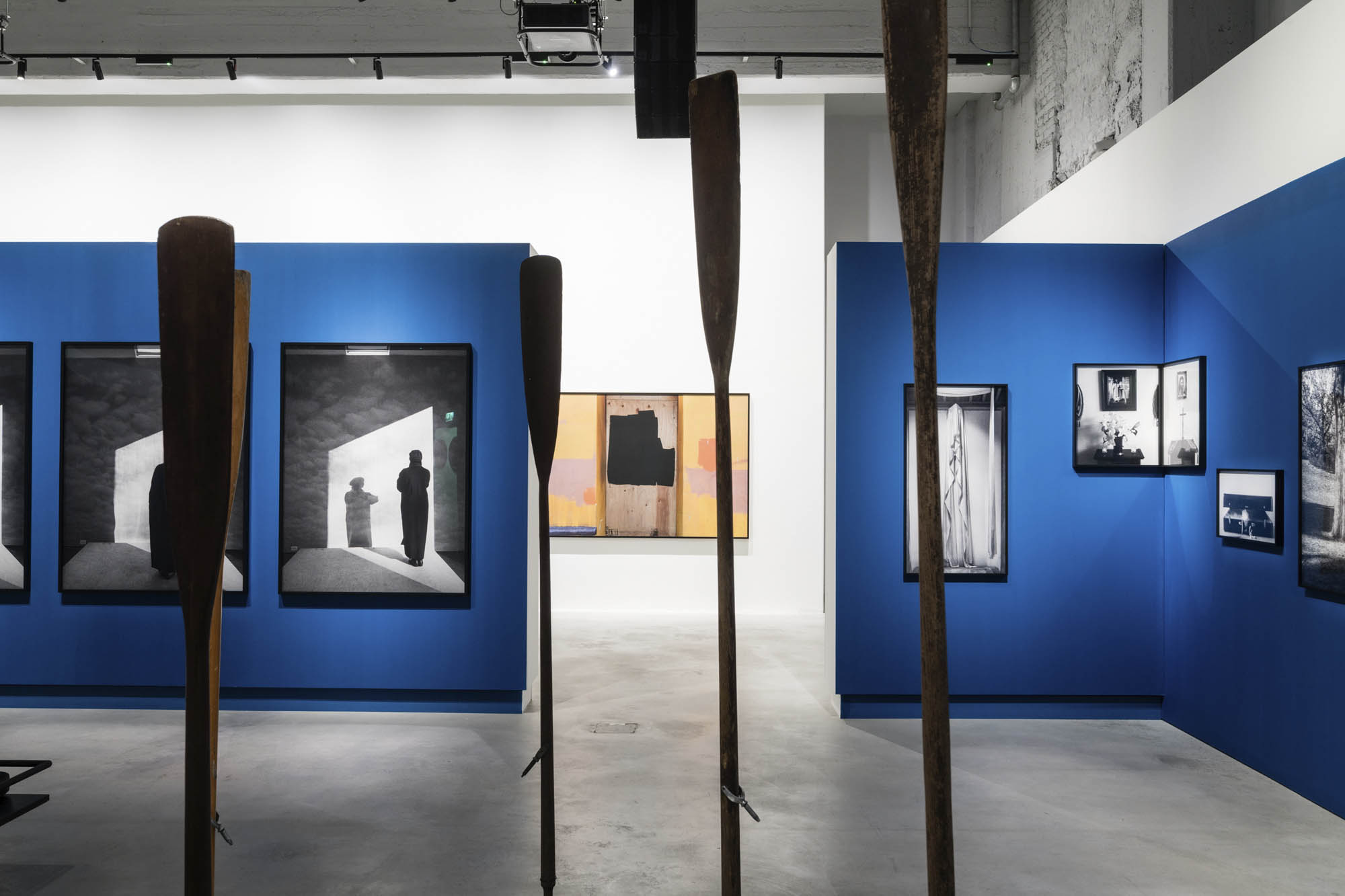
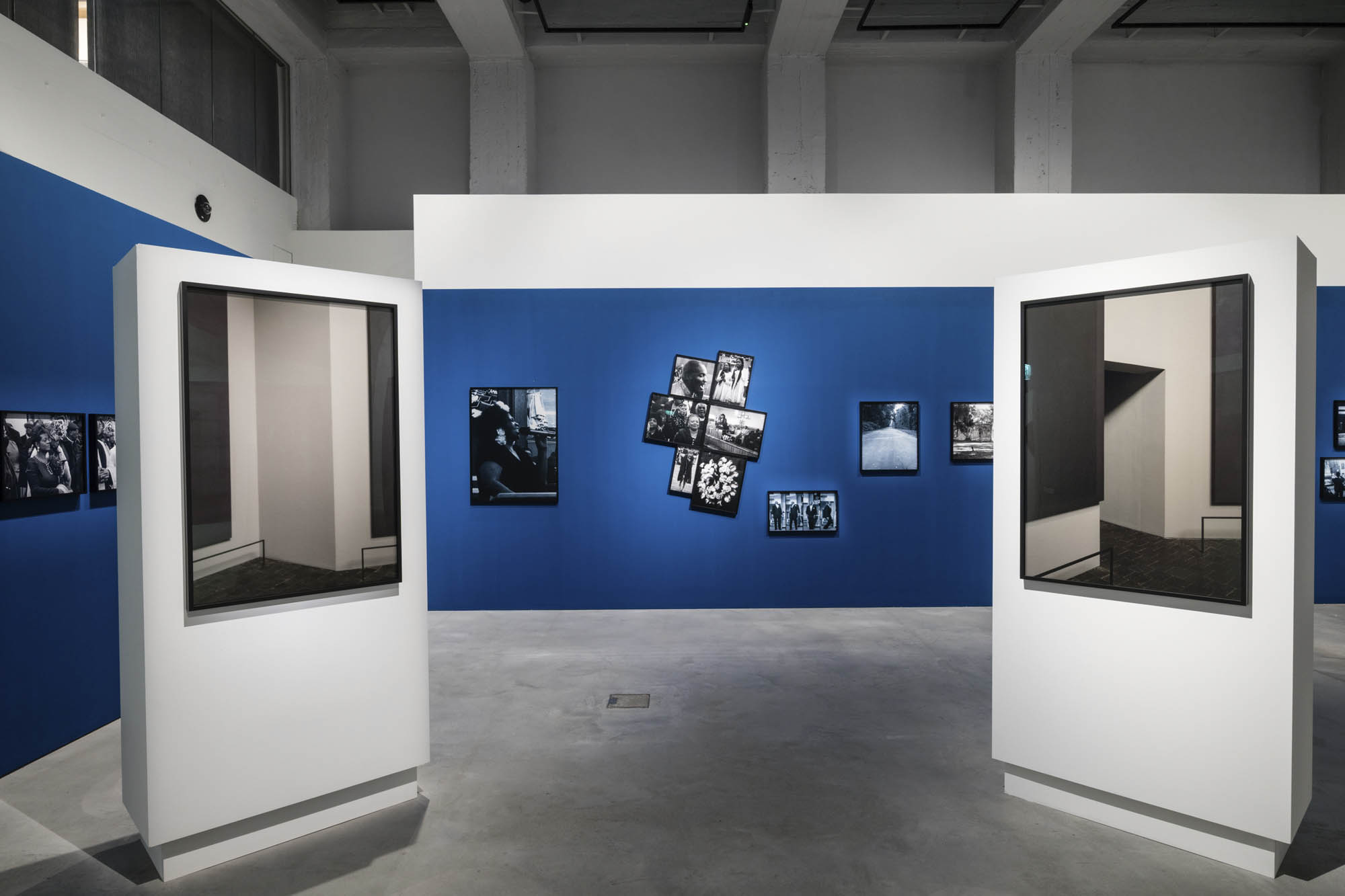
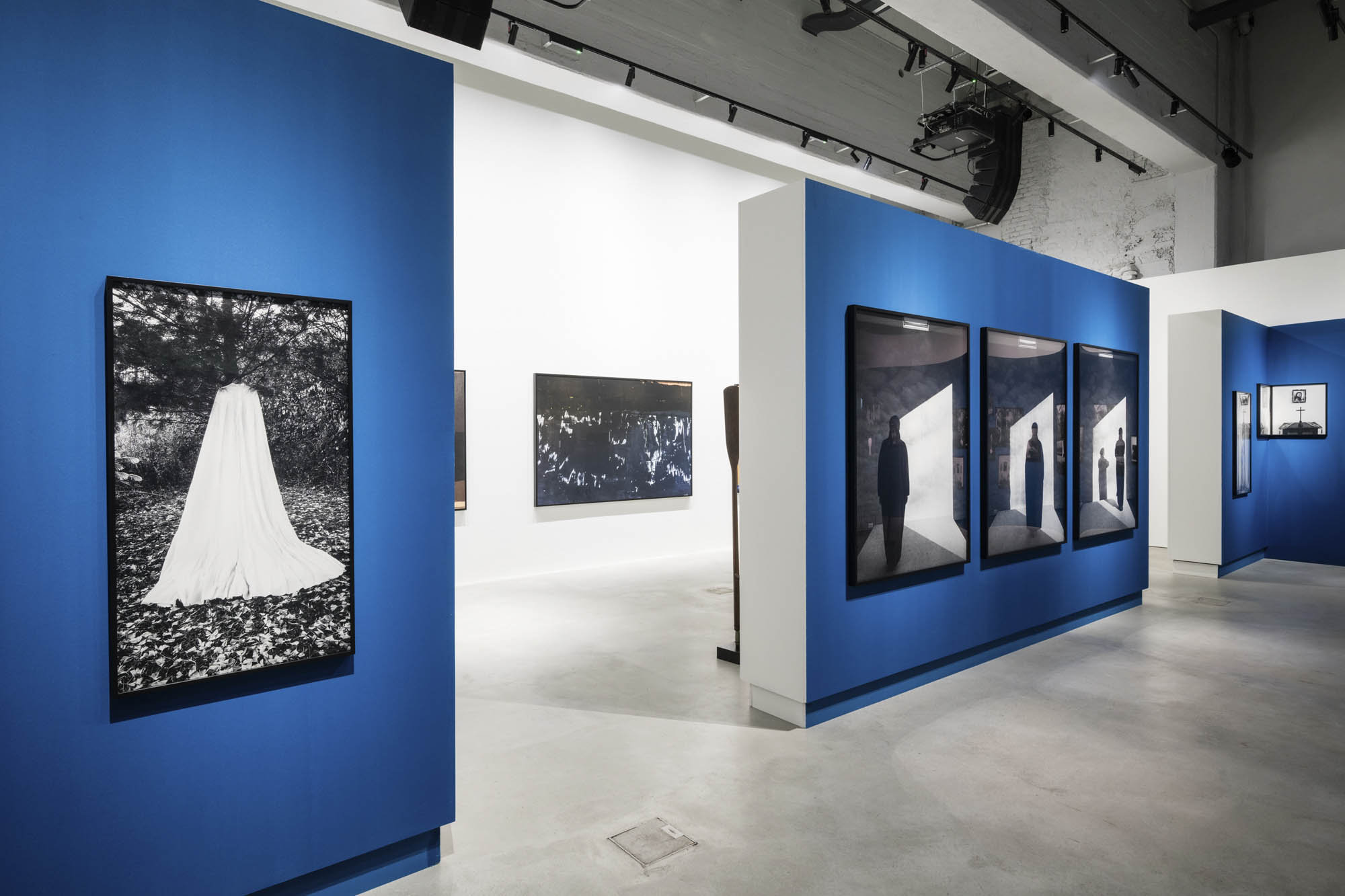
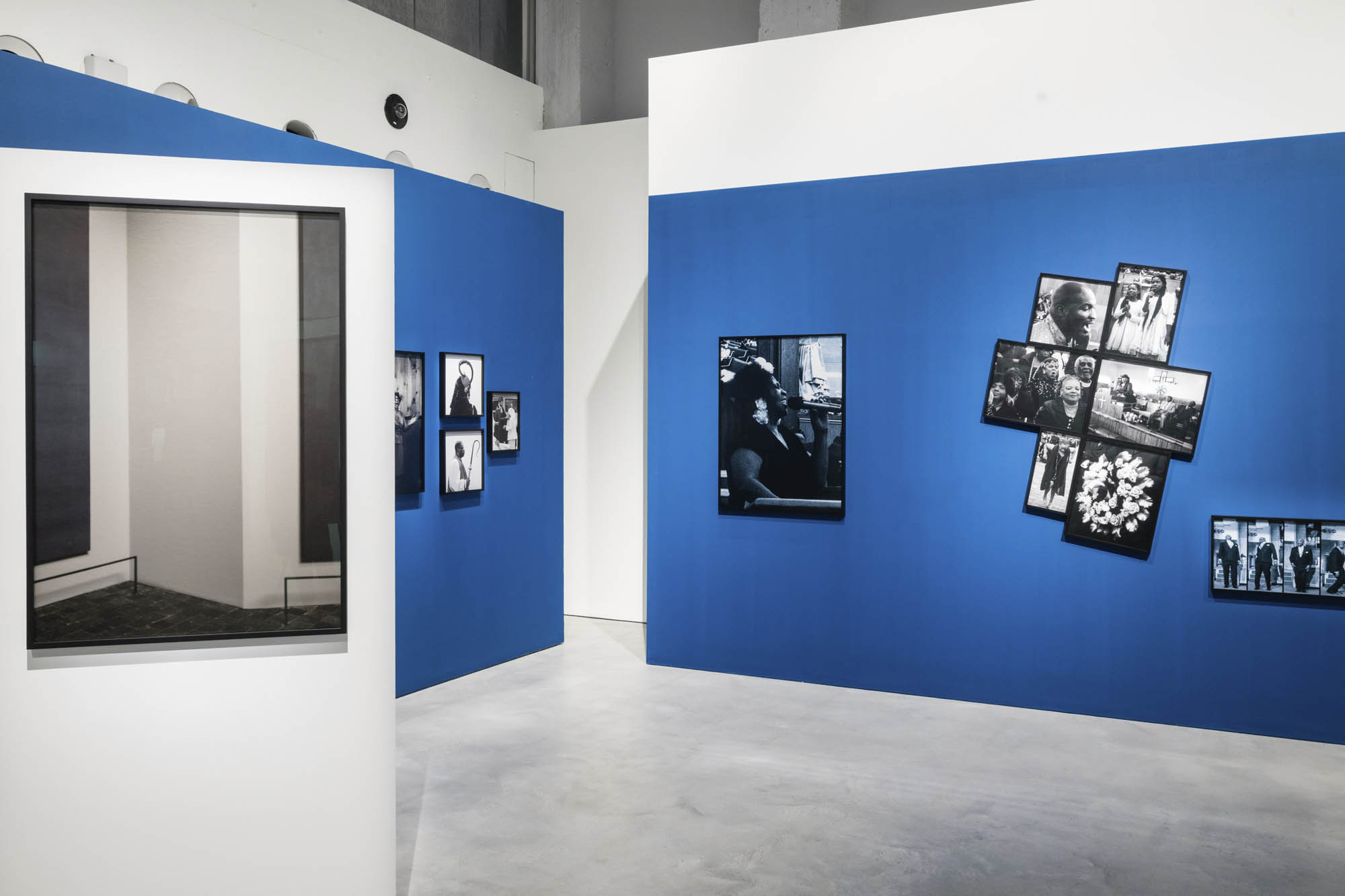
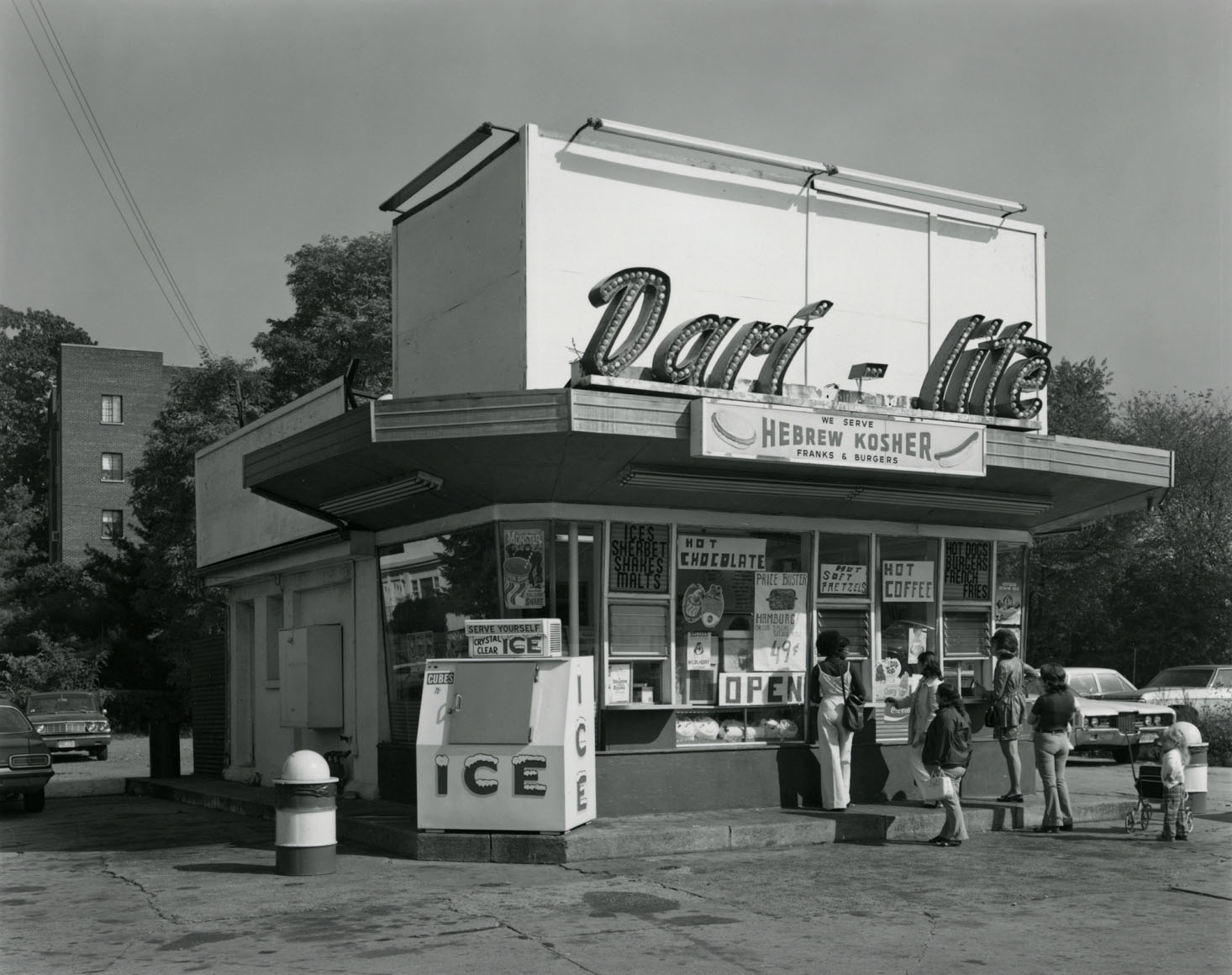
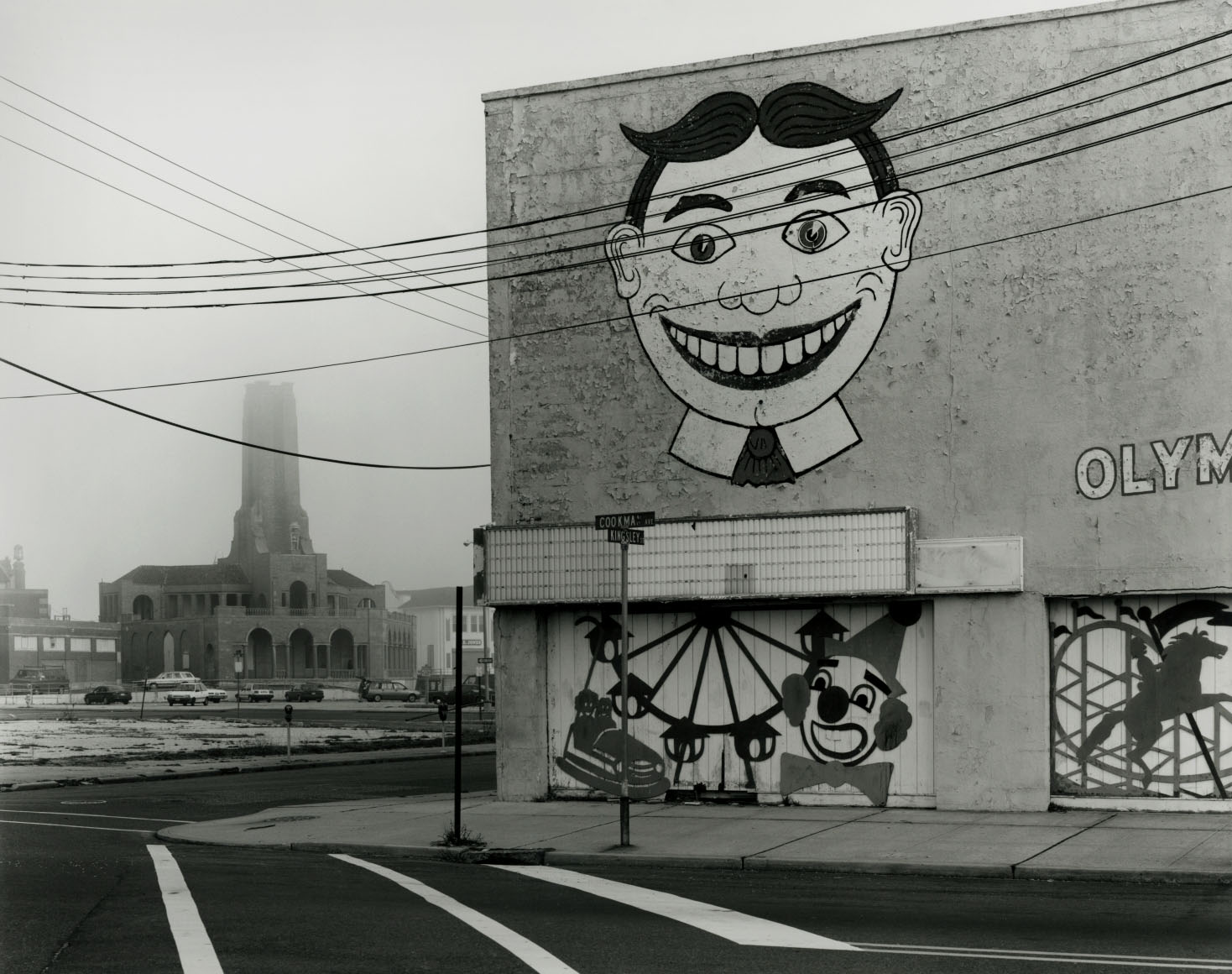
Exhibition: ‘Helen Levitt’ at Fundación MAPFRE, Barcelona

Exhibition dates: 24th September, 2025 – 1st February, 2026

Curator: Joshua Chuang


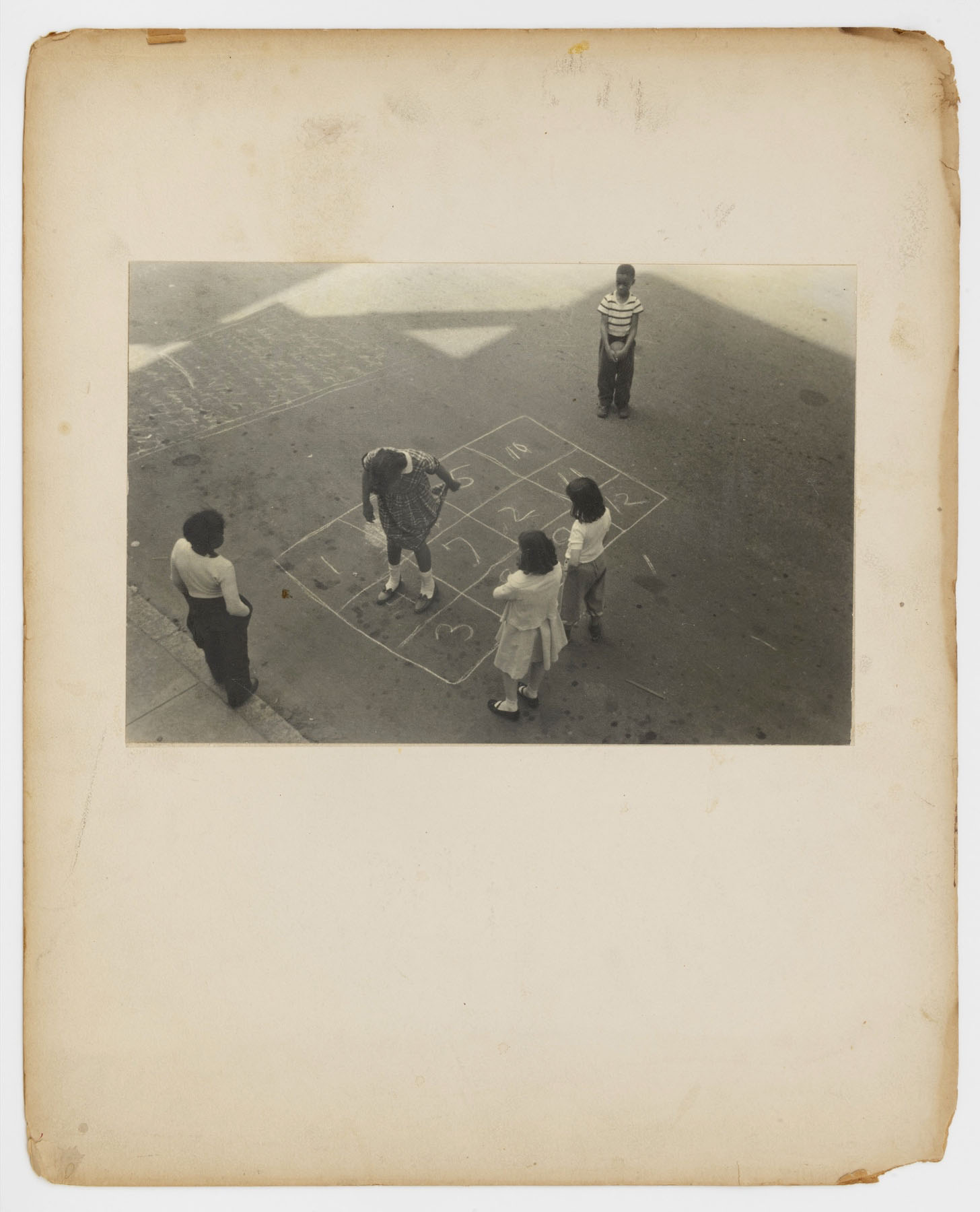
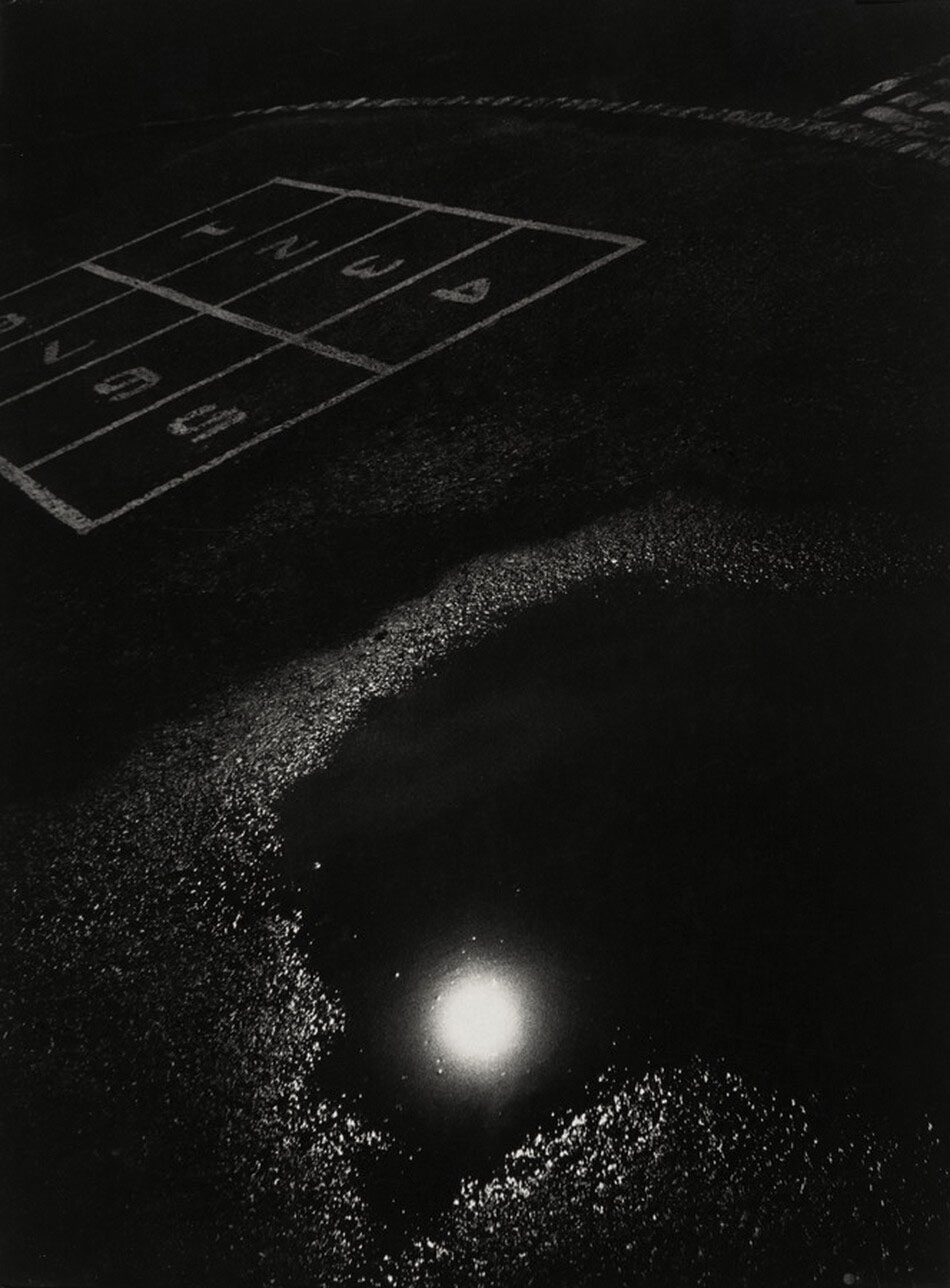
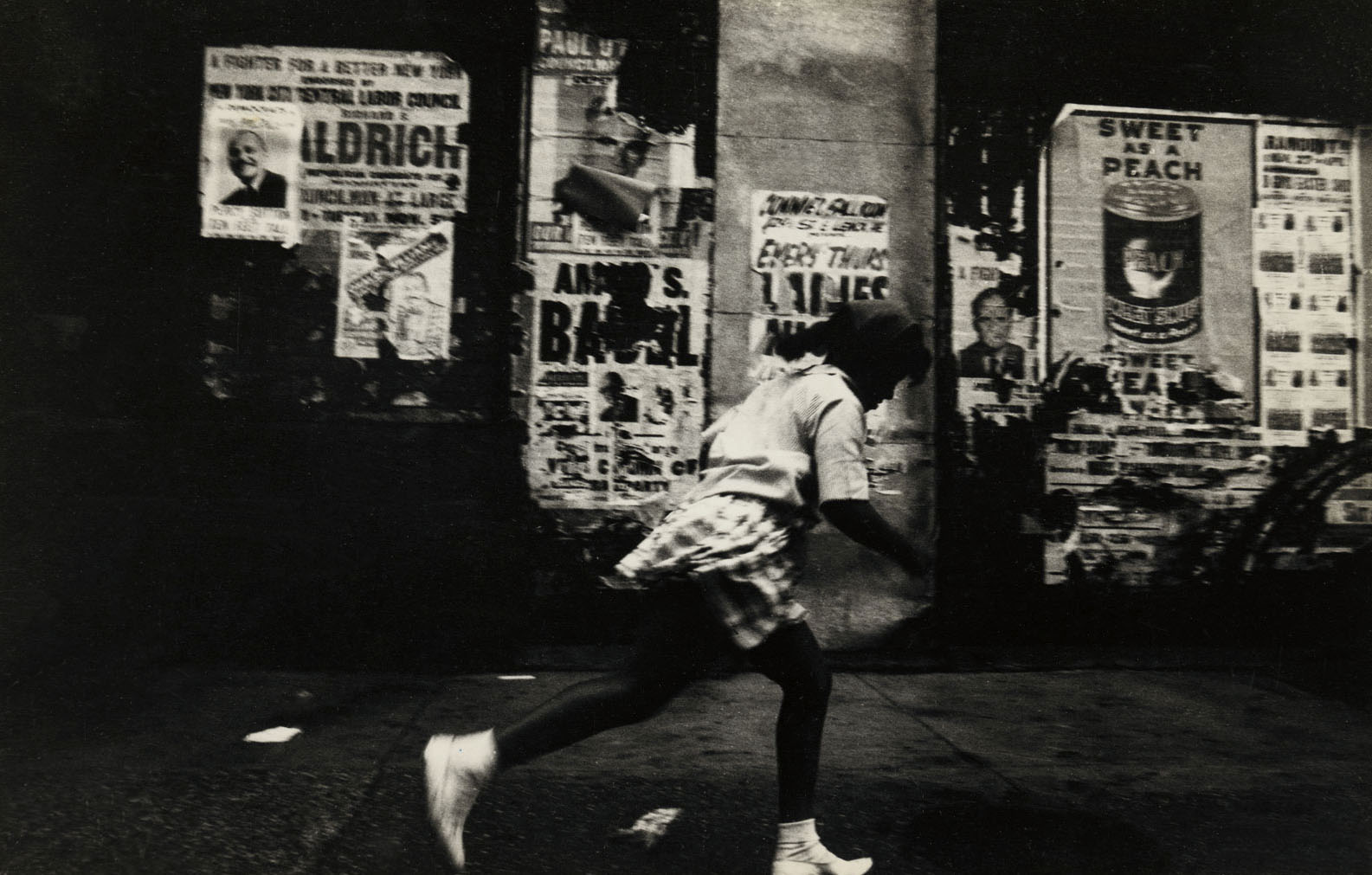
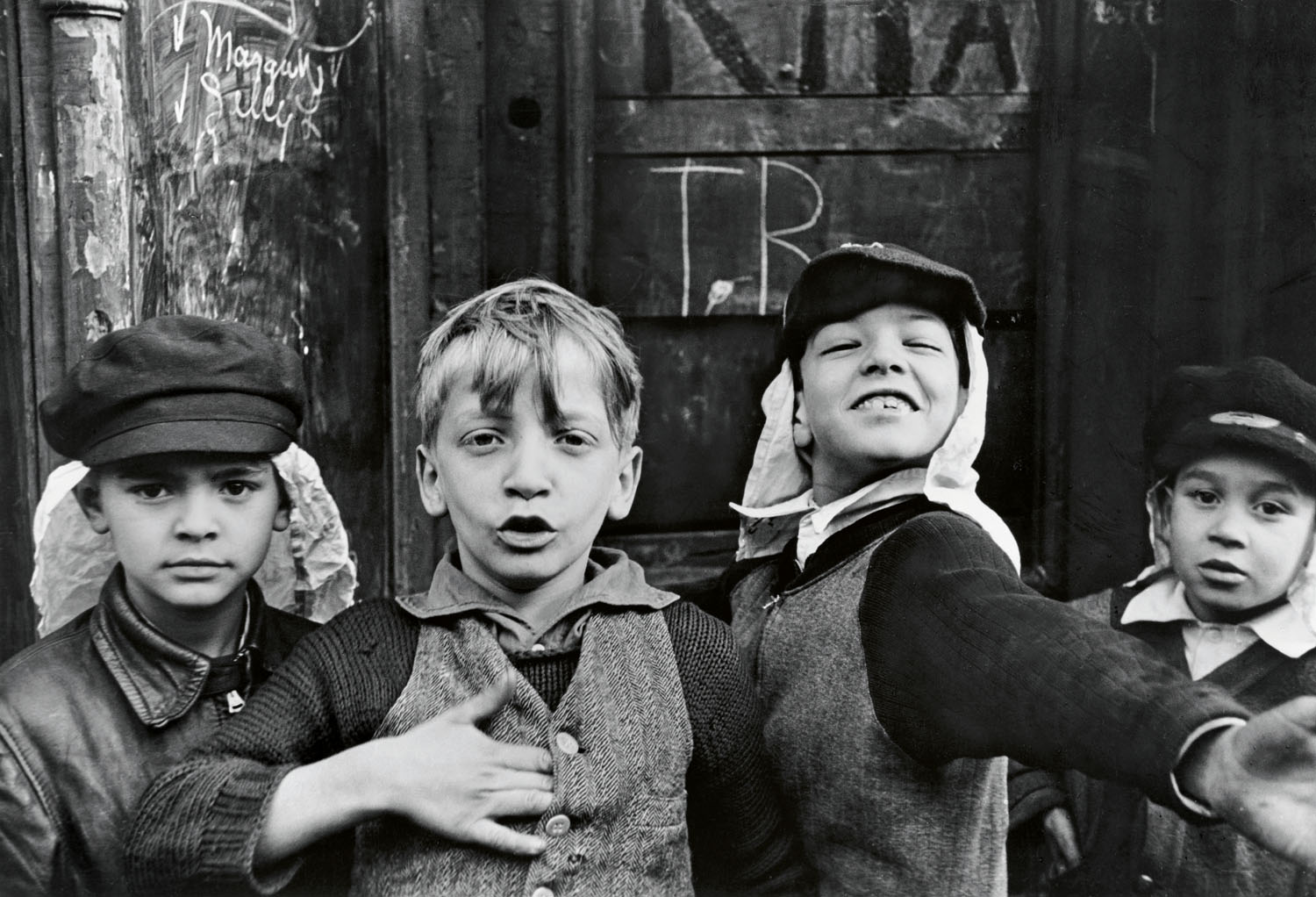
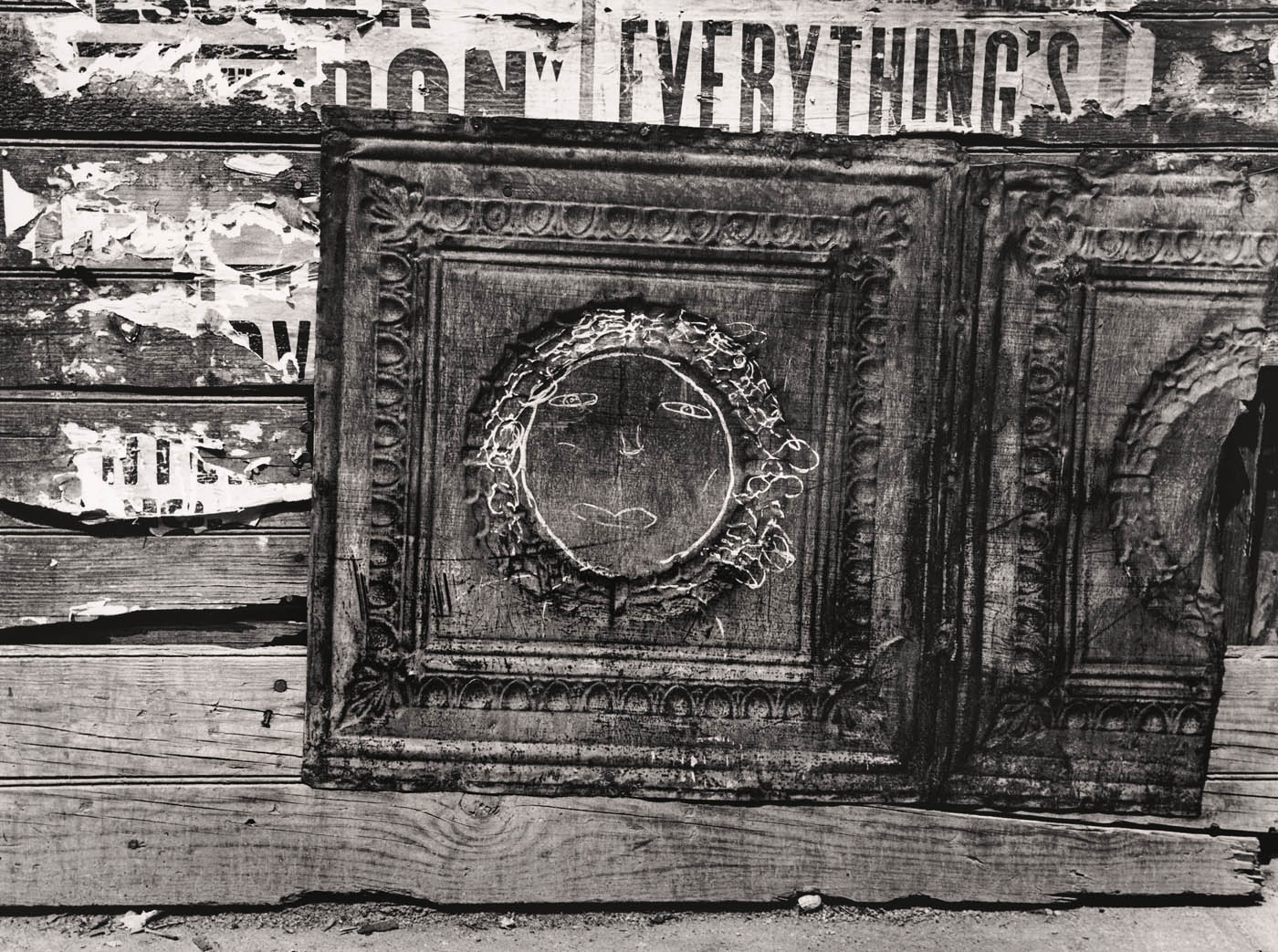
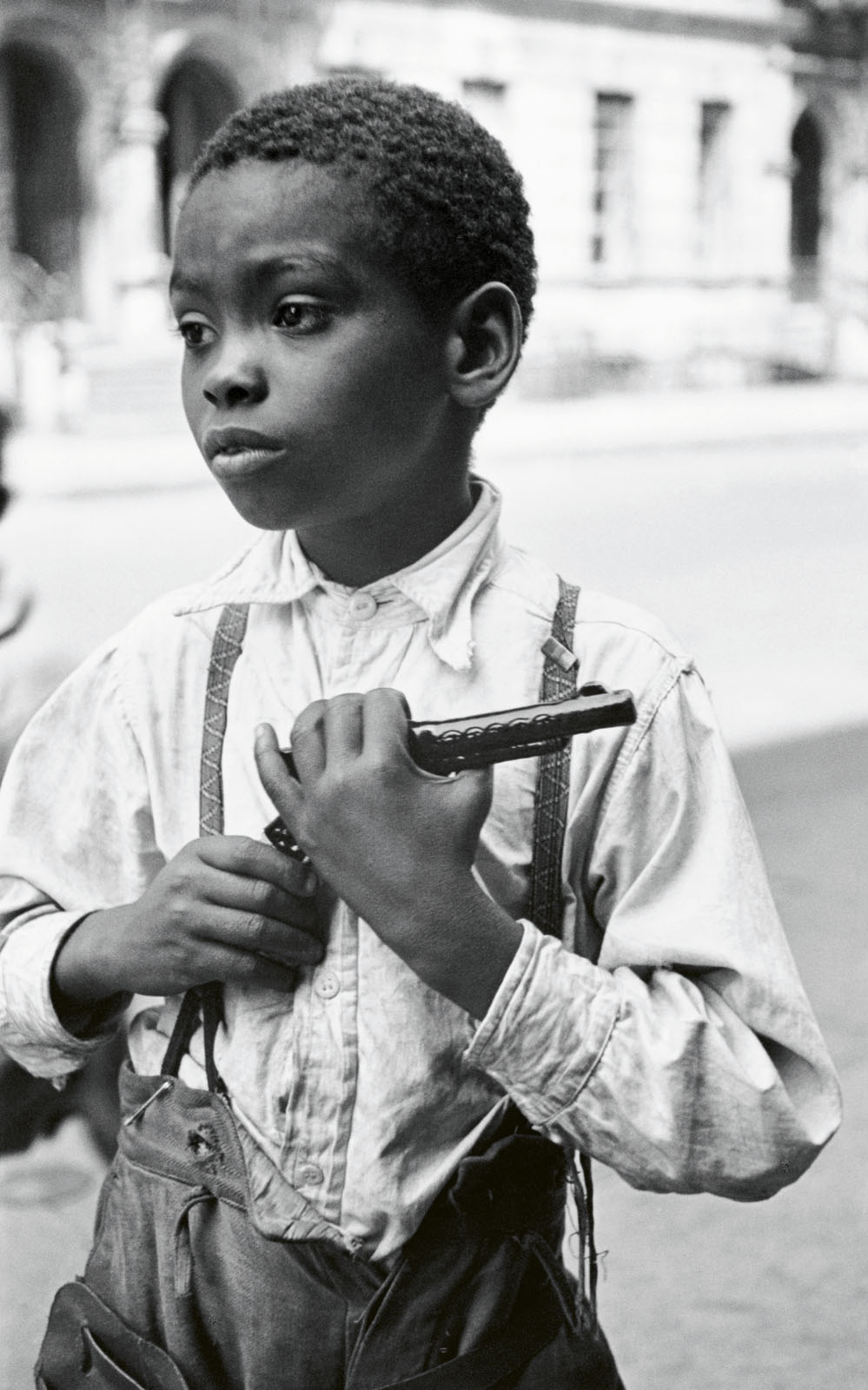
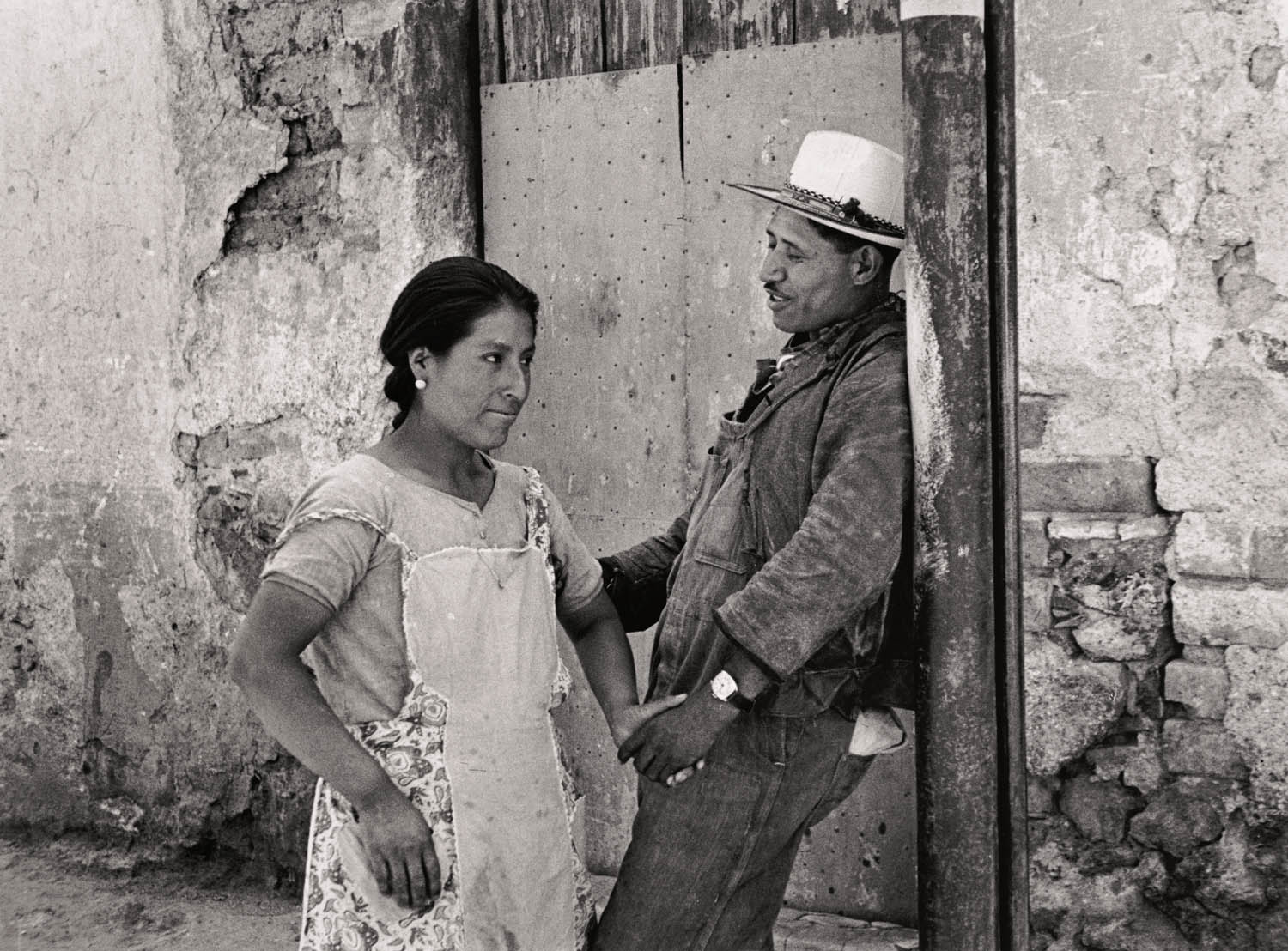
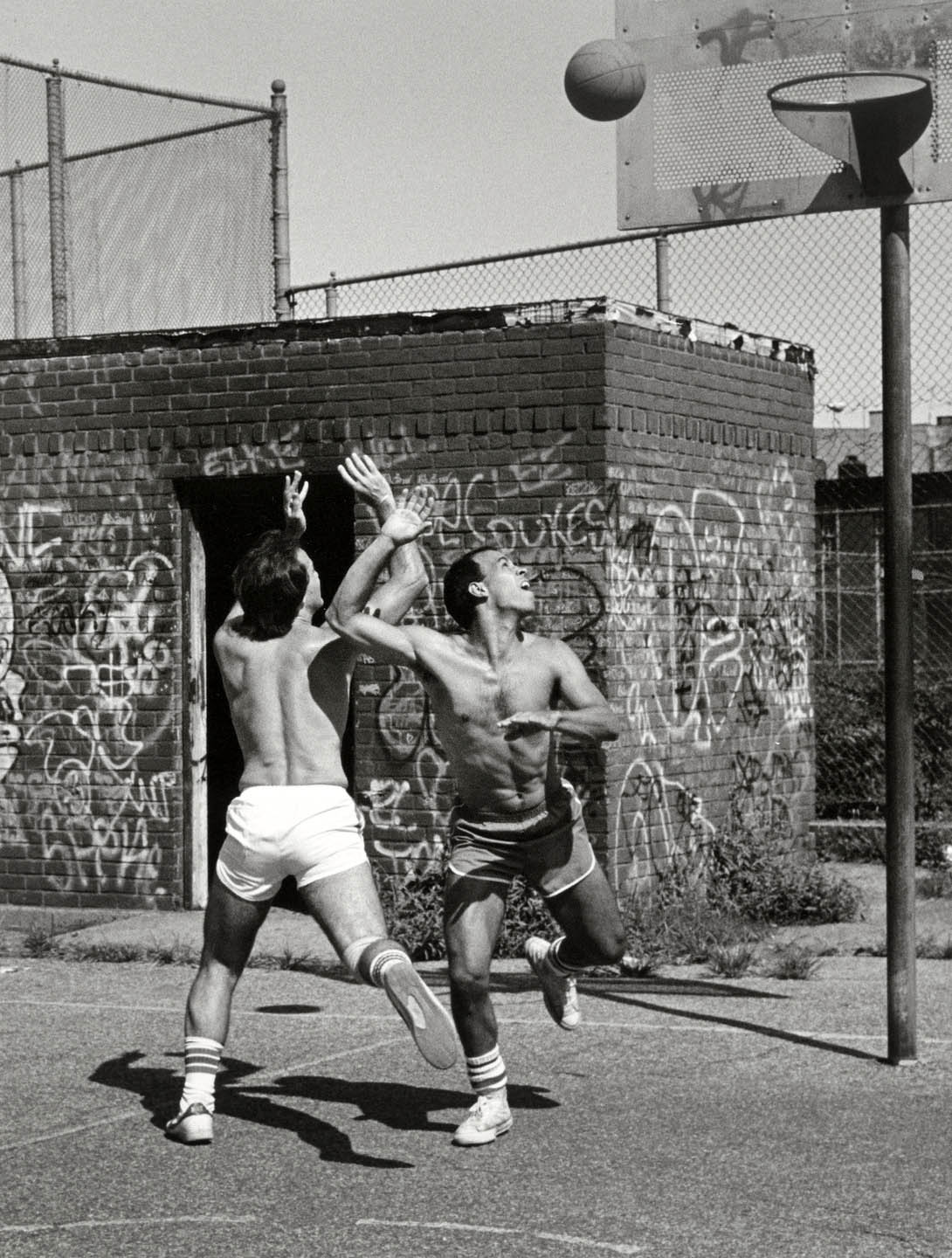
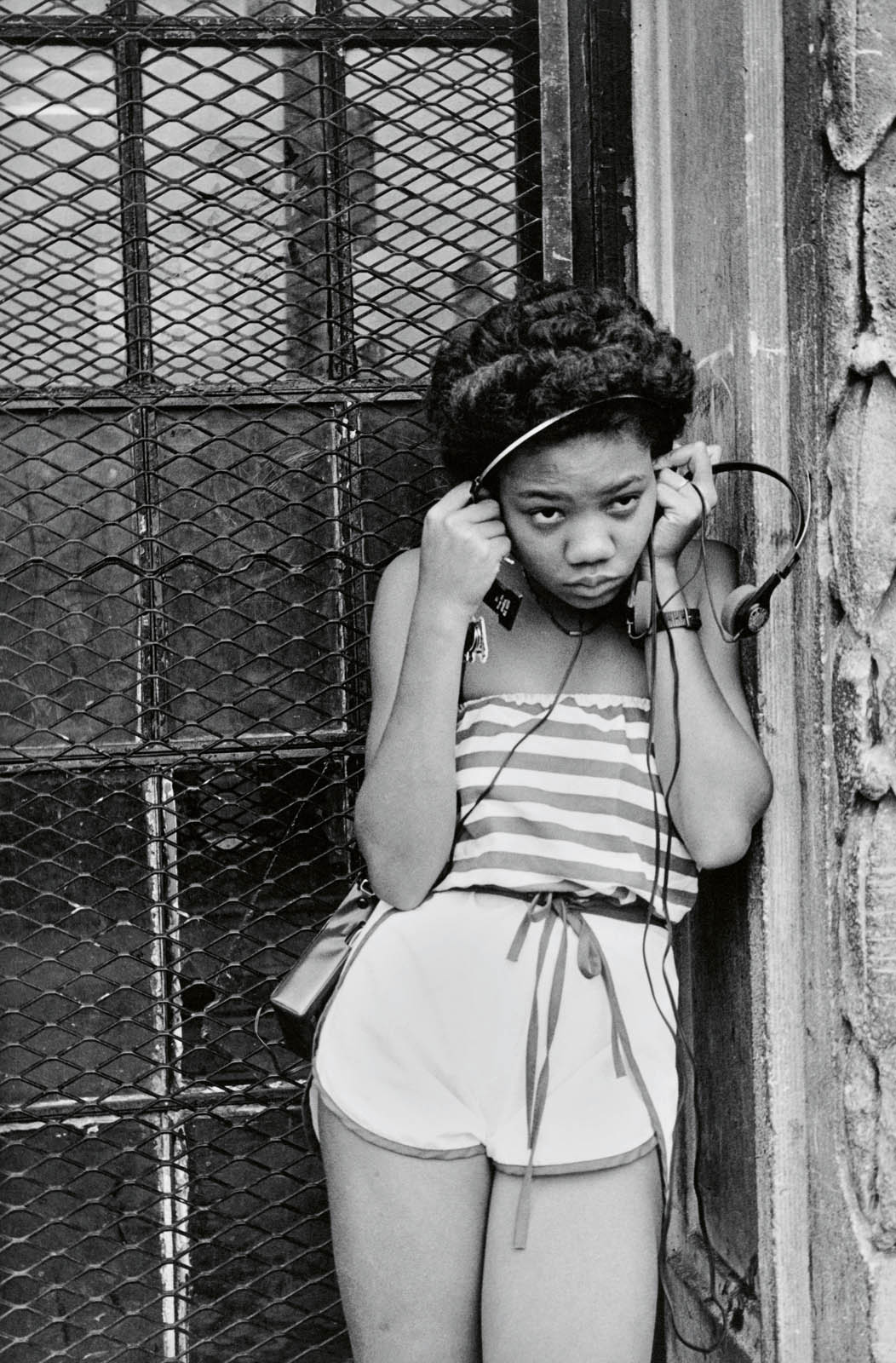
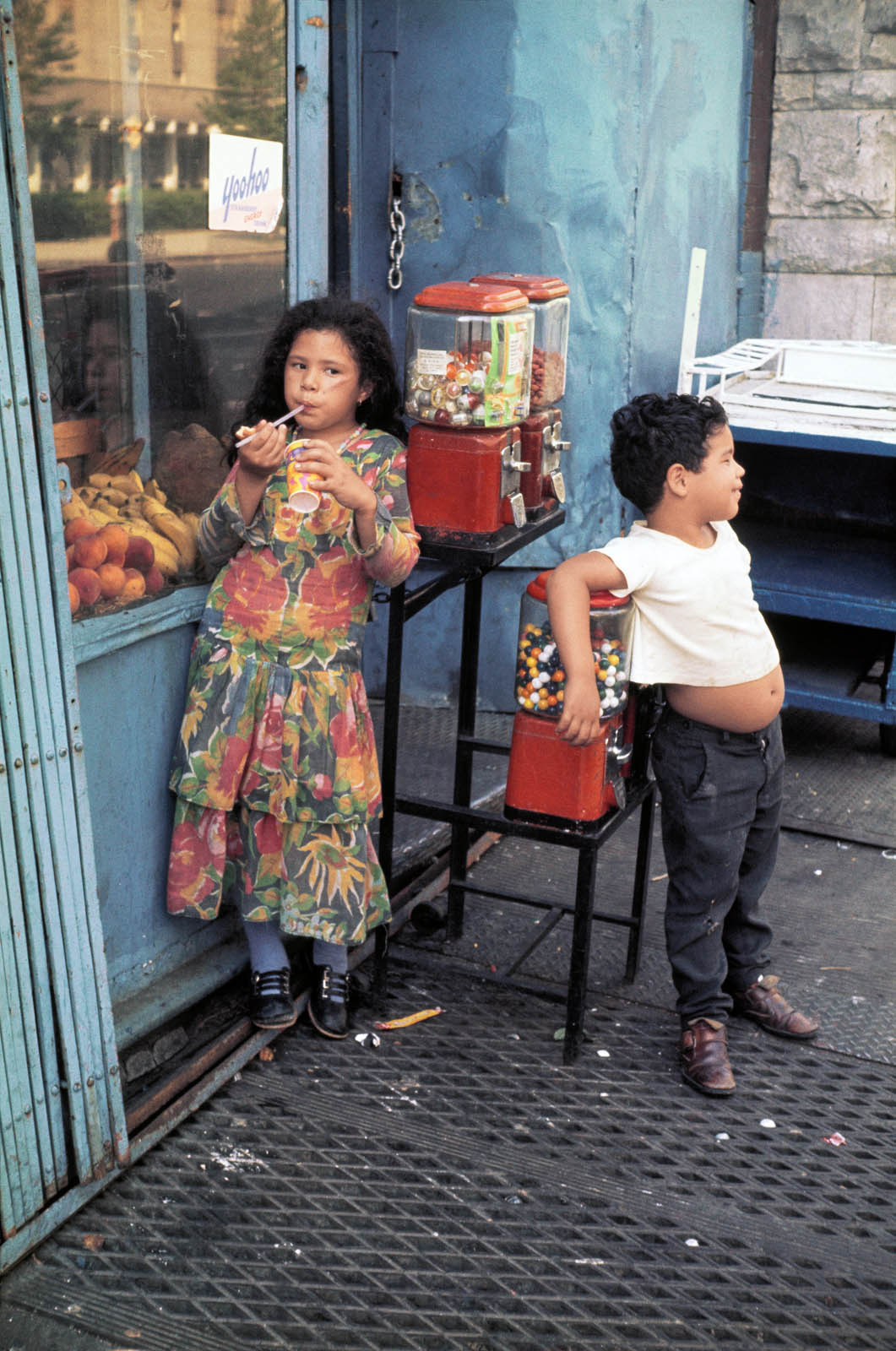
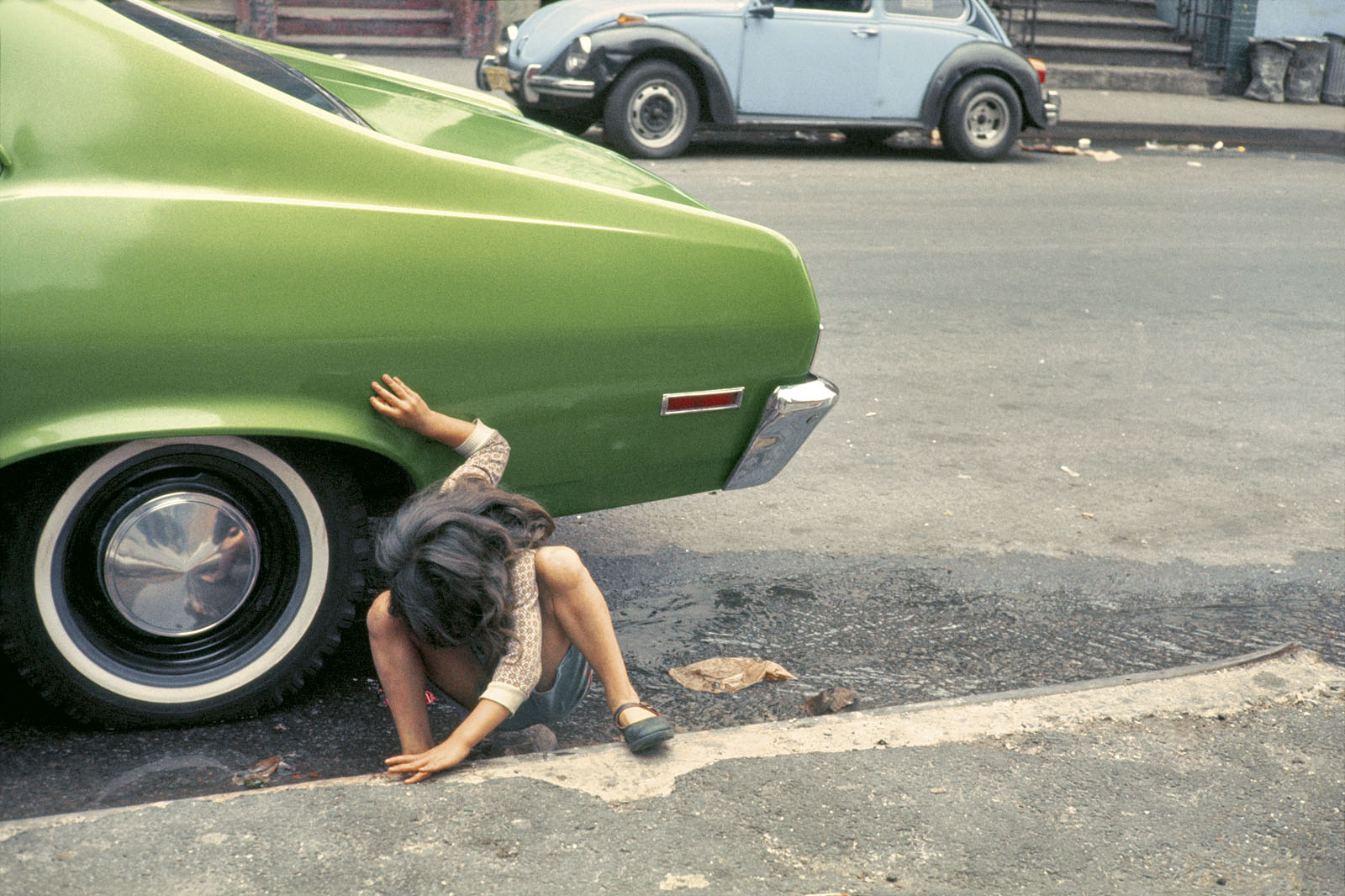
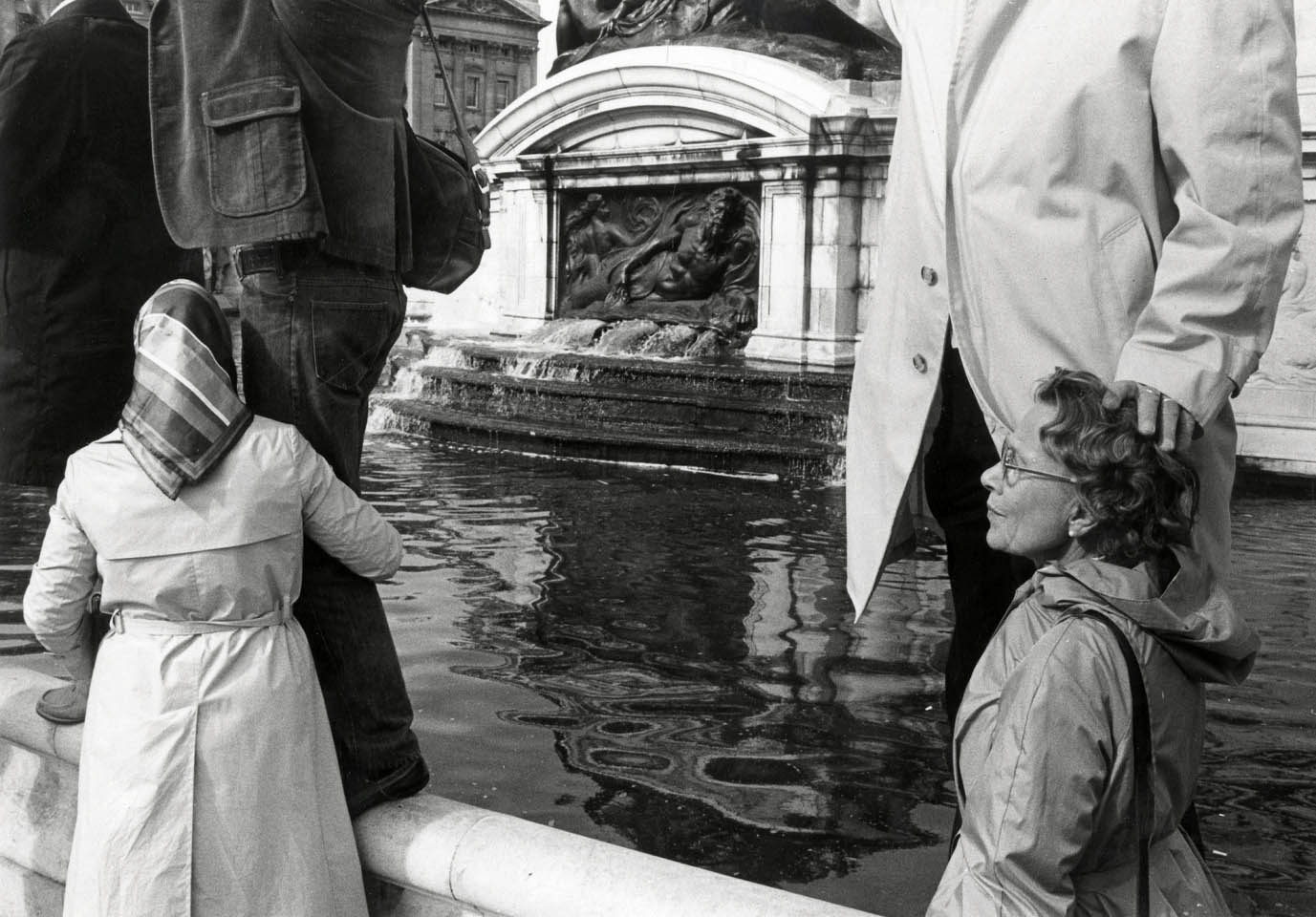
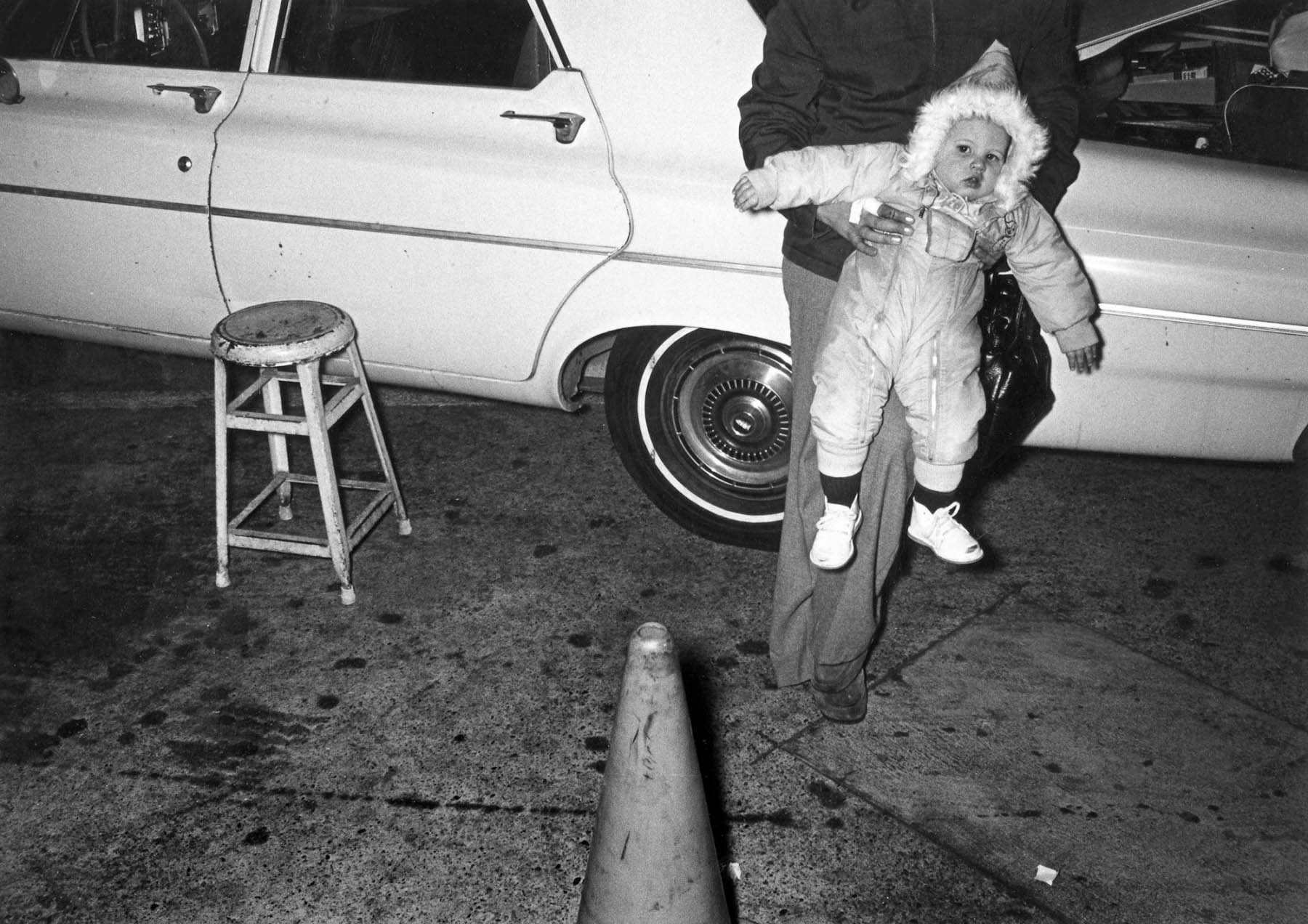
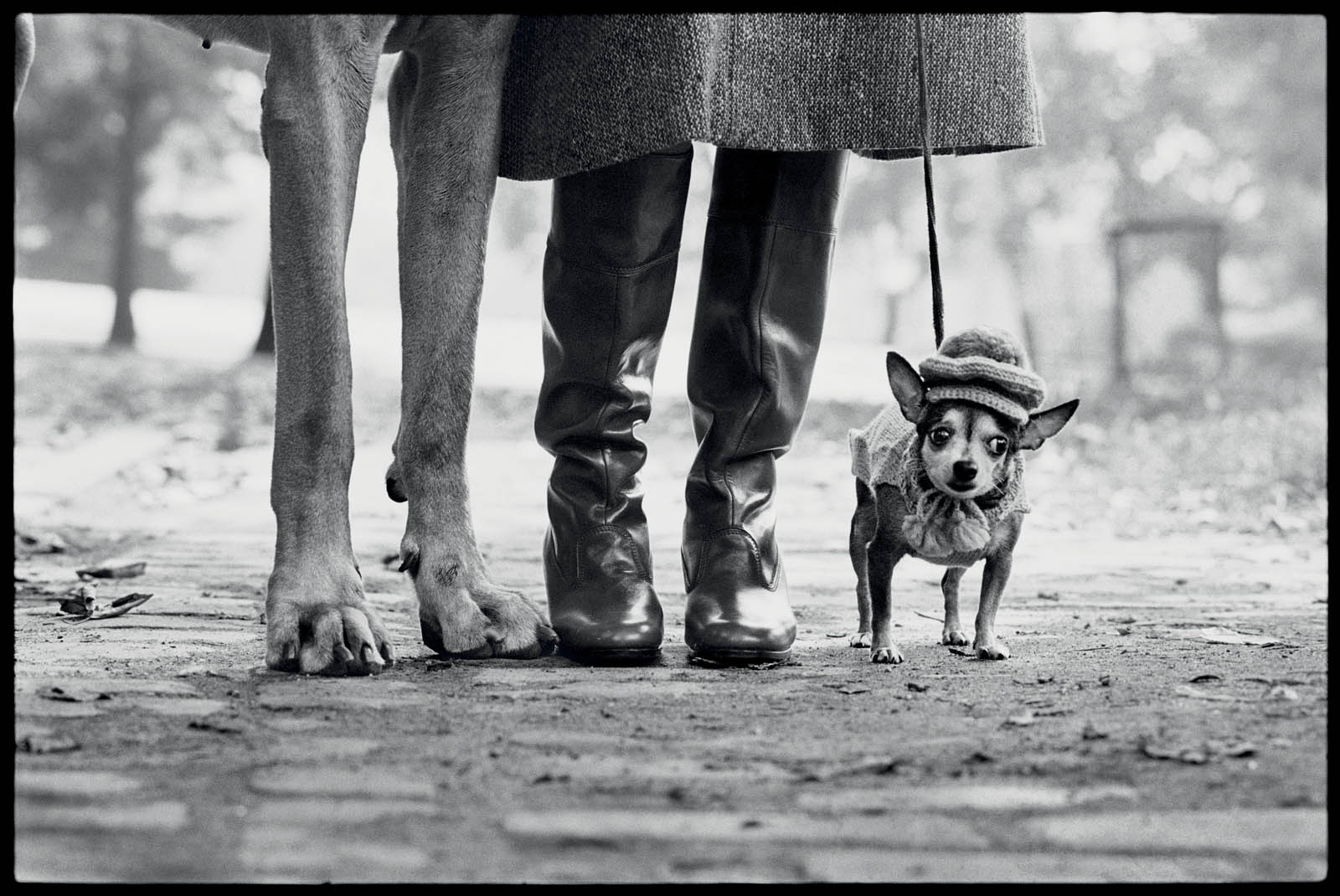
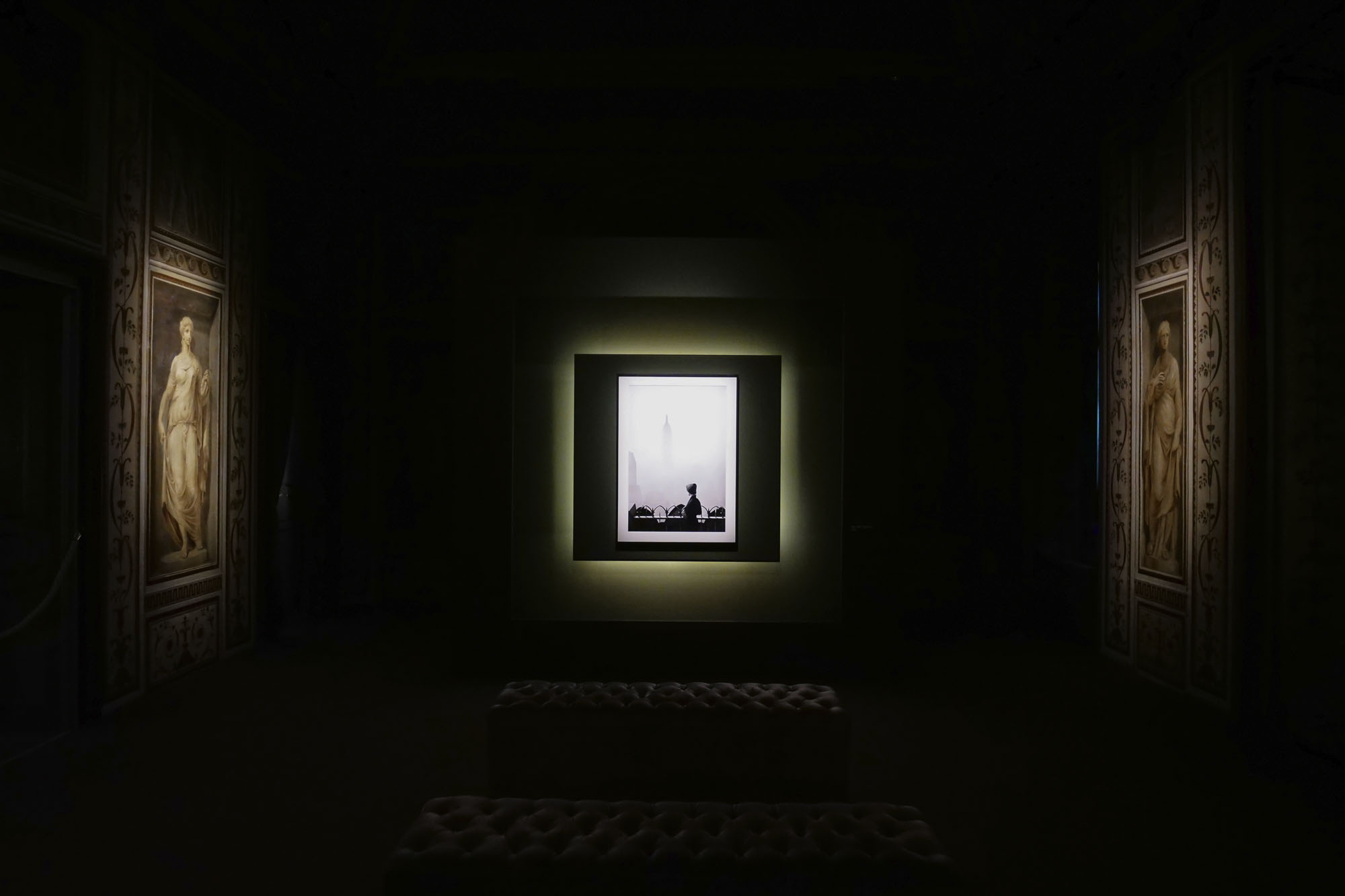
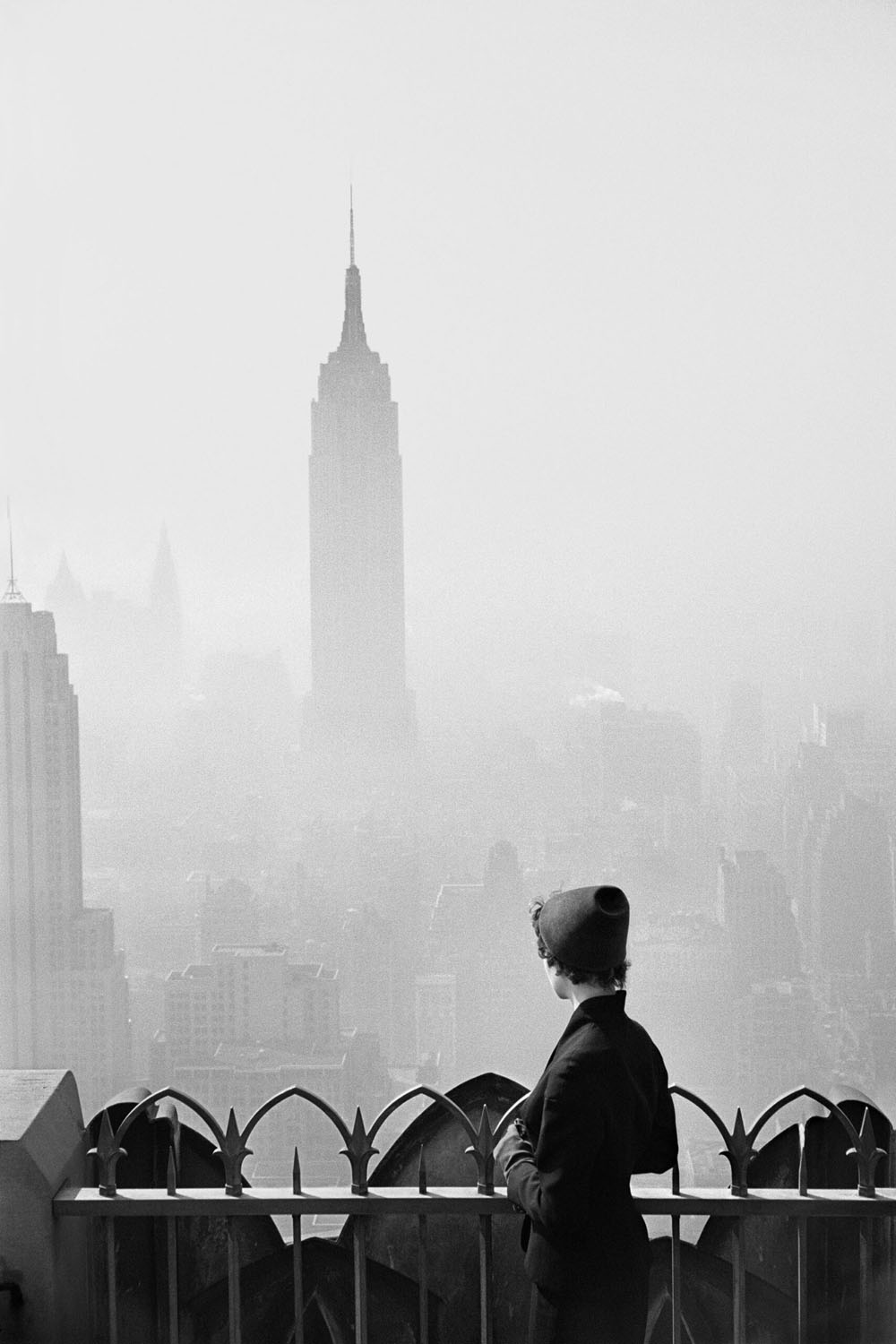
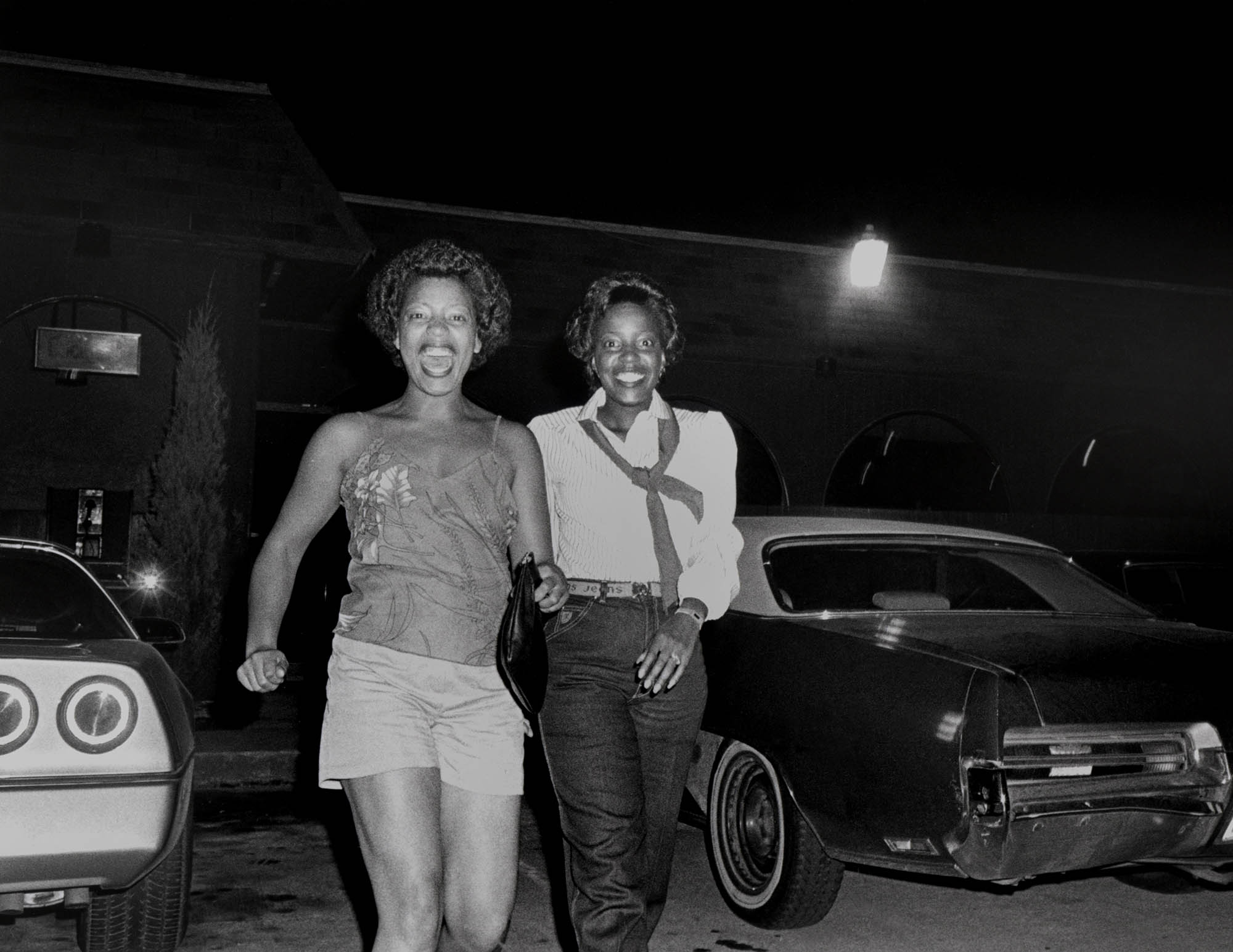
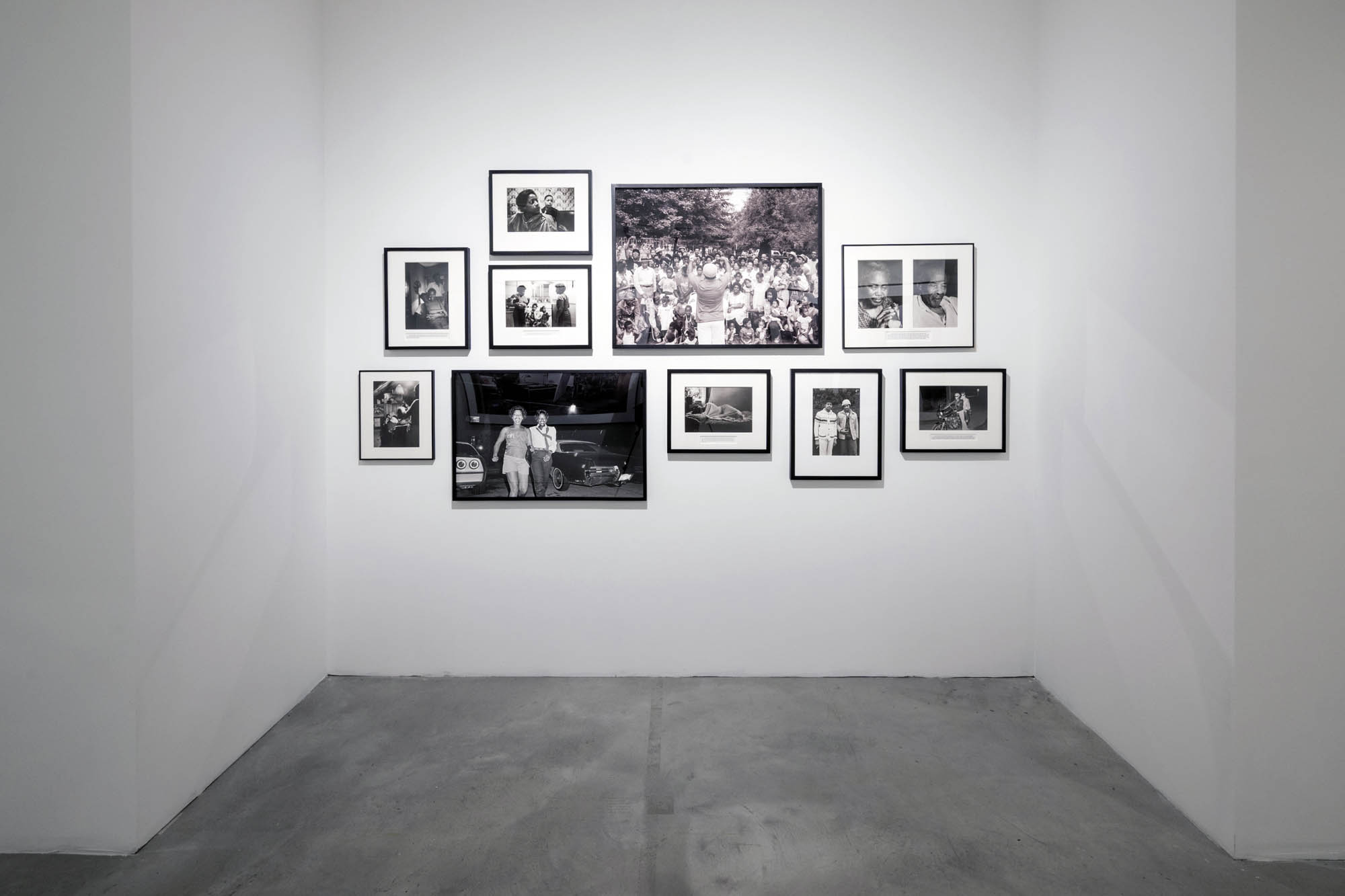
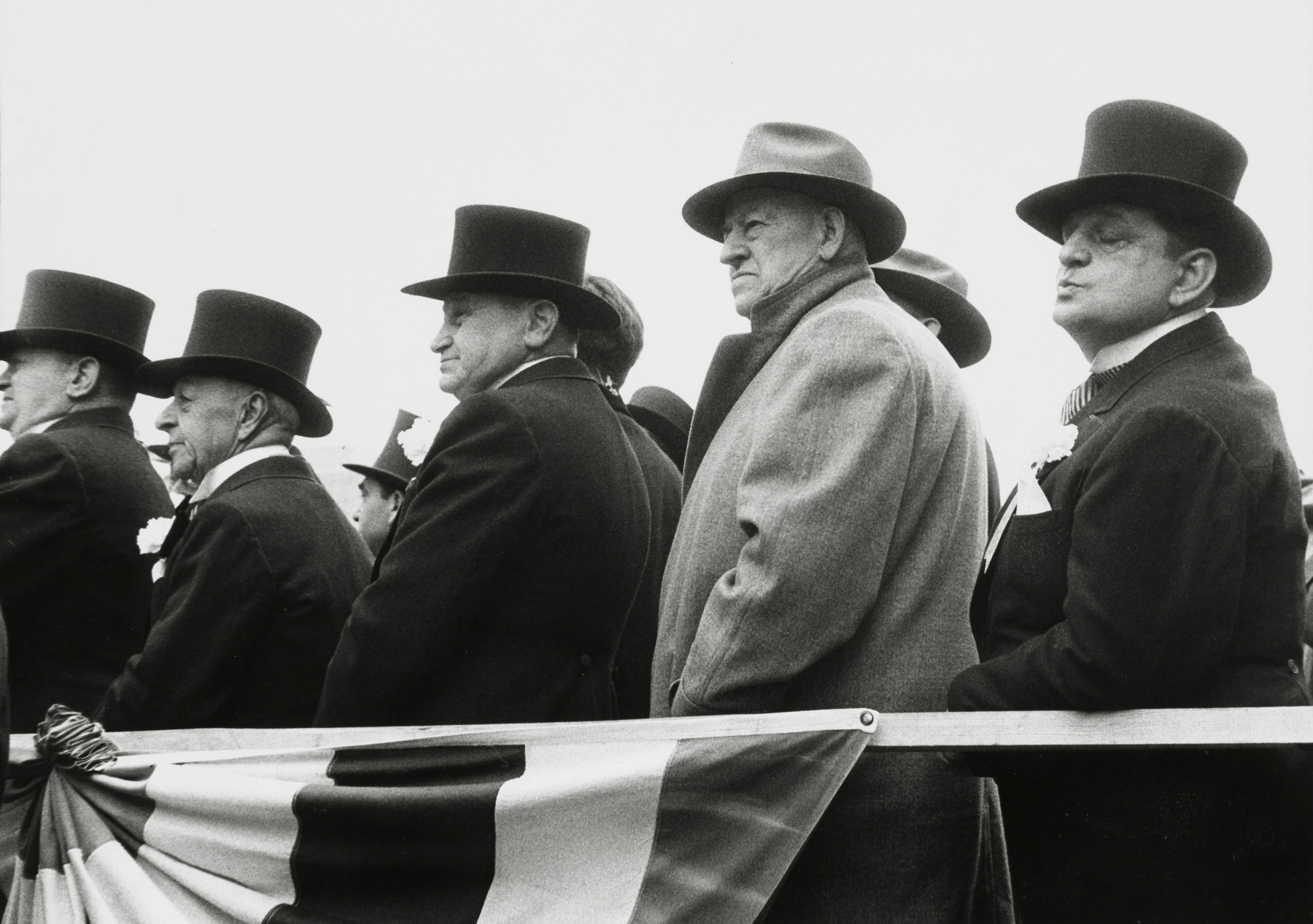
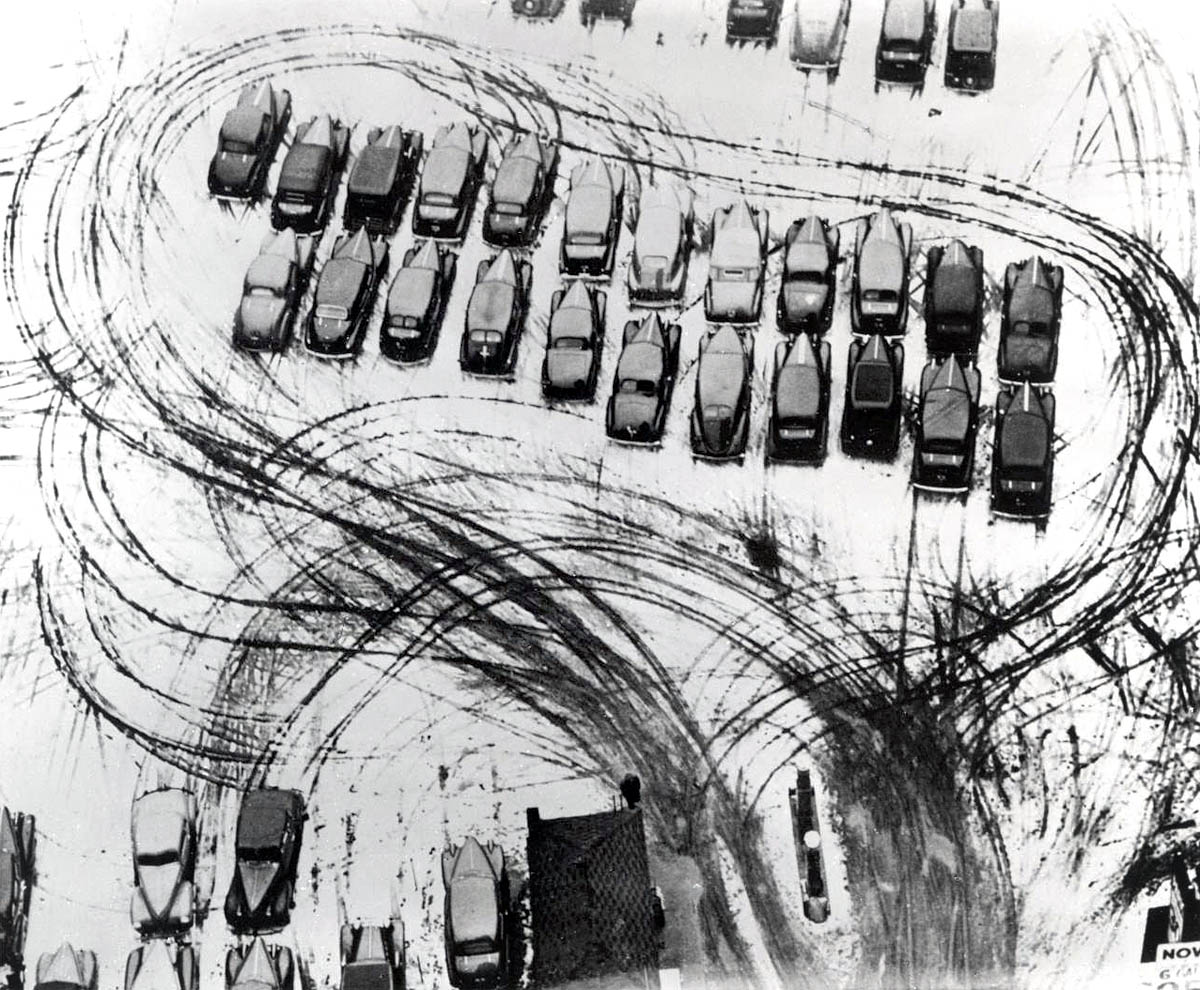
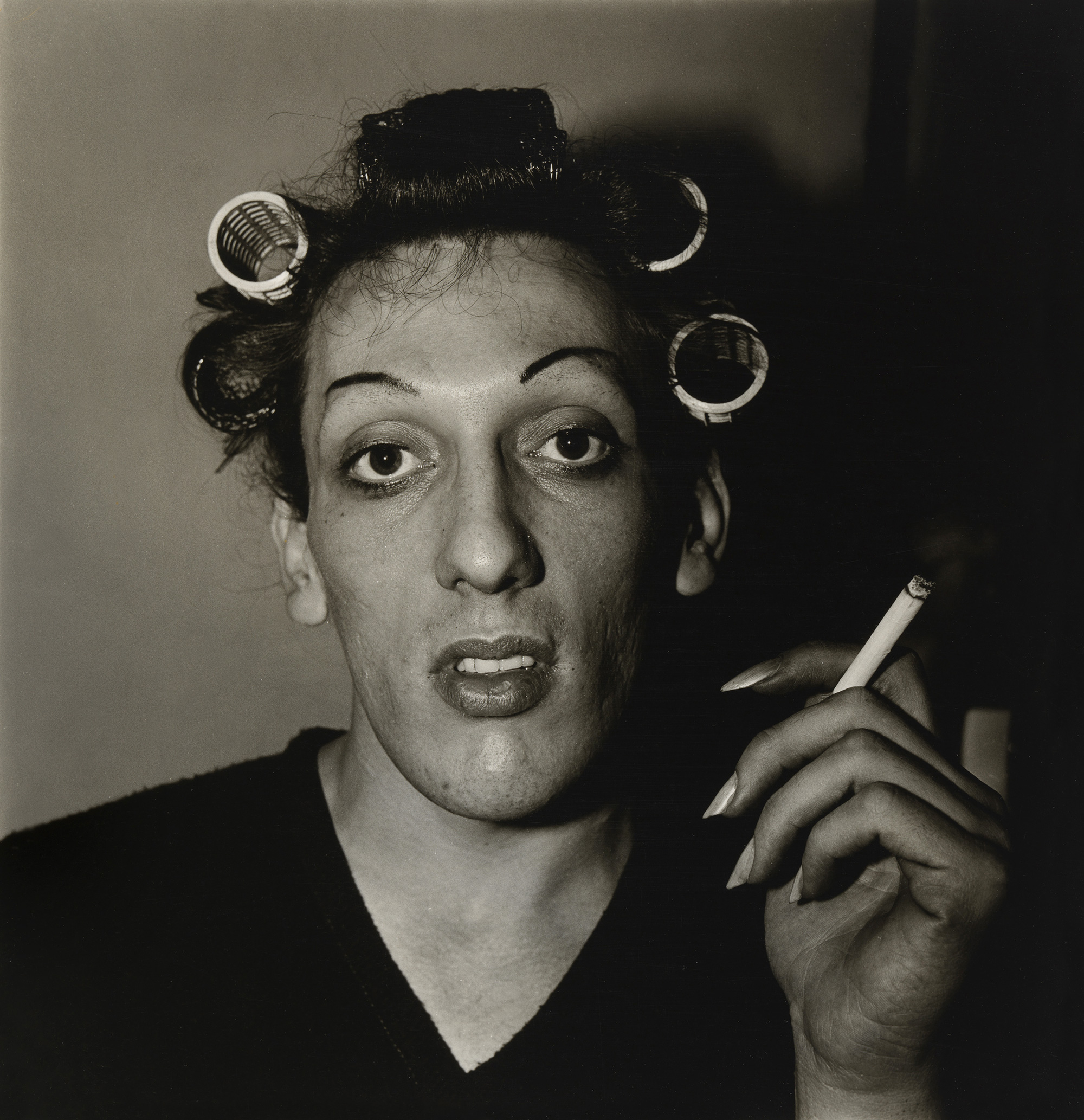
Helen Levitt (American, 1913-2009) 'New York' c. 1940 from the exhibition 'Helen Levitt' at Fundación MAPFRE, Barcelona, Sept 2025 - Feb 2026


Helen Levitt (American, 1913-2009)
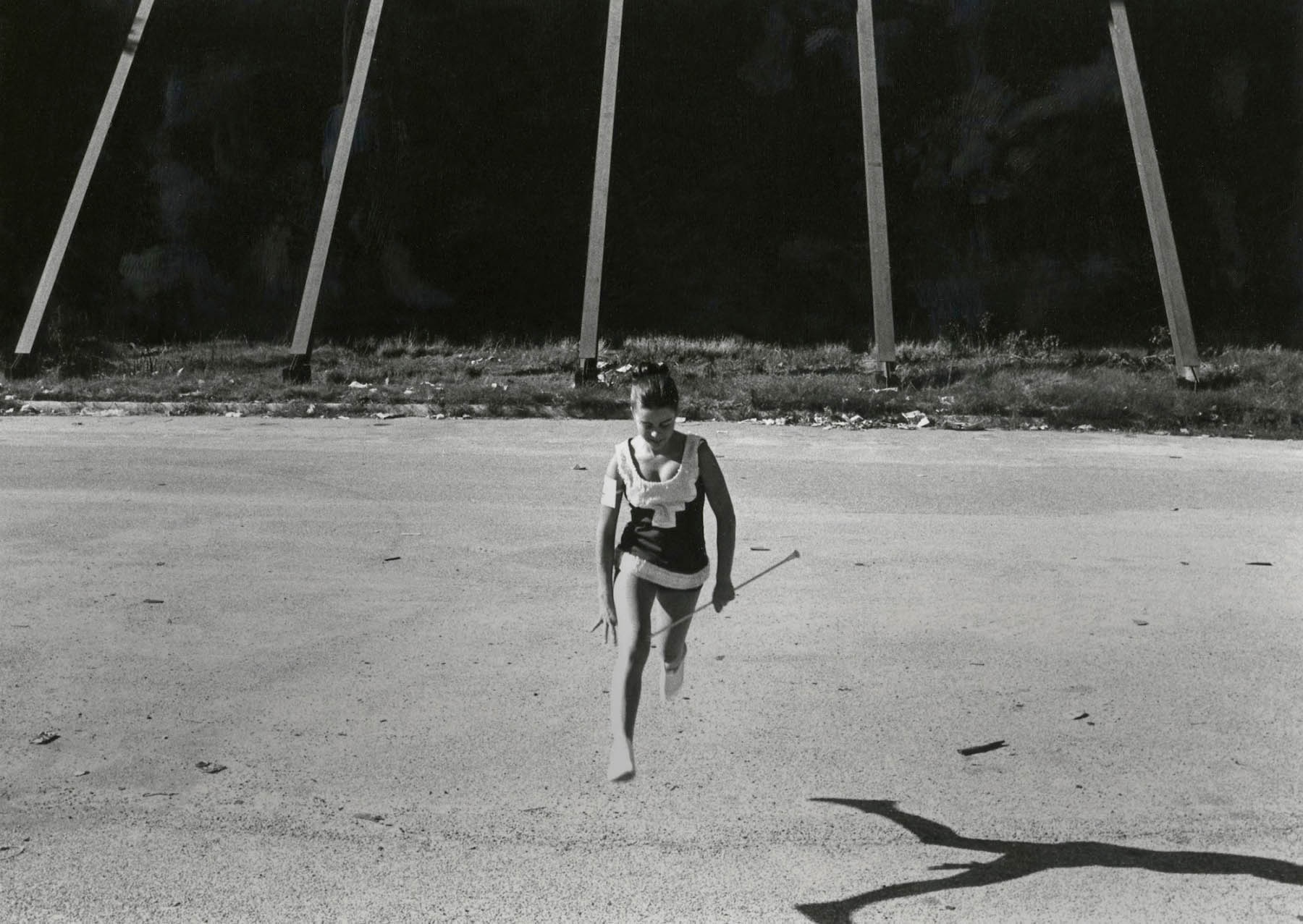
New York
c. 1940
Gelatin silver print
© Film Documents LLC, courtesy Zander Galerie, Cologne 


Levittation

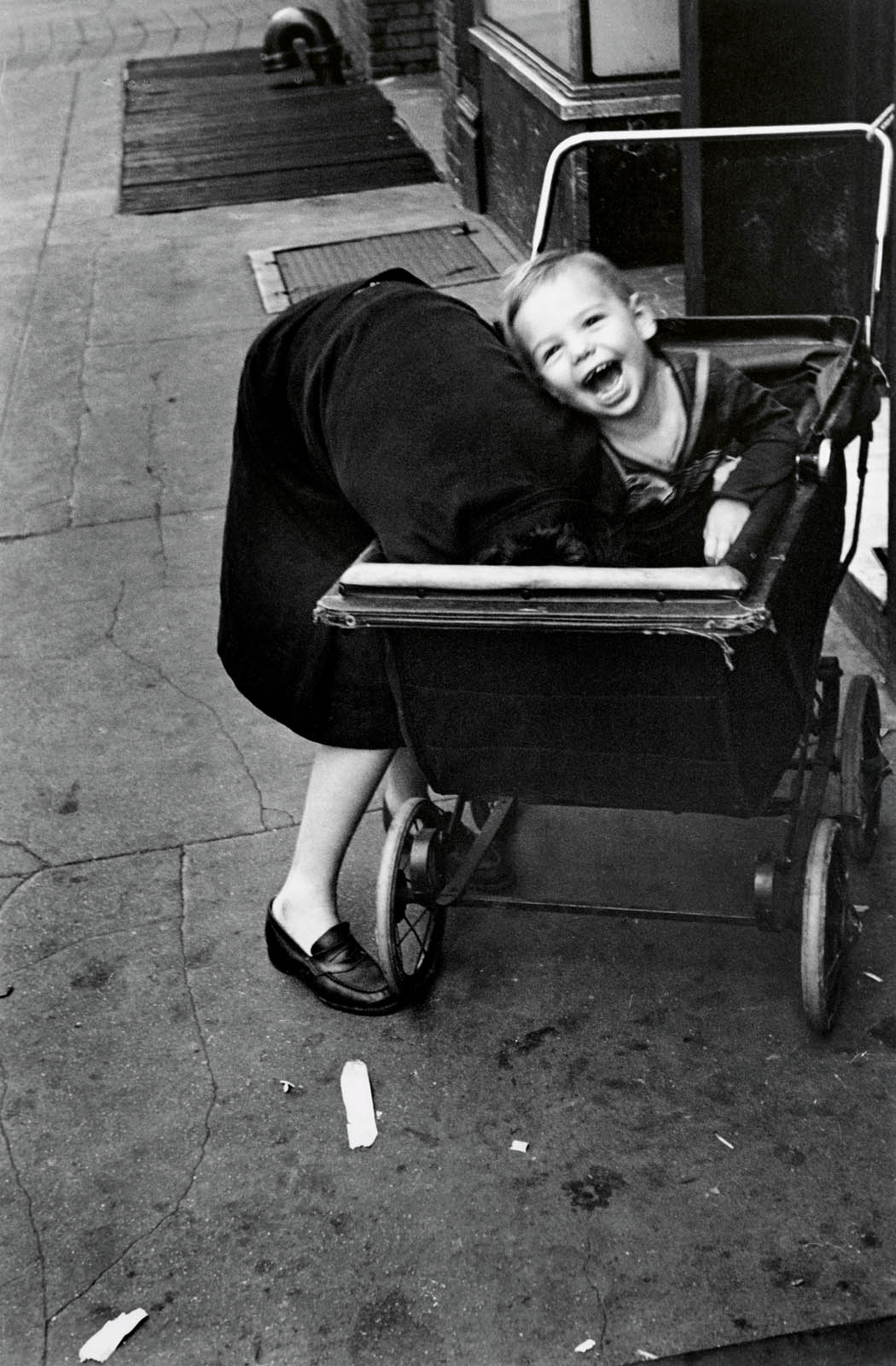
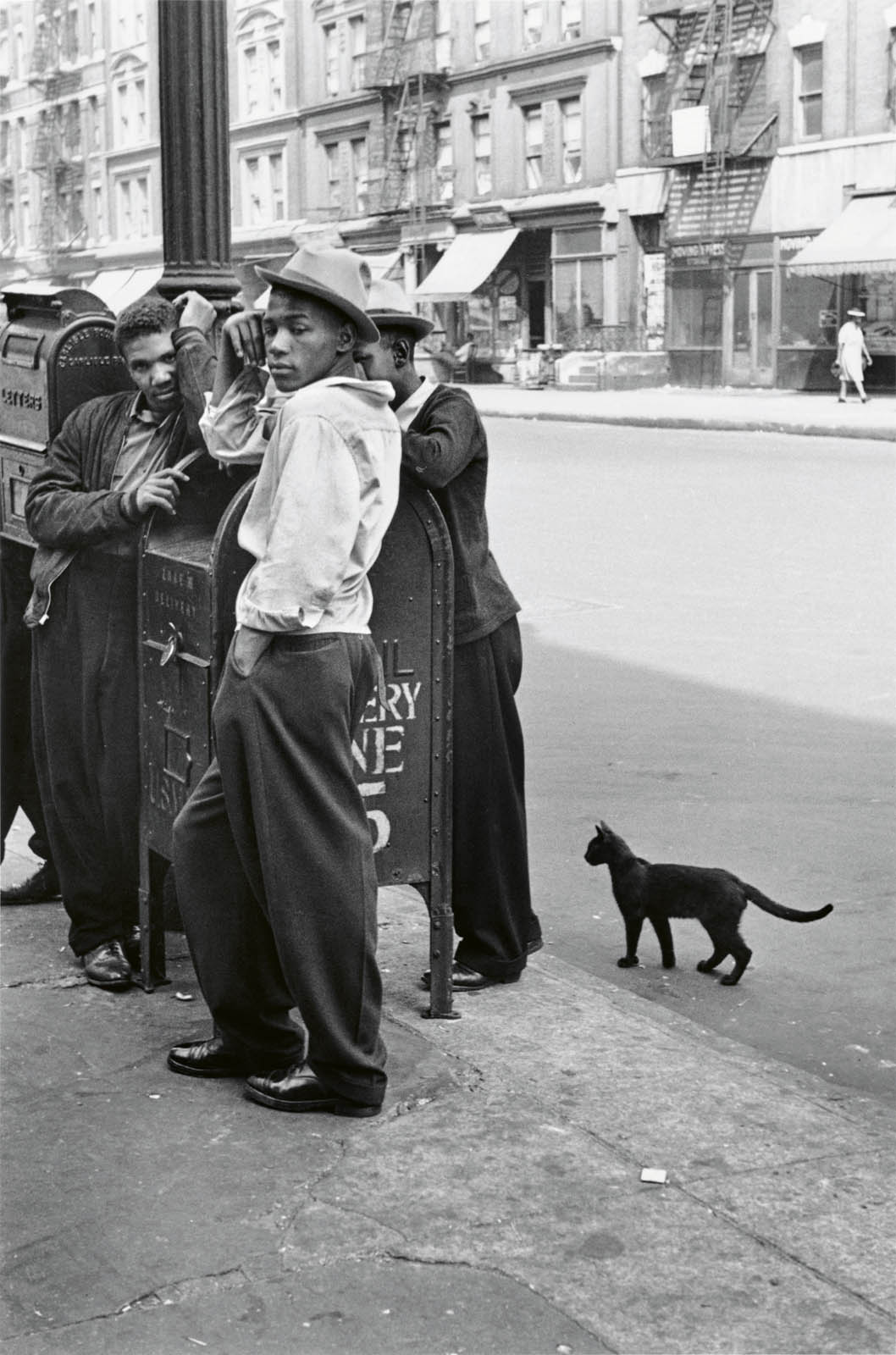
Helen Levitt’s photographs from 1938-1940 are some of the earliest of her artistic career. “Her interest in photography blossomed when, aged 18, and having dropped out of high school, she began working in the darkroom of a commercial portrait photographer.”1

At the age of 23 she bought a secondhand Leica camera and walked the streets of New York – mainly Manhattan’s Lower East Side, the Bronx and Spanish Harlem – observing the social interactions of children and adults in this teeming metropolis. But she was not a flâneuse,2 strolling around the city observing but not interacting with her surroundings … she was fully engaged in the activity of the city.

What amazes me is that her vision as an artist was so well (in)formed at such a young age. And that the concerns and investigations into the nature of play, love and life in New York as a young, strong, independent “New Woman” remained constant throughout her life and decades long photographic career.

In her photographs there is an (in)direct engagement with the people that surrounded her (in her early works “she often hid her camera under her coat to capture candid, unnoticed moments on the streets”), an exchange of energy from the photographer to the subject and back through the camera onto the film… evidencing a generosity of spirit on the part of the artist towards her subjects. Here there is no pressing the camera into the face of the victim a la Garry Winogrand to evince a reaction, but a genuine sense of compassion and empathy towards the people who live in the great city of New York.

Influenced by social realism and the idea the photography could be an agent for change, avant-garde European film, surrealism and contemporaneous dance and theatre Levitt, “decided I should take pictures of working-class people and contribute to the movements,” Levitt later said of that time. “And then I saw pictures of [Henri] Cartier-Bresson and realised that photography could be an art – and that made me ambitious.”1

Levitt’s photographs are performative and theatrical, an engagement between artist, subject and viewer in the cause of art. “In her photographs, she presents the street as an almost theatrical landscape where the smallest interactions and gestures are incredibly resonant.”1

Levitt was not interested in concept nor didactic narrative. She was interested in the presence of the image before you … in just what you see.

As with any great art, the artist that produced it (even as she is ambitious) seems to be without ego. She lets the picture and the emotions tell the story without the shadow of the artist getting in the way (unlike much contemporary art and photography). For the work of art to have value in itself.

Thus, her photographs speak to us directly, or not at all.

Dr Marcus Bunyan


1/ Sean O’Hagan. “Helen Levitt: the most celebrated, least known photographer of her time,” on The Guardian website Sun 3 Oct 2021 [Online] Cited 28/11/2025

2/ “The flâneuse is not a female flâneur, but she is a version of the flâneur. She does not experience the city in the same way as he does. It is hard to define the archetype of the flâneuse, because the flâneur himself consists of paradoxes and many subcategories. Key concepts for flâneur and flâneuse are the amount of spare time, the aesthetic detachment towards objects, crowd and sceneries they see and their ambiguity about it.”

Akkelies van Nes and Tra My Nguyen. “Gender Differences in the Urban Environment: The flâneur and flâneuse of the 21st Century,” in Daniel Koch, Lars Marcus and Jesper Steen (eds.,). Proceedings of the 7th International Space Syntax Symposium. Stockholm: KTH, 2009


Many thankx to Fundación MAPFRE for allowing me to publish the photographs in the posting. Please click on the photographs for a larger version of the image. See the second, larger posting on this exhibition with many more photographs when it was shown at Fundación MAPFRE, Madrid.


“Levitt was part of a highly intellectual cultural and political milieu in New York in the 1930s and her photography reflected her deep interest in surrealism, cinema, leftwing politics and the new ideas that were then emerging about the role of the body in art.”


Walter Moser, curator


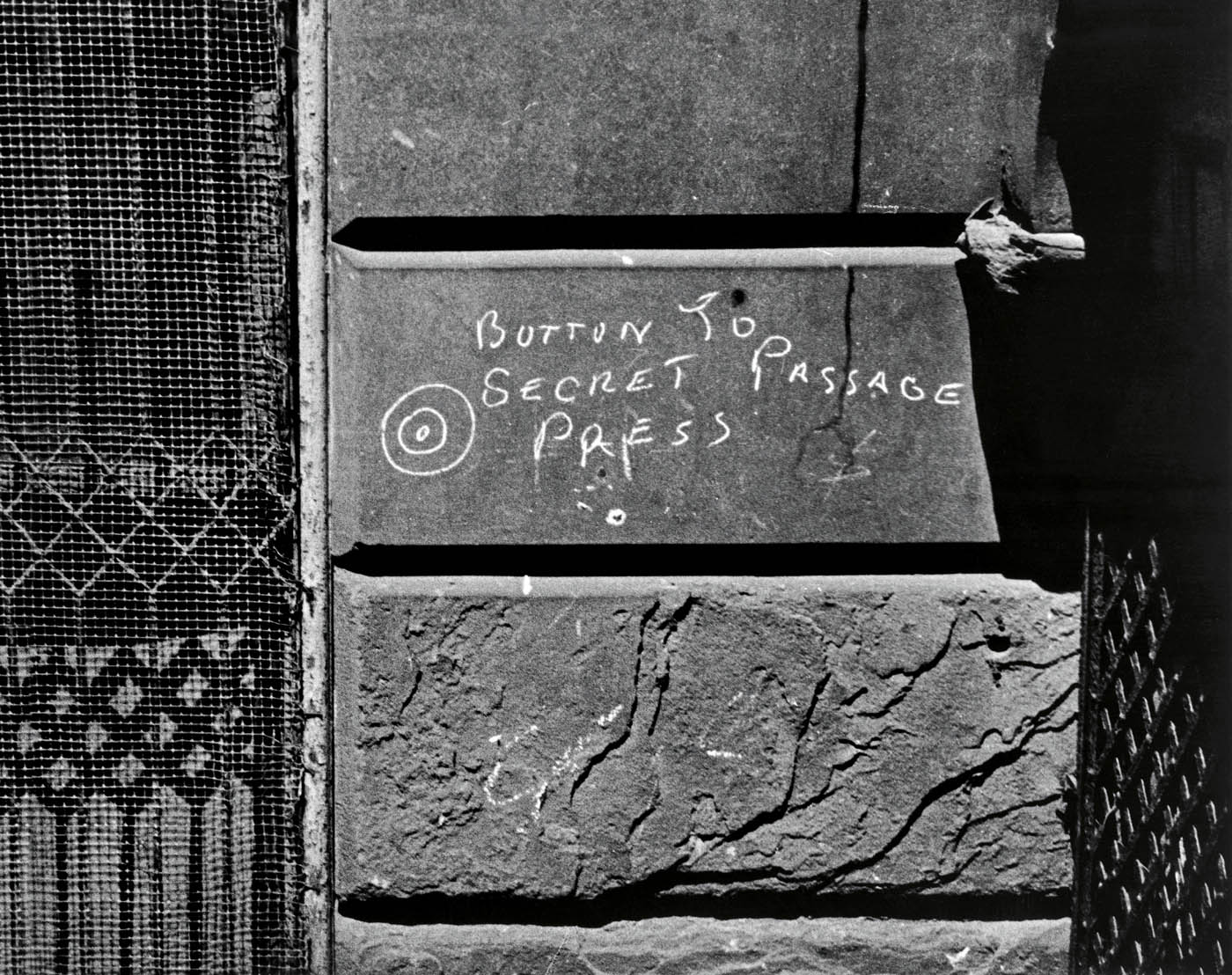
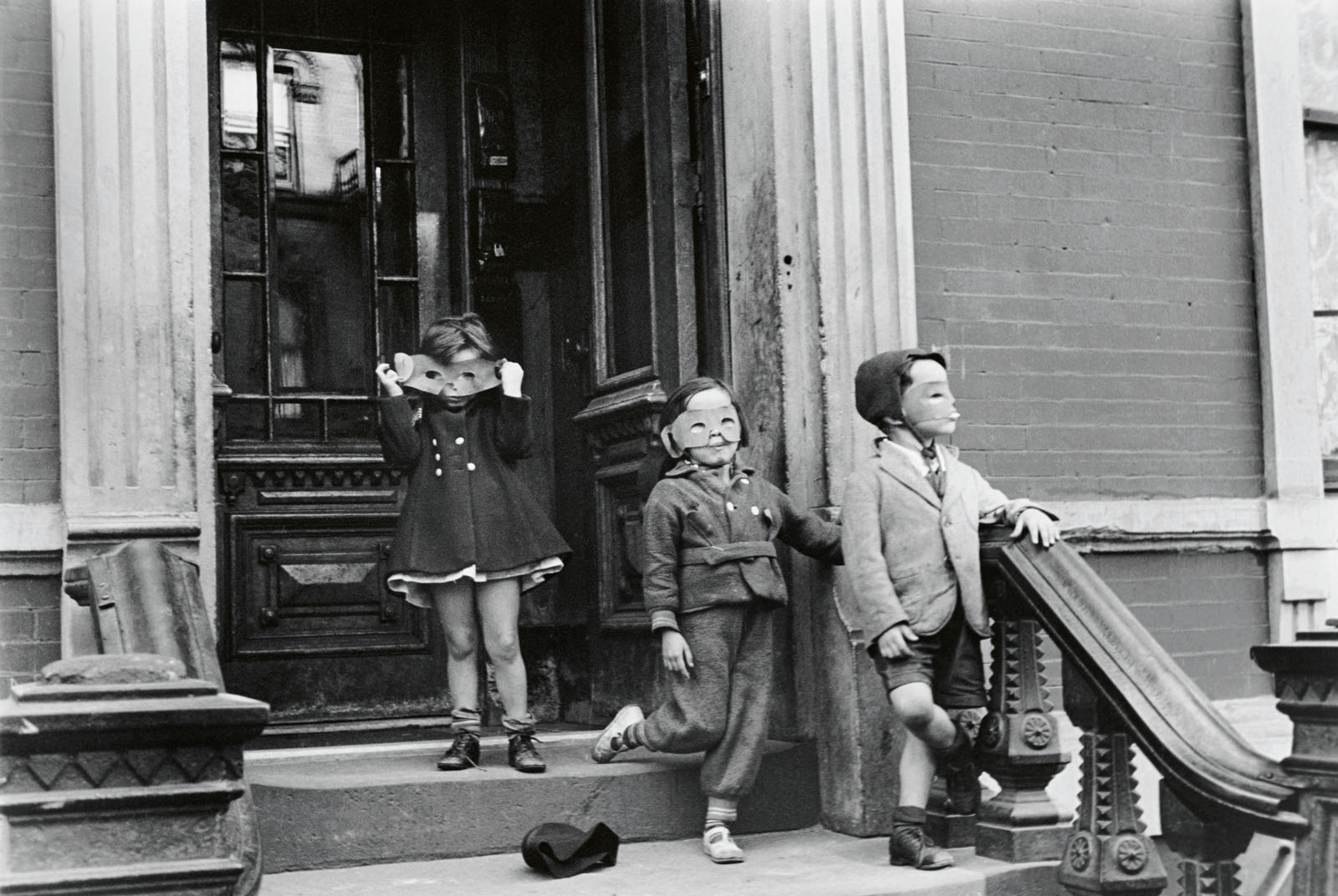
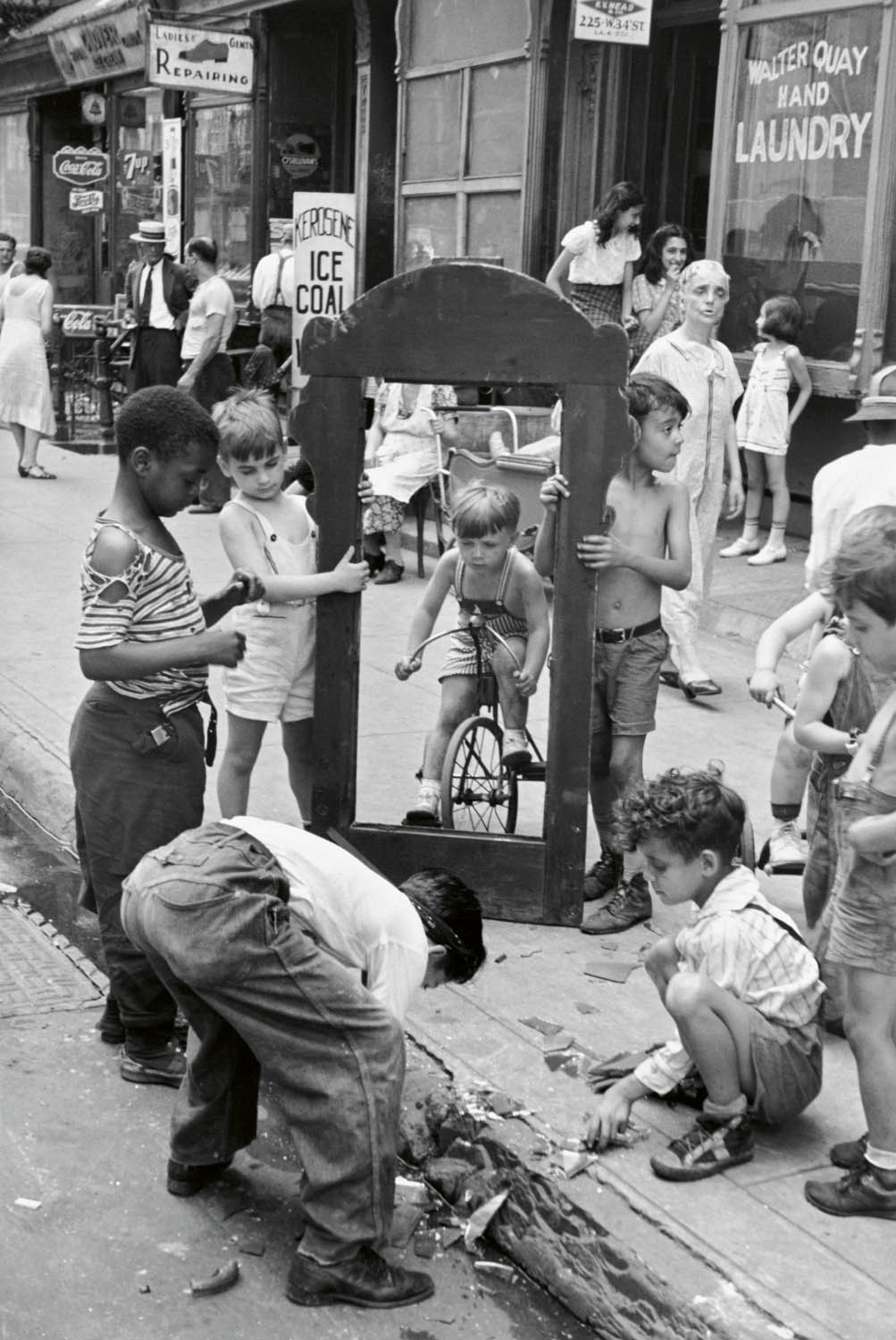
Helen Levitt (American, 1913-2009) 'New York' c. 1938 from the exhibition 'Helen Levitt' at Fundación MAPFRE, Barcelona, Sept 2025 - Feb 2026


Helen Levitt (American, 1913-2009)
New York
c. 1938
Gelatin silver print
© Film Documents LLC, courtesy Zander Galerie, Cologne 


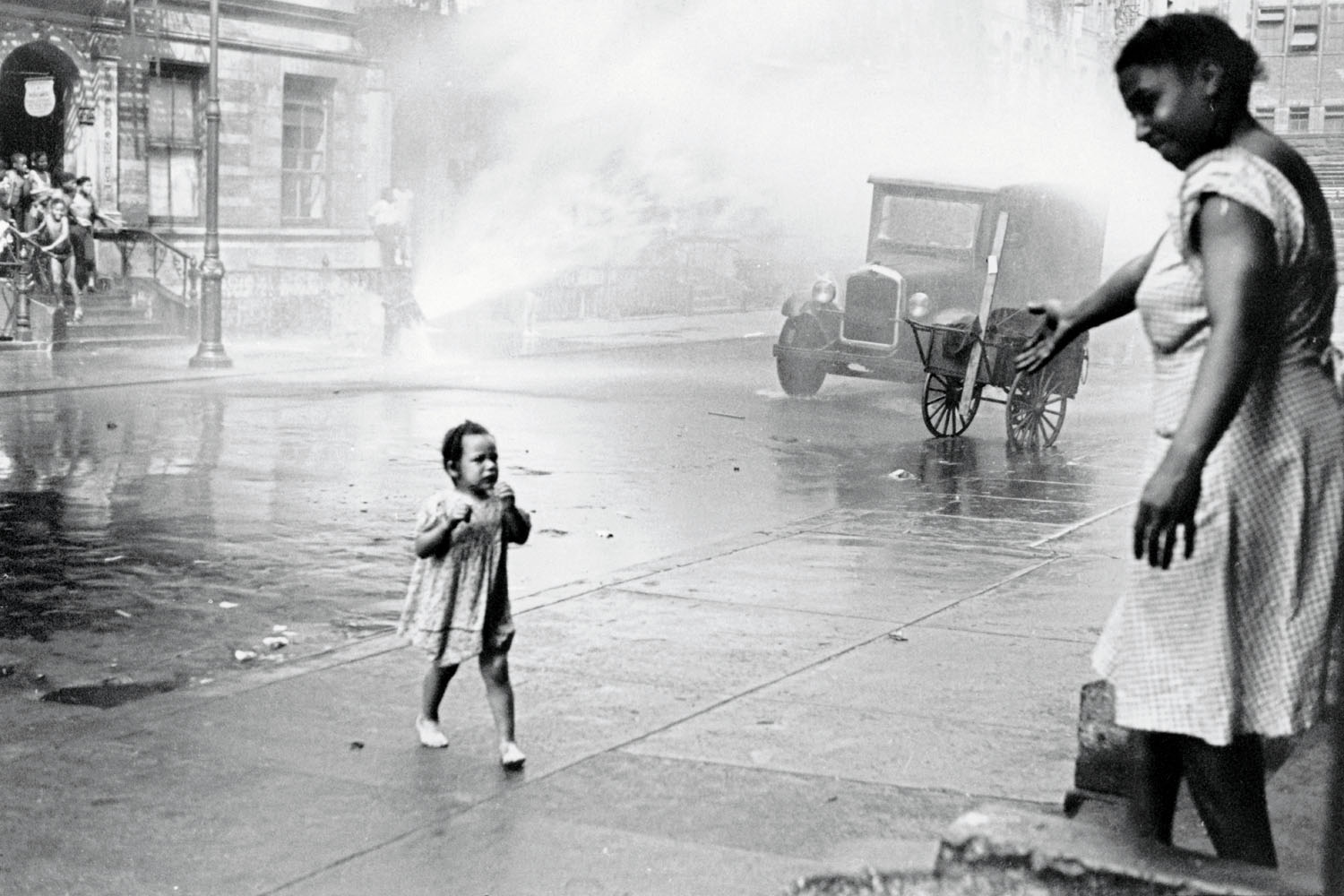
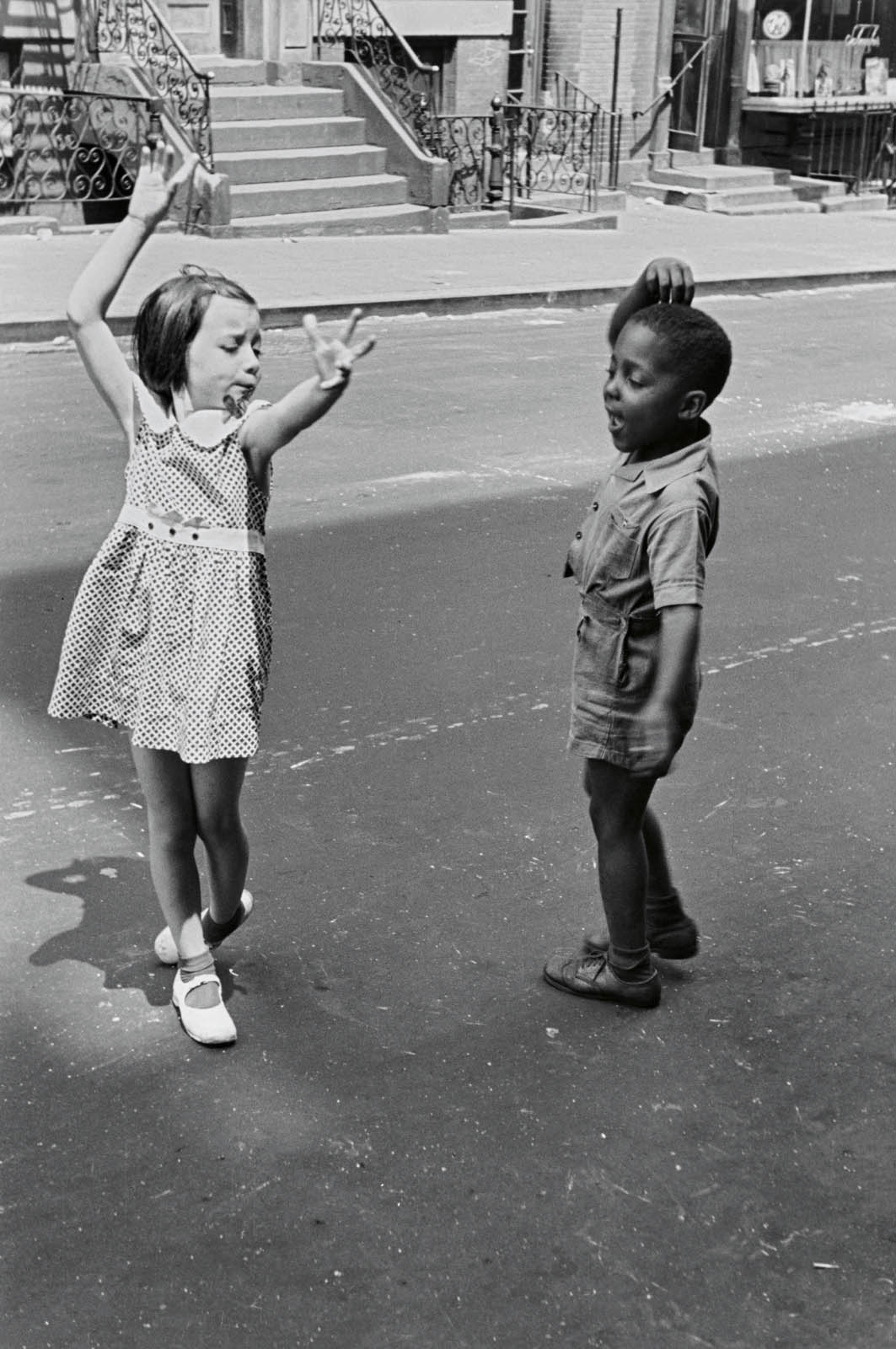
Helen Levitt (American, 1913-2009) 'New York' [113th Street] c. 1938


Helen Levitt (American, 1913-2009)
New York
c. 1938
Gelatin silver print
© Film Documents LLC, courtesy Zander Galerie, Cologne 


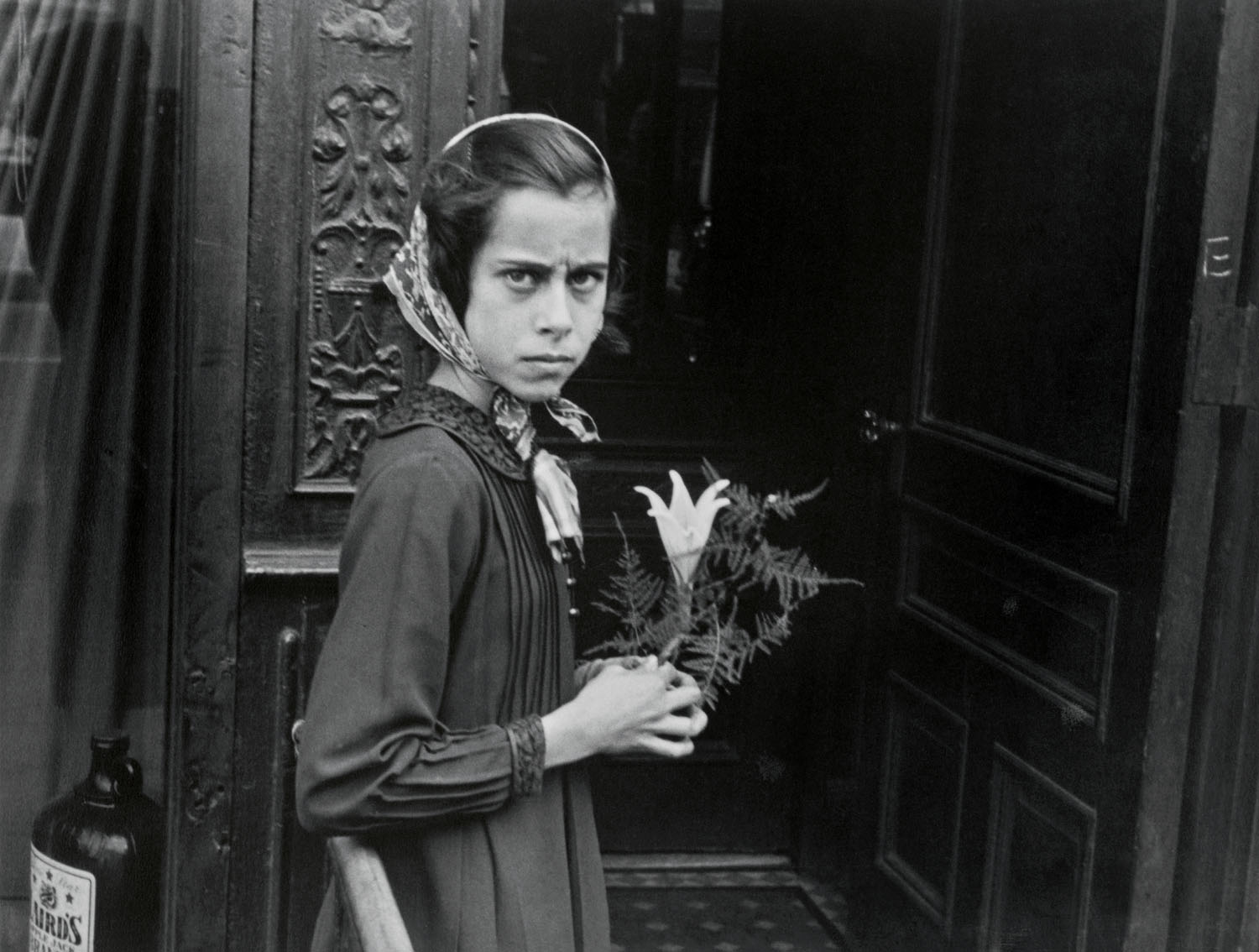
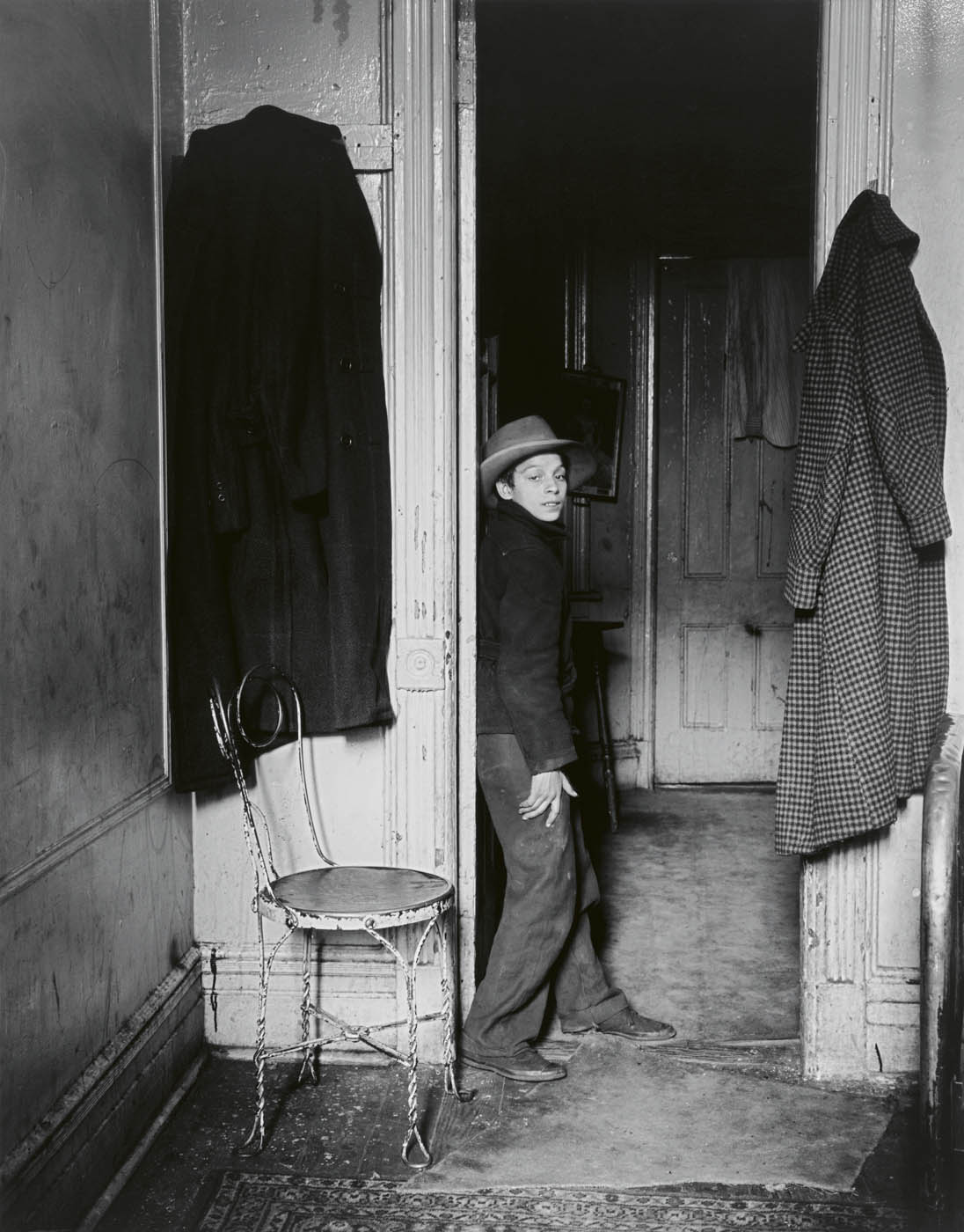
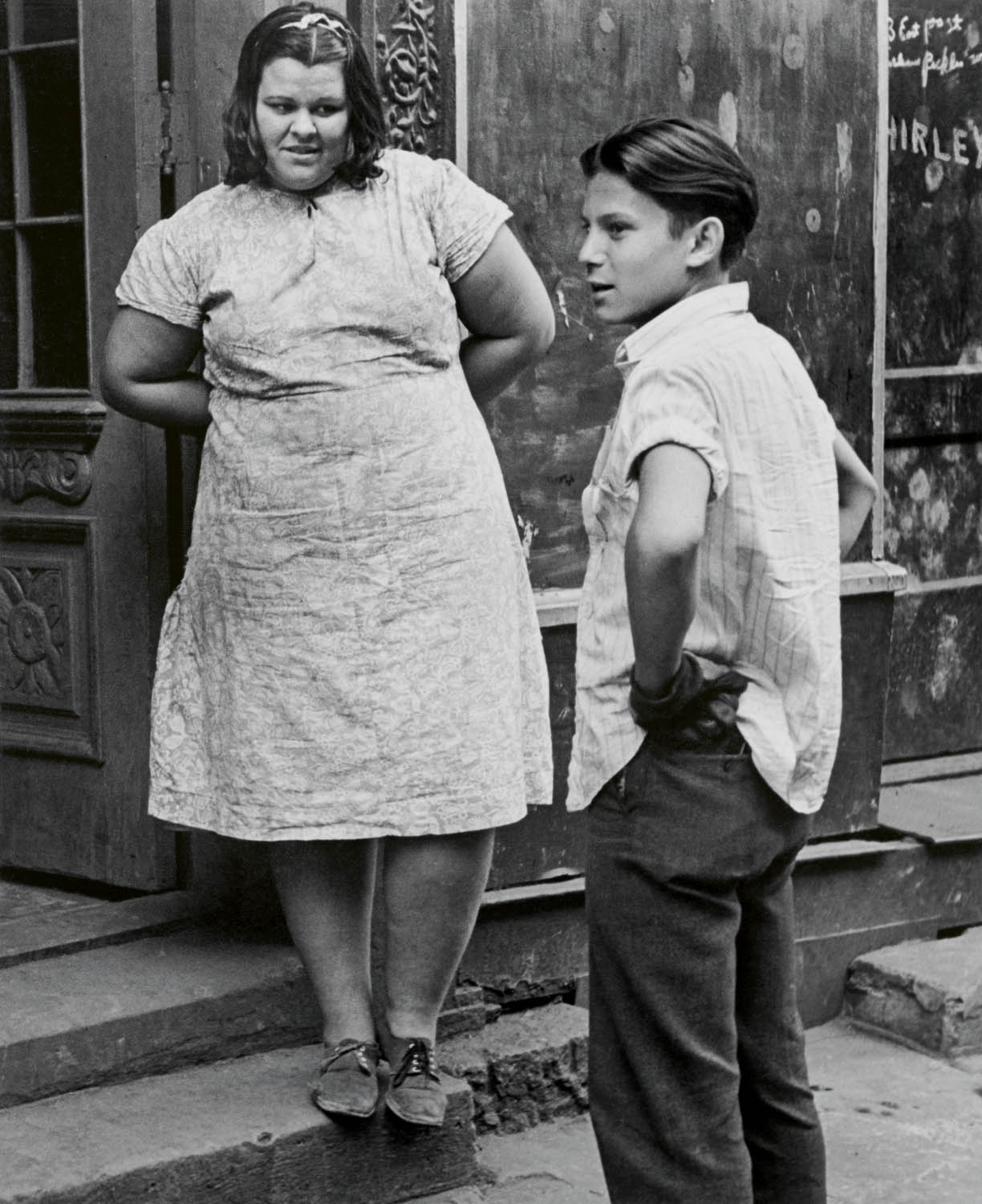
Helen Levitt (American, 1913-2009) 'New York' c. 1939


Helen Levitt (American, 1913-2009)
New York
c. 1939
Gelatin silver print
© Film Documents LLC, courtesy Zander Galerie, Cologne 


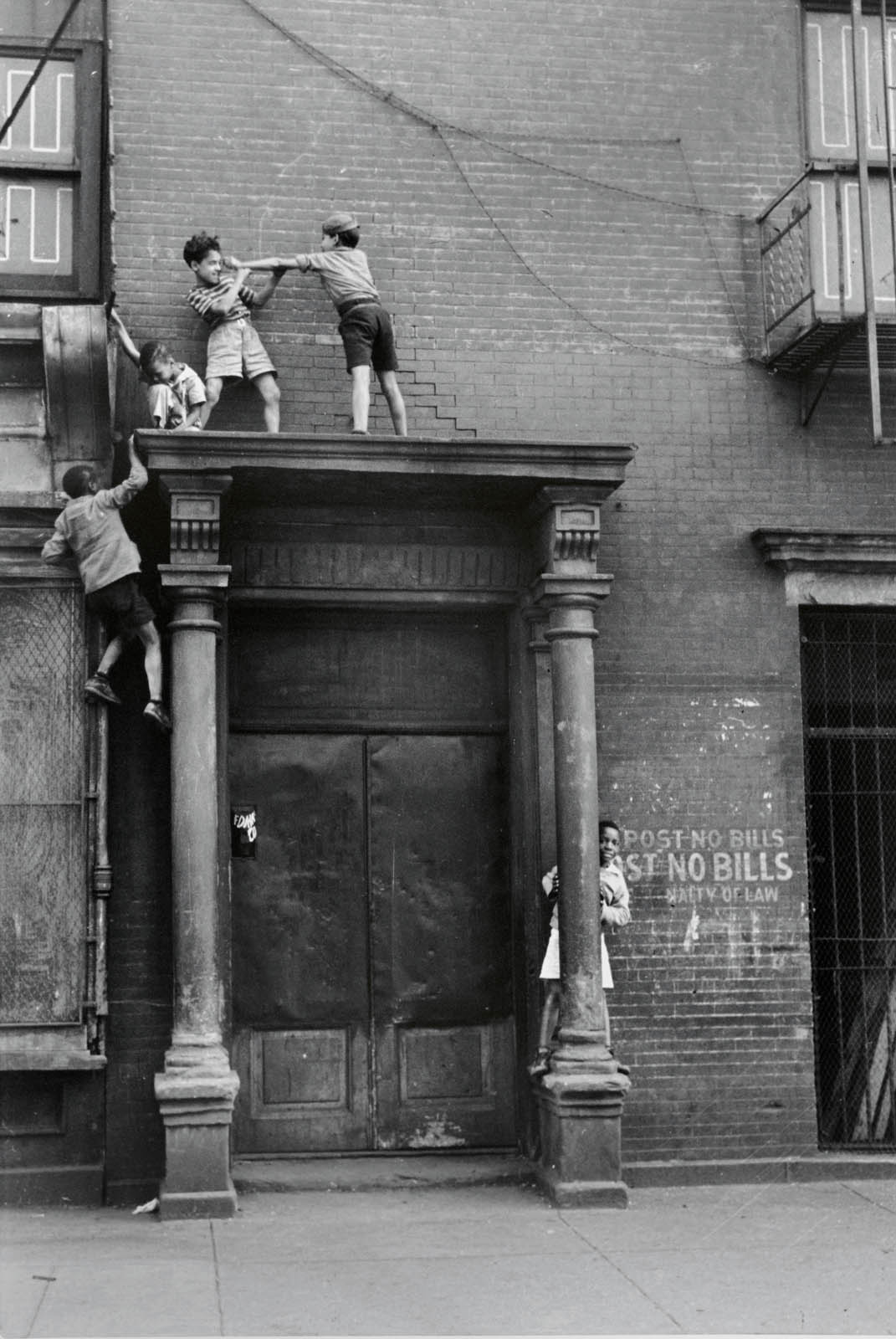
Helen Levitt (American, 1913-2009) 'New York' c. 1939


Helen Levitt (American, 1913-2009)
New York
c. 1939
Gelatin silver print
© Film Documents LLC, courtesy Zander Galerie, Cologne 


Helen Levitt (American, 1913-2009) 'New York' c. 1939


Helen Levitt (American, 1913-2009)
New York
c. 1939
Gelatin silver print
© Film Documents LLC, courtesy Zander Galerie, Cologne


Helen Levitt (American, 1913-2009) 'New York' c. 1939


Helen Levitt (American, 1913-2009)
New York
c. 1939
Gelatin silver print
© Film Documents LLC, courtesy Zander Galerie, Cologne


Helen Levitt (American, 1913-2009) 'New York' c. 1939


Helen Levitt (American, 1913-2009)
New York
c. 1939
Gelatin silver print
© Film Documents LLC, courtesy Zander Galerie, Cologne


Helen Levitt (American, 1913-2009) 'New York' c. 1939


Helen Levitt (American, 1913-2009)
New York
c. 1939
Gelatin silver print
© Film Documents LLC, courtesy Zander Galerie, Cologne


Helen Levitt (American, 1913-2009) 'New York' c. 1939


Helen Levitt (American, 1913-2009)
New York
c. 1939
Gelatin silver print
© Film Documents LLC, courtesy Zander Galerie, Cologne


Helen Levitt (1913-2009) began photographing the streets of New York, her hometown, in the late 1930s, focusing mainly on poor neighbourhoods such as Hispanic Harlem and the Lower East Side, where the street clearly takes center stage as the setting for everyday life. Her camera was directed mainly at children and their games in the streets. These scenes of children occupy a central place in a body of work that, as a whole, captivates us with its ability to transform everyday scenes into images that convey all the emotion, mystery, and humour that life can contain, and with which the viewer establishes an immediate connection even though they lack an explicit narrative. Her work soon gained the recognition it deserved, and in 1943 the MoMA in New York organised her first solo exhibition (Photographs of Children).

Later in her career, she also became closely interested in film and colour photography. In 1948, she collaborated on the documentary The Quiet One and co-directed In the Street, another documentary about the streets of Hispanic Harlem. Both titles were highly influential in the subsequent evolution of documentary filmmaking by artists such as Jonas Mekas and Andy Warhol.

After receiving a Guggenheim Fellowship in 1959 to explore chromatic techniques, she began experimenting with colour photography, a medium in which she would also develop pioneering work.

A socially committed artist, Levitt was one of the first women to forge a professional career in photography. This exhibition is the first to be based on her entire body of work and archives, which have only recently been made available to the public.

Text from the Fundación MAPFRE website


Helen Levitt (American, 1913-2009) 'New York' c. 1940


Helen Levitt (American, 1913-2009)
New York
c. 1940
Gelatin silver print
© Film Documents LLC, courtesy Zander Galerie, Cologne


Helen Levitt (American, 1913-2009) 'New York' c. 1940


Helen Levitt (American, 1913-2009)
New York
c. 1940
Gelatin silver print
© Film Documents LLC, courtesy Zander Galerie, Cologne


Helen Levitt (American, 1913-2009) 'New York' c. 1940


Helen Levitt (American, 1913-2009)
New York
c. 1940
Gelatin silver print
© Film Documents LLC, courtesy Zander Galerie, Cologne


Dedicated full-time to her artistic activities, the photographer Helen Levitt (New York, 1913-2009) did not begin to gain public recognition until relatively late in life. Although her name has always been associated with “street photography,” as it was precisely the streets of her native city that provided the context for the production of her images, throughout her career Levitt made forays into film, visited other countries such as Mexico, and also focused on colour photography. Her images, almost invariably ambiguous and mysterious although not necessarily at first glance, are also characterised by their spontaneity, warmth and sensitivity. The movements and gestures of the figures captured by her lens and the communication between them transcend that inclination to “photograph children” which many critics pointed out after her first exhibition at the MoMA in 1943, entitled Helen Levitt: Photographs of Children.

Levitt’s work as a whole goes far beyond the latter aspect, revealing her acceptance of the pleasures, terrors and complexity of existence at all ages, traits often overlooked by the viewer when immersed in the harsh reality of the urban landscape. The exhibition, the first to be devoted to the artist on the basis of the entirety of her work and archives, which have only recently become available for study, offers a broad overview of Levitt’s career through nine sections and around 220 photographs. It includes previously unexhibited images, as well as work produced in Mexico in 1941 and a large proportion of the artist’s work in colour, which she explored from the 1950s onward. It also features her film In the Street, directed by Levitt in collaboration with Janice Loeb and James Agee, and a projection of her colour slides.

Born in Brooklyn to a Russian-Jewish family, Helen Levitt dropped out of high school early and began her photography training in a Bronx studio. Influenced by Henri Cartier-Bresson, she pursued independent photography, capturing everyday life in New York neighbourhoods between 1938 and 1942. Her first solo exhibition was at the MoMA in 1943. She also experimented with film, making In the Street, and with colour photography, which gained her a Guggenheim Fellowship in 1959. Levitt continued to work intermittently,
exploring new settings such as the subway and rural areas. Her creative output is recognised for its ability to capture moments of human connection in complex urban environments.

Key themes

Enigmatic photographs

Helen Levitt’s images possess a mysterious quality that transforms them into true visual enigmas. Her unique and highly perceptive gaze turns everyday scenes into compositions that are hard to define, creating an immediate connection with the viewer even when there is no clear narrative to explain them.

A pioneer with her own voice

Helen Levitt was one of the first women to make her way in the world of photography, especially in the field of street photography. She always avoided constructing an explicit narrative in her images and preferred not to talk about them. Far from diminishing its value, that decision is one of the key traits that make her work so interesting. Despite this characteristic of reserve, Levitt’s photographs connect with the viewer through the universal emotions they convey.

Text from Fundación MAPFRE


Helen Levitt (American, 1913-2009) 'Mexico City' 1941


Helen Levitt (American, 1913-2009)
Mexico City
c. 1941
Gelatin silver print
© Film Documents LLC, courtesy Zander Galerie, Cologne


Helen Levitt (American, 1913-2009) 'New York' c. 1942


Helen Levitt (American, 1913-2009)
New York
c. 1942
Gelatin silver print
© Film Documents LLC, courtesy Zander Galerie, Cologne


Helen Levitt (American, 1913-2009) 'New York' c. 1945


Helen Levitt (American, 1913-2009)
New York
c. 1945
Gelatin silver print
© Film Documents LLC, courtesy Zander Galerie, Cologne


Helen Levitt

Born and raised in Brooklyn, New York, Helen Levitt (1913-2009) became a photographer in the mid-1930s after meeting Henri Cartier-Bresson and seeing his radical new pictures made with a discreet, handheld camera. By the end of the decade, she had developed a unique sensibility, one informed by Surrealism and a love of avant-garde cinema but focused on the interactions of ordinary people in the streets, sidewalks, stoops, and vacant lots of her native city.

Grounded in gritty realism but brimming with subversive humor, mischief, and pathos, Levitt’s pictures are openended and enigmatic, concealing as much as they reveal. Her uncanny photographs of urban children and their games brought Levitt early renown even as she remained attentive to the quiet gestures and movements of a broader swath of humanity observed with her 35mm Leica, especially in Spanish Harlem, where the activity of everyday life often spilled out of doors.

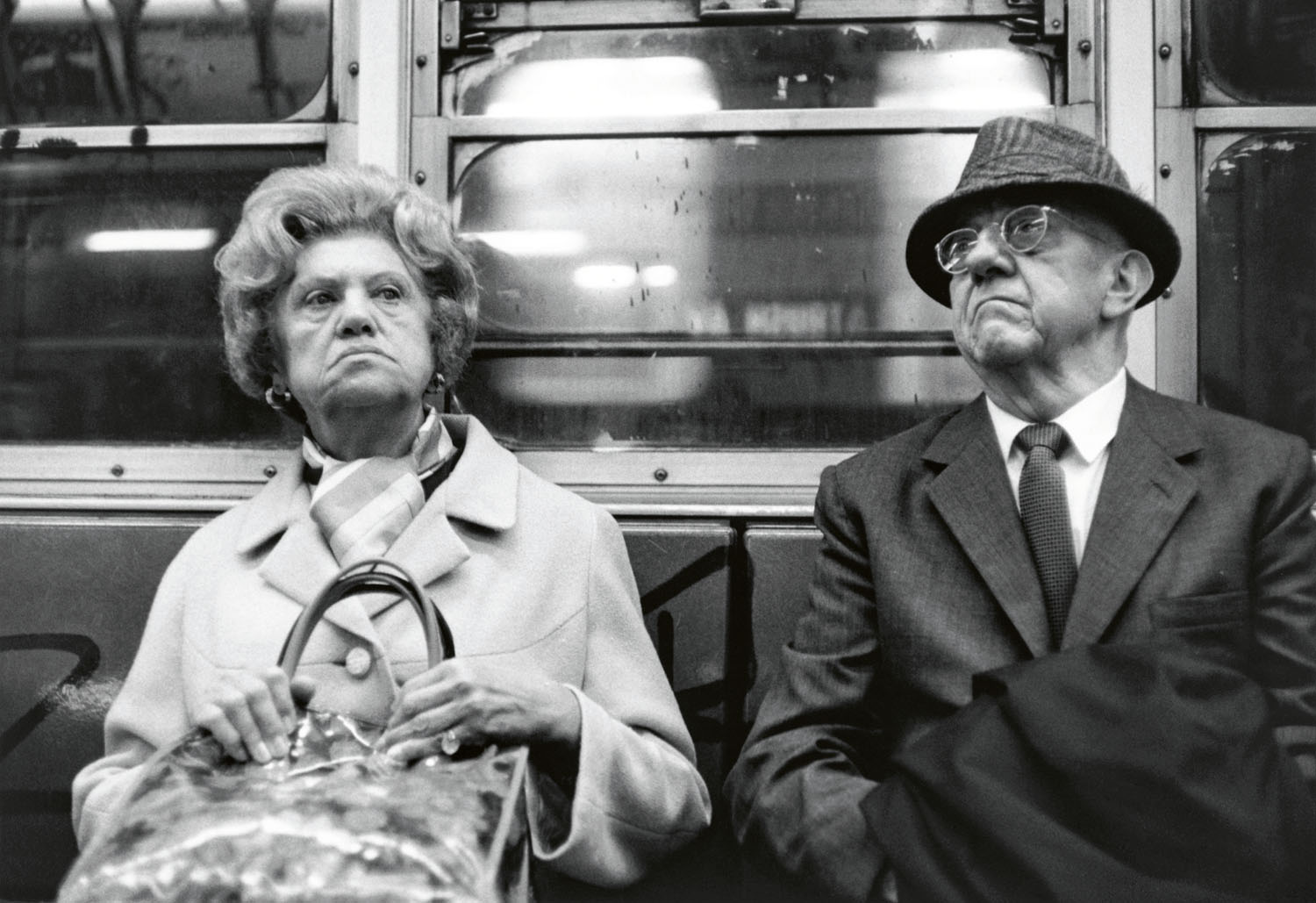
Following a months long foray in Mexico City, Levitt began to work in filmmaking, leading to a long hiatus in her photographic activity. In 1959, advances in the sensitivity colour film spurred her to take to the streets again with her Leica. She continued to photograph in color throughout the 1970s, reverting to black-and-white film for a series of pictures taken in the New York City subway. Levitt continued to photograph intermittently until the early 1990s, when she became known as the “unofficial poet laureate” of New York and her oeuvre universally acknowledged as one of the most timeless and affecting in the history of the medium.

Early Work / Graffiti / Gypsies

Only a few examples survive from Levitt’s first year using a Leica camera. Amid the backdrop of the Great Depression, her pictures of lone figures hunched over or lying on the ground appear documentary in their impulse, while other depictions of people in urban surroundings are notably more ambivalent in their view.

In 1937, while employed by the Federal Art Project to teach at a public school in East (Spanish) Harlem, Levitt noticed the many chalk drawings and messages illicitly scrawled by children on streets and buildings on her way to work, and began to document them in all their variety, innocence, and vulgarity. She sometimes also portrayed the artists themselves posing next to their ephemeral interventions.

Around 1938, on the advice of Walker Evans, Levitt began to use a right-angle viewfinder, a device that allowed her to face one direction while pointing her camera in another. This was particularly effective in recording the uninhibited interactions of the “gypsy” families prevalent in Spanish Harlem and Yorkville. Drawn to their way of life, she also borrowed Evans’s 4 x 5-inch view camera and tripod to make portraits of “gypsy” children in their homes.

1938-1940 / Mexico City / A Way of Seeing

By 1940 Levitt had established her terrain, subject, and approach. In a rare statement, she later described her intent “to seize upon and record those apparently accidental disarrangements that nevertheless and in seeming contradiction provide a more intense apperception of reality.” Uninterested in portraying New York City as a bustling metropolis, Levitt instead saw it as
an environment whose “size and varied character constantly forces into the open material for my camera.” The working class, immigrant neighbourhoods she frequented – where adults chatted on stoops, mothers and children leaned out of windows, and children were left to their own devices – proved to be an especially fertile ground for her work.

In 1941, again inspired by Cartier-Bresson’s example, Levitt, a reluctant traveler, went to Mexico City with a friend to photograph there. Initially struggling with the challenge of working in new environment, she was eventually able to find her artistic footing, producing a body of work that at once acknowledged rawer social realities while locating a subtle lyricism unique to the city and its people. It would be her only trip abroad.

Upon her return to New York City, Levitt picked up where she left off, picking up on more sober themes of melancholy, alienation, and what she referred to as “the deep repressions of the unyoung.” After having photographed for a decade, Levitt collaborated with her friend, the writer and critic James Agee, to edit and sequence a book of her New York photographs. Envisioning the project as an urban counterpart to Let Us Now Praise Famous Men, his 1941 collaboration with Walker Evans, Agee wrote an extensive essay to accompany Levitt’s pictures that heralded their lyric qualities, the sum of which presented “unified view of the world, an uninsistent but irrefutable manifesto.” After a series of setbacks, the book, eventually given the title A Way of Seeing, was not published until nearly two decades later in 1965.

In the Street

In the mid-1940s, along with her friend and patron, Janice Loeb, Levitt began to shoot footage around New York City with a home movie camera. They were joined by James Agee, who encouraged them to conceive of an experimental project that would serve as a cinematic extension of Levitt’s still photographs. This led the three of them to collaborate on the pioneering short film that was first screened in 1949 and then released in 1952 under the title In the Street, a forerunner of the cinéma verité style. By the end of the 1940s and for the next two decades, filmmaking became Levitt’s primary occupation.

Color / Subway / 1980s

In 1959, Levitt was granted a Guggenheim fellowship to experiment with “the latest techniques in colour photography.” Her Leica loaded with colour slide film, she walked some of the same streets she had frequented in the 30s and 40s, newly attentive to the chromatic character of her compositions. After the bulk of her slides were stolen by a burglar in 1970, Levitt redoubled her efforts, photographing throughout the decade with renewed zeal, developing an intuitive system of colour that was at once transporting and transparent. In 1974, a continuous projection of forty of Levitt’s slides were featured at MoMA in New York, after which she began to realise select images as dye transfer prints.

Around the same time, Levitt also decided to revisit the subterranean theatre of New York City subway as a site to make pictures, having served as a decoy for Walker Evans’s subway project work more than three decades earlier. With her subjects largely stationary in train cars and platforms, Levitt attended to the nuances of expression and gesture, recording quiet dramas amid unflattering light and cramped quarters.

From the 1980s onwards, Levitt continued to photograph, but only intermittently, working mainly in black and white, both in the city and outside it.

Text from Fundación MAPFRE


Helen Levitt (American, 1913-2009) 'New York' 1975


Helen Levitt (American, 1913-2009)
New York
c. 1975
Gelatin silver print
© Film Documents LLC, courtesy Zander Galerie, Cologne


Helen Levitt (American, 1913-2009) 'Brooklyn, New York' 1982


Helen Levitt (American, 1913-2009)
New York
c. 1982
Gelatin silver print
© Film Documents LLC, courtesy Zander Galerie, Cologne


Helen Levitt (American, 1913-2009) 'New York' Nd


Helen Levitt (American, 1913-2009)
New York
Nd
Gelatin silver print
© Film Documents LLC, courtesy Zander Galerie, Cologne


Helen Levitt (American, 1913-2009) 'New York' 1971


Helen Levitt (American, 1913-2009)
New York
1971
Gelatin silver print
© Film Documents LLC, courtesy Zander Galerie, Cologne


Helen Levitt (American, 1913-2009) 'New York' 1976


Helen Levitt (American, 1913-2009)
New York
1976
Gelatin silver print
© Film Documents LLC, courtesy Zander Galerie, Cologne


Fundación MAPFRE
KBr Photography Center
Avenida Litoral, 30 – 08005 Barcelona
Phone: +34 93 272 31 80 (Attention only during the opening hours of the exhibition hall)

Opening hours:
Mondays (except holidays): Closed
Tuesday to Sundays (and holidays): 11am – 7pm

Fundación MAPFRE website

LIKE ART BLART ON FACEBOOK

Back to top

Exhibition: ‘Photography’s New Vision: Experiments in Seeing’ at the High Museum of Art, Atlanta

Exhibition dates: 13th June, 2025 – 4th January, 2026

Curator: Maria L. Kelly, High Museum of Art assistant curator of photography


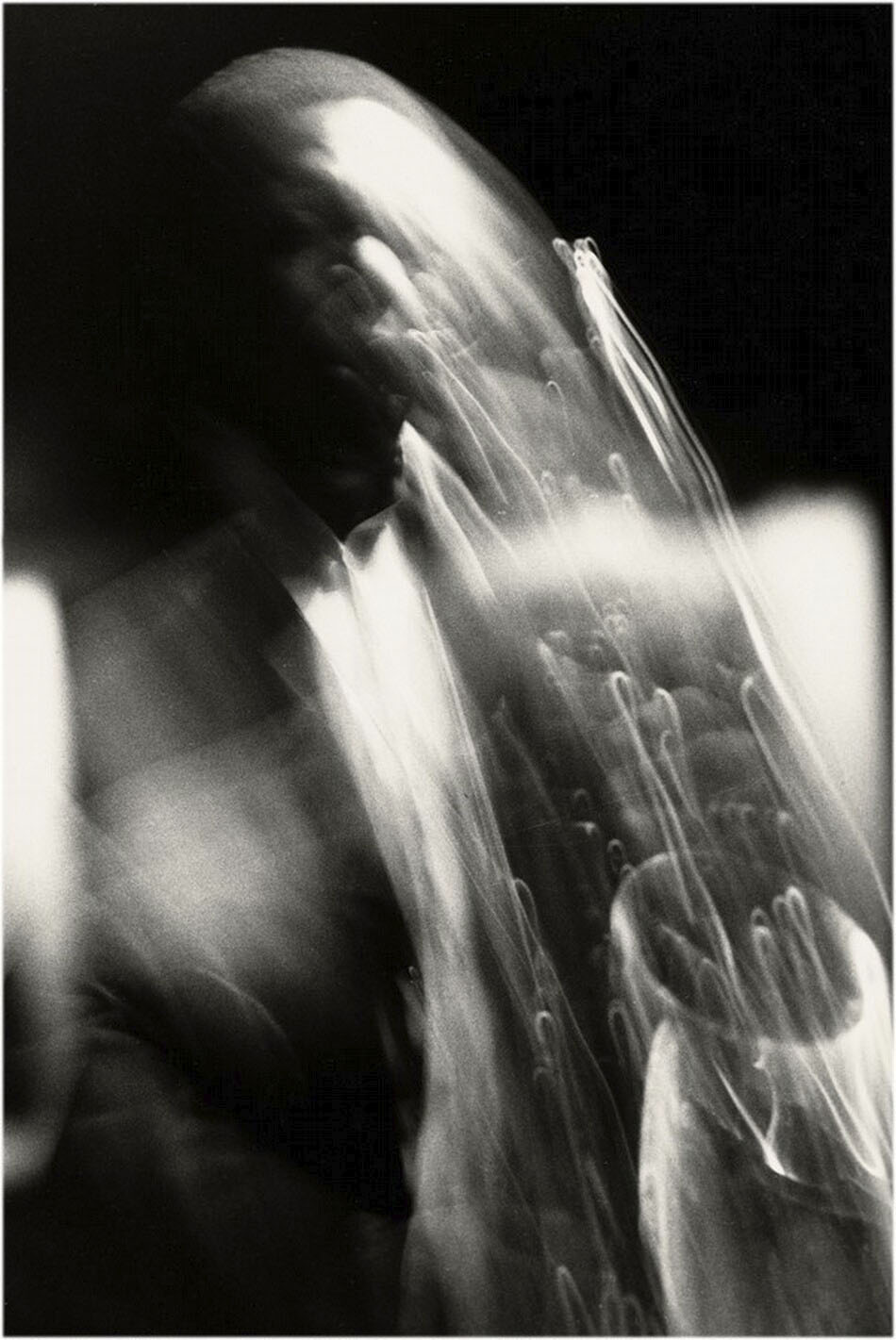
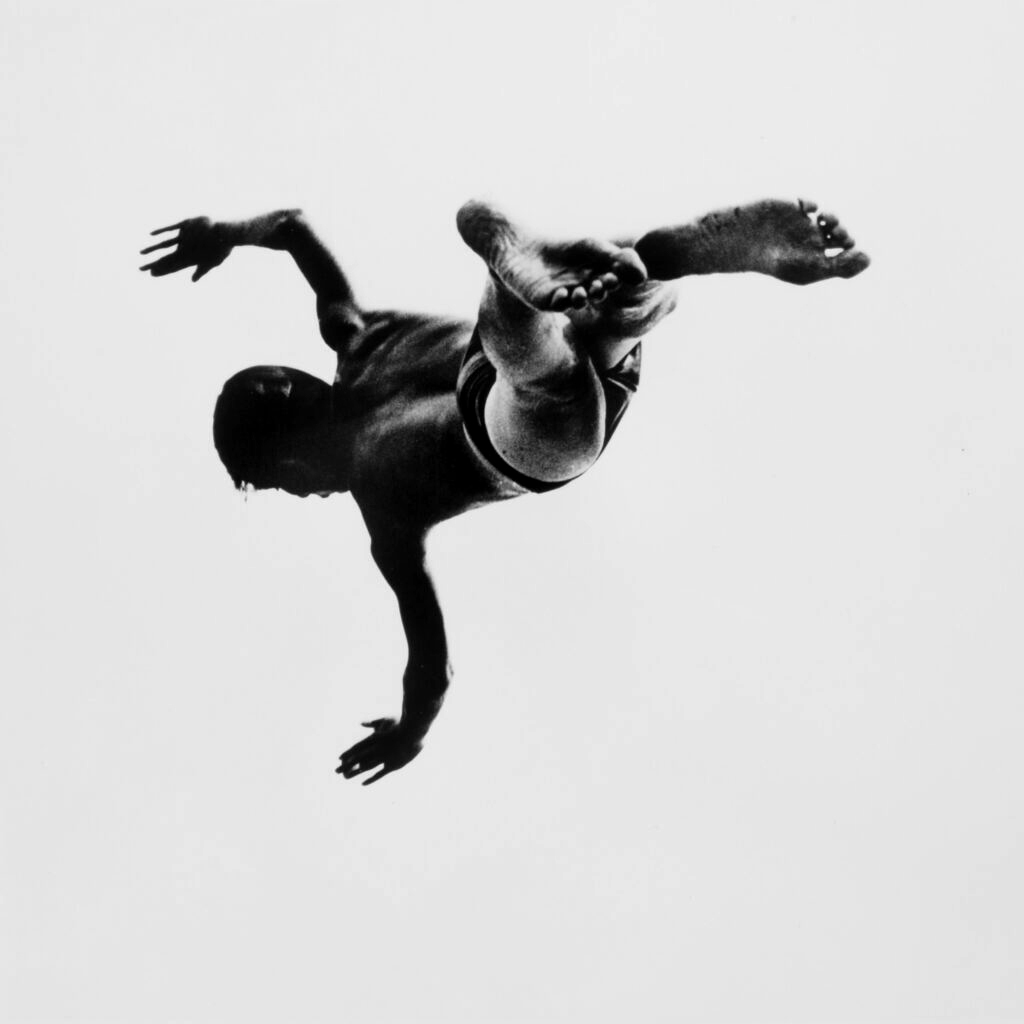
Aaron Siskind (American, 1903-1991) 'Pleasures and Terrors of Levitation #37' 1953 from the exhibition 'Photography's New Vision: Experiments in Seeing' at the High Museum of Art, Atlanta, June 2025 - January 2026


Aaron Siskind (American, 1903-1991)
Pleasures and Terrors of Levitation #37
1953
Gelatin silver print
High Museum of Art, Atlanta, gift of Adair and Joe B. Massey in honour of Gus Kayafas


Aaron Siskind was recognised for the ways he rendered his surroundings into often stark shapes and forms, which reflected his fascination with contemporary trends in abstract art. He was an influential teacher at Chicago’s Institute of Design, which was founded by László Moholy-Nagy as the New Bauhaus. This image of a person flying or falling comes from a series Siskind made of the contorted bodies of divers plunging into Lake Michigan. He masterfully created its disorienting effect through tight focus on the floating figure without contextual elements.

Text from the High Museum of Art website


While contemporarily AI-powered technologies are revolutionising the way we interact with and consume media, enabling us to “to process and analyse vast amounts of data quickly, making it easier to find and access the information we need” in the 1920s and 1930s there was also a revolution in the way artists (and their use of the camera) viewed and felt the world – one not based on information, image quality or duplicity in the veracity of the image but one based on the word, perspective – be that point of view, context, close ups, surreality, fragmentation, scale, concept, construction, colour, aesthetics, identity, gender, or radical experimentation.

In this departure from traditional photographic methods, “New Vision photographers foregrounded experimental techniques, including photograms, photomontages and compositions that favoured extreme angles and unusual viewpoints, and these extended to movements such as surrealism and constructivism.” (Press release)

To me, this New Vision is about experiencing different perspectives – experiencing, sensing, feeling and seeing the world in a new light. After the disasters and machine-ations, the destruction of a conservative way of life before the First World War, here was a way to grasp hold of (and picture) the speed of a new world order, the dreams of physiological analysis, the diversity of new identities, and the fluidity of rapidly evolving technological and social cultures.

While today this (r)evolution continues at an ever expanding pace with the consumption of huge amounts of information and images, I believe it may be advantageous to rest for a while on certain experiences and images … so that we let the daggers drop from our eyes, to ‘not make images’ in our minds eye but just to be present in the viewing of a photograph, so that we appreciate and understand every aspect of the great life spirit of this wondrous earth.

Then and now, new vision.

Dr Marcus Bunyan


Many thankx to the High Museum of Art for allowing me to publish the photographs in the posting. Please click on the photographs for a larger version of the image.


The New Vision movement of the 1920s and 1930s offered a revolutionary approach to seeing the world. It represented a rebellion against traditional photographic methods and an embrace of avant-garde experimentation and innovative techniques. László Moholy-Nagy, an artist and influential teacher at the Bauhaus in Germany, named this period of expansion the “New Vision.” Today, the term encompasses photographic developments that took place between the two World Wars in Europe, America, and beyond. New Vision photographers foregrounded inventive techniques, including photograms, photomontages, and light studies, and made photographs that favoured extreme angles and unusual viewpoints. These approaches – which also extended to more defined movements like Surrealism – spoke to a desire to find and see different perspectives in the wake of World War I.

Uniting more than one hundred works from the High’s photography collection, the exhibition traces the movement’s impact, from its origins in the 1920s to today, and demonstrates its long-standing effect on subsequent generations.

Text from the High Museum of Art website

Photography’s New Vision: Experiments in Seeing

Named by the influential German artist and teacher László Moholy-Nagy, the “New Vision” comprised an expansive variety of photographic exploration that took place in Europe, America, and beyond in the 1920s and 1930s. The movement was characterised by its departure from traditional photographic methods. New Vision photographers foregrounded experimental techniques, including photograms, photomontages, and light studies, and made photographs that favoured extreme angles and unusual viewpoints.

This exhibition, uniting more than one hundred works from the High’s robust photography collection, will trace the impact of the New Vision movement from its origins in the 1920s to today. Photographs from that era by Ilse Bing, Alexander Rodchenko, Imogen Cunningham, and Moholy-Nagy will be complemented by a multitude of works by modern and contemporary artists such as Barbara Kasten, Jerry Uelsmann, Hiroshi Sugimoto, and Abelardo Morell to demonstrate the long-standing impact of the movement on subsequent generations.

Text from the High Museum of Art website


Installation view of the exhibition 'Photography's New Vision: Experiments in Seeing' at the High Museum of Art, Atlanta, June 2025 - January 2026


Installation views of the exhibition Photography’s New Vision: Experiments in Seeing at the High Museum of Art, Atlanta, June 2025 – January 2026
Photos: Mike Jensen


The High Museum of Art presents “Photography’s New Vision: Experiments in Seeing” (June 13, 2025 – Jan. 4, 2026), an exhibition uniting more than 100 works from the High’s robust photography collection to trace the impact of the New Vision movement from its origins in the 1920s to today. Works include century-old photographs exemplifying themes from the movement and modern and contemporary images that emphasise the relevance of current artistic and social practices as a response to the technological and cultural changes that occurred in the early 20th century.

“This exhibition provides an opportunity to illuminate photographers’ creativity and innovative practices, all inspired by the progression of the medium in the 1920s and 30s,” said High Museum of Art Director Rand Suffolk. “Many of the works are rarely on view, so it will be an exciting experience for visitors to see them and learn about photographers’ abilities as they reflect reality while experimenting with technique and perspective.” Named by the influential German artist and teacher László Moholy-Nagy, the “New Vision” comprised an expansive variety of photographic exploration that took place in Europe, America and beyond in the 1920s and 1930s. The movement was characterised by its departure from traditional photographic methods. New Vision photographers foregrounded experimental techniques, including photograms, photomontages and compositions that favoured extreme angles and unusual viewpoints, and these extended to movements such as surrealism and constructivism.

“Experiments in Seeing” features nearly 100 photographers. It also demonstrates how the New Vision movement revolutionised the medium of photography in the early 20th century in response to the great societal, economic and technological shifts spurred by the upheaval of the two World Wars. Photographs from that era by Ilse Bing, Alexander Rodchenko, Imogen Cunningham and Moholy-Nagy have been complemented by a multitude of photographs by modern and contemporary artists such as Barbara Kasten, Jerry Uelsmann, Hiroshi Sugimoto and Abelardo Morell to demonstrate the long-standing impact of the movement on subsequent generations.

The first section of the exhibition delves into experimental techniques that foreground the light-sensitive aspects of photography, followed by works created through in-camera manipulations or additions to the surfaces of the prints. Subsequent sections explore inventive methods of capturing unexpected views of the world articulated with radical angles or detailed close-ups. Other works showcase surreal approaches to subjects such as humanlike forms and bodies, the use of mirrors and doubling, and everyday scenes heightened by uncanny moments or distorted through the interplay of light, shadow and water.

“Not only does the early 20th century and its art movements continue to be influential, but that time also echoes our current moment – one that feels similarly consequential and innovative with the development of new emerging technologies and methods of communicating,” said Maria L. Kelly, the High’s assistant curator of photography. “The movements and happenings of a century ago are akin to those of today and those shown in the exhibition. There remains a desire for alternative ways to see and approach the world through art, and particularly through photography.”

“Photography’s New Vision: Experiments in Seeing” is on view in the Lucinda W. Bunnen Galleries for Photography located on the Lower Level of the High’s Wieland Pavilion.

Press release from the High Museum of Art


“Light was considered the medium that permits photography. But for me it became the main subject: the protagonist of my photography.”


Ilse Bing, c. 1920s


Light Experimentation

After the trauma of World War I, many artists felt compelled to reconsider conventional art making methods to better reflect and engage with the world. Some photographers turned their attention to the essential element of photography: light. Through innovative visual investigations, cameraless photographs were produced, viewes of the world altered, and scientific discoveries made.

Experimentations with illumination and light-sensitive paper in the darkroom gave rise to photograms, enabling artists to pursue abstraction and to wield light as a sculptural element. The process of solarisation – reversing tones in a print using a flash of light during developing – provided an unconventional view of a subject. Early attempts to capture traces of light on film led to scientific innovations such as using strove lights to freeze movement, depicting magnetic fields, and tracing electrical currents on light sensitive paper.

These processes aim to reveal the invisible, with the elements of change as a constant companion. While artists can insert some control over the elements, the process ultimately shapes the final image. Many artworks in this section exist as unique prints, challenging the assumption of the reproducibility of photography, and emphasising the singularity of the creative moment.

Wall text from the exhibition


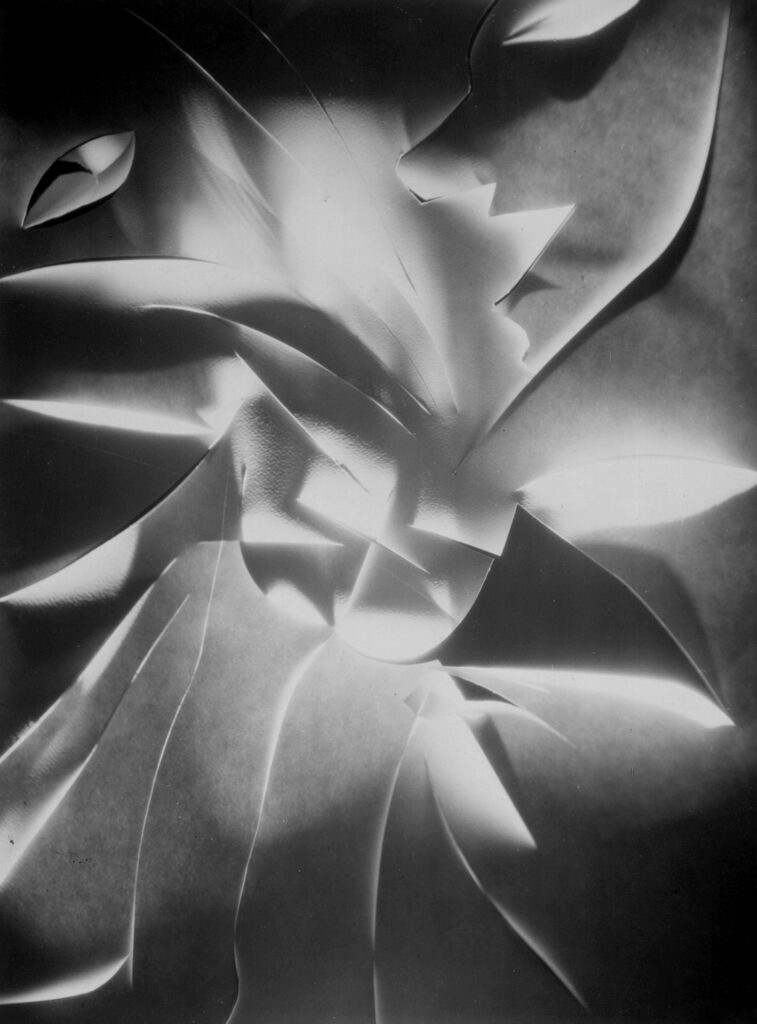
Francis Bruguière (American, 1879-1945) 'The Light That Never Was on Land or Sea' c. 1925 from the exhibition 'Photography's New Vision: Experiments in Seeing' at the High Museum of Art, Atlanta, June 2025 - January 2026


Francis Bruguière (American, 1879-1945)
The Light That Never Was on Land or Sea
c. 1925
Gelatin silver print
High Museum of Art, Atlanta, purchase with funds from Georgia-Pacific Corporation


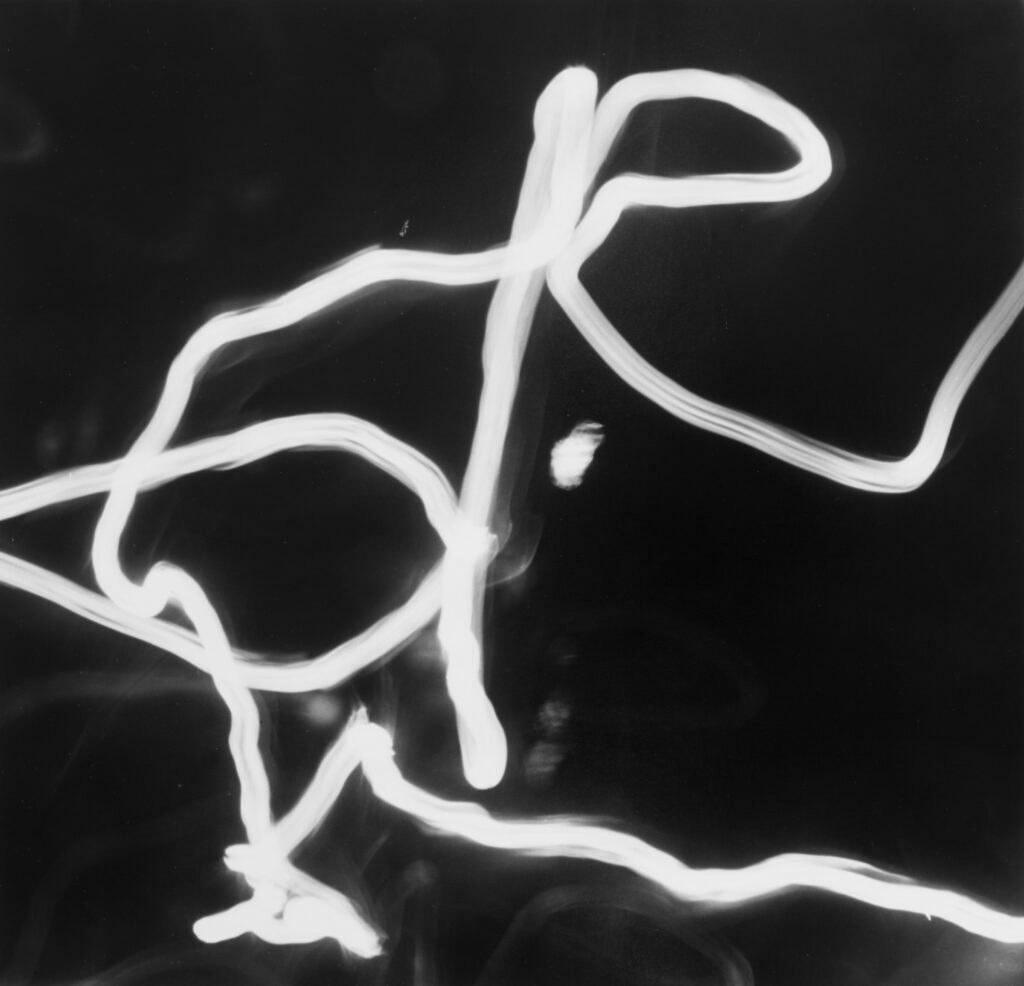
Nathan Lerner (American, 1913-1977) 'Light Drawing #8 (Smoke)' 1938-1939


Nathan Lerner (American, 1913-1977)
Light Drawing #8 (Smoke)
1938-1939
Gelatin silver print
High Museum of Art, Atlanta, gift of Hilary Leff and Elliot Groffman


Ilse Bing (American born Germany, 1899-1998) 'Untitled [Seated Woman with Necklace, Solarized]' 1943


Ilse Bing (American born Germany, 1899-1998)
Untitled [Seated Woman with Necklace, Solarized]
1943
Gelatin silver print
High Museum of Art, Atlanta, gift of the Estate of Ilse Bing Wolff


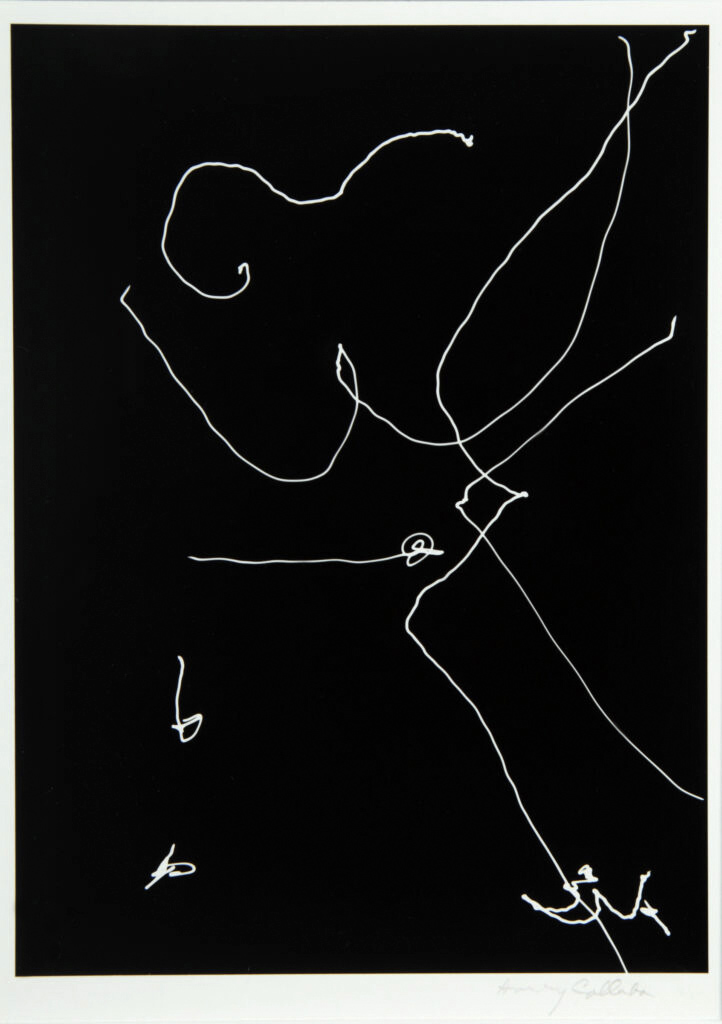
Harry Callahan (American, 1912-1999) 'Camera Movement on Flashlight, Chicago' c. 1949


Harry Callahan (American, 1912-1999)
Camera Movement on Flashlight, Chicago
c. 1949
Gelatin silver print
High Museum of Art, Atlanta, purchase with funds from the H. B. and Doris Massey Charitable Trust, Dr. Robert L. and Lucinda W. Bunnen, Collections Council Acquisition Fund, Jackson Fine Art, Powell, Goldstein, Frazer and Murphy, Jane and Clay Jackson, Beverly and John Baker, Roni and Sid Funk, Gloria and Paul Sternberg, and Jeffery L. Wigbels
© 2018 The Estate of Harry Callahan


Abelardo Morell (American born Cuba, b. 1948) 'Still Life with Wine Glass: Photogram on 20" x 24" Film' 2006


Abelardo Morell (American born Cuba, b. 1948)
Still Life with Wine Glass: Photogram on 20″ x 24″ Film
2006
Gelatin silver print
High Museum of Art, Atlanta, purchase with funds from the Friends of Photography
© Abelardo Morell


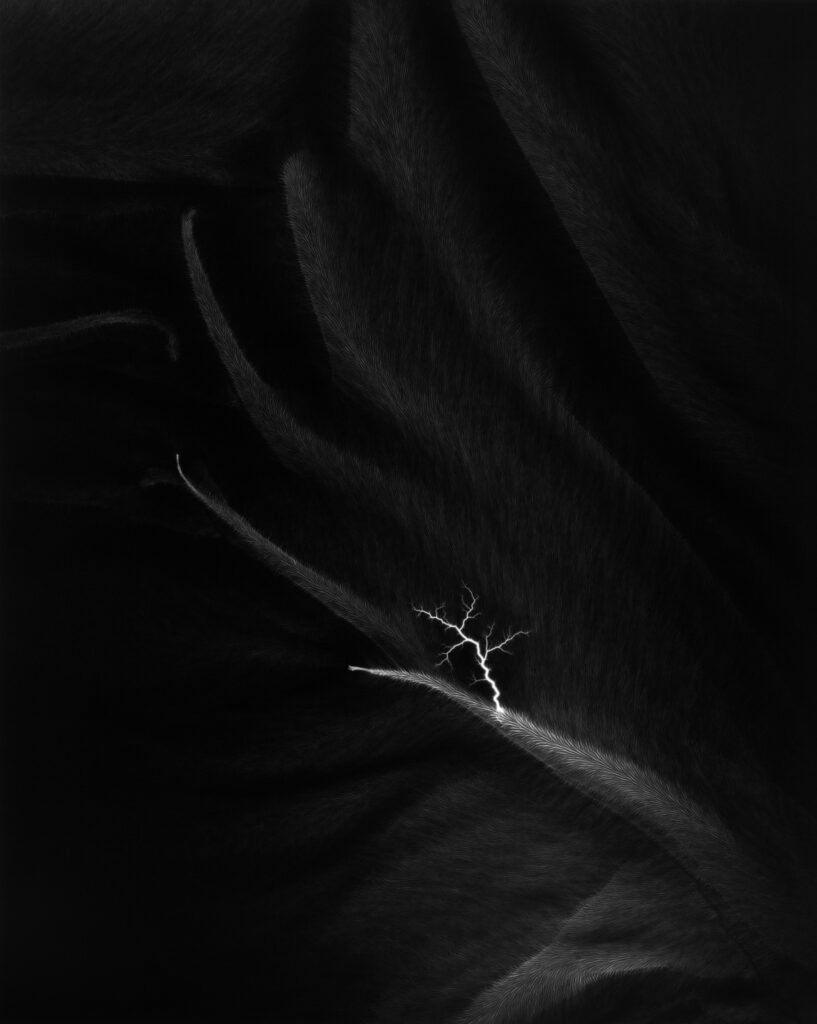
Hiroshi Sugimoto (Japanese, b. 1948) 'Lightning Fields 182' 2009


Hiroshi Sugimoto (Japanese, b. 1948)
Lightning Fields 182
2009
Gelatin silver print
High Museum of Art, Atlanta, purchase through funds provided by patrons of Collectors Evening 2012
© Hiroshi Sugimoto


Inspired by William Henry Fox Talbot, an inventor of photography who was fascinated with electromagnetic conduction, Hiroshi Sugimoto began applying charges of electricity directly to unexposed photographic film. After months of honing his technique in the darkroom, he managed to achieve remarkable results with a handheld wand charged by a generator. His Lightning Fields photographs are made without a camera or lens. Here, the abstract visual trace of an electric charge measuring over 400,000 volts sweeps across the composition, reading like the textures of a human hand, the upward tentacles of a fern, or the stark branches of a tree.

Text from the High Museum of Art website


Hans-Christian Schink (German, b. 1961) '2/26/2010, 7:54 am – 8:54 am, S36° 49.622' E 175° 47.340'' 2010


Hans-Christian Schink (German, b. 1961)
2/26/2010, 7:54 am – 8:54 am, S36° 49.622′ E 175° 47.340′
2010
From the series 1h
© Hans-Christian Schink


Abelardo Morell (American born Cuba, b. 1948) 'Camera Obscura: View of Philadelphia from Loews Hotel Room #3013 with Upside Down Bed, April 14th, 2014' 2014


Abelardo Morell (American born Cuba, b. 1948)
Camera Obscura: View of Philadelphia from Loews Hotel Room #3013 with Upside Down Bed, April 14th, 2014
2014
Pigmented inkjet print
High Museum of Art Atlanta, gift of Dr. Roger Hartl
© Abelardo Morell


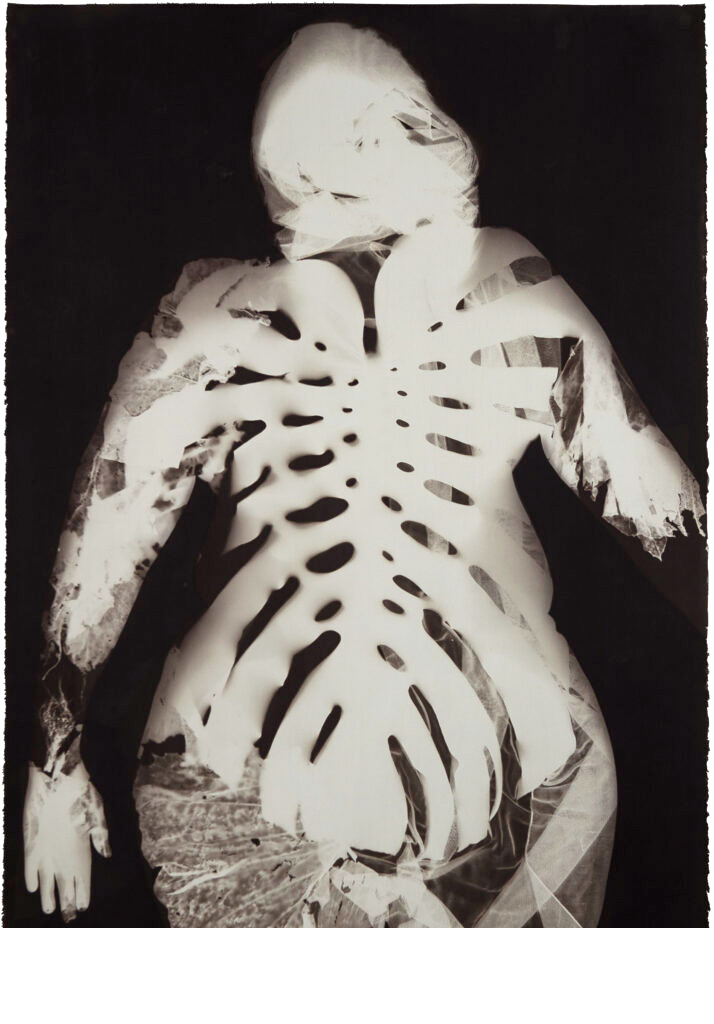
V. Elizabeth Turk (American, b. 1945) 'Calaeno' 2018


V. Elizabeth Turk (American, b. 1945)
Calaeno
2018
Van Dyke print
High Museum of Art, Atlanta, purchase with funds from Lucinda W. Bunnen for the Bunnen Collection
© Elizabeth Turk


V. Elizabeth Turk is an Atlanta-based photographer whose work explores the connections between the human body and the natural world. To make this print, Turk used an analog process from the 1800s that involves coating a large sheet of paper with light-sensitive chemicals. She then arranged her model on top of the sheet and exposed it to light, creating a ghostly silhouette, before repeating the exposure with plants. The resulting photogram is a unique image in which botanical forms intersect with the body, alluding to bones, veins, and skin and suggesting a visceral bond between humans and the environment. 

Text from the High Museum of Art website


“The limits of photography are incalculable; everything is so recent that even the mere act of searching may lead to creative results. […] The illiterate of the future will be the person ignorant of the use of the camera as well as of the pen.”


László Moholy-Nagy 1928


Radical Viewpoints

From photography’s inception in 1839, camera technology involved cumbersome equipment and time-consuming development processes until the advent of lightweight cameras in the 1920s. Photographers were then able to work more nimbly, transforming photography into a medium capable of capturing fleeting moments, unusual viewpoints, and multiple perspectives. The exploration of unexpected angles became a hallmark of New Vision photography. Sharp diagonals, extreme vantage points, and shortened perspectives opened novel pathways of perceiving otherwise commonplace environments.

Alexander Rodchenko, a pioneer in this method, championed the camera’s ability to reveal, stating, “in order to teach man to see from all viewpoints, it is necessary to photograph […] from completely unexpected viewpoints and in unexpected positions […] We don’t see what we are looking at. We don’t see marvellous perspectives.” This approach aimed to provide a fuller impression of subjects, prompting viewers to seek and appreciate what might otherwise be overlooked.

Though these early photographs may not appear groundbreaking today, their makers’ carefully considered methods transferred how photography is used. This is evident in photographers’ creative interpretations of their surroundings over the past century.

Wall text from the exhibition


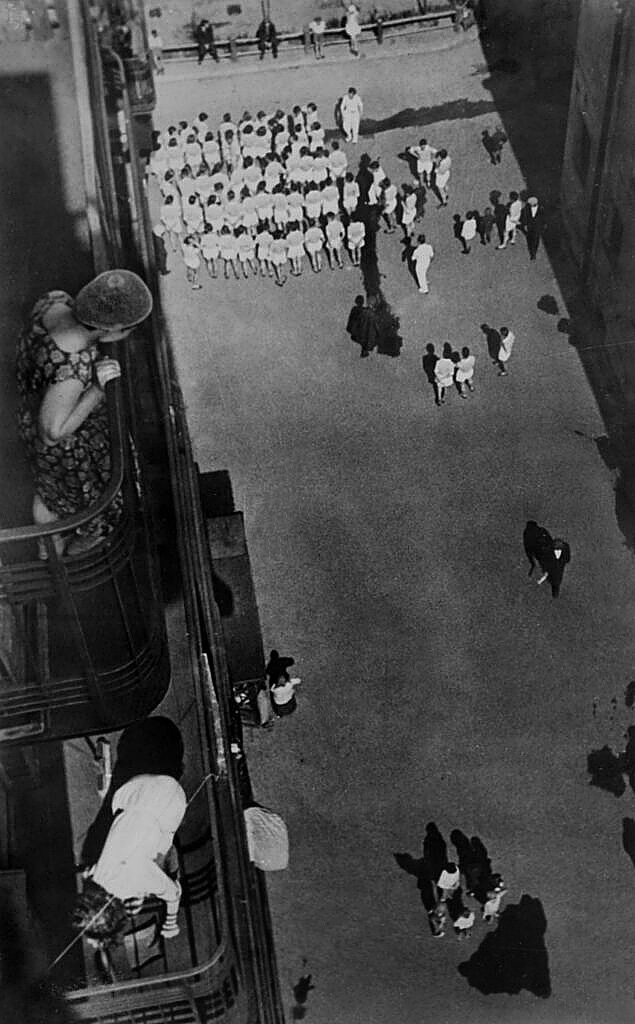
Alexander Rodchenko (Russian, 1891-1956) 'Sbor na demonstratsia' (Gathering for a Demonstration) 1928


Alexander Rodchenko (Russian, 1891-1956)
Sbor na demonstratsia (Gathering for a Demonstration)
1928
Gelatin silver print
High Museum of Art, Atlanta, gift of Joseph and Yolandra Alexander, Moscow/VAGA at Artists Rights Society (ARS), New York
© Estate of Alexander Rodchenko/RAO, Moscow/VAGA at Artists Rights Society (ARS), New York


Alexander Rodchenko was a key figure in the movements of New Vision and Constructivism – abstract and functional art that reflected an industrial society. Advocating “to achieve a revolution in our visual thought,” he explored various methods, such as photographing from unexpected angles, to capture dynamic views and expose new realities. With a new, lightweight 35 mm camera, he often photographed from his apartment balcony to create dramatic scenes of the street below. The perspective in this photograph flattens the building’s stories into one visual field, giving the image a theatrical quality as an onlooker peers over the railing.

Text from the High Museum of Art website


Walker Evans (American, 1903-1975) 'The Bridge' 1929


Walker Evans (American, 1903-1975)
The Bridge
1929
Gelatin silver print
High Museum of Art, Atlanta, gift of Arnold H. Crane
© Walker Evans Archive, The Metropolitan Museum of Art


A central figure among twentieth-century American photographers, Walker Evans created works in his early career that sample from the New Vision aesthetic, which he may have encountered while abroad in Paris in 1926. His photographs of New York City, made after he returned to the United States, feature dramatically angled or cropped scenes of architecture and city life. Evans made numerous photographic studies of the Brooklyn Bridge from both below and on the bridge, portraying it less as a recognisable landmark and more as a hulking expanse whose form fills each tight frame.

Text from the High Museum of Art website


László Moholy-Nagy (Hungarian 1895-1946) 'Stage Set for Madame Butterfly' 1931


László Moholy-Nagy (Hungarian 1895-1946)
Stage Set for Madame Butterfly
1931
Gelatin silver print
High Museum of Art, Atlanta, purchase with funds from Georgia-Pacific Corporation


Moholy-Nagy, a leader of the New Vision, had an expansive artistic practice that included painting, photography, sculpture, film, and more. As a teacher at the Bauhaus, which connected art and industry, he believed in technology’s potential to advance art and society. In 1929, he became set designer at the Kroll Opera House and created avant-garde sets with translucent and perforated materials, often making light itself a sculptural element. Lucia Moholy, a photographer, writer, teacher, and Moholy-Nagy’s first wife, was commissioned as Kroll’s stage photographer. In this image, which either artist may have made, the sharp angle shot from above complicates the set of Madame Butterfly, emphasising intersecting, moving elements and heightening areas of light and shadow.

Text from the High Museum of Art website


Lucas Foglia (American, b. 1983) 'Esme Swimming, Parkroyal on Pickering, Singapore' 2014


Lucas Foglia (American, b. 1983)
Esme Swimming, Parkroyal on Pickering, Singapore
2014
Pigmented inkjet print
High Museum of Art, Atlanta, gift of Irene Zhou
© Lucas Foglia


Close Ups

Similar to the practice of using unusual angles to offer unexpected perspectives, some photographers began capturing highly detailed, close-up views of objects. This approach affords a study of texture, pattern, and structure that may otherwise go unnoticed by the human eye. By eliminating surroundings that could offer a narrative, the physicality of the object becomes the primary focus, allowing it to transcend beyond its everyday existence.

Practitioners of straight photography in the United States and the concurrent New Objectivity movement in Germany shared a core desire to unearth a balance of the familiar and the foreign within intricate images of forms. While Imogen Cunningham and Edward Weston perfected carefully composed studies of plants and other natural matter, Albert Renger-Patzsch, Alexander Rodchenko, and Ralph Steiner explored scientific and industrial objects. Such images celebrated the technological advancements of the time and revealed how mechanical structures often mimic those found in nature, suggesting a shared framework, and a shared beauty, between humanmade and natural. The emphasis on detail and abstraction invites viewers to reconsider their perceptions of both the ordinary and the extraordinary in the world around them.

Wall text from the exhibition


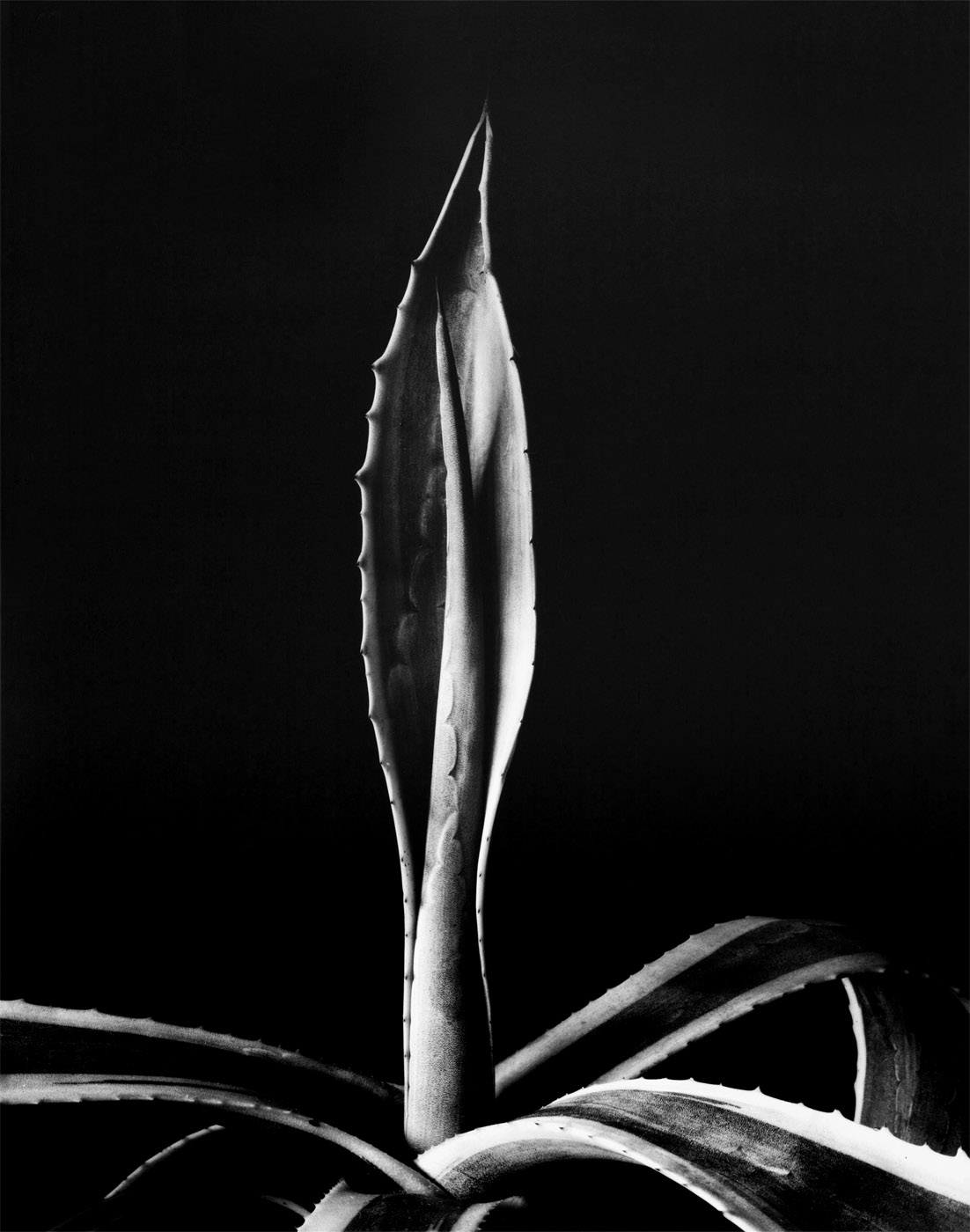
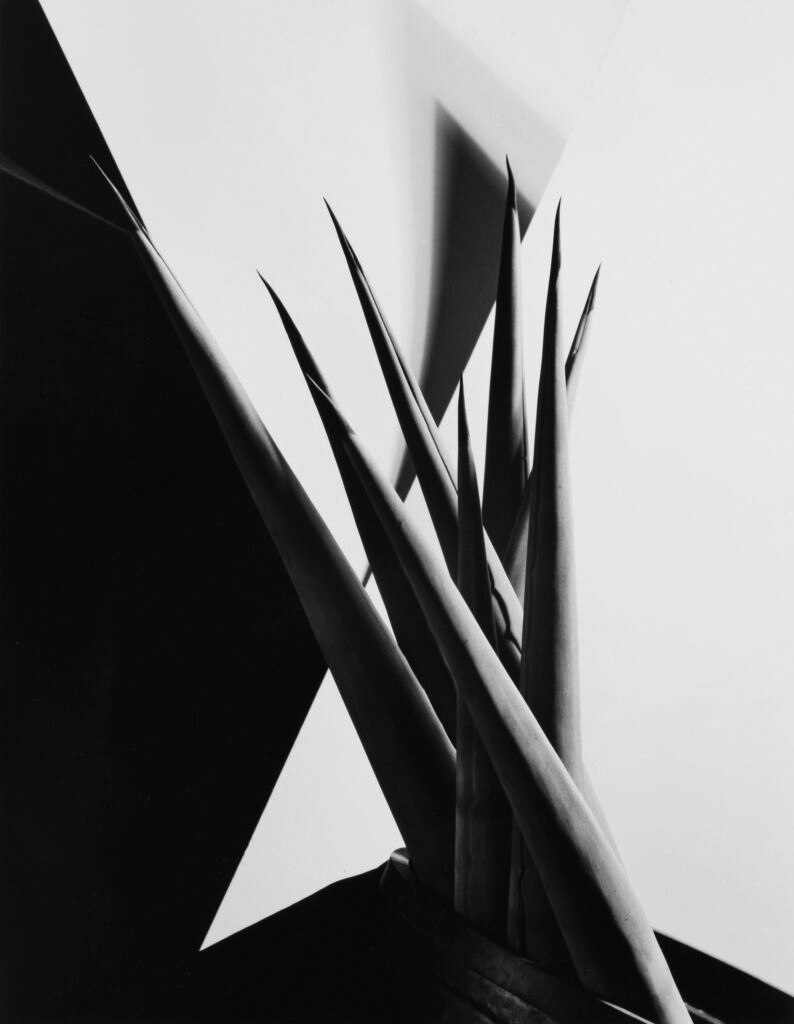
Imogen Cunningham (American, 1883-1976) 'Agave Americanus' 1929


Imogen Cunningham (American, 1883-1976)
Agave Americanus
1929
Gelatin silver print
High Museum of Art, Atlanta
© The Imogen Cunningham Trust


Imogen Cunningham (American, 1883-1976)
'Agave Design I' c. 1920


Imogen Cunningham (American, 1883-1976)
Agave Design I
c. 1920
Gelatin silver print
High Museum of Art, Atlanta, purchase with funds from Georgia-Pacific Corporation
© The Imogen Cunningham Trust


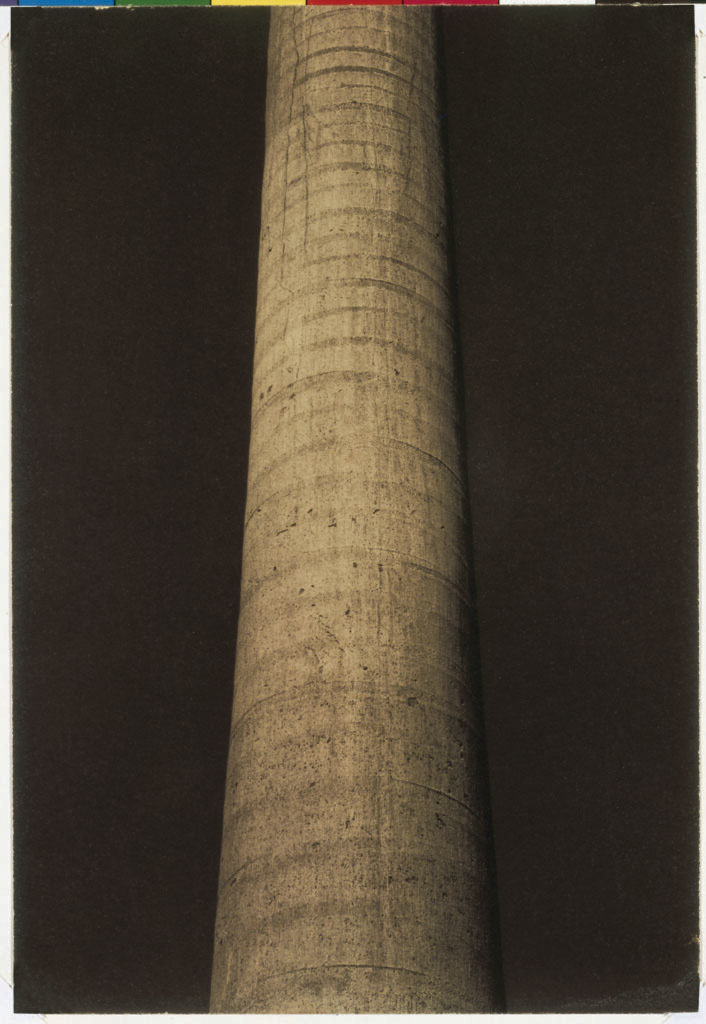
Edward Weston (American 1886-1958) 'Palma Cuernavaca II' 1925


Edward Weston (American 1886-1958)
Palma Cuernavaca II
1925
Palladium print
High Museum of Art, Atlanta, gift of Lucinda W. Bunnen for the Bunnen Collection to mark the retirement of Gudmund Vigtel
© Center for Creative Photography, Arizona Board of Regents


Ralph Steiner (American, 1899-1986) 'Electrical Switches' 1929


Ralph Steiner (American, 1899-1986)
Electrical Switches
1929
Gelatin silver print
8 x 10 5/16 inches
Purchase with funds from Georgia-Pacific Corporation


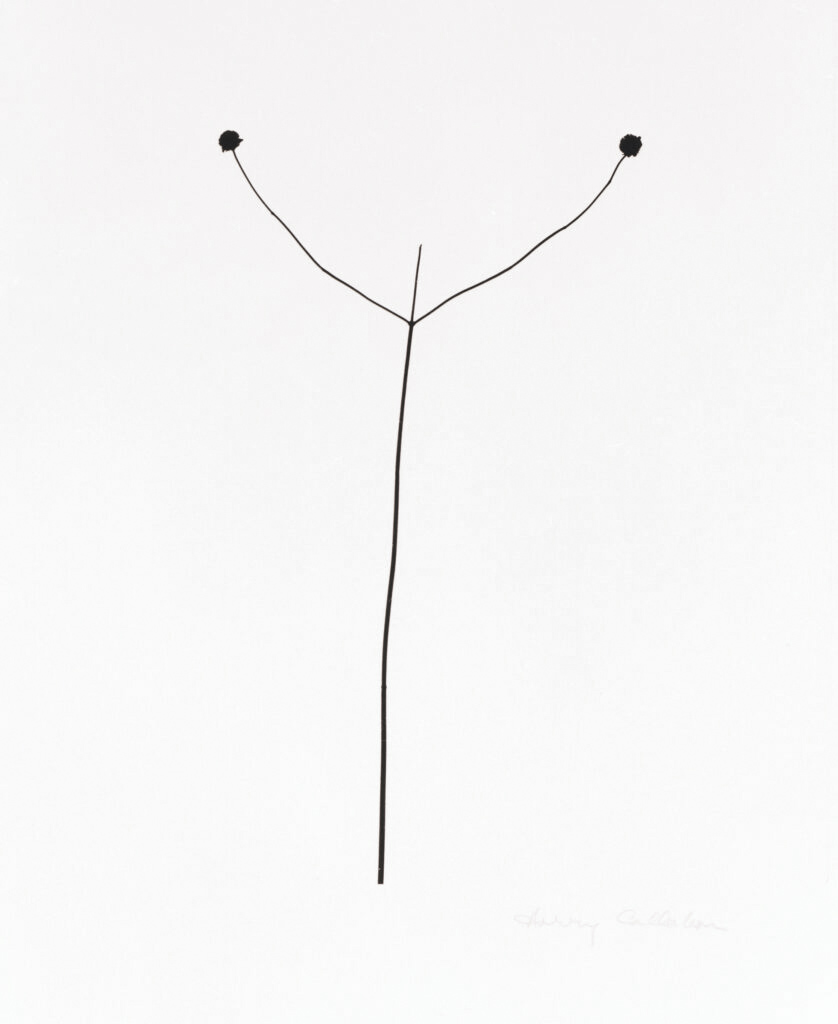
Harry Callahan (American, 1912-1999) 'Weed Against Sky, Detroit' 1948


Harry Callahan (American, 1912-1999)
Weed Against Sky, Detroit
1948
Gelatin silver print
High Museum of Art, Atlanta, gift of the Callahan and Hollinger Families
© 2018 The Estate of Harry Callahan


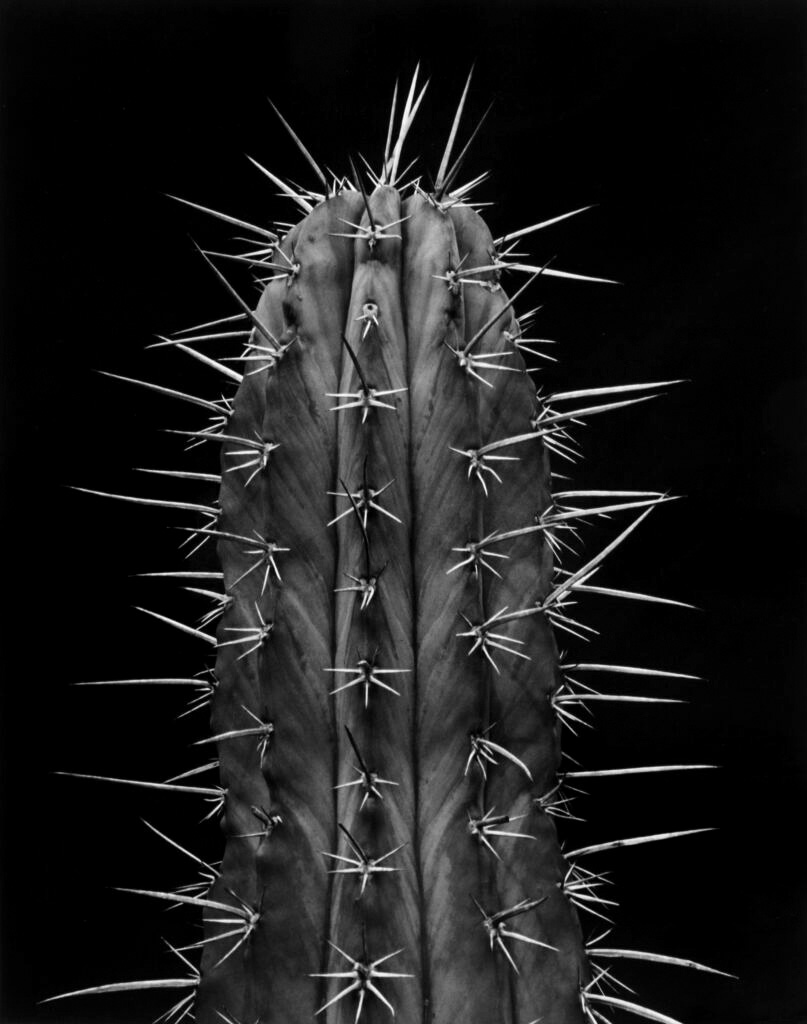
Eugenia de Olazabal (Mexican, b. 1936) 'Espinas' c. 1985


Eugenia de Olazabal (Mexican, b. 1936)
Espinas
c. 1985
Gelatin silver print
High Museum of Art, Atlanta, gift of the artist


“Surrealism lies at the heart of the photographic enterprise: in the very creation of a duplicate world, of a reality in the second degree, narrower but more dramatic than the one perceived by natural vision.”


Susan Sontag, 1973


Surreality

Surrealism emerged as an artistic movement in reaction to the horrors of World War I. The often disconcerting imagery and literature of the movement reflected a world that felt disorienting and chaotic and captured how the very foundations of reason and humanity were tested and questioned through the realities of war. In his Surrealist Manifesto (1924), French writer Andre Breton advocates for a rejection of rational ways of approaching the world in four of dreams and imagination as pathways to new creative expressions.

Photography played an important role in the Surrealist movement. Artists valued how the medium could capture spontaneous moments that reveal the unexpected, be manipulated to stage scenes, or be altered with darkroom processes. They harness photography in a multitude of ways to create dreamlike and unconscious associations with reality. In these galleries, artists explore uncanny moments and create links to the human psyche by focusing on humanlike forms and fragmented body parts, mirrored and doubled views, and the impact of light and shadows in space.

Wall text from the exhibition


Eugène Atget (French, 1857-1927) 'Men's Fashions (Avenue des Gobelins)' 1925, printed 1956


Eugène Atget (French, 1857-1927)
Men’s Fashions (Avenue des Gobelins)
1925, printed 1956
Gelatin silver print
Purchase


Eugène Atget was the great chronicler of Paris at the turn of the century. His vast photographic archive captures a city on the precipice of modernisation. Though his photographs of empty city streets were documentary in nature, the Surrealists admired their dreamlike quality and claimed Atget as one of their own despite his protestations. They believed any photograph could shed its original context and intent when viewed with a surrealist sensibility. Atget’s photograph of mannequins peering out of a shop window appealed to the movement by embodying the uncanny valley, where the human likeness of a nonhuman entity evokes both affinity and discomfort in viewers.

Text from the High Museum of Art website


Florence Henri (Swiss born United States, 1893-1982) 'Composition' 1932, printed 1972


Florence Henri (Swiss born United States, 1893-1982)
Composition
1932, printed 1972
Gelatin silver print
High Museum of Art, Atlanta, gift of Dr. Joe B. Massey in honor of Maria L. Kelly


Florence Henri is well known for her manipulations of light and form that create complex, surrealist scenes. She used angled mirrors to frame, obscure, and replicate portions of scenes to dissolve a sense of perspective and space, as seen in this still life comprising mirrors, pears, and an image of the sea. After only one semester studying under László Moholy-Nagy at the Bauhaus in 1927, Henri shifted her focus from painting to photography and began using various experimental techniques such as photomontage, multiple exposures, photograms, and negative printing.

Text from the High Museum of Art website


Barbara Kasten (American, b. 1936) 'Construct NYC' 1984


Barbara Kasten (American, b. 1936)
Construct NYC
1984
Dye destruction print
High Museum of Art, Atlanta, gift of Lucinda W. Bunnen for the Bunnen Collection
© Barbara Kasten


Barbara Kasten’s art is as much about the process of setting up innovative still life scenes as it is about the photographs she makes of them. Her Constructs series focuses on large-scale complex assemblages that she builds in her studio using a wide variety of materials, including painted wood, plaster, mirrors, screens, and fibers. Her work is not digitally altered; instead, she complicates the scene using mirrors and light, much in the tradition of Florence Henri, whose photograph is also on view in the exhibition.

Text from the High Museum of Art website


Manipulations

This final section features photographers from the New Vision period to the present day who experiment with physically manipulating photographs. Through approaches such as double exposure, photomontage, surface alteration, and multilayering, they challenge and expand our perceptions of reality. The artworks in this section prioritise the creative process through labour, intention, intervention, and theatricality.

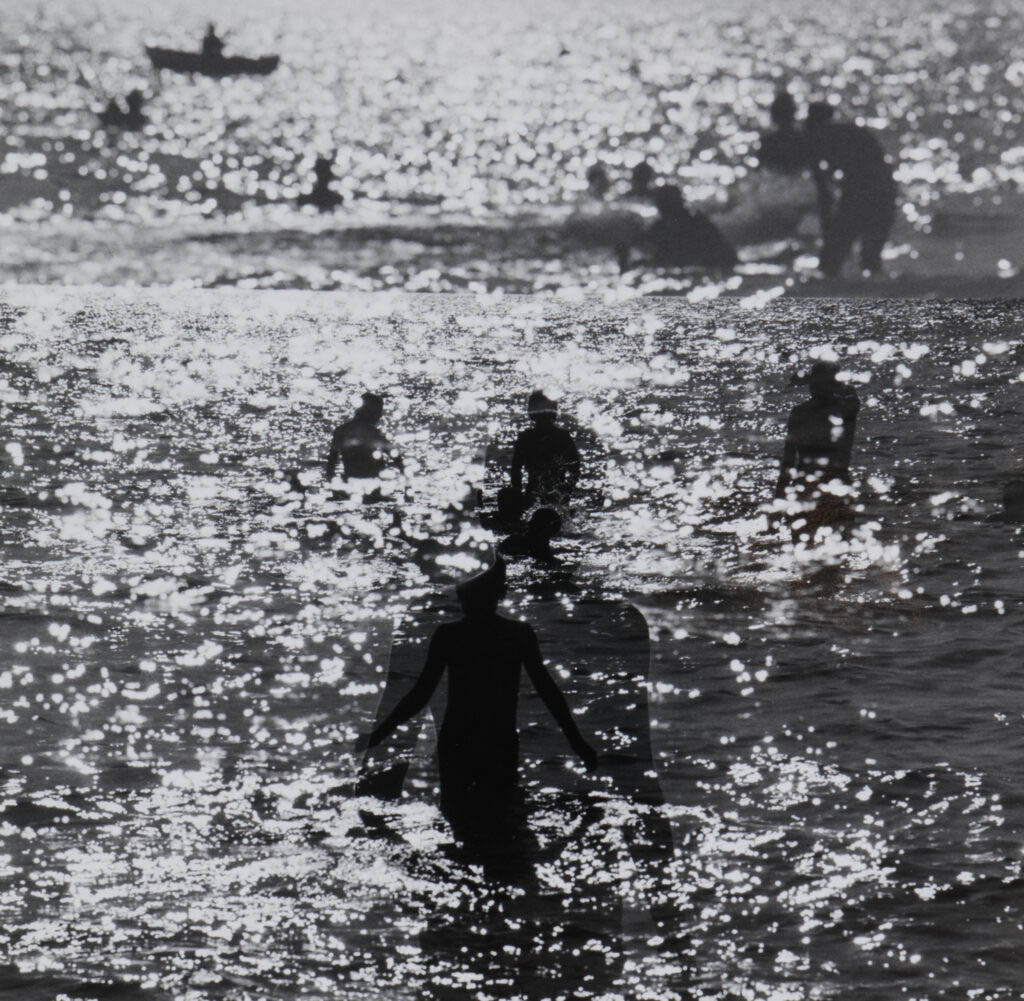
Double exposures is the process of photographing multiple images with the same negative within the camera, resulting in layered images that often provide a frenetic, multifaceted view of a scene. In contrast to the in-camera process of double exposure, photomontage combines separate images in the darkroom to produce a final photograph that emphasises the image’s artifice and absurdity. Physically disrupting the surface of photographs with alterations such as adding unnatural colour, drawing connections, stitching into prints, or inscribing texts augments the visual experience and offers emotional and narrative depth. Finally, whether through ancient visual techniques like the camera obscure or new technologies like digital screens, these artists create enigmatic scenes by layering and physically transforming subject, composition, and image.

Wall text from the exhibition


Barbara Morgan (American, 1900-1992) 'Protest' 1940


Barbara Morgan (American, 1900-1992)
Protest
1940
Gelatin silver print
High Museum of Art, Atlanta, purchase


Charles Swedlund (American, b. 1935) '31 St. Beach' c. 1955


Charles Swedlund (American, b. 1935)
31 St. Beach
c. 1955
Gelatin silver print
High Museum of Art, Atlanta, gift of Steven Nordman
© Charles Swedlund


Jerry Uelsmann (American, 1934-2022) 'Untitled' 1964


Jerry Uelsmann (American, 1934-2022)
Untitled
1964
Gelatin silver print
High Museum of Art, Atlanta, purchase with funds from a friend of the Museum


Lucinda Bunnen (American, 1930-2022) 'Untitled' 1974


Lucinda Bunnen (American, 1930-2022)
Untitled
1974
Gelatin silver print
High Museum of Art, Atlanta, purchase with funds from the Lawrence and Alfred Fox Foundation for the Ralph K. Uhry Collection
© Lucinda Bunnen


Duane Michals (American, 1932-2026) 'Untitled' 1989 From the 'Indomitable Spirit Portfolio'


Duane Michals (American, 1932-2026)
Untitled
1989
From the Indomitable Spirit Portfolio
Gelatin silver print
High Museum of Art, Atlanta


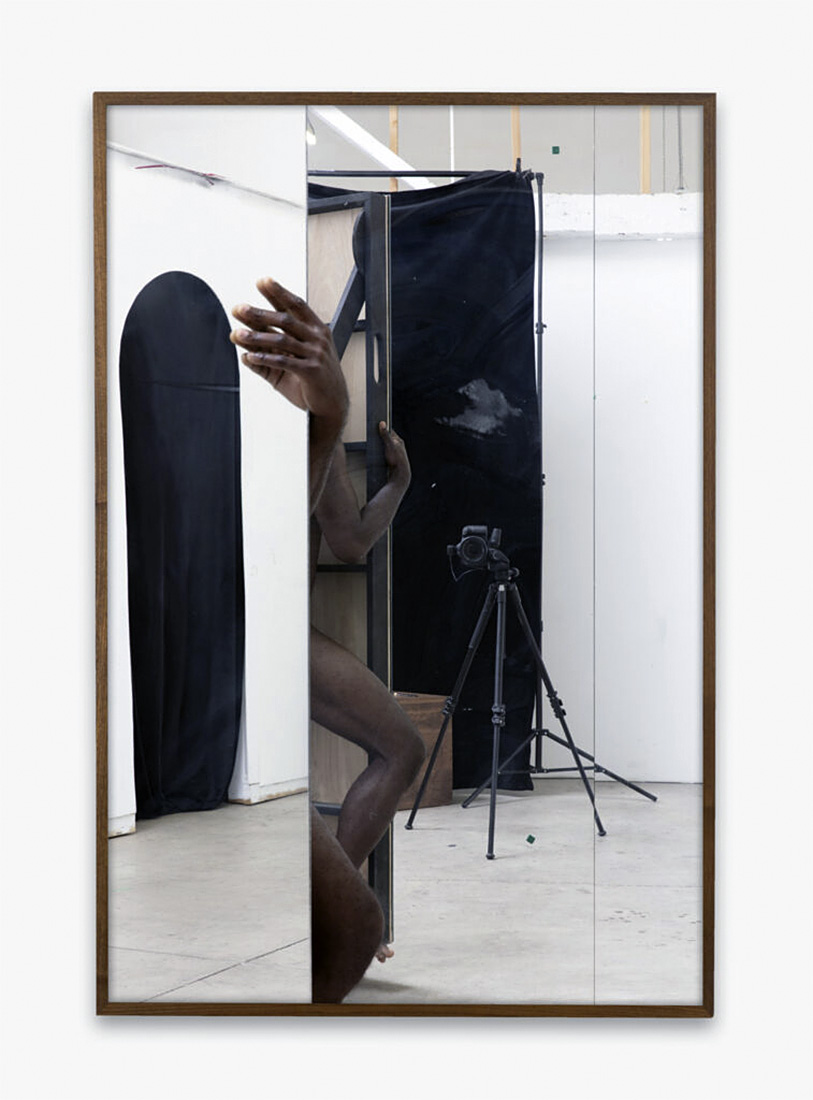
Paul Mpagi Sepuya (American, b. 1982) 'Studio (0X5A8180)' 2021


Paul Mpagi Sepuya (American, b. 1982)
Studio (0X5A8180)
2021
Archival pigment print
High Museum of Art, Atlanta, purchase with funds from the Donald and Marilyn Keough Family Foundation
© Paul Mpagi Sepuya


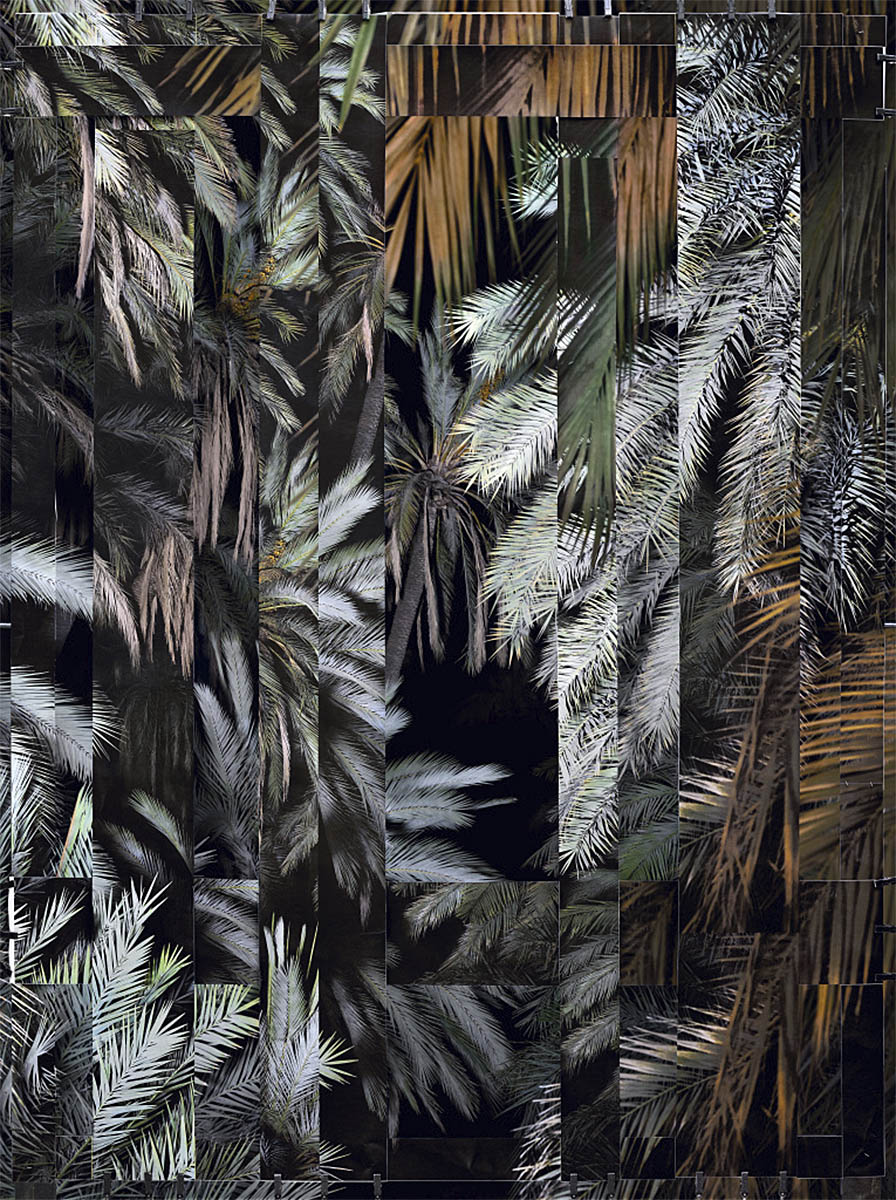
Noémie Goudal (French, b. 1984) 'Phoenix V' 2021


Noémie Goudal (French, b. 1984)
Phoenix V
2021
Dye coupler print
High Museum of Art, Atlanta, purchase through funds provided by patrons of Collectors Evening 2023


Noémie Goudal visualises “deep time” (geological history of the planet) and paleoclimatology (study of past climates) to challenge our perception of the world. Referring to the ancient continental split two billion years ago that formed South America and Africa, this image features the Phoenix atlantica, a palm tree that grows on both sides of the Atlantic. Goudal arranged strips of photographic prints of the palms made on one continent in front of the physical palms on the other and rephotographed the scene. The resulting image interweaves the two continents, creating a glitchy, kaleidoscopic view meant to unsettle our sense of stability and the constancy of the planet.

Text from the High Museum of Art website


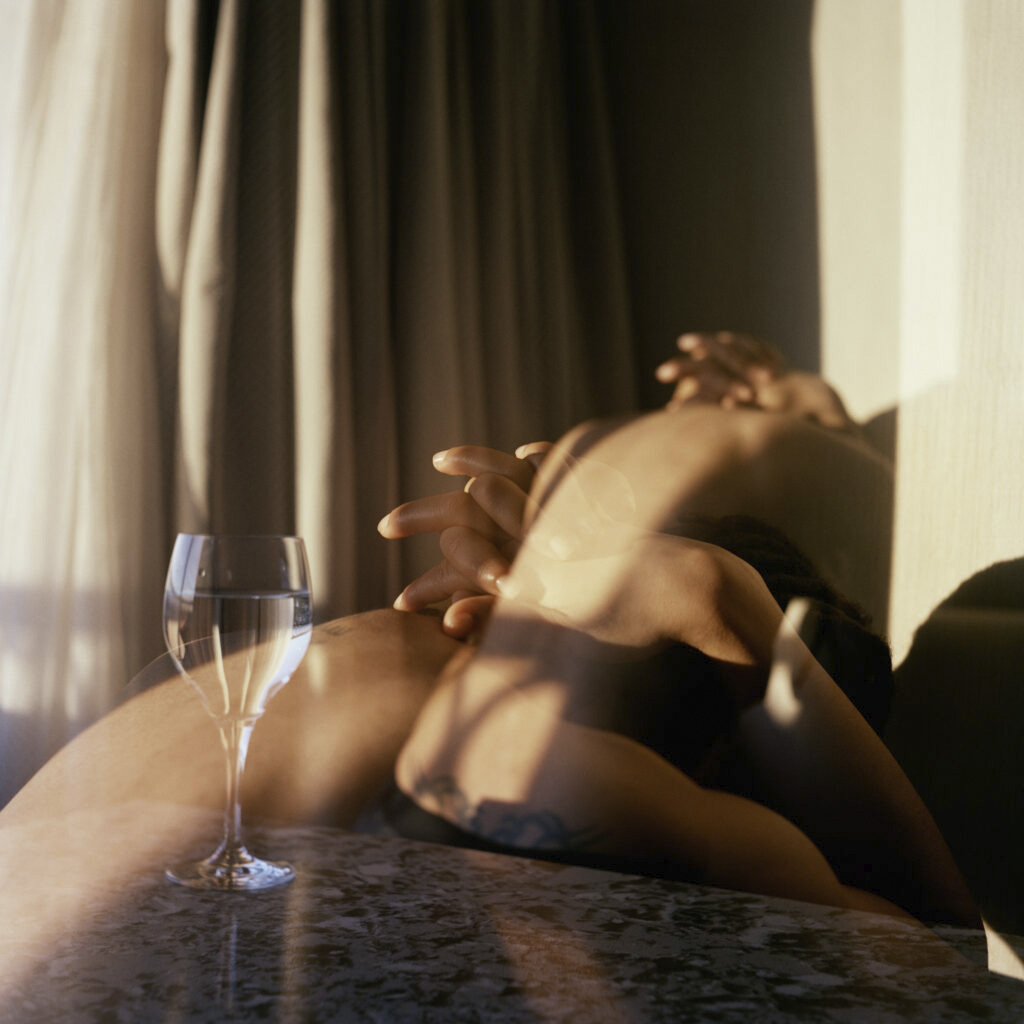
Naima Green (American, b. 1992) 'It Lingers Sweetly' 2022


Naima Green (American, b. 1992)
It Lingers Sweetly
2022
Pigmented inkjet print
High Museum of Art, Atlanta, purchase with funds from the LGBTQIA+ Photography Centennial Initiative


Naima Green’s practice centres connection and collaboration to cast a tender lens on her own queer community of colour. Her lyrical portraits take shape in intimate domestic spaces and airy outdoor environments that embody havens for the people in those spaces. Through double exposure and serial photographs, she provides what she calls “multiple entry points” into a moment in time, translating movements and emotions into a single image. She explains her interest in double exposure “as a means of capturing things that can’t be held in just one way … ,” allowing her to “play with loosening the narrative and letting go of some control.”

Text from the High Museum of Art website


The High Museum of Art
1280 Peachtree St NE
Atlanta, GA
30309

Opening hours:
Tuesday – Saturday 10am – 5pm
Sunday 12 – 5pm
Monday closed

The High Museum of Art website

LIKE ART BLART ON FACEBOOK

Back to top

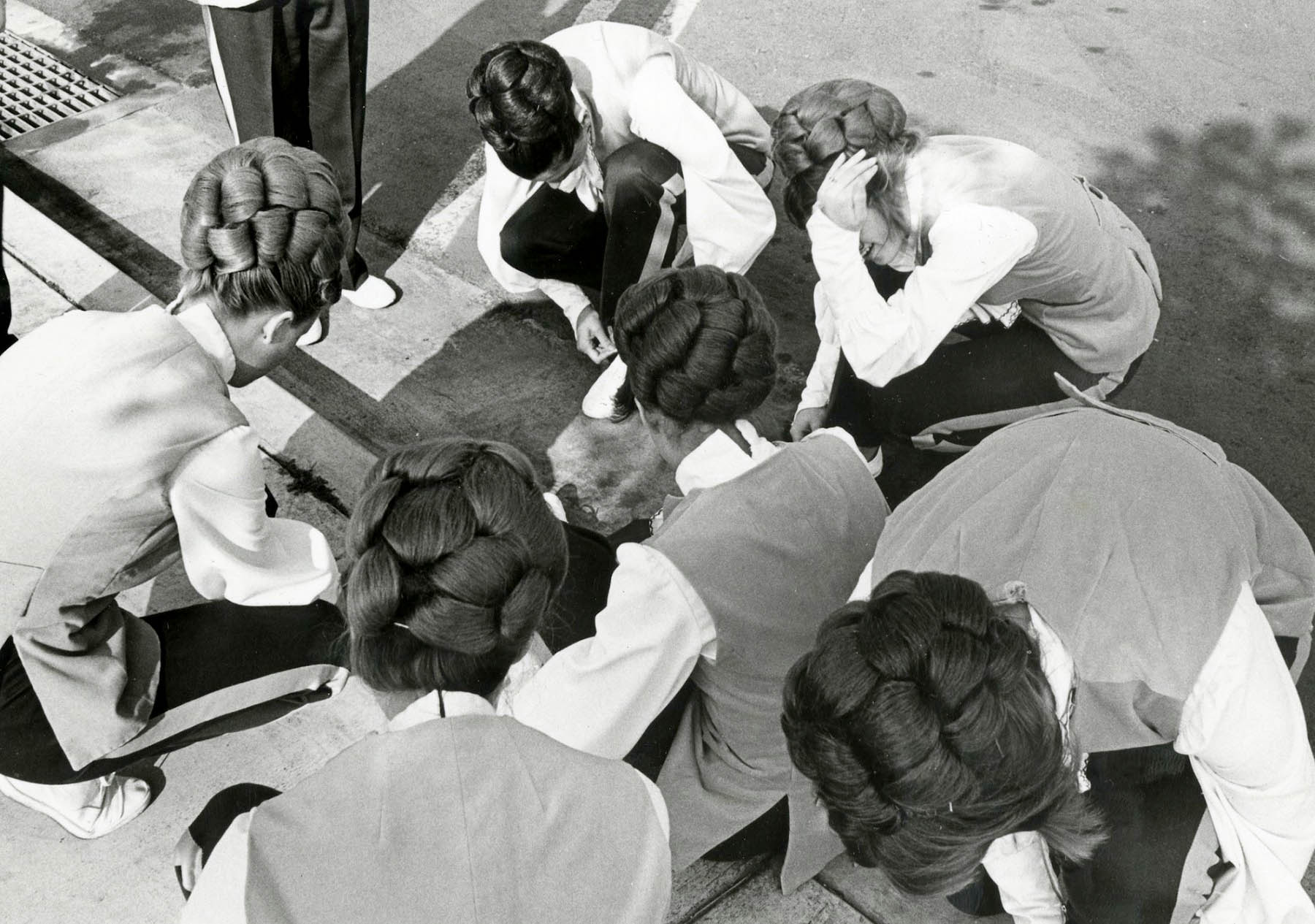
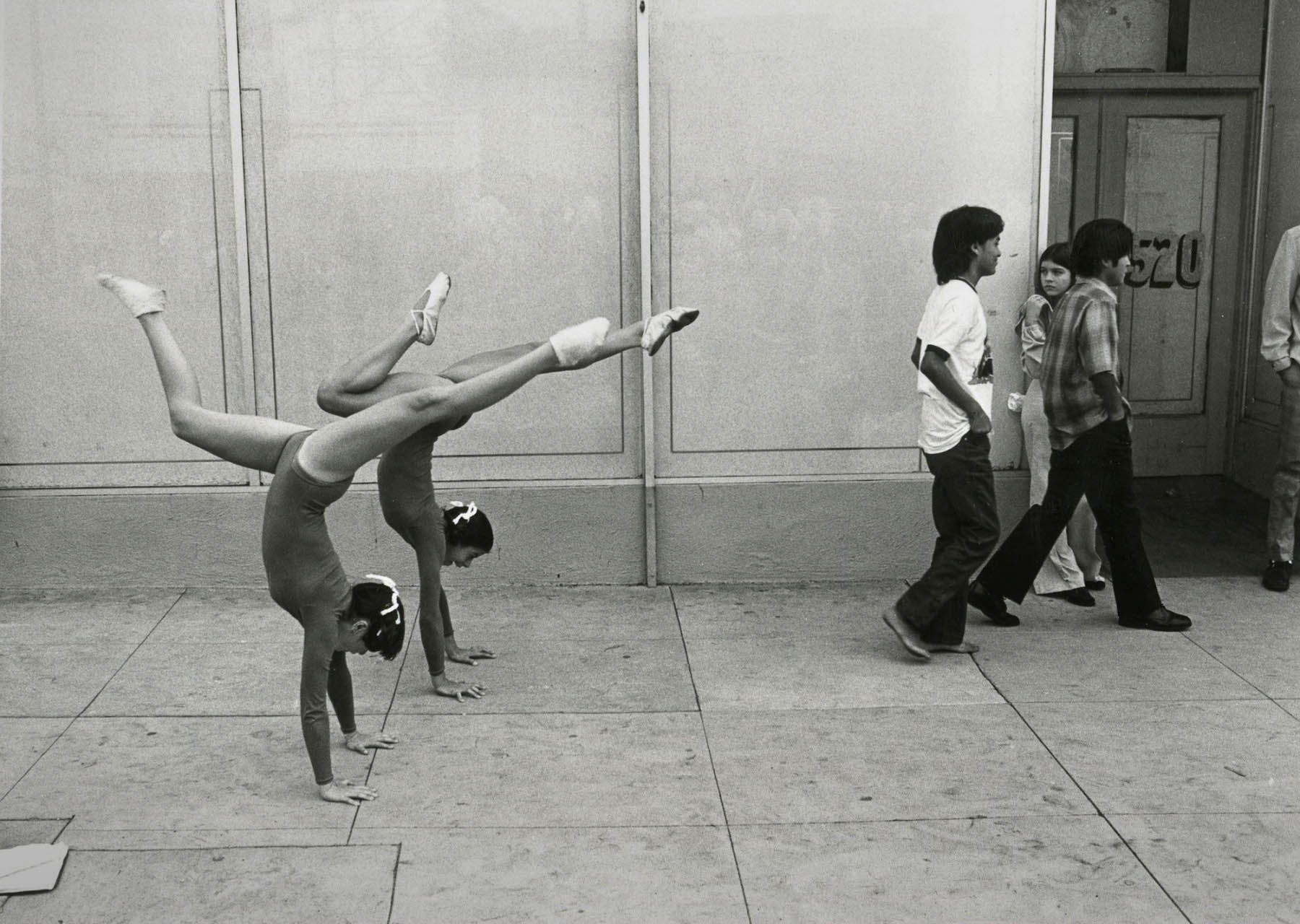
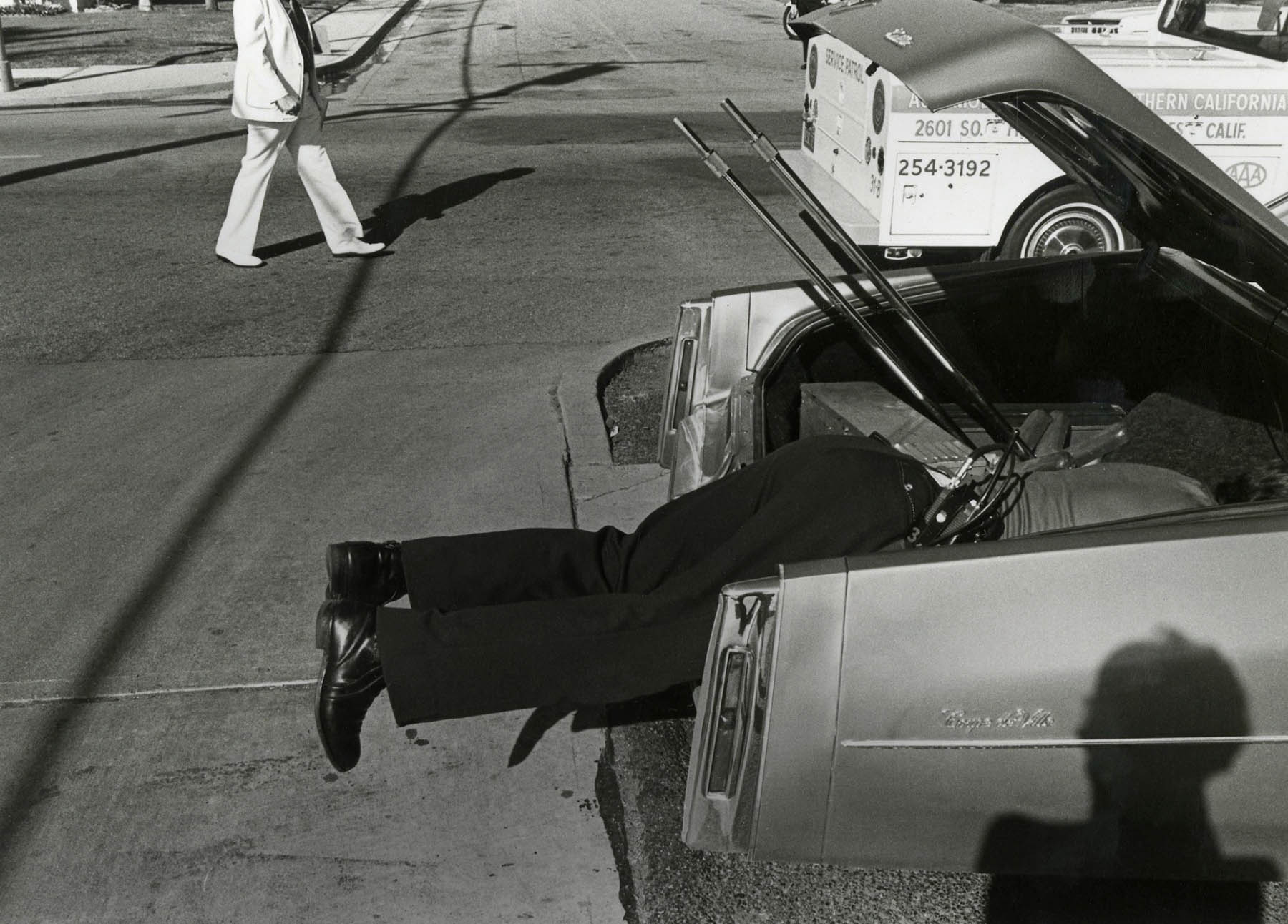
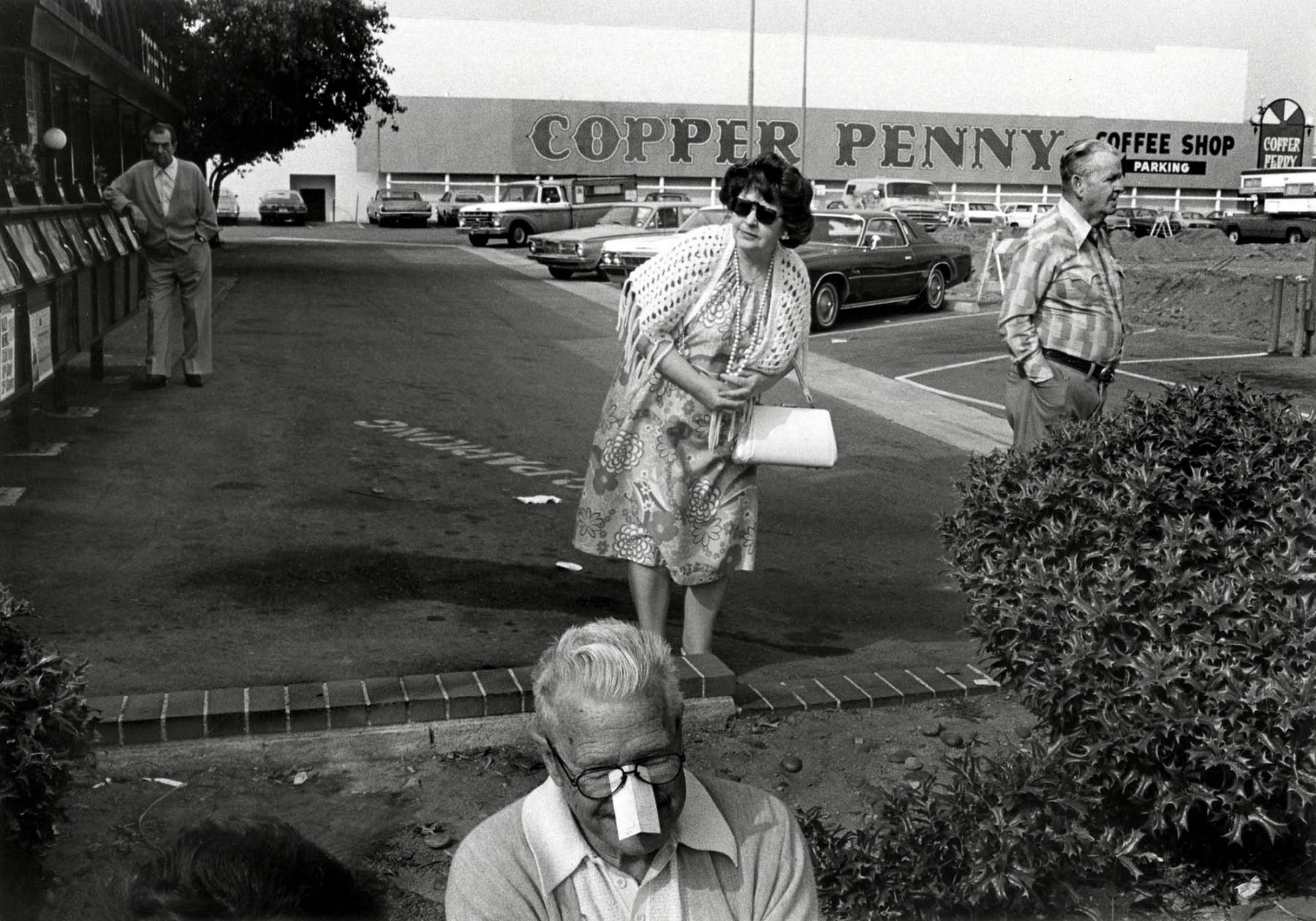
Online exhibition: ‘Gary Krueger (re)Discoveries’ from Joseph Bellows Gallery, La Jolla, California

October 2025


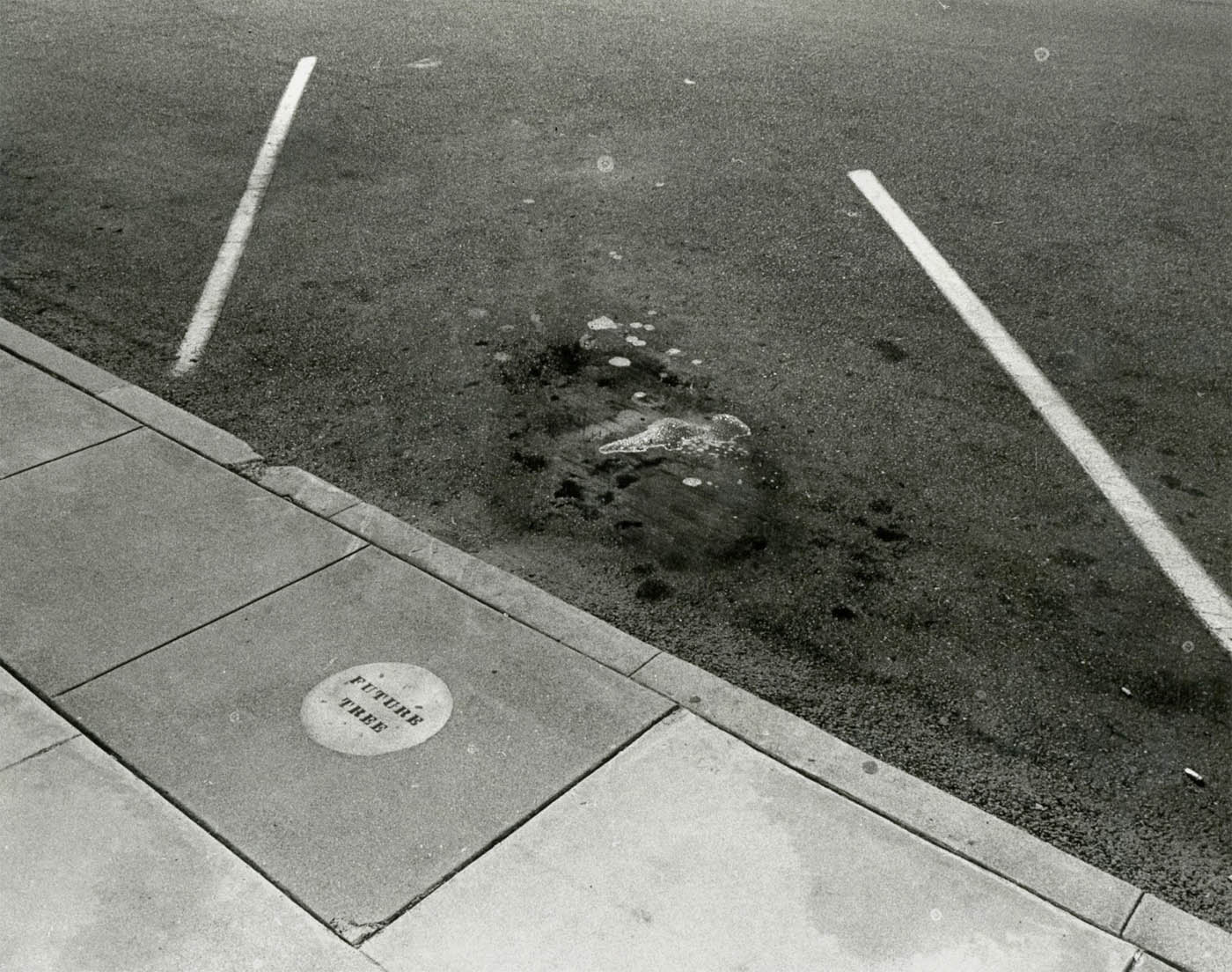
Gary Krueger (American, b. 1945) 'Los Angeles' c. 1970s from the online exhibition 'Gary Krueger (re)Discoveries' from Joseph Bellows Gallery, La Jolla, California, Sept 2025


Gary Krueger (American, b. 1945)
Los Angeles
c. 1970s
Vintage gelatin silver print
5 x 7 inches, 8 x 10 inch sheet


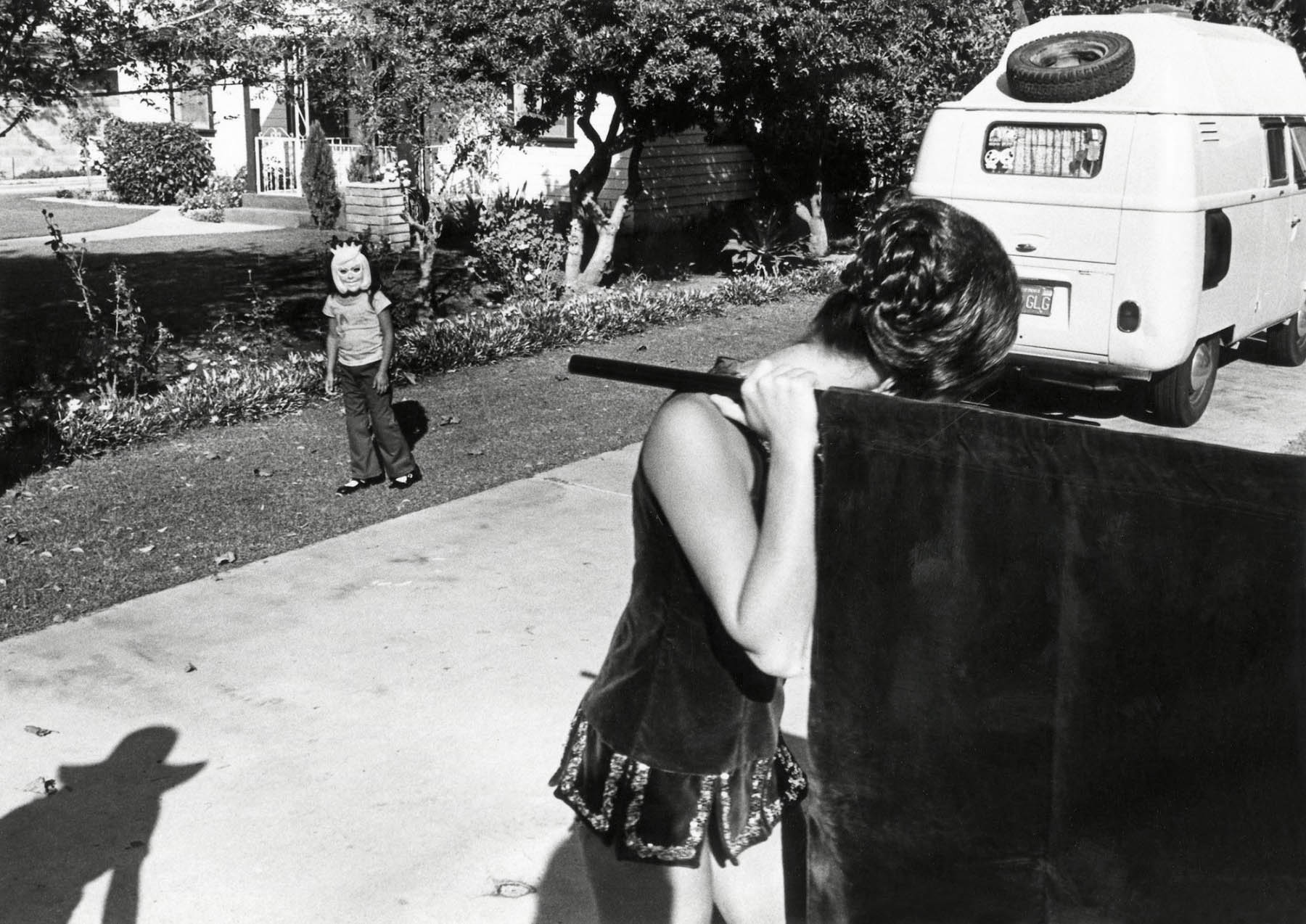
There’s a scene in one of my favourite movies, 1971’s American romantic black comedy-drama Harold and Maude directed by Hal Ashby, in which the glorious Ruth Gordon (in her best ever role) saves a tree from dying in the city by loading into the back of a ute, driving it at full speed through toll gates and out to the country to plant it in the forest, pursued by a motorcycle cop.

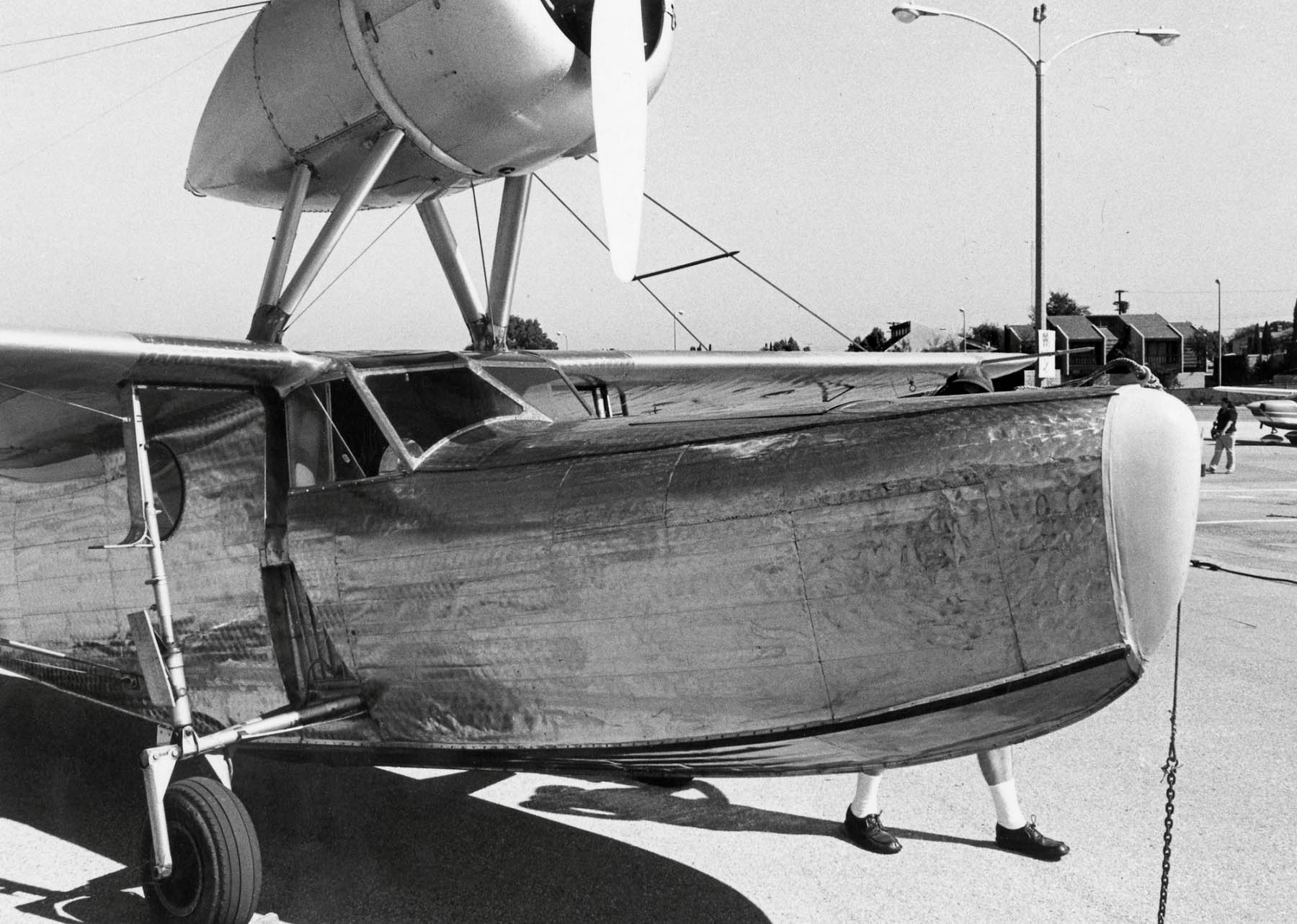
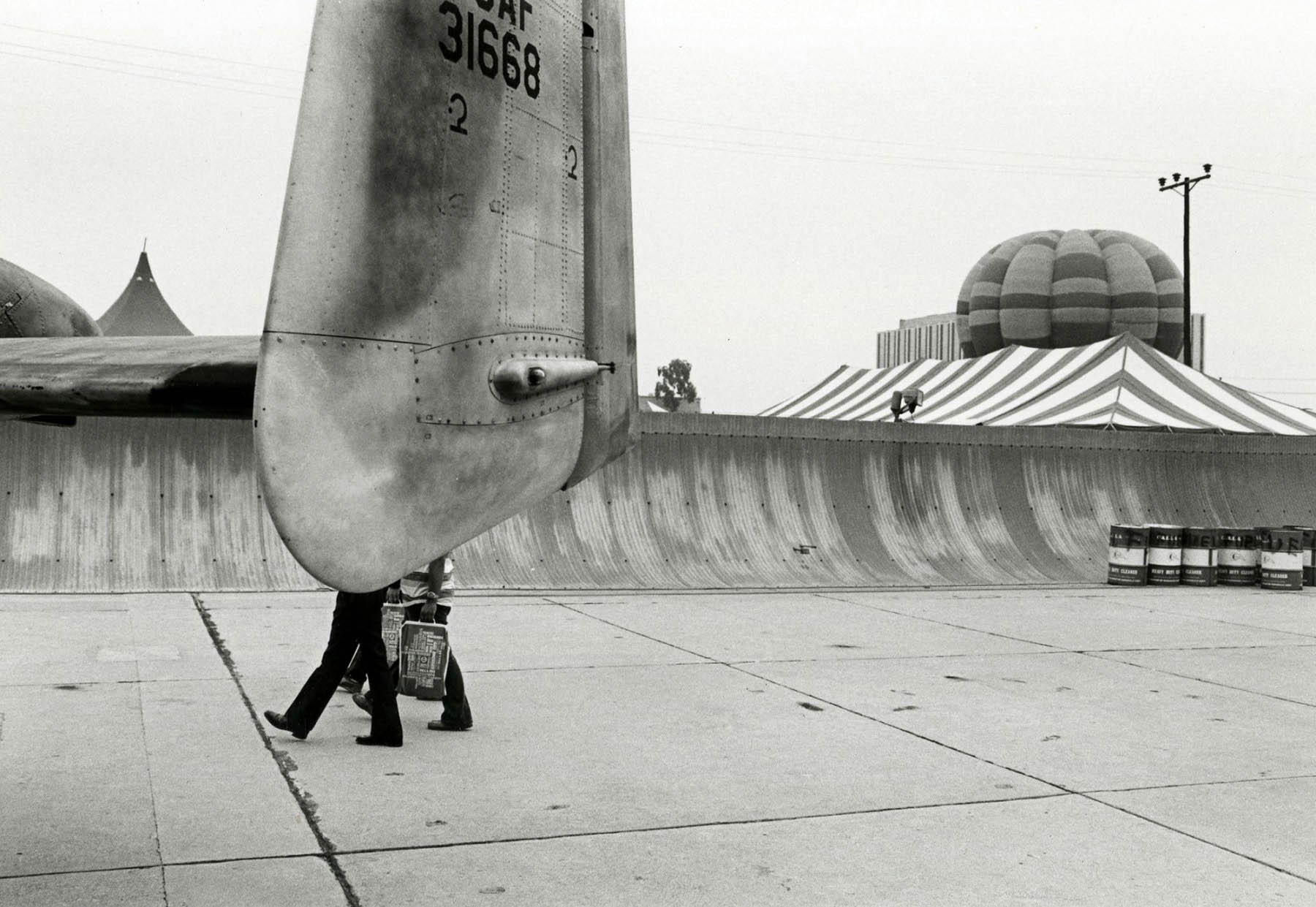
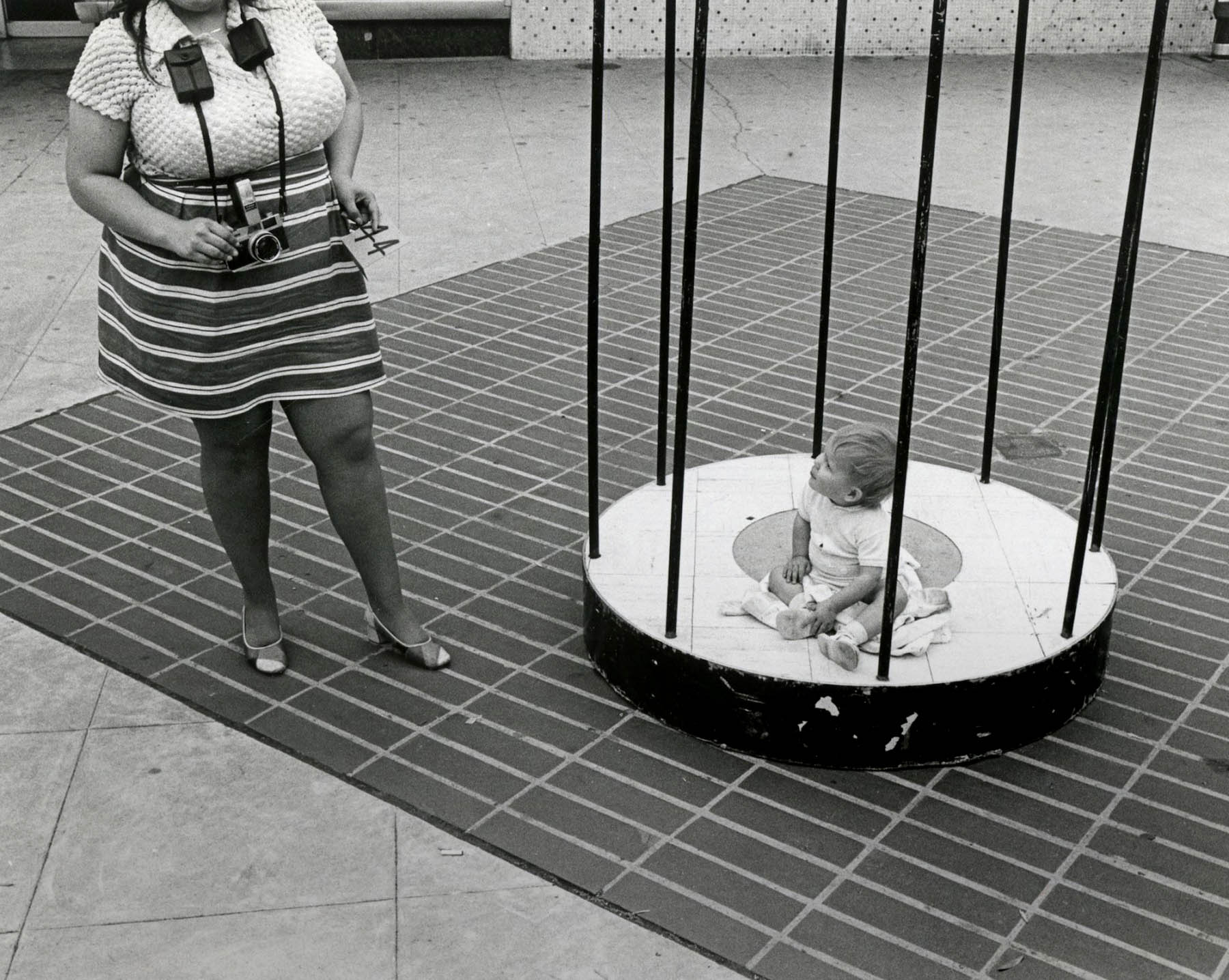
The joyful absurdity of her actions is mirrored in the terrific juxtapositions in life that are Gary Krueger’s considered photographs: for example, a “future tree” a circle with words in a lump of concrete surrounded by a constellation of fossil fuel oil stains.

As I said in a previous posting on the artist’s work, “Krueger’s street photography inverts the normal meaning of bathos… in that a silly or very ordinary subject suddenly changes to a beautiful or important one. There is black humour aplenty in these photographs as they picture the happenstance anachronisms of a major American city.”

An encouragement to think beyond the obvious!

More from the wonderful Gary Krueger can be found on the Art Blart posting Gary Krueger’s City of Angels, 1971-1980.

Dr Marcus Bunyan


Many thankx to the Joseph Bellows Gallery for allowing me to publish the photographs in the posting. Please click on the photographs for a larger version of the image.


Maude saves a Tree from the film Harold and Maude (1971) with Ruth Gordon and Bud Cort, directed by Hal Ashby


Gary Krueger (American, b. 1945) 'Los Angeles' c. 1970s from the online exhibition 'Gary Krueger (re)Discoveries' from Joseph Bellows Gallery, La Jolla, California, Sept 2025


Gary Krueger (American, b. 1945)
Los Angeles
c. 1970s
Vintage gelatin silver print
5 x 7 inches, 8 x 10 inch sheet


Gary Krueger (American, b. 1945) 'Los Angeles' c. 1970s


Gary Krueger (American, b. 1945)
Los Angeles
c. 1970s
Vintage gelatin silver print
5 x 7 inches, 8 x 10 inch sheet


Gary Krueger (American, b. 1945) 'Los Angeles' c. 1970s


Gary Krueger (American, b. 1945)
Los Angeles
c. 1970s
Vintage gelatin silver print
5 x 7 inches, 8 x 10 inch sheet


Gary Krueger (American, b. 1945) 'Los Angeles' c. 1970s


Gary Krueger (American, b. 1945)
Los Angeles
c. 1970s
Vintage gelatin silver print
5 x 7 inches, 8 x 10 inch sheet


Gary Krueger (American, b. 1945) 'Los Angeles' c. 1970s


Gary Krueger (American, b. 1945)
Los Angeles
c. 1970s
Vintage gelatin silver print
5 x 7 inches, 8 x 10 inch sheet


Gary Krueger (American, b. 1945) 'Los Angeles' c. 1970s


Gary Krueger (American, b. 1945)
Los Angeles
c. 1970s
Vintage gelatin silver print
5 x 7 inches, 8 x 10 inch sheet


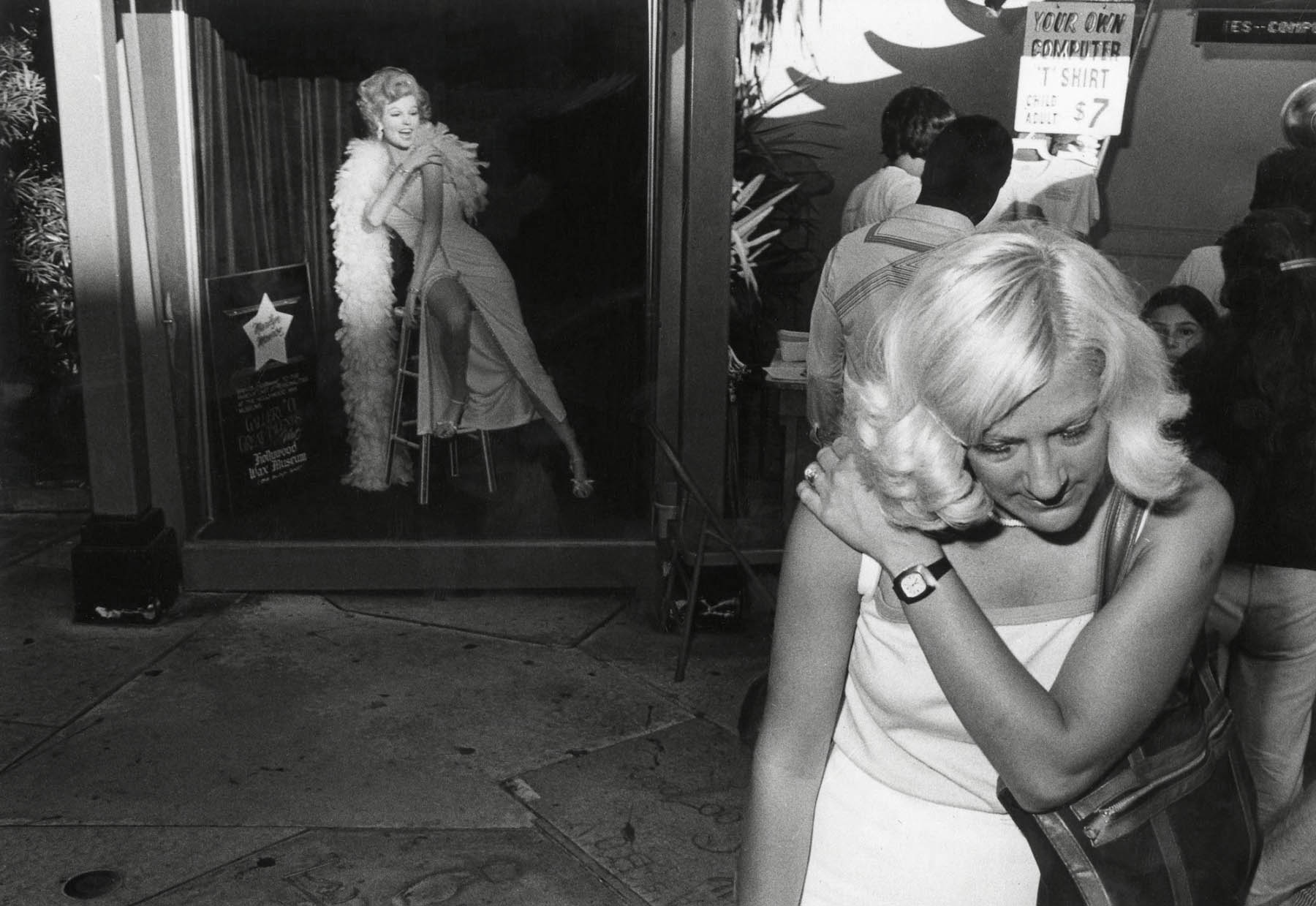
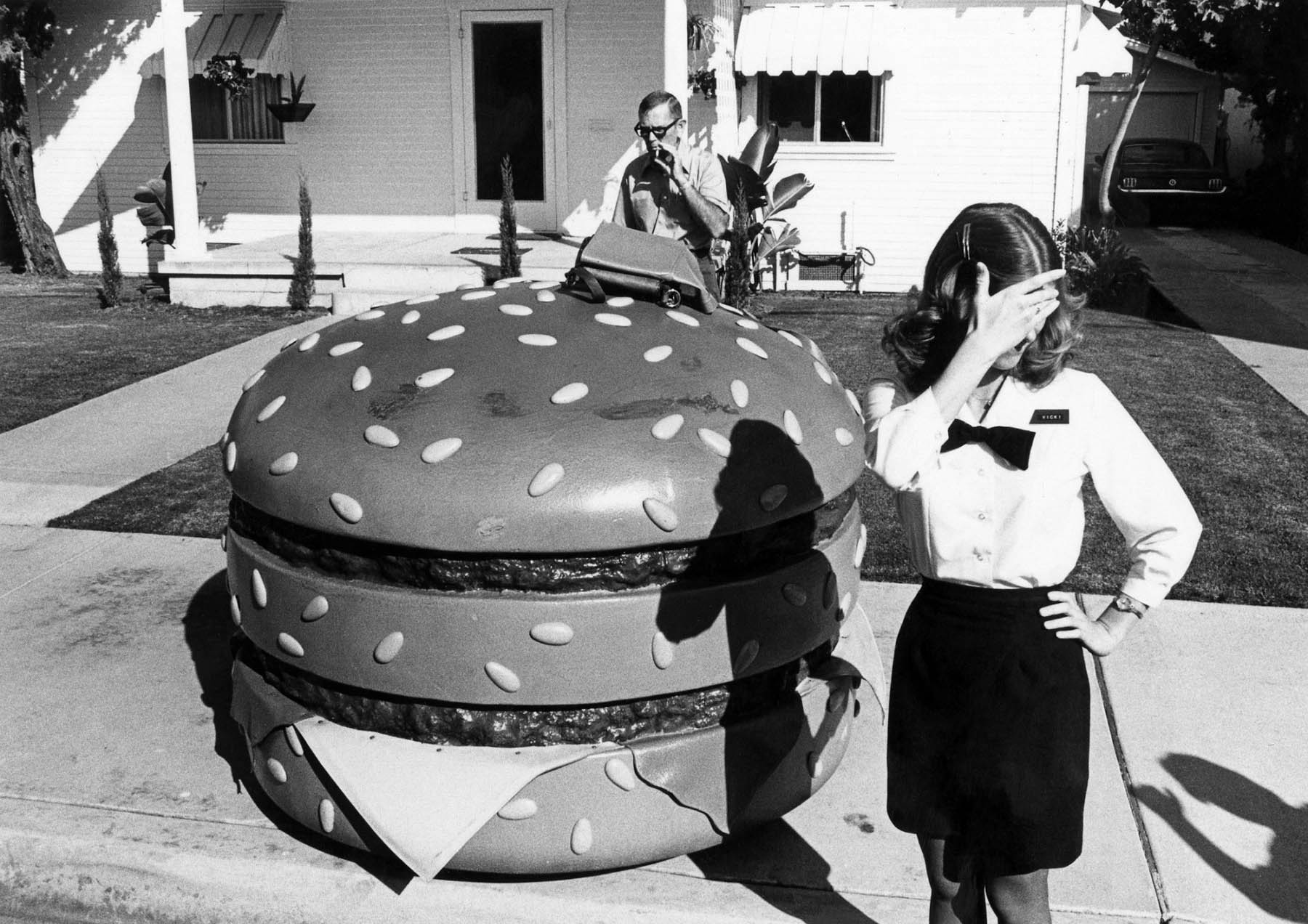
Gary Krueger (re)Discoveries presents a new collection of photographs from the artist’s archive. These vintage photographs display a sometimes frenetic and often bizarre and fragmented world. Taken mostly in Los Angeles, California in the mid to late 1970s, Krueger’s curiosity and instincts helped him to create a remarkable body of street photography, one that he describes as “split-second juxtapositions in life.”

After graduating High School in 1963, Gary Krueger (1945 – ) drove his 1954 Ford west from Cleveland, Ohio, to study graphic design and photography at the Chouinard Art Institute in Los Angeles from 1964 to 1967. Later Cal Arts, Chouinard was a professional art school founded in 1921 by Nelbert Murphy Chouinard. In 1961, Walt and Roy Disney guided the merger of Chouinard and the Los Angeles Conservatory of Music to establish the California Institute of the Arts. Notable alumni include Ed Ruscha, Larry Bell, Robert Irwin, Joe Goode, and Allen Ruppersberg, with whom Krueger collaborated on Ruppersberg’s narrative photo works, including 23 Pieces (1969) and 24 Pieces (1970). Upon graduation from Chouinard, Krueger was hired by WED, Disney’s “Imagineering” Division. to photograph the Park and its events. He eventually left WED to pursue a successful career as a commercial and editorial photographer.

“Gary Krueger’s plain ol’ photographs (unless I’m missing a point) – small, tough, and sharp – are good, granite reportage. Baldessari’s “Fables” and Krueger’s no-nonsense photos cut like a hot ripsaw through the cool, marshmallow quality of both exhibitions.” – Peter Plagens, from a 1973 ARTFORUM review of the exhibition, Southern California: Attitudes 1972, at the Pasadena Art Museum.

Gary Krueger’s work is represented in The Minneapolis Institute of Art, Museum of Fine Arts, Houston, Center for Creative Photography, Tucson, AZ, the Los Angeles County Museum of Art, and the Santa Barbara Museum of Art. His work has recently been feature in The Guardian, Creative Review, Huck and The Eye of Photography.

Press release from Joseph Bellows Gallery


Gary Krueger (American, b. 1945) 'Los Angeles' c. 1970s


 Gary Krueger (American, b. 1945)
Los Angeles
c. 1970s
Vintage gelatin silver print
5 x 7 inches, 8 x 10 inch sheet


Gary Krueger (American, b. 1945) 'Los Angeles' c. 1970s


Gary Krueger (American, b. 1945)
Los Angeles
c. 1970s
Vintage gelatin silver print
5 x 7 inches, 8 x 10 inch sheet


Gary Krueger (American, b. 1945) 'Los Angeles' c. 1970s


Gary Krueger (American, b. 1945)
Los Angeles
c. 1970s
Vintage gelatin silver print
5 x 7 inches, 8 x 10 inch sheet


Gary Krueger (American, b. 1945) 'Los Angeles' c. 1970s


Gary Krueger (American, b. 1945)
Los Angeles
c. 1970s
Vintage gelatin silver print
5 x 7 inches, 8 x 10 inch sheet


Gary Krueger (American, b. 1945) 'Los Angeles' c. 1970s


Gary Krueger (American, b. 1945)
Los Angeles
c. 1970s
Vintage gelatin silver print
5 x 7 inches, 8 x 10 inch sheet


Gary Krueger (American, b. 1945) 'Los Angeles' c. 1970s


Gary Krueger (American, b. 1945)
Los Angeles
c. 1970s
Vintage gelatin silver print
5 x 7 inches, 8 x 10 inch sheet


Gary Krueger (American, b. 1945) 'Los Angeles' c. 1970s


Gary Krueger (American, b. 1945)
Los Angeles
c. 1970s
Vintage gelatin silver print
5 x 7 inches, 8 x 10 inch sheet


Gary Krueger (American, b. 1945) 'Los Angeles' c. 1970s


Gary Krueger (American, b. 1945)
Los Angeles
c. 1970s
Vintage gelatin silver print
5 x 7 inches, 8 x 10 inch sheet


Gary Krueger (American, b. 1945) 'Los Angeles' c. 1970s


Gary Krueger (American, b. 1945)
Los Angeles
c. 1970s
Vintage gelatin silver print
5 x 7 inches, 8 x 10 inch sheet


Gary Krueger (American, b. 1945) 'Los Angeles' c. 1970s


Gary Krueger (American, b. 1945)
Los Angeles
c. 1970s
Vintage gelatin silver print
5 x 7 inches, 8 x 10 inch sheet


Gary Krueger (American, b. 1945) 'Los Angeles' c. 1970s


Gary Krueger (American, b. 1945)
Los Angeles
c. 1970s
Vintage gelatin silver print
5 x 7 inches, 8 x 10 inch sheet


Joseph Bellows Gallery
7661 Girrard Avenue
La Jolla, California
Phone: 858 456 5620

Opening hours:
Tuesday – Saturday 11am – 5pm and by appointment

Joseph Bellows Gallery website

LIKE ART BLART ON FACEBOOK

Back to top

Exhibition: ‘Elliott Erwitt. Icons’ at Palazzo Bonaparte, Rome, Italy

Exhibition dates: 28th June – 21st September, 2025

Curator: Biba Giacchetti


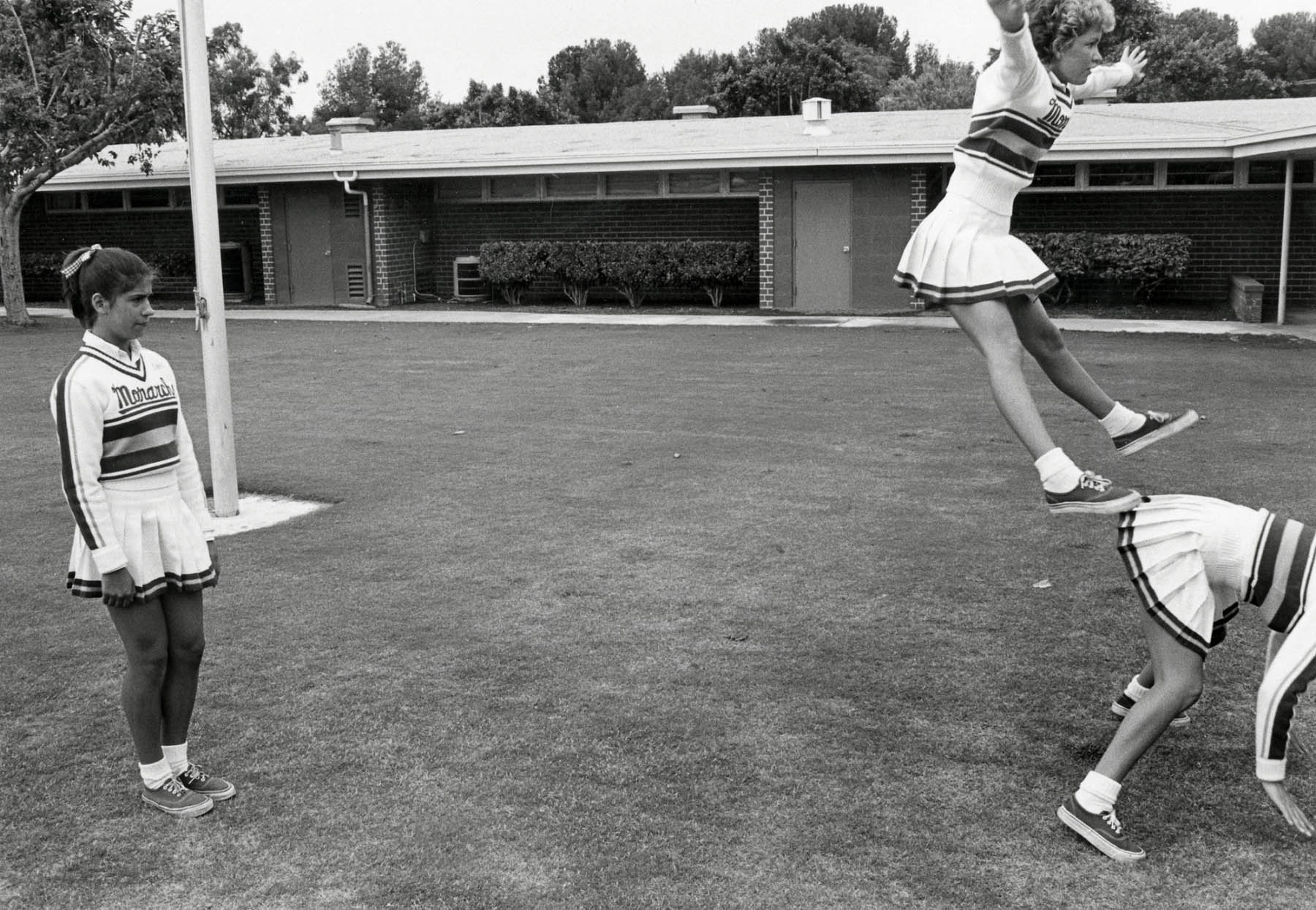
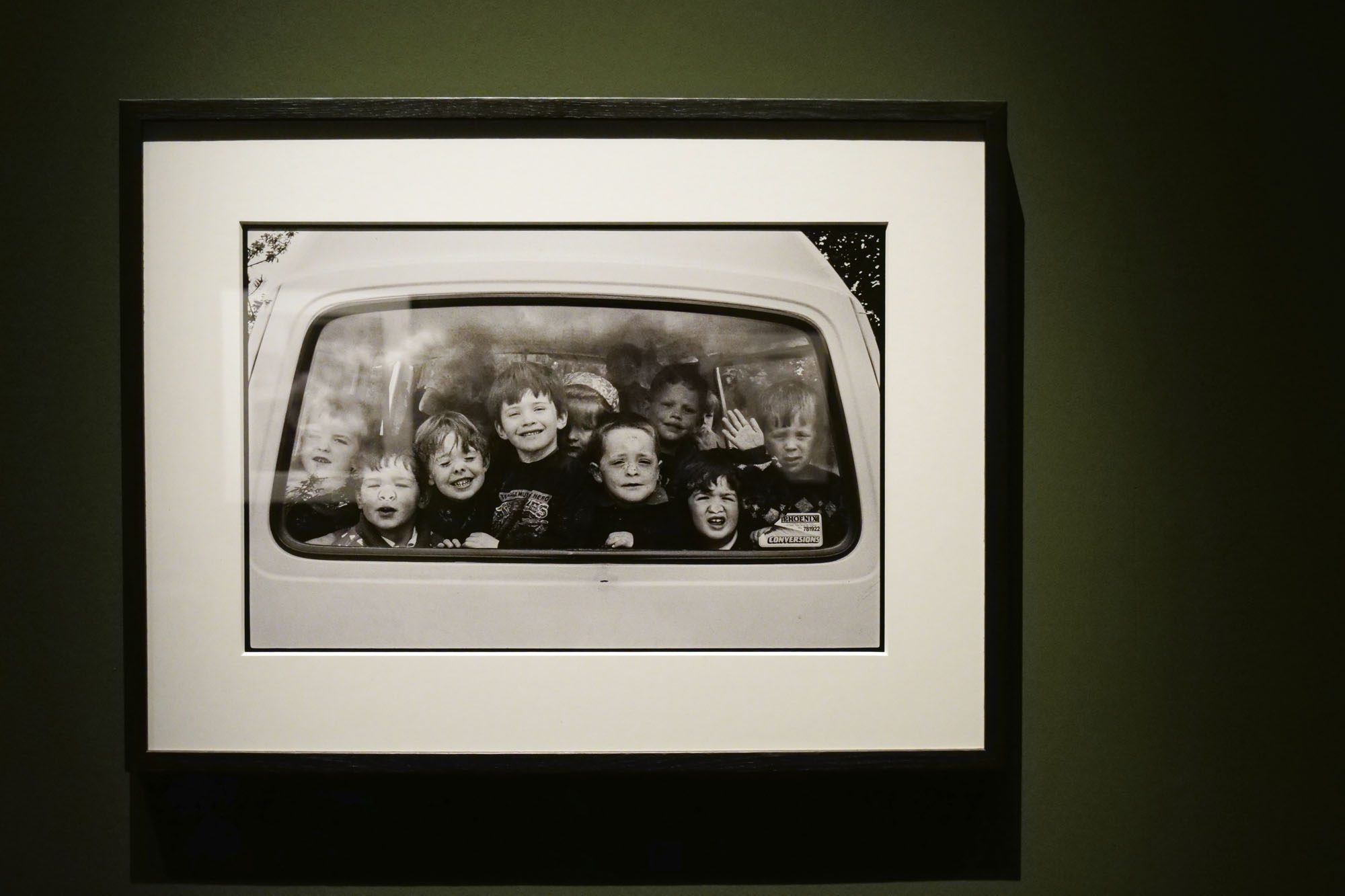
Elliott Erwitt (American born France, 1928-2023) 'England, Birmingham, 1991' 1991


Elliott Erwitt (American born France, 1928-2023)
England, Birmingham, 1991
1991
40 x 50cm
© Elliott Erwitt
Private Collection


Small intimacies

My apologies that I haven’t been writing that much in recent postings, but I am still recovering from my hip replacement operation and the pain is still ongoing over 6 weeks after the operation. I’m a little exhausted to put it mildly…

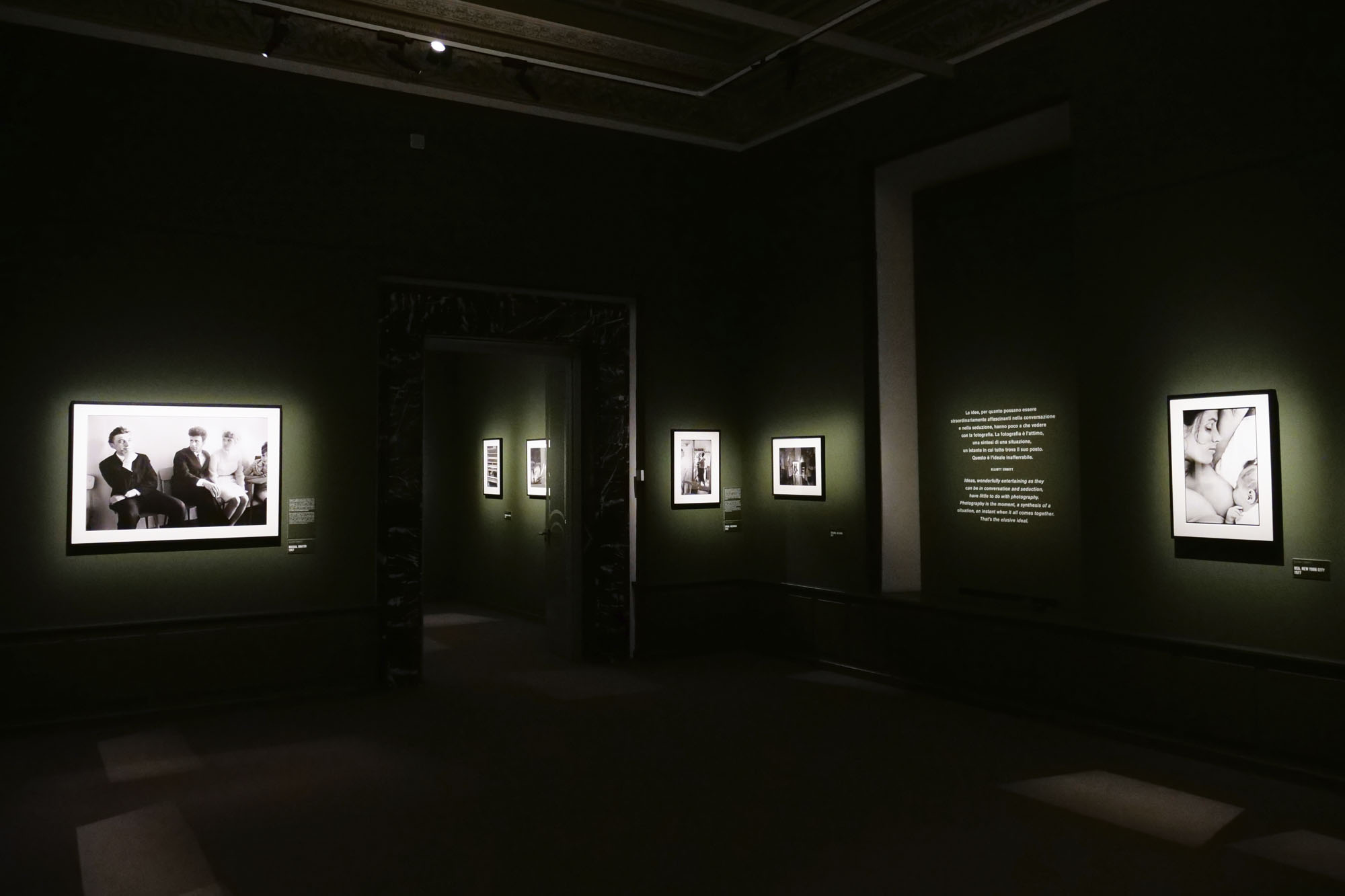
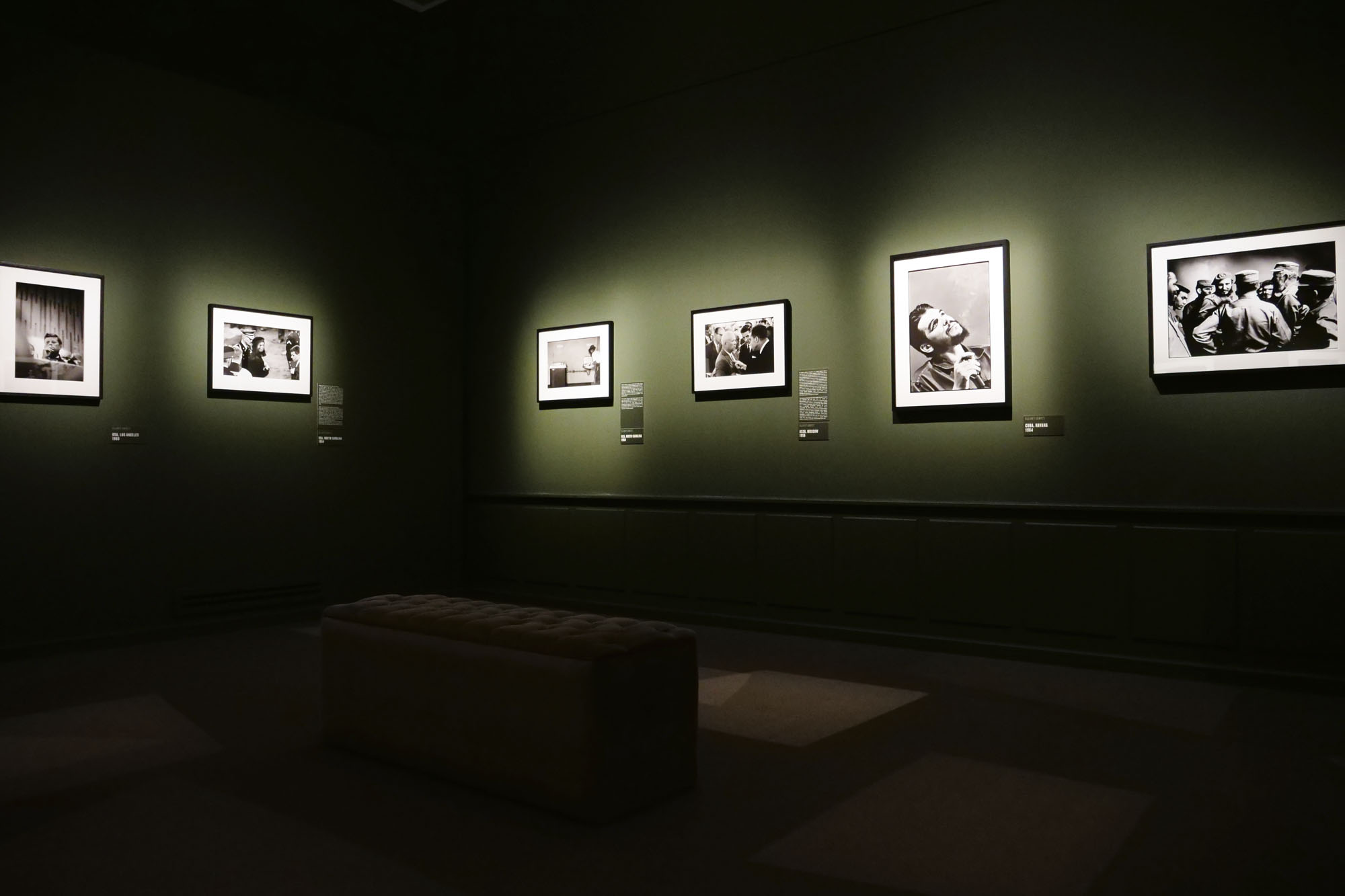
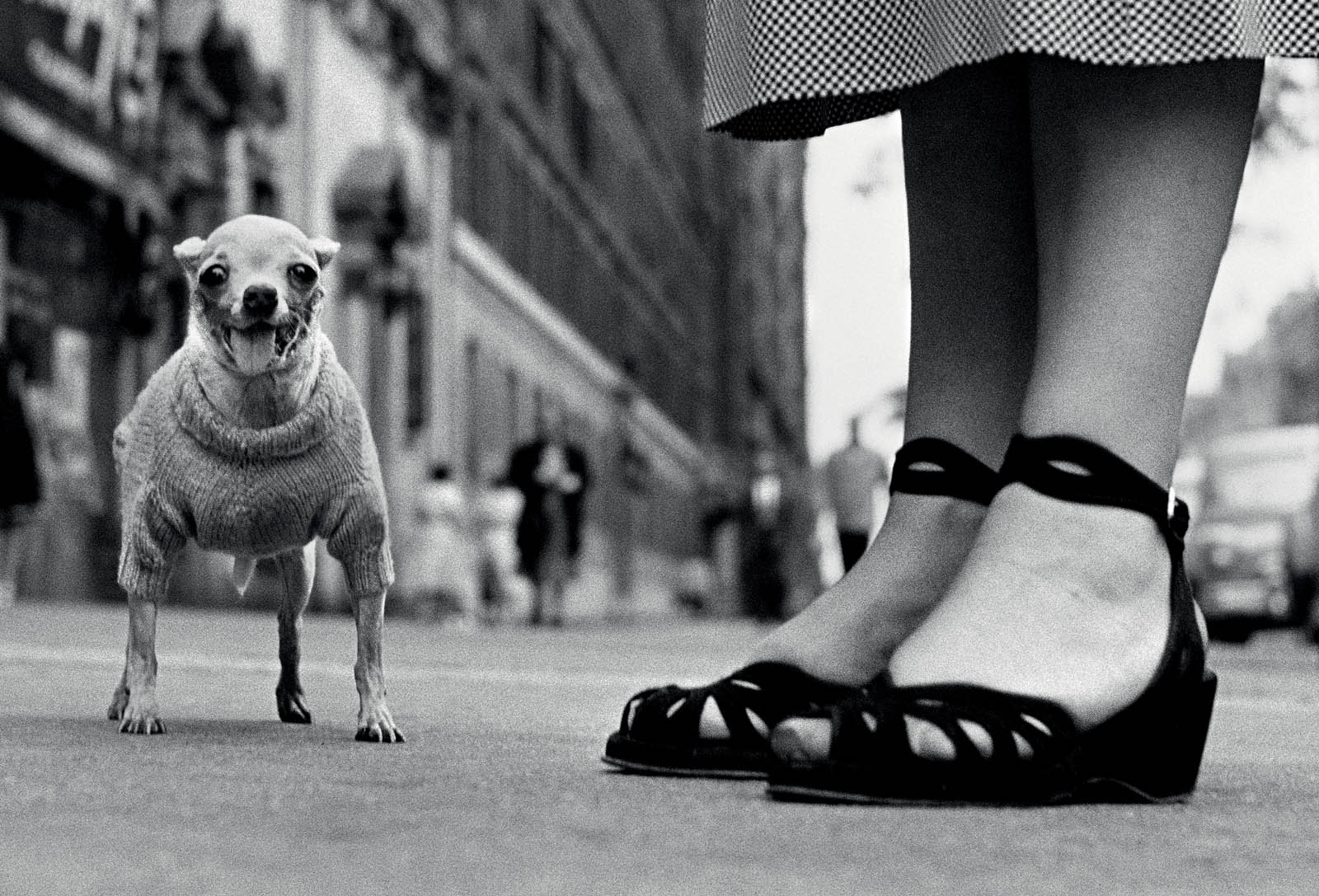
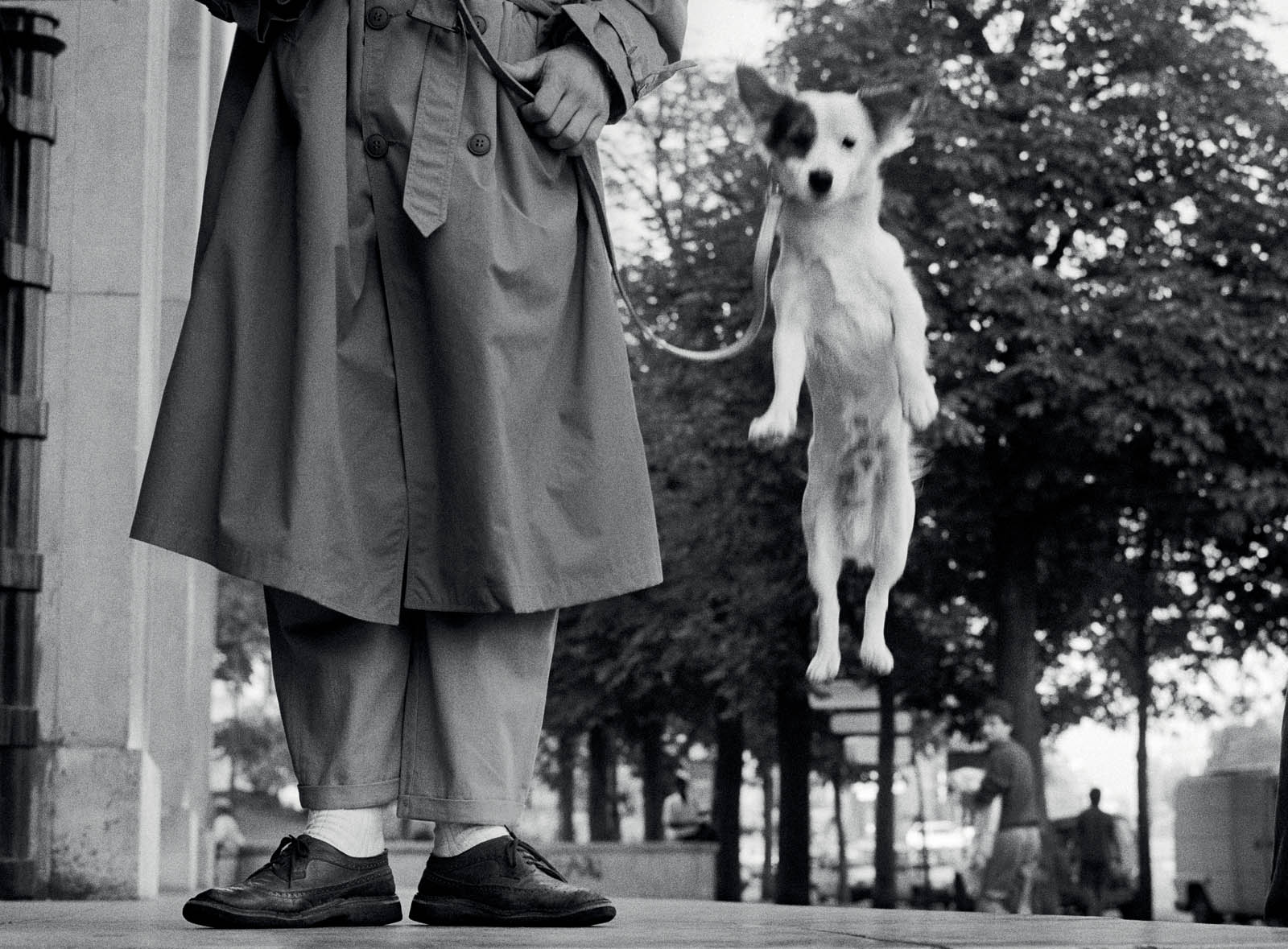
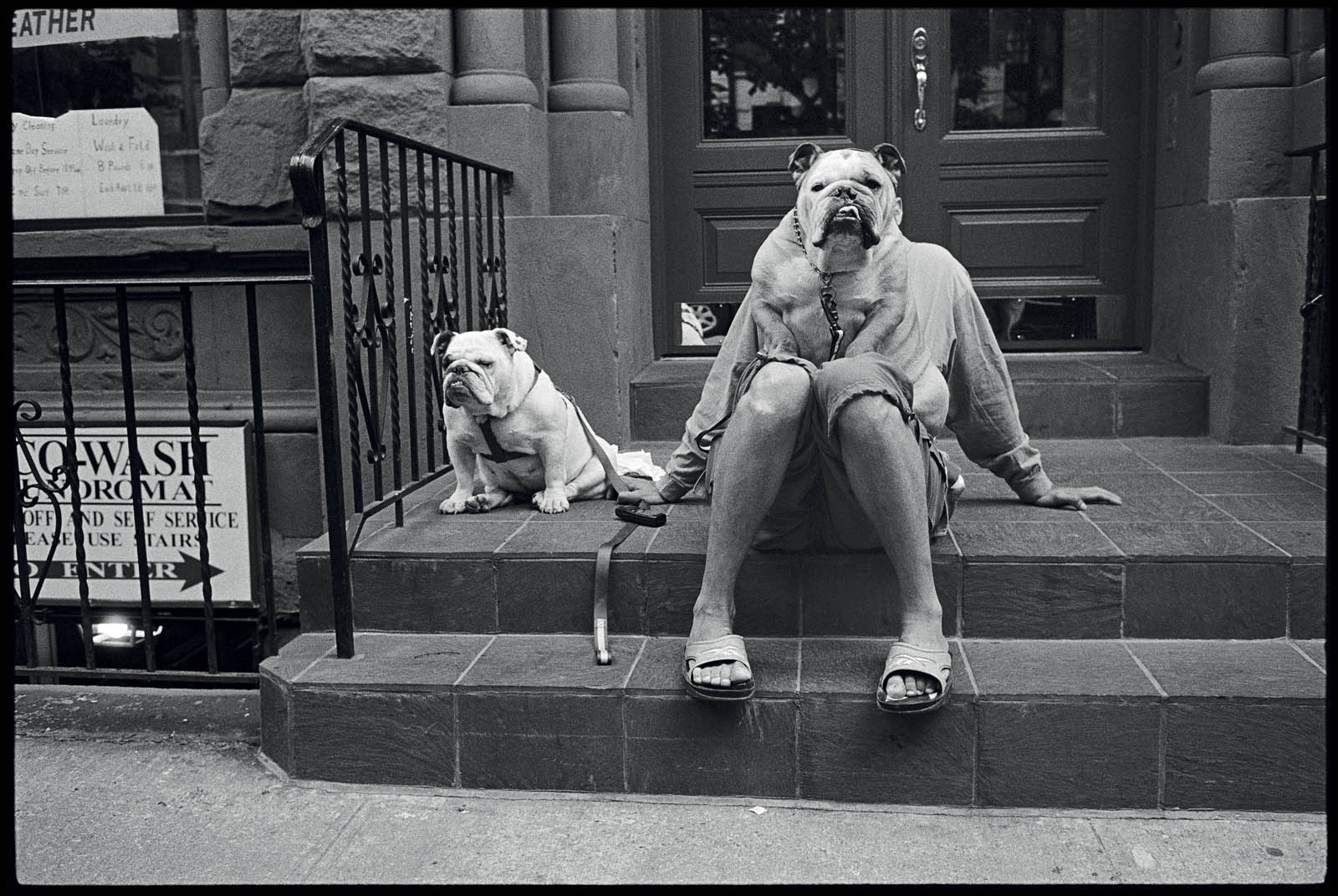
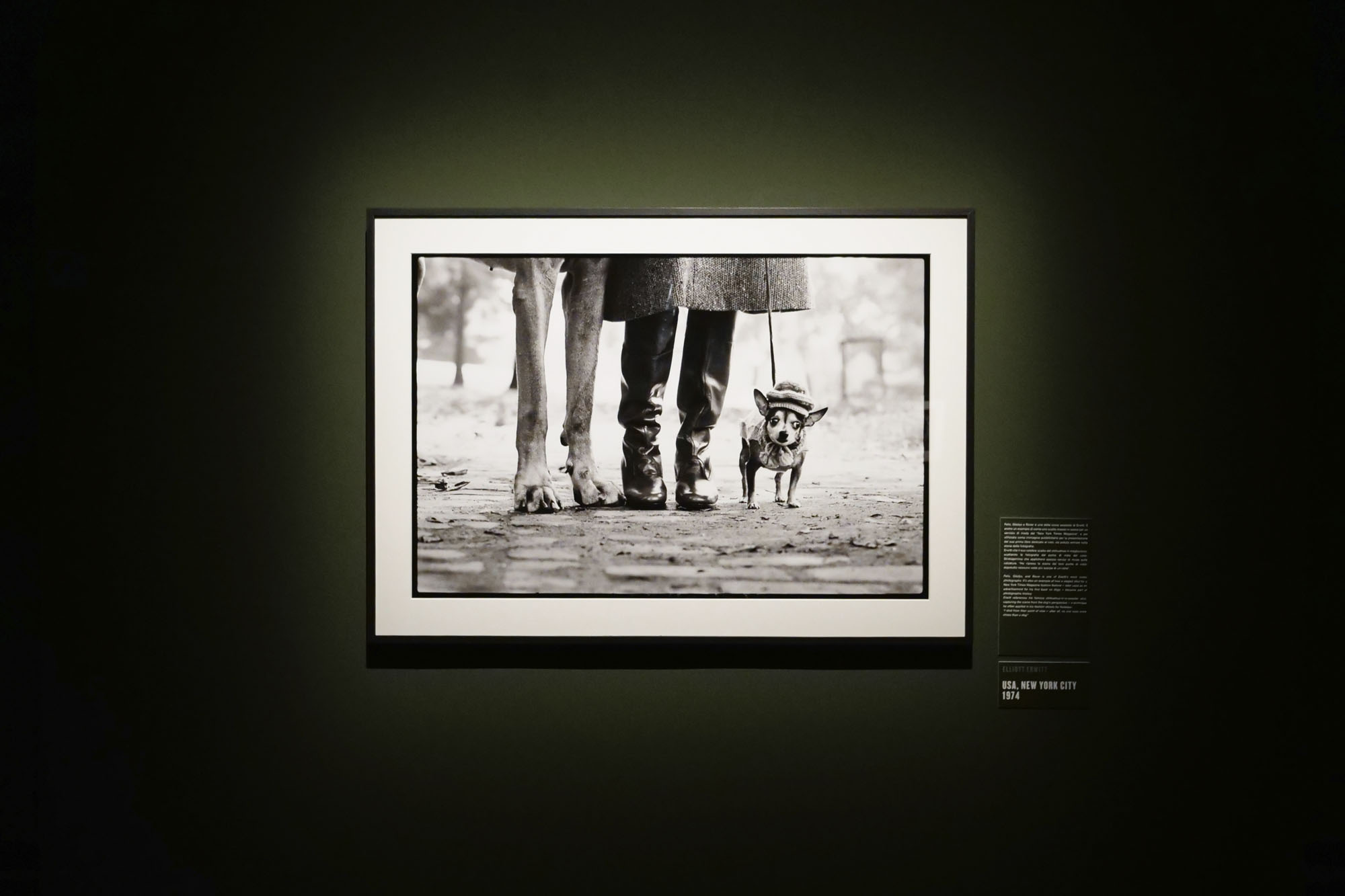
With this sumptuous exhibition of photographs by Elliott Erwitt – in a beautiful palazzo with painted ceilings and classical sculptures with the walls painted a glorious colour of green – you get what is says on the tin: Erwitt’s iconic and humanist photographs of dogs, children and celebrities, “visual double-takes and finely tuned one-liners.”

That is all the media images consisted of, his famous photographs.

I know that the exhibition, and the artist’s reputation, rests on his “icons” but I just wish we could see past these to his other photographs, photographs of everyday people, captured in the midst of their ordinary lives; photographs that contain a little more gravitas, a little more depth of poignancy / spirit / energy, revealing small intimacies not readily seen and acknowledged.

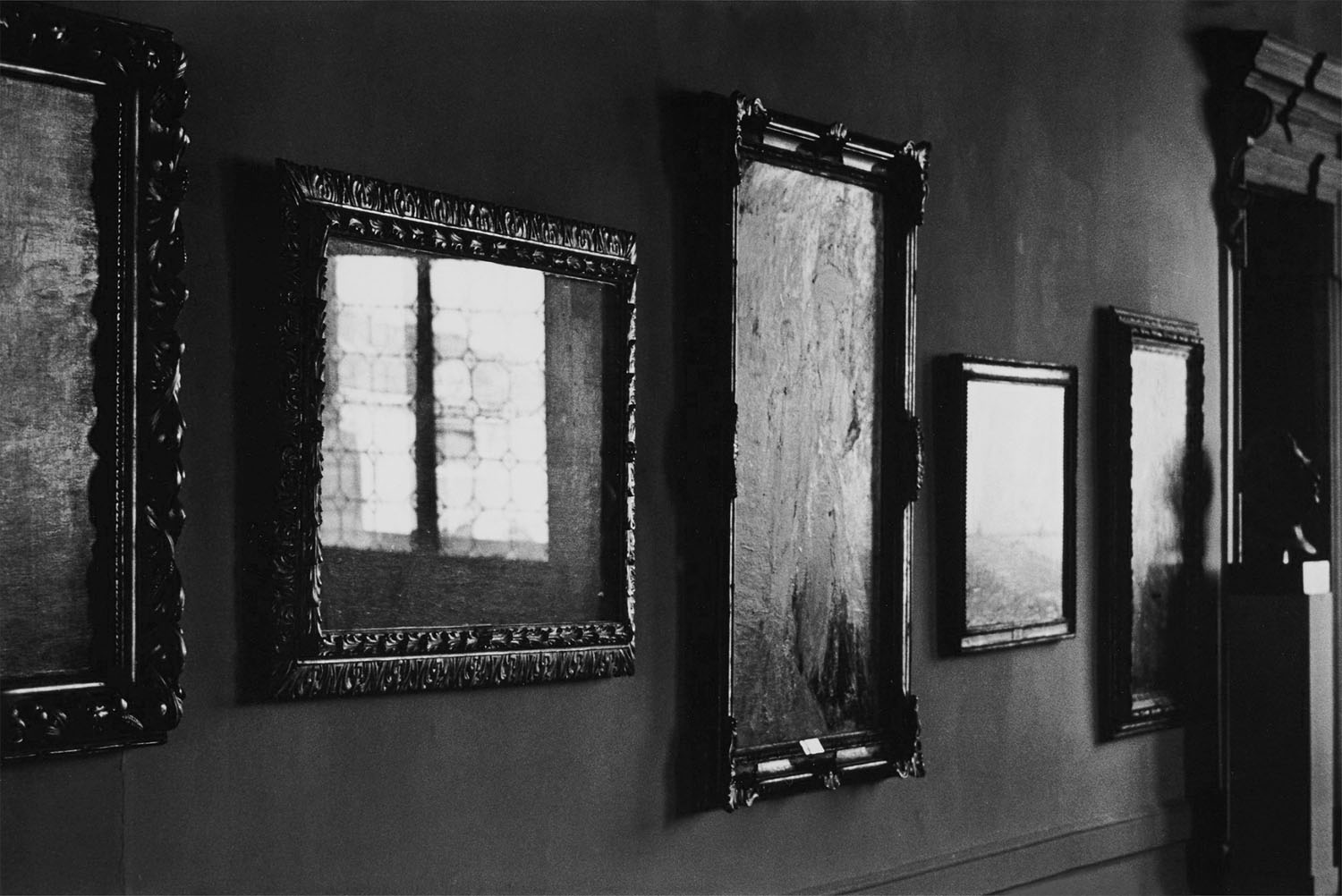
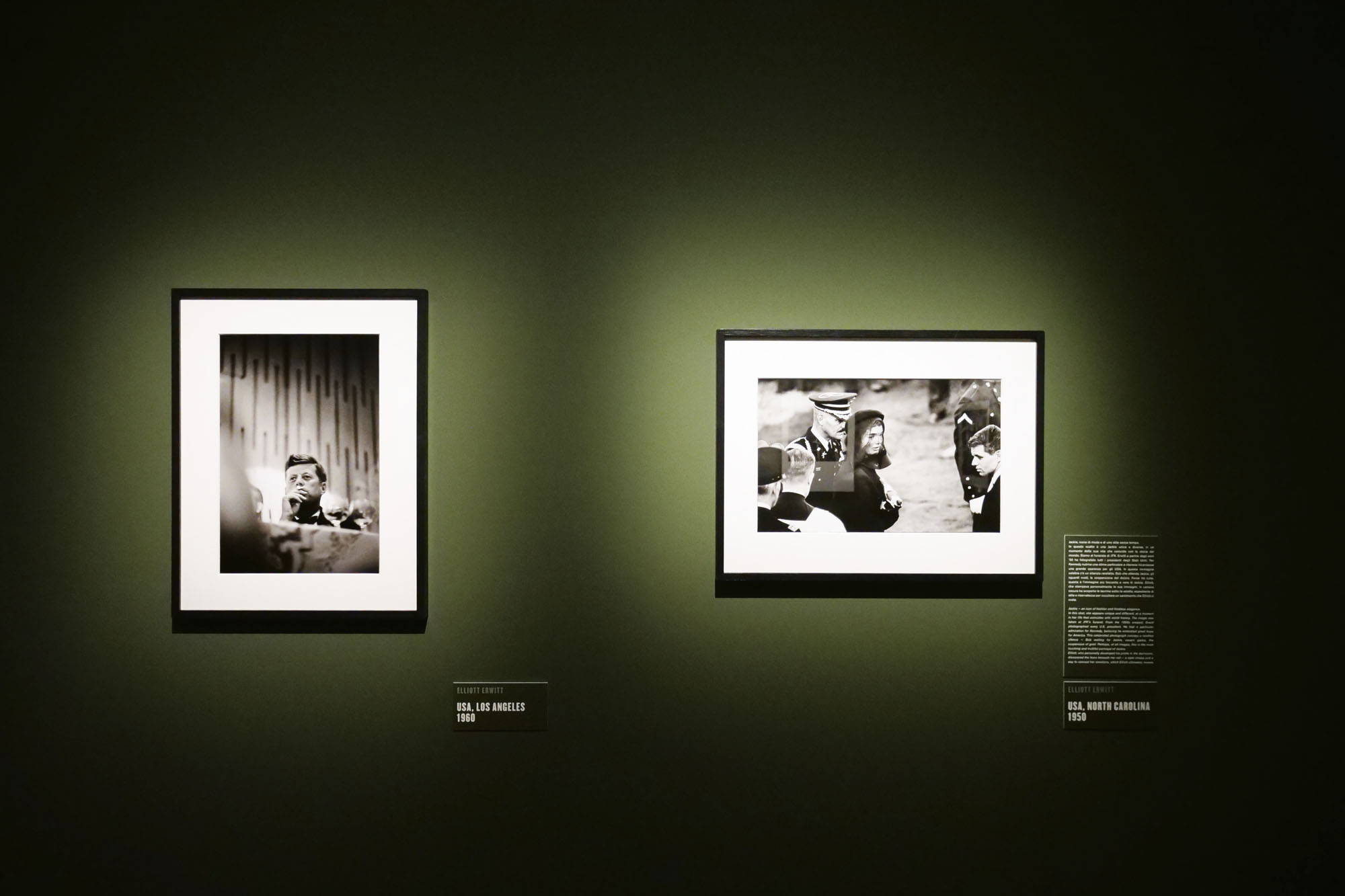
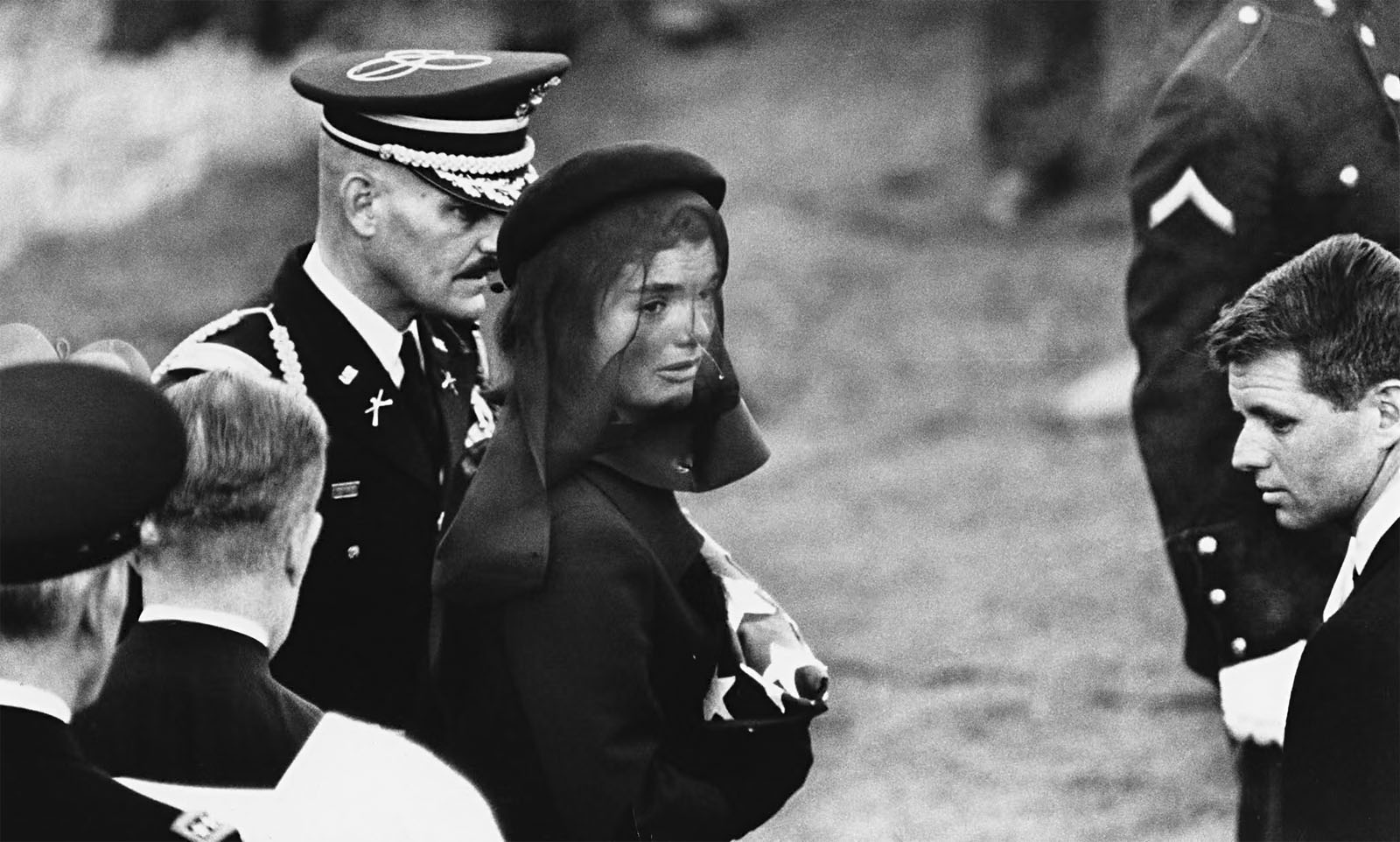
That Erwitt is capable of such images can be see in photographs such as Italy, Venice, Gallerie dell’Accademia, 1965 (below), USA, New York City, 1969 (below) and that most gut wrenching, heart breaking of images, USA, Arlington, Virginia, Jacqueline Kennedy at John F. Kennedy’s funeral, November 25, 1963 (below) – where Erwitt reveals the grief of loss and finally touches the marrow of what it is to be human.

Dr Marcus Bunyan


Many thankx of the Palazzo Bonaparte for allowing me to publish the photographs and video in the posting. Please click on the photographs for a larger version of the image.


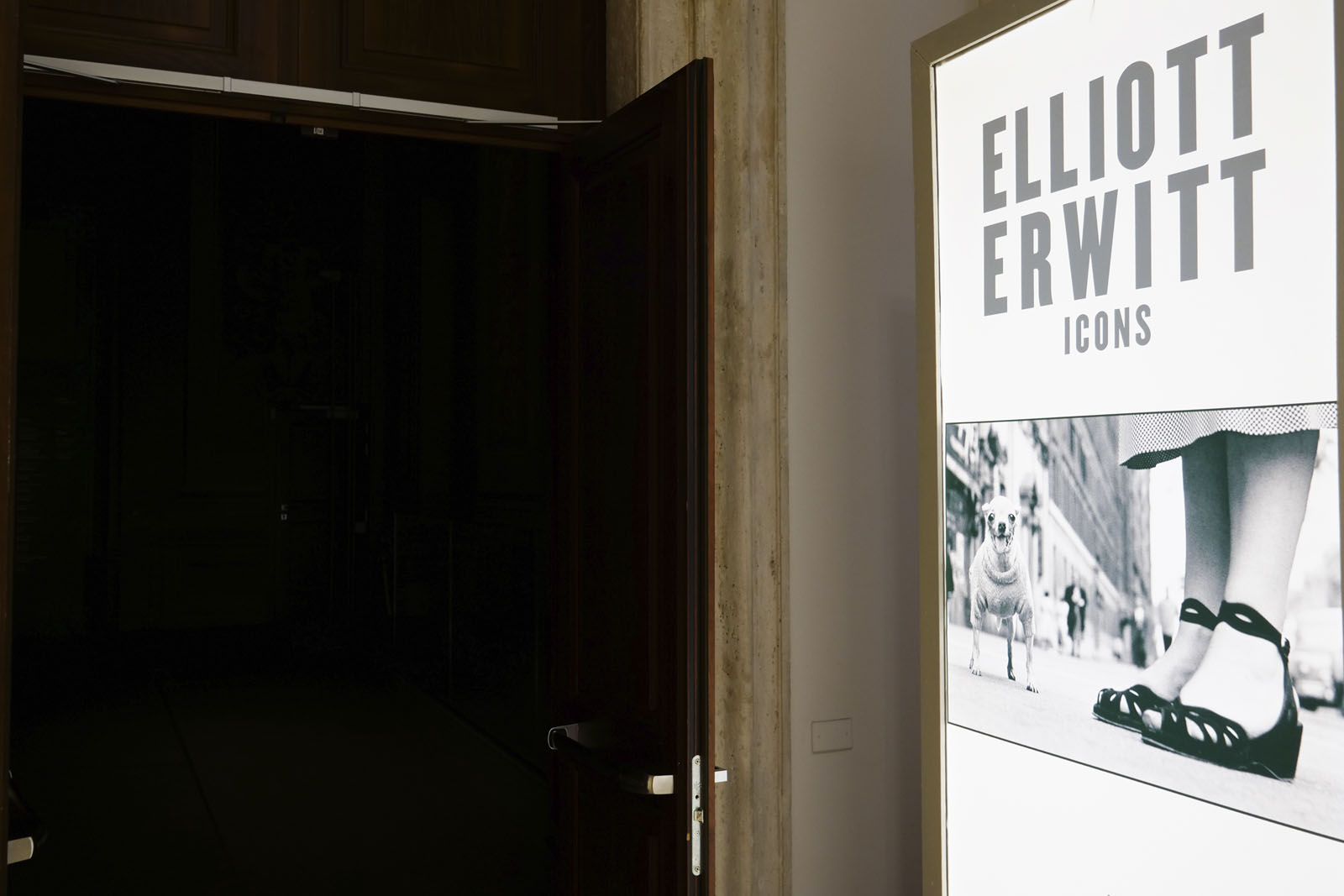
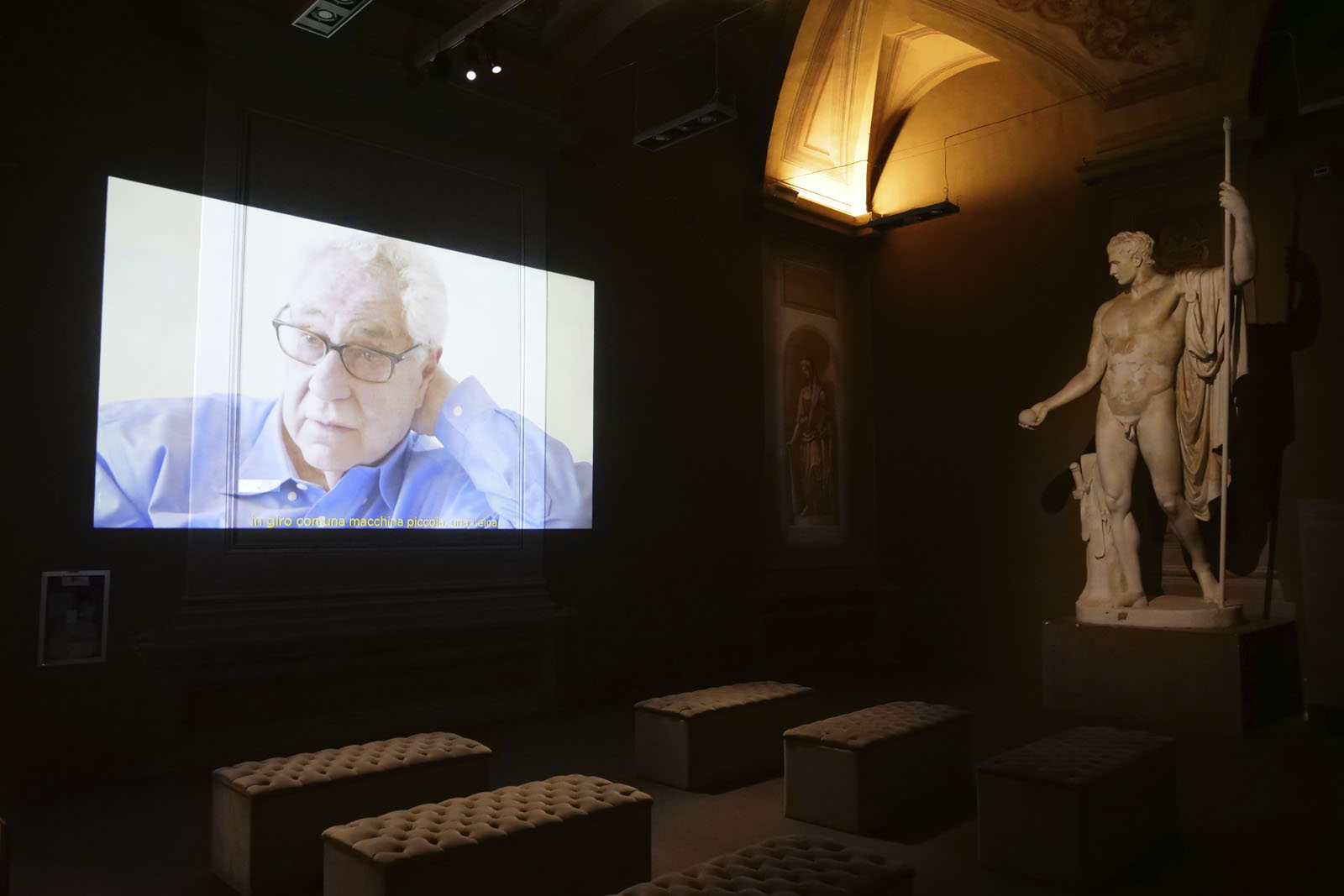
Elliott Erwitt. Icons at Palazzo Bonaparte, Rome, Italy

Installation walk through of the exhibition “Elliott Erwitt. Icons,” dedicated to the late master of visual irony and empathy, Elliott Erwitt. This major show offers an intimate look into the universe of one of contemporary photography’s most significant figures, whose work transformed everyday life into profound visual poetry.


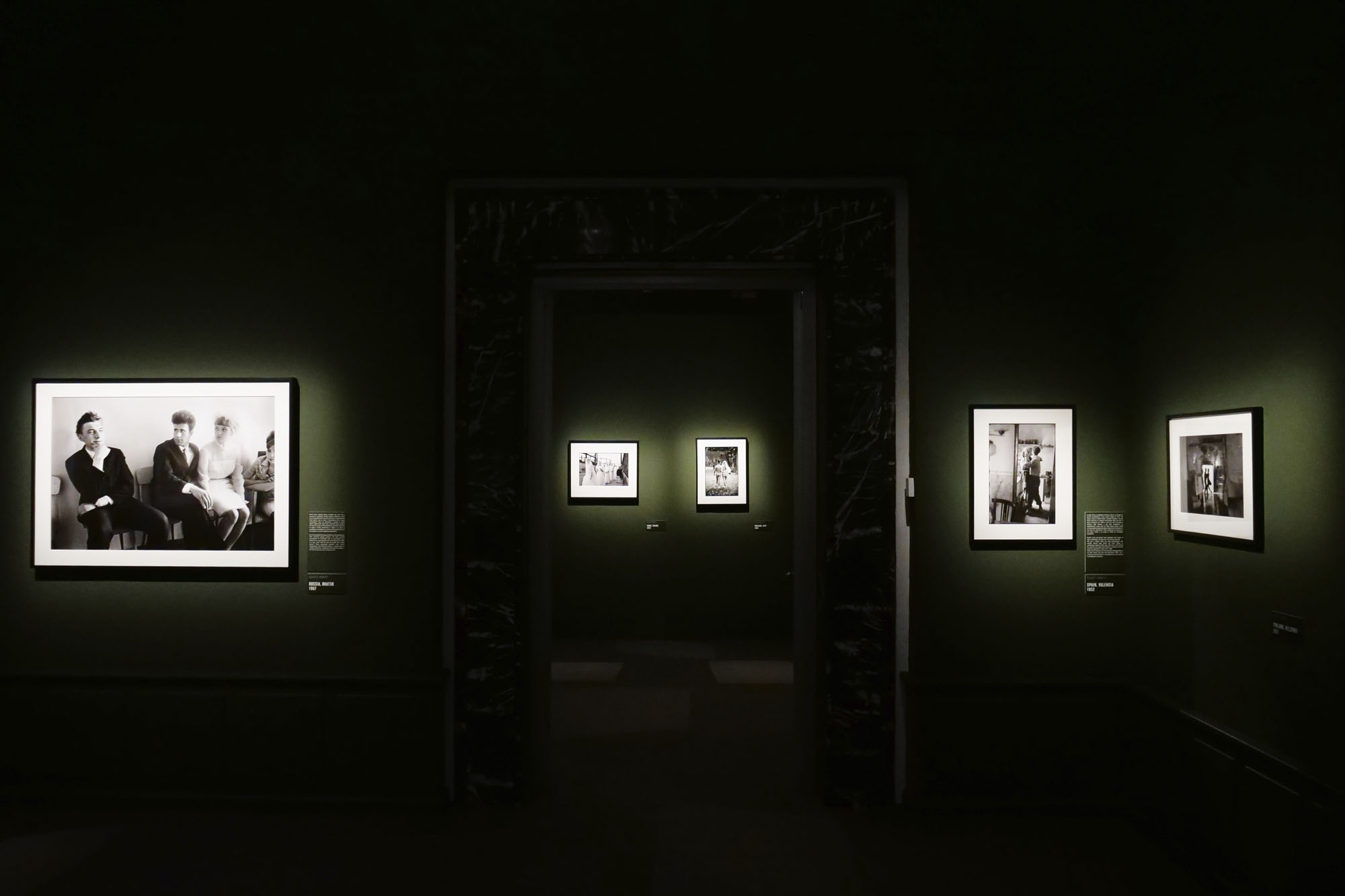
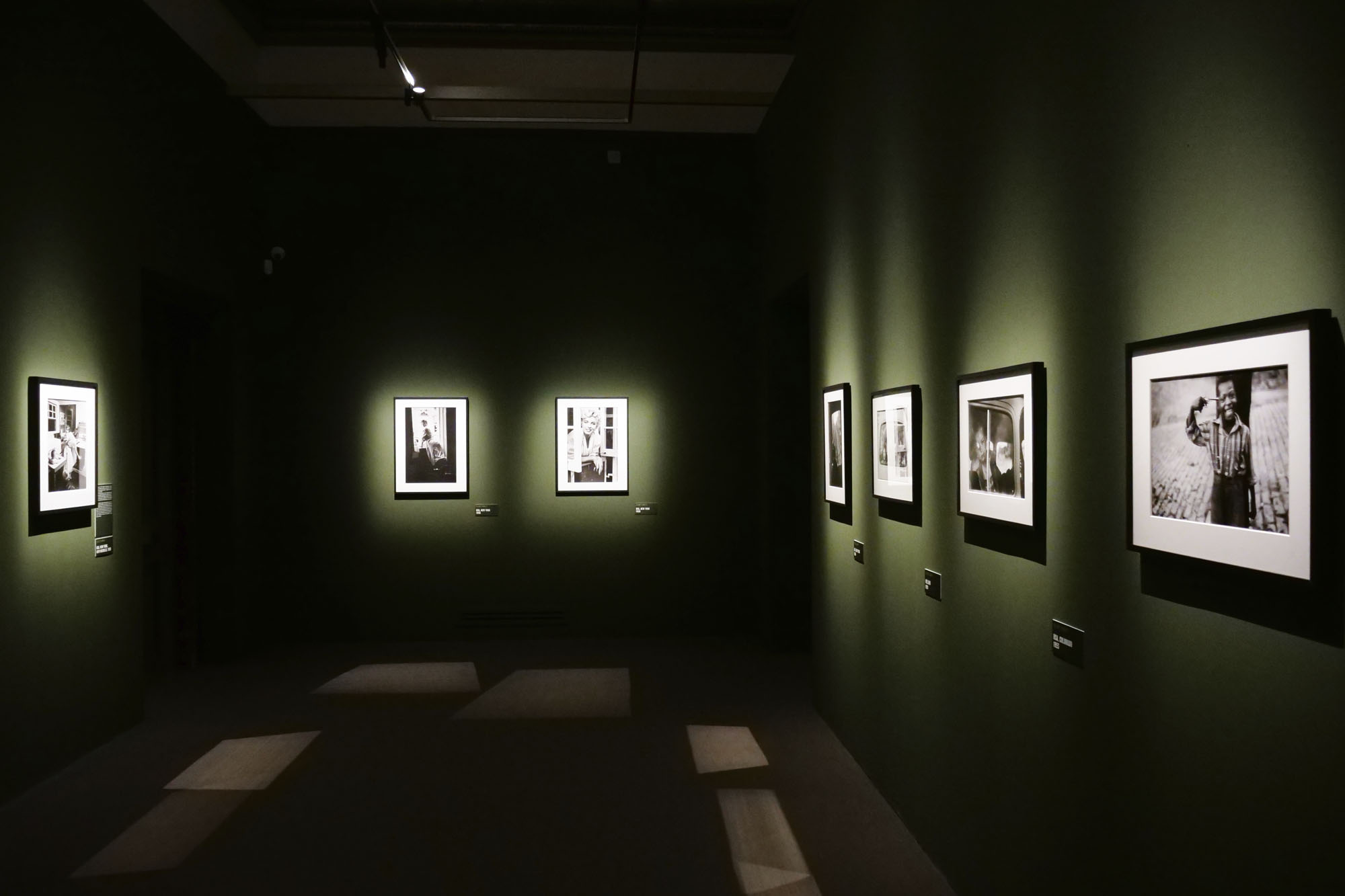
Installation view of the exhibition 'Elliott Erwitt. Icons' at Palazzo Bonaparte, Rome, Italy
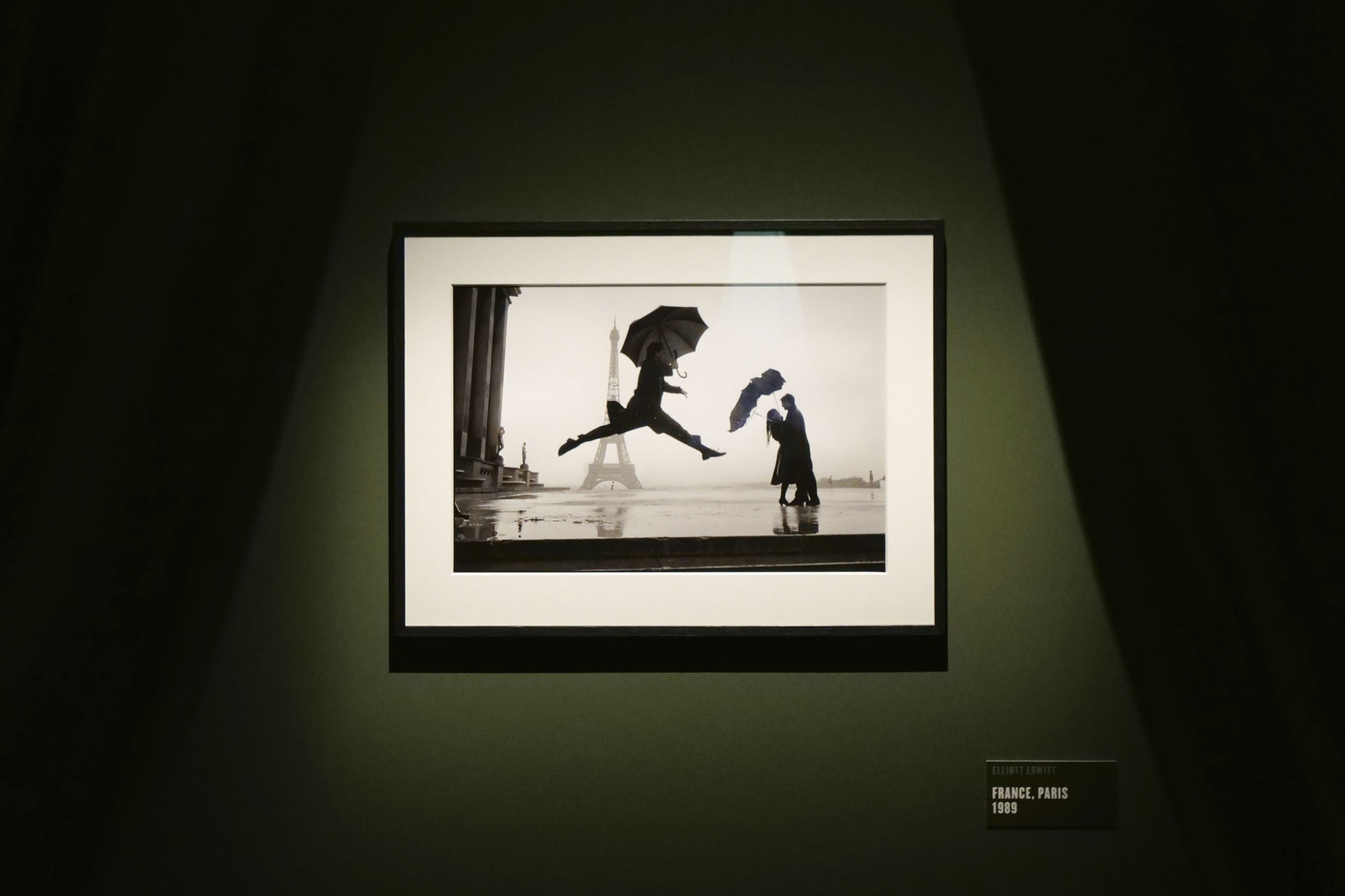
Installation view of the exhibition 'Elliott Erwitt. Icons' at Palazzo Bonaparte, Rome, Italy showing Erwitt's photograph 'France, Paris, 1989'


Installation views of the exhibition Elliott Erwitt. Icons at Palazzo Bonaparte, Rome, Italy showing in the bottom image, the Erwitt’s photograph France, Paris, 1989


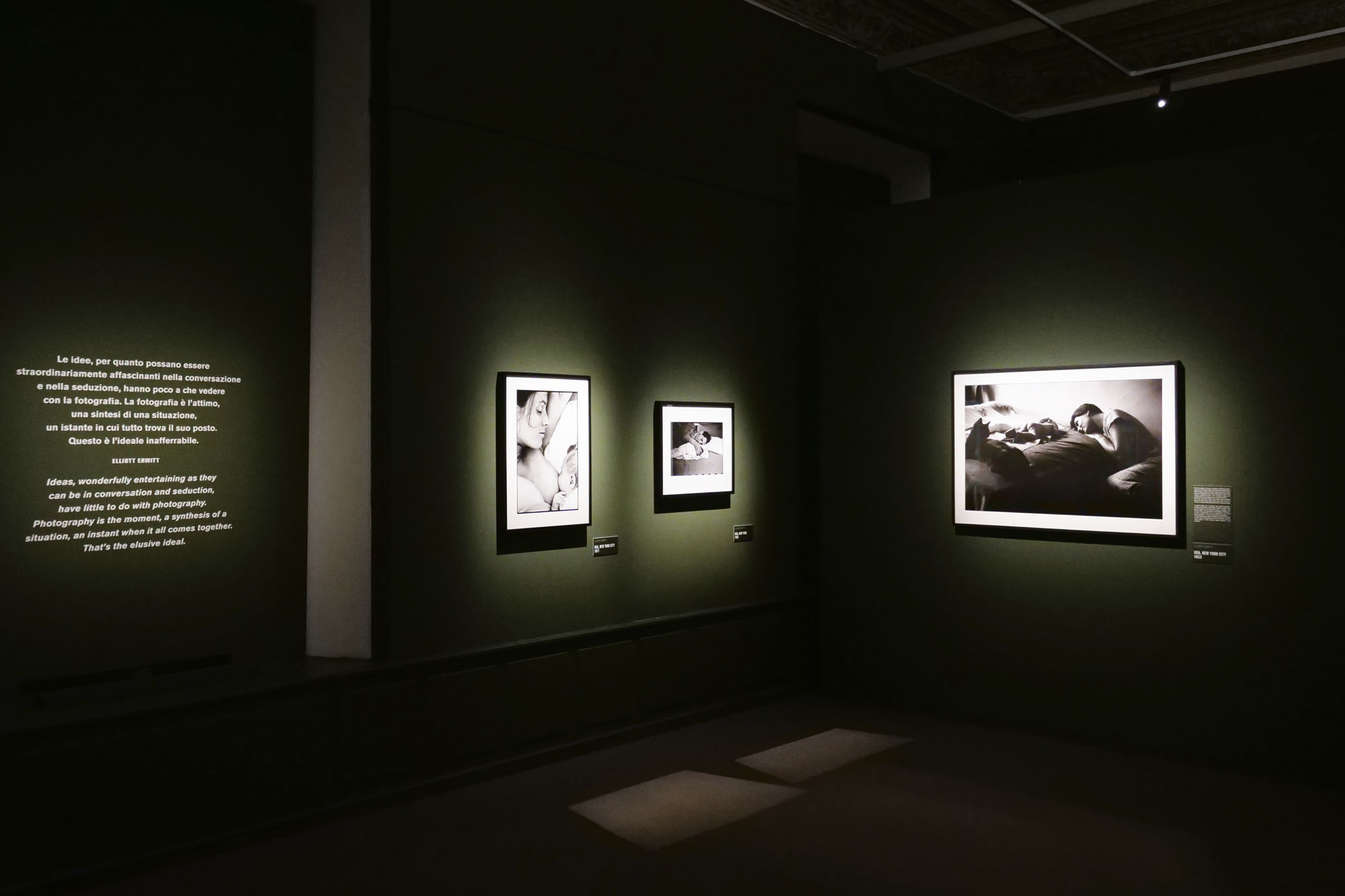
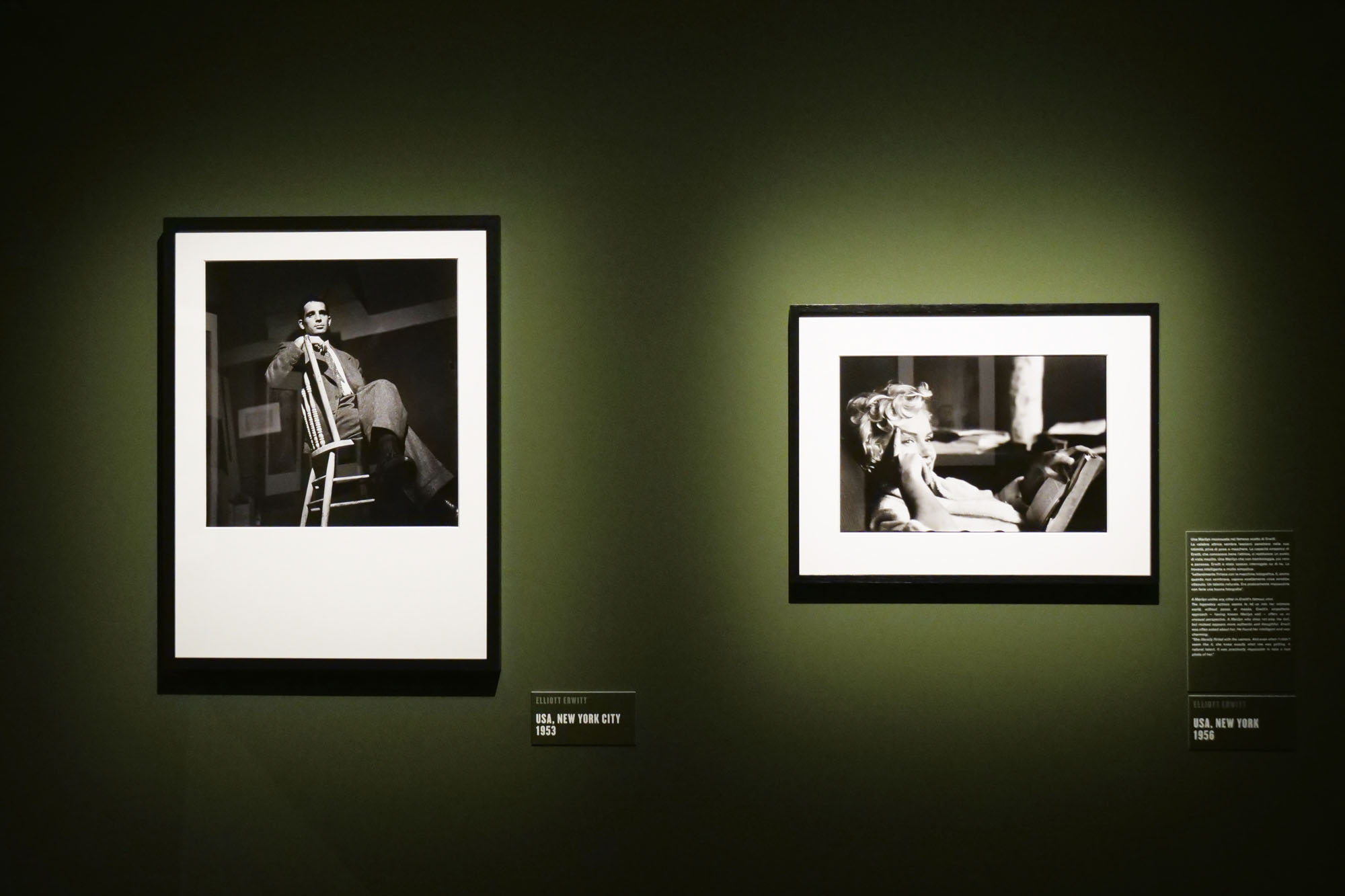
Installation view of the exhibition 'Elliott Erwitt. Icons' at Palazzo Bonaparte, Rome, Italy showing at right Erwitt's photograph 'USA, New York City, 1953'


Installation view of the exhibition Elliott Erwitt. Icons at Palazzo Bonaparte, Rome, Italy showing at right Erwitt’s photograph USA, New York City, 1953


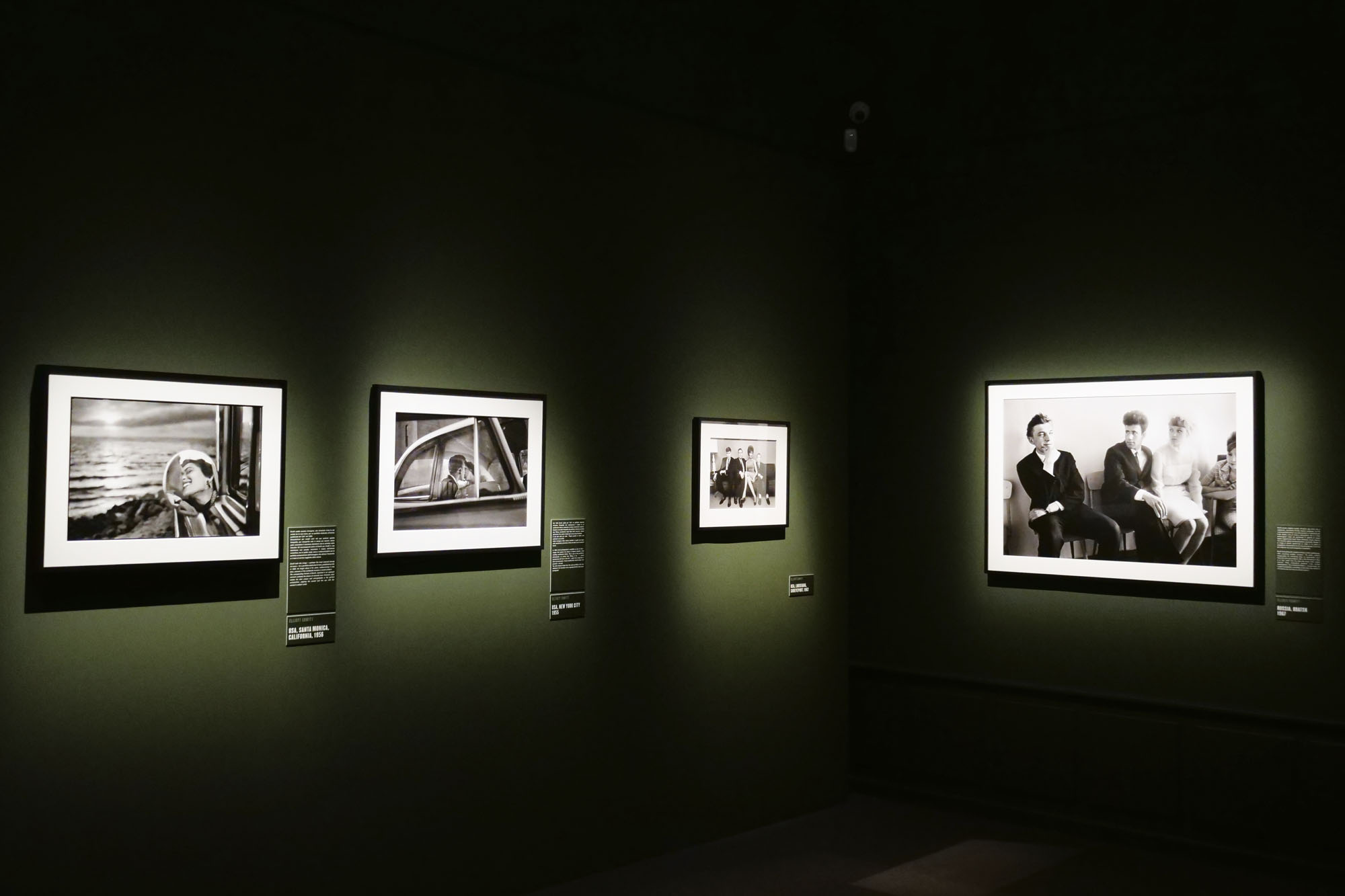
Installation view of the exhibition 'Elliott Erwitt. Icons' at Palazzo Bonaparte, Rome, Italy


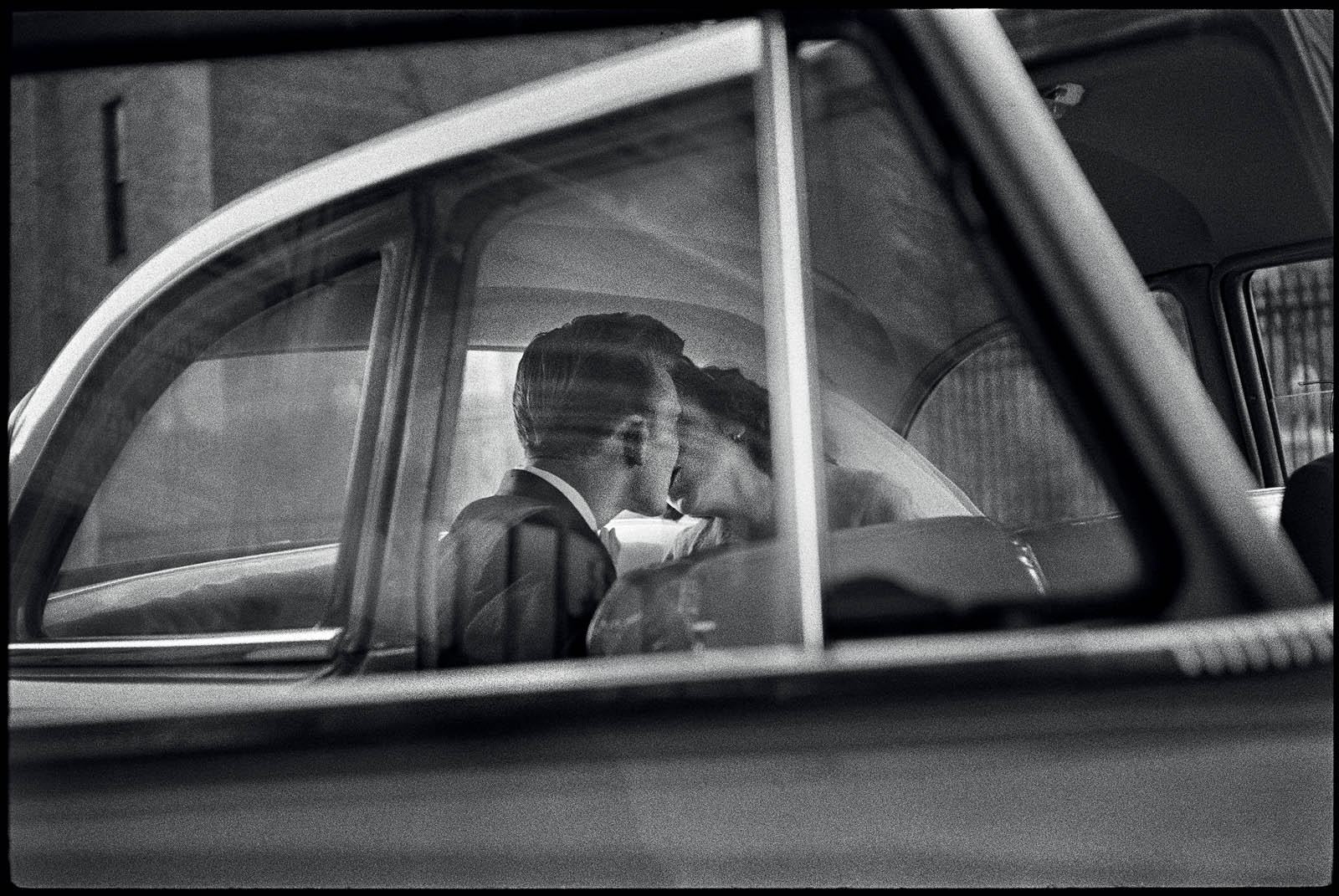
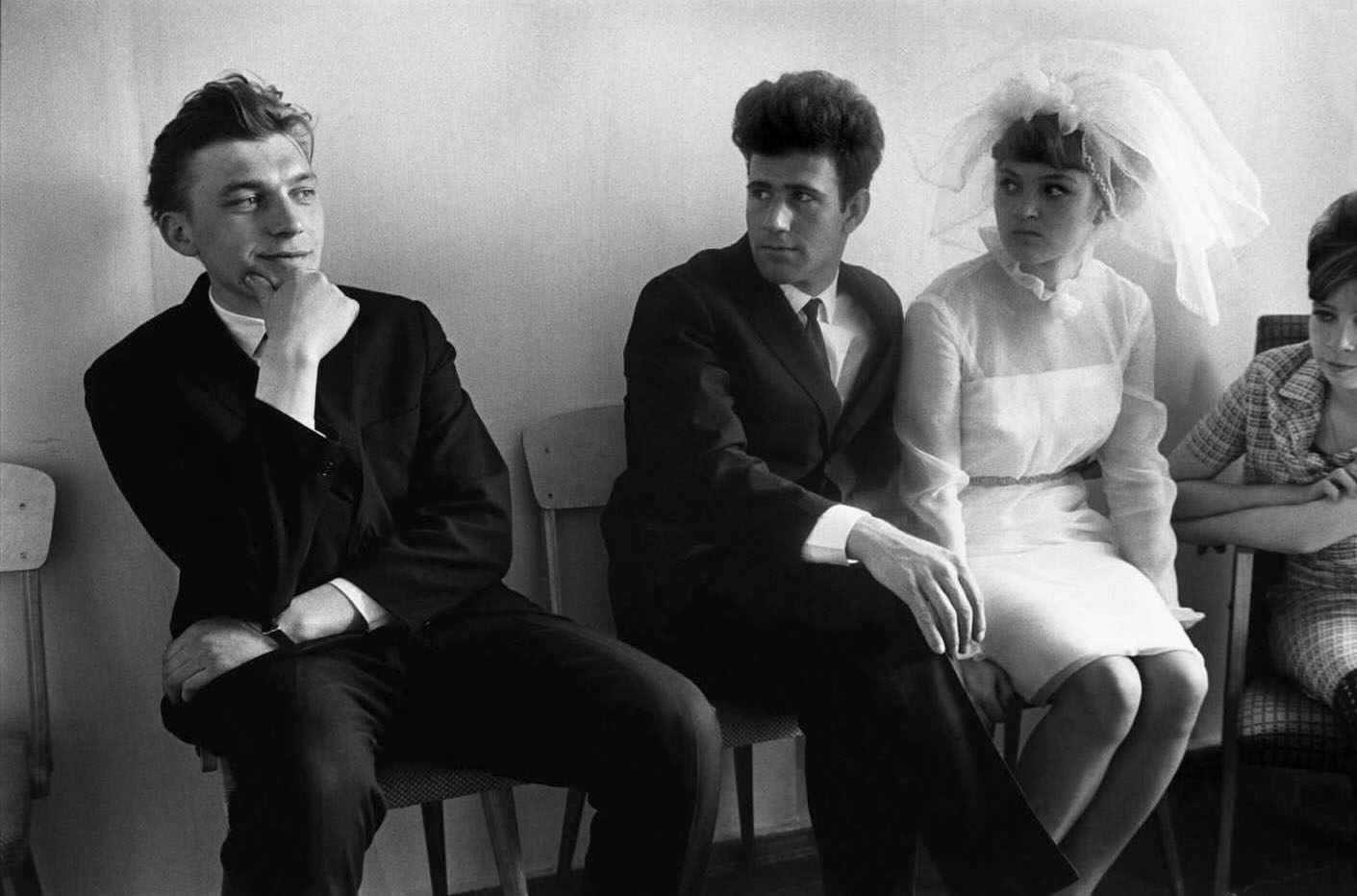
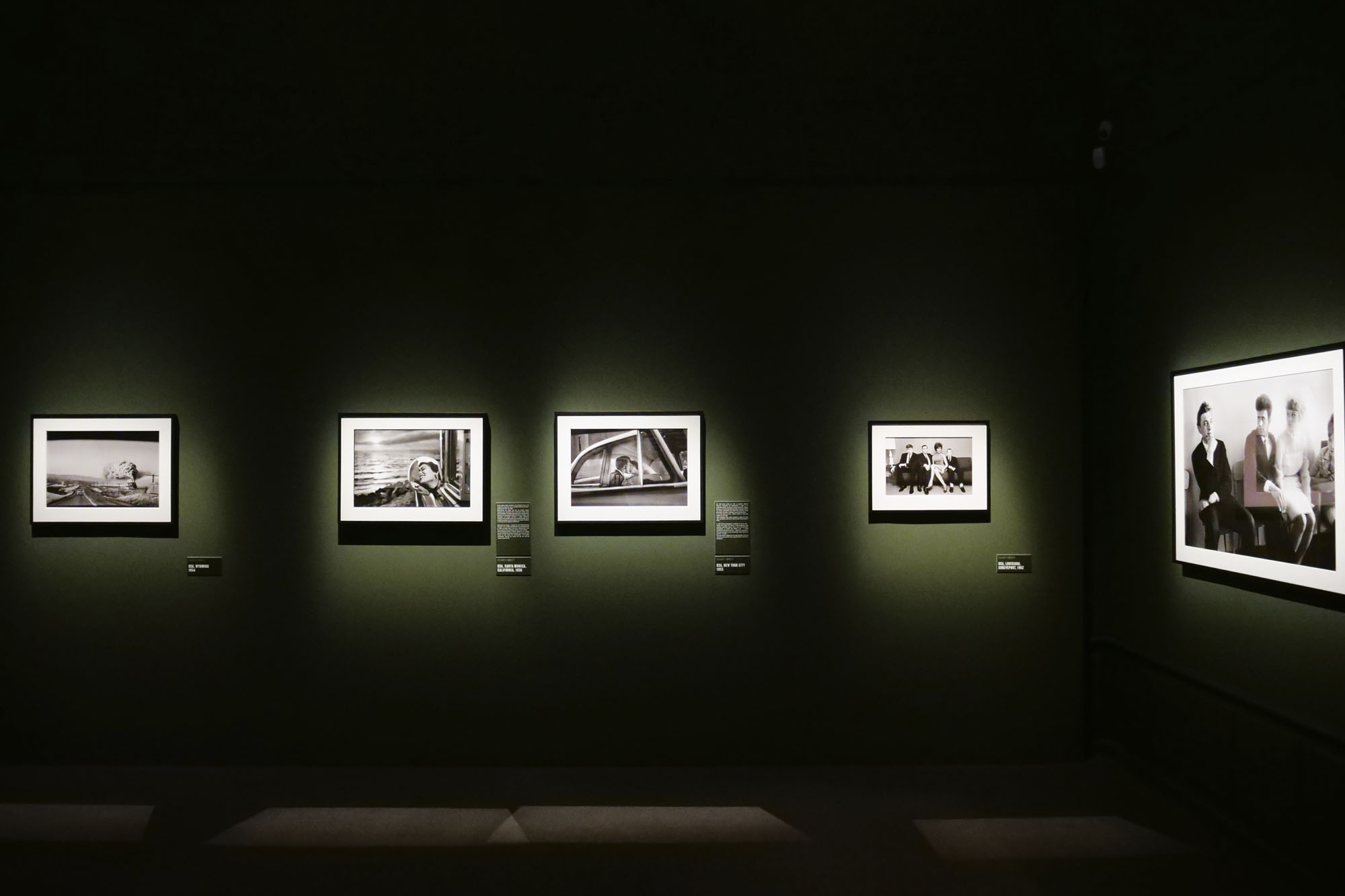
Installation view of the exhibition Elliott Erwitt. Icons at Palazzo Bonaparte, Rome, Italy showing at left, USA, Santa Monica, California, 1956 (below); at second left, USA, New York City, 1955 (below); at third left, USA, Louisiana, Shreveport, 1962; and at right, USSR, Bratsk, Siberia, 1967 (below)


Elliott Erwitt (American born France, 1928-2023) 'USA, Santa Monica, California, 1956' 1956


Elliott Erwitt (American born France, 1928-2023)
USA, Santa Monica, California, 1956
1956
Gelatin silver print
Private Collection
© Elliott Erwitt


Elliott Erwitt (American born France, 1928-2023) 'USA, New York City, 1955' 1955


Elliott Erwitt (American born France, 1928-2023)
USA, New York City, 1955
1955
Gelatin silver print
50 x 60cm
Private Collection
© Elliott Erwitt


Elliott Erwitt (American born France, 1928-2023) 'USSR, Bratsk, Siberia, 1967' 1967


Elliott Erwitt (American born France, 1928-2023)
USSR, Bratsk, Siberia, 1967
1967
Gelatin silver print
Private Collection
© Elliott Erwitt


Starting June 28th, 2025, Palazzo Bonaparte will open its doors to an extraordinary exhibition, “Elliott Erwitt. Icons,” dedicated to the late master of visual irony and empathy, Elliott Erwitt. This major show offers an intimate look into the universe of one of contemporary photography’s most significant figures, whose work transformed everyday life into profound visual poetry.

With over 80 celebrated photographs, “Elliott Erwitt. Icons” invites visitors to experience Erwitt’s distinctive style – irreverent, poetic, and deeply human. He possessed a remarkable ability to capture the lightness of the joy of living, becoming the most insightful and moving chronicler of the human comedy. His lens made us smile, reflect, and feel, turning fleeting moments into unforgettable images.

A Glimpse into Erwitt’s Vision

Erwitt, who passed away in November 2023 at the age of 95, was a master at transforming the ordinary into the extraordinary. His “Icons” are not just photographs; they are symbols of his unique perspective and our shared collective memory. As he once put it, “In the saddest and most wintry moments of life… suddenly the sight of something wonderful can change the aspect of things, your state of mind. The type of photography I like, the one where the instant is caught, is very similar to this break in the clouds. In a flash, a wonderful photo seems to come out of nowhere.”

This exhibition, curated by Biba Giacchetti, a leading international Erwitt expert, along with technical assistance from Gabriele Accornero, offers a comprehensive yet concise overview of his genius. From his anthropomorphic dogs to powerful world leaders, from iconic movie stars like Marilyn Monroe to intimate family moments, Erwitt’s gaze was both incisive and empathetic. He captured not only the irony of daily life but also its underlying complexity.

Beyond the Famous Faces

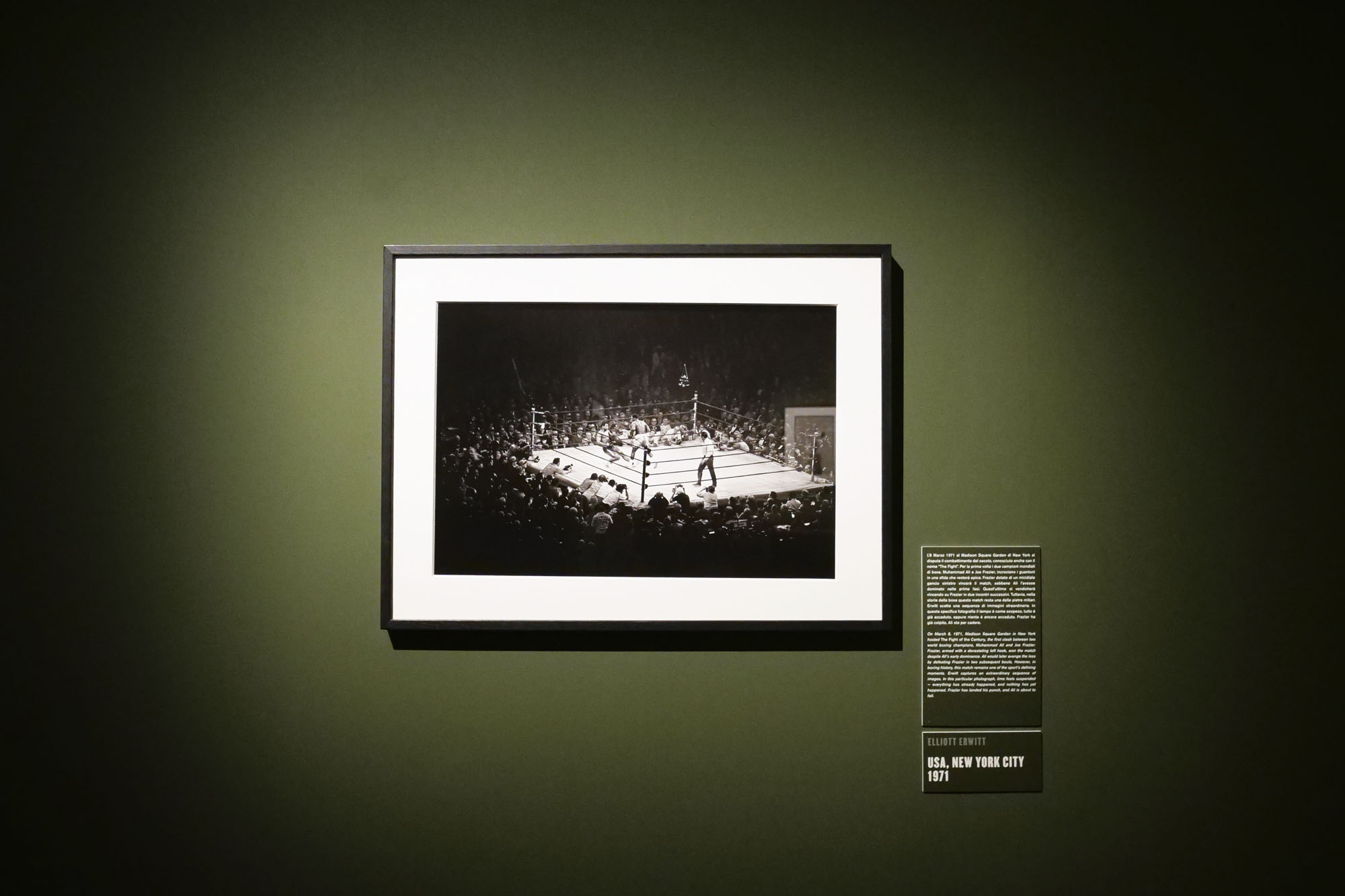
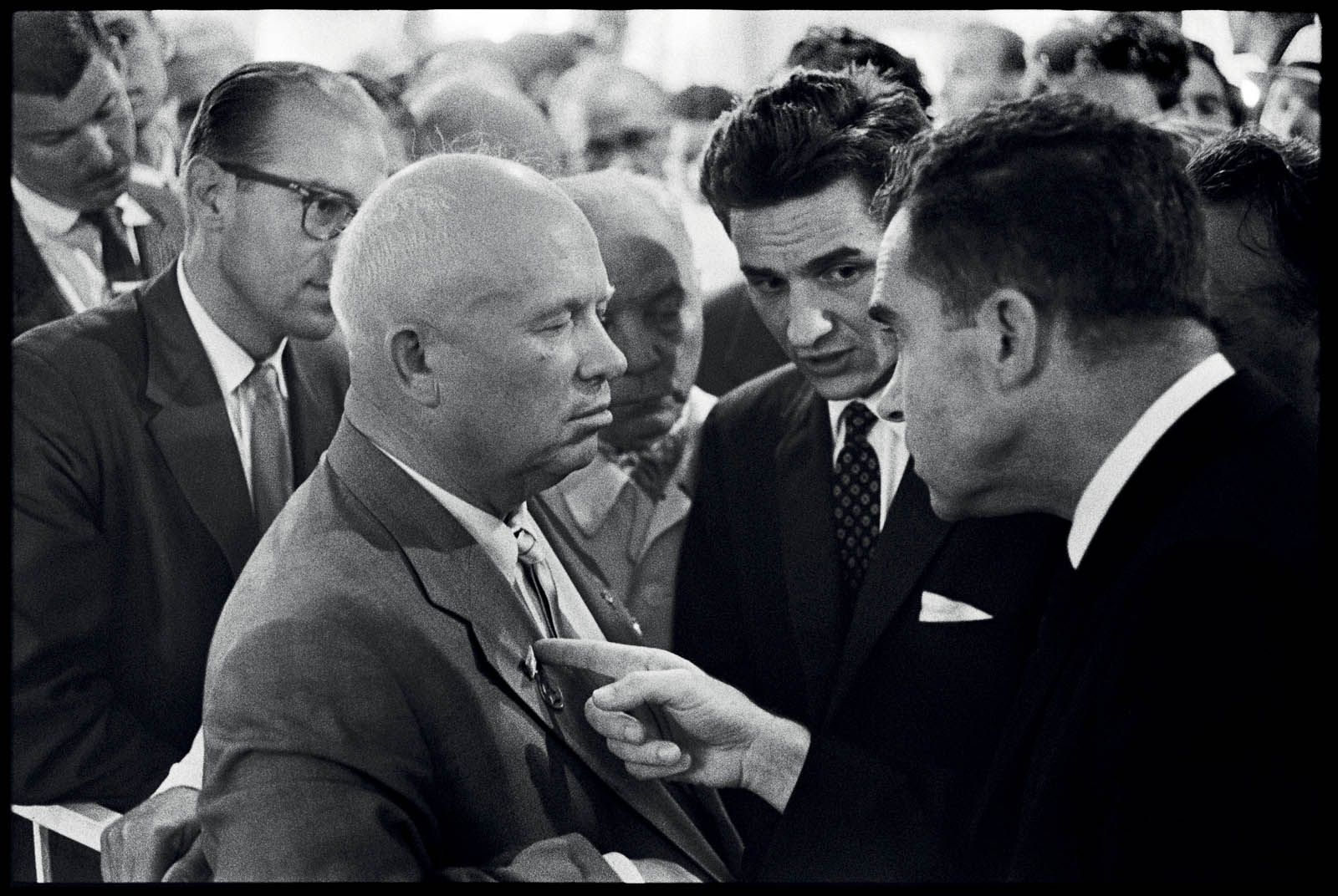
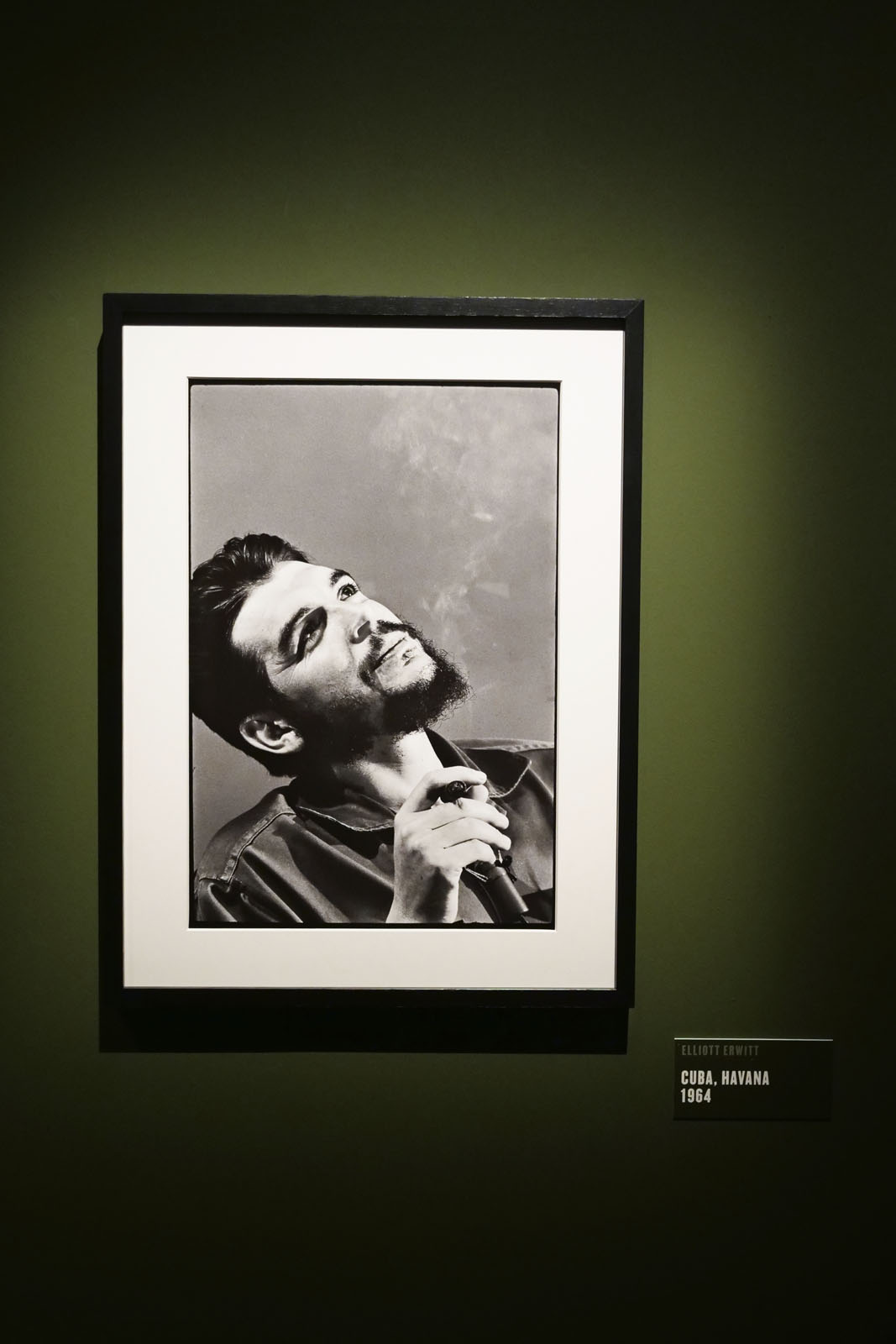
While the exhibition features renowned portraits of figures such as Che Guevara, Jack Kerouac, Marlene Dietrich, Fidel Castro, and Sophia Loren, it also highlights historical moments like the Nixon-Khrushchev dispute, Kennedy’s funeral, and the Frazier-Ali fight. Yet, Erwitt’s democratic approach to his medium shines through in his focus on everyday people, captured in the midst of their ordinary lives.

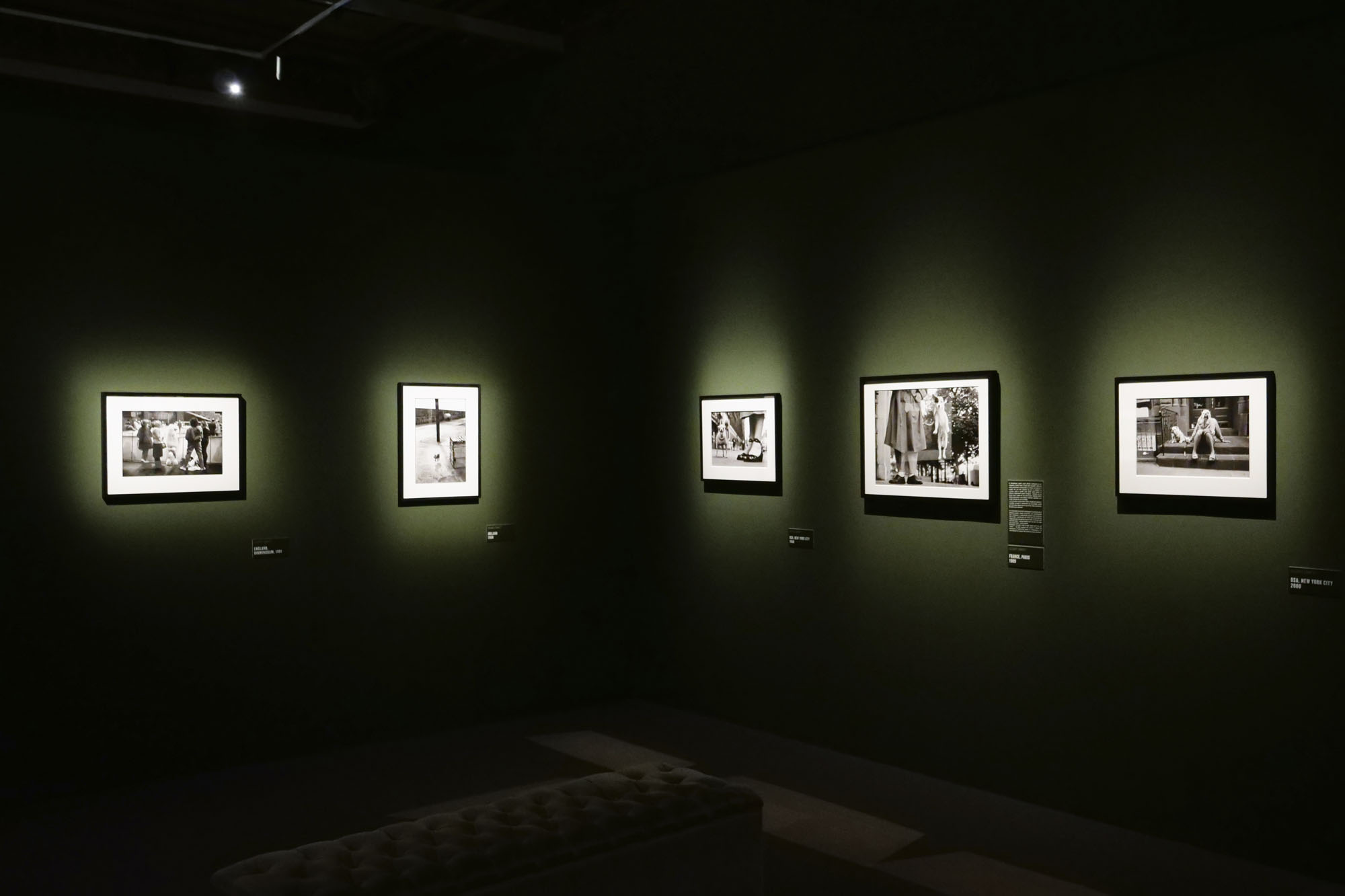
A significant portion of Erwitt’s work showcased his love for dogs, whose free-spirited nature he admired. Many photographs are taken from a dog’s-eye view, often revealing only the feet or legs of their owners. Erwitt ingeniously employed playful tactics, like sounding a horn or mimicking a bark, to elicit natural reactions from the animals, resulting in humorous and endearing compositions.

An Unmissable Summer Event

The “Elliott Erwitt. Icons” exhibition, running until September 21st, 2025, marks the opening of Palazzo Bonaparte’s summer exhibition season. Following the success of the recent Edvard Munch retrospective, this show pays homage to a globally beloved master of photography. Visitors will have the unique opportunity to journey through Erwitt’s surreal, romantic, and playful vision of the world, always capable of grasping the essence of things.

Press release from Palazzo Bonaparte


Installation view of the exhibition 'Elliott Erwitt. Icons' at Palazzo Bonaparte, Rome, Italy
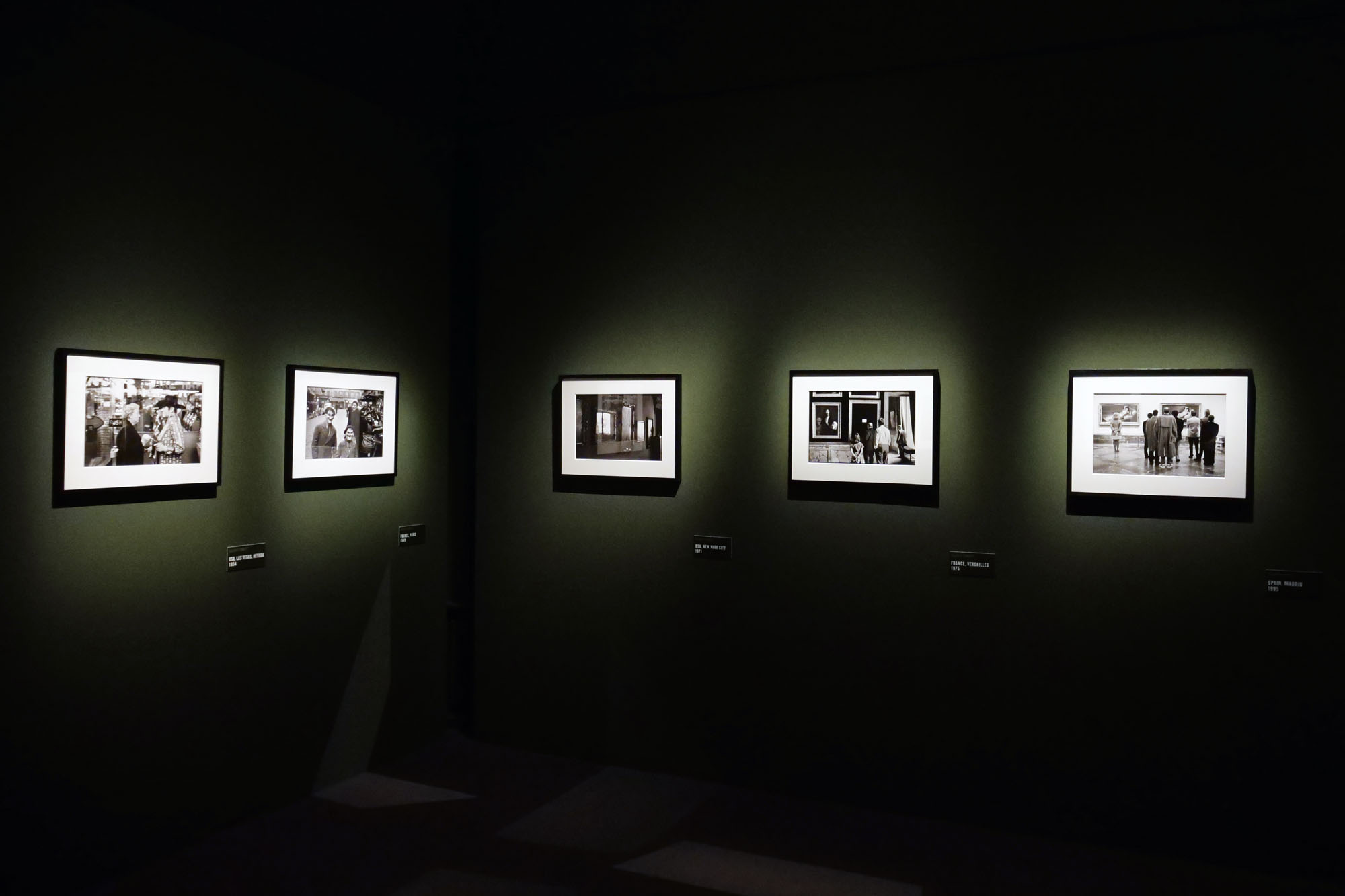
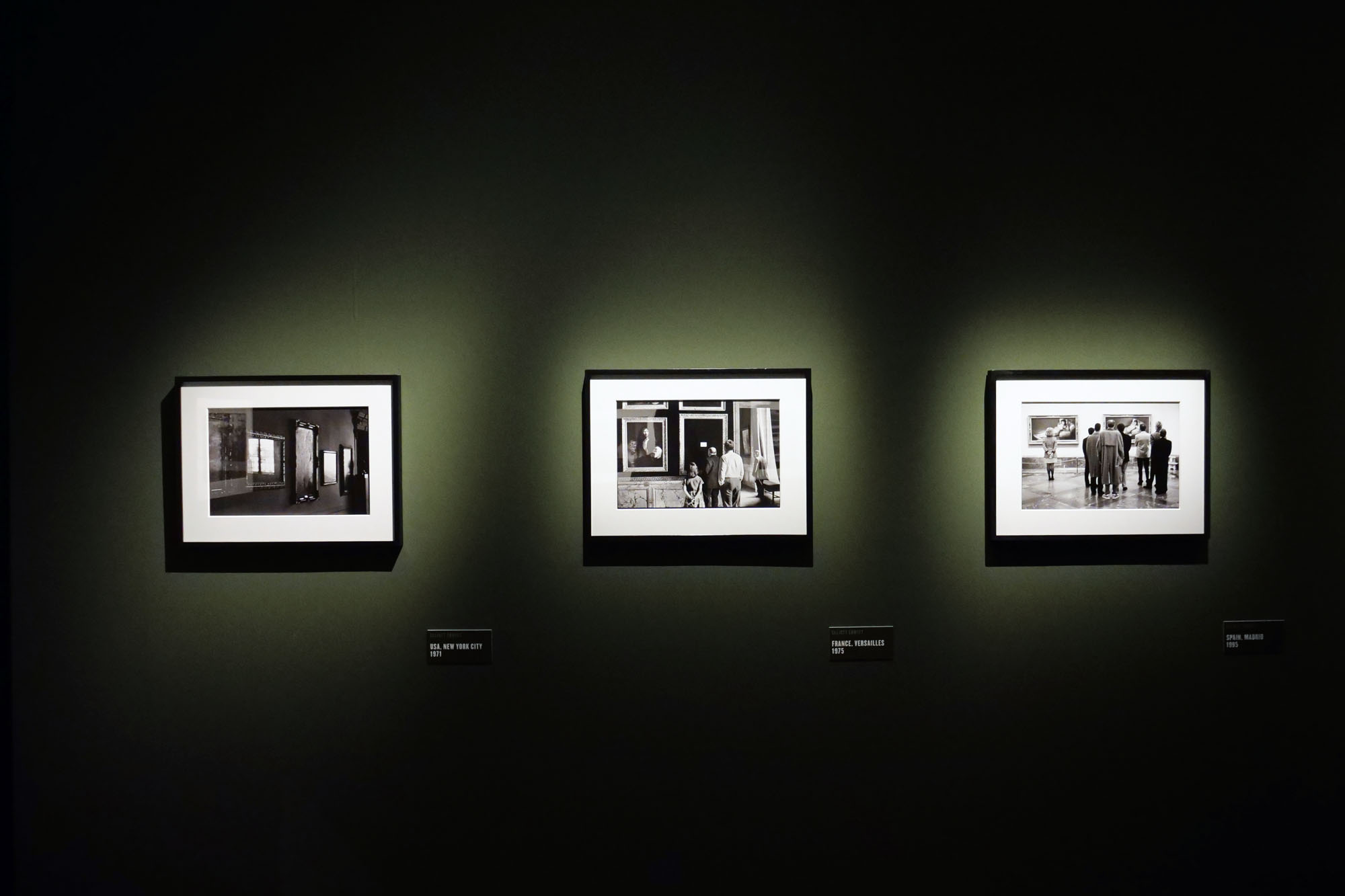
Installation view of the exhibition 'Elliott Erwitt. Icons' at Palazzo Bonaparte, Rome, Italy showing from left to right, 'taly, Venice, Gallerie dell'Accademia, 1965'; 'France, Versailles, 1975'; and 'Spain, Madrid, 1995'


Installation views of the exhibition Elliott Erwitt. Icons at Palazzo Bonaparte, Rome, Italy showing in the bottom image from left to right, Italy, Venice, Gallerie dell’Accademia, 1965; France, Versailles, 1975; and Spain, Madrid, 1995 (below)


Elliott Erwitt (American born France, 1928-2023) 'Italy, Venice, Gallerie dell'Accademia, 1965' 1965


Elliott Erwitt (American born France, 1928-2023)
Italy, Venice, Gallerie dell’Accademia, 1965
1965
Gelatin silver print
Private Collection
© Elliott Erwitt


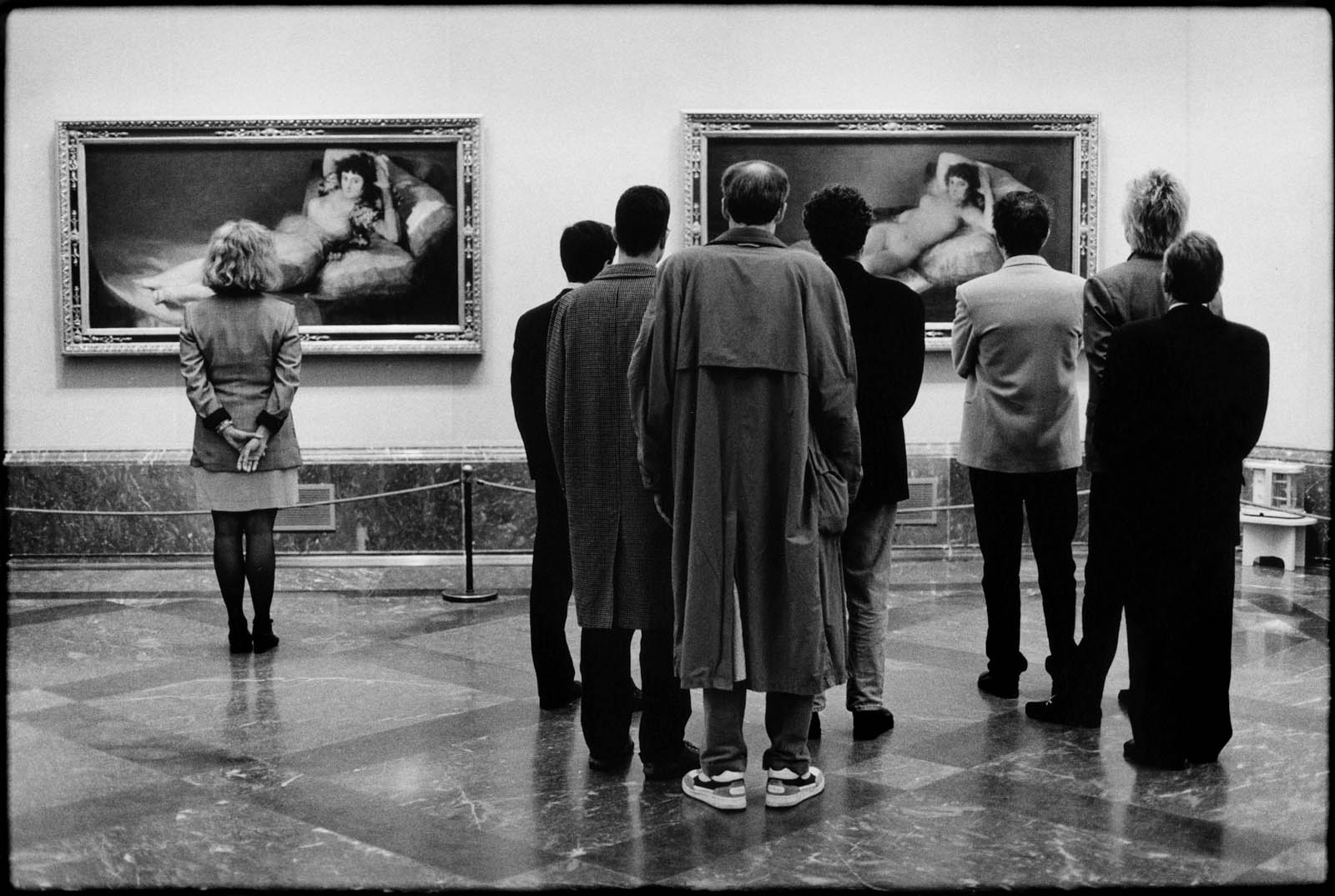
Elliott Erwitt (American born France, 1928-2023) 'Spain, Madrid, 1995' 1995


Elliott Erwitt (American born France, 1928-2023)
Spain, Madrid, 1995
1995
Gelatin silver print
Private Collection
© Elliott Erwitt


Installation view of the exhibition 'Elliott Erwitt. Icons' at Palazzo Bonaparte, Rome, Italy


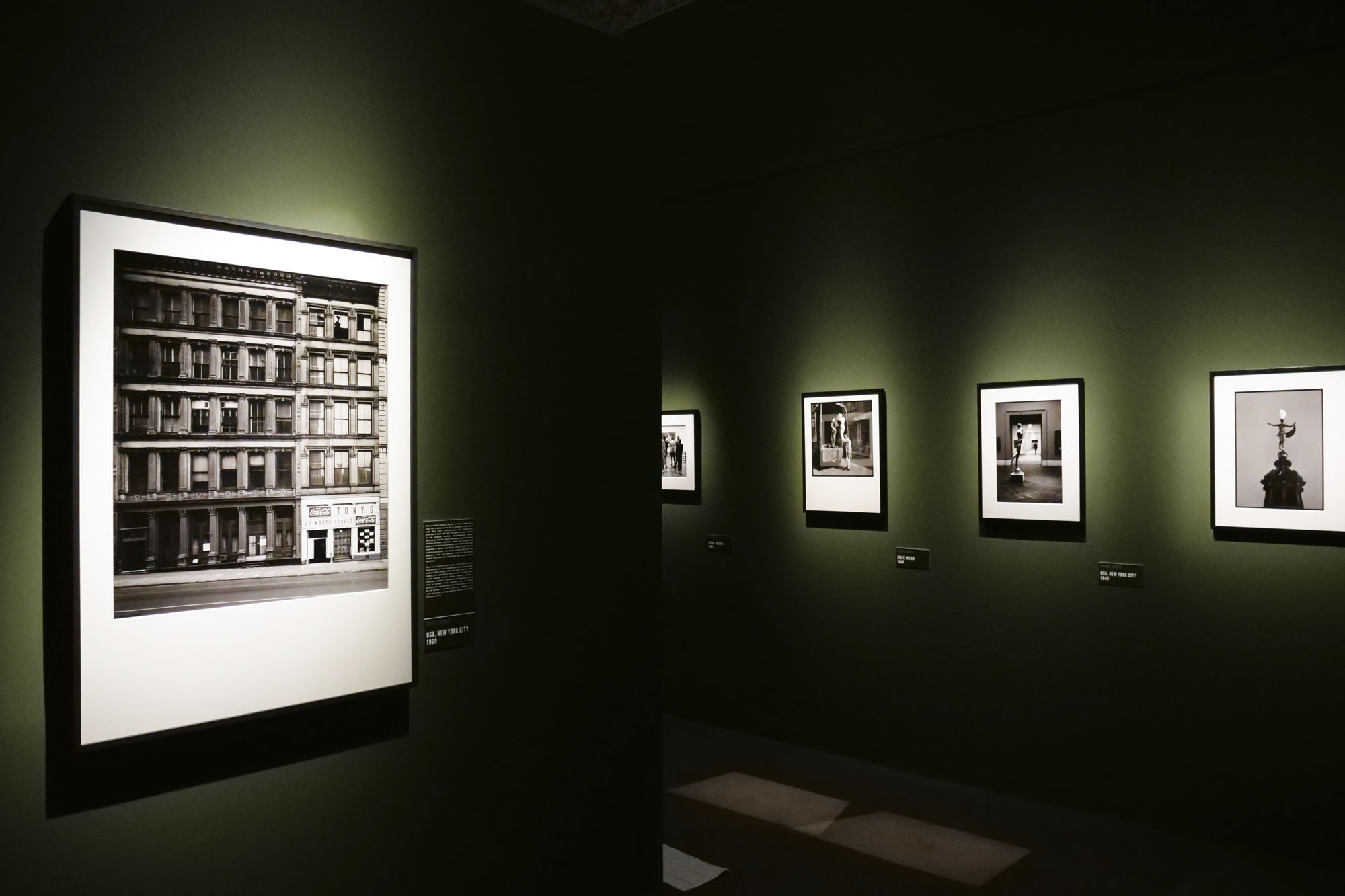
Installation view of the exhibition Elliott Erwitt. Icons at Palazzo Bonaparte, Rome, Italy showing at left, Erwitt’s photograph USA, New York City, 1969 (below)


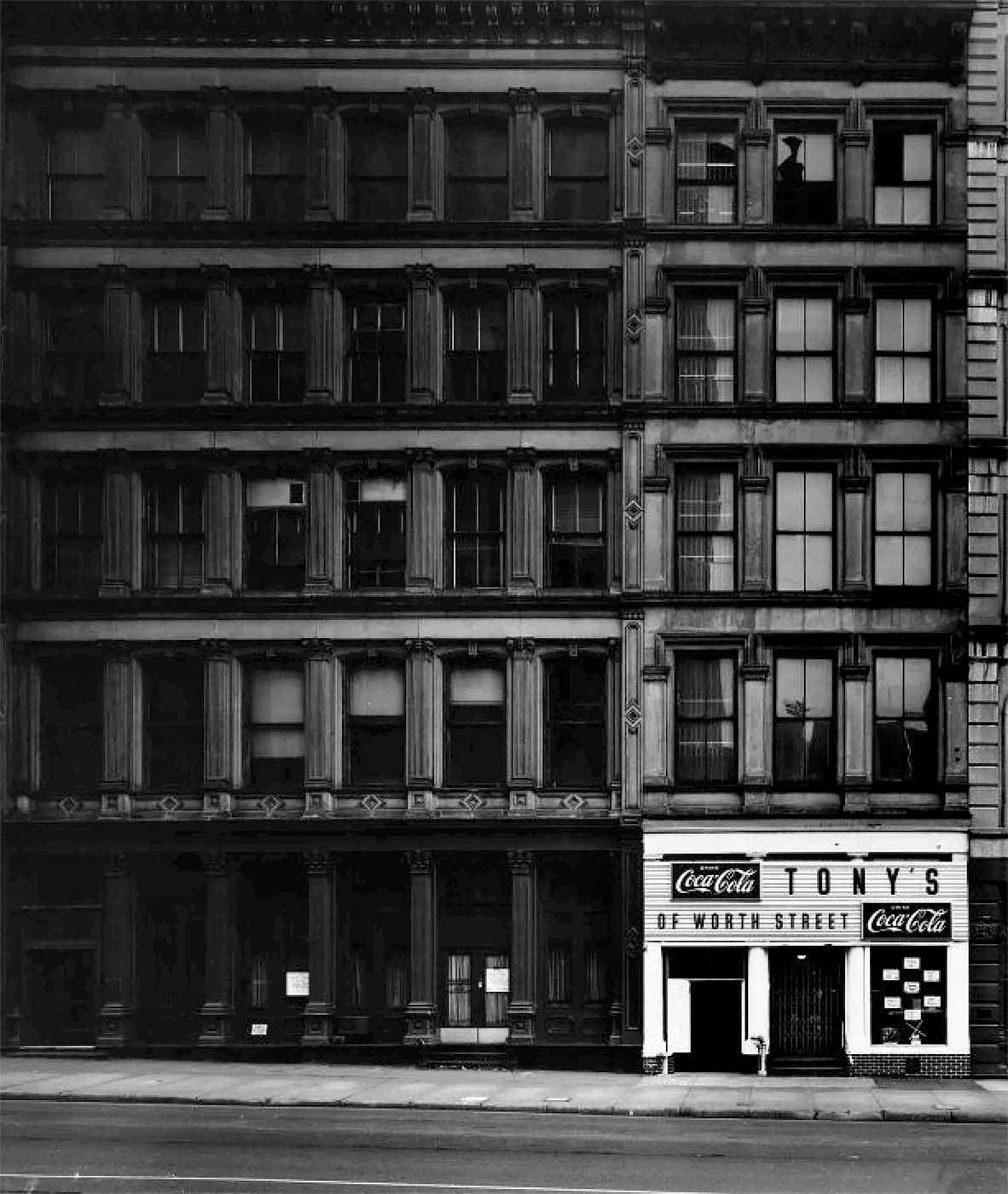
“A 1969 scene in Amagansett, New York – a sober, soot-stained Victorian office block with a single storefront whose sign (“Tony’s of Worth Street”) is written in cheerful white paint – somehow combines the austerity of Atget with the irreverent glee of Weegee.”

Andrew Dickson. “Elliott Erwitt’s Visual One-liners,” on The New Yorker website October 14, 2016 [Online] Cited 02/09/2025


Elliott Erwitt (American born France, 1928-2023) 'USA, New York City, 1969' 1969


Elliott Erwitt (American born France, 1928-2023)
USA, New York City, 1969
1969
Gelatin silver print
Private Collection
© Elliott Erwitt


From June 28 to September 21, 2025, Palazzo Bonaparte welcomes the most ironic and disarming gaze in twentieth-century photography: Elliott Erwitt. An exhibition that is much more than an exhibition: it is an invitation to observe the world with lightness, empathy, and wonder.

An unmissable event, which recounts – through over 80 iconic shots – the long and brilliant career of an artist capable of capturing the soul of the twentieth century and transforming ordinary moments into unforgettable images, with a profoundly human yet always surprising gaze.

On display in Rome are icons of an era, of a way of looking at the world with lightness and intelligence. “Icons” because each of Erwitt’s shots has become a symbol of his poetics and of our collective memory.

Erwitt is more than just a photographer: he is the poet of human comedy, the unerring witness to life’s small and large absurdities, which he recounts with disarming irony, subtle poetry, and timeless grace. His images – famous, unforgettable, often dazzling – manage to be simultaneously light and profound, intimate and universal. They are shots that make you smile, reflect, and move you.

Elliott Erwitt was – and is – a key figure in the visual culture of our time. His images, books, reportages, illustrations, and advertising campaigns have spanned the decades, appearing in international publications and influencing generations of photographers and artists. This exhibition is a journey through his work and an invitation to look at the world with new eyes: with lightness, empathy, and wonder.

A member since 1953 of the historic Magnum agency – founded by Henri Cartier-Bresson and Robert Capa, among others – Erwitt has chronicled the last sixty years of history and contemporary civilisation with journalistic flair, capturing the most dramatic yet humorous aspects of the life that has passed before his lens.

“In life’s saddest, wintry moments, when a cloud has enveloped you for weeks, suddenly the sight of something wonderful can change the face of things, your state of mind. The kind of photography I like, the one that captures the moment, is very similar to this break in the clouds. In a flash, a wonderful photo seems to come out of nowhere.”

With these words, Erwitt sums up the spirit and poetics with which he filters reality, representing it with his mastery, capturing its sometimes playful, sometimes irreverent, or almost surreal aspects, which make him an undisputed master of the human comedy.

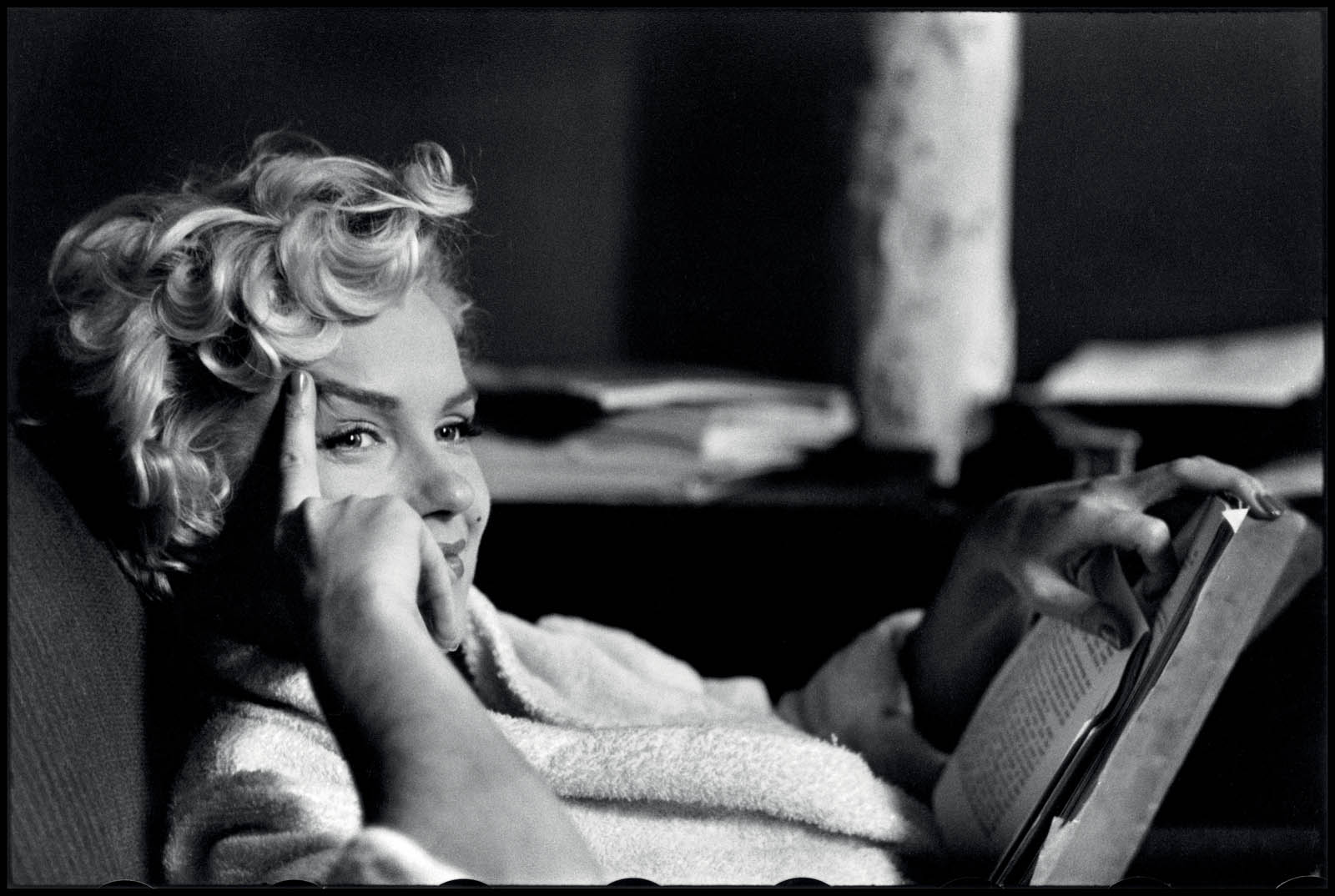
Curated by Biba Giacchetti, one of Erwitt’s leading international experts, with technical assistance from Gabriele Accornero, Elliott Erwitt. Icons is a snapshot of history and customs, a concise and comprehensive journey through his genius and his perspective on the world, from his anthropomorphic dogs to the world’s powerful figures, from the great movie stars – Marilyn Monroe above all – to his children. But it is also a tribute to the man who, with a gentle and disenchanted gaze, was able to portray the world for what it is: tragicomic, tender, absurd, unique.

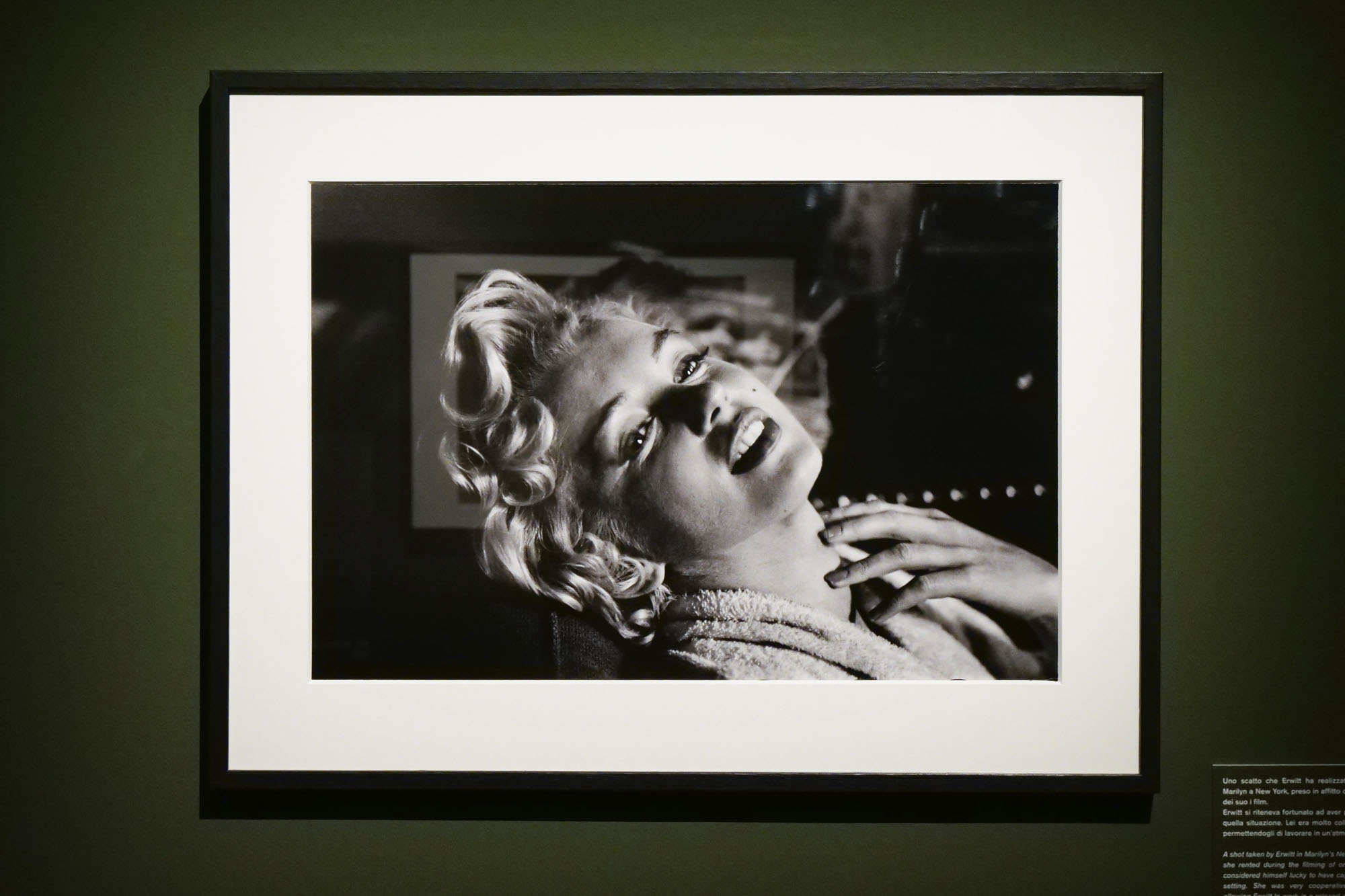
The exhibition features famous portraits of Marilyn Monroe, Che Guevara, Kerouac, Marlene Dietrich, Fidel Castro, Sophia Loren, Arnold Schwarzenegger, and photographs that have made history, such as the Nixon-Khrushchev quarrel, Kennedy’s funeral, and the great fight between Frazier and Ali. Other iconic photographs, beloved by the public for their romantic power, such as the California Kiss, include more intimate and private ones, such as the snapshot of his newborn firstborn, observed by her mother on the bed.

Above all, Erwitt casts an incisive yet empathetic gaze, revealing not only the irony of everyday life, but also its complexity.

With the same attitude, Erwitt reserves his attention for any other subject, pushing the democratic quality that is typical of his medium to the extreme. His imagery is populated predominantly by ordinary people, men and women, captured in the midst of the normality of their lives.

From portraits of famous people to more ironic and sometimes irreverent images, we move on to some self-portraits where Erwitt no longer leaves anything to chance or intuition, but constructs a self-other, where eccentricity for its own sake is metaphor and pure surreal fun.

Special attention is paid to dogs, whose irreverent, free-spirited attitude Erwitt appreciated, unfettered by the common rules that condition humans, is what Erwitt appreciated.

Many of his shots are “from the dog’s point of view,” allowing only the shoes or parts of their owners’ legs to appear in his compositions. Erwitt wanted these photographs to be comical, and for this reason he employed ingenious strategies, such as blowing a trumpet or emitting a kind of bark, to elicit the most natural reaction from the animals.

The exhibition – on view until September 21st – marks the opening of Palazzo Bonaparte’s summer exhibition season, following the recent resounding success of the Edvard Munch retrospective and paying tribute to one of the world’s most beloved masters of photography. Visitors will have the opportunity to retrace his vision of the world: surreal, romantic, playful, always capable of capturing the essence of things.

The exhibition, “Elliott Erwitt. Icons,” is produced and organised by Arthemisia, in collaboration with Orion57 and Bridgeconsultingpro. The exhibition’s main partner is the Fondazione Terzo Pilastro – Internazionale with Fondazione Cultura e Arte and Poema.

The exhibition’s special partner is Ricola, mobility partner Frecciarossa Treno Ufficiale, and technical sponsor Ferrari Trento.

Text translated from the Italian by Google Translate from the Palazzo Bonaparte website


Installation view of the exhibition 'Elliott Erwitt. Icons' at Palazzo Bonaparte, Rome, Italy


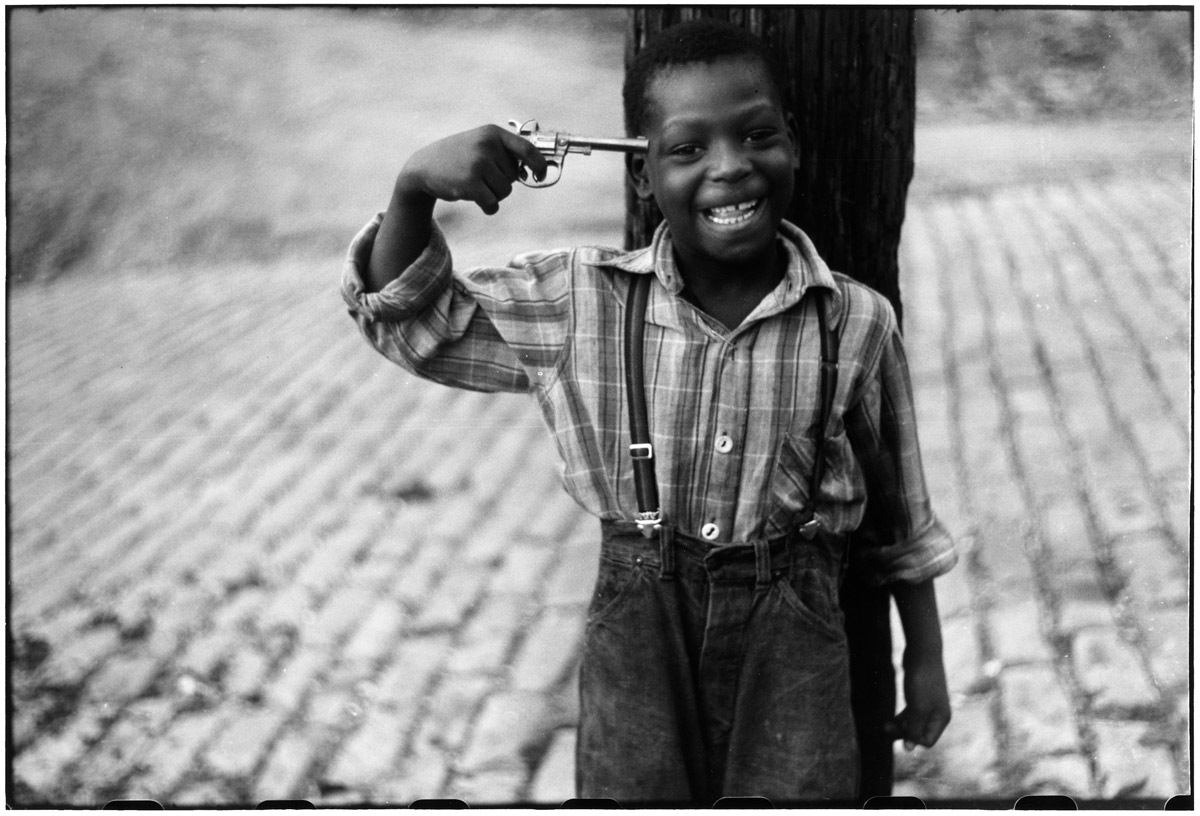
Installation view of the exhibition Elliott Erwitt. Icons at Palazzo Bonaparte, Rome, Italy showing at right, Erwitt’s photograph USA, Pittsburgh, 1950 (below)


Elliott Erwitt (American born France, 1928-2023) 'Pittsburgh, USA' 1950


Elliott Erwitt (American born France, 1928-2023)
USA, Pittsburgh, 1950
1950
Gelatin silver print
Private Collection
© Elliott Erwitt


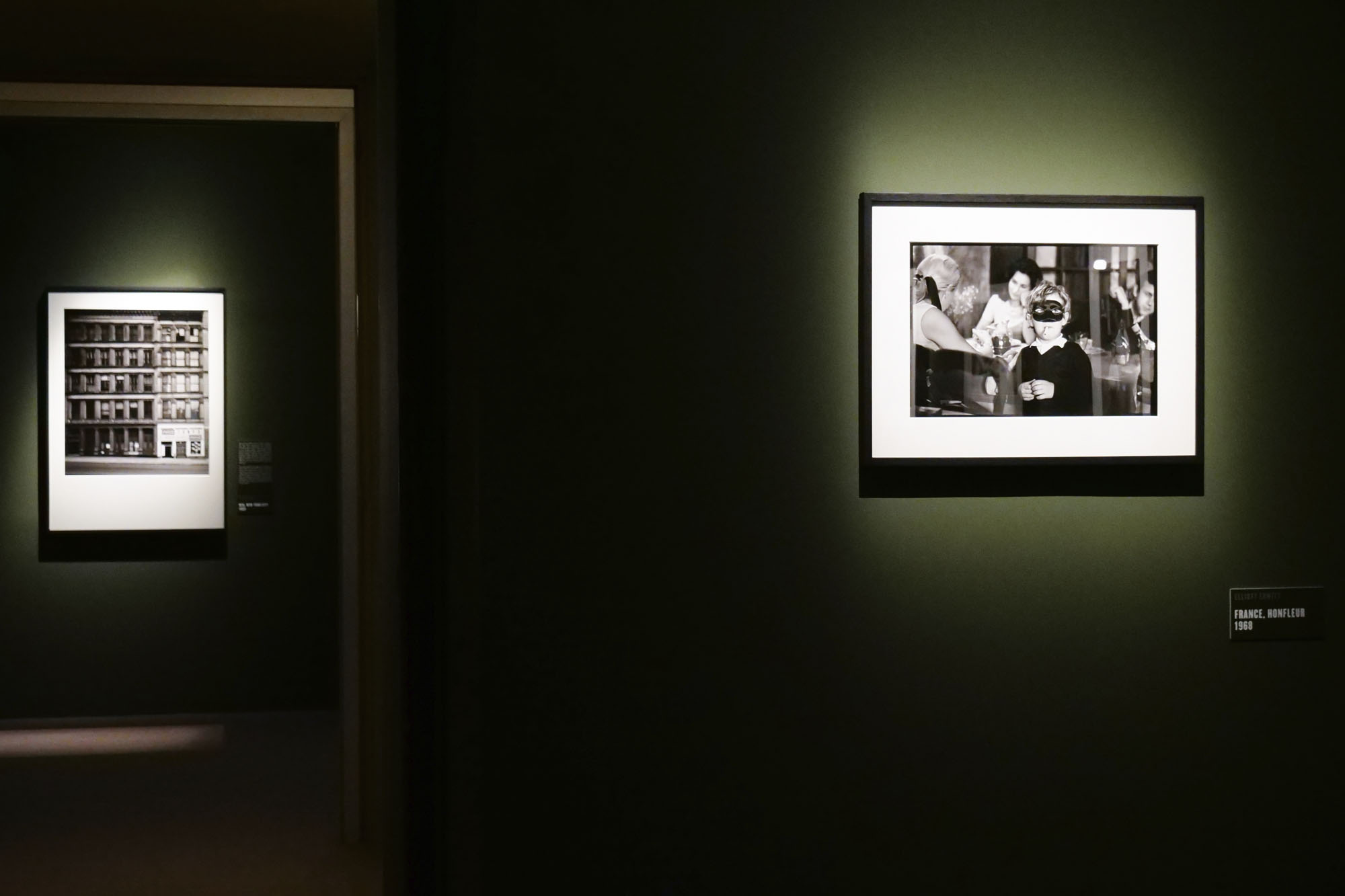
Installation view of the exhibition 'Elliott Erwitt. Icons' at Palazzo Bonaparte, Rome, Italy showing at right, Erwitt's photograph 'France, Honfleur, 1968'


Installation view of the exhibition Elliott Erwitt. Icons at Palazzo Bonaparte, Rome, Italy showing at right, Erwitt’s photograph France, Honfleur, 1968


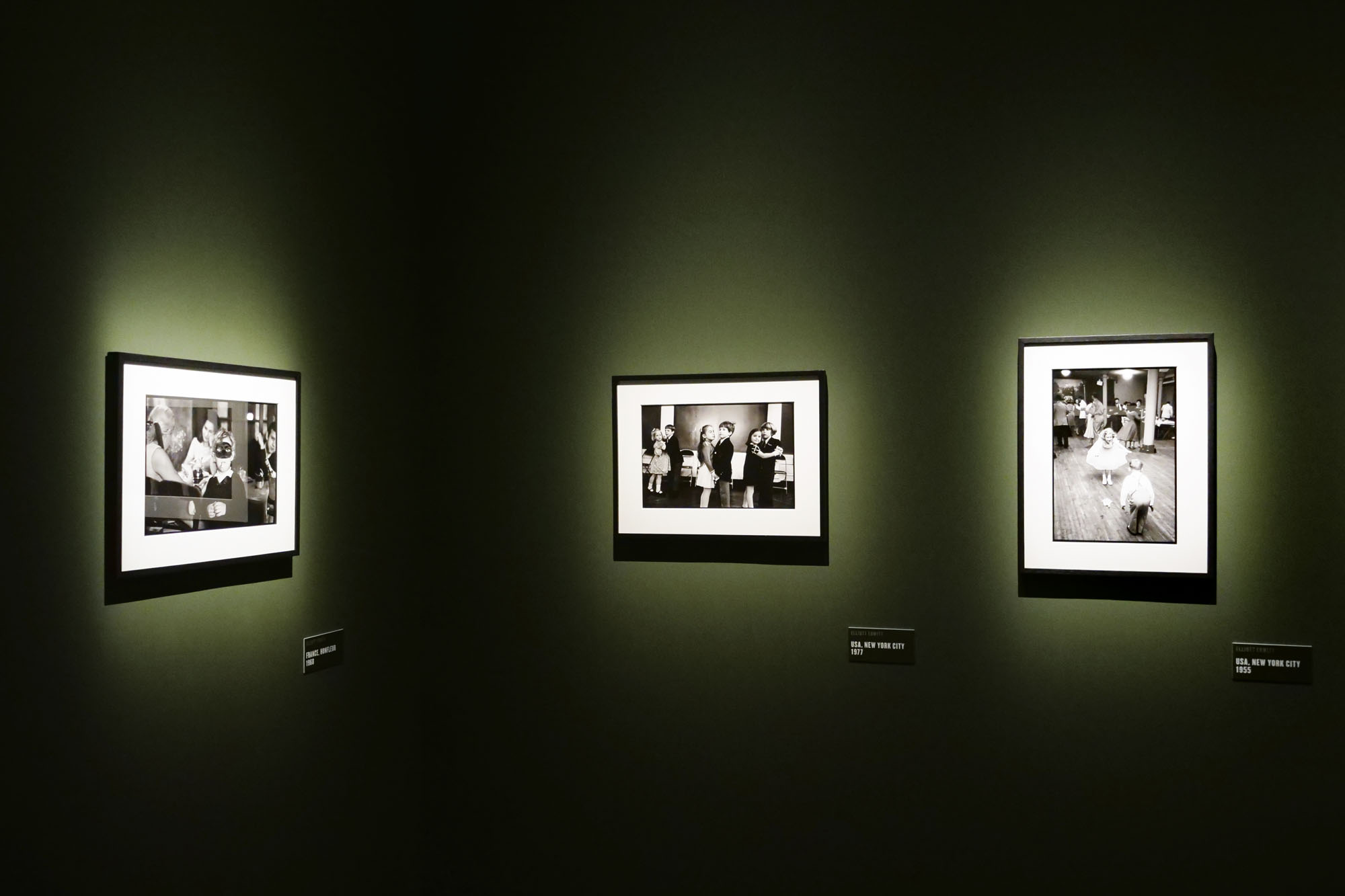
Installation view of the exhibition 'Elliott Erwitt. Icons' at Palazzo Bonaparte, Rome, Italy showing from left to right, 'France, Honfleur, 1968'; 'USA, New York City, 1977'; and 'USA, New York City, 1955'


Installation view of the exhibition Elliott Erwitt. Icons at Palazzo Bonaparte, Rome, Italy showing from left to right, France, Honfleur, 1968; USA, New York City, 1977; and USA, New York City, 1955


Installation view of the exhibition 'Elliott Erwitt. Icons' at Palazzo Bonaparte, Rome, Italy


Installation view of the exhibition Elliott Erwitt. Icons at Palazzo Bonaparte, Rome, Italy showing Erwitt’s photograph Ireland, Ballycotton, 1991


Installation view of the exhibition 'Elliott Erwitt. Icons' at Palazzo Bonaparte, Rome, Italy showing Erwitt's photograph 'USA, New York City, Marilyn Monroe (with hand), 1956'


Installation view of the exhibition Elliott Erwitt. Icons at Palazzo Bonaparte, Rome, Italy showing Erwitt’s photograph USA, New York City, Marilyn Monroe (with hand), 1956


Installation view of the exhibition 'Elliott Erwitt. Icons' at Palazzo Bonaparte, Rome, Italy showing at left, 'USA, New York City, 1953'; and at right, 'USA, NewYork, 1956'


Installation view of the exhibition Elliott Erwitt. Icons at Palazzo Bonaparte, Rome, Italy showing at left, USA, New York City, 1953; and at right, USA, NewYork, 1956 (below)


Elliott Erwitt (American born France, 1928-2023) 'USA, NewYork, 1956' 1956


Elliott Erwitt (American born France, 1928-2023)
USA, NewYork, 1956
1956
Gelatin silver print
40 x 50cm
© Elliott Erwitt
Private Collection


Installation view of the exhibition 'Elliott Erwitt. Icons' at Palazzo Bonaparte, Rome, Italy


Installation view of the exhibition Elliott Erwitt. Icons at Palazzo Bonaparte, Rome, Italy showing at left, USA, Los Angeles, 1960; and at right, USA, Arlington, Virginia, Jacqueline Kennedy at John F. Kennedy’s funeral, November 25, 1963 (below)

Note: wrong title and date underneath the photograph on the right-hand side


Elliott Erwitt (American born France, 1928-2023) 'USA, Arlington, Virginia, Jacqueline Kennedy at John F. Kennedy's funeral, November 25, 1963' 1963


Elliott Erwitt (American born France, 1928-2023)
USA, Arlington, Virginia, Jacqueline Kennedy at John F. Kennedy’s funeral, November 25, 1963
1963
Gelatin silver print
© Elliott Erwitt
Private Collection


Elliott Erwitt was not just a photographer, but an unparalleled visual storyteller, capable of transforming the moment into history, the everyday into art, irony into poetry. His images evoke in the viewer emotions that move on different registers, from emotion to laughter, to the most spontaneous amusing. Having passed away in November 2023 at the age of 95, he left us an immense legacy: an archive of photographs that span eras, cultures, and feelings with a universal language, inviting us to look at the world with greater indulgence and wonder, always standing by our side in that profound lightness that he himself defined as “The Art of Observation.”

His lens captured iconic moments in history: the tense confrontation between Nixon and Khrushchev, Kennedy’s funeral, the legendary fight between Frazier and Ali. He portrayed legends of our imagination – Marilyn Monroe, Che Guevara, Marlene Dietrich – but he also captured moments of extraordinary intimacy and summarised universal feelings in a single shot: a stolen kiss in the rearview mirror, the gaze of a mother on her newborn baby, a dog lost in thought. Images that transcend time to become iconic.

What makes Erwitt unique is his ability to intertwine emotion and intelligence, making us laugh and moved, surprising us with his irony and his ability to grasp the profound meaning of existence. He has captured the absurd and the surreal with a sharp and light-hearted gaze, always finding in every scene a spark capable of making it memorable.

His anthropomorphic dogs, the protagonists of entire photographic series, are not just amusing images: they are mirrors of the human condition, ironic and melancholic at the same time, sometimes proud and surprising. His children, portrayed with the most authentic spontaneity, convey the wonder of discovery and freedom, still intact, expressing already defined personalities, still unconstrained. His self-portraits, where he pokes fun at himself, remind us that art – like life – should never take itself too seriously.

Elliott Erwitt was all of this: a master of photography, an interpreter of the human comedy, an artist who left an indelible mark on the history of the image. This exhibition is our homage to his vision of the world: a journey through irony, tenderness, depth, and lightness, just as his art has always been able to convey.

Welcome to the world of this great artist. My master.

Biba Giacchetti
Exhibition curator

Text translated from the Italian by Google Translate


Installation view of the exhibition 'Elliott Erwitt. Icons' at Palazzo Bonaparte, Rome, Italy showing Erwitt's photograph 'USA, New York City, 1971' (Muhammad Ali vs Joe Frazier)


Installation view of the exhibition Elliott Erwitt. Icons at Palazzo Bonaparte, Rome, Italy showing Erwitt’s photograph USA, New York City, 1971 (Muhammad Ali vs Joe Frazier)


Installation view of the exhibition 'Elliott Erwitt. Icons' at Palazzo Bonaparte, Rome, Italy showing at left, 'USA, Los Angeles, 1960'; and at second left, 'USA, Arlington, Virginia, Jacqueline Kennedy at John F. Kennedy's funeral, November 25, 1963'; at third right, 'USSR, Moscow, 1959'; and at second right, 'Cuba, Havana, 1964'


Installation view of the exhibition Elliott Erwitt. Icons at Palazzo Bonaparte, Rome, Italy showing at left, USA, Los Angeles, 1960; and at second left, USA, Arlington, Virginia, Jacqueline Kennedy at John F. Kennedy’s funeral, November 25, 1963; at third right, USSR, Moscow, 1959 (below); and at second right, Cuba, Havana, 1964 (below)


Installation view of the exhibition 'Elliott Erwitt. Icons' at Palazzo Bonaparte, Rome, Italy showing Erwitt's photograph 'USSR, Moscow, 1959'


Installation view of the exhibition Elliott Erwitt. Icons at Palazzo Bonaparte, Rome, Italy showing Erwitt’s photograph USSR, Moscow, 1959 (below)


Elliott Erwitt (American born France, 1928-2023) 'USSR, Moscow, 1959' (Nikita Khruschchev and Richard Nixon) 1959


Elliott Erwitt (American born France, 1928-2023)
USSR, Moscow, 1959 (Nikita Khruschchev and Richard Nixon)
1959
Gelatin silver print
40 x 50cm
Private Collection
© Elliott Erwitt


Installation view of the exhibition 'Elliott Erwitt. Icons' at Palazzo Bonaparte, Rome, Italy showing Erwitt's photograph 'Cuba, Havana, 1964


Installation view of the exhibition Elliott Erwitt. Icons at Palazzo Bonaparte, Rome, Italy showing Erwitt’s photograph Cuba, Havana, 1964 (Che Guevara)


Installation view of the exhibition 'Elliott Erwitt. Icons' at Palazzo Bonaparte, Rome, Italy showing at left, 'England, Birmingham, 1991' (top); at third right, 'USA, New York City, 1946'; at second right, 'France, Paris, 1989'; and at right, 'USA, New York City, 2000'


Installation view of the exhibition Elliott Erwitt. Icons at Palazzo Bonaparte, Rome, Italy showing at left, England, Birmingham, 1991 (top); at third right, USA, New York City, 1946 (below); at second right, France, Paris, 1989 (below); and at right, USA, New York City, 2000 (below)


Elliott Erwitt (American born France, 1928-2023) 'USA, New York City, 1946' 1946


Elliott Erwitt (American born France, 1928-2023)
USA, New York City, 1946
1946
Gelatin silver print
40 x 50cm
Private Collection
© Elliott Erwitt


Elliott Erwitt (American born France, 1928-2023) 'France, Paris, 1989' 1989


Elliott Erwitt (American born France, 1928-2023)
France, Paris, 1989
1989
Gelatin silver print
50 x 60cm
Private Collection
© Elliott Erwitt


Elliott Erwitt (American born France, 1928-2023) 'USA, New York City, 2000' 2000


Elliott Erwitt (American born France, 1928-2023)
USA, New York City, 2000
2000
Gelatin silver print
50 x 60cm
Private Collection
© Elliott Erwitt


Installation view of the exhibition 'Elliott Erwitt. Icons' at Palazzo Bonaparte, Rome, Italy showing Erwitt's photograph 'USA, New York City, 1974'


Installation view of the exhibition Elliott Erwitt. Icons at Palazzo Bonaparte, Rome, Italy showing Erwitt’s photograph USA, New York City, 1974 (below)


Elliott Erwitt (American born France, 1928-2023) 'USA, New York City, 1974' 1974


Elliott Erwitt (American born France, 1928-2023)
USA, New York City, 1974
1974
Gelatin silver print
50 x 60cm
Private Collection
© Elliott Erwitt


Installation view of the exhibition 'Elliott Erwitt. Icons' at Palazzo Bonaparte, Rome, Italy


Installation view of the exhibition Elliott Erwitt. Icons at Palazzo Bonaparte, Rome, Italy showing Erwitt’s photograph USA, New York City, 1955 (below)


Elliott Erwitt (American born France, 1928-2023) 'USA, New York City, 1955' 1955


Elliott Erwitt (American born France, 1928-2023)
USA, New York City, 1955
1955
Gelatin silver print
Private Collection
© Elliott Erwitt


Palazzo Bonaparte
Piazza Venezia 5, Roma

Palazzo Bonaparte website

Palazzo Bonaparte exhibitions website

LIKE ART BLART ON FACEBOOK

Back to top

Exhibition: ‘Carrie Mae Weems: The Heart of the Matter’ at Gallerie d’Italia, Turin

Exhibition dates: 17th April – 7th September, 2025

 Curator: Sarah Meister


Carrie Mae Weems (American, b. 1953) 'Welcome Home' 1978-1984 From the series 'Family Pictures and Stories' from the exhibition 'Carrie Mae Weems: The Heart of the Matter' at Gallerie d'Italia, Turin, April - Sept, 2025


Carrie Mae Weems (American, b. 1953)
Welcome Home
1978-1984
From the series Family Pictures and Stories 1978-1984
© Carrie Mae Weems and reproduced courtesy of the artist and Gladstone Gallery, New York, Fraenkel Gallery, San Francisco, and Galerie Barbara Thumm, Berlin


I love artist’s that challenge your point of view, knowledge of the world, prejudices and biases – which we all have.

I love artist’s who make you think about the stories they tell, and how you relate to their intimate, constructed and memorable worlds.

Carrie Mae Weems is one such generational artist.

Weems blends the poetic and conceptual in photographs and bodies of work which investigate history, identity, racism, executive and patriarchal power from the perspectives of female / Black American.

What a fabulous artist, a guide into circumstances seldom seen, now revealed.

Dr Marcus Bunyan


Many thankx to Gallerie d’Italia, Turin for allowing me to publish the photographs in the posting. Please click on the photographs for a larger version of the image.


“I discovered that I was the reference point, and the point of view, pointing the viewer toward the likes of me in history. Later, I understood this photographic self to be a muse and a guide into the unknown.”


Carrie Mae Weems


“My work endlessly explodes the limits of tradition.”

“Weems was trained as both a dancer and a photographer before enrolling in the folklore studies program at the University of California, Berkeley, in the mid-1980s, where she became interested in the observation methods used in the social sciences. In the early 1990s, she began placing herself in her photographic compositions in an “attempt to create in the work the simultaneous feeling of being in it and of it.”2 She has since called this recurring figure an “alter-ego,” “muse,” and “witness to history” who can stand in for both the artist and audience. “I think it’s very important that as a Black woman she’s engaged with the world around her,” Weems has said, “she’s engaged with history, she’s engaged with looking, with being. She’s a guide into circumstances seldom seen.”3


Caitlin Ryan. “My work endlessly explodes the limits of tradition,” 2021 on the MoMA website [Online] Cited 06/09/2025


Carrie Mae Weems: The Heart of the Matter at Gallerie d’Italia, Turin

Installation walk through of the exhibition 17th April – 7th September, 2025


Installation view of the exhibition 'Carrie Mae Weems: The Heart of the Matter' at Gallerie d'Italia, Turin, April - September, 2025 showing work from the series 'Roaming', 2006


Installation views of the exhibition Carrie Mae Weems: The Heart of the Matter at Gallerie d’Italia, Turin showing work from the series Roaming, 2006


Transcending medium, chronology, and geography, Carrie Mae Weems: The Heart of the Matter puts the artist – as well as her spiritual and philosophical journeys – at the center of the discourse. Weems is a touchstone artist, renowned for her work investigating history, identity, and power. A comprehensive survey, The Heart of the Matter features generous presentations of landmark bodies of work, from Family Pictures and Stories (1978-1984) to her most recent series on the Black church. Throughout the exhibition and accompanying book, the artist’s spiritual musings provide critical insight into the iconic artist’s mind and eye. Newly commissioned essays and additional contributions from esteemed thinkers and scholars across generations underscore the singular value of Weems’s vision in grappling with the complexities and injustices of the world around us.

Text from the Aperture website


Carrie Mae Weems (American, b. 1953) 'The Edge of Time – Ancient Rome' 2006 from the series 'Roaming', 2006 from the exhibition 'Carrie Mae Weems: The Heart of the Matter' at Gallerie d'Italia, Turin, April - Sept, 2025


Carrie Mae Weems (American, b. 1953)
The Edge of Time – Ancient Rome
2006
From the series Roaming


Carrie Mae Weems’s “Rome Series,” titled ” Roaming” (2006), features photographs taken during her residency at the American Academy in Rome where she performed “photographic actions” contrasting her presence with grand architecture and monumental surroundings. In these works, Weems, often in her signature long black dress with her back to the camera, challenges viewers to confront power structures and historical contexts associated with the sites of Rome. The series explores themes of history, power, and the individual’s relationship to imposing edifices of authority.

AI generated text from Google


Installation view of the exhibition 'Carrie Mae Weems: The Heart of the Matter' at Gallerie d'Italia, Turin, April - September, 2025 showing work from the series 'Museums', 2006-ongoing


Installation views of the exhibition Carrie Mae Weems: The Heart of the Matter at Gallerie d’Italia, Turin showing work from the series Museums, 2006-ongoing


Carrie Mae Weems (American, b. 1953) 'Galleria Nazionale D'Arte Moderna' 2006-ongoing


Carrie Mae Weems (American, b. 1953)
Galleria Nazionale D’Arte Moderna
2006-ongoing
© Carrie Mae Weems and reproduced courtesy of the artist and Gladstone Gallery, New York, Fraenkel Gallery, San Francisco, and Galerie Barbara Thumm, Berlin


Installation view of the exhibition 'Carrie Mae Weems: The Heart of the Matter' at Gallerie d'Italia, Turin, April - September, 2025


Installation views of the exhibition Carrie Mae Weems: The Heart of the Matter at Gallerie d’Italia, Turin


Gallerie d’Italia – Torino presents the exhibition by American artist Carrie Mae Weems, open to the public from April 17 to September 7, 2025. The exhibition is organised in collaboration with Aperture and curated by Sarah Meister, former curator of the photography department at MoMA in New York. It is part of the main program of the second edition of EXPOSED Torino Foto Festival, titled Beneath The Surface, curated by Menno Liauw and Salvatore Vitale.

A major new exhibition dedicated to the internationally renowned artist Carrie Mae Weems, known for her photographic explorations of cultural identity, sexism, and class belonging.

The exhibition will feature a world premiere of a project commissioned by Intesa Sanpaolo specifically for this occasion, integrated into a powerful retrospective showcasing works from Weems’ most famous photographic series. Visitors will be guided through the artist’s entire career, following a deeply personal and spiritual journey.

The selected works highlight Carrie Mae Weems’ unique ability to address the complexities and injustices of the world around us. Her photography is rooted in spaces often excluded from mainstream narratives: artists’ studios, Southern U.S. plantations, domestic interiors, and the “invisible institutions” that emerged as places of worship for Black communities during times of oppression, juxtaposed with images of monuments and museums that have historically been sites of exclusion.

At the heart of the exhibition is Preach, a new project created specifically for this event as an original commission. This ambitious and intense installation explores religion and spirituality among African American communities across generations. The series celebrates the profound, passionate, and joyful forms of worship that define Weems’ Black Church experience while simultaneously confronting the violence and oppression that are inseparable from this history. In the new poetic text accompanying the installation, Weems writes: “Through flames and bombs, pray wherever and whenever you can, in ports and cabins, in palaces and basements, in theaters and clubs. From your secret hiding place, you have discovered new forms of worship…”. Using herself as both muse and guide, Weems invites us to join in this spiritual awakening and to condemn the persecution that has turned these sacred spaces into sites of refuge and activism. Preach intertwines early images from Harlem, San Diego, and Sea Island, Georgia, with a vast collection of new works that evoke the transcendental and secular realities of Black religious expression today.

The retrospective also includes many of Weems’ early works, such as the historic Kitchen Table Series (1990) and Museums (2006-ongoing); a selection of more recent projects, such as Scenes and Takes (2016) and Painting the Town (2021); as well as significant video installations, including The Shape of Things (2021) and Leave Now! (2022). Together, these works take visitors on a journey spanning Weems’ entire career, showcasing the depth and diversity of her artistic language.

The exhibition also benefits from the collaboration of Fondazione Compagnia di San Paolo, which has developed activities inspired by the values of inclusion and the appreciation of diversity as a source of enrichment, themes that resonate with the exhibition’s content and align with the foundation’s strategic challenges. Photography serves as a tool for storytelling, documentation, and identity-building, contributing to inclusion and community formation. Through widespread urban communication campaigns and collaboration with the public program #Inside, the foundation’s initiatives aim to promote participation and extend the exhibition’s themes to increasingly diverse audiences, particularly in light of the simultaneous presence of the EXPOSED Torino Foto Festival 2025 in the city.

The exhibition Carrie Mae Weems: The Heart of the Matter will be accompanied by a catalogue co-published by Società Editrice Allemandi / Aperture. In addition to numerous images of the American artist’s works, the catalog will feature contributions from scholars of different generations, underscoring the unique value of Weems’ vision in addressing these themes.

Aperture

Aperture is a nonprofit publisher that leads conversations around photography worldwide. From its base in New York, Aperture connects global audiences and supports artists through the acclaimed quarterly magazine, books, exhibitions, digital platforms, public programs, limited-edition prints, and awards. Established in 1952 to advance “creative thinking, significantly expressed in words and photographs,” Aperture champions photography’s vital role in nurturing curiosity and encouraging a more just, tolerant society.

Carrie Mae Weems. Biography

Carrie Mae Weems, a conceptual artist, examines and challenges perceptions of race and femininity in search of new models of life. Rooted in the specificity of her experience as a Black woman yet universal in its exploration of family relationships, cultural identity, power structures, and social hierarchy, her artistic practice is primarily photographic but also incorporates text, textiles, audio, installations, and video.

Informed by storytelling, folklore traditions, and the observational methodologies of social sciences, her approach to image-making ranges from staged and serialised narratives to the appropriation and adaptation of archival and ethnographic imagery. Weems critically addresses photography’s complicity in perpetuating dehumanising representations and the historical omission of Black women from institutions and art canons.

Weems lives in Syracuse, New York, with her husband, Jeffrey Hoone. She is currently an Artist in Residence at Syracuse University.

Text from the Gallerie d’Italia website


Installation view of the exhibition 'Carrie Mae Weems: The Heart of the Matter' at Gallerie d'Italia, Turin, April - September, 2025


Installation view of the exhibition Carrie Mae Weems: The Heart of the Matter at Gallerie d’Italia, Turin showing the work North Star, 2022


In 1936 Carrie Mae Weems’s grandfather Frank Weems traveled 550 miles to Chicago on foot from Earle, Arkansas, partly with the aid of the North Star, which appears in these seven oval photographs as a cold and abstract promise. Frank Weems had been beaten after organising a labour strike to protest abysmal wages and working conditions in the cotton fields. For the artist, the abstracted world holds a tremendous yet distant possibility that her grandfather seized step by step.

Text from the Art Institute of Chicago website


Installation view of the exhibition 'Carrie Mae Weems: The Heart of the Matter' at Gallerie d'Italia, Turin, April - September, 2025 showing at left, work from the series 'Family Pictures and Stories' 1978-1984
Installation view of the exhibition 'Carrie Mae Weems: The Heart of the Matter' at Gallerie d'Italia, Turin, April - September, 2025 showing work from the series 'Family Pictures and Stories' 1978-1984


Installation view of the exhibition Carrie Mae Weems: The Heart of the Matter at Gallerie d’Italia, Turin showing at left, work from the series Family Pictures and Stories 1978-1984


Installation view of the exhibition 'Carrie Mae Weems: The Heart of the Matter' at Gallerie d'Italia, Turin, April - September, 2025 showing work from the installation 'Preach' 2025


Installation view of the exhibition Carrie Mae Weems: The Heart of the Matter at Gallerie d’Italia, Turin showing the installation Preach, 2025


At the heart of the exhibition is Preach… this ambitious and intense installation explores religion and spirituality among African American communities across generations. The series celebrates the profound, passionate, and joyful forms of worship that define Weems’ Black Church experience while simultaneously confronting the violence and oppression that are inseparable from this history.

In the new poetic text accompanying the installation, Weems writes: “Through flames and bombs, pray wherever and whenever you can, in ports and cabins, in palaces and basements, in theaters and clubs. From your secret hiding place, you have discovered new forms of worship…”. Using herself as both muse and guide, Weems invites us to join in this spiritual awakening and to condemn the persecution that has turned these sacred spaces into sites of refuge and activism.

Preach intertwines early images from Harlem, San Diego, and Sea Island, Georgia, with a vast collection of new works that evoke the transcendental and secular realities of Black religious expression today.

Text from the Gallerie d’Italia Instagram web page


Carrie Mae Weems (American, b. 1953) 'Untitled' Nd from the series 'Preach' 2025


Carrie Mae Weems (American, b. 1953)
Untitled
Nd
From the series Preach
© Carrie Mae Weems and reproduced courtesy of the artist and Gladstone Gallery, New York, Fraenkel Gallery, San Francisco, and Galerie Barbara Thumm, Berlin


Carrie Mae Weems (American, b. 1953) 'Road Sign' 1991-1992


Carrie Mae Weems (American, b. 1953)
Road Sign
1991-1992
From the series Preach
© Carrie Mae Weems and reproduced courtesy of the artist and Gladstone Gallery, New York, Fraenkel Gallery, San Francisco, and Galerie Barbara Thumm, Berlin


Installation view of the exhibition 'Carrie Mae Weems: The Heart of the Matter' at Gallerie d'Italia, Turin, April - September, 2025 showing work from the 'Kitchen Table Series', 1990


Installation view of the exhibition Carrie Mae Weems: The Heart of the Matter at Gallerie d’Italia, Turin showing work from the Kitchen Table Series, 1990


Carrie Mae Weems (American, b. 1953) 'Untitled (Man and mirror)' 1990 From the series 'Kitchen Table'


Carrie Mae Weems (American, b. 1953)
Untitled (Man and mirror)
1990
From the Kitchen Table Series
© Carrie Mae Weems and reproduced courtesy of the artist and Gladstone Gallery, New York, Fraenkel Gallery, San Francisco, and Galerie Barbara Thumm, Berlin


Carrie Mae Weems (American, b. 1953) 'Untitled (Woman and daughter with children)' 1990 From the series 'Kitchen Table'


Carrie Mae Weems (American, b. 1953)
Untitled (Woman and daughter with children)
1990
From the Kitchen Table Series
© Carrie Mae Weems and reproduced courtesy of the artist and Gladstone Gallery, New York, Fraenkel Gallery, San Francisco, and Galerie Barbara Thumm, Berlin


Carrie Mae Weems (American, b. 1953) 'Untitled (Woman standing alone)' 1990 from the series 'Kitchen Table'


Carrie Mae Weems (American, b. 1953)
Untitled (Woman standing alone)
1990
From the Kitchen Table Series
© Carrie Mae Weems and reproduced courtesy of the artist and Gladstone Gallery, New York, Fraenkel Gallery, San Francisco, and Galerie Barbara Thumm, Berlin


Carrie Mae Weems (American, b. 1953)
'Untitled' 1988 from the series 'Four Women'


Carrie Mae Weems (American, b. 1953)
Untitled
1988
From the series Four Women
© Carrie Mae Weems and reproduced courtesy of the artist and Gladstone Gallery, New York, Fraenkel Gallery, San Francisco, and Galerie Barbara Thumm, Berlin


Carrie Mae Weems (American, b. 1953)
'Wilfredo, Laura and Me, I' 2002 From the series 'Dreaming in Cuba'


Carrie Mae Weems (American, b. 1953)
Wilfredo, Laura and Me, I
2002
From the series Dreaming in Cuba
© Carrie Mae Weems and reproduced courtesy of the artist and Gladstone Gallery, New York, Fraenkel Gallery, San Francisco, and Galerie Barbara Thumm, Berlin


Gallerie d’Italia – Torino
Piazza San Carlo, 156
10121 Turin
Phone number: 800 167 619

Opening hours:
Tuesday, Thursday, Friday, Saturday and Sunday: 9.30 – 19.30
Wednesday: 9.30 – 20.30

Gallerie d’Italia – Torino website

LIKE ART BLART ON FACEBOOK

Back to top

Exhibition: ‘Beyond Symmetry: George Dureau’s Celebrations of the Human Form’ at the Bob Mizer Foundation, San Francisco

Exhibition dates: 6th March – 28th June, 2025

Curators: Dennis Bell, founder of the Bob Mizer Foundation, and De Kwok, Head of Public Programming

*PLEASE NOTE: THIS POSTING CONTAINS ART PHOTOGRAPHS OF MALE NUDITY – IF YOU DO NOT LIKE PLEASE DO NOT LOOK, FAIR WARNING HAS BEEN GIVEN*


George Dureau (American, 1930-2014)
'Untitled' Nd


George Dureau (American, 1930-2014)
Untitled
Nd
Vintage silver gelatin print


Celebrations of the Human Spirit

~ Honesty

~ ~ Integrity

~ ~ ~ Dignity

~ ~ ~ ~ Vulnerability

~ ~ ~ ~ ~ Respect

~ ~ ~ ~ ~ ~ Love

~ ~ ~ ~ ~ ~ ~ Friendship

~ ~ ~ ~ ~ ~ ~ ~ Sexuality

~ ~ ~ ~ ~ ~ ~ ~ ~ Strength

~ ~ ~ ~ ~ ~ ~ ~ ~ ~ Beauty

~ ~ ~ ~ ~ ~ ~ ~ ~ ~ ~ Form

~ ~ ~ ~ ~ ~ ~ ~ ~ ~ ~ ~ Humanism

~ ~ ~ ~ ~ ~ ~ ~ ~ ~ ~ ~ ~ Identity

~ ~ ~ ~ ~ ~ ~ ~ ~ ~ ~ ~ ~ ~ Personality

~ ~ ~ ~ ~ ~ ~ ~ ~ ~ ~ ~ ~ ~ ~ Presence

~ ~ ~ ~ ~ ~ ~ ~ ~ ~ ~ ~ ~ ~ ~ ~ Intimacy

~ ~ ~ ~ ~ ~ ~ ~ ~ ~ ~ ~ ~ ~ ~ ~ ~ Nude

~ ~ ~ ~ ~ ~ ~ ~ ~ ~ ~ ~ ~ ~ ~ ~ ~ ~ Empathy

~ ~ ~ ~ ~ ~ ~ ~ ~ ~ ~ ~ ~ ~ ~ ~ ~ ~ ~ Revelation

~ ~ ~ ~ ~ ~ ~ ~ ~ ~ ~ ~ ~ ~ ~ ~ ~ ~ ~ ~ Spirit

~ ~ ~ ~ ~ ~ ~ ~ ~ ~ ~ ~ ~ ~ ~ ~ ~ ~ ~ ~ ~ Truth


I’ve been wanting to do a posting on the magnificent New Orleans photographer George Dureau’s work for a long while but because there are so few exhibitions of his photographs I have never had the opportunity – until now.

It’s a great pity that his work is not as recognised as that of his contemporaries, Peter Hujar and Robert Mapplethorpe. Indeed, you can still pick up an original Dureau in the secondhand art market for around $500 whereas Mapplethorpe’s photographs run into the many thousands.

His photographs are not romantic, certainly not sentimental. He was fascinated by the people he photographed, their truth. These are the stories he conceptualised, posed, lit and photographed, stories that emerged from his imagination, that revealed surprising things about his subjects.

Unlike the clinical formalism of Mapplethorpe, Dureau worked with a poetry that was always present. Indeed, there is something so eloquent and sincere about his photographs for in them the artist draws (Dureau was also a painter) the mysteries of the soul of his subjects.

Dureau’s response to the world and the photographs that emanate from that engagement are humanist in the best sense of the word, revealing his subjects in a direct way that emphasises an individual’s dignity, worth and capacity for self-realisation.

Thus, I feel his photographs are a celebration not just of the human form but more importantly, of the human spirit.

Dr Marcus Bunyan


Many thankx to Dennis Bell, Corbin Crable and the Bob Mizer Foundation for allowing me to publish the photographs in the posting. Please click on the photographs for a larger version of the image.


“I live a warm, involved humanist sort of life. There are lots of people passing through it. I have exciting experiences and learn things about people. They always go into my art. I cannot have an experience and it not go into my art.”

 
George Dureau


John H. Lawrence, HNOC emeritus director of museum programs and himself a fine-art photographer, said Dureau’s portraits reveal a tangible intimacy between photographer and subject.

“George respected the people he asked to sit for him,” said Lawrence. “I don’t say that from a knowledge, just from what the photographs show. The direct stare into the camera, it may have been at George’s direction. Even with the gaze directed in that fashion, you don’t get the kind of quality you see in these portraits unless there is a mutual respect between the photographer and the subject. There is a vibe there that is based on these two people having respect for each other as the photograph is made.”


John H. Lawrence quoted in Dave Walker. “The Intimate Eye of George Dureau,” on The Historic New Orleans Collection website, December 31, 2021 [Online] Cited 20/06/2025


This exhibition presents 25 evocative black-and-white portraits by George Dureau, capturing the resilience and vulnerability of his subjects – from athletes to marginalised individuals – against the vibrant cultural backdrop of New Orleans, where beauty and humanity converge in transformative ways.


Installation view of the exhibition 'Beyond Symmetry: George Dureau's Celebrations of the Human Form' at the Bob Mizer Foundation, San Francisco showing Dureau's photograph 'Craig Blanchette' 1992


Installation view of the exhibition Beyond Symmetry: George Dureau’s Celebrations of the Human Form at the Bob Mizer Foundation, San Francisco showing Dureau’s photograph Craig Blanchette, 1992


Installation view of the exhibition 'Beyond Symmetry: George Dureau's Celebrations of the Human Form' at the Bob Mizer Foundation, San Francisco


Installation views of the exhibition Beyond Symmetry: George Dureau’s Celebrations of the Human Form at the Bob Mizer Foundation, San Francisco showing Dureau’s photograph John Slate, Nd


Installation view of the exhibition 'Beyond Symmetry: George Dureau's Celebrations of the Human Form' at the Bob Mizer Foundation, San Francisco


Installation view of the exhibition Beyond Symmetry: George Dureau’s Celebrations of the Human Form at the Bob Mizer Foundation, San Francisco


Installation view of the exhibition 'Beyond Symmetry: George Dureau's Celebrations of the Human Form' at the Bob Mizer Foundation, San Francisco


Installation views of the exhibition Beyond Symmetry: George Dureau’s Celebrations of the Human Form at the Bob Mizer Foundation, San Francisco


The Bob Mizer Foundation proudly presents Beyond Symmetry: George Dureau’s Celebrations of the Human Form, an exhibition showcasing 25 evocative black-and-white portraits by the acclaimed New Orleans artist George Dureau. This compelling collection captures the resilience, vulnerability, and individuality of Dureau’s subjects, spanning athletes, performers, and marginalised individuals.

Dureau’s photography transcends traditional portraiture, blending classical composition with the rich cultural spirit of New Orleans. His intimate works explore themes of identity and dignity, transforming vulnerabilities into powerful symbols of humanity’s resilience. The photographs invite viewers to reimagine beauty as inclusive, diverse, and multifaceted.

“George Dureau’s work is a testament to his unique ability to celebrate the human form while challenging societal norms,” says Den Bell, founder of the Bob Mizer Foundation. “His portraits honour the individuality of his subjects while weaving in the vibrancy of New Orleans, making his work timeless and deeply impactful.”

“Dureau photographed people with kindness and sympathy,” added Mizer Foundation’s Head of Programming, De Kwok, “It has been said that his subject matter became a member of his extended family and you can clearly see that in the way his camera lovingly captured them.”

The exhibition will be on view from March 6 to June 28, 2025, at the Bob Mizer Foundation’s Main Gallery. An opening reception will be held on March 6 from 6.00 pm – 8.30 pm, providing an opportunity to explore the works and celebrate Dureau’s extraordinary legacy.

About George Dureau

A celebrated figure in the art world, George Dureau (1930-2014) was renowned for his black-and-white photography and classical paintings. Rooted in the rich cultural heritage of New Orleans, Dureau’s art challenges conventions and highlights the resilience of the human spirit. His work has been exhibited internationally and continues to inspire audiences with its profound emotional depth and technical mastery.

Text from the Bob Mizer Foundation website


George Dureau (American, 1930-2014) 'Wilbert with Hook' Nd


George Dureau (American, 1930-2014)
Wilbert with Hook
Nd
Vintage silver gelatin print
20 x 16 inches


George Dureau (American, 1930-2014)
'B.J. Robinson' 1995


George Dureau (American, 1930-2014)
B.J. Robinson
1995
Vintage silver gelatin print


George Dureau (American, 1930-2014) 'Troy Brown "For Tennessee"' Nd


George Dureau (American, 1930-2014)
Troy Brown “For Tennessee”
Nd
Vintage silver gelatin print


George Dureau (American, 1930-2014) 'Untitled (Sonny Singleton)' Nd


George Dureau (American, 1930-2014)
Untitled (Sonny Singleton)
Nd
Vintage silver gelatin print


This exhibition highlights the remarkable artistry of George Dureau through 25 compelling black-and-white portraits that showcase his unique vision. Created during the 1970s and 1980s, these photographs transcend traditional boundaries, blending classical composition with an unflinching exploration of the human experience. Dureau’s subjects – athletes, performers, friends, and individuals often marginalised by society – are elevated to iconic status through his lens.

The images reveal a profound empathy and an unshakable belief in the inherent dignity of every individual. With a studio rooted in the vibrant cultural milieu of New Orleans, Dureau captured not only the physical form but also the spirit of his subjects, transforming their vulnerabilities into striking symbols of resilience and humanity. His work redefines beauty as inclusive and multifaceted, challenging societal norms and inviting reflection on identity, strength, and community.

This exhibition Beyond Symmetry: George Dureau’s Celebrations of the Human Form presents 25 photographs by one of New Orleans’ most celebrated artists. Dureau’s black-and-white portraits, taken primarily during the 1970s and 1980s, capture the raw beauty, strength, and vulnerability of his subjects. Known for his classical approach and profound empathy, Dureau’s work invites us to confront traditional notions of beauty, body, and identity while celebrating the richness of the human experience.

George Dureau’s intimate portraits are both timeless and grounded in the rich cultural tapestry of New Orleans. His subjects include athletes, performers, friends, and marginalised individuals – including amputees and people with disabilities – rendered with dignity and compassion. Through his lens, Dureau elevates these figures to monumental status, echoing the grandeur of classical sculpture and Renaissance painting. His compositions emphasize the interplay of light and shadow, underscoring the sculptural quality of the human form.

One cannot discuss Dureau’s photography without acknowledging his connection to the city of New Orleans. His studio in the French Quarter became a space of artistic exploration, where he cultivated a dynamic and diverse community. This exhibition captures the spirit of that time and place, highlighting the distinct cultural influences that informed his work. The city’s unique blend of European, African, and Creole traditions provided a fertile ground for Dureau’s creativity, inspiring him to blend the classical and contemporary, the local and the universal.

Dureau’s photographs are celebrated not only for their technical mastery but also for their emotional depth. His subjects often meet the camera’s gaze directly, creating a sense of intimacy and trust. This rapport between artist and subject is palpable, revealing layers of vulnerability and strength. By choosing subjects who were often overlooked or marginalised, Dureau challenges societal norms and compels viewers to reconsider preconceived notions of worth and beauty.

This exhibition also explores the parallels between Dureau’s work and that of his contemporary, Robert Mapplethorpe. While the two artists shared a fascination with the human form and the dramatic use of black-and-white photography, their approaches diverged in significant ways. Dureau’s images are imbued with warmth and humanity that reflect his deep connection to his subjects. Unlike Mapplethorpe, who often sought a polished and idealised aesthetic, Dureau embraced imperfection and individuality, resulting in portraits that are as soulful as they are striking.

Among the works on display are several of Dureau’s most iconic images. Craig Blanchette, 1992 (above) captures a young man with a disarming gaze, his body framed in chiaroscuro that highlights his muscular form and absence of legs. The image challenges the viewer to see beyond the physical difference, emphasising Craig’s confidence and vitality. Similarly, Roosevelt Singleton features a subject with dwarfism, his ethereal presence heightened by the soft, diffused light. These works exemplify Dureau’s ability to transform the ordinary into the extraordinary, presenting his subjects as both individuals and archetypes.

Dureau’s artistry extends beyond the purely visual. His photographs resonate with themes of resilience, identity, and community. They ask us to confront the complexities of human existence and to celebrate the diversity of the human condition. By placing marginalised individuals at the forefront of his work, Dureau not only elevates their stories but also reflects the universal truths of vulnerability and strength that connect us all.

This exhibition offers viewers the opportunity to engage with Dureau’s legacy in a deeply personal way. Each photograph serves as a testament to the power of art to reveal the unseen, to challenge the status quo, and to inspire empathy. Through his lens, Dureau reminds us that every individual – regardless of their physical appearance or societal status – possesses inherent dignity and beauty.

The 31 photographs selected for this show represent the breadth and depth of Dureau’s oeuvre. From tender portraits of friends to bold explorations of the male nude, the images on display capture the full spectrum of his artistic vision. Each piece is a study in contrasts: light and shadow, strength and vulnerability, individuality and universality. Together, they form a cohesive narrative that celebrates the complexity of the human experience.

George Dureau’s work has left an indelible mark on the world of photography and beyond. His ability to see and celebrate the humanity in every subject has cemented his place as a true visionary. This exhibition, Beyond Symmetry: George Dureau’s Celebrations of the Human Form, invites you to step into his world – a world where beauty is redefined, where differences are celebrated, and where the human spirit shines through in every frame.

As you explore these images, consider the stories they tell and the questions they pose. How do we define beauty? What does it mean to see and be seen? And how can art challenge us to look beyond the surface and connect with the essence of another human being? In celebrating the life and work of George Dureau, we celebrate the power of art to transform, to inspire, and to unite us all.

Press release from the Bob Mizer Foundation


George Dureau (American, 1930-2014) 'B.J. Robinson' Nd


George Dureau (American, 1930-2014)
B.J. Robinson
Nd
Vintage silver gelatin print


George Dureau (American, 1930-2014)
'Untitled' Nd


George Dureau (American, 1930-2014)
Untitled
Nd
Vintage silver gelatin print


George Dureau (American, 1930-2014)
'Untitled (Bob Lang)' Nd


George Dureau (American, 1930-2014)
Untitled (Bob Lang)
Nd
Vintage silver gelatin print


Bob Mizer Foundation
920 Larkin St., San Francisco, CA

Opening hours:
Tues – Sat 12 – 6pm

Bob Mizer Foundation website

LIKE ART BLART ON FACEBOOK

Back to top

Exhibition: ‘American Photography’ at Rijksmuseum, Amsterdam

Exhibition dates: 7th February – 9th June, 2025

Curators: Mattie Boom and Hans Rooseboom


Amanda López (American, b. 1982) 'Homegirls, San Francisco' 2008 from the exhibition 'American Photography' at Rijksmuseum, Amsterdam, Feb - June, 2025


Amanda López (American, b. 1982)
Homegirls, San Francisco
2008
Inkjet print
320 x 435 mm
National Museum for American History, Washington (DC)
© Amanda López


Let’s get down to brass tacks.

While I haven’t physically seen this exhibition – according to Rijksmuseum “the Netherlands’ first major survey exhibition of American photography… the first comprehensive survey of American photography in Europe … reflect[ing] the rich and multifaceted history of photography in the United States. The exhibition presents the country as seen through the eyes of American photographers, and shows how the medium has permeated every aspect of our lives: in art, news, advertising and everyday life” – you can glean a lot about an exhibition from the installation photographs.

The feeling I get from the installation photographs is of a particularly meagre offering – gallery halls with minimal photographs, huge empty spaces (just look at the installation photograph Curio box made of cigarette packets with portraits of roommates, late 1960s below) – and to then consider this is supposed to be “the first comprehensive survey of American photography in Europe” and reflect the large photographic holdings of the Rijksmuseum. Really? You wouldn’t really know it from looking at “the show”.

Perhaps the problem stems from the rationale of the exhibition:

“There is no hierarchy to the selection. A sequence of rooms present numerous fields – portraiture, landscape, advertising work, art photography – like chapters in a novel. “We tried to find surprising images and things we’ve never seen before,” says Boom. The result is a broad mix, shaped with co-curator Hans Rooseboom, of anonymous photography, commercial work, news coverage, medical prints and propaganda, presented in tandem with masterpieces such as Robert Frank’s enigmatic picture of a woman watching a New Jersey parade in 1955, her face partially obscured by an unfurled Stars and Stripes.”1 (see below)

The phrase “a broad mix” says it all: a mishmash of anonymous photography, commercial work, fine art photography, the political power of photography, photographs on racism, war, etc., … taking on too much in one exhibition (the American landscape is largely absent from the walls), proclaiming to be a comprehensive survey of American photography. An impossible task.

“The exhibition has deliberately departed from a “top 100” approach, Rooseboom [one of the curators] adds, stating “that would have been too easy”.”2

Easy to say (and move away from) but not easy to do…

What I feel is lacking in this subjective selection (all exhibitions are subjective) is the focused “energy” present in American photography radiating from the wall – the energy that documents and imagines the growth of a nation and the passion of the artists that capture that energy.

Where is, for example, the passion of Sally Mann’s photographs of the American South, the New York buildings of Berenice Abbott, George Dureau’s portraits of friends and amputees in New Orleans, the narrative stories of Duane Michals or the darkness / otherness that has always been present from the very start in American photography (for example Ralph Eugene Meatyard). In the selection in the posting, the photographs of Robert Frank (a foreigner, whose photographs of America were reviled when they were first published) and Nan Goldin (photographs of counter culture America) come closest to this alternate perspective, both outsiders from the main stream point of view.

Thus, while there are some interesting photographs in the exhibition it’s all too ho hum for me, perhaps a “vapour” of something almost brought into consciousness.

Dr Marcus Bunyan


1/ Christian House. “American Photography: unforgettable images of the beauty and brutality of a nation,” on The Guardian website Thu 13 Feb 2025 [Online] Cited 06/06/2025

2/ Deborah Nicholls-Lee. “Eight images that tell the story of America,” on the BBC website 12 February 2025 [Online] Cited 06/06/2025


Many thankx to the Rijksmuseum for allowing me to publish the photographs in the posting. Please click on the photographs for a larger version of the image.


Installation view of the exhibition ‘American Photography’ at Rijksmuseum, Amsterdam showing at right photography by Robert Frank


Installation view of the exhibition American Photography at Rijksmuseum, Amsterdam showing at right photographs by Robert Frank (below)
Photo: Rijksmuseum/Olivier Middendorp


Robert Frank (Swiss, 1924-2019) 'City fathers – Hoboken, New Jersey' 1955


Robert Frank (Swiss, 1924-2019)
City fathers – Hoboken, New Jersey
1955
Gelatin silver print


Robert Frank (Swiss, 1924-2019) 'Parade - Hoboken, New Jersey' 1955


Robert Frank (Swiss, 1924-2019)
Parade – Hoboken, New Jersey
1955
Gelatin silver print


Robert Frank (Swiss, 1924-2019) 'U.S. 91, Leaving Blackfoot, Idaho' 1956


Robert Frank (Swiss, 1924-2019)
U.S. 91, Leaving Blackfoot, Idaho
1956
Gelatin silver print


Robert Frank (Swiss, 1924-2019) 'New York City' 1955


Robert Frank (Swiss, 1924-2019)
New York City
1955
Gelatin silver print


Rijksmuseum moves you to The American Dream. To the real American. To unexpected recognition. The Rijksmuseum is staging the Netherlands’ first major survey exhibition of American photography.

The more than 200 works on display in American Photography reflect the rich and multifaceted history of photography in the United States. The exhibition presents the country as seen through the eyes of American photographers, and shows how the medium has permeated every aspect of our lives: in art, news, advertising and everyday life.

Over the past decades the Rijksmuseum has been assembling a collection of American photographic work. This is the first time we are exhibiting photographs from the collection, alongside loaned works from American, Dutch and other European collections. This show includes iconic photographs by the likes of Sally Mann, Robert Frank, Lisette Model, Nan Goldin, Richard Avedon, Andy Warhol, Paul Strand, Diane Arbus and James Van Der Zee, as well as surprising images by unknown and anonymous photographers.

Text from the Rijksmuseum website


Installation view of the exhibition ‘American Photography’ at Rijksmuseum, Amsterdam


Installation view of the exhibition American Photography at Rijksmuseum, Amsterdam showing in the bottom image at left, Sally Mann’s Jessie #34
(2004, below); at second left, Chuck Close’s Phil [Photo Maquette of Philip Glass] (1969, below); and at third right, László Moholy-Nagy’s Parking lot in Chicago, 1938 (1938, below)
Photo: Rijksmuseum/Olivier Middendorp


Sally Mann (American, b. 1951) 'Jessie #34' 2004


Sally Mann (American, b. 1951)
Jessie #34
2004
Gelatin Silver enlargement print from 8 x 10 in. collodion wet-plate negative, with Soluvar matte varnish mixed with diatomaceous earth


Chuck Close (American, 1940-2021) 'Phil' [Photo Maquette of Philip Glass] 1969


Chuck Close (American, 1940-2021)
Phil [Photo Maquette of Philip Glass]
1969
16 x 12 inches (40.64 x 30.48cm)
Gelatin silver print mounted on mat board
© Chuck Close


László Moholy-Nagy (Hungarian, 1895-1946) 'Parking Lot in Chicago' 1938


László Moholy-Nagy (Hungarian, 1895-1946)
Parking lot in Chicago, 1938
1938
Gelatin silver photograph
23.8 × 33.8cm


Installation view of the exhibition ‘American Photography’ at Rijksmuseum, Amsterdam showing the work of Nan Goldin from 'The Ballad of Sexual Dependency'


Installation view of the exhibition American Photography at Rijksmuseum, Amsterdam showing the work of Nan Goldin from The Ballad of Sexual Dependency (below)
Photo: Rijksmuseum/Olivier Middendorp


Nan Goldin (American, b. 1953) 'Cookie with Me After Being Hit at the SPE Conference, Baltimore, MD, 1986' 1986


Nan Goldin (American, b. 1953)
Cookie with Me After Being Hit at the SPE Conference, Baltimore, MD, 1986
1986


Nan Goldin (American, b. 1953) 'Cookie and Vittorio’s Wedding: The Ring, NYC, 1986' 1986


Nan Goldin (American, b. 1953)
Cookie and Vittorio’s Wedding: The Ring, NYC, 1986
1986


Nan Goldin (American, b. 1953) 'Cookie in the Bathroom at Hawaii 5.0, NYC, 1986' 1986


Nan Goldin (American, b. 1953)
Cookie in the Bathroom at Hawaii 5.0, NYC, 1986
1986


The Rijksmuseum presents the first comprehensive survey of American photography in Europe. With more than 200 works spanning three centuries, American Photography will be an exploration of the rich and multifaceted history of photography in the United States, showing how the medium has permeated every aspect of our lives: in art, news, advertising and everyday life. 

Over the past decade, the Rijksmuseum has built an extensive collection of American Photography. This exhibition is the first ever presentation of Rijksmuseum’s collection, which will be shown together with loans from over 30 collections in the United States, the Netherlands and other European countries. Works by icons including Sally Mann, Robert Frank, Lisette Model, Nan Goldin, Richard Avedon, Andy Warhol, Paul Strand, Diane Arbus and James Van Der Zee will be on view alongside eye-opening photographs by unknown and anonymous photographers. 

The exhibition is possible by Rijksmuseum’s major partnership with Baker McKenzie. American Photography runs from 7 February to 9 June 2025. Concurrently with American Photography, Carrie Mae Weems’s 2021 series Painting the Town will be on show in the Rijksmuseum’s photography gallery.

American Photography will give picture of the country through the eyes of American photographers, showing the country in all its complexity. The exhibition takes themes such as the American dream, landscapes and portraiture to trace how photographers increasingly reflected on changes and events in their country. A major topic of the show is photography’s evolution as an art form, from 19th-century daguerreotypes of frost flowers on a window to the work of Paul Strand, Charles Sheeler, Sally Mann, Irving Penn, Dawoud Bey and Sarah Sense. Another important theme is how photography has grown to be a part of everyday life, which is demonstrated by family portraits, advertisements, postcards, gramophone record covers and more.

Press release from Rijksmuseum


Installation view of the exhibition ‘American Photography’ at Rijksmuseum, Amsterdam
Installation view of the exhibition ‘American Photography’ at Rijksmuseum, Amsterdam showing at right, Jocelyn Lee's 'Julia in Greenery' (2005)


Installation view of the exhibition American Photography at Rijksmuseum, Amsterdam showing in the bottom photograph at right, Jocelyn Lee’s Julia in Greenery (2005, below)
Photo: Rijksmuseum/Olivier Middendorp


Jocelyn Lee (American, b. 1962) 'Julia in Greenery' 2005


Jocelyn Lee (American, b. 1962)
Julia in Greenery
2005
Archival Pigment Print
20 × 24 in | 50.8 × 61cm


Installation view of the exhibition ‘American Photography’ at Rijksmuseum, Amsterdam


Installation view of the exhibition American Photography at Rijksmuseum, Amsterdam showing in the display case, Curio box made of cigarette packets with portraits of roommates, late 1960s (below)
Photo: Rijksmuseum/Olivier Middendorp


Curio box made of cigarette packets with portraits of roommates, late 1960s from the exhibition 'American Photography' at Rijksmuseum, Amsterdam, Feb - June, 2025


Curio box made of cigarette packets with portraits of roommates, late 1960s
Wood, handwoven cigarette packets, gelatin silver prints
140 x 110 x 195 mm
Collection of Daile Kaplan, Pop Photographica, New York
Photo: Andy Romer Photography, New York


Installation view of the exhibition ‘American Photography’ at Rijksmuseum, Amsterdam showing at left, Diane Arbus' 'A young man in curlers at home on West 20th St., N.Y.C. 1966' (1966); and at second left, Ming Smith's 'America Seen Through Stars and Stripes, New York City' (1976)


Installation view of the exhibition American Photography at Rijksmuseum, Amsterdam showing at left, Diane Arbus’ A young man in curlers at home on West 20th St., N.Y.C. 1966 (1966, below); and at second left, Ming Smith’s America Seen Through Stars and Stripes, New York City (1976, below)
Photo: Rijksmuseum/Olivier Middendorp


Diane Arbus (American, 1923-1971) 'A young man in curlers at home on West 20th St., N.Y.C. 1966' 1966


Diane Arbus (American, 1923-1971)
A young man in curlers at home on West 20th St., N.Y.C. 1966
1966
Gelatin silver print


Ming Smith (American, b. 1951) 'America Seen Through Stars and Stripes, New York City' 1976 from the exhibition 'American Photography' at Rijksmuseum, Amsterdam, Feb - June, 2025


Ming Smith (American, b. 1951)
America Seen Through Stars and Stripes, New York City
1976
Gelatin silver print
318 x 470 mm
Virginia Museum of Fine Arts, Richmond (VA)
Adolph D. and Wiliams C. Williams Fund


In the post-war years, mass immigration to the US brought new ways of thinking. the US took over from Europe as a cultural trendsetter, and photography was eventually accepted as an art form. Playful approaches to photography emerged, moving beyond documenting people and places to provoking emotion and inviting deep questions. Ming Smith’s America Seen Through Stars and Stripes (1976), created on the bicentenary of the Declaration of Independence, turns again to the flag inviting America to reflect on its history. By placing a figure in mirrored sunglasses in front of a shop window, she creates a disorientating mesh of reflective surfaces. The grid structure suggests incarceration but – in combination with the round glasses and the stars on the flag – also creates an abstract composition reminiscent of modern art. “She’s a careful observer, playing with all these layers in the image,” says Boom.

Smith explores the artistic potential of photography, experimenting with double-exposure, shutter speed and collage. In one version of this image, she paints on bold red stripes, altering this snapshot of the US with marks that resemble blood or flames. Smith’s work builds on the civil rights movement that preceded it and features activists such as James Baldwin and Alvin Ailey. She was the first woman to join the African-American photography collective the Kamoinge Workshop and the first black woman to have her work acquired by the Museum of Modern Art (MoMA). Yet her demographic was largely overlooked by the art world. “I worked to capture black culture, the richness, the love. That was my incentive,” she told the Financial Times in 2019. “It wasn’t like I was going to make money from it, or fame – not even love, because there were no shows.”

Deborah Nicholls-Lee. “Eight images that tell the story of America,” on the BBC website 12 February 2025 [Online] Cited 06/06/2025


Henry Fitz Jnr (American, 1808-1863) 'Self-portrait' 1840


Henry Fitz Jnr (American, 1808-1863)
Self-portrait
1840
Daguerreotype
Smithsonian National Museum of American History, Washington (DC)


In 1840, using a self-made copper plate, Henry Fitz Jnr produced one of the world’s first selfies, his eyes gently closed to prevent any blinking from spoiling the result. In creating this striking blue image, he was doing more than record his appearance; he was also documenting America’s first essays into an art form that would tell its story in radical new ways.

Deborah Nicholls-Lee. “Eight images that tell the story of America,” on the BBC website 12 February 2025 [Online] Cited 06/06/2025


Thomas Martin Easterly (American, 1809-1882) 'Chief Keokuk (Watchful Fox)' 1847


Thomas Martin Easterly (American, 1809-1882)
Chief Keokuk (Watchful Fox)
1847
Daguerreotype
Missouri History Museum


Anonymous photographer. 'View of a wooden house or barn with a man and a woman in front' c. 1870-1875


Anonymous photographer
View of a wooden house or barn with a man and a woman in front
c. 1870-1875
Tintype
164 x 215 mm
Rijksmuseum, Amsterdam


A 19th-Century tintype (an image made on a sheet of metal) featuring a man and woman in front of a rustic barn is a case in point. The image was probably sold on the spot by a travelling tin typist “for a modest price”, explains Rooseboom. “Many people had just arrived and were living in the countryside, no big city nearby, so this was the only possibility of having your portrait taken.” The man stands proud, looking at the camera, but the woman’s head is bowed and she is looking away. “Sometimes you can sense that people were simply not used to being photographed,” says Rooseboom. “Nowadays, we’ve seen in magazines and movies how to pose elegantly.” This may be the only time in their whole life that they would be photographed, and the result, adds Boom, “would hang on the wall of the house where they lived forever”.

Deborah Nicholls-Lee. “Eight images that tell the story of America,” on the BBC website 12 February 2025 [Online] Cited 06/06/2025


Detroit Photographic Company. 'Home of Rip Van' Nd


Detroit Photographic Company
Home of Rip Van
Nd
Rijksmuseum, Amsterdam


Bertha E. Jaques (American, 1863-1941) 'Tree - in Governor Gleghorn’s Place Honolulu' 1908


Bertha E. Jaques (American, 1863-1941)
Tree – in Governor Gleghorn’s Place Honolulu
1908
Cyanotype
248 x 152 mm
Rijksmuseum, Amsterdam, purchased with the support of Baker McKenzie


Walker Evans (American, 1903-1975) (photographer) (mentioned on object) 'A free country? This is America … Keep it Free!' Nd


Walker Evans (American, 1903-1975) (photographer) (mentioned on object)
A free country? This is America … Keep it Free!
Nd
Sheldon-Claire Company


United News Company (publisher) ‘12,000 Employees of the Ford Motor Company, Detroit, Mich.' 1913


United News Company (publisher)
12,000 Employees of the Ford Motor Company, Detroit, Mich.
1913
Postcard, relief halftone and colour lithography
88 × 137 mm
Rijksmuseum, Amsterdam


… a 1913 postcard featuring 12,000 employees of the Ford Motor Company in Detroit may have been the “most expensive picture that was ever taken”, quipped a newspaper at the time, as the factory had to shut down for two hours to assemble the staff. The image, the company boasted, was “the largest specially posed group picture ever made” and illustrates a turning point where industry saw the value in investing large sums in promotional photography. Taken in the year when Ford introduced America’s first moving assembly line and the US had become the world’s largest economy, the photograph also depicts the mass production that would shape the country.

The image’s reappearance in Ford marketing also made it an early example of photoshopping. While the same tinted faces swarmed in the foreground, the number of employees cited in the caption increased exponentially, and a building to the left was cropped out in one version and acquired extra floors in another. “Apparently, many photographers and their publishers had no qualms about abandoning their medium’s potential for realism,” write Boom and Rooseboom in the exhibition catalogue.

Deborah Nicholls-Lee. “Eight images that tell the story of America,” on the BBC website 12 February 2025 [Online] Cited 06/06/2025


Schadde Brothers Studio. 'Display, sample or trade catalogue photograph for sweet manufacturer Brandle & Smith Co.,' c. 1915


Schadde Brothers Studio
Display, sample or trade catalogue photograph for sweet manufacturer Brandle & Smith Co.,
c. 1915
Gelatin silver print with applied colour
288 x 240 mm
Rijksmuseum, Amsterdam


Charles Sheeler (American, 1883-1965) 'Nude #3' 1918-1919


Charles Sheeler (American, 1883-1965)
Nude #3
1918-1919
Gelatin silver print
127 × 171 mm
Museum of Fine Arts, Boston


James Van Der Zee (American, 1886-1983) 'Portrait of an Unknown Man, Harlem, New York City' 1938


James Van Der Zee (American, 1886-1983)
Portrait of an Unknown Man, Harlem, New York City
1938
Gelatin silver print
244 x 203 mm
Rijksmuseum, Amsterdam
Purchased with the support of Baker McKenzie
© The James Van Der Zee Archive/The Metropolitan Museum of Art


… the New York portrait photographer James Van Der Zee was also embellishing his work, drawing jewellery on to his subjects and retouching their faces to erase dark lines and wrinkles. “I put my heart and soul into them and tried to see that every picture was better looking than the person,” he said. As a black photographer working from his Harlem studio at the height of the Harlem Renaissance, his work records a period when black migrants fleeing the segregationist South were forging a new life for themselves in the urban North. For the first time, African Americans and other minority groups could be photographed by someone inside their community, and represented in a way that uplifted them. Van Der Zee’s Portrait of an Unknown Man (1938), for example, is carefully posed to suggest confidence. The outfit is elegant and the buttonhole daisy adds a dandyish flourish. It’s an image that reflects the aspirations and upward mobility of African-American people and the pride Van Der Zee had in his culture.

Deborah Nicholls-Lee. “Eight images that tell the story of America,” on the BBC website 12 February 2025 [Online] Cited 06/06/2025


Hy Hirsh (American, 1911-1961) 'Untitled (abstraction)' c. 1950


Hy Hirsh (American, 1911-1961)
Untitled (abstraction)
c. 1950
Chromogenic print, 251 x 200 mm 
Rijksmuseum, Amsterdam
Purchased with the support of Baker McKenzie


Anonymous photographer. 'Family Standing beside their Car' c. 1957–1960


Anonymous photographer
Family Standing beside their Car
c. 1957-1960
Chromogenic print (Kodak Instamatic)
76 x 76 mm 
Rijksmuseum, Amsterdam


Irene Poon (American, b. 1941) 'Virginia' 1965


Irene Poon (American, b. 1941)
Virginia
1965
San Francisco Museum of Modern Art
Gift of Charles Wong
© Irene Poon Photography Archive, Department of Special Collections, Stanford University Libraries


It is the Chinese-American community that is the focus of the work of Irene Poon, who grew up in San Francisco’s Chinatown, where her parents, first-generation immigrants from Guanghzou, ran a herbalist store. A 1965 image features Poon’s sister Virginia in a local sweet shop, crowded out by Hershey’s and Nestlé bars. The letters “Nest” peep out from the densely packed shelves, reinforcing a sense that she is enclosed by this mass of graphic lettering. Beside her head a “Look” bar competes for attention, hinting at that other ever-expanding role for American photography: advertising − a sector in which the US was a forerunner. “Many of the 20th-Century artists started in advertising. It’s part of art history,” Boom says. “This whole field already existed, and the arts, and photography as an art form, draws from it.”

Deborah Nicholls-Lee. “Eight images that tell the story of America,” on the BBC website 12 February 2025 [Online] Cited 06/06/2025


Bruce Wrighton (American, 1950-1988) 'Portrait of a woman, Binghampton, NY ('Woolworth Shopper')' 1987


Bruce Wrighton (American, 1950-1988)
Portrait of a woman, Binghampton, NY (‘Woolworth Shopper’)
1987
Rijksmuseum, Amsterdam
Purchased with the support of Baker McKenzie
© Estate of Bruce Wrighton, Courtesy Laurence Miller Gallery


Hulleah Tsinhnahjinnie (American, b. 1954) 'This is not a commercial, this is my homeland' 1998


Hulleah Tsinhnahjinnie (American, b. 1954)
This is not a commercial, this is my homeland
1998
Platinum lambda print
476 x 609 mm
Courtesy of the artist


The political power of photography is also seen in the work of Native American (Seminole-Muscogee-Navajo) photographer Hulleah Tsinhnahjinnie who uses the camera to correct misconceptions about Indigenous populations and to offer an alternative viewpoint on US history. “No longer is the camera held by an outsider looking in, the camera is held with brown hands opening familiar worlds,” she writes in a 1993 essay. “We document ourselves with a humanising eye, we create new visions with ease, and we can turn the camera and show how we see you.”

Tsinhnahjinnie’s captioning of a touristic image of Monument Valley, Arizona with This is not a commercial, this is my homeland highlights the commodification of American land, and uses what she calls “photographic sovereignty” to take us back to the very beginning and reclaim and retell the story of America. In combination with works such as Bryan Schutmaat’s Tonopah, Nevada (2012), which documents mining’s effect on the landscape of the American West, images like Tsinhnahjinnie’s tell a story of a beautiful land that means different things to different people: financial gain, security or a sacred space.

Deborah Nicholls-Lee. “Eight images that tell the story of America,” on the BBC website 12 February 2025 [Online] Cited 06/06/2025


Bryan Schutmaat (American, b. 1983) 'Tonopah, Nevada' 2012


Bryan Schutmaat (American, b. 1983)
Tonopah, Nevada
2012
Inkjet print
1017 x 1277 mm (printed 2021)
Rijksmuseum, Amsterdam
Purchased with the support of Baker McKenzie


Rijksmuseum
Museumstraat 1
1071 XX Amsterdam

Opening hours:
Open daily 9 – 17h

Rijksmuseum website

LIKE ART BLART ON FACEBOOK

Back to top

Exhibition: ‘Weegee: Society of the Spectacle’ at the International Center of Photography, New York

Exhibition dates: 23rd January – 5th May, 2025

Curator: Clément Chéroux, Director of the Fondation Henri Cartier-Bresson (FHCB), Paris, in collaboration with the Weegee Archive at the International Center of Photography (ICP), New York


Installation view of the exhibition 'Weegee: Society of the Spectacle' at the International Center of Photography, New York


Installation view of the exhibition Weegee: Society of the Spectacle at the International Center of Photography, New York


I have so many current photography exhibitions that there will be mid-week postings for the next two weeks.

I have posted on this exhibition before when it was presented at the Foundation Henri Cartier-Bresson, Paris, January – May 2024 (“To see ourselves as others see us”) and Fundación MAPFRE, Madrid, September 2024 – January 2025 (“Self Seen”) – with a slightly different title but the same exhibition – but it is always interesting to imbibe the creativity and culture photography of Weegee’s work.

While there are the famous photographs as seen in previous postings, there are also new photographs to examine, one’s that you hardly ever see: for example [Clothing salesman, Easter Sunday, Harlem, New York] (c. 1940, below); [Mrs. Bernice Lythcott and son looking through window shattered by rock-throwing hoodlums, Harlem, New York] (October 18, 1943, below); the infrared photograph [Lovers at the movies, New York] (c. 1943, below); Ladies keep their money in their stockings… (1944, below); and Night… a black velvet curtain has dropped over the white sky… (March 2, 1944, below) – all taken during the Second World War.

Dr Marcus Bunyan


Many thankx to the ICP for allowing me to publish the photographs in the posting. Please click on the photographs for a larger version of the image.


Weegee (Arthur Fellig) (American born Ukraine, 1899-1968) 'On the Spot' December 9, 1939 from the exhibition 'Weegee: Society of the Spectacle' at the International Center of Photography, New York, Jan - May 2025


Weegee (Arthur Fellig) (American born Ukraine, 1899-1968)
On the Spot
December 9, 1939
International Center of Photography
Purchase, with funds provided by Lois and Bruce Zenkel Purchase Fund, 1982
© International Center of Photography/Getty Images


Weegee (Arthur Fellig) (American born Ukraine, 1899-1968) '[Clothing salesman, Easter Sunday, Harlem, New York]' c. 1940 from the exhibition 'Weegee: Society of the Spectacle' at the International Center of Photography, New York, Jan - May 2025


Weegee (Arthur Fellig) (American born Ukraine, 1899-1968)
[Clothing salesman, Easter Sunday, Harlem, New York]
c. 1940
International Center of Photography
Purchase, with funds provided by the Lois and Bruce Zenkel Purchase Fund, 1982
© International Center of Photography/Getty Images


Weegee (Arthur Fellig) (American born Ukraine, 1899-1968) [Afternoon crowd at Coney Island, Brooklyn] July 21st, 1940 from the exhibition 'Weegee: Society of the Spectacle' at the International Center of Photography, New York, Jan - May 2025


Weegee (Arthur Fellig) (American born Ukraine, 1899-1968)
[Afternoon crowd at Coney Island, Brooklyn]
July 21, 1940
International Center of Photography
Bequest of Wilma Wilcox, 1993
© International Center of Photography/Getty Images


Weegee (Arthur Fellig) (American born Ukraine, 1899-1968)
'[Anthony Esposito, booked on suspicion of killing a policeman, New York]' January 16, 1941 from the exhibition 'Weegee: Society of the Spectacle' at the International Center of Photography, New York, Jan - May 2025


Weegee (Arthur Fellig) (American born Ukraine, 1899-1968)
[Anthony Esposito, booked on suspicion of killing a policeman, New York]
January 16, 1941
International Center of Photography
Purchase, with funds provided by the Lois and Bruce Zenkel
Purchase Fund, 1982
© International Center of Photography/Getty Images


The career of photographer Weegee (born Arthur Fellig, 1899-1968) is often divided into two distinct phases, one gritty, the other glamorous. Celebrated for his sensationalist images of crime scenes, fires, car crashes, and the onlookers who witnessed these harrowing events across New York City in the 1930s and ’40s, Weegee also spent time in his career documenting the joyful crowds, premieres, and celebrities of Hollywood. His documentary images on both coasts gave way to experimental portraits late in his life, which were distorted using a kaleidoscope and other tricks from his technical toolbox. Weegee: Society of the Spectacle aims to reconcile these two sides of Weegee through an investigation of his focus, throughout his career, on a critique of 20th century popular culture and its insatiable appetite for spectacle.

Weegee: Society of the Spectacle is curated by Clément Chéroux, Director of the Fondation Henri Cartier-Bresson (FHCB), Paris, in collaboration with the Weegee Archive at the International Center of Photography (ICP), New York. The exhibition opens at ICP after a run at the FHCB and the Fundación MAPFRE, Madrid. The exhibition will be accompanied by the publication Weegee: Society of the Spectacle (Thames & Hudson).

Text from the ICP website


Installation view of the exhibition 'Weegee: Society of the Spectacle' at the International Center of Photography, New York


Installation views of the exhibition Weegee: Society of the Spectacle at the International Center of Photography, New York


Weegee (Arthur Fellig) (American born Ukraine, 1899-1968) '[Circus performer Miss Victory (Eglie Zacchini) shot out of a cannon at the speed of 360 feet a second, New York]' June 28, 1943


Weegee (Arthur Fellig) (American born Ukraine, 1899-1968)
[Circus performer Miss Victory (Eglie Zacchini) shot out of a cannon at the speed of 360 feet a second, New York]
June 28, 1943
Gelatin silver print
13 1/2 x 10 3/4 in. (34.3 x 27.3cm)
Gift of Lee C. Sievan, 1984
© International Center of Photography


Weegee (Arthur Fellig) (American born Ukraine, 1899-1968) '[Mrs. Bernice Lythcott and son looking through window shattered by rock-throwing hoodlums, Harlem, New York]' October 18, 1943


Weegee (Arthur Fellig) (American born Ukraine, 1899-1968)
[Mrs. Bernice Lythcott and son looking through window shattered by rock-throwing hoodlums, Harlem, New York]
October 18, 1943
International Center of Photography. Bequest of Wilma Wilcox, 1993
© International Center of Photography/Getty Images


Weegee (Arthur Fellig) (American born Ukraine, 1899-1968) 'Simply adding boiling water' 1943


Weegee (Arthur Fellig) (American born Ukraine, 1899-1968)
Simply Add Boiling Water
December 18, 1943
International Center of Photography
Purchase, with funds provided by Lois and Bruce Zenkel Purchase Fund, 1982
© International Center of Photography/Getty Images


Weegee (Arthur Fellig) (American born Ukraine, 1899-1968) '[Lovers at the movies, New York]' c. 1943


Weegee (Arthur Fellig) (American born Ukraine, 1899-1968)
[Lovers at the movies, New York]
c. 1943
International Center of Photography
Bequest of Wilma Wilcox, 1993
© International Center of Photography/Getty Images


Weegee (American, 1899-1968) 'Ladies keep their money in their stockings...' 1944


Weegee (Arthur Fellig) (American born Ukraine, 1899-1968)
Ladies keep their money in their stockings…
1944
International Center of Photography
© International Center of Photography/Getty Images


Weegee (Arthur Fellig) (American born Ukraine, 1899-1968) 'Night… a black velvet curtain has dropped over the white sky… a few mothers went looking for their kids… found them here… dragged them home for supper… but they are back again… but that's the same Empire State Building in the Background….' March 2, 1944


Weegee (Arthur Fellig) (American born Ukraine, 1899-1968)
Night… a black velvet curtain has dropped over the white sky… a few mothers went looking for their kids… found them here… dragged them home for supper… but they are back again… but that’s the same Empire State Building in the Background….
March 2, 1944
International Center of Photography
Bequest of Wilma Wilcox, 1993
© International Center of Photography/Getty Images


The International Center of Photography (ICP) is pleased to announce Weegee:
Society of the Spectacle,
an exhibition presented in partnership with Fondation
Henri Cartier-Bresson, Paris and curated by Clément Chéroux, Director of the
Fondation Henri Cartier-Bresson.

This exhibition revisits Weegee’s bold, boundary-pushing perspective and
celebrates his pioneering role in documenting spectacle, from crime and tragedy on New York City’s streets to distorted portraits of iconic Hollywood celebrities. The exhibition will be accompanied by a new publication created by the Fondation and Thames & Hudson that explores the impact of Weegee’s art and his critical view of urban spectacle. ICP is excited to present the new English-language edition of this important study of Weegee’s work.

Weegee: Society of the Spectacle marks the sixth major presentation of Weegee’s work at ICP and the first since it relocated to Manhattan’s Lower East Side neighbourhood, the very same one that Weegee transformed into an urban stage in his photographs. The exhibition arrives at a time when his commentary on the blurred lines between reality and performance and news and entertainment feel newly relevant and urgent in the age of smartphones and viral media where every individual has become both a voyeur and a consumer of spectacle.

Drawn largely from ICP’s Weegee collection, itself comprised of his entire studio archive and also the most comprehensive holdings of the photographer’s work in the world, Weegee: Society of the Spectacle is a re-examination of the photographer’s visual commentary on the society of his time, connecting his early career documenting New York City streets to his later work in Hollywood’s
glamorised world of celebrity and working with experimental image distortions. Long regarded as two distinct periods in his career, the works in Weegee: Society of the Spectacle challenge this division by underscoring how Weegee’s exploration of spectacle persisted across different contexts – from crime scenes and fires to red carpet premieres. Weegee’s masterful depiction of the ‘society of spectators’ captures both the unfiltered, everyday urban experience and the glossy allure of fame.

“While he may never have imagined the centrality of images to contemporary life, Weegee’s provocative and prescient perspective on urban life forces us to reflect on how we now exist simultaneously as both consumers and the consumed,” Elisabeth Sherman, Senior Curator and Director of Exhibitions and Collections at ICP, said. “In an age where technology and constant image sharing shape our reality, Weegee’s work challenges us to reconsider the camera’s role not only as a witness but as an active participant in the creation of spectacle.”

Clément Chéroux, Director at Fondation Henri Cartier-Bresson, stated,
“Weegee’s works highlight his ability to capture life’s extremes, from high society to the underworld. Often working at night, Weegee’s images of crime, fire and urban unrest reveal the harsh realities of 1930s and 1940s New York. His later shift to Hollywood did not distance him from this focus on spectacle but rather amplified his satirical approach, as he created playful distortions of celebrities that critiqued the American obsession with fame.”

The exhibition will highlight three recurring themes in Weegee’s work. The
Spectacle of the News
focuses on his nighttime photos of crime scenes, car
accidents and fires, where the onlookers are as important as the events
themselves. The Society of Spectators shows Weegee’s lens turned towards the
people on the fringes of the main action – from high-society parties to street
scenes – emphasising that spectatorship is part of the spectacle. Hollywood
Distortions
highlights Weegee’s later years, which saw him experiment with
techniques that satirised Hollywood stars and the world of celebrity through
exaggerated photo-caricatures, offering a pointed critique of the culture of fame.

The publication accompanying the exhibition, Weegee: Society of the Spectacle,
further explores these themes, presenting essays by leading photography scholars including Clément Chéroux, Isabelle Bonnet, David Campany and Cynthia Young alongside rare archival material that deepens the viewer’s understanding of Weegee’s complex legacy. The book, published by Fondation Henri Cartier-Bresson and Thames & Hudson, will be available for purchase at ICP’s bookstore and through select retailers.

Press release from ICP


Weegee (Arthur Fellig) (American born Ukraine, 1899-1968) '[St. Louis Gag Shot]' c. 1950


Weegee (Arthur Fellig) (American born Ukraine, 1899-1968)
[St. Louis Gag Shot]
c. 1950
International Center of Photography
Bequest of Wilma
Wilcox, 1993
© International Center of Photography/Getty Images


Weegee (Arthur Fellig) (American born Ukraine, 1899-1968) 'Photographers at Premiere' c. 1951


Weegee (Arthur Fellig) (American born Ukraine, 1899-1968)
Photographers at Premiere
c. 1951
International Center of Photography
Bequest of Wilma Wilcox, 1993
© International Center of Photography/Getty Images


Weegee (Arthur Fellig) (American born Ukraine, 1899-1968) 'Weegee' c. 1958


Weegee (Arthur Fellig) (American born Ukraine, 1899-1968)
Weegee
c. 1958
International Center of Photography
Bequest of Wilma Wilcox, 1993
© International Center of Photography/Getty Images


Weegee (Arthur Fellig) (American born Ukraine, 1899-1968) '[Mona Lisa distortion]' c. 1958


Weegee (Arthur Fellig) (American born Ukraine, 1899-1968)
[Mona Lisa distortion]
c. 1958
International Center of Photography
Bequest of Wilma Wilcox, 1993
© International Center of Photography/Getty Images


Weegee (Arthur Fellig) (American born Ukraine, 1899-1968) 'President John F. Kennedy (distortion)' December 2, 1962


Weegee (Arthur Fellig) (American born Ukraine, 1899-1968)
President John F. Kennedy (distortion)
December 2, 1962
International Center of Photography
Bequest of Wilma Wilcox, 1993
© International Center of Photography/Getty Images


'Weegee: Society of the Spectacle' book cover


Weegee: Society of the Spectacle book cover


International Center of Photography
84 Ludlow Street, New York, NY 10002
between Delancey Street and Broome Street

Opening hours:
Monday 10.30am – 6.30pm
Tuesday CLOSED
Wednesday 10.30am – 6.30pm
Thursday 10.30am – 8pm
Friday 10.30am – 6.30pm
Saturday 10.30am – 6.30pm
Sunday 10.30am – 6.30pm

International Center of Photography website

LIKE ART BLART ON FACEBOOK

Back to top

Vale George Tice (1938-2025)

April 2025


George Tice (American, b. 1938) 'Hudson's Fish Market, Atlantic City, New Jersey' 1973


George Tice (American, 1938-2025)
Hudson’s Fish Market, Atlantic City, New Jersey
1973
Gelatin silver print
Joseph Bellows Gallery


Seeing beyond the moment

In the last posting on the work of Peter Hujar I was speaking of photographers that I have a particular affinity for. Another such artist is the now departed American photographer George Tice (1938-2025) with his large format black and white photographs of the urban landscape, mainly taken around the city of New Jersey where he lived for most of his life.

I have written twice before on the work of this magnificent photographer when he was alive: “An American iconography” on the exhibition George Tice: Urban Landscapes at the Joseph Bellows Gallery, September – October 2016; and text on the exhibition George Tice Lifework: A Tribute, Photographs 1953-2013 at Joseph Bellows Gallery, June – July 2022.

Précising these texts, I would say that Tice’s ongoing epic visual poem is at its strongest in his early period, from 1973-1974.

Tice, like Atget, had an innate ability to place the camera in such as position a to reveal subject matter in a new light. More intuitive, more sensitive to other ways of seeing, these great photographers look at the world from a different point of view. Tice’s recognition of subject matter that mere mortals pass by is translated into beautiful, serene, tonal and dare I say, sensual images, that belie the complexity of their previsualisation. As Sanford Schwartz in The New York Times, on December 3, 1972 noted: “Tice’s pictures… show a remarkable blend of intimacy, affection and clear-sightedness.”

Tice’s consumate control of the construction of the image plane never gets in the way of the elemental, eternal, and magical aspects of the photograph. As he observed, “The great difficulty of what I attempt is seeing beyond the moment; the everydayness of life gets in the way of the eternal.”

It is to his great credit that Tice saw beyond the moment. He felt that magical something when you have a connection to your subject and take a special photograph, revealed in the negative and then the print. He embedded that feeling in photographs that radiate his own signature.

For his are not only photographs of the phenomenal but also the noumenal, that feeling of something ineffable that we cannot put our finger on, something in this world that is close to the ineffable mysteries of the soul – a feeling, an emotional energy of connection to earth, body, spirit and soul – for the photograph has the ability to go beyond the symbolic, to approach the impossible, the real.

Through his photographs Tice reached beyond the everyday. What more does one need to say?

Travel well on your great journey my friend.

Dr Marcus Bunyan


Many thankx to the Joseph Bellows Gallery for allowing me to publish the photographs in the posting. Please click on the photographs for a larger version of the image


George Tice (American, b. 1938) 'Rooftops, 21st and King Street, Paterson, New Jersey' 1969


George Tice (American, 1938-2025)
Rooftops, 21st and King Street, Paterson, New Jersey
1969
Gelatin silver print
Joseph Bellows Gallery


George Tice (American, 1938-2025) 'Route #440 Overpass, Perth Amboy, 1973' 1973


George Tice (American, 1938-2025)
Route #440 Overpass, Perth Amboy, 1973
1973
Gelatin silver print
Joseph Bellows Gallery


George Tice (American, b. 1938) 'Tenement Rooftops, Hoboken, New Jersey' 1974


George Tice (American, 1938-2025)
Tenement Rooftops, Hoboken, New Jersey
1974
Gelatin silver print
Joseph Bellows Gallery


George Tice (American, b. 1938) 'Railroad Bridge, High Bridge, New Jersey' 1974


George Tice (American, 1938-2025)
Railroad Bridge, High Bridge, New Jersey, 1974
1974
Gelatin silver print
Joseph Bellows Gallery


George Tice (American, b. 1938) 'Pulaski Skyway, Jersey City, New Jersey' 1974


George Tice (American, 1938-2025)
Pulaski Skyway, Jersey City, New Jersey, 1974
1974
Gelatin silver print
Joseph Bellows Gallery


George Tice (American, b. 1938) 'Petit's Mobil Station, Cherry Hill, New Jersey' 1974


George Tice (American, 1938-2025)
Petit’s Mobil Station, Cherry Hill, New Jersey
1974
Gelatin silver print
Joseph Bellows Gallery


George Tice (American, b. 1938) 'Industrial Landscape, Kearny, New Jersey' 1973


George Tice (American, 1938-2025)
Industrial Landscape, Kearny, New Jersey
1973
Gelatin silver print
Joseph Bellows Gallery


Alfred Stieglitz (American, 1864-1946) 'The Hand of Man' 1902


Alfred Stieglitz (American, 1864-1946)
The Hand of Man
1902
Photogravure


George Tice (American, b. 1938) 'Drawbridge, Morgan, New Jersey' 1973


George Tice (American, 1938-2025)
Drawbridge, Morgan, New Jersey, 1973
1973
Gelatin silver print
Joseph Bellows Gallery


George Tice (American, b. 1938) 'Houses and Water Towers, Moorestown, New Jersey' 1973


George Tice (American, 1938-2025)
Houses and Water Towers, Moorestown, New Jersey, 1973
1973
Gelatin silver print
Joseph Bellows Gallery


George Tice (American, b. 1938) 'Goldy Pharmacy, Mount Holly, New Jersey' 1974


George Tice (American, 1938-2025)
Goldy Pharmacy, Mount Holly, New Jersey, 1974
1974
Gelatin silver print
Joseph Bellows Gallery


George Tice (American, 1938-2025) 'Steve's Diner, Route 130, North Brunswick, 1974' 1974


George Tice (American, 1938-2025)
Steve’s Diner, Route 130, North Brunswick, 1974
1974
Gelatin silver print
Joseph Bellows Gallery


George Tice (American, b. 1938) 'Lexington Avenue, Passaic, New Jersey' 1973


George Tice (American, 1938-2025)
Lexington Avenue, Passaic, New Jersey, 1973
1973
Gelatin silver print
Joseph Bellows Gallery


George Tice (American, b. 1938) 'Dari O' Lite, Wood Avenue, Linden, New Jersey' 1973


George Tice (American, 1938-2025)
Dari O’ Lite, Wood Avenue, Linden, New Jersey, 1973
1973
Gelatin silver print
Joseph Bellows Gallery


George Tice (American, b. 1938) 'Palace Funhouse, Ashbury Park, New Jersey' 1995


George Tice (American, 1938-2025)
Palace Funhouse, Ashbury Park, New Jersey, 1995
1995
Gelatin silver print
Joseph Bellows Gallery


George Tice (American, 1938-2025) 'Car For Sale, Paterson, New Jersey, 1969' 1969


George Tice (American, 1938-2025)
Car For Sale, Paterson, New Jersey, 1969
1969
Gelatin silver print
Joseph Bellows Gallery


George Tice (American, 1938-2025) 'Jahos Brothers Clothing Store, Trenton, NJ, 1973' 1973


George Tice (American, 1938-2025)
Jahos Brothers Clothing Store, Trenton, NJ, 1973
1973
Gelatin silver print
Joseph Bellows Gallery


George Tice (American, 1938-2025) 'Esso Station and Tenement House, Hoboken, NJ, 1972' 1972


George Tice (American, 1938-2025)
Esso Station and Tenement House, Hoboken, NJ, 1972
1972
Gelatin silver print
Joseph Bellows Gallery


George Tice. 'Minnie's Go-Go, Route 130, Merchantville, 1975' 1975


George Tice (American, 1938-2025)
Minnie’s Go-Go, Route 130, Merchantville, 1975
1975
Gelatin silver print
Joseph Bellows Gallery


George Tice (American, 1938-2025) 'Telephone Booth, 3 am, Railway, NJ, 1974' 1974


George Tice (American, 1938-2025)
Telephone Booth, 3 am, Railway, NJ, 1974
1974
Gelatin silver print
Joseph Bellows Gallery


Joseph Bellows Gallery
7661 Girrard Avenue
La Jolla, California
Phone: 858 456 5620

Opening hours:
Tuesday – Saturday 11am – 5pm and by appointment

Joseph Bellows Gallery website

LIKE ART BLART ON FACEBOOK

Back to top

Exhibition: ‘Peter Hujar – Eyes Open in the Dark’ at Raven Row, London

Exhibition dates: 30th January – 6th April 2025

Curators: Hujar’s biographer John Douglas Millar, Hujar’s close friend the artist and master printer Gary Schneider, with Raven Row’s director Alex Sainsbury


Peter Hujar (American, 1934-1987) 'Ethyl Eichelberger' 1979 from the exhibition 'Peter Hujar – Eyes Open in the Dark' at Raven Row, London, Jan - April 2025


Peter Hujar (American, 1934-1987)
Ethyl Eichelberger
1979
Gelatin silver print
© 2025 the Peter Hujar Archive / Artists Rights Society (ARS), NY, DACS London, Pace Gallery, NY, Fraenkel Gallery, SF, Maureen Paley, London, and Mai 36 Galerie, Zurich


Ethyl Eichelberger (American, 1945-1990) was an Obie award-winning drag performer, playwright, and actor.


As with humans, there are certain photographers that I am attracted to more than others due to the abundant energy of their images:

Robert Adams (American, b. 1937)

Eugène Atget (French, 1857-1927)

Diane Arbus (American, 1923-1971)

Wynn Bullock (American, 1902-1975)

Manuel Álvarez Bravo (Mexican, 1902-2002)

Claude Cahun (French, 1894-1954)

Julia Margaret Cameron (British born India, 1815-1879)

Chris Killip (British, 1946-2020)

Mario Giacomelli (Italian, 1925-2000)

Josef Koudelka (Czech-French, b. 1938)

Josef Sudek (Czech, 1896-1976)

Minor White (American, 1908-1976)

Francesca Woodman (American, 1958-1981)


And then there is Peter Hujar (American, 1934-1987).

Using contextless backgrounds and simple settings, Hujar’s non-judgmental portraits of friends and lovers rely on the slight twist of the head, the drop of a shadow, the photographer’s look and subjects pose, performance, that curves and bends reality into a presence that is magnetic, magical, eternal.

Hujar’s direct, intimate photographs, suggestive of both love and loss, proffer a mirror to strength and determination / to friendship / to love. His pictures gather, together, a feeling for the freedom of people and places, that essence of being true to yourself (getting to the bone as Harrison Adams puts it). A direct connection between the photographer and subject captured by the camera revealed to the world.

You might have guessed I am in love with his photographs.

Thus, it is a great delight to post on this exhibition at Raven Row in London which looks to be an absolute delight, Hujar’s photographs simply and beautifully presented in the space.

His images reveal themselves over time, expounding his love of life and his intimate and free engagement with the world around him.

That is Hujar’s music, his signature.

Dr Marcus Bunyan


1/ Harrison Adams. Photography in the First Person: Robert Mapplethorpe, Peter Hujar, Nan Goldin and Sally Mann (Dissertation). Yale University, 2018 quoted on the “Peter Hujar” Wikipedia page Nd [Online] Cited 14/03/2025

Further postings on this incredible artist on Art Blart can be found at

Exhibition: Peter Hujar: Performance and Portraiture at the Art Institute of Chicago, May – October 2023
Exhibition: Peter Hujar: Speed of Life at Jeu de Paume, Paris, October 2019 – January 2020
Exhibition: Peter Hujar: Speed of Life at Fundación MAPFRE, Barcelona, January – April 2017


Many thankx to Raven Row for allowing me to publish the photographs in the posting. Please click on the photographs for a larger version of the image.


One aspect of this intimate quality was Hujar’s ability to connect with his sitters. One of his models was quoted after an unsuccessful session as saying:

“We couldn’t ‘reveal’. As an actor you have to reveal. And Hujar’s big thing was that you had to reveal. I know that now, but I didn’t know it at the time. In other words, blistering, blazing honesty directed towards the lens. No pissing about. No posing. No putting anything on. No camping around. Just flat, real who-you-are…You must strip down all the nonsense until you get to the bone. That’s what Peter wanted and that was his great, great talent and skill.”

Harrison Adams. “Peter Hujar: Shamelessness Without Shame,” in Criticism 63 (4), Wayne State University Press, 2021, p. 319


Installation view of the exhibition 'Peter Hujar – Eyes Open in the Dark' at Raven Row, London showing from left to right - 'Penny', 1981; 'T.C.', 1975 Collection of Gary Schneider and John Erdman; 'David Wojnarowicz', 1981; 'Cookie Mueller', 1981; 'Larry Ree (I)', 1975 Collection of Gary Schneider and John Erdman; 'Georg Osterman (Backstage, Eunuchs of the Forbidden City, Ridiculous Theatrical Company), Westbeth, New York', 1973


Installation view of the exhibition Peter Hujar – Eyes Open in the Dark at Raven Row, London showing from left to right – Penny, 1981; T.C., 1975 Collection of Gary Schneider and John Erdman; David Wojnarowicz, 1981; Cookie Mueller, 1981; Larry Ree (I), 1975 Collection of Gary Schneider and John Erdman; Georg Osterman (Backstage, Eunuchs of the Forbidden City, Ridiculous Theatrical Company), Westbeth, New York, 1973
© 2025 the Peter Hujar Archive / Artists Rights Society (ARS), NY, DACS London, Pace Gallery, NY, Fraenkel Gallery, SF, Maureen Paley, London, and Mai 36 Galerie, Zurich
Photo: Marcus J Leith


This is the first exhibition to take on the full breadth of Peter Hujar’s later photography. Hujar was a central figure in the downtown scene of 1970s and early 80s New York, but at his death in 1987 from AIDS-related pneumonia his work was largely unknown to a broader art world. Now it is widely admired for its austere elegance and emotional charge. Hujar’s principal concern was with forms of portraiture – of his friends and denizens of the downtown scene, whom he encountered on the street, shot in his apartment studio or sought out backstage. He also turned his attention to animals, whom he photographed with particular empathy, as well as to architectural, landscape and street photography.

Eyes Open in the Dark concentrates on his later work, when his emergence from a debilitating depression in 1976 brought about a new expansiveness. The exhibition also reveals the darkening tone of his photography in the early 1980s, as the AIDS crisis devastated his community, and his work entered into dialogue with the younger artist David Wojnarowicz. Peter Hujar – Eyes Open in the Dark is curated by Hujar’s biographer John Douglas Millar, and Hujar’s close friend, the artist and master printer Gary Schneider, with Raven Row’s director Alex Sainsbury. As well as lifetime prints it will include prints of little-known works specially prepared by Gary Schneider, working closely with the artist’s Estate.

 Text from Raven Row


Installation view of the exhibition 'Peter Hujar – Eyes Open in the Dark' at Raven Row, London showing from left to right - 'White Turkey, Pennsylvania', 1985; 'Leroy Street, West Village, New York', 1976; 'Nicolas Abdallah Moufarrege, Paris', 1980; 'John Flowers (Backstage, Palm Casino Revue, New York)', 1974 Collection of Gary Schneider and John Erdman; 'Cow (Barbed Wire), Hyrkin Farm, Westtown, New York', 1978


Installation view of the exhibition Peter Hujar – Eyes Open in the Dark at Raven Row, London showing from left to right – White Turkey, Pennsylvania, 1985 (below); Leroy Street, West Village, New York, 1976; Nicolas Abdallah Moufarrege, Paris, 1980; John Flowers (Backstage, Palm Casino Revue, New York), 1974 (below) Collection of Gary Schneider and John Erdman; Cow (Barbed Wire), Hyrkin Farm, Westtown, New York, 1978
© 2025 the Peter Hujar Archive / Artists Rights Society (ARS), NY, DACS London, Pace Gallery, NY, Fraenkel Gallery, SF, Maureen Paley, London, and Mai 36 Galerie, Zurich
Photo: Marcus J Leith


Peter Hujar (American, 1934-1987) 'White Turkey, Pennsylvania' 1985 from the exhibition 'Peter Hujar – Eyes Open in the Dark' at Raven Row, London, Jan - April 2025


Peter Hujar (American, 1934-1987)
White Turkey, Pennsylvania
1985
Gelatin silver print
© 2025 the Peter Hujar Archive / Artists Rights Society (ARS), NY, DACS London, Pace Gallery, NY, Fraenkel Gallery, SF, Maureen Paley, London, and Mai 36 Galerie, Zurich


Peter Hujar (American, 1934-1987) 'John Flowers Backstage at the Palm Casino Revue' 1974 from the exhibition 'Peter Hujar – Eyes Open in the Dark' at Raven Row, London, Jan - April 2025


Peter Hujar (American, 1934-1987)
John Flowers (Backstage, Palm Casino Revue)
1974
Gelatin silver print
© 2025 the Peter Hujar Archive / Artists Rights Society (ARS), NY, DACS London, Pace Gallery, NY, Fraenkel Gallery, SF, Maureen Paley, London, and Mai 36 Galerie, Zurich


Installation view of the exhibition 'Peter Hujar – Eyes Open in the Dark' at Raven Row, London


Installation view of the exhibition Peter Hujar – Eyes Open in the Dark at Raven Row, London
© 2025 the Peter Hujar Archive / Artists Rights Society (ARS), NY, DACS London, Pace Gallery, NY, Fraenkel Gallery, SF, Maureen Paley, London, and Mai 36 Galerie, Zurich
Photo: Marcus J Leith


Peter Hujar (American, 1934-1987) 'Stephen Varble, Soho, Franklin Street (III)' 1976 from the exhibition 'Peter Hujar – Eyes Open in the Dark' at Raven Row, London, Jan - April 2025


Peter Hujar (American, 1934-1987)
Stephen Varble (III), Soho, New York
1976
Gelatin silver print
© 2025 the Peter Hujar Archive / Artists Rights Society (ARS), NY, DACS London, Pace Gallery, NY, Fraenkel Gallery, SF, Maureen Paley, London, and Mai 36 Galerie, Zurich


Stephen Lloyd Varble (American, 1946-1984) was a notorious American performance artist, playwright, and fashion designer in lower Manhattan during the 1970s. His work challenged mainstream conceptions of gender and exposed the materialism of the established, institutionalised world.


Installation view of the exhibition 'Peter Hujar – Eyes Open in the Dark' at Raven Row, London 'Jose Arango (Backstage, Palm Casino Revue, New York)', 1974 Collection of Gary Schneider and John Erdman; 'John Erdman and Gary Schneider, Monhonk Mountain House, New Paltz, New York', 1984 Collection of Gary Schneider and John Erdman; 'Horse, West Virginia', 1969 Collection of Gary Schneider and John Erdman; 'David Brintzenhofe', 1983 Collection of Gary Schneider and John Erdman


Installation view of the exhibition Peter Hujar – Eyes Open in the Dark at Raven Row, London showing from left to right – Jose Arango (Backstage, Palm Casino Revue, New York), 1974 Collection of Gary Schneider and John Erdman; John Erdman and Gary Schneider, Monhonk Mountain House, New Paltz, New York, 1984 Collection of Gary Schneider and John Erdman; Horse, West Virginia, 1969 Collection of Gary Schneider and John Erdman; David Brintzenhofe, 1983 Collection of Gary Schneider and John Erdman
© 2025 the Peter Hujar Archive / Artists Rights Society (ARS), NY, DACS London, Pace Gallery, NY, Fraenkel Gallery, SF, Maureen Paley, London, and Mai 36 Galerie, Zurich
Photo: Marcus J Leith


Installation view of the exhibition 'Peter Hujar – Eyes Open in the Dark' at Raven Row, London


Installation view of the exhibition Peter Hujar – Eyes Open in the Dark at Raven Row, London
© 2025 the Peter Hujar Archive / Artists Rights Society (ARS), NY, DACS London, Pace Gallery, NY, Fraenkel Gallery, SF, Maureen Paley, London, and Mai 36 Galerie, Zurich
Photo: Marcus J Leith


Installation view of the exhibition 'Peter Hujar – Eyes Open in the Dark' at Raven Row, London showing from left to right - 'Paul Hudson', 1979; 'Butch and Buster, Hyrkin Farm, Westtown, New York', 1978 Collection of Gary Schneider and John Erdman; 'Boy Crying', 1979; 'Ethyl Eichelberger (II)', 1981 Collection of Gary Schneider and John Erdman; 'Sarah Jenkins, NY (II)', 1984; 'Paul Thek (II)', 1975


Installation view of the exhibition Peter Hujar – Eyes Open in the Dark at Raven Row, London showing from left to right – Paul Hudson, 1979; Butch and Buster, Hyrkin Farm, Westtown, New York, 1978 Collection of Gary Schneider and John Erdman; Boy Crying, 1979; Ethyl Eichelberger (II), 1981 Collection of Gary Schneider and John Erdman; Sarah Jenkins, NY (II), 1984; Paul Thek (II), 1975
© 2025 the Peter Hujar Archive / Artists Rights Society (ARS), NY, DACS London, Pace Gallery, NY, Fraenkel Gallery, SF, Maureen Paley, London, and Mai 36 Galerie, Zurich
Photo: Marcus J Leith


Installation view of the exhibition 'Peter Hujar – Eyes Open in the Dark' at Raven Row, London showing from left to right - 'Ethyl Eichelberger (II)', 1981 Collection of Gary Schneider and John Erdman; 'Sarah Jenkins, NY (II)', 1984; 'Paul Thek (II)', 1975; 'Self-Portrait (II)', 1975 Collection of Gary Schneider and John Erdman; 'Ann Wilson (III)', 1975; 'Lavinia Co-op', 1980


Installation view of the exhibition Peter Hujar – Eyes Open in the Dark at Raven Row, London showing from left to right – Ethyl Eichelberger (II), 1981 Collection of Gary Schneider and John Erdman; Sarah Jenkins, NY (II), 1984; Paul Thek (II), 1975; Self-Portrait (II), 1975 Collection of Gary Schneider and John Erdman; Ann Wilson (III), 1975; Lavinia Co-op, 1980
© 2025 the Peter Hujar Archive / Artists Rights Society (ARS), NY, DACS London, Pace Gallery, NY, Fraenkel Gallery, SF, Maureen Paley, London, and Mai 36 Galerie, Zurich
Photo: Marcus J Leith


Installation view of the exhibition 'Peter Hujar – Eyes Open in the Dark' at Raven Row, London showing from left to right - 'Lola Pashalinski', 1974 Collection of Gary Schneider and John Erdman; 'Bill Elliot', 1974; 'Gary Schneider (I)', 1979 Collection of Gary Schneider and John Erdman; 'Girl Sleeping in Doorway', 1976


Installation view of the exhibition Peter Hujar – Eyes Open in the Dark at Raven Row, London showing from left to right – Lola Pashalinski, 1974 Collection of Gary Schneider and John Erdman; Bill Elliot, 1974; Gary Schneider (I), 1979 Collection of Gary Schneider and John Erdman; Girl Sleeping in Doorway, 1976
© 2025 the Peter Hujar Archive / Artists Rights Society (ARS), NY, DACS London, Pace Gallery, NY, Fraenkel Gallery, SF, Maureen Paley, London, and Mai 36 Galerie, Zurich
Photo: Marcus J Leith


Installation view of the exhibition 'Peter Hujar – Eyes Open in the Dark' at Raven Row, London showing from left to right - 'Torso (Pascal Imbert)', 1980; 'Manny, Manny and Vince', 1981 Collection Vince Aletti; 'Keith Cameron', 1981 Collection of Gary Schneider and John Erdman; 'Donkey, Italy', 1978; Nude, 1978; 'Lynn Davis', 1985


Installation view of the exhibition Peter Hujar – Eyes Open in the Dark at Raven Row, London showing from left to right – Torso (Pascal Imbert), 1980; Manny, Manny and Vince, 1981 Collection Vince Aletti; Keith Cameron, 1981 Collection of Gary Schneider and John Erdman; Donkey, Italy, 1978; Nude, 1978; Lynn Davis, 1985
© 2025 the Peter Hujar Archive / Artists Rights Society (ARS), NY, DACS London, Pace Gallery, NY, Fraenkel Gallery, SF, Maureen Paley, London, and Mai 36 Galerie, Zurich
Photo: Marcus J Leith


This is the first exhibition to take on the full breadth of Peter Hujar’s later photography. Hujar was a central figure in the downtown scene of 1970s and early 80s New York, but at his death in 1987 from AIDS-related pneumonia his work was largely unknown to a broader art world. Now it is widely admired for its austere elegance and emotional charge.

Hujar’s principal concern was with forms of portraiture – of his friends and denizens of the downtown scene, whom he encountered on the street, shot in his apartment studio or sought out backstage. He also turned his attention to animals, whom he photographed with particular empathy, as well as to architectural, landscape and street photography. Eyes Open in the Dark concentrates on his later work, when his emergence from a debilitating depression in 1976 brought about a new expansiveness. The exhibition also reveals the darkening tone of his photography in the early 1980s, as the AIDS crisis devastated his community, and his work entered into dialogue with the younger artist David Wojnarowicz.

Peter Hujar – Eyes Open in the Dark is curated by Hujar’s biographer John Douglas Millar, and Hujar’s close friend, the artist and master printer Gary Schneider, with Raven Row’s director Alex Sainsbury. As well as lifetime prints it will include prints of little-known works specially prepared by Gary Schneider, working closely with the artist’s Estate.

The exhibition is free to attend and open Wednesday to Sunday, 11am to 6pm, no booking required. Please note that some images in this exhibition feature explicit sexual content.

Text from the Raven Row website


Peter Hujar (American, 1934-1987) 'Richie Gallo (Backstage, The Life & Times of Joseph Stalin, Brooklyn Academy of Music)' 1973


Peter Hujar (American, 1934-1987)
Richie Gallo (Backstage, The Life & Times of Joseph Stalin,
Brooklyn Academy of Music)

1973
Gelatin silver print
© 2025 the Peter Hujar Archive / Artists Rights Society (ARS), NY, DACS London, Pace Gallery, NY, Fraenkel Gallery, SF, Maureen Paley, London, and Mai 36 Galerie, Zurich


Peter Hujar (American, 1934-1987) 'Person in Veil (Backstage, The Life & Times of Joseph Stalin, Brooklyn Academy of Music)' 1973


Peter Hujar (American, 1934-1987)
Person in Veil (Backstage, The Life & Times of Joseph Stalin, Brooklyn Academy of Music)
1973
Gelatin silver print
© 2025 the Peter Hujar Archive / Artists Rights Society (ARS), NY, DACS London, Pace Gallery, NY, Fraenkel Gallery, SF, Maureen Paley, London, and Mai 36 Galerie, Zurich


Peter Hujar (American, 1934-1987) 'Canal Street Pier, New York (Stairs)' 1983


Peter Hujar (American, 1934-1987)
Canal Street Pier, New York (Stairs)
1983
Gelatin silver print
© 2025 the Peter Hujar Archive / Artists Rights Society (ARS), NY, DACS London, Pace Gallery, NY, Fraenkel Gallery, SF, Maureen Paley, London, and Mai 36 Galerie, Zurich


Installation view of the exhibition 'Peter Hujar – Eyes Open in the Dark' at Raven Row, London


Installation view of the exhibition Peter Hujar – Eyes Open in the Dark at Raven Row, London showing Andy Warhol’s Peter Hujar [ST156], 1964; Peter Hujar [ST157], 1964; Peter Hujar [ST158], 1964; Peter Hujar [ST159], 1964 Collection of The Andy Warhol Museum, Pittsburgh
© 2025 the Peter Hujar Archive / Artists Rights Society (ARS), NY, DACS London, Pace Gallery, NY, Fraenkel Gallery, SF, Maureen Paley, London, and Mai 36 Galerie, Zurich
Photo: Marcus J Leith


Installation view of the exhibition 'Peter Hujar – Eyes Open in the Dark' at Raven Row, London showing from left to right - 'Paul Thek, Oakleyville, Fire Island, New York', 1967; 'Self-Portrait (II)', 1980; 'Self-Portrait (I)', 1980


Installation view of the exhibition Peter Hujar – Eyes Open in the Dark at Raven Row, London showing from left to right – Paul Thek, Oakleyville, Fire Island, New York, 1967; Self-Portrait (II), 1980; Self-Portrait (I), 1980
© 2025 the Peter Hujar Archive / Artists Rights Society (ARS), NY, DACS London, Pace Gallery, NY, Fraenkel Gallery, SF, Maureen Paley, London, and Mai 36 Galerie, Zurich
Photo: Marcus J Leith


Installation view of the exhibition 'Peter Hujar – Eyes Open in the Dark' at Raven Row, London showing at centre, 'Paul Thek, Florida', 1957


Installation view of the exhibition Peter Hujar – Eyes Open in the Dark at Raven Row, London showing at centre, Paul Thek, Florida, 1957
© 2025 the Peter Hujar Archive / Artists Rights Society (ARS), NY, DACS London, Pace Gallery, NY, Fraenkel Gallery, SF, Maureen Paley, London, and Mai 36 Galerie, Zurich
Photo: Marcus J Leith


Installation view of the exhibition 'Peter Hujar – Eyes Open in the Dark' at Raven Row, London showing from left to right - 'Self-Portrait (III)', 1980; 'Self-Portrait', 1958; 'Paul Thek, Oakleyville, Fire Island, New York', 1973


Installation view of the exhibition Peter Hujar – Eyes Open in the Dark at Raven Row, London showing from left to right – Self-Portrait (III), 1980 (below); Self-Portrait, 1958; Paul Thek, Oakleyville, Fire Island, New York, 1973
© 2025 the Peter Hujar Archive / Artists Rights Society (ARS), NY, DACS London, Pace Gallery, NY, Fraenkel Gallery, SF, Maureen Paley, London, and Mai 36 Galerie, Zurich
Photo: Marcus J Leith


Peter Hujar (American, 1934-1987) 'Self-Portrait' 1980


Peter Hujar (American, 1934-1987)
Self-Portrait
1980
Gelatin silver print
© 2025 the Peter Hujar Archive / Artists Rights Society (ARS), NY, DACS London, Pace Gallery, NY, Fraenkel Gallery, SF, Maureen Paley, London, and Mai 36 Galerie, Zurich


Installation view of the exhibition 'Peter Hujar – Eyes Open in the Dark' at Raven Row, London showing from left to right - Peter Hujar's 'David Wojnarowicz', 1985; David Wojnarowicz's photographs of Peter Hujar, 'Untitled', 1987 showing Hujar in his death bed. Collection of Gary Schneider and John Erdman


Installation view of the exhibition Peter Hujar – Eyes Open in the Dark at Raven Row, London showing from left to right – Peter Hujar’s David Wojnarowicz, 1985; David Wojnarowicz’s photographs of Peter Hujar, Untitled, 1987 showing Hujar in his death bed. Collection of Gary Schneider and John Erdman
© 2025 the Peter Hujar Archive / Artists Rights Society (ARS), NY, DACS London, Pace Gallery, NY, Fraenkel Gallery, SF, Maureen Paley, London, and Mai 36 Galerie, Zurich
Photo: Marcus J Leith


Installation view of the exhibition 'Peter Hujar – Eyes Open in the Dark' at Raven Row, London showing from left to right - 'Bruce de Sainte Croix', 1976; 'Bruce de Sainte Croix', 1976; 'Bruce de Sainte Croix', 1976


Installation view of the exhibition Peter Hujar – Eyes Open in the Dark at Raven Row, London showing from left to right – Bruce de Sainte Croix, 1976; Bruce de Sainte Croix, 1976; Bruce de Sainte Croix, 1976
© 2025 the Peter Hujar Archive / Artists Rights Society (ARS), NY, DACS London, Pace Gallery, NY, Fraenkel Gallery, SF, Maureen Paley, London, and Mai 36 Galerie, Zurich
Photo: Marcus J Leith


Installation view of the exhibition 'Peter Hujar – Eyes Open in the Dark' at Raven Row, London showing from left to right - 'Hudson River (III)', 1976; 'East River (II)', 1976; 'Hudson River (IV)', 1976


Installation view of the exhibition Peter Hujar – Eyes Open in the Dark at Raven Row, London showing from left to right – Hudson River (III), 1976; East River (II), 1976; Hudson River (IV), 1976
© 2025 the Peter Hujar Archive / Artists Rights Society (ARS), NY, DACS London, Pace Gallery, NY, Fraenkel Gallery, SF, Maureen Paley, London, and Mai 36 Galerie, Zurich
Photo: Marcus J Leith


Installation view of the exhibition 'Peter Hujar – Eyes Open in the Dark' at Raven Row, London showing from left to right - 'Christopher Street Pier #5, New York', 1976; 'Christopher Street Pier #4, New York', 1976; 'Christopher Street Pier #1, New York', 1976; 'Easter Sunday, St Patrick's Cathedral, New York', 1976


Installation view of the exhibition Peter Hujar – Eyes Open in the Dark at Raven Row, London showing from left to right – Christopher Street Pier #5, New York, 1976; Christopher Street Pier #4, New York, 1976; Christopher Street Pier #1, New York, 1976; Easter Sunday, St Patrick’s Cathedral, New York, 1976
© 2025 the Peter Hujar Archive / Artists Rights Society (ARS), NY, DACS London, Pace Gallery, NY, Fraenkel Gallery, SF, Maureen Paley, London, and Mai 36 Galerie, Zurich
Photo: Marcus J Leith


Installation view of the exhibition 'Peter Hujar – Eyes Open in the Dark' at Raven Row, London showing  David Wojnarowicz's 'Untitled', from ‘Sex Series’, 1989


Installation view of the exhibition Peter Hujar – Eyes Open in the Dark at Raven Row, London showing David Wojnarowicz’s Untitled, from Sex Series (for Marion Scemama), 1989 Courtesy of The Estate of David Wojnarowicz and PPOW, New York
© 2025 the Peter Hujar Archive / Artists Rights Society (ARS), NY, DACS London, Pace Gallery, NY, Fraenkel Gallery, SF, Maureen Paley, London, and Mai 36 Galerie, Zurich
Photo: Marcus J Leith


David Wojnarowicz (American, 1954-1992) 'Untitled' 1989 From 'Sex Series'


David Wojnarowicz (American, 1954-1992)
Untitled
1989
From Sex Series (for Marion Scemama) 1988-1989
Gelatin silver print


One of Wojnarowicz’s most remarkable pieces here is the “Sex Series (for Marion Scemama),” a miracle of technical prowess and visual intensity. Wojnarowicz began it in 1988, a year after the photographer Peter Hujar, his close friend and former lover, died of AIDS. These photomontages combine stock photographs with circular insets salvaged from Hujar’s porn collection [among other insets of, for example, police, medical, money, religion and life], which he’d thrown away after his diagnosis.

Much of Wojnarowicz’s work is about sex in an age of death. During the AIDS crisis, sexual activity, particularly that of gay men, was demonized. Resisting the dogma and censorship of the Right’s conservatism and the Left’s moralism alike, the “Sex Series” vibrates with anxious and desirous energy, a mood amplified by the eerie reversal of the printing process, in which light and dark have been inverted to create a near negative.

Olivia Laing. “Brush Fires in the Social Landscape,” on the Book Forum website April/May 2015 [Online] Cited 14/03/2025. Used under fair use conditions for the purposes of education and research


Installation view of the exhibition 'Peter Hujar – Eyes Open in the Dark' at Raven Row, London showing Contact sheets, 18 April, Easter Sunday, 1976


Installation view of the exhibition Peter Hujar – Eyes Open in the Dark at Raven Row, London showing Contact sheets, 18 April, Easter Sunday, 1976
© 2025 the Peter Hujar Archive / Artists Rights Society (ARS), NY, DACS London, Pace Gallery, NY, Fraenkel Gallery, SF, Maureen Paley, London, and Mai 36 Galerie, Zurich
Photo: Marcus J Leith


Raven Row
56 Artillery Lane
London e1 7ls

Opening hours:
Wednesday to Sunday 11am – 6pm

Raven Row website

LIKE ART BLART ON FACEBOOK

Back to top