Exhibition: ‘Muscle Memory: Lens on the Body’ at the Phoenix Art Museum, Phoenix, AZ

Exhibition dates: 24th January – 28th June, 2026

Curator: Emilia Mickevicius, Norton Family Assistant Curator of Photography at the Phoenix Art Museum
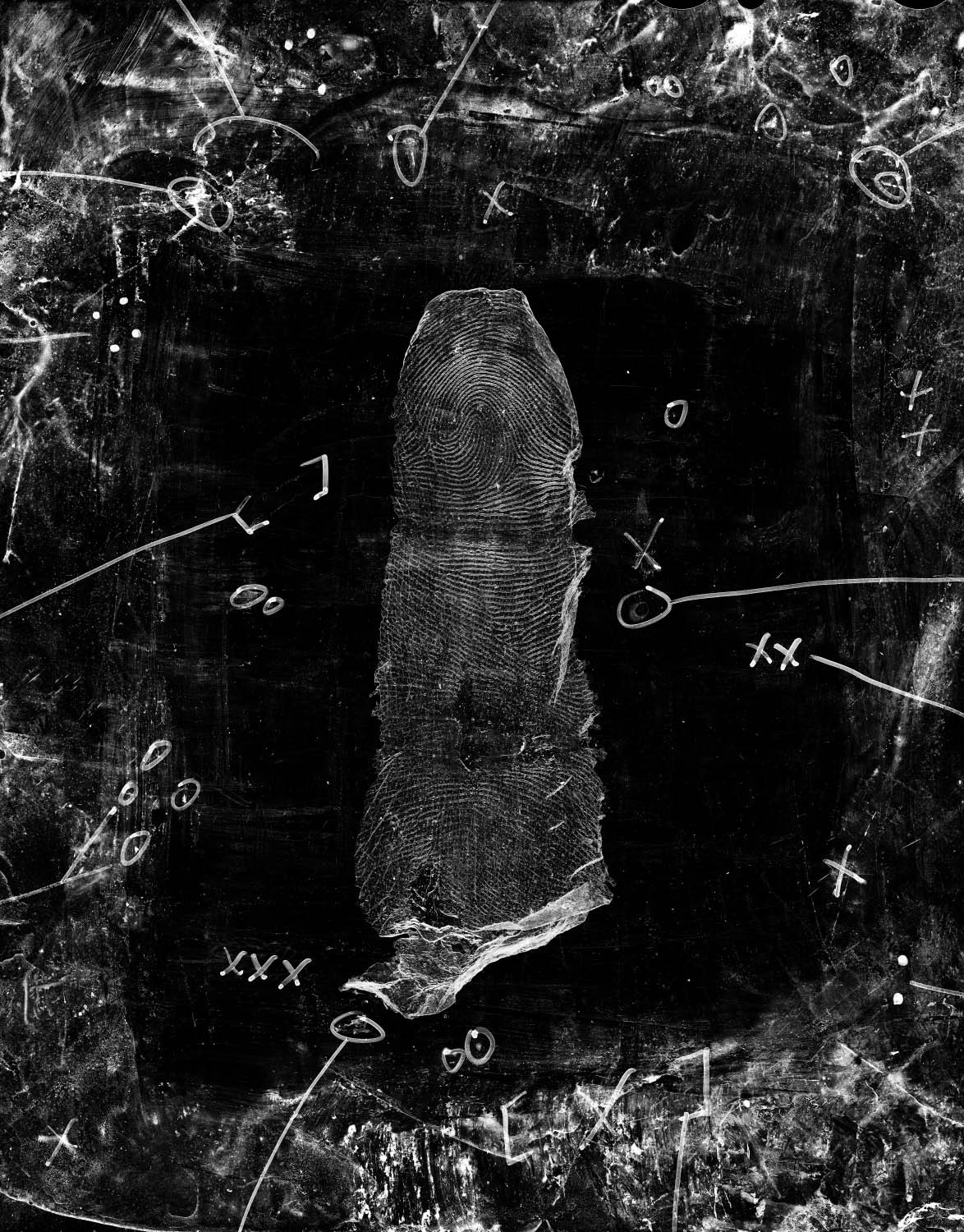
 

Claire A. Warden (Canadian) 'Genetics' Nd


Claire A. Warden (Canadian)
Genetics
Nd
From the series Mimesis (2015-ongoing)
Cameraless Photograph
© Claire A. Warden 


Surrounded by mirrors

” … the human body does not exist and is not understandable apart from the ‘social construction of reality’.” ~ Ted Polhemus

“Hence all of us, in modern social conditions, live as though surrounded by mirrors; in these we search for the appearance of an unblemished, socially valued self.” ~ Anthony Giddens


Embodiment is the fundamental condition we share.

~ Embodiment refers to the representation or expression of an abstract idea, quality, or feeling in a tangible, visible, or physical form. It describes a person, action, or object that perfectly exemplifies a concept. (Cambridge Dictionary)

~ At its core, the word stems from the root “embody,” meaning “to give a body to”. Philosophically, it refers to the condition of a subject (like a person) inhabiting or being associated with a physical form. (Oxford Academic)

Giving form to the intangible

~ Embodiment links together both broadly cultural and circumstantial usages, the body taking on its meaning at the intersection of narrative, culture, and social interaction… Nowadays, with the current interest in lived experience and embodiment, we assume that some level of cultural meaning is implied in pre-reflection as well. (Cambridge English Corpus)

~ Pre-reflection describes an implicit, automatic awareness that accompanies human experience before you pause to consciously analyse or think about what you are doing. It is an unmediated, “in-the-moment” state of being. (Stanford Encyclopaedia of Philosophy)

~ In continental philosophy – most notably the work of Jean-Paul Sartre and Edmund Husserl – pre-reflective consciousness is the immediate, tacit knowledge that an experience is happening to you.

When you are in the zone, as the energy flows through you, in the background you are implicitly aware of taking a photograph – but not in a reflective state, “I have taken a photograph”.

For me, there is a union of mindfulness, body, subject, camera – a seeming suspension of time and space – which may lead to a “revelatio”, a revelation of spirit, a pulling back of the curtain to reveal what is beyond. As a good friend and fellow photographer Frank Vic observes, “To emerge from “the dreams of omniscience and omnipotence” is to let go of the photographer’s intense desire for control and egoistic attachment. Only by facing the subject with an attitude of utmost humility is it possible for the lens to capture a truly objective and sacred “revelation”.”

In modern psychology, the pre-reflective unconscious refers to how your personal history, organising principles, and mental schemas shape your experience without you actively noticing it (Encyclopaedia.com). Thus, it is how unconsciously aware you are of your surroundings, how informed you are through your conversations and reading, how attuned you are to the energy of the body and the world – that directs your gaze.

Some pertinent quotations below.

Dr Marcus Bunyan

PS. The exhibition is divided into four interesting thematic sections – Surface Tension; Kinetic Beauty; Know Thyself; Enduring. Such a pity there are not more photographs to illustrate the many ideas contained within each section.


Many thankx to the Phoenix Art Museum for allowing me to publish the photographs in the posting. Please click on the photographs for a larger version of the image.


“The faculty to think objectively is reason; the emotional attitude behind reason is that of humility. To be objective, to use one’s reason, is possible only if one has achieved and attitude of humility, if one has emerged from the dreams of omniscience and omnipotence which one has as a child.”


Erich Fromm. The Art of Loving. London: Allen and Unwin, 1957, p. 120.


” … the human body does not exist and is not understandable apart from the ‘social construction of reality’. Our bodies and our perception of them constitute an important part of our socio-cultural heritage. They are not simply objects which we inherit at birth, but are socialized (enculturated) throughout life and this process of collectively sanctioned bodily modification may serve as an important instrument for our socialization (enculturation) in a more general sense. That is, in learning to have a body, we also begin to learn about our ‘social body’ – our society.”


Ted Polhemus. Social Aspects of the Human Body. Penguin: Harmonsworth, 1978, p. 21 quoted in Morag MacSween. Anorexic Bodies: A Feminist and Sociological Perspective on Anorexia Nervosa. London: Routledge, 1993, p. 115.


“Consumer capitalism, with its efforts to standardise consumption and to shape tastes through advertising, plays a basic role in furthering narcissism. The idea of generating an educated and discerning public has long since succumbed to the pervasiveness of consumerism, which is a ‘society dominated by appearances’. Consumption addresses the alienated qualities of modern social life and claims to be their solution: it promises the very things the narcissist desires – attractiveness, beauty and personal popularity – through the consumption of the ‘right’ kinds of goods and services. Hence all of us, in modern social conditions, live as though surrounded by mirrors; in these we search for the appearance of an unblemished, socially valued self.”


Anthony Giddens. Modernity and Self-Identity: Self and Society in the Late Modern Age. California: Stanford University Press, 1991, p. 172.
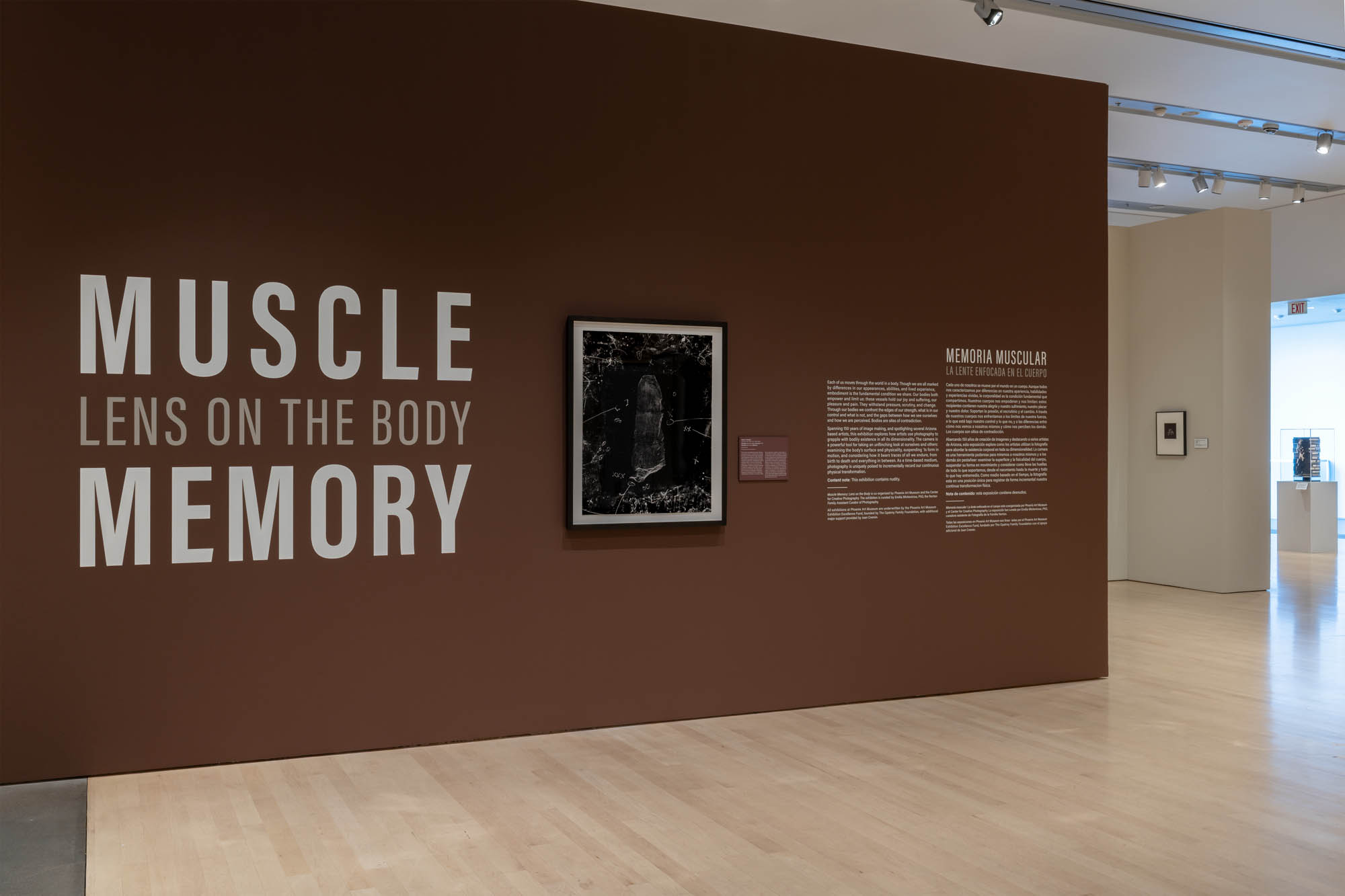


Installation view of the exhibition 'Muscle Memory: Lens on the Body' at the Phoenix Art Museum, Phoenix, AZ, January - June, 2026 showing Claire A. Warden 'Genetics' Nd


Installation view of the exhibition Muscle Memory: Lens on the Body at the Phoenix Art Museum, Phoenix, AZ, January – June, 2026 showing Claire A. Warden’s photograph Genetics Nd (above) from the series Mimesis (2015-ongoing)


Muscle Memory: Lens on the Body

Each of us moves through the world in a body. Though we are marked by differences in our appearances, abilities, and lived experience, embodiment is the fundamental condition we share. Our bodies both empower and limit us: these vessels hold our joy and suffering, our pleasure and pain. They withstand pressure, scrutiny, and change. Through our bodies we confront the edges of our strength, what is in our control and what is not, and the gaps between how we see ourself and how we are perceived. Bodies are sites of contradiction.

Spanning 150 years of images making, and spotlighting several Arizona based artists, this exhibition explores how artists use photography to grapple with bodily existence in all its dimensionality. The camera is a powerful tool for taking an unflinching look at ourselves and others: examining the body’s surface and physicality, suspending its form in motion, and considering how it bears traces of all we endure, from birth to death and everything in between. As a time-based medium, photography is uniquely poised to incrementally record our continuous physical transformation.

Wall text from the exhibition (in the image above)


Mimesis is an ongoing series of large-scale cameraless, abstract photographs that explore identity, representation, resistance, and Opacity.

Mimesis is an ongoing series that engages identity, representation, and language through abstraction and experimental image-making. The creation of this work comes at a time when the struggle to accept the unfamiliar or unkown is pervasive in American culture. When looking at much of my work, the urge to ask “what is it?” echoes the question, “what are you?” – a question directed to me countless times as a person of colour with a diverse ethnocultural heritage and one I increasingly tend to resist. That resistance carries through the work as resistance to definition as well as the hegemonic gaze and, instead, emphasizes Opacity and illegibility. These concepts, informed by anti-essentialism and decolonial theory, ultimately make way for my experimental image-making practice as mode to subvert the problematics of representation in photography, particularly in addressing experiences had by people of color. 

For this reason, I believe it is important to know that the Mimesis series is photographic – cameraless photographs – and that I developed a cameraless process that uses saliva to break down the emulsion of film. What is left is metallic silver and my biologic matter – thus exploring photographic materiality, identity formation, and illegibility. These works of self-portraiture do not show a viewer what I look like but are built from my DNA and shaped by my experiences.

Text from the PhMuseum website. Used under fair use conditions for the purposes of education and research


About the exhibition

Drawn primarily from the collections of the Center for Creative Photography and Phoenix Art Museum, Muscle Memory: Lens on the Body showcases a wide range of historical and contemporary works that explore the ways photographers have represented the human figure and bodily experiences of movement, aging, disability, and more.

Featured works demonstrate how artists have grappled with physicality, dimension, beauty, form, and the politics of the body in the landscape and urban environment. Subjects are presented in the context of growing older, sports, and abstraction, offering audiences the opportunity to consider the body’s ability to morph and bear traces of lived experiences.

Text from the Phoenix Art Museum website
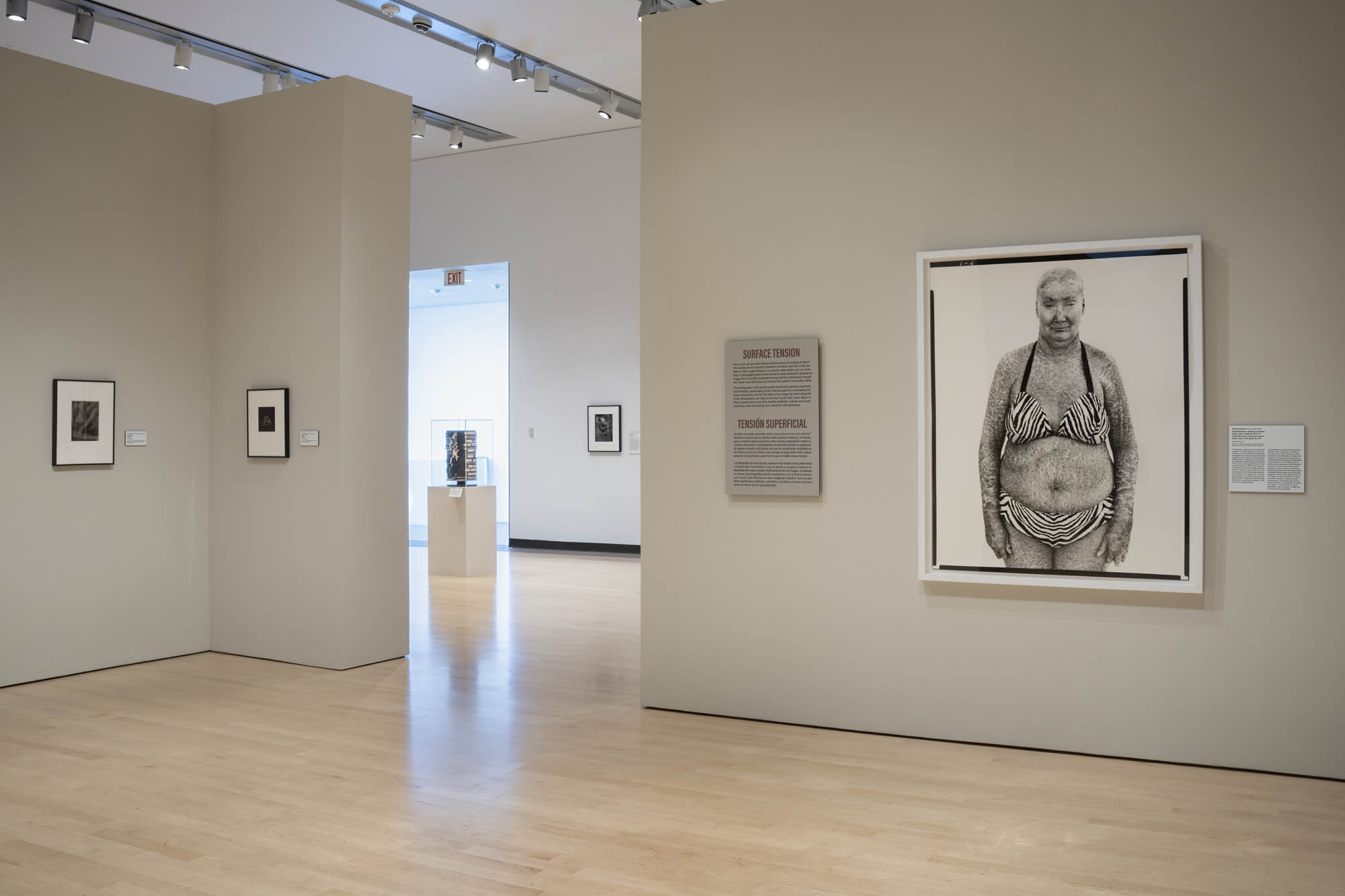
 

Installation view of the exhibition 'Muscle Memory: Lens on the Body' at the Phoenix Art Museum, Phoenix, AZ, January - June, 2026 showing at right, Richard Avedon 'Esther Blackmon, sideshow performer, Sidney, Iowa, August 12, 1979' (1979)


Installation view of the exhibition Muscle Memory: Lens on the Body at the Phoenix Art Museum, Phoenix, AZ, January – June, 2026 showing at right, Richard Avedon Esther Blackmon, sideshow performer, Sidney, Iowa, August 12, 1979 (1979, below)


Surface Tension

How much can you learn about another person by looking at them? Our bodies are the interface between ourselves and the world, but there is often a gap between our exterior presentation and our inner lives. A photograph grants us the license to study someone’s appearance longer than is socially acceptable during real-time interactions, though the viewer must still draw conclusions from what is outwardly visible.

The photographs in this section probe this tension between exteriority and interiority, showcasing what is lost and gained in translating the body’s physicality in the flat plane of an image. By abstracting the body, photographs can help us see the human form anew. Many of these pictures show how skin signifies aesthetic, cultural, and social meanings, even functioning as a canvas for self-expression.

Wall text from the exhibition
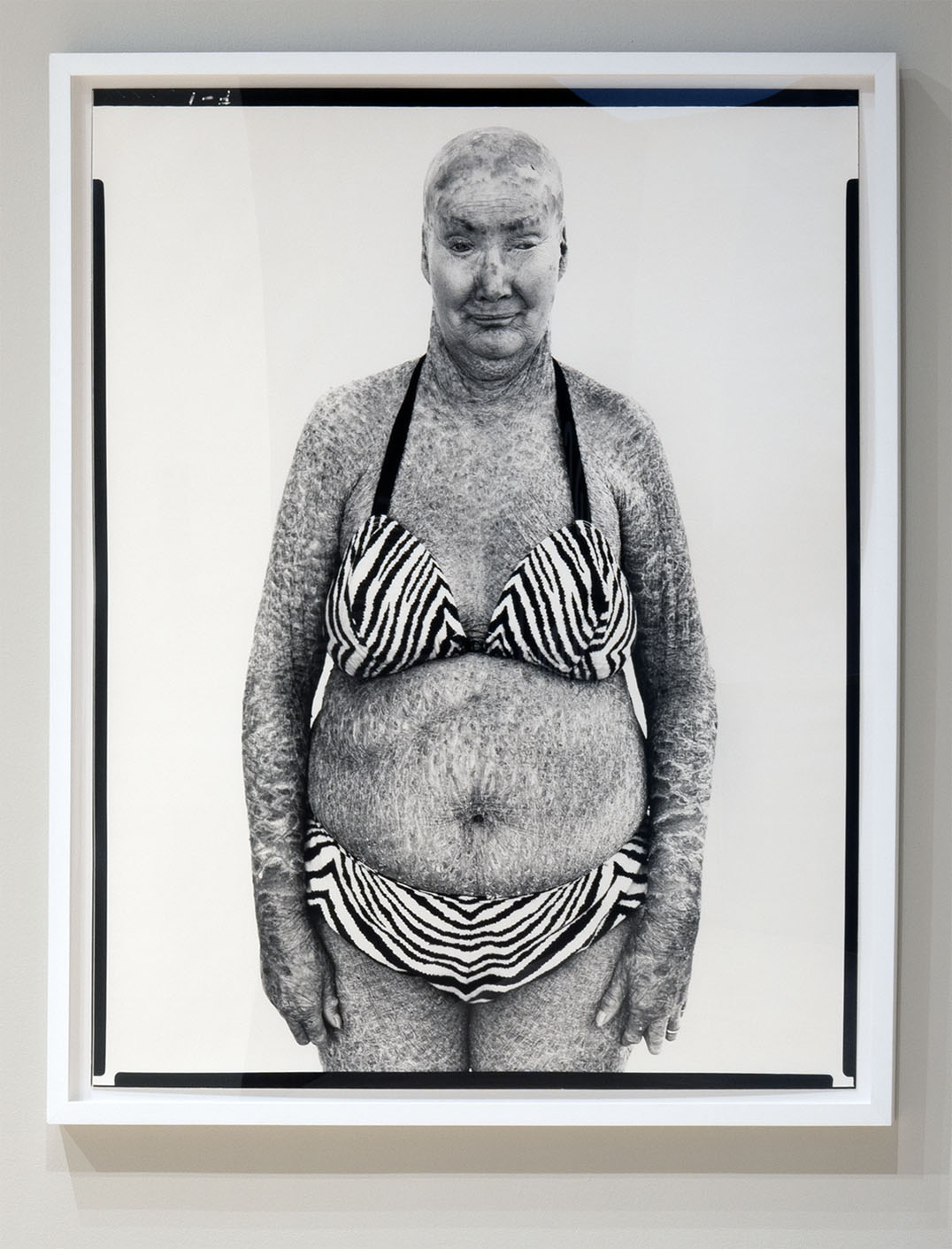
 

Richard Avedon (American, 1923-2004) 'Esther Blackmon, sideshow performer, Sidney, Iowa, August 12, 1979' 1979 (installation view)


Richard Avedon (American, 1923-2004)
Esther Blackmon, sideshow performer, Sidney, Iowa, August 12, 1979 (installation view)
1979
Gelatin silver print
Center for Creative Photography, University of Arizona
Richard Avedon Archive
Gift of the artist


Photographs of people can both exploit and empower. The power dynamic of a portrait involves not only the interaction between the photographer and subject, but also the viewer’s projections, assumptions and interpretation. Resisting others’ projections of shame about her appearance, Esther Blackmon proclaimed: “I live a normal and happy life.” Born in North Carolina, Blackmon (1926-2003) lived with a hereditary skin disease called ichthyosis which caused dryness and baldness. This unique aspect of her phenotype earned her the nickname “The Alligator Girl.” Actively participating in the carnival industry for 56 years, Blackmon regarded herself with pride. “People born unusual are not freaks … I’d say they are very special people.”

Wall text from the exhibition
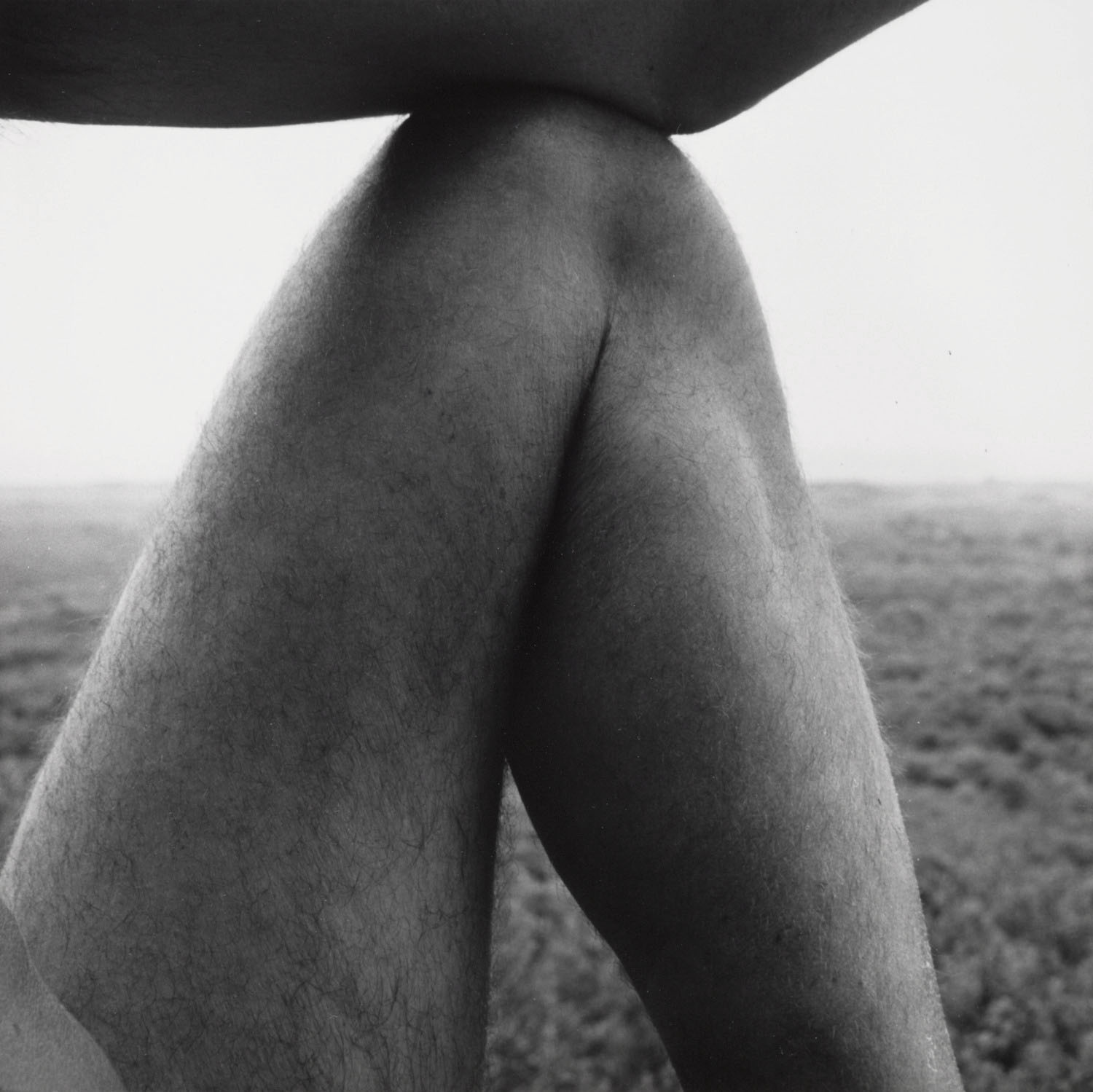
 

Aaron Siskind (American, 1903-1991) 'Lipkind 33' 1960


Aaron Siskind (American, 1903-1991)
Lipkind 33
1960
Gelatin silver print
Center for Creative Photography
University of Arizona: Aaron Siskind Archive
© Aaron Siskind Foundation 
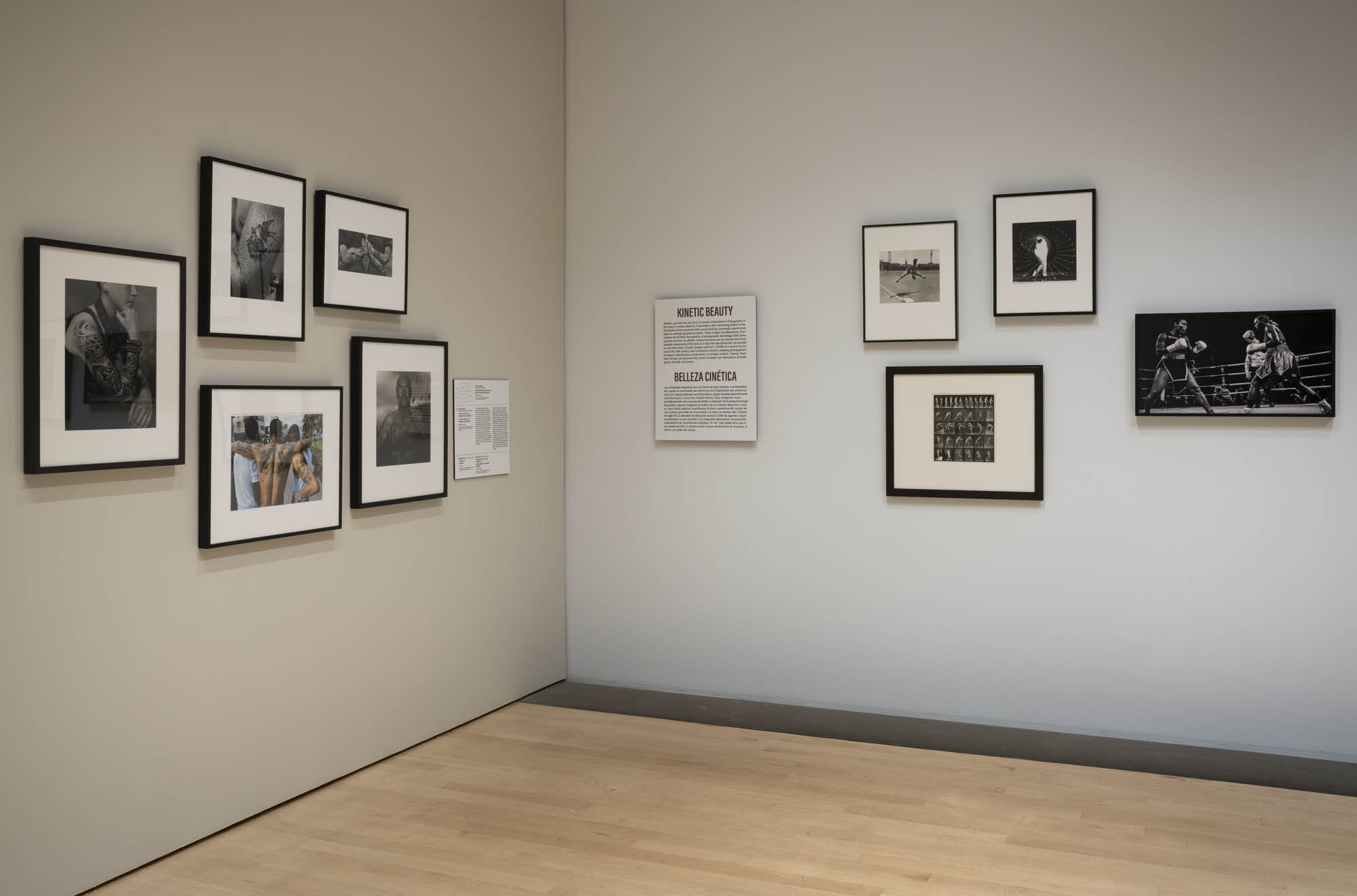
 

Installation view of the exhibition 'Muscle Memory: Lens on the Body' at the Phoenix Art Museum, Phoenix, AZ, January - June, 2026 showing at left, Leon Borensztein 'Woman with Tattoo, San Francisco' (1984); at second left bottom, Stephen Marc, 'Untitled' (2017); and at third right bottom, Diane Arbus 'Tattooed Man at a Carnival, Md.' (1970)


Installation view of the exhibition Muscle Memory: Lens on the Body at the Phoenix Art Museum, Phoenix, AZ, January – June, 2026 showing at left, Leon Borensztein Woman with Tattoo, San Francisco (1984, below); at second left bottom, Stephen Marc, Untitled (2017, below); and at third right bottom, Diane Arbus Tattooed Man at a Carnival, Md. (1970, below)
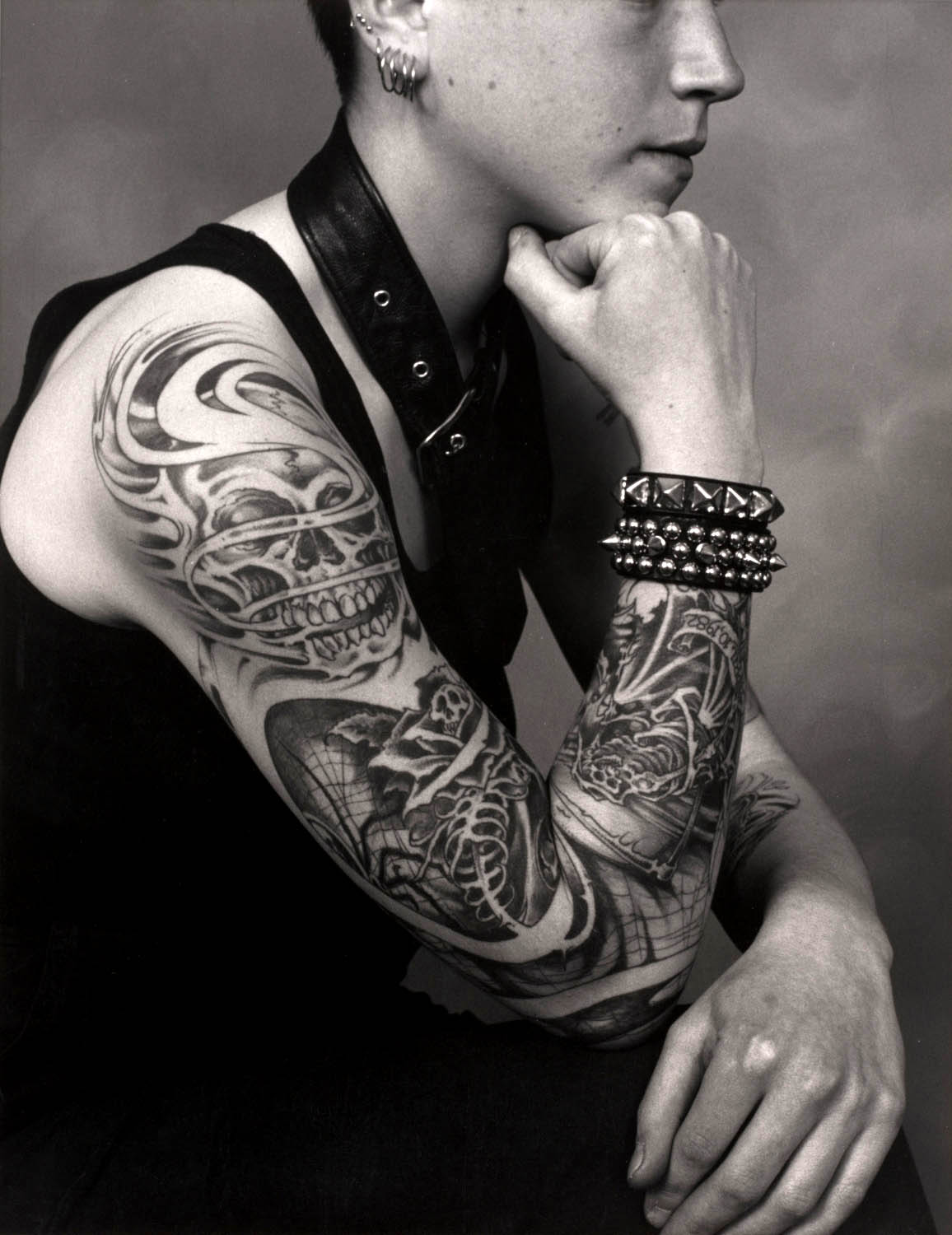
 

Leon Borensztein (American, b. 1947) 'Woman with Tattoo, San Francisco' 1984


Leon Borensztein (American, b. 1947)
Woman with Tattoo, San Francisco
1984
Gelatin silver print
Center for Creative Photography
University of Arizona: Purchase
© Leon Borensztein 
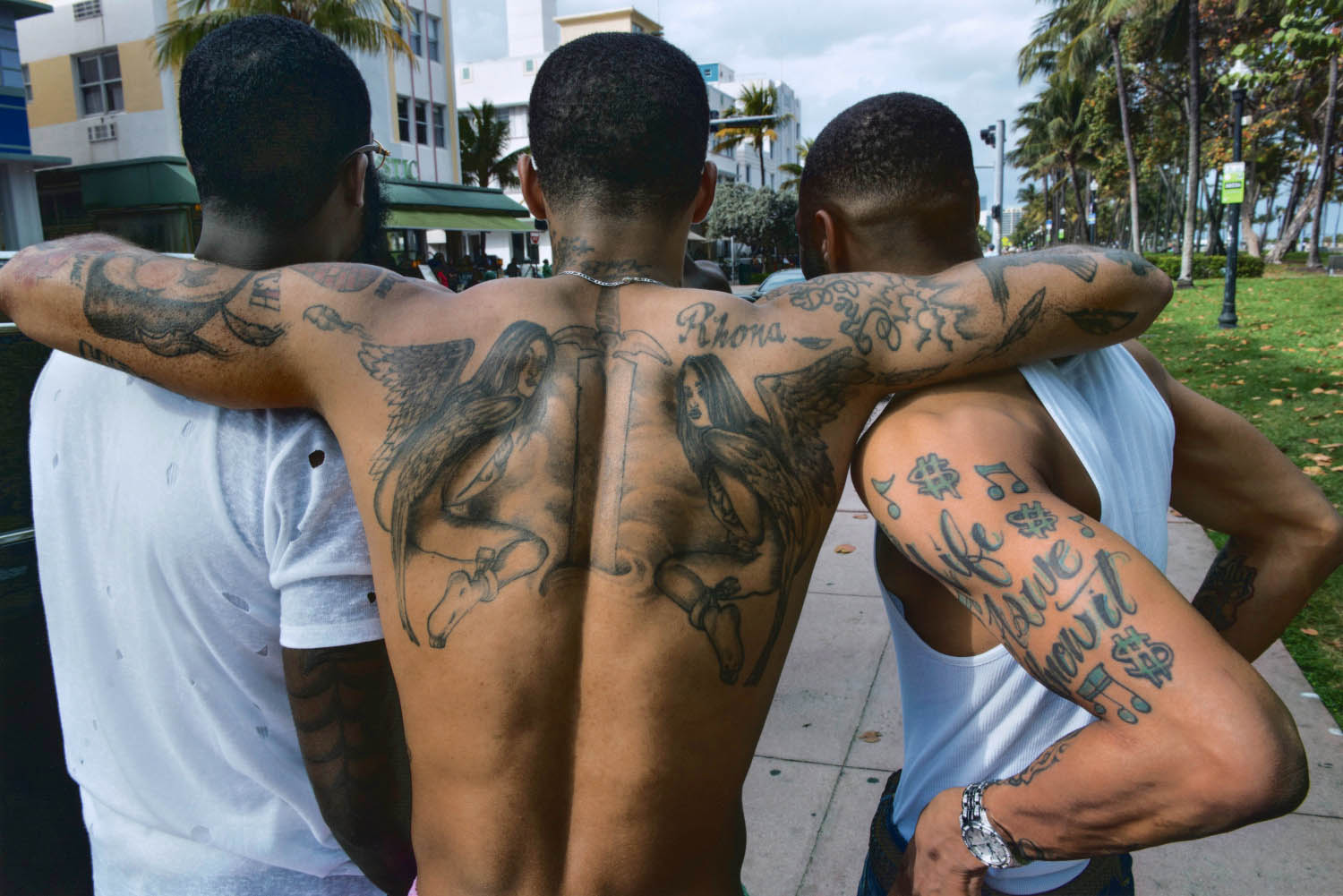
 

Stephen Marc (American, b. 1954) 'Untitled' 2017


Stephen Marc (American, b. 1954)
Untitled
2017
Inkjet print
Center for Creative Photography
University of Arizona: Gift of the Artist
© Stephen Marc


Diane Arbus (American, 1923-1971) 'Tattooed Man at a Carnival, Md.' 1970


Diane Arbus (American, 1923-1971)
Tattooed Man at a Carnival, Md.
1970
Gelatin silver print


Kinetic Beauty

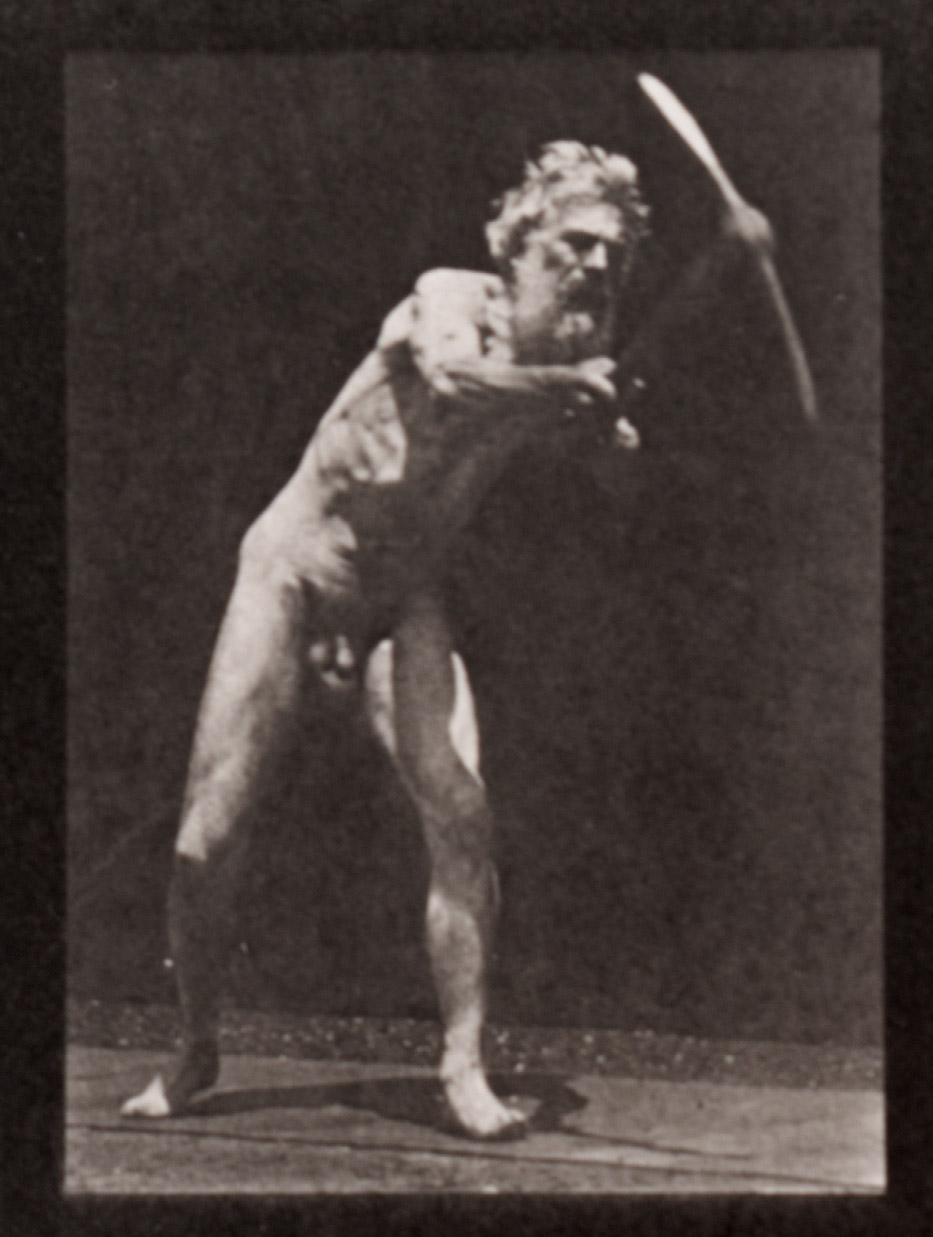
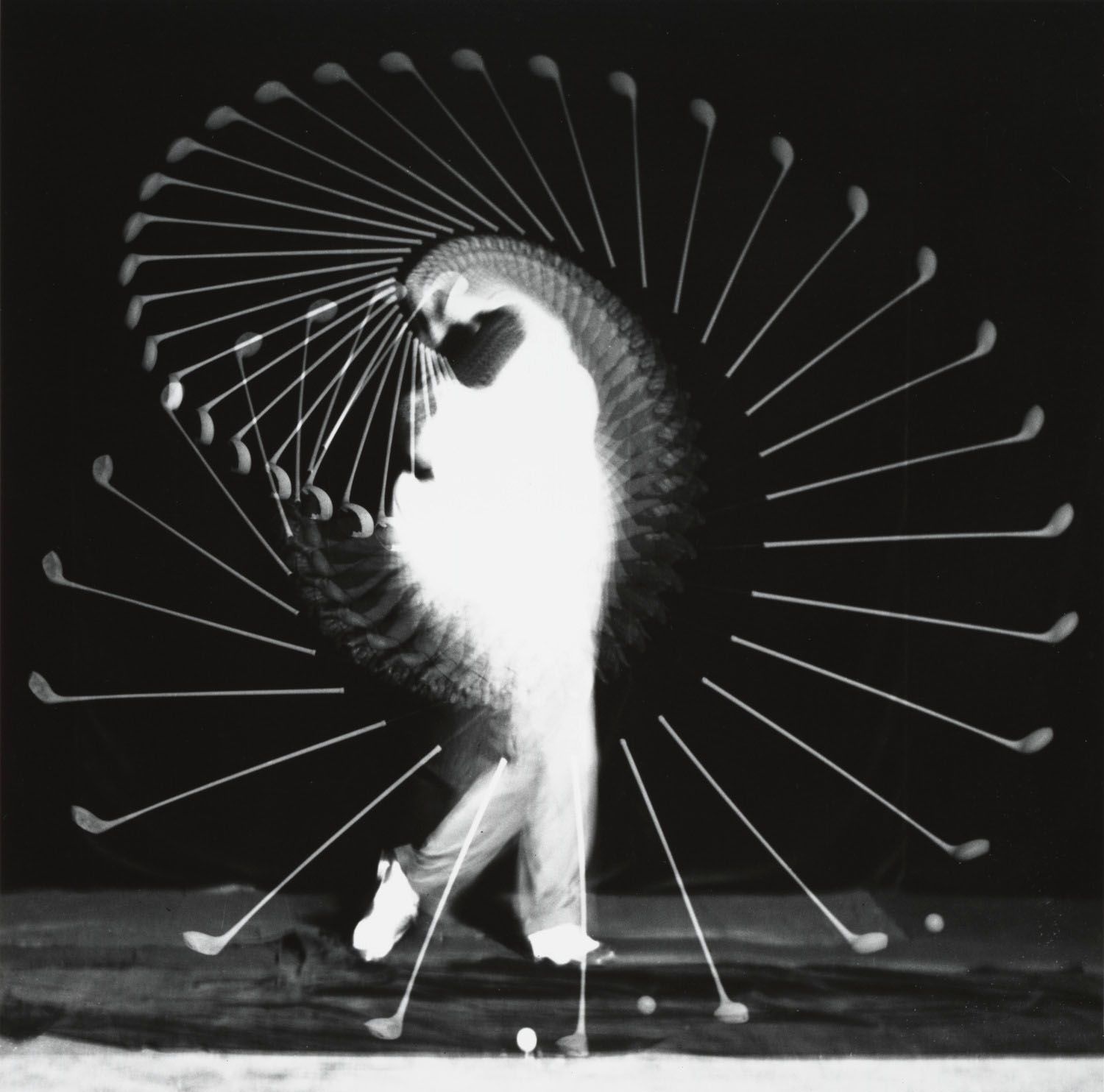
Athletic pursuits are one form of human achievement. Photographs of the body in motion attest to a fascination with witnessing bodies at the threshold of their physical limits, accomplishing seemingly superhuman feats or embodying physical ideals. These images simultaneously chart another set of limits; the evolution of photographic technology itself. Some pictures are from an athletic context and some are not, but all arrest fluid, operatic movements of the body in a way that was previously inaccessible to real-time vision. Shutter speeds reached 1/1000th of a second by the end of the 19th century and continued to shorten, enabling photographers to dissect instantaneous components of complex motions. “Seeing” faster than the eye can perceive, the camera revealed new dimensions of bodily grace, strength, and power.

Wall text from the exhibition
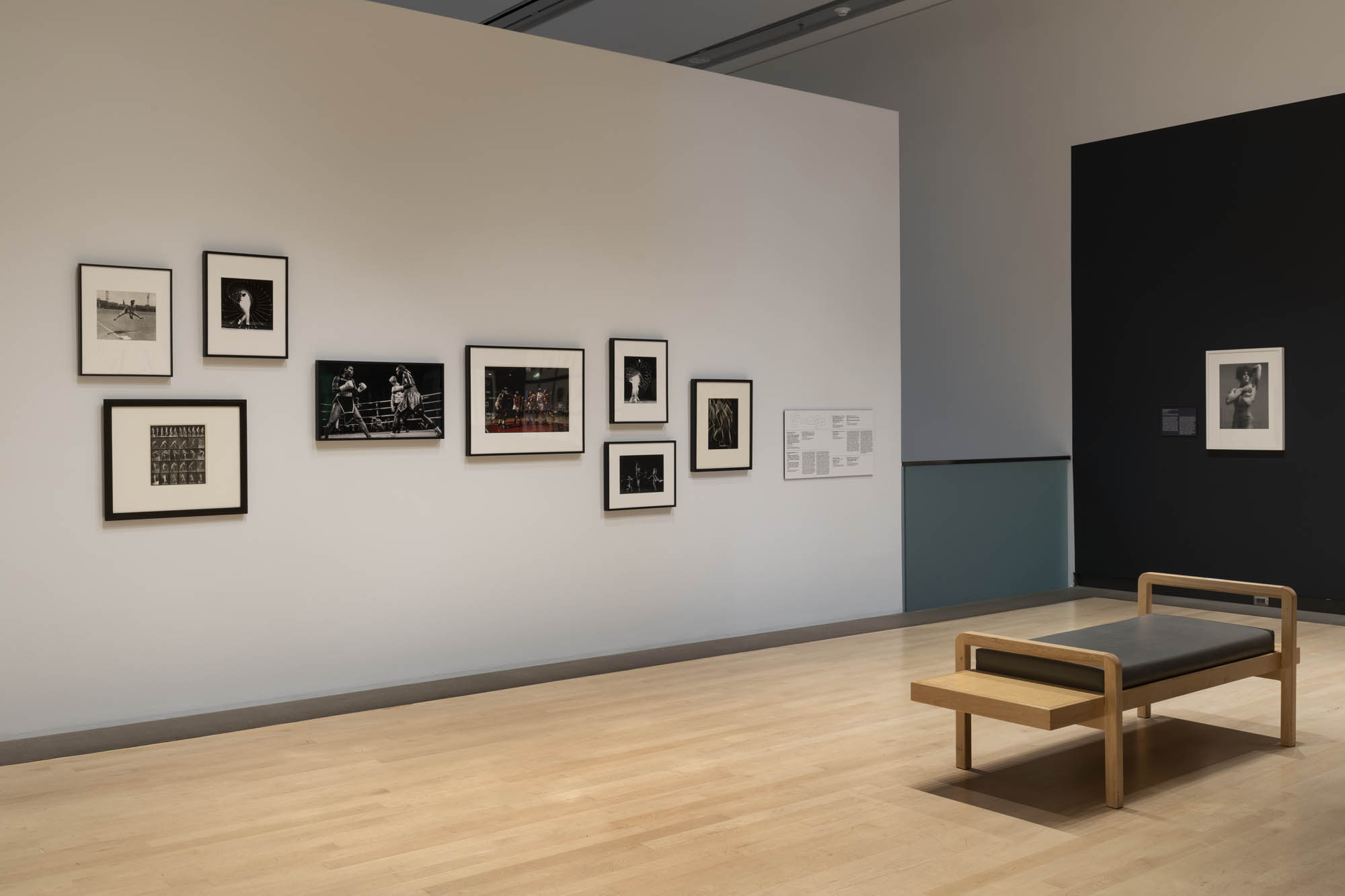
 

Installation view of the exhibition 'Muscle Memory: Lens on the Body' at the Phoenix Art Museum, Phoenix, AZ, January - June, 2026 showing at top left, Charles "Teenie" Harris 'New York Cubans' (1941); at bottom left, Eadweard J. Muybridge 'Animal Locomotion, Plate 521: A: Walking, B: Ascending a Step, C: Throwing the Disc, D: Using a Shovel, E: Using a Pick, 1884-85' (1887); at second left, Harold Edgerton 'Golf Drive by Densmore Shute, 1938' (1938); at centre left, Terrell Groggins 'Gabriels and Shields Square Up Round 1' (2018); at centre right, Walter Iooss 'Michael Jordan, Phoenix at Chicago, 1933' (1933); and at far right, Robert Mapplethorpe 'Lisa Lyon' (1983)


Installation view of the exhibition Muscle Memory: Lens on the Body at the Phoenix Art Museum, Phoenix, AZ, January – June, 2026 showing at top left, Charles “Teenie” Harris New York Cubans (1941, below); at bottom left, Eadweard J. Muybridge Animal Locomotion, Plate 521: A: Walking, B: Ascending a Step, C: Throwing the Disc, D: Using a Shovel, E: Using a Pick, 1884-85 (1887, below); at second left, Harold Edgerton Golf Drive by Densmore Shute, 1938 (1938, below); at centre left, Terrell Groggins Gabriels and Shields Square Up Round 1 (2018, below); at centre right, Walter Iooss Michael Jordan, Phoenix at Chicago, 1933 (1933, below); and at far right, Robert Mapplethorpe Lisa Lyon (1983)
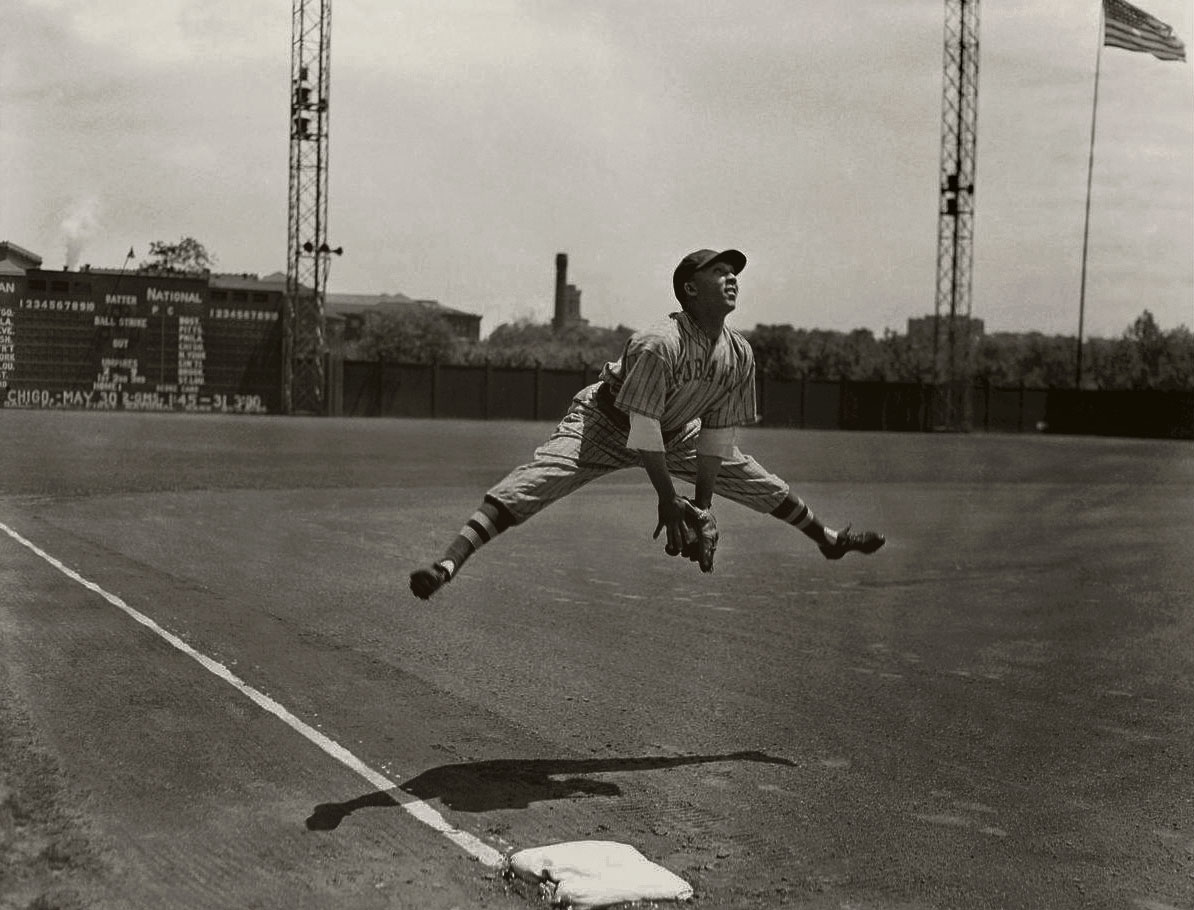
 

Charles "Teenie" Harris (American, 1908-1998) 'New York Cubans' 1941


Charles “Teenie” Harris (American, 1908-1998)
New York Cubans
1941
Gelatin silver print


New York Cubans baseball player Horacio Martinez leaping above third base at Forbes Field
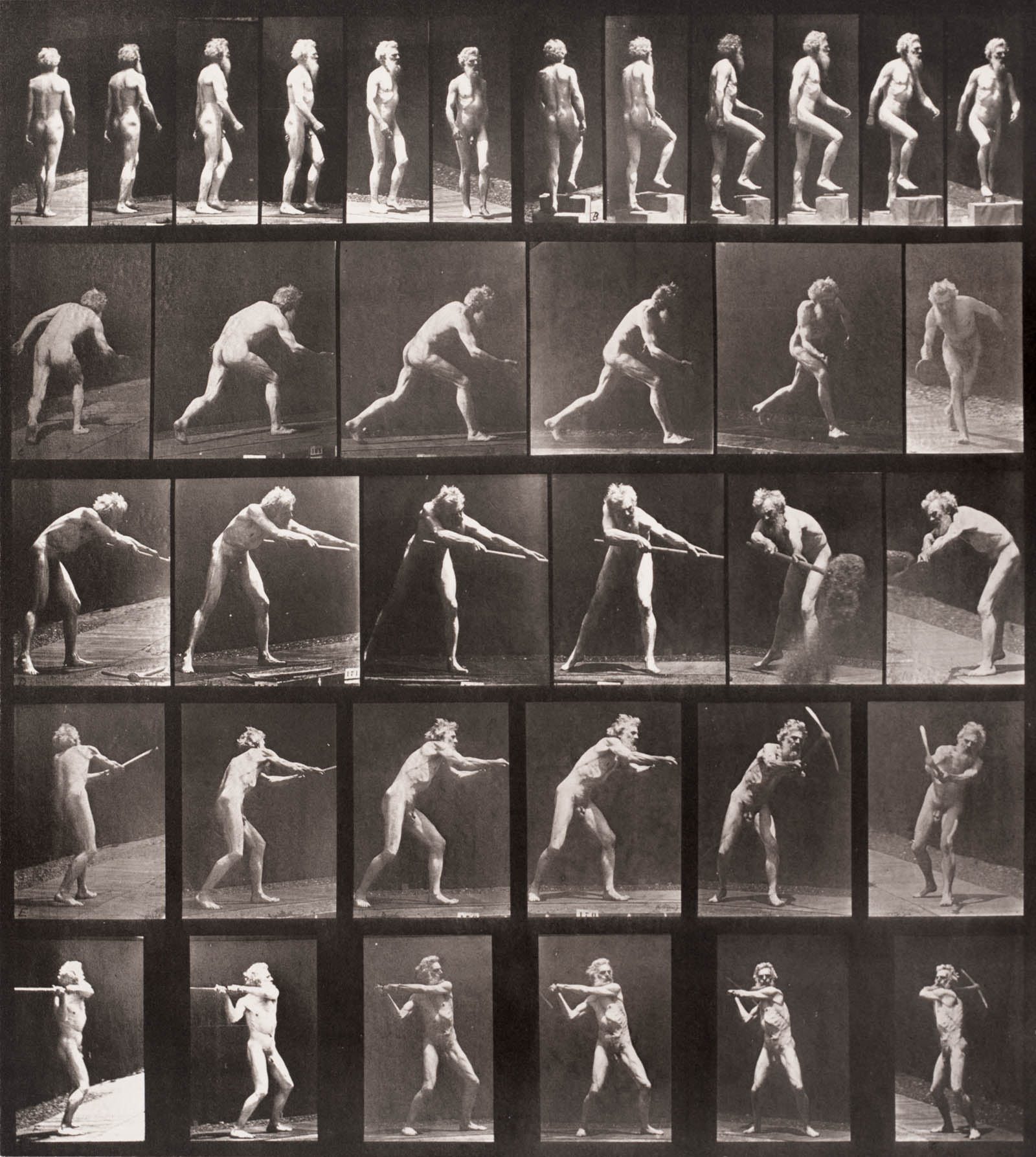
 

Eadweard J. Muybridge (English, 1830-1904) 'Animal Locomotion, Plate 521: A: Walking, B: Ascending a Step, C: Throwing the Disc, D: Using a Shovel, E: Using a Pick, 1884-85' 1887


Eadweard J. Muybridge (English, 1830-1904)
Animal Locomotion, Plate 521: A: Walking, B: Ascending a Step, C: Throwing the Disc, D: Using a Shovel, E: Using a Pick, 1884-85
1887
Collotype
Center for Creative Photography
University of Arizona: Purchase 
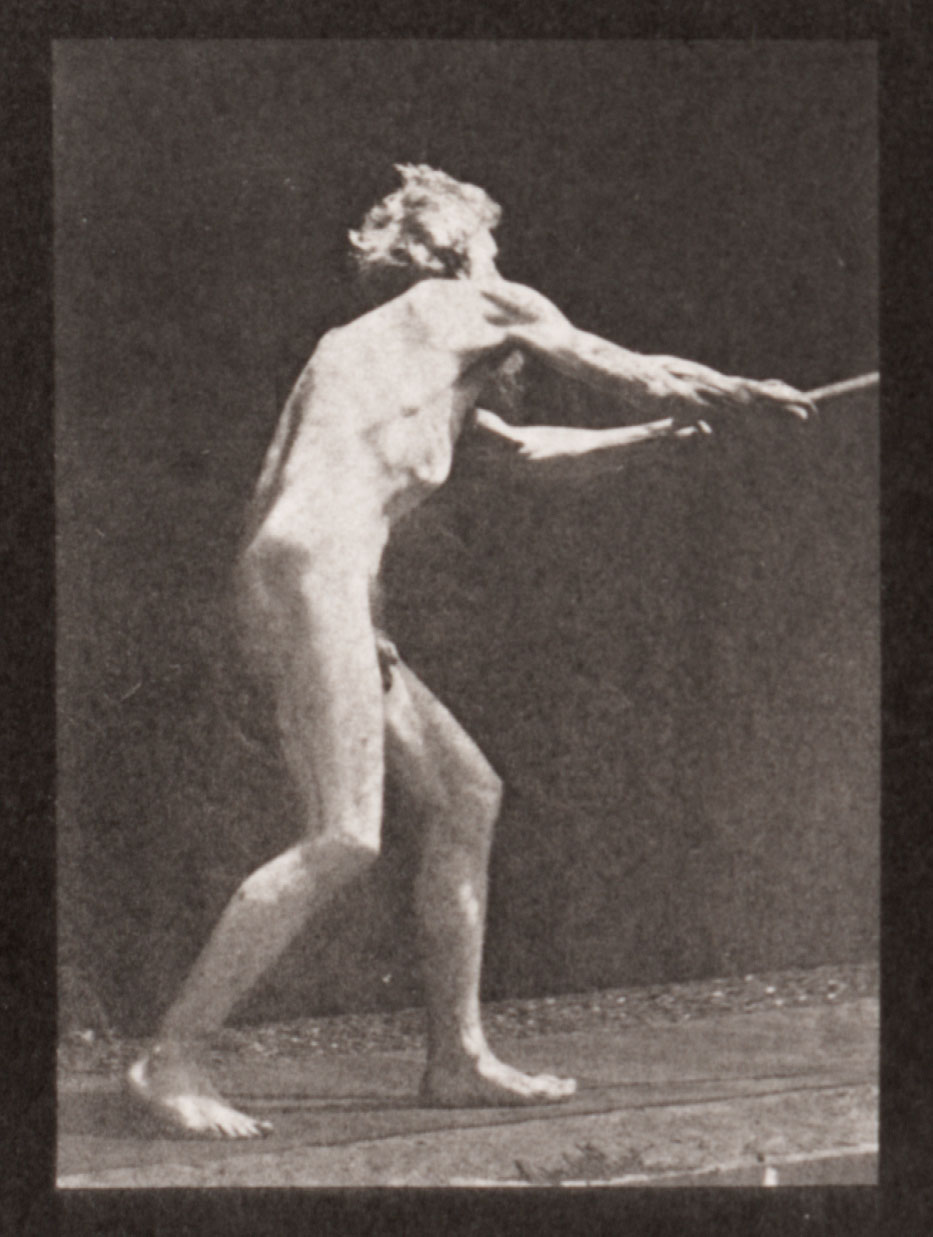
 

Eadweard J. Muybridge (English, 1830-1904) 'Animal Locomotion, Plate 521: A: Walking, B: Ascending a Step, C: Throwing the Disc, D: Using a Shovel, E: Using a Pick, 1884-85' 1887 (detail)


Eadweard J. Muybridge (English, 1830-1904)
Animal Locomotion, Plate 521: A: Walking, B: Ascending a Step, C: Throwing the Disc, D: Using a Shovel, E: Using a Pick, 1884-85 (details)
1887
Collotype
Center for Creative Photography
University of Arizona: Purchase 
 

Harold Edgerton (American, 1903-1990) 'Golf Drive by Densmore Shute, 1938' 1938


Harold Edgerton (American, 1903-1990)
Golf Drive by Densmore Shute, 1938
1938
Gelatin silver print
Center for Creative Photography
University of Arizona: Purchase
© Harold Edgerton, MIT, courtesy of Palm Press Inc.
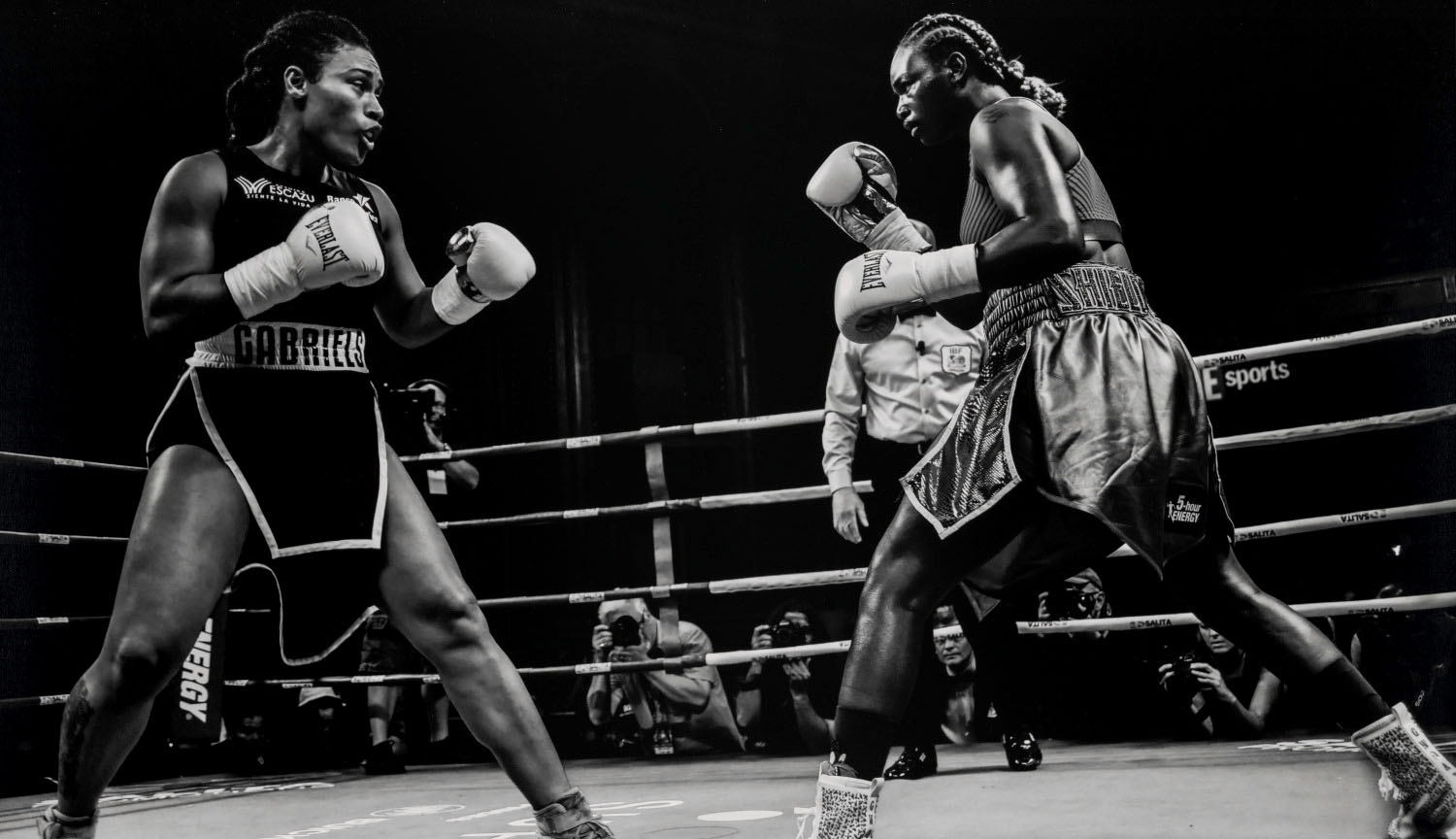
 

Terrell Groggins (American) 'Gabriels and Shields Square Up Round 1' 2018, printed 2021


Terrell Groggins (American)
Gabriels and Shields Square Up Round 1
2018, printed 2021
Inkjet print
Center for Creative Photography
University of Arizona: Center for Creative Photography Photojournalism Fund
© Terrell Groggins My Art My Rules
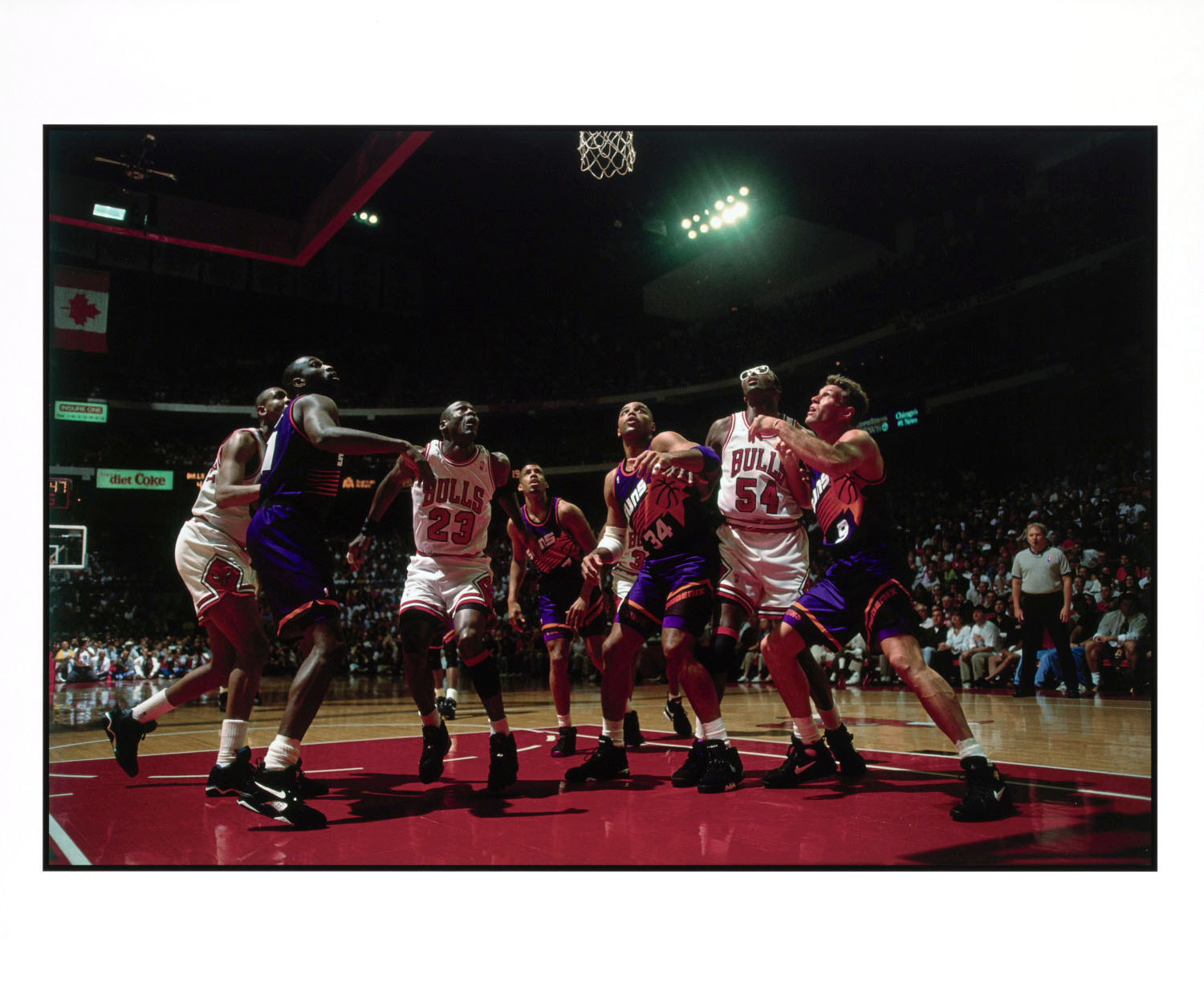
 

Walter Iooss (American, b. 1943) 'Michael Jordan, Phoenix at Chicago, 1993' 1993


Walter Iooss (American, b. 1943)
Michael Jordan, Phoenix at Chicago, 1993
1993
Inkjet print
Center for Creative Photography
University of Arizona: Gift of Rajesh B. Patel
© Walter Iooss 


This winter, Phoenix Art Museum presents Muscle Memory: Lens on the Body, an exploration of the ways in which photographers across history have represented and reckoned with the human body and its associated dimensionality, evolution, and politicization. Drawn primarily from the collection of the Center for Creative Photography (CCP) at the University of Arizona in Tucson, along with select works from the PhxArt Collection and those by Arizona- based contemporary artists, the exhibition showcases more than 80 wide-ranging works that contend with the body’s form, physicality, and limits. Muscle Memory: Lens on the Body will be on view at PhxArt from January 24, 2026, through June 28, 2026.

“Muscle Memory: Lens on the Body offers a view into the human experience that is both compelling and relatable,” said Jeremy Mikolajczak, the Sybil Harrington Director and CEO of Phoenix Art Museum. “From sports imagery and self-portraiture to abstract compositions, this exhibition considers all aspects of the body in every stage of evolution. We are excited to once again work with the Center for Creative Photography to present a captivating collection of photographic works, shown in conversation with new acquisitions to the Phoenix Art Museum Collection by contemporary voices.”

Spanning works captured from the 19th century through the present, Muscle Memory offers a compelling look at the dynamism of the human body with works by artists such as:

John Gutmann • Richard Avedon • Brian Weil • Lauren Greenfield • Rosalind Fox Solomon • Anne Noggle • Frances Murray • Walter Iooss • Diane Arbus • Manuel Álvarez Bravo • Imogen Cunningham • Arno Rafael Minkkinen • Roy DeCarava • Harold Edgerton • Aaron Siskind • Charles “Teenie” Harris • W. Eugene Smith • Leon Borensztein • Jan Groover • Ittetsu Morishita • John Coplans • Robert Mapplethorpe • Eadweard J. Muybridge • Graciela Iturbide • Barbara Crane • Nan Goldin • William Camargo • Marcus Chormicle • Mehrdad Mirzaie • Claire A. Warden • Zhang Huan

The exhibition’s works are presented across four thematic sections that offer varying views on embodiment and how our bodies at once empower and limit us. Surface Tension considers skin as a surface and what is possible to know about a person by looking at them, including how a subject’s outward appearance can exist in tension with their interiority. Works in this section by artists such as Diane Arbus and John Gutmann spotlight individuals who have changed their outward appearance with tattoos, makeup, and other markings, exploring the human impulse to use the body as a canvas for personal expression.

Kinetic Beauty features the body in motion, with a specific focus on sports imagery. It explores how bodies interact and take shape in athletic settings, particularly those that require high levels of physical performance, endurance, and even contortion. Works in this section include images of bodybuilders by Robert Mapplethorpe and Brian Weil and a photograph by Walter Iooss featuring Michael Jordan and Charles Barkley, as well as abstract studies of bodily motion associated with physical training, strength, and aspiration.

Know Thyself highlights the work of photographers who have used the medium of photography, often in the form of serial self-portraiture, to grapple with issues of aging, beauty standards, and self-image. Featured artists in this section include John Coplans, Lauren Greenfield, Anne Noggle, and Rosalind Fox Solomon.

Enduring presents works by Nan Goldin, Ittetsu Morishita, Marcus Chormicle, and others depicting the body as witness and at its physical limits, whether due to physical exertion, illness, injury, or even death and absence, prompting viewers to consider the concepts of endurance and survival.

“Muscle Memory invites audiences to consider the body’s ability to morph in response to and bear traces of lived experience, while also discovering how photographers have used the medium as a tool for self- knowledge and exploration,” said Emilia Mickevicius, the Norton Family Assistant Curator of Photography at Phoenix Art Museum and the Center for Creative Photography. “Works by living Arizona-based artists Claire A. Warden, Mehrdad Mirzaie, Marcus Chormicle, and Anh-Thuy Nguyen infuse the presentation with contemporary perspectives on the body’s legibility, how it holds memory, and how it becomes a site of negotiation between selves and others, both extending and departing from the concerns of the historical works in the exhibition.”

Press release from the Phoenix Art Museum
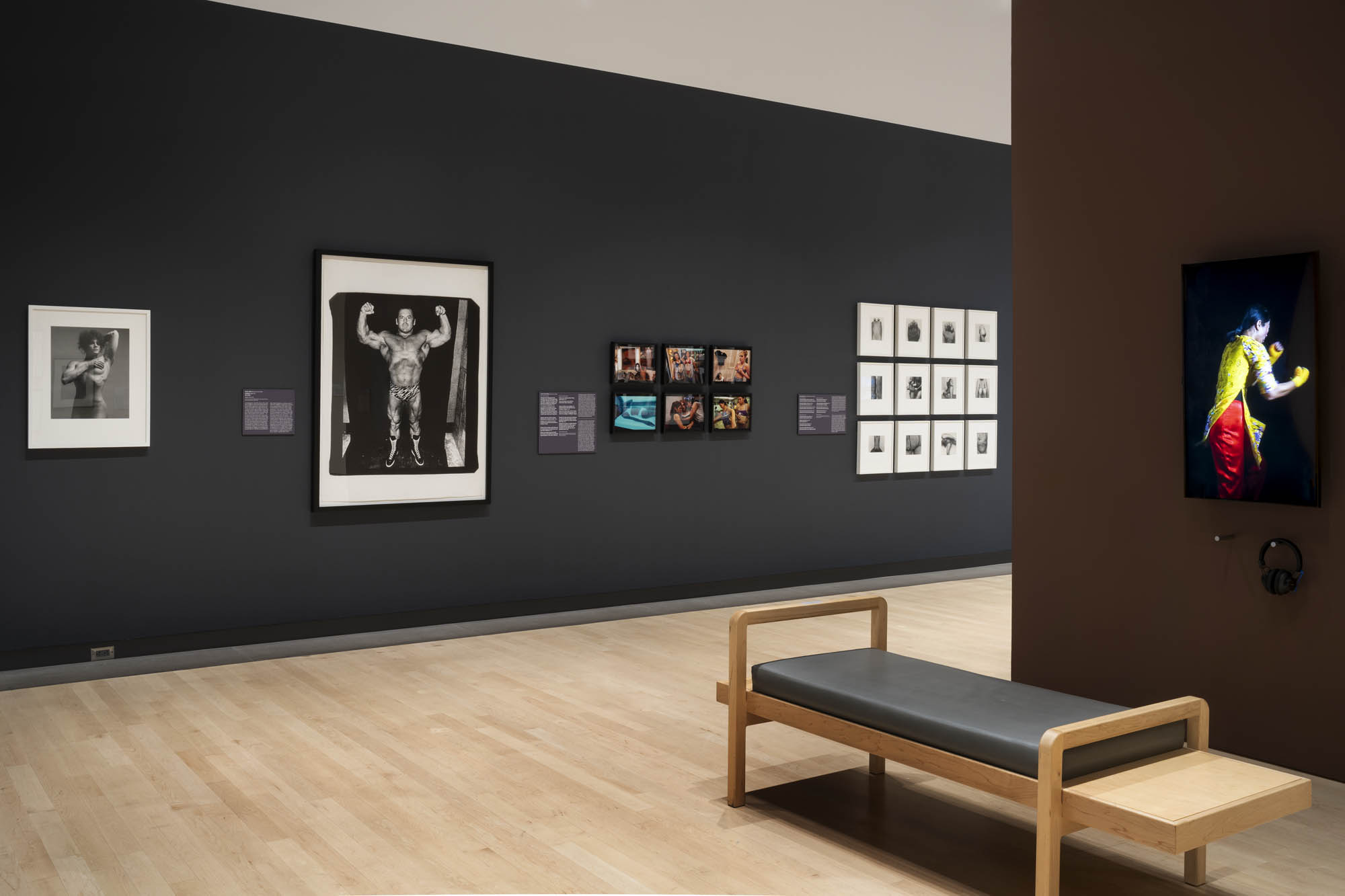
 

Installation view of the exhibition 'Muscle Memory: Lens on the Body' at the Phoenix Art Museum, Phoenix, AZ, January - June, 2026 showing at left, Robert Mapplethorpe 'Lisa Lyon' (1983); and at second right, a group of photographs by John Coplans


Installation view of the exhibition Muscle Memory: Lens on the Body at the Phoenix Art Museum, Phoenix, AZ, January – June, 2026 showing at left, Robert Mapplethorpe Lisa Lyon (1983); and at second right, a group of photographs by John Coplans
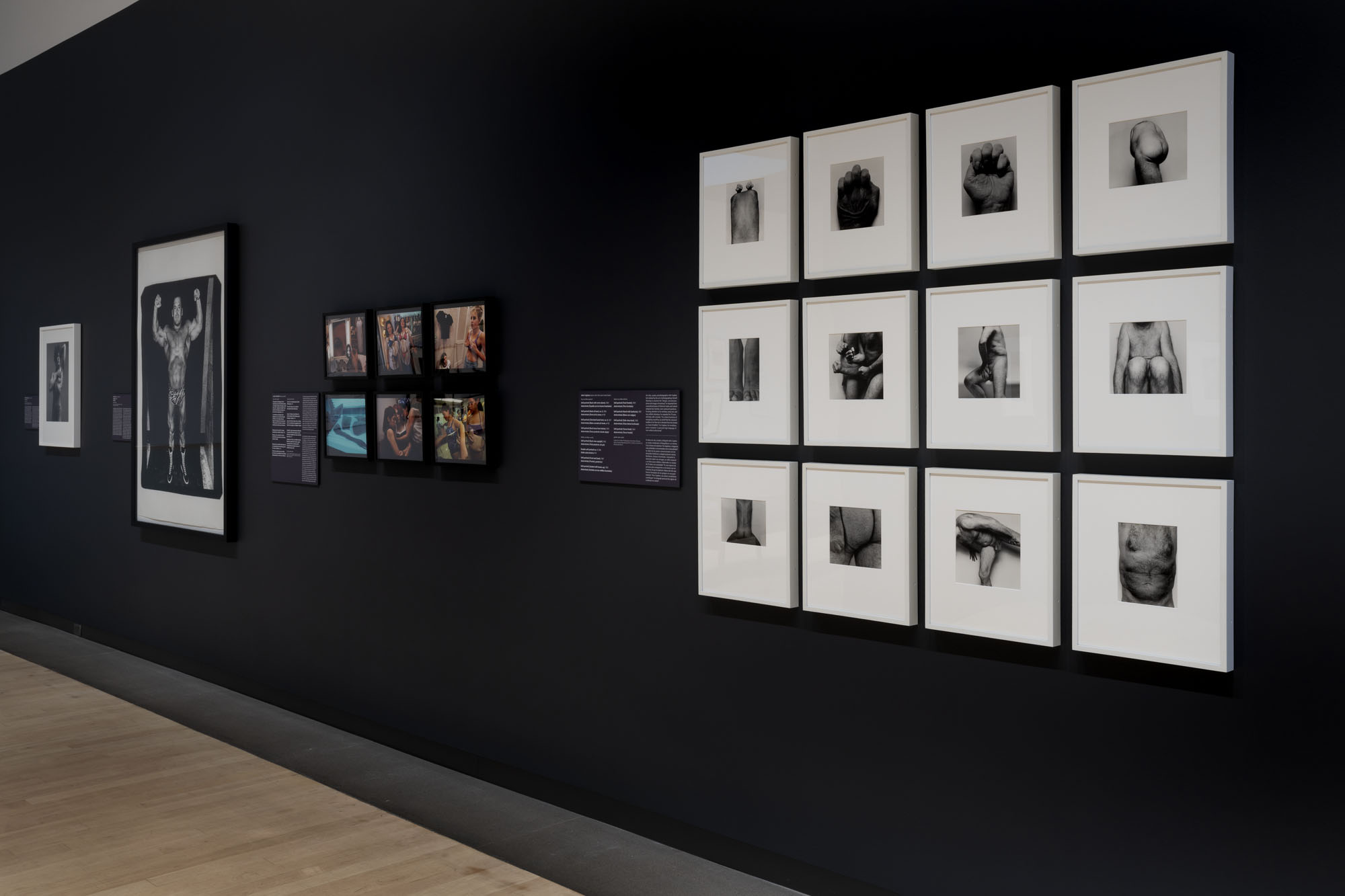
 

Installation view of the exhibition 'Muscle Memory: Lens on the Body' at the Phoenix Art Museum, Phoenix, AZ, January - June, 2026 showing at right, a group of photographs by John Coplans


Installation view of the exhibition Muscle Memory: Lens on the Body at the Phoenix Art Museum, Phoenix, AZ, January – June, 2026 showing at right, a group of photographs by John Coplans


John Coplans (British, 1920-2003) 'Self-Portrait (Back with Arms Above)' 1984


John Coplans (British, 1920-2003)
Self-portrait (Back with arms above)
1984
Gelatin silver print
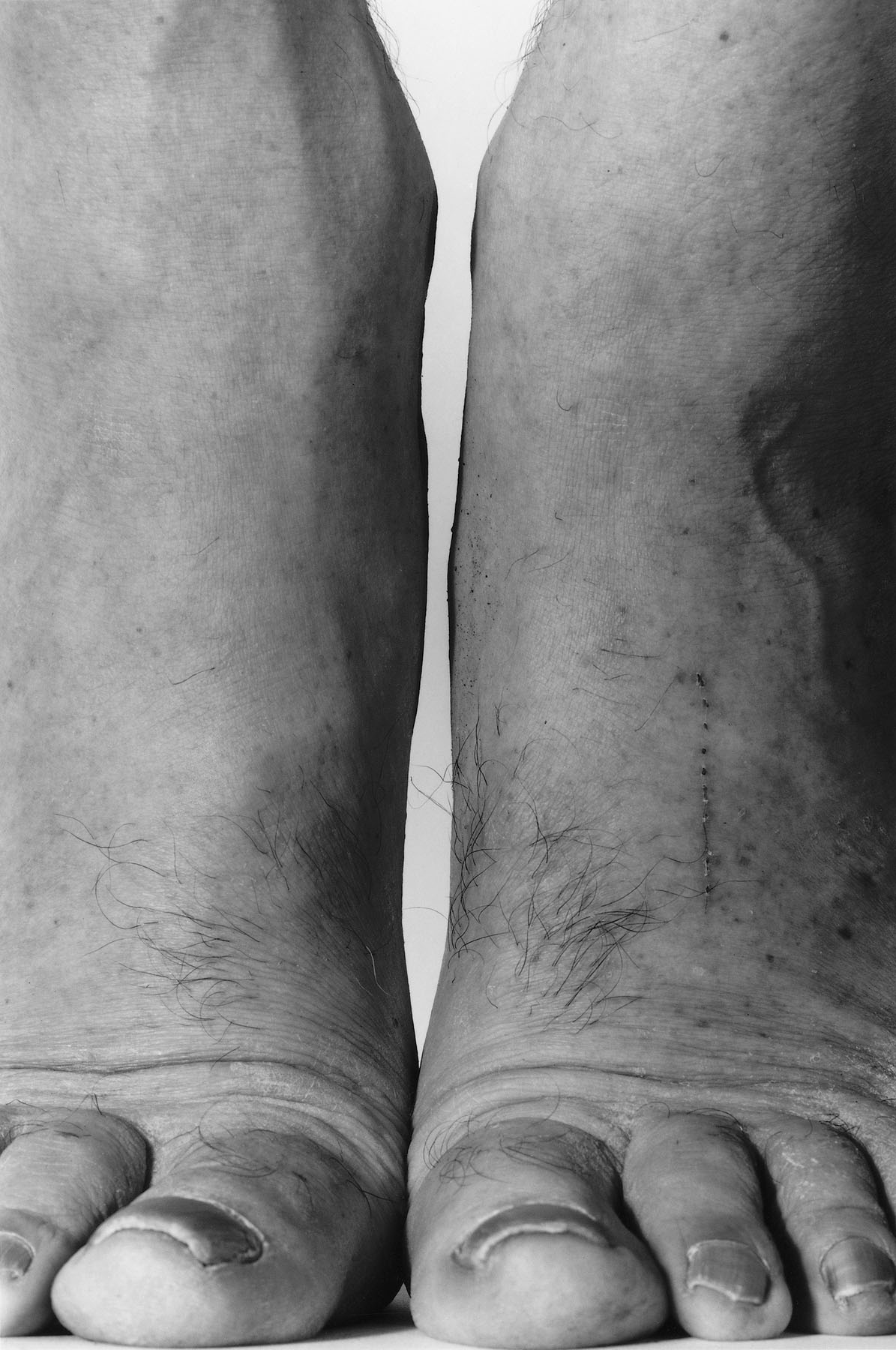
 

John Coplans (British, 1920-2003) 'Feet, Frontal' 1984


John Coplans (British, 1920-2003)
Feet, Frontal
1984
Gelatin silver print


Know Thyself

From toxic beauty standards to agism, pressures to conform, and the pathologising of non-formative identities and lifestyles, cultural messaging interrupts the journey to self-acceptance. The pictures in this section speak to finding a home in one’s body and moving between comfort and discomfort along the way. A particular focus here is serial self-portraiture where photographers train the lens on their own bodies as they reckon with aging. Facing themselves with tender curiosity and vulnerability, they wield the camera as a tool of self-knowledge, confronting their mortality and even revealing in erotic joy. Their pictures suggest the transformative power being seen on one’s own terms.

Wall text from the exhibition
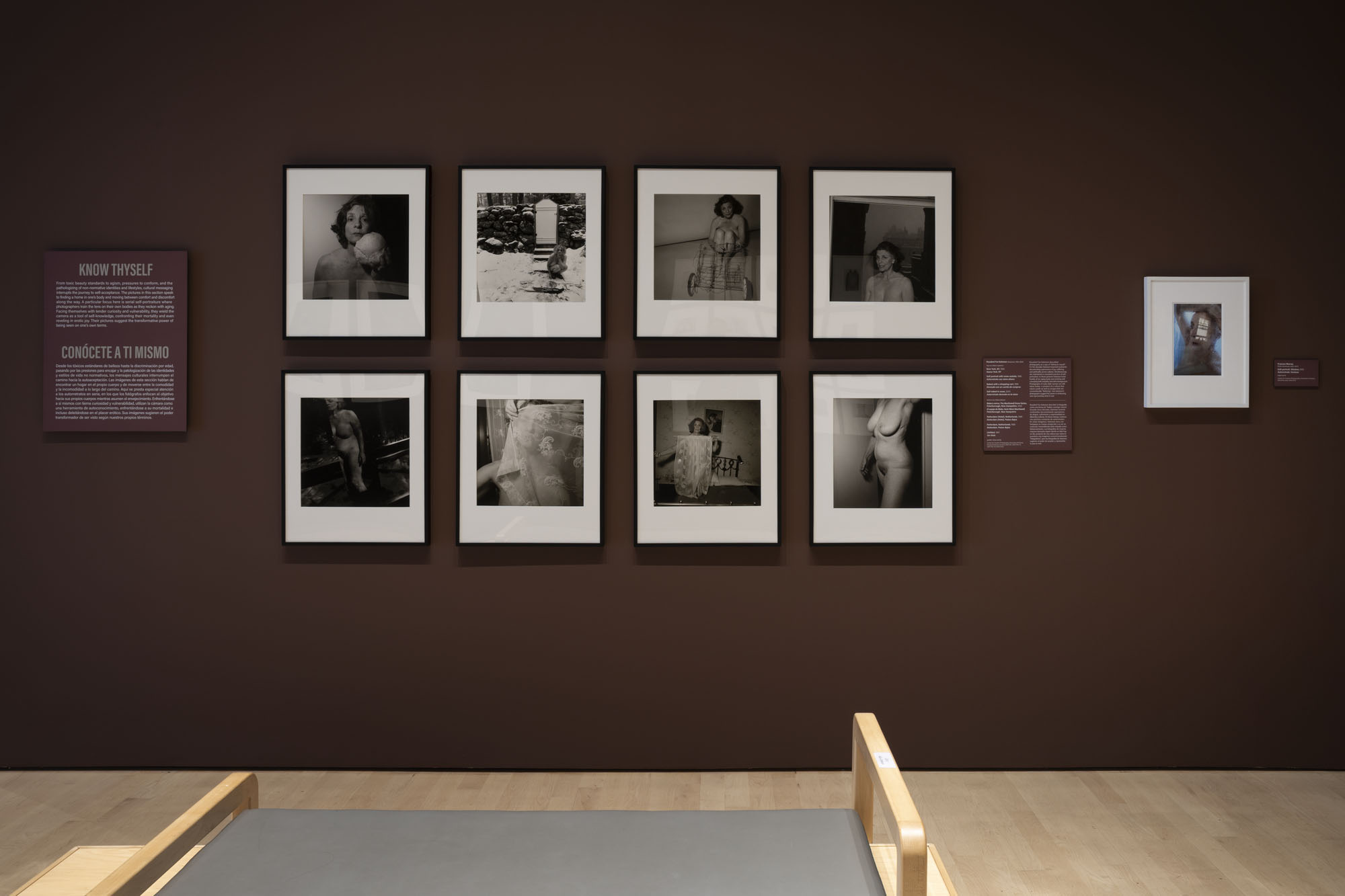
 

Installation view of the exhibition 'Muscle Memory: Lens on the Body' at the Phoenix Art Museum, Phoenix, AZ, January - June, 2026 showing photographs by Rosalind Fox Solomon


Installation view of the exhibition Muscle Memory: Lens on the Body at the Phoenix Art Museum, Phoenix, AZ, January – June, 2026 showing photographs by Rosalind Fox Solomon
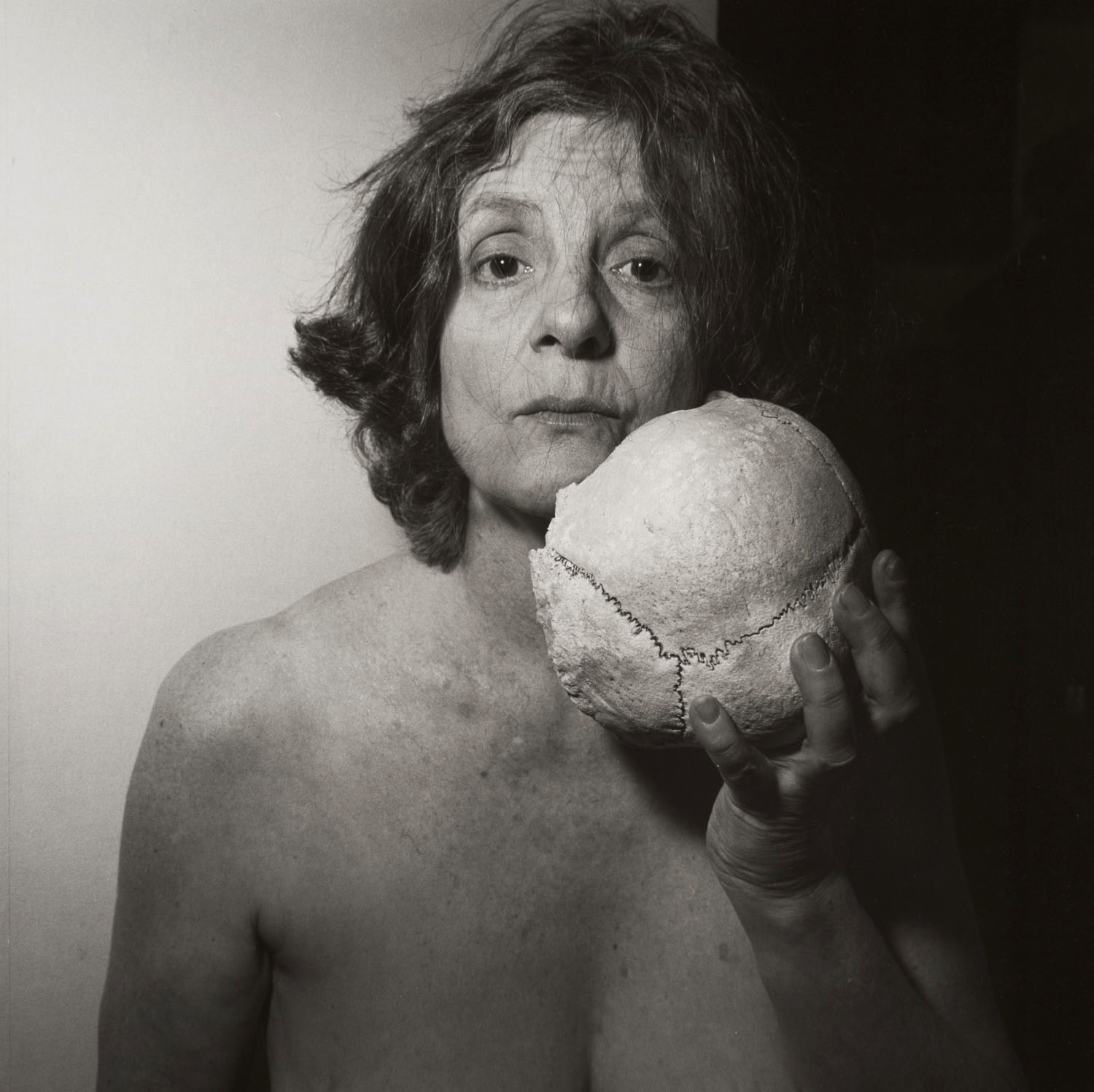
 

Rosalind Fox Solomon (American, 1930-2025) 'New York, NY' 1986


Rosalind Fox Solomon (American, 1930-2025)
New York, NY
1986
Gelatin silver print
Center for Creative Photography
University of Arizona: Rosalind Solomon Archive
© Rosalind Solomon, all rights reserved


Rosalind Fox Solomon described photography as a way of “talking about myself.” For five decades Solomon traversed continents documenting expressions of joy, suffering and spirituality across cultures. Simultaneously, she maintained a consistent practice of self-portraiture. In these pictures Solomon looks frankly at her aging body and evolving self, conveying both empathy and self-estrangement. Photographs of nude older women are still taboo today – a product of a culture that values youth as well as images that are conventionally “flattering” – but Solomon’s photographs suggest the power in embracing and representing what is real.

Wall text from the exhibition
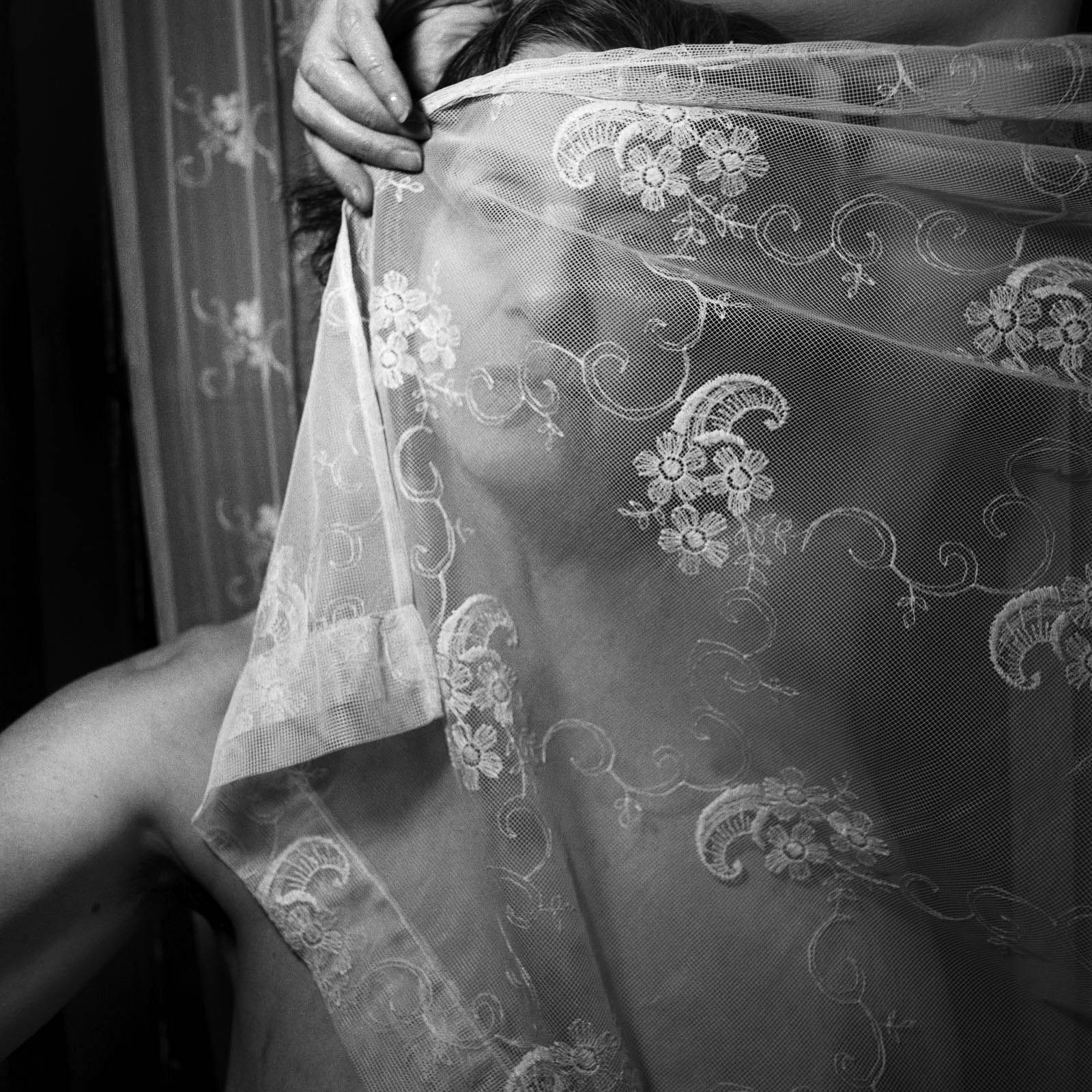
 

Rosalind Fox Solomon (American, 1930-2025) 'Rotterdam (Hotel), Netherlands' 1986


Rosalind Fox Solomon (American, 1930-2025)
Rotterdam (Hotel), Netherlands
1986
Gelatin silver print
Center for Creative Photography
University of Arizona: Rosalind Solomon Archive
© Rosalind Solomon, all rights reserved 
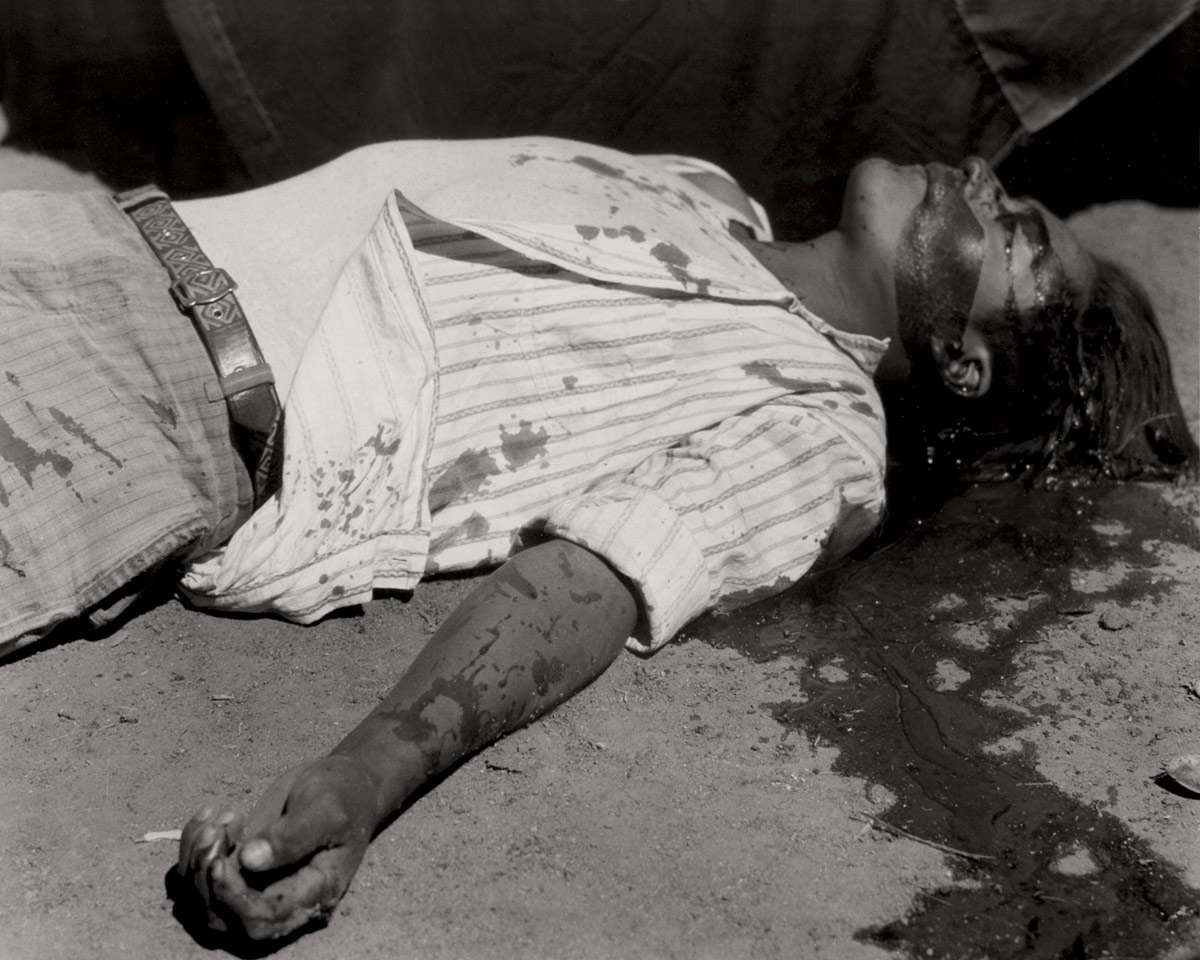
 

Manuel Alvarez Bravo (Mexican, 1902-2002) 'Obrero en huelga, asesinado' (Striking Worker, Assassinated) 1934


Manuel Alvarez Bravo (Mexican, 1902-2002)
Obrero en huelga, asesinado (Striking Worker, Assassinated)
1934
Gelatin silver print
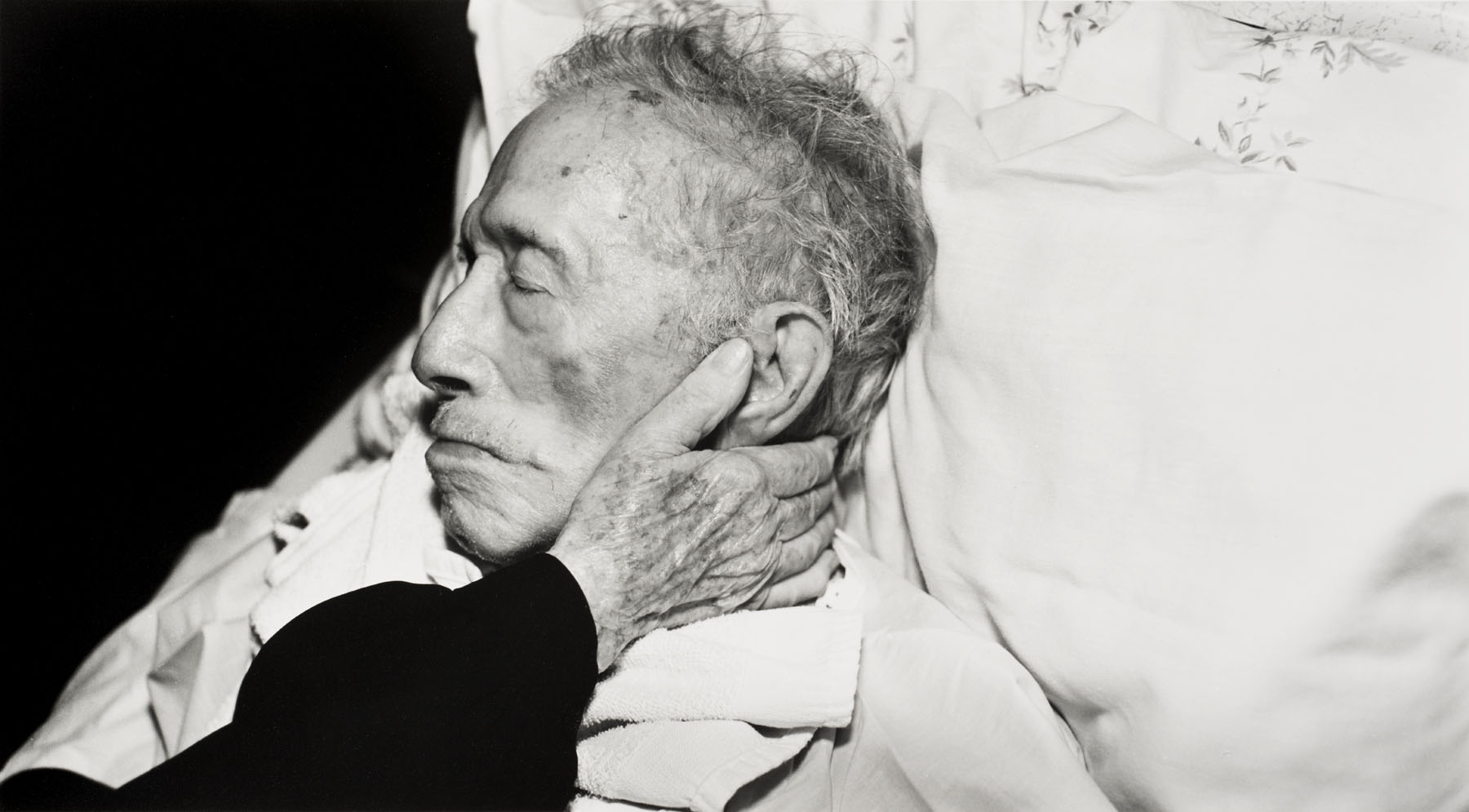
 

Dan Young. 'My Mother's Hand on My Father's Head, 1992' 1992


Dan Young
My Mother’s Hand on My Father’s Head, 1992
1992
Gelatin silver print
Center for Creative Photography
University of Arizona: Purchase
© Dan Young 


Enduring

As the saying goes, “the body keeps the score.” The photographs in this gallery explore how the body holds memory. Outwardly visible marks like scars and wrinkles are testaments to what we have survived, traces of time that resonate with the nurture of photographic images. No matter how strong or fortunate we are, each of us must sustain wounds visible and invisible, go through cycles of suffering and healing, and eventually experience death. We also inherit not only physical characteristics but also stories and trauma from our ancestors. The pictures here are reminders of our bodily fragility, but they also brim with aliveness, inspiring reverence for all that human beings have endured across generations.
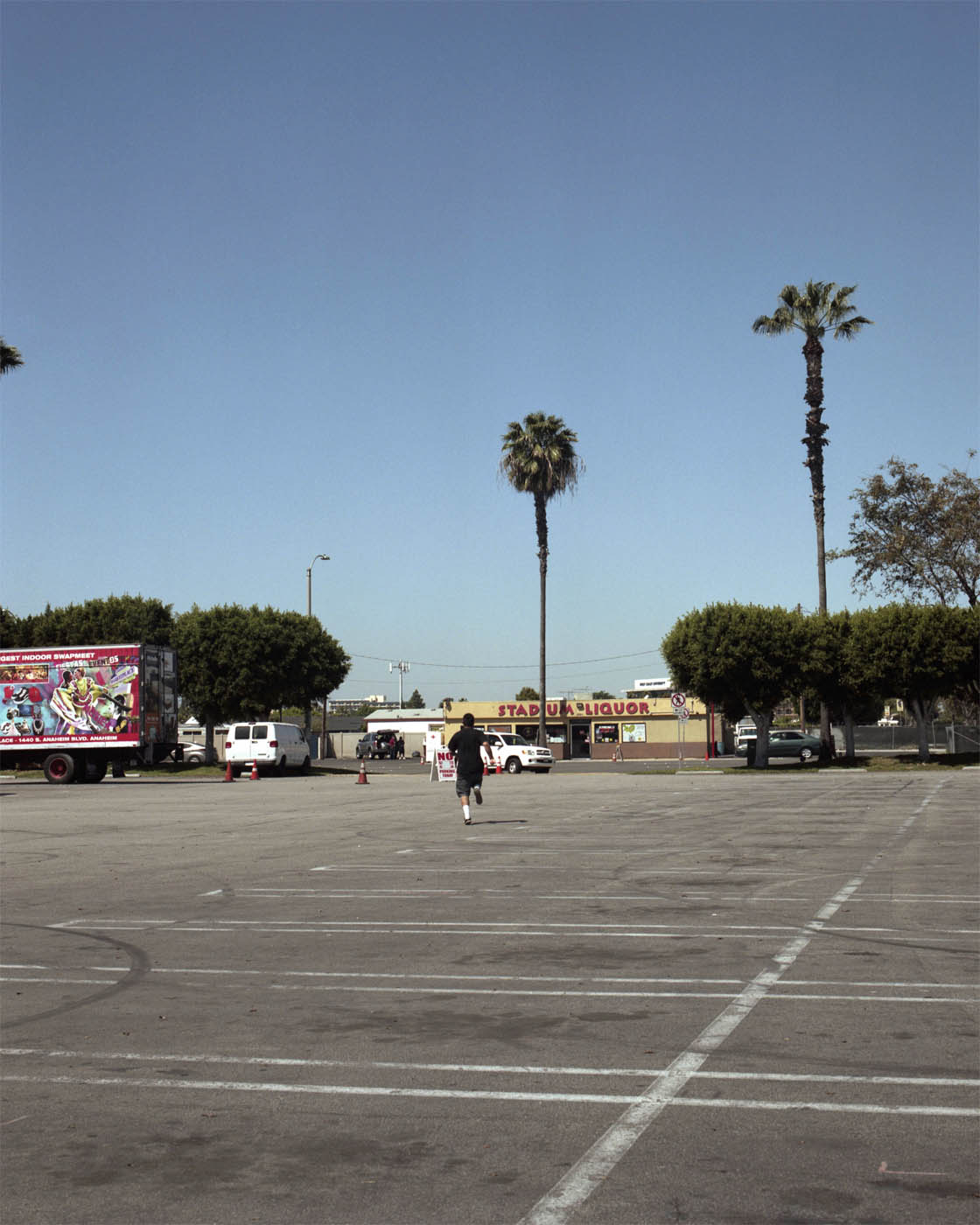
 

William Camargo (American, b. 1989) 'As Far As I Can Get in 10 Seconds From The Swapmeet Parking Lot to the Liquor Store After Divola' 2020


William Camargo (American, b. 1989)
As Far As I Can Get in 10 Seconds From The Swapmeet Parking Lot to the Liquor Store After Divola
2020
Inkjet print
22 x 18 in.
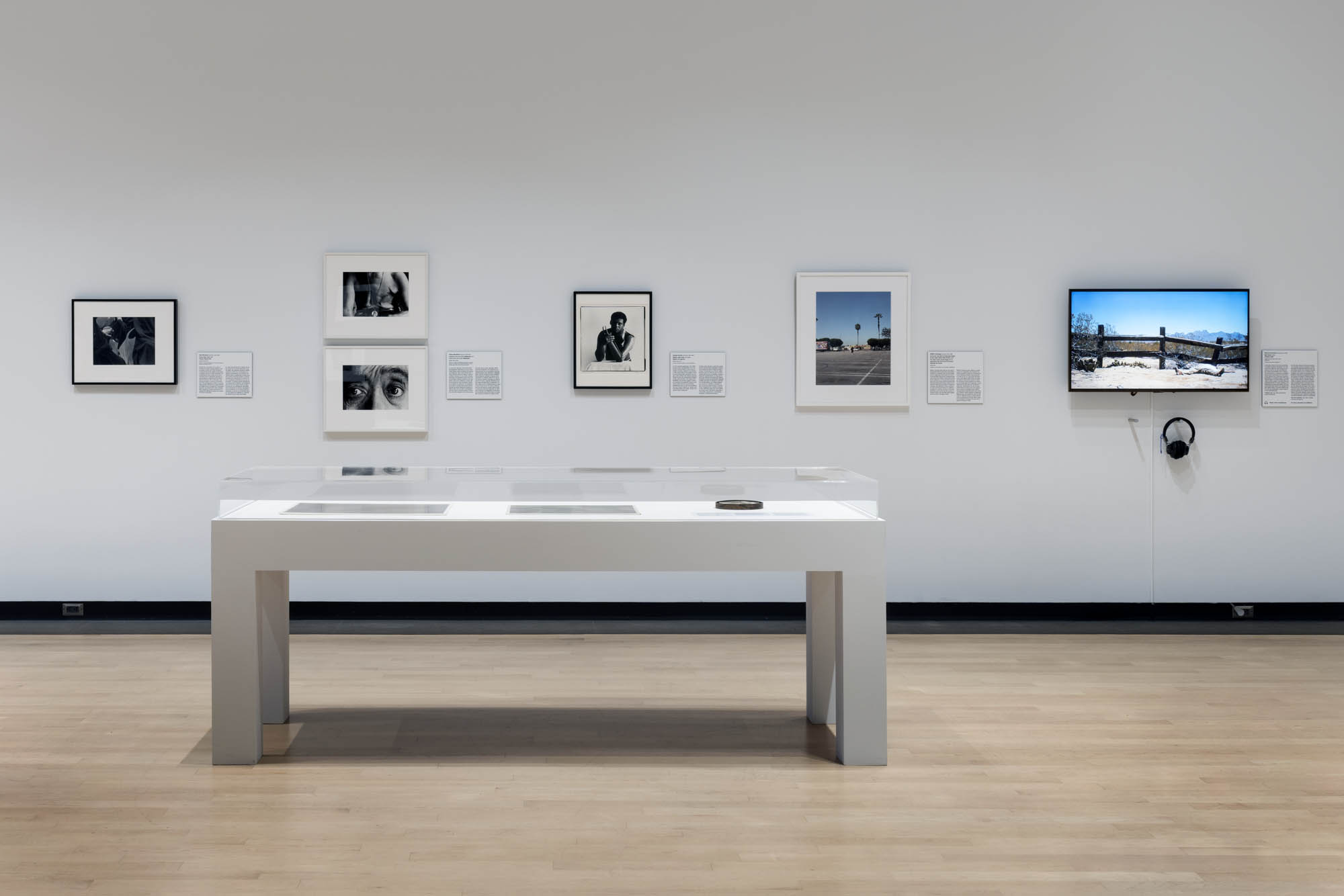
 

Installation view of the exhibition 'Muscle Memory: Lens on the Body' at the Phoenix Art Museum, Phoenix, AZ, January - June, 2026 showing at left, Roy DeCarava Force, New York (1963); at centre, George Dureau Wilbert with Hook (Nd); and at second right, William Camargo As Far As I Can Get in 10 Seconds From The Swapmeet Parking Lot to the Liquor Store After Divola (2020)


Installation view of the exhibition Muscle Memory: Lens on the Body at the Phoenix Art Museum, Phoenix, AZ, January – June, 2026 showing at left, Roy DeCarava Force, New York (1963, below); at centre, George Dureau Wilbert with Hook (Nd, below); and at second right, William Camargo As Far As I Can Get in 10 Seconds From The Swapmeet Parking Lot to the Liquor Store After Divola (2020, above)
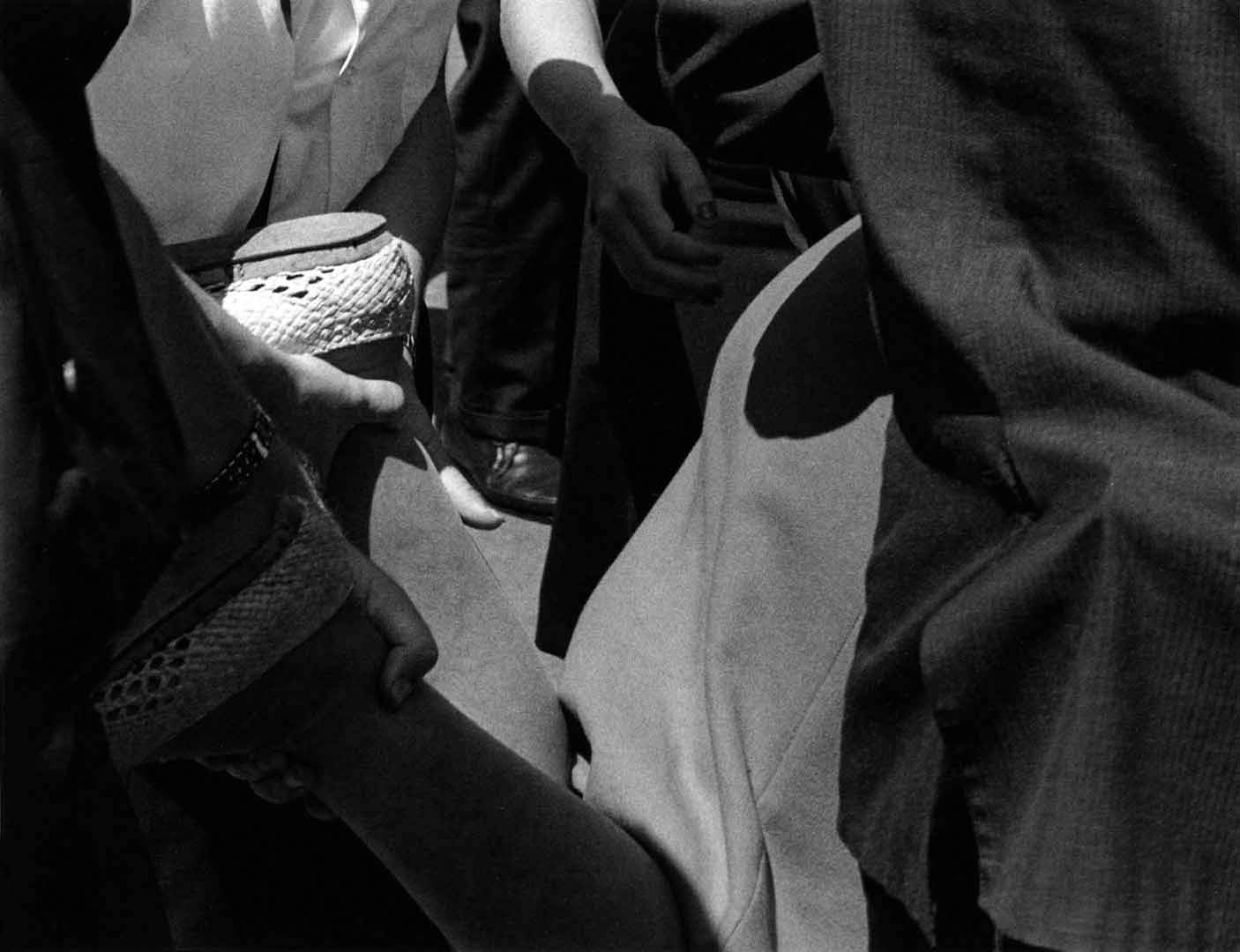
 

Roy DeCarava (American, 1919-2009) 'Force, New York' 1963


Roy DeCarava (American, 1919-2009)
Force, New York
1963
Gelatin silver print
Center for Creative Photography
University of Arizona: Purchase


A woman being arrested at a New York protest
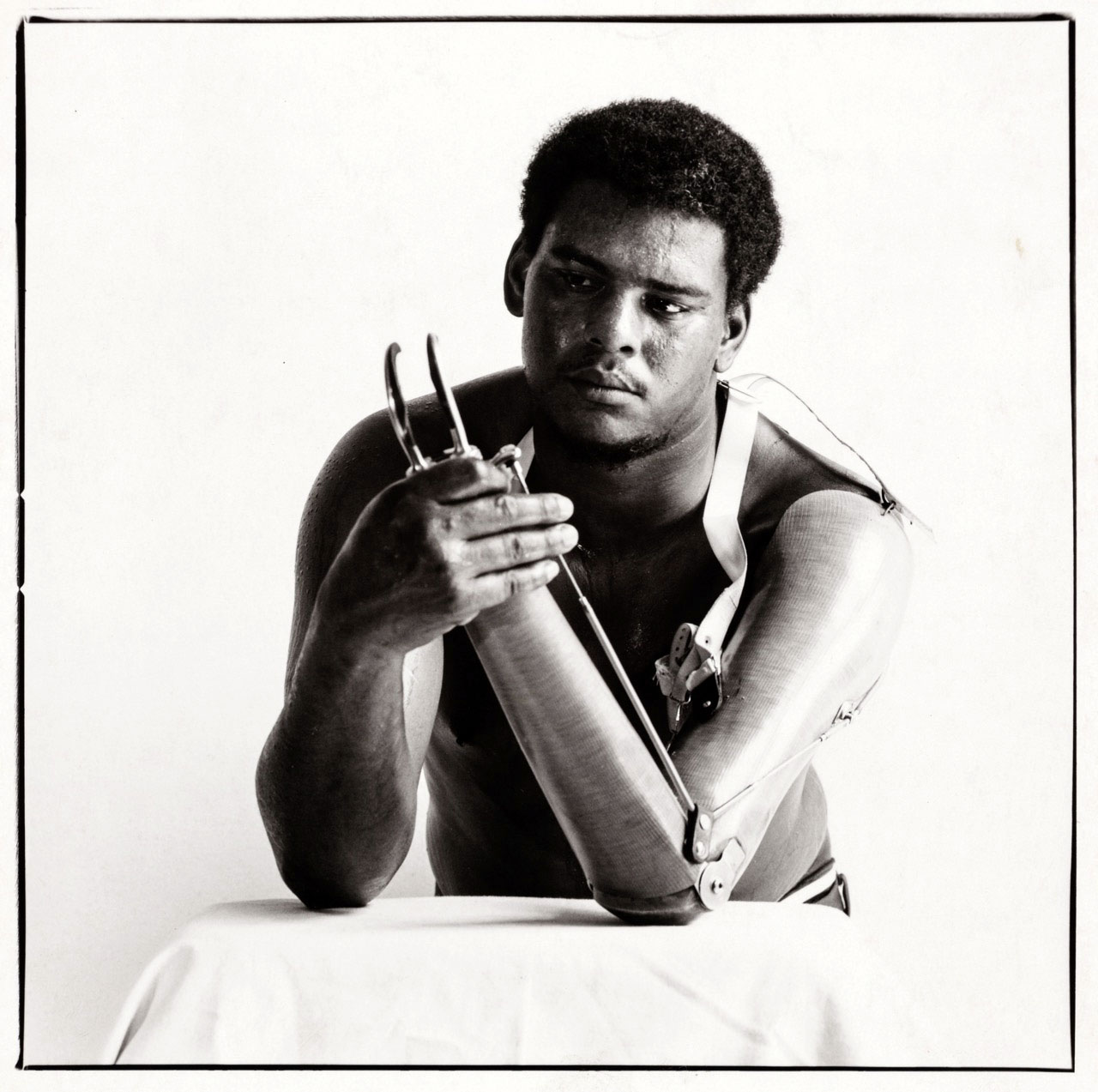
 

George Dureau (American, 1930-2014) 'Wilbert with Hook' Nd


George Dureau (American, 1930-2014)
Wilbert with Hook
Nd
Gelatin silver print
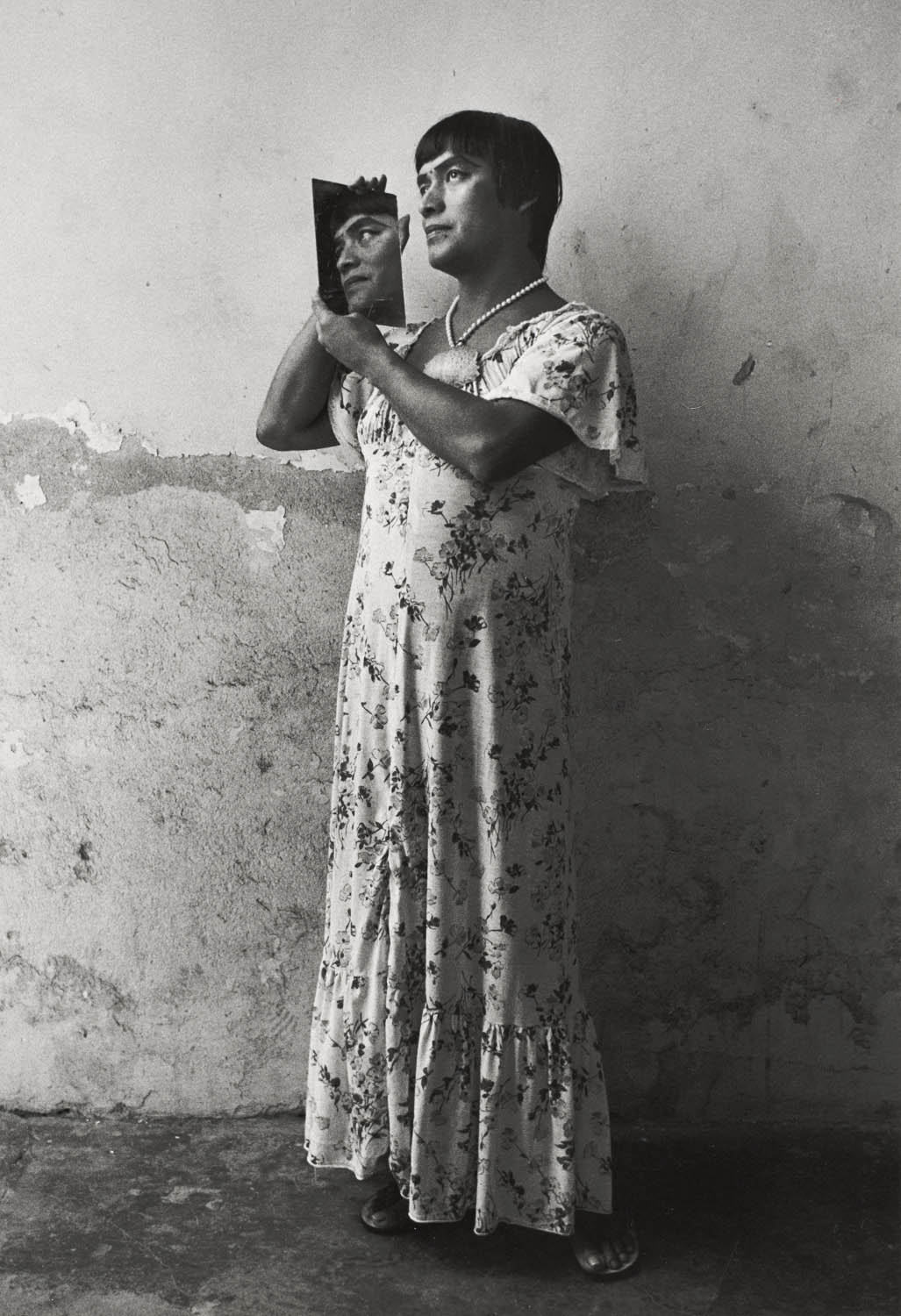
 

Graciela Iturbide (Mexican, b. 1942) 'Magnolia, Juchitán, Oaxaca, México' 1986


Graciela Iturbide (Mexican, b. 1942)
Magnolia, Juchitán, Oaxaca, México
1986
Gelatin silver print
Center for Creative Photography
University of Arizona: Purchase
© Graciela Iturbide 
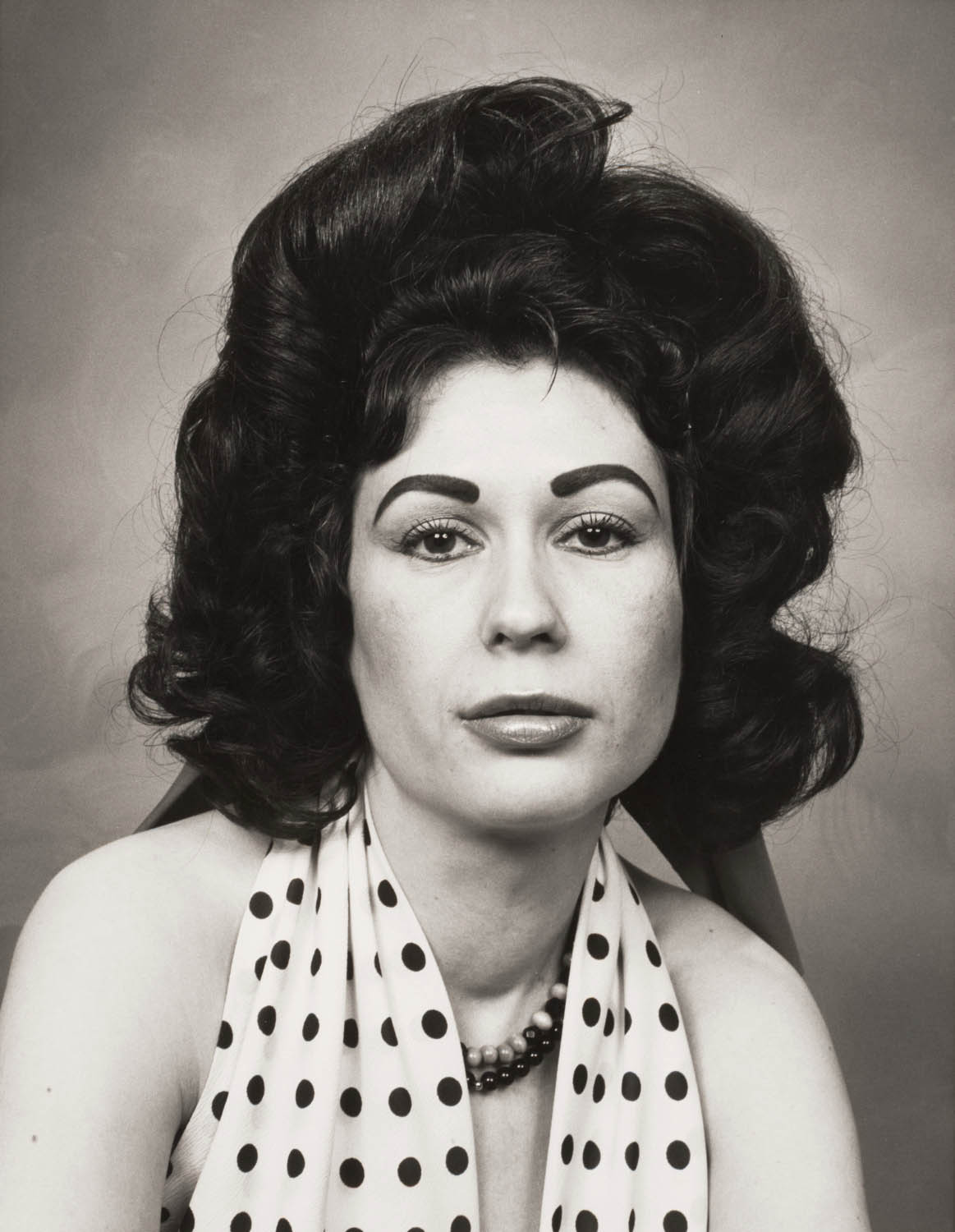
 

Leon Borensztein (American, b. 1947) 'Woman with Polka Dots, San Francisco' 1984


Leon Borensztein (American, b. 1947)
Woman with Polka Dots, San Francisco
1984
Gelatin silver print
Center for Creative Photography
University of Arizona: Purchase
© Leon Borensztein 


Phoenix Art Museum
McDowell Road & Central Avenue
1625 N. Central Avenue
Phoenix, AZ 85004

Opening hours:
Monday and Tuesday Museum closed
Wednesday: 10am – 7pm
Thursday – Sunday: 10am – 5pm

Phoenix Art Museum website

LIKE ART BLART ON FACEBOOK

Back to top

Exhibition: ‘Beyond Symmetry: George Dureau’s Celebrations of the Human Form’ at the Bob Mizer Foundation, San Francisco

Exhibition dates: 6th March – 28th June, 2025

Curators: Dennis Bell, founder of the Bob Mizer Foundation, and De Kwok, Head of Public Programming

*PLEASE NOTE: THIS POSTING CONTAINS ART PHOTOGRAPHS OF MALE NUDITY – IF YOU DO NOT LIKE PLEASE DO NOT LOOK, FAIR WARNING HAS BEEN GIVEN*


George Dureau (American, 1930-2014)
'Untitled' Nd


George Dureau (American, 1930-2014)
Untitled
Nd
Vintage silver gelatin print


Celebrations of the Human Spirit

~ Honesty

~ ~ Integrity

~ ~ ~ Dignity

~ ~ ~ ~ Vulnerability

~ ~ ~ ~ ~ Respect

~ ~ ~ ~ ~ ~ Love

~ ~ ~ ~ ~ ~ ~ Friendship

~ ~ ~ ~ ~ ~ ~ ~ Sexuality

~ ~ ~ ~ ~ ~ ~ ~ ~ Strength

~ ~ ~ ~ ~ ~ ~ ~ ~ ~ Beauty

~ ~ ~ ~ ~ ~ ~ ~ ~ ~ ~ Form

~ ~ ~ ~ ~ ~ ~ ~ ~ ~ ~ ~ Humanism

~ ~ ~ ~ ~ ~ ~ ~ ~ ~ ~ ~ ~ Identity

~ ~ ~ ~ ~ ~ ~ ~ ~ ~ ~ ~ ~ ~ Personality

~ ~ ~ ~ ~ ~ ~ ~ ~ ~ ~ ~ ~ ~ ~ Presence

~ ~ ~ ~ ~ ~ ~ ~ ~ ~ ~ ~ ~ ~ ~ ~ Intimacy

~ ~ ~ ~ ~ ~ ~ ~ ~ ~ ~ ~ ~ ~ ~ ~ ~ Nude

~ ~ ~ ~ ~ ~ ~ ~ ~ ~ ~ ~ ~ ~ ~ ~ ~ ~ Empathy

~ ~ ~ ~ ~ ~ ~ ~ ~ ~ ~ ~ ~ ~ ~ ~ ~ ~ ~ Revelation

~ ~ ~ ~ ~ ~ ~ ~ ~ ~ ~ ~ ~ ~ ~ ~ ~ ~ ~ ~ Spirit

~ ~ ~ ~ ~ ~ ~ ~ ~ ~ ~ ~ ~ ~ ~ ~ ~ ~ ~ ~ ~ Truth


I’ve been wanting to do a posting on the magnificent New Orleans photographer George Dureau’s work for a long while but because there are so few exhibitions of his photographs I have never had the opportunity – until now.

It’s a great pity that his work is not as recognised as that of his contemporaries, Peter Hujar and Robert Mapplethorpe. Indeed, you can still pick up an original Dureau in the secondhand art market for around $500 whereas Mapplethorpe’s photographs run into the many thousands.

His photographs are not romantic, certainly not sentimental. He was fascinated by the people he photographed, their truth. These are the stories he conceptualised, posed, lit and photographed, stories that emerged from his imagination, that revealed surprising things about his subjects.

Unlike the clinical formalism of Mapplethorpe, Dureau worked with a poetry that was always present. Indeed, there is something so eloquent and sincere about his photographs for in them the artist draws (Dureau was also a painter) the mysteries of the soul of his subjects.

Dureau’s response to the world and the photographs that emanate from that engagement are humanist in the best sense of the word, revealing his subjects in a direct way that emphasises an individual’s dignity, worth and capacity for self-realisation.

Thus, I feel his photographs are a celebration not just of the human form but more importantly, of the human spirit.

Dr Marcus Bunyan


Many thankx to Dennis Bell, Corbin Crable and the Bob Mizer Foundation for allowing me to publish the photographs in the posting. Please click on the photographs for a larger version of the image.


“I live a warm, involved humanist sort of life. There are lots of people passing through it. I have exciting experiences and learn things about people. They always go into my art. I cannot have an experience and it not go into my art.”

 
George Dureau


John H. Lawrence, HNOC emeritus director of museum programs and himself a fine-art photographer, said Dureau’s portraits reveal a tangible intimacy between photographer and subject.

“George respected the people he asked to sit for him,” said Lawrence. “I don’t say that from a knowledge, just from what the photographs show. The direct stare into the camera, it may have been at George’s direction. Even with the gaze directed in that fashion, you don’t get the kind of quality you see in these portraits unless there is a mutual respect between the photographer and the subject. There is a vibe there that is based on these two people having respect for each other as the photograph is made.”


John H. Lawrence quoted in Dave Walker. “The Intimate Eye of George Dureau,” on The Historic New Orleans Collection website, December 31, 2021 [Online] Cited 20/06/2025


This exhibition presents 25 evocative black-and-white portraits by George Dureau, capturing the resilience and vulnerability of his subjects – from athletes to marginalised individuals – against the vibrant cultural backdrop of New Orleans, where beauty and humanity converge in transformative ways.


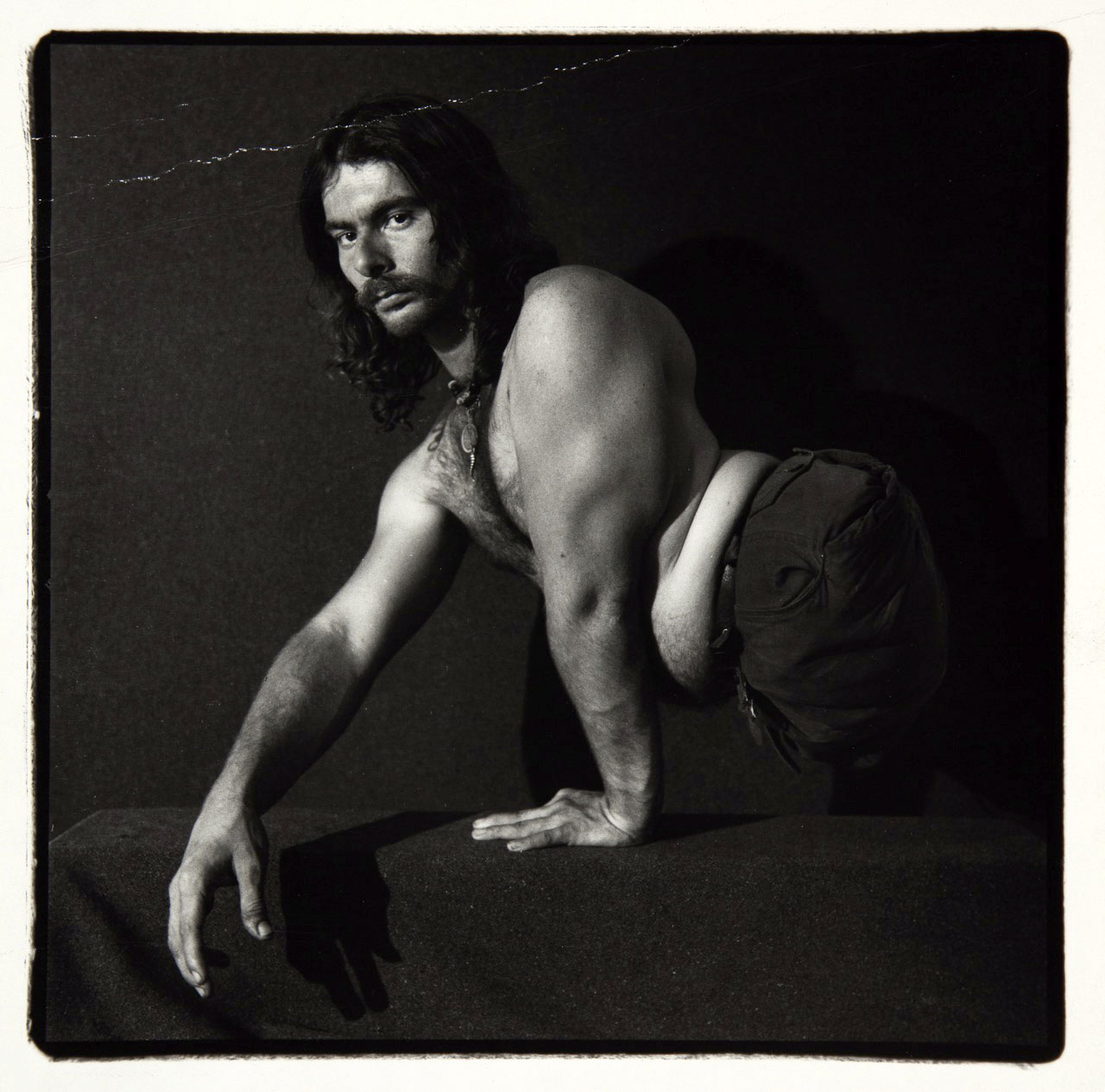
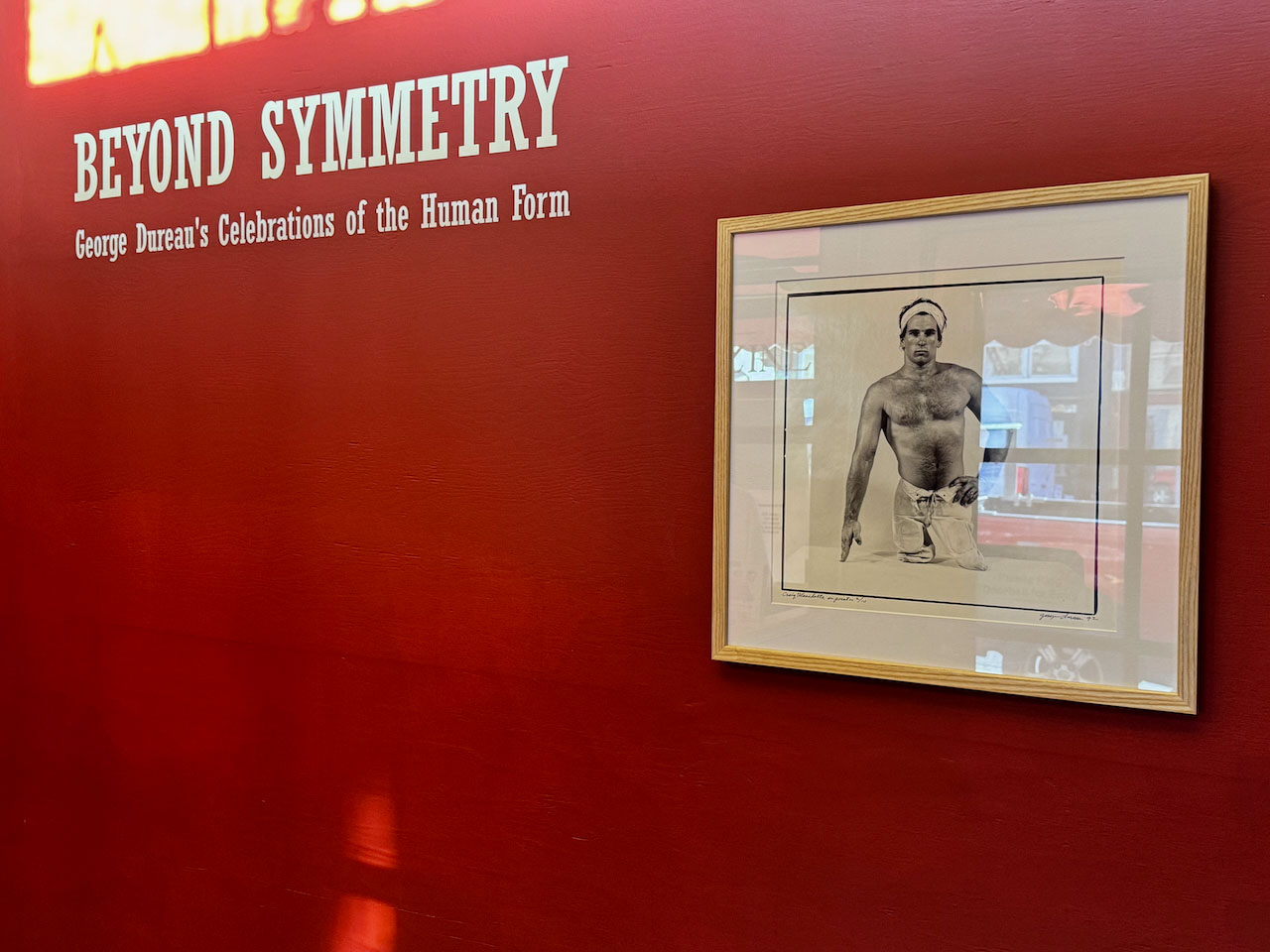
Installation view of the exhibition 'Beyond Symmetry: George Dureau's Celebrations of the Human Form' at the Bob Mizer Foundation, San Francisco showing Dureau's photograph 'Craig Blanchette' 1992


Installation view of the exhibition Beyond Symmetry: George Dureau’s Celebrations of the Human Form at the Bob Mizer Foundation, San Francisco showing Dureau’s photograph Craig Blanchette, 1992


Installation view of the exhibition 'Beyond Symmetry: George Dureau's Celebrations of the Human Form' at the Bob Mizer Foundation, San Francisco


Installation views of the exhibition Beyond Symmetry: George Dureau’s Celebrations of the Human Form at the Bob Mizer Foundation, San Francisco showing Dureau’s photograph John Slate, Nd


Installation view of the exhibition 'Beyond Symmetry: George Dureau's Celebrations of the Human Form' at the Bob Mizer Foundation, San Francisco


Installation view of the exhibition Beyond Symmetry: George Dureau’s Celebrations of the Human Form at the Bob Mizer Foundation, San Francisco


Installation view of the exhibition 'Beyond Symmetry: George Dureau's Celebrations of the Human Form' at the Bob Mizer Foundation, San Francisco


Installation views of the exhibition Beyond Symmetry: George Dureau’s Celebrations of the Human Form at the Bob Mizer Foundation, San Francisco


The Bob Mizer Foundation proudly presents Beyond Symmetry: George Dureau’s Celebrations of the Human Form, an exhibition showcasing 25 evocative black-and-white portraits by the acclaimed New Orleans artist George Dureau. This compelling collection captures the resilience, vulnerability, and individuality of Dureau’s subjects, spanning athletes, performers, and marginalised individuals.

Dureau’s photography transcends traditional portraiture, blending classical composition with the rich cultural spirit of New Orleans. His intimate works explore themes of identity and dignity, transforming vulnerabilities into powerful symbols of humanity’s resilience. The photographs invite viewers to reimagine beauty as inclusive, diverse, and multifaceted.

“George Dureau’s work is a testament to his unique ability to celebrate the human form while challenging societal norms,” says Den Bell, founder of the Bob Mizer Foundation. “His portraits honour the individuality of his subjects while weaving in the vibrancy of New Orleans, making his work timeless and deeply impactful.”

“Dureau photographed people with kindness and sympathy,” added Mizer Foundation’s Head of Programming, De Kwok, “It has been said that his subject matter became a member of his extended family and you can clearly see that in the way his camera lovingly captured them.”

The exhibition will be on view from March 6 to June 28, 2025, at the Bob Mizer Foundation’s Main Gallery. An opening reception will be held on March 6 from 6.00 pm – 8.30 pm, providing an opportunity to explore the works and celebrate Dureau’s extraordinary legacy.

About George Dureau

A celebrated figure in the art world, George Dureau (1930-2014) was renowned for his black-and-white photography and classical paintings. Rooted in the rich cultural heritage of New Orleans, Dureau’s art challenges conventions and highlights the resilience of the human spirit. His work has been exhibited internationally and continues to inspire audiences with its profound emotional depth and technical mastery.

Text from the Bob Mizer Foundation website


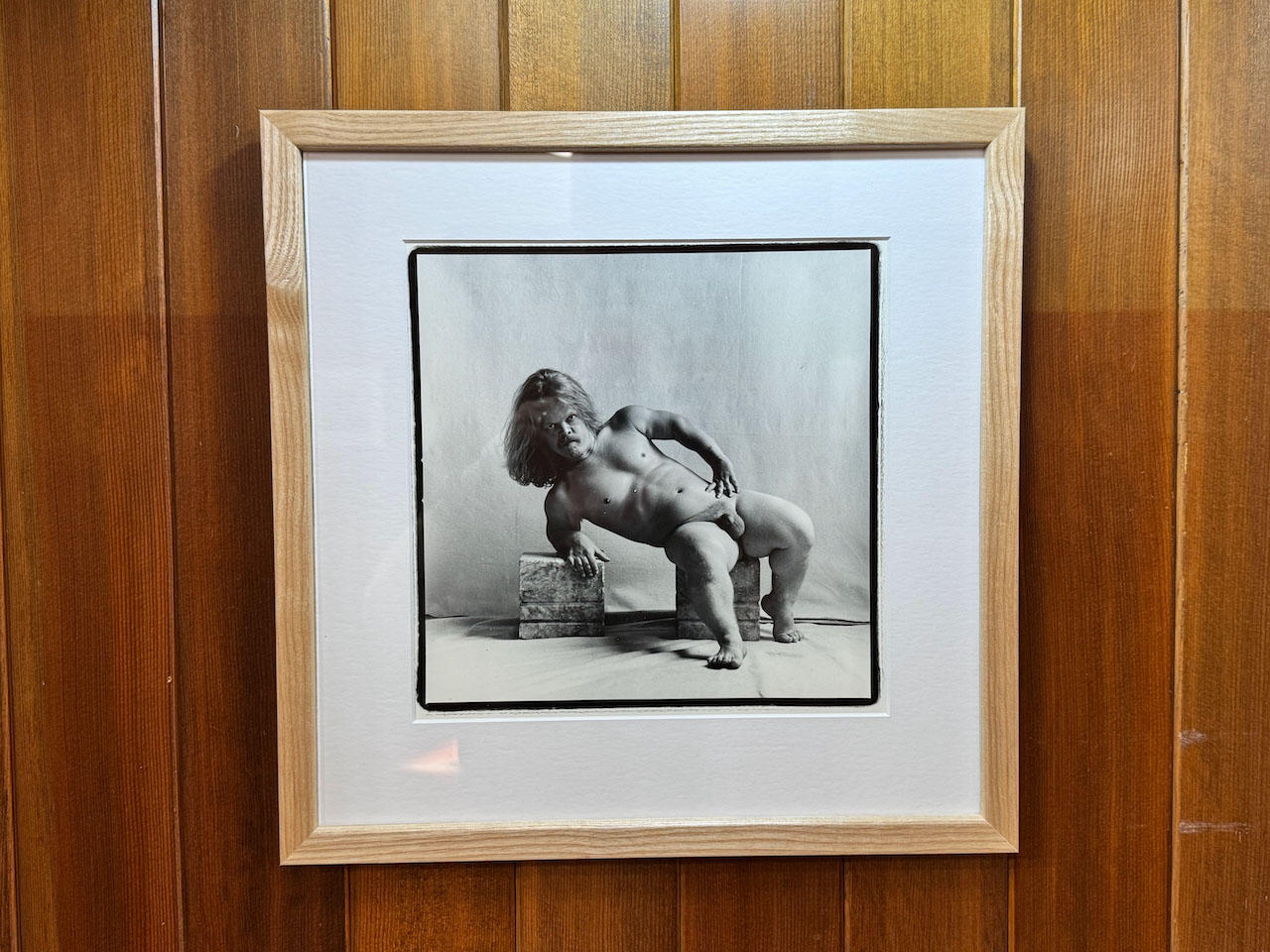
George Dureau (American, 1930-2014) 'Wilbert with Hook' Nd


George Dureau (American, 1930-2014)
Wilbert with Hook
Nd
Vintage silver gelatin print
20 x 16 inches


George Dureau (American, 1930-2014)
'B.J. Robinson' 1995


George Dureau (American, 1930-2014)
B.J. Robinson
1995
Vintage silver gelatin print


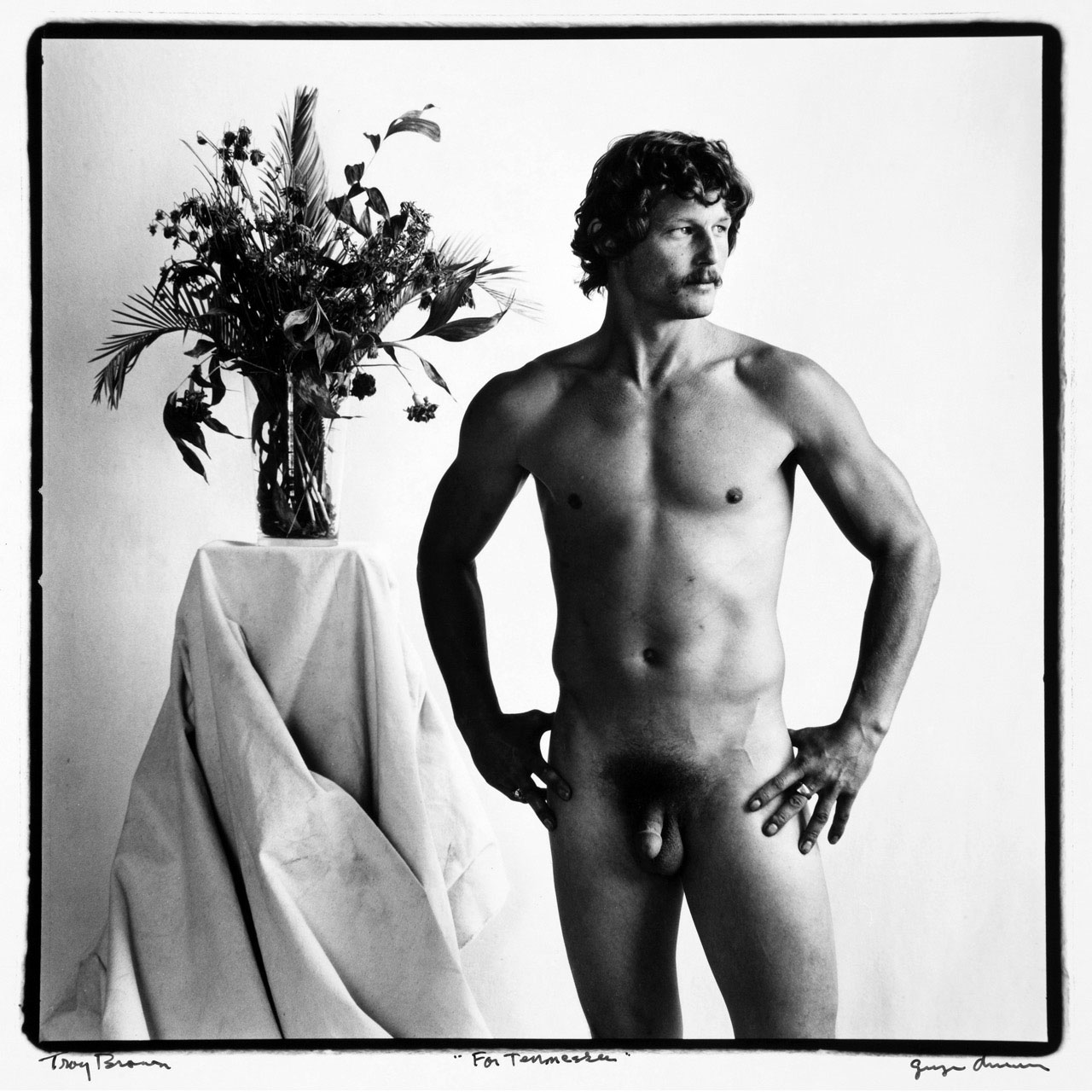
George Dureau (American, 1930-2014) 'Troy Brown "For Tennessee"' Nd


George Dureau (American, 1930-2014)
Troy Brown “For Tennessee”
Nd
Vintage silver gelatin print


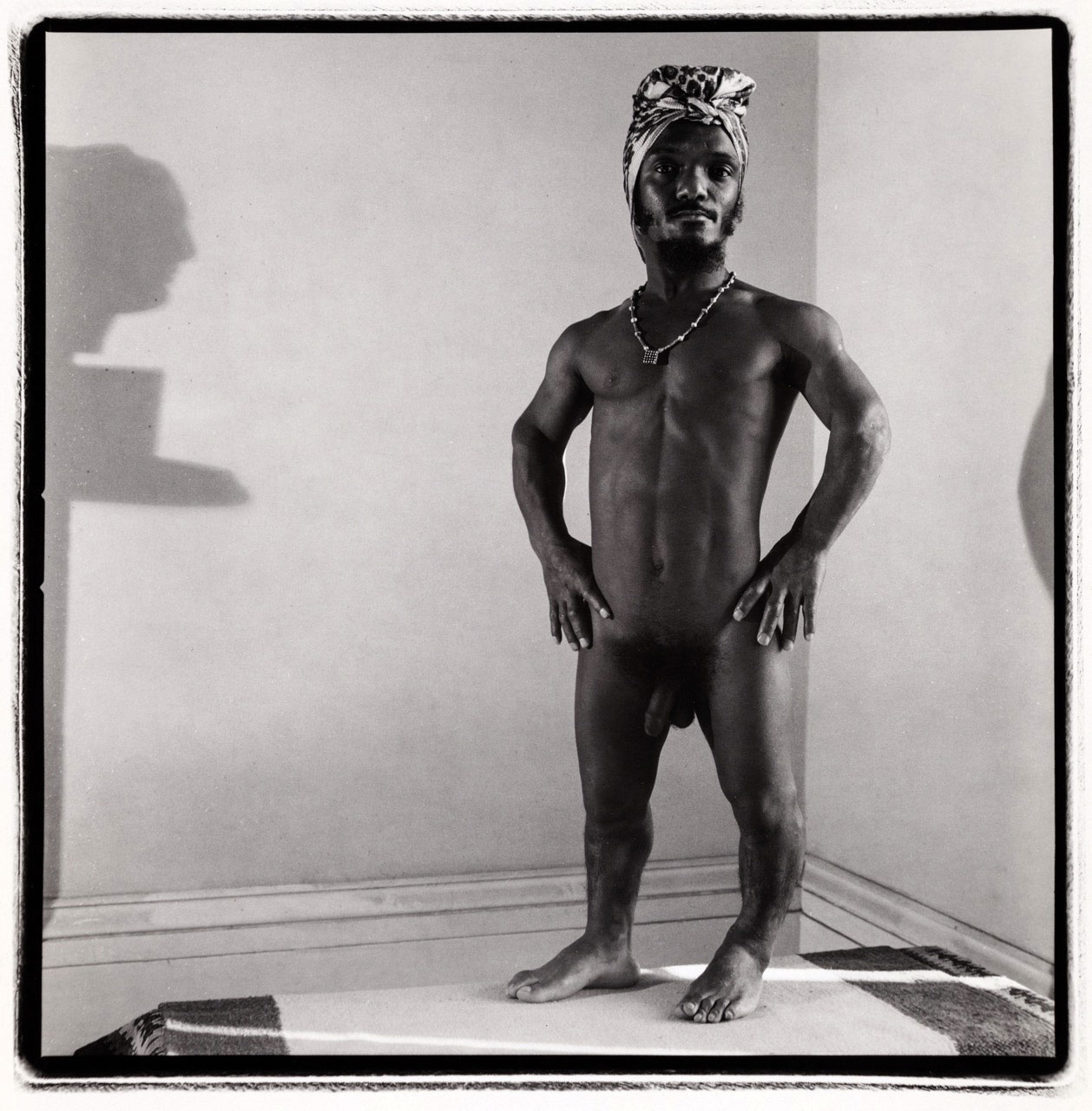
George Dureau (American, 1930-2014) 'Untitled (Sonny Singleton)' Nd


George Dureau (American, 1930-2014)
Untitled (Sonny Singleton)
Nd
Vintage silver gelatin print


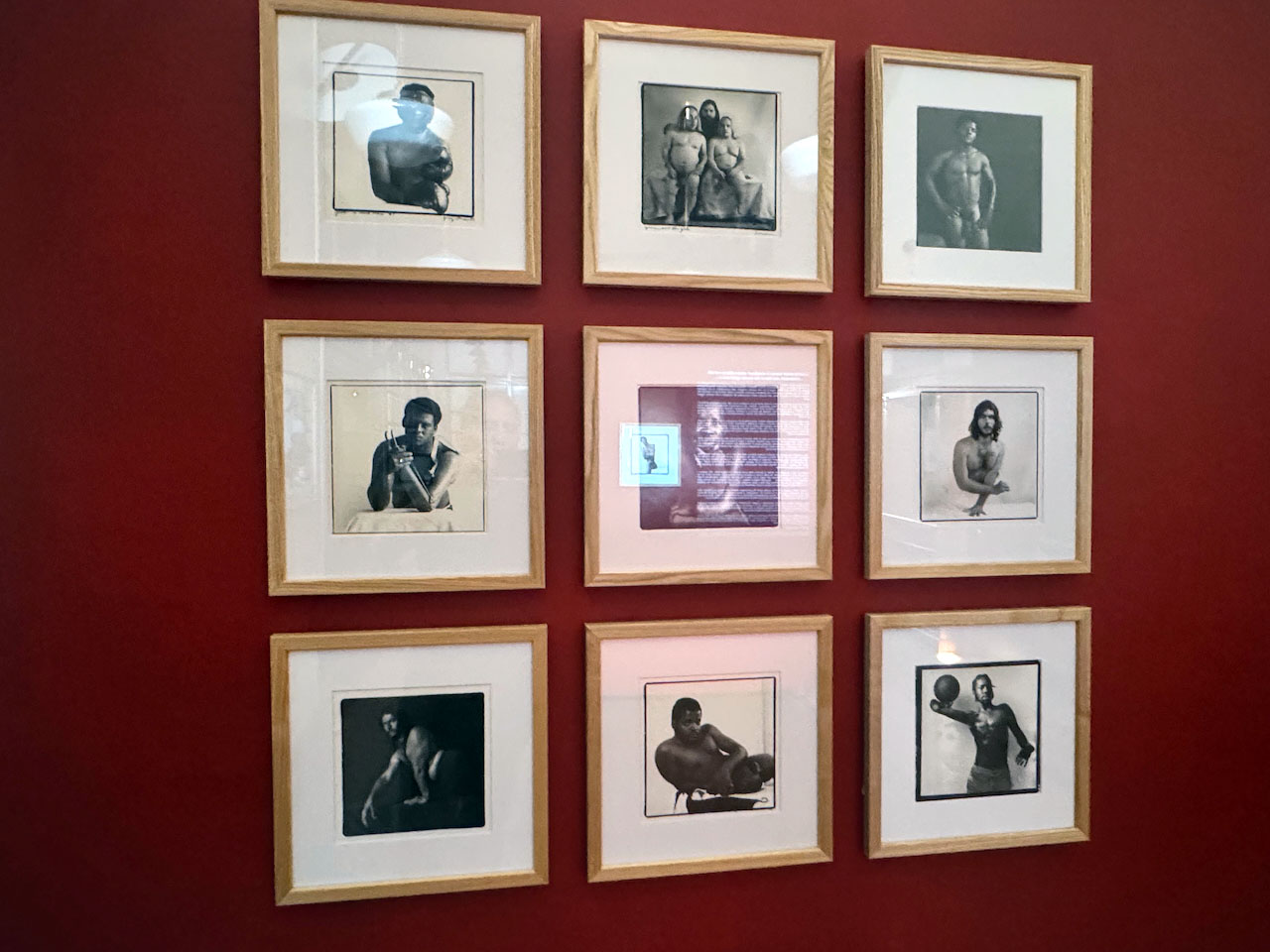
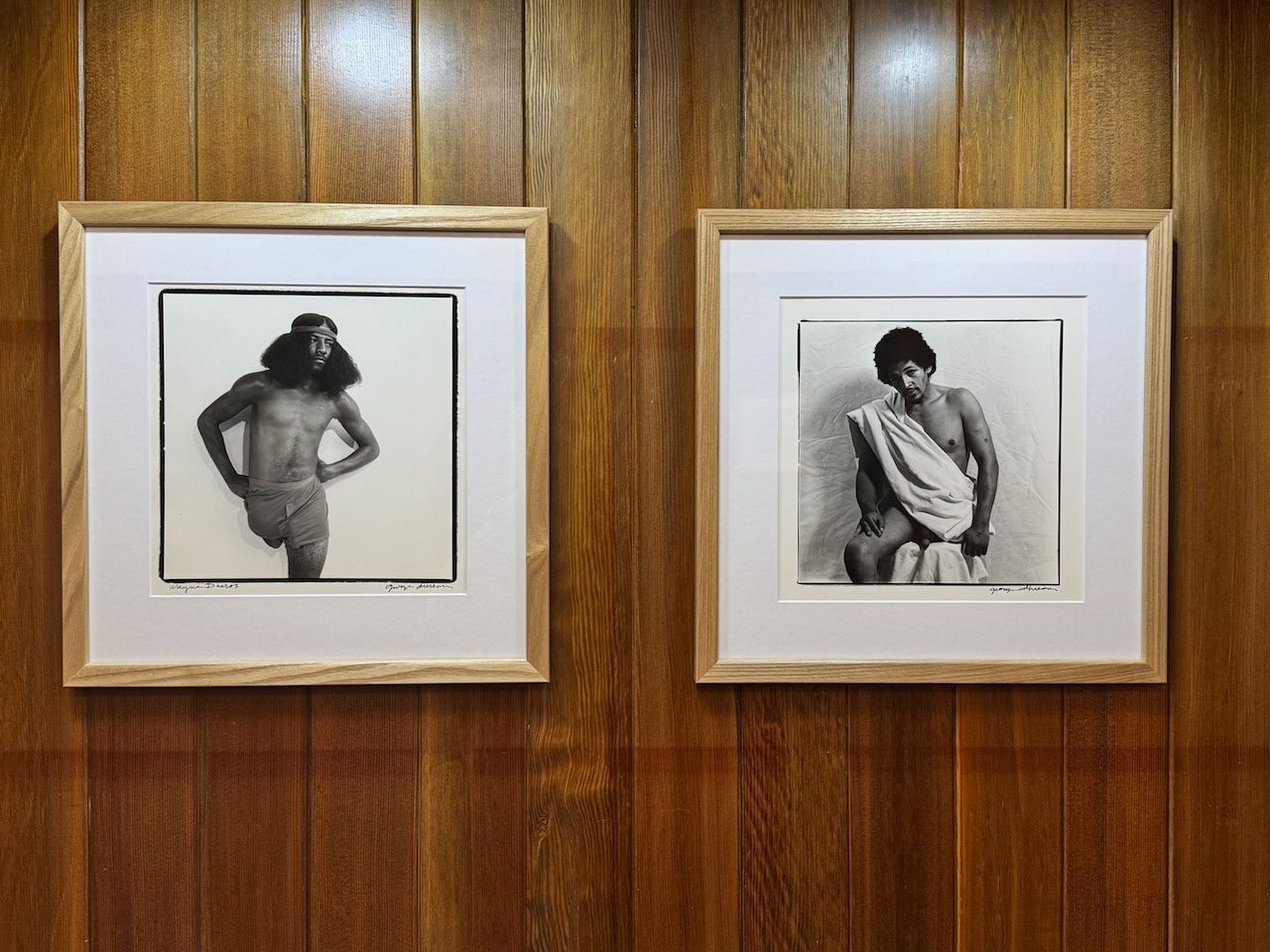
This exhibition highlights the remarkable artistry of George Dureau through 25 compelling black-and-white portraits that showcase his unique vision. Created during the 1970s and 1980s, these photographs transcend traditional boundaries, blending classical composition with an unflinching exploration of the human experience. Dureau’s subjects – athletes, performers, friends, and individuals often marginalised by society – are elevated to iconic status through his lens.

The images reveal a profound empathy and an unshakable belief in the inherent dignity of every individual. With a studio rooted in the vibrant cultural milieu of New Orleans, Dureau captured not only the physical form but also the spirit of his subjects, transforming their vulnerabilities into striking symbols of resilience and humanity. His work redefines beauty as inclusive and multifaceted, challenging societal norms and inviting reflection on identity, strength, and community.

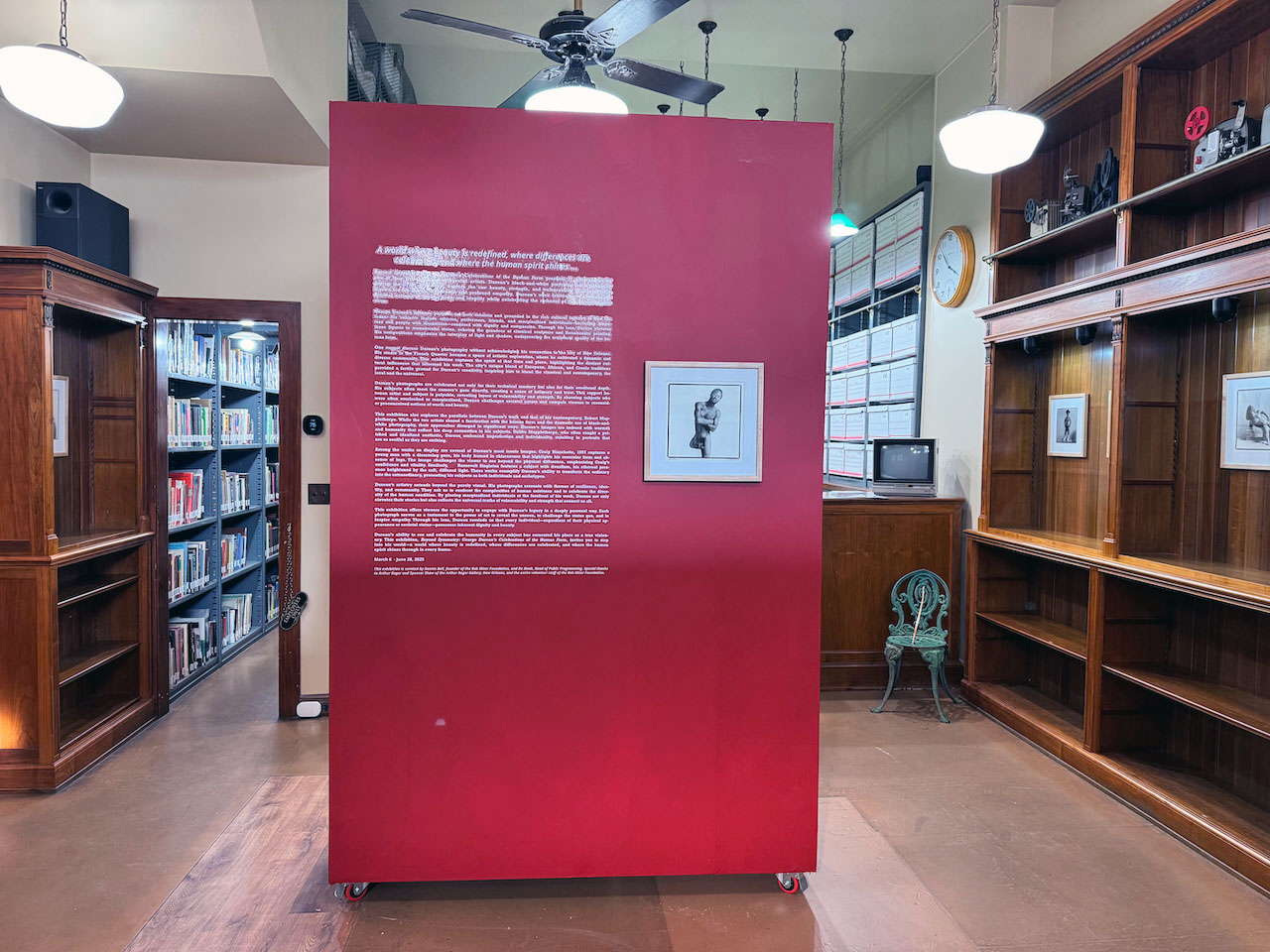
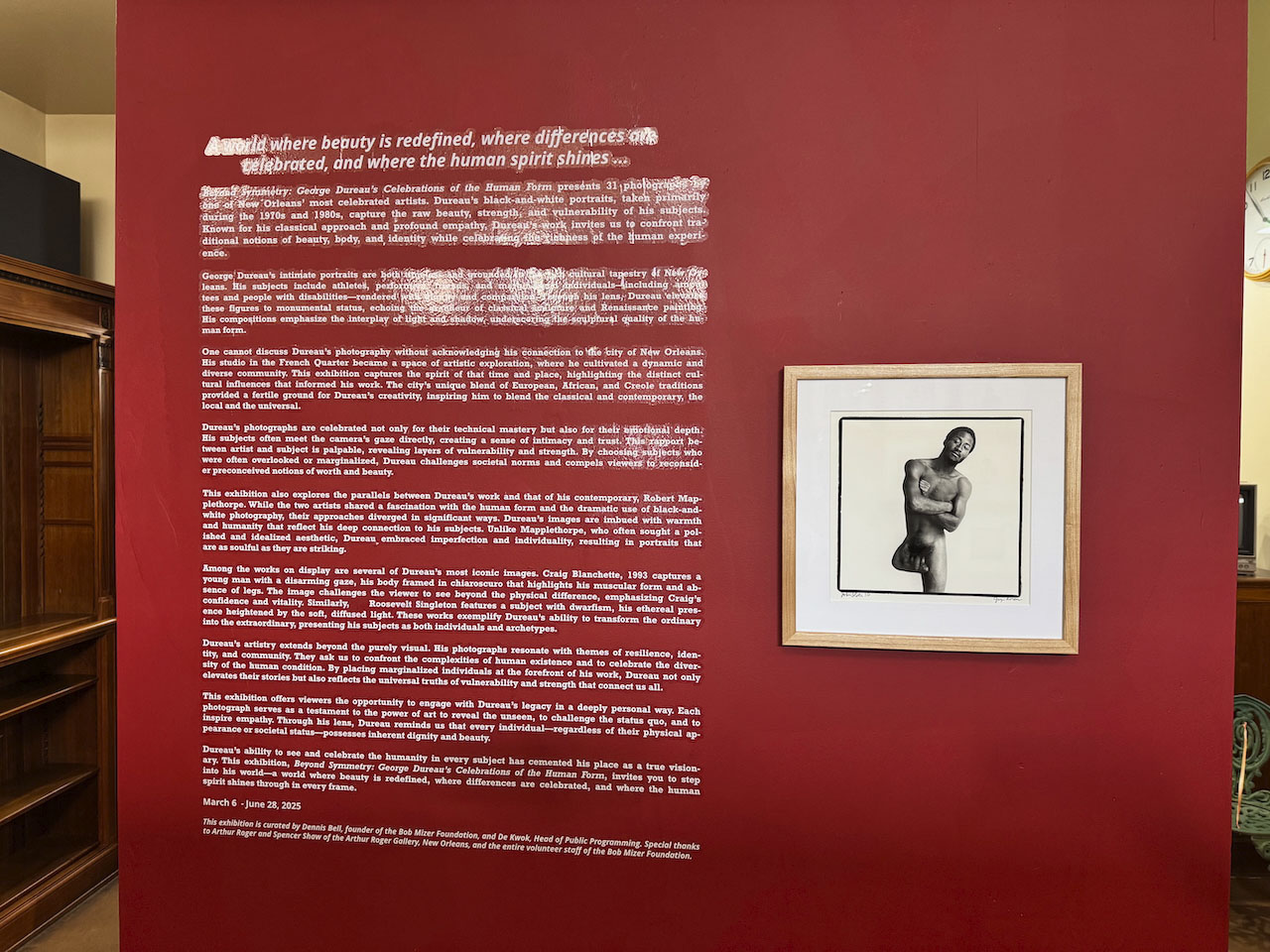
This exhibition Beyond Symmetry: George Dureau’s Celebrations of the Human Form presents 25 photographs by one of New Orleans’ most celebrated artists. Dureau’s black-and-white portraits, taken primarily during the 1970s and 1980s, capture the raw beauty, strength, and vulnerability of his subjects. Known for his classical approach and profound empathy, Dureau’s work invites us to confront traditional notions of beauty, body, and identity while celebrating the richness of the human experience.

George Dureau’s intimate portraits are both timeless and grounded in the rich cultural tapestry of New Orleans. His subjects include athletes, performers, friends, and marginalised individuals – including amputees and people with disabilities – rendered with dignity and compassion. Through his lens, Dureau elevates these figures to monumental status, echoing the grandeur of classical sculpture and Renaissance painting. His compositions emphasize the interplay of light and shadow, underscoring the sculptural quality of the human form.

One cannot discuss Dureau’s photography without acknowledging his connection to the city of New Orleans. His studio in the French Quarter became a space of artistic exploration, where he cultivated a dynamic and diverse community. This exhibition captures the spirit of that time and place, highlighting the distinct cultural influences that informed his work. The city’s unique blend of European, African, and Creole traditions provided a fertile ground for Dureau’s creativity, inspiring him to blend the classical and contemporary, the local and the universal.

Dureau’s photographs are celebrated not only for their technical mastery but also for their emotional depth. His subjects often meet the camera’s gaze directly, creating a sense of intimacy and trust. This rapport between artist and subject is palpable, revealing layers of vulnerability and strength. By choosing subjects who were often overlooked or marginalised, Dureau challenges societal norms and compels viewers to reconsider preconceived notions of worth and beauty.

This exhibition also explores the parallels between Dureau’s work and that of his contemporary, Robert Mapplethorpe. While the two artists shared a fascination with the human form and the dramatic use of black-and-white photography, their approaches diverged in significant ways. Dureau’s images are imbued with warmth and humanity that reflect his deep connection to his subjects. Unlike Mapplethorpe, who often sought a polished and idealised aesthetic, Dureau embraced imperfection and individuality, resulting in portraits that are as soulful as they are striking.

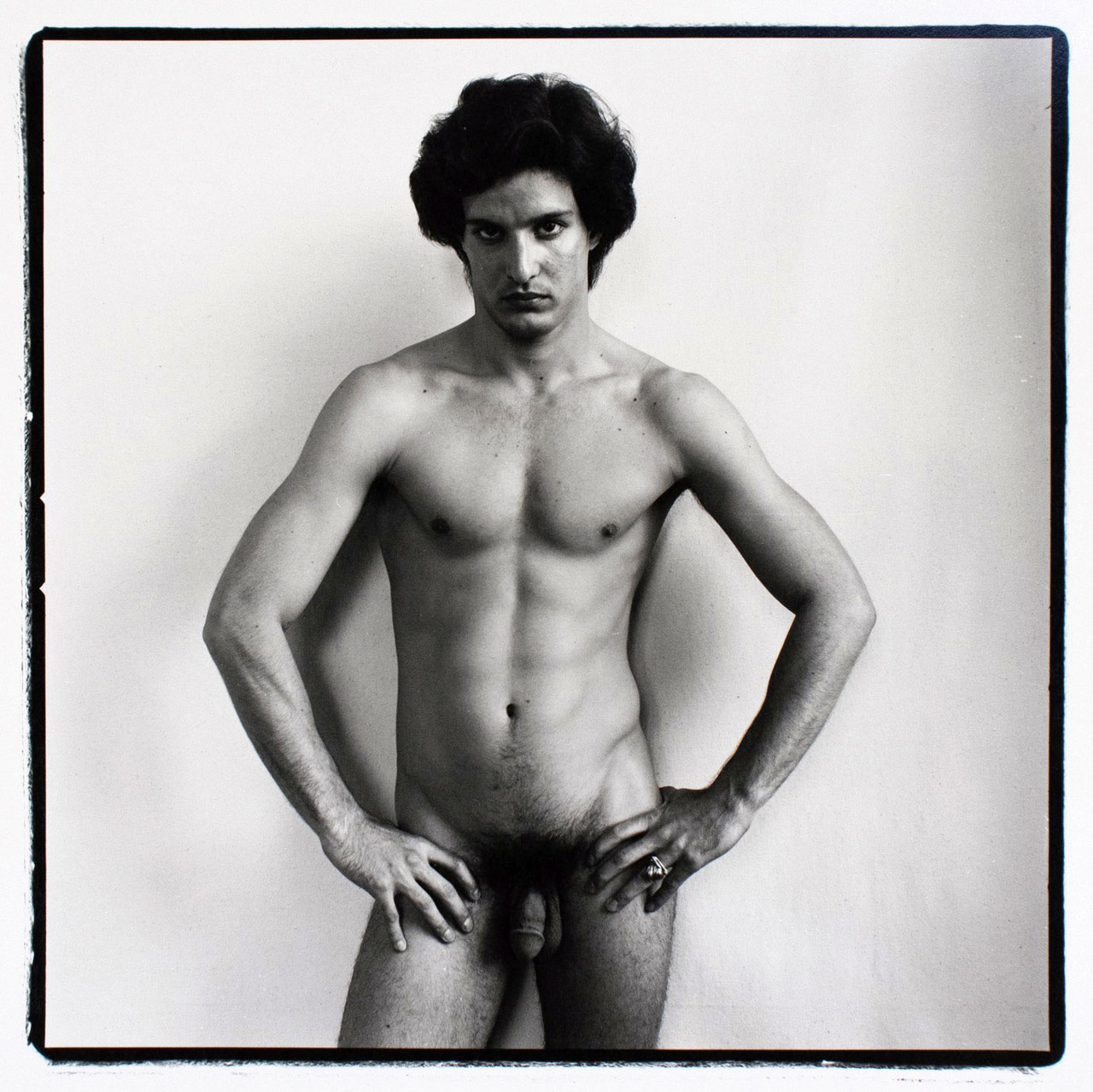
Among the works on display are several of Dureau’s most iconic images. Craig Blanchette, 1992 (above) captures a young man with a disarming gaze, his body framed in chiaroscuro that highlights his muscular form and absence of legs. The image challenges the viewer to see beyond the physical difference, emphasising Craig’s confidence and vitality. Similarly, Roosevelt Singleton features a subject with dwarfism, his ethereal presence heightened by the soft, diffused light. These works exemplify Dureau’s ability to transform the ordinary into the extraordinary, presenting his subjects as both individuals and archetypes.

Dureau’s artistry extends beyond the purely visual. His photographs resonate with themes of resilience, identity, and community. They ask us to confront the complexities of human existence and to celebrate the diversity of the human condition. By placing marginalised individuals at the forefront of his work, Dureau not only elevates their stories but also reflects the universal truths of vulnerability and strength that connect us all.

This exhibition offers viewers the opportunity to engage with Dureau’s legacy in a deeply personal way. Each photograph serves as a testament to the power of art to reveal the unseen, to challenge the status quo, and to inspire empathy. Through his lens, Dureau reminds us that every individual – regardless of their physical appearance or societal status – possesses inherent dignity and beauty.

The 31 photographs selected for this show represent the breadth and depth of Dureau’s oeuvre. From tender portraits of friends to bold explorations of the male nude, the images on display capture the full spectrum of his artistic vision. Each piece is a study in contrasts: light and shadow, strength and vulnerability, individuality and universality. Together, they form a cohesive narrative that celebrates the complexity of the human experience.

George Dureau’s work has left an indelible mark on the world of photography and beyond. His ability to see and celebrate the humanity in every subject has cemented his place as a true visionary. This exhibition, Beyond Symmetry: George Dureau’s Celebrations of the Human Form, invites you to step into his world – a world where beauty is redefined, where differences are celebrated, and where the human spirit shines through in every frame.

As you explore these images, consider the stories they tell and the questions they pose. How do we define beauty? What does it mean to see and be seen? And how can art challenge us to look beyond the surface and connect with the essence of another human being? In celebrating the life and work of George Dureau, we celebrate the power of art to transform, to inspire, and to unite us all.

Press release from the Bob Mizer Foundation


George Dureau (American, 1930-2014) 'B.J. Robinson' Nd


George Dureau (American, 1930-2014)
B.J. Robinson
Nd
Vintage silver gelatin print


George Dureau (American, 1930-2014)
'Untitled' Nd


George Dureau (American, 1930-2014)
Untitled
Nd
Vintage silver gelatin print


George Dureau (American, 1930-2014)
'Untitled (Bob Lang)' Nd


George Dureau (American, 1930-2014)
Untitled (Bob Lang)
Nd
Vintage silver gelatin print


Bob Mizer Foundation
920 Larkin St., San Francisco, CA

Opening hours:
Tues – Sat 12 – 6pm

Bob Mizer Foundation website

LIKE ART BLART ON FACEBOOK

Back to top

Exhibition: ‘Clandestine – The Human Body in Focus’ at the Cobra Museum of Modern Art, Amstelveen

Exhibition dates: 16th October, 2021 – 27th March, 2022


Installation view of the exhibition 'Clandestine – The Human Body in Focus' at the Cobra Museum of Modern Art, Amstelveen showing from left to right, Armando Cristeto (Mexico, b. 1957) 'Apolo urbano' c. 1981; Antonio Reynoso, 'La Gorda' c. 1960; Herb Ritts, 'Wrestling Torsos, Hollywood' c. 1987


Installation view of the exhibition Clandestine – The Human Body in Focus at the Cobra Museum of Modern Art, Amstelveen showing from left to right, Armando Cristeto (Mexico, b. 1957) Apolo urbano, c. 1981; Antonio Reynoso, La Gorda, c. 1960; Herb Ritts, Wrestling Torsos, Hollywood, c. 1987


I’m working from my iPad at the moment as my computer has gone down, so this will be short and sweet.

It’s disappointing, to say the least, that in this day and age a museum provides so few media images on such an important theme that I had to spend many hours digging around trying to find images for this posting. I examined the labels on the installation photographs, and then looked at the museum’s Instagram account where there was much more information, before searching for large enough images online for the posting. Some artists are little known so this proved very difficult.

It’s good to see Arlene Gottfried’s strong, brash, direct photographs of gay icons, Jewish bodybuilders and street urchins but they are standard clubbing / street fare and there is little subtlety in her work.

While Gottfried may have survived to tell her story her own way the work only documents. For a photograph is that ever enough? Here the photographs in no way provide a fresh perspective on a clubbing street aesthetic grounded in the milieu of the mid 70s to early 80s Studio 54, pre-AIDS, groovy, disco party vibe. Nostalgia, history and memory are their appeal today.

Tastes have changed. Personally I find more power and sensitivity in Kike Arnal’s Untitled (Emmanuel, trans man and tattoo artist) (2018, below) than most of Gottfried’s graphic photographs – her subjects caught as if the lights had come up in the club at 6am (believe me this has happened many times, all of us looking like startled rabbits). Strike a pose!

Dr Marcus Bunyan


Many thankx to the Cobra Museum of Modern Art for allowing me to publish the photographs in the posting. Please click on the photographs for a larger version of the image.


Installation view of the exhibition 'Clandestine – The Human Body in Focus' at the Cobra Museum of Modern Art, Amstelveen showing from left to right, Shohei Miyachi, 'Untitled' c. 2018; Leonard Freed, 'Handcuffed, New York City' from 'Police Work' series, c. 1978; Larry Clark, 'Chuck' c. 1981


Installation view of the exhibition Clandestine – The Human Body in Focus at the Cobra Museum of Modern Art, Amstelveen showing from left to right, Shohei Miyachi, Untitled, c. 2018; Leonard Freed, Handcuffed, New York City, from Police Work series, c. 1978; Larry Clark, Chuck, c. 1981


Arlene Gottfried (American, 1960-2017) 'Angel and Woman on Boardwalk, Brighton Beach' 1976 from the exhibition Exhibition: 'Clandestine – The Human Body in Focus' at the Cobra Museum of Modern Art, Amstelveen, Oct 2021 - March 2022


Arlene Gottfried (American, 1950-2017)
Angel and Woman on Boardwalk, Brighton Beach
1976
Vintage gelatin silver print
Framework: 59.5 x 46.5cm
Photo: 27.9 x 35.5cm
Pedro Slim Collection


How does your gender impact your work as an artist? The candid photographs of Arlene Gottfried have become everlasting memories of New York’s fast-evolving culture(s). For over 40 years, Gottfried photographed the intimate stories of the American domestic life, as well intrepid snapshots of the Puerto Rican community or the wild nights inside Studio 54.

She emphasised that being a female photographer back in the 70s was very different than now:

‘A lot of the male photographers [in the past] felt threatened and didn’t like it. […] It’s changed so much with women working. They’re more visible now. I don’t know the statistics on museums and how many are being collected. But on an everyday level, you see women in jobs that used to be male – bus driver, train conductor – typically male jobs that now have female employees and photography was the same. It used to be only guys, really. And actually, in my first photography class, I was the only young woman in the class and I had a lump in my throat, like I wanted to cry, only guys there. But it wound up being a very supportive environment and I learned a lot.

Unless you’re doing something that’s a very feminine kind of a topic, I don’t think gender is really all that visible.’

Anonymous text from the Cobra Museum of Modern Art Instagram page


Arlene Gottfried (American, 1960-2017) 'Guy With Radio, East 7th Street' 1977 from the exhibition Exhibition: 'Clandestine – The Human Body in Focus' at the Cobra Museum of Modern Art, Amstelveen, Oct 2021 - March 2022


Arlene Gottfried (American, 1950-2017)
Guy With Radio, East 7th Street
1977
Vintage gelatin silver print
Framework: 59.5 x 46.5cm
Photo: 35.5 x 27.9cm
Pedro Slim Collection


Arlene Gottfried (American, 1960-2017) 'Pituka at Bethesda Fountain, Central Park' 1977


Arlene Gottfried (American, 1950-2017)
Pituka at Bethesda Fountain, Central Park
1977
Vintage gelatin silver print
Framework: 59.5 x 46.5cm
Photo: 35.5 x 27.9cm
Pedro Slim Collection


The legendary street photographer who captured more than neutral subjects, but also the living faces and bodies of people along with their memories. Arlene Harriet Gottfried photographs preserve cultural heritage of the urban atmosphere.

One of the most quintessential projects Gottfried produced was a black-and-white series of street photography from the 1970s and 80s in New York. Her work will form part of our exhibition Clandestine. This is a photo exhibition about the human body. One of the most dominant themes in the exhibition is the constant dialogue between culture and bodies. This is something Arlene Gottfried captures particularly well. Arlene Gottfried documented scenes of ordinary daily life. The everyday life from the past that still lives vividly in her photographs. Her work embodied stories and memories of people who although you will never get to know, you can easily feel familiarised.

Anonymous text from the Cobra Museum of Modern Art Instagram page


Arlene Gottfried (American, 1960-2017) 'Disco Sally at Studio 54' 1979


Arlene Gottfried (American, 1950-2017)
Disco Sally at Studio 54
1979
Vintage gelatin silver print
Pedro Slim Collection


Arlene Gottfried (American, 1960-2017) 'Pose' Early 1980s


Arlene Gottfried (American, 1950-2017)
Pose
Early 1980s
Vintage gelatin silver print
Pedro Slim Collection


Arlene Gottfried (American, 1960-2017) 'Le Clique' Early 1980s


Arlene Gottfried (American, 1950-2017)
Le Clique
Early 1980s
Vintage gelatin silver print
Pedro Slim Collection


Installation view of the exhibition 'Clandestine – The Human Body in Focus' at the Cobra Museum of Modern Art, Amstelveen showing Arlene Gottfried's portrait 'Marsha P. Johnson' c. 1983


Installation view of the exhibition Clandestine – The Human Body in Focus at the Cobra Museum of Modern Art, Amstelveen showing Arlene Gottfried’s portrait Marsha P. Johnson c. 1983


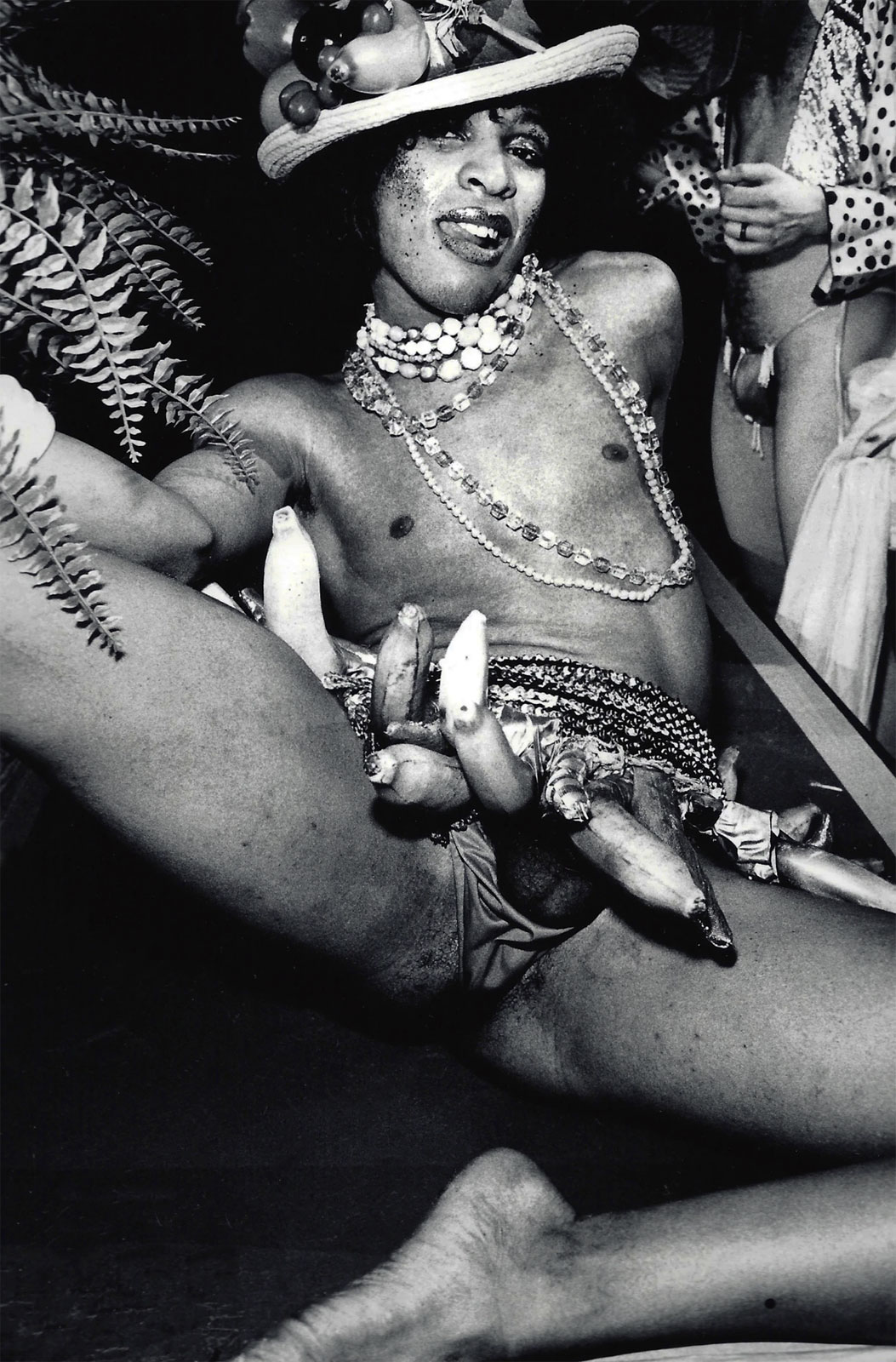
Arlene Gottfried (American, 1960-2017) 'Marsha P. Johnson' c. 1983


Arlene Gottfried (American, 1950-2017)
Marsha P. Johnson
c. 1983
Vintage gelatin silver print
Pedro Slim Collection


Marsha P. Johnson was an African-American trans woman who lived in New York and is celebrated for her contribution to the LGBTQI+ movement. She was often referred to as ‘Saint Marsha’ for serving as a “drag mother” aiding and welcoming homeless people as well as young members of the LGBTQ movement.

Marsha P. Johnson was the Rosa Parks of the LGBT+ movement. She was a devoted activist, drag performer, sex worker and at some point she even modelled for Andy Warhol. She established safe spaces for transgender people and was thoroughly dedicated to defending the rights of trans people, sex workers, people with HIV/AIDS and prisoners.

‘You never completely have your rights, one person, until you all have your rights.’ ~ Marsha P. Johnson

Our exhibition, Clandestine – The Human Body in Focus presents stories in black and white photographs about people who have not been recognised yet for their bravery. Today, Marsha lives in the hearts of brave activists as well as many transgender people.


The human body is the central theme of the Clandestine photo exhibition. About a hundred black-and-white photographs express an unreserved love of the body in all its manifestations: perfect, imperfect, elegant, erotic, proud or, on the contrary, very vulnerable. The works come from the extensive collection of photographer and collector Pedro Slim (Beirut, Lebanon, 1950) and are shown in the Netherlands for the first time.

Clandestine showcases photography by some 60 artists, including Diane Arbus, Horst P. Horst, Arlene Gottfried, Graciela Iturbide, Robert Mapplethorpe, Diana Blok, Helmut Newton and Man Ray. The exhibition presents original and contemporary prints (including silver on gelatine, photogravure), collages and photomontages. These photographs are placed in the context of New York in the 1970s and 1980s, where many were taken. Pedro Slim’s photo collection holds a unique place in the field of photography. In 1985, Slim started collecting photographs in which the human body plays a central role. With his collection, Slim highlights the power of images and seeks to transform and break open the paradigm that dictates what is feminine, masculine, non-binary or trans. Pedro Slim’s collection consists of more than 300 vintage prints and has rarely been exhibited.

The beauty of the photographs lies especially in the personal expression of those portrayed. The artists seek to go beyond the prevailing standards and ideals of beauty, and make a plea to appreciate the body in all its manifestations. The photographs are thus an ode to diversity and are still very relevant today.

Three themes

The exhibition revolves around three themes. The first part of the exhibition focuses on past and present ideals of beauty. The photographs show a diversity of body types and invite us to transcend judgements such as ‘beautiful’ and ‘ugly’. The photographs within the second theme show people living on the fringes of society,  many of the recorded scenes are raw, everyday situations. The visitor sees sex work, drug use and indecency. There are painful stories behind the provocative looks and poses.

The third part of the exhibition is entirely devoted to the work of Arlene Gottfried (1915-2017). Gottfried specialised in the genre known as street photography, recording life in the less well-to-do neighbourhoods of New York.  Her themes included gospel, schizophrenia, the Puerto Rican community, and the women in her family. Pedro Slim owns more than twenty original prints by Gottfried. This makes him the most important collector of her work.

About the collector

Photographer and collector Pedro Slim was born in Beirut, Lebanon, in 1950. He studied architecture and photography in Mexico and New York. Since the early 1990s, he has exhibited in various museums and galleries. His most recent exhibition was in 2017 at the Museo de Arte Moderno in Mexico City. His passion for photography led him to start a collection.


Arlene Gottfried (American, 1960-2017) 'Brothers with their Vines, Coney Island, NY' 1976


Arlene Gottfried (American, 1950-2017)
Brothers with their Vines, Coney Island, NY
1976
Vintage gelatin silver print
Pedro Slim Collection


Arlene Gottfried (American, 1960-2017) 'Third Avenue Shopping, El Barrio' 1978


Arlene Gottfried (American, 1950-2017)
Third Avenue Shopping, El Barrio
1978
Vintage gelatin silver print
Pedro Slim Collection


Arlene Gottfried (American, 1960-2017) 'Men's Room at Disco' 1978


Arlene Gottfried (American, 1950-2017)
Men’s Room at Disco
1978
Vintage gelatin silver print
Pedro Slim Collection


Arlene Gottfried (American, 1960-2017) 'Doorway in Soho, NY' 1980


Arlene Gottfried (American, 1950-2017)
Doorway in Soho, NY
1980
Vintage gelatin silver print
Pedro Slim Collection


Arlene Gottfried (American, 1960-2017) 'Savage Riders at The Puertican Day Parade' 1980


Arlene Gottfried (American, 1950-2017)
Savage Riders at The Puertican Day Parade
1980
Vintage gelatin silver print
Pedro Slim Collection


Arlene Gottfried (American, 1960-2017) 'Hassid and Jewish Bodybuilder' 1980


Arlene Gottfried (American, 1950-2017)
Hassid and Jewish Bodybuilder
1980
Vintage gelatin silver print
Pedro Slim Collection


Arlene Gottfried (American, 1960-2017) 'Riis, Nude Bay, Queens' 1980


Arlene Gottfried (American, 1950-2017)
Riis, Nude Bay, Queens
1980
Vintage gelatin silver print
Pedro Slim Collection


After completing a two-year photography program at FIT, Arlene moved to Greenwich Village in 1972, when the community was still an affordable outpost for artists, musicians and bohemians. She took a job as an assistant with an advertising agency. “I did everything: printing, processing, lighting, studio work, on location, a lot of it was for comps and sometimes it was for the ad itself, for sales promotion and point of purchase,” Arlene revealed in her final book, Mommie. “I didn’t always love what it was about but I always took photographs on the weekend and used their fantastic darkroom.”

“It’s nice to be young and be able to run across the beach like wild and be able to meet people and take their picture,” she continued. “That’s what I remember about it: Having a great time, and having a job so I could pay for things, and having a darkroom where I could print everything. You couldn’t ask for anything better. It was like a little grant at a little job, you know, a moderate income but just enough.”

Arlene made “just enough” to carry her through the next 45 years of her life, transforming her home in the West Village’s famed Westbeth Artists Housing into a bohemian palace. Above her kitchen table, she hung her photographs in a plastic carousel designed to air-dry intimate apparel. She entertained visitors, serving cherries and chocolate-covered espresso beans with a bottle of seltzer at the ready. When her cancer treatments stole her brunette curls in the years before her death, Arlene donned a burgundy velvet turban for her nights out.

Although she disliked hustle culture before it was named as such, Arlene maintained resolute faith in the importance of her work and the vitality of her gifts. Where other photographers sought to be a fly on the wall, Arlene was a butterfly in the mix, always aligned with the energy so that her presence only added to the beauty of the images she made. She loved to laugh, to sing, to dance and to celebrate the extraordinary stars in her orbit. In Mommie, Arlene remembers, “The clubs were very provocative then: People putting on these shows, taking their clothes off, acting things out. There’d be a theme and they’d be doing all kinds of crazy things like giving birth to dolls, simulating sex in public. I went in with my camera, took photographs and it was great.”

After the party, Arlene described the feeling of a glorious high that comes from a night on the town, surrounded by people doing what they love. She walked out of the club into the crisp winter air as snowflakes floated down from the sky like confetti in a parade. She then began strolling down Fifth Avenue, heading home, like the final scene of a Hollywood film.

Extract from Miss Rosen. “Sex clubs, Studio 54, Central Park: A portrait of NYC in the 70s & 80s,” on the i-D website 15 October 2021 [Online] Cited 16/10/2021. No longer available online


Arlene Gottfried (American, 1960-2017) 'Giant Dildo, Les Mouches Party, NY' 1979


Arlene Gottfried (American, 1950-2017)
Giant Dildo, Les Mouches Party, NY
1979
Vintage gelatin silver print
Pedro Slim Collection


Arlene Gottfried (American, 1960-2017) 'Miguel Pinero and Friend' 1980


Arlene Gottfried (American, 1950-2017)
Miguel Pinero and Friend
1980
Vintage gelatin silver print
Pedro Slim Collection


As an insider, Gottfried was able to tell the story on her own terms, capturing a slice of life that has vanished forevermore. “Now the only way to know what New York was like is from fleeting glimpses in movies made years ago like Taxi Driver, Death Wish, or Midnight Cowboy,” Gilbert Gottfried observes. “I remember there were neighbourhoods you didn’t want to be in and we lived in a few of those. Arlene had already been living on her own when me, my mother, and my other sister Karen moved to Avenue A. People were saying, ‘You’re nuts.'”

Arlene Gottfried flourished amongst her own, whether palling around with poet Miguel Piñero at the Nuyorican Poets Café, kicking it at Brooklyn’s famed Empire Roller Skating Center, or trooping uptown to the streets of El Barrio. Wherever she went, there she was, ready for whatever would come her way.

“I met Miguel Piñero at the Poet’s Café. I loved to dance and you could really dance over there!” she told me in 2014, roaring with laughter at the memory of her youth. “Salsa. R&B. There was a lot of good energy there. It was rough and raw. Not trendy. And that’s an amazing thing – that the Poet’s Café has lasted so long. I loved it. I stayed there until the sun came up, literally. That doesn’t last forever, these moments in time.”

Though Gottfried and many she photographed have passed, their legacies live on in her warm and loving photographs. Gottfried followed her heart and went with the flow, documenting everything from her years singing gospel with the Eternal Light Community Singers to her long-standing relationship with Midnight, a man suffering from paranoid schizophrenia.

For Gottfried, the camera was her diary and confidant. “I don’t know exactly when Arlene started taking pictures, but I know she got into it and then it was all the time,” her brother says with a laugh. “Sometimes we were both on the bus with my mother. I would be helping my mother off and Arlene was taking pictures. I was thinking, ‘Put down the camera and help me help her out of the bus!'”

Gottfried’s archive holds vast treasures of New York at a time when everyone was a character yet no one would stare because that would suggest you were a tourist, unfit to make it here. Her photographs are a tribute to Old New York, to a city of myth, magic, and madness that many did not survive. Yet in her pictures, their lives are restored to the pantheon of grit, glamour, and glory.

It is a city the lingers like wafts of weed smoke on a warm summer day, a city that still exists if you look for it. Gilbert Gottfried remembers, “A year or two ago I was walking with my wife and we saw these two homeless men. One was fixing the other guy’s hair with his hand, and my wife said, ‘Ahh. That’s an Arlene picture.'”

Extract from Miss Rosen. “Arlene Gottfried photographed the magic and madness of Old New York,” on the Document Journal website June 28, 2019 [Online] Cited 16/10/2021


George Hoyningen-Huene (American-Russian, 1900-1968) 'A.E. Sudan' c. 1935


George Hoyningen-Huene (American-Russian, 1900-1968)
A.E. Sudan
c. 1935
Gelatin silver print
George Hoyningen-Huene Estate Archives


Let’s talk about representation. A Russian man takes a photo of a Sudanese man. Superficially, this might seem problematic, but why?

In our exhibition, Clandestine – The Human Body in Focus, the portrait by the Russian photographer George Hoyningen-Huene, titled A.E. Sudan presents a naked Sudanese.

In a traditional setting, material items like clothes and jewellery help people express their values and beliefs. In this photo, the Sudanese man is alien from any form of expression. In addition, presented in front of a white wall strips the subject away from his situational contexts – such as time and place. This photo shows a person in a blank state, disconnected from any form of cultural or individual expression.

Despite these characteristics (or lack of characteristics), the photographer still opted to include the nationality of the subject in the title – Sudanese. We do not know if the artist understood the semantic power of the title, but by giving us some context, we know this person is not simply a naked model detached from his culture, but rather a ‘Sudanese’ man.

Here is where the questions that concerns representation starts gaining weight. Artists, including photographers, carry tremendous responsibility. Through their medium, they have the power to frame a subject as they please. In the creative process, it is possible that the view of the artist becomes the dominant perception understood by the audience.

For instance, in this case the Sudanese man has no voice concerning how the viewer perceives any of the characteristics that represent his identity, such as his skin colour, nationality, gender or age. It is virtually impossible to discuss all the concerns linked to cultural representation in a post, hence this conversations is far from over. Also, we do not intend to shame the way the artist framed the Sudanese man, but rather our whole aim, inspired by the Cobra movement, is to present new ways to think critically about art, ourselves and society.

Anonymous text from the Cobra Museum of Modern Art Instagram page


Edmund Teske (Chicago, Illinois, 1911 - Los Angeles, California, USA, 1996) 'Male Nude, Davenport Iowa' 1942


Edmund Teske (Chicago, Illinois, 1911 – Los Angeles, California, USA, 1996)
Male Nude, Davenport Iowa
1942
Vintage gelatin silver print
Framework: 59.2 x 48.9cm
Photo: 33 x 23.5cm
Pedro Slim Collection
© Estate of Edmund Teske, Courtesy Gitterman Gallery


Installation view of the exhibition 'Clandestine – The Human Body in Focus' at the Cobra Museum of Modern Art, Amstelveen


Installation view of the exhibition Clandestine – The Human Body in Focus at the Cobra Museum of Modern Art, Amstelveen showing from left to right, Nan Goldin’s Ivy wearing a fall Boston 1973 and Antonio Reynoso’s La Gorda (The Fat Woman) c. 1960


Antonio Reynoso (Mexican, 1919-1996) 'La Gorda' (The Fat Woman) c. 1960


Antonio Reynoso (Mexican, 1919-1996)
La Gorda (The Fat Woman)
c. 1960
Gelatin silver print
Pedro Slim Collection


Beauty lies in the eye of the beholder. This phrase stresses that beauty is thoroughly subjective and only limited by social constructs.

One would argue that beauty is different from sciences like physics or chemistry since it is not quantifiable or measurable. Nonetheless, through non-scientific agreement people still know how to distinguish what is pretty from what is not. For instance, a swampy pond is less pretty than a turquoise ocean. This is the shared opinion, of at least the majority, but is this a view shared by everyone? Even more importantly, is this our view or was it simply bestowed upon us without our prior consent?

Being critical when looking at a work of art, or more frankly when looking at anything, is an exercise to strengthen our own individuality and potential to envision a new beauty. This does not mean one should automatically discredit beauty from something or someone that is socially considered beautiful but to question it. This is a call to acknowledge that the notion of beauty can be challenged, abstracted or even reconstructed.

This is a portrait by Mexican photographer Antonio Reynoso La Gorda (The Fat Woman). It invites us to reconsider the meanings of several attributes including, beauty, sensuality and femininity.

Anonymous text from the Cobra Museum of Modern Art Instagram page


Nan Goldin (American, b. 1953) 'Ivy wearing a fall' Boston 1973


Nan Goldin (American, b. 1953)
Ivy wearing a fall
Boston 1973
Gelatin silver print
Pedro Slim Collection


Allen Frame (American, b. 1951) 'Young Man, New York' 1974


Allen Frame (American, b. 1951)
Young Man, New York
1974
Gelatin silver print
Framework: 40.5 x 50.5cm
Photo: 27.9 x 35.5cm
Pedro Slim Collection


Leonard Freed (American, 1929-2006) 'Handcuffed, New York City' c. 1978


Leonard Freed (American, 1929-2006)
Handcuffed, New York City
c. 1978
From Police Work series
Gelatin silver print
Pedro Slim Collection


David Wojnarowicz (American, 1954-1992) 'Arthur Rimbaud in New York' 1978-1979


David Wojnarowicz (American, 1954-1992)
Arthur Rimbaud in New York
1978-1979
Gelatin silver print
Pedro Slim Collection


Arthur Rimbaud in New York, one of David Wojnarowicz’s few incursions into photography, is the articulation of a testimony to urban, social and political change in New York.

Wojnarowicz, using the figure of the accursed poet as the only way for an artist to intervene in reality, chronicles his own life and his emotional relationship with New York City in the late 1970s. The artista portrays a number of friends with a life-size mask of the French poet Arthur Rimbaud, thereby taking on his identity and highlighting the parallels in their lives: the violence suffered in their youths, the feeling of being denied freedom, the desire to live far away from the bourgeois environment and the fact of their homosexuality. Wojnarowicz is juxtaposing the historical time of the symbolist poet with the artist’s present.

The series, taken in places that the artist used to frequent with photographer Peter Hujar, represents the emergence of identity politics and queer visibility in contemporary art, and the debates surrounding the public sphere as a space for individual non-conformity that were to shape the 1980s. The series also represents a contemplation of the end of the experimental artists’ collectives on the Lower East Side, as gentrification and urban speculation transformed the neighbourhood, and AIDS had begun to decimate the gay community, also causing the early death of the artist in 1992.

Salvador Nadales. “Arthur Rimbaud in New York,” on the Museo Reina Sofía website Nd [Online] Cited 23/02/2022


George Dureau (American, 1930-2014) 'B.J. Robinson' c. 1980


George Dureau (American, 1930-2014)
B.J. Robinson
c. 1980
Gelatin silver print
Pedro Slim Collection


What happens when people become labelled as objects of inspiration?

Popular culture often exotifies or objectifies a group of people who are slightly different from the majority. Sayings such as ‘you cannot fail if you have not tried’ accompanied by a photo of a person with a disability, portrays the subject as a source of exceptional inspiration for the viewer. This may objectify the subject in the photo.

This is something that happens in the art world too. For instance, the monumental achievements of artists with a disability, such as Frida Kahlo or Vincent van Gogh, are sometimes phrased as a direct outcome of their condition. By doing so the condition of the artist becomes bigger than the persona. This undermines the different elements that constitute the artist as a whole.

For the photographer George Dureau, whose work is displayed in our exhibition Clandestine, photography is a medium with the potential to empower people with disabilities by simply representing them, without objectifying them. By photographing people with disabilities the same way traditional photographers captured images of models, Dureau reconceptualised the standards of beauty.

The conversation revolving around objectification is far from over. Dureau’s views present an interesting way to think about the topic, but we still need more critical and engaged dialogue and we want to hear your opinion. Where is the boundary between admiration and objectification?

Anonymous text from the Cobra Museum of Modern Art Instagram page


Larry Clark (American, b. 1943) 'Chuck' c. 1981


Larry Clark (American, b. 1943)
Chuck
c. 1981
Gelatin silver print
Pedro Slim Collection


Armando Cristeto (Mexican, b. 1957) 'Apolo Urbano' (Urban Apollo) Mexico City, 1981


Armando Cristeto (Mexican, b. 1957)
Apolo Urbano (Urban Apollo)
Mexico City, 1981
Gelatin silver print
Pedro Slim Collection
© Armando Cristeto


Born in 1957 in Mexico City, photographer and historian Armando Cristeto began to study photography in 1977 at the Universidad Nacional Autónoma de Mexico. He was a member of the photography collective known as the Grupo de Fotografos Independientes, one of the numerous cooperatives of artists known as ‘Los Grupos’ proliferating during the late 1970s in Mexico.

Founded by Amando Cristeto’s brother Adolfo Patino, the Fotografos Independientes sought to reach new audiences by taking their exhibitions out onto the street, where their works could interact with the urban context and be appreciated by new classes of people. Their exhibitions were installed along the sidewalks of Mexico City, employing clothesline to hang their photographic prints, or were even paraded through the streets on wheeled carts.

Anonymous text. “Armando Cristeto,” on the ultrawolvesunderthefullmoon website June 9, 2020 [Online] Cited 23/03/2022


Duane Michals (American, b. 1932) 'The Most Beautiful Part of a Woman's Body' c. 1986


Duane Michals (American, b. 1932)
The Most Beautiful Part of a Woman’s Body
c. 1986
Gelatin silver print
Pedro Slim Collection


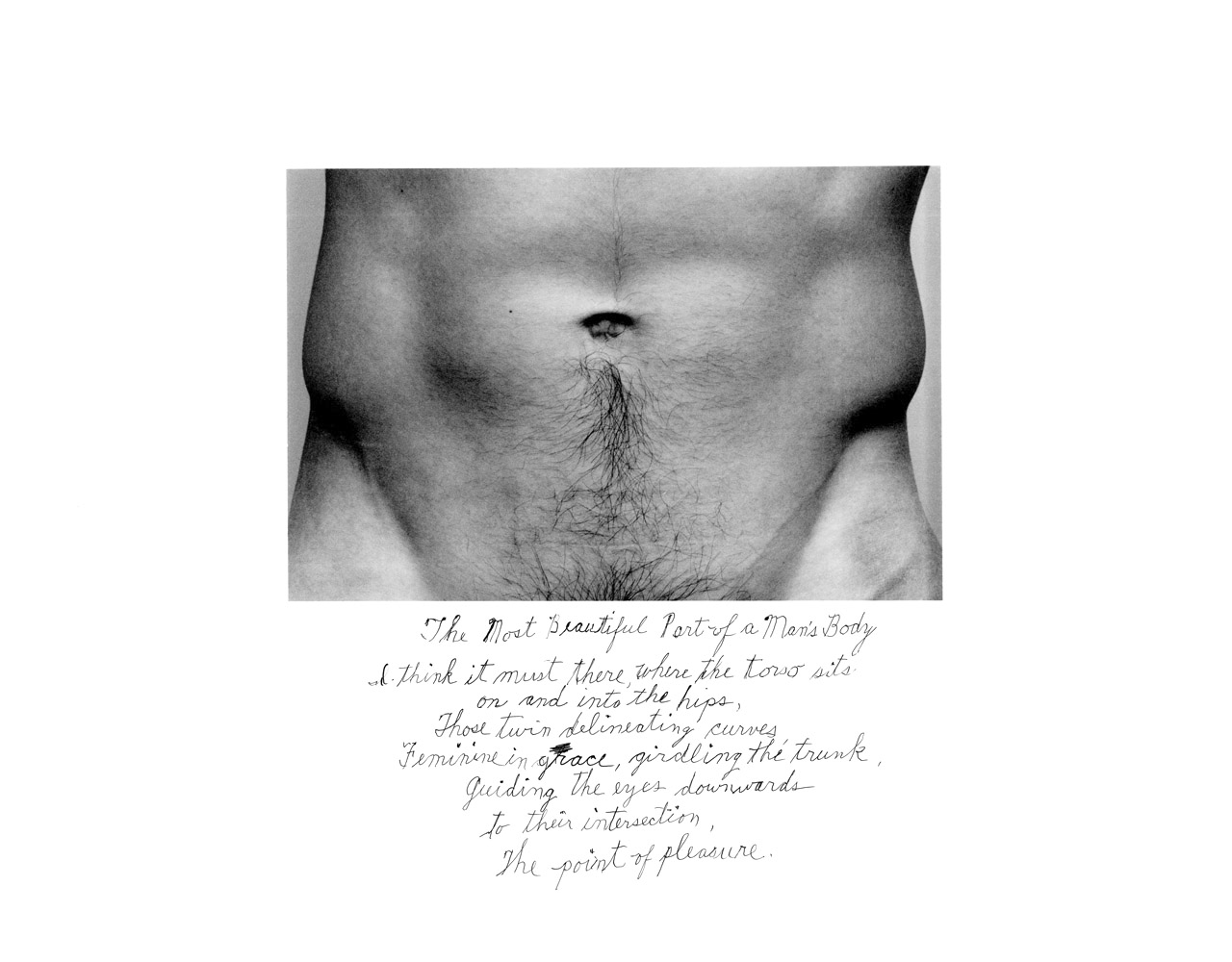
Duane Michals (American, b. 1932) 'The Most Beautiful Part of a Man's Body' c. 1986


Duane Michals (American, b. 1932)
The Most Beautiful Part of a Man’s Body
c. 1986
Gelatin silver print
Pedro Slim Collection


Graciela Iturbide (Mexican, b. 1942) 'Magnolia with Mirror, Juchitán, México' 1986


Graciela Iturbide (Mexican, b. 1942)
Magnolia, Juchitán, México
1986
Gelatin silver print
Pedro Slim Collection


Is symmetry more beautiful than asymmetry?

The notion of symmetry is occasionally interchanged with the one of beauty as if these would be synonyms. Artists and philosophers from different cultures and times have championed equilibrium and positioned symmetry on an untouchable pedestal, but culturally speaking, asymmetry might be more valuable.

The mathematical notion of symmetry suggests that if an object is changed – say a cube or a sphere is rotated – it stays the same as before it was moved. Aiming for symmetrical forms seems reasonable from the functional standpoint of an architect or a mathematician, but why do our cultures dismiss or shame asymmetry?

Asymmetry presupposes that something, or someone, changes after its circumstances changed. Transforming when situations demand it, is necessary to evolve. One symmetric thought or body would entail that it does not change when it is moved. That said, maybe it is time to reevaluate the way we perceive notions of beauty and reformulate our societal desires. Asymmetric bodies might be much more sexy and beautiful after all.

The exhibition, Clandestine – The Human Body in Focus, presents black and white photographs of the human body. The photographs render asymmetric human bodies.

Anonymous text from the Cobra Museum of Modern Art Instagram page


Herb Ritts (American, 1952-2002) 'Wrestling Torsos, Hollywood' c. 1987


Herb Ritts (American, 1952-2002)
Wrestling Torsos, Hollywood
c. 1987
Gelatin silver print
Pedro Slim Collection


Merry Alpern (American, b. 1955) 'Dirty Windows #16' 1994


Merry Alpern (American, b. 1955)
Dirty Windows #16
1994
Gelatin silver print
Pedro Slim Collection


Merry Alpern (American, b. 1955) 'Untitled' from the series 'Dirty Windows' 1994


Merry Alpern (American, b. 1955)
Untitled from the series Dirty Windows
1994
Gelatin silver print
Pedro Slim Collection


How to take dramatic photos of strangers? Wait, should you ask for their consent before photographing them?

In most countries, it is legal to take photos of people, including children in public. The question of whether it is morally right or wrong to take photos of strangers remains problematic. Some would say that it depends on the purpose of the photo. Judging a body of work that is intended to be used for profit, such as to promote a product, is different from photojournalism or a photo exhibition.

When seeing the photos exhibited in our exhibition Clandestine- The Human Body in Focus, one wonders if every single body was aware it would end up framed in the museum, or in the Instagram account of the museum itself.

To give this situation a context, consider Merry Alpern’s Dirty Windows series from 1994. Rather than posing her subjects, Alpern captured women (and men) crowded into the tiny bathroom of a sex club in the Wall Street district of Manhattan. Her photos were taken at night, in dim light, from a friend’s apartment, one story higher and about five meters away from the bathroom window. Her obsessive, voyeuristic, and even paranoic project as well as her overtly sexual scenes, caused a national controversy at the time.

With these images, Alpern encapsulated and reduced the identity of her subjects as ‘sex workers’. By taking a single shot of a person and framing it as the complete one, the photo runs the risk of stripping the full identity away from the subject. The women in the Dirty Windows series could be mothers, daughters, great sports players, activists and so on, but not everyone gets to see that part of the story.

Let this be a reminder that when taking a photo of a person, you should make sure the person is aware of the photo’s purpose as well as what part of the story- of their identity – is framed.

Anonymous text from the Cobra Museum of Modern Art Instagram page


Shohei Miyachi (Japanese, b. 1989) 'Untitled' c. 2018


Shohei Miyachi (Japanese, b. 1989)
Untitled
c. 2018
Gelatin silver print
Pedro Slim Collection


Kike Arnal (Venezuelan) 'Untitled' (Emmanuel, trans man and tattoo artist) 2018


Kike Arnal (Venezuelan)
Untitled (Emmanuel, trans man and tattoo artist)
2018
From the series Revealing Selves – Transgender Portraits from Argentina
Gelatin silver print
Pedro Slim Collection


When it comes to transgender rights, Argentina is a country rife with contradictions. After being subject to widespread medicalization and incarceration throughout the 20th century, Argentina’s transgender community began to see a number of windfall legal and political wins in the early 21st century that would secure them progress once only dreamed of. These included the Gender Identity Law of 2012, landmark legislation which guarantees transgender Argentinians the right to change their sex in the public record, access free gender reassignment surgery and hormone therapy that doesn’t require medical or psychological diagnoses, and enshrines transgender discrimination protections in law.

But the gulf between legislative gains and reality can be wide in many countries, and Argentina is no exception. Despite these rights, 88 percent of Argentinian trans women have never had a formal job; their average life expectancy is 35, whereas the national average is 77; and only 40 percent graduate from high school. Transgender Argentinians still face massive cultural and social stigma, which can lead to family rejection and poverty.

In Revealing Selves: Transgender Portraits from Argentina … documentary photographer Kike Arnal provides a window into the homes and lives of Argentina’s transgender community, one that captures these contradictions.

Anonymous text. “Revealing Portraits from Argentina’s Transgender Community,” on the Them website April 10, 2018 [Online] Cited 23/02/2022


Kike Arnal (Venezuelan) 'Untitled' (Emmanuel, trans man and tattoo artist) 2018


Kike Arnal (Venezuelan)
Untitled (Emmanuel, trans man and tattoo artist)
2018
From the series Revealing Selves – Transgender Portraits from Argentina
Gelatin silver print
Pedro Slim Collection


Cobra Museum of Modern Art
Sandbergplein 1, 1181 ZX Amstelveen

Opening hours:
Tuesday – Sunday 10am – 5pm
Closed Monday

Cobra Museum of Modern Art website

LIKE ART BLART ON FACEBOOK

Back to top