Exhibition: ‘Muscle Memory: Lens on the Body’ at the Phoenix Art Museum, Phoenix, AZ

Exhibition dates: 24th January – 28th June, 2026

Curator: Emilia Mickevicius, Norton Family Assistant Curator of Photography at the Phoenix Art Museum
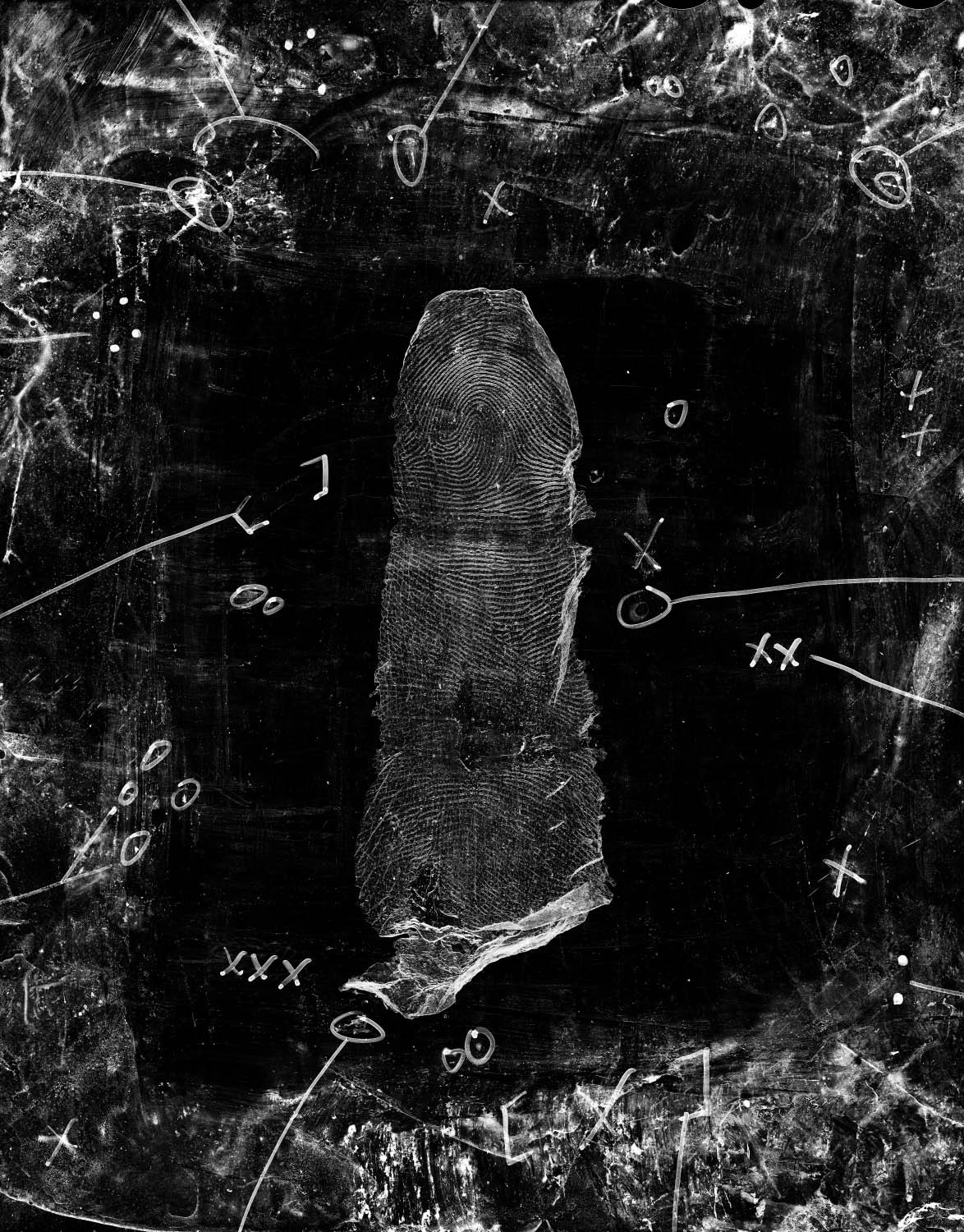
 

Claire A. Warden (Canadian) 'Genetics' Nd


Claire A. Warden (Canadian)
Genetics
Nd
From the series Mimesis (2015-ongoing)
Cameraless Photograph
© Claire A. Warden 


Surrounded by mirrors

” … the human body does not exist and is not understandable apart from the ‘social construction of reality’.” ~ Ted Polhemus

“Hence all of us, in modern social conditions, live as though surrounded by mirrors; in these we search for the appearance of an unblemished, socially valued self.” ~ Anthony Giddens


Embodiment is the fundamental condition we share.

~ Embodiment refers to the representation or expression of an abstract idea, quality, or feeling in a tangible, visible, or physical form. It describes a person, action, or object that perfectly exemplifies a concept. (Cambridge Dictionary)

~ At its core, the word stems from the root “embody,” meaning “to give a body to”. Philosophically, it refers to the condition of a subject (like a person) inhabiting or being associated with a physical form. (Oxford Academic)

Giving form to the intangible

~ Embodiment links together both broadly cultural and circumstantial usages, the body taking on its meaning at the intersection of narrative, culture, and social interaction… Nowadays, with the current interest in lived experience and embodiment, we assume that some level of cultural meaning is implied in pre-reflection as well. (Cambridge English Corpus)

~ Pre-reflection describes an implicit, automatic awareness that accompanies human experience before you pause to consciously analyse or think about what you are doing. It is an unmediated, “in-the-moment” state of being. (Stanford Encyclopaedia of Philosophy)

~ In continental philosophy – most notably the work of Jean-Paul Sartre and Edmund Husserl – pre-reflective consciousness is the immediate, tacit knowledge that an experience is happening to you.

When you are in the zone, as the energy flows through you, in the background you are implicitly aware of taking a photograph – but not in a reflective state, “I have taken a photograph”.

For me, there is a union of mindfulness, body, subject, camera – a seeming suspension of time and space – which may lead to a “revelatio”, a revelation of spirit, a pulling back of the curtain to reveal what is beyond. As a good friend and fellow photographer Frank Vic observes, “To emerge from “the dreams of omniscience and omnipotence” is to let go of the photographer’s intense desire for control and egoistic attachment. Only by facing the subject with an attitude of utmost humility is it possible for the lens to capture a truly objective and sacred “revelation”.”

In modern psychology, the pre-reflective unconscious refers to how your personal history, organising principles, and mental schemas shape your experience without you actively noticing it (Encyclopaedia.com). Thus, it is how unconsciously aware you are of your surroundings, how informed you are through your conversations and reading, how attuned you are to the energy of the body and the world – that directs your gaze.

Some pertinent quotations below.

Dr Marcus Bunyan

PS. The exhibition is divided into four interesting thematic sections – Surface Tension; Kinetic Beauty; Know Thyself; Enduring. Such a pity there are not more photographs to illustrate the many ideas contained within each section.


Many thankx to the Phoenix Art Museum for allowing me to publish the photographs in the posting. Please click on the photographs for a larger version of the image.


“The faculty to think objectively is reason; the emotional attitude behind reason is that of humility. To be objective, to use one’s reason, is possible only if one has achieved and attitude of humility, if one has emerged from the dreams of omniscience and omnipotence which one has as a child.”


Erich Fromm. The Art of Loving. London: Allen and Unwin, 1957, p. 120.


” … the human body does not exist and is not understandable apart from the ‘social construction of reality’. Our bodies and our perception of them constitute an important part of our socio-cultural heritage. They are not simply objects which we inherit at birth, but are socialized (enculturated) throughout life and this process of collectively sanctioned bodily modification may serve as an important instrument for our socialization (enculturation) in a more general sense. That is, in learning to have a body, we also begin to learn about our ‘social body’ – our society.”


Ted Polhemus. Social Aspects of the Human Body. Penguin: Harmonsworth, 1978, p. 21 quoted in Morag MacSween. Anorexic Bodies: A Feminist and Sociological Perspective on Anorexia Nervosa. London: Routledge, 1993, p. 115.


“Consumer capitalism, with its efforts to standardise consumption and to shape tastes through advertising, plays a basic role in furthering narcissism. The idea of generating an educated and discerning public has long since succumbed to the pervasiveness of consumerism, which is a ‘society dominated by appearances’. Consumption addresses the alienated qualities of modern social life and claims to be their solution: it promises the very things the narcissist desires – attractiveness, beauty and personal popularity – through the consumption of the ‘right’ kinds of goods and services. Hence all of us, in modern social conditions, live as though surrounded by mirrors; in these we search for the appearance of an unblemished, socially valued self.”


Anthony Giddens. Modernity and Self-Identity: Self and Society in the Late Modern Age. California: Stanford University Press, 1991, p. 172.
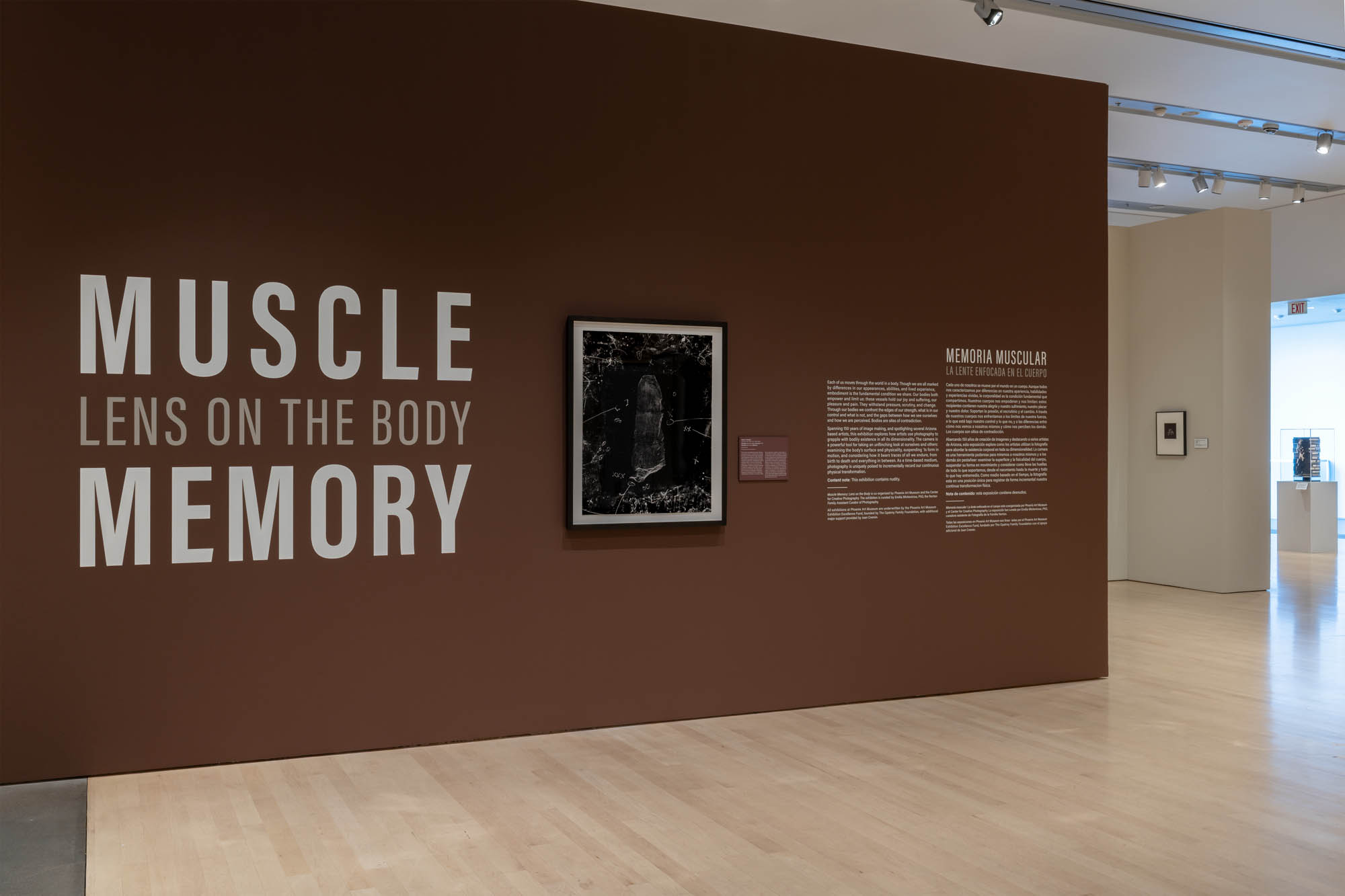


Installation view of the exhibition 'Muscle Memory: Lens on the Body' at the Phoenix Art Museum, Phoenix, AZ, January - June, 2026 showing Claire A. Warden 'Genetics' Nd


Installation view of the exhibition Muscle Memory: Lens on the Body at the Phoenix Art Museum, Phoenix, AZ, January – June, 2026 showing Claire A. Warden’s photograph Genetics Nd (above) from the series Mimesis (2015-ongoing)


Muscle Memory: Lens on the Body

Each of us moves through the world in a body. Though we are marked by differences in our appearances, abilities, and lived experience, embodiment is the fundamental condition we share. Our bodies both empower and limit us: these vessels hold our joy and suffering, our pleasure and pain. They withstand pressure, scrutiny, and change. Through our bodies we confront the edges of our strength, what is in our control and what is not, and the gaps between how we see ourself and how we are perceived. Bodies are sites of contradiction.

Spanning 150 years of images making, and spotlighting several Arizona based artists, this exhibition explores how artists use photography to grapple with bodily existence in all its dimensionality. The camera is a powerful tool for taking an unflinching look at ourselves and others: examining the body’s surface and physicality, suspending its form in motion, and considering how it bears traces of all we endure, from birth to death and everything in between. As a time-based medium, photography is uniquely poised to incrementally record our continuous physical transformation.

Wall text from the exhibition (in the image above)


Mimesis is an ongoing series of large-scale cameraless, abstract photographs that explore identity, representation, resistance, and Opacity.

Mimesis is an ongoing series that engages identity, representation, and language through abstraction and experimental image-making. The creation of this work comes at a time when the struggle to accept the unfamiliar or unkown is pervasive in American culture. When looking at much of my work, the urge to ask “what is it?” echoes the question, “what are you?” – a question directed to me countless times as a person of colour with a diverse ethnocultural heritage and one I increasingly tend to resist. That resistance carries through the work as resistance to definition as well as the hegemonic gaze and, instead, emphasizes Opacity and illegibility. These concepts, informed by anti-essentialism and decolonial theory, ultimately make way for my experimental image-making practice as mode to subvert the problematics of representation in photography, particularly in addressing experiences had by people of color. 

For this reason, I believe it is important to know that the Mimesis series is photographic – cameraless photographs – and that I developed a cameraless process that uses saliva to break down the emulsion of film. What is left is metallic silver and my biologic matter – thus exploring photographic materiality, identity formation, and illegibility. These works of self-portraiture do not show a viewer what I look like but are built from my DNA and shaped by my experiences.

Text from the PhMuseum website. Used under fair use conditions for the purposes of education and research


About the exhibition

Drawn primarily from the collections of the Center for Creative Photography and Phoenix Art Museum, Muscle Memory: Lens on the Body showcases a wide range of historical and contemporary works that explore the ways photographers have represented the human figure and bodily experiences of movement, aging, disability, and more.

Featured works demonstrate how artists have grappled with physicality, dimension, beauty, form, and the politics of the body in the landscape and urban environment. Subjects are presented in the context of growing older, sports, and abstraction, offering audiences the opportunity to consider the body’s ability to morph and bear traces of lived experiences.

Text from the Phoenix Art Museum website
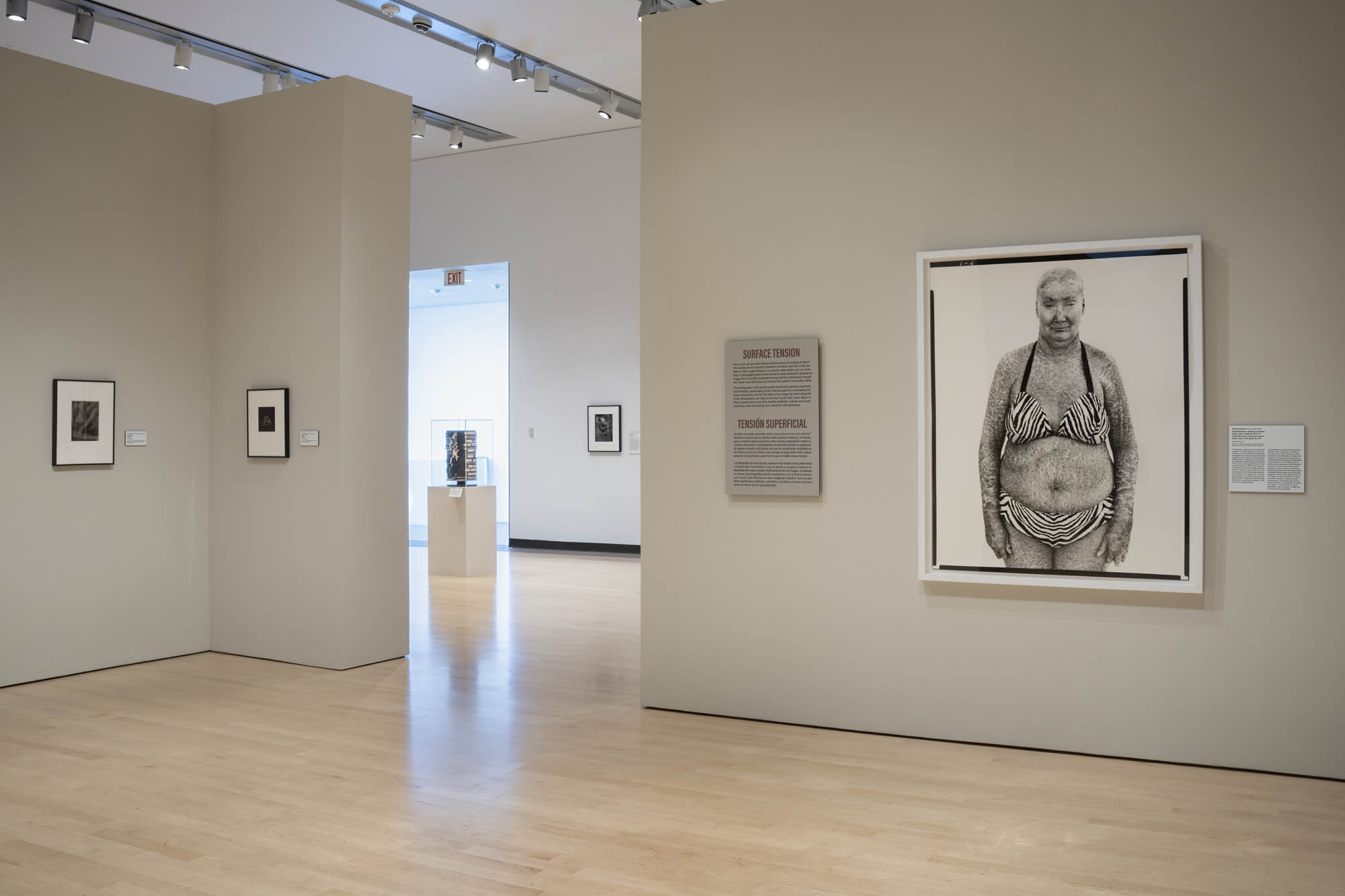
 

Installation view of the exhibition 'Muscle Memory: Lens on the Body' at the Phoenix Art Museum, Phoenix, AZ, January - June, 2026 showing at right, Richard Avedon 'Esther Blackmon, sideshow performer, Sidney, Iowa, August 12, 1979' (1979)


Installation view of the exhibition Muscle Memory: Lens on the Body at the Phoenix Art Museum, Phoenix, AZ, January – June, 2026 showing at right, Richard Avedon Esther Blackmon, sideshow performer, Sidney, Iowa, August 12, 1979 (1979, below)


Surface Tension

How much can you learn about another person by looking at them? Our bodies are the interface between ourselves and the world, but there is often a gap between our exterior presentation and our inner lives. A photograph grants us the license to study someone’s appearance longer than is socially acceptable during real-time interactions, though the viewer must still draw conclusions from what is outwardly visible.

The photographs in this section probe this tension between exteriority and interiority, showcasing what is lost and gained in translating the body’s physicality in the flat plane of an image. By abstracting the body, photographs can help us see the human form anew. Many of these pictures show how skin signifies aesthetic, cultural, and social meanings, even functioning as a canvas for self-expression.

Wall text from the exhibition
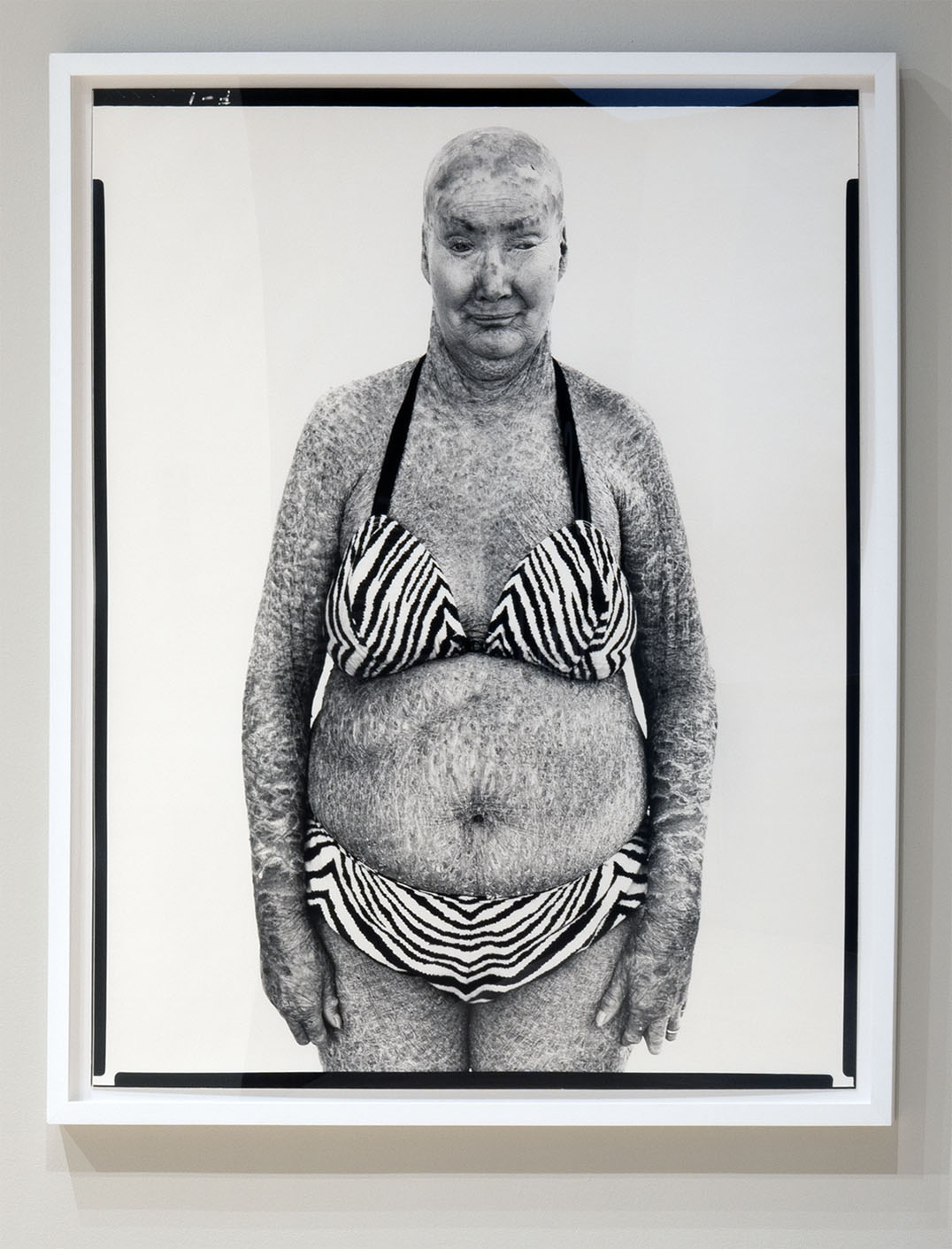
 

Richard Avedon (American, 1923-2004) 'Esther Blackmon, sideshow performer, Sidney, Iowa, August 12, 1979' 1979 (installation view)


Richard Avedon (American, 1923-2004)
Esther Blackmon, sideshow performer, Sidney, Iowa, August 12, 1979 (installation view)
1979
Gelatin silver print
Center for Creative Photography, University of Arizona
Richard Avedon Archive
Gift of the artist


Photographs of people can both exploit and empower. The power dynamic of a portrait involves not only the interaction between the photographer and subject, but also the viewer’s projections, assumptions and interpretation. Resisting others’ projections of shame about her appearance, Esther Blackmon proclaimed: “I live a normal and happy life.” Born in North Carolina, Blackmon (1926-2003) lived with a hereditary skin disease called ichthyosis which caused dryness and baldness. This unique aspect of her phenotype earned her the nickname “The Alligator Girl.” Actively participating in the carnival industry for 56 years, Blackmon regarded herself with pride. “People born unusual are not freaks … I’d say they are very special people.”

Wall text from the exhibition
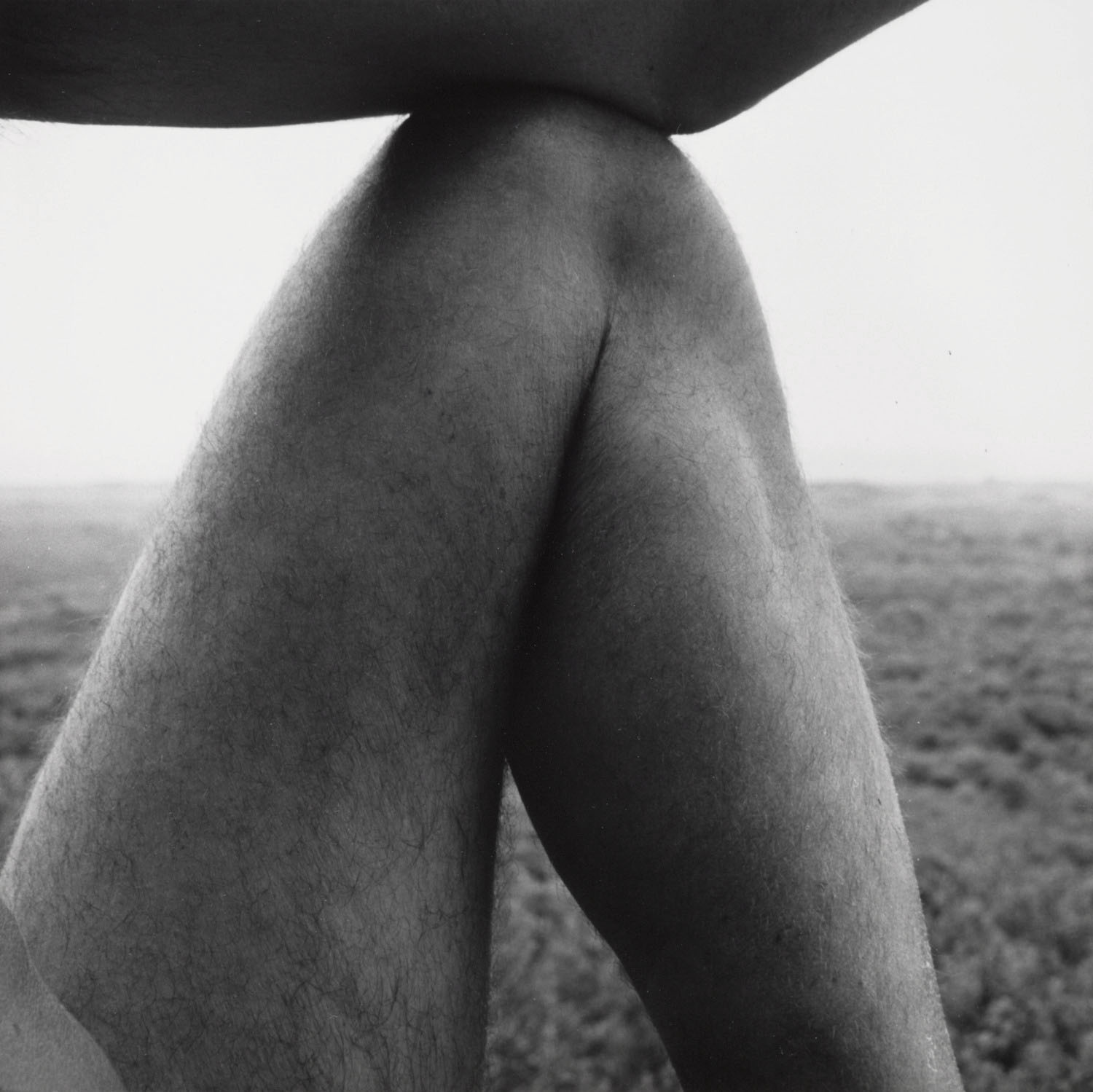
 

Aaron Siskind (American, 1903-1991) 'Lipkind 33' 1960


Aaron Siskind (American, 1903-1991)
Lipkind 33
1960
Gelatin silver print
Center for Creative Photography
University of Arizona: Aaron Siskind Archive
© Aaron Siskind Foundation 
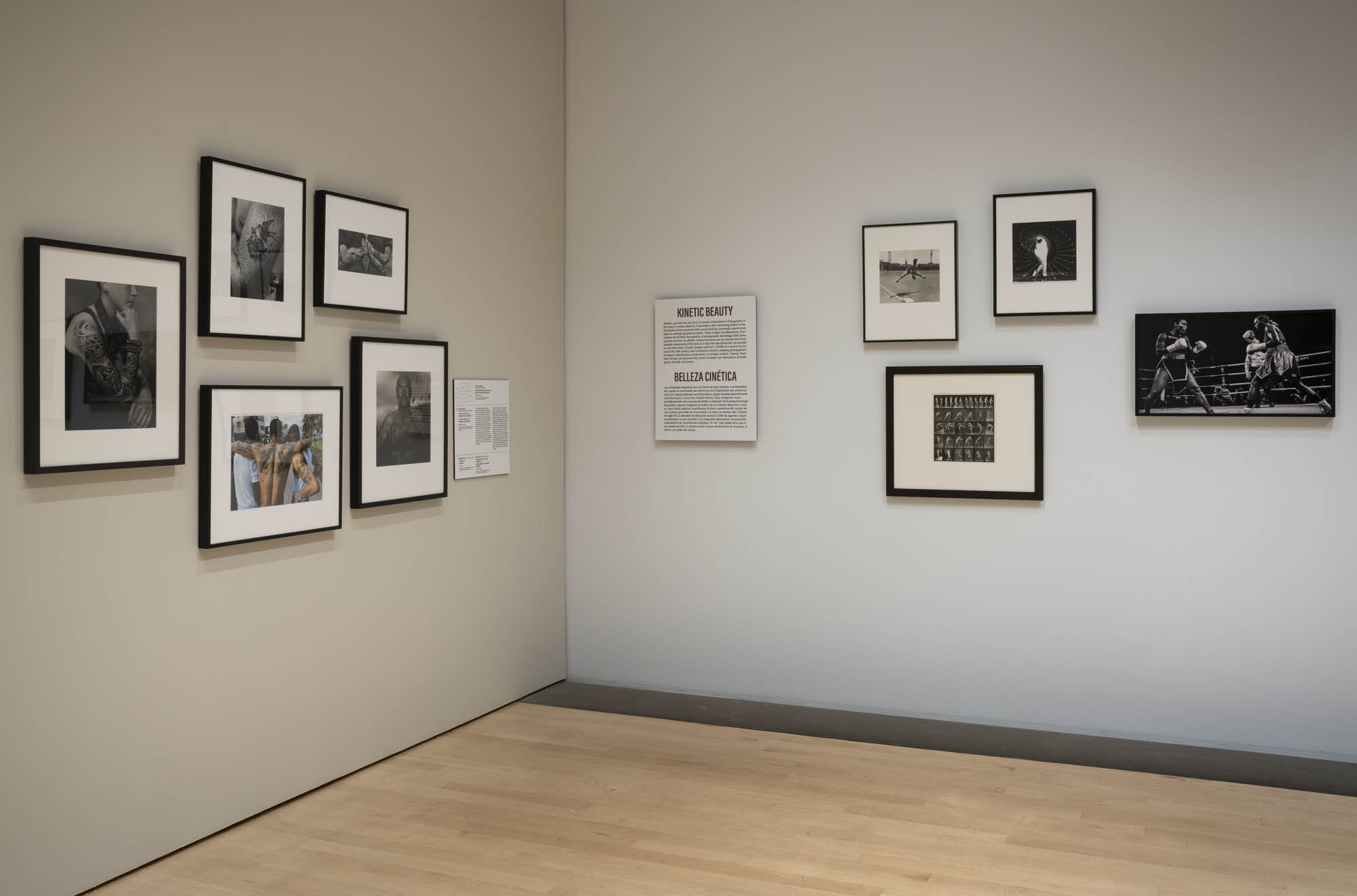
 

Installation view of the exhibition 'Muscle Memory: Lens on the Body' at the Phoenix Art Museum, Phoenix, AZ, January - June, 2026 showing at left, Leon Borensztein 'Woman with Tattoo, San Francisco' (1984); at second left bottom, Stephen Marc, 'Untitled' (2017); and at third right bottom, Diane Arbus 'Tattooed Man at a Carnival, Md.' (1970)


Installation view of the exhibition Muscle Memory: Lens on the Body at the Phoenix Art Museum, Phoenix, AZ, January – June, 2026 showing at left, Leon Borensztein Woman with Tattoo, San Francisco (1984, below); at second left bottom, Stephen Marc, Untitled (2017, below); and at third right bottom, Diane Arbus Tattooed Man at a Carnival, Md. (1970, below)
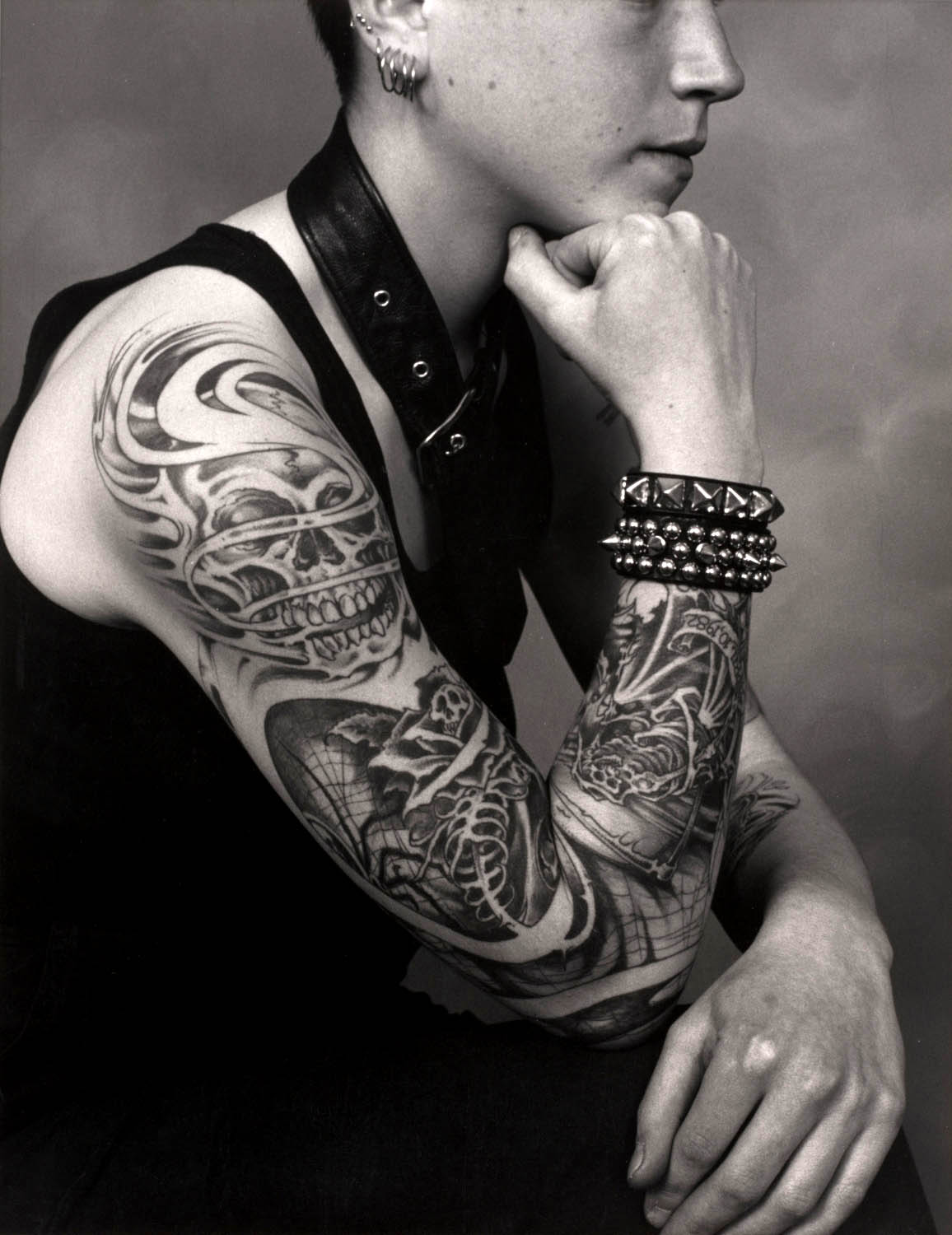
 

Leon Borensztein (American, b. 1947) 'Woman with Tattoo, San Francisco' 1984


Leon Borensztein (American, b. 1947)
Woman with Tattoo, San Francisco
1984
Gelatin silver print
Center for Creative Photography
University of Arizona: Purchase
© Leon Borensztein 
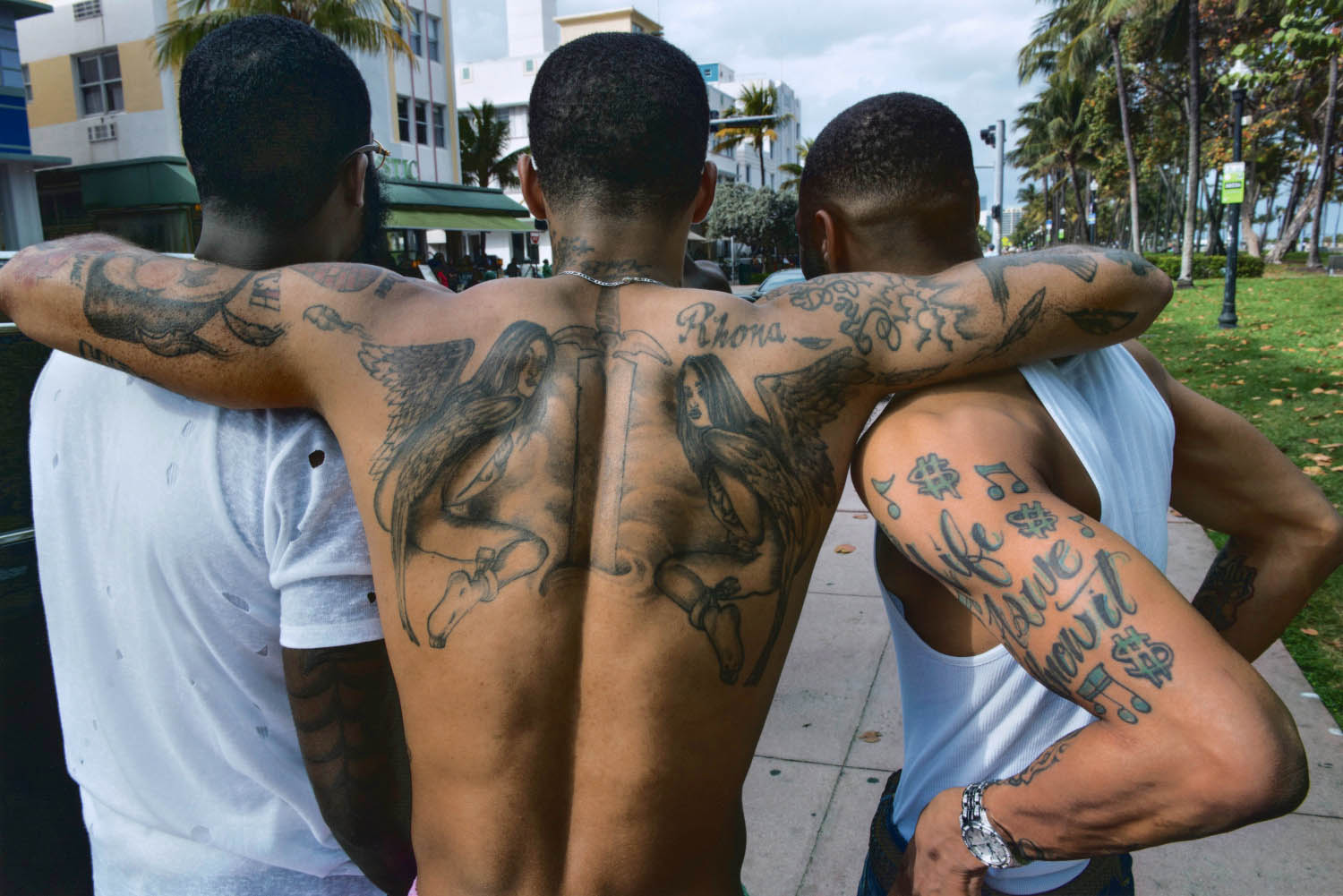
 

Stephen Marc (American, b. 1954) 'Untitled' 2017


Stephen Marc (American, b. 1954)
Untitled
2017
Inkjet print
Center for Creative Photography
University of Arizona: Gift of the Artist
© Stephen Marc


Diane Arbus (American, 1923-1971) 'Tattooed Man at a Carnival, Md.' 1970


Diane Arbus (American, 1923-1971)
Tattooed Man at a Carnival, Md.
1970
Gelatin silver print


Kinetic Beauty

Athletic pursuits are one form of human achievement. Photographs of the body in motion attest to a fascination with witnessing bodies at the threshold of their physical limits, accomplishing seemingly superhuman feats or embodying physical ideals. These images simultaneously chart another set of limits; the evolution of photographic technology itself. Some pictures are from an athletic context and some are not, but all arrest fluid, operatic movements of the body in a way that was previously inaccessible to real-time vision. Shutter speeds reached 1/1000th of a second by the end of the 19th century and continued to shorten, enabling photographers to dissect instantaneous components of complex motions. “Seeing” faster than the eye can perceive, the camera revealed new dimensions of bodily grace, strength, and power.

Wall text from the exhibition
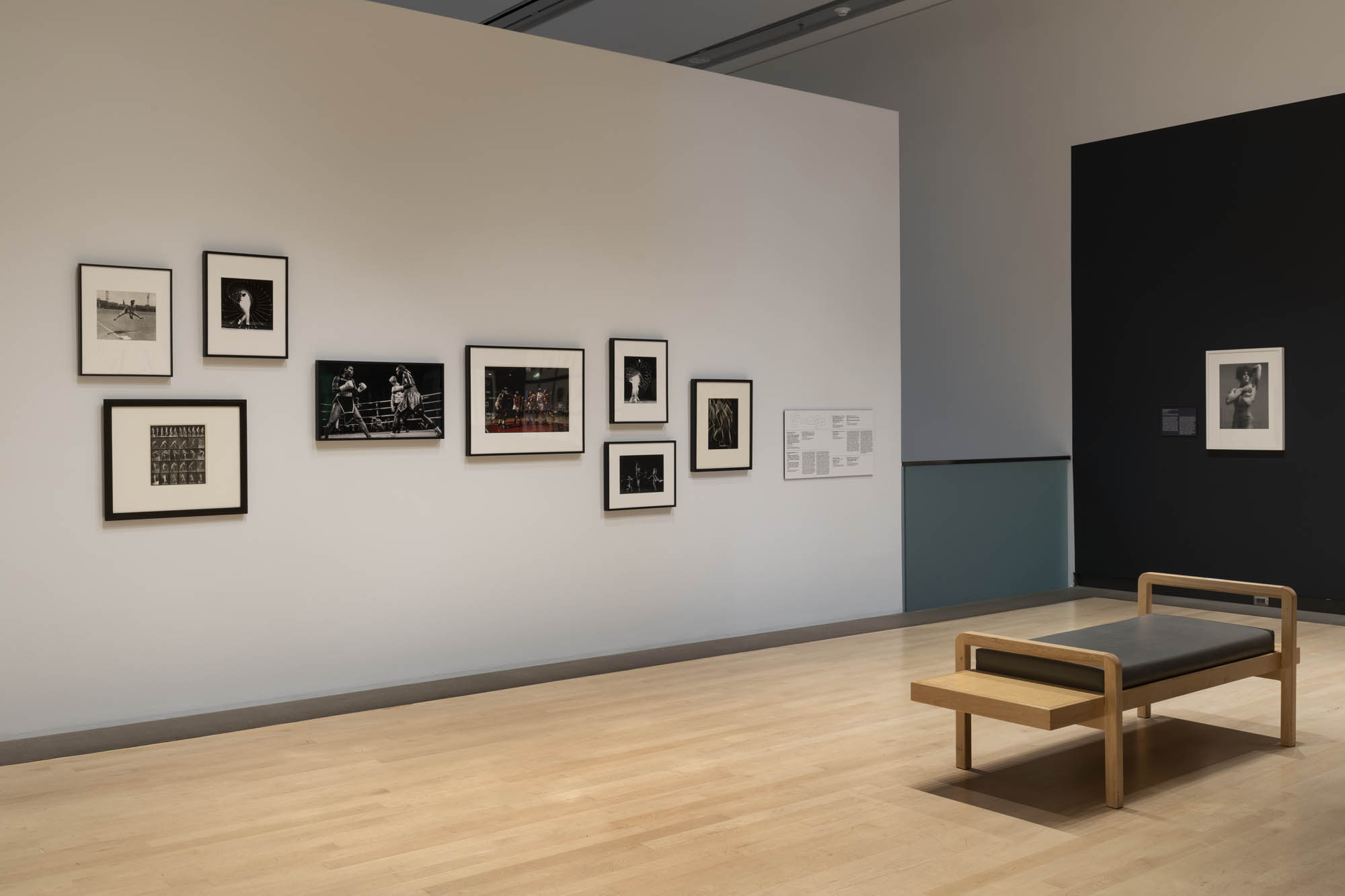
 

Installation view of the exhibition 'Muscle Memory: Lens on the Body' at the Phoenix Art Museum, Phoenix, AZ, January - June, 2026 showing at top left, Charles "Teenie" Harris 'New York Cubans' (1941); at bottom left, Eadweard J. Muybridge 'Animal Locomotion, Plate 521: A: Walking, B: Ascending a Step, C: Throwing the Disc, D: Using a Shovel, E: Using a Pick, 1884-85' (1887); at second left, Harold Edgerton 'Golf Drive by Densmore Shute, 1938' (1938); at centre left, Terrell Groggins 'Gabriels and Shields Square Up Round 1' (2018); at centre right, Walter Iooss 'Michael Jordan, Phoenix at Chicago, 1933' (1933); and at far right, Robert Mapplethorpe 'Lisa Lyon' (1983)


Installation view of the exhibition Muscle Memory: Lens on the Body at the Phoenix Art Museum, Phoenix, AZ, January – June, 2026 showing at top left, Charles “Teenie” Harris New York Cubans (1941, below); at bottom left, Eadweard J. Muybridge Animal Locomotion, Plate 521: A: Walking, B: Ascending a Step, C: Throwing the Disc, D: Using a Shovel, E: Using a Pick, 1884-85 (1887, below); at second left, Harold Edgerton Golf Drive by Densmore Shute, 1938 (1938, below); at centre left, Terrell Groggins Gabriels and Shields Square Up Round 1 (2018, below); at centre right, Walter Iooss Michael Jordan, Phoenix at Chicago, 1933 (1933, below); and at far right, Robert Mapplethorpe Lisa Lyon (1983)
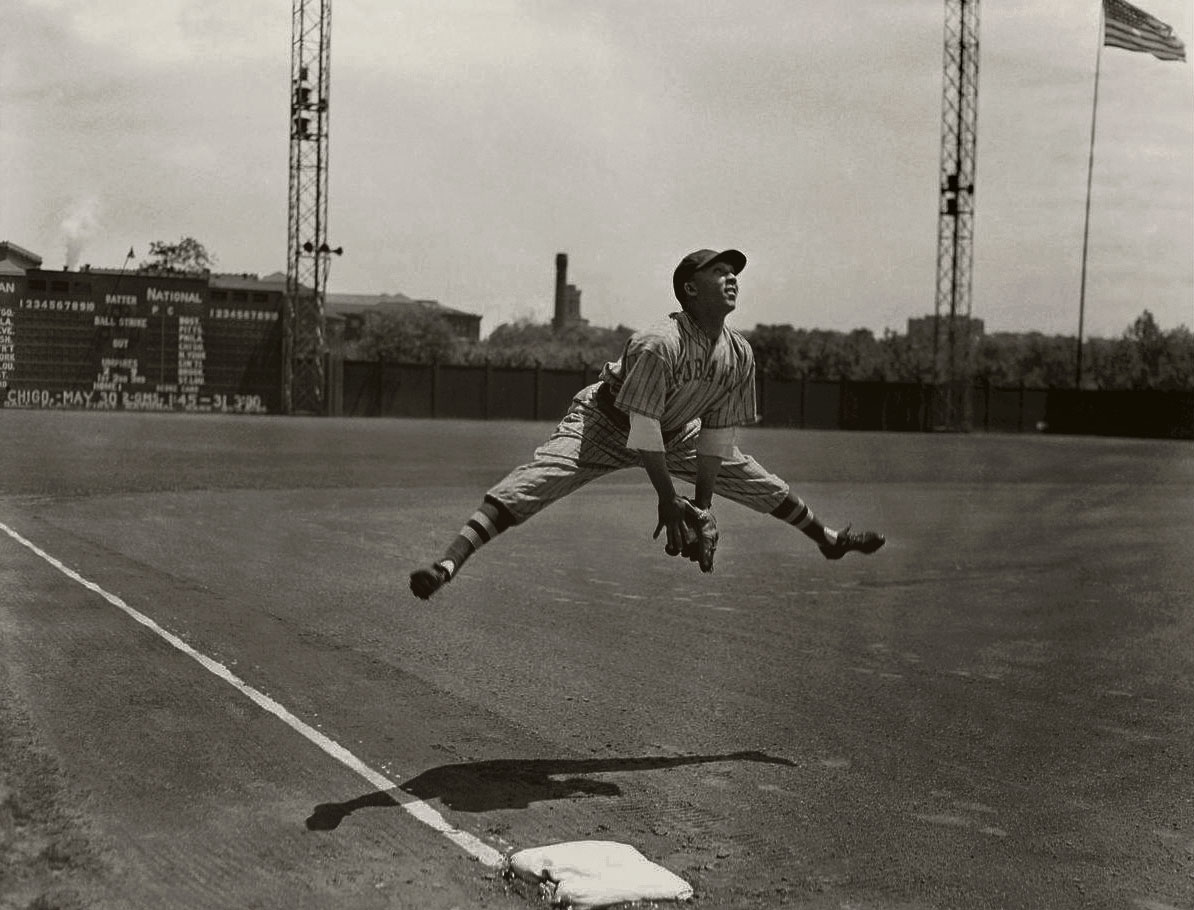
 

Charles "Teenie" Harris (American, 1908-1998) 'New York Cubans' 1941


Charles “Teenie” Harris (American, 1908-1998)
New York Cubans
1941
Gelatin silver print


New York Cubans baseball player Horacio Martinez leaping above third base at Forbes Field
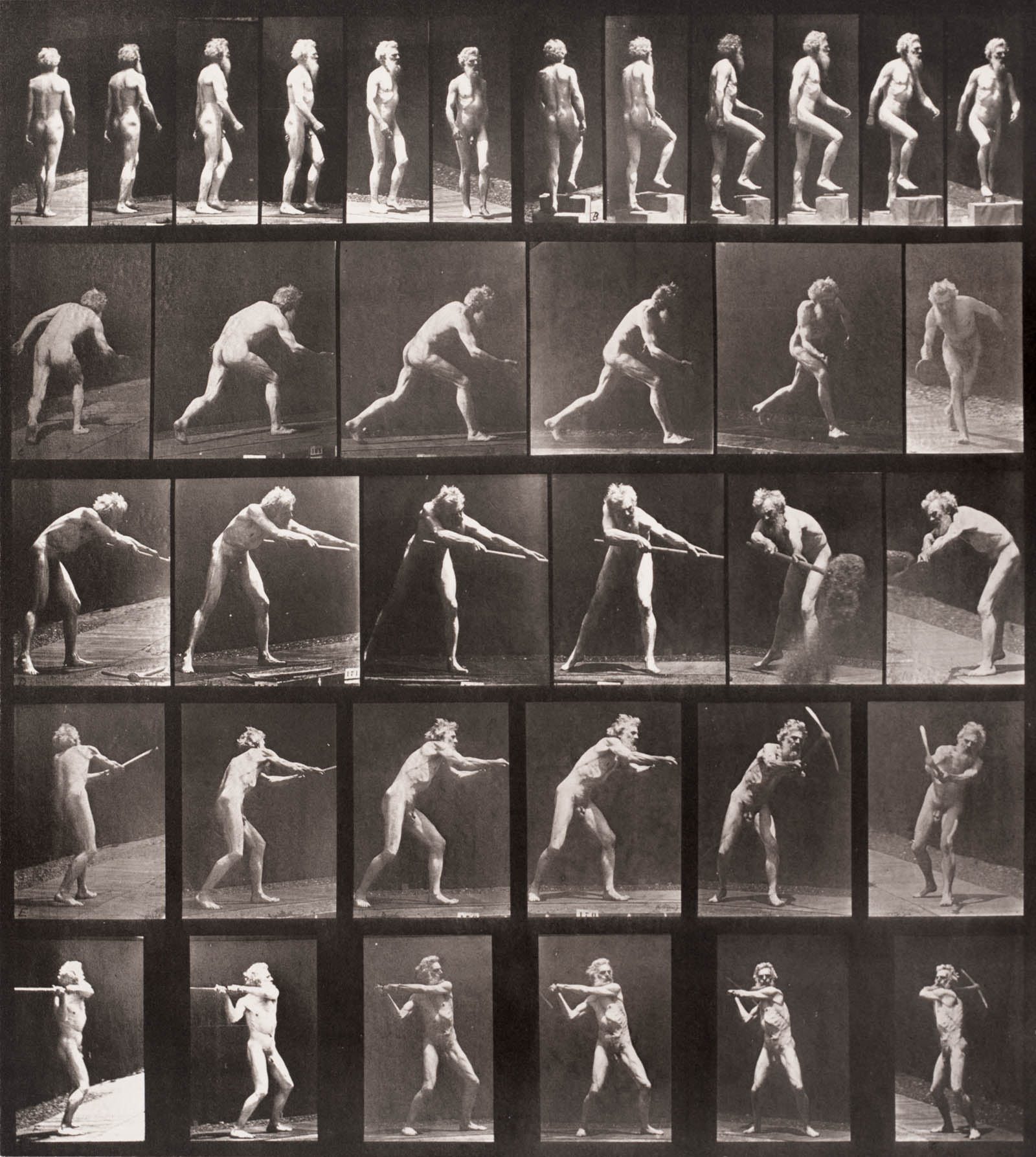
 

Eadweard J. Muybridge (English, 1830-1904) 'Animal Locomotion, Plate 521: A: Walking, B: Ascending a Step, C: Throwing the Disc, D: Using a Shovel, E: Using a Pick, 1884-85' 1887


Eadweard J. Muybridge (English, 1830-1904)
Animal Locomotion, Plate 521: A: Walking, B: Ascending a Step, C: Throwing the Disc, D: Using a Shovel, E: Using a Pick, 1884-85
1887
Collotype
Center for Creative Photography
University of Arizona: Purchase 
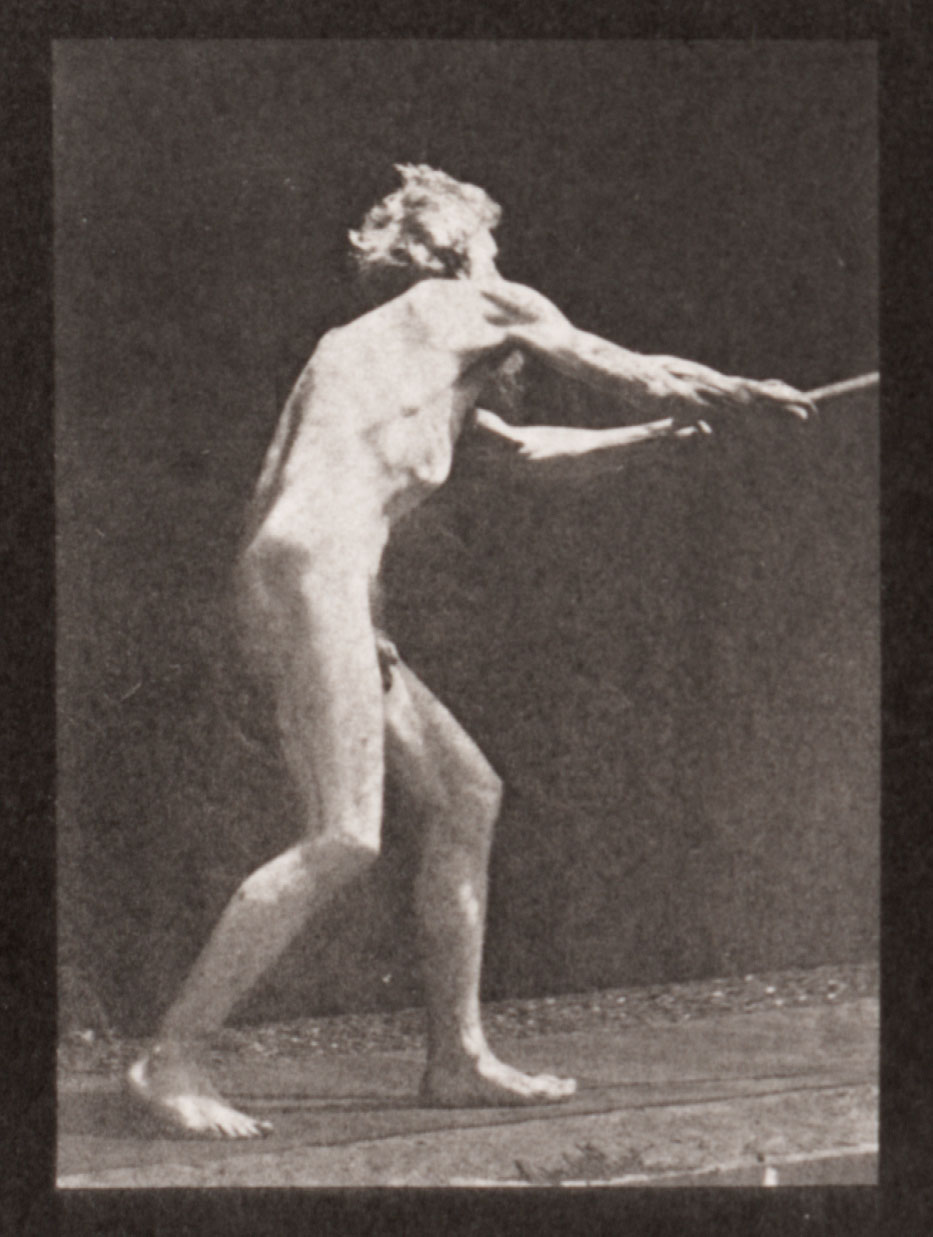
 

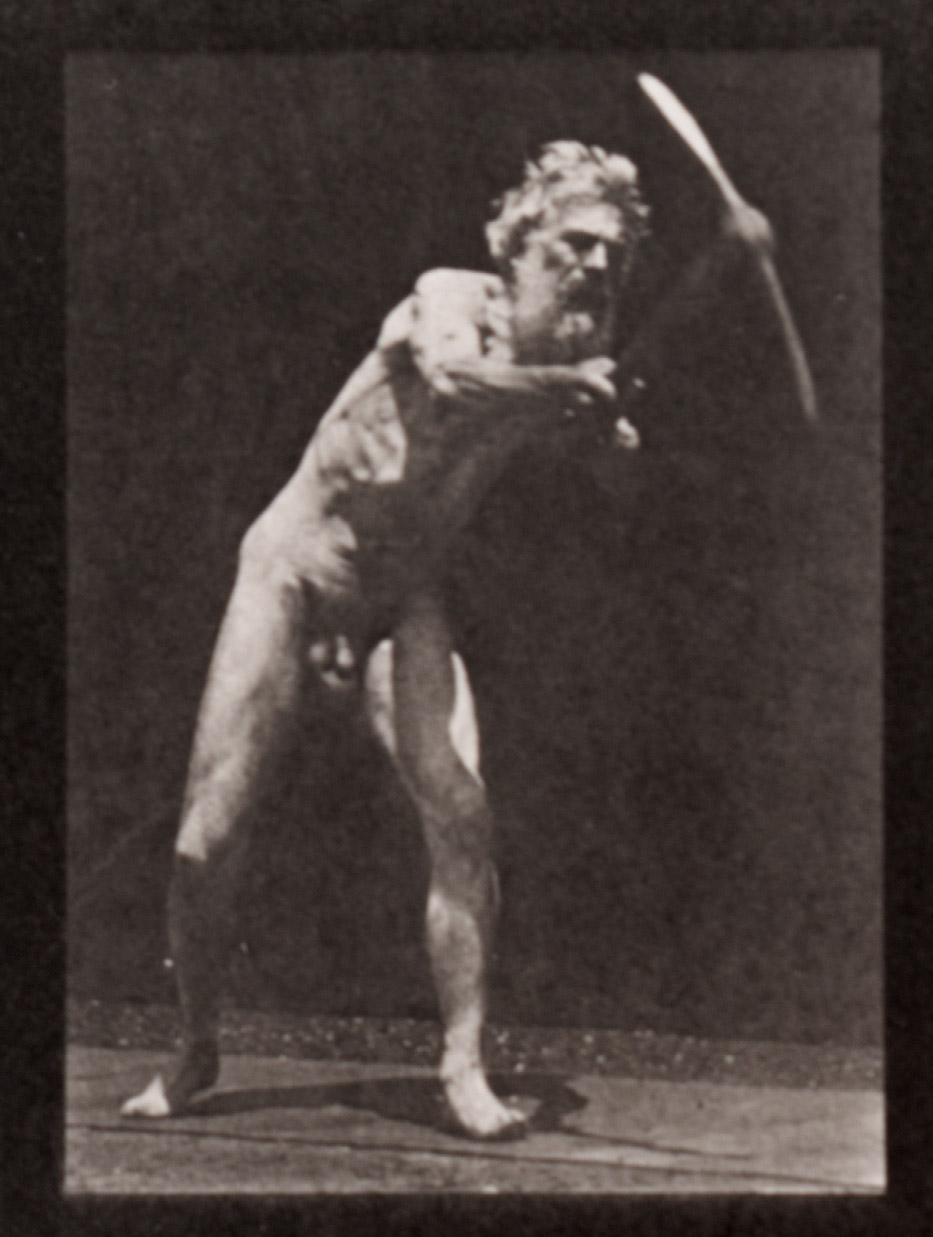
Eadweard J. Muybridge (English, 1830-1904) 'Animal Locomotion, Plate 521: A: Walking, B: Ascending a Step, C: Throwing the Disc, D: Using a Shovel, E: Using a Pick, 1884-85' 1887 (detail)


Eadweard J. Muybridge (English, 1830-1904)
Animal Locomotion, Plate 521: A: Walking, B: Ascending a Step, C: Throwing the Disc, D: Using a Shovel, E: Using a Pick, 1884-85 (details)
1887
Collotype
Center for Creative Photography
University of Arizona: Purchase 
 

Harold Edgerton (American, 1903-1990) 'Golf Drive by Densmore Shute, 1938' 1938


Harold Edgerton (American, 1903-1990)
Golf Drive by Densmore Shute, 1938
1938
Gelatin silver print
Center for Creative Photography
University of Arizona: Purchase
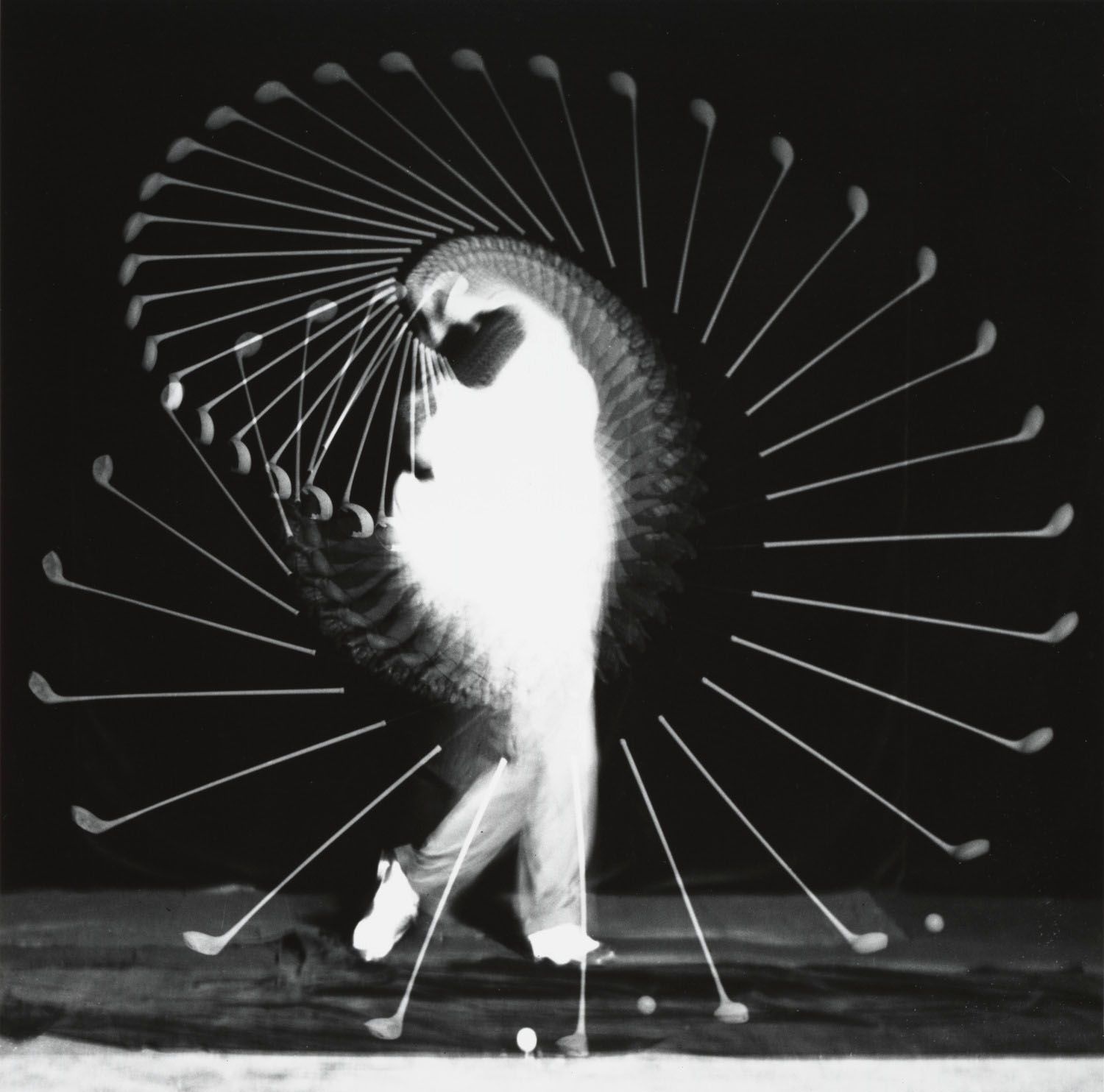
© Harold Edgerton, MIT, courtesy of Palm Press Inc.
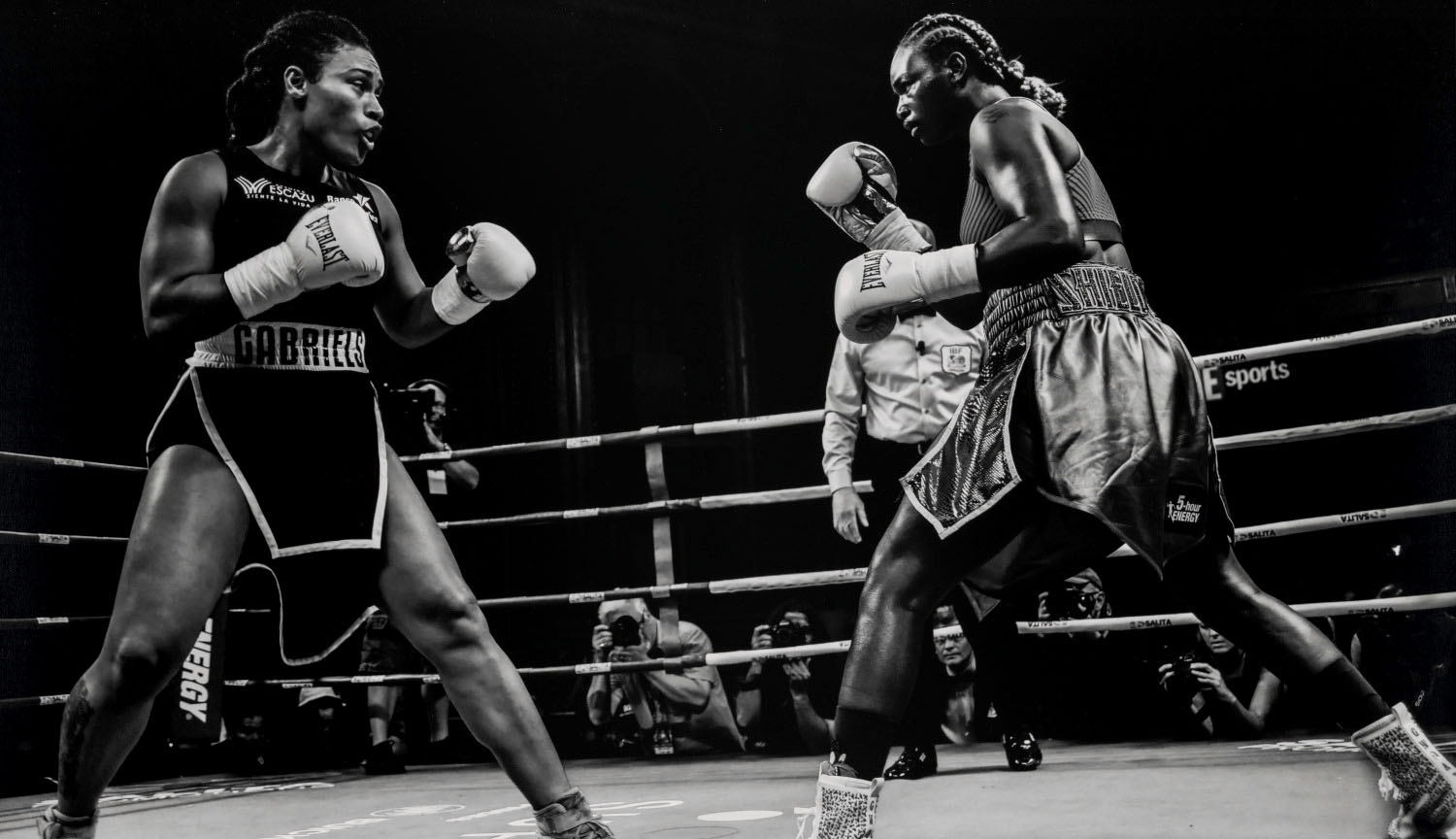
 

Terrell Groggins (American) 'Gabriels and Shields Square Up Round 1' 2018, printed 2021


Terrell Groggins (American)
Gabriels and Shields Square Up Round 1
2018, printed 2021
Inkjet print
Center for Creative Photography
University of Arizona: Center for Creative Photography Photojournalism Fund
© Terrell Groggins My Art My Rules
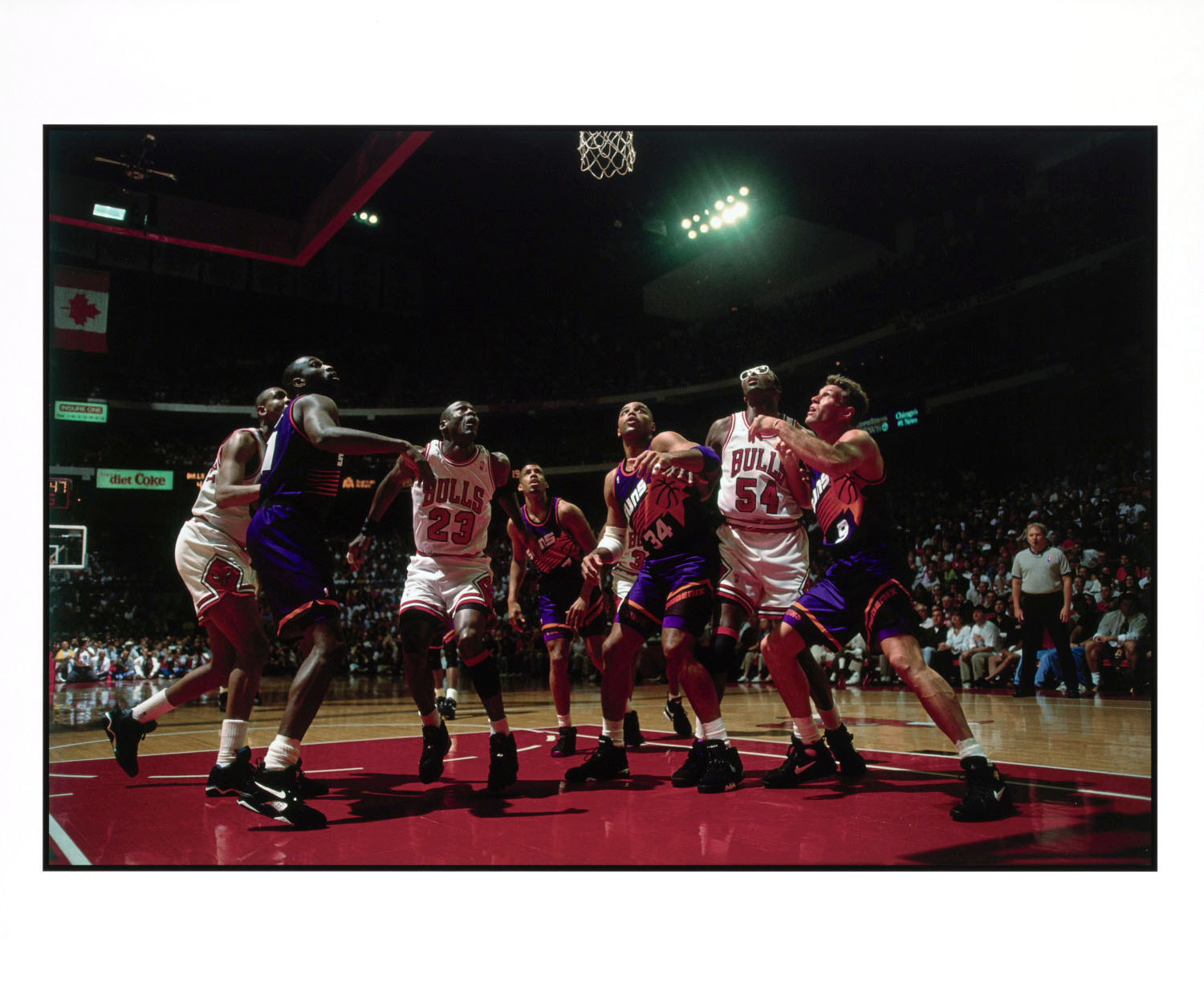
 

Walter Iooss (American, b. 1943) 'Michael Jordan, Phoenix at Chicago, 1993' 1993


Walter Iooss (American, b. 1943)
Michael Jordan, Phoenix at Chicago, 1993
1993
Inkjet print
Center for Creative Photography
University of Arizona: Gift of Rajesh B. Patel
© Walter Iooss 


This winter, Phoenix Art Museum presents Muscle Memory: Lens on the Body, an exploration of the ways in which photographers across history have represented and reckoned with the human body and its associated dimensionality, evolution, and politicization. Drawn primarily from the collection of the Center for Creative Photography (CCP) at the University of Arizona in Tucson, along with select works from the PhxArt Collection and those by Arizona- based contemporary artists, the exhibition showcases more than 80 wide-ranging works that contend with the body’s form, physicality, and limits. Muscle Memory: Lens on the Body will be on view at PhxArt from January 24, 2026, through June 28, 2026.

“Muscle Memory: Lens on the Body offers a view into the human experience that is both compelling and relatable,” said Jeremy Mikolajczak, the Sybil Harrington Director and CEO of Phoenix Art Museum. “From sports imagery and self-portraiture to abstract compositions, this exhibition considers all aspects of the body in every stage of evolution. We are excited to once again work with the Center for Creative Photography to present a captivating collection of photographic works, shown in conversation with new acquisitions to the Phoenix Art Museum Collection by contemporary voices.”

Spanning works captured from the 19th century through the present, Muscle Memory offers a compelling look at the dynamism of the human body with works by artists such as:

John Gutmann • Richard Avedon • Brian Weil • Lauren Greenfield • Rosalind Fox Solomon • Anne Noggle • Frances Murray • Walter Iooss • Diane Arbus • Manuel Álvarez Bravo • Imogen Cunningham • Arno Rafael Minkkinen • Roy DeCarava • Harold Edgerton • Aaron Siskind • Charles “Teenie” Harris • W. Eugene Smith • Leon Borensztein • Jan Groover • Ittetsu Morishita • John Coplans • Robert Mapplethorpe • Eadweard J. Muybridge • Graciela Iturbide • Barbara Crane • Nan Goldin • William Camargo • Marcus Chormicle • Mehrdad Mirzaie • Claire A. Warden • Zhang Huan

The exhibition’s works are presented across four thematic sections that offer varying views on embodiment and how our bodies at once empower and limit us. Surface Tension considers skin as a surface and what is possible to know about a person by looking at them, including how a subject’s outward appearance can exist in tension with their interiority. Works in this section by artists such as Diane Arbus and John Gutmann spotlight individuals who have changed their outward appearance with tattoos, makeup, and other markings, exploring the human impulse to use the body as a canvas for personal expression.

Kinetic Beauty features the body in motion, with a specific focus on sports imagery. It explores how bodies interact and take shape in athletic settings, particularly those that require high levels of physical performance, endurance, and even contortion. Works in this section include images of bodybuilders by Robert Mapplethorpe and Brian Weil and a photograph by Walter Iooss featuring Michael Jordan and Charles Barkley, as well as abstract studies of bodily motion associated with physical training, strength, and aspiration.

Know Thyself highlights the work of photographers who have used the medium of photography, often in the form of serial self-portraiture, to grapple with issues of aging, beauty standards, and self-image. Featured artists in this section include John Coplans, Lauren Greenfield, Anne Noggle, and Rosalind Fox Solomon.

Enduring presents works by Nan Goldin, Ittetsu Morishita, Marcus Chormicle, and others depicting the body as witness and at its physical limits, whether due to physical exertion, illness, injury, or even death and absence, prompting viewers to consider the concepts of endurance and survival.

“Muscle Memory invites audiences to consider the body’s ability to morph in response to and bear traces of lived experience, while also discovering how photographers have used the medium as a tool for self- knowledge and exploration,” said Emilia Mickevicius, the Norton Family Assistant Curator of Photography at Phoenix Art Museum and the Center for Creative Photography. “Works by living Arizona-based artists Claire A. Warden, Mehrdad Mirzaie, Marcus Chormicle, and Anh-Thuy Nguyen infuse the presentation with contemporary perspectives on the body’s legibility, how it holds memory, and how it becomes a site of negotiation between selves and others, both extending and departing from the concerns of the historical works in the exhibition.”

Press release from the Phoenix Art Museum
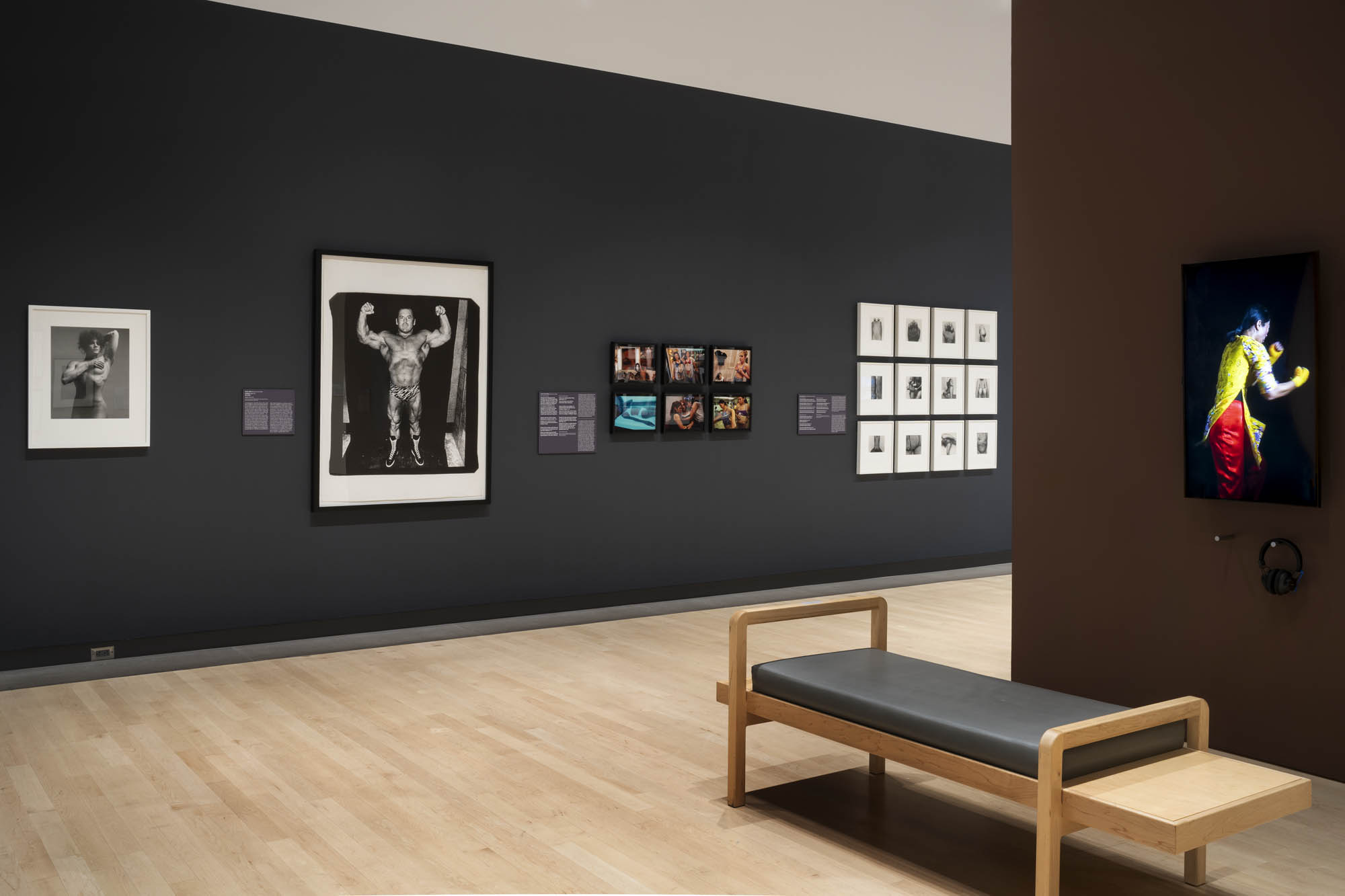
 

Installation view of the exhibition 'Muscle Memory: Lens on the Body' at the Phoenix Art Museum, Phoenix, AZ, January - June, 2026 showing at left, Robert Mapplethorpe 'Lisa Lyon' (1983); and at second right, a group of photographs by John Coplans


Installation view of the exhibition Muscle Memory: Lens on the Body at the Phoenix Art Museum, Phoenix, AZ, January – June, 2026 showing at left, Robert Mapplethorpe Lisa Lyon (1983); and at second right, a group of photographs by John Coplans
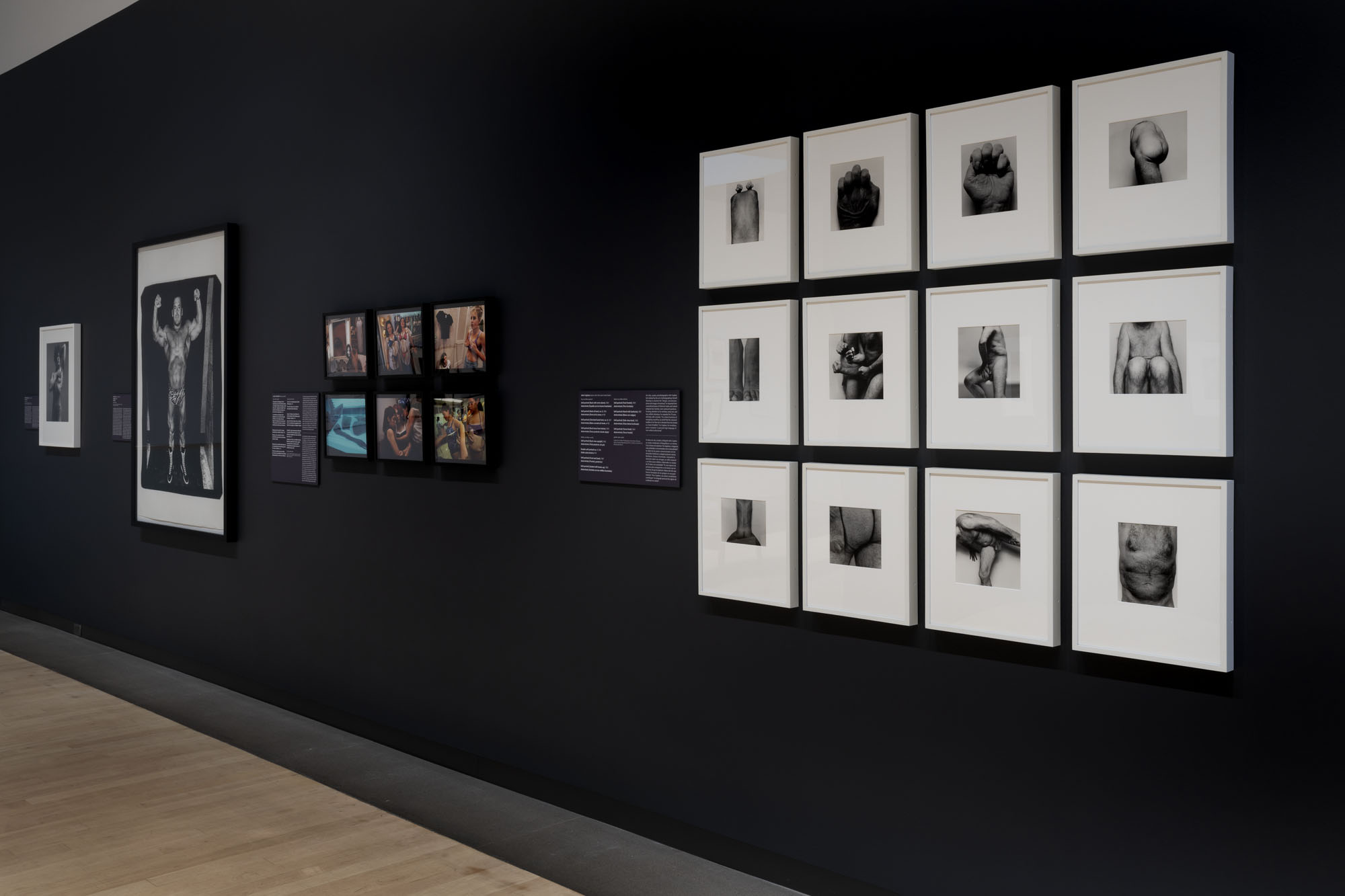
 

Installation view of the exhibition 'Muscle Memory: Lens on the Body' at the Phoenix Art Museum, Phoenix, AZ, January - June, 2026 showing at right, a group of photographs by John Coplans


Installation view of the exhibition Muscle Memory: Lens on the Body at the Phoenix Art Museum, Phoenix, AZ, January – June, 2026 showing at right, a group of photographs by John Coplans


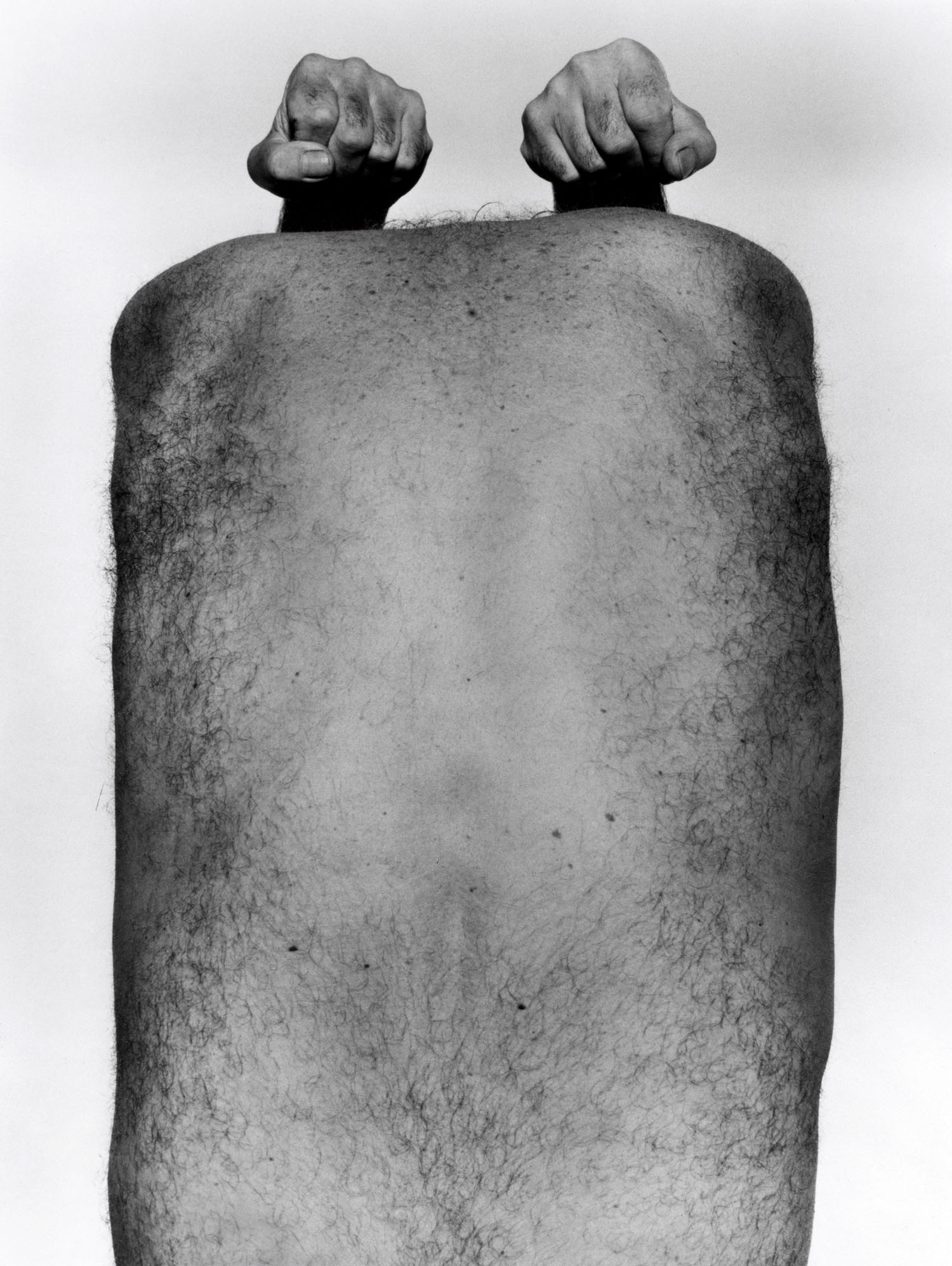
John Coplans (British, 1920-2003) 'Self-Portrait (Back with Arms Above)' 1984


John Coplans (British, 1920-2003)
Self-portrait (Back with arms above)
1984
Gelatin silver print
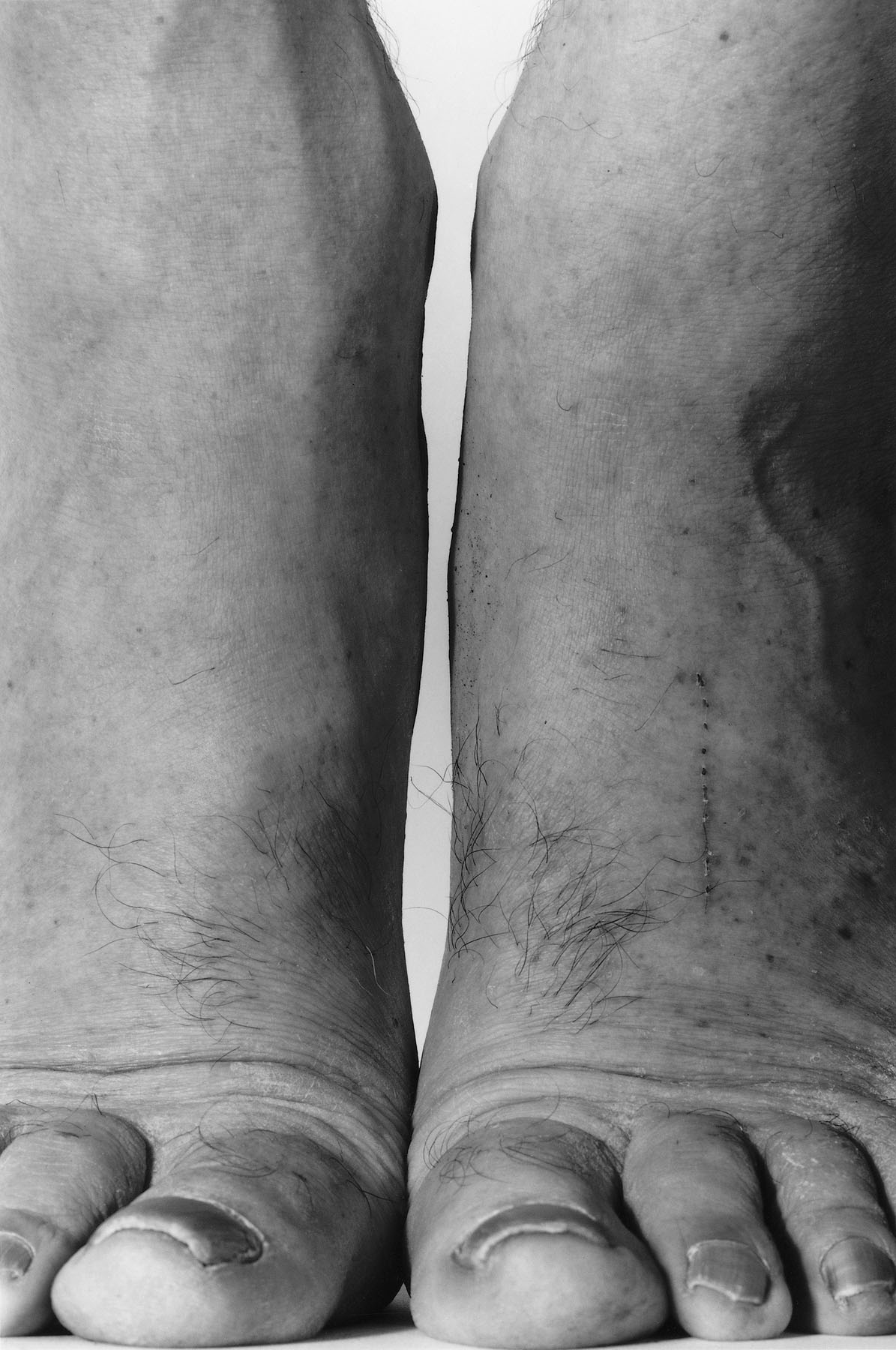
 

John Coplans (British, 1920-2003) 'Feet, Frontal' 1984


John Coplans (British, 1920-2003)
Feet, Frontal
1984
Gelatin silver print


Know Thyself

From toxic beauty standards to agism, pressures to conform, and the pathologising of non-formative identities and lifestyles, cultural messaging interrupts the journey to self-acceptance. The pictures in this section speak to finding a home in one’s body and moving between comfort and discomfort along the way. A particular focus here is serial self-portraiture where photographers train the lens on their own bodies as they reckon with aging. Facing themselves with tender curiosity and vulnerability, they wield the camera as a tool of self-knowledge, confronting their mortality and even revealing in erotic joy. Their pictures suggest the transformative power being seen on one’s own terms.

Wall text from the exhibition
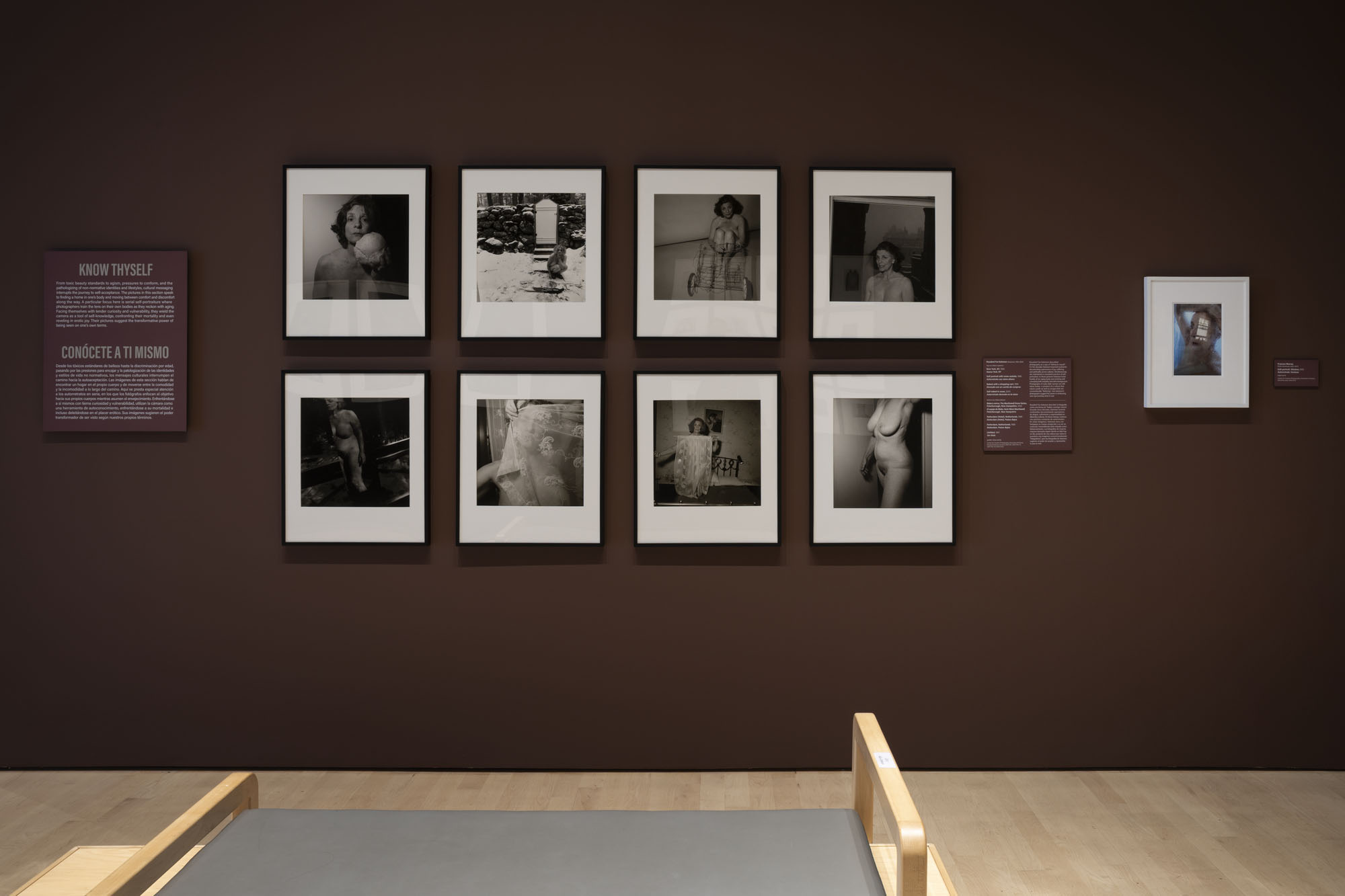
 

Installation view of the exhibition 'Muscle Memory: Lens on the Body' at the Phoenix Art Museum, Phoenix, AZ, January - June, 2026 showing photographs by Rosalind Fox Solomon


Installation view of the exhibition Muscle Memory: Lens on the Body at the Phoenix Art Museum, Phoenix, AZ, January – June, 2026 showing photographs by Rosalind Fox Solomon
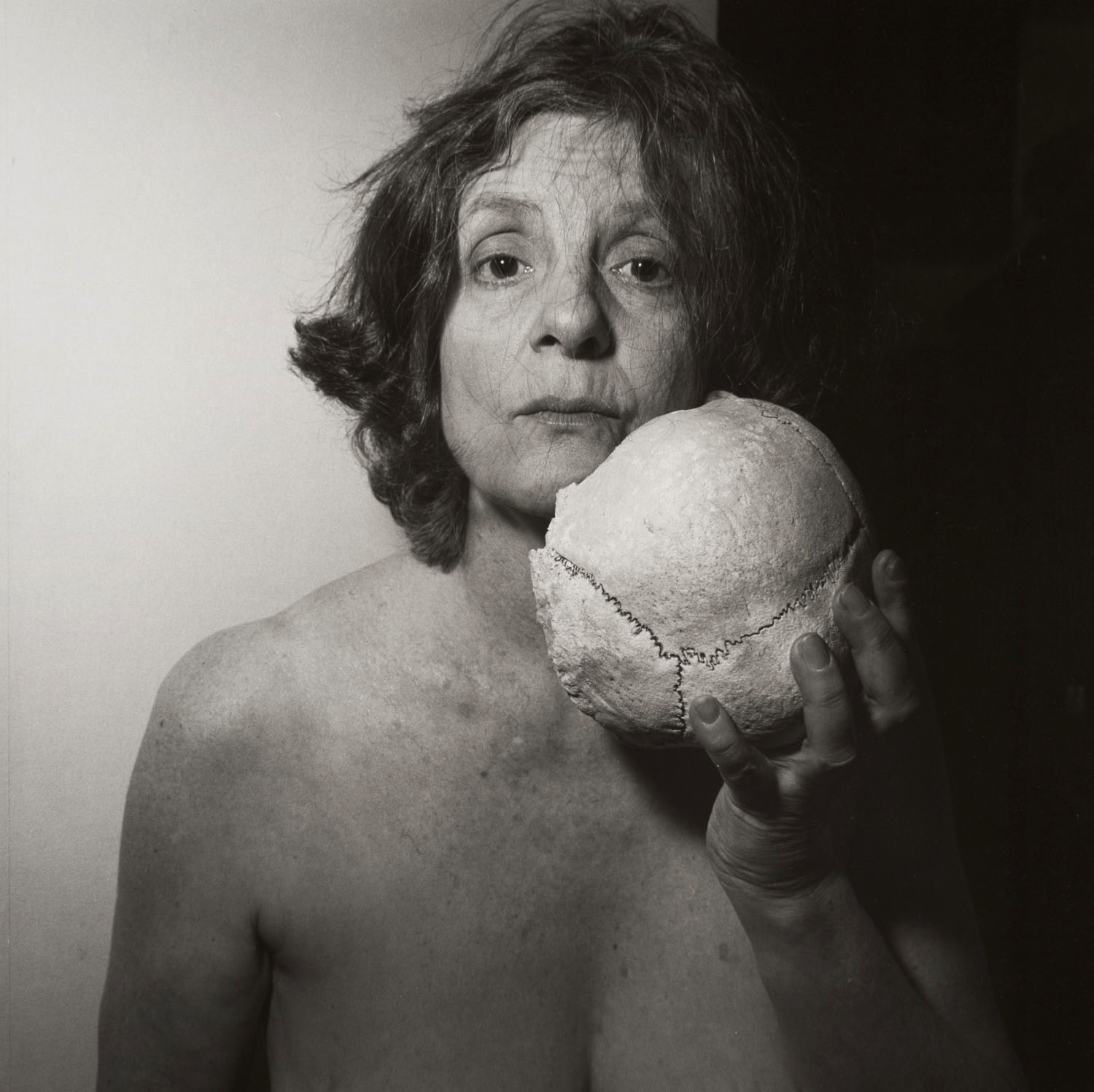
 

Rosalind Fox Solomon (American, 1930-2025) 'New York, NY' 1986


Rosalind Fox Solomon (American, 1930-2025)
New York, NY
1986
Gelatin silver print
Center for Creative Photography
University of Arizona: Rosalind Solomon Archive
© Rosalind Solomon, all rights reserved


Rosalind Fox Solomon described photography as a way of “talking about myself.” For five decades Solomon traversed continents documenting expressions of joy, suffering and spirituality across cultures. Simultaneously, she maintained a consistent practice of self-portraiture. In these pictures Solomon looks frankly at her aging body and evolving self, conveying both empathy and self-estrangement. Photographs of nude older women are still taboo today – a product of a culture that values youth as well as images that are conventionally “flattering” – but Solomon’s photographs suggest the power in embracing and representing what is real.

Wall text from the exhibition
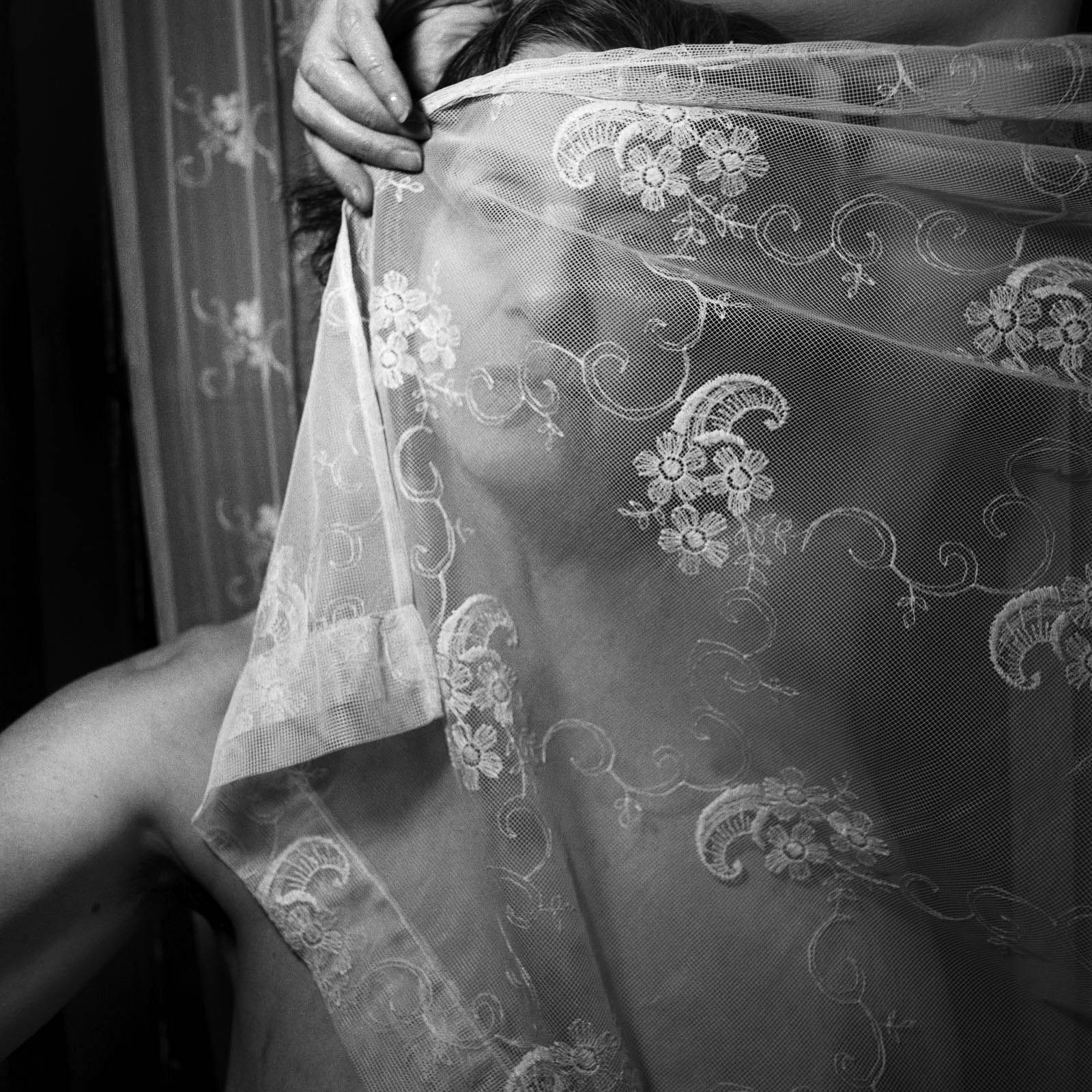
 

Rosalind Fox Solomon (American, 1930-2025) 'Rotterdam (Hotel), Netherlands' 1986


Rosalind Fox Solomon (American, 1930-2025)
Rotterdam (Hotel), Netherlands
1986
Gelatin silver print
Center for Creative Photography
University of Arizona: Rosalind Solomon Archive
© Rosalind Solomon, all rights reserved 
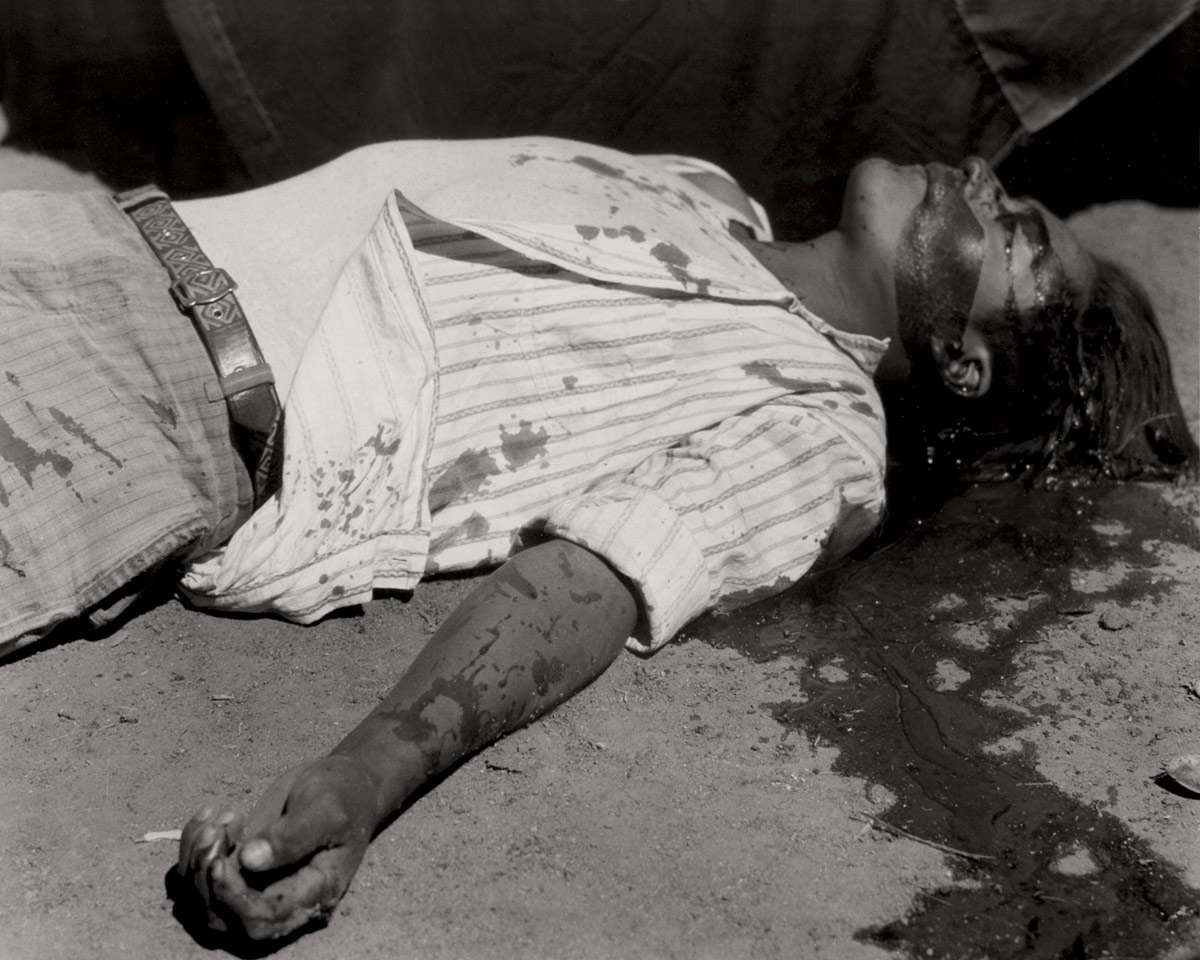
 

Manuel Alvarez Bravo (Mexican, 1902-2002) 'Obrero en huelga, asesinado' (Striking Worker, Assassinated) 1934


Manuel Alvarez Bravo (Mexican, 1902-2002)
Obrero en huelga, asesinado (Striking Worker, Assassinated)
1934
Gelatin silver print
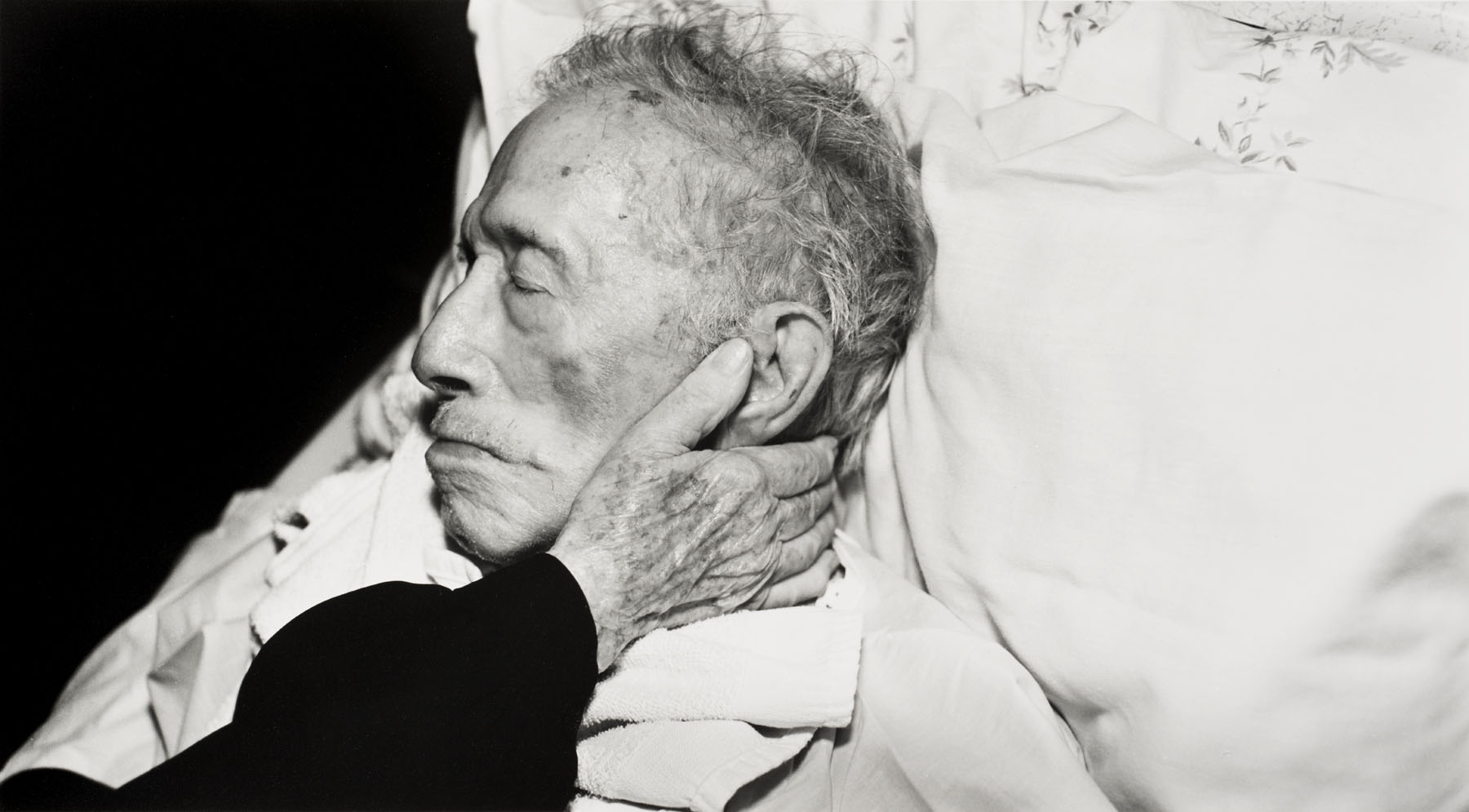
 

Dan Young. 'My Mother's Hand on My Father's Head, 1992' 1992


Dan Young
My Mother’s Hand on My Father’s Head, 1992
1992
Gelatin silver print
Center for Creative Photography
University of Arizona: Purchase
© Dan Young 


Enduring

As the saying goes, “the body keeps the score.” The photographs in this gallery explore how the body holds memory. Outwardly visible marks like scars and wrinkles are testaments to what we have survived, traces of time that resonate with the nurture of photographic images. No matter how strong or fortunate we are, each of us must sustain wounds visible and invisible, go through cycles of suffering and healing, and eventually experience death. We also inherit not only physical characteristics but also stories and trauma from our ancestors. The pictures here are reminders of our bodily fragility, but they also brim with aliveness, inspiring reverence for all that human beings have endured across generations.
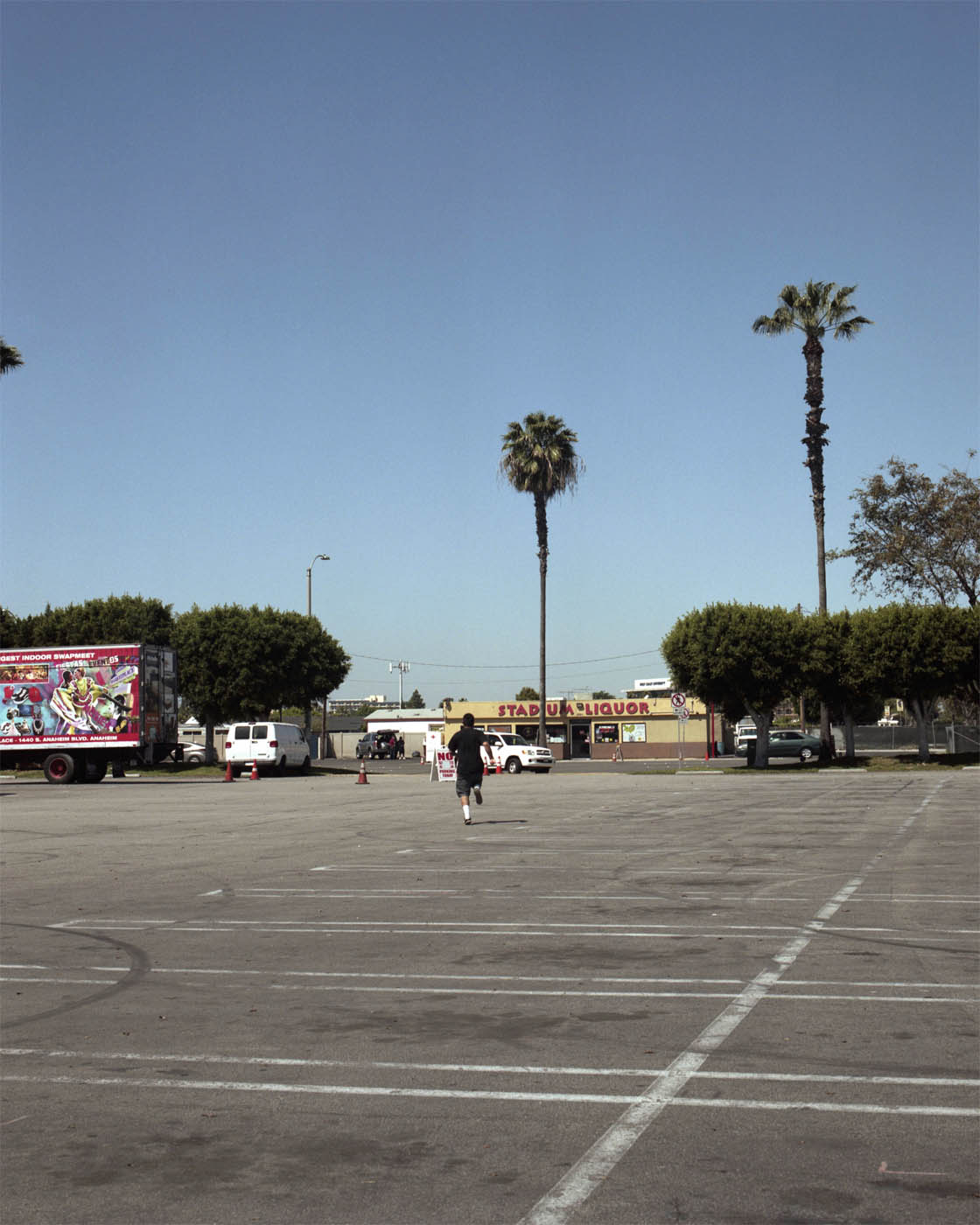
 

William Camargo (American, b. 1989) 'As Far As I Can Get in 10 Seconds From The Swapmeet Parking Lot to the Liquor Store After Divola' 2020


William Camargo (American, b. 1989)
As Far As I Can Get in 10 Seconds From The Swapmeet Parking Lot to the Liquor Store After Divola
2020
Inkjet print
22 x 18 in.
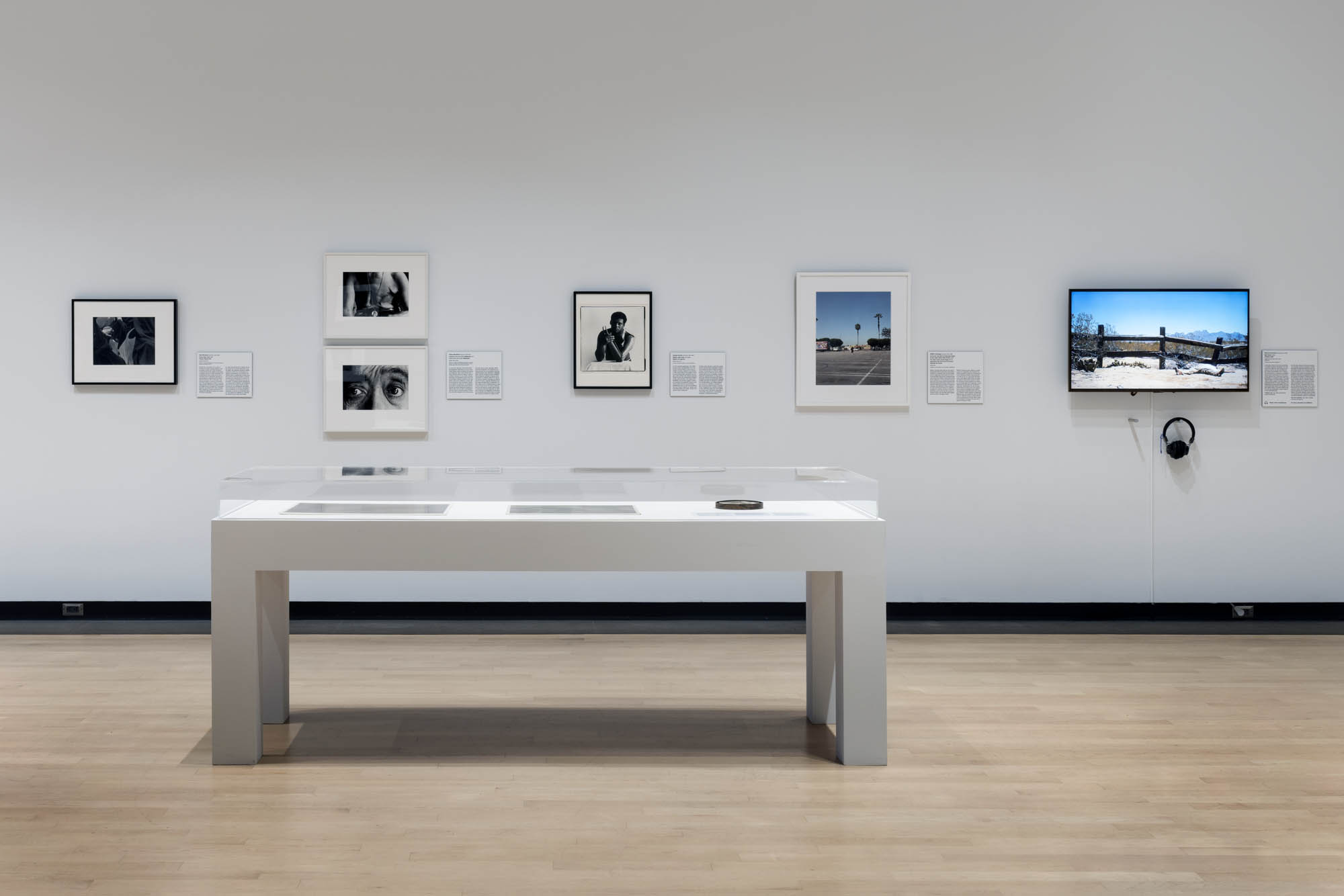
 

Installation view of the exhibition 'Muscle Memory: Lens on the Body' at the Phoenix Art Museum, Phoenix, AZ, January - June, 2026 showing at left, Roy DeCarava Force, New York (1963); at centre, George Dureau Wilbert with Hook (Nd); and at second right, William Camargo As Far As I Can Get in 10 Seconds From The Swapmeet Parking Lot to the Liquor Store After Divola (2020)


Installation view of the exhibition Muscle Memory: Lens on the Body at the Phoenix Art Museum, Phoenix, AZ, January – June, 2026 showing at left, Roy DeCarava Force, New York (1963, below); at centre, George Dureau Wilbert with Hook (Nd, below); and at second right, William Camargo As Far As I Can Get in 10 Seconds From The Swapmeet Parking Lot to the Liquor Store After Divola (2020, above)
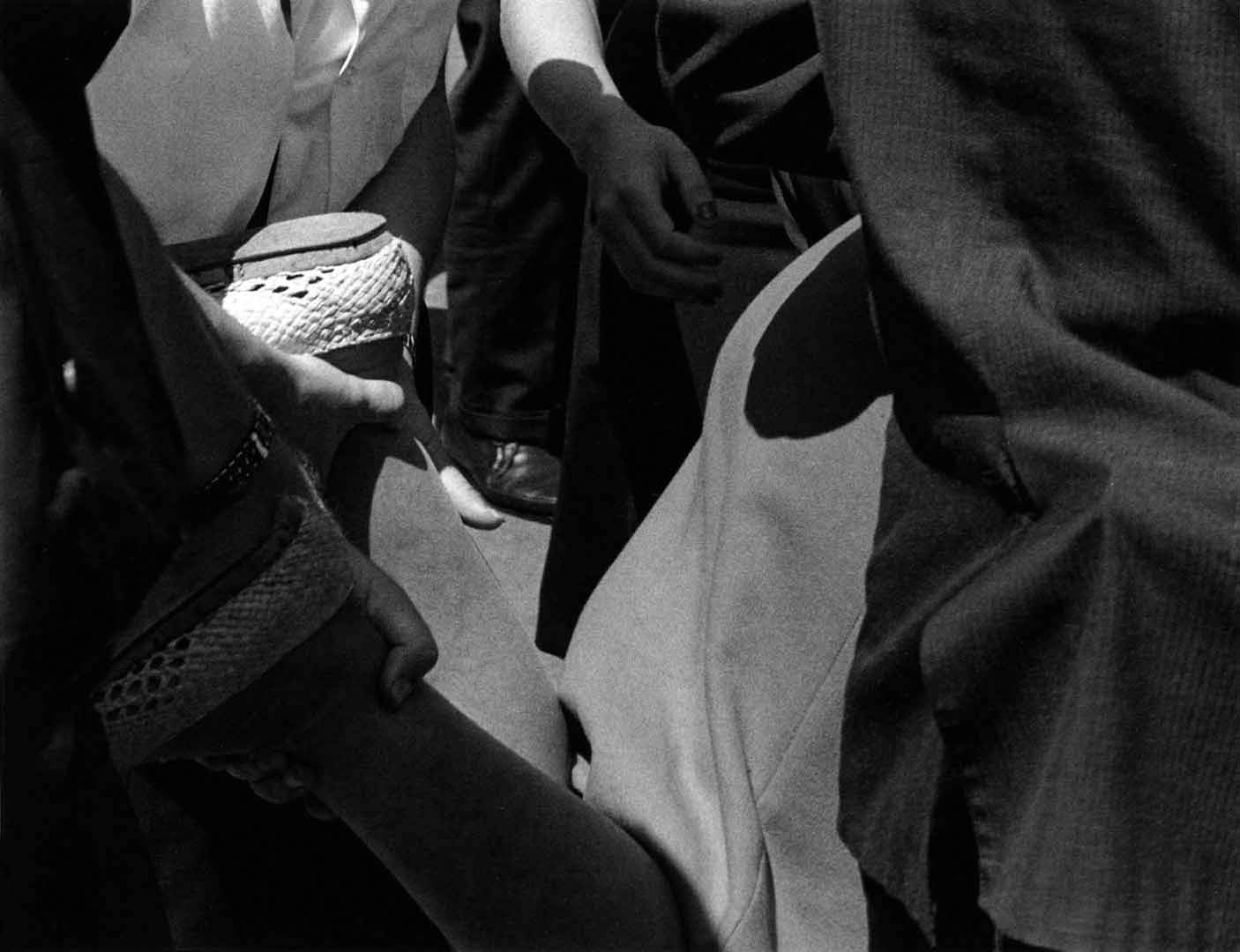
 

Roy DeCarava (American, 1919-2009) 'Force, New York' 1963


Roy DeCarava (American, 1919-2009)
Force, New York
1963
Gelatin silver print
Center for Creative Photography
University of Arizona: Purchase


A woman being arrested at a New York protest
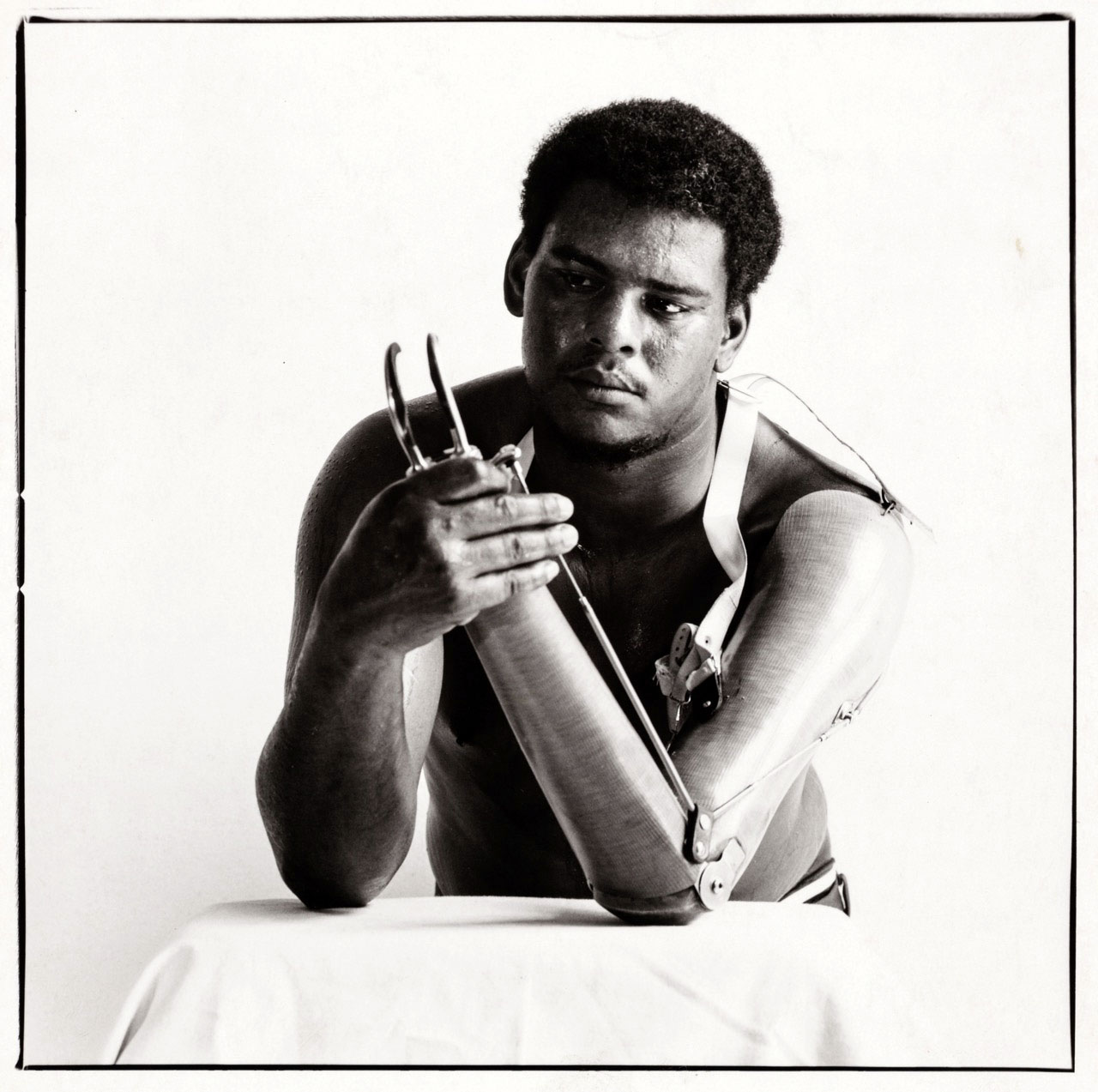
 

George Dureau (American, 1930-2014) 'Wilbert with Hook' Nd


George Dureau (American, 1930-2014)
Wilbert with Hook
Nd
Gelatin silver print
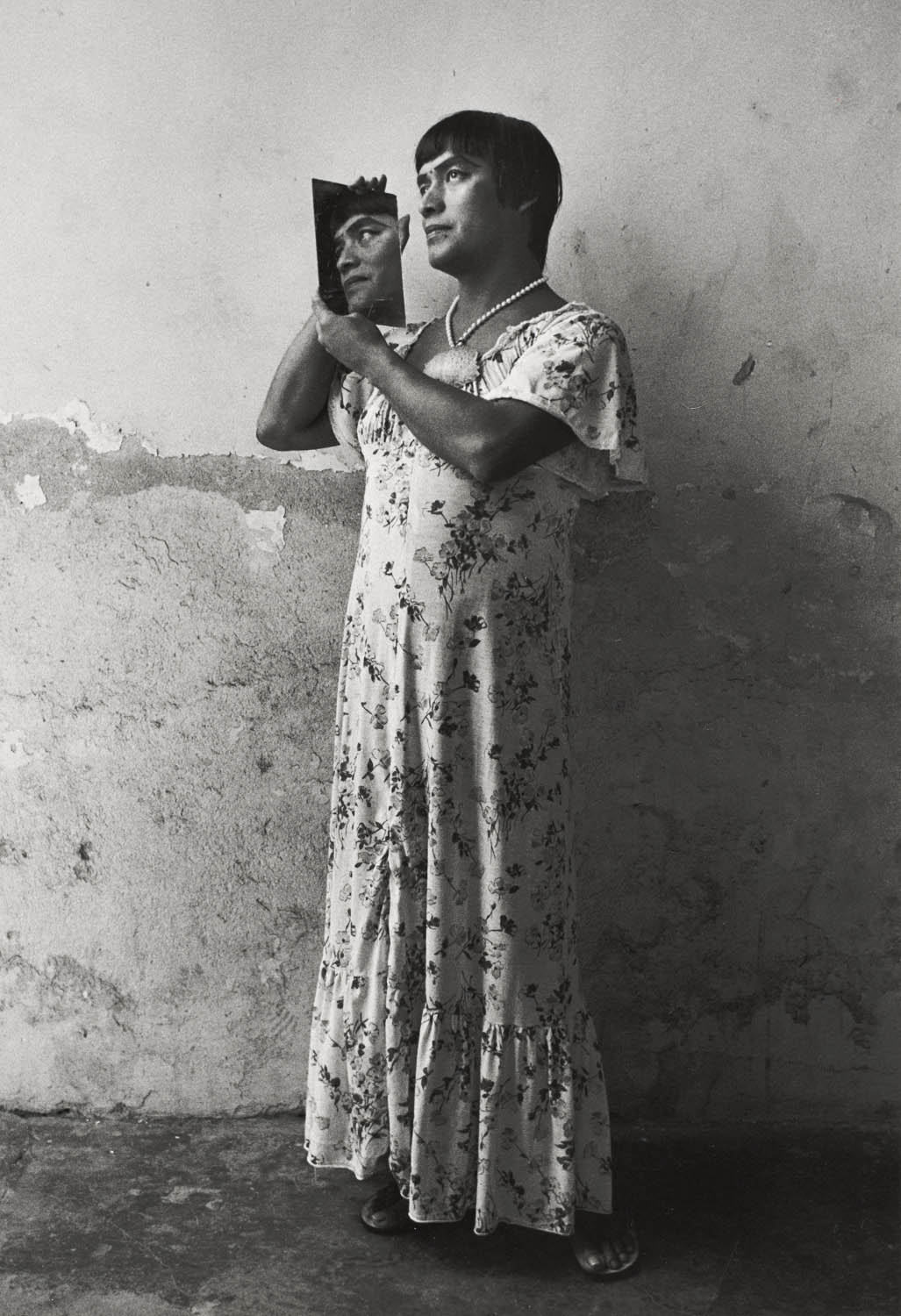
 

Graciela Iturbide (Mexican, b. 1942) 'Magnolia, Juchitán, Oaxaca, México' 1986


Graciela Iturbide (Mexican, b. 1942)
Magnolia, Juchitán, Oaxaca, México
1986
Gelatin silver print
Center for Creative Photography
University of Arizona: Purchase
© Graciela Iturbide 
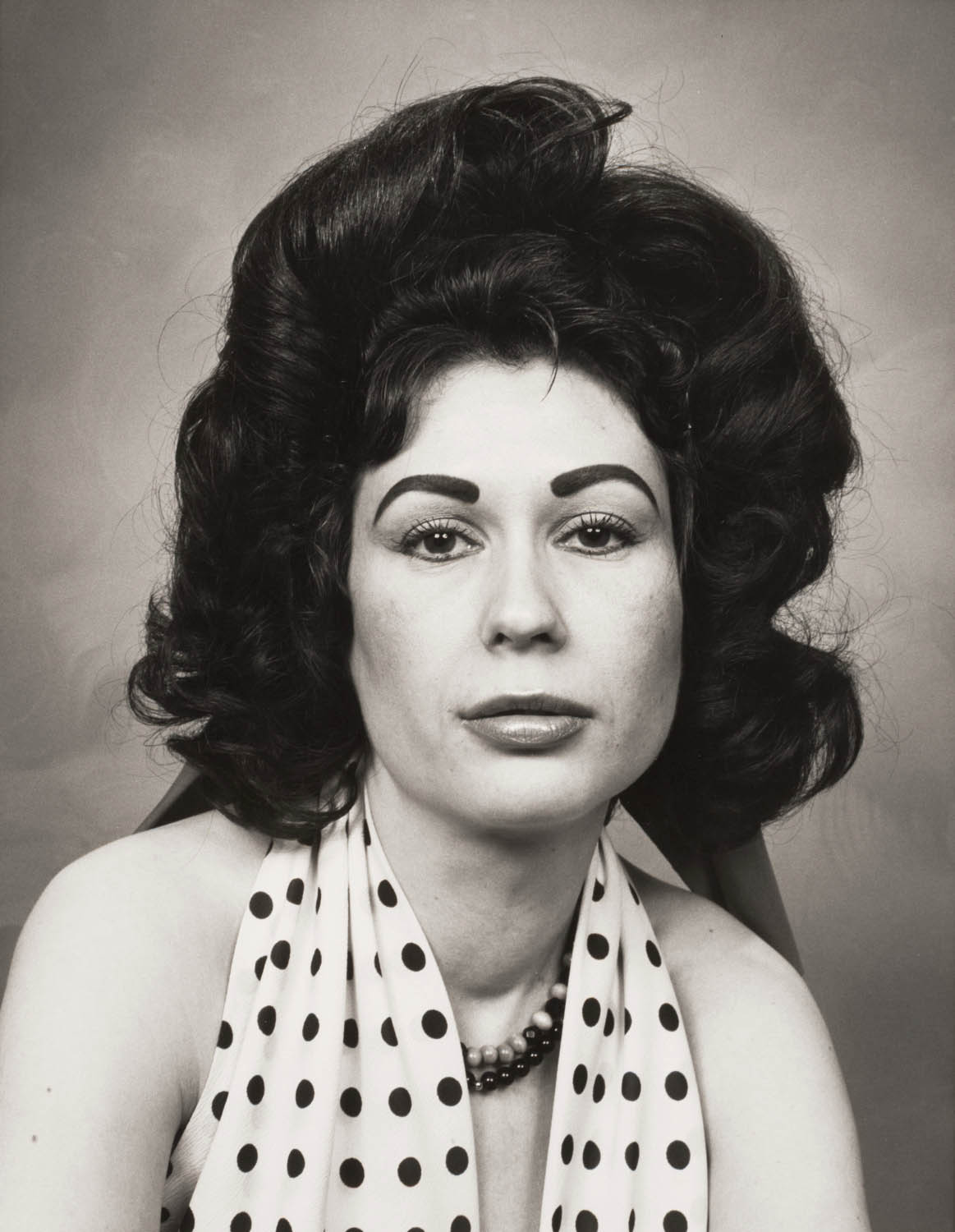
 

Leon Borensztein (American, b. 1947) 'Woman with Polka Dots, San Francisco' 1984


Leon Borensztein (American, b. 1947)
Woman with Polka Dots, San Francisco
1984
Gelatin silver print
Center for Creative Photography
University of Arizona: Purchase
© Leon Borensztein 


Phoenix Art Museum
McDowell Road & Central Avenue
1625 N. Central Avenue
Phoenix, AZ 85004

Opening hours:
Monday and Tuesday Museum closed
Wednesday: 10am – 7pm
Thursday – Sunday: 10am – 5pm

Phoenix Art Museum website

LIKE ART BLART ON FACEBOOK

Back to top

Exhibition: ‘The Shape of Things: Photographs from Robert B. Menschel’ at The Museum of Modern Art (MoMA), New York

Exhibition dates: 29th October, 2016 – 7th May, 2017

Curators: Quentin Bajac, the Joel and Anne Ehrenkranz Chief Curator of Photography, with Katerina Stathopoulou, Curatorial Assistant, Department of Photography, MoMA


Roger Fenton (British, 1819-1869) 'Greek Hero' c. 1857 from the exhibition 'The Shape of Things: Photographs from Robert B. Menschel' at The Museum of Modern Art (MoMA), New York, Oct 2016 - May 2017


Roger Fenton (British, 1819-1869)
Greek Hero
c. 1857
Salted-paper print from a wet-collodion glass negative
13 7/16 × 10 3/16″ (34.2 × 25.8cm)
The Museum of Modern Art, New York
Robert and Joyce Menschel Fund


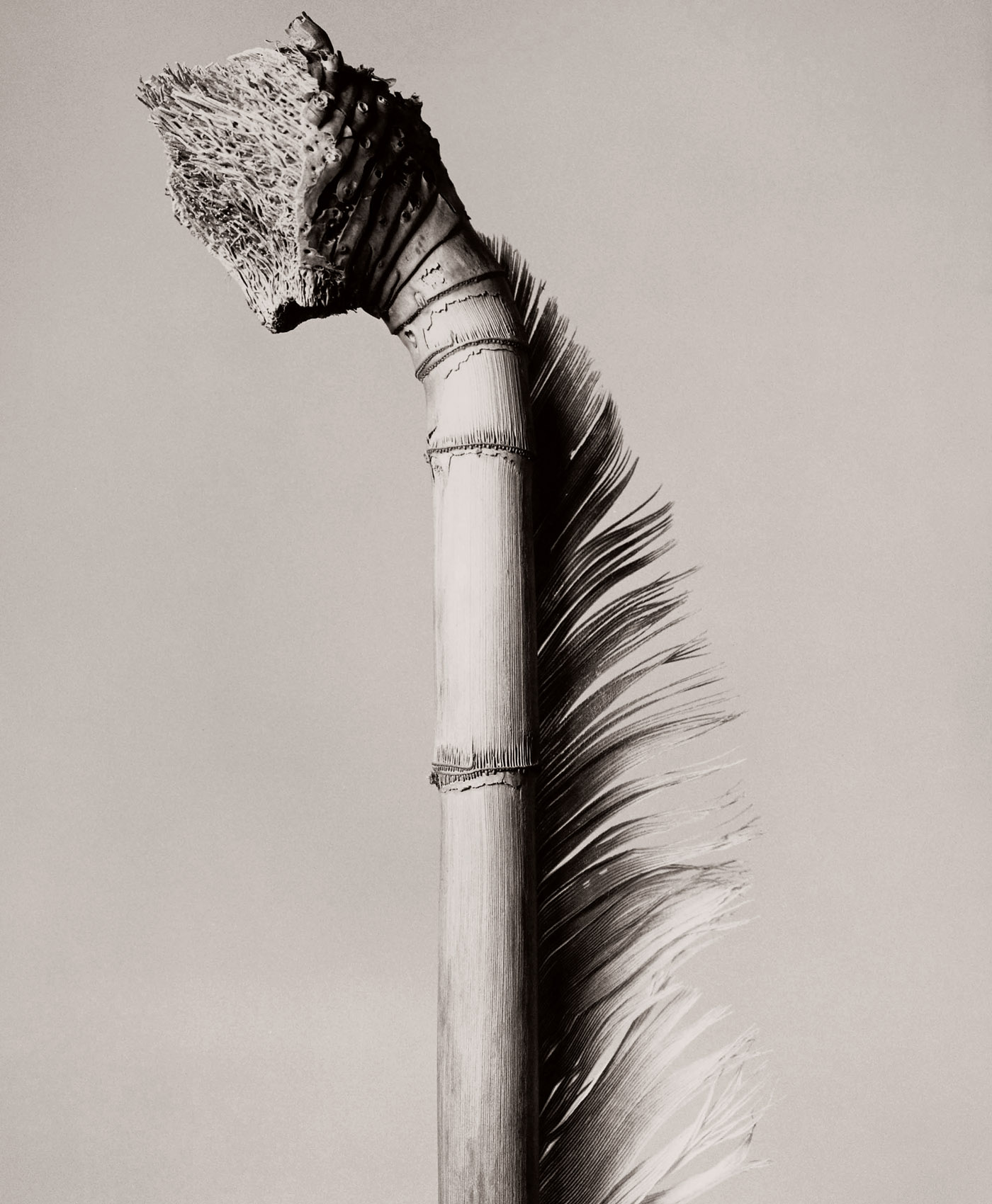
Photography is … a language for asking questions about the world. The Shape of Things imbues this aphorism with a linear taxonomy in its written material (while the installation “occasionally diverges from a strict chronological progression”), no matter that each “moment” in the history of photography – historical, modern, contemporary – is never self contained or self sufficient, that each overlaps and informs one another, in a nexus of interweaving threads.

Charles Harry Jones’ Peapods (c. 1900) are as modern as Bernd and Hilla Becher’s Cooling Towers (1973); Margaret Watkins’ Design Angles (1919) are as directorial as Jan Groover’s Untitled (1983) or Charles Harry Jones’ Onions (c. 1900). And so it goes…

The ideation “the shape of things” is rather a bald fundamental statement in relation to how we imagine and encounter the marvellous. No matter the era, the country or the person who makes them; no matter the meanings readable in photographs or their specific use value in a particular context – the photograph is still the footprint of an idea and, as John Berger asks, a trace naturally left by something that has past? That flicker of imagination in the mind’s eye which has no time.

As Sartre says in Being and Nothingness, “Temporality is only a tool of vision.”

Dr Marcus Bunyan


Many thankx to MoMA for allowing me to publish the photographs in posting. Please click on the photographs for a larger version of the image.


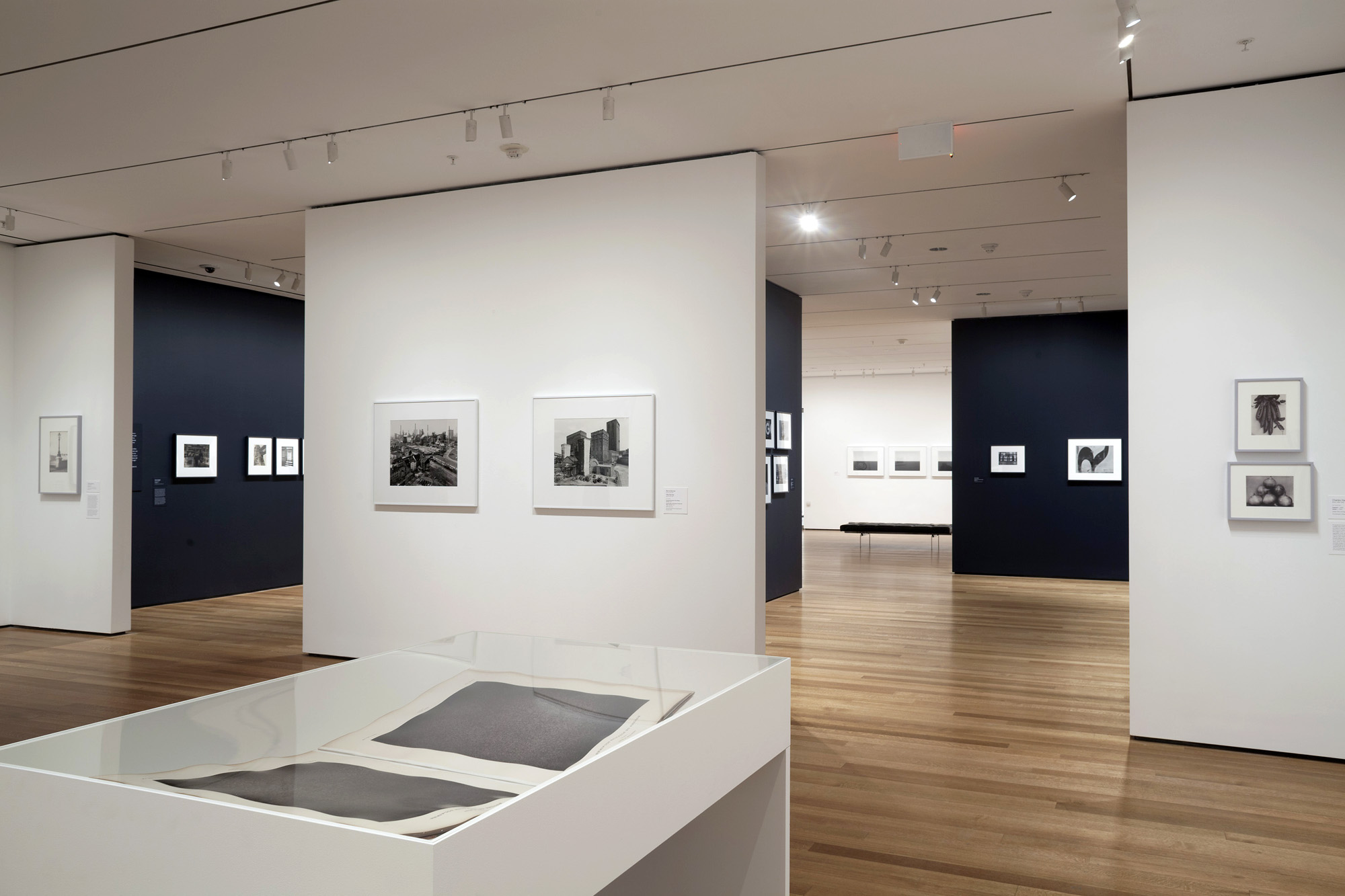
The Shape of Things presents a compact and non-comprehensive history of photography, from its inception to the early twenty-first century, in one hundred images. The exhibition is drawn entirely from the 504 photographs that have entered The Museum of Modern Art’s collection with the support of Robert B. Menschel over the past forty years, including a notable selection of works from his personal collection that were given in 2016 and are being shown here for the first time.

“Photography is less and less a cognitive process, in the traditional sense of the term, or an affirmative one, offering answers, but rather a language for asking questions about the world,” wrote the Italian photographer and critic Luigi Ghirri in 1989. Echoing these words, the exhibition presents the history of the medium in three parts, emphasising the strengths of Menschel’s collection and mirroring his equal interest in historical, modern, and contemporary photography. Each section focuses on a moment in photography’s history and the conceptions of the medium that were dominant then: informational and documentary in the nineteenth and early twentieth centuries, more formal and subjective in the immediate postwar era, and questioning and self-referential from the 1970s onward. The installation occasionally diverges from a strict chronological progression, fuelled by the conviction that works from different periods, rather than being antagonistic, correspond with and enrich each other.


Installation view of 'The Shape of Things: Photographs from Robert B. Menschel' at The Museum of Modern Art, New York, October 29, 2016 - May 7, 2017

Installation view of 'The Shape of Things: Photographs from Robert B. Menschel' at The Museum of Modern Art, New York, October 29, 2016 - May 7, 2017

Installation view of 'The Shape of Things: Photographs from Robert B. Menschel' at The Museum of Modern Art, New York, October 29, 2016 - May 7, 2017

Installation view of 'The Shape of Things: Photographs from Robert B. Menschel' at The Museum of Modern Art, New York, October 29, 2016 - May 7, 2017

Installation view of 'The Shape of Things: Photographs from Robert B. Menschel' at The Museum of Modern Art, New York, October 29, 2016 - May 7, 2017


Installation views of The Shape of Things: Photographs from Robert B. Menschel at The Museum of Modern Art, New York, October 29, 2016 – May 7, 2017
© 2016 The Museum of Modern Art
Photo: John Wronn


The exhibition The Shape of Things: Photographs from Robert B. Menschel presents a compact history of photography, from its inception to the early 21st century, in 100 images. On view from October 29, 2016, through May 7, 2017, the exhibition is drawn entirely from the 504 photographs that have entered The Museum of Modern Art’s collection over the past 40 years with the support of longtime Museum trustee Robert B. Menschel. It includes a notable selection of works from his personal collection that were given in 2016 and are being shown here for the first time. The Shape of Things is organised by Quentin Bajac, the Joel and Anne Ehrenkranz Chief Curator of Photography, with Katerina Stathopoulou, Curatorial Assistant, Department of Photography, MoMA.

Borrowing its title from the eponymous work by Carrie Mae Weems (American, b. 1953), the exhibition presents the history of the medium in three parts, emphasising the strengths of Menschel’s collection and mirroring his equal interest in historical, modern, and contemporary photography. Each section focuses on a moment in photography’s history and the conceptions of the medium that were dominant then: informational and documentary in the 19th and early 20th centuries, more formal and subjective in the immediate postwar era, and questioning and self-referential from the 1970s onward. The installation occasionally diverges from a strict chronological progression, fuelled by the conviction that works from different periods, rather than being antagonistic, correspond with and enrich each other.

Historical

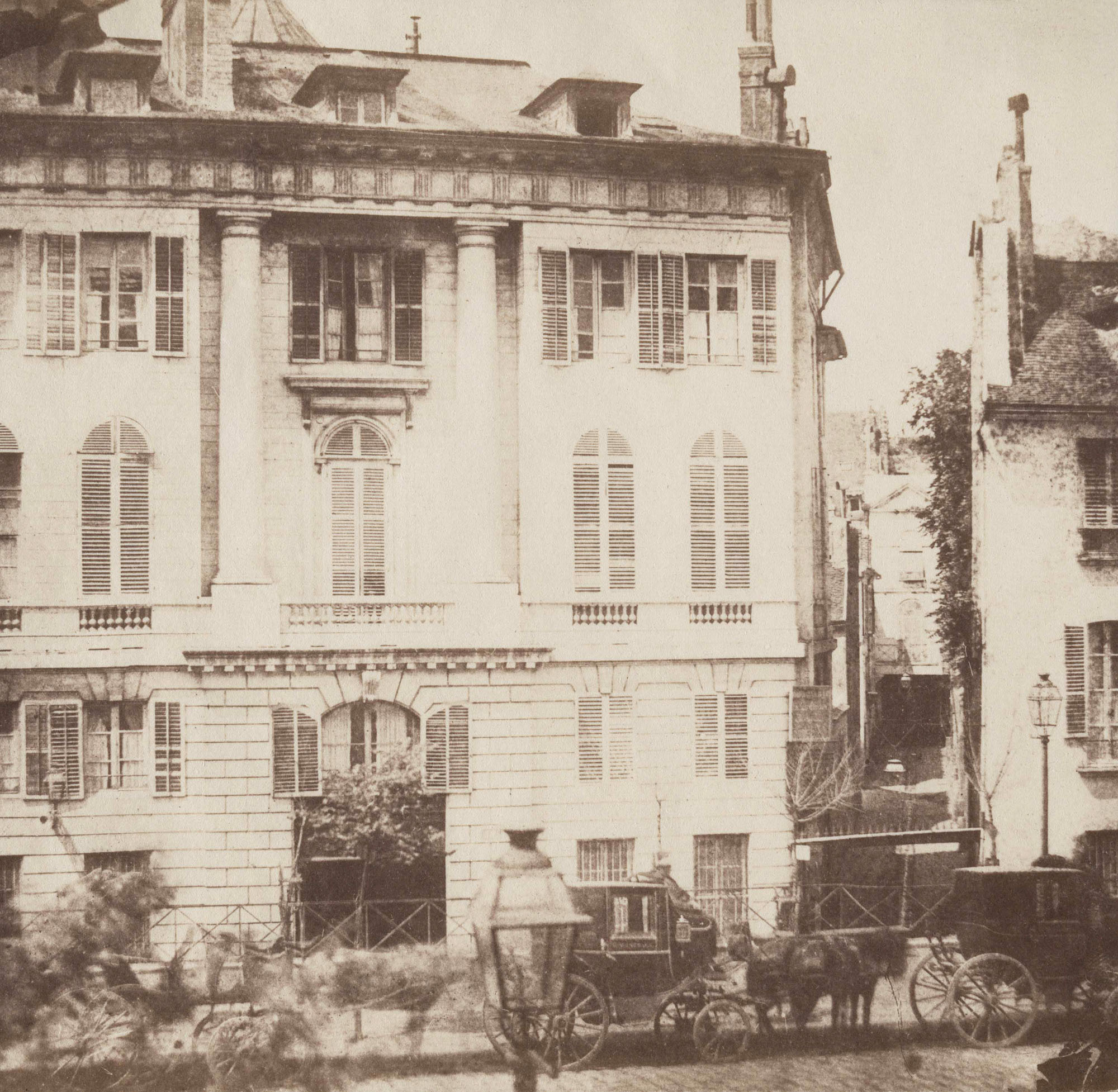
From 1840 to 1900, in photography’s infancy as a medium, artists principally sought to depict truthful representations of their surrounding environments. This primal stage is distinguished by a debate on the artistic-versus-scientific nature of the invention. Photographers engaged with the aesthetic and technical qualities of the medium, experimenting with tone, texture, and printing processes. The exhibition begins with seminal photographs such as William Henry Talbot Fox’s (British, 1800-1877) 1843 picture Rue Basse des Remparts, Paris, taken from the windows of the Hôtel de Douvres. Also on view is the astronomer Jules Janssen’s (French, 1824-1907) masterpiece L’Atlas de photographies solaires (Atlas of solar photographs), published in 1903. Summing up a quarter-century of daily photography at Janssen’s observatory in Meudon, France, the volume on view contains 30 images of the photosphere, demonstrating photography’s instrumental role in advancing the study of science. Other artists included in this section are Louis-August and Auguste-Rosalie Bisson (Bisson brothers), Eugène Cuvelier, Roger Fenton, Hugh W. Diamond, Charles Marville, and Henri Le Secq.

Modern

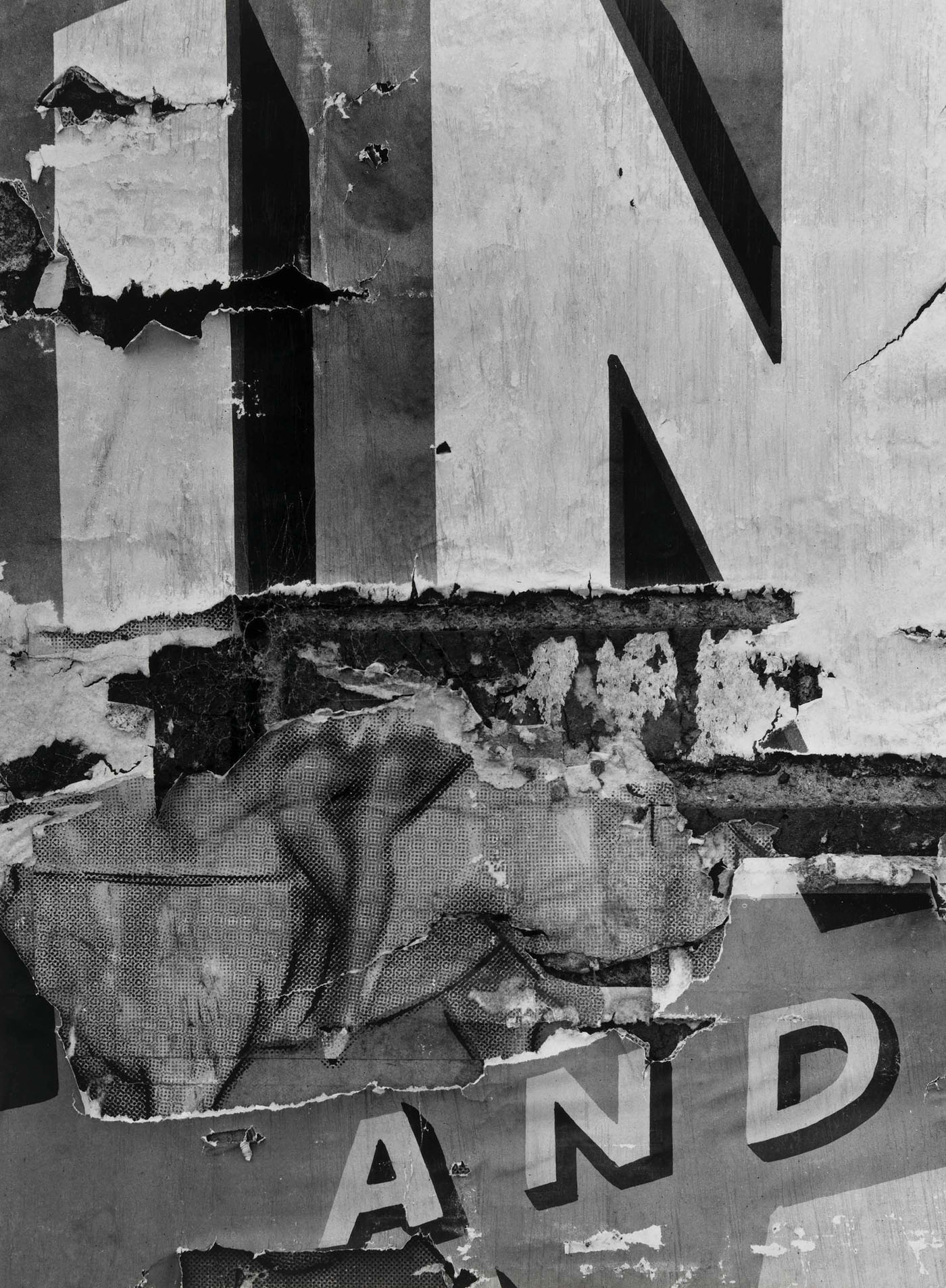
As photographers grappled with war and its aftermath, they began to turn their focus away from documenting the world around them and toward capturing their own personal experiences in a more formal, subjective way. A selection of works from 1940 to 1960 explores this theme, including works by two artists whose images Menschel collected extensively: Harry Callahan (American, 1912-1999) and Aaron Siskind (American, 1903-1991). A selection from Callahan’s quintessential photographs of urban environments – from Chicago and New York to Aix-en Provence and Cuzco, Peru – double exposures of city views, and portraits of his wife Eleanor and daughter Barbara, underscore the breadth of his oeuvre. In the summer of 1951, while teaching alongside Callahan at Black Mountain College in North Carolina, Siskind began the series of pictures of the surfaces of walls for which he is best known. One of the early works in the series on view, North Carolina 30 (1951), shows the bare legs of a woman framed by the words “IN” and”AND” amid layers of peeling layers of posters. In their planarity and graphic quality, these pictures also have a kinship with paintings by the Abstract Expressionists, alongside whom Siskind began exhibiting in the late 1940s. Other artists in this section include Berenice Abbott, Robert Frank, Lee Friedlander, John Gossage, André Kertész, Clarence John Laughlin, and Dora Maar.

Contemporary

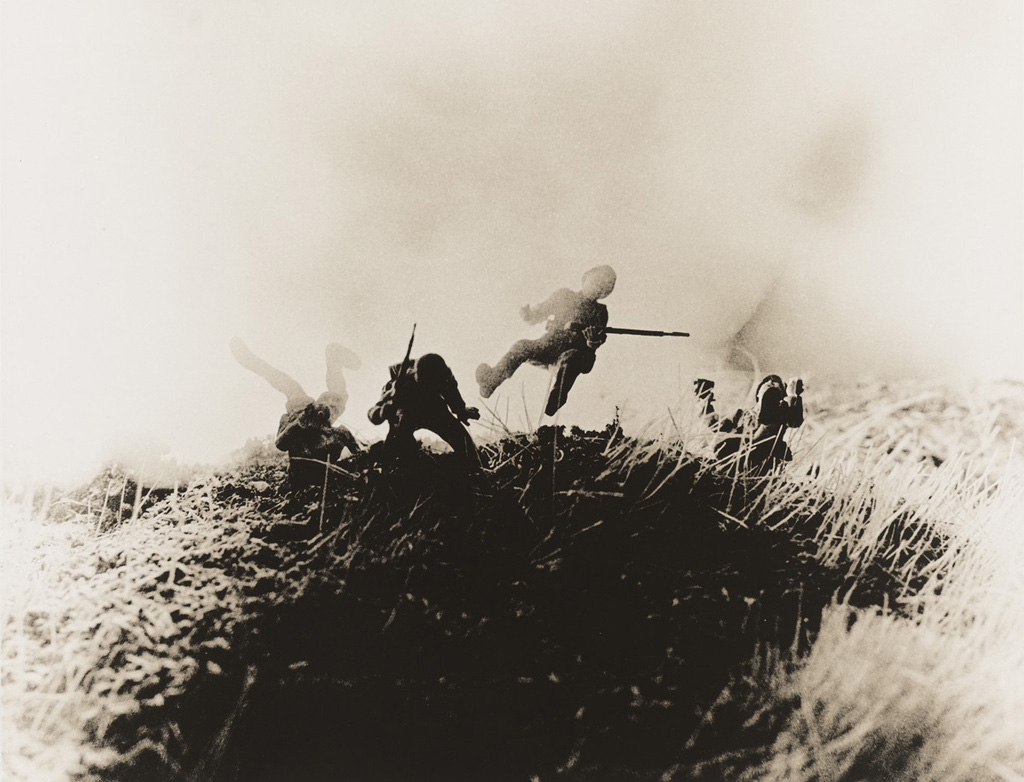
From the 1970s onward, photographers began working in what A. D. Coleman defined as “The Directorial Mode,” wherein the photographer consciously creates events for the sole purpose of making images. John Coplans (British, 1920-2003) took his own body, naked and with the head invisible, as the subject of his work – both carrying on and contradicting the tradition of the self-portrait centred on the face – as seen in Self-Portrait (Back with Arms Above) (1984). Joan Fontcuberta’s (Spanish, b. 1955) series Herbarium appears at first glance to be a collection of botanical studies, depicting plants with new and distinctive contours and rigorously scientific names. However, as revealed by his fictional character Dr Hortensio Verdeprado (“green pasture” in Spanish), the “plants” are actually carefully composed by the photographer using scrap picked up in industrial areas around Barcelona. Made of bits of paper and plastic, small animal bones, and other detritus, these forms are not only non-vegetal – there is almost nothing natural about them at all. Fontcuberta is interested in the way data assumes meaning through its presentation and in the acceptance of the photographic image as evidence of truth. Other artists in this section include Jan Groover, David Levinthal, An-My Lê, Michael Spano, JoAnn Verburg, and William Wegman.

Press release from the Museum of Modern Art


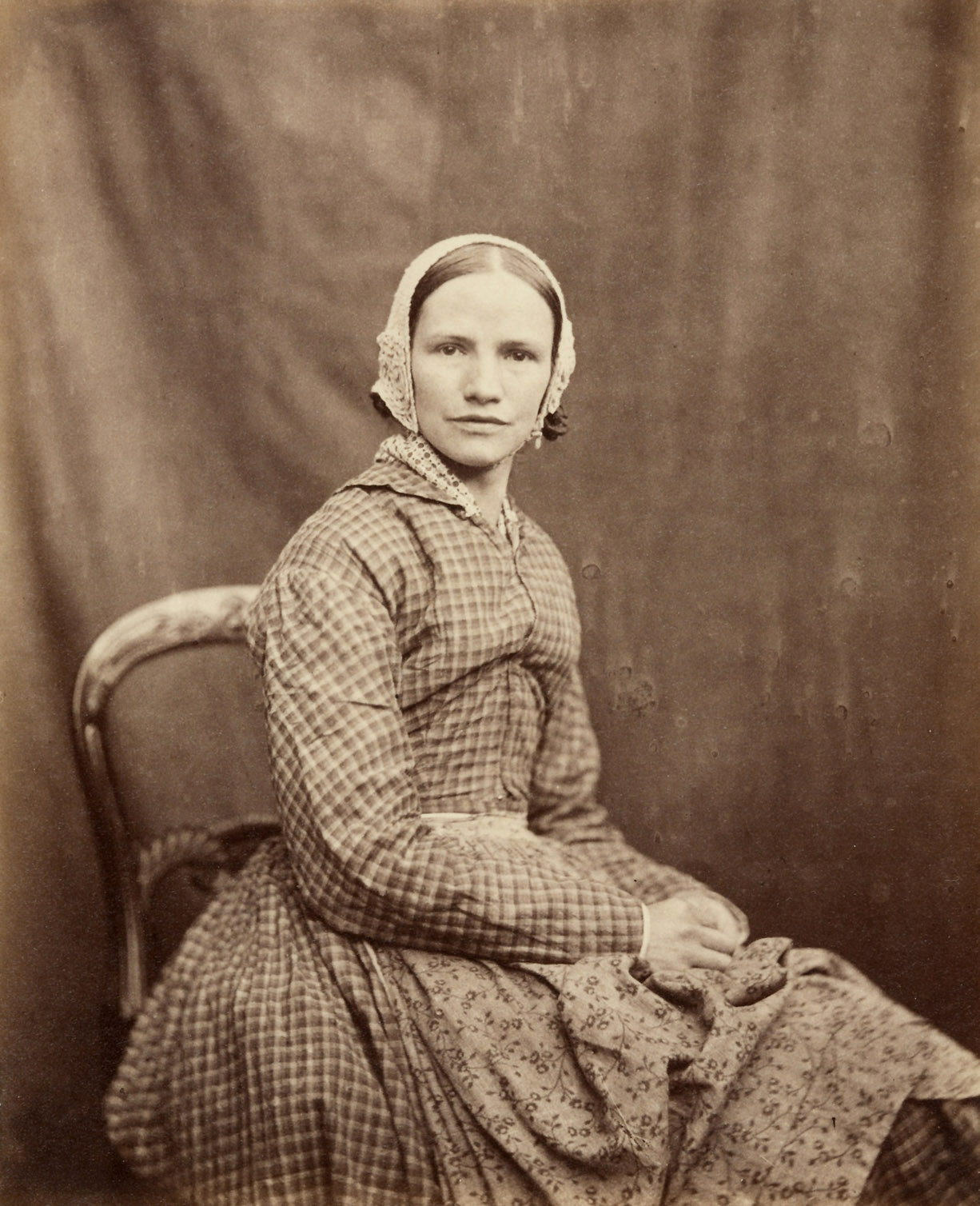
Hugh W. Diamond (British, 1809-1886) 'Untitled' c. 1852-1855 from the exhibition 'The Shape of Things: Photographs from Robert B. Menschel' at The Museum of Modern Art (MoMA), New York, Oct 2016 - May 2017


Hugh W. Diamond (British, 1809-1886)
Untitled
c. 1852-55
Albumen silver print from a glass negative
6 1/2 x 5 5/16″ (16.6 x 13.5cm)
Horace W. Goldsmith Fund through Robert B. Menschel


William Henry Fox Talbot (British, 1800-1877) 'Rue Basse des Remparts, Paris' May 1843


William Henry Fox Talbot (British, 1800-1877)
Rue Basse des Remparts, Paris
May 1843
Salted paper print
6 11/16 × 6 3/4″ (17 × 17.2cm)
Promised gift of Robert B. Menschel


Charles Marville (French, 1816-1879) 'Pont Neuf' 1870s


Charles Marville (French, 1816-1879)
Pont Neuf
1870s
Albumen silver print
14 1/8 x 8 1/4″ (36 x 23.5cm)
Horace W. Goldsmith Fund through Robert B. Menschel


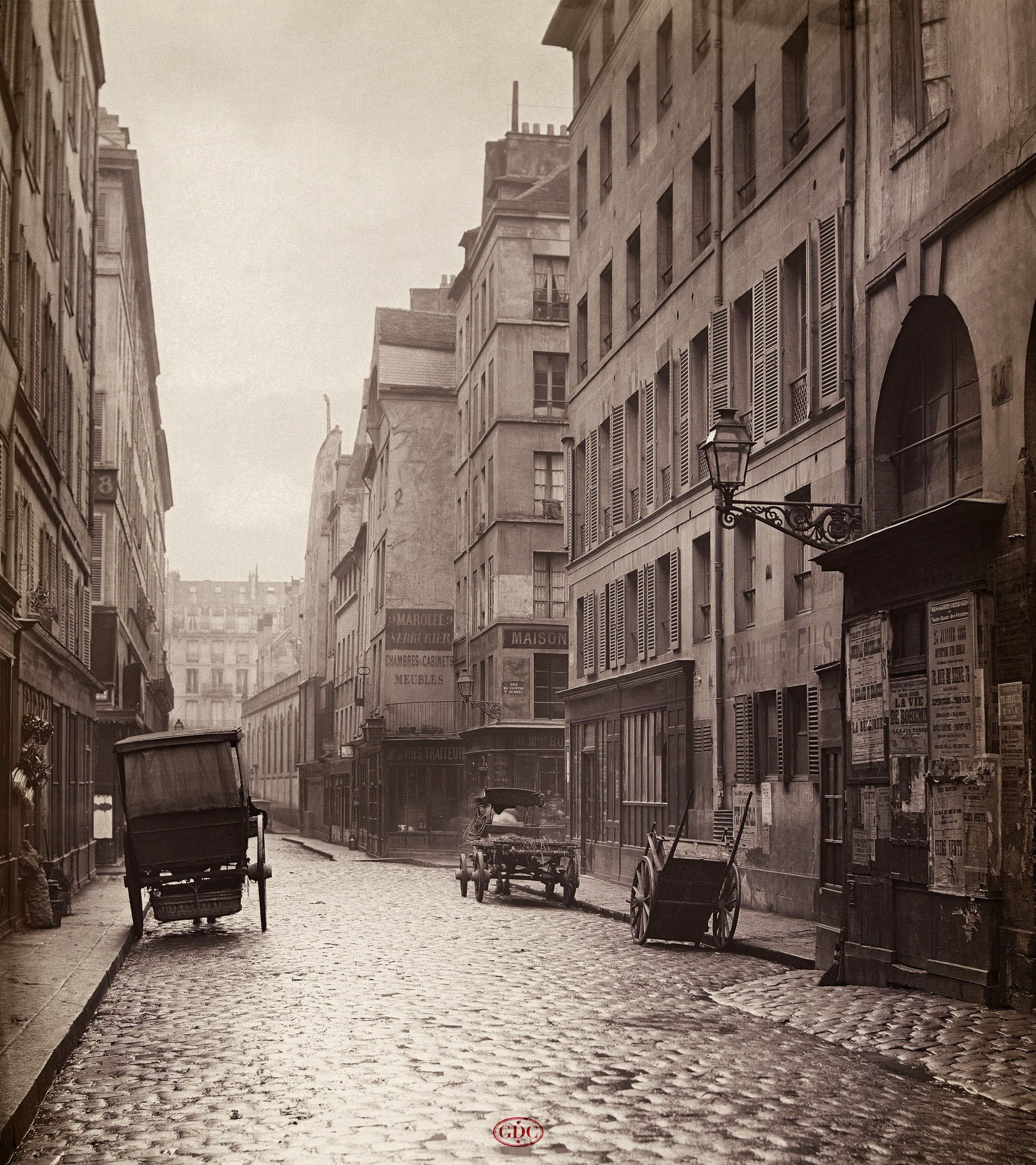
Charles Marville (French, 1816-1879) 'Rue des Prêtres-Saint-Germain-l'Auxerrois' c. 1866


Charles Marville (French, 1816-1879)
Rue des Prêtres-Saint-Germain-l’Auxerrois
c. 1866
Albumen silver print
11 13/16 × 10 1/2″ (30 × 26.6cm)
Promised gift of Robert B. Menschel


Charles Marville (French, 1816-1879) 'Rue du Cygne' c. 1865


Charles Marville (French, 1816-1879)
Rue du Cygne
c. 1865
Albumen silver print from a glass negative
11 3/4 x 10 9/16″ (29.9 x 26.9cm)
Horace W. Goldsmith Fund through Robert B. Menschel


Alfred Stieglitz (American, 1864-1946) 'The Terminal' 1893


Alfred Stieglitz (American, 1864-1946)
The Terminal
1893
Photogravure mounted to board
10 × 13 3/16″ (25.4 × 33.5cm)
Promised gift of Robert B. Menschel


Truthful representations, 1840-1930

“One advantage of the discovery of the Photographic Art will be, that it will enable us to introduce into our pictures a multitude of minute details which add to the truth and reality of the representation, but which no artist would take the trouble to copy faithfully from nature.

Contenting himself with a general effect, he would probably deem it beneath his genius to copy every accident of light and shade; nor could he do so indeed, without a disproportionate expenditure of time and trouble, which might be otherwise much better employed.

Nevertheless, it is well to have the means at our disposal of introducing these minutiae without any additional trouble, for they will sometimes be found to give an air of variety beyond expectation to the scene represented.”

William Henry Fox Talbot, The Pencil of Nature, 1844-1846


“I was interested in a straightforward 19th-century way of photographing an object. To photograph things frontally creates the strongest presence and you can eliminate the possibilities of being too obviously subjective. If you photograph an octopus, you have to work out which approach will show the most typical character of the animal. But first you have to learn about the octopus. Does it have six legs or eight? You have to be able to understand the subject visually, through its visual appearance. You need clarity and not sentimentality.”

Hilla Becher, in “The Music of the Blast Furnaces: Bernhard and Hilla Becher in Conversation with James Lingwood,” Art Press, no. 209 (1996)


Charles Harry Jones (British, 1866-1959) 'Peapods' c. 1900


Charles Harry Jones (British, 1866-1959)
Peapods
c. 1900
Gelatin silver printing-out-paper print
6 5/16 x 8 1/4″ (16 x 20.9cm)
Promised gift of Robert B. Menschel


Bernd Becher (German, 1931-2007), Hilla Becher (German, 1934-2015) 'Cooling Towers' 1973


Bernd Becher (German, 1931-2007), Hilla Becher (German, 1934-2015)
Cooling Towers
1973
Gelatin silver prints
Each 15 3/4 × 11 13/16″ (40 × 30cm)
The Museum of Modern Art, New York
Promised gift of Robert B. Menschel
© 2016 Estate Bernd and Hilla Becher


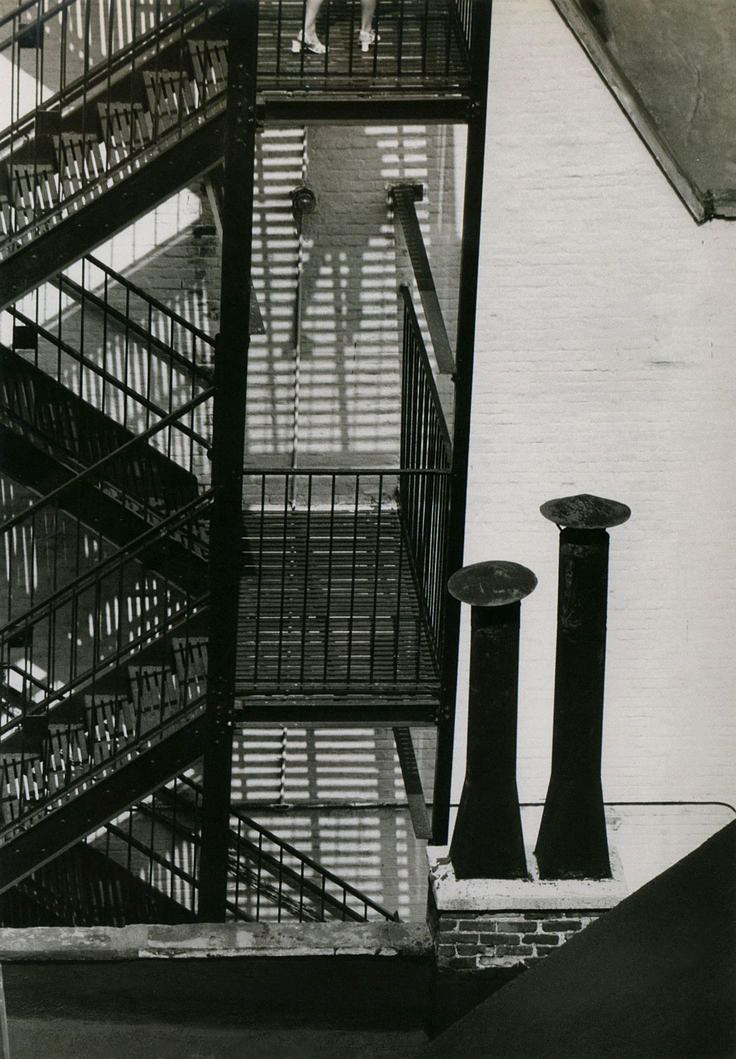
Berenice Abbott (American, 1898-1991) 'George Washington Bridge, Riverside Drive and West 179th Street, Manhattan' January 17, 1936


Berenice Abbott (American, 1898-1991)
George Washington Bridge, Riverside Drive and West 179th Street, Manhattan
January 17, 1936
Gelatin silver print
9 9/16 x 7 5/8″ (24.3 x 19.3cm)
The Museum of Modern Art, New York
Promised gift of Robert B. Menschel
© 2016 Berenice Abbott/Commerce Graphics


Berenice Abbott (American, 1898-1991) 'Gunsmith, 6 Centre Market Place, Manhattan' February 4, 1937


Berenice Abbott (American, 1898-1991)
Gunsmith, 6 Centre Market Place, Manhattan
February 4, 1937
Gelatin silver print
9 5/8 x 7 9/16″ (24.4 x 19.1cm)
Gift of the Robert and Joyce Menschel Foundation


Bernd Becher (German, 1931-2007), Hilla Becher (German, 1934-2015) 'Hannover Mine 1/2/5, Bochum-Hordel, Ruhr Region, Germany' 1973


Bernd Becher (German, 1931-2007), Hilla Becher (German, 1934-2015)
Hannover Mine 1/2/5, Bochum-Hordel, Ruhr Region, Germany
1973
Gelatin silver print
18 7/16 x 22 11/16″ (46.9 x 57.6cm)
Horace W. Goldsmith Fund through Robert B. Menschel


Bernd Becher (German, 1931-2007), Hilla Becher (German, 1934-2015) 'Duisburg-Bruckhausen, Ruhr Region, Germany' 1999


Bernd Becher (German, 1931-2007), Hilla Becher (German, 1934-2015)
Duisburg-Bruckhausen, Ruhr Region, Germany
1999
Gelatin silver print
19 5/16 x 24″ (49.1 x 60.9cm)
Horace W. Goldsmith Fund through Robert B. Menschel


Louis-Auguste Bisson (French, 1814-1876) 'Cathedral of Notre Dame, Paris (detail of facade)' c. 1853


Louis-Auguste Bisson (French, 1814-1876)
Cathedral of Notre Dame, Paris (detail of facade)
c. 1853
Albumen silver print from a glass negative
14 7/16 x 17 13/16″ (36.6 x 45.3cm)
Acquired through the generosity of Robert B. Menschel


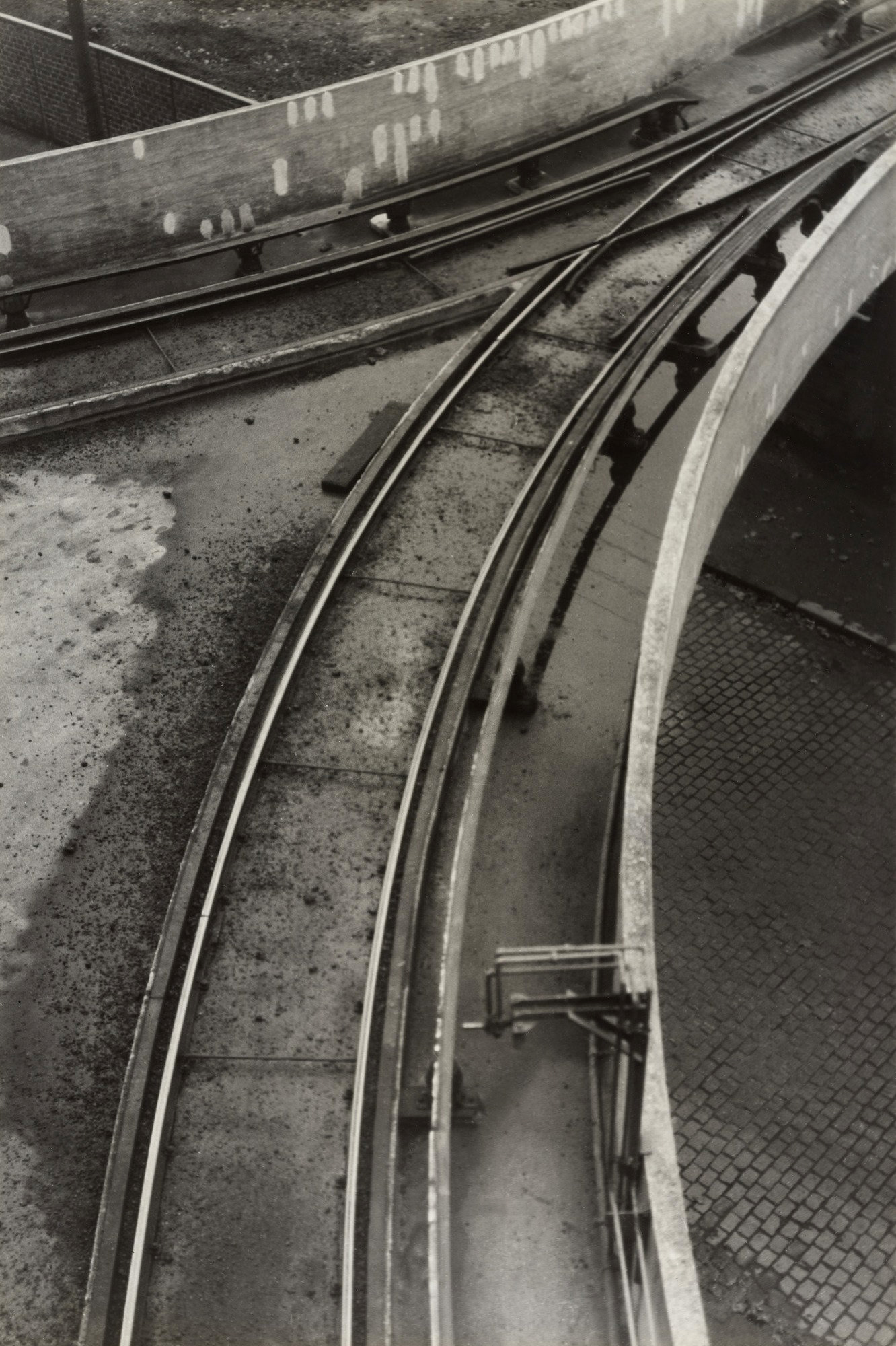
Germaine Krull (Dutch, born Germany. 1897-1985) 'Rails' c. 1927


Germaine Krull (Dutch born Germany, 1897-1985)
Rails
c. 1927
Gelatin silver print
15 7/16 x 10 3/8″ (39.2 x 26.3cm)
Horace W. Goldsmith Fund through Robert B. Menschel


Germaine Krull (Dutch born Germany. 1897-1985) 'Le Metal Inspirateur d'Art (Metal Inspiration of Art)' 1930


Germaine Krull (Dutch born Germany, 1897-1985)
Le Metal Inspirateur d’Art (Metal Inspiration of Art)
1930
Gelatin silver print
6 5/8 x 8 7/16″ (16.8 x 21.5cm)
Promised gift of Robert B. Menschel


Personal experiences, 1940-1960

“As photographers, we must learn to relax our beliefs. Move on objects with your eye straight on, to the left, around on the right. Watch them grow large as you approach, group and regroup themselves as you shift your position. Relationships gradually emerge, and sometimes assert themselves with finality. And that’s your picture.

What I have just described is an emotional experience. It is utterly personal: no one else can ever see quite what you have seen, and the picture that emerges is unique, never made and never to be repeated. The picture – and this is fundamental – has the unity of an organism. Its elements were not put together, with whatever skill or taste or ingenuity. It came into being as an instant act of sight.”

Aaron Siskind, “The Drama of Objects,” Minicam Photography 8, no. 9 (1945)


“The business of making a photograph may be said in simple terms to consist of three elements: the objective world (whose permanent condition is change and disorder), the sheet of paper on which the picture will be realised, and the experience which brings them together. First, and emphatically, I accept the flat plane of the picture surface as the primary frame of reference of the picture. The experience itself may be described as one of total absorption in the object. But the object serves only a personal need and the requirements of the picture. Thus rocks are sculptured forms; a section of common decorated ironwork, springing rhythmic shapes; fragments of paper sticking to a wall, a conversation piece. And these forms, totems, masks, figures, shapes, images must finally take their place in the tonal field of the picture and strictly conform to their space environment. The object has entered the picture in a sense; it has been photographed directly. But it is often unrecognisable; for it has been removed from its usual context, disassociated from its customary neighbours and forced into new relationships.”

Aaron Siskind, “Credo,” Spectrum 6, No. 2 (1956)


Weegee (Arthur Fellig) (American born Austria, 1899-1968) 'The Gay Deceiver' c. 1939


Weegee (Arthur Fellig) (American born Austria, 1899-1968)
The Gay Deceiver
c. 1939
Gelatin silver print
13 x 10 1/4″ (33 x 26cm)
Promised gift of Robert B. Menschel


Harry Callahan (American, 1912-1999) 'Chicago' 1951


Harry Callahan (American, 1912-1999)
Chicago
1951
Dye transfer print
10 5/16 x 15 11/16″ (26.2 x 39.9cm)
Promised gift of Robert B. Menschel


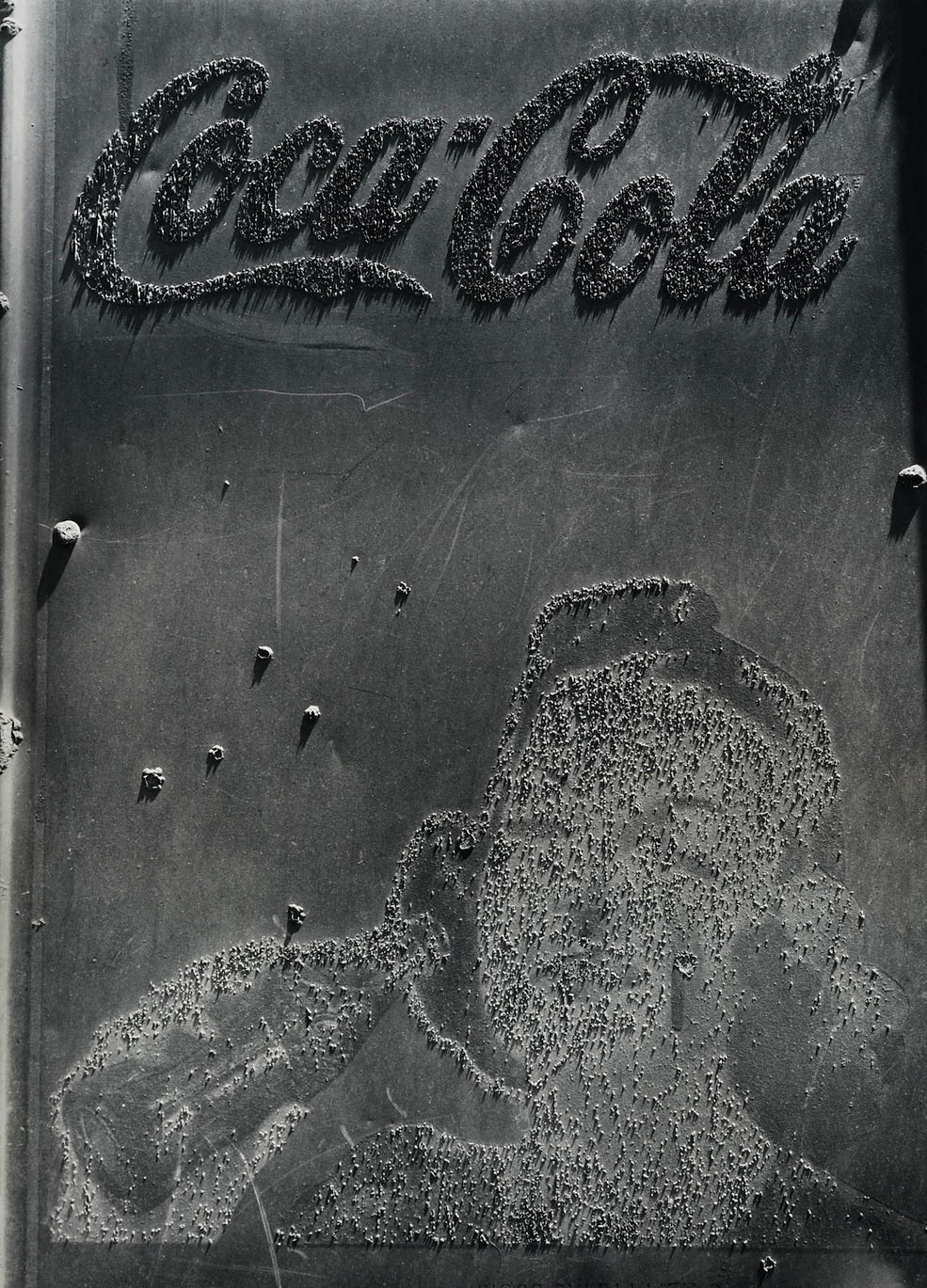
Clarence John Laughlin (American, 1905-1985) 'Spectre of Coca-Cola' 1962


Clarence John Laughlin (American, 1905-1985)
Spectre of Coca-Cola
1962
Gelatin silver print, printed 1981
13 1/4 x 10 3/8″ (33.6 x 26.4cm)
Robert B. Menschel Fund


Harry Callahan (American, 1912-1999) 'Siena' 1968


Harry Callahan (American, 1912-1999)
Siena
1968
Gelatin silver print
9 × 8 7/8″ (22.9 × 22.5cm)
Promised gift of Robert B. Menschel


Harry Callahan (American, 1912-1999) 'Chicago' c. 1952


Harry Callahan (American, 1912-1999)
Chicago
c. 1952
Dye transfer print
8 3/4 × 13 7/16″ (22.3 × 34.1cm)
Promised gift of Robert B. Menschel


Harry Callahan (American, 1912-1999) 'Chicago' c. 1949


Harry Callahan (American, 1912-1999)
Chicago
c. 1949
Gelatin silver print
7 11/16 x 9 9/16″ (19.5 x 24.3cm)
Gift of Robert and Joyce Menschel


Harry Callahan (American, 1912-1999) 'Eleanor and Barbara, Chicago' 1953


Harry Callahan (American, 1912-1999)
Eleanor and Barbara, Chicago
1953
Gelatin silver print
7 11/16 x 9 11/16″ (19.5 x 24.6cm)
Gift of Robert and Joyce Menschel


Harry Callahan (American, 1912-1999) 'Providence' 1974


Harry Callahan (American, 1912-1999)
Providence
1974
Gelatin silver print
6 9/16 × 6 7/16″ (16.6 × 16.3cm)
Promised gift of Robert B. Menschel


André Kertész (American born Hungary, 1894-1985) 'New York' August 10, 1969


André Kertész (American born Hungary, 1894-1985)
New York
August 10, 1969
Gelatin silver print
13 11/16 x 9 3/4″ (34.7 x 24.7cm)
Promised gift of Robert B. Menschel


Directorial modes, 1970s and beyond

“Here the photographer consciously and intentionally creates events for the express purpose of making images thereof. This may be achieved by intervening in ongoing ‘real’ events or by staging tableaux – in either case, by causing something to take place which would not have occurred had the photographer not made it happen.

Here the authenticity of the original event is not an issue, nor the photographer’s fidelity to it, and the viewer would be expected to raise those questions only ironically. Such images use photography’s overt veracity by evoking it for events and relationships generated by the photographer’s deliberate structuring of what takes place in front of the lens as well as of the resulting image. There is an inherent ambiguity at work in such images, for even though what they purport to describe as ‘slices of life’ would not have occurred except for the photographer’s instigation, nonetheless those events (or a reasonable facsimile thereof) did actually take place, as the photographs demonstrate.

… This mode I would define as the directorial.”

A. D. Coleman, “The Directorial Mode: Notes Towards a Definition,” Artforum 15, No. 1 (1976)


Aaron Siskind (American, 1903-1991) 'Chicago 30' 1949


Aaron Siskind (American, 1903-1991)
Chicago 30
1949
Gelatin silver print
14 x 17 13/16″ (35.6 x 45.3cm)
Gift of Robert and Joyce Menschel


Aaron Siskind (American, 1903-1991) 'North Carolina 30' 1951


Aaron Siskind (American, 1903-1991)
North Carolina 30
1951
Gelatin silver print
13 1/16 × 9 11/16″ (33.2 × 24.6cm)
Promised gift of Robert B. Menschel


Lee Friedlander (American, b. 1934) 'Glenwood Springs, Colorado' 1981


Lee Friedlander (American, born 1934)
Glenwood Springs, Colorado
1981
Gelatin silver print
8 5/8 x 12 15/16″ (21.9 x 32.8cm)
Horace W. Goldsmith Fund through Robert B. Menschel


Jan Groover (American, 1943-2012) 'Untitled' 1983


Jan Groover (American, 1943-2012)
Untitled
1983
Gelatin silver print
10 3/16 x 13 1/2″ (25.9 x 34.3cm)
Promised gift of Robert B. Menschel


Margaret Watkins (Canadian, 1884-1969) 'Design Angles' 1919


Margaret Watkins (Canadian, 1884-1969)
Design Angles
1919
Gelatin silver print
8 5/16 x 6 3/8″ (21.1 x 16.2cm)
Acquired through the generosity of Robert B. Menschel


Charles Harry Jones (British, 1866-1959) 'Onions' c. 1900


Charles Harry Jones (British, 1866-1959)
Onions
c. 1900
Gelatin silver printing-out-paper print
5 7/8 x 8 1/4″ (15 x 21cm)
Promised gift of Robert B. Menschel


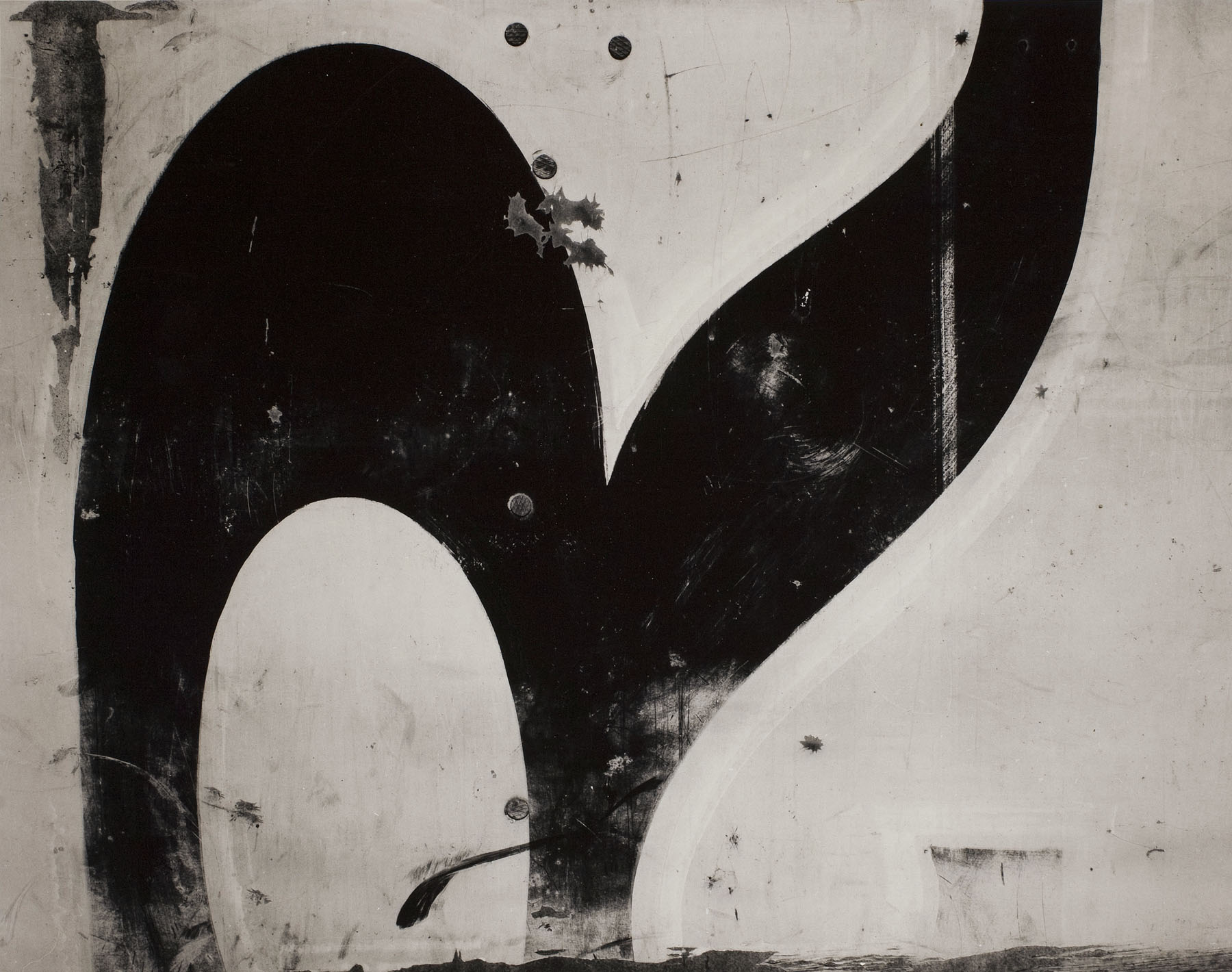
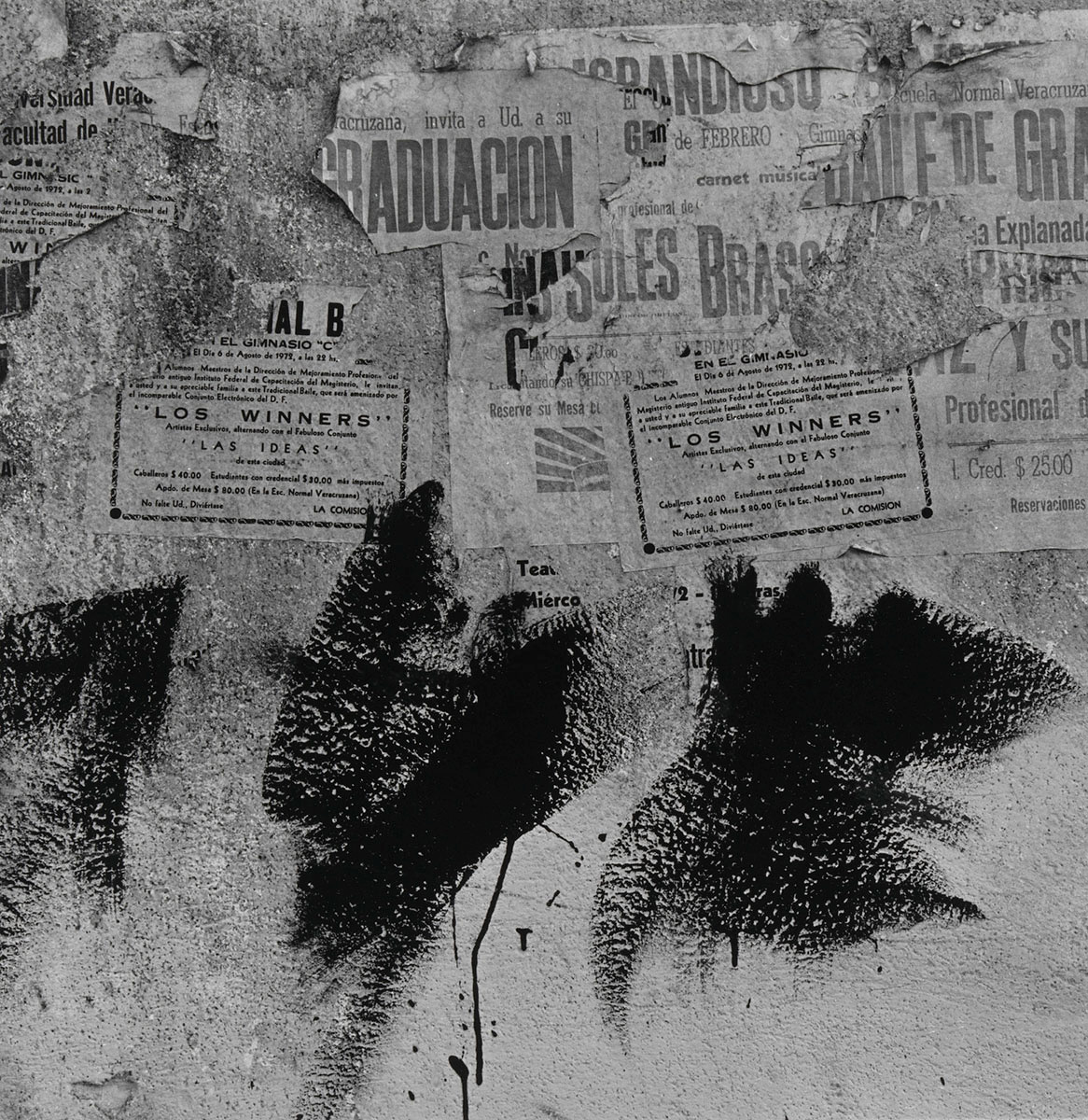
Aaron Siskind (American, 1903-1991) 'Jalapa 30 (Homage to Franz Kline)' 1973


Aaron Siskind (American, 1903-1991)
Jalapa 30 (Homage to Franz Kline)
1973
Gelatin silver print
9 1/2 x 9 15/16″ (24.1 x 23.6cm)
Gift of Robert and Joyce Menschel


Aaron Siskind (American, 1903-1991) 'Jalapa 38 (Homage to Franz Kline)' 1973


Aaron Siskind (American, 1903-1991)
Jalapa 38 (Homage to Franz Kline)
1973
Gelatin silver print
9 1/2 x 8 15/16″ (24.1 x 22.8cm)
Gift of Robert and Joyce Menschel


Aaron Siskind (American, 1903-1991) 'Lima 89 (Homage to Franz Klein)' 1975


Aaron Siskind (American, 1903-1991)
Lima 89 (Homage to Franz Klein)
1975
Gelatin silver print
10 3/16 × 9 5/8″ (25.9 × 24.4cm)
Promised gift of Robert B. Menschel


John Gossage (American, b. 1946) 'Monumentenbricke' 1982


John Gossage (American, b. 1946)
Monumentenbricke
1982
Gelatin silver print
12 3/16 x 9 11/16″ (30.9 x 24.6cm)
Promised gift of Robert B. Menschel


Val Telberg (American born Russia, 1910-1995) 'Exhibition of the Witch' c. 1948


Val Telberg (American born Russia, 1910-1995)
Exhibition of the Witch
c. 1948
Gelatin silver print
10 15/16 × 13 3/4″ (27.8 × 35cm)
The Museum of Modern Art, New York
Promised gift of Robert B. Menschel
© 2016 Estate of Val Telberg


Frederick Sommer (American born Italy, 1905-1999) 'I Adore You' 1947


Frederick Sommer (American born Italy, 1905-1999)
I Adore You
1947
Gelatin silver print
7 9/16 × 9 1/2″ (19.2 × 24.1 cm)
The Museum of Modern Art, New York
Promised gift of Robert B. Menschel


John Coplans (British, 1920-2003) 'Self-Portrait (Back with Arms Above)' 1984


John Coplans (British, 1920-2003)
Self-Portrait (Back with Arms Above)
1984
Gelatin silver print
19 13/16 × 15″ (50.4 × 38.1cm)
Promised gift of Robert B. Menschel


Joan Fontcuberta (Spanish, b. 1955) 'Giliandria Escoliforcia' 1983


Joan Fontcuberta (Spanish, b. 1955)
Giliandria Escoliforcia
1983
Gelatin silver print
10 9/16 x 8 1/2″ (26.8 x 21.5cm)
Robert and Joyce Menschel Fund


Joan Fontcuberta (Spanish, b. 1955) 'Mullerpolis Plunfis' 1983


Joan Fontcuberta (Spanish, b. 1955)
Mullerpolis Plunfis
1983
Gelatin silver print
10 9/16 x 8 1/2″ (26.8 x 21.5cm)
Robert and Joyce Menschel Fund


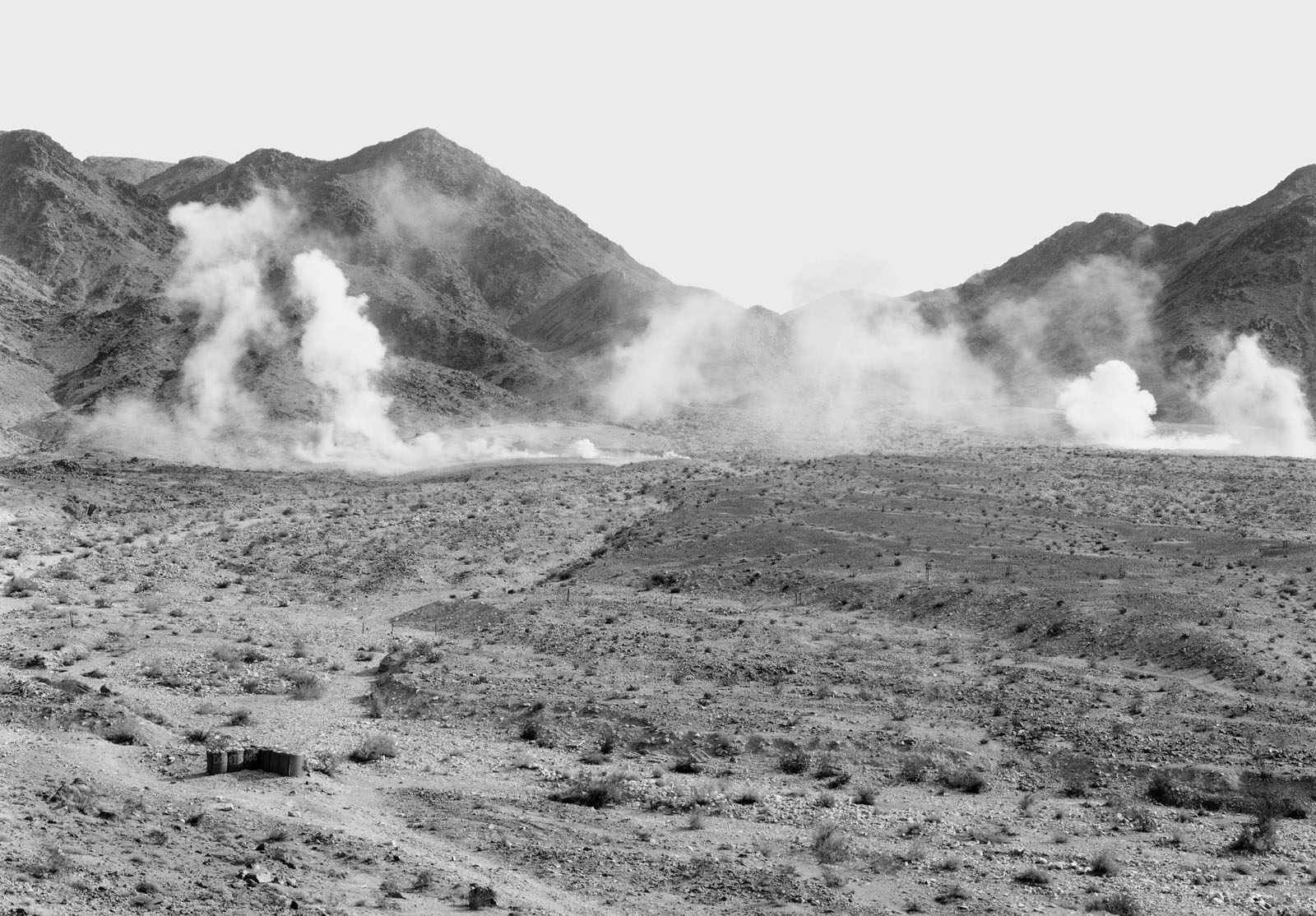
An-My Lê (American born Vietnam, b. 1960) '29 Palms: Mortar Impact' 2003-2004


An-My Lê (American born Vietnam, b. 1960)
29 Palms: Mortar Impact
2003-2004
Gelatin silver print
26 1/2 × 38 1/16″ (67.3 × 96.7cm)
The Museum of Modern Art, New York
Robert B. Menschel Fund
© 2016 An-My Lê


An-My Lê (American born Vietnam, b. 1960) '29 Palms: Infantry Platoon (Machine Gunners)' 2003-2004


An-My Lê (American born Vietnam, b. 1960)
29 Palms: Infantry Platoon (Machine Gunners)
2003-2004
Gelatin silver print
26 1/2 × 38 1/16″ (67.3 × 96.7cm)
The Museum of Modern Art, New York
Robert B. Menschel Fund
© 2016 An-My Lê


David Levinthal (American, b. 1949) 'Hitler Moves East' 1977


David Levinthal (American, b. 1949)
Untitled from the series Hitler Moves East
1975
Gelatin silver print
10 9/16 x 13 7/16″ (26.8 x 34.1cm)
The Fellows of Photography Fund and Horace W. Goldsmith Fund through Robert B. Menschel


William Wegman (American, b. 1943) 'Contemplating the Bust of Man Ray from the portfolio Man Ray' 1976


William Wegman (American, b. 1943)
Contemplating the Bust of Man Ray from the portfolio Man Ray
1976
Gelatin silver print
7 5/16 × 6 7/8″ (18.5 × 17.5cm)
Promised gift of Robert B. Menschel


Michael Spano (American, b. 1949) 'Photogram-Michael Spano' 1983


Michael Spano (American, b. 1949)
Photogram-Michael Spano
1983
Gelatin silver print
57 7/8 x 23 15/16″ (145.2 x 60.8cm) (irregular)
Robert B. Menschel Fund


Carrie Mae Weems (American, b. 1953) 'The Shape of Things' 1993


Carrie Mae Weems (American, b. 1953)
The Shape of Things
1993
Gelatin silver prints
a) 26 7/8 x 26 15/16″ (68.2 x 68.4 cm) b) 26 15/16 x 26 7/8″ (68.5 x 68.3 cm)
Gift of Robert B. Menschel


The Museum of Modern Art
11 West 53 Street
New York, NY 10019
Phone: (212) 708-9400

Opening hours:
10.30am – 5.30pm
Open seven days a week

MoMA website

LIKE ART BLART ON FACEBOOK

Back to top