Duane Michals (American, 1932-2026) What is Time? 1994 Gelatin silver print 16 × 19 7/8 inches (40.6 × 50.5cm) Gift of Duane Michals The Morgan Library & Museum
“Time is the duration of everything, and life is an event, a fluttering of wings.”
Duane Michals
There is no time
Vale the transcendent Duane Michals – storyteller.
Magician, poet, philosopher and dreamer.
An artist, like Joseph Cornell, who I have always felt a special affinity / infinity towards.
I wrote in earlier postings on his work:
“As he says, his work goes beyond description, beyond surfaces, to reveal the subject – not as it looks but as it feels. In his sequences he usually achieves this by posing a question that has no answer, a question that is like a Zen koan… what is the sound of one hand clapping? The grandfather ascends smilingly to heaven with little wings on his back as the child waves goodbye (if youth knew, if age could); the man as human condition turns into a galaxy; and the spirit leaves the body as it was left before. …
Michals staged, narrative scenes take us on a journey into his reality, one which “has entered a realm beyond observation.” He poses difficult questions that force us to examine ideas beyond the world of phenomena, beyond the world of surfaces. He challenges our repressed inner lives and our idealised image of ourselves, disturbing the boundaries of personality, ego, and identity.”1
And
“Duane Michals is one of the greatest photographic storytellers of the twentieth century. His parables – seemingly simple stories used to illustrate a moral or spiritual lesson – resonate, vibrate, with energy, and insight into, the human condition. They are as profound as the air we breathe but cannot see – expressing the invisible, presencing the spiritual. I feel, I know these stories, intimately. Those things-for-which-there-are-no-words. …
There are things here not seen in this photograph. The spirit leaves the body. William Blake and Duane Michals. Enchanted melancholy. The mysterious / music. In swift embrace. In love. In memory. In death. The fluidity of the line of the artist. Things are queer. The world implodes and ravages itself. Paradise is reborn. The letter, and love, from my father that I, also, never did receive. The nature of reality. Truth? … When I was young. What was time?”2
It was Michals great skill as an artist and a human being that enabled us the possibility of accessing some aspect of the mystery of our existence.
Stepping beyond … his spirit has left his body.
Dr Marcus Bunyan
1/ Marcus Bunyan. “Exposing your/self,” on the exhibition ‘Storyteller: The Photographs of Duane Michals’ at Carnegie Museum of Art, Pittsburgh, November 2014 – February 2015 on the Art Blart website January 30, 2015 [Online] Cited 11/06/2026
2/ Marcus Bunyan. “The things-for-which-there-are-no-words,” on the exhibition ‘Illusions of the Photographer: Duane Michals at the Morgan’ at The Morgan Library & Museum, October 2019 – February 2020 on the Art Blart website January 24, 2020 [Online] Cited 11/06/2026
Please click on the photographs for a larger version of the image.
“I write with this photograph not to tell you what you can see, rather to express what is invisible.”
Duane Michals 1966 in Johnson, B. (ed.,) 2004, ‘Photography speaks: 150 photographers on their art’, Aperture, New York p. 150
“The nature of consciousness is always the central question,” he asserted. In The Human Condition, his panel of six photographs from 1969 begins with a man standing on the 14th Street subway platform; the train arrives and he is bathed in a halo of light; the light becomes a swirl and in the last frame he is swept into a white disc the size of a galaxy passing through the night sky. From the immediate to the universal in six frames.
Duane Michals (American, 1932-2026) Things Are Queer 1973 Nine gelatin silver prints Images: 5 × 7 inches (12.7 × 17.8cm) each Gift of Duane Michals The Morgan Library & Museum
Duane Michals (American, b. 1932) The Spirit Leaves the Body 1968 Gift of Richard and Ronay Menschel The Morgan Library & Museum
Curator: Maria L. Kelly, High Museum of Art assistant curator of photography
Aaron Siskind (American, 1903-1991) Pleasures and Terrors of Levitation #37 1953 Gelatin silver print High Museum of Art, Atlanta, gift of Adair and Joe B. Massey in honour of Gus Kayafas
Aaron Siskind was recognised for the ways he rendered his surroundings into often stark shapes and forms, which reflected his fascination with contemporary trends in abstract art. He was an influential teacher at Chicago’s Institute of Design, which was founded by László Moholy-Nagy as the New Bauhaus. This image of a person flying or falling comes from a series Siskind made of the contorted bodies of divers plunging into Lake Michigan. He masterfully created its disorienting effect through tight focus on the floating figure without contextual elements.
Text from the High Museum of Art website
While contemporarily AI-powered technologies are revolutionising the way we interact with and consume media, enabling us to “to process and analyse vast amounts of data quickly, making it easier to find and access the information we need” in the 1920s and 1930s there was also a revolution in the way artists (and their use of the camera) viewed and felt the world – one not based on information, image quality or duplicity in the veracity of the image but one based on the word, perspective – be that point of view, context, close ups, surreality, fragmentation, scale, concept, construction, colour, aesthetics, identity, gender, or radical experimentation.
In this departure from traditional photographic methods, “New Vision photographers foregrounded experimental techniques, including photograms, photomontages and compositions that favoured extreme angles and unusual viewpoints, and these extended to movements such as surrealism and constructivism.” (Press release)
To me, this New Vision is about experiencing different perspectives – experiencing, sensing, feeling and seeing the world in a new light. After the disasters and machine-ations, the destruction of a conservative way of life before the First World War, here was a way to grasp hold of (and picture) the speed of a new world order, the dreams of physiological analysis, the diversity of new identities, and the fluidity of rapidly evolving technological and social cultures.
While today this (r)evolution continues at an ever expanding pace with the consumption of huge amounts of information and images, I believe it may be advantageous to rest for a while on certain experiences and images … so that we let the daggers drop from our eyes, to ‘not make images’ in our minds eye but just to be present in the viewing of a photograph, so that we appreciate and understand every aspect of the great life spirit of this wondrous earth.
Then and now, new vision.
Dr Marcus Bunyan
Many thankx to the High Museum of Art for allowing me to publish the photographs in the posting. Please click on the photographs for a larger version of the image.
The New Vision movement of the 1920s and 1930s offered a revolutionary approach to seeing the world. It represented a rebellion against traditional photographic methods and an embrace of avant-garde experimentation and innovative techniques. László Moholy-Nagy, an artist and influential teacher at the Bauhaus in Germany, named this period of expansion the “New Vision.” Today, the term encompasses photographic developments that took place between the two World Wars in Europe, America, and beyond. New Vision photographers foregrounded inventive techniques, including photograms, photomontages, and light studies, and made photographs that favoured extreme angles and unusual viewpoints. These approaches – which also extended to more defined movements like Surrealism – spoke to a desire to find and see different perspectives in the wake of World War I.
Uniting more than one hundred works from the High’s photography collection, the exhibition traces the movement’s impact, from its origins in the 1920s to today, and demonstrates its long-standing effect on subsequent generations.
Text from the High Museum of Art website
Photography’s New Vision: Experiments in Seeing
Named by the influential German artist and teacher László Moholy-Nagy, the “New Vision” comprised an expansive variety of photographic exploration that took place in Europe, America, and beyond in the 1920s and 1930s. The movement was characterised by its departure from traditional photographic methods. New Vision photographers foregrounded experimental techniques, including photograms, photomontages, and light studies, and made photographs that favoured extreme angles and unusual viewpoints.
This exhibition, uniting more than one hundred works from the High’s robust photography collection, will trace the impact of the New Vision movement from its origins in the 1920s to today. Photographs from that era by Ilse Bing, Alexander Rodchenko, Imogen Cunningham, and Moholy-Nagy will be complemented by a multitude of works by modern and contemporary artists such as Barbara Kasten, Jerry Uelsmann, Hiroshi Sugimoto, and Abelardo Morell to demonstrate the long-standing impact of the movement on subsequent generations.
Text from the High Museum of Art website
Installation views of the exhibition Photography’s New Vision: Experiments in Seeing at the High Museum of Art, Atlanta, June 2025 – January 2026 Photos: Mike Jensen
The High Museum of Art presents “Photography’s New Vision: Experiments in Seeing” (June 13, 2025 – Jan. 4, 2026), an exhibition uniting more than 100 works from the High’s robust photography collection to trace the impact of the New Vision movement from its origins in the 1920s to today. Works include century-old photographs exemplifying themes from the movement and modern and contemporary images that emphasise the relevance of current artistic and social practices as a response to the technological and cultural changes that occurred in the early 20th century.
“This exhibition provides an opportunity to illuminate photographers’ creativity and innovative practices, all inspired by the progression of the medium in the 1920s and 30s,” said High Museum of Art Director Rand Suffolk. “Many of the works are rarely on view, so it will be an exciting experience for visitors to see them and learn about photographers’ abilities as they reflect reality while experimenting with technique and perspective.” Named by the influential German artist and teacher László Moholy-Nagy, the “New Vision” comprised an expansive variety of photographic exploration that took place in Europe, America and beyond in the 1920s and 1930s. The movement was characterised by its departure from traditional photographic methods. New Vision photographers foregrounded experimental techniques, including photograms, photomontages and compositions that favoured extreme angles and unusual viewpoints, and these extended to movements such as surrealism and constructivism.
“Experiments in Seeing” features nearly 100 photographers. It also demonstrates how the New Vision movement revolutionised the medium of photography in the early 20th century in response to the great societal, economic and technological shifts spurred by the upheaval of the two World Wars. Photographs from that era by Ilse Bing, Alexander Rodchenko, Imogen Cunningham and Moholy-Nagy have been complemented by a multitude of photographs by modern and contemporary artists such as Barbara Kasten, Jerry Uelsmann, Hiroshi Sugimoto and Abelardo Morell to demonstrate the long-standing impact of the movement on subsequent generations.
The first section of the exhibition delves into experimental techniques that foreground the light-sensitive aspects of photography, followed by works created through in-camera manipulations or additions to the surfaces of the prints. Subsequent sections explore inventive methods of capturing unexpected views of the world articulated with radical angles or detailed close-ups. Other works showcase surreal approaches to subjects such as humanlike forms and bodies, the use of mirrors and doubling, and everyday scenes heightened by uncanny moments or distorted through the interplay of light, shadow and water.
“Not only does the early 20th century and its art movements continue to be influential, but that time also echoes our current moment – one that feels similarly consequential and innovative with the development of new emerging technologies and methods of communicating,” said Maria L. Kelly, the High’s assistant curator of photography. “The movements and happenings of a century ago are akin to those of today and those shown in the exhibition. There remains a desire for alternative ways to see and approach the world through art, and particularly through photography.”
“Photography’s New Vision: Experiments in Seeing” is on view in the Lucinda W. Bunnen Galleries for Photography located on the Lower Level of the High’s Wieland Pavilion.
Press release from the High Museum of Art
“Light was considered the medium that permits photography. But for me it became the main subject: the protagonist of my photography.”
Ilse Bing, c. 1920s
Light Experimentation
After the trauma of World War I, many artists felt compelled to reconsider conventional art making methods to better reflect and engage with the world. Some photographers turned their attention to the essential element of photography: light. Through innovative visual investigations, cameraless photographs were produced, viewes of the world altered, and scientific discoveries made.
Experimentations with illumination and light-sensitive paper in the darkroom gave rise to photograms, enabling artists to pursue abstraction and to wield light as a sculptural element. The process of solarisation – reversing tones in a print using a flash of light during developing – provided an unconventional view of a subject. Early attempts to capture traces of light on film led to scientific innovations such as using strove lights to freeze movement, depicting magnetic fields, and tracing electrical currents on light sensitive paper.
These processes aim to reveal the invisible, with the elements of change as a constant companion. While artists can insert some control over the elements, the process ultimately shapes the final image. Many artworks in this section exist as unique prints, challenging the assumption of the reproducibility of photography, and emphasising the singularity of the creative moment.
Wall text from the exhibition
Francis Bruguière (American, 1879-1945) The Light That Never Was on Land or Sea c. 1925 Gelatin silver print High Museum of Art, Atlanta, purchase with funds from Georgia-Pacific Corporation
Nathan Lerner (American, 1913-1977) Light Drawing #8 (Smoke) 1938-1939 Gelatin silver print High Museum of Art, Atlanta, gift of Hilary Leff and Elliot Groffman
Ilse Bing (American born Germany, 1899-1998) Untitled [Seated Woman with Necklace, Solarized] 1943 Gelatin silver print High Museum of Art, Atlanta, gift of the Estate of Ilse Bing Wolff
Inspired by William Henry Fox Talbot, an inventor of photography who was fascinated with electromagnetic conduction, Hiroshi Sugimoto began applying charges of electricity directly to unexposed photographic film. After months of honing his technique in the darkroom, he managed to achieve remarkable results with a handheld wand charged by a generator. His Lightning Fields photographs are made without a camera or lens. Here, the abstract visual trace of an electric charge measuring over 400,000 volts sweeps across the composition, reading like the textures of a human hand, the upward tentacles of a fern, or the stark branches of a tree.
V. Elizabeth Turk is an Atlanta-based photographer whose work explores the connections between the human body and the natural world. To make this print, Turk used an analog process from the 1800s that involves coating a large sheet of paper with light-sensitive chemicals. She then arranged her model on top of the sheet and exposed it to light, creating a ghostly silhouette, before repeating the exposure with plants. The resulting photogram is a unique image in which botanical forms intersect with the body, alluding to bones, veins, and skin and suggesting a visceral bond between humans and the environment.
Text from the High Museum of Art website
“The limits of photography are incalculable; everything is so recent that even the mere act of searching may lead to creative results. […] The illiterate of the future will be the person ignorant of the use of the camera as well as of the pen.”
László Moholy-Nagy 1928
Radical Viewpoints
From photography’s inception in 1839, camera technology involved cumbersome equipment and time-consuming development processes until the advent of lightweight cameras in the 1920s. Photographers were then able to work more nimbly, transforming photography into a medium capable of capturing fleeting moments, unusual viewpoints, and multiple perspectives. The exploration of unexpected angles became a hallmark of New Vision photography. Sharp diagonals, extreme vantage points, and shortened perspectives opened novel pathways of perceiving otherwise commonplace environments.
Alexander Rodchenko, a pioneer in this method, championed the camera’s ability to reveal, stating, “in order to teach man to see from all viewpoints, it is necessary to photograph […] from completely unexpected viewpoints and in unexpected positions […] We don’t see what we are looking at. We don’t see marvellous perspectives.” This approach aimed to provide a fuller impression of subjects, prompting viewers to seek and appreciate what might otherwise be overlooked.
Though these early photographs may not appear groundbreaking today, their makers’ carefully considered methods transferred how photography is used. This is evident in photographers’ creative interpretations of their surroundings over the past century.
Alexander Rodchenko was a key figure in the movements of New Vision and Constructivism – abstract and functional art that reflected an industrial society. Advocating “to achieve a revolution in our visual thought,” he explored various methods, such as photographing from unexpected angles, to capture dynamic views and expose new realities. With a new, lightweight 35 mm camera, he often photographed from his apartment balcony to create dramatic scenes of the street below. The perspective in this photograph flattens the building’s stories into one visual field, giving the image a theatrical quality as an onlooker peers over the railing.
A central figure among twentieth-century American photographers, Walker Evans created works in his early career that sample from the New Vision aesthetic, which he may have encountered while abroad in Paris in 1926. His photographs of New York City, made after he returned to the United States, feature dramatically angled or cropped scenes of architecture and city life. Evans made numerous photographic studies of the Brooklyn Bridge from both below and on the bridge, portraying it less as a recognisable landmark and more as a hulking expanse whose form fills each tight frame.
Text from the High Museum of Art website
László Moholy-Nagy (Hungarian 1895-1946) Stage Set for Madame Butterfly 1931 Gelatin silver print High Museum of Art, Atlanta, purchase with funds from Georgia-Pacific Corporation
Moholy-Nagy, a leader of the New Vision, had an expansive artistic practice that included painting, photography, sculpture, film, and more. As a teacher at the Bauhaus, which connected art and industry, he believed in technology’s potential to advance art and society. In 1929, he became set designer at the Kroll Opera House and created avant-garde sets with translucent and perforated materials, often making light itself a sculptural element. Lucia Moholy, a photographer, writer, teacher, and Moholy-Nagy’s first wife, was commissioned as Kroll’s stage photographer. In this image, which either artist may have made, the sharp angle shot from above complicates the set of Madame Butterfly, emphasising intersecting, moving elements and heightening areas of light and shadow.
Similar to the practice of using unusual angles to offer unexpected perspectives, some photographers began capturing highly detailed, close-up views of objects. This approach affords a study of texture, pattern, and structure that may otherwise go unnoticed by the human eye. By eliminating surroundings that could offer a narrative, the physicality of the object becomes the primary focus, allowing it to transcend beyond its everyday existence.
Practitioners of straight photography in the United States and the concurrent New Objectivity movement in Germany shared a core desire to unearth a balance of the familiar and the foreign within intricate images of forms. While Imogen Cunningham and Edward Weston perfected carefully composed studies of plants and other natural matter, Albert Renger-Patzsch, Alexander Rodchenko, and Ralph Steiner explored scientific and industrial objects. Such images celebrated the technological advancements of the time and revealed how mechanical structures often mimic those found in nature, suggesting a shared framework, and a shared beauty, between humanmade and natural. The emphasis on detail and abstraction invites viewers to reconsider their perceptions of both the ordinary and the extraordinary in the world around them.
Eugenia de Olazabal (Mexican, b. 1936) Espinas c. 1985 Gelatin silver print High Museum of Art, Atlanta, gift of the artist
“Surrealism lies at the heart of the photographic enterprise: in the very creation of a duplicate world, of a reality in the second degree, narrower but more dramatic than the one perceived by natural vision.”
Susan Sontag, 1973
Surreality
Surrealism emerged as an artistic movement in reaction to the horrors of World War I. The often disconcerting imagery and literature of the movement reflected a world that felt disorienting and chaotic and captured how the very foundations of reason and humanity were tested and questioned through the realities of war. In his Surrealist Manifesto (1924), French writer Andre Breton advocates for a rejection of rational ways of approaching the world in four of dreams and imagination as pathways to new creative expressions.
Photography played an important role in the Surrealist movement. Artists valued how the medium could capture spontaneous moments that reveal the unexpected, be manipulated to stage scenes, or be altered with darkroom processes. They harness photography in a multitude of ways to create dreamlike and unconscious associations with reality. In these galleries, artists explore uncanny moments and create links to the human psyche by focusing on humanlike forms and fragmented body parts, mirrored and doubled views, and the impact of light and shadows in space.
Eugène Atget was the great chronicler of Paris at the turn of the century. His vast photographic archive captures a city on the precipice of modernisation. Though his photographs of empty city streets were documentary in nature, the Surrealists admired their dreamlike quality and claimed Atget as one of their own despite his protestations. They believed any photograph could shed its original context and intent when viewed with a surrealist sensibility. Atget’s photograph of mannequins peering out of a shop window appealed to the movement by embodying the uncanny valley, where the human likeness of a nonhuman entity evokes both affinity and discomfort in viewers.
Text from the High Museum of Art website
Florence Henri (Swiss born United States, 1893-1982) Composition 1932, printed 1972 Gelatin silver print High Museum of Art, Atlanta, gift of Dr. Joe B. Massey in honor of Maria L. Kelly
Florence Henri is well known for her manipulations of light and form that create complex, surrealist scenes. She used angled mirrors to frame, obscure, and replicate portions of scenes to dissolve a sense of perspective and space, as seen in this still life comprising mirrors, pears, and an image of the sea. After only one semester studying under László Moholy-Nagy at the Bauhaus in 1927, Henri shifted her focus from painting to photography and began using various experimental techniques such as photomontage, multiple exposures, photograms, and negative printing.
Barbara Kasten’s art is as much about the process of setting up innovative still life scenes as it is about the photographs she makes of them. Her Constructs series focuses on large-scale complex assemblages that she builds in her studio using a wide variety of materials, including painted wood, plaster, mirrors, screens, and fibers. Her work is not digitally altered; instead, she complicates the scene using mirrors and light, much in the tradition of Florence Henri, whose photograph is also on view in the exhibition.
Text from the High Museum of Art website
Manipulations
This final section features photographers from the New Vision period to the present day who experiment with physically manipulating photographs. Through approaches such as double exposure, photomontage, surface alteration, and multilayering, they challenge and expand our perceptions of reality. The artworks in this section prioritise the creative process through labour, intention, intervention, and theatricality.
Double exposures is the process of photographing multiple images with the same negative within the camera, resulting in layered images that often provide a frenetic, multifaceted view of a scene. In contrast to the in-camera process of double exposure, photomontage combines separate images in the darkroom to produce a final photograph that emphasises the image’s artifice and absurdity. Physically disrupting the surface of photographs with alterations such as adding unnatural colour, drawing connections, stitching into prints, or inscribing texts augments the visual experience and offers emotional and narrative depth. Finally, whether through ancient visual techniques like the camera obscure or new technologies like digital screens, these artists create enigmatic scenes by layering and physically transforming subject, composition, and image.
Wall text from the exhibition
Barbara Morgan (American, 1900-1992) Protest 1940 Gelatin silver print High Museum of Art, Atlanta, purchase
Noémie Goudal (French, b. 1984) Phoenix V 2021 Dye coupler print High Museum of Art, Atlanta, purchase through funds provided by patrons of Collectors Evening 2023
Noémie Goudal visualises “deep time” (geological history of the planet) and paleoclimatology (study of past climates) to challenge our perception of the world. Referring to the ancient continental split two billion years ago that formed South America and Africa, this image features the Phoenix atlantica, a palm tree that grows on both sides of the Atlantic. Goudal arranged strips of photographic prints of the palms made on one continent in front of the physical palms on the other and rephotographed the scene. The resulting image interweaves the two continents, creating a glitchy, kaleidoscopic view meant to unsettle our sense of stability and the constancy of the planet.
Text from the High Museum of Art website
Naima Green (American, b. 1992) It Lingers Sweetly 2022 Pigmented inkjet print High Museum of Art, Atlanta, purchase with funds from the LGBTQIA+ Photography Centennial Initiative
Naima Green’s practice centres connection and collaboration to cast a tender lens on her own queer community of colour. Her lyrical portraits take shape in intimate domestic spaces and airy outdoor environments that embody havens for the people in those spaces. Through double exposure and serial photographs, she provides what she calls “multiple entry points” into a moment in time, translating movements and emotions into a single image. She explains her interest in double exposure “as a means of capturing things that can’t be held in just one way … ,” allowing her to “play with loosening the narrative and letting go of some control.”
Text from the High Museum of Art website
The High Museum of Art 1280 Peachtree St NE Atlanta, GA 30309
Installation view of the exhibition Clandestine – The Human Body in Focus at the Cobra Museum of Modern Art, Amstelveen showing from left to right, Armando Cristeto (Mexico, b. 1957) Apolo urbano, c. 1981; Antonio Reynoso, La Gorda, c. 1960; Herb Ritts, Wrestling Torsos, Hollywood, c. 1987
I’m working from my iPad at the moment as my computer has gone down, so this will be short and sweet.
It’s disappointing, to say the least, that in this day and age a museum provides so few media images on such an important theme that I had to spend many hours digging around trying to find images for this posting. I examined the labels on the installation photographs, and then looked at the museum’s Instagram account where there was much more information, before searching for large enough images online for the posting. Some artists are little known so this proved very difficult.
It’s good to see Arlene Gottfried’s strong, brash, direct photographs of gay icons, Jewish bodybuilders and street urchins but they are standard clubbing / street fare and there is little subtlety in her work.
While Gottfried may have survived to tell her story her own way the work only documents. For a photograph is that ever enough? Here the photographs in no way provide a fresh perspective on a clubbing street aesthetic grounded in the milieu of the mid 70s to early 80s Studio 54, pre-AIDS, groovy, disco party vibe. Nostalgia, history and memory are their appeal today.
Tastes have changed. Personally I find more power and sensitivity in Kike Arnal’s Untitled (Emmanuel, trans man and tattoo artist) (2018, below) than most of Gottfried’s graphic photographs – her subjects caught as if the lights had come up in the club at 6am (believe me this has happened many times, all of us looking like startled rabbits). Strike a pose!
Dr Marcus Bunyan
Many thankx to the Cobra Museum of Modern Art for allowing me to publish the photographs in the posting. Please click on the photographs for a larger version of the image.
Installation view of the exhibition Clandestine – The Human Body in Focus at the Cobra Museum of Modern Art, Amstelveen showing from left to right, Shohei Miyachi, Untitled, c. 2018; Leonard Freed, Handcuffed, New York City, from Police Work series, c. 1978; Larry Clark, Chuck, c. 1981
Arlene Gottfried (American, 1950-2017) Angel and Woman on Boardwalk, Brighton Beach 1976 Vintage gelatin silver print Framework: 59.5 x 46.5cm Photo: 27.9 x 35.5cm Pedro Slim Collection
How does your gender impact your work as an artist? The candid photographs of Arlene Gottfried have become everlasting memories of New York’s fast-evolving culture(s). For over 40 years, Gottfried photographed the intimate stories of the American domestic life, as well intrepid snapshots of the Puerto Rican community or the wild nights inside Studio 54.
She emphasised that being a female photographer back in the 70s was very different than now:
‘A lot of the male photographers [in the past] felt threatened and didn’t like it. […] It’s changed so much with women working. They’re more visible now. I don’t know the statistics on museums and how many are being collected. But on an everyday level, you see women in jobs that used to be male – bus driver, train conductor – typically male jobs that now have female employees and photography was the same. It used to be only guys, really. And actually, in my first photography class, I was the only young woman in the class and I had a lump in my throat, like I wanted to cry, only guys there. But it wound up being a very supportive environment and I learned a lot.
Unless you’re doing something that’s a very feminine kind of a topic, I don’t think gender is really all that visible.’
Anonymous text from the Cobra Museum of Modern Art Instagram page
Arlene Gottfried (American, 1950-2017) Guy With Radio, East 7th Street 1977 Vintage gelatin silver print Framework: 59.5 x 46.5cm Photo: 35.5 x 27.9cm Pedro Slim Collection
Arlene Gottfried (American, 1950-2017) Pituka at Bethesda Fountain, Central Park 1977 Vintage gelatin silver print Framework: 59.5 x 46.5cm Photo: 35.5 x 27.9cm Pedro Slim Collection
The legendary street photographer who captured more than neutral subjects, but also the living faces and bodies of people along with their memories. Arlene Harriet Gottfried photographs preserve cultural heritage of the urban atmosphere.
One of the most quintessential projects Gottfried produced was a black-and-white series of street photography from the 1970s and 80s in New York. Her work will form part of our exhibition Clandestine. This is a photo exhibition about the human body. One of the most dominant themes in the exhibition is the constant dialogue between culture and bodies. This is something Arlene Gottfried captures particularly well. Arlene Gottfried documented scenes of ordinary daily life. The everyday life from the past that still lives vividly in her photographs. Her work embodied stories and memories of people who although you will never get to know, you can easily feel familiarised.
Anonymous text from the Cobra Museum of Modern Art Instagram page
Arlene Gottfried (American, 1950-2017) Disco Sally at Studio 54 1979 Vintage gelatin silver print Pedro Slim Collection
Arlene Gottfried (American, 1950-2017) Pose Early 1980s Vintage gelatin silver print Pedro Slim Collection
Arlene Gottfried (American, 1950-2017) Le Clique Early 1980s Vintage gelatin silver print Pedro Slim Collection
Installation view of the exhibition Clandestine – The Human Body in Focus at the Cobra Museum of Modern Art, Amstelveen showing Arlene Gottfried’s portrait Marsha P. Johnson c. 1983
Arlene Gottfried (American, 1950-2017) Marsha P. Johnson c. 1983 Vintage gelatin silver print Pedro Slim Collection
Marsha P. Johnson was an African-American trans woman who lived in New York and is celebrated for her contribution to the LGBTQI+ movement. She was often referred to as ‘Saint Marsha’ for serving as a “drag mother” aiding and welcoming homeless people as well as young members of the LGBTQ movement.
Marsha P. Johnson was the Rosa Parks of the LGBT+ movement. She was a devoted activist, drag performer, sex worker and at some point she even modelled for Andy Warhol. She established safe spaces for transgender people and was thoroughly dedicated to defending the rights of trans people, sex workers, people with HIV/AIDS and prisoners.
‘You never completely have your rights, one person, until you all have your rights.’ ~ Marsha P. Johnson
Our exhibition, Clandestine – The Human Body in Focus presents stories in black and white photographs about people who have not been recognised yet for their bravery. Today, Marsha lives in the hearts of brave activists as well as many transgender people.
The human body is the central theme of the Clandestine photo exhibition. About a hundred black-and-white photographs express an unreserved love of the body in all its manifestations: perfect, imperfect, elegant, erotic, proud or, on the contrary, very vulnerable. The works come from the extensive collection of photographer and collector Pedro Slim (Beirut, Lebanon, 1950) and are shown in the Netherlands for the first time.
Clandestine showcases photography by some 60 artists, including Diane Arbus, Horst P. Horst, Arlene Gottfried, Graciela Iturbide, Robert Mapplethorpe, Diana Blok, Helmut Newton and Man Ray. The exhibition presents original and contemporary prints (including silver on gelatine, photogravure), collages and photomontages. These photographs are placed in the context of New York in the 1970s and 1980s, where many were taken. Pedro Slim’s photo collection holds a unique place in the field of photography. In 1985, Slim started collecting photographs in which the human body plays a central role. With his collection, Slim highlights the power of images and seeks to transform and break open the paradigm that dictates what is feminine, masculine, non-binary or trans. Pedro Slim’s collection consists of more than 300 vintage prints and has rarely been exhibited.
The beauty of the photographs lies especially in the personal expression of those portrayed. The artists seek to go beyond the prevailing standards and ideals of beauty, and make a plea to appreciate the body in all its manifestations. The photographs are thus an ode to diversity and are still very relevant today.
Three themes
The exhibition revolves around three themes. The first part of the exhibition focuses on past and present ideals of beauty. The photographs show a diversity of body types and invite us to transcend judgements such as ‘beautiful’ and ‘ugly’. The photographs within the second theme show people living on the fringes of society, many of the recorded scenes are raw, everyday situations. The visitor sees sex work, drug use and indecency. There are painful stories behind the provocative looks and poses.
The third part of the exhibition is entirely devoted to the work of Arlene Gottfried (1915-2017). Gottfried specialised in the genre known as street photography, recording life in the less well-to-do neighbourhoods of New York. Her themes included gospel, schizophrenia, the Puerto Rican community, and the women in her family. Pedro Slim owns more than twenty original prints by Gottfried. This makes him the most important collector of her work.
About the collector
Photographer and collector Pedro Slim was born in Beirut, Lebanon, in 1950. He studied architecture and photography in Mexico and New York. Since the early 1990s, he has exhibited in various museums and galleries. His most recent exhibition was in 2017 at the Museo de Arte Moderno in Mexico City. His passion for photography led him to start a collection.
Arlene Gottfried (American, 1950-2017) Brothers with their Vines, Coney Island, NY 1976 Vintage gelatin silver print Pedro Slim Collection
Arlene Gottfried (American, 1950-2017) Third Avenue Shopping, El Barrio 1978 Vintage gelatin silver print Pedro Slim Collection
Arlene Gottfried (American, 1950-2017) Men’s Room at Disco 1978 Vintage gelatin silver print Pedro Slim Collection
Arlene Gottfried (American, 1950-2017) Doorway in Soho, NY 1980 Vintage gelatin silver print Pedro Slim Collection
Arlene Gottfried (American, 1950-2017) Savage Riders at The Puertican Day Parade 1980 Vintage gelatin silver print Pedro Slim Collection
Arlene Gottfried (American, 1950-2017) Hassid and Jewish Bodybuilder 1980 Vintage gelatin silver print Pedro Slim Collection
Arlene Gottfried (American, 1950-2017) Riis, Nude Bay, Queens 1980 Vintage gelatin silver print Pedro Slim Collection
After completing a two-year photography program at FIT, Arlene moved to Greenwich Village in 1972, when the community was still an affordable outpost for artists, musicians and bohemians. She took a job as an assistant with an advertising agency. “I did everything: printing, processing, lighting, studio work, on location, a lot of it was for comps and sometimes it was for the ad itself, for sales promotion and point of purchase,” Arlene revealed in her final book, Mommie. “I didn’t always love what it was about but I always took photographs on the weekend and used their fantastic darkroom.”
“It’s nice to be young and be able to run across the beach like wild and be able to meet people and take their picture,” she continued. “That’s what I remember about it: Having a great time, and having a job so I could pay for things, and having a darkroom where I could print everything. You couldn’t ask for anything better. It was like a little grant at a little job, you know, a moderate income but just enough.”
Arlene made “just enough” to carry her through the next 45 years of her life, transforming her home in the West Village’s famed Westbeth Artists Housing into a bohemian palace. Above her kitchen table, she hung her photographs in a plastic carousel designed to air-dry intimate apparel. She entertained visitors, serving cherries and chocolate-covered espresso beans with a bottle of seltzer at the ready. When her cancer treatments stole her brunette curls in the years before her death, Arlene donned a burgundy velvet turban for her nights out.
Although she disliked hustle culture before it was named as such, Arlene maintained resolute faith in the importance of her work and the vitality of her gifts. Where other photographers sought to be a fly on the wall, Arlene was a butterfly in the mix, always aligned with the energy so that her presence only added to the beauty of the images she made. She loved to laugh, to sing, to dance and to celebrate the extraordinary stars in her orbit. In Mommie, Arlene remembers, “The clubs were very provocative then: People putting on these shows, taking their clothes off, acting things out. There’d be a theme and they’d be doing all kinds of crazy things like giving birth to dolls, simulating sex in public. I went in with my camera, took photographs and it was great.”
After the party, Arlene described the feeling of a glorious high that comes from a night on the town, surrounded by people doing what they love. She walked out of the club into the crisp winter air as snowflakes floated down from the sky like confetti in a parade. She then began strolling down Fifth Avenue, heading home, like the final scene of a Hollywood film.
Extract from Miss Rosen. “Sex clubs, Studio 54, Central Park: A portrait of NYC in the 70s & 80s,” on the i-D website 15 October 2021 [Online] Cited 16/10/2021. No longer available online
Arlene Gottfried (American, 1950-2017) Giant Dildo, Les Mouches Party, NY 1979 Vintage gelatin silver print Pedro Slim Collection
Arlene Gottfried (American, 1950-2017) Miguel Pinero and Friend 1980 Vintage gelatin silver print Pedro Slim Collection
As an insider, Gottfried was able to tell the story on her own terms, capturing a slice of life that has vanished forevermore. “Now the only way to know what New York was like is from fleeting glimpses in movies made years ago like Taxi Driver, Death Wish, or Midnight Cowboy,” Gilbert Gottfried observes. “I remember there were neighbourhoods you didn’t want to be in and we lived in a few of those. Arlene had already been living on her own when me, my mother, and my other sister Karen moved to Avenue A. People were saying, ‘You’re nuts.'”
Arlene Gottfried flourished amongst her own, whether palling around with poet Miguel Piñero at the Nuyorican Poets Café, kicking it at Brooklyn’s famed Empire Roller Skating Center, or trooping uptown to the streets of El Barrio. Wherever she went, there she was, ready for whatever would come her way.
“I met Miguel Piñero at the Poet’s Café. I loved to dance and you could really dance over there!” she told me in 2014, roaring with laughter at the memory of her youth. “Salsa. R&B. There was a lot of good energy there. It was rough and raw. Not trendy. And that’s an amazing thing – that the Poet’s Café has lasted so long. I loved it. I stayed there until the sun came up, literally. That doesn’t last forever, these moments in time.”
Though Gottfried and many she photographed have passed, their legacies live on in her warm and loving photographs. Gottfried followed her heart and went with the flow, documenting everything from her years singing gospel with the Eternal Light Community Singers to her long-standing relationship with Midnight, a man suffering from paranoid schizophrenia.
For Gottfried, the camera was her diary and confidant. “I don’t know exactly when Arlene started taking pictures, but I know she got into it and then it was all the time,” her brother says with a laugh. “Sometimes we were both on the bus with my mother. I would be helping my mother off and Arlene was taking pictures. I was thinking, ‘Put down the camera and help me help her out of the bus!'”
Gottfried’s archive holds vast treasures of New York at a time when everyone was a character yet no one would stare because that would suggest you were a tourist, unfit to make it here. Her photographs are a tribute to Old New York, to a city of myth, magic, and madness that many did not survive. Yet in her pictures, their lives are restored to the pantheon of grit, glamour, and glory.
It is a city the lingers like wafts of weed smoke on a warm summer day, a city that still exists if you look for it. Gilbert Gottfried remembers, “A year or two ago I was walking with my wife and we saw these two homeless men. One was fixing the other guy’s hair with his hand, and my wife said, ‘Ahh. That’s an Arlene picture.'”
George Hoyningen-Huene (American-Russian, 1900-1968) A.E. Sudan c. 1935 Gelatin silver print George Hoyningen-Huene Estate Archives
Let’s talk about representation. A Russian man takes a photo of a Sudanese man. Superficially, this might seem problematic, but why?
In our exhibition, Clandestine – The Human Body in Focus, the portrait by the Russian photographer George Hoyningen-Huene, titled A.E. Sudan presents a naked Sudanese.
In a traditional setting, material items like clothes and jewellery help people express their values and beliefs. In this photo, the Sudanese man is alien from any form of expression. In addition, presented in front of a white wall strips the subject away from his situational contexts – such as time and place. This photo shows a person in a blank state, disconnected from any form of cultural or individual expression.
Despite these characteristics (or lack of characteristics), the photographer still opted to include the nationality of the subject in the title – Sudanese. We do not know if the artist understood the semantic power of the title, but by giving us some context, we know this person is not simply a naked model detached from his culture, but rather a ‘Sudanese’ man.
Here is where the questions that concerns representation starts gaining weight. Artists, including photographers, carry tremendous responsibility. Through their medium, they have the power to frame a subject as they please. In the creative process, it is possible that the view of the artist becomes the dominant perception understood by the audience.
For instance, in this case the Sudanese man has no voice concerning how the viewer perceives any of the characteristics that represent his identity, such as his skin colour, nationality, gender or age. It is virtually impossible to discuss all the concerns linked to cultural representation in a post, hence this conversations is far from over. Also, we do not intend to shame the way the artist framed the Sudanese man, but rather our whole aim, inspired by the Cobra movement, is to present new ways to think critically about art, ourselves and society.
Anonymous text from the Cobra Museum of Modern Art Instagram page
Installation view of the exhibition Clandestine – The Human Body in Focus at the Cobra Museum of Modern Art, Amstelveen showing from left to right, Nan Goldin’s Ivy wearing a fall Boston 1973 and Antonio Reynoso’s La Gorda (The Fat Woman) c. 1960
Antonio Reynoso (Mexican, 1919-1996) La Gorda (The Fat Woman) c. 1960 Gelatin silver print Pedro Slim Collection
Beauty lies in the eye of the beholder. This phrase stresses that beauty is thoroughly subjective and only limited by social constructs.
One would argue that beauty is different from sciences like physics or chemistry since it is not quantifiable or measurable. Nonetheless, through non-scientific agreement people still know how to distinguish what is pretty from what is not. For instance, a swampy pond is less pretty than a turquoise ocean. This is the shared opinion, of at least the majority, but is this a view shared by everyone? Even more importantly, is this our view or was it simply bestowed upon us without our prior consent?
Being critical when looking at a work of art, or more frankly when looking at anything, is an exercise to strengthen our own individuality and potential to envision a new beauty. This does not mean one should automatically discredit beauty from something or someone that is socially considered beautiful but to question it. This is a call to acknowledge that the notion of beauty can be challenged, abstracted or even reconstructed.
This is a portrait by Mexican photographer Antonio Reynoso La Gorda (The Fat Woman). It invites us to reconsider the meanings of several attributes including, beauty, sensuality and femininity.
Anonymous text from the Cobra Museum of Modern Art Instagram page
Nan Goldin (American, b. 1953) Ivy wearing a fall Boston 1973 Gelatin silver print Pedro Slim Collection
Allen Frame (American, b. 1951) Young Man, New York 1974 Gelatin silver print Framework: 40.5 x 50.5cm Photo: 27.9 x 35.5cm Pedro Slim Collection
Leonard Freed (American, 1929-2006) Handcuffed, New York City c. 1978 From Police Work series Gelatin silver print Pedro Slim Collection
David Wojnarowicz (American, 1954-1992) Arthur Rimbaud in New York 1978-1979 Gelatin silver print Pedro Slim Collection
Arthur Rimbaud in New York, one of David Wojnarowicz’s few incursions into photography, is the articulation of a testimony to urban, social and political change in New York.
Wojnarowicz, using the figure of the accursed poet as the only way for an artist to intervene in reality, chronicles his own life and his emotional relationship with New York City in the late 1970s. The artista portrays a number of friends with a life-size mask of the French poet Arthur Rimbaud, thereby taking on his identity and highlighting the parallels in their lives: the violence suffered in their youths, the feeling of being denied freedom, the desire to live far away from the bourgeois environment and the fact of their homosexuality. Wojnarowicz is juxtaposing the historical time of the symbolist poet with the artist’s present.
The series, taken in places that the artist used to frequent with photographer Peter Hujar, represents the emergence of identity politics and queer visibility in contemporary art, and the debates surrounding the public sphere as a space for individual non-conformity that were to shape the 1980s. The series also represents a contemplation of the end of the experimental artists’ collectives on the Lower East Side, as gentrification and urban speculation transformed the neighbourhood, and AIDS had begun to decimate the gay community, also causing the early death of the artist in 1992.
George Dureau (American, 1930-2014) B.J. Robinson c. 1980 Gelatin silver print Pedro Slim Collection
What happens when people become labelled as objects of inspiration?
Popular culture often exotifies or objectifies a group of people who are slightly different from the majority. Sayings such as ‘you cannot fail if you have not tried’ accompanied by a photo of a person with a disability, portrays the subject as a source of exceptional inspiration for the viewer. This may objectify the subject in the photo.
This is something that happens in the art world too. For instance, the monumental achievements of artists with a disability, such as Frida Kahlo or Vincent van Gogh, are sometimes phrased as a direct outcome of their condition. By doing so the condition of the artist becomes bigger than the persona. This undermines the different elements that constitute the artist as a whole.
For the photographer George Dureau, whose work is displayed in our exhibition Clandestine, photography is a medium with the potential to empower people with disabilities by simply representing them, without objectifying them. By photographing people with disabilities the same way traditional photographers captured images of models, Dureau reconceptualised the standards of beauty.
The conversation revolving around objectification is far from over. Dureau’s views present an interesting way to think about the topic, but we still need more critical and engaged dialogue and we want to hear your opinion. Where is the boundary between admiration and objectification?
Anonymous text from the Cobra Museum of Modern Art Instagram page
Larry Clark (American, b. 1943) Chuck c. 1981 Gelatin silver print Pedro Slim Collection
Born in 1957 in Mexico City, photographer and historian Armando Cristeto began to study photography in 1977 at the Universidad Nacional Autónoma de Mexico. He was a member of the photography collective known as the Grupo de Fotografos Independientes, one of the numerous cooperatives of artists known as ‘Los Grupos’ proliferating during the late 1970s in Mexico.
Founded by Amando Cristeto’s brother Adolfo Patino, the Fotografos Independientes sought to reach new audiences by taking their exhibitions out onto the street, where their works could interact with the urban context and be appreciated by new classes of people. Their exhibitions were installed along the sidewalks of Mexico City, employing clothesline to hang their photographic prints, or were even paraded through the streets on wheeled carts.
Anonymous text. “Armando Cristeto,” on the ultrawolvesunderthefullmoon website June 9, 2020 [Online] Cited 23/03/2022
Duane Michals (American, b. 1932) The Most Beautiful Part of a Woman’s Body c. 1986 Gelatin silver print Pedro Slim Collection
Duane Michals (American, b. 1932) The Most Beautiful Part of a Man’s Body c. 1986 Gelatin silver print Pedro Slim Collection
Graciela Iturbide (Mexican, b. 1942) Magnolia, Juchitán, México 1986 Gelatin silver print Pedro Slim Collection
Is symmetry more beautiful than asymmetry?
The notion of symmetry is occasionally interchanged with the one of beauty as if these would be synonyms. Artists and philosophers from different cultures and times have championed equilibrium and positioned symmetry on an untouchable pedestal, but culturally speaking, asymmetry might be more valuable.
The mathematical notion of symmetry suggests that if an object is changed – say a cube or a sphere is rotated – it stays the same as before it was moved. Aiming for symmetrical forms seems reasonable from the functional standpoint of an architect or a mathematician, but why do our cultures dismiss or shame asymmetry?
Asymmetry presupposes that something, or someone, changes after its circumstances changed. Transforming when situations demand it, is necessary to evolve. One symmetric thought or body would entail that it does not change when it is moved. That said, maybe it is time to reevaluate the way we perceive notions of beauty and reformulate our societal desires. Asymmetric bodies might be much more sexy and beautiful after all.
The exhibition, Clandestine – The Human Body in Focus, presents black and white photographs of the human body. The photographs render asymmetric human bodies.
Anonymous text from the Cobra Museum of Modern Art Instagram page
Herb Ritts (American, 1952-2002) Wrestling Torsos, Hollywood c. 1987 Gelatin silver print Pedro Slim Collection
Merry Alpern (American, b. 1955) Dirty Windows #16 1994 Gelatin silver print Pedro Slim Collection
Merry Alpern (American, b. 1955) Untitled from the series Dirty Windows 1994 Gelatin silver print Pedro Slim Collection
How to take dramatic photos of strangers? Wait, should you ask for their consent before photographing them?
In most countries, it is legal to take photos of people, including children in public. The question of whether it is morally right or wrong to take photos of strangers remains problematic. Some would say that it depends on the purpose of the photo. Judging a body of work that is intended to be used for profit, such as to promote a product, is different from photojournalism or a photo exhibition.
When seeing the photos exhibited in our exhibition Clandestine- The Human Body in Focus, one wonders if every single body was aware it would end up framed in the museum, or in the Instagram account of the museum itself.
To give this situation a context, consider Merry Alpern’s Dirty Windows series from 1994. Rather than posing her subjects, Alpern captured women (and men) crowded into the tiny bathroom of a sex club in the Wall Street district of Manhattan. Her photos were taken at night, in dim light, from a friend’s apartment, one story higher and about five meters away from the bathroom window. Her obsessive, voyeuristic, and even paranoic project as well as her overtly sexual scenes, caused a national controversy at the time.
With these images, Alpern encapsulated and reduced the identity of her subjects as ‘sex workers’. By taking a single shot of a person and framing it as the complete one, the photo runs the risk of stripping the full identity away from the subject. The women in the Dirty Windows series could be mothers, daughters, great sports players, activists and so on, but not everyone gets to see that part of the story.
Let this be a reminder that when taking a photo of a person, you should make sure the person is aware of the photo’s purpose as well as what part of the story- of their identity – is framed.
Anonymous text from the Cobra Museum of Modern Art Instagram page
Shohei Miyachi (Japanese, b. 1989) Untitled c. 2018 Gelatin silver print Pedro Slim Collection
Kike Arnal (Venezuelan) Untitled (Emmanuel, trans man and tattoo artist) 2018 From the series Revealing Selves – Transgender Portraits from Argentina Gelatin silver print Pedro Slim Collection
When it comes to transgender rights, Argentina is a country rife with contradictions. After being subject to widespread medicalization and incarceration throughout the 20th century, Argentina’s transgender community began to see a number of windfall legal and political wins in the early 21st century that would secure them progress once only dreamed of. These included the Gender Identity Law of 2012, landmark legislation which guarantees transgender Argentinians the right to change their sex in the public record, access free gender reassignment surgery and hormone therapy that doesn’t require medical or psychological diagnoses, and enshrines transgender discrimination protections in law.
But the gulf between legislative gains and reality can be wide in many countries, and Argentina is no exception. Despite these rights, 88 percent of Argentinian trans women have never had a formal job; their average life expectancy is 35, whereas the national average is 77; and only 40 percent graduate from high school. Transgender Argentinians still face massive cultural and social stigma, which can lead to family rejection and poverty.
In Revealing Selves: Transgender Portraits from Argentina … documentary photographer Kike Arnal provides a window into the homes and lives of Argentina’s transgender community, one that captures these contradictions.
Kike Arnal (Venezuelan) Untitled (Emmanuel, trans man and tattoo artist) 2018 From the series Revealing Selves – Transgender Portraits from Argentina Gelatin silver print Pedro Slim Collection
Cobra Museum of Modern Art Sandbergplein 1, 1181 ZX Amstelveen
Duane Michals is one of the greatest photographic storytellers of the twentieth century. His parables – seemingly simple stories used to illustrate a moral or spiritual lesson – resonate, vibrate, with energy, and insight into, the human condition. They are as profound as the air we breathe but cannot see – expressing the invisible, presencing the spiritual. I feel, I know these stories, intimately. Those things-for-which-there-are-no-words.
“Presencing. In 1885, Van Gogh, wrote a letter to his brother Theo: ‘Rembrandt goes so deep into the mysterious that he says things for which there are no words in any language. It is with justice that they call Rembrandt – [a] magician.’ (Letter from Vincent van Gogh to Theo van Gogh [letter 534], on or about 10 October 1885, in Leo Jansen, Luijten and Nienke Bakker (eds.,). Vincent van Gogh: The Letters. Van Gogh Museum and the Huygens Institute, Amsterdam, 2009 [Online] Cited 11/10/2019)
The things-for-which-there-are-no-words remain hidden when approached with conceptual thought. They need to be experienced to be known. The currency of this experience, as we have seen, is deeply personal, but in allowing it we can touch on truth, perhaps even the truth.”1
There are things here not seen in this photograph. The spirit leaves the body. William Blake and Duane Michals. Enchanted melancholy. The mysterious / music. In swift embrace. In love. In memory. In death. The fluidity of the line of the artist. Things are queer. The world implodes and ravages itself. Paradise is reborn. The letter, and love, from my father that I, also, never did receive. The nature of reality. Truth?
“I’m completely overwhelmed by the nature of our reality,” he is quoted as saying in the exhibition catalog about human evolution. “We’ve been working on this version of man for a thousand years. He lives longer, he’s healthier, but he’s still an unproven product. Still the same greedy little bastard.”
“For Michals, photography is not documentary in nature but theatrical and fictive: the camera is one of many tools humanity uses to construct a comprehensible version of reality. In his imaginative, visually rich photographs, the artist exploits the medium’s storytelling capacity,” says the press release. Isobel Crombie suggests the ‘medium’ of photography has ‘The ability to speak to us across time and to connect to the mind and the heart.’2
When I was young. What was time?
Dr Marcus Bunyan
1/ Kim Devereux. “Me and My Muse,” in the NGV Magazine Issue 19 Nov – Dec 2019, p. 55
2/ Isobel Crombie. “One Suggestive Moment,” in the NGV Magazine Issue 19 Nov – Dec 2019, p. 33
Many thankx to The Morgan Library & Museum for allowing me to publish the photographs in the posting. Please click on the photographs for a larger version of the image.
“I write with this photograph not to tell you what you can see, rather to express what is invisible.”
Duane Michals 1966 in Johnson, B. (ed.,) 2004, ‘Photography speaks: 150 photographers on their art’, Aperture, New York p. 150
“I think photographs should be provocative and not tell you what you already know. It takes no great powers or magic to reproduce somebody’s face in a photograph. The magic is in seeing people in new ways.”
Duane Michals
Duane Michals uses visual narrative, symbolism and metaphysical imagery to interpret the human condition. His photographic sequences have a film-like appearance and represent intangible elements of dreams, imagination, death, time, myth and spirit. A freelance commercial photographer, Michals began experimenting with sequence works in the 1960s, later adding text to illuminate emotion and philosophical ideas and following in the tradition of painters such as René Magritte and Giorgio de Chirico whom he greatly admired. His staged, fictive tableaux vivants are intimate scenes that explore the atmosphere of the invisible and metaphysical…
Robert Wiles Evelyn Francis McHale May 1, 1947 1947 Gelatin silver print Overall: 9 1/2 × 8 in. (24.1 × 20.3cm) Purchased on the Goldsmith Fund for Americana The Morgan Library & Museum
“At the bottom of Empire State Building the body of Evelyn McHale reposes calmly in grotesque bier her falling body punched into the top of a car.”
LIFE Magazine caption
“On May Day, just after leaving her fiancé, 23-year-old Evelyn McHale wrote a note. “He is much better off without me. … I wouldn’t make a good wife for anybody,” she wrote. Then she crossed it out. She went to the observation platform of the Empire State Building. Through the mist she gazed at the street, 86 floors below. Then she jumped. In her desperate determination she leaped clear of the setbacks and hit a United Nations limousine parked at the curb. Across the street photography student Robert Wiles heard an explosive crash. Just four minutes after Evelyn McHale’s death Wiles got this picture of death’s violence and its composure.”
LIFE Magazine description
On 30 April she visited her fiancée in Easton presumably to celebrate his 24th birthday and boarded a train back to NYC at 7 a.m., 1 May 1947. Barry [Rhodes] stated to reporters that “When I kissed her goodbye she was happy and as normal as any girl about to be married.”
Of course we’ll never know what went through Evelyn’s mind on 66 mi train ride home. But after she arrived in New York she went to the Governor Clinton Hotel where she wrote a suicide note and shortly before 10:30 a.m. bought a ticket to the 86th floor observation deck of the Empire State Building.
Around 10:40 am Patrolman John Morrissey, directing traffic at Thirty-fourth Street and Fifth Avenue, noticed a white scarf floating down from the upper floors of the building. Moments later he heard a crash and saw a crowd converge on 34th street. Evelyn had jumped, cleared the setbacks, and landed on the roof of a United Nations Assembly Cadillac limousine parked on 34th street, some 200 ft west of Fifth Ave.
Across the street, Robert C. Wiles, a student photographer, also noticed the commotion and rushed to the scene where he took several photos, including this one, some four minutes after her death. Later, on the observation deck, Detective Frank Murray found her tan (or maybe gray, reports differ) cloth coat neatly folded over the observation deck wall, a brown make-up kit filled with family pictures and a black pocketbook with the note which read:
“I don’t want anyone in or out of my family to see any part of me. Could you destroy my body by cremation? I beg of you and my family – don’t have any service for me or remembrance for me. My fiance asked me to marry him in June. I don’t think I would make a good wife for anybody. He is much better off without me. Tell my father, I have too many of my mother’s tendencies.”
Duane Michals (American, 1932-2026) The Spirit Leaves the Body 1968 Gift of Richard and Ronay Menschel The Morgan Library & Museum
Duane Michals (American, 1932-2026) I Build a Pyramid 1978 6 (5 x 7 inch) silver gelatin prints with hand-applied text The Morgan Library & Museum
ILLUSION
Francesco Salviati (Italian, 1510-1563) Emblematic Design with Two-Headed Horse and Moth c. 1550-1563 Pen and brown ink, brown wash, on paper; framing lines at upper left and right edges in pen and brown ink Overall: 7 1/2 × 7 3/8 in. (19.1 × 18.7cm) Gift of János Scholz The Morgan Library & Museum
William Blake (British, 1757-1827) Satan Smiting Job with Boils c. 1805-1810 Pen and black and grey ink, grey wash, and watercolour, over faint indications in pencil, on paper Overall: 9 3/16 x 11 inches (233 x 280 mm) Purchased by Pierpont Morgan (1837-1913) in 1909 The Morgan Library & Museum
Jehan Georges Vibert (French, 1840-1902) A Cardinal in Profile 1880 Watercolour on paper Overall: 4 7/8 × 3 3/8 in. (12.4 × 8.6cm) Gift of John M. Thayer The Morgan Library & Museum
Henry Pearson (American, 1914-2006) 128th Psalm (Study for “Five Psalms”) 1968 Chinese ink on heavy paper Overall: 23 1/2 × 18 in. (59.7 × 45.7cm) Gift of Regina and Lawrence Dubin, M.D The Morgan Library & Museum
Duane Michals (American, 1932-2026) The Illuminated Man 1968 Gelatin silver print, unique print Image: 15 5/8 x 22 7/8 inches The Morgan Library & Museum
When Michals arrived in New York from Pittsburgh in the early 1950s, the city provided not only freedom from the strict conventions of his Catholic upbringing, but an opening to worlds of ideas and experiences that extended in all directions. By the early 1960s, he was living with his life partner, the architect Frederick Gorree (who passed away in 2017) and experimenting with the photographic image beyond the single frame, often including handwritten texts.
“Duane cut photography’s umbilical cord,” Smith said about the photographer’s contributions to the medium. “He saw there’s no reason to limit the camera to what you find in the world; it should be part of the history of expressing ideas.” Michals’s 1970 one-man show at the Museum of Modern Art confirmed his significance in establishing a new genre.
In the 1960s, he became interested in Buddhism and meditation, further expanding his artistic concerns. At the Morgan, Michals walked over to a large, eye-popping ink drawing by Henry Pearson, an abstract artist loosely associated with the Op Art movement. Pearson’s “128th Psalm (Study for ‘Five Psalms’)” from 1968, is a light-bulb-shaped form with lines emanating from the center like electrified nerve endings and pulsating out beyond the frame.
“This drawing is pure energy,” he said. That same year, Michals – who had not known Pearson’s work – made “The Illuminated Man,” a photograph of a male figure facing the camera, his head emanating light, suggesting enlightenment. “The Illuminated Man” and “128th Psalm” share the theme of spiritual radiance.
Michals cited a 1937 painting by René Magritte not in the Morgan Collection called “The Pleasure Principle.” It is a portrait of the poet Edward James, a patron of Surrealist art, his head a glowing light bulb. “I only discovered the painting later,” he said, after he had made his own photographic homage, in 1965, in which Magritte appears ghostlike in double exposure, against a canvas on an easel, behind an empty chair. “I was very proud to have had a similar idea to one of my deities,” he said.
“The nature of consciousness is always the central question,” he asserted. In The Human Condition, his panel of six photographs from 1969 begins with a man standing on the 14th Street subway platform; the train arrives and he is bathed in a halo of light; the light becomes a swirl and in the last frame he is swept into a white disc the size of a galaxy passing through the night sky. From the immediate to the universal in six frames.
Duane Michals (American, 1932-2026) The Bewitched Bee 1986 Gelatin silver print Gift of Duane Michals The Morgan Library & Museum
IMAGE AND WORD
Duane Michals (American, 1932-2026) There Are Things Here Not Seen in This Photograph 1977 10 15/16 x 13 7/8 inches The Morgan Library & Museum
Duane Michals (American, 1932-2026) I Remember Pittsburgh 8 1982 Gelatin silver print The Morgan Library & Museum
Ciro Ferri (Italian, 1634-1689) Fame Painting a Portrait Held by Religion 17th century Brush and brown and white gouache, pen and and brown ink, over black chalk, on brown toned paper Overall: 11 x 7 9/16 inches (279 x 192 mm) Purchased as the gift of the Fellows The Morgan Library & Museum
Design for a frontispiece engraved by Gérard Audran for a volume of portraits of cardinals published by Giovanni Giacomo de’ Rossi
Irving Penn (American, 1917-2009) Giorgio de Chirico, Rome Rome, 1944 (negative), 1946-1947 (print) Gelatin silver print on paper; mounted to cardstock Image And Sheet: 7 1/16 × 7 3/8 in. Gift of Irving Penn, 2006 The Morgan Library & Museum
Duane Michals (American, 1932-2026) Andy Warhol 1958 Gelatin silver print 8 × 10 inches (20.3 × 25.4cm) Collection of Richard and Ronay Menschel The Morgan Library & Museum
Duane Michals (American, 1932-2026) René Magritte at His Easel 1965 77/8 × 97/8 inches (20 × 25.1cm) Collection of Richard and Ronay Menschel The Morgan Library & Museum
Florian, Marquis de (1755-1794) Red leather portfolio [realia] – Portefeuille de Monsieur de Voltaire and Donné à Monsieur de Florian “Voltaire’s briefcase” 18th century Leather, gold clasp Stamped on front: “Portefeuille de Monsieur / de Voltaire”; on back: “Donné a Monsieur / de Florian” Overall: 16 15/16 × 12 5/8 in. (43 × 32cm) Purchased by Pierpont Morgan, 1911 Pierpont Morgan Library Dept. of Literary and Historical Manuscripts The Morgan Library & Museum
Voltaire gave this briefcase to the marquis de Florian, the husband of his niece Elisabeth Mignot. Her sister, Marie-Louise Mignot, Mme Denis, was Voltaire’s companion for the last twenty-nine years of his life. With extensive decorative gold tooling. Exhibited numerous times at the Morgan Library as “Voltaire’s briefcase.”
“The things we chose from the collection were so close to what my instincts are,” he said to Joel Smith, the curator of photography at the Morgan, who organised the show with Michals.
The photographer was referring to the kinship between things he chose and the irreverent nature of his own work. “I’m completely overwhelmed by the nature of our reality,” he is quoted as saying in the exhibition catalog about human evolution. “We’ve been working on this version of man for a thousand years. He lives longer, he’s healthier, but he’s still an unproven product. Still the same greedy little bastard.”
To illustrate the point, he reached for Voltaire’s briefcase among the holdings in the Morgan’s collection. It dates from the 1700s and is decorated with gold-leaf filigree on its red leather casing.
Smith recalled that Michals was so “wowed at the thought of Voltaire’s ideas living inside it and amused by the showbiz of its provenance” that he went home and painted a portrait of Candide on an old tintype, adding Voltaire’s bitterly ironic refrain in white block letters: “This Is the Best of All Possible Worlds.” The briefcase and Candide, 2019 are both in the show.
Yet, Michals doesn’t share Voltaire’s bleak view of existence. His own work is often characterised by an iconoclastic wit, imbued with serious metaphysical inquiry – a “curiosity about the nature of reality, in a much more profound sense than just a bunch of atoms.”
Auguste Rodin (French, 1840-1917) Lucifer c. 1900 Pencil and watercolour, on paper Overall: 9 3/8 × 12 7/16 in. (23.8 × 31.6cm) Gift of Alexandre P. Rosenberg The Morgan Library & Museum
Egon Schiele (Austrian, 1890-1918) Embrace 1914 Graphite on wove paper Overall: 19 1/8 × 12 3/4 in. (48.6 × 32.4cm) Bequest of Fred Ebb The Morgan Library & Museum
[Looks at Egon Schiele’s drawing Embrace (p. 22)] There’s so much emotion in this; it’s so immediate. There’s a few things happening: physical entanglement, then you see the look on his face, registering some kind of emotional response. I love the idea: Schiele had no thought that in a hundred years we’d be standing here or how we’d be talking about it. Art is not really about the future.
Duane Michals in Illusions of the Photographer: Duane Michals at the Morgan exhibition catalogue 2019, p. 21
In this depiction of the artist in the arms of an unidentified companion, the jagged, seemingly erratic contours suggest a psychological agitation characteristic of Schiele’s self-portraits. A feeling of tension derives from the position of the artist’s head-turned away from the woman embracing him – as well as from the placement of the couple to the left of the sheet, with the figure of the woman cropped. The resulting asymmetry conveys the artist’s emotional unbalance and emphasises his egocentric character while demonstrating the amazing technical agility he brought to bear to express a wide range of emotions.
Text from The Morgan Library & Museum website
Duane Michals (American, 1932-2026) A Letter from My Father 1960 (image), 1975 (text) 15 3/4 × 19 7/8 inches (40 × 50.5cm) Gift of Duane Michals The Morgan Library & Museum
The Morgan Library & Museum proudly presents an exhibition combining a six-decade retrospective of Duane Michals with an artist’s-choice selection of works from all corners of the permanent collection. Michals is known for his picture sequences, inscribed photographs, and, more recently, films that pose emotional, conceptual, and cosmic questions beyond the scope of the lone camera image. Illusions of the Photographer: Duane Michals at the Morgan (October 25, 2019 to February 2, 2020) takes viewers on a tour of the artist’s mind, putting work from his expansive career in conversation with Old Master and modern drawings, books, manuscripts, and historical objects.
The first retrospective on Michals to be mounted by a New York City institution, the exhibition is organised around animating themes in the artist’s work: Theatre, Reflection, Love and Desire, Playtime, Image and Word, Nature, Immortality, Time, Death, and Illusion. It showcases his storytelling instincts, both in stand-alone staged photographs and in sequences. The exhibition also includes screenings of short films, Michals’s preferred medium in recent years.
For Michals, photography is not documentary in nature but theatrical and fictive: the camera is one of many tools humanity uses to construct a comprehensible version of reality. In his imaginative, visually rich photographs, the artist exploits the medium’s storytelling capacity. For example, the six images in I Build a Pyramid (1978) find the artist in Egypt, stacking stones in a modest pile that, from the camera’s perspective, appears to rival the scale of the ancient pharaohs’ monuments. Michals reveals that the scenario echoes his childhood habit of building cities from stones in his backyard in McKeesport, Pennsylvania. In the exhibition, Michals’s staged scenes are juxtaposed with those of his creative heroes, who include William Blake, Edward Lear, and Saul Steinberg. In his dual role as artist and curator he matches wits with writers, stage designers, toy makers, and his fellow portraitists of the past and the present.
Since 2015 Michals has focused his creative efforts on filmmaking, a natural outgrowth of his directorial habits as a photographer. On a screen in the exhibition, three short films are featured amid a cycle of over 200 photographs from the series Empty New York (1964-1965), the project through which the artist first recognised his theatrical vision of reality. Michals will host two special programs of film screenings in the Morgan’s Gilder Lehrman Hall, introducing films that have never been screened publicly before.
Illusions of the Photographer revives the format of the 2015 exhibition Hidden Likeness: Emmet Gowin at the Morgan, which The New York Times said “all but redefined the genre” of the collection dive curated by a contemporary artist. The present project is a personal one for Michals, who explains, “The Morgan literally is my favourite museum in New York. I always learn something at the Morgan. I’m so thrilled about this show, because it’s probably going to be the very last time to see me there, with all my resources and touchstones. I’m … archaic, in a way. I’m eighty-seven! I’m of my generation. My references are not at all to what people are talking about today. I’m comfortable there, that’s where I belong – and that’s what I contribute.”
Joel Smith, the Morgan’s Richard L. Menschel Curator and Department Head, says “Duane Michals’s art is contemplative, confessional, and comedic. It transcends the conventional bounds, and audience, of photography. Through narration and sequencing he reorients the camera towards timeless human dilemmas; he derives poetic effects from technical errors such as double exposure and motion blur. His originality and intimacy as an artist come through in the discoveries he brings to light from the Morgan’s collection.”
Illusions of the Photographer: Duane Michals at the Morgan is accompanied by an 88-page softcover catalogue featuring a wide-ranging interview with the artist and illustrations of seventy works, including his selections from the Morgan’s collection and the previously unpublished 1969 title sequence.
About Duane Michals
Duane Michals (b. February 18, 1932, McKeesport, Pennsylvania) is an American photographer who often combines images with text in a format that recalls cinematic storytelling. Michals received his BA from the University of Denver in 1953. He began photographing for magazines in 1960 and became a prolific portraitist of artists such as Andy Warhol, René Magritte, and Marcel Duchamp. His first solo exhibition was held at the Museum of Modern Art, New York, in 1970. Michals lives and works in New York City.
Press release from The Morgan Library & Museum [Online] Cited 14/11/2019
NATURE
James Jacques Joseph Tissot (French, 1836-1902) God Creating the World c. 1900-1902 Gouache on board 7 3/4 x 5 1/4 inches (201 x 135 mm) Morgan Family Collection
James Jacques Joseph Tissot (French, 1836-1902) God Creates Eve while Adam is Asleep c. 1900-1902 Gouache on board 12 x 9 1/8 inches (305 x 233 mm) Morgan Family Collection
James Jacques Joseph Tissot (French, 1836-1902) Adam and Eve in the Garden of Eden c. 1900-1902 Gouache on board 11 x 8 inches (279 x 203 mm) Morgan Family Collection
James Jacques Joseph Tissot (French, 1836-1902) Adam and Eve Perceive their Nakedness c. 1900-1902 Gouache on board 12 1/8 x 8 3/4 inches (308 x 221 mm) Morgan Family Collection
Duane Michals (American, 1932-2026) Paradise Regained 1968 6 silver gelatin prints with hand-applied text
… He picked up a panel of gouache drawings from around 1900 by French illustrator James Jacques Joseph Tissot titled “God Creating the World,” a biblical morality tale in a series of lighthearted scenes depicting the creation of Adam; then Eve; the two of them frolicking; Eve eating the apple; and their banishment from paradise. The Tissot sequence is among nearly 60 works in his final selection for the current exhibition Illusions of the Photographer: Duane Michals at the Morgan, through Feb. 2. His pick of drawings, paintings and artefacts resides in dialogue with 38 of Michals’s photographic works – his narrative sequences as well as stand-alone prints, projected images from a series titled “Empty New York,” and several of his recent short films.
He pointed out a link between the Tissot drawings and his own “Paradise Regained,” from 1968: a suite of six images that begins with a well-dressed young couple sitting and facing the camera in an empty apartment. With each frame they get progressively undressed, and more and more plants fill up the space behind them. In the final image, they are naked amid a lush, domestic Eden.
“I had been looking at a lot of Rousseau paintings when I made the sequence,” Michals said, referring to the jungle scenes of the French Post-Impressionist. While he loves the Tissot panel, he admitted, “I’m a raging atheist,” distancing himself from its religious message. “I was a pretend Catholic and then I stopped pretending.” The spiritual dimension of “Paradise Regained” is balanced by the artist’s tongue-in-cheek view of urban life, where men and women only return to a natural state indoors, where everything is unnatural.
Jacob Hoefnagel (Flemish, 1573 – c. 1632) Orpheus Charming the Animals 1613 Watercolour and gouache, heightened with white gouache, over traces of black chalk, on vellum mounted to panel; bordered in gold Overall: 6 9/16 × 8 5/16 in. (16.7 × 21.1cm) Purchased on the Sunny Crawford von Bülow Fund 1978 Morgan Family Collection
Duane Michals (American, 1932-2026) Warren Beatty 1967 Gelatin silver print 8 × 9 15/16 inches (20.3 × 25.2cm) Purchased on the Photography Acquisition Fund The Morgan Library & Museum
PLAYTIME
Duane Michals (American, 1932-2026) Things Are Queer 1973 Nine gelatin silver prints Images: 5 × 7 inches (12.7 × 17.8cm) each Gift of Duane Michals The Morgan Library & Museum
REFLECTION
Wallace Studio, Manchester, New Hampshire Untitled (Mirror) c. 1880s Cabinet card with rounded corners Mount: 6 7/16 × 4 3/16 in. (16.4 × 10.6cm) Print: 5 11/16 × 4 in. (14.4 × 10.2cm) Gift of Adam Fuss The Morgan Library & Museum
Carlo Galli Bibiena (1728 – c. 1778) Interior of a Gallery 1750s Pen and black ink and grey and brown wash Sheet is framed by an overmount of paper that leaves around 8 5/8 x 11 7/8 inches visible Overall: 9 1/4 × 12 13/16 in. (23.5 × 32.5cm) Thaw Collection The Morgan Library & Museum
John F. Collins (American, 1888-1990) Multiple Self-Portrait 1935 Gelatin silver print Image: 13 3/4 × 10 9/16 in. (34.9 × 26.8cm) Purchase on the Photography Collectors Committee Fund The Morgan Library & Museum
Duane Michals (American, 1932-2026) A Story About a Story 1989 15 7/8 x 19 3/4 inches (40.3 × 50.2cm) Purchased on the Photography Collectors Committee Fund The Morgan Library & Museum
In Michals work, the immediate and the infinite spar. In the show is a single image by a little-known photographer named John F. Collins. The 1935 self-portrait shows Collins looking at us while holding a large photograph of himself; in that photograph he is looking down at the same photograph of himself. In each subsequent picture within a picture, he is looking out, and then into the photograph he is holding, into a spiralling infinity.
It is a striking parallel to Michals’ “A Story Within a Story” of 1989, in which a man leans against a mirror in the corner of the frame and faces a mirror in which his reflection echoes repeatedly as it recedes behind him. “This is a story about a man telling a story about a man. …” starts his text.
N. Institoris (d. 1845) Interior of a Prison c. 1825-1845 Pen and black ink, with grey wash, over pencil, on paper; verso contains slight sketch of a building, in graphite. 13 x 17 1/2 inches (330 x 445 mm) Gift of Mrs. Donald M. Oenslager, 1982 The Morgan Library & Museum
Gabriel Pierre Martin Dumont (French, 1720-1791) Perspective View of the Mechanical Works and Construction of a Theater. Verso: Sketch of an elevation of a colonnade 18th century Pen and black ink, with grey wash, over graphite, on paper; verso: graphite 12 1/4 x 14 9/16 inches (310 x 369 mm) Purchased as the gift of Mrs. Donald M. Oenslager in memory of her husband The Morgan Library & Museum
Eugène Atget (French, 1857-1927) Cour de Rouen 1898 Albumen print Overall: 8 × 6 3/4 in. (20.3 × 17.1cm) Purchased on the Photography Collectors Committee Fund The Morgan Library & Museum
Louis Faurer (American, 1916-2001) Penn Station Lovers 1946-1947, printed c. 1981 Gelatin silver print 14 x 11 in. (sheet) Purchased as the gift of Elaine Goldman The Morgan Library & Museum
Duane Michals (American, 1932-2026) Empty New York, Subway Interior c. 1964 Gelatin silver print 8 × 10 inches (20.3 × 25.4cm) Collection of Nancy and Burt Staniar The Morgan Library & Museum
Duane Michals (American, 1932-2026) Empty New York, Dry cleaners upper East side c. 1964 Gelatin silver print 8 × 10 inches (20.3 × 25.4cm) Collection of Nancy and Burt Staniar The Morgan Library & Museum
Duane Michals (American, 1932-2026) From the series Empty New York c. 1964 Gelatin silver prints 8 × 10 inches (20.3 × 25.4cm) Collection of Nancy and Burt Staniar The Morgan Library & Museum
TIME
Herbert Matter (American born Switzerland, 1907-1984) Alexander Calder hanging mobile in motion 1936 Gelatin silver print with additions by hand 5 9/16 × 6 3/16 in. (14.13 × 15.72cm) Purchased as the gift of Richard and Ronnie Grosbard The Morgan Library & Museum
Herbert Matter (April 25, 1907 – May 8, 1984) was a Swiss-born American photographer and graphic designer known for his pioneering use of photomontage in commercial art. The designer’s innovative and experimental work helped shape the vocabulary of 20th-century graphic design.
Biography
Born in Engelberg, Switzerland, Matter studied painting at the École des Beaux-Arts in Geneva [fr] and at the Académie Moderne in Paris under the tutalge of Fernand Léger and Amédée Ozenfant. He worked with Adolphe Mouron Cassandre, Le Corbusier and Deberny & Peignot. In 1932, he returned to Zurich, where he designed posters for the Swiss National Tourist Office and Swiss resorts. The travel posters won instant international acclaim for his pioneering use of photomontage combined with typeface.
He went to the United States in 1936 and was hired by legendary art director Alexey Brodovitch. Work for Harper’s Bazaar, Vogue and other magazines followed. In the 1940s, photographers, including Irving Penn, at Vogue’s studios at 480 Lexington Avenue often used them for shooting the advertising work commissioned by outside clients. The practice was at first tolerated, but by 1950 it was banned on the grounds that it “has interfered with our own interests and has been a severe handicap to our editorial operations”. In response Matter and three other Condé Nast photographers Serge Balkin, Constantin Joffé and Geoffrey Baker left to establish Studio Enterprises Inc. in the former House & Garden studio on 37th Street (Penn stayed on but also left in 1952).
From 1946 to 1966 Matter was design consultant with Knoll Associates. He worked closely with Charles and Ray Eames. From 1952 to 1976 he was professor of photography at Yale University and from 1958 to 1968 he served as design consultant to the Solomon R. Guggenheim Museum in New York and the Museum of Fine Arts in Houston. He was elected to the New York Art Director’s Club Hall of Fame in 1977, received a Guggenheim Fellowship in photography in 1980 and the AIGA medal in 1983.
As a photographer, Matter won acclaim for his purely visual approach. A master technician, he used every method available to achieve his vision of light, form and texture. Manipulation of the negative, retouching, cropping, enlarging and light drawing are some of the techniques he used to achieve the fresh form he sought in his still lifes, landscapes, nudes and portraits. As a filmmaker, he directed two films on his friend Alexander Calder: “Sculptures and Constructions” in 1944 and “Works of Calder” (with music by John Cage) for the Museum of Modern Art in 1950.
Close friends of Matter and his wife Mercedes were the painters Jackson Pollock, Willem de Kooning, fellow Swiss photographer Robert Frank and Alberto Giacometti. Matter’s wife Mercedes was the daughter of the American modernist painter Arthur Beecher Carles, and was herself the chief founder of the New York Studio School.
“The absence of pomposity was characteristic of this guy”, said another designer, Paul Rand, about Matter. His creative life was devoted to narrowing the gap between so-called fine and applied arts. Matter died on May 8, 1984, in Southampton, New York.
Saul Steinberg (American born Romania, 1914-1999) Untitled (Cat and wheel of time) 1965 Ink (black, blue, red, green, brown) and pencil on laid Strathmore 19 × 25 in. (48.26 × 63.5cm) Gift of the Saul Steinberg Foundation The Morgan Library & Museum
Saul Steinberg defined drawing as “a way of reasoning on paper,” and he remained committed to the act of drawing. Throughout his long career, he used drawing to think about the semantics of art, reconfiguring stylistic signs into a new language suited to the fabricated temper of modern life. Sometimes with affection, sometimes with irony, but always with virtuoso mastery, Saul Steinberg peeled back the carefully wrought masks of 20th-century civilisation.
Text from The Morgan Library & Museum website
Duane Michals (American, 1932-2026) When He Was Young 1979 8 x 9 15/16 inches (20.3 × 25.2cm) Purchased on the Photography Collectors Committee Fund The Morgan Library & Museum
Duane Michals (American, 1932-2026) What is Time? 1994 Gelatin silver print 16 × 19 7/8 inches (40.6 × 50.5cm) Gift of Duane Michals The Morgan Library & Museum
Included in his selection from the Morgan is an amusing drawing by Saul Steinberg, “Cat and the Wheel of Time,” 1965, in which the months of the year, the days of the week, and the hours of the day are written in circles inside a large wheel following a small cat down a hill. “Time has always been central to so much of my thinking,” Michals said. Smith handed him his text and image piece, What Is Time? from 1994, in which an eternally handsome young man holds an old-fashioned round clock to his ear. The text beneath it begins, “Time is the duration of everything, and life is an event, a fluttering of wings … the moment is the interval between now and then and, then, again.”
Many thankx to the The Morgan Library & Museum for allowing me to publish the photographs in the posting. Please click on the photographs for a larger version of the image.
Photographer Unidentified Untitled (women in aprons pose among trees) 1913 Commercially processed gelatin silver print; postcard The Morgan Library & Museum Gift of Peter J. Cohen
Photographer Unidentified Untitled (women in aprons pose among trees) (detail) 1913 Commercially processed gelatin silver print; postcard The Morgan Library & Museum Gift of Peter J. Cohen
Myers Cope Co. Atlantic City Photo-multigraph of unidentified girl (Woman in trick photo-booth) c. 1920s Gelatin silver print with postcard back The Morgan Library & Museum Gift of Peter J. Cohen
Studio Retrato-Escultura Victor Fotoescultura with eight subjects c. 1940s Carved, painted, and assembled wood with hand-coloured gelatin silver prints The Morgan Library & Museum Purchased as the gift of Richard and Ronay Menschel
Photographer Unidentified Group at the Main Building, Moscow State University after 1953 Gelatin silver print and mixed media The Morgan Library & Museum Purchased as the gift of Peter J. Cohen
Photographer Unidentified (American) Untitled (seventeen women in swimsuits hold magazines up on a low stage on a lawn) 20th century (c. 1950s) Commercially processed gelatin silver print The Morgan Library & Museum Gift of Peter J. Cohen
Robert Frank (Swiss-American, 1924-2019) Trolley – New Orleans 1955 Gelatin silver print The Morgan Library & Museum
The Morgan Library & Museum presents a new exhibition about photography’s unique capacity to represent the bonds that unite people. From posed group portraits and candid street scenes to collages, constructions, and serial imagery, photographers have used many methods to place people in a shared frame of reference. Opening May 31, 2019, Among Others: Photography and the Group brings together more than sixty exceptional works spanning the 1860s to the present to explore the complexity of a type of image that is often taken for granted. Drawn primarily from the Morgan’s collection, the works in the exhibition include images by Amy Arbus, Eve Arnold, Robert Frank, Peter Hujar, and August Sander.
Among Others presents the seemingly endless possibilities of the group photograph, placing historically important portraits alongside records of significant cultural moments and experiments that helped reinvent the genre. In representations of the group, artist, subjects, and circumstances come together to create an image that might call to mind a loving family, a chance encounter among strangers, an embodiment of the democratic spirit, or a photographer’s ability to read and respond to a crowd. The photographs in the exhibition come in many formats: not just exhibition prints, snapshots, and posters, but also photo books, painted wooden sculpture, collages, baseball cards, and even a wastepaper basket featuring Richard M. Nixon. In their range and ingenuity, the works pose questions about family, diversity, democracy, representation, and the varieties of visual delight.
One section of the exhibition features candid scenes from public life, such as Robert Frank’s Trolley, New Orleans (1955), seen in a large-scale print the artist made around the time it graced the cover of his landmark book, The Americans (1959). Also on view are photographs of collective actions that came to define significant cultural moments, such as Eve Arnold’s 1960 photograph of a training school for Black sit-ins and Danny Lyon’s image of Haitian women praying in the month after the collapse of the corrupt regime of Jean-Claude Duvalier.
Photographers took a wide range of approaches to representing the group beyond the arranged sittings of families or civic organisations. Bob Adelman’s People Wall, World’s Fair, New York exploits the way IBM’s 1965 attraction cast a spotlight on the social and ethnic diversity of fair attendees. For a 1970 recruitment poster for the Gay Liberation Front, Peter Hujar asked the group’s members to run exuberantly toward him on the street, enacting their slogan, “Come Out!!” Camera artists have often embedded themselves in the action they portray, as Susan Meiselas did when mingling with carnival strippers, first to capture them behind the scenes and then to photograph their audience from a performer’s perspective.
When the subjects are beloved celebrities, the portrait seals a relationship of shared admiration between maker and viewer. In 1965, press photographer Jean-Pierre Ducatez made four images that zeroed in on the lips of each of the Beatles, creating likenesses that appealed directly to dedicated fans. In 1981, Amy Arbus happened to snap a photo of a photogenic group hanging out near Times Square, and only later learned they were members of the Clash and their entourage.
The exhibition features items of “pop photographica” that play radically with the conventions of camera representation. In these pieces, individual portraits are mixed and matched to suit the purposes of board games, collectibles such as cigarette cards, and even psychological tests.
“The Morgan’s photography collection has grown and evolved in many directions since its founding in 2012, always with a dual emphasis on the camera’s creative possibilities and its role in shaping modern sensibilities,” said Colin B. Bailey, Director. “We are excited to present this wide-ranging selection of works, most of which are recent acquisitions and have never been exhibited before at the Morgan.”
Joel Smith, the Morgan’s Richard L. Menschel Curator and Department Head, said, “The group is a subject we’re so accustomed to seeing in photographs, it’s easy to forget that the conventions around it had to be invented, and that they shape our picture of reality. This exhibition invites viewers to explore the many ways images have defined – since long before the selfie – how it looks to belong to a group and what it means to be represented.”
Press release from The Morgan Library & Museum [Online] Cited 21/07/2019
Powell & Co. Anti-Slavery Constitutional Amendment Picture 1865 Albumen print The Morgan Library & Museum Purchased on the Charina Endowment Fund
Powell & Co. Anti-Slavery Constitutional Amendment Picture (detail) 1865 Albumen print The Morgan Library & Museum Purchased on the Charina Endowment Fund
Eugene Omar Goldbeck (American, 1892-1986) Indoctrination Division, Air Training Command, Lackland Air Base, San Antonio, Texas, July 19, 1947 1947 Gelatin silver print The Morgan Library & Museum Purchased on funds given by members of the Photography Collectors Committee
Eugene Omar Goldbeck (American, 1892-1986) Indoctrination Division, Air Training Command, Lackland Air Base, San Antonio, Texas, July 19, 1947 (detail) 1947 Gelatin silver print The Morgan Library & Museum Purchased on funds given by members of the Photography Collectors Committee
Photographer Unidentified (American) Untitled (human pyramid: fifty-six boys in white uniforms arranged in eight levels in a gymnasium) 20th century Commercially processed gelatin silver print The Morgan Library & Museum Gift of Peter J. Cohen
Photographer Unidentified (American) Untitled (human pyramid: fifty-six boys in white uniforms arranged in eight levels in a gymnasium) (detail) 20th century Commercially processed gelatin silver print The Morgan Library & Museum Gift of Peter J. Cohen
It’s hard to get a sense of this exhibition from the media images, therefore difficult to make any constructive comment on the strength of the exhibition.
Apparently,
“The exhibition’s gallery feels very domestic. Groups of photos hang on the walls – different sizes, colours, formats and frames – like you’d see in a living room or hallway. MFA curator Karen Haas confirms that evocation is absolutely intentional.
“Photographers from the very beginning have been fascinated by the way that the camera could capture images of loved ones, freeze them in time,” she says. “They form sort of reliquaries of memory, and these sorts of relationships to the objects – that idea of the photograph as a talisman-like object I think has been somewhat forgotten in our contemporary world.” …
Haas’ goal in creating this show is to illustrate how broad and diverse family configurations can be – without defining them. “The families that we’re born into, generational families,” she describes, “but also romantic unions, couples and chosen families – families we have chosen for ourselves.” And that includes the military and the church, Haas says. “I think the family is such a basic social construct – so basic to so many of our lives – that I hope that these kinds of images will really resonate with people.”1
Outsider family, insider family, single parent family, nuclear family, extended family, reconstituted family, childless family, gay family, step family, “family has always taken diverse forms: affluent and destitute, cohesive and fractured, expected and unexpected. Taken together, the photographs challenge visitors to consider what family means to them.”
But what is most important is this:
“There is no right or wrong answer when it comes to what is the best type of family structure. As long as a family is filled with love and support for one another, it tends to be successful and thrive. Families need to do what is best for each other and themselves, and that can be achieved in almost any unit.”2
Families all have secrets, no matter how perfect they may seem to the outside world. Whether it be domestic violence behind closed doors or skeletons in the closet there is always more than meets the eye. And that’s where these photographs of families fail in their representation of the family. That, and the title of the exhibition – (un)expected families – because in the 21st century, nothing should be unexpected.
By adding emphasis to the (un), the title merely propagates a form of discrimination, of outsider as different and therefore worthy of abuse because of that very difference.
Expected families: we are all human beings and therefore anything is to be expected.
Many thankx to the Museum of Fine Arts Boston for allowing me to publish the photographs in the posting. Please click on the photographs for a larger version of the image.
Lewis W. Hine (American, 1874-1940) Home Workers, New York 1915 Lewis W. Hine/Museum of Fine Arts, Boston
Bringing together more than 80 pictures taken by American photographers from the 19th century to today, (un)expected families explores the definition of the American family – from the families we are born into to the ones we have chosen for ourselves. The works on view depict a wide range of relationships, including multiple generations, romantic unions, and alternative family structures.
Using archival, vernacular, and fine art photographs, (un)expected families offers a variety of perspectives on the American family, from Dorothea Lange’s depiction of a migrant family at the time of the Dust Bowl to Louie Palu’s portraits of US Marines fighting in Afghanistan. The exhibition illustrates that the family has always taken diverse forms: affluent and destitute, cohesive and fractured, expected and unexpected. Taken together, the photographs challenge visitors to consider what family means to them.
(un)expected families features celebrated practitioners like Nan Goldin, Carrie Mae Weems, LaToya Ruby Frazier, and Harry Callahan, as well as a number of renowned Boston-area artists, such as David Hilliard, Nicholas Nixon, Abe Morell, and Sage Sohier.
Text from the Museum of Fine Arts, Boston website
Louis Faurer (American, 1916-2001) Ritz Bar, New York 1947-1948 Estate of Louis Faurer/Museum of Fine Arts, Boston
Duane Michals (American, 1932-2026) When he was young, he could not imagine being old. And now that he is old, he cannot imagine ever having been young 1979 Gelatin silver print Duane Michals, courtesy of the DC Moore Gallery, New York, and Osmos, New York
Sage Sohier (American, b. 1954) Mum in her bathtub, Washington, D.C. 2002 Inkjet print Living New England Artists Purchase Fund, created by the Stephen and Sybil Stone Foundation Courtesy Museum of Fine Arts, Boston
David Hilliard (America, b. 1964) Rock Bottom 2008 Panorama Construction
Rock Bottom features, in the left panel, a close up sharp focus portrait of Hilliard’s father standing in a lake, with a severe and harsh facial expression, yet vulnerably placing his hands on his chest between his two sailor swallow’s tattoos. In the right panel, Hilliard himself appears somewhat further from the camera. With a gentler facial expression, the photographer contrasts with his tense patriarchal figure, but features a similar hairy chest and matching tattoos – giving the viewer a hint on the subject’s father-son relationship. The middle panel is exclusive for environmental portraiture and the creation of meaning in the composition: a sunny day at the lake, where the blue skies and soft clouds perfectly reflect on the water and separate the subject matters. The real meaning of the juxtaposition relies on the knowledge of Hilliard’s personal life and the presence of the middle panel: although the father accept his son’s homosexuality, the issue has clearly been a source of tension between them, creating both emotional and physical distance between the subject matters. Represented by the central panel, a stunning view divides the two generations both visually and metaphorically, symbolising the idea of emotional distance in an atypical form.
Like most of Hilliard’s photographs, Rock Bottom exposes how physical distance is often manipulated to represent emotional distance. The presence of the middle panel, exclusively dedicated to environmental portraiture and the emphasis on the importance of our surroundings, also suggests the emotional distance between the subjects. The lack of elements and presence of great depth of field of the center panel insinuates that, regardless of the level of intimacy between the subject matters – distance is always palpable.
Marina Pedrosa. “David Hilliard: Building Meaning Through Composition,” on the medium website [Online] Cited 22/08/2018. No longer available online
Caleb Cole (American, b. 1981) The Big Sister 2012 From the series Odd One Out (2010-Present) Archival pigment print 49 × 68cm (19 5/16 × 26 3/4 in.) Museum purchase with funds donated by James N. Krebs
Bringing together more than 80 pictures taken by photographers from the 19th century to today, (un)expected families at the Museum of Fine Arts, Boston (MFA), explores the definition of the American family – from the families we’re born into to the ones we’ve chosen. The photographs in the exhibition, on view from December 9, 2017 through June 17, 2018, depict a wide range of relationships – multiple generations, romantic unions and alternative family structures – whether connected by DNA, shared life experiences, common interests or even a social media network. Encompassing both carefully staged portraits and serendipitous snapshots, the selection of vernacular, documentary and fine art photographs in (un)expected families illustrates that the concept of family has long taken many forms – a subject that has fascinated photographers since the invention of the camera – and challenges visitors to consider what family means to them. Drawn primarily from the MFA’s holdings, the exhibition includes photographs by celebrated artists such as Nan Goldin, Gordon Parks, Nicholas Nixon, Sally Mann, Diane Arbus, Tina Barney, Emmet Gowin and Bruce Davidson. Loans from private collections include Victorian-era “hidden mother” photographs of children and turn-of-the-century portraits of women in intimate relationships sometimes referred to as “Boston marriages.” Additionally, (un)expected families highlights many New England photographers whose work centers on familial relationships, debuting eight photographs – acquired specifically for the exhibition – by Zoe Perry-Wood, Arno Rafael Minkkinen, Amber Tourlentes, Caleb Cole, Tanja Hollander, David Hilliard and Jeannie Simms. An interactive component of (un)expected families invites visitors to share thoughts about their own families on response cards. A selection will be displayed in the gallery on a rotating basis, and all will be archived as part of the permanent exhibition record. Additionally, a free family guide engages children with close looking and drawing activities. The exhibition is generously supported by an anonymous donor.
“Almost as soon as exposure times became short enough to make portraiture feasible, photographers have been drawn to capture likenesses of loved ones. Perhaps that power to freeze a moment in time is what explains why family photographs are so often described as the first thing one would save from a burning building,” said Karen Haas, Lane Curator of Photographs. “I find it particularly fascinating that there seems to be a growing interest among contemporary photographers to focus on families in their work – even as with the rise of smartphones and social media, our own personal pictures are increasingly relegated to the ether, rarely experienced as tangible objects.”
The images presented in (un)expected families span 150 years. Among the oldest pictures are photographs of “hidden mothers” (1860s-1870s), depicting infants in the laps of concealed adults – a trick to keep the children still during long sittings or exposures. The mothers or nursemaids were draped with scarves or blankets, or hidden behind furniture or painted backdrops. Similarly, the contemporary photograph Nayla, Ted, Alexandra, Nick, March 30, 1995 (1995) by Cambridge-based Elsa Dorfman (born 1937) focuses solely on the children. While names of the parents are among those handwritten on the bottom of the large-scale Polaroid, only their legs are visible in the composition. Another contemporary photograph juxtaposed with the Victorian-era “hidden mothers,” which were made during a period of high infant mortality rates, is Tammy Hindle (2006) by Nicholas Nixon (born 1947). Part of Nixon’s series documenting a family’s heartbreaking loss of a child, the image shows the mother, Tammy, carrying a portrait of the baby, Claire, to the funeral service, their bodies appearing to magically merge in the reflection within the picture frame.
Father-and-son relationships are explored in images by Dawoud Bey (born 1953), Duane Michals (born 1932) and Jim Goldberg (born 1953), all of which incorporate texts that amplify the moving and often painful stories behind the images, as well as recently acquired photographs by David Hilliard (born 1964) and Arno Rafael Minkkinen (born 1945). Hilliard’s triptych Rock Bottom (2008) is one of an extended series of panoramic photographs that trace the shifting narrative of the gay artist’s complicated relationship with his father. The beautifully choreographed self-portrait visually links the two men, unmistakably related to each other and sporting identical swallow tattoos, across a serene expanse of lake. Minkkinen’s 31-12-86, Self-Portrait with Daniel, Andover (1986), recently gifted to the MFA by the artist, is one of a little-known series of portraits that he took of his son Daniel as the boy grew and matured from infancy to adolescence. The photograph shows Daniel sitting on a bed, bathed in raking light and looking directly at his father’s large-format camera. With his head hidden from view, Minkkinen’s outstretched arms perfectly echo the curve of the headboard and create a haunting embrace that speaks to a parent’s deep-seated desire to encircle and protect a child.
Seventeen photographs representing multiple generations of a family are arranged in a salon-style hang, ranging from intimate depictions of parents with children, such as Baby Toss (2009) by Julie Blackmon (born 1966); to pairs of siblings, such as Twins at WDIA, Memphis (about 1948) by Ernest C. Withers (1922–2007); to a 1925 panorama capturing an extended family reunion encompassing about 200 people. The display also features recently acquired photographs by Sage Sohier (born 1954) and Jeannie Simms (born 1967). Sohier’s Mum in her bathtub, D.C. (2002) is from an extended series devoted to her mother, a former fashion model who had posed for Richard Avedon and Irving Penn in the 1940s. Simms’ Arnie, Susan & Elijah, Jamaica Plain, MA (2015) is from a series documenting the lives of couples married in Cambridge after Massachusetts became the first U.S. state to issue same-sex marriage licenses on May 17, 2004.
Recently acquired works by Amber Tourlentes (born 1970), Zoe Perry-Wood (born 1959) and Jess Dugan (born 1986) also document the experience of LGBTQ couples, families and individuals. Tourlentes has regularly made LGBTQ family portraits on the Town Hall stage in Provincetown, Massachusetts, during its annual Family Week, sometimes revisiting the same subjects over the course of several years. Perry-Wood has spent the last decade photographing another annual event, the Boston Alliance of Gay and Lesbian Youth (BAGLY) Prom, which offers a safe and celebratory occasion for young couples – an alternative to more traditional high-school proms. Allowing her subjects to pose in front of the camera in a studio-like setting, as seen in José and Luis (2015), Perry-Wood helps to give them a sense of personal agency and collective pride at a pivotal moment in their lives. Unlike Tourlentes and Perry-Wood, Dugan photographs her subjects – friends within the LGBTQ community – in natural light and the privacy of their own living spaces, exploring issues of gender, identity and social connection through large-format portraits such as Devotion, from the series Every Breath We Drew (2012).
With the invention of the small and affordable Kodak camera in the late 19th century, followed by the instant camera in the 1940s, many Americans no longer felt the need to visit formal portrait studios in order to record their personal lives. Among the casual snapshots featured in (un)expected families are Polaroids of Caroline Kennedy and her cousin Tina Radziwill, taken by Andy Warhol (1928-1987) in the summer of 1972 and exhibited at the MFA for the first time. The artist – along with filmmaker Jonas Mekas and photographer Peter Beard – was hired by Jacqueline Kennedy Onassis to teach the children filmmaking and photography. Also on view are an album of photographs commemorating a fraternity at Baker University in Kansas (1910s) and six snapshots depicting “Boston marriages” (1920s-1930s) – a turn-of-the-century term used to describe two women living together without the support of a man – romantic relationships in some cases and simply platonic partnerships in others.
Several groupings in the exhibition are centered on places of family life. Working roughly 50 years apart, one on New York’s Lower East Side and the other in Harlem, Lewis Hine (1874-1940) and Bruce Davidson (born 1933) both found the kitchen table an ideal site for their documentary photographs of tenement families in New York City. The groundbreaking Kitchen Table series (1990) by Carrie Mae Weems (born 1953) – featuring the photographer herself as the central figure, alongside lovers, children and friends – speaks to all those who have loved, quarrelled and come together around a communal table. Similarly, Tina Barney (born 1945) often acts as both guide and participant in her photographs – including Thanksgiving (1992) – which portray complex family moments in the wealthy East Coast social scene that she grew up in. In another selection of photographs by Julie Mack (born 1982), Mary Ellen Mark (1940-2015) and Dorothea Lange (1895-1965), the car is shown as a setting for a contemporary family self-portrait, a shelter for a homeless family in Los Angeles, and a vehicle for escape for migrant farm workers and their families during the Dust Bowl.
Alongside biologically related families and romantic unions, the exhibition highlights bonds among close-knit communities – “chosen families” – often documented by photographers embedded within the groups. Louie Palu (born 1968) spent several years covering the conflict in Afghanistan, producing portraits of U.S. Marines that capture the terrible toll of war etched on their faces and reflected in their eyes. Danny Lyon (born 1942) was a student at the University of Chicago when he first befriended members of the Chicago Outlaws, a notorious motorcycle club. For a number of years, he documented the individual gang members, their families and friends, as well as races, meetings, social gatherings, rides throughout the Midwest and even their funerals. Nan Goldin (born 1953) uses her camera as a form of diary to record the lives of friends, whom she considers a surrogate family. In Jimmy Paulette and Tabboo! in the bathroom, NYC (1991), Goldin represents two drag queens in New York City’s East Village, working in her characteristically direct, snapshot-like style. For the artist, who has lost many in her circle to HIV-AIDS, such images form tangible records of powerful human connections in fragile times.
Ethel Shariff in Chicago (1963) by Gordon Parks (1912-2006) and Hutterite Classroom, Gilford, MT (2005) by Christopher Churchill (born 1977) are among the photographs depicting religious communities. Ethel Shariff, the eldest daughter of longtime Nation of Islam head Elijah Mohammed, stands at the apex of Parks’ group portrait, surrounded by fellow members of the organisation’s women’s corps. Churchill’s photograph is from a series of pictures on the theme of American faith – a project he undertook in the years just after 9/11. Traveling across the country, he visited various sacred landscapes, places of worship and religious communities including the Hutterites, a branch of the Anabaptists who trace their beginnings back to the Protestant Reformation. For Churchill, the series became an exploration into the very basic human need to be connected to something greater than ourselves. Similarly, Tanja Hollander (born 1972) traveled all over the world – across the U.S. and Europe, but also as far away as Kuala Lumpur and New Zealand – for five years, tracking down all of her hundreds of Facebook friends and making portraits of them set in their own homes. Shot with an iPhone or a simple point-and-shoot camera, these intimate pictures – two of which were acquired for the exhibition – present a fascinating commentary on the role of social media and interpersonal relationships in the 21st century.
Additional highlights of (un)expected families include photographs in a variety of formats. Caleb Cole (born 1981) is a local photographer particularly fascinated by the dynamics of family photographs found at estate sales and flea markets in which one of the subjects – in contrast to the rest of the smiling faces – appears especially sad or downcast. Cole digitally alters these vernacular images to isolate the single, lonely figure, all the while maintaining the shapes of the remaining sitters so that the “odd one out” is set off against the blank, white expanse of the group. In The Big Sister (2012), a recent acquisition, a young girl whose parents have just introduced her to a new baby looks dejectedly off into space as if desperately wishing she could return to her former status as an only child. Digital projections from the series To Majority Minority (2014-2015) by Annu Palakunnathu Matthew (born 1964) are also based on found snapshots, sourced from photo albums of immigrant families that have come to the U.S. from all over the world. Working with the owners of these albums, Matthew digitises the images and then recreates the figures and their poses using contemporary family members in place of the original sitters. By presenting them as projections that seamlessly flow from one generation into another, the artist measures the passage of time through the faces of subsequent generations, and the accompanying texts tell stories inspired by the treasured photographs of their ancestors.
And then there’s Louie Palu’s black and white portraits of Marines. These are some of the few single-person portraits among images of families or groups. Paired with a group photo, there is an initial sense of loneliness. But isolate the image and it’s a different story.
“In the military, you arrive alone and leave the military alone but live on a battlefield as part of a close group of people who will do everything to support you and are willing to risk their life to save yours,” he said. “When you are a soldier, your comrades can define a life-changing experience not a single member of your biological family will ever understand. When you come home, your mother, father, wife, brothers, sisters and children can never connect to that experience like your comrades can. When you are in a group, you are strong, and when you are alone, you are not.”
Elsa Dorfman (April 26, 1937 – May 30, 2020) was an American portrait photographer. She worked in Cambridge, Massachusetts, and was known for her use of a large-format instant Polaroid camera. …
Dorfman’s principal published work, originally published in 1974, was Elsa’s Housebook – A Woman’s Photojournal, a photographic record of family and friends who visited her in Cambridge when she lived there during the late 1960s and early 1970s. Many well known people, especially literary figures associated with the Beat generation, are prominent in the book, including Lawrence Ferlinghetti, Allen Ginsberg, Peter Orlovsky, Gary Snyder, Gregory Corso, and Robert Creeley, in addition to people who would become notable in other fields, such as radical feminist Andrea Dworkin, and civil rights lawyer Harvey Silverglate (who would become Dorfman’s husband). She also photographed staples of the Boston rock scene such as Jonathan Richman, frontman of The Modern Lovers, and Steven Tyler of Aerosmith.
In 1995, she collaborated with graphic artist Marc A. Sawyer to illustrate the booklet 40 Ways to Fight the Fight Against AIDS. She photographed people, both with and without AIDS, each engaged in one of forty activities that might help AIDS victims in their daily life. The photographs were exhibited 1995 at the Lotus Development Corporation in Cambridge, in Provincetown and New York City. The artist donated the costs of producing the photographs for this project.
Dorfman co-starred in the documentary No Hair Day (1999).
She was known for her use of the Polaroid 20 by 24 inch camera (one of only six in existence), from which she created large prints. She photographed famous writers, poets, and musicians including Bob Dylan and Allen Ginsberg. Due to bankruptcy, the Polaroid Corporation entirely ceased production of its unique instant film products in 2008. Dorfman stocked up with a year’s supply of her camera’s last available 20 by 24 instant film.
Dawoud Bey (b. 1953) is a photographer known for his colour portraits of various subjects, perhaps most notably teenagers. This 2005 photograph is of a teen named Kevin and is from Bey’s series Class Pictures, which is a study of high school students across the country
Annu Palakunnathu Matthew (British, b. 1964) To Majority Minority – Thuan 2014-2015
The word immigrant conjures up families passing through Ellis Island or young men climbing across the southwest border fence. The United States of America of yesterday, filled with immigrants of European descent is giving way to a new multi-coloured and multicultural America. By 2050 “minority” populations in the U.S. will become the majority of the population. In this new multi-coloured America, we need to reframe our understanding of our newest immigrants in terms of their cultures, religions and stories.
In this project, I explore the generational transition from immigrant to native within families, starting with portrait photographs from these immigrant’s albums. These old photographs reflect where they have come from, revealing family histories and shared stories of immigration. The final portrait animation helps us empathise with these new Americans beyond the stereotype of the family at Ellis Island or the presumed terrorist.
Museum of Fine Arts, Boston Avenue of the Arts 465 Huntington Avenue Boston, Massachusetts
Original curator of the touring exhibition: Linda Benedict-Jones, Curator of Photography at the Carnegie Museum of Art (CMOA)
Duane Michals (American, 1932-2026) From the series I Remember Pittsburgh 1982 Nine gelatin silver prints Greenwald Photograph Fund and Fine Arts Discretionary Fund Courtesy of Carnegie Museum of Art, Pittsburgh
I couldn’t resist. Another posting on the work of this extraordinary artist. I particularly like The Bewitched Bee (1986) and Who is Sidney Sherman?, replete with blond wig and fag hanging out of the mouth accompanied by very funny and perceptive text.
There is also a very interesting piece of writing on life and photography included in the posting, Real Dreams, from 1976.
Dr Marcus Bunyan
Please click on the photographs for a larger version of the image.
“I’m not interested in what something looks like, I want to know what it feels like.”
Duane Michals
Duane Michals (American, 1932-2026) The Bewitched Bee 1986 Thirteen gelatin silver prints with hand-applied text 5 x 7 in. (12.7 x 17.8 cm)
Michals uses photography to spin what amount to Ovidian legends, as in The Bewitched Bee, a sequence of thirteen images in which a young man stung by a bee grows antlers, wanders through the woods, and finally drowns in a sea of leaves.
The Peabody Essex Museum (PEM) presents Storyteller: The Photographs of Duane Michals, the first major U.S. retrospective of the artist’s work in 20 years. Through image sequences, multiple exposures and the overlay of handwritten messages and pigment, Duane Michals (b. 1932) pioneered distinctly new ways of creating and considering photographs. The last half-century of this artist’s prolific, trailblazing career is explored in a carefully selected presentation of more than 65 works. Organised by the Carnegie Museum of Art, Storyteller: The Photographs of Duane Michals is on view at PEM from March 7 through June 21, 2015.
Michals’ career has been fuelled by his enduring curiosity about the human experience and has been defined by its continual creative exploration and reinvention. A self-taught practitioner, he emerged on the photographic scene in the 1960s, at a time when Ansel Adams’ austere mountain ranges and Henri Cartier-Bresson’s iconic street scenes ruled the day. Rather than journey outward to depict nature or patiently wait to capture a decisive moment, Michals sought a new method of expression for his psychological and imaginative vision. He worked with friends and acquaintances to stage sequences of photographs that sought to express things that cannot be seen directly, such as metaphysical reflections on the passage from life to death. Later, he added handwritten text to the images’ margins, further challenging the prevailing sanctity of the single pure photograph.
“For Michals, the need to authentically express himself trumped any interest in being accepted into the mainstream art world. His work charts fresh territory, creatively mixing philosophical rigour, surreal witticism and childlike playfulness with an unabashed sentimentality and nostalgic longing,” says Trevor Smith, PEM’s Curator of the Present Tense. “In Michals’ photographs we encounter an uncommon vulnerability as well as a resolute search for meaning and human connection.”
Raised in a steelworking family outside of Pittsburgh, Michals has explored familial and personal identity as a recurring theme. In a rarely exhibited 30-photograph sequence titled The House I Once Called Home (2003), the artist explores the abandoned three-story brick house where he spent his childhood. Each image is paired with poetic verse of remembrance and reflection to create an intimate photographic memoir and metaphysical scrapbook. Recent photographs are superimposed on historic images as the series toggles through time, space and memory. The home’s current dilapidated state contrasts with reveries of a formerly bustling family home and a rumination on the passage of time and the inevitable succession of generations.
Michals’ lifelong adventure with photography began on a trip to Russia in 1958. Borrowing a camera from a friend, he discovered a way to interact with people and tell stories. Shortly thereafter, Michals moved to New York City where he supported himself through work as a commercial photographer for Vogue, Esquire and Life magazines and took portraits of notable artists including Meryl Streep, Sting and Willem de Kooning. In the 1960s, Michals began his earliest experimental narrative sequences that were exhibited in 1970 at the Museum of Modern Art (MoMA). The curator of the show, William Burback, noted that “the mysterious situations Michals invents are posed and theatrical. Yet, they are so common to the urban condition that we have the illusion of remembering scenes and events experienced for the first time.” Later he began adding text to his photographs such as This Photograph Is My Proof (from 1974), which allowed him to tell stories and address feelings that could not be fully explored by photography alone.
Rather than take cues from his photographic contemporaries, Michals considers surrealist painters such as René Magritte, Balthus and Giorgio de Chirico to be his artistic heroes. Scratching out universal truths from the mystery of human experience, Michals has explained that his works are, “about questions, they are not about answers.” Over the decades, he has been at the forefront of exploring sexual identity and the struggles for gay rights. In his 1976 work, The Unfortunate Man, a model arches his back in anguish while the accompanying text reads: The unfortunate man could not touch the one he loved. It was declared illegal by the law. Slowly his fingers became his toes and his hands gradually became feet. He wore shoes on his hands to disguise his pain. It never occurs to him to break the law.
One of the constants of Michals’ career – from his classic narrative sequences to his more recent series of hand-painted tintypes – has been his preference for intimately scaled images with tactile surface treatments. These works, with their universal themes of memory, dreams, desire and mortality, draw the viewer closer and insist on their full engagement at an emotional level. Commenting on why Michals includes handwritten text on his images, he has said: “I love the intimacy of the hand. It’s like listening to someone speaking.”
Duane Michals (American, 1932-2026) Sting 1982 Gelatin silver print Courtesy of DC Moore Gallery and the artist
Duane Michals (American, 1932-2026) The Great Photographers of My Time #2 1991 Gelatin silver print The Henry L. Hillman Fund Courtesy of Carnegie Museum of Art, Pittsburgh
Duane Michals (American, 1932-2026) The Unfortunate Man 1976 Gelatin silver print with hand-applied text The Henry L. Hillman Fund Courtesy of Carnegie Museum of Art, Pittsburgh
Duane Michals (American, 1932-2026) Magritte at His Easel 1965 Gelatin silver print with hand-applied text
Duane Michals (American, 1932-2026) Georgette and Rene Magritte 1965 Gelatin silver print with hand-applied text
Duane Michals (American, 1932-2026) From the series The House I Once Called Home 2002 Thirty gelatin silver prints with hand-applied text The Henry L. Hillman Fund Courtesy of Carnegie Museum of Art, Pittsburgh
Randy Duchaine Duane Michals, portrait with red nose 2015 Photo courtesy of Randy Duchaine
Real Dreams
by Duane Michals
Nothing is what I once thought it was. You are not what you think you are. You are nothing you can imagine. I am a short story writer. Most often photographers are reporters. I am an orange. They are apples. One of the biggest cliches in photography is to say that he is a personal photographer. We must touch each other to stay human. Touch is the only thing that can save us. I use photography to help me explain my experiences to myself. Some photographers literally shoot everything that moves, hoping somehow, in all that confusion to discover a photograph. The difference between the artist and the amateur is a sense of control. There is a great power in knowing exactly what you are doing, even when you don’t know. We are all stars. We just don’t know it. I practice being Duane Michals everyday – that’s all I know. Most portraits are lies. People are rarely what they appear to be, especially in front of a camera. You might know me your entire lifetime and never reveal yourself to me. To interpret wrinkles as character is insult not insight. Was there ever a 1956? What did I do in June 1971? What happened in 1956? I think that there was 1932. The history of photography has not been written. You will write it. No one has photographed a nude until you have. No one has photographed a sequence or green pepper till you have. Nothing has been done until you do it. There are no answers anymore. Get (Edward) Weston off your back, forget (Diane) Arbus, (Robert) Frank, (Ansel) Adams, (Clarence) White, don’t look at photographs. Kill the Buddha. I am my own hero. Photography books have titles like “The Photographer’s Eye” or “The Vision of So and So” or “Seeing Photographers” – as if photographers didn’t have minds, only eyes. Everything is going; yes, even you must go. Right now you are going. Right now! I find myself talking to photographs. I see a photograph of a women and I ask, “Is that all you’re going to tell me?” I can see the long hair and costume. Is she a witch, a mother, kind, consuming? Does she believe anything? I want more. As I write this, at this moment, thousands of people are dying, thousands are being born, the earth is totally alive with Spring lust, stars are exploding – my God! It is the great unknowing that we all live in, that we call life, that I find overwhelming. And I think that I will never know, never. I am the limits of my work. You are the limits of yours. This is a journey. We do not live here. When I say “I,” I mean We. As soon as I say “now,” it becomes “then.” It is very easy for photographers to fake. Just go out and photograph twenty Pizza Huts. That’s all there is, change. Some influences open doors and liberate, other influences close doors and suffocate. Photography, particularly, is suffocating. I believe in the imagination. What I cannot see is infinitely more important than what I can see.
Photographers tell me what I already know. The recognition of the beautiful, bizarre, or boring (the three photographic B’s) is not the problem. You would have to be a refrigerator not to be moved by the beauty of Yosemite. The problem is to deal with one’s total experience, emotionally as well as visually. Photographers should tell me what I don’t know. I find the limitations of still photography enormous. One must redefine photography, as it is necessary to redefine one’s life in terms of one’s own needs. Each generation should redefine the language and all its experiences in terms of itself. The key word is expression – not photography, not painting, not writing. You are the event, not your parents, friends, gurus. Only you can teach yourself. Everything we experience is in our mind. It is all mind. What you are reading now, hearing now, feeling now… We’re all afraid of dying. We’ve already died. Look at your high school graduation picture, she’s dead! Just now, you died. It is essential for me to be silly. If one is serious, one must also be foolish, to survive. Trying to communicate one true feeling on my own terms is a constant problem. I am compulsive in my preoccupation with death. In some way I am preparing myself for my own death. Yet if someone would put a gun to my stomach, I would pee my pants. All my metaphysical speculations would get wet. When you look at my photographs, you are looking at my thoughts. I am very attracted to the person of Stefan Mihal. He is the man I never became. We are complete opposites, although we were born at the same moment. If we should meet, we would explode. We are like matter and anti-matter. He is my shadow. I saved myself from him. I only photograph what I know about, my life, I do not presume to know who blacks are or what they feel or bored suburban families or transvestites. And I never believe photographs of them staring into a camera. I take nothing for granted. I can count on nothing. I am not sure where I once was certain. I don’t know what will be left by the time I’m fifty. That’s ok. The sight of these words on a page pleases me. It’s like some sort of trail I’ve left behind, clues, strange marks made, that prove I was once here. When I was about 9 ( the year my brother Tim was born), I would sit on the edge of my bed and be very still, long after the family had gone to sleep. I would try to find the “I” of “me.” I thought that if I would be very quiet, I might find that place inside that was “I.” I am still looking. We are all a mental construction. Change our chemistry, our point of reference and reality changes. I am a professional photographer and a spiritual dilettante: I would prefer to be a professional mystic and a dilettante photographer. I remember the first time I sensed being lonely. I was about five at the time, living with my grandmother, and my best friend Art went away with his family. The afternoon loomed long and empty. I missed someone, I was empty. There was a lacking. Only I am my enemy. My fear can stop me. Never try to be an artist. Just do your work and if the work is true, it will become art. “We must pay attention so as not to be deceived by the familiar.” Things are what we will them to become. It is important to stay vulnerable. To permit pain, to make mistakes, not to be intimidated by touching. Mistakes are very important, if we’re alert. None of my photographs would have existed without my inventing them. These are not accidental encounters, witnessed on the street. I am responsible whether (Henri Cartier-) Bresson was there or not, those people would have had their picnic along the Seine. They were historical events.
There is not one photography. There is no photography. The only value judgment is the work itself. Does it move, touch, fill me? Any one who defines photography frightens me. They are photo-fascists, the limiters. They know! We must struggle to free ourselves constantly, not only from ourselves but especially from those who know. It seems I am waiting for something to happen: and when it does, it will be difficult for me to imagine that I had ever been the person who is writing this. I will be someone else. I am not interested in the perfect print. I am interested in a perfect idea. Perfect ideas survive bad prints and cheap reproductions. They can change our lives. (If Duane wants to take pictures, he should do a study of laborers and farm workers and unwed mothers and make some social changes. Do something else – something noble. That’s what I’d do. – Stefan Mihal) We have a way of making the most extraordinary experiences ordinary. We actually work at destroying miracles. The best artists give themselves in their work. (Rene) Magritte was a gift, (Eugene) Atget, (Thomas) Eakins, (Odilon) Redon, (Bill) Brandt, (August) Sander(s), Balthus, (Giorgio) De Chirico, (Walt) Whitman, Cavafy. That’s all that there is to give. I am my gift to you, and you are your gift to me. Most photographers photograph other people’s lives, seldom their own. We must free ourselves to become what we are. Photography describes to well. Our parents protect us from death. But when they die, there is no one to stand between us and death. I once thought that time was horizontal, and if I looked straight ahead, I could see next Thursday. Now I think it is vertical and diagonal and perpendicular. It’s all very confusing. People believe in the reality of photographs, but not in the reality of paintings. That gives photographers an enormous advantage. Unfortunately, photographers also believe in the reality of photographs. The most important sentences usually contain two words: I want, I love, I’m sorry, please forgive, please touch, I need, I care, thank you. Everything is subject for photography, especially the difficult things of our lives: anxiety, childhood hurts, lust, nightmares. The things that cannot be seen are the most significant. They cannot be photographed, only suggested. I would like to talk to William Blake and Thomas Eakins.
Duane Michals (American, 1932-2026) Paradise Regained 1968 Courtesy of the artis The Henry L. Hillman Fund Carnegie Museum of Art
“Everything I did grew out of my frustration with the medium, the silence of the still picture,” he says, so he found the “wiggle room.” With sequences, he could add drama before and after the decisive moment. Having his subjects move created ethereal images and an awareness of time’s passage. Layering negatives challenged preconceptions.
Language, Michals says, has always been associated with photographs. A newspaper caption might tell you that 20 inches of snow fell on Boston or Vladimir Putin arrived by plane at the Olympics. “I write about what cannot be seen,” he says. “My text picks up where the photograph fails. This Photograph is my Proof, a “nice picture” of his cousin and new bride at Michals’ grandmother’s house, is metaphorically “out of focus” until Michals adds the text.
Michals uses a pen nib and ink to enhance his visual stories, writing in cursive or all capitals depending on his mood. “I like the handwriting, the texture.” He also collects original manuscripts. He describes himself as an intimist, a lover of diaries, books (he has three libraries at home in New York City), small pictures and intimacy. “My photographs whisper into the viewers’ eyes rather than shout. They say, ‘Come closer. I’ll tell you a secret.'”
Michals says he’s taken many professional risks, especially when presenting issues born of the gay community like isolation and illegal behaviour. “Remember, 20 or 30 years ago, marriage wasn’t even on the table,” he says. (Michals and Fred Gorrée, his partner of nearly 56 years, married in 2011, just days after same-sex marriage was legalised in New York.)
Unlike Robert Mapplethorpe, whom he says is more hardcore, Michals tends toward sentimentality and the legitimacy of the love between people of the same gender. “I’m not a typical gay person any more than I’m a typical person or photographer.”
That disdain for following established paths might explain why Ansel Adams and Henri Cartier-Bresson are not among his heroes. “My sources for inspiration were anybody who contradicted my mind and opened my imagination,” Michals says, like Lewis Carroll, Magritte, Joseph Cornell and surrealists in general. “Ansel Adams did not open my imagination. He dealt with Yosemite and sunsets. I was interested in metaphysical ideas, what happens when you die.”
Extract from Lisa Kosan. “Meet Duane Michals,”on the PEM website 2nd March 2015 [Online] Cited 08/06/2015. No longer available online.
Curator: Linda Benedict-Jones, Curator of Photography at the Carnegie Museum of Art
Duane Michals (American, 1932-2026) A Letter from My Father 1960/1975 Gelatin silver print with hand-applied text Carnegie Museum of Art, Pittsburgh Courtesy of the Artist and DC Moore Gallery
Exposing your/self
Viva Michals! Viva Michals!
Magician, poet, storyteller, philosopher and dreamer.
Not for him the overblown statement (huge prints the size of billboards) but small, dark, rough prints assembled in photo-sequences, often incorporating text, that examine the human condition in every aspect. This is emotional work and Michals has a unique style and voice as an artist. You always know that you are looking at a sequence by Michals, for his signature is that distinctive.
As he says, his work goes beyond description, beyond surfaces, to reveal the subject – not as it looks but as it feels. In his sequences he usually achieves this by posing a question that has no answer, a question that is like a Zen koan… what is the sound of one hand clapping? The grandfather ascends smilingly to heaven with little wings on his back as the child waves goodbye (if youth knew, if age could); the man as human condition turns into a galaxy; and the spirit leaves the body as it was left before.
Various Michals sequences, such as The Spirit Leaves The Body (1968, below), have a circular construction. Another sequence, Things are Queer (1973, below) is also a circular spatio-temporal enigma where instead of moving forward, the camera and the viewer are pulled backwards in a space-time continuum… where Michals forces you to question what reality really is. These two sequences are my personal favourites, and I had to scour the internet to find images for them as you rarely see them online.
His most famous sequence, the one that you see most often, is Chance Meeting (1970, below) – again an open-ended, intimate but puzzling encounter with a reflection of the self. Michals sequences are full of ghosts, uncommon intimacies, nubile females and delicious males (Michals is gay and has just celebrated his 54th anniversary with his partner). Dealing “with topics such as death, desire, and the passage of time” his work peers inward to examine “his own thoughts and dreams, to blur the lines between photography and philosophy.”
All is not sunshine and light, and I feel that there is a nebulous, obsidian energy hovering not too far below the surface. The photographs have high contrast and the subjects are very closely framed, giving the sequences an almost claustrophobic quality, as though you are having the life, the energy gently yet forcibly manipulated around you. The photographs rarely breathe freely and you feel as though you are almost trapped within their spaces.
Then there is the text. Never used to excess in the sequences (the title does that job alone), the singular images are extended into a longer narrative by biting, poignant words – sentences that utter harsh truths and tell it how it really is. I can’t look at the image and read that text from A Letter from My Father (1960 / 1975, above) without thinking of my abusive father and wondering what happened to his love – whether he hadn’t hidden it, he just didn’t have any to start with. For any child inside an adult who has been abused, the image cuts to the bone.
Michals staged, narrative scenes take us on a journey into his reality, one which “has entered a realm beyond observation.” He poses difficult questions that force us to examine ideas beyond the world of phenomena, beyond the world of surfaces. He challenges our repressed inner lives and our idealised image of ourselves, disturbing the boundaries of personality, ego, and identity.1 He wrestles with Sartre’s noumenal world (the world of the subconscious, dreams), the “being-in-itself” or sometimes simply “the in-itself,” as Sartre calls it (what Kant called the noumenal world), where Sartre does not see man comfortably installed in the world.
“All of us, says Sartre, have a “pre-ontological comprehension” of being-in-itself, that is to say, an opaque, inarticulate, but very real sense of its presence and nature. The world is but a “varnish” on the surface of the being-in-itself; or, changing the metaphor, the world is but a “thin crust” of meaning which we impose upon being-in-itself. Ordinarily this thin crust of meaning conceals the in-itself and obscures our awareness of it, but the anguish of being is always there just below the surface of daily consciousness, and from time to time it breaks through to the surface, presenting being-in-itself without disguise.”2
This is what Michals attunes himself to, an examination of the in-itself, one that impacts on our internal poetic understandings of space and time. In his malleable daydreams Michals proffers a ‘releasement toward things’, the glimpsing of a coexistence between a conscious and unconscious way of perceiving which enables the seeing of the ‘Thing Itself’. As Heidegger observes,
“We stand at once within the realm of that which hides itself from us, and hides itself just in approaching us. That which shows itself and at the same time withdraws is the essential trait of what we call the mystery… Releasement towards things and openness to the mystery belong together. They grant us the possibility of dwelling in the world in a totally different way…”3
It is Michals great skill as an artist and a human being that enables us the possibility of accessing some aspect of the mystery of our existence.
Dr Marcus Bunyan
Footnotes
1/ As discussed in Magee, Bryan. Confessions of a Philosopher. London: Weidenfeld and Nicolson, 1997, pp. 405-406
2/ Olsen, Robert. An Introduction to Existentialism. Dover Publications, New York, 1962, p. 39
3/ Heidegger, Martin. Discourse on Thinking. New York: Harper & Row, 1966, pp. 55-56 quoted in Baracco, Mauro. “Completed Yet Unconcluded: The Poetic Resistance of Some Melbourne Architecture,” in van Schaik, Leon (ed.,). Architectural Design Vol. 72, No. 2 (‘Poetics in Architecture’). London: John Wiley and Sons, 2002, p. 74. Footnote 6.
Many thankx to the Carnegie Museum of Art for allowing me to publish the photographs in the posting. Please click on the photographs for a larger version of the image.
“Who gives a fuck about what he had for breakfast? These are stylistic ticks. The digital has changed the paradigms of photography. I had an opening in Boston and this woman had a little camera with her and kept exclaiming, ‘Everything is a photograph!’ That’s the problem. The bar has been lowered so much in photography now…”
“Photographers tend not to photograph what they can’t see, which is the very reason one should try to attempt it. Otherwise we’re going to go on forever just photographing more faces and more rooms and more places. Photography has to transcend description. It has to go beyond description to bring insight into the subject, or reveal the subject, not as it looks, but how does it feel?”
“I don’t trust reality. So all of the writing on and painting on the photographs is born out of the frustration to express what you do not see.”
Duane Michals
Duane Michals (American, b. 1932) Cavafy Cheats Playing Strip Poker 2004 12 Gelatin silver prints with hand applied text 5″ x 7″ each
This series of photographs was inspired by the poem The Windows by Constantine Cavafy:
In these dark rooms where I live out empty days, I wander round and round trying to find the windows. But the windows are not to be found – or at least I can’t find them. And perhaps it is better that way. Perhaps the light will prove another tyranny. Who knows what new things it will expose?
Duane Michals (American, 1932-2026) Chance Meeting 1970 Six gelatin silver prints Carnegie Museum of Art, Pittsburgh Courtesy of the Artist and DC Moore Gallery
Duane Michals (American, 1932-2026) Things are Queer 1973 Nine gelatin silver prints Carnegie Museum of Art, Pittsburgh Courtesy of the Artist and DC Moore Gallery
Duane Michals (American, 1932-2026) Grandpa Goes to Heaven 1989 Five gelatin silver prints with hand applied text Carnegie Museum of Art, Pittsburgh Courtesy of the Artist and DC
“The best part of us is not what we see, it’s what we feel. We are what we feel. We are not what we look at… We’re not our eyeballs, we’re our mind. People believe their eyeballs and they’re totally wrong… That’s why I consider most photographs extremely boring – just like Muzak, inoffensive, charming, another waterfall, another sunset. This time, colours have been added to protect the innocent. It’s just boring. But that whole arena of one’s experience – grief, loneliness – how do you photograph lust? I mean, how do you deal with these things? This is what you are, not what you see. It’s all sitting up here. I could do all my work sitting in my room. I don’t have to go anywhere.”
Duane Michals
Opening November 1, 2014, at Carnegie Museum of Art (CMOA), Storyteller: The Photographs of Duane Michals is the definitive retrospective and the largest-ever presentation of this innovative artist’s work. Drawing from select loans and the museum’s holdings, which constitute the largest single collection of Michals’s output, and spanning six decades, the works in Storyteller include classic sequences from the early 1970s as well as rarely seen images from later in his career.
Born in 1932 and raised in a steelworker family in McKeesport, Pennsylvania, Michals broke away from established traditions of documentary and fine art photography in the 1960s when he added handwritten messages and poems to prints, produced multi-image narrative sequences, and experimented with double- and triple-exposures. His work was poignant and unabashedly sentimental, flying in the face of the dominant photographic aesthetics of the time.
Storyteller unfolds in thematic groupings that range from portraiture to meditations on the mind’s interior world; from childhood and imagination to desire and death. Michals’s love of two very different cities, Pittsburgh and Paris, is evident in sections exploring the beauty, quirks, and particularities of these places. He has riffed on, critiqued, and crossed paths with countless artists, including René Magritte, Cindy Sherman, Joseph Cornell, Robert Frank, Andreas Gursky, Andy Warhol, and others, and a section of the exhibition brings to light the admiration and acerbic wit in Michals’s engagements with other creative minds.
“The exhibition is designed to acquaint the visitor with the many themes that Michals explored over more than half a century,” says curator of photography Linda Benedict-Jones. “Well known sequences such as Paradise Regained and Chance Meeting greet the viewer first, followed by engaging and sometimes surprising Children’s Stories. A section called The Mind’s Eye shows Michals’s absorption with photographing things that cannot actually be seen, such as A Man Going to Heaven or The Human Condition. We could not present Storyteller chronologically, because Michals revisits themes often. One theme, Painted Expression, shows how, in two distinct periods of his life – in the early 1980s and again in 2012 – Michals has picked up a brush to apply oil paint to both black-and-white photographic prints as well as most recently to 19th century tintypes, resulting in unique, one-of-a-kind photographic works. His creative energy is boundless and readily apparent when seen in a large retrospective display.”
“I’m a storyteller,” he often states as he begins a talk in public – equally interested in the moments before and after the “decisive moment” (a term coined by famed photographer Henri Cartier-Bresson). “When I began to do sequences, it wasn’t because I thought it was cool and the latest thing. I did it out of frustration with the still photograph.” He has observed that his practice aims to transcend mere appearances: “I’m not interested in what something looks like, I want to know what it feels like… My reality has entered a realm beyond observation.” This approach can be seen throughout his career, from early, carefully staged sequences, to hand-painted gelatin silver prints and tintypes, revealing the artist’s hand at work long after the image is captured.
According to curator of photography Linda Benedict-Jones, who organised Storyteller, “Duane Michals is a sensitive and provocative artist who has followed his own unique path. His way of staging narrative scenes, then recording them with a 35mm camera, represented a fresh approach to the medium. This, combined with an uncommon intimacy when dealing with topics such as death, desire, and the passage of time, set him apart as an image-maker.”
Storyteller also touches upon Michals’s extensive portfolio of commercial photography and portraiture, which spans several decades, and includes assignments for Neiman Marcus, Esquire, Vogue, and Gap, as well as commissioned portraits of such figures as Nancy Reagan, Sting, and Willem de Kooning.
CMOA, a fixture in Michals’s artistic upbringing, has acquired 139 of his works, ranging from his earliest images made in Russia in 1958 to hand-painted tintypes that he began creating in 2012. Michals, in turn, has always felt an attachment to Pittsburgh, a subject of many of his photographs, and of two books, the sequence The House I Once Called Home (2003) and poetry collection A Pittsburgh Poem (2013). Lending institutions to Storyteller include Musée d’Art Moderne de la Ville de Paris, Museum of Fine Arts (Houston), Musée des Beaux Arts (Montreal), High Museum of Art (Atlanta), and Museum of Modern Art (New York). Even longtime admirers of the artist may be unfamiliar with several of his bodies of work, and an examination of this full range is long overdue: while Michals has been championed in several solo exhibitions throughout Europe in the past decade, this is his first major museum exhibition in North America since 1998.
Presented alongside Storyteller will be the exhibition Duane Michals: Collector, which highlights works from Michals’s private art collection that are promised gifts to the museum. The eclectic array of objects, ranging from 1799 to 1999, and from Francisco de Goya to André Kertész to Mark Tansey, will be united by Michals’s unique take on the artists, the artworks, and their influence on his own practice. Organised by associate curator of fine arts Amanda Zehnder, Duane Michals: Collector will further contextualise his work from an unusually personal perspective.
Storyteller: The Photographs of Duane Michals represents a refreshing, much-needed reexamination of a historically significant photographer. Michals’s pioneering photography infused the medium with a personal, critical approach that translates universally. In an art world that feels at times jaded and detached, his images retain the same moving, affecting impact that they commanded decades ago.
Press release from the Carnegie Museum of Art
Photographer Duane Michals Talks About His Career
Internationally-renowned photographer Duane Michals discusses his eight-decade life and career as a self-described “expressionist.” His work is known for its innovative narrative sequencing and iconic use of text and image. During a period when photography looked out to the world around us, Michals redefined the medium by peering inward to his own thoughts and dreams to blur the lines between photography and philosophy.
Duane Michals (American, 1932-2026) The Spirit Leaves The Body 1968 Seven gelatin silver prints with hand applied text Carnegie Museum of Art, Pittsburgh Courtesy of the Artist and DC Moore Gallery
Duane Michals (American, 1932-2026) The Young Girl’s Dream 1969 Five gelatin silver prints with hand applied text Carnegie Museum of Art, Pittsburgh Courtesy of the Artist and DC Moore Gallery
Duane Michals (American, 1932-2026) Magritte with Hat 1965 Gelatin silver print with hand applied text Carnegie Museum of Art, Pittsburgh Courtesy of the Artist and DC Moore Gallery
Duane Michals (American, 1932-2026) Magritte with Hat (detail) 1965 Gelatin silver print with hand applied text Carnegie Museum of Art, Pittsburgh Courtesy of the Artist and DC Moore Gallery
Duane Michals (American, 1932-2026) This Photograph Is My Proof 1967 Gelatin silver print with hand-applied text The Henry L. Hillman Fund, Carnegie Museum of Art, Pittsburgh Courtesy of the Artist and DC Moore Gallery
Duane Michals (American, 1932-2026) Young Soldiers Dream in the Garden of the Dead with Flowers Growing from Their Heads 1995 From the series Salute, Walt Whitman Gelatin silver print The Henry L. Hillman Fund Courtesy of Carnegie Museum of Art, Pittsburgh
Duane Michals (American, 1932-2026) The Human Condition 1969 Six gelatin silver prints with hand applied text Carnegie Museum of Art, Pittsburgh Courtesy of the Artist and DC Moore Gallery
Duane Michals (American, 1932-2026) Rigamarole 2012 Tintype with oil paint The William T. Hillman Fund for Photography Carnegie Museum of Art,Pittsburgh Courtesy of the Artist and DC Moore Gallery
Carnegie Museum of Art 4400 Forbes Avenue Pittsburgh, PA 15213
David Wojnarowicz (American, 1954-1992) Untitled 1988 Synthetic polymer on two chromogenic prints 11 x 13 1/4 in. (27.9 x 33.7cm) Whitney Museum of American Art, New York Purchase with funds from the Photography Committee Courtesy of The Estate of David Wojnarowicz and P.P.O.W. Gallery, New York, NY
I gently massaged more photographs of the work in the exhibition from the Whitney press office after initially only being able to download one press image! Many thankx to the Whitney for supplying more images.
As the press release mentions them by name, presumably there will be some of the Robert Frank contact sheets which you can see at the posting Looking In: Robert Frank’s The Americans and the water towers of Bernd and Hilla Becher two photographs of which can be seen at the posting Notes on a conversation with Mari Funaki.
In case you don’t know the work of artist David Wojnarowicz he was a gay man who died of HIV/AIDS aged 37 in 1992: I believe he was one of the most talented and subversive artists of his generation and his powerful images of identity, sexuality, power and death remain seared in my memory. Unfortunately there are not many good images to be found online but there is an excellent Aperture book, Aperture 137 Fall 1994 (David Wojnarowicz: Brush Fires in the Social Landscape) available from Amazon.
Dr Marcus Bunyan
Many thankx to the Whitney Museum of American Art for allowing me to publish the photographs in the posting. Please click on the photographs in the posting for a larger version of the image.
In this selection of works drawn principally from the Whitney’s permanent collection, the repetitive image of the proof sheet is the leitmotif in a variety of works spanning the range of the museum’s photography collection, including the works of Paul McCarthy, Robert Frank, Ed Ruscha, and Andy Warhol. The exhibition is co-curated by Elisabeth Sussman, Whitney Curator and Sondra Gilman Curator of Photography, and Tina Kukielski, Senior Curatorial Assistant. A Few Frames opens on September 25, 2009 in the Sondra Gilman Gallery and runs through January 3, 2010.
Decisions about which photograph to exhibit or print are frequently the end result of an editing process in which the artist views all of the exposures he or she has made on a contact sheet – a photographic proof showing strips or series of film negatives – and then selects individual frames to print or enlarge. Repetition, seriality, and sequencing – inherited from the contact sheet – are evident in all of the works on view. As co-curator Tina Kukielski notes, “this presentation includes a variety of photographs that build on the formal, thematic, and technical logic of the editing process.”
The exhibition includes photo-based works from sixteen featured artists in the Whitney’s collection. The work of David Wojnarowicz and Paul McCarthy present the contact sheet as a work of art, while those of artists such as Andy Warhol, Harold Edgerton, and Robert Frank play with its repeating forms. Other works call to mind the format of the contact sheet, such as Bernd and Hilla Becher’s typological study of industrial water towers and Silvia Kolbowski’s grid of appropriated images of female fashion models.
Works by contemporary artists such as Rachel Harrison and Collier Schorr in their continued interest in the contact sheet, despite perhaps growing trends toward digital photography, reveal the residual and sustained effects of this process.
Press release from the Whitney Museum of American Art website [Online] Cited 01/11/2009 no longer available online
Collier Schorr (American, b. 1963) Day Dream (Sky) 2007 Collage 48 x 43 in. (121.9 x 109.2cm) Courtesy 303 Gallery, New York
Ellen Gallagher (American, b. 1965) Bouffant Pride 2003 Layered photogravure, cut-outs, collage, acrylic, plasticine, and toy eyes Overall: 13 1/2 × 10 1/2 × 3/16in. (34.3 × 26.7 × 0.5cm) Sheet: 13 1/2 × 10 1/2in. (34.3 × 26.7cm) Whitney Museum of American Art, New York; purchase, with funds from the Print Committee
Duane Michals (American, 1932-2026) Things are Queer 1973 Nine silver gelatin prints Whitney Museum of American Art, New York; gift of David Kezur



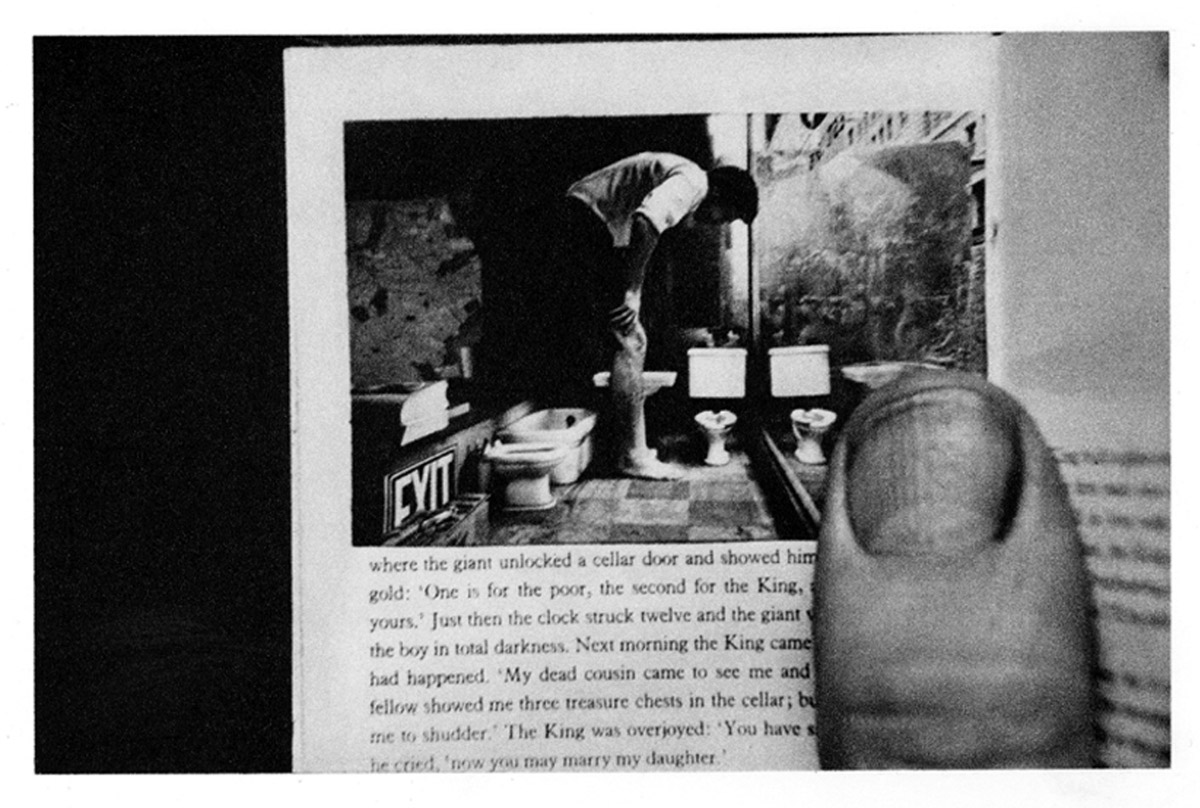


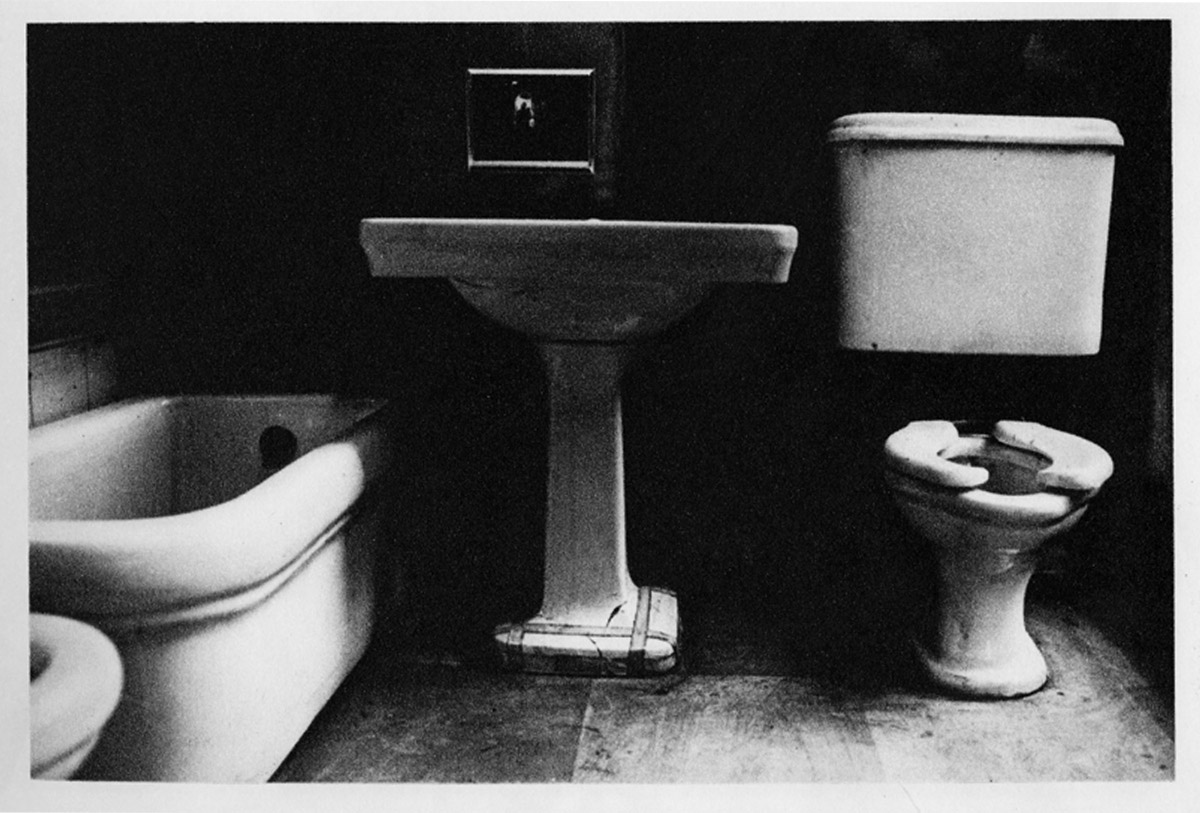


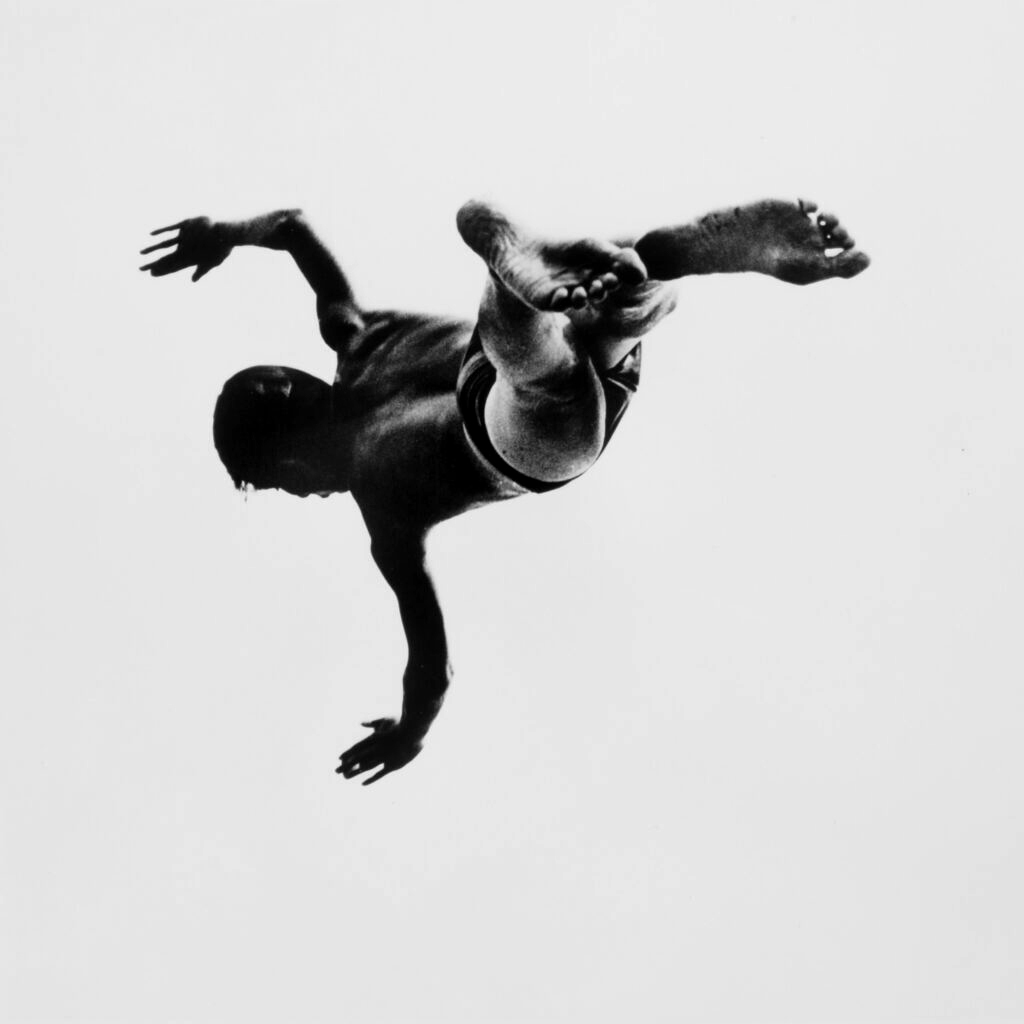


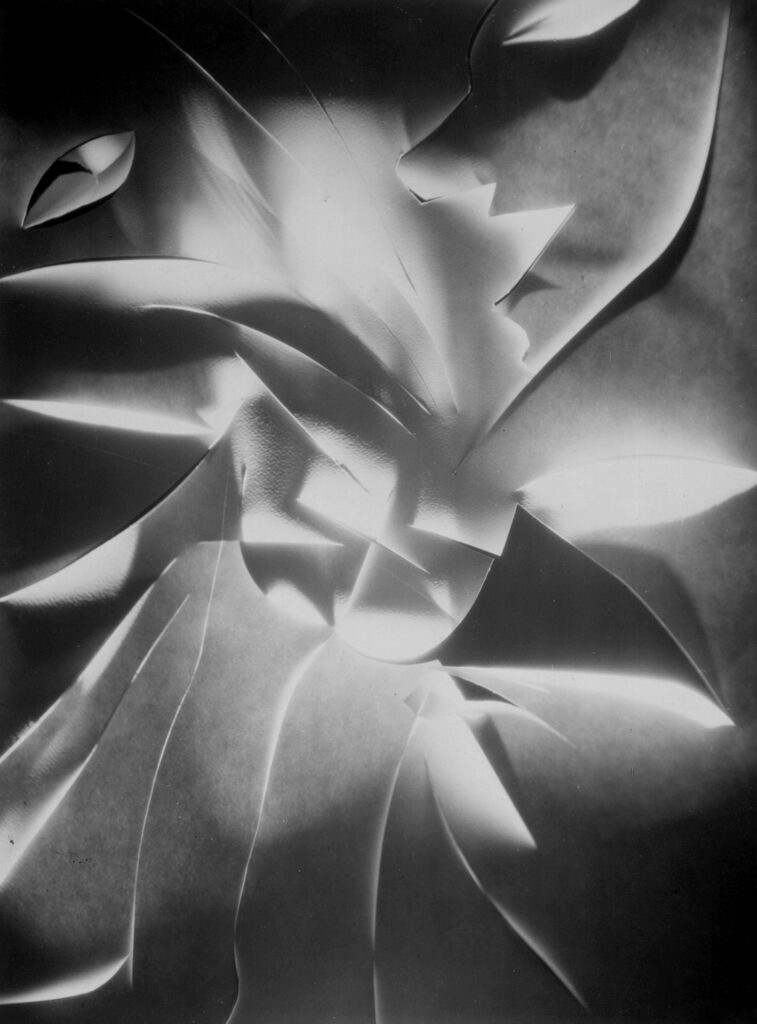
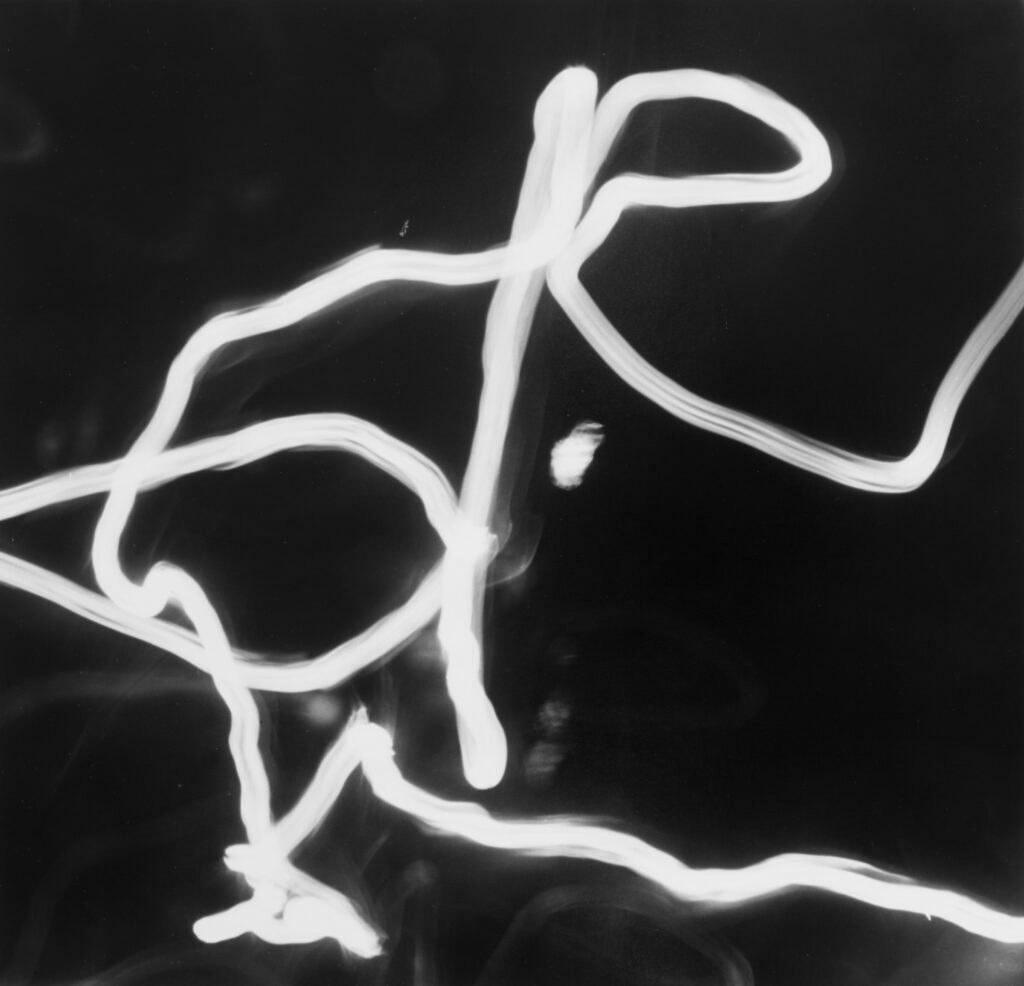
![Ilse Bing (American born Germany, 1899-1998) 'Untitled [Seated Woman with Necklace, Solarized]' 1943](https://artblart.com/wp-content/uploads/2025/10/ilse-bing-seated-woman-with-necklace.jpg "Ilse Bing (American born Germany, 1899-1998) 'Untitled [Seated Woman with Necklace, Solarized]' 1943")
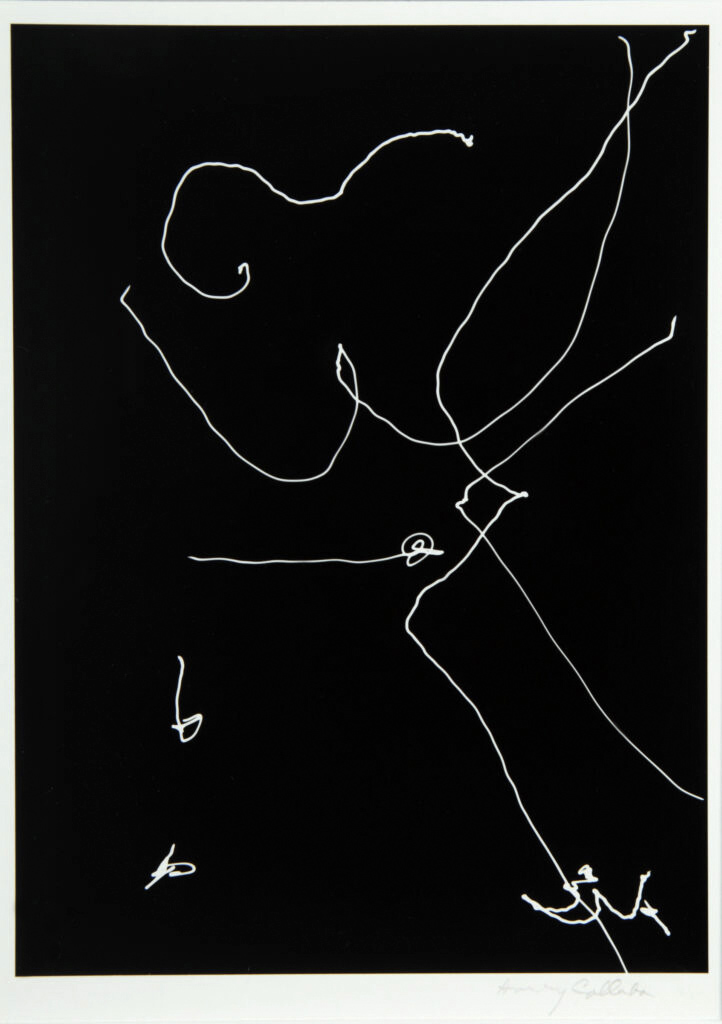

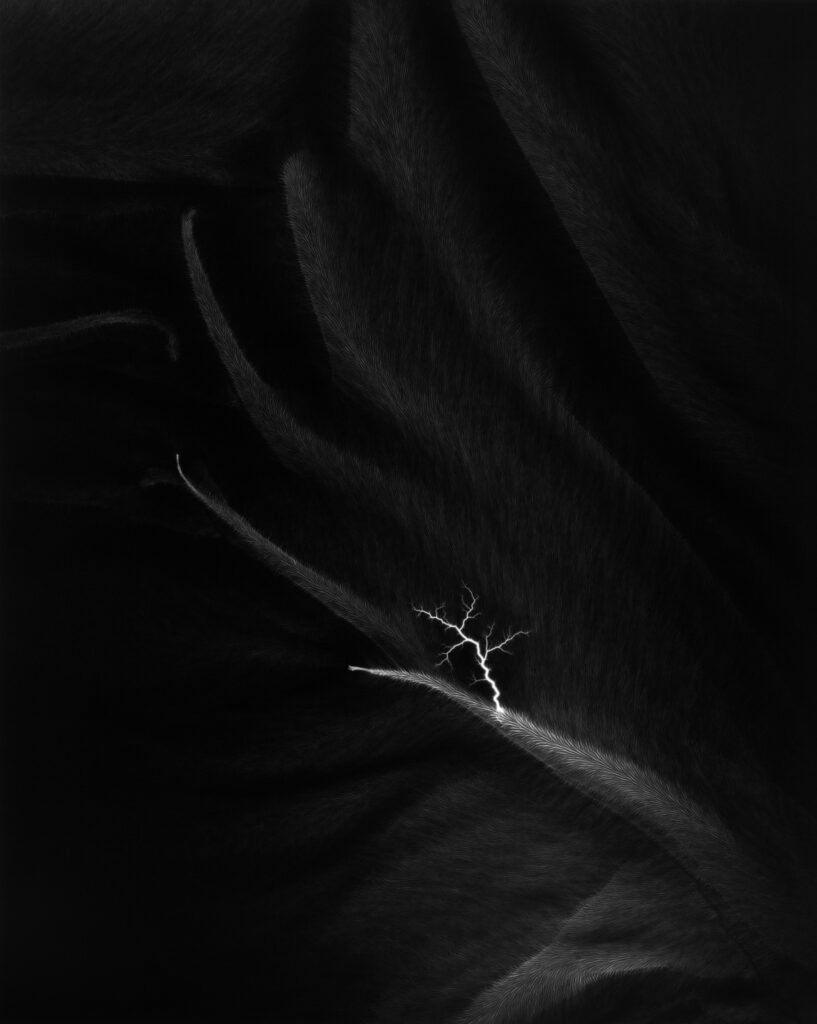


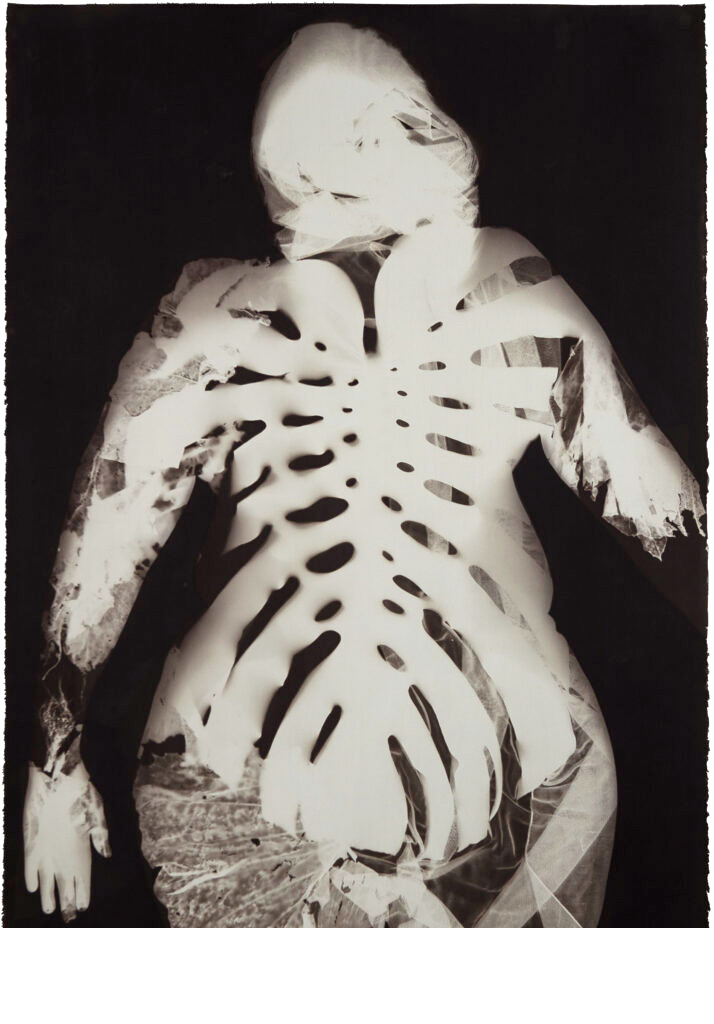
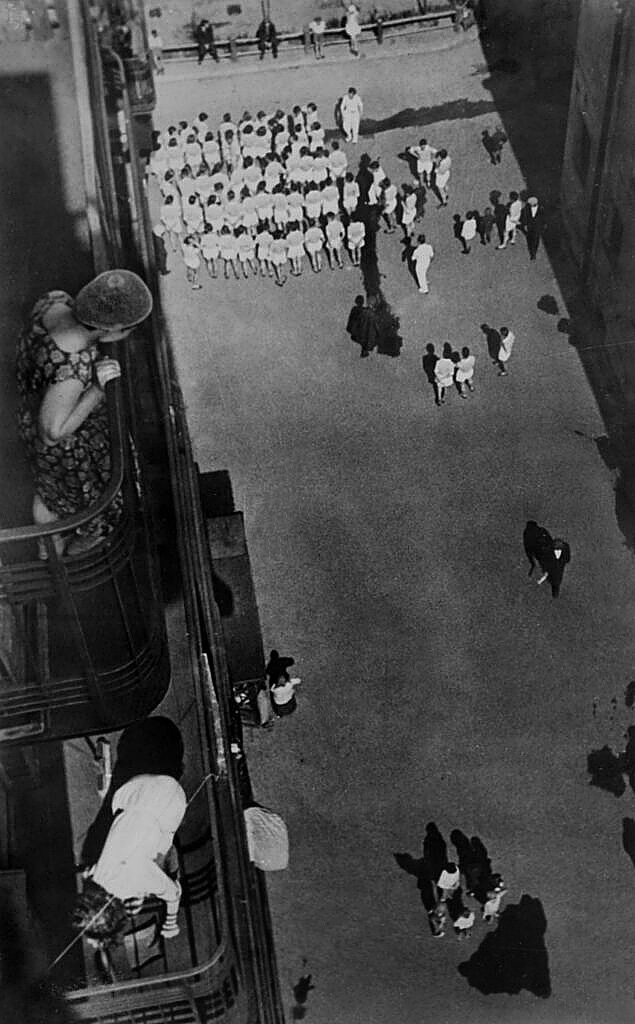


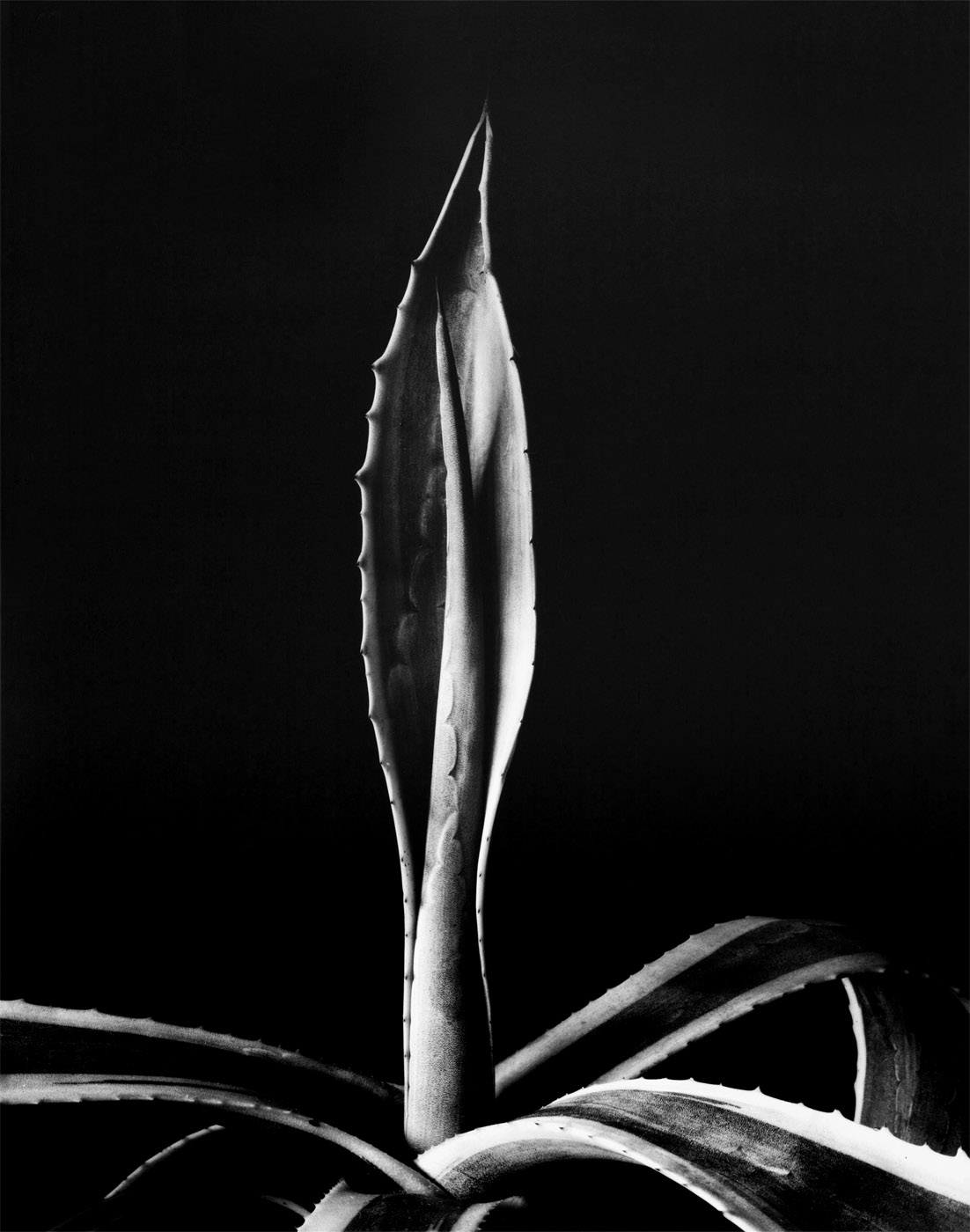
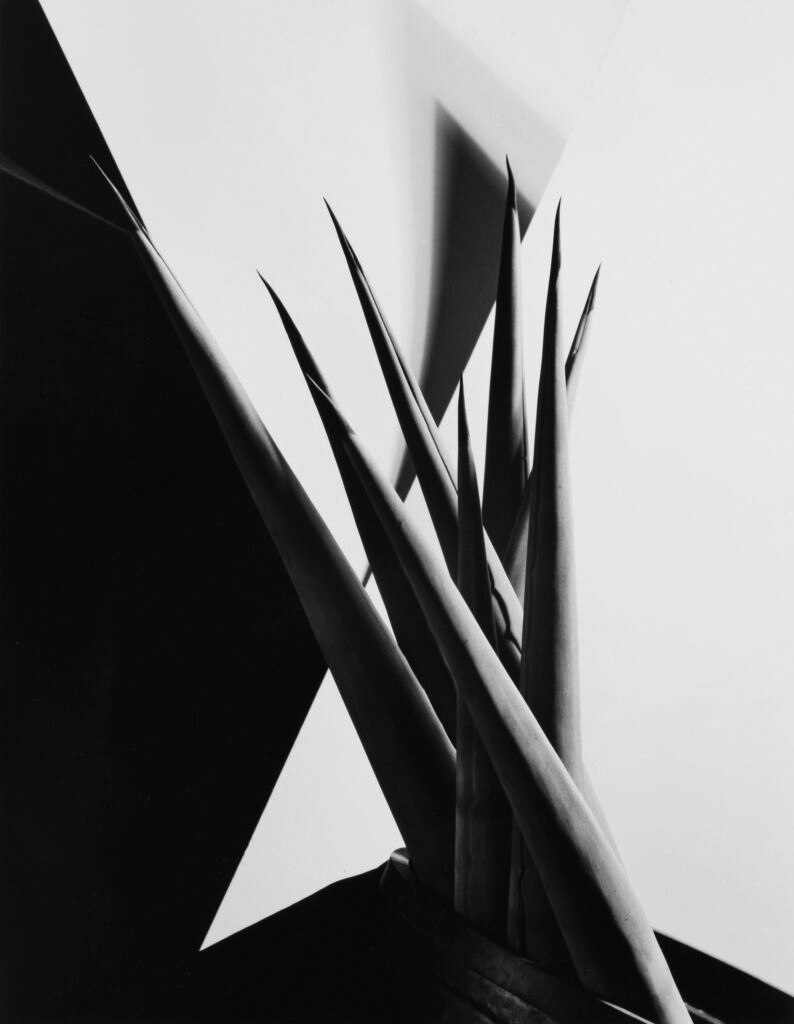
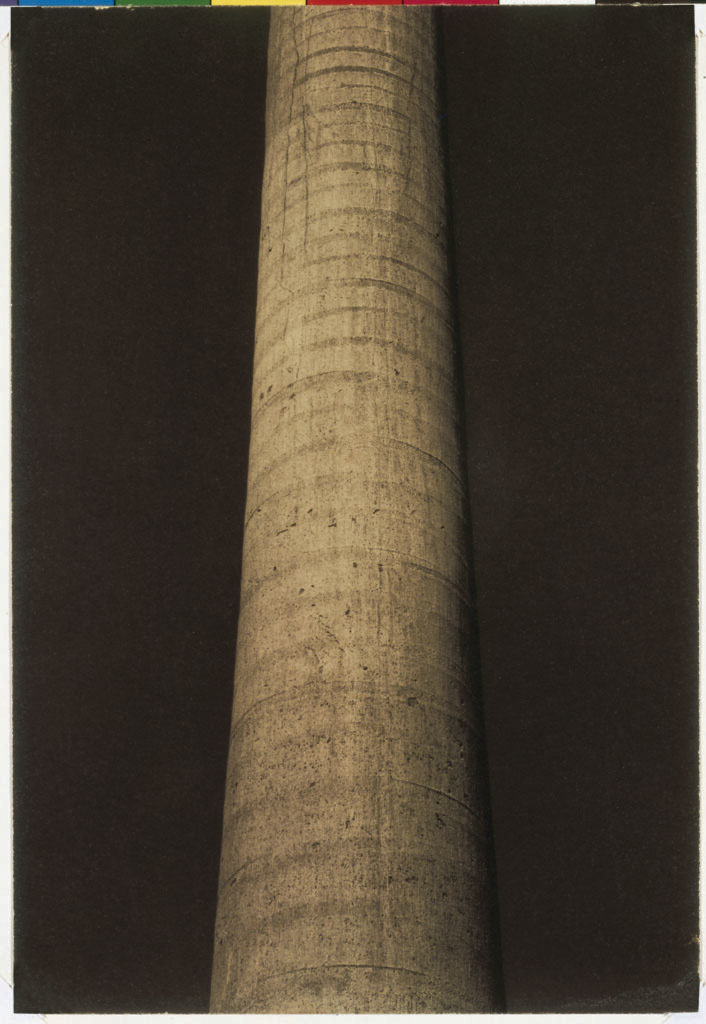

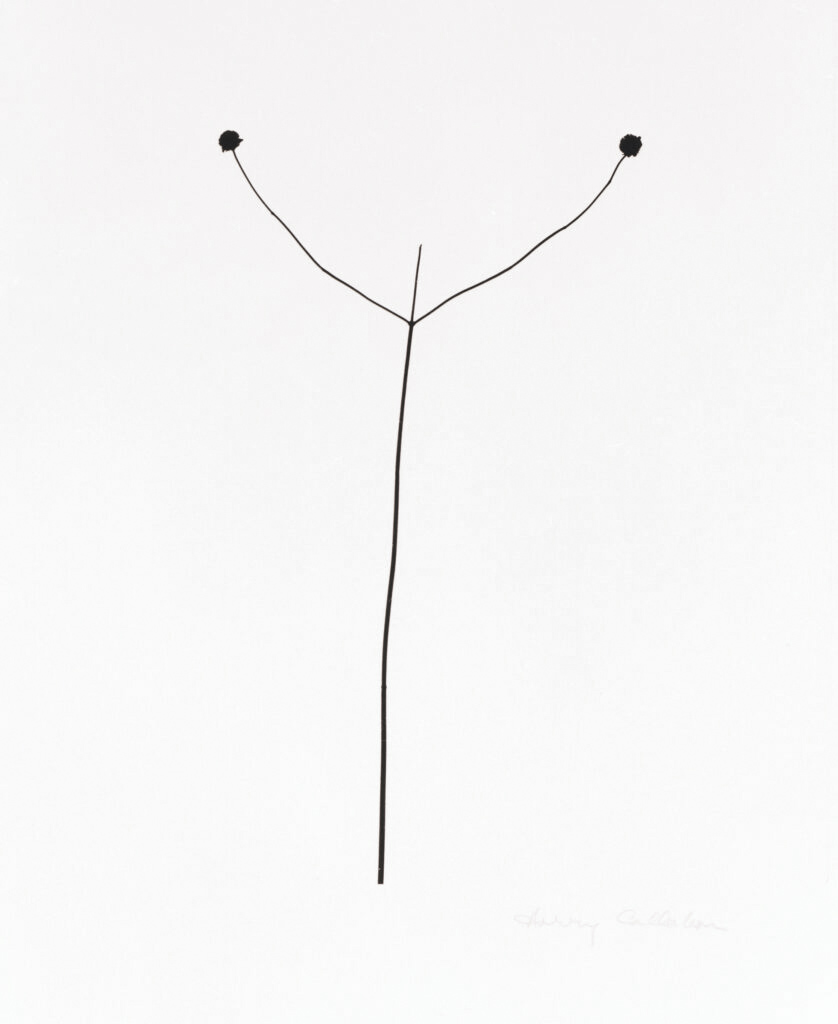
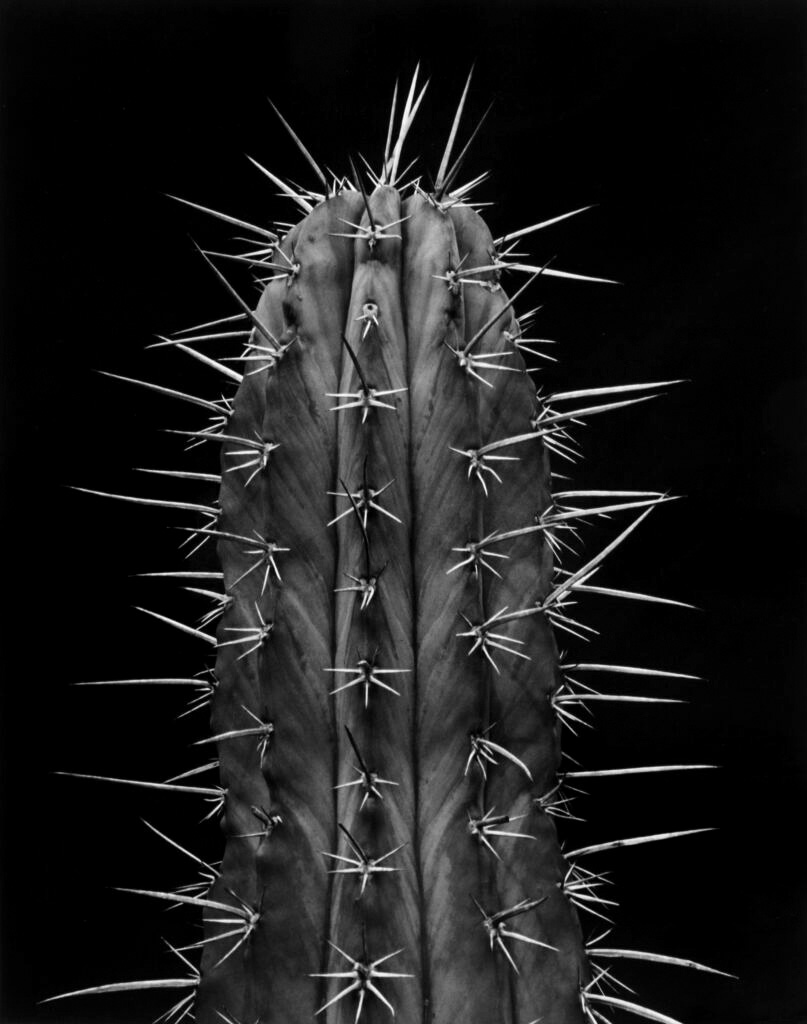


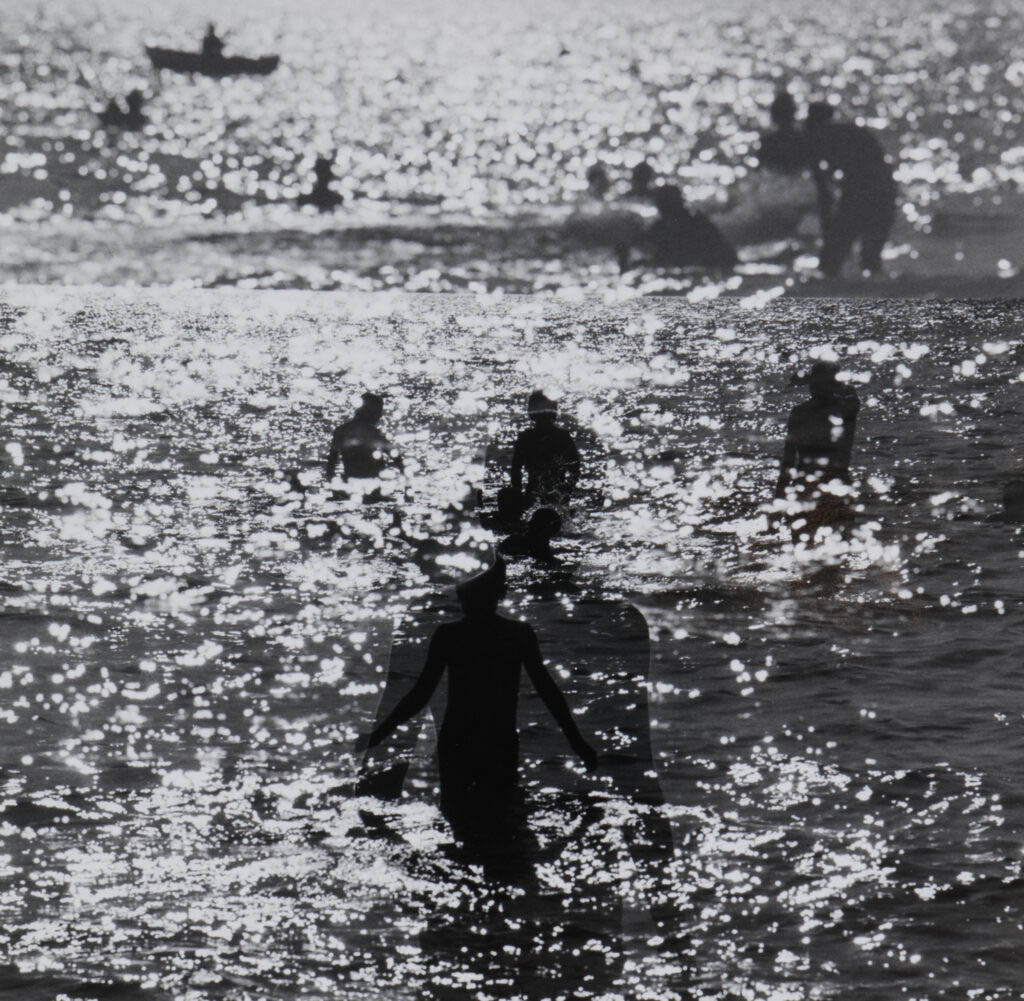


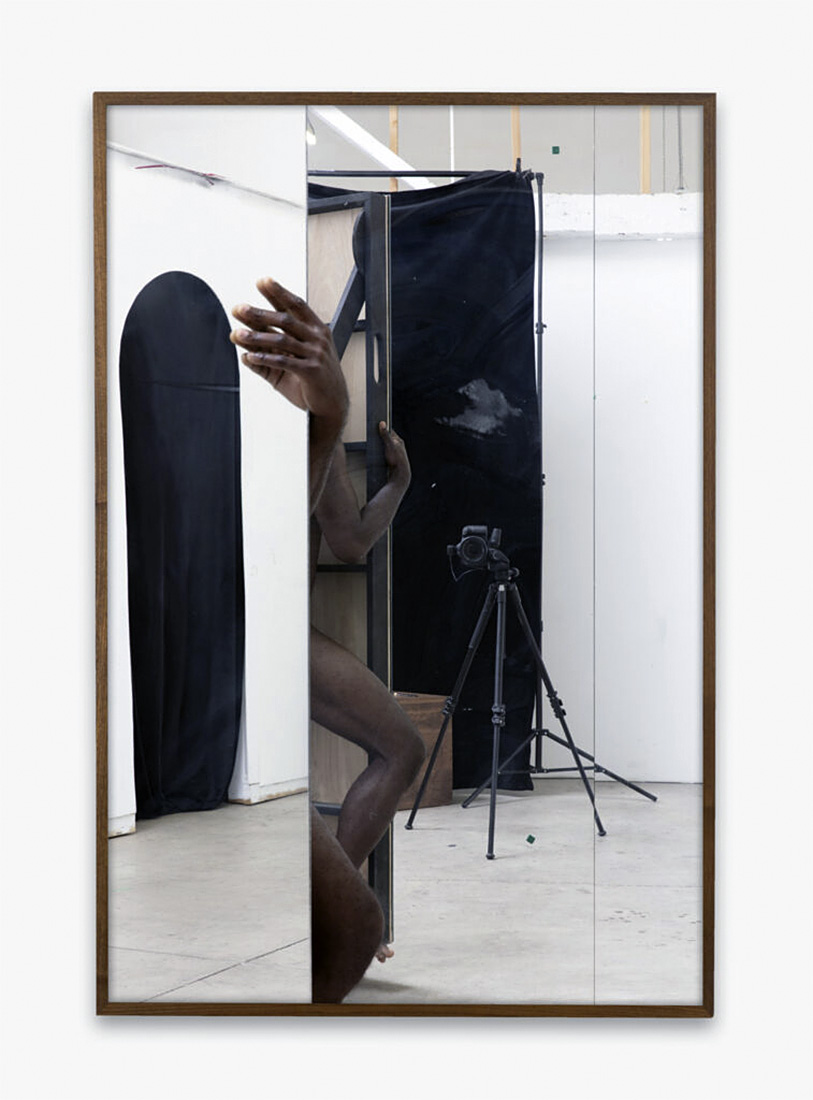
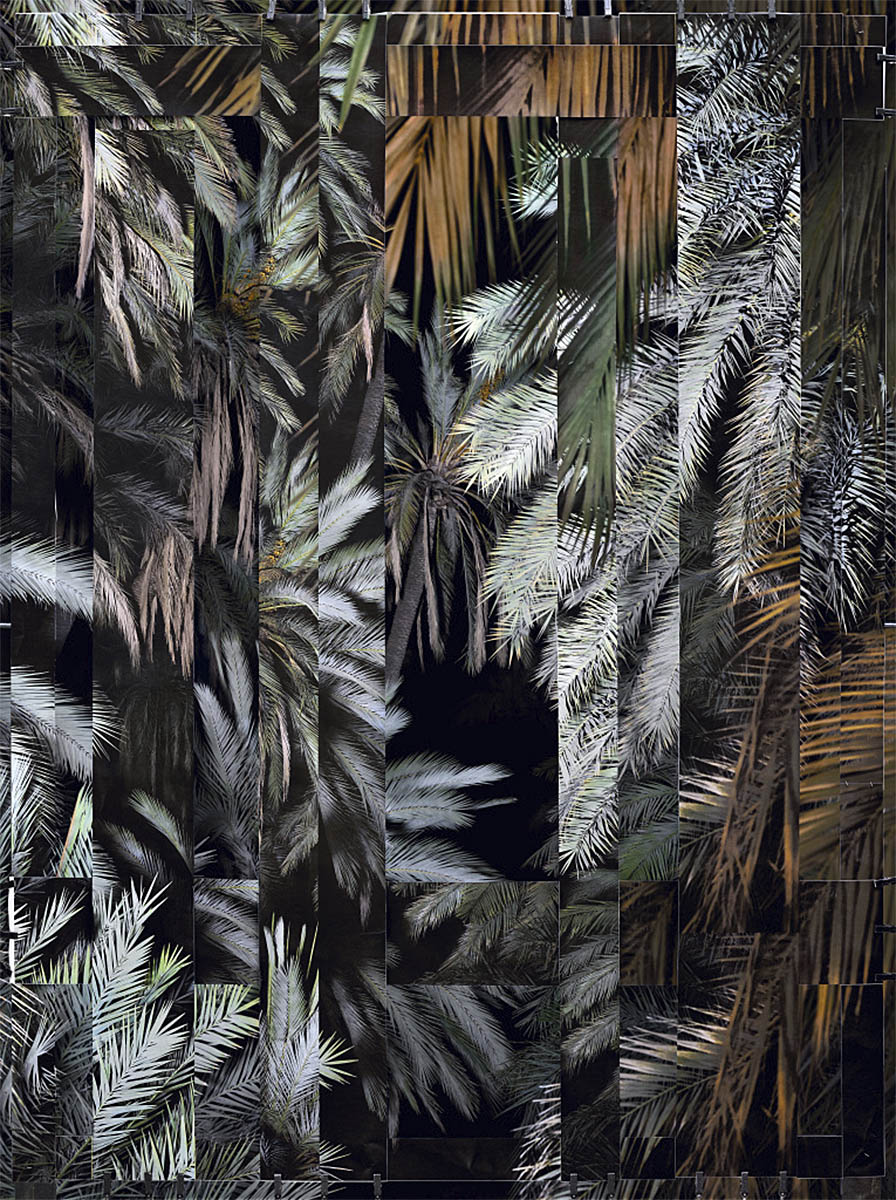
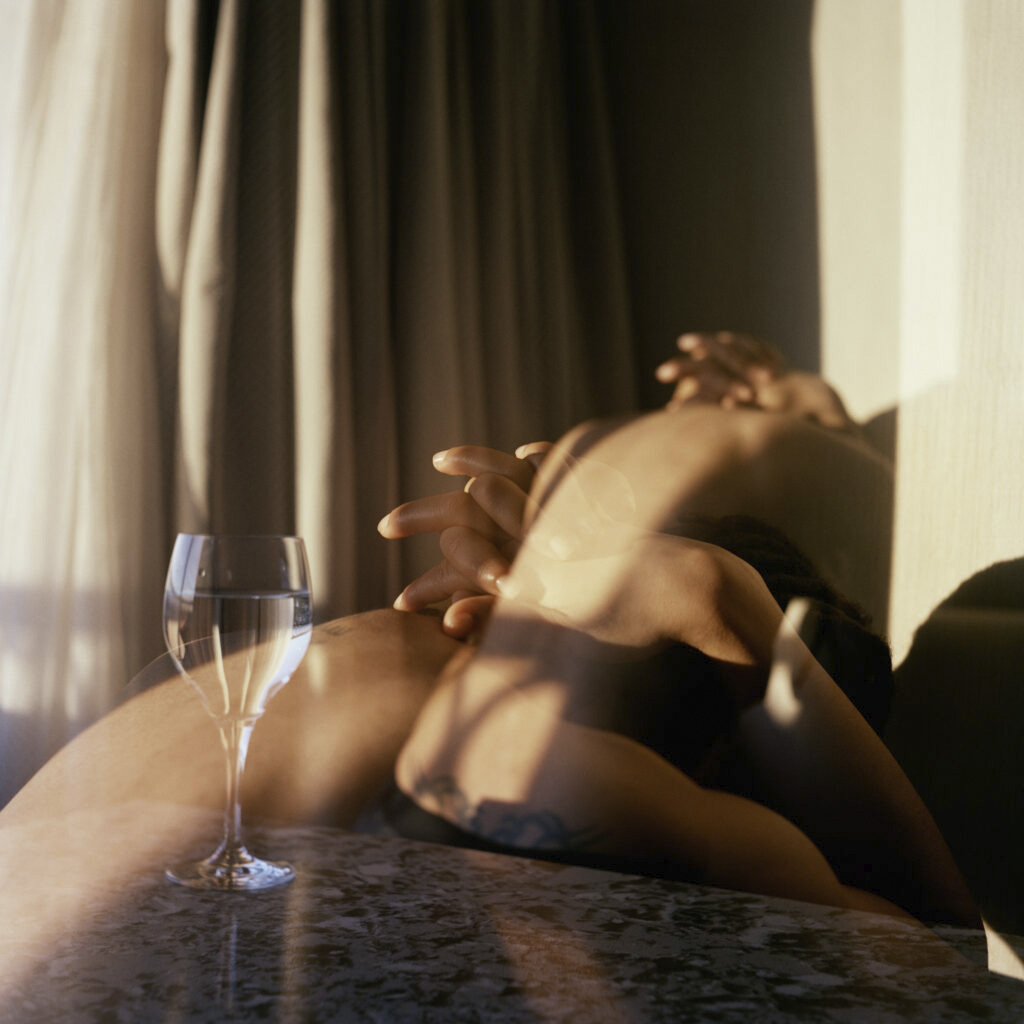


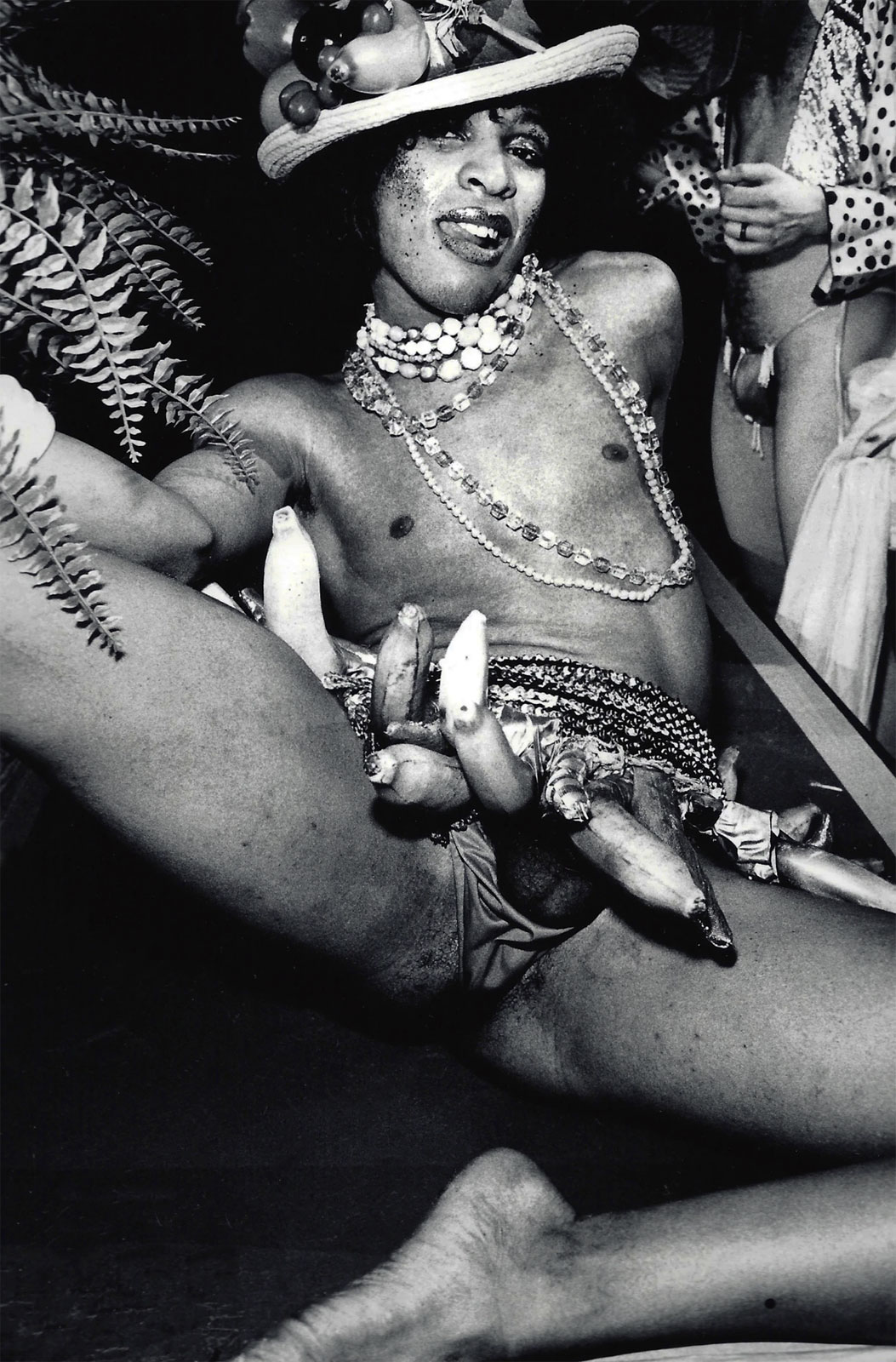


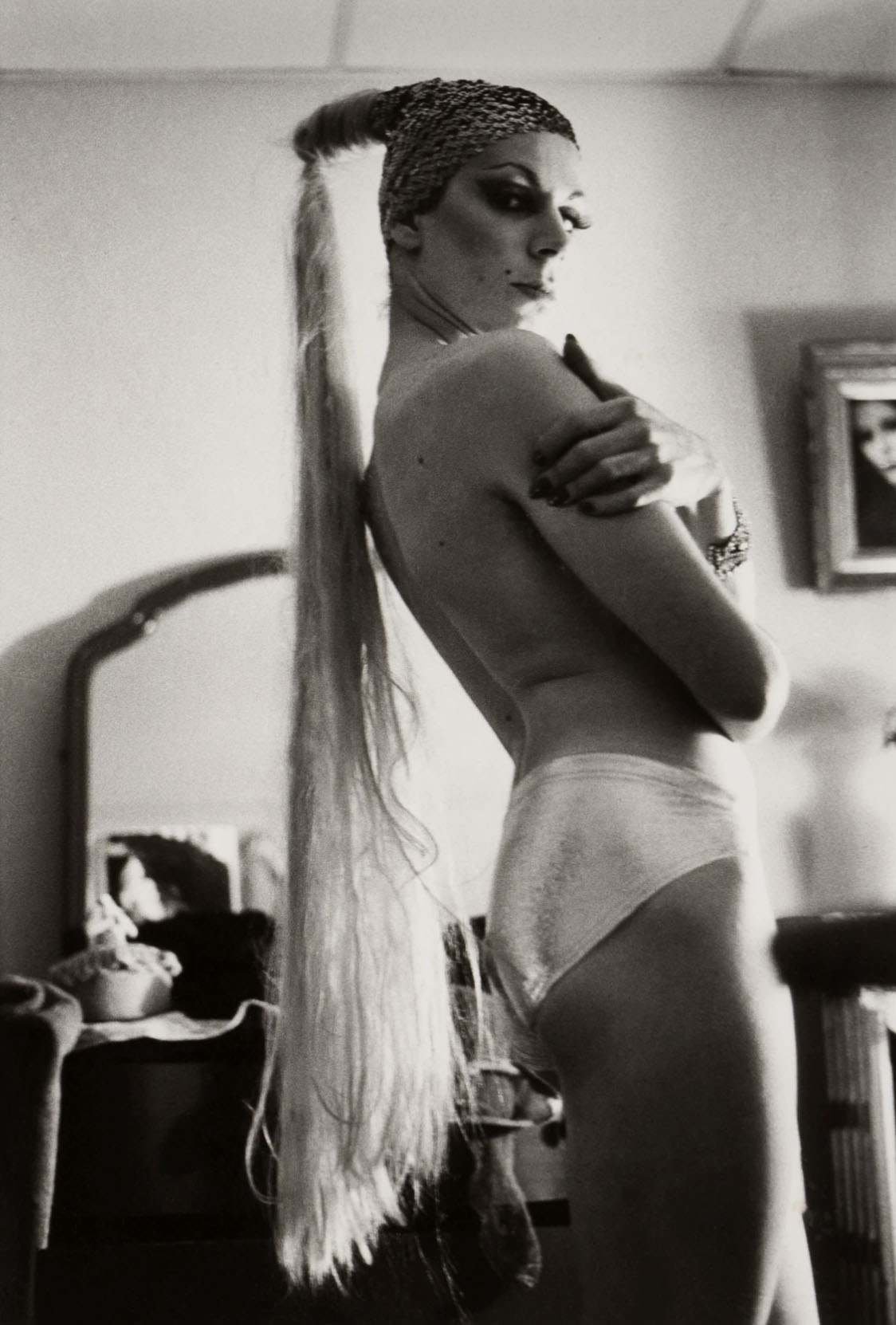


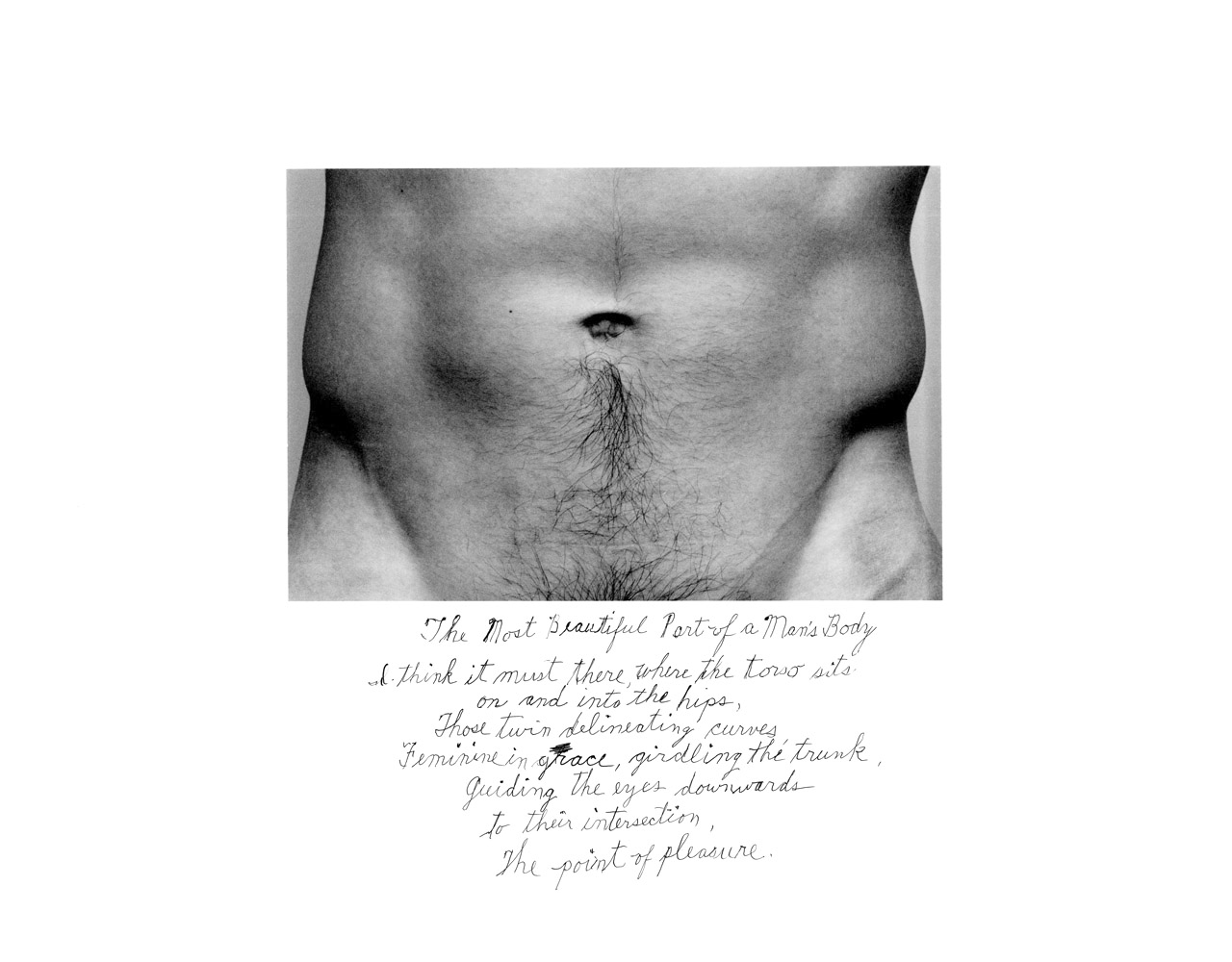


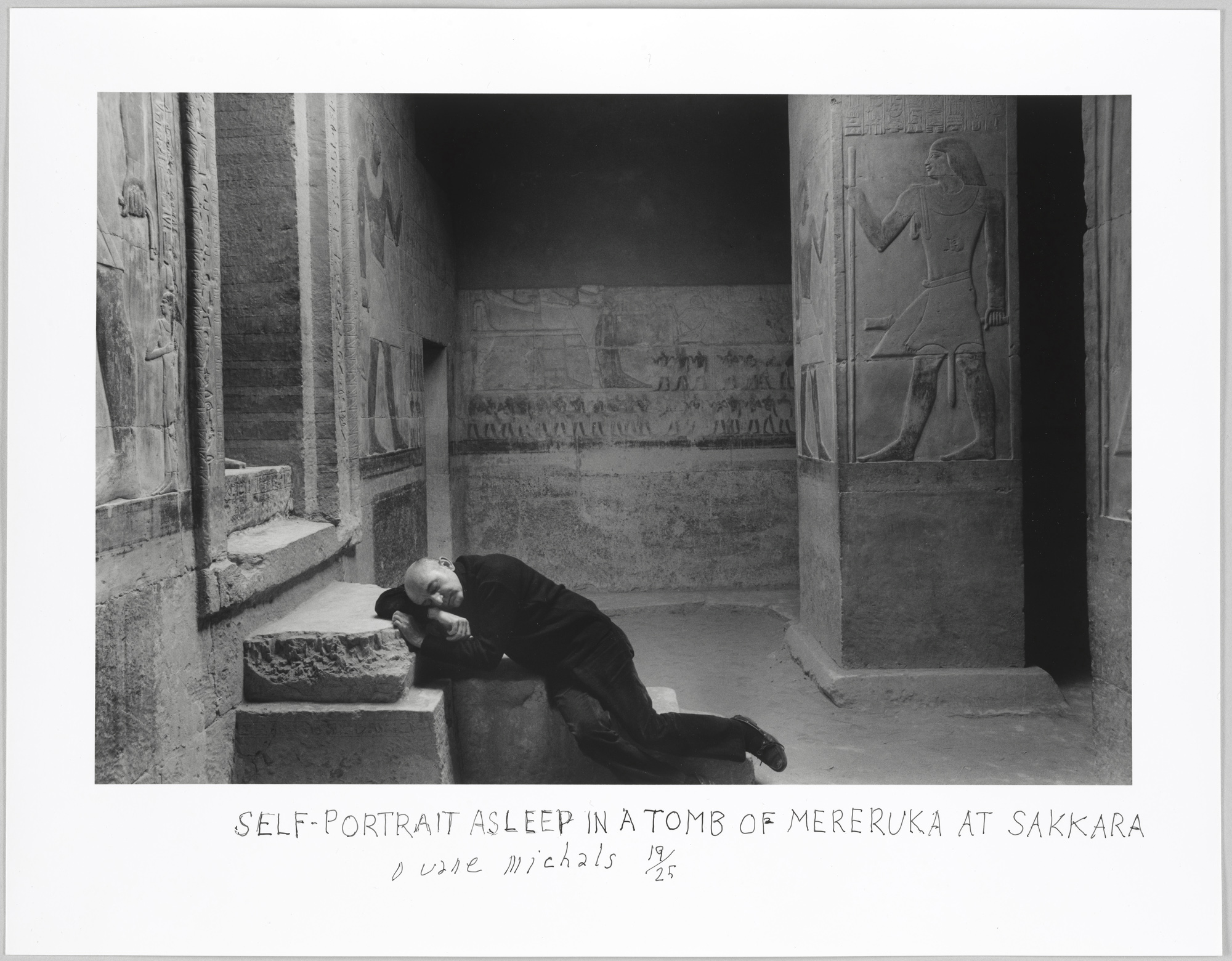


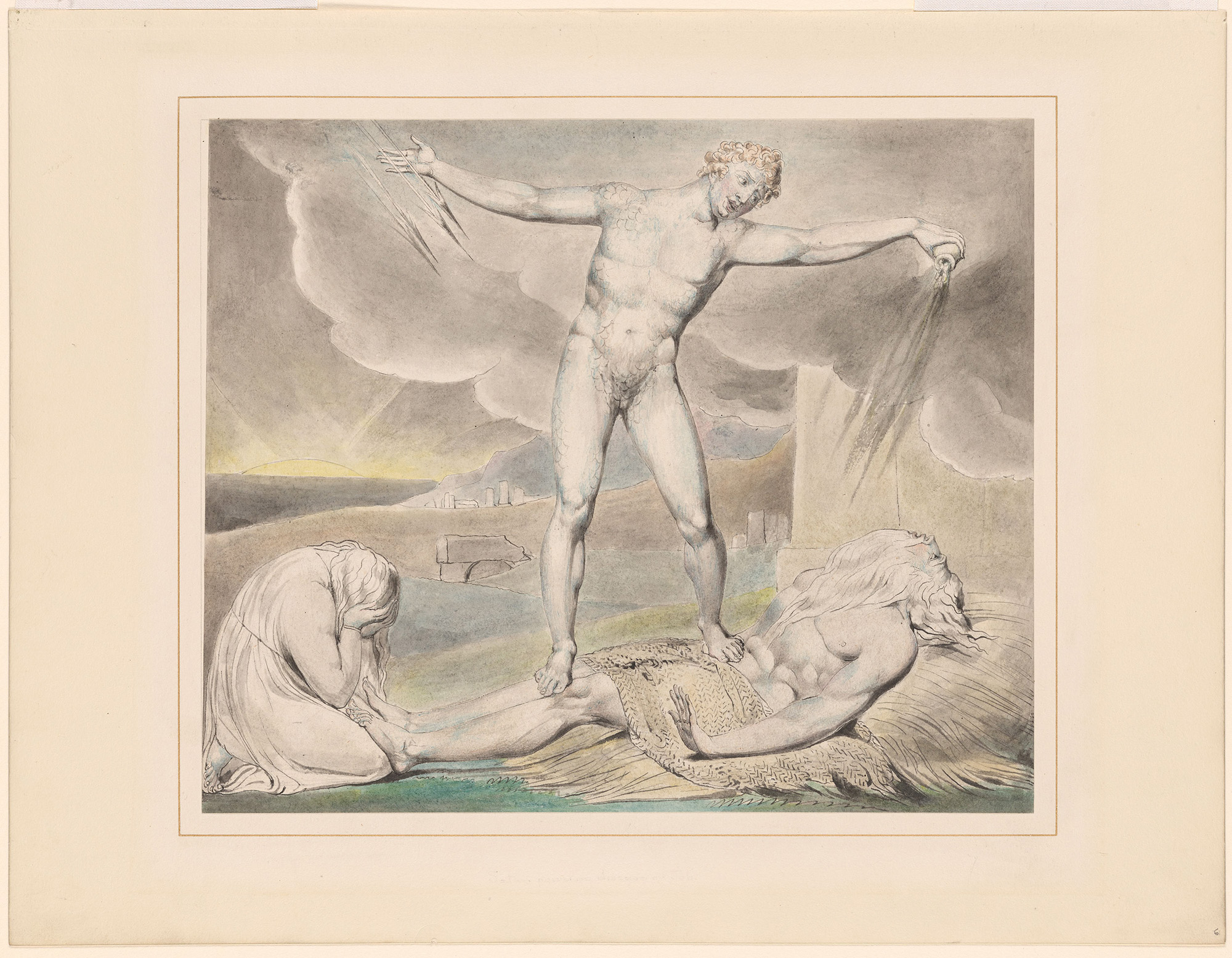


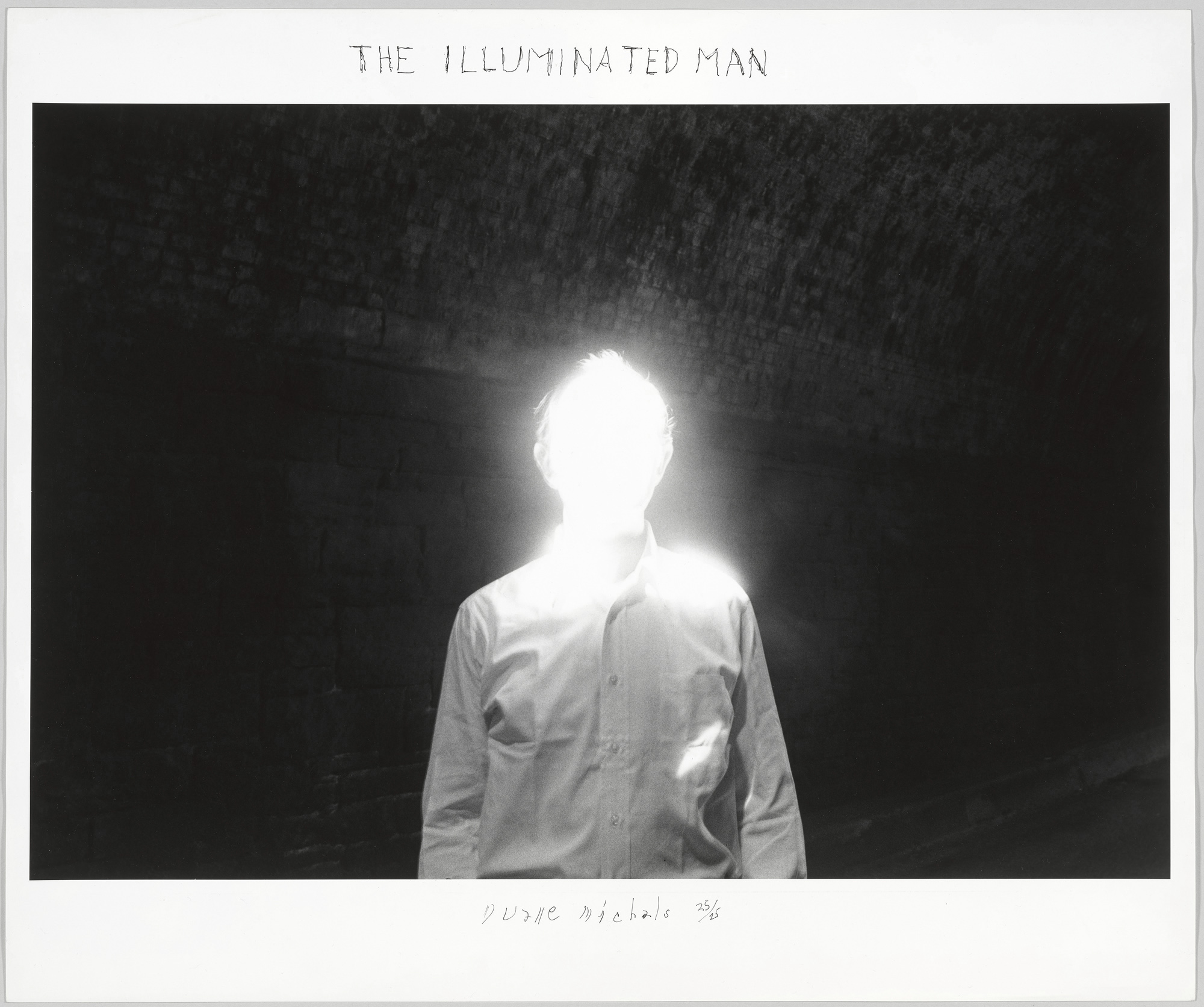

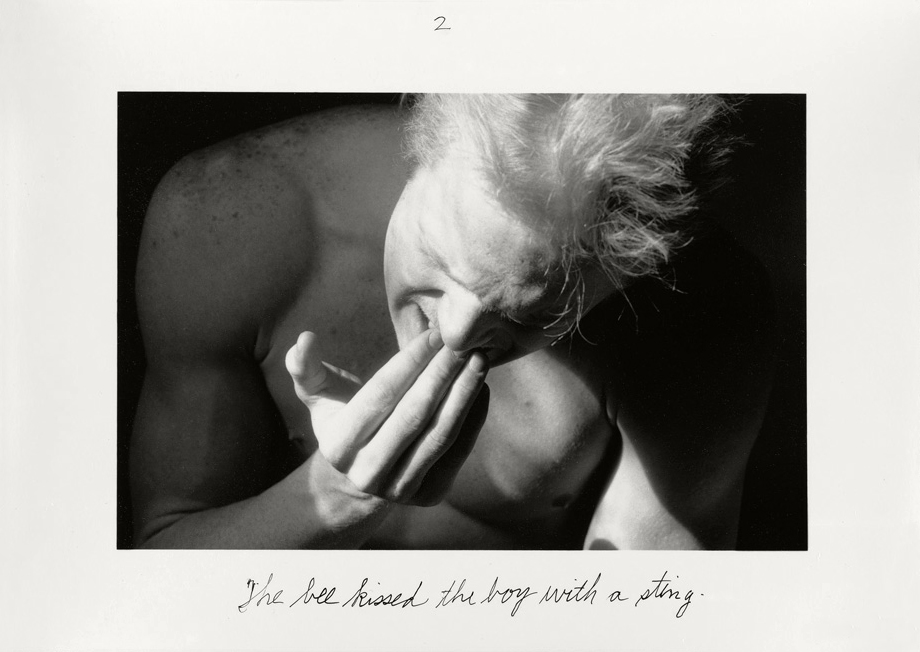


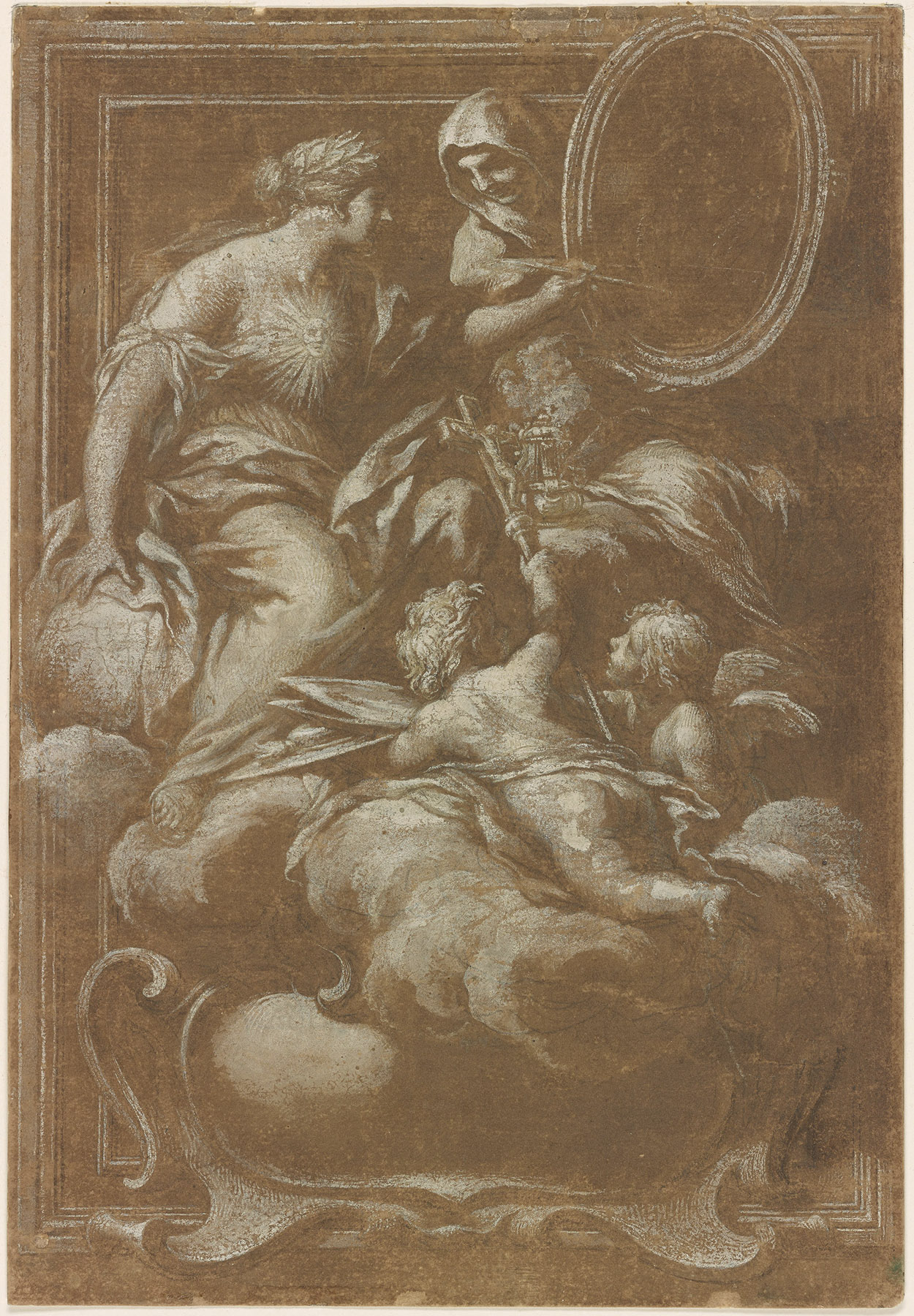


![Florian, Marquis de (1755-1794) 'Red leather portfolio [realia]' 18th century](https://artblart.com/wp-content/uploads/2019/11/voltaire-briefcase.jpg "Florian, Marquis de (1755-1794) 'Red leather portfolio [realia]' 18th century")


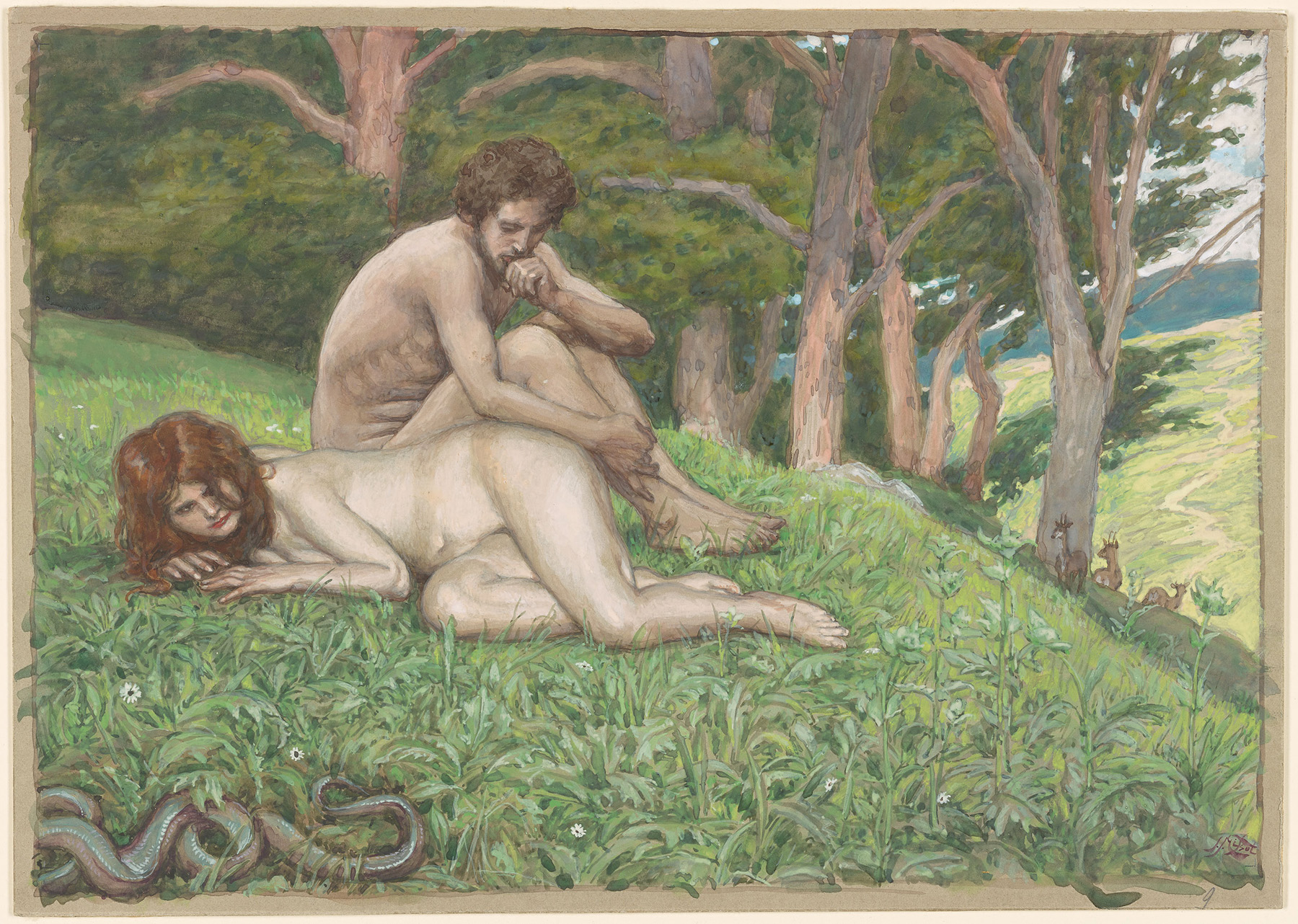


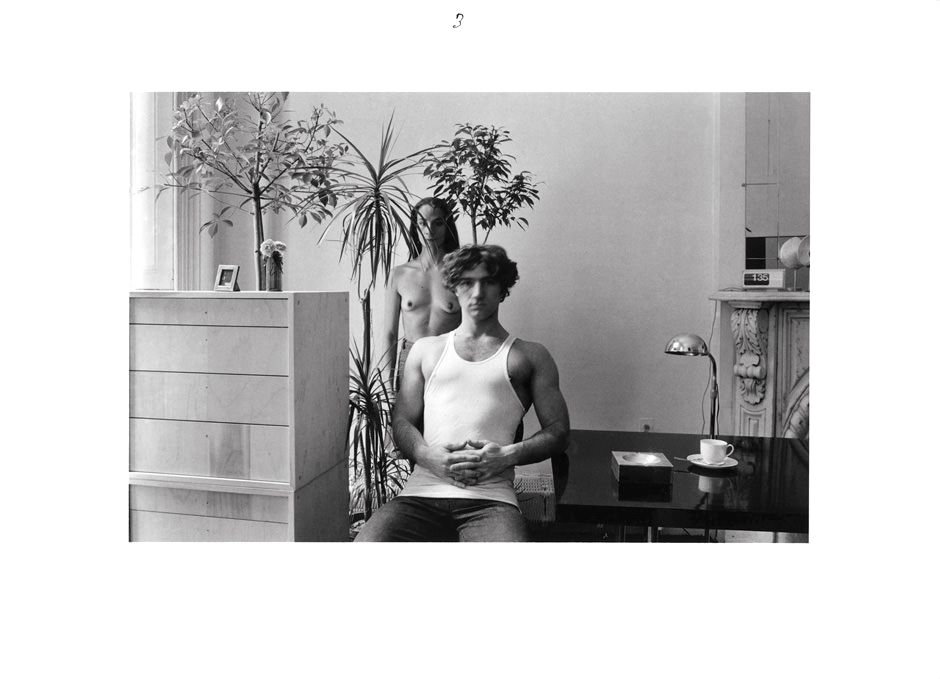




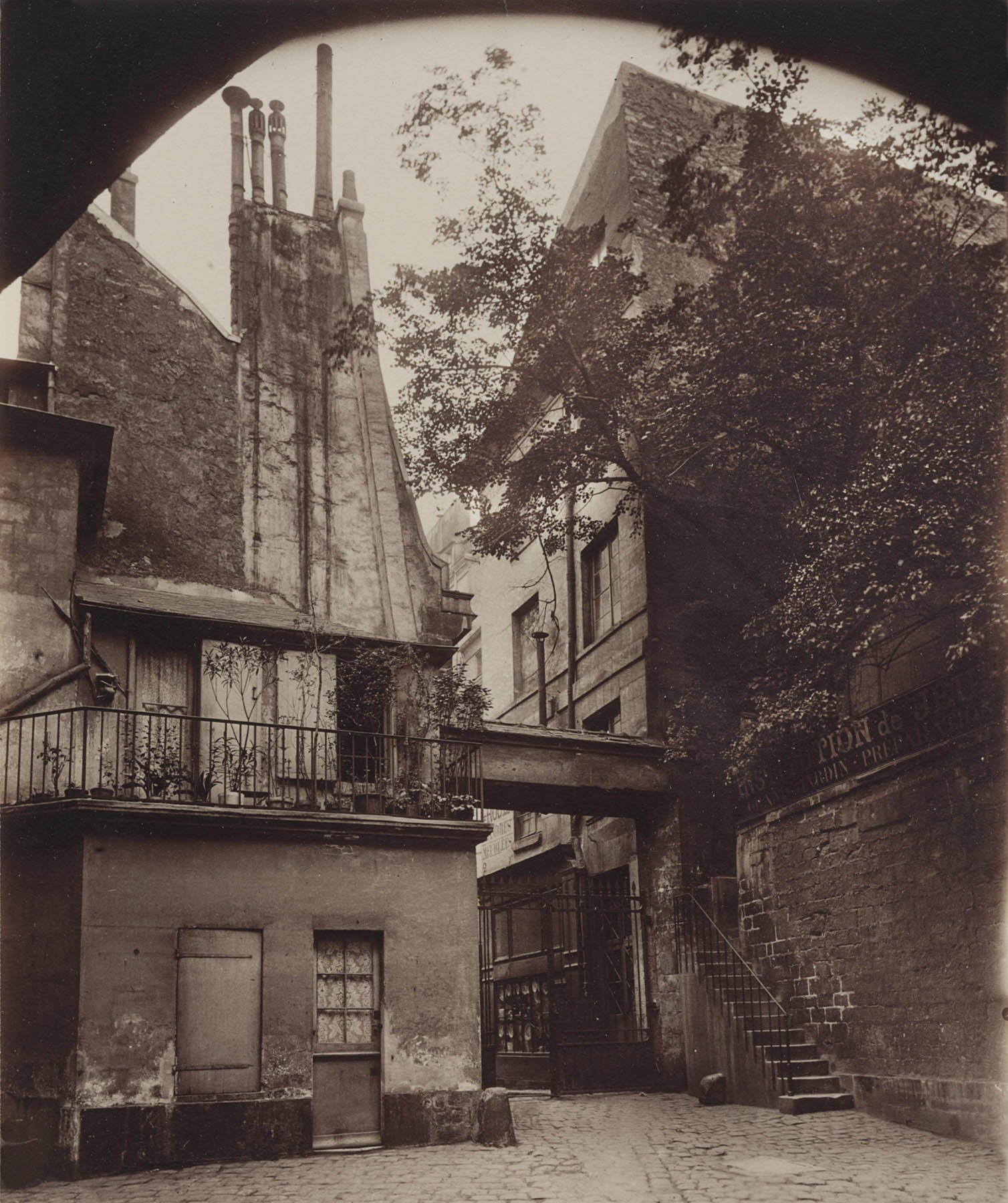

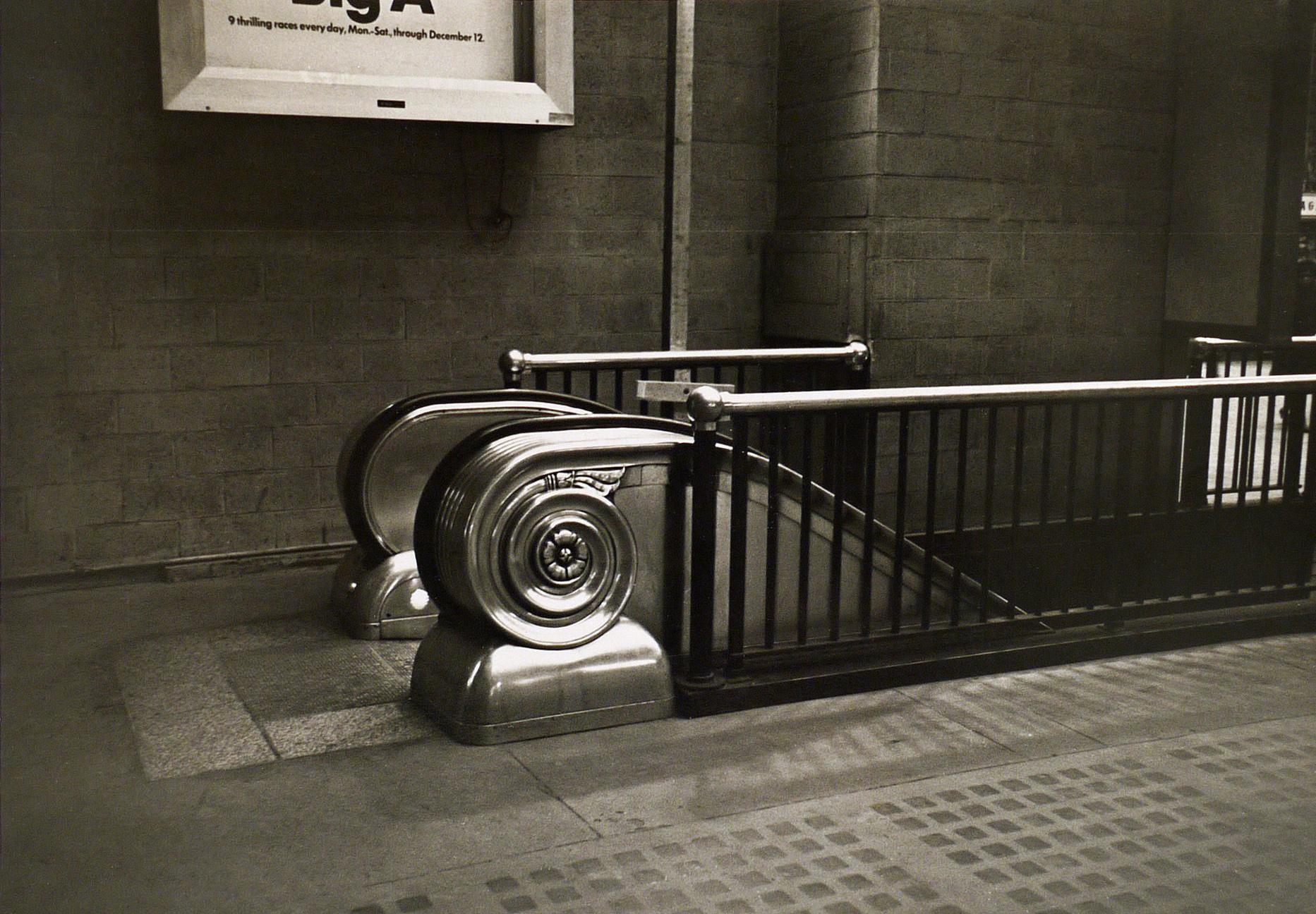


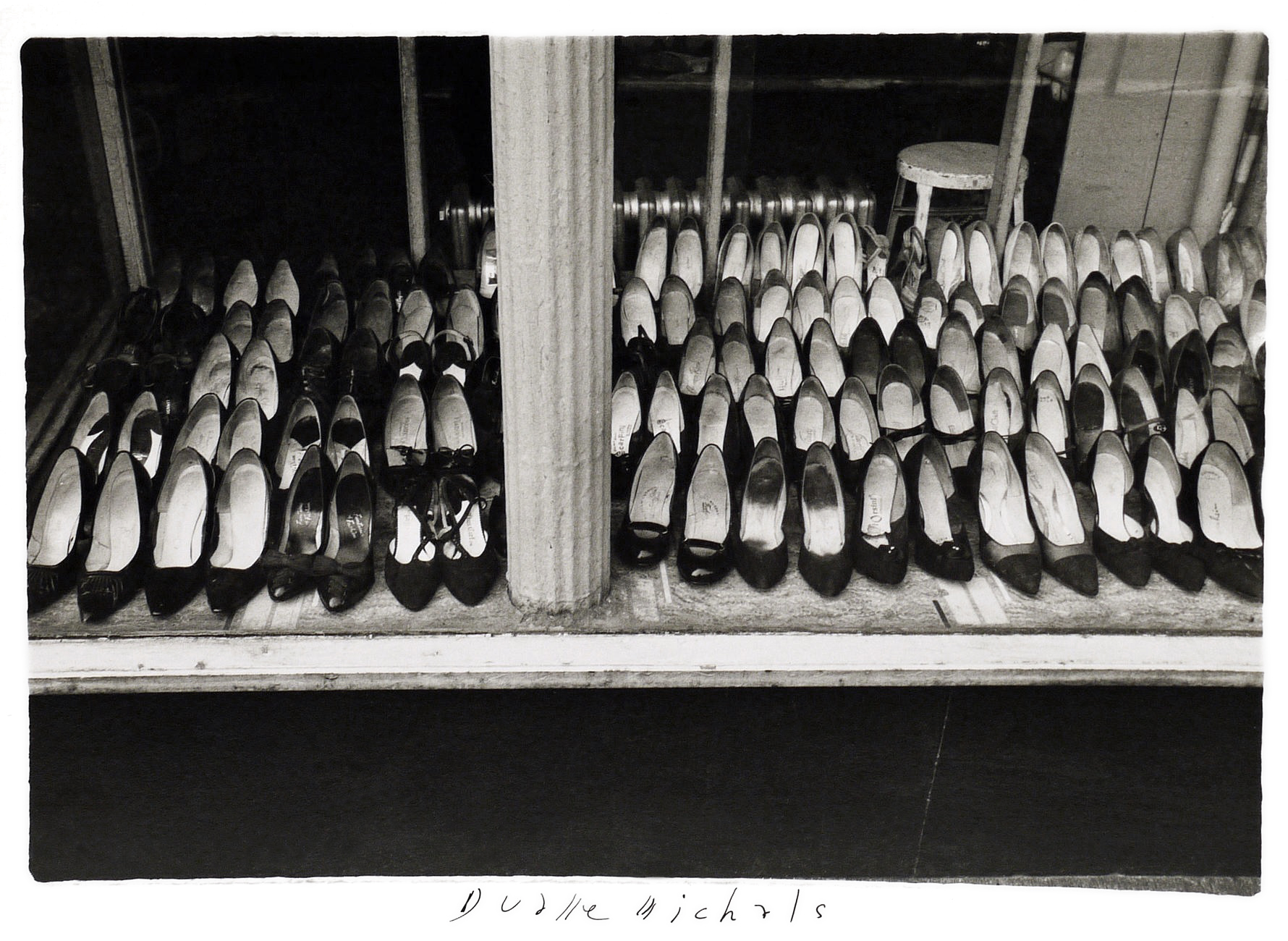


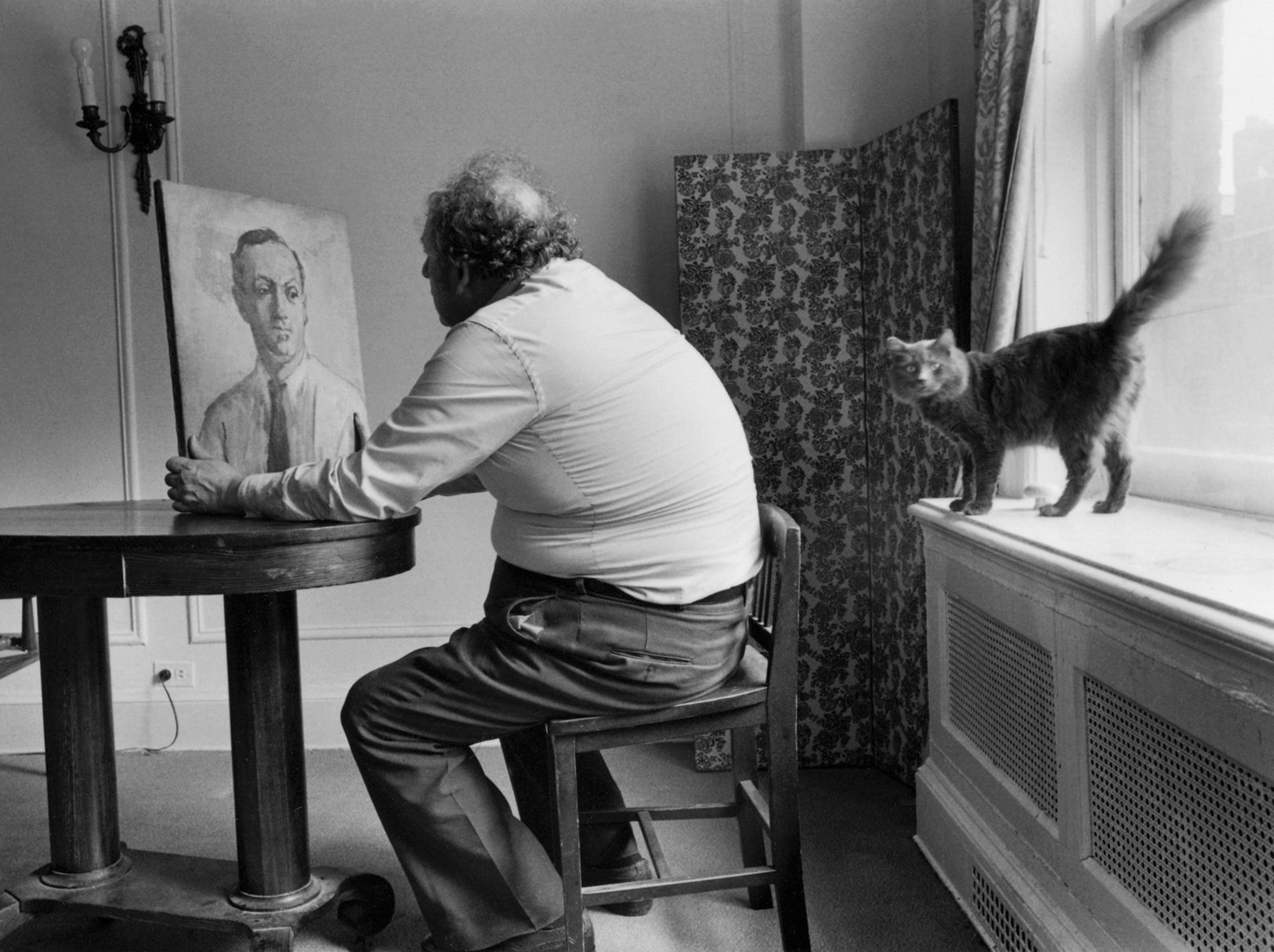
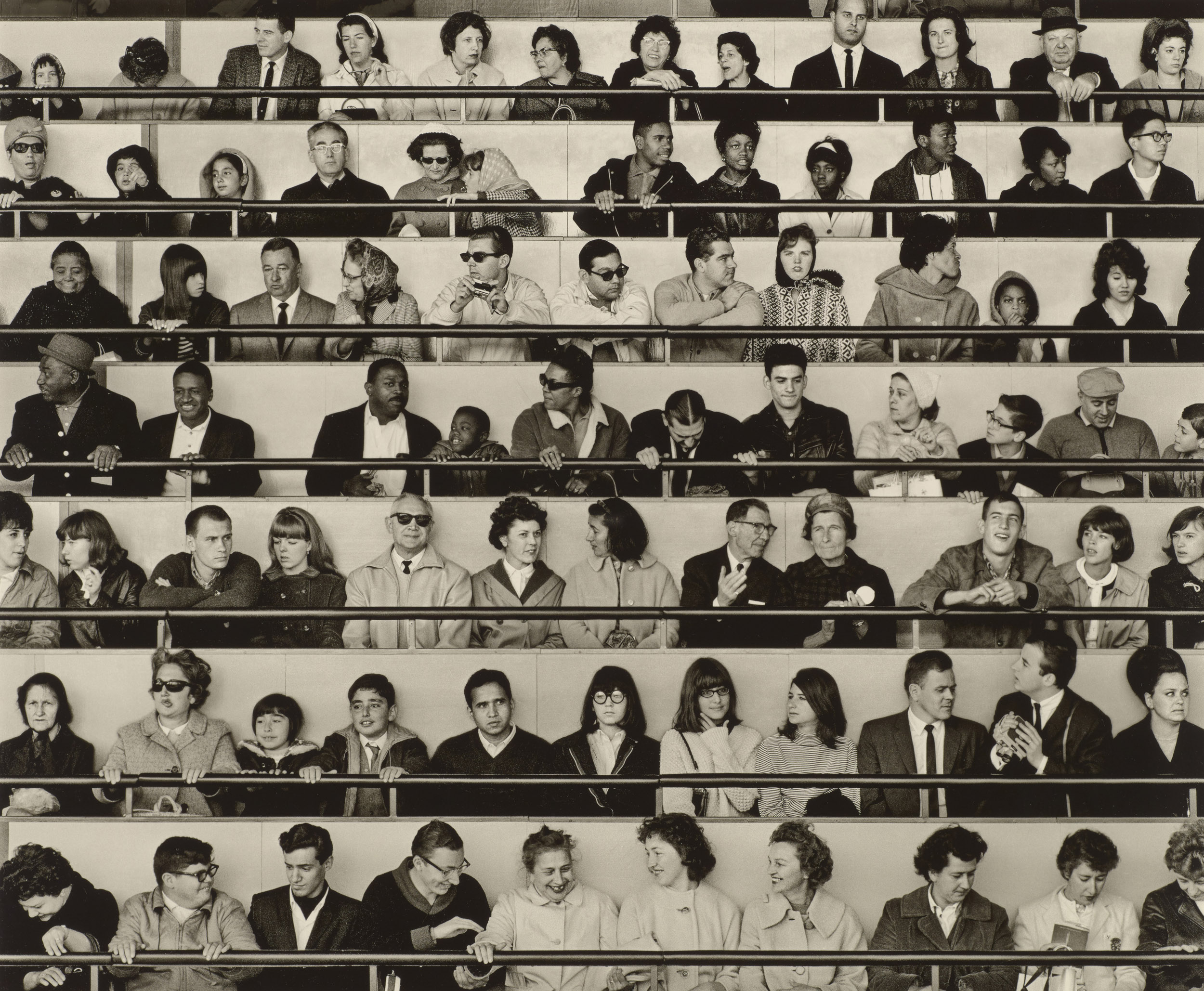
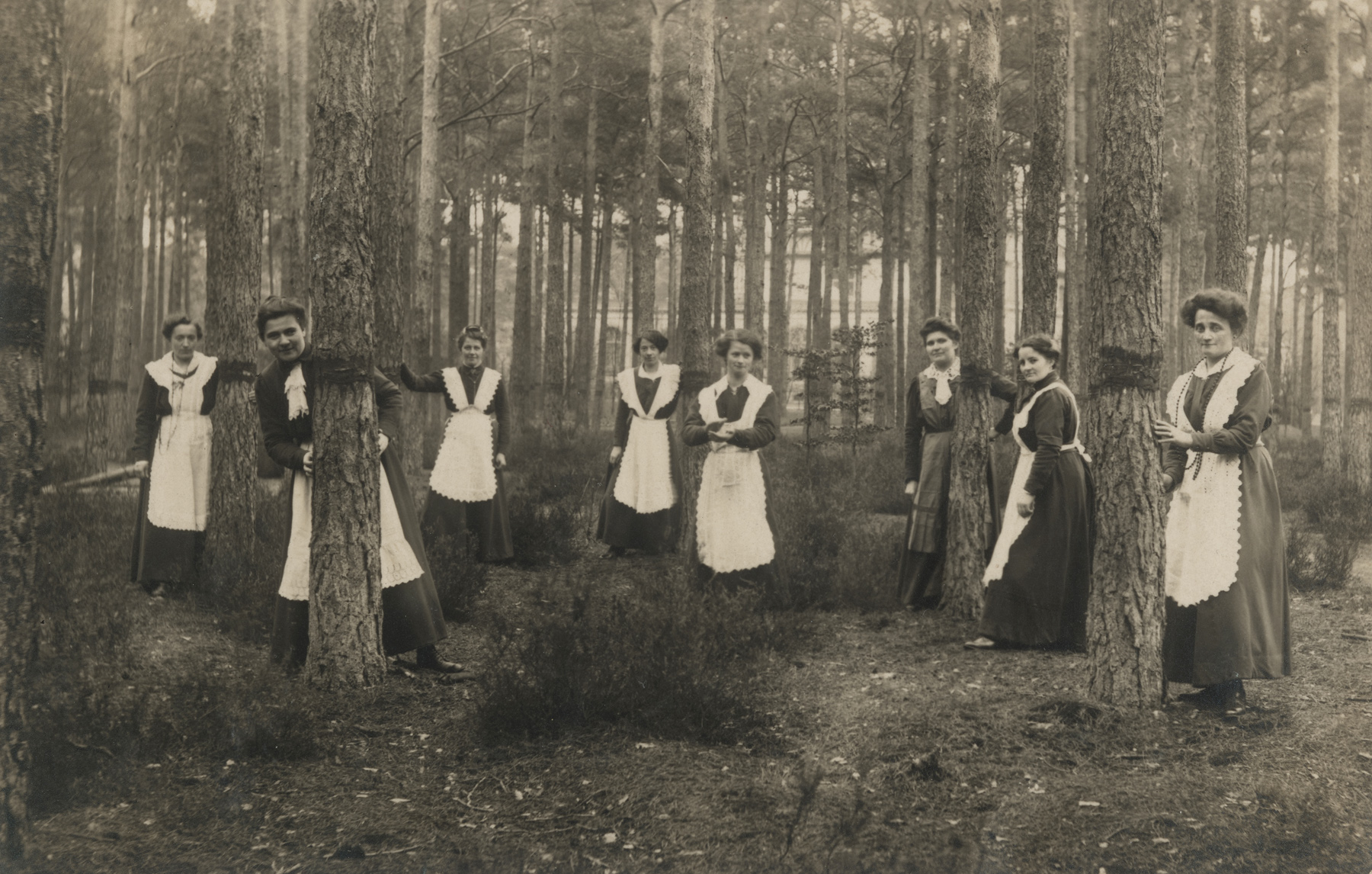

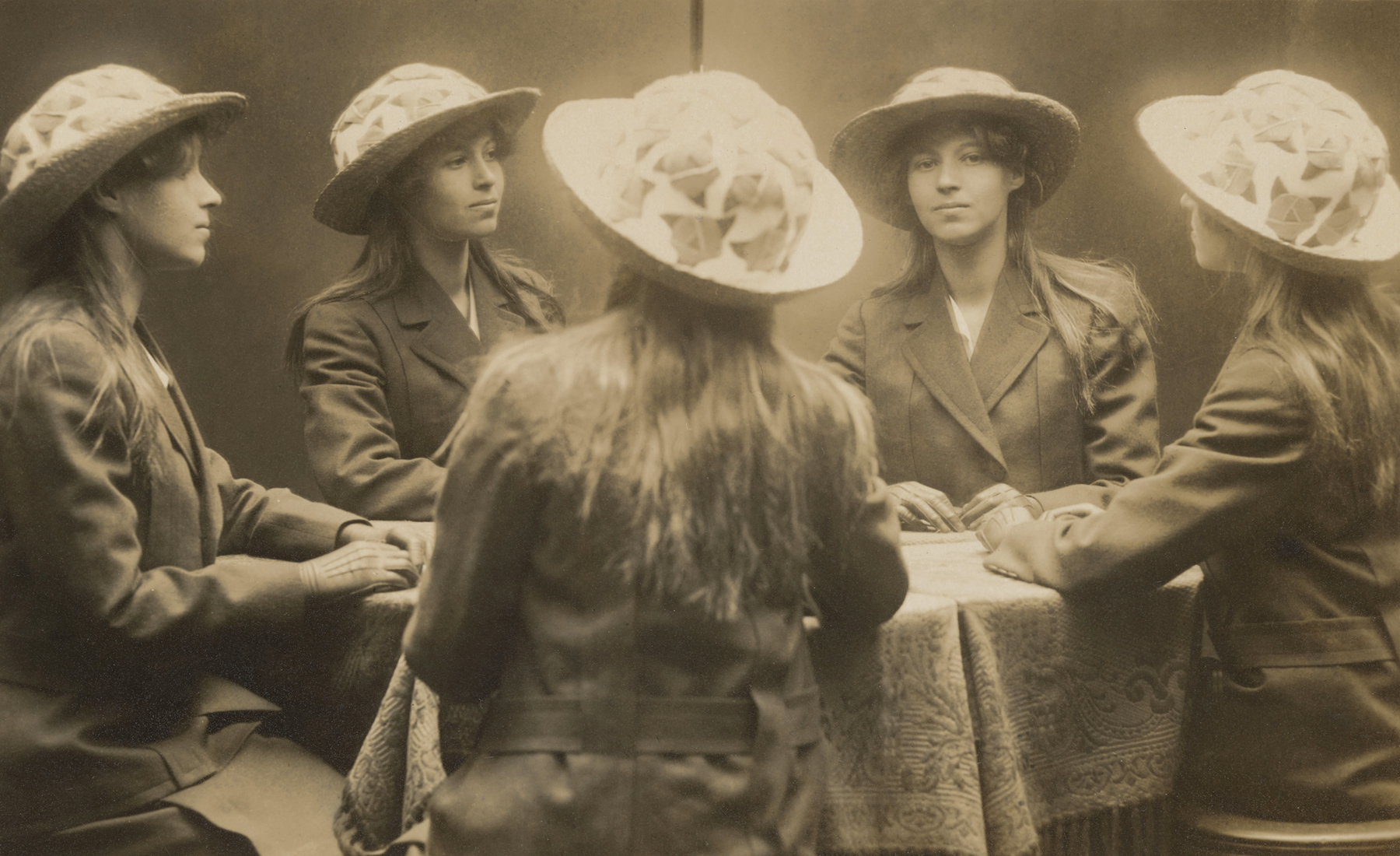
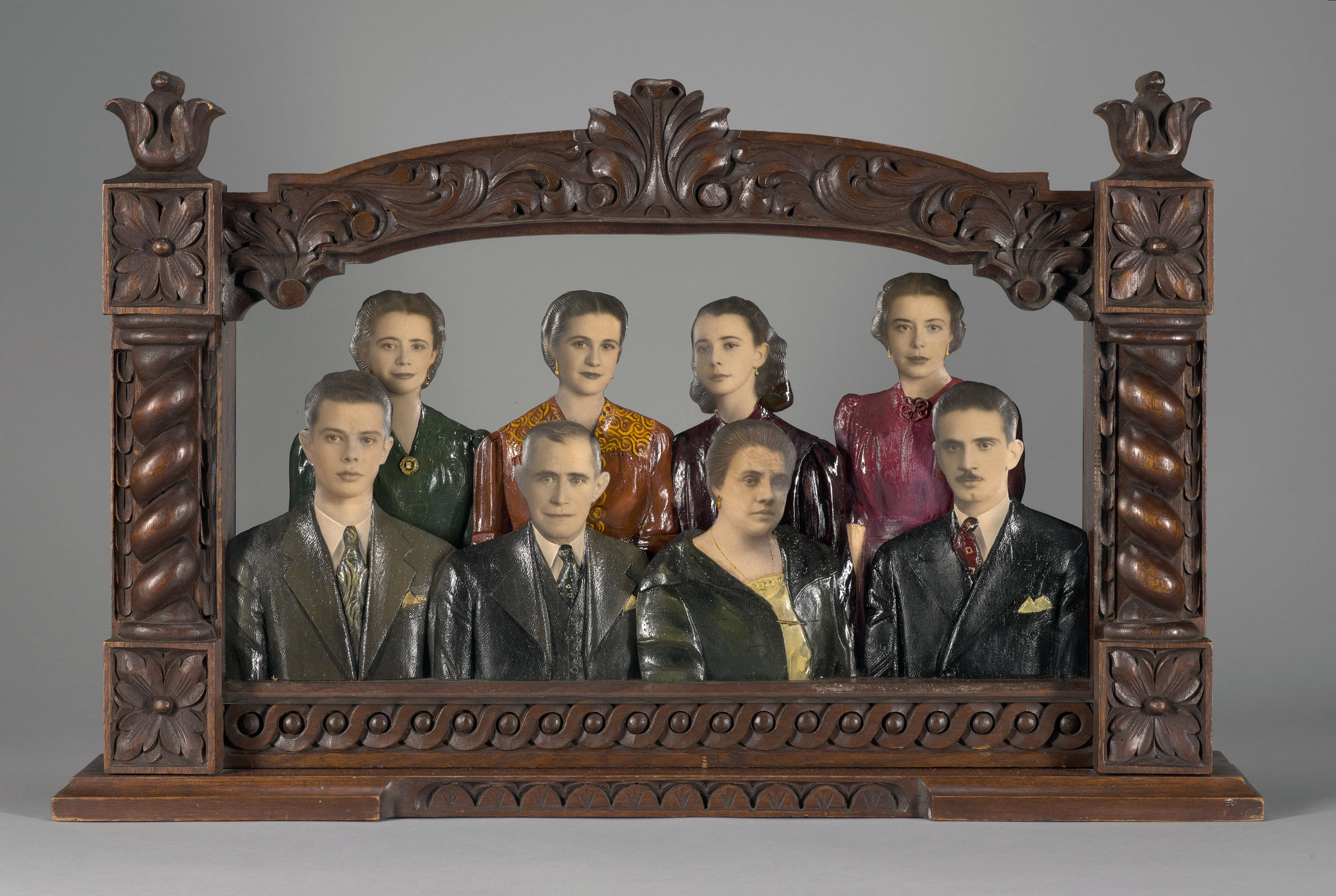
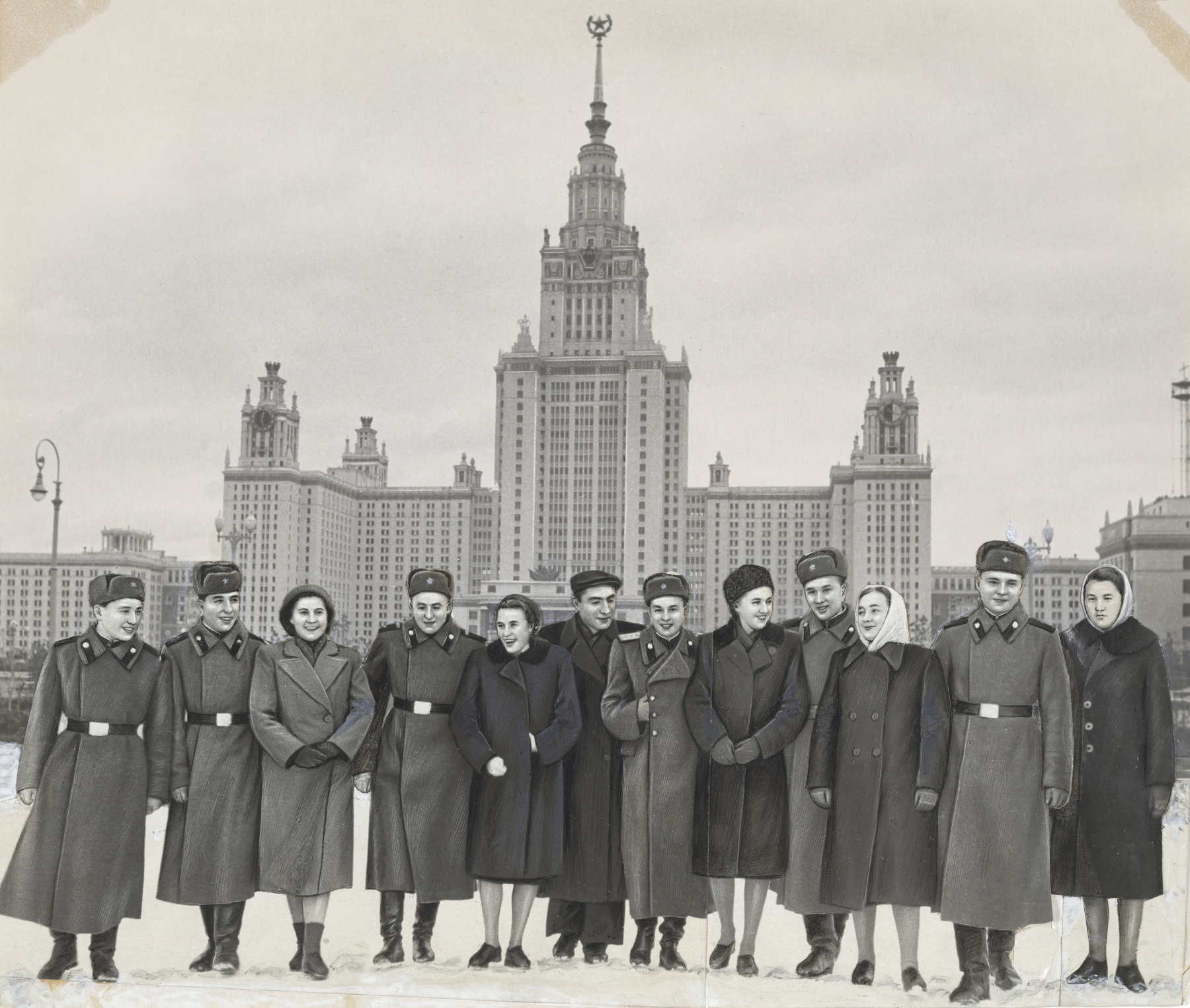
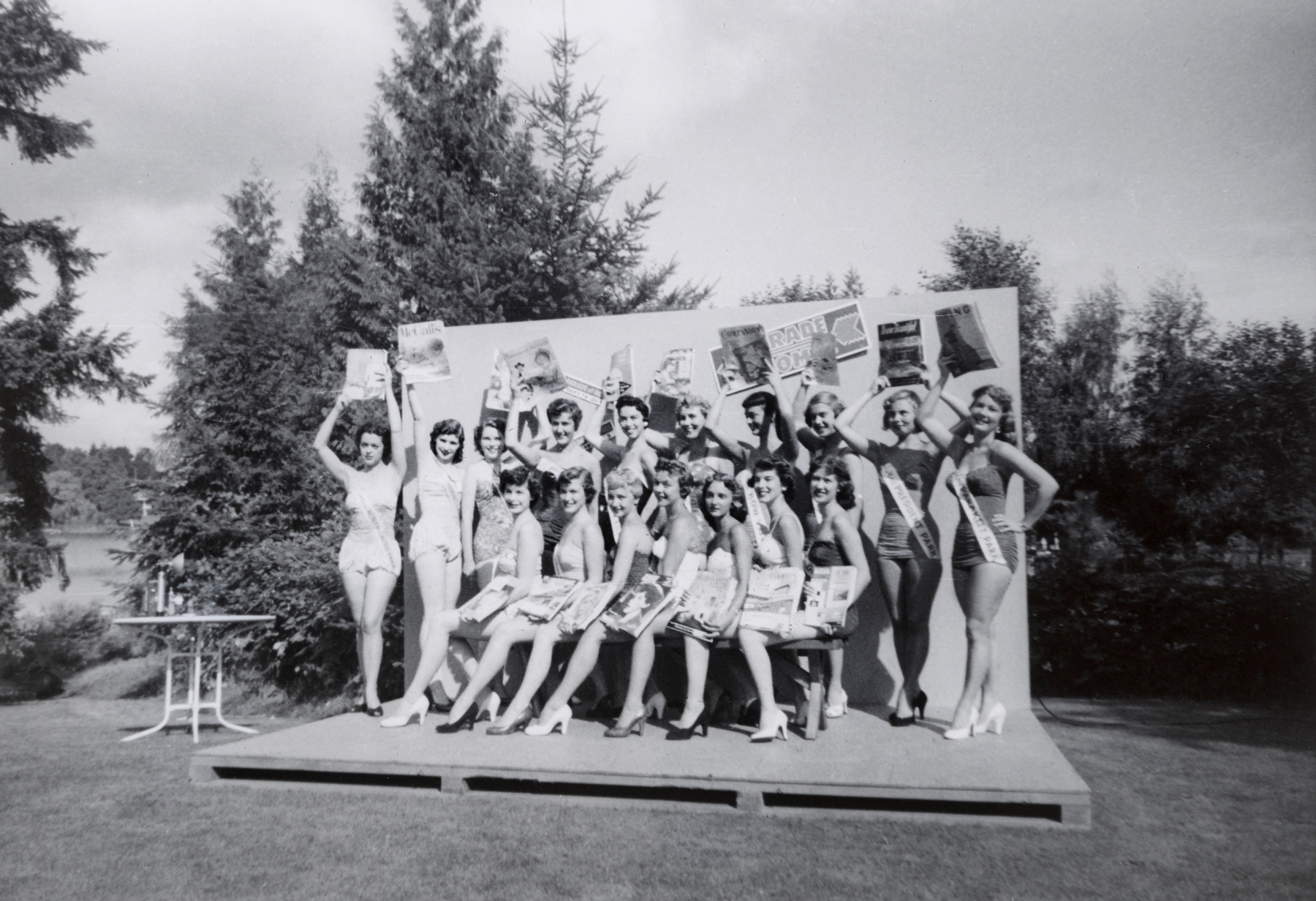
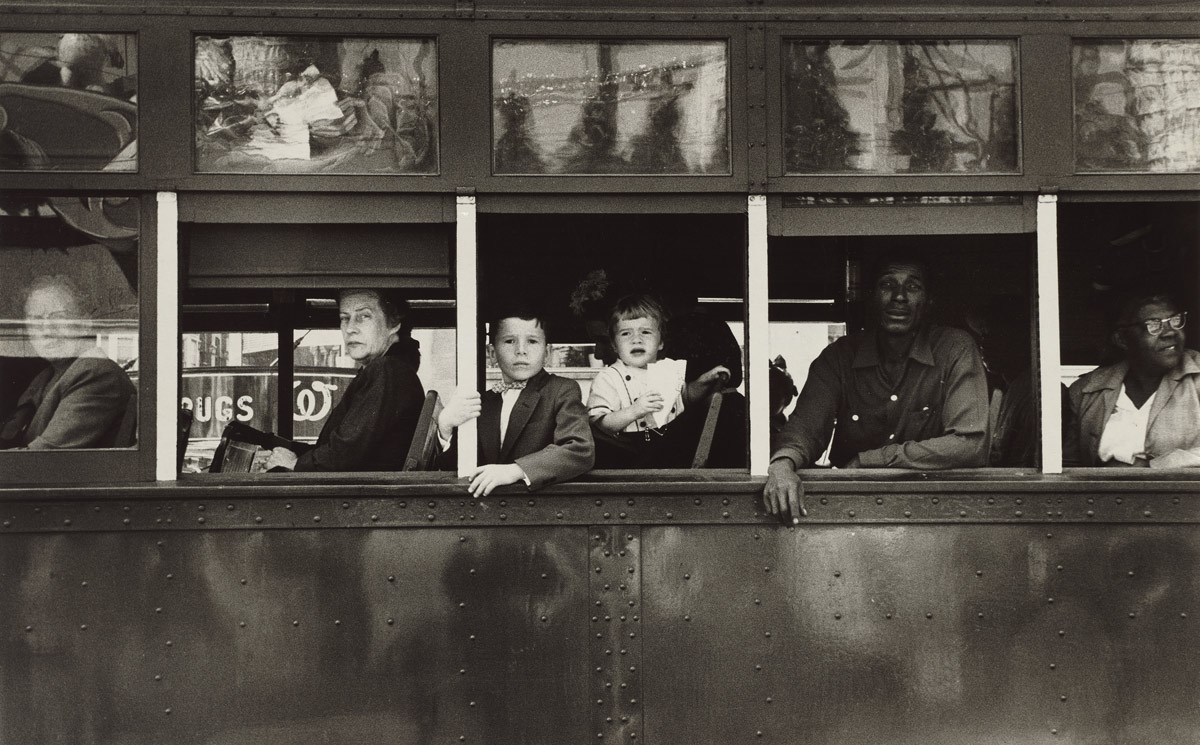
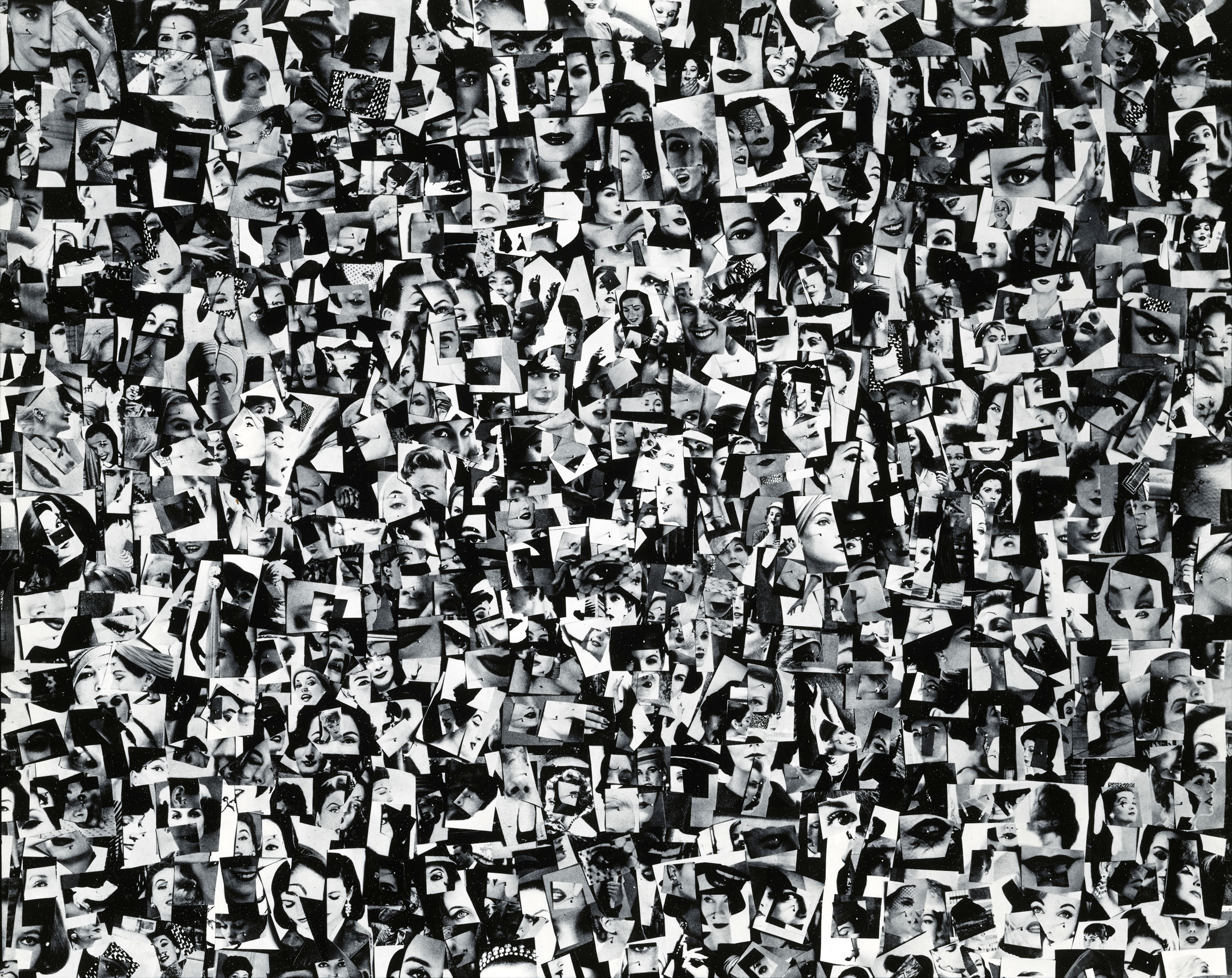

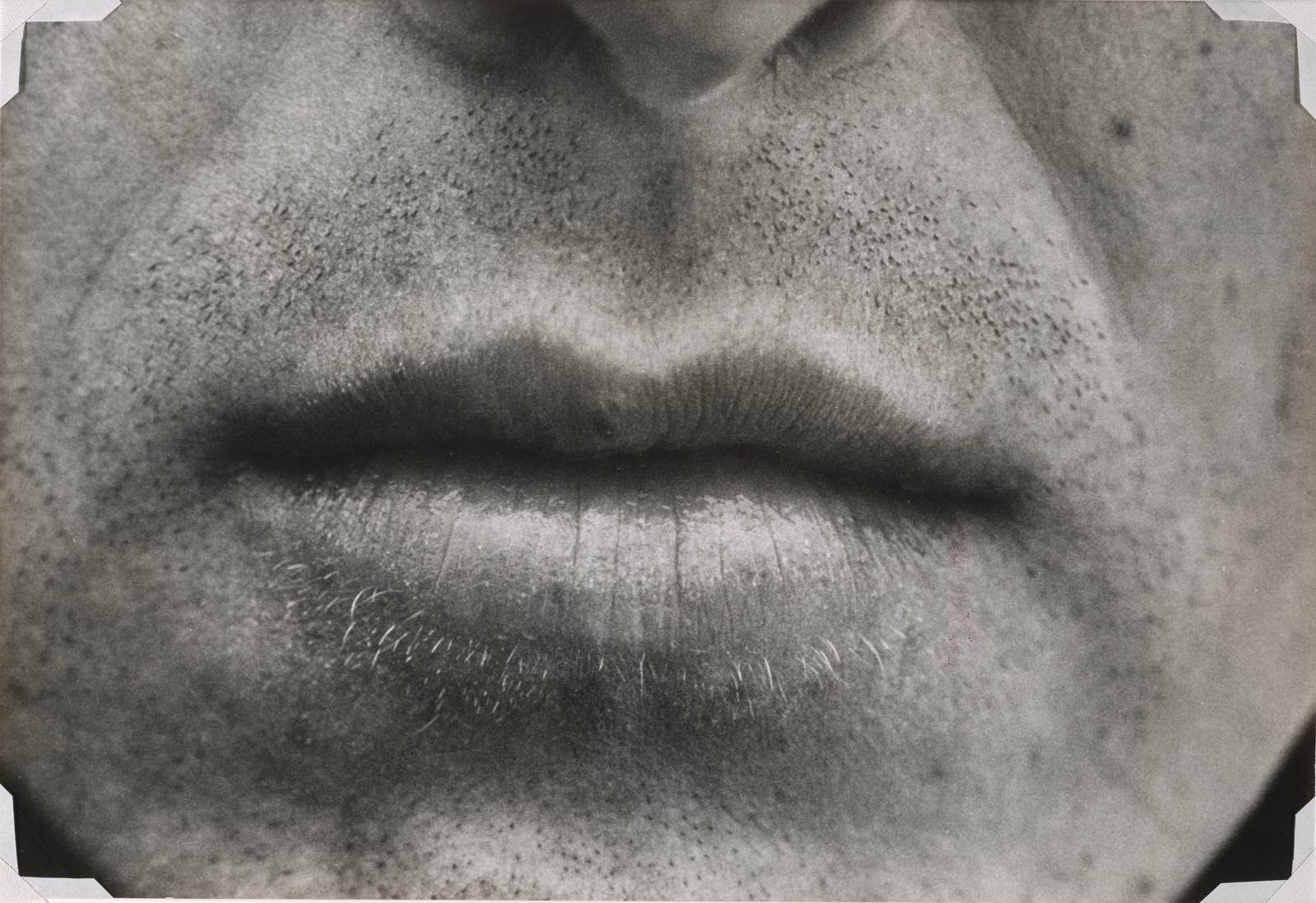

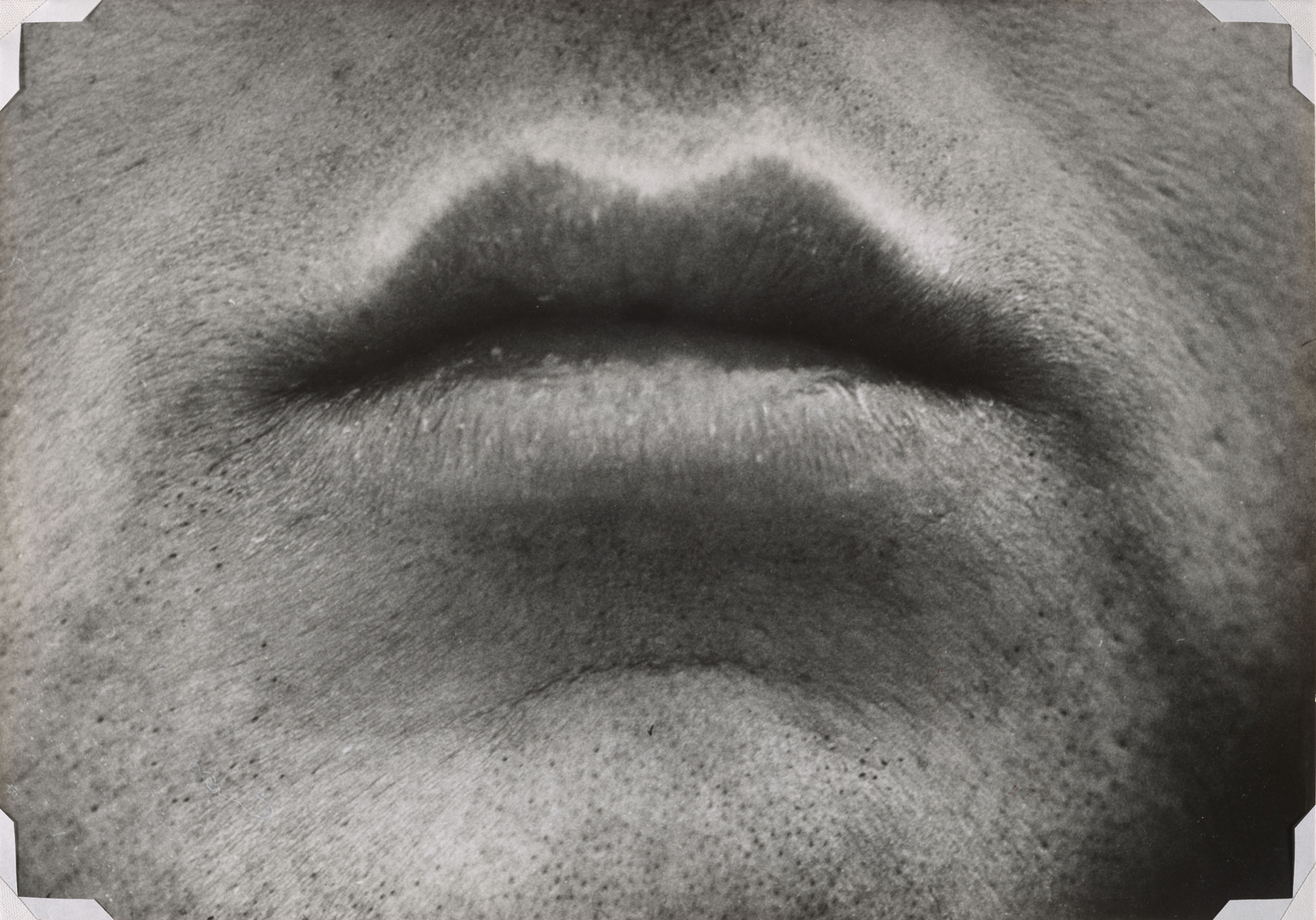
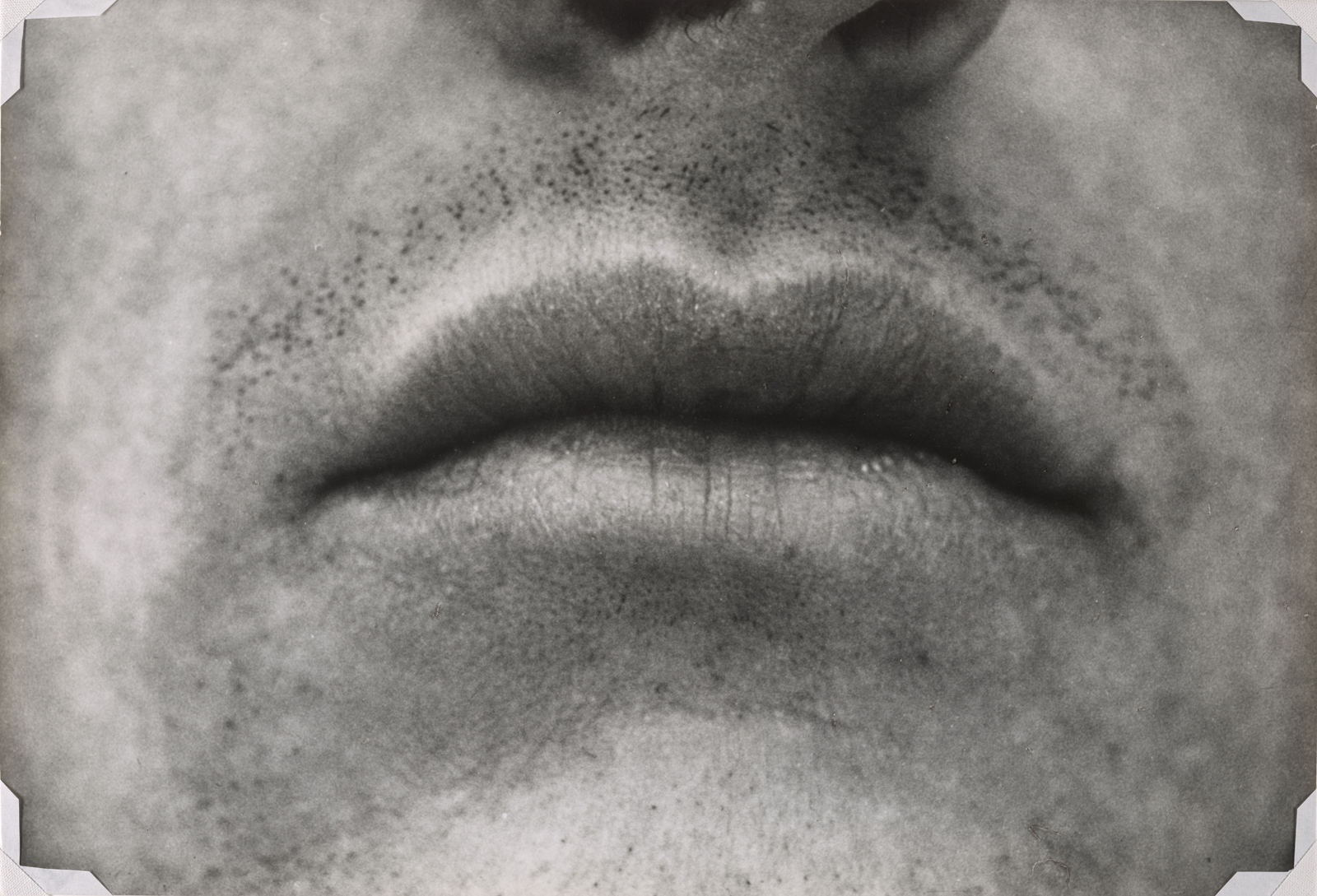
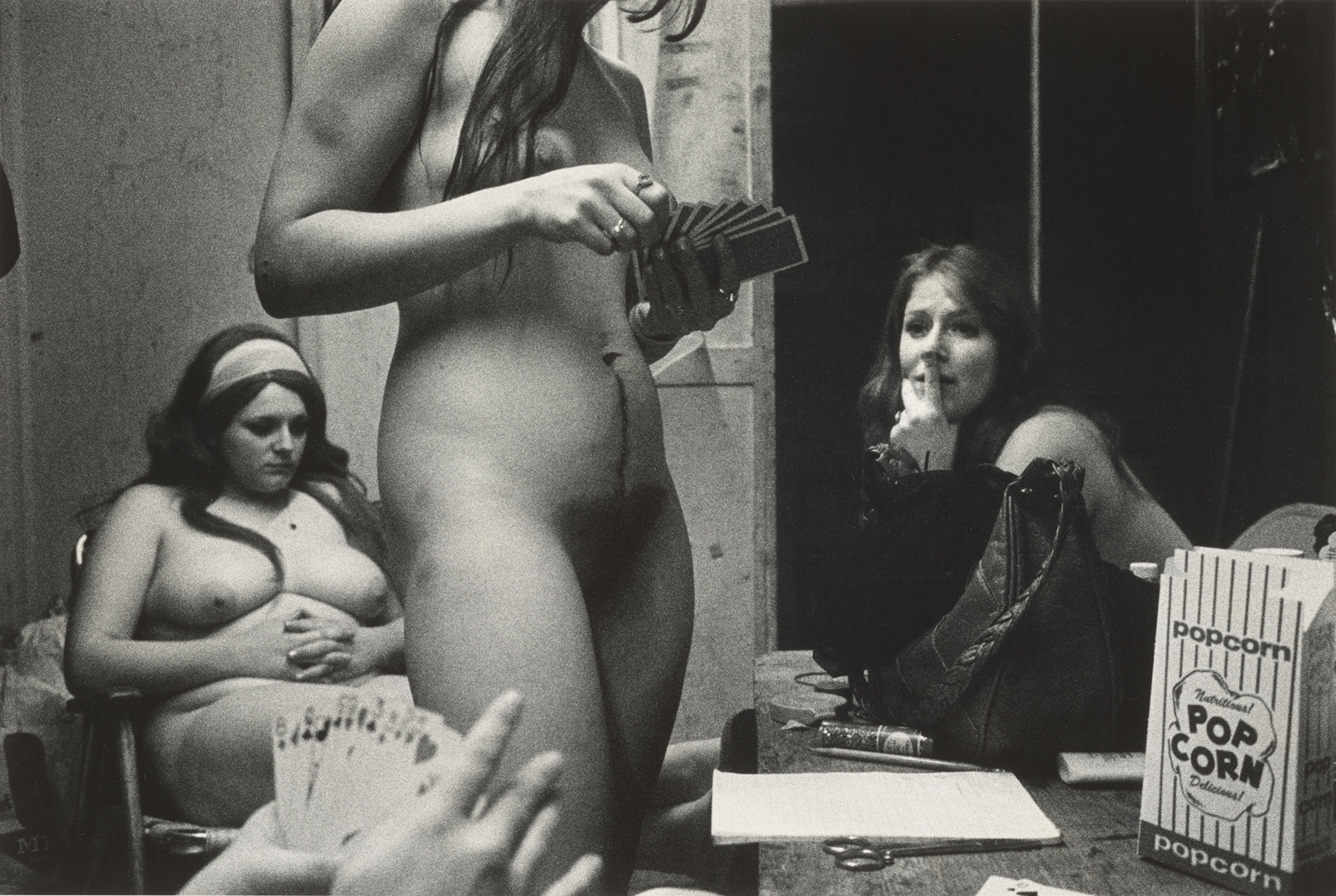
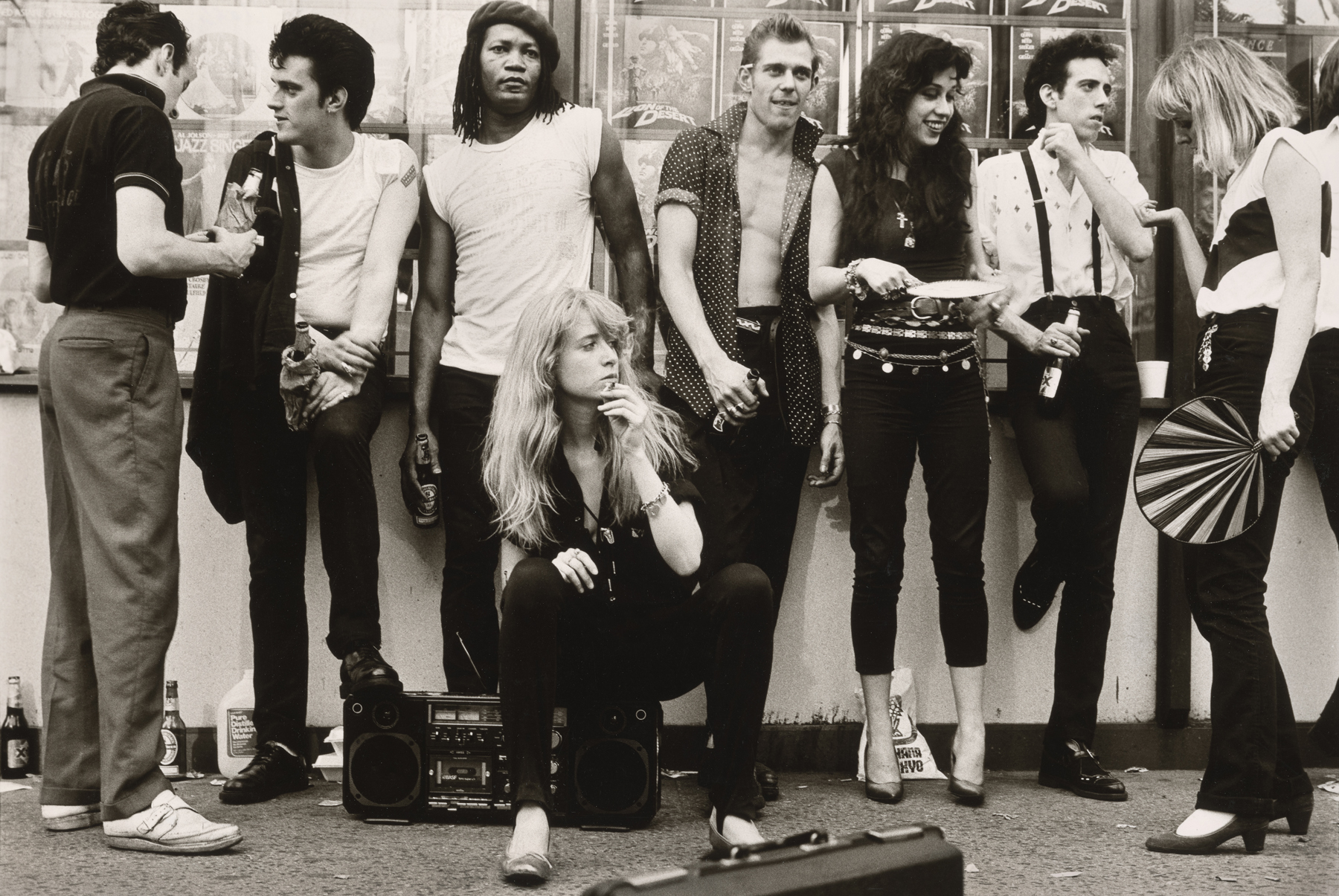
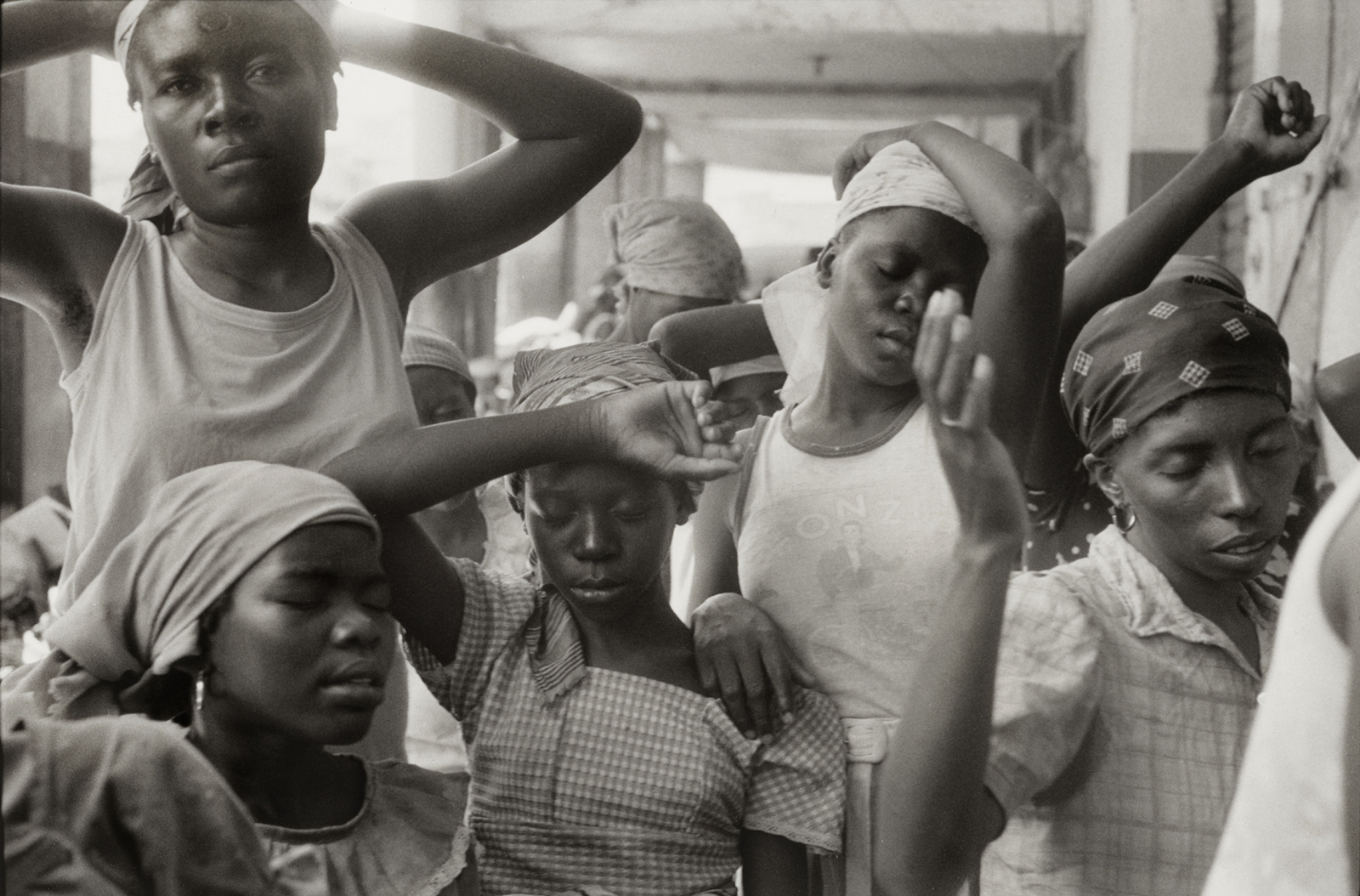
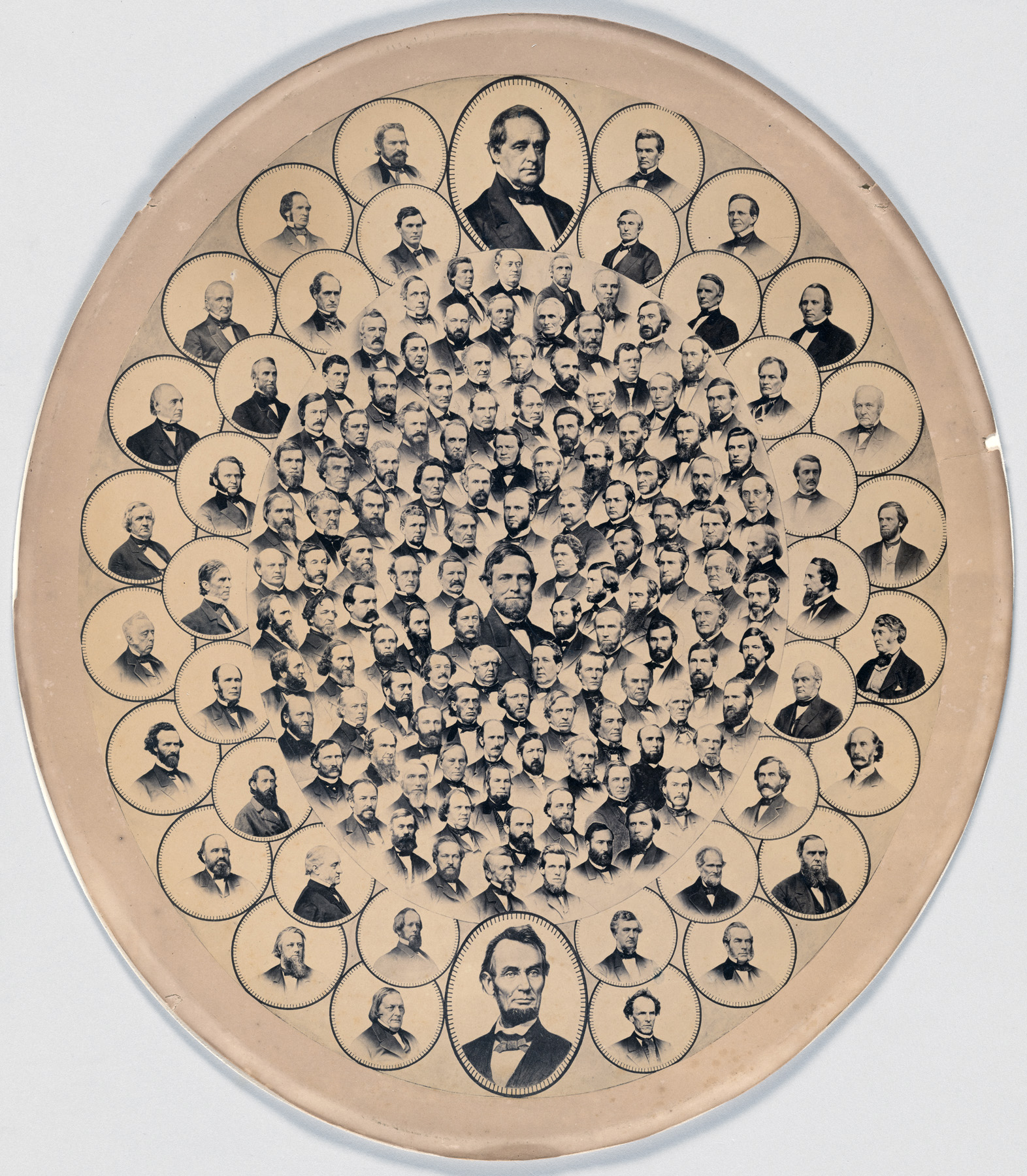


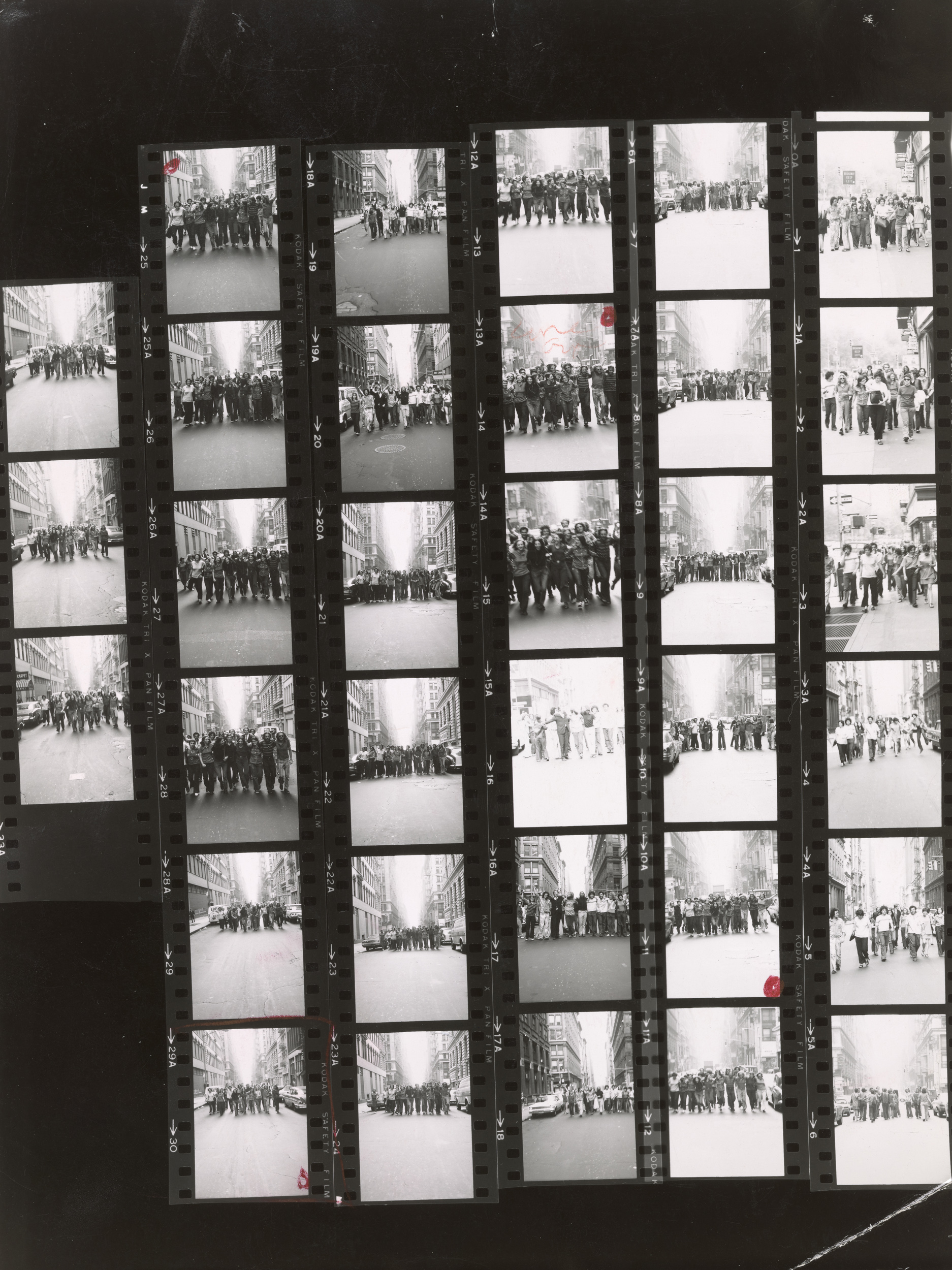
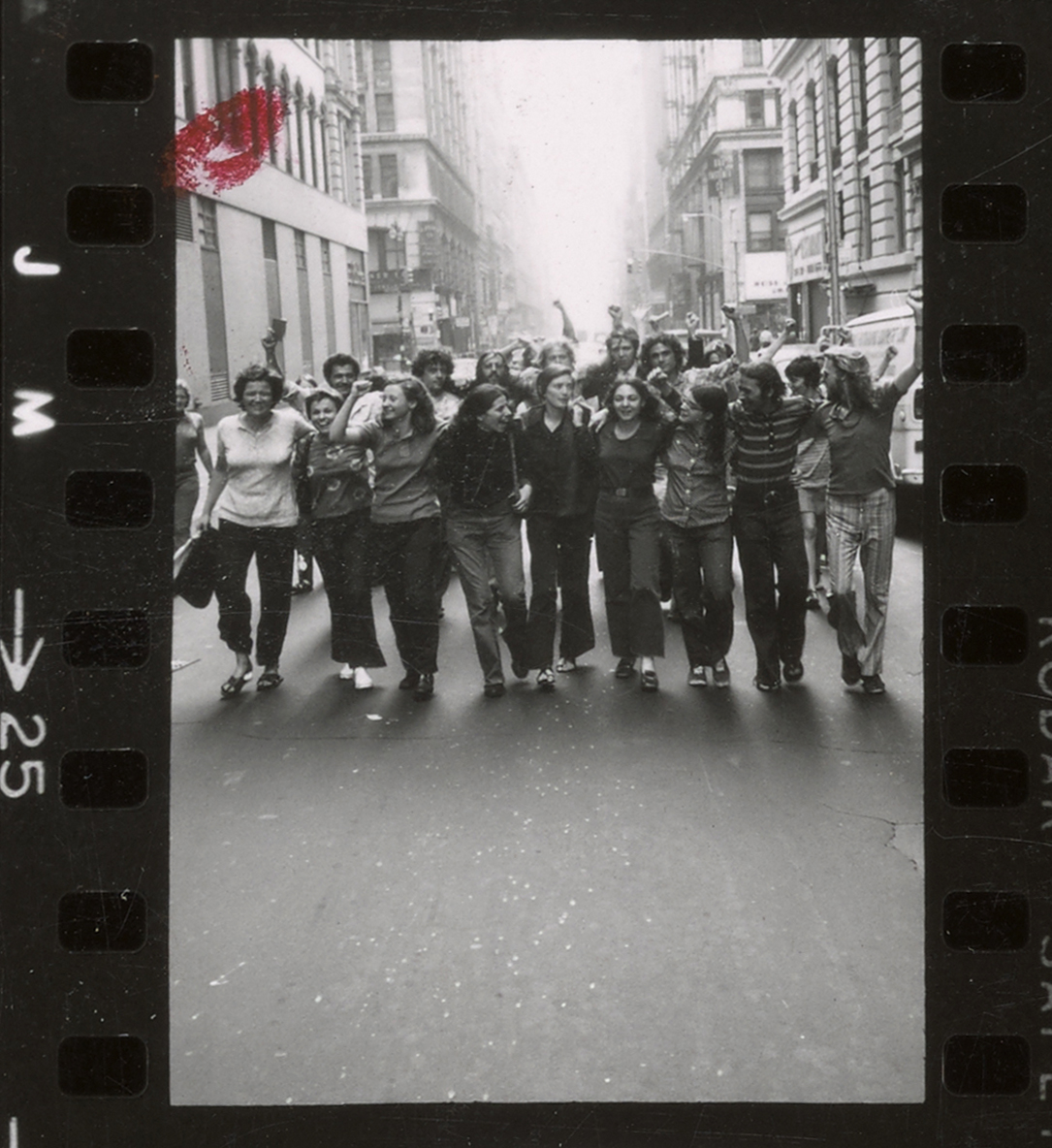
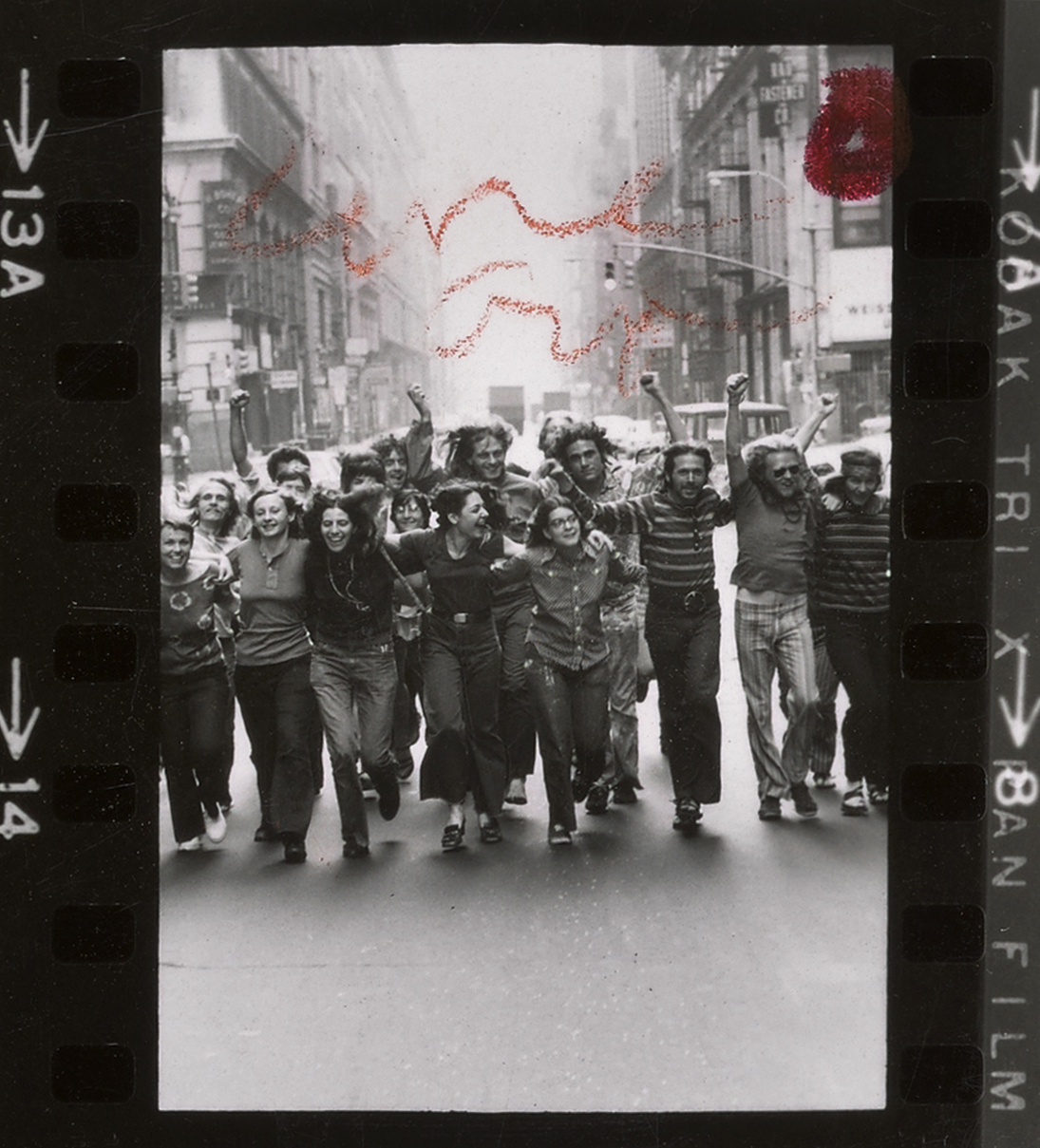
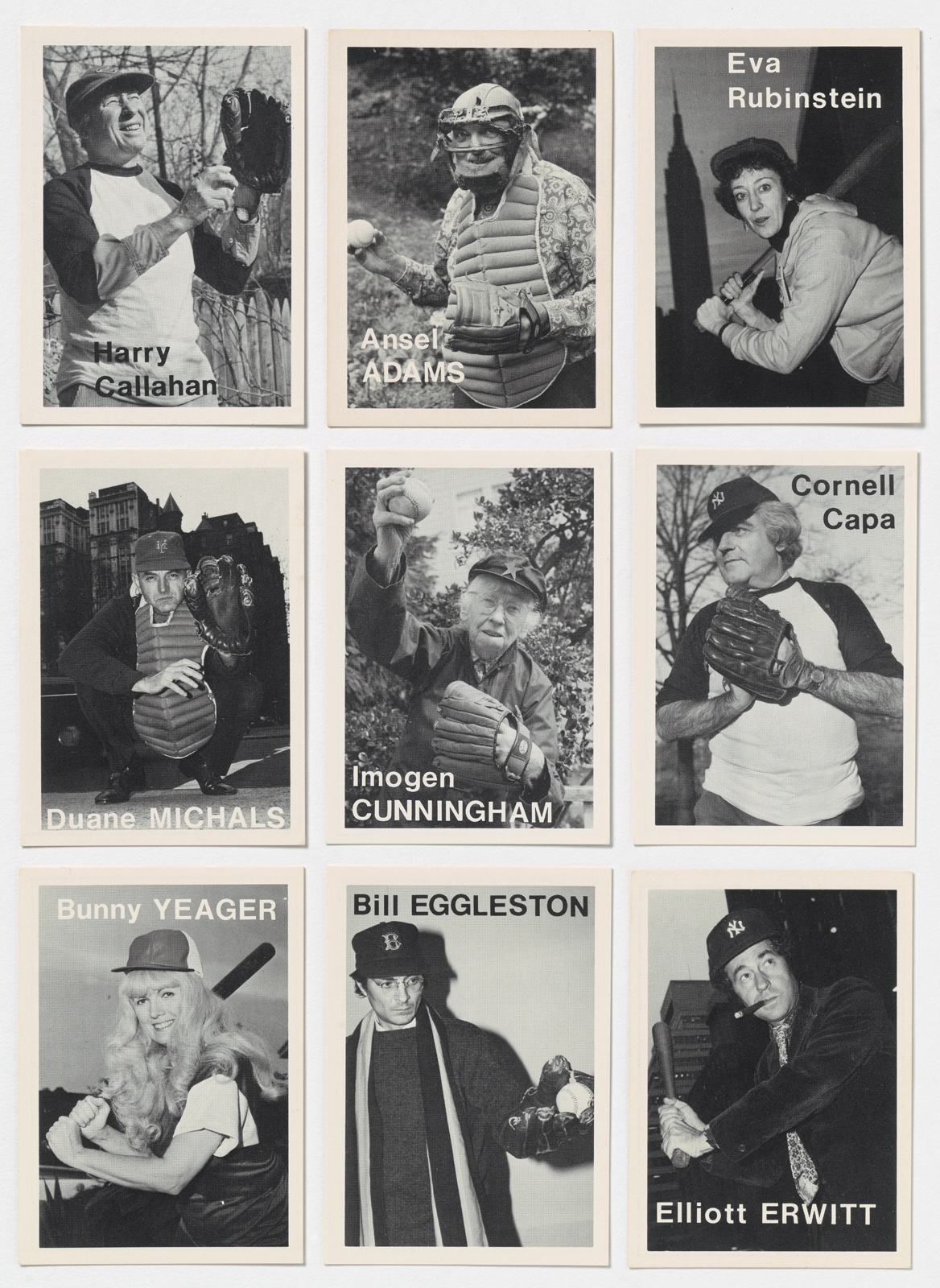
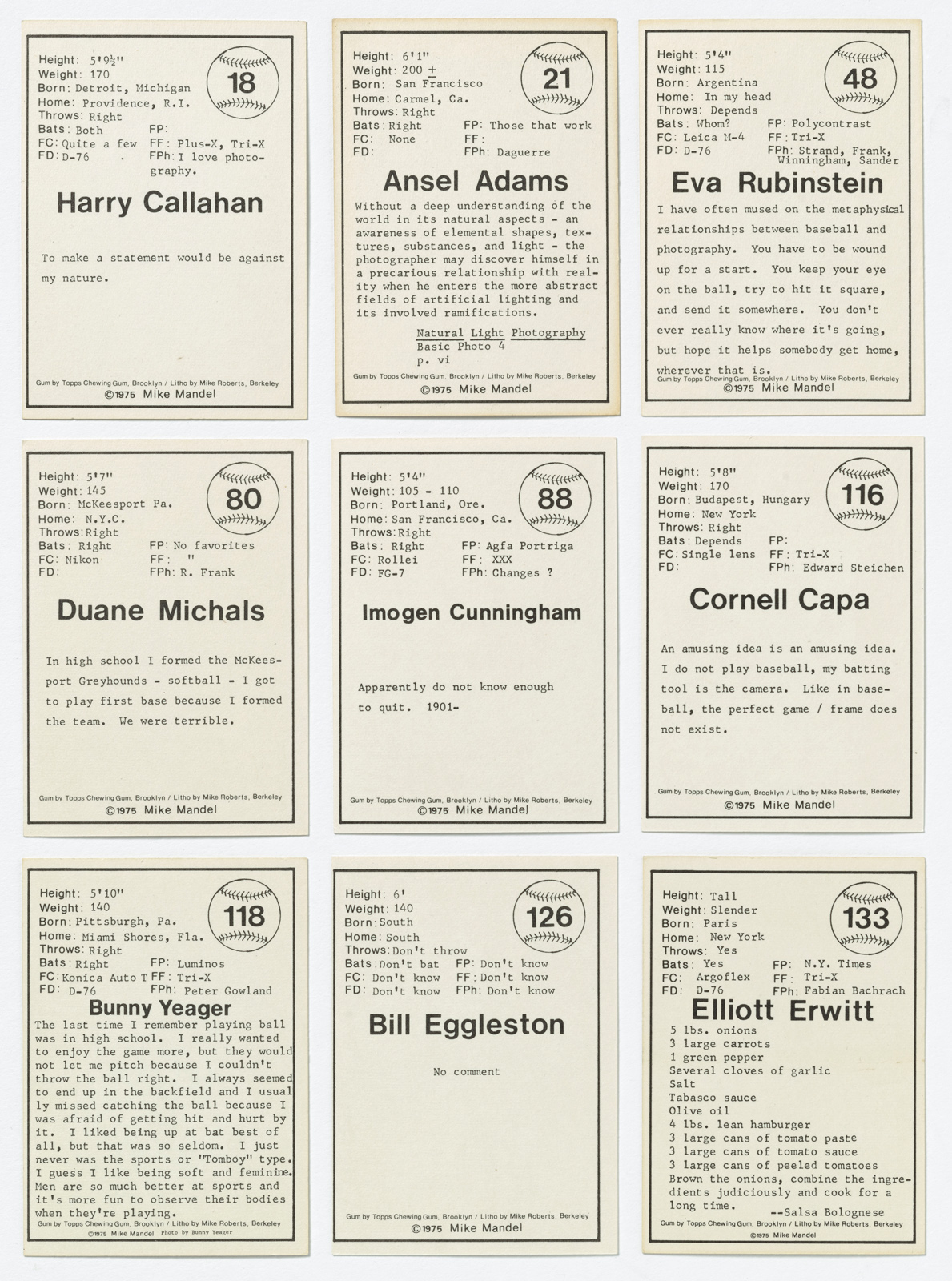


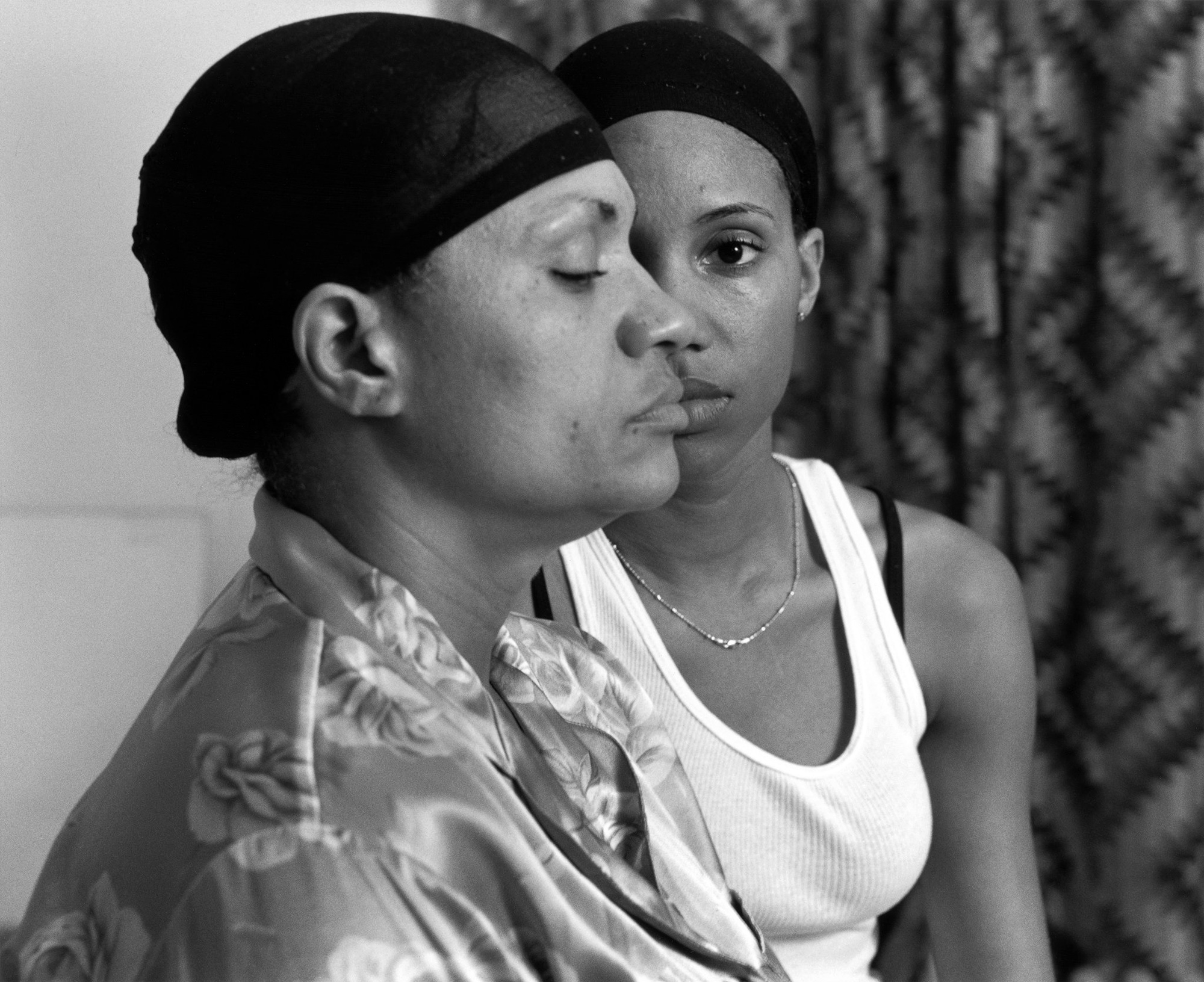

![Photographer unknown (American) 'Untitled [Hidden Mother]' c. 1860s-1870s](https://artblart.com/wp-content/uploads/2018/05/13_hidden-mother_artist-unidentified-web.jpg "Photographer unknown (American) 'Untitled [Hidden Mother]' c. 1860s-1870s")


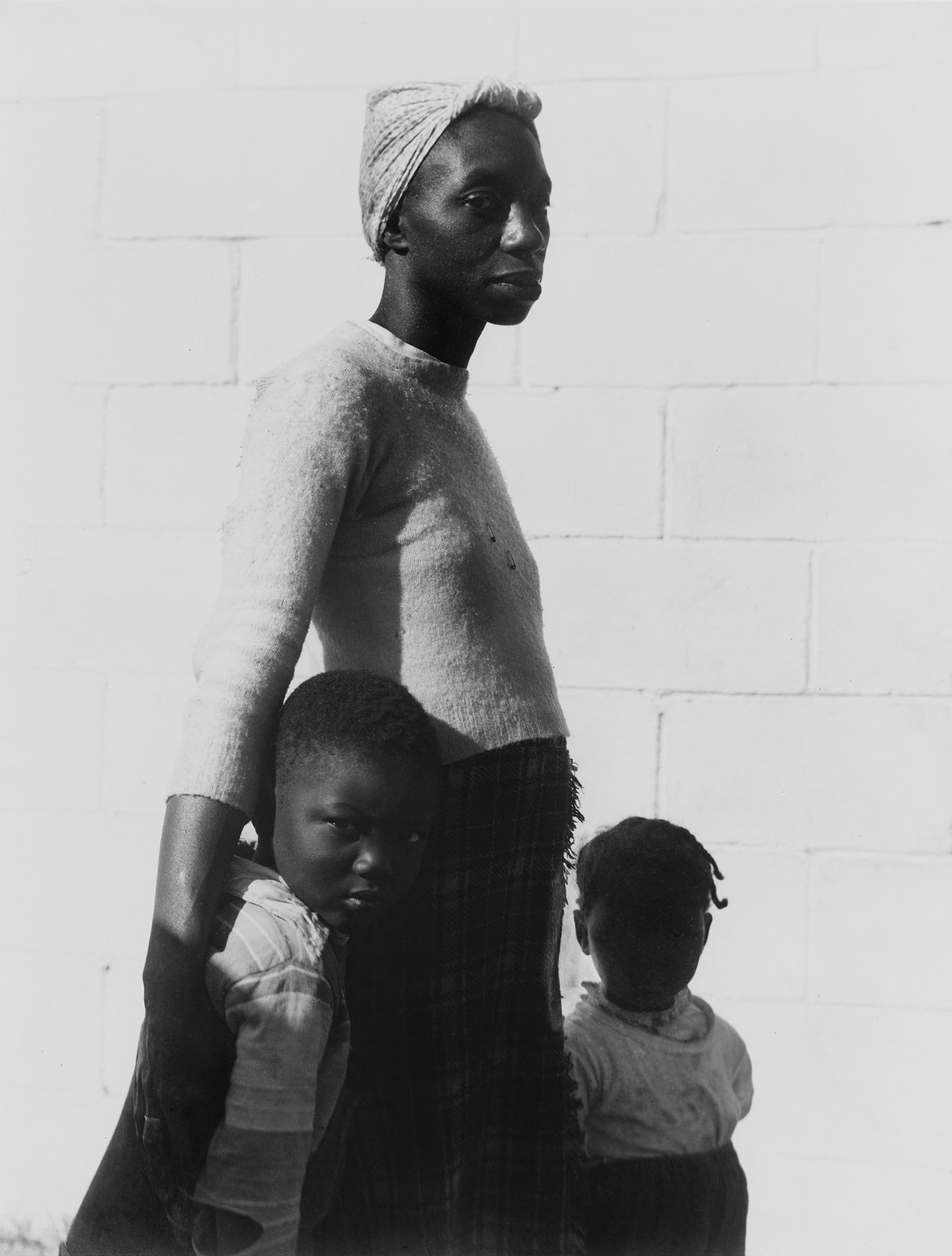
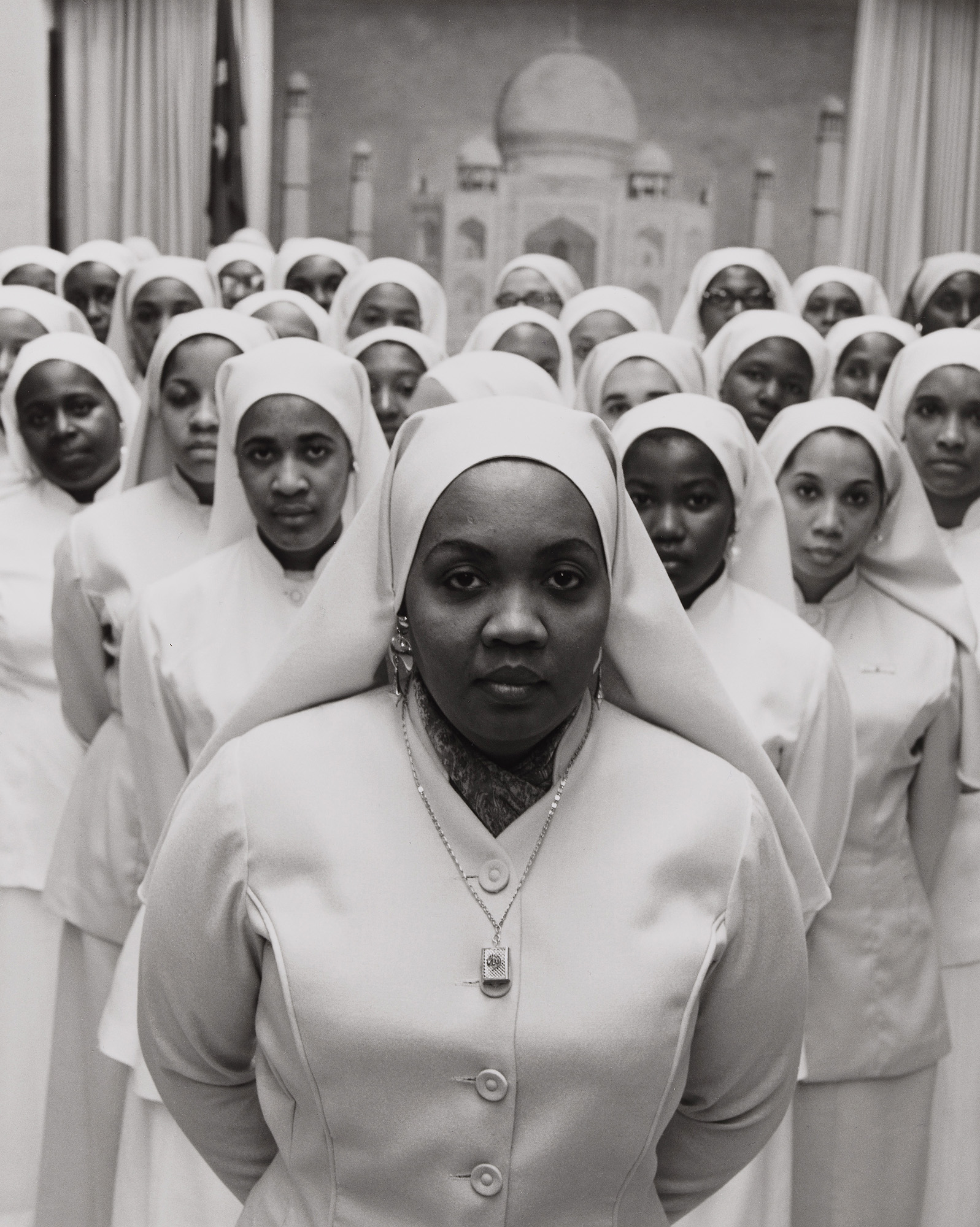






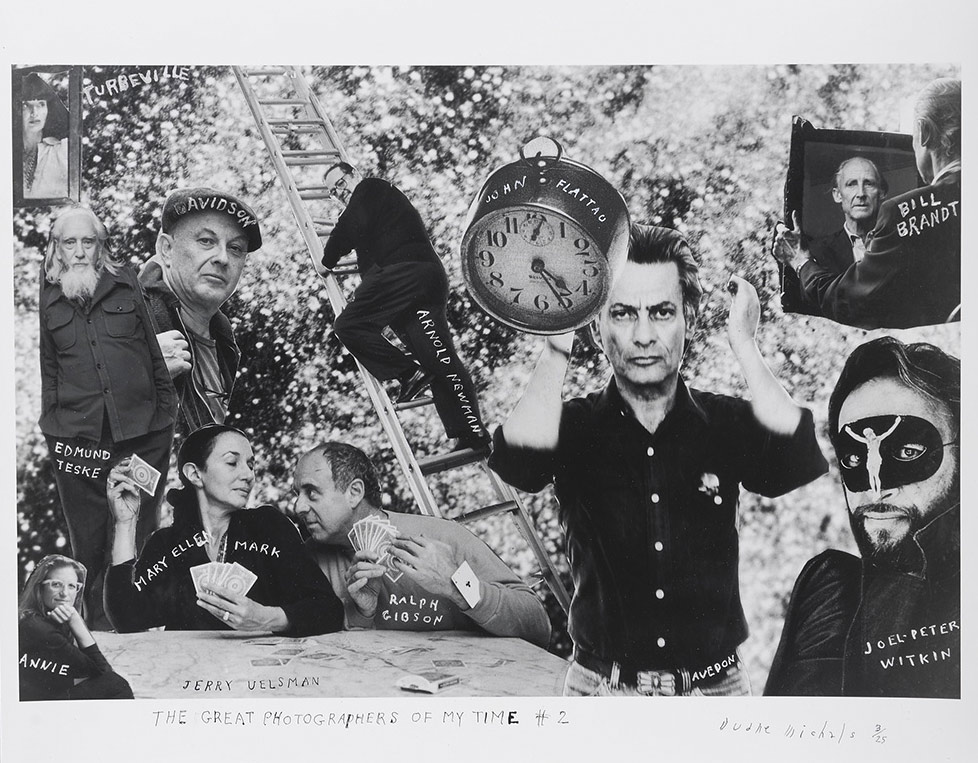
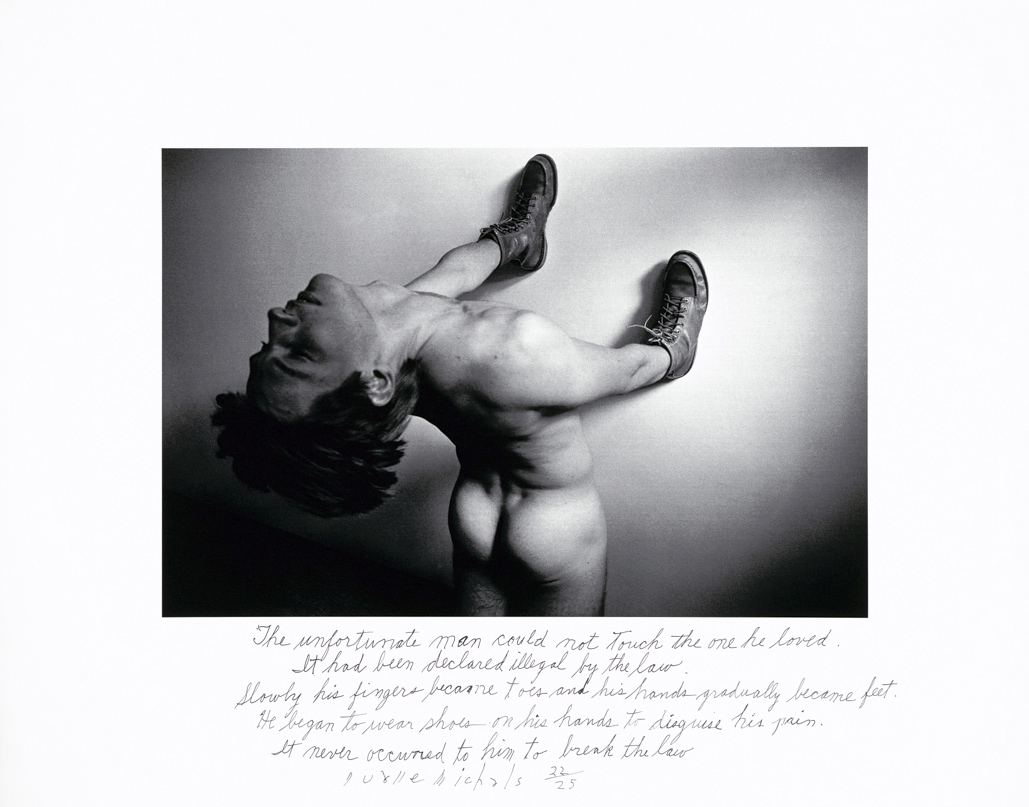

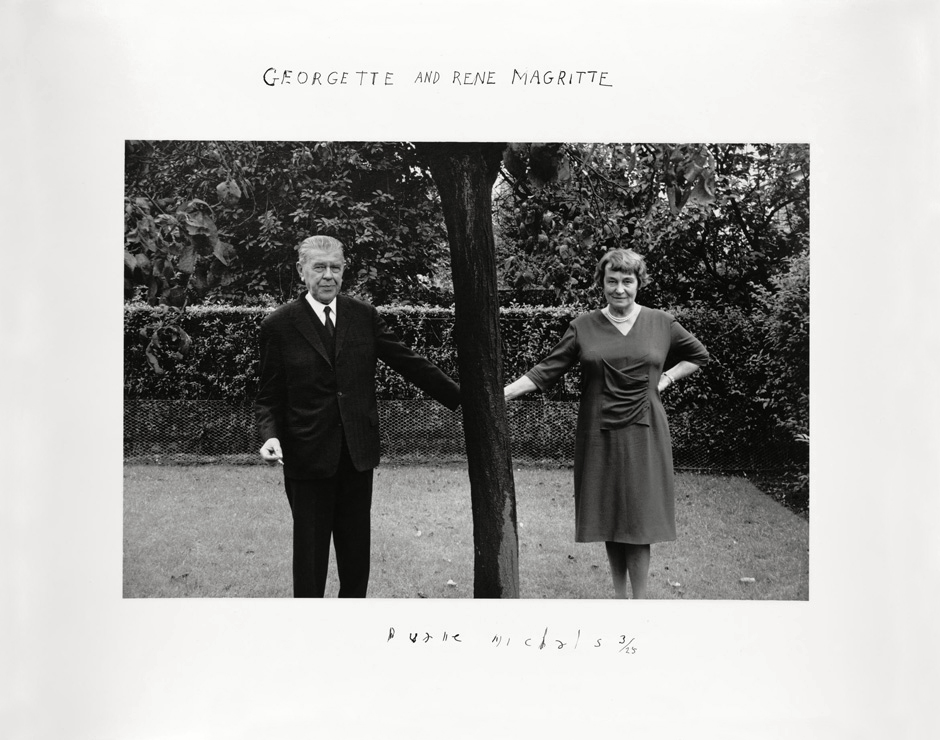
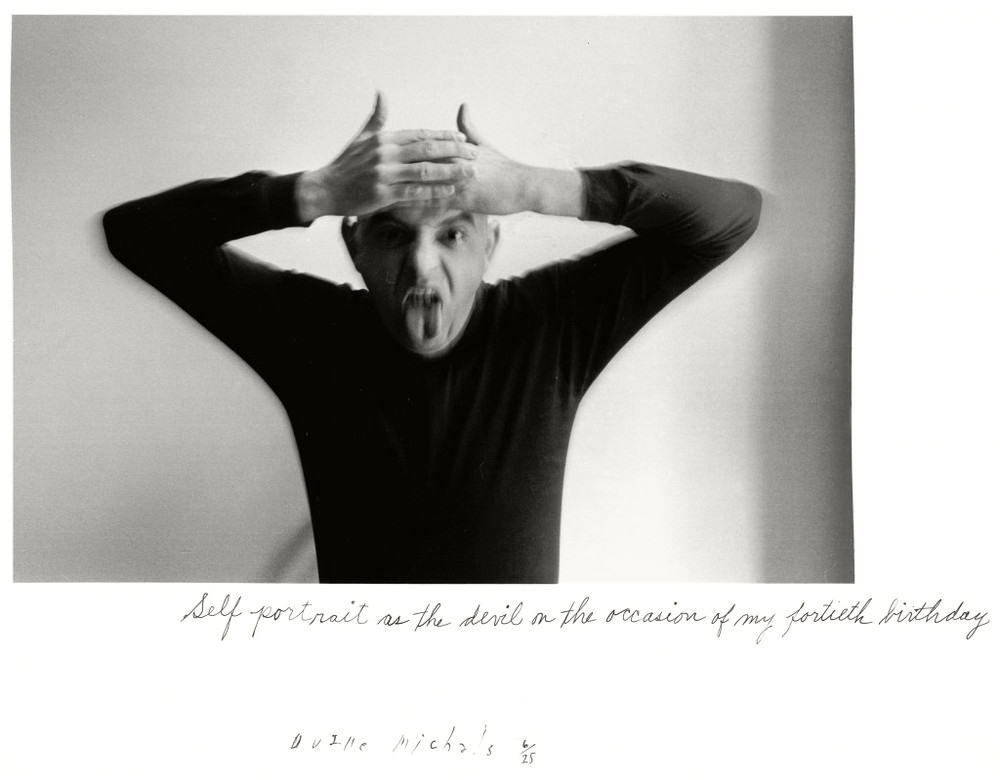

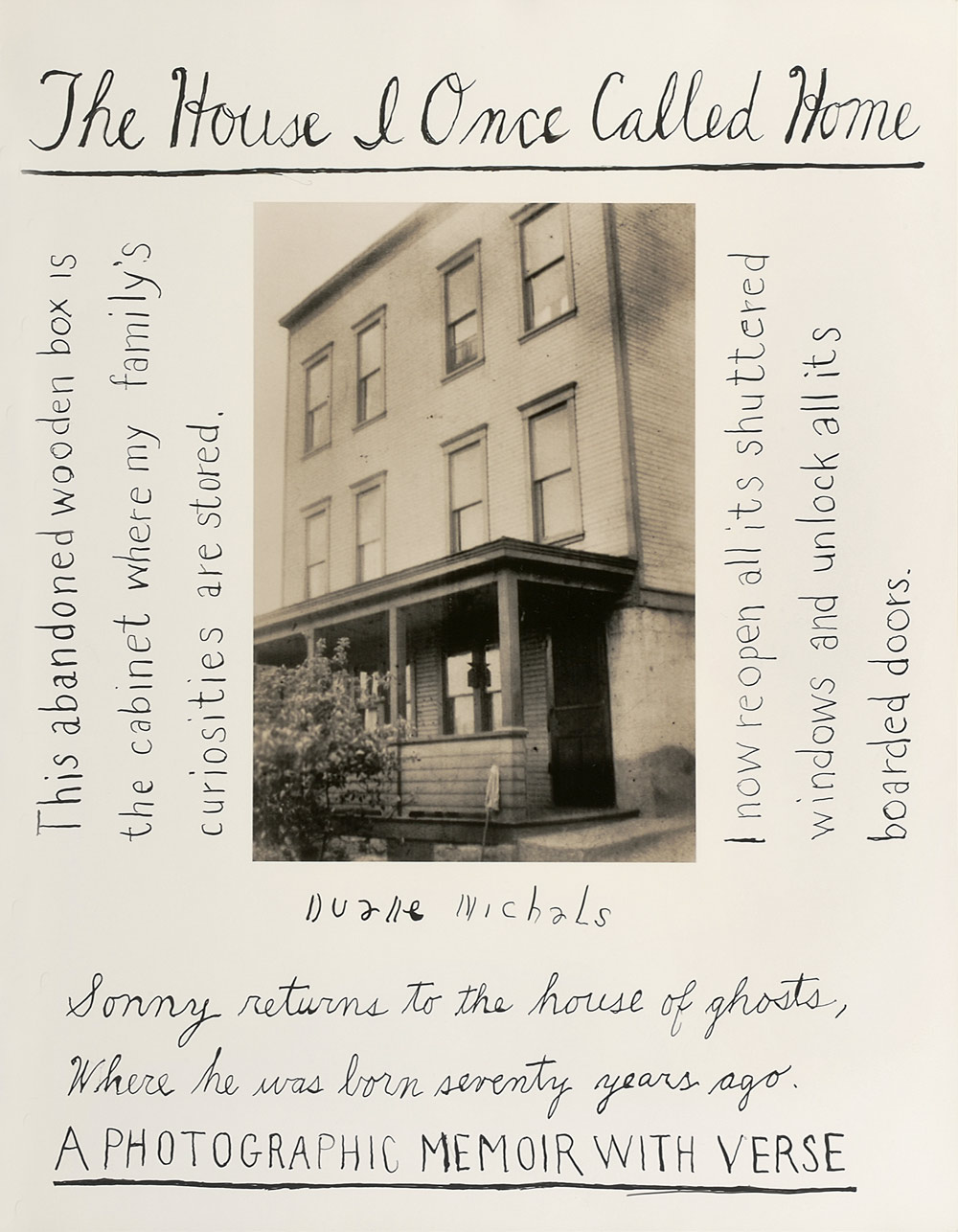
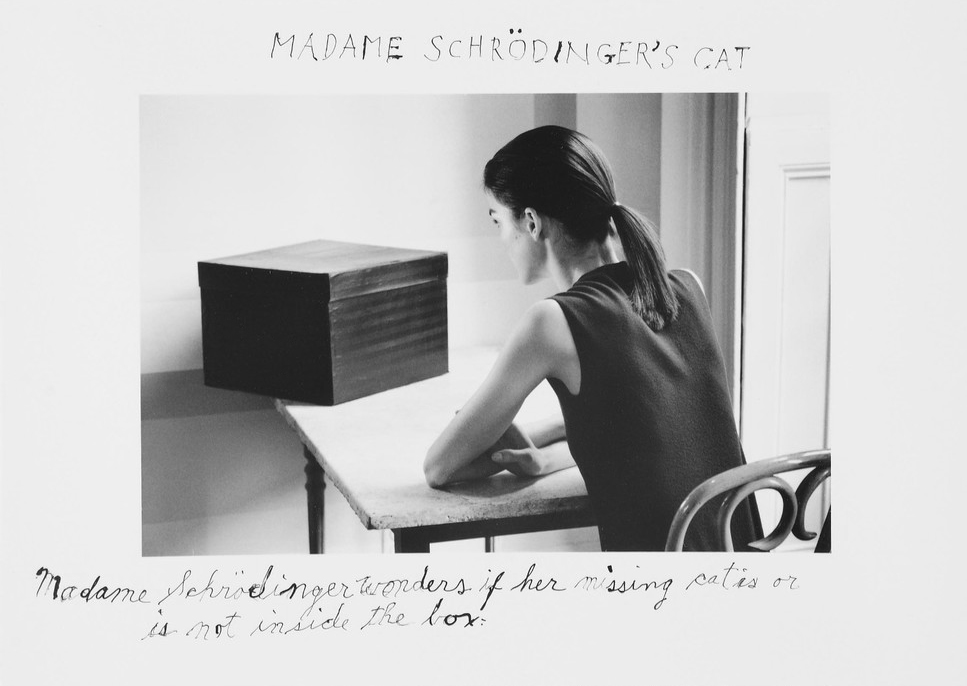
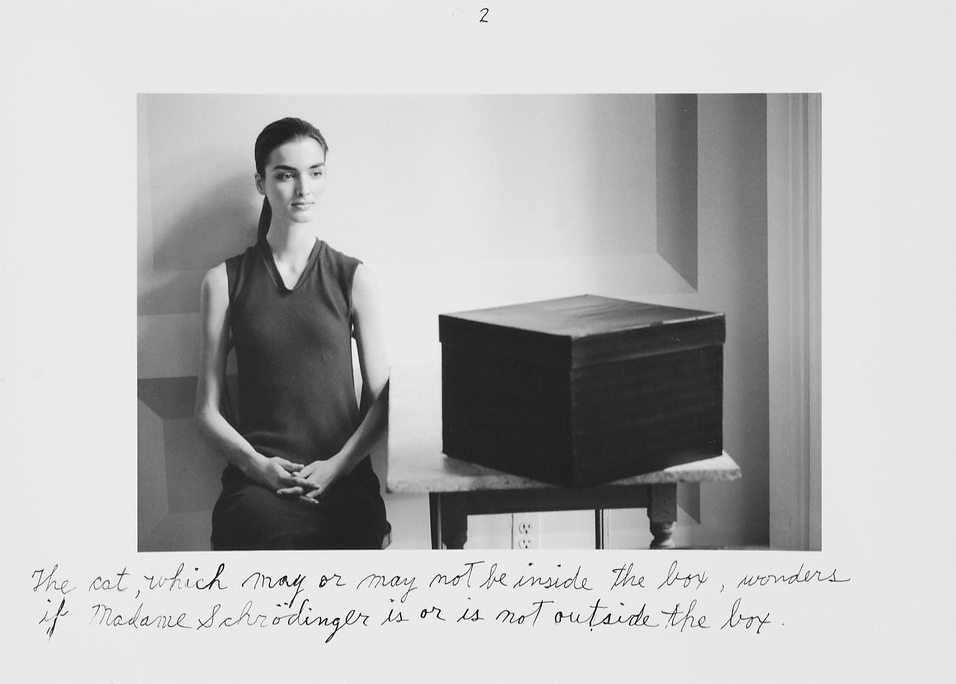

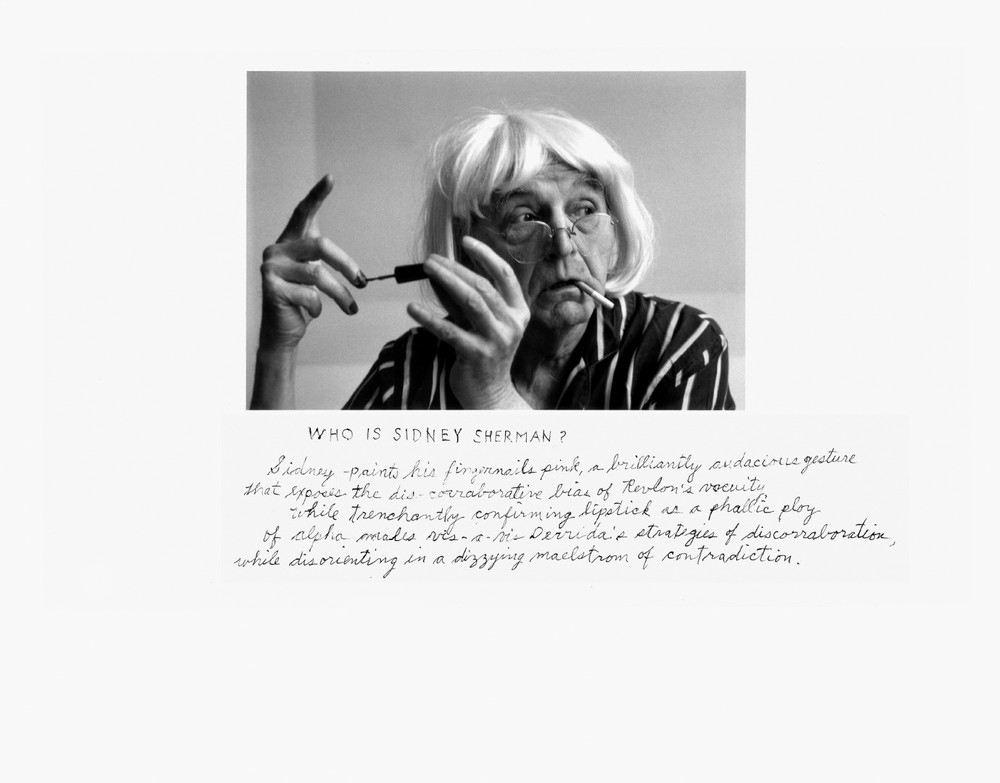
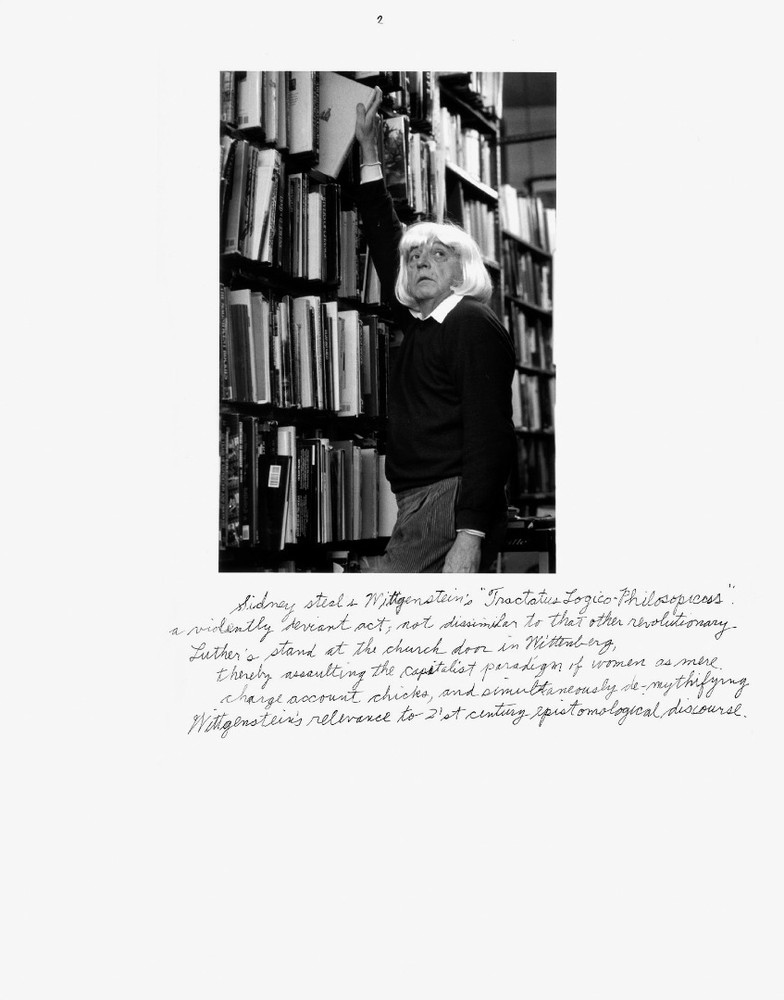

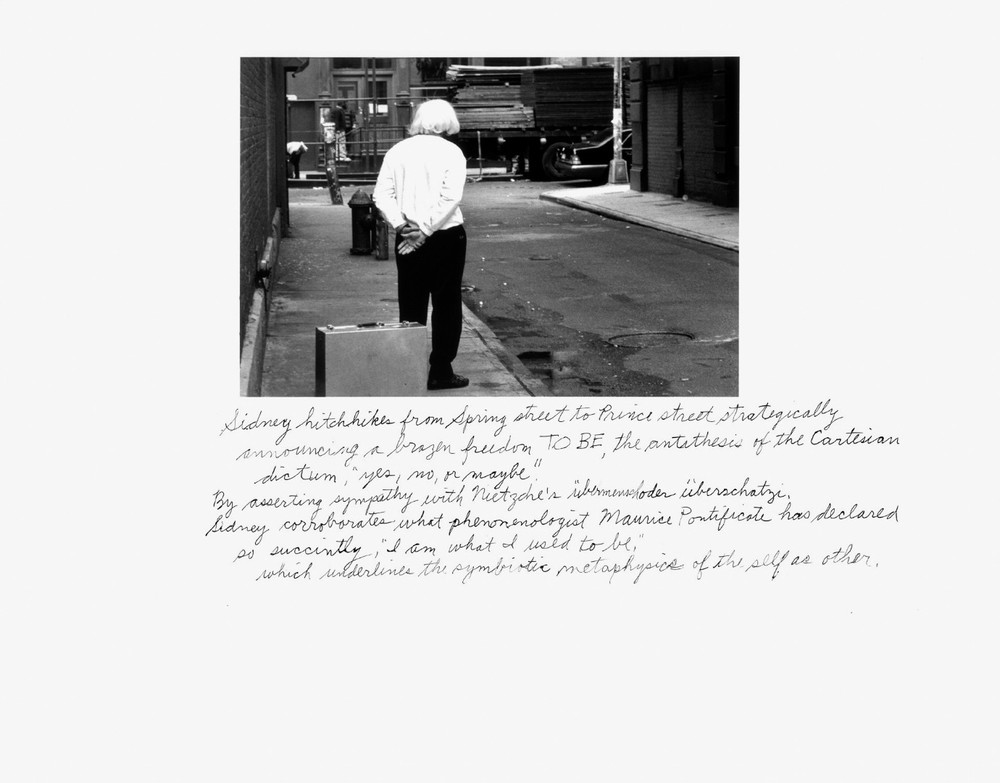


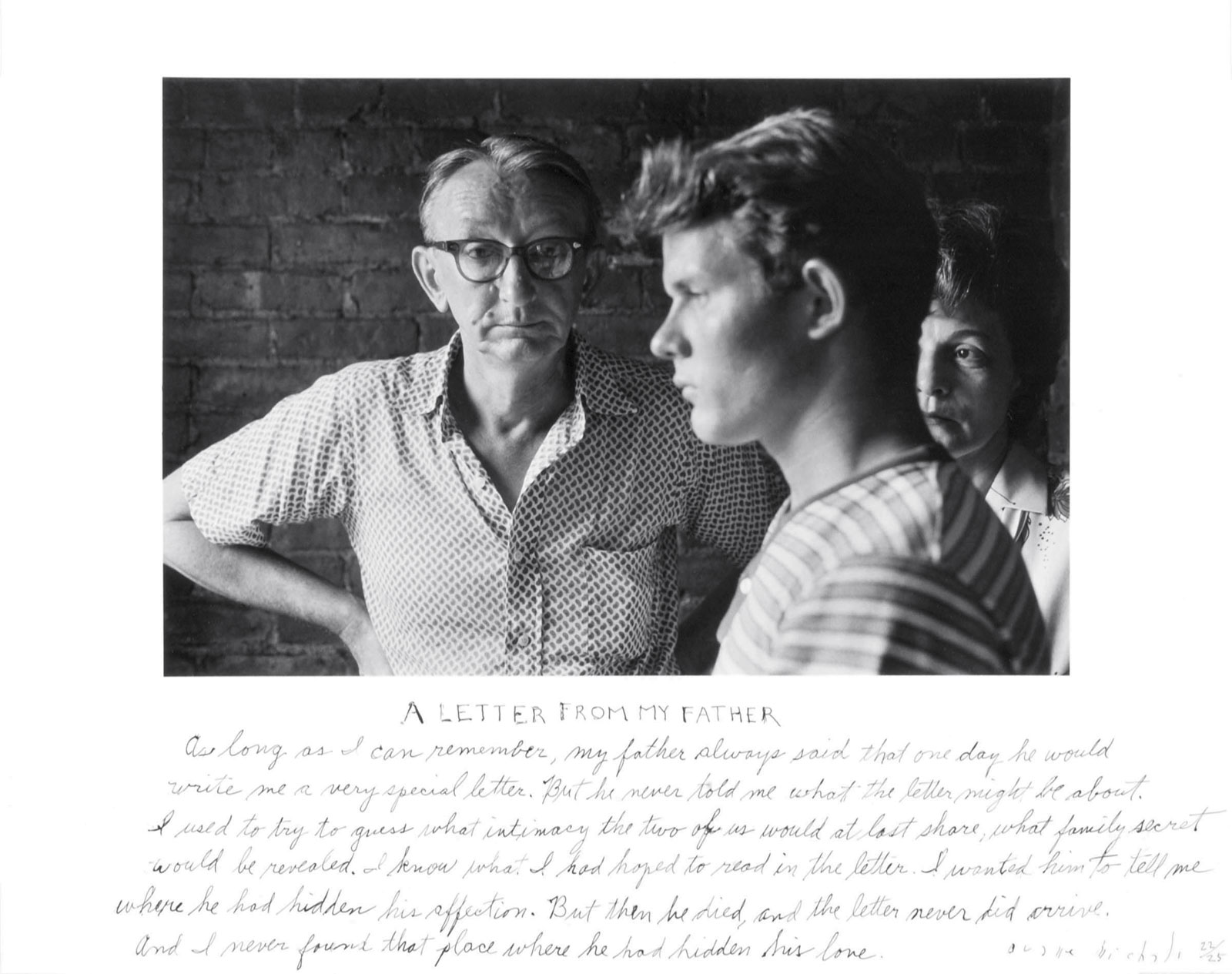
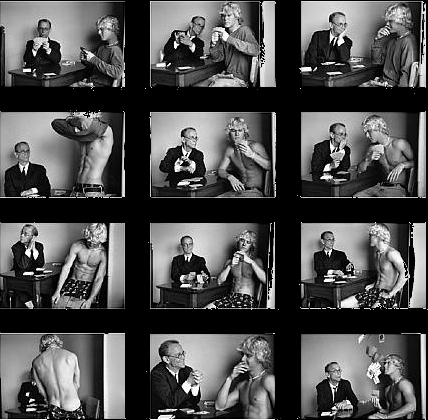
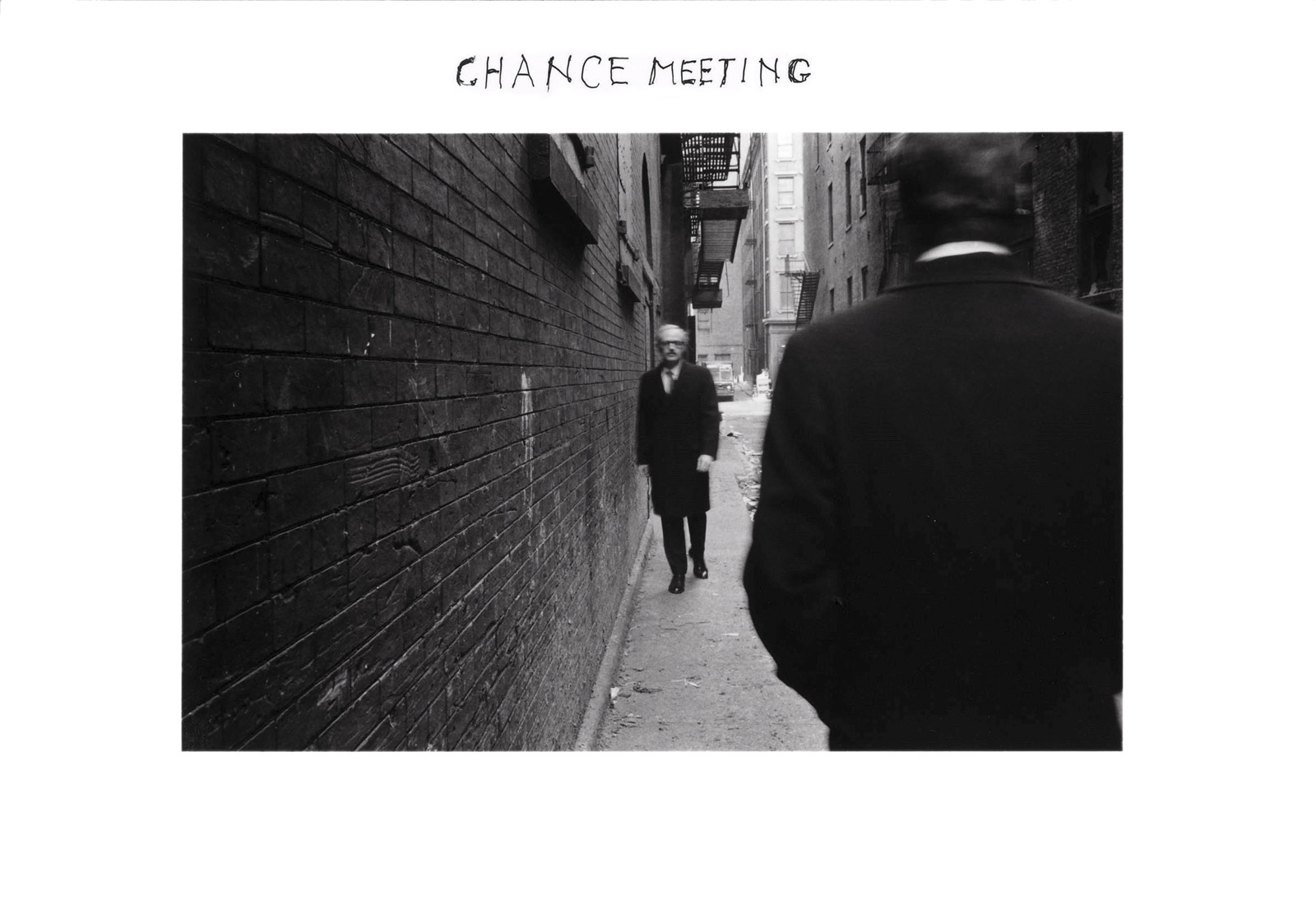


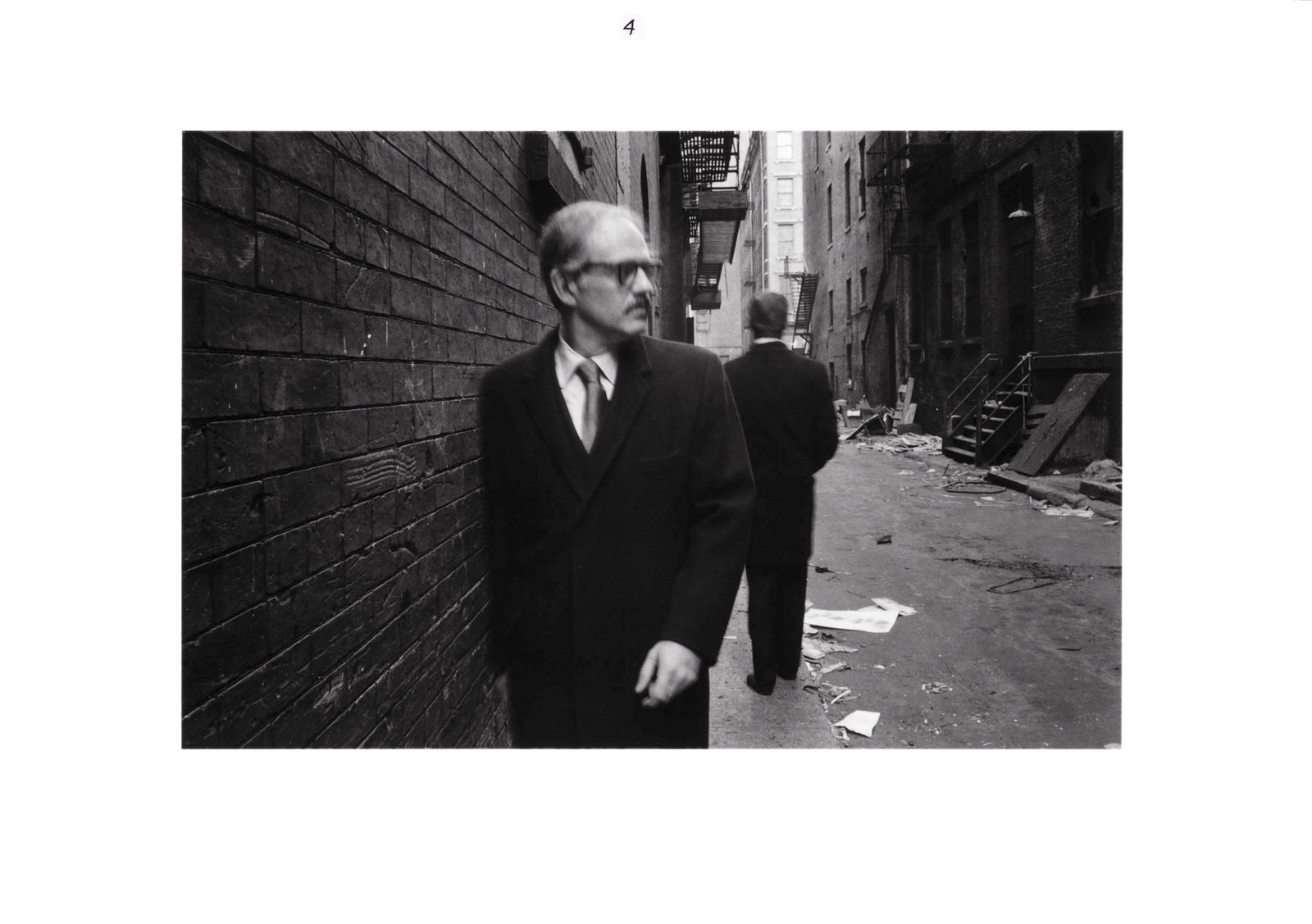

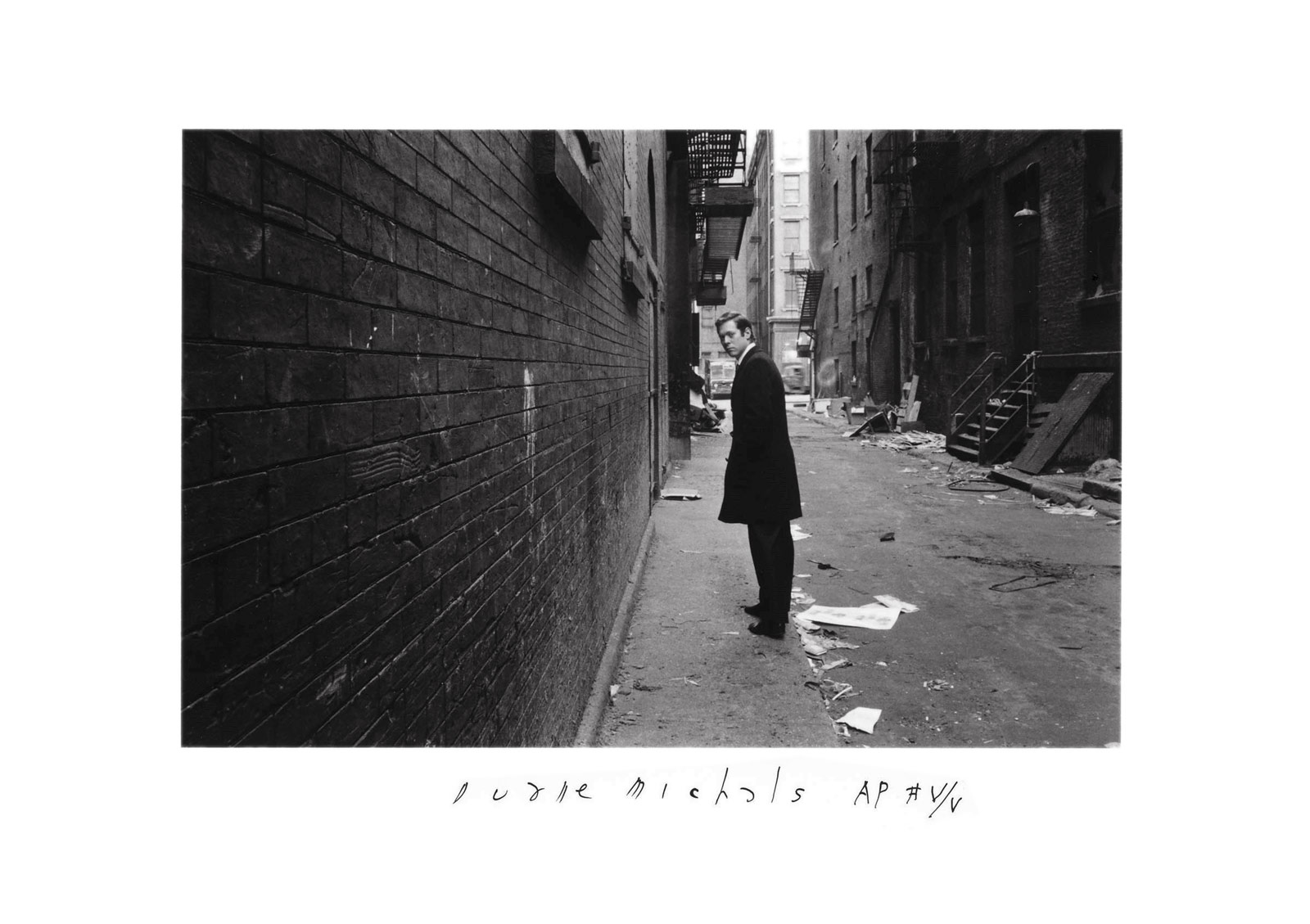
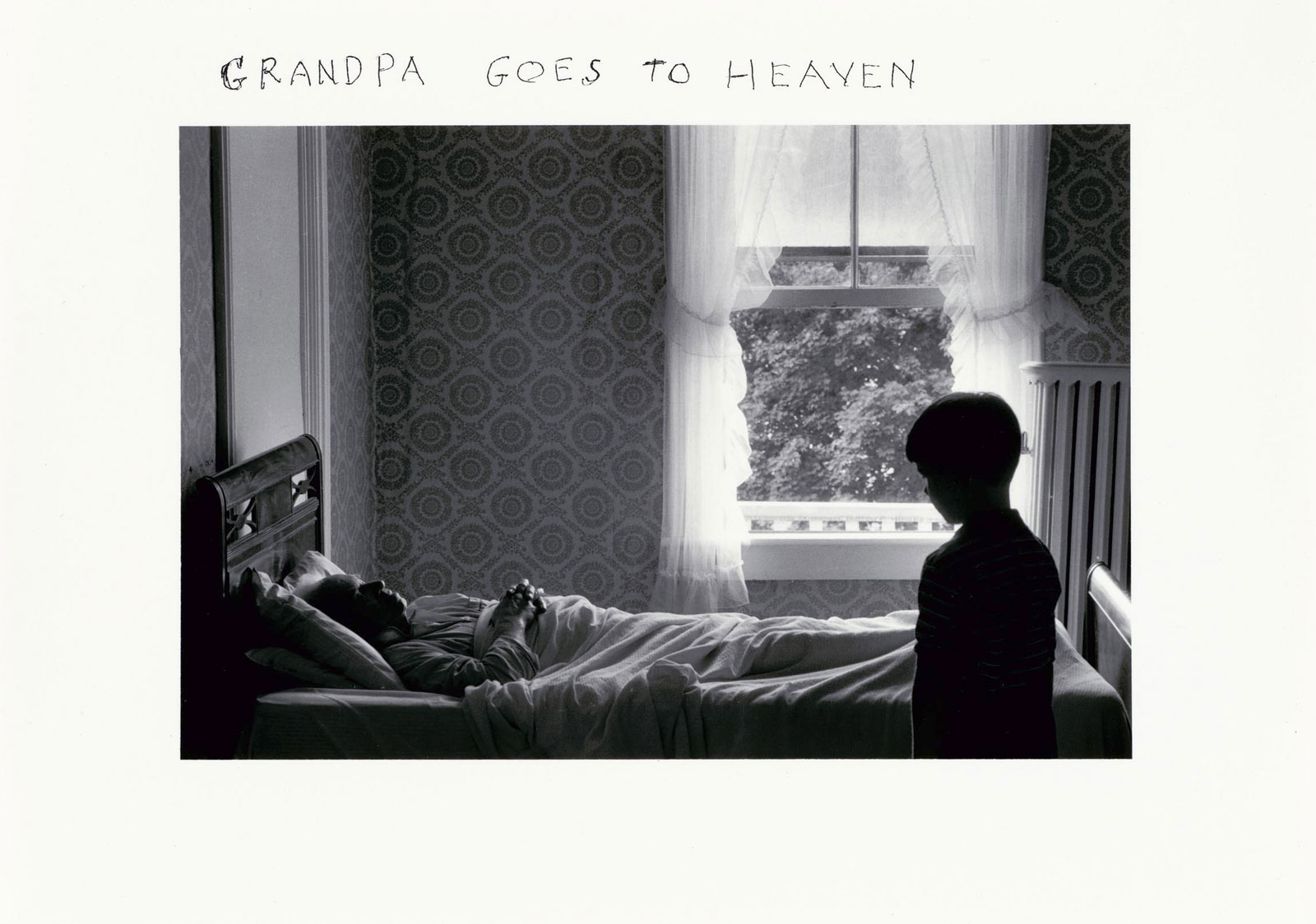

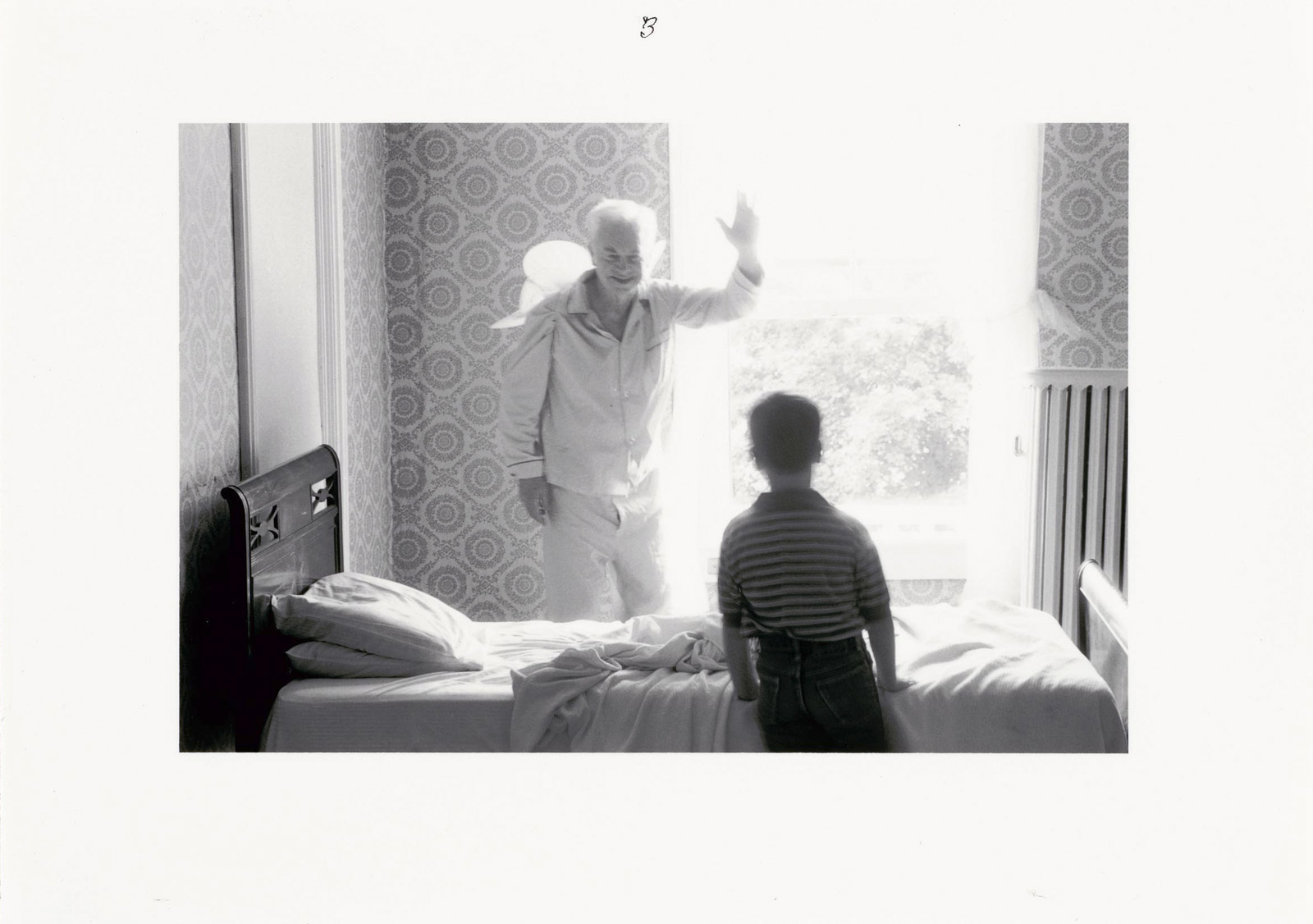


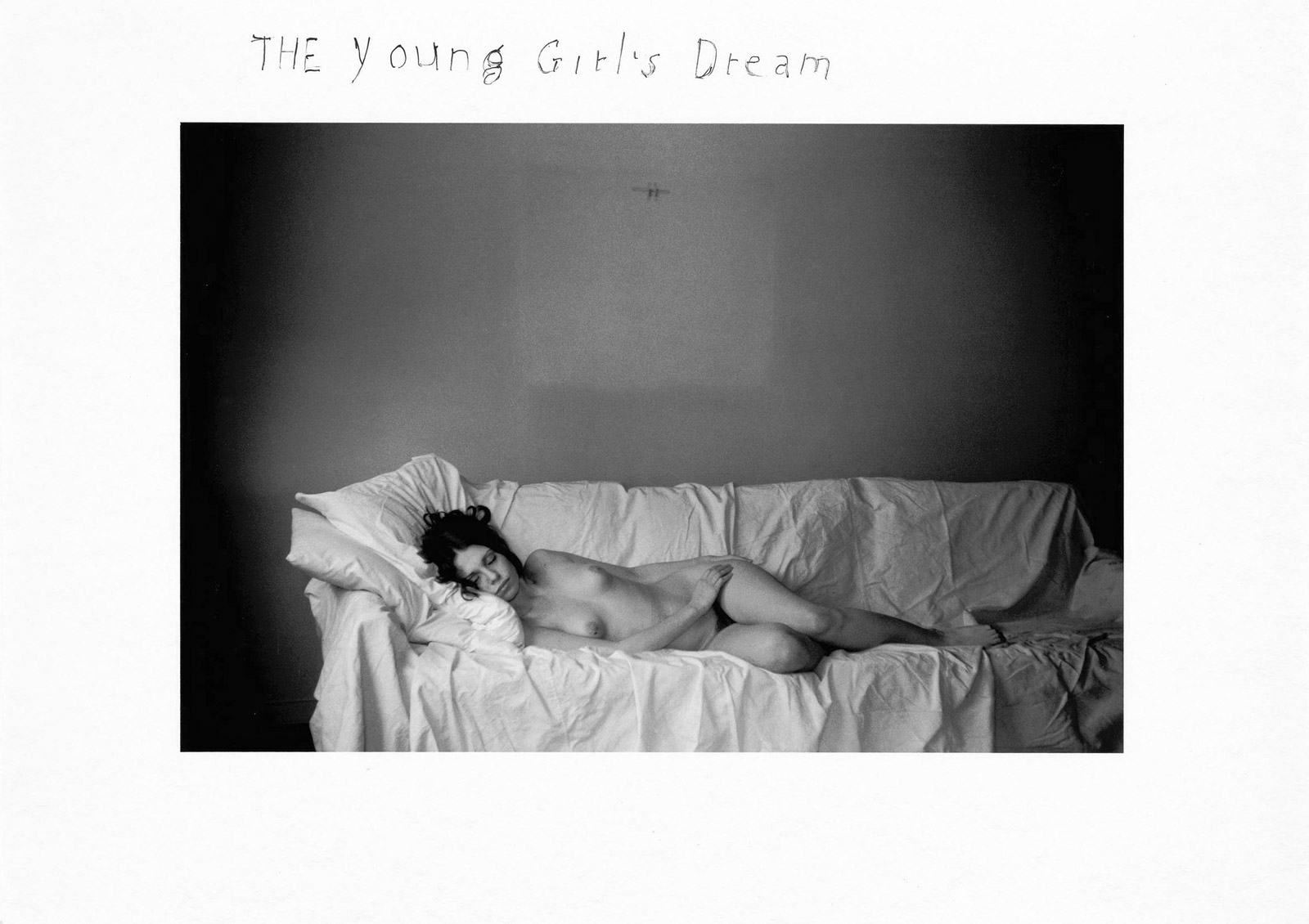
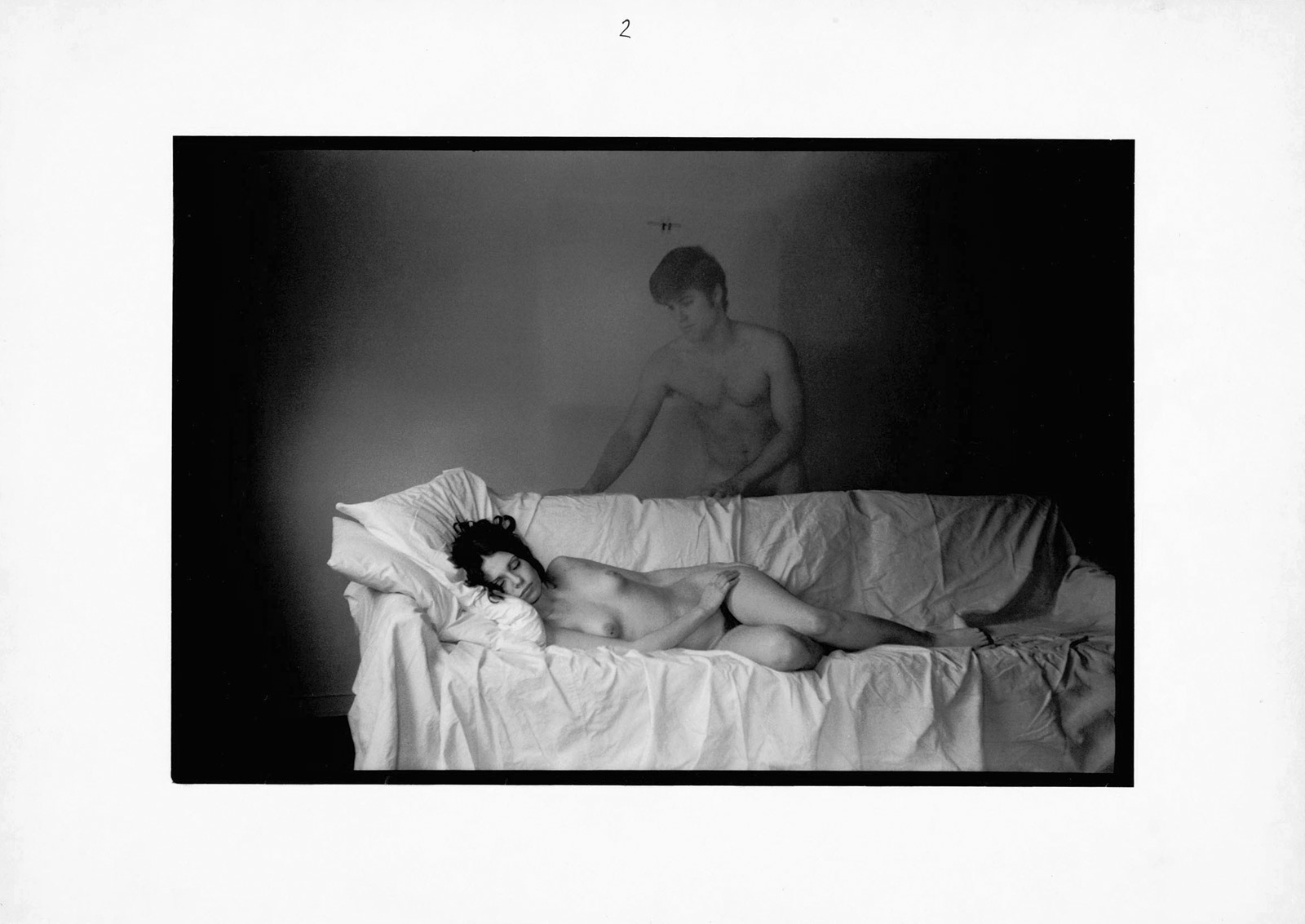
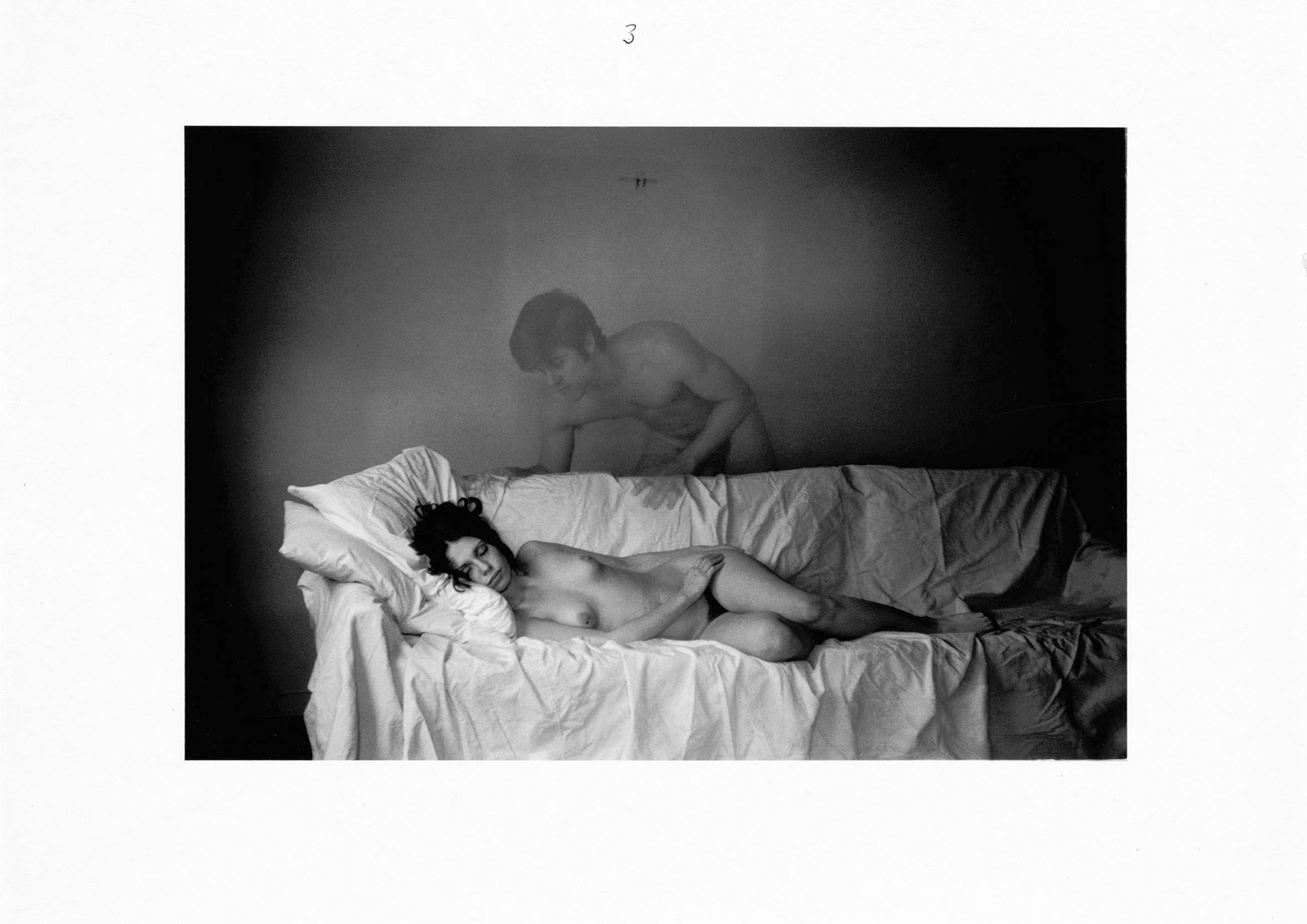

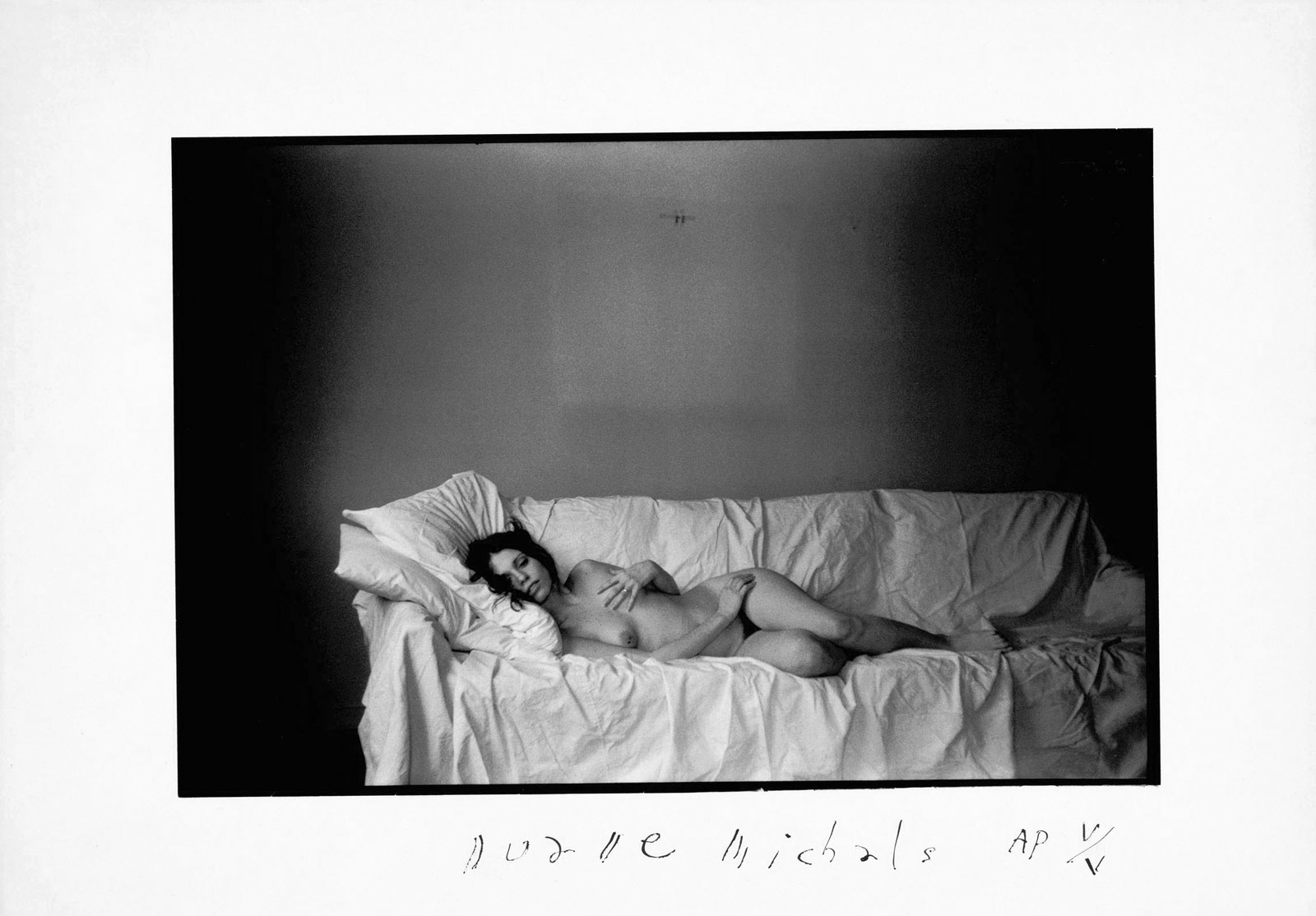
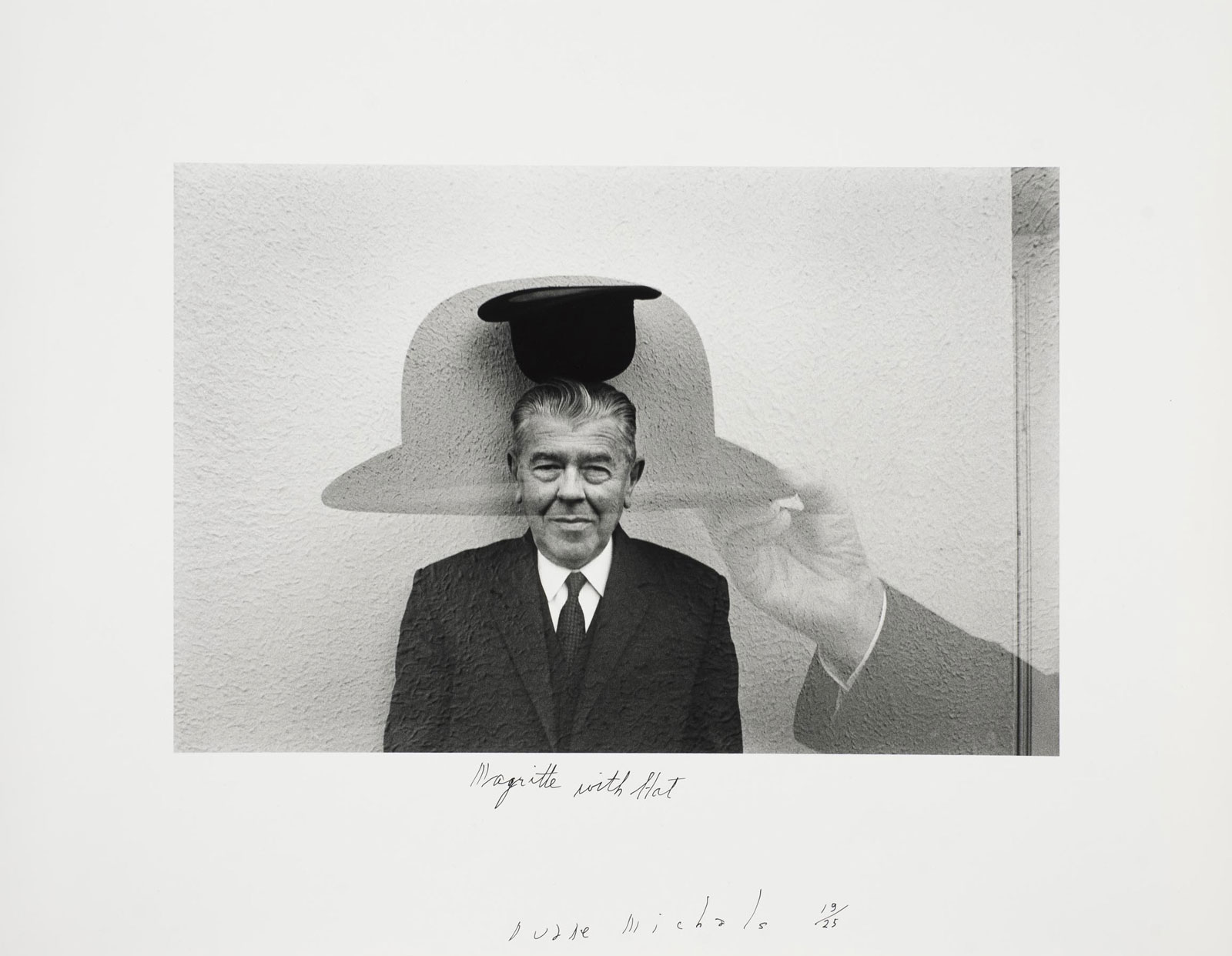


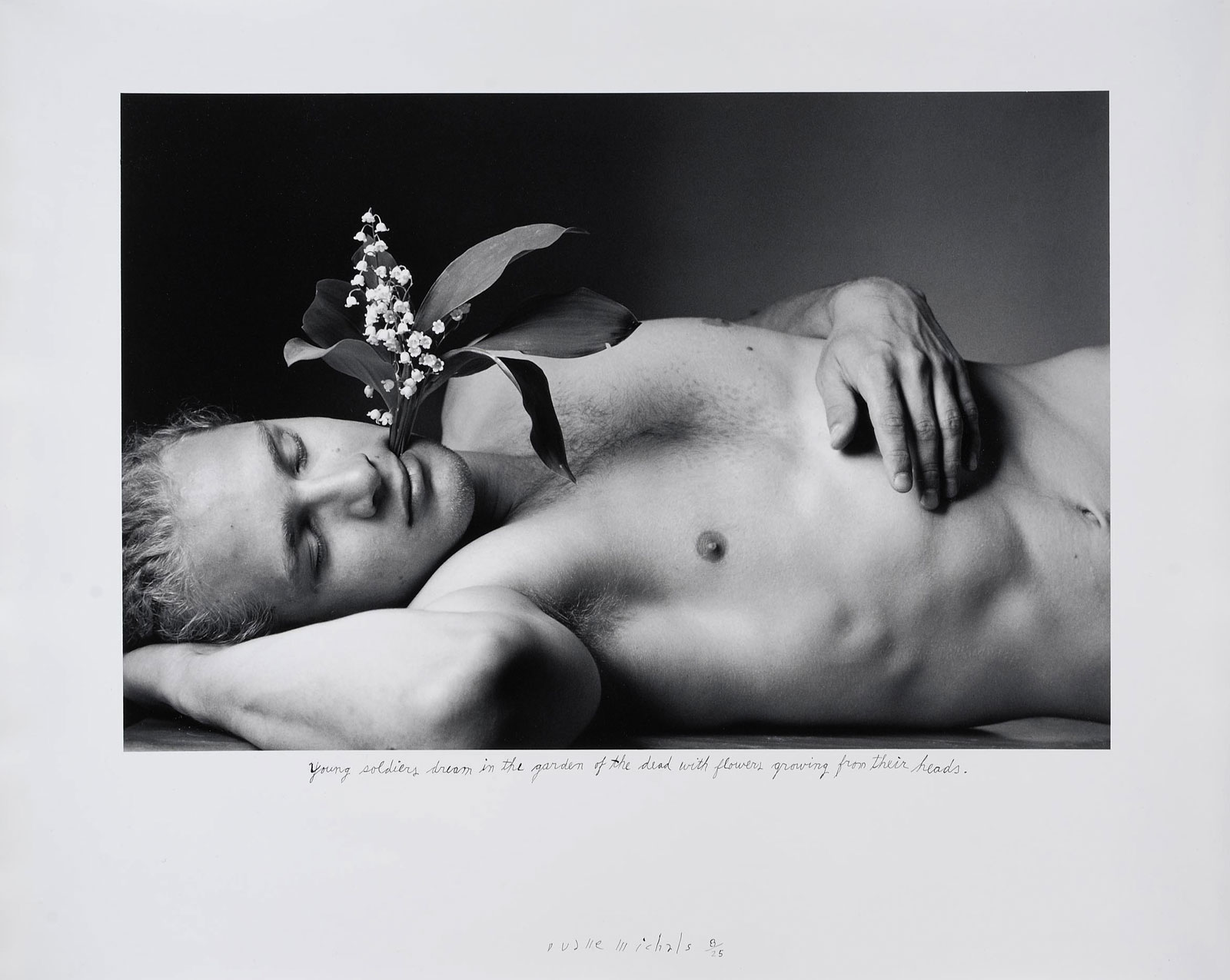


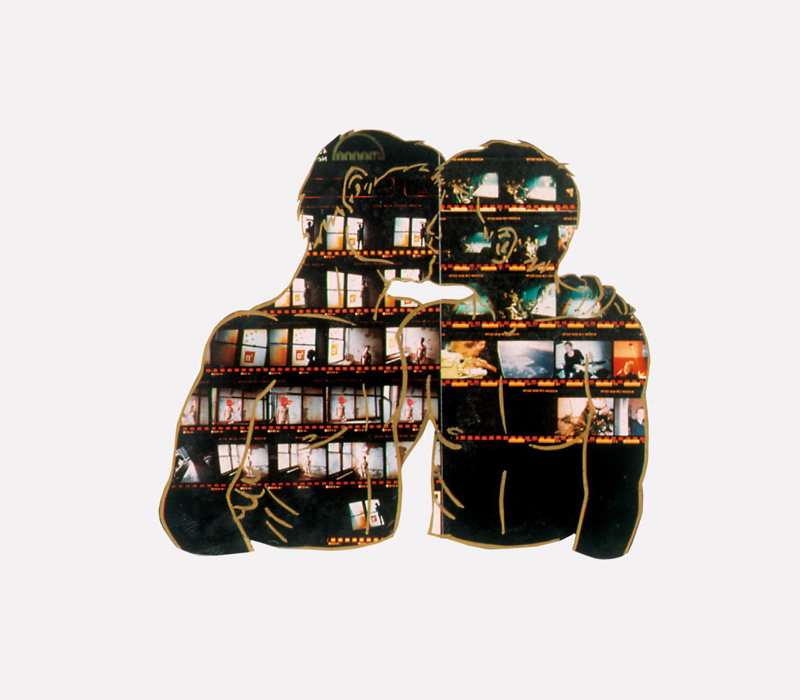

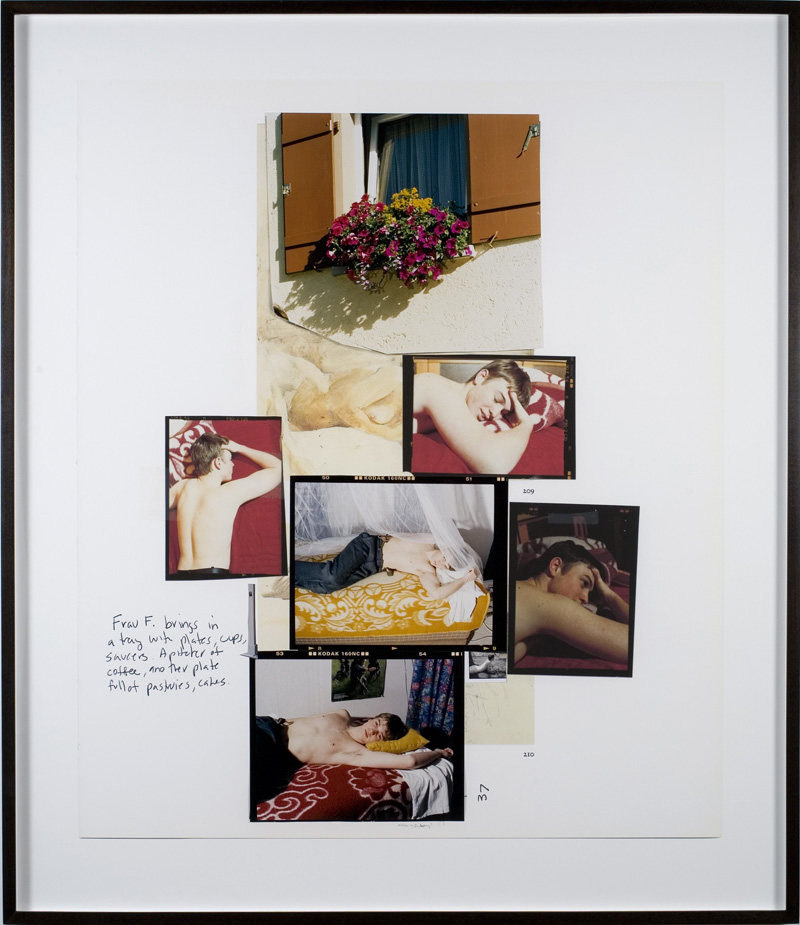
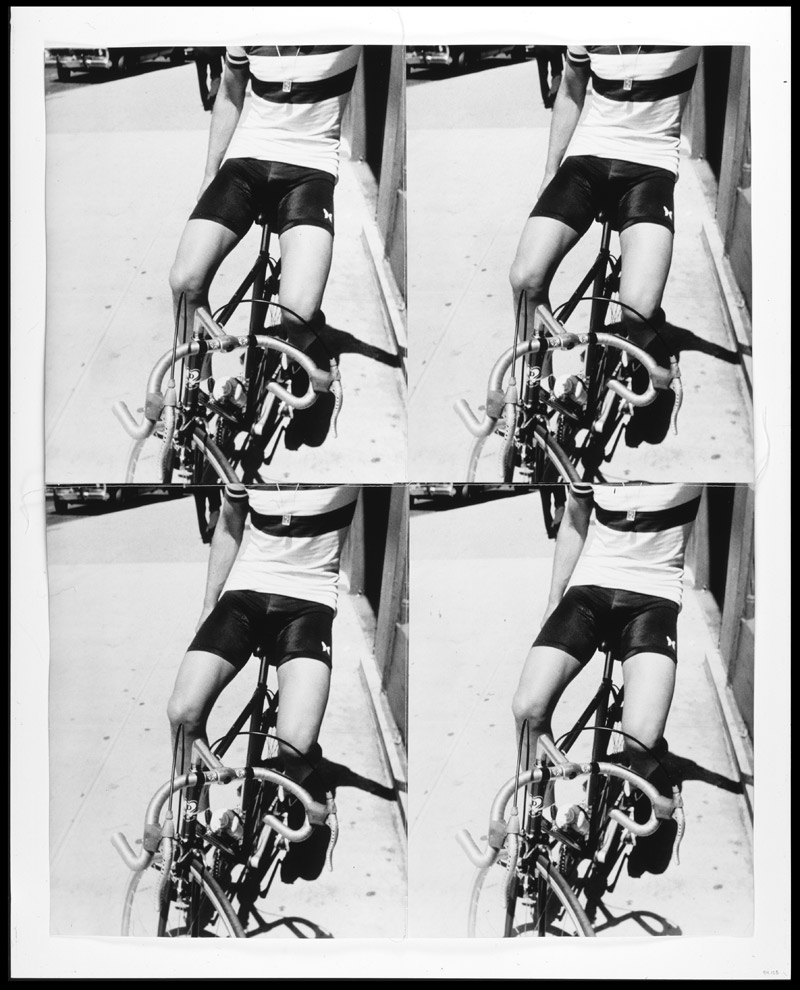

![Edward Ruscha (American, b. 1937)
'[A Few Palm Trees Contact Sheet]'
1971](https://artblart.com/wp-content/uploads/2009/11/ruscha-a-few-palm-trees-contact-sheet.jpg "Edward Ruscha (American, b. 1937) '[A Few Palm Trees Contact Sheet]' 1971")
![Edward Ruscha (American, b. 1937)
'[A Few Palm Trees Contact Sheet]'
1971](https://artblart.com/wp-content/uploads/2009/11/ruscha-a-few-palm-trees-contact-sheet-a.jpg "Edward Ruscha (American, b. 1937) '[A Few Palm Trees Contact Sheet]' 1971")
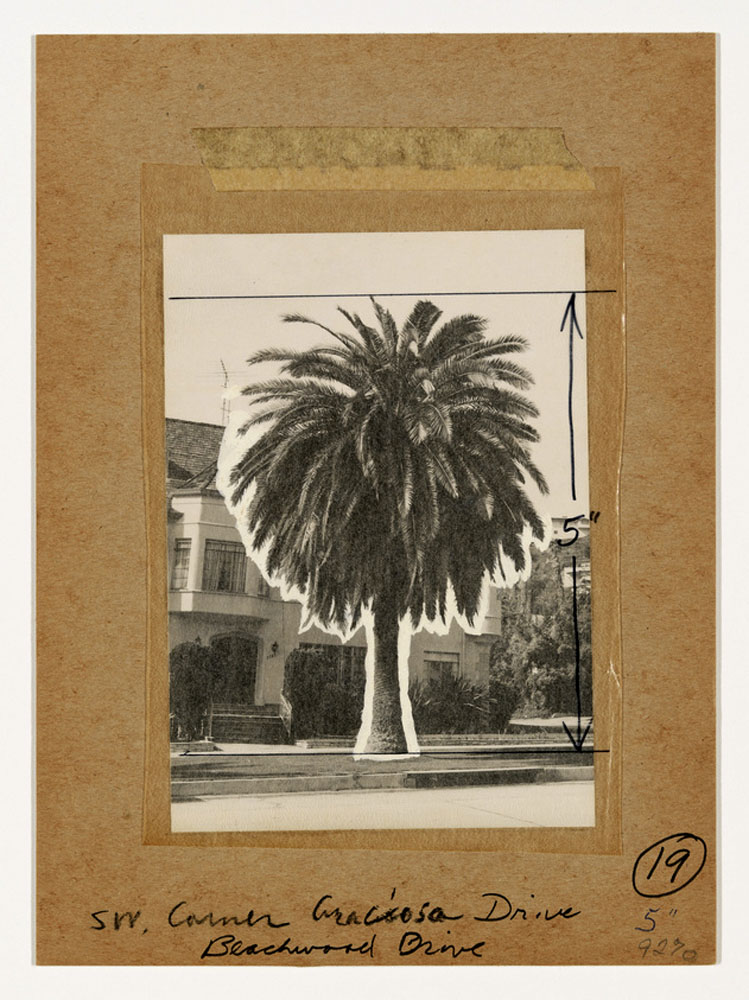


You must be logged in to post a comment.