“This is where I think that Siskind was less than happy with the results of his documentary photographs – that they weren’t giving him what he wanted out of his art: that interface of the image and imagination.” Dr Marcus Bunyan
July 2026
Aaron Siskind (American, 1902-1991) Boys in Empty Tenement c. 1935 Gelatin silver print
Image and imagination
I always find it fascinating to view the first few years of an artist’s journey, the golden path they take, for it more than likely informs all that is to come.
In the greatest abstract expressionist photographer the world has known, Aaron Siskind (American, 1902-1991), his starting point was as a straight documentary photographer, a member of the New York Photo League, a “left-leaning documentary collective, which prioritised using photography to advocate for social change.”
Using a large format camera and tripod Siskind, for his photo project Harlem Document, captured “the vibrancy, harsh realities, and daily life of the Black community in Harlem” – images which had their roots in American social documentary photography of the period and photographers such as Jacob Riis, Lewis Hine, Walker Evans, Dorothea Lange, Gordon Parks and the photographers of the Farm Security Administration (FSA) government program (1935-1944) which documented the struggles of rural Americans during the Great Depression.
As I have written in a 2023 text titled “Transcending reality”, “To my mind American photographers of the 1930s took photographs not only to document but also to honor what was greater and more interesting than they were. Not as a melding of reality-dream … but as an exploration of what is possible through the interface of the image and imagination, the interface as Ansel Adams put it “between the reality of the world and the reality of yourself”.”
This is where I think that Siskind was less than happy with the results of his documentary photographs – that they weren’t giving him what he wanted out of his art: that interface of the image and imagination.
“In working from the documentary approach, I had always tried to find what kind of meaning you could get in a picture of that kind, and was beginning to feel that I was not getting it. I felt I wasn’t getting anything really personal, really powerful and special…. My documentary pictures were very quiet and very formal.”1
Moving into the 1940s Siskind began experimenting with more abstract compositions (with their link to Abstract Expressionist painting). Evidence of this reorientation in his image making can already be seen in some of the documentary photographs in this posting. For example, the photographs Facades (1938, below) and Harlem (1938, below) both propose the flattening of the photographic surface with an interest in the geometry and abstraction of form – circle, oblong, square, diagonal, curve, line – within the pictorial plane, but with an attendant emphasis on light, texture and tone.
“Though he did not create the lines, shapes, rhythms and patterns in his images, he nonetheless expressed the lyricism of their relationships by harmoniously arriving at the perfect composition. And though his abstract photographs possessed undeniable content, he subverted that content by offering new interpretive possibilities based on the feelings the images conveyed.”2
Image and imagination.
Thus, Siskind was intelligent enough, was aware and informed enough, of his feelings towards the world and the cultural developments around him to approach a crossroads in his development as an artist, to recognise, that is the key word, to recognise the path he needed, he wanted to take.
And so we are forever grateful to have his abstract expressionist photographs that his spirit guided him towards, photographs that may also light our own path.
Dr Marcus Bunyan
PS. I have added relevant information on Siskind’s art practice, theatres, and ballrooms where possible and I have also included an extract from Gordon Parks’ forward to Siskind’s book Harlem Document.
1/ Jaromir Stephany unpublished interview with Aaron Siskind, February 1963. This interview is in the private papers of Jaormir Stephany quoted in Marcia Battle. “Harlem: A Document,” in Harlem Document: Photographs 1932-1940. Washington and London: Smithsonian Institution Press, 1990, pp. 4-6
Please click on the photographs for a larger version of the image.
“Photography has tremendous social value. Upon the photographer rests the responsibility and duty of recording a true image of the world as it is today. Moreover, he must not only show us how we live, but indicate the logical development of our lives.”
Photo Notes, newsletter of the Photo League, August 1938
Aaron Siskind’s photographs from 1935-1940 form the core of the Harlem Document, a landmark sociological and visual study commissioned by the New York Photo League. Siskind headed the Feature Group of this radical, left-leaning documentary collective, which prioritised using photography to advocate for social change. The images capture the vibrancy, harsh realities, and daily life of the Black community in Harlem during the Great Depression.
Google AI
Aaron Siskind (American, 1902-1991) Kitchen Scene 1937 Gelatin silver print
From 1937 to 1944, Siskind took pictures in and around Harlem – of its businesses, domestic interiors, religious and social organisations, and nightlife. He did so as a member of the New York Photo League – a documentary photography collective with roots in radical leftist politics – and in collaboration with journalist and sociologist Michael Carter and other photographers as part of a cultural study of Harlem. In 1981 fifty-two of Siskind’s images were published in the book Harlem Document: Photographs 1932-1940 alongside first-person interviews conducted in the late 1930s by writers employed by the Federal Writers Project, including novelist and essayist Ralph Ellison.
MoMA Gallery label from 2024
Aaron Siskind (American, 1902-1991) Apollo Theater 1937 Gelatin silver print
Apollo Theater
Since opening its doors in 1914 and introducing the first Amateur Night contests in 1934, The Apollo has played a major role in the emergence of jazz, swing, bebop, R&B, gospel, blues, and soul – all quintessentially American music genres. Ella Fitzgerald, Sarah Vaughan, Billie Holiday, Sammy Davis Jr., James Brown, Gladys Knight, Luther Vandross, D’Angelo, Lauryn Hill, and countless others began their road to stardom on the Apollo stage. Today, The Apollo is a respected nonprofit presenting concerts, theatrical and dance performances, film screenings, educational programs, and community outreach programs.
The neoclassical theater known today as The Apollo’s Historic Theater was designed by George Keister and first owned by Sidney Cohen. In 1914, Benjamin Hurtig and Harry Seamon obtained a thirty-year lease on the newly constructed theater, calling it Hurtig and Seamon’s New Burlesque Theater. Like many American theaters during this time, African-Americans were not allowed to attend as patrons or to perform.
In 1933, Fiorello La Guardia, who would later become New York City’s Mayor, began a campaign against burlesque, and Hurtig & Seamon’s was one of many theaters that would close down. Cohen reopened the building as the 125th Street Apollo Theatre in 1934 with his partner, Morris Sussman, serving as manager. Cohen and Sussman changed the format of the shows from burlesque to variety revues and redirected their marketing attention to the growing African-American community in Harlem.
Frank Schiffman and Leo Brecher took over The Apollo in 1935. The Schiffman and Brecher families would operate the Theater until the late 1970s. The Apollo reopened briefly in 1978 under new management then closed again in November 1979. In 1981, it was purchased by Percy Sutton, a prominent lawyer, politician, media and technology executive, and a group of private investors. Under Sutton’s ownership, the Theater was equipped with a recording and television studio.
Text from the Apollo Theater website. Used under fair use conditions for the purposes of education and research
Aaron Siskind (American, 1902-1991) Lady In Kitchen 1937 Gelatin silver print
Aaron Siskind’s artistic trajectory parallels broader shifts within mid-20th-century American photography. In the 1930s he cut his teeth as a documentary photographer affiliated with the Workers Film and Photo League, an artists’ cooperative that strove to advance progressive political causes. The following decade saw him turn away from studies of society. For the remainder of his career, he created still lifes that aimed to articulate interior states through near-abstract visual fields. Of this dramatic shift in his practice, the artist said, “For some reason or other there was in me the desire to see the world clean and fresh and alive.”1
Siskind’s documentary work was carefully planned and researched in advance. He honed this approach at the Film and Photo League, which he joined in 1933, only three years after receiving his first camera as a honeymoon gift. Among this community of photographers and filmmakers – many of them, like Siskind, the New York-born children of Jewish immigrants – he found technical guidance and critical feedback. When the League’s photographers broke from its filmmakers to establish the standalone Photo League in 1936, Siskind helped form its Feature Group, a unit dedicated to creating photo essays like those appearing in LIFE magazine and being produced by the Farm Security Administration. Collaborative at its core, the Feature Group prioritised the free exchange of ideas: each project began with a discussion of how to approach photographing its subject and ended with the group assessing their effort collectively. “We discovered a relationship between the clarity of one’s thought and feeling and the clarity of picture-making,” Siskind recalled of these formative dialogues.2
Of the many projects the Feature Group completed during Siskind’s four years of leadership, its most extended and ambitious was Harlem Document. This expansive cultural study of Harlem, undertaken between 1937 and 1940 in close consultation with the sociologist Michael Carter, originally aimed to produce a photographically illustrated book authored by Carter. Although the publication never materialised, Siskind’s photographs for Harlem Document indicate the project’s ambitious scope, depicting street life, domestic interiors, and gathering spots ranging from churches to dance halls to theaters.
Samuel Allen, Curatorial Assistant, The Robert B. Menschel Department of Photography, 2025 on the MoMA website [Online] Cited 14/07/2026. Used under fair use conditions for the purposes of education and research
1/ Aaron Siskind, “The Drama of Objects,” Minicam Photography 8, no. 9 (June 1945), 23.
The Lafayette Theatre (1912–1951), known locally as “the House Beautiful”, was one of the most famous theaters in the Harlem neighbourhood of Manhattan in New York City. It was an entertainment venue located at 132nd Street and 7th Avenue. The first major theatre in New York to desegregate, in its early history the theatre was home to the African American repertory theatre company the Lafayette Players. This group was originally founded by Anita Bush as Anita Bush Stock Company in 1914 and became a part of the Lafayette Theatre in 1916 when the theatre bought the stock company. The Lafayette Players was a successful company from the 1910s through the 1930s; after which the company floundered. In 1951 the theatre closed and was sold to the Williams Institutional Christian Methodist Episcopal Church. The structure was demolished in 2013.
Aaron Siskind’s Harlem document, a mirror of my own past, speaks explicitly for itself. It is an ongoing memory of black people living in crowded kitchenettes; suffering the loneliness of rented bedrooms; prating in leftover churches, and grasping a patch of happiness whenever and wherever they could find it. It is a nostalgic look at a kind of past that threatens to hang around Harlem for a long time to come – to doom it to further frustration and unrest. Those same tenements that once imprisoned me are still there, refusing to crumble, holding other restless black boys for sentence without trial.
I remember swarms of slow-moving people, moving close together up on Lenox Avenue – past child shacks, rib joints, funeral parlours and storefront churches- knowing one another but seldom bothering to speak. A city of blackness crammed inside a white city where, when you walked our the door, you became a stranger. …
Harlem has meant a lot of things to a lot of people. For me, in those days, it meant hunger, cultural devastation, unrequited longing and disillusionment. To others it was the swinging, exciting capitol of the entire Black world, the exotic Mecca of melting music, good times and dancing feet. Yet, for some, it was a sanctuary where loftier dreams were fostered; where now and then some of those dreams were realised, but where mostly they were hopelessly spent. To just about everyone who has worked in the vital processes of its survival, whose life has been textured by its tradition, Harlem is a place that won’t give up. Wobbly now under the impact of the past decades, its history mirror those problems its mother country once endured.
Extract from Gordon Parks. “Foreword,” in Harlem Document: Photographs 1932-1940. Washington and London: Smithsonian Institution Press, 1990. Used under fair use conditions for the purposes of education and research
Aaron Siskind (American, 1902-1991) Street Scene 1937 Gelatin silver print
Aaron Siskind (American, 1902-1991) Wishing Tree 1937 Gelatin silver print
Aaron Siskind (American, 1902-1991) Church Interior 1938 Gelatin silver print
Aaron Siskind’s interest in photography developed after his experiences with both music and poetry when he was an English teacher in the New York public school system. His early pictures were said to have been attempts at transferring musical and poetic concepts into images.2 Later, as a young adult, Siskind did everything from making political speeches on soapboxes in Manhattan to becoming a member of the Junior Young People’s Socialist League (YPSL).3
A friend gave Siskind his first camera in 1930. He soon discovered his attraction for the instrument, and almost simultaneously he discovered and joined the Photo league. At the League he found people who shared his political and social concerns and who were capable and willing to discuss technical information about photography. Many of the members were children of Jewish immigrants and most, like Siskind, were well educated. Their exhibited images documented illiteracy, discrimination, and poverty and called for social reforms on behalf of the working classes. Before joining the League, Siskind had already photographed some of the poverty-stricken areas of Manhattan and was searching for reaction and criticism to these pictures. …
As a photographer Siskind explored symbols and metaphors to create a visual relationship that balanced aesthetic concerns with social documents. Throughout his career the contrast of subject and symbol have dominated. …
With his work in Harlem Siskind’s style may have been changing. “In working from the documentary approach, I had always tried to find what kind of meaning you could get in a picture of that kind, and was beginning to feel that I was not getting it. I felt I wasn’t getting anything really personal, really powerful and special…. My documentary picture were very quiet and very formal.”4
Extract from Marcia Battle. “Harlem: A Document,” in Harlem Document: Photographs 1932-1940. Washington and London: Smithsonian Institution Press, 1990, pp. 4-6. Used under fair use conditions for the purposes of education and research
2/ Carl Chiarenza, Aaron Siskind: Pleasures and Terrors (Little, Brown and Co.,), 6.
3/ Carl Chiarenza, “Form and Content in the Early Work of Aaron Siskind,” The Massachusetts Review 19:4 (Winter 1978): 810.
4/ Jaromir Stephany unpublished interview with Aaron Siskind, February 1963. This interview is in the private papers of Jaormir Stephany.
The “Savoy Dancers” refer to the pioneering African American dancers who developed the Lindy Hop and other swing dances at the legendary Savoy Ballroom in Harlem, New York. Open from 1926 to 1958, the integrated ballroom housed iconic performers like Frankie Manning and Norma Miller who defined the “home of happy feet”.
These legendary dancers revolutionised social dancing by bringing athleticism, airborne aerials, and improvisational jazz styling to the Lindy Hop. Their legacy continues to thrive through modern swing dance communities and archival footage preserved in documentaries like The Spirit Moves.
About the Savoy Ballroom
From 1926 to 1958, the Savoy Ballroom stood at 596 Lenox Avenue as one of the first racially integrated public spaces in the United States. Its 10,000-square-foot, spring-loaded dance floor welcomed thousands nightly and launched a global dance phenomenon. The Savoy hosted legendary artists including Chick Webb, Duke Ellington, Ella Fitzgerald, and Count Basie, cementing its place at the heart of Harlem’s cultural history.
Aaron Siskind (American, 1902-1991) St. Joseph’s House – The Catholic Worker Movement c. 1939 Gelatin silver print
Aaron Siskind (American, 1902-1991) Grocery Store 1940 Gelatin silver print
Aaron Siskind (American, 1902-1991) Lady and Lamp 1940 Gelatin silver print
Aaron Siskind (American, 1902-1991) Street Scene 1940 Gelatin silver print
Aaron Siskind (American, 1902-1991) Watermelon Man 1940 Gelatin silver print
Projects: Ming Smith is organised by Thelma Golden, Director and Chief Curator, The Studio Museum in Harlem, and Oluremi C. Onabanjo, Associate Curator, Department of Photography, The Museum of Modern Art, with the assistance of Kaitlin Booher, Beaumont and Nancy Newhall Curatorial Fellow, Department of Photography, The Museum of Modern Art, and Habiba Hopson, Curatorial Assistant, The Studio Museum in Harlem.
Another fascinating, stimulating, challenging artist finally getting their due.
Music, spirit, transcendence, light, blur, dreams, improvisation, composition, jamming, joy, rhythm, respect, wonder, emotion, African American culture. Conjoined in a mysterious, reverent wistfulness…
“You don’t make art for money, especially as a Black artist. You do it because there is that need to create – and that has been part of my survival; that has helped me survive.”
I feel that too. Creativity has kept the black dog from the door, creativity has helped me survive. I’m sure it does for many artists.
Dr Marcus Bunyan
Many thankx to the Museum of Modern Art for allowing me to publish the photographs in the posting. Please click on the photographs for a larger version of the image.
“You don’t make art for money, especially as a Black artist. You do it because there is that need to create – and that has been part of my survival; that has helped me survive.”
“My work as a photographer was to record, culturally, the period of time in which I lived – and I recorded it as an artist.”
“Oh no, it’s all discovery, it’s all improvisation. It’s like when jazz musicians solo. They improvise, and photography is definitely that, for me.”
“Whether I’m photographing a person on the street, someone I know, or on an assignment, I’m doing it because I admire them. I like the sense of exchange – they’re giving and I’m taking, but I’m also giving them something back. There were certain people who would understand what I was looking for and would try to give me a photograph by posing. Whatever I’m shooting, whether it’s a portrait or a place, my intention is to capture the feeling I have about that exchange and that energy.”
“I evolved as a photographer with the series Invisible Man [1990-1991], just like a jazz musician who plays the head [the known melody of a song] before they start improvising. Ralph Ellison’s book Invisible Man [1952] was an inspiration, especially the idea of what it means not to be seen, but I didn’t consciously set out to make work about it. I wanted to capture the feeling of painting and make photographs on an artistic scale. Living in a Black environment, the people I photographed didn’t have to put on any airs, they were just living their life. The series was about a feeling, an expression. Anyone could identify it. We were present but we weren’t there. We were visible but also invisible.”
“Living in Harlem was an authentic experience for me, and I was trying to capture that authenticity. I was living and my work came out of my life. I would go out with my camera to shoot events like the Million Youth March [1998] or meet musical figures like Dr. Edward Boatner or academics like Dr. John Henrik Clarke, and even watch Duke Ellington on TV – these people had so much history in them. Some people look at certain areas and only see the depravity and the struggle, but there’s so much love and genius there; there’s warmth. I think that was my motive in photographing Harlem, to communicate that warmth.”
Ming Smith
The Museum of Modern Art announces Projects: Ming Smith, on view in the Museum’s street-level galleries from February 4 through May 29, 2023. A photographer who has lived and worked in New York since the 1970s, Ming Smith has served as a precedent for a generation of artists engaging the politics and poetics of the photographic image. Through a deep exploration of the artist’s archive, the exhibition will offer a critical reintroduction to Smith’s work through her distinctive approach to movement, light, rhythm, and shadow, highlighting how she transforms the image from a document of photographic capture into a space of emotive expression.
Text from the MoMA website
The moody magic of a long exposure photograph | Ming Smith | UNIQLO ArtSpeaks
Photography curator Oluremi Onabanjo examines Smith’s 1991 “Invisible Man, Somewhere, Everywhere,” a poignant image from this series inspired by Ralph Ellison’s 1952 novel “Invisible Man.”
Installation views of Projects: Ming Smith, on view at The Museum of Modern Art, New York from February 4, 2023 – May 29, 2023 Photos: Robert Gerhardt
The Museum of Modern Art announces Projects: Ming Smith, on view in the Museum’s street-level galleries from February 4 through May 29, 2023. A photographer who has lived and worked in New York since the 1970s, Ming Smith has served as a precedent for a generation of artists engaging the politics and poetics of the photographic image. Through a deep exploration of the artist’s archive, the exhibition will offer a critical reintroduction to Smith’s work through her distinctive approach to movement, light, rhythm, and shadow, highlighting how she transforms the image from a document of photographic capture into a space of emotive expression. Projects: Ming Smith is organised by Thelma Golden, Director and Chief Curator, The Studio Museum in Harlem, and Oluremi C. Onabanjo, Associate Curator, Department of Photography, The Museum of Modern Art, with the assistance of Kaitlin Booher, Beaumont and Nancy Newhall Curatorial Fellow, Department of Photography, The Museum of Modern Art, and Habiba Hopson, Curatorial Assistant, Permanent Collection, The Studio Museum in Harlem.
As Oluremi C. Onabanjo states, “For Ming Smith, the photographic medium is a site where the senses and the spirit collide. Calling attention to the synesthetic range of her photographic approach, this exhibition highlights how her images collapse the senses, encouraging us to attend to the hue of sound, the rhythm of form, and the texture of vision.” Works featured in the exhibition showcase a wide array of subjects, ranging from finely attuned studies of Black avant-garde musicians and dancers to depictions of everyday life in Harlem and Pittsburgh’s Hill District through photographic series made in response to Ralph Ellison’s novel Invisible Man and August Wilson’s Pittsburgh Cycle of plays.
Projects: Ming Smith is the fourth exhibition in MoMA’s ongoing Projects collaboration with The Studio Museum in Harlem. It takes up the work of a photographer who is important to the history of both museums. MoMA was the first institution to acquire Smith’s work (in 1979), and the Studio Museum has shown Smith’s work since the beginning of her career, when she was the first female member of the trailblazing Black photography collective the Kamoinge Workshop.
Thelma Golden says, “Almost from the day she arrived in New York City, Ming Smith was at the centre of an extraordinary cultural ferment, contributing to the Black Arts Movement while creating a space for herself within Harlem’s legendary Kamoinge Workshop. Working for over five decades, her contribution to modern photography is deeply significant – she continues to influence countless photographers through her singular documentation of, society’s humanity and pageantry. I’m thrilled that audiences who know her work will have the opportunity to revisit and reappraise her many achievements, and that new audiences will have the excitement of discovering her graceful, stunning images through Projects: Ming Smith.”
Projects: Ming Smith is accompanied by Ming Smith: Invisible Man, Somewhere, Everywhere, a new volume in MoMA’s One on One series, written by Oluremi C. Onabanjo. The book provides a sustained meditation on Smith’s photograph Invisible Man, Somewhere, Everywhere (1991) in MoMA’s collection.
Press release from the Museum of Modern Art
Introduction
For Ming Smith, photography is a site where the senses and the spirit collide through the prism of light. “I’m dealing with all these elements, getting that precise moment,” Smith has said. “Getting the feeling, the way the light hits the person – to put it simply, these pieces are like the blues.”
Projects: Ming Smith offers a critical reintroduction to a photographer who has lived in New York since the 1970s, and whose work has served as a precedent for generations of artists engaging the politics and the poetics of the photographic image in relation to experiences of Blackness. Through her skilful deployment of long exposures – which involves slowing the shutter speed of the camera lens to render movement as blur – Smith dissolves the boundaries between her subjects and their surroundings. Her dreamlike, abstract compositions are led by intuition and perfected through repetition.
The result of a deep dive into Smith’s archive, this exhibition reckons with the crucial position of this artist in the history of photography, and in the institutional memories of both The Museum of Modern Art and The Studio Museum in Harlem. MoMA was the first institution to acquire Smith’s work (in 1979), and the Studio Museum has shown Smith’s work since the beginning of her career, when she was the first female member of the trailblazing Black photography collective the Kamoinge Workshop. Bridging the distance between the present and the past, Projects: Ming Smith creates a photographic portal through which to encounter Smith’s images anew. It highlights how her pictures collapse the senses, encouraging us to attend to the hue of sound, the rhythm of form, and the texture of vision.
Text from the Museum of Modern Art
Installation view of Projects: Ming Smith, on view at The Museum of Modern Art, New York from February 4, 2023 – May 29, 2023 Photo: Robert Gerhardt
Page from Projects: Ming Smith extended labels (photographs below)
The stellar photographer Ming Smith remembers walking past the Museum of Modern Art when she was in her early 20s and telling herself, “I’m going to be in that museum one day.”
Anyone hearing her might have thought: Dream on. This was the 1970s. Smith was Black, female, new to New York City, with zero art credentials of the kind demanded by any museum of even the brashest up-and-comer, which Smith – a self-described low-key loner – was not.
But even then some changes were afoot – a few, isolated, sporadic – for artists and institutions alike. In 1979, in response to an open call by MoMA’s photography department for new work, Smith dropped off her portfolio. (The receptionist assumed she was a courier.) The museum bought two pictures, making her the first Black woman photographer to enter MoMA’s collection.
Forty years later came another landmark. In 2019, when MoMA opened its new Geffen Wing and the Studio Museum in Harlem, where Smith had shown over several decades, closed to build its new home, the two institutions began collaborating on exhibitions at MoMA’s Midtown and Long Island City locations.
The current show, called “Projects: Ming Smith,” installed on the ground floor at MoMA on 53rd Street (which has free public access), is the latest of these joint ventures, and it’s a beauty. With 52 pictures, mostly black and white, several being exhibited for the first time anywhere, it gives a good sense of Smith’s subject range and of her distinctive, self-invented style: improvisatory, multilayered, painterly, shadow-soaked, with images blurred as if shot at very high or low velocity, or viewed through retreating memory, or a volcanic rain.
Born in Detroit, raised in Columbus, Ohio, Smith started taking pictures when she was young – her pharmacist father was an amateur photographer – and learned the formal ropes as she went. While majoring in premed biology at Howard University she took a photography class and was told by the teacher that, given her race and gender, her prospects of a career in that field were next to nil. After graduating in 1971, she moved to New York City, where she supported herself as a fashion model, and kept taking pictures.
She soon plugged into a crucial support system. In 1972 she joined the Kamoinge Workshop, a Black photography collective based in Harlem. Kamoinge’s first female member, she participated in their notoriously hard-hitting group crits and for a while worked closely with one of the originating members, Anthony Barboza, accompanying him on a working trip to Senegal.
As was clear from a traveling survey of Kamoinge artists organised by the Virginia Museum of Fine Arts in 2020 – it later came to the Whitney Museum – the collective’s original members were eclectic in their styles and interests. But almost all their work adhered to the genre loosely known as “street photography,” grounded in a direct capturing of images, candid and unposed, of everyday life, with results that were documentary in effect and humanistic in intent. Smith’s work basically comes out of this aesthetic too, but also radically, romantically departs from it.
Many of her images, including the 1972 “Raise Your Window High,” the show’s earliest entry, are of city life, which became a long-term subject. A selection of Harlem-related pictures includes shots of the Apollo Theater marquee, a church service in progress, Alvin Ailey’s 1989 funeral, and a fist-pumping rally for the 1998 Million Youth March.
At the same time, much of her urban photography is not event-oriented, or even geographically specific. A series of photos taken in Pittsburgh in 1991, conceived as a visual response to a series of plays by August Wilson set there, could, by the look of them, have been shot in almost any city. A woman and child sit pensively on a Greyhound bus. A man in a pool hall practices cue moves. A dark silhouette of a figure trudges at night down a snow-covered street. Mood, not place or even people, is the real subject here. The title of the snowstorm picture, “Invisible Man, Somewhere, Everywhere,” says as much. So does the fact that the image once appeared in a MoMA show devoted to New York City.
Smith is a longtime jazz and blues devotee. She married a musician (saxophonist David Murray) and has photographed many. A visual equivalent of jazz performance has produced her most experimental work. Applied to street photography’s fairly set subject matter, her use of quick, reflexive shooting, manipulated shutter speeds, and multiple exposure printing opens the possibility for perceptual accident, and for improvisation, to be followed wherever it might lead, which is often in an abstracting direction. In addition, her penchant for framing small areas of light in fields of prevailing darkness gives a bluesy cast to all of this.
The show’s organisers — Thelma Golden, director of the Studio Museum in Harlem, and Oluremi C. Onabanjo, an associate curator of photography at MoMA, working with curatorial fellows Kaitlin Booher and Habiba Hopson – provide a chance to consider a wide and varied sampling of work at a glance in a group of 17 photographs from the 1970s and ’80s, printed large and small, and installed up and across a high gallery wall.
Many of Smith’s favoured subjects are here: city life, performance, travel. A white cloth whips in the wind on a tenement clothesline. The moon, a vortex of brightness, hangs tangled in trees in a Tokyo park. Alvin Ailey dancers flicker like vigil lights in a dark theater. Saxophonist Pharoah Sanders looks rock-solid onstage in New York while another musician, Sun Ra, is clearly an ET about to lift off, his sparkling gold scarf streaming like a comet tail behind him.
There’s a street-level mystic at work in Smith’s art. You sense it in her tremorous cityscapes, especially in her images of people – the primary subject, after all, of street photography. She shoots straightforward portraits, sometimes identifying the sitter by name (composer Edward Boatner; dancer Judith Jamison; writer Amiri Baraka), sometimes not. She makes self-portraits, though they’re hard to read. In one from 1992 called “Womb,” which Smith shot on a trip to Egypt, she appears to be emanating, barely materialised, from a pyramid behind her.
And then there are what I can only call holy pictures in which charismatic figures are transcendentally lifted up. In one, from 1979, titled “James Baldwin in Setting Sun Over Harlem,” Smith, using double exposure, overlays very faintly a photo she took of Baldwin onto a skyscape of light-shot dark clouds. In a second picture using the same technique, she floats above the city the visage of the immortal Harlem photographer James Van Der Zee. Sure, these images are just blatant hero worship. They’re also, like so much of Smith’s art, just wow.
Holland Cotter. “Ming Smith’s Poetic Blur,” on The New York Times website 16 February 2023 [Online] Cited 19/02/2023. Used under fair use conditions for the purposes of education and research
“The image is always moving, even if you’re standing still.”
Ming Smith
“I like catching the moment, catching the light, and the way it plays out,” the photographer Ming Smith has said. “I go with my intuition… it’s about always looking at lines and the quality of the movement. It’s about seeking energy, breath, and light. The image is always moving, even if you’re standing still.”1 For Smith, these are the central tenets of her approach to image-making: a practice attuned to bodily movement and spatial relations that maintains a commitment to the poetry of light and shadow.
In the early 1970s, Smith arrived in New York City after graduating from Howard University. She had studied microbiology and chemistry, but took the university’s only photography class to sustain a passion for the image inculcated in her by her father. Supporting herself as a model while shooting on the city streets, Smith spent time in Anthony Barboza’s studio and met photographers such as Louis Draper and Joe Crawford, swiftly becoming immersed in fiery debates about the stakes of photography as an art form.2 In 1972, Draper invited Smith to join The Kamoinge Workshop, a collective of African American photographers who gathered weekly to review and critique each other’s work. Its name derived from the Kikuyu word for “a group of people acting together,” Kamoinge was founded in 1963 and emerged as a shared political and artistic space for photographic improvement and, especially, self-determination. It was a powerful sentiment at a time of pivotal gains for the US Civil Rights Movement and decolonization across the African continent.
Joining Kamoinge was transformational for Smith’s photography and self-perception as an artist. She cut her teeth as a photographer and sharpened her conceptual focus, mining the structural and psychological tensions that animate experiences of Blackness. By turns dense and diaphanous, Smith’s pictures sustain hefty blacks alongside frothy swirls of gray and white. These mercurial, moody scenes resist spectacular clarity or straightforward interpretation. As historian and curator Maurice Berger has said, “Ms. Smith’s subjects are often suspended between visibility and invisibility: faces turned away, or are blurred or shrouded in shadow, mist or darkness, a potent metaphor of the struggle for African-American visibility in a culture in which black men and women were disparaged, erased or ignored.”3 In this way, Smith gives shape to the quotidian idiosyncrasies of Black life.
In an unending oscillation between light and darkness, Smith revels in the emotive elements of her subjects. Key to this is the photographer’s command of the blur, which critic Jessica Lynne succinctly defines as “the technique by which Smith collapses the boundaries between a photograph’s subject and its background.”4 Executed with rhythmic pacing and maintaining an acuity of vision, her engagement with sonic and lyrical forms is particularly notable. Subjects and captions refer to the plays of August Wilson, the words of Ralph Ellison’s Invisible Man (1952), and the music of Marvin Gaye and Billie Holiday, John Coltrane and David Murray. These intertextual references bring forward recognizable figures while affirming the function of these photographs as speculative compositions, shaped through intuition. “In the art of photography, I’m dealing with light, I’m dealing with all these elements, getting that precise moment,” Smith has said. “Getting the feeling, getting the way the light hits the person – to put it simply, these pieces are like the blues.”5
Oluremi C. Onabanjo, Associate Curator, The Robert B. Menschel Department of Photography, 2022
1/ Ming Smith quoted in “A Portrait of the Artist: Ming Smith in Conversation with Janet Hill Talbert,” in Ming Smith (New York & Dallas: Aperture & Documentary Arts, 2020). 15.
In Mother and Child Deciding (1991), a young woman is seated at a diner booth with a child, both bundled in winter jackets. Her body is turned to the right, with her leg hoisted onto the booth’s seat, revealing a worn sneaker; her right elbow is placed on the booth’s table, and her little finger touches her lower lip. Her turned face and her outward gaze into the middle distance indicate that she is contemplating the menu posted on a board, or the photographs hung on the wall above the wood paneling. But her wistful face tells us that her thoughts are occupied by worries that have accompanied her here – worries that she cannot share with the child.
M. Neelika Jayawardane. “Ming Smith’s Photographic Tribute to August Wilson,” on the Aperture website February 4, 2021 [Online] Cited 07/05/2023. Used under fair use conditions for the purposes of education and research
“… what we must be mindful of is who is taking the photographs and collecting them (institutions) and to what purpose, and from what position, what point of view, are the resulting photographs being viewed – from the point of view of the subjugated or from the point of view of the ruling elite.” Dr Marcus Bunyan
Curator: Dr. Brian Piper, NOMA’s curator of photographs
Unidentified photographer (American) Untitled [Two Men in Work Clothes, Wearing Hats, One Standing, One Seated] c. 1880 Tintype New Orleans Museum of Art Gift of Stanley B. Burns, MD
The last posting before Christmas is a valuable photographic exhibition on Black Americans which reveals the importance of photography to their culture.
“Frederick Douglass [that fiery American social reformer, abolitionist, orator, writer, and statesman] wrote multiple essays on the power of photography to shape perceptions about race. He posited that the medium would be a great liberator of Black Americans, allowing them to control their own narrative.”1
Any archive of photographs on a particular culture or subject which is collected and then freely disseminated is an incredible resource for researchers and the uninitiated. Nevertheless, what we must be mindful of is who is taking the photographs and collecting them (institutions) and to what purpose, and from what position, what point of view, are the resulting photographs being viewed – from the point of view of the subjugated or from the point of view of the ruling elite. Are the photographers from within the community, or are they colonial, imperial documenters of (for example), ethnographic status, a vanishing race, or slaves. If a person from outside the community takes the photographs (for example, the photographs of Edward S. Curtis), what was his purpose and what was the constructed, mythical story he wanted to tell… and are the photographs still valuable all these years later to contemporary First Nations people looking back on the people, rituals and customs that were portrayed in them.
The photographs in this posting will have a very different meaning to those that live within the community which is portrayed, I expect bringing mixed feelings of pride and the knowledge of the struggle of Black existence in America. And also the knowledge that “blacks had created their own traditions, rituals, and a history that formed a cohesive and complex culture that was the source of a full sense of identity.”2 The photographs “help reframe the history of American photography and place Black photographers and sitters at the centre of that story.”
Personally, I believe there is no centre and periphery… no inside and outsider art. To believe so is a misnomer, for everything is valuable in and of its own right, and should be acknowledged and appreciated as such.
Dr Marcus Bunyan
PS. I have added bibliographic information where possible to give context to the photographers work.
Many thankx to the New Orleans Museum of Art (NOMA) for allowing me to publish the photographs in the posting. Please click on the photographs for a larger version of the image.
From photography’s beginnings in the United States, Black studio photographers operated on the developing edge of popular media to produce affirming portraits for their clients, as well as a wide range of photographic work rooted in their communities. Called to the Camera offers a comprehensive history of this work, from the nineteenth-century daguerreotypes of James Presley Ball to the height of Black studios in the mid-twentieth century, and considers contemporary photographers responding to Black studio traditions today. In addition to showcasing famous photographers such as Ball, James Van Der Zee, and Addison Scurlock, this volume brings attention to dozens of other artists across the country, including Florestine Perrault Collins, Austin Hansen, and Henry Clay Anderson. The book features more than one hundred extraordinary vintage photographs, many of them unique objects and some, like those by the Hooks Brothers Studio, published here for the first time. Highlighting Black subjects on both sides of the camera, Called to the Camera presents a broader and more inclusive history of photography.
James Presley Ball (American, 1825-1904) Alexander S. Thomas c. late 1850s Quarter plate daguerreotype Cincinnati Art Museum Gift of James M Marrs, MD
James Presley Ball (American, 1825-1904)
James Presley Ball, Sr. (1825 – May 4, 1904) was a prominent African-American photographer, abolitionist, and businessman.
Ball was born in Frederick County, Virginia, to William and Susan Ball in 1825. He learned daguerreotype photography from John B. Bailey of Boston, who like Ball was “a freeman of color.” Ball opened a one-room daguerreotype studio in Cincinnati, Ohio, in 1845. The business did not prosper, so Ball worked as an itinerant daguerreotypist, settling briefly in Pittsburgh, Pennsylvania, then in Richmond, Virginia in 1846 to develop a more successful studio near the State Capitol building.
In 1847, Ball again departed for Ohio, again as a travelling daguerreotypist. He settled in Cincinnati in 1849 and opened a studio where his brother Thomas Ball became an operator. The gallery, known as “Ball’s Daguerrean Gallery of the West” or “Ball’s Great Daguerrean Gallery of the West,” ascended “from a small gallery to one of the great galleries of the Midwest.” Starting in 1854 and continuing “for about four years,” Robert Seldon Duncanson worked in Ball’s studio retouching portraits and colouring photographic prints. Gleason’s Pictorial Drawing-Room Companion in 1854 described the gallery as displaying 187 photographs by Ball and 6 paintings by Duncanson; furthermore, the gallery was “replete with elegance and beauty,” with walls “bordered with gold leaf and flowers,” “master-piece” furniture, a piano, and mirrors.
Meanwhile, Ball opened the separate Ball and Thomas Gallery with his brother-in-law Alexander Thomas. In 1855, Ball published an abolitionist pamphlet accompanied by a 600-yard-long panoramic painting entitled “Mammoth Pictorial Tour of the United States Comprising Views of the African Slave Trade”; Duncanson probably participated in the production of the painting. During 1855 Ball’s daguerreotypes were shown at the Ohio State Fair and at the Ohio Mechanics Annual Exhibition. In 1856 Ball traveled to Europe. The Ball and Thomas Gallery was destroyed by a tornado in May 1860, but was later rebuilt with assistance from the community.
During the 1870s Ball ended his partnership with Thomas and moved to Greenville, Mississippi; Vidalia, Louisiana; St. Louis, Missouri; and then Minneapolis, Minnesota, where he started a new studio. By 1887, the studio was known as “J. P. Ball & Son, Artistic Photographers”; Ball’s son was named James Presley Ball, Jr. In September 1887, Ball became the official photographer of the 25th anniversary celebration of the Emancipation Proclamation.
In October 1887, Ball again moved, this time to Helena, Montana, where the “J. P. Ball & Son” studio was established. By 1894, Ball had become active in politics in Helena; for example, he was nominated for a county coroner position which he declined. One of the notable series of photographs Ball took his stay in Helena involved William Biggerstaff (an African-American man) before, during, and after he was hanged in 1896 for committing murder.
In 1900, the Ball family probably moved to Seattle, Washington, where Ball opened the Globe Photo Studio. He may have relocated to Portland, Oregon, in 1901. The family moved to Honolulu in 1902, and Ball died there in 1904.
Among the subjects of Ball’s photographic portraits were P.T. Barnum, Charles Dickens, Henry Highland Garnet, the family of Ulysses S. Grant, Jenny Lind, and Queen Victoria. The techniques used for “all the known photographs of J. P. Ball” as of 1993 included mostly daguerreotypes and albumen prints (e.g., as carte de visites).
Alexander S. Thomas (American, 1826-1910) [was] Ball’s brother-in-law, who worked as a steward on the Mississippi and Ohio Rivers. In November 1857, Thomas became a full partner in the [James Presley Ball photographic] business and the name of the studio changed to Ball & Thomas. Three years later the union dissolved for unknown reasons, and Thomas continued in business with Tom Ball, still under the name of Ball & Thomas. Within two months a tornado destroyed that gallery, but many white friends helped them to repair the place, outfitting it more elaborately than before.
Florestine Perrault Collins (American, 1895-1988) Portrait of a young woman dressed in white 1920-1928 Gelatin silver print mounted in folder 4 1/4 x 9 1/4 inches The Historic New Orleans Collection
Florestine Perrault Collins (American, 1895-1988)
Florestine Perrault Collins (1895-1988) was an American professional photographer from New Orleans. Collins is noted for having created photographs of African-American clients that “reflected pride, sophistication, and dignity.” instead of racial stereotypes.
In 1909, Collins began practicing photography at age 14. Her subjects ranged from weddings, First Communions, and graduations to personal photographs of soldiers who had returned home. At the beginning of her career, Collins had to pass as a white woman to be able to assist photographers.
Collins eventually opened her own studio, catering to African-American families. She gained a loyal following and had success, due to both her photography and marketing skills. Out of 101 African-American women who identified themselves as photographers in the 1920 U.S. Census, Collins was the only one listed in New Orleans.
She advertised in newspapers, playing up the sentimentality of a well-done photograph. Collins also included her photograph in the ads to appeal to customers who thought a female photographer might take better pictures of babies and children. Collins’ first husband, Eilert Bertrand, believed that women should not have careers and tried to restrain her public appearances. Collins died in 1988.
According to the Encyclopedia of Louisiana, Collins’ career “mirrored a complicated interplay of gender, racial and class expectations”.
“The history of black liberation in the United States could be characterised as a struggle over images as much as it has also been a struggle over rights,” according to bell hooks. Collins’ photographs are representative of that. By taking pictures of black women and children in domestic settings, she challenged the pervasive stereotypes of the time about black women.
Arthur P. Bedou (July 6, 1882 – July 2, 1966) was an African-American photographer based in New Orleans. Bedou was, for a time, the personal photographer of Booker T. Washington, and documented the last decade of Washington’s life. He also documented campus life at Xavier University of Louisiana, the Tuskegee Institute, and the city life of New Orleans, especially the city’s black residents.
Arthur Paul Bedou was born in New Orleans, Louisiana, in 1882, one of five children of Armand Bedou and Marie Celeste Coustaut. His family was poor and he received very little education; as a photographer he was largely self-taught. Bedou worked for a time as a clerk, but by 1899 he was taking pictures, and his career started in earnest when a photograph he took of a solar eclipse in 1900 received wide notice.
In 1903 Bedou documented a conference at Tuskegee Institute in the hope of gaining visibility for his work. Booker T. Washington saw some of his photographs and invited Bedou to accompany him as his personal photographer, preferring Bedou over other candidates like C. M. Battey in part for his ability to produce dynamic images of unfolding events. Most of Bedou’s photographs of Washington were taken between 1908 and 1915, the year of Washington’s death. Among other tasks, he accompanied Washington on his summer tours with the object of producing an album of each trip. To supplement his uncertain income from these travels, he had some of the photographs he took made into postcards, Christmas cards, and calendars. His position brought him further commissions to photograph notables both black and white, including George Washington Carver, Theodore Roosevelt, Andrew Carnegie, and Julius Rosenwald.
Through the connection to Washington, who was the school’s founding principal, Bedou was invited to become official photographer of the Tuskegee Institute. Shortly after Washington’s death, however, he was replaced as the school’s official photographer by Battey, who at the time was favoured by campus officials for various reasons. He was also in demand by other black colleges and schools such as Fisk University to document life on their campuses, and by professional organisations such as the National Negro Business League, the National Medical Association, and the National Baptist Convention.
In the 1920s, Bedou opened his own photography studio in New Orleans, where he photographed everything from black families and their children to the laying of the cornerstone at Corpus Christi Church to the visits of jazz bands and celebrity speakers. His photographs often appeared in both the Louisiana Weekly (a newspaper with a primarily black circulation) and the general-circulation newspaper Louisiana Times-Picayune. His photographs won several awards over the years, including the gold medal at the 1907 Jamestown Tercentennial Exposition.
Bedou prospered and invested in real estate and companies like the People’s Industrial Life Insurance Company of Louisiana, of which he was for many years a director and vice-president.
Bedou photographed numerous events, activities, and portraits around the Xavier University of Louisiana campus from about 1917 to the late 1950s. When he died in 1966, he left much of his fortune to educational institutions, and his wife, Lillia Bedou, founded a scholarship in his honour at Xavier University of Louisiana. Since her death, the scholarship has been known as the Arthur and Lillia Bedou Scholarship. Xavier University Archives & Special Collections also holds an extensive collection of his photographs.
James Augustus Van Der Zee was an American photographer best known for his portraits of black New Yorkers. He was a leading figure in the Harlem Renaissance. Aside from the artistic merits of his work, Van Der Zee produced the most comprehensive documentation of the period.
The New Orleans Museum of Art (NOMA) today announces the fall opening of Called to the Camera: Black American Studio Photographers, a major exhibition focusing on the artistic virtuosity, social significance, and political impact of Black American photographers working in commercial portrait studios during photography’s first century and beyond. Organised by NOMA, the exhibition focuses on a national cohort of professional camera operators, demonstrating the incredible variety of work that they produced and their influence on the broader history of photography. Featuring more than 150 photographs spanning from the 19th century to present day – many of which have never been publicly exhibited and are unique objects – Called to the Camera will be on view at NOMA September 16, 2022 – January 8, 2023.
The exhibition explores how Black studio photographers operated on the developing edge of photographic media from its earliest introduction in the United States. They produced affirming portraits for their clients, while also engaging in other kinds of paid photographic work exemplary of important movements in art like Pictorialism and modernism. Called to the Camera will feature work by over three dozen photographers located across the country, demonstrating how the Black photography studio was a national phenomenon. The exhibition includes an interspersed selection of works by modern and contemporary artists, illustrating connections between the historical legacy of Black photography studios and what we consider to be fine art photography today.
Photographers whose works are featured in Called to the Camera include James Van Der Zee and Addison Scurlock, who worked on a national stage, as well as photographers who were active regionally, among them Florestine Perrault Collins and A.P. Bedou (New Orleans, LA), Reverend Henry Clay Anderson (Greenville, MS), Morgan and Marvin Smith (New York City), and Robert and Henry Hooks (Memphis, TN). Among the contemporary photographers included in the exhibition are Endia Beal, Elliott Jerome Brown Jr., and Polo Silk. The exhibition will feature a range of different types of images, from some of the earliest daguerreotypes of significant Black Americans (such as Frederick Douglass) to early hand-painted gelatin silver prints and panoramic photographs, as well as camera equipment, studio ephemera, and an immersive re-creation of a noted studio’s reception room.
“Chief among NOMA’s goals is to support important projects that amplify the histories of under-represented communities,” said Susan Taylor, Montine McDaniel Freeman Director of the New Orleans Museum of Art. “Called to the Camera does exactly that: it articulates a story that is both local and national, centering the importance of Black photographers in their communities and in the history of photography.”
“As we continue to build our notable photography holdings to make our collection and our exhibition program truly reflect our audiences, this thoughtfully researched national exploration of Black American studio photography is a vital contribution to this work,” added Russell Lord, Freeman Family Curator of Photographs at the New Orleans Museum of Art.
Brian Piper, exhibition curator and Assistant Curator of Photographs at the New Orleans Museum of Art added, “Building on the foundational work of scholars like Dr. Deborah Willis, this exhibition gathers original works by a professional class of Black photographers linked by a shared set of visual and cultural concerns. By bringing these objects – many never before exhibited – into the art museum, we can help reframe the history of American photography and place Black photographers and sitters at the centre of that story. Called to the Camera is, in part, an argument for a reconsideration of how historians and institutions evaluate and display photography.”
The exhibition is organised into five sections across 6,000 square feet that proceed chronologically and thematically from the 1840s to present day. The first section emphasises the pivotal role Black American photographers played in photography during the 19th century, focusing on the establishment of commercial studio practices in the United States by photographers like James Presley Ball and the Goodridge Brothers. The second gallery evokes early 20th century commercial studios and domestic interiors, providing a contextual framework that illustrates the ways in which Black Americans used photography after 1900 to shape both private lives and public expressions of self. From there, the exhibition focuses closely on the practices of a half-dozen photographic studios, providing insights into both similarities and differences across geographies and exploring how these artists used a range of photographic processes and aesthetic styles through the end of the 1960s.
As a whole, the exhibition will consider other work that portrait studio photographers engaged in during this time, including photojournalism, advertising, and event photography. Beyond portraits, Called to the Camera demonstrates how Black American studio photographers worked on the vanguard of fine art photography and argues that the business of the studio cannot be divorced from the rest of these photographers’ practices. Called to the Camera: Black American Studio Photographers is curated by Dr. Brian Piper, NOMA’s Assistant Curator of Photographs. The exhibition draws works from both NOMA’s institutional holdings as well as works loaned from both notable public and private collections including the Schomburg Center for Research in Black Culture; National Museum of African American History and Culture; the Stuart A. Rose Manuscript, Archives, and Rare Book Library at Emory University; and Metropolitan Museum of Art. Called to the Camera will be accompanied by a catalog distributed by Yale University Press featuring over 100 colour plates and essays by leading scholars of photographic and Black American history including Dr. John Edwin Mason, Carla Williams, Russell Lord, and Brian Piper.
The exhibition is sponsored by Catherine and David Edwards; Kitty and Stephen Sherrill; Andrea and Rodney Herenton; Tina Freeman and Philip Woollam; Milly and George Denegre; and Cherye and Jim Pierce. Additional support is provided by Philip DeNormandie; Aimee and Michael Siegel; and the Del and Ginger Hall Photography Fund. This project is supported in part by the National Endowment for the Arts. Research for this project was funded by the Andrew W. Mellon Foundation.
Press release from New Orleans Museum of Art (NOMA)
Morgan and Marvin Smith (American, 1910-1993)(American, 1910-2003)
Morgan (February 16, 1910 – February 17, 1993) and Marvin Smith (February 16, 1910 – 2003) were identical African-American twin brothers. They were photographers and artists known for documenting the life of Harlem in the 1930s to 1950s. …
The Smiths decided to commit themselves to the media of photography in 1937 and took free art classes taught by sculptor Augusta Savage. There they met numerous other influential artists including Jacob Lawrence and Romare Bearden. Morgan became the first staff photographer for New York Amsterdam News in 1937, the most popular Black newspaper at the time. Two years later they opened their own photography studio, M & M Smith Studios, next to the famed Apollo Theater on 125th Street. The twins were the theatre’s official photographers and through this job met influential models, artists and performers. Their studio became a hub of activity for entertainers and writers, as well as the location of the majority of their portrait photography. They photographed George Washington Carver and Billie Holiday, among other famous Black artists and politicians, as well as street life in Harlem during this time.
The Smiths photographed with the intention of showing the different facets of Black life. Along with capturing the Civil rights movement and anti-lynching demonstrations the brothers were among the first to capture the vibrant lives of Harlem residents.
From the late 1940s into the 1970s, photographer Henry Clay Anderson created a remarkable record of the lively African American community in Greenville, Mississippi. He photographed ordinary people in portraits and at events, including weddings, funerals, baseball games, and school proms and homecomings. Anderson worked as a teacher before serving in the military, and he studied photography on the GI Bill. While working as a photographer, he also served as a minister and helped African Americans pass the literacy test to obtain a voter’s card. Anderson said, “A photographer understands that pictures will show what is in the person… [M]aking pictures is a lot like telling a story.” The story Anderson recorded concerns an aspect of mid-twentieth-century American history that has largely been ignored – the existence of thriving, middle-class African American communities throughout the South.
Anonymous. “Oh Freedom! Rev. Henry Clay Anderson,” on the Smithsonian American Art Museum website Nd [Online] Cited 17/11/2022. Used under fair use conditions for the purposes of education and research
Reverend Henry Clay Anderson was a pastor, teacher, veteran, and photographer, best known for capturing the lives of the black middle class of Greenville, Mississippi from 1948 to 1986. He was born in Nitta Yuma, Mississippi, in 1911 and spent his childhood in Hollandale outside of Greenville, Mississippi. No information is known about his parents or siblings, except that he had a brother who worked at an insurance company in the same building as his photography studio. Anderson attended the segregated Washington County Schools for his early childhood and high school education. His love for photography began when his family gave him a box camera to play with at nine years old. …
Anderson married Sadie Lee with whom he had no children. His first occupation was as a teacher before he served in World War II. When he returned from the war to Greenville in 1946, the GI Bill of 1944 allowed Anderson to attend Southern University in Baton Rouge, Louisiana. There, he studied photography from 1946 to 1948 when he opened the Anderson Photo Service. His photography studio did not earn enough to support him and his wife financially, so he worked several other jobs throughout his photography career. These included being a pastor of King Solomon Baptist Church, a voter education teacher through the Southern Christian Leadership Conference during the late 1950s through the 1960s, and a candidate for the Greenville City Council as a Freedom Democratic Party member in 1965 and for the justice of the peace position in District 2 of Washington County in 1971.
Anderson’s photography is notable because he depicted a middle-class blackness that seemed to exist without much racial strife and violence as other Mississippi communities from the 1940s to the 1970s. His work offers a glimpse into young women’s lives participating in beauty pageants, families relaxing in luxury living rooms and on porches, gentlemen and ladies dressed for elegant occasions, and children celebrating birthdays. He recorded what has been called by many a “hidden” portion of middle-class black lives during this period. However, his most recognised work is also his most upsetting: the funeral of Reverend George Lee, who was murdered while helping blacks register to vote in May of 1955. Anderson’s photos of Lee’s marred face and mourning relatives made it into publications of Jet, Ebony, Life, and Time in 1955.
Lane Howell. “Reverend Henry Clay Anderson,” on the Black Past website September 20, 2020 [Online] Cited 17/11/2022. Used under fair use conditions for the purposes of education and research
Austin Hansen (American, 1910-1996) Eartha Kitt Teaching a Dance Class at Harlem YMCA c. 1955 Gelatin silver print 8 x 10 in. Schomburg Center for Research in Black Culture, New York Public Library Photograph by Austin Hansen used by permission of Joyce Hansen
Austin Hansen (American, 1910-1996)
Austin Hansen (1910 – January 23, 1996) was a Black American photographer known for his chronicling of life in Harlem.
Austin Hansen was born in 1910 in Saint Thomas, U.S. Virgin Islands. He began taking photographs at age 12, and was assisted by the island’s official photographer. He served in the United States Navy as a photographer’s mate.
He came to New York City in 1928, but racist attitudes of the time blocked him from employment despite an excellent reference from a naval officer for whom he had worked. He worked instead as a dishwasher and elevator operator, and occasionally played the drums.
Hansen’s first break came when he took a photograph of a young Black woman singing for Eleanor Roosevelt at an uptown hotel, which he sold to the New York Amsterdam News for $2. Building on this small start, he was eventually able to make photography his full-time profession and his portraits and news photographs captured life in Harlem for the next sixty years.
He did portrait work at his studio, as well as freelancing for newspapers such as The Chicago Defender and the Staten Island Advance. In addition to everyday community life such as weddings, street scenes, and Harlem architecture, Hansen captured images of notable political figures (Haile Selassie, Marcus Garvey, Martin Luther King Jr.), authors (Langston Hughes), entertainers (Count Basie, Eartha Kitt), and others.
Hansen was for decades the official photographer for the Abyssinian Baptist Church in Harlem, and documented events at the Cathedral of St. John the Divine in Morningside Heights. For the last five years of his life, he was artist-in-residence at the Photographic Center of Harlem.
Over the course of his life Hansen built a massive collection of over 500,000 portraits of Black Americans, ranging from churchmen and political leaders to everyday working-class people. More than 50,000 of his images are at the Schomburg Center for Research in Black Culture.
Hansen was the subject of the film Search for Hansen: A Photographer of Harlem, directed by Justin Bryant.
Through his lens, Mr. Hansen, who began taking pictures as a 12-year-old in the Virgin Islands, captured a vast spectrum of activity in the community he joined in 1928. Among his images were enraptured young couples, David N. Dinkins’s wedding and the street-corner grief when Franklin D. Roosevelt died in 1945. Here was Lena Horne being interviewed in the Hotel Theresa, and there was a man walking a picket line, carrying a sign that read: “Do Not Ride These Buses Until You See Negro Drivers.”
The photographs Mr. Hansen took were also the story of his life. “And it hasn’t all been beautiful,” he said one day in 1994. “Some has been sad, the way they treated black people in those days. And I have been part of the suffering.” …
for the next six decades, his portraits and news photographs captured the ordinary and extraordinary in Harlem. Eventually, he opened a studio on West 135th Street, where he worked for 47 years, with time out for a hitch as a Navy photographer during World War II and a job as a darkroom technician for the Office of War Information.
But most of his career was spent making portraits and freelancing for newspapers like The New York Amsterdam News and The Pittsburgh Courier.
He took photographs for Malcolm X and for Adam Clayton Powell Sr. and Jr. He recorded historical images of Emperor Haile Selassie of Ethiopia, Marcus Garvey, the Rev. Dr. Martin Luther King Jr., Langston Hughes, Mary McLeod Bethune and Marian Anderson.
For more than 40 years, Mr. Hansen was the official photographer for the Abyssinian Baptist Church, and for more than 20 years Mr. Hansen and his brother, Aubrey, who died before him, documented events at the Cathedral of St. John the Divine.
Hooks Brothers Studio (Robert and Henry Hooks) Untitled [Man in Dollar Bill Suit with Congregation] c. 1940 Gelatin silver print Approx. 8 x 10 inches Collection of Andrea and Rodney Herenton (The Hooks Brothers Photograph Collection, consisting of original photographs, negatives, equipment, and ephemera was acquired by the RWS Company, LLC in 2018)
Hooks Brothers Studio (Robert and Henry Hooks) Untitled [Students looking at photographs] c. 1950 Gelatin silver print Approx. 8 x 10 inches Collection of Andrea and Rodney Herenton (The Hooks Brothers Photograph Collection, consisting of original photographs, negatives, equipment, and ephemera was acquired by the RWS Company, LLC in 2018)
Hooks Brothers Studio (Robert and Henry Hooks) Al Green in the Hooks Brothers Studio c. 1968 Gelatin silver print Approx. 8 x 10 inches Collection of Andrea and Rodney Herenton (The Hooks Brothers Photograph Collection, consisting of original photographs, negatives, equipment, and ephemera was acquired by the RWS Company, LLC in 2018)
Robert and Henry Hooks opened a family run photography business that endured in Memphis from 1906 until the 1970s. During the 1940s the studio was taken over by their sons, Charles and Henry Hooks. Hooks Bros. photographs document a rich, in-depth, and complex visual record of African American culture in the Mid-South that no longer exist, for the beautiful images reveal a hidden transcript, the world of segregated Memphis.
Over a period of seventy-six years, the Hooks brothers preserved the totality of black middle-class family life in a large urban setting. Their pictures are stories about schools and graduations, weddings, family occasions, birthday parties, social events, social and fraternal organisations, neighbourhood associations, celebratory events like the Cotton Makers Jubilee, amateur athletes and professional sports, as well as musicians associated with the city’s musical heritage. These images document the significance of the sacred and the social life of the church in black middle-class culture in Memphis. They also record the history of black businesses like Universal Life Insurance Company, Tri-State Bank, as well as the black newspapers, the Memphis World, and the Tri-State Defender.
The local and social history of Memphis preserved in Hooks Bros. photographs includes military history, documenting black Memphians’ military service and participation in World War I and World War II, as well as support of the war effort in Red Cross service and bond drives. The portraits of many prominent leaders is a distinctive category of Hooks Bros. photographs. They developed a manner of capturing the character and social position of black male leaders and celebrities, always picturing the individual in settings, and with objects related to his profession or role in the black community.
It has been said that every black family in Memphis has a Hooks Bros. photograph. The statement is a testament to the visual impact and historical significance of these images. They are extraordinary photographic histories of the black communities in Memphis. However, the astounding depth and breadth of the visual record over a long period of time makes them invaluable as a portrait of the broad spectrum of African American culture at a specific time and place in American history.
Earnestine Jenkins. “Hooks Brothers Photography Documented Black Memphis,” on the Chose 901 website February 8, 2019 [Online] Cited 17/11/2022. Used under fair use conditions for the purposes of education and research
Polo Silk (American, b. 1964) Lo Life, Lo Down, Club Detour 1993 Unique Polacolor Print Museum Purchase, Tina Freeman Fund Copyright Polo Silk, Fab 5 Legacy Archive
For more than three decades, Selwhyn Sthaddeus “Polo Silk” Terrell (American, b. 1964) has been photographing Black New Orleans, creating a unique body of work that blends elements of portraiture, fashion, performance, and street photography.
Polo Silk mobilised the traditional portrait studio, taking it to the streets and clubs of New Orleans and transforming it into an adaptable, on-the-spot method of picture making. In the course of his career, Polo perfected the use of instant-photo technology, making dynamic, one of a kind portraits that capitalised on the vibrant colour range and immediacy that is a hallmark of Polaroid and other instant films. Sold on demand to clients who wanted a record of an event like Super Sunday, or to show off their carefully planned outfit on any given Saturday night, Polo’s pictures have become an integral part of how many Black New Orleanians have used photography to represent themselves.
Polo’s pictures are often taken in front of the colourful airbrushed backdrops painted by his cousin Otis Spears (American, b. 1969) that feature figures from hip-hop and bounce music, fashion brands, sports logos, and the hot songs of the day. In bringing photography out of the studio and directly to the people, Polo made it a truly accessible phenomenon. While traditional portrait photographs were often designed to appear timeless and placeless, Polo’s pictures are absolutely fixed in time, and rooted in New Orleans. Together, Polo and his subjects have created one of the most important visual archives of this time and place, an important set of pictures that highlight Black expression, individuality, and ultimately, a collective community identity.
Anonymous. “Picture Man: Portraits by Polo Silk,” on the NOMA website [Online] Cited 17/11/2022. Used under fair use conditions for the purposes of education and research
Elliott Jerome Brown Jr. (born 1993) is a queer black American artist and photographer. In 2019 they received an Emerging Visual Arts Grant by The Rema Hort Mann Foundation.
Endia Beal is an African-American visual artist, curator, and educator. She is known for her work in creating visual narratives through photography and video testimonies focused on women of colour working in corporate environments.
Her newest exhibition, “How to Make A Country” builds on these ideas in her prior work. Including a self-portrait of Airitam stitching an American flag with a basket of fresh cotton at her side, the series highlights the stories that weren’t told. “I was thinking about the people who make up this country, and how this country has become so economically prosperous and huge, and what it took in order to have a country like what we have,” she said.
“I was in my living room one day looking at one of the U.S. flags (I say U.S. flag because America as a whole is actually comprised of several countries, not just this one but that’s a whole other topic) we have here in the studio and I started thinking about the story of Betsy Ross and how she made the U.S. flag. It’s one of those awe inspiring, patriotic stories we’re taught in school that never quite sat well with me. I kept thinking, “But where did she get the cotton from?” Then I started thinking about how much Black women contributed to this country with little or no recognition. Without our sweat, blood, and tears we would not have the foundation for the country we know today.
I wanted to create something to honor those women – my ancestors who sacrificed so much for so little. When I ask myself who actually built this country, I have to give credit to all the Black and Brown women and men who struggled and truly believed in what this country is supposed to be even though it was never available to them. They believed in the idea that all men are created equal, that they were endowed by their Creator with certain unalienable Rights, that among those are Life, Liberty, and the pursuit of Happiness.
They were true Americans. And I wanted to honor those spirited women in this photo because they made this country.”
Alanna Airitam. “How to Make a Country, Alanna Airita,” on the Rfotofolio website July 5, 2020 [Online] Cited 17/11/2022. Used under fair use conditions for the purposes of education and research
The New Orleans Museum of Art One Collins Diboll Circle, City Park New Orleans, LA 70124 Phone: (504) 658-4100
Early in his career, Bey realised the importance of collaborating with his subjects to make a picture that would also serve as a dialogue between artist and subject: “I wanted to photograph this man in the bowler hat who was talking to a group of three friends and I had no idea how to interrupt their conversation in order to do so. This is when I first realised that it wasn’t just about the photograph; it was also about establishing a relationship out of which comes the photograph.”
I have always admired artists who have a social conscience, who investigate their subject matter with intelligence, empathy and insight.
I have always admired artist who examine their subject matter from different perspectives, turning the diamond of the world in light, to probe the moral and existential questions of existence.
I have always admired artists who develop their practice, never repeating for the sake of it the same constructs over and over – from a lack of imagination, to be successful, or to follow the money trail.
One such artist is Dawoud Bey.
From formal to informal portraiture, through conceptual “bodies”, Bey’s work visualises Black American history in the present moment, not by using the trope of reusing colonial photographs or memorabilia, but by presenting afresh the history of injustice enacted on a people and a culture, picturing their ongoing pain and disenfranchisement – in the here and now – through powerful and deeply political photographs. As the press release observes, Bey “has used his camera to create poignant meditations on visibility, race, place, and American history.”
“His art is grounded in the concept of citizenship, community and belonging, and especially in centring the experiences and histories of Black Americans at the forefront of our culture. His photographs actively work to provide space, voice and visibility for communities who have long been excluded from dominant narratives, especially in institutions like museums.”
From his early street photographs through the later large format Polaroid work and on to the conceptual series, Bey’s photographs have an engaging directness and candour to them. There are no photographic or subjective histrionics here, just immensely rich social documentary photographs that speak truth to subject. The subjects stare directly at the camera and reveal themselves with a poignant honesty.
The series that affected me most deeply was The Birmingham Project.
“On September 15, 1963, the Ku Klux Klan dynamited the 16th Street Baptist Church in Birmingham, Alabama, murdering four African American girls inside. Two Black boys were also killed later that same day in the violence that ensued. Bey’s series The Birmingham Project commemorated the fiftieth anniversary of this horrific event, rendering it painfully immediate. Bey made formal portraits of Birmingham children the same ages as the victims and adults fifty years older – the ages the victims would have been had they lived. He then paired the photographs in diptychs that both honour the community’s unthinkable loss and make tangible the continued impact of racism, violence, and trauma in the present.”
All the suffering, all the ongoing pain and misery of an unfair world was, to me, wrapped up in these unforgettable images. The violence against other human beings, against people of difference 50 years ago brought into the present. Thinking about what these people could have achieved in the world, what life they would have led, what they would have looked like. Photography transcending time and space, Bey intelligently bringing past into present future. As Bey says, “I wanted to give those young people a more tangible, less-mythic, palpable presence… I wanted to figure out how to show the passage of time and the tragic loss of possibility.”
In my imagination I try to construct this tragic loss of possibility through the agency of Bey’s photographs. They produce sadness, anger, and empathy in me. They bring the possibility of change to the forefront of my mind, and an acknowledgment that we can all do better, that the world must do better. And that experience is a powerful thing.
Dr Marcus Bunyan.
Many thankx to the High Museum of Art for allowing me to publish the photographs in the posting. Please click on the photographs for a larger version of the image.
“I’ve come to believe that the best works tend to result not from the imposition of an idea on a situation, but to be responsive to what’s going on once you get there.”
“How can one visualise African American history and make that history resonate in the contemporary moment?”
Dawoud Bey
“Dreams are spaces that do not yet exist, except by escape through an unknown night.”
Anna Mirzayan
“I Never Had White Folks That Was Good To Me, EVER… We all worked jest like dogs and had about half enough to eat and got whupped for everything. Our days was a constant misery to us… My old Master was Dave Giles, the meanest man that ever lived. He didn’t have many slaves, my mammy, and me, and my sister, Uncle Bill, and Truman. He had owned my grandma but he give her a bad whupping and she never did git over it and died. We all done as much work as a dozen niggers – we knowed we had to. I seen old Master git mad at Truman and he buckled him down across a barrel and whupped him till he cut the blood out of him and then he rubbed salt and pepper in the raw places. It looked like Truman would die it hurt so bad. I know that don’t sound reasonable that a white man in a Christian community would do such a thing but you can’t realise how heartless he was. People didn’t know about it and we dassent tell for we knowed he’d kill us if we did. You must remember he owned us body and soul and they wasn’t anything we could do about it. Old Mistress and her three girls was mean to us too. One time me and my sister was spinning and old Mistress went to the well-house and she found a chicken snake and killed it. She brought it back and she throwed it around my sister’s neck. She jest laughed and laughed about it. She thought it was a big joke. Old Master stayed drunk all the time. I reckon that is the reason he was so fetched mean. My, how we hated him! He finally killed hisself drinking and I remember Old Mistress called us in to look at him in his coffin. We all marched by him slow like and I jest happened to look up and caught my sister’s eye and we both jest natchelly laughed – Why shouldn’t we? We was glad he was dead. It’s a good thing we had our laugh fer old Mistress took us out and whupped us with a broomstick. She didn’t make us sorry though.”
Annie Hawkins, formerly enslaved Afrikan who was sold from Georgia to Texas. This interview was done in Colbert, Oklahoma where her and her family moved after emancipation. Interview, conducted Spring, 1937 with a date stamp of August 16, 1937. Ms. Hawkins was 90 years old at the time of the interview and what she relates occurred in Texas. Source: Library of Congress
Since the beginning of his career in the 1970s, Dawoud Bey (American, b. 1953) has used his camera to create poignant meditations on visibility, race, place, and American history. From early street portraits made in Harlem to a recent series imagining an escape from slavery on the Underground Railroad, Bey explores photography’s potential to reveal communities and stories that have been underrepresented or even unseen. Both a form of personal expression and an act of political responsibility, Bey’s art insists on the power of photography to transform stereotypes, convene communities, and create dialogue.
Dawoud Bey: An American Project traces these through lines across the forty-five years of Bey’s career and his profound engagement with the young Black subject and African American history. The title intentionally inserts his photographs into a long-running conversation about what it means to represent America with a camera. The questions of who is considered an American photographer, or simply an American, and whose story is an American story are particularly urgent today. Bey’s work offers a potent corrective to the gaps in our picture of American society and history – and an emphatic reminder of the ongoing impact of those omissions.
Dawoud Bey on visualising history
Photographer Dawoud Bey’s work grapples with history. The artist asks, “How can one visualise African American history and make that history resonate in the contemporary moment?” Here he discusses several series, sited from Harlem to Birmingham to the Underground Railroad routes of northeastern Ohio, each of which works to make histories visible.
Bey’s landmark black-and-white 1975-78 series “Harlem, USA” documents portraits and street scenes with locals of the historic neighbourhood in New York. As a young man growing up in Queens, Bey was intrigued by his family’s history in Harlem, where his parents met and where he visited family and friends throughout childhood. The series premiered at the Studio Museum in Harlem in 1979, when Bey was just 26.
“His art is grounded in the concept of citizenship, community and belonging, and especially in centring the experiences and histories of Black Americans at the forefront of our culture. His photographs actively work to provide space, voice and visibility for communities who have long been excluded from dominant narratives, especially in institutions like museums.”
Throughout the 1980s, Bey continued to use a handheld 35 mm camera. This lightweight apparatus allowed him to respond intuitively and quickly to whatever captivated his eye, and his photographs during this time reflect his knowledge of contemporary street photography and his growing interest in capturing flux, movement, and the play of light and shadow. Although he continued to photograph people, he moved away from formal portraiture, instead endeavouring to capture individuals in more spontaneous ways.
In 1985, during a residency at Light Work, a photography nonprofit affiliated with Syracuse University, New York, Bey photographed the city’s African American community. For him, it was both a political and aesthetic choice: “By then I felt that was part of my agenda: to make the African American subject a visible and resonant presence through my photographs […] it was as much about making a certain kind of photograph, and operating within a certain tradition, as it was a deliberate choice to foreground the black subject […] giving them a place … on the wall of galleries and museums.”
By the end of the 1980s, Bey had thoroughly digested the lessons of working spontaneously with a small camera and desired to work in a way that would allow him to engage more directly with his subjects. He began to make formal “street portraits” with a large-format (4 × 5-inch) camera and Polaroid Type 55 film, which produced both instant pictures that he gave to the sitters and negatives that he used to make large-scale, highly detailed prints that could be enlarged to create monumental portraits. Bey was increasingly ambivalent about the ethics of traditional documentary photography and sought more equitable, reciprocal relationships with his sitters. He began to approach the strangers he wished to portray openly and deliberately, giving, as he writes, “the black subjects [a space] to assert themselves and their presence in the world, with their gaze meeting the viewer’s on equal footing.”
Few images of tenderness have such resounding power as this lush portrait of a young, stylish couple embracing in Brooklyn’s Prospect Park. Note how perfectly their bodies fit together as he relaxes his shoulders, allowing her to easily wrap her arms around him protectively, declaring with the upward tilt of her chin and her direct gaze at us that they are together, united in love. Pictures as openly intimate as this one emerged from Bey’s deep and abiding interest in “wanting to describe the Black subject in a way that’s as complex as the experiences of anyone else.”
For more than four decades, renowned photographer Dawoud Bey has created powerful and tender photographs that portray underrepresented communities and explore African American history. From portraits in Harlem and classic street photography to nocturnal landscapes and large-scale studio portraits, his works combine an ethical imperative with an unparalleled mastery of his medium. The High Museum of Art celebrates his important contributions to photography as the exclusive Southeast venue for Dawoud Bey: An American Project, the artist’s first full career retrospective in 25 years.
Co-organised by the San Francisco Museum of Modern Art (SFMOMA) and the Whitney Museum of American Art, New York, the exhibition features approximately 80 works that span the breadth of Bey’s career, from his earliest street portraits made in Harlem in the 1970s to his most recent series reimagining sites of the Underground Railroad (2017).
The High has enjoyed a long and fruitful relationship with Bey, who was commissioned in 1996 for the Museum’s inaugural “Picturing the South” series, which asks noted photographers to turn their lens toward the American South. For his project, Bey collaborated with Atlanta high school students to create empathetic, larger-than-life portraits. Made with the monumental 20-by-24-inch Polaroid camera, these photographs explore the complexity of adolescence as a time of critical identity formation and expand the concept of portraiture. The High now holds more than 50 photographs by Bey, one of the most significant museum collections of his work.
“Bey’s portraits are remarkable for their keen sensitivity and for how they elicit and honour their subjects’ sense of self, which is partly an outcome of the artist’s collaborative practice,” remarked Sarah Kennel, the High’s Donald and Marilyn Keough Family curator of photography. “Given the museum’s long relationship with Bey and the strength of our holdings, we are thrilled to present this important retrospective. We look forward to sharing the artist’s photographs and his powerful and moving reflections on African American history and identity in their country with our visitors.”
Bey, born in 1953 in Queens, New York, began to develop an interest in photography as a teenager. He received his first camera as a gift from his godmother in 1968, and the next year, he saw the exhibition “Harlem on My Mind” at The Metropolitan Museum of Art. Widely criticised for its failure to include significant numbers of artworks by African Americans, the exhibition’s representation of Black subjects nonetheless made an impression on Bey and inspired him to develop his own documentary project about Harlem in 1975. Since that time, he has worked primarily in portraiture, making tender, psychologically rich and direct portrayals, often in collaboration with his subjects. More recently, he has explored seminal moments in African American history through both portraiture and landscape.
Dawoud Bey: An American Project includes work from the artist’s eight major series and is organised to reflect the development of Bey’s vision throughout his career and to highlight his enduring engagement with portraiture, place and history.
Press release from The High Museum of Art
Installation views of the exhibition Dawoud Bey: An American Project at the High Museum of Art, Atlanta. Images courtesy of the artist and High Museum. Photos by Mike Jensen.
Dawoud Bey Photo: Sean Kelly Gallery
About Dawoud Bey
Dawoud Bey was born in Queens, New York, and began his career as a photographer in 1975 with a series of photographs, Harlem, USA, that were later exhibited in his first solo exhibition at the Studio Museum in Harlem in 1979.
Since then his work has been featured in exhibitions at numerous institutions worldwide, including the Addison Gallery of American Art, Andover, Massachusetts; the Art Institute of Chicago; the Brooklyn Museum; the Detroit Institute of Arts; the Fogg Museum, Harvard University; the High Museum of Art, Atlanta; the Museum of Contemporary Art, Chicago; the Museum of Contemporary Photography (MoCP), Chicago; the National Gallery of Art, Washington, D.C.; and the Walker Art Center, Minneapolis, among many others.
His photographs are represented in collections worldwide, and his critical writings on photography have appeared in numerous publications and exhibition catalogues. Bey received the prestigious MacArthur “Genius” fellowship in 2017 and is also the recipient of fellowships from the Guggenheim Foundation and the National Endowment for the Arts. He holds a Master of Fine Arts degree from Yale University and is currently Professor of Art and a Distinguished College Artist at Columbia College Chicago, where he has taught since 1998.
“It was a sort of snapshot of America through its young people at that particular moment. I started working in Chicago, then to New York, California and Florida. I wanted it to be geographically representative of the country. I’ve always been acutely aware that photographs tell you a lot less than what they do tell you. There’s certain things you would never know just from looking at them. You wouldn’t know from a portrait if someone is an only child, whether they have siblings, who their parents are. There’s a lot of information outside of a photograph. For Class Pictures, I thought that was important to bring that information into the construct of work and to create a space of self-representation. The young people who I photographed could give a sense of who they were.”
Summer Evans. “Photographer Dawoud Bey Shines A Light On America’s Underrepresented Communities,” on the WABE website Nov 18, 2020 [Online] Cited 01/03/2021
Bey has long understood that the act of representation – as well as the corollary act of being seen – is both powerful and deeply political. In this series, he once again turned his attention to teenagers, a population he felt was underrepresented and misjudged, seen either as “socially problematic or as engines for a certain consumerism.” Class Pictures (2001-2006) originated during a residency at the Smart Museum of Art in Chicago, where Bey began working with local high school students. He later expanded it to capture a geographically and socioeconomically diverse slice of American adolescence.
Working in empty classrooms between class periods, Bey made formal colour portraits of teens that attend, carefully and tenderly, to their gestures and expressions. He also invited them to write brief autobiographical statements, giving his subjects visibility as well as voice. Class Pictures can also be understood as a play on words, for in several cases, Bey chose to photograph students at elite private schools as well as teens from nearby, poorer neighbourhoods, bringing together these subjects in a single space.
On September 15, 1963, the Ku Klux Klan dynamited the 16th Street Baptist Church in Birmingham, Alabama, murdering four African American girls inside. Two Black boys were also killed later that same day in the violence that ensued. Bey’s series The Birmingham Project commemorated the fiftieth anniversary of this horrific event, rendering it painfully immediate. Bey made formal portraits of Birmingham children the same ages as the victims and adults fifty years older – the ages the victims would have been had they lived. He then paired the photographs in diptychs that both honour the community’s unthinkable loss and make tangible the continued impact of racism, violence, and trauma in the present.
“Together the sitters for The Birmingham Project are simultaneously surrogates, mourners, witnesses, community, and agents of their own narratives. These subjects, then are not symbols but flesh and bone.”
In 2012, the project was created as a commission from the Birmingham Museum of Art. It memorialises the victims of the 1963 bombing of the 16th Street Baptist Church in Birmingham. Four African-American girls were killed in the bombing, and two boys were later killed in riots that followed.
“I decided to make portraits of young African-Americans in Birmingham who were the exact same ages as those six young people who had been killed that day. I wanted to give those young people a more tangible, less-mythic, palpable presence.” Bey continues, “It still felt somewhat complete. I wanted to figure out how to show the passage of time and the tragic loss of possibility. Then, I started thinking about making portraits of African-Americans in Birmingham who were the ages of the six young people would have been their age today. I begun pairing those portraits with those young people, which embodied 50 years.”
Summer Evans. “Photographer Dawoud Bey Shines A Light On America’s Underrepresented Communities,” on the WABE website Nov 18, 2020 [Online] Cited 01/03/2021
Night Coming Tenderly, Black
Dawoud Bey’s large-scale photographs dive into art and literary history while trying to re-create the experience of slaves fleeing on the Underground Railroad.
“I consider myself to be making photographs both in conversation with the history of photography and also the history of Black representation within photography. I wanted to use what I learned early on from looking at photographs by Irving Penn, Richard Avedon, Walker Evans and Mike Disfarmer – along with what I learned from Roy DeCarava, who was African American – and apply all of that to my own African American subjects as I began to build my vocabulary of picture-making. Because I’m African American myself, and because so few representations of African Americans are made from inside that experience, I set out to make that my space, to make work that operated at the level of those other photographs but with Black subjects, since those were the people I knew best. I also wanted to add something to the history of Black expressive culture. …
Night Coming Tenderly, Black continues my interest in visualising African American history by visualising the past in the contemporary moment. It takes as its conceptual touchstones the photographs of DeCarava, which are about the Black subject and often printed very darkly, some almost black. The blackness of his prints is a very beautiful and materially lush blackness. And the Black subjects inhabit this wonderful material darkness in a way that is not foreboding but is beautiful.” ~ Dawoud Bey
The photographs in this series are some of the most sensual and layered. These are sights that are at first confining then liberating when you understand them through the lens of history.
In their grandeur and mystery, they transform houses masked in darkness, bodies of water, and fields into an emblematic hope. A pristine fencepost and a homestead visible through the haze of the darkness; a wetland glistening in nightfall; a jungle thick with small trees; an image of Lake Erie, with the expansive sky and horizon forewarning the freedom that lies beyond.
The Underground Railroad
Night Coming Tenderly, Black contains 25 large-scale images of homesteads with wooded or grassy grounds that are believed to have formed the part of the said Underground Railroad. The Underground Railroad is an actual invisible web of routes and safe houses believed to have made the final way station for more than 100,000 fugitive slaves escaping to Canada. But according to the artist himself, some of the images may be of actual Underground Railroad.
The meaning of the title
This series is also a tribute to poet Langston Hughes (1901-1967) and photographer Roy DeCarava (1919-2009), who each played significant roles in addressing the experience of African Americans by representing what DeCarava described as a world shaped by blackness. Bey was inspired by DeCarava’s incredible ability to print a spectrum of dark hues, making him picture landscapes of twilight uncertainty.
On the other hand, Hughes Langston wrote a poem titled Dream Variations in 1926, in which he yearned for a time when the black American worker, extremely tired by the daily hustle of hard labor and prejudice, might be truly free. However, this freedom, he imagined, would not be obtained in the glare of daylight, but instead under the ominous, protective cover of the night.
Upending a dominant literary conceit, blackness, rather than whiteness, functioned as an allegory for hope and transcendence. A night coming tenderly, black like me, (Hughes poem), helped the fight for racial equality and justice. The metaphor in the poem is central to Dawoud Bey’s series Night Coming Tenderly, Black.
Influenced by Roy DeCarava
Bey has never stopped waxing lyrical on the influence of the two figures that inspired his artistic career, especially Roy DeCarava, who was one of the most prominent photographers of his generation. The images he took were visually rich and redolent, and they pushed the aesthetic limits of photography…
Dawoud Bey noted that DeCarava’s images were characteristically printed in dark and rich colour range. In this context, the dark prints served as a symbol for black subjects and experience. Bey says:
“DeCarava used blackness as an affirmative value, as a kind of beautiful blackness through which his subjects both moved and emerged. His work was formative to my own thinking early on, and these dark landscapes are a kind of material conversation with his work, using the darkness of the landscape and the photographic print as an evocative space of blackness through which the unseen and imaginary black fugitive subject is moving.” …
The artist printed these images in a large size to encase the viewer and deliberately dark to reveal his subject matter: He took the photos of the sites in and near Cleveland associated with the Underground Railroad that guided the slaves to liberation.
Anonymous. “Dawoud Bey’s somber ‘Night Coming Tenderly, Black’ project,” on the Public Delivery website January 30, 2021 website [Online] Cited 02/03/2021
“I ranged far and wideout there since there were expansive rural landscapes that looked as they might have in the 18th and 19th centuries. The landscape and the history there have not been built over…
Some of the photographs, to the extent that we know, are actual Underground Railroad sites, and the majority of them are placed in the landscape that I identified in proximity to some of those locations, where I could make work that suggested the movement of fugitive slaves through the landscape…
I wanted the photographs to almost involuntarily pull you back to the experience of the landscape through which those fugitive black bodies were moving in the 19th century to escape slavery. So I had to learn, for the first time, how to make photographs in the kind of space…
It is a tender one, through which one moves. That is the space I imagined the fugitive black subjects moving through as they sought their self-liberation, moving through the dark landscape of America and Ohio toward freedom under cover of a munificent and blessed blackness.” ~ Dawoud Bey
Bey’s most recent work imagines the flight of enslaved Black Americans along the leg of the Underground Railroad that operated in Ohio – the last fifty or so miles before they reached the vast expanse of Lake Erie, on the other side of which lay Canada, and freedom.
“The photographs are meant to imagine or reimagine the path of self-liberation in Northeastern Ohio along what is called the ‘Underground Railroad’. Formerly slaved Africans, and then African-Americans moved towards freedom by way of Lake Eerie in Ohio. I began to think about the fugitive moving through this tender space of blackness.”
Anonymous. “Dawoud Bey’s somber ‘Night Coming Tenderly, Black’ project,” on the Public Delivery website January 30, 2021 website [Online] Cited 02/03/2021
The gelatin silver prints in Night Coming Tenderly, Black are moody and dim, overlaid with a sheen that is almost gritty in texture thanks to the coated paper they are printed on. The trees, fences, lakes, and buildings in the photos are initially obscured, purposefully made more difficult to see through Bey’s printing methods (which take advantage of the light sensitivity of silver particles as well as their ability to be chemically “toned” through the introduction of other substances). These images resist both reproduction and easy interpretation. That one also has to wait for one’s eyes to adjust to the darkness, before slowly traveling over the terrain of each picture, reminds the viewer that the formerly enslaved people who traversed these sites often did so under cover of darkness. Darkness here is multivalent: its obscuring power, which prevents viewers from immediately processing the whole of Bey’s photographs, aided formerly enslaved people in their escape. The Underground Railroad, as the artist has noted, occupies a semi-mythological place in American history, and some of the places Bey photographs are only cannot be confirmed to have been stops on the Railroad. Like the experience of slavery, these places are unrepresentable. They are half-shrouded locales that evade being captured on a map or in a photo.
Though these photographs are dark, they are shot in the daylight and processed in such a way as to make them initially appear to be taken at night. They bring to mind Hiroshi Sugimoto’s eerily beautiful “Seascapes” series (1980 – ongoing), which are shot at night, the film exposed for different lengths of time in order to reveal how light plays even after dark. Yet there is no analogous method for bringing night to the day. Bey may make his photos dark, but this is achieved through processing and glazing the finish image, which occurs after the initial act of taking the photograph. How can we account for Bey’s artificial night?
The philosopher François Laruelle’s 2011 book The Concept of Non-Photography suggests one answer to this question. In essence, Laruelle starts with the premise that works of art cannot and do not represent anything, be it objects, thoughts, concepts, or movements. He posits art as an entirely self-sufficient engagement with the world (which he calls the Real), independent even of viewer and creator. Art is a machine; the medium, processes, and even the artist are its materials. What art “shows,” Laurelle argues, is only the world according to itself – which he terms the world-in-painting, the world-in-photo, and so on. He turns to photography in part because of its connection to modern scientific advancement and its attempts literally to illuminate the world “objectively.” Non-photography aims to re-conceptualise the photographic flash, which Laruelle associates with the flash of logos or reason, as a form of potential insurrection against its traditional association with illumination, and against photography’s constant reproduction of the asymmetrical dichotomy between light and dark.
Anna Mirzayan. “”Artificial night”: on Dawoud Bey’s America,” on the Art Agenda website December 15 2020 [Online] Cited 01/03/2021
“I was thinking about this narrative of the Black subject — the unseen Black subject, in this case — a fugitive slave moving through the darkness of night,” Bey explains. “And that darkness of night being the kind of Black space that would lead to liberation.”
As a covert network of safe houses and churches, the sites of the Underground Railroad were by necessity secret, and Bey’s landscapes suggest, rather than document, the experience. Photographed by day but printed in shades of grey and black so deep they resemble nocturnes, the sensuous prints conjure a darkness at once ominous and lush. The series title, which is drawn from the last couplet of Langston Hughes’s poem “Dream Variations” (1926), suggests a black night that envelops the fugitives in a darkness that serves as a protective embrace: “Night coming tenderly / Black like me.”
The High Museum of Art 1280 Peachtree St NE Atlanta, GA 30309
Many thankx to the The Morgan Library & Museum for allowing me to publish the photographs in the posting. Please click on the photographs for a larger version of the image.
Photographer Unidentified Untitled (women in aprons pose among trees) 1913 Commercially processed gelatin silver print; postcard The Morgan Library & Museum Gift of Peter J. Cohen
Photographer Unidentified Untitled (women in aprons pose among trees) (detail) 1913 Commercially processed gelatin silver print; postcard The Morgan Library & Museum Gift of Peter J. Cohen
Myers Cope Co. Atlantic City Photo-multigraph of unidentified girl (Woman in trick photo-booth) c. 1920s Gelatin silver print with postcard back The Morgan Library & Museum Gift of Peter J. Cohen
Studio Retrato-Escultura Victor Fotoescultura with eight subjects c. 1940s Carved, painted, and assembled wood with hand-coloured gelatin silver prints The Morgan Library & Museum Purchased as the gift of Richard and Ronay Menschel
Photographer Unidentified Group at the Main Building, Moscow State University after 1953 Gelatin silver print and mixed media The Morgan Library & Museum Purchased as the gift of Peter J. Cohen
Photographer Unidentified (American) Untitled (seventeen women in swimsuits hold magazines up on a low stage on a lawn) 20th century (c. 1950s) Commercially processed gelatin silver print The Morgan Library & Museum Gift of Peter J. Cohen
Robert Frank (Swiss-American, 1924-2019) Trolley – New Orleans 1955 Gelatin silver print The Morgan Library & Museum
The Morgan Library & Museum presents a new exhibition about photography’s unique capacity to represent the bonds that unite people. From posed group portraits and candid street scenes to collages, constructions, and serial imagery, photographers have used many methods to place people in a shared frame of reference. Opening May 31, 2019, Among Others: Photography and the Group brings together more than sixty exceptional works spanning the 1860s to the present to explore the complexity of a type of image that is often taken for granted. Drawn primarily from the Morgan’s collection, the works in the exhibition include images by Amy Arbus, Eve Arnold, Robert Frank, Peter Hujar, and August Sander.
Among Others presents the seemingly endless possibilities of the group photograph, placing historically important portraits alongside records of significant cultural moments and experiments that helped reinvent the genre. In representations of the group, artist, subjects, and circumstances come together to create an image that might call to mind a loving family, a chance encounter among strangers, an embodiment of the democratic spirit, or a photographer’s ability to read and respond to a crowd. The photographs in the exhibition come in many formats: not just exhibition prints, snapshots, and posters, but also photo books, painted wooden sculpture, collages, baseball cards, and even a wastepaper basket featuring Richard M. Nixon. In their range and ingenuity, the works pose questions about family, diversity, democracy, representation, and the varieties of visual delight.
One section of the exhibition features candid scenes from public life, such as Robert Frank’s Trolley, New Orleans (1955), seen in a large-scale print the artist made around the time it graced the cover of his landmark book, The Americans (1959). Also on view are photographs of collective actions that came to define significant cultural moments, such as Eve Arnold’s 1960 photograph of a training school for Black sit-ins and Danny Lyon’s image of Haitian women praying in the month after the collapse of the corrupt regime of Jean-Claude Duvalier.
Photographers took a wide range of approaches to representing the group beyond the arranged sittings of families or civic organisations. Bob Adelman’s People Wall, World’s Fair, New York exploits the way IBM’s 1965 attraction cast a spotlight on the social and ethnic diversity of fair attendees. For a 1970 recruitment poster for the Gay Liberation Front, Peter Hujar asked the group’s members to run exuberantly toward him on the street, enacting their slogan, “Come Out!!” Camera artists have often embedded themselves in the action they portray, as Susan Meiselas did when mingling with carnival strippers, first to capture them behind the scenes and then to photograph their audience from a performer’s perspective.
When the subjects are beloved celebrities, the portrait seals a relationship of shared admiration between maker and viewer. In 1965, press photographer Jean-Pierre Ducatez made four images that zeroed in on the lips of each of the Beatles, creating likenesses that appealed directly to dedicated fans. In 1981, Amy Arbus happened to snap a photo of a photogenic group hanging out near Times Square, and only later learned they were members of the Clash and their entourage.
The exhibition features items of “pop photographica” that play radically with the conventions of camera representation. In these pieces, individual portraits are mixed and matched to suit the purposes of board games, collectibles such as cigarette cards, and even psychological tests.
“The Morgan’s photography collection has grown and evolved in many directions since its founding in 2012, always with a dual emphasis on the camera’s creative possibilities and its role in shaping modern sensibilities,” said Colin B. Bailey, Director. “We are excited to present this wide-ranging selection of works, most of which are recent acquisitions and have never been exhibited before at the Morgan.”
Joel Smith, the Morgan’s Richard L. Menschel Curator and Department Head, said, “The group is a subject we’re so accustomed to seeing in photographs, it’s easy to forget that the conventions around it had to be invented, and that they shape our picture of reality. This exhibition invites viewers to explore the many ways images have defined – since long before the selfie – how it looks to belong to a group and what it means to be represented.”
Press release from The Morgan Library & Museum [Online] Cited 21/07/2019
Powell & Co. Anti-Slavery Constitutional Amendment Picture 1865 Albumen print The Morgan Library & Museum Purchased on the Charina Endowment Fund
Powell & Co. Anti-Slavery Constitutional Amendment Picture (detail) 1865 Albumen print The Morgan Library & Museum Purchased on the Charina Endowment Fund
Eugene Omar Goldbeck (American, 1892-1986) Indoctrination Division, Air Training Command, Lackland Air Base, San Antonio, Texas, July 19, 1947 1947 Gelatin silver print The Morgan Library & Museum Purchased on funds given by members of the Photography Collectors Committee
Eugene Omar Goldbeck (American, 1892-1986) Indoctrination Division, Air Training Command, Lackland Air Base, San Antonio, Texas, July 19, 1947 (detail) 1947 Gelatin silver print The Morgan Library & Museum Purchased on funds given by members of the Photography Collectors Committee
Photographer Unidentified (American) Untitled (human pyramid: fifty-six boys in white uniforms arranged in eight levels in a gymnasium) 20th century Commercially processed gelatin silver print The Morgan Library & Museum Gift of Peter J. Cohen
Photographer Unidentified (American) Untitled (human pyramid: fifty-six boys in white uniforms arranged in eight levels in a gymnasium) (detail) 20th century Commercially processed gelatin silver print The Morgan Library & Museum Gift of Peter J. Cohen
An exhibition showcasing Lesbian, Gay, Bisexual, Transgender, and Queer artistic life in New York City through the social networks of Leonard Bernstein, Mercedes de Acosta, Harmony Hammond, Bill T. Jones, Lincoln Kirstein, Greer Lankton, George Platt Lynes, Robert Mapplethorpe, Richard Bruce Nugent, and Andy Warhol.
Curators: Donald Albrecht, MCNY curator of architecture and design, and Stephen Vider, MCNY Mellon Postdoctoral Fellow.
The Young Physique October/November 1964 Collection of Kelly McKaig
Part two of this monster posting on the exhibition Gay Gotham: Art and Underground Culture in New York at the Museum of the City of New York.
Highlights include photographs by Carl Van Vechten; art work by and of Andy Warhol; a video of the “Panzy Craze” of the the 1920s and 1930s; a photograph of a very young and skinny Robert Mapplethorpe and some of his early art work; some wonderful subversiveness from Greer Lankton; two glorious photographs from one of my favourite artists, Peter Hujar; and a great selection of book covers and posters, including the ever so sensual, German Expressionist inspired Nocturnes for the King of Naples cover art by Mel Odom.
Many thank to the Museum of the City of New York for allowing me to publish the art work in the posting. Please click on the photographs for a larger version of the image.
Themes ~
Printing
Foujita (Japanese-French, 1886-1968) “Helen Morgan Jr. And Jean Malin at the Smart Club Abbey” Vanity Fair February 1931 Private collection
Léonard Tsuguharu Foujita (藤田 嗣治 Fujita Tsuguharu, November 27, 1886 – January 29, 1968) was a Japanese-French painter and printmaker born in Tokyo, Japan, who applied Japanese ink techniques to Western style paintings. He has been called “the most important Japanese artist working in the West during the 20th century”. His Book of Cats, published in New York by Covici Friede, 1930, with 20 etched plate drawings by Foujita, is one of the top 500 (in price) rare books ever sold, and is ranked by rare book dealers as “the most popular and desirable book on cats ever published”.
André Tellier (French, b. 1902) Twilight Men (Greenberg, New York) 1931 Fales Library and Special Collections, New York University
First published in 1931, this is an extremely uncommon early novel set in New York City of homosexuality and a young man whose gay tendencies infuriates his father, who attempts to set him upon the “path of normality” by hiring a mistress to seduce him.
“Like many early gay novels, the book does not have a happy ending: the main character becomes addicted to drugs, murders his father, and kills himself. This theme (the gay monster or the gay degenerate) occurs very frequently before the 1960’s. Originally, this was the only way that a book with any kind of gay themes could even be published; that is, it was only palatable – or even legal – to feature a gay protagonist if that person “gets what’s coming to him” in the end.
The February 1934 issue of Chanticleer, a gay literary “magazine,” includes reviews by Henry Gerber of several novels, including Twilight Men. He wrote: “TWILIGHT MEN, by Andre Tellier, deals with a young Frenchman, who comes to America, is introduced into homosexual society in New York, becomes a drug addict for no obvious reason, finally kills his father and commits suicide. It is again excellent anti-homosexual propaganda, although the plot is too silly to convince anyone who has known homosexual people at all.”
Little has been written about the author, Andre Tellier, himself. He wrote other books, including A Woman of Paris, The Magnificent Sin, Vagabond April, and Witchfire; but nothing else is really known about him.”
Blair Niles (American, 1880-1959) Strange Brother (Horace Liveright, New York) 1931 Fales Library and Special Collections, New York University
Strange Brother is a gay novel written by Blair Niles published in 1931. The story is about a platonic relationship between a heterosexual woman and a gay man and takes place in New York City in the late 1920s and early 1930s. Strange Brother provides an early and objective documentation of homosexual issues during the Harlem Renaissance.
Mark Thornton, the story’s protagonist, moves to New York City in hopes of feeling like less of an outsider. At a nightclub in Harlem he meets and befriends June Westbrook. One night they witness a man named Nelly being arrested. June encourages Mark to investigate. This leads Mark to attend Nelly’s trial, where he is found guilty and sentenced to six months’ imprisonment on Welfare Island for his feminine affections and gestures. Next Mark researches the crimes against nature sections of the penal code. Shaken up by his findings and the events, Mark confesses his own homosexuality to June.
Mark and June’s friendship continues to grow, and June introduces Mark to a number of friends in her social circle. Various social interactions ensue including a dinner party for a departing professor, a trip to a nightspot featuring a singer called Glory who sings Creole Love Call and attending a drag ball. Despite reading Walt Whitman’s poetry collection Leaves of Grass, Edward Carpenter’s series of papers Love’s Coming of Age, and Countee Cullen’s poetry, Mark is afraid to come out. Subsequently, Mark is threatened with being outed at work. In response to this threat, Mark commits suicide by shooting himself.
Ann Bannon (American, b. 1932) I Am a Woman (Gold Medal Books, New York) 1959 Private collection
The classic 1950s novel from the Queen of Lesbian Pulp. “For contemporary readers the books offer a valuable record of gay and lesbian life in the 1950s. Most are set in Greenwich Village, and Ms. Bannon’s descriptions of bars, clubs and apartment parties vividly evoke a vanished community. Her characters also have historical value. Whereas most lesbians in pulp are stereotypes who get punished for their desires, Beebo and her friends are accessibly human. Their struggles with love and relationships are engrossing today, and half a century ago they were revolutionary.” ~ New York Times “Sex. Sleaze. Depravity. Oh, the twisted passions of the twilight world of lesbian pulp fiction.” ~ Chicago Free Press “Little did Bannon know that her stories would become legends, inspiring countless fledgling dykes to flock to the Village, dog-eared copies of her books in hand, to find their own Beebos and Lauras and others who shared the love they dared not name.” ~ San Francisco Bay Guardian “Ann Bannon is a pioneer of dyke drama.” ~ On Our Backs “When I was young, Bannon’s books let me imagine myself into her New York City neighbourhoods of short-haired, dark-eyed butch women and stubborn, tight-lipped secretaries with hearts ready to be broken. I would have dated Beebo, no question.” ~ Dorothy Allison “Bannon’s books grab you and don’t let go.” ~ Village Voice
Muscleboy March/April 1965 Collection of Kelly McKaig
Design by Gran Fury for Art Against AIDS/On The Road and Creative Time, Inc. Kissing Doesn’t Kill: Greed and Indifference Do 1989 Bus poster Gran Fury, Courtesy The New York Public Library Manuscripts and Archives Division
Placemaking: Cruising
Anonymous photographer New York City street photograph 1960s Collection of Philip Aarons and Shelley Fox Aarons, New York
Leonard Fink (American, 1930-1993) Charley Inside Ramrod c. 1976 Courtesy LGBT Community Center National History Archive
THE RAMROD, 394 West Street, (between Charles and West 10th Streets). Constructed in the 1850’s this building (actually two, that were attached) housed S. J. Seely & Co., a lime dealer, and C. August, (on the corner) a porter house, and private residence. In the late 70’s it was one of the most popular leather bars in New York. Attracting a large motorcycle clientele, West Street always had a plethora of bikes parked out front. The doorman, Rico, had a long black bushy beard, and an ever present black cowboy hat, also he wore on his hand a glove with sharp stainless steel blades attached to it, (sort of a precursor to Freddie Kruger). The bar, and Rico could be very intimidating, if you were new, or “Brown” as the uninitiated were called… referring to the brown leather they wore.
Anonymous text. “Greenwich Village: A Gay History,” on the Huzzbears website [Online] Cited 15/02/2021. No longer available online
In June 1993, the Estate of Leonard Fink donated a photographic collection to The Center in New York City through its executor, Steven E. Bing. The materials in the Fink Estate was willed to four AIDS related organisations who gave all of the rights to the photos to the Center Archive. Some of these were signed “Len Elliot,” which might have ben a pseudonym of Fink’s. The collection consists of over 25,000 negatives and images capturing Greenwich Village and much of the spirit of the late 60s and 70s. Some of the most well known images in the collection are Fink’s work at “The Piers” along the Hudson River. Fink documented over 25 years of gay life in New York City but his photography was never exhibited or published in his lifetime. He was self taught and used an old 35mm camera while working out of a homemade darkroom in his West 92nd Street apartment.
Leonard Fink was an amateur photographer who documented over 25 years of gay life in New York including parades, bars, and especially the west side piers. He worked in complete obscurity and was apparently very reclusive. His photographs were seen by only a few close friends and were never exhibited or published in his lifetime. He seems to have taught himself photography using an old 35mm camera and a homemade darkroom in his small apartment on West 92nd street. He lived frugally, spending much of his income on photographic supplies which he bought in bulk and stored in his darkroom and his bedroom. He stored the prints and negatives in a file cabinet. By the time of his death, the photos in the file cabinet covered a period from 1954 to 1992. His photographs of gay life begin with groups of gay men photographed in Greenwich Village in 1967. His photographs of Gay Pride parades begin with the first parade in 1970. His earlier photographs are of friends, trips to Europe, and scenes in New York. Leonard Fink was a colourful and ubiquitous character in the Village and at Pride parades, usually appearing on roller skates in short cut-offs, and a tight t-shirt with cameras always around his neck. He sometimes arrived on a bicycle or a motorcycle. He was born in 1930. His father and older brother were both physicians. He worked for many years as an attorney for the New York Transit Authority. He died of AIDS in 1993.
James VanDerZee (American, 1886-1983) Beau of the Ball 1926 Gelatin silver print Donna Mussenden VanDerZee
James VanDerZee(American, 1886-1983)
James Van Der Zee (June 29, 1886 – May 15, 1983) was an African-American photographer best known for his portraits of black New Yorkers. He was a leading figure in the Harlem Renaissance. Aside from the artistic merits of his work, Van Der Zee produced the most comprehensive documentation of the period. Among his most famous subjects during this time were Marcus Garvey, Bill “Bojangles” Robinson and Countee Cullen…
Van Der Zee worked predominantly in the studio and used a variety of props, including architectural elements, backdrops, and costumes, to achieve stylised tableaux vivant in keeping with late Victorian and Edwardian visual traditions. Sitters often copied celebrities of the 1920s and 1930s in their poses and expressions, and he retouched negatives and prints heavily to achieve an aura of glamour…
Works by Van Der Zee are artistic as well as technically proficient. His work was in high demand, in part due to his experimentation and skill in double exposures and in retouching negatives of children. One theme that recurs in his photographs was the emergent black middle class, which he captured using traditional techniques in often idealistic images. Negatives were retouched to show glamor and an aura of perfection. This affected the likeness of the person photographed, but he felt each photo should transcend the subject. His carefully posed family portraits reveal that the family unit was an important aspect of Van Der Zee’s life. “I tried to see that every picture was better-looking than the person.” “I had one woman come to me and say ‘Mr.Van Der Zee my friends tell thats a nice picture, But it doesn’t look like you.’ That was my style.” Said Van Der Zee.
Carl Van Vechten (American, 1880-1964) Anna May Wong 1932 Gelatin silver print Museum of the City of New York, Gift of Carl Van Vechten
Carl Van Vechten(American, 1880-1964)
Little known today, Carl Van Vechten was a prolific novelist, critic, photographer, and promoter of all things modern, most actively engaged in the city’s cultural life during the 1920s and ’30s. The City Museum is rich in Van Vechten materials; its collections include about 2,200 photographs taken by him and 3,000 Christmas cards sent to him and his wife, film and theatre actress Fania Marinoff. Taken together, they chronicle Van Vechten’s influential circles of friends and colleagues – a hybrid mash-up that defines the modern America at the heart of White’s new book. Images and correspondence in the City Museum’s collection range from Harlem Renaissance poet Langston Hughes to writer Zelda Fitzgerald (wife of F. Scott), and playwright Eugene O’Neill.
Around 1920 Van Vechten gave up journalism for fiction and over the next decade wrote hotly debated novels about Jazz Age Manhattan. His 1923 book The Blind Bow-Boy, for example, is a classic of gay camp and a public expression of Van Vechten’s sexual orientation; while he and Marinoff were married from 1914 until Van Vechten’s death in 1964, he had numerous homosexual relationships… Van Vechten’s role in the Harlem Renaissance remains a controversial topic. To some he’s a valuable bridge between white and black New Yorkers, to others he’s an outsider who patronised and exploited his African-American subjects…
Carl Van Vechten abandoned writing altogether in the early 1930s and embraced photography, a field he would pursue until his death. All told, it is estimated that Van Vechten took some 15,000 photographs. Because his inherited wealth offered him financial independence, Van Vechten took pictures for his own pleasure, usually inviting local and visiting celebrities to a studio he set up in his own apartment. While Van Vechten was aware of the stylistic artifice of such contemporary commercial photographers as Edward Steichen and Cecil Beaton, he stood apart from them. He used a small-format camera, and his aesthetic, which included deep and dramatic shadows that sometimes obscured his subjects’ faces, resulted in picture-making that was far more immediate and spontaneous than that of his contemporaries. Using this technique, Van Vechten photographed musicians Billie Holiday and George Gershwin, Hollywood actors Laurence Olivier and Anna May Wong, and writers Sinclair Lewis and Clifford Odets, to name only a few. The sum of Van Vechten’s work, according to photography historian Keith F. Davis, “constitutes the single most integrated vision of American arts and letters produced in his era.”
Anna May Wong (January 3, 1905 – February 3, 1961) was an American actress. She is considered to be the first Chinese American movie star, and also the first Asian American actress to gain international recognition. Her long and varied career spanned silent film, sound film, television, stage and radio…
Wong’s image and career have left a legacy. Through her films, public appearances and prominent magazine features, she helped to humanise Asian Americans to white audiences during a period of overt racism and discrimination. Asian Americans, especially the Chinese, had been viewed as perpetually foreign in U.S. society but Wong’s films and public image established her as an Asian-American citizen at a time when laws discriminated against Asian immigration and citizenship. Wong’s hybrid image dispelled contemporary notions that the East and West were inherently different.
Carl Van Vechten (American, 1880-1964) Hugh Laing 1941 Gelatin silver print Museum of the City of New York, Gift of Carl Van Vechten
Hugh Laing (American, 1911-1988)
Hugh Laing (6 June 1911 – 10 May 1988) was one of the most significant dramatic ballet dancers of the 20th-century. He was the partner of choreographer Antony Tudor. Known for his good looks and the intensity of his stage presence, Laing was never considered a great technician, yet his powers of characterisation and his sense of theatrical timing were considered remarkable. His profile as a significant dancer of his era was almost certainly enhanced by Tudor’s choreographing to his undoubted strengths and Laing is generally regarded as one of the finest dramatic dancers of 20th-century ballet. He remained Tudor’s artistic collaborator and companion until the choreographer’s death in 1987.
Carl Van Vechten (American, 1880-1964) Alvin Ailey 1955 Gelatin silver print Museum of the City of New York, Gift of Carl Van Vechten
Alvin Ailey (American, 1931-1989)
Alvin Ailey (January 5, 1931 – December 1, 1989) was an African-American choreographer and activist who founded the Alvin Ailey American Dance Theater in New York City. He is credited with popularising modern dance and revolutionising African-American participation in 20th-century concert dance. His company gained the nickname “Cultural Ambassador to the World” because of its extensive international touring. Ailey’s choreographic masterpiece Revelations is believed to be the best known and most often seen modern dance performance…
Ailey made use of any combination of dance techniques that best suited the theatrical moment. Valuing eclecticism, he created more a dance style than a technique. He said that what he wanted from a dancer was a long, unbroken leg line and deftly articulated legs and feet (“a ballet bottom”) combined with a dramatically expressive upper torso (“a modern top”). “What I like is the line and technical range that classical ballet gives to the body. But I still want to project to the audience the expressiveness that only modern dance offers, especially for the inner kinds of things.”
Ailey’s dancers came to his company with training from a variety of other schools, from ballet to modern and jazz and later hip-hop. He was unique in that he did not train his dancers in a specific technique before they performed his choreography. He approached his dancers more in the manner of a jazz conductor, requiring them to infuse his choreography with a personal style that best suited their individual talents. This openness to input from dancers heralded a paradigm shift that brought concert dance into harmony with other forms of African-American expression, including big band jazz.
Larry Rivers (American, 1923-2002) O’Hara Nude With Boots 1954 Oil on canvas Collection of the Larry Rivers Foundation
“Among Rivers’ portraits of the mid-1950s, the most notable and controversial work for a discussion of the relationship among autobiography, sexuality, and art is O’Hara, which he painted during January 1954 as he re-entered an emotional relationship with the sitter. According to [poet Frank] O’Hara’s biographer, Brad Gooch, Rivers and O’Hara had a relatively short, turbulent romance that began in 1952m but during 1953 the two men became involved in other romantic relationships… Beginning in 1954, however, Rivers and O’Hara resumed their intimate relationship, which then lasted less than a year…
A nude of a contemporary figure on such a huge scale as O’Hara appeared unusual and even controversial in the 1950s New York art world. Rivers recalled that when the painting was first shown at the Whitney Annual in 1955, a guard often stood in front of it to ensure that the painting would not be defaced or damaged: “There was something about the male nude that seemed to be more of a problem than the female nude.” Some contemporary viewers where shocked by O’Hara, given its depiction of a naked male body with meticulous attention to the genitals.”
Beauford Delaney (American, 1901-1979) James Baldwin c. 1957 Oil on canvas board Halley K. Harrisburg and Michael Rosenfeld, New York
Beauford Delaney(American, 1901-1979)
Beauford Delaney (December 30, 1901 – March 26, 1979) was an American modernist painter. He is remembered for his work with the Harlem Renaissance in the 1930s and 1940s, as well as his later works in abstract expressionism following his move to Paris in the 1950s.
In his Introduction to the Exhibition of Beauford Delaney opening December 4, 1964 at the Gallery Lambert, James Baldwin wrote, “the darkness of Beauford’s beginnings, in Tennessee, many years ago, was a black-blue midnight indeed, opaque and full of sorrow. And I do not know, nor will any of us ever really know, what kind of strength it was that enabled him to make so dogged and splendid a journey.”
James Arthur Baldwin (American, 1924-1987)
James Arthur Baldwin (August 2, 1924 – December 1, 1987) was an American novelist, essayist, playwright, poet, and social critic. His essays, as collected in Notes of a Native Son (1955), explore palpable yet unspoken intricacies of racial, sexual, and class distinctions in Western societies, most notably in mid-20th-century America, and their inevitable if unnameable tensions. Some Baldwin essays are book-length, for instance The Fire Next Time (1963), No Name in the Street (1972), and The Devil Finds Work (1976).
Baldwin’s novels and plays fictionalise fundamental personal questions and dilemmas amid complex social and psychological pressures thwarting the equitable integration not only of black people, but also of gay and bisexual men, while depicting some internalised obstacles to such individuals’ quests for acceptance. Such dynamics are prominent in Baldwin’s second novel, Giovanni’s Room, written in 1956, well before the gay liberation movement.
New York’s queer cultures gained remarkable visibility on the city’s stages in the 1920 and 1930s. Broadway producers and nightclub owners put on plays and acts exploring gay and lesbian themes. They launched a popular “Panzy Craze,” where minorities where accepted. This period lasted until the mid-1930s when morals and ethics changed because of right-wing pressure. The film code was then in full force to protect society’s “morals” and there was, once more, open hostility towards minorities that latest into the 1970s.
With permission of the Museum of the City of New York for Art Blart
The Museum of the City of New York Film compiliation Produced by Cramersound
Max Ewing (American, 1903-1934) Gallery of Extraordinary Portraits 1928 Courtesy Yale University, Beinecke Rare Books and Manuscripts Library
Max Ewing’s Gallery of Extraordinary Portraits encapsulates the exhibition’s wider exploration of queer communities in 20th-century New York. Ewing was a novelist, composer, pianist, and sculptor who created this gallery in the walk-in closet of his Manhattan studio apartment on West 31st Street. His semi-public closet exhibition paid homage to interracial, gay, and artistic communities with images of friends and celebrities plastered floor to ceiling, corner to corner.
Sterling Paige Gladys Bentley at the Ubangi Club in Harlem early 1930s Gelatin silver print Courtesy of the Visual Studies Workshop, Rochester, NY
1960-1995
Portraits Andy Warhol
Andy Warhol (American, 1928-1987) Studies for a Boy Book exhibition announcement for Bodley Gallery c. 1956 Offset lithograph Susan Sheehan Gallery, New York
Andy Warhol (American, 1928-1987) Gee, Merrie Shoes 1956 Hand coloured offset lithograph Susan Sheehan Gallery, New York
Andy Warhol (American, 1928-1987) Cecil Beaton’s Feet 1961 Black ink on buff wove paper Philadephia Museum of Art The Henry P. Mcllhenny Collection in memory of Frances P. Mcllhenny, 1986
Candy Darling (November 24, 1944 – March 21, 1974) was an American transgender actress, best known as a Warhol Superstar. She starred in Andy Warhol’s films Flesh (1968) and Women in Revolt (1971), and was a muse of the protopunk band The Velvet Underground.
Edie Sedgwick Screen Test
Andy Warhol’s silent screen test for his future “super star.”
Harmony Hammond
Liberation News Service #624, featuring Harmony Hammond, right, with daughter, Tanya, at the Christopher Street Liberation Day Gay Pride March, photograph by Cidne Hart for Liberation News Service, July 3, 1974 Private collection
Harmony Hammond (American, b. 1944) An Oval Braid 1972 Charcoal on paper Courtesy the artist and Alexander Gray Associates, New York
Harmony Hammond (American, b. 1944) Fan Lady meets Cactus Lady 1981 Lithograph Courtesy the artist and Alexander Gray Associates, New York
Robert Mapplethorpe
Judy Linn (American, b. 1947) Robert Gets Dressed at the Chelsea, #3 1970 Modern digital print Courtesy the Artist and Susanne Hilberry Gallery
Gay Power, Volume 1, No 16, April 15, 1970 Alternative Press Collection, Archives & Special Collections at the Thomas J. Dodd Research Center, University of Connecticut Libraries
Robert Mapplethorpe (American, 1946-1989) Light Gallery invitation 1973 Getty Research Institute, Los Angeles California
Ultra Violet modeling Mapplethorpe-designed jewelry c. 1975 Gift of the Robert Mapplethorpe Foundation to The J. Paul Getty Trust and the Los Angeles County Museum of Art
Isabelle Collin Dufresne (stage name Ultra Violet; 6 September 1935 – 14 June 2014) was a French-American artist, author, and both a colleague of Andy Warhol and one of the pop artist’s so-called superstars. Earlier in her career, she worked for and studied with surrealist artist Salvador Dalí. Dufresne lived and worked in New York City, and also had a studio in Nice, France…
In 1954, after a meeting with Salvador Dalí, she became his “muse”, pupil, studio assistant, and lover in both Port Lligat, Spain, and in New York City. Later, she would recall, “I realised that I was ‘surreal’, which I never knew until I met Dalí”. In the 1960s, Dufresne began to follow the progressive American Pop Art scene including Jasper Johns, Robert Rauschenberg and James Rosenquist.
In 1963, Dalí introduced Dufresne to Andy Warhol, and soon she moved into the orbit of his unorthodox studio, “The Factory”. In 1964 she selected the stage name “Ultra Violet” at Warhol’s suggestion, because it was her preferred fashion – her hair colour at the time was often violet or lilac. She became one of many “superstars” in Warhol’s Factory, and played multiple roles in over a dozen films between 1965 and 1974…
In the 1980s, she gradually drifted away from the Factory scene, taking a lower profile and working independently on her own art. In her autobiography, published the year after Warhol’s unexpected demise in 1987, she chronicled the activities of many Warhol superstars, including several untimely deaths during and after the Factory years…
In 1990 she opened a studio in Nice and wrote another book detailing her own ideas about art, L’Ultratique. She lived and worked as an artist in New York City, and also maintained a studio in Nice for the rest of her life.
Valerie Santagto (American, b. 1947) Robert Mapplethorpe, front, and Jay Johnson in Mapplethorpe designed jewellery c. 1970-75 Gift of the Robert Mapplethorpe Foundation to The J. Paul Getty Trust and the Los Angeles County Museum of Art
Robert Mapplethorpe (American, 1946-1989) X Portfolio with Jim, Sausalito 1978 Black silk clamshell case with gelatin silver print photographs mounted on pure rag board Designed by John Cheim Courtesy Yoshi Gallery, New York and Cheim & Read, New York
Greer Lankton
Einsteins installation designed by Paul Monroe for Gay Gotham, 2016 Courtesy of Greer Lankton Archives Museum
Greer Lankton (American, 1958-1996) (dolls and photo) Einsteins “Circus” window display by Greer Lankton and Paul Monroe 1986 Courtesy Paul Monroe for Greer Lankton Archives Museum
Greer Lankton (American, 1958-1996)
Greer Lankton (1958 – November 18, 1996) was an American artist known for creating lifelike, sewn dolls that were often modelled on friends and celebrities and posed in elaborate theatrical settings. She was a key figure in the East Village art scene of the 1980s in New York.
Gender and sexuality are recurring themes in Lankton’s art. Her dolls are created in the likeness of those society calls “freaks”, and have often been compared to the surrealist works of Hans Bellmer, who made surreal dolls with interchangeable limbs. She created figures that were simultaneously distressing and glamorous, as if they were both victim and perpetrator of their existence.
In 1981 Lankton was featured in the seminal “New York/New Wave” exhibition at P.S.1 in Long Island City, and began to show her work in the East Village at Civilian Warfare. She gained an almost cult following among East Village residents from her highly theatrical window displays she designed for Einstein’s, the boutique that was run by her husband, Paul Monroe, at 96 East Seventh Street. Besides her more emotionally charged dolls, Lankton also created commissioned portrait dolls. These include a 1989 doll of Diana Vreeland that was commissioned for a window display at Barney’s as well as shrines to her icons, such as Candy Darling.
Critic Roberta Smith described her works in the New York Times as: “Beautifully sewn, with extravagant clothes, make-up and hairstyles, they were at once glamorous and grotesque and exuded intense, Expressionistic personalities that reminded some observers of Egon Schiele. They presaged many of the concerns of 90’s art, including the emphasis on the body, sexuality, fashion and, in their resemblance to puppets, performance.”
Photographer Nan Goldin said of her work, “Greer was one of the pioneers who blurred the line between folk art and fine art.” She had spots in the prestigious Whitney Biennial and the Venice Biennale, both in 1995, where her busts of Candy Darling, circus fat ladies, and dismembered heads gained her notoriety…
Greer was friends with photographer Nan Goldin, and lived in her apartment in the early 80’s, often posing for her. She also played muse to photographers like David Wojnarowicz and Peter Hujar.
“Writing about the wax dolls of German artist Lotte Pritzel (to whom Lankton’s own work bears a strong family resemblance), Rainer Maria Rilke noted: “With the doll we had to assert ourselves, because if we surrendered to it there was nobody there. It made no response, so we got into the habit of doing things for it, splitting our own slowly expanding nature into opposing parts and to some extent using the doll to establish distance between ourselves and the amorphous world pouring into us” [“Dolls: On the Wax Dolls of Lotte Pritzel,” tr. Idris Parry]. This relationship imbues the doll with its “soul,” Rilke writes, arguing that it is the extremity of this attachment that leads us to both desire and reject the doll. Unalterable strangeness: Lankton’s own work is plotted along the rejection-desire axis, granting the work a peculiar levity that hovers between fearsome and friendly…
Lankton’s art is both realistic and unrealistic, a difficult balance that is not unlike Candy Darling’s work as an actor, which often operated at the juncture between self-conscious play and unanticipated reality to evoke, again, unalterable strangeness. Following Douglas Crimp’s description of the superstar as someone whose “self … recognises otherness already there in itself [and] performs its own self-alienation” [Our Kind of Movie: The Films of Andy Warhol, Cambridge: MIT Press, 2012], Lankton likewise performs the double work of representing bodies (hers and others) while asserting their alienation. Darling rehearsed and played herself in order to be someone else. It might be said that Lankton rehearsed and played others in order to be herself.”
Extract from “Unalterable Strangeness: Andrew Durbin and Paul Monroe on Greer Lankton,” on the Flash Art website, March – April 2015. No longer available online
Paul Monroe Chanel No. 5 earrings 1985 Glass (actual miniature Chanel products filled with No. 5), 14k gold wire and glass pearls
Candelabra ring 1986 Metal, chain, glass jewels and wax
Paul Monroe and Greer Lankton (American, 1958-1996) Teri Toye necklace 1985 Clay, acrylic paint, gold metal chain and rhinestones
Einsteins promotional cards 1986-1992 Einsteins business card, 1985
Nan Goldin (American, b. 1953) Greer Lankton and Paul Monroe wedding 1987 Greer Lankton Archives Museum
Bill T. Jones
Lois Greenfield (American, b. 1949) Bill T. Jones and Arnie Zane 1982 Modern print Courtesy Lois Greenfield Studio
Robert Mapplethorpe (American, 1946-1989) Studio Portrait (Bill T. Jones and Arnie Zane) 1986 Private Collection of Bill T. Jones
Huck Snyder (American, b. 1993) Small mask from Last Supper at Uncle Tom’s Cabin 1990 Painted cardboard and fabric New York Live Arts
Huck Snyder(American, b. 1993)
Huck Snyder was a visual artist and a designer of vivid stage settings for dancers and performance artists. He created sets and stage furniture that were surrealistic yet extremely simple and almost childlike at times. Imaginative and free in their execution and unmistakably his work, his sets often seemed inseparable from the vision of the performers with whom he worked. Huck had designed stage sets for the performance artist John Kelly beginning with sets for Diary of a Somnambulist in 1985…
Mr. Snyder also created sets for dances by Bill T. Jones and Bart Cook, and for theater pieces by Ishmael Houston-Jones. He conceived, directed and designed his own work “Circus,” a performance-art piece presented in 1987 at La Mama E.T.C. Mr. Snyder’s work has been displayed at the Lincoln Center for the Performing Arts, the Brooklyn Academy of Music and the Dance Theater Workshop in New York. His paintings and installations have been exhibited at galleries throughout the United States and in solo and group shows in Europe and Japan.
Anonymous text. “Huck Snyder,” on the Visual AIDS website Nd [Online] Cited 22/11/2021
Themes ~
Downtown
Downtown invitations Shazork! invitation, Danceteria Late 1980s Museum of the City of New York, Gift of Carrie Goteiner and Miriam Montaug Ashkenazy in memory of Haoui Montaug
Quentin Crisp was born Denis Charles Pratt in Surrey, England, on December 25, 1908. A self-described flamboyant homosexual, Crisp changed his name in his early 20s as part of his process of reinvention. Teased mercilessly at school as a boy, Crisp left school in 1926. He studied journalism at King’s College London, but failed to graduate. He then moved on to take art classes at Regent Street Polytechnic. Crisp began visiting the cafés of Soho, London, and even worked as a prostitute for six months. Crisp was always true to himself and expressed himself by dying his long hair lavender, polishing his fingernails and toenails, and dressing in an often androgynous style. Despite the ridicule and violence often directed toward him, Crisp carried on. He tried to join the army with the outbreak of World War II, but was rejected by the medical board, who determined that he was suffering from sexual perversion. Instead, Crisp remained in London during the Blitz, entertaining American GIs, whose friendliness inculcated a love for Americans.
Crisp held a number of jobs, including engineer’s tracer, life model, and author. His most famous work, The Naked Civil Servant, detailed his life in a homophobic British society. When the book was adapted for television, Crisp began a new career as a performer and lecturer. He moved to Manhattan in 1981, when he was 72 years old; settling in a studio apartment in the Bowery. Upon meeting and spending time with Crisp, Sting was inspired to pen his hit song, “An Englishman in New York.”
Crisp continued to tour, write, and lecture; including instructions on how to live life with style and the importance of manners. Crisp landed a few roles on American television and the 1990s became his busiest decade as an actor. In 1992, Crisp took on the role of Elizabeth I in the film Orlando.
Quentin Crisp died in November 1999, just shy of his 91st birthday, while touring his one-man show.
Anonymous text. “Quentin Crisp,” on the Biography website Nd [Online] Cited 15/02/2017. No longer available online
Peter Hujar (born 1934) died of AIDS in 1987, leaving behind a complex and profound body of photographs. Hujar was a leading figure in the group of artists, musicians, writers, and performers at the forefront of the cultural scene in downtown New York in the 1970s and early 80s, and he was enormously admired for his completely uncompromising attitude towards work and life. He was a consummate technician, and his portraits of people, animals, and landscapes, with their exquisite black-and-white tonalities, were extremely influential. Highly emotional yet stripped of excess, Hujar’s photographs are always beautiful, although rarely in a conventional way. His extraordinary first book, Portraits in Life and Death, with an introduction by Susan Sontag, was published in 1976, but his “difficult” personality and refusal to pander to the marketplace insured that it was his last publication during his lifetime.
Anonymous text. “About Peter Hujar” on the Peter Hujar Archive website [Online] Cited 22/11/2021
Susan Sontag (American, 1933-2004)
Susan Sontag (January 16, 1933 – December 28, 2004) was an American writer, filmmaker, teacher, and political activist. She published her first major work, the essay “Notes on ‘Camp'”, in 1964. Her best-known works include On Photography, Against Interpretation, Styles of Radical Will, The Way We Live Now, Illness as Metaphor, Regarding the Pain of Others, The Volcano Lover, and In America.
Sontag was active in writing and speaking about, or travelling to, areas of conflict, including during the Vietnam War and the Siege of Sarajevo. She wrote extensively about photography, culture and media, AIDS and illness, human rights, and communism and leftist ideology. Although her essays and speeches sometimes drew controversy, she has been described as “one of the most influential critics of her generation.” …
It was through her essays that Sontag gained early fame and notoriety. Sontag wrote frequently about the intersection of high and low art and expanded the dichotomy concept of form and art in every medium. She elevated camp to the status of recognition with her widely read 1964 essay “Notes on ‘Camp’,” which accepted art as including common, absurd and burlesque themes.
In 1977, Sontag published the series of essays On Photography. These essays are an exploration of photographs as a collection of the world, mainly by travellers or tourists, and the way we experience it… She became a role-model for many feminists and aspiring female writers during the 1960s and 1970s.
Liza Cowan (American) (designer) DYKE, A Quarterly c. 1974 Flyer Courtesy Liza Cowan and Penny House
DYKE, A Quarterly Call for poster design flyer 1976 Illustration by Liza Cowan Penny House
Christopher Street September 1977 Private collection
Christopher Street June 1978 Private collection
Edmund White (American, 1940-2025) Nocturnes for the King of Naples Paperback edition with cover art by Mel Odom, 1980 (originally published 1978) Private collection
Edmund White(American, 1940-2025)
Edmund Valentine White III (1940-2025) is an American novelist, memoirist, playwright, biographer and an essayist on literary and social topics. Since 1999 he has been a professor at Princeton University. France made him Chevalier (and later Officier) de l’Ordre des Arts et des Lettres in 1993.
White’s books include The Joy of Gay Sex, written with Charles Silverstein (1977); his trilogy of semi-autobiographic novels, A Boy’s Own Story (1982), The Beautiful Room Is Empty (1988) and The Farewell Symphony (1997); and his biography of Jean Genet. Much of his writing is on the theme of same-sex love.
White has also written biographies of three French writers: Jean Genet, Marcel Proust and Arthur Rimbaud. He is the namesake of the Edmund White Award for Debut Fiction, awarded annually by Publishing Triangle.
New York Magazine June 20, 1994 1994 Courtesy New York Magazine
Posing
Eva Weiss (American born Hong Kong, b. 1950) From left, Lois Weaver, Peggy Shaw, and Deb Margolin performing as Split Britches in ‘Upwardly Mobile Home’ 1984 Contemporary archival print Courtesy Eva Weiss Photography
Alice O’Malley (American, b. 1962) Melanie Hope, Clit Club c. 1992 Vintage gelatin silver print Alice O’Malley Photography
Tseng Kwong Chi (American born Hong Kong, 1950-1990) New York, NY (Statue of Liberty) 1979 Gelatin silver print Muna Tseng Dance Projects Inc.
Tseng Kwong Chi(American born Hong Kong, 1950-1990)
Tseng Kwong Chi, known as Joseph Tseng prior to his professional career (Chinese: 曾廣智; c. 1950 – March 10, 1990), was a Hong Kong-born American photographer who was active in the East Village art scene in the 1980s.
Tseng was part of an circle of artists in the 1980s New York art scene including Keith Haring, Kenny Scharf, and Cindy Sherman. Tseng’s most famous body of work is his self-portrait series, East Meets West, also called the “Expeditionary Series”. In the series, Tseng dressed in what he called his “Mao suit” and sunglasses (dubbed a “wickedly surrealistic persona” by the New York Times), and photographed himself situated, often emotionlessly, in front of iconic tourist sites. These included the Statue of Liberty, Cape Canaveral, Disney Land, Notre Dame de Paris, and the World Trade Center. Tseng also took tens of thousands of photographs of New York graffiti artist Keith Haring throughout the 1980s working on murals, installations and the subway. In 1984, his photographs were shown with Haring’s work at the opening of the Semaphore Gallery’s East Village location in a show titled “Art in Transit”. Tseng photographed the first Concorde landing at Kennedy International Airport, from the tarmac. According to his sister, Tseng drew artistic influence from Brassai and Cartier-Bresson.
Exhibition dates: 29th May, 2016 – 2nd January, 2017
Curators: Sarah Greenough, senior curator, department of photographs, and Philip Brookman, consulting curator, department of photographs, both National Gallery of Art, are the exhibition curators.
Louis Stettner (American, 1922-2016) Times Square, New York City 1952-1954 Gelatin silver print Sheet (trimmed to image): 42.1 x 27.5cm (16 9/16 x 10 13/16 in.) National Gallery of Art, Washington, Patrons’ Permanent Fund
The last posting of a fruitful year for Art Blart. I wish all the readers of Art Blart a happy and safe New Year!
The exhibition is organised around five themes – movement, sequence, narrative, studio, and identity – found in the work of Muybridge and Stieglitz, themes then developed in the work of other artists. While there is some interesting work in the posting, the conceptual rationale and stand alone nature of the themes and the work within them is a curatorial ordering of ideas that, in reality, cannot be contained within any one boundary, the single point of view.
Movement can be contained in sequences; narrative can be unfolded in a sequence (as in the work of Duane Michals); narrative and identity have a complex association which can also be told through studio work (eg. Gregory Crewdson), etc… What does Roger Mayne’s Goalie, Street Football, Brindley Road (1956, below) not have to do with identity, the young lad with his dirty hands, playing in his socks, in a poverty stricken area of London; why has Hiroshi Sugimoto’s Oscar Wilde (1999, below) been included in the studio section when it has much more to do with the construction of identity through photography – “Triply removing his portrait from reality – from Oscar Wilde himself to a portrait photograph to a wax sculpture and back to a photograph” – which confounds our expectations of the nature of photography. Photography is nefariously unstable in its depiction of an always, constructed reality, through representation(s) which reject simple causality.
To isolate and embolden the centre is to disclaim and disavow the periphery, work which crosses boundaries, is multifaceted and multitudinous; work which forms a nexus for networks of association beyond borders, beyond de/lineation – the line from here to there. The self-contained themes within this exhibition are purely illusory.
Dr Marcus Bunyan
Many thankx to the National Gallery of Art for allowing me to publish the photographs in the posting. Please click on the photographs for a larger version of the image.
“We can no longer accept that the identity of a man can be adequately established by preserving and fixing what he looks like from a single viewpoint in one place.”
John Berger. “No More Portraits,” in New Society August 1967
“Intersections: Photographs and Videos from the National Gallery of Art and the Corcoran Gallery of Art explores the connections between the two newly joined photography collections. On view from May 29, 2016, through January 2, 2017, the exhibition is organised around themes found in the work of the two pioneers of each collection: Eadweard Muybridge (1830-1904) and Alfred Stieglitz (1864-1946). Inspired by these two seminal artists, Intersections brings together more than 100 highlights of the recently merged collections by a range of artists from the 1840s to today.
Just as the nearly 700 photographs from Muybridge’s groundbreaking publication Animal Locomotion, acquired by the Corcoran Gallery of Art in 1887, became the foundation for the institution’s early interest in photography, the Key Set of more than 1,600 works by Stieglitz, donated by Georgia O’Keeffe and the Alfred Stieglitz Estate, launched the photography collection at the National Gallery of Art in 1949.”
Press release from the National Gallery of Art
Exhibition highlights
The exhibition is organised around five themes – movement, sequence, narrative, studio, and identity – found in the work of Muybridge and Stieglitz.
Movement
Works by Muybridge, who is best known for creating photographic technologies to stop and record motion, anchor the opening section devoted to movement. Photographs by Berenice Abbott and Harold Eugene Edgerton, which study how objects move through space, are included, as are works by Roger Mayne, Alexey Brodovitch, and other who employed the camera to isolate an instant from the flux of time.
Wall text
Eadweard Muybridge (English, 1830-1904) Horses. Running. Phyrne L. No. 40, from The Attitudes of Animals in Motion 1879 Albumen print Image: 16 x 22.4cm (6 5/16 x 8 13/16 in.) Sheet: 25.7 x 32.4cm (10 1/8 x 12 3/4 in.) National Gallery of Art, Washington, Gift of Mary and Dan Solomon
In order to analyse the movement of racehorses, farm animals, and acrobats, Muybridge pioneered new and innovative ways to stop motion with photography. In 1878, he started making pictures at railroad magnate Leland Stanford’s horse farm in Palo Alto, California, where he developed an electronic shutter that enabled exposures as fast as one-thousandth of a second. In this print from Muybridge’s 1881 album The Attitudes of Animals in Motion, Stanford’s prized racehorse Phryne L is shown running in a sequential grid of pictures made by 24 different cameras with electromagnetic shutters tripped by wires as the animal ran across the track. These pictures are now considered a critical step in the development of cinema.
Eadweard Muybridge (English, 1830-1904) Internegative for Horses. Trotting. Abe Edgington. No. 28, from The Attitudes of Animals in Motion 1878 Collodion negative Overall (glass plate): 15.3 x 25.4cm (6 x 10 in.) National Gallery of Art, Washington, Gift of Mary and Dan Solomon and Patrons’ Permanent Fund
This glass negative shows the sequence of Leland Stanford’s horse Abe Edgington trotting across a racetrack in Palo Alto, California – a revolutionary record of the changes in the horse’s gait in about one second. Muybridge composed the negative from photographs made by eight different cameras lined up to capture the horse’s movements. Used to print the whole sequence together onto albumen paper, this internegative served as an intermediary step in the production of Muybridge’s 1881 album The Attitudes of Animals in Motion.
Étienne Jules Marey (French, 1830-1904) Chronophotograph of a Man on a Bicycle c. 1885-1890 Glass lantern slide Image: 4 x 7.5cm (1 9/16 x 2 15/16 in.) Plate: 8.8 x 10.2cm (3 7/16 x 4 in.) National Gallery of Art, Washington, Gift of Mary and David Robinson
A scientist and physiologist, Marey became fascinated with movement in the 1870s. Unlike Muybridge, who had already made separate pictures of animals in motion, Marey developed in 1882 a means to record several phases of movement onto one photographic plate using a rotating shutter with slots cut into it. He called this process “chronophotography,” meaning photography of time. His photographs, which he published in books and showed in lantern slide presentations, influenced 20th-century cubist, futurist, and Dada artists who examined the interdependence of time and space.
William Henry Fox Talbot (English, 1800-1877) The Boulevards of Paris 1843 Salted paper print Image: 16.6 × 17.1cm (6 9/16 × 6 3/4 in.) Sheet: 19 × 23.2cm (7 1/2 × 9 1/8 in.) National Gallery of Art, Washington, New Century Fund
As soon as Talbot announced his invention of photography in 1839, he realised that its ability to freeze time enabled him to present the visual spectacle of the world in an entirely new way. By capturing something as mundane as a fleeting moment on a busy street, he could transform life into art, creating a picture that could be savoured long after the event had transpired.
David Octavius Hill (Scottish, 1802-1870) and Robert Adamson (Scottish, 1821-1848) Colinton Manse and weir, with part of the old mill on the right 1843-1847 Salted paper print Image: 20.7 x 14.6cm (8 1/8 x 5 3/4 in.) National Gallery of Art, Washington, Paul Mellon Fund
In 1843, only four years after Talbot announced his negative / positive process of photography, painter David Octavius Hill teamed up with engineer Robert Adamson. Working in Scotland, they created important early portraits of the local populace and photographed Scottish architecture, rustic landscapes, and city scenes. Today a suburb southwest of Edinburgh, 19th-century Colinton was a mill town beside a river known as the Water of Leith. Because of the long exposure time required to make this photograph, the water rushing over a small dam appears as a glassy blur.
Thomas Annan (Scottish, 1829-1887) Old Vennel, Off High Street 1868-1871 Carbon print Image: 26.9 x 22.3cm (10 9/16 x 8 3/4 in.) Sheet: 50.8 x 37.9cm (20 x 14 15/16 in.) National Gallery of Art, Washington, Patrons’ Permanent Fund
In 1868, Glasgow’s City Improvements Trust hired Annan to photograph the “old closes and streets of Glasgow” before the city’s tenements were demolished. Annan’s pictures constitute one of the first commissioned photographic records of living conditions in urban slums. The collodion process Annan used to make his large, glass negatives required a long exposure time. In the dim light of this narrow passage, it was impossible for the photographer to stop the motion of the restless children, who appear as ghostly blurs moving barefoot across the cobblestones.
Thomas Annan (Scottish, 1829-1887) Old Vennel, Off High Street (detail) 1868-1871 Carbon print Image: 26.9 x 22.3cm (10 9/16 x 8 3/4 in.) Sheet: 50.8 x 37.9cm (20 x 14 15/16 in.) National Gallery of Art, Washington, Patrons’ Permanent Fund
Alfred Stieglitz (American, 1864-1946) Going to the Post, Morris Park 1904 Photogravure Image: 30.8 x 26.4cm (12 1/8 x 10 3/8 in.) Sheet: 38.5 x 30.3cm (15 3/16 x 11 15/16 in.) National Gallery of Art, Washington, Alfred Stieglitz Collection
In the 1880s and 1890s, improvements in photographic processes enabled manufacturers to produce small, handheld cameras that did not need to be mounted on tripods. Faster film and shutter speeds also allowed practitioners to capture rapidly moving objects. Stieglitz was one of the first fine art photographers to exploit the aesthetic potential of these new cameras and films. Around the turn of the century, he made many photographs of rapidly moving trains, horse-drawn carriages, and racetracks that capture the pace of the increasingly modern city.
Harold Eugene Edgerton (American, 1903-1990) Wes Fesler Kicking a Football 1934 Gelatin silver print Image: 11 1/2 x 9 5/8 in. Sheet: 13 15/16 x 11 in. National Gallery of Art, Washington, Corcoran Collection (Museum Purchase with the aid of funds from the National Endowment for the Arts, Washington, D.C., a Federal Agency, and The Polaroid Corporation)
A professor of electrical engineering at the Massachusetts Institute of Technology, Edgerton in the early 1930s invited the stroboscope, a tube filled with gas that produced high-intensity bursts of light at regular and very brief intervals. He used it to illuminate objects in motion so that they could be captured by a camera. At first he was hired by industrial clients to reveal flaws in their production of materials, but by the mid-1930s he began to photography everyday events… Edgerton captured phenomena moving too fast for the naked eye to see, and revealed the beauty of people and objects in motion.
Alexey Brodovitch (American born Russia, 1898-1971) Untitled from “Ballet” series 1938 Gelatin silver print Overall: 20.4 x 27.5cm (8 1/16 x 10 13/16 in.) National Gallery of Art, Washington, Diana and Mallory Walker Fund
A graphic artist, Russian-born Brodovitch moved to the United States from Paris in 1930. Known for his innovative use of photographs, illustrations, and type on the printed page, he became art director for Harper’s Bazaar in 1934, and photographed the Ballets Russes de Monte Carlo during their American tours from 1935 to 1939. Using a small-format, 35 mm camera, Brodovitch worked in the backstage shadows and glaring light of the theatre to produce a series of rough, grainy pictures that convey the drama and action of the performance. This photograph employs figures in motion, a narrow field of focus, and high-contrast effects to express the stylised movements of Léonide Massine’s 1938 choreography for Beethoven’s Seventh Symphony.
Harry Callahan (American, 1912-1999) Detroit c. 1943 Dye imbibition print, printed c. 1980 Overall (image): 18 x 26.7cm (7 1/16 x 10 1/2 in.) Sheet: 27.31 x 36.83cm (10 3/4 x 14 1/2 in.) National Gallery of Art, Washington, Gift of the Callahan Family
Harry Callahan (American, 1912-1999) Camera Movement on Neon Lights at Night 1946 Dye imbibition print, printed 1979 Image: 8 3/4 x 13 5/8 in. Sheet: 10 3/8 x 13 15/16 in. National Gallery of Art, Washington, Corcoran Collection (Gift of Richard W. and Susan R. Gessner)
Frank Horvat (Italian, 1928-2020) Paris, Gare Saint-Lazare 1959 Gelatin silver print Overall: 39.3 x 26.2cm (15 1/2 x 10 5/16 in.) National Gallery of Art, Washington, Patrons’ Permanent Fund
Gare Saint-Lazare is one of the principal railway stations in Paris. Because of its industrial appearance, steaming locomotives, and teeming crowds, it was a frequent subject for 19th-century French painters – including Claude Monet, Édouard Manet, and Gustave Caillebotte – who used it to express the vitality of modern life. 20th-century artists such as Horvat also depicted it to address the pace and anonymity that defined their time. Using a telephoto lens and long exposure, he captured the rushing movement of travellers scattered beneath giant destination signs.
Roger Mayne (English, 1929-2014) Goalie, Street Football, Brindley Road 1956 Gelatin silver print Image: 34.7 × 29.1cm (13 11/16 × 11 7/16 in.) National Gallery of Art, Washington, Patrons’ Permanent Fund
From 1956 to 1961, Mayne photographed London’s North Kensington neighbourhood to record its emergence from the devastation and poverty caused by World War II. This dramatic photograph of a young goalie lunging for the ball during an after-school soccer game relies on the camera’s ability to freeze the fast-paced and unpredictable action. Because the boy’s daring lunge is forever suspended in time, we will never know its outcome.
Shōmei Tōmatsu (Japanese, 1930-2012) Rush Hour, Tokyo (detail) 1981 Gelatin silver print Sheet: 11 5/16 x 9 7/16 in. (28.73 x 23.97 cm) National Gallery of Art, Washington, Corcoran Collection (Gift of Michael D. Abrams)
Best known for his expressive documentation of World War II’s impact on Japanese culture, Tomatsu was one of Japan’s most creative and influential photographers. Starting in the early 1960s, he documented the country’s dramatic economic, political, and cultural transformation. This photograph – a long exposure made with his camera mounted on a tripod – conveys the chaotic rush of commuters on their way through downtown Tokyo. Tomatsu used this graphic description of movement, which distorts the faceless bodies of commuters dashing down a flight of stairs, to symbolise the dehumanising nature of work in the fast-paced city of the early 1980s.
Sequence
Muybridge set up banks of cameras and used electronic shutters triggered in sequence to analyse the motion of people and animals. Like a storyteller, he sometimes adjusted the order of images for visual and sequential impact. Other photographers have also investigated the medium’s capacity to record change over time, express variations on a theme, or connect seemingly disparate pictures. In the early 1920s, Stieglitz began to create poetic sequences of cloud photographs meant to evoke distinct emotional experiences. These works (later known as Equivalents) influenced Ansel Adams and Minor White – both artists created specific sequences to evoke the rhythms of nature or the poetry of time passing.
Wall text
Alfred Stieglitz (American, 1864-1946) From My Window at An American Place, Southwest March 1932 Gelatin silver print Sheet (trimmed to image): 23.8 x 18.4cm (9 3/8 x 7 1/4 in.) National Gallery of Art, Washington, Alfred Stieglitz Collection
Alfred Stieglitz (American, 1864-1946) From My Window at An American Place, Southwest April 1932 Gelatin silver print Sheet (trimmed to image): 23.8 x 18.8cm (9 3/8 x 7 3/8 in.) National Gallery of Art, Washington, Alfred Stieglitz Collection
Alfred Stieglitz (American, 1864-1946) Water Tower and Radio City, New York 1933 Gelatin silver print Sheet: 23.7 x 18.6cm (9 5/16 x 7 5/16 in.) National Gallery of Art, Washington, Alfred Stieglitz Collection
Whenever Stieglitz exhibited his photographs of New York City made in the late 1920s and early 1930s, he grouped them into series that record views from the windows of his gallery, An American Place, or his apartment at the Shelton Hotel, showing the gradual growth of the buildings under construction in the background. Although he delighted in the formal beauty of the visual spectacle, he lamented that these buildings, planned in the exuberance of the late 1920s, continued to be built in the depths of the Depression, while “artists starved,” as he said at the time, and museums were “threatened with closure.”
Ed Ruscha (American, b. 1937) Every Building on the Sunset Strip 1966 Offset lithography book: 7 x 5 3/4 in. (17.78 x 14.61cm) Unfolded (open flat): 7 x 276 in. National Gallery of Art, Washington, Corcoran Collection (Gift of Philip Brookman and Amy Brookman)
Vito Acconci (American, 1940-2017) Step Piece 1970 Five gelatin silver prints and four sheets of type-written paper, mounted on board with annotations in black ink Sheet: 76.2 x 101.6cm (30 x 40 in.) National Gallery of Art, Washington, Dorothy and Herbert Vogel Collection
Acconci’s Step Piece is made up of equal parts photography, drawing, performance, and quantitative analysis. It documents a test of endurance: stepping on and off a stool for as long as possible every day. This performance-based conceptual work is rooted in the idea that the body itself can be a medium for making art. To record his activity, Acconci made a series of five photographs spanning one complete action. Like the background grid in many of Muybridge’s motion studies, vertical panels in Acconci’s studio help delineate the space. His handwritten notes and sketches suggest the patterns of order and chaos associated with the performance, while typewritten sheets, which record his daily progress, were given to people who were invited to observe.
Narrative
The exhibition also explores the narrative possibilities of photography found in the interplay of image and text in the work of Robert Frank, Larry Sultan, and Jim Goldberg; the emotional drama of personal crisis in Nan Goldin’s image grids; or the expansion of photographic description into experimental video and film by Victor Burgin and Judy Fiskin.
Wall text
Alfred Stieglitz (American, 1864-1946) Judith Being Carted from Oaklawn to the Hill. The Way Art Moves 1920 Gelatin silver print Image: 24.1 x 18.8cm (9 1/2 x 7 3/8 in.) Sheet: 25.2 x 20.1cm (9 15/16 x 7 15/16 in.) National Gallery of Art, Washington, Alfred Stieglitz Collection
In 1920, Stieglitz’s family sold their Victorian summerhouse on the shore of Lake George, New York, and moved to a farmhouse on a hill above it. This photograph shows three sculptures his father had collected – two 19th-century replicas of ancient statues and a circa 1880 bust by Moses Ezekiel depicting the Old Testament heroine Judith – as they were being moved in a wooden cart from one house to another. Stieglitz titled it The Way Art Moves, wryly commenting on the low status of art in American society. With her masculine face and bared breast, Judith was much maligned by Georgia O’Keeffe and other younger family members. In a playful summer prank, they later buried her somewhere near the farmhouse, where she remained lost, despite many subsequent efforts by the perpetrators themselves to find her.
Dan Graham (American, 1942-2022) Homes for America 1966-1967 Two chromogenic prints Image (top): 23 x 34cm (9 1/16 x 13 3/8 in.) Image (bottom): 27.8 x 34cm (10 15/16 x 13 3/8 in.) Mount: 101 x 75cm (39 3/4 x 29 1/2 in.) Framed: 102 x 76.2 x 2.8cm (40 3/16 x 30 x 1 1/8 in.) National Gallery of Art, Washington, Glenstone in honour of Eileen and Michael Cohen
Beginning in the mid-1960s, conceptual artist Dan Graham created several works of art for magazine pages and slide shows. When Homes for America was designed for Arts magazine in 1966, his accompanying text critiqued the mass production of cookie-cutter homes, while his photographs – made with an inexpensive Kodak Instamatic camera – described a suburban world of offices, houses, restaurants, highways, and truck stops. With their haphazard composition and amateur technique, Graham’s pictures ironically scrutinised the aesthetics of America’s postwar housing and inspired other conceptual artists to incorporate photographs into their work. Together, these two photographs link a middle-class family at the opening of a Jersey City highway restaurant with the soulless industrial landscape seen through the window.
Larry Sultan (American, 1946-2009) Thanksgiving Turkey/Newspaper (detail) 1985-1992 Two plexiglass panels with screen printing Framed (Thanksgiving Turkey): 76 × 91cm (29 15/16 × 35 13/16 in.) Framed (Newspaper): 76 × 91cm (29 15/16 × 35 13/16 in.) Other (2 text panels): 50.8 × 76.2cm (20 × 30 in.) Overall: 30 x 117 in. National Gallery of Art, Washington, Corcoran Collection (Gift of the FRIENDS of the Corcoran Gallery of Art)
From 1983 to 1992, Sultan photographed his parents in retirement at their Southern California house. His innovative book, Pictures from Home, combines his photographs and text with family album snapshots and stills from home movies, mining the family’s memories and archives to create a universal narrative about the American dream of work, home, and family. Thanksgiving Turkey/Newspaper juxtaposes photographs of his mother and father, each with their face hidden and with adjacent texts where they complain about each other’s shortcomings. “I realise that beyond the rolls of film and the few good pictures … is the wish to take photography literally,” Sultan wrote. “To stop time. I want my parents to live forever.”
Shimon Attie (American, b. 1957) Mulackstrasse 32: Slide Projections of Former Jewish Residents and Hebrew Reading Room, 1932, Berlin 1992 Chromogenic print Unframed: 20 x 24 in. (50.8 x 60.96cm) National Gallery of Art, Washington, Corcoran Collection (Gift of Julia J. Norrell in honor of Hilary Allard and Lauren Harry)
Attie projected historical photographs made in 1932 onto the sides of a building at Mulackstrasse 32, the site of a Hebrew reading room in a Jewish neighbourhood in Berlin during the 1930s. Fusing pictures made before Jews were removed from their homes and killed during World War II with photographs of the same dark, empty street made in 1992, Attie has created a haunting picture of wartime loss.
Nan Goldin (American, b. 1953) Relapse/Detox Grid 1998-2000 Nine silver dye bleach prints Overall: 42 1/2 x 62 1/8 in. (107.95 x 157.8cm) National Gallery of Art, Washington, Corcoran Collection (Museum Purchase with funds donated by the FRIENDS of the Corcoran Gallery of Art)
Goldin has unsparingly chronicled her own community of friends by photographing their struggles, hopes, and dreams through years of camaraderie, abuse, addiction, illness, loss, and redemption. Relapse/Detox Grid presents nine colourful yet plaintive pictures in a slide show-like narrative, offering glimpses of a life rooted in struggle, along with Goldin’s own recovery at a detox center, seen in the bottom row.
Nan Goldin (American, b. 1953) Relapse/Detox Grid (detail) 1998-2000 Nine silver dye bleach prints Overall: 42 1/2 x 62 1/8 in. (107.95 x 157.8cm) National Gallery of Art, Washington, Corcoran Collection (Museum Purchase with funds donated by the FRIENDS of the Corcoran Gallery of Art)
Victor Burgin (British, b. 1941) Watergate 2000 Video with sound, 9:58 minutes National Gallery of Art, Washington, Corcoran Collection (Museum Purchase, with funds from the bequest of Betty Battle to the Women’s Committee of the Corcoran Gallery of Art)
An early advocate of conceptual art, Burgin is an artist and writer whose work spans photographs, text, and video. Watergate shows how the meaning of art can change depending on the context in which it is seen. Burgin animated digital, 160-degree panoramic photographs of nineteenth-century American art hanging in the Corcoran Gallery of Art and in a hotel room. While the camera circles the gallery, an actor reads from Jean-Paul Satre’s Being and Nothingness, which questions the relationship between presence and absence. Then a dreamlike pan around a hotel room overlooking the nearby Watergate complex mysteriously reveals Niagara, the Corcoran’s 1859 landscape by Frederic Church, having on the wall. In 1859, Niagara Falls was seen as a symbol of the glory and promise of the American nation, yet when Church’s painting is placed in the context of the Watergate, an icon of the scandal that led to Richard Nixon’s resignation, it assumes a different meaning and suggests an ominous sense of disillusionment.
Studio
Intersections also examines the studio as a locus of creativity, from Stieglitz’s photographs of his gallery, 291, and James Van Der Zee’s commercial studio portraits, to the manipulated images of Wallace Berman, Robert Heinecken, and Martha Rosler. Works by Laurie Simmons, David Levinthal, and Vik Muniz also highlight the postmodern strategy of staging images created in the studio.
Wall text
Nadar (Gaspard-Félix Tournachon) (French, 1820-1910) Self-Portrait with Wife Ernestine in a Balloon Gondola c. 1865 Gelatin silver print, printed c. 1890 8.6 × 7.7cm (3 3/8 × 3 1/16 in.) National Gallery of Art, Washington, Horace W. Goldsmith Foundation through Robert and Joyce Menschel
Nadar (a pseudonym for Gaspard-Félix Tournachon) was not only a celebrated portrait photographer, but also a journalist, caricaturist, and early proponent of manned flight. In 1863, he commissioned a prominent balloonist to build an enormous balloon 196 feet high, which he named The Giant. The ascents he made from 1863 to 1867 were widely covered in the press and celebrated by the cartoonist Honoré Daumier, who depicted Nadar soaring above Paris, its buildings festooned with signs for photography studios. Nadar made and sold small prints like this self-portrait to promote his ballooning ventures. The obviously artificial construction of this picture – Nadar and his wife sit in a basket far too small for a real ascent and are posed in front of a painted backdrop – and its untrimmed edges showing assistants at either side make it less of the self-aggrandising statement that Nadar wished and more of an amusing behind-the-scenes look at studio practice.
Alfred Stieglitz (American, 1864-1946) Self-Portrait probably 1911 Platinum print Image: 24.2 x 19.3cm (9 1/2 x 7 5/8 in.) Sheet: 25.3 x 20.3cm (9 15/16 x 8 in.) National Gallery of Art, Washington, Alfred Stieglitz Collection
Unlike many other photographers, Stieglitz made few self-portraits. He created this one shortly before he embarked on a series of portraits of the artists who frequented his New York gallery, 291. Focusing only on his face and leaving all else in shadow, he presents himself not as an artist at work or play, but as a charismatic leader who would guide American art and culture into the 20th century.
Alfred Stieglitz (American, 1864-1946) 291 – Picasso-Braque Exhibition 1915 Platinum print Image: 18.5 x 23.6 cm (7 5/16 x 9 5/16 in.) Sheet: 20.1 x 25.3 cm (7 15/16 x 9 15/16 in.) National Gallery of Art, Washington, Alfred Stieglitz Collection
291 was Stieglitz’s legendary gallery in New York City (its name derived from its address on Fifth Avenue), where he introduced modern European and American art and photography to the American public. He also used 291 as a studio, frequently photographing friends and colleagues there, as well as the views from its windows. This picture records what Stieglitz called a “demonstration” – a short display of no more than a few days designed to prompt a focused discussion. Including two works by Picasso, an African mask from the Kota people, a wasps’ nest, and 291’s signature brass bowl, the photograph calls into question the relationship between nature and culture, Western and African art.
James Van Der Zee (American, 1886-1983) Sisters 1926 Gelatin silver print Sheet (trimmed to image): 17.6 x 12.5cm (6 15/16 x 4 15/16 in.) National Gallery of Art, Washington, Horace W. Goldsmith Foundation through Robert and Joyce Menschel
James Van Der Zee was a prolific studio photographer in Harlem during a period known as the Harlem Renaissance, from the end of World War I to the middle of the 1930s. He photographed many of Harlem’s celebrities, middle-class residents, and community organisations, establishing a visual archive that remains one of the best records of the era. He stands out for his playful use of props and retouching, thereby personalising each picture and enhancing the sitter’s appearance. In this portrait of three sisters, clasped hands show the tender bond of the two youngest, one of whom holds a celebrity portrait, revealing her enthusiasm for popular culture.
Wallace Berman (American, 1926-1976) Silence Series #7 1965-1968 Verifax (wet process photocopy) collage Actual: 24 1/2 x 26 1/2 in. (62.23 x 67.31cm) National Gallery of Art, Washington, Corcoran Collection (Museum Purchase, William A. Clark Fund)
An influential artist of California’s Beat Generation during the 1950s and 1960s, Berman was a visionary thinker and publisher of the underground magazine Semina. His mysterious and playful juxtapositions of divers objects, images, and texts were often inspired by Dada and surrealist art. Silence Series #7 presents a cinematic sequence of his trademark transistor radios, each displaying military, religious, or mechanical images along with those of athletes and cultural icons, such as Andy Warhol. Appropriated from mass media, reversed in tone, and printed backward using an early version of a photocopy machine, these found images, pieced together and recopied as photomontages, replace then ew transmitted through the radios. Beat poet Robert Duncan once called Berman’s Verify collages a “series of magic ‘TV’ lantern shows.”
Doug and Mike Starn (American) Double Rembrandt (with steps) 1987-1991 Gelatin silver prints, ortho film, tape, wood, plexiglass, glue and silicone 2 interlocking parts: Part 1 overall: 26 1/2 x 13 7/8 in. Part 2 overall: 26 3/8 x 13 3/4 in. Overall: 26 1/2 x 27 3/4 in. National Gallery of Art, Washington, Gift of Susan and Peter MacGill
Doug and Mike Starn, identical twins who have worked collaboratively since they were thirteen, have a reputation for creating unorthodox works. Using take, wood, and glue, the brothers assembles sheets of photographic film and paper to create a dynamic composition that includes an appropriated image of Rembrandt van Rijn’s Old Man with a Gold Chain (1631). Double Rembrandt (with steps) challenges the authority of the austere fine art print, as well as the aura of the original painting, while playfully invoking the twins’ own double identity.
Martha Rosler (American, b. 1943) Cleaning the Drapes, from the series, House Beautiful: Bringing the War Home 1967-1972 Inkjet print, printed 2007 Framed: 53.5 × 63.3cm (21 1/16 × 24 15/16 in.) National Gallery of Art, Washington, Gift of the Collectors Committee and the Pepita Milmore Memorial Fund
A painter, photographer, video artist, feminist, activist writer, and teacher, Martha Rosler made this photomontage while she was a graduate student in the late 1960s and early 1970s. Frustrated by the portrayal of the Vietnam War on television and in other media, she wrote: “The images were always very far away and of a place we couldn’t imagine.” To bring “the war home,” as she announced in her title, she cut out images from Life magazine and House Beautiful to make powerfully layered collages that contrast American middle-class life with the realities of the war. She selected colour pictures of the idealised American life rich in the trappings of consumer society, and used black-and-white pictures of troops in Vietnam to heighten the contrast between here and there, while also calling attention to stereotypical views of men and women.
Sally Mann (American, b. 1951) Self-Portrait 1974 Gelatin silver print Image: 17 × 14.9cm (6 11/16 × 5 7/8 in.) Sheet: 35 × 27.2cm (13 3/4 × 10 11/16 in.) National Gallery of Art, Washington, Corcoran Collection (Gift of Olga Hirshhorn)
Sally Mann, who is best known for the pictures of her children she made in the 1980s and 1990s, began to photograph when she was a teenager. In this rare, early, and intimate self-portrait, the artist is reflected in a mirror, clasping her loose shirt as she stands in a friend’s bathroom. Her thoughtful, expectant expression, coupled with her finger pointing directly at the lens of the large view camera that towers above her, foreshadows the commanding presence photography would have in her life.
David Levinthal (American, b. 1949) Untitled (from the series Hitler Moves East) 1975 Gelatin silver print Sheet: 15 15/16 x 20 in. (40.48 x 50.8cm) Image: 10 9/16 x 13 7/16 in. (26.83 x 34.13cm) National Gallery of Art, Washington, Corcoran Collection (Gift of the artist)
Levinthal’s series of photographs Hitler Moves East was made not during World War II, but in 1975, when the news media was saturated with images of the end of America’s involvement in the Vietnam War. In this series, he appropriates the grainy look of photojournalism and uses toy soldiers and fabricated environments to stage scenes from Germany’s brutal campaign on the Eastern Front during World War II. His pictures are often based on scenes found in television and movies, further distancing them from the actual events. A small stick was used to prop up the falling soldier and the explosion was made with puffs of flour. Hitler Moves East casts doubt on the implied authenticity of photojournalism and calls attention to the power of the media to define public understanding of events.
Hiroshi Sugimoto (Japanese, b. 1948) Oscar Wilde 1999 Gelatin silver print Image: 148.59 × 119.6cm (58 1/2 × 47 1/16 in.) Framed: 182.25 × 152.4cm (71 3/4 × 60 in.) National Gallery of Art, Washington, Corcoran Collection (Gift of The Heather and Tony Podesta Collection)
Hiroshi Sugimoto (Japanese, b. 1948) Oscar Wilde (detail) 1999 Gelatin silver print Image: 148.59 × 119.6cm (58 1/2 × 47 1/16 in.) Framed: 182.25 × 152.4cm (71 3/4 × 60 in.) National Gallery of Art, Washington, Corcoran Collection (Gift of The Heather and Tony Podesta Collection)
While most traditional portrait photographers worked in studios, Sugimoto upended this practice in a series of pictures he made at Madame Tussaud’s wax museums in London and Amsterdam, where lifelike wax figures, based on paintings or photographs, as is the case with Oscar Wilde, are displayed in staged vignettes. By isolating the figure from its setting, posing it in a three-quarter-length view, illuminating it to convey the impression of a carefully lit studio portrait, and making his final print almost six feet tall, Sugimoto renders the artificial as real. Triply removing his portrait from reality – from Oscar Wilde himself to a portrait photograph to a wax sculpture and back to a photograph – Sugimoto collapses time and confounds our expectations of the nature of photography.
Vik Muniz (Brazilian, b. 1961) Alfred Stieglitz (from the series Pictures of Ink) 2000 Silver dye bleach print Image: 152.4 × 121.92cm (60 × 48 in.) Framed: 161.29 × 130.81 × 5.08cm (63 1/2 × 51 1/2 × 2 in.) National Gallery of Art, Washington, Corcoran Collection (Museum Purchase with funds provided by the FRIENDS of the Corcoran Gallery of Art)
Muniz has spent his career remaking works of art by artists as varied as Botticelli and Warhol using unusual materials – sugar, diamonds, and even junk. He has been especially interested in Stieglitz and has re-created his photographs using chocolate syrup and cotton. Here, he refashioned Stieglitz’s celebrated self-portrait using wet ink and mimicking the dot matrix of a halftone reproduction. He then photographed his drawing and greatly enlarged it so that the dot matrix itself becomes as important as the picture it replicates.
Identity
Historic and contemporary works by August Sander, Diane Arbus, Lorna Simpson, and Hank Willis Thomas, among others, make up the final section, which explores the role of photography in the construction of identity.”
Wall text
Witkacy (Stanislaw Ignacy Witkiewicz) (Polish, 1885-1939) Self-Portrait (Collapse by the Lamp/Kolaps przy lampie) c. 1913 Gelatin silver print 12.86 x 17.78cm (5 1/16 x 7 in.) National Gallery of Art, Washington, Foto Fund and Robert Menschel and the Vital Projects Fund
A writer, painter, and philosopher, Witkiewicz began to photograph while he was a teenager. From 1911 to 1914, while undergoing psychoanalysis and involved in two tumultuous relationships (one ending when his pregnant fiancée killed herself in 1914), he made a series of startling self-portraits. Close-up, confrontational, and searching, they are pictures in which the artist seems to seek understanding of himself by scrutinising his visage.
August Sander (German, 1876-1964) The Bricklayer 1929, printed c. 1950 Gelatin silver print Sheet (trimmed to image): 50.4 x 37.5cm (19 13/16 x 14 3/4 in.) National Gallery of Art, Washington, Gift of Gerhard and Christine Sander, in honour of the 50th Anniversary of the National Gallery of Art
In 1911, Sander began a massive project to document “people of the twentieth century.” Identifying them by their professions, not their names, he aimed to create a typological record of citizens of the Weimar Republic. He photographed people from all walks of life – from bakers, bankers, and businessmen to soldiers, students, and tradesmen, as well as gypsies, the unemployed, and the homeless. The Nazis banned his project in the 1930s because his pictures did not conform to the ideal Aryan type. Although he stopped working after World War II, he made this rare enlargement of a bricklayer for an exhibition of his photographs in the early 1950s.
Walker Evans (American, 1903-1975) Photographer’s Display Window, Birmingham, Alabama 1936 Gelatin silver print Image: 24.1 x 19.3cm (9 1/2 x 7 5/8 in.) Sheet: 25.2 x 20.3cm (9 15/16 x 8 in.) National Gallery of Art, Washington, Gift of Mr. and Mrs. Harry H. Lunn, Jr. in honor of Jacob Kainen and in Honor of the 50th Anniversary of the National Gallery of Art
Diane Arbus (American, 1923-1971) Triplets in their Bedroom, N.J., 1963 Gelatin silver print Image: 37.7 x 37.8cm (14 13/16 x 14 7/8 in.) Sheet: 50.4 x 40.4cm (19 13/16 x 15 7/8 in.) National Gallery of Art, Washington, R. K. Mellon Family Foundation
Celebrated for her portraits of people traditionally on the margins of society – dwarfs and giants – as well as those on the inside – society matrons and crying babies – Arbus was fascinated with the relationship between appearance and identity. Many of her subjects, such as these triplets, face the camera, tacitly aware of their collaboration in her art. Rendering the familiar strange and the strange familiar, her carefully composed pictures compel us to look at the world in new ways. “We’ve all got an identity,” she said. “You can’t avoid it. It’s what’s left when you take away everything else.”
Lorna Simpson (American, b. 1960) Untitled (Two Necklines) 1989 Two gelatin silver prints with 11 plastic plaques Overall: 101.6 x 254 cm (40 x 100 in.) National Gallery of Art, Washington, Gift of the Collectors Committee
From the mid-1980s to the present, Simpson has created provocative works that question stereotypes of gender, identity, history, and culture, often by combining photographs and words. Two Necklines shows two circular and identical photographs of an African American woman’s mouth, chin, neck, and collarbone, as well as the bodice of her simple shift. Set in between are black plaques, each inscribed with a single word: “ring, surround, lasso, noose, eye, areola, halo, cuffs, collar, loop.” The words connote things that bind and conjure a sense of menace, yet when placed between the two calm, elegant photographs, their meaning is at first uncertain. But when we read the red plaque inscribed “feel the ground sliding from under you” and note the location of the word “noose” adjacent to the two necklines, we realise that Simpson is quietly but chillingly referring to the act of lynching.
Hank Willis Thomas (American, b. 1976) And One 2011 Digital chromogenic print Framed: 248.29 × 125.73 × 6.35cm (97 3/4 × 49 1/2 × 2 1/2 in.) National Gallery of Art, Washington, Corcoran Collection (Gift of the artist and Jack Shainman Gallery, New York)
And One is from Thomas’s Strange Fruit series, which explores the concepts of spectacle and display as they relate to modern African American identity. Popularised by singer Billie Holiday, the series title Strange Fruit comes from a poem by Abel Meeropol, who wrote the infamous words “Black bodies swinging in the southern breeze; Strange fruit hanging from the poplar trees” after seeing a photograph of a lynching in 1936. In And One, a contemporary African American artist reflects on how black bodies have been represented in two different contexts: lynching and professional sports. Thomas ponders the connections between these disparate forms through his dramatic photograph of two basketball players frozen in midair, one dunking a ball through a hanging noose.
National Gallery of Art National Mall between 3rd and 7th Streets Constitution Avenue NW, Washington
Curators: Alison Fisher (Art Institute of Chicago), Katherine A. Bussard (Princeton University Art Museum), and Greg Foster-Rice (Columbia College, Chicago
Bruce Davidson (American, b. 1933) Untitled, fromEast 100th Street 1966-1968 Courtesy of Howard Greenberg Gallery, New York and Magnum Photos
What looks to be another fascinating exhibition. They are coming thick and fast at the moment, it’s hard to keep up!
Dr Marcus Bunyan
Many thankx to the Art Institute of Chicago for allowing me to publish the photographs in the posting. Please click on the photographs for a larger version of the image.
The American city of the 1960s and 1970s experienced seismic physical changes and social transformations, from urban decay and political protests to massive highways that threatened vibrant neighbourhoods. Nowhere was this sense of crisis more evident than in the country’s three largest cities: New York, Chicago, and Los Angeles. Yet in this climate of uncertainty and upheaval, the streets and neighbourhoods of these cities offered places where a host of different actors – photographers, artists, filmmakers, planners, and activists – could transform these conditions of crisis into opportunities for civic discourse and creative expression.
The City Lost and Found is the first exhibition to explore this seminal period through the emergence of new photographic and cinematic practices that reached from the art world to the pages of Life magazine. Instead of aerial views and sweeping panoramas, photographers and filmmakers turned to in-depth studies of streets, pedestrian life, neighbourhoods, and seminal urban events, like Bruce Davidson’s two-year study of a single block in Harlem, East 100th Street (1966-68). These new forms of photography offered the public a complex image of urban life and experience while also allowing architects, planners, and journalists to imagine and propose new futures for American cities.
Drawn from the Art Institute’s holdings, as well as from more than 30 collections across the United States, this exhibition brings together a large range of media, from slideshows and planning documents to photo collage and artist books. The City Lost and Found showcases important bodies of work by renowned photographers and photojournalists such as Thomas Struth, Martha Rosler, and Barton Silverman, along with artists known for their profound connections to place, such as Romare Bearden in New York and ASCO in Los Angeles. In addition, projects like artist Allan Kaprow’s Chicago happening, Moving, and architect Shadrach Wood’s hybrid plan for SoHo demonstrate how photography and film were used in unconventional ways to make critical statements about the stakes of urban change. Blurring traditional boundaries between artists, activists, planners, and journalists, The City Lost and Found offers an unprecedented opportunity to experience the deep interconnections between art practices and the political, social, and geographic realities of American cities in the 1960s and 1970s.
Organiser
The City Lost and Found: Capturing New York, Chicago, and Los Angeles,1960-1980 is organised by the Art Institute of Chicago and the Princeton University Art Museum.
Text from the Art Institute of Chicago website
James Nares (British, b. 1953) Pendulum 1976 Courtesy of Paul Kasmin Gallery, New York
James Nares’s film Pendulum illustrates the extraordinary status of Lower Manhattan during the 1970s, where disuse and decay created both the threat of demolition and the freedom to produce ambitious public art projects. The film shows a large pendulum swinging languidly in largely abandoned streets, suggesting the passage of time as well as the menace of the wrecking ball. Nares created this project by suspending a cast-concrete ball from an elevated pedestrian bridge on Staple Street on the Lower West Side adjacent to his loft. Unlike many neighbourhoods, urban renewal plans never came to fruition for this area, which still retains a connection to this precarious, yet liberating time in New York.
Romare Bearden (African-American, 1911-1988) The Block II (detail) 1972 Collection of Walter O. and Linda J. Evans
This monumental collage depicts both a specific, identifiable block in Harlem and also the importance of everyday routines to the city. From the 1960s Romare Bearden used collage to convey the texture and dynamism of urban life, combining paint and pencil with found photographs and images from newspapers, magazines, product labels, and fabric and wallpaper samples. Here Bearden showed the diverse inhabitants of Harlem apartment buildings perched in windows and on fire escapes, sitting on front stoops and street benches. The scene highlights the innumerable ways city dwellers “make do” so that their environments are more functional and liveable, from transforming front steps into a living room to turning sidewalks into playgrounds. While Bearden’s work has strong connections to avant-garde art and American and African histories, his collage technique can also be seen as a form of making do, just like the practices of his neighbours in New York.
“The American city of the 1960s and ’70s witnessed seismic physical changes and social transformations, from shifting demographics and political protests to the aftermath of decades of urban renewal. In this climate of upheaval and uncertainty, a range of makers – including photographers, filmmakers, urban planners, architects, and performance artists – countered the image of the city in crisis by focusing on the potential and the complexity of urban places. Moving away from the representation of cities through aerial views, maps, and sweeping panoramas, new photographic and planning practices in New York, Chicago, and Los Angeles explored real streets, neighbourhoods, and important urban events, from the Watts Rebellion to the protests surrounding the Democratic National Convention in Chicago. These ideas and images defined not only cities’ social and political stakes in the eyes of the American public, but they also led a new generation of architects, urban planners, and sociologists to challenge long-held attitudes about the future of inner-city neighbourhoods.
Works throughout the exhibition describe this new ideal of urban experience following three main lines of inquiry – preservation, demonstration, and renewal. The first reflects the widespread interest in preserving urban neighbourhoods and communities, including the rise of the historic preservation movement in the United States. The second captures the idea of demonstration in the broadest sense, encompassing political protests during the 1960s, as well as temporary appropriations of streets and urban neighbourhoods through performance art, film, and murals. The third, renewal, presents new and alternative visions for the future of American cities created by artists, filmmakers, architects, and planners. Together these works blur the lines between artists, activists, and journalists, and demonstrate the deep connections between art practices and the political, social, and geographic realities of American cities in a tumultuous era.”
New York
The election of Mayor John Lindsay in 1965 represented a watershed for New York, as the city moved away from administrator Robert Moses’s highly centralised push for new infrastructure and construction in previous decades. Lindsay’s efforts to create a more open and participatory city government were often in dialogue with ideas advanced by critic Jane Jacobs, who argued for the value of streets, neighbourhoods, and small-scale change. This new focus on local and self-directed interventions had a wide influence, leading to the development of pocket parks to replace vacant lots and the groundbreaking Plan for New York City’s use of photo essays and graphic design to express goals of diversity and community. In turn, many artists of the period, including Hans Haacke and Mierle Laderman Ukeles, created work that directly engaged with important social and political issues in the city, such as slum housing and labor strikes.
A multifaceted theme of preservation comes to the fore in work by the many artists and architects in New York who documented, staged, and inhabited areas where buildings were left vacant and in disrepair following postwar shifts in population and industry. The historic streets of Lower Manhattan became an integral part of projects by artist Gordon Matta-Clark and architect Paul Rudolph, for example, while low-income, yet vibrant neighbourhoods like Harlem gave rise to important bodies of work by Romare Bearden, Bruce Davidson, and Martha Rosler. James Nares’s elegiac film Pendulum and Danny Lyon’s remarkable photographs in The Destruction of Lower Manhattan are examples of a growing awareness of the struggle to preserve the existing urban fabric and cultures of New York during the 1960s and ’70s.
Mierle Laderman Ukeles (American, b. 1939) Touch Sanitation Performance 1977-1980 Courtesy of Ronald Feldman Fine Arts, New York
In 1977 Mierle Laderman Ukeles embarked on the multiyear performance piece Touch Sanitation, in which she shook the hand of every one of the 8,500 sanitation workers, or “sanmen,” employed by the city of New York, in keeping with her practice’s focus on labor. After the vilification of sanitation workers during the strikes of 1968, Ukeles’s personal and political camaraderie with the workers took on particular importance; every handshake was accompanied by the words “Thank you for keeping the city alive.” She worked the same hours as the sanmen and followed their paths through the streets of New York. Touch Sanitation was also distinguished by the importance Ukeles placed on the participation of the workers, as she explained in the brochure for the project: “I’m creating a huge artwork called TOUCH SANITATION about and with you, the men of the Department. All of you.”
Paul Rudolph (American, 1918-1997) Lower Manhattan Expressway, New York City, perspective section c. 1970 The Paul Rudolph Archive, Library of Congress
Known for high-tech buildings in concrete, architect Paul Rudolph began working on a project for Lower Manhattan Expressway in 1965, funded by the Ford Foundation as research and design exploring “New Forms of the Evolving City.” Rudolph diverged from Robert Moses’s strategy for infrastructural projects through a sensitive engagement with the scale and texture of the dense urban fabric of Lower Manhattan. He proposed a below-grade road surmounted by a large, continuous residential structure of varying heights that would protect the surrounding neighbourhood from the pollution and noise of the highway. In many places this terraced megastructure was precisely scaled to the height of the surrounding loft buildings, with entrances and gardens on existing streets, a contextual quality emphasised in his detailed drawings. Rudolph also designed the expressway complex to resonate with established functions and symbols of the city, with tall buildings flanking the Manhattan and Williamsburg Bridges like monumental gates to the city.
Thomas Struth’s 1978 photographs in the series Streets of New York City are remarkable representations of a city undergoing dramatic change, from the derelict streets of Lower Manhattan and public-housing buildings in Harlem to the dazzling, mirage-like towers of the newly built World Trade Center. Struth produced these photographs during a residency at the New York Institute for Art and Urban Resources, Inc. (now MoMA’s PS1) from December 1977 until September 1978. As he would later write, “I was interested in the possibility of the photographic image revealing the different character or the ‘sound’ of the place. I learned that certain areas of the city have an emblematic character; they express the city’s structure.” Although these photographs adopt the symmetrical framing and deadpan documentary style of his mentors Bernd and Hilla Becher, they led Struth to ask, “Who has the responsibility for the way a city is?”
Chicago
In the 1960s and ’70s Chicago emerged from its industrial past led by a powerful mayor, Richard J. Daley, who prioritised development in the downtown areas. His work to modernise the city resulted in the construction of massive highways, housing projects, and imposing skyscrapers – new architectural and infrastructural icons that were explored by many photographers of the era. The arts experienced a similar boom, with the foundation and expansion of museums and university programs. Growth came at a cost, however, and the art of this period highlights the disparate experiences of local communities in Chicago, including Jonas Dovydenas’s photographs of life in ethnic neighbourhoods and independent films exploring issues ranging from the work of African American community activists to the forced evictions caused by urban renewal projects.
Demonstrations loomed large in Chicago, where artists responded to two major uprisings in 1968, the first on the West Side, following the assassination of Martin Luther King Jr., and the second downtown, during the Democratic National Convention. These violent confrontations between protestors and police drew national attention to issues of race relations and political corruption in Chicago and led to an outpouring of new art projects as forms of demonstration, including community murals like the West Wall and an exhibition at the Richard Feigen Gallery condemning Daley’s actions during the DNC. The image of Chicago that emerged in the mass media of this period was one of destruction and resilience, a duality highlighted by contemporary artists like Gordon-Matta Clark and Allan Kaprow, whose work existed in the fragile space of opportunity between the streets and the wrecking ball.
Ken Josephson (American, b. 1932) Chicago 1969 The Art Institute of Chicago, Gift of the School of the Art Institute of Chicago
Still from Lord Thing, directed by DeWitt Beall 1970 Courtesy Chicago Film Archives
Lord Thing documents the development of the Vice Lords from an informal club for young men on the streets of Chicago’s West Side, its emergence as a street gang, and its evolution into the Conservative Vice Lords, a splinter group that aspired to nonviolent community activism. The film uses a mix of black-and-white sequences to retrospectively analyse the group’s violent middle period and contrasts these with colour sequences that show the Conservative Vice Lords fostering unity and developing black-owned businesses and social programs during the late 1960s. Together, Lord Thing argues for the agency of African Americans in the face of decades of spatialised oppression in Chicago.
Sinsabaugh’s panoramic photographs are among the most distinctive visual records of Chicago, capturing the built landscape with what Sinsabaugh called “special photographic seeing,” achieved with large-format negatives. The Department of City Planning used his photographs in a 1963 planning document to help describe the qualities of Chicago’s tall buildings “as vertical forms contrasting with these two great horizontal expanses [the flat prairie and the lakefront edge].” Sinsabaugh’s panoramas also flirt with abstraction when depicting such remarkable places as Chicago’s Circle Interchange, a monumental coil of highways completed in the early 1960s. Sinsabaugh recalled that for the photographer, like the motorist, freeways provided “an access, an opening, a swath cut right through the heart of the City in all directions.” However, his early thrill at the novelty of these developments soon gave way to an appreciation of their violence, in which entire “neighbourhoods were laid bare and their very bowels exposed.” (Please enlarge by clicking on the image)
Alvin Boyarsky (Polish-Canadian, 1928-1990) Chicago à la Carte: The City as Energy System 1970 Special issue of Architectural Design, December 1970 Courtesy Alvin Boyarsky Archive, London
The concept of the city as organism emerged during the 1960s as a response to the increasingly complex interconnections of technology, communication, and history. One exceptional project in this vein was the British architect Alvin Boyarsky’s Chicago à la Carte. Boyarsky drew on an archive of historical postcards, newspaper clippings, and printed ephemera to trace a hidden history of Chicago’s built environment as an “energy system.” This idea was represented on the cover by a striking postcard image of a vivisection of State Street in the Loop, showing subway tunnels, sidewalks, El tracks, and skyscrapers in what Boyarsky described as “the tumultuous, active, mobile, and everywhere dynamic centre of a vast distribution system.” On other pages, Boyarsky showed images of Chicago’s newly built skyscrapers with newspaper clippings of recent political protests to juxtapose the city’s reaction to recent political protests against the disciplinary tradition of modern architecture in Chicago.
Los Angeles
Los Angeles has always been known for its exceptionalism, as a city of horizontal rather than vertical growth and a place where categories of private and public space prove complex and intertwined. During the 1960s and ’70s these qualities inspired visual responses by seminal artists like Ed Ruscha as well as critics like Reyner Banham, one of the most attentive observers of the city during this period. In many other respects, however, Los Angeles experienced events and issues similar to those of New York and Chicago, including problems of racial segregation, a sense of crisis about the decay of its historical downtown, and large-scale demonstrations, with responses ranging from photography and sculpture to provocative new forms of performance art by the collective Asco.
Concerns about the future forms of urbanism in Los Angeles and a renewal of the idea of the city were major preoccupations for artists, architects, and filmmakers. Many photographers focused on the everyday banality and auto-centric nature of the city, such as Robbert Flick’s Sequential Views project and Anthony Hernandez’s Public Transit Areas series. The historic downtown core continued to hold a special place in popular memory as many of these areas – including the former neighbourhood of Bunker Hill – were razed and rebuilt. Julius Shulman’s photographs of new development in the 1960s – including Bunker Hill and Century City – focus on the spectacular quality of recent buildings as well their physical and cultural vacancy. Architects played a strong role in creating new visions for the future city, including an unrealised, yet bold and influential plan for redeveloping Grand Avenue as a mixed-use district shaped by ideals of diversity and pedestrian-friendly New Urbanism.
Julius Shulman (October 10, 1910 – July 15, 2009) was an American architectural photographer best known for his photograph “Case Study House #22, Los Angeles, 1960. Pierre Koenig, Architect.” The house is also known as the Stahl House. Shulman’s photography spread the aesthetic of California’s Mid-century modern architecture around the world. Through his many books, exhibits and personal appearances his work ushered in a new appreciation for the movement beginning in the 1990s.
His vast library of images currently resides at the Getty Center in Los Angeles. His contemporaries include Ezra Stoller and Hedrich Blessing Photographers. In 1947, Julius Shulman asked architect Raphael Soriano to build a mid-century steel home and studio in the Hollywood Hills.
Some of his architectural photographs, like the iconic shots of Frank Lloyd Wright’s or Pierre Koenig’s remarkable structures, have been published countless times. The brilliance of buildings like those by Charles Eames, as well as those of his close friends, Richard Neutra and Raphael Soriano, was first brought to wider attention by Shulman’s photography. The clarity of his work added to the idea that architectural photography be considered as an independent art form in which perception and understanding for the buildings and their place in the landscape informs the photograph.
Many of the buildings photographed by Shulman have since been demolished or re-purposed, lending to the popularity of his images.
Asco Decoy Gang War Victim 1974 (printed later) Photograph by Harry Gamboa Jr. Courtesy of Harry Gamboa Jr.
The Chicano art collective Asco was famous for their No Movies – works that appropriate certain stylistic qualities of the movies while maintaining a nonchalance that allows them to critique the media industry’s role in Los Angeles. Asco’s performances, therefore, function on different registers to engage with current events and issues facing the Chicano community as well as acknowledge the mainstream media’s distorted image of the city. For Decoy Gang War Victim, Asco’s members staged a fake gang shooting then circulated the images to local television stations, simultaneously feeding and deriding the media’s hunger for sensationalist imagery of urban neighbourhoods.
William Reagh (American, 1911-1992) Bunker Hill to soon be developed 1971 (printed later) Los Angeles Public Library
From 1939 to 1990, William Reagh produced over 40,000 photographs of Los Angeles in considerable architectural detail. Reagh is also well known for his specific efforts to document the Downtown area from the 1950s to the 1980s. His collection is now part of the California State Library, and a photography center in his name, the William Reagh Los Angeles Photography Center, is located at 2332 W. Fourth Street.
The William Reagh Los Angeles Photography Center is operated by Grupo de Teatro SINERGIA in partnership with the Department of Cultural Affairs City of Los Angeles, and is the only Community Photography Laboratory in the Los Angeles area.
Reagh was on the streets: Looking. Lingering. Documenting. He walked Los Angeles and consequently saw Los Angeles — offering a different perspective than the mere suggestion of place so often gleaned in motion or generalised shorthand. He circled neighbourhoods, returned to some locations year after year, charting their evolution. And though, until his death in 1992, he became one of Los Angeles’ most prolific visual documentarians, he didn’t set out to be a photographer, nor was his trove of L.A. images meant to be a formal paean to Los Angeles. A painter and philosopher, by training and inclination, photography was something that he “picked up,” while in the service, a proficiency, that overtime became, at turns, poetic – though he, says his son, would never see it as such. …
His father’s arrival in Los Angeles, coincided with the city’s most vigorous years of growth, as well as its many phases of urban renewal. For years, his day job was work as a commercial photographer – shooting products, catalogues, art collections “whatever the clients called for,” his son recalls. But the weekends were dedicated to solely to prowling Los Angeles, uncovering and documenting its very disparate parts, assembling a sense of the whole.
To say there was a goal, a plan or even an organising thesis to his images, would be to overstate his process, Patrick suggests. His father, he says, was a wanderer who would lose himself within the intricate folds of the city, “wherever his muse led him.” Patrick remembers the meanderings of his father. “He just loved to wander downtown and walk around the streets and shoot. Sometimes it might be a streetscape, sometimes it might be people. He’d often shoot from the hip, hold the camera low. He was very good at taking pictures of people without them knowing. But really, he was so non-threatening, such a friendly guy – even in the seediest of neighbourhoods – he would make everyone feel at ease.”
While Saturdays often meant a solo trek – perhaps crisscrossing the freeways by car, touring surface streets on foot for inspiration – on Sundays, Reagh might take Patrick and his sister along. It was an opportunity to see the city through his eyes – the places he felt were important to document, even if he couldn’t articulate why in words. “Train yards, he loved. Shipyards. Amusement parks, the Pike and Pacific Ocean Park,” Reagh recalls. These were places at the edge of things – of the city or the coastline – and, metaphorically, our imaginations. The transit hubs in particular provided an interesting opportunity to see behind the scenes – an end on one story, beginning of another.
Each setting called for a different set up. “If he was downtown shooting people, he’d have his reflex, or another smaller camera, maybe his Leica. At the train yard or shipyard, he’d bring his tripod and set up his big Speed-Graphic. Back then there were no security guards asking questions: who you were and what you were doing. I would climb on stuff, those piled up streetcars. There was broken glass all over. He’d be off shooting. I’d climb. Back when you could do that sort of thing.” …
Decades later, the work reveals his heart. And what the images, taken as a whole, most eloquently preserve is not just sense of place, but a sense of the city’s humanity, its particular vernacular – its feel, pace, space; its leisureliness, and idiosyncratic visual language. “He was just interested in the passing parade.” says Reagh, “He let the camera do the talking.”
John Humble (American, b. 1944) 300 Block of Broadway, Los Angeles, October 3, 1980 1980 Courtesy of Craig Krull Gallery, Santa Monica
Brought up in a military family, John Humble spent his childhood moving around the country from one military base to another. Humble was drafted during the Vietnam War, then became a photojournalist for the Washington Post before pursuing a graduate degree at the San Francisco Art Institute. His itinerant nature continued when he traveled the world in the early 1970s, going from Europe to the Middle East, then to Africa and Asia in his Volkswagen van. However, since the summer of 1974 Humble has lived in one place: Los Angeles. His traveling instinct did not diminish despite his fixed geographical location; rather, it intensified as he traversed the length and breadth of the city (from the San Fernando Valley and East Los Angeles to Venice and the shores of Long Beach), creating images that explore the postmodern qualities of America’s second largest city. Humble’s desire to capture “the incongruities and ironies of the Los Angeles landscape” results in a compelling body of work where power lines cut across blue skies, freeways divide neighbourhoods and a river bisects the city.
Humble began working with a 35mm camera, favouring black-and-white prints, but in September 1979 he bought his first view camera and switched to colour printing, producing first Cibachrome, then chromogenic prints. In the 1970s colour emerged within the tradition of photography, most notably in the 1976 exhibition Photographs by William Eggleston at the Museum of Modern Art in New York. No longer confined to the commercial domain of advertising, colour photography gained recognition as a valid expression of fine art. For Humble, the choice was clear; to fully capture the realities of the city – what he refers to as “the urban landscape” – colour was essential.
Bruce Davidson (American, b. 1933) Body Builder on Venice Beach, California 1964 Gelatin silver print 8 1/4 x 12 1/4 in. Courtesy of Howard Greenberg Gallery, New York
An exhibition that questions the ways in which our contemporary understanding of beauty has been constructed and framed through the body and invites a deeper reading of beauty, its impact on mass culture and individuals and how the display of beauty affects the ways in which we see and interpret the world and ourselves. According to author and historian Barbara Summers: “Beauty is power. And the struggle to have the entire range of Black beauty recognised and respected is a serious one.”
If beauty is only skin deep, and colour deep, why the need to differentiate? Surely it doesn’t matter what colour your skin, beauty just is. You know it when you see it, regardless of colour. Not everything is about power; not everything is a site of contestation… to me, recognising true beauty is an acknowledgement of the light that shines from within, not something that is imposed from without. When you see true beauty, you know it instinctively. Intuitively. Enough of this posing – are you image or essence?
Dr Marcus Bunyan
Many thankx to the Virginia Museum of Fine Arts for allowing me to publish the photographs in the posting. Please click on the photographs for a larger version of the image.
“That there are so few images of African-American women circulating in popular culture or in fine art is disturbing; the pathology behind it is dangerous … We got a sistah in the White House, and yet mediated culture excludes us, denies us, erases us. But in the face of refusal, I insist on making work that includes us as part of the greater whole,” said Carrie Mae Weems in a 2009 interview conducted by Dawoud Bey for ‘BOMB Magazine’.
Edward Curtis (American, 1868-1952) A Desert Queen 1898 (printed 2009) Modern digital print 20 x 16 inches Special Collections, University of Washington Libraries
Theodore Fonville Winans (American, 1911-1992) Dixie Belles, Central Louisiana 1938 Courtesy of the Ogden Museum of Southern Art and Bob Winans
Leonard Freed (American, 1929-2006) Harlem Fashion Show, Harlem 1963 Gelatin silver print 17 x 21 1/4 inches Magnum Photos
Anthony Barboza (African-American, b. 1944) Pat Evans c. 1970s Digital print 24 1/2 x 24 inches Courtesy of the photographer
Anthony Barboza (African-American, b. 1944) ‘Marvelous’ Marvin Hagler, boxer 1981 Gelatin silver print
Exploring contemporary understandings of beauty, Posing Beauty in African American Culture frames the notion of aesthetics, race, class, and gender within art, popular culture, and political contexts. The exhibition – and its companion, Identity Shifts – will be on view April 26 – July 27, 2014.
Posing Beauty in African American Culture examines the contested ways in which African and African American beauty has been represented in historical and contemporary contexts through a diverse range of media including photography, film, video, fashion, advertising, and other forms of popular culture such as music and the Internet. The exhibition explores contemporary understandings of beauty by framing the notion of aesthetics, race, class, and gender within art, popular culture, and political contexts. The exhibition is organised by the Department of Photography & Imaging at New York University, Tisch School of the Arts, traveled by Curatorial Assistance Traveling Exhibitions, and curated by Dr. Deborah Willis. The touring exhibition is made possible in part by the JP Morgan Chase Foundation. Additional support has been provided by grants from the Tisch School of the Arts Office of the Dean’s Faculty Development Fund, Visual Arts Initiative Award from the NYU Coordinating Council for Visual Arts, and NYU’s Advanced Media Studio. Drawn from public and private collections, Posing Beauty features approximately 85 works by artists such as Carrie Mae Weems, Charles “Teenie” Harris, Eve Arnold, Gary Winogrand, Sheila Pree Bright, Leonard Freed, Renee Cox, Anthony Barboza, Bruce Davidson, Mickalene Thomas, and Jeanne Moutoussamy-Ashe.
Posing Beauty is divided into three thematic sections. The first theme, Constructing a Pose, considers the interplay between the historical and the contemporary, between self-representation and imposed representation, and the relationship between subject and photographer. The second theme, Body and Image, questions the ways in which our contemporary understanding of beauty has been constructed and framed through the body. The last section, Modeling Beauty and Beauty Contests, invites a deeper reading of beauty, its impact on mass culture and individuals and how the display of beauty affects the ways in which we see and interpret the world and ourselves.
According to author and historian Barbara Summers: “Beauty is power. And the struggle to have the entire range of Black beauty recognised and respected is a serious one.”
Press release from the Virginia Museum of Fine Arts website
John W. Mosley (American, 1907-1969) Atlantic City, Four Women c. 1960s Gelatin silver print 20 x 16 inches Charles L. Blockson Afro-American Collection, Temple University
Huey Percy Newton (February 17, 1942 – August 22, 1989) was an African-American political and urban activist who, along with Bobby Seale, co-founded the Black Panther Party in 1966. Newton had a long series of confrontations with law enforcement, including several convictions, while he participated in political activism. He continued to pursue an education, eventually earning a Ph.D. in Social Science.Newton spent time in prison for manslaughter and was involved in a shooting that killed a police officer, for which he was later acquitted. In 1989 he was shot and killed in Oakland, California by Tyrone “Double R” Robinson, a member of the Black Guerrilla Family.
Curator: Russell Lord, Freeman Family Curator of Photographs at NOMA
Gordon Parks (American, 1912-2006) Untitled, Harlem, New York 1948 Gelatin silver print, printed later Courtesy The Gordon Parks Foundation
Another great photographer with a social conscience. Fantastic to observe the dynamics of the proof sheets and how the images were cropped for final publication. The angles, the angles of Red’s young brother are illuminating, to see how the photographer framed his subject, what worked, what didn’t. There is a relatively new boxed set of the complete works of this artist published by Stiedl titled Gordon Parks Collected Works (2012).
Dr Marcus Bunyan
Many thankx to The New Orleans Museum of Art for allowing me to publish the photographs in the posting. Please click on the photographs for a larger version of the image.
“”The Making of an Argument” evaluates the editorial decisions made by the magazine and, in doing so, comments on how the context in which a picture is presented can drastically alter its message. “In order to meet the expectations set up by the subtitle and the opening text, an overwhelming majority of the pictures selected underscore violence, fear, frustration, aggression, or despair. Of the twenty-one images reproduced, only five strike a lighter note,” writes Russell Lord, the curator of photographs at NOMA. Lord also notes that the ways the images were cropped and darkened further functioned to convey the magazine’s intended message.”
Genevieve Fussell. “Gordon Parks: The Making of an Argument,” on The New Yorker website October 28, 2013 [Online] Cited 19/01/2021. Used under fair use conditions for the purposes of education and research
Gordon Parks (American, 1912-2006) Untitled, Harlem, New York 1948 Gelatin silver print, printed later Courtesy The Gordon Parks Foundation
Gordon Parks (American, 1912-2006) Untitled, Harlem, New York 1948 Gelatin silver print, printed later Courtesy The Gordon Parks Foundation
Gordon Parks (American, 1912-2006) Untitled, Harlem, New York 1948 Gelatin silver print, printed later Courtesy The Gordon Parks Foundation
Gordon Parks (American, 1912-2006) Untitled, Harlem, New York 1948 Gelatin silver print, printed later Courtesy The Gordon Parks Foundation
This image shows both the full frame image that Gordon Parks shot and the cropped selection, framed in editor’s marking pen, that was ultimately published in Life magazine. The cropped version dramatically heightens the intensity of the image, bringing the viewer closer to the fight (see proof sheet below).
Gordon Parks (American, 1912-2006) Untitled, Harlem, New York 1948 Gelatin silver print, printed later Courtesy The Gordon Parks Foundation
Gordon Parks (American, 1912-2006) Untitled, Harlem, New York 1948 Gelatin silver print, printed later Courtesy The Gordon Parks Foundation
The opening spread of “Harlem Gang Leader,” Life, November 1, 1948
This exhibition explores the making of Gordon Parks’ first photographic essay for Life magazine in 1948, “Harlem Gang Leader.” After gaining the trust of one particular group of gang members and their leader, Leonard “Red” Jackson, Parks produced a series of photographs that are artful, poignant, and, at times, shocking. From this large body of work (Parks made hundreds of negatives) the editors at Life selected twenty-one pictures to print in the magazine, often cropping or enhancing details in the pictures in the process. Gordon Parks: The Making of an Argument traces this editorial process and parses out the various voices and motives behind the production of the picture essay.
The exhibition considers Parks’ photographic practice within a larger discussion about photography as a narrative device. Featuring vintage photographs, original issues of Life magazine, contact sheets, and proof prints, the exhibition raises important questions about the role of photography in addressing social concerns, its use as a documentary tool, and its function in the world of publishing…
“This project raises important questions about the role of photography in addressing social concerns, its use as a documentary tool, and its function in the world of publishing,” said Susan M. Taylor, NOMA’s Director. “We are delighted to be working with The Gordon Parks Foundation on this exhibition since it is a project that addressed many of the major issues that Parks would explore throughout his career.”
In 1948, Gordon Parks began a professional relationship with Life magazine that would last twenty-two years. For his first project, he proposed a series of pictures about the gang wars that were then plaguing Harlem, believing that if he could draw attention to the problem then perhaps it would be addressed through social programs or government intervention. As a result of his efforts, Parks gained the trust of one particular group of gang members and their leader, Leonard “Red” Jackson, and produced a series of pictures of them that are artful, emotive, poignant, touching, and sometimes shocking. From this larger body of work, twenty-one pictures were selected for reproduction in a graphic and adventurous layout in Life magazine.
At each step of the selection process – as Parks chose each shot, or as the picture editors at Life re-selected from his selection – any intended narrative was complicated by another curatorial voice. Curator Russell Lord notes, “By the time the reader opened the pages of Life magazine, the addition of text, and the reader’s own biases further rendered the original argument into a fractured, multi-layered affair. The process leads to many questions: ‘What was the intended argument?’ and ‘Whose argument was it?’.”
Gordon Parks: The Making of an Argument examines these questions through a close study of how Parks’ first Life picture essay was conceived, constructed and received.”
Press release from the NOMA website
Gordon Parks (American, 1912-2006) Untitled, Harlem, New York 1948 Gelatin silver print, printed later Courtesy The Gordon Parks Foundation
Gordon Parks (American, 1912-2006) Untitled, Harlem, New York 1948 Gelatin silver print, printed later Courtesy The Gordon Parks Foundation
Gordon Parks (American, 1912-2006) Untitled, Harlem, New York 1948 Gelatin silver print, printed later Courtesy The Gordon Parks Foundation
Gordon Parks (American, 1912-2006) Untitled, Harlem, New York 1948 Gelatin silver print, printed later Courtesy The Gordon Parks Foundation
Gordon Parks (American, 1912-2006) Untitled, Harlem, New York 1948 Gelatin silver print, printed later Courtesy The Gordon Parks Foundation
Gordon Parks (American, 1912-2006) Untitled, Harlem, New York 1948 Gelatin silver print, printed later Courtesy The Gordon Parks Foundation
Gordon Parks (American, 1912-2006) Untitled, Harlem, New York 1948 Gelatin silver print, printed later Courtesy The Gordon Parks Foundation
Gordon Parks (American, 1912-2006) Untitled, Harlem, New York 1948 Gelatin silver print, printed later Courtesy The Gordon Parks Foundation
The New Orleans Museum of Art One Collins Diboll Circle, City Park New Orleans, LA 70124 Phone: (504) 658-4100


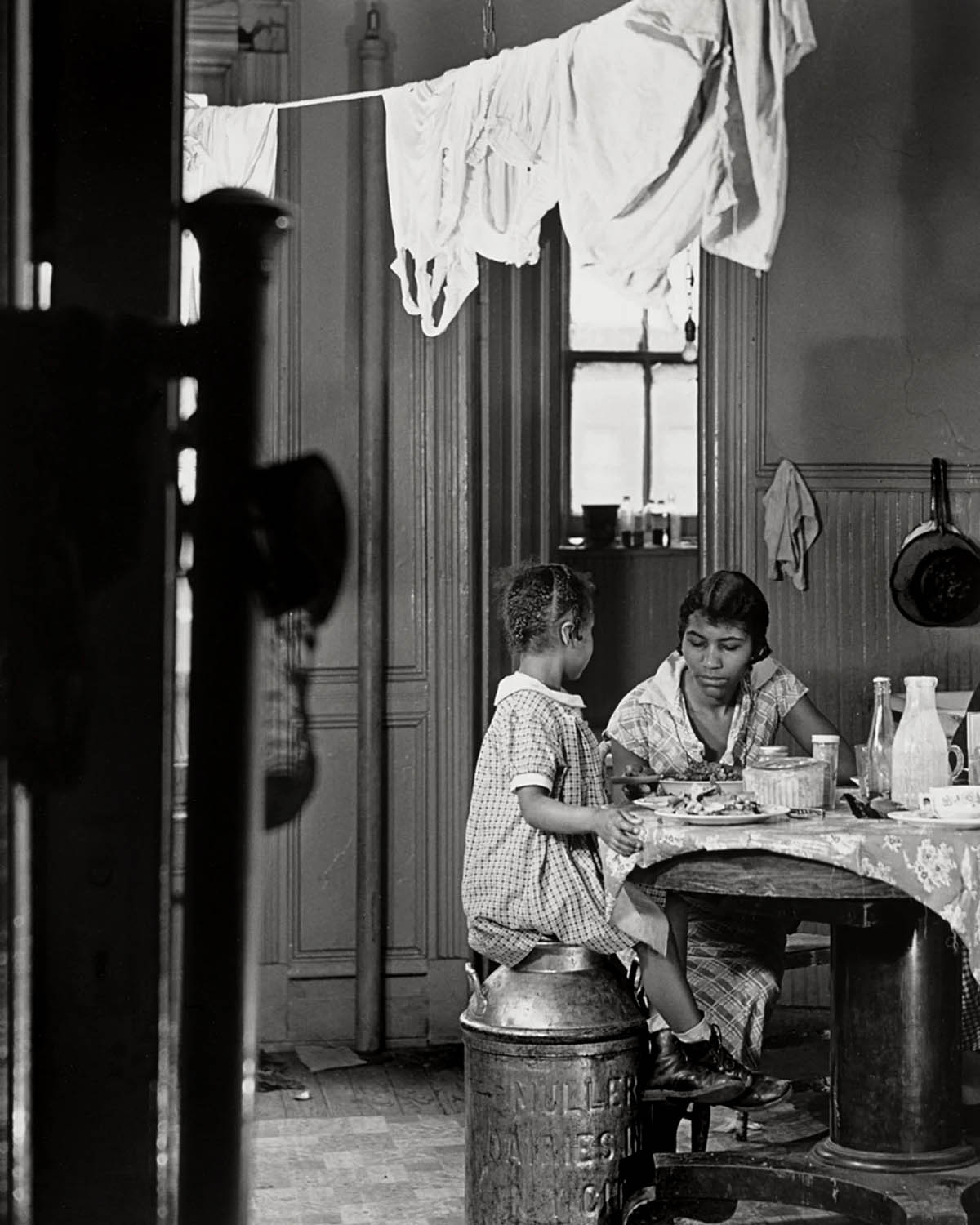
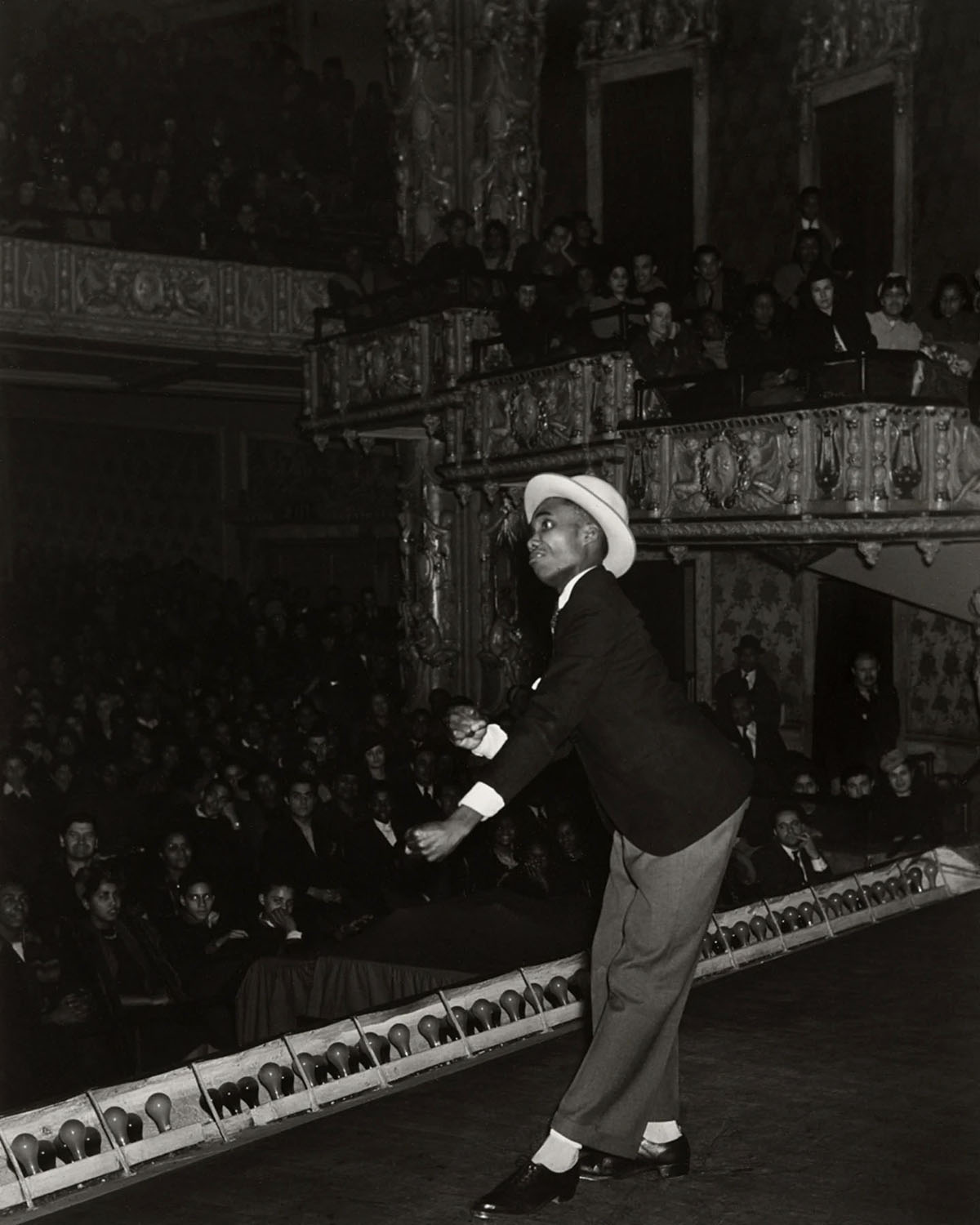
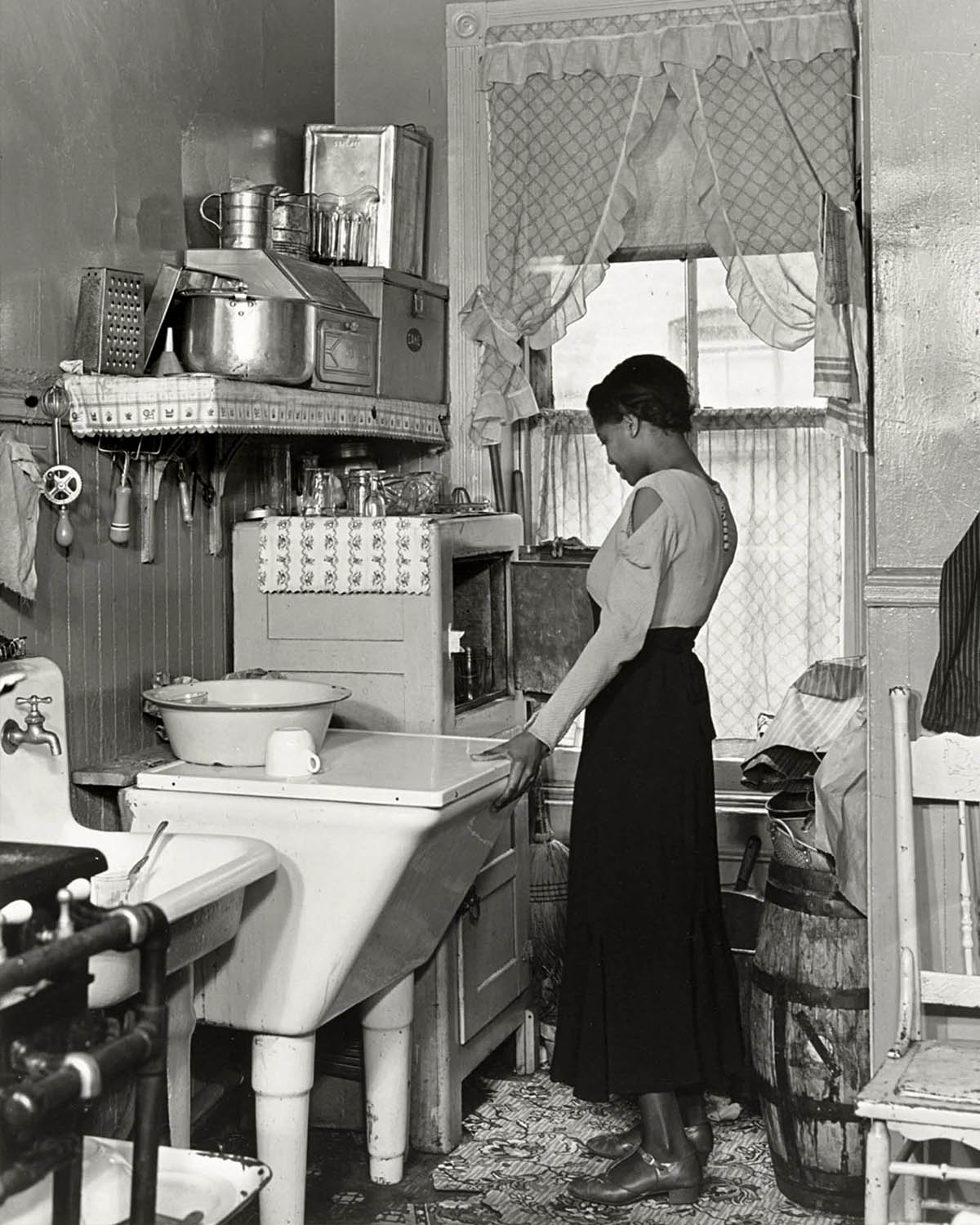

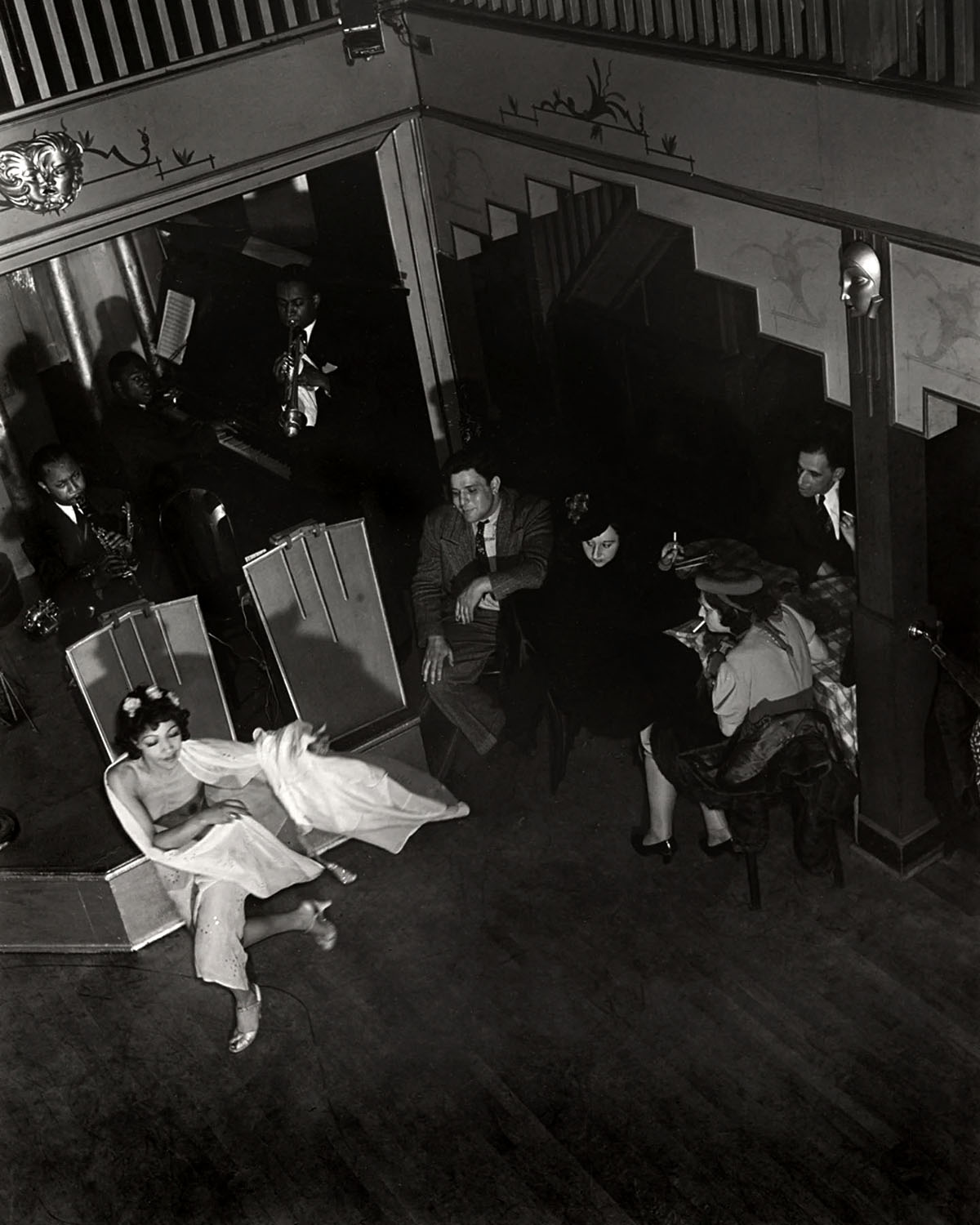
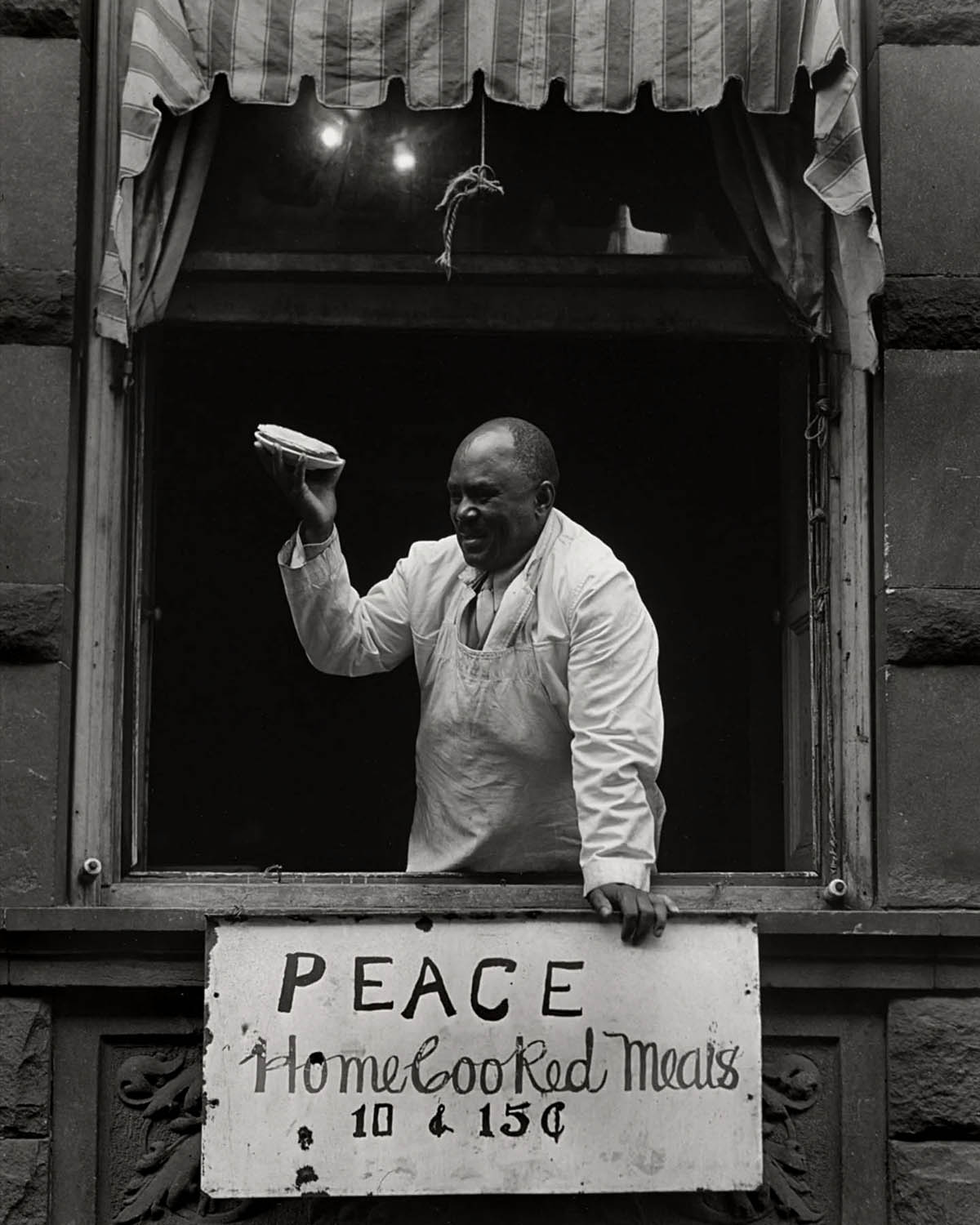
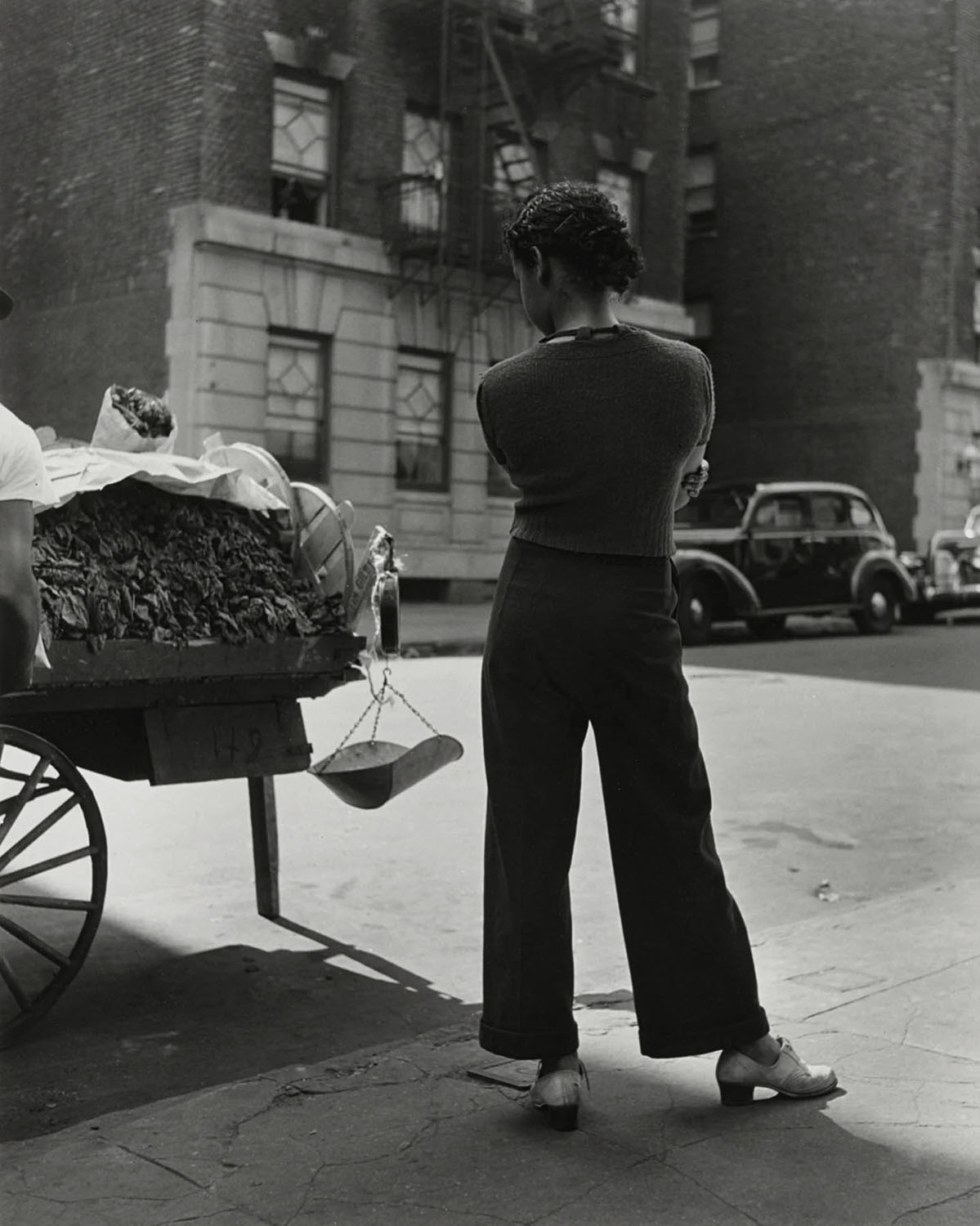
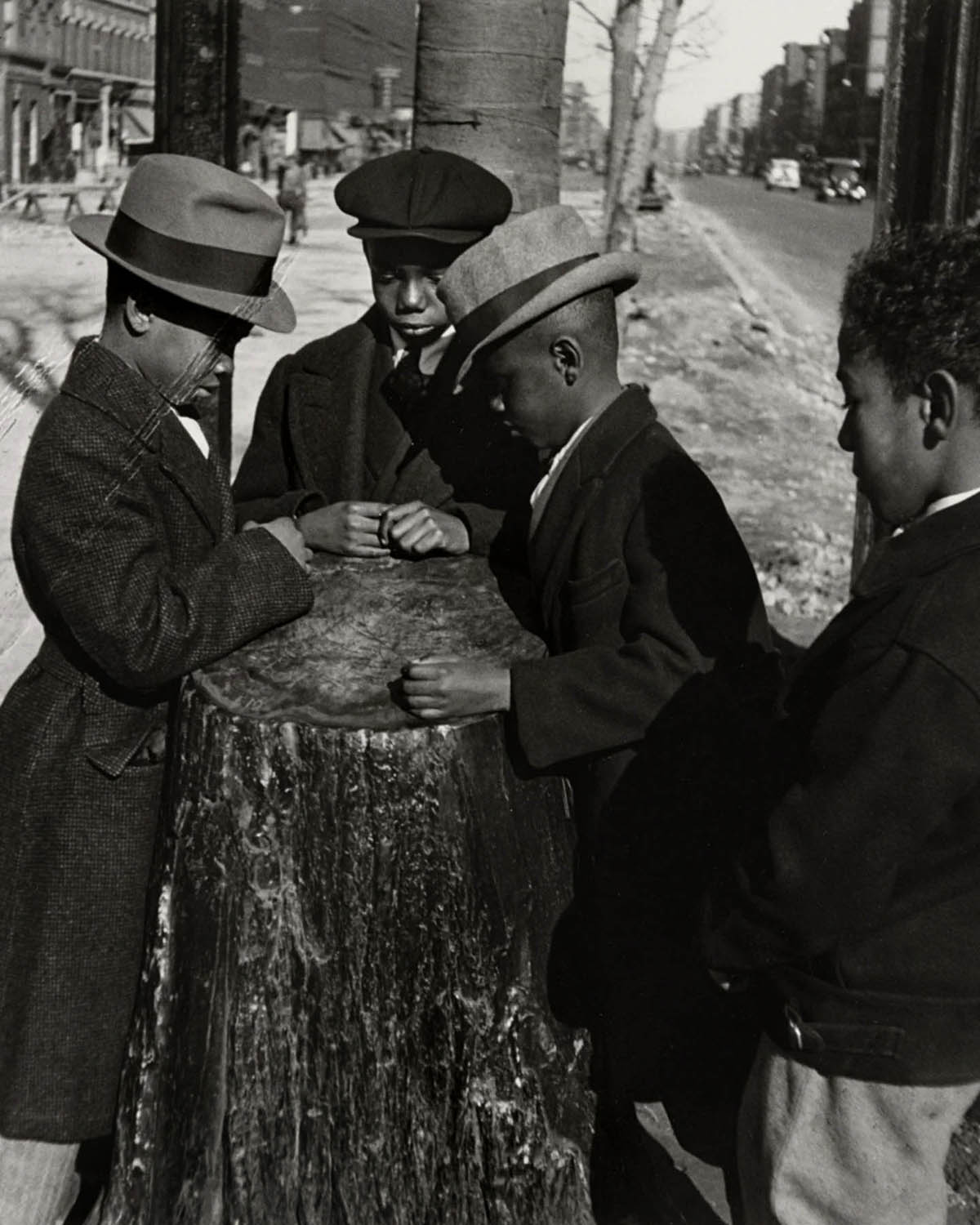
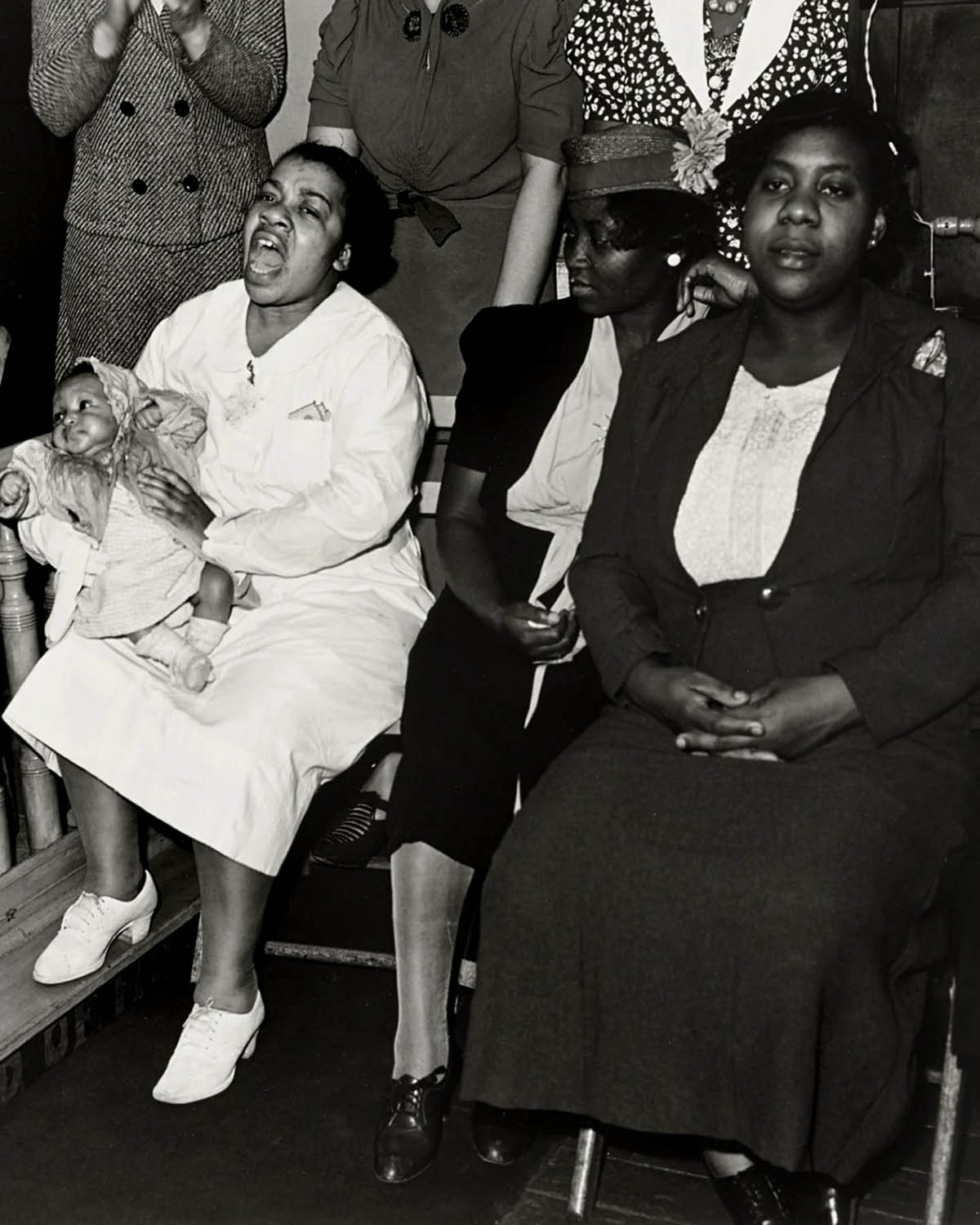
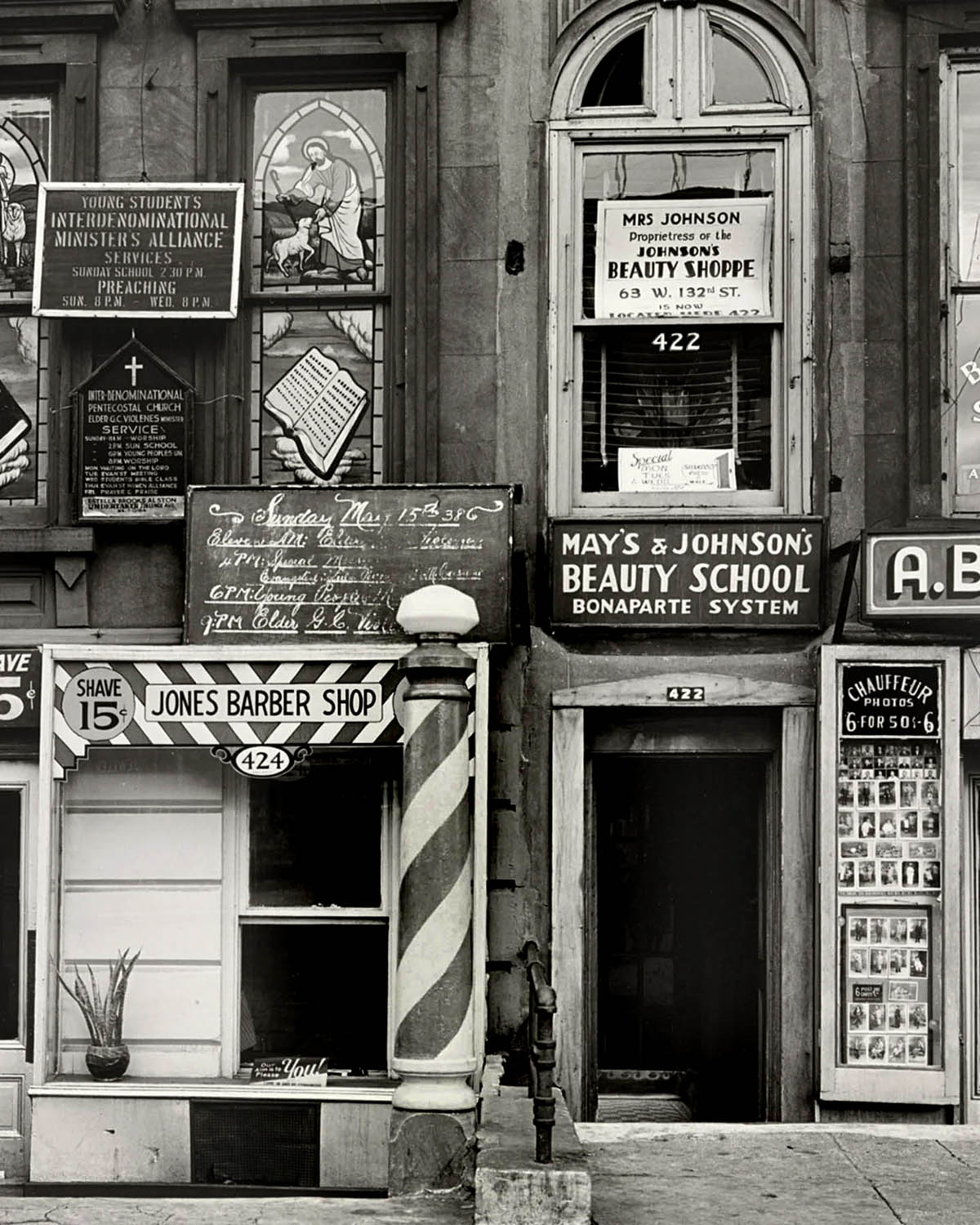
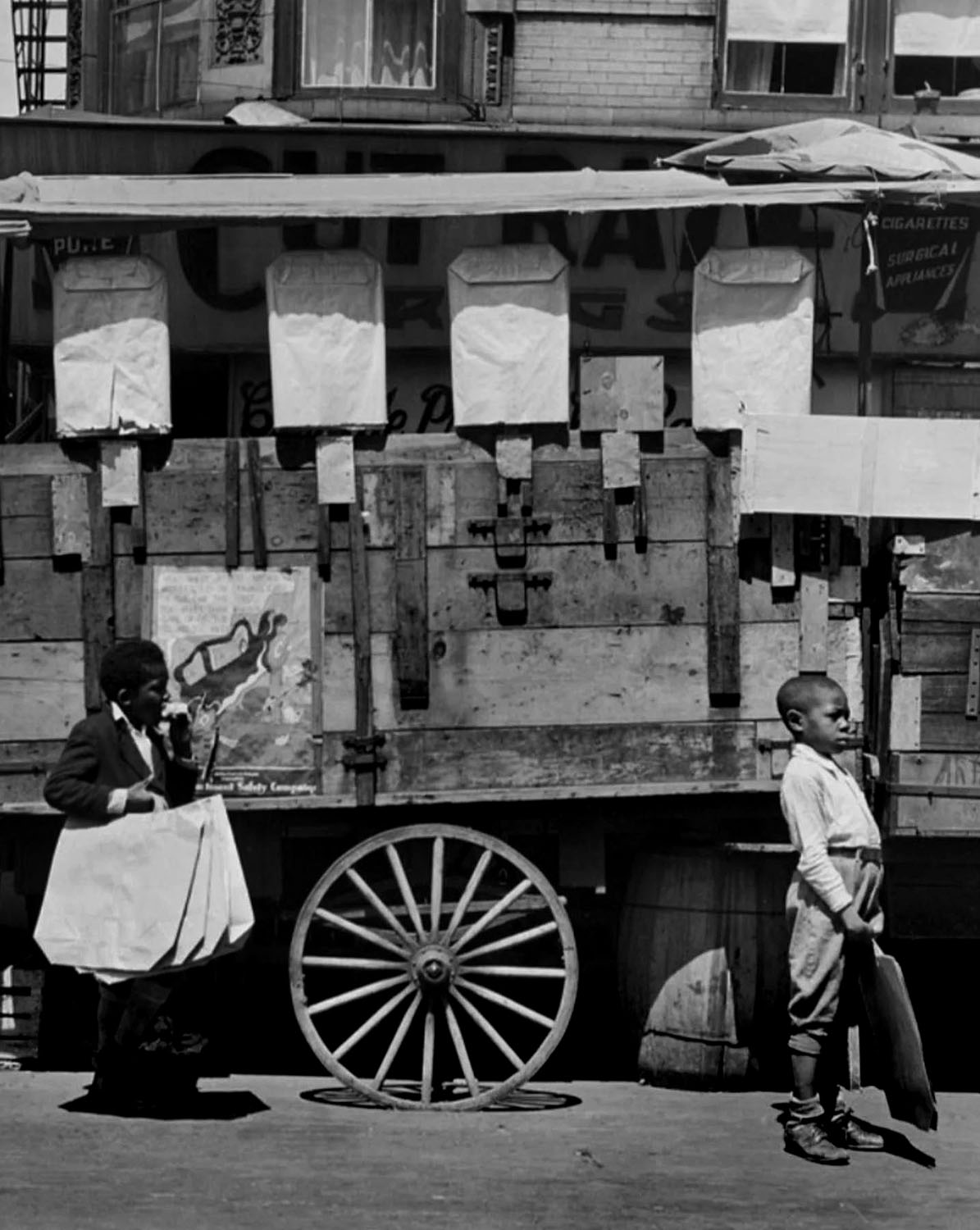
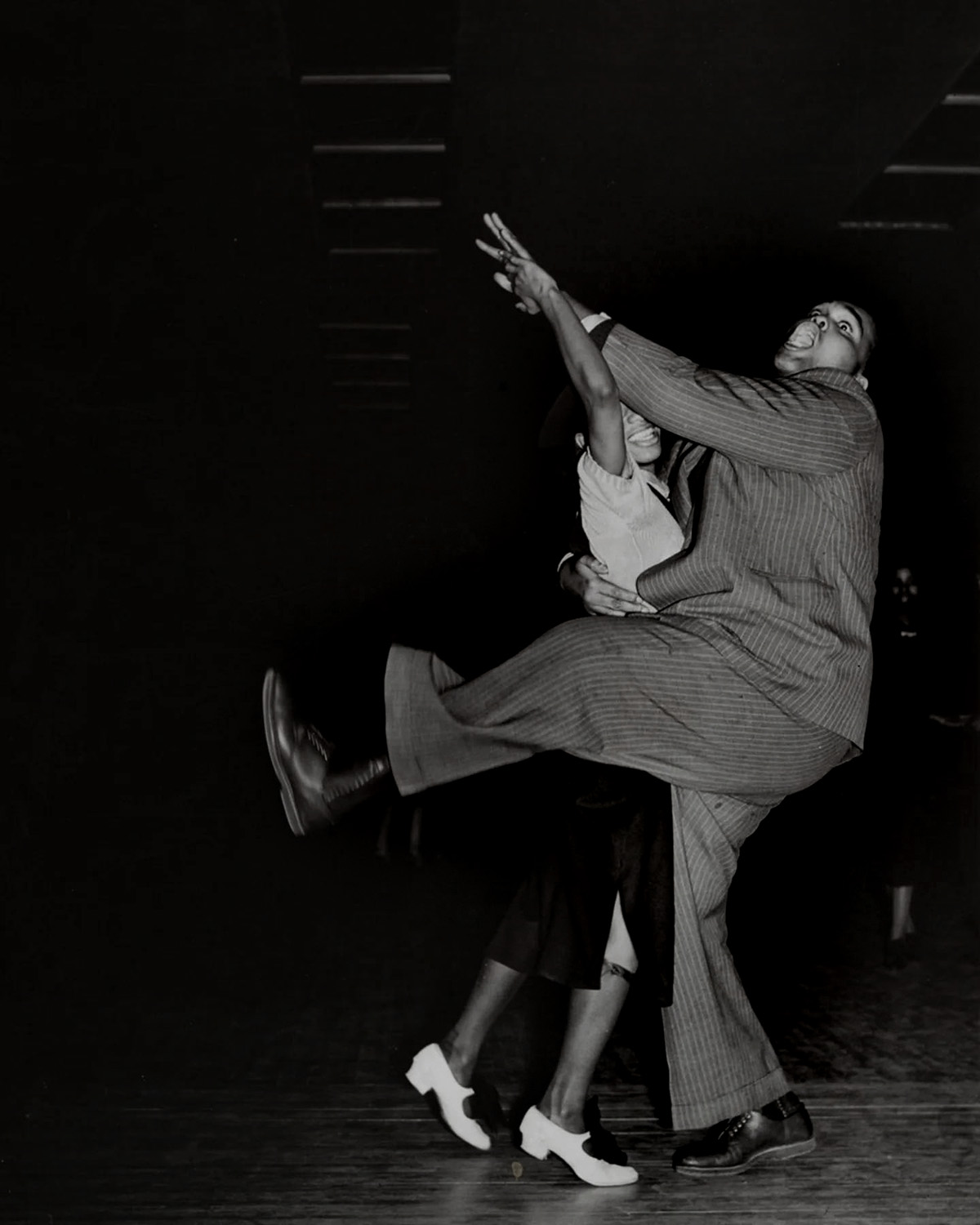
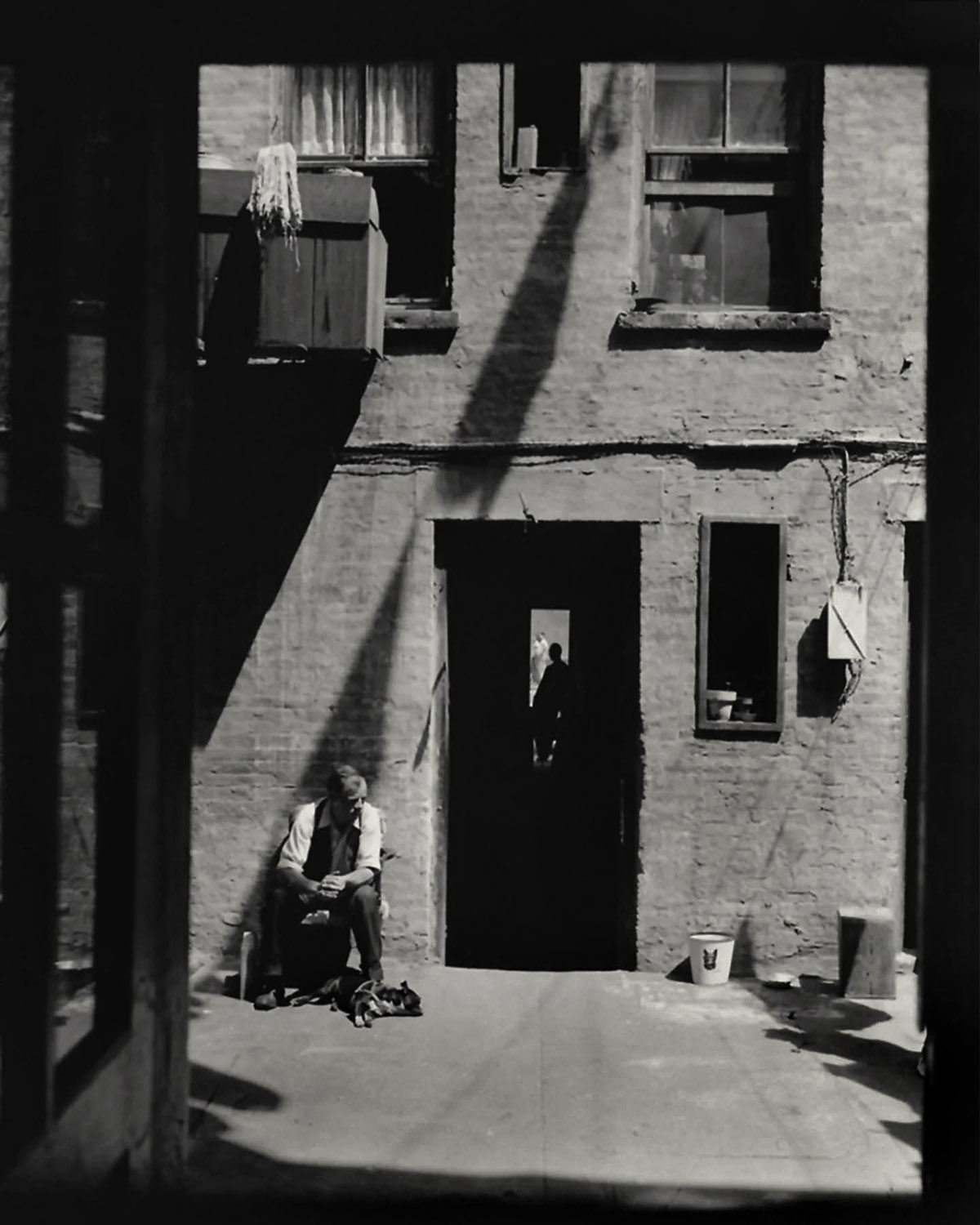
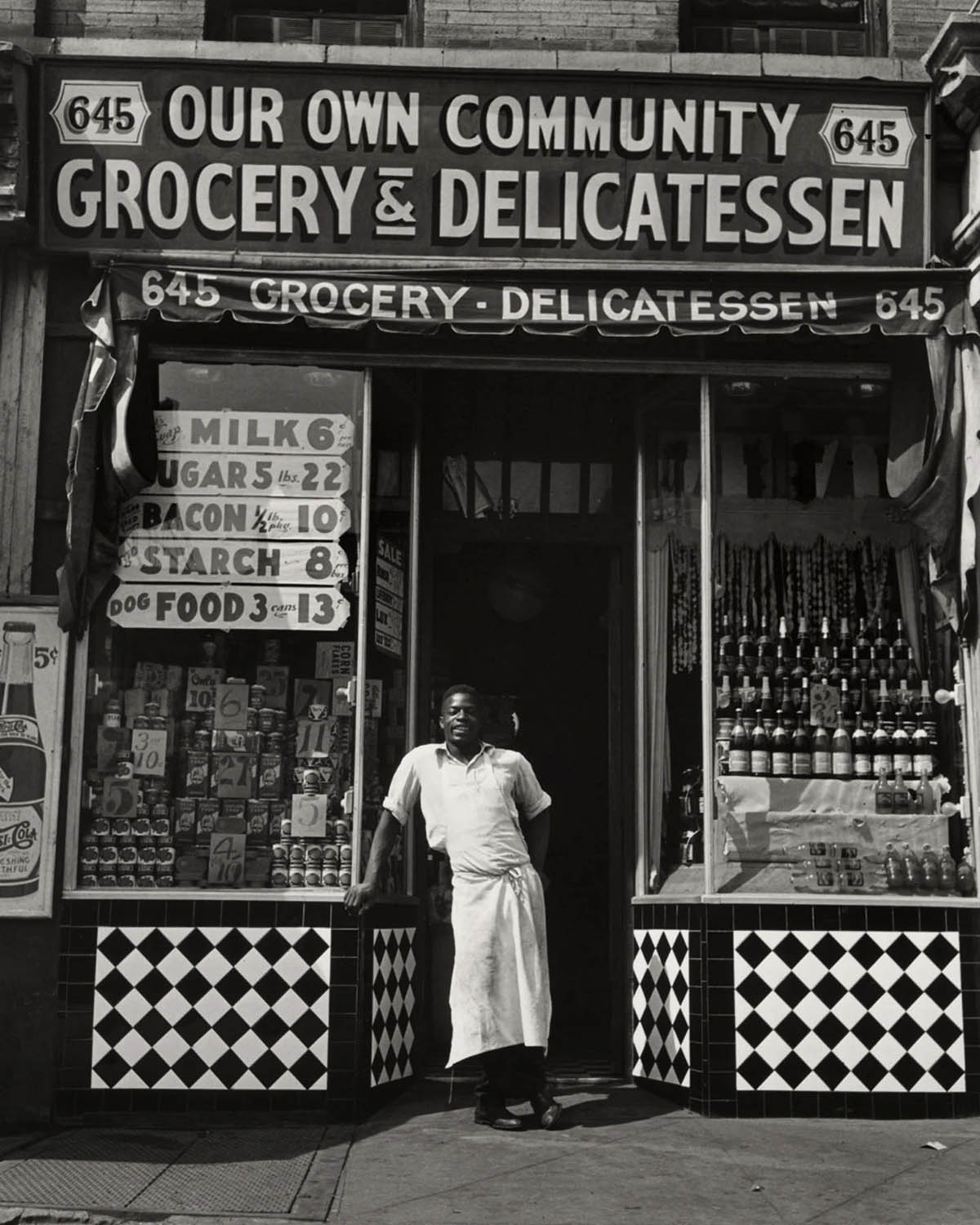
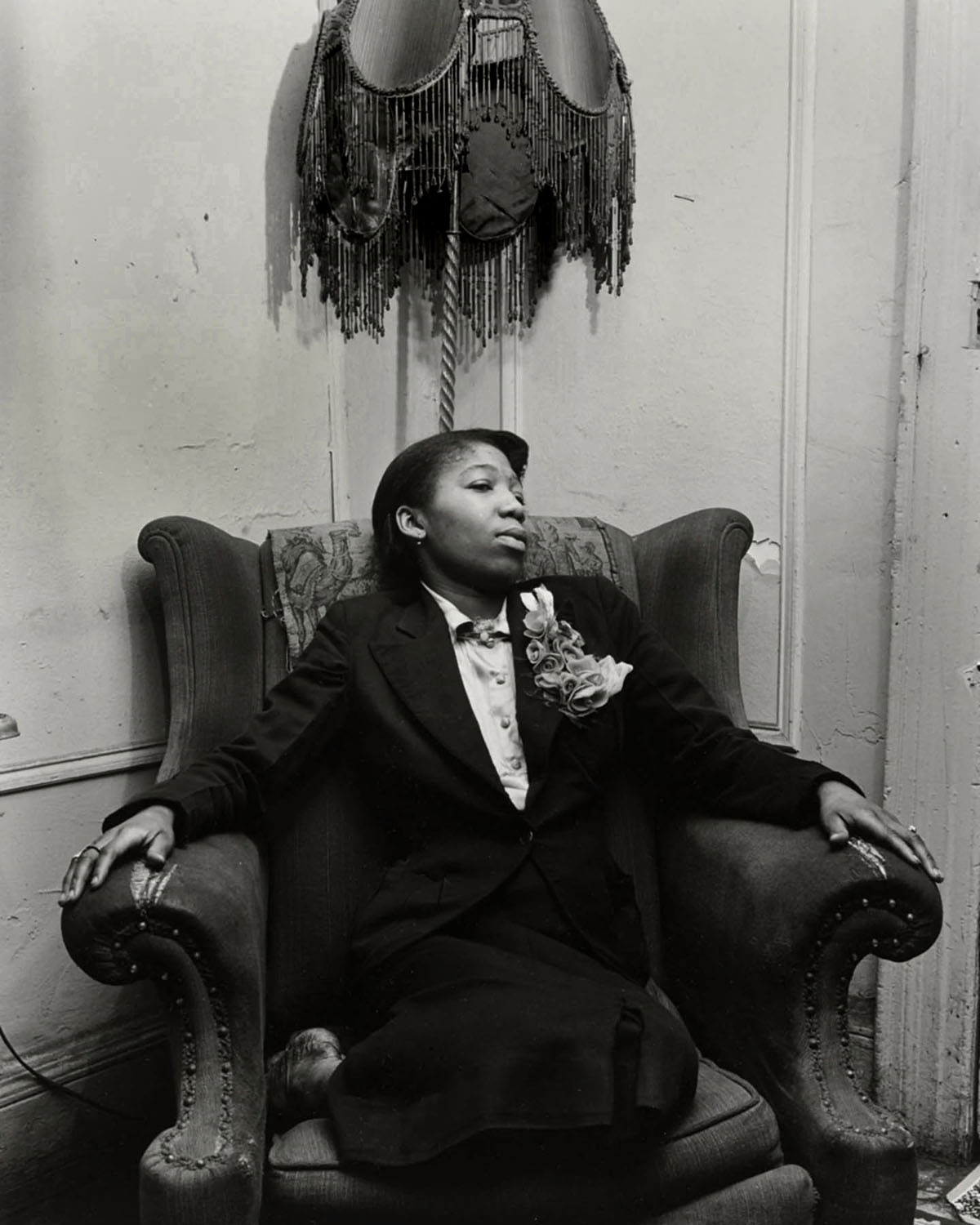
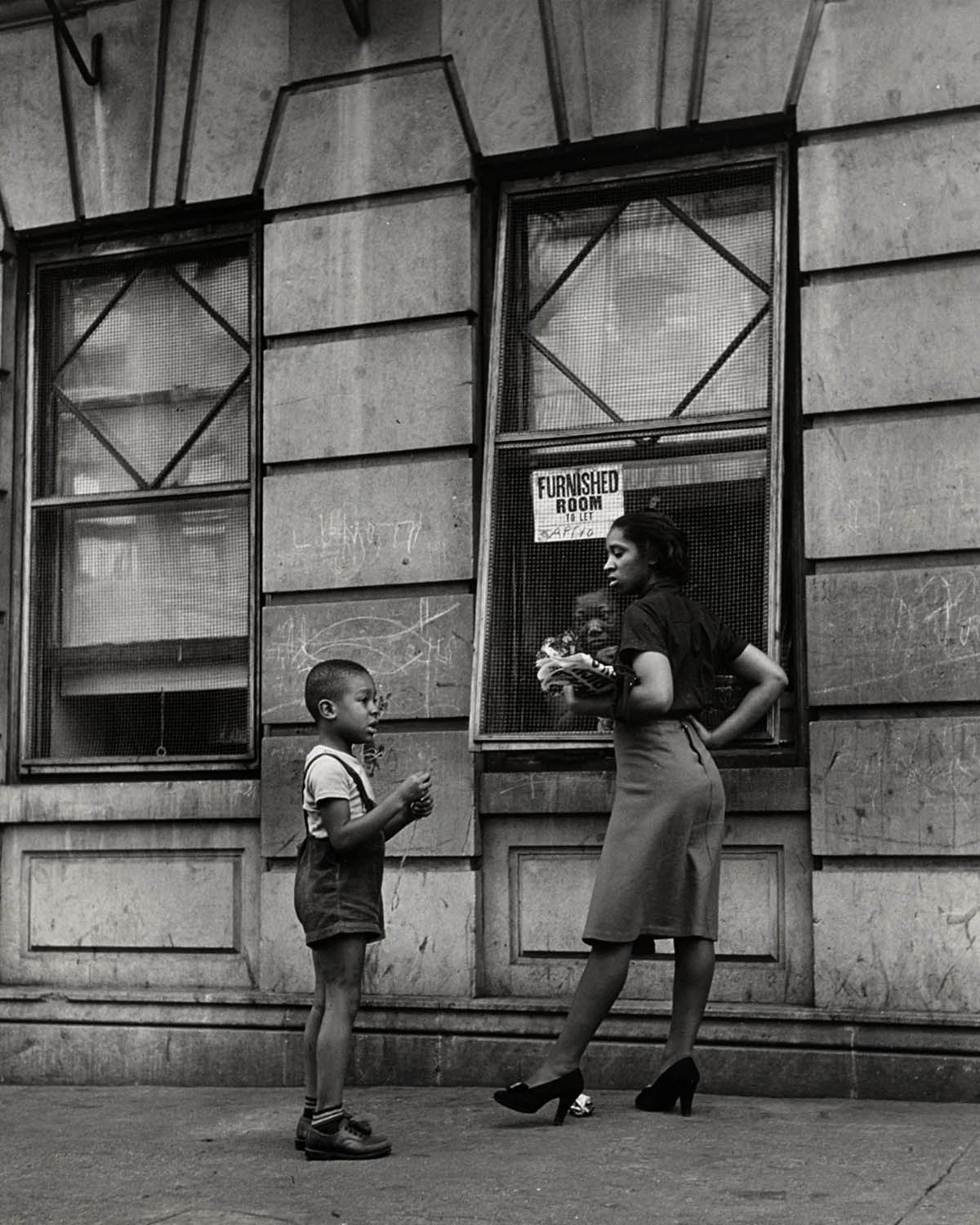
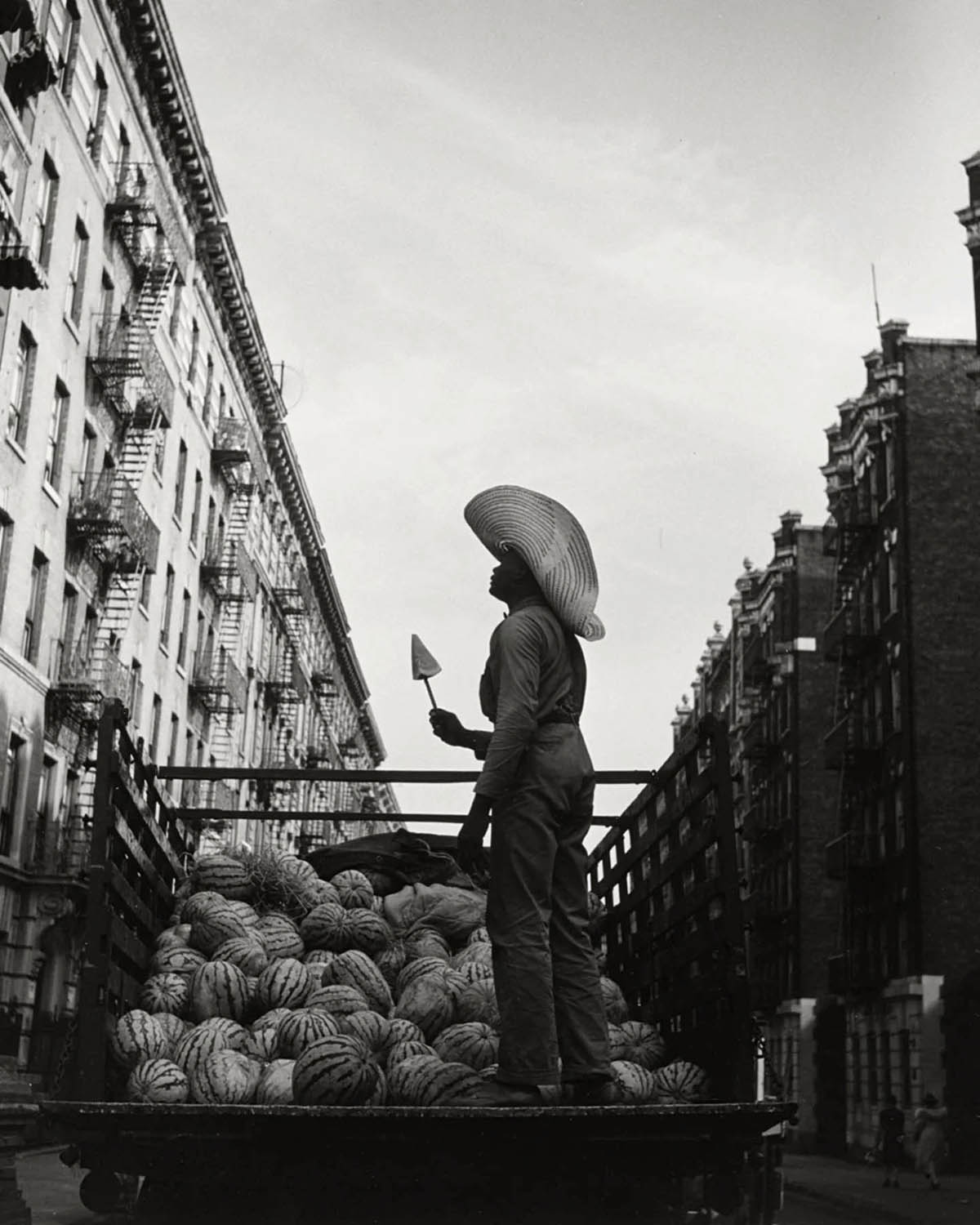


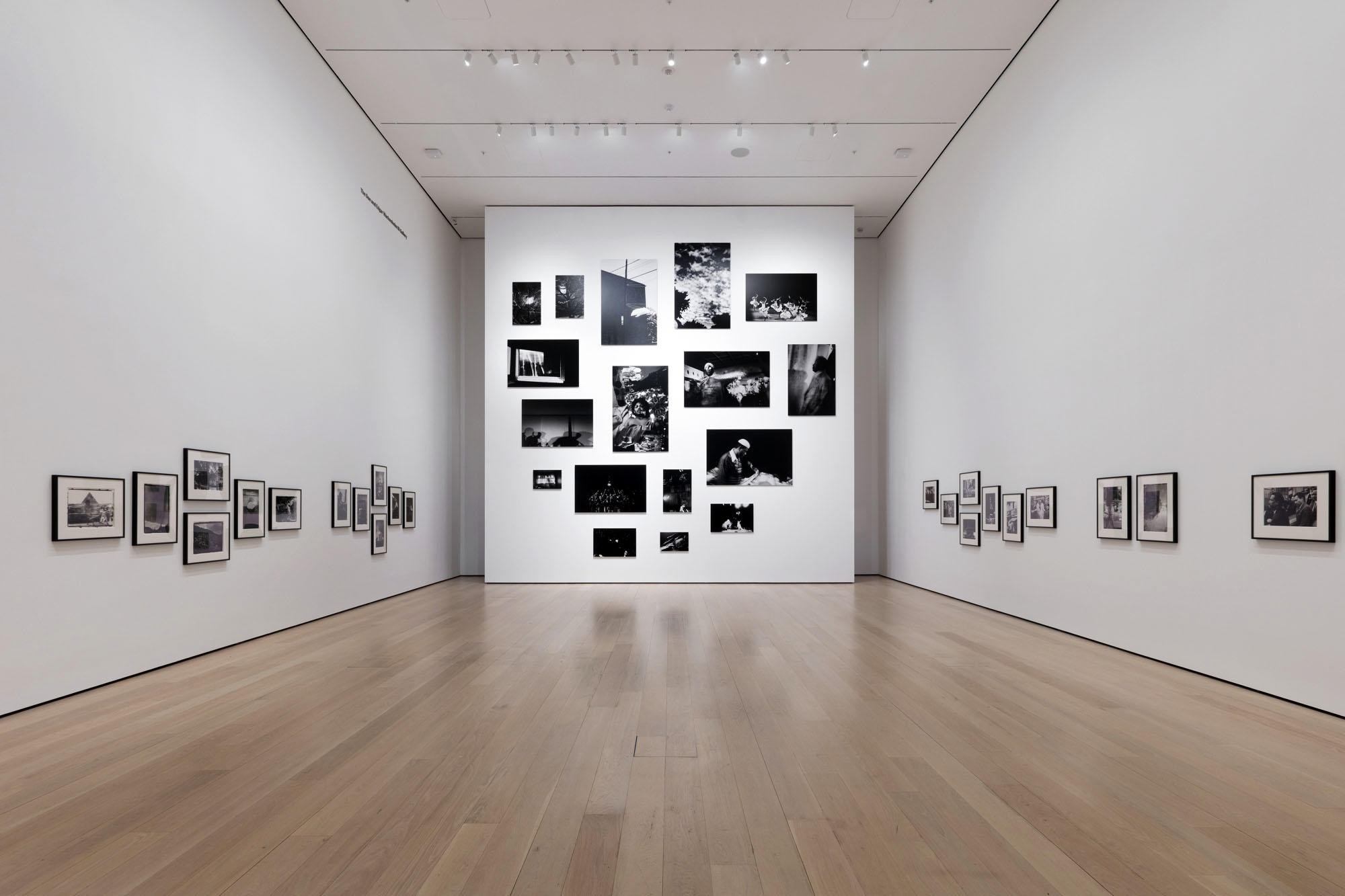


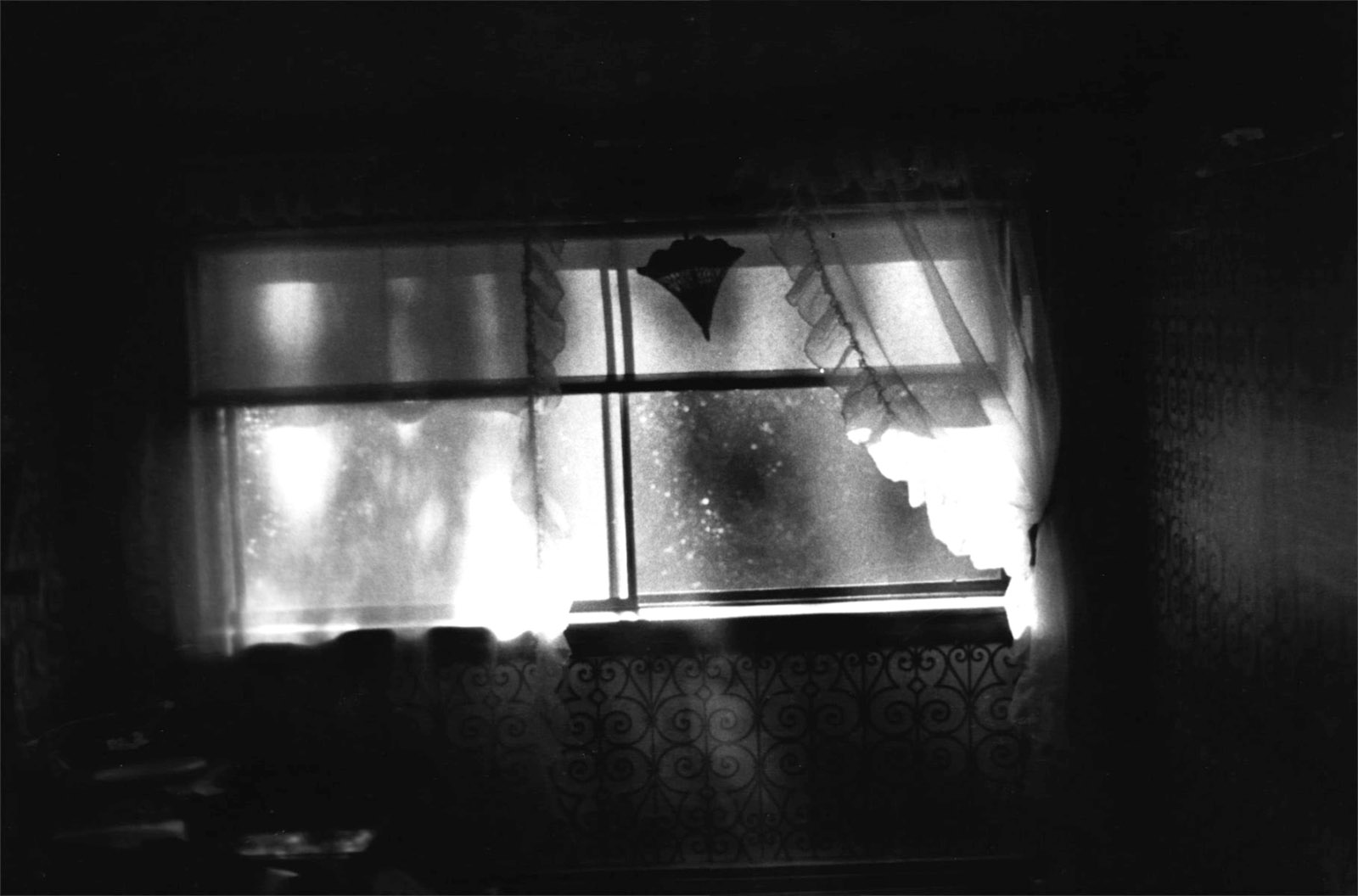


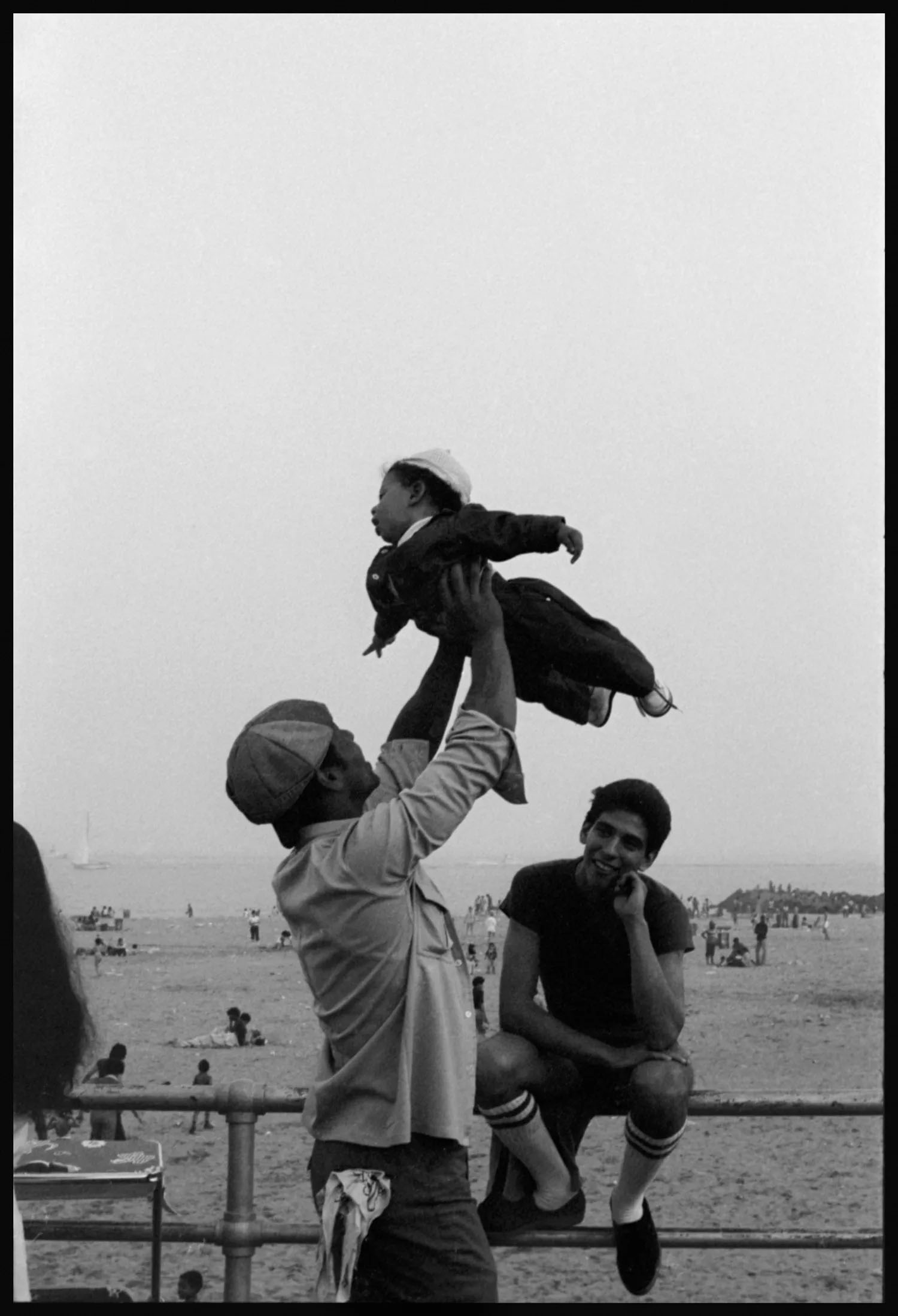
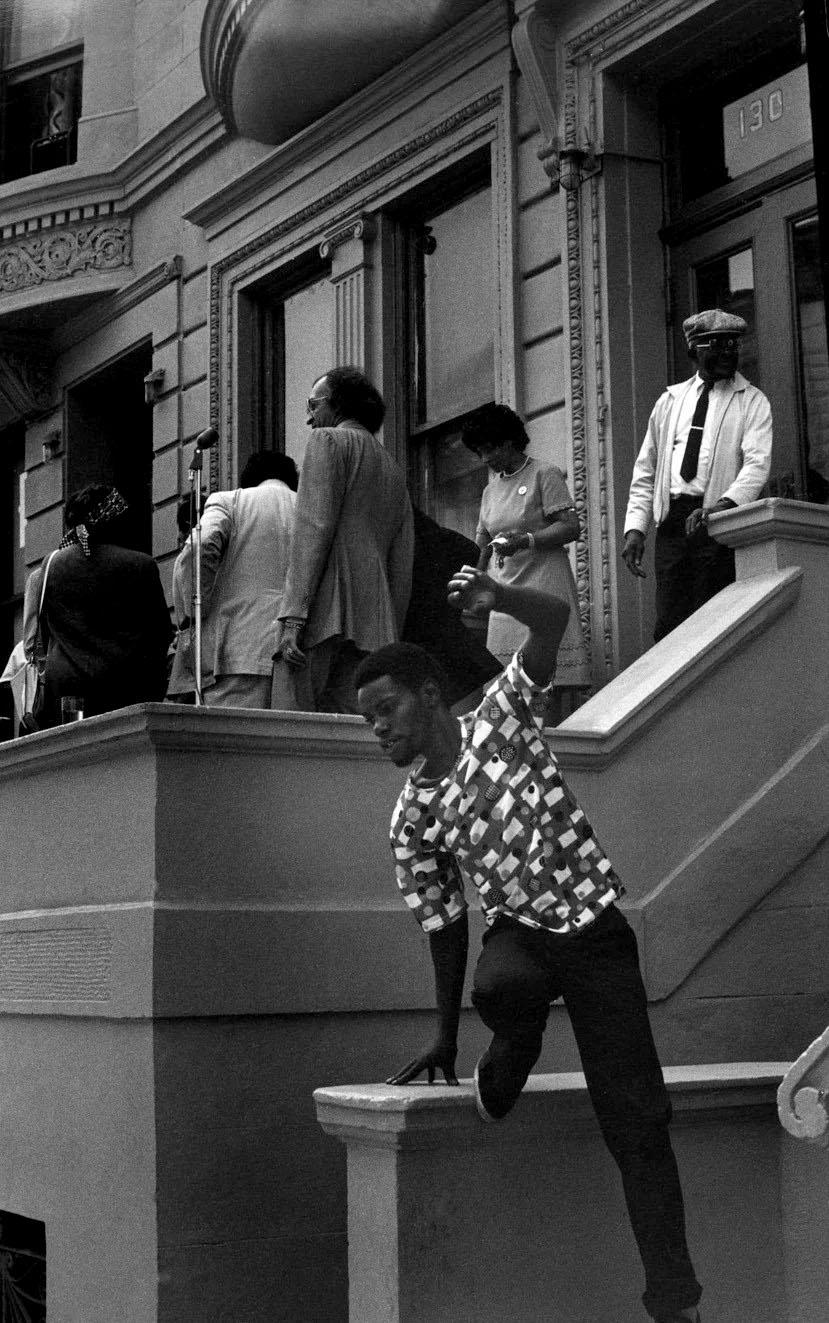


![Unidentified photographer (American). 'Untitled [Two Men in Work Clothes, Wearing Hats, One Standing, One Seated]' c. 1880 from the exhibition 'Called to the Camera: Black American Studio Photographers' at the New Orleans Museum of Art (NOMA), Sept 2022 - Jan 2023](https://artblart.com/wp-content/uploads/2022/11/83-60-4.jpg "Unidentified photographer (American). 'Untitled [Two Men in Work Clothes, Wearing Hats, One Standing, One Seated]' c. 1880 from the exhibition 'Called to the Camera: Black American Studio Photographers' at the New Orleans Museum of Art (NOMA), Sept 2022 - Jan 2023")

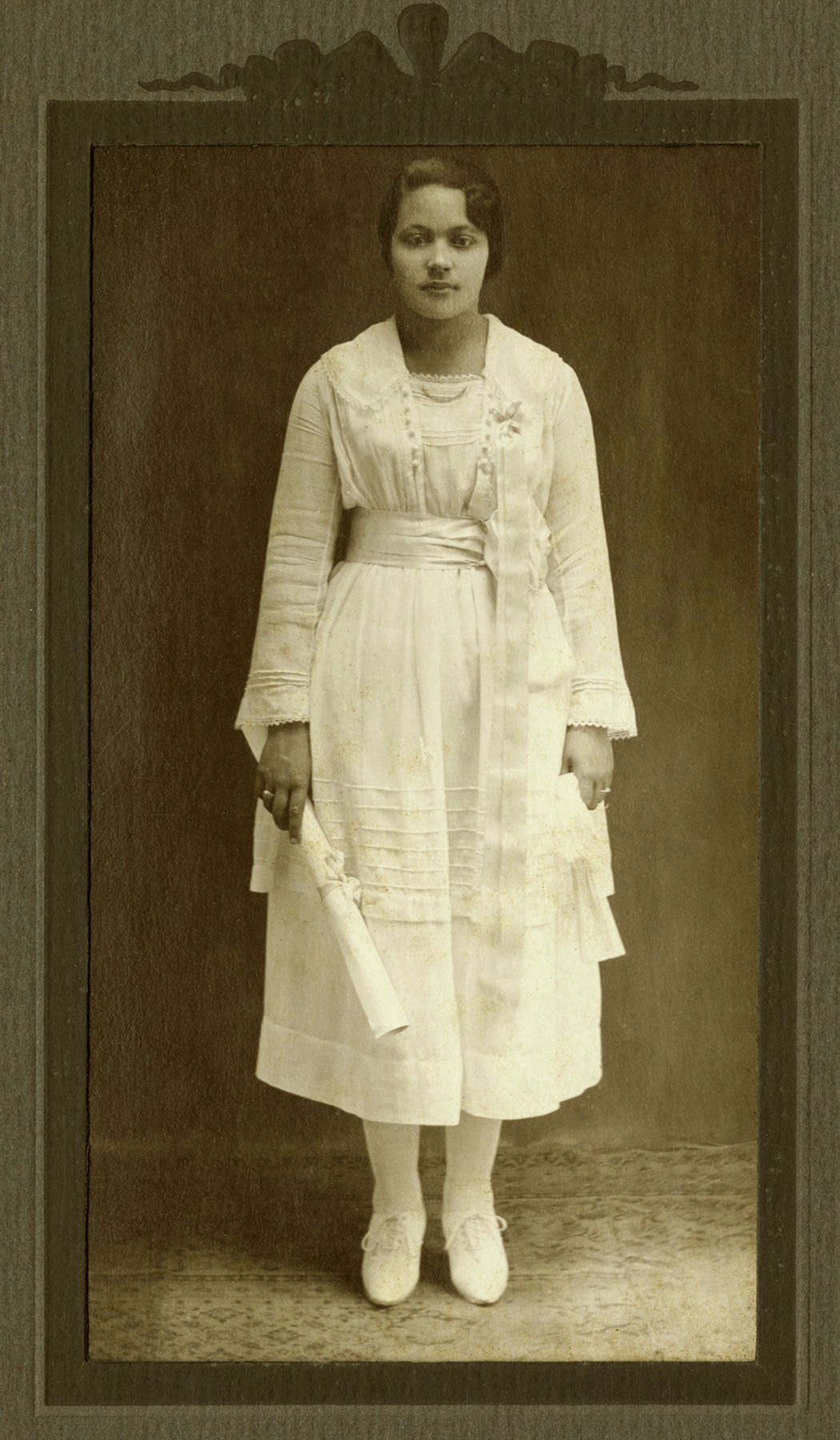


![Morgan and Marvin Smith (American, 1910-1993)(American, 1910-2003) 'Untitled [Marvin and Morgan Smith and Sarah Lou Harris Carter]' 1940](https://artblart.com/wp-content/uploads/2022/11/sp-2022-59-11.jpg "Morgan and Marvin Smith (American, 1910-1993)(American, 1910-2003) 'Untitled [Marvin and Morgan Smith and Sarah Lou Harris Carter]' 1940")


![Hooks Brothers Studio (Robert and Henry Hooks) 'Untitled [Man in Dollar Bill Suit with Congregation]' c. 1940](https://artblart.com/wp-content/uploads/2022/11/sp-2022-63-20.jpg "Hooks Brothers Studio (Robert and Henry Hooks) 'Untitled [Man in Dollar Bill Suit with Congregation]' c. 1940")
![Hooks Brothers Studio (Robert and Henry Hooks) 'Untitled [Students looking at photographs]' c. 1950](https://artblart.com/wp-content/uploads/2022/11/sp-2022-63-26.jpg "Hooks Brothers Studio (Robert and Henry Hooks) 'Untitled [Students looking at photographs]' c. 1950")


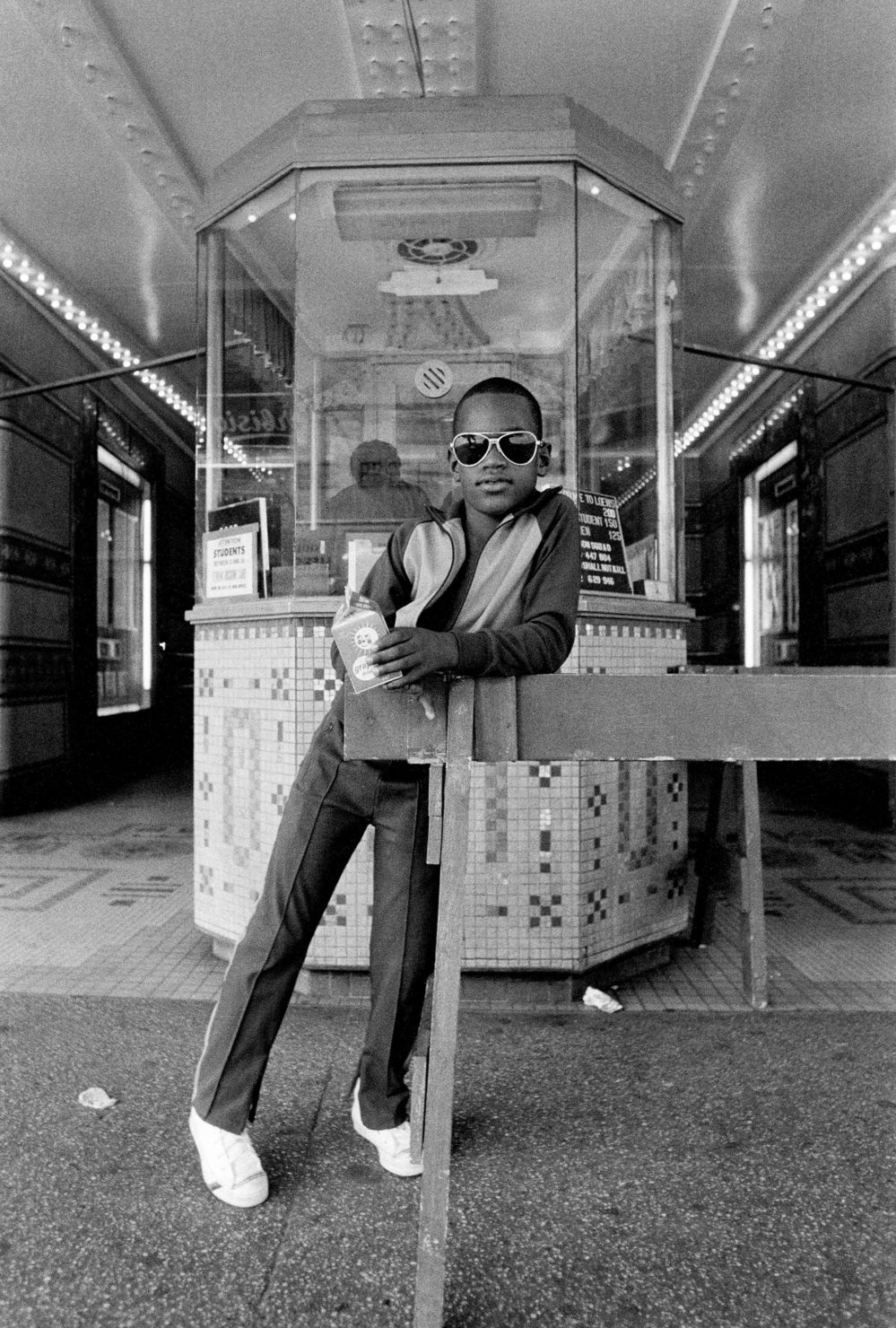


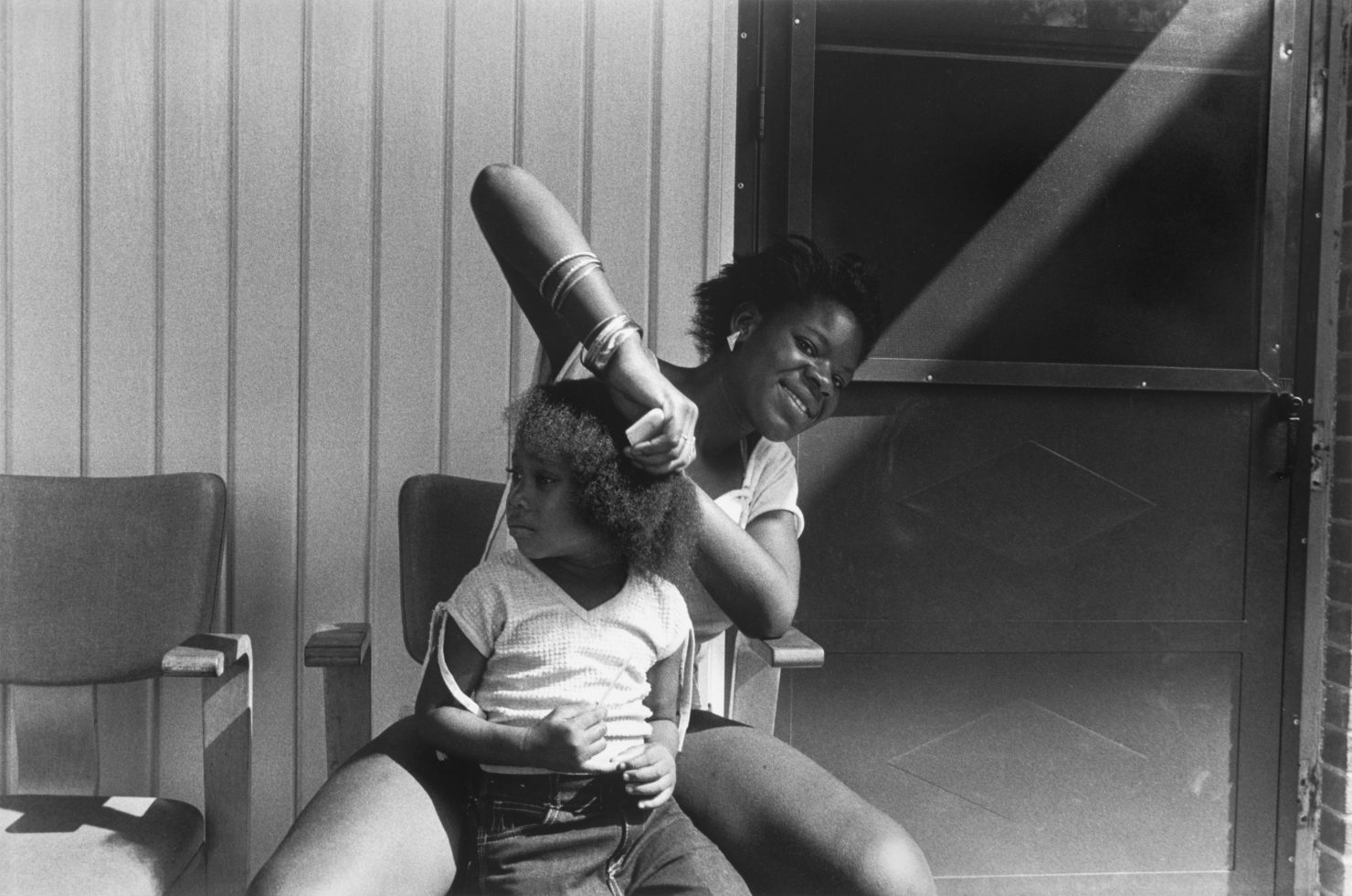


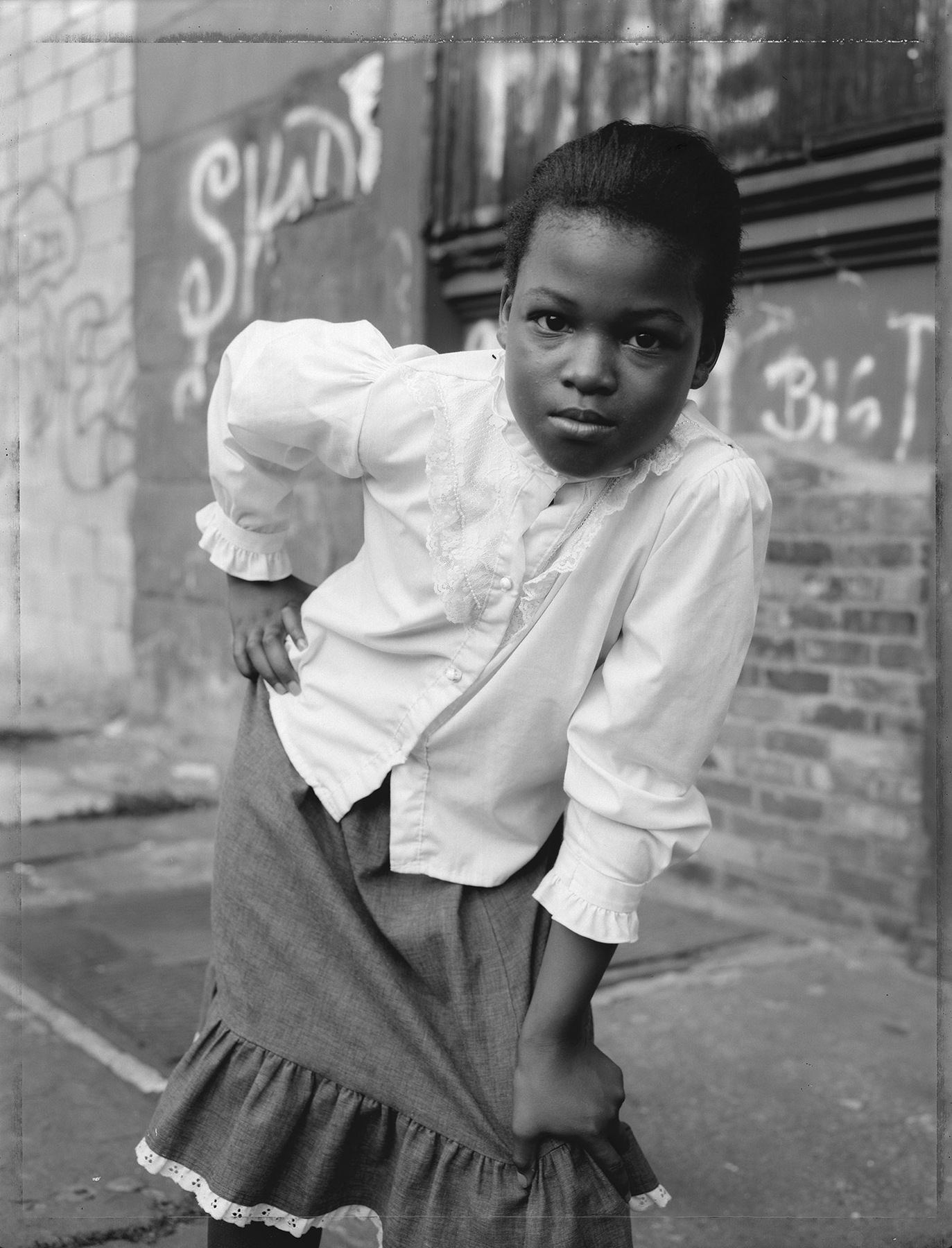


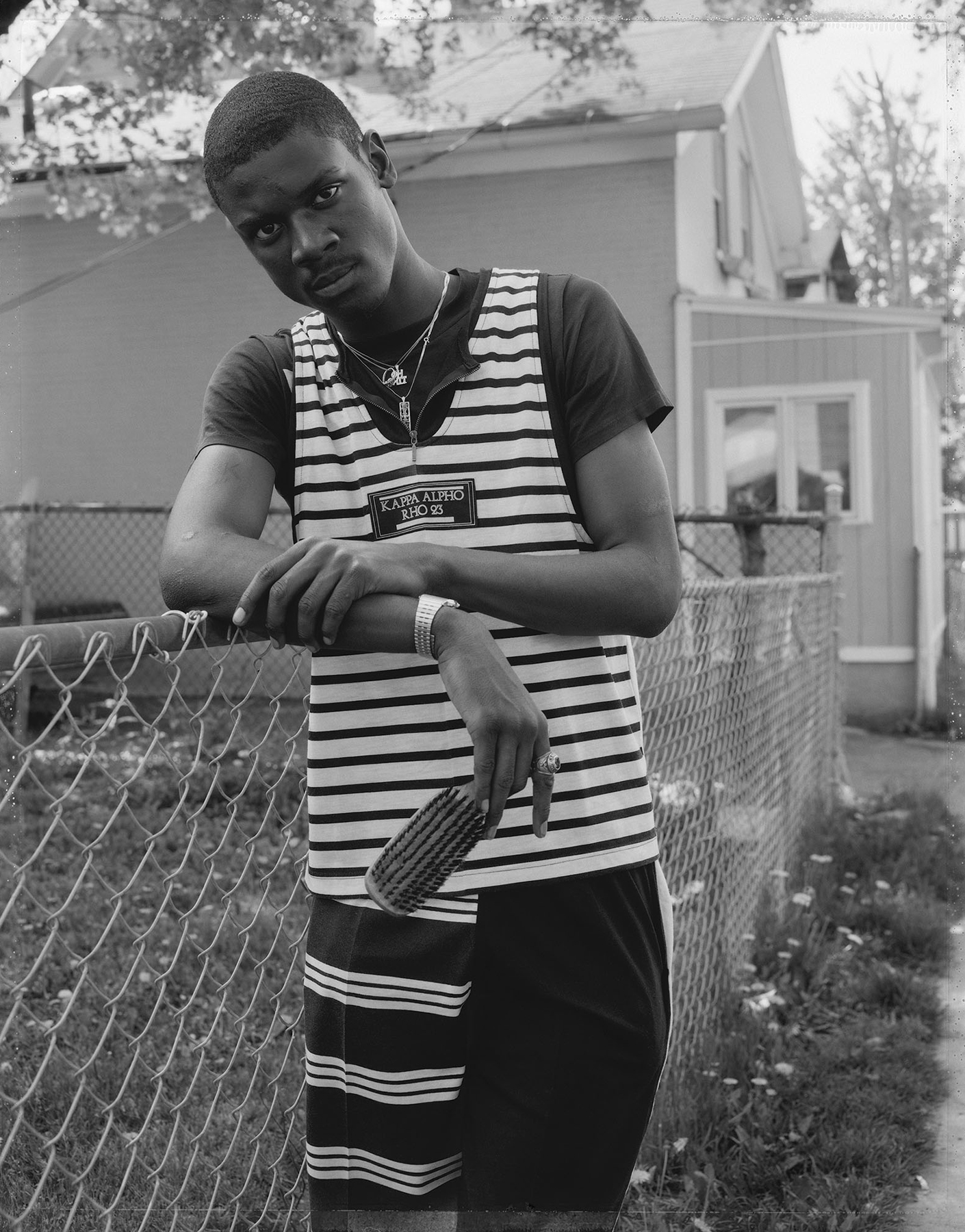


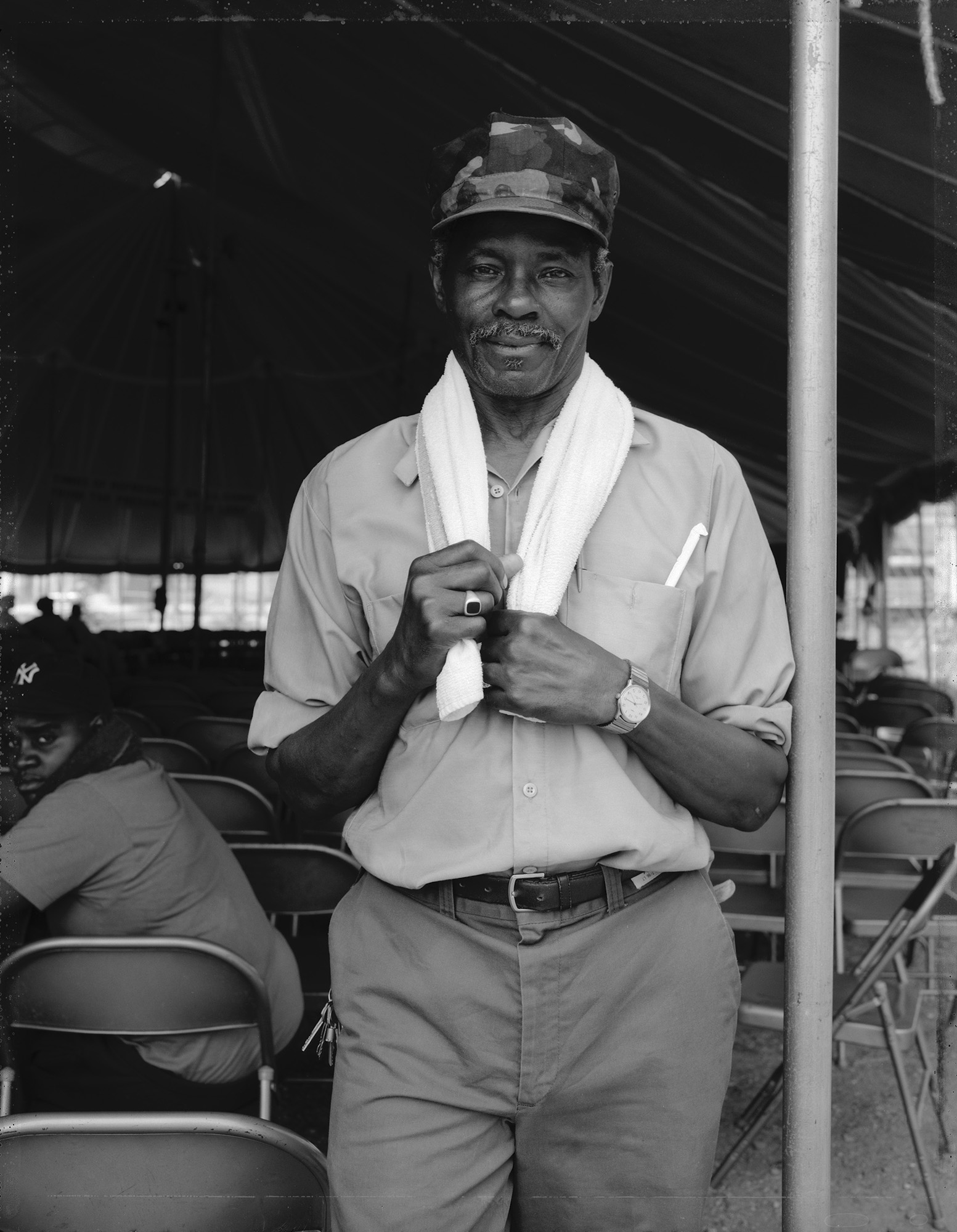


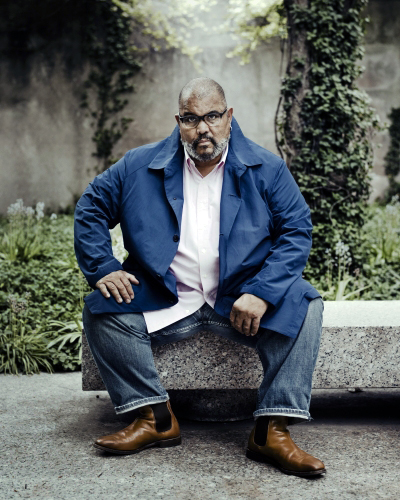


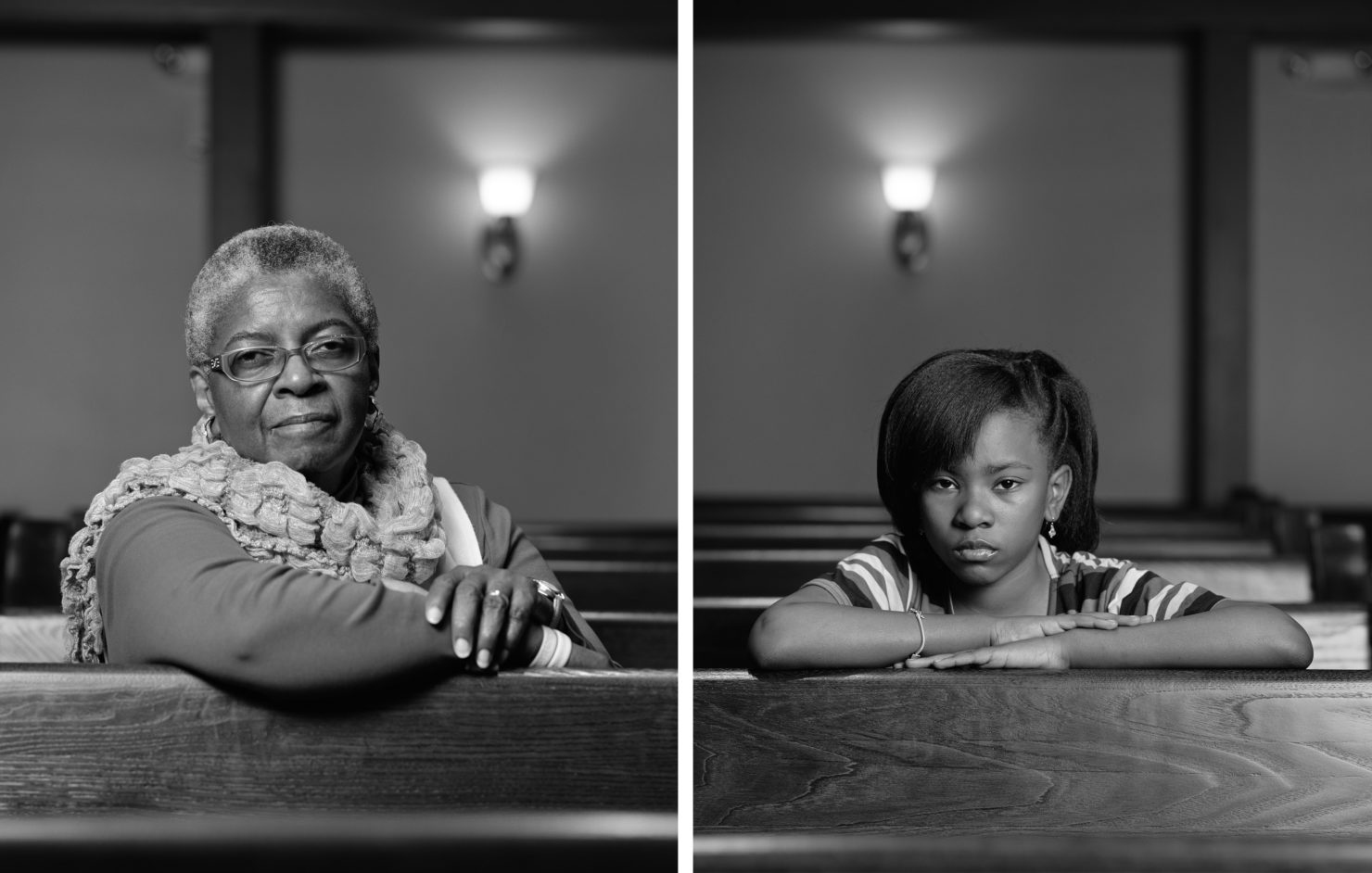




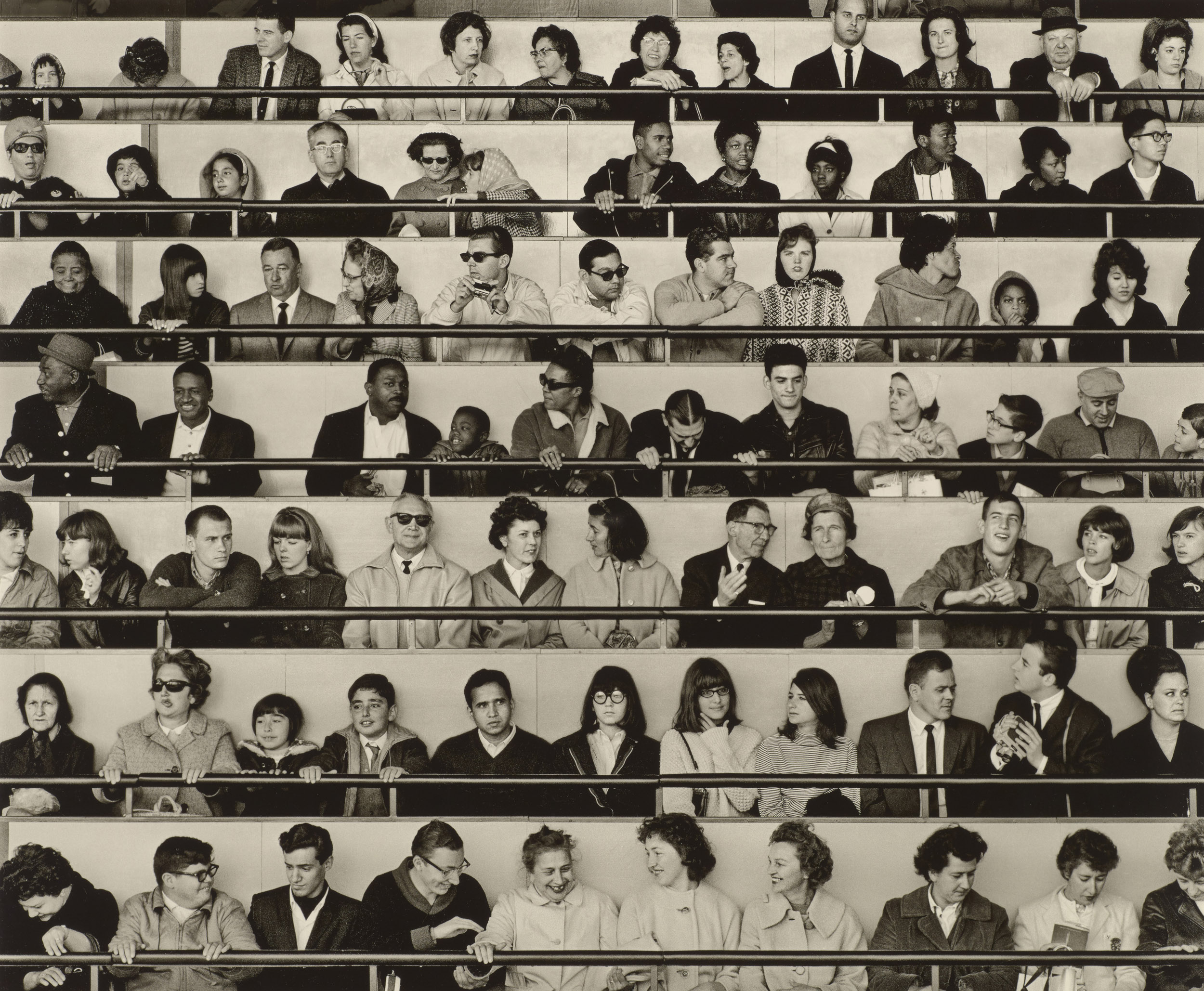
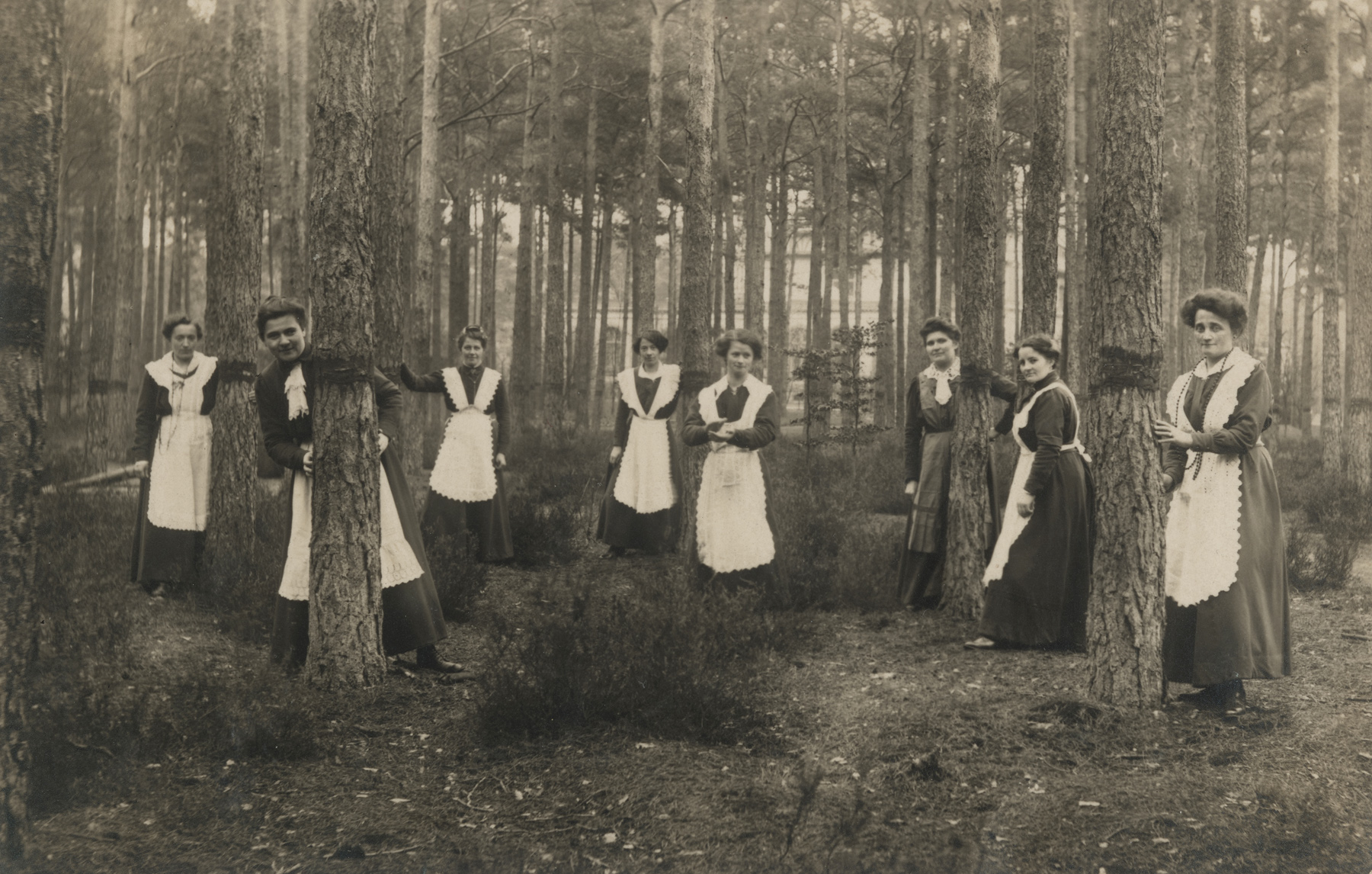

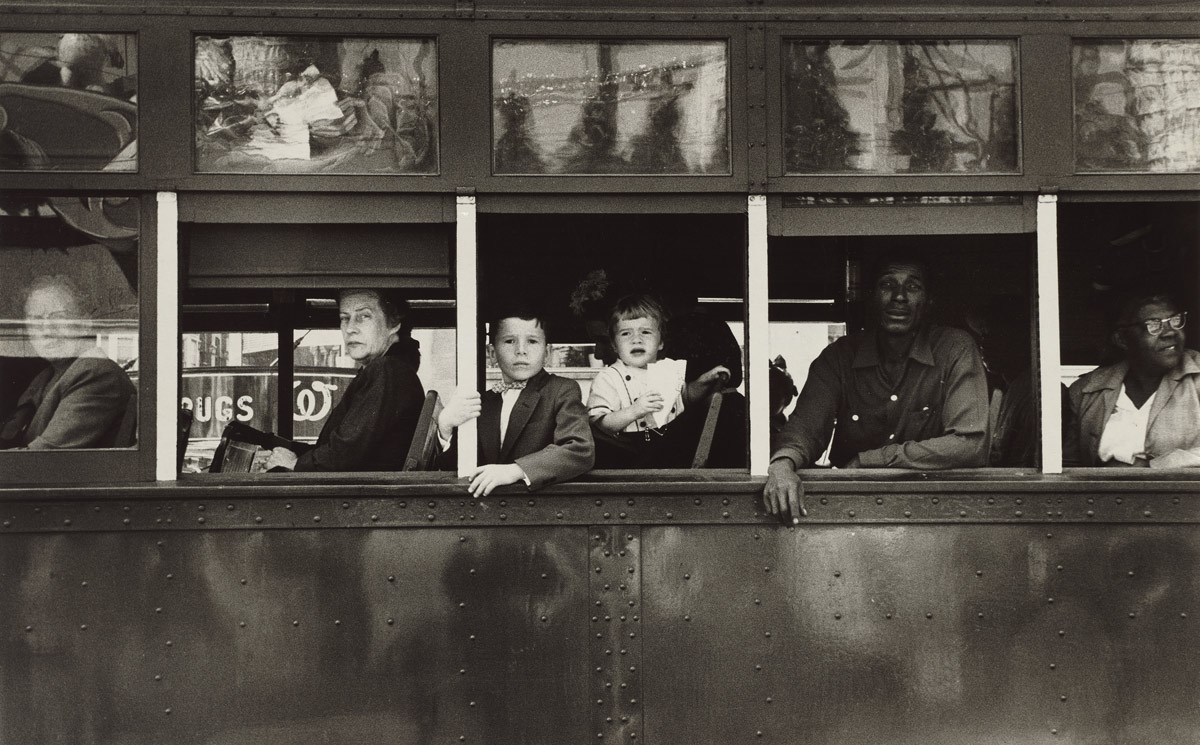
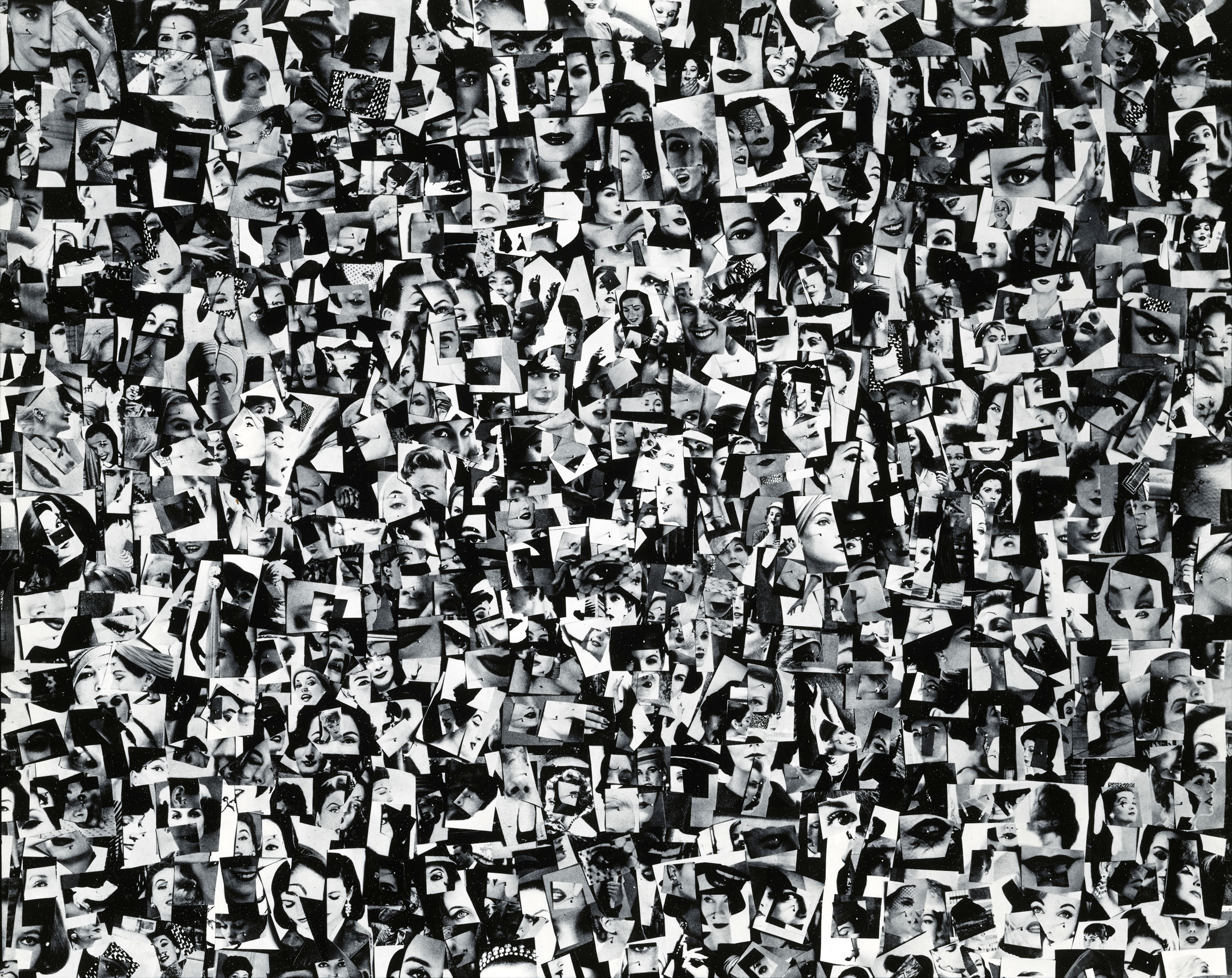

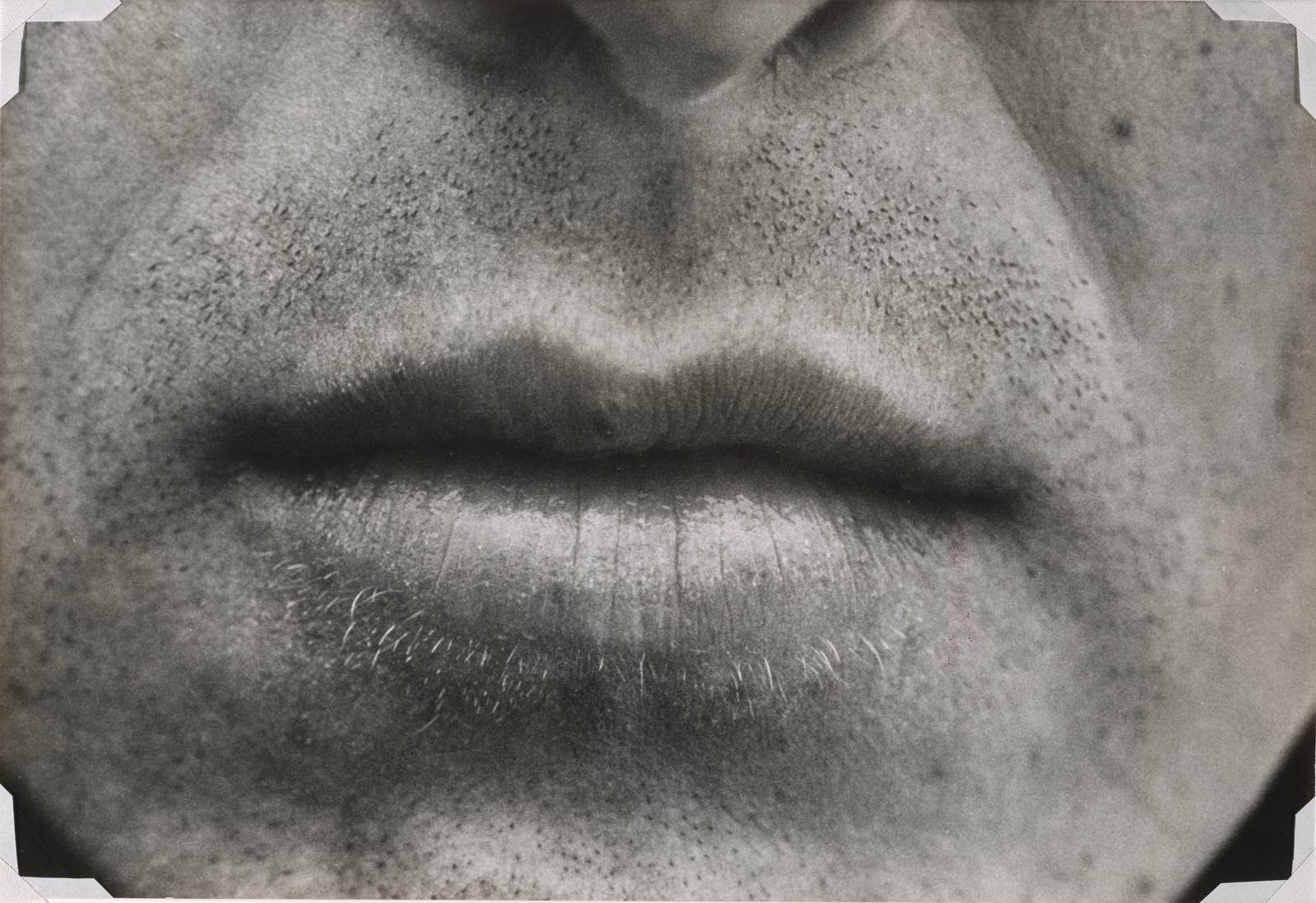

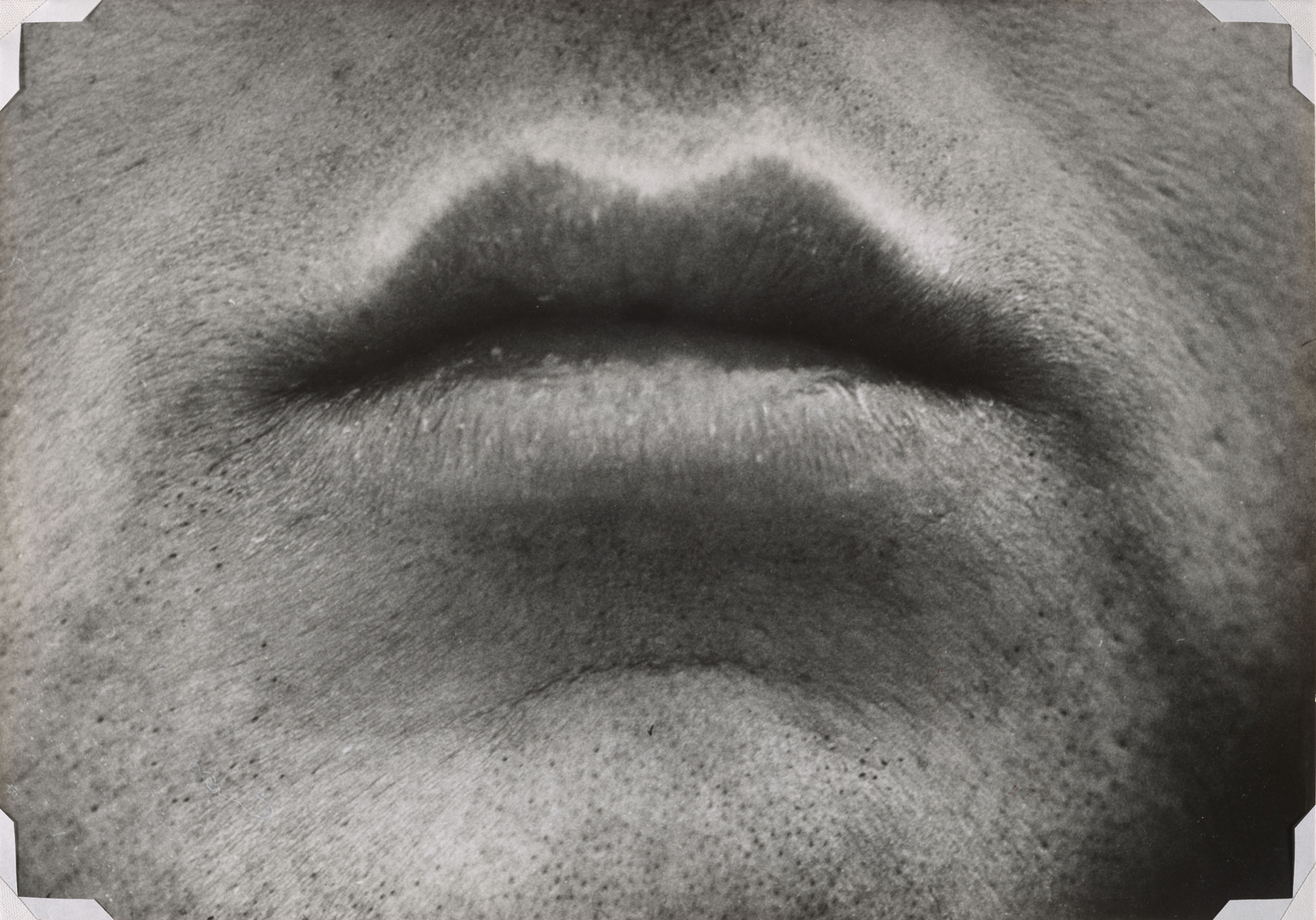
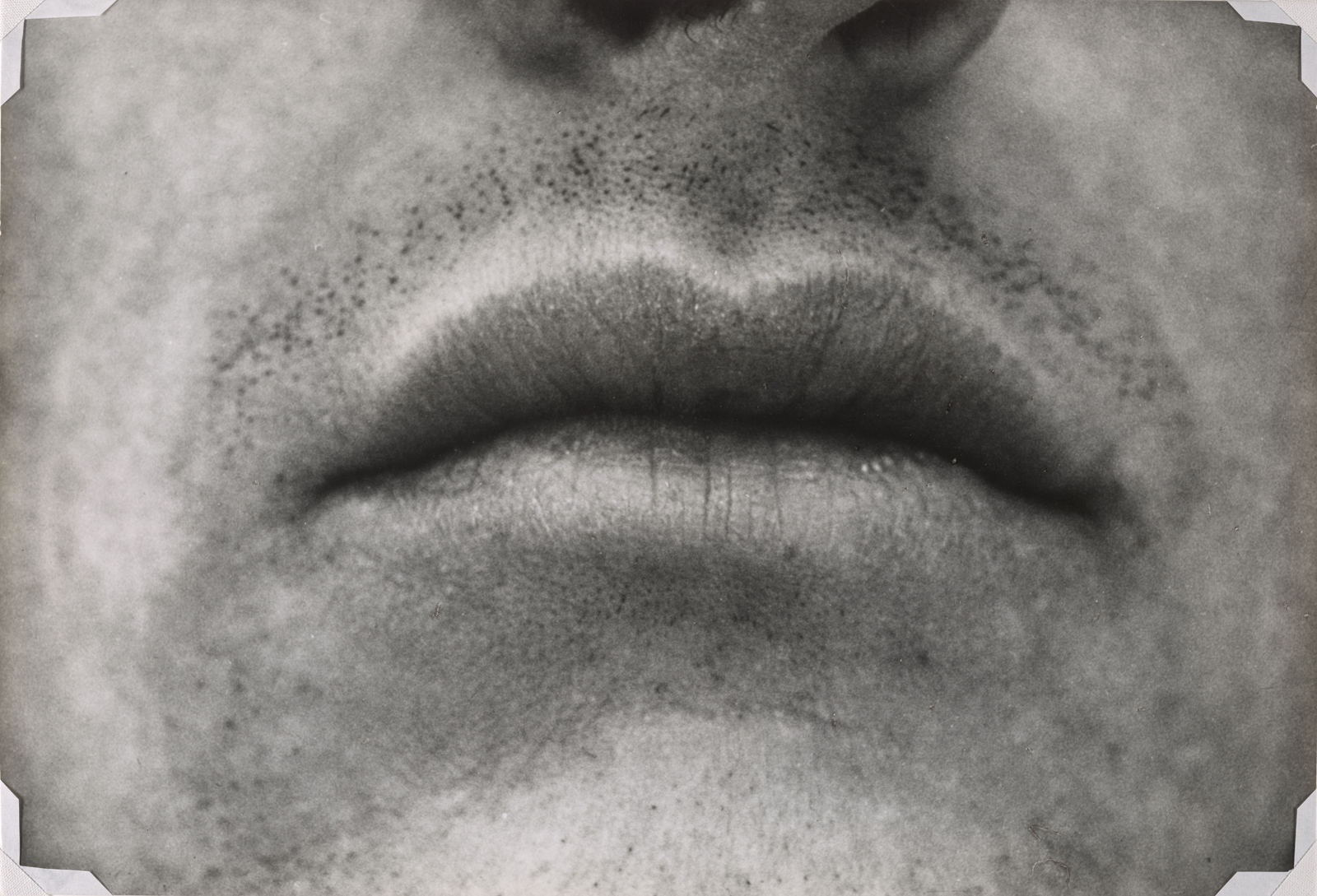
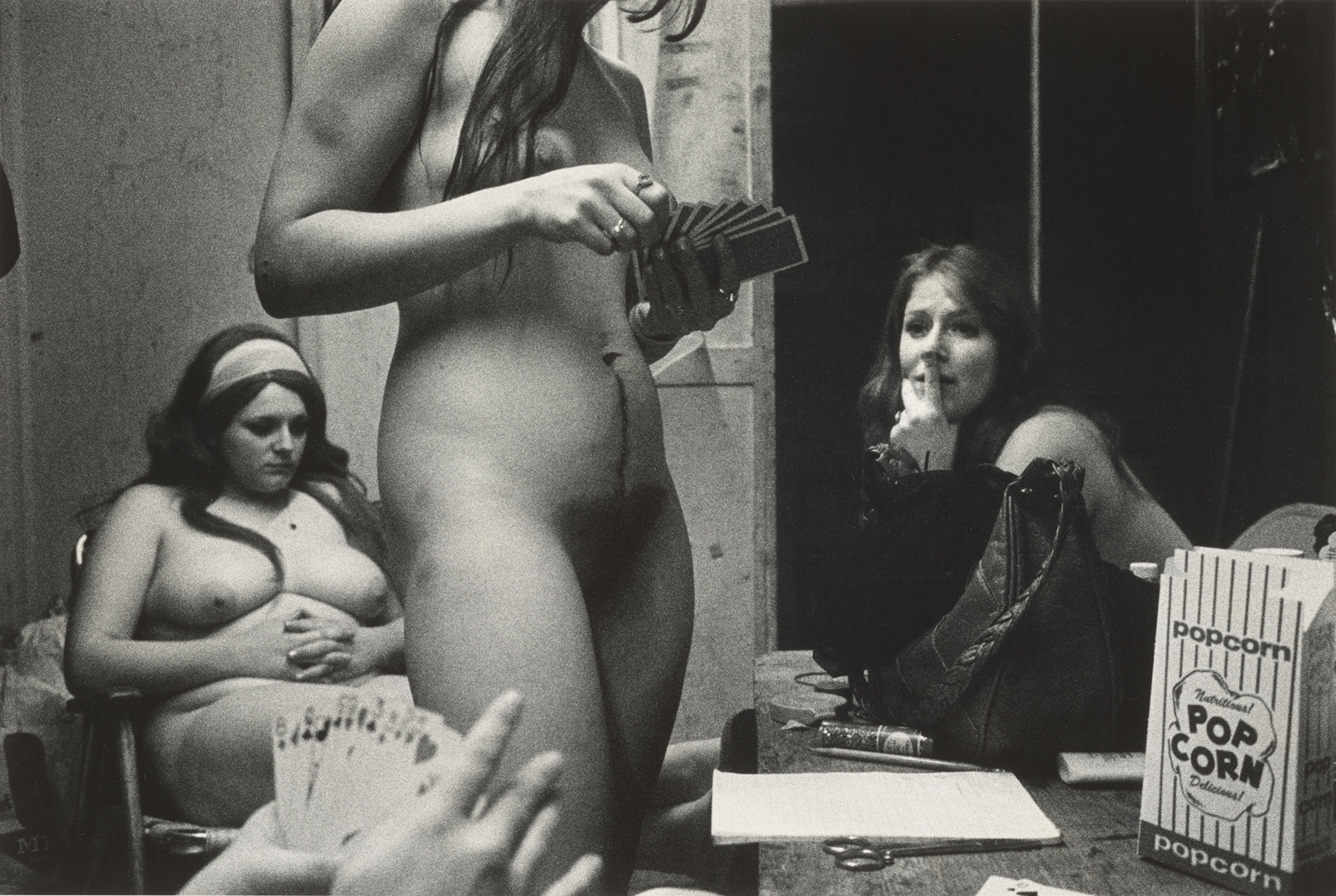
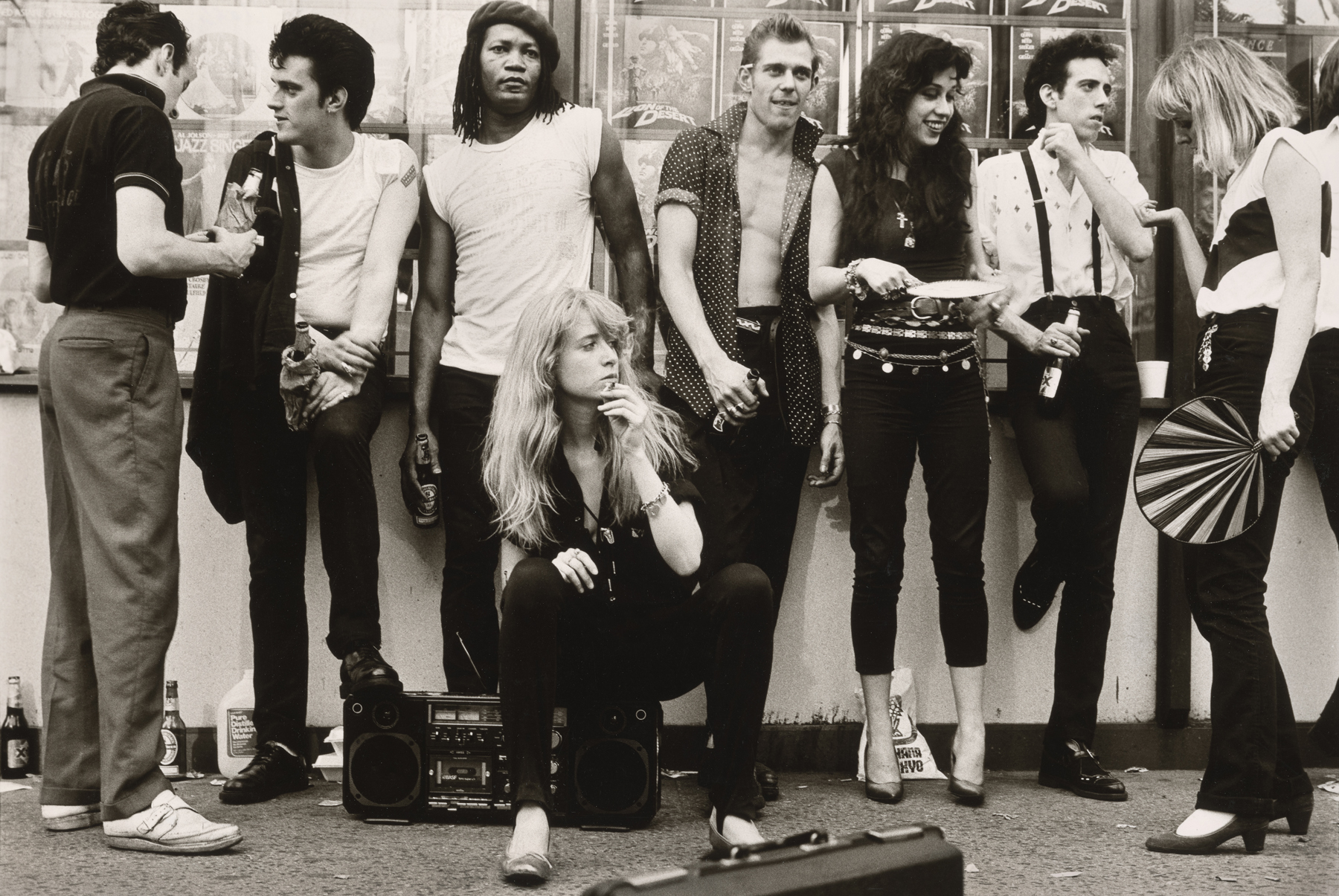
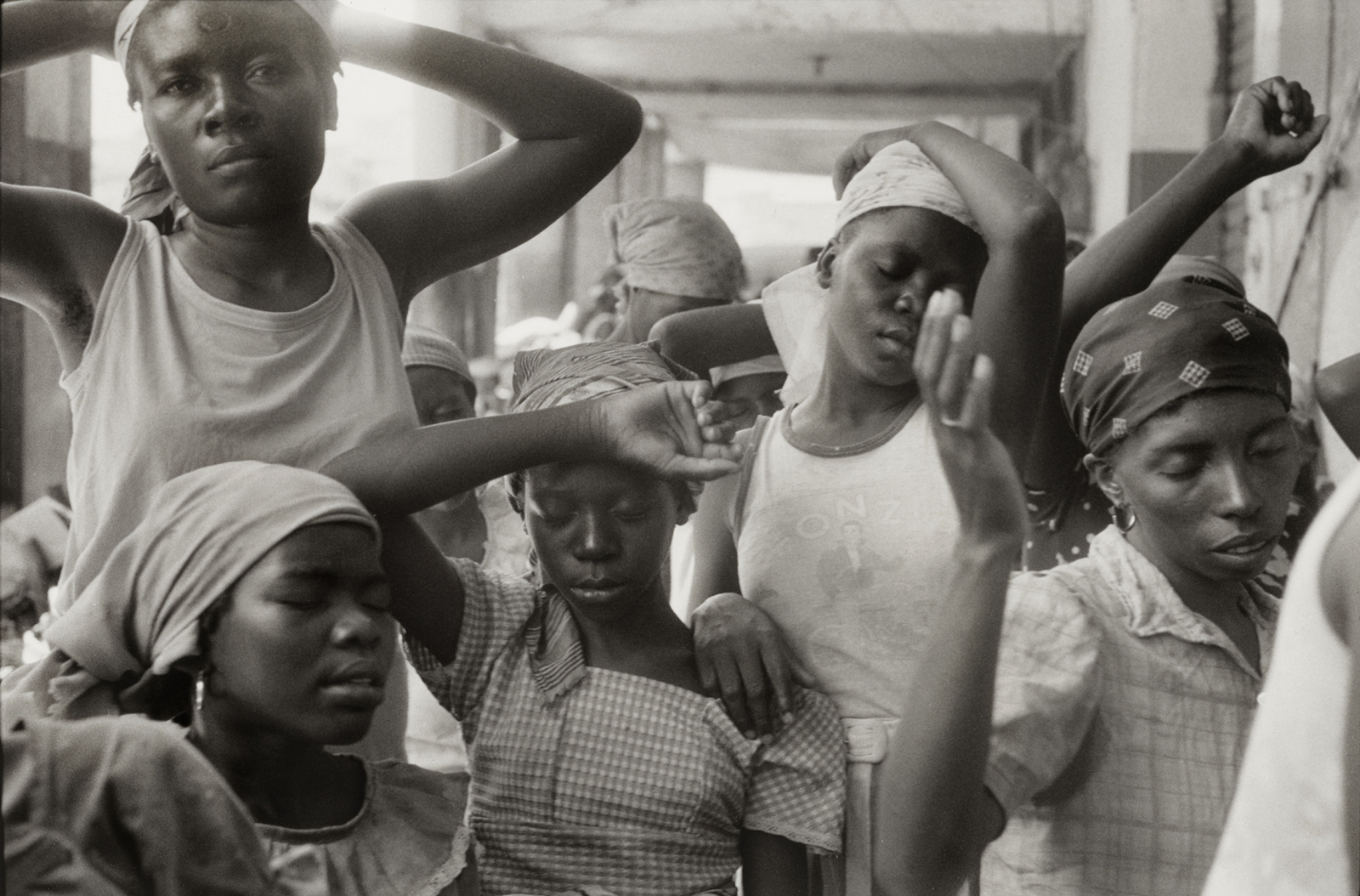


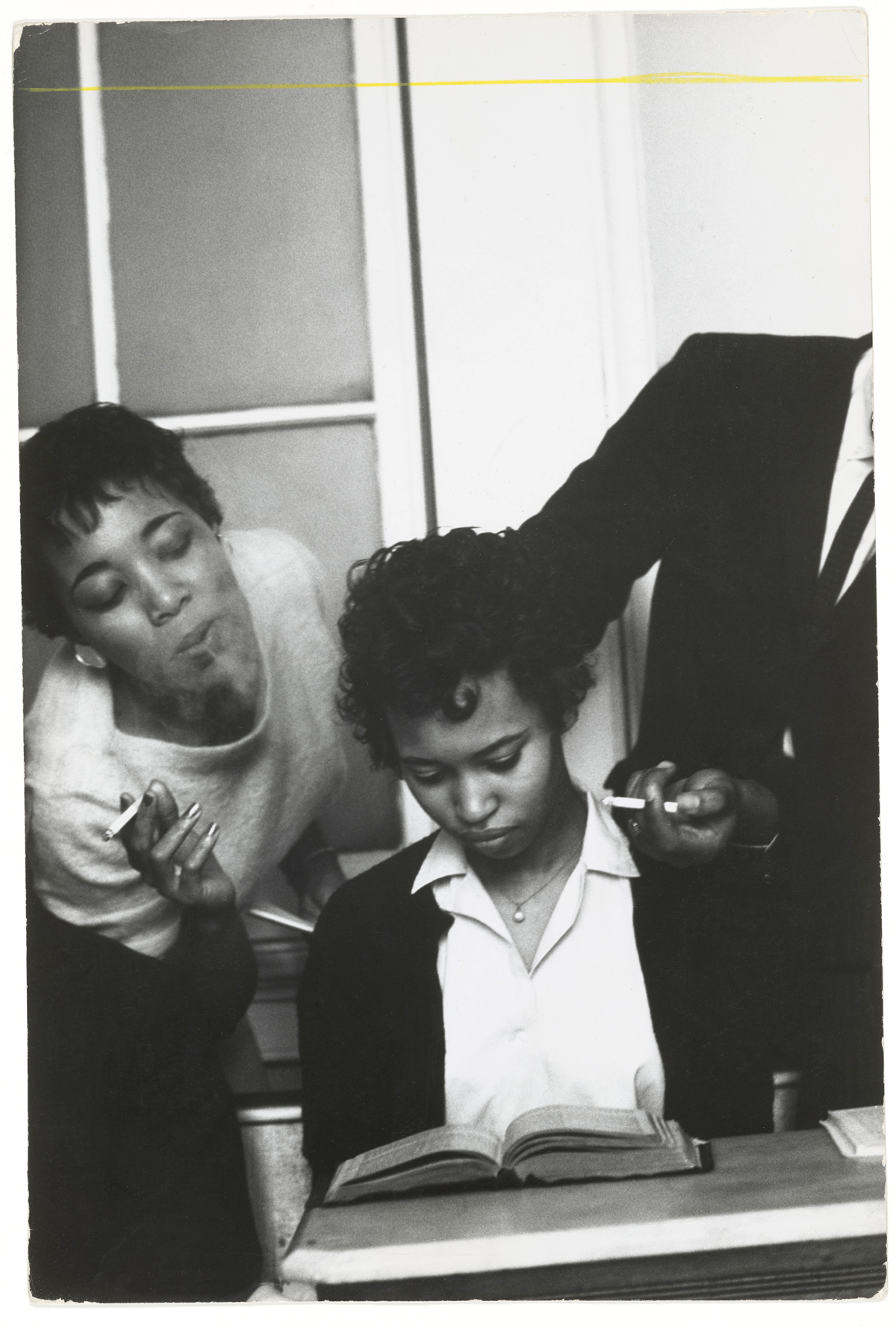



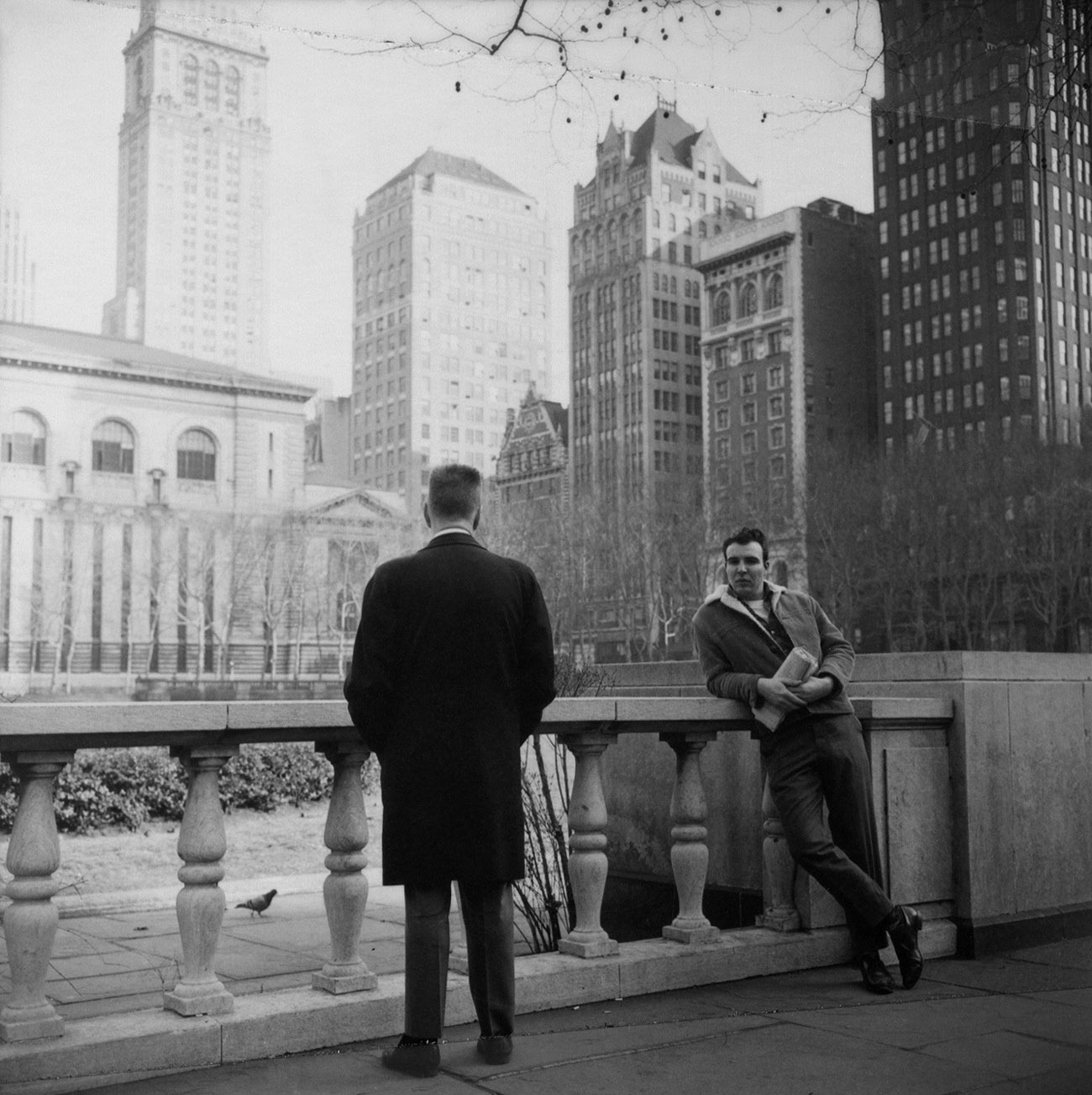















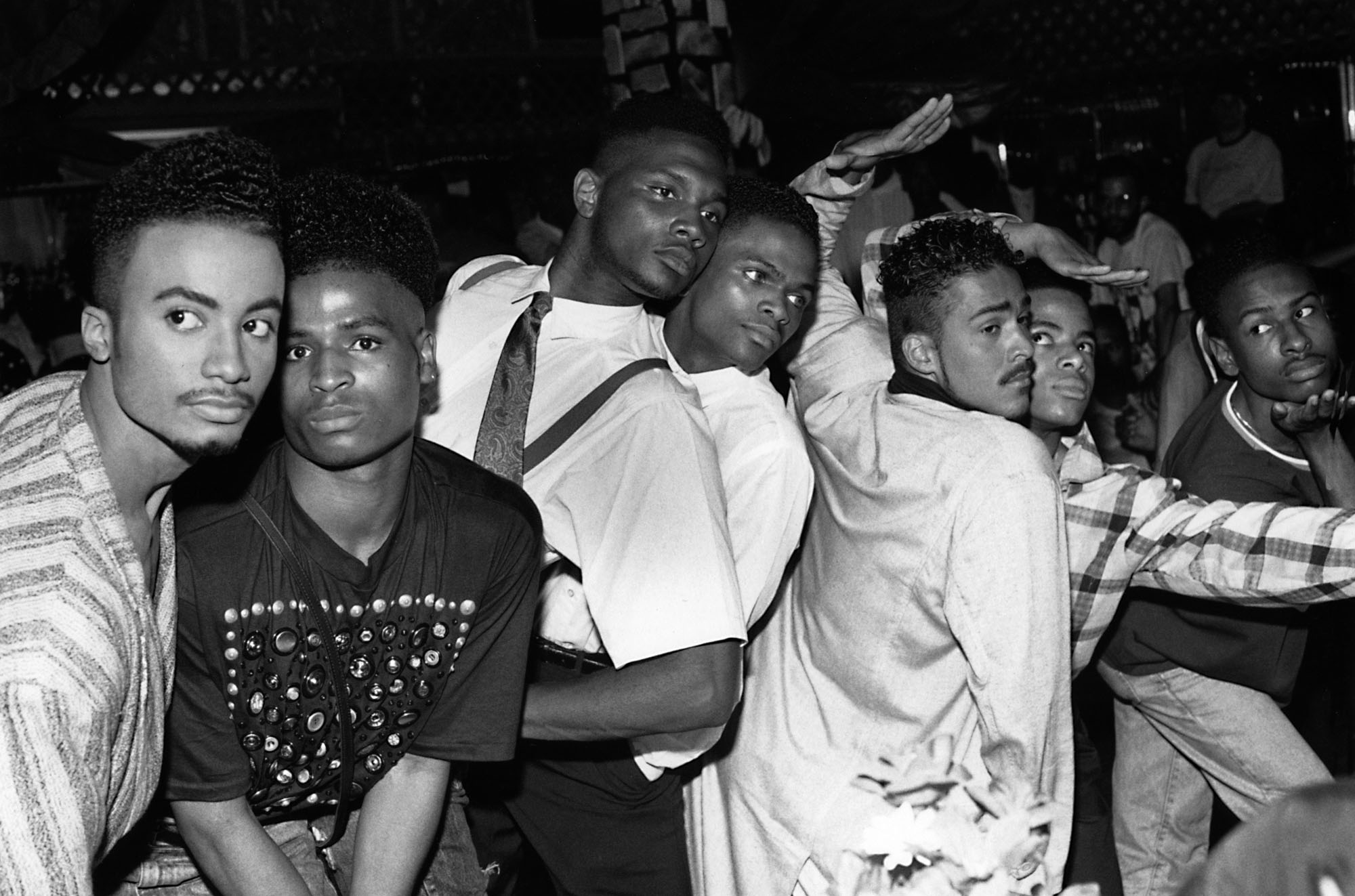


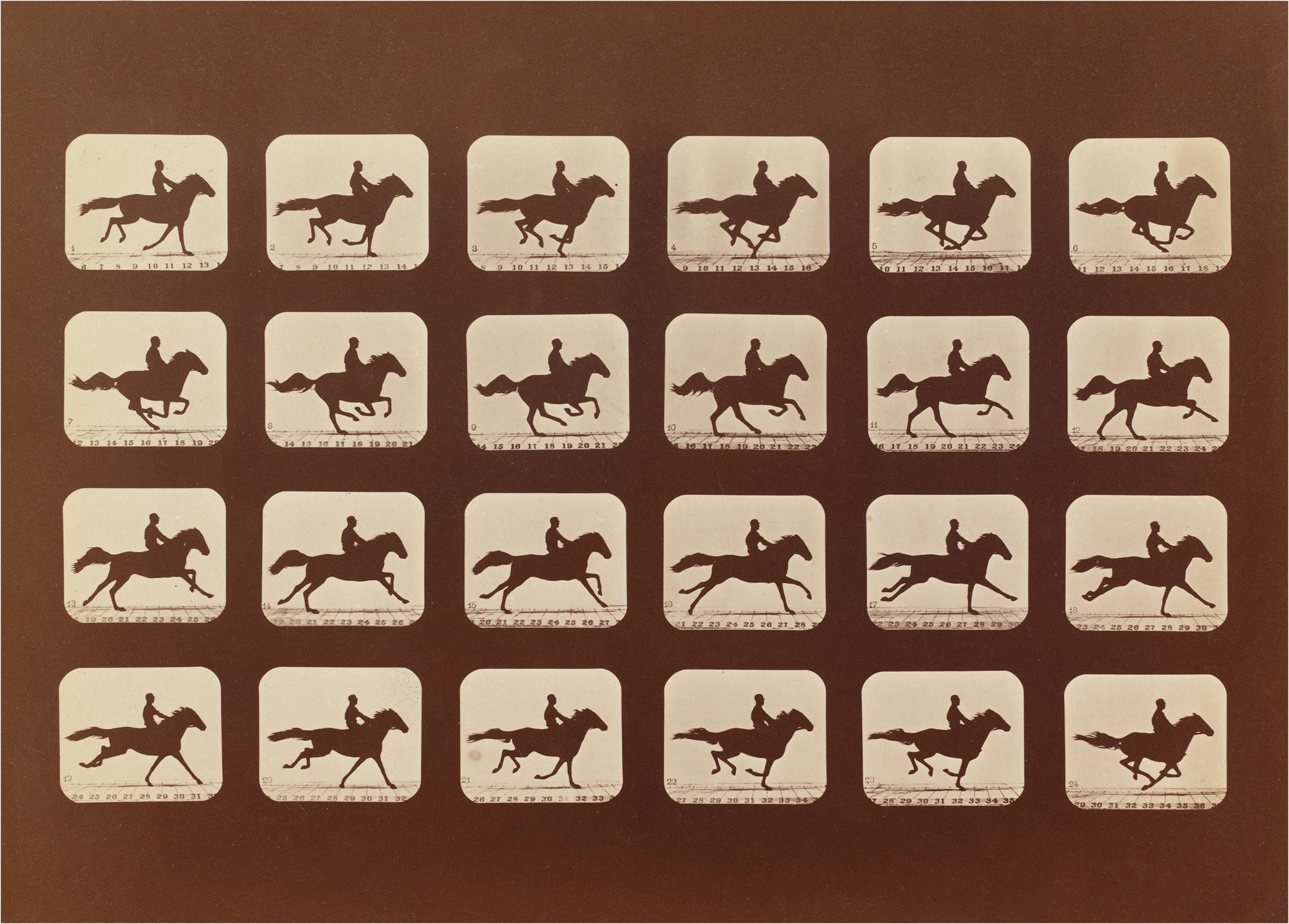
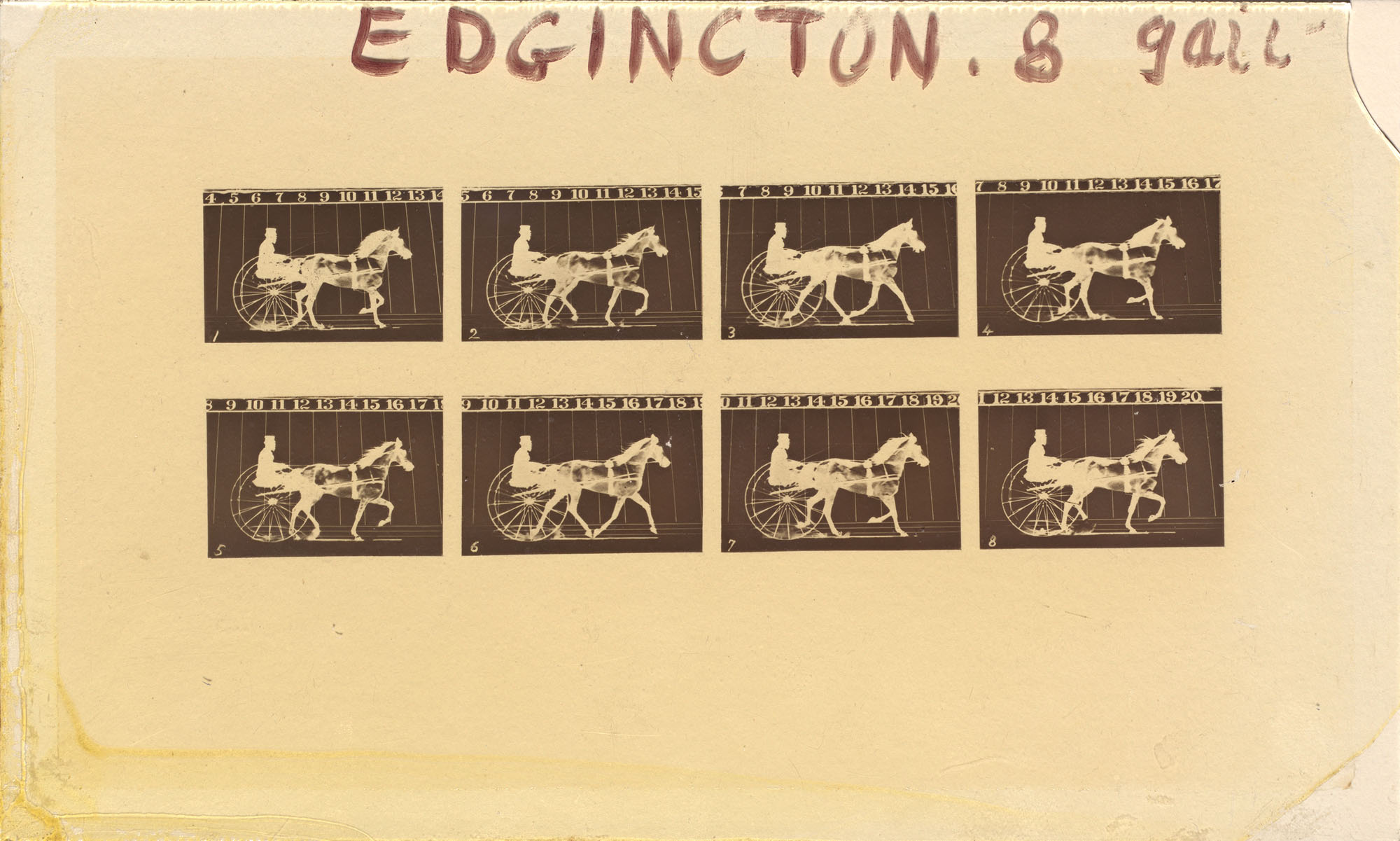
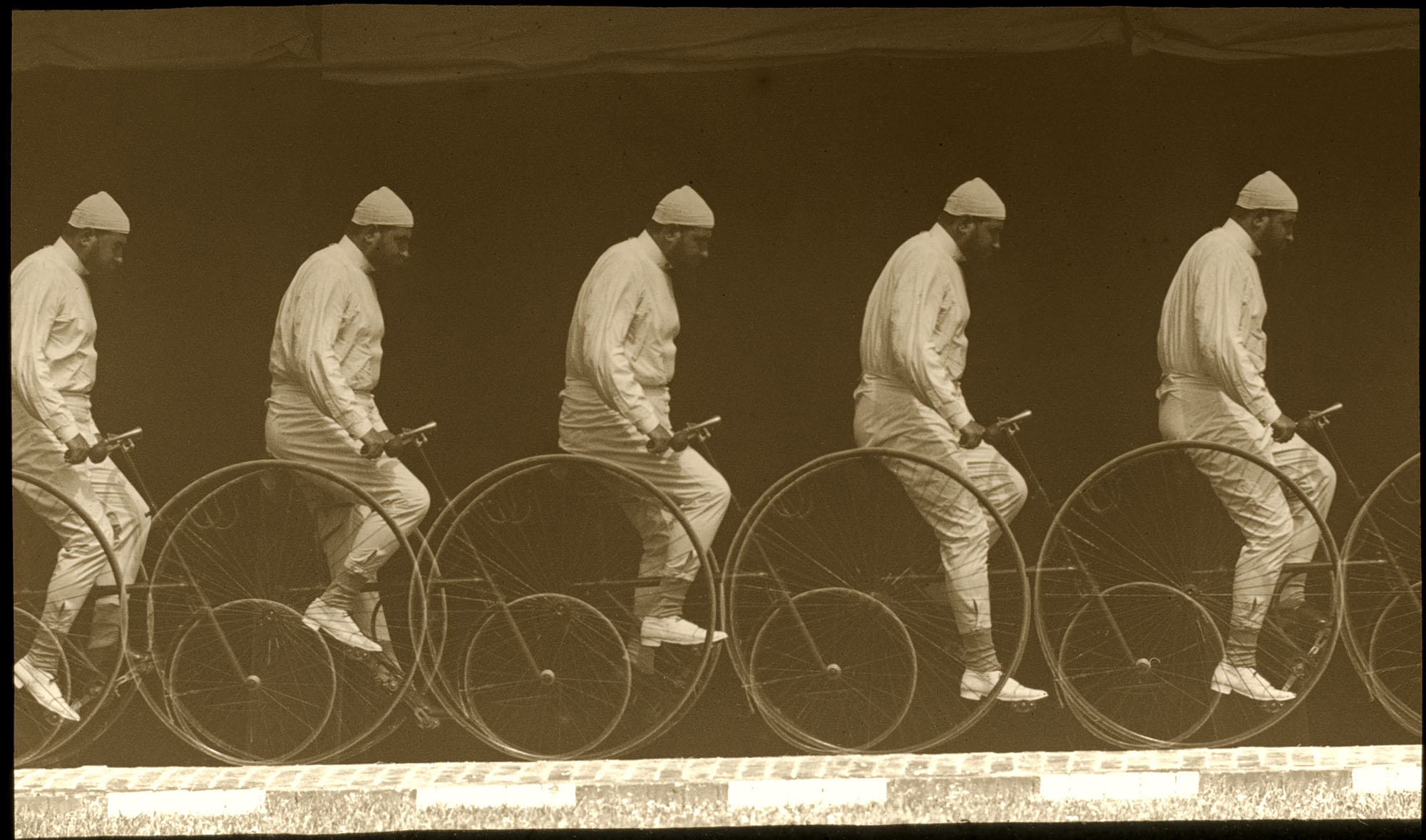



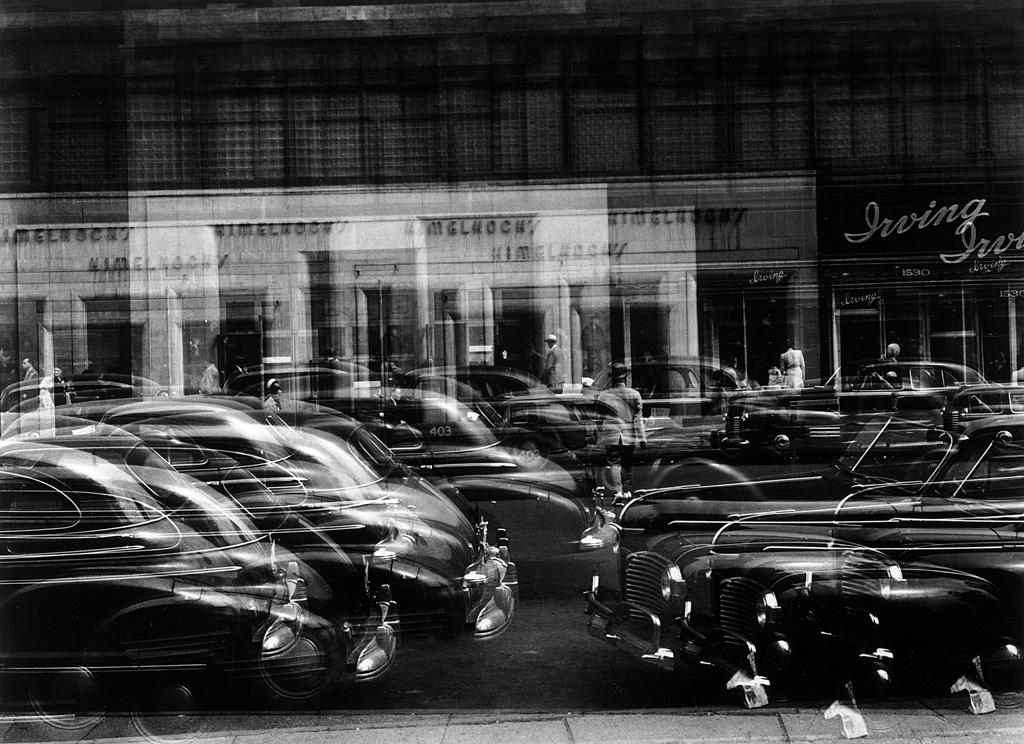
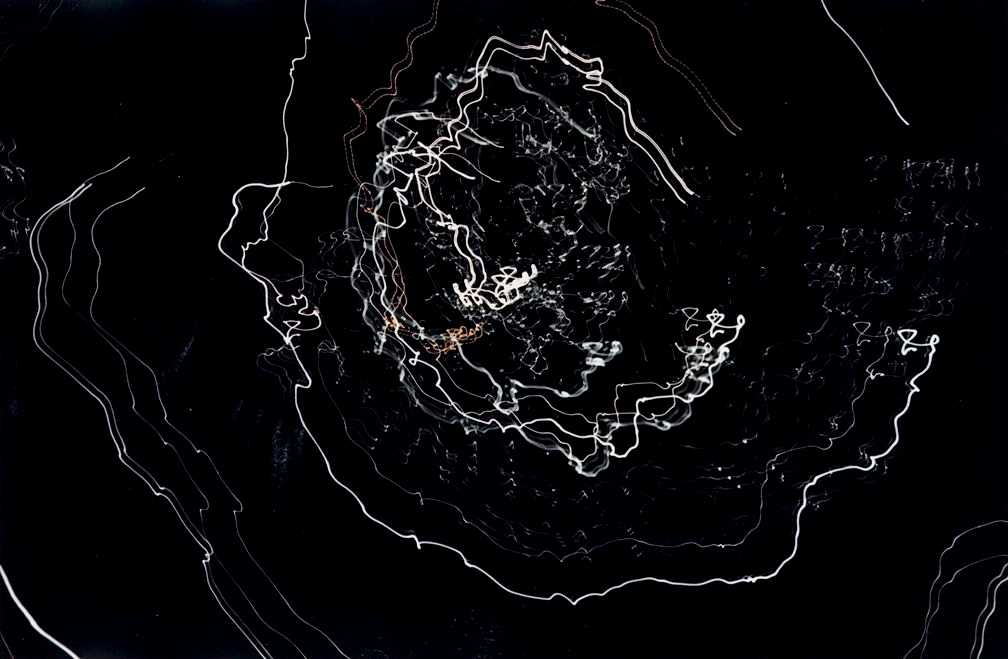
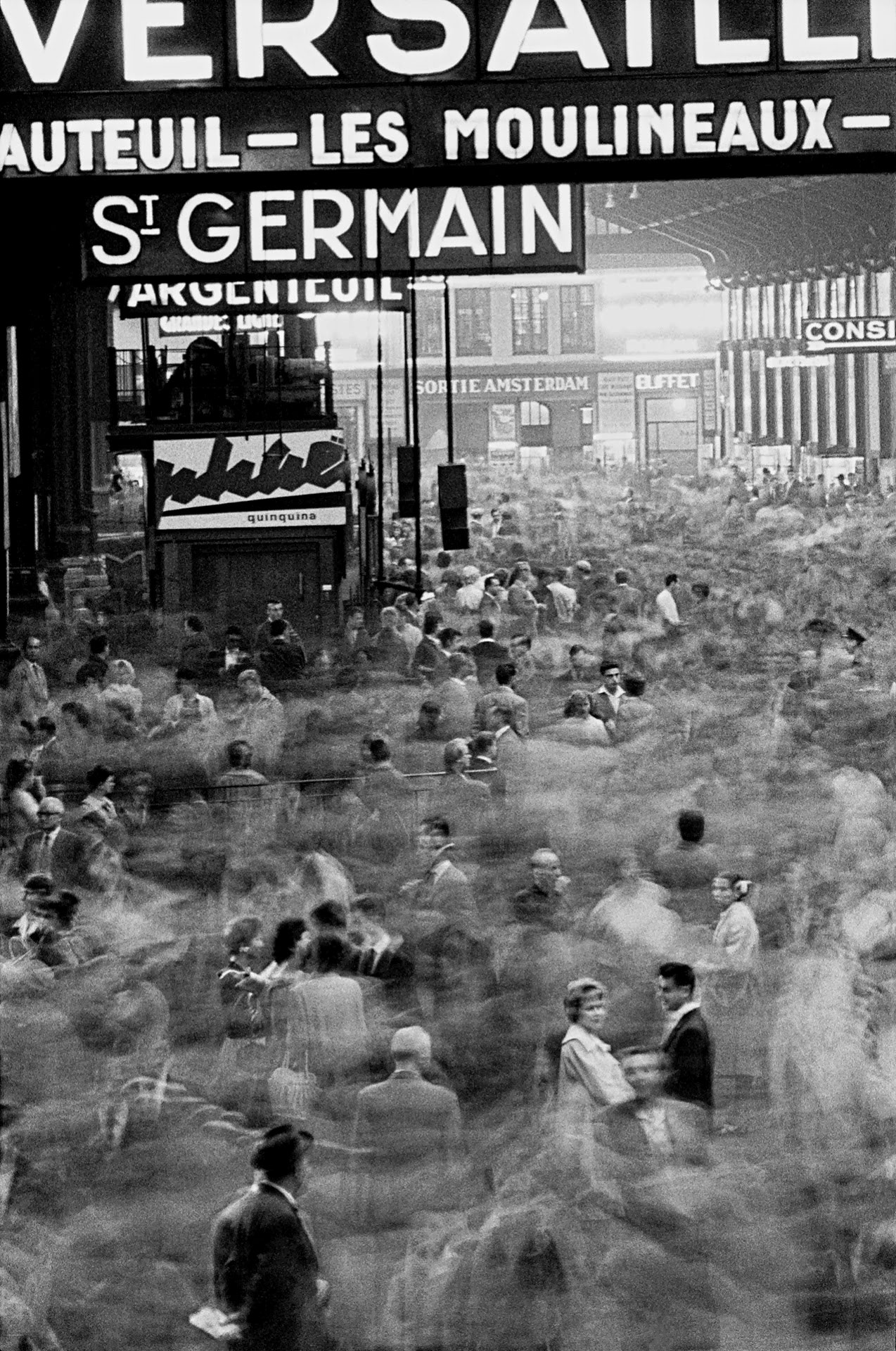
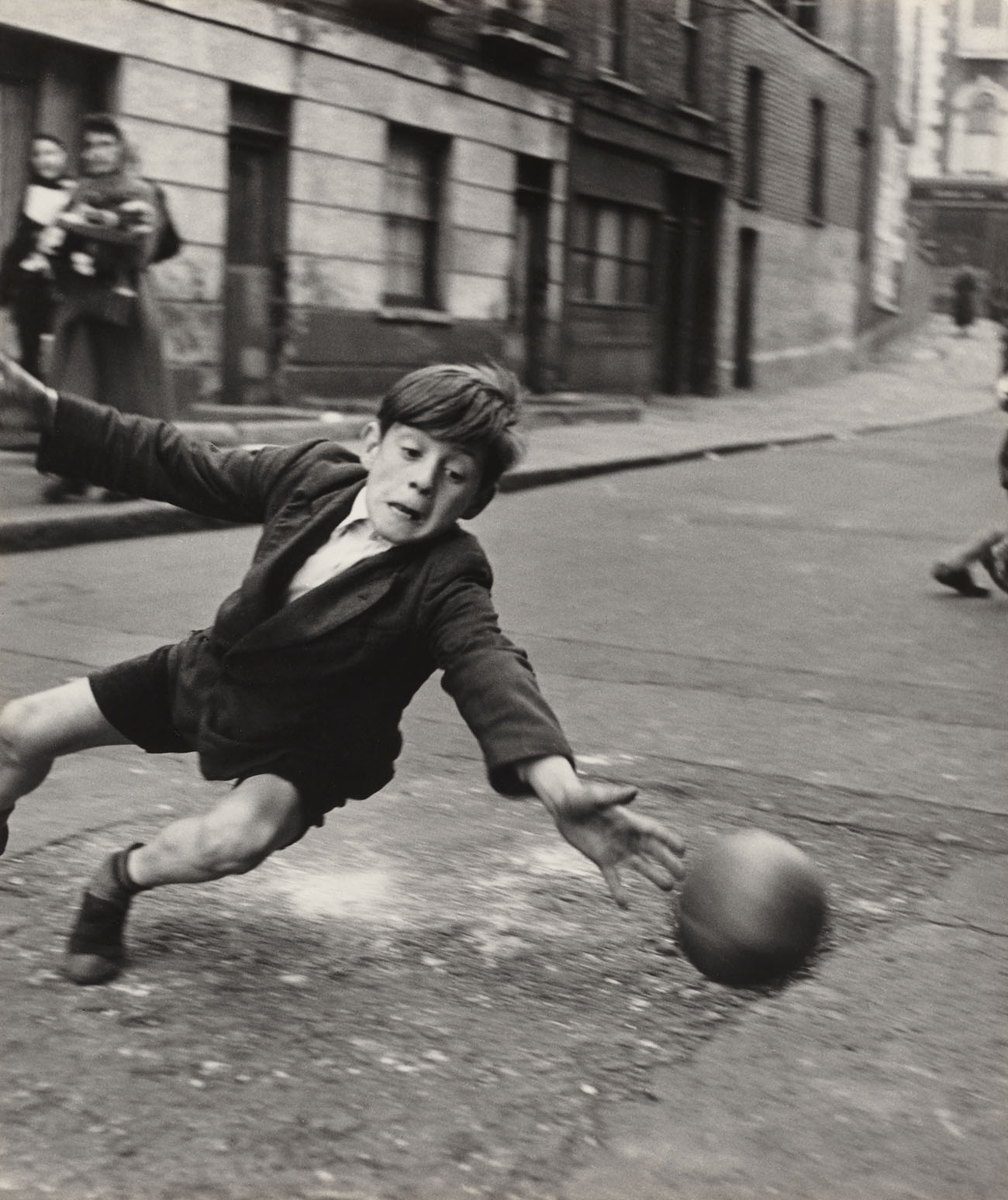
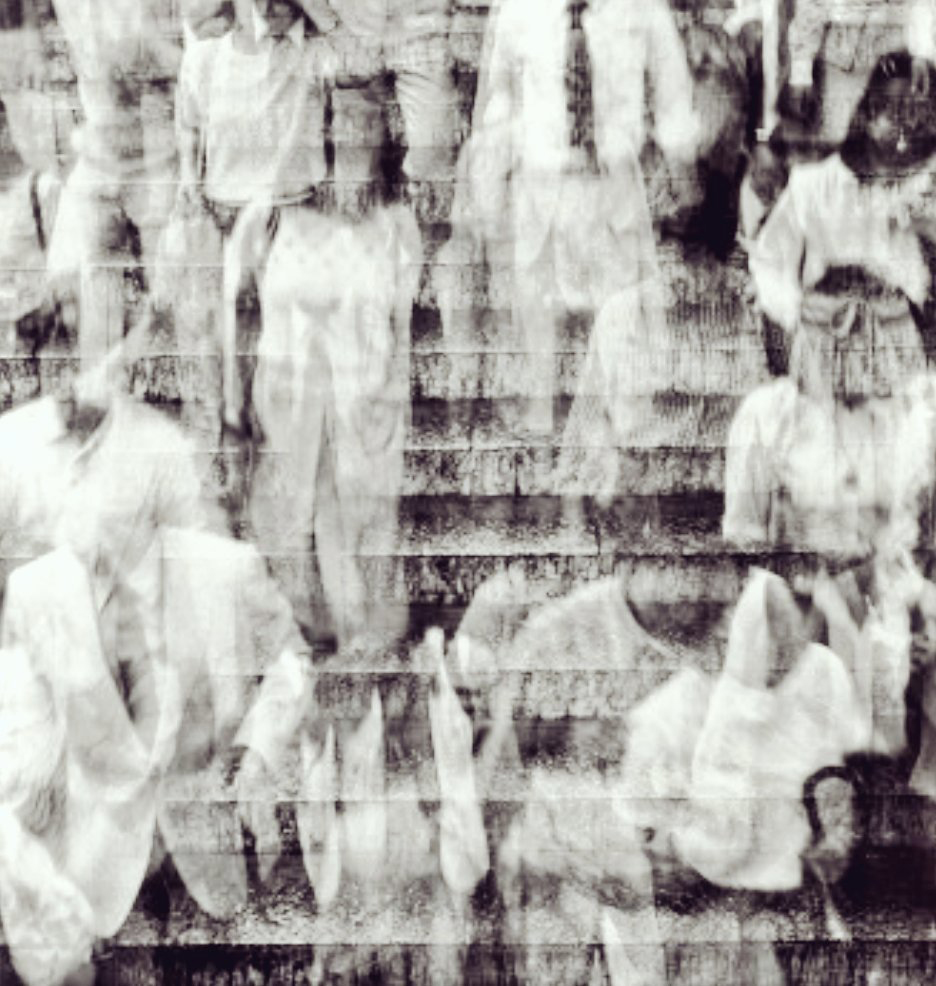


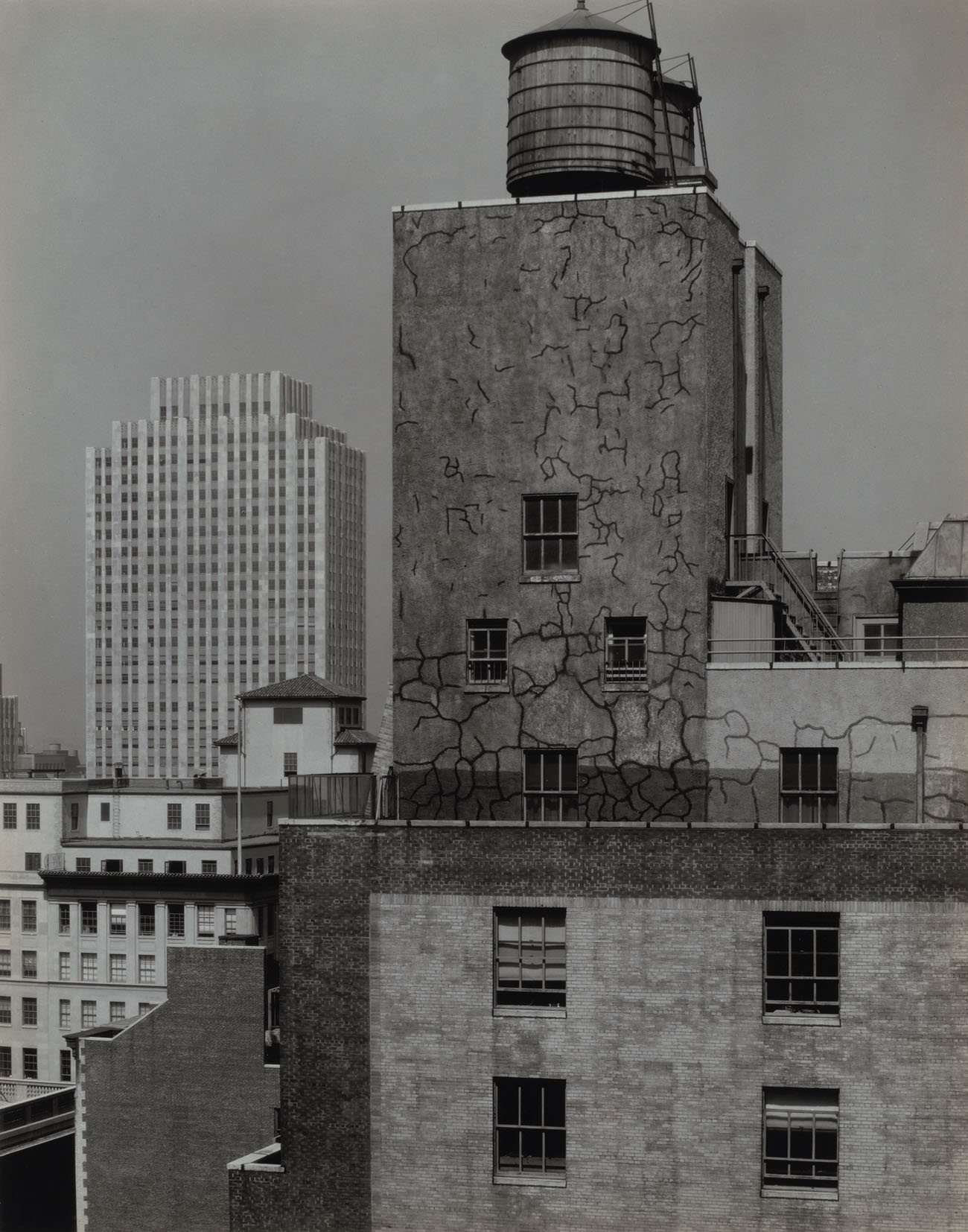
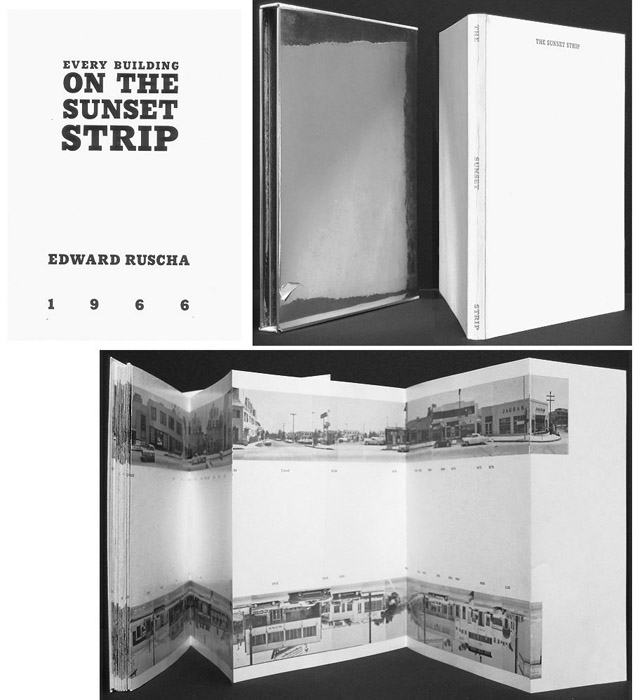
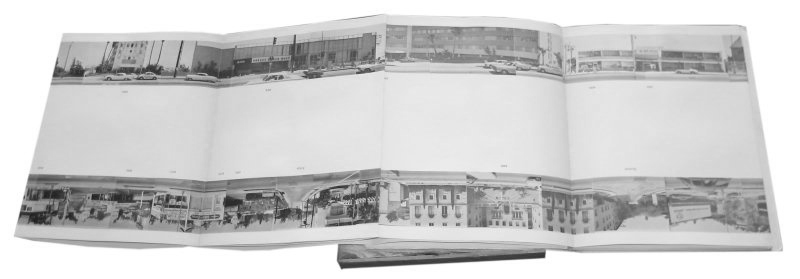



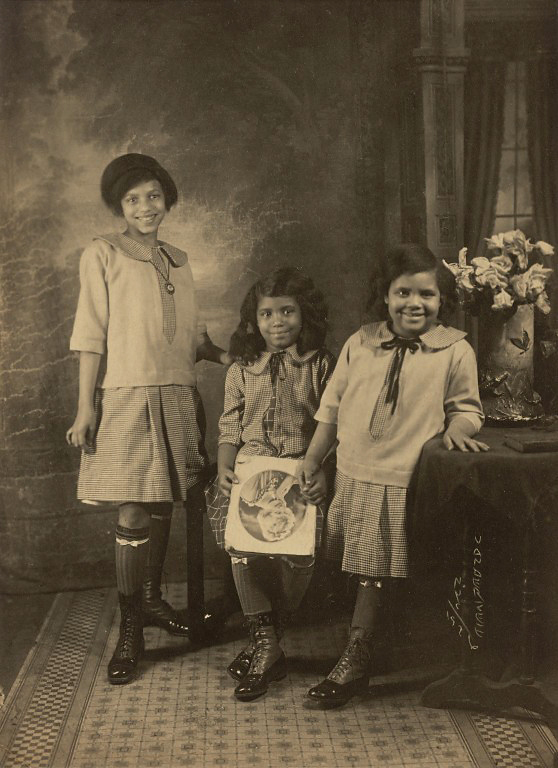
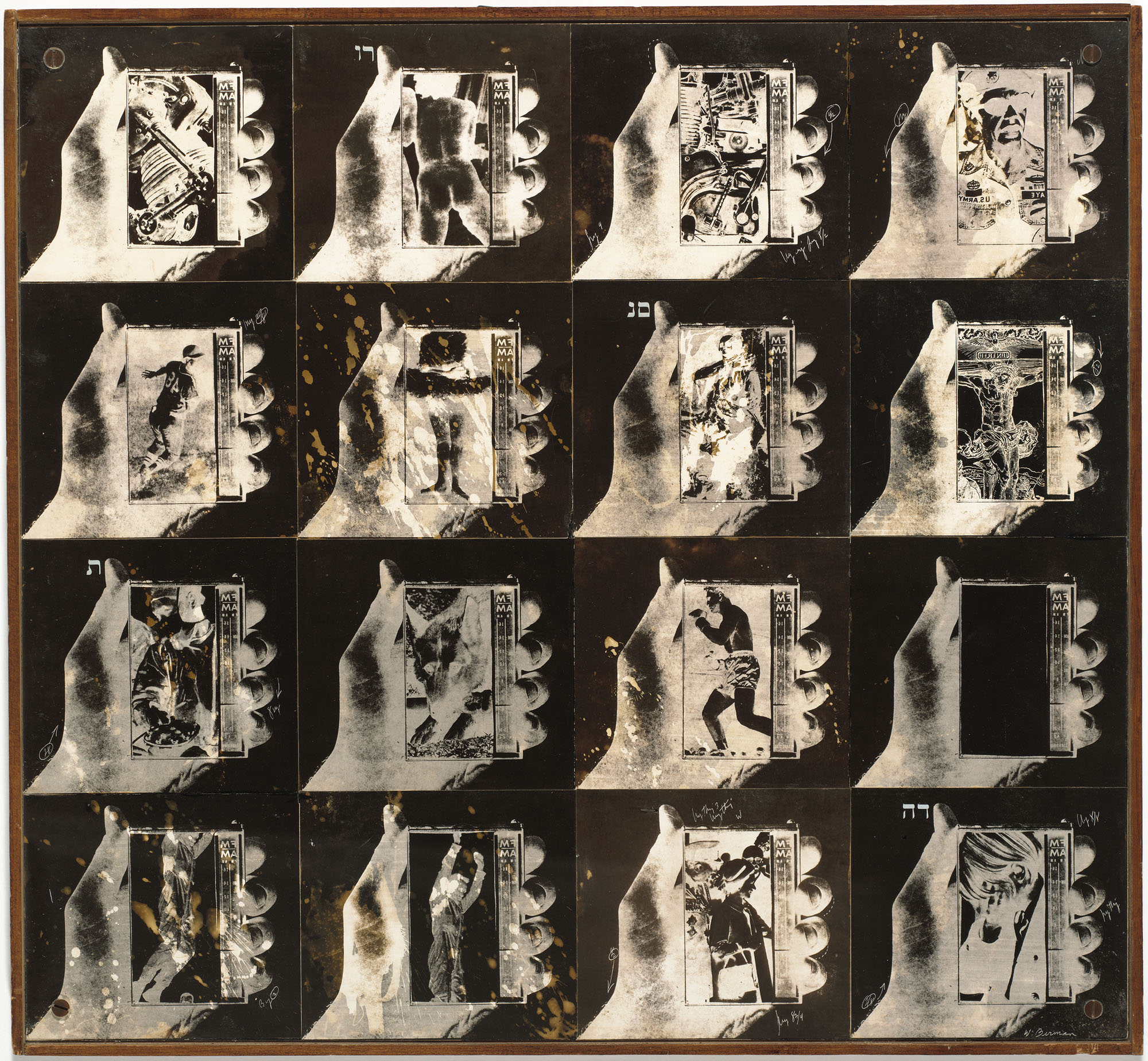
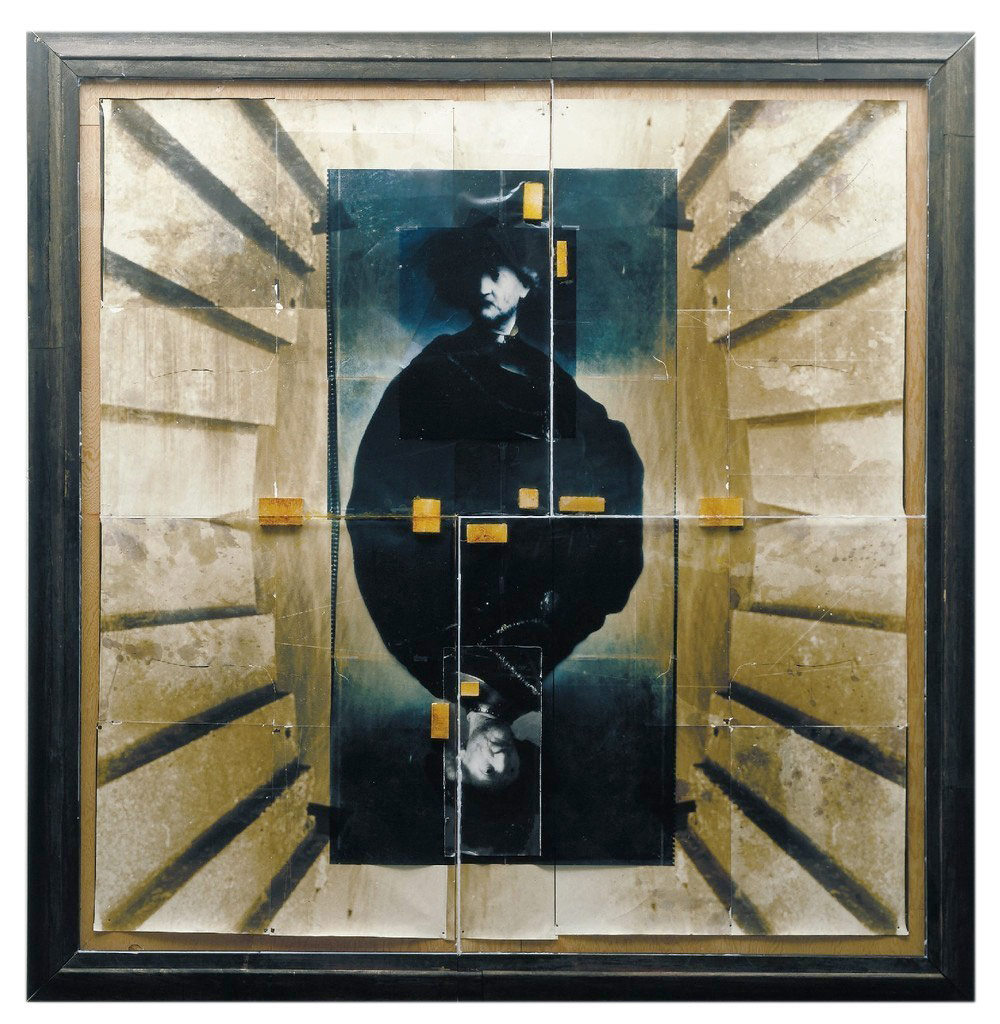
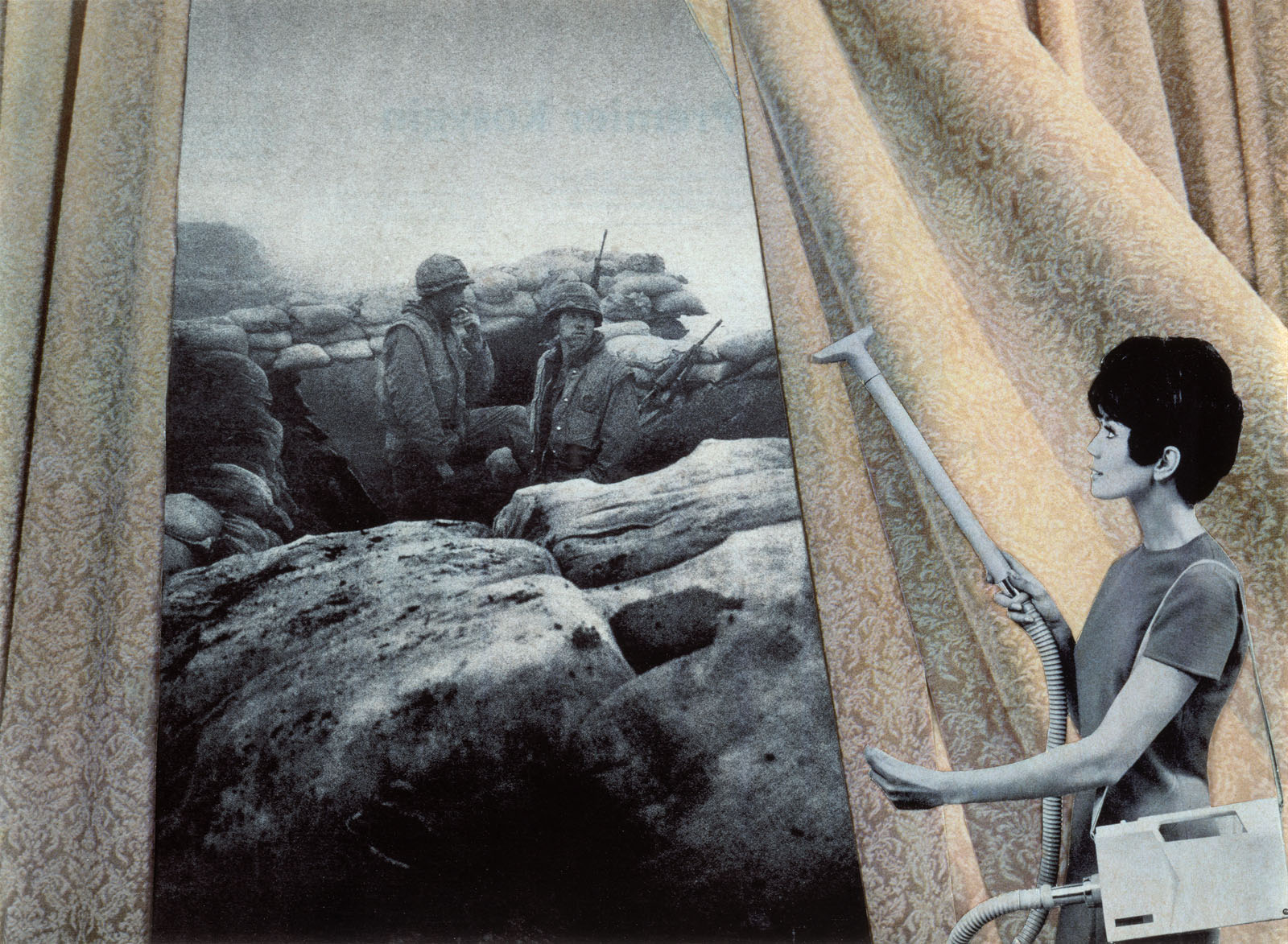







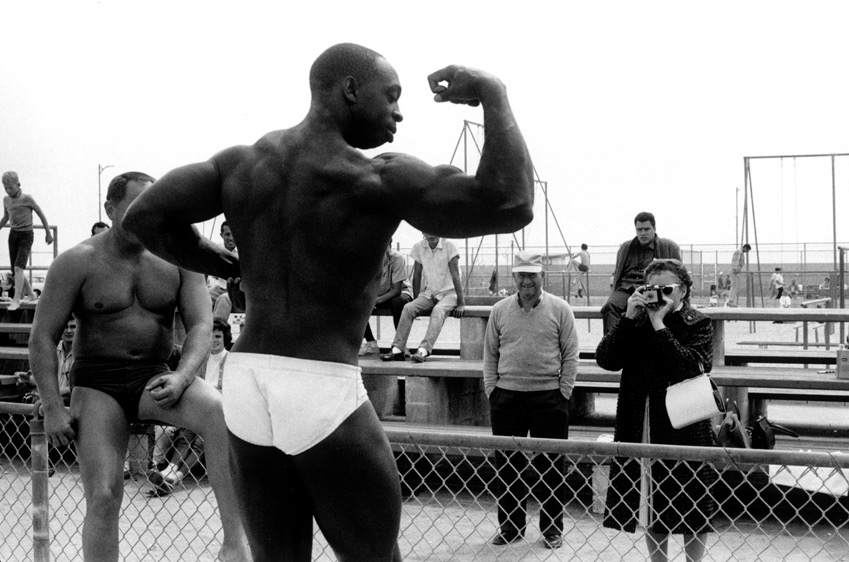
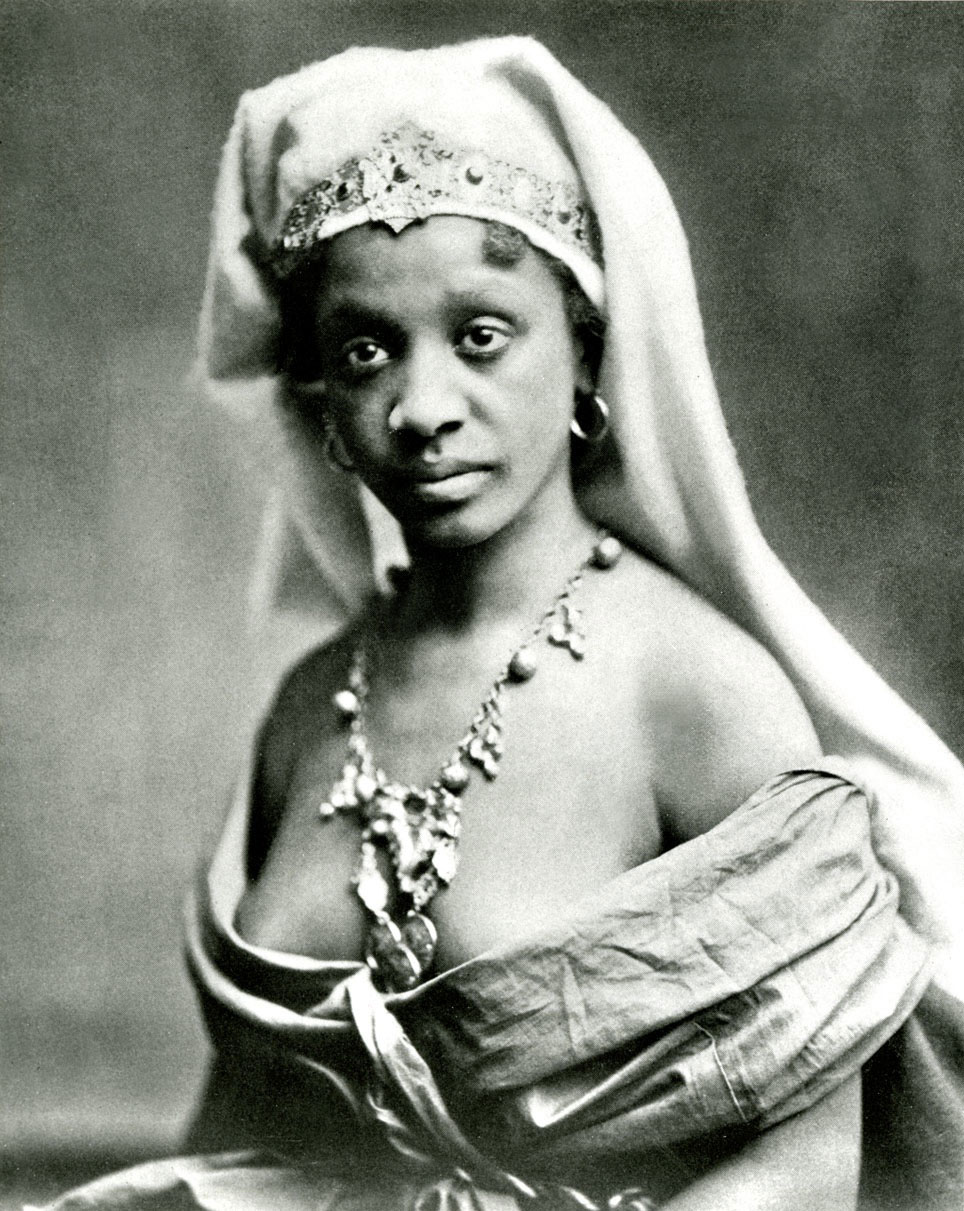
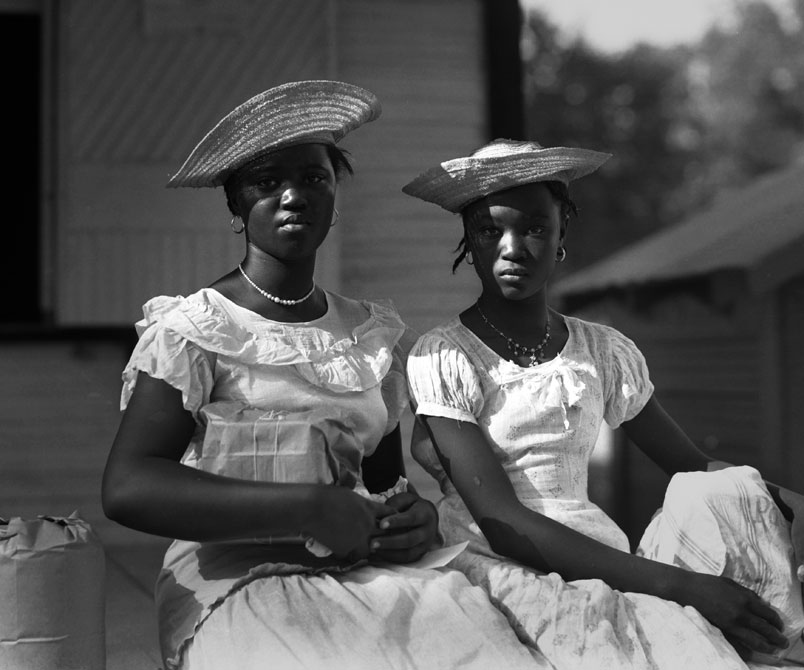
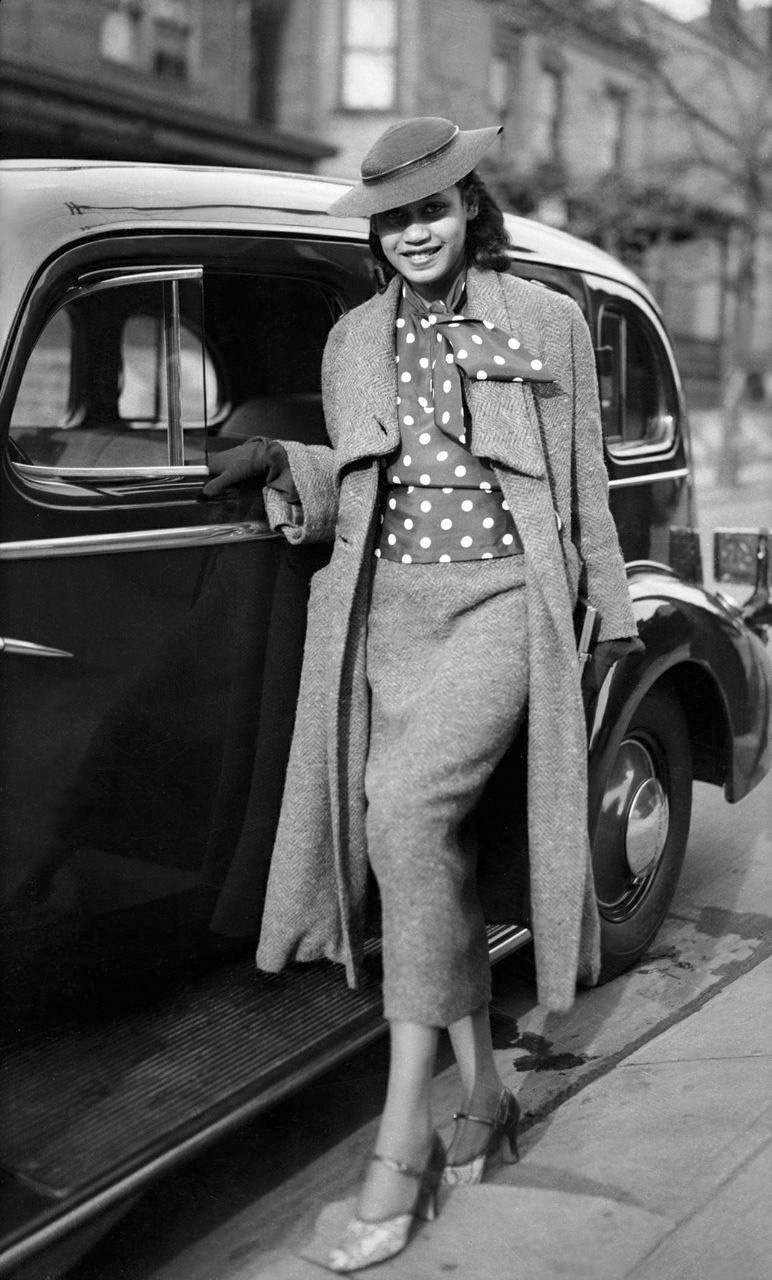
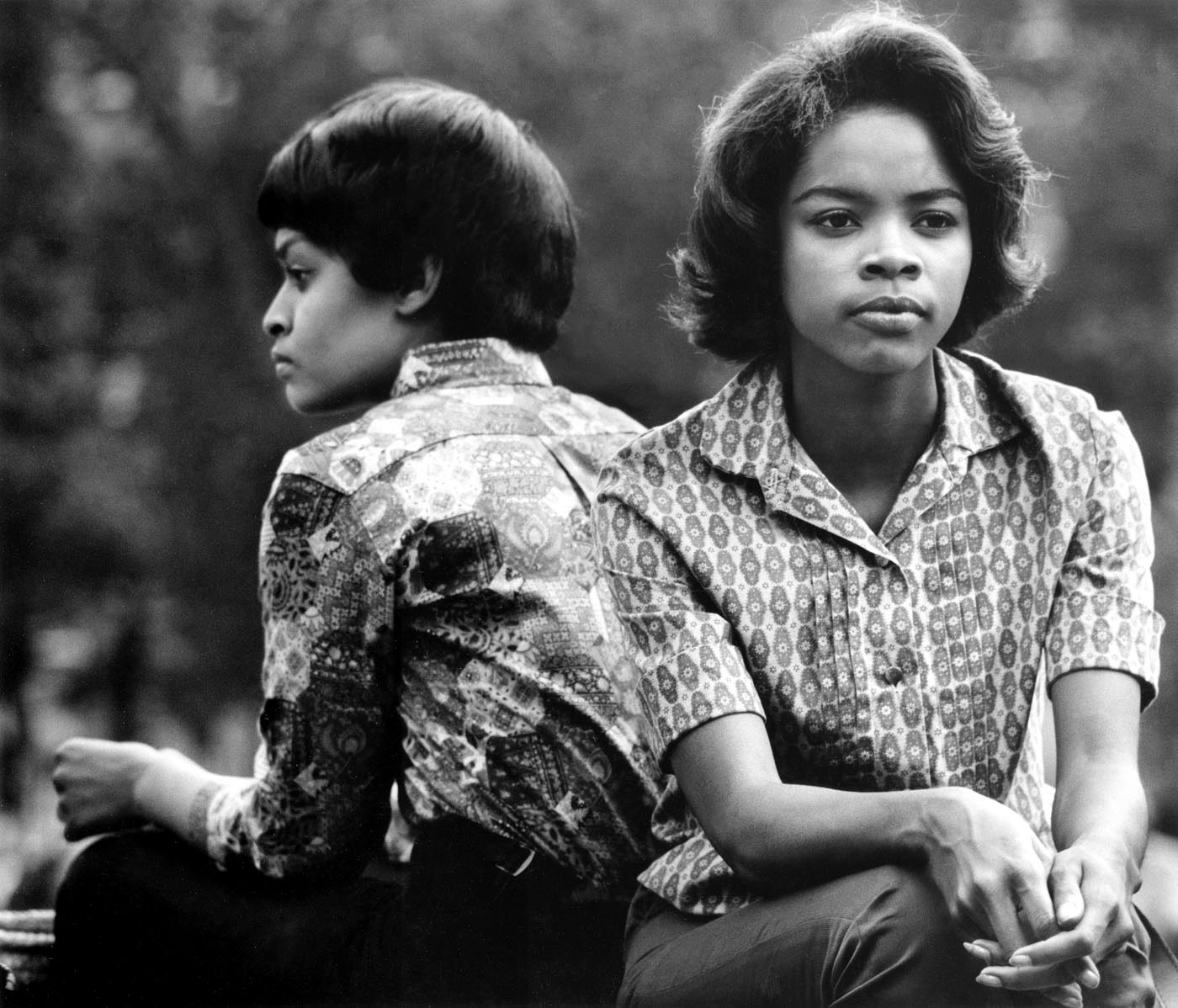
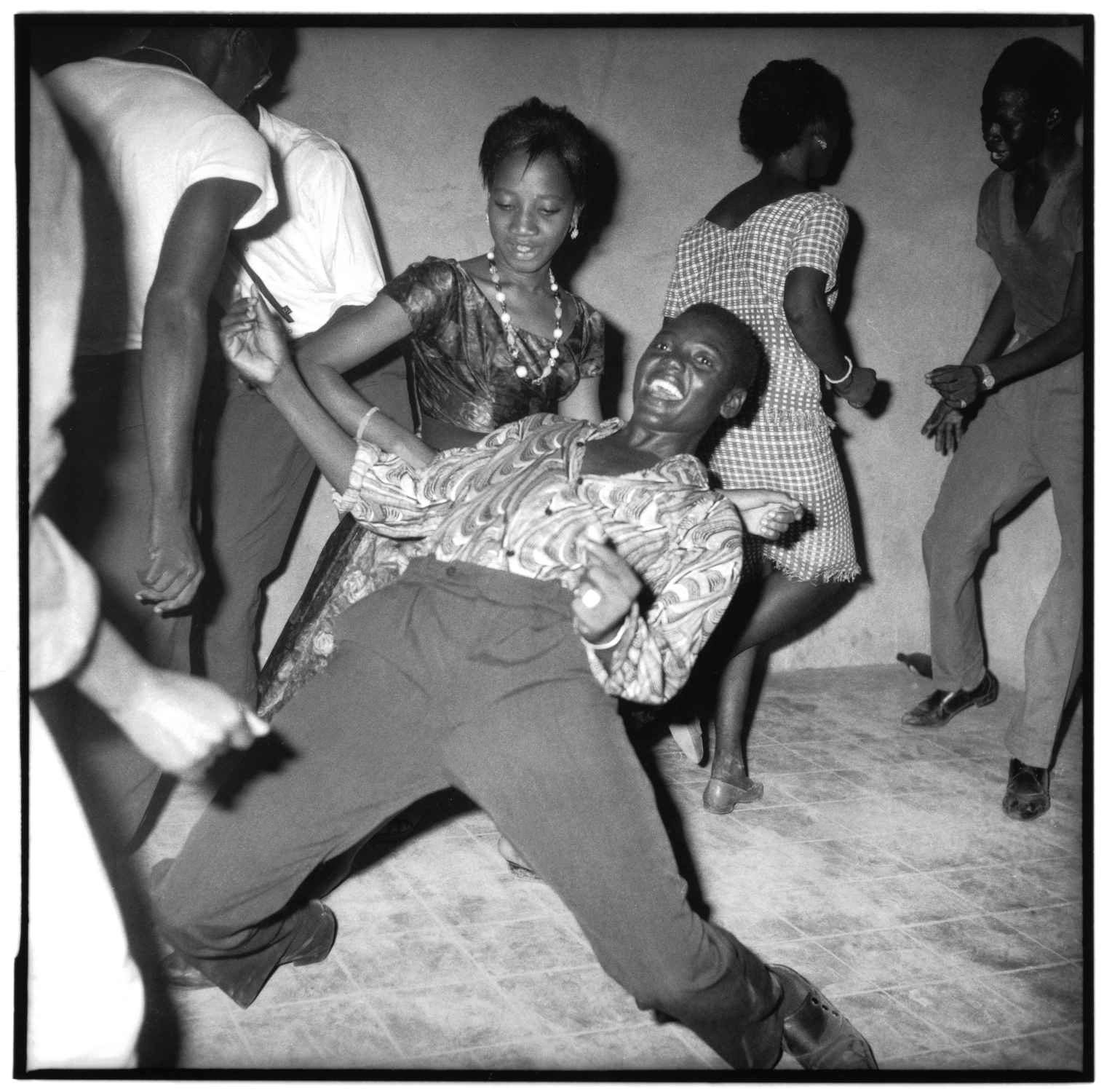
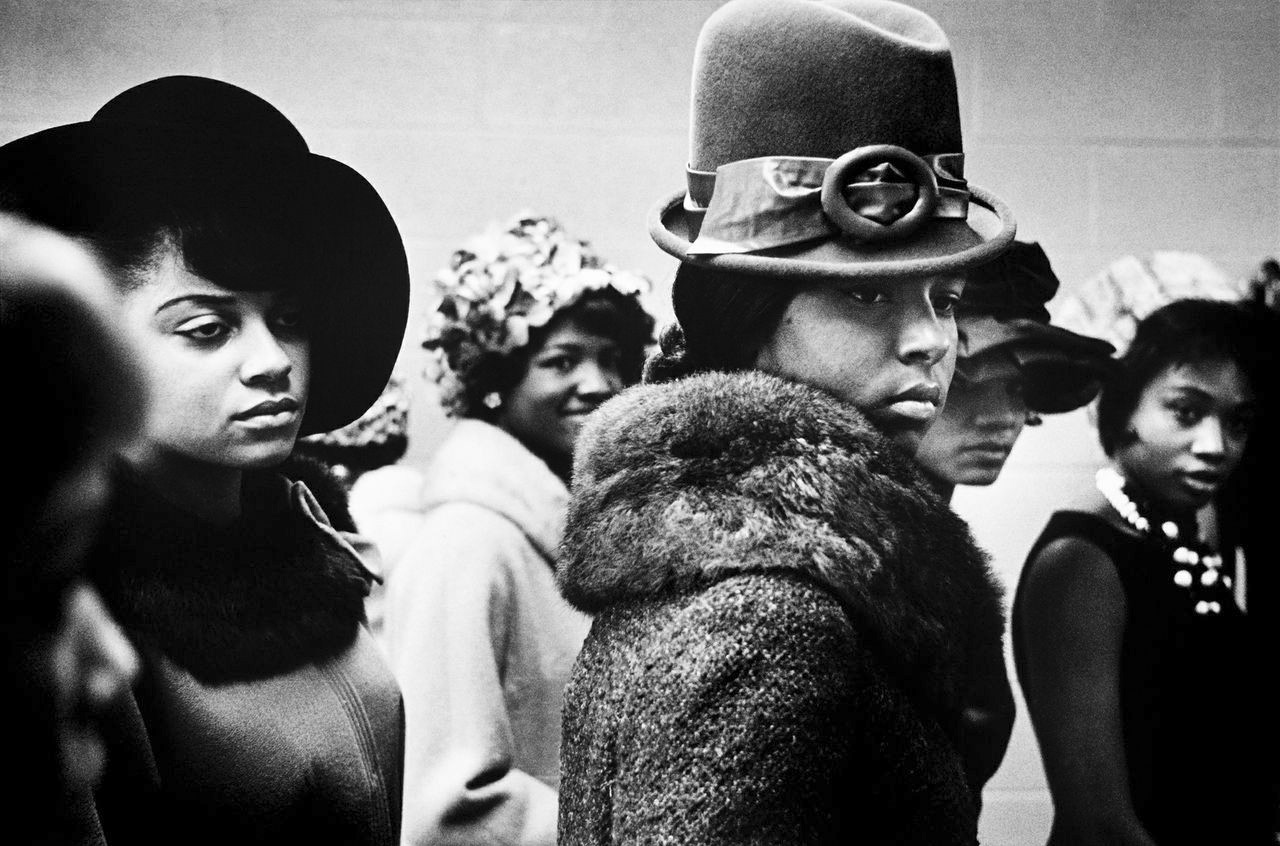
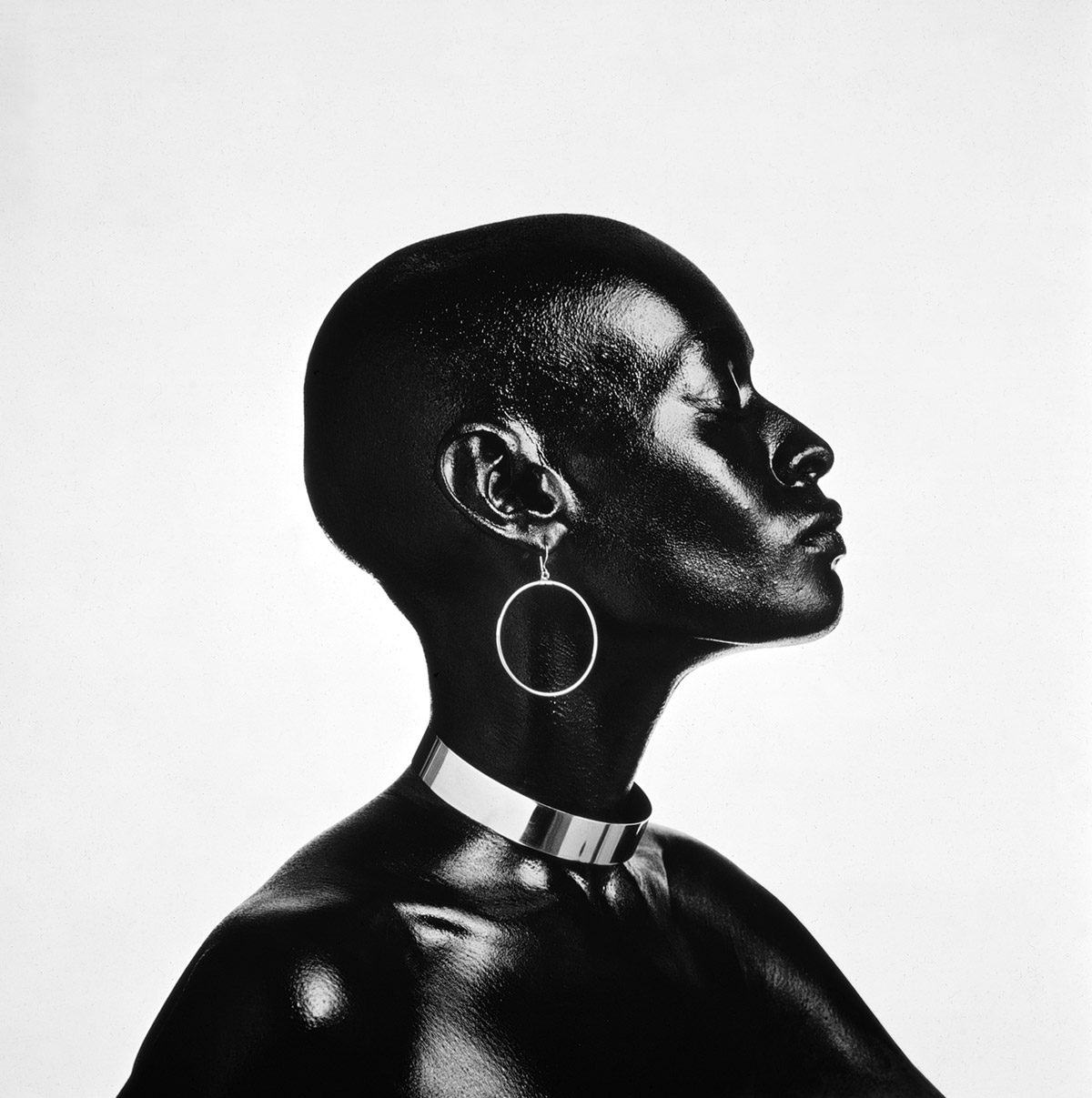
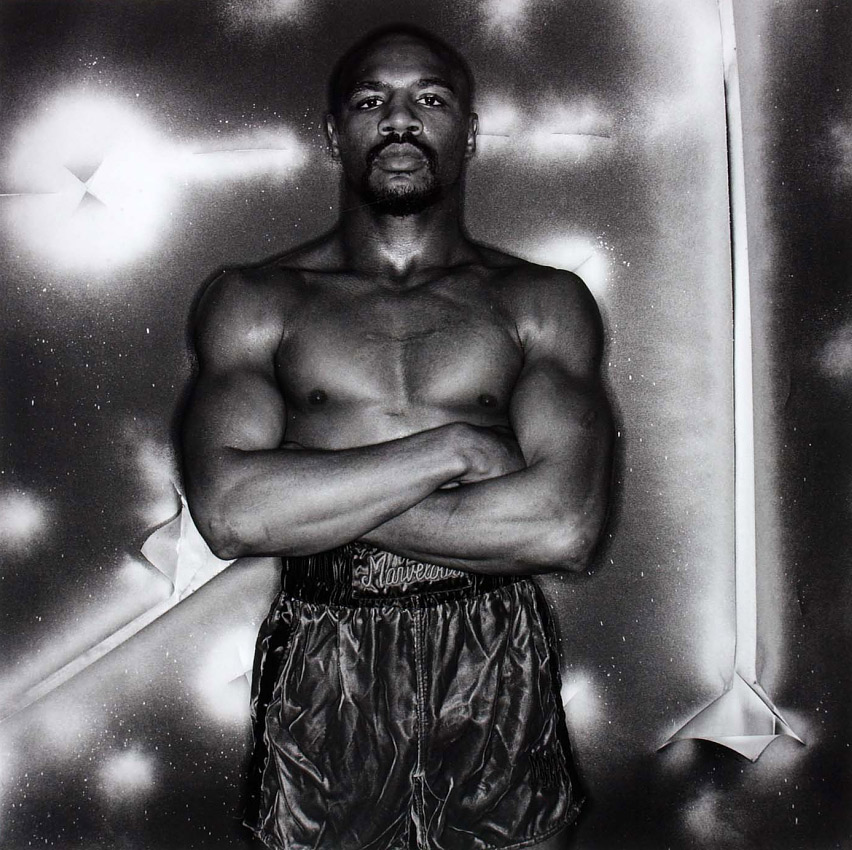
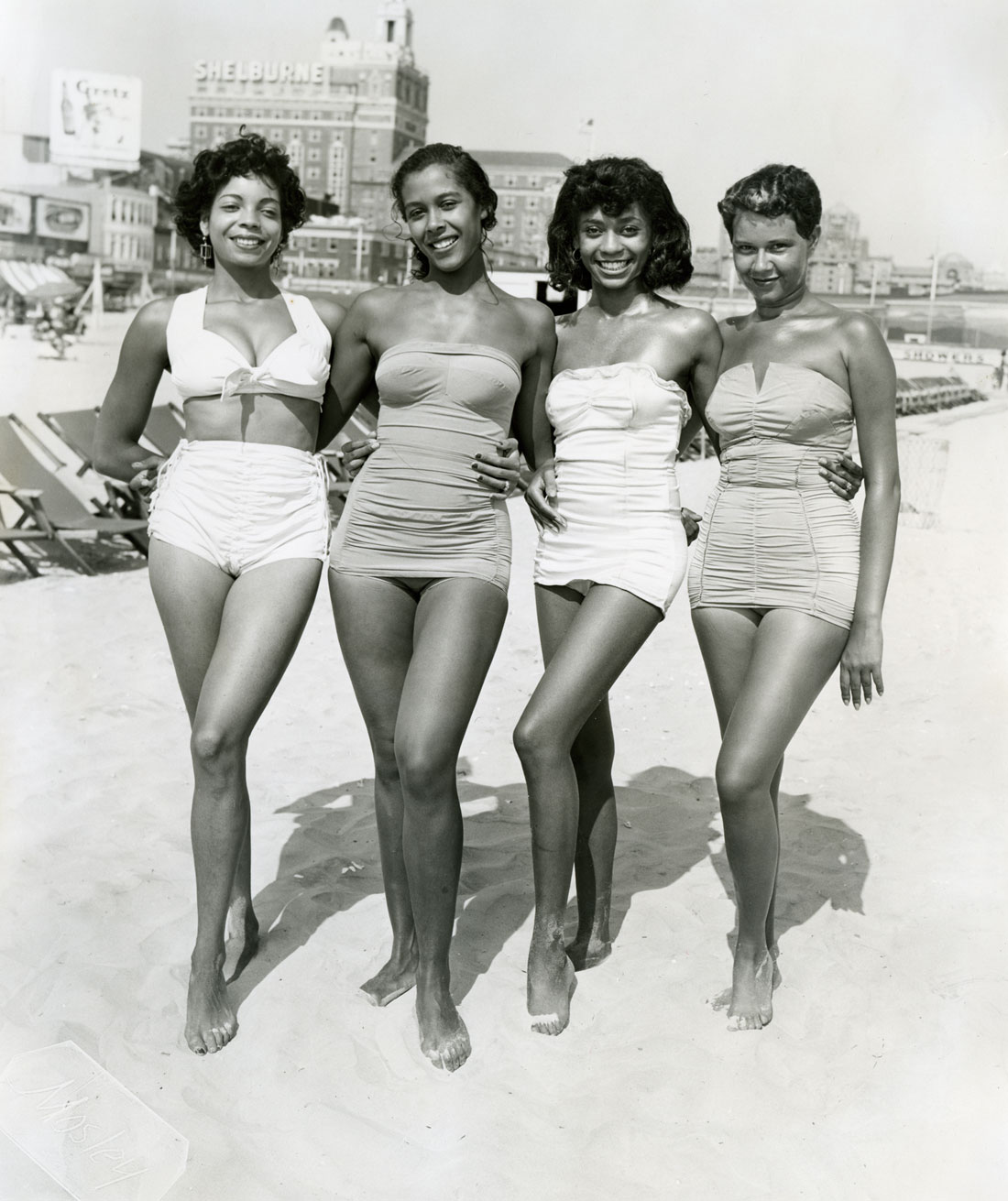
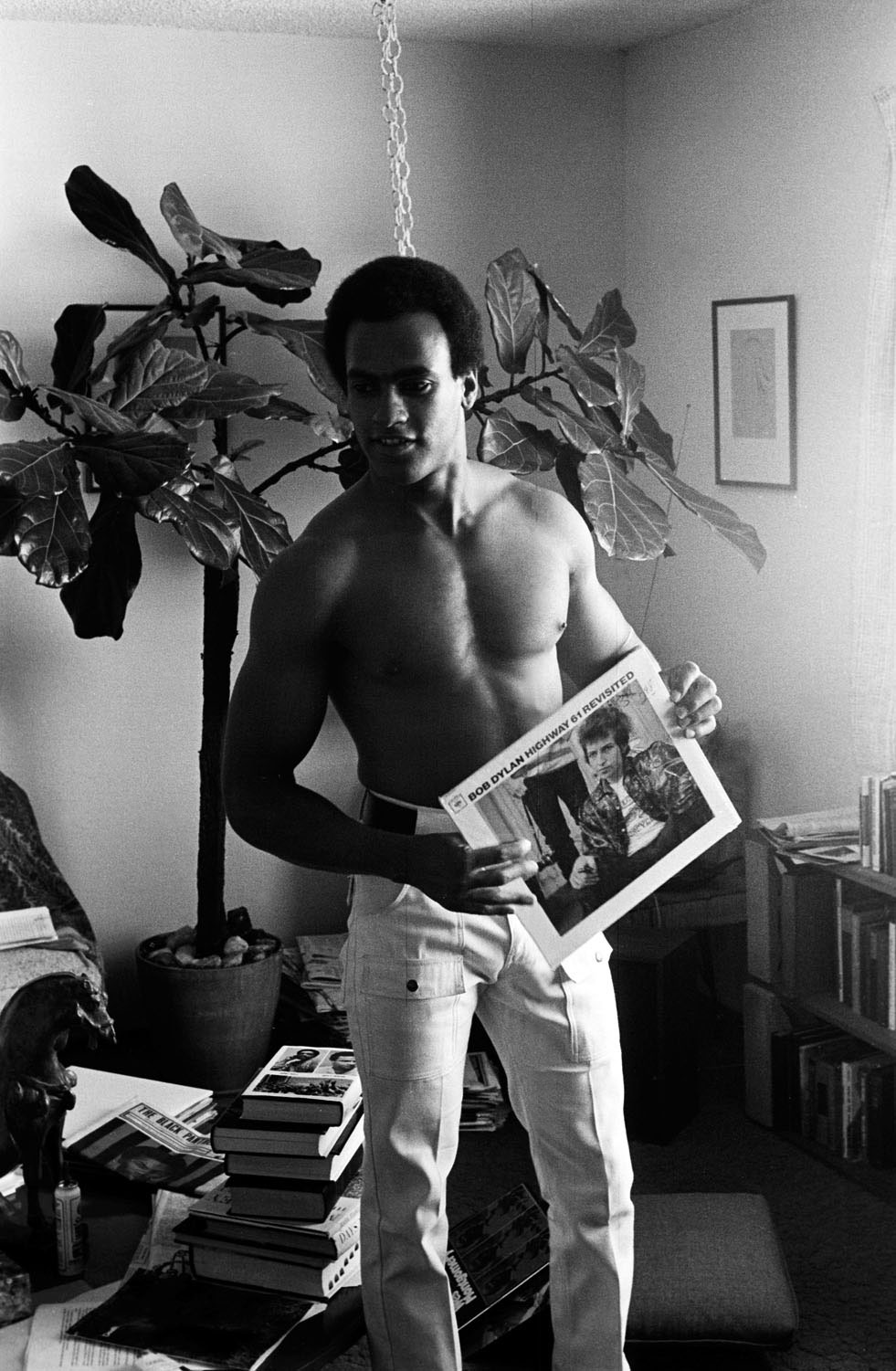
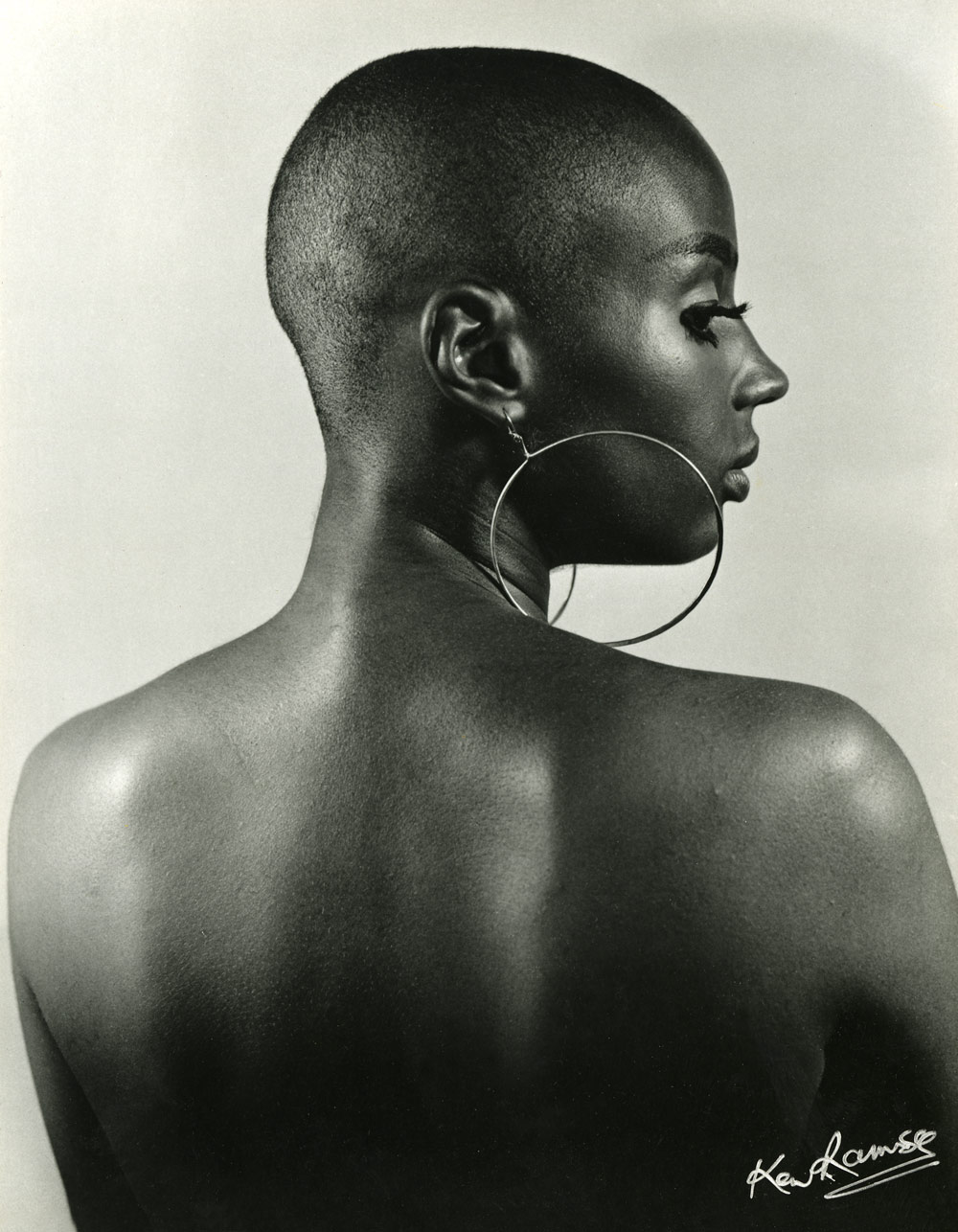
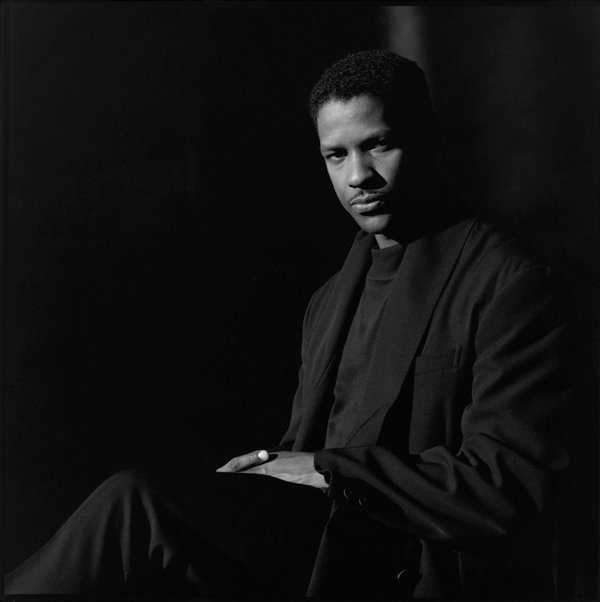
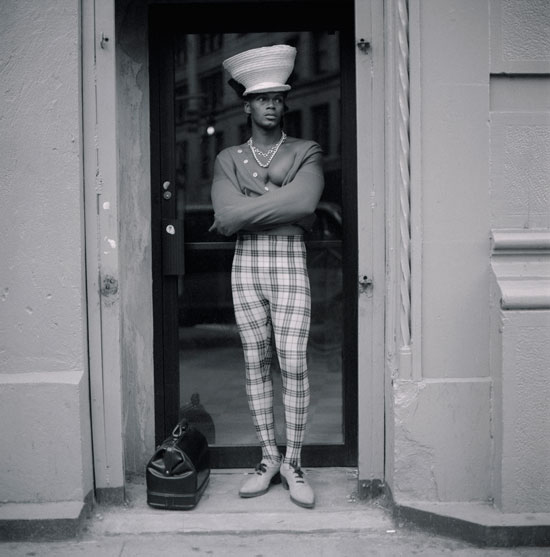
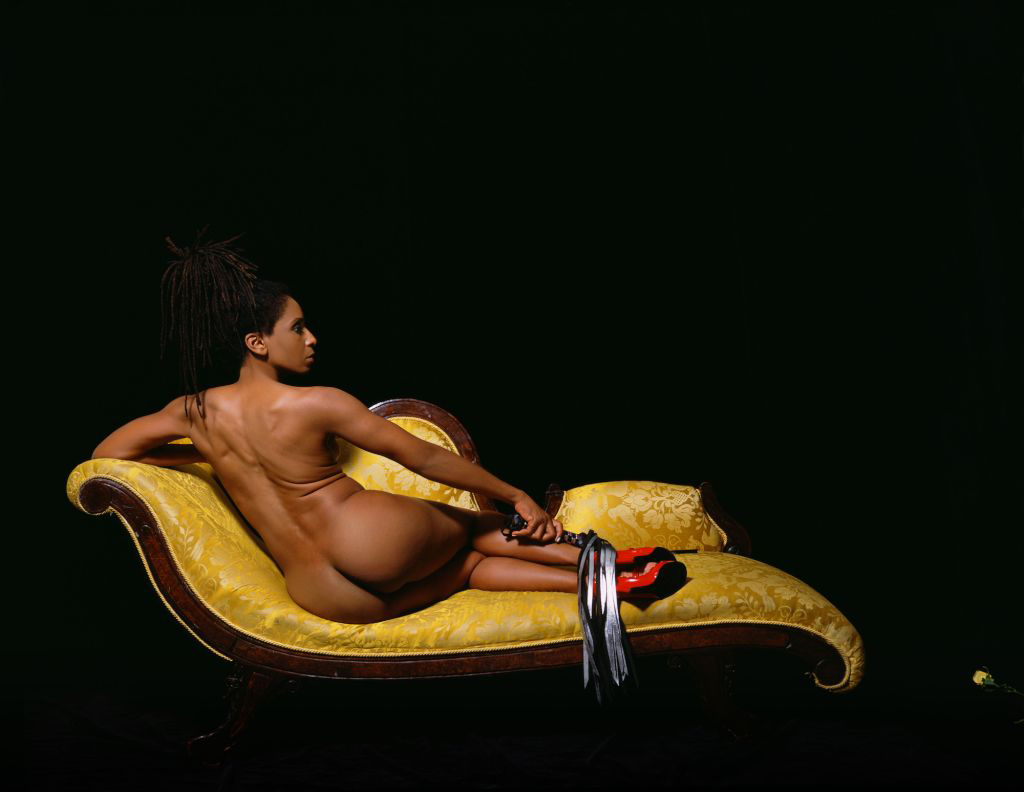
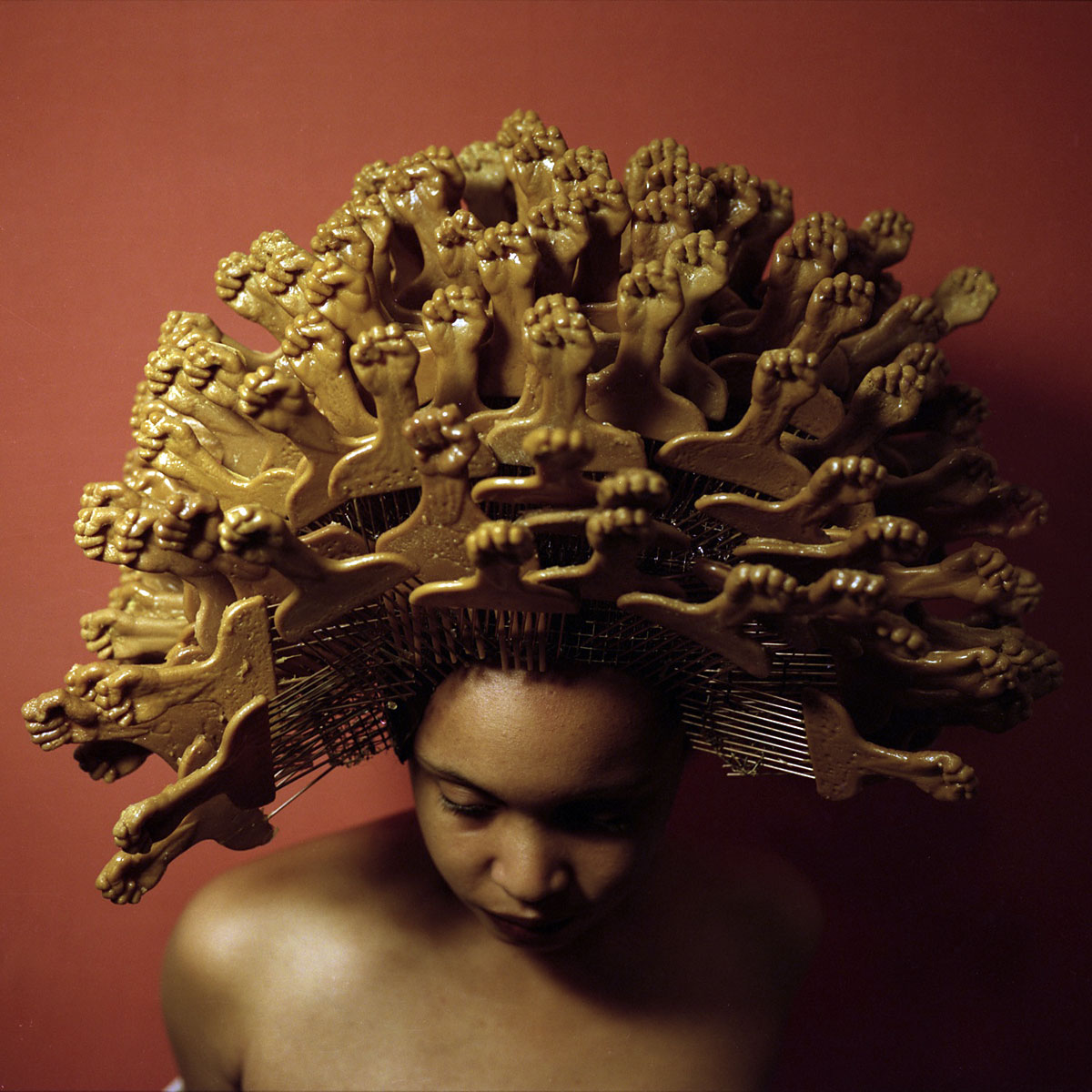
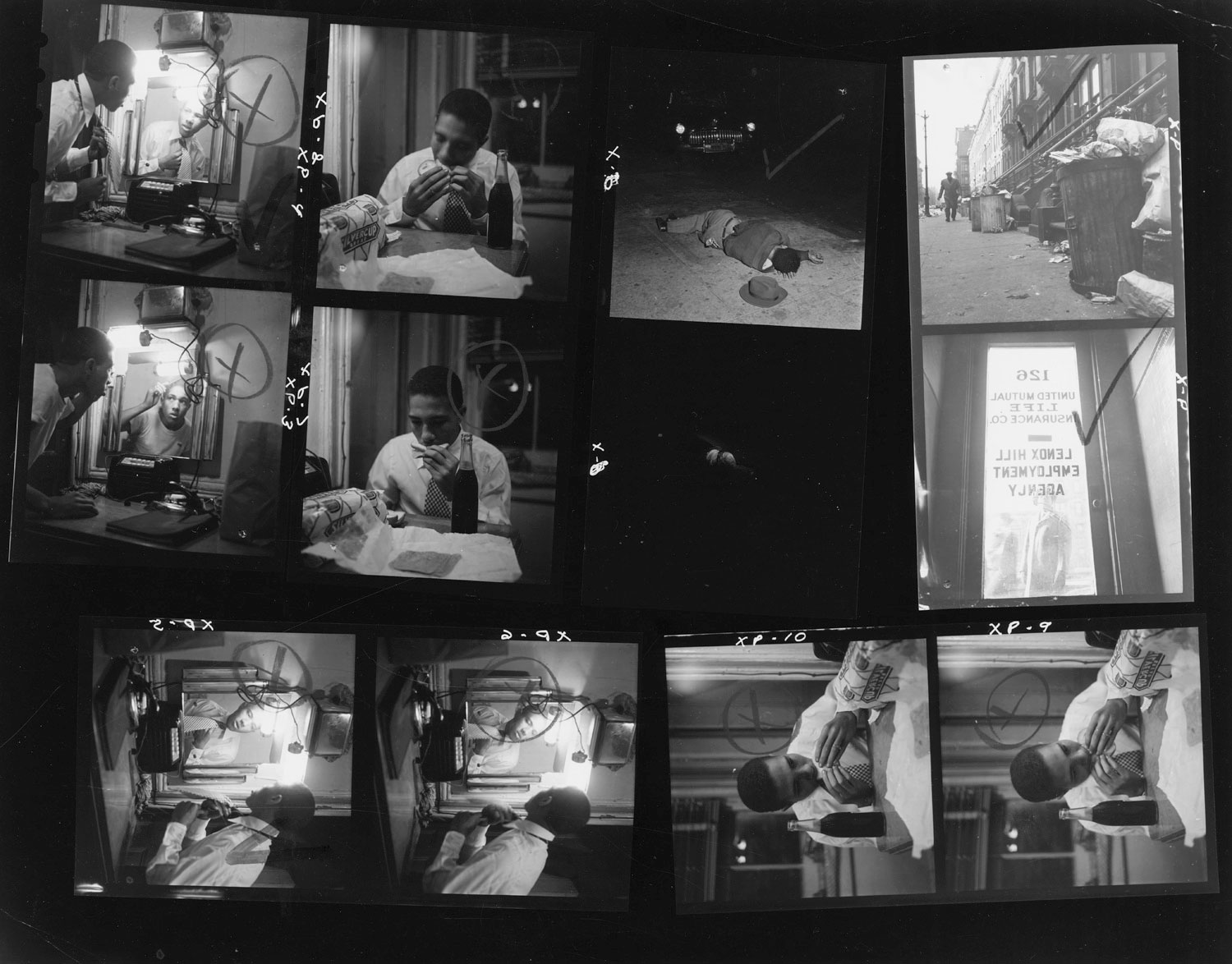
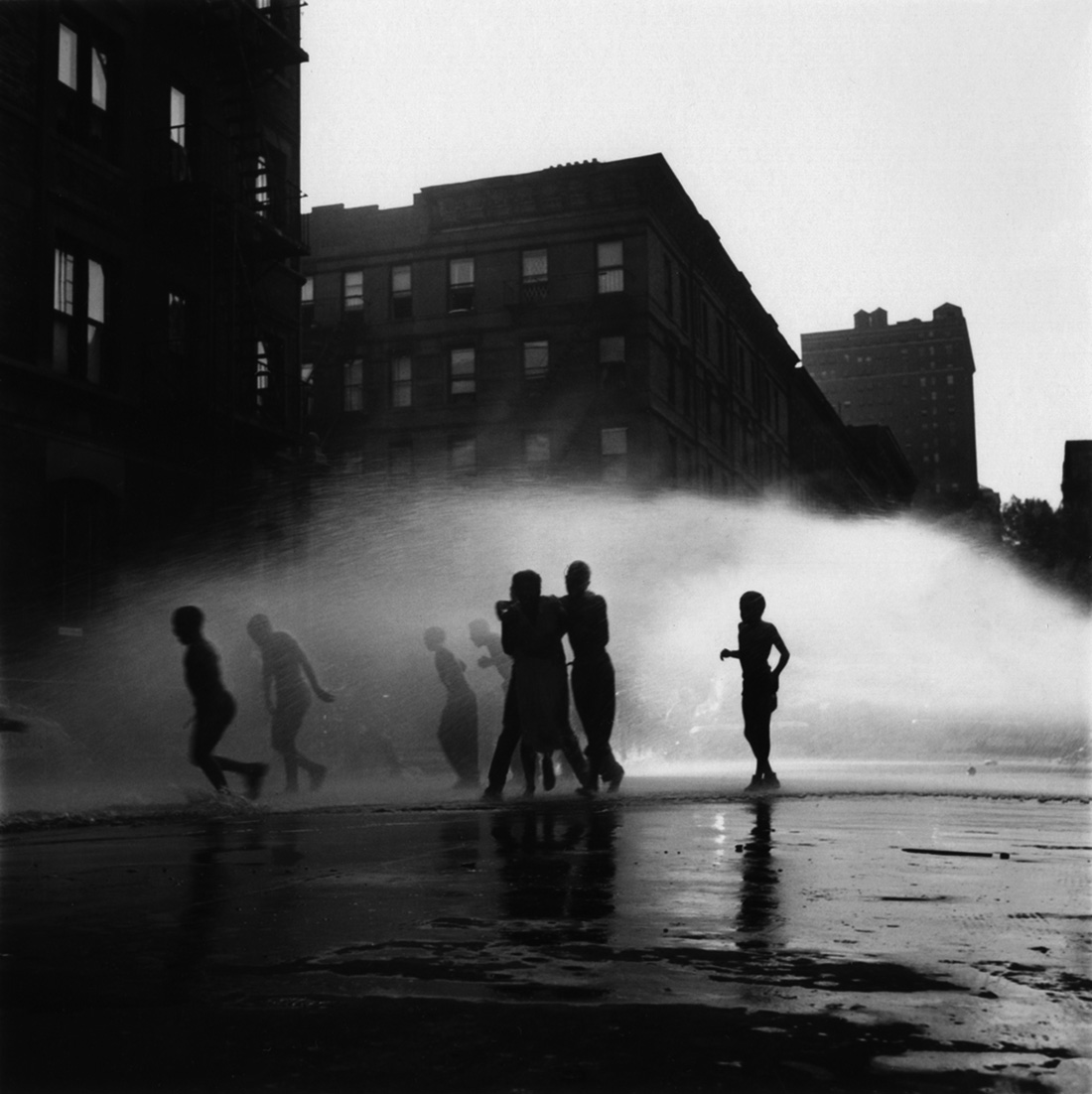
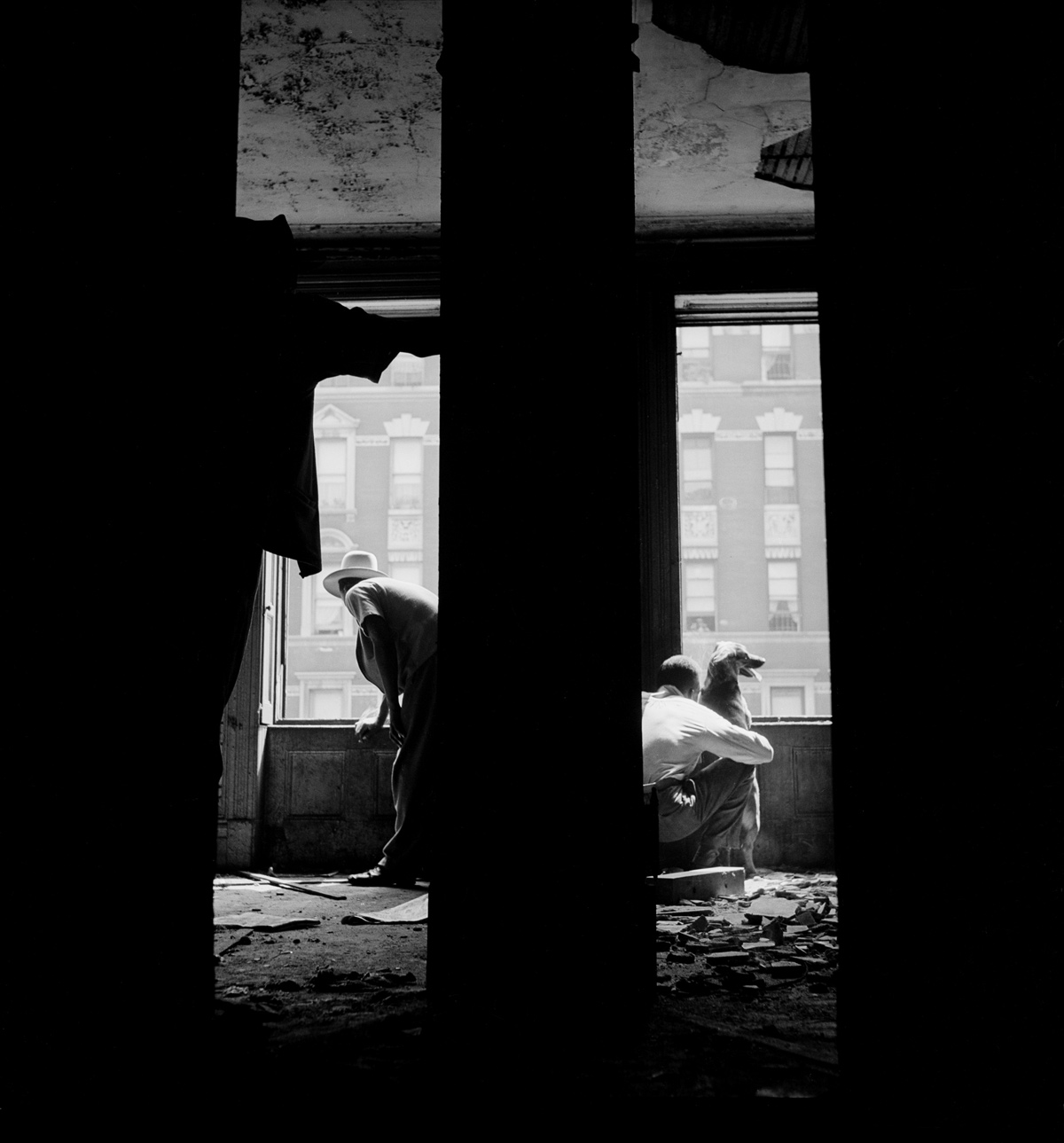
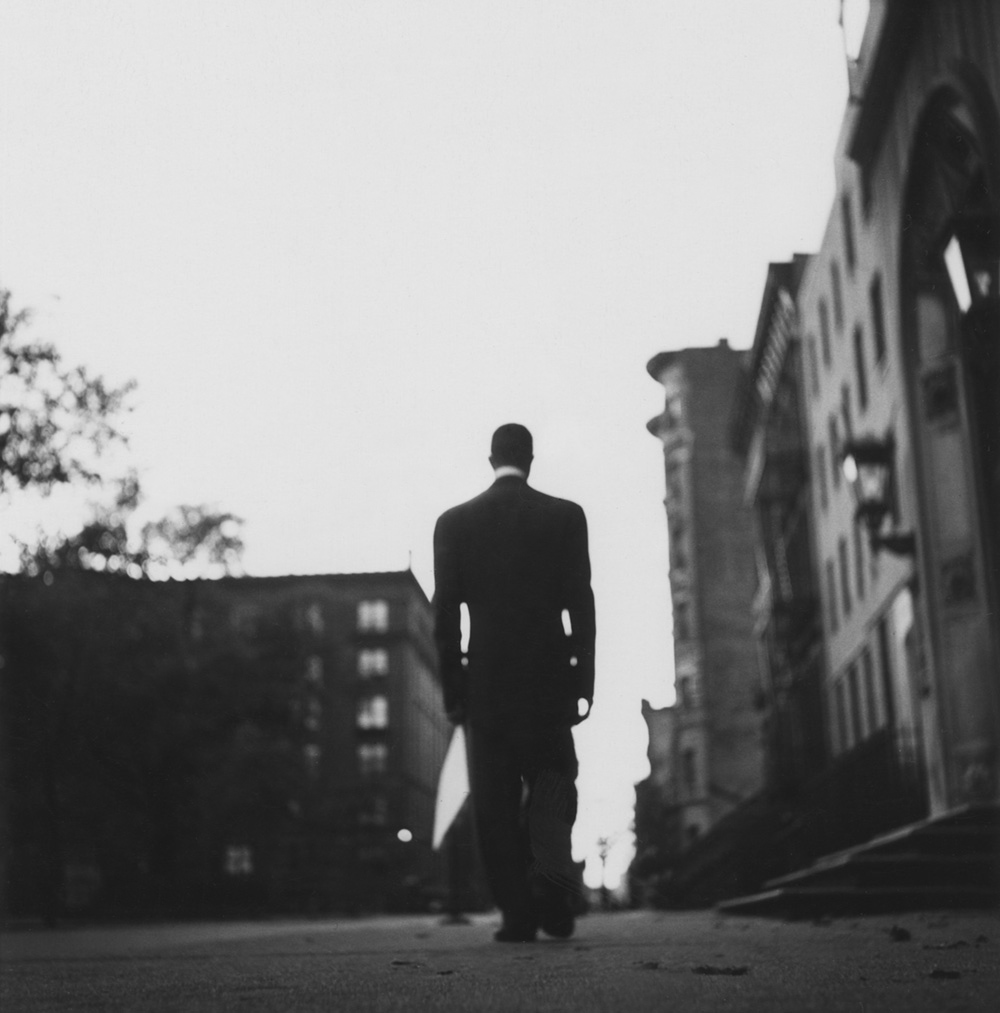
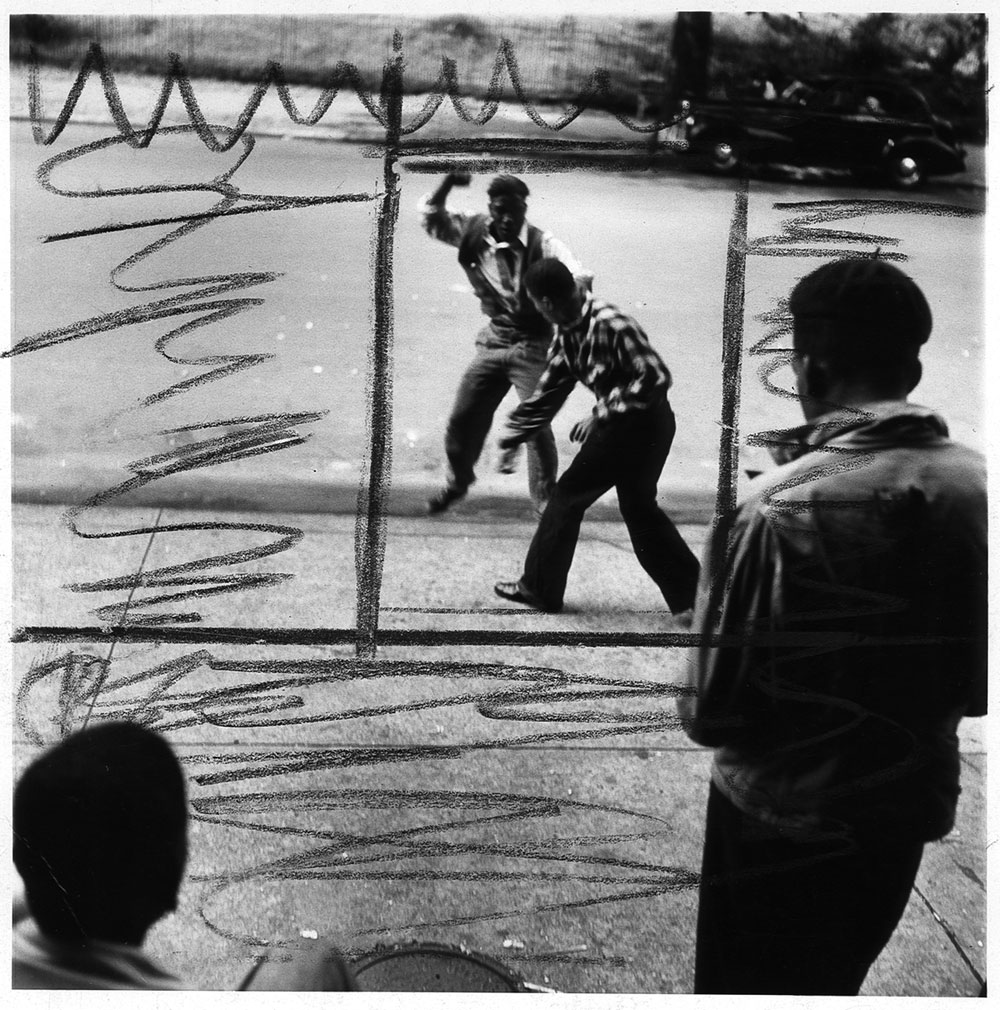
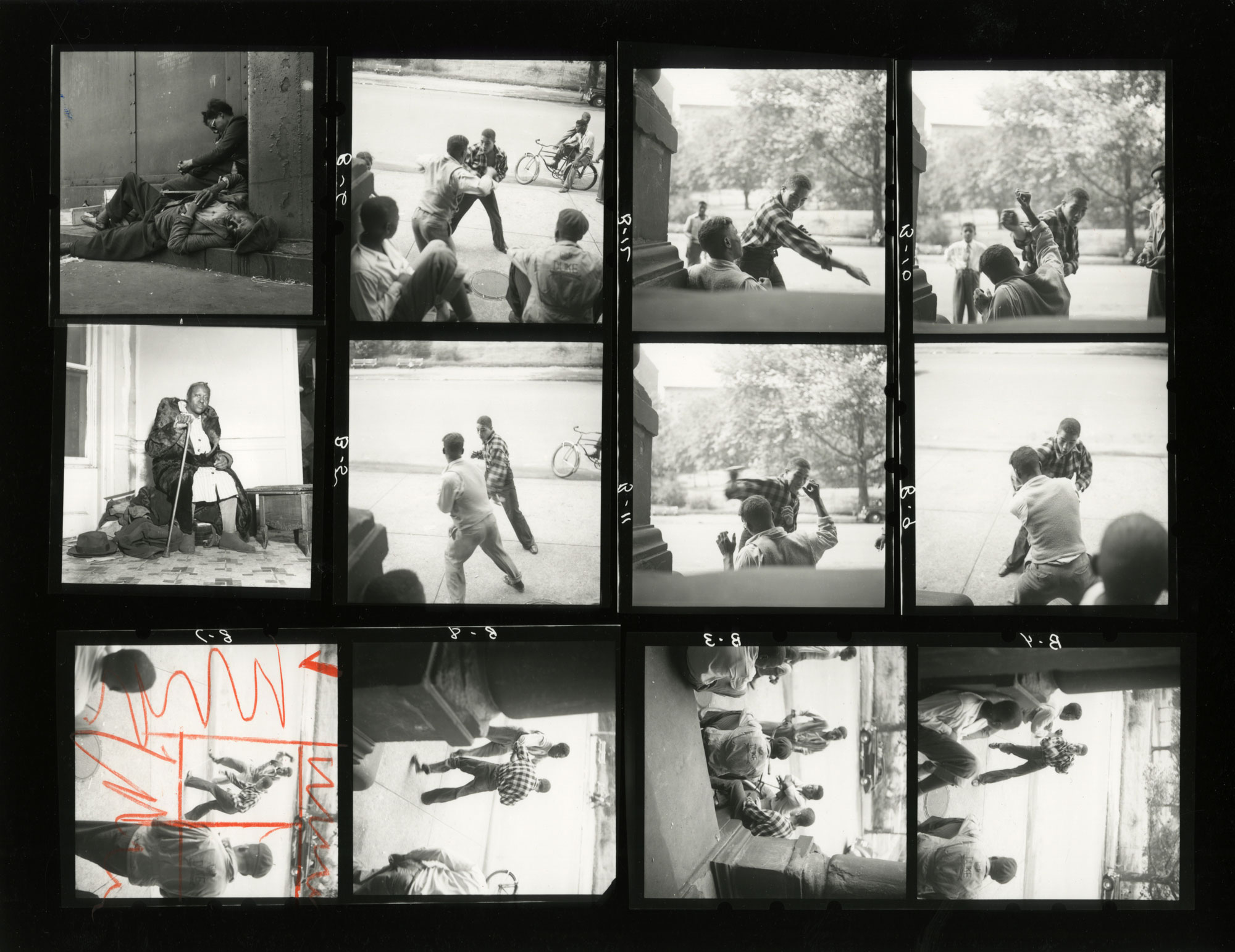
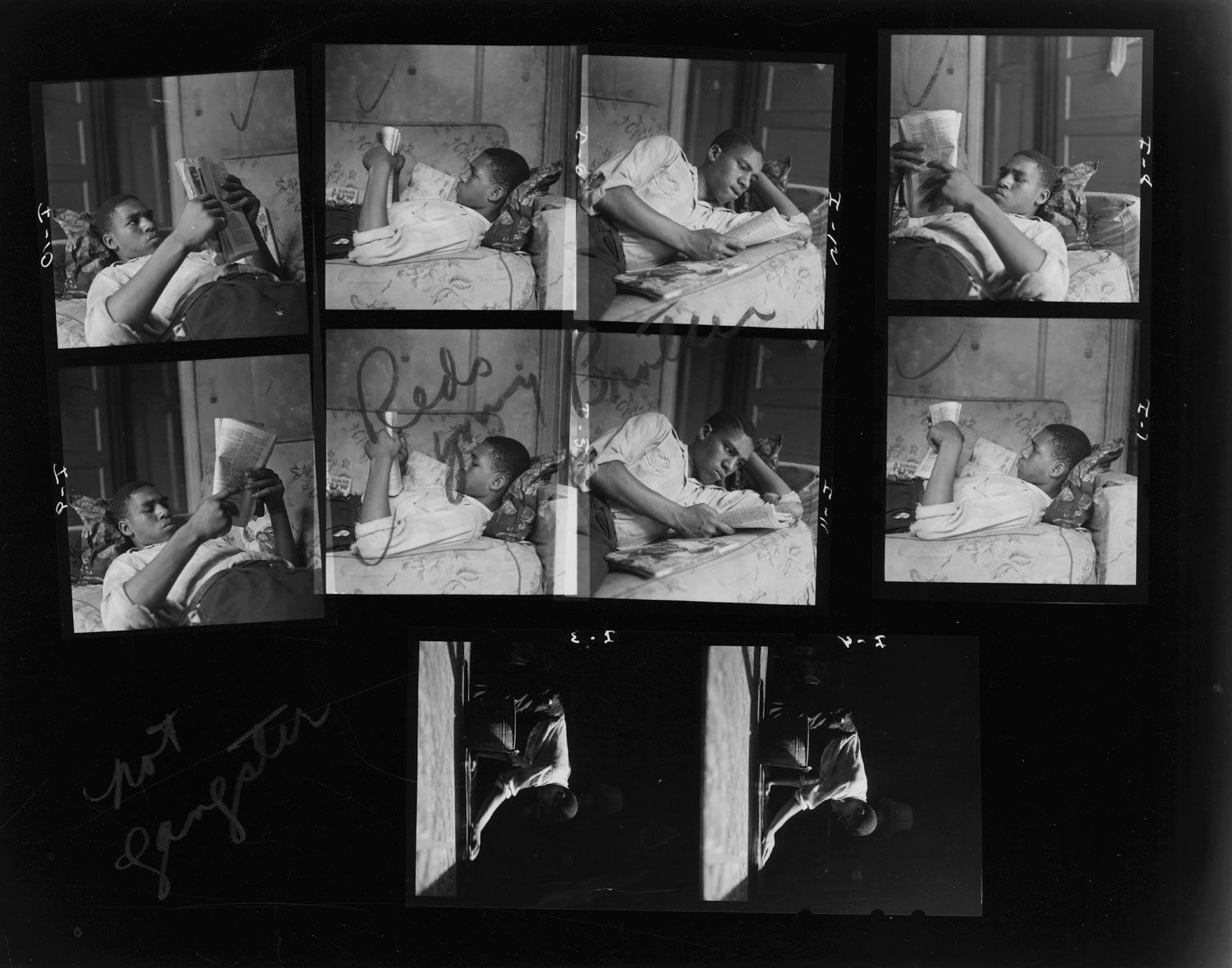
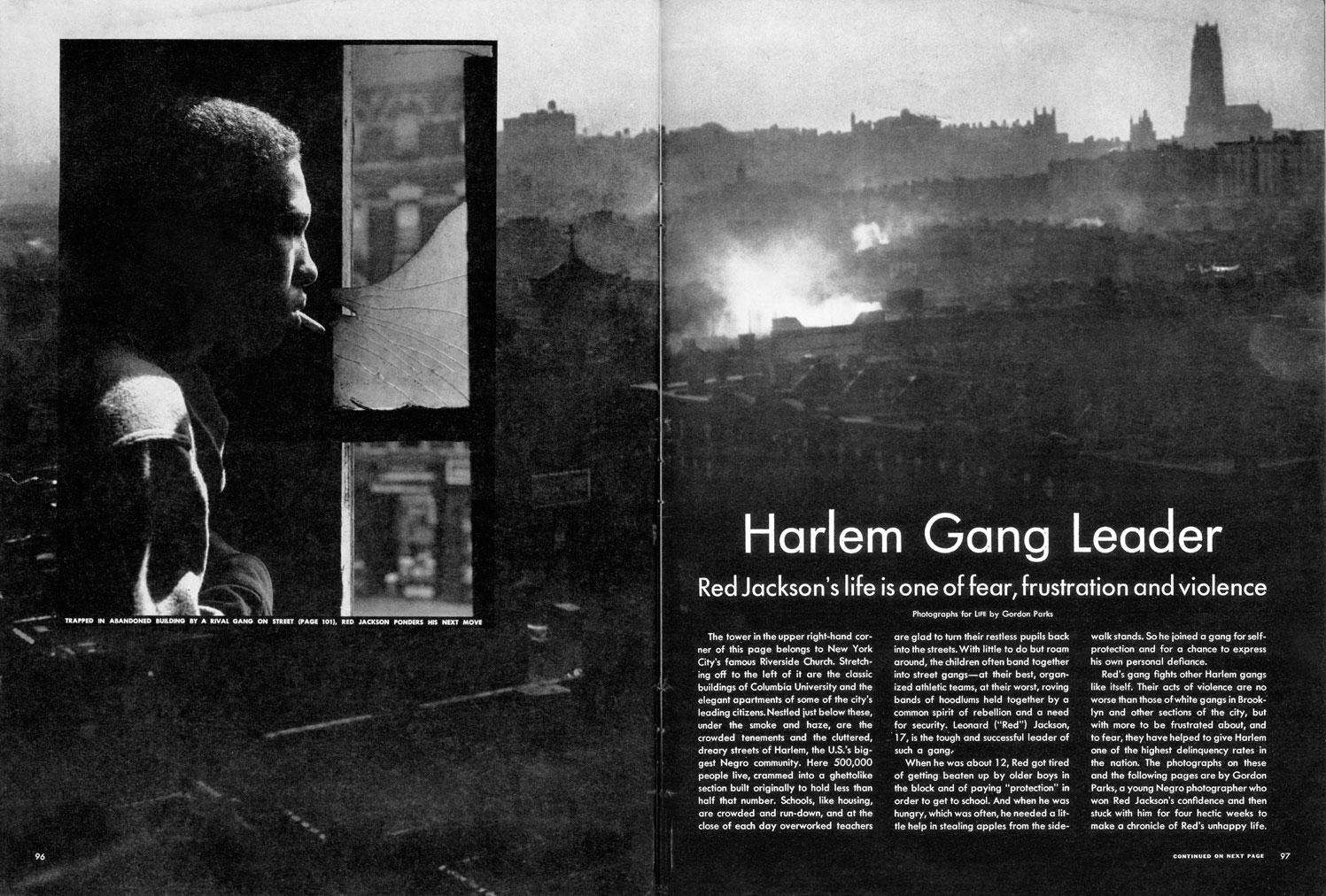
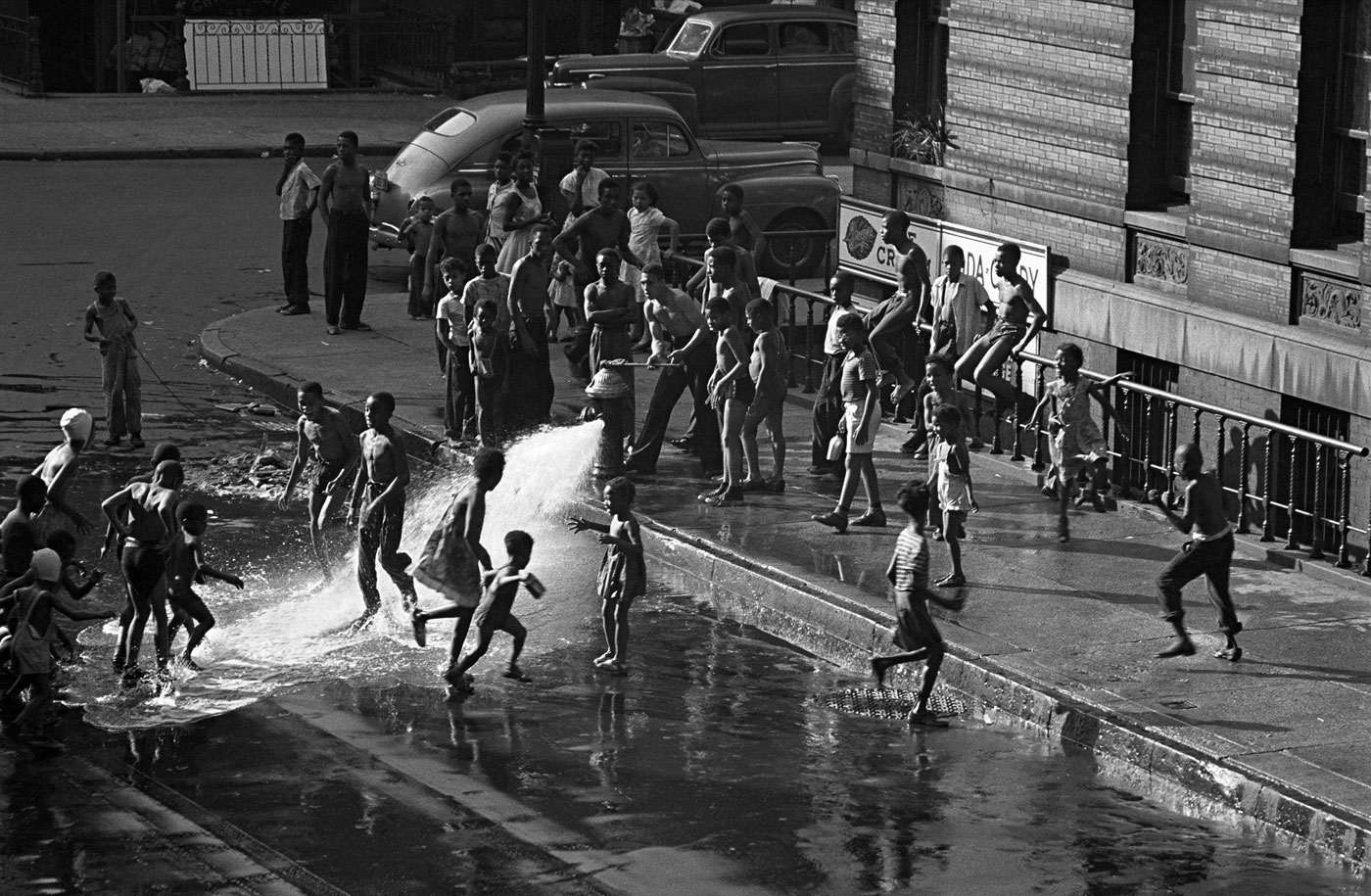
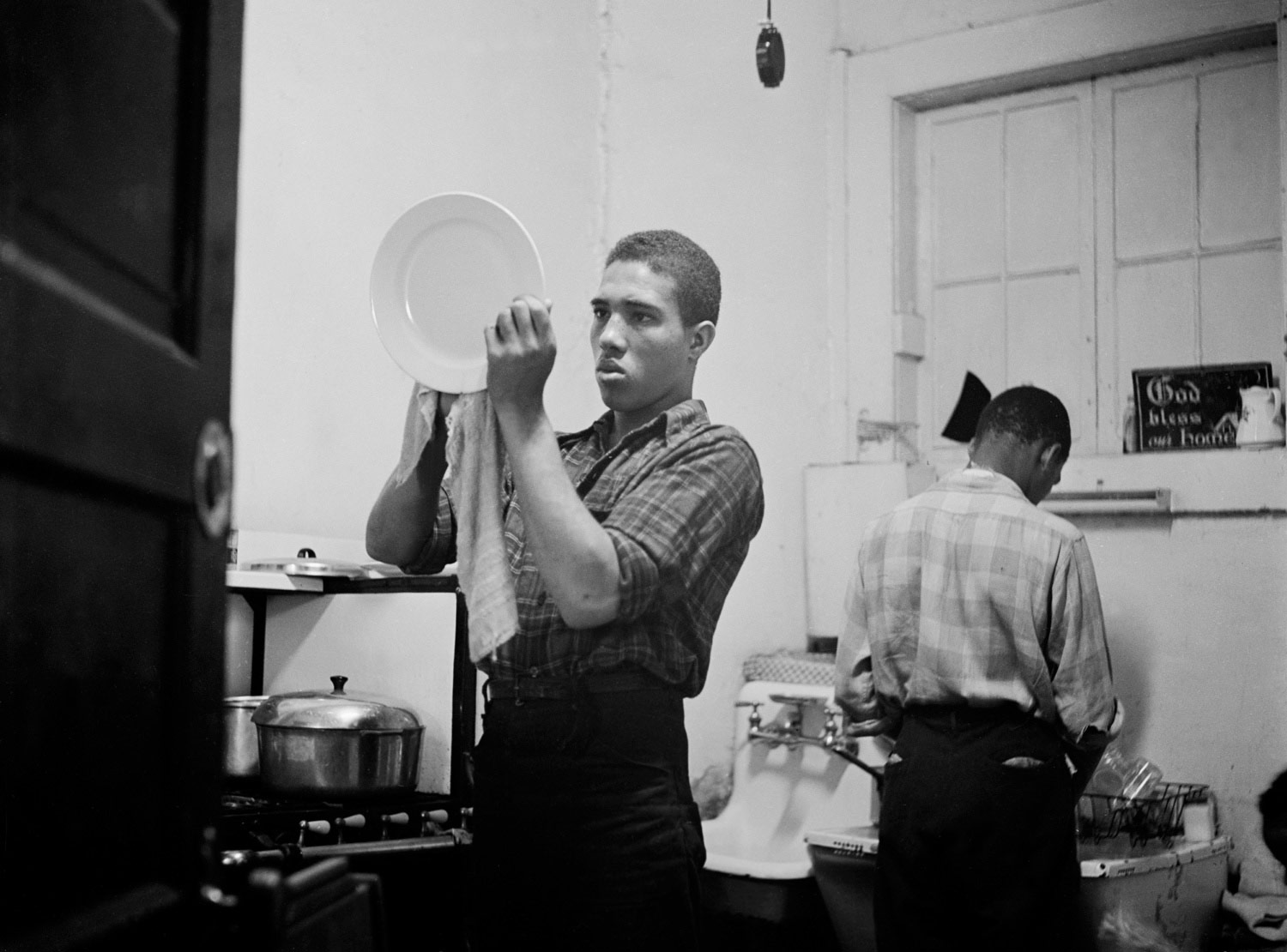
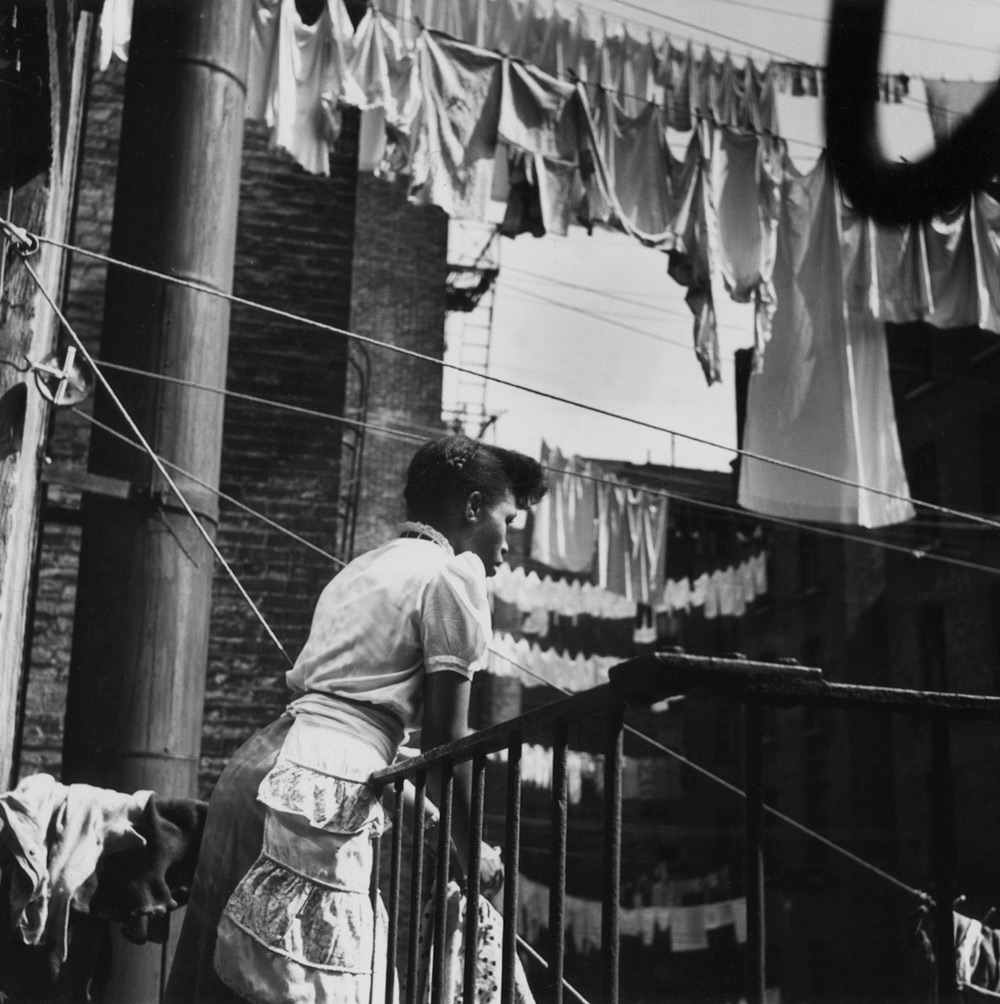
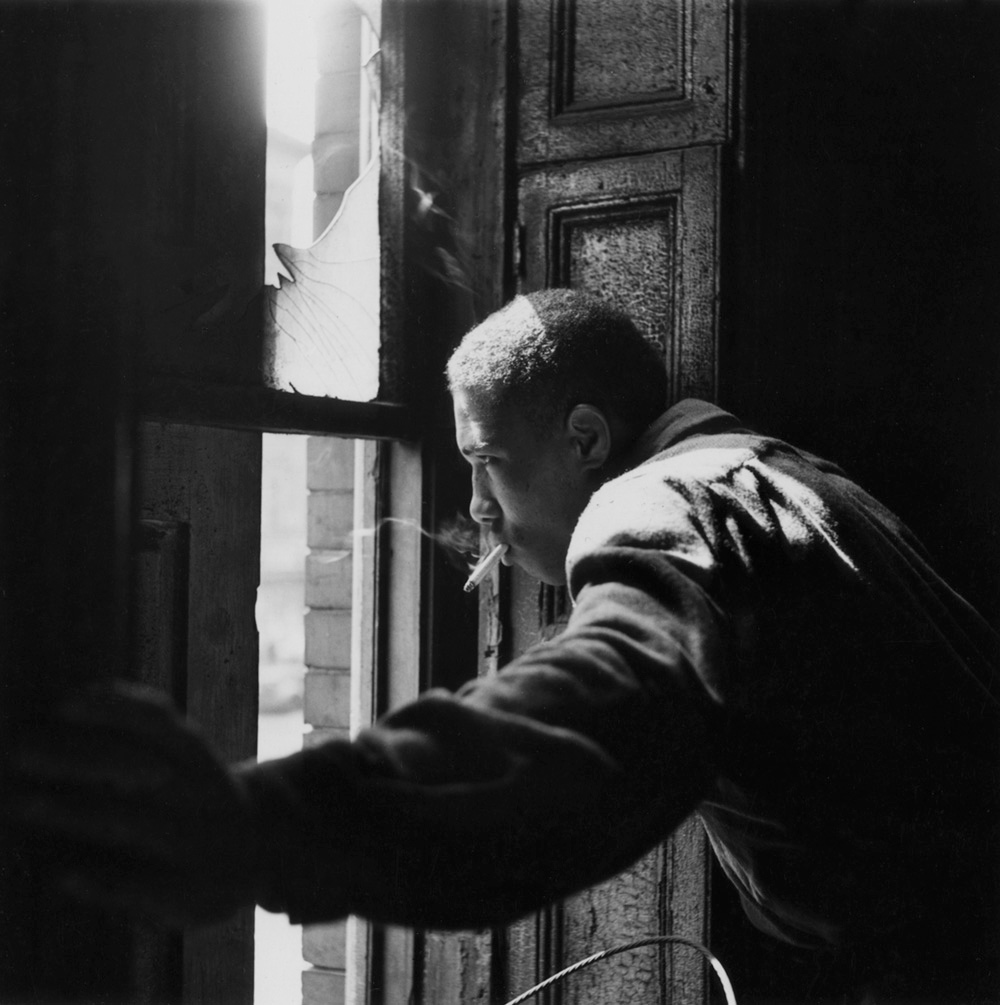
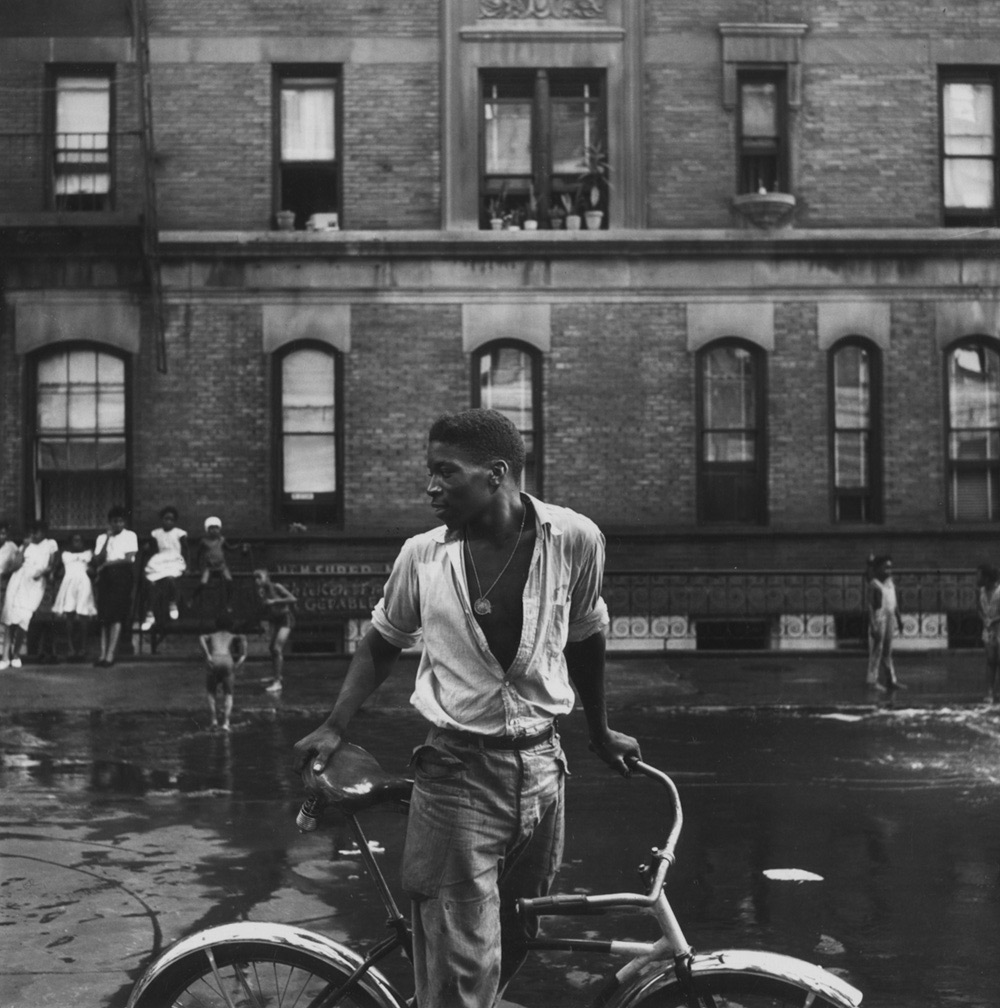
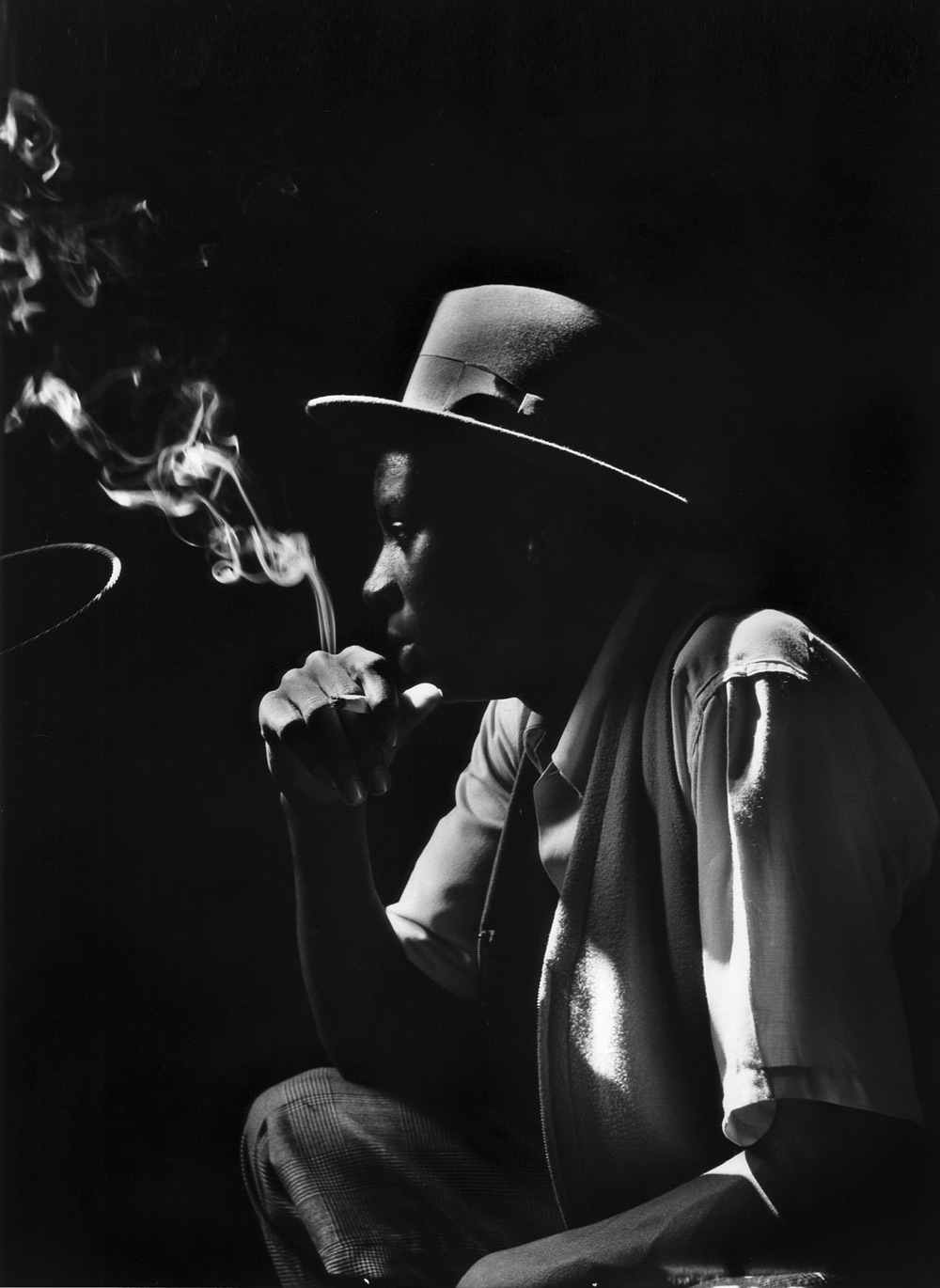
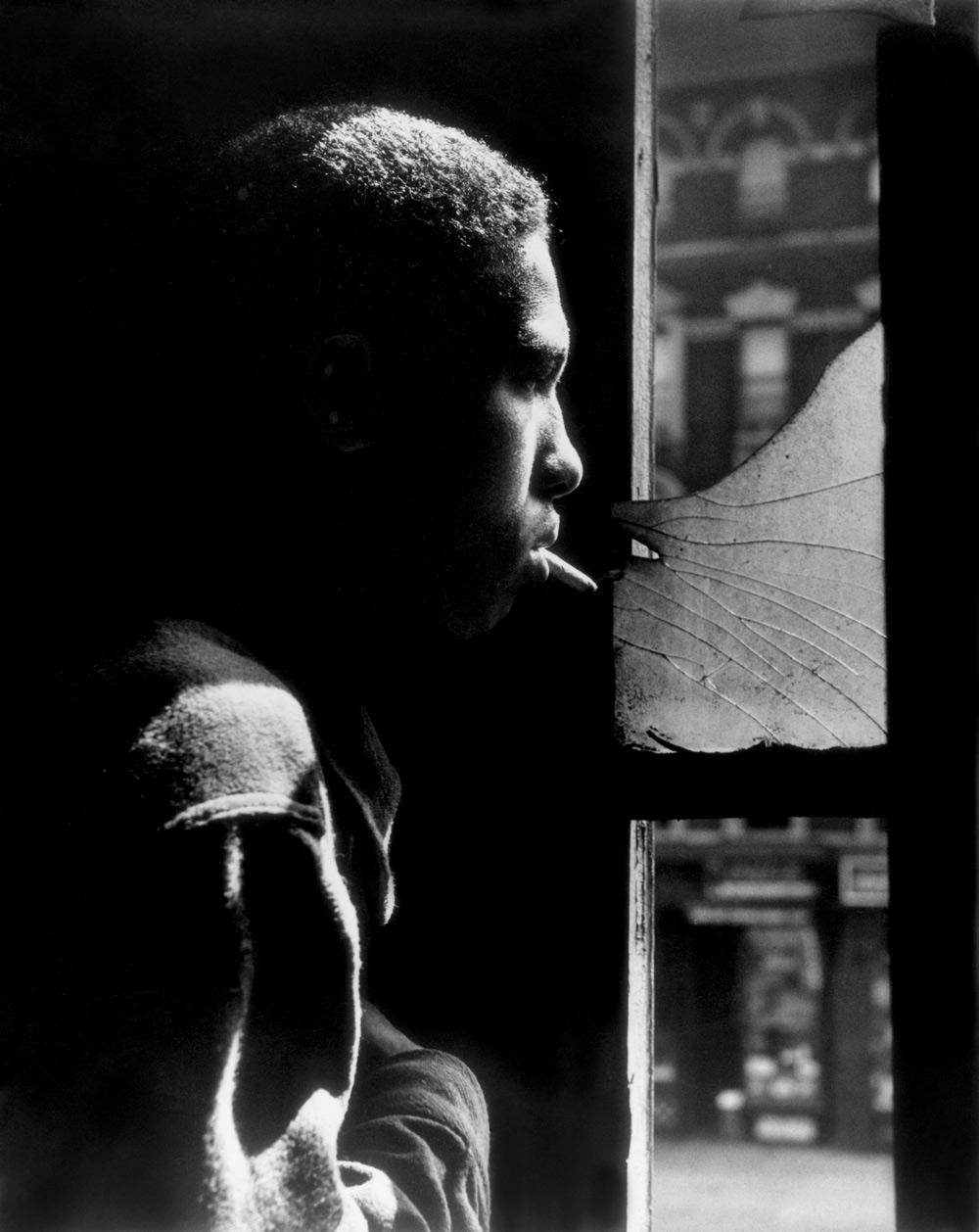
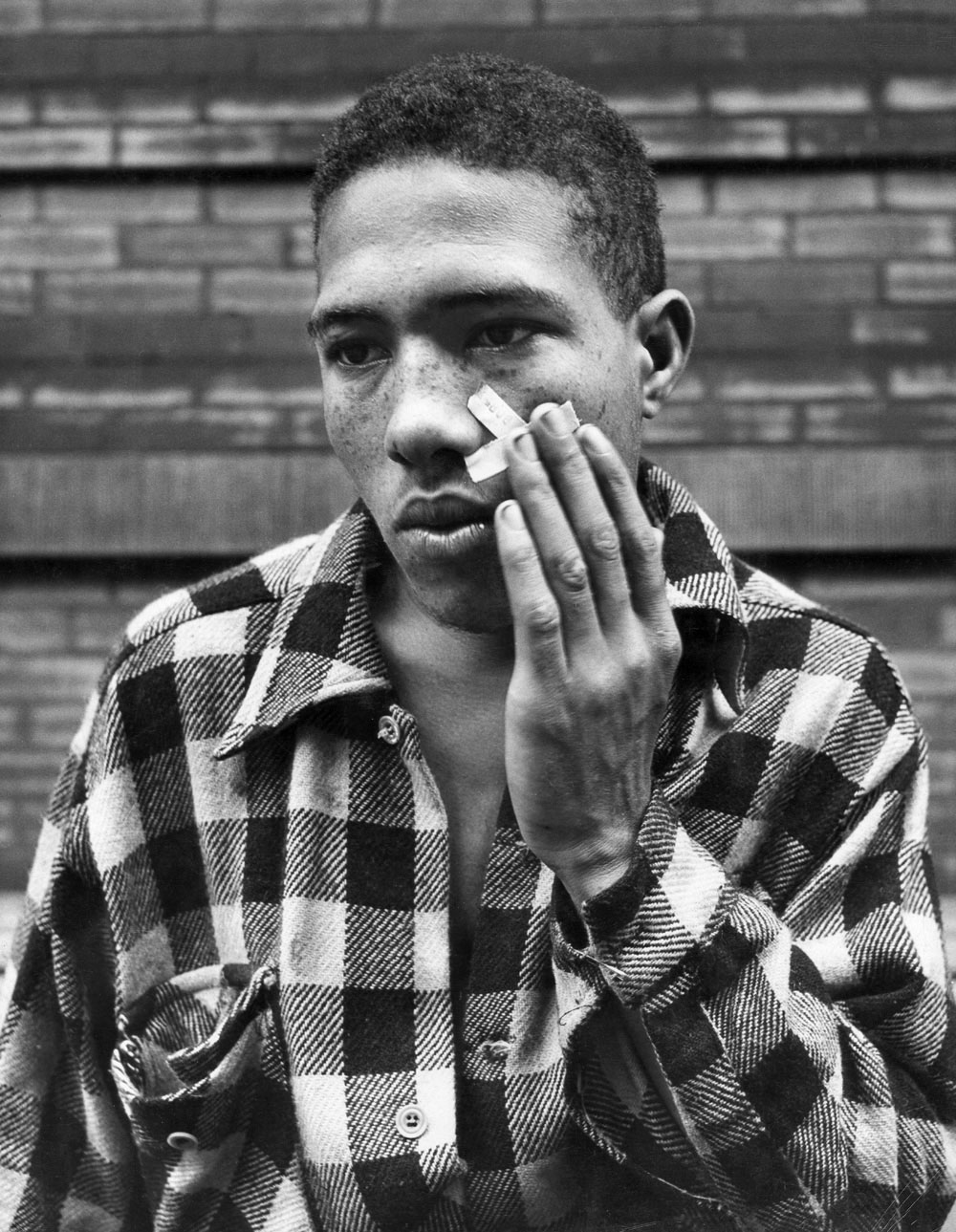
 Art Blart _ art and cultural memory archive
You must be logged in to post a comment.