“This is where I think that Siskind was less than happy with the results of his documentary photographs – that they weren’t giving him what he wanted out of his art: that interface of the image and imagination.” Dr Marcus Bunyan
July 2026
Aaron Siskind (American, 1902-1991) Boys in Empty Tenement c. 1935 Gelatin silver print
Image and imagination
I always find it fascinating to view the first few years of an artist’s journey, the golden path they take, for it more than likely informs all that is to come.
In the greatest abstract expressionist photographer the world has known, Aaron Siskind (American, 1902-1991), his starting point was as a straight documentary photographer, a member of the New York Photo League, a “left-leaning documentary collective, which prioritised using photography to advocate for social change.”
Using a large format camera and tripod Siskind, for his photo project Harlem Document, captured “the vibrancy, harsh realities, and daily life of the Black community in Harlem” – images which had their roots in American social documentary photography of the period and photographers such as Jacob Riis, Lewis Hine, Walker Evans, Dorothea Lange, Gordon Parks and the photographers of the Farm Security Administration (FSA) government program (1935-1944) which documented the struggles of rural Americans during the Great Depression.
As I have written in a 2023 text titled “Transcending reality”, “To my mind American photographers of the 1930s took photographs not only to document but also to honor what was greater and more interesting than they were. Not as a melding of reality-dream … but as an exploration of what is possible through the interface of the image and imagination, the interface as Ansel Adams put it “between the reality of the world and the reality of yourself”.”
This is where I think that Siskind was less than happy with the results of his documentary photographs – that they weren’t giving him what he wanted out of his art: that interface of the image and imagination.
“In working from the documentary approach, I had always tried to find what kind of meaning you could get in a picture of that kind, and was beginning to feel that I was not getting it. I felt I wasn’t getting anything really personal, really powerful and special…. My documentary pictures were very quiet and very formal.”1
Moving into the 1940s Siskind began experimenting with more abstract compositions (with their link to Abstract Expressionist painting). Evidence of this reorientation in his image making can already be seen in some of the documentary photographs in this posting. For example, the photographs Facades (1938, below) and Harlem (1938, below) both propose the flattening of the photographic surface with an interest in the geometry and abstraction of form – circle, oblong, square, diagonal, curve, line – within the pictorial plane, but with an attendant emphasis on light, texture and tone.
“Though he did not create the lines, shapes, rhythms and patterns in his images, he nonetheless expressed the lyricism of their relationships by harmoniously arriving at the perfect composition. And though his abstract photographs possessed undeniable content, he subverted that content by offering new interpretive possibilities based on the feelings the images conveyed.”2
Image and imagination.
Thus, Siskind was intelligent enough, was aware and informed enough, of his feelings towards the world and the cultural developments around him to approach a crossroads in his development as an artist, to recognise, that is the key word, to recognise the path he needed, he wanted to take.
And so we are forever grateful to have his abstract expressionist photographs that his spirit guided him towards, photographs that may also light our own path.
Dr Marcus Bunyan
PS. I have added relevant information on Siskind’s art practice, theatres, and ballrooms where possible and I have also included an extract from Gordon Parks’ forward to Siskind’s book Harlem Document.
1/ Jaromir Stephany unpublished interview with Aaron Siskind, February 1963. This interview is in the private papers of Jaormir Stephany quoted in Marcia Battle. “Harlem: A Document,” in Harlem Document: Photographs 1932-1940. Washington and London: Smithsonian Institution Press, 1990, pp. 4-6
Please click on the photographs for a larger version of the image.
“Photography has tremendous social value. Upon the photographer rests the responsibility and duty of recording a true image of the world as it is today. Moreover, he must not only show us how we live, but indicate the logical development of our lives.”
Photo Notes, newsletter of the Photo League, August 1938
Aaron Siskind’s photographs from 1935-1940 form the core of the Harlem Document, a landmark sociological and visual study commissioned by the New York Photo League. Siskind headed the Feature Group of this radical, left-leaning documentary collective, which prioritised using photography to advocate for social change. The images capture the vibrancy, harsh realities, and daily life of the Black community in Harlem during the Great Depression.
Google AI
Aaron Siskind (American, 1902-1991) Kitchen Scene 1937 Gelatin silver print
From 1937 to 1944, Siskind took pictures in and around Harlem – of its businesses, domestic interiors, religious and social organisations, and nightlife. He did so as a member of the New York Photo League – a documentary photography collective with roots in radical leftist politics – and in collaboration with journalist and sociologist Michael Carter and other photographers as part of a cultural study of Harlem. In 1981 fifty-two of Siskind’s images were published in the book Harlem Document: Photographs 1932-1940 alongside first-person interviews conducted in the late 1930s by writers employed by the Federal Writers Project, including novelist and essayist Ralph Ellison.
MoMA Gallery label from 2024
Aaron Siskind (American, 1902-1991) Apollo Theater 1937 Gelatin silver print
Apollo Theater
Since opening its doors in 1914 and introducing the first Amateur Night contests in 1934, The Apollo has played a major role in the emergence of jazz, swing, bebop, R&B, gospel, blues, and soul – all quintessentially American music genres. Ella Fitzgerald, Sarah Vaughan, Billie Holiday, Sammy Davis Jr., James Brown, Gladys Knight, Luther Vandross, D’Angelo, Lauryn Hill, and countless others began their road to stardom on the Apollo stage. Today, The Apollo is a respected nonprofit presenting concerts, theatrical and dance performances, film screenings, educational programs, and community outreach programs.
The neoclassical theater known today as The Apollo’s Historic Theater was designed by George Keister and first owned by Sidney Cohen. In 1914, Benjamin Hurtig and Harry Seamon obtained a thirty-year lease on the newly constructed theater, calling it Hurtig and Seamon’s New Burlesque Theater. Like many American theaters during this time, African-Americans were not allowed to attend as patrons or to perform.
In 1933, Fiorello La Guardia, who would later become New York City’s Mayor, began a campaign against burlesque, and Hurtig & Seamon’s was one of many theaters that would close down. Cohen reopened the building as the 125th Street Apollo Theatre in 1934 with his partner, Morris Sussman, serving as manager. Cohen and Sussman changed the format of the shows from burlesque to variety revues and redirected their marketing attention to the growing African-American community in Harlem.
Frank Schiffman and Leo Brecher took over The Apollo in 1935. The Schiffman and Brecher families would operate the Theater until the late 1970s. The Apollo reopened briefly in 1978 under new management then closed again in November 1979. In 1981, it was purchased by Percy Sutton, a prominent lawyer, politician, media and technology executive, and a group of private investors. Under Sutton’s ownership, the Theater was equipped with a recording and television studio.
Text from the Apollo Theater website. Used under fair use conditions for the purposes of education and research
Aaron Siskind (American, 1902-1991) Lady In Kitchen 1937 Gelatin silver print
Aaron Siskind’s artistic trajectory parallels broader shifts within mid-20th-century American photography. In the 1930s he cut his teeth as a documentary photographer affiliated with the Workers Film and Photo League, an artists’ cooperative that strove to advance progressive political causes. The following decade saw him turn away from studies of society. For the remainder of his career, he created still lifes that aimed to articulate interior states through near-abstract visual fields. Of this dramatic shift in his practice, the artist said, “For some reason or other there was in me the desire to see the world clean and fresh and alive.”1
Siskind’s documentary work was carefully planned and researched in advance. He honed this approach at the Film and Photo League, which he joined in 1933, only three years after receiving his first camera as a honeymoon gift. Among this community of photographers and filmmakers – many of them, like Siskind, the New York-born children of Jewish immigrants – he found technical guidance and critical feedback. When the League’s photographers broke from its filmmakers to establish the standalone Photo League in 1936, Siskind helped form its Feature Group, a unit dedicated to creating photo essays like those appearing in LIFE magazine and being produced by the Farm Security Administration. Collaborative at its core, the Feature Group prioritised the free exchange of ideas: each project began with a discussion of how to approach photographing its subject and ended with the group assessing their effort collectively. “We discovered a relationship between the clarity of one’s thought and feeling and the clarity of picture-making,” Siskind recalled of these formative dialogues.2
Of the many projects the Feature Group completed during Siskind’s four years of leadership, its most extended and ambitious was Harlem Document. This expansive cultural study of Harlem, undertaken between 1937 and 1940 in close consultation with the sociologist Michael Carter, originally aimed to produce a photographically illustrated book authored by Carter. Although the publication never materialised, Siskind’s photographs for Harlem Document indicate the project’s ambitious scope, depicting street life, domestic interiors, and gathering spots ranging from churches to dance halls to theaters.
Samuel Allen, Curatorial Assistant, The Robert B. Menschel Department of Photography, 2025 on the MoMA website [Online] Cited 14/07/2026. Used under fair use conditions for the purposes of education and research
1/ Aaron Siskind, “The Drama of Objects,” Minicam Photography 8, no. 9 (June 1945), 23.
The Lafayette Theatre (1912–1951), known locally as “the House Beautiful”, was one of the most famous theaters in the Harlem neighbourhood of Manhattan in New York City. It was an entertainment venue located at 132nd Street and 7th Avenue. The first major theatre in New York to desegregate, in its early history the theatre was home to the African American repertory theatre company the Lafayette Players. This group was originally founded by Anita Bush as Anita Bush Stock Company in 1914 and became a part of the Lafayette Theatre in 1916 when the theatre bought the stock company. The Lafayette Players was a successful company from the 1910s through the 1930s; after which the company floundered. In 1951 the theatre closed and was sold to the Williams Institutional Christian Methodist Episcopal Church. The structure was demolished in 2013.
Aaron Siskind’s Harlem document, a mirror of my own past, speaks explicitly for itself. It is an ongoing memory of black people living in crowded kitchenettes; suffering the loneliness of rented bedrooms; prating in leftover churches, and grasping a patch of happiness whenever and wherever they could find it. It is a nostalgic look at a kind of past that threatens to hang around Harlem for a long time to come – to doom it to further frustration and unrest. Those same tenements that once imprisoned me are still there, refusing to crumble, holding other restless black boys for sentence without trial.
I remember swarms of slow-moving people, moving close together up on Lenox Avenue – past child shacks, rib joints, funeral parlours and storefront churches- knowing one another but seldom bothering to speak. A city of blackness crammed inside a white city where, when you walked our the door, you became a stranger. …
Harlem has meant a lot of things to a lot of people. For me, in those days, it meant hunger, cultural devastation, unrequited longing and disillusionment. To others it was the swinging, exciting capitol of the entire Black world, the exotic Mecca of melting music, good times and dancing feet. Yet, for some, it was a sanctuary where loftier dreams were fostered; where now and then some of those dreams were realised, but where mostly they were hopelessly spent. To just about everyone who has worked in the vital processes of its survival, whose life has been textured by its tradition, Harlem is a place that won’t give up. Wobbly now under the impact of the past decades, its history mirror those problems its mother country once endured.
Extract from Gordon Parks. “Foreword,” in Harlem Document: Photographs 1932-1940. Washington and London: Smithsonian Institution Press, 1990. Used under fair use conditions for the purposes of education and research
Aaron Siskind (American, 1902-1991) Street Scene 1937 Gelatin silver print
Aaron Siskind (American, 1902-1991) Wishing Tree 1937 Gelatin silver print
Aaron Siskind (American, 1902-1991) Church Interior 1938 Gelatin silver print
Aaron Siskind’s interest in photography developed after his experiences with both music and poetry when he was an English teacher in the New York public school system. His early pictures were said to have been attempts at transferring musical and poetic concepts into images.2 Later, as a young adult, Siskind did everything from making political speeches on soapboxes in Manhattan to becoming a member of the Junior Young People’s Socialist League (YPSL).3
A friend gave Siskind his first camera in 1930. He soon discovered his attraction for the instrument, and almost simultaneously he discovered and joined the Photo league. At the League he found people who shared his political and social concerns and who were capable and willing to discuss technical information about photography. Many of the members were children of Jewish immigrants and most, like Siskind, were well educated. Their exhibited images documented illiteracy, discrimination, and poverty and called for social reforms on behalf of the working classes. Before joining the League, Siskind had already photographed some of the poverty-stricken areas of Manhattan and was searching for reaction and criticism to these pictures. …
As a photographer Siskind explored symbols and metaphors to create a visual relationship that balanced aesthetic concerns with social documents. Throughout his career the contrast of subject and symbol have dominated. …
With his work in Harlem Siskind’s style may have been changing. “In working from the documentary approach, I had always tried to find what kind of meaning you could get in a picture of that kind, and was beginning to feel that I was not getting it. I felt I wasn’t getting anything really personal, really powerful and special…. My documentary picture were very quiet and very formal.”4
Extract from Marcia Battle. “Harlem: A Document,” in Harlem Document: Photographs 1932-1940. Washington and London: Smithsonian Institution Press, 1990, pp. 4-6. Used under fair use conditions for the purposes of education and research
2/ Carl Chiarenza, Aaron Siskind: Pleasures and Terrors (Little, Brown and Co.,), 6.
3/ Carl Chiarenza, “Form and Content in the Early Work of Aaron Siskind,” The Massachusetts Review 19:4 (Winter 1978): 810.
4/ Jaromir Stephany unpublished interview with Aaron Siskind, February 1963. This interview is in the private papers of Jaormir Stephany.
The “Savoy Dancers” refer to the pioneering African American dancers who developed the Lindy Hop and other swing dances at the legendary Savoy Ballroom in Harlem, New York. Open from 1926 to 1958, the integrated ballroom housed iconic performers like Frankie Manning and Norma Miller who defined the “home of happy feet”.
These legendary dancers revolutionised social dancing by bringing athleticism, airborne aerials, and improvisational jazz styling to the Lindy Hop. Their legacy continues to thrive through modern swing dance communities and archival footage preserved in documentaries like The Spirit Moves.
About the Savoy Ballroom
From 1926 to 1958, the Savoy Ballroom stood at 596 Lenox Avenue as one of the first racially integrated public spaces in the United States. Its 10,000-square-foot, spring-loaded dance floor welcomed thousands nightly and launched a global dance phenomenon. The Savoy hosted legendary artists including Chick Webb, Duke Ellington, Ella Fitzgerald, and Count Basie, cementing its place at the heart of Harlem’s cultural history.
Aaron Siskind (American, 1902-1991) St. Joseph’s House – The Catholic Worker Movement c. 1939 Gelatin silver print
Aaron Siskind (American, 1902-1991) Grocery Store 1940 Gelatin silver print
Aaron Siskind (American, 1902-1991) Lady and Lamp 1940 Gelatin silver print
Aaron Siskind (American, 1902-1991) Street Scene 1940 Gelatin silver print
Aaron Siskind (American, 1902-1991) Watermelon Man 1940 Gelatin silver print
We must acknowledge the importance of Consuelo Kanaga, a strong, compassionate human being, an under recognised photographer. What a trailblazer for future female and male photographers such as Dorothea Lange, Imogen Cunningham, Berenice Abbott and Milton Rogovin.
Kanaga is a story teller. Her photographs are strongly modernist, realist compositions. The portraits are direct and revealing, no external flourishes necessary in capturing the essence of the person; her landscapes, dark and brooding atmospheric iterations of land and spirit.
Consuelo Kanaga:
~ one of the pioneers of modern American photography
~ one of the first women photojournalists on staff at a newspaper (1918)
~ a great supporter and a confidant for Imogen Cunningham, Louise Dahl-Wolfe, Dorothea Lange, Alma Lavenson, Tina Modotti, and Eiko Yamazawa, among many others
~ passionate about social justice … social marginalisation, poverty, racial harassment, inequality… especially in relation to the African-American population in the United States.
~ maintained a close relationship with avant-garde circles, in San Francisco with the f.64 Group and in New York with the Photo League
~ focused on marginal day to day and political motifs, including workers, African Americans, objects, and buildings that were often in a state of disrepair
~ interested in worker’s rights and the worker movement
~ became very active in civil rights and took part in and photographed many demonstrations and marches in the 1960s
Whatever type of photograph Kanaga took (and there are many) her photographs are always perceptive = having or showing sensitive insight.
The sensitivity of Hands (1930, below); the tired eyes and clasped hands of the Widow Watson (1922-1924 below) contrasting with the mannerist hands of the boy staring off camera; the stoicism of the mother in Tree of Life (1950, below) with her children’s faces in deep shadow coupled with the subconscious symbology of the unyielding, white brick wall behind; and the dark mesa of Landscape Near Taos, New Mexico (Nd, below) hello Georgia O’Keeffe … all reflect Kanaga’s superb handling of shadow and light, of energy and spirit.
“Her body of work, though comparatively small, is consistently exceptional.”1
Dr Marcus Bunyan
1/ Barbara Head Millstein. “A Pioneer of Realism,” in The New York Times October 9, 1993 on the New York Times website [Online] Cited 04/05/2024
Many thankx to the Fundación MAPFRE for allowing me to publish the photographs in the posting. Please click on the photographs for a larger version of the image.
“One of America’s most transcendent yet, surprisingly, least-known photographers.”
Barbara Head Millstein and Sarah M. Lowe (1992). Consuelo Kanaga, An American Photographer. Seattle: University of Washington Press. pp. 21-40.
“I could have done lots more, put in much more work and developed more pictures, but I had also a desire to say what I felt about life. Simple things like a little picture in the window or the corner of the studio or an old stove in the kitchen have always been fascinating to me. They are very much alive, these flowers and grasses with the dew on them. Stieglitz always said, “What have you got to say?” I think in a few small cases I’ve said a few things, expressed how I felt, trying to show the horror of poverty or the beauty of black people. I think that in photography what you’ve done is what you’ve had to say. In everything this has been the message of my life. A simple supper, being with someone you love, seeing a deer come around to eat or drink at the barn – I like things like that. If I could make one true, quiet photograph, I would much prefer it to having a lot of answers.”
Margaretta K. Mitchell (1979). Recollections: Ten Women of Photography. NY: Viking Press. pp. 158–160.
Consuelo Kanaga: Catch the Spirit is the first exhibition in Europe to present a comprehensive retrospective of the entire career of the American Consuelo Kanaga (Astoria, Oregon, 1894 – Yorktown Heights, New York, 1978). The exhibition covers six decades of her professional dedication to photography.
Passionate about social justice, Kanaga was more interested in people and their problems than in photography: social marginalisation, poverty, racial harassment, inequality…, especially in relation to the African-American population in the United States.
Consuelo Kanaga was one of the few women who became a professional photojournalist, and as early as the 1910s in the United States. She was also one of the few who maintained a close relationship with avant-garde circles, both in San Francisco and in New York, and whose friendship and professional support opened the way for important women photographers such as Imogen Cunningham and Dorothea Lange, among others.
Despite the fame she achieved during her lifetime, her work is still surprisingly little known. This exhibition aims to make a conclusive contribution to the recognition that Kanaga’s work undoubtedly deserves.
Exhibition organised by the Brooklyn Museum in New York in collaboration with Fundación MAPFRE and the San Francisco Museum of Modern Art.
Louise Emma Augusta Dahl-Wolfe (November 19, 1895 – December 11, 1989) was an American photographer. She is known primarily for her work for Harper’s Bazaar, in association with fashion editor Diana Vreeland. At Harper’s Bazaar she pioneered a new standard in colour photography. …
Among the celebrated fashion photographers of the 20th century, Louise Dahl-Wolfe was an innovator and influencer who significantly contributed to the fashion world. She was most widely known for her work with Harper’s Bazaar. Dahl-Wolfe was considered a pioneer of the ‘female gaze’ in the fashion industry and credited for creating a new image of strong, independent American women during World War II.
From 1943, Dahl-Wolfe introduced the “New American Look” to fashion photography, which Vicki Goldberg describes as “all clean hair, glowing skin and a figure both lithe and strong”. Dahl-Wolfe was known for taking photographs outdoors, with natural light in distant locations from South America to Africa in what became known as “environmental” fashion photography. The outdoor settings helped to evoke “a mood of freedom and optimism” associated with women’s liberation. Her photographs brought a new naturalism to fashion photography which had previously been dominated by a stiff and haughty “European” or “Germanic” studio style. Dahl-Wolfe described it as “that heavy, heavy look, with everybody looking very clumsy”. Her methodology in using natural sunlight and shooting outdoors became the industry standard even now.
Her models appear to pose candidly, almost as if Dahl-Wolfe had just walked in on them. In fact the poses are highly, constructed with an “almost abstract formal perfection” which she credited partly to the influence of Diaghilev’s Ballets Russes. Dahl-Wolfe innovatively used colour in photography and mainly concerned with the qualities of natural lighting, composition, and balance. Compared to other photographers at the time who were using red undertones, Dahl-Wolfe opted for cooler hues and also corrected her own proofs, with one example of her pulling proofs repeatedly to change a sofa’s colour from green to a dark magenta.
Kenneth Spencer (25 April 1913 – 25 February 1964), was an American operatic singer and actor. Spencer starred in a few Broadway musicals and musical films in the United States during the 1940s. Frustrated with the racial prejudice he experienced in the United States as a black man, Spencer moved to West Germany in 1950 where he had a successful singing career. He also appeared in a number of German films. His career was cut short when he died in the crash of Eastern Air Lines Flight 304.
Consuelo Kanaga (1894-1978) was one of America’s most important photographers. Yet largely because she disdained wealth, fame and self-promotion, her transcendent images have never received the acclaim they deserve. The photographs on this page appear in the first major retrospective of her work, “Consuelo Kanaga: An American Photographer,” which will open Friday at the Brooklyn Museum.
Born in Astoria, Ore., Kanaga was hired in 1915 as a reporter at The San Francisco Chronicle but quickly became more interested in the work of the paper’s photographers. She took a job in the darkroom and was eventually named a staff photographer.
Inspired by the images in Alfred Stieglitz’s magazine, Camera Work, she left the newspaper and moved to New York in 1922. She soon became closely associated with such photographers as Edward Weston, Imogen Cunningham, Dorothea Lange and Louise Dahl. In 1932, Miss Kanaga was represented in the landmark “f.64” exhibition in San Francisco, the first major photography show that stressed realism over romanticism.
Her talent was rooted in an almost mystical belief that photography was a sacred trust – she felt obligated to capture the true essence of her subject. Her drive to fulfill this trust helped Kanaga, who was white, to understand the lives of blacks and to produce some of the most moving works ever done in African-American portraiture. She was equally talented in still-life and landscape photography, and her feeling for urban architecture was stimulated by her involvement with the socially committed New York Photo League during the 1930’s.
She continued to work into her 70’s, despite suffering from emphysema and cancer, which were probably caused by the chemicals used in creating her prints. Her body of work, though comparatively small, is consistently exceptional. Consuelo Kanaga died virtually unknown in 1978, but her talent endures.
Barbara Head Millstein. “A Pioneer of Realism,” in The New York Times October 9, 1993 on the New York Times website [Online] Cited 04/05/2024. Used under fair use conditions for the purposes of education and research
Sargent Claude Johnson (November 7, 1888 – October 10, 1967) was one of the first African-American artists working in California to achieve a national reputation. He was known for Abstract Figurative and Early Modern styles. He was a painter, potter, ceramicist, printmaker, graphic artist, sculptor, and carver. He worked with a variety of media, including ceramics, clay, oil, stone, terra-cotta, watercolour, and wood.
Angelo Braxton Herndon (May 6, 1913 – December 9, 1997) was an African-American labor organiser arrested and convicted of insurrection after attempting to organise black and white industrial workers in 1932 in Atlanta, Georgia. The prosecution case rested heavily on Herndon’s possession of “communist literature”, which police found in his hotel room.
Herndon was defended by the International Labor Defense, the legal arm of the Communist Party of America, which hired two young local attorneys, Benjamin J. Davis Jr. and John H. Geer, and provided guidance. Davis later became prominent in leftist circles. Over a five-year period, Herndon’s case twice reached the United States Supreme Court, which ruled that Georgia’s insurrection law was unconstitutional, as it violated First Amendment rights of free speech and assembly. Herndon became nationally prominent because of his case, and Southern justice was under review. By the end of the 1940s he left the Communist Party, moved to the Midwest, and lived there quietly.
For the first time in Spain and Europe, Consuelo Kanaga. Catch the Spirit features the work of this North American photographer spanning her entire career. Kanaga (1894-1978) is considered today a key figure in the history of contemporary photography, both for her contribution toward the recognition of women in this field and for the intensity with which her images confront the spectator with the great social issues of our time, particularly the conditions of African Americans in the United States.
The exhibition
Consuelo Kanaga. Catch the Spirit features six decades of work by this key figure in the history of modern Photography. With this new project, Fundación MAPFRE renews its commitment to promote the work of women photographers. On this occasion, despite having garnered much notoriety in life, the artist’s work is today surprisingly little known. This exhibition aims to contribute conclusively toward the recognition that Kanaga’s oeuvre undoubtedly deserves.
Consuelo Kanaga (Astoria, Oregon, 1894 – Yorktown Heights, New York, 1978) was truly passionate about social justice. She was most interested in people and issues such as marginalisation, poverty, racial harassment, and inequality, particularly in relation to African Americans in the United States. These were some of the fundamental matters she addressed through her work. Likewise, she also defended the formal and poetic possibilities of photography as an art form.
An unconventional figure, Kanaga was able to become a professional photojournalist in the United States as early as the 1910s. She was also one of the few women involved in the avant-garde circles both in San Francisco with the f.64 Group and in New York with the Photo League, whose friendship and professional support paved the way for other important women photographers. However, gender inequalities and social conventions limited her ability to dedicate herself completely to her artistic work. Kanaga worked full time jobs during many years and was only able to practice her art on weekends. She repeatedly put her career on hold for her partners; these are but a few reasons why her work is not more recognised today.
Organised around the Brooklyn Museum’s collection – the institution that has preserved the artist’s archive – the exhibition features nearly 180 photographs and a wide range of documentary material; contextualising Consuelo Kanaga’s work while focusing on some of her most iconic images and her portrayal of African American life in the 1930s through her photography.
Exhibition organised by the Brooklyn Museum in New York in collaboration with Fundación MAPFRE and the San Francisco Museum of Modern Art. Curated by Drew Sawyer, former Phillip Leonian and Edith Rosenbaum Curator of Photography, Brooklyn Museum.
Keys
New Negro Movement
From the late 19th century, magazines and novels published by black men and women began to emerge as a response to the prevailing racism in cities such as San Francisco, Washington, and New York. This literary explosion was the precedent of what became known as the New Negro Movement, which developed in Harlem, New York, between 1920 and 1930; a movement that also lent its name to the most comprehensive anthology dedicated to said cultural renaissance, written by Alain Locke and considered at the time as “the fundaments of the black canon”. Not only did black artists flourish during this time, white artists were also encouraged to join this movement in defence of the freedom, rights, and equality of African Americans through culture.
Kanaga Photojournalist
In 1915, when she was only 21 years old, Consuelo Kanaga began to write for the San Francisco Chronicle, where she learned photography in order to illustrate her assignments: “For my articles requiring photographs, I went with the photographer to help make the pictures more interesting,” she later recalled. “The editor liked the results and encouraged me to learn photography, ‘from scratch’.” In 1918 she began to work as a photographer for the newspaper and was also hired by the Daily News the following year. Kanaga was undoubtedly one of the first women photojournalists on staff at a newspaper; as her friend Dorothea Lange remarked: “she was the first newspaper photographer I’d ever met. She was a person way ahead of her time.”
Kanaga and Women Photographers
Kanaga’s career was interwoven with a solid and broad circle of women photographers who she cultivated special relationships with over the course of five decades. She was a great supporter and a confidant for Imogen Cunningham, Louise Dahl-Wolfe, Dorothea Lange, Alma Lavenson, Tina Modotti, and Eiko Yamazawa, among many others, who she advised and shared her company and connections in the art world with. These women inspired her and likewise she was an inspiration for them. Despite the fact her accomplishments were as relevant as those of her colleagues, her oeuvre received much less attention. Kanaga spent little time self-promoting since she was always more interested in cultivating the affective bonds with the people closest to her.
Biography
Consuelo Delesseps Kanaga was born on May 15th, 1894, in Astoria, Oregon. The daughter of a lawyer who was interested in agriculture and of the writer Mathilda Carolina Hartwing, she helped her parents with tasks related to editing from a very young age, eventually leading her to study journalism. In 1915 she began writing for the San Francisco Chronicle. Three years later, she became staff photographer. Kanaga met Imogen Cunningham, Edward Weston, and Dorothea Lange at the California Camera Club and became interested in artistic photography thanks to Alfred Stieglitz’s Camera Work. Between 1927 and 1928 she travelled through Europe and northern Africa. Throughout her adult life, she lived both in San Francisco and New York, was married three times, and established her first portrait studio in San Francisco in 1932. She also participated in the f.64 Group and her images were exhibited for the first time at the M.H. de Young Memorial Museum in San Francisco in 1932. Kanaga participated in West Coast liberal politics. After returning from New York in 1935, she became associated with the Photo League in 1938. Edward Steichen defended her photography and included her work in the renowned exhibition The Family of Man in 1955. In 1974 Kanaga held a solo exhibition at the Lerner-Heller gallery in New York and in 1976 she produced a small yet relevant retrospective at the Brooklyn Museum. In 1977 she exhibited her work at Wave Hill in Riverdale, New York. She passed away at her Yorktown Heights (New York) home in 1978. One year later, Kanaga’s work was included in the exhibition Recollections: Ten Women of Photography at the ICP and was the subject of a retrospective at the Brooklyn Museum of Art in 1992, where most of her work is currently preserved.
Barbara Deming (1917-1984) was one of the most dearly loved civil rights and feminist activists of her time. Born in New York City in 1917 and educated there at the Friends Meeting House Quaker School, she later studied literature and drama at Bennington College and earned a master’s degree in drama from Case Western Reserve University in 1941.
Deming began her career as a poet, professional writer, and film critic, and turned to political writing and human rights activism in the middle of her life. …
In the 1960s Deming joined demonstrations against Polaris submarines, took part in the 1962 San Francisco-to-Moscow walk for peace, and attended the International Peace Brigade in Europe. Protesting nuclear-weapons testing at the Atomic Energy Commission led to her first experience with being jailed for civil disobedience, this time at the Women’s House of Detention in New York City.
Acting on her belief that the struggles for racial equality and for peace were one effort, Deming marched in the bi-racial Nashville-to-DC walk for peace alongside SNCC members. In 1963 she joined black activists protesting segregation in Alabama and Georgia as well as attended the House Un-American Activities Committee hearings. In 1964 she participated in the 2800-mile Quebec-Guantanamo walk for peace and freedom, a racially integrated protest over US actions in Cuba. During this march, she was arrested and jailed in Albany, Georgia, an experience she describes in her book Prison Notes.
Deming participated in political actions whenever and wherever individual rights and human dignity were being threatened. In 1965-1967 Deming traveled to North and South Vietnam to protest the war. In the 1970s she demonstrated for gay rights and feminist causes. In 1983 she was arrested on the march through Seneca Falls, organised by the Women’s Peace Encampment to protest the deployment of cruise missiles in Europe. Despite failing health, she was once again jailed.
Anonymous. “Barbara Deming,” on the Barbara Deming Memorial Fund website Nd [Online] Cited 03/04/2024. Used under fair use conditions for the purposes of education and research
Photojournalism and the City
After having opted for journalism, influenced perhaps by her parents, Kanaga began to write for the San Francisco Chronicle in 1915, where she learned to produce photographs for her articles encouraged by the newspaper editor. In 1918 she became staff photographer, and the following year was hired by the Daily News, another San Francisco newspaper.
Between 1920 and 1950 she worked for newspapers and magazines in Denver and New York, capturing scenes of urban life and images of economic and racial inequality; as in The Widow Watson (1922-1924 below), which was taken while she was working for the newspaper New York American and depicts a woman suffering from tuberculosis next to her son.
Photojournalism led Kanaga to become aware of photography’s potential as an art form. Around 1918 she joined the California Camera Club in San Francisco. Not only did she gain access to a dark room and photographic equipment, but also books and magazines on the medium. The publication Camera Work by Alfred Stieglitz and the works of New York and San Francisco photographers, such as Arnold Genthe, who portrayed street scenes and urban architecture in their images, influenced her greatly.
Kanaga began to produce portraits for additional income as a complement to her journalistic work, initially in San Francisco and later in New York. She opened her first studio in the early 1920s and was able to support herself and her partners financially for the rest of her life by taking photographs of wealthy clients and friends who were part of the avant-garde movements in San Francisco and New York. Thus, the portrait became the main focus of Kanaga’s creative production. It is also important to note that while most of her work as a photojournalist was lost, her portraits remain well represented among the negatives and prints that have been preserved.
Influenced by Stieglitz, in her portraits Kanaga experimented with poses, cropping, lighting, and printing in order to highlight the expressive capabilities of her images. Aside from flash, she used dark room techniques such as over-and underexposure, manipulating exposure times in specific parts of a photographic print to accentuate the contrast between light and shade, which generated a theatrical effect. The artist also frequently toned her prints with metals such as gold, adding pencil or graphite to highlight certain features.
One of the fundamental experiences in Kanaga’s formative development was her time in Europe and northern Africa between 1927 and 1928, made possible through the financial support of the patron Albert M. Bender. Kanaga spent close to a year travelling through France, Germany, Italy, Hungary, and Tunisia, taking photographs and visiting museums, monuments, and churches. The artist also sought opportunities to learn modern photographic techniques. In Kairouan (Tunisia) she came into contact with a community of ex-pat artists and produced three photo albums portraying the city and its people, consolidating her interest in portraiture.
Consuelo Kanaga began to express her opinions on racism in the United States during these trips. A subject she would explore in more depth through photography during the 1930s. “I am sick of seeing colored men and women abused by stupid white people.”
Photography and the American Scene
Beyond portraiture, Kanaga practiced numerous genres and styles throughout her career. Like other North American artists, she was attracted to what she encountered in the “American Scene”; naturalist and descriptive representations of national and regional heritage and everyday life. Kanaga mostly focused on marginal day to day and political motifs, including workers, African Americans, objects, and buildings that were often in a state of disrepair.
Her first portraits of African Americans were aligned with the New Negro Movement that arose in the 1920s and 30s. Black intellectuals and artists tried to redefine and celebrate African American identities through cultural self-expression, economic independence, and progressive policies. Likewise, they advocated for the creation of inspiring images of their community and of negritude at a time when lynchings and racial terror were some of the most pressing legal and ethical issues. Within this context, Kanaga’s photographs can be considered a true statement of intent: Hands (1930 below) is the first preserved photograph that captures her anti-racist ideals. She also portrayed the singer Kenneth Spencer, the poet Langston Hughes, and the painter and ceramist Sargent Johnson, among others.
Along with her interest in African American communities, Kanaga became interested in worker’s rights and the worker movement that emerged in the Soviet Union and Germany during the 1920s. After moving to New York in 1935, she took photographs for leftist publications and became involved with the Photo League. At a time marked by the will to promote solidarity among workers beyond race and gender, Kanaga focused on the experiences of African Americans and Workers in particular.
Throughout the 1930s and 40s, Kanaga produced portraits of artists, writers, actors, and musicians. She met many of them thanks to her relationship with several photography clubs and collectives, as well as during her trips through the United States and Europe. Her images include portraits of the photographers Alfred Stieglitz and W. Eugene Smith, the painters Milton Avery and Mark Rothko, and of designers such as Wharton Esherick.
Conversely, Kanaga’s career was especially linked to a solid and broad circle of women photographers whose relationships she cultivated throughout her time as an artist. She was a great supporter and confidant for a series of photographers who often photographed each other, such as Berenice Abbott, Imogen Cunningham, Louse Dahl-Wolfe, Dorothea Lange, Alma Lavenson, Tina Modotti, and Eiko Yamazawa.
Wharton Esherick (July 15, 1887 – May 6, 1970) was an American sculptor who worked primarily in wood, especially applying the principles of sculpture to common utilitarian objects. Consequently, he is best known for his sculptural furniture and furnishings. Esherick was recognised in his lifetime by his peers as the “dean of American craftsmen” for his leadership in developing nontraditional designs and for encouraging and inspiring artists and artisans by example. Esherick’s influence is evident in the work of contemporary artisans, particularly in the Studio Craft Movement. His home and studio in Malvern, Pennsylvania, are part of the Wharton Esherick Museum, which has been listed as a National Historic Landmark since 1993.
Between the late 1940s and early 60s, Kanaga went on numerous trips through the southern United States where she continued to photograph black children and workers. While in Florida, she produced a series of photographs dedicated to black families and farmhands working in recovered swamp lands known as mucklands. During those trips, she took one of her most renowned photographs titled She is a Tree of Life (1950 below), which depicts a stoic mother with her son and daughter on either side. In 1950 she also photographed self-taught black artist William Edmondson next to his carved stone sculptures.
In 1964, amidst the struggle for freedom of Black Americans in the United States, the activist and writer Barbara Deming invited Kanaga to photograph the Quebec-Washington-Guantanamo Walk for Peace in protest of United States actions against Cuba. During the march, Deming and other activists were arrested for demanding that all demonstrators be allowed to walk together on a “white only” sidewalk. The book Prison Notes, published by Deming in 1966, includes photographs by Kanaga.
In 1940 Kanaga and her husband, the painter Wallace Putnam, purchased a house outside the city, in Yorktown Heights, seventy kilometres north of Manhattan. They moved there permanently in 1950. Meanwhile, Kanaga continued taking photographs for household magazines in order to support herself and her husband financially. Perhaps this is one of the reasons why, after having her work exhibited in important exhibitions during the 1940s, Kanaga’s artistic output decreased during the following two decades. Nevertheless, she photographed the natural environment surrounding her house and in 1948 one of the pictures she took of the pond in their back yard was included in the exhibition In and Out of Focus: A Survey of Today’s Photography, held at the Museum of Modern Art in New York.
Catalogue
The catalogue that accompanies this exhibition has been published in English, Spanish, and Catalan by Fundación MAPFRE and the Brooklyn Museum. It features an essay by the show’s curator Drew Sawyer and texts by Shalon Parker, Ellen Macfarlane, and Shana Lopes. The publication includes a complete overview of the artist’s life and work.
“We must not become imbued to the familiarity of Stettner’s images because they look like a Robert Frank or a Walker Evans, but we must fully appreciate the value of what is in front of us.” Dr Marcus Bunyan
7/ To photograph workers was an act of resistance and also homage.
8/ “His visual sensibility was so varied, so protean that it overlapped with just about every other photographer of his era who worked as he did, in the mode of lyric observation of daily life. One could make an exhibition pairing his pictures with similar works by a wide range of great figures, among them Roy DeCarava, Willy Ronis, Louis Draper, Aaron Siskind, Walker Evans, Lisette Model, Morris Engel, Edouard Boubat, Shawn Walker, Jerome Liebling, André Kertész, W. Eugene Smith, Dorothea Lange, Beuford Smith, Robert Frank, Robert Doisneau, Sid Grossman, Henri Cartier-Bresson, Brassaï, Bill Brandt, Izis, Louis Faurer, William Klein, Weegee, and Ruth Orkin. There is something of Stettner’s work in theirs, and theirs in his. My list is long, but it could be much longer. If we were to draw a Venn diagram of the styles of the great observational photographers of the last century, we would find Stettner at the point where they all intersect.”1
My own thoughts
The question is, how can we do this underrated artist’s work “justice”.
Justice means giving each person what he or she deserves or, in more traditional terms, giving each person his or her due. And by justice in Stettner’s case I mean, how can we value and cherish his photographs then, now and in the future… without them being seen as derivative of others but valued in and of themselves.
In this regard I believe David Campany has hit the nail on the head in his article “To Value What is in Front of Us. The Photography of Louis Stettner” which I heartily recommend you read. He observes, “Humanist realism is not a style, and not even a world view or a disposition. It is more like a reminder to value what is in front of us; to hold it, to appreciate it, to think about it, and to come back to it.”
To value what is in front of us.
Much as I asked you in the last posting about Jewish photographers in the ghettos during the Second World War to look at their photographs with an open and clear mind, to pay attention to the details, to unlearn the familiar and look afresh at the connections and tensions within and between images… then here again we must not become imbued to the familiarity of Stettner’s images because they look like a Robert Frank or a Walker Evans, but we must fully appreciate the value of what is in front of us.
While Stettner was more interested in the significant moment (rather than the decisive moment), focusing on individuals, individual / details (but then we know nothing of subject’s life other than this, perhaps significant, perhaps insignificant, moment) it is the photographers clear seeing – his awareness of the serendipity of that moment – that makes these photographs of value to him and to us. Look at those faces, look at those spaces! What do they reveal to us over time?
Stettner knew the value of what a creative photographer could achieve when taking a photograph : “The photographer gives us a record of what happened at the instant of exposure, but the creative photographer unveils for us what we did not see or could not understand.” The photographs become a revelation of what is normally hidden from view.
For me what is revealed in these photographs is the ever changing nature of the human condition over which we are charged to exercise stewardship. They make me aware of fleeting, flickering time, they make me aware of individual lives and hard work sucked in the great maul of industry, and they make me aware that we are not doing a very good job of our guardianship nor are we being a good custodian to our legacy.
Of the best photographs that he took, Louis Stettner said: “When things work out, it’s like a miracle.”
We need that miracle now for things to work out for the human race.
Many thankx to the Fundación MAPFRE for allowing me to publish the photographs in the posting. Please click on the photographs for a larger version of the image.
With a career spanning almost eighty years, the work of Louis Stettner (New York, 1922 – Paris, 2016) incorporates, in a very personal style, the tradition of American street photography and French humanist photography. He trained at the Photo League School in New York before moving to Paris in 1947, where he developed a close relationship with Brassaï, who became his friend and mentor.
Also very directly influenced by the poetry of Walt Whitman and the social concerns of Marxism, his photographs of New York and Paris reflect the celebration of life and exaltation of the modern city so characteristic of the author of Leaves of Grass, while his images of workers in the performance of their trades propose an explicit dignification of the proletariat. With more than 180 works, this exhibition is one of the largest organised to date in Spain, offering a comprehensive thematic exploration of his extensive career.
Text from the Fundación MAPFRE website
“A photograph should always have the last word. Surrounded by silence, it should by it presence dominate all those who look at it. Even the photographer should keep quiet. The picture taken, their work done.”
Louis Stettner. “The Case for the Indestructible Image,” in British Photography, 1952
“An image is capable of being like life at its very best – moving us deeply without our knowing fully why.”
“In the midst of noise, dirt, smoke and the risk of accidents, they seemed to me very sensitive people, of innate humanity and with a wonderful ability of organisation and perception of immediate reality. They always made me feel welcome and comfortable […] my stay in the factories was one of the most meaningful experiences of my life…”
“I work on intuition … If something strikes me as significant, I don’t censor what’s around me. I don’t come with any ideas to impose on reality; I let reality speak to me.”
“Time is the best proof of how valuable a photograph is, or how profound the content is … The fact these photographs get more exciting with time is a good sign.”
“The photographer must recognise order and sense in the turmoil of people and places and the thousand and one things which surround them. What he selects as important depends on his own personality and his attitude to life.”
“The photographer gives us a record of what happened at the instant of exposure, but the creative photographer unveils for us what we did not see or could not understand.”
Louis Stettner
“Stettner has always been fully conscious that the role of the photographer is not to turn away from all reference to reality, but on the contrary to express a profound experience with it.”
Brassaï, in his introduction to Early Joys, Photographs from 1947-1972, 1987
Louis Stettner: el fotógrafo desconocido más conocido del mundo
Te presentamos la mayor retrospectiva que se ha realizado hasta la fecha del fotógrafo estadounidense Louis Stettner (1922-2016). Con una visión general como hilo conductor, su obra abarca multitud de temas, desde entornos urbanos casi vacíos hasta bulliciosas escenas del metro de Nueva York, la rutina de trabajadores y obreros o los paisajes montañosos del macizo francés de los Alpilles.
Louis Stettner was born in Brooklyn, New York in 1922 of immigrant Austrian parents. His photographic career spanned 70 years, and started at the age of thirteen with the gift of a box camera from his father and the discovery of an article by American photographer Paul Outerbridge Jr., describing the great potential of photography for interpreting the world. Throughout his teenage years, Stettner immersed himself in photography by frequenting the gallery of Alfred Stieglitz and the print room of the Metropolitan Museum of Art where he methodically worked his way through the complete history of American photography by studying original prints and back issues of the photographic journal Camera Work. After having enlisted in the army (1940-1941) and serving as a combat photographer with the US Infantry in the Pacific (1942-1945) during the Second World War, Stettner left his homeland in 1947 on a three-week trip to Paris which extended into five years. Here Stettner became an active and valued member of the local post-war photography scene, photographing the city constantly. During this time he worked as a freelance photographer for various magazines in Europe and the US and studied Photography and Cinema at the Institut des Hautes Études Cinématographiques (IDHEC) (1947-1949). In 1952 Stettner returned to the US, where he found a night job at a security company, roaming the streets by day with his camera. To supplement his income, he photographed for magazines and advertising agencies.
Anonymous text. “Louis Stettner,” on the Fifty One Gallery website Nd [Online] Cited 30/07/2023. Used under fair use conditions for the purposes of education and research
This exhibition is the largest retrospective to date on American photographer Louis Stettner (1922-2016), whose work has not been given the recognition it undoubtedly deserves. Organised chronologically, it showcases more than one hundred and ninety photographs spanning his entire career, including some previously unpublished images and some of his hitherto almost unknown colour work.
His experience as a photographer in World War II profoundly conditioned his understanding of life, so present in all his photography: a firm belief in the human being. Also influenced by his literary and philosophical readings (Plato, Karl Marx and Walt Whitman, fundamentally) and by his relationship, through the Photo League, with photographers such as Sid Grossman and Weegee, who conveyed to him the importance of photography as an instrument of social change, Stettner’s work offers us, in short, a vibrant celebration of life, of man’s courage to embrace the adversities and blessings of existence to the fullest.
With this overarching vision as a common thread, Stettner’s work encompasses a multitude of subjects, from almost empty urban environments to bustling scenes of the New York subway, the routines of workers and labourers, and the mountainous landscapes of the French Alpilles massif in his later years. Throughout his career he returned frequently to many of them, especially those connected to his social commitment and his concern for the underprivileged.
Text from the Fundación MAPFRE website
The Project
Louis Stettner (New York, 1922 – Paris, 2016) trained at the Photo League school in New York where he studied with Sid Grossman and coincided with Weegee, who became a close friend. In Paris he met Brassaï, who became his mentor. Despite being fully immersed in the debate on historic photography for much of the 20th century, Stettner’s work never received the recognition it deserved, possibly because he was not associated with a particular style. The exhibition now presented by Fundación MAPFRE, comprising more than 190 photographs which span the artist’s entire career, aims to remedy that forgotten status and introduce Stettner to the general public, while also celebrating the work of a photographer whose images captured the poetry of everyday life.
Summary
1/ Living between New York and Paris but without ever attaching himself to one city to the detriment of the other, Stettner remained rooted in these two worlds at a time when most photographers were only affiliated with one of them. In this sense, his work involves elements of both the aesthetic of New York street photography and the lyrical humanism of the French tradition.
2/ Stettner’s work encompasses a wide range of different themes, from almost deserted urban views to bustling scenes of the New York subway, the routine of office workers’ lives, labourers engaged in their daily activities, and the mountainous landscapes of the Alpilles, France in his final period.
3/ Stettner drew on numerous sources of inspiration for his work, both artistic and literary (essentially Plato, Karl Marx and Walt Whitman). Combined with his interest in philosophy and in the social and political issues of his day which he undoubtedly reflected in his work, this makes him a remarkable and unique artist.
Biographical note
Louis Stettner (New York, 1922 – Paris, 2016) was given his first camera at the age of thirteen. Shortly after that he began to make regular visits to the Metropolitan Museum of Art where he became acquainted with the magazine Camera Work. That publication introduced him to the work of photographers such as Alfred Stieglitz, Clarence H. White and Paul Strand, who made a profound impression on him. He soon began to move in Stieglitz’s circle and it was through the Photo League that he encountered the work of Weegee, Sid Grossman, Edward Weston and Lewis Hine.
Aged eighteen, Stettner joined the army as a war photographer in the Pacific, then returned to New York where he continued working with the Photo League. In 1947 he went to Paris where he lived for the next five years, organising the first retrospective of French photography in New York, held at the Photo League Gallery in 1948. During that project he met Brassaï whom he came to consider his master and with whom he established a long-lasting friendship.
In the 1950s Stettner returned to New York where he started to work with various magazines including Life, Time, Fortune and Paris-Match, as well as to write on photography, which became a regular practice from this date onwards. In the late 1960s he started teaching at Brooklyn College, part of Long Island University. Stettner’s life-long political commitment led him to take part in anti-Vietnam War protests and he spent five weeks taking photographs in the Soviet Union at a time when this was uncommon.
Stettner gave up teaching and writing in the early 1980s and focused on a reassessment of his own work. In 1990 he returned to France where he took up painting and sculpture. In 2001 he was made a Knight of the Order of Arts and Letters by the French government and during this period embarked on one of his series in colour, entitled “Manhattan Pastoral”, which he created during his summers in New York. This was also the period of a project with a large-format camera undertaken in the Alpilles mountain range in Provence (France). Stettner died in Paris on 13 October 2016 after the closure of his exhibition Ici ailleurs at the Centre Pompidou.
KEY THEMES
The Photo League
The Photo League (1936-1951) was a New York photographers’ collective which had its origins in the German association known as the Workers Camera League. It met regularly to discuss the connections between photography and politics – without ever adopting a programmatic stance although it was technically Left wing – and to promote photography as a tool of social critique. It was in this context that Stettner met photographers such as Sid Grossman and Weegee and at the age of just twenty-two he accepted a position as the association’s youngest teacher.
A photographer-writer
The 1950s and 1960s were characterised by a certain mistrust of photographers who wrote, possibly because they appeared to be located in a position mid-way between the two disciplines. Stettner always engaged in literary activity as well as photography, writing not just about himself but also about many of his artist friends and colleagues and not only those whose work he admired. His texts were to some degree comparable to his photographs: abrupt, spontaneous and impetuous. In the 1970s he wrote a monthly column in the magazine Camera 35 published by the Photo League, initially with the title “Speaking Out” and subsequently “A Humanist View”. Although he was a prolific writer it was not until the late date of 1979 that he published one of his photographic series in the book Sur le tas, depicting men and women at work.
Walt Whitman
One of the key figures for Stettner’s work was Walt Whitman, with whom he shared the belief that it was possible to find the beauty of the world in everyday, commonplace things. Leaves of Grass almost became his Bible and he carried a copy with him at all times. In his own words: “Whitman’s faith in his fellow human beings, his grasp of the entire life cycle and death, and his cosmic vision has been contagious to me. […] celebrates men and women and is not afraid, which is perhaps one of the reasons why I have never stopped photographing in the streets, wherever human beings are.”
Workers and labourers
Stettner’s social commitment and his concern for the underprivileged led him to regularly photograph workers and labourers with the aim of showing them as authentic, dignified individuals regardless of the precarious nature of their working conditions. In his own words: “I found them amidst a grinding noise, dirt, fumes and danger of accidents, to be very sensitive, innately human with a wonderful grasp of organisation and immediate reality. They have always made me feel welcome and at ease … my time in the factories was one of the most meaningful experiences in my life.” Stettner’s workers often appear strong and proud, frequently absorbed in their thoughts and dominating the image in which they appear. They transcend the context of their activities and reveal themselves as autonomous individuals who refuse to be bowed by the harshness of their daily activities.
The exhibition
The exhibition presented by Fundación MAPFRE is the most extensive retrospective to date on the American photographer Louis Stettner (1922-2016) and is also the first on his work to be organised in Spain. Structured chronologically, it features more than 180 photographs which span the artist’s entire career, among them previously unseen images as well as part of his output in colour, which is little known at the present time.
Stettner’s experience as a photographer in World War II had a marked influence on his vision of life, which is so present in his photographic oeuvre, namely his unshakable faith in humanity. He was also influenced by his reading of literary and philosophical texts (essentially Plato, Karl Marx and Walt Whitman) and by his relationship via the Photo League with photographers such as Sid Grossman and Weegee, from whom he assimilated the importance of photography as a tool for social change. In its totality Stettner’s output represents a vibrant celebration of life, the courage of individuals when facing adversity, and the blessings of our existence.
With this vision as its guiding thread, Stettner’s photographic corpus encompasses a wide variety of themes, from almost deserted urban views to bustling scenes of the New York subway, the routine of workers’ lives, labourers engaged in their daily activities, and the mountainous landscapes of the Alpilles, France, in his final period. Over the course of his career the artist frequently returned to these subjects, particularly those associated with his social commitment and his concern for the underprivileged.
Early New York, 1936-1946, and Post-War Paris , 1947-1952
New York Beginnings / The Subway Series / Post-War Paris: The Empty City
Louis Stettner started to take photographs as a teenager. His earliest images include people chatting or customers in New York cafés. In 1946, following the end of World War II, he produced a series on the city’s subway which in which he photographed men and women engaged in their daily routine, going to work or returning home. Using a Rolleiflex camera, Stettner pretended to be adjusting it when he was in fact taking shots.
In July 1947 he moved to Paris with the aim of taking a course on film for a few weeks but he in fact remained for some years. His work of this period is defined by images often taken in the early hours of the morning, showing an empty city attempting to move on from the recent Nazi occupation. These photographs, taken with a large-format camera, convey a melancholy that is remote from the bustling Paris seen in the work of other photographers of the time such as Robert Doisneau. During this period Stettner met Brassaï, becoming a close friend, and was impressed by the work of Henri Cartier-Bresson. He wrote about both photographers in the magazine Camera 35 in his monthly column in which he expressed his ideas on the principal social, political and artistic ideas of the day while also using it to establish links between the European and American cultural scenes.
Brassaï on Stettner:
“Stettner has always been fully conscious that the role of the photographer is not to turn away from all reference to reality, but on the contrary to express a profound experience with it. He sees the photographer not only aware of the richness and beauty of the world but also responding to the diverse aspects of the society in which we live … No matter how passionately Louis may become involved with what is most immediate and commonplace around us, he does not allow himself to be seduced by the picturesque. Stettner’s stimulant, his reestablished theme, is our natural environment, which he reveals with the utmost accuracy and the simplicity of great art. As for the people, they often move up centre stage to the social milieu around them … Often, there is pathos, sometimes anger and social comment; always they are made bigger rather smaller than life. This empathy for the most positive aspects in people pervades all his work … Perhaps the touchstone to all his photography is this magic amalgam of humanism and deep-rooted realism.”
Brassaï, introduction to Louis Sterner, Early Joys: Photographs from 1847-1972, New York, Janet Iffland, 1987.
On land or Sea: Spain, Europe, and the USA, 1949-1969
Pepe and Tony: Spanish Fishermen / Beaches and Country
Together with urban photography, Stettner was often attracted to natural locations and their inhabitants. In his travels around Europe he portrayed families relaxing on the beach, children playing in city squares and local people walking along the sunny streets of Malaga and Torremolinos. In 1956 he accompanied two Ibizan fishermen, Pepe and Tony, on their working days. These images use framings that fragment the men’s bodies, emphasising the sensation of proximity between the photographer and his subjects on the small boat. The men are summarised by a single gesture or action, giving rise to a celebration of strength and vitality. In Stettner’s photographs of activities of this type the emphasis is always on human dignity, heightened by the truncation of the framing, as is also the case with his images of agricultural labourers and city dwellers. The artist’s interest in workers and his desire to present them as authentic individuals characterises his photography and arises from his experience of observing people at work, regardless of the precarious nature of their working conditions.
Penn Station / City Streets / Nancy, the Beat Generation
In the 1950s Stettner returned to New York from Paris and took photographs of the city and other parts of New York State. In his series on Penn Station (1958) he portrayed passengers on trains but on this occasion from outside the carriages, in contrast to his series on the subway of 1946 when he was located inside. He captured private, tranquil moments of solitary self-absorption amidst the public spaces of the station and the train carriages. These images reveal Stettner’s ability to focus on individuals and convey their personality and emotions. As he himself wrote, he placed great emphasis on “showing what can’t easily be seen, capturing what’s most important, enriching our perception of life.” This may explain his interest in portraying individuals engaged in different activities but alone within the urban environment: a man leaning against a lamppost who seems to be looking straight into the lens, a young girl running along the pavement, or a solitary man walking in the shadowy dusk. In order to create his series “Nancy, the Beat generation” Stettner followed a beatnik called Nancy in Greenwich Village for five days, a subject who represented a new force of energy that implied a complete cultural shift in New York of the late 1950s.
“A city is a real city when it’s for the people that live and work there … When it becomes built for tourists, it loses its soul.”
Marxist by political inclination and committed to the working class from a young age, in the 1970s Stettner’s political activism became more intense. He opposed the Vietnam War and supported the Black Panther movement. During those years he visited various factories around the world (the USA, France, the UK and the Soviet Union) to photograph workers. These are images in which once again he celebrates humanity and dignifies individuals who normally pass unnoticed. Stettner’s aim was not, however, to glorify them, nor did he focus on the machinery alongside them. He used his camera in a manner that extracts each individual in order to remove them from their industrial context, as he did in his photographs of anti-war demonstrations, although always making clear the context in which each individual moves.
Stettner was profoundly attracted to the beauty of the urban landscape and the life force of its inhabitants. This is evident in his photographs of ordinary people: couples chatting while they wait for the subway train, women sunbathing on a type of terrace while cars go past underneath them, or a mother and her son on the bus going somewhere.
Sterner was lifelong Marxist, dedicated to the cause of the proletariat and consistent in his opposition to capitalism. The 1970s saw his activism intensify: he was a supporter of the Black Panther movement, committed to racial and economic justice, and vehemently objected to the war in Vietnam. From 1971 to 1979 he wrote a monthly column in Camera 35 titled “Speaking Out,” offering his personal vision and critique of contemporary photography. Throughout the 1970s he toured factories in the United States, France, England, and the Soviet Union, photographing workers at work. Stettner avowed a “lifetime commitment” to the topic of work, producing images inextricably linked to his political engagement. His photographs do not aim to elicit pity or portray the plight of workers, nor do the attempt to glorify them. Instead, he uses his camera to depict workers in a dignified way, perhaps as they themselves would like to be seen. He celebrates their strength, individuality, and humanity. In particular, his use of tight framing extracts the workers from their industrial environment to focus on the human rather than the machine, while retaining sufficient information to provide context for his images. Likewise, his photographs of protestors and ordinary citizens of the 1970s contain a similar thread of humanism, capturing a range of raw emotions that reflect their strength and separations. For Sterner, the common people were a consistent focus of his photographic art, and he saw within them an almost heroic beauty.
Stettner on his photographs of workers:
“I was in a garment factory in New Jersey, quietly but stubbornly taking photographs of a seamstress at her machine. She was buxom, red-haired woman who had first been suspicious, then reassured, as I explained to her that I was working on a book of photographs about workers. She was working so fast, she was hardly able to look up as I spoke. Finally she was flattered and pleased by my picture-taking, and mumbled herself, “it’s about time.” Then in a tone of voice I shall never forget, full of bitterness and haunting torment of the years, she stopped her machine, stared into a dark shadowy corner of the workshop and almost shouted, “Nobody knows we’re alive!”
For the last two years I have been photographing in factories and construction sites, a study of workers at work. The subject is so immense that I did not intend to cover all aspects of the lives of the workers. Their social life and struggles are for a later project. I wanted to show not only the dignity and importance of workers and their work, but also to deal with the joys and anguish attached to productive labor. I hope that whatever I may have accomplished is seen as testimony to the fact that workers are very much alive.”
Louis Sterner, “Workers; From a Portfolio by Louis Sterner,” in World Magazine, November 23, 1974. Used under fair use conditions for the purposes of education and research
“In 1974, I started going into factories to photograph workers. I was moved to do this series because people spend most of their time at work, but very few artists follow them there. I also wanted to contribute to the great American tradition of photographing labor done before me by Jacob Reiss and Lewis Hine. I also felt very strongly about working people. They produce everything around us: clothing, food, shelter, yet they were at the bottom of the ladder. Politically they had little power. Economically, they were underpaid if not exploited. It seemed as if there was very little social justice as far as workers were concerned…Yes, my Workers series is my paean of praise, a long heroic poem in homage to working and salaried people everywhere. It was as if I wanted the lyricism of Michelangelo’s Sistine Chapel brought down to earth, finding it in the everyday factory.”
Louis Stettner quoted on the Louis Stettner Estate website Nd [Online] Cited 01/08/2023. Used under fair use conditions for the purposes of education and research
Among the unique characteristics of Stettner as a photographer is the influence of literature on him and his work, particularly Walt Whitman’s Leaves of Grass which he first read aged twelve. He shared Whitman’s humanism and the belief that it is possible to find beauty in the everyday and the commonplace. As he himself acknowledged, “I started to read him when I was twelve or thirteen, and have continued to read him all my life, carrying his Leaves of Grass with me in my camera bag when photographing in the streets.” Despite living in Paris for much of his life Stettner was devoted to his native New York and regularly returned there. One the areas that most appealed to him was the Bowery, which he would walk around and where he started to photograph homeless people in the 1980s. Many of the images from this period and those he took in the 1990s in both Paris and New York are characterised in terms of composition by reflections, shadows and off-centre framings, while at the same time the artist aimed to celebrate city life in all its aspects. Stettner’s work can be seen in both poetic and photographic terms; an ode to humanity that reflects his profound empathy and generosity of spirit.
Stettner was attracted in particular to New York City’s disappearing Bowery neighbourhood, where he befriended and photographed the individuals who made up its homeless population. He saw in their faces our contemporary society “waiting to be deciphered” and a “map of humanity” to lead us forward into the future. Many of his photographs from this period are characterised compositionally by reflections, shadows, and off-kilter framing, as he sought to celebrate city life in all its aspects. Sterner embraced Whitman’s faith in his fellow human beings and his belief that “all truths wait in all things,” a conviction that drew him constantly to the streets in search of the fundamental humanity of common people. Stettner’s Whitmanesque view of the world and his profound respect and admiration for its people unifies his diverse body of work and lies at the heart of his artistic vision. His entire oeuvre can be understood in poetic as well as photographic terms, an ode to humanity that reflects his deep empathy and generosity of spirit.
New York Colour: The 2000s
While continuing to work in black and white, in the 1990s Stettner began to experiment with colour photography, both in New York and Paris, moving to the latter city permanently and living there until his death. His use of colour captures the sensory overload of the scenes while the sensation of chaos is evoked through the frequent use of an off-centre composition. In many respects Stettner returned to the same compositional strategies that he had employed in previous series. He photographed workers and ordinary people while his solitary figures particularly evoke the loneliness and alienation of city life.
Les Alpilles, France, 2013-2016
One of Stettner’s final projects centred again on a natural setting. In order to create this work, between 2013 and 2016 he made thirteen trips to the Alpilles in Provence (France) with a large-format camera. For the artist it was a “magical place” and a uniquely photogenic one due to its combination of light and shadow. As he himself said, there is “no other place where nature expresses its imagination better”. In relation to all the other natural settings that he photographed, it was only with the images of the Alpilles that Stettner achieved what he termed the “humanisation of the landscape”. In an exemplary manner these images convey the strength of the trees, twisted and contorted to resist the wind, and the intimate space of the forest’s interior. Aged ninety and no longer able to walk around the city with his camera, Stettner travelled to these mountains with his family during the summer and captured the natural world in all its beauty and splendour, qualities that reflect his state of mind and philosophical reflections at the end of his life.
The catalogue
The catalogue that accompanies the exhibition includes reproductions of all the works on display. It also features texts by the curator, Sally Martin Katz, curator of photography at the SFMOMA, by the writer, curator and university academic David Campany, and by the university professors and writers Karl Orend and James Iffland. Finally, the publication includes a selection of articles by Louis Stettner himself which were published in the American magazine Camera 35.
Text from the Fundación MAPFRE website
Photographs, particularly those of the kind made by Louis Stettner, show what they cannot explain. The world’s appearance – captured and organised as a picture– is preserved, factual yet poetic and elusive. Faces encountered by chance on the subway. Hats on heads thinking thoughts we shall never know, and which the photographer could not have known either. A street corner with memory longer than ours, and much more obscure. In a window display from 1951, a black cat looking mysterious and quite contemporary, as black cats in photographs always seem to do. Café tables, awaiting or recovering from coffees and conversations. A worker’s arm, taut and purposeful. Newspapers brimming with old urgencies. Figures standing, walking or running between the life before and the life after. A ray of light. A crashing wave. We can marvel at Stettner’s spontaneous and empathetic artistry, making pictures out of the almost nothing of everyday life, turning non-moments into something momentous. But photographs have a way of covering their tracks, of cutting themselves free from the life stories from which they came, but which we will never really know: the stories of those people and things photographed, and the photographer’s own story too. Story, or narrative, is what is sacrificed in the making of a still photograph. It is not a loss. What we gain is our own occasion to respond, to fill in the missing pieces for ourselves, or to enjoy what is missing. …
It is clear that across the decades, Stettner preferred to picture solitary individuals, picking them out from their social settings with his camera framing and timing. When there are two or more figures, each seems to be somewhat alone. Even protesters striking against working conditions are isolated by Stettner from the collective crowd. Not always, but often. It is not uncommon for photographers to choose subjects and to photograph them in ways that mirror or express their own internal sense of themselves and their place in the world. Indeed, it is very difficult to avoid this. Stettner was certainly no doctrinaire Marxist, and neither was he some bourgeois flâneur of the urban scene, but there is a tension in his work between the two, as there is for most left-leaning photographers. What is politically committed photography? There are no clear-cut answers, and the question is made more sensitive because the kinds of people that are attracted to becoming photographers are often empathetic outsiders, loners, even social misfits resistant to putting their camera and observation at the service of collective action. For them, the camera is both a passport to the world and a psychological shield from it. The lens and viewfinder are portals of connection but also protecting screens.
Extract from David Campany, “To Value What is in Front of Us. The Photography of Louis Sterner.” Essay commissioned for the catalogue of the retrospective exhibition Louis Stettner, Fundación MAPFRE, Spain, 2023. In Spanish and Catalan. This English version from the David Campany website [Online] Cited 01/08/2023. Used under fair use conditions for the purposes of education and research
This is the last posting for 2021, the next being 9th January 2022. This year the website had 1,158,000 views and 769,000 visitors. Wow!
There is no more time
Time is something that photography has so little of – the snap of the shutter – and yet, paradoxically, so much of. Photographs transcend the time in which they were taken, bringing past time to present and future time. Photographs that were important at the time they were taken and have great “exposure” may loose their relevance over time, only to have their presence reignited in the present future, to have their power and insightfulness understood by a new generation.
This applies to the work of Marion Palfi. I had never heard of this woman artist before and I have been studying photography for over 30 years now. That’s the question that keeps buzzing around my head. Why is this courageous artist and human being not better known – this “social researcher photographer” (her term) that fought the good fight and pictured social injustices in America wherever she saw it.
Born in Germany, Palfi rejected Germany’s radical politics and began to use photography and art to effect social change. In 1934 she opened her own portrait studio in Berlin before fleeing the Nazis and opening a successful portrait studio in Amsterdam in 1936. She then fled Europe for the United States in 1940 after marrying an American soldier.
“Marion Palfi’s work centered around equity, opportunity, and justice for all people. In her photo book There is No More Time: An American Tragedy, Palfi documented racism and segregation in Irwinton, GA, the site of the murder of Caleb Hill, the first reported lynching of 1949.
Palfi’s 1952 book Suffer Little Children focused on the living condition of disadvantaged children across the U.S., including the young inmates of the New York Training School for Girls. Palfi was a contributing photographer to Edward Steichen’s landmark Family of Man exhibition in 1955. During her time traveling across the United States she was bothered by the amount of poverty and racial intolerance she was exposed. She also was confused by Americans lack of acknowledgement of these problems within their communities. Palfi decided to use her camera as a way to document these problems and bring attention to them within the public eye. Using her new perspective on the topic of injustice and racial discrimination she was able to draw attention to these issues by documenting them with her camera.
Palfi’s photography explored the concepts of social injustices in America. She created many photographic studies that focus on racial injustice against African Americans, poverty in cities, and racial discrimination against Native Americans. She originally had trouble getting her photographs displayed or show cased because many Americans refused to address these social justice issues within their own society.”1
Equality, opportunity and justice for all people. What honourable concepts she was investigating using her camera to affect social change. But for Palfi, it was not enough to simply document. She wanted to know the “why” of a situation, how it affected the people involved – hence the classification of herself as a social researcher photographer.
“Her arrival in New York at a time when America was called “the arsenal of democracy” [1940] unexpectedly confronted her with the fact that the United States was not the ideal society many envisioned. Almost immediately, Palfi became involved in the struggles of minorities for social justice, and soon she was launched upon a career that can only be described as a life-long quest to ameliorate the living conditions of abandoned children, the neglected elderly, black both northern and southern, the abused native American of the Southwest, and finally, the broken lives of prisoners in penitentiaries. To the end of her days, Palfi traveled the country lecturing to whatever groups invited her, whooping hundreds of slides documenting injustices. Her involvement was as impassioned as that of Jacob Riis in the slums of New York, and like the works of Riis, her pictures were used to educate the officials about the need for legislative change.”2
Imagine if you can being a German arriving in America in 1940, being an alien in a foreign land during the Second World War and then, afterwards, confronting racism head on in her 1949 book There is No More Time: An American Tragedy documenting racism and segregation in Irwinton, GA, the site of the murder of Caleb Hill, the first reported “lynching” of 1949 (the victim was actually shot in the head and body). Don’t forget this is years before Robert Frank, another foreigner, travelled across the country to picture this insular and dysfunctional land in his seminal The Americans (1958). What guts it would have taken!
As noted by Maurice Berger, research professor and the chief curator at the Center for Art Design and Visual Culture at the University of Maryland in his 2015 article “A Meditation on Race, in Shades of White,” on The New York Times website:
“The most significant lesson of “Killers of the Dream,” [by Lillian Smith] one echoed in “There Is No More Time,” was that we must alter our expectations about who was responsible for talking about race. By focusing on the social and cultural mores of white Southerners – and by providing a platform for ordinary people to speak honestly about a difficult and controversial subject – both books exposed the attitudes, fears and rationalisations that underwrote racial prejudice.
They challenged the myth that racism was exceptional, perpetrated only by monstrous or evil people. As Ms. Smith argued, few were spared the “grave illness” of prejudice. “The mother who taught me what I know of tenderness and love and compassion taught me also the bleak rituals of keeping Negroes in their ‘place,'” she observed about the banality and ubiquity of racism.
Similarly and with uncompromising honesty, “There Is No More Time” revealed an enduring secret of American race relations: that ostensibly good people – men and women much like our neighbours, our family and ourselves – could also harbour virulent prejudices. For Ms. Palfi, this revelation was necessary and urgent.”3
In the photographs from the book in this posting we can see how the banality of evil can fester in a community, for Palfi “was as interested in the discriminator as in the victims of discrimination.” “Obviously, the presence of a photographer in such a community would attract unwanted attention and might have endangered her life. But by a happy stroke of luck, the Vice-President of the Georgia Power Company was interested in her work. Warning her that she must “photograph the South as it really is, not as the North slanders it,” he wanted her to get to meet the “right” people. As it happened, the “right” people turned out to be the very discriminators she wanted to photograph. Left in the protection of the local postmistress, she proceeded to take terms, objective pictures of overseers and white-suited politicians.”4
We only have to look at the countenance of that racist Alexander S. Boone, a certified three-time card carrying member of the Klan with dirty shirt, big fat cigar, painted nails and wig who publishes the local rag, the “official county organ”. Can you imagine him at a lynching? He’d probably be at the front of the queue. Then there is “Baby” Boone, youngest son of “old man” (senior figure, elder statesman) Boone. Behind him on the glass window of his business offering seeds & feeds is a handbill:
Old-fashioned REVIVAL Mt Pleasant Baptist Church July 17-22 John L. Mcay
Old fashioned (one of the meanings of this phrase is: favouring traditional or conservative ideas or customs), and a REVIVAL – Christian revivalism is increased spiritual interest or renewal in the life of a church congregation or society – a church which probably welcomed the Klan card carrying Representative of Wilkinson County in the Georgia Legislature with open arms. And then there is the sheriff of the small community where a young black man had been walked out of a jail cell and shot by two men… when he was innocent of any crime. Nervously fingering his shirt, looking away from the camera. None of this covert racism. A woman explained: “If a white man buys something from a colored man, the colored man may not hand it to the white man.”
Palfi had trouble finding a publisher in America because of the controversial nature of her photographs. No wonder. 1940s American society was not ready to confront the ugly truth staring back at them in the mirror until decades later, and even today, nothing much has changed.
The wife of the victim said, simply, “Caleb was a good man … he believed in his rights and therefore he died.”
This is a artist and a human being that I would have very much liked to meet. Her photographs are strong, direct, informed, never flinching from the subject matter she was researching and picturing… yet they are also compassionate and caring. As Elizabeth Lindquist-Cock observes, “She fearlessly placed herself in danger again and again, seeing her work as having the possibility of direct influence on a social revolution.”
She placed herself in dangerous situations time and time again – until that particular time (of photographing) has become universal time, until her force majeure, her force of nature and her will for reform, transcends the very time of the photographs creation, bringing us face to face with hidden realities roiling under the surface.
As the protest placard in her photograph Chicago School Boycott (1963-1964, below) says and the title of the exhibition opines, “Freedom Must Be Lived” – YES, but freedom must also be fought for! “The only thing necessary for the triumph of evil is for good humans to do nothing.”
The battles that Marion Palfi fought have not been won. We are still fighting the same battles all these decades later. There is no more time… change must happen now.
Dr Marcus Bunyan
Footnotes
1/ “Marion Palfi,” on the Wikipedia website [Online] Cited 15/12/2021
2/ Elizabeth Lindquist-Cock. “Marion Palfi: An Appreciation,” in The Archive Research Series Number 19, September 1983, Center for Creative Photography, University of Arizona, p. 5.
3/ Maurice Berger. “A Meditation on Race, in Shades of White,” on The New York Times website Sept. 27, 2015 [Online] Cited 27/10/2021
4/ Elizabeth Lindquist-Cock, Op cit.,
Many thankx to the Phoenix Art Museum for allowing me to publish the photographs in the posting. Please click on the photographs for a larger version of the image.
“We talk about the poverty of the Indian, their port health, their substandard of living – we cry – ! Who is responsible for this? The murder of the American Indian has stopped as such. No more Indian wars, but all kinds of schemes are constantly working to take still their last piece of land (we found oil, uranium, and other valuable minerals and there is fish, timer, etc.) and above all to wipe the image away – erase – “to change the Indian” – Into what? Into a middle class personality with all the ambitions and drives of our society. Competition and exploitation are the most important assets, we think. Foreign to all Indian thinking! What do we actually do? We destroy the Indian completely, mentally, psychologically, and spiritually. You might ask – so what? What is so good not to assimilate with the predominant society? Let me tell you what. Our society destroys lives – with our “know how” destroy all living. We polite the air, the water, poison the plants and animal life. The Indian knew no money, but the Indian knew security, happiness – the Indian was a supreme conserver of nature – of life. The Indian worked with nature not against it.”
Marion Palfi. “Some Thoughts,” preface to the unpublished manuscript, “My Children, First I liked the Whites, I Gave Them Fruits,” in the possession of Martin Magner, pp. 1-2 quoted in Elizabeth Lindquist-Cock. “Marion Palfi: An Appreciation,” in The Archive Research Series Number 19, September 1983, Center for Creative Photography, University of Arizona, p. 9.
“She fearlessly placed herself in danger again and again, seeing her work as having the possibility of direct influence on a social revolution.”
Elizabeth Lindquist-Cock. “Marion Palfi: An Appreciation,” in The Archive Research Series Number 19, September 1983, Center for Creative Photography, University of Arizona, p. 8.
Unknown photographers Portraits of Marion Palfi (at left in 1967)
Freedom Must Be Lived: Marion Palfi’s America, 1940-1978 will survey the career of Marion Palfi (1907-1978), who produced an important visual document of 20th-century American injustice.
To tell you about my work. I am developing a new approach to photography… I am photographing only after extensive research, never before. I do not photograph for purely emotional reasons, but only after I became an integral part of the situation, have gained full understanding and knowledge, then I try to ‘write down’ my findings with the camera. My photographs are never editorialized, nor ‘accidents,’ nor posed, but always the ultimate results of thorough research. They must tell the story, so that the words are only needed as commentary or explanation. It goes without saying, I wish my photographs to be artistic achievements, other wise they would be simply a dry documentation and not move the onlooker.
~ Marion Palfi
With these words Marion Hermine Serita Palfi compressed her intentions as a photographer: to tell a story through photography with a minimum of words; to tell it well, that is, through aesthetically strong images; to tell it knowledgable and patiently – to earn the telling; and to tell it “truthfully” by focusing on the subject, not the technique, personality, or identity of the person holding the camera. With the discipline of a trained dancer, the eye of an artist, and the will of a solitary activist, Marion Palfi never wavered in her commitment to untold stories. She lived a life-in-praxis, connecting belief to action.
Janet Zandy. Unfinished Stories: The Narrative Photography of Hansel Mieth and Marion Palfi. RIT Press, 2013, pp. 71.
“Her arrival in New York at a time when America was called “the arsenal of democracy” [1940] unexpectedly confronted her with te fact that the United States was not the ideal society many envisioned. Almost immediately, Palfi became involved in the struggles of minorities for social justice, and soon she was launched upon a career that can only be described as a life-long quest to ameliorate the living conditions of abandoned children, the neglected elderly, black both northern and southern, the abused native American of the Southwest, and finally, the broken lives of prisoners in penitentiaries. To the end of her days, Palfi traveled the country lecturing to whatever groups invited her, whooping hundreds of slides documenting injustices. Her involvement was as impassioned as that of Jacob Riis in the slums of New York, and like the works of Riis, her pictures were used to educate the officials about the need for legislative change.
She was a person, in other words, whose life made a difference in the lives of perfect strangers. Appreciated by humanitarians like John Collier and Eleanor Roosevelt, Sr., recognised and encouraged by artists like Edward Steichen and Langston Hughes, applauded by Karl Menninger, she has nevertheless received less attention than she deserved. As James Enyeart observed, she has remained “invisible in America,” like so many of her pathetic and neglected subjects. It would seem that her extraordinary selflessness and devotion did not help to write her name large in the histories of photography, as the same activities ensured the fame of Jacob Riis, Lewis Hine, Dorothea Lange, or W. Eugene Smith. That inattention should be rectified, especially now, where there seems to be, once again, a general callousness toward the less fortunate members of our society and a devastating neglect of racial and ethnic minorities. The battles that Marion Palfi fought have not been won. They continue today, with the startling increase in the numbers of older women in poverty. the increasing withdrawal of government support to the American Indians, the hungry children, and the black youths without employment. Photography continues to be a potent medium that needs to be revitalized by spirits like Palfi.”
Elizabeth Lindquist-Cock. “Marion Palfi: An Appreciation,” in The Archive Research Series Number 19, September 1983, Center for Creative Photography, University of Arizona, p. 5.
Sono Osato (大里 ソノ, Osato Sono, August 29, 1919 – December 26, 2018) was an American dancer and actress.
In 1927, when she was eight, Osato’s mother took her and her sister to Europe for two years; while in Monte Carlo, they attended a performance of Cléopâtre by Sergei Diaghilev’s famous Ballets Russes company, which inspired Osato to start ballet classes when she returned to Chicago in late 1929. She studied with prominent dancers Berenice Holmes and Adolph Bolm.
She performed with ballet companies Ballets Russe de Monte-Carlo and the American Ballet Theatre. As an actress, she starred alongside Frank Sinatra in the film The Kissing Bandit.
Osato began her career at the age of fourteen with Wassily de Basil’s Ballets Russe de Monte-Carlo, which at the time was the world’s most well known ballet company; she was the youngest member of the troupe, their first American dancer and their first dancer of Japanese descent. De Basil tried to persuade Osato to change her name to a Russian name, but she refused to do so. She spent six years touring the United States, Europe, Australia and South America with the company, leaving in 1941 as she felt her career was stagnating. She went to study at the School of American Ballet in New York City for six months, then joined the American Ballet Theatre as a dancer. While at the ABT, she danced roles in such ballets as Kenneth MacMillan’s Sleeping Beauty, Antony Tudor’s Pillar of Fire, and Bronislava Nijinska’s The Beloved.
As a musical theatre performer, her Broadway credits included principal dancer in One Touch of Venus (a performance for which she received a Donaldson Award in 1943), Ivy Smith in the original On the Town, and Cocaine Lil in Ballet Ballads.
Charles Dean Dixon (January 10, 1915 – November 3, 1976) was an American conductor.
Dixon was born in the upper-Manhattan neighbourhood of Harlem in New York City to parents who had earlier migrated from the Caribbean. He studied conducting with Albert Stoessel at the Juilliard School and Columbia University. When early pursuits of conducting engagements were stifled because of racial bias (he was African American), he formed his own orchestra and choral society in 1931. In 1941, he guest-conducted the NBC Symphony Orchestra, and the New York Philharmonic during its summer season. He later guest-conducted the Philadelphia Orchestra and Boston Symphony Orchestra. In 1948 he won the Ditson Conductor’s Award.
In 1949, he left the United States for the Israel Philharmonic Orchestra, which he directed during its 1950 and 1951 seasons. He was principal conductor of the Gothenburg Symphony in Sweden 1953-1960, the Sydney Symphony Orchestra in Australia 1964-1967, and the hr-Sinfonieorchester in Frankfurt 1961-1974. During his time in Europe, Dixon guest-conducted with the WDR Sinfonieorchester in Cologne and the Symphonieorchester des Bayerischen Rundfunks in Munich. He also made several recordings with the Prague Symphony Orchestra in 1968-1973 for Bärenreiter, including works of Beethoven, Brahms, Haydn, Mendelssohn, Mozart, Schumann, Wagner, and Weber. For Westminster Records in the 1950s, his recordings included symphonies and incidental music for Rosamunde by Schubert, symphonic poems of Liszt (in London with the Royal Philharmonic), and symphonies of Schumann (in Vienna with the Volksoper Orchester). Dixon also recorded several American works for the American Recording Society in Vienna. Some of his WDR broadcast recordings were issued on Bertelsmann and other labels. Dean Dixon introduced the works of many American composers, such as William Grant Still, to European audiences.
During the 1968 Olympic Games, Dixon conducted the Mexican National Symphony Orchestra.
Dixon returned to the United States for guest-conducting engagements with the New York Philharmonic, Chicago Symphony Orchestra, Detroit Symphony, Milwaukee Symphony, Pittsburgh Symphony, St. Louis Symphony, and San Francisco Symphony in the 1970s. He also served as the conductor of the Brooklyn Philharmonic, where he gained fame for his children’s concerts. He also conducted most of the major symphony orchestras in Africa, Israel, and South America. Dixon’s last appearance in the US was conducting the Philadelphia Orchestra in April 1975.
In 1945, Ebony was founded by Black businessman John H. Johnson as a sleek monthly illustrated magazine from the African-American market in a time when few major media outlets addressed Black readers and consumers. Intended to emulate the glossy look of Life and Look magazines, it featured photo essays and long-form articles chronicling all aspects of Black American life, including current events in race relations, and the successes of Black artists, athletes, scientists, and celebrities. Marion Palfi contributed photographs to the inaugural issue in November 1945, including the cover image of students at a racially integrated elementary school. Over the next five years she was regular contributor to the magazine, covering subjects ranging from National Association for the Advancement of Colored People (NAACP) and cases in the U.S. Supreme Court, to all aspects of the fight against racial segregation, to famous cultural figures like Langston Hughes and Dean Dixon.
Between 1950 and 1951, Marion Palfi embarked on a cross-country trip for a study on housing integrity. Her photographs charted the distressed living conditions of Black Americans, immigrants, and sharecroppers – the result of redlining [refuse (a loan or insurance) to someone because they live in an area deemed to be a poor financial risk], blockbusting [the practice of persuading owners to sell property cheaply because of the fear of people of another race or class moving into the neighbourhood, and then profiting by reselling at a higher price], urban renewal, white flight [the phenomenon of white people moving out of urban areas, particularly those with significant minority populations, and into suburban areas], and the long legacy of racialised federal, state, and local housing policies. In cities as far apart as Charlottesville, Virginia; Phoenix, Arizona; Waterbury, Connecticut; Chicago, Illinois; and Sledge, Mississippi, Palfi interviewed and photographed people living in unsanitary and crowded conditions in parcelled tenements, boarding houses, and other low-income housing settlements. She trained her camera on the crumbling edifices of buildings and the communities experiencing poverty who lived there. The resulting booklet, In These 10 Cities (1951), co-published by the New York State Committee on Discrimination in Housing and the Public Affairs Committee, featured her photographs and research alongside text by the political activist Alexander L. Crosby, as part of a series of “picture pamphlets” meant to edify New Yorkers on national issues of social concern.
Marion Palfi (American born Germany, 1907-1978) Waterbury, Connecticut 1951 From the series In These Ten Cities Gelatin silver print 26.2 x 34.2cm
Marion Palfi (American born Germany, 1907-1978) Phoenix 1951 From the series In These Ten Cities Gelatin silver print 26.3 x 34.6cm
Marion Palfi (American born Germany, 1907-1978) Chicago 1951 From the series In These Ten Cities Gelatin silver print 31.8 x 26.5cm
Marion Palfi (American born Germany, 1907-1978) Hudson School for Girls, the Only New York State Training School for Delinquent Girls, Solitary 1946-1949 From the Suffer Little Children series, 1946-1949 Gelatin silver print 24.0 x 20.2cm
Marion Palfi (American born Germany, 1907-1978) Three children playing behind houses in Boyle Heights 1946 Gelatin silver print UCLA, Library Special Collections, Charles E. Young Research Library
Marion Palfi (1907-1978), an immigrant photographer and member of the New York Photo League, a pivotal organisation in photography and U.S. history, took photographs of girls at the Training School in Hudson, NY. Though she was one of the most under-recognised of the Photo League photographers, Palfi’s images of girls at the New York State Training School for Girls may be the best-known photographs ever taken at the Hudson prison.
Palfi, who called herself a “social research photographer”, was born in Germany and came to America from Amsterdam in 1940 just ahead of Adolf Hitler’s invasion of Europe. Soon thereafter she launched a ‘study’ on minority artists and met Langston Hughes who became an ardent supporter of her work until his death in 1967. In 1946, Palfi received a Rosenwald Fellowship, the second ever granted by the foundation for photography and the only one ever given for photography on race relations. The grant made possible a nation-wide study of children and youth that resulted in an exhibition, “Children in America” and a book, Suffer Little Children, published in 1952. The exhibition opened in January of 1949 at the New York Public Library and subsequently traveled for three years throughout the United States. The photographs in the exhibition and book showed children and youth suffering from everything from poverty and prejudice to prisons and delinquency.
Though reputedly the first white photojournalist to focus specifically on the linkages between racism and poverty, in Suffer Little Children Palfi focused on the diversity of American society, not isolating one ethnic group and their difficulties. She portrayed poverty as a destructive force affecting African Americans, Asian Americans, whites and Latinos alike. She attacked the suffering of children with a particular fury: “Poverty is like the murdering of little angels”, she wrote.
Many of her images for the project comment on the physical limits of the national vision, exploring the very bars, walls, and gestures that separate outsiders from larger society. Palfi presents photographs of white girls at the Training School in Hudson including a 12-year-old white girl in “solitary confinement”.
Of these images she writes: “At the time (of her visit to the NYS Training School for Girls in 1946), 15 girls were in ‘solitary’ in the ‘discipline’ cottage. The first 10 days the girls received bread and milk for two of their three meals. One girl spent 81 days in solitary confinement, aside from periods when she was let out to scrub the floors in the corridor. One of the girls was talking to herself. The matron was very annoyed and said to her through the door: ‘You know you may not talk now – it is rest period.’ Girls were sent to the discipline cottage for running away, breaking other rules or for being too emotionally disturbed.”
Anonymous text. “Suffer Little Children,” on the Prison Public Memory website, October 28, 2014 [Online] Cited 26/10/2021
This retrospective exhibition will survey the career of Marion Palfi (1907-1978), who produced an important visual document of 20th-century American injustice. Freedom Must Be Lived: Marion Palfi’s America, 1940-1978 features more than 100 photographic prints and numerous archival materials, including photobooks, magazine spreads, research journals, and grant applications, drawn exclusively from the Center for Creative Photography’s vast Marion Palfi Archive. Many of these prints and materials have never before been exhibited or published and will offer an unprecedented opportunity to draw new insights into the work.
Palfi’s philosophy of using photography to influence social change shaped her vision and distinguished her career. A German immigrant to the United States during World War II, Palfi arrived in Los Angeles to find a reality far from the myth of the American Dream. Outraged at the economic, racial, and social inequalities she encountered, she spent more than three decades traveling throughout the United States documenting various communities to expose the links between racism and poverty. As a self-described “social research photographer,” Palfi aspired for her photographs to live in the world and effect social change. Her work was featured in numerous American periodicals, including Ebony and The New York Times. Sponsors for her work included the Council Against Intolerance in America, the NAACP, and the New York State Committee on Discrimination in Housing.
Each of the photographer’s four major projects are represented in the exhibition, including her piercing nationwide study of children living in poverty; her decades-long civil rights activism documenting the effects of systemic racism against African Americans; her research on the abject conditions of ageing in New York; and her revelatory pictures, funded by a 1967 Guggenheim Fellowship, of the forced relocation of Indigenous off of reservations in the Southwest. Weaving together more than three decades of work, the exhibition elucidates Palfi’s sustained focus on themes of inequity, solitude, and racial victimisation. Taken as a whole, it elucidates the photographer’s crusade for human rights and presents a cumulative photographic record that resonates with many of the social concerns still plaguing the United States today.
This summer, Phoenix Art Museum will present Freedom Must Be Lived: Marion Palfi’s America, the first major solo exhibition of the photographer’s incisive work since her death in 1978. A self-described “social-research photographer,” Marion Palfi observed and documented victims of discrimination over three decades, exposing the links between racism and poverty in the United States. Organised by Phoenix Art Museum and the Center for Creative Photography (CCP), University of Arizona, and drawing exclusively from CCP’s vast Marion Palfi Archive, Freedom Must Be Lived features more than 80 prints and extensive archival materials, many of which have never before been exhibited or published. Shedding light on Palfi’s career-long focus on themes of inequity, solitude, and racial victimisation, the exhibition provides unprecedented insight into the work of a photographer who created one of the most powerful visual documentations of 20th-century American injustice. Freedom Must Be Lived will be on view July 21, 2021 through January 2, 2022.
“We are delighted to present this timely exhibition of Marion Palfi’s socially conscious photography with Freedom Must Be Lived: Marion Palfi’s America,” said Gilbert Vicario, Deputy Director for Curatorial Affairs and the Selig Family Chief Curator of Phoenix Art Museum. “This powerful and poignant retrospective highlights an extraordinary photographer whose work has been under-recognised for more than four decades, furthering the Museum’s commitment to showcasing works by diverse artists whose legacies have not yet been fully acknowledged in the canon of art history.”
A German immigrant to the United States who fled during World War II, Palfi arrived in New York to a reality that stood in stark contrast with the myth of the American Dream. Outraged at the economic, racial, and social inequalities she encountered, Palfi spent the next three and a half decades traveling the nation to document various subjects, including the elderly, families of hate-crime victims, abandoned children, residents of the Jim Crow South, Los Angeles-prison inmates, Puerto Rican immigrants in New York, white supremacist groups, and Navajo families who were the victims of government-enforced relocation and “acculturation.” Her work was featured in numerous U.S. periodicals throughout her career, including Ebony and The New York Times, and she received sponsorships from the Council Against Intolerance in America, the NAACP, and the New York State Committee on Discrimination in Housing. Palfi also passed on her political and aesthetic philosophies through her role as an educator, teaching classes on the “social uses of photography” at the Photo League School (1948), The New School for Social Research (1959-1962), UCLA (1965-1966), and other institutions.
“Palfi’s vision and commitment to social justice allowed her to build a visual archive of otherwise ‘invisible’ Americans, reminding us of photography’s ability to influence social change,” said Audrey Sands, PhD, the Norton Family Assistant Curator of Photography at Phoenix Art Museum, a joint appointment with the Center for Creative Photography. “Her trenchant, poetic, and piercing work reflects her compassion behind the lens. She actively confronted the political, racial, and economic injustices that overshadowed her lifetime, so many of which still plague our country today. Given the continued resonance of these topics, now is the perfect moment to rediscover Palfi’s important work.”
Organised to showcase the four major projects of her career, the exhibition presents photographs from Palfi’s piercing nationwide study of disadvantaged children living in poverty, her documentation of systemic racism against Black Americans, her research into the abject living conditions of New York’s ageing population, as well as her revelatory photographs, funded by a 1967 Guggenheim Fellowship, of the forced relocation of Hopi, Navajo, and Papago peoples in the Southwest. The exhibition’s numerous archival materials, including photobooks, magazine spreads, project proposals, and field research notes, provide audiences with additional context about the scope of Palfi’s photographic practice.
Freedom Must Be Lived: Marion Palfi’s America is the most recent collaboration between Phoenix Art Museum and the Center for Creative Photography. Over the past 13 years, the two institutions have organised nearly 40 exhibitions that bring outstanding works spanning the history of photography to wider audiences in Arizona and beyond.
“As a photographer, she was as interested in the discriminator as in the victims of discrimination. Long before what we tend to think of as the crux of the civil rights struggle in the 1960s, Palfi went to Georgia at a particularly dangerous time. In 1949, she was drawn to do an in-depth portrait of Irwinton, a small community where a young black man had been torn out of jail and shot by a lynch mob. The tremendous public outcry over this barbaric incident included front-page coverage and editorials by the New York Times. Obviously, the presence of a photographer in such a community would attract unwanted attention and might have endangered her life. But by a happy stroke of luck, the Vice-President of the Georgia Power Company was interested in her work. Warning her that she must “photograph the South as it really is, not as the North slanders it,” he wanted her to get to meet the “right” people. As it happened, the “right” people turned out to be the very discriminators she wanted to photograph. Left in the protection of the local postmistress, she proceeded to take terms, objective pictures of overseers and white-suited politicians.
Even if the press had not indicted Irwinton for its racism, the extreme conservatism and tension were evident in the faces of its citizens. She found a white supremacist group, “The Columbians,” whose insignia was a thunderbolt, the symbol of Hitler’s elite guard. “Mein Kampf was their bible,” she believed. Meanwhile, the wife of the lunch victim said, simply, “Caleb was a good man … he believed in his rights and therefore he died.”
Elizabeth Lindquist-Cock. “Marion Palfi: An Appreciation,” in The Archive Research Series Number 19, September 1983, Center for Creative Photography, University of Arizona, pp. 7-8.
The crackers sat in the sun, their backs to the decaying summer house and watched the strangers. Irwinton seemed full of strangers, their cars raising clouds of red Georgia dust. Said one resentfully: “We had a white man lay over in a swamp near Big Sandy Creek till the buzzards ate him up, and they found his bones. We didn’t have a single newspaperman look at the bones. But seein’ as Picky Pie is a nigger he makes headlines.” Irwinton was reacting to 1949’s first lynching.
It all started Sunday night, when Sheriff George C. Hatcher was waked by a Negro. He was bleeding across the chest. “Picky Pie Hill done did me over at the New Harlem Club in Mclntyre,” he said. The sheriff jumped into his car and headed for the tin-roofed Negro juke joint four miles away.
Bare bulbs glared through the smoky, crowded room. Caleb (“Picky Pie”) Hill, a husky, 28-year-old Negro, was drunk, but the sheriff got handcuffs on him, and began to question witnesses. Suddenly, the sheriff felt his pistol pulled from the holster, turned to find Picky Pie aiming at his head. Hatcher ducked and the bullet went into the ceiling. In the scuffle, the sheriff’s pistol got lost. The sheriff took his prisoner back to town and put him in a cell with another Negro in the jail on the second floor of the sheriff’s house. Then he went back to get his pistol. It took him 2½ hours.
The Door Was Open. The sheriff explained later: “The trouble was a report had got around that the Negro had killed me. The men were pretty riled up and when they didn’t find me at home, they thought maybe I was dead.”
While he was gone, two men walked into the sheriff’s house. They had no trouble. The keys to the jail were on a cabinet in the living room, where the sheriff had left them, and the front door was open – “if I lock it the lock sticks,” explained the sheriff. The men calmly picked up the keys and went upstairs to the cell. “Come on, Picky Pie, let’s go,” one said. Without a protest, Picky Pie walked out with them. Mrs. Hatcher, asleep downstairs, heard no commotion.
Next morning two young farmers found Hill’s body, face downward in the sandy Georgia roadside, near Big Sandy Creek. He had been shot through the head and body. Roused, Sheriff Hatcher was amazed: “I thought, could it be they’d come and got my prisoner? I ran upstairs and sure enough, Hill was gone.”
No Memory. At the inquest, Tom Carswell, the Negro who had shared Hill’s cell, shook perceptibly as he was questioned. “They were white and there were two of them,” he said. Did he recognise them? “I know just about everybody around here, but I never saw those two before.” Wispy-haired Coroner C. C. Thompson, who is also Mclntyre’s town butcher, asked: “You probably couldn’t identify the men if you saw them again, could you?” “No, suh,” said Carswell eagerly.
Around the square, the loafers settled back and talked it over: “He was a bad nigger, all bad.” Picky Pie had worked in the chalk mines, but mostly he bootlegged liquor. He had been arrested several times before, once for shooting at a white boy just to make him jump. They snorted at the reports that he supported his crippled father and three sisters besides his wife and three children.
But the reporters and all made the coroner nervous. Leaning on his meat counter, he declared: “I am still making a desperate effort to apprehend the guilty party.” Sheriff Hatcher called in the Georgia Bureau of Investigation, and dug the bullets out of Picky Pie. At week’s end, the G.B.I, arrested two white men on suspicion. They figured there were more, and were still looking for them.
Anonymous text. “THE SOUTH: Death of Picky Pie,” in Time Magazine, Monday, June 13, 1949 on the Time website [Online] Cited 27/10/2021.
Ms. Palfi set out to document racism and segregation in Irwinton, Ga., the small town where Caleb Hill, in the first reported lynching of 1949, was murdered.
Later that year, Ms. Palfi spent two weeks in Irwinton documenting its residents, both black and white.
Juxtaposing portraits, Ms. Palfi’s written observations and interview excerpts, “There Is No More Time” chronicles the many faces and viewpoints of white supremacy in Irwinton: the obedience to God and family; the religious and pseudoscientific justifications for believing that black people were inherently inferior; the resentment of outside intervention in the South’s racial affairs; and the determination to protect the legal authority of white people.
The book also demonstrates that white racial attitudes were neither uniform nor without ambivalence. Some qualified their prejudices by also voicing disdain for poor whites. Others unconsciously revealed the insecurity and self-doubt that fuelled their bitterness and, by extension, bigotry. Some discreetly criticised the biases of their neighbours, while others attacked them as traitors for doing so.
The town’s African-American residents appear in the book less frequently but to great dramatic effect. Their images make clear the tragic consequences of racial prejudice, their lives compromised and shattered in innumerable ways. This was no more evident than in the haunting portrait of Mr. Hill’s widow (image below) or in the text of an anonymous letter from black prisoners, unceasingly abused and dehumanised by their white jailers. …
The back story of “There Is No More Time” reveals much about Ms. Palfi’s sophisticated and prescient understanding of American race relations. The manuscript met with considerable resistance from publishers. Contending that the subject matter “in these sticky times would not be very well received,” one rejection letter subtly accused her of overstating the problem of segregation.
In order to make her book more appealing, the photographer offered to collaborate with a well-known author. Although her choice, Lillian Smith, ultimately declined, and Ms. Palfi wrote the text herself, the selection was telling. Five years earlier, Ms. Smith rose to prominence with the publication of her best-selling novel “Strange Fruit,” on the then controversial subject of interracial romance. But it was “Killers of the Dream,” her more recently published analysis of the origins and persistence of racism in the Jim Crow South, that undoubtedly caught Ms. Palfi’s attention.
In contrast to other race books of the period, “Killers of the Dream” examined prejudice not just from the perspective of its victims, but also through the candid autobiographical observations of its Southern white author.
The most significant lesson of “Killers of the Dream,” one echoed in “There Is No More Time,” was that we must alter our expectations about who was responsible for talking about race. By focusing on the social and cultural mores of white Southerners – and by providing a platform for ordinary people to speak honestly about a difficult and controversial subject – both books exposed the attitudes, fears and rationalisations that underwrote racial prejudice.
They challenged the myth that racism was exceptional, perpetrated only by monstrous or evil people. As Ms. Smith argued, few were spared the “grave illness” of prejudice. “The mother who taught me what I know of tenderness and love and compassion taught me also the bleak rituals of keeping Negroes in their ‘place,'” she observed about the banality and ubiquity of racism.
Similarly and with uncompromising honesty, “There Is No More Time” revealed an enduring secret of American race relations: that ostensibly good people – men and women much like our neighbours, our family and ourselves – could also harbour virulent prejudices. For Ms. Palfi, this revelation was necessary and urgent.
“There is no more time, we must act now – the whole world is looking on,” she wrote in the book’s foreword. Sixty-five years later, the problem remains dire and far from resolved as we cling to the belief that it is always, inevitably, the others who hate and discriminate.
Maurice Berger. “A Meditation on Race, in Shades of White,” on The New York Times website Sept. 27, 2015 [Online] Cited 27/10/2021
Maurice Berger is a research professor and the chief curator at the Center for Art Design and Visual Culture at the University of Maryland, Baltimore County, and a consulting curator at the Jewish Museum in New York.
Born into an aristocratic family in Berlin in 1907, Ms. Palfi began her career as an actress and model. Distressed by Germany’s increasingly reactionary politics, she turned to photography as a form of personal expression and activism. In 1935, she opened a photo studio in Amsterdam. Five years later, having married an American serviceman, she immigrated to New York.
A member of the activist Photo League, Ms. Palfi believed that photographs, beyond merely representing problems, could influence social change.
“A Palfi photograph brings us face to face with hidden realities that its surface only causes us to begin to explore,” wrote the American poet Langston Hughes, a friend and admirer of her work.
Ms. Palfi produced photo essays on a range of pressing social issues, including child abuse and delinquency, the neglect of seniors, Native American displacement, prison inmate rights, and the ways poverty, segregation and racism imperilled democracy. She died in 1978.
Maurice Berger. “A Meditation on Race, in Shades of White,” on The New York Times website Sept. 27, 2015 [Online] Cited 27/10/2021
Marion Palfi (American born Germany, 1907-1978) Men’s Shelter, New York – Your Fortune Must Be Less Thank $2 To Be Acceptable 1956-58 from the series You Have Never Been Old Gelatin silver print 23.9 x 34.3cm
Marion Palfi (American born Germany, 1907-1978) Case History 1956-1958 from the series You Have Never Been Old Gelatin silver print 26.3 x 34.3cm
Marion Palfi (American born Germany, 1907-1978) Navajo Family Life, the Blue Lake Family on the Black Mesa 1967-1969 From the series First I Liked the Whites, l Gave Them Fruits Gelatin silver print 23.9 x 34.2cm
Marion Palfi (American born Germany, 1907-1978) Untitled 1967-1969 From the series First I Liked the Whites, l Gave Them Fruits Gelatin silver print 29.7 x 41.9cm
Biography
Social documentary photographer Marion Palfi (1907-1978) sought equity, opportunity, and justice for all people, using her camera as a tool for that end. Farm Security Administration projects and the Photo League inspired her initial efforts toward reform, but for Palfi, the desire for social change was a lifelong pursuit.
Marion Palfi was born in Berlin in 1907 to a Hungarian father and a Polish mother. Her father, Victor Palfi, came from an aristocratic family and became an important producer-director in the German theatre. Her parents provided her with an upper middle class life that included private schooling in both Berlin and Hamburg, where she learned English. She began studying dance at thirteen and eventually followed her father into a career on the stage. A lucrative modelling career and debut performances in film ensued.
After a short time in the limelight, however, she renounced her status as a privileged member of German society, and left the theater. She acquired a small folding camera and began a two-year apprenticeship at a Berlin portrait studio. By 1932, she opened a commercial portraiture and photojournalism studio. Palfi married a journalist and they traveled across Europe, but by the end of 1935 Palfi had opened a studio in Amsterdam alone. In 1940, just before Hitler’s army entered the Low Countries, she married an American serviceman and emigrated to New York.
Palfi gained employment in 1944, developing and retouching governmental war photographs at Pavelle Laboratories, and devoted evenings and weekends to her own photography. A crucial first project, “Great American Artists of Minority Groups and Democracy at Work,” was sponsored by the Council Against Intolerance in America. Through this assignment, she met Langston Hughes, the American poet, who became an ardent supporter. He would say of her work, “A Palfi photograph brings us face to face with hidden realities that its surface only causes us to begin to explore.” Her close ties with Hughes allowed her to establish a circle of friends that included John Collier, Sr., Eleanor Roosevelt, Edward Steichen, and Lisette Model.
Between 1945 and 1955 Palfi was included in group exhibitions at the Museum of Modern Art, the Los Angeles County Museum of Art, New York’s Photo League, and in a solo exhibition at the New York Public Library. She received four major awards in her lifetime: a Julius Rosenwald Fellowship (1946), a Taconic Foundation grant (1963), a Guggenheim Fellowship (1967), and a National Endowment for the Arts grant ( 1974). In addition to such sources, she supported her photographic investigations at her own expense; the liberal press and African-American picture magazines also championed her views and images.
Throughout her mature career Palfi produced photographic essays on subjects of social concern, always with the intent of building public awareness that would ultimately lead to better living and working conditions. Unfortunately, the social documentary approach came to be associated with liberal political ideas and the New Deal, and therefore in direct opposition to the conservative policies of Harry Truman’s government of the late 1940s. Some of the issues she addressed include racism, Native American living conditions and relocation, juvenile delinquency, elder housing, the infringement of prison inmate rights, the effects of child neglect and abuse, the rise of gangs, and the persistence of poverty and slums. Throughout her years in America, Palfi eschewed a more lucrative career, producing photojournalistic work that conformed to popular expectations, and chose instead to pursue imagery that challenged notions of the American Dream.
Additional biographical information on Marion Palfi can be found in two Center publications – The Archive number 19 (1983) and Guide Series number 10 (1985). The Center is the largest repository of Palfi material, with over 1,100 fine prints. The archive contains materials from major photographic projects from 1945 to 1978, correspondence between Palfi and friends, photographers, scholars, writers, publishers, and governmental and private institutions on subjects including her philosophy of using photography to influence social change, her sales of photographs, and her mostly unsuccessful efforts to publish her work. Of particular research value are her scrapbooks, research notes, draft manuscripts, and book maquettes.
Text from the Center for Creative Photography at the University of Arizona website [Online] Cited 26/10/2021
Marion Palfi (American born Germany, 1907-1978) Untitled 1975 From the series Ask Me lf l Got Justice Gelatin silver print 18.7 x 24.2cm
Phoenix Art Museum McDowell Road & Central Avenue 1625 N. Central Avenue Phoenix, AZ 85004
Opening hours: Monday and Tuesday Museum closed Wednesday: 10am – 7pm Thursday – Sunday: 10am – 5pm
Curators: Mason Klein, Curator of Fine Arts at The Jewish Museum and Catherine Evans, the William and Sarah Ross Soter Curator of Photography of the Columbus Museum of Art
Alexander Alland (Ukranian-American, 1902-1989, born Sevastopol, Ukraine) Untitled (Brooklyn Bridge) 1938 Gelatin silver print The Jewish Museum, New York Purchase: William and Jane Schloss Family Foundation Fund
Conscience of the brave
Bradley Manning.
A slight, bespectacled, intelligent gay man.
A man who has the courage of his convictions.
He revealed truth at the heart of the world’s largest “democracy.”
There is something insidious about the American nation. Not its citizens, not its place, but its government. This government has perpetrated evil in the name of its people. Think of Iraq and Afghanistan, invasions in the name of freedom, the support of puppet governments, the assassinations, the military advisors on the ground, the profits made.
The torture. The deaths.
Bradley Manning revealed all of this because he has a mighty moral compass. He knows right from wrong. He was not afraid to expose the hypocrisy that for many years has beaten, unfettered, in the breast of a nation. The home of the brave and the free is sadly under attack from within. In the name of its people.
And why is this text relevant to this posting?
So often in the history of America, dissension is shut down because of some imagined menace, from within or without. Here another group of people (photographers documenting American social conditions) were persecuted for standing up for social causes, for the freedom to expose injustice where it lives. The paranoia of patriotism.
As Harold Pinter has so pithily observed,
“The crimes of the United States have been systematic, constant, vicious, remorseless, but very few people have actually talked about them. You have to hand it to America. It has exercised a quite clinical manipulation of power worldwide while masquerading as a force for universal good. It’s a brilliant, even witty, highly successful act of hypnosis.”
Except the hypnotist is a deranged psychopath, a divided split personality arraigning god, greed and guns. Out of one, many sins.
Dr Marcus Bunyan
Many thankx to The Norton Museum of Art for allowing me to publish the photographs in the posting. Please click on the photographs for a larger version of the image.
“When the persecution of an individual who has exposed an evil is pursued so ruthlessly and yet the evil itself is studiedly ignored, all of us know that there is something very wrong with the way that our society is conducting itself. And if we do not protest in the strongest terms about what is being done in our name, then we become complicit.”
Alan Moore
“The US has shown remarkable energy in its pursuit of alleged whistleblowers. Has it investigated the deaths of those innocent civilians with the same vigour? With any vigour whatsoever? And which would you consider a crime? To conceal the deaths of innocent civilians, or to reveal them? I know what my answer would be.”
Les Barker
“To suggest that lives were put in danger by the release of the WikiLeaks documents is the most cynical of statements. Lives were put in danger the night we invaded the sovereign nation of Iraq, an act that had nothing to do with what the Bradley Mannings of this country signed up for: to defend our people from attack. It was a war based on a complete lie and lives were not only put in danger, hundreds of thousands of them were exterminated. For those who organised this massacre to point a finger at Bradley Manning is the ultimate example of Orwellian hypocrisy.”
Michael Moore
“Private Manning is the world’s pre-eminent prisoner of conscience, having remained true to the Nuremberg principle that every soldier has the right to ‘a moral choice.’ His suffering mocks the notion of the land of the free.”
John Pilger
Louis Stettner (American, 1922-2016) Coming to America c. 1951 Gelatin silver print The Jewish Museum, New York Purchase: Photography Acquisitions Committee Fund
Louis Stettner (American, 1922-2016)
Louis Stettner (November 7, 1922 – October 13, 2016) was an American photographer of the 20th century whose work included streetscapes, portraits and architectural images of New York and Paris. His work has been highly regarded because of its humanity and capturing the life and reality of the people and streets. Starting in 1947, Stettner photographed the changes in the people, culture, and architecture of both cities. He continued to photograph New York and Paris up until his death. …
Back from the war Stettner joined the Photo League in New York. Stettner visited Paris in 1946 and in 1947 moved there. From 1947 to 1949 he studied at the “Institut des Hautes Études Cinématographiques” in Paris and received a Bachelor of Arts in Photography & Cinema. He went back and forth between New York and Paris for almost two decades and finally settled permanently in Saint-Ouen, near Paris, in 1990. Stettner still frequently returned to New York.
Stettner’s professional work in Paris began with capturing life in the post-war recovery. He captured the everyday lives of his subjects. In the tradition of the Photo League, he wanted to investigate the bonds that connect people to one another. In 1947 he was asked by the same Photo League to organise an exhibition of French photographers in New York. He gathered the works of some of the greatest photographers of the era, including Doisneau, Brassaï, Boubat, Izis, and Ronis. The show was a big success and was largely reviewed in the annual issue of U.S. Camera. Stettner had begun a series of regular meetings with Brassaï who was a great mentor and had significant influence on his work. In 1949, Stettner had his first exhibition at the “Salon des Indépendants” at the Bibliothèque Nationale, Paris.
In 1951 his work was included in the famous Subjektive Fotografie exhibition in Germany. During the 1950s he free-lanced for Time, Life, Fortune, and Du (Germany). While in Paris he reconnected with Paul Strand, who had also left New York because of the political intolerance of the McCarthy era – Strand had been a founder of the Photo League that would be blacklisted and then banned during those years.
In the 1970s Stettner spent more time in New York City, where he taught at Brooklyn College, Queens College, and Cooper Union.
Erika Stone (German, b. 1924) Lower Eastside Facade 1947 Gelatin silver print Columbus Museum of Art, Ohio, Photo League Collection Museum purchase with funds provided by Elizabeth M. Ross, the Derby Fund, John S. and Catherine Chapin Kobacker, and the Friends of the Photo League
Stone’s adroit cropping of this image emphasises the coy upward gaze of the woman in the advertisement, away from the laundry line (emblem of poverty), and suggests the social mobility of the postwar era.
Erika Stone’s documentary photographs reflect her long, active career as a photo journalist and magazine photographer. In the 40’s, Stone was a member of the legendary Photo League, an organisation of photo documentarians which she feels most influenced her approach to her personal photographic work. It was during the years as a League member that she developed her interest in documenting people and at the age of seventeen, produced her Bowery series.
Although she considers herself mostly self-taught, she studied at the New School of Social Research with Bereniece Abbott and George Tice.
Stone was a stringer for both Time and Der Spiegel magazines and worked as a general photojournalist until 1960. After the birth of her two sons, she made photographing children and family her specialty. Her photographs have been and are widely published in magazines and textbooks around the world.
Anonymous. “Erika Stone,” on the American Photography Archives Group website Nd [Online] Cited 13/07/2024. Used under fair use conditions for the purposes of education and research
Marvin E. Newman (American, 1927-2023) Halloween, South Side 1951 Gelatin silver print The Jewish Museum, New York Purchase: Photography Acquisitions Committee Fund
Marvin Newman
Born in New York; Newman attended Brooklyn College, where he studied sculpture with Burgoyne Diller and photography with Walter Rosenblum. Following Rosenblum’s suggestion, he joined the Photo League in 1948, taking classes with John Ebstel. The Photo League, founded in 1936, blazed a trail for serious photographers for 15 years, providing a forum for ideas, cheap darkroom space, and the vision of using the art of picture taking to change the world. Newman then attended the Institute of Design, Chicago (1949-52), where, after studying with Harry Callahan and Aaron Siskind, he received one of the first MS degrees in photography (1952).
During this time, Newman won national contests, including one sponsored by American Photography (1950) and another by Time, Inc. (1951). His work appeared in the Always a Young Stranger exhibition at the Museum of Modern Art, New York, and in a one-man show at Roy De Carava’s A Photographer’s Gallery (1956). Well-known as a photojournalist, Newman has been a major contributor to Sports Illustrated since its inception (1953), as well as to Life, Look, Newsweek, and Smithsonian magazines. In addition, he has been the national president of the American Society of Magazine Photographers, authored or coauthored eight books on photography, and received the Art Director’s Gold Medal for Editorial Photography.
Ida Wyman (American, 1926-2019) Spaghetti 25 Cents, New York 1945 Gelatin silver print The Jewish Museum, New York Purchase: Photography Acquisitions Committee Fund
This Italian restaurant was near the offices of Acme Newspictures, where Wyman became the company’s first female photo printer in 1943. After the war she lost her job at the agency. The “Ladies Invited” sign on the window is a reminder of a time when unescorted women were not always welcome in public dining establishments.
Ida Wyman
When I began working in the 1940s, few women were doing magazine photography in a field that was almost exclusively male. As I progressed from box camera to Speed Graphic (my first professional camera), and then to a Rolleiflex, I stopped thinking about the mechanics of film speed, f-stops, shutter speed, and began focusing on subject matter that interested me. What interested me so much were ordinary people and their everyday activities. Early on, I had documented children’s games and unusual architectural details in my Bronx neighbourhood. I decided to expand, to go elsewhere, taking the subway to Harlem, Chinatown, and lower Manhattan, exploring those neighbourhoods and looking for photos.
I became a member of the Photo League in 1946. I considered myself a documentary photographer and the League’s philosophy of honest photography appealed to me. I also began to understand the power of photos to help improve the social order by showing the conditions under which many people lived and worked. Even after leaving the League the following year, I continued to emphasise visual and social realities in my straightforward photographs.
Beginning with my earliest photos seeing New York City with my feet, and in whatever part of the country I was in, I continued my own walkabout, learning the area, engaging my subject, listening, and respecting their dignity. This continued to be my approach when taking photos. My photographs depicted daily life in America’s modern metropolitan centres, including Chicago and Los Angeles as well as New York.
Aaron Siskind (American, 1903-1991) The Wishing Tree 1937, printed later From Harlem Document, 1936-40 Gelatin silver print The Jewish Museum, New York Purchase: Lillian Gordon Bequest
Harlem’s legendary Wishing Tree, bringer of good fortune, was once a tall elm that stood outside a theatre at 132nd Street and Seventh Avenue. When it was cut down in 1934 Bill “Bojangles” Robinson, the celebrated tap dancer, moved the stump to a nearby block and planted a new Tree of Hope beside it to assume wish granting duties. A piece of the original trunk is preserved in the Apollo Theatre on 125th Street, where performers still touch it for luck before going onstage.
Sonia Handelman Meyer (American, 1920-2022) Hebrew Immigration Aid Society c. 1946 Gelatin silver print The Jewish Museum, New York Purchase: Mimi and Barry J. Alperin in memory of Max Alperin
The efforts of the New York based Hebrew Immigration Aid Society (HIAS) to rescue European Jews during the war were severely hampered by US immigration laws. After the war it aided in the resettlement of some 150,000 displaced persons, including, presumably, these three, whom Handelman Meyer has chosen to photograph in close-up. She conveys both their common suffering and their individuality, emphasising differences in body language and dress.
Sonia Handelman Meyer
I first heard of the Photo League from Lou Stoumen in Puerto Rico in 1942. I was working for the U.S. Army Signal Corps and Lou was preparing to join Yank Magazine. When I returned to New York City, I walked up the rickety stairs to League Headquarters and took a beginners class with Johnny Ebstel. I bought a used Rolleicord for a precious $100, and dared to go out on the city streets to photograph the life around me. Soon the guys began to come back from the war and the heady life of Photo League workshops, exhibits, lectures, photo hunts, and committee assignments intensified. I took eye-heart-soul opening workshops with Sid Grossman, worked as the paid (!) secretary for a year or so, and worked on the Lewis Hine Committee under Marynn Ausubel.
I photographed in Spanish Harlem, Greenwich Village, midtown Manhattan, at the Hebrew Immigration Aid Society, at an anti-lynching rally in Madison Square Park, at a Jehovah’s Witness convention in Yankee Stadium, and on Coney Island. Mostly, I photographed children and reflections of my city – rough-edged, tender, and very beautiful in its diversity. Some of this work was shown in the major 1949 exhibition, This is the Photo League.
The heartbreaking end of the League coincided with a huge change in my personal life. I got married and my husband began to go to college and we were out of NY for a while. And then the biggest change: our own family arrived and the joys of our son, and later our daughter, absorbed my time. Prints and negatives were stashed away in boxes and I lost track of all the old friends at the League. After so many years of being in the shadows, you can imagine my pleasure, at 90+ years of age, to have my photographs out of their boxes and onto walls where they can be seen, thought about, and enjoyed – and perhaps again take their place in the history of the Photo League.
Arthur Leipzig (American, 1918-2014) Chalk Games, Prospect Place, Brooklyn 1950 Gelatin silver print The Jewish Museum, New York Purchase: Rictavia Schiff Bequest
Arnold Eagle (Hungarian-American, 1909-1992) Chatham Square Platform, New York City c. 1939 Silver gelatin print
Joe Schwartz (American, 1913-2013) Slums Must Go! May Day Parade, New York c. 1936 Gelatin silver print Columbus Museum of Art, Ohio, Photo League Collection Museum Purchase with funds provided by Elizabeth M. Ross, the Derby Fund, John S. and Catherine Chapin Kobacker, and the Friends of the Photo League
Morris Huberland (Polish-American, 1909-2003 born Warsaw, Poland) Union Square, New York c. 1942 Gelatin silver print The Jewish Museum, New York Purchase: Mimi and Barry J. Alperin Fund
The Norton Museum of Art’s newest special exhibition, The Radical Camera: New York’s Photo League, 1936-1951, is a formidable survey of the League’s history, and its artistic, cultural, social, and political significance. Opening March 14 and on view through June 16, 2013, this striking exhibition includes nearly 150 vintage photographs from Photo League collections at the Columbus Museum of Art, Ohio, and The Jewish Museum in New York City.
The exhibition is organised by Mason Klein, Curator of Fine Arts at The Jewish Museum and Catherine Evans, the William and Sarah Ross Soter Curator of Photography of the Columbus Museum of Art. It premiered in at The Jewish Museum in 2011 to rave reviews. The New York Times called The Radical Camera a “stirring show,” and the New York Photo Review hailed it as “nothing short of splendid.” The New Yorker named the exhibition one of the top 10 photography exhibitions of 2011. The Norton is the final venue on the exhibition’s tour.
The exhibition explores the fascinating blend of aesthetics and social activism at the heart of the Photo League. League members were known for capturing sharply revealing, compelling moments from everyday life. The League focused on New York City and its vibrant streets – a shoeshine boy, a brass band on a bustling corner, a crowded beach at Coney Island. Many of the images are beautiful, yet harbour strong social commentary on issues of class, race, and opportunity. The organisation’s members included some of the most noted photographers of the mid-20th century – W. Eugene Smith, Weegee (Arthur Fellig), Lisette Model, Berenice Abbott and Aaron Siskind, to name a few.
In 1936, a group of young, idealistic photographers, most of them Jewish, first-generation Americans, formed an organisation in Manhattan called the Photo League. Their solidarity centred on a belief in the expressive power of the documentary photograph, and on a progressive alliance in the 1930s of socialist ideas and art. (The Photo League also helped validate photography as a fine art, presenting student work and guest exhibitions by established photographers.) The Radical Camera presents the development of the documentary photograph during a tumultuous period that spanned the New Deal reforms of the Depression, World War II, and the Cold War. Offering classes, mounting exhibitions, and fostering community, members of the Photo League focused on social reform and the power of the photograph to motivate change. At the height of their influence, their membership included the most important photographers of their day including Berenice Abbot, Aaron Siskind, Barbara Morgan, Sid Grossman, Weegee (Arthur Fellig), and Lisette Model. Featuring more than 175 works by these artists as well as many more Photo League members, The Radical Camera traces the organisation’s interests, attitudes toward photography, and impact during its 15-year lifespan.
The innovative contributions of the Photo League during its 15-year existence (1936-1951) were significant. As it grew, the League mirrored monumental shifts in the world starting with the Depression, through World War II, and ending with the Red Scare. Born of the worker’s movement, the Photo League was an organisation of young, idealistic, first-generation American photographers, most of them Jewish, who believed in documentary photography as an expressive medium and powerful tool for exposing social problems. It was also a school with teachers such as Sid Grossman, who encouraged students to take their cameras to the streets and discover the meaning of their work as well as their relationship to it. The League had a darkroom for printing, published an acclaimed newsletter called Photo Notes, offered exhibition space, and was a place to socialise.
The Photo League helped validate photography as a fine art, presenting student work and guest exhibitions by established photographers such as Eugène Atget, Henri Cartier-Bresson, and Edward Weston, among others. These affecting black and white photographs show life as it was lived mostly on the streets, sidewalks and subways of New York. Joy and playfulness as well as poverty and hardship are in evidence. In addition to their urban focus, “Leaguers” photographed rural America, and during World War II, took their cameras to Latin America and Europe. The exhibition also addresses the active participation of women who found rare access and recognition at the League. The Radical Camera presents the League within a critical, historical context. Developments in photojournalism were catalysing a new information era in which photo essays were appearing for the first time in magazines such as Life and Look. As time went on, its social documentary roots evolved toward a more experimental approach, laying the foundation for the next generation of street photographers.
In 1947, the League came under the pall of McCarthyism and was blacklisted for its alleged involvement with the Communist Party. Ironically, the Photo League had just begun a national campaign to broaden its base as a “Center for American Photography.” Despite the support of Ansel Adams, Beaumont and Nancy Newhall, Paul Strand, and many other national figures, this vision of a national photography centre could not overcome the Red Scare. As paranoia and fear spread, the Photo League was forced to disband in 1951. The Radical Camera: New York’s Photo League, 1936-1951 has been organised by The Jewish Museum, New York, and the Columbus Museum of Art, Ohio. Major support was provided by the Phillip and Edith Leonian Foundation, the National Endowment for the Arts, and Limited Brands Foundation.”
Press release from The Norton Museum of Art website
Sy Kattelson (American, 1923-2018) Untitled (Subway Car) 1949 Gelatin silver print The Jewish Museum, New York Purchase: The Paul Strand Trust for the benefit of Virginia Stevens Gift
Lee Sievan (American, 1907-1990) Salvation Army Lassie in Front of a Woolworth Store c. 1940 Gelatin silver print The Jewish Museum, New York Purchase: Horace W. Goldsmith Foundation Fund
This is a classic photograph. Look at the triangle that forms the central part of the image, from the girl at left looking with disdain at the matriarch singing then down to the look on the organ players face. Notice the girl at right covering her ears so she cannot hear the racket. Imagine the legs of the organ player going up and down, pumping air into the organ; and finally observe the shadow of a man’s face captured by reflection in the shop window as he walks past the scene. Magic.
Rosalie Gwathmey (American, 1908-2001) Shout Freedom, Charlotte, North Carolina c. 1948 Gelatin silver print The Jewish Museum, New York Purchase: Gay Block and Malka Drucker Fund of the Houston Jewish Community Foundation
Weegee (Arthur Fellig) (American born Ukraine, 1899-1968) Max Is Rushing in the Bagels to a Restaurant on Second Avenue for the Morning Trade c. 1940 Gelatin silver print The Jewish Museum, New York Purchase: Joan B. and Richard L. Barovick Family Foundation and Bunny and Jim Weinberg Gifts
Bernard Cole (English, 1911-1992, born London, England) Shoemaker’s Lunch 1944 Gelatin silver print The Jewish Museum, New York, Purchase: The Paul Strand Trust for the benefit of Virginia Stevens Gift
Rebecca Lepkoff (American, 1916-2014) Broken Window on South Street, New York 1948 Gelatin silver print The Jewish Museum, New York Purchase: Esther Leah Ritz Bequest
Arthur Leipzig (American, 1918-2014) Ideal Laundry 1946 Gelatin silver print The Jewish Museum, New York Purchase: Esther Leah Ritz Bequest
Consuelo Kanaga (American, 1894-1978) Untitled (Tenements, New York) c. 1937 Gelatin silver print The Jewish Museum, New York Purchase: The Paul Strand Trust for the benefit of Virginia Stevens Gift
Leftist political activism was a strong element in Kanaga’s work, beginning with her photographs of a labor strike in San Francisco in 1934. She provided photographs for progressive publications such as New Masses, Labor Defender, and Sunday Worker. Underlying this formal study of tenement laundry lines (a common motif in League imagery) is Kanaga’s empathy for the living conditions of the working class.
Ruth Orkin (American, 1921-1985) Boy Jumping into Hudson River 1948 Gelatin silver print The Jewish Museum, New York Purchase: Horace W. Goldsmith Foundation Fund
Sol Prom (Solomon Fabricant) (American, 1906-1989) Untitled (Dancing School) 1938 From Harlem Document, 1936-40 Gelatin silver print The Jewish Museum, New York Purchase: Horace W. Goldsmith Foundation Fund
Mary Bruce opened a dancing school in Harlem in 1937. For fifty years she taught ballet and tap, giving free lessons to those who could not afford them. Her illustrious pupils included Katherine Dunham, Nat King Cole, Ruby Dee, and Marlon Brando.
The Norton Museum of Art 1451 S. Olive Avenue West Palm Beach, FL 33401 Phone: (561) 832-5196
If you want a good read about the life and times of Weegee then Mark Svetov’s ‘Life and Death (Mostly Death) in the Streets’ (2010) on American Suburb X website is the way to go. I can’t really add much to this excellent piece of writing in terms of the history of the man and the social milieu in which he surrounded himself. What I can comment on are my personal feelings about his photographs.
Weegee’s photographs are no masterpieces of fine art printing, they are rough and direct, and I love them all the more for this quality. Their roughness – all sellotaped over, edges cut at odd angles, drawn and written on – only adds to their power and immediacy. If you can call photographs of dead bodies in the street vibrant and alive, then these photographs are just that. Svetov sees Weegee as the quintessential noir photographer; I see him not so much as that but as a sensitive, formalist photographer, a wonderful collagist and an artist who is a precursor to the pop art of the mid-late 1950s (think Warhol’s screen prints of the electric chair, or his mangled car crash series).
In the installation photographs of the exhibition Weegee: Murder Is My Business at the Photo League, New York (1941, see below) you get a sense of this master of assemblage, the animator and promoter (another pop trait!) at work. The large prints are casually pinned to the back board, surrounded by drawings of guns with smoke emanating from their barrels, cause of death certificates, photographs of Weegee himself “On the Spot”, Weegee’s press pass, newspaper clippings about the man and his work (including a photograph of his tiny bedroom) where Weegee “introduces” himself to his audience. The photographs flow around the room, from Faces, to Murder and Society. People are drawn into the aura of these photographs, you can see them leaning forward to take in every detail. They peer intently at the them trying to decipher every nuance of the narrative being told (the frequent hats lying about, the discarded pistols, the hand emerging from underneath the draped sheet).
As Svetov notes, Weegee’s news pictures were never haphazard snapshots, for they always seem perfectly arranged. Underneath the spontaneity and the humanism imparted by the artist is that fact that Weegee is a master of formalism. He knows exactly how to structure the picture plane as a classical pianist knows how to bring alive the themes of a Mozart sonata.
Usually arriving before any other photographer because he lived opposite the police station and had a police radio in his car, Weegee “cased the joint” as I would put it, prowling quickly around the scene to get the best angle, the best shot before other photographers arrived or the scene was closed off by police. This instinctive framing only comes through having a good eye and through training that eye – so that what to shoot and how to crop the scene “in camera” becomes second nature.
Evidence of the formal structure implicit in Weegee’s photographs can be seen in my analysis of two photographs Line-Up for Night Court (c. 1941, below) and Police officer and assistant removing body of Reception Hospital ambulance driver Morris Linker from East River, New York (August 24, 1943, below). In the first image the epicentre (or the enigma if you like) of the photograph is the dance of hands at the lower centre of the image, formed by two triangles and emphasised by two radial diagonals. The top points of the upper triangle are anchored by the men and women at both windows (see detail photographs), the patriarchal men in suit and tie at one window – a detective, a chief of police? – separated from the woman at another. Weegee’s splits this triangle with his frieze of faces showing the depths of human despair, despondency and ambivalence.
The second image has a much more complicated structure. In the first analysis we observe the different horizontal, vertical and diagonal planes as they march up the photograph. The “heart” of this image, where the yellow lines cross, is actually a point of absence. Look at the real photograph: it is the heart shaped empty space between the man’s outstretched hands that form the emotional centre of the image. In the second analysis we can simplify this down into a zigzagging line that passes directly through this point. To see this, to assess this and visualise the flowing movement in a split second is in any visual language outstanding. Weegee wasn’t averse to manipulating his images to achieve the desired result. The photograph Hold up man killed (November 24, 1941, below) shows his notations over the top of the image, the crop he envisaged and the words “Take out hat” and “Make sock black” so that he achieved the desired dynamic within the photograph.
Weegee was a master of flash and the use of foreshortening – to create atmosphere in the first instance and used as a visual entre into the photographs in the second. Sometimes he combines both. The policeman at left in Line-Up for Night Court is both out of focus and the highlights (his face) are blown out by the flash. Does this matter: not one iota, for the policeman “grounds” the whole left hand side of the image. Again, in Murder (c. 1940, below) the backside of the policeman is blown out by the flash but this only leads the eye of the viewer to the foreshortened body of the murder victim nestled in the crook of his knee and then onto the starkly lit pram, beyond.
Finally, in Hold up man killed (November 24, 1941, below) the feet of the hold up man actually lead the viewer into the space between the two policeman’s shoes were the Surgeon from Gouverneur Hospital crouches over the body. Weegee also loved to weave detail into his images, so that even though the story is about human content, as Svetov observes, it is just as much about human materiality as well: notice the reflection of people in the car bonnet in At an East Side Murder (1943, below) at lower left and then the procession of worn shoes and the bagginess of the trousers – I didn’t realised they wore their trousers so baggy in the 1940s!
Svetlov sees Weegee’s photographs as containing an almost sacred squalor, a brash but anguished cry in an endless nightscape with nothing judgemental or distanced about them. I concur with the last part for Weegee was a man of the people whom he photographed. On the other points I am less sure: to me they are about light not darkness.
They are about the aftermath of atrocity, of living, human beings dealing with death and its consequences. I see nothing sacred about this squalor. The photographs are about shining a light into darkness, the darkness that every human being must confront: the fact that we all have to die, somewhere, sometime, in the end.
Dr Marcus Bunyan
Many thankx to the International Center of Photography for allowing me to publish the photographs in the posting. Please click on the photographs for a larger version of the image.
“People are so wonderful that a photographer has only to wait for that breathless moment to capture what he wants on film… and when that split second of time is gone, it’s dead and can never be brought back.”
“For the pictures… I was on the scene; sometimes drawn there by some power I can’t explain, and I caught the New Yorkers with their masks off… not afraid to Laugh, Cry, or Make Love. What I felt I photographed, laughing and crying with them.”
Arthur Fellig (aka Weegee, 1899-1968)
“Weegee’s work is connected by an umbilical cord to darkness; his images emerged from Gotham City’s nocturnal penumbra, spectrally streaked by streetlights, lit brightly only where there was a human focus, a tabloid John Alton at work.
Weegee called it his “Rembrandt light” as he caught the human protagonists in the white glare of his photo flash, the scene otherwise enveloped in darkness. Weegee’s news pictures were never haphazard snapshots, albeit they were taken by a man who had happenstance and chance as his helpmates; he and his camera, with its flash, seem to have a fateful meeting with his human subjects; pictures seem perfectly arranged, and what we focus on is their human content. Weegee is the quintessential noir photographer.”
Mark Svetov. “Life and Death (Mostly Death) in the Streets (2010)” on American Suburb X website May 2012 [Online] Cited 28/08/2012
Text and captions from the original Murder Is My Business exhibition:
~ “Introducing Weegee” ~ “Due to an increase in MURDERS The Photo League presents 2nd Edition of “MURDER IS MY BUSNESS” by Weegee” ~ “Weegee Lives For His Work And Thinks Before Shooting” (newspaper headline on the “Weegee” board at left) ~ “This space reserved for the latest muders” ~ “MURDER Manhattan bloodbath” ~ “Arthur Fellig Photographer / Do not disturbe / Except in case of Fire, Murder or Snow Storm” (caption underneath photograph) ~ “Why did you kill your Sweetie”? (caption underneath photograph) ~ “HUMAN BODY MINUS HEAD FOUND ON STREET” (caption underneath photograph) ~ “Cop & human head in package” (caption underneath photograph) ~ “Killed her husband after drinking brawl” (caption underneath photograph) ~ “Just a cheap murder” (caption underneath photograph) ~ “My man” (caption underneath photograph) ~ “Who done that” (caption underneath photograph)
“Weegee’s captions provided a visceral vernacular for the almost-sacred squalor of his imagery (see “Weegee’s Words” for a sampling). Taken together, they packed more than a mere punch; they were a brash but anguished cry in an endless nightscape. More than mere documents of a violent era, they also exuded a humanity that could only come from the photographer himself. There was nothing judgmental or distanced in Weegee’s work; he was the antithesis of the “slickers” who worked for glossy magazines. He remained a man essentially from the same New York working-class as the people he chose to photograph.”
Mark Svetov. “Life and Death (Mostly Death) in the Streets (2010)” on American Suburb X website May 2012 [Online] Cited 28/08/2012
Gangland murders, gruesome car crashes, and perilous tenement fires were for the photographer Weegee (1899-1968) the staples of his flashlit black-and-white work as a freelance photojournalist in the mid-1930s. Such graphically dramatic and sometimes sensationalistic photographs of New York crimes and news events set the standard for what has since become known as tabloid journalism. In fact, for one intense decade, between 1935 and 1946, Weegee was perhaps the most relentlessly inventive figure in American photography. A surprising new exhibition at the International Center of Photography (1133 Avenue of the Americas at 43rd Street), titled Weegee: Murder Is My Business and organised by ICP Chief Curator Brian Wallis, will present some rare examples of Weegee’s most famous and iconic images, and will consider his early work in the context of its original presentation in historical newspapers and exhibitions, as well as Weegee’s own books and films.
Taking its title from Weegee’s self-curated exhibition at the Photo League in 1941, Murder Is My Business looks at the urban violence and mayhem that was the focus of his early work. As a freelance photographer at a time when New York City had at least eight daily newspapers and when wire services were just beginning to handle photos, Weegee was challenged to capture unique images of newsworthy events and distribute them quickly. He worked almost exclusively at night, setting out from his small apartment across from police headquarters when news of a new crime came chattering across his police-band radio receiver. Often arriving before the police themselves, Weegee carefully cased each scene to discover the best angle. Murders, he claimed, were the easiest to photograph because the subjects never moved or got temperamental.
Weegee’s rising career as a news photographer in the 1930s coincided with the heyday of Murder Inc., the Jewish gang from Brownsville who served as paid hitmen for The Syndicate, a confederation of mostly Italian crime bosses in New York. As a wave of governmental and legal crackdowns swept the city between 1935 and 1941, the rate of organised murders of small-time wiseguys and potential stool pigeons increased dramatically. Weegee often worked closely with the police but also befriended high-profile criminals like Bugsy Siegel, Lucky Luciano, and Legs Diamond. Weegee called himself the “official photographer for Murder Inc.” and claimed to have covered 5,000 murders, a count that is perhaps only slightly exaggerated. In asserting the true nature of his business, Weegee proudly displayed his check stub from LIFE magazine that paid him $35 for two murders, slightly more, he said, for the one that used more bullets.
Selling his photographs to a variety of New York newspapers in the 1930s, and later working as a stringer for the short-lived daily newspaper PM (1940-1948), Weegee established a highly subjective approach to both photographs and texts that was distinctly different from that promoted in most dailies and picture magazines. Utilising other distribution venues, Weegee also wrote extensively (including his autobiographical Naked City, published in 1945) and organised his own exhibitions at the Photo League, the influential photographic organisation that promoted politically committed pictures, particularly of the working classes. In 1941, Weegee installed two back-to-back exhibitions in the League’s headquarters. This visibility helped promote Weegee’s growing reputation as a news photographer, and he began stamping his prints “Weegee the Famous.” The general acceptance of his punchy photographic style, which did not shy away from lower-class subjects and humanistic narratives, led to the acquisition of his work by the Museum of Modern Art and inclusion in two group shows there, in 1943 and 1945.
“Weegee has often been dismissed as an aberration or as a naive photographer, but he was in fact one of the most original and enterprising photojournalists of the 1930s and ’40s. His best photographs combine wit, daring, and surprisingly original points of view, particularly when considered in light of contemporaneous press photos and documentary photography. He favoured unabashedly low-culture or tabloid subjects and approaches, but his Depression-era New York photographs need to be considered seriously alongside other key documentarians of the thirties, such as Dorothea Lange, Robert Capa, Walker Evans, and Berenice Abbott,” said Wallis.
The exhibition will feature over 100 original photographs, drawn primarily from the comprehensive Weegee Archive of over 20,000 prints at ICP, as well as period newspapers, magazines, and films. It will also include partial reconstructions of Weegee’s studio and his Photo League exhibition. The four galleries will each feature a touch-screen monitor allowing visitors to explore further details regarding the images and artefacts in that room.
Exhibition dates: 9th December, 2011 – 1st April, 2012
Curator: Ann Thomas, Curator of Photographs
Edward Steichen (American, 1879-1973) Nocturne – Orangery Staircase, Versailles 1908 Purchased 1976 National Gallery of Canada, Ottawa
Stunning photographs in this posting: Steichen’sNocturne – Orangery Staircase, Versailles (1908) is just sublime; Sheeler’s Side of a White Barn (1917) is early Modernist perfection, rivalling Paul Strand’s The White Fence, Port Kent (1916); Barbara Morgan’s photograph of dancer Martha Graham (1940) portraying, radiantly, her divine dissatisfaction; and the most beautiful portrait by Imogen Cunningham of Frida Kahlo (1931).
Every time I see this portrait I nearly burst into tears – the light falling from the right and from the left onto the boards behind her, the texture of her cloak, the languorous nature of her hands, her absolute poise and beauty – looking straight into the camera, looking straight into your soul. What a beautiful woman, such strength and vulnerability.
A stunning photograph of an amazing woman.
The photograph just takes your breath away…
Dr Marcus Bunyan
Many thankx to the National Gallery of Canada for allowing me to publish the photographs in the posting. Please click on the photographs for a larger version of the image.
Charles Sheeler (American, 1883-1965) Side of a White Barn, Pennsylvania 1917 Gelatin silver print 7 5/8 x 9 5/8 in. The J. Paul Getty Museum
“Lines and texture define this view of the side of a white barn. In the photographic rendering, the white barn is a soft gray, punctuated by knots in the wood and shadows cast by the uneven boards. In the lower right corner of the image, a small window, a fence, and a chicken standing atop a pile of hay add visual weight yet surrender to the repetitive, vertical domination of the structure. Like every other line, the horizontal line dividing the areas of wood and plaster is drawn without a straight edge.”
Barbara Morgan (American, 1900-1992) Martha Graham, Letter to the World, “Kick” 1940, printed c. 1945 Gelatin silver print 38.6 x 48.2cm National Gallery of Canada, Ottawa
“There is a vitality, a life force, a quickening that is translated through you into action, and because there is only one of you in all time, this expression is unique. And if you block it, it will never exist through any other medium and be lost. The world will not have it. It is not your business to determine how good it is, nor how valuable it is, nor how it compares with other expressions. It is your business to keep it yours clearly and directly, to keep the channel open. You do not even have to believe in yourself or your work. You have to keep open and aware directly to the urges that motivate YOU. Keep the channel open… No artist is pleased… There is no satisfaction whatever at any time. There is only a queer, divine dissatisfaction; a blessed unrest that keeps us marching and makes us more alive than the others.”
Martha Graham to Agnes DeMille
In the first five decades of the 20th century photography came into its own – both as an art form and as a tool to document social and political change. American photographers were exploring both the poetic and transformative expressiveness of the medium, as well as recording the growth and change of the country in its various phases of industrial development. On view until April 1, 2012, Made in America 1900-1950: Photographs from the National Gallery of Canada looks at both approaches, and the divisions between the two, as they are necessarily porous and somewhat arbitrary.
“The Gallery’s collection is so rich in 20th century American photographs that it needs an exhibition in two parts and a catalogue in two volumes. This first presentation focuses on the period between 1900 and 1950,” noted NGC director Marc Mayer. “This comprehensive collection has been amassed in large part through the generosity of brilliant collectors.”
“Each of [the decades] is characterised by tremendous growth, change, and creative thought about the medium and its reception in the United States,” noted curator Ann Thomas in the catalogue, American Photographs 1900-1950.
It was a period of great technical and technological change: such as the introduction of the personal 35mm camera in the early 1920s, following the German model developed by Leica, and Ansel Adams’ and Fred Archer’s creation of the zone system to determine optimal film exposure and development.
Composed of over 130 photographs, two issues of Camera Work, one issue of Manuscripts, and several period cameras, the exhibition Made in America celebrates the exceptional contribution that American photographers made to the history of art in the 20th century. Made been 1900-1950, these photographs represent an extraordinarily fertile period in the evolution of photography. They include stunning works by Alfred Stieglitz, Edward Steichen, Clarence White, Paul Strand, Walker Evans, Margaret Bourke-White, Dorothea Lange, Berenice Abbott, Ansel Adams, Lisette Model, Weegee, and members of New York’s Photo League.
Made in America is the fourth in a series of exhibitions and catalogues presenting the Gallery’s outstanding collection of international photographs. It follows Modernist Photographs (2007), 19th Century French Photographs (2010), and 19th Century British Photographs (2011).
Made in America 1900-1950: Photographs from the National Gallery of Canada explores a dynamic period in the history of photography when the medium was emerging as both an art form and a tool for documenting social change. Presenting 134 works from the National Gallery’s extraordinary collection of American photographs, this exhibition chronicles the evolution of the medium, beginning with Pictorialism and moving through modernism, straight photography and documentary work. On the walls are some truly magnificent, iconic works by the most influential photographers, among them Alfred Stieglitz’s The Steerage, Edward Steichen’s Nocturne – Orangerie Staircase, Versailles, Ansel Adams’ Moonrise, Hernandez, New Mexico and Barbara Morgan’s Martha Graham, Letter to the World (Kick).
At the turn of the 20th century, American photographers were fully engaged in the Pictorialist aesthetic, creating pastoral landscapes, foggy street scenes and idealised portraits of women and children. With their soft focus and gentle lighting, the images convey a romantic moodiness. Pictorialist photographers often manipulated their negatives and prints to achieve painterly effects. Gertrude Käsebier’s Serbonne, for instance, is reminiscent of an Impressionist painting.
Around the mid-teens, artists such as Stieglitz, Paul Strand and Walker Evans came to reject the notion of photography imitating painting, and instead sought to take advantage of the medium’s inherent, unique characteristics, especially its ability to achieve sharp definition, even lighting and smooth surfaces. The result was ground-breaking modernist work such as Stieglitz’s Equivalent series, Alvin Langdon Coburn’s Vortograph and Charles Sheeler’s Side of White Barn.
Out on the west coast in the early 1930s, Group f.64 was committed to the ideal of pure, un-manipulated, or “straight” photography. Edward Weston’s nudes and juniper trees, and Imogen Cunningham’s portrait of Frida Kahlo demonstrate the hallmarks of f.64: crisp detail, sharp focus, and often a sensual minimalism.
The first decades of the 20th century also provided rich subject matter for documentary photographers, as social and economic changes dramatically transformed daily life. Lewis Hine’s photographs of immigrants and child labourers tell fascinating stories, as do images of the Depression by Dorothea Lange and Walker Evans. The Photo League sent its members out into New York’s streets to capture ordinary people on film. Helen Levitt, Jerome Liebling and Sol Libsohn chronicled small dramas unfolding on sidewalks.
Visitors familiar with Ansel Adams’ grand, sublime landscapes might be surprised by his more contemplative series of foaming Pacific waves, titled Surf Sequence. Sharing the gallery space is Minor White’s poetic series Song Without Words, made along the same coast. Both demonstrate an almost cinematic approach to photograph-making and plunge the viewer into seaside reverie.
Press release from the National Gallery of Canada website
Alvin Coburn (American, 1882-1966) Vortograph 1917 Gelatin silver print 11 1/8 x 8 3/8″ (28.2 x 21.2cm) Courtesy of George Eastman House, International Museum of Photography and Film
The intricate patterns of light and line in this photograph, and the cascading tiers of crystalline shapes, were generated through the use of a kaleidoscopic contraption invented by the American / British photographer Alvin Langdon Coburn, a member of London’s Vorticist group. To refute the idea that photography, in its helplessly accurate capture of scenes in the real world, was antithetical to abstraction, Coburn devised for his camera lens an attachment made up of three mirrors, clamped together in a triangle, through which he photographed a variety of surfaces to produce the results in these images. The poet and Vorticist Ezra Pound coined the term “vortographs” to describe Coburn’s experiments. Although Pound went on to criticise these images as lesser expressions than Vorticist paintings, Coburn’s work would remain influential.
Gallery label from Inventing Abstraction, 1910-1925, December 23, 2012 – April 15, 2013.
Gertrude Kasebier (American, 1852-1934) Serbonne 1902, printed 1903 From Camera Work, January 1903 Gum bichromate, halftone National Gallery of Canada, Ottawa
Imogen Cunningham (American, 1883-1976) Frida Kahlo 1931 Gelatin silver print National Gallery of Canada, Ottawa
Ralph Steiner (American, 1899-1986) Model T 1929, printed later Gelatin silver print Image: 24.2 x 19.7cm National Gallery of Canada, Ottawa


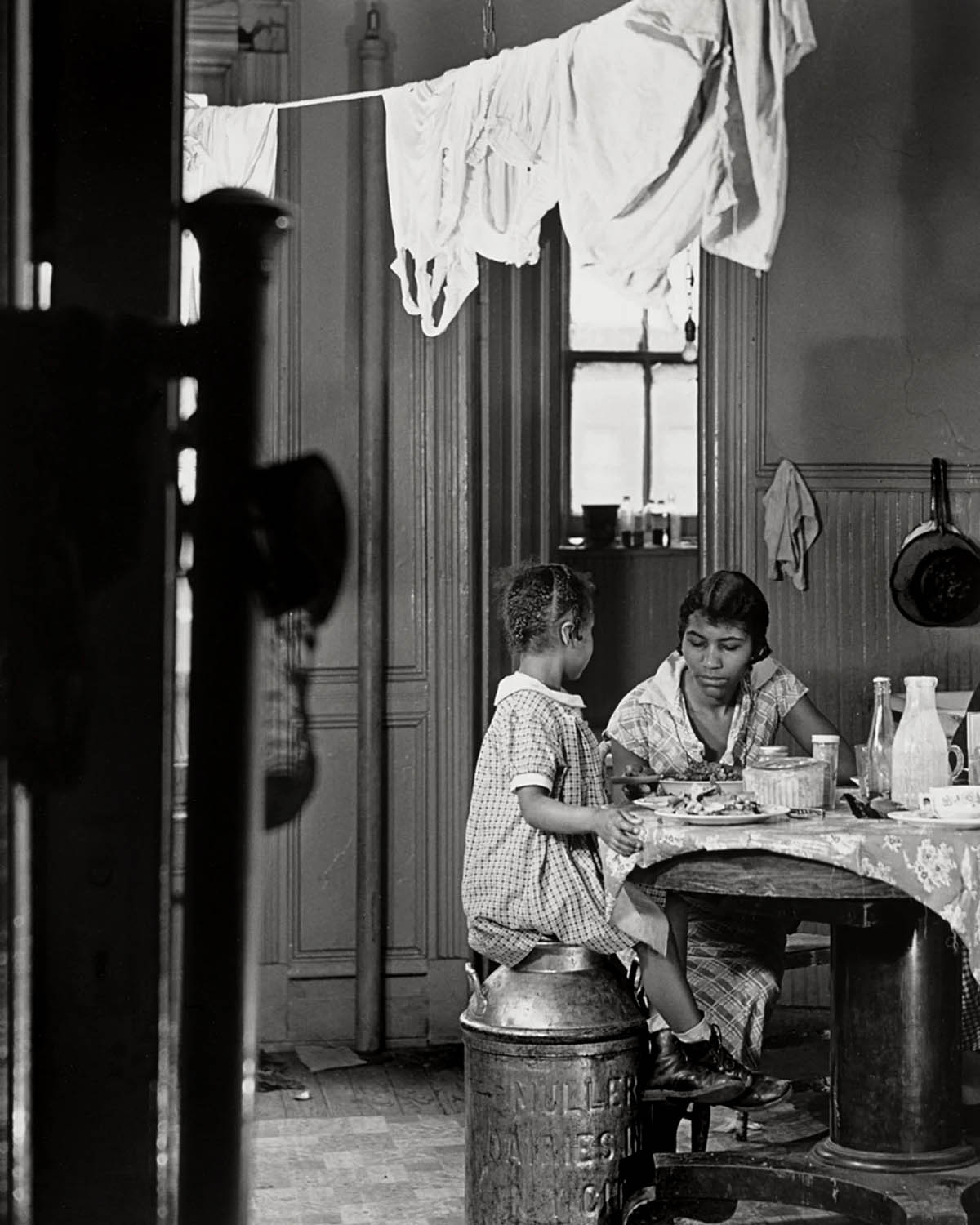
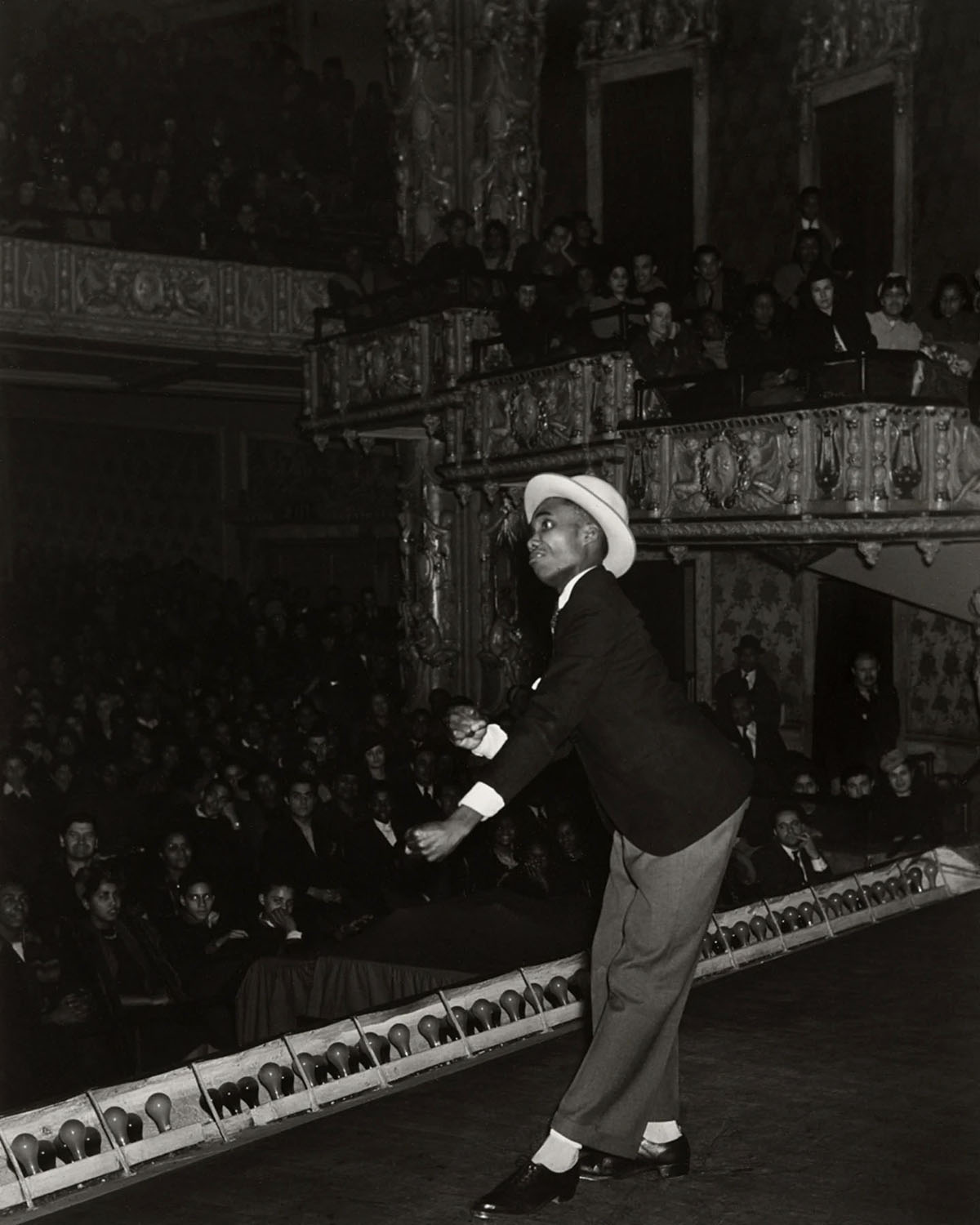
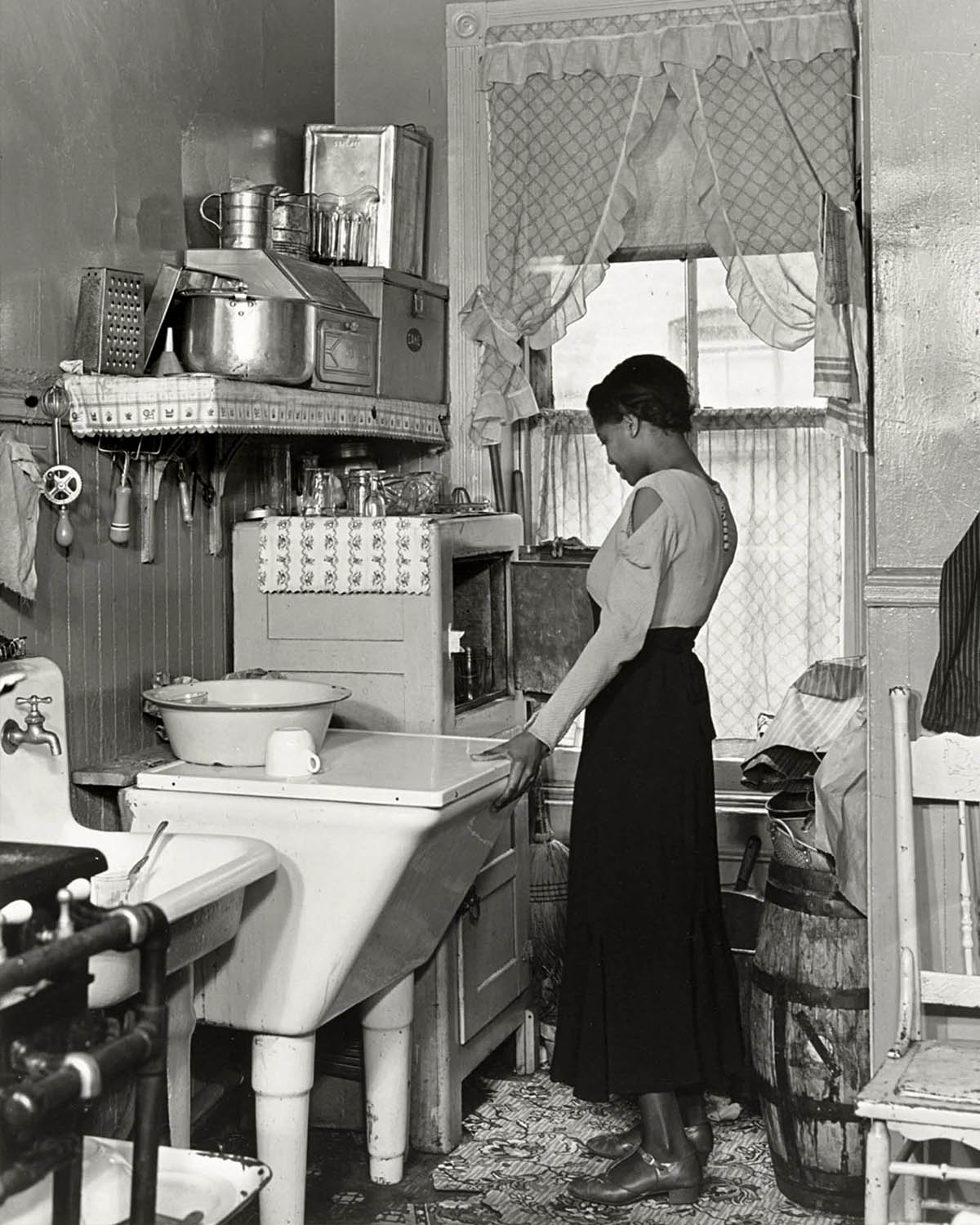

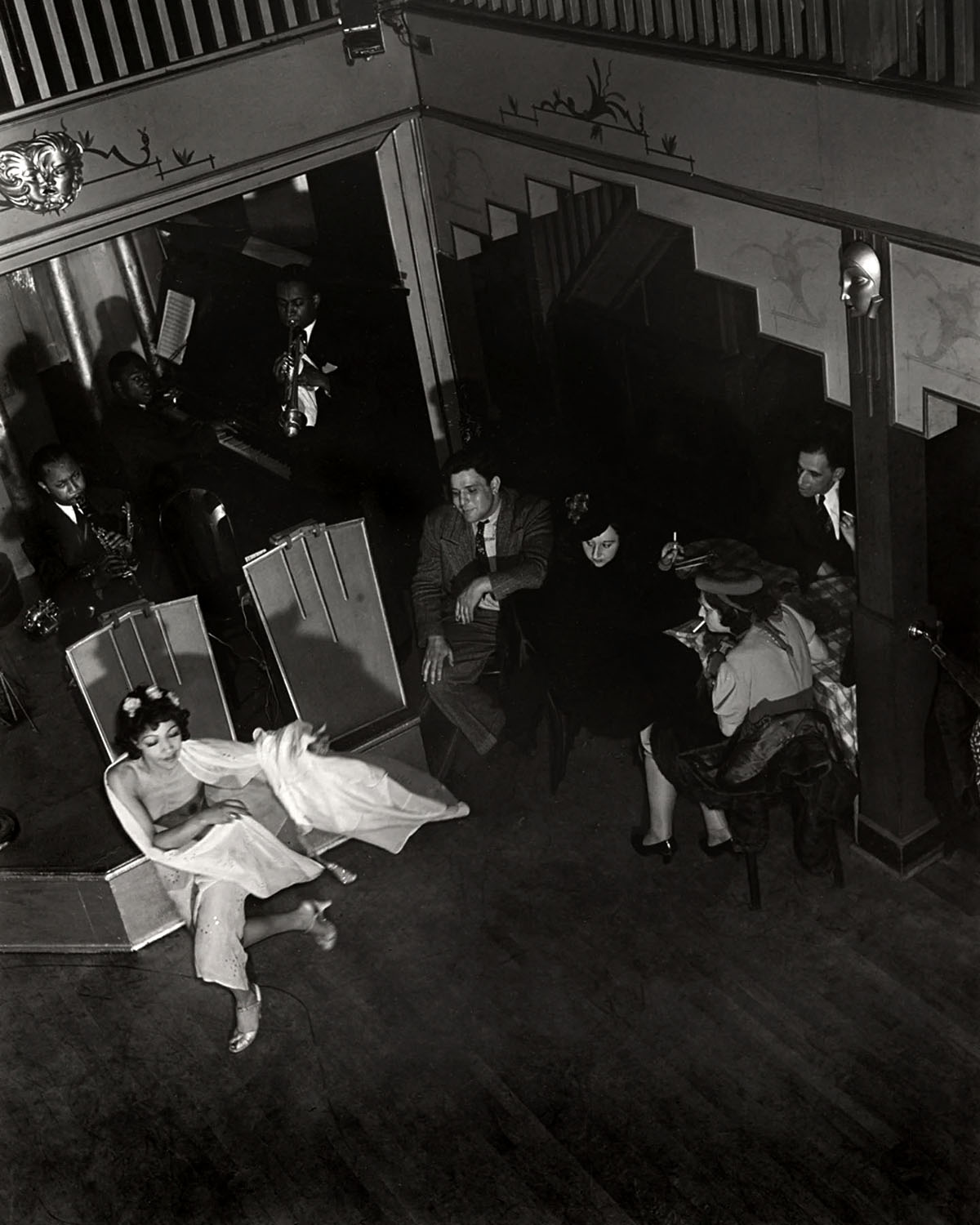
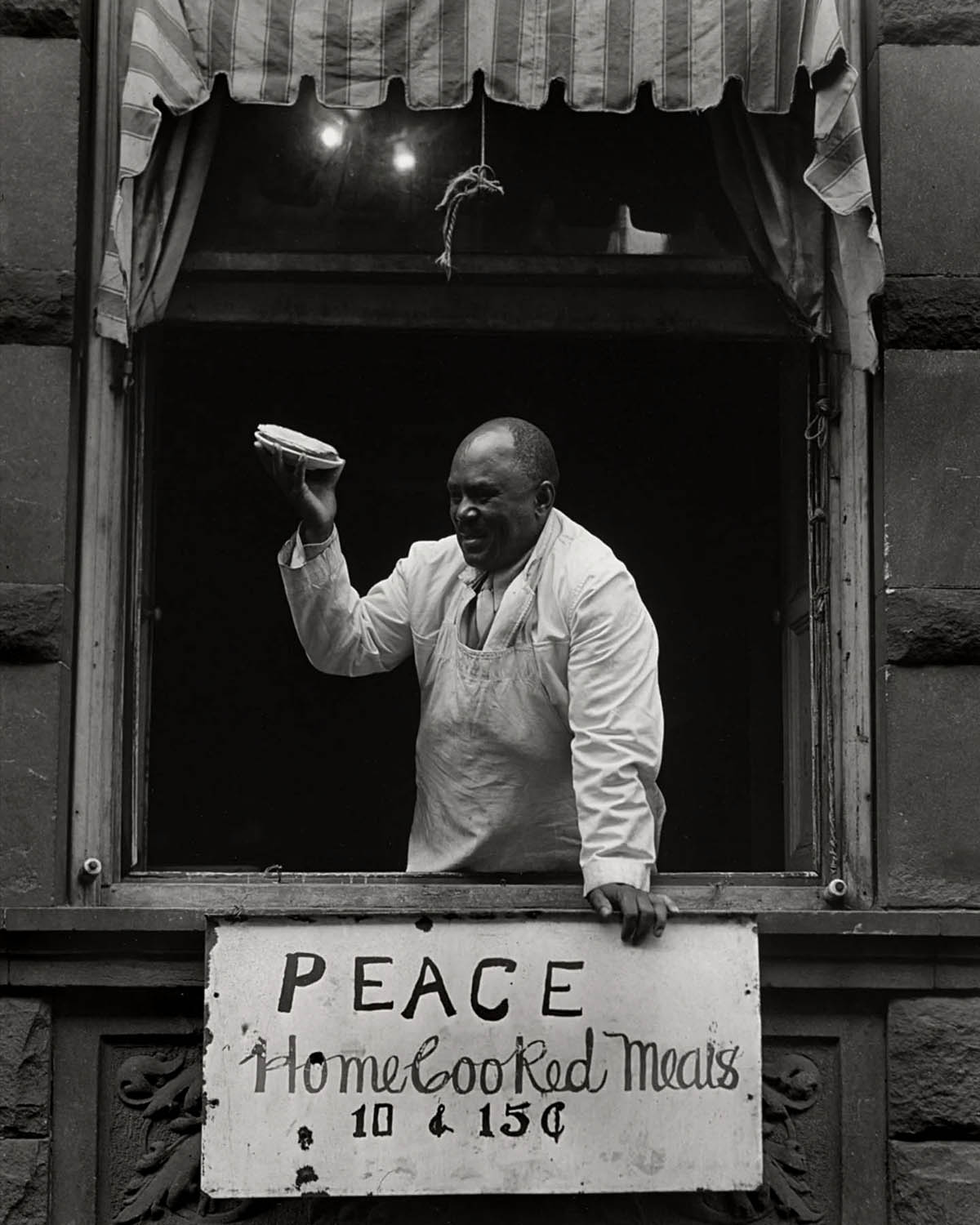
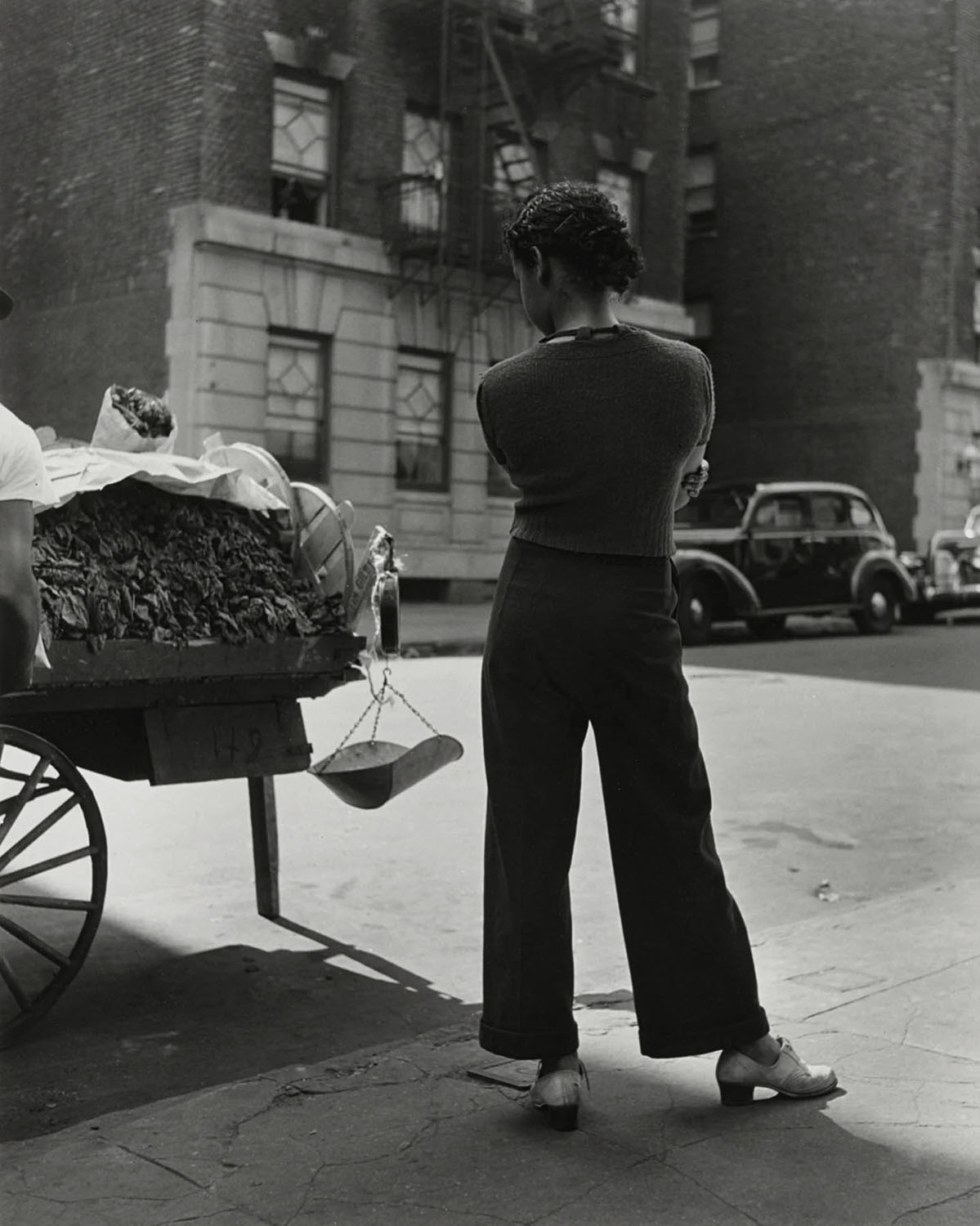
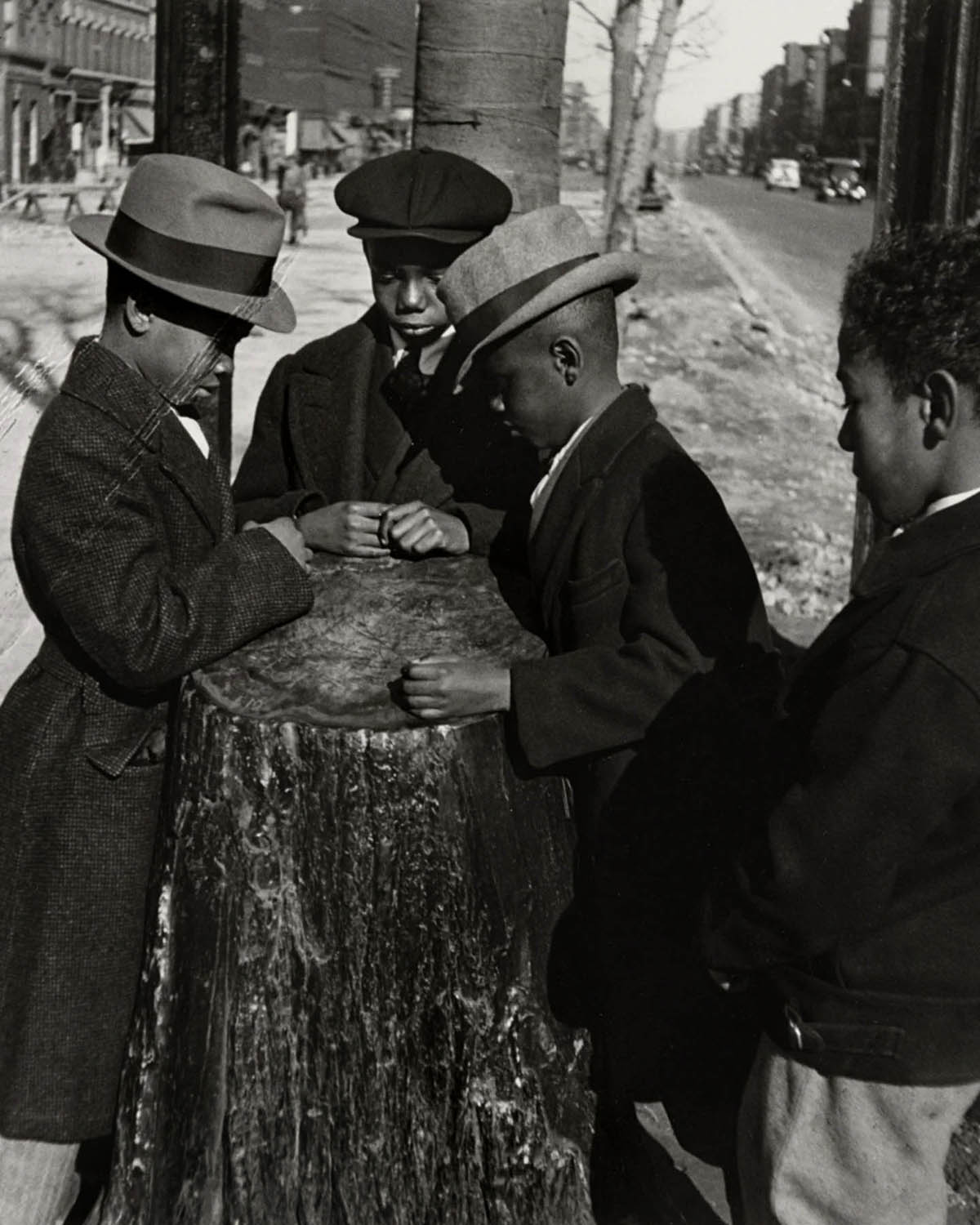
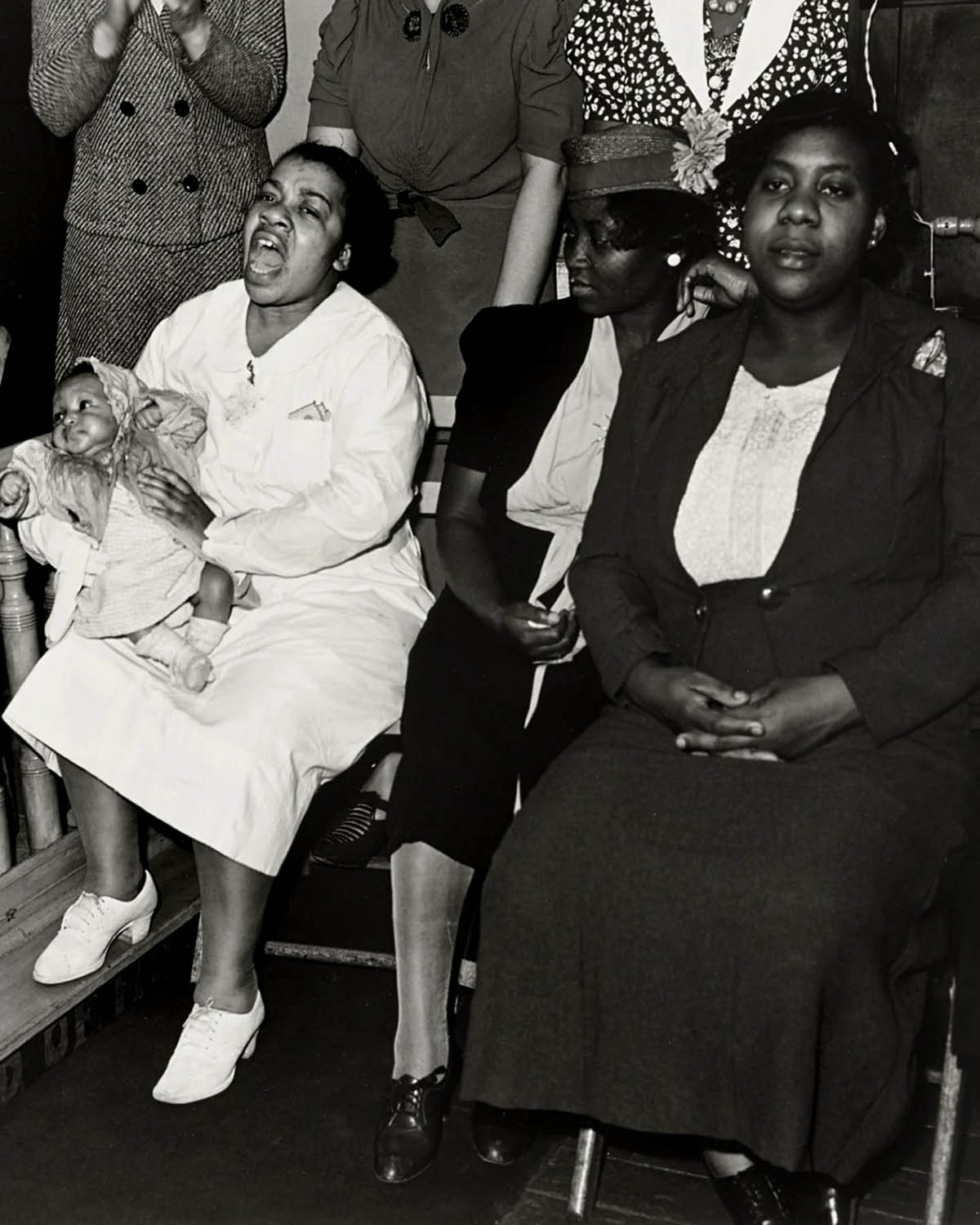
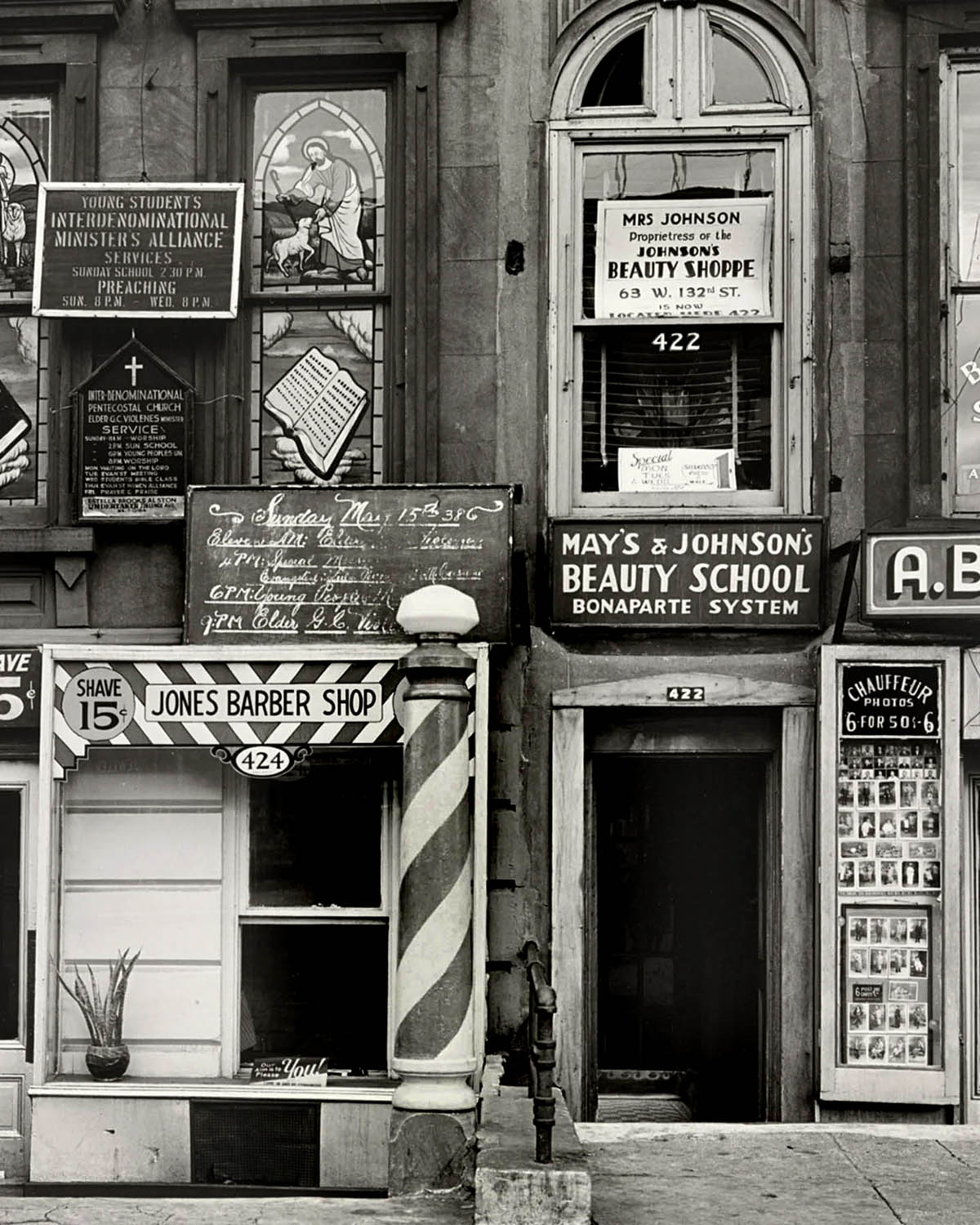
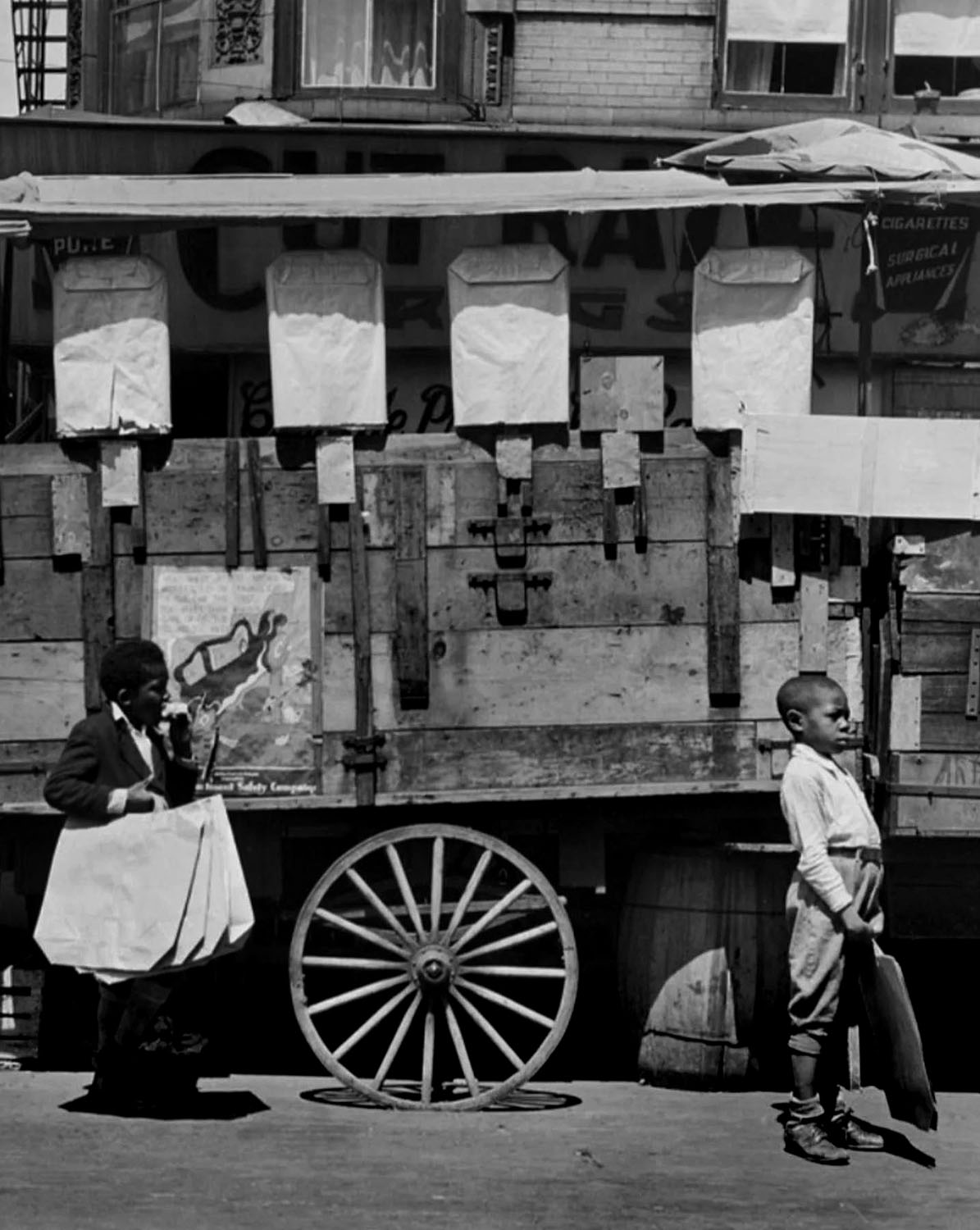
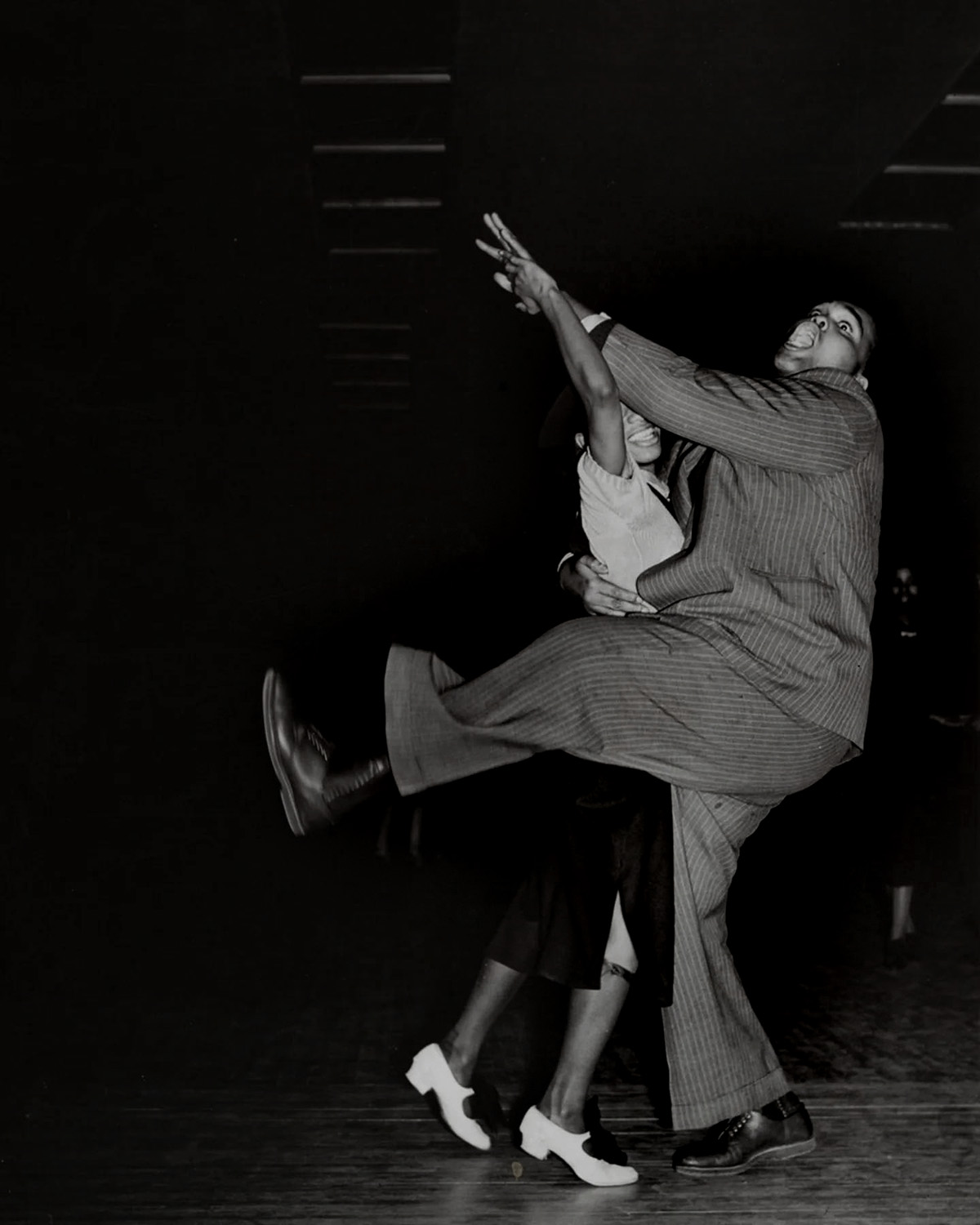
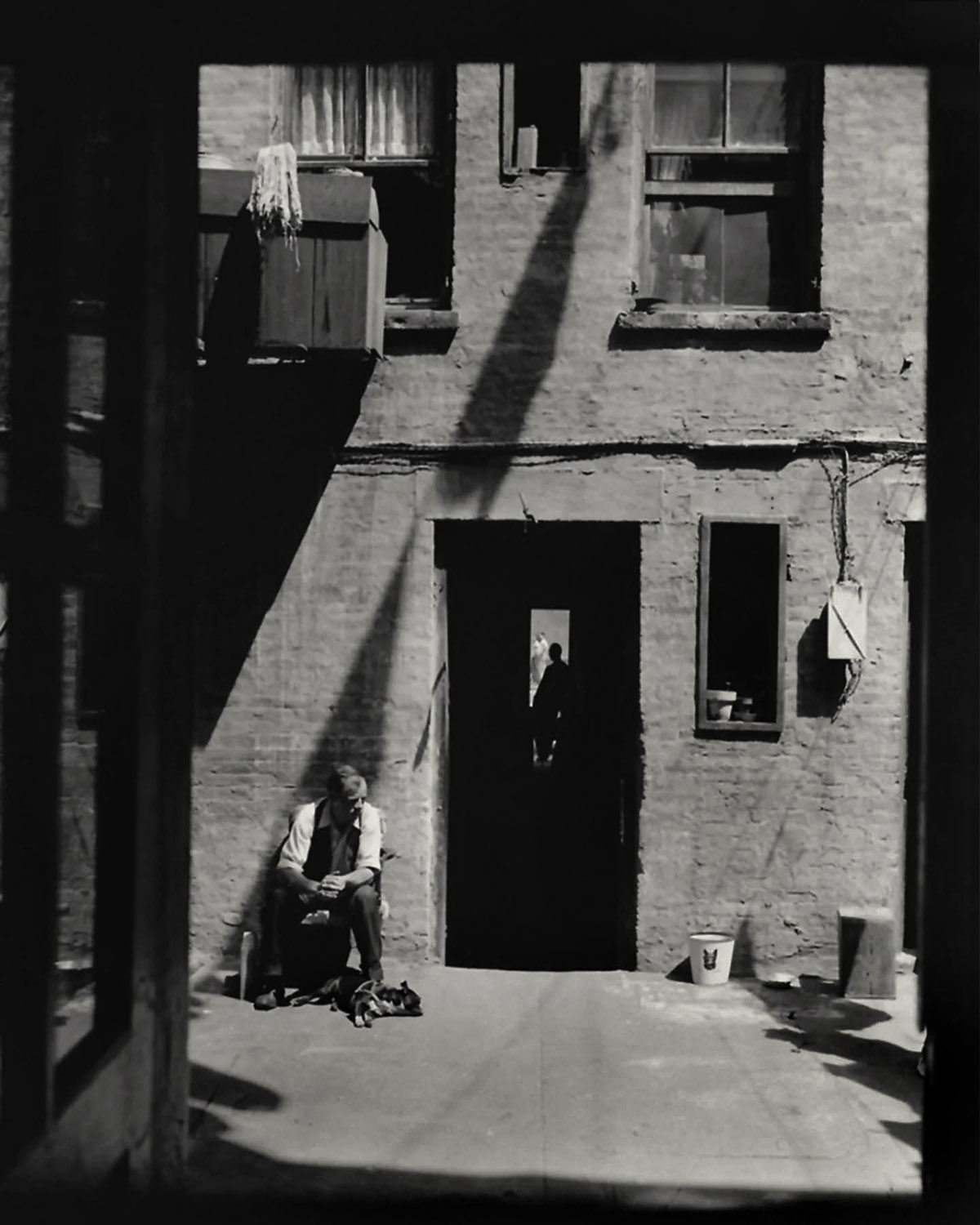
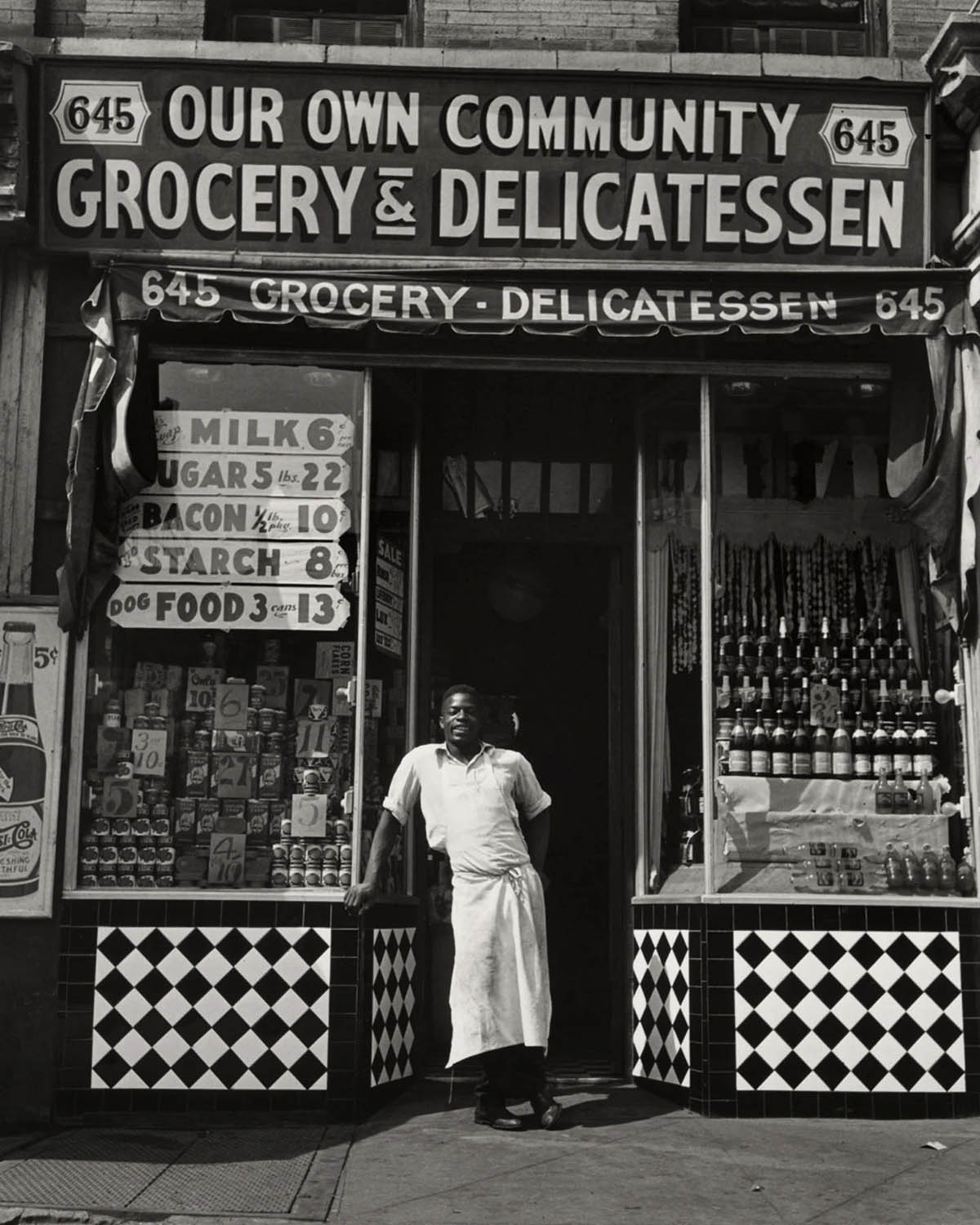
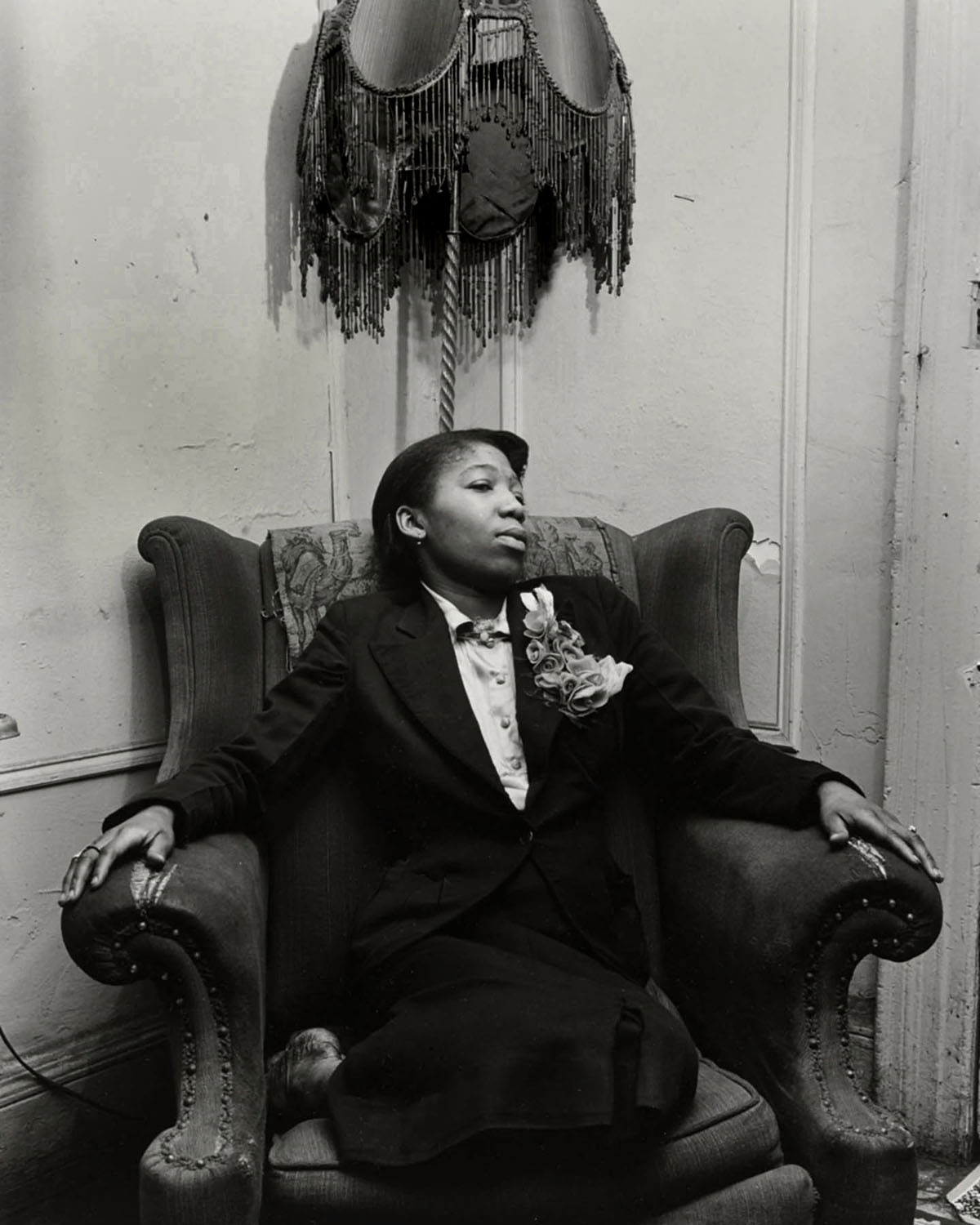
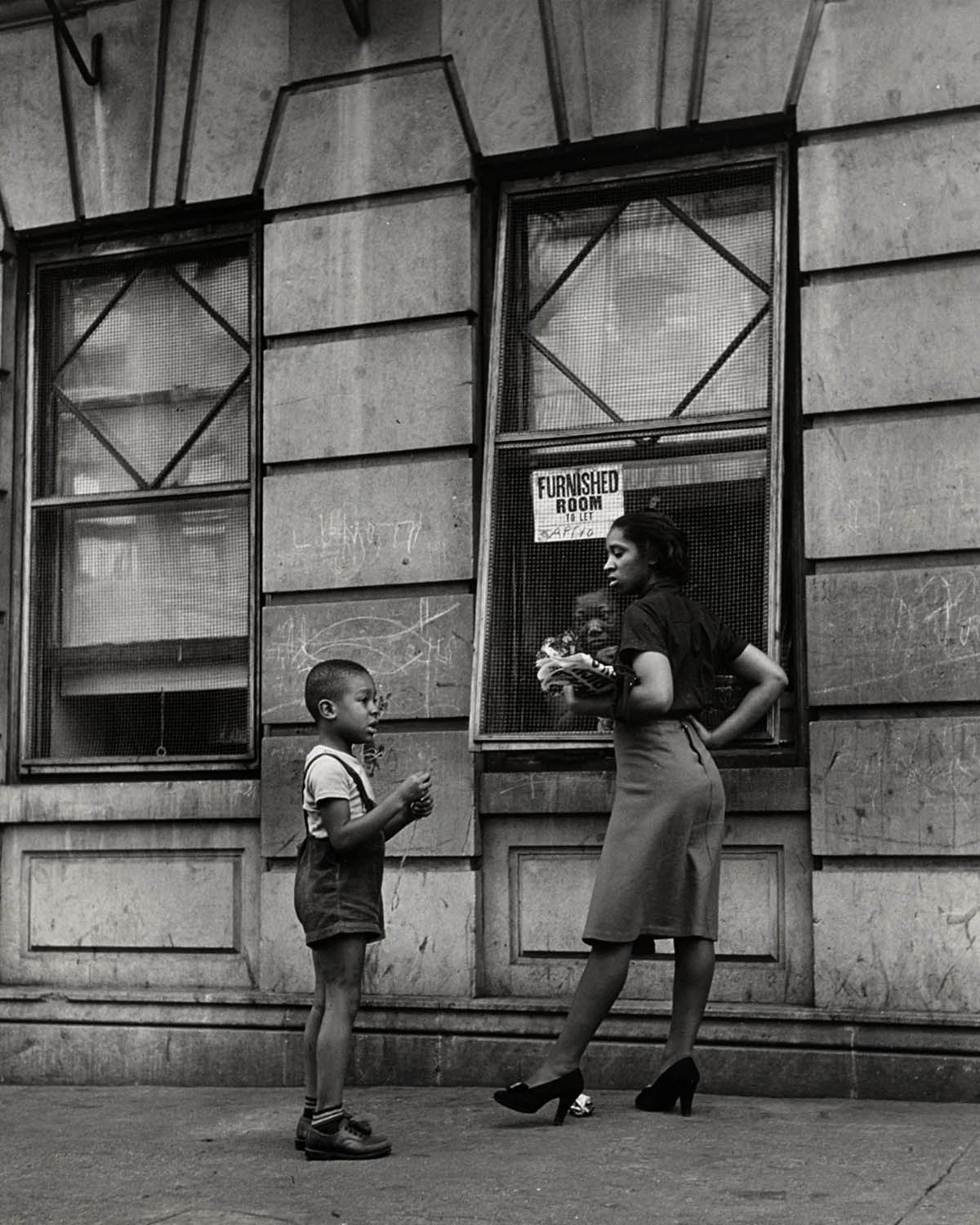
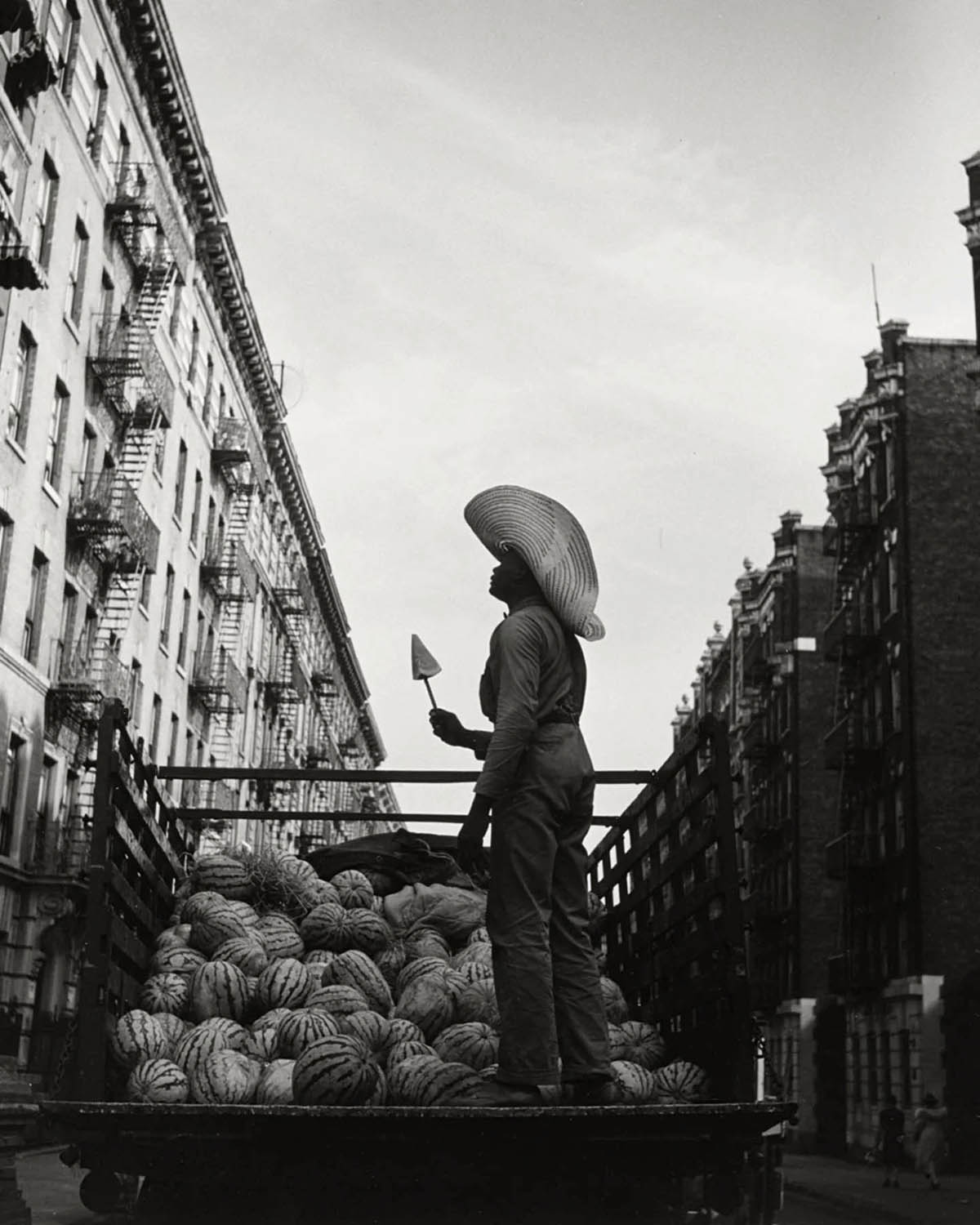

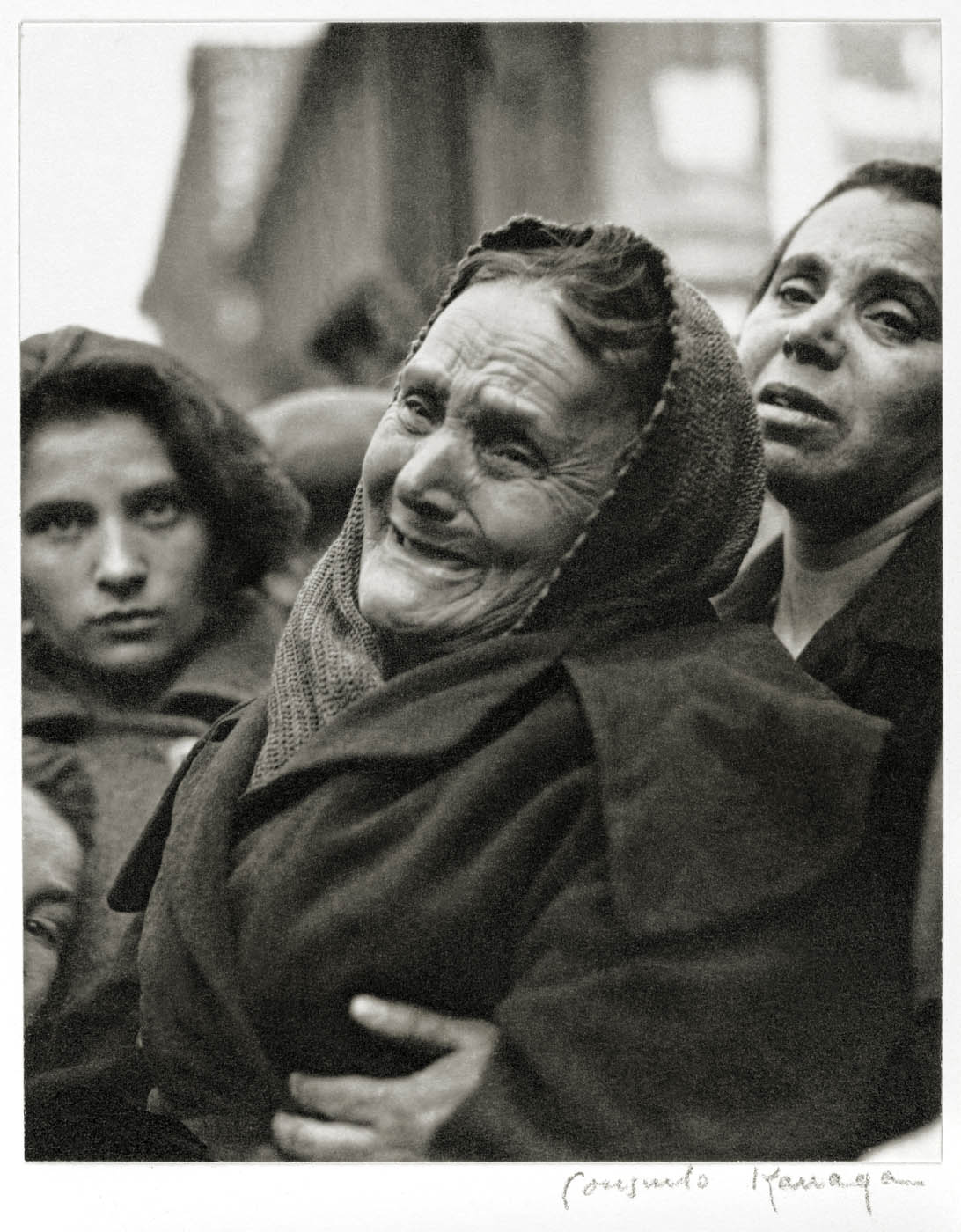
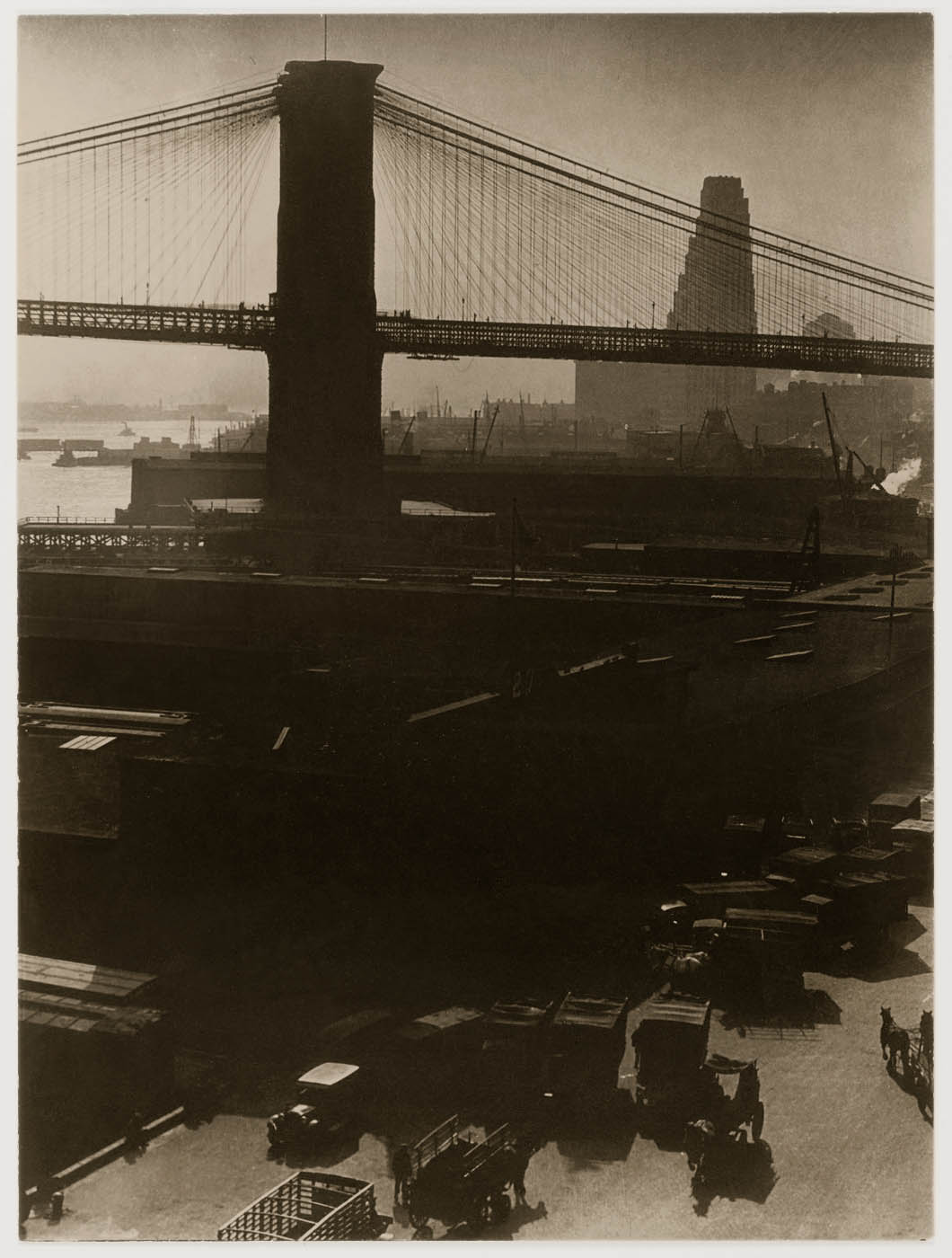

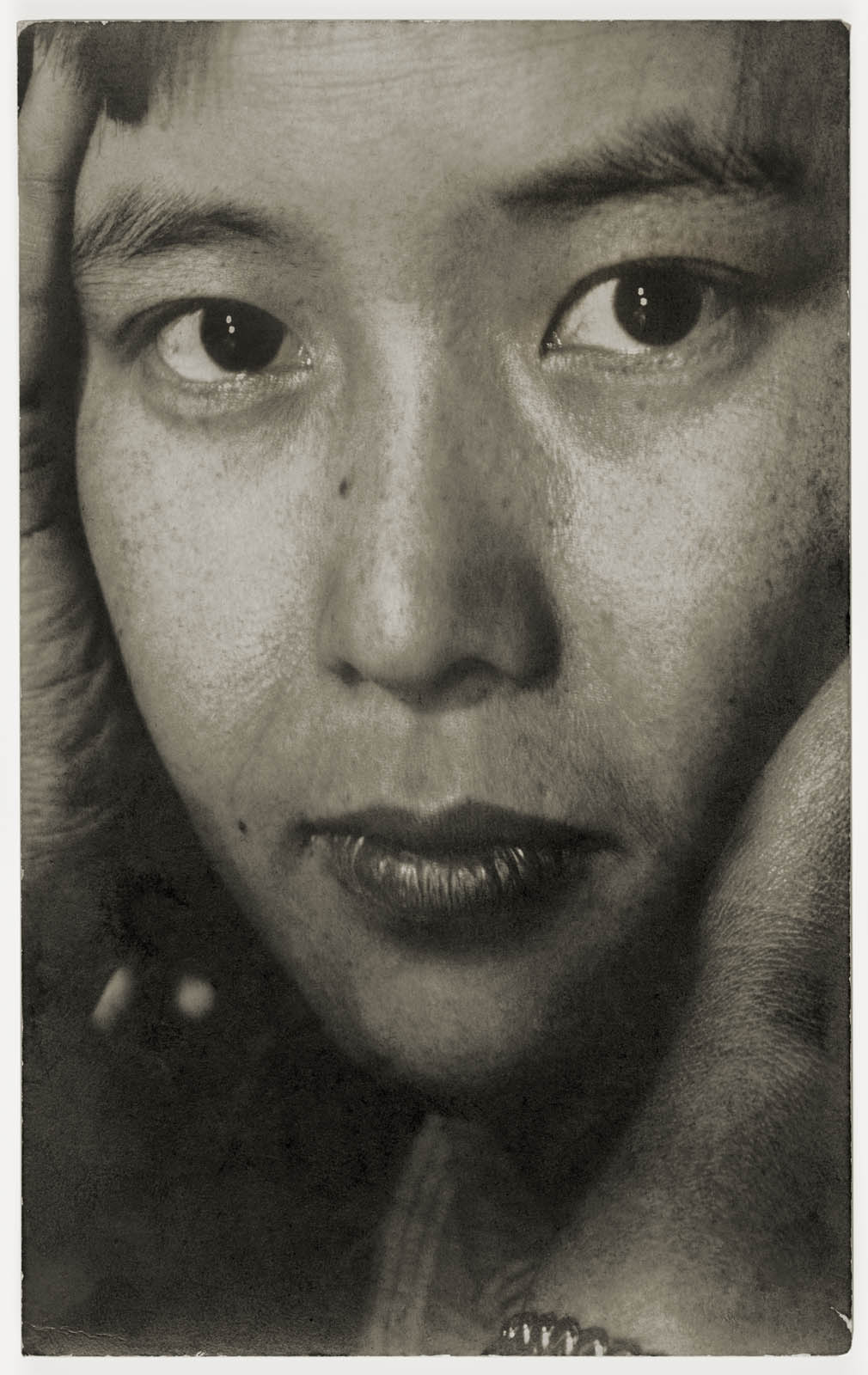
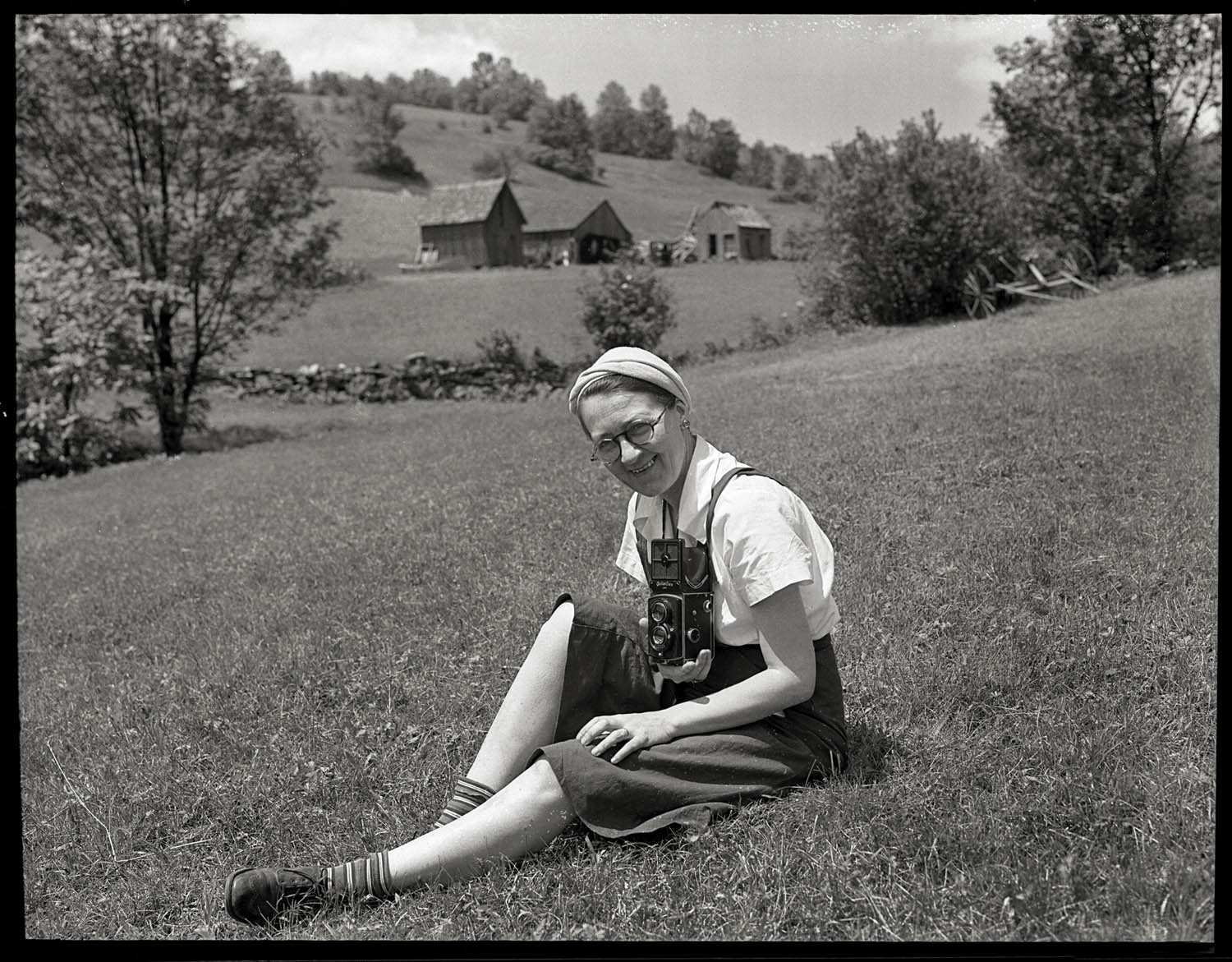
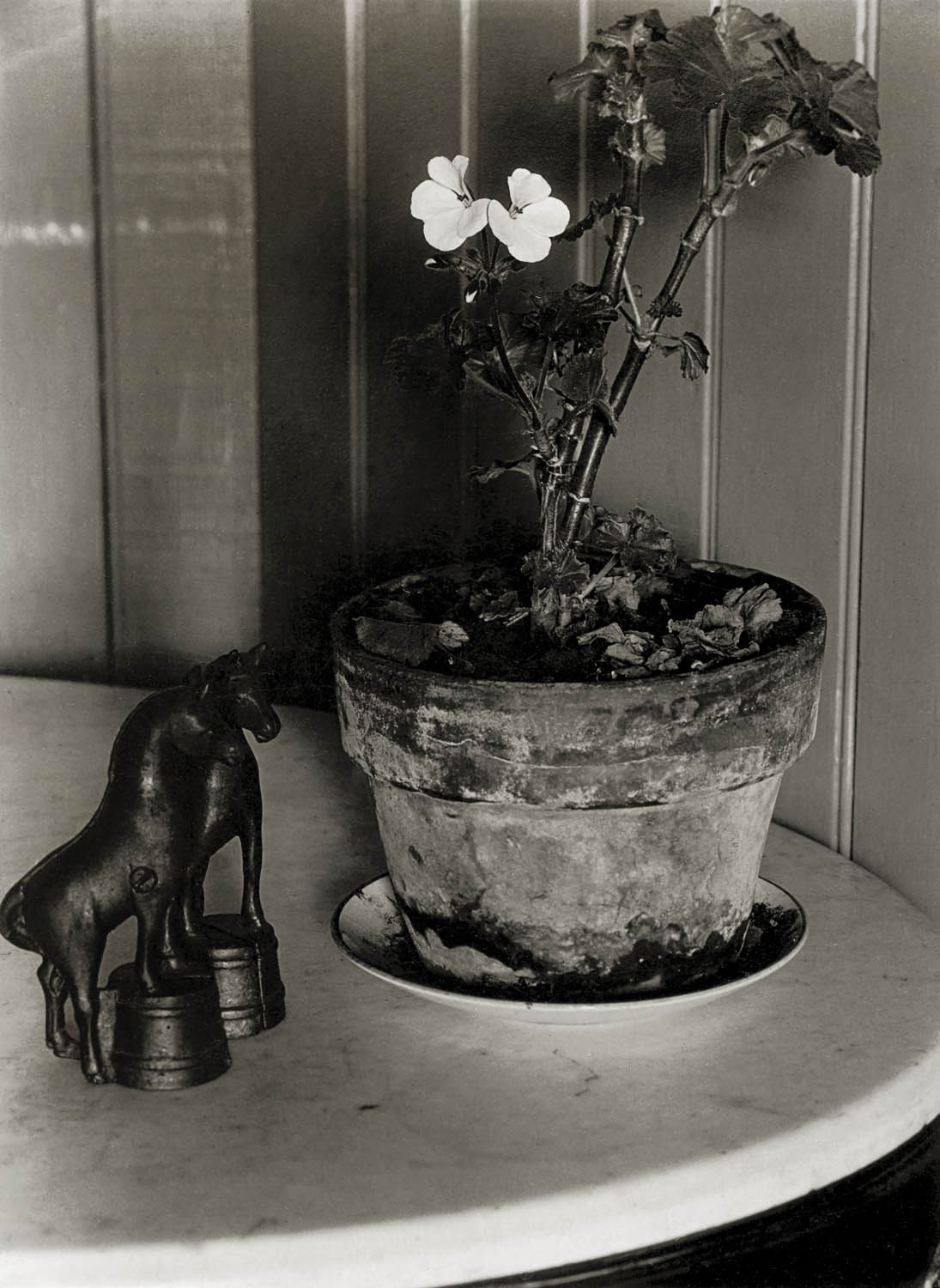
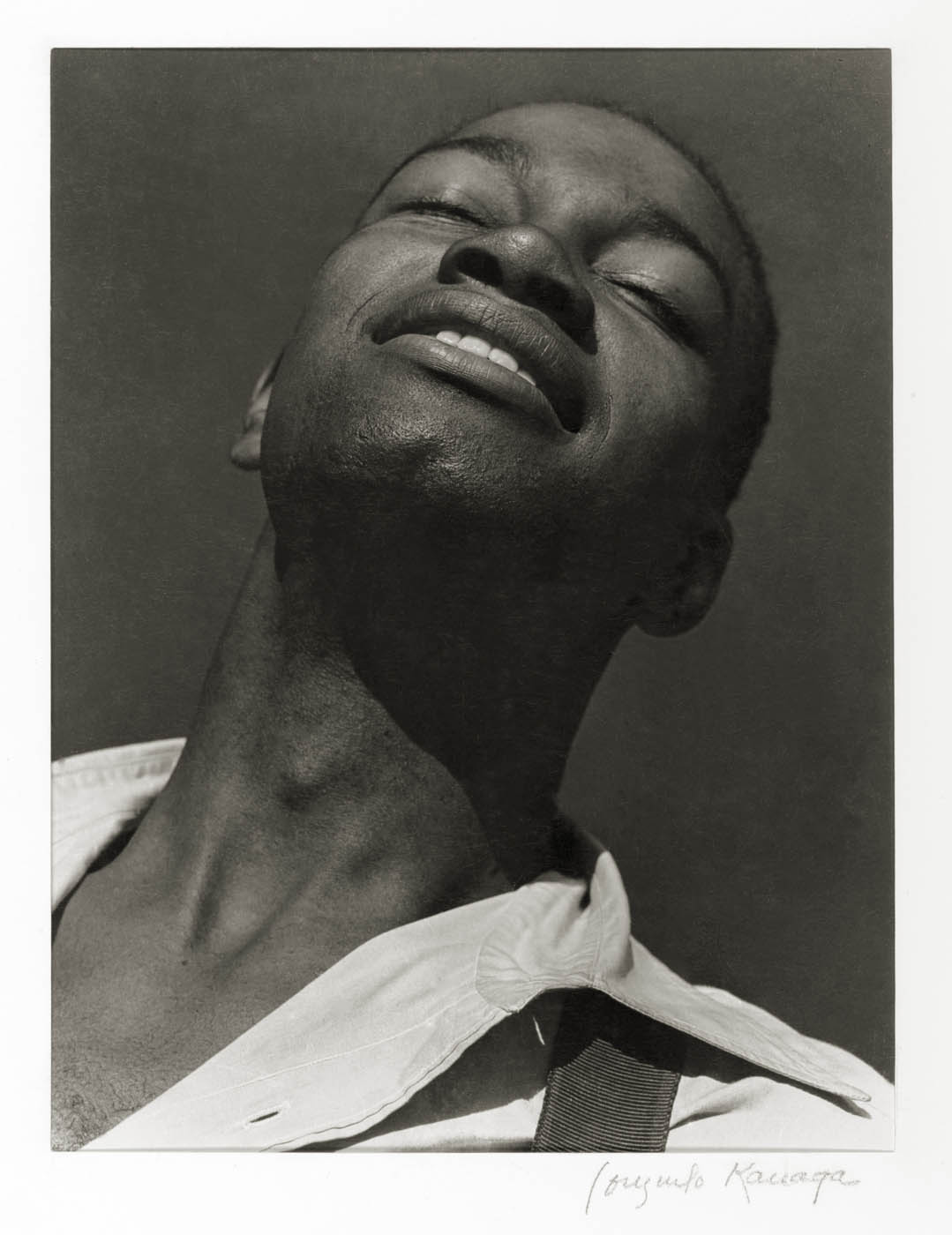
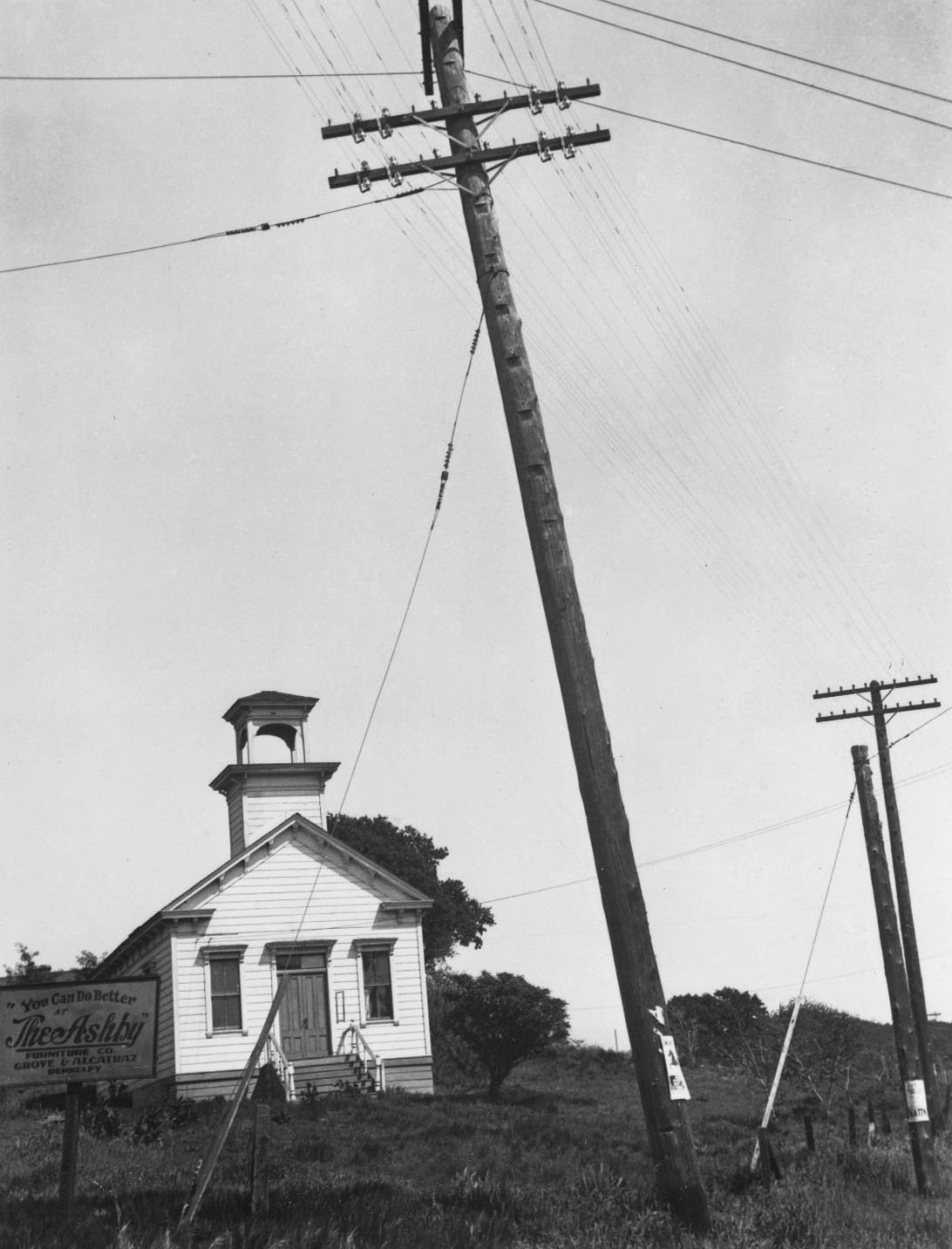
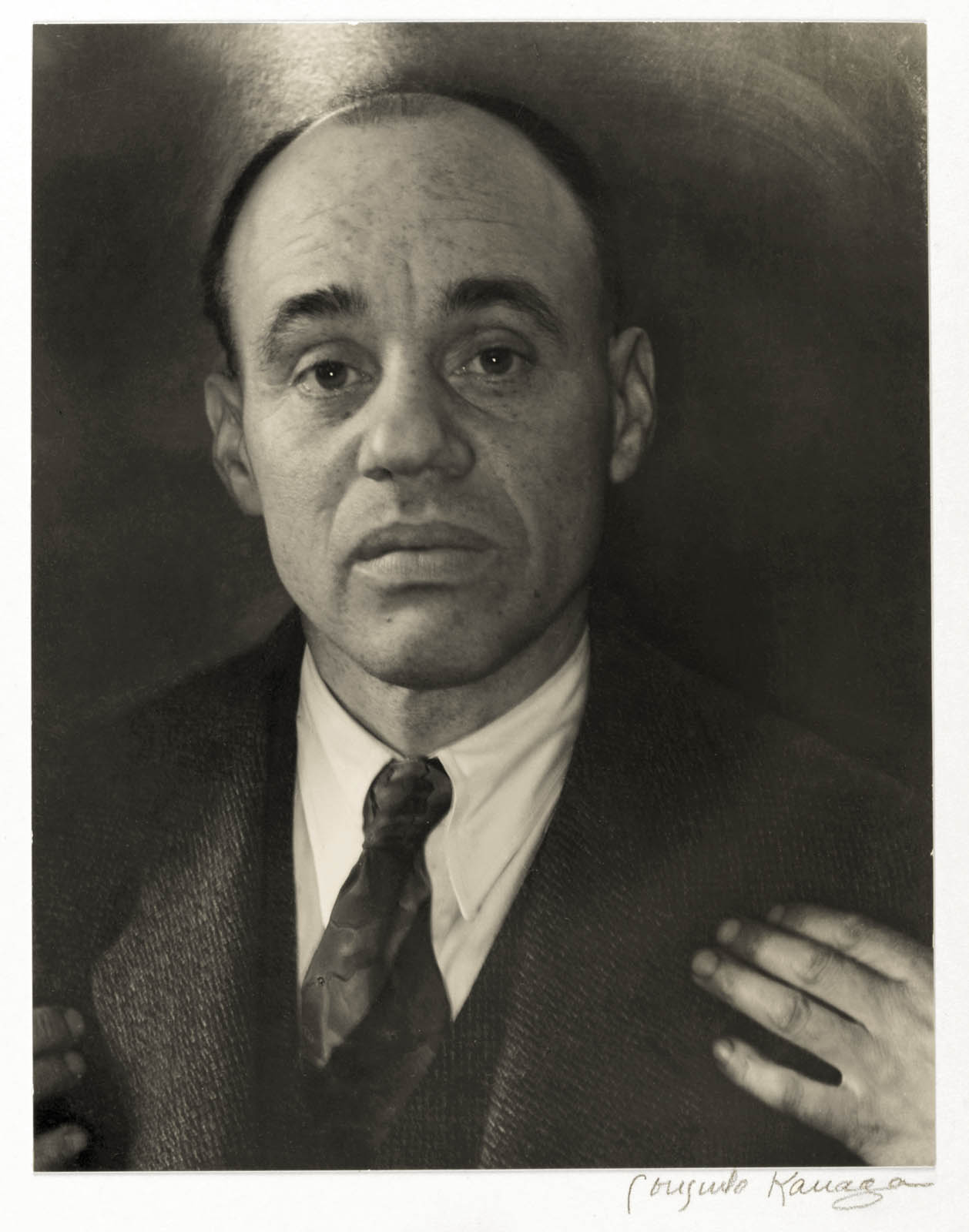
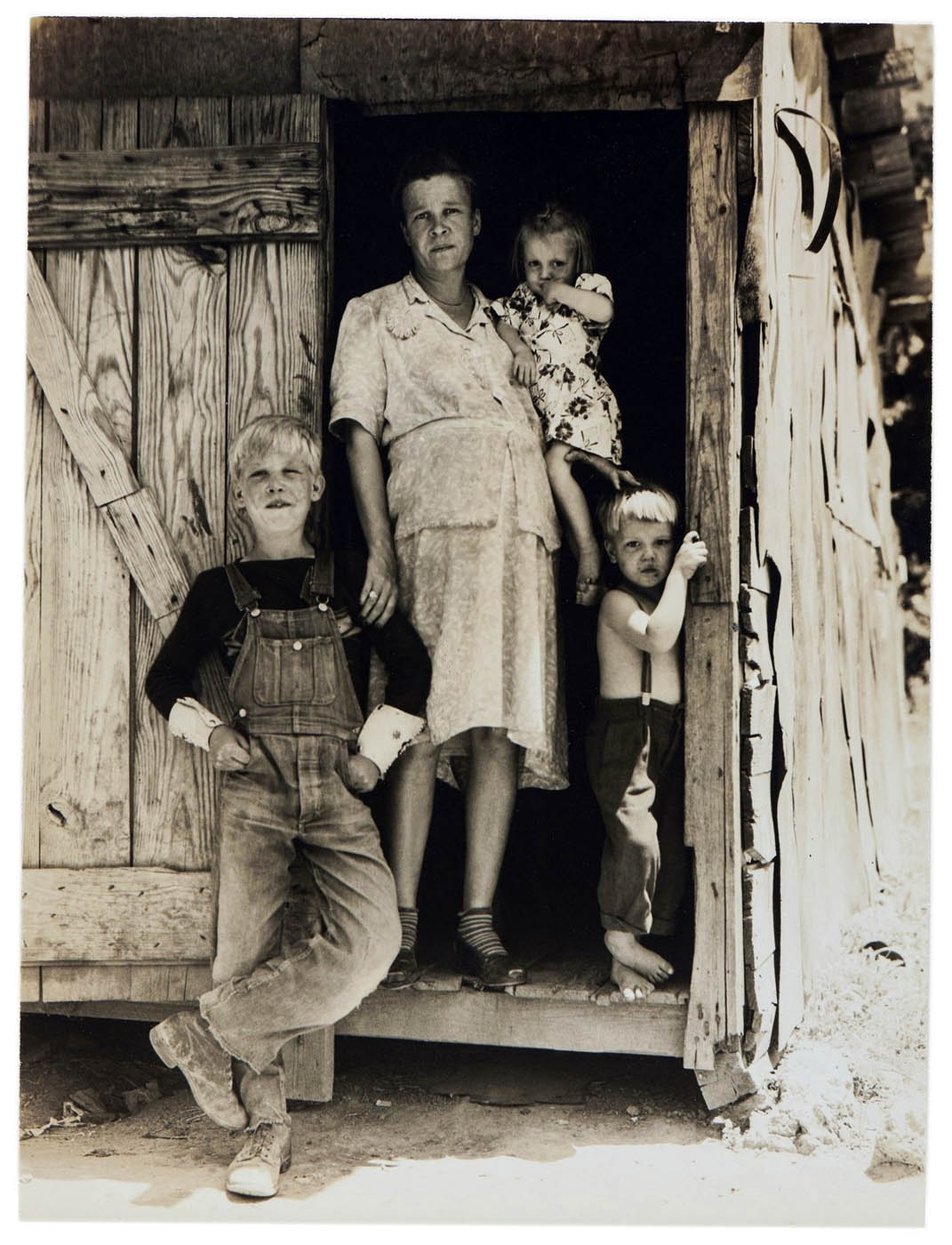
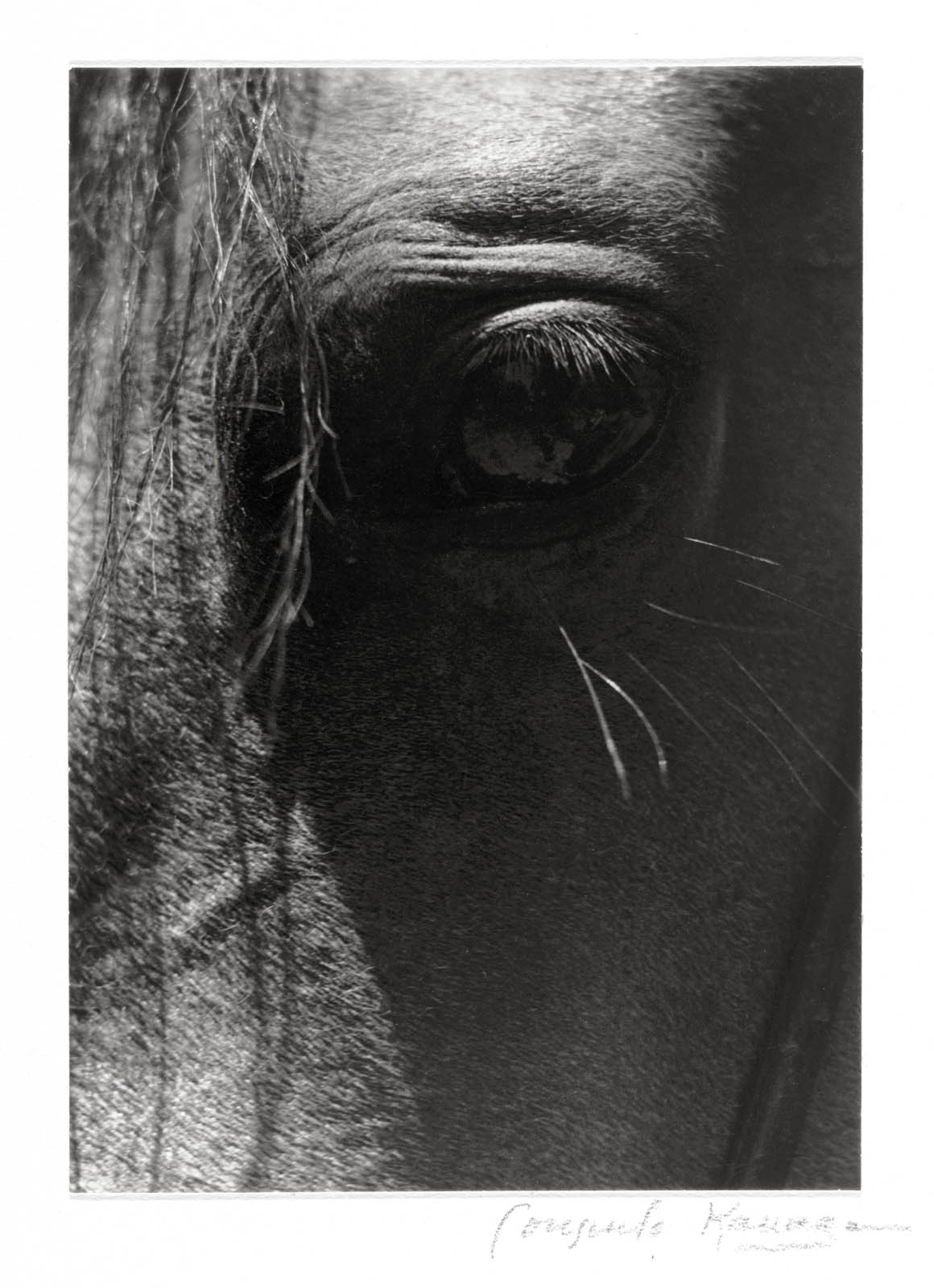


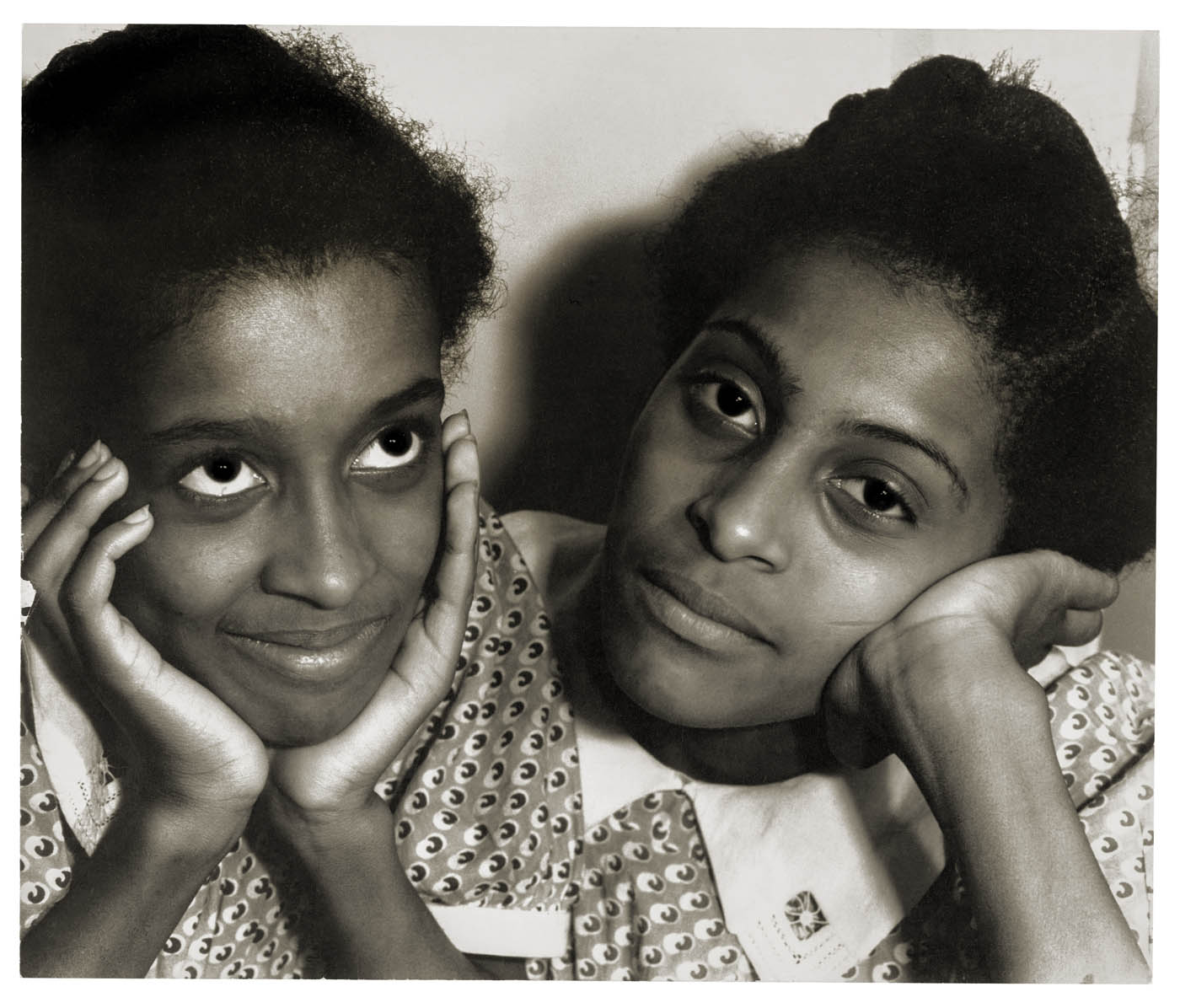


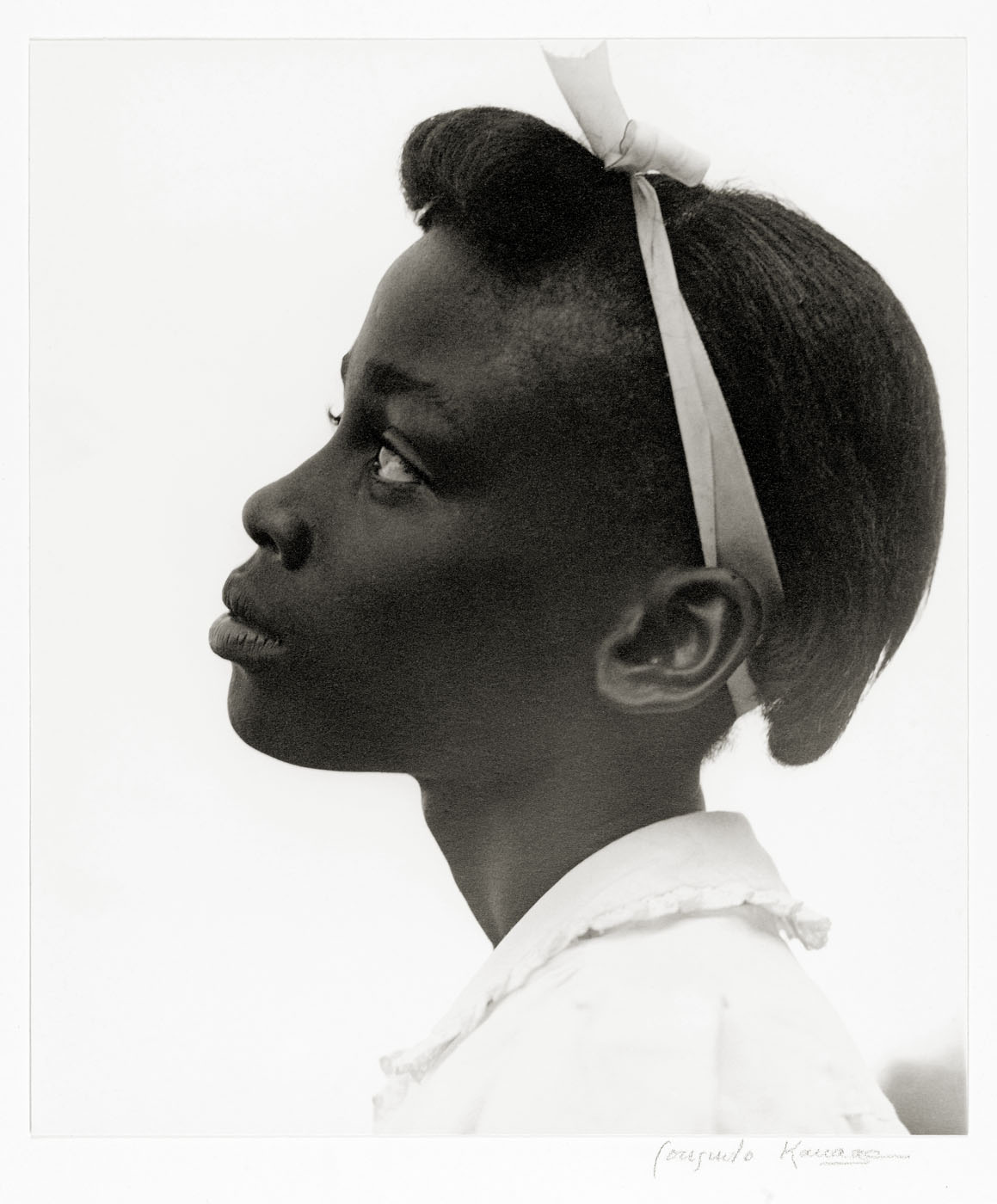

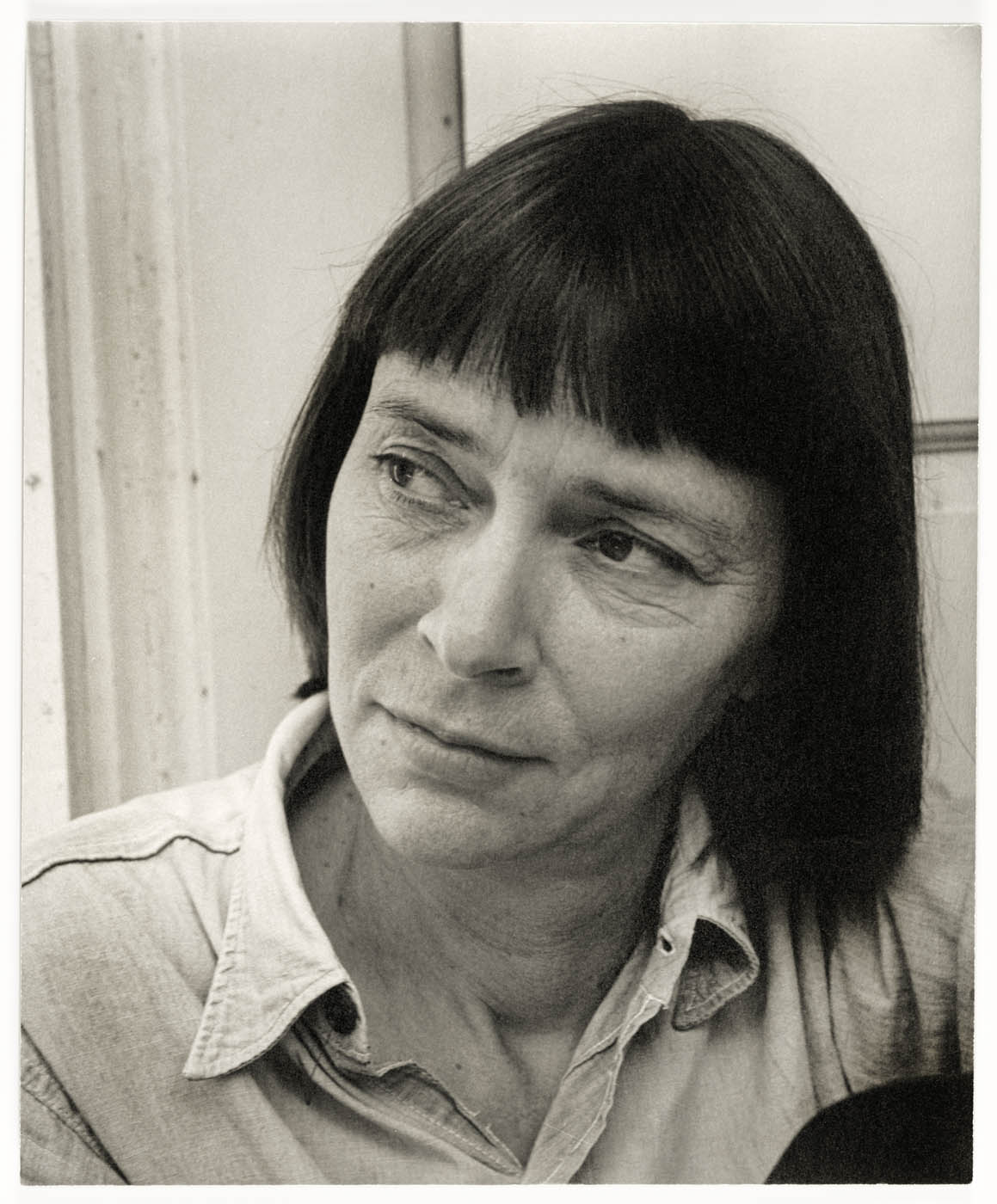


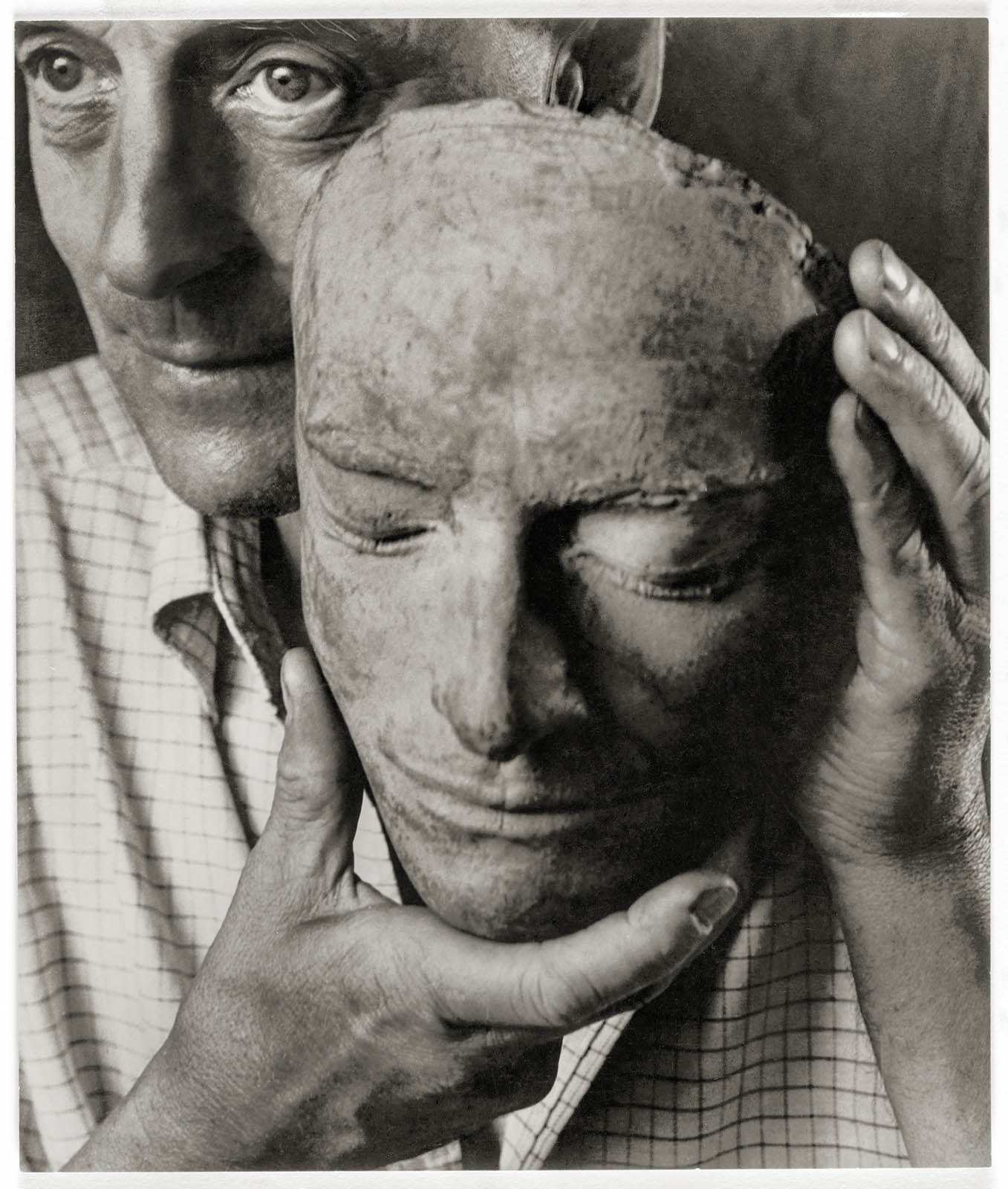
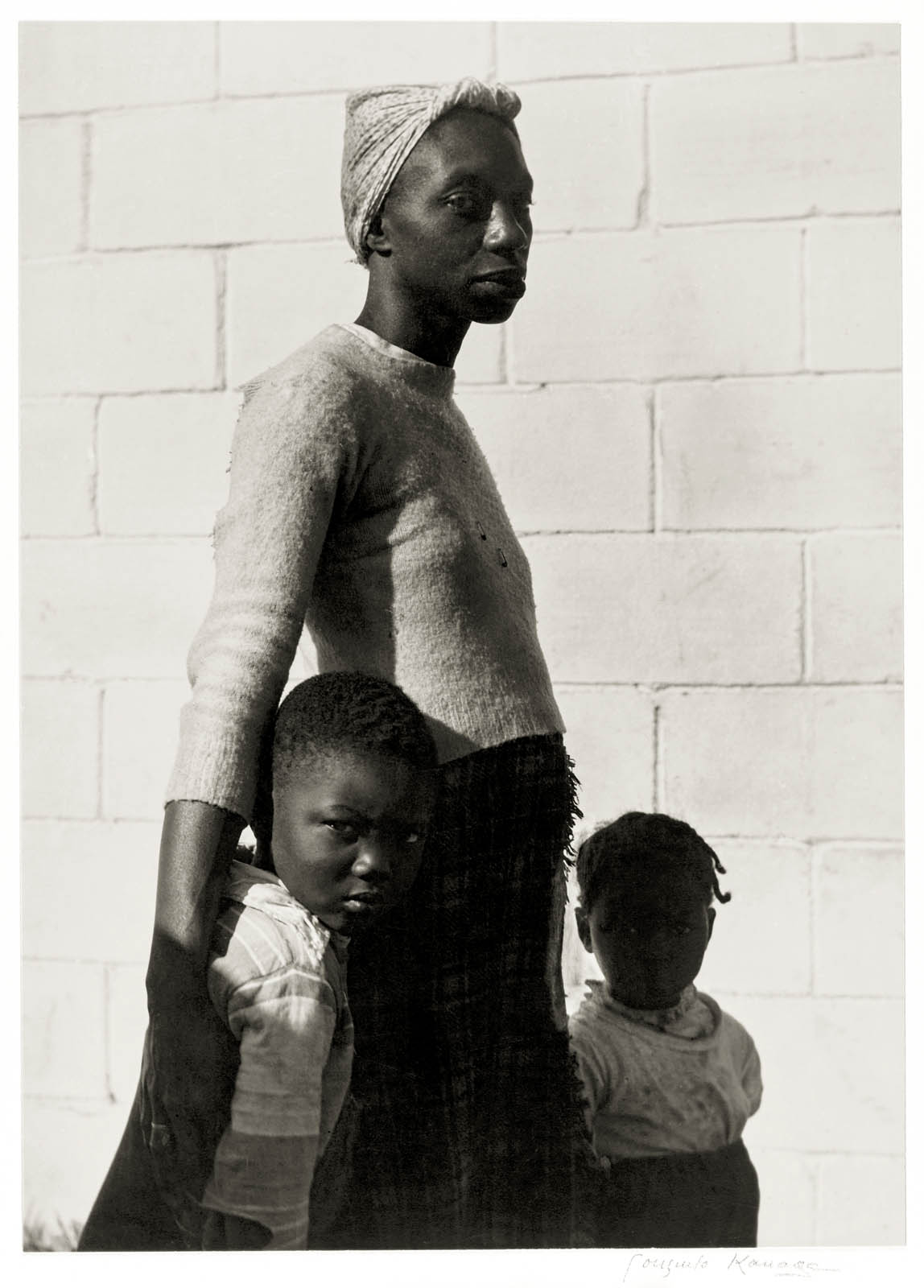
![Consuelo Kanaga (American, 1894-1978) '[Untitled] (Landscape Near Taos, New Mexico)' Nd](https://artblart.com/wp-content/uploads/2024/05/kanaga-landscape-untitled-near-taos-new-mexico.jpg "Consuelo Kanaga (American, 1894-1978) '[Untitled] (Landscape Near Taos, New Mexico)' Nd")
![Consuelo Kanaga (American, 1894-1978) '[Untitled] (Landscape with Farmhouse)' Nd](https://artblart.com/wp-content/uploads/2024/05/kanaga-untitled-landscape-with-farmhouse.jpg "Consuelo Kanaga (American, 1894-1978) '[Untitled] (Landscape with Farmhouse)' Nd")
![Louis Stettner (American, 1922-2016) 'Boulevard de Clichy, Paris' [Boulevard de Clichy, París] 1951 from the exhibition 'Louis Stettner' at Fundación MAPFRE Recoletos Room (Madrid), June - August, 2023](https://artblart.com/wp-content/uploads/2023/07/03.-id40_p.jpg "Louis Stettner (American, 1922-2016) 'Boulevard de Clichy, Paris' [Boulevard de Clichy, París] 1951 from the exhibition 'Louis Stettner' at Fundación MAPFRE Recoletos Room (Madrid), June - August, 2023")
![Louis Stettner (American, 1922-2016) 'Aubervilliers, France' [Aubervilliers, Francia] 1947 from the exhibition 'Louis Stettner' at Fundación MAPFRE Recoletos Room (Madrid), June - August, 2023](https://artblart.com/wp-content/uploads/2023/07/02.-id37_p.jpg "Louis Stettner (American, 1922-2016) 'Aubervilliers, France' [Aubervilliers, Francia] 1947 from the exhibition 'Louis Stettner' at Fundación MAPFRE Recoletos Room (Madrid), June - August, 2023")
![Louis Stettner (American, 1922-2016) 'Concentric Circles, Construction Site, New York' [Círculos concéntricos, obra, Nueva York] 1952 from the exhibition 'Louis Stettner' at Fundación MAPFRE Recoletos Room (Madrid), June - August, 2023](https://artblart.com/wp-content/uploads/2023/07/11.-id737_p.jpg "Louis Stettner (American, 1922-2016) 'Concentric Circles, Construction Site, New York' [Círculos concéntricos, obra, Nueva York] 1952 from the exhibition 'Louis Stettner' at Fundación MAPFRE Recoletos Room (Madrid), June - August, 2023")
![Louis Stettner (American, 1922-2016) 'Manhole, Times Square, New York' [Tapa de alcantarilla, Times Square, Nueva York] 1954 from the exhibition 'Louis Stettner' at Fundación MAPFRE Recoletos Room (Madrid), June - August, 2023](https://artblart.com/wp-content/uploads/2023/07/08.-id68_p-b.jpg "Louis Stettner (American, 1922-2016) 'Manhole, Times Square, New York' [Tapa de alcantarilla, Times Square, Nueva York] 1954 from the exhibition 'Louis Stettner' at Fundación MAPFRE Recoletos Room (Madrid), June - August, 2023")
![Louis Stettner (American, 1922-2016) 'Brooklyn Promenade, Brooklyn, New York' [Brooklyn Promenade, Brooklyn, Nueva York] 1954](https://artblart.com/wp-content/uploads/2023/07/09.-id1_p.jpg "Louis Stettner (American, 1922-2016) 'Brooklyn Promenade, Brooklyn, New York' [Brooklyn Promenade, Brooklyn, Nueva York] 1954")
![Louis Stettner (American, 1922-2016) 'Nancy Listening to Jazz, Greenwich Village, New York' [Nancy escuchando jazz, Greenwich Village, Nueva York] 1958](https://artblart.com/wp-content/uploads/2023/07/10.-id4211_p.jpg "Louis Stettner (American, 1922-2016) 'Nancy Listening to Jazz, Greenwich Village, New York' [Nancy escuchando jazz, Greenwich Village, Nueva York] 1958")
![Louis Stettner (American, 1922-2016) 'Woman Holding Newspaper, New York' [Mujer sujetando un periódico, Nueva York] 1946](https://artblart.com/wp-content/uploads/2023/07/01.-id1732_p.jpg "Louis Stettner (American, 1922-2016) 'Woman Holding Newspaper, New York' [Mujer sujetando un periódico, Nueva York] 1946")

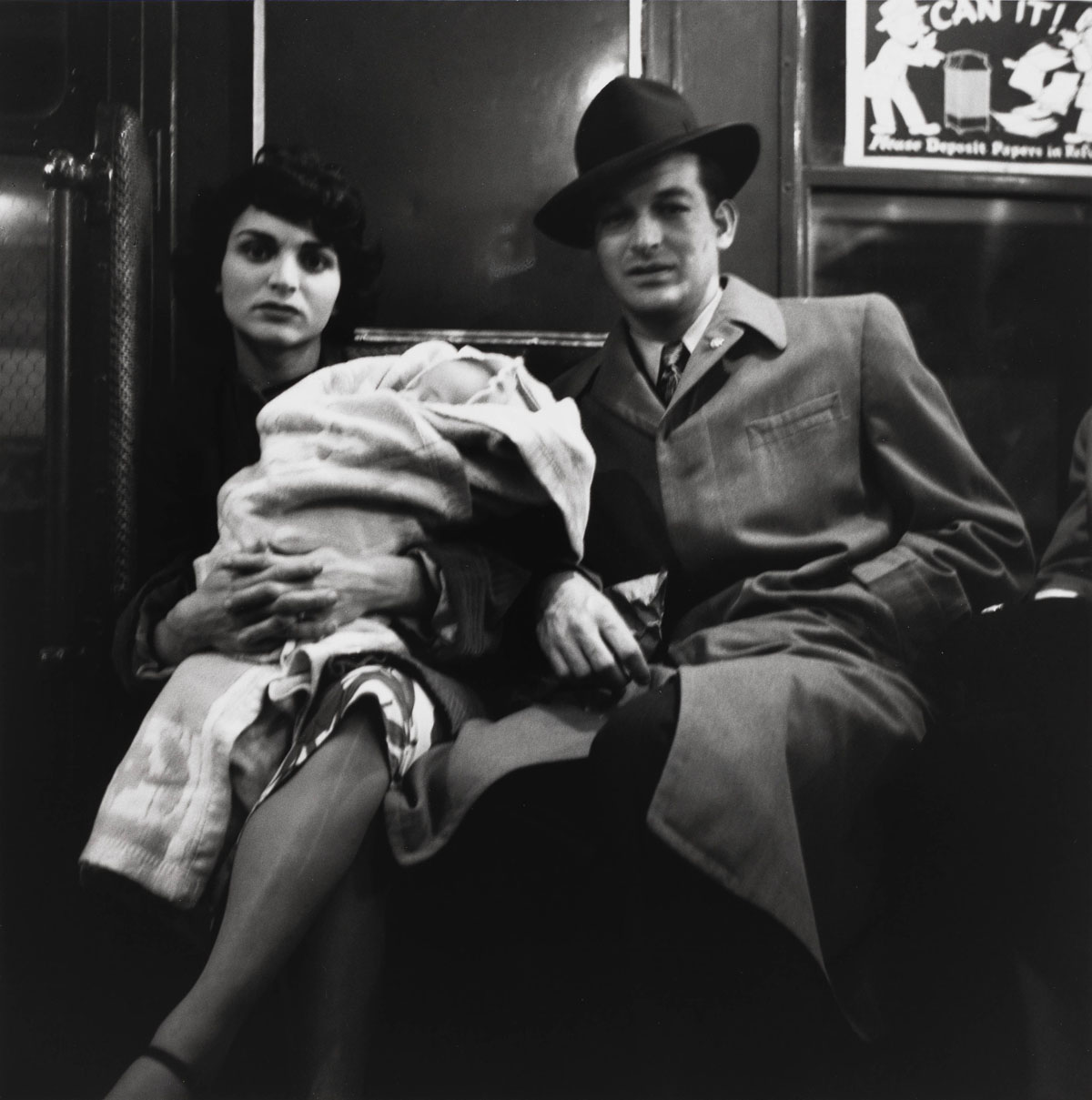

![Louis Stettner (American, 1922-2016) 'Train Station Near Málaga, Spain' [Estación de tren cerca de Málaga, España] 1951](https://artblart.com/wp-content/uploads/2023/07/05.-id74_p.jpg "Louis Stettner (American, 1922-2016) 'Train Station Near Málaga, Spain' [Estación de tren cerca de Málaga, España] 1951")


![Louis Stettner (American, 1922-2016) 'Tony, "Pepe and Tony, Spanish Fishermen", Ibiza, Spain' [Tony, "Pepe y Tony, pescadores españoles", Ibiza, España] 1956](https://artblart.com/wp-content/uploads/2023/07/04.-id4569_p.jpg "Louis Stettner (American, 1922-2016) 'Tony, \"Pepe and Tony, Spanish Fishermen\", Ibiza, Spain' [Tony, \"Pepe y Tony, pescadores españoles\", Ibiza, España] 1956")
![Louis Stettner (American, 1922-2016) 'Commuters, Evening Train, Penn Station, New York' [Volviendo del trabajo en el tren de la tarde, Penn Station, Nueva York] 1958](https://artblart.com/wp-content/uploads/2023/07/06.-id179_p.jpg "Louis Stettner (American, 1922-2016) 'Commuters, Evening Train, Penn Station, New York' [Volviendo del trabajo en el tren de la tarde, Penn Station, Nueva York] 1958")

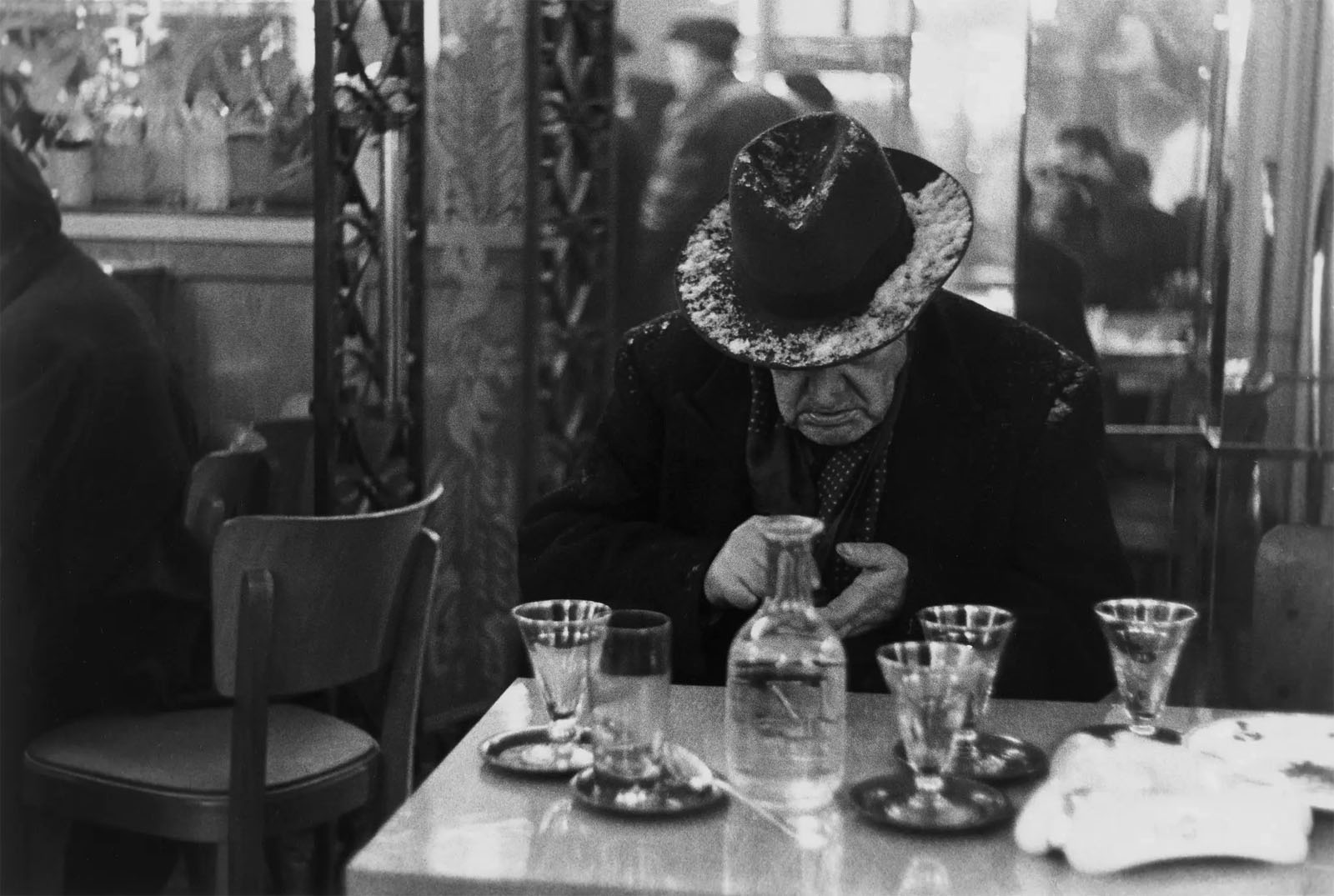
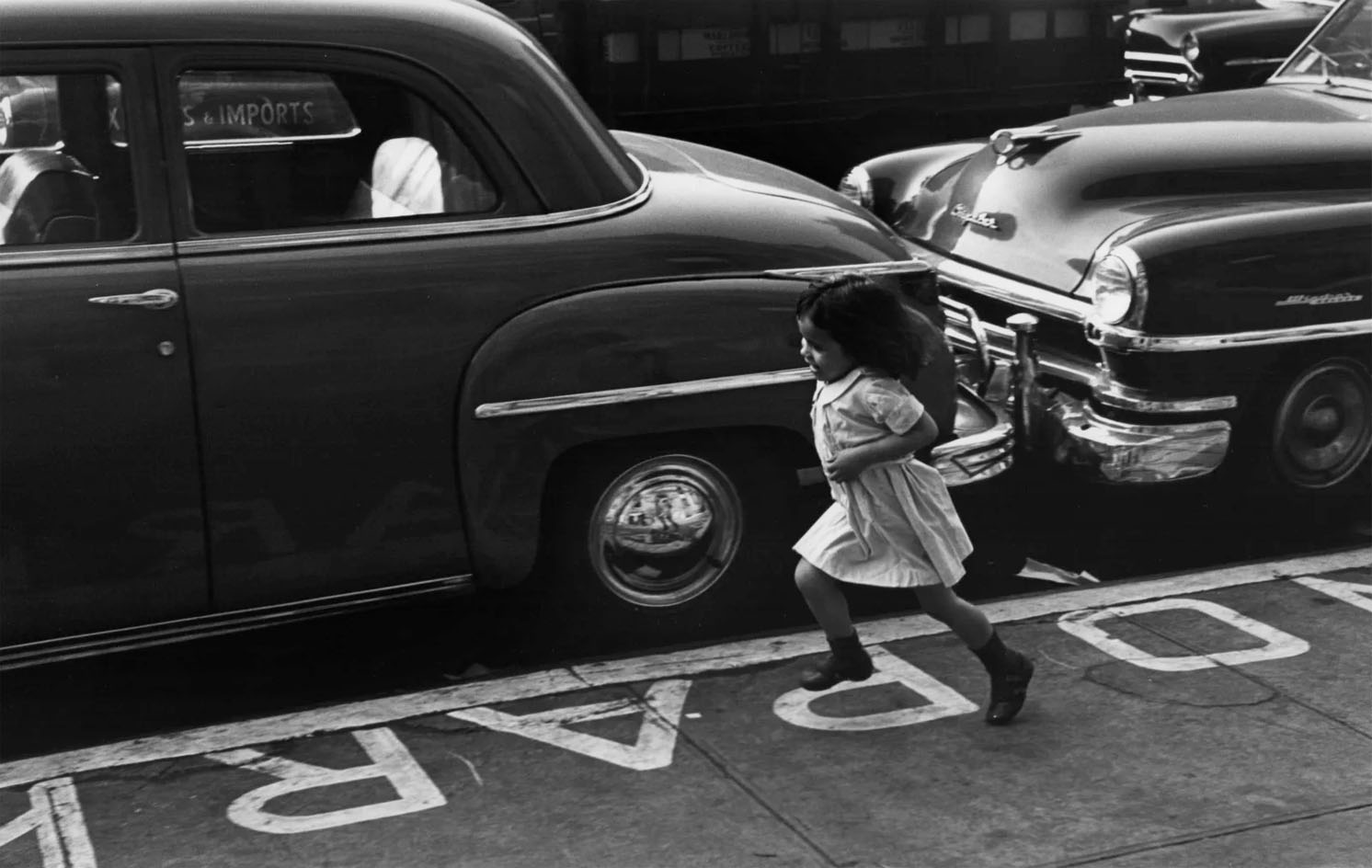
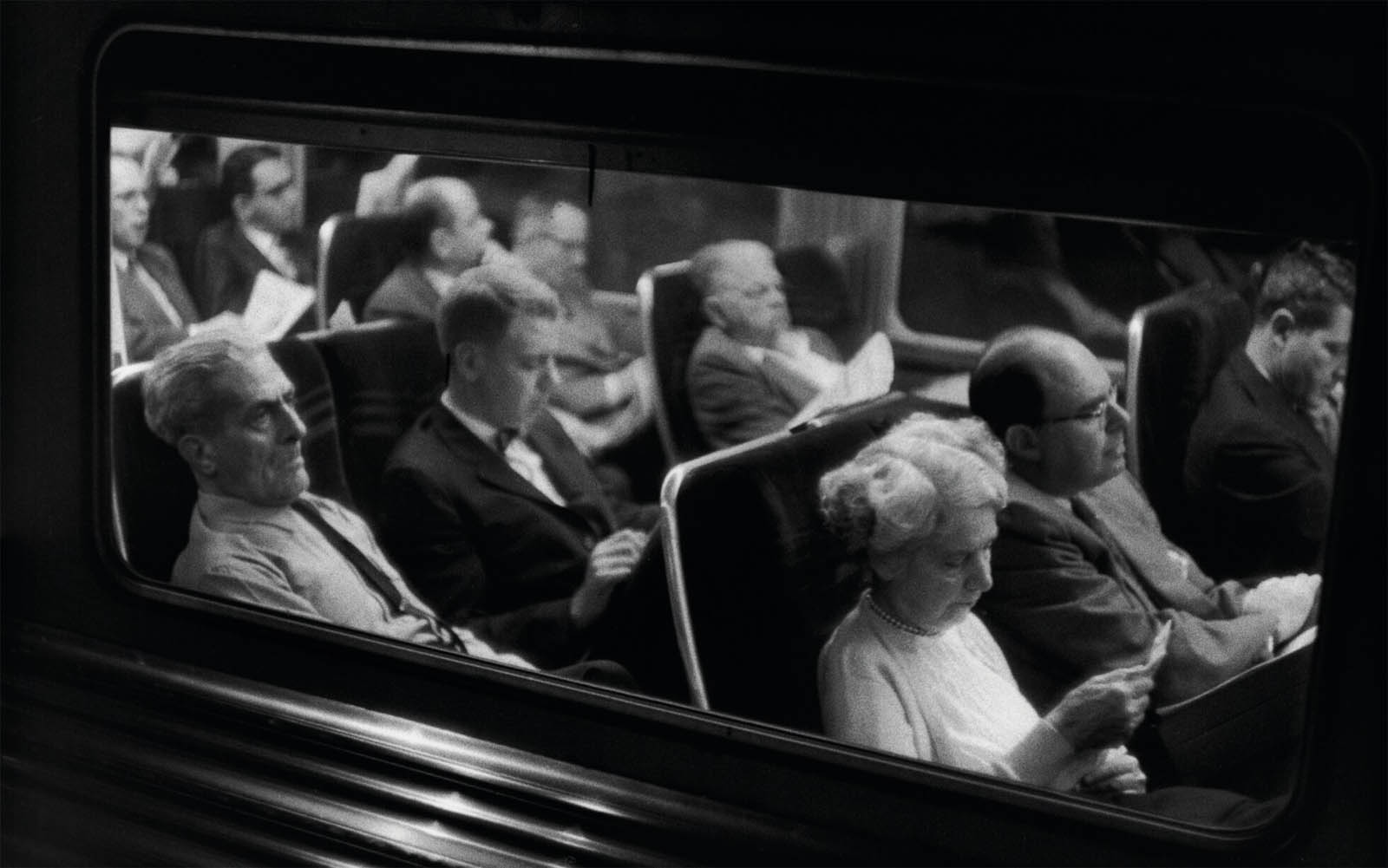
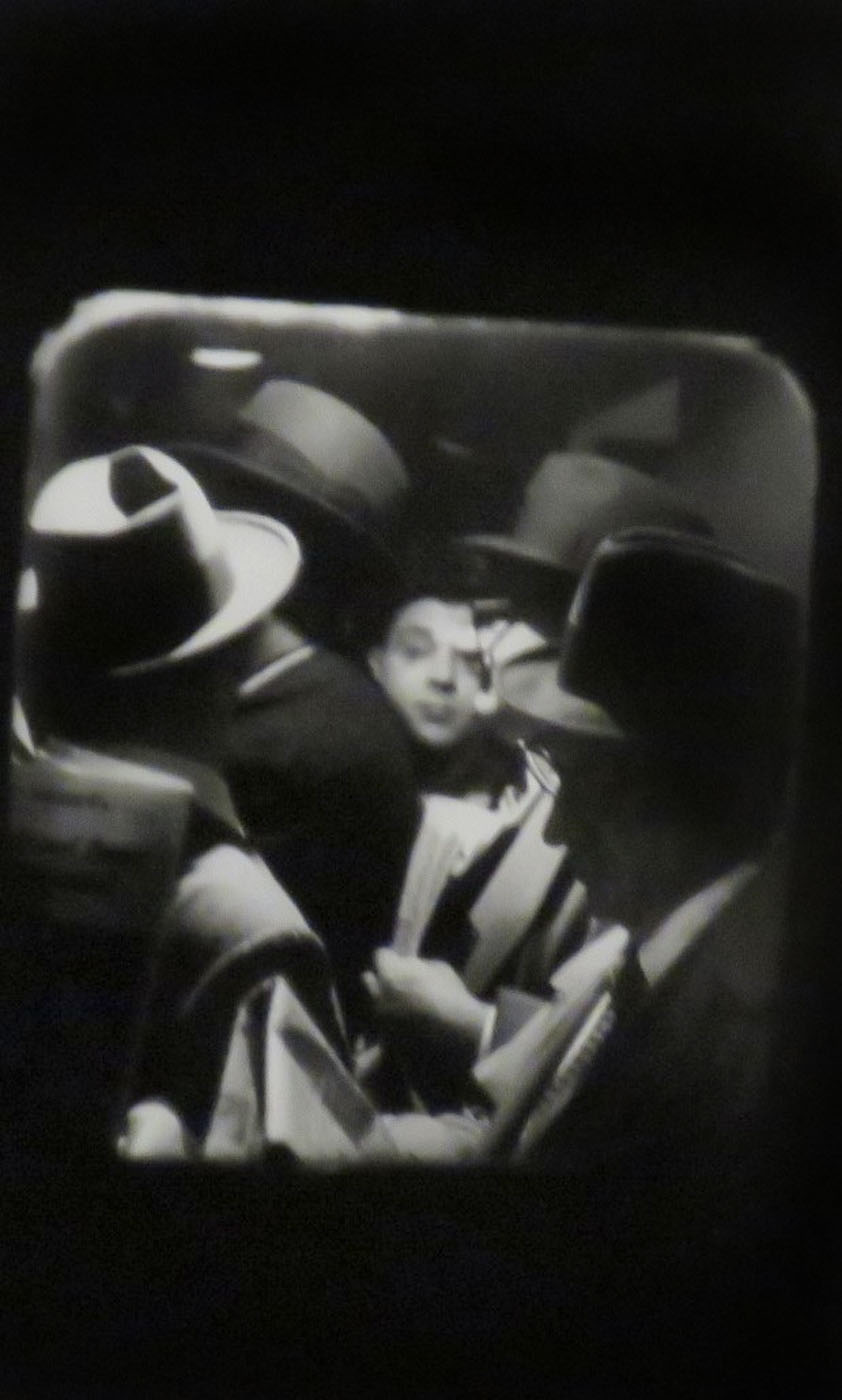
![Louis Stettner (American, 1922-2016) 'Woman with White Glove, Penn Station, New York' [Mujer con guante blanco, Penn Station, Nueva York] 1958](https://artblart.com/wp-content/uploads/2023/07/07.-id461_p.jpg "Louis Stettner (American, 1922-2016) 'Woman with White Glove, Penn Station, New York' [Mujer con guante blanco, Penn Station, Nueva York] 1958")


![Louis Stettner (American, 1922-2016) 'Aluminum Foundry, Soviet Union' [Fundición de aluminio, Unión Soviética] 1975](https://artblart.com/wp-content/uploads/2023/07/13.-id648_p.jpg "Louis Stettner (American, 1922-2016) 'Aluminum Foundry, Soviet Union' [Fundición de aluminio, Unión Soviética] 1975")


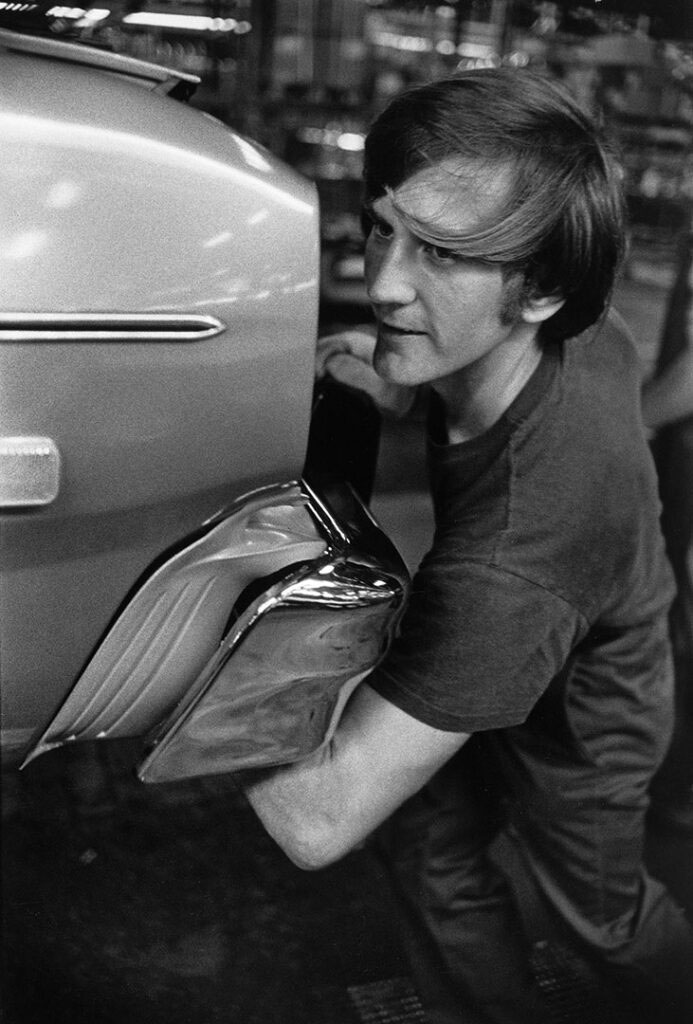

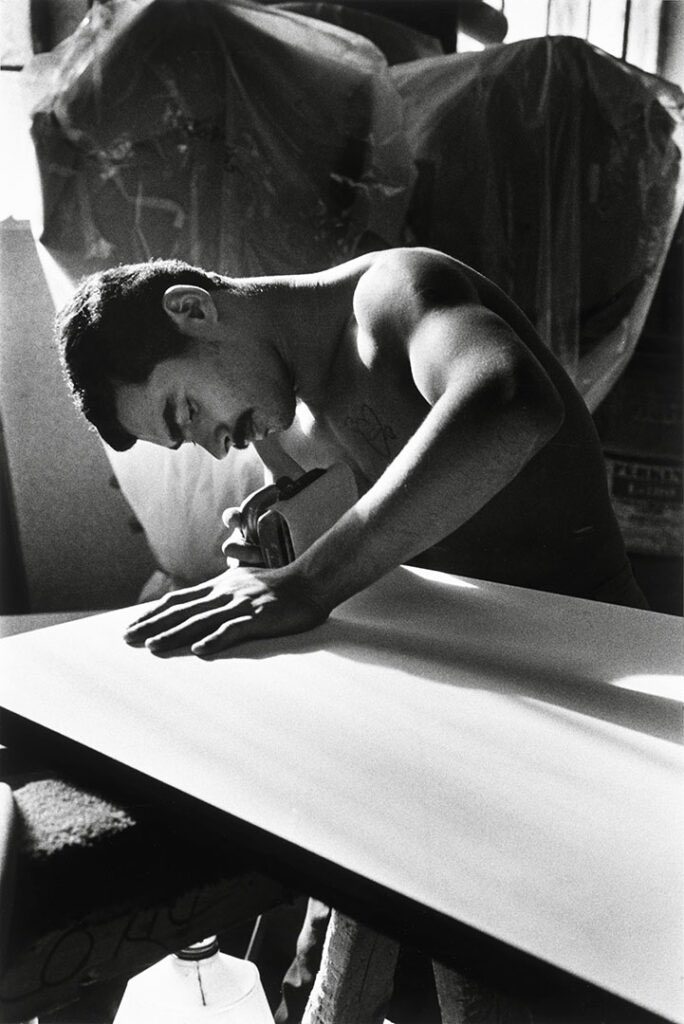
![Louis Stettner (American, 1922-2016) 'Assembly Line Worker, Long Island City, New York' [Trabajadora en cadena de montaje, Nueva York] 1972-1974](https://artblart.com/wp-content/uploads/2023/07/12.-id96_p-1.jpg "Louis Stettner (American, 1922-2016) 'Assembly Line Worker, Long Island City, New York' [Trabajadora en cadena de montaje, Nueva York] 1972-1974")
![Louis Stettner (American, 1922-2016) 'Demonstrators on March in Support of United Farm Workers, New York' [Manifestantes en una marcha de apoyo a la Unión de Campesinos, Nueva York] 1975-1976](https://artblart.com/wp-content/uploads/2023/07/14.-id1307_p.jpg "Louis Stettner (American, 1922-2016) 'Demonstrators on March in Support of United Farm Workers, New York' [Manifestantes en una marcha de apoyo a la Unión de Campesinos, Nueva York] 1975-1976")
![Louis Stettner (American, 1922-2016) 'Self-Portrait, Santiago, Chile' [Autorretrato, Santiago de Chile] 2000-2001](https://artblart.com/wp-content/uploads/2023/07/16.-id1627_p.jpg "Louis Stettner (American, 1922-2016) 'Self-Portrait, Santiago, Chile' [Autorretrato, Santiago de Chile] 2000-2001")
![Louis Stettner (American, 1922-2016) 'Women from Texas, Fifth Avenue, New York' [Mujeres de Texas, Fifth Avenue, Nueva York] 1975](https://artblart.com/wp-content/uploads/2023/07/15.-id145_p.jpg "Louis Stettner (American, 1922-2016) 'Women from Texas, Fifth Avenue, New York' [Mujeres de Texas, Fifth Avenue, Nueva York] 1975")
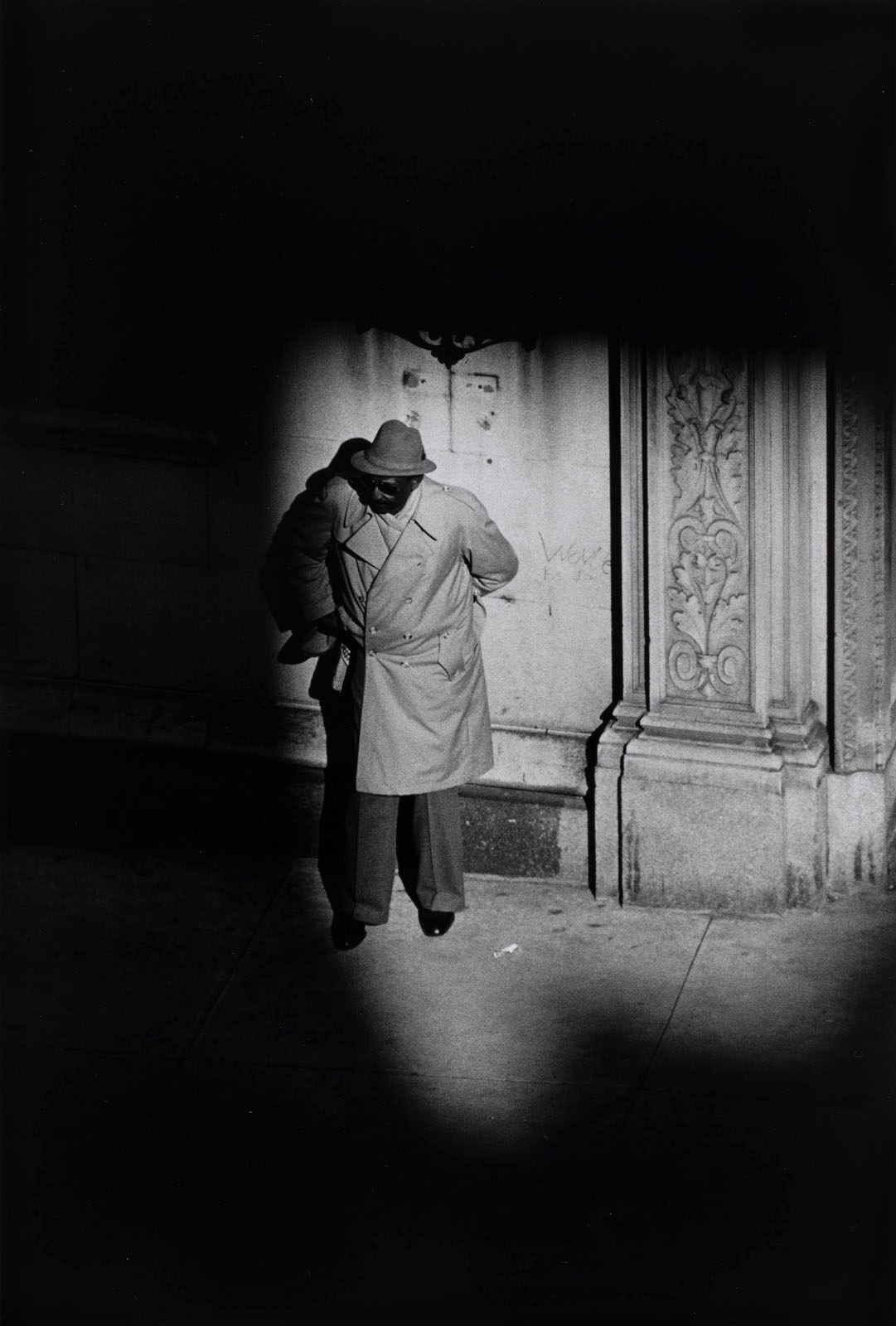
![Louis Stettner (American, 1922-2016) 'Jardin du Luxembourg, Paris' [Jardin du Luxembourg, París] 1997](https://artblart.com/wp-content/uploads/2023/07/17.-id2978_p.jpg "Louis Stettner (American, 1922-2016) 'Jardin du Luxembourg, Paris' [Jardin du Luxembourg, París] 1997")

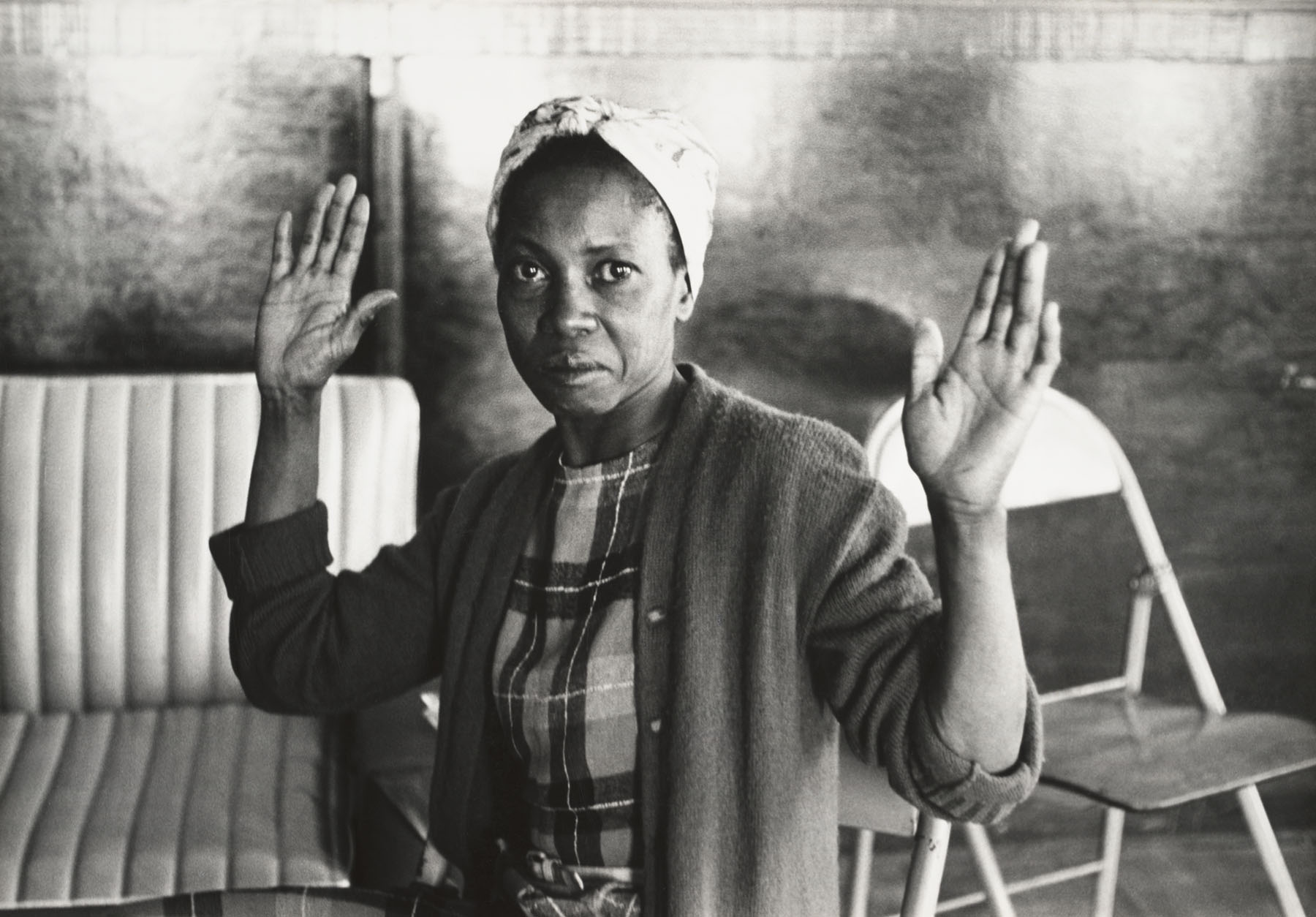
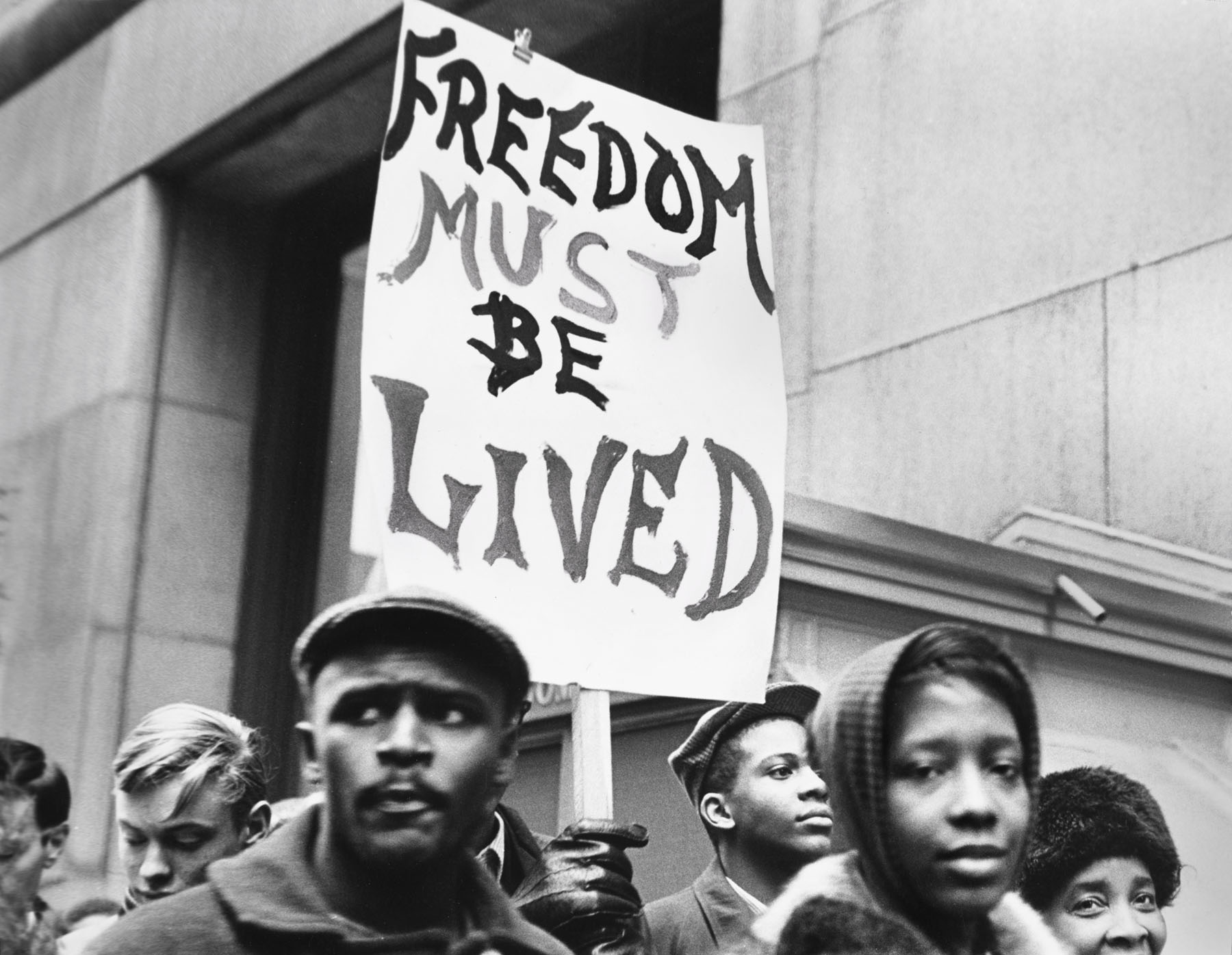
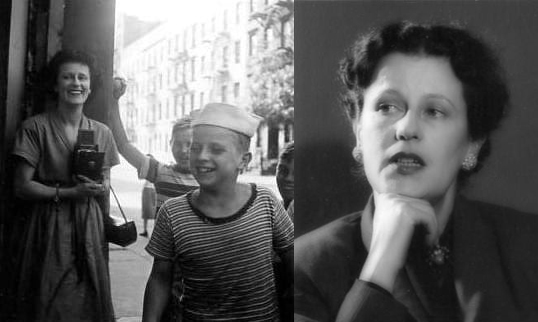
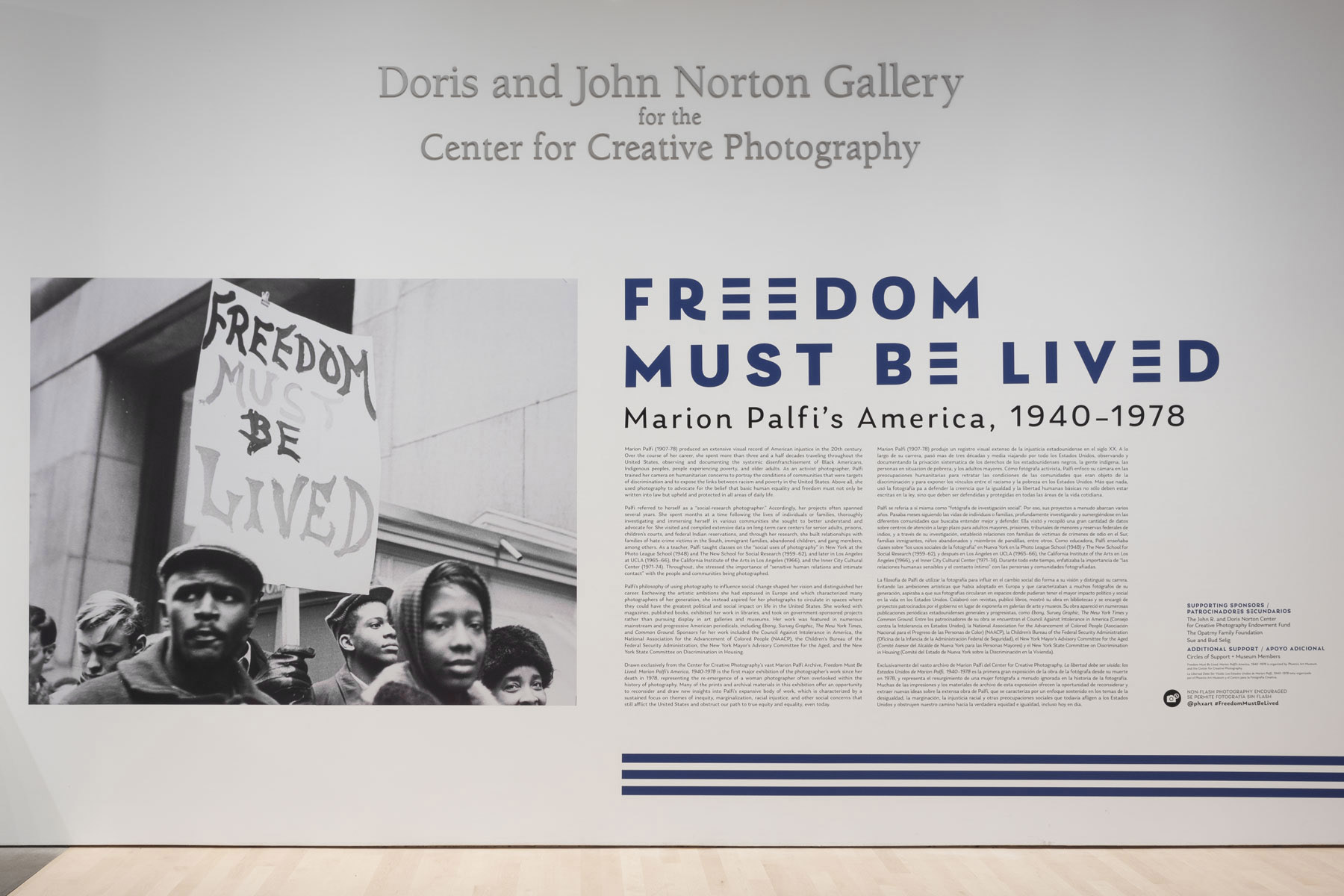
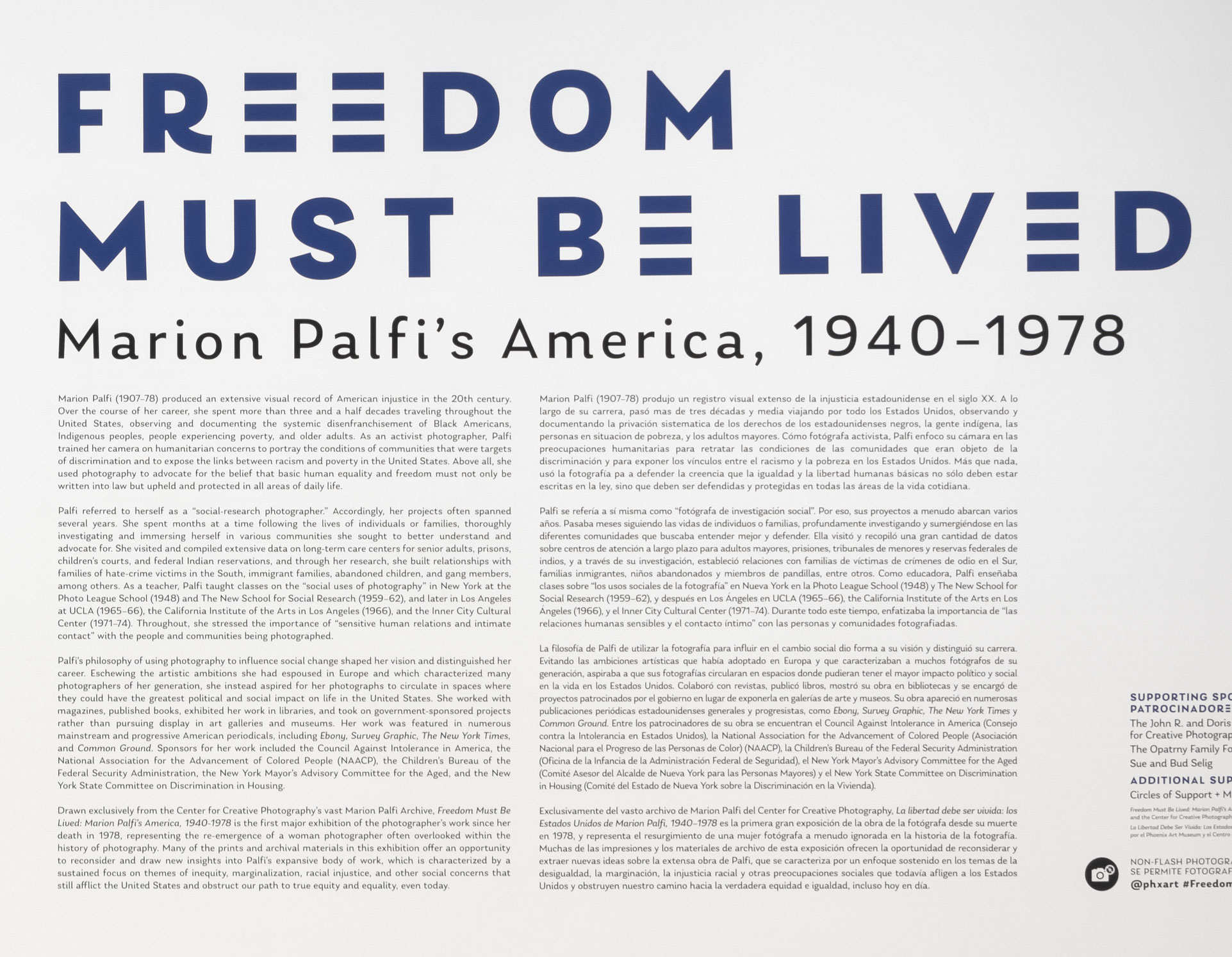
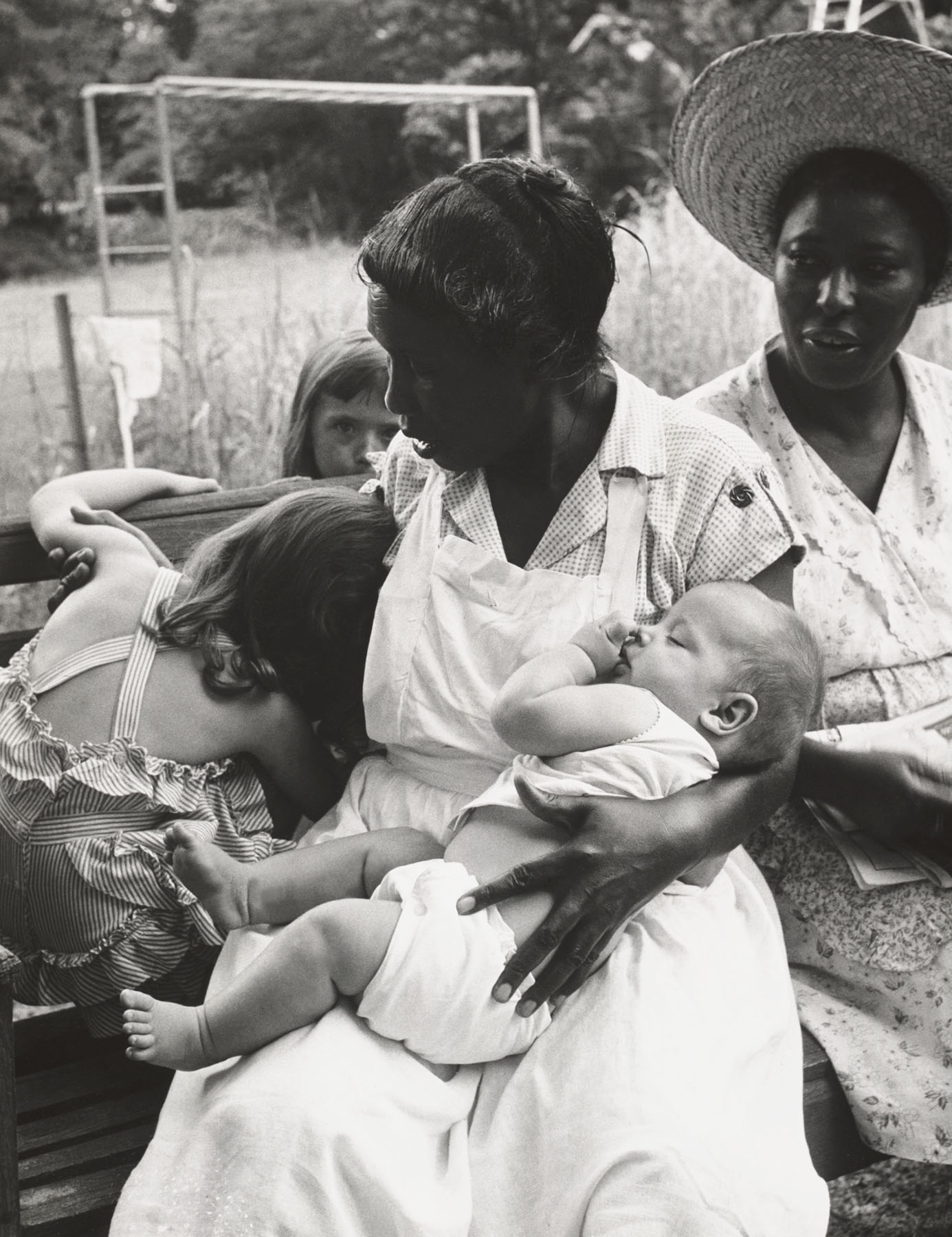
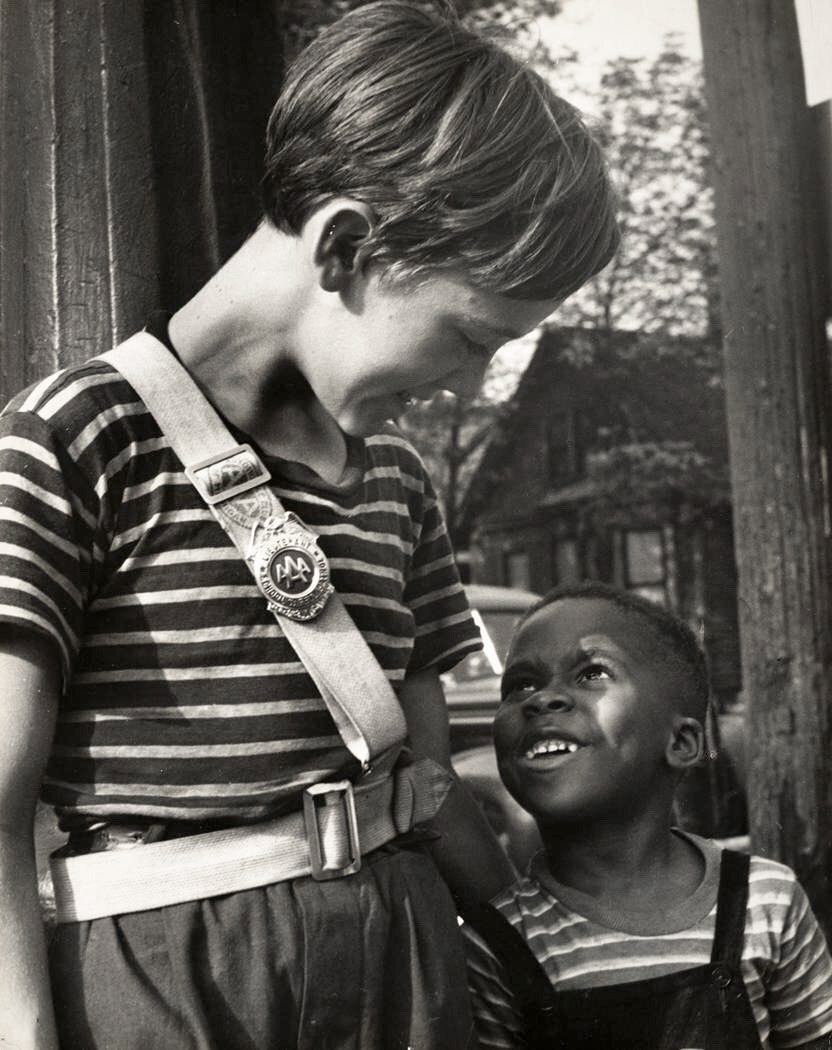
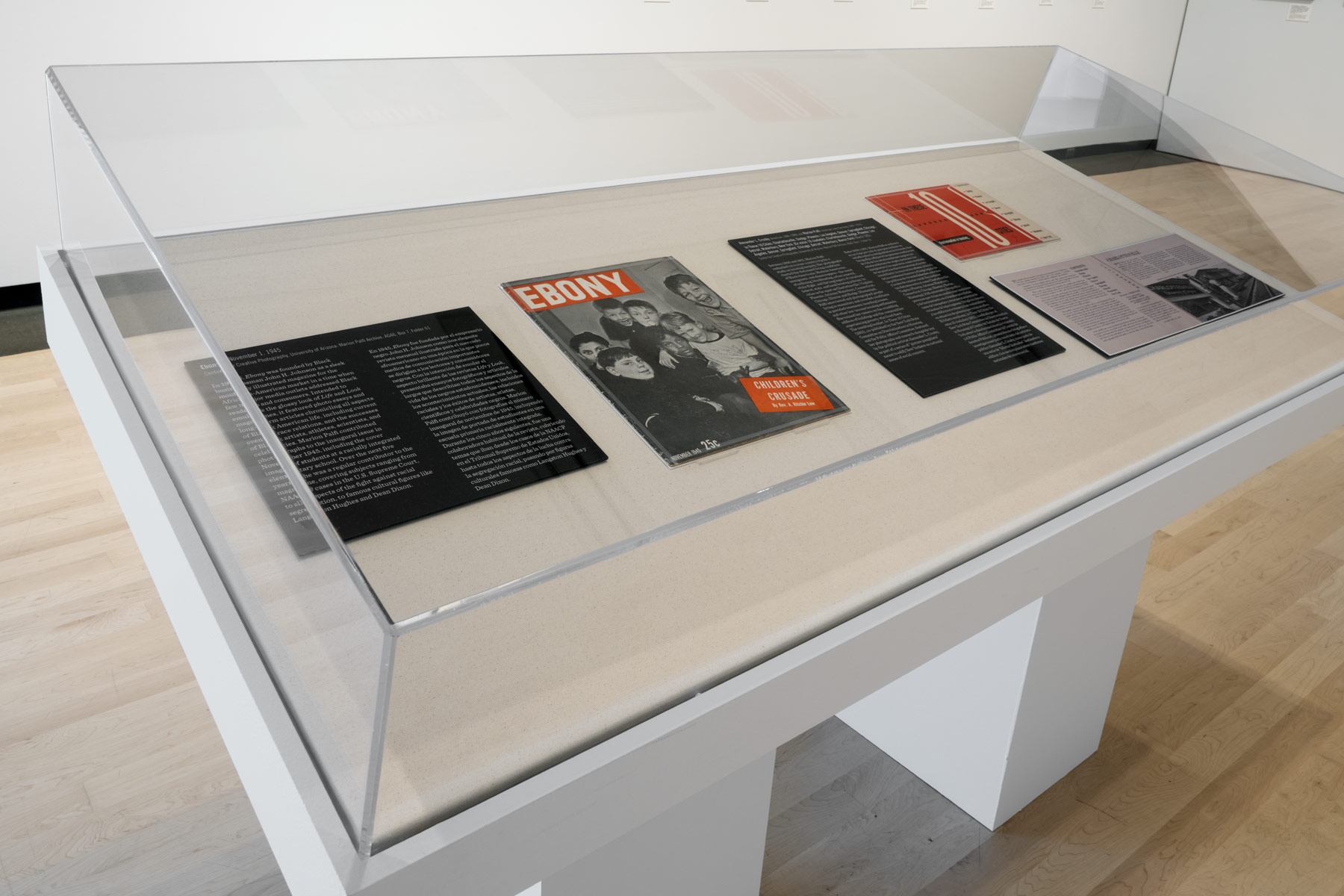
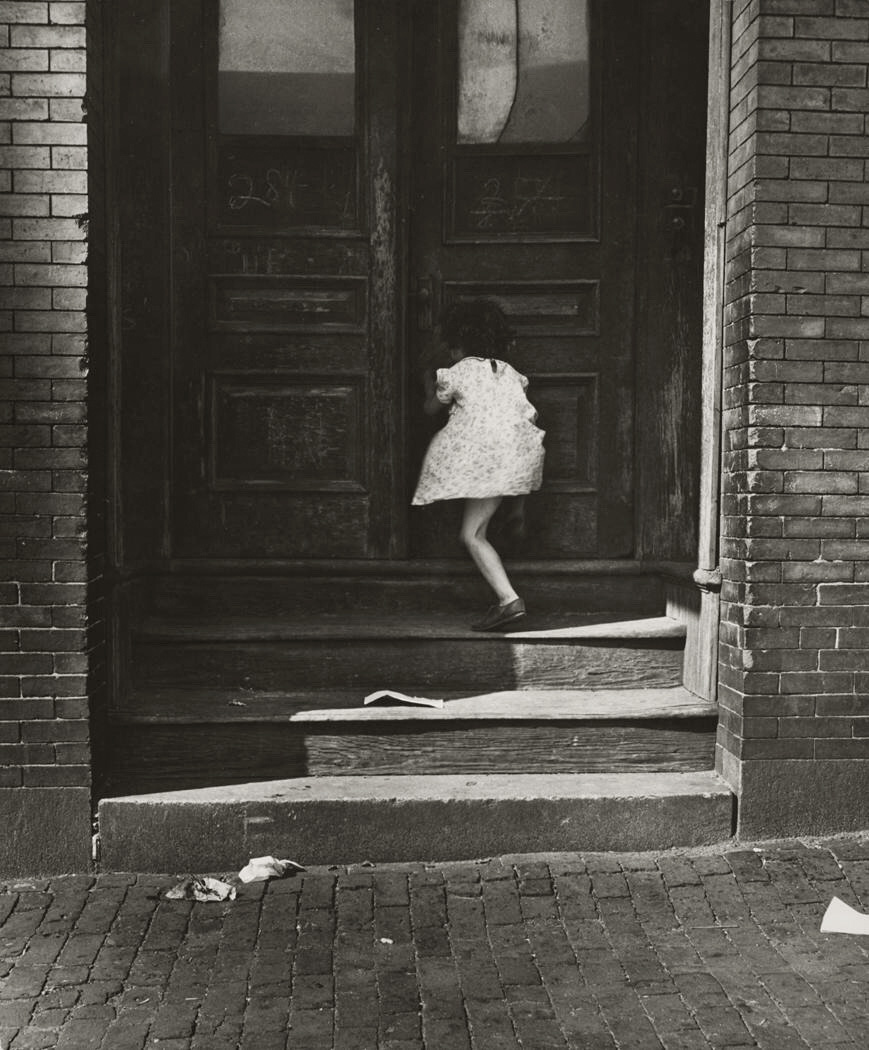
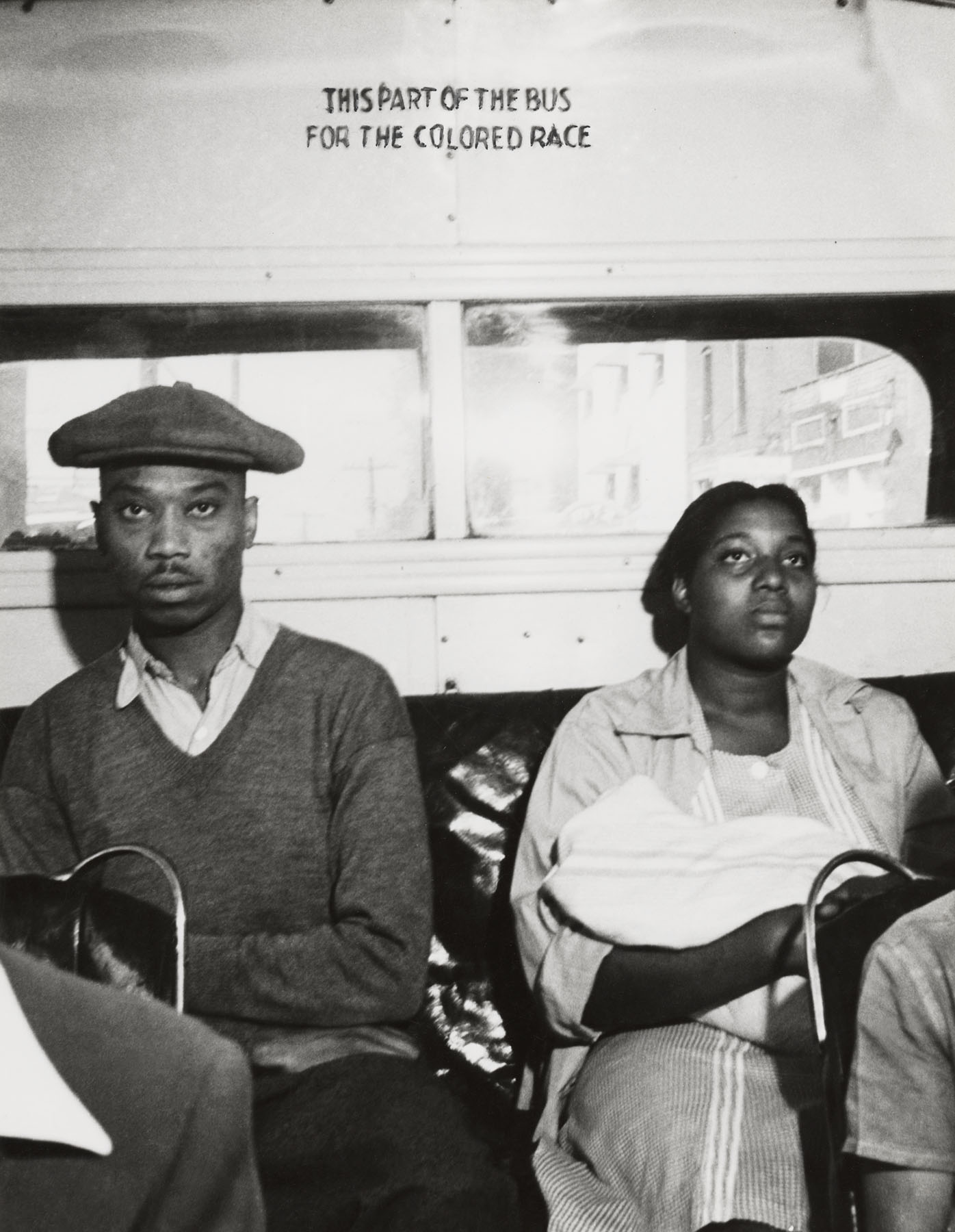
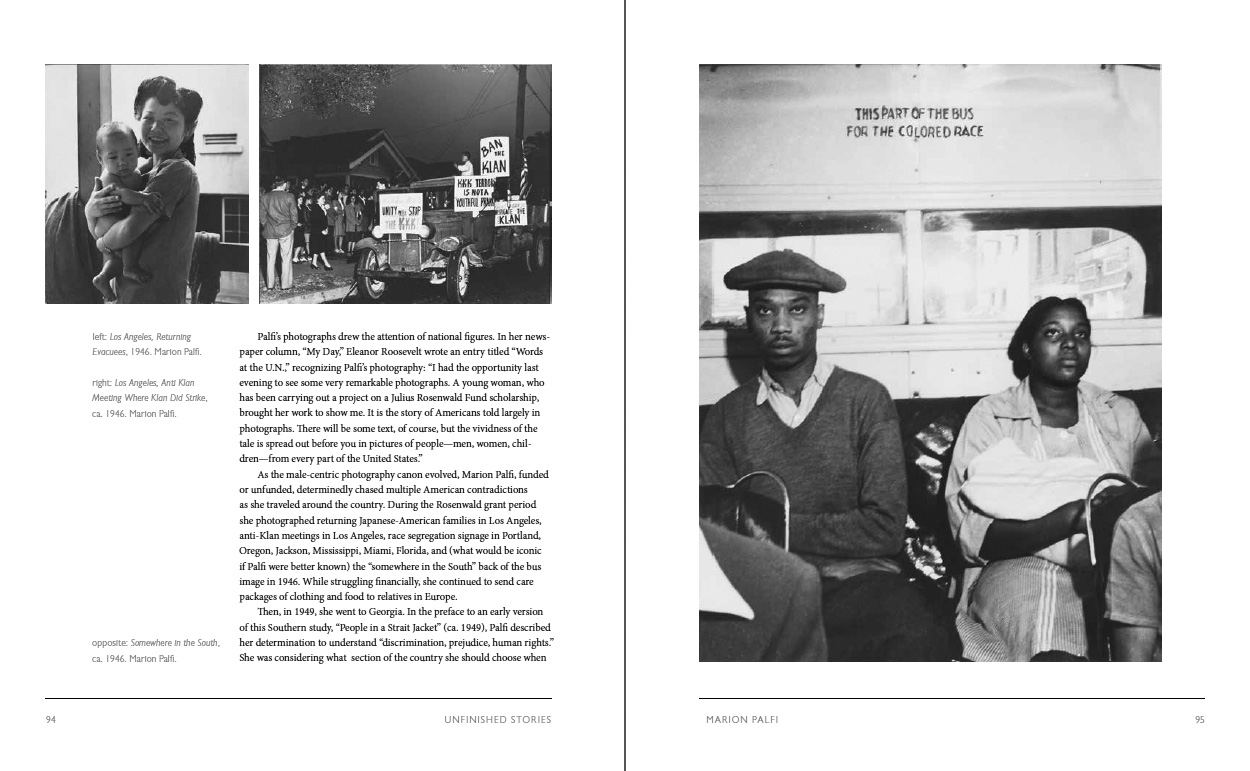
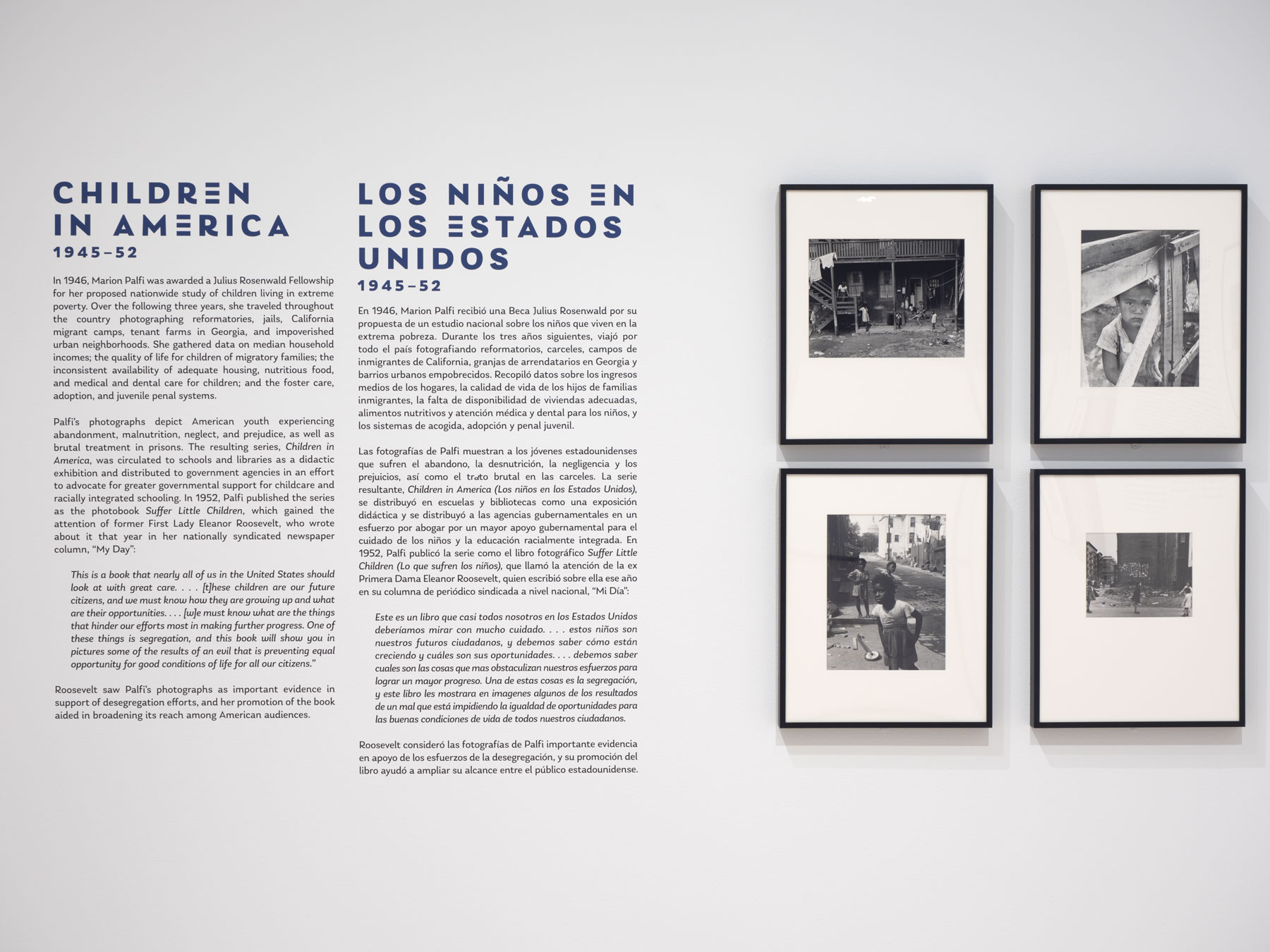
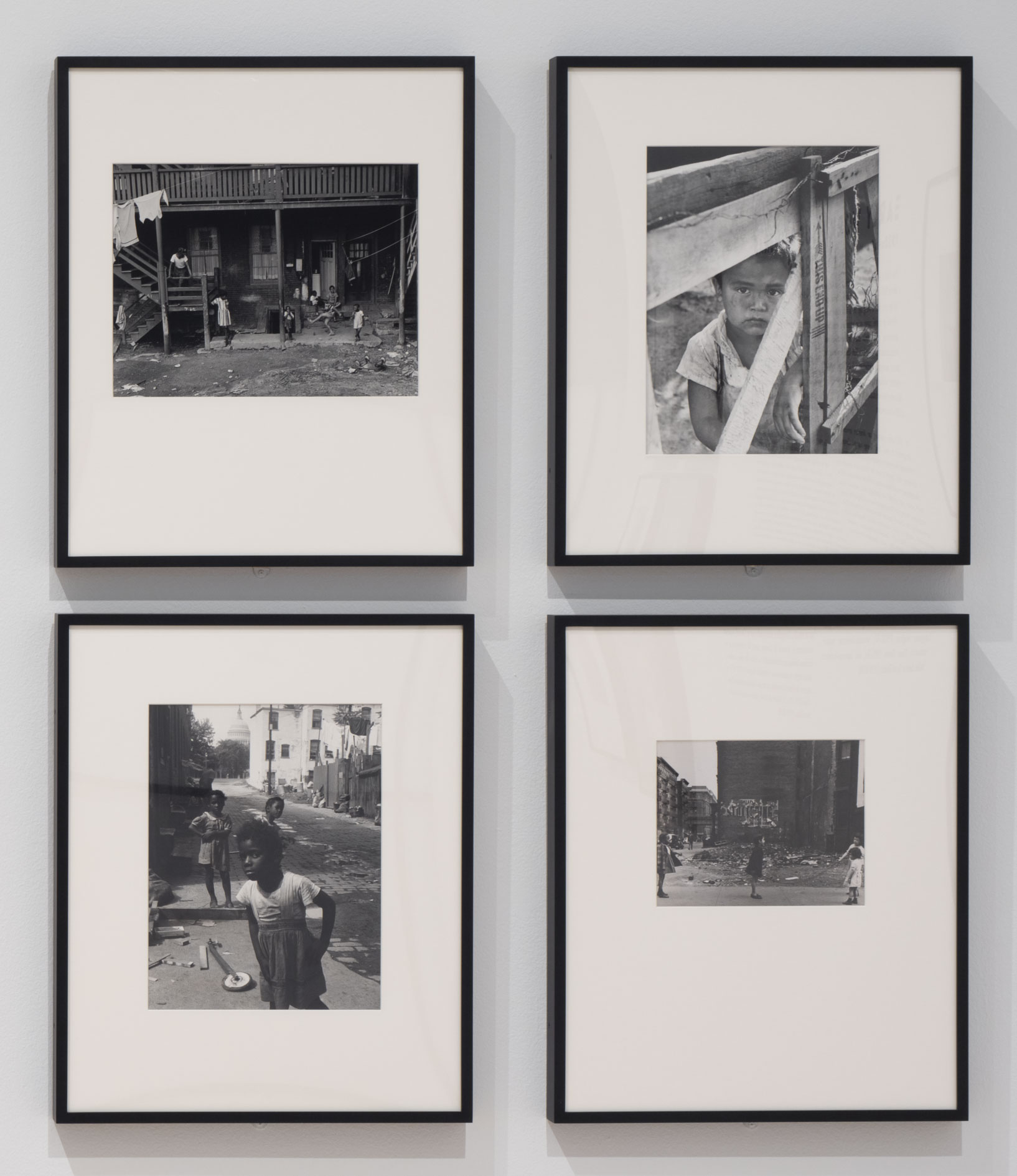
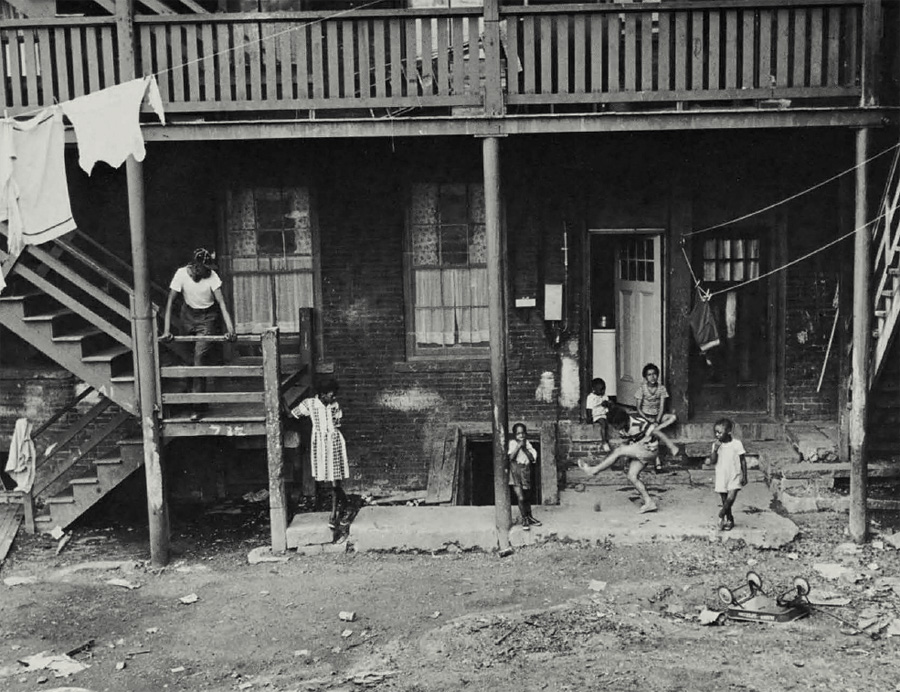
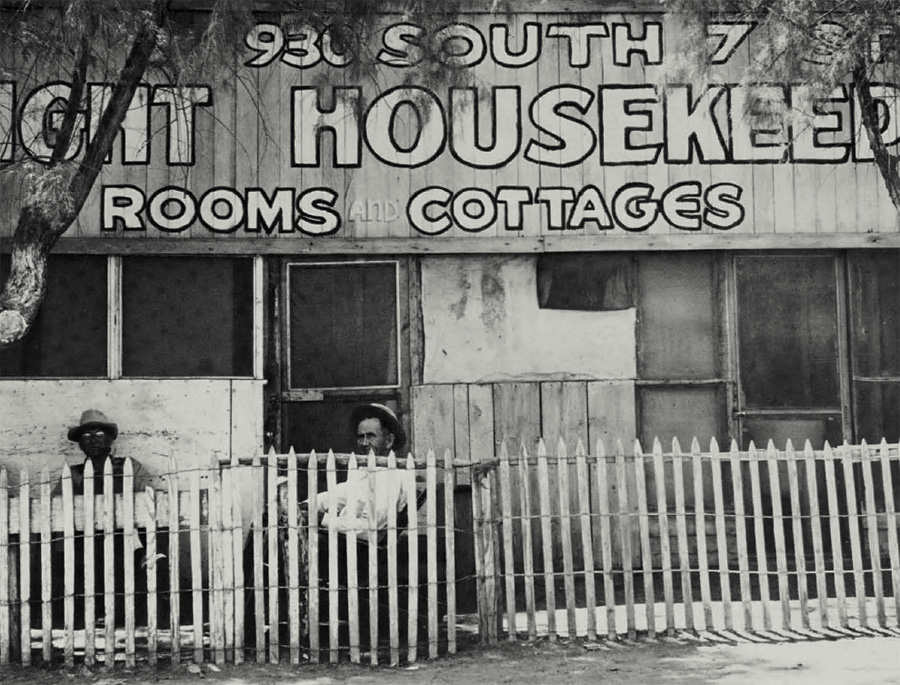
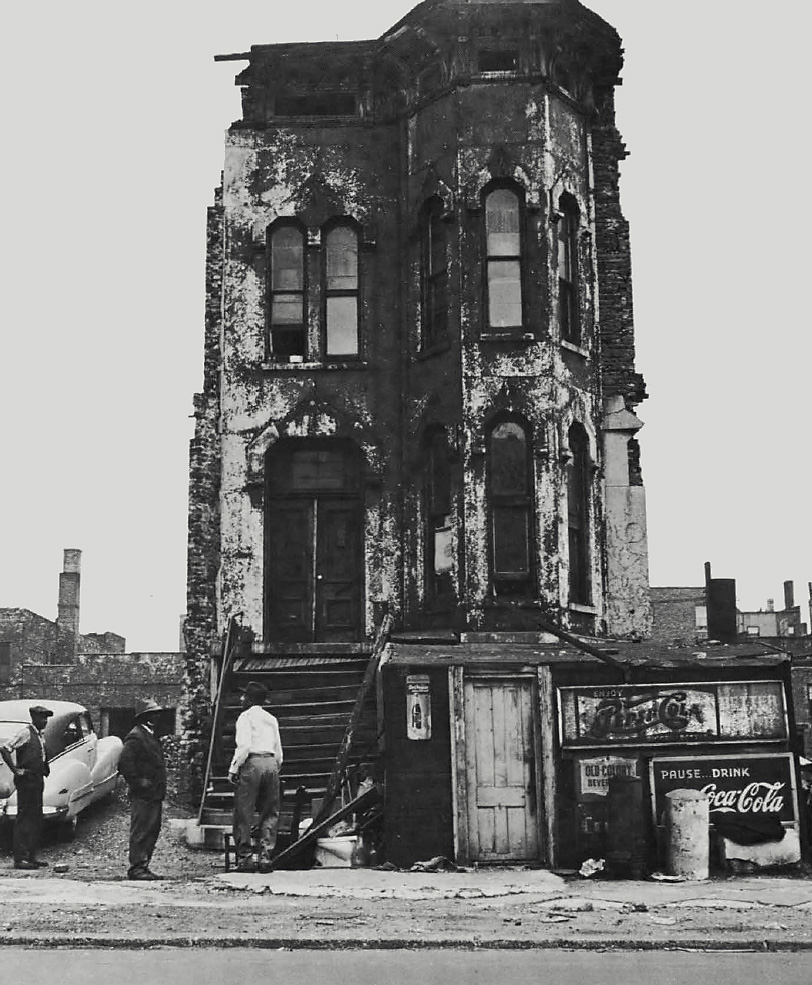
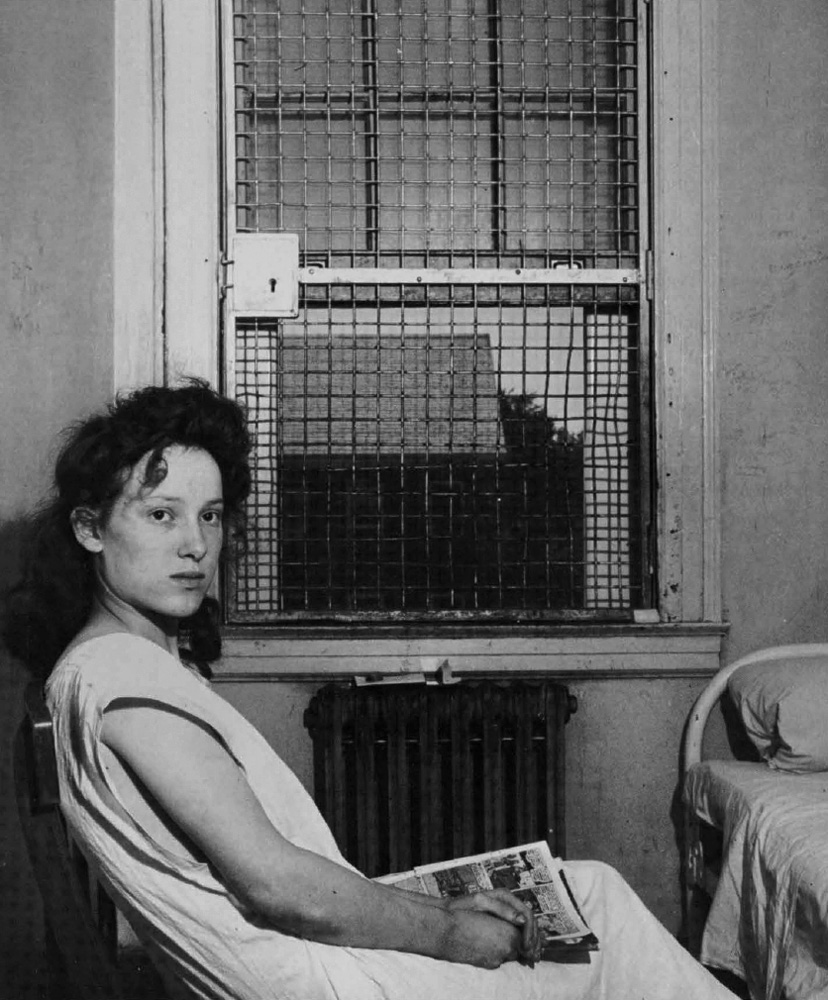
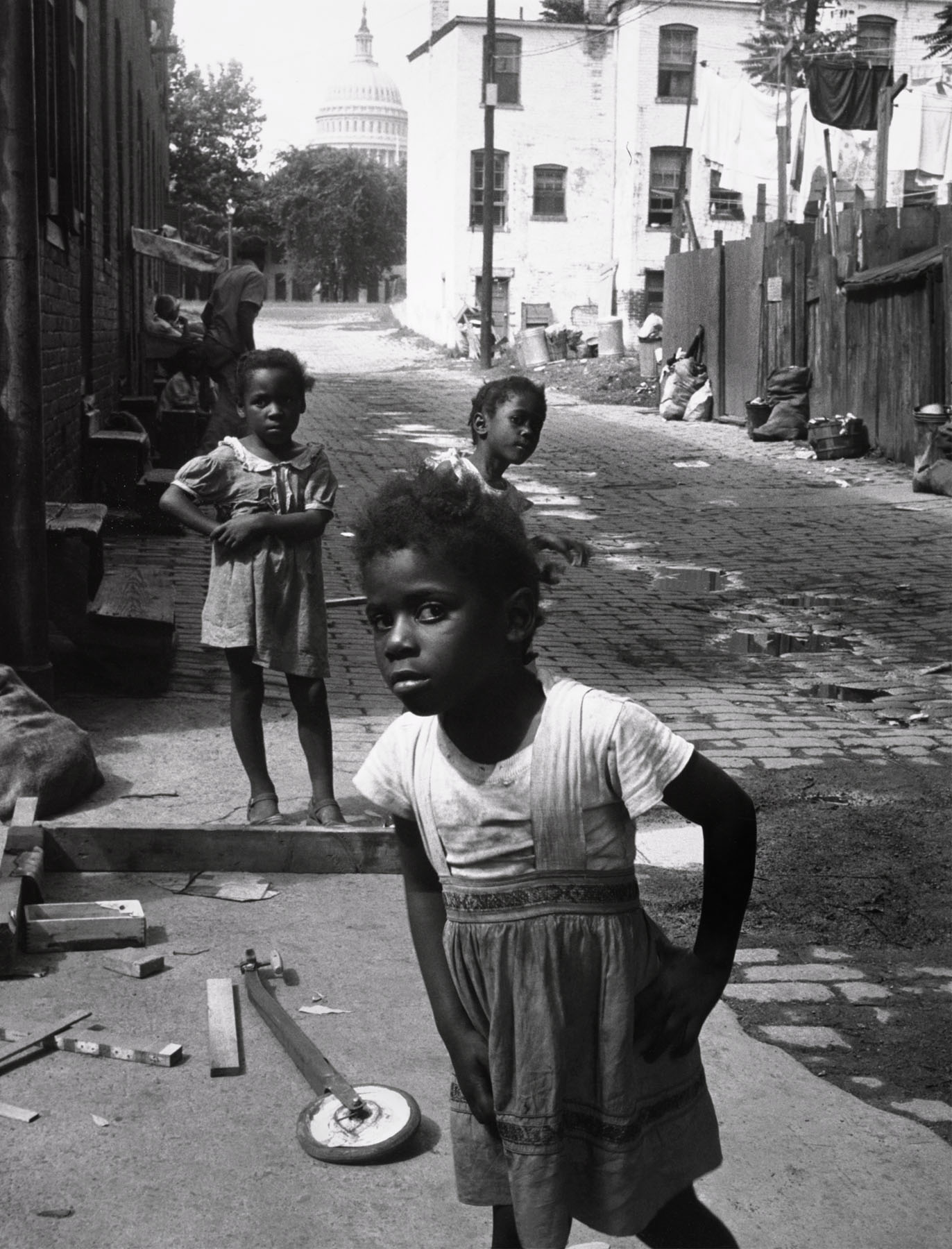
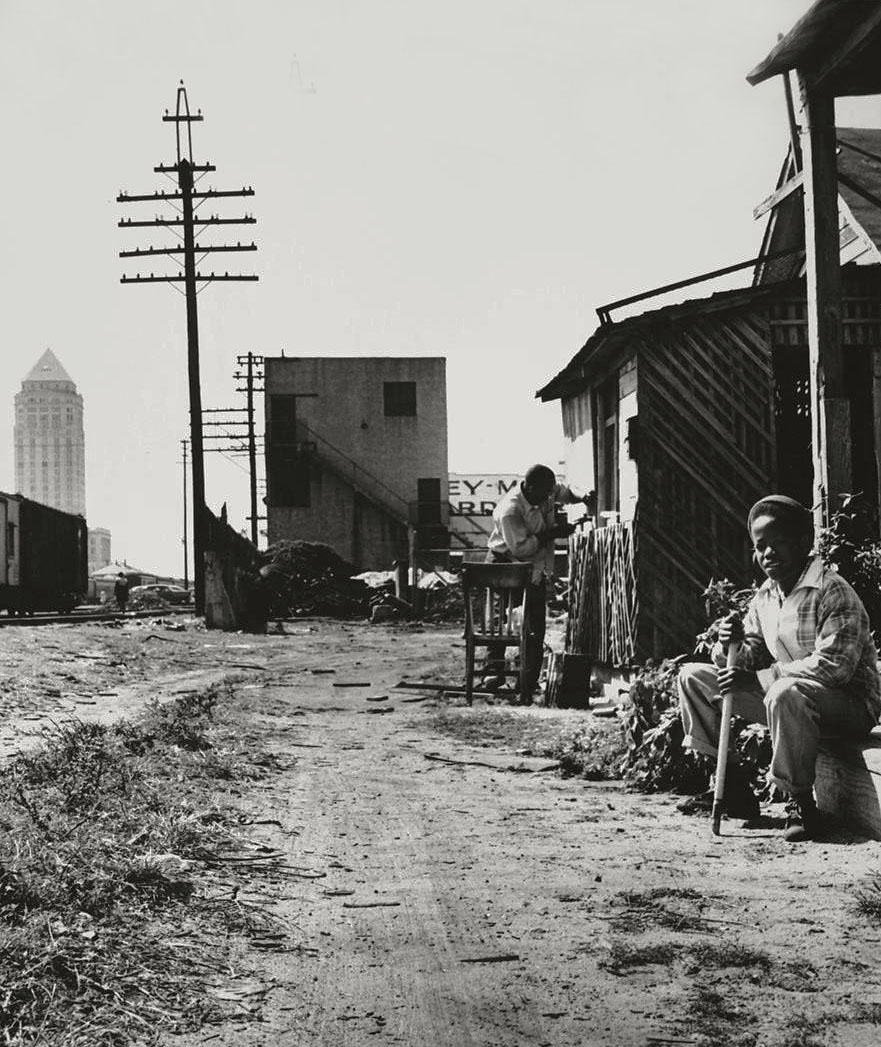
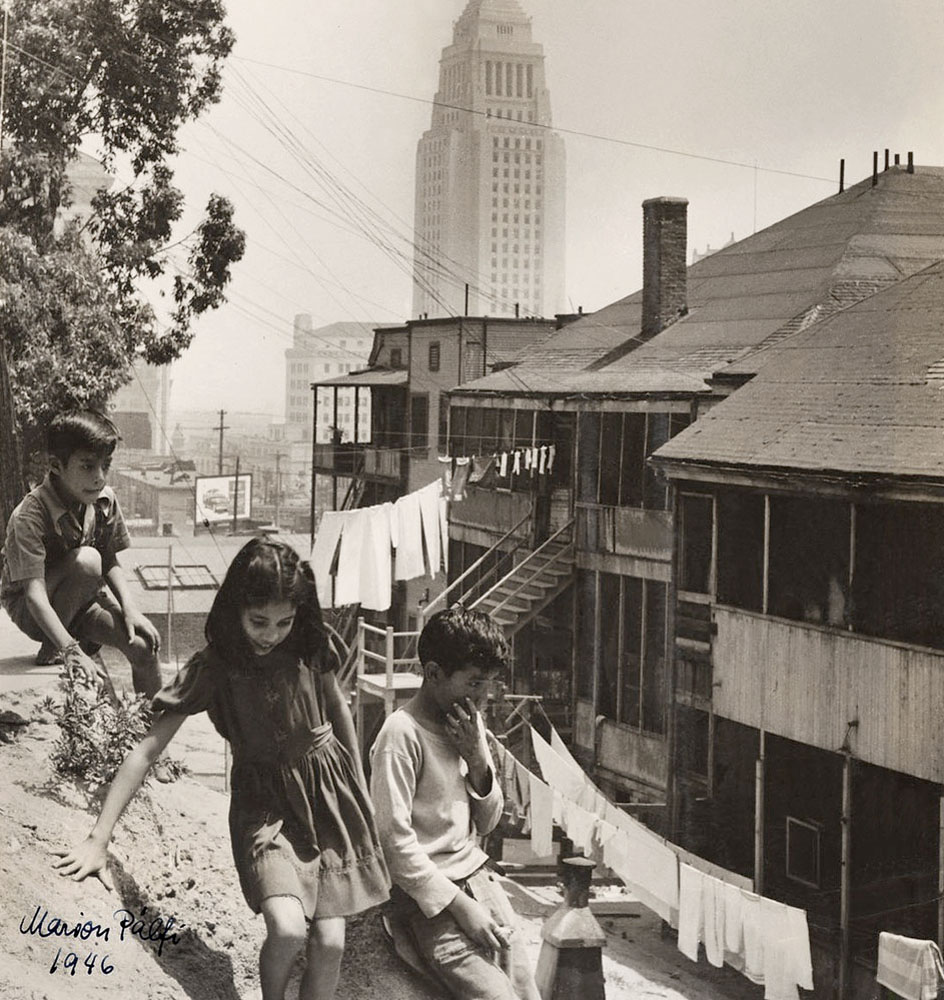
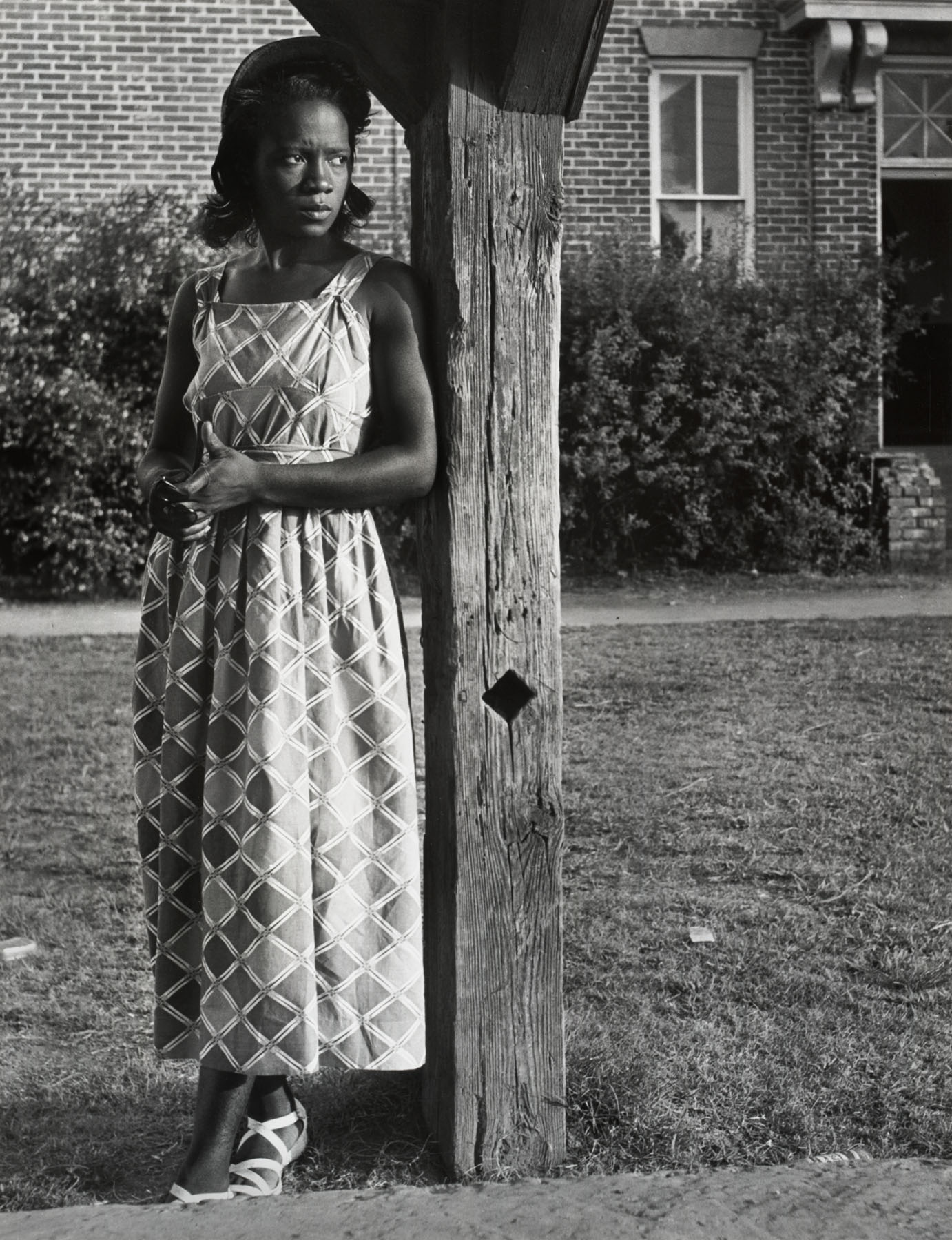
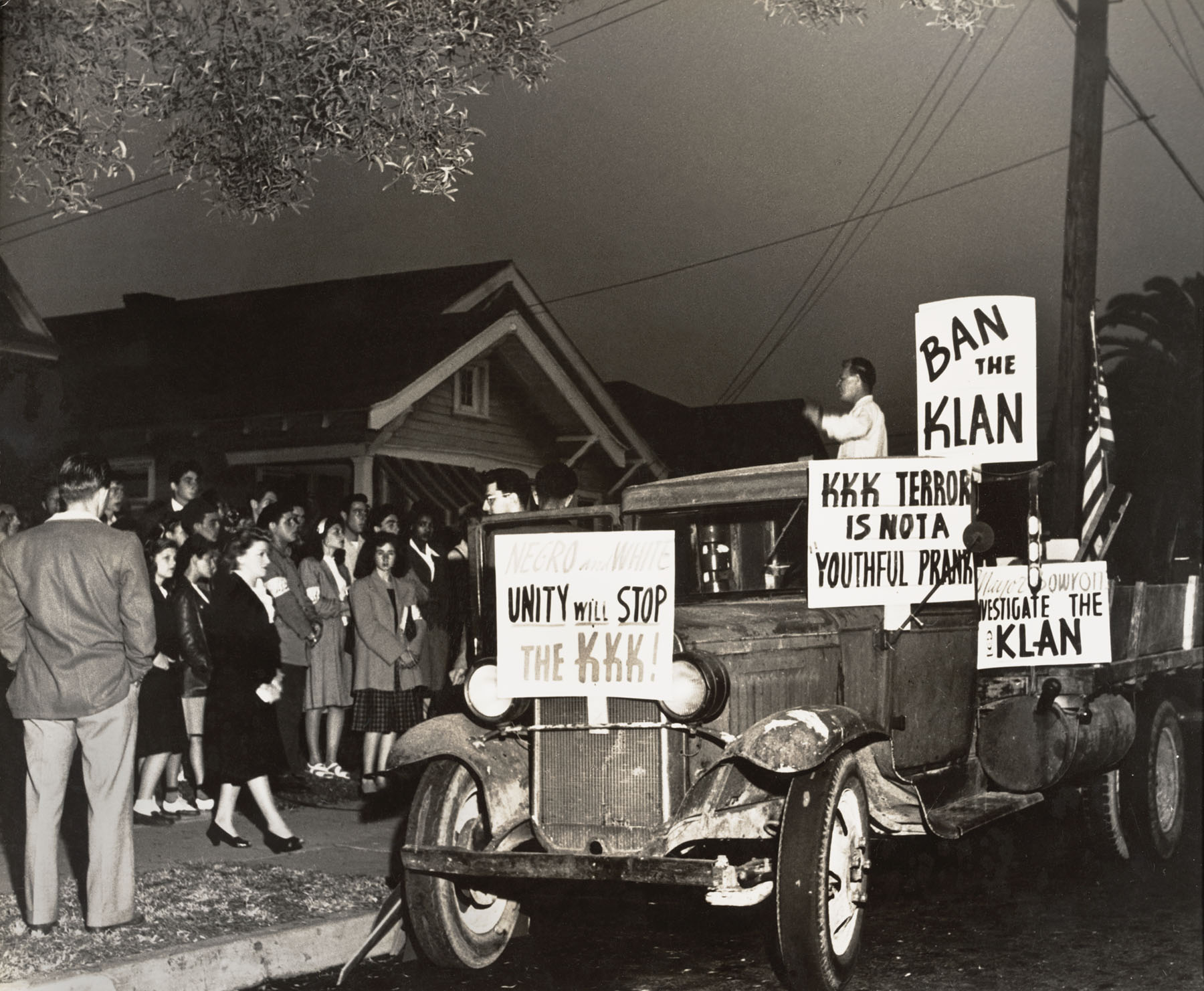
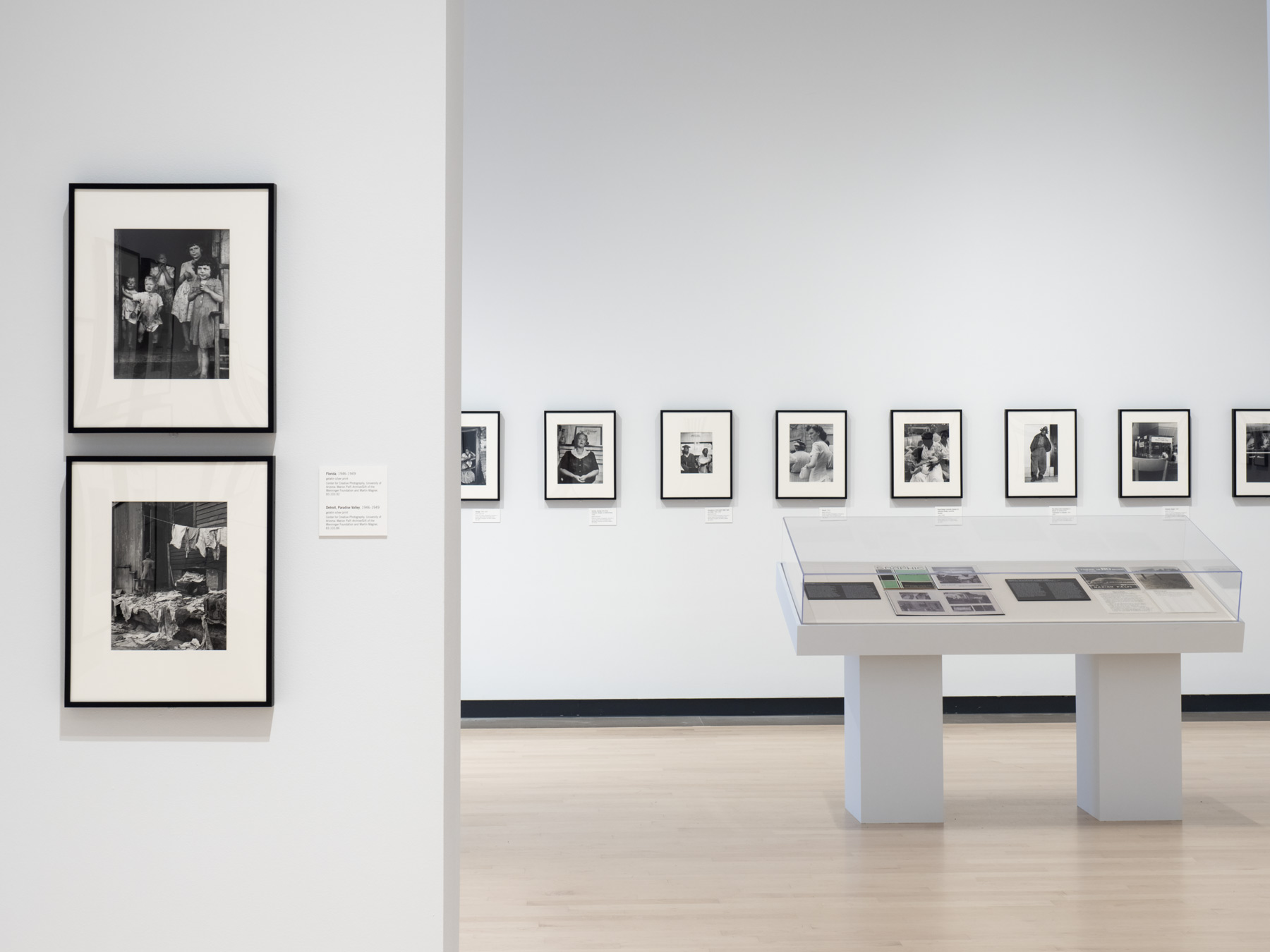
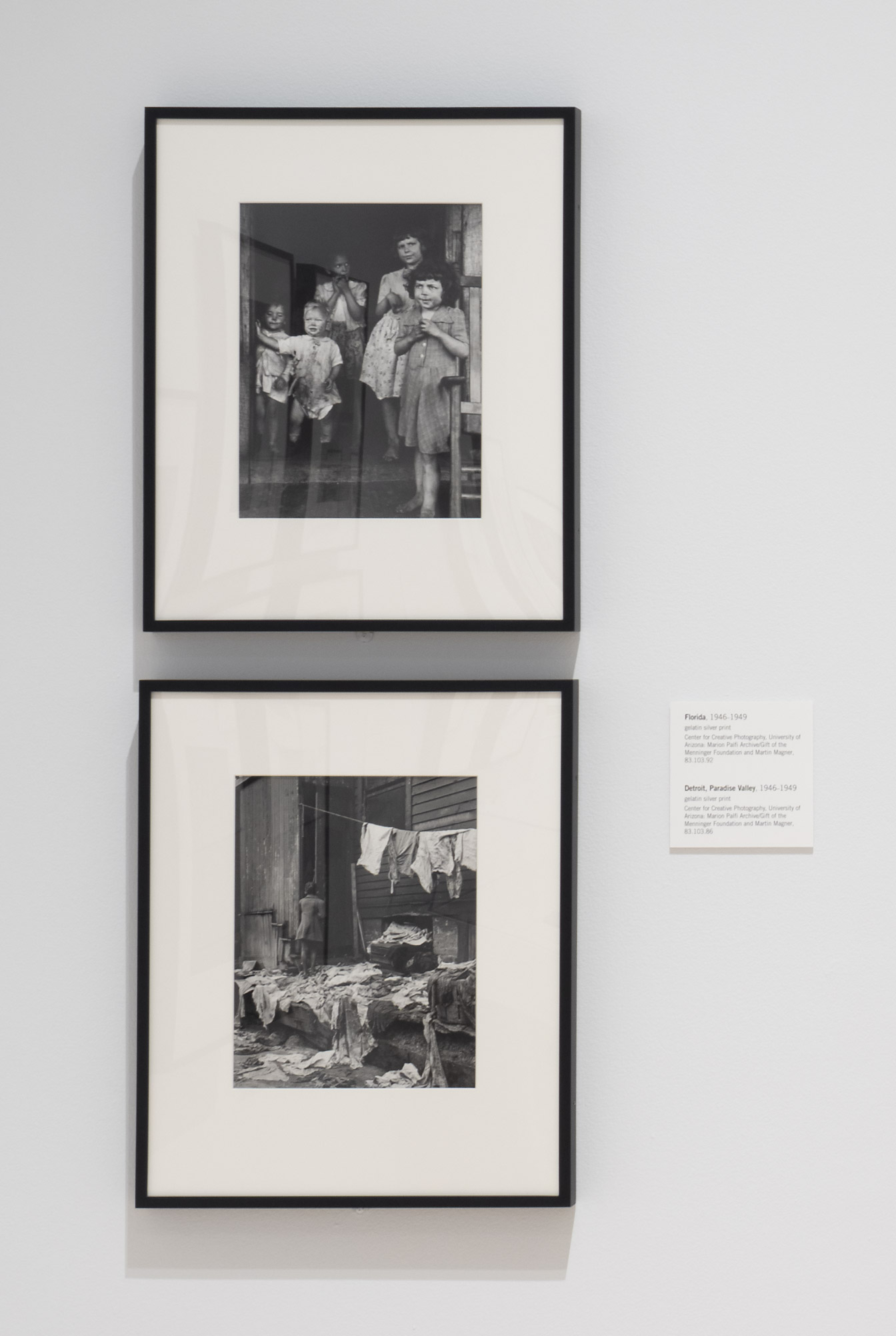
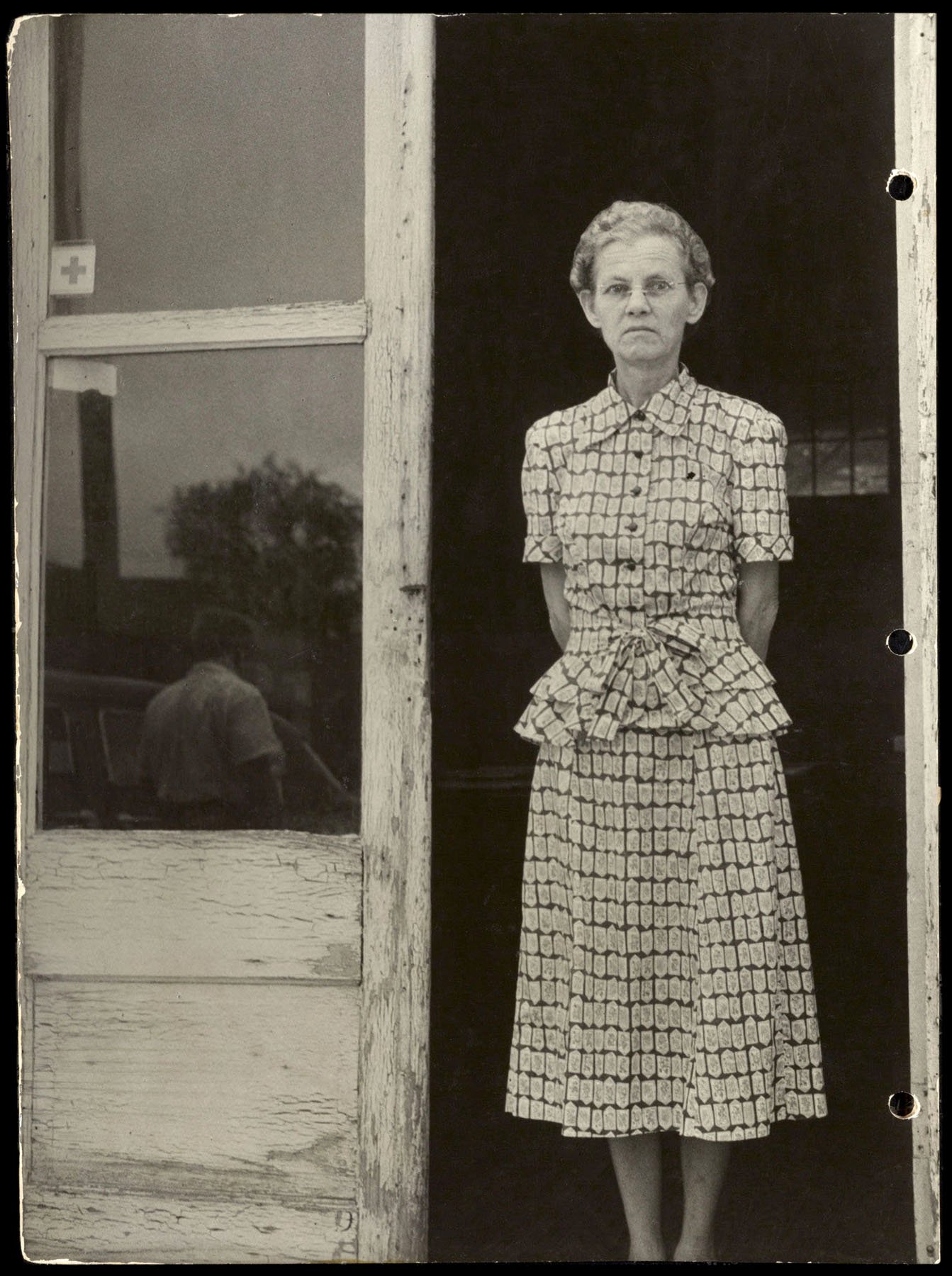
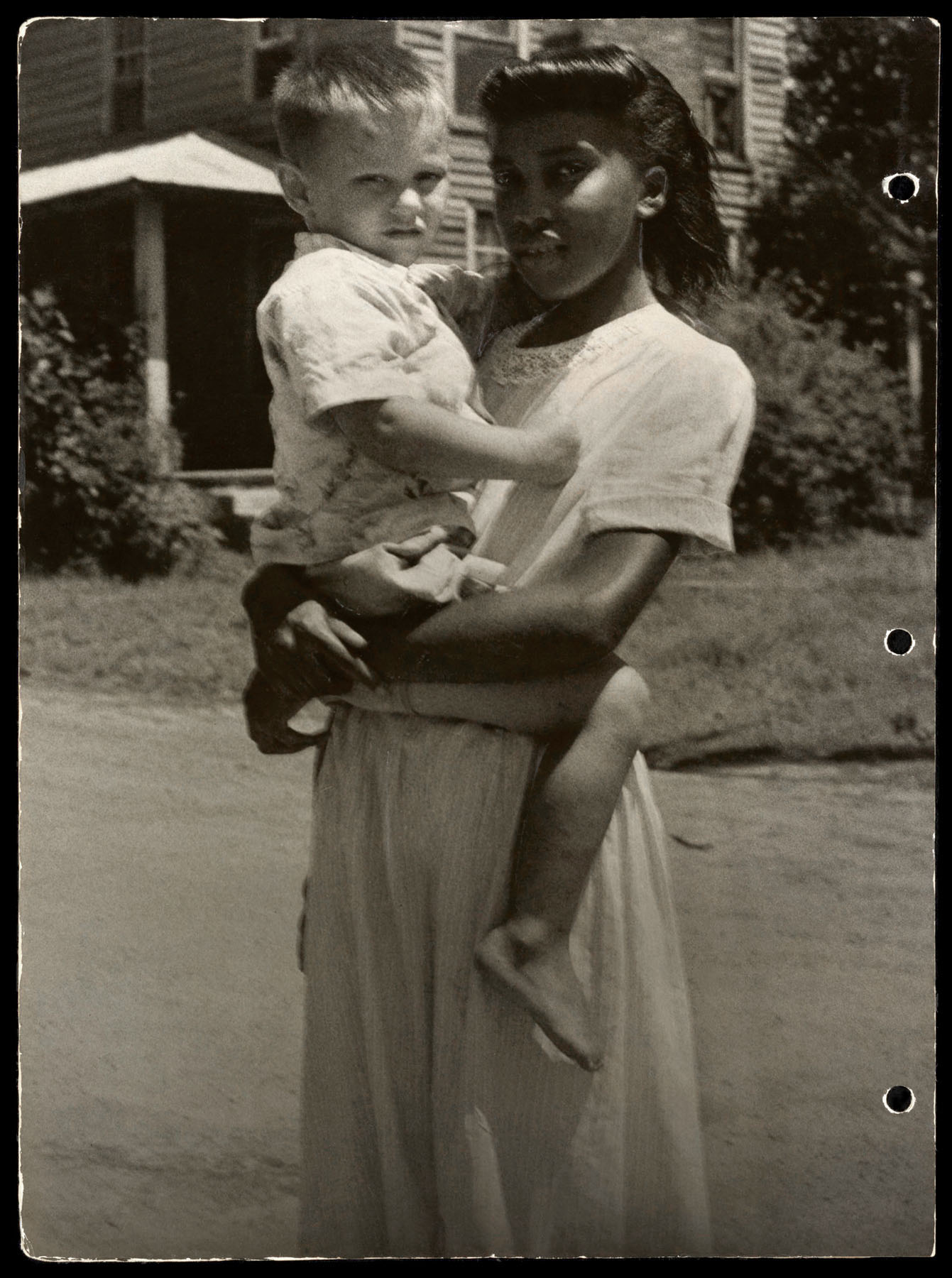
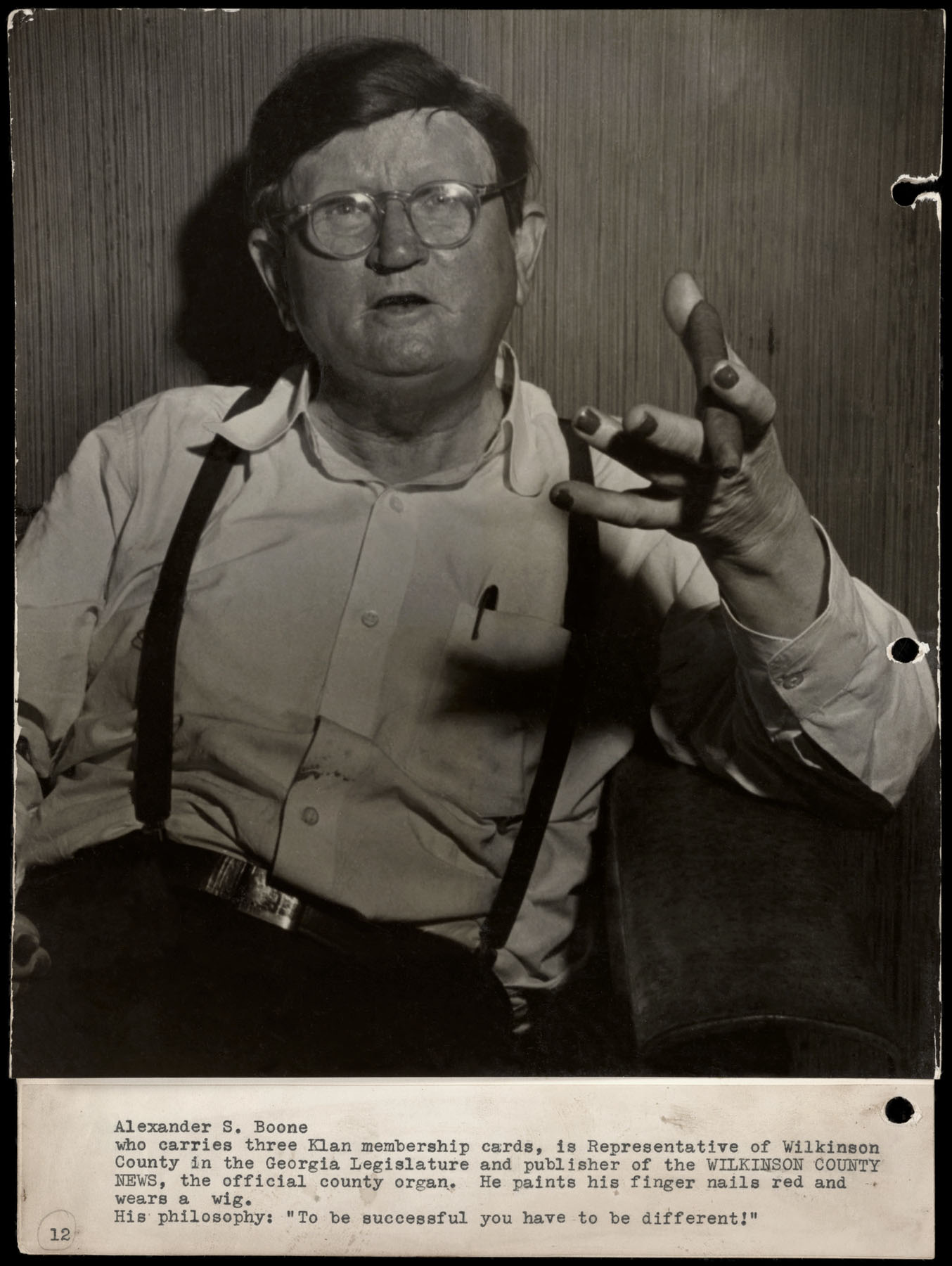
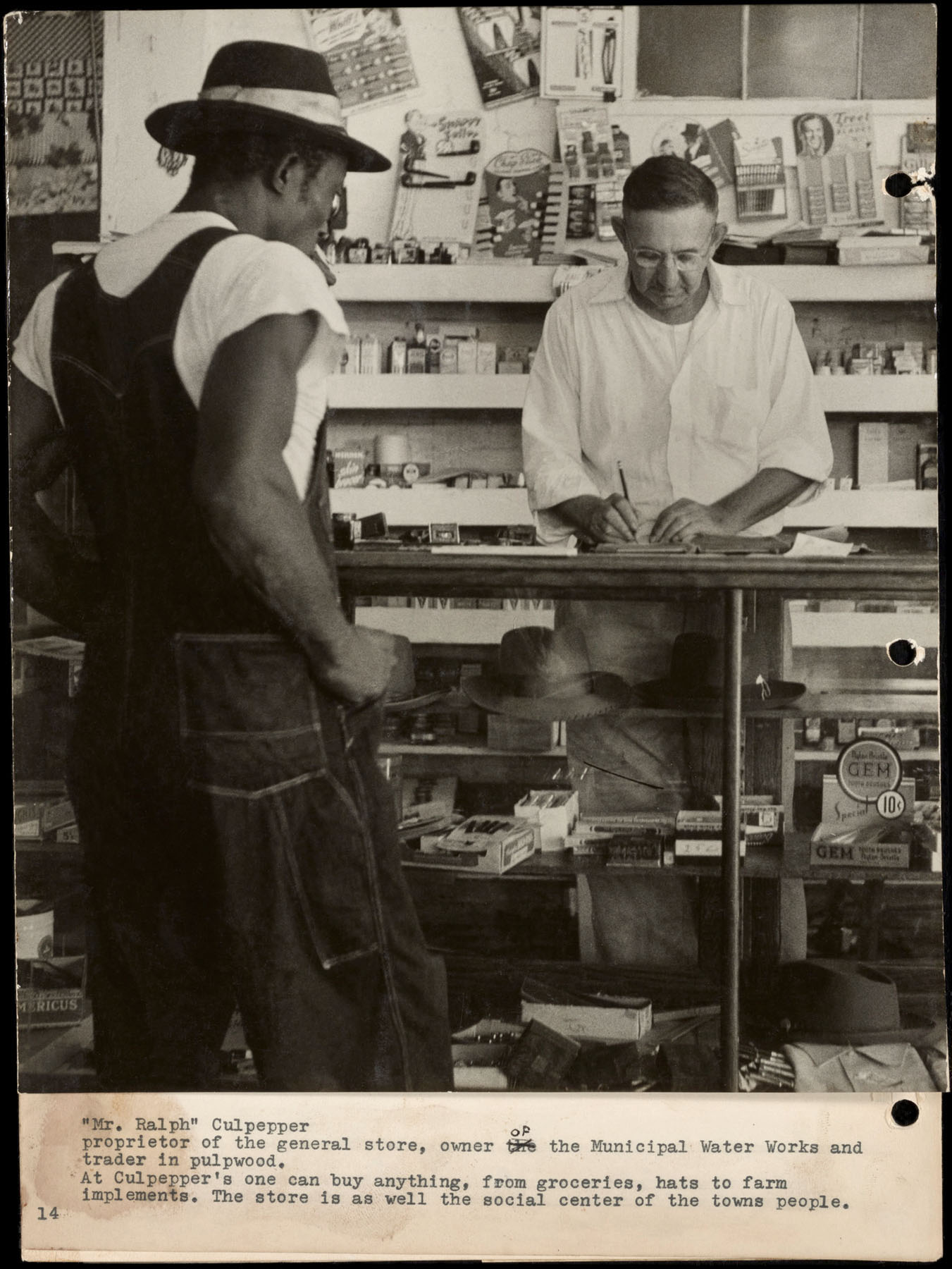
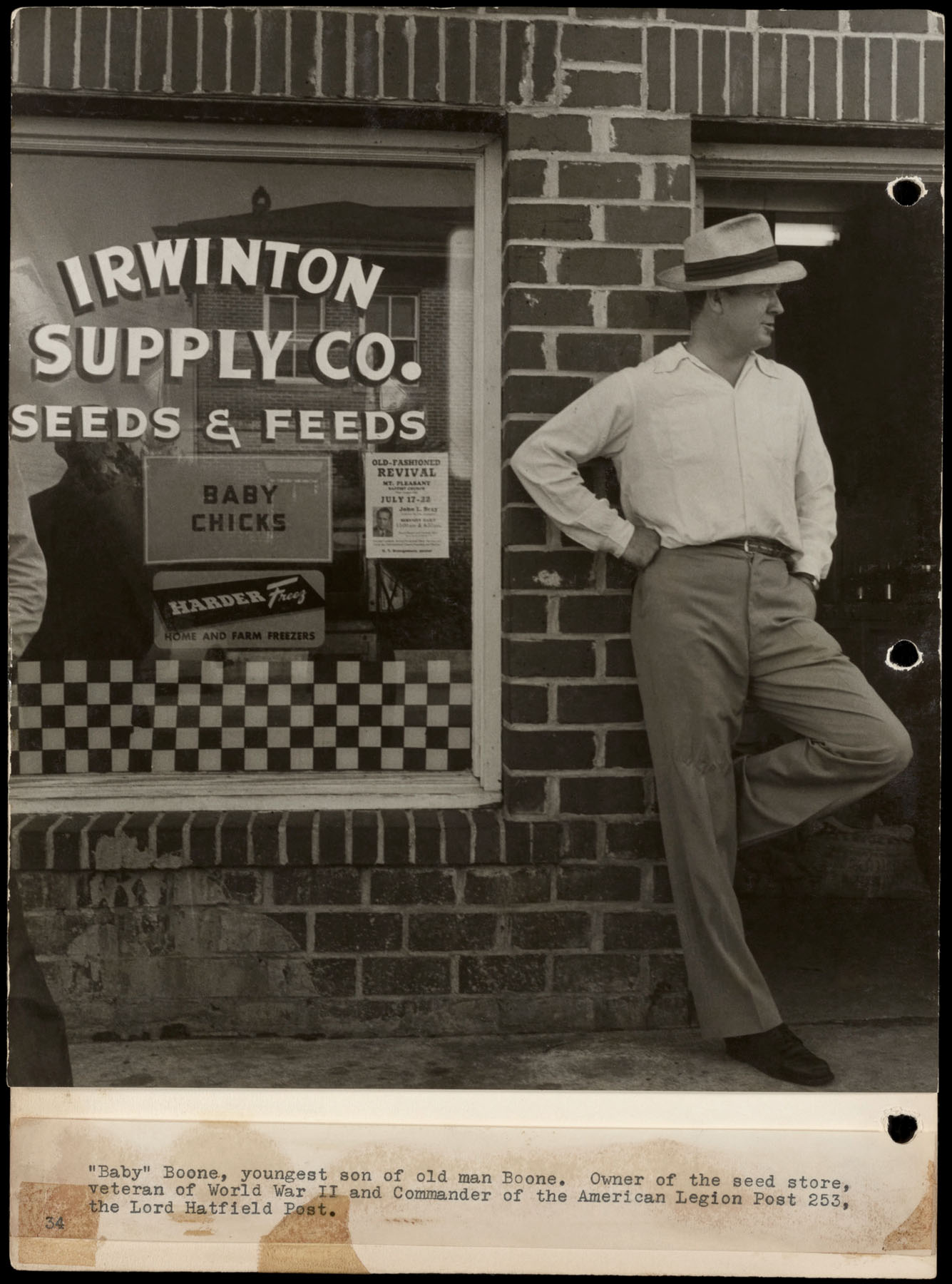
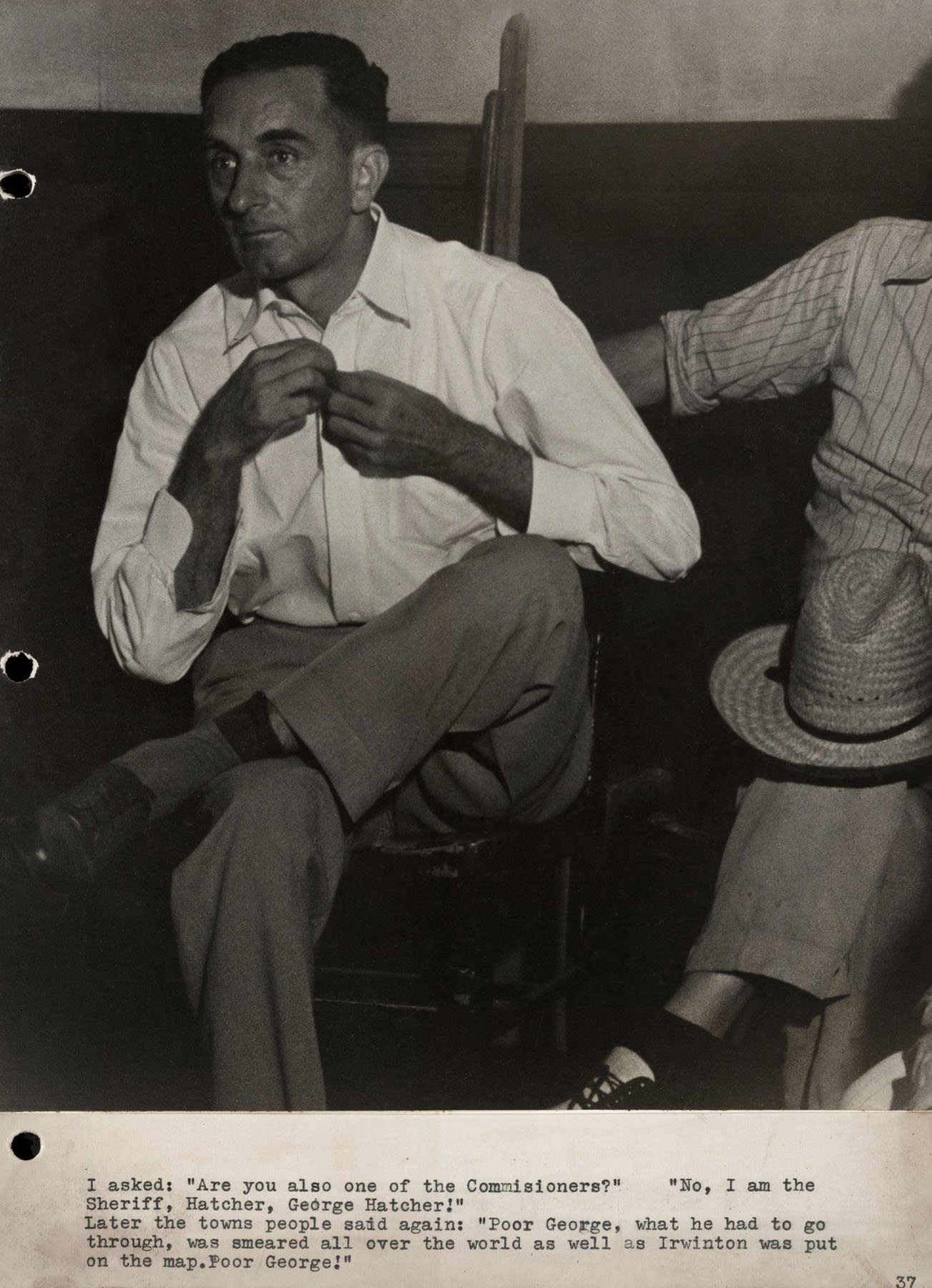
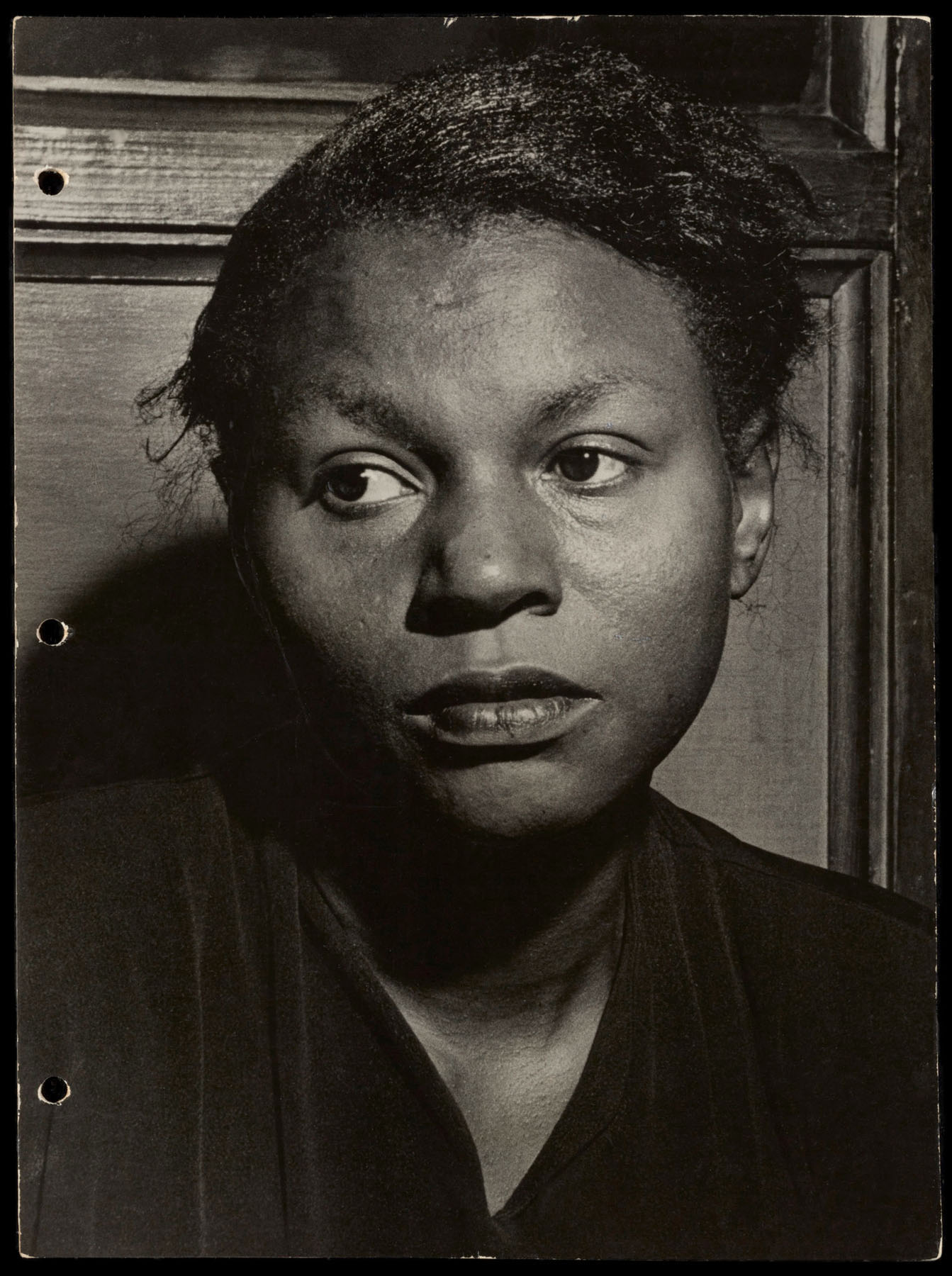
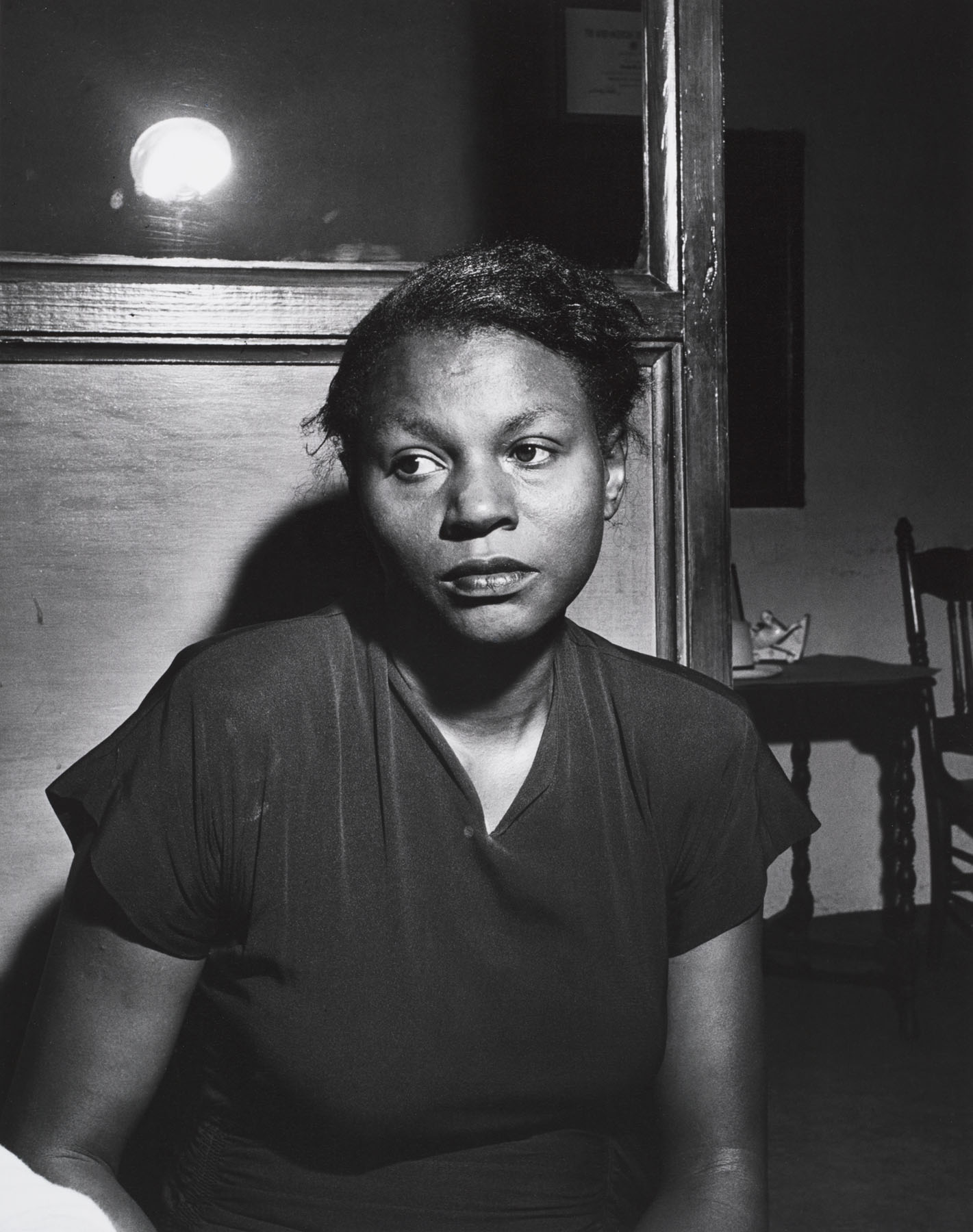
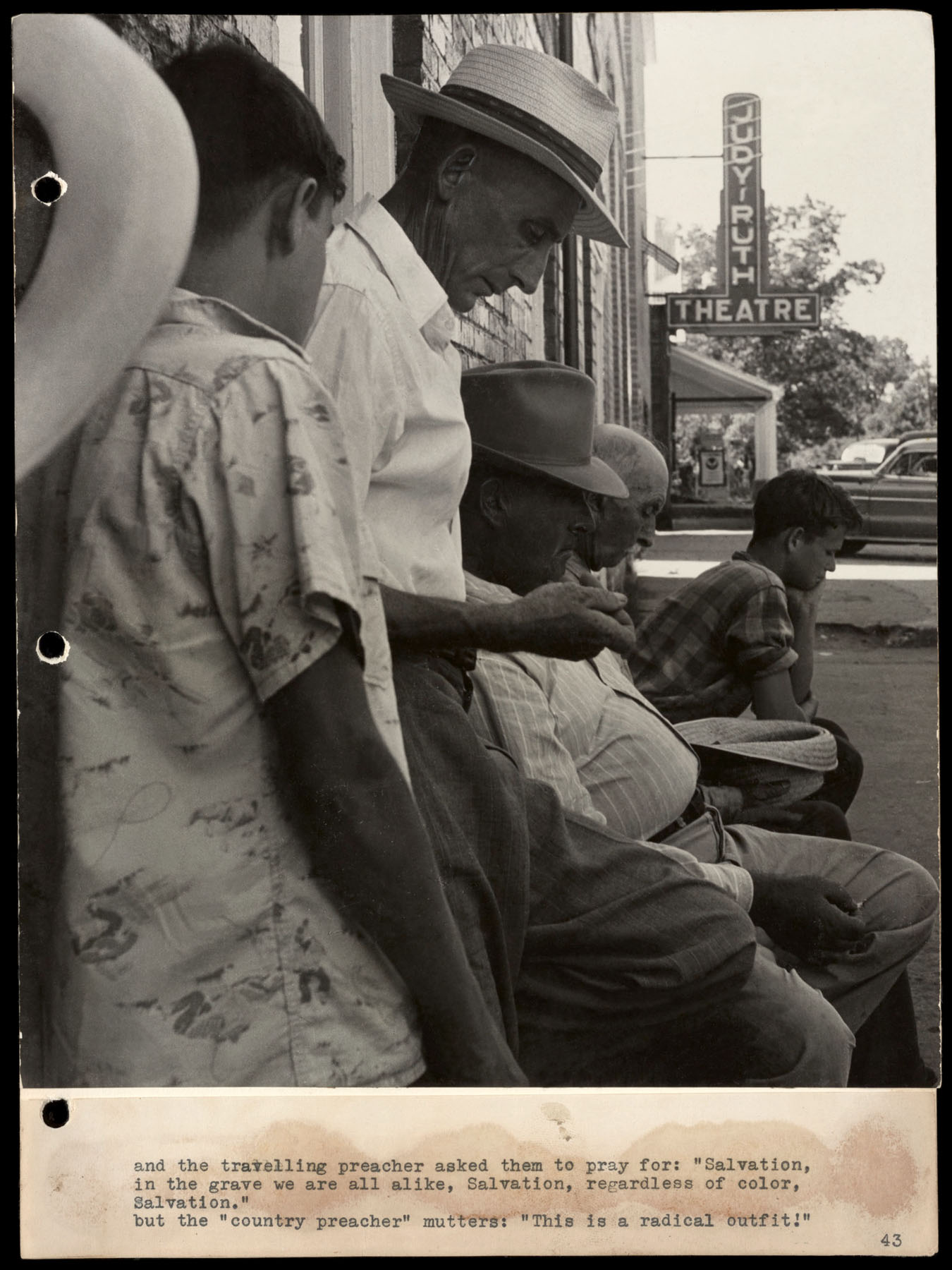
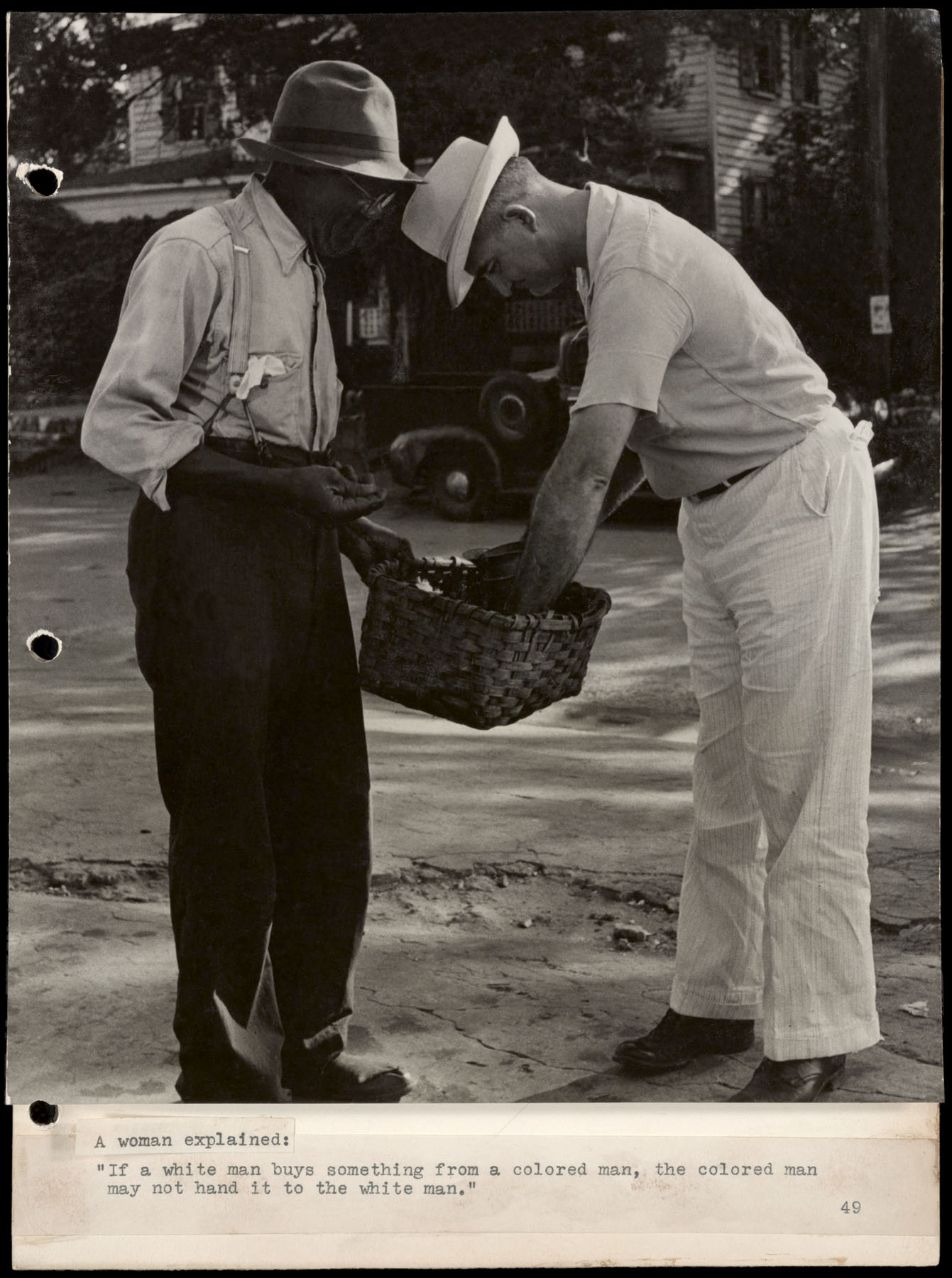
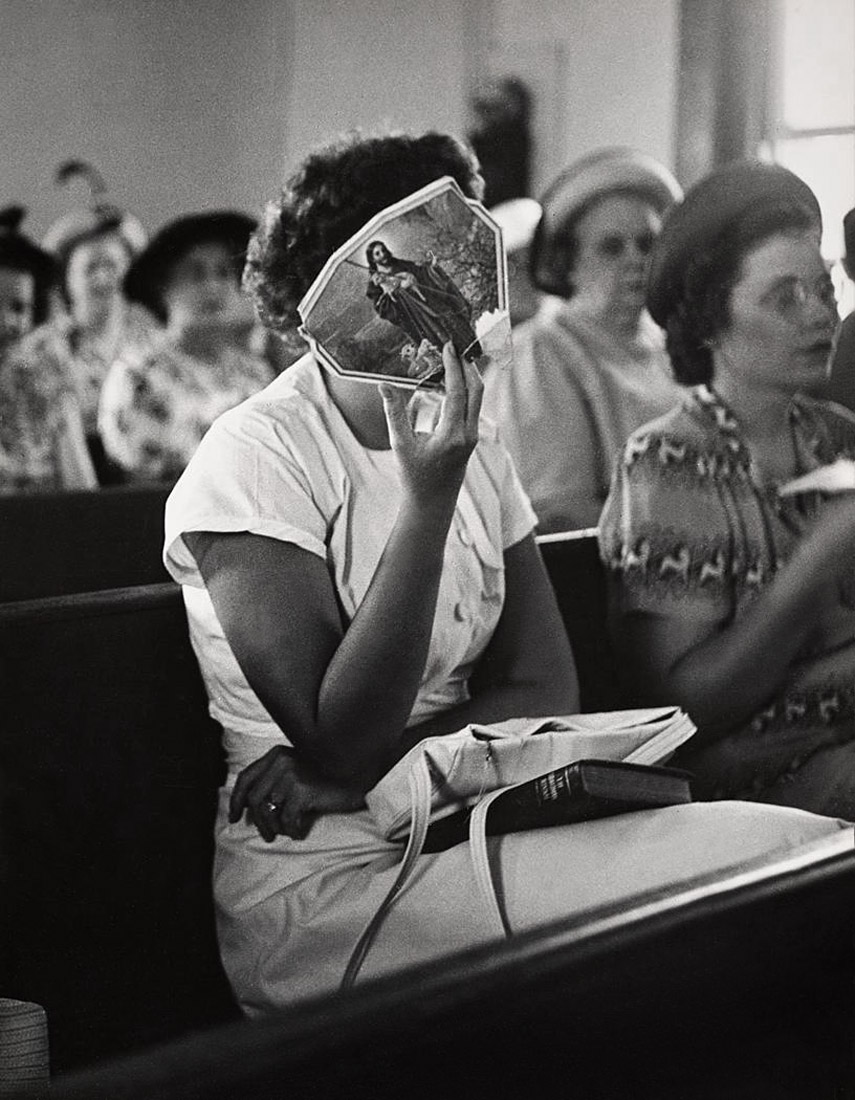
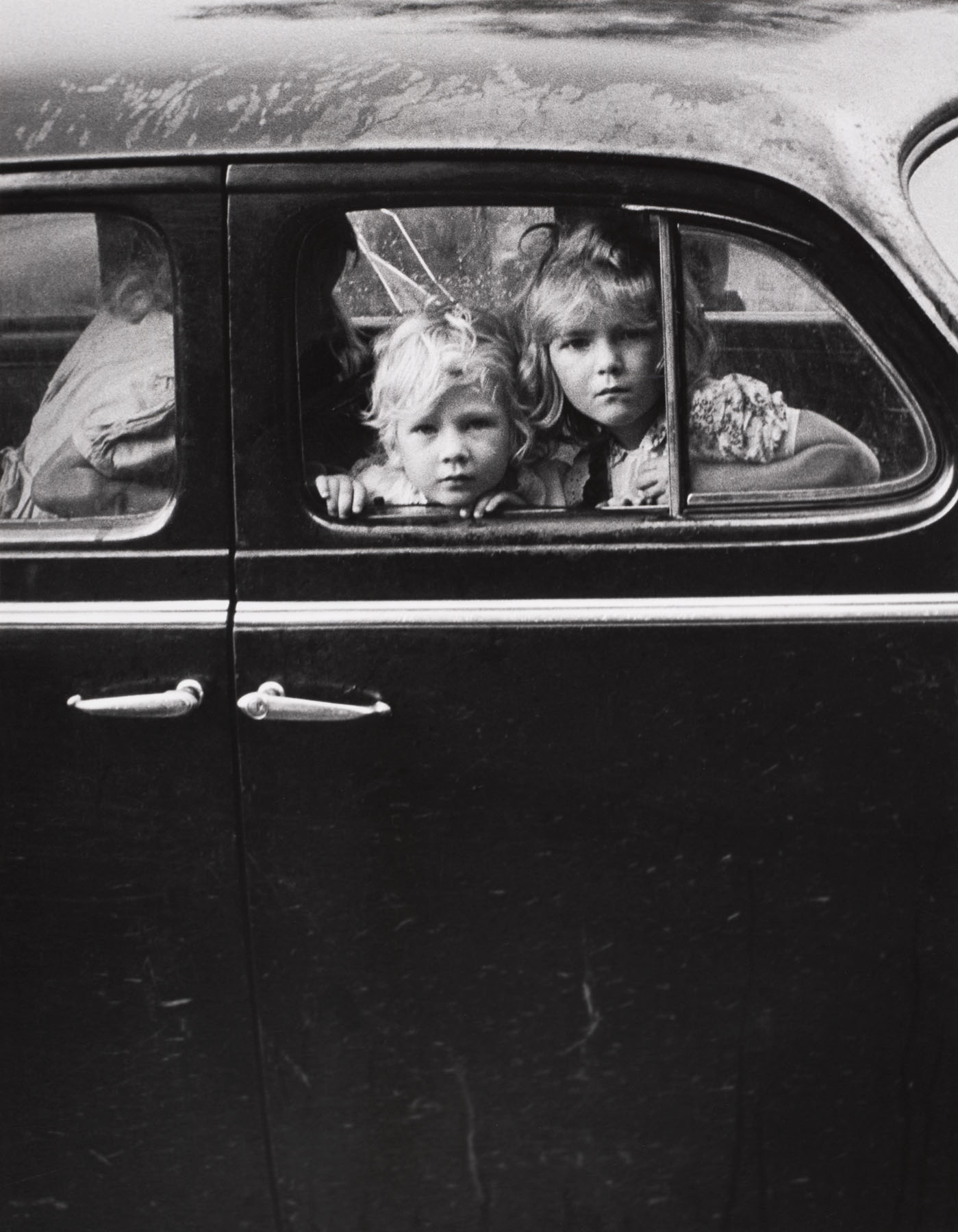
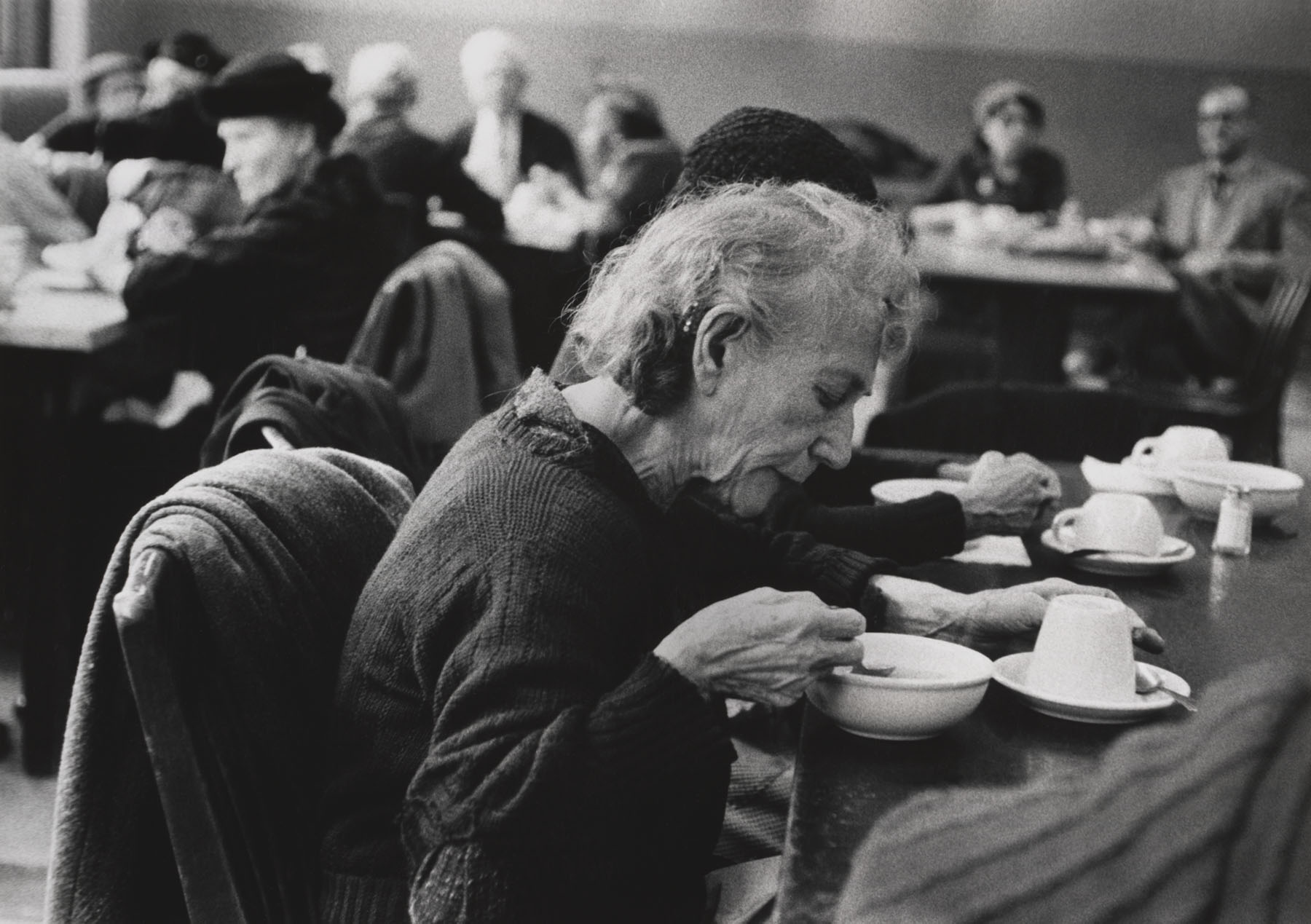
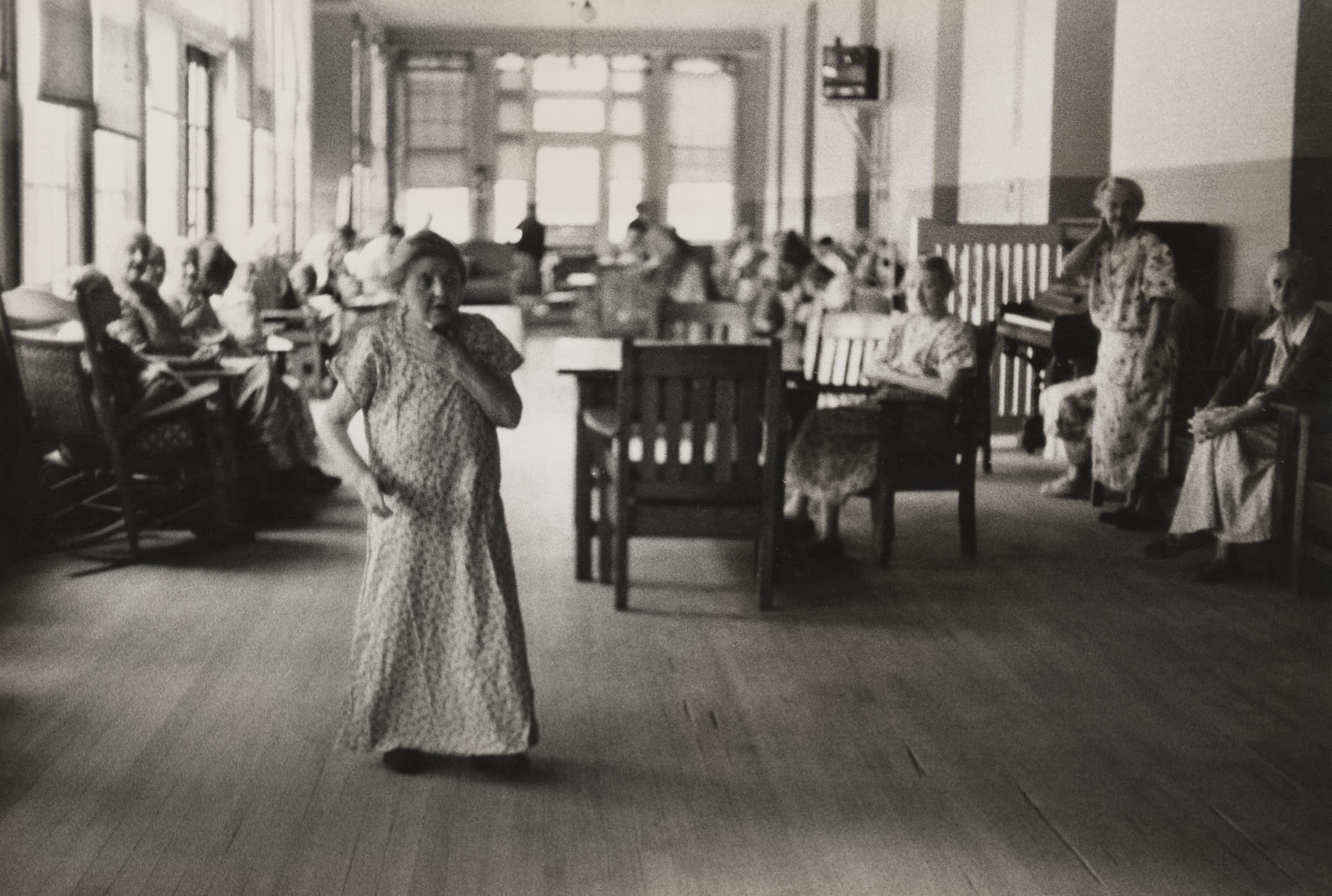
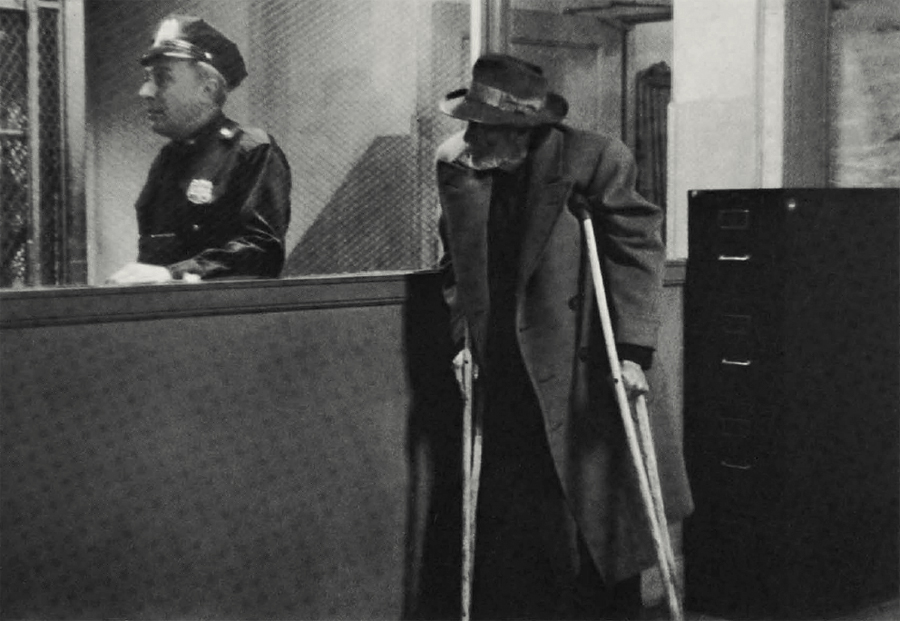
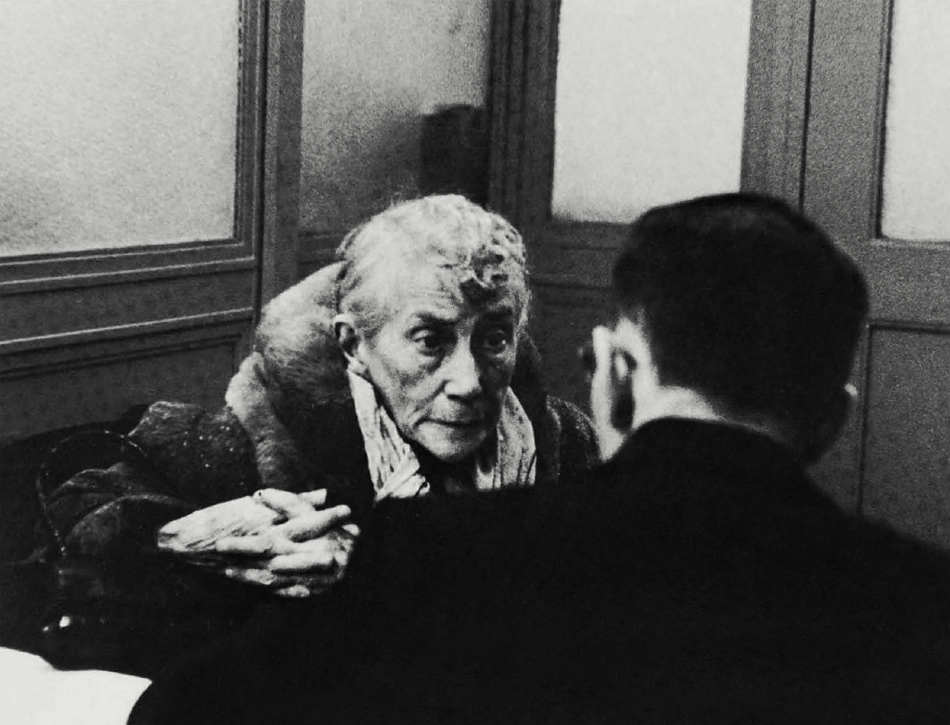
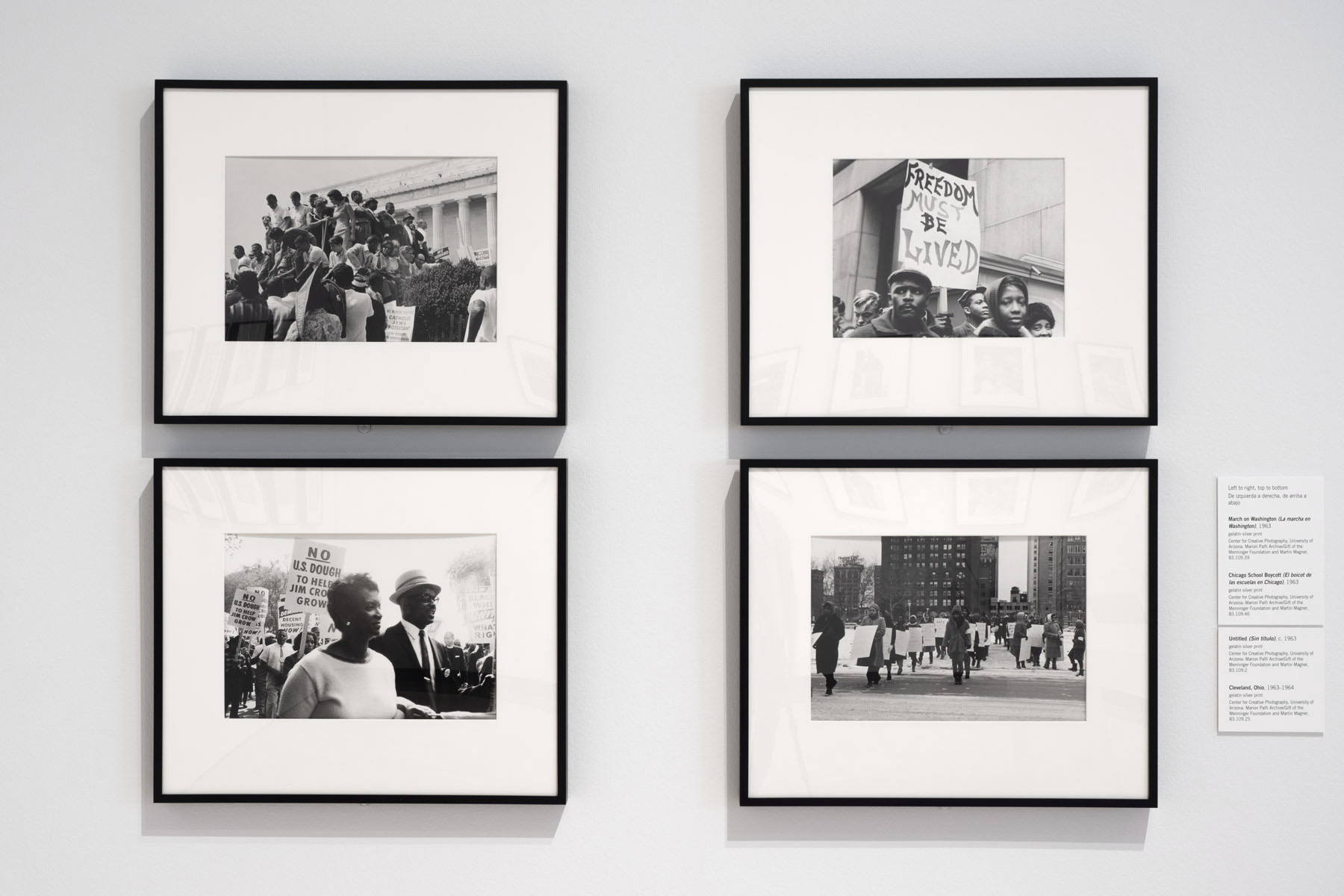
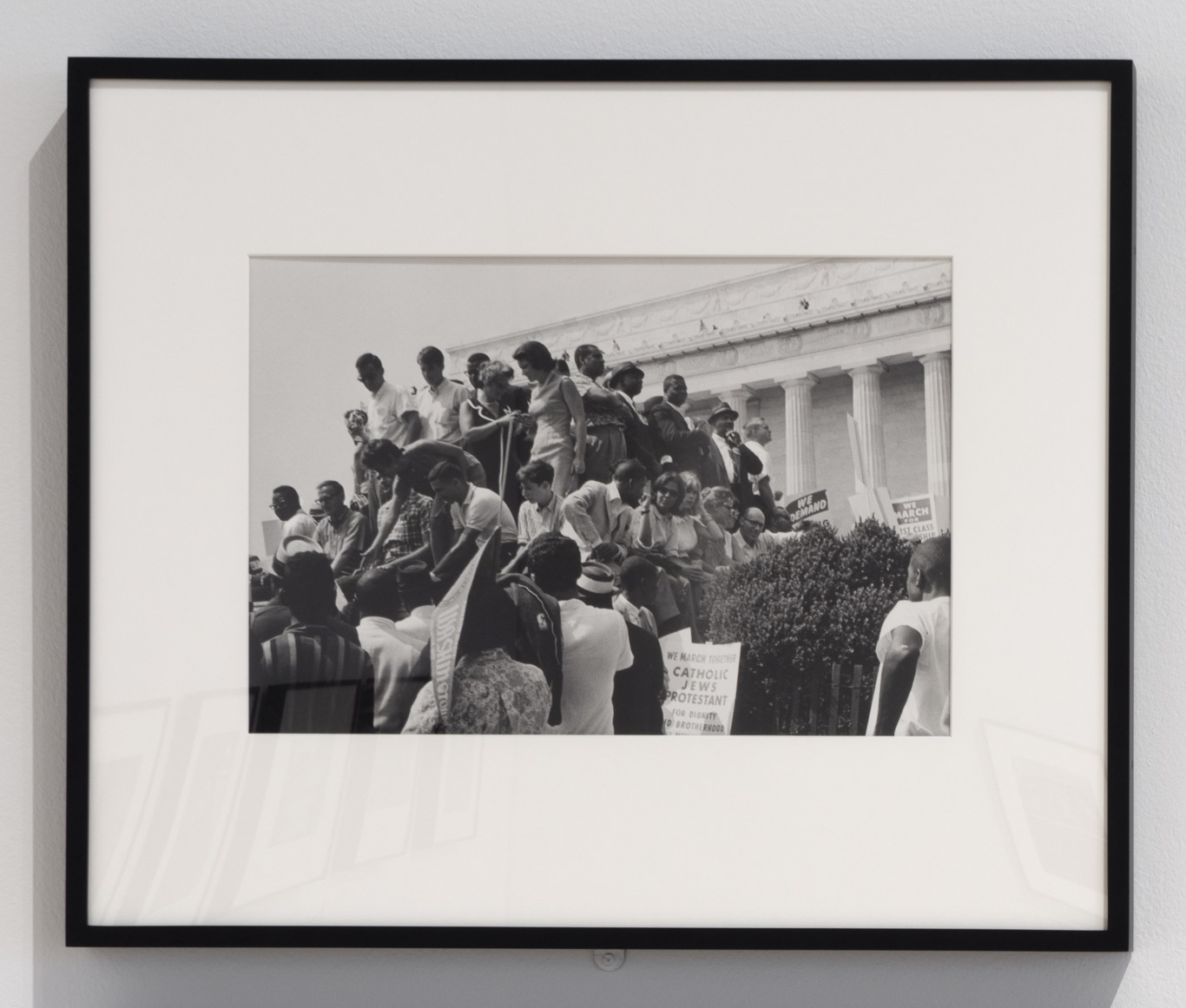
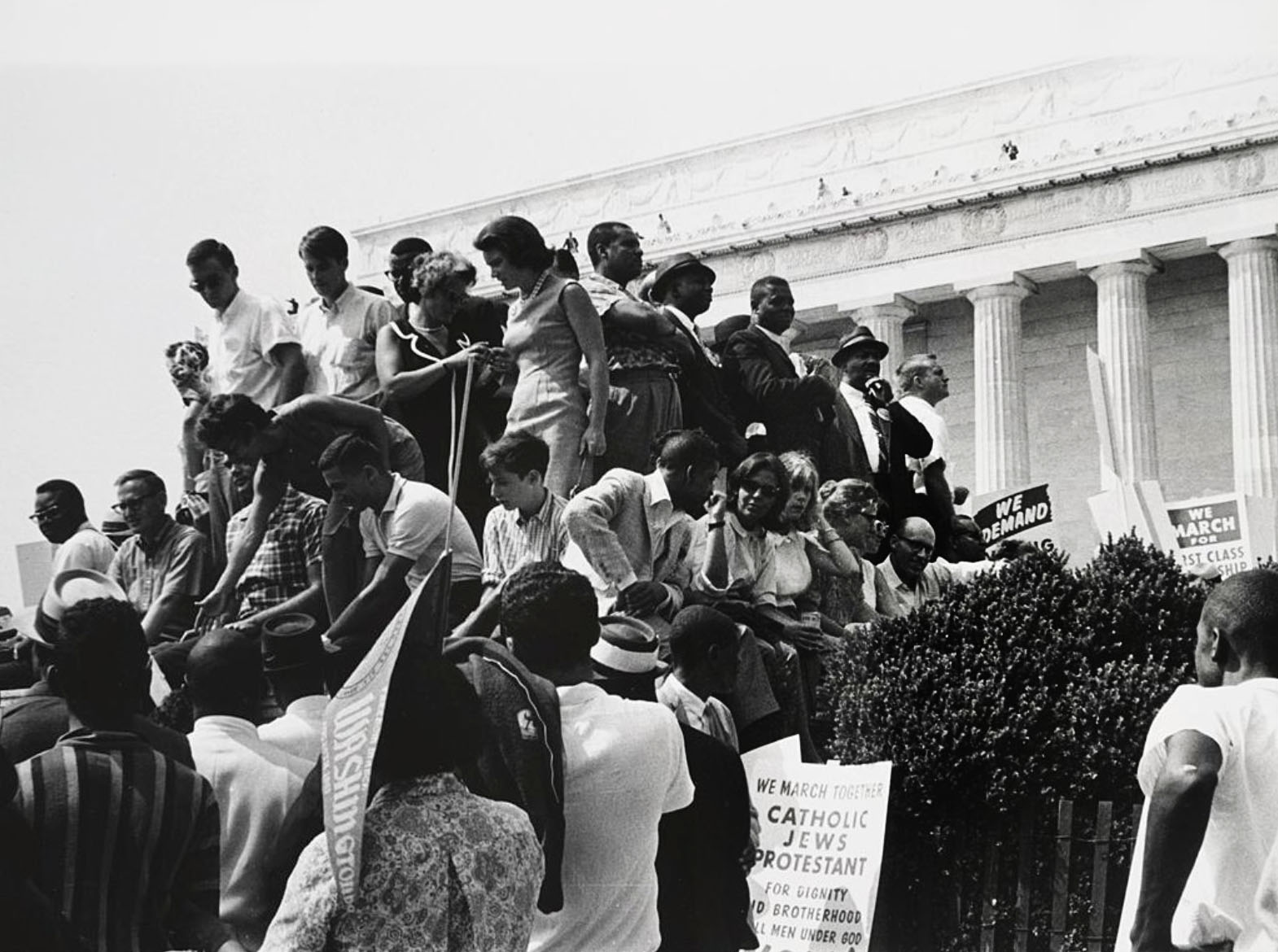
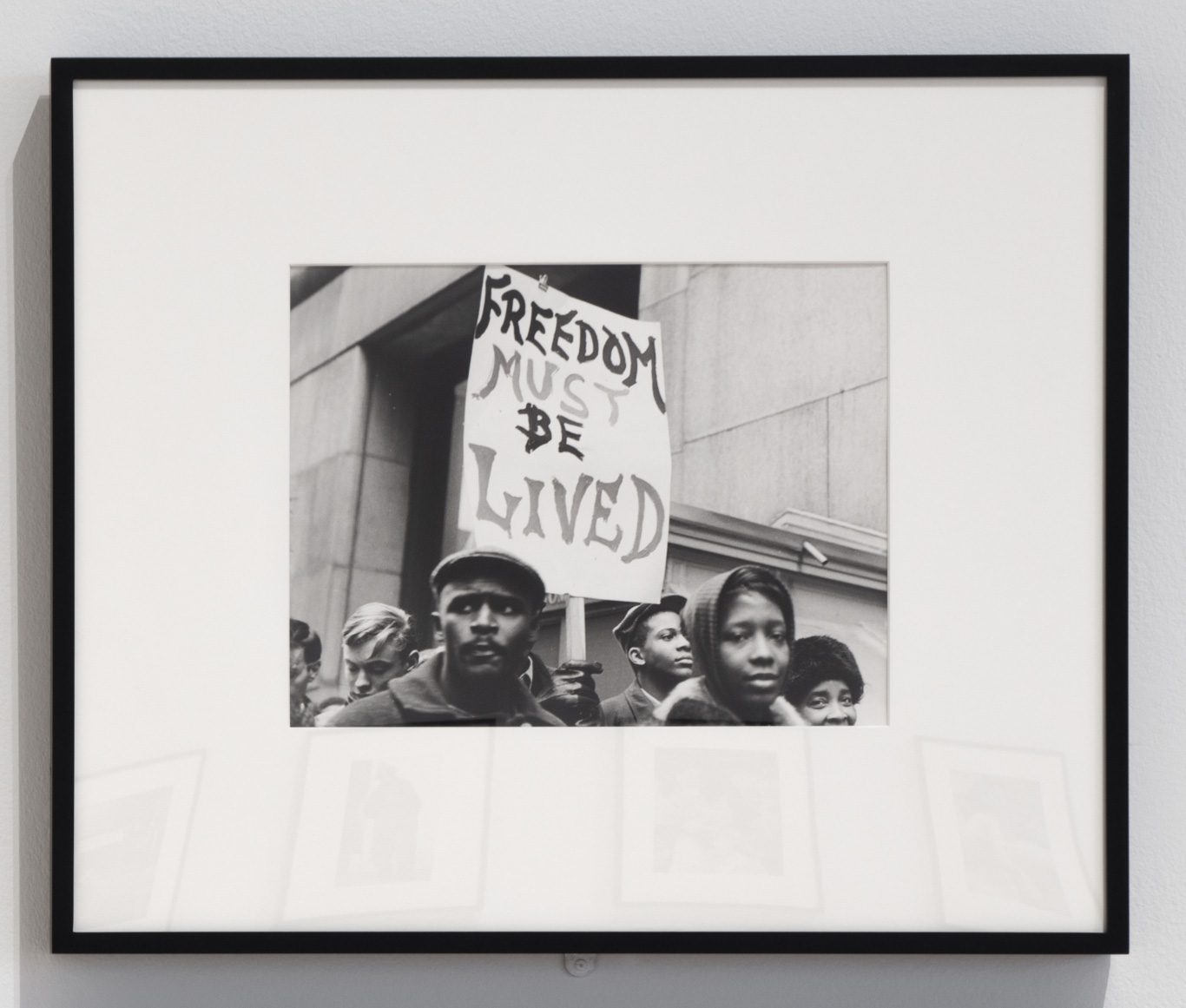
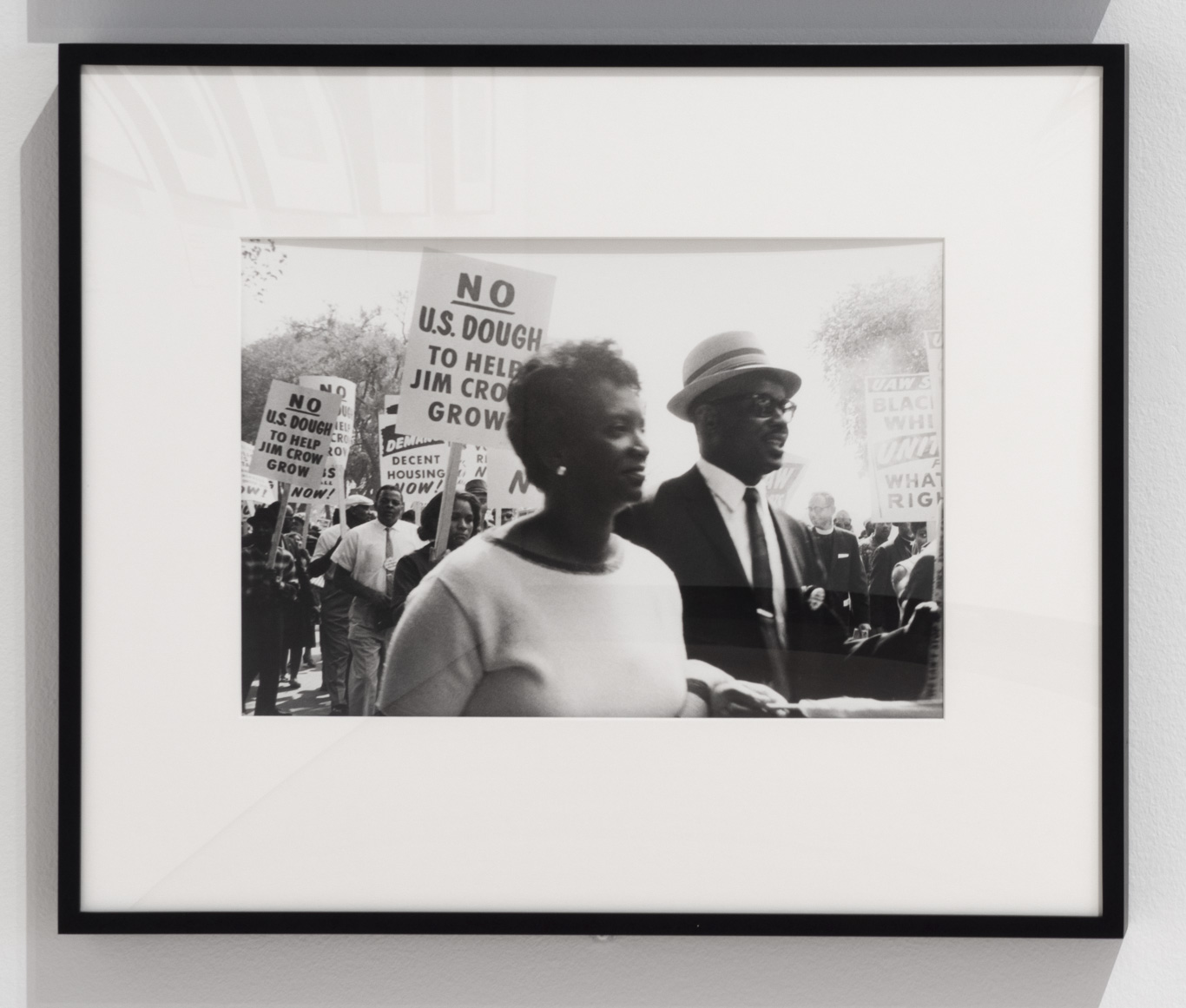
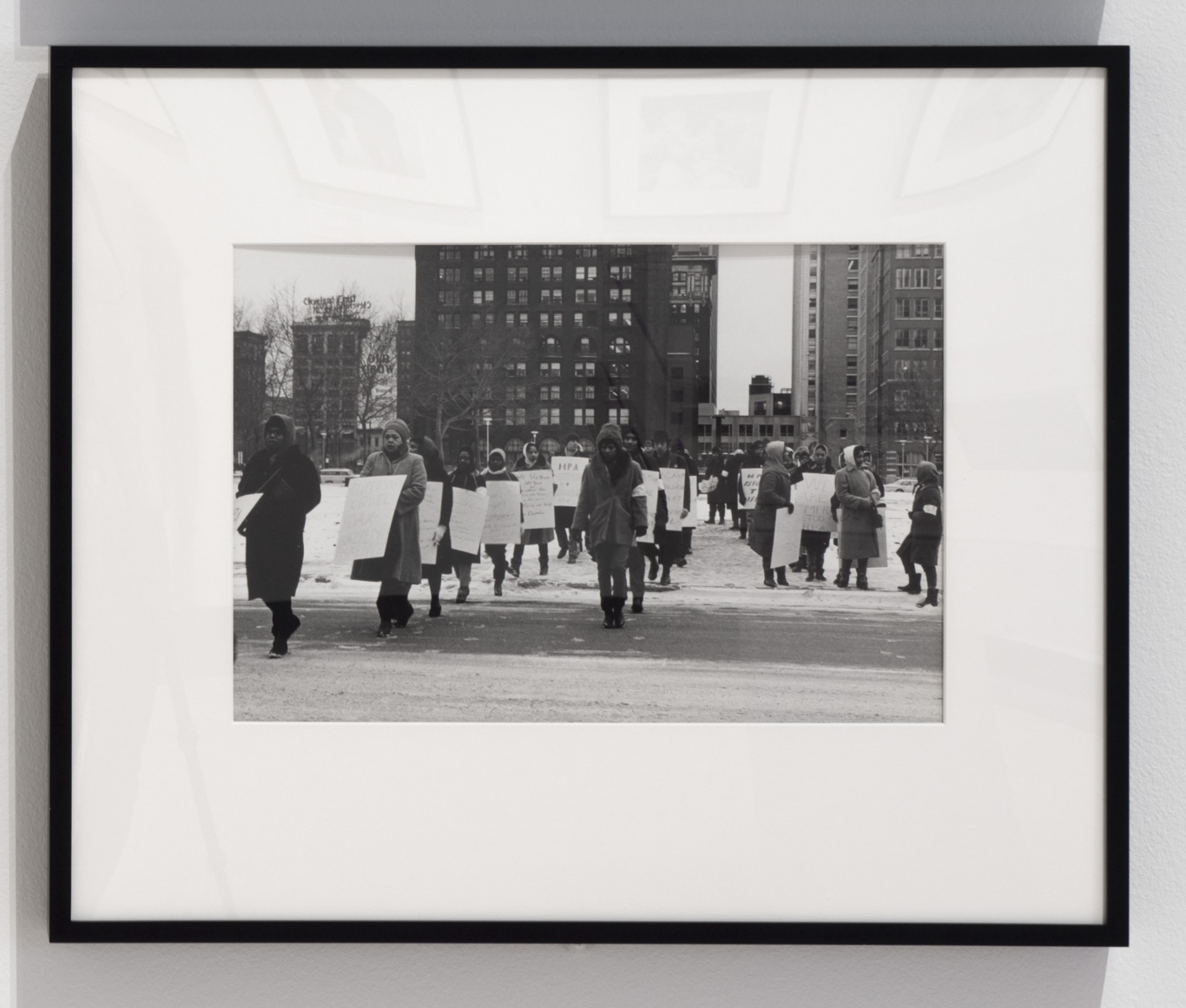
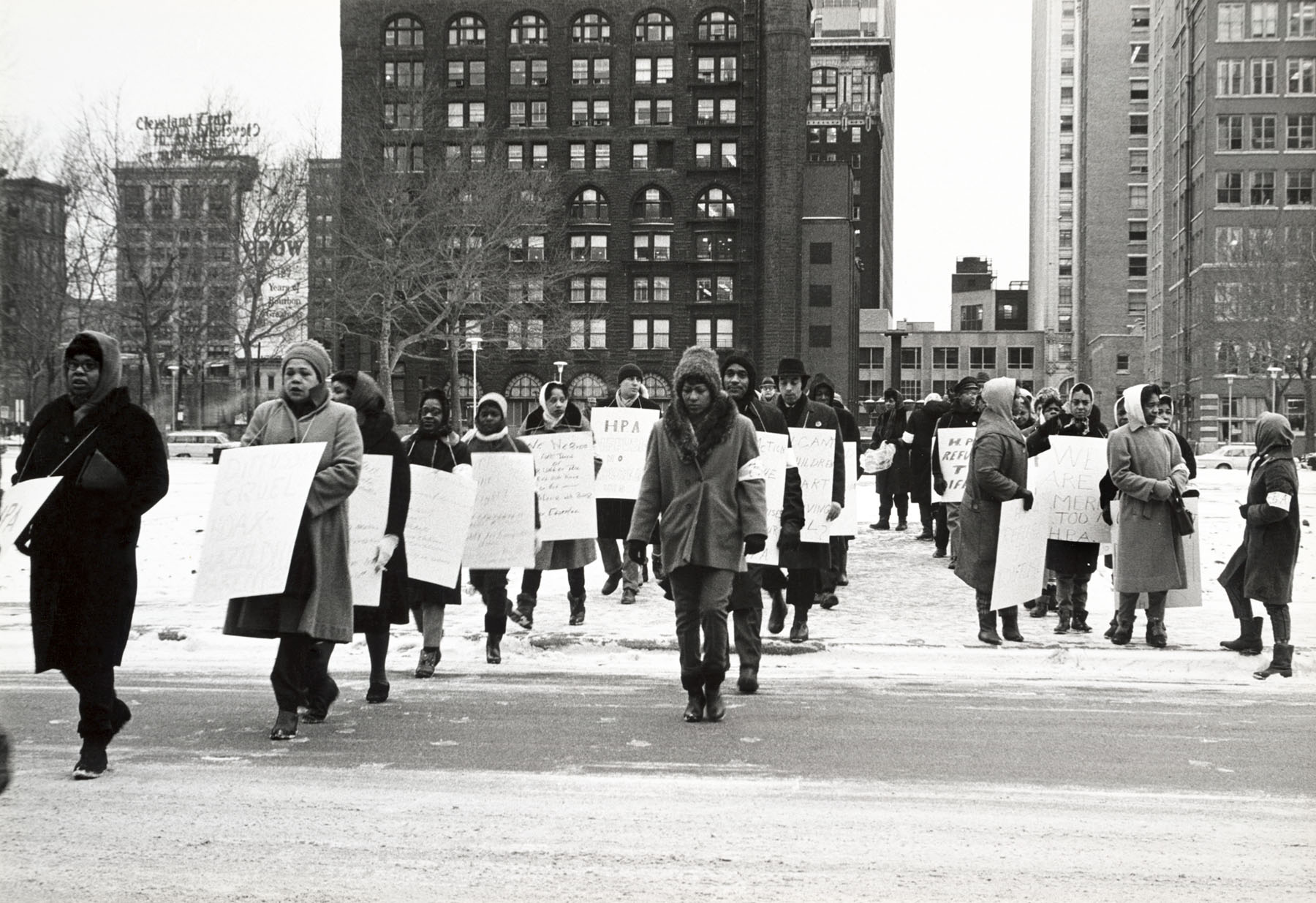
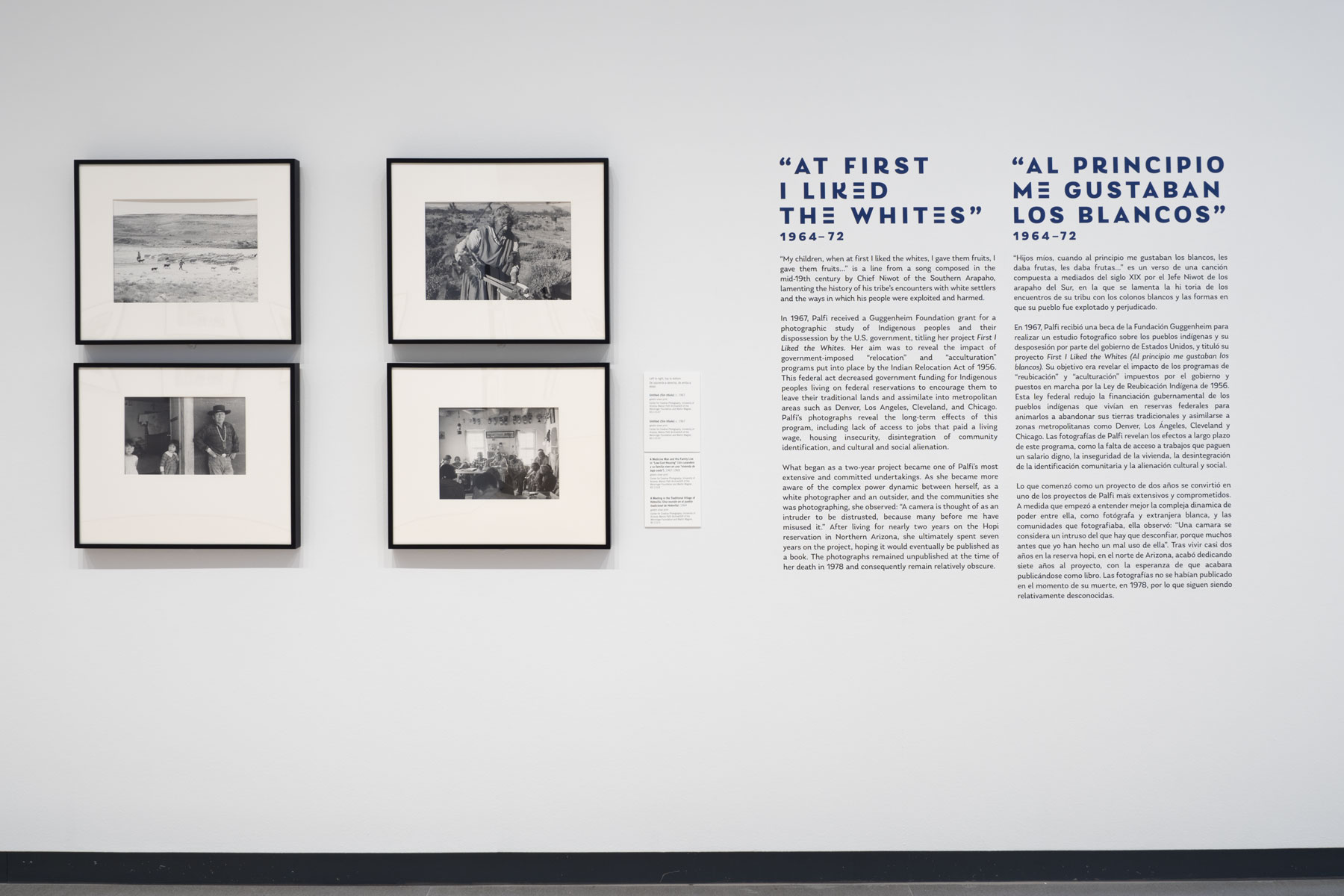
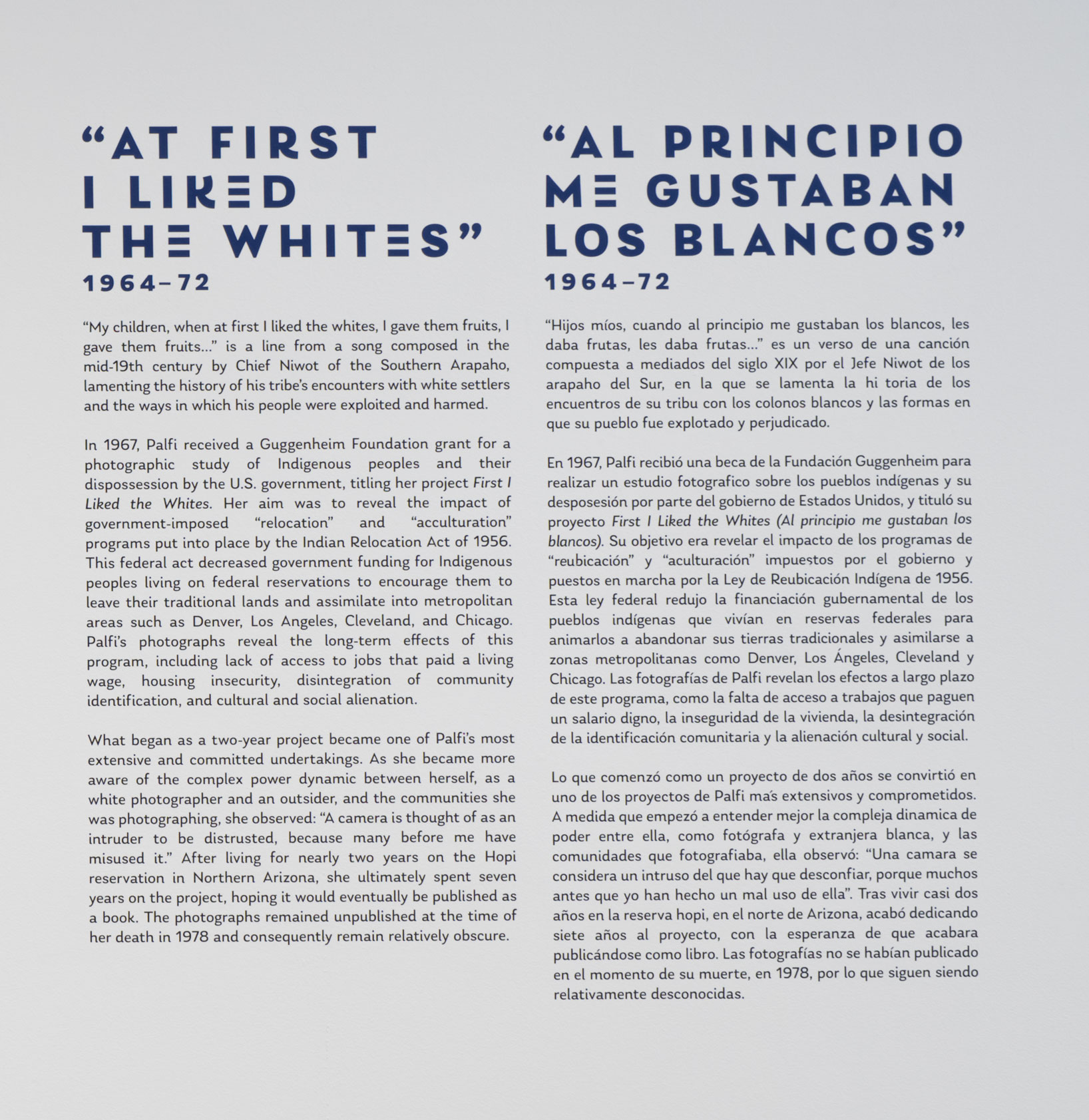
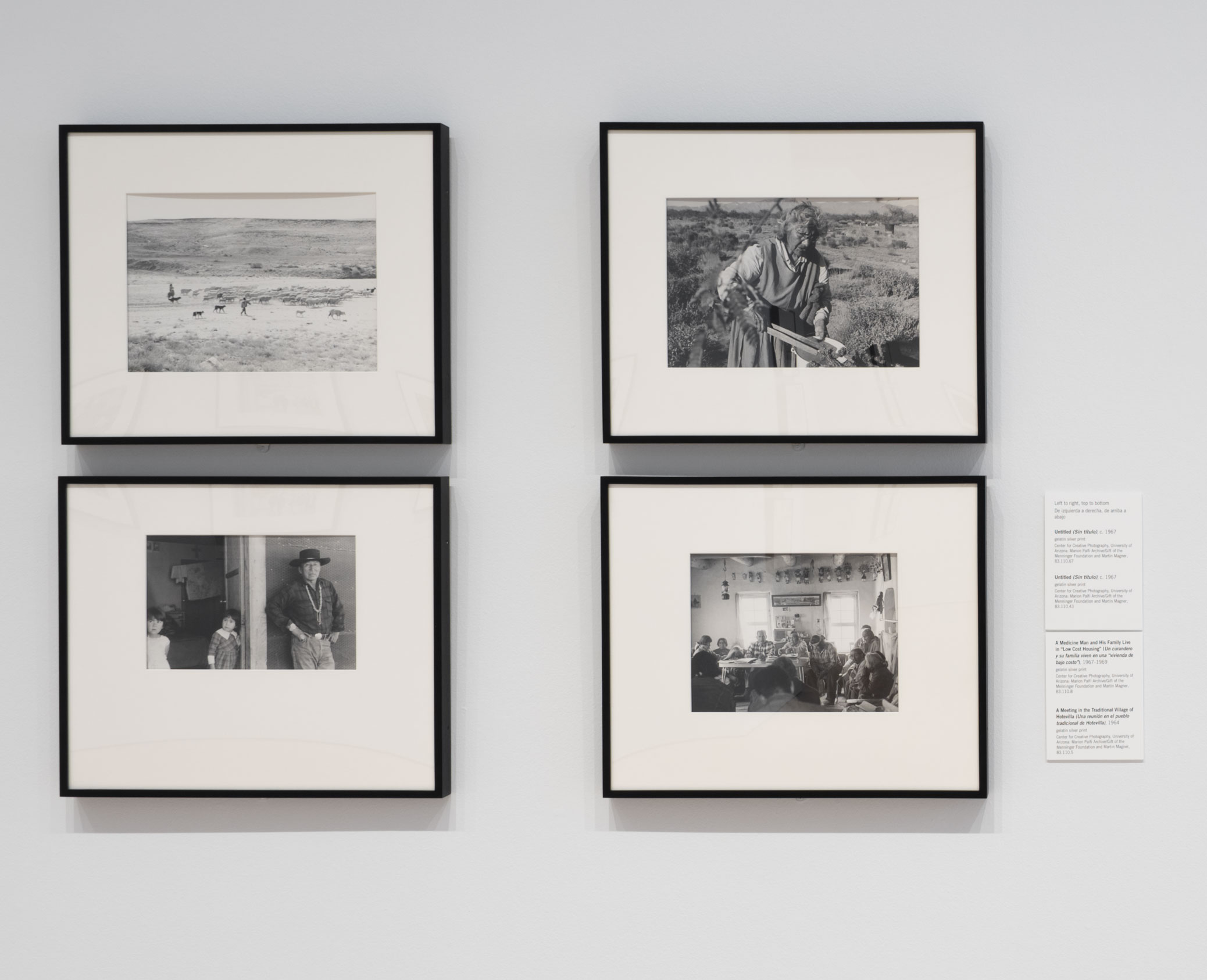
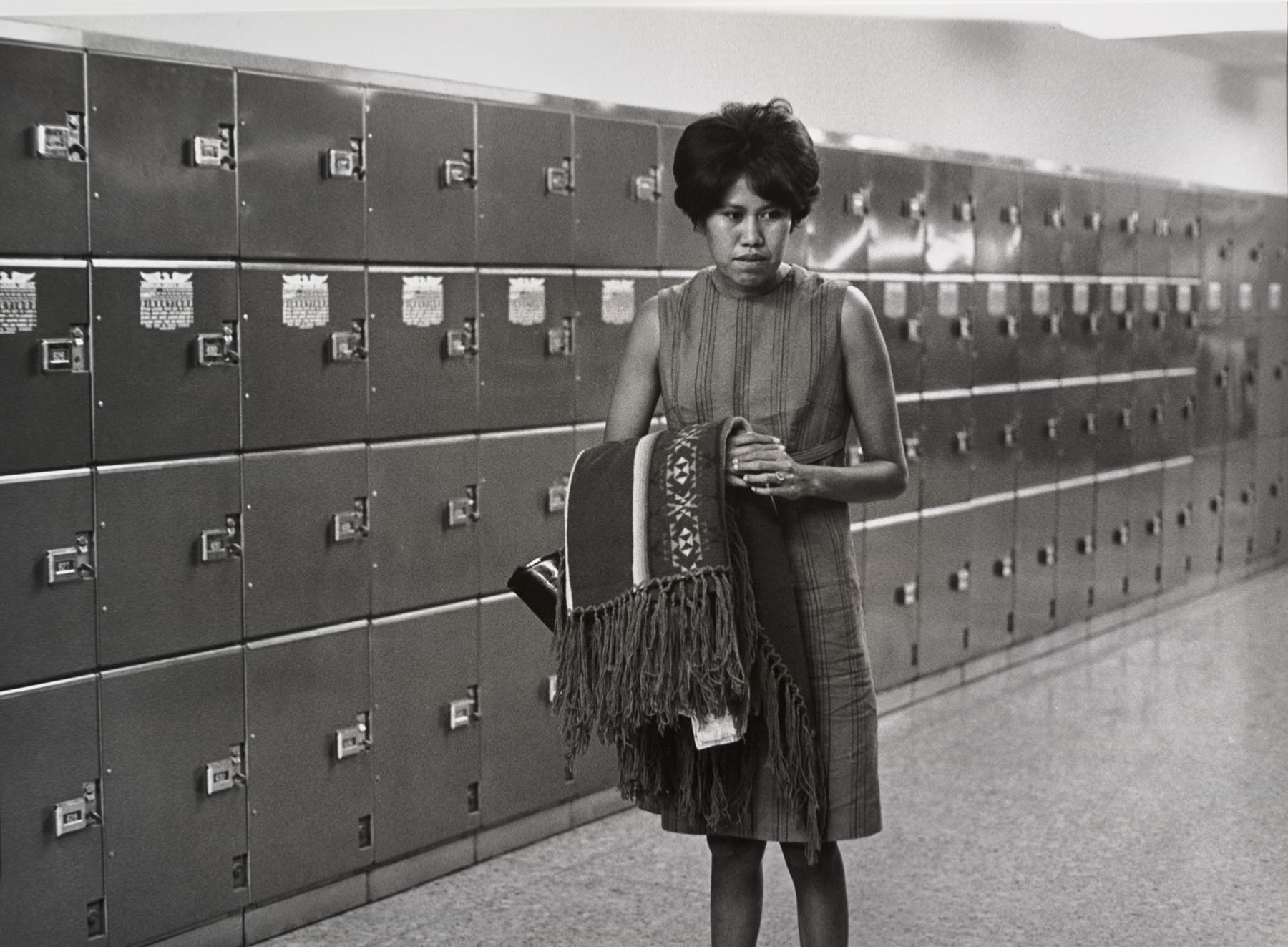
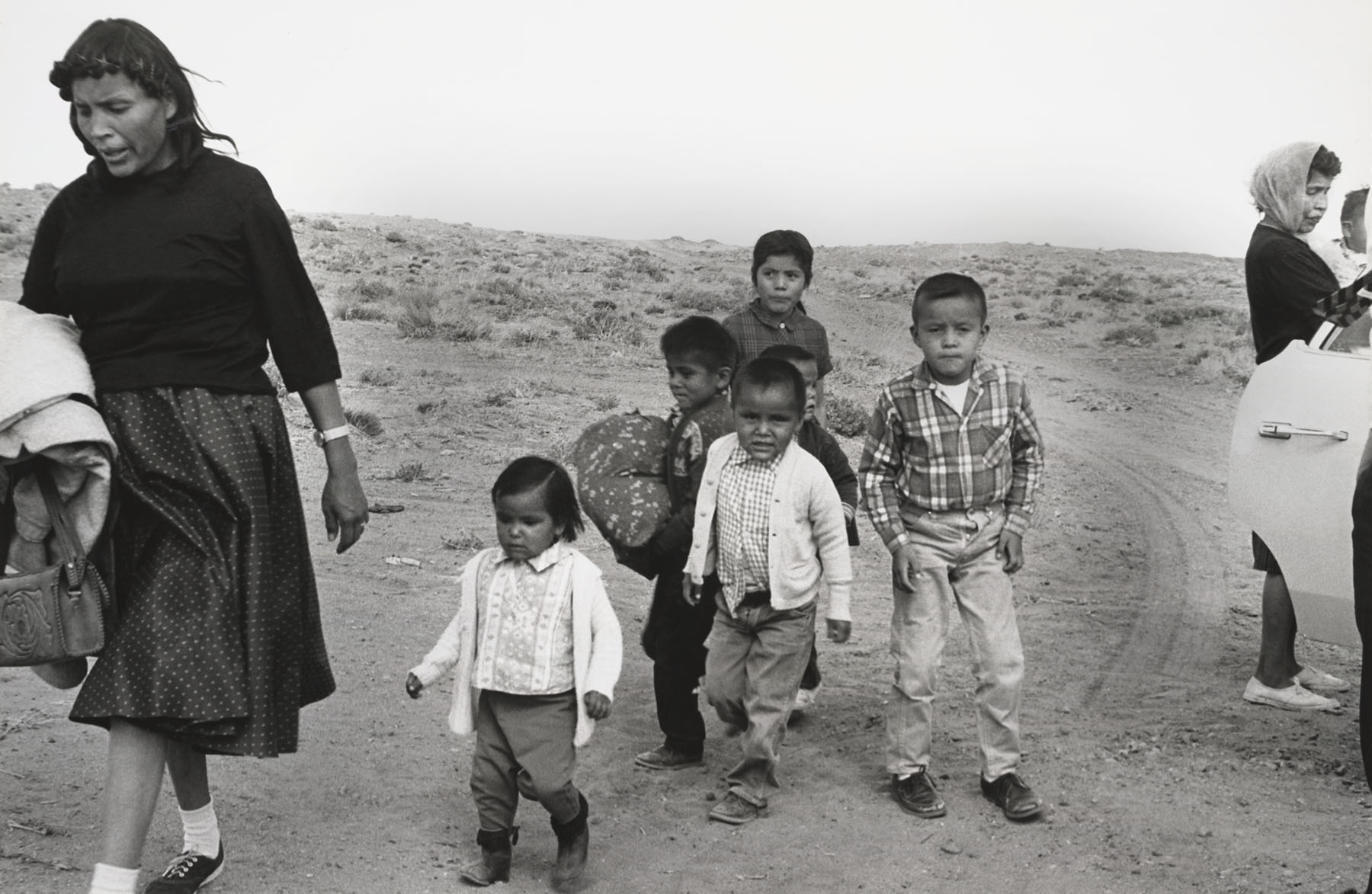
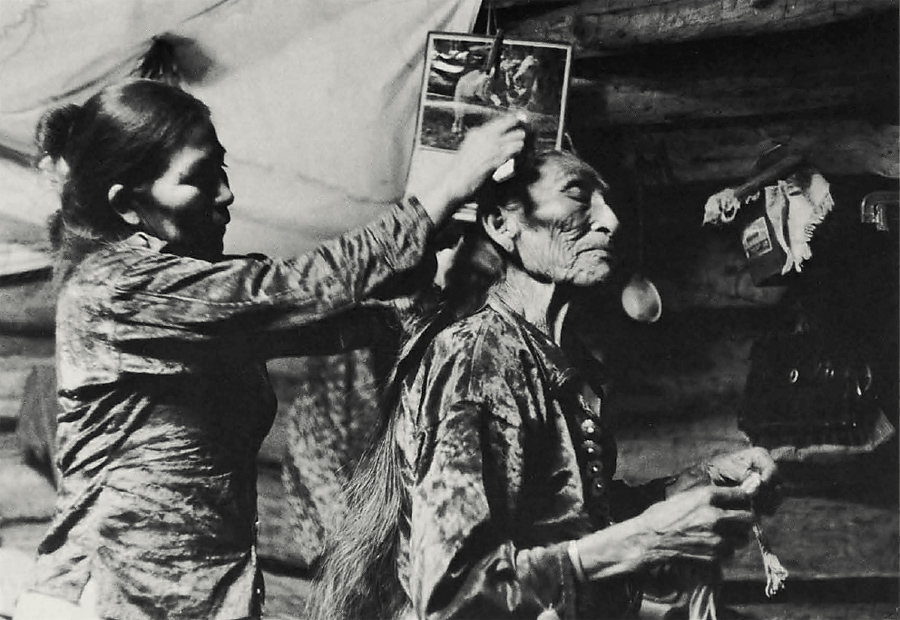
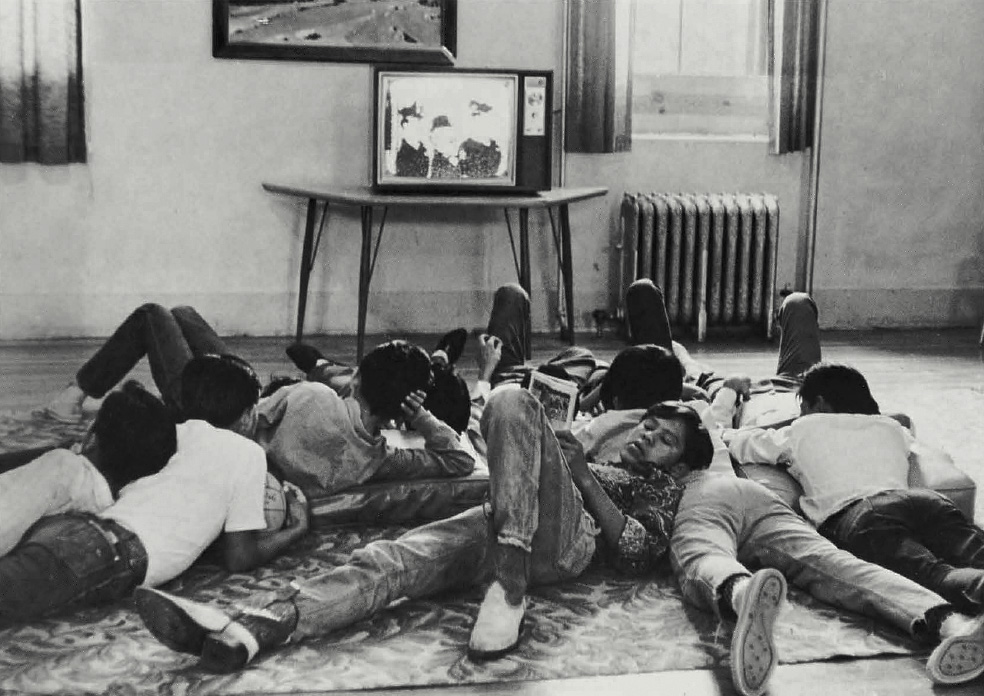
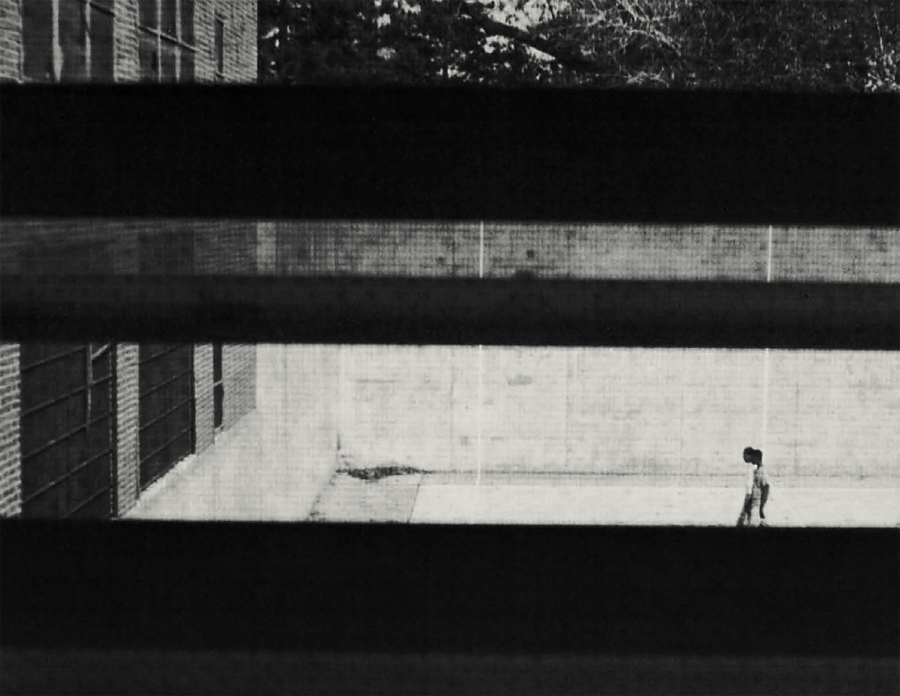


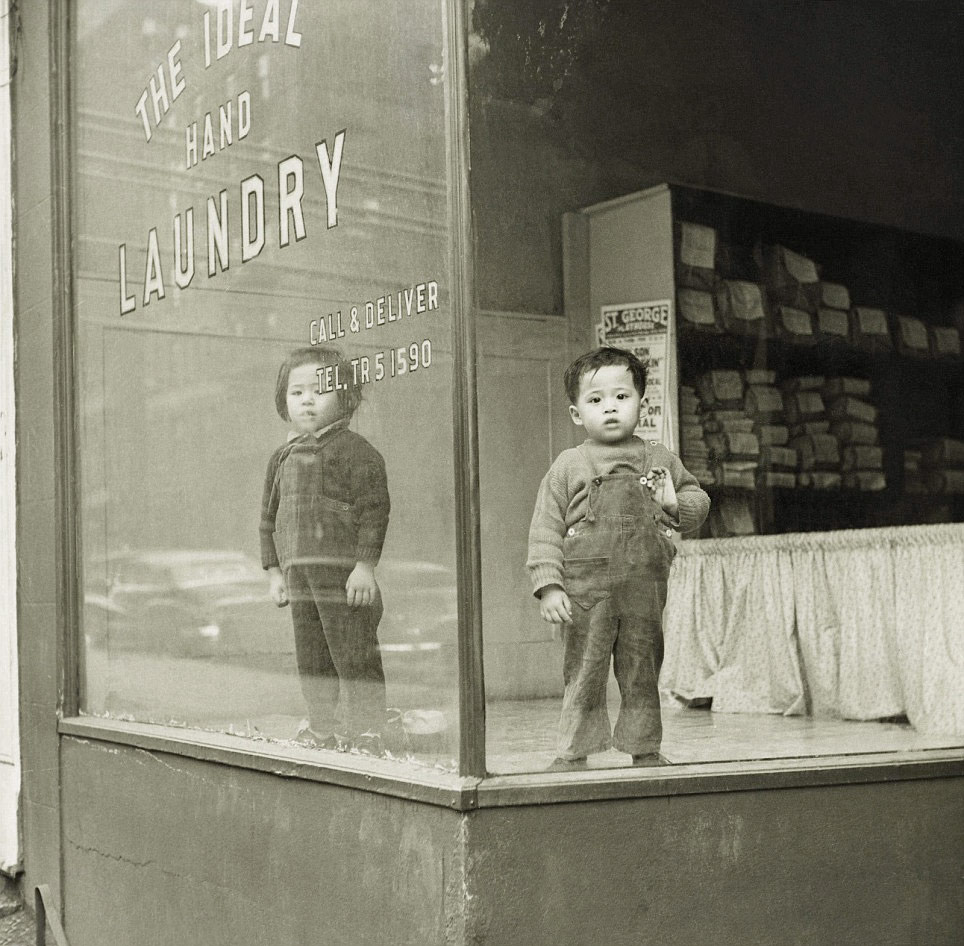


![Weegee (Arthur Fellig) (American, 1899-1968) 'Untitled [Anthony Esposito, booked on suspicion of killing a policeman, New York]' January 16, 1941 from the exhibition 'Weegee: Murder Is My Business' at the International Center of Photography, New York, January - September, 2012](https://artblart.com/wp-content/uploads/2012/08/3-weegee_anthony-esposito-web.jpg "Weegee (Arthur Fellig) (American, 1899-1968) 'Untitled [Anthony Esposito, booked on suspicion of killing a policeman, New York]' January 16, 1941 from the exhibition 'Weegee: Murder Is My Business' at the International Center of Photography, New York, January - September, 2012")
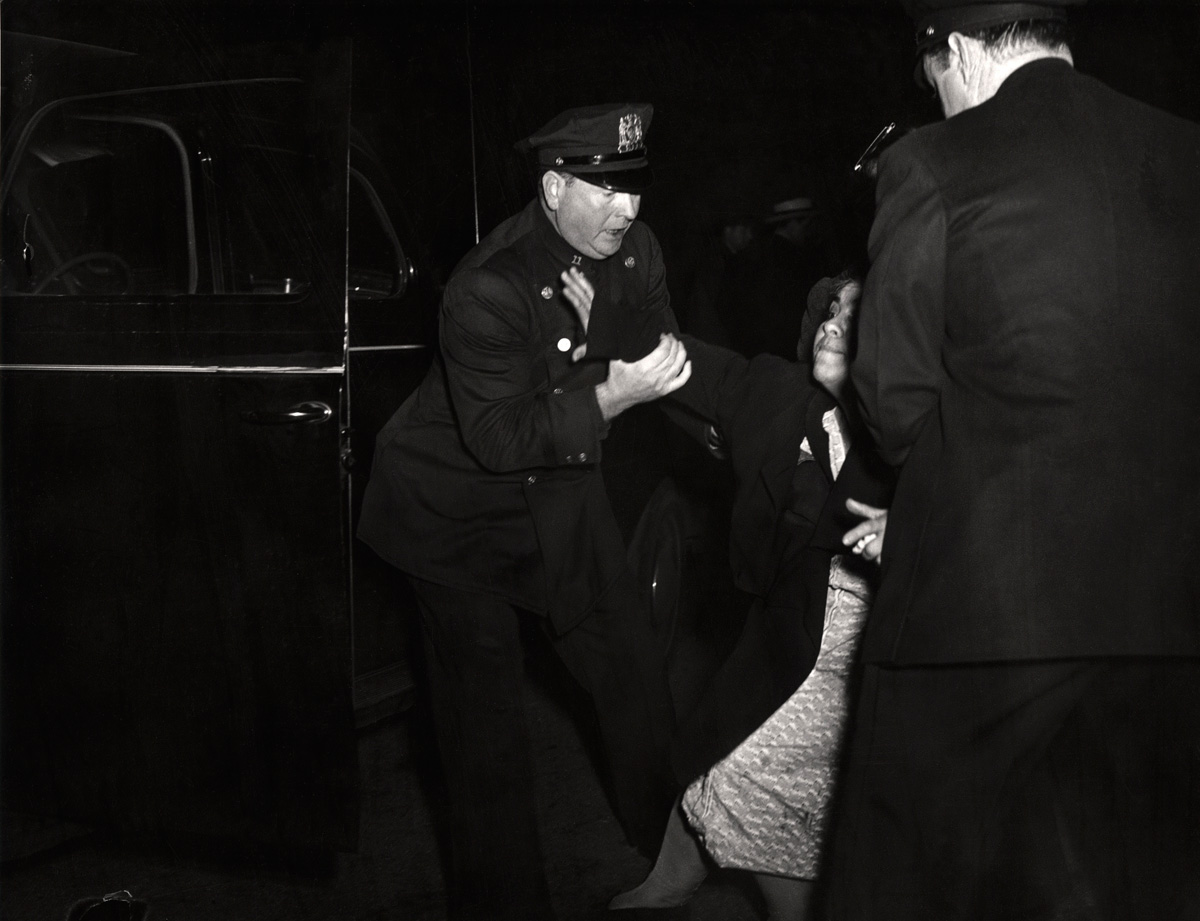
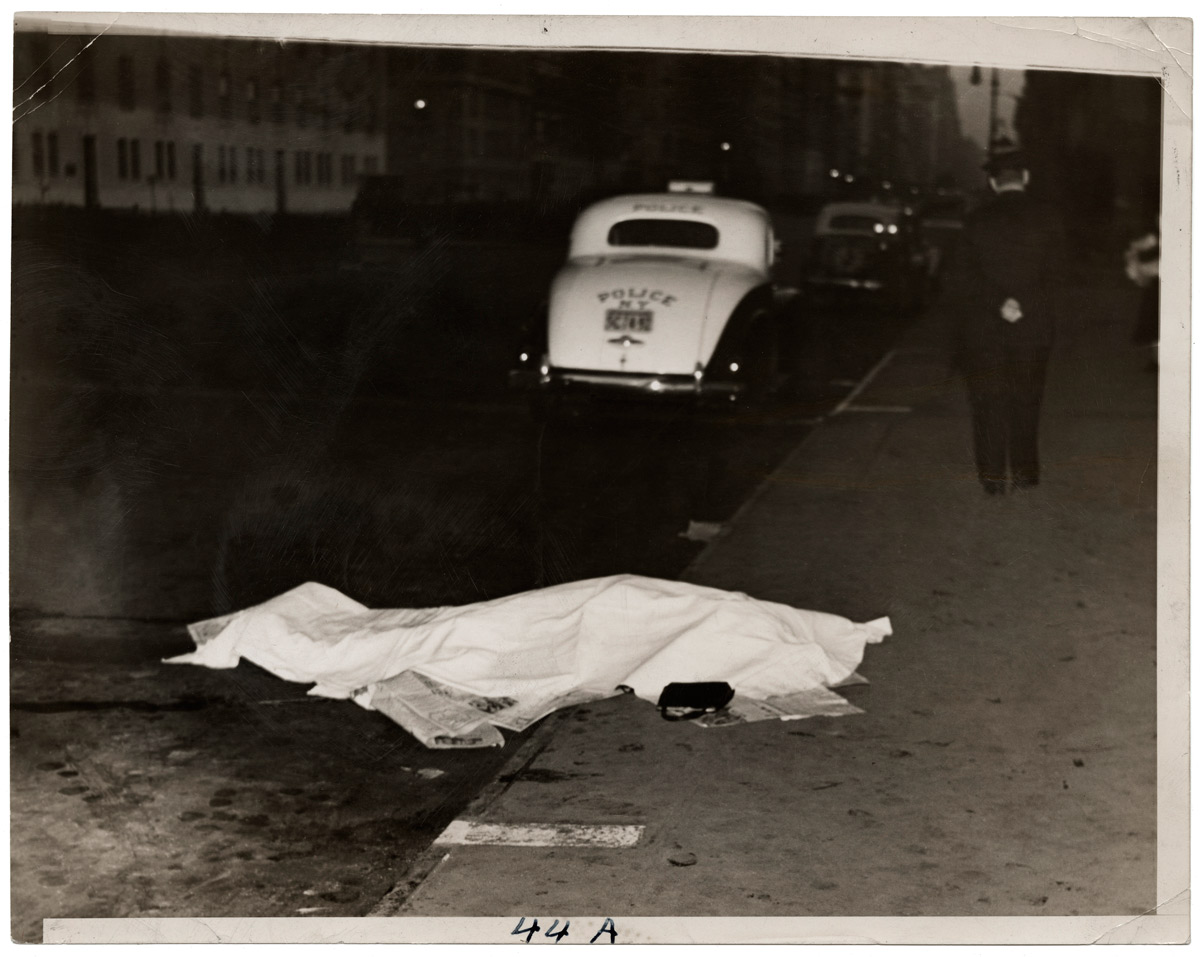
![Weegee (Arthur Fellig) (American, 1899-1968) 'Untitled [Installation view of "Weegee: Murder Is My Business" at the Photo League, New York]' 1941](https://artblart.com/wp-content/uploads/2012/08/17-weegee_19982_1993-web.jpg "Weegee (Arthur Fellig) (American, 1899-1968) 'Untitled [Installation view of \"Weegee: Murder Is My Business\" at the Photo League, New York]' 1941")
![Weegee (Arthur Fellig) (American, 1899-1968) 'Untitled [Installation view of "Weegee: Murder Is My Business" at the Photo League, New York]' 1941](https://artblart.com/wp-content/uploads/2012/08/6-weegee_19969_1993-web.jpg "Weegee (Arthur Fellig) (American, 1899-1968) 'Untitled [Installation view of \"Weegee: Murder Is My Business\" at the Photo League, New York]' 1941")
![Weegee (Arthur Fellig) (American, 1899-1968) 'Untitled [Installation view of "Weegee: Murder Is My Business" at the Photo League, New York]' 1941](https://artblart.com/wp-content/uploads/2012/08/15-weegee_19961_1993-web.jpg "Weegee (Arthur Fellig) (American, 1899-1968) 'Untitled [Installation view of \"Weegee: Murder Is My Business\" at the Photo League, New York]' 1941")
![Weegee (Arthur Fellig) (American, 1899-1968) 'Untitled [Installation view of "Weegee: Murder Is My Business" at the Photo League, New York]' 1941](https://artblart.com/wp-content/uploads/2012/08/16-weegee_19972_1993-web.jpg "Weegee (Arthur Fellig) (American, 1899-1968) 'Untitled [Installation view of \"Weegee: Murder Is My Business\" at the Photo League, New York]' 1941")
![Weegee (Arthur Fellig) (American, 1899-1968) 'Untitled ["Ruth Snyder Murder" wax display, Eden Musée, Coney Island, New York]' c. 1941](https://artblart.com/wp-content/uploads/2012/08/5-weegee_7221_1993-web.jpg "Weegee (Arthur Fellig) (American, 1899-1968) 'Untitled [\"Ruth Snyder Murder\" wax display, Eden Musée, Coney Island, New York]' c. 1941")
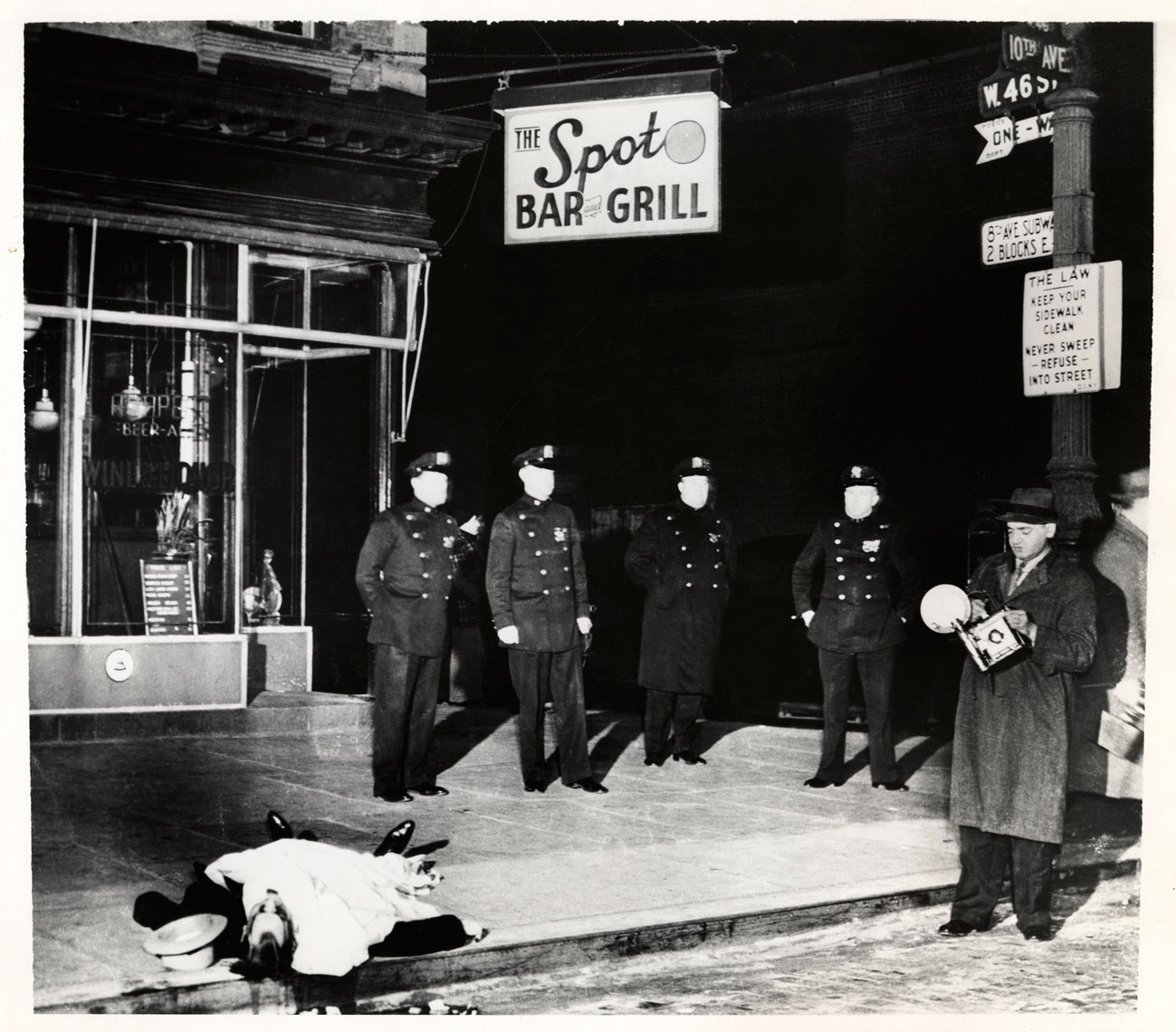
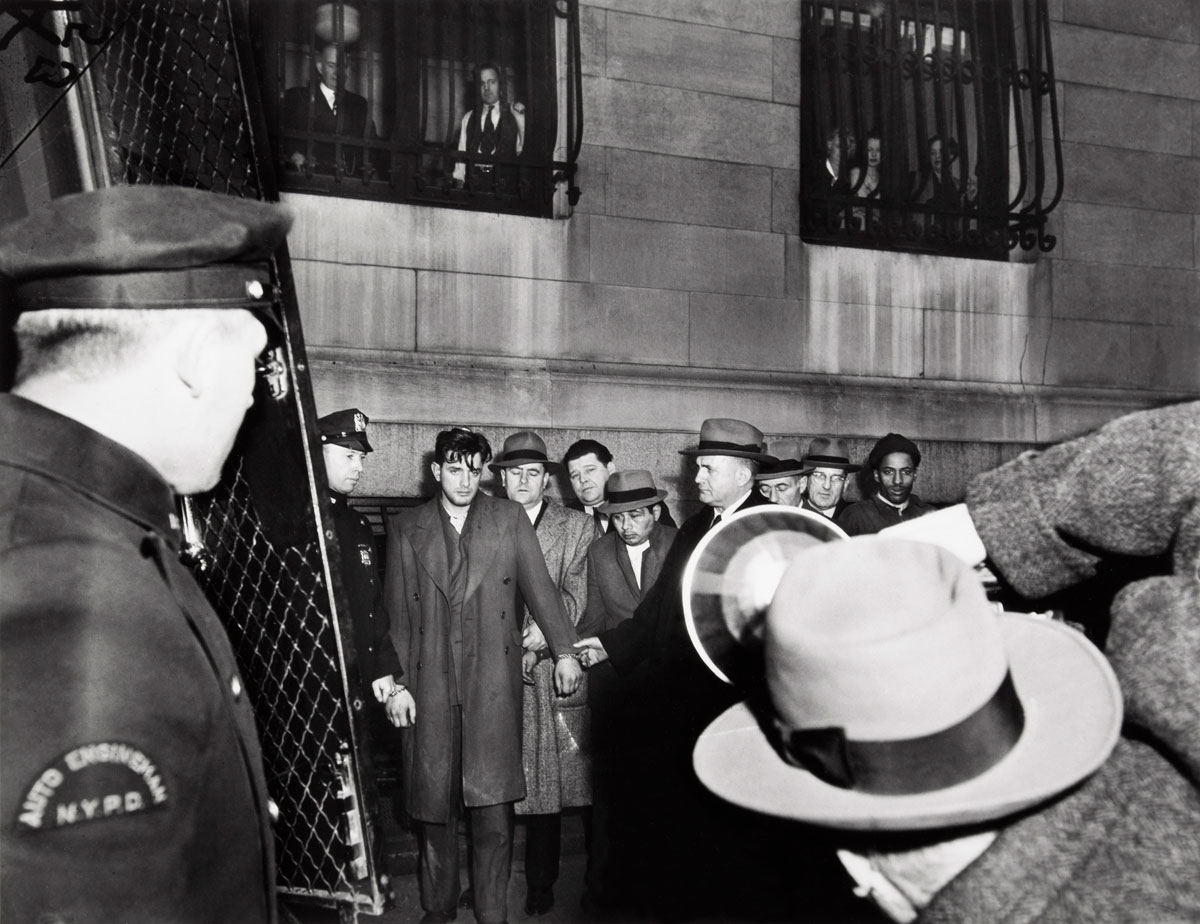
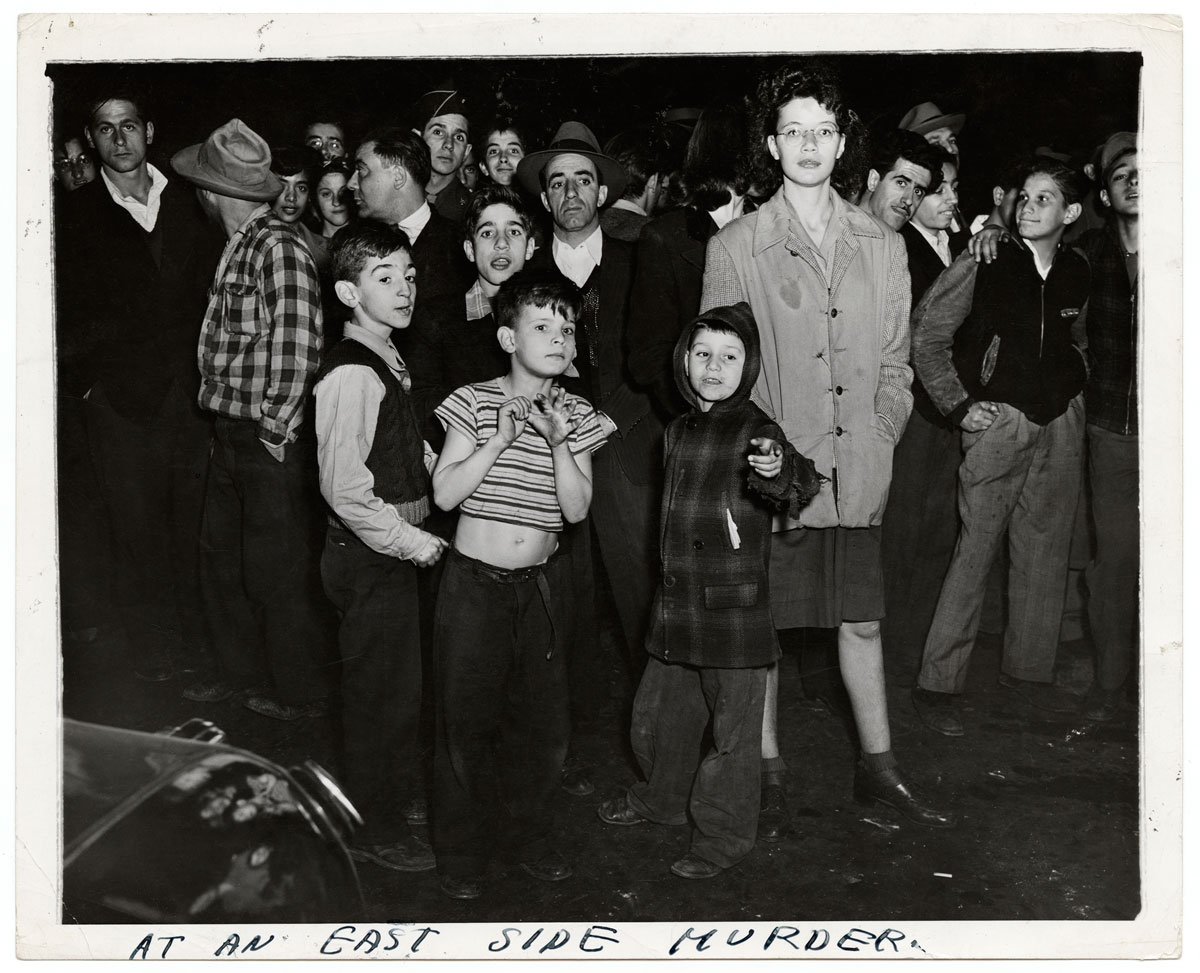
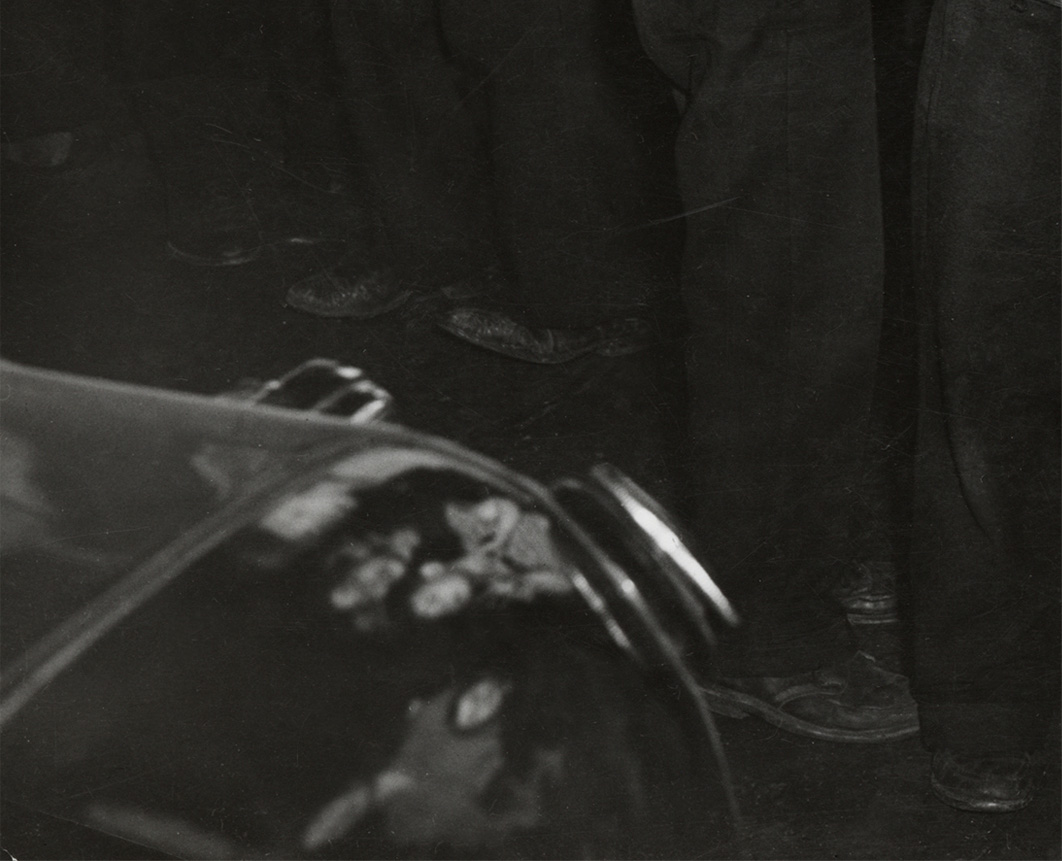
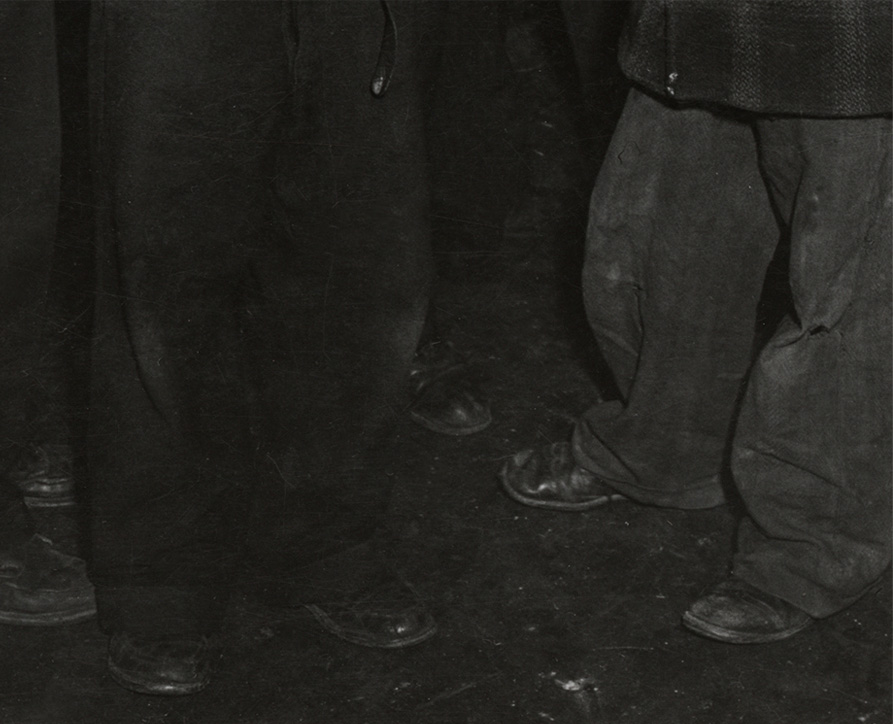
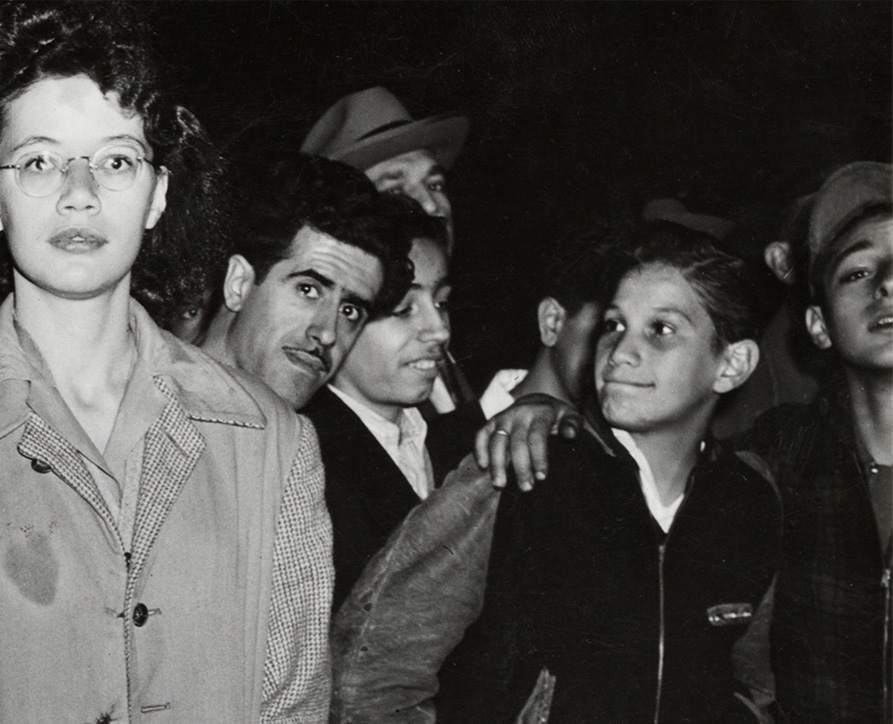
![Weegee (Arthur Fellig) (American, 1899-1968) 'Untitled [Hats in a pool room, Mulberry Street, New York]' c. 1943](https://artblart.com/wp-content/uploads/2012/08/14-weegee_15595_1993-web.jpg "Weegee (Arthur Fellig) (American, 1899-1968) 'Untitled [Hats in a pool room, Mulberry Street, New York]' c. 1943")
![Weegee (Arthur Fellig) (American, 1899-1968) 'Untitled [Body of Dominick Didato, Elizabeth Street, New York]' August 7, 1936](https://artblart.com/wp-content/uploads/2012/08/8-weegee_2070_1993-web.jpg "Weegee (Arthur Fellig) (American, 1899-1968) 'Untitled [Body of Dominick Didato, Elizabeth Street, New York]' August 7, 1936")
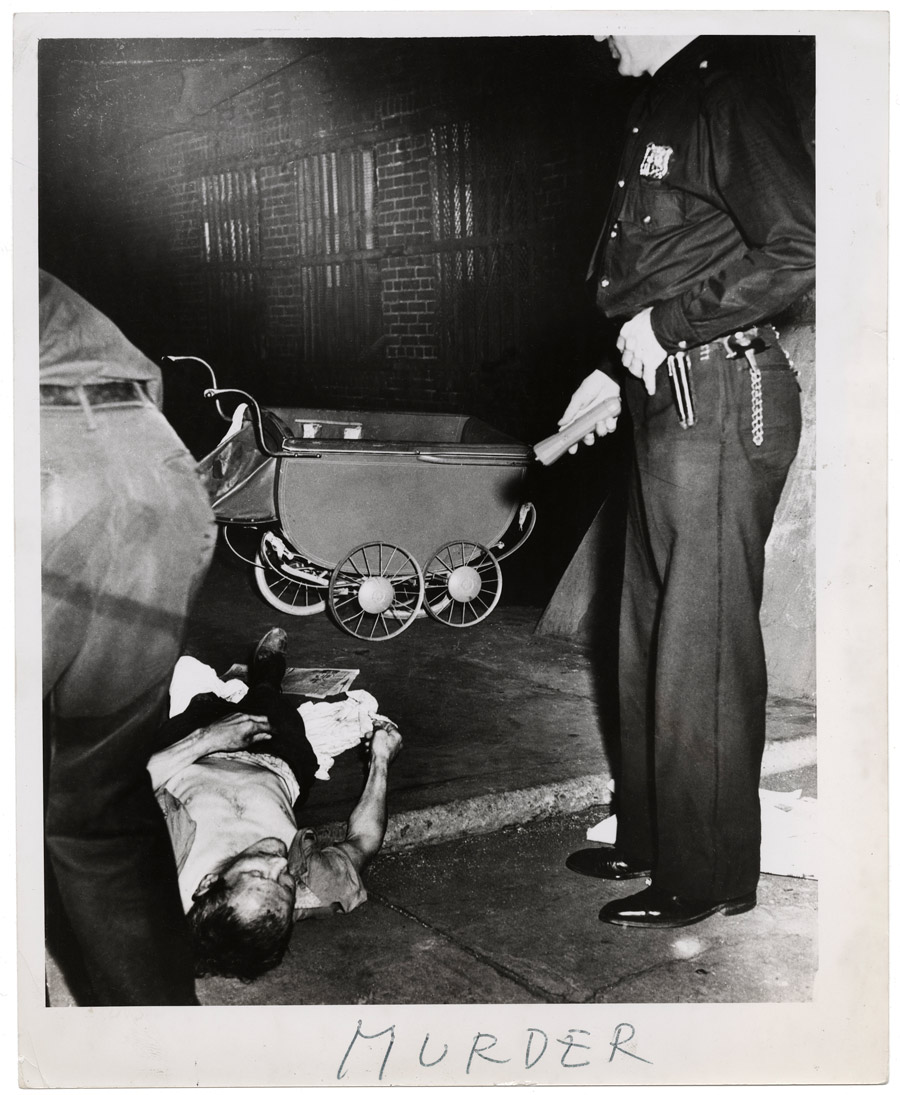
![Weegee (Arthur Fellig) (American, 1899-1968) 'Untitled [Police officer and lodge member looking at blanket-covered body of woman trampled to death in excursion-ship stampede, New York]' August 18, 1941](https://artblart.com/wp-content/uploads/2012/08/11-weegee_1016_1993-web.jpg "Weegee (Arthur Fellig) (American, 1899-1968) 'Untitled [Police officer and lodge member looking at blanket-covered body of woman trampled to death in excursion-ship stampede, New York]' August 18, 1941")
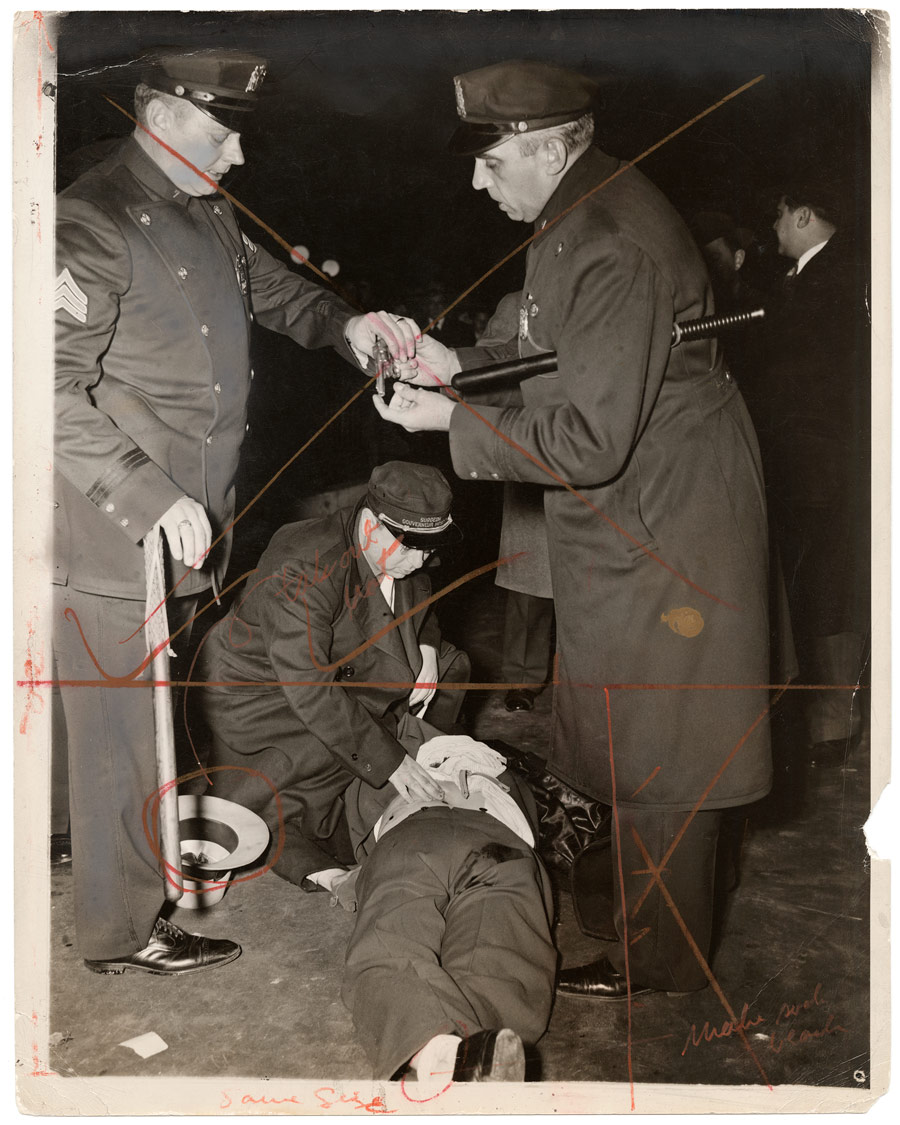
![Weegee (Arthur Fellig) (American, 1899-1968) 'Untitled [Police officer and assistant removing body of Reception Hospital ambulance driver Morris Linker from East River, New York]' August 24, 1943](https://artblart.com/wp-content/uploads/2012/08/9-weegee_133_1982-web.jpg "Weegee (Arthur Fellig) (American, 1899-1968) 'Untitled [Police officer and assistant removing body of Reception Hospital ambulance driver Morris Linker from East River, New York]' August 24, 1943")
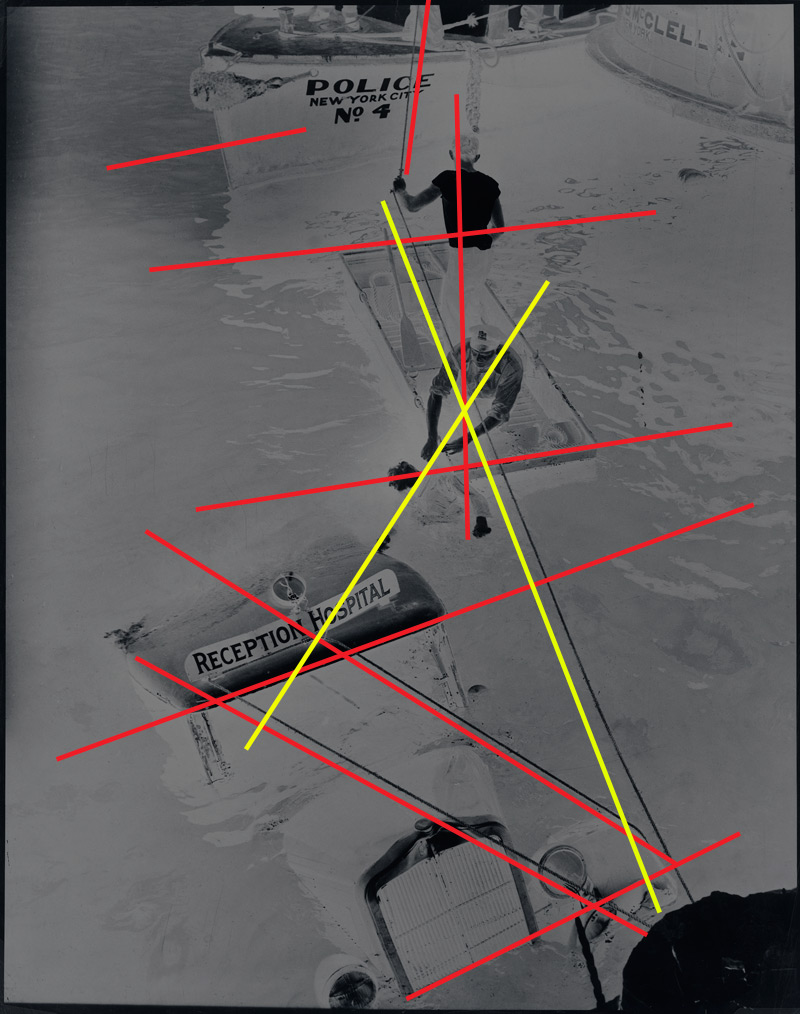
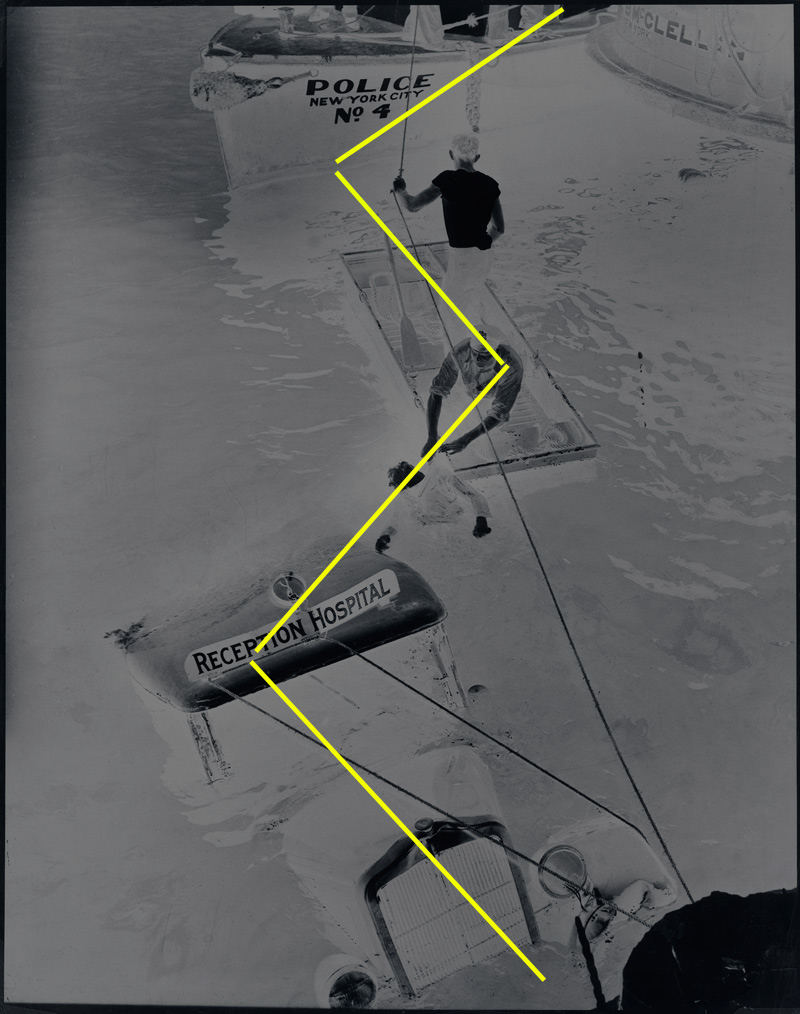
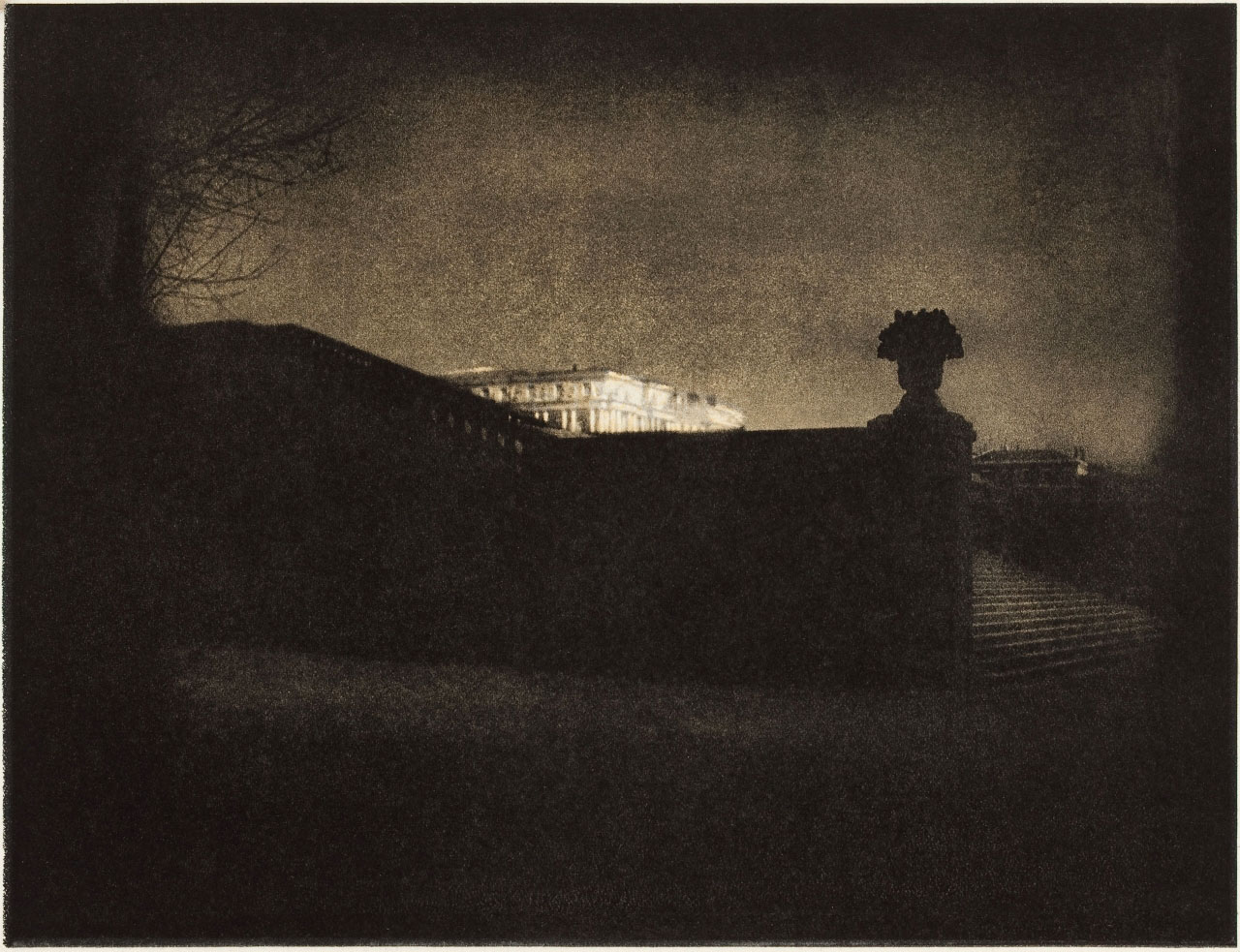


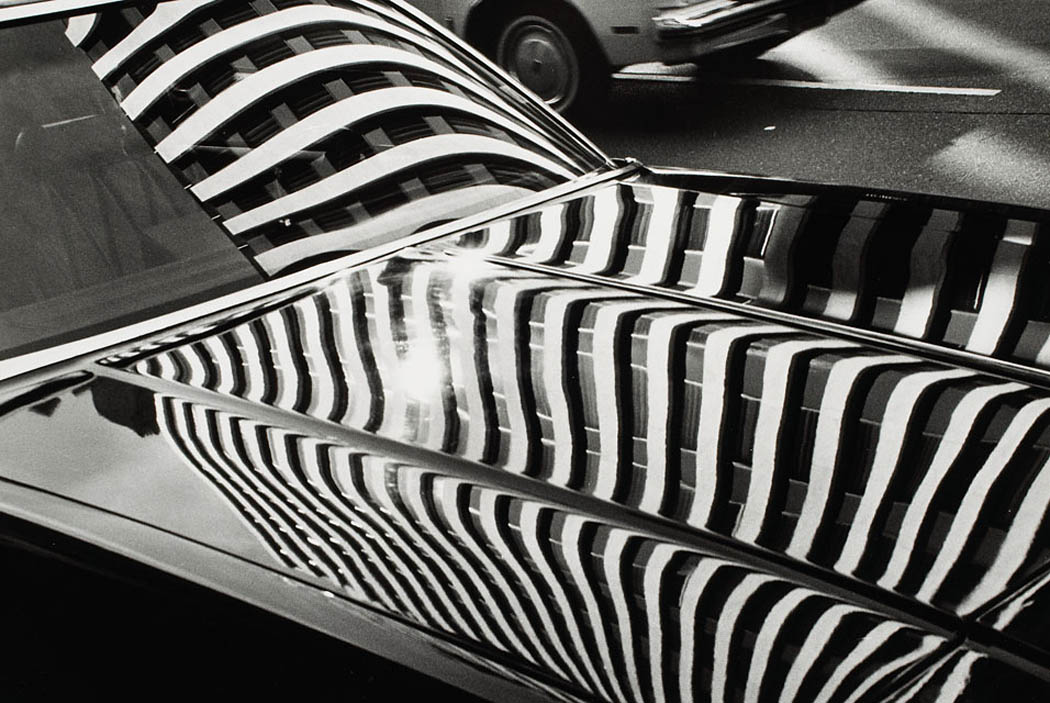


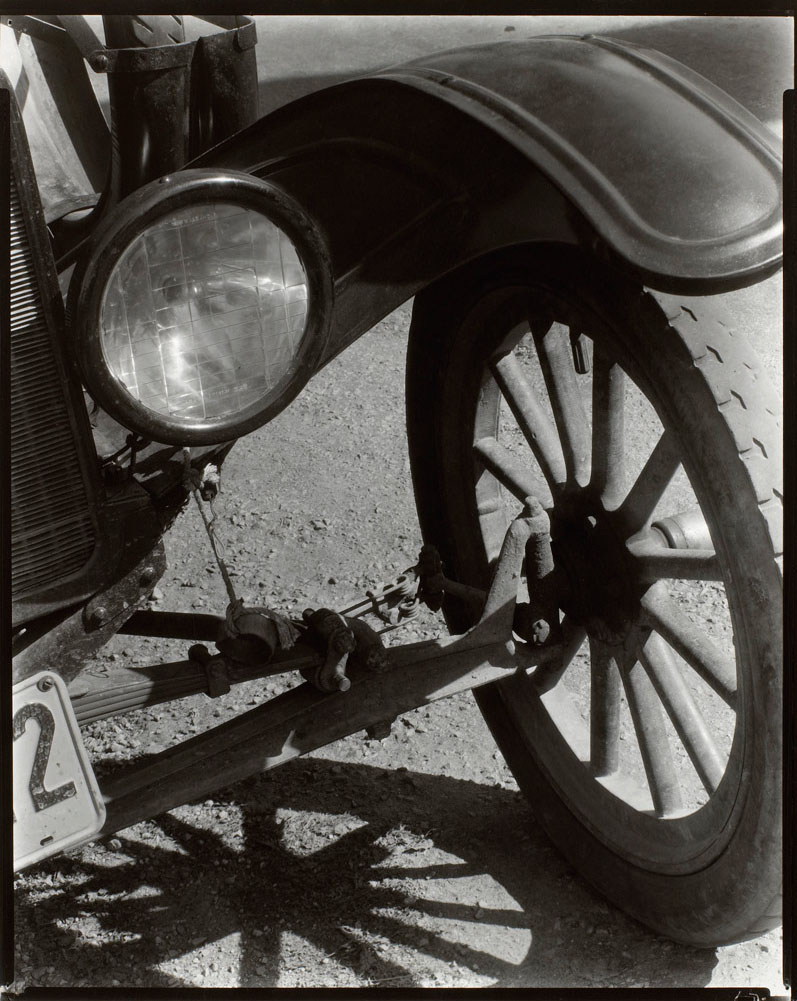
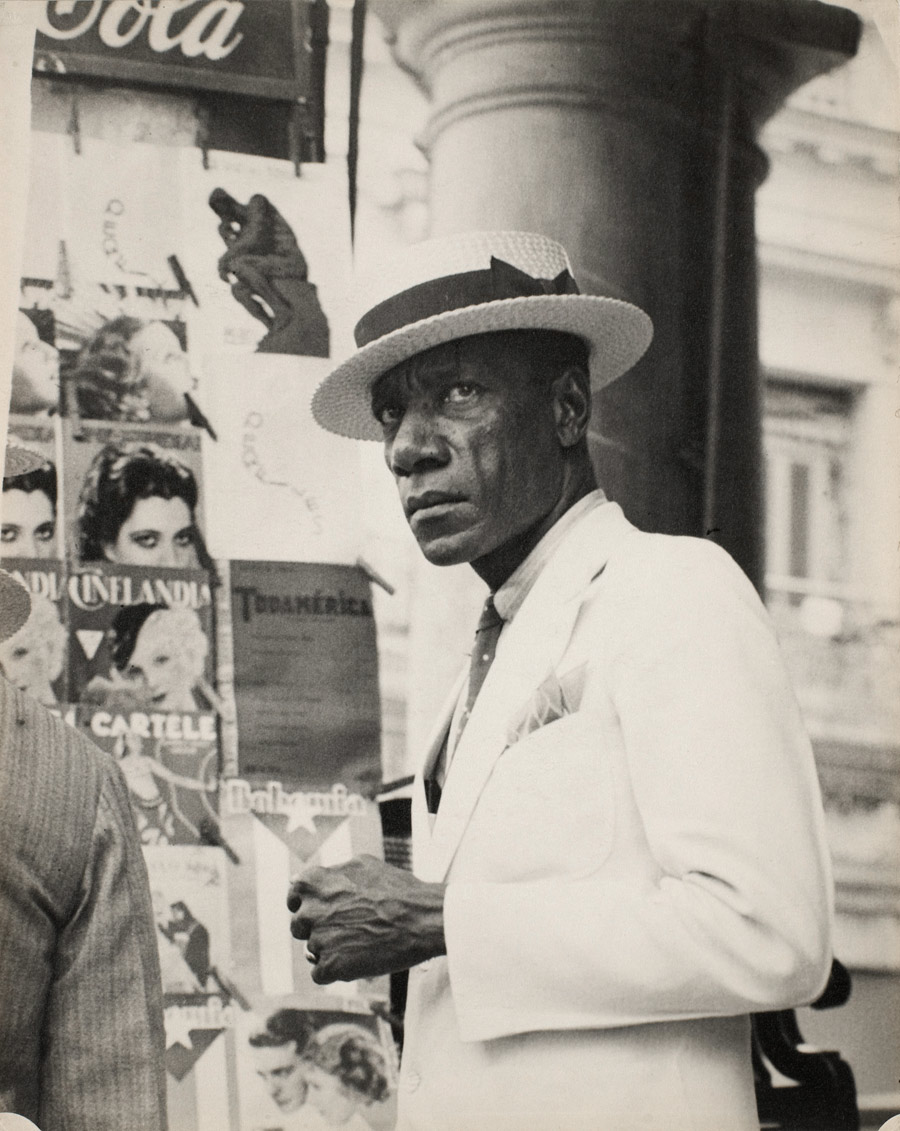


You must be logged in to post a comment.