
Exhibition dates: 19th February – 24th May, 2026
Curator: Dr. Carrie Cushman, Director of the Bates College Museum of Art and former Linda Wyatt Gruber ’66 Curatorial Fellow in Photography at the Davis Museum
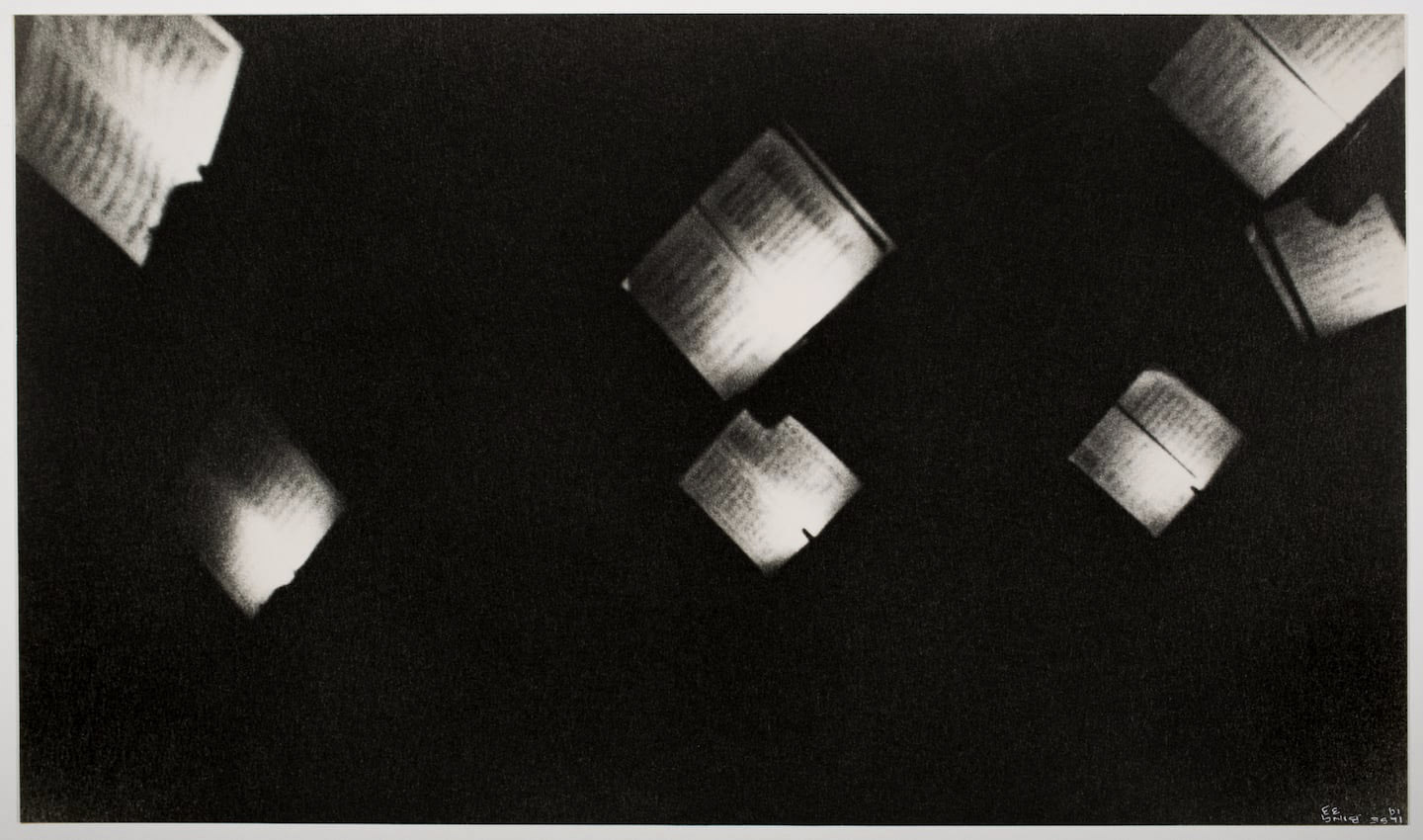
Ilse Bing (German, 1899-1998)
Music Stands
1933
Gelatin silver print
Sheet: 7 in. x 11 15/16 in. (17.8 cm x 30.3cm)
Mount: 11 in. x 14 in. (27.9 cm x 35.6cm)
Davis Museum at Wellesley College, Wellesley, MA
Gift of Suzanne Ciani (Class of 1968)
A bonus mid-week posting on this compact exhibition on the work of German photographer Isle Bing (1899-1998)
It’s wonderful to see the expressive musicality and movement in Bing’s black and white photographs, most of the images new to me. I would have loved to have seen more photographs from this “New Woman” but this is all I have from the exhibition. The museum is very lucky to have had a recent gift of vintage photographs donated by Bing’s mentee and friend Suzanne Ciani (class of ’68).
But if you want to be taken seriously as a collecting institute please make sure that you title the artist and subject correctly on your collections website pages. It’s not The Honorable Daisy Fellowers it is The Honorable Daisy Fellowes (corrected below) and it’s not Florence Henry it is Florence Henri!
Little things make all the difference.
Dr Marcus Bunyan
Many thankx to the Davis Museum for allowing me to publish the photographs in the posting. Please click on the photographs for a larger version of the image.
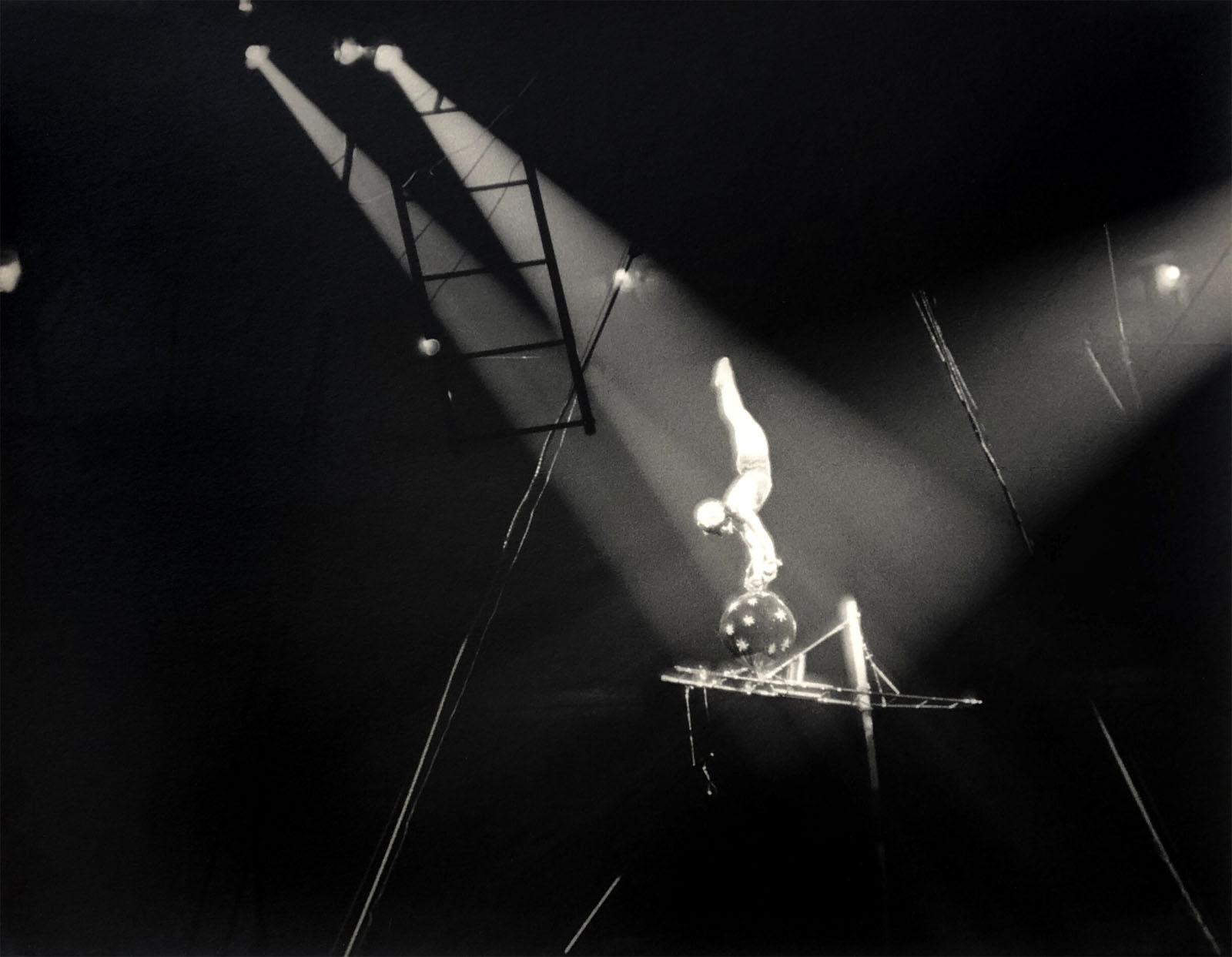
Ilse Bing (German, 1899-1998)
Acrobat with Black Ball
1936
Gelatin silver print
Sheet: 8 3/4 in. x 11 1/8 in. (22.2cm x 28.3cm)
Davis Museum at Wellesley College, Wellesley, MA
Gift of Suzanne Ciani (Class of 1968)
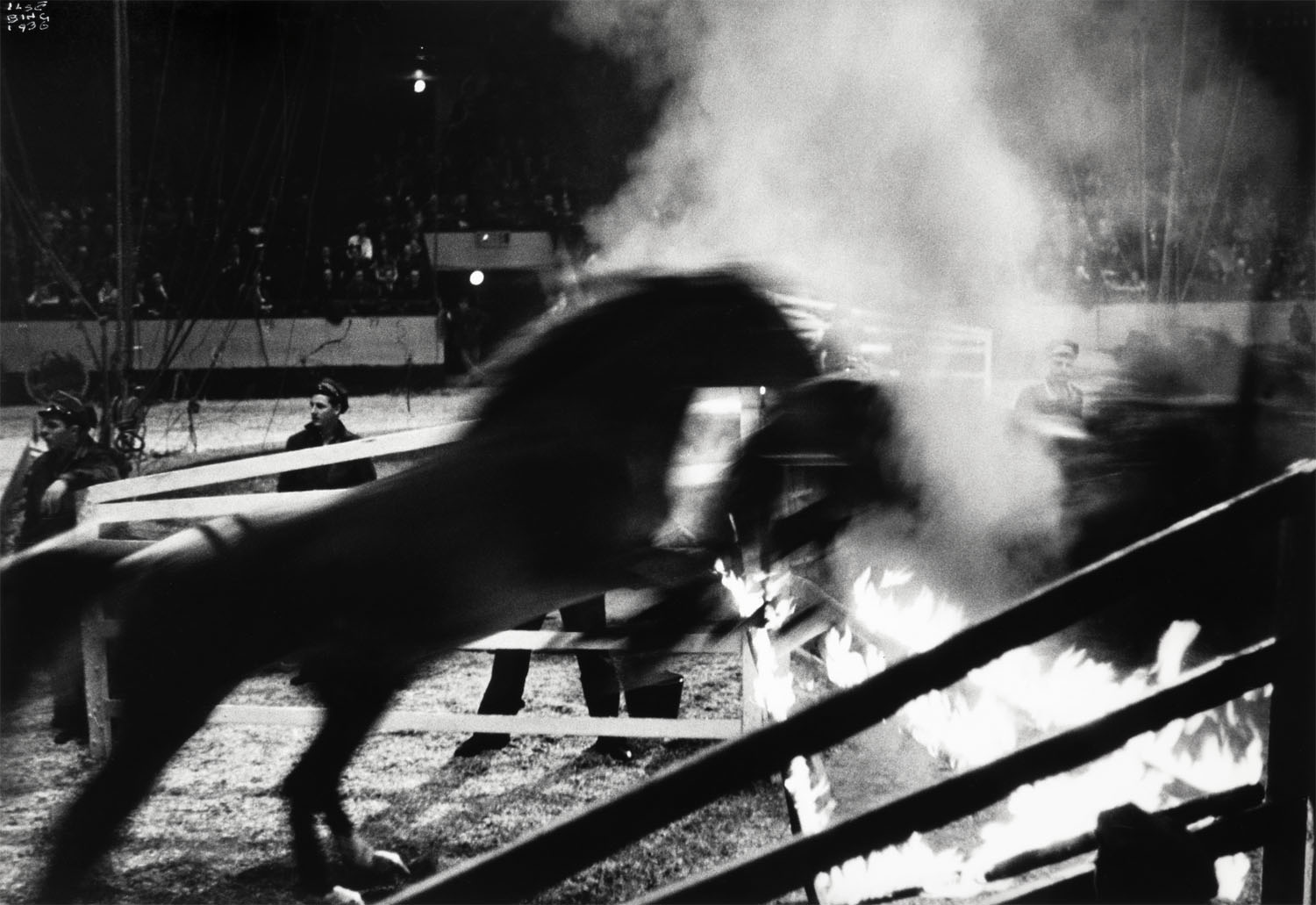
Ilse Bing (German, 1899-1998)
Circus Horse in NYC
1936
Gelatin silver print
Sheet: 13 1/2 in. x 19 3/8 in. (34.3 cm x 49.2cm)
Mount: 19 5/8 in. x 25 1/2 in. (49.8 cm x 64.8cm)
Davis Museum at Wellesley College, Wellesley, MA
Gift of Suzanne Ciani (Class of 1968)
Featuring a recent gift of vintage photographs by the groundbreaking photographer Ilse Bing (1899-1998), this exhibition explores the development of the photographic medium in the mid-twentieth century. The era in which Bing came to prominence saw the birth of the journalistic photo-essay, the launch of the 35-mm Leica camera, and experiments with abstract photograms and solarization. Artists led critical debates over how photography should remain true to itself as a medium of and for the modern world. From Frankfurt to Paris to New York City, Bing was at the centre of it all, carving out a place for herself as “Queen of the Leica” in a male-dominated world of image making. The Worlds of Ilse Bing is organised geographically according to the three cities where Bing lived, placing her work in conversation with the artists who made up her creative worlds and providing insight into her influences, process, and undeniable impact on others as they pushed the boundaries of modern art.
Text from the Wellesley College website
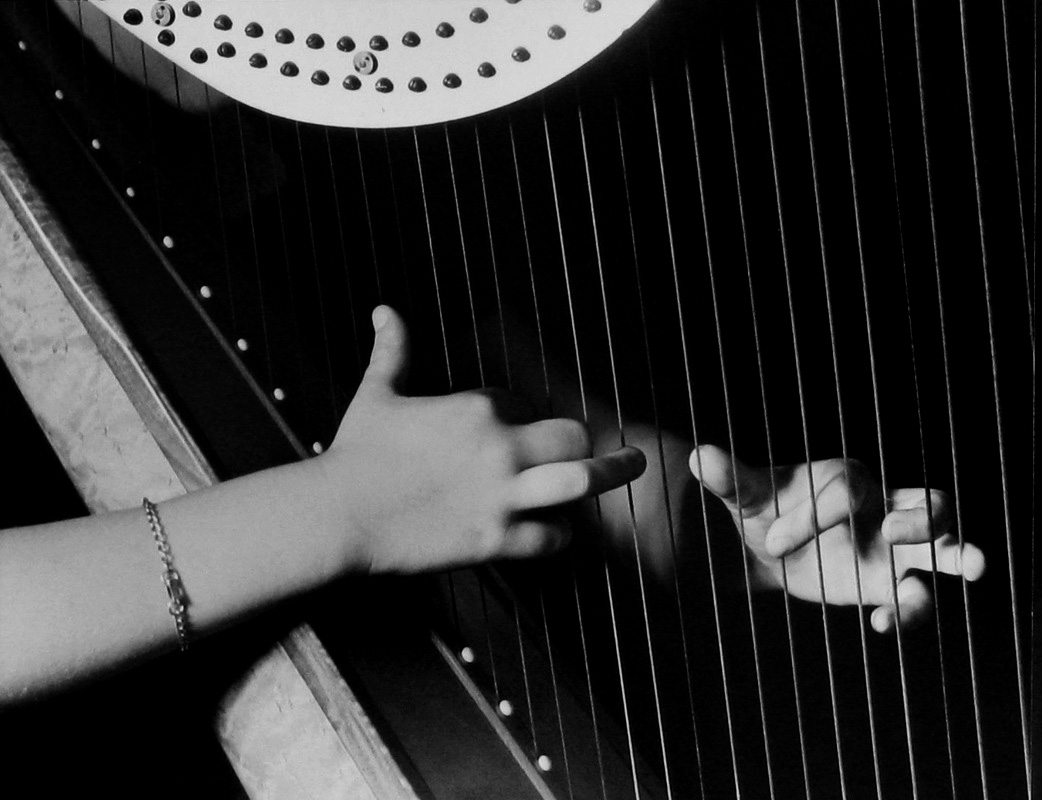
Ilse Bing (German, 1899-1998)
Jane Neidensaul, Hands on Harp
1943
Gelatin silver print
Sheet: 10 1/4 in. x 13 7/8 in. (26 cm x 35.2cm)
Davis Museum at Wellesley College, Wellesley, MA
Gift of Suzanne Ciani (Class of 1968)
Jane B. Weidensaul (1935-2003) was a prominent American harpist, educator, musicologist, and editor known for her contributions to harp literature and pedagogy. A Juilliard graduate and assistant to Marcel Grandjany, she taught at Juilliard and the Manhattan School of Music, served as editor of the American Harp Journal (1978-1996), and authored numerous scholarly works.
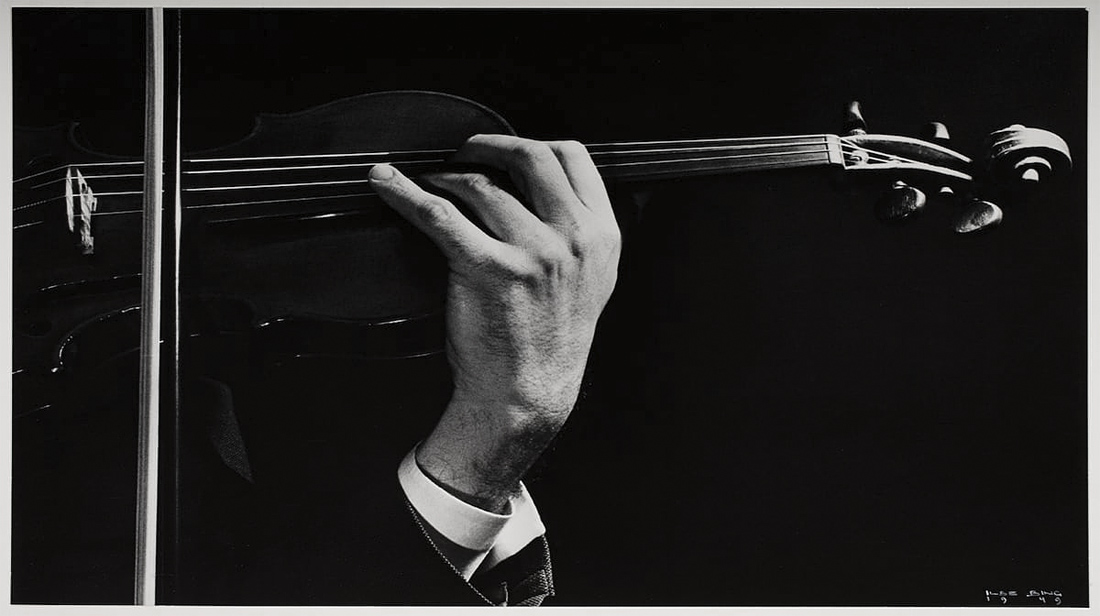
Ilse Bing (German, 1899-1998)
La Main de Szymon Goldberg
1949
Gelatin silver print
Image: 13 1/4 in. x 9 1/2 in. (33.7 cm x 24.1cm)
Mount: 21 3/16 in. x 17 5/16 in. (53.8 cm x 44cm)
Davis Museum at Wellesley College, Wellesley, MA
Gift of Suzanne Ciani (Class of 1968)
Szymon Goldberg (American born Poland, 1909-1993)
Szymon Goldberg (1 June 1909 – 19 July 1993) was a Polish-born Jewish classical violinist and conductor, latterly an American.
Born in Włocławek, Congress Poland, Goldberg played the violin as a child growing up in Warsaw. His first teacher was Henryk Czaplinski, a student of the great Czech violinist Otakar Ševčík; his second was Mieczysław Michałowicz, a student of Leopold Auer. In 1917, at age eight, Goldberg moved to Berlin to study the violin with the legendary pedagogue Carl Flesch. He was also a student of Josef Wolfsthal.
After a recital in Warsaw in 1921, and a debut with the Berlin Philharmonic in 1924 in which he played three concertos, he was engaged as concert-master of the Dresden Philharmonic from 1925 to 1929. In 1929 he was offered the position of concertmaster of the Berlin Philharmonic by its principal conductor, Wilhelm Furtwängler. He accepted the position, serving from 1930 to 1934. During these years, he also performed in a string trio with Paul Hindemith on viola and Emanuel Feuermann on cello, and also led a string quartet of Berlin Philharmonic members.
The rise of the Third Reich forced Goldberg to leave the orchestra in 1934, despite Furtwängler’s attempts to safeguard the Jewish members of the orchestra. Thereafter, he toured Europe with the pianist Lili Kraus. He made his American debut in New York in 1938 at Carnegie Hall. While in the former Netherlands East Indies he formed the Goldberg Quartet, together with Robert Pikler on viola, Louis Mojzer on cello and Eugenie Emerson, piano. Pikler and Mojzer were Hungarians and Emerson was American. This Piano Quartet toured the major cities in Java, before the Japanese invasion and occupation. Goldberg’s first wife was a skilled artist and sculptor. She was interned by the Japanese in the Tjihapit Women’s Camp in Bandung, together with Mojzer’s family, while Goldberg and Kraus were on a tour of Asia.
He toured Australia for three months in 1946. Eventually he went to the United States and became a naturalised American citizen in 1953. From 1951 to 1965 he taught at the Aspen Music School. Concurrently he was active as a conductor. In 1955 he founded the Netherlands Chamber Orchestra in Amsterdam, which he led until 1979. He also took the ensemble on many tours. From the years 1977 to 1979 he was the conductor of the Manchester Camerata.
He taught at Yale University from 1978 to 1982, the Juilliard School in New York City from 1978 to 1989, the Curtis Institute of Music in Philadelphia from 1980 to 1981, and the Manhattan School of Music in New York starting in 1981. From 1990 until his death, he conducted the New Japan Philharmonic in Tokyo. …
He made a number of recordings, most notably a celebrated series of Mozart and Beethoven sonatas with Lili Kraus before World War II, the three Brahms Sonatas with Artur Balsam (Brunswick AXTL 1082), and Mozart and Schubert pieces with Radu Lupu (with whom he performed as a duo in concert) in the 1970s. The Berlin Philharmonic, in a 2014 tribute to their former concertmaster, wrote that in the music of Bach and Mozart, Goldberg “brought a poise and a beauty of tone that seemed like perfection. Indeed he was the finest Mozart violinist of his time, with the feline grace essential for the violin sonatas, the concertos and the Sinfonia concertante.”
Text from the Wikipedia website
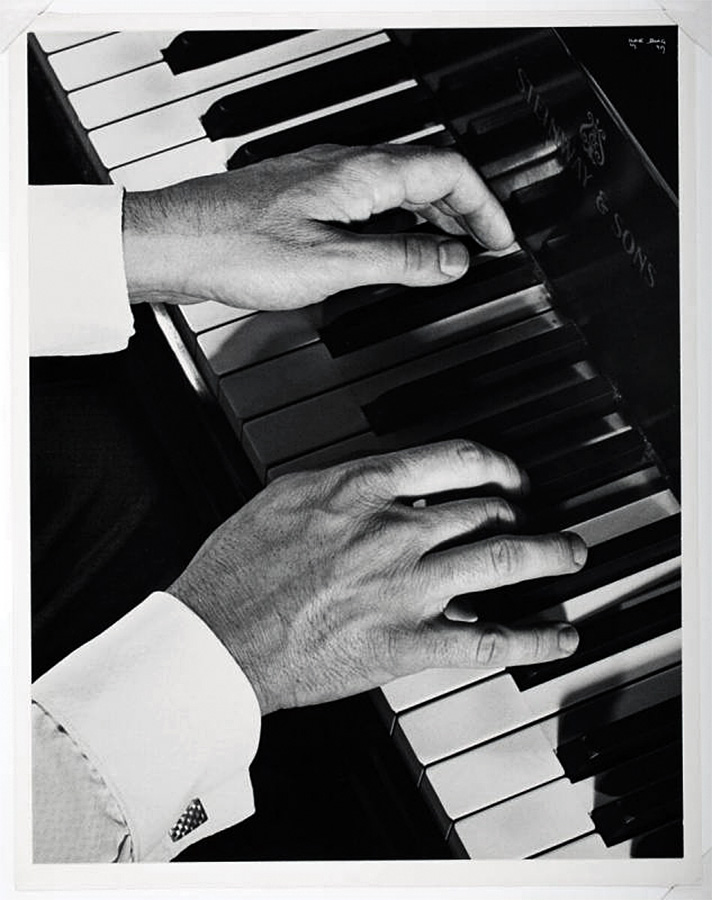
Ilse Bing (German, 1899-1998)
Konrad Wolff, Hands
1949
Gelatin silver print
Sheet: 13 3/8 in. x 10 1/2 in. (34 cm x 26.7cm)
Mount: 14 in. x 11 in. (35.6 cm x 27.9cm)
Davis Museum at Wellesley College, Wellesley, MA
Gift of Suzanne Ciani (Class of 1968)
Her photograph Konrad Wolff, Hands illustrates her formalist technique, as the camera closes in on two hands playing a piano – the black and white of the piano keys contrast with the grey tones of the hands to create a dynamic composition of linear, oblique shapes. She often manipulated her prints, flipping them upside-down or turning them sideways to view their compositional narratives in new ways.
Text from the Davis Museum website
Konrad Wolff (March 11, 1907 – October 23, 1989) was a German-born American pianist, composer, musicologist, and educator renowned for his interpretive performances of classical piano repertoire, his scholarly writings on musical pedagogy, and his role in preserving the legacy of his teacher Artur Schnabel.
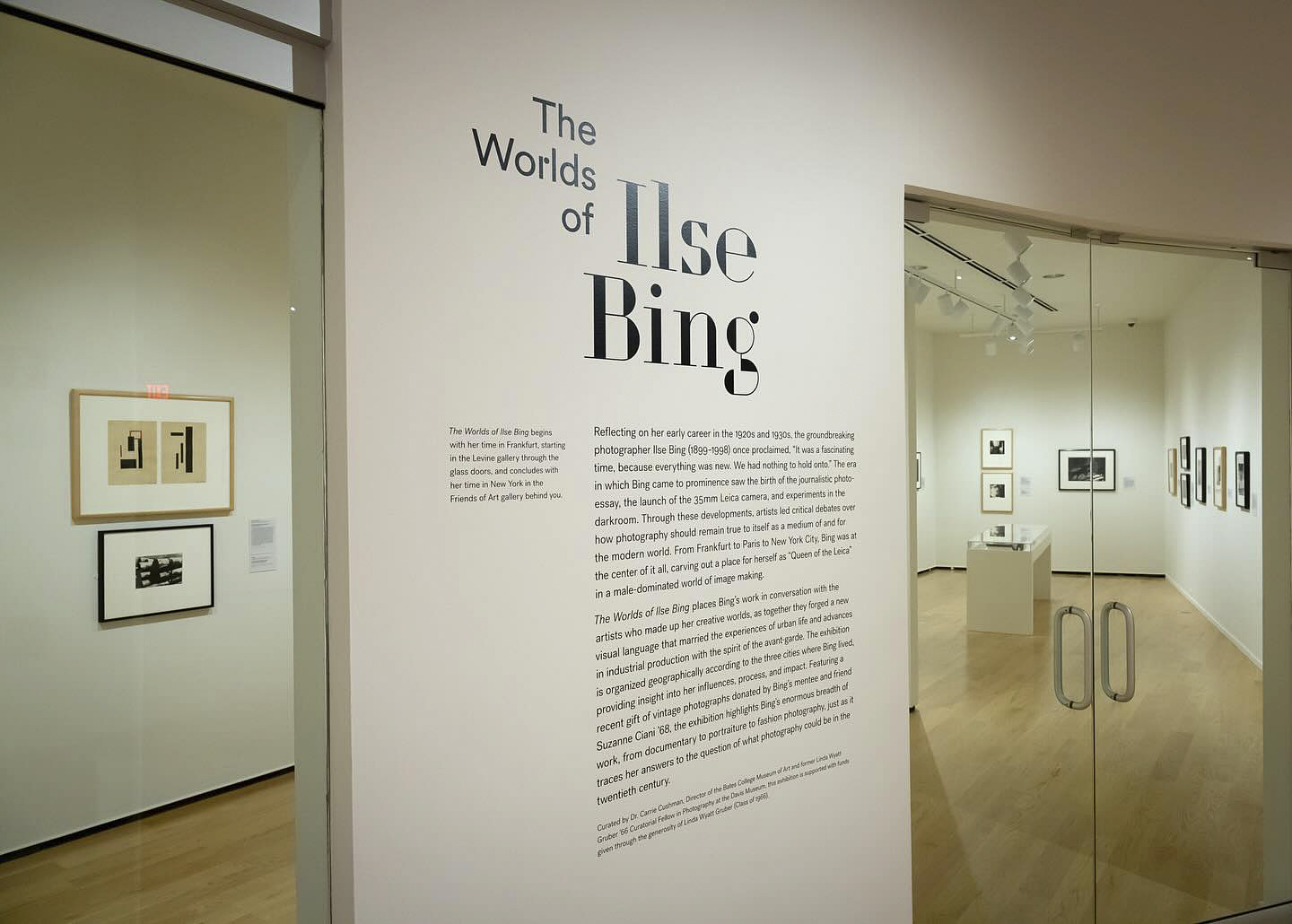
Installation view of the exhibition The Worlds of Ilse Bing at the Davis Museum at Wellesley College, Wellesley MA, February – May, 2026 (wall text below)
Reflecting on her early career in the 1920s and 1930s, the groundbreaking photographer Ilse Bing (1899-1998) once proclaimed, “It was a fascinating time, because everything was new. We had nothing to hold onto.” The era in which Bing came to prominence saw the birth of the journalistic photo-essay, the launch of the 35mm Leica camera, and experiments in the darkroom. Through these developments, artists led critical debates over how photography could remain true to itself as a medium of and for the modern world. From Frankfurt to Paris to New York City, Bing was at the centre of it all, carving out a place for herself as “Queen of the Leica” in a male-dominated world of image making.
The Worlds of Ilse Bing places Bing’s work in conversation with the artists who made up her creative worlds, as tougher they forged a new visual language that married the experiences of urban life and advances in industrial production with the spirit of the avant-garde. The exhibition is organised geographically according to the three cities where Bing lived, providing insight into her influences, process, and impact. Featuring a recent gift of vintage photographs donated by Bing’s mentee and friend Suzanne Ciani ’68, the exhibition highlights Bing’s enormous breadth of work, from documentary to portraiture to fashion photography, just as it traces her answers to the question of what photography could be in the twentieth century.
Wall text from the exhibition
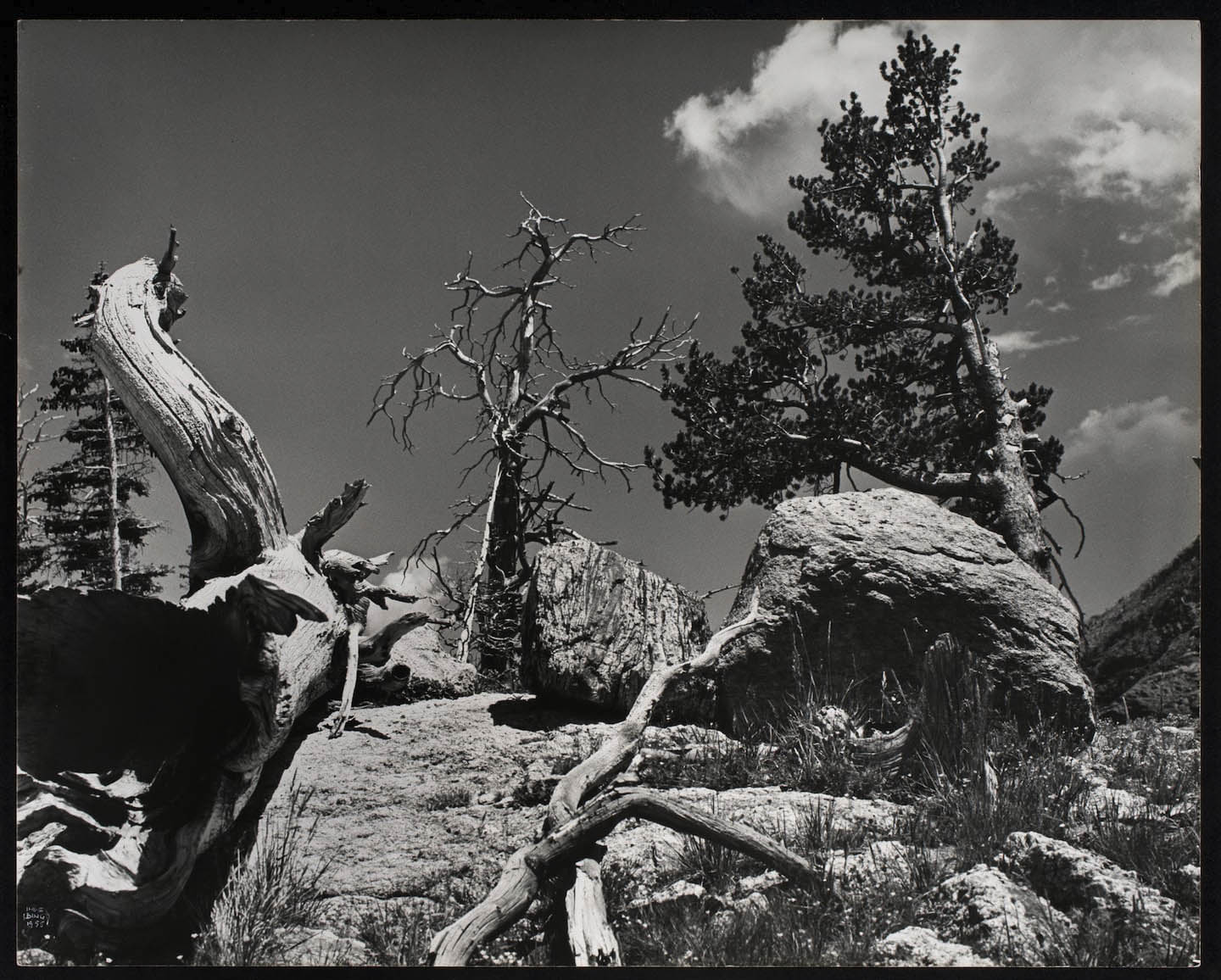
Ilse Bing (German, 1899-1998)
Sun in Clouds Over Swiss Mountains
1929/1984
Sheet: 6 1/4 in. x 9 1/2 in. (15.9 cm x 24.1cm)
Mount: 11 in. x 14 in. (27.9 cm x 35.6cm)
Gelatin silver print
Davis Museum at Wellesley College, Wellesley, MA
Gift of Suzanne Ciani (Class of 1968)
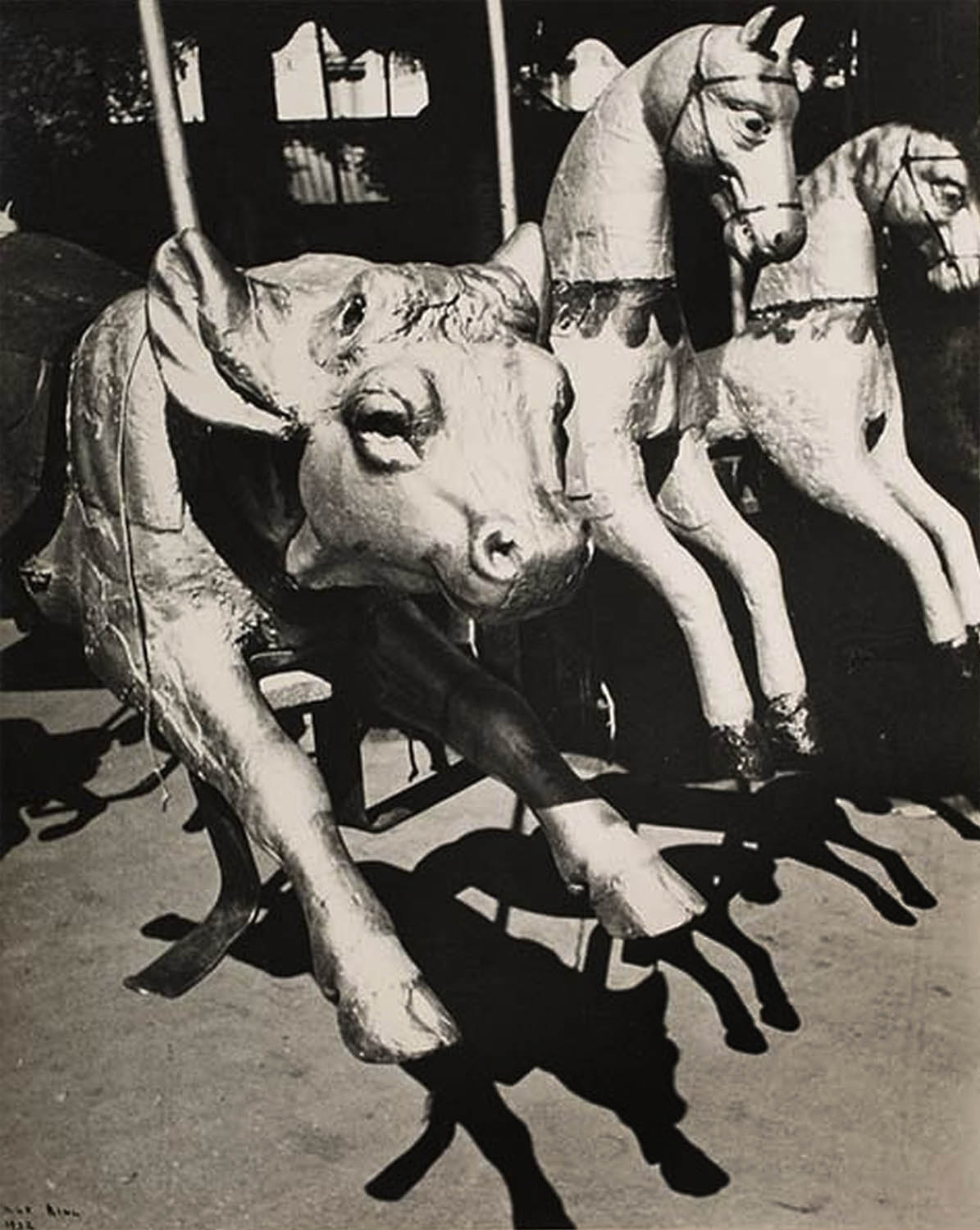
Ilse Bing (German, 1899-1998)
Merry Go Round, Paris
1932
Gelatin silver print
Sheet: 11 in. x 8 3/4 in. (27.9 cm x 22.2cm)
Mount: 16 1/2 in. x 13 3/4 in. (41.9 cm x 34.9cm)
Davis Museum at Wellesley College, Wellesley, MA
Gift of Suzanne Ciani (Class of 1968)
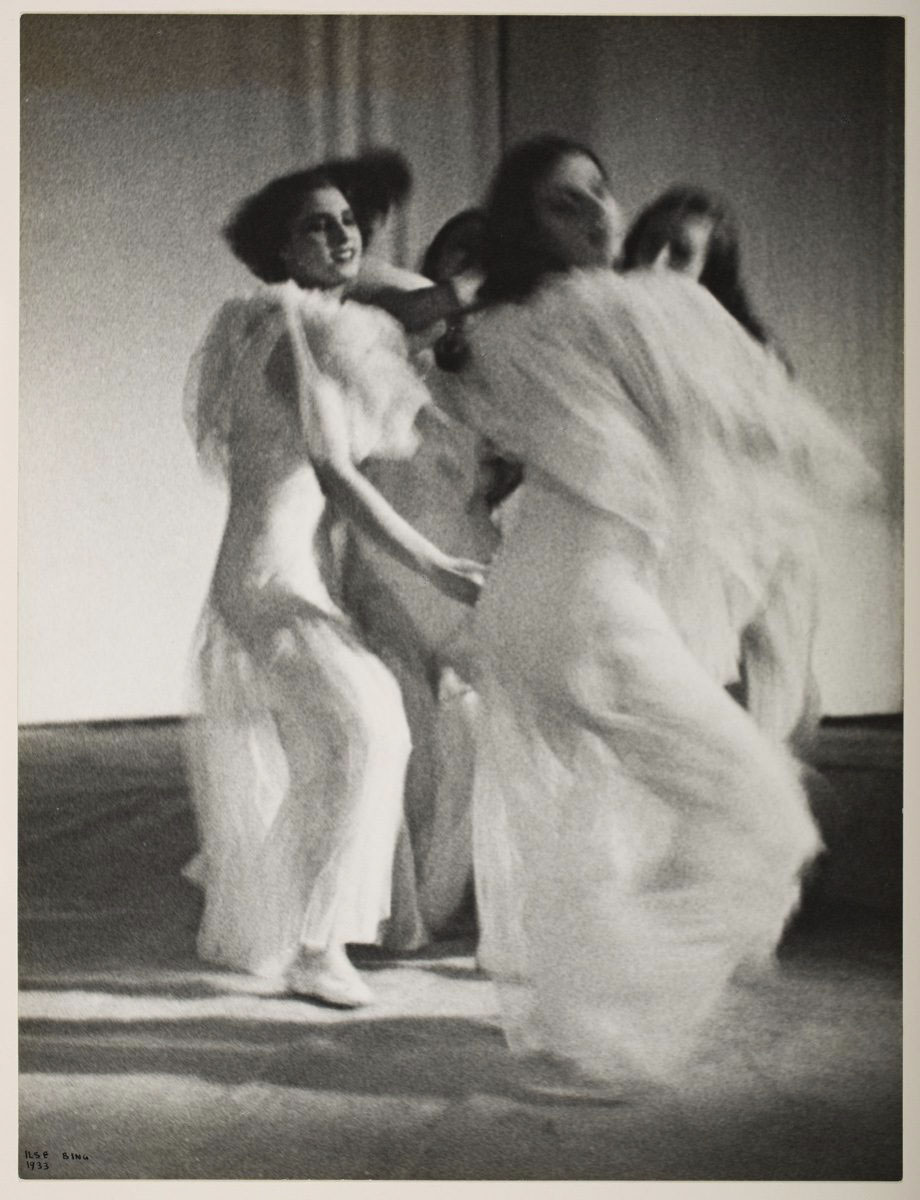
Ilse Bing (German, 1899-1998)
Dancers Balanchine Tchelitchew
1933
Gelatin silver print
Sheet: 11 3/16 in. x 8 1/2 in. (28.4 cm x 21.6cm)
Mount: 14 in. x 11 in. (35.6 cm x 27.9cm)
Davis Museum at Wellesley College, Wellesley, MA
Gift of Suzanne Ciani (Class of 1968)
George Balanchine (Georgian-American, 1904-1983) and Pavel Tchelitchew (Russian, 1898-1957) were both artists who collaborated significantly in the realm of ballet during the 1930s and 1940s. Tchelitchew, a surrealist painter and designer, created innovative, often translucent sets and costumes for several of Balanchine’s ballets, helping to define the visual aesthetic of that period.
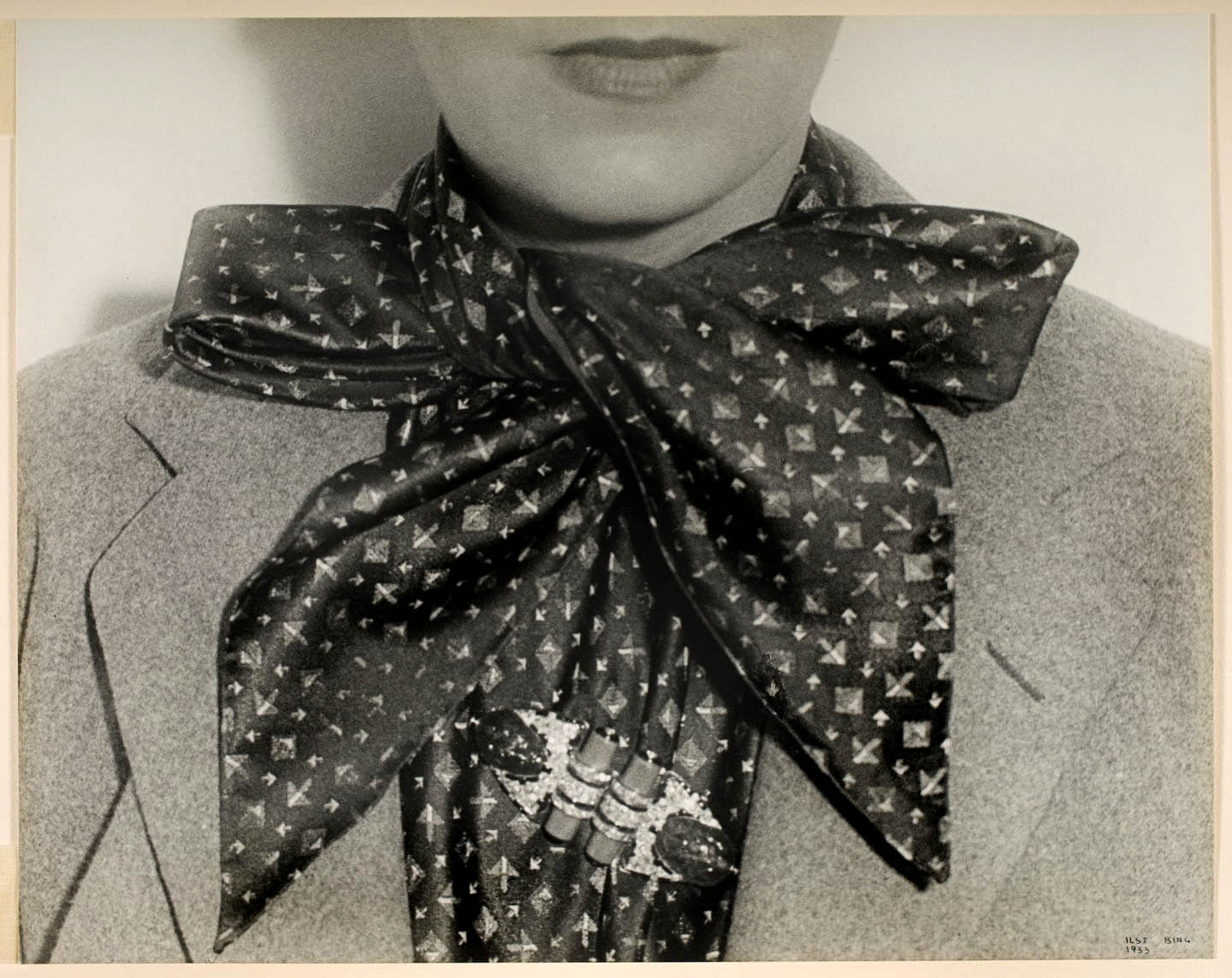
Ilse Bing (German, 1899-1998)
The Honorable Daisy Fellowes
1933
Gelatin silver print
Sheet: 8 13/16 in. x 11 1/8 in. (22.4 cm x 28.3cm)
Mount: 13 3/16 in. x 16 7/16 in. (33.5 cm x 41.8cm)
Davis Museum at Wellesley College, Wellesley, MA
Gift of Suzanne Ciani (Class of 1968)
The Hon. Daisy Fellowes (née Marguerite Séverine Philippine Decazes de Glücksberg) (29 April 1890 in Paris – 13 December 1962 in Paris) was a celebrated 20th-century society figure, acclaimed beauty, minor novelist and poet, Paris Editor of American Harper’s Bazaar, fashion icon, and an heiress to the Singer sewing machine fortune.
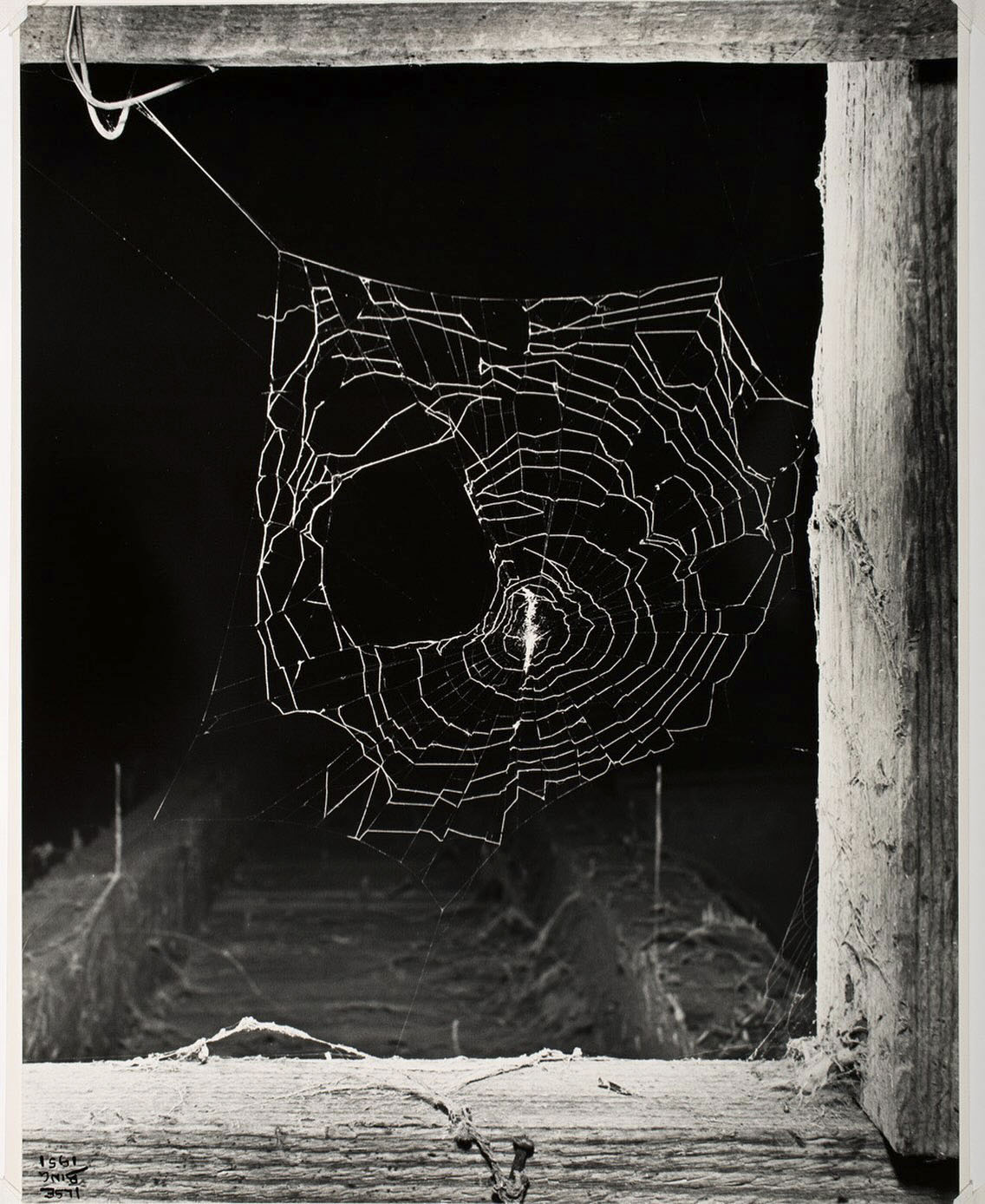
Ilse Bing (German, 1899-1998)
Spider Web in Stables
1951
Gelatin silver print
Sheet: 13 9/16 in. x 10 1/2 in. (34.4 cm x 26.7cm)
Mount: 14 in. x 10 3/4 in. (35.6 cm x 27.3cm)
Davis Museum at Wellesley College, Wellesley, MA
Gift of Suzanne Ciani (Class of 1968)
Davis Museum at Wellesley College
106 Central Street
Wellesley, MA 02481
781-283-1000
Opening hours:
Tuesday – Sunday 11am – 5pm


You must be logged in to post a comment.