Curator: Dr. Carrie Cushman, Director of the Bates College Museum of Art and former Linda Wyatt Gruber ’66 Curatorial Fellow in Photography at the Davis Museum
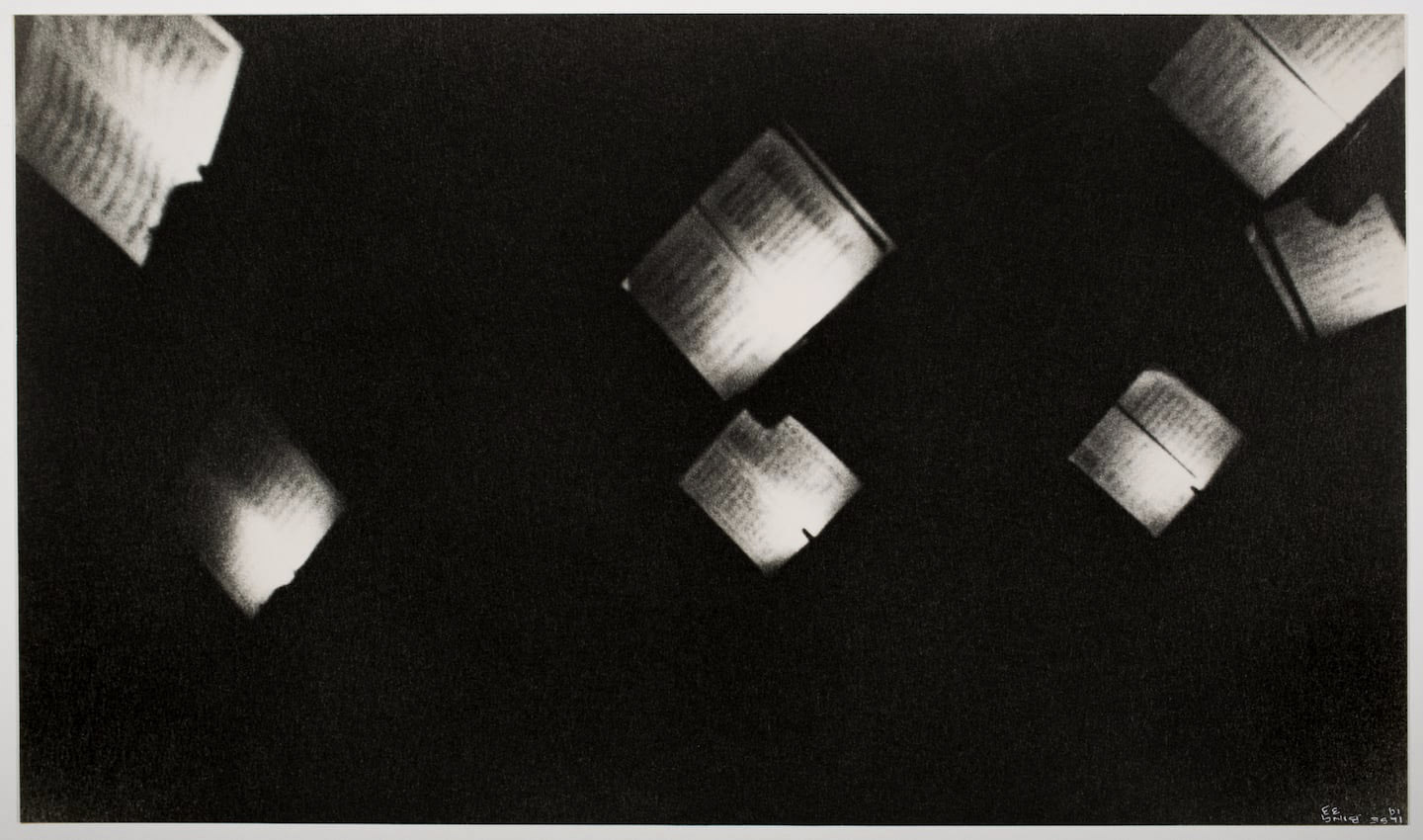
Ilse Bing (German, 1899-1998) Music Stands 1933 Gelatin silver print Sheet: 7 in. x 11 15/16 in. (17.8 cm x 30.3cm) Mount: 11 in. x 14 in. (27.9 cm x 35.6cm) Davis Museum at Wellesley College, Wellesley, MA Gift of Suzanne Ciani (Class of 1968)
A bonus mid-week posting on this compact exhibition on the work of German photographer Isle Bing (1899-1998)
It’s wonderful to see the expressive musicality and movement in Bing’s black and white photographs, most of the images new to me. I would have loved to have seen more photographs from this “New Woman” but this is all I have from the exhibition. The museum is very lucky to have had a recent gift of vintage photographs donated by Bing’s mentee and friend Suzanne Ciani (class of ’68).
But if you want to be taken seriously as a collecting institute please make sure that you title the artist and subject correctly on your collections website pages. It’s not The Honorable Daisy Fellowers it is The Honorable Daisy Fellowes (corrected below) and it’s not Florence Henry it is Florence Henri!
Little things make all the difference.
Dr Marcus Bunyan
Many thankx to the Davis Museum for allowing me to publish the photographs in the posting. Please click on the photographs for a larger version of the image.
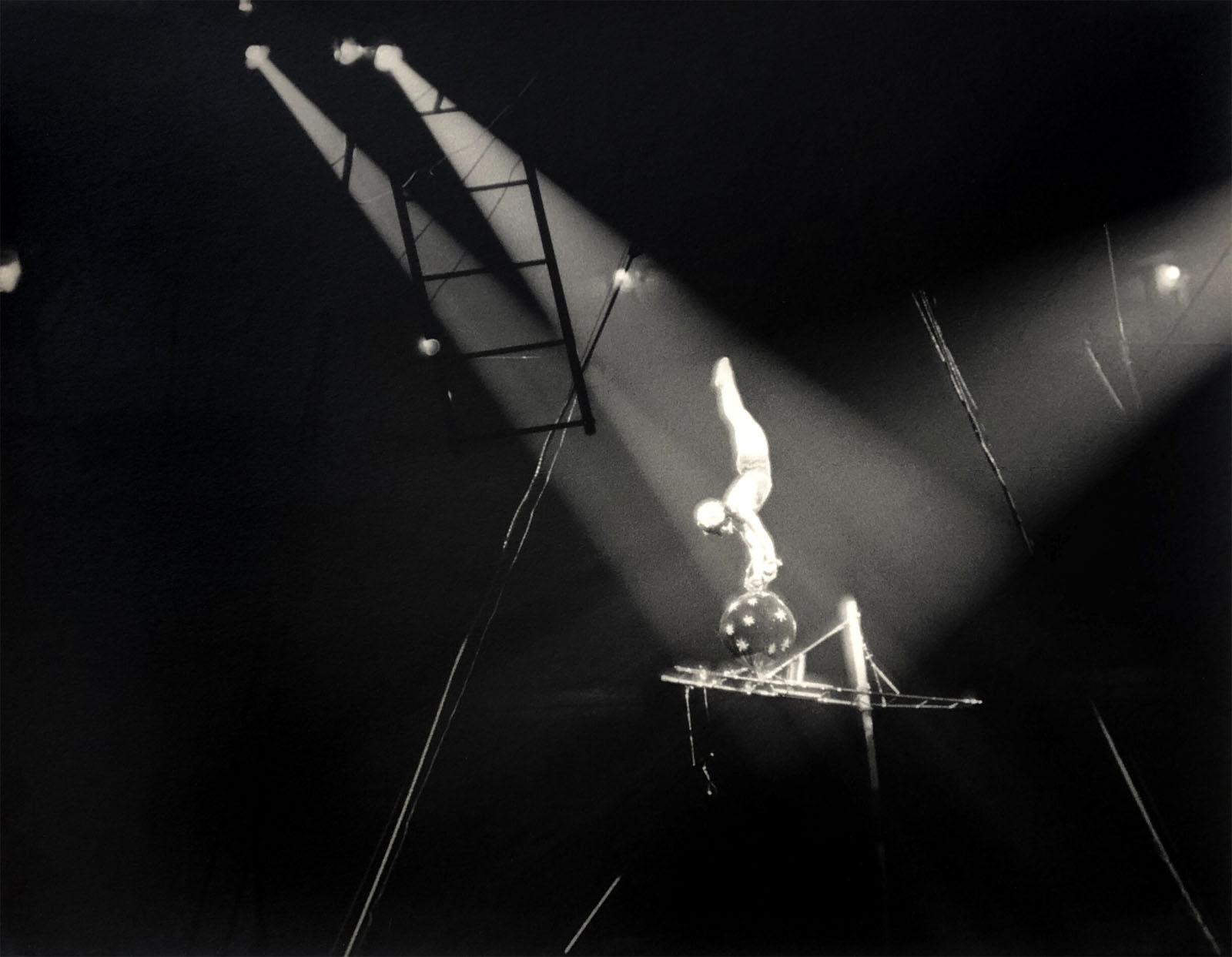
Ilse Bing (German, 1899-1998) Acrobat with Black Ball 1936 Gelatin silver print Sheet: 8 3/4 in. x 11 1/8 in. (22.2cm x 28.3cm) Davis Museum at Wellesley College, Wellesley, MA Gift of Suzanne Ciani (Class of 1968)
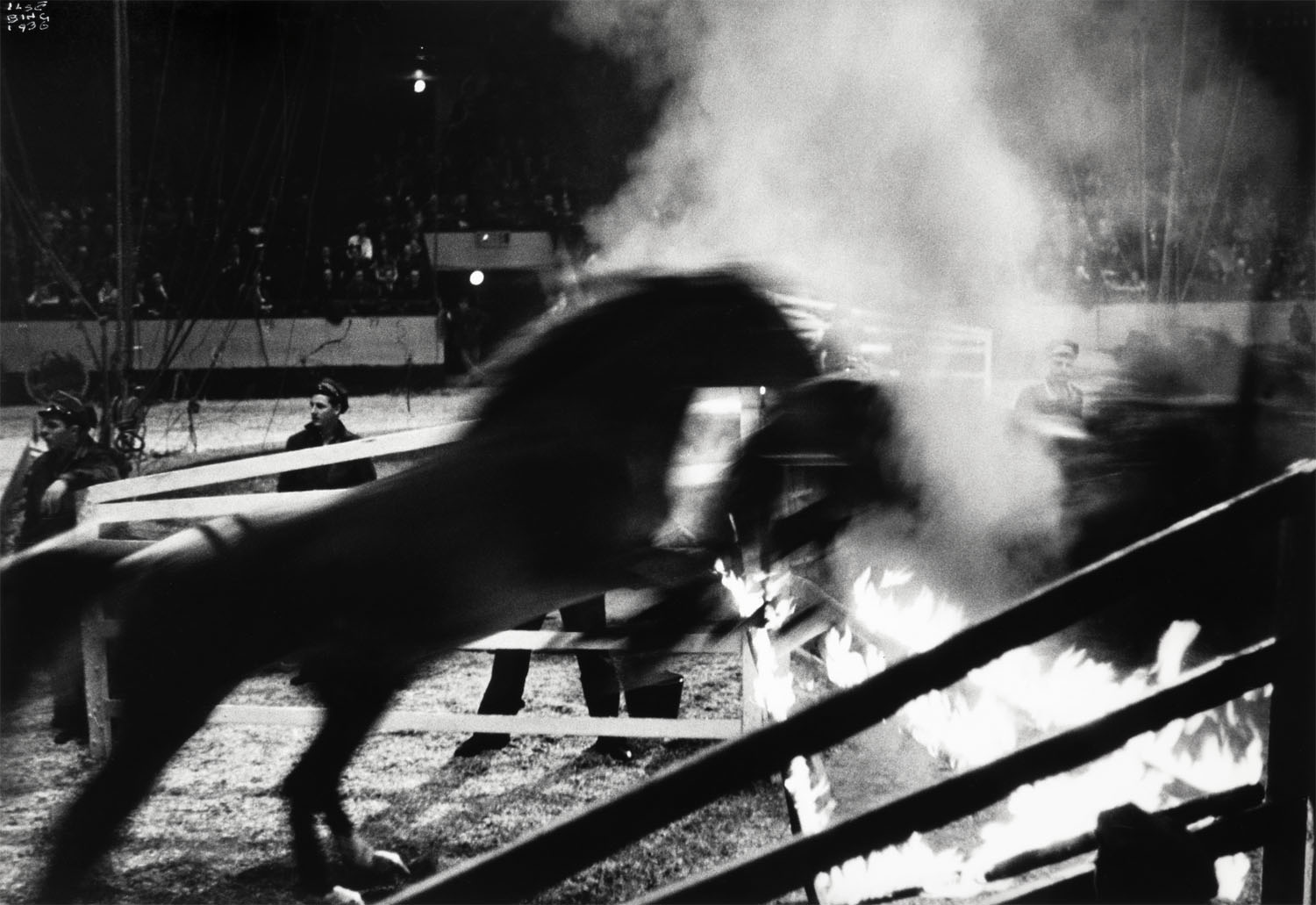
Ilse Bing (German, 1899-1998) Circus Horse in NYC 1936 Gelatin silver print Sheet: 13 1/2 in. x 19 3/8 in. (34.3 cm x 49.2cm) Mount: 19 5/8 in. x 25 1/2 in. (49.8 cm x 64.8cm) Davis Museum at Wellesley College, Wellesley, MA Gift of Suzanne Ciani (Class of 1968)
Featuring a recent gift of vintage photographs by the groundbreaking photographer Ilse Bing (1899-1998), this exhibition explores the development of the photographic medium in the mid-twentieth century. The era in which Bing came to prominence saw the birth of the journalistic photo-essay, the launch of the 35-mm Leica camera, and experiments with abstract photograms and solarization. Artists led critical debates over how photography should remain true to itself as a medium of and for the modern world. From Frankfurt to Paris to New York City, Bing was at the centre of it all, carving out a place for herself as “Queen of the Leica” in a male-dominated world of image making. The Worlds of Ilse Bing is organised geographically according to the three cities where Bing lived, placing her work in conversation with the artists who made up her creative worlds and providing insight into her influences, process, and undeniable impact on others as they pushed the boundaries of modern art.
Text from the Wellesley College website
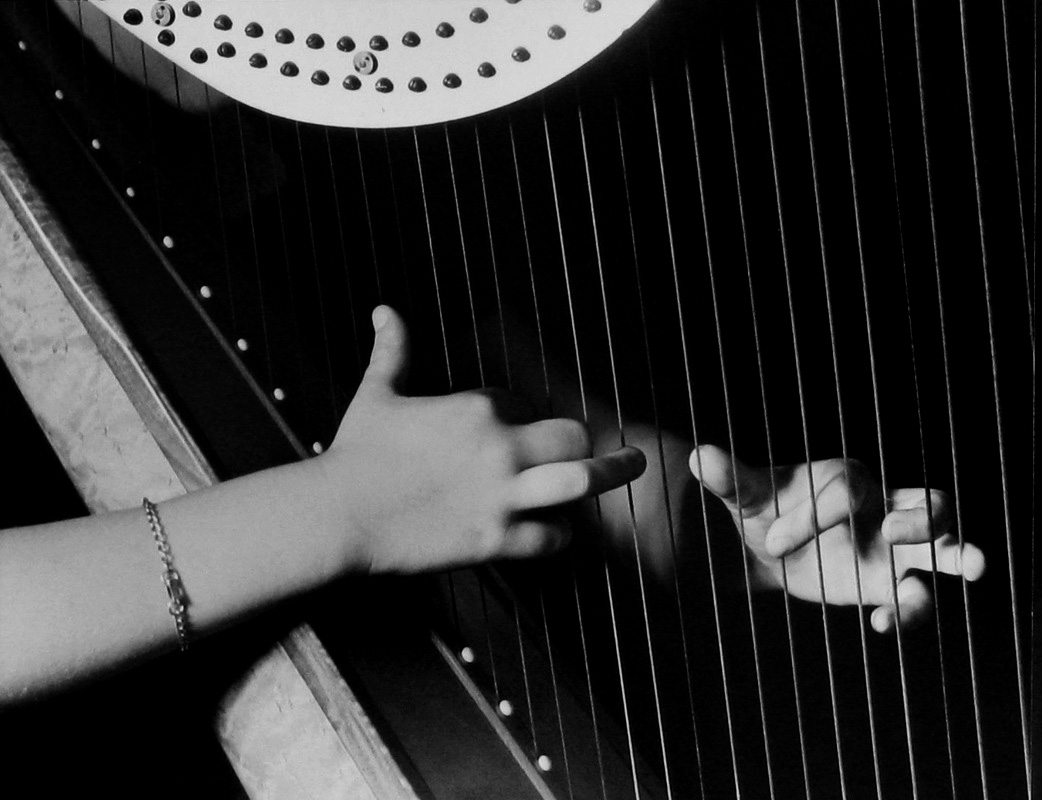
Ilse Bing (German, 1899-1998) Jane Neidensaul, Hands on Harp 1943 Gelatin silver print Sheet: 10 1/4 in. x 13 7/8 in. (26 cm x 35.2cm) Davis Museum at Wellesley College, Wellesley, MA Gift of Suzanne Ciani (Class of 1968)
Jane B. Weidensaul (1935-2003) was a prominent American harpist, educator, musicologist, and editor known for her contributions to harp literature and pedagogy. A Juilliard graduate and assistant to Marcel Grandjany, she taught at Juilliard and the Manhattan School of Music, served as editor of the American Harp Journal (1978-1996), and authored numerous scholarly works.
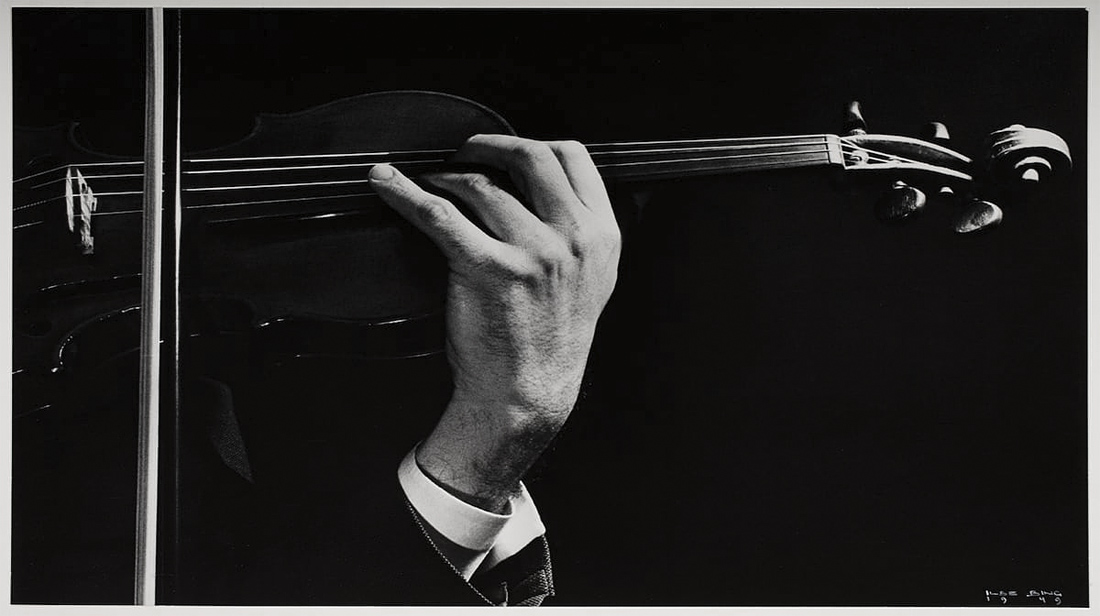
Ilse Bing (German, 1899-1998) La Main de Szymon Goldberg 1949 Gelatin silver print Image: 13 1/4 in. x 9 1/2 in. (33.7 cm x 24.1cm) Mount: 21 3/16 in. x 17 5/16 in. (53.8 cm x 44cm) Davis Museum at Wellesley College, Wellesley, MA Gift of Suzanne Ciani (Class of 1968)
Szymon Goldberg (American born Poland, 1909-1993)
Szymon Goldberg (1 June 1909 – 19 July 1993) was a Polish-born Jewish classical violinist and conductor, latterly an American.
Born in Włocławek, Congress Poland, Goldberg played the violin as a child growing up in Warsaw. His first teacher was Henryk Czaplinski, a student of the great Czech violinist Otakar Ševčík; his second was Mieczysław Michałowicz, a student of Leopold Auer. In 1917, at age eight, Goldberg moved to Berlin to study the violin with the legendary pedagogue Carl Flesch. He was also a student of Josef Wolfsthal.
After a recital in Warsaw in 1921, and a debut with the Berlin Philharmonic in 1924 in which he played three concertos, he was engaged as concert-master of the Dresden Philharmonic from 1925 to 1929. In 1929 he was offered the position of concertmaster of the Berlin Philharmonic by its principal conductor, Wilhelm Furtwängler. He accepted the position, serving from 1930 to 1934. During these years, he also performed in a string trio with Paul Hindemith on viola and Emanuel Feuermann on cello, and also led a string quartet of Berlin Philharmonic members.
The rise of the Third Reich forced Goldberg to leave the orchestra in 1934, despite Furtwängler’s attempts to safeguard the Jewish members of the orchestra. Thereafter, he toured Europe with the pianist Lili Kraus. He made his American debut in New York in 1938 at Carnegie Hall. While in the former Netherlands East Indies he formed the Goldberg Quartet, together with Robert Pikler on viola, Louis Mojzer on cello and Eugenie Emerson, piano. Pikler and Mojzer were Hungarians and Emerson was American. This Piano Quartet toured the major cities in Java, before the Japanese invasion and occupation. Goldberg’s first wife was a skilled artist and sculptor. She was interned by the Japanese in the Tjihapit Women’s Camp in Bandung, together with Mojzer’s family, while Goldberg and Kraus were on a tour of Asia.
He toured Australia for three months in 1946. Eventually he went to the United States and became a naturalised American citizen in 1953. From 1951 to 1965 he taught at the Aspen Music School. Concurrently he was active as a conductor. In 1955 he founded the Netherlands Chamber Orchestra in Amsterdam, which he led until 1979. He also took the ensemble on many tours. From the years 1977 to 1979 he was the conductor of the Manchester Camerata.
He taught at Yale University from 1978 to 1982, the Juilliard School in New York City from 1978 to 1989, the Curtis Institute of Music in Philadelphia from 1980 to 1981, and the Manhattan School of Music in New York starting in 1981. From 1990 until his death, he conducted the New Japan Philharmonic in Tokyo. …
He made a number of recordings, most notably a celebrated series of Mozart and Beethoven sonatas with Lili Kraus before World War II, the three Brahms Sonatas with Artur Balsam (Brunswick AXTL 1082), and Mozart and Schubert pieces with Radu Lupu (with whom he performed as a duo in concert) in the 1970s. The Berlin Philharmonic, in a 2014 tribute to their former concertmaster, wrote that in the music of Bach and Mozart, Goldberg “brought a poise and a beauty of tone that seemed like perfection. Indeed he was the finest Mozart violinist of his time, with the feline grace essential for the violin sonatas, the concertos and the Sinfonia concertante.”
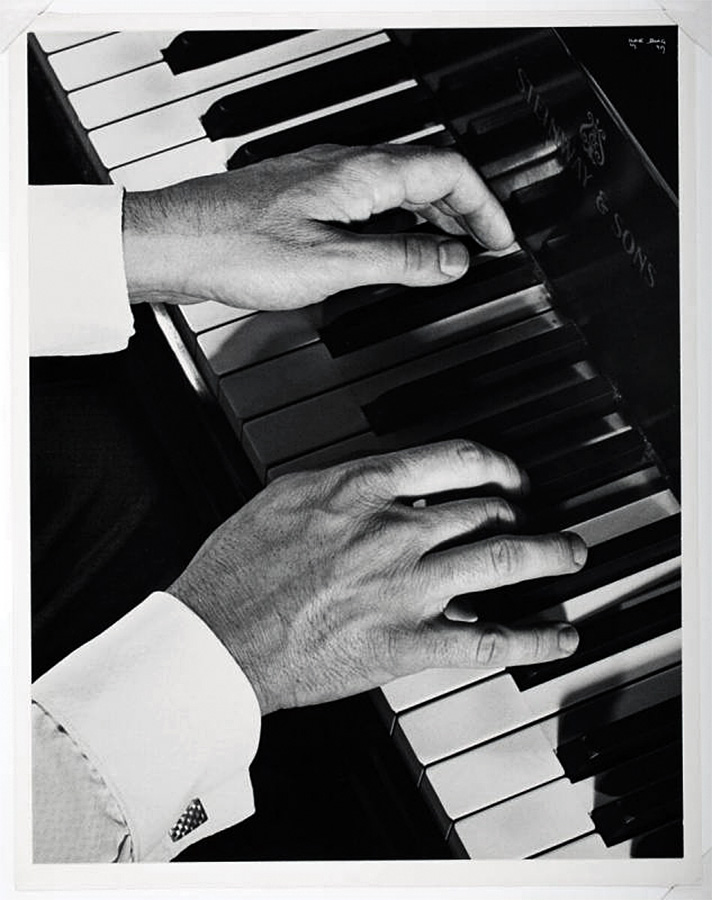
Ilse Bing (German, 1899-1998) Konrad Wolff, Hands 1949 Gelatin silver print Sheet: 13 3/8 in. x 10 1/2 in. (34 cm x 26.7cm) Mount: 14 in. x 11 in. (35.6 cm x 27.9cm) Davis Museum at Wellesley College, Wellesley, MA Gift of Suzanne Ciani (Class of 1968)
Her photograph Konrad Wolff, Hands illustrates her formalist technique, as the camera closes in on two hands playing a piano – the black and white of the piano keys contrast with the grey tones of the hands to create a dynamic composition of linear, oblique shapes. She often manipulated her prints, flipping them upside-down or turning them sideways to view their compositional narratives in new ways.
Text from the Davis Museum website
Konrad Wolff (March 11, 1907 – October 23, 1989) was a German-born American pianist, composer, musicologist, and educator renowned for his interpretive performances of classical piano repertoire, his scholarly writings on musical pedagogy, and his role in preserving the legacy of his teacher Artur Schnabel.
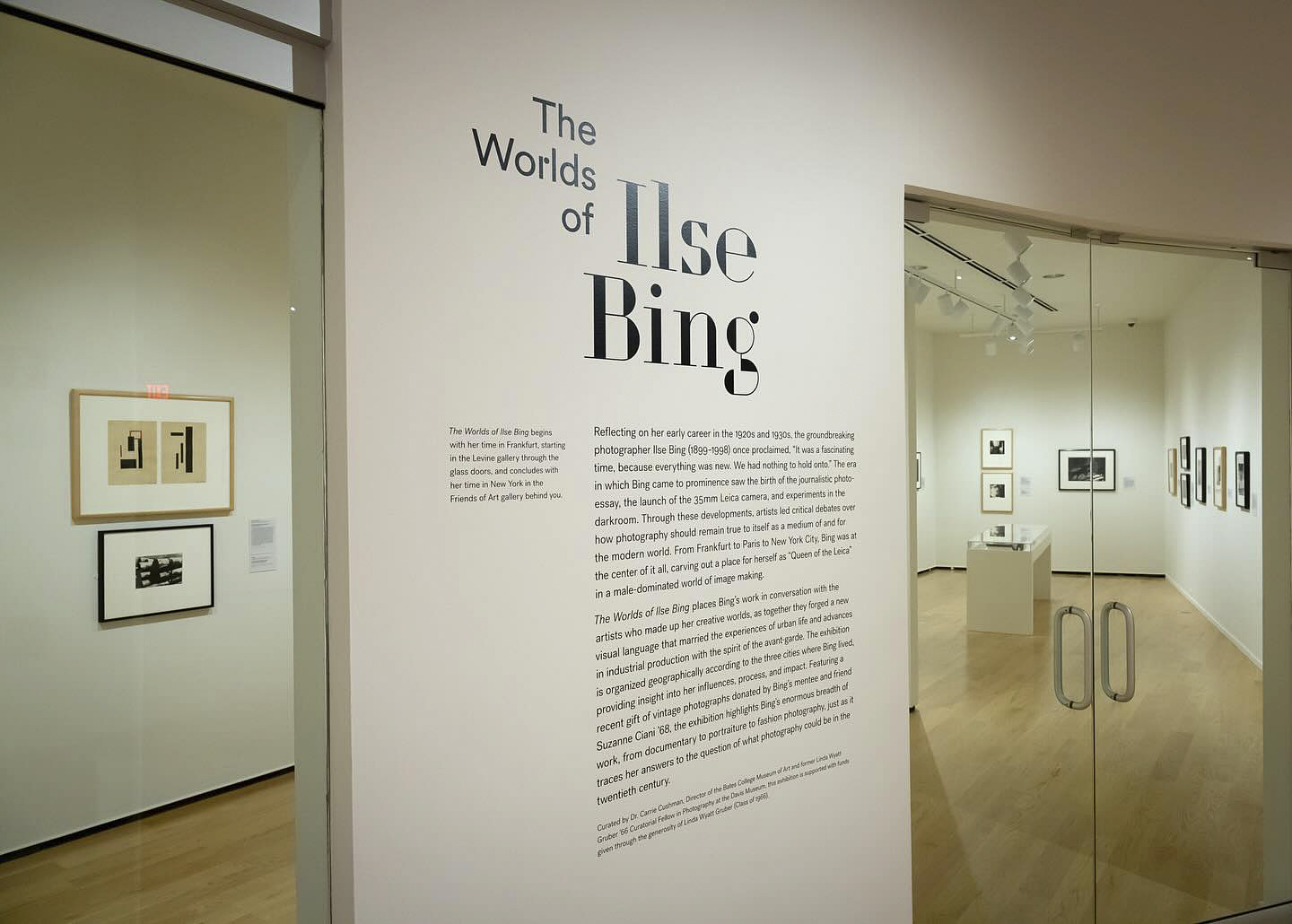
Installation view of the exhibition The Worlds of Ilse Bing at the Davis Museum at Wellesley College, Wellesley MA, February – May, 2026 (wall text below)
Reflecting on her early career in the 1920s and 1930s, the groundbreaking photographer Ilse Bing (1899-1998) once proclaimed, “It was a fascinating time, because everything was new. We had nothing to hold onto.” The era in which Bing came to prominence saw the birth of the journalistic photo-essay, the launch of the 35mm Leica camera, and experiments in the darkroom. Through these developments, artists led critical debates over how photography could remain true to itself as a medium of and for the modern world. From Frankfurt to Paris to New York City, Bing was at the centre of it all, carving out a place for herself as “Queen of the Leica” in a male-dominated world of image making.
The Worlds of Ilse Bing places Bing’s work in conversation with the artists who made up her creative worlds, as tougher they forged a new visual language that married the experiences of urban life and advances in industrial production with the spirit of the avant-garde. The exhibition is organised geographically according to the three cities where Bing lived, providing insight into her influences, process, and impact. Featuring a recent gift of vintage photographs donated by Bing’s mentee and friend Suzanne Ciani ’68, the exhibition highlights Bing’s enormous breadth of work, from documentary to portraiture to fashion photography, just as it traces her answers to the question of what photography could be in the twentieth century.
Wall text from the exhibition
Ilse Bing (German, 1899-1998) Sun in Clouds Over Swiss Mountains 1929/1984 Sheet: 6 1/4 in. x 9 1/2 in. (15.9 cm x 24.1cm) Mount: 11 in. x 14 in. (27.9 cm x 35.6cm) Gelatin silver print Davis Museum at Wellesley College, Wellesley, MA Gift of Suzanne Ciani (Class of 1968)
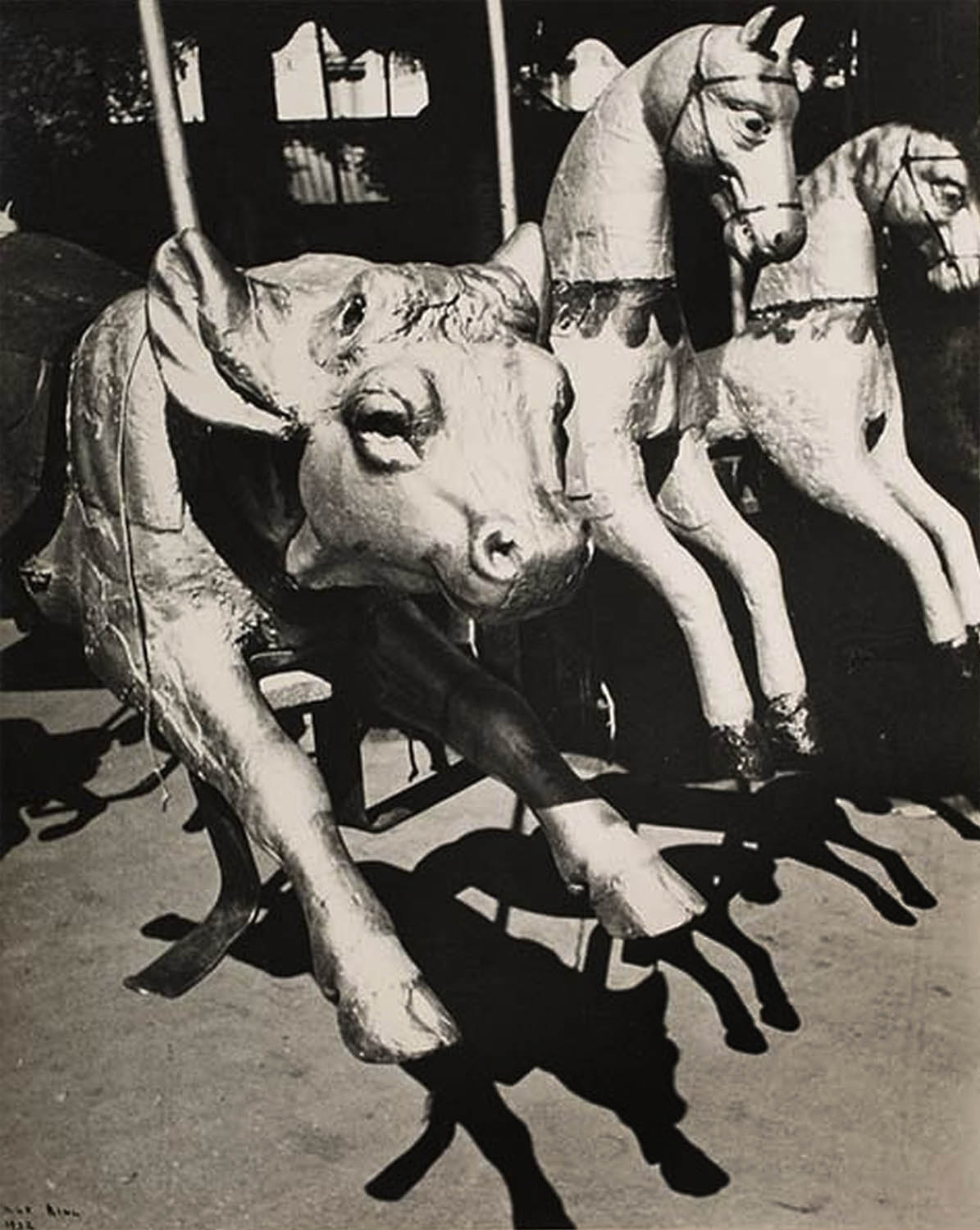
Ilse Bing (German, 1899-1998) Merry Go Round, Paris 1932 Gelatin silver print Sheet: 11 in. x 8 3/4 in. (27.9 cm x 22.2cm) Mount: 16 1/2 in. x 13 3/4 in. (41.9 cm x 34.9cm) Davis Museum at Wellesley College, Wellesley, MA Gift of Suzanne Ciani (Class of 1968)
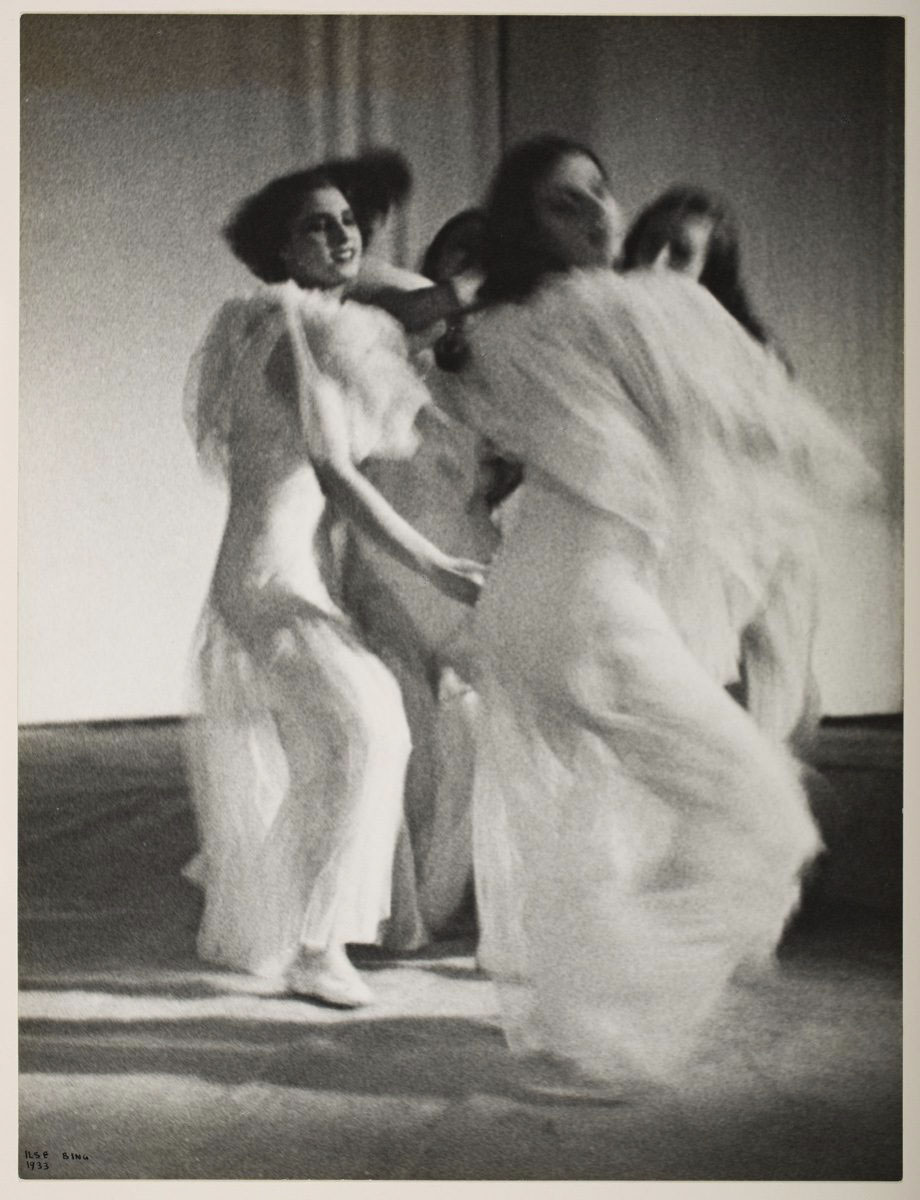
Ilse Bing (German, 1899-1998) Dancers Balanchine Tchelitchew 1933 Gelatin silver print Sheet: 11 3/16 in. x 8 1/2 in. (28.4 cm x 21.6cm) Mount: 14 in. x 11 in. (35.6 cm x 27.9cm) Davis Museum at Wellesley College, Wellesley, MA Gift of Suzanne Ciani (Class of 1968)
George Balanchine (Georgian-American, 1904-1983) and Pavel Tchelitchew (Russian, 1898-1957) were both artists who collaborated significantly in the realm of ballet during the 1930s and 1940s. Tchelitchew, a surrealist painter and designer, created innovative, often translucent sets and costumes for several of Balanchine’s ballets, helping to define the visual aesthetic of that period.
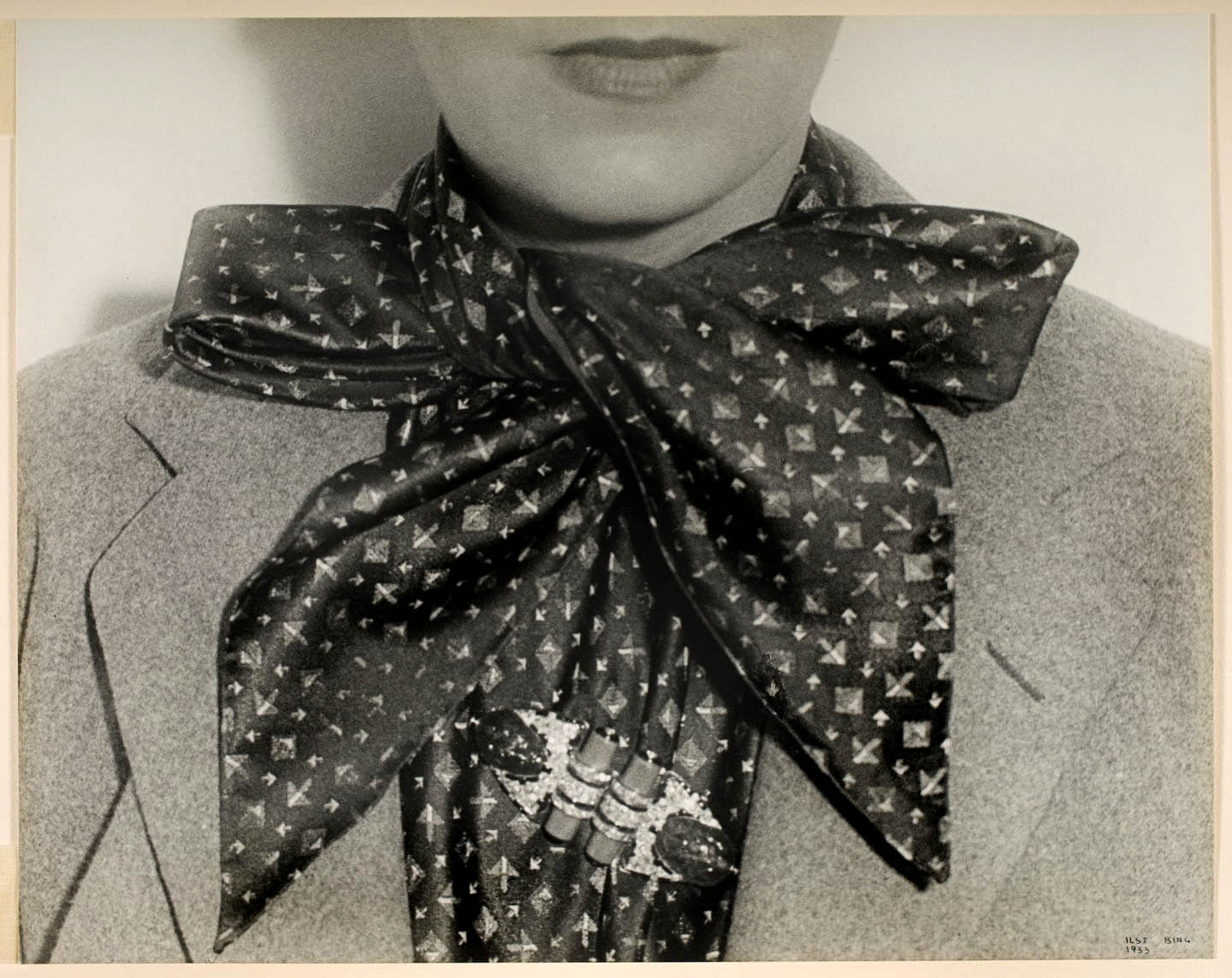
Ilse Bing (German, 1899-1998) The Honorable Daisy Fellowes 1933 Gelatin silver print Sheet: 8 13/16 in. x 11 1/8 in. (22.4 cm x 28.3cm) Mount: 13 3/16 in. x 16 7/16 in. (33.5 cm x 41.8cm) Davis Museum at Wellesley College, Wellesley, MA Gift of Suzanne Ciani (Class of 1968)
The Hon. Daisy Fellowes (née Marguerite Séverine Philippine Decazes de Glücksberg) (29 April 1890 in Paris – 13 December 1962 in Paris) was a celebrated 20th-century society figure, acclaimed beauty, minor novelist and poet, Paris Editor of American Harper’s Bazaar, fashion icon, and an heiress to the Singer sewing machine fortune.
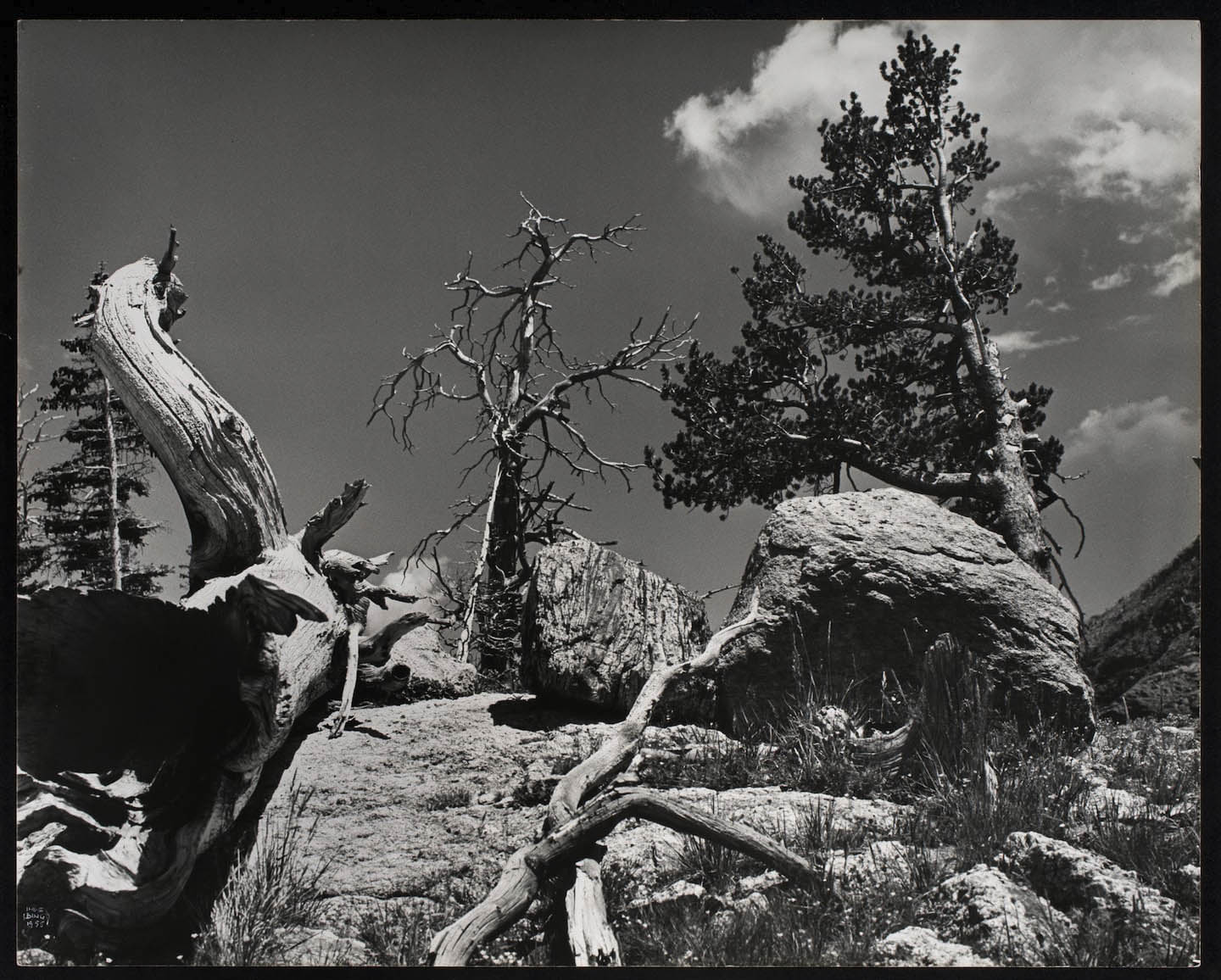
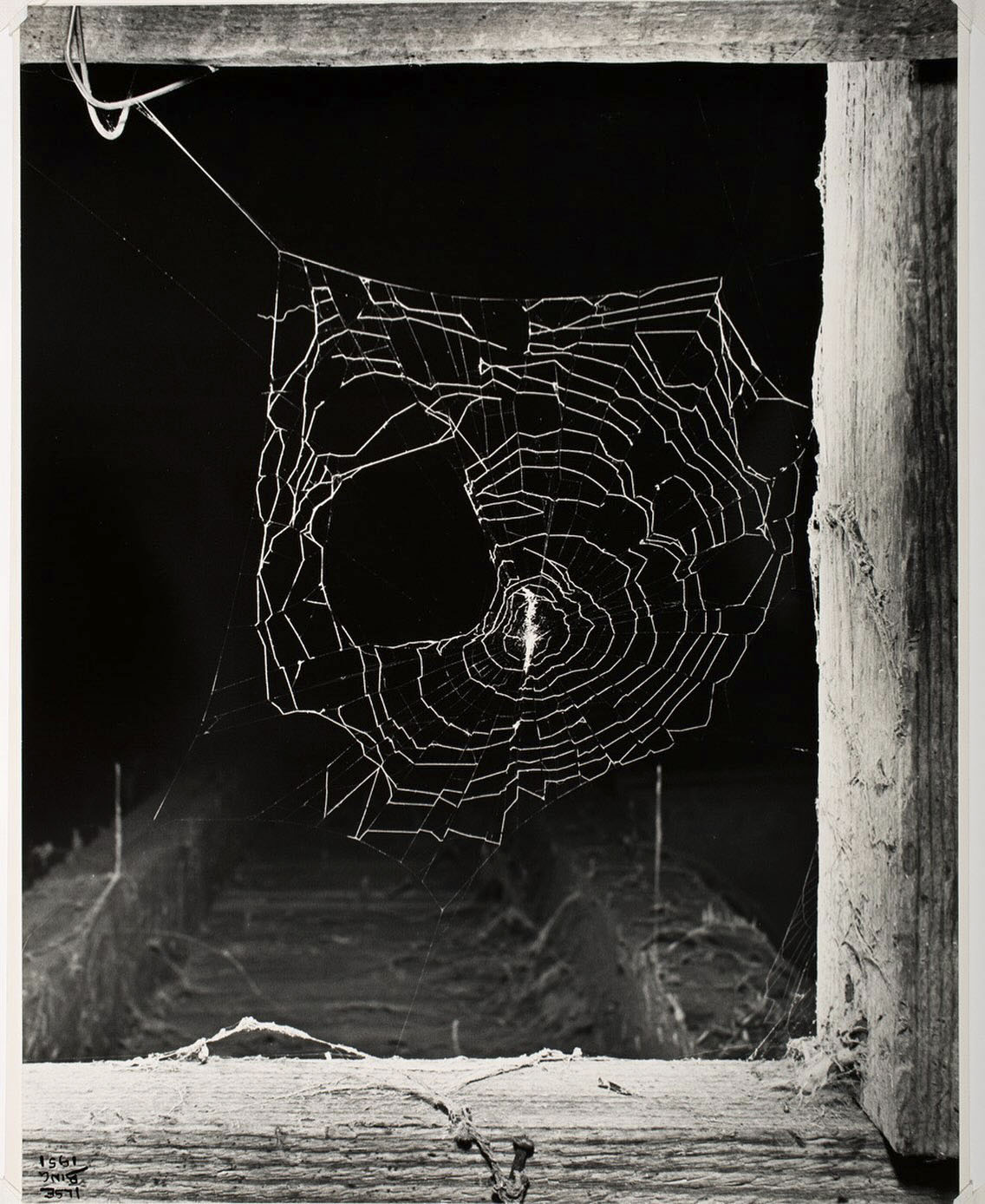
Ilse Bing (German, 1899-1998) Spider Web in Stables 1951 Gelatin silver print Sheet: 13 9/16 in. x 10 1/2 in. (34.4 cm x 26.7cm) Mount: 14 in. x 10 3/4 in. (35.6 cm x 27.3cm) Davis Museum at Wellesley College, Wellesley, MA Gift of Suzanne Ciani (Class of 1968)
Davis Museum at Wellesley College 106 Central Street Wellesley, MA 02481 781-283-1000
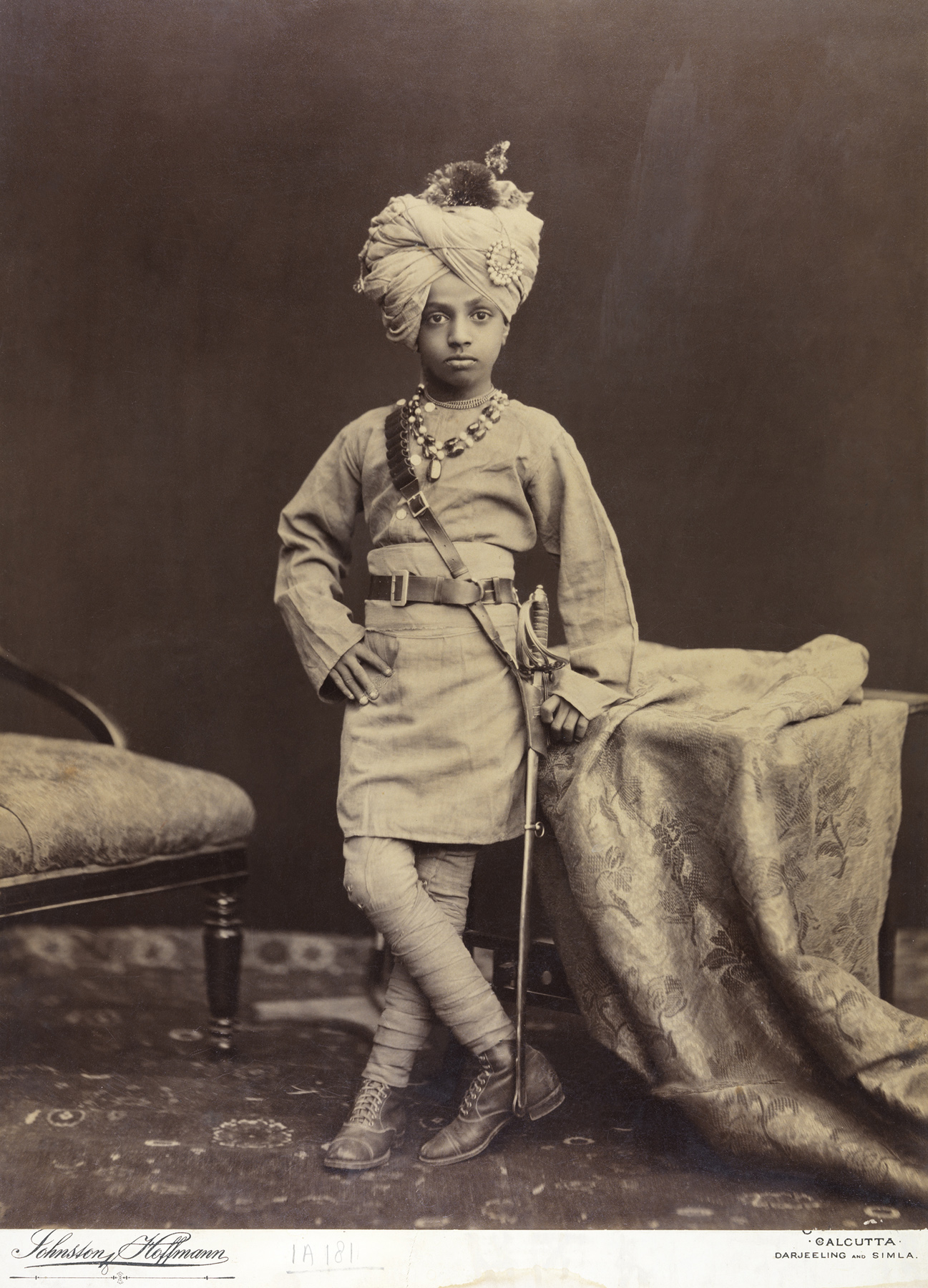
There are some beautiful photographs in this posting, mainly by British photographers evidencing the colonial gaze.
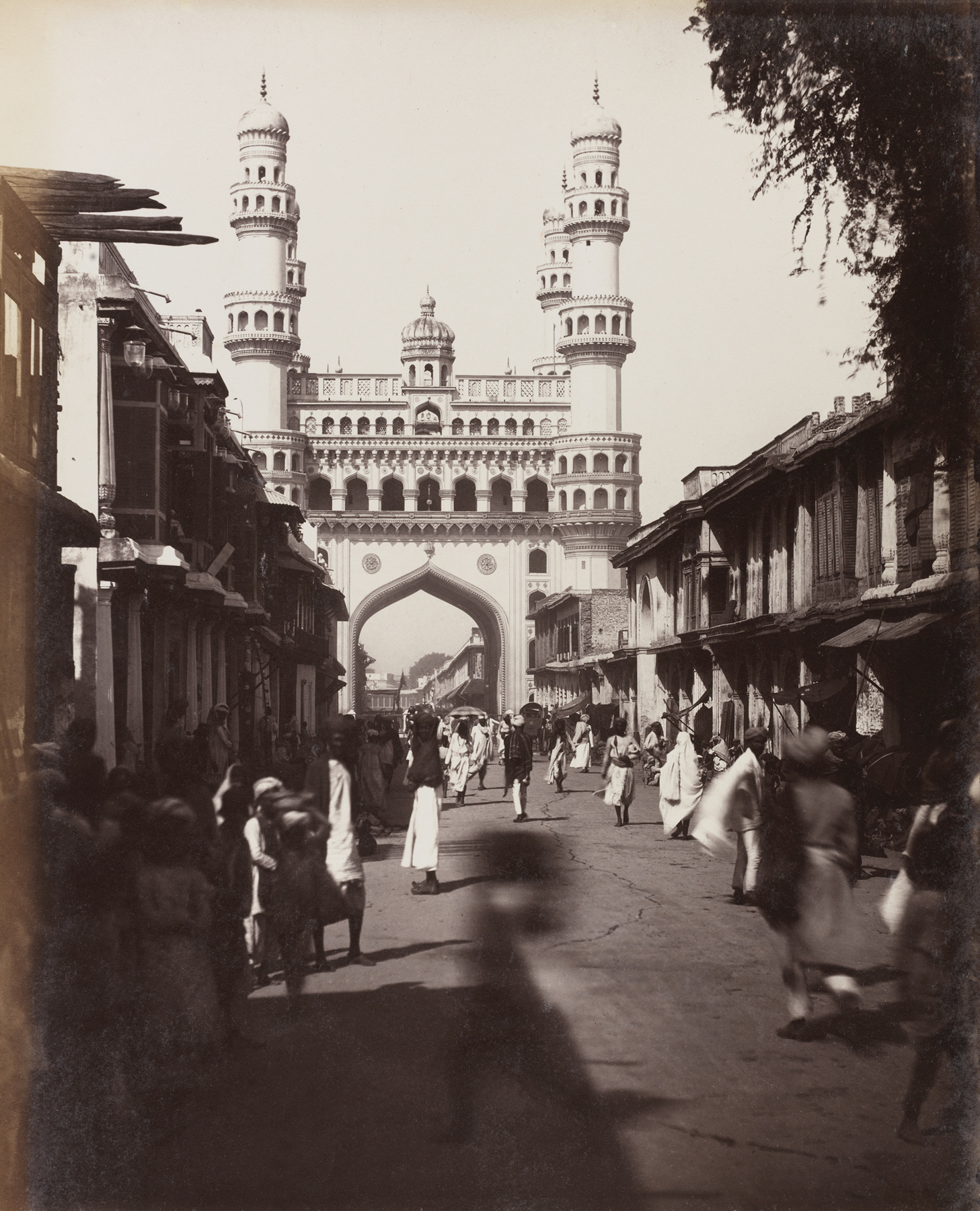
This is how the British saw their subjects “Under Indian Skies” not how the Indians would have seen themselves. The only Indian photographer in this posting is Lala Deen Dayal (Indian, 1844-1905). His photograph The Char Minar, Hyderabad (1880s, below) is a much more fluid, street photography representation of Indian life (long time exposure, blurred figures) than the other grandiose representations of Indian palaces and architecture.
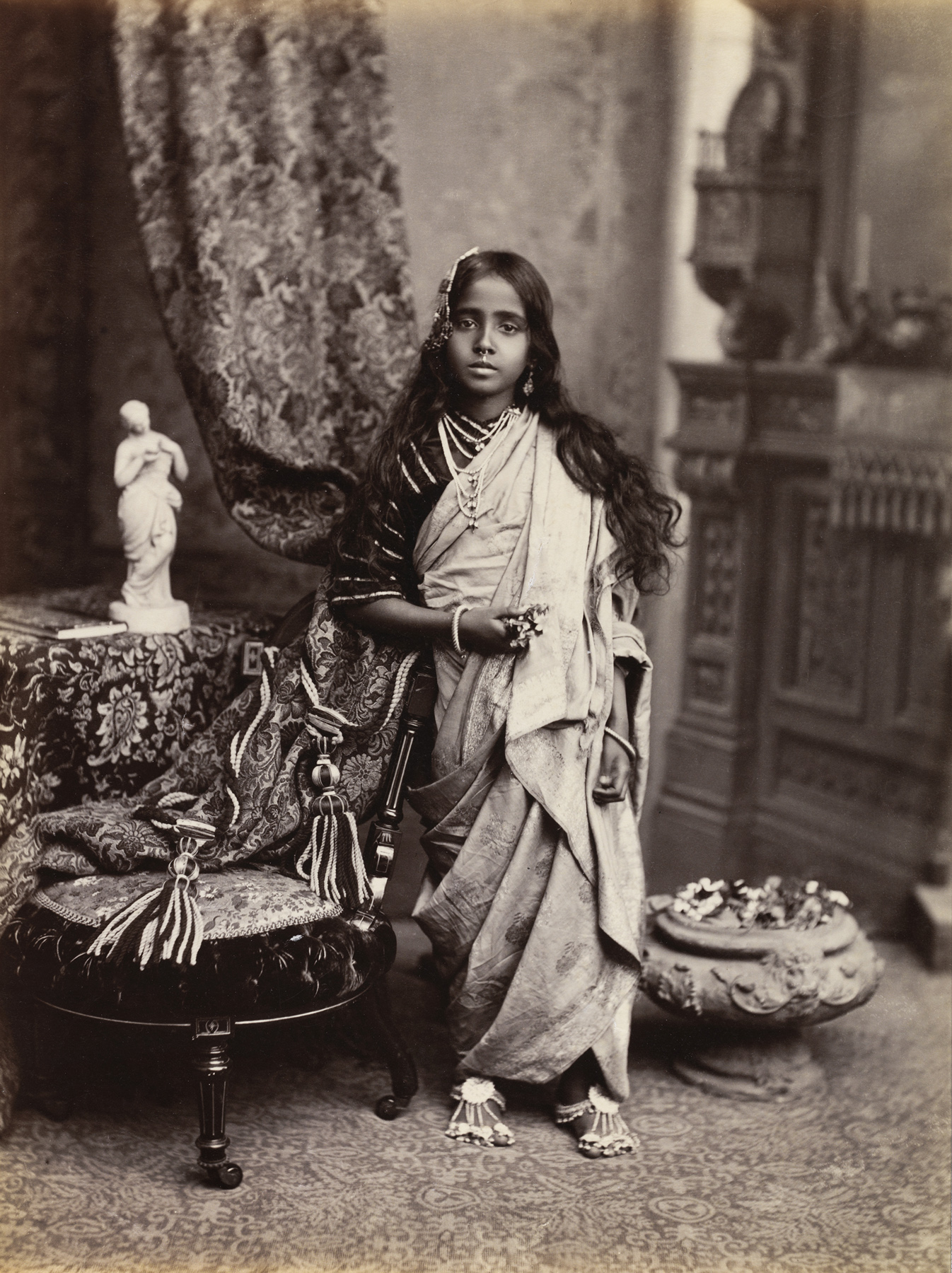
The portraits are also instructive, aping as they do the classical aspirations of contemporary European carte de visite and cabinet cards. Even though the photograph Portrait of a young Indian woman by an unknown photographer (1870s, below) portrays her in Indian dress, she is accompanied to the left by a reproduction of a classical Greek statue. Of course, the aspersion is that while she may be beautiful and different, the Orient is always reliant on Europe and Greece as the birthplace of civilisation, for its existence.
I have included extra information about locations and photographers were possible.
Dr Marcus Bunyan
Many thankx to The David Collection for allowing me to publish the photographs in the posting. Please click on the photograph for a larger version of the image.
The invention of photography in 1839 revolutionised the way in which the world was documented and interpreted, not only in Europe, but also in Asia. As early as the beginning of the 1850s, the British authorities in India launched an impressive photographic survey of architecture. Enthusiastic amateur photographers soon followed suit with atmospheric images of life in the period, including that of maharajas, snake charmers, and elephants bathing in the Ganges.
Through a selection of pictures from a private British collection, this photo exhibition focuses on some of the challenges and subjects that preoccupied the earliest European and Indian photographers. It also displays the distinctive beauty of vintage photos created with difficult to handle apparatuses, big glass negatives, long exposure times, and complex chemical processes.
The exhibition consists of over 80 photographs and photo albums from around 1850 to the beginning of the 20th century. The catalogue was written by the British photo historian John Falconer, who for many years was responsible for the photograph collections in the British Library’s Indian and Oriental departments. The catalogue costs DKK 200 and can be purchased in the museum shop, which also sells the lovely exhibition poster for DKK 40.
Text from The David Collection website [Online] Cited 24/03/2019
Sir Donald Horne Macfarlane (July 1830 – 2 June 1904) was a Scottish merchant who entered politics and became a Member of Parliament (MP), firstly as a Home Rule League MP in Ireland and then as Liberal and Crofters Party MP in Scotland. Macfarlane was born in Scotland, the youngest son of Allan Macfarlane, J.P., of Caithness and his wife Margaret Horne. He became an East Indies merchant as a tea trader and indigo plantation owner. While in India he was a passionate amateur photographer. He experimented freely and produced semi-abstract images
View of one of the Chattar Manzil [Umbrella Palaces] showing the King’s boat called The Royal Boat of Oude on the Gomti River, Lucknow, India.
The Chattar Manzil (Urdu: چھتر منزل, Hindi: छतर मंज़िल), or Umbrella Palace is a building in Lucknow in Uttar Pradesh which served as a palace for the rulers of Awadh and their wives. It was constructed by order of NawabGhazi Uddin Haider and completed after his death by his successor, Nawab Nasir Uddin Haider.
The Chattar Manzil stand on the banks of the River Gomti. The Chattar Manzil consisted of a Bari (larger) Chattar Manzil and Chhoti (smaller) Chattar Manzil, however only the larger one still exists. These two buildings were examples of the Indo-European-Nawabi architectural style, even though the Bari Chattar Manzil has been altered over the years. The palaces were named after the chattris (umbrella-shaped domes) on the octagonal pavilions, which crown the buildings. The imposing building has large underground rooms and a dome surmounted by a gilt umbrella.
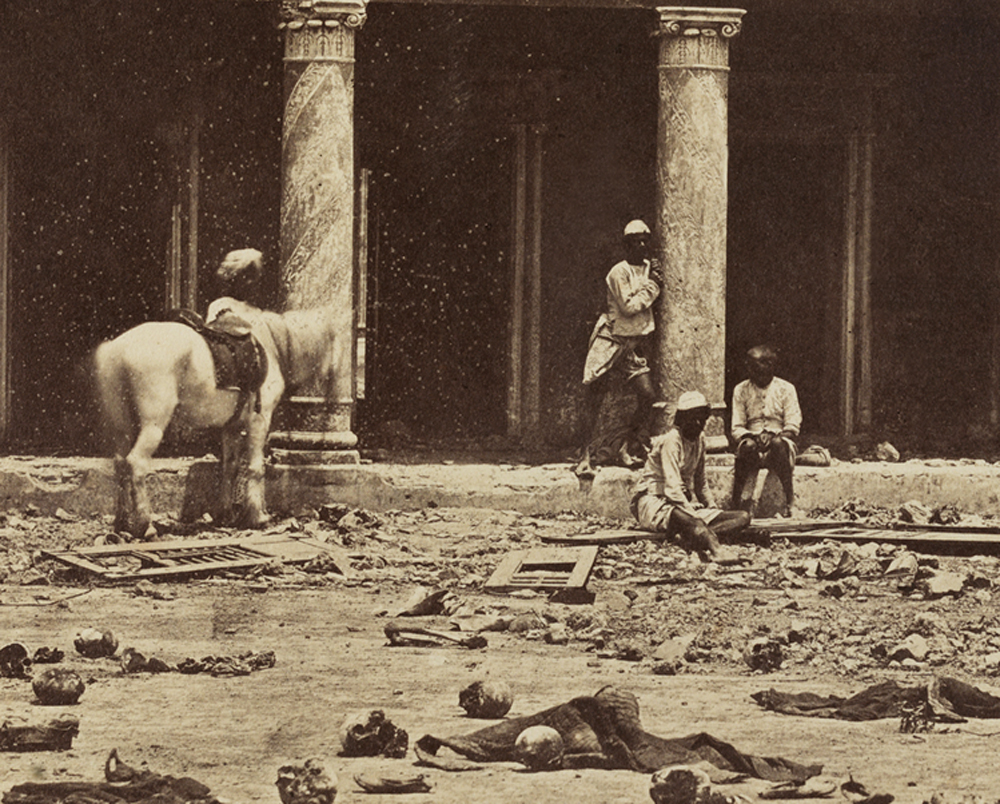
Felice Beato (1832 – 29 January 1909), also known as Felix Beato, was an Italian-British photographer. He was one of the first people to take photographs in East Asia and one of the first war photographers. He is noted for his genre works, portraits, and views and panoramas of the architecture and landscapes of Asia and the Mediterranean region. Beato’s travels gave him the opportunity to create images of countries, people, and events that were unfamiliar and remote to most people in Europe and North America. His work provides images of such events as the Indian Rebellion of 1857 and the Second Opium War, and represents the first substantial body of photojournalism. He influenced other photographers, and his influence in Japan, where he taught and worked with numerous other photographers and artists, was particularly deep and lasting. …
In February 1858 Beato arrived in Calcutta and began travelling throughout Northern India to document the aftermath of the Indian Rebellion of 1857. During this time he produced possibly the first-ever photographic images of corpses. It is believed that for at least one of his photographs taken at the palace of Sikandar Bagh in Lucknow he had the skeletal remains of Indian rebels disinterred or rearranged to heighten the photograph’s dramatic impact17. He was also in the cities of Delhi, Cawnpore, Meerut, Benares, Amritsar, Agra, Simla, and Lahore. Beato was joined in July 1858 by his brother Antonio, who later left India, probably for health reasons, in December 1859. Antonio ended up in Egypt in 1860, setting up a photographic studio in Thebes in 1862.
Interior of the Secundra Bagh after the Slaughter of 2,000 Rebels by the 93rd Highlanders and 4th Punjab Regiment. First Attack of Sir Colin Campbell in November 1857, Lucknow. Albumen silver print, by Felice Beato, 1858. Located on the outskirts of Lucknow, it was the scene of intense fighting in November, 1857. Following the action, the British dead were buried in a deep trench but the Indian corpses were left to rot. Later, the city had to be evacuated and was not recaptured until March 1858 and it was shortly afterwards that Beato probably took this photograph. As one contemporary commentator described it: “A few of their [rebel] bones and skulls are to be seen in front of the picture, but when I saw them every one was being regularly buried, so I presume the dogs dug them up.” A British officer, Sir George Campbell, noted in his memoirs Beato’s presence in Lucknow and stated that he probably had the bones uncovered to be photographed. However, William Howard Russell of The Times recorded seeing many skeletons still lying around in April 1858. Photographic views of Lucknow taken after the Indian Mutiny, Albumen silver print 26.2 x 29.8 cm. The image was taken by Felice Beato, a Corfiote by birth, who visited India during the period of the Indian Mutiny or First War of Indian Independence; possibly on a commissioned by the War Office in London he made documentary photographs showing the damage to the buildings in Lucknow following the two sieges. It is known that he was in Lucknow in March and April of 1858 within a few weeks of the capture of that city by British forces under Sir Colin Campbell. His equipment was a large box camera using 10″ x 12″ plates which needed a long exposure, and he made over 60 photographs of places in the city connected with the military events. Beato also visited Delhi, Cawnpore and other ‘Mutiny’ sites where he took photographs.
View of the front facade of the Alai Darwaza gatehouse at the Qutb complex in Delhi. The building is almost entirely covered with intricately carved geometric and floral patterns, which also adorn the pierced latticework screens that cover the arched windows flanking the archway over the entrance.
This photograph shows a gateway into the extended Quwwat-ul-Islam mosque. Known as the Alai Darwaza, it was built in 1311 by the Afgan ruler Alauddin Khalji. He had grand plans to extend the original mosque. Most of them were abandoned after his death in 1315, but this gateway is the most notable addition he made. It is 17.2 metres square.
The mosque and gateway are made out of rubble. It is the first of many Indian Islamic monuments to use a combination of white marble and red sandstone for the façade. Its distinctive features are the use of symmetry and the finely carved calligraphic and arabesque decoration on the southern façade of the gateway. This is also the first monument in which a true arch, using the radiating voussoirs shown here, is fully integrated into the design. The design is influenced by the architectural traditions of the empire of the Saljugs from western Asia.
The British photographer Samuel Bourne lived and worked in India between 1862 and 1869. During this time he toured the Himalayas and travelled through the subcontinent, photographing its landscape, architecture and historical sites. He set up a studio in Simla with Charles Shepherd and sold his prints sold to an eager public both in India and Britain.
The Qutb complex are monuments and buildings from the Delhi Sultanate at Mehrauli in Delhi in India. The Qutub Minar in the complex, named after Qutbuddin Bakhtiar Kaki, was built by Qutb-ud-din Aibak, who later became the first Sultan of Delhi of the Mamluk dynasty. The Minar was added upon by his successor Iltutmish (a.k.a. Altamash), and much later by Firoz Shah Tughlaq, a Sultan of Delhi from the Tughlaq dynasty in 1368 AD. The Qubbat-ul-Islam Mosque (Dome of Islam), later corrupted into Quwwat-ul Islam, stands next to the Qutb Minar.
Many subsequent rulers, including the Tughlaqs, Alauddin Khalji and the British added structures to the complex. Apart from the Qutb Minar and the Quwwat ul-Islam Mosque, other structures in the complex include the Alai Gate, the Alai Minar, the Iron pillar, the ruins of several earlier Jain temples, and the tombs of Iltutmish, Alauddin Khalji and Imam Zamin.
Akbar’s tomb is the tomb of the Mughal emperor, Akbar and an important Mughal architectural masterpiece. It was built in 1604-1613 and is situated in 119 acres of grounds in Sikandra, a sub of Agra, Uttar Pradesh, India.
The first photographs from India
The David Collection’s new special exhibition provides a hitherto unknown first-hand impression of 19th-century India, primarily – but not exclusively – seen with the eyes of western photographers. Through original vintage photographs, the viewer is taken back to photography’s birth and earliest childhood and up to around 1900.
Photography had made a breakthrough in British-dominated India in the early 1850s. With its magnificent architecture, exotic landscapes, and many different peoples and cultures, India offered fantastic motifs: splendid Islamic palaces, mosques, and sepulchral monuments. Princes, maharajas, ministers, and warriors in all their glory. But also an abundance of life among the common people, with everyone from stonemasons to snake charmers as well as elephants bathing in the Ganges.
Motifs of a completely different type that can be seen in the exhibition are those of the shattered palaces and dead warriors that spoke admonishingly of the rebellion against British rule in 1857-1858. The rebellion broke out after Muslim and Hindu soldiers had been forced by the British to use cartridges supposedly greased with fat from pigs and cows. These are some of history’s earliest war photographs, which in Europe served as the basis for newspaper illustrations.
The photographs were often taken under difficult working conditions. The heavy photo equipment had to be transported to distant regions along impassible roads, and its chemicals dried out in the tropical heat. The exposure time could be very long, and processing the negatives and the positives was often arduous.
Experiments were made with the new media by both visiting and local photo pioneers. The exhibition bears witness to the exchanges and competition between amateurs and the professional photographers whose studios popped up in innumerable places in India in the years up to 1900. The photographs also show how the new medium developed in the tension field between documentation and creative art form.
The over 80 works in the exhibition comprise photographs and photo albums, all of which were lent by the same private collection. The exhibition catalogue was written by the British photo historian John Falconer, who for many years was responsible for the photograph collections in the British Library’s Indian and Oriental departments. The author is one of the world’s leading specialists in this field and his catalogue provides a detailed and lively account of the photographers’ India in the 19th century and their photographic techniques.
Book
Under Indian Skies is the book behind the forthcoming exhibition of the same name, which opens at The David Collection on 23 November 2018. The book – and the exhibition – offer a previously unknown, first-hand impression of 19th-century India, as seen through the eyes of primarily Western photographers. At the beginning of the 1850s photography made its breakthrough in colonial India. With its impressive architecture, exotic landscapes and many different ethnic groups and cultures, the country offered fantastic motifs. The Indian architecture with its magnificent Islamic palaces and mausolea. Princes, maharajas, ministers and soldiers in all of their splendour. But also ordinary people and daily life: stone-cutters and woodcarvers, carpenters and dyers, daily life with the elephants that bathe in the Ganges, cotton harvesters and gardeners, acrobats, snake charmers, dancers, musicians and religious processions.
In the book we are led all the way back to the conception and early years of photography, just before 1850, and right up until around 1900, when the medium was long established. What is more, the book includes what may well be the first examples of war photography – the ruins and corpses left behind after a large, bloody uprising in the end of the 1850s, triggered when the British forced local Hindu and Muslim troops to use cartridges greased with the fat of cows and pigs.
The photographers travelling to India to undertake ‘reportage’ photography were akin to explorers and their journeys were difficult expeditions, during which with great effort – and an army of helpers – they surveyed the remotest regions. The photographs of the first decades were composed in much the same way as paintings from the same period. The technical challenges were immense and exposure times, for instance, were extremely long, so everything had to be planned to the smallest detail.
Under Indian Skies presents a riveting, kaleidoscopic picture of an India that for the most part has disappeared today. Some monuments are still standing and one might still see similar scenes there, but the present infrastructure and political circumstances are completely different to that time.
In addition to the presentation of eighty-three selected photographs, the book contains two essays, on the history of photography in India and early photographic processes respectively.
About the Author
John Falconer is a British historian of photography, who for many years was responsible for the photography collection at the British Library’s Indian and Oriental departments. He has written many books on early Indian photography and is one of the world’s leading specialists in this area.
Press release from The David Collection website [Online] Cited 24/03/2019
Installation view of the exhibition Under Indian Skies – 19th-Century Photographs from a Private Collection at The David Collection, Copenhagen, Denmark
Although Robert Tytler and his wife Harriet only took up photography after the Uprising of 1857-58, they managed to produce over 500 photographs of the sites of conflict in less than six months. Their use of very large paper negatives such as this, with the associated technical difficulties, was an ambitious choice for photographers new to the medium. The production of negatives of this size needed extremely large and unwieldy cameras, with consequently long exposures: a note on the back of this negative states that it required an exposure of twenty-five minutes. This decision probably owed much to the tuition the Tytlers received from the established photographer John Murray, who used a similar-sized camera and whose processing procedures they also adopted. This view (laterally reversed in the negative), is taken from outside the Taj Mahal complex from a position in front of the west gate (Fatehpuri Darwaza), looking north along the outer western wall towards the tomb of Fatehpuri Begum in the distance.
Text from the book Under Indian Skies
Harriet Christina Tytler (née Earle; 3 October 1828 – 24 November 1907) was a British artist, writer, and a pioneer photographer. With her husband Robert Christopher Tytler, she created over 300 photographs. She is well known for the documentation of monuments and Siege of Delhi from mughals. …
Photography and artwork
Harriet’s photographic work is mixed with those of her husband. Some pictures bear the “S.C.T.” which have been identified as standing for her son Stanley. Many of her photographs are included in the collection of the National Gallery of Canada and the Harrison D. Horblit Collection of Early Photography. Although never having painted before she began work on a large canvas of 6×18 feet, to depict from memory the palace of the Emperor of Delhi as a cyclorama. She completed this work in 1872, following the death of Robert.Harriet kept a diary and her memoirs were published in 1986 as An Englishwoman in India. Her son Stanley grew up in Australia and became an artist of repute. He moved to British Columbia where he was a founding member of the B.C. Society of Fine Arts in 1909.
Lala Deen Dayal was trained as an engineer but took up photography around 1864. He entered government service in 1866, founded the firm “Lala Deen Dayal & Sons” in 1868, and was commissioned to photograph temples and palaces of India. In 1886, Dayal retired from government service and became a professional photographer, moving to Hyderabad, India to work for the Nizam of Hyderabad, who conferred the honorary title of “raja” upon him.
Text from the J. Paul Getty Museum website
The Charminar (“Four Minarets”), constructed in 1591, is a monument and mosque located in Hyderabad, Telangana, India. The landmark has become a global icon of Hyderabad, listed among the most recognised structures of India. Charminar has been a historical place with Mosque on the top floor for over 400 years and also known for its surrounding markets. It is one of the tourist attractions in Hyderabad. It is where many famous festivals are celebrated, such as Eid-ul-adha and Eid-ul-fitr.
Meadows Taylor (British, 1808-76) and James Fergusson (British, 1808-1886) Architecture at Beejapoor, London 1866 Album
Architecture at Beejapoor, an ancient Mahometan capital in the Bombay Presidency / photographed from drawings by Capt. P.D. Hart … ; with an historical and descriptive memoir by Captain Meadows Taylor ; and … notes by James Fergusson. 1866.
Meadows Taylor (British, 1808-76) and James Fergusson (British, 1808-1886) “Malik-I-Mydan” – “The Master of the Plain.” Architecture at Beejapoor, London (detail) 1866 Album
This gun was brought back from Ahmadnagar in the 17th century as a trophy of war and is thought to be the largest medieval cannon in the world.
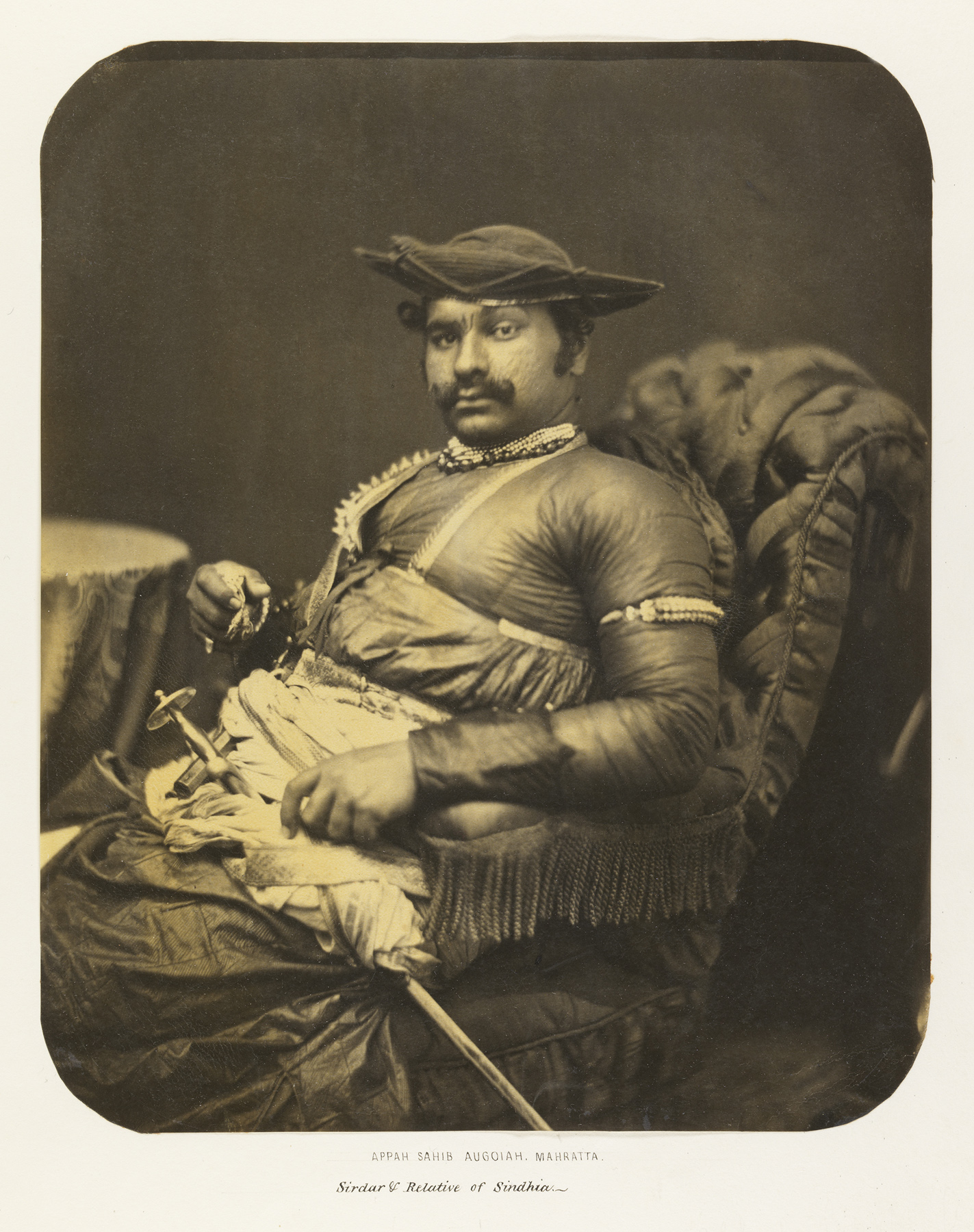
The title of Sirdar (or Sardar), from the Persian for a commander, could apply to a wide variety of senior positions, either military or administrative. The precise role of this figure in the Maharajah of Gwalior’s administration has not been established: the term was also often used by the British in a more general sense in the nineteenth century to denote a nobleman.
This delicately hand-coloured image depicts a Rajput ruler wearing an elaborate eighteenth-century armour known as Chahelta Hazah (Coat of a Thousand Nails). The inscription (in a Rajasthani form of Hindi, written in Devanagari script) identifies the sitter as Maharaj Shri Savan (or Sovan) Singhji. While the photographer is not named, it states that ‘Shivlal the painter coloured it’ and supplies a date of late September 1866.
Bikaner is a city in the north Indian state of Rajasthan, east of the border with Pakistan. It’s surrounded by the Thar Desert. The city is known for the 16th-century Junagarh Fort, a huge complex of ornate buildings and halls. Within the fort, the Prachina Museum displays traditional textiles and royal portraits. Nearby, the Karni Mata Temple is home to many rats considered sacred by Hindu devotees.












You must be logged in to post a comment.