
Exhibition dates: 6th February – 7th June, 2026
Curator: Sabine Zorn (Head of Conservation/Restoration of Graphic Art and Photography, Hamburger Kunsthalle); Guest Curator: Dr. Bernd Pappe (Freelance restorer and art historian specialising in portrait miniatures)
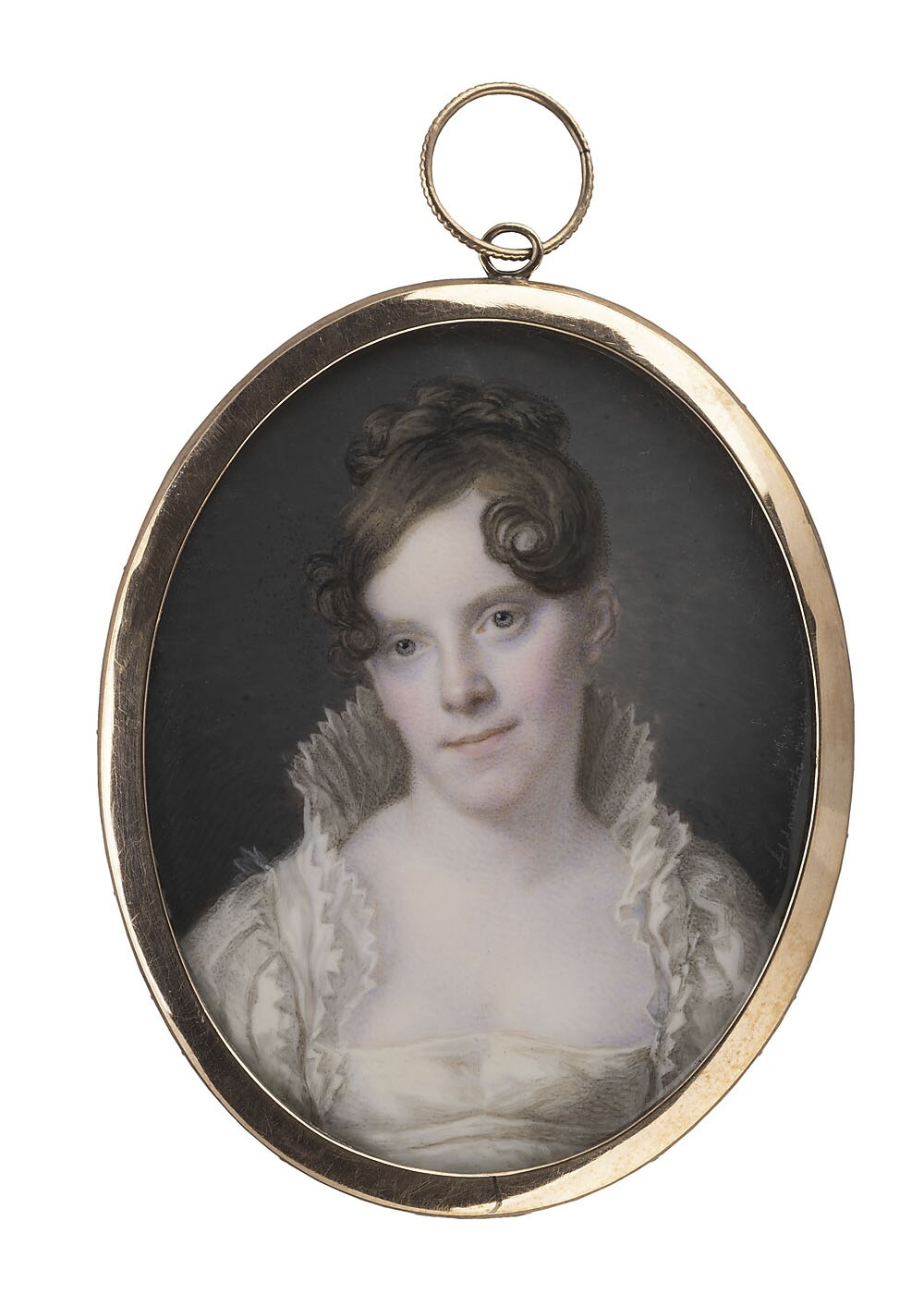
Heinrich Jakob Aldenrath (German, 1775-1844)
Caroline Mohrmann (geb. Wortmann)
c. 1815
Watercolour and gouache on ivory
6.3 x 4.9cm
Hamburger Kunsthalle
© Hamburger Kunsthalle, Foto: Birgitt Schmedding
A bonus posting for the weekend.
I discovered this exhibition while surfing online and I couldn’t miss it before it closes tomorrow. Resistance is futile, especially for an avid collector of object d’arts.
I love miniatures, their sensitivity, their sensuality, their size. The fact they were held in the hand and carried close to the heart. Portraits of the self, relying on mirrors to capture the artist’s own reflection, portraits of loved ones, artists, anonymous men and women.
“Many master miniaturists (like Daguerre himself) used optical tools like the Camera Obscura to map proportions before painting. Using early cameras felt like a natural mechanical extension of this process.” (Wikipedia)
“Portrait miniaturists were already experts at arranging subjects for flattering, highly personalised, and dignified depictions. They brought these same framing, angling, and lighting rules – such as emphasising the face – to the camera.” (Wikipedia)
“As miniature painters attempted to mimic the technical precision of daguerreotypes, they lost the intimate, distinct appeal of their art form. As the former Metropolitan Museum scholar Harry Wehle put it in 1927, “The miniature in the presence of the photograph was like a bird before a snake; it was fascinated – even to the fatal point of imitation – then it was swallowed”.” (Metropolitan Museum of Art)
For me, there is a delicacy and romanticism to the painted miniature which can never be matched by the photographic miniature. Despite both being housed in small, protective leather and wood cases, each are constructed realities of a different aspect – one created through the eye and creativity of the painter, the other created through the eye and creativity of the photographer and the maximal, granular reality of the camera.
Where possible I have added bibliographic and other pertinent information for the artists in the posting.
Dr Marcus Bunyan
Many thankx to Hamburger Kunsthalle for allowing me to publish the photographs in the posting. Please click on the photographs for a larger version of the image.
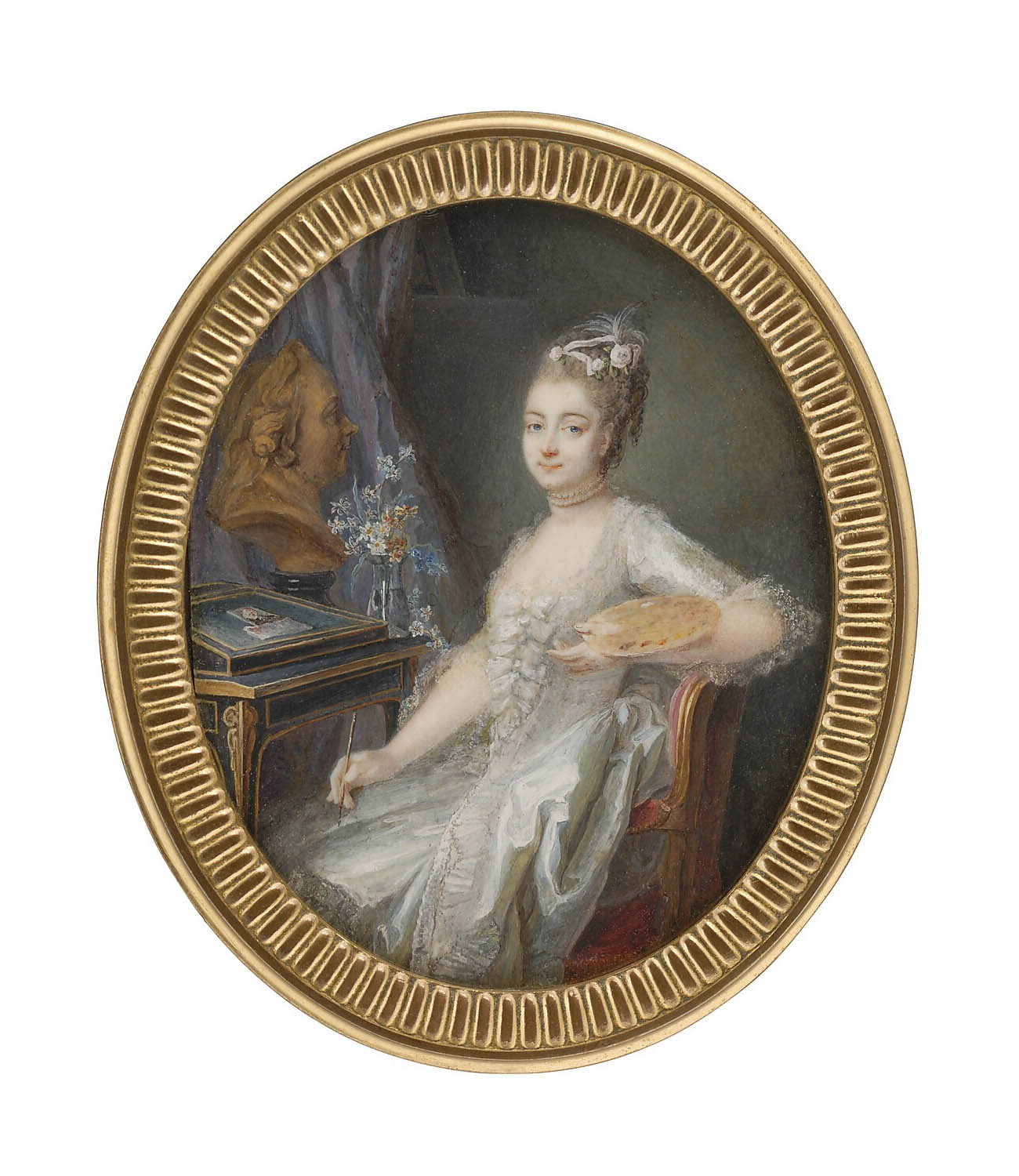
Adélaïde Labille-Guiard (1749-1803)
Self-portrait
c. 1774
Aquarell und Gouache auf Elfenbein
10.3 x 8.4cm
The Tansey Miniatures Foundation, Celle
© Foto: Birgitt Schmedding
Adélaïde Labille-Guiard (French, 1749-1803)
Adélaïde Labille-Guiard (née Labille; 11 April 1749 – 24 April 1803), also known as Adélaïde Labille-Guiard des Vertus, was a French miniaturist and portrait painter. She was an advocate for women to receive the same opportunities as men to become great painters. Labille-Guiard was one of the first women to become a member of the Royal Academy, and was the first female artist to receive permission to set up a studio for her students at the Louvre.
Adélaïde Labille was born on 11 April 1749 in Paris. Her father, Claude-Edme Labille (1705-1788) was a haberdasher.
Labille-Guiard became a master at miniatures, pastels, and oil paintings. Little is known about her training due to the practices of the 18th century which dictated masters (who were predominately male) should not take on female pupils. During this time, women were perceived as incapable to follow instruction alongside men. During her adolescence, Labille-Guiard studied miniature painting with oil painter François-Élie Vincent and her early work was exhibited at the Académie de Saint-Luc.
Labille-Guillard married Louis-Nicolas Guiard in 1769, but separated from him eight years later, already able to support herself through her artwork. She apprenticed with the pastel master Quentin de la Tour until 1774. From 1776 to 1780, she began to study oil painting with her childhood friend François-André Vincent (the eldest son of François-Élie Vincent), who would later become her husband.
Exhibitions at the Académie de Saint-Luc
Labille-Guiard was admitted to the Académie de Saint-Luc in 1767 when she was twenty years old. Her admission piece has since disappeared and sadly no records of its existence survive today. The Académie de Saint-Luc provided Labille-Guiard with a space to practice art professionally. In 1774, she exhibited her work at its Salon. This show was so successful that the Royal Academy took offence, and with the backing of the monarchy, issued an edict in March 1776 abolishing “guilds, brotherhoods, and communities of arts and crafts”, forcing the Académie de Saint-Luc to close its doors in 1777. However, this did not stop Labille-Guiard’s ambitions as an artist.
Becoming a member of the Royal Academy
Once the Académie de Saint-Luc closed its doors, Labille-Guiard began to learn oil painting, so she could apply to the Royal Academy which required her to present at least one oil painting for admission. During the late 1770s, she painted several portraits of leading academicians, creating contacts with the Académie royale de peinture et de sculpture.[6]
Labille-Guiard chose to display some of her work at the Salon de la Correspondance in 1779 and 1783. This included her self-portrait in pastel and oil portraits, which were well received by critics. Labille-Guiard’s talent as an oil painter and pastellist was quickly noticed, and she received national recognition, ultimately leading to her acceptance into the Royal Academy. On 31 May 1783 Labille-Guiard was accepted as a member of the French Academie Royale de Peinture et de Sculpture. Her rival, Elisabeth-Louise Vigée Le Brun, was also elected on that day; the two of them were the first women to be inducted. Both Labille-Guiard and Vigée Le Brun were immediately criticised following their admission by those who were furious at women’s entry; Labille-Guiard suffered attacks against both her art and character. One anonymous pamphlet Suite de Malborough au Salon 1783, accused Labille-Guiard of exchanging sexual favours for help with painting. The pamphlet punned on François-André Vincent’s name (though still unmarried, he was her rumoured paramour), saying that Labille Guiard had “vignt cents” (twenty-hundreds, or two thousand) lovers. Still, becoming accepted into the Royal Academy opened doors for Labille-Guiard as she gained patronage from the royal family. …
Style and context
Labille-Guiard often did not fit comfortably within the boundaries of feminine virtue in the 18th century. In order to appeal to a wide variety of viewers including upper-class men and women, she often incorporated recent fashions into her paintings, which allowed her to showcase her artistic ability. She was good at rendering details, such as showing luxurious folds and layers of complex skirts that were in fashion at the time. However, often she painted with a twist such as having women face directly at the viewer or with a low neckline, which was an uncommon practice in the 18th century when portraying women.
Further evidence of Labille-Guiard’s boldness can be seen in her self-portraits, which leave her exposed slightly more than usual, but not enough to evoke allegations of promiscuous behaviour. This is seen in her painting Self-Portrait with Two Pupils. Unlike some other paintings of female artists in the 18th century, Labille-Guiard chose to depict herself actively working rather than passive and at rest. Labille-Guiard also pushed against other restrictions, such as those that limited the number of females that could attend the Royal Academy. By depicting two female students in Self-Portrait with Two Pupils, Labille-Guiard suggests more women should be allowed in to the Royal Academy. In this sense, Labille-Guiard was daring, but not too daring as to sabotage her reputation and lose the respect she worked hard to gain within the art world.
At the time, female artists were frequently related to the goddess Minerva. Therefore, Labille-Guiard and her rival Vigée Le Brun were both referred to as “modern Minervas.” Their rivalry was encouraged by both academicians and patrons at court.
Today, Labille-Guiard’s masterpiece, Self-Portrait with Two Pupils, hangs in New York’s Metropolitan Museum of Art, after the Louvre rejected it in a final dismissal of the artist’s talent.
Text from the Wikipedia website
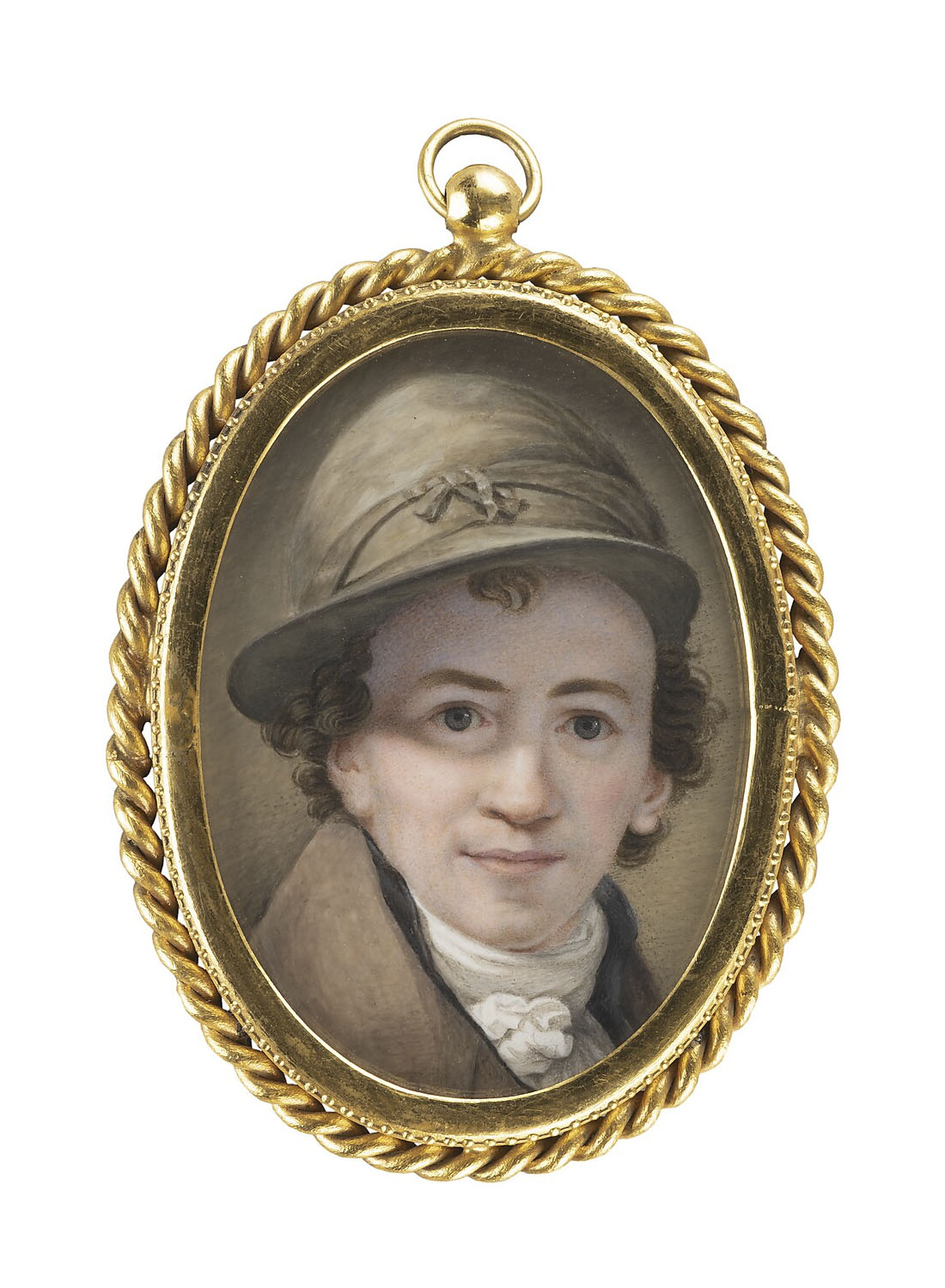
Friedrich Karl Gröger (German, 1766–1838)
Self-portrait
c. 1800
Watercolour and gouache on ivory
7.1 x 5.3cm
Hamburger Kunsthalle
© Hamburger Kunsthalle, Foto: Birgitt Schmedding
Friedrich Carl Gröger was a north-German portrait painter and lithographer. One of the most respected portraitists of his time in northern Germany, his works are to be found in several museums, including the Hamburger Kunsthalle, as well as in north German, Holstein and Danish private collections.
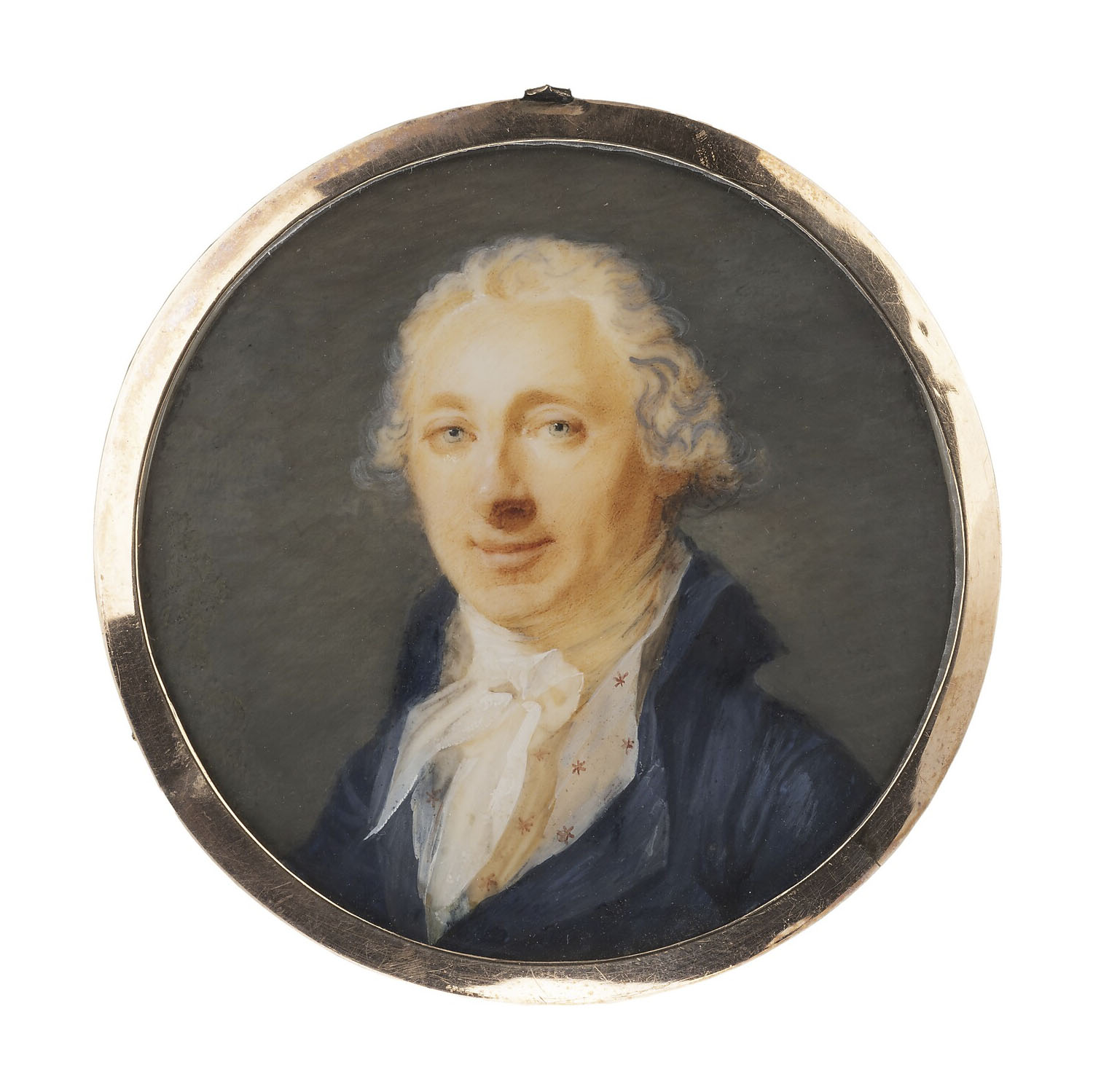
Domenico Bossi (German born Italy, 1767–1853)
Dr. med Paul Hinrich Büsch
c. 1795
Watercolour and gouache on ivory
6cm (Durchmesser)
Hamburger Kunsthalle
© Hamburger Kunsthalle
Foto: Birgitt Schmedding
Johann Dominik Bossi, also known as Domenico Bossi, was a painter. Bossi, a student of Giovanni Domenico Tiepolo, was born in Trieste and worked primarily as a miniaturist in Germany, Austria, Sweden and Russia before he settled down in Munich, where he lived at Theresien Straße 19 in Munich around 1850.
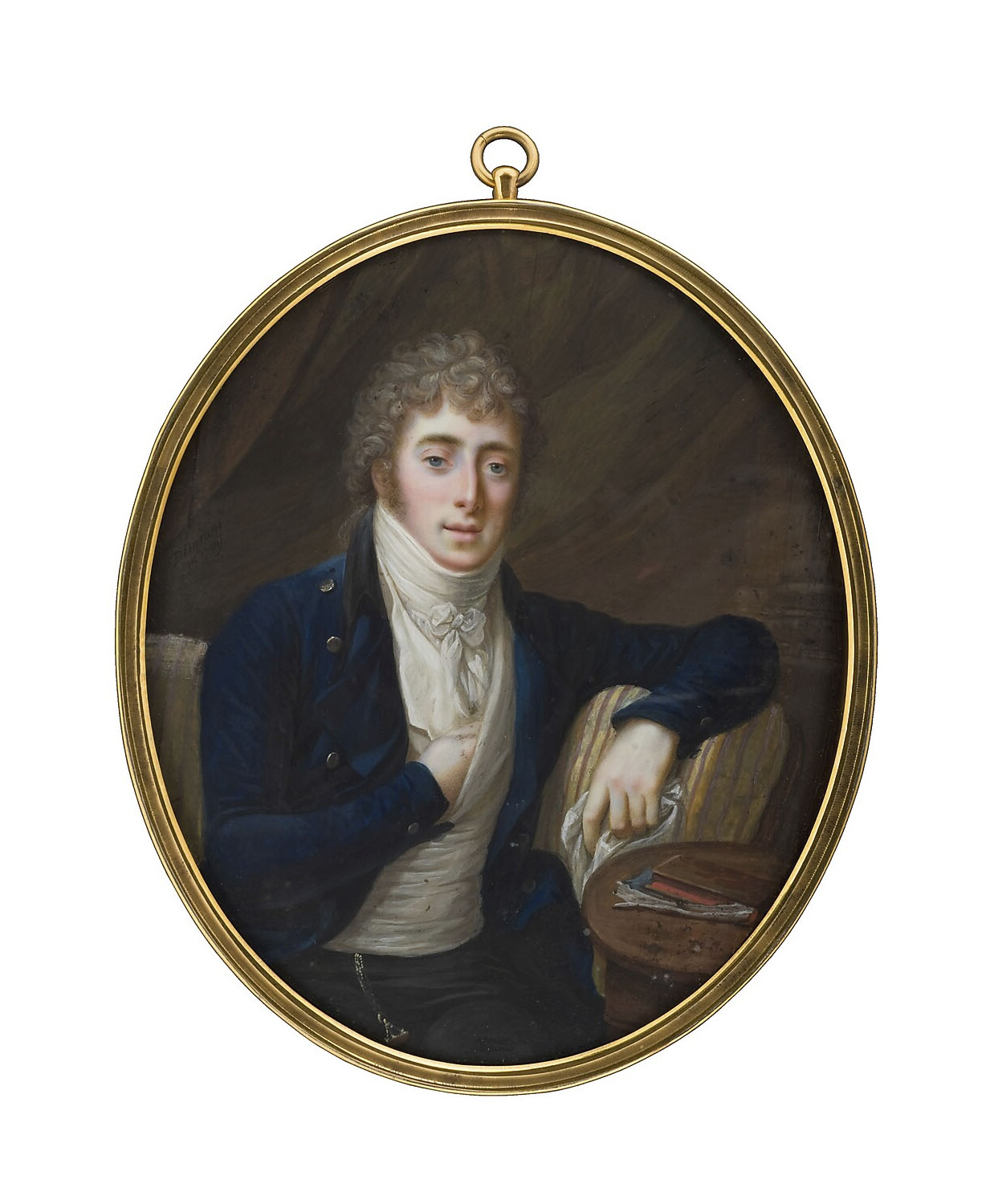
Carl Friedrich Demiani (German, 1768-1823)
Man on sofa
1799
Watercolour and gouache on ivory
15.1 x 12.5cm
The Tansey Miniatures Foundation, Celle
© Foto: Birgitt Schmedding
Carl (Karl) Friedrich Demiani was born in 1768 in Breslau (now Wroclaw, Poland), and died in 1823 in Dresden. He studied at the Dresden Academy of Fine Arts and specialised in portrait miniatures.
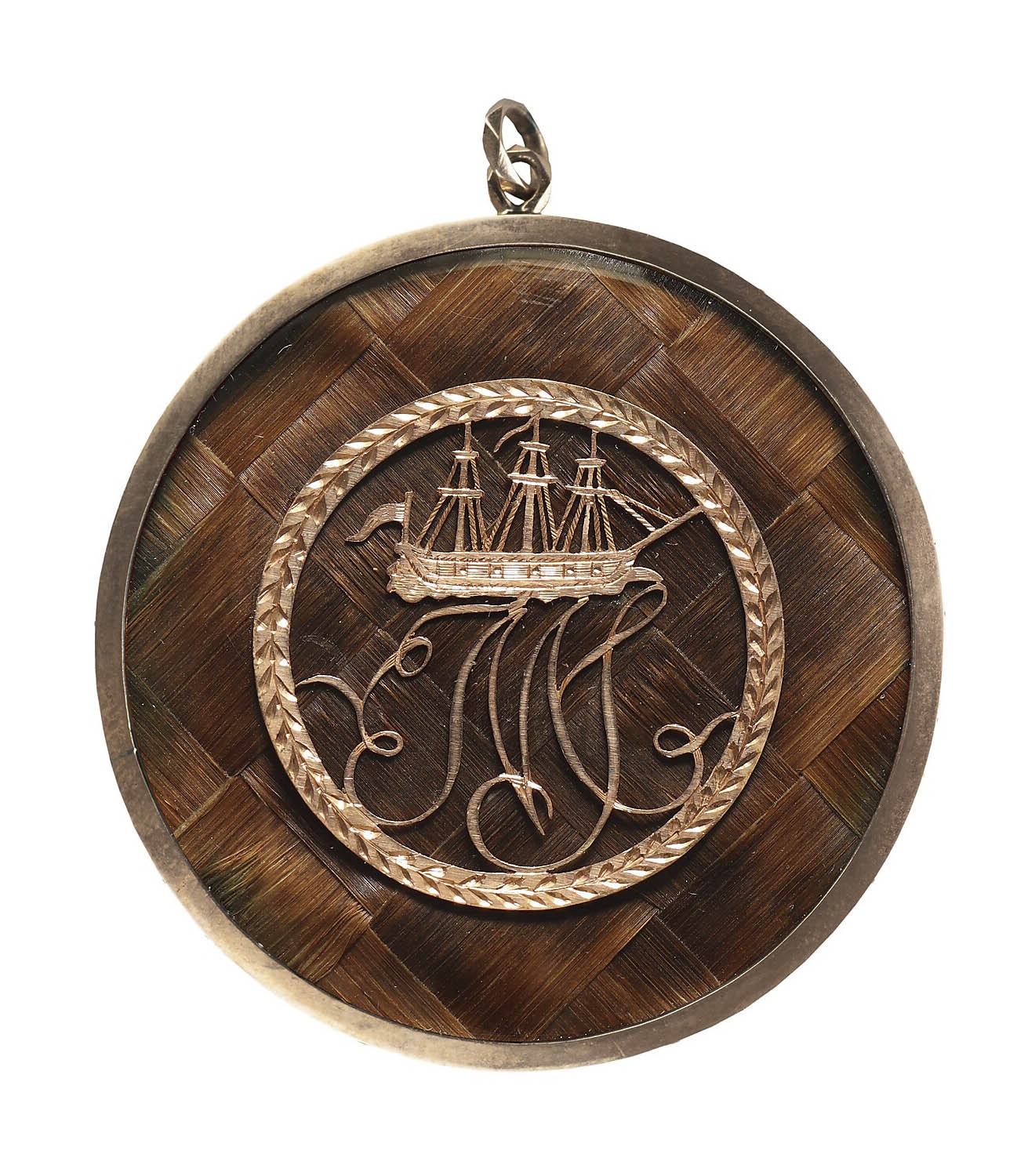
Unknown maker
Monogram “JMJ” on hair braid (back of a gentleman’s portrait)
c. 1800
Gold-plated metal on hair
5.3cm
Hamburger Kunsthalle / ARTOTHEK
© Hamburger Kunsthalle
Foto: Birgitt Schmedding
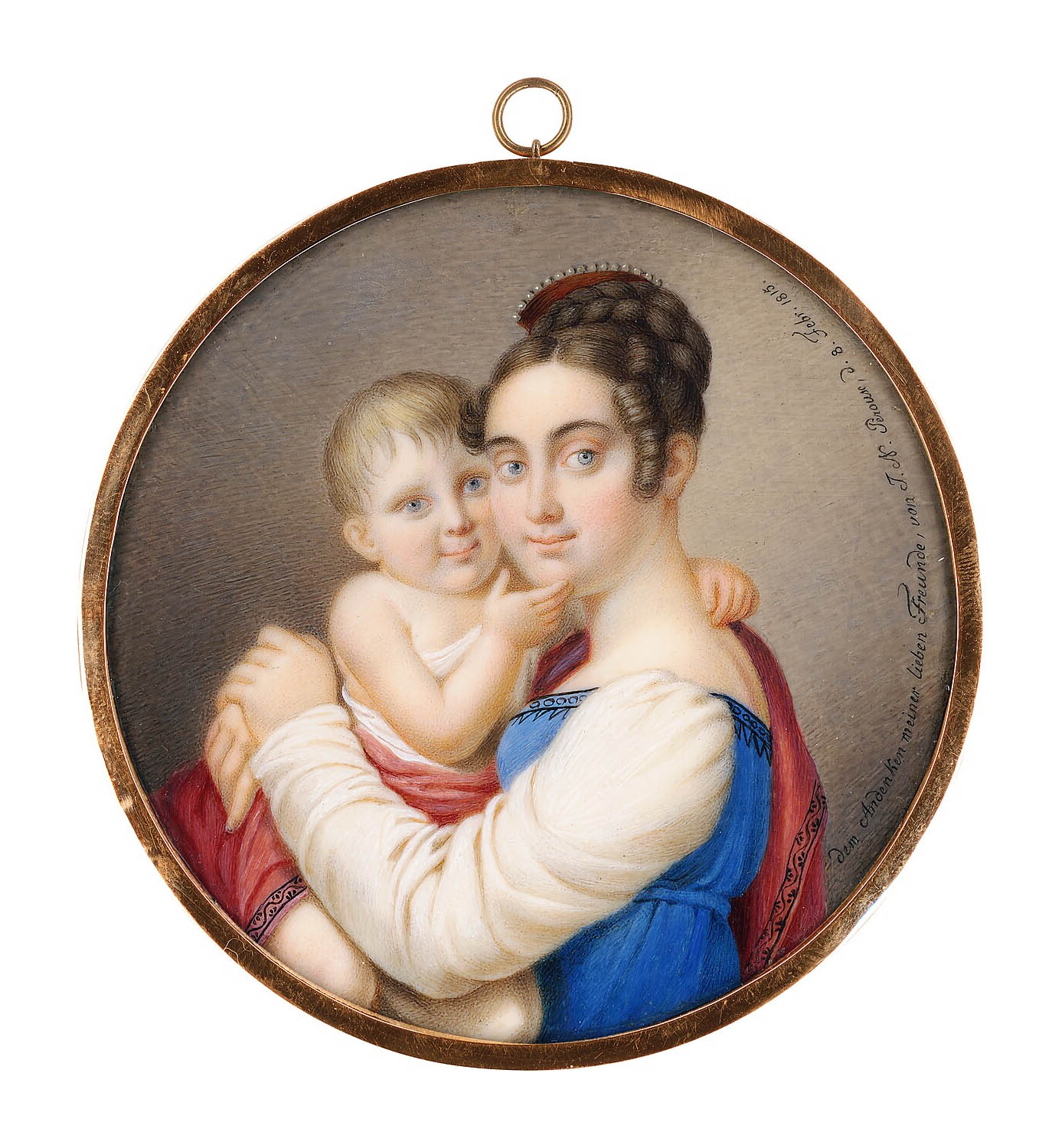
Joseph Nocolaus Peroux (German, 1771 -1849)
Mother and child
1815
Watercolour and gouache on ivory
Schloss Kemnade, Hattingen (Sammlung Rudowski)
© Foto: Fotostudio Eric Jobs, Hattingen
Joseph Nicolaus Peroux was born in 1771, in Ludwigsburg. He was a well-known German miniature painter, etcher and lithographer of the Romantic era.
Peroux was a student of the “Peintre du Duc de Wurtemberg” (first painter at the Württemberg court) Nicolas Guibal, who taught at the Académie des Arts and the Hohen Karlsschule in Stuttgart until his death in 1784. Peroux initially worked in Frankfurt am Main (from 1795) and in Hamburg from 1800, where he exhibited a portrait of Emma Hamilton and a self-portrait in 1803. He then opened an art school in Lübeck and became the young Friedrich Overbeck’s first drawing teacher. The turmoil of the French Period brought him back to Frankfurt in 1806. Accordingly, his works can be found primarily in the museums in Frankfurt, the Hamburger Kunsthalle and in the Behnhaus in Lübeck. The artist died in 1849, in Frankfurt am Main.
Text from the Wikipedia website translated from the German
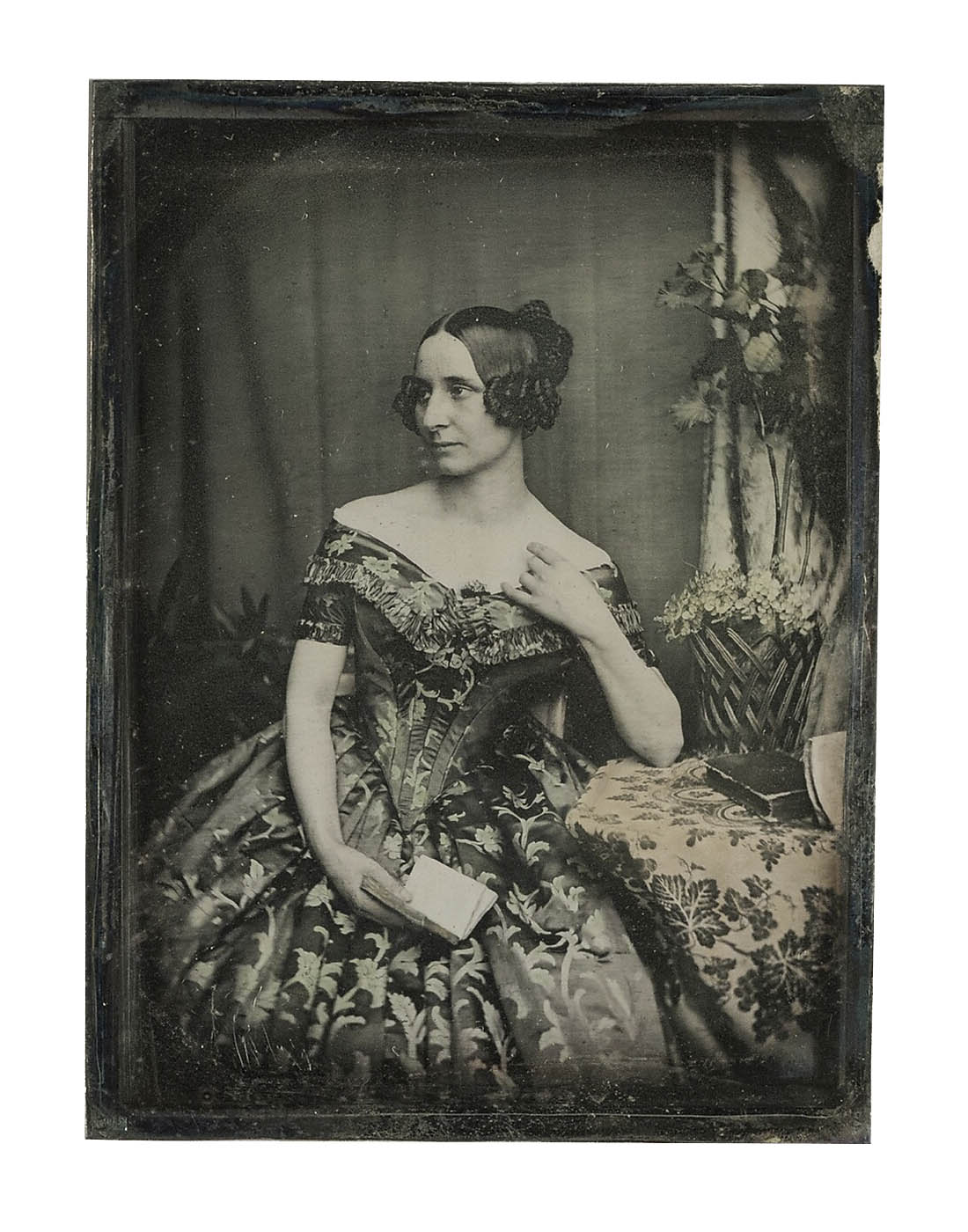
Carl Ferdinand Stelzner (German, 1805-1894)
The miniature painter Caroline Stelzner (1808-1875)
1843
Daguerreotype
10.8 x 8.1cm
Museum für Kunst und Gewerbe
© Museum für Kunst und Gewerbe
[Stelzner] was the stepson of the portrait and miniature painter Carl Gottlieb Stelzner, who trained him in painting. In 1825 he traveled through Schleswig-Holstein and painted portraits of peasants and citizens. At the end of the 1820s he made study trips to Hamburg, Stockholm , Copenhagen and then to Paris where from 1831 to 1834 he was mentored by prominent miniature painters Jean-Baptiste Isabey and Claude Marie Dubufe. On return to Hamburg in 1837 he opened a studio, painting portrait miniatures.
Hearing of the new technique of photography, Stelzner returned quickly to Paris in 1839 to learn in person from Louis Daguerre how to make daguerreotypes. He then opened a daguerreotype studio in Hamburg with Hermann Blow (1804-1850). The partnership was short-lived and in 1843 he returned to his old studio to become the first daguerreotypist in Schleswig-Holstein and ultimately one of the best in Germany. His output was mainly portraits. His first wife Anna Caroline Stelzner (above), a miniaturist artist who was also his half-sister, coloured many of them and did the rephotography of the plates, since copying was the only way to reproduce the daguerreotype.
Despite the constraints of his medium, Selzner’s portraits rarely appear ‘frozen’. The position of Caroline’s arms and her sideways gaze are reinforced by the position of props such as the book on the table as a counterpoint to the one in her hand which infers movement, and the framing of the foliage of pot plants, repeated in the fabric of her dress and the tablecloth.
You can see Selzner experimenting with his own pose in these two self-portraits [one of which you can see below] on which Caroline no doubt assisted. Though these two images are dated five years apart on the Hamburg Art Museum website, the photographer’s clothing, hair and the background are identical. The only change is in the pose and a lowering of the camera to provide a more regal impression in the second image.
Associate Professor James McArdle. “December 30: Action,” on the On This Date In Photography website 30/12/2016 [Online] Cited 05/06/2026
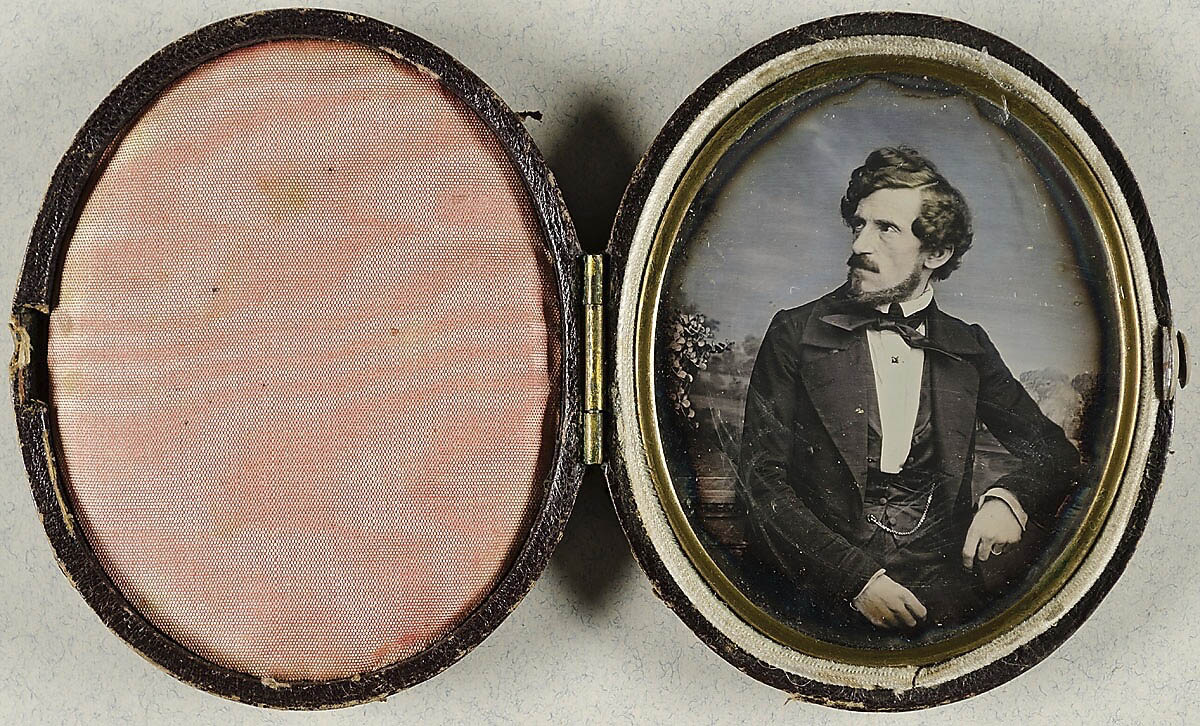
Carl Ferdinand Stelzner (German, 1805–1894)
Self-portrait
1855
Daguerreotype
5.9 x 4.8cm
Museum für Kunst und Gewerbe Hamburg
© Museum für Kunst und Gewerbe Hamburg
With FOR YOUR EYES ONLY: Miniatures from the Romantic Era, the Hamburger Kunsthalle is presenting the first major exhibition devoted to the multifaceted art of miniature painting in Hamburg, from its heyday circa 1800 to the 1840s, when it was replaced by early photography. These miniature portraits, usually measuring around 6 to 10 cm and artfully painted in watercolour and gouache on wafer-thin ivory plates, backed in some cases with silver foil, still fascinate us even today. A total of over 250 objects will be on view.
The show is based on portrait miniatures from the Kunsthalle’s own collection that were restored and catalogued in 2023–24. Around 60 of these miniatures will be shown for the first time here, together with some 200 works on loan from European and private collections, some of them also making their public debut.
These small portraits set in frames, brooches or cases were among the most personal and intimate likenesses people had painted of themselves. They were intended only for the eyes of the recipient and could be worn – often directly over the heart – and viewed at will. The portraits were a way to keep memories alive in the event of a long separation or to provide comfort after the loss of a loved one.
Portrait miniatures were widespread in Europe around 1800. Often made for the nobility, they also became popular with the aspiring bourgeoisie – including in Hamburg, which experienced an economic boom in the late eighteenth century that impacted the art world. Private collections were formed, the Kunstverein was founded, and exhibitions, liberal auction laws and new techniques such as the daguerreotype and lithography contributed to Hamburg’s emergence as an important art centre. Internationally renowned miniaturists such as Domenico Bossi and Pierre-Louis Bouvier lived and worked for a time in the Hanseatic city, which itself produced outstanding artists including Heinrich Jacob Aldenrath, Friedrich Carl Gröger, and Ferdinand and Caroline Stelzner.
Text from the Hamburger Kunsthalle website
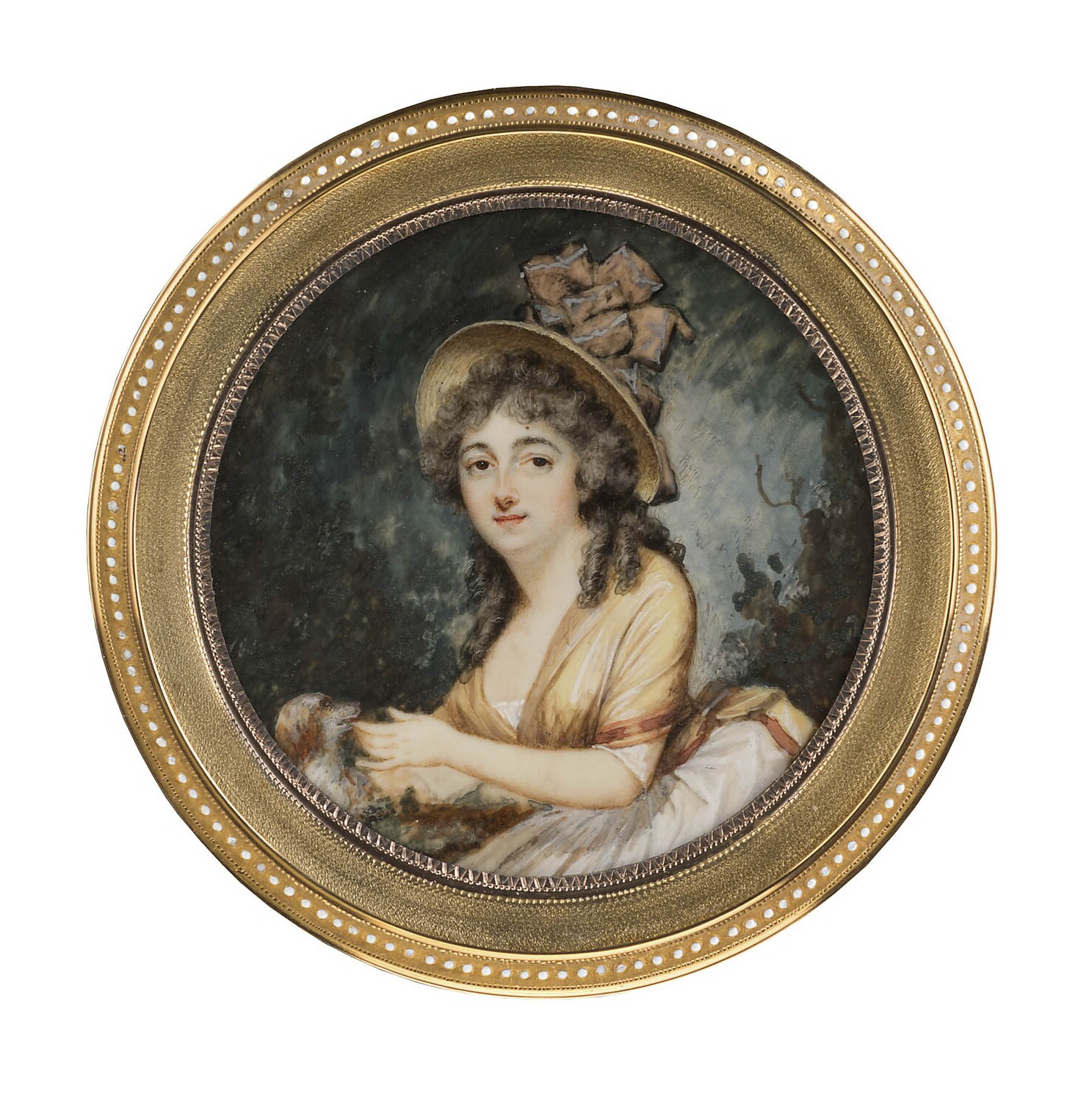
Pierre-Charles Hénard (French, 1756-1813)
Lady with straw hat and puppy
c. 1795
Watercolour and gouache on ivory
7.3cm
The Tansey Miniatures Foundation, Celle
© Foto: Birgitt Schmedding
Hénard was born in Bourg-en-Bresse on 11 February 1756. He was the son of the goldsmith Vincent Hénard and of Elisabeth Cadet. After having studied with Taraval, Hénard worked in both France and England. He exhibited at London’s Royal Academy from 1785 to 1800, and in Paris in 1791 and from 1806 to 1812. He worked in Hamburg from mid-1796 to the spring of 1797. After emigrating to the United States in 1811 on board of the Susquehanna, he lived in Baltimore and showed some of his works in 1812 and 1813 at the Pennsylvania Academy of the Fine Arts.
Text from The Tansey Miniatures Foundation website
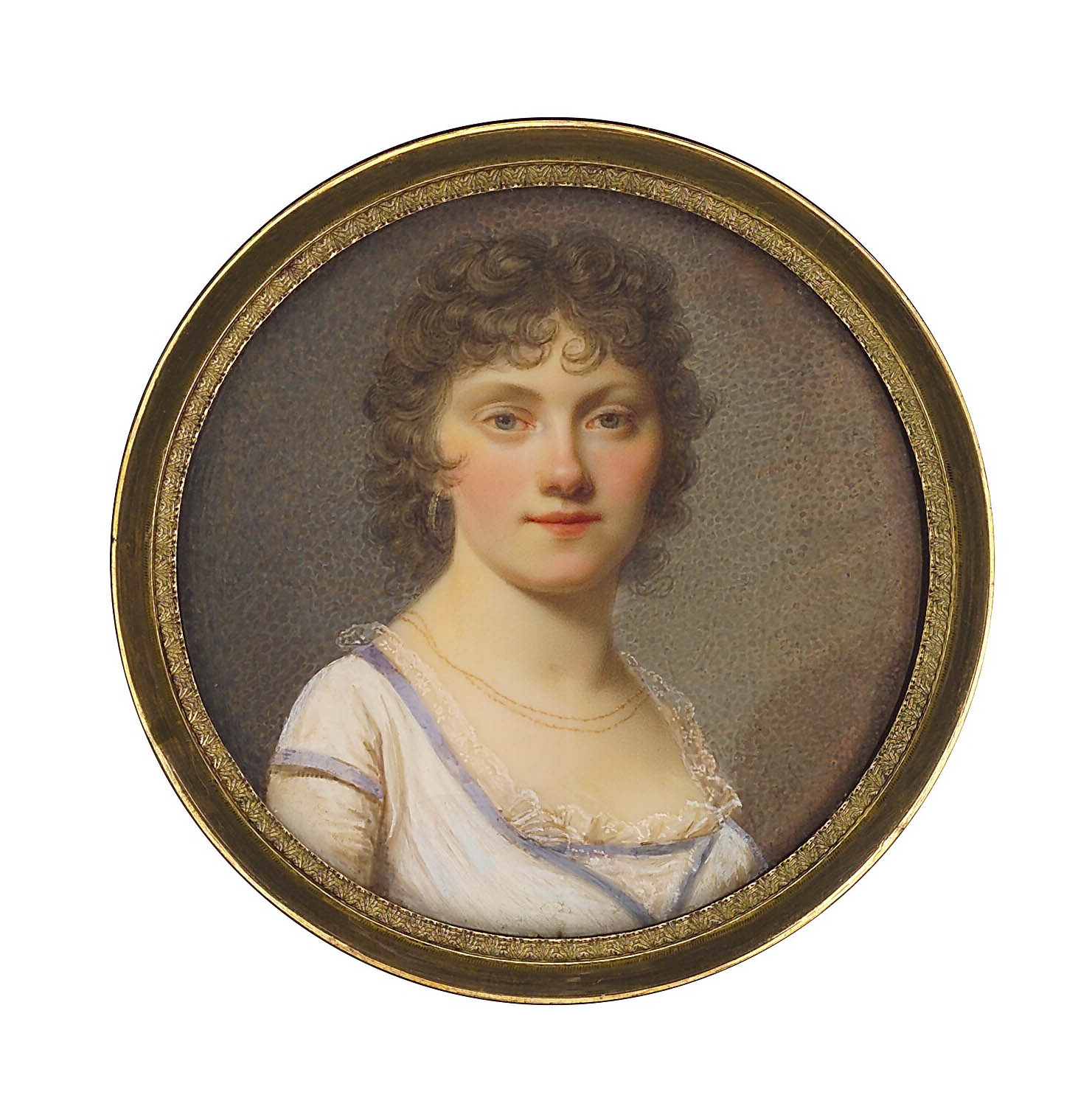
Domenico Bossi (German born Italy, 1767–1853)
Lady in a white dress with blue trim
c. 1800
Watercolour and gouache on ivory
6.2cm
The Tansey Miniatures Foundation, Celle
© Foto: Birgitt Schmedding
With FOR YOUR EYES ONLY. Miniatures from the Romantic Era, the Hamburger Kunsthalle is presenting its first major exhibition devoted to the multifaceted art of miniature painting in Hamburg, from its heyday circa 1800 to the 1840s, when it was replaced by early photography. The show is based on portrait miniatures from the Kunsthalle’s own collection that were restored and catalogued in 2023-2024. Around 60 of these miniatures will be shown for the first time here, together with some 150 works on loan from European and private collections, some of them also making their public debut. Accompanying the miniature portraits are a number of paintings, drawings, prints and photographs, for example a self-portrait by the painter and miniaturist Bernhard Peter von Rausch (1793-1865). This material sheds light on how miniatures were made as well as their special function and the technical modifications they required. In total, over 250 objects are on display in the Harzen Cabinet that tell of an era marked by social transformation, European exchanges and technological innovations.
Even today, people still like to carry a likeness of a loved one on their person. Before the advent of photography, such miniature portraits were precious one-offs that took hours to paint. Their small format – usually around 6 to 10 cm – and skilled execution in watercolour and gouache on wafer-thin ivory plates, sometimes backed with silver foil, hold an enduring fascination. Set in frames, brooches or cases, these miniatures were among the most personal and intimate likenesses people had painted of themselves. The miniaturists held several sittings with their clients, painting “ad vivum” [from life], often on specially developed painting desks. One such desk from the estate of the miniaturist Jean-Baptiste Jacques Augustin (1759-1832) is exhibited here for the first time, along with painting utensils and measuring instruments such as a pantograph for the true-to-scale reduction of drawings. These aids illustrate the traditional technique used to produce minia-tures on ivory and white-primed paper as well as reproduction methods devel-oped in the late eighteenth century known as Bou-Magie and Physionotrace.
The commission to make a miniature arose from an intimate relationship between two people. The likeness was intended only for the eyes of the recipient, who might wear it as jewellery – often directly over the heart – and could admire it at will. Often, such portraits were designed to keep memories alive in the event of a long separation or to provide comfort after the loss of a loved one. Added locks of hair, artful plaits, inscriptions or symbolic messages hidden in the portrait in the form of flowers, objects or animals underscore the personal nature of these works while offering a glimpse of the emotional climate in the period around 1800.
Portrait miniatures were widespread in Europe during that era. No longer reserved for the nobility, they enjoyed increasing popularity among the aspiring bourgeoisie – including in Hamburg, which experienced an economic upswing in the late eighteenth century. After the setbacks of the Napoleonic era, a prolonged period of prosperity would have a lasting influence on the arts scene in the Hanseatic city. The first private collections were formed, the Kunstverein was founded in 1817, and exhibitions, liberal auction laws and new techniques such as lithography and later daguerreotype contributed to Hamburg’s rapid rise as an important northern art centre.
Internationally renowned miniaturists such as Giovanni Domenico Bossi (1767-1853), Carl Friedrich Demiani (1768-1823), Pierre-Louis Bouvier (1765-1836), Charles Hénard (1756-1813), Jan Gottlieb Jannasch (c. 1755-1804) and Edmé Quenedey (1756-1830) lived and worked in Hamburg for a time. And the Hanseatic city itself produced some outstanding artists during this period, including Leo Lehmann (1782-1859), Ernst August Abel (1720-1790), Karl Friedrich Kroymann (1781-1849) and Christopher Suhr (1771-1842). Friedrich Carl Gröger (1766-1838) and Heinrich Jakob Aldenrath (1775-1844) were particularly influential.
With the invention of photography in 1839, a medium rose to popularity that would take over the function of the portrait miniature and eventually replace it completely. The daguerreotype (also known as helio-graphy) made it possible to produce small-format portraits that were not only more realistic but also sig-nificantly faster to realise. A sitting for a miniature portrait soon took less than a minute. Thanks to the low cost of production, artists could now attract a new clientele. Carl Ferdinand Stelzner (1805-1894) from Hamburg and his wife Caroline (1808-1875) initially painted miniatures before Carl Ferdinand in particular successfully turned his attention to portrait photography in 1842. And yet, the portrait miniature did not go completely out of fashion. The artist Enrichetta Fioroni-Narducci (1806-1892), who worked in Rome, and her sister Teresa Fioroni (1799-1880), for example, augmented their income with miniature versions of famous paintings that were extremely popular with mid-nineteenth-century travellers. The Kunsthalle is home to five of their works, on display in the exhibition.
The exhibition is accompanied by a publication (Michael Imhof Verlag, edited by Sabine Zorn and Bernd Pappe, approx. 160 pages), which is available in the museum shop or at http://www.freunde-der-kunsthalle.de for a price of 29 euros, as well as in bookstores.
Press release from Hamburger Kunsthalle
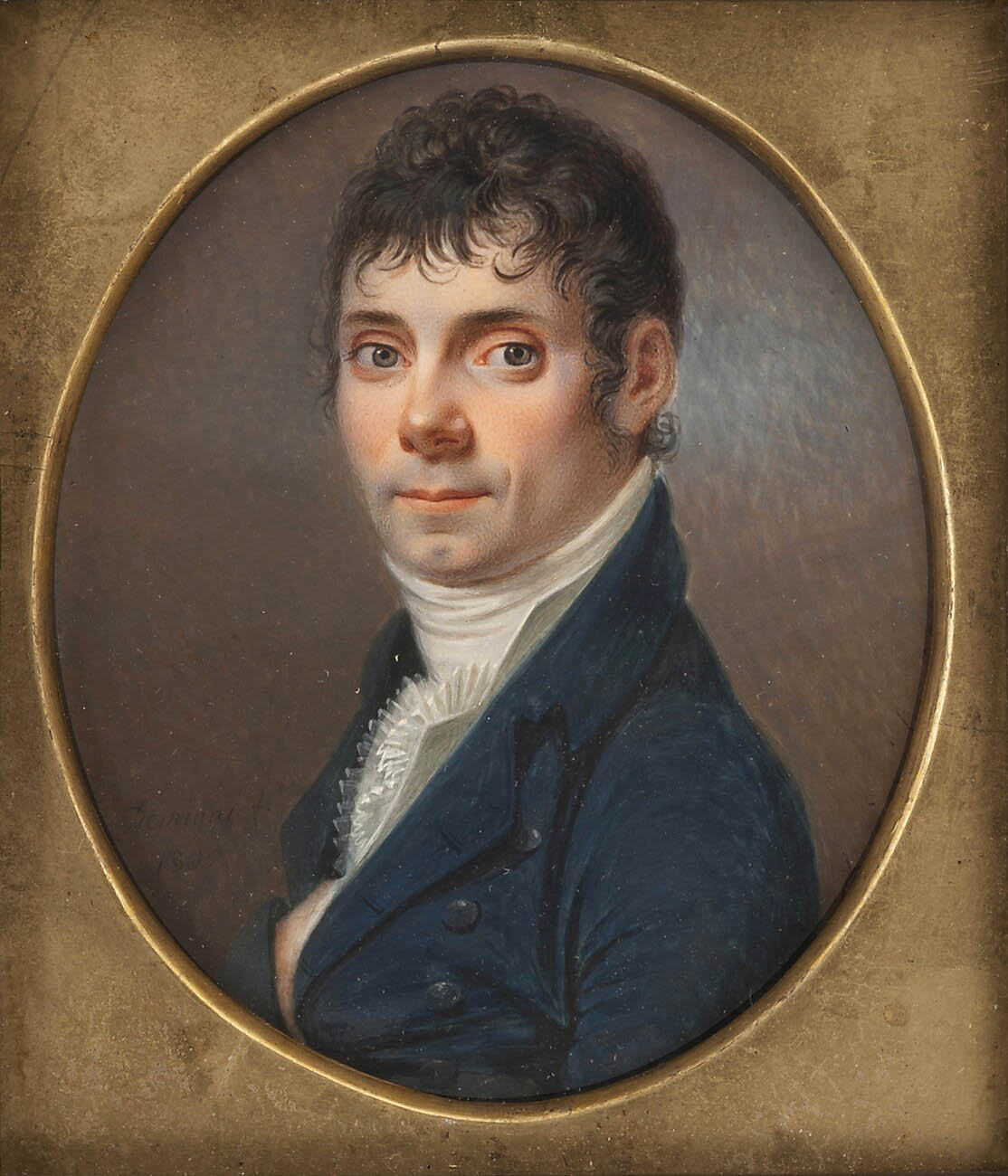
Carl Friedrich Demiani (German, 1768-1823)
Man in blue coat, 1805
1805
Watercolour and gouache on ivory
8.8 x 7.4cm
The Tansey Miniatures Foundation, Celle
© Foto: Birgitt Schmedding
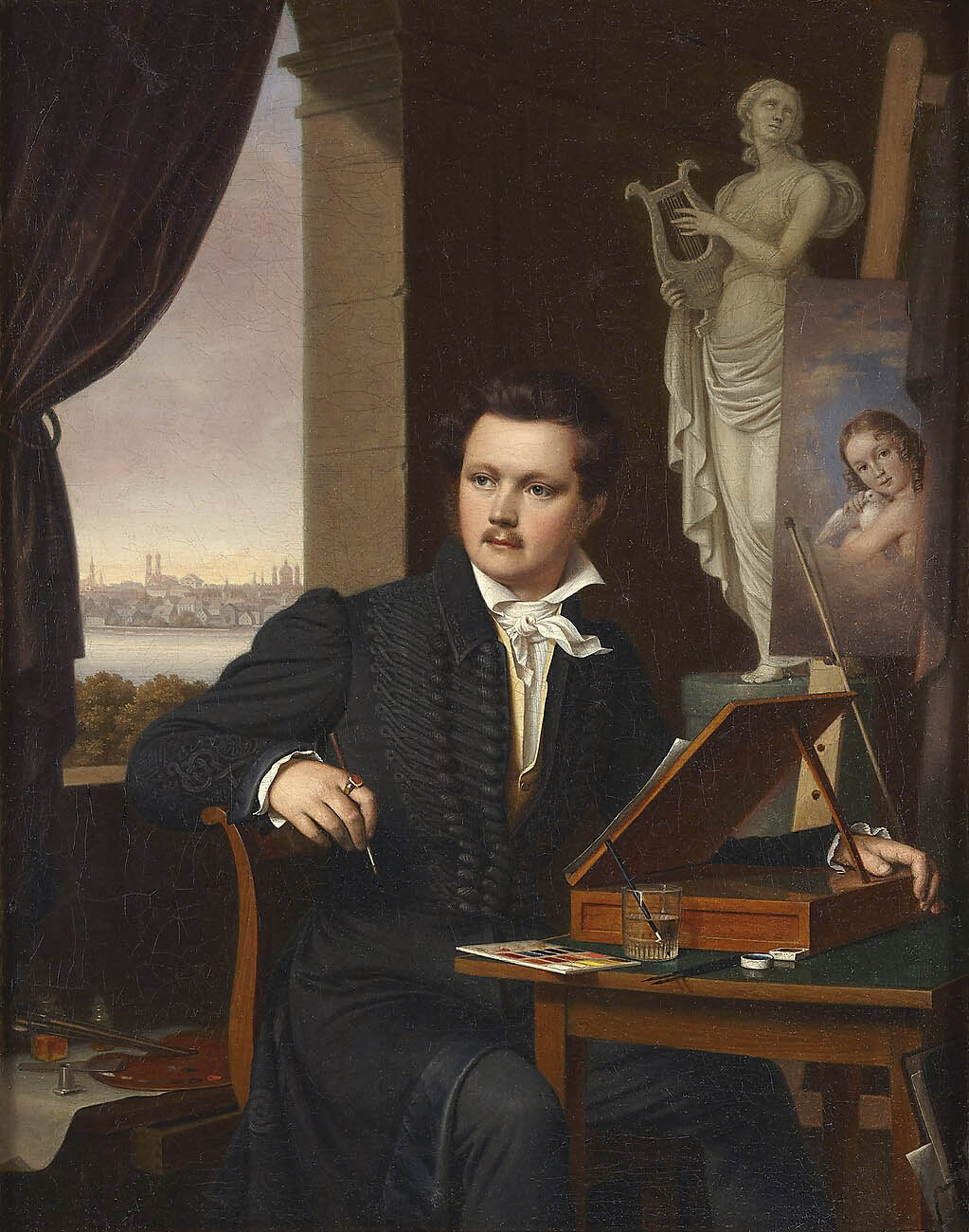
Bernhard Peter von Rausch (German, 1793-1865)
Self-portrait in the studio in Munich
c. 1830
Oil on canvas
37.8 x 29.8cm
Hamburger Kunsthalle, © Hamburger Kunsthalle / ARTOTHEK
Foto: Christoph Irrgang
Bernhard Peter von Rausch was a German painter and lithographer.
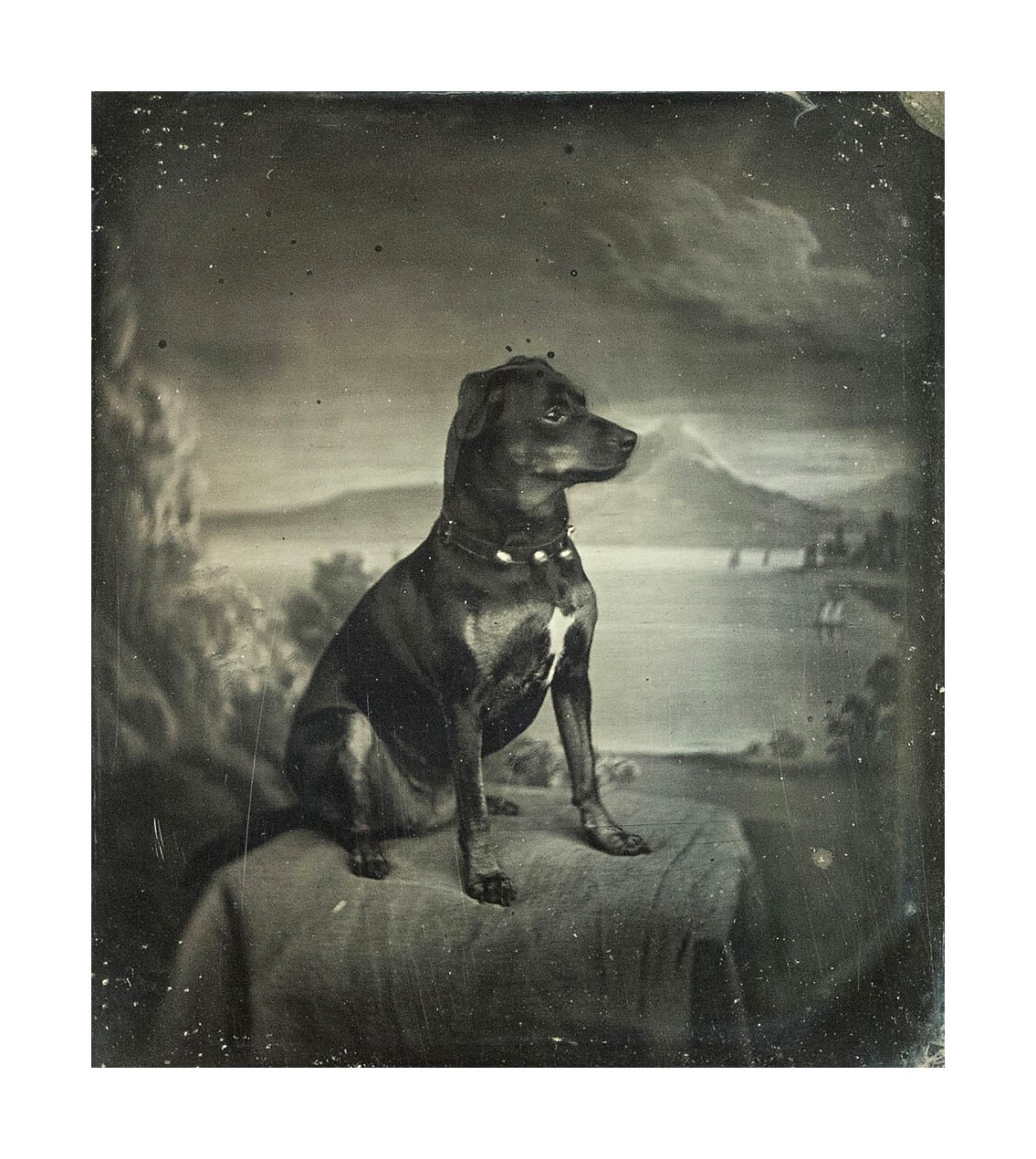
Carl Ferdinand Stelzner (German, 1805-1894)
Ulla, the dog in the Stelzner household
1850-1865
Daguerreotype
7.3 x 6.3cm
© Museum für Kunst und Gewerbe Hamburg
Among all of the daguerreotypes produced before the advent of the wet-plate swept it aside, it is rare to see pictures of animals. Slezner’s portrait of his dog stands out as a tribute to his attaining an unusual facility in his medium.
No doubt obedient, Ulla the dog has nary a muscle during the long exposure, which, even if by 1860 Slezner was achieving high speeds with his lens and by pimping the daguerreotype process, would have still run into tens of seconds. It is quite a feat; a faint double image of snout and then only the slightest movement around the collar and end of the nose, due to a dog’s rapid breathing, can be discerned.
Associate Professor James McArdle. “December 30: Action,” on the On This Date In Photography website 30/12/2016 [Online] Cited 05/06/2026
Carl Ferdinand Stelzner (German, 1805-1894)
Carl Ferdinand Stelzner was a began his career as a lithographer and engraver, but became interested in photography in the early 1840s. He learnt the daguerreotype process from Louis Daguerre himself and opened his own studio in Berlin in 1845.
Stelzner quickly became known for his high-quality daguerreotypes, which were prized for their clarity and detail. He used a large-format camera that allowed him to capture images with incredible precision, and he experimented with different lighting techniques to create dramatic effects.
As well as his technical skill, Stelzner was also known for his artistic ability. He often posed his subjects in carefully composed scenes and was adept at capturing their personalities and emotions.
Stelzner’s work was exhibited widely throughout Europe and he won numerous awards for his photography. He continued to work as a photographer until his death in 1894 at the age of 88.
Today, Stelzner’s daguerreotypes are highly prized by collectors and museums around the world. They offer a fascinating glimpse into the early days of photography and continue to inspire photographers today.
Text from the Picryl website [Online] Cited 05/06/2026. Used under fair use conditions for the purposes of education and research
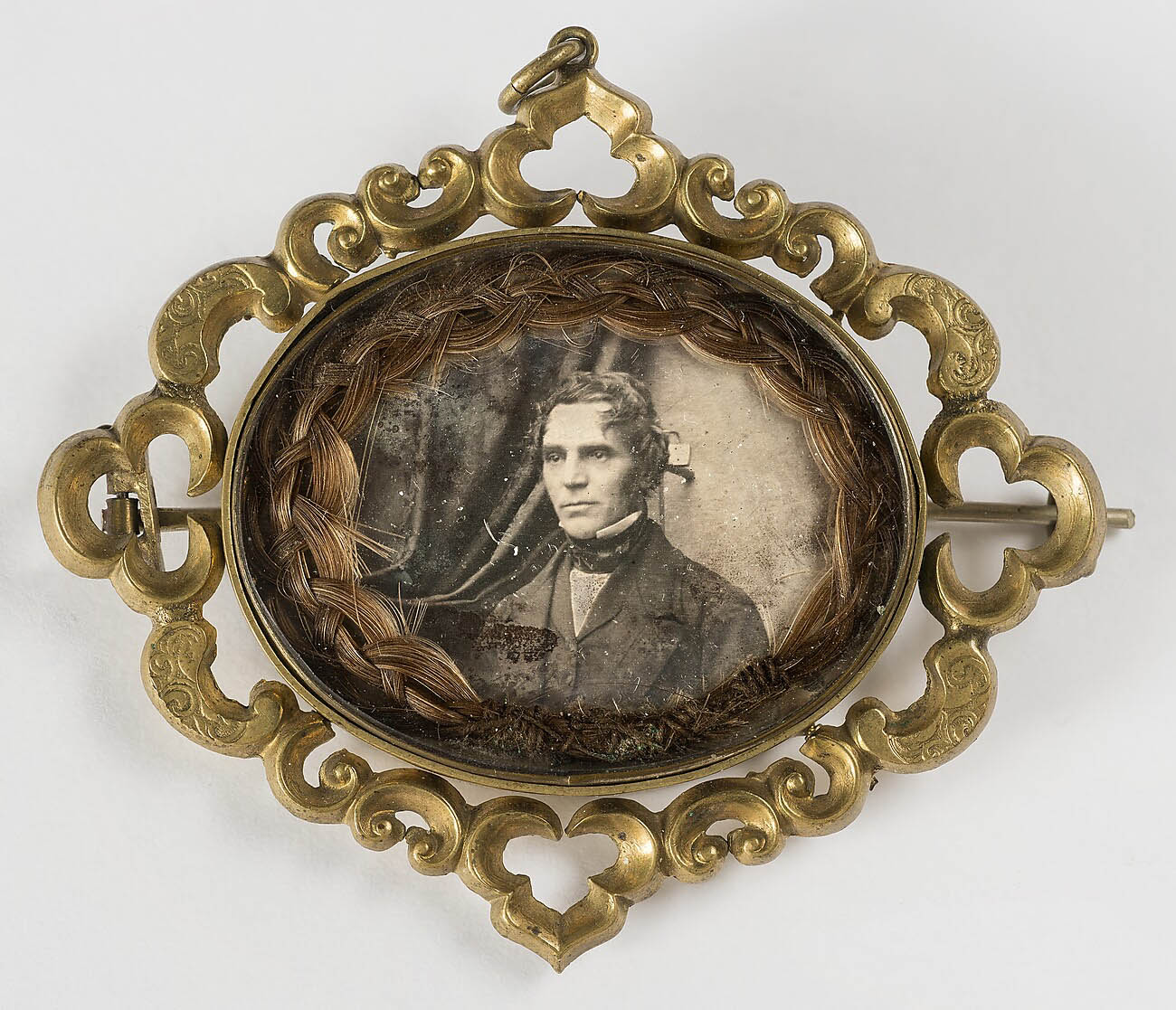
Unknown photographer
Mr. Crowe
c. 1845
Daguerreotype, framed by braided hair, on a brooch
5.5 x 6.5cm
Sammlung Gummersbach
© Foto: Jakob Schnetz
Hamburger Kunsthalle
Glockengießerwall 5
20095 Hamburg
Opening hours:
Monday – Thursday 10am – 3pm
Friday 10am – 2pm


You must be logged in to post a comment.