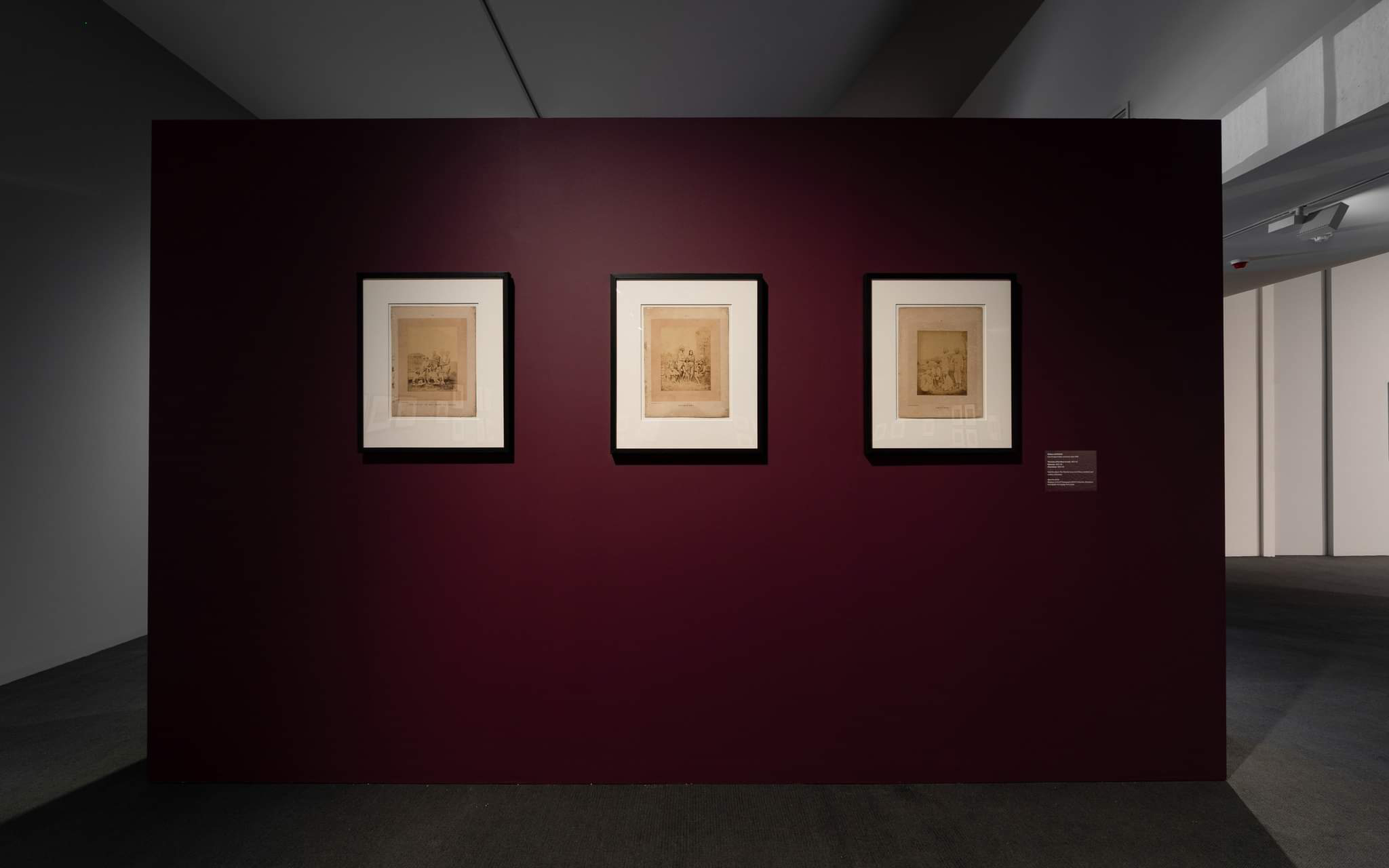
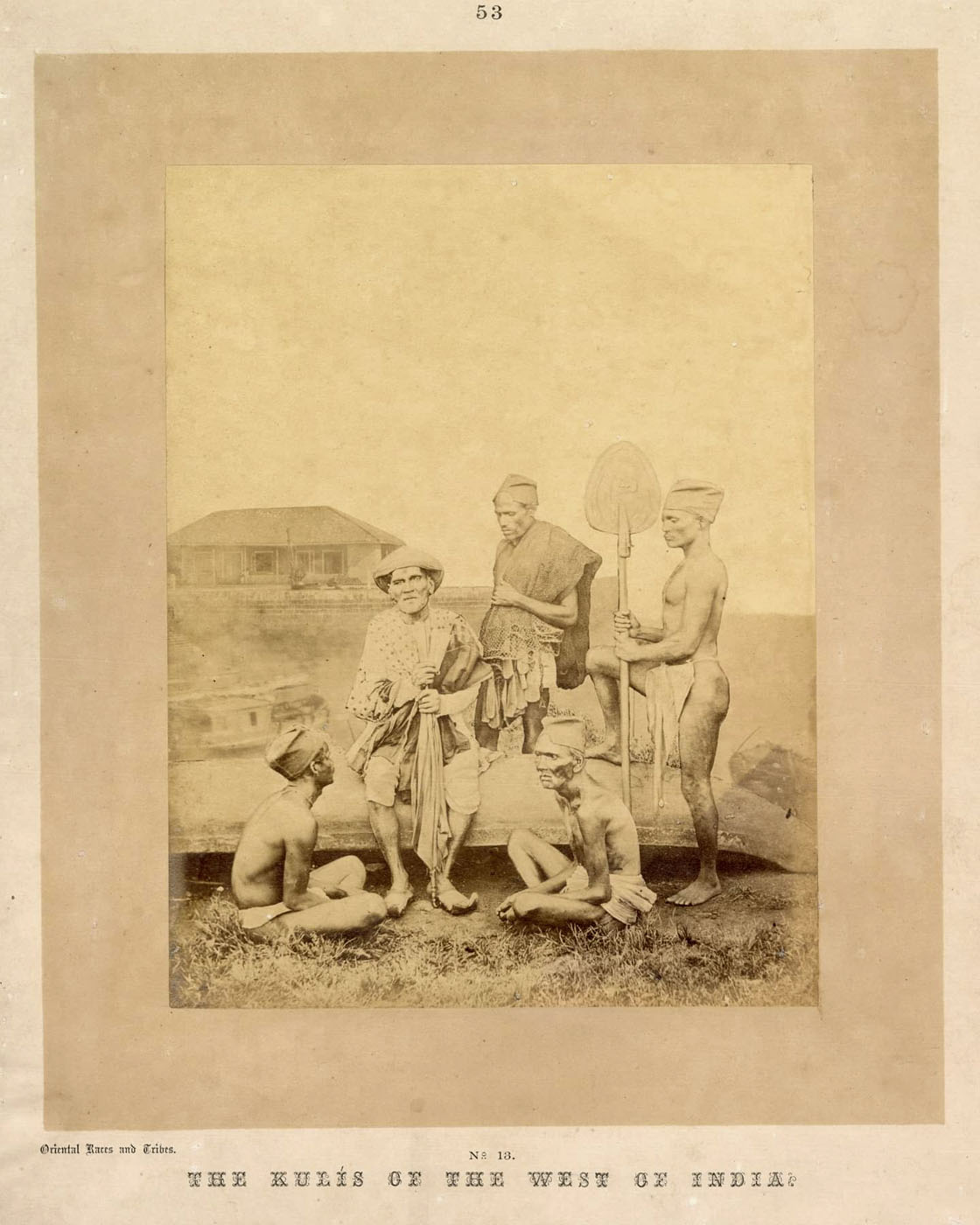
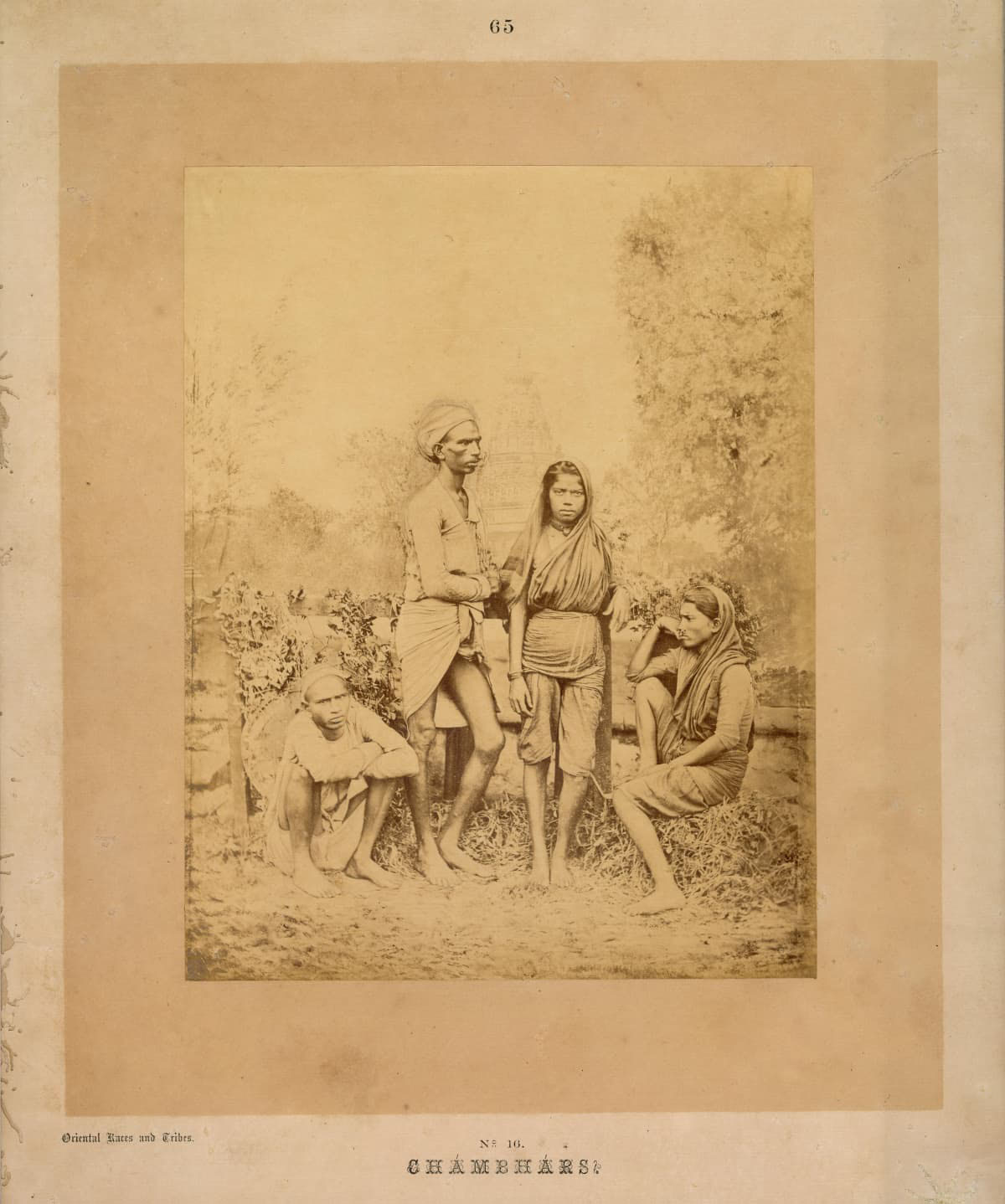
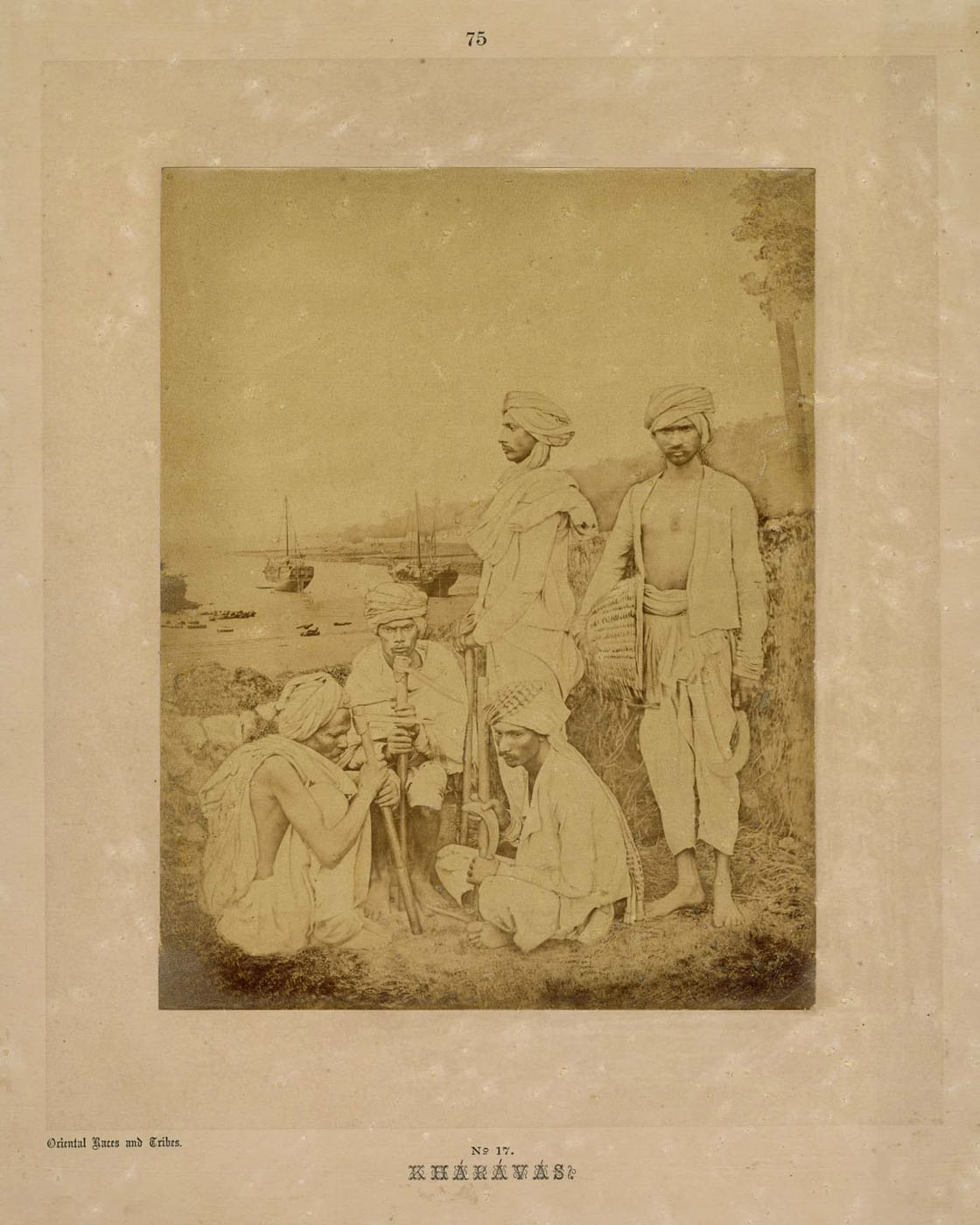
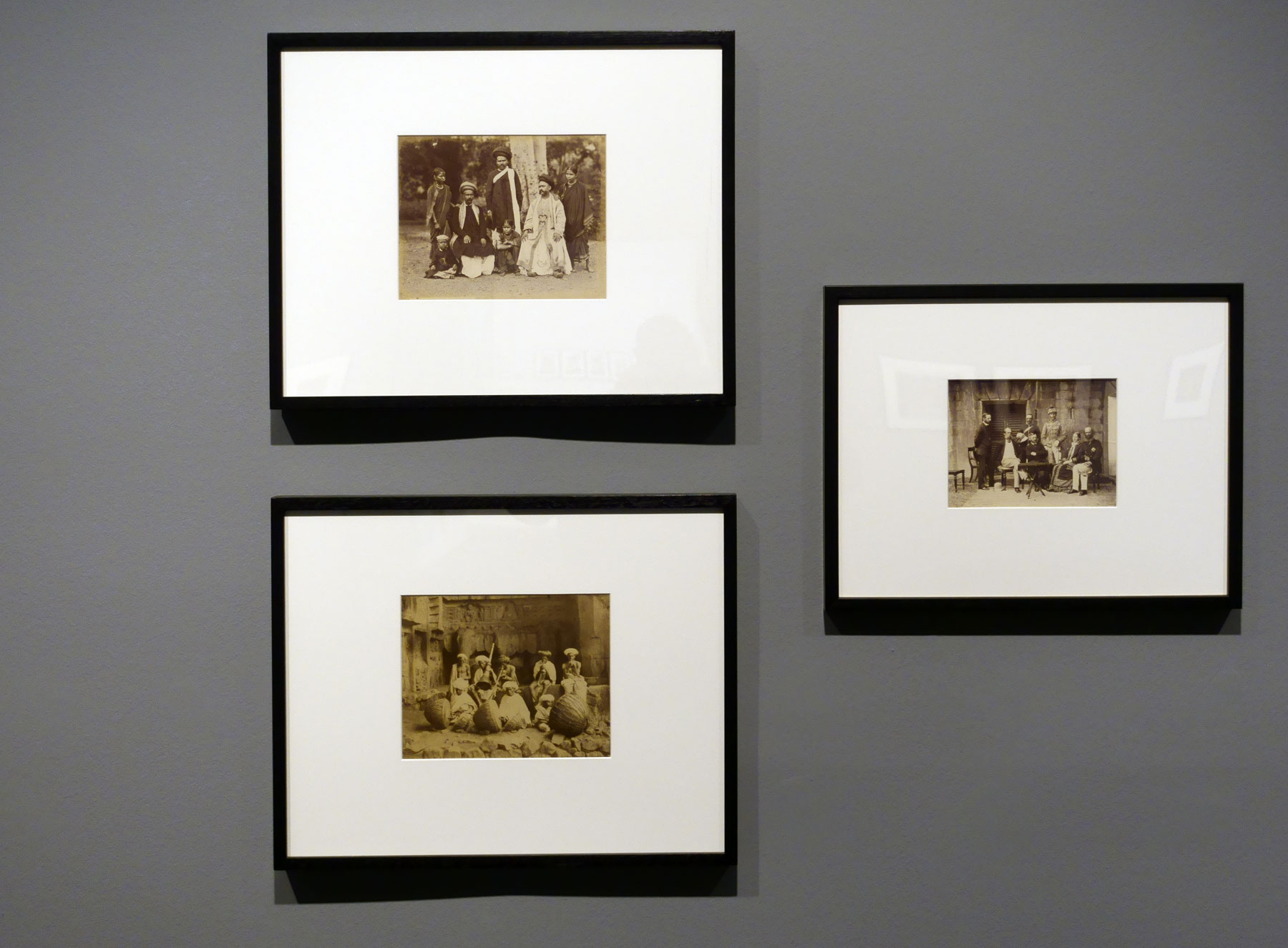
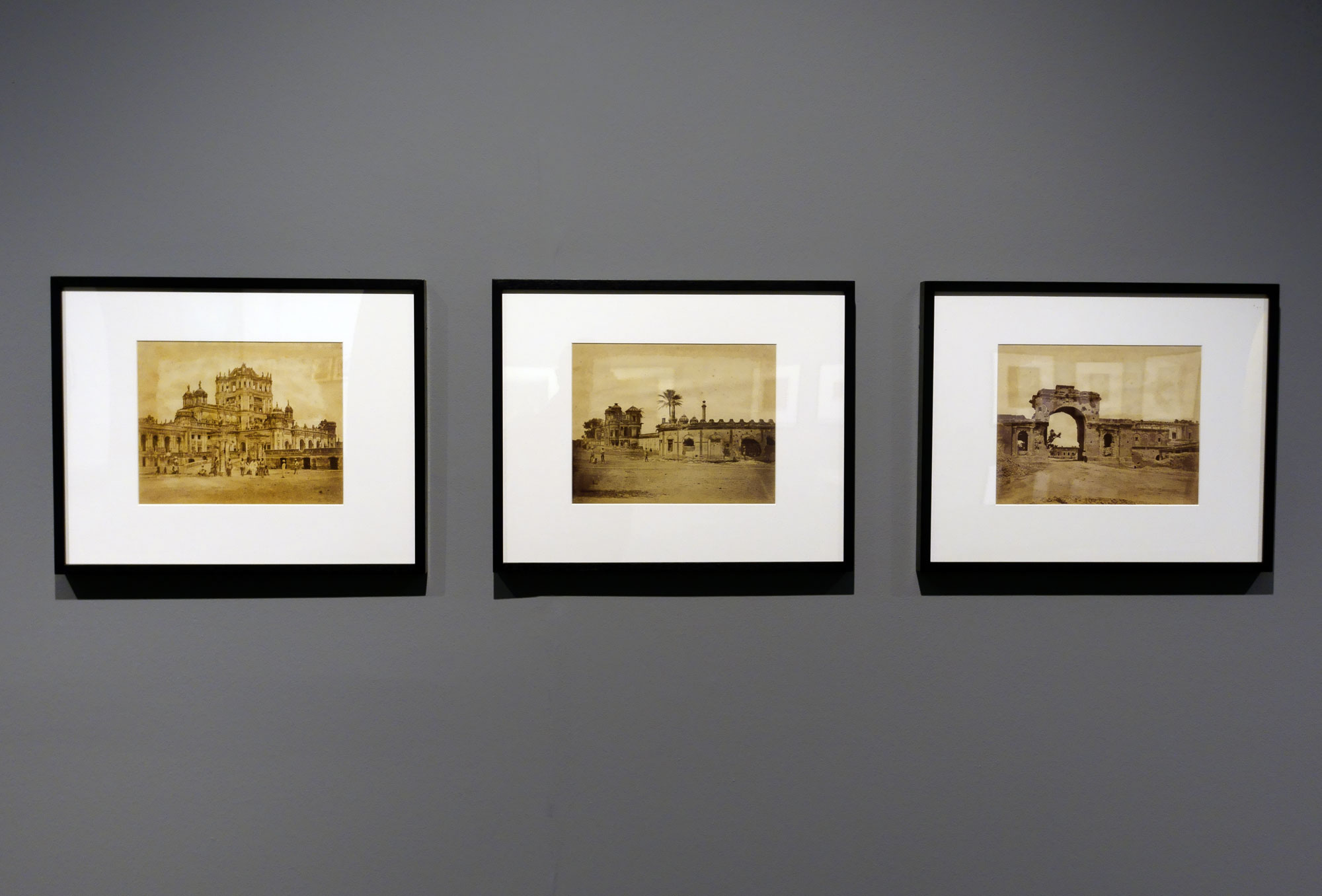
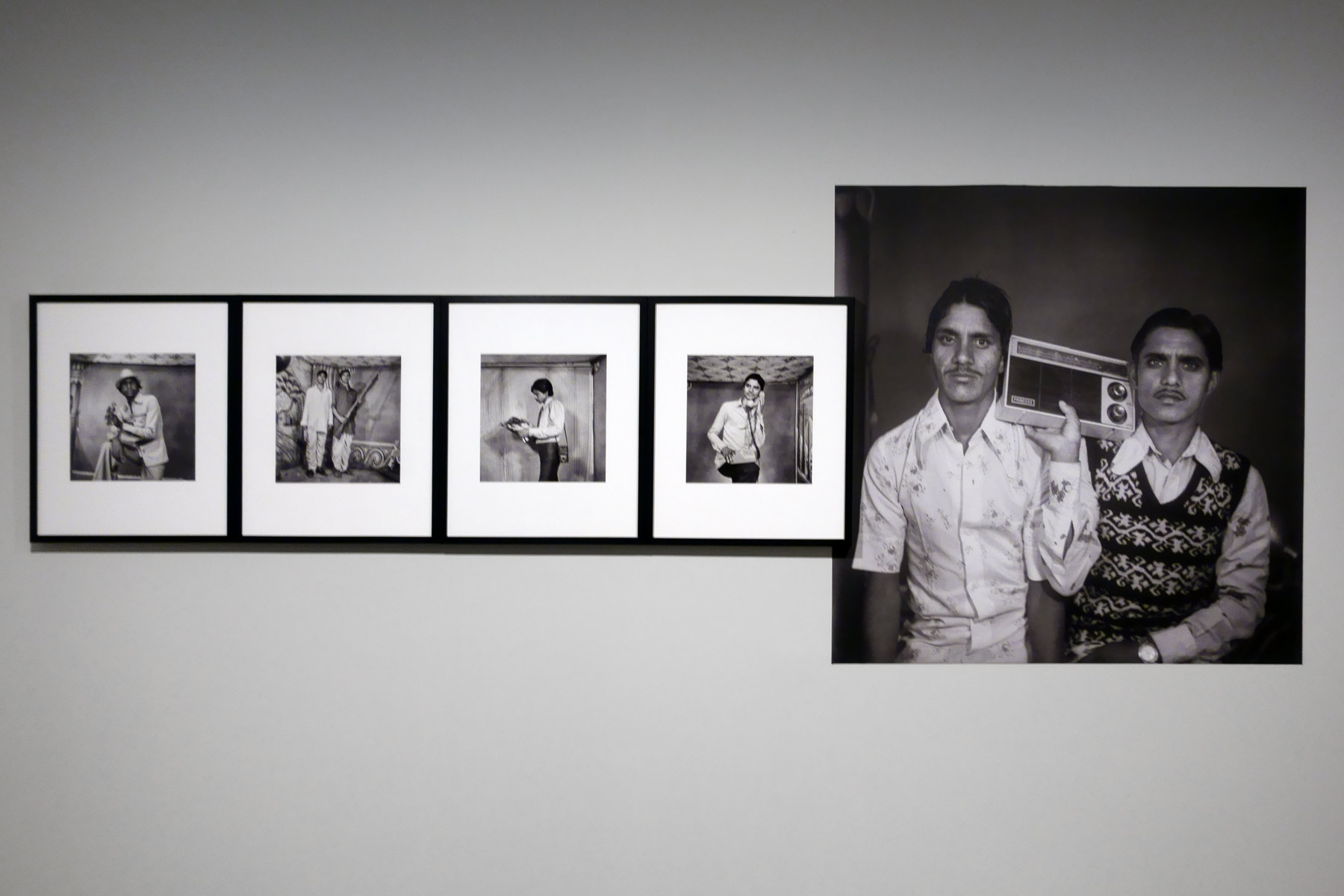
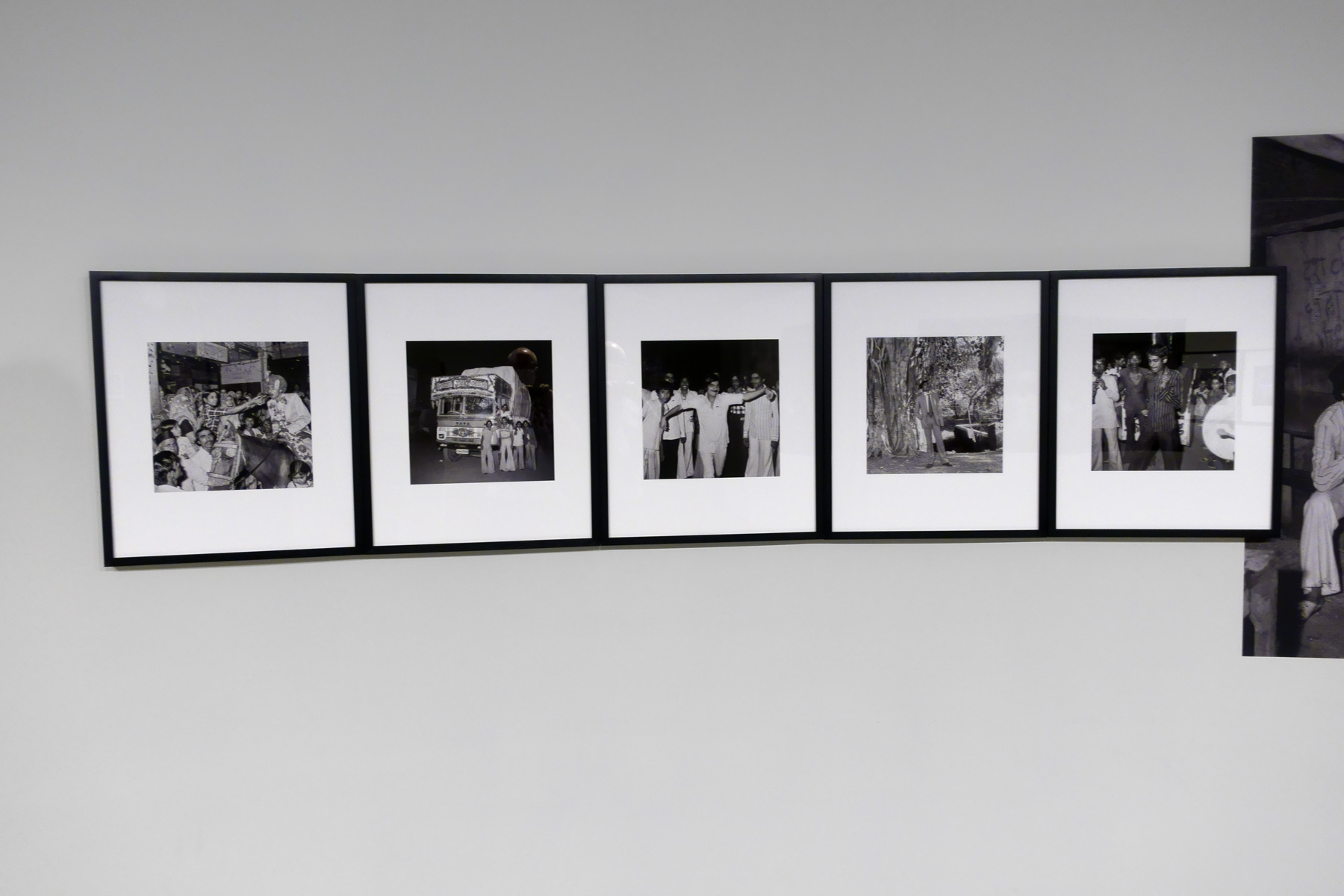
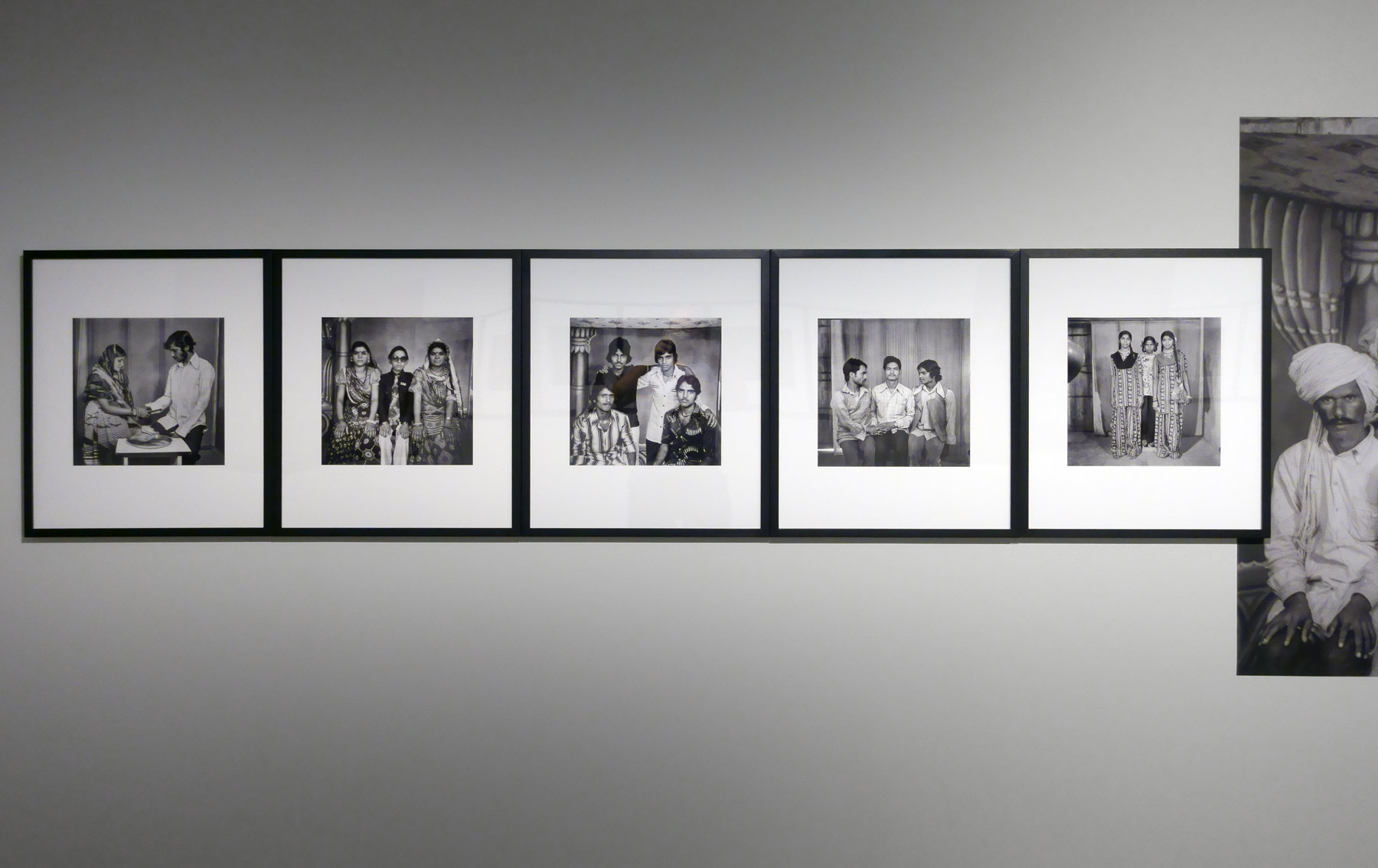
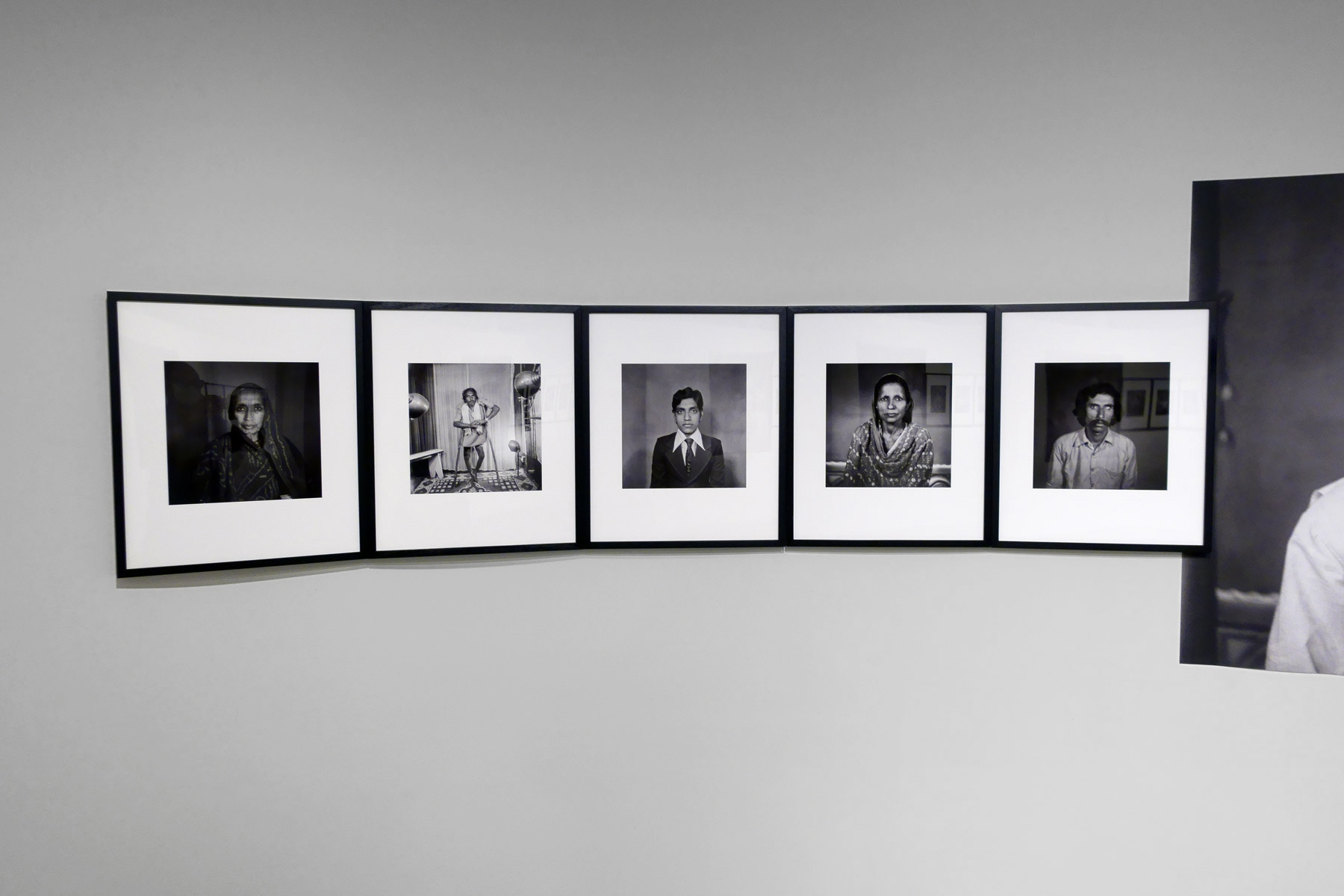
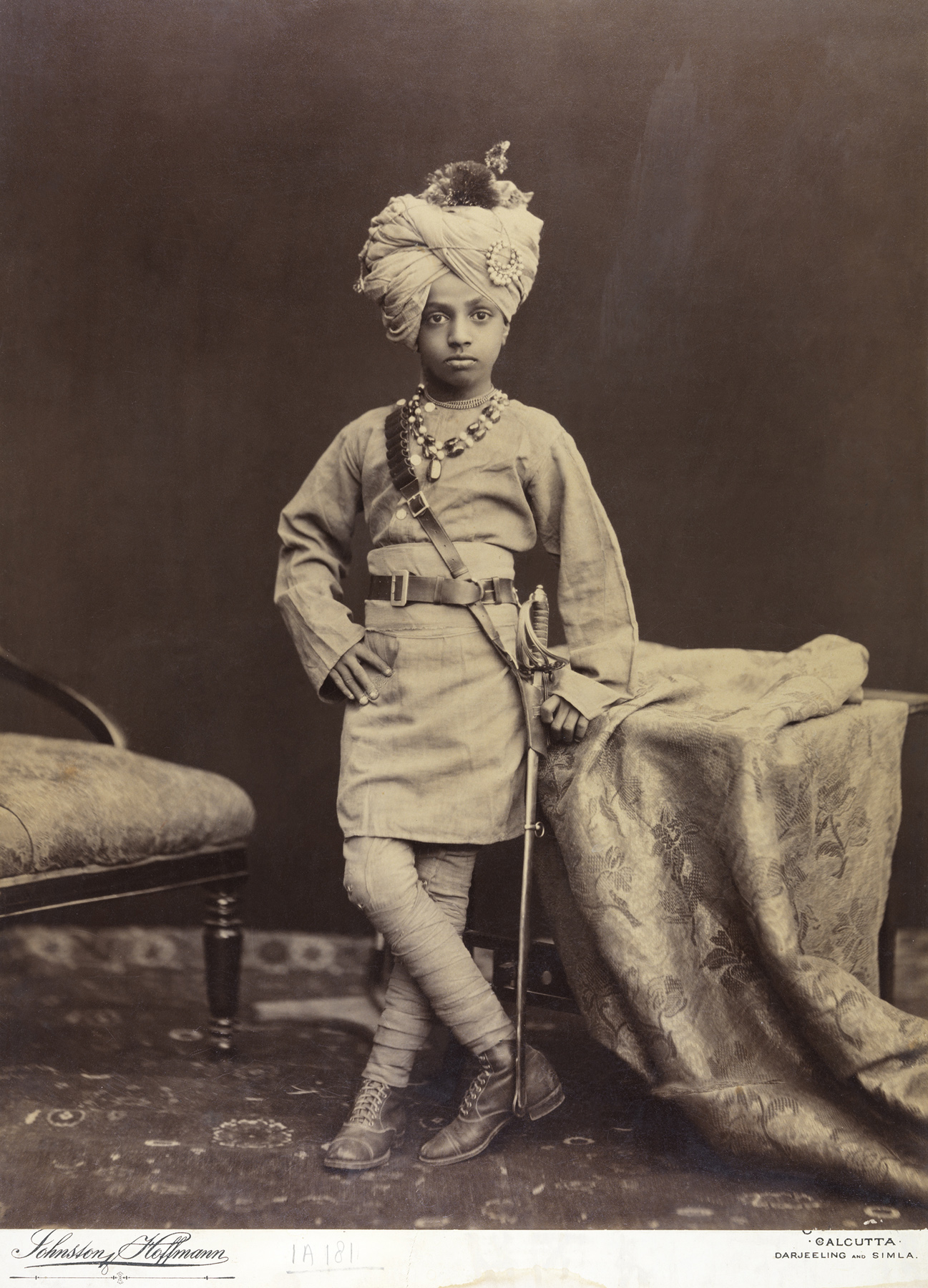
Exhibition: ‘Photographs. An Early Album of the World (1842-1911)’ at the musée du quai Branly – Jacques Chirac, Paris

Exhibition dates: 4th April – 2nd July, 2023

Curators: Christine Barthe: Head of the Photography Heritage Department at the Musée du quai Branly – Jacques Chirac; Annabelle Lacour: Head of the Photography Collection at the Musée du quai Branly – Jacques Chirac

Warning: Aboriginal and Torres Strait Islander readers should be aware that this posting contains images and names of people who may have since passed away.


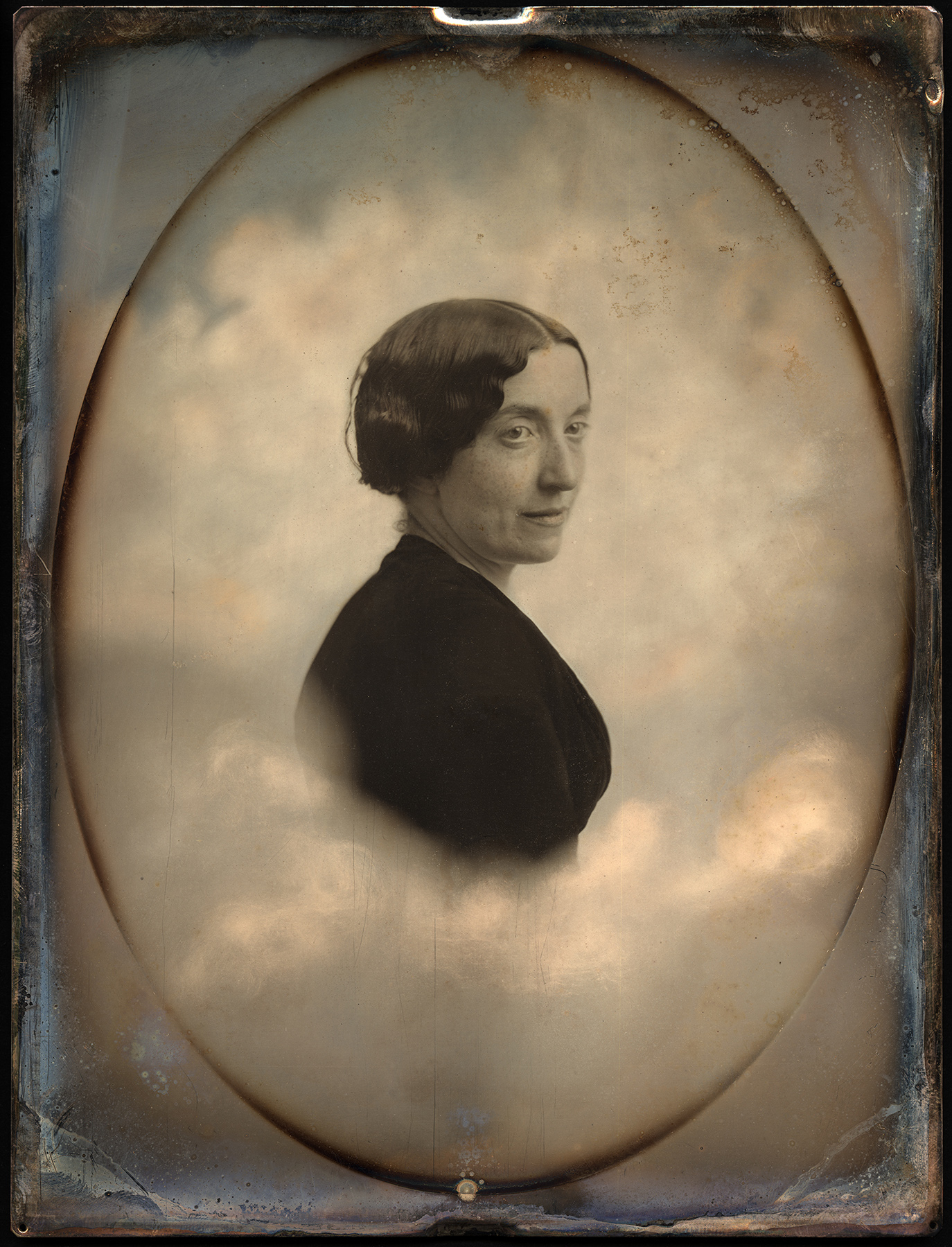
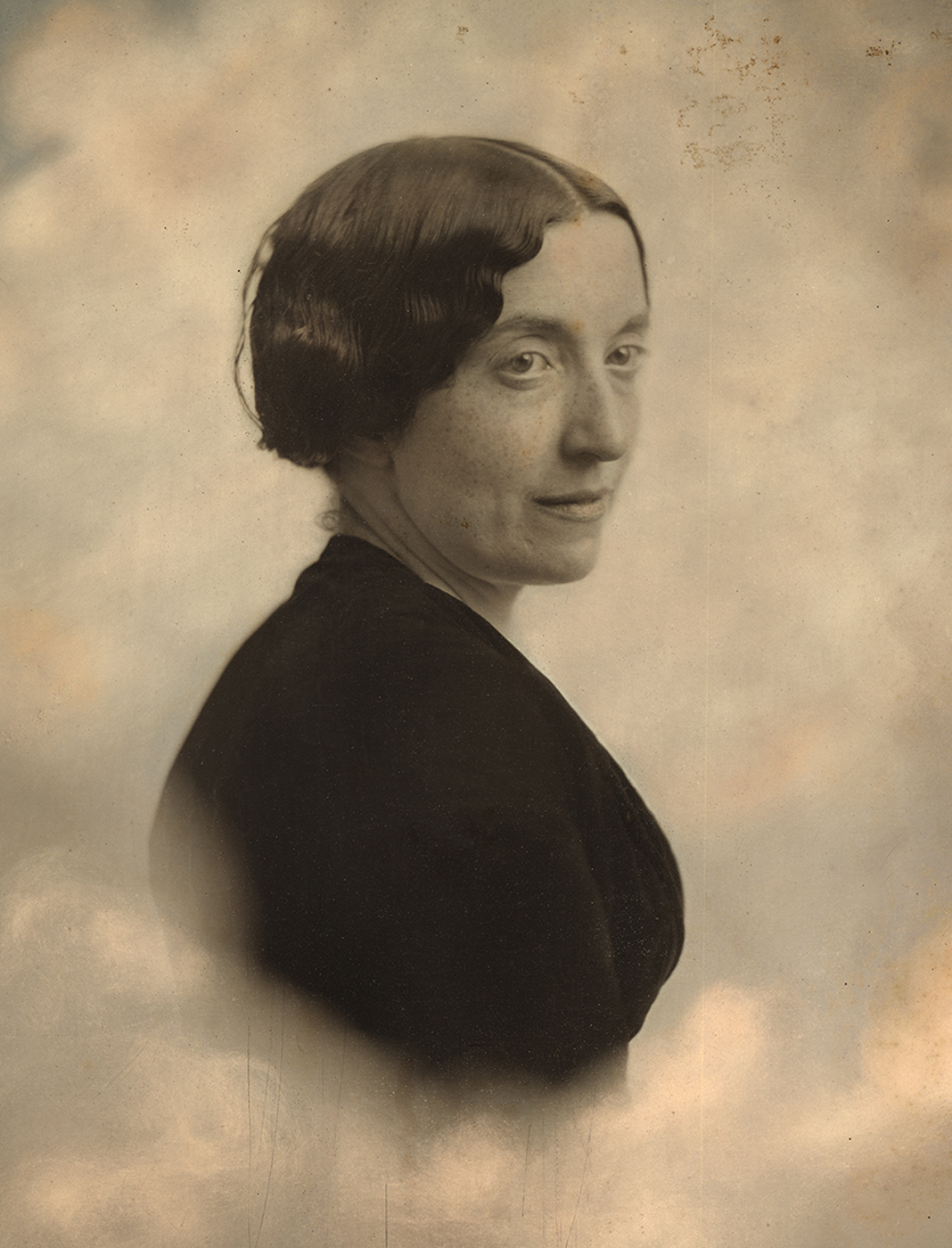
Unknown photographer. 'Portrait of a Persian Dignitary' Tehran, 1848 from the exhibition 'Photographs. An Early Album of the World (1842-1911)' at the musée du quai Branly – Jacques Chirac, Paris, April - July, 2023


Unknown photographer
Portrait of a Persian Dignitary
Tehran, 1848
Daguerreotype
Photo: RMN – Grand Palais (Musée d’Orsay)  Hervé Lewandowski


I wish we had tele-transportation so that I could go and see this incredible exhibition about the beginnings of photography practiced outside Europe.

It took me many hours to construct this posting. Placing the information into a logical order was an important consideration, matching the installation photographs with the exhibition texts and individual images so that the story makes sense. Finding country of origin and dates for the photographers was another issue. Further bibliographic information has been added from sources around the internet to fill out life stories and sometimes this information was difficult to find.

Congratulations to the curators for assembling a photographic tour de force in which “the production of these images is diverse and responds to different wishes, desires, and fits into various different contexts.” In other words what was the force majeure, the greater force, that directed the what, where, when, how, who and for whom of their production. Here, force is the operative word… for many of the foremost contexts are both anthropological and geographic (to record what people and places looked like) under the guise of European colonial conquest: to “capture” the spirit of the people and conquered lands under force of occupation.

More interesting are the photographs taken by photographers of their own people, for example different Indian “casts” taken by a Indian born photographer. How did they picture themselves using a European machine? In this context we must remember that the images were usually taken to fulfil a commercial brief, either taken for a rich patron or to be sold through the photographers studio to local and foreign clients.

Predominantly using a Western pictorial language, sometimes these local photographers step outside the mould of making a portrait or casting a ‘type’ or recording a monument within the landscape by embodying within their art the aesthetics of their own cultural history. For example, “Lai Afong’s photographic compositions show the technical and aesthetic influence of traditional Chinese painting, known as guóhuà.” (Wikipedia) “In many regions, from Colombia to West Africa to Madagascar, and from Iran to Japan to India, photography was adopted and sometimes adapted to social uses and local cultures and in many places seems to satisfy the desire for self-representation and the construction of modern identities.” (Exhibition text)

Undoubtedly this was the exception rather than the rule – for the rule of the lawful image was usually Western in power and aesthetic. As the exhibition text notes, “The 19th century in Europe was characterised by a need to accumulate objects, knowledge and also territory. Through photography, landscapes became lands to be mapped and conquered, and their inhabitants subjects to be studied. In the scientific field, the natural history model influenced the use of photography. It contributed to the myth of virgin territories and was a tool in the growing geographical discipline, making claims of exhaustivity: see everything, photograph everything.” And one might add, own everything, both physically and visually (through the photographers and viewers gaze).

Thus the European photographer of the 19th century taxonomically ordered the world around him through a classification of the visual culture of the exotic. Anthropologically, “within the framework of a science then racial, and in a project typology inherited from natural history classification methods, photography is a tool that establishes visual categories that shape racial stereotypes.” This racial science was to have a lasting impact well into the 20th century through the now debunked theory of eugenics (which has no association with anthropology) – “the study of all agencies under human control which can improve or impair the racial quality of future generations” (Galton) – influencing cultures around the world with devastating impact especially through the genocide of untermensch, or what were seen as racial subhumans, by the Nazi party in Germany in the 1930s-1940s.

What is undeniable is the inalienable presence of the sitter in these powerful portraits.

This is William Lane in the here and now, with his strong face and sorrowful eyes.

This is Botcudo “brought to France by a certain Mr. Porte and are going to stay in Paris for a few months.” This is his representation but also his spirit from the past, this impression all that is left of his life force today. But it is enough. We pay reverence to his life.

This is a half-length portrait of a 77-year-old Japanese man… what did he do in his life, what journey led him to be present in front of the camera in February 1890, the learnt lines on his open face evidence of a hard life well lived.

And these are Majeerteen Woman trapped in silver like ghosts in a machine, a movement of mutable energy through time and space that still has me engaging with their life even today.

Bless them all.

Dr Marcus Bunyan


Many thankx to the musée du quai Branly – Jacques Chirac for allowing me to publish the photographs in the posting. Please click on the photographs for a larger version of the image.


“Among the 101 photographers on show, 52 are Westerners and 49 are indigenous. This near-parity was made possible by the rise, over the last decade, of acquisitions of works by artists from the four continents.”


Quotation by curator Christine Barthe, head of the heritage unit at the Quai Branly’s photographic collection and co-curator of the exhibition with Anabelle Lacour, head of the photographic collection


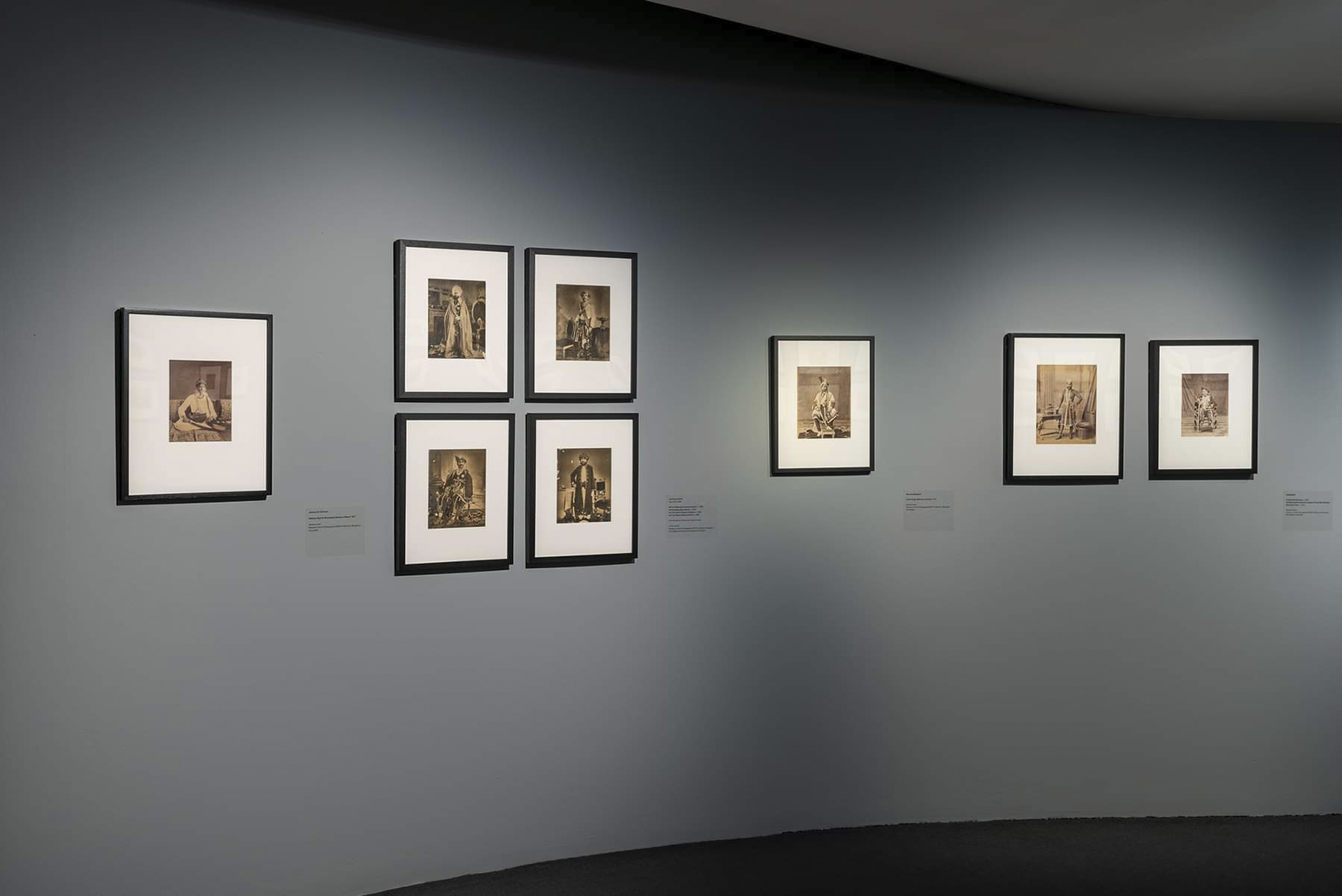
Installation view of the exhibition 'Photographs. An Early Album of the World (1842-1911)' at the musée du quai Branly – Jacques Chirac, Paris

Installation view of the exhibition 'Photographs. An Early Album of the World (1842-1911)' at the musée du quai Branly – Jacques Chirac, Paris showing the section 'Daguerreotypes for anthropology'

Installation view of the exhibition 'Photographs. An Early Album of the World (1842-1911)' at the musée du quai Branly – Jacques Chirac, Paris showing the section 'Daguerreotypes for anthropology' and the daguerreotypes of Henri Jacquart (French, 1809 - died after 1873) from September 1851


Installation views of the exhibition Photographs. An Early Album of the World (1842-1911) at the musée du quai Branly – Jacques Chirac, Paris showing in the two bottom images the section ‘Daguerreotypes for anthropology’ and in the bottom image the daguerreotypes of Henri Jacquart (French, 1809 – died after 1873) from September 1851 (below)


Many places in the world became accessible through photography as soon as it was invented in 1839. From the 1840s, darkrooms were taken on official expedition ships and crossed the borders of Europe. From Mexico to Gabon, the camera served the taste of the time for archaeological and geographical description and curiosity about the models encountered. In the second half of the 19th century, photography was used to examine all areas of the globe. This thirst for images was notably fuelled by the European colonial conquest.

Starting from the Musée du quai Branly – Jacques Chirac’s photograph collection, completed by exceptional loans from public and private collections, the exhibition considers the routes and the dissemination of photography outside Europe in the 19th century. Through a selection of photographs produced between 1842 and 1911 in Asia, Africa, Oceania and the Americas, it aims to understand better the development and the different appropriations of the medium locally by bringing to light less well-known photographs, patrons, phenomena and forms of photography in different parts of the world. An attempt to rebalance the history of photography, too often centred on Europe and the United States.

This exhibition is an adaptation of the exhibition Photographs. 1842-1896: An Early Album of the World designed by the Musée du quai Branly – Jacques Chirac and presented at the Louvre Abu Dhabi from 25 April to 13 July 2019.

Text from the musée du quai Branly – Jacques Chirac website


There was a time without photography, and there were places without cameras. Even if it is hard to imagine nowadays, it was not so long ago. Since its invention in 1839, photography has extended its reach at varying paces into all the visible spaces and every corner of the globe: starting in familiar places, spreading to nearby regions and neighbouring countries, and finally making it way into more far-flung lands as well. From the most extraordinary scenes to the most trivial, from breathtaking scenery to the food on our plates, nothing is too intimate or too grandiose to escape our desire to take a picture of it.

But how did it all start? How did photography spread, contributing to our view of the world? Who are the players who make this “photo album of the world”?

Since the 1840s, photography has accompanied countless scientific and military expeditions and trips. It was part of the usual conquest of the world, in the context of colonial expansion by the European powers, which intensified in the second half of the 19th century. As a tool to describe landscape and map territories, it contributed to the knowledge and control of Indigenous populations. Europe did not have a monopoly over this modern technology, however. Photography travelled and was transformed. In many regions, from Mexico and Colombia to Sierra Leone and Madagascar, Iran, Japan and India, it was adopted and sometimes adapted to social practices and local cultures, to create, control and conserve an image of the self and one’s environment.

The exhibition revisits some of this early histories of photography outside of Europe.

Text from the exhibition
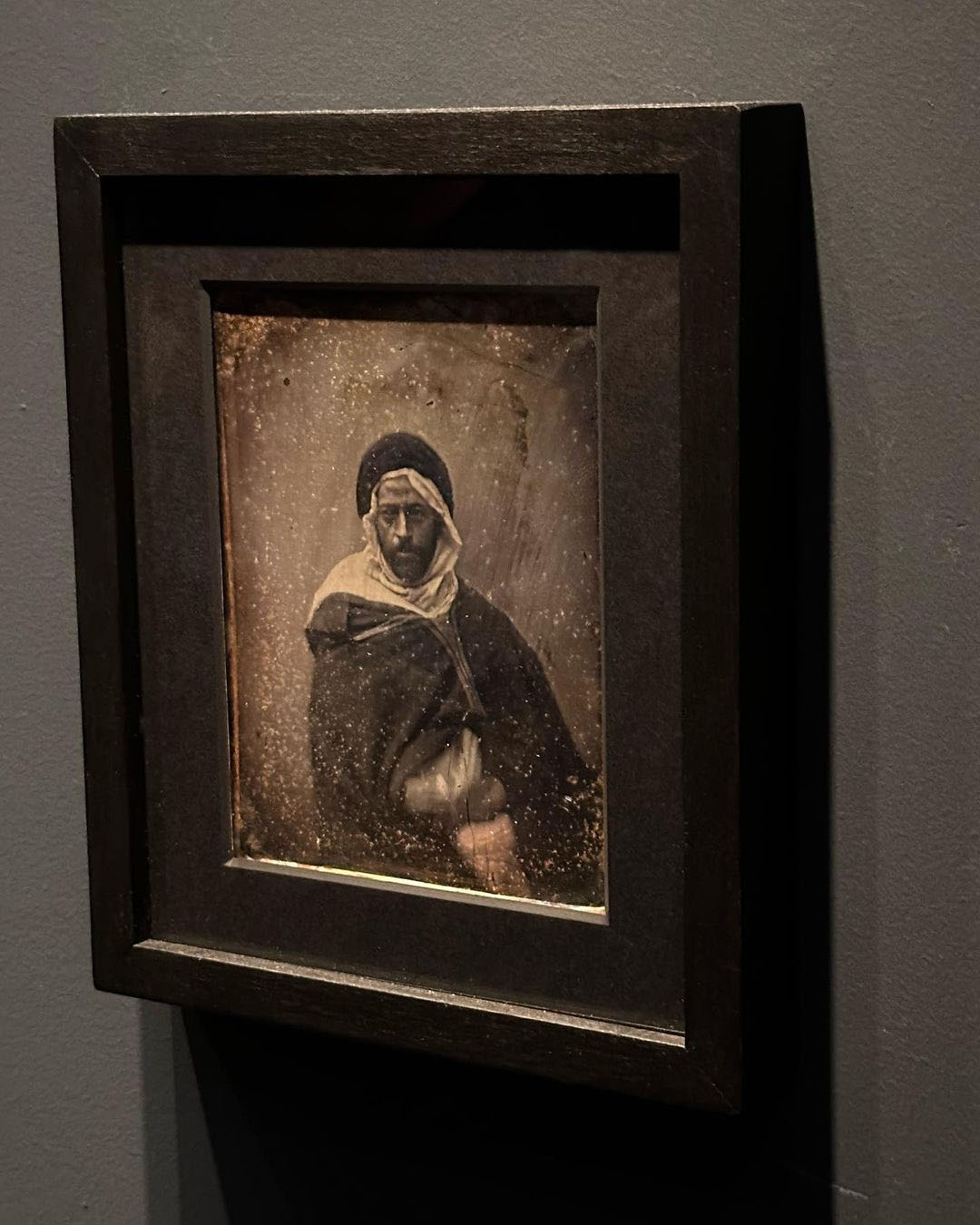
 

Henri Jacquart (French, 1809 died after 1873) 'Mohamed ben Said' Paris, France, 1851 (installation view)


Henri Jacquart (French, 1809 – died after 1873)
Mohamed ben Said (installation view)
Paris, France, 1851
Daguerreotype
© musée du quai Branly – Jacques Chirac
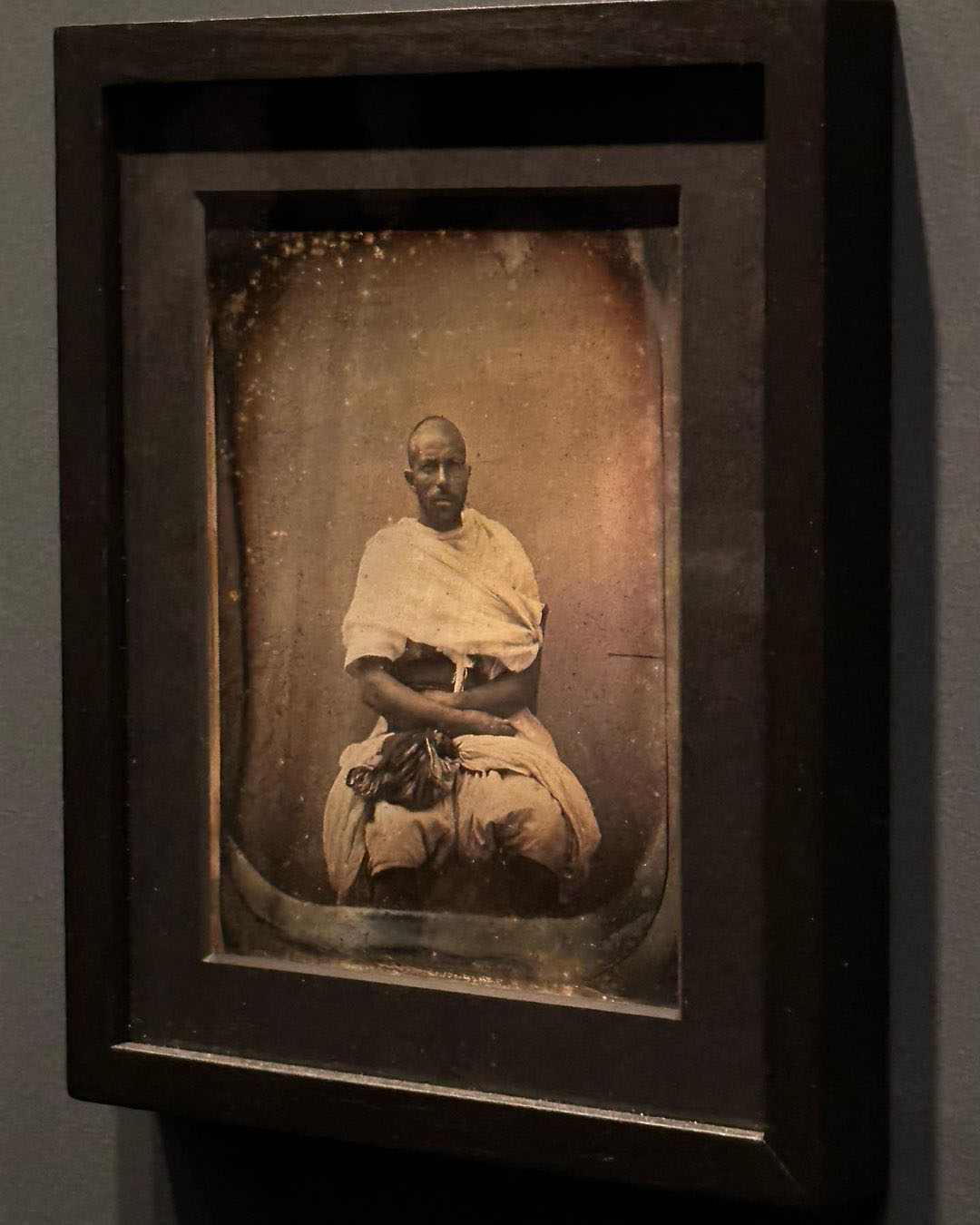
 

Henri Jacquart (French, 1809 died after 1873) 'Ibrahim Nascer, mozabite' Paris, France, September 1851 (installation view)


Henri Jacquart (French, 1809 – died after 1873)
Ibrahim Nascer, mozabite (installation view)
Paris, France, September 1851
Daguerreotype
© musée du quai Branly – Jacques Chirac


Exhibition introduction

There was a time without photography and places without a camera. Even if it is difficult to imagine it today, this period is not so far away.

Since the announcement of its invention in 1839, photography has more or less quickly invaded all visible spaces, penetrated all places on the scale of the globe: familiar places, nearby regions, then neighbouring countries, also the most distant. From the most extraordinary to the most trivial, from the sublime landscape to the content of our plates, nothing was too intimate or too grandiose to escape the desire to create its image.

How did it all start? How did photography come about? propagated, participating in the global geographical imagination? Who are the actors who make up this “world album”?

Since the 1840s, photography has accompanied the countless voyages and scientific and military expeditions. It participates in the visual conquest planetary, in the context of the colonial expansion of the European powers which accelerated in the second half of the 19th century. Description tool landscapes, territorial mapping, it supported the knowledge and population control. But Europe did not have a monopoly on this modern technology. Photography travels, transforms, takes root. In many regions, Mexico, Colombia, West Africa in Madagascar, from Iran to Japan via India, it has been adopted and sometimes adapted to social uses and local cultures to build, control and maintain an image of oneself and one’s environment.

This exhibition proposes to return to some of these stories from the beginnings of photography practiced outside Europe.

First appearances

The first technique that was widely used in the early days photography, between the 1840s and 1850s, takes its name “daguerreotype” of its inventor Louis Jacques Mandé Daguerre. It’s about of a copper plate coated with silver and made sensitive to light. Relatively expensive to manufacture and requiring learning, this technique was widely used to produce portraits. The long exposure time made it difficult to apply it to the landscape. These images are unique because formed directly on the silver plate, they cannot therefore give rise to several tests. The difficulty of their realisation as well as their cost explain their rarity today. European and American practice in its very beginnings, the daguerreotype quickly exported around the world. new technique modifying the relationship to its own image, the daguerreotype is also used as a tool of scientific description. Practiced by travellers and traveling photographers, it was also adopted very early in many photographic studios of major world cities, such as Mexico City, Bogotá and Lima. In Tehran, the daguerreotype is practiced at the court of the Shah of Persia from 1845.

Daguerreotypes for anthropology

If photography is quickly adopted by travellers and offers a new vision of the real world, it also serves a new discipline: anthropology. In France, the first scientific applications of photography to this burgeoning field are experienced in the years 1840-1850. Within the framework of a science then racial, and in a project typology inherited from natural history classification methods, photography is a tool that establishes visual categories, that shape racial stereotypes. Daguerreotypes made on demand from the anthropology laboratory of the National Museum of Natural History show the importance attached by scientists to skulls, casts and human skeletons, central in a discipline marked by the medicine and comparatism. Produced by professionals like Louis-Auguste Bisson, or by employees of the Museum like Henri Jacquart, these examples testify of an objectification of bodies that photography reinforces. These daguerreotypes are produced or collected by the institution in the same way as the portraits of living people.

Text from the exhibition
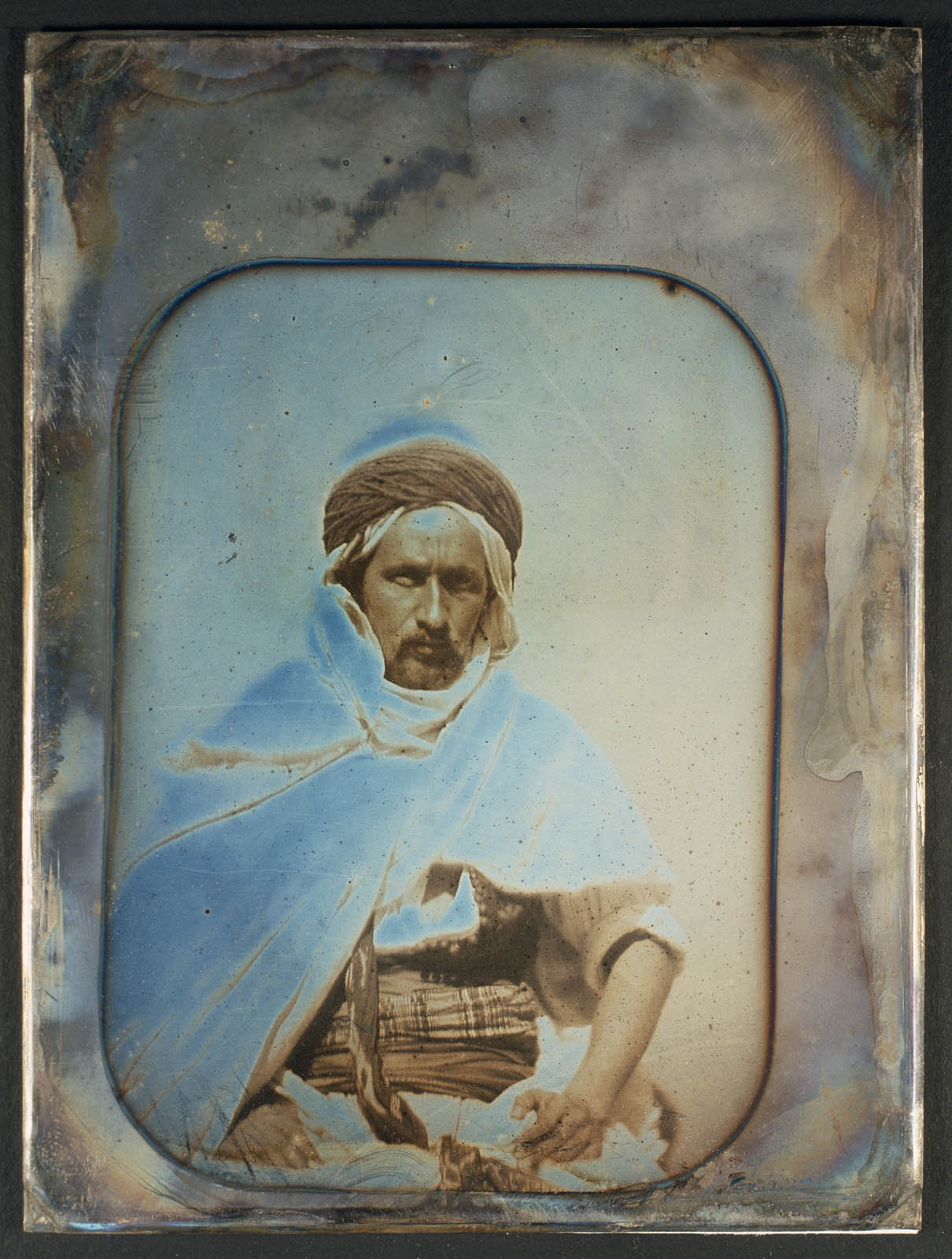
 

Henri Jacquart (French, 1809 died after 1873) 'Ali ben Mohamed, 29 ans, Arab from the plain' September 1851 from the exhibition 'Photographs. An Early Album of the World (1842-1911)' at the musée du quai Branly – Jacques Chirac, Paris, April - July, 2023


Henri Jacquart (French, 1809 – died after 1873)
Ali ben Mohamed, 29 ans, Arab from the plain
September 1851
Daguerreotype
© musée du quai Branly – Jacques Chirac


Henri Jacquart (French, 1809 died after 1873) 'Ali ben Mohamed, 29 ans, Arab from the plain' September 1851 (detail)


Henri Jacquart (French, 1809 – died after 1873)
Ali ben Mohamed, 29 ans, Arab from the plain (detail)
September 1851
Daguerreotype
© musée du quai Branly – Jacques Chirac


Twenty years after the conquest of Algeria, the Arab horsemen have stopped fighting, and are but the shadows of those who for years thwarted the French army. They came to Paris for a show set up by the Museum, Children of the Desert, a fantasia on the Champ de Mars in June, 1851. They too are photographed, and casts of their bodies taken for science – but as popular artists, these horsemen leave their names under their portraits and are paid to pose.

Catherine Darley. “Ghosts (1) – Shadows,” on the Poemas del río Wang blog 10/08/2012 [Online] Cited 07/05/2023
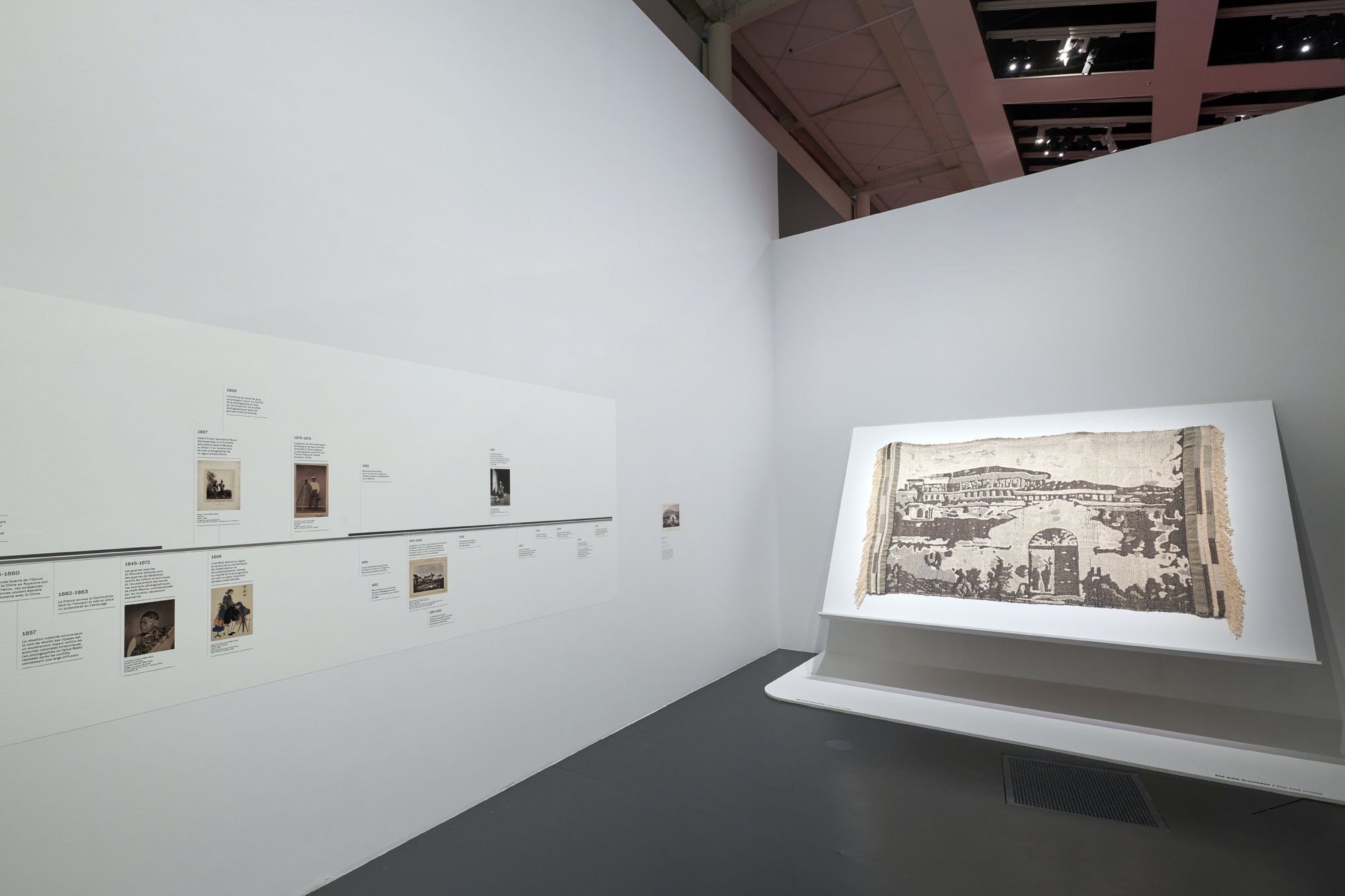
 

Installation view of the exhibition 'Photographs. An Early Album of the World (1842-1911)' at the musée du quai Branly – Jacques Chirac, Paris

Installation view of the exhibition 'Photographs. An Early Album of the World (1842-1911)' at the musée du quai Branly – Jacques Chirac, Paris

Installation view of the exhibition 'Photographs. An Early Album of the World (1842-1911)' at the musée du quai Branly – Jacques Chirac, Paris

Installation view of the exhibition 'Photographs. An Early Album of the World (1842-1911)' at the musée du quai Branly – Jacques Chirac, Paris

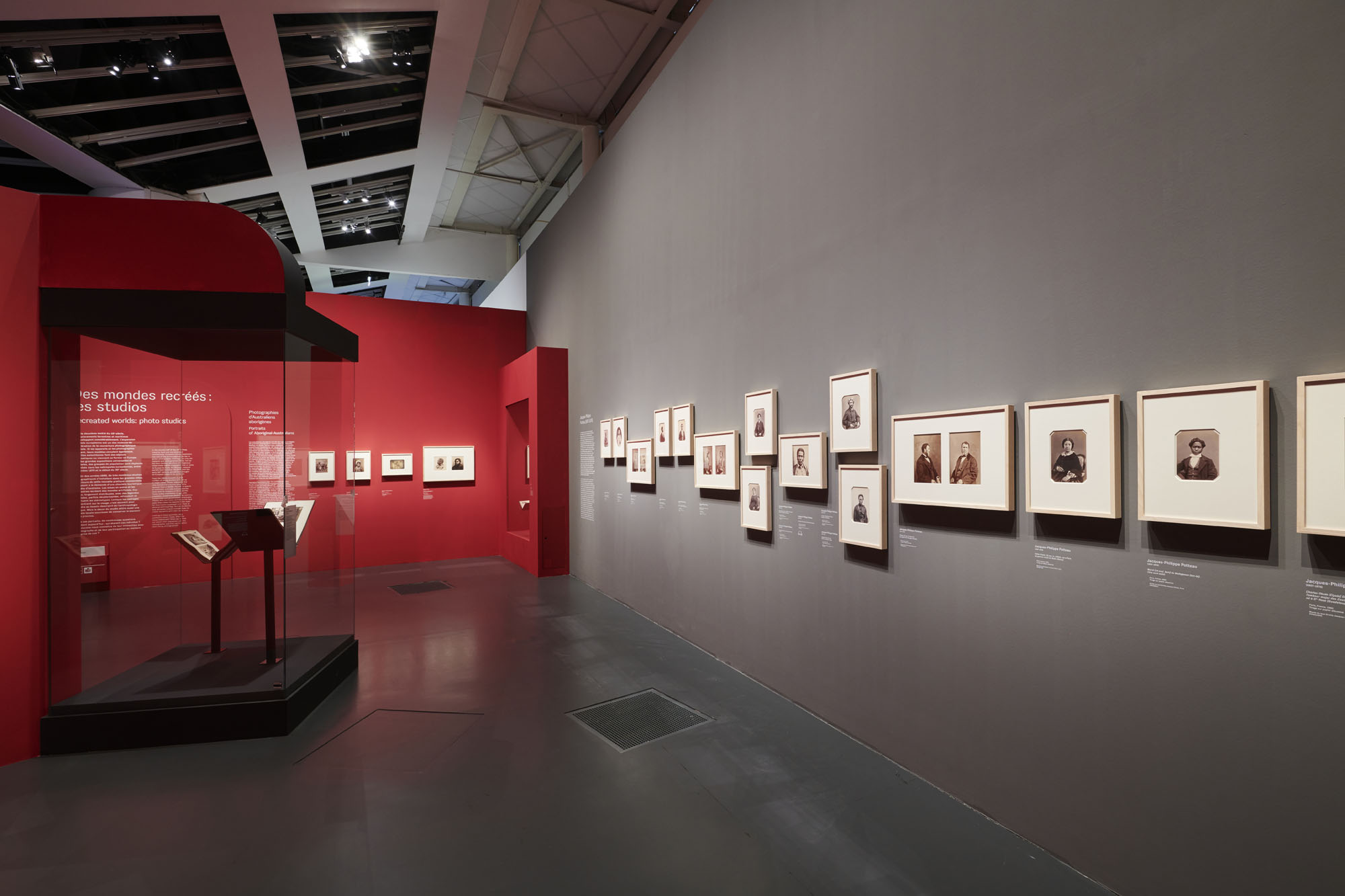
Installation views of the exhibition 'Photographs. An Early Album of the World (1842-1911)' at the musée du quai Branly – Jacques Chirac, Paris showing in the bottom image the section 'Recreated worlds: photo studios'


Installation views of the exhibition Photographs. An Early Album of the World (1842-1911) at the musée du quai Branly – Jacques Chirac, Paris showing in the bottom image the section ‘Recreated worlds: photo studios’ (below)


Recreated worlds: photo studios

In the second half of the 19th century, travel by land and sea developed considerably. European colonial expansion was one of the drivers behind the rise in global photographic coverage, not only did cameras and photographers travel, but so did their models. Members of the Indigenous elites made regular diplomatic trips or came to Europe to study. At the major colonial world’s fairs between 1870 and the early 20th century, groups were brought to European cities to be exhibited.

From the 1860s onwards, a great number of photo studios were set up in major cities. Those involved in this new commercial practice adapted to demand from a tourist clientele in search of exoticism, and sets and accessories were used to recreate artificial worlds. These widely distributed images with simplistic, sometimes demeaning captions, transmitted and perpetuated stereotypes. Photos with the frame centred on the face were often taken to respond to the need for description expressed in the field of physical anthropology. But studio decors also attracted a local clientele keen to create souvenirs with their loved ones.

Looking at these portraits, many questions remain today: Who are these individuals? What can we find out about their interactions with the photographer and their participation when being photographed?

Portraits of Aboriginal Australians

The aboriginal populations were privileged subjects of the first commercial photographers in Australia. Produced in the studio, these portraits obey 19th century racialist scientific interests; they are designed to document what was then considered to be an endangered population. German photographer John William Lindt, based in Grafton, New Wales of the South, produces a series of portraits of the aboriginal populations of Clarence Valley, marketed in the form of portfolios from the 1870s.

Combining exoticism and pictorial tradition, his pictures met with great success. Despite this problematic production context and the sometimes artificial nature stagings, this visual heritage is now a resource important for the descendants of the communities. In Australia, research have been undertaken since the 1990s to obtain information on the models, their identity and their territory of origin. The photography model known as “Mary Ann of Ulmarra” was identified in 2013 as Mary Ann Williams, née Cowan, through research conducted by one of his descendants.

Text from the exhibition
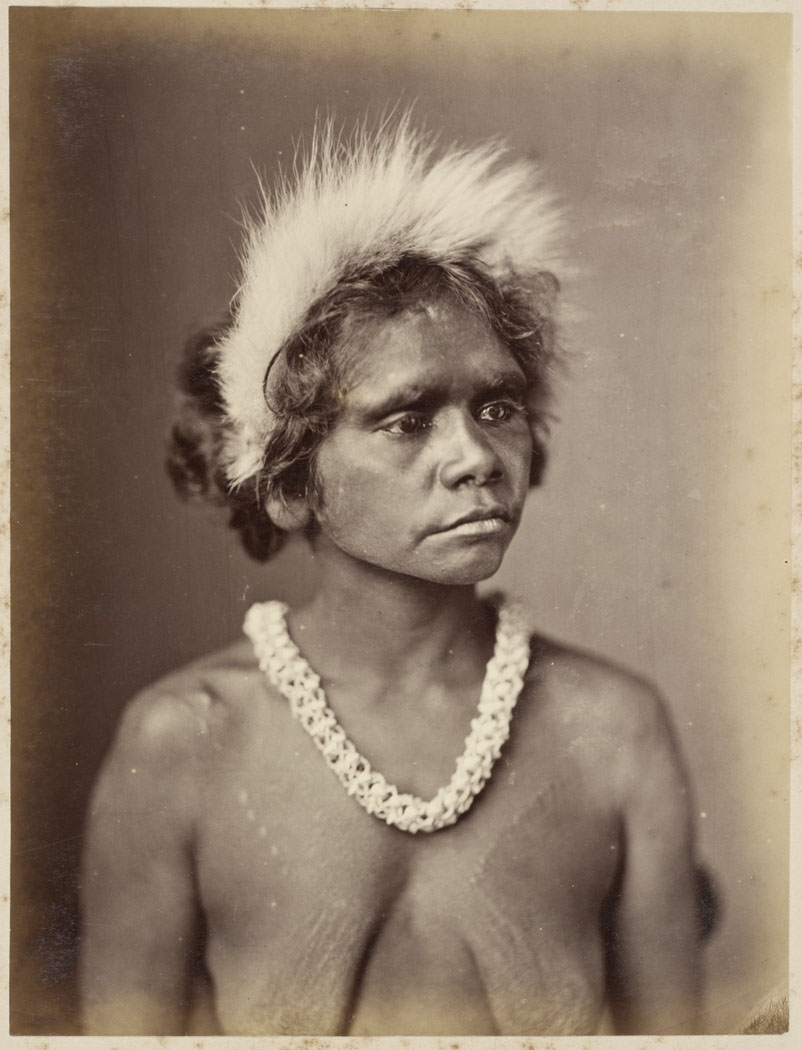
 

John William Lindt (Australian born Germany, 1845-1926) 'Mary Ann of Ulmarra' (Mary Ann Williams, née Cowan) 1873 from the exhibition 'Photographs. An Early Album of the World (1842-1911)' at the musée du quai Branly – Jacques Chirac, Paris, April - July, 2023


John William Lindt (Australian born Germany, 1845-1926)
Mary Ann of Ulmarra (Mary Ann Williams, née Cowan)
1873
Albumen print


Lindt took at least sixty photographs in this series of studio portraits of Clarence River Aborigines, although extant albums usually contain fewer than a dozen each. When first published, these studio tableaux were regarded as accurate. Reference: An Eye for Photography: the camera in Australia / Alan Davies. Carlton, Vic: Melbourne University Press, 2004, p. 60.
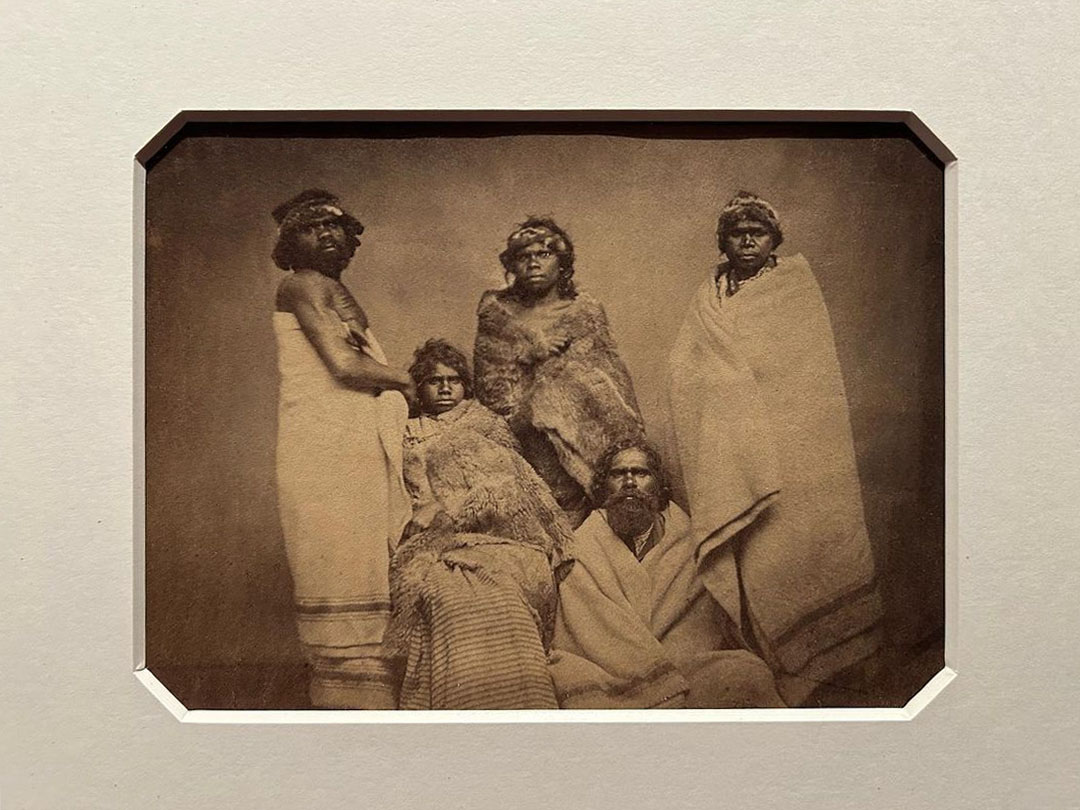
 

Antoine Julien Nicolas Fauchery (French, 1823-1861) and Richard Daintree (Australian born United Kingdom, 1832-1878) 'Untitled (Two Aborginal Australian men and three women posing in front of a studio backdrop)' Victoria possibly Mt Franklin, 1858


Antoine Julien Nicolas Fauchery (French, 1823-1861) and Richard Daintree (Australian born United Kingdom, 1832-1878)
Untitled (Two Aborginal Australian men and three women posing in front of a studio backdrop)
Victoria possibly Mt Franklin, 1858
9.20 x 21.20cm
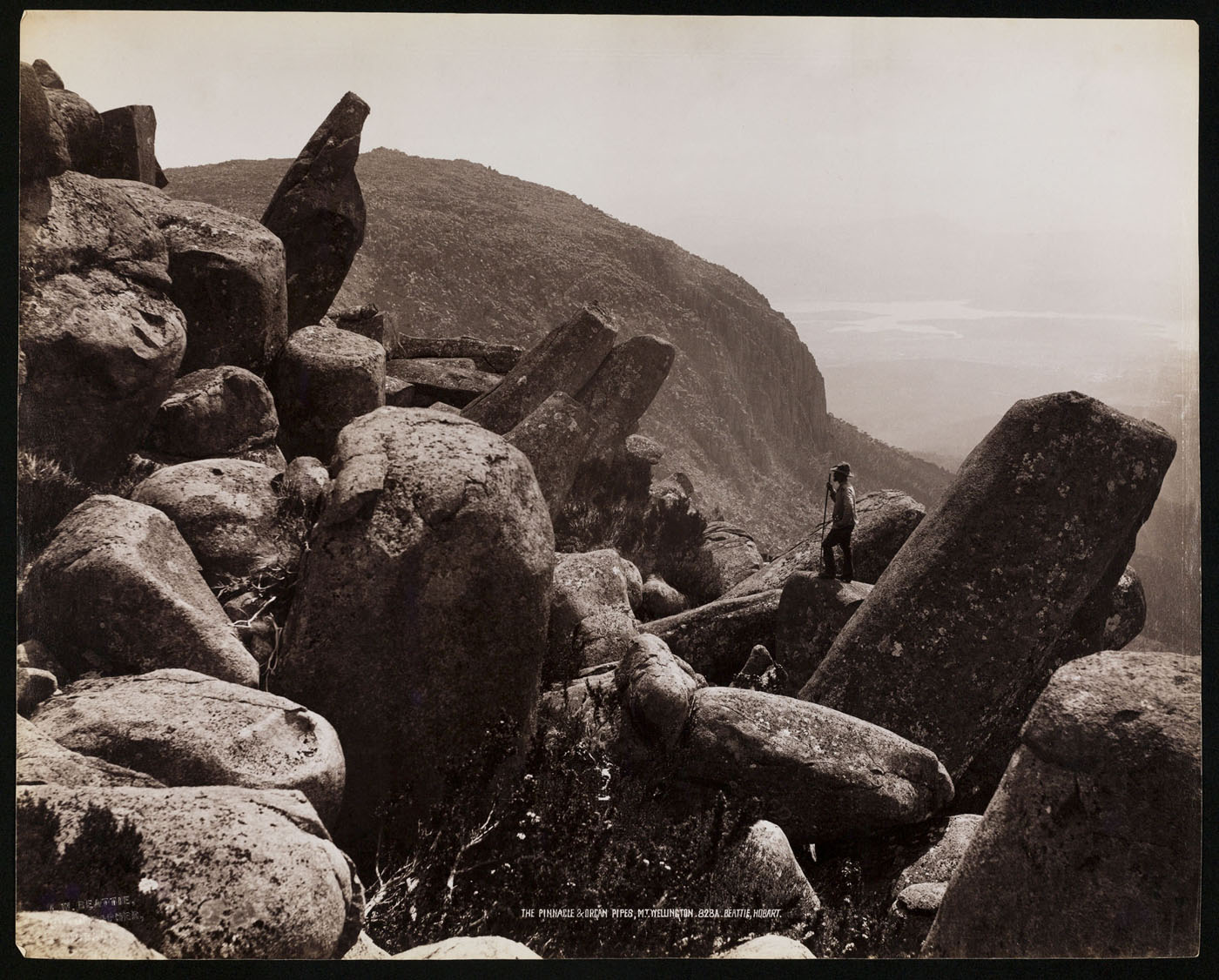
 

John Watt Beattie (Australian born Scotland, 1859-1930) 'The Pinnacle & Dream Pipes, Mt Wellington, Hobart, Tasmania' Australia, 1880-1890


John Watt Beattie (Australian born Scotland, 1859-1930)
The Pinnacle & Dream Pipes, Mt Wellington, Hobart, Tasmania
Australia, 1880-1890
Albumen paper print
© Quai Branly Museum – Jacques Chirac


John Beattie (Australian born Scotland, 1859-1930)

John Beattie (1859-1930) came to Tasmania from Scotland at the age of nineteen, in 1878. Within a year, he was using the brand-new dry-plate photographic technique to take a series of views of Lake St Clair. He joined the Anson Brothers studio, and worked with the three siblings until he bought them out in 1891. In the 1890s he established a museum of curiosities he had collected. The first of the island’s wilderness photographers – with a keen interest in preservation of the environment – Beattie became the ‘official’ photographer for the Tasmanian Government. In addition to his well-known series of photographs of convicts, he made a number of portraits of Aboriginal people, of whom he said ‘for about thirty years this ancient people held their ground bravely against the invaders of their beautiful domain.’

Text from the National Portrait Gallery


Of Scottish origin, John Watt Beattie landed in Australia in 1878. The following year, he moved to Tasmania to a farm in New Norfolk, northwest of Hobart. Feeling more interest in going out in the bush than for the work of the farm, he then devotes himself to the photography of countryside. He was appointed official government photographer of Tasmania in 1896. Able to promote his work, he also enthusiastically supported the development of the tourism industry. In 1906, he traveled to Melanesia, Polynesia and the Norfolk Islands and derives hundreds of widely distributed photographs.

Text from the exhibition


Charles Woolley (Australian, 1834-1922) 'William Lanne' 1866


Charles Woolley (Australian, 1834-1922)
William Lanne
1866
Albumen silver photograph


William Lanne (Oyster Cove clan/Australian, 1834-1869)

William Lanne (1834-1869), also known as King Billy or William Laney, is said to have been Truganini’s third partner. Lanne was captured along with his family in 1842 and taken to the Aboriginal camp at Wybelenna on Flinders Island. He moved for a time to Oyster Cove in 1847, before spending the years until 1851 in a Hobart orphanage. Four years later he joined a whaling ship. Regarded as the last surviving male of the Oyster Cove clan, Lanne died in March 1869 from a combination of cholera and dysentery. Following his death an argument broke out between England’s Royal College of Surgeons and Tasmania’s Royal Society over who should have his remains for scientific purposes. A member of the College of Surgeons, William Crowther, managed to break into the morgue where Lanne’s body was kept, decapitating the corpse, removing the skin and inserting a skull from a white body into the remnants. The Royal Society, discovering Crowther’s work, moved to thwart any further violations by amputating the hands and feet and discarding them separately. In this state, Lanne’s body was buried.

Text from the National Portrait Gallery website


Charles Woolley (Australian, 1834-1922)

Charles Alfred Woolley (17 December 1834-1922) was born in Hobart Town, Tasmania, Australia. He was an Australian photographer but also created drawings, portraits and visual art. He is best known for his photographic portraits of the five surviving Oyster Cove Aboriginal people taken in August 1866 and exhibited at the Intercolonial Exhibition of Australasia colonial exhibition in Melbourne the same year. …

In August 1866, Woolley took photographic portraits in his studio of the five surviving Oyster Cove Aboriginal people which became his best known work. These were exhibited at the Intercolonial Exhibition of Australasia colonial exhibition in Melbourne later that year. Two of the portraits were of Truganini, a female, and William Lanne, also known as King Billy.

These works are now exhibited in the National Library, and the State Libraries of New South Wales, Tasmania and Victoria. James Bonwick’s publication The Last of the Tasmanians (1870) included several of the photographs and shortly after engravings started to appear. Woolley exhibited the prints again in 1875 at the Victorian Intercolonial Exhibition. A few of the original sets survive, mainly in English collections, as well as copies that J. W. Beattie made.

After Lanne’s death in 1869, his grave was desecrated and his body mutilated and a full sized bust was produced by an artist named Francisco Santé. The Evening Mail advertised that it could be seen for a “small fee”. Though Woolley was not known as a sculptor, the Hobart Town Examiner reported that “numerous” busts he had produced were at Walch and Sons and Birchall’s bookshops.

Text from the Wikipedia website


Installation view of the exhibition 'Photographs. An Early Album of the World (1842-1911)' at the musée du quai Branly – Jacques Chirac, Paris showing the section 'Conquering souls and spreading the word' with, at left, three photographs by Augustine Dyer (Australian, 1858-1931) of Papua New Guinea (1884)


Installation view of the exhibition Photographs. An Early Album of the World (1842-1911) at the musée du quai Branly – Jacques Chirac, Paris showing the section ‘Conquering souls and spreading the word’ with, at left, three photographs by Augustine Dyer (Australian, 1858-1931) of Papua New Guinea (1884, see below)


Conquering souls and spreading the word

The movement of colonial conquest also proceeded through missionary work where competition between congregations and between nations played out, much like at the political level. The Pacific was a place of rivalry between the United Kingdom and France. Protestant societies established from 1875 onwards in south-eastern New Guinea found themselves in competition with the Catholic missionaries. National alliances were formed between explorers and missionaries, promoting each other’s work. At the turn of the 19th and 20th centuries, the development of illustrated travel press allowed these heroic stories to be shared with a wide audience. Conferences with photo projections organised by the Geographical and Anthropological Societies were part of this process, combining different sources of images and narratives and establishing a lasting visual culture of the exotic.

Text from the exhibition


Augustine Dyer (Australian, 1858-1931) 'View from Dinner Island, China Strait, H.M. Ships "Nelson" and "Espiègle" at anchor, Papua New Guinea' 1884


Augustine Dyer (Australian, 1858-1931)
View from Dinner Island, China Strait, H.M. Ships “Nelson” and “Espiègle” at anchor, Papua New Guinea
1884
© Musée du Quai Branly – Jacques Chirac


Dyer was the Australian Government Printing Office photographer who went to British New Guinea with John Paine (a studio photographer), for the purpose of recording the British annexation of the territory. He travelled more extensively with Paine in 1884 through PNG visiting Port Moresby, Motu-Motu, Kerepunu, etc.
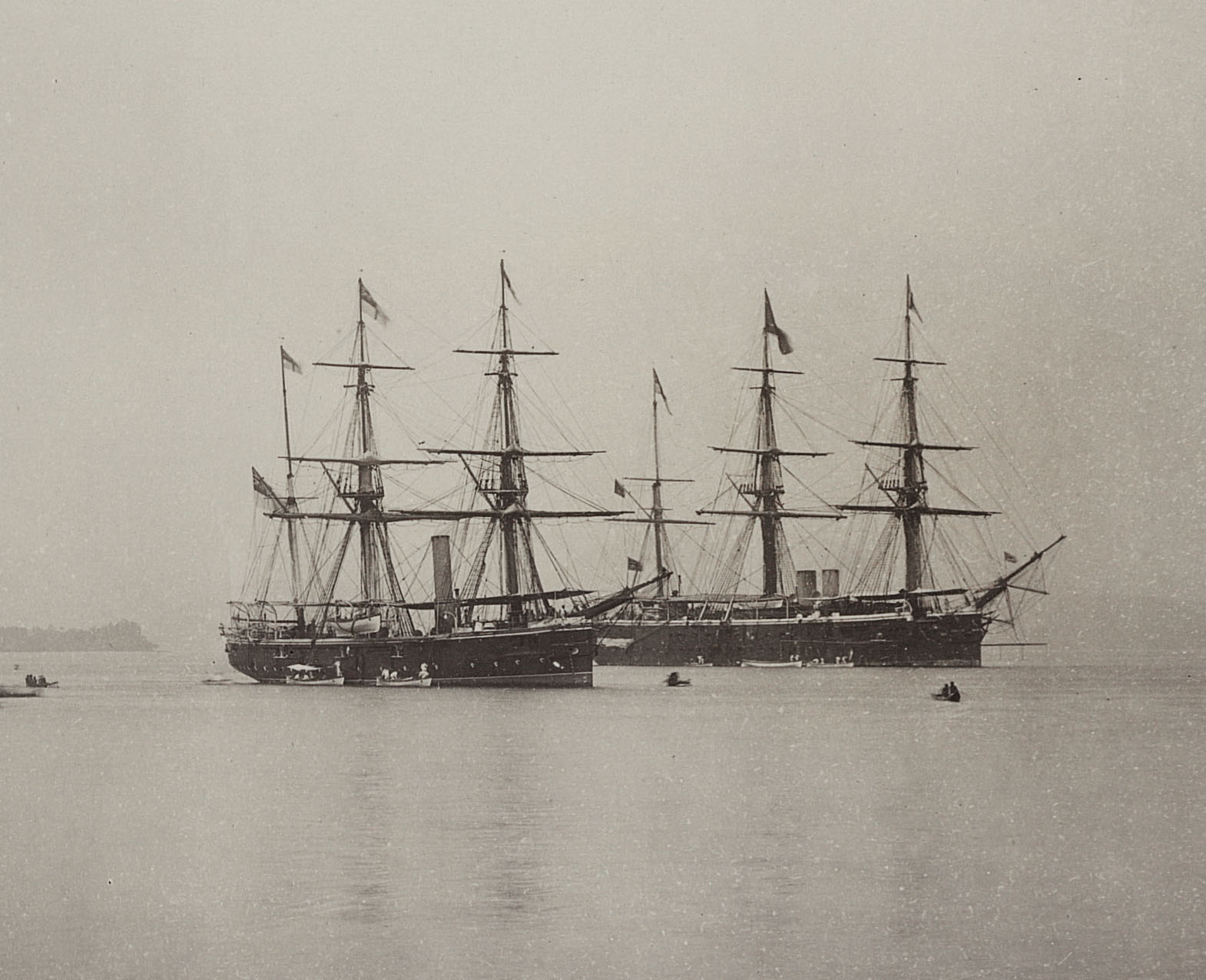
 

Augustine Dyer (Australian, 1858-1931) 'View from Dinner Island, China Strait, H.M. Ships "Nelson" and "Espiègle" at anchor, Papua New Guinea' 1884 (detail)


Augustine Dyer (Australian, 1858-1931)
View from Dinner Island, China Strait, H.M. Ships “Nelson” and “Espiègle” at anchor, Papua New Guinea (detail)
1884
© Musée du Quai Branly – Jacques Chirac


Taking as its starting point the photography collection of the musée du quai Branly – Jacques Chirac, a reference collection for the representation of the extra-European world in the early years of photography, the exhibition focuses on the trajectories and geographies of the medium outside Europe in the 19th century, from its invention. Through a selection of nearly 300 photographs taken between 1842 and 1911 in Asia, Africa, Oceania, and the Americas, it seeks to better understand the phenomenon of the global dissemination of photography and the regional histories of non-European photography.

A visual collection of the world

Many places in the world became accessible through photography after the official announcement of its invention. The technical details of the daguerreotype were revealed in Paris in August 1839 and, in September, the darkrooms were loaded onto ships and crossed the borders of Europe. A tool associated with Western technological modernity, taken on countless voyages and scientific and military expeditions around the world, the medium of photography was used in the second half of the 19th century to investigate everywhere on the globe. From Mexico to Gabon, photography was in turn an instrument of description and the visual appropriation of landscapes and monuments, a tool for knowledge and the control of populations, and an object of diplomacy with the local elite. European colonial expansion was one of the driving forces that greatly accelerated global photography.

Dissemination and local appropriation

The new medium spread throughout the world from the 19th century, with very varied adoption rates in different regions. Europeans were no longer the only ones experimenting with, commissioning and marketing photography. Its local roots can be linked to the relations of countries with the West and to the relationship of societies to images. The exhibition, which presents the work of European and local photographers on four continents, seeks to better understand the development and appropriation of the medium around the world on a local scale by bringing to light lesser-known photographers, sponsors, phenomena and photographic forms, in an attempt to rebalance a history of photography that too often focuses on Europe and the United States. In many regions, from Colombia to West Africa to Madagascar, and from Iran to Japan to India, photography was adopted and sometimes adapted to social uses and local cultures and in many places seems to satisfy the desire for self-representation and the construction of modern identities. If cameras and photographers travelled, their models also travelled. The indigenous elites made regular diplomatic visits or came to Europe for training. From the 1860s, many photography studios were set up in large cities to meet the demands of tourists looking for exoticism. But the studios’ decor also attracted a local clientele wanting to preserve the memory of their loved ones.

How far should photography be taken?

The 19th century in Europe was characterised by a need to accumulate objects, knowledge and also territory. Through photography, landscapes became lands to be mapped and conquered, and their inhabitants subjects to be studied. In the scientific field, the natural history model influenced the use of photography. It contributed to the myth of virgin territories and was a tool in the growing geographical discipline, making claims of exhaustivity: see everything, photograph everything. But this thirst for images, which began in 1840 in Europe and then spread rapidly throughout the world, met with contrasting situations. From the beginning, the question of limits arose: how far to go, under what conditions and for what purposes should a photograph be taken? This was sometimes a technical challenge, but above all an ethical question when it involved showing the horrors of wars or producing the image of scenes or objects that were supposed to remain hidden. Some photographers may have tricked, coerced or negotiated to get an image.

The selection of works, mostly taken from the quai Branly photography collection, highlights the diversity of photographic practices outside Europe at their origins and reveals early testimonies of indigenous photographers. By revealing the scientific, military and commercial uses, as well as the memorial and social functions of photography, and by presenting a wide range of objects and techniques, the exhibition invites us to re-examine today the meaning of the photographic gesture in these different non-European contexts.

Publication

Mondes photographiques, histoires des débuts

The book that accompanies the exhibition broadens its scope of study to offer the first decentralised history of early world photography. Taking as its base the photography collection of the musée du quai Branly – Jacques Chirac, a reference collection for the representation of the extra-European world in the early years of photography, it deepens this study to focus on the trajectories and geographies of the medium outside Europe from the 19th century. Co-publication musée du quai Branly – Jacques Chirac / Actes Sud 400 pages. €69

Text from the musée du quai Branly – Jacques Chirac


Eugene Thiesson (French, 1822-1877) 'Botocudo' 1844


Eugene Thiesson (French, 1822-1877)
Botocudo
1844
Daguerreotype
10.5 x 8cm
© Quai Branly Museum – Jacques Chirac


Eugene Thiesson (French, 1822-1877)

In 1844, two Brazilian Indians were brought to France by a certain Mr. Porte and are going to stay in Paris for a few months. This man baptised Manuel (and the young woman baptised Marie) in the press, will arouse interest certain among the anthropologists of the Natural History Museum. Werner, painter from the Museum, paints their portrait in watercolour, while Thiesson photographs them using the daguerreotype. They also lend themselves at a moulding session in the anthropology laboratory. The five daguerreotypes that remain today from the photography session show us two people with the top of the body undressed, and the bottom dressed of what appears to be European clothing.

Text from the exhibition


This man from the Canaries counts among the very first non-Europeans to have been photographed, probably in Paris. His portrait illustrates the first scientific publication offering daguerreotypes to visually appreciate the anatomic characteristics of human skulls. The Botocudo Indian from Brazil was photographed in Lisbonne, in 1844, but he visited Paris; his name was Manuel, and his wife was Maris. They lodged with some man called Porte, who brought them to the Museum. There, people wanted to make casts of their faces, their torsos, their arms and legs. Manuel and Marie walked across Marville’s Paris – across that city that was to disappear; they walked on the Boulevard du Temple and might have even visited the theaters. Actors, spectators? Dressed, costumed, naked? Under applause, mockery, examination, or measurement?

Catherine Darley. “Ghosts (1) – Shadows,” on the Poemas del río Wang blog 10/08/2012 [Online] Cited 07/05/2023. Used under fair use conditions for the purposes of education and research


Luis Garcia Hevia (Colombian, 1816-1887) 'Untitled (portrait of a man)' c. 1843-1850


Luis Garcia Hevia (Colombian, 1816-1887)
Untitled (portrait of a man)
c. 1843-1850
Colourized daguerreotype, mounted under passe-partout and under glass, encased in a gutta-percha box
Dimensions of the plate: 7.5 x 10cm
Dimensions of the assembly: 10 x 12.4cm
Dimensions with box open: 20.2 x 12.4cm
© Quai Branly Museum – Jacques Chirac


Luis Garcia Hevia (Colombian, 1816-1887)

Luis Garcia Hevia is the first Colombian photographer and daguerreotypist. He exhibited his first “two essays of daguerreotypes” at the exhibition of industry in Bogota in November 1841. He was also a painter and miniaturist.

Recreated Worlds: The Studios

In the second half of the 19th century, land and sea travel grow considerably. European colonial expansion is one of the driving forces behind the acceleration of global photographic coverage. If cameras and photographers travel, their models also travel. The indigenous elites make regular diplomatic visits or come to
train in Europe. During major universal and colonial exhibitions, population groups are moved and exhibited in European metropolises, between the 1870s and the beginning of the 20th century.

From the 1860s, many photographic studios set up in the big cities. The actors of this new commercial practice adapt to the demand of a tourist clientele in search of exoticism. Staging and props recreate artificial worlds. When the framing refocuses on the face, it is often to respond to the descriptive need of physical anthropology. But the decor of the studio attracts also a local clientele anxious to preserve the memory of their loved ones.

Faced with these portraits, many questions persist today: who were these individuals? What can we know of their interaction with the photographer and their participation at the time of the shot?
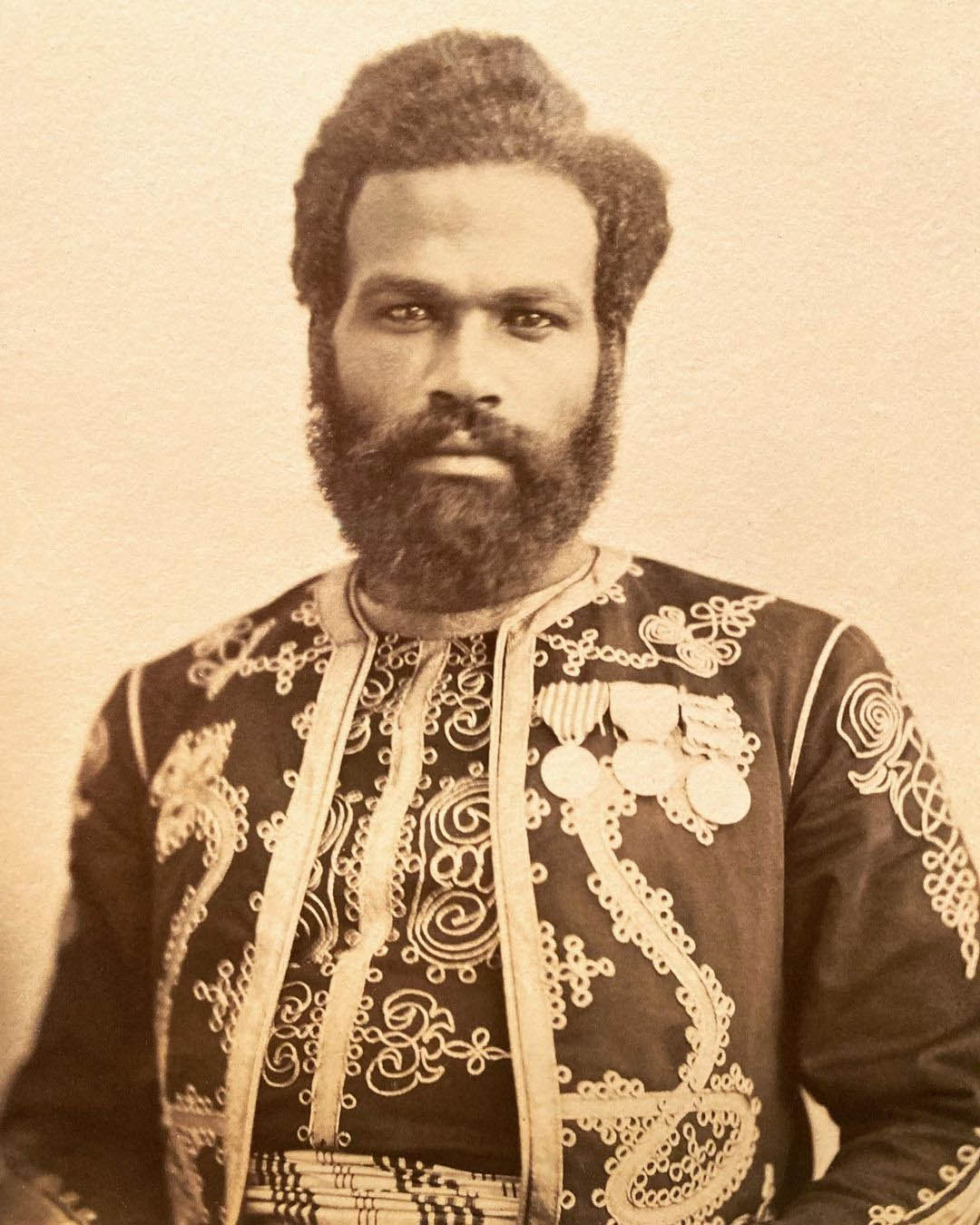
 

Jacques-Philippe Potteau (French, 1807-1876) 'Charles Ozbee' Nd


Jacques-Philippe Potteau (French, 1807-1876)
Charles Ozbee
Nd
© Quai Branly Museum – Jacques Chirac


Jacques-Philippe Potteau (1807-1876)

In photography, the portrait genre has from the outset brought together goals and very different situations. Like today, it may have been used at recreational or law enforcement purposes, as a personal memento or as a means of recording. The very ambiguity of the medium lies in this possible permeability of domains: a family album image can leave the private sphere, a photograph made for an anthropological description can sometimes also be a true portrait, shedding light on the personality of its subject.

The images of Jacques-Philippe Potteau, produced for scientific purposes between 1860 and 1869 at the National Museum of Natural History in Paris, confer a undeniable dignity to their models, sometimes photographed as part of diplomatic functions (embassies of India, Siam, Japan). Jean Lagrêne, Philippe Colarossi are closely associated with the artistic world, as models. If Jacques-Philippe Potteau, a technician employed by the Museum, took care to note the names of the people he photographs, the reason for their presence in the photographic workshop, or in the Parisian capital is not always known to us. This is currently under research.

Text from the exhibition
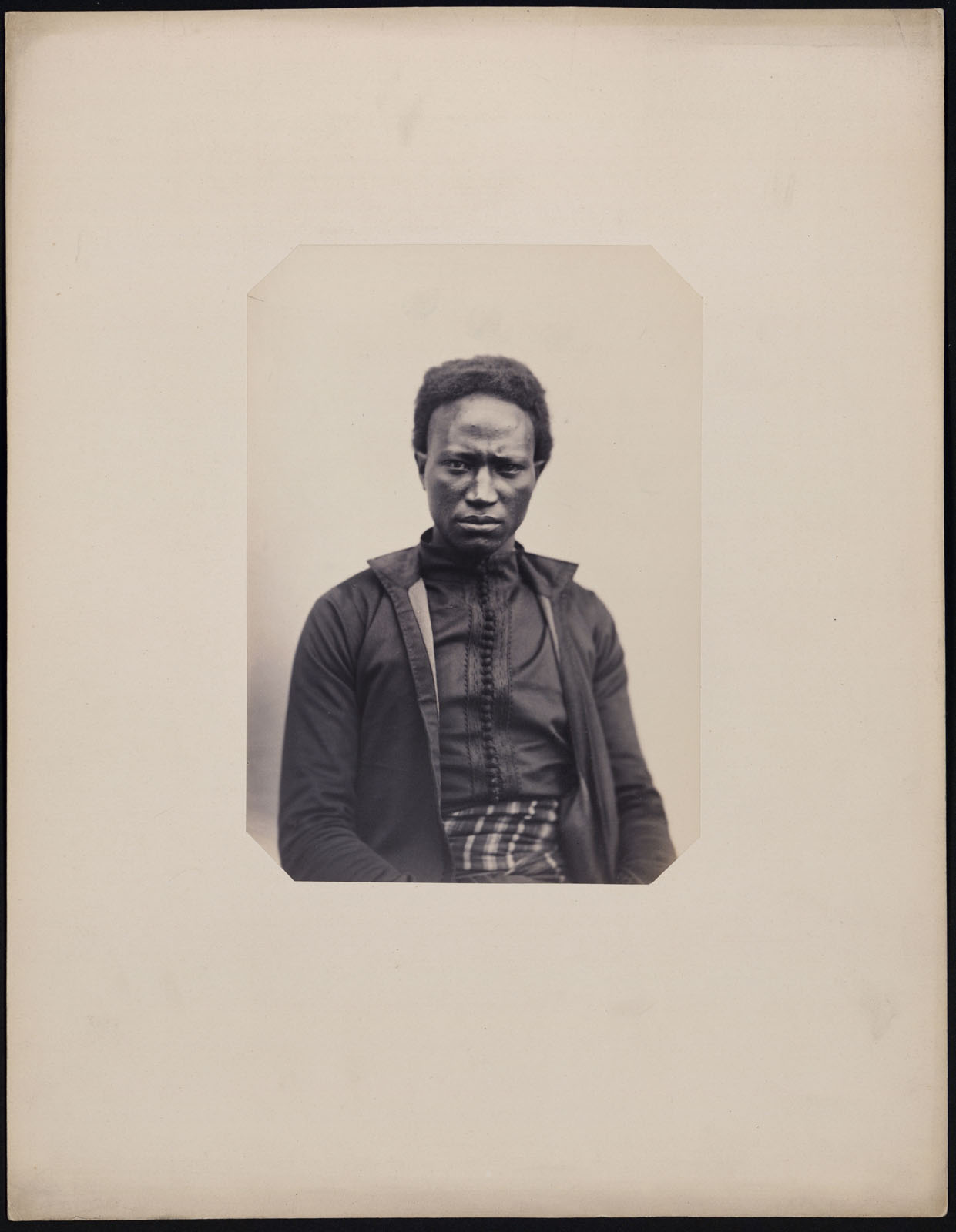
 

Jacques Philippe Potteau (French, 1807-1876) 'Mostapha Ahmed (21), Nubian born in Mudrici d'Ungle' Paris, France, 1862


Jacques Philippe Potteau (French, 1807-1876)
Mostapha Ahmed (21), Nubian born in Mudrici d’Ungle
Paris, France, 1862
Print on albumen paper
18 x 12.7cm
© Quai Branly Museum – Jacques Chirac


Jacques-Philippe Potteau was a member of the anthropology department of the Muséum d’histoire naturelle, Paris. Between 1860 and 1869 he made a series of ethnographic portraits for the museum under the collective title Collection anthropologique du Muséum de Paris. In 1862 Potteau succeeded Louis Rousseau as the departmental photographer. Potteau showed his work at the London Photography Exhibit in 1862 and 1863, and the 1863 Paris International Photography Exhibit.


Jacques Philippe Potteau (French, 1807-1876) 'Mostapha Ahmed (21), Nubian born in Mudrici d'Ungle' Paris, France, 1862 (detail)


Jacques Philippe Potteau (French, 1807-1876)
Mostapha Ahmed (21), Nubian born in Mudrici d’Ungle (detail)
Paris, France, 1862
Print on albumen paper
18 x 12.7cm
© Quai Branly Museum – Jacques Chirac
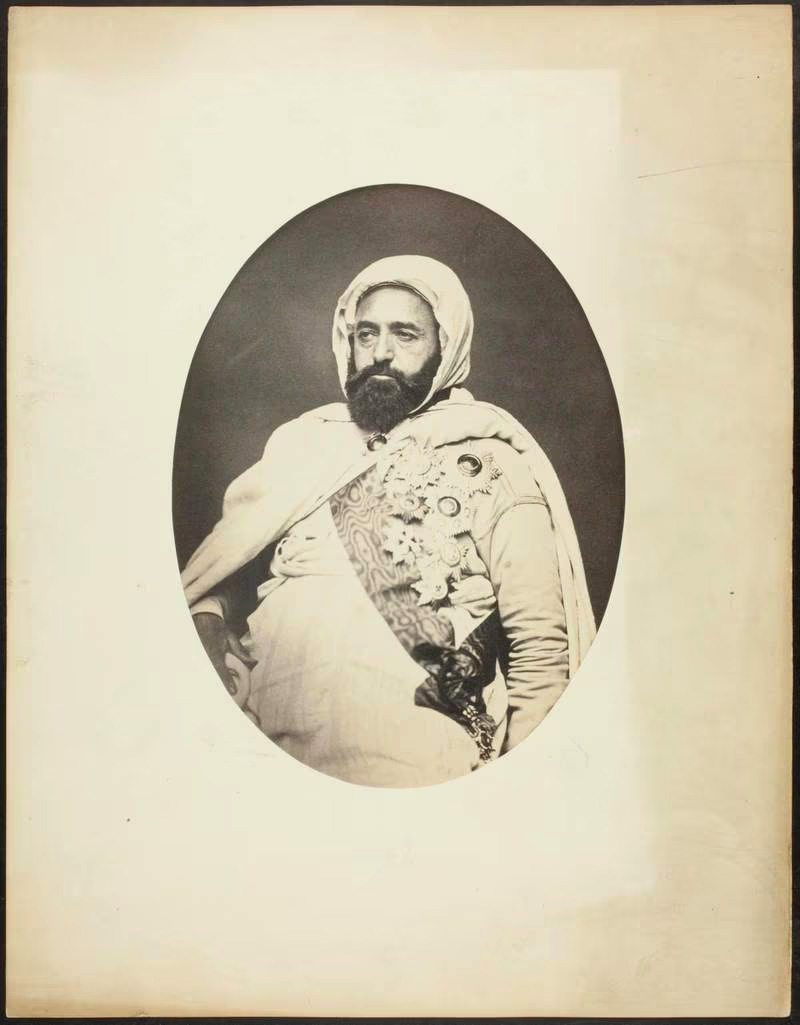
 

Jacques Philippe Potteau (French, 1807-1876) 'Emir Abd el-Kader (57), born in Maskara (Province of Oran, Algeria)' Paris, 1865


Jacques Philippe Potteau (French, 1807-1876)
Emir Abd el-Kader (57), born in Maskara (Province of Oran, Algeria)
Paris, 1865
Albumen paper print
Paris, musée du quai Branly – Jacques Chirac
Crédit photo: © musée du quai Branly – Jacques Chirac, Dist. RMN – Grand Palais / image musée du quai Branly – Jacques Chirac


Capture the distance

As early as the 1840s, cameras were on board on expedition ships departing from Europe. sailors, explorers, archaeologists, missionaries, artists are among the first experimenters of this new technology in remote regions, which are gradually passing under the yoke of the colonial powers. From Mexico to Gabon, photography is in turn an instrument of description and visual appropriation landscapes and monuments, a knowledge and control tool populations, or even an object of diplomacy vis-à-vis the local elite.

If the camera records with the same acuity the architectural detail, the landscape grandiose and the faces crossed, the authors gathered here turn out to be excellent technicians with a personal eye. Their travelogues relate the difficulties overcome: technical challenges, climatic constraints or even reluctance of local populations to pose. But these spectacular images, carried out in more or less accessible places, are also the result of a collaboration with many less visible local intermediaries: guides, interpreters, informants or porters – necessary to transport photographic equipment – ​​played a decisive role.

Text from the exhibition


Philip Henry Egerton (Welsh, 1824-1893) '"Kee Monastery", Pl. 22, Journal of a tour through Spiti, to the frontier of Chinese Tibet' Tibet, 1863


Philip Henry Egerton (Welsh, 1824-1893)
“Kee Monastery”, Pl. 22, Journal of a tour through Spiti, to the frontier of Chinese Tibet
Tibet, 1863
Album comprising 37 albumen prints
Dimensions of the album: 29 x 38.4cm
Dimensions of the prints: 21.6 x 26.7cm
© Quai Branly Museum – Jacques Chirac
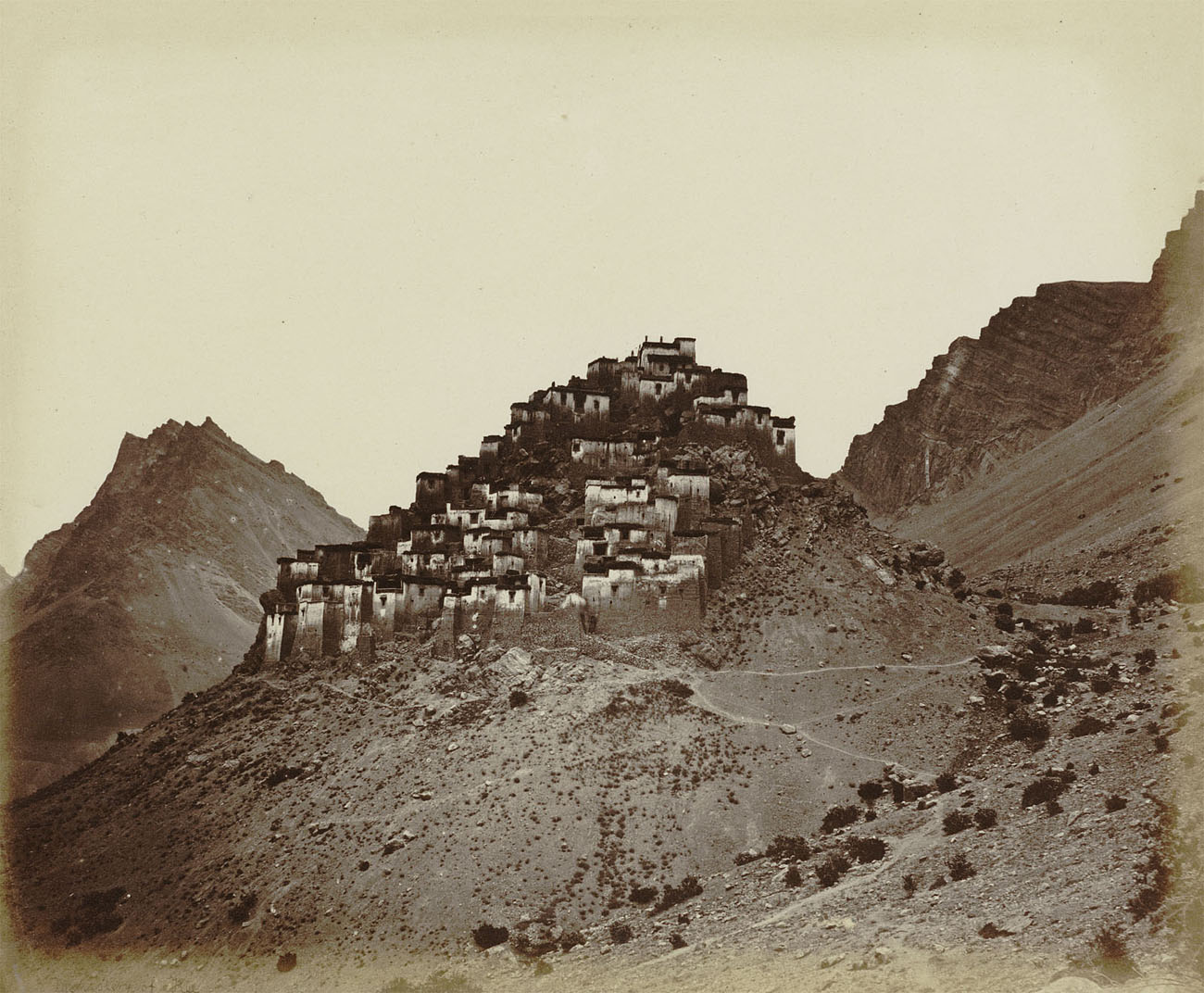
 

Philip Henry Egerton (Welsh, 1824-1893) '"Kee Monastery", Pl. 22, Journal of a tour through Spiti, to the frontier of Chinese Tibet' Tibet, 1863 (detail)


Philip Henry Egerton (Welsh, 1824-1893)
“Kee Monastery”, Pl. 22, Journal of a tour through Spiti, to the frontier of Chinese Tibet (detail)
Tibet, 1863
Album comprising 37 albumen prints
Dimensions of the album: 29 x 38.4cm
Dimensions of the prints: 21.6 x 26.7cm
© Quai Branly Museum – Jacques Chirac


Philip Henry Egerton (Welsh, 1824-1893)

The Briton Philip Henry Egerton worked for most of his life as senior civil servant for the colonial regime in northern India. He realises these photographs during a semi-official mission in the Himalayas, trying identify alternative routes for the wool trade across the border

India and Chinese Tibet. The Kangra and Kullu valleys, as well as the sites of Spiti and the Bara Shigri glacier are thus photographed for the first time. The images are published, accompanied by the story of their author, in 1864, with the support of the government of Punja.

Text from the exhibition


Philip Henry Egerton (Welsh, 1824-1893) 'Shigri Glacier – From the River (Main View)' Negative June - August 1863; print 1863-1864


Philip Henry Egerton (Welsh, 1824-1893)
Shigri Glacier – From the River (Main View)
Negative June – August 1863; print 1863-1864
From Journal of a Tour Through Spiti, To The Frontier of Chinese Thibet, With Photographic Illustrations
Albumen silver print
21.6 × 26.5cm (8 1/2 × 10 7/16 in.)
Credit Line: The J. Paul Getty Museum, Los Angeles
Public domain


Philip Henry Egerton (Welsh, 1824-1893) 'Shigri Glacier – Lower View' Negative June - August 1863; print 1863-1864


Philip Henry Egerton (Welsh, 1824-1893)
Shigri Glacier – Lower View
Negative June – August 1863; print 1863-1864
From Journal of a Tour Through Spiti, To The Frontier of Chinese Thibet, With Photographic Illustrations
Albumen silver print
21.6 × 26.5cm (8 1/2 × 10 7/16 in.)
Credit Line: The J. Paul Getty Museum, Los Angeles
Public domain


Désiré Charnay (French, 1828-1915) 'Palace of governor in Uxmal Yucatán' Mexico, June 1860


Désiré Charnay (French, 1828-1915)
Palace of governor in Uxmal Yucatán
Mexico, June 1860
Assembly of two prints on paper albumen
32.8 x 84.8cm
© Quai Branly Museum – Jacques Chirac


Desire Charnay (French, 1828-1915)

Improvised archaeologist and photographer with a taste for travel, Désiré Charnay is known to be the first to have brought back from several archaeological sites Mexicans a harvest of spectacular images. He uses the process of the negative on wet collodion glass, which requires him to carry heavy equipment. His fame was ensured by the publication, in 1861-1862, of the album photographic American cities and ruins.

Local stories and self-images

Europeans are not the only ones to experiment, order and market photography from the 19th century. The new medium is spreading to scale across the globe and has very variable rates of adoption depending on the region. Its local roots can be linked to the countries’ relations with the West or the relationship of societies to images. In Qajar Iran, in Siam (Thailand present day), in the princely courts of India and Java, royalty has been a patron enthusiast of photography and accelerated its growth by designating official photographers and importing equipment. The leaders take awareness of the potential of photography for the representation of power and the assertion of their authority. In India, Japan, China, West Africa and in Madagascar, indigenous photographers are getting professional training to practice, open their commercial studio in the major port cities, and very often work for a wider clientele, among the local and colonial elite. Photography is appropriate and adapted to social uses, it sometimes mixes to local visual traditions – such as painting or calligraphy – and seems in many places respond to the desire for self-representation and construction modern identities.

Royal appropriations of photography in Iran and Thailand

The monarchs Naser al-Din Shah (r. 1848-1896), in Iran, and Mongkut in Siam (Rama IV, r. 1851-1868), seduced by the technology and the possibilities of dissemination of the royal image, were important patrons. Naser al-Din Shah, defender of the arts and open to Europe, initiated himself into the practice, becoming an amateur keen. It promotes the development of photography through the diversity of actions which he led: in 1858, he established the Royal Photography Workshop within the of the Golestan Palace in Tehran, promotes the teaching of technique at school polytechnic of Dar ol-Fonoun, imports equipment, translates manuals, and appoints official court photographers who are given the title of Akkasbashi. Siam’s science-savvy King Mongkut also ramps up production photography at court. The Thai Francis Chit, who receives the title of “photographer of His Majesty the King of Siam”, produced several portraits of the royal family and views of official court events.

Text from the exhibition


Anonymous photographer. 'Half-length portrait of a 77-year-old man' Kyoto area, Japan, February 1890

Anonymous photographer. 'Half-length portrait of a 77-year-old man' Kyoto area, Japan, February 1890


Anonymous photographer
Half-length portrait of a 77-year-old man
Kyoto area, Japan, February 1890
Ambrotype
11 x 8.5cm
© Quai Branly Museum – Jacques Chirac


In Japan, a considerable boom during the Meiji era (1868-1912)

In Japan, photography developed as soon as the country opened up to trade international in 1859, and experienced considerable growth during the Meiji era (1868-1912), period of great modernisation. Uchida Kuichi and Ueno Hikoma, trained in Nagasaki, are among the most famous Japanese photographers of their time. They have developed a unique style with a pronounced taste for theatricality and sometimes humour. The production of ambrotypes, known as garasu shashin – “photography on glass” – is experiencing a particular boom in the field portraiture from the 1860s. Unique objects, they are mounted in boxes in raw paulownia wood, with traditional geometric shapes simple, used to preserve calligraphy or personal property.

The ambrotypes were intended for the private sphere of Japanese families, wishing to pass on the portraits of their loved ones as an inheritance. The tekagami-style accordion albums, richly decorated with gilding and sophisticated paintings, originally planned to accommodate calligraphy, have been diverted from their traditional use to receive prints large format photographs of Ichida Sota and Suzuki Shin’ichi II.


Anonymous photographer. 'Half-length portrait of a 77-year-old man' Kyoto area, Japan, February 1890 (detail)


Anonymous photographer
Half-length portrait of a 77-year-old man (detail)
Kyoto area, Japan, February 1890
Ambrotype
11 x 8.5cm
© Quai Branly Museum – Jacques Chirac
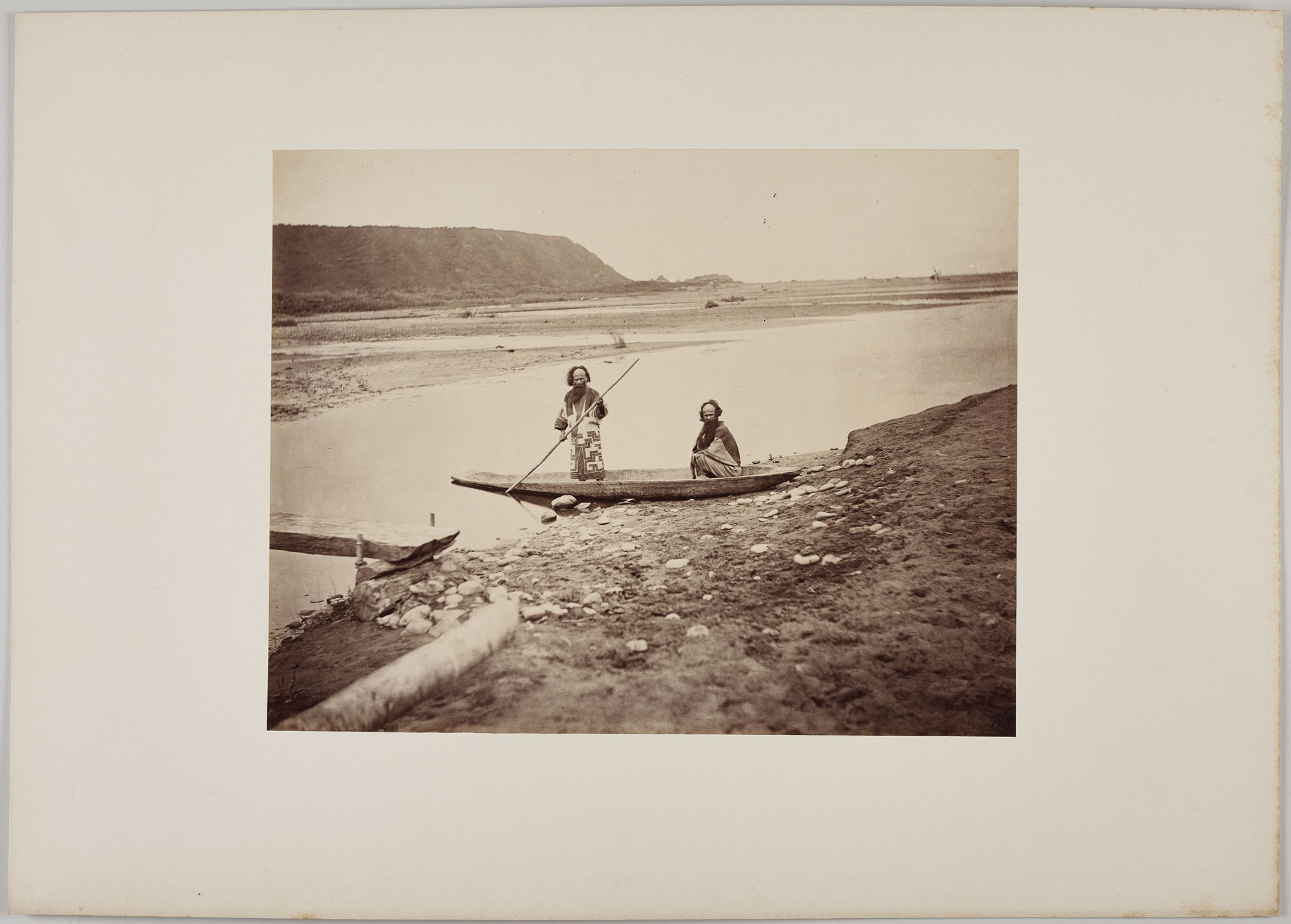
 

Tamoto Kenzō (Japanese, 1832-1912) 'Ainu with boat' Hokaido, Japan, c. 1874


Tamoto Kenzō (Japanese, 1832-1912)
Ainu with boat
Hokaido, Japan, c. 1874
© Kenzo Tamoto
© Quai Branly Museum – Jacques Chirac


Tamoto Kenzō (Japanese, 1832-1912)

Tamoto Kenzō (田本 研造, 1832-1912) was a Japanese photographer. He was born in Kumano, in the Mie Prefecture of Honshu. When he was twenty-three, he moved to Nagasaki to study western culture. In 1859, he relocated to Hakodate, where he lost a foot due to frostbite. The surgeon who amputated his foot had an interest in photography, specifically ambrotypes, and Tamoto became his apprentice. It was not until 1866 that he began working as a photographer. In 1867, he photographed the construction of the last castle to be built in Japan, Fukuyama Castle. Tamoto took photographs of military leaders Enomoto Takeaki and Hijikata Toshizō during the Battle of Hakodate between 1868-1869. Tamoto opened his own portrait studio in Hakodate in 1869. Starting in 1871, he documented the improvements to infrastructure in the Hokkaido region, eventually presenting 158 photographs of the process to the Settlement Office.

Text from the Wikipedia website


Tamoto Kenzō (Japanese, 1832-1912) 'Ainu with boat' Hokaido, Japan, c. 1874 (detail)


Tamoto Kenzō (Japanese, 1832-1912)
Ainu with boat (detail)
Hokaido, Japan, c. 1874
© Kenzo Tamoto © Quai Branly Museum – Jacques Chirac


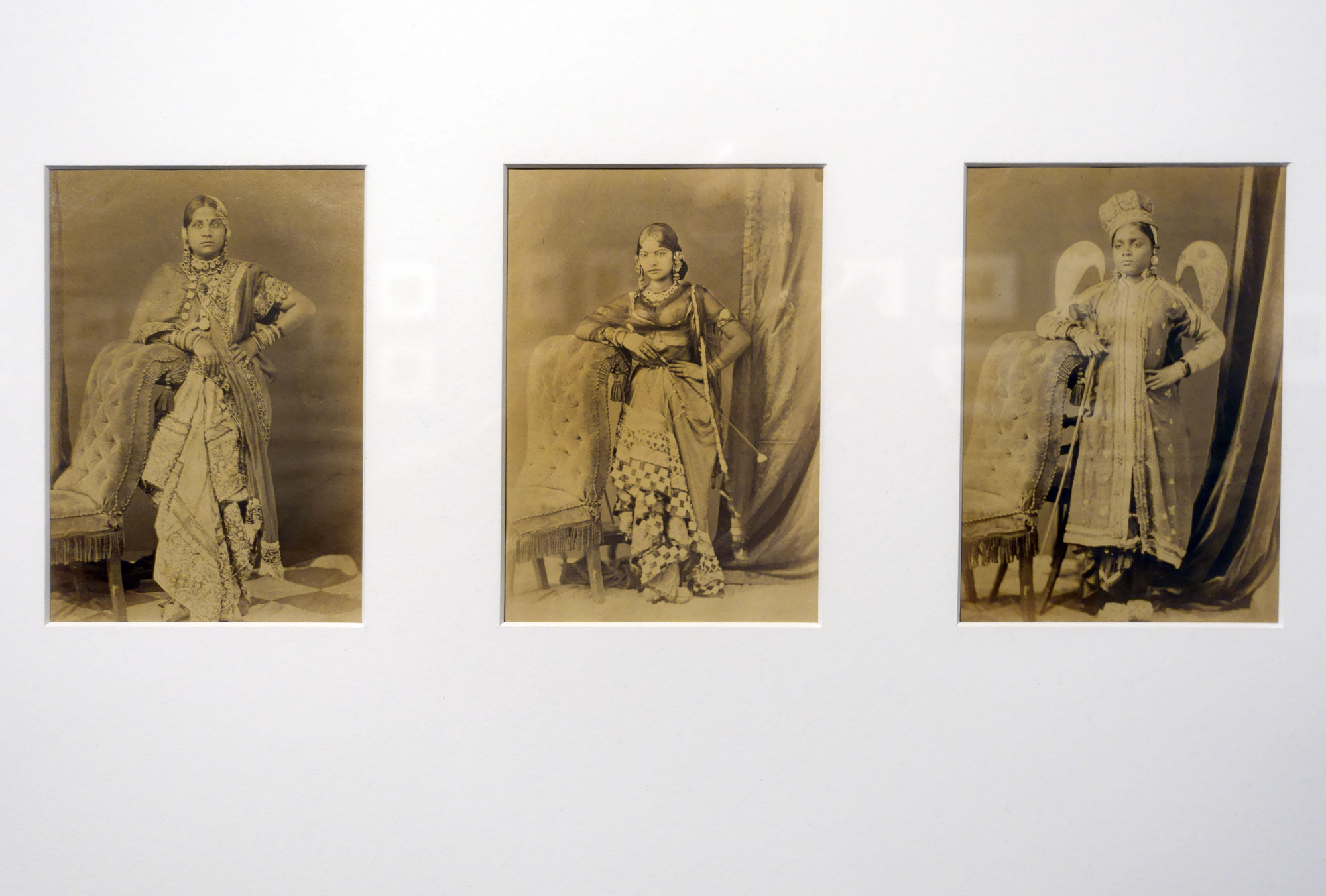
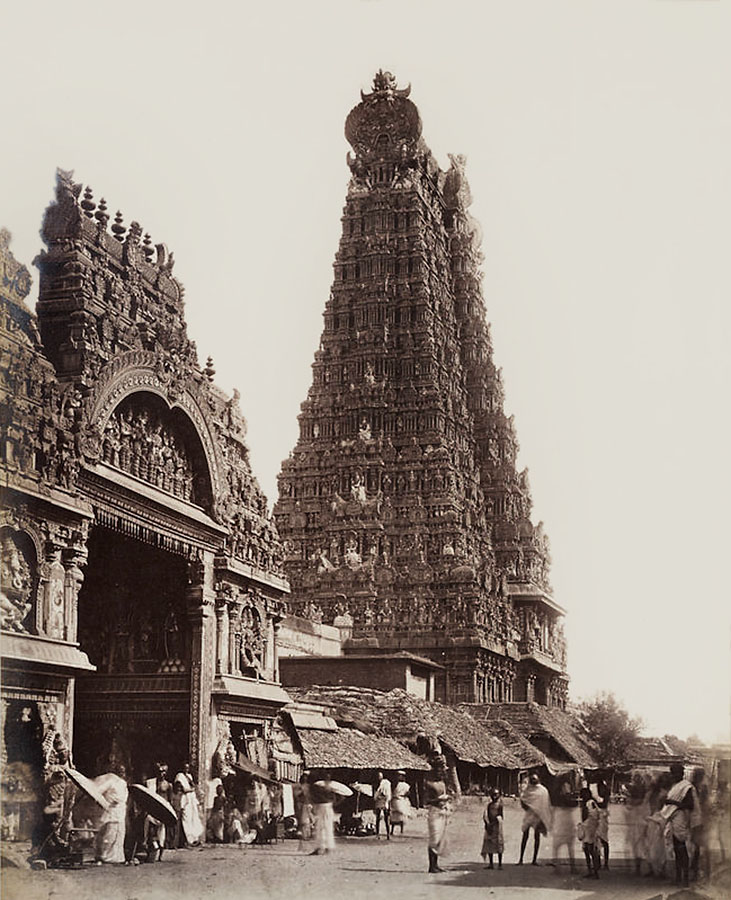
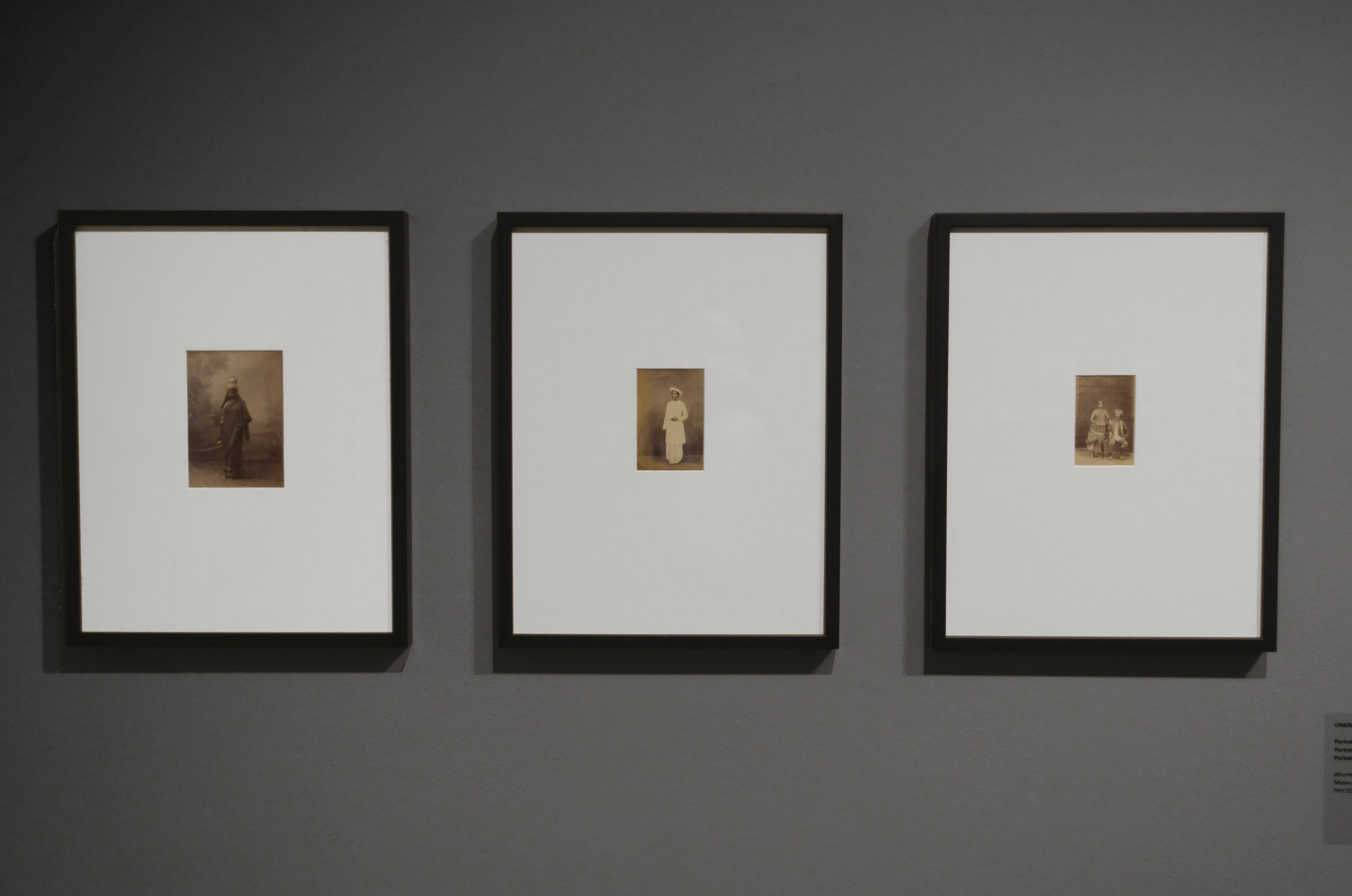
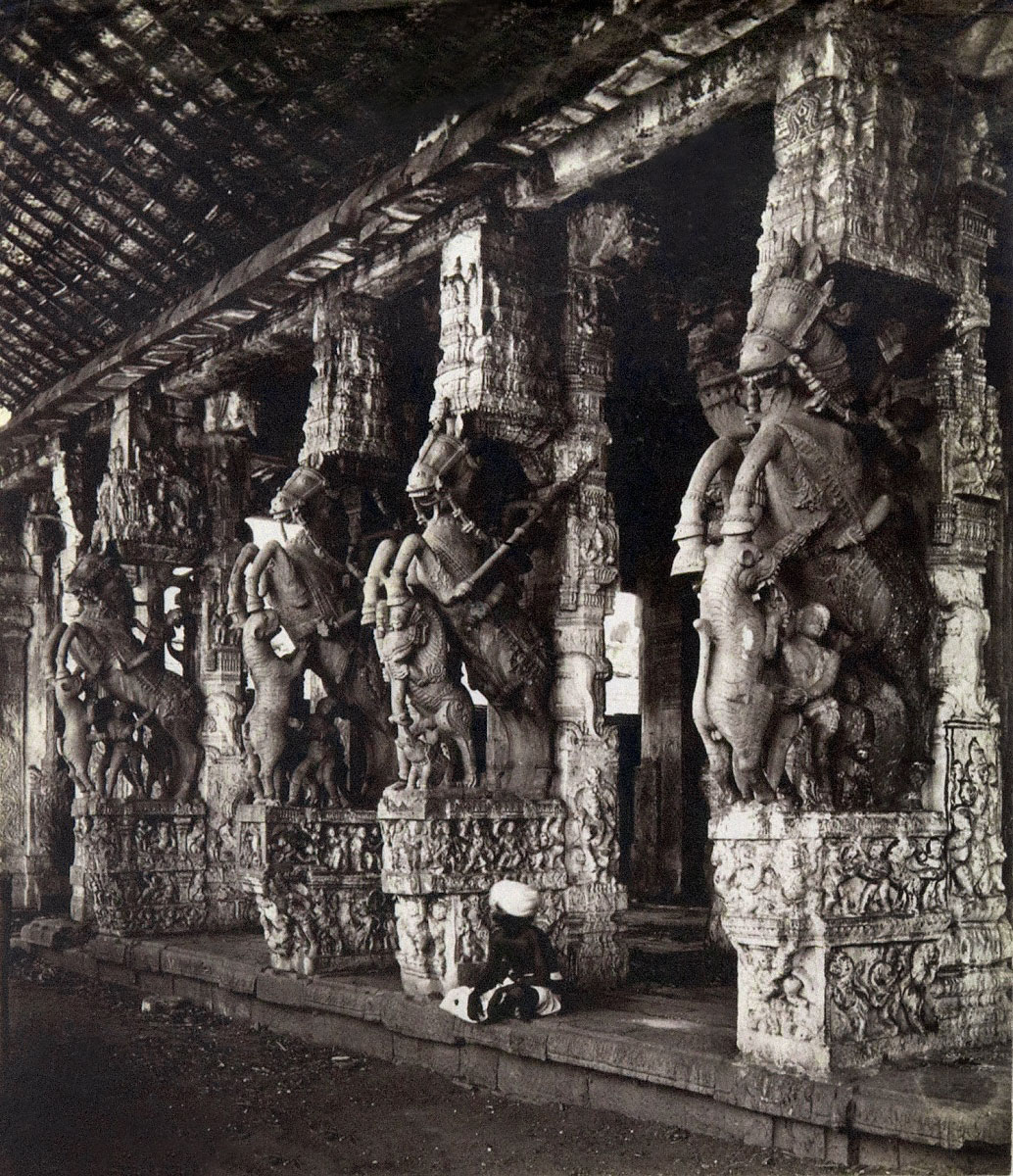
In India, a technology adopted by the elites

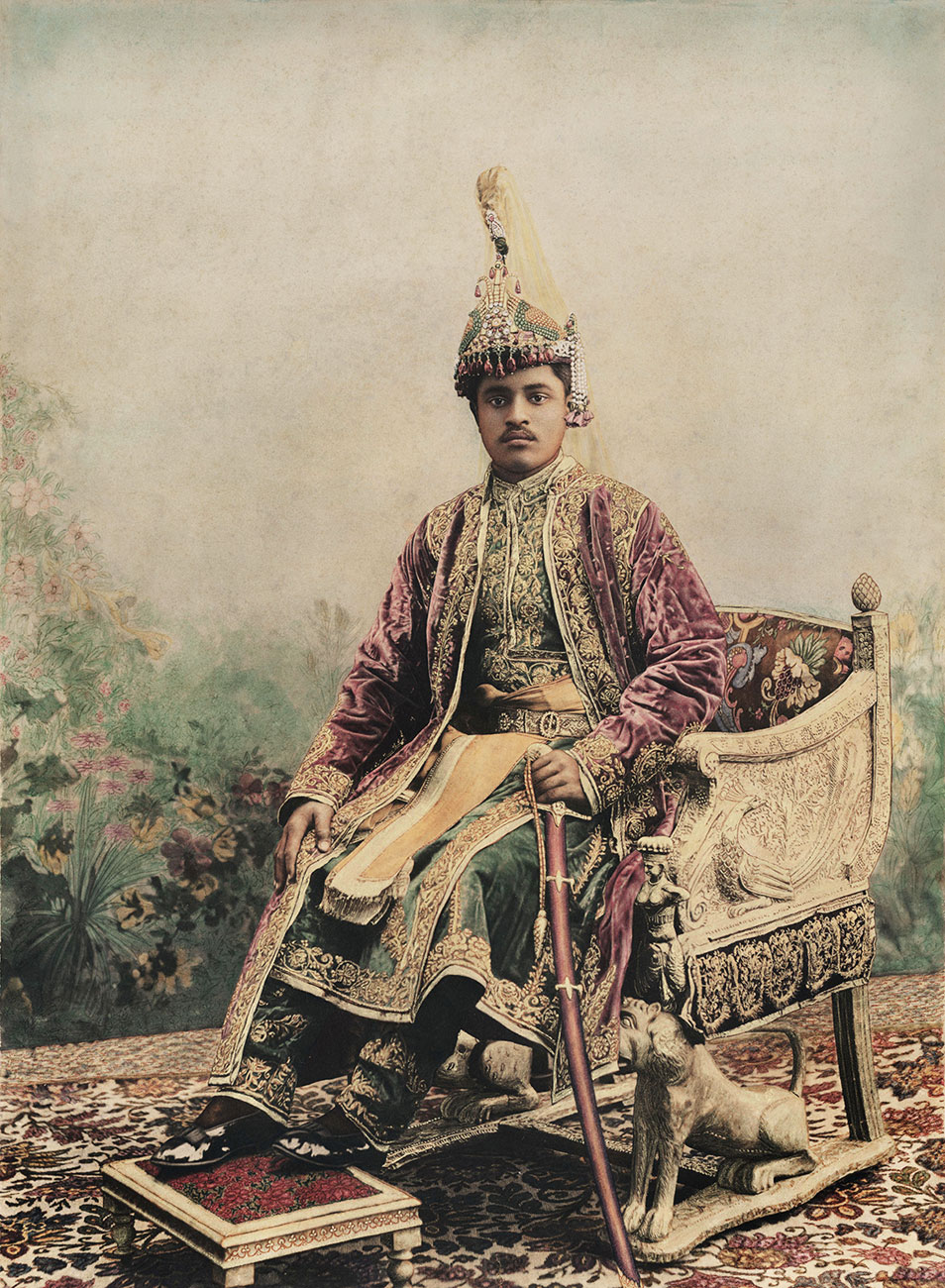
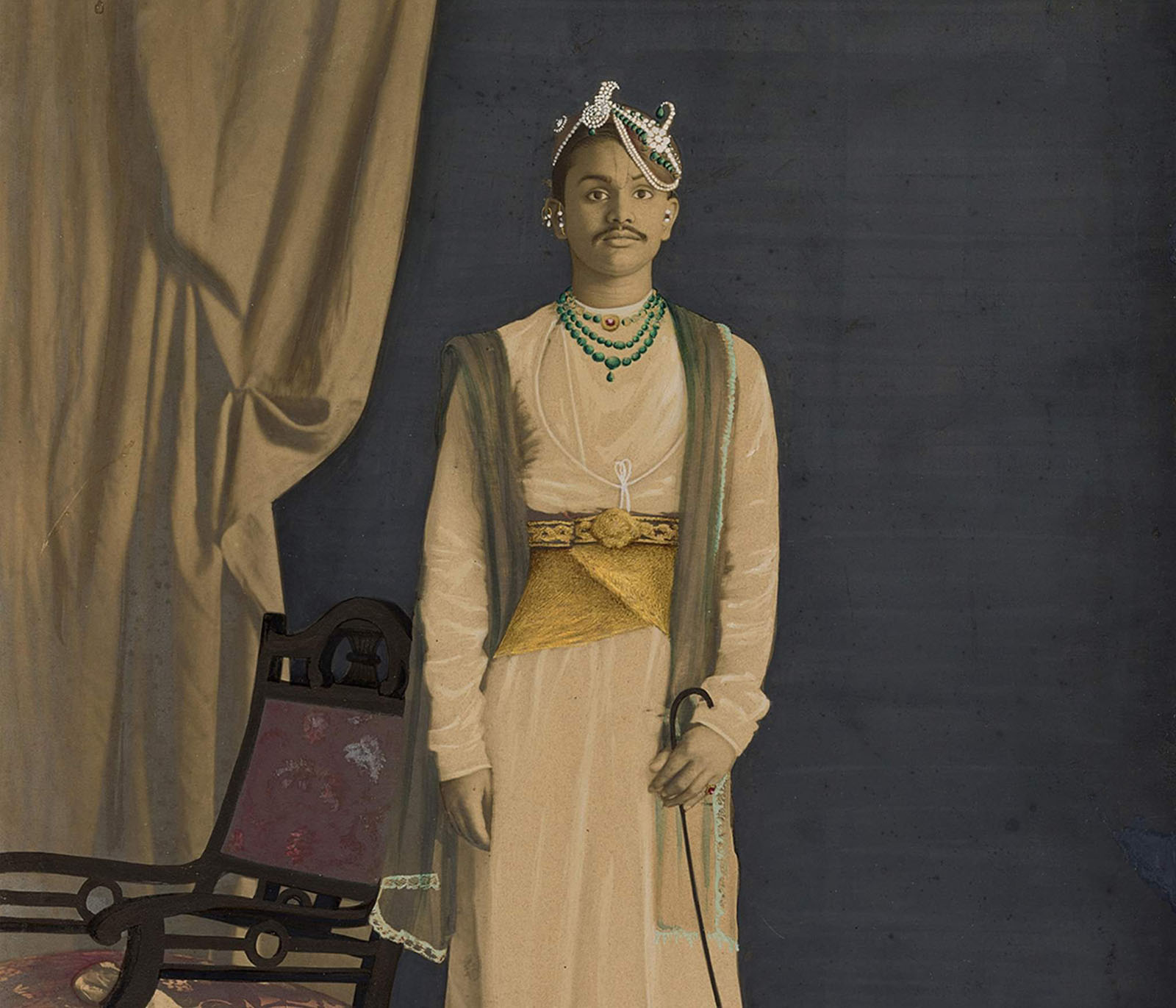
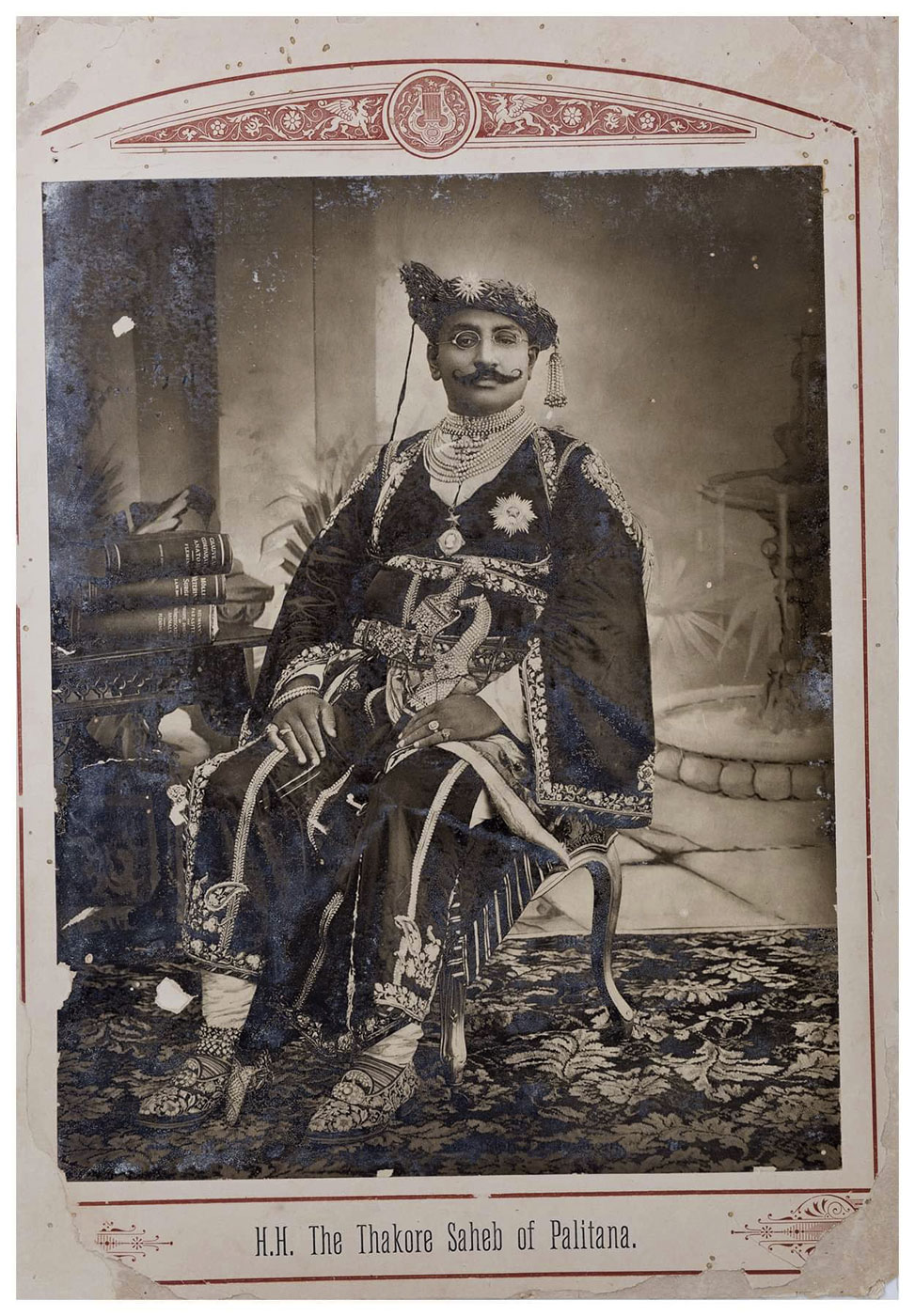
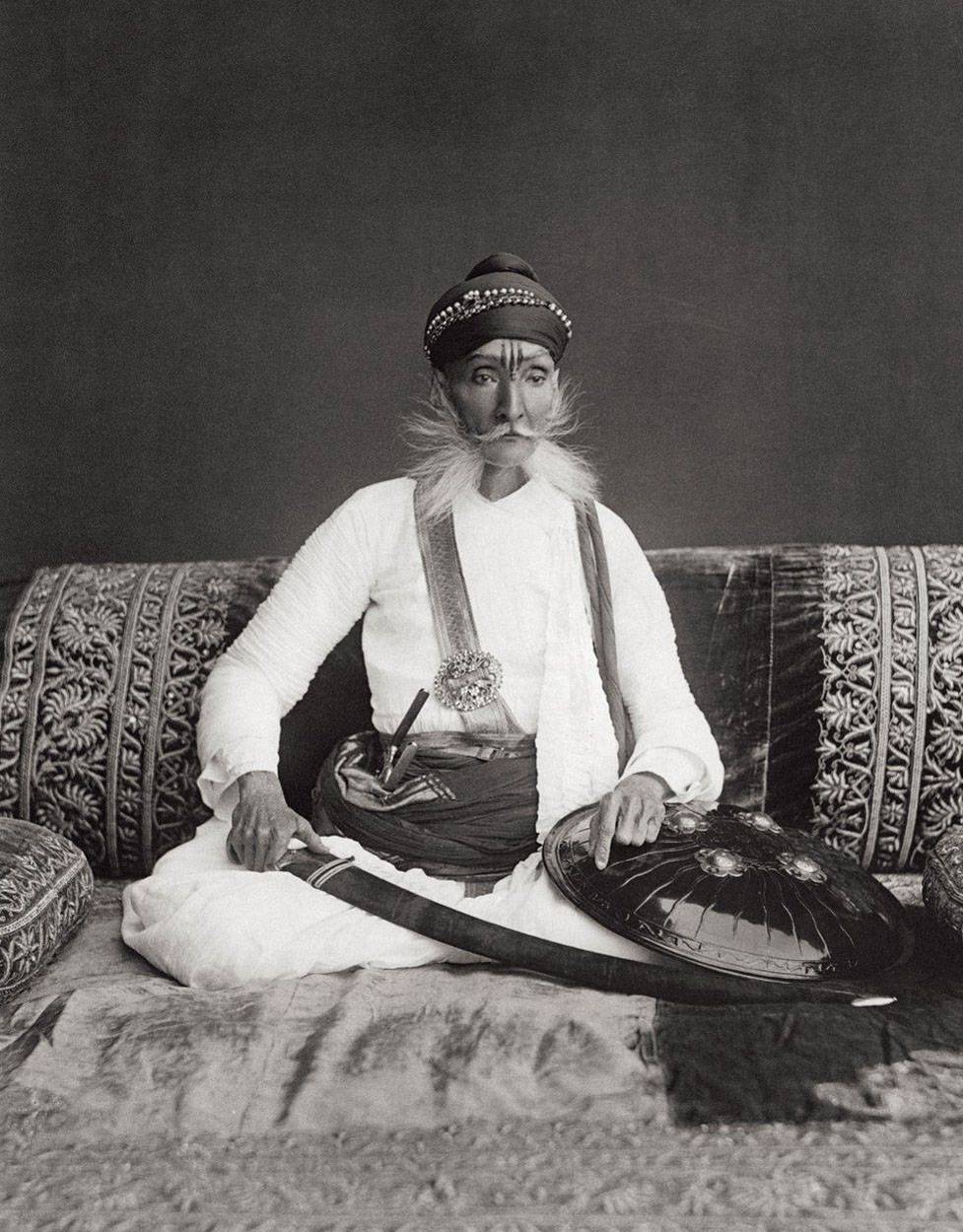
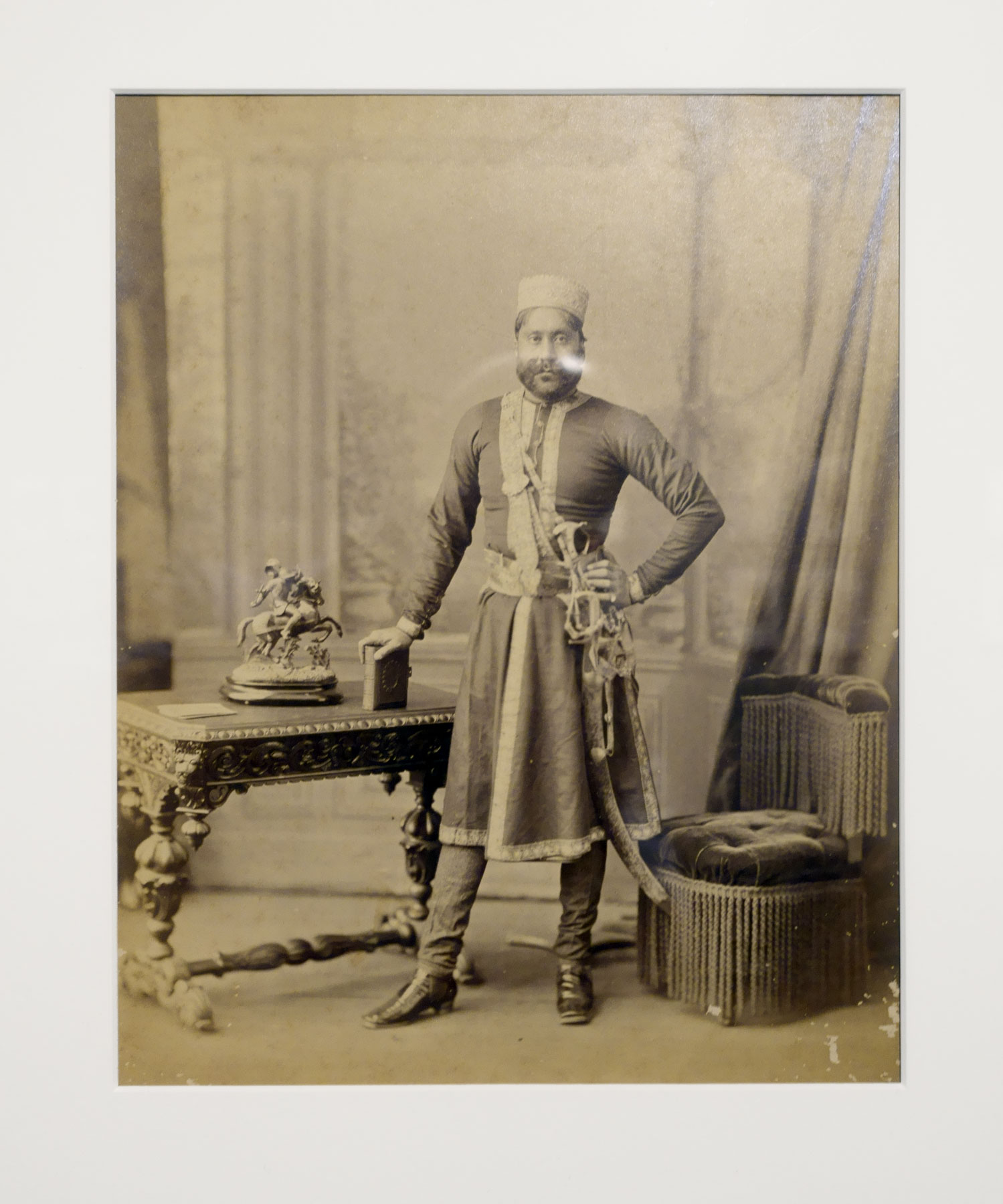
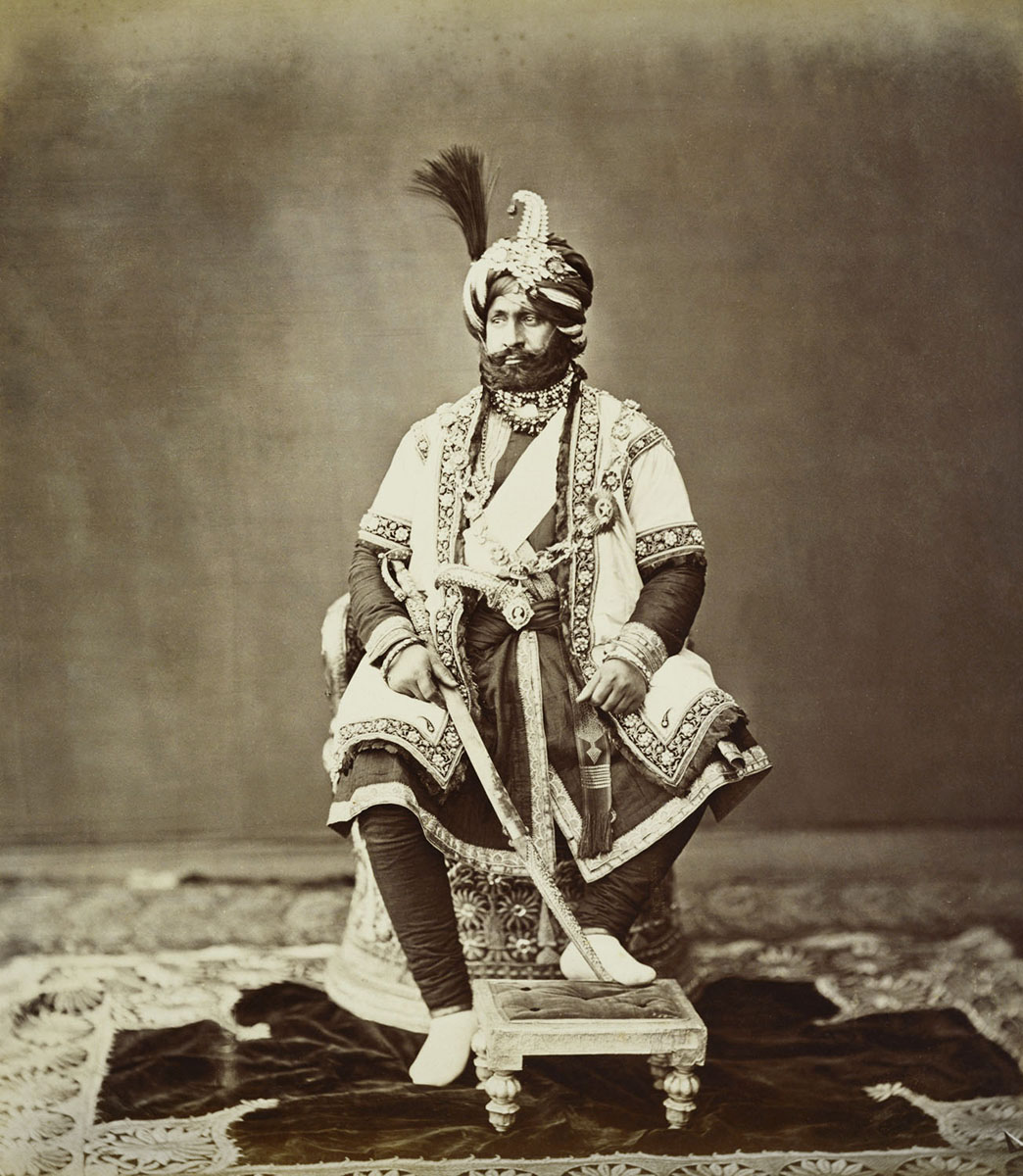
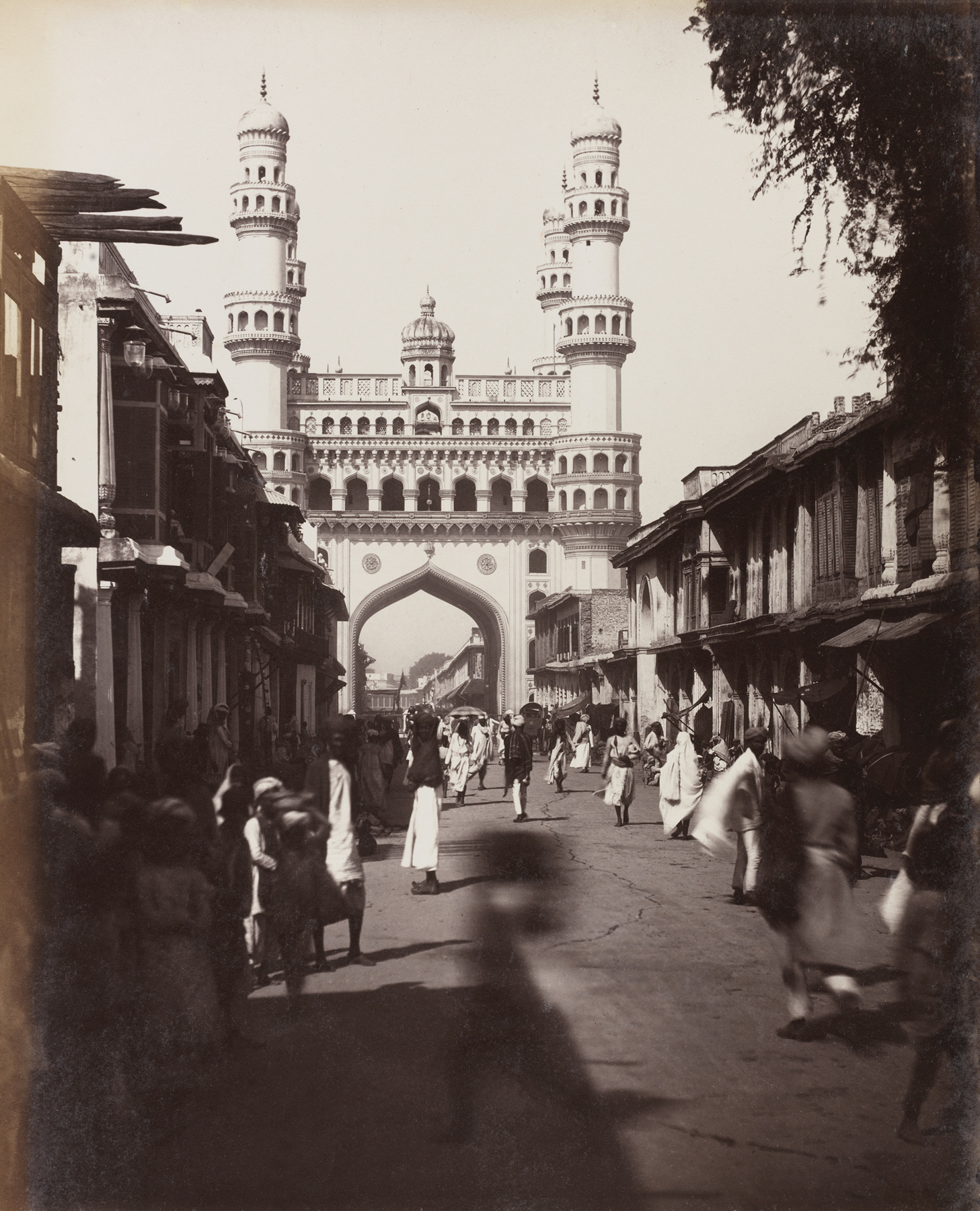
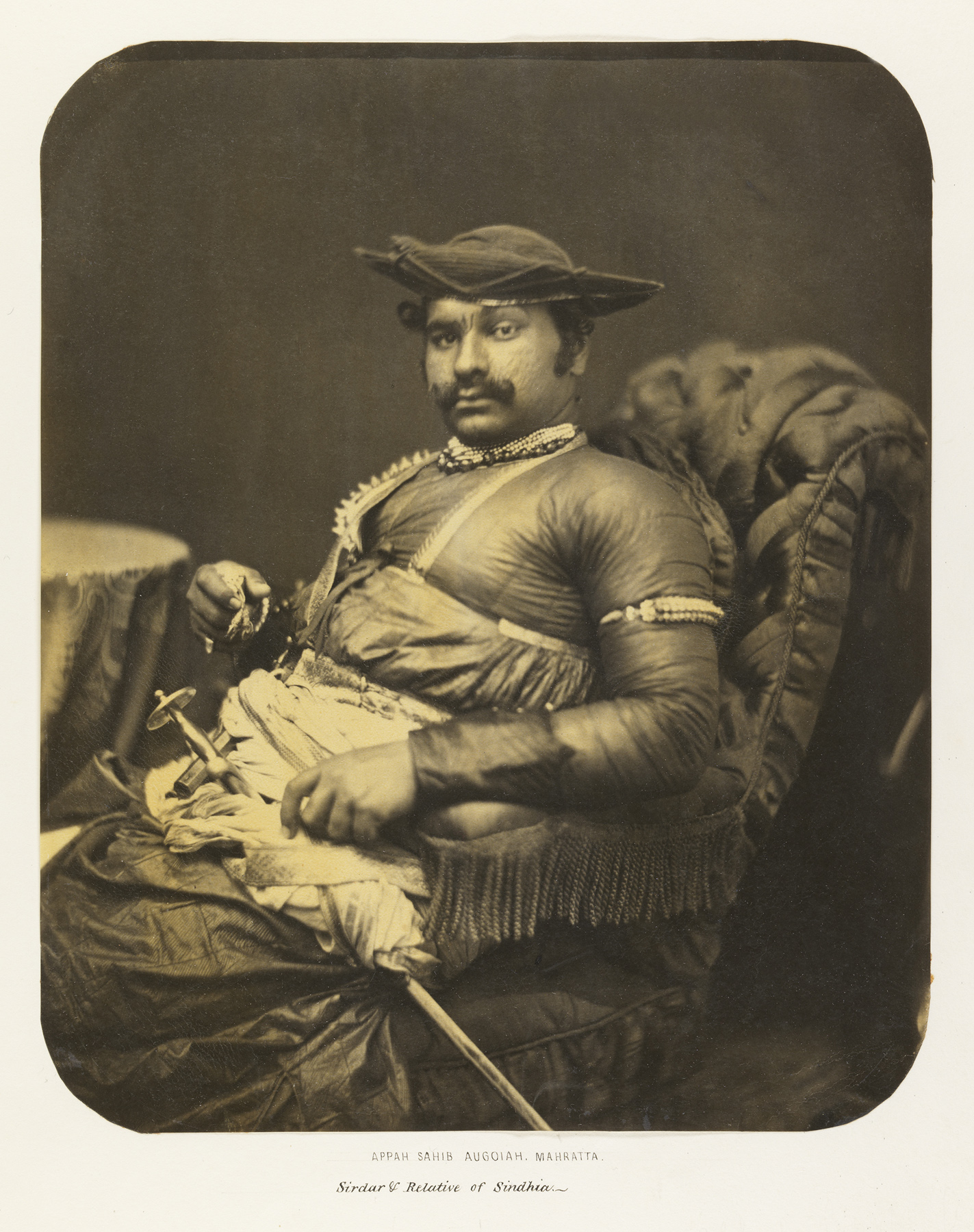
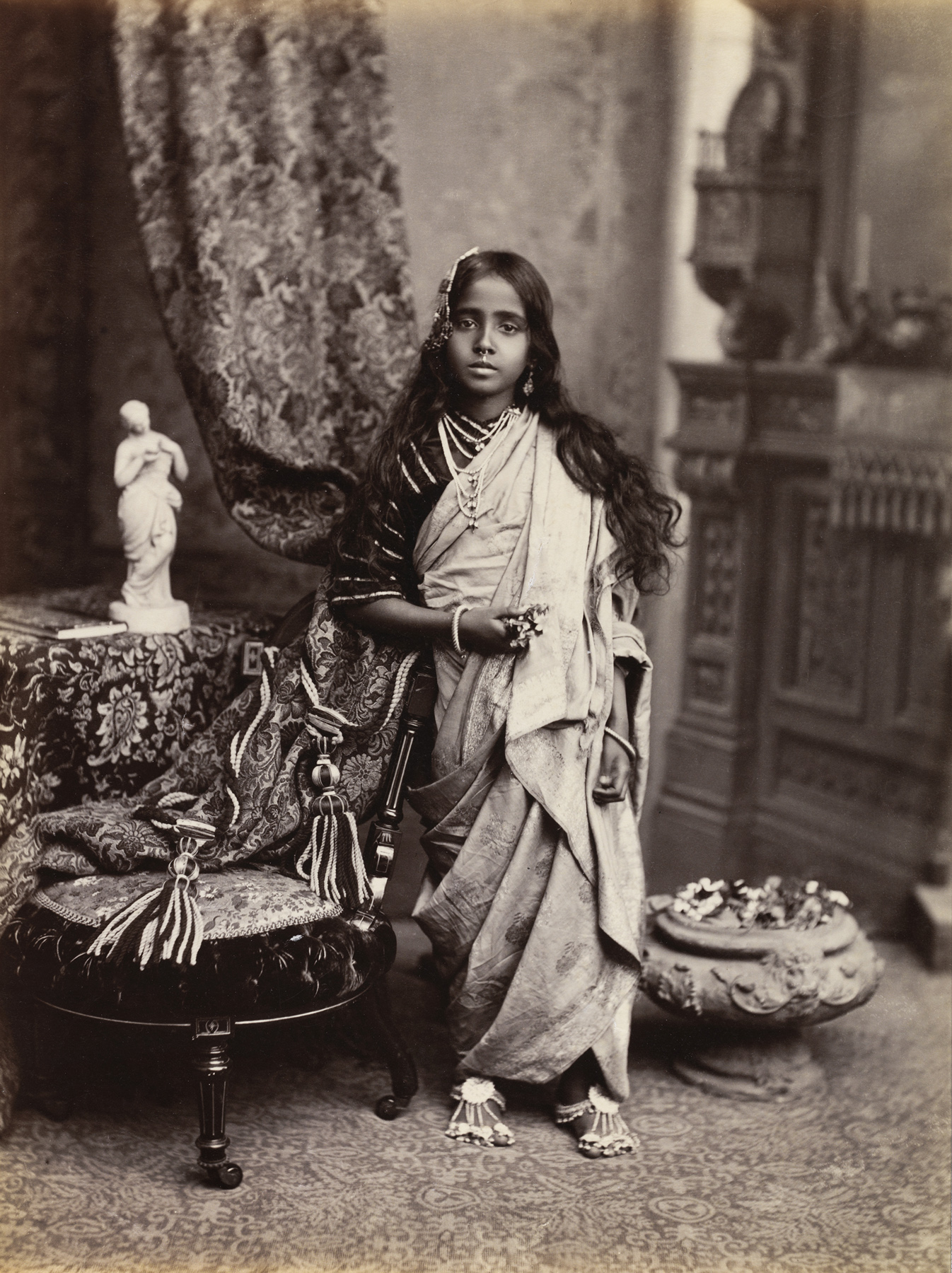
Introduced in India in 1840, photography was used by the authorities British and quickly adopted by the Indian elite. Studios set up in major port cities like Bombay, Madras and Calcutta. Active members of the Photographic Society of Bombay, Narayan Dajee and Hurrychund Chintamon are among the first native photographers to practice from the 1850s with the local elite, Brahmans, members of the government, and at the same time participate in colonial projects ethnographic documentation. The technology aroused enthusiasm very early on many maharajas. Famous Indian photographer Lala Deen Dayal received the title of official photographer of the ruler of Hyderabad in 1884. In some princely states like Indore, Udaipur and Mewar, photography of painted court is a great success and is part of the tradition of royal portraiture of pageantry. Enlarged prints are coated with a vivid layer of paint and opaque, which emphasises the abundance of jewels and the sumptuous character clothes.

Text from the exhibition


Hurrychund Chintamon. 'Untitled (Portrait of a man)' 1860s-1880s


Hurrychund Chintamon (Indian)
Untitled (Portrait of a man)
1860s-1880s
Albumen print
© Quai Branly Museum – Jacques Chirac


Hurrychund Chintamon (Indian)

One of India’s earliest commercial photographers who specialised in portraiture, Hurrychund Chintamon was based in Bombay (now Mumbai). He received his training at Elphinstone College in 1855 under WHS Crawford, a secretary of the Photographic Society of Bombay, where Chintamon also exhibited his work the following year. He subsequently set up his photography studio in the city, initially photographing members of local mercantile families and later expanding his clientele to aristocracy and important political, administrative and literary figures, including Jamsetjee Jejeebhoy and Manickjee Antarya.

When Elphinstone introduced a course in photography in 1855, under instruction from the British East India Company, Chintamon was among the first batch of forty students to enroll. He graduated in 1856 with distinction, having twice earned the best photographs prize. The same year, he exhibited his photographs at the Bombay Photographic Society, along with others such as Narayan Daji, gaining the visibility he needed to operate as an independent professional. He also went on to produce a number of ethnographic images, some of which were displayed at the Exposition Universelle, or the Paris International Exposition, of 1867 for industrial, art and craft manufactures. His studio, Hurrychund & Co., which he set up at Rampart Row in 1858 flourished until 1881, when it ceased operations. …

Accompanying the proliferation of independent photography studios in the mid-nineteenth century, was the development of a hybrid aesthetic, seen also in Chintamon’s work. He evolved a visual style that combined the Victorian iconographies of class and refinement with the Indian symbols of ethnicity, caste and status. In staging his sitters, he used the popular European conventions of painted backdrops as well as props such as printed carpets and flower vases. The sitters were often posed or arranged to suggest an air of casualness or informality, in conspicuous contrast to their own self-conscious formality – likely a result of having to hold still during extended individual exposure times. This unintended tension between setting and sitter is another notable characteristic of Chintamon’s portraits.

Anonymous. “Hurrychund Chintamon,” on the Mapacademy website April 21, 2022 [Online] Cited 27/05/2023. Used under fair use conditions for the purposes of education and research


Anonymous photographer. 'Portrait of a Maharaja of the Royal Family. Holkar, princely state of Indore' 1910-1920


Anonymous photographer
Portrait of a Maharaja of the Royal Family. Holkar, princely state of Indore
1910-1920
Silver print enhanced with gouache
© Quai Branly Museum – Jacques Chirac


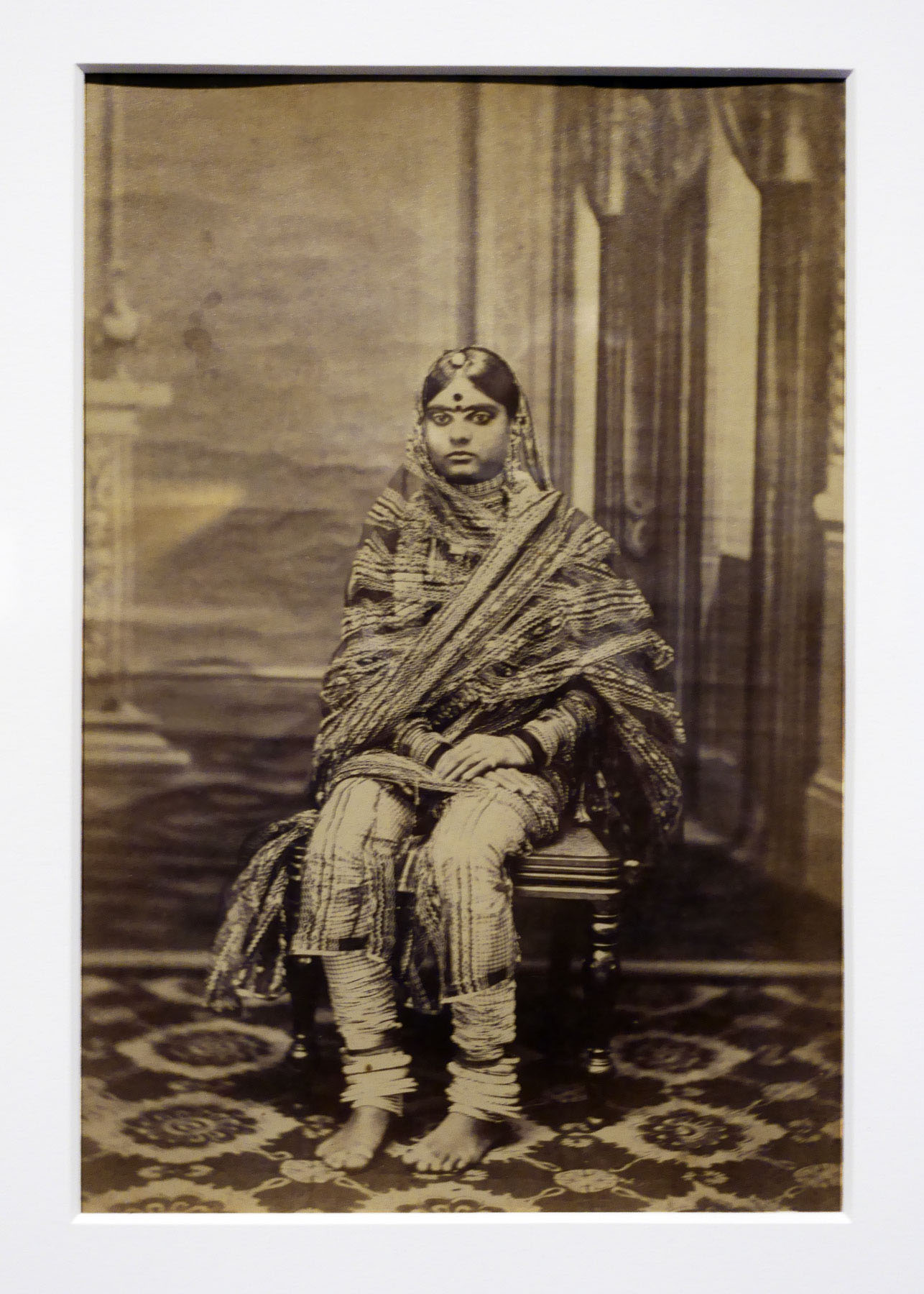
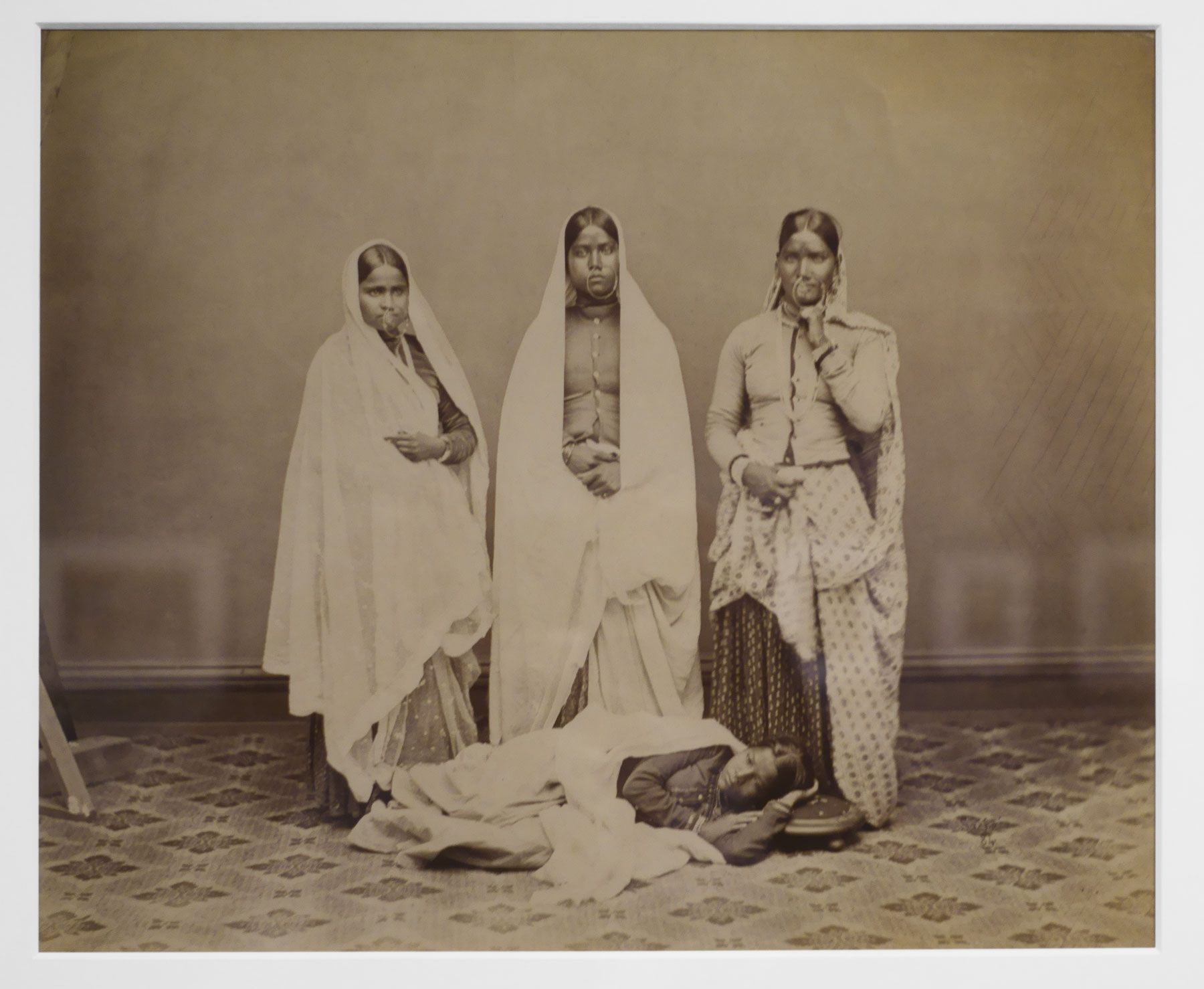
Johnston & Hoffmann (active 1880-1950) 'The Maharani of Nepal and her Ladies in Waiting' Nepal, 1885-1894


Johnston & Hoffmann (active 1880-1950).
The Maharani of Nepal and her Ladies in Waiting
Nepal, 1885-1894
Albumen print
musée du quai Branly – Jacques Chirac
© Musée du Quai Branly – Jacques Chirac, Dist. RMN-Grand Palais
Image: Musée du Quai Branly – Jacques Chirac


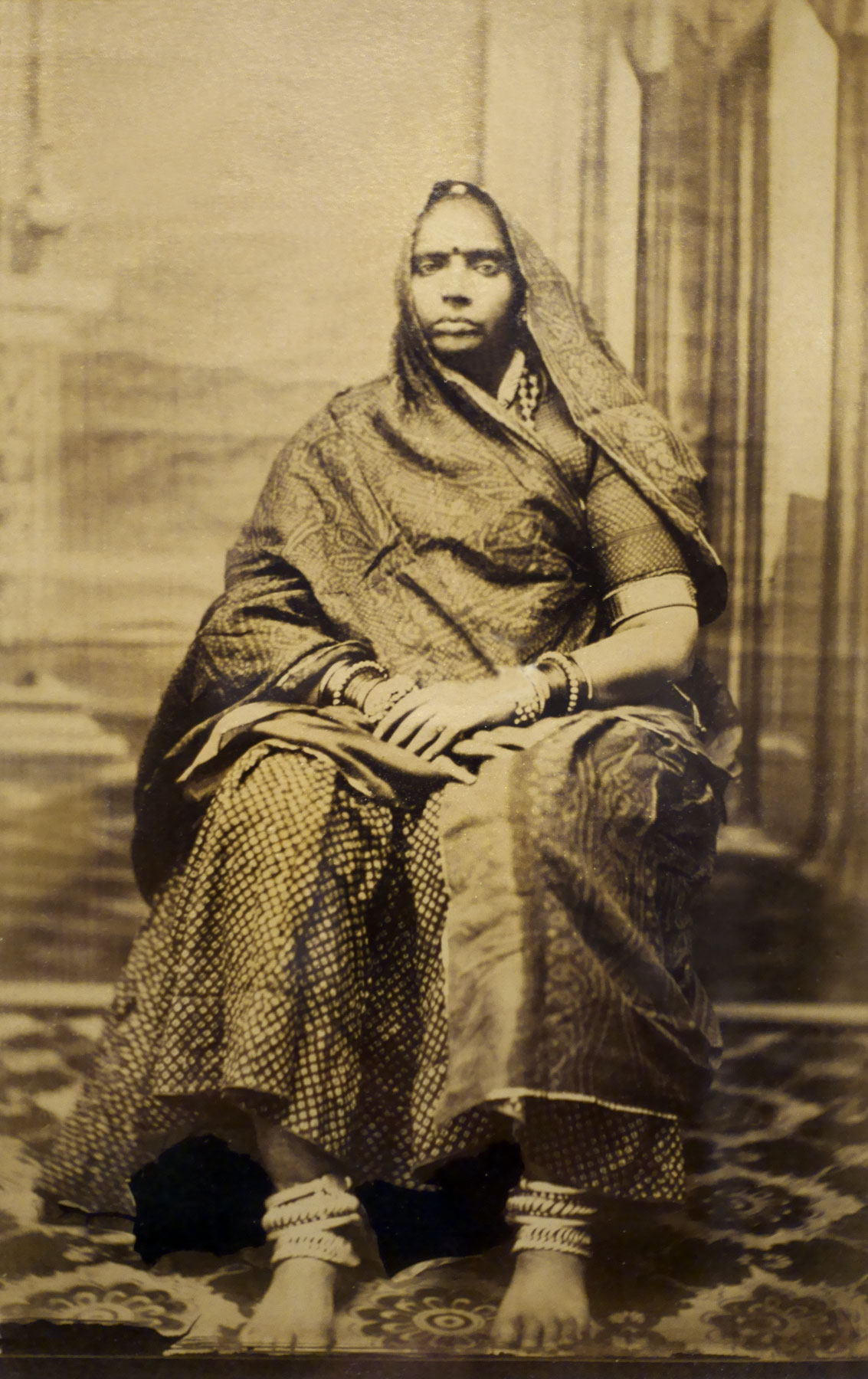
Johnston & Hoffmann (active 1880-1950) 'The Maharani of Nepal and her Ladies in Waiting' Nepal, 1885-1894 (detail)


Johnston & Hoffmann (active 1880-1950)
The Maharani of Nepal and her Ladies in Waiting (detail)
Nepal, 1885-1894
Albumen print
musée du quai Branly – Jacques Chirac
© Musée du Quai Branly – Jacques Chirac, Dist. RMN-Grand Palais
Image: Musée du Quai Branly – Jacques Chirac


P.A. Johnston and Theodore Julius Hoffmann (active 1880-1950)

Of British origin, P. A. Johnston and Theodore Julius Hoffmann founded the Johnston & Hoffmann studio, at its time the second largest European studio important in India. Established in Calcutta in 1882, they opened eight years later a annex to Darjeeling. Their studio is best known for its portraits of locals and royalty from Nepal, Sikkim and Tibet.

Text from the exhibition
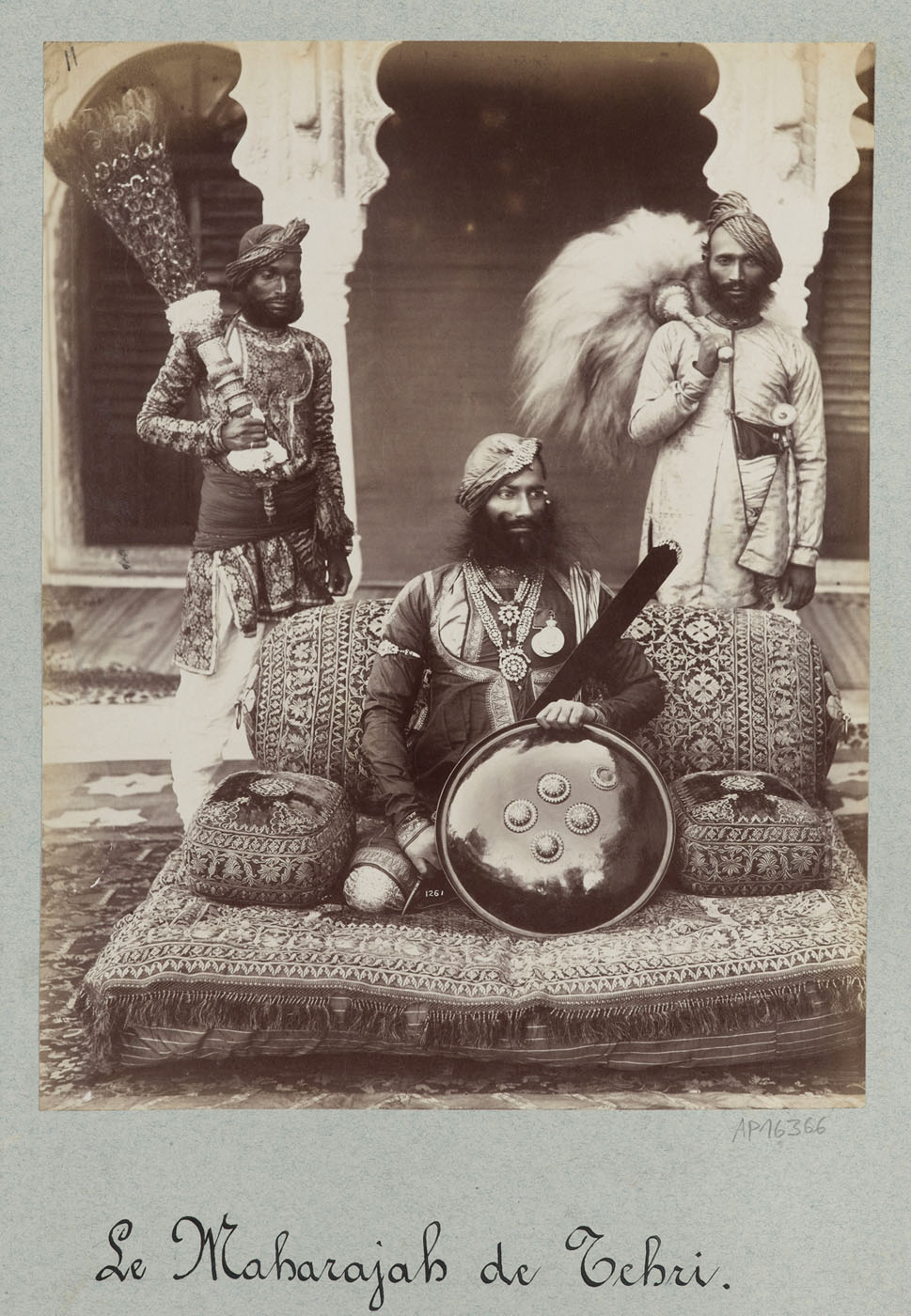
 

Lala Deen Dayal (Indian, 1844-1905) 'Portrait of Sir Pratab Singh, Maharajah of Orchla, with his entourage India' 1882


Lala Deen Dayal (Indian, 1844-1905)
Portrait of Sir Pratab Singh, Maharajah of Orchla, with his entourage
India, 1882
Albumen print
musée national des arts asiatiques – Guimet
© Bibliothèque nationale de France, Paris


Lala Deen Dayal (Indian, 1844-1905)

Raja Lala Deen Dayal (Hindi: लाला दीन दयाल; 1844-1905; also written as ‘Din Dyal’ and ‘Diyal’ in his early years), famously known as Raja Deen Dayal) was an Indian photographer. His career began in the mid-1870s as a commissioned photographer; eventually he set up studios in Indore, Mumbai and Hyderabad. He became the court photographer to the sixth Nizam of Hyderabad, Mahbub Ali Khan, Asif Jah VI, who awarded him the title Raja Bahadur Musavvir Jung Bahadur, and he was appointed as the photographer to the Viceroy of India in 1885. He received the Royal Warrant from Queen Victoria in 1897.


Lala Deen Dayal (Indian, 1844-1905) 'Portrait of Sir Pratab Singh, Maharajah of Orchla, with his entourage India' 1882 (detail)


Lala Deen Dayal (Indian, 1844-1905)
Portrait of Sir Pratab Singh, Maharajah of Orchla, with his entourage (detail)
India, 1882
Albumen print
musée national des arts asiatiques – Guimet
© Bibliothèque nationale de France, Paris
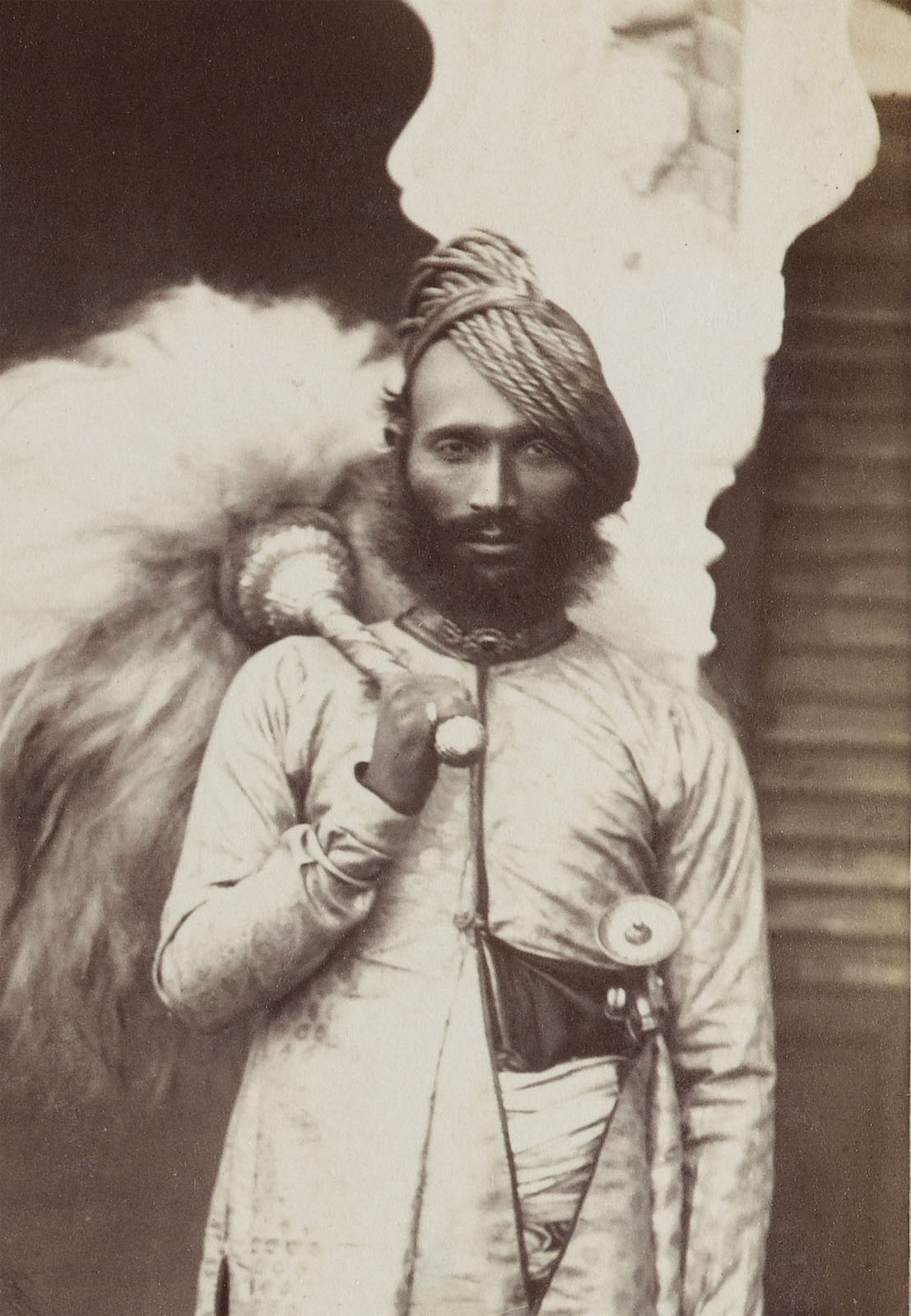
 

Lala Deen Dayal (Indian, 1844-1905) 'Portrait of Sir Pratab Singh, Maharajah of Orchla, with his entourage India' 1882 (detail)


Lala Deen Dayal (Indian, 1844-1905)
Portrait of Sir Pratab Singh, Maharajah of Orchla, with his entourage (detail)
India, 1882
Albumen print
musée national des arts asiatiques – Guimet
© Bibliothèque nationale de France, Paris


Installation view of the exhibition 'Photographs. An Early Album of the World (1842-1911)' at the musée du quai Branly – Jacques Chirac, Paris showing the section 'Composite photographs in Mexico'


Installation view of the exhibition Photographs. An Early Album of the World (1842-1911) at the musée du quai Branly – Jacques Chirac, Paris showing the section ‘Composite photographs in Mexico’


Composite photographs in Mexico

In the history of painted photography practices, colourisation often aims to embellish the print considered monochromatic and dull. A set of photographs painted by landscape artist Conrad Wise Chapman show a association of these two techniques around picturesque and popular subjects. Other forms of formal hybridisation are attested in Mexico. Three shots set with a medallion were partially covered with feathers in the colours shimmering, to highlight clothes and certain elements of the decor. These composite objects are rare testimonies that combine the art of featherwork, widespread in Mexico during the pre-Hispanic and colonial periods, with the new technique of photography. The figure of the peddler is attributed to the photographer Augustin Péraire [below] and the image of the three women is a reproduction of a print of the popular figure showing the “China poblana”.

Wall text from the exhibition


Augustin Péraire (active c. 1860) 'Portrait of a Man' c. 1867


Augustin Péraire (active c. 1860)
Portrait of a Man
c. 1867
Print on albumen paper enhanced with gouache and partially feather coloured, laminated on card size cardboard. Oval frame format, frame and gilt window, black and tan passe-partout swirl effect
13 x 9.2cm
© Quai Branly Museum – Jacques Chirac


Installation view of the exhibition 'Photographs. An Early Album of the World (1842-1911)' at the musée du quai Branly – Jacques Chirac, Paris showing at second left, W.J. Sawyer's 'Mr Sawyer, photo man' (Nigeria, 1880-1890)


Installation view of the exhibition Photographs. An Early Album of the World (1842-1911) at the musée du quai Branly – Jacques Chirac, Paris showing at second left, W.J. Sawyer’s Mr Sawyer, photo man (Nigeria, 1880-1890, below)


W.J. Sawyer (Nigerian) 'Mr Sawyer, photo man' Nigeria, 1880-1890


W.J. Sawyer (Nigerian)
Mr Sawyer, photo man
Nigeria, 1880-1890
Albumen paper print
Print on aristotype paper
© Quai Branly Museum – Jacques Chirac


Photo of W. J. Sawyer and his sons taken in Calabar (possibly at his studio). W. J. Sawyer was a photographer based in Calabar, mostly active during the late 19th century and early 20th century, having photographed the Oba of Benin during the period of his craft.


W.J. Sawyer

The biography of W. J. Sawyer is still quite incomplete. He takes, on demand of the Spanish Commander Francisco Romero, several photographs in Bioko (current Equatorial Guinea), in 1883. The images are shown the same year at the International Colonial and Export Exhibition in Amsterdam. The picture showing a man accompanied by two boys could be a self-portrait of the photographer, as the title on the back suggests.

Rapid growth in West Africa

Photography was quickly adopted in many regions in the world from the 1840s to the 1860s. West Africa combines several factors which have fostered its rapid growth. Many ports connect the cities with each other and with the European continent, facilitating transatlantic and regional trade. In Freetown (current Sierra Leone), Lagos (current Nigeria), Libreville (current Gabon) established communities made up of elders freed and returning slaves from North and South America and the Caribbean. A cosmopolitan culture reigns in these cities where trade can develop.

As early as 1853, the African-American Augustus Washington left the United States and set up a daguerreotype studio in Monrovia. In the 1860s, Francis W. Joaque or J.P. Decker practice photography on an itinerant basis on the coast. These photographers respond to a local demand for photography loved ones or events to remember. They also include a clientele European, Joaque realising for example many portraits of the explorer Italian Pierre Savorgnan de Brazza. The Lutterodt dynasty establishes several studios photographers who operate in Accra (current Ghana) and Freetown between the years 1870 and 1940.

Text from the exhibition


Jonathan Adagogo Green (Nigerian, 1873-1905) 'Last photo of Chief Henry Long John. Behind him stands his successor' Nigeria, 1895


Jonathan Adagogo Green (Nigerian, 1873-1905)
Last photo of Chief Henry Long John. Behind him stands his successor
Nigeria, 1895
Albumen print
© Quai Branly Museum – Jacques Chirac


J.A. Green (Nigerian, 1873-1905)

J. A. Green is one of West Africa’s most prolific photographers. Born in Nigeria, he is the son of a palm oil merchant. He practices photography from 1891 and provides images to a clientele African and European. He also trains other photographers. In this image, Green photographs a stage at the leader’s funeral slaver Amonibienye Ofori Long John. The tanda burial custom involves, for the elites, the public presentation of the body of the deceased dressed in his clothes of pageantry. Son Henry Obulu supports his father’s jaw to affirm his position as legitimate heir.

Text from the exhibition


Jonathan Adagogo Green (J. A. Green), born in the village of Ayama (Peterside), Bonny (Rivers State, Nigeria) in 1873. The son of Chief Sunju Okoronkwoye Dublin Green and Madame Idameinye Green, he was looked after by his uncle Uruasi Dublin Green after his father’s death in 1875. He attended school in Lagos and possibly Sierra Leone. It is unknown where he trained as a photographer but by 1891 he had set up his photographic practice in Bonny. His work covered a range of themes including portraiture of British colonial officers, European merchants, prominent chiefs and their families, scenes of daily and ritual life, commerce and building – a body of work that appealed to both local elites and expatriate clients. Green died in 1905 at the age of 32, after practicing in the Niger Delta for 14 years. His work is in held in a number of collections in the UK, USA and Nigeria.

Text from the exhibition


Jonathan Adagogo Green (1873-1905) was according to some sources the first professional photographer in what is now Nigeria to have ethnic origins in that area. He is significant in being a pioneering photographer in what is now Nigeria, noted for his documentation of the colonial power and local culture, particularly his Ibani Ijo community.

Green was born in Bonny, present day Rivers State. “He studied photography in Sierra Leone and then established a studio in Bonny.” The area where he lived became part of the British Oil Rivers protectorate in 1884, which was renamed to the Niger Coast Protectorate in 1893. It was part of the Southern Nigeria Protectorate for the last few years of Green’s life, starting in 1900.

Green was active as a photographer for only a short lifetime, dying at the age of 32. “But during this period he was both energetically productive and remarkably adroit in serving both indigenous and colonial clienteles.” “When he set up shop his work was appreciated and rewarded by two very different communities.” His “strategic use of initials on his business cards and stamps… disguised his African origins”, part of his working with the colonial era officials.

Text from the Wikipedia website


Jonathan Adagogo Green (Nigerian, 1873-1905) 'Last photo of Chief Henry Long John. Behind him stands his successor' Nigeria, 1895 (detail)


Jonathan Adagogo Green (Nigerian, 1873-1905)
Last photo of Chief Henry Long John. Behind him stands his successor (detail)
Nigeria, 1895
Albumen print
© Quai Branly Museum – Jacques Chirac


William Ellis (British, 1794-1872) 'Untitled (portrait of a woman)' 1853-1865


William Ellis (British, 1794-1872)
Untitled (portrait of a woman)
1853-1865
Salted paper print
20.5 x 24cm
© musée du quai Branly – Jacques Chirac
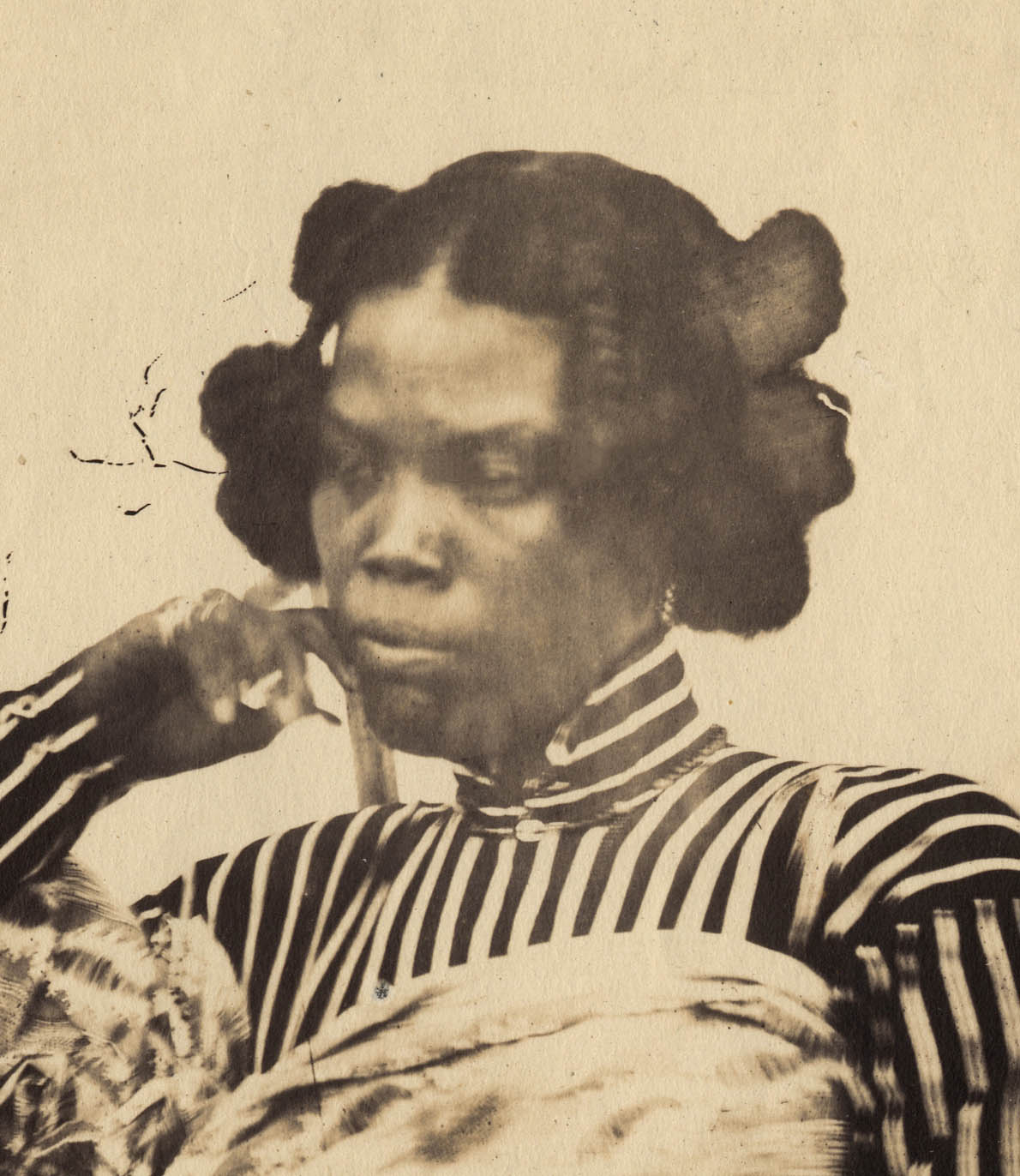
 

William Ellis (British, 1794-1872) 'Untitled (portrait of a woman)' 1853-1865 (detail)


William Ellis (British, 1794-1872)
Untitled (portrait of a woman) (detail)
1853-1865
Salted paper print
20.5 x 24cm
© musée du quai Branly – Jacques Chirac


William Ellis (29 August 1794 – 9 June 1872) was a British missionary and author. He travelled through the Society Islands, Hawaiian Islands, and Madagascar, and wrote several books describing his experiences.
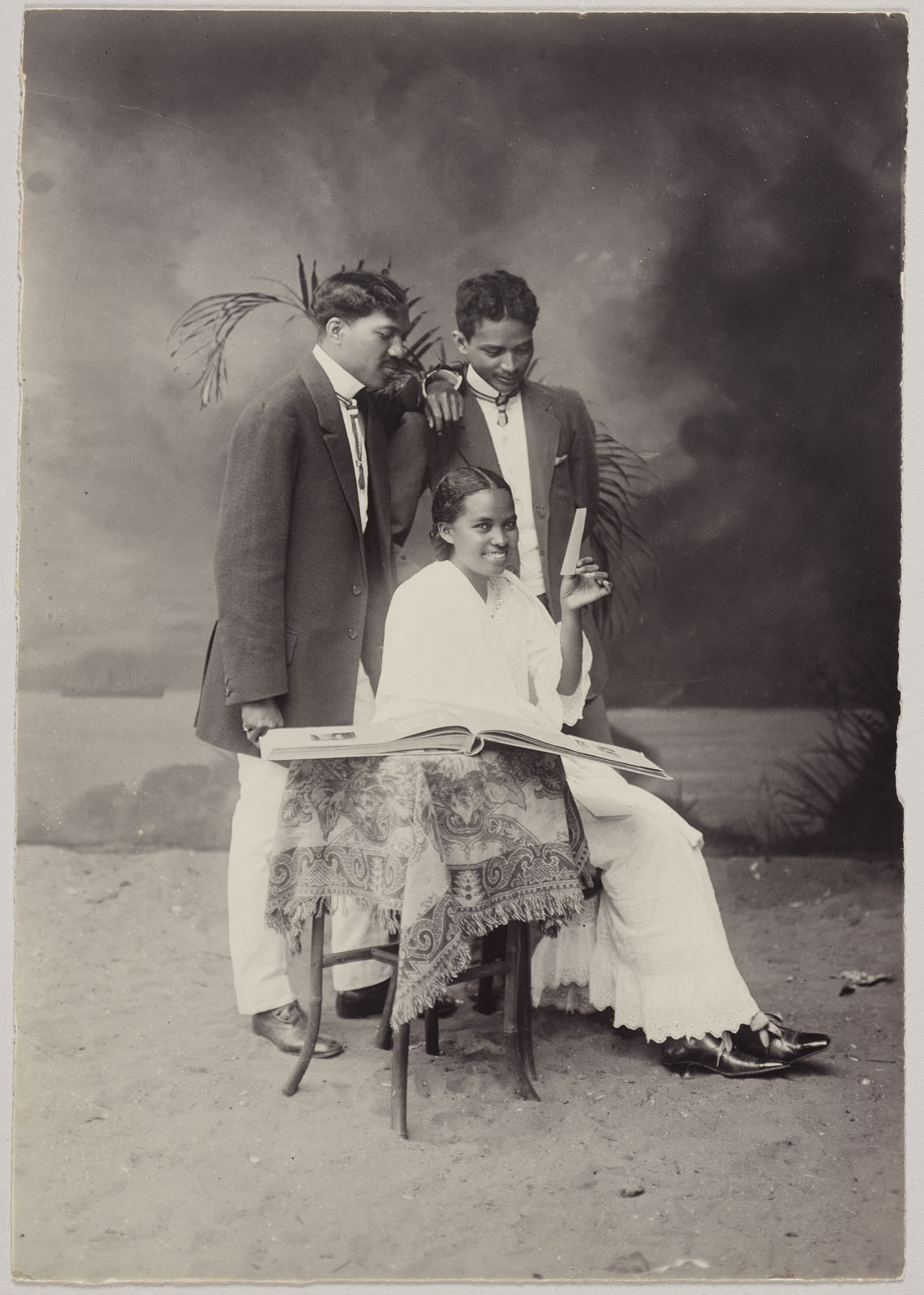
 

Joseph Razafy (Madagascar, 1881-1949) 'Untitled (portrait of two men and a woman)' Nd


Joseph Razafy (Madagascar, 1881-1949)
Untitled (portrait of two men and a woman)
Nd
© musée du quai Branly – Jacques Chirac


In Madagascar, photography as a tool of social distinction

Photography is introduced to Madagascar by the British missionary William Ellis [above]. First rejected by Queen Ranavalona I (r. 1828-1861), the technology was enthusiastically adopted during the reign of Radama II (r. 1861-1863) by the king himself, the court and the Malagasy elite, responding to the desire for individualisation and social distinction from high society. Several European photographers mentioned the ease and familiarity of the models with the device. From the 1890s, the first Malagasy studios won great success with a population wishing to design and maintain a self-image. The photos presented here are the work of this first generation Malagasy photographers, including Joseph Razaka based in Antananarivo and Joseph Razafy in Toamasina.

Text from the exhibition
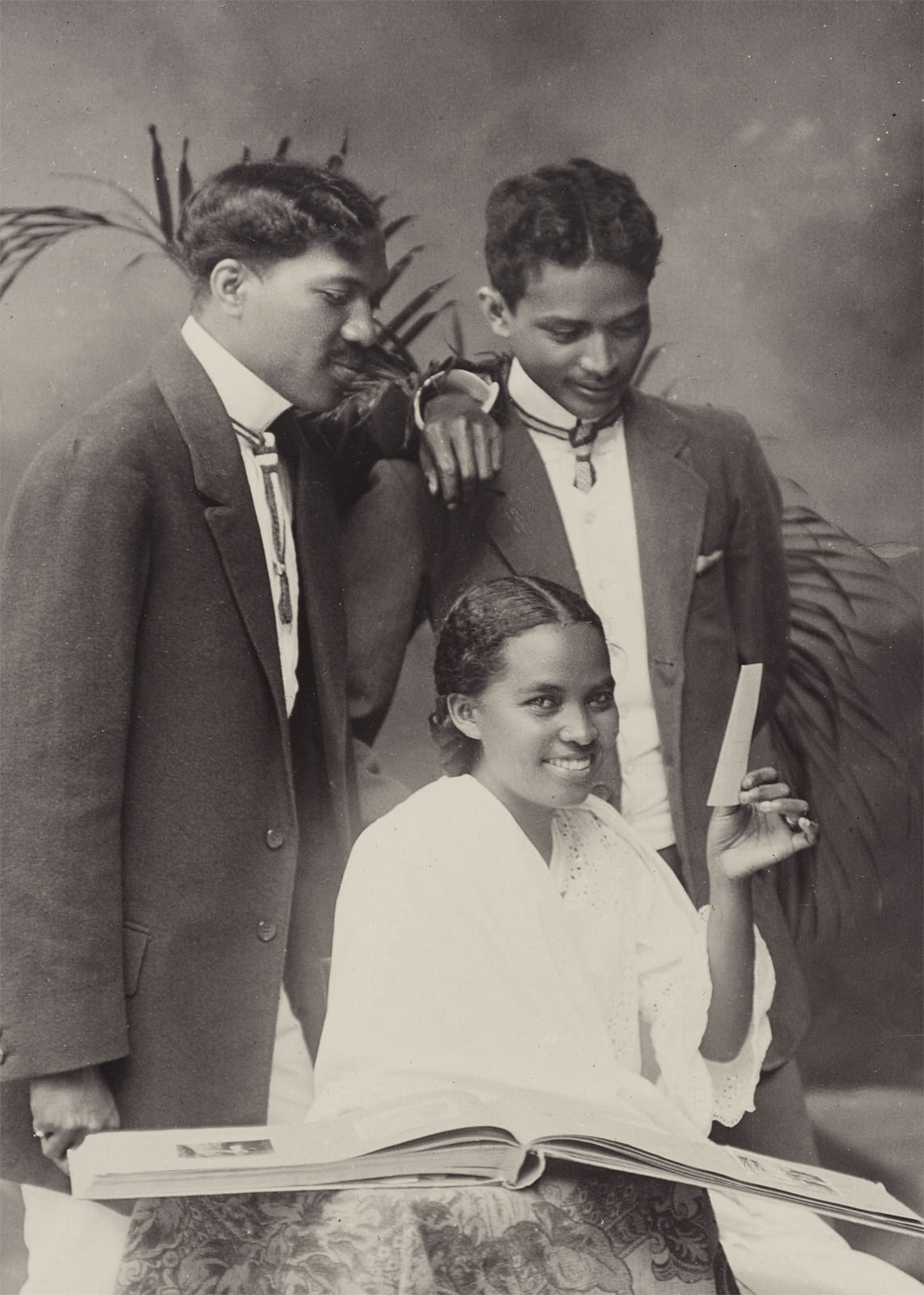
 

Joseph Razafy (Madagascar, 1881-1949) 'Untitled (portrait of two men and a woman)' Nd (detail)


Joseph Razafy (Madagascar, 1881-1949)
Untitled (portrait of two men and a woman) (detail)
Nd
© musée du quai Branly – Jacques Chirac


Joseph Razafy (Madagascar, 1881-1949) 'Untitled (portrait of a woman)' Nd


Joseph Razafy (Madagascar, 1881-1949)
Untitled (portrait of a woman)
Nd
© musée du quai Branly – Jacques Chirac
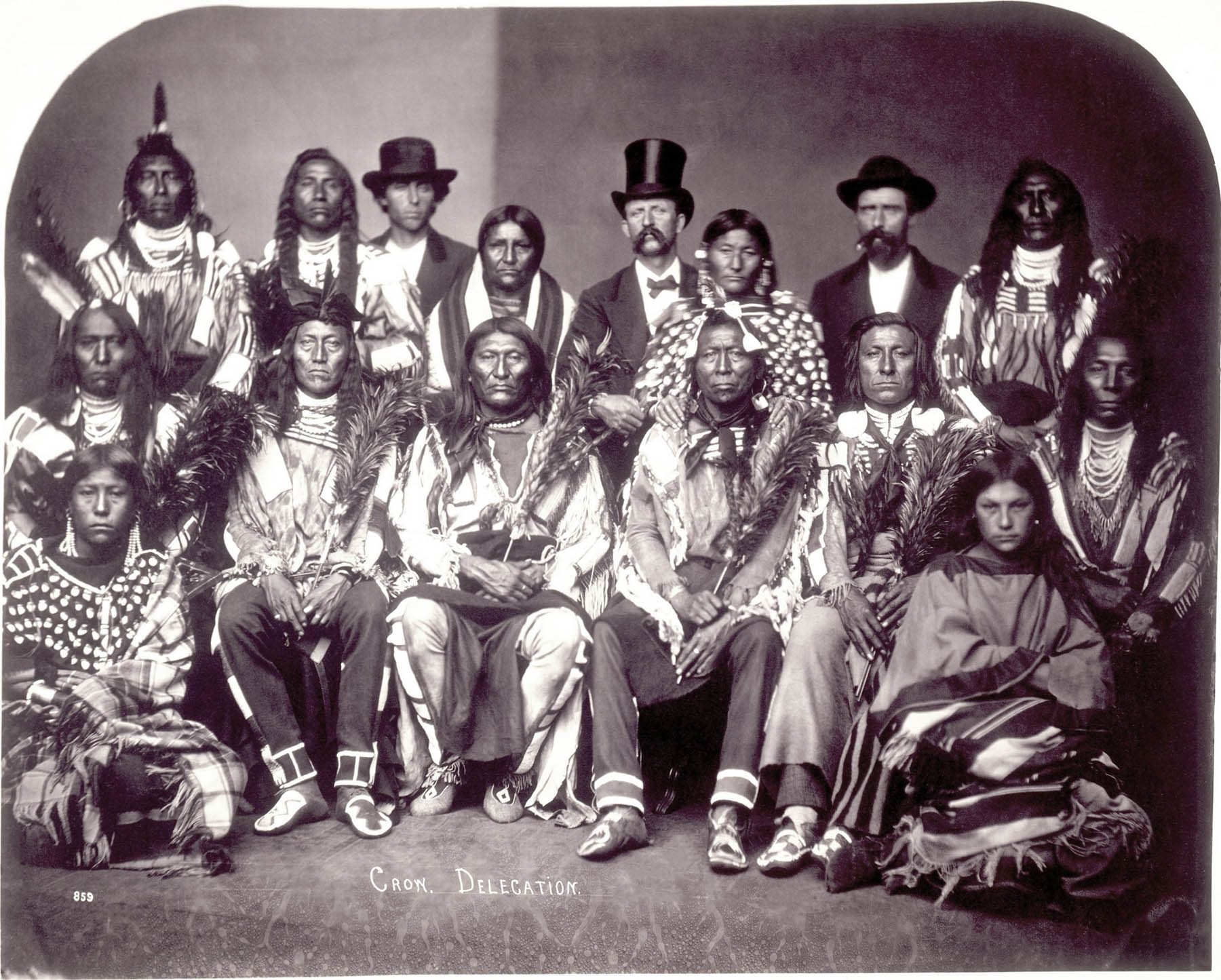
 

Ulke Brothers Studio (Julius Ulke and Henry Ulke) 'Apsáalooke (Crow) delegation' 1872


Ulke Brothers Studio (Julius Ulke and Henry Ulke)
Apsáalooke (Crow) delegation
1872
Albumen silver print from glass negative
8 x 10 in.
National Anthropological Archives, Smithsonian Institution

Back row (standing) from left to right: Long Horse; Thin Belly; Bernard Prero (interpreter); unknown name, wife of Awé Kúalawaachish (Sits In The Middle Of The Land); Major F.D. Pease (agent); unknown name, wife of Uuwatchiilapish (Iron Bull); Frank Shane (interpreter); and Bear In The Water. Front row (seated in chairs) from left to right: Bear Wolf; White Calf; Awé Kúalawaachish (Sits In The Middle Of The Land); Uuwatchiilapish (Iron Bull); One Who Leads The Old Dog; and Peelatchixaaliash (Old Crow [Raven]). Front row (seated on the floor) from left to right: Stays With The Horses, wife of Bear Wolf; and Pretty Medicine Pipe, wife of Peelatchixaaliash (Old Crow [Raven])
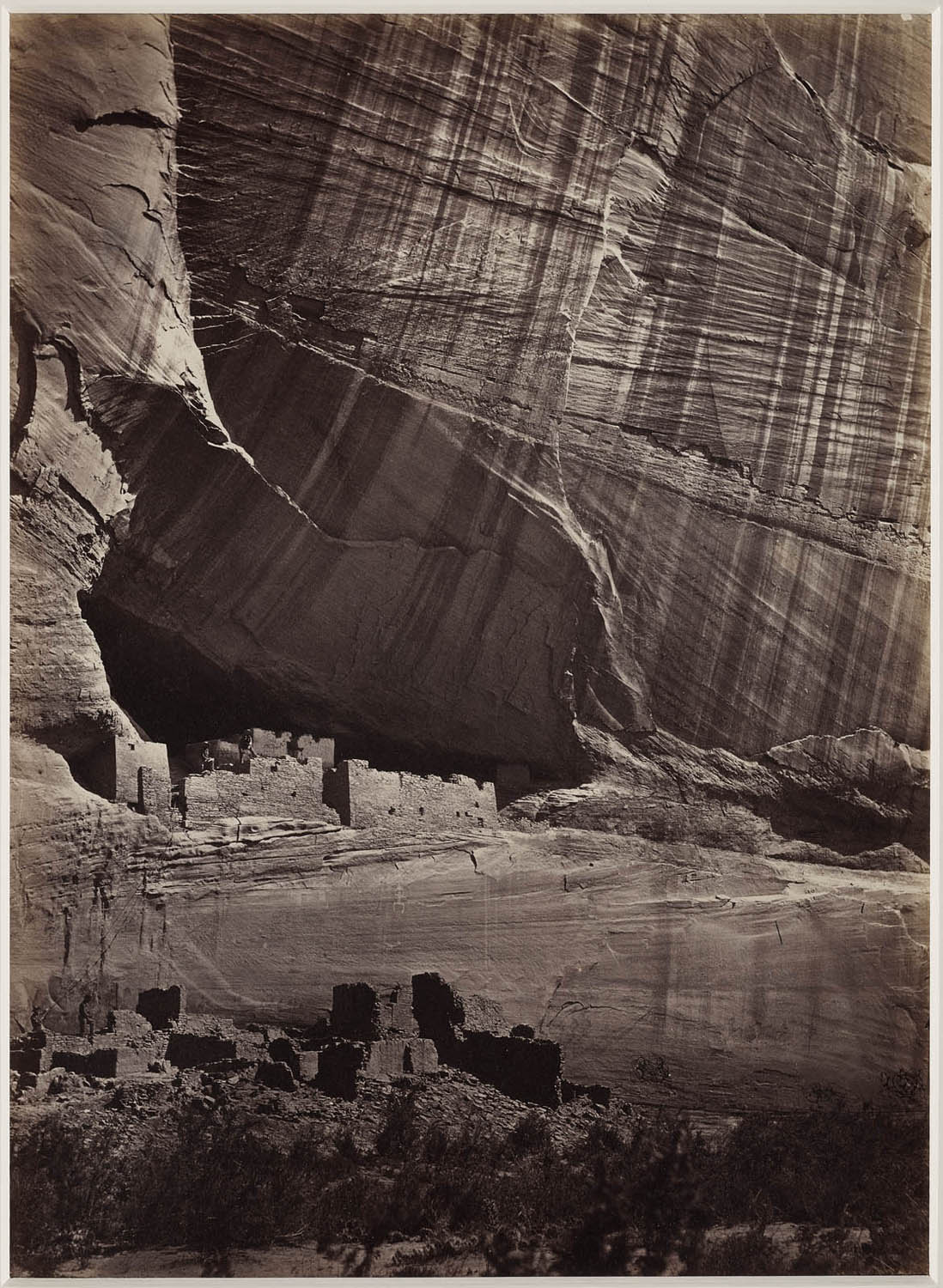
 

Timothy H. O'Sullivan (American born Ireland, 1840-1882) 'Photographs from Geographical explorations and surveys west of the 100th meridian Wheeler' 1873


Timothy H. O’Sullivan (American born Ireland, 1840-1882)
Photographs from Geographical explorations and surveys west of the 100th meridian Wheeler 1871-2-3
1871-1873
© musée du quai Branly – Jacques Chirac


Timothy H. O’Sullivan

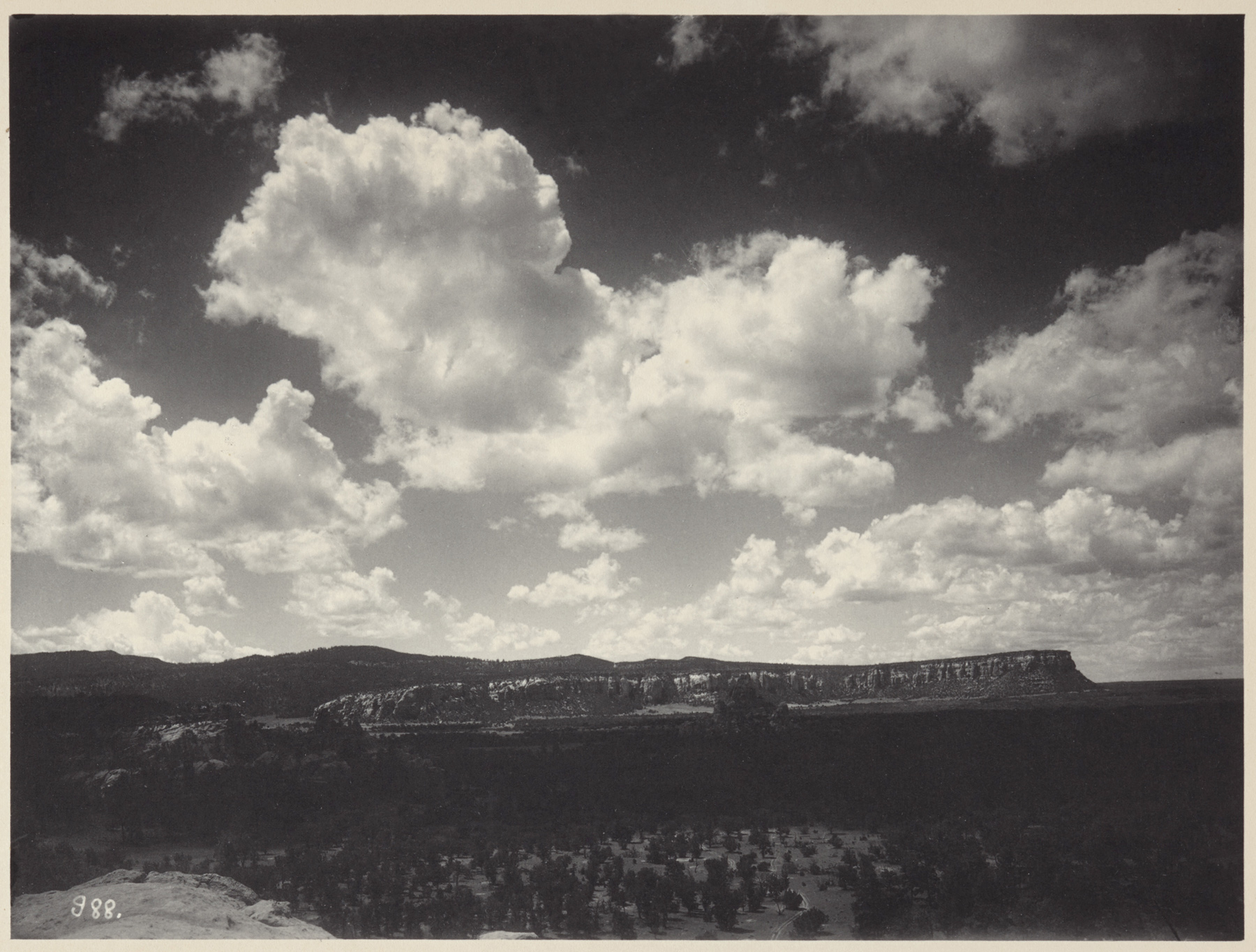
This series by Timothy H. O’Sullivan comes from the album Photographs from Geographical explorations and surveys west of the 100th meridian Wheeler 1871-2-3, consisting of fifty photographs of explorations in the Western United States (New Mexico, Nevada, Arizona, Utah, etc.). The set shows mainly landscapes and natural sites, some portraits of Zunis, Apaches and Navajos, and views of architecture and monuments.

The limits of visibility

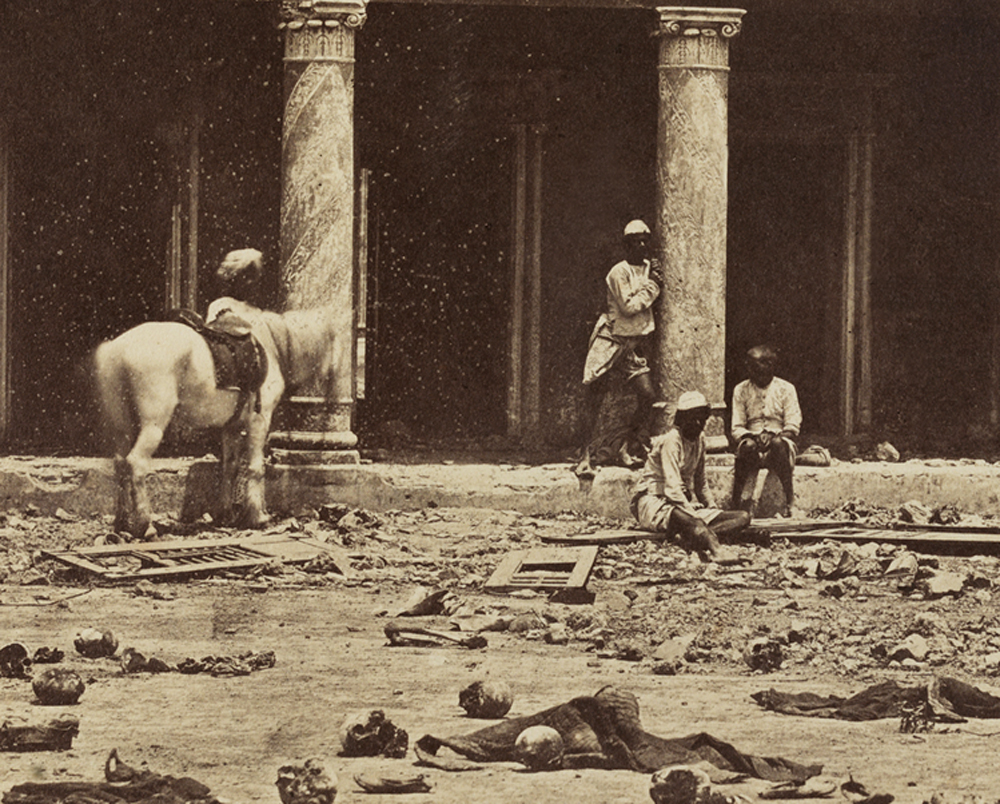
The thirst for images which manifested itself as early as 1840 in Europe and then rapidly in the whole world has encountered contrasting situations. From the beginning arose the question of limits: how far to go? Under what conditions do a photography ? For what purposes? Technical challenge sometimes but above all question ethics when it comes to bearing witness to the horrors of war, or when it comes to to produce the image of scenes or objects that are supposed to remain hidden. Some photographers could trick, coerce or negotiate. The images produced are remained secret or, conversely, circulated widely. The life of photographs after the shot is a fundamental element of this medium, they are led to undergo multiple changes of meaning depending on the way we perceives them, from which they are presented. In this section are photographs that evoke certain situations limits: images of conflicts shown or hidden, sacred places of which a part remains invisible, images obtained by trickery. These photographs are not shown as trophies but as traces of practices that we can re-examine today.

Uncover the Sacred

For many photographers, the attraction of the forbidden or the opportunity to attend a singular event played into the desire to create an image. We consider
today with a certain reserve these images of masks or places Holy. While they may still constitute factual documents, our attention now turns to the conditions of their realisation. In what contexts could they have been made, and what do they show us, apart from the very fact that they were produced in an exceptional way?

James album

The history of photography in Pueblo territory, in the United States, offers a rare example of strong reaction to the invasion of photography. The first reactions of mistrust from the Indian communities, from the 1890s, are linked to the dissemination of images and the tourist promotion of rituals supposed remain secret. The Hopi Snake Dance ceremony had become a major attraction. Often disrupted by ever-increasing numbers of visitors, it will be definitively prohibited to photographers in 1913, following the mobilisations of Hopi communities. The exhibition does not present here the photographs of this ritual that George Wharton James manages to capture, in order respect the Hopi restrictions. The exposed double page combines two times of shooting, the first image showing the perplexed waiting of the Indians in front the church of Acoma, and the second their reaction of just surprise and mistrust after shooting.

Text from the exhibition


F. Bonfils et Cie (French, 1831-1885) 'Egyptian mummy, Medinet-Abou, Egypt' Cairo, 1870


F. Bonfils et Cie (French, 1831-1885)
Egyptian mummy, Medinet-Abou, Egypt
Cairo, 1870
© Quai Branly Museum – Jacques Chirac


Félix Adrien Bonfils was a French photographer and writer who was active in the Middle East. He was one of the first commercial photographers to produce images of the Middle East on a large scale and amongst the first to employ a new method of colour photography, developed in 1880. …

Maison Bonfils produced thousands of photographs of the Middle East. Bonfils worked with both his wife and his son. Their studio became “F. Bonfils et Cie” in 1878. They photographed landscapes, portraits, posed scenes with subjects dressed up in Middle Eastern regalia, and also stories from the Bible. Bonfils took photographs in Lebanon, Egypt, Palestine, Syria, Greece and Constantinople (now Istanbul). While Bonfils produced the vast majority of his work, his wife, Lydie, and son Adrien were also involved in photography produced by the studio. As few are signed, it is difficult to identify who is responsible for individual photographs. Lydie is thought to have taken some of the studio portraits, especially those of Middle Eastern women, who were more inclined to pose for a female photographer. Adrien became more involved in the landscape photography at age 17, when Félix returned to Alès to have compiled collections of their photographs published and then to open a collotype printing factory. Félix died in Alès on the 9th of April 1855.

Text from the Wikipedia website


Charles Guillain (French, 1808-1875) 'Majeerteen Woman' East Coast of Africa, 1847-1848


Charles Guillain (French, 1808-1875)
Majeerteen Woman
East Coast of Africa, 1847-1848
Daguerreotype
Musée du Quai Branly – Jacques Chirac
© Musée du Quai Branly – Jacques Chirac, Dist. RMN-Grand Palais
Image: Musée du Quai Branly – Jacques Chirac


As Christine Barthe observes, “In the first ten years of photography, from 1841 to 1851, many travelers would try their hands at daguerreotypes outside Europe. Guillain’s photographs, taken in very difficult conditions, are not always perfect from a technical point of view, but they nevertheless represent the pioneering works in the history of photography.” They offer extraordinary insight into the people, the policies, and the places along the east coast of Africa during the mid nineteenth-century.

Erin Rushing. “Swahili Coast: Exploration by French Captain Charles Guillain, 1846-1848. Part 3, Encounters and Partnerships,” on the Smithsonian Unbound blog May 13, 2015 [Online] Cited 22/05/2023. Used under fair use conditions for the purposes of education and research


Ernest Benecke (German born England, 1817-1894) 'Dead crocodile on a boat on the Nile' Egypt, 1852


Ernest Benecke (German born England, 1817-1894)
Dead crocodile on a boat on the Nile
Egypt, 1852
Salt paper print
Bibliothèque nationale de France, Manuscripts Department
Émile Prisse d’Avennes Egyptian Collection
© Bibliothèque nationale de France, Paris


Ernest Philipp Benecke may have been part of a well-known German banking family of the same name from the Hamburg and Hanover area. Benecke made his only known photographs in Egypt and Nubia in 1852, which consisted of portraits and studies of the daily life of the cultures he visited. His works are among the earliest surviving photographs of non-Western civilizations.


Muhammad Sadiq Bey (Egyptian, 1822-1902) 'View of the Holy Shrine and the City of Mecca' Saudi Arabia, 1881


Muhammad Sadiq Bey (Egyptian, 1822-1902)
View of the Holy Shrine and the City of Mecca
Saudi Arabia, 1881
Photographic print
Bibliothèque nationale de France, Rare Books Reserve
© Bibliothèque nationale de France, Paris


Muhammad Sadiq Bey (Egyptian, 1822-1902)

Muhammad Sadiq Bey (1832-1902) was an Ottoman Egyptian army engineer and surveyor who served as treasurer of the Hajj pilgrim caravan. As a photographer and author, he documented the holy sites of Islam at Mecca and Medina, taking the first ever photographs in what is now Saudi Arabia. …

Born in Cairo, Sadiq was educated in Cairo’s military college and at the Paris École Polytechnique. He qualified as an colonel in the Egyptian army and returned to the military college to teach cartographic drawing.

In 1861, he was assigned to visit the region of Arabia from Medina to the port of Al Wajh and conduct a detailed survey. He took a small team and some surveying equipment as well as his own camera; photography was not part of the official mission. His records of the expedition are the earliest known detailed accounts of the region’s climate and settlements. His photographs of Medina were the first ever taken there. In 1880 he was assigned to accompany the Hajj pilgrim caravan from Egypt to Mecca as its treasurer. He was responsible for the safe passage of the mahmal, a ceremonial passenger-less litter, to Mecca. Again he brought a camera, becoming the first person to photograph Mecca, the Great Mosque, the Kaaba, and pilgrim camps at Mina and Arafat. …

Sadiq used a wet-plate collodion camera, which had been invented in the 1850s. This produced negatives on wet glass plates, requiring a portable darkroom. From these negatives he made albumen prints which he signed or, later, stamped.

The sanctuaries of Mecca and Medina are the holiest sites of Islam. As part of the Hajj which is one of the five pillars of Islam, pilgrims perform rituals at Mecca and other nearby sites. On his expeditions from 1861 to 1881, Sadiq photographed the interiors and exteriors of sites on the Hajj pilgrimage route as well as at Medina. Photographing the Al-Masjid an-Nabawi (Prophet’s Mosque) and its surroundings in Medina on 11 February 1861, he noted in his diary that no-one had taken such photographs before.

He used walls and mosque roofs as vantage points to capture panoramas of the cities. He also photographed people connected to the holy sites. As well as the Hajj pilgrims walking around the Kaaba, he photographed Shaykh ‘Umar al-Shaibi, the keeper of the key of the Kaaba, and Sharif Shawkat Pasha, guardian of the Prophet’s Mosque.

Text from the Wikipedia website


Jules Borelli (French, 1853-1941) 'Portrait of a young woman' Ethiopia 1885-1888


Jules Borelli (French, 1853-1941)
Portrait of a young woman, Ethiopia
1885-1888
Photo: © Dist. RMN – Grand Palais/musée du quai Branly – Jacques Chirac


Jules Borelli (French, 1853-1941)

Jules Borelli (b. 1853, d. 1941) was a French traveller and explorer who travelled to Ethiopia from Egypt on 16 September 1885 to explore the Omo river. In this effort he was supported by his brother, a financier in Cairo and the owner of a fine collection of Egyptian antiquities. He was delayed from moving into western and southwestern Ethiopia by ase Ménilék II, who, out of political concerns, detained him at the capital of Éntotto for part of the period from July 1886 to November 1887. Finally, in November 1887. Borelli started out for the headwaters of the Omo river, and reached a point some 300 miles north of Lake Rudolf (Turkana) on 17 June 1888, three months after Count Samuel Teleki von Szek and Lieutenant Ludwig Ritter von Hohnel had arrived on the lake’s southern shore. Had Ménilék not detained him and had he not fallen ill with malaria, Borelli could have reached the lake well before Teleki and von Hohnel. During his travels, Borelli was given a good description of the lake by people in Ethiopia, who called it Lake Šambara.

Borelli arrived in Cairo on 15 November 1888, where he later met Teleki and von Hohnel who were returning to Europe from their trip. The latter assisted B. in drawing his maps of the country surrounding the Omo river. Borelli doubted von Hohnel’s unsubstantiated claim that two rivers flowed into Lake Rudolf, and, as was later proven, correctly deduced that only the Omo flowed into the lake. In 1889, Borelli invited von Hohnel to Paris to attend an international geographical congress, where both men lectured. Borelli described his Ethiopian travels in his beautifully illustrated and well documented book published in 1890.

Text from Encyclopaedia Aethiopica
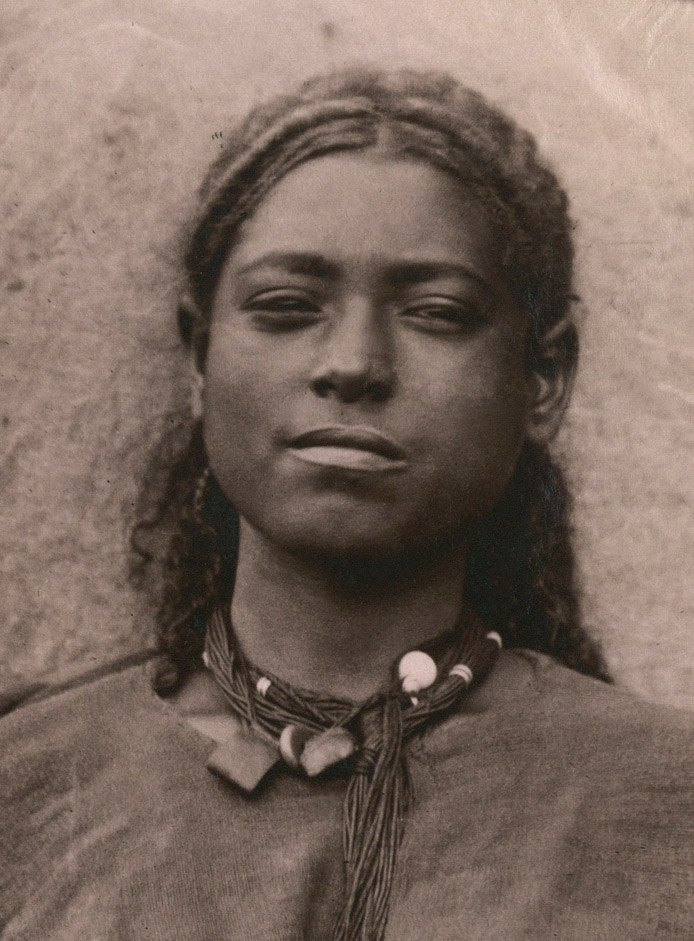
 

Jules Borelli (French, 1853-1941) 'Portrait of a young woman' Ethiopia 1885-1888 (detail)


Jules Borelli (French, 1853-1941)
Portrait of a young woman, Ethiopia (detail)
1885-1888
Photo: © Dist. RMN – Grand Palais/musée du quai Branly – Jacques Chirac


Unknown photographer. 'Malay Interior' Nd


Unknown photographer
Malay Interior
Nd
Photo: musée du quai Branly – Jacques Chirac, Dist. RMN – Grand Palais image musée du quai Branly – Jacques Chirac


Isidore Van Kinsbergen (Dutch-Belgian, 1821-1905) 'Baris, Warrior dancers Bali' Indonesia, 1865-1866


Isidore Van Kinsbergen (Dutch-Belgian, 1821-1905)
Baris, Warrior dancers Bali
Indonesia, 1865-1866
Albumen print
Musée du Quai Branly – Jacques Chirac
© Musée du Quai Branly – Jacques Chirac, Dist. RMN-Grand Palais
Image: Musée du Quai Branly – Jacques Chirac


Isidore van Kinsbergen (Bruges 1821-Batavia 1905) was a Dutch-Belgian engraver, who after an educational period in Bruges and Gent discovered the artistic wealth of the theatre. In Batavia (Jakarta) he proved to be a real all-rounder, combining decoration painting with singing, acting and management. In 1855, Van Kinsbergen also took up photography. He was invited to photograph ‘all peculiarities’ on the Dutch mission to Bangkok in 1862 and took part in two inspection tours covering Java, Madura and Bali (1862 and 1865). Between 1863 and 1867 and again in 1873 he was contracted by the Government of the Netherlands-Indies to photograph Java’s antiquities. Two series, together holding over 375 photos, constitute his art and archaeology legacy.

There is a less or even ‘unknown’ Van Kinsbergen as well, who commercially operated from a professional studio in Batavia. Thanks to research, more than 200 anonymous or wrongly attributed photos can now be assigned to him. How to recognize Van Kinsbergen in portraits, landscapes, views and ‘types’? After all, making a portrait or casting a ‘type’ is quite different from photographing monuments. Are characteristics found within his art and archaeology series evident in his so-called commercial work? Yes, but not in one stereotypical way. Besides a general artistic rendering of items and the careful use of light, his style is direct, full of contrast, academic and theatrical at the same time.

Gerda Theuns de Boer. “Isidore van Kinsbergen: photographs of Java and Bali, 1855-1880,” on the International Institute for Asian Studies website Newsletter #35 June 2005 [Online] Cited 21/05/2023. Used under fair use conditions for the purposes of education and research


Isidore van Kingsbergen (1821-1905) is sometimes described as the “sleeping beauty” of nineteenth-century photography, because his remarkable body of work has never been presented in its entirety. Yet he was a flamboyant artist who appeals to the imagination. For the first time, this publication gives a broad overview of the exceptional qualities of this photo pioneer. Van Kinsbergen became famous for the almost four hundred photographs he took of Java’s antiquities at the behest of the Dutch colonial government and the Batavian Society. Detailed research has also brought to light a hitherto unknown part of his oeuvre, including the portraits he made at the courts of Yogyakarta, Surakarta, Bandung, Madura and Buleleng (Bali). In his studio, he used his experience as a theatre director to photograph people from various social backgrounds in an expressive manner. Due to his tireless efforts for new cultural projects, he has also been called as the “soul of colonial artistic life in Batavia.”

Text from the Brill website


Unknown photographer. 'Album of photographs of the Philippines' Nd


Unknown photographer
Album of photographs of the Philippines
Nd
Photo: musée du quai Branly – Jacques Chirac, Dist. RMN – Grand Palais image musée du quai Branly – Jacques Chirac
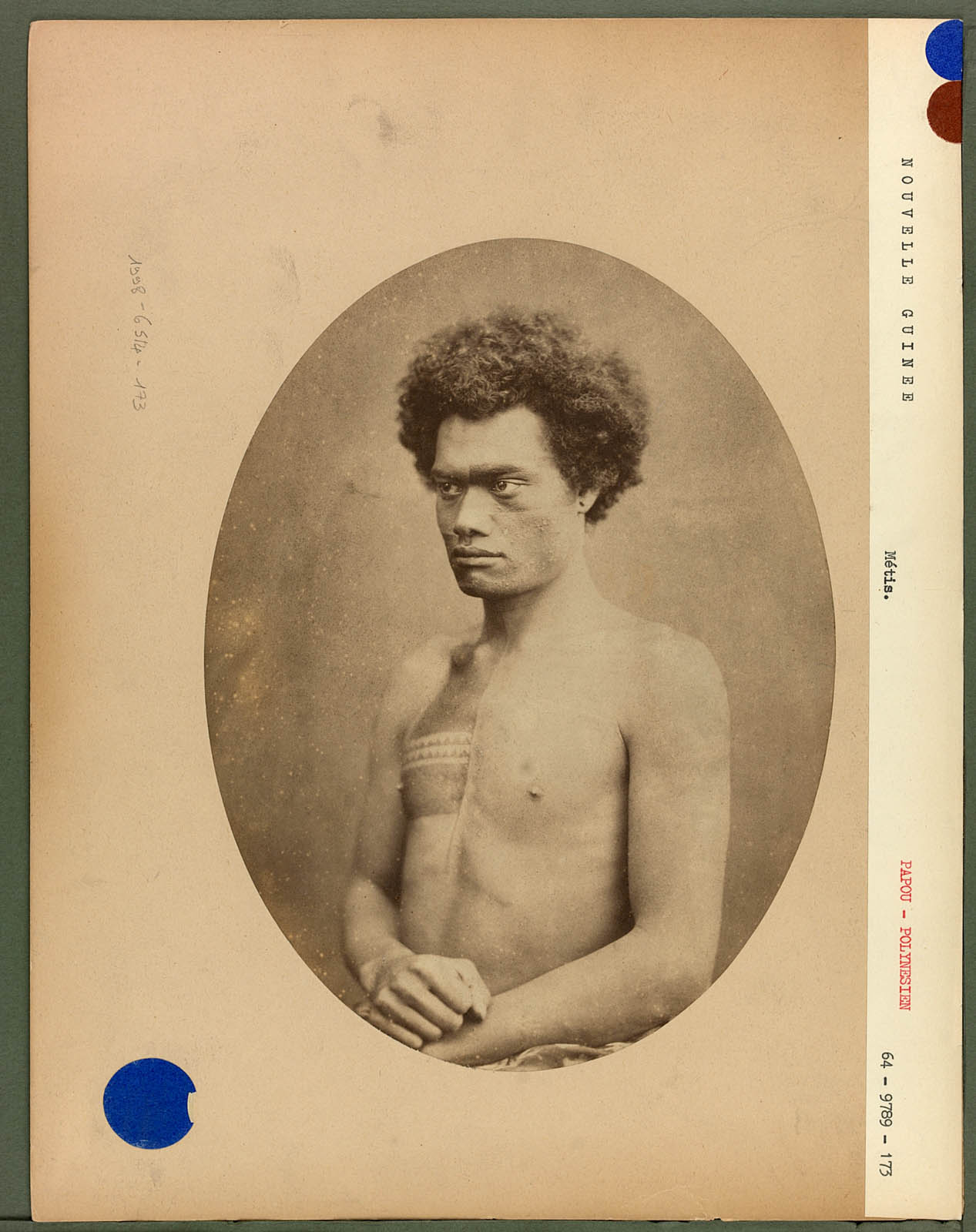
 

Eugene Maunoury (French, 1830-1896) 'Hitoro, King of the island Ua Pou in the Marquesas Archipelago' Peru, 1863


Eugene Maunoury (French, 1830-1896)
Hitoro, King of the island Ua Pou in the Marquesas Archipelago
Peru, 1863
Albumen paper print
© Quai Branly Museum – Jacques Chirac


The text on the photo stating that this man is from Papua New Guinea is incorrect. He is from the Marquesas archipelago. Please see another photograph of Hitoro, King of the island Ua Pou by Eugene Maunoury on the Ua Pou Wikipedia entry.


Eugene Maunoury (French, 1830-1896)

Eugène Maunoury settled in Chile between 1858 and 1865, in Santiago and Valparaiso. Then, from 1861, he was at the head of a luxurious studio in Lima (Peru) which saw parade the elite of society. From 1862 he was a correspondent for the Nadar studio. However, these portraits of Marquesans taken in Peru are neither intended images exotic, or photographs intended for scientific use. They were made by Maunoury to protest against the kidnapping of these people intended for be employed in forced labor in the exploitation of guano, in Peru. Maunoury publishes in L’Illustration of August 29, 1863 an article denouncing the situation of the raid, using some of his portraits. We recognise the king of the island Ua Pou, in the Marquesas Archipelago.


Émile Colpaërt (French born 1830 died after 1874, active 1858-1870) 'Native of Urcos' Scientific Expedition Peru, 1864


Émile Colpaërt (French born 1830 – died after 1874, active 1858-1870)
Native of Urcos
Scientific Expedition, Peru, 1864
© Musée du Quai Branly – Jacques Chirac, Dist. RMN-Grand Palais
Image: Musée du Quai Branly – Jacques Chirac
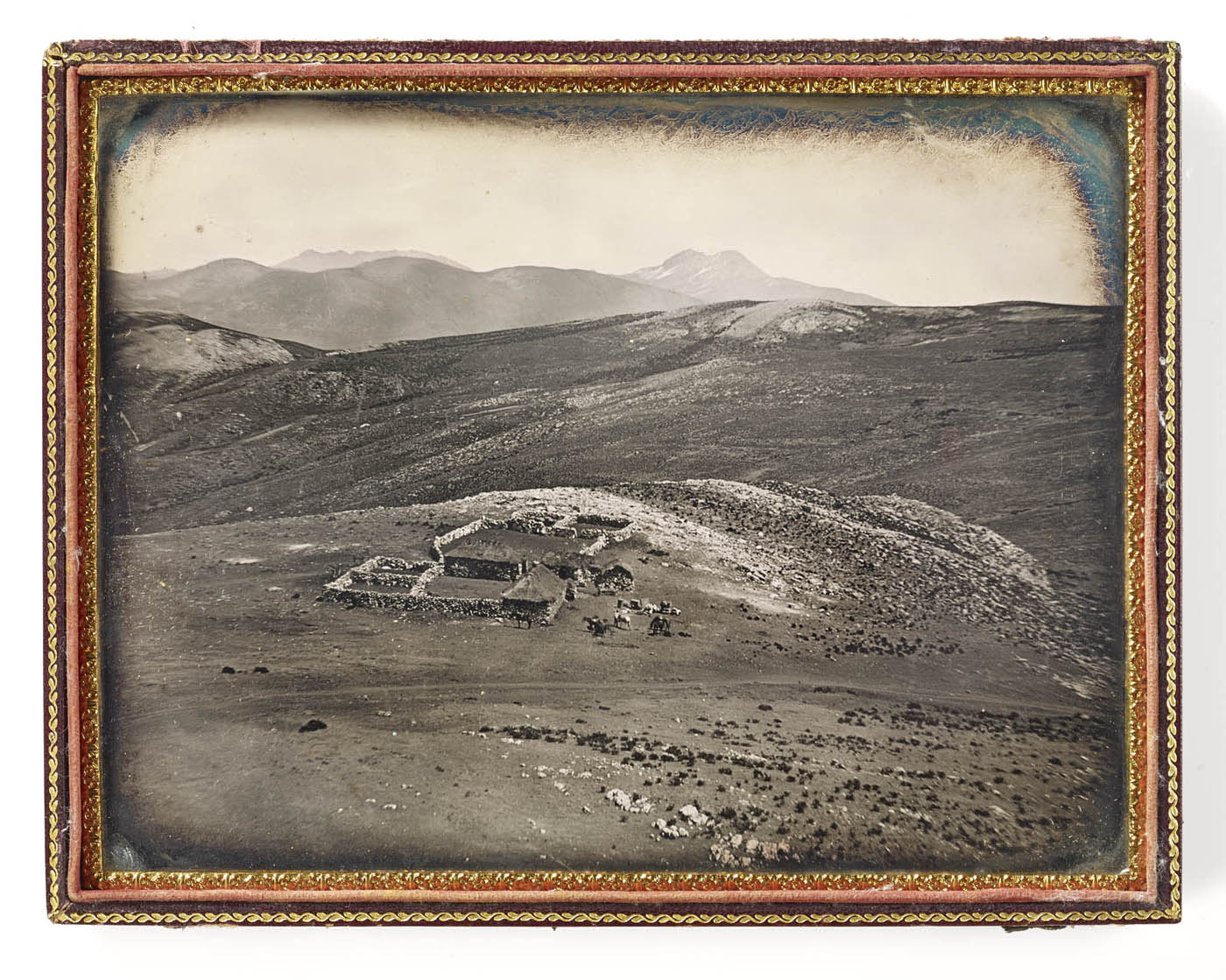
 

Attributed to Robert H. Vance (American, 1825-1876) 'A Tambo in the Mountains at a Height of 16,000 Feet, Andes Mountains' 1849


Attributed to Robert H. Vance (American, 1825-1876)
A Tambo in the Mountains at a Height of 16,000 Feet, Andes Mountains
1849
Daguerreotype
RMN – Grand Palais image musée du quai Branly – Jacques Chirac
Photo: © musée du quai Branly – Jacques Chirac, Dist


Attributed to Robert H. Vance (American, 1825-1876) 'A Tambo in the Mountains at a Height of 16,000 Feet, Andes Mountains' 1849 (detail)


Attributed to Robert H. Vance (American, 1825-1876)
A Tambo in the Mountains at a Height of 16,000 Feet, Andes Mountains (detail)
1849
Daguerreotype
RMN – Grand Palais image musée du quai Branly – Jacques Chirac
Photo: © musée du quai Branly – Jacques Chirac, Dist


Paul-Émile Miot (French, 1827-1900) 'Portrait of three Mi'kmaq Women, Newfoundland' 1857


Paul-Émile Miot (French, 1827-1900)
Portrait of three Mi’kmaq Women, Newfoundland
1857
Image: Bibliothèque nationale de France, Paris


Paul-Émile Miot (French, 1827-1900) 'Matelots virant au Cabestan, Gaillard d'avant de l'Ardent, Terre Neuve' (Sailors tacking to Capstan, forecastle of the Ardent, Newfoundland) 1857


Paul-Émile Miot (French, 1827-1900)
Matelots virant au Cabestan, Gaillard d’avant de l’Ardent, Terre Neuve (Sailors tacking to Capstan, forecastle of the Ardent, Newfoundland)
1857
Albumen print
6 1/2 x 10 in.
© musée du quai Branly – Jacques Chirac, Dist


Many places in the world have become accessible through photography since it was invented. In August 1839, the technical details of the daguerreotype were revealed in Paris, and from September onwards, cameras were taken on board the ships of countless scientific and military expeditions and voyages all around the world. Associated with technological modernity, photography was used in the second half of the 19th century to record the whole planet. From Mexico to Gabon, photography was in turn an instrument of description and the visual appropriation of landscapes and monuments, a tool for knowledge and the control of populations, and an object of diplomacy with the local elite.

European colonial expansion was one of the driving forces that greatly accelerated global photography. Taking as its starting point the collection of photographs at the musée du quai Branly – Jacques Chirac, enriched by several exceptional loans from public and private collections, the exhibition focuses on the trajectories and geographies of photography outside Europe in the 19th century.


4 key questions for Christine Barthe and Annabelle Lacour, the curators of the exhibition

1- What is the origin of this exhibition project?

Christine Barthe: The origins of this exhibition can be found in a project set up for the Louvre Abu Dhabi, where a first version of the exhibition was shown in 2019. Originally, it was based on the museum’s own collection, focusing on early photographs taken in regions far removed from Europe. The museum’s collection mainly reflects the European and American point of view, and we wanted, right from the beginning, and even more so for this adaptation for the musée du quai Branly – Jacques Chirac, to show a little more interest in local productions, which are not so well known and visible as those of Westerners. So this project quickly expanded in terms of research to try and decentralise the history of photography.

2- More precisely, what discoveries did you make during this new research?

C.B.: The project was built up over a period of several years, and so we benefited from the layering of experiences, in-depth research, new acquisitions, contacts… It’s a long-term project. Right from the beginning, we have been researching images from the museum’s collection. This work has allowed us to re-identify major artists in the history of photography, whose images were previously anonymous in the museum’s collections. Lesser-known photographers have been found in French collections such as the National Library and the Asian arts museum Guimet. We were thus able to include a lot of local photographers in the exhibition, especially from West Africa, in present-day Ghana, Sierra Leone, Iran, India, Japan…

3- How did photography spread outside Europe?

Annabelle Lacour: What is striking about the beginning is how fast things happened. As soon as the French government announced the invention of the process in 1839, there were articles in newspapers all over the world. In the weeks that followed, boats left for foreign countries carrying cameras to make daguerreotypes. Lots of people all over the world were curious to see how it worked. As early as 1842, the Shah of Iran asked Russia and the United Kingdom to send him some cameras. Photographers trained people at the Persian court. There were different examples in India, in Thailand, where we see this infatuation of sovereigns for photography. However, the speed it was taken up with also varied greatly depending on the region. In Japan, for example, photography developed a little later, in the late 1850s, when the country opened up to trade. In Europe, photography was related to the idea of a visual conquest that accompanied the colonial conquest. And of course, we should never forget the significant use of photography to design and build up one’s own image.

4- Today, the way we perceive these photographs has evolved. How does this translate into the way they are displayed?

A.L.: The idea of this exhibition, through these fascinating images, is to give visitors the opportunity to see how, right from the beginning, the production of these images is diverse and responds to different wishes, desires, and fits into various different contexts. Obviously, the intention with which they were made for was not fixed in time. Some images may have seen their meaning change completely in the course of history. So we have this whole issue of a new reading of the images, which is important. The questions they posed when they were taken, and pose again today, are very much contemporary. The end of the exhibition raises certain ethical questions: what does it mean to want to photograph everything? What do we do with the images of scenes or people that we were not allowed to see or photograph? I don’t think the choice lies in the alternative of showing or concealing everything. The interest in showing these images today is the possibility to reflect, to ask the question of meaning, to show certain contexts and historical narratives, to realise just how contemporary these issues are.

Text from the musée du quai Branly – Jacques Chirac


Lai Afong (Chinese, c. 1838 or 1839 - 1890) 'China. A Street, Canton' c. 1860


Lai Afong (Chinese, c. 1838 or 1839 – 1890)
China. A Street, Canton
c. 1860
Albumen print
© musée du quai Branly – Jacques Chirac, Dist


Lai Afong (Chinese, c. 1838 or 1839 – 1890)

Lai Afong (Chinese: 黎芳; c. 1838 or 1839 – 1890) was a Chinese photographer who established Afong Studio, considered to be the most successful photographic studio in the late Qing Dynasty. He is widely acknowledged as the most significant Chinese photographer of the nineteenth century. …

Lai Afong was the most successful of his generation of Chinese photographers in appealing to both a Chinese and foreign cosmopolitan clientele. Lai Afong advertised in English-language newspapers – offering a “Larger, and more complete collection of Views than any other Establishment in the Empire of China” – and the artist captioned much of his work in both Chinese and English. Afong Studio photographs were sold to both Chinese patrons – both those local to Hong Kong and those visiting from other parts of China – and foreign visitors to China.

The Afong Studio became a destination and training ground for foreign photographers in the region, and photographers such as Emil Rusfeldt and D.K. Griffith began their careers under the tutelage of Lai Afong. In 1875, Griffith claimed that his mentor had “entered the arena of European art, associating his name with photography in its best form, and justly stands first of his countrymen in Hong Kong.” John Thomson, a Scottish photographer working in China at the time, praised Lai Afong’s images as “extremely well-executed, [and] remarkable for their artistic choice of position,” in his book The Straits of Malacca, Indo-China, and China.

Lai Afong seems to have been the only Chinese photographer of his generation to be embraced by his foreign contemporaries. However, his work is distinct among them, as many of Lai Afong’s photographic compositions show the technical and aesthetic influence of traditional Chinese painting, known as guóhuà. Additionally, Lai Afong favoured the panorama more than any other photographer working in China in the 19th century, earning his work a place among the giants of 19th century landscape photography such as Carleton Watkins in America and Gustave Le Gray in France. No other nineteenth-century Chinese photographer offered as extensive and diverse a view of late Qing Dynasty China.

Text from the Wikipedia website
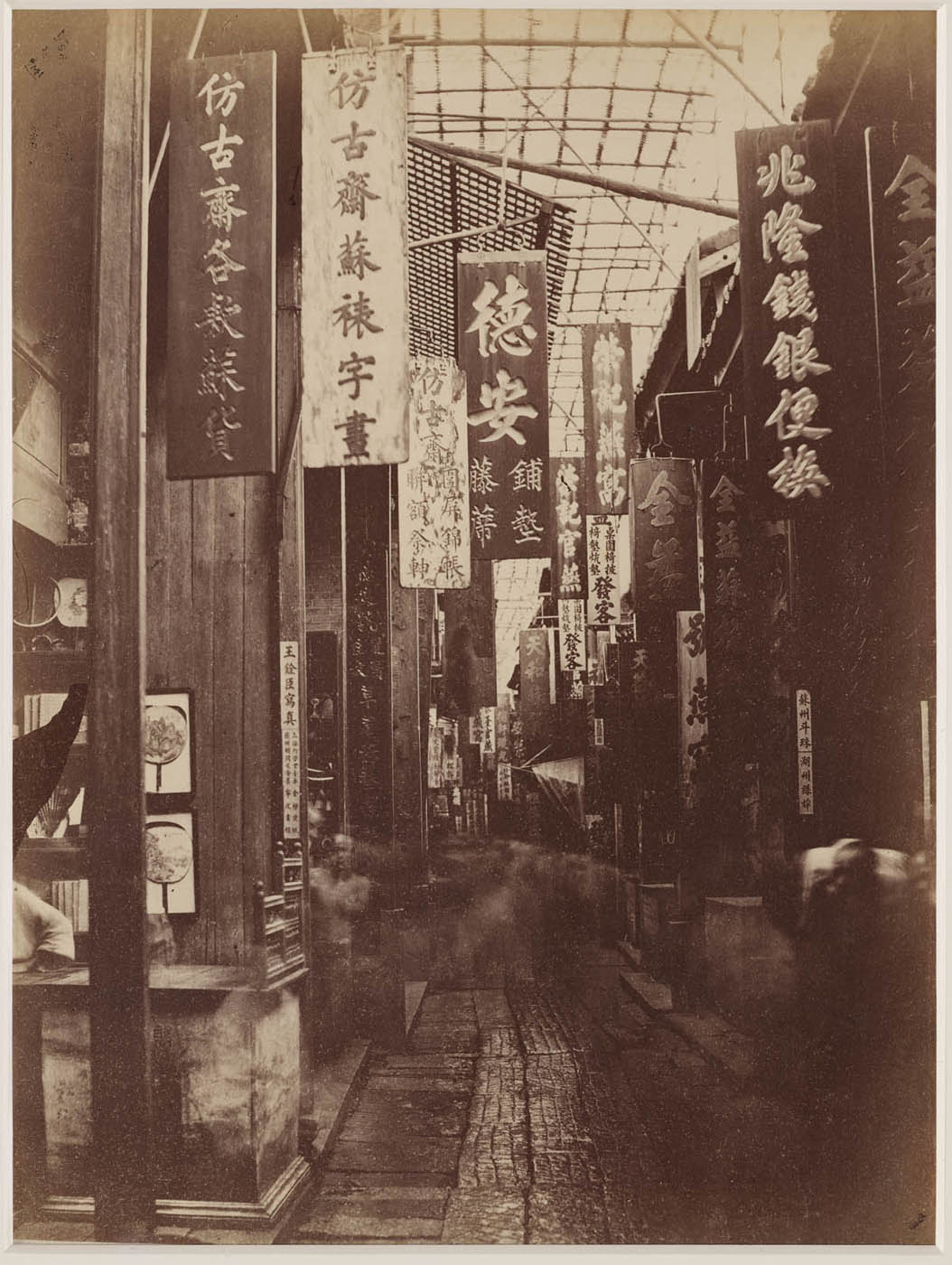
 

Lai Afong (Chinese, c. 1838 or 1839 - 1890) 'China. A Street, Canton' c. 1860 (detail)


Lai Afong (Chinese, c. 1838 or 1839 – 1890)
China. A Street, Canton (detail)
c. 1860
Albumen print
© musée du quai Branly – Jacques Chirac, Dist


Poster for the exhibition 'Photographs. An Early Album of the World (1842-1911)' at the musée du quai Branly – Jacques Chirac, Paris


Poster for the exhibition Photographs. An Early Album of the World (1842-1911) at the musée du quai Branly – Jacques Chirac, Paris


Musée du Quai Branly – Jacques Chirac
37 Quai Jacques Chirac
75007 Paris, France

Opening hours:
Closed on Monday
Monday, Tuesday, Wednesday, Friday, Saturday, Sunday: 10.30am – 7.00pm
Thursday: 10.30 am – 10.00pm
Musée du Quai Branly – Jacques Chirac website

LIKE ART BLART ON FACEBOOK

Back to top

Review: ‘Visions of India: from the colonial to the contemporary’ at the Monash Gallery of Art, Wheelers Hill, Melbourne

Exhibition dates: 17th December, 2021 – 20th March, 2022

Curator: Nathaniel Gaskell

Artists: Darogah Abbas Ali, Indu Antony, Felice Beato, Mitter Bedi, Jyoti Bhatt, Bourne & Shepherd, Samuel Bourne, Michael Bühler-Rose, Henri Cartier-Bresson, Chunni Lall & Co., Lala Deen Dayal, Francis Frith & Co., Gauri Gill, Khubiram Gopilal, Hamilton Studios Ltd, Johnston and Hoffmann, Willoughby Wallace Hooper, William Johnson, John William Kaye and John Forbes Watson, Karen Knorr, Annu Palakunnathu Matthew, Steve McCurry, Saché & Murray Studios, Pushpamala N with Clare ARNI, Nicolas & Company (attributed), Norman Parkinson, Anoli Perera, Suresh Punjabi, Marc Riboud, John Edward Saché, Charles Scott, Sawai Ram Singh II, Maharaja of Jaipur, Edward Taurines (attributed), Waswo X Waswo, Wiele and Klein Studio, Wilson Studios Bombay


Installation view of the opening of the exhibition 'Visions of India: from the colonial to the contemporary' at the Monash Gallery of Art


Installation view of the opening of the exhibition Visions of India: from the colonial to the contemporary at the Monash Gallery of Art showing the Johnston & Hoffman photograph Maharaja Sir Bhagwati Prasad Singh (1915, below)
Photo: Marcus Bunyan


The exhibition Visions of India: from the colonial to the contemporary at the Monash Gallery of Art, Melbourne is at one and the same time, a fascinating, stimulating, frustrating, uplifting – and a little sad – overview of the history of the photography of India. I won’t say the history of Indian photography because most of the historical photographs are taken by European studios in India, and even an equal amount of the mid-twentieth century and contemporary photographs are taken by non-Indian born photographers residing in India or elsewhere. The title Visions of India is, therefore, undeniably apt – the exhibition being as much about how foreigners view the Indian continent, culture and people as how Indians picture themselves.

The fascinating, stimulating and sad elements of the exhibition are the “presence” of the historical photographs. These photographs range from the European architectural documentation of Indian temples through European colonial-ethnographic images which document Indian ethnic “types” – in the case of William Johnson montaging ethnic group portraits taken in the studio with appropriate views of actual buildings and scenes to picture oriental races and tribes – to European and Indigenous Indian photographers and ruling Indian princes’ photographs of themselves and their courtesans … taken in the European manner.

John Falconer in his book 2018 book Under Indian Skies: 19th-Century Photographs from a Private Collection observes, “A number of India’s princes became deeply interested in photography and both practiced and collected it, several also retaining state photographers… The portraiture of Indian royalty also proved a popular genre. Portraits posed in the setting of the European studio, but celebrating an oriental luxury of costume, jewellery and other accoutrements, were commissioned not only by rulers themselves but were also collected by Western customers, as the contents of many collections attest.”1

But by whoever they were taken – European photographer, Indian photographer or royal prince – these photographs are always taken from a position of power and authority by a male, either to reinforce through the male gaze their own splendour or to document their personal chattels, the tangible goods that they owned. For example, while texts by Mrinalini Venkateswaran (below) and Aparna Andhare argue that the photographs of Sawai Ram Singh II, Maharaja of Jaipur are adept at revealing himself through his self-portraits “as a thoughtful person who intuitively understood the power of iconography and images,”2 and that he was adept at capturing the personalities of the heavily veiled inner circle of the zenana of the royal household, “that he was able to connect with, and portray, his sitters as individuals rather than ‘types'”2 (at a time when the women lived almost entirely out of public view) … these observations belie the fact that it was he, the ruler, that found them “fit” subjects to be sitters.

And this is what I find particularly sad about these particular photographs – I don’t feel their personalities but I feel their pain. I look at their body language, the demurely clasped hands, the “dead” eyes as they stare at the camera (except one older women who stares defiantly), and the timidity of the body posture… some almost seem to cringe from the camera’s gaze, others look so alone and sad, as though they would wish to be anywhere but subject to (t)his intimidatory gaze – of the camera and the man. It’s disturbing, this feeling of vulnerability and betrayal, when compared to the majesty of Lala Deen Dayal’s photographs, his portrayal of male royal opulence and self-importance.

Pertaining to the Indigenous Indian uptake of photography John Falconer observes that, “[Samuel] Bourne may have viewed the western technology of the camera as yet another symbol of the dominance of European culture, but Indians had lost no time in embracing the new medium. Bourne himself had noted that Indian studios were not uncommon in the Calcutta of the early 1860s. But documentary evidence relating to the growth of an Indigenous photographic culture in India is at present frustratingly limited and has not been investigated with the same rigour as more easily accessible Western records. Even so, it is clear that photography was quickly taken up be sections of the Indian population, in general those who were in a position to associate with European society. …

The only Indian studio whose work has received similar attention and acclamation to that given to European contemporaries is that of Lala Deen Dayal. The success of the Dayal studio is comparable to that achieved by his English counterpart Bourne and Shepherd… The attention paid to Deen Dayal in recent years and his status as an Indian icon stands in marked contrast to the dearth of information available on the work of equally interesting contemporaries.”3

It is unclear in the essay in the book Under Indian Skies: 19th-Century Photographs from a Private Collection from where this information and research has been gathered, as few Indian sources are quoted in the footnotes. While I am no expert on Indigenous Indian photography, it would seem logical that non-European research has been undertaken into historical, home grown photographic studios and published in the Indian, and not English, language. Perhaps the observations can be seen as another example of the ongoing Western-centric view of historical photographs of India.


We then move onto the frustrating element of the exhibition, the contemporary photographs. As many of you may know I am not a great fan of contemporary photography but there is some focused, too focused, work on view. The frustrating element of the contemporary smorgasbord is the constant devolution of subject matter, the constant deconstruction of the (historical) minutiae of India – the small, precise, or trivial details of something – in which we never get a feeling for the personality of the Indian country or its people. The contemporary photographs are all about snippets, fragments, and traces of then and now, as though contemporary India is only ever constructed in order to be deconstructed out of its past. This constant prodding and poking at the multiple strings of history and its inequity is tiring and tiresome to say the least but contemporary Indian photography is not alone in this: Australian contemporary photography suffers from the same dis/ease.

The cacophony of “noise” which emanates from the contemporary photographs (and here I will use a section of text which mirrors the form) – – – from grids of hairy male legs seen from a child’s perspective (childhood memories / male figure / Indian family / perspectives of a child) to incarnations of mythological figures that examine “the genres of both the ethnographic photograph-as-document that is linked to the colonial era, as well as the fantasy-inspired make-believe that emanated from traditional Indian portrait studios in the late 19th and early 20th centuries” to conventions of colonial-era ethnographic portrait photographs of women dictated by male notions of femininity disrupted by deliberately dishevelled hair as a symbol of defiance against the notion of out-of-place hair seen as “hysterical” or “uncontrollable”, paradoxically making legible faces into ill/legible citizens, disturbed and defiant “others” (BIG BREATH!) – – – belies my lack of feeling for ANY of the photographs displayed.

After writing on photography since the year 2008 I keep coming up short / banging on the same drum about contemporary photography: I feel almost nothing for any of these photographs even as I appreciate their historical re-“visions”, their self-awareness and self-reflexivity (as much about the photographer as the subject), their intellectual rigour and conceptual contortions. They leave me feeling like I have been playing Twister with too many hands and feet, my mind tied up in an infinite library of thoughts and ideas while ruminating on less than stimulating images.


And so to the glorious, uplifting denouement of the exhibition which are the dynamic photographs of Suresh Punjabi’s Suhag Studio in Nagda, Madhya Pradesh. I am in love with them.

Reminiscent of the photographs of Africans by Malike Sidibé (Malian, 1935-2016), Seydou Keïta (Malian, 1921-2001) and Sanlé Sory (West African, b. 1943), Punjabi’s visions of Indian life possess a vital energy unlike anything else in this exhibition, and get as close to capturing the spirit of the Indian people as anything I have ever seen from the continent. This is because, at the time, Punjabi’s photographs (like the photographs of Atget) were not considered art but were documents taken for a broad set of purposes: from wedding and family albums to passport photos, from administrative photos to personal souvenirs, from family groups to playful contexts. Through their lack of pretension (ah, there is the key!) “Punjabi’s photographs chronicle daily life in small-town India, a context that many photographic histories from the subcontinent often miss… These portraits are the result of a deeply personal and unique relationship between Punjabi and his clients…”4

Punjabi’s clients were like family to him, and he wanted to photograph them in the best way possible, to picture them how they wanted to see themselves. Deceptively simple and formal in their pictorial construction, Punjabi’s photographs allow us to touch the aspirations of everyday Indians – with their hopes and dreams, their communion with family and friends, lost in the moment of dance or conversation, or crowded together in a small 10 x 20 feet studio with painted backdrop. “You can sense the presence of a humane vision behind the mechanical eye of the camera.” Simply put, these “playfully intimate” and grounded photographs are a refreshing counterpoint to so many conceptual contemporary photographs which lead nowhere, for they have an immediacy and intimacy which touches us (through their palpable aura) as only the best photographs can. “He doesn’t really take pictures of people and things (or, God forbid, grind out endless examples of his own cleverness). He photographs feelings and relationships.” (U.S. Camera ’62)

Dr Marcus Bunyan


1/ John Falconer. Under Indian Skies: 19th-Century Photographs from a Private Collection. Narayana Press, 2018, p. 35

2/ Aparna Andhare, Curator of Maharaja Sawai Man Singh II Museum quoted in “King’s Circle – Ram Singh & the Art of Intimate Portraiture,” on the Sarmaya website January 16, 2021 [Online] Cited 10/03/2022

3/ Falconer, op. cit., pp. 34-35

4/ John Falconer. Under Indian Skies: 19th-Century Photographs from a Private Collection. Narayana Press, 2018, pp. 34-35.


Many thankx to Monash Gallery of Art for allowing me to publish the photographs in the posting. All installation photographs © Marcus Bunyan and the Monash Gallery of Art. Please click on the photographs for a larger version of the image.


Installation view of the exhibition 'Visions of India: from the colonial to the contemporary' at the Monash Gallery of Art


Installation view of the opening of the exhibition Visions of India: from the colonial to the contemporary at the Monash Gallery of Art showing the Johnston & Hoffman photograph Maharaja Sir Bhagwati Prasad Singh (1915, below)
Photo: Monash Gallery of Art


Johnston & Hoffman (founded 1882, dissolved 1950s) 'Maharaja Sir Bhagwati Prasad Singh' 1915


Johnston & Hoffman (founded 1882, dissolved 1950s)
Maharaja Sir Bhagwati Prasad Singh
1915
Hand-coloured albumen print
46.0 x 33.0cm
Courtesy of the Museum of Art & Photography (MAP) (Bengaluru)


The leading photography studio of Johnston & Hoffman was established at 22 Chowringhee Road, Calcutta around 1882 by Theodore Julius Hoffman and Peter Arthur Johnston. A branch was opened in Darjeeling in 1890 and Simla in the mid 1890s. There was also a Burma branch at 70 Phayre Street, Rangoon for a short period between 1889-1890. Hoffmann took over the business on the death of Johnston – which was around 1886 and soon after the Calcutta business commenced. Theodore Hoffman died in Calcutta, India in December 1921. It was possibly the second largest commercial photographers in India after the studios of Bourne and Shepherd and were one of the first to publish postcards in Calcutta from at least 1898 onwards.

Anonymous text from the Families In British India Society (FIBIS) website Nd [Online] Cited 03/03/2022


Wall text from the exhibition 'Visions of India: from the colonial to the contemporary' at the Monash Gallery of Art


Wall text from the exhibition


1850s-1947 Photography in the colonial era wall text from the exhibition 'Visions of India: from the colonial to the contemporary' at the Monash Gallery of Art


1850s-1947 Photography in the colonial era wall text from the exhibition


Installation view of the exhibition 'Visions of India: from the colonial to the contemporary' at the Monash Gallery of Art showing the photographs of Sawai Ram Singh II, Maharaja of Jaipur (c. 1860)


Installation view of the exhibition Visions of India: from the colonial to the contemporary at the Monash Gallery of Art showing the photographs of Sawai Ram Singh II, Maharaja of Jaipur (c. 1860, below)
Photo: Monash Gallery of Art


Installation view of Sawai Ram Singh II, Maharaja of Jaipur showing his self-portrait (c. 1860, centre) and portraits of courtesans (c. 1860)


Installation view of Sawai Ram Singh II, Maharaja of Jaipur showing his self-portrait (c. 1860, centre, see below) and portraits of courtesans (c. 1860, below)
Photo: Marcus Bunyan


Informally called the ‘photographer prince of India,’ Maharaja Sawai Ram Singh II was an avid photographer, creating over six thousand individual photographs and nearly two thousand glass plate negatives throughout his life. He is renowned for having photographed women residing in the zenana of the royal household – at a time when the women lived almost entirely out of public view – using modes of representation similar to traditional Victorian portraiture.


Sawai Ram Singh II, Maharaja of Jaipur (Indian, 1833-1880) 'Portrait of a courtesan' c. 1860 (installation view)


Sawai Ram Singh II, Maharaja of Jaipur (Indian, 1833-1880)
Portrait of a courtesan (installation view)
c. 1860
Albumen print
Courtesy of the Museum of Art & Photography (MAP) (Bengaluru)
Photo: Marcus Bunyan


Sawai Ram Singh II, Maharaja of Jaipur (Indian, 1833-1880) 'Portrait of a courtesan' c. 1860


Sawai Ram Singh II, Maharaja of Jaipur (Indian, 1833-1880)
Portrait of a courtesan
c. 1860
Albumen print
Courtesy of the Museum of Art & Photography (MAP) (Bengaluru)


The ‘zenana’ portraits [zenana: the part of a house for the seclusion of women], as they are often called, are among the most remarkable of these negatives. They show many individual South Asian women: some look away, others dress up and pose, and several stare down the photographer (and today’s viewer), challenging both to uncover their personalities and stories. That Sawai Ram Singh was able to achieve at least the former – that he was able to connect with, and portray, his sitters as individuals rather than ‘types’ – is one of the special qualities of his images. He seems not to have photographed any of his wives, but that he photographed so many women; that he found them ‘fit’ subjects to be sitters, is unusual for this period. Nothing comparable has emerged from any other contemporary Indian court. Unfortunately, we cannot be sure who all these women are – history is poor at remembering their names – but many were women at his court. Perhaps they were performers; some may have been paaswaans.

Mrinalini Venkateswaran. “How a 19th Century Jaipur Ruler Mastered Photography,” on the Museum of Art and Photography (MAP) website Nd [Online] Cited 10/03/2022


Sawai Ram Singh II, Maharaja of Jaipur (Indian, 1833-1880) 'Portrait of a courtesan' c. 1860 (installation view)


Sawai Ram Singh II, Maharaja of Jaipur (Indian, 1833-1880)
Portrait of a courtesan (installation view)
c. 1860
Albumen print
Courtesy of the Museum of Art & Photography (MAP) (Bengaluru)
Photo: Marcus Bunyan


Ram Singh was passionate about art and photography; he captured (and developed) numerous photographs of women, junior functionaries (like tailors) and nobles of his court. It is believed that Ram Singh was introduced to a camera in 1864 when photographer T. Murray visited Jaipur. After learning how to photograph, he used to carry his camera on all his trips. When western visitors came to his court, he used to learn photography from them.

Many of the photographs taken by him were of elite women who so-far lived an entirely secluded private life in the zenanas of his palace; captured in an western artificial setting, consisting of elegant backdrops, Victorian furniture and Persian carpets. It has been since considered as a pioneer effort at portraying Rajput women behind the purdah. Prior to Ram Singh’s photographs, portraits of specific Rajput women were nearly unknown and artists mass-produced idealised representations of women based on a single model, to serve a variety of occasions, for centuries. Interestingly, the names of the photographed women were not mentioned and whether the Maharanis allowed themselves to be photographed is unknown.

Laura Weinstein, an acclaimed art curator argues that the photographs served as an important tool to engage in the widespread discourse about Indian women behind the purdah [the practice in certain Muslim and Hindu societies of screening women from men or strangers, especially by means of a curtain] and they stood out as a rare group of photographs that did not mirror oriental conceptions of Indian domestic life. By appropriating the very European model of portrait photography – which emphasised the dignity and propriety of women, he infused dignity into the life of his photograph-figures unlike other concurrent attempts and refuted the colonial notion of the zenana-inhabitants being idle, unhygienic, superstitious, sexually deviant and oppressed. Rather than reforming the purdah system or associated woman issues, his photographs were modern tools that staunchly defended the tradition, much more than it breached, by portraying an apparent normalcy.

Ram Singh had also commissioned numerous self-portraits in a variety of poses ranging from a Hindu holy man to a Rajput warrior to a Western gentleman. Vikramaditya Prakash, an art-historian had described them as “self-consciously hybridised representations [which] straddle and contest the separating boundary – between coloniser and colonised, English and native – the preservation and reaffirmation of which was crucial for colonial discourse.”

The glass negatives that produced the portraits, the albumen print photograph collection and his own self-portraits are now displayed at the Maharaja Sawai Man Singh II Museum in Jaipur. He was also a life-time member of Bengal Photographic Society.

Text from the Wikipedia website


Sawai Ram Singh II, Maharaja of Jaipur (Indian, 1833-1880) 'Portrait of a courtesan' c. 1860 (installation view)


Sawai Ram Singh II, Maharaja of Jaipur (Indian, 1833-1880)
Portrait of a courtesan (installation view)
c. 1860
Albumen print
Courtesy of the Museum of Art & Photography (MAP) (Bengaluru)
Photo: Marcus Bunyan


Sawai Ram Singh II, Maharaja of Jaipur (Indian, 1833-1880) 'Portrait of a courtesan' c. 1860 (installation view)


Sawai Ram Singh II, Maharaja of Jaipur (Indian, 1833-1880)
Portrait of a courtesan (installation view)
c. 1860
Albumen print
Courtesy of the Museum of Art & Photography (MAP) (Bengaluru)
Photo: Marcus Bunyan


Sawai Ram Singh II, Maharaja of Jaipur (Indian, 1833-1880) 'Portrait of a courtesan' c. 1860 (installation view)


Sawai Ram Singh II, Maharaja of Jaipur (Indian, 1833-1880)
Portrait of a courtesan (installation view)
c. 1860
Albumen print
Courtesy of the Museum of Art & Photography (MAP) (Bengaluru)
Photo: Marcus Bunyan


Sawai Ram Singh II, Maharaja of Jaipur (Indian, 1833-1880) 'Portrait of a courtesan' c. 1860 (installation view)


Sawai Ram Singh II, Maharaja of Jaipur (Indian, 1833-1880)
Portrait of a courtesan (installation view)
c. 1860
Albumen print
Courtesy of the Museum of Art & Photography (MAP) (Bengaluru)
Photo: Marcus Bunyan


Sawai Ram Singh II, Maharaja of Jaipur (Indian, 1833-1880) 'Self-portrait' c. 1860


Sawai Ram Singh II, Maharaja of Jaipur (Indian, 1833-1880)
Self-portrait
c. 1860
Albumen print
Courtesy of the Museum of Art & Photography (MAP) (Bengaluru)


Installation view of the exhibition 'Visions of India: from the colonial to the contemporary' at the Monash Gallery of Art showing the photographs of William Johnson (English, date born unknown - 1886) from the album 'The Oriental races and tribes, residents and visitors of Bombay' with at left, The Kulis of the West of India (1852-1855); at centre, 'Chambhars' (1852-1855); and at right, 'Kharavas' (1852-1855)


Installation view of the exhibition Visions of India: from the colonial to the contemporary at the Monash Gallery of Art showing the photographs of William Johnson (English, date born unknown – 1886) from the album The Oriental races and tribes, residents and visitors of Bombay with at left, The Kulis of the West of India (1852-1855, below); at centre, Chambhars (1852-1855, below); and at right, Kharavas (1852-1855, below)
Photo: Monash Gallery of Art


Installation view of the exhibition 'Visions of India: from the colonial to the contemporary' at the Monash Gallery of Art showing the photographs of William Johnson (English, date born unknown - 1886) from the album 'The Oriental races and tribes, residents and visitors of Bombay' with at left, 'The Kulis of the West of India' (1852-1855); at centre, 'Chambhars' (1852-1855); and at right, 'Kharavas' (1852-1855)


Installation view of the exhibition Visions of India: from the colonial to the contemporary at the Monash Gallery of Art showing the photographs of William Johnson (English, date born unknown – 1886) from the album The Oriental races and tribes, residents and visitors of Bombay with at left, The Kulis of the West of India (1852-1855, below); at centre, Chambhars (1852-1855, below); and at right, Kharavas (1852-1855, below)
Photo: Marcus Bunyan


William Johnson (English, date born unknown - 1886) 'The Kulis of the West of India' 1852-1855


William Johnson (English, date born unknown – 1886)
The Kulis of the West of India
1852-1855
From the album The Oriental races and tribes, residents and visitors of Bombay
Albumen print
23.0 x 17.7cm
Courtesy of the Museum of Art & Photography (MAP) (Bengaluru)


William Johnson (English, date born unknown - 1886) 'Chambhars' 1852-1855


William Johnson (English, date born unknown – 1886)
Chambhars
1852-1855
From the album The Oriental races and tribes, residents and visitors of Bombay
Albumen print
23.0 x 17.7cm
Courtesy of the Museum of Art & Photography (MAP) (Bengaluru)


Four members of the Chambhar community, historically associated with leather work, pose for an outdoor portrait by William Johnson, co-author and photographer of two-volume collection of albumen prints The Oriental Races and Tribes, Residents and Visitors of Bombay. The photographs with letter-press description are largely considered to be the first published ethnographic study of Indian people to use photos as well as written descriptions.


William Johnson (English, date born unknown - 1886) 'Kharavas' 1852-1855


William Johnson (English, date born unknown – 1886)
Kharavas
1852-1855
From the album The Oriental races and tribes, residents and visitors of Bombay
Albumen print
23.0 x 17.7cm
Courtesy of the Museum of Art & Photography (MAP) (Bengaluru)


William Johnson wall text from the exhibition 'Visions of India: from the colonial to the contemporary' at the Monash Gallery of Art showing the photographs of Sawai Ram Singh II, Maharaja of Jaipur (c. 1860)


William Johnson wall text from the exhibition


Installation view of the exhibition 'Visions of India: from the colonial to the contemporary' at the Monash Gallery of Art

Installation view of the exhibition 'Visions of India: from the colonial to the contemporary' at the Monash Gallery of Art showing at left and right, Wilson Brothers Bombay 'Portrait of Maharani Kusum Kunwarba' (both c. 1930); and at centre Hamilton Studios Ltd 'Portrait of Maharani Vijaya Raje Scindia' (c. 1940)


Installation views of the exhibition Visions of India: from the colonial to the contemporary at the Monash Gallery of Art showing in the bottom image at left and right, Wilson Brothers Bombay Portrait of Maharani Kusum Kunwarba (both c. 1930, below); and at centre Hamilton Studios Ltd Portrait of Maharani Vijaya Raje Scindia (c. 1940, below)
Photos: Marcus Bunyan


Wilson Studios Bombay. ‘Portrait of Maharani Kusum Kunwarbae’ c. 1930 (installation view)


Wilson Studios Bombay
Portrait of Maharani Kusum Kunwarba (installation view)
c. 1930
Gelatin silver print
Courtesy of the Museum of Art & Photography (MAP) (Bengaluru)
Photo: Marcus Bunyan


Hamilton Studios Ltd. 'Portrait of Maharini Vijaya Raje Scindia' c. 1940


Hamilton Studios Ltd
Portrait of Maharini Vijaya Raje Scindia
c. 1940
Gelatin silver print
Courtesy of the Museum of Art & Photography (MAP) (Bengaluru)


Wilson Studios Bombay. 'Portrait of Maharani Kusum Kunwarba' c. 1930


Wilson Studios Bombay
Portrait of Maharani Kusum Kunwarba
c. 1930
Gelatin silver print
Courtesy of the Museum of Art & Photography (MAP) (Bengaluru)


Installation view of the exhibition 'Visions of India: from the colonial to the contemporary' at the Monash Gallery of Art showing at left, Chunni Lall & Co 'Portrait of a man' (1860-1880, below); and at right, Unknown photographer 'Portrait of a royal figure' (1860-1880, below)


Installation view of the exhibition Visions of India: from the colonial to the contemporary at the Monash Gallery of Art showing at left, Chunni Lall & Co Portrait of a man (1860-1880, below); and at right, Unknown photographer Portrait of a royal figure (1860-1880, below)
Photo: Marcus Bunyan


Chunni Lall & Co ‘Portrait of a man’ 1860-1880 (installation view)


Chunni Lall & Co
Portrait of a man (installation view)
1860-1880
Hand-coloured albumen print
Courtesy of the Museum of Art & Photography (MAP) (Bengaluru)
Photo: Marcus Bunyan


Unknown photographer. 'Portrait of a royal figure' 1860-1980 (detail)


Unknown photographer
Portrait of a royal figure (detail)
1860-1980
Hand-coloured albumen print
26.6 x 21.5cm
Courtesy of the Museum of Art & Photography (MAP) (Bengaluru)


Khubiram Gopilal (Indian, 1891-1970) ‘A family worshipping deity Shrinathji during the festival of Nanda’ c. 1940 (installation view)


Khubiram Gopilal (Indian, 1891-1970)
A family worshipping deity Shrinathji during the festival of Nanda (installation view)
c. 1940
Gouache, gelatin silver prints
Courtesy of the Museum of Art & Photography (MAP) (Bengaluru)
Photo: Marcus Bunyan


A family of pilgrims visiting the Shrinathji temple in Nathdwara, Rajasthan, are depicted as a part of a Manorath painting, over which their photographed faces are cut and pasted. The artist used a combination of painting and photography to produce artistic and personalised souvenirs for his clients.


Khubiram Gopilal (Indian, 1891-1970) 'A family worshipping deity Shrinathji during the festival of Nanda' c. 1940


Khubiram Gopilal (Indian, 1891-1970)
A family worshipping deity Shrinathji during the festival of Nanda
c. 1940
Gouache, gelatin silver prints
Courtesy of the Museum of Art & Photography (MAP) (Bengaluru)


Khubiram Gopilal was a painter, studio photographer and collagist who specialised in a style of portrait called Manorath paintings, made for pilgrims visiting the Shrinarhji temple in the town of Nathdwara in Rajasthan (in northern India). To make these pictures, he photographed his subjects, carefully cut out their faces and hands and then pasted them into painted templates, using a brush and paint to mask the difference between the two mediums, making the final result appear like a detailed painting.

Wall text from the exhibition


Installation view of the exhibition Visions of India: from the colonial to the contemporary at the Monash Gallery of Art showing artworks (left to right) by Johnson & Hoffman, Lala Deen Dayal and Bourne & Shepherd


Installation view of the exhibition Visions of India: from the colonial to the contemporary at the Monash Gallery of Art showing artworks (left to right) by Johnson & Hoffman, Lala Deen Dayal and Bourne & Shepherd (see below)
Photo: Monash Gallery of Art


Installation view of the exhibition 'Visions of India: from the colonial to the contemporary' at the Monash Gallery of Art showing at left, Johnston & Hoffmann's 'Maharao Raja Sir Ramsinghji, Bahadur of Bondi' (1887): and at right, four images by Layla Deen Dayal (c. 1880) from the album 'Princes and Chiefs of India'


Installation view of the exhibition Visions of India: from the colonial to the contemporary at the Monash Gallery of Art showing at left, Johnston & Hoffmann’s Maharao Raja Sir Ramsinghji, Bahadur of Bondi (1887, below): and at right, four images by Layla Deen Dayal (c. 1880) from the album Princes and Chiefs of India
Photo: Marcus Bunyan


Lala Deen Dayal (Indian, 1844-1905) 'HH The Maha Rao of Kutch' c. 1880


Lala Deen Dayal (Indian, 1844-1905)
HH The Maha Rao of Kutch
c. 1880
From the album Princes and Chiefs of India
Carbon prints
25.1 x 19.5cm (each)
Courtesy of the Museum of Art & Photography (MAP) (Bengaluru)


Lala Deen Dayal (Indian, 1844-1905)

Raja Lala Deen Dayal (Hindi: लाला दीन दयाल; 1844-1905; also written as ‘Din Dyal’ and ‘Diyal’ in his early years), famously known as Raja Deen Dayal) was an Indian photographer. His career began in the mid-1870s as a commissioned photographer; eventually he set up studios in Indore, Mumbai and Hyderabad. He became the court photographer to the sixth Nizam of Hyderabad, Mahbub Ali Khan, Asif Jah VI, who awarded him the title Raja Bahadur Musavvir Jung Bahadur, and he was appointed as the photographer to the Viceroy of India in 1885.

He received the Royal Warrant from Queen Victoria in 1897.

Career

In 1866, Deen Dayal entered government service as head estimator and draughtsman in the Department of Works Secretariat Office in Indore. Meanwhile, he took up photography. His first patron in Indore was Maharaja Tukoji Rao II of Indore state, who in turn introduced him to Sir Henry Daly, agent to the Governor General for Central India (1871-1881) and the founder of Daly College, who encouraged his work, along with the Maharaja himself who encouraged him to set up his studio in Indore. Soon he was getting commissions from Maharajas and the British Raj. The following year he was commissioned to photograph the governor general’s tour of Central India. In 1868, Deen Dayal founded his studio – Lala Deen Dayal & Sons – and was subsequently commissioned to photograph temples and palaces of India. He established studios in Indore (Mid 1870s), Secunderabad (1886) and Bombay (1896).

In 1875-1876, Deen Dayal photographed the Royal Tour of the Prince and Princess of Wales. In the early 1880s he travelled with Sir Lepel Griffin through Bundelkhand, photographing the ancient architecture of the region. Griffin commissioned him to do archaeological photographs: The result was a portfolio of 86 photographs, known as “Famous Monuments of Central India”.

The next year he retired from government service and concentrated on his career as a professional photographer. Deen Dayal became the court photographer to the sixth Nizam of Hyderabad in 1885. Soon afterward he moved from Indore to Hyderabad. In the same year he was appointed as the photographer to the Viceroy of India. In time, the Nizam of Hyderabad conferred the honorary title of Raja upon him. It was at this time that Dayal created the firm Raja Deen Dayal & Sons in Hyderabad.

Deen Dayal was appointed photographer to Queen Victoria in 1897. In 1905–1906, Raja Deen Dayal accompanied the Royal Tour of the Prince and Princess of Wales.

Text from the Wikipedia website


Lala Deen Dayal (Indian, 1844-1905) 'HH The Maharaja of Jammu & Kashmir' c. 1880


Lala Deen Dayal (Indian, 1844-1905)
HH The Maharaja of Jammu & Kashmir
c. 1880
From the album Princes and Chiefs of India
Carbon prints
25.1 x 19.5cm (each)
Courtesy of the Museum of Art & Photography (MAP) (Bengaluru)


Lala Deen Dayal (Indian, 1844-1905) 'HH The Thakore Saheb of Palitana' c. 1880


Lala Deen Dayal (Indian, 1844-1905)
HH The Thakore Saheb of Palitana
c. 1880
From the album Princes and Chiefs of India
Carbon prints
25.1 x 19.5cm (each)
Courtesy of the Museum of Art & Photography (MAP) (Bengaluru)


Lala Deen Dayal (Indian, 1844-1905) 'HH The Thakore Saheb of Dhrol' c. 1880


Lala Deen Dayal (Indian, 1844-1905)
HH The Thakore Saheb of Dhrol
c. 1880
From the album Princes and Chiefs of India
Carbon prints
25.1 x 19.5cm (each)
Courtesy of the Museum of Art & Photography (MAP) (Bengaluru)


Johnston & Hoffmann. 'Maharao Raja Sir Ramsinghji, Bahadur of Bondi' 1887


Johnston & Hoffmann
Maharao Raja Sir Ramsinghji, Bahadur of Bondi
1887
Albumen print
Courtesy of the Museum of Art & Photography (MAP) (Bengaluru)


A note with this striking portrait of Maharao Raja Ram Singh Sahib Bahadur, of Bundi, describes him as a “wild fellow”. This image was taken from a four-volume album of photogravure prints, the only other copy belonging to Queen Victoria.


Installation view of the exhibition 'Visions of India: from the colonial to the contemporary' at the Monash Gallery of Art showing at left, Bourne and Shepherd. 'Ranbir Singh Maharaja of Kashmir' (1875); at centre right, Unknown photographer. 'Unidentified Maharaja' (c. 1880); and at right, Unknown photographer. 'HH Maharaja Shrimant Sir Anandrao III Puar Sahib Bahadur, Maharaja of Dhar' (c. 1870)


Installation view of the exhibition Visions of India: from the colonial to the contemporary at the Monash Gallery of Art showing at left, Bourne and Shepherd. Ranbir Singh Maharaja of Kashmir (1875, below); at centre right, Unknown photographer. Unidentified Maharaja (c. 1880, below); and at right, Unknown photographer. HH Maharaja Shrimant Sir Anandrao III Puar Sahib Bahadur, Maharaja of Dhar (c. 1870, below)
Photo: Marcus Bunyan


Unknown photographer. 'Unidentified Maharaja' c. 1880 (installation view)


Unknown photographer
Unidentified Maharaja (installation view)
c. 1880
Albumen print
Courtesy of the Museum of Art & Photography (MAP) (Bengaluru)
Photo: Marcus Bunyan


Unknown photographer. 'HH Maharaja Shrimant Sir Anandrao III Puar Sahib Bahadur, Maharaja of Dhar' c. 1870 (installation view)


Unknown photographer
HH Maharaja Shrimant Sir Anandrao III Puar Sahib Bahadur, Maharaja of Dhar (installation view)
c. 1870
Albumen print
Courtesy of the Museum of Art & Photography (MAP) (Bengaluru)
Photo: Marcus Bunyan


Bourne and Shepherd (active 1864-1900s) 'Ranbir Singh, Maharaja of Kashmir' 1875


Bourne and Shepherd (active 1864-1900s)
Ranbir Singh, Maharaja of Kashmir
1875
Albumen print
Courtesy of the Museum of Art & Photography (MAP) (Bengaluru)


Installation view of the exhibition 'Visions of India: from the colonial to the contemporary' at the Monash Gallery of Art showing three portraits of a courtesan (all 1874) by Darogah Abbas Ali (Indian, dates unknown)


Installation view of the exhibition Visions of India: from the colonial to the contemporary at the Monash Gallery of Art showing three portraits of a courtesan (all 1874) by Darogah Abbas Ali (Indian, dates unknown)
Photo: Marcus Bunyan


Darogah Abbas Ali (Indian, dates unknown) 'Portrait of a courtesan' 1874


Darogah Abbas Ali (Indian, dates unknown)
Portrait of a courtesan
1874
Albumen print
Courtesy of the Museum of Art & Photography (MAP) (Bengaluru)


Installation view of the exhibition 'Visions of India: from the colonial to the contemporary' at the Monash Gallery of Art showing showing at top left, Nicholas & Company (attributed). 'Meenakshi Temple, Madurai' (c. 1880, below); at top right, Nicholas & Company (attributed). 'Sacred tank' (c. 1860); at bottom left, Nicholas & Company (attributed). 'Temple, Madurai' (c. 1880); and at bottom right, Wiele and Klein Studio. 'The Southern Gopura, Meenakshi Temple, Madurai' (1895)


Installation view of the exhibition Visions of India: from the colonial to the contemporary at the Monash Gallery of Art showing showing at top left, Nicholas & Company (attributed) Meenakshi Temple, Madurai (c. 1880, below); at top right, Nicholas & Company (attributed) Sacred tank (c. 1860); at bottom left, Nicholas & Company (attributed) Temple, Madurai (c. 1880); and at bottom right, Wiele and Klein Studio The Southern Gopura, Meenakshi Temple, Madurai (1895)
Photo: Marcus Bunyan


Nicholas & Company (attributed) 'Meenakshi Temple, Madurai' c. 1880


Nicholas & Company (attributed)
Meenakshi Temple, Madurai
c. 1880
Albumen print
Courtesy of the Museum of Art & Photography (MAP) (Bengaluru)


Installation view of the exhibition 'Visions of India: from the colonial to the contemporary' at the Monash Gallery of Art showing showing at left, Unknown photographer. 'Portrait of a woman carrying pots' c. 1870; at centre, Unknown photographer. 'Portrait of a man' c. 1860-1880; and at right, Unknown photographer. 'Portrait of a couple' c. 1860-1880


Installation view of the exhibition Visions of India: from the colonial to the contemporary at the Monash Gallery of Art showing showing at left, Unknown photographer. Portrait of a woman carrying pots c. 1870; at centre, Unknown photographer. Portrait of a man c. 1860-1880; and at right, Unknown photographer. Portrait of a couple c. 1860-1880
Photo: Marcus Bunyan


Installation view of the exhibition 'Visions of India: from the colonial to the contemporary' at the Monash Gallery of Art showing at left, Willoughby Wallace Hooper (England, 1837-1912). 'The game brought into camp' (c. 1880); and at right, Francis Frith & Co. 'Carved horses in the Sheshagirirayar Mandapa at the Ranganatha Temple of Srirangam' (c. 1880)


Installation view of the exhibition Visions of India: from the colonial to the contemporary at the Monash Gallery of Art showing at left, Willoughby Wallace Hooper (England, 1837-1912) The game brought into camp (c. 1880); and at right, Francis Frith & Co. Carved horses in the Sheshagirirayar Mandapa at the Ranganatha Temple of Srirangam (c. 1880, below)
Photo: Marcus Bunyan


Francis Frith & Co. 'Carved horses in the Sheshagirirayar Mandapa at the Ranganatha Temple of Srirangam' c. 1880


Francis Frith & Co.
Carved horses in the Sheshagirirayar Mandapa at the Ranganatha Temple of Srirangam
c. 1880
Albumen print
Courtesy of the Museum of Art & Photography (MAP) (Bengaluru)


Installation view of the exhibition 'Visions of India: from the colonial to the contemporary' at the Monash Gallery of Art showing at top left, Edward Taurines (attributed, dates unknown). Brahmins of Bombay (c. 1880); at bottom left, Charles Scott (attributed, dates unknown). Caves of Karlie – seven attendant musicians (c. 1855-1862) from the album Photographs of Western India; and at right, Unknown photographer. A group portrait of British officials (c. 1880)


Installation view of the exhibition Visions of India: from the colonial to the contemporary at the Monash Gallery of Art showing at top left, Edward Taurines (attributed, dates unknown). Brahmins of Bombay (c. 1880, below); at bottom left, Charles Scott (attributed, dates unknown). Caves of Karlie – seven attendant musicians (c. 1855-1862) from the album Photographs of Western India; and at right, Unknown photographer. A group portrait of British officials (c. 1880)
Photo: Marcus Bunyan


Edward Taurines (attributed, dates unknown) 'Brahmins of Bombay' c. 1880


Edward Taurines (attributed, dates unknown)
Brahmins of Bombay
c. 1880
Albumen print
Courtesy of the Museum of Art & Photography (MAP) (Bengaluru)


Installation view of the exhibition 'Visions of India: from the colonial to the contemporary' at the Monash Gallery of Art showing photographs by Felice Beato (Italian, 1832-1909) with at left, 'Kaiser Bagh' (1857); at centre, 'The Secundra Bagh', showing the breach and gateway, first attack of Sir Colin Campbell in November (1858); and at right, 'Gateway leading into the residency held by Captain Atkinson, 13th Native Infantry, commonly called the Bailee Guard Gate' (1858)


Installation view of the exhibition Visions of India: from the colonial to the contemporary at the Monash Gallery of Art showing photographs by Felice Beato (Italian, 1832-1909) with at left, Kaiser Bagh (1857); at centre, The Secundra Bagh, showing the breach and gateway, first attack of Sir Colin Campbell in November (1858, below); and at right, Gateway leading into the residency held by Captain Atkinson, 13th Native Infantry, commonly called the Bailee Guard Gate (1858)
Photo: Marcus Bunyan


A pioneer of war photography who worked extensively in the Mediterranean, Middle East and South and East Asia, Felice Beato’s photographs reveal the brutality and aftermath of the conflicts he photographed. His reportage on the Crimean War (1853-1856), for instance, contrasted from that of his predecessor, the early British war photographer Roger Fenton, who was more restrained in depicting the lasting impressions of violence. In 1858, Beato travelled to India, after hearing about the rebellion that had broken out the previous year, and applied a similar approach. With the help of military personnel, he traversed the north of the country, documenting its aftermath in cities like Delhi, Agra, Lucknow and Kanpur, where his photographs often depicted bullet-ridden facades and desecrated battlefields.

Wall text from the exhibition


Felice Beato (Italian, 1832-1909) 'The Secundra Bagh, showing the breach and gateway, first attack of Sir Colin Campbell in November' 1858


Felice Beato (Italian, 1832-1909)
The Secundra Bagh, showing the breach and gateway, first attack of Sir Colin Campbell in November
1858
Albumen print
Courtesy of the Museum of Art & Photography (MAP) (Bengaluru)


Felice Beato (Italian, 1832-1909) 'Gateway leading into the residency held by Captain Atkinson, 13th Native Infantry, commonly called the Bailee Guard Gate' 1858


Felice Beato (Italian, 1832-1909)
Gateway leading into the residency held by Captain Atkinson, 13th Native Infantry, commonly called the Bailee Guard Gate
1858
Albumen print
Courtesy of the Museum of Art & Photography (MAP) (Bengaluru)


John Edward Saché (Germany, b. 1824; America (dates unknown); India (dates unknown); died India 1882) 'Four ayahs from Naintal Region' 1865 (installation view)


John Edward Saché (Germany, b. 1824; America (dates unknown); India (dates unknown); died India 1882)
Four ayahs from Naintal Region (installation view)
1865
Albumen print
Courtesy of the Museum of Art & Photography (MAP) (Bengaluru)
Photo: Marcus Bunyan


Samuel Bourne (British, 1834-1912) 'Taj Mahal, Agra' c. 1860


Samuel Bourne (British, 1834-1912)
Taj Mahal, Agra
c. 1860
Albumen print
16.0 x 20.6cm
Courtesy of the Museum of Art & Photography (MAP) (Bengaluru)


Samuel Bourne (British, 1834-1912)

Samuel Bourne (30 October 1834 – 24 April 1912) was a British photographer known for his prolific seven years’ work in India, from 1863 to 1870. Together with Charles Shepherd, he set up Bourne & Shepherd first in Shimla in 1863 and later in Kolkata (Calcutta); the company closed in June 2016. …

Work in India

He initially set up in partnership with an already established Calcutta photographer, William Howard. They moved up to Simla, where they established a new studio ‘Howard & Bourne’, to be joined in 1864 by Charles Shepherd, to form ‘Howard, Bourne & Shepherd’. By 1866, after the departure of Howard, it became ‘Bourne & Shepherd’, which became the premier photographic studio in India, and until it closed in June 2016 was perhaps the world’s oldest photographic business. Charles Shepherd evidently remained in Simla, to carry out the commercial and portrait studio work, and to supervise the printing and marketing of Bourne’s landscape and architectural studies, whilst Bourne was away travelling around the sub-continent.

Bourne spent six extremely productive years in India, and by the time he returned to England in January 1871, he had made approximately 2,200 fine images of the landscape and architecture of India and the Himalayas. Working primarily with a 10 x 12 inch plate camera, and using the complicated and laborious Wet Plate Collodion process, the impressive body of work he produced was always of superb technical quality and often of artistic brilliance. His ability to create superb photographs whilst travelling in the remotest areas of the Himalayas and working under the most exacting physical conditions, places him firmly amongst the very finest of nineteenth century travel photographers.

Text from the Wikipedia website


Wall text from the exhibition 'Visions of India: from the colonial to the contemporary' at the Monash Gallery of Art


Wall text from the exhibition


Installation view of the exhibition 'Visions of India: from the colonial to the contemporary' at the Monash Gallery of Art

Installation view of the exhibition 'Visions of India: from the colonial to the contemporary' at the Monash Gallery of Art

Installation view of the exhibition 'Visions of India: from the colonial to the contemporary' at the Monash Gallery of Art showing at centre, a group of work by Jyoti Bhatt (Indian, b. 1934)


Installation view of the exhibition Visions of India: from the colonial to the contemporary at the Monash Gallery of Art showing at centre, a group of work by Jyoti Bhatt (Indian, b. 1934)
Photo: Marcus Bunyan


Jyoti Bhatt (Indian, b. 1934) 'An old woman making/drawing a mandana (Rangoli) design, Rajasthan' 1972


Jyoti Bhatt (Indian, b. 1934)
An old woman making/drawing a mandana (Rangoli) design, Rajasthan
1972
Pigment ink-jet print
45.6 x 30.4cm
Courtesy of the artist and the Museum of Art & Photography (MAP) (Bengaluru)


Jyoti Bhatt (Indian, b. 1934)

Jyotindra Manshankar Bhatt (12 March 1934), better known as Jyoti Bhatt, is an Indian artist best known for his modernist work in painting and printmaking and also his photographic documentation of rural Indian culture. He studied painting under N. S. Bendre and K.G. Subramanyan at the Faculty of Fine Arts, Maharaja Sayajirao University (M.S.U.), Baroda. Later he studied fresco and mural painting at Banasthali Vidyapith in Rajasthan, and in the early 1960s went on to study at the Academia di Belle Arti in Naples, Italy, as well the Pratt Institute in New York. He was awarded the Padma Shri in 2019.

Biography

Bhatt moved from a cubist influence in his early work to a lighthearted and colourful Pop art that often drew its imagery from traditional Indian folk designs. Though Bhatt worked in a variety of mediums, including watercolours and oils, it is his printmaking that ultimately garnered him the most attention. In 1966 Bhatt returned to M.S.U. Baroda with a thorough knowledge of the intaglio process that he had gained at the Pratt Institute at Brooklyn in New York. It was partially Bhatt’s enthusiasm for intaglio that caused other artists such as Jeram Patel, Bhupen Khakhar and Gulammohammed Sheikh, to take up the same process. Bhatt, and his compatriots at the Faculty of Fine Arts in Baroda, soon came to be known as “The Baroda School” of Indian art.

Late in the 1960s, Bhatt was asked to take photographs of Gujarati folk art. Initially, this work was done for a seminar, but it soon became one of the artist’s passions to document traditional Indian craft and design work. The disappearing arts of rural Gujarat became a focus. Though Bhatt’s investigations into a village and tribal designs certainly influenced the motifs he used in his printmaking, Bhatt considers his documentary photographs to be an art form in themselves. His direct and simply composed photographs have become valued on their own merit.

Throughout Bhatt’s long career as a teacher at the M.S.U. Faculty of Fine Arts, he has photographed the evolution of the university, the artistic activities of its faculty and students, and the architecturally significant buildings of Baroda. This huge body of work is perhaps the best assembled photographic documentation that pertains to “The Baroda School” of Indian art.

Text from the Wikipedia website


Jyoti Bhatt (Indian, b. 1934) 'A Rajasthani (Meena community) woman decorating a bullock for Gordhan Pooja festival' 1989


Jyoti Bhatt (Indian, b. 1934)
A Rajasthani (Meena community) woman decorating a bullock for Gordhan Pooja festival
1989
Gelatin silver print
34.5 x 51.0cm
Courtesy of the artist and the Museum of Art & Photography (MAP) (Bengaluru)


Installation view of the exhibition 'Visions of India: from the colonial to the contemporary' at the Monash Gallery of Art

Installation view of the exhibition 'Visions of India: from the colonial to the contemporary' at the Monash Gallery of Art showing at right, Karen Knorr's The Queen's room, Zanana, Udaipur City Palace, Udaipur (2010, below)


Installation views of the exhibition Visions of India: from the colonial to the contemporary at the Monash Gallery of Art showing at right in the bottom image, Karen Knorr’s The Queen’s room, Zanana, Udaipur City Palace, Udaipur (2010, below)
Photos: Marcus Bunyan


Installation view of the exhibition 'Visions of India: from the colonial to the contemporary' at the Monash Gallery of Art showing at left, Karen Knorr's 'The Queen's room, Zanana, Udaipur City Palace, Udaipur' (2010); and at right, 'A Place Like Amravati 2, Udaipur City Palace, Udaipur' (2011)


Installation view of the exhibition Visions of India: from the colonial to the contemporary at the Monash Gallery of Art showing at left, Karen Knorr’s The Queen’s room, Zanana, Udaipur City Palace, Udaipur (2010, below); and at right, A Place Like Amravati 2, Udaipur City Palace, Udaipur (2011)
Photo: Marcus Bunyan


Karen Knorr (American born Germany, b. 1954) 'The Queen's room, Zanana, Udaipur City Palace, Udaipur' 2010


Karen Knorr (American born Germany, b. 1954)
The Queen’s room, Zanana, Udaipur City Palace, Udaipur
2010
Pigment ink-jet print
Courtesy of the artist and the Museum of Art & Photography (MAP) (Bengaluru)


Karen Knorr (American born Germany, b. 1954)

Karen Knorr HonFRPS is a German-born American photographer who lives in London.

Knorr was born in Frankfurt and raised in the 1960s in San Juan, Puerto Rico. In the 1970s, she moved to Great Britain where she has lived ever since. Knorr is a graduate of the Polytechnic of Central London (now the University of Westminster), and has an MA from the University of Derby. She is Professor of Photography at the University for the Creative Arts.

Knorr’s work explores Western cultural traditions, mainly British society, with widely ranging topics, from lifestyle to animals. She is interested in conceptual art, visual culture, feminism, and animal studies, and her art maintains connections with these topics.

Between 1979 and 1981 Knorr produced Belgravia, a series of black and white photographs each accompanied by a short text, typically critical to the British class system of the time. Subsequently, she produced Gentlemen (1981-1983), a series consisting of photographs of gentlemen’s members clubs and texts taken from parliamentary speeches and news reports. In these series, Knorr investigated values of the English upper middle classes, comparing them with aristocratic values. In 1986, the series Connoisseurs was made in colour. The series incorporates staged events into English architectural interiors. Between 1994 and 2004, Knorr photographed fine art academies throughout Europe, which resulted in the series Academies.

In 2008, she traveled to Rajasthan and took a large series of photographs, predominantly showing Indian interiors, often with animals from Indian folklore inside. She subsequently became a frequent traveller to India, visiting the country 15 times between 2008 and 2014. She mentioned that most of the buildings in India were never photographed, and they are not less interesting than common tourist attractions.

From 2014 to 2015, one room of Tate Britain hosted an exhibition of her photographs of “posh west Londoners in domestic settings and portraits of members at a gentlemen’s club” (Belgravia series).

Text from the Wikipedia website


Karen Knorr (American born Germany, b. 1954) 'The Queen's room, Zanana, Udaipur City Palace, Udaipur' 2010


Karen Knorr (American born Germany, b. 1954)
The Queen’s room, Zanana, Udaipur City Palace, Udaipur
2010
Pigment ink-jet print
Courtesy of the artist and the Museum of Art & Photography (MAP) (Bengaluru)


The photographer uses digital image manipulation to create scenes that critique upper caste Rajput culture and examine marginalisation, mythology and power.


Installation view of the exhibition 'Visions of India: from the colonial to the contemporary' at the Monash Gallery of Art

Installation view of the exhibition 'Visions of India: from the colonial to the contemporary' at the Monash Gallery of Art

Installation view of the exhibition 'Visions of India: from the colonial to the contemporary' at the Monash Gallery of Art showing at centre, two photographs by Gauri Gill (see below)


Installation views of the exhibition Visions of India: from the colonial to the contemporary at the Monash Gallery of Art showing in the bottom image at centre, two photographs by Gauri Gill (see below)
Photo: Marcus Bunyan


Henri Cartier-Bresson (French, 1908-2004) 'Muslim women praying at dawn in Srinagar' 1948


Henri Cartier-Bresson (French, 1908-2004)
Muslim women praying at dawn in Srinagar
1948
Gelatin silver print
Courtesy of the Museum of Art & Photography (MAP) (Bengaluru)


Marc Riboud (French, 1923-2015) 'Darjeeling, India' 1956


Marc Riboud (French, 1923-2015)
Darjeeling, India
1956
Gelatin silver print
24.0 x 36.5cm
Courtesy of the Museum of Art & Photography (MAP) (Bengaluru)


Marc Riboud (French, 1923-2015) 'Benares, India' 1956


Marc Riboud (French, 1923-2015)
Benares, India
1956
Gelatin silver print
23.5 x 36cm
Courtesy of the Museum of Art & Photography (MAP) (Bengaluru)


Monash Gallery of Art (MGA) announce the upcoming exhibition Visions of India: from the colonial to the contemporary featuring works from the Museum of Art & Photography (MAP), Bengaluru. Since its invention in Europe in the 1840s, the genre of photography has played an integral role in the course of Indian art history. Although it is often quoted that India is the most photographed country in the world, the history of its representation is more complicated, and more political than initially meets the eye. Within just a few months of its invention, the camera arrived in the subcontinent at the height of British colonial rule. Photographs from the time typically served the colonial purpose of administration and control, and thus, often reflected colonial views. Over the subsequent few decades, and at an unprecedented scale, India – its landscapes, people, traditions and archaeological history – was catalogued for the colonial eye and transformed into a governable ‘object.’

Visions of India: from the colonial to the contemporary will be the first major survey of Indian photography in Australia, and all artworks showcased will be from the collection of Museum of Art & Photography (MAP), Bengaluru, which is one of the most celebrated photographic collections in India. The exhibition will be on view at MGA until 20 March 2022.

‘While this exhibition takes the context of colonialism as an entry point – both chronologically and conceptually – the historical arc of photography in India extends far beyond this initial point of contact, encompassing a range of shifts in artistic, cultural and political attitudes, and other voices who exist outside the traditional canon. With this exhibition, we will uncover not only the primary history of the genre, but also the multiple parallel and lesser-known photographic practices in the subcontinent that re-emphasise the diverse and socially significant story of Indian photography.’ ~ Nathaniel Gaskell, curator


One such narrative will be highlighted through a section looking at the work of Suresh Punjabi, the photographer and owner of the Studio Suhag in Nagda, Madhya Pradesh, established in 1979. Punjabi made portraits for a broad set of purposes, from wedding and family albums to passport photos to personal souvenirs. Working at the time in a small 10 x 20 feet studio. His photographs chronicle the human drama of life in a small-town in the heart of India; a history told through faces and attest to the existence of vast and distinct photographic histories that extend beyond formal archives and institutions.

Visions of India: from the colonial to the contemporary offers a journey through one of the most complex and photographed countries in the world. This ground-breaking exhibition is curated by Nathaniel Gaskell from MAP’s unique photographic collection specifically for MGA. For many of our audience members, this may be their first encounter with these artists, their works and even with the history of India, while others may recognise places or feel resonance with their Indian cultural heritage. The exhibition draws together an array of unique and fascinating works from the earliest days of colonial India through to some of the nation’s most remarkable contemporary photographers, in the first survey of its kind in Australia.’ ~ Anouska Phizacklea, MGA Gallery Director


The exhibition will begin its journey from 1860 onwards, displaying portraits of India’s ruling elite by pioneering photographers and studios of the time, such as Samuel Bourne, Francis Frith & Co., Felicé Beato, Willoughby Wallace Hooper, Lala Deen Dayal and Khubiram Gopilal, as well as looking at some more creative, non-commercial studios, such as that of Maharaja Ram Singh II, ‘The photographer Prince’ who had established a studio at his palace in Jaipur.

Entering the decades following India’s independence in 1947, the exhibition will showcase works by well-known mid-century European photographers such as Henri Cartier-Bresson to reveal how photography remained entrenched in orientalist ways of seeing, for the benefit of Western media. However, a number of Indian photographers, such as Mitter Bedi and Jyoti Bhatt, were also using photography to represent tradition, inequity and modernity in a changing world, responding to the industrialisation and the economic progress of the country.

The third section, featuring photographic practices from the 1990s onwards, will highlight themes of Western hegemony, postcolonialism, identity politics and the ethics of representation through the works of celebrated contemporary photographers, Pushpamala N and her collaborator Clare Arni, Annu Palakunnathu Matthew, Anoli Perera, and Michael Bühler-Rose, an American ordained Hindu priest who pledges spiritual allegiance to India whilst working from his studios in both Mysore and New York.

Press release from the Monash Gallery of Art website


Installation view of the exhibition 'Visions of India: from the colonial to the contemporary' at the Monash Gallery of Art showing the work of Mitter Bedi (Indian, 1926-1985) with at left, 'Hindustan lever pipeline to success' (1961)


Installation view of the exhibition Visions of India: from the colonial to the contemporary at the Monash Gallery of Art showing the work of Mitter Bedi (Indian, 1926-1985) with at left, Hindustan lever pipeline to success (1961, below)
Photo: Marcus Bunyan


Mitter Bedi (Indian, 1926-1985) 'Hindustan lever pipeline to success' 1961


Mitter Bedi (Indian, 1926-1985)
Hindustan lever pipeline to success
1961
Gelatin silver print
100.0 x 75.0cm
Courtesy of the Museum of Art & Photography (MAP) (Bengaluru)


The photographer’s shots of industrial subjects from a newly independent India aimed to represent the ideals of an economically self-reliant and rapidly mechanised country, in line with the vision of its first prime minister Jawaharlal Nehru.


Mitter Bedi (Indian, 1926-1985)

Mitter Bedi (26 January 1926 – 11 March 1985) was an Indian photographer, specialising in industrial photography, and a teacher. Prior to his interest in the field there was little photographic use in advertising and his images have become classic icons. He was a recipient of several awards and he had his own photographic agency in Bombay (now Mumbai), which became well known in Asia. …

Career

Bedi started his career by working for a printing press and the publicity department of a commercial firm and then took up a job in the film industry in 1947, the year of the partitioning of India and Pakistan into independent nations. At the start of his career in the early 1950s, his photographic assignments covered small events, mostly related to weddings and birthday celebrations or serving as the third or fourth assistant to a Bollywood film director. He frequented the airport to photograph passengers departing and arriving, which prompted his father-in-law B.N. Goenka, an industrialist, to suggest that Bedi change professions or travel abroad. However Bedi was firm in his resolve to continue in his chosen profession and said: “I am never going to leave the profession but bring it to the heights it deserves”. In 1959 his photographic assignments saw a drastic change when he met Arthur D’Arzian, who had specialised in photography of the steel and oil industry, during a social function of the Standard Oil Company in Bombay. Bedi then pursued engagements of Industrial photography, a new field just taking off in the country.

Bedi’s assignments covered public sector corporations and private enterprises. From 1960 to 1985, he traversed the industrial regions of India taking pictures. He took more than 2,000 photo shoots during the span of his career and covered projects from industries such as steel and oil, hospitality, mines, sugar, pharmaceuticals and many more. To propagate black-and-white photography as a profession in the country he wrote many articles and also established an academy in Bombay which is still operational under the direction of his family members. His photographs depicted a nation in which the factory and reactor dominated over the Indian people. He also worked as visiting professor in: K.C. College of Journalism, Bombay during 1974-1975; National Institute of Design, Ahmedabad in 1976; in Rajednra Prasad Institute of Communication, Bombay in 1978; and in SNDT Women’s University, Bombay, 1978. His academy in Bombay was a prominent institution in photography which enrolled national and international students and teachers.

Bedi’s images have become classic icons of the industrialisation which was carried out in India under Nehru. In spite of the limiting aspects of photographs taken primarily for advertising, Bedi introduced shape, design and geometric planes to create artistic rather than simply functional images. His visual expressions and artistry were used by both the state and industrialists to drive national development. An oeuvre of his black-and-white photographs taken during the period 1960s to 1970s, was held at the Piramal Centre for Photography representing an Art Form in Mumbai.

Text from the Wikipedia website


Wall text from the exhibition 'Visions of India: from the colonial to the contemporary' at the Monash Gallery of Art


Wall text from the exhibition


Annu Palakunnathu Matthew (British, b. 1964) 'Feather Indian/Dot Indian' 2008-2009


Annu Palakunnathu Matthew (British, b. 1964)
Feather Indian/Dot Indian
2008-2009
From the series An Indian from India
Ink-jet prints on transparencies, metallic gold cards, leather case
14.5 x 9.4cm (each image)
Courtesy of the artist and Museum of Art & Photography (MAP) (Bengaluru)


Near-identical photographs place two “Indians” side by side. A double portrait framed in a leather case, made to appear as a traditional orotone. Matthew’s series An Indian from India addresses the historical identities of Indians and Native Americans, who – owing to Christopher Columbus’s erroneous identification on arriving in the Antilles in the late 15th century – have long been misidentified, and questions the nature of assimilation within and beyond the US.


Annu Palakunnathu Matthew (British, b. 1964) 'Noble savage/savage noble' 2007-2009


Annu Palakunnathu Matthew (British, b. 1964)
Noble savage/savage noble
2007-2009
from the series An Indian from India
Ink-jet prints on transparencies, metallic gold cards, leather case
14.5 x 9.4 cm (each image)


Annu Palakunnathu Matthew (British, b. 1964) 'American Indian with war paint/Indian with war paint' 2007-2009


Annu Palakunnathu Matthew (British, b. 1964)
American Indian with war paint/Indian with war paint
2007-2009
from the series An Indian from India
Ink-jet prints on transparencies, metallic gold cards, leather case
14.5 x 9.4 cm (each image)


Annu Palakunnathu Matthew wall text from the exhibition


Annu Palakunnathu Matthew wall text from the exhibition


Installation view of the exhibition 'Visions of India: from the colonial to the contemporary' at the Monash Gallery of Art showing the work of Anoli Perera


Installation view of the exhibition Visions of India: from the colonial to the contemporary at the Monash Gallery of Art showing the work of Anoli Perera
Photo: Monash Gallery of Art


Installation view of the exhibition 'Visions of India: from the colonial to the contemporary' at the Monash Gallery of Art

Installation views of the exhibition 'Visions of India: from the colonial to the contemporary' at the Monash Gallery of Art with in the bottom image, showing at left, three works by Anoli Perera; at centre right, two photographs by Pushpamala N with Clare Arni. 'Returning from the tank' (2001) and 'Lakshmi' (2001); and at right, work by Pushpamala N with Clare Arni from the series 'Native women of South India (manners and customs)'


Installation views of the exhibition Visions of India: from the colonial to the contemporary at the Monash Gallery of Art with in the bottom image, showing at left, three works by Anoli Perera (see below); at centre right, two photographs by Pushpamala N with Clare Arni. Returning from the tank (2001, below) and Lakshmi (2001, below); and at right, work by Pushpamala N with Clare Arni from the series Native women of South India (manners and customs) (see below)
Photos: Marcus Bunyan


Anoli Perera (Sri Lankan, b. 1962; America 1988-1992; Sri Lanka 1992-2016; arrived India 2016) 'I let my hair loose' 2010-2011


Anoli Perera (Sri Lankan, b. 1962; America 1988-1992; Sri Lanka 1992-2016; arrived India 2016)
I let my hair loose
2010-2011
From the Protest series I
Pigment ink-jet prints
Courtesy of the Museum of Art & Photography (MAP) (Bengaluru)


Young women in 2010-2011 pose according to the conventions of colonial-era portrait photography with deliberately dishevelled hair as a symbol of defiance against the notion of out-of-place hair seen as “hysterical” or “uncontrollable.”


Anoli Perera (Sri Lankan, b. 1962; America 1988-1992; Sri Lanka 1992-2016; arrived India 2016) 'I let my hair loose' 2010-2011


Anoli Perera (Sri Lankan, b. 1962; America 1988-1992; Sri Lanka 1992-2016; arrived India 2016)
I let my hair loose
2010-2011
From the Protest series IV
Pigment ink-jet prints
Courtesy of the Museum of Art & Photography (MAP) (Bengaluru)


Hair covers the face of a young woman who poses according to the conventions of colonial-era portrait photography. The Sri Lankan-born, Delhi-based artist is inspired not only by colonial-ethnographic images but also by portraits of women she saw as a child, often dictated by male notions of femininity. ‘Hair in its proper place is seen as a mark of beauty,’ she says. ‘Hair out of place is seen as significations of hysterical, uncontrollable, uncertain and unpredictable behaviour’.


Pushpamala N (Indian, b. 1956) with Clare Arni (Scottish, b. 1962) 'Returning from the tank' 2001


Pushpamala N (Indian, b. 1956) with Clare Arni (Scottish, b. 1962)
Returning from the tank
2001
From the series Native women of South India (manners and customs)
Chromogenic prints
Courtesy of the Museum of Art & Photography (MAP) (Bengaluru)


Pushpamala N (Indian, b. 1956) with Clare Arni (Scottish, b. 1962) 'Lakshmi' 2001


Pushpamala N (Indian, b. 1956) with Clare Arni (Scottish, b. 1962)
Lakshmi
2001
From the series Native women of South India (manners and customs)
Chromogenic prints
Courtesy of the Museum of Art & Photography (MAP) (Bengaluru)


Pushpamala N with Clare Arni (Scottish, b. 1962) 'Cracking the whip D-4' 2000-2004


Pushpamala N (Indian, b. 1956) with Clare Arni (Scottish, b. 1962)
Cracking the whip D-4
2000-2004
From the series Native women of South India (manners and customs)
Sepia-toned gelatin silver print
13.1 x 8.8cm
Courtesy of the Museum of Art & Photography (MAP) (Bengaluru)


“In which the original Native Types characters perform as ethnographic objects”

Pushpamala N. (born 1956) is a photo and visual artist based in Bangalore, India. Born in Bangalore, Pushpamala formally trained as a sculptor and eventually shifted to photography to explore her interest in narrative figuration. Pushpamala has been referred to as “the most entertaining artist-iconoclast of contemporary Indian art”. Her work has been described as performance photography, as she frequently uses herself as a model in her own work. “She is known for her strongly feminist work and for her rejection of authenticity and embracing of multiple realities. As one of the pioneers of conceptual art in India and a leading figure in the feminist experiments in subject, material and language, her inventive work in sculpture, conceptual photography, video and performance have had a deep influence on art practice in India.”

Text from the Wikipedia website


Clare Arni is a photographer whose work encompasses social documentary and cultural heritage. Clare’s body of work has been exhibited extensively, both in private galleries and cultural institutions. Her solo exhibitions document the lives of marginalised communities in some of the most remote regions of India and the disappearing trades of urban India.


Pushpamala N (Indian, b. 1956) with Clare Arni (Scottish, b. 1962) 'Returning from the tank 1' 2000-2004


Pushpamala N (Indian, b. 1956) with Clare Arni (Scottish, b. 1962)
Returning from the tank 1
2000-2004
From the series Native women of South India (manners and customs)
Sepia-toned gelatin silver print
13.1 x 8.8cm
Courtesy of the Museum of Art & Photography (MAP) (Bengaluru)


Artist Pushpamala measures herself in front of a Lamprey grid, a dehumanising ethnographic tool deployed to standardise the photography of people during and after the late 19th century. By satirically re-enacting this form of subjugation, Pushpamala, in collaboration with fellow artist Arni, questions the colonial gaze and critiques its obsession with classification.


Pushpamala N (Indian, b. 1956) with Clare Arni (Scottish, b. 1962) 'Velankani F6-A' 2000-2004


Pushpamala N (Indian, b. 1956) with Clare Arni (Scottish, b. 1962)
Velankani F6-A
2000-2004
From the series Native women of South India (manners and customs)
Sepia-toned gelatin silver print
13.1 x 8.8cm
Courtesy of the Museum of Art & Photography (MAP) (Bengaluru)


Installation view of the exhibition 'Visions of India: from the colonial to the contemporary' at the Monash Gallery of Art showing the work of Waswo X Waswo (American, b. 1953; arrived India 2001) with at left, 'Tribal dreams' (2008); and at right, 'Night prowl' (2008)


Installation view of the exhibition Visions of India: from the colonial to the contemporary at the Monash Gallery of Art showing the work of Waswo X Waswo (American, b. 1953; arrived India 2001) with at left, Tribal dreams (2008, below); and at right, Night prowl (2008, below)
Photo: Marcus Bunyan


Waswo X Waswo (American, b. 1953; arrived India 2001) 'Tribal dreams' 2008


Waswo X Waswo (American, b. 1953; arrived India 2001)
Tribal dreams
2008
Pigment ink-jet prints
Courtesy of the Museum of Art & Photography (MAP) (Bengaluru)


Waswo X. Waswo first visited India in 1993; after several trips in the intervening years, he finally moved to India, renting a home and building a studio in Udaipur in 2006. This series is a comprises of Waswo’s hand-coloured work through a wide selection of photographs produced in his studio.

Playfully examining the genres of both the ethnographic photograph-as-document that is linked to the colonial era, as well as the fantasy-inspired make-believe that emanated from traditional Indian portrait studios in the late 19th and early 20th centuries, Waswo creates a unique brand of contemporary photography that is an inspired mix of homage and critique. Ranging from shots of single figures to theatrically arranged tableaux, these photographs feature everyone from Gauri dancers to flower sellers, the incarnations of mythological figures, farmers and school children. In the tradition of pictorialism, Waswo’s carefully crafted images with their pastoral backdrops and hand-tinted processing resonate with a romantic sensibility, while yet remaining humorously self-aware and self-reflexive.

Anonymous text from the TARQ website Nd [Online] Cited 10/03/2022


Waswo X Waswo (American, b. 1953; arrived India 2001) 'Night prowl' 2008


Waswo X Waswo (American, b. 1953; arrived India 2001)
Night prowl
2008
Pigment ink-jet prints
Courtesy of the Museum of Art & Photography (MAP) (Bengaluru)


Michael Bühler-Rose (American, b. 1980) 'Camphor flame on pedestal' 2010


Michael Bühler-Rose (American, b. 1980)
Camphor flame on pedestal
2010
Pigment ink-jet print
Courtesy of the Museum of Art & Photography (MAP) (Bengaluru)


Installation view of the exhibition 'Visions of India: from the colonial to the contemporary' at the Monash Gallery of Art showing the work of Gauri Gill (Indian, b. 1970) with at left, 'Madhu' (2003); and at right, 'Revanti' (2003)


Installation view of the exhibition Visions of India: from the colonial to the contemporary at the Monash Gallery of Art showing the work of Gauri Gill (Indian, b. 1970) with at left, Madhu (2003, below); and at right, Revanti (2003, below)
Photo: Marcus Bunyan


Gauri Gill (Indian, b. 1970) 'Madhu' 2003


Gauri Gill (Indian, b. 1970)
Madhu
2003
From the series Balika Mela
Pigment ink-jet print
161.2 x 106.6cm
Courtesy of the Museum of Art & Photography (MAP) (Bengaluru)


In 2003 the non profit organisation Urmul Setu Sansthan organised a Balika Mela – or fair for girls, in Lunkaransar town, attended by almost fifteen hundred adolescent girls from seventy surrounding villages. The Mela had various stalls, food, performances, a Ferris wheel, magicians, puppet shows, games and competitions, similar to any other small town fair. Urmul Setu invited the photographer to “do something with photography” at the Mela.

“I created a photo-stall for anyone to come in and have their portrait taken, and later buy the silver gelatin print at a subsidised rate if they wished. I had a few basic props and backdrops, whatever we could get from the local town studio and cloth shop on a very limited budget, but it was fairly minimal, and since it can get windy out in the desert everything would keep getting blown around, or periodically struck down. The light was the broad, even light of a desert sky, filtered through the cloth roof of our tent. Many of the more striking props – like the peacock and the paper hats – were brought in by the girls themselves. Girls came in, and decided how and with whom they would like to be photographed – best friends, new friends, sisters, the odd younger brother who had tagged along, girls with their teachers, the whole class, the local girl scouts. Some of those who posed for the pictures went on to learn photography in the workshops that we started in May of that year, and two years later they photographed the fair themselves.”

Gauri Gill, 2009

Text from the Nature Morte website [Online] Cited 08/03/2022


Gauri Gill (Indian, b. 1970) 'Revanti' 2003


Gauri Gill (Indian, b. 1970)
Revanti
2003
From the series Balika Mela
Pigment ink-jet print
161.2 x 106.6cm
Courtesy of the Museum of Art & Photography (MAP) (Bengaluru)


Indu Antony (Indian, b. 1982) 'Uncle Had Hairy Legs' 2017


Indu Antony (Indian, b. 1982)
Uncle Had Hairy Legs
2017
From the series Vincent Uncle
Courtesy of the Museum of Art & Photography (MAP) (Bengaluru)


A set of 21 similarly composed photographs depict the legs of men wearing mundus. In her 2017 series Vincent Uncle, Antony investigates childhood memories and comments on the male figure within the Indian family by portraying her subjects from the perspective of a child.


Installation view of the opening of the exhibition 'Visions of India: from the colonial to the contemporary' at the Monash Gallery of Art showing at left, Suresh Punjabi's 'Untitled (Two train porters, Behru Singh and his son Laxman)' (Nd)


Installation view of the opening of the exhibition Visions of India: from the colonial to the contemporary at the Monash Gallery of Art showing at left, Suresh Punjabi’s Untitled (Two train porters, Behru Singh and his son Laxman) (Nd, below)
Photo: Marcus Bunyan


“I was never lonely. Through these mute photographs, this town slowly started to become my family. We were having a conversation that needed no words.”


Suresh Punjabi


Suresh Punjabi (Indian, b. 1957) 'Untitled (Two train porters, Behru Singh and his son Laxman)' Nd (installation view)


Suresh Punjabi (Indian, b. 1957)
Untitled (Two train porters, Behru Singh and his son Laxman)
1983
Pigment ink-jet print
33.0 x 33.0cm
Courtesy of the artist and the Museum of Art & Photography (MAP) (Bengaluru)


Suresh Punjabi (Indian, b. 1957) 'Untitled (Two train porters, Behru Singh and his son Laxman)' 1983


Suresh Punjabi (Indian, b. 1957)
Untitled (Two train porters, Behru Singh and his son Laxman)
1983
Pigment ink-jet print
33.0 x 33.0cm
Courtesy of the artist and the Museum of Art & Photography (MAP) (Bengaluru)


Two train porters, Behru Singh and his son Laxman by Suresh Punjabi. The owner and photographer of Suhag Studio in Nagda, Madhya Pradesh – one of thousands of photographers who opened studios in small towns after the 1950s – foregrounds the copper armbands synonymous with the sitters’ professions. These carried cultural and social capital, as evidenced by Amitabh Bachchan’s portrayal of the porter as a working-class hero in the 1983 Bollywood movie Coolie.


Wall text from the exhibition 'Visions of India: from the colonial to the contemporary' at the Monash Gallery of Art


Wall text from the exhibition


Installation view of the exhibition 'Visions of India: from the colonial to the contemporary' at the Monash Gallery of Art showing the work of Suresh Punjabi (Indian, b. 1957)

Installation view of the exhibition 'Visions of India: from the colonial to the contemporary' at the Monash Gallery of Art showing the work of Suresh Punjabi (Indian, b. 1957)

Installation view of the exhibition 'Visions of India: from the colonial to the contemporary' at the Monash Gallery of Art showing the work of Suresh Punjabi (Indian, b. 1957)

Installation view of the exhibition 'Visions of India: from the colonial to the contemporary' at the Monash Gallery of Art showing the work of Suresh Punjabi (Indian, b. 1957)

Installation view of the exhibition 'Visions of India: from the colonial to the contemporary' at the Monash Gallery of Art showing the work of Suresh Punjabi (Indian, b. 1957)


Installation views of the exhibition Visions of India: from the colonial to the contemporary at the Monash Gallery of Art showing the work of Suresh Punjabi (Indian, b. 1957)
Photos: Marcus Bunyan


Suresh Punjabi (Indian, b. 1957) 'Untitled (Administrative portrait) Suhag Studio, Nagda, Madhya Pradesh' 1983-1984


Suresh Punjabi (Indian, b. 1957)
Untitled (Administrative portrait) Suhag Studio, Nagda, Madhya Pradesh
1983-1984
Pigment ink-jet print
33.0 x 33.0cm
Courtesy of the artist and the Museum of Art & Photography (MAP) (Bengaluru)


A farmer from near Nagda visits Punjabi’s studio to have his portrait made for the first time. While the purpose of the photo is unclear, the man’s wide-eyed stare suggests that the camera either caught him by surprise or that he was overly exerting himself in an attempt to pose appropriately. His all-white attire, turban and Punjabi’s use of a shallow depth of field add to the portrait’s intrigue.

Text from the Museum of Art and Photography (MAP) website [Online] Cited 09/03/2022


Suresh Punjabi (Indian, b. 1957) 'Untitled (Administrative portrait) Suhag Studio, Nagda, Madhya Pradesh' 1979


Suresh Punjabi (Indian, b. 1957)
Untitled (Administrative portrait) Suhag Studio, Nagda, Madhya Pradesh
1979
Pigment ink-jet print
33.0 x 33.0cm
Courtesy of the artist and the Museum of Art & Photography (MAP) (Bengaluru)


Some of the earliest and perhaps most obvious drivers of Suhag Studio’s business were administrative portraits, which Punjabi’s clients requested frequently and for a number of reasons, from paperwork for school admissions to procuring disability benefits. When juxtaposed, these images highlight the sheer diversity of Punjabi’s clientele, who appear to us as a mosaic of faces, registering the Indian bureaucracy’s efforts to account for them as formal and formally documented citizens.

Wall text from the exhibition


An older woman poses for a formal portrait at Suhag Studio. Like many of the other women photographed by Punjabi for this reason, this sitter too has a chunni (thin scarf) draped over her head, a convention that has since changed as the production of administrative photographs such as these has become increasingly standardised.


Suresh Punjabi (Indian, b. 1957) 'Untitled (Administrative portrait) Suhag Studio, Nagda, Madhya Pradesh' 1979


Suresh Punjabi (Indian, b. 1957)
Untitled (Administrative portrait) Suhag Studio, Nagda, Madhya Pradesh
1979
Pigment ink-jet print
33.0 x 33.0cm
Courtesy of the artist and the Museum of Art & Photography (MAP) (Bengaluru)


Unlike the other administrative images in Punjabi’s archive, this is a full-length portrait because the older man in it asked to be photographed on his crutches, so he could claim disability entitlements from the government. The evidentiary quality of the photograph meant it was an important tool for India’s expanding identification and welfare system. With three studio lights focused directly on the standing subject, the portrait highlights both the man and his condition, making Punjabi an important middleman in the way he is able to be ‘seen’ by the state.


Identification & Records

By the late 1970s, identity documents had embedded themselves deeply into Indian civic life. Standardised photographs became necessary for many administrative activities, from accessing food subsidies to completing job applications. Punjabi’s studio provided an essential administrative service – and for Nagda’s poor and working classes, it became one of the few ways in which the presence of India’s creaking bureaucracy was felt.

Most people interpreted these photographic services through their own needs. One man insisted on a full-length portrait showing his crutches in order to qualify for disability entitlements; another arrived in a crisp white shirt for a passport photograph. When juxtaposed, these images highlight the sheer diversity of Punjabi’s clients, who collectively appear as a mosaic of faces, registering the state’s efforts to make them ‘legible’ citizens.

Text from the Museum of Art and Photography (MAP) website [Online] Cited 09/03/2022


Suresh Punjabi (Indian, b. 1957) 'Untitled (Administrative portrait) Suhag Studio, Nagda, Madhya Pradesh' 1985


Suresh Punjabi (Indian, b. 1957)
Untitled (Administrative portrait) Suhag Studio, Nagda, Madhya Pradesh
1985
Pigment ink-jet print
33.0 x 33.0cm
Courtesy of the artist and the Museum of Art & Photography (MAP) (Bengaluru)


Suresh Punjabi (Indian, b. 1957) 'Untitled (Administrative portrait) Suhag Studio, Nagda, Madhya Pradesh' 1987


Suresh Punjabi (Indian, b. 1957)
Untitled (Administrative portrait) Suhag Studio, Nagda, Madhya Pradesh
1987
Pigment ink-jet print
33.0 x 33.0cm
Courtesy of the artist and the Museum of Art & Photography (MAP) (Bengaluru)
Photo: Marcus Bunyan


“Rooted to the hallowed tradition of studio photography that began in 19th-century India with pioneers like Samuel Bourne and Lala Deen Dayal, Punjabi was also a visionary entrepreneur-artist. When he stood before his sitters, the film of familiarity lifted from their faces, exposing their fondest dreams and desires. In a sense, Punjabi donned the mantle of a dream merchant, as the archivist of the Great Indian Dream. And to such dreams, he himself had also been susceptible. …

In the 1970s, the family business had started to dwindle, forcing Punjabi to move to Nagda, a small town, some 100 km away from Indore. There, he opened Suhag Studio – the name was meant to drawn in clients interested in taking matrimonial photographs – to help his family. It proved to be a lifelong move, indeed an obsession.

Punjabi’s archives, as Gaskell and Nayar indicate in their curation, could be divided into several segments, first of which is his administrative photographs, which cover almost 30% of his archives. These images are mostly mug shots of individuals, taken for the purpose of identification papers and bureaucratic documents. But even in these fairly generic images, the drama of the human face is dimly palpable. You can sense the presence of a humane vision behind the mechanical eye of the camera. Punjabi seems to avoid the vapid blandness of documentary studio photography, where the subject is usually leached of all character and presented sans expression for the unfeeling scrutiny of the state.

A man in crutches is photographed in full profile by Punjabi on his request, with the camera lights included in the frame. The image is meant to be evidentiary record of his disability. Another man in a turban stares back at the camera, his pupils dilated, like the proverbial rabbit caught in the headlights of the Indian state. The incongruity of the carpeted studio floor, the sophisticated props (by the standard of those days) and the intensely ordinary attire of these people are starkly noticeable.

A woman dangles a bunch of grapes before her mouth, recreating the cliché of a lovestruck / lascivious heroine from the annals of Indian cinema. A man poses stiffly in tie and a pair of bell-bottoms, his hair neatly combed. Another one, in a vest, presents a study in contrasts, his hair stylishly long, a kerchief tied to his neck, a cigarette hanging from his lips. He rocks the archetypal mawali look to a T. You can sense the shadow of a slightly crumpled angry young man about his persona, modelled perhaps after Amitabh Bachchan, who was still the reigning hero in the galaxy of Bollywood cinema in the 1980s, when these photographs were taken.

If the influence of cinema shines through these compositions, more intriguing insinuations are made by some of the group photographs. In one, for instance, three men are seated close to one another, two of them locking fingers. The one in the middle stares at the camera, while the other two look in different directions.

These “playfully intimate” photographs, as Nayar calls them, are mementos of different kinds of bonds – filial, friendly, romantic – that were enacted inside the realms of the studio. Thus, Punjabi’s Suhag Studio opened up a space, where much more than plain documentation could be wagered. …

While each of these images stands boldly on its own – carrying its individual aura of distinction and enveloped by its unspoken narratorial arc – they also exist within an ecosystem of emotions that coursed through a nation during a certain phase of its development. With their thoughtful curation and textual notes, Gaskell and Nayar draw our attention to details that would otherwise have escaped our untrained eyes. They also make crucial connections between Punjabi’s work and those of Malike Sidibé’s (1935-2016) from Mali and Hashem El Madani’s (1928-2017) from Lebanon, among others. These photographers, legends in their own rights, also documented the seen and unseen faces of their nations with skill, complexity and exquisite artistry.

Extract from Somak Ghoshal. “Suresh Punjabi: The man who captured the Great Indian Dream,” on the Mint Lounge website 24/01/2021 [Online] Cited 03/03/2022


Suresh Punjabi (Indian, b. 1957) 'Untitled (Full-length portrait of two men) Suhag Studio, Nagda, Madhya Pradesh' 1985-1986


Suresh Punjabi (Indian, b. 1957)
Untitled (Full-length portrait of two men) Suhag Studio, Nagda, Madhya Pradesh
1985-1986
Pigment ink-jet print
33.0 x 33.0cm
Courtesy of the artist and the Museum of Art & Photography (MAP) (Bengaluru)


Two friends, dressed rather stylishly, stand in a slight three-quarter profile while looking directly into the camera. Punjabi often offered props such as sunglasses and hats to his sitters, however the origin of the pieces of clothing featured here – including the flared trousers and blazers – remains unclear. One interesting clue, likely intended to be cropped, is the pair of slippers near the bottom left of the frame. Only one of the men is wearing shoes, suggesting that the shoes are props and the slippers belong to him.

Text from the Museum of Art and Photography (MAP) website [Online] Cited 09/03/2022


Suresh Punjabi (Indian, b. 1957) 'Untitled (Full-length portrait of a man), Suhag Studio, Nagda, Madhya Pradesh' 1985


Suresh Punjabi (Indian, b. 1957)
Untitled (Full-length portrait of a man), Suhag Studio, Nagda, Madhya Pradesh
1985
Pigment ink-jet print
33.0 x 33.0cm
Courtesy of the artist and the Museum of Art & Photography (MAP) (Bengaluru)


Punjabi’s childhood coincided with the waning years of the Golden Era of Hindi cinema, which he regularly drew inspiration from when developing his own visual style. Each of these images are largely inspired by the cultural lexicon of the times – outward expressions of heroism, villainy, aspiration, camaraderie, romance, and above all, personal style – and expresses a distinct style of playful formality, seemingly both rehearsed and improvised.

Wall text from the exhibition


On first meeting the man photographed here, Punjabi remarked how much he resembled the actor Amitabh Bachchan. In this portrait, the man’s long legs – much like Bachchan’s – appear even longer in his flared pants. The man’s distant stare, and the peeking studio lights on either edge of the frame, add further credibility to the fiction that this man is perhaps a body double preparing himself for an actual film scene. Being one of the most recognisable of Punjabi’s individual portraits, this image also appears on the cover of scholar Christopher Pinney’s book Artisan Camera: Studio Photography from Central India (2013).

Text from the Museum of Art and Photography (MAP) website [Online] Cited 09/03/2022


Suresh Punjabi (Indian, b. 1957) 'Untitled (Group portrait of a family), Suhag Studio, Nagda, Madhya Pradesh' 1986-1987


Suresh Punjabi (Indian, b. 1957)
Untitled (Group portrait of a family), Suhag Studio, Nagda, Madhya Pradesh
1986-1987
Pigment ink-jet print
33.0 x 33.0cm
Courtesy of the artist and the Museum of Art & Photography (MAP) (Bengaluru)


Life in Nagda, like in many towns in India, moved along a network of overlapping social relationships – friends, lovers, community members, coworkers. As photography opened up new opportunities for self-representation, these relationships seeped into the studio as well. Punjabi worked to represent his sitters against the social contexts, resulting in images that show us packed families, impassive coworkers, bashful lovers, playful friends and various expressions of cultural and religious celebration; connections, seen and unseen, caught mid-pose.

Wall text from the exhibition


In one of Punjabi’s most crowded compositions, a family of eight gathers into a tight frame for a group portrait. During this period, it was not uncommon for Punjabi to leave his studio (and sometimes Nagda as well) to photograph large families, often in front of their ancestral homes. In this case however, the family just about manages to squeeze into the indoor space. Accommodating all eight members also brings the studio’s ceiling into view, highlighting the limited, 10 x 20 feet space in which he worked during those years.

Text from the Museum of Art and Photography (MAP) website [Online] Cited 09/03/2022


Suresh Punjabi (Indian, b. 1957) 'Untitled (Group portrait of four friends), Suhag Studio, Nagda, Madhya Pradesh' 1985 (installation view)


Suresh Punjabi (Indian, b. 1957)
Untitled (Group portrait of four friends), Suhag Studio, Nagda, Madhya Pradesh (installation view)
1985
Pigment ink-jet print
33.0 x 33.0cm
Courtesy of the artist and the Museum of Art & Photography (MAP) (Bengaluru)
Photo: Marcus Bunyan


Suresh Punjabi (Indian, b. 1957) 'Untitled (Full length portrait of three girls), Suhag Studio, Nagda, Madhya Pradesh' 1979 (installation view)


Suresh Punjabi (Indian, b. 1957)
Untitled (Full length portrait of three girls), Suhag Studio, Nagda, Madhya Pradesh (installation view)
1979
Pigment ink-jet print
33.0 x 33.0cm
Courtesy of the artist and the Museum of Art & Photography (MAP) (Bengaluru)
Photo: Marcus Bunyan


Although it’s difficult to say with certainty, the three young girls in this portrait are likely sisters who planned to have their photograph made on this day. Lending further credence to this assumption is the fact that two of the three girls are wearing identical patterns. At this time, especially in small and mid-sized towns in India, it wasn’t uncommon for households to have matching clothes stitched from the same piece of fabric, especially for siblings to wear. Another interesting aspect of this portrait, although not obvious at first glance, is that the girls on either side are far taller than the one in the middle, who must stand on a small stool – partly concealed by the other girls’ patterned clothing – to help retain a sense of continuity across the faces in the portrait.

Text from the Museum of Art and Photography (MAP) website [Online] Cited 09/03/2022


Suresh Punjabi (Indian, b. 1957) 'Untitled (Portrait of a man holding a bird), Suhag Studio, Nagda, Madhya Pradesh' 1987 (installation view)


Suresh Punjabi (Indian, b. 1957)
Untitled (Portrait of a man holding a bird), Suhag Studio, Nagda, Madhya Pradesh (installation view)
1987
Pigment ink-jet print
33.0 x 33.0cm
Courtesy of the artist and the Museum of Art & Photography (MAP) (Bengaluru)
Photo: Marcus Bunyan


Suresh Punjabi (Indian, b. 1957) 'Untitled (Portrait of a man holding a bird), Suhag Studio, Nagda, Madhya Pradesh' 1987


Suresh Punjabi (Indian, b. 1957)
Untitled (Portrait of a man holding a bird), Suhag Studio, Nagda, Madhya Pradesh
1987
Pigment ink-jet print
33.0 x 33.0cm
Courtesy of the artist and the Museum of Art & Photography (MAP) (Bengaluru)


On entering Suhag Studio, the man in this portrait had one simple request for Punjabi: to be photographed with his beloved pet bird. In the resulting image, the man appears in flared trousers, thick-rimmed glasses and a rounded hat, leaning on a stool as his bird sits on his left index finger. In a bid to further accentuate the man’s lean, Punjabi tilts his camera to his right when taking the image, causing the painted background to appear slanted.

Text from the Museum of Art and Photography (MAP) website [Online] Cited 09/03/2022


Suresh Punjabi (Indian, b. 1957) Untitled (Seated portrait of three friends) Suhag Studio, Nagda, Madhya Pradesh 1979 (installation view)


Suresh Punjabi (Indian, b. 1957)
Untitled (Seated portrait of three friends) Suhag Studio, Nagda, Madhya Pradesh (installation view)
1979
Pigment ink-jet print
33.0 x 33.0cm
Courtesy of the artist and the Museum of Art & Photography (MAP) (Bengaluru)
Photo: Marcus Bunyan


Suresh Punjabi (Indian, b. 1957) 'Untitled (Seated portrait of three friends) Suhag Studio, Nagda, Madhya Pradesh' 1979


Suresh Punjabi (Indian, b. 1957)
Untitled (Seated portrait of three friends) Suhag Studio, Nagda, Madhya Pradesh
1979
Pigment ink-jet print
33.0 x 33.0cm
Courtesy of the artist and the Museum of Art & Photography (MAP) (Bengaluru)


In this informal group portrait, the relationship between three male friends finds an intriguing physical manifestation. The man in the centre stares directly into the lens, deadpan, while holding the hand of the man to his right who, in turn, gazes at the third man on the very left, whose focus is caught by something beyond the frame. The language of eyes and hands gains an almost filmic intensity through Punjabi’s treatment, which highlights his enduring interest in capturing unseen and understated gestures in his portraits.

Text from the Museum of Art and Photography (MAP) website [Online] Cited 09/03/2022


Suresh Punjabi (Indian, b. 1957) 'Untitled (Portrait of a young tea seller) Suhag Studio, Nagda, Madhya Pradesh' 1987


Suresh Punjabi (Indian, b. 1957)
Untitled (Portrait of a young tea seller) Suhag Studio, Nagda, Madhya Pradesh
1987
Pigment ink-jet print
33.0 x 33.0cm
Courtesy of the artist and the Museum of Art & Photography (MAP) (Bengaluru)


While many came to Punjabi with the hope of enacting the role of a film hero, others brought in a different set of influences. Working outside Suhag Studio selling tea, this boy was photographed by Punjabi in a highly stylised way, mimicking the temperament of a cinematic villain. The sunglasses, scarf and unlit cigarette – likely all props – contribute to this overall effect and lend a certain swagger to the thin boy’s leaning posture.

Text from the Museum of Art and Photography (MAP) website [Online] Cited 09/03/2022


Suresh Punjabi’s Suhag Studio: The Business of Dreams

This film tells the remarkable story of a photography studio in central India, established by Suresh Punjabi in the 1970s. Punjabi took tens of thousands of photographs over nearly half a century, documenting the lives and people of Nagda. The film forms part of an online exhibition of the same name, curated by Nathaniel Gaskell and Varun Nayar, for the Museum of Art & Photography (MAP) in Bangalore and has been directed by Naveed Mulki / Faraway Originals. Special thanks to Pratik and Suresh Punjabi and family, and to the people of Nagda who appear in the film.


Suresh Punjabi (Indian, b. 1957) 'Untitled (Two men with a transistor radio), Suhag Studio, Nagda, Madhya Pradesh' 1983


Suresh Punjabi (Indian, b. 1957)
Untitled (Two men with a transistor radio), Suhag Studio, Nagda, Madhya Pradesh
1983
Pigment ink-jet print
33.0 x 33.0cm
Courtesy of the artist and the Museum of Art & Photography (MAP) (Bengaluru)


Punjabi’s sitters, two unnamed men, pose holding a smaller transistor radio – the first in Nagda – up to their ears.


Suresh Punjabi (Indian, b. 1957) Untitled (Portrait of a man posing with a telephone) Suhag Studio, Nagda, Madhya Pradesh' 1985 (installation view)


Suresh Punjabi (Indian, b. 1957)
Untitled (Portrait of a man posing with a telephone) Suhag Studio, Nagda, Madhya Pradesh (installation view)
1985
Pigment ink-jet print
33.0 x 33.0cm
Courtesy of the artist and the Museum of Art & Photography (MAP) (Bengaluru)
Photo: Marcus Bunyan


While the language of Hindi cinema had a significant impact on Punjabi, it was part of a larger constellation of influences. His work also captured how people from Nagda – a fast-industrialising town that sat outside but was never delinked from India’s urban centres – articulated their evolving ambitions and self-conceptions; a context in which a particular posture or prop could reveal a host of personal preferences and worldviews.

Wall text from the exhibition


Suresh Punjabi (Indian, b. 1957) 'Untitled (Portrait of a man posing with a telephone) Suhag Studio, Nagda, Madhya Pradesh' 1985


Suresh Punjabi (Indian, b. 1957)
Untitled (Portrait of a man posing with a telephone) Suhag Studio, Nagda, Madhya Pradesh
1985
Pigment ink-jet print
33.0 x 33.0cm
Courtesy of the artist and the Museum of Art & Photography (MAP) (Bengaluru)


A landline telephone makes an appearance in this individual portrait that features a slender young man pretending to be preoccupied for the camera. Apparent in the photograph is the sitter’s desire to associate himself with the sense of modernity and connectivity that the telephone – regardless of who is on the other side – symbolises.

Text from the Museum of Art and Photography (MAP) website [Online] Cited 09/03/2022


Suresh Punjabi (Indian, b. 1957) Untitled (Man with a camera) Suhag Studio, Nagda, Madhya Pradesh' 1985 (installation view)


Suresh Punjabi (Indian, b. 1957)
Untitled (Man with a camera) Suhag Studio, Nagda, Madhya Pradesh (installation view)
1985
Pigment ink-jet print
33.0 x 33.0cm
Courtesy of the artist and the Museum of Art & Photography (MAP) (Bengaluru)
Photo: Marcus Bunyan


Suresh Punjabi (Indian, b. 1957) 'Untitled (Man with a camera) Suhag Studio, Nagda, Madhya Pradesh' 1985


Suresh Punjabi (Indian, b. 1957)
Untitled (Man with a camera) Suhag Studio, Nagda, Madhya Pradesh
1985
Pigment ink-jet print
33.0 x 33.0cm
Courtesy of the artist and the Museum of Art & Photography (MAP) (Bengaluru)


Punjabi recalls this young man asking for a portrait that would make him look like a “smart, gentleman photographer.” The magazine, camera and tie featured in this image are all props, demonstrating Punjabi’s effort to meet his client’s expectations.

Magazines appear frequently in many of Punjabi’s portraits, where they express a certain urbane and sophisticated form of indulgence that was an important cultural signifier for India’s emerging middle class. Typically, this prop magazine was just whatever was lying around in the studio – often an issue of an entertainment magazine such as Bombay Screen or Mayapuri, from which Punjabi also drew visual inspiration.

The Japanese Yashica – presumably Punjabi’s – slung on this man’s shoulder was a pricey piece of equipment that didn’t typically circulate beyond urban markets. Its existence in this portrait speaks to the sitter’s desire for ‘smartness,’ expressing a degree of professional acuity as well as socioeconomic mobility and access.

Text from the Museum of Art and Photography (MAP) website [Online] Cited 09/03/2022


Suresh Punjabi (Indian, b. 1957) 'Untitled (Four men standing in front of a truck) Suhag Studio, Nagda, Madhya Pradesh' 1985


Suresh Punjabi (Indian, b. 1957)
Untitled (Four men standing in front of a truck) Suhag Studio, Nagda, Madhya Pradesh
1985
Pigment ink-jet print
33.0 x 33.0cm
Courtesy of the artist and the Museum of Art & Photography (MAP) (Bengaluru)


There were times when Punjabi ventured out of his studio and into both nearby streets and remote villages, into temples and bars and through wedding processions and funerals. Having started out working weddings, Punjabi had become a keen-eyed and quick-footed photographer, rarely without a camera when the moment demanded it. These outdoor images provide a crucial bridge between the regulated and consciously arranged dream-world of his studio and the teeming human drama of everyday life just outside its doors.

Wall text from the exhibition


In one of many images Punjabi made outside his studio, a group of five men pose near a truck in Nagda, which is decorated with lights and flowers to commemorate Diwali. One of the men is hanging off the passenger side of the vehicle, though it is unclear whether he is its owner. Punjabi often ventured out into town with his camera and took photographs of everything from upturned vehicles for insurance claims to mass processions for funerals of important local figures.

Text from the Museum of Art and Photography (MAP) website [Online] Cited 09/03/2022


Suresh Punjabi (Indian, b. 1957) 'Untitled (Group portrait of men with cigarettes) Suhag Studio, Nagda, Madhya Pradesh' 1979


Suresh Punjabi (Indian, b. 1957)
Untitled (Group portrait of men with cigarettes) Suhag Studio, Nagda, Madhya Pradesh
1979
Pigment ink-jet print
33.0 x 33.0cm
Courtesy of the artist and the Museum of Art & Photography (MAP) (Bengaluru)


In one of Punjabi’s more crowded outdoor photographs, made at a local wedding, a number of men huddle around a bench at night, exchanging cigarettes, gestures and conversation. Nearly all of them are dressed in white, leading one to believe that they may have all been at the same event prior to – or even during – the point at which this image was made. In the background of the image, written in large Hindi letters on the back of a small wooden shack are the words: “The country’s leader, Indira Gandhi.” The 1970s and early 80s were a tumultuous time for the nation, primarily due to Gandhi’s imposition of a state of emergency from 1975-1977. This image was made after the state of emergency and before Gandhi’s assassination in 1984.

Text from the Museum of Art and Photography (MAP) website [Online] Cited 09/03/2022


Suresh Punjabi (Indian, b. 1957) 'Untitled (A man dancing during a wedding) Suhag Studio, Nagda, Madhya Pradesh' 1980


Suresh Punjabi (Indian, b. 1957)
Untitled (A man dancing during a wedding) Suhag Studio, Nagda, Madhya Pradesh
1980
Pigment ink-jet print
33.0 x 33.0cm
Courtesy of the artist and the Museum of Art & Photography (MAP) (Bengaluru)


The subject does not see the bright flash of Punjabi’s camera as he dances energetically alongside the wedding band and many guests at his friend’s wedding. A good wedding photographer must be invisible. Punjabi’s knack for framing an image inconspicuously and at the right moment reflects in a number of his outdoor photographs, especially of ceremonial events.

Text from the Museum of Art and Photography (MAP) website [Online] Cited 09/03/2022


Suresh Punjabi’s Suhag Studio: The Business of Dreams – The Business of Dreams Chapter 1, 1970s

The history of Studio Suhag in Nagda, Madhya Pradesh


Suresh Punjabi’s Suhag Studio: The Business of Dreams Chapter 2, 1980s

The history of Studio Suhag in Nagda, Madhya Pradesh


Monash Gallery of Art
860 Ferntree Gully Road, Wheelers Hill
Victoria 3150 Australia
Phone: + 61 3 8544 0500

Opening hours:
Tue – Fri: 10am – 5pm
Sat – Sun: 12pm – 5pm
Mon/public holidays: closed

Monash Gallery of Art website

LIKE ART BLART ON FACEBOOK

Back to top

Exhibition: ‘Gathering Clouds: Photographs from the Nineteenth Century and Today’ at George Eastman Museum, Rochester, NY

Exhibition dates: 26th July, 2020 – 3rd January, 2021


John Shaw Smith (British, 1811-1873) 'The Mosque of Omar, Jerusalem' April 1852 from the exhibition 'Gathering Clouds: Photographs from the Nineteenth Century and Today' at George Eastman Museum, Rochester, NY, July 2020 - Jan 2021


John Shaw Smith (British, 1811-1873)
The Mosque of Omar, Jerusalem
April 1852
Albumen silver print, printed c. 1855
George Eastman Museum, gift of Alden Scott Boyer
Courtesy of the George Eastman Museum


From December 1850 to September 1852, John Shaw Smith travelled throughout the Mediterranean with a camera. He used the paper negative process that William Henry Fox Talbot patented in 1841. Shaw Smith masked out uneven tonality or aberrations in the sky with India ink, a common practice at the time, and he introduced clouds into his prints through combination printing. Rather than a cloud negative made from life, however, his second paper negative consisted of clouds hand-drawn with charcoal.


John Shaw Smith (British, 1811-1873) 'The Mosque of Omar, Jerusalem' April 1852 from the exhibition 'Gathering Clouds: Photographs from the Nineteenth Century and Today' at George Eastman Museum, Rochester, NY, July 2020 - Jan 2021


John Shaw Smith (British, 1811-1873)
The Mosque of Omar, Jerusalem
April 1852
Calotype negative
George Eastman Museum, gift of Alden Scott Boyer
Courtesy of the George Eastman Museum


Completing a triumvirate of postings about aeroplanes, air, and sky … we finish with a posting on a small but perfectly formed exhibition, Gathering Clouds: Photographs from the Nineteenth Century and Today at George Eastman Museum.

The technical competence of the early photographers, and the sheer beauty of their images, is mesmerising. To overcome the technical deficiencies of early photographic processes – where the dynamic tonal range between shadows and highlights was difficult to capture on one negative – the artists used painted clouds, hand-drawn clouds, and combination prints with cloud negatives made from life. You name it, they could do it to fill a sky!

My particular favourites in this elevated selection, these songs of the earth and sky, are three. Firstly, that most divine of daguerreotypes, a woman by Southworth & Hawes c. 1850 (below). “The heavenly realm had long been represented by clouds in Western art.” Secondly, and always a desire of mine, are the seascapes of Gustave Le Gray. There is something so spatial, so serene about his images. One day I know I will own one. And finally, the surprise that is that most beautiful of images, Marsh at Dawn 1906 (below). You could have knocked me over with a feather when I found out it was by that doyen of modernist photography, Imogen Cunningham, a member of the California-based Group f/64, known for its dedication to the sharp-focus rendition of simple subjects. How an artist evolves over the life time of their career.

I have added text to some of the images from the George Eastman Museum virtual tour, and also added further biographical notes on the artists below some of the photographs. I do hope you enjoy the magic of these accumulated – a cumulus related images.

Dr Marcus Bunyan


Many thankx to George Eastman Museum for allowing me to publish the photographs in the posting. Please click on the photographs for a larger version of the image.


Gathering Clouds traces the complex history of photography’s relationship with clouds from the medium’s invention to Alfred Stieglitz’s Equivalents. The exhibition demonstrates that clouds played a seminal role in the development and subsequent reception of photography in the nineteenth century. At the same time, with Equivalents serving as a connection between past and present, the exhibition features contemporary works that forge new aesthetic paths while responding in various ways to the history of cloud photography.

Clouds and the Limitations of Photography

In the nineteenth century, clouds were technically difficult to photograph. As early as the 1830s, the medium’s inventors observe that photographic plates were more sensitive to violet and blue wavelengths of light and less sensitive to warm greens, yellows, oranges and reds. In order to record grass and trees in a landscape, photographers had to expose the plate to light longer, which left the sky overexposed; if they times their exposure to record the sky properly, the grass and trees were underexposed. Furthermore, clouds disappeared from even properly exposed skies because blue and white registered the same tonal value  on the plate. Pink and orange skies created enough contrast for photographers to capture clouds, but the yellow hue of the late-day sun made it a challenge to record the browns and greens of the landscape. Cloudless skies are therefore a common feature of nineteenth-century photographs.


Clouds & Combination Printing


Painted Clouds and Combination Prints with Hand-Drawn Clouds


Southworth & Hawes (Albert Sands Southworth, American, 1811-1894; Josiah Johnson Hawes, American, 1808-1901) 'Woman' c. 1850


Southworth & Hawes (Albert Sands Southworth, American, 1811-1894; Josiah Johnson Hawes, American, 1808-1901)
Woman
c. 1850
Daguerreotype
George Eastman Museum, gift of Alden Scott Boyer
Courtesy of the George Eastman Museum


Around 1850, Southworth & Hawes began adding hand-painted clouds to select portraits of women. This was undoubtedly an aesthetic decision, but the association of women with clouds also corresponds with mid-nineteenth-century views of white women and their role in American society. At the time, piety was seen as a virtue bestowed on women by God – a strength upon which men were to draw. The heavenly realm had long been represented by clouds in Western art.


Southworth & Hawes (Albert Sands Southworth, American, 1811-1894; Josiah Johnson Hawes, American, 1808-1901) 'Woman' c. 1850 (detail)


Southworth & Hawes (Albert Sands Southworth, American, 1811-1894; Josiah Johnson Hawes, American, 1808-1901)
Woman (detail)
c. 1850
Daguerreotype
George Eastman Museum, gift of Alden Scott Boyer
Courtesy of the George Eastman Museum


Count Camille Bernard Baillieu d'Avrincourt (French, 1824-1862) 'Château de Chambord' c. 1855


Count Camille Bernard Baillieu d’Avrincourt (French, 1824-1862)
Château de Chambord
c. 1855
Salted paper print
George Eastman Museum, gift of Kodak-Pathé
Courtesy of the George Eastman Museum


Count Camille Bernard Baillieu d’Avrincourt received praise from his peers for his technical skill and artistic sentiment. The clouds in Baillieu d’Avrincourt’s photographs of the Château de Chambord demonstrate his commitment to both. Perhaps dissatisfied with the relationship of clouds to the tower, he used combination printing to alter the placement of the cloud formation between the two prints.


Count Camille Bernard Baillieu d'Avrincourt (French, 1824-1862) 'Château de Chambord' c. 1855


Count Camille Bernard Baillieu d’Avrincourt (French, 1824-1862)
Château de Chambord
c. 1855
Salted paper print
George Eastman Museum, gift of Kodak-Pathé
Courtesy of the George Eastman Museum


“We have the sky always before us, therefore we do not recognise how beautiful it is. It is very rare to see anybody go into raptures over the wonders of the sky, yet of all that goes on in the whole world there is nothing to approach it for variety, beauty, grandeur, and serenity.”


H. P. Robinson, ‘The Elements of a Pictorial Photograph’, 1896


At the end of the nineteenth century, Henry Peach Robinson (British, 1830–1901) emphasised the significance of the sky in landscape photography. “The artistic possibilities of clouds,” he further noted, “are infinite.” Robinson’s plea to photographers to attend to the clouds was not new. From photography’s beginnings, clouds had been central to aesthetic and technological debates in photographic circles. Moreover, they featured in discussions about the nature of the medium itself. Gathering Clouds demonstrates that clouds played a key role in the development and reception of photography from the medium’s invention (1839) to World War I (1914-1918). Through the juxtaposition of nineteenth-century and contemporary works, the exhibition further considers the longstanding metaphorical relationship between clouds and photography. Conceptions of both are dependent on oppositions, such as transience versus fixity, reflection versus projection, and nature versus culture.

Gathering Clouds includes cloud photographs made by prominent figures such as Anne Brigman (American, 1869-1950), Alvin Langdon Coburn (British, 1882-1966), Peter Henry Emerson (British, 1856-1936), Gustave Le Gray (French, 1820-1884), Eadweard Muybridge (British, 1830-1904), Henry Peach RobinsonSouthworth & Hawes (American, active 1843-1863), and Adam Clark Vroman (American, 1856-1916). Selections from the group of photographs that Alfred Stieglitz (American, 1864-1946) titled Equivalents (1923-34) serve as a link between past and present. The featured contemporary artists are Alejandro Cartagena (Mexican, b. Dominican Republic, 1977), John Chiara (American, b. 1971), Sharon Harper (American, b. 1966), Nick Marshall (American, b. 1984), Joshua Rashaad McFadden (American, b. 1990), Sean McFarland (American, b. 1976), Abelardo Morell (American, b. Cuba, 1948), Vik Muniz (Brazilian, b. 1961), Trevor Paglen (American, b. 1974), Bruno V. Roels (Belgian, b. 1976), Berndnaut Smilde (Dutch, b. 1978), James Tylor (Kaurna, Māori & Australian, b. 1986), Carrie Mae Weems (American, b. 1953), Will Wilson (American, Navajo, b. 1969), Byron Wolfe (American, b. 1967), Penelope Umbrico (American, b. 1957), and Daisuke Yokota (Japanese, b. 1983).

Text from the George Eastman House website


Combination Prints with Cloud Negatives Made from Life


Gustave Le Gray (French, 1820-1884) 'Mediterranean with Mount Agde' 1857


Gustave Le Gray (French, 1820-1884)
Mediterranean with Mount Agde
1857
Albumen silver print
George Eastman Museum, gift of Eastman Kodak Company, ex-collection Gabriel Cromer
Courtesy of the George Eastman Museum


The seascapes that Gustave Le Gray made between 1856 and 1858 were both praised and panned by his contemporaries. Some faulted the clouds for being too luminous in relation to the sea. One critic maintained that in Le Gray’s photographs, the clouds and the landscape – made on two separate negatives and combined during printing – were untrue to the laws of nature.


Combination Prints with Cloud Negatives Made from Life


Gioacchino Altobelli (Italian, 1825-1878) 'The Colosseum' c. 1865


Gioacchino Altobelli (Italian, 1825-1878)
The Colosseum
c. 1865
Albumen silver print
George Eastman Museum, purchase
Courtesy of the George Eastman Museum


Gioacchino Altobelli used combination printing to achieve a “moonlight effect,” made by photographing the sun (not the moon) behind clouds. Altobelli likely made such photographs with foreign travellers in mind. Inspired by Romantic poets like Johann Wolfgang von Goethe and Lord Byron, tourists to Rome often visited the Colosseum by moonlight.


At the end of 1865 the two painter-photographers divided and Gioacchino Altobelli moved to a studio at Passeggiata di Ripetta n.16 that had been used by the photographer Michele Petagna. A new company was formed “Photographic Establishment Altobelli & Co.” which leads us to assume that Atobelli was working in conjunction with other photographers probably including Enrico Verzaschi.

In the beginning of 1866 Altobelli asked for a declaration of ownership (a brevet) to the Department of Commerce in Rome for his invention of the application of color to photographic images (a union of photography with chrome-lithography). The manager of the Pontifical Chrome-Lithography strongly opposed his application as they are already using such an invention from his own Company. Few months later Altobelli asked for another brevet that is granted him this time, “to perform in photograph the views of the monuments with effect of sky”. His method, similar if not identical to that of Gustave Le Gray, consisted in taking a first photograph of a monument where the exposure was adjusted to highlight the architectural characteristics sought. Subsequently Altobelli took at another time one or more additional photographs exposed to capture strong sky and cloud contrasts. In the dark room Altobelli captured on photographic paper the double exposure of the two perfectly aligned plates – this resulted in a well illuminated monument contrasted with a strong sky that gave the feeling of “claire de lune”. In November 1866 Altobelli obtained the brevet for 6 years. It is probable that he didn’t know that in Venice the photographers Carlo Ponti and Carlo Naya were already using the “claire de lune” technique – moreover they tinted them with aniline giving their prints a beautiful blue tone as if the water of the lagoon was illuminated at night by the moon. However the brevet allowed the painter-photographer Gioacchino Altobelli to have great notoriety in Rome and this helped him to increase his work as a portraitist.

Text from the Luminous-Lint website [Online] Cited 21/08/2020


George N. Barnard (American, 1819-1902) 'Rebel Works in Front of Atlanta, Ga. No. 1' 1866


George N. Barnard (American, 1819-1902)
Rebel Works in Front of Atlanta, Ga. No. 1
1866
Albumen silver print
George Eastman Museum, purchase, ex-collection Philip Medicus
Courtesy of the George Eastman Museum


Within one copy of Photographic Views of Sherman’s Campaign (1866), George N. Barnard sometimes used the same cloud negative to print in cloudscapes to two different scenes, such as in the example shown here. Moreover, between two copies of the album, he is also known to have used different cloud negatives to reproduce the same scene. In reviews of the album, the cloudscapes received particular attention. One reviewer claimed that the pictures’ clouds conveyed “a fine idea of the effects of light and shade in the sunny clime in which the scenes are laid.” In part because of Barnard’s practice of re-using cloud negatives, however, it is impossible to know whether Barnard even photographed the clouds while in the South.


George N. Barnard (American, 1819-1902) 'Rebel Works in Front of Atlanta, Ga. No. 1' 1866 (detail)


George N. Barnard (American, 1819-1902)
Rebel Works in Front of Atlanta, Ga. No. 1 (detail)
1866
Albumen silver print
George Eastman Museum, purchase, ex-collection Philip Medicus
Courtesy of the George Eastman Museum


One of the first persons to open a daguerreotype studio in the United States, George Barnard set up shop in Oswego, New York. In 1854 he moved his operation to Syracuse, New York, and began using the collodion process, a negative / positive process that allowed for multiple prints, unlike the unique daguerreotype.

Along with Timothy O’Sullivan, John Reekie, and Alexander Gardner, Barnard worked for the Mathew Brady studio and is best known for his photo-documentation of the American Civil War. In 1864 he was made the official photographer for the United States Army, Chief Engineer’s Office, Division of the Mississippi. He followed Union General William Tecumseh Sherman’s infamous march to the sea and in 1866 published an album of sixty-one photographs, Photographic Views of Sherman’s Campaign. After the war he continued primarily as a portrait photographer in Ohio, Chicago, Charleston, South Carolina, and Rochester, New York, where he briefly worked with George Eastman, the founder of the Eastman Kodak Company.

Text from the J. Paul Getty website [Online] Cited 21/08/2020


Combination Prints with Cloud Negatives Made from Life


Carleton E. Watkins (American, 1829-1916) 'Cape Horn, Columbia River, Oregon' 1867


Carleton E. Watkins (American, 1829-1916)
Cape Horn, Columbia River, Oregon
1867
Albumen silver print
George Eastman Museum, museum accession
Courtesy of the George Eastman Museum


In 1867, Carleton E. Watkins travelled to Oregon for two purposes; to photograph the state’s geological features, and to document the sites and scenes along the Oregon Steam Navigation Company’s steamboat and portage railway route. This photograph was circulated with and without clouds, suggesting a third function for his Oregon views. The introduction of clouds into the prints staked a claim for the photograph’s artistic potential, in addition to its original scientific and commercial goals.


Clouds and Landscape on a Single Negative


Eadweard J. Muybridge (English, 1830-1904) 'Clouds' 1868-1872


Eadweard J. Muybridge (English, 1830-1904)
Clouds
1868-1872
From the series Great Geyser Springs
Albumen silver print
George Eastman Museum, museum accession
Courtesy of the George Eastman Museum


Painted Clouds and Combination Prints with Hand-Drawn Clouds


Unidentified maker. 'Mount Fuji' c. 1870


Unidentified maker
Mount Fuji
c. 1870
Albumen silver print with applied colour
George Eastman Museum, gift of University of Rochester
Courtesy of the George Eastman Museum


Hand-painted Japanese photographs made for Western tourists often played to their prospective consumers’ assumptions and desires. Near the port city of Yokohama, Mount Fuji was readily accessible to foreign travellers, and photographs of the mountain were common. Guidebooks primed visitors to delight in the clouds surrounding the mountain, an expectation to which this photograph – with its hand-painted clouds – caters.


Henry Peach Robinson (British, 1830-1901) 'Evening on Culverden Down' c. 1870


Henry Peach Robinson (British, 1830-1901)
Evening on Culverden Down
c. 1870
Albumen silver print
Lent by Patrick Montgomery


An influential practitioner of combination printing, H.P. Robinson argued that printing in clouds was essential to the photographer’s endeavour to interpret nature. A “properly selected cloud,” he wrote, allowed the photographer to control the composition, thereby rescuing the “art form from the machine.”


Clouds and Landscape on a Single Negative


Charles Victor Tillot (French, 1825-1895) 'Vues instantannées, effets de nuages, Barbizon' 'Instant views, cloud effects, Barbizon' 1874


Charles Victor Tillot (French, 1825-1895)
Vues instantannées, effets de nuages, Barbizon
Instant views, cloud effects, Barbizon

1874
Albumen silver print
Lent by Patrick Montgomery


Charles Victor Tillot’s instantaneous views were criticised for being to dark. In addition to practicing photography, Tillot was a painter and exhibited with the Impressionists, whose central concerns were the effects of light and the truthfulness to nature. As a photographer, Tillot was attentive to the play of light both on the clouds – the most fleeting aspect of the scene – and in unaltered photographs.


Lala Deen Dayal (Indian, 1844-1905) 'Jahaz Mahal' between 1879 and 1881


Lala Deen Dayal (Indian, 1844-1905)
Jahaz Mahal
between 1879 and 1881
Albumen silver print
George Eastman Museum, gift of University of Rochester Library
Courtesy of the George Eastman Museum


Lala Deen Dayal (Hindi: लाला दीन दयाल) 1844 – 1905; (also written as ‘Din Dyal’ and ‘Diyal’ in his early years) famously known as Raja Deen Dayal) was an Indian photographer. His career began in the mid-1870s as a commissioned photographer; eventually he set up studios in Indore, Mumbai and Hyderabad. He became the court photographer to the sixth Nizam of Hyderabad, Mahbub Ali Khan, Asif Jah VI, who awarded him the title Raja Bahadur Musavvir Jung Bahadur, and he was appointed as the photographer to the Viceroy of India in 1885.

In the early 1880s he travelled with Sir Lepel Griffin through Bundelkhand, photographing the ancient architecture of the region. Griffin commissioned him to do archaeological photographs: The result was a portfolio of 86 photographs, known as “Famous Monuments of Central India”.

Text from the Wikipedia website [Online] Cited 21/08/2020


Photograph of the Jahaz Mahal at Mandu in Madhya Pradesh, taken by [Indian photographer] Lala Deen Dayal in the 1870s. The Jahaz Mahal or Ship Palace is part of the Royal Enclave in northern Mandu and dates from the late 15th century. It is a long, narrow, two-storey arcaded range crowned with roof-top pavilions and kiosks, built between two artificial lakes, the Munj Talao and Kapur Sagar. It was so named because from a distance in this setting it resembled a ship. Conceived as a pleasure palace, it housed the harem of Ghiyath Shah Khalji, a Sultan of Malwa who ruled between 1469 and 1500. This is a perspective view of the façade taken from one end, showing a flight of steps ascending to the roof terrace at left and rubble in the foreground. The palace is one of several at Mandu, a historic ruined hill fortress which first came to prominence under the Paramara dynasty at the end of the 10th century. It was state capital of the Sultans of Malwa between 1401 and 1531, who renamed the fort ‘Shadiabad’ (City of Joy) and built palaces, mosques and tombs amid the gardens, lakes and woodland within its walls. Most of the remaining buildings date from this period and were originally decorated with glazed tiles and inlaid coloured stone. They constitute an important provincial style of Islamic architecture characterised by an elegant and powerful simplicity that is believed to have influenced later Mughal architecture at Agra and Delhi.

Text from the British Library website [Online] Cited 21/08/2020


Painted Clouds and Combination Prints with Hand-Drawn Clouds


Unidentified maker. 'The Roman Forum' c. 1885


Unidentified maker
The Roman Forum
c. 1885
Albumen silver print
George Eastman Museum, gift of George C. Pratt


Painted Clouds and Combination Prints with Hand-Drawn Clouds


William Henry Jackson (American, 1843-1942) 'Mt. Hood from Lost Lake' c. 1890


William Henry Jackson (American, 1843-1942)
Mt. Hood from Lost Lake
c. 1890
Albumen silver print
George Eastman Museum, gift of Harvard University
Courtesy of the George Eastman Museum


Writing in 1883, the poet Joaquin Miller declared that the constantly moving cloud effects around Mount Hood added “most of all to the beauty and sublimity of the mount scenery.” Perhaps Miller’s description of the clouds elucidates William Henry Jackson’s decision to print clouds from drawn – as opposed to photographed – negatives. Jackson might have lacked cloud negatives that communicated motion and vigour and felt compelled to draw them himself.


William Henry Jackson (April 4, 1843 – June 30, 1942) was an American painter, Civil War veteran, geological survey photographer and an explorer famous for his images of the American West. He was a great-great nephew of Samuel Wilson, the progenitor of America’s national symbol Uncle Sam. …

The American photographer along with painter Thomas Moran are credited with inspiring the first national park at Yellowstone, thanks to the images they carried back to legislators in Washington, D.C. America’s great, open spaces lured these artists, who delivered proof of the natural jewels that sparkled on the other side of the country.

From 1890 to 1892 Jackson produced photographs for several railroad lines (including the Baltimore and Ohio (B&O) and the New York Central) using 18 x 22-inch glass plate negatives. The B&O used his photographs in their exhibit at the World’s Columbian Exposition.

Text from the Wikipedia website


Unidentified maker. 'Plate V' 1896


Unidentified maker
Plate V
1896
Chromolithograph
From the International Cloud-Atlas, edited by Hugo Hildebrand Hildebrandsson (Swedish, 1838-1925), Albert Riggenbach (Swiss, 1854-1921), and Léon Philippe Teisserenc de Bort (French, 1855-1913), published by Gauthier-Villars et Fils (Paris)
George Eastman Museum, purchase with funds from the Horace W. Goldsmith Foundation
Courtesy of the George Eastman Museum


Published in 1896, the International Cloud-Atlas standardised the definitions and descriptions of cloud formations and outlined instructions for cloud observations so that scientists could communicate dependable data across borders. The atlas was illustrated with chromolithographs made after photographs. Photography thus played a central role in overcoming the difficulty of applying language to ever-changing cloud formations. To cloud scientists, photograph was valued not for its perceived objectivity but for its ability to capture minute details in a sea of infinite and transient forms. Photographs helped ensure that cloudspotters everywhere could use a standard vocabulary to describe their observations.


Unidentified maker. 'Plate III' 1896 From the 'International Cloud-Atlas'


Unidentified maker
Plate III
1896
Chromolithograph
From the International Cloud-Atlas, edited by Hugo Hildebrand Hildebrandsson (Swedish, 1838-1925), Albert Riggenbach (Swiss, 1854-1921), and Léon Philippe Teisserenc de Bort (French, 1855-1913), published by Gauthier-Villars et Fils (Paris)
George Eastman Museum, purchase with funds from the Horace W. Goldsmith Foundation
Courtesy of the George Eastman Museum


Unidentified maker. 'Plate IV' 1896 From the 'International Cloud-Atlas'


Unidentified maker
Plate IV
1896
Chromolithograph
From the International Cloud-Atlas, edited by Hugo Hildebrand Hildebrandsson (Swedish, 1838-1925), Albert Riggenbach (Swiss, 1854-1921), and Léon Philippe Teisserenc de Bort (French, 1855-1913), published by Gauthier-Villars et Fils (Paris)
George Eastman Museum, purchase with funds from the Horace W. Goldsmith Foundation
Courtesy of the George Eastman Museum


Alfred Horsley Hinton (English, 1863-1908) 'Day's Awakening' 1896


Alfred Horsley Hinton (English, 1863-1908)
Day’s Awakening
1896
Platinum print
George Eastman Museum, gift of the 3M Foundation, ex-collection Louis Walton Sipley. Courtesy of the George Eastman Museum


“In the photographic rendering of clouds, not as atmospheric phenomena, but as vehicles of beautiful thought, we have to-day something of an indication of how much superior the photograph may be wen made and controlled by an artist mind.” ~ A. Horsely Hinton, 1897


Alfred Horsley Hinton (1863 – 25 February 1908) was an English landscape photographer, best known for his work in the Pictorialist movement in the 1890s and early 1900s. As an original member of the Linked Ring and editor of The Amateur Photographer, he was one of the movement’s staunchest advocates. Hinton wrote nearly a dozen books on photographic technique, and his photographs were exhibited at expositions throughout Europe and North America. …

Hinton’s landscape photographs tend to be characterised by prominent foregrounds and dramatic cloud formations, often in a vertical format. He typically used sepia platinotype and gum bichromate printing processes. Unlike many Pictorialists, Hinton preferred sharp focus to soft focus lenses. He occasionally cropped and mixed cloud scenes and foregrounds from different photographs, and was known to rearrange the foregrounds of his subjects to make them more pleasing. His favourite topic was the English countryside, especially the Essex mud flats and Yorkshire moors.

Text from the Wikipedia website [Online] Cited 21/08/2020


Combination Prints with Cloud Negatives Made from Life


Osborne I. Yellott (American, b. 1871 - d. unknown) 'Winter Evening' 1898


Osborne I. Yellott (American, b. 1871 – d. unknown)
Winter Evening
1898
Albumen silver print
George Eastman Museum
Courtesy of the George Eastman Museum


“Before printing a cloud negative into any view the worked should always ask himself whether those particular clouds are properly appropriate to the scene, or whether they lend expression to the scene.” ~ Osborne I. Yellott, 1901

Yellott distinguished between two branches of cloud photograph: clouds for their own sake and clouds for printing in. The first he identified as a “delightful hobby,” the pursuit of which would lead to a collection of “pleasing or unusual” cloud formations to be viewed as lantern-slide projections or as cyanotypes in an album. The second, practiced by Yellott himself, required more discrimination: the photographer must carefully select their clouds and camera position.


Osborne I. Yellott (American, b. 1871 - d. unknown) 'Winter Evening' 1898 (detail)


Osborne I. Yellott (American, b. 1871 – d. unknown)
Winter Evening (detail)
1898
Albumen silver print
George Eastman Museum
Courtesy of the George Eastman Museum


Clouds and Landscape on a Single Negative


Adam Clark Vroman (American, 1856-1916) 'Cibollita Mesa (South from top of Mesa)' 1899


Adam Clark Vroman (American, 1856-1916)
Cibollita Mesa (South from top of Mesa)
1899
Platinum palladium print
George Eastman Museum, purchase with funds from the Charina Foundation
Courtesy of the George Eastman Museum


“… if fortune favours you, you may find a background of such beautiful clouds as only the light clear air of the south-west can produce. All day long these fleecy rolls of cotton-like vapour have tempted you, until you are in danger of using up all your… plates the first day out. You think there never can be such clouds again – but keep a few for tomorrow, they are a regular thing in this land of surprises.”


Vroman, 1901


Vroman never used combination printing to add cloud effects to his celebrated photographs of the SW landscape. Rather, the Pasadena bookstore owner capture both cloudscapes and landscapes on an orthochromatic plate and made prints from this single negative. By the mid-1880s, orthochromatic plates were available and made the photography of clouds and landscape easier.


Adam Clark Vroman (1856-1916), a native of LaSalle, Illinois, moved to Pasadena, California, in 1892. He was an amateur field photographer who worked primarily with glass plate photography and was the founder of Vroman’s Bookstore located in Pasadena. His impressive body of photographic work from the late 1890s and early 1900s documents his multiple expeditions to the pueblos and mesas of Arizona, Colorado, New Mexico, and Utah, several of these trips alongside Dr Frederick Webb Hodge with the Bureau of American Ethnology. Vroman’s close friendship with the natives, notably the Zuni, Hopi, and Navajo, allowed him to capture intimate images of their daily lives and customs as well as the lands that they inhabited. These photographs provide a stark contrast from common depictions of the time period that portrayed American Indian peoples as either exotic subjects or as savages.

His work during this period also reflects his extreme fondness of the glowing, superior quality of light found in the Southwest region. During these expeditions he worked primarily with a 6 1/2″ x 8 1/2″ view camera as well as with 4″ x 5″ and 5″ x 7″ cameras. Between 1895 and 1905, Vroman documented the interiors and exteriors of the Spanish missions in California prior to the restoration of the buildings. He photographed areas in California such as Pasadena, Yosemite National Park, as well as the eastern region of the United States, including Illinois, Pennsylvania, and Washington, D.C. Vroman was also an avid art collector with an interest in the crafts of Native Americans and treasures from Japan and the Far East. He spent the last years of his life traveling to the East Coast and Canada, as well as to Japan and to countries in Europe. He died in Altadena, California, in 1916 of intestinal cancer.

Text from the Online Archive of California website [Online] Cited 21/08/2020


Combination Prints with Cloud Negatives Made from Life


Gertrude Käsebier (American, 1852-1934) 'The Sketch (Beatrice Baxter)' 1903


Gertrude Käsebier (American, 1852-1934)
The Sketch (Beatrice Baxter)
1903
Platinum print
George Eastman Museum, gift of Hermine Turner


Gertrude Käsebier’s addition of clouds, which are absent from the original negative, gives this photograph a meditative quality that parallels the subject’s contemplative state. As a leading Pictorialist, Käsebier viewed photographs as an art form and drew inspiration from the work of famous painters. Perhaps, then, she was aware of painter Joghn Constable’s belief that the sky as the “chief organ of sentiment” in a picture.


Gertrude Käsebier (American, 1852-1934) 'The Sketch (Beatrice Baxter)' 1903 (detail)


Gertrude Käsebier (American, 1852-1934)
The Sketch (Beatrice Baxter) (detail)
1903
Platinum print
George Eastman Museum, gift of Hermine Turner


Clouds and Landscape on a Single Negative


Imogen Cunningham (American, 1883-1976) 'Marsh at Dawn' 1906


Imogen Cunningham (American, 1883-1976)
Marsh at Dawn
1906
Platinum print, printed 1910
George Eastman Museum, purchase
© The Imogen Cunningham Trust. All Right Reserved


Alvin Langdon Coburn (British, b. United States, 1882-1966) 'Clouds in the Canyon' 1911


Alvin Langdon Coburn (British, b. United States, 1882-1966)
Clouds in the Canyon
1911
Gum bichromate over platinum print
George Eastman Museum, bequest of the photographer


Unidentified maker (French) 'Cumulus' c. 1918


Unidentified maker (French)
Cumulus
c. 1918
Gelatin silver print
George Eastman Museum, purchase
Courtesy of the George Eastman Museum


Unidentified maker (French) 'Mer de nuages' (Sea of ​​clouds) c. 1918


Unidentified maker (French)
Mer de nuages (Sea of ​​clouds)
c. 1918
Gelatin silver print
George Eastman Museum, purchase
Courtesy of the George Eastman Museum


Alfred Stieglitz (American, 1864-1946) 'Equivalent' 1925


Alfred Stieglitz (American, 1864-1946)
Equivalent
1925
Gelatin silver print
George Eastman Museum, purchase and gift of Georgia O’Keeffe
Courtesy of the George Eastman Museum


Alfred Stieglitz (American, 1864-1946) 'Equivalent' probably 1926


Alfred Stieglitz (American, 1864-1946)
Equivalent
probably 1926
Gelatin silver print
George Eastman Museum, purchase and gift of Georgia O’Keeffe
Courtesy of the George Eastman Museum


Vik Muniz (Brazilian, b. 1961) 'Reclining Girl and Dog Cloud' 1993


Vik Muniz (Brazilian, b. 1961)
Reclining Girl and Dog Cloud
1993
Gelatin silver print
George Eastman Museum, purchase with funds from the Charina Foundation
Courtesy of the George Eastman Museum
© 2020 Vik Muniz / Licensed by VAGA at Artists Rights Society (ARS), NY


Sometimes we see a cloud that’s dragonish;
A vapour sometime like a bear or lion,
A tower’d citadel, a pendent rock,
A forked mountain, or blue promontory
With trees upon’t, that nod unto the world,
And mock our eyes with air.

Shakespeare, “Antony and Cleopatra”, (IV, xii, 2-7)


Trevor Paglen (American, b. 1974) 'Untitled (Reaper Drone)' 2013


Trevor Paglen (American, b. 1974)
Untitled (Reaper Drone)
2013
Chromogenic development print
Courtesy of the Artist and Altman Siegel, San Francisco
© Trevor Paglen


Trevor Paglen’s artwork draws on his long-time interest in investigative journalism and the social sciences, as well as his training as a geographer. His work seeks to show the hidden aesthetics of American surveillance and military systems, touching on espionage, the digital circulation of images, government development of weaponry, and secretly funded military projects. …

Since the 1990s, Paglen has photographed isolated military air bases located in Nevada and Utah using a telescopic camera lens. Untitled (Reaper Drone) reveals a miniature drone mid-flight against a luminous morning skyscape. The drone is nearly imperceptible, suggested only as a small black speck [in] the image. The artist’s photographs are taken at such a distance that they abstract the scene and distort our capacity to make sense of the image. His work both exposes hidden secrets and challenges assumptions about what can be seen and fully understood.

Text from the Institute of Contemporary Art / Boston website [Online] Cited 21/08/2020


Abelardo Morell (American, b. Cuba 1948) 'Rapidly Moving Clouds over Field, Flatford, England, #1' 2017


Abelardo Morell (American, b. Cuba 1948)
Rapidly Moving Clouds over Field, Flatford, England, #1
2017
From After Constable
Inkjet print
Courtesy of Edwynn Houk Gallery
© Abelardo Morell


After Constable, [is] a series of unique visions of the landscape of Hamstead Heath by Abelardo Morell.

In June of 2017, the photographer Abelardo Morell took a pilgrimage to England, visiting the landscape of nineteenth-century Romantic painter John Constable. In the hopes of capturing the spirit of Constable’s work, Morell pitched a tent in the middle of London’s Hampstead Heath. This tent, a constructed camera obscura, projected the surrounding landscape onto the earthen ground through a small aperture at the tent’s top. Describing his camera obscura, Morell stated, “I invented a device – part tent, part periscope – to show how the immediacy of the ground we walk on enhances our understanding of the panorama, the larger world it helps to form.”

Photographing the ground below him, Morell captured both the texture of the earth as well as its vast surrounding landscape: both macro- and micro-visions of Constable’s surroundings, caught in harmony on one plane. With this layering, the photographs blend both image and texture. Always drawn to the dimension of a painting’s surface, Morell sought to emulate texture in his own photographs. In Constable’s romantic visions of Hampstead Heath from the early nineteenth century, the painter captured the english landscape in gestures of tactile, thick paint. With the roughness of the ground underneath the projected sky, each photograph’s plane echoes a painting’s surface.

Text from the Rosegallery website [Online] Cited 21/08/2020


James Tylor (Kaurna, Māori and Australian, b. 1986) 'Turalayinthi Yarta (Wirramumiyu)' 2017


James Tylor (Kaurna, Māori and Australian, b. 1986)
Turalayinthi Yarta (Wirramumiyu)
2017
Inkjet print with ochre
George Eastman Museum, purchase with funds from the Charina Foundation
Courtesy of the George Eastman Museum
© James Tylor


This series explores my connection with Kaurna yarta (Kaurna land) through learning, researching, documenting and traveling on country. Turalayinthi Yarta* is a Kaurna phrase “to see yourself in the landscape” or “landscape photography”. In a two year period I travelled over 300 km of the southern part of the Hans Heysen trail that runs parallel along the Kaurna nation boundary line in the Mount Lofty ranges. Combining photographs and traditional Nunga** designs to represent my connection with this Kaurna region of South Australia.

*Yarta means Land, Country and Nation in Kaurna language
**Nunga means South Australian Aboriginal people or person (Nunga language)

Text from the James Tylor website [Online] Cited 21/08/2020


John Chiara (American, b. 1971) 'Old River Road: Stovall Road: Oakhurst Road' 2018


John Chiara (American, b. 1971)
Old River Road: Stovall Road: Oakhurst Road
2018
Silver dye bleach print
Courtesy of ROSEGALLERY
© John Chiara


John Chiara is an experimental photographer who makes unique works by directly manipulating photosensitive paper. Chiara always believed that too much was lost in the final photograph because of the enlargement processes in the darkroom. In 1995, he was working primarily with making contact prints with large-format negatives, but in subsequent years he developed equipment and processes that allowed him to make large-scale, colour, positive photographic images without the use of film. The largest of his devices is a field camera that is large enough for Chiara to enter; he attaches the paper to this camera’s back wall and uses his hands and body to burn and dodge the image instinctively. Chiara’s developing process often leaves anomalies in the resulting images, which he embraces.

Text from the Artsy website [Online] Cited 21/08/2020


George Eastman Museum
900 East Ave, Rochester, NY 14607, USA

Opening hours:
Wednesday – Saturday 10am – 5pm
Sunday 11am – 5pm
Closed Mondays and Tuesdays

George Eastman House website

LIKE ART BLART ON FACEBOOK

Back to top

Exhibition: ‘Under Indian Skies – 19th-Century Photographs from a Private Collection’ at The David Collection, Copenhagen, Denmark

Exhibition dates: 23rd November, 2018 – 28th April, 2019

Curators: Joachim Meyer and Peter Wandel


Unknown photographer. 'The Taj Mahal, Agra, from the north' 1870s from the exhibition 'Under Indian Skies – 19th-Century Photographs from a Private Collection' at The David Collection, Copenhagen, Denmark, Nov 2018 - April 2019


Unknown photographer
The Taj Mahal, Agra, from the north
1870s
Albumen silver print
© The David Collection


There are some beautiful photographs in this posting, mainly by British photographers evidencing the colonial gaze.

This is how the British saw their subjects “Under Indian Skies” not how the Indians would have seen themselves. The only Indian photographer in this posting is Lala Deen Dayal (Indian, 1844-1905). His photograph The Char Minar, Hyderabad (1880s, below) is a much more fluid, street photography representation of Indian life (long time exposure, blurred figures) than the other grandiose representations of Indian palaces and architecture.

The portraits are also instructive, aping as they do the classical aspirations of contemporary European carte de visite and cabinet cards. Even though the photograph Portrait of a young Indian woman by an unknown photographer (1870s, below) portrays her in Indian dress, she is accompanied to the left by a reproduction of a classical Greek statue. Of course, the aspersion is that while she may be beautiful and different, the Orient is always reliant on Europe and Greece as the birthplace of civilisation, for its existence.

I have included extra information about locations and photographers were possible.

Dr Marcus Bunyan


Many thankx to The David Collection for allowing me to publish the photographs in the posting. Please click on the photograph for a larger version of the image.


The invention of photography in 1839 revolutionised the way in which the world was documented and interpreted, not only in Europe, but also in Asia. As early as the beginning of the 1850s, the British authorities in India launched an impressive photographic survey of architecture. Enthusiastic amateur photographers soon followed suit with atmospheric images of life in the period, including that of maharajas, snake charmers, and elephants bathing in the Ganges.

Through a selection of pictures from a private British collection, this photo exhibition focuses on some of the challenges and subjects that preoccupied the earliest European and Indian photographers. It also displays the distinctive beauty of vintage photos created with difficult to handle apparatuses, big glass negatives, long exposure times, and complex chemical processes.

The exhibition consists of over 80 photographs and photo albums from around 1850 to the beginning of the 20th century. The catalogue was written by the British photo historian John Falconer, who for many years was responsible for the photograph collections in the British Library’s Indian and Oriental departments. The catalogue costs DKK 200 and can be purchased in the museum shop, which also sells the lovely exhibition poster for DKK 40.

Text from The David Collection website [Online] Cited 24/03/2019


Donald Horne Macfarlane (Scottish, 1830-1904) 'Elephants bathing' 1862 from the exhibition 'Under Indian Skies – 19th-Century Photographs from a Private Collection' at The David Collection, Copenhagen, Denmark, Nov 2018 - April 2019


Donald Horne Macfarlane (Scottish, 1830-1904)
Elephants bathing
1862
Albumen silver print
© The David Collection


Sir Donald Horne Macfarlane (July 1830 – 2 June 1904) was a Scottish merchant who entered politics and became a Member of Parliament (MP), firstly as a Home Rule League MP in Ireland and then as Liberal and Crofters Party MP in Scotland. Macfarlane was born in Scotland, the youngest son of Allan Macfarlane, J.P., of Caithness and his wife Margaret Horne. He became an East Indies merchant as a tea trader and indigo plantation owner. While in India he was a passionate amateur photographer. He experimented freely and produced semi-abstract images

Text from the Wikipedia website


Donald Horne Macfarlane (Scottish, 1830-1904) 'Elephants bathing' 1862 (detail)


Donald Horne Macfarlane (Scottish, 1830-1904)
Elephants bathing (detail)
1862
Albumen silver print
© The David Collection


Felice Beato (Italian-British, 1832-1909) 'The Chattar Manzil Palace and the King of Oudh’s boat in the shape of a fish, Lucknow' 1858


Felice Beato (Italian-British, 1832-1909)
The Chattar Manzil Palace and the King of Oudh’s boat in the shape of a fish, Lucknow
1858
Albumen silver print
24.8 × 30cm (9 3/4 × 11 13/16 in.)
© The David Collection


Felice Beato (Italian-British, 1832-1909) 'The Chattar Manzil Palace and the King of Oudh’s boat in the shape of a fish, Lucknow' 1858 (detail)


Felice Beato (Italian-British, 1832-1909)
The Chattar Manzil Palace and the King of Oudh’s boat in the shape of a fish, Lucknow (detail)
1858
Albumen silver print
24.8 × 30cm (9 3/4 × 11 13/16 in.)
© The David Collection


View of one of the Chattar Manzil [Umbrella Palaces] showing the King’s boat called The Royal Boat of Oude on the Gomti River, Lucknow, India.

The Chattar Manzil (Urdu: چھتر منزل‎, Hindi: छतर मंज़िल), or Umbrella Palace is a building in Lucknow in Uttar Pradesh which served as a palace for the rulers of Awadh and their wives. It was constructed by order of NawabGhazi Uddin Haider and completed after his death by his successor, Nawab Nasir Uddin Haider.

The Chattar Manzil stand on the banks of the River Gomti. The Chattar Manzil consisted of a Bari (larger) Chattar Manzil and Chhoti (smaller) Chattar Manzil, however only the larger one still exists. These two buildings were examples of the Indo-European-Nawabi architectural style, even though the Bari Chattar Manzil has been altered over the years. The palaces were named after the chattris (umbrella-shaped domes) on the octagonal pavilions, which crown the buildings. The imposing building has large underground rooms and a dome surmounted by a gilt umbrella.

Text from the Wikipedia website


Felice Beato (Italian-British, 1832-1909) 'Courtyard of the Sikandarbagh' 1858


Felice Beato (Italian-British, 1832-1909)
Courtyard of the Sikandarbagh
1858
Albumen silver print
© The David Collection


Felice Beato (1832 – 29 January 1909), also known as Felix Beato, was an Italian-British photographer. He was one of the first people to take photographs in East Asia and one of the first war photographers. He is noted for his genre works, portraits, and views and panoramas of the architecture and landscapes of Asia and the Mediterranean region. Beato’s travels gave him the opportunity to create images of countries, people, and events that were unfamiliar and remote to most people in Europe and North America. His work provides images of such events as the Indian Rebellion of 1857 and the Second Opium War, and represents the first substantial body of photojournalism. He influenced other photographers, and his influence in Japan, where he taught and worked with numerous other photographers and artists, was particularly deep and lasting. …

In February 1858 Beato arrived in Calcutta and began travelling throughout Northern India to document the aftermath of the Indian Rebellion of 1857. During this time he produced possibly the first-ever photographic images of corpses. It is believed that for at least one of his photographs taken at the palace of Sikandar Bagh in Lucknow he had the skeletal remains of Indian rebels disinterred or rearranged to heighten the photograph’s dramatic impact17. He was also in the cities of Delhi, Cawnpore, Meerut, Benares, Amritsar, Agra, Simla, and Lahore. Beato was joined in July 1858 by his brother Antonio, who later left India, probably for health reasons, in December 1859. Antonio ended up in Egypt in 1860, setting up a photographic studio in Thebes in 1862.

Text from the Wikipedia website

17. Gartlan, Luke. “Felix Beato,” in Encyclopedia of Nineteenth-Century Photography 2, p. 128.


Felice Beato (Italian-British, 1832-1909) 'Courtyard of the Sikandarbagh' 1858 (detail)


Felice Beato (Italian-British, 1832-1909)
Courtyard of the Sikandarbagh (detail)
1858
Albumen silver print
© The David Collection


Interior of the Secundra Bagh after the Slaughter of 2,000 Rebels by the 93rd Highlanders and 4th Punjab Regiment. First Attack of Sir Colin Campbell in November 1857, Lucknow. Albumen silver print, by Felice Beato, 1858. Located on the outskirts of Lucknow, it was the scene of intense fighting in November, 1857. Following the action, the British dead were buried in a deep trench but the Indian corpses were left to rot. Later, the city had to be evacuated and was not recaptured until March 1858 and it was shortly afterwards that Beato probably took this photograph. As one contemporary commentator described it: “A few of their [rebel] bones and skulls are to be seen in front of the picture, but when I saw them every one was being regularly buried, so I presume the dogs dug them up.” A British officer, Sir George Campbell, noted in his memoirs Beato’s presence in Lucknow and stated that he probably had the bones uncovered to be photographed. However, William Howard Russell of The Times recorded seeing many skeletons still lying around in April 1858. Photographic views of Lucknow taken after the Indian Mutiny, Albumen silver print 26.2 x 29.8 cm. The image was taken by Felice Beato, a Corfiote by birth, who visited India during the period of the Indian Mutiny or First War of Indian Independence; possibly on a commissioned by the War Office in London he made documentary photographs showing the damage to the buildings in Lucknow following the two sieges. It is known that he was in Lucknow in March and April of 1858 within a few weeks of the capture of that city by British forces under Sir Colin Campbell. His equipment was a large box camera using 10″ x 12″ plates which needed a long exposure, and he made over 60 photographs of places in the city connected with the military events. Beato also visited Delhi, Cawnpore and other ‘Mutiny’ sites where he took photographs.

Text from the Wikipedia website


Felice Beato (Italian-British, 1832-1909) 'A mosque in the Red Fort, Dehli' 1858


Felice Beato (Italian-British, 1832-1909)
A mosque in the Red Fort, Dehli
1858
Albumen silver print
© The David Collection


Felice Beato (Italian-British, 1832-1909) 'A mosque in the Red Fort, Dehli' 1858 (detail)


Felice Beato (Italian-British, 1832-1909)
A mosque in the Red Fort, Dehli (detail)
1858
Albumen silver print
© The David Collection


Samuel Bourne (English, 1834-1912) 'Alai Darwaza at the Qutb, Delhi' c. 1864


Samuel Bourne (English, 1834-1912)
Alai Darwaza at the Qutb, Delhi [Ala-ood-deen’s Gateway]
c. 1864
Albumen silver print
23.7 × 29.8cm (9 5/16 × 11 3/4 in.)
© The David Collection


View of the front facade of the Alai Darwaza gatehouse at the Qutb complex in Delhi. The building is almost entirely covered with intricately carved geometric and floral patterns, which also adorn the pierced latticework screens that cover the arched windows flanking the archway over the entrance.

This photograph shows a gateway into the extended Quwwat-ul-Islam mosque. Known as the Alai Darwaza, it was built in 1311 by the Afgan ruler Alauddin Khalji. He had grand plans to extend the original mosque. Most of them were abandoned after his death in 1315, but this gateway is the most notable addition he made. It is 17.2 metres square.

The mosque and gateway are made out of rubble. It is the first of many Indian Islamic monuments to use a combination of white marble and red sandstone for the façade. Its distinctive features are the use of symmetry and the finely carved calligraphic and arabesque decoration on the southern façade of the gateway. This is also the first monument in which a true arch, using the radiating voussoirs shown here, is fully integrated into the design. The design is influenced by the architectural traditions of the empire of the Saljugs from western Asia.

The British photographer Samuel Bourne lived and worked in India between 1862 and 1869. During this time he toured the Himalayas and travelled through the subcontinent, photographing its landscape, architecture and historical sites. He set up a studio in Simla with Charles Shepherd and sold his prints sold to an eager public both in India and Britain.

Text from the V&A website


The Qutb complex are monuments and buildings from the Delhi Sultanate at Mehrauli in Delhi in India. The Qutub Minar in the complex, named after Qutbuddin Bakhtiar Kaki, was built by Qutb-ud-din Aibak, who later became the first Sultan of Delhi of the Mamluk dynasty. The Minar was added upon by his successor Iltutmish (a.k.a. Altamash), and much later by Firoz Shah Tughlaq, a Sultan of Delhi from the Tughlaq dynasty in 1368 AD. The Qubbat-ul-Islam Mosque (Dome of Islam), later corrupted into Quwwat-ul Islam, stands next to the Qutb Minar.

Many subsequent rulers, including the Tughlaqs, Alauddin Khalji and the British added structures to the complex. Apart from the Qutb Minar and the Quwwat ul-Islam Mosque, other structures in the complex include the Alai Gate, the Alai Minar, the Iron pillar, the ruins of several earlier Jain temples, and the tombs of Iltutmish, Alauddin Khalji and Imam Zamin.

Text from the Wikipedia website


Unknown photographer. 'View from the entrance gateway of Akbar's Tomb, Sikandra' 1870s


Unknown photographer
View from the entrance gateway of Akbar’s Tomb, Sikandra
1870s
Albumen silver print
© The David Collection


Akbar’s tomb is the tomb of the Mughal emperor, Akbar and an important Mughal architectural masterpiece. It was built in 1604-1613 and is situated in 119 acres of grounds in Sikandra, a sub of Agra, Uttar Pradesh, India.


The first photographs from India

The David Collection’s new special exhibition provides a hitherto unknown first-hand impression of 19th-century India, primarily – but not exclusively – seen with the eyes of western photographers. Through original vintage photographs, the viewer is taken back to photography’s birth and earliest childhood and up to around 1900.

Photography had made a breakthrough in British-dominated India in the early 1850s. With its magnificent architecture, exotic landscapes, and many different peoples and cultures, India offered fantastic motifs: splendid Islamic palaces, mosques, and sepulchral monuments. Princes, maharajas, ministers, and warriors in all their glory. But also an abundance of life among the common people, with everyone from stonemasons to snake charmers as well as elephants bathing in the Ganges.

Motifs of a completely different type that can be seen in the exhibition are those of the shattered palaces and dead warriors that spoke admonishingly of the rebellion against British rule in 1857-1858. The rebellion broke out after Muslim and Hindu soldiers had been forced by the British to use cartridges supposedly greased with fat from pigs and cows. These are some of history’s earliest war photographs, which in Europe served as the basis for newspaper illustrations.

The photographs were often taken under difficult working conditions. The heavy photo equipment had to be transported to distant regions along impassible roads, and its chemicals dried out in the tropical heat. The exposure time could be very long, and processing the negatives and the positives was often arduous.

Experiments were made with the new media by both visiting and local photo pioneers. The exhibition bears witness to the exchanges and competition between amateurs and the professional photographers whose studios popped up in innumerable places in India in the years up to 1900. The photographs also show how the new medium developed in the tension field between documentation and creative art form.

The over 80 works in the exhibition comprise photographs and photo albums, all of which were lent by the same private collection. The exhibition catalogue was written by the British photo historian John Falconer, who for many years was responsible for the photograph collections in the British Library’s Indian and Oriental departments. The author is one of the world’s leading specialists in this field and his catalogue provides a detailed and lively account of the photographers’ India in the 19th century and their photographic techniques.

Book

Under Indian Skies is the book behind the forthcoming exhibition of the same name, which opens at The David Collection on 23 November 2018. The book – and the exhibition – offer a previously unknown, first-hand impression of 19th-century India, as seen through the eyes of primarily Western photographers. At the beginning of the 1850s photography made its breakthrough in colonial India. With its impressive architecture, exotic landscapes and many different ethnic groups and cultures, the country offered fantastic motifs. The Indian architecture with its magnificent Islamic palaces and mausolea. Princes, maharajas, ministers and soldiers in all of their splendour. But also ordinary people and daily life: stone-cutters and woodcarvers, carpenters and dyers, daily life with the elephants that bathe in the Ganges, cotton harvesters and gardeners, acrobats, snake charmers, dancers, musicians and religious processions.

In the book we are led all the way back to the conception and early years of photography, just before 1850, and right up until around 1900, when the medium was long established. What is more, the book includes what may well be the first examples of war photography – the ruins and corpses left behind after a large, bloody uprising in the end of the 1850s, triggered when the British forced local Hindu and Muslim troops to use cartridges greased with the fat of cows and pigs.

The photographers travelling to India to undertake ‘reportage’ photography were akin to explorers and their journeys were difficult expeditions, during which with great effort – and an army of helpers – they surveyed the remotest regions. The photographs of the first decades were composed in much the same way as paintings from the same period. The technical challenges were immense and exposure times, for instance, were extremely long, so everything had to be planned to the smallest detail.

Under Indian Skies presents a riveting, kaleidoscopic picture of an India that for the most part has disappeared today. Some monuments are still standing and one might still see similar scenes there, but the present infrastructure and political circumstances are completely different to that time.

In addition to the presentation of eighty-three selected photographs, the book contains two essays, on the history of photography in India and early photographic processes respectively.

About the Author

John Falconer is a British historian of photography, who for many years was responsible for the photography collection at the British Library’s Indian and Oriental departments. He has written many books on early Indian photography and is one of the world’s leading specialists in this area.

Press release from The David Collection website [Online] Cited 24/03/2019


Installation view of the exhibition 'Under Indian Skies - 19th-Century Photographs from a Private Collection' at The David Collection, Copenhagen, Denmark


Installation view of the exhibition Under Indian Skies – 19th-Century Photographs from a Private Collection at The David Collection, Copenhagen, Denmark


Robert (1818-1872) and Harriet (1827-1907) Tytler. 'View at the Taj Mahal, Agra' 1858


Robert Tytler (British, 1818-1872) and Harriet Tytler (British, 1827-1907)
View at the Taj Mahal, Agra
1858
Calotype negative
510 x 400 mm
© The David Collection


Although Robert Tytler and his wife Harriet only took up photography after the Uprising of 1857-58, they managed to produce over 500 photographs of the sites of conflict in less than six months. Their use of very large paper negatives such as this, with the associated technical difficulties, was an ambitious choice for photographers new to the medium. The production of negatives of this size needed extremely large and unwieldy cameras, with consequently long exposures: a note on the back of this negative states that it required an exposure of twenty-five minutes. This decision probably owed much to the tuition the Tytlers received from the established photographer John Murray, who used a similar-sized camera and whose processing procedures they also adopted. This view (laterally reversed in the negative), is taken from outside the Taj Mahal complex from a position in front of the west gate (Fatehpuri Darwaza), looking north along the outer western wall towards the tomb of Fatehpuri Begum in the distance.

Text from the book Under Indian Skies


Harriet Christina Tytler (née Earle; 3 October 1828 – 24 November 1907) was a British artist, writer, and a pioneer photographer. With her husband Robert Christopher Tytler, she created over 300 photographs. She is well known for the documentation of monuments and Siege of Delhi from mughals. …


Photography and artwork

Harriet’s photographic work is mixed with those of her husband. Some pictures bear the “S.C.T.” which have been identified as standing for her son Stanley. Many of her photographs are included in the collection of the National Gallery of Canada and the Harrison D. Horblit Collection of Early Photography. Although never having painted before she began work on a large canvas of 6×18 feet, to depict from memory the palace of the Emperor of Delhi as a cyclorama. She completed this work in 1872, following the death of Robert.Harriet kept a diary and her memoirs were published in 1986 as An Englishwoman in India. Her son Stanley grew up in Australia and became an artist of repute. He moved to British Columbia where he was a founding member of the B.C. Society of Fine Arts in 1909.

Text from the Wikipedia website


Lala Deen Dayal (Indian, 1844-1905) 'The Char Minar, Hyderabad' 1880s


Lala Deen Dayal (Indian, 1844-1905)
The Char Minar, Hyderabad
1880s
Albumen silver print
© The David Collection


Lala Deen Dayal was trained as an engineer but took up photography around 1864. He entered government service in 1866, founded the firm “Lala Deen Dayal & Sons” in 1868, and was commissioned to photograph temples and palaces of India. In 1886, Dayal retired from government service and became a professional photographer, moving to Hyderabad, India to work for the Nizam of Hyderabad, who conferred the honorary title of “raja” upon him.

Text from the J. Paul Getty Museum website


The Charminar (“Four Minarets”), constructed in 1591, is a monument and mosque located in Hyderabad, Telangana, India. The landmark has become a global icon of Hyderabad, listed among the most recognised structures of India. Charminar has been a historical place with Mosque on the top floor for over 400 years and also known for its surrounding markets. It is one of the tourist attractions in Hyderabad. It is where many famous festivals are celebrated, such as Eid-ul-adha and Eid-ul-fitr.

Text from the Wikipedia website


Meadows Taylor (1808-76) and James Fergusson (1808-1886) 'Architecture at Beejapoor, London' 1866


Meadows Taylor (British, 1808-76) and James Fergusson (British, 1808-1886)
Architecture at Beejapoor, London
1866
Album


Architecture at Beejapoor, an ancient Mahometan capital in the Bombay Presidency / photographed from drawings by Capt. P.D. Hart … ; with an historical and descriptive memoir by Captain Meadows Taylor ; and … notes by James Fergusson. 1866.


Meadows Taylor (British, 1808-76) and James Fergusson (British, 1808-1886) 'Architecture at Beejapoor, London' 1866 (detail)


Meadows Taylor (British, 1808-76) and James Fergusson (British, 1808-1886)
“Malik-I-Mydan” – “The Master of the Plain.”
Architecture at Beejapoor, London (detail)
1866
Album


This gun was brought back from Ahmadnagar in the 17th century as a trophy of war and is thought to be the largest medieval cannon in the world.


Unknown photographer. 'Appah Sahib Augriah, Mahratta, Sirdar and relative of Scindia' c. 1859


Unknown photographer
Appah Sahib Augriah, Mahratta, Sirdar and relative of Scindia
c. 1859
Albumen silver print
20.0 x 16.6cm
© The David Collection


The title of Sirdar (or Sardar), from the Persian for a commander, could apply to a wide variety of senior positions, either military or administrative. The precise role of this figure in the Maharajah of Gwalior’s administration has not been established: the term was also often used by the British in a more general sense in the nineteenth century to denote a nobleman.

Text from the book Under Indian Skies


Unknown photographer. 'Appah Sahib Augriah, Mahratta, Sirdar and relative of Scindia' c. 1859 (detail)


Unknown photographer
Appah Sahib Augriah, Mahratta, Sirdar and relative of Scindia (detail)
c. 1859
Albumen silver print
20.0 x 16.6cm
© The David Collection


Unknown photographer. 'Portrait of a Rajput prince in armour' 1866


Unknown photographer
Portrait of a Rajput prince in armour
1866
Hand-coloured photograph (probably an albumen print)
21.4 x 13.8cm
© The David Collection


This delicately hand-coloured image depicts a Rajput ruler wearing an elaborate eighteenth-century armour known as Chahelta Hazah (Coat of a Thousand Nails). The inscription (in a Rajasthani form of Hindi, written in Devanagari script) identifies the sitter as Maharaj Shri Savan (or Sovan) Singhji. While the photographer is not named, it states that ‘Shivlal the painter coloured it’ and supplies a date of late September 1866.

Text from the book Under Indian Skies


Unknown photographer. 'Portrait of a young Indian woman' 1870s


Unknown photographer
Portrait of a young Indian woman
1870s
Albumen silver print
© The David Collection


Unknown photographer. 'Portrait of a young Indian woman' 1870s (detail)


Unknown photographer
Portrait of a young Indian woman (detail)
1870s
Albumen silver print
© The David Collection


Johnston and Hoffmann (Calcutta, 1882-1950s) P. Johnston (Great Britain, died 1891) Theodore Hoffmann (Germany? 1883 /1887 - India? 1921) 'Portrait of a young prince' c. 1900


Johnston and Hoffmann (Calcutta, 1882-1950s)
P. Johnston (Great Britain, died 1891)
Theodore Hoffmann (Germany? 1883 /1887 – India? 1921)
Portrait of a young prince
c. 1900
Albumen silver print
© The David Collection


R.K. Brothers. 'Ruling group, probably from Bikaner' c. 1900


R.K. Brothers
Ruling group, probably from Bikaner
c. 1900
Albumen silver print
© The David Collection


Bikaner is a city in the north Indian state of Rajasthan, east of the border with Pakistan. It’s surrounded by the Thar Desert. The city is known for the 16th-century Junagarh Fort, a huge complex of ornate buildings and halls. Within the fort, the Prachina Museum displays traditional textiles and royal portraits. Nearby, the Karni Mata Temple is home to many rats considered sacred by Hindu devotees.


R.K. Brothers. 'Ruling group, probably from Bikaner' c. 1900 (detail)


R.K. Brothers
Ruling group, probably from Bikaner (detail)
c. 1900
Albumen silver print
© The David Collection


The David Collection
Kronprinsessegade 30
1306 Copenhagen K
Denmark
Phone: +45 33 73 49 49

Opening hours
Tuesday – Sunday 10am – 17pm
Wednesday until 21.00pm
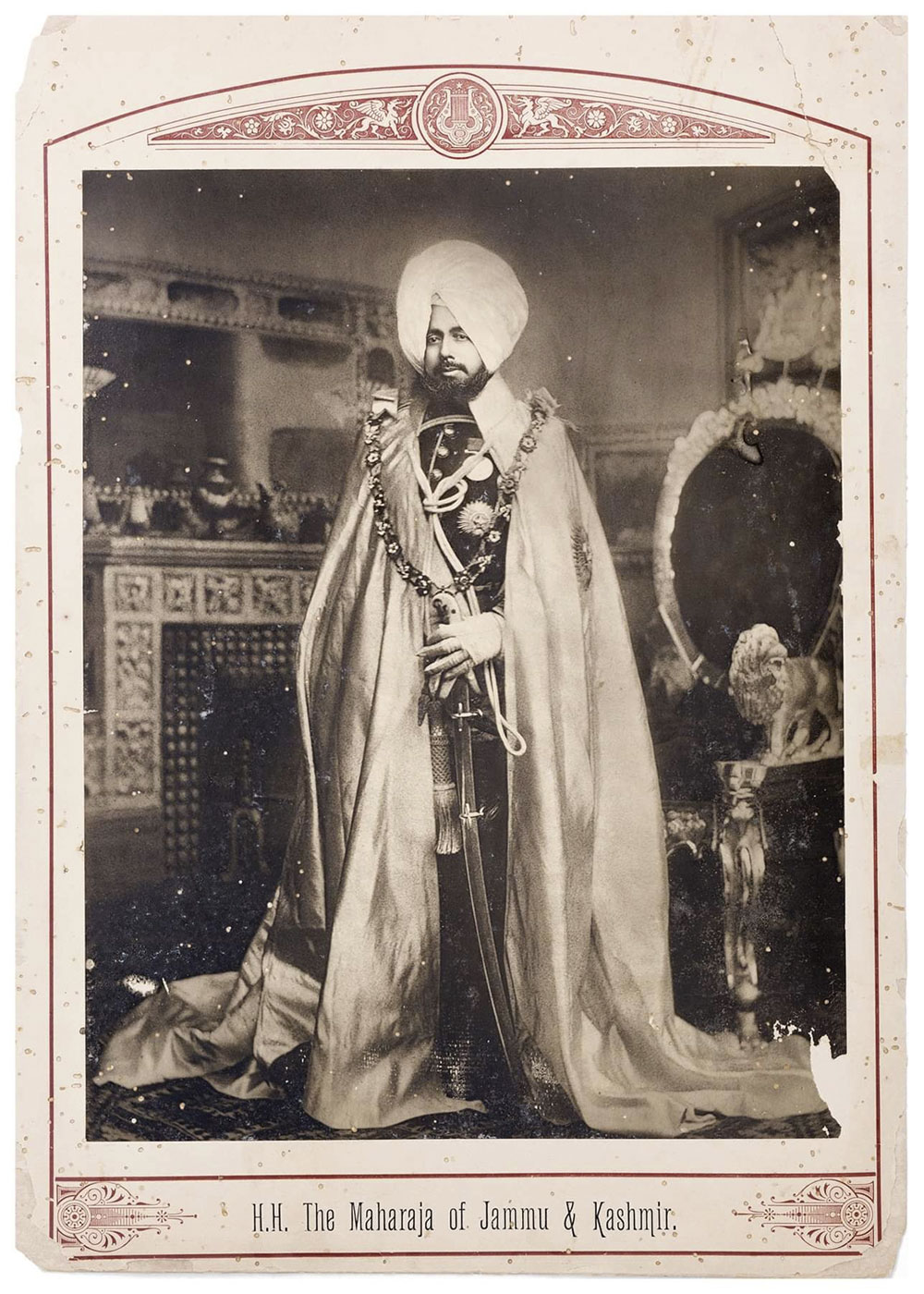
Monday closed
Also closed December 23, 24, 25, and 31

The David Collection website

LIKE ART BLART ON FACEBOOK

Back to top