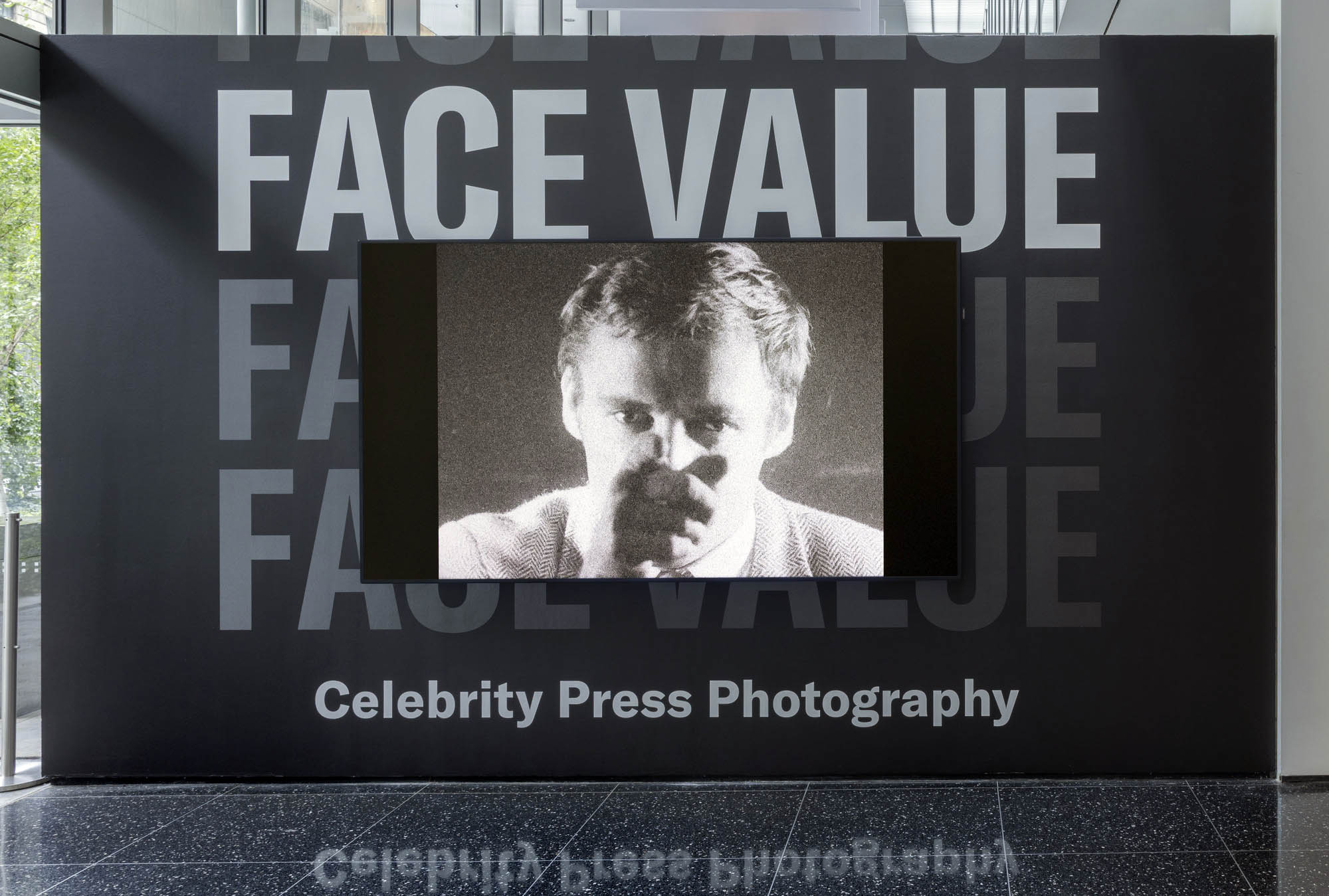
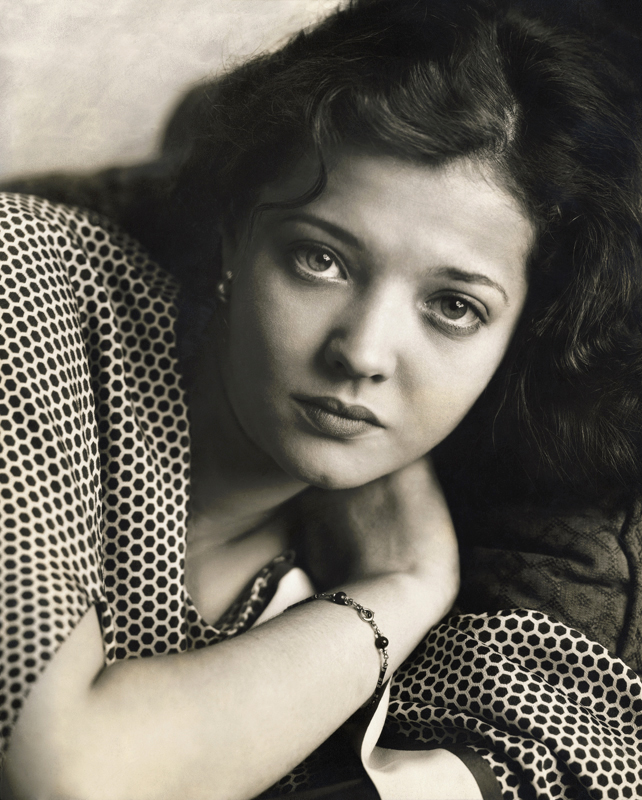
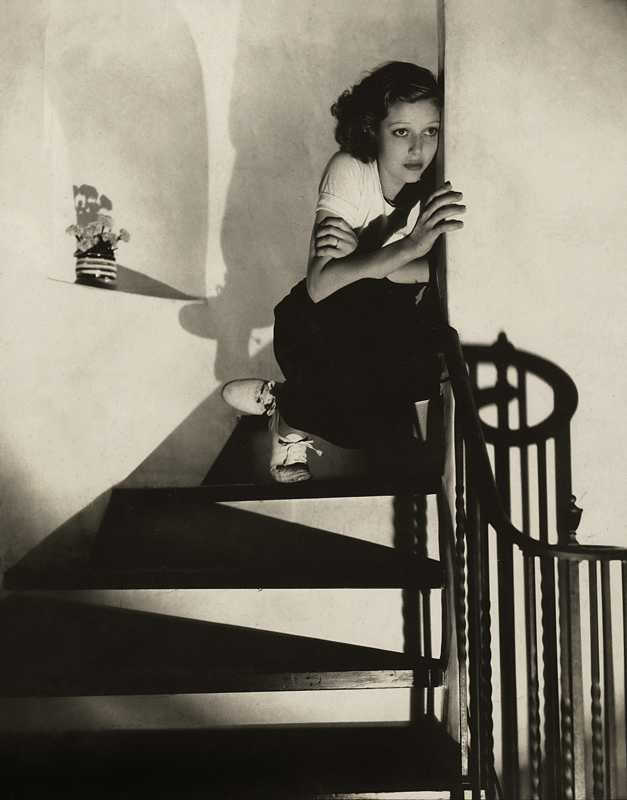
Exhibition: ‘Face Value: Celebrity Press Photography’ at The Museum of Modern Art (MoMA), New York

Exhibition dates: 28th June, 2025 – 21st June, 2026

Curators: Ron Magliozzi, Curator, with Katie Trainor, Film Collections Manager and Cara Shatzman, Collection Specialist, Department of Film.
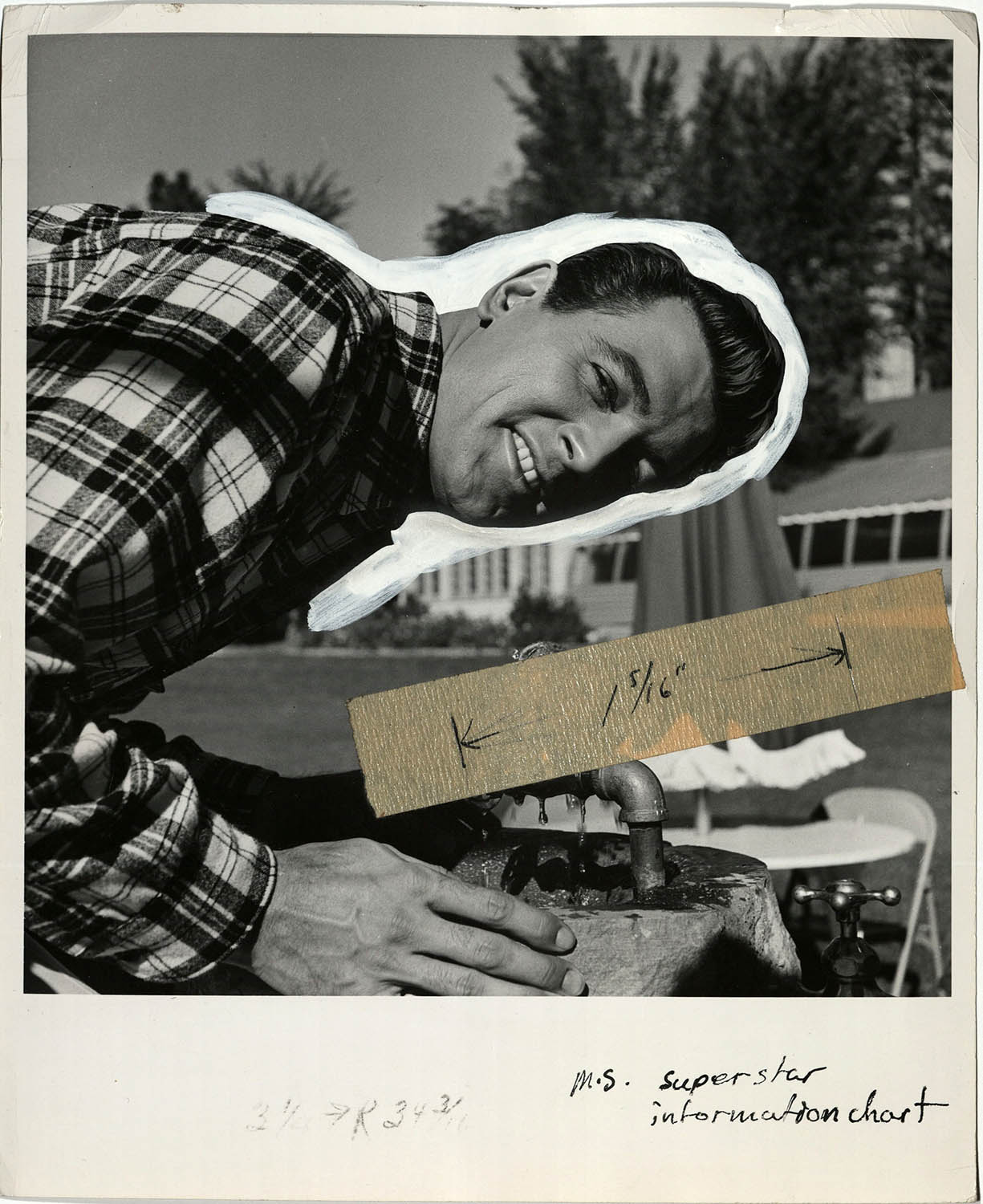
 

Bob Beerman (American) 'Rock Hudson' c. 1953


Bob Beerman (American)
Rock Hudson
c. 1953
Sheet: 9 15/16 x 8″ (25.2 x 20.3cm)
The Museum of Modern Art Film Stills Collection


Silhouetting the celebrity

MoMA always puts on interesting photography exhibitions and this one is no exception. Of course, they have a huge collection to draw from, but it still takes intelligence and curatorial inspiration to bring it all together.

It took me a long time to compile the posting. There were not many media images available but with a bit of digging around on the MoMA collection web pages, and searching online, I managed to find enough photographs to illustrate the exhibition / plus the installation photographs / and the addition of movie posters and magazines to illuminate the films the still photographs were taken from (please note: not in the exhibition). While many of the publicity shots were taken by unknown stills photographers, I have also added bibliographic information for the known photographers where possible.

This would be my only criticism of the exhibition: the inability of the viewer to visualise how these “covered with masking tape, marked up with crayon, or reconfigured with ghostly halos of white-out” photographs were actually used (in the press in everyday life) to create the fantasy ideals of Hollywood glamour stars. Perhaps this was a deliberate curatorial strategy, to concentrate on the pre-production rather than the post-production, to concentrate just on the still photos, without the distraction of further stimuli. And I can understand that decision.

In this posting I can show you three examples of how these still photographs were used: the untouched photograph Jean Simmons, Rock Hudson [in “This Earth is Mine”] by an unknown photographer (1959, below) has then been colourised and used on the front cover of the DVD release of this film; the Limehouse Blues movie poster (1934, below) features a white-out around George Raft’s head, similar to the white-out around Joan Crawford or Rock Hudson (above); and the hair of Elsa Manchester in Elsa Lanchester [in “The Bride of Frankenstein”] by an unknown photographer (1935, below) is graphically stylised and coloured in the The Bride of Frankenstein movie poster (1935, below).

Silhouetting, in-painting, masking, sectioning, and collage were all hands-on practices that readied the photographs for the press whilst in press they promoted the desirous ideal of the glamorous movie starlet, heroic action man, the fantasy ready and available for consumption by the reading public: the beautiful heroine available to the male gaze, aspirational for so many young women.

Dr Marcus Bunyan


Many thankx to MoMA for allowing me to publish the photographs in the posting. Please click on the photographs for a larger version of the image.


“Though Iris Barry, who in 1935 became the founding curator of The Museum of Modern Art’s Film Library, aimed to preserve the history of moving images as an art form, she didn’t stop at moving images. “She was trying to save the record of film history,” explains Ron Magliozzi, a curator in what is today known as the Department of Film. “When the department was founded, the silent period had just ended. And its whole history was considered irrelevant and of no interest. That’s why she was so aggressive in collecting it. Films were the most important thing, and images from film history were second.”

Today, the Museum’s Film Stills Collection includes well over a million publicity photos, production stills, and more – and it’s not all pristine, glossy prints. In the current exhibition Face Value: Celebrity Press Photography, many of the images are covered with masking tape, marked up with crayon, or reconfigured with ghostly halos of white-out. It’s an occasionally startling reminder that the manipulation of photographs – and of celebrity itself – long predates Photoshop and Instagram.”


Jason Persse, Assistant Director, Content Team, MoMA


The Museum of Modern Art announces Face Value: Celebrity Press Photography, the first major exhibition of Hollywood studio portraiture to be drawn from the Museum’s film stills archive since 1993. On view in the Titus and Morita Galleries, the exhibition will offer a revisionist look at the Department of Film’s photographic archive, examining the evolution of editorial practice before the digital age, AI technology, and social media reshaped the experience of celebrity.

Face Value will feature over 200 works from 1921 to 1996, including studio photography of Louis Armstrong, Harry Belafonte, Clara Bow, Louise Brooks, Bette Davis, Mia Farrow, Katharine Hepburn, Dennis Hopper, Lena Horne, Bela Lugosi, Carmen Miranda, Elvis Presley, Diana Ross, Barbara Stanwyck, Elizabeth Taylor, Spencer Tracy, Oprah Winfrey, and many others.

Text from the MoMA website
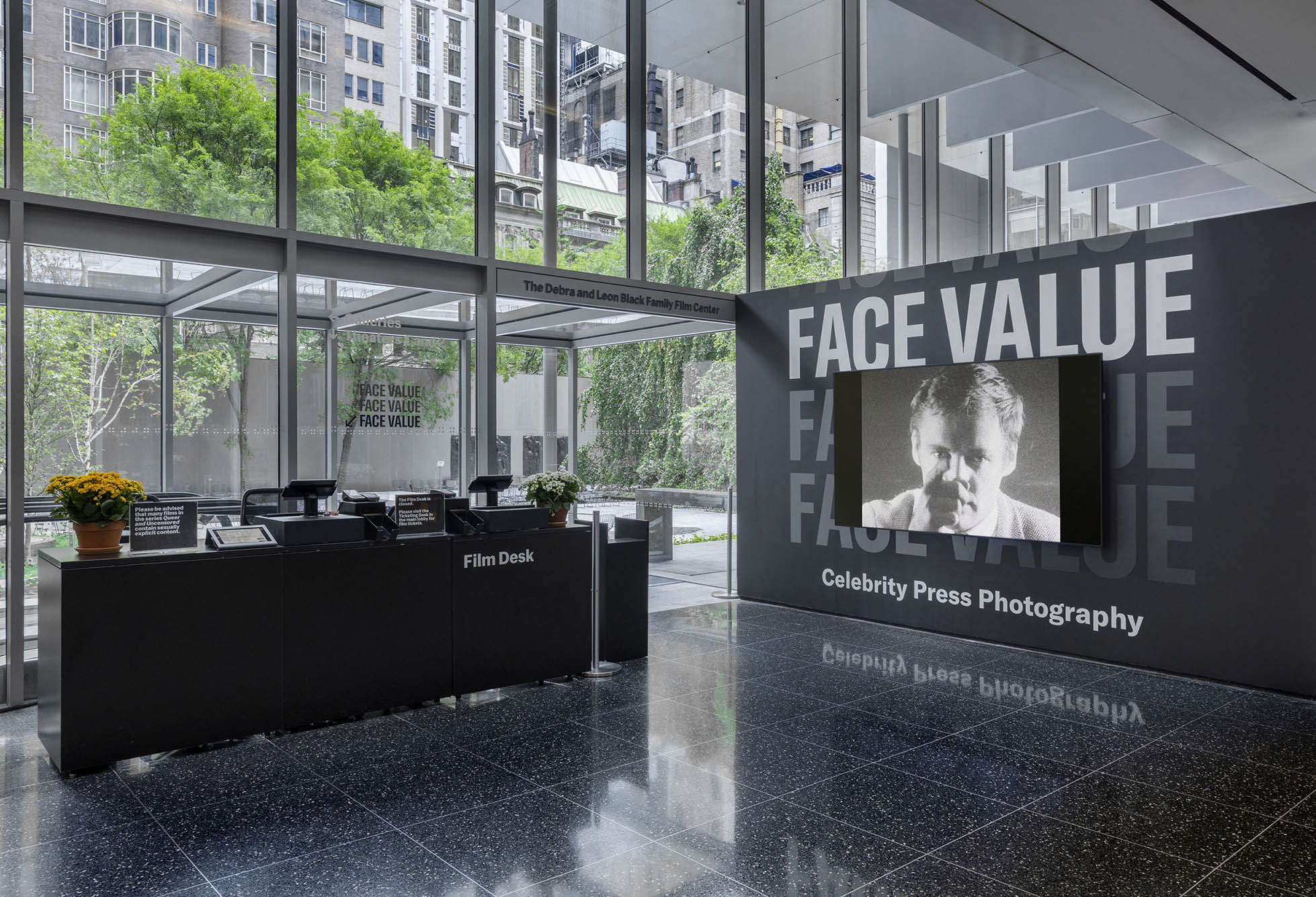
 

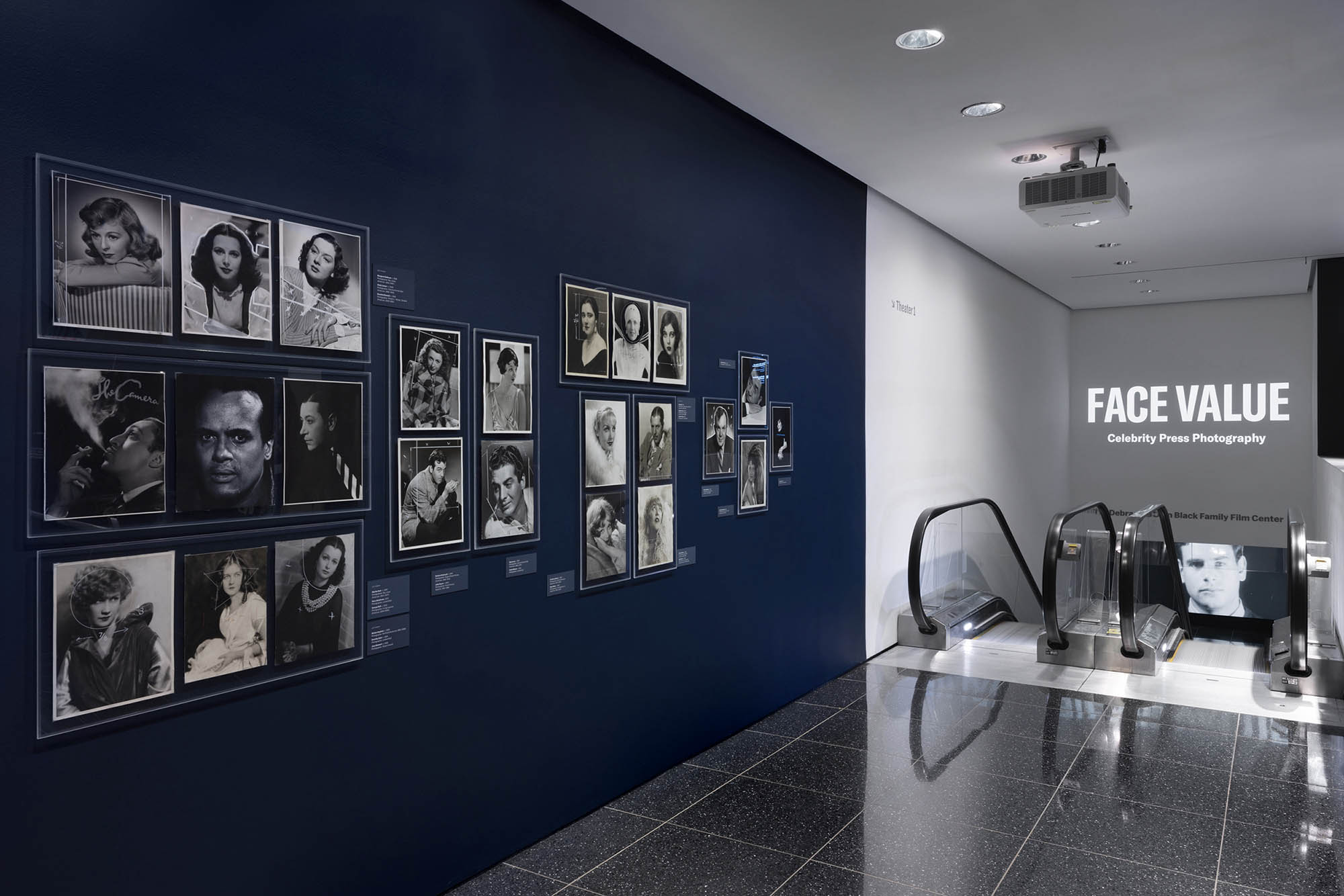
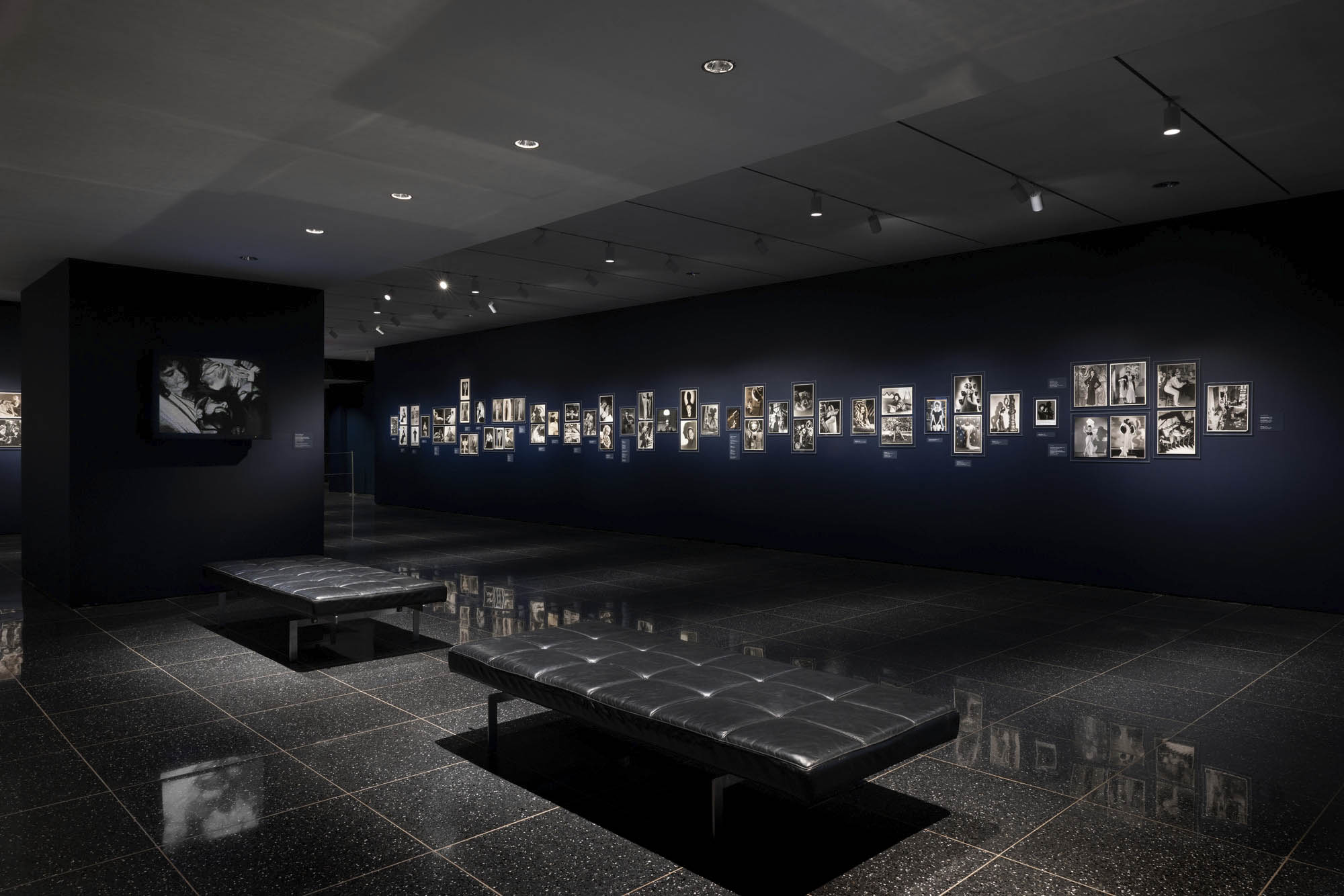
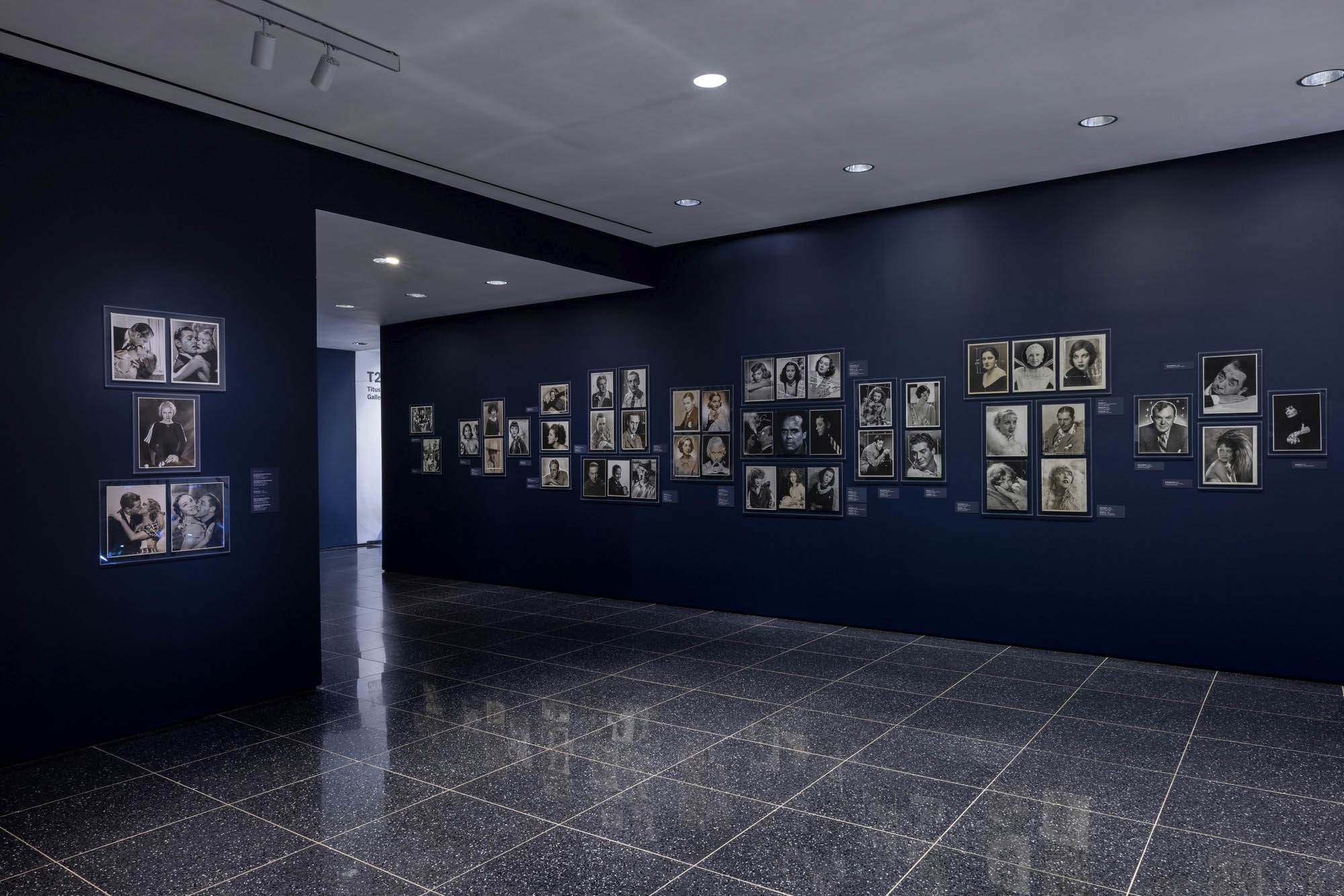
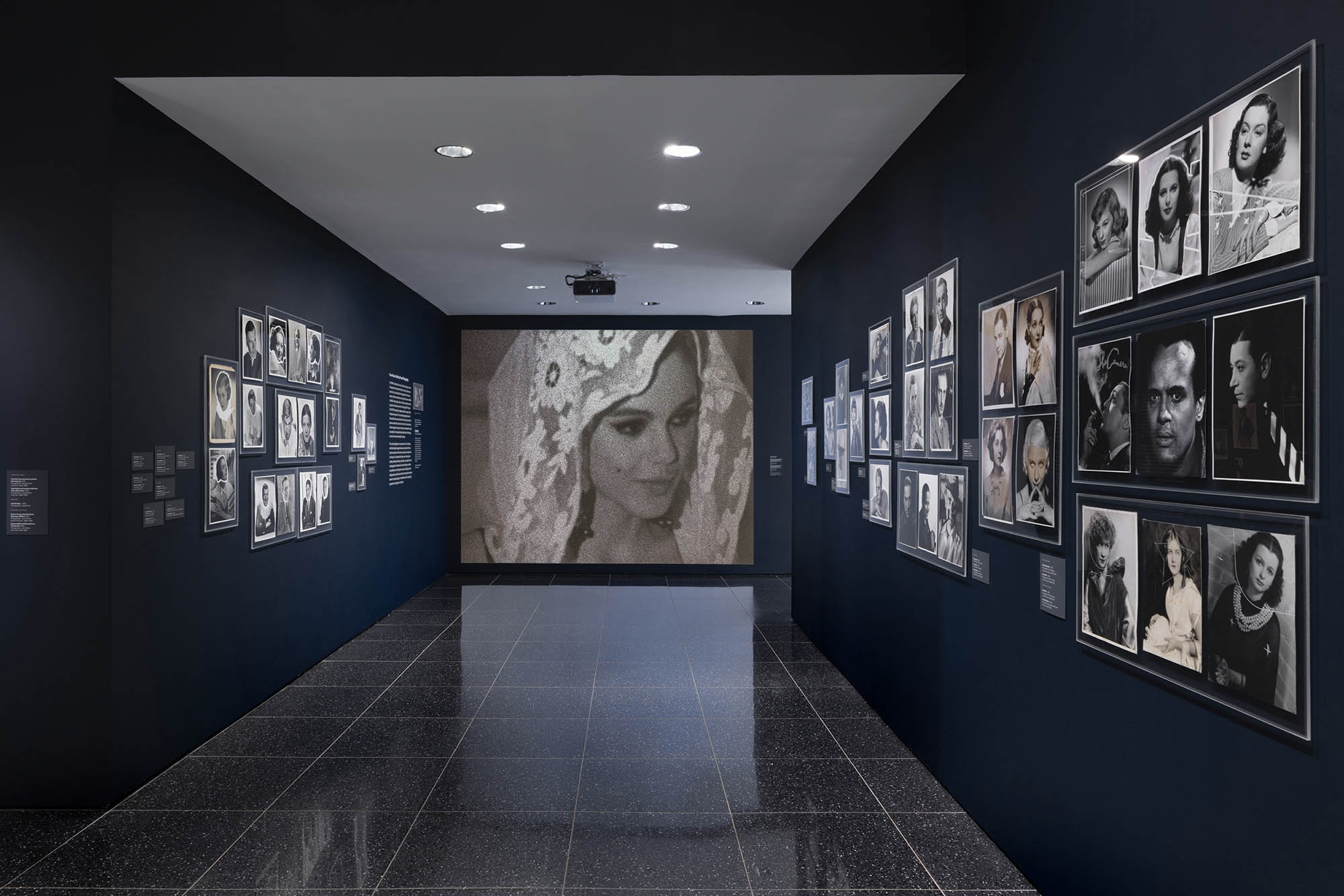
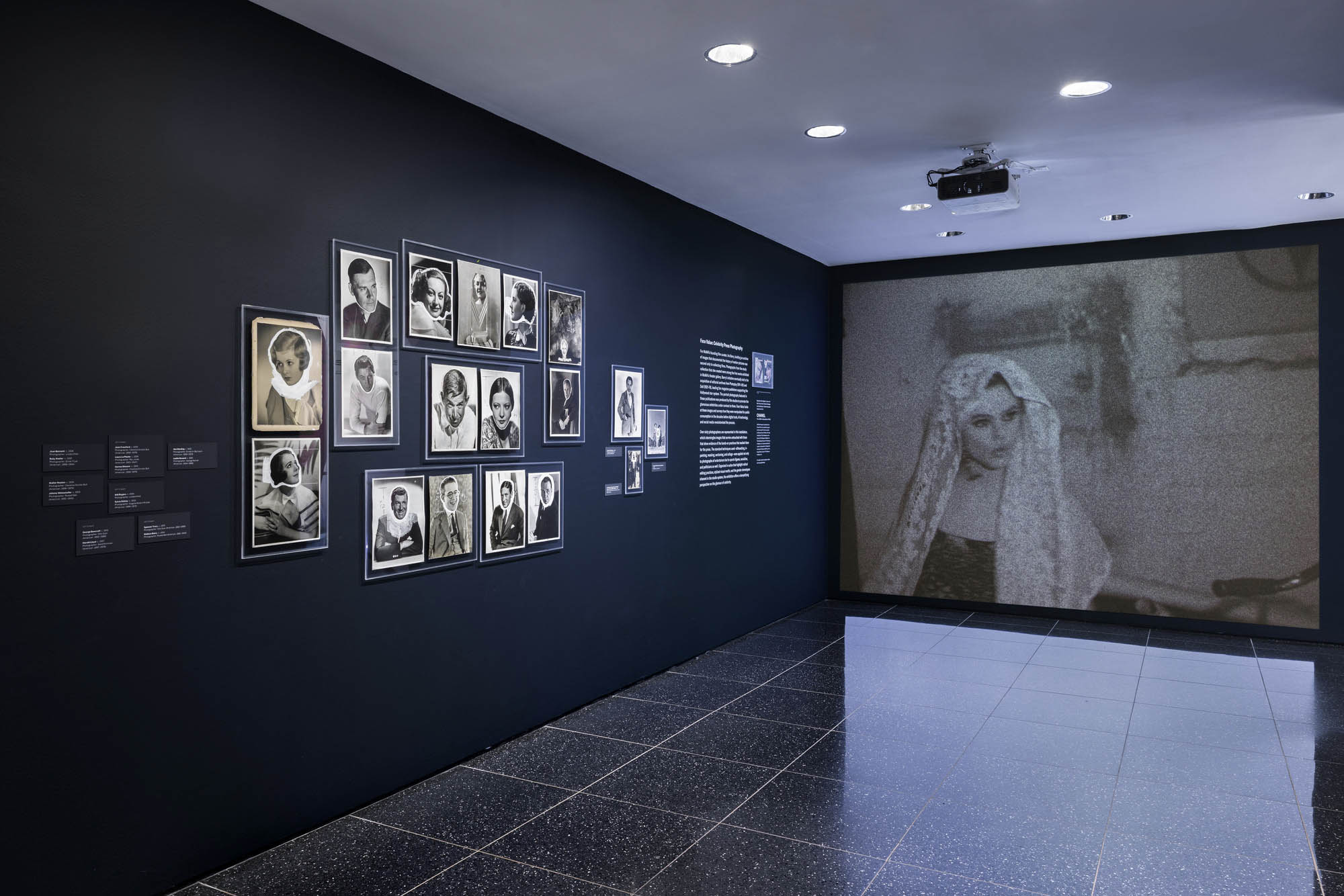
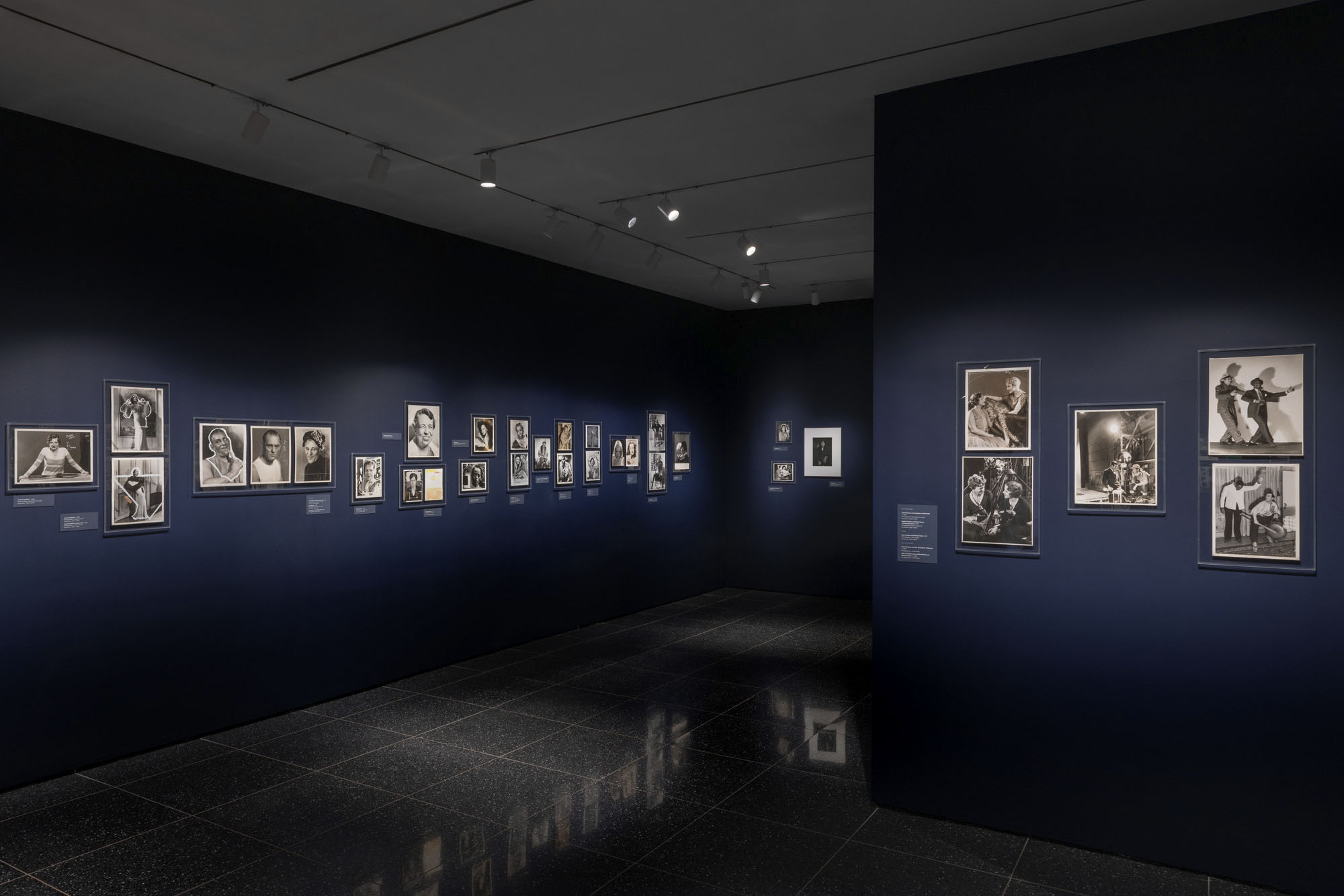
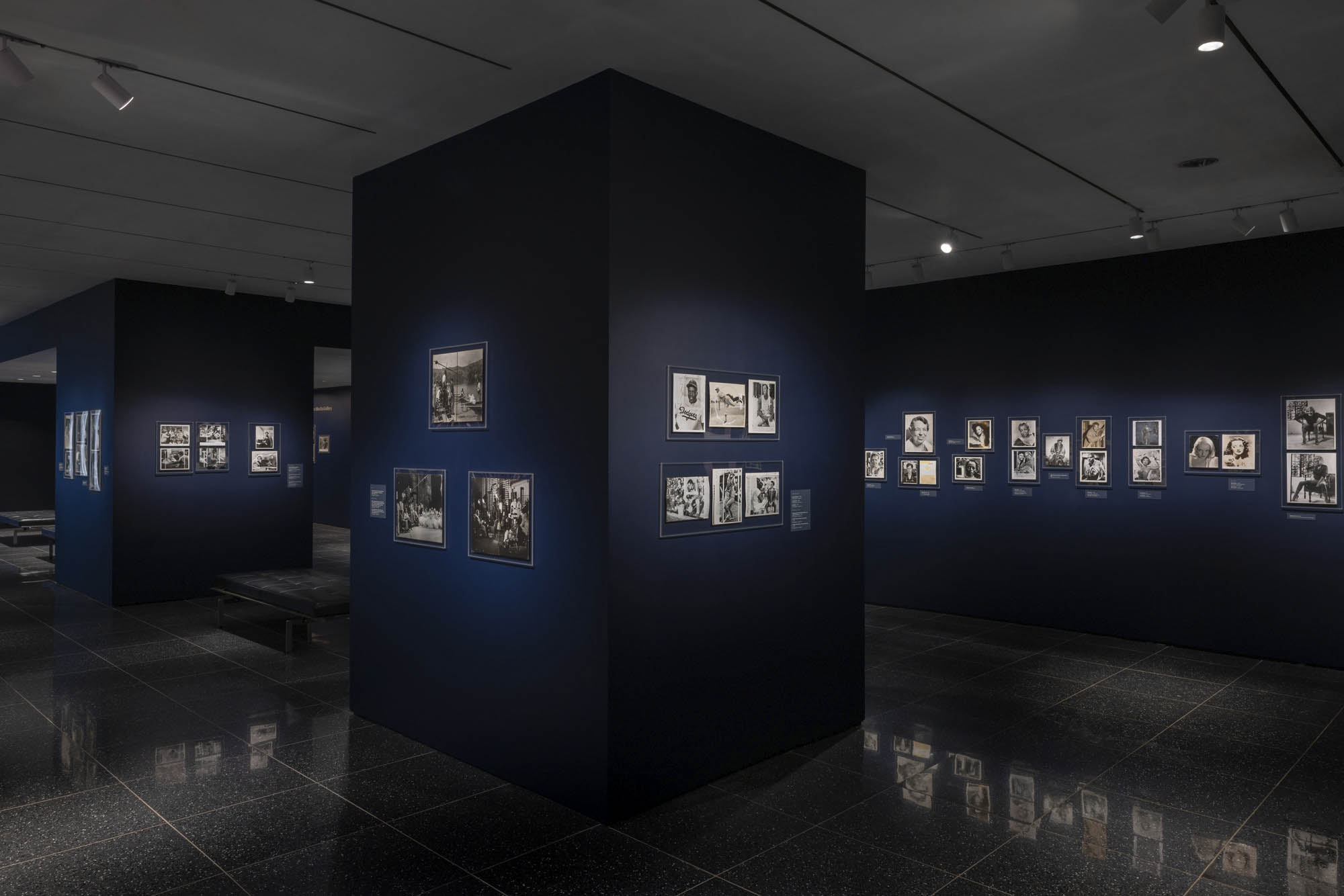
Installation view of the exhibition 'Face Value: Celebrity Press Photography' at The Museum of Modern Art (MoMA), New York, June 2025 - June 2026


Installation views of the exhibition Face Value: Celebrity Press Photography at The Museum of Modern Art (MoMA), New York, June 2025 – June 2026 showing in the left hand block of 9 photographs of the bottom image, from left to right top row to bottom row: Ray Jones’ Margaret Sullavan c. 1939 (below); Clarence Sinclair Bull’s Hedy Lamarr c. 1940; Adolph L. “Whitey” Schafer’s Rosalind Russell c. 1940; Ray Jones’ Mischa Auer c. 1940; Unknown photographer Harry Belafonte [in “The Angel Levine”] 1970; Irving Lippman’s George Raft c. 1933; Hal Phyfe’s Miriam Hopkins c. 1930; Unknown photographer Dorothy Gish c. 1929; and Imandt’s Joan Bennett c. 1939
Photos: Jonathan Dorado
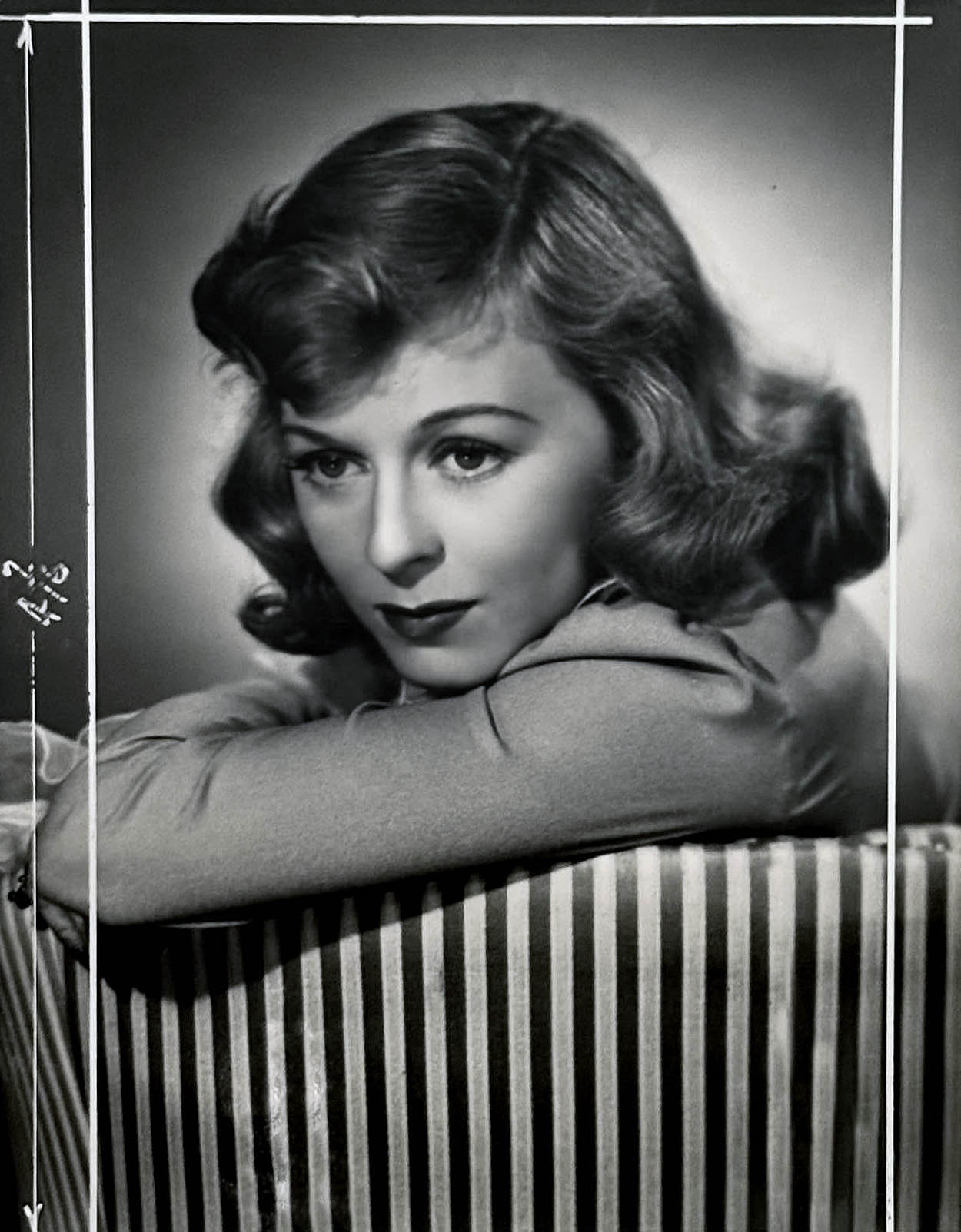
 

Ray Jones (American, 1901-1947) 'Margaret Sullavan' c. 1939


Ray Jones (American, 1901-1947)
Margaret Sullavan
c. 1939
Sheet: 13 7/8 x 10 7/8″ (35.2 x 27.6cm)
The Museum of Modern Art Film Stills Collection
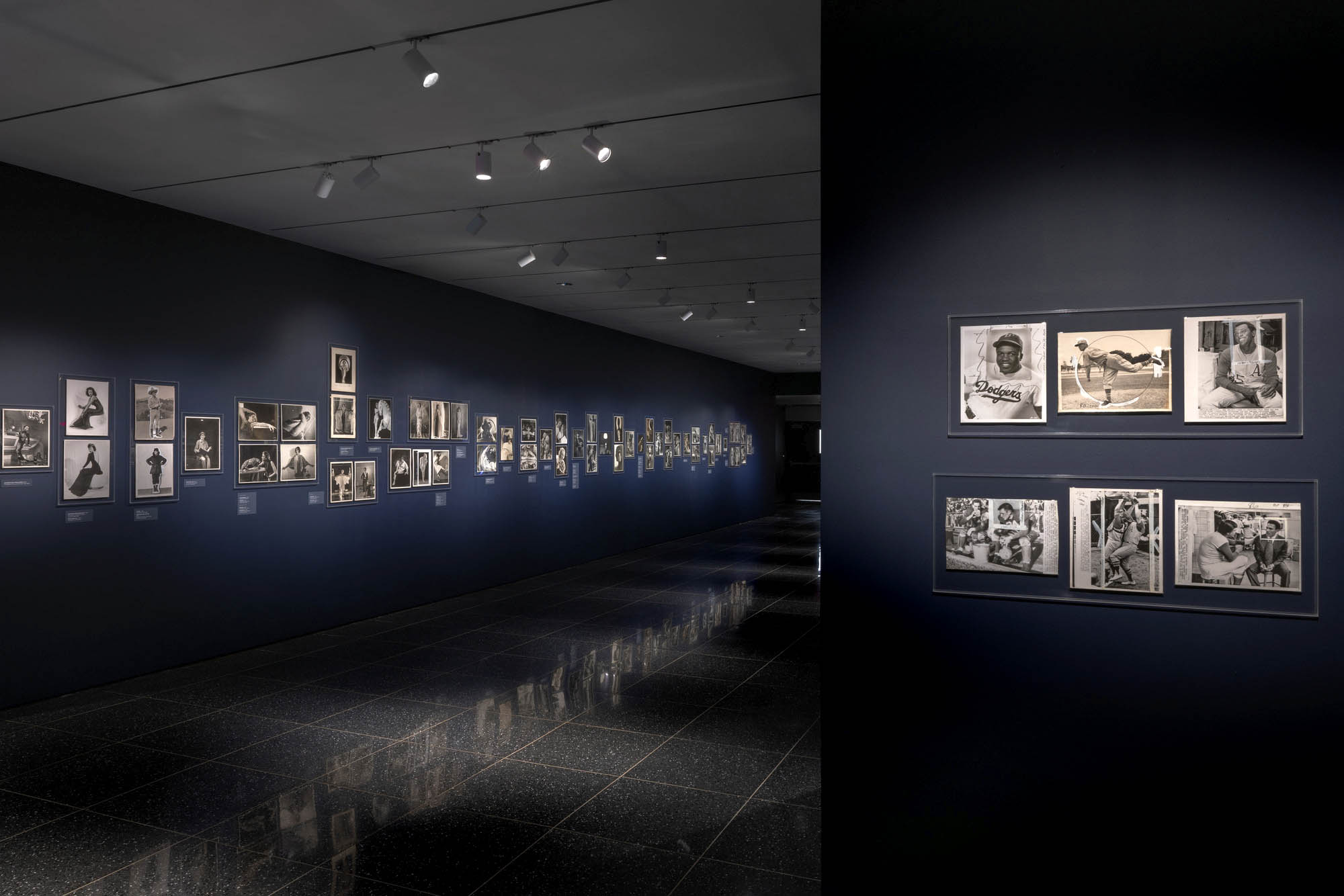
 

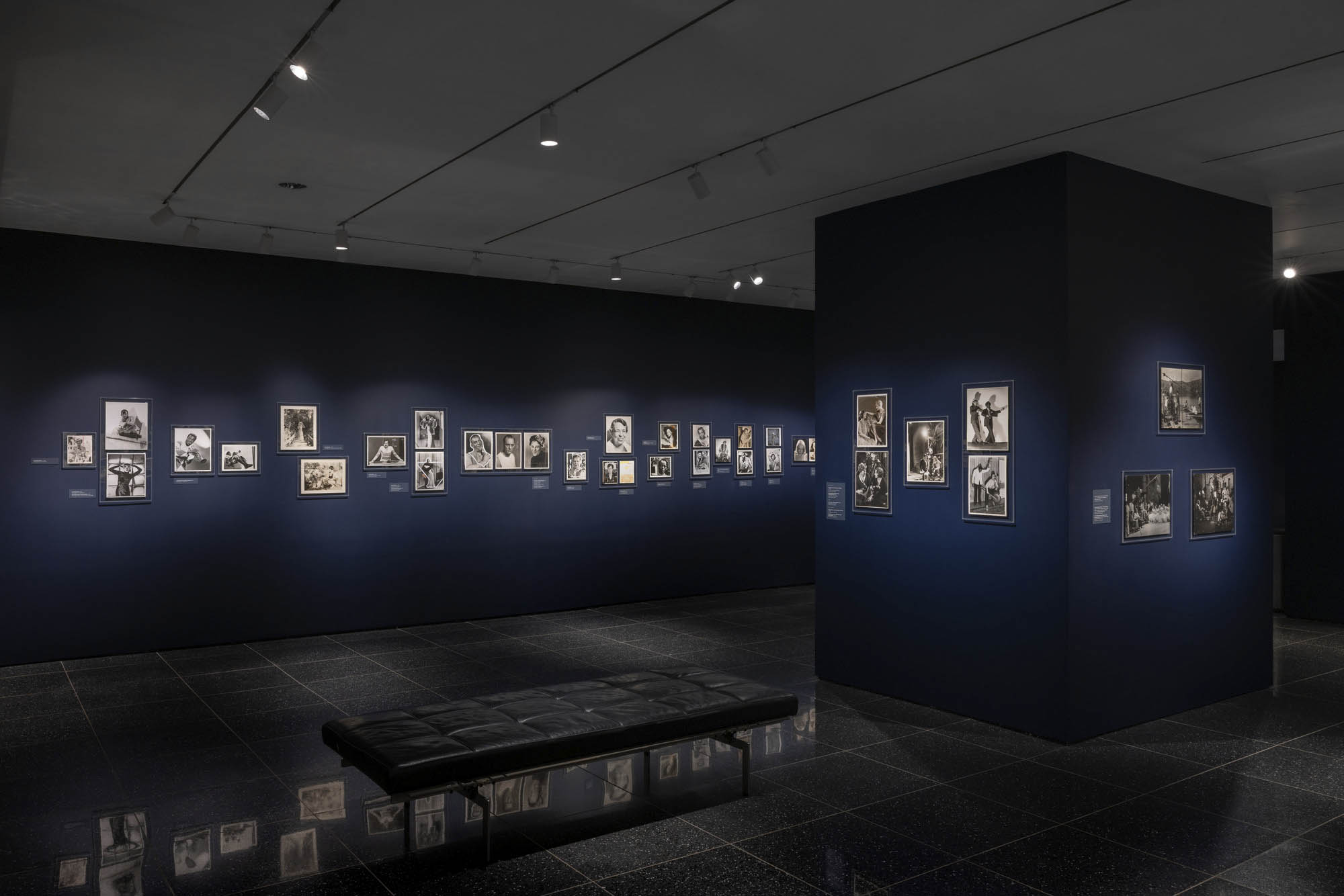
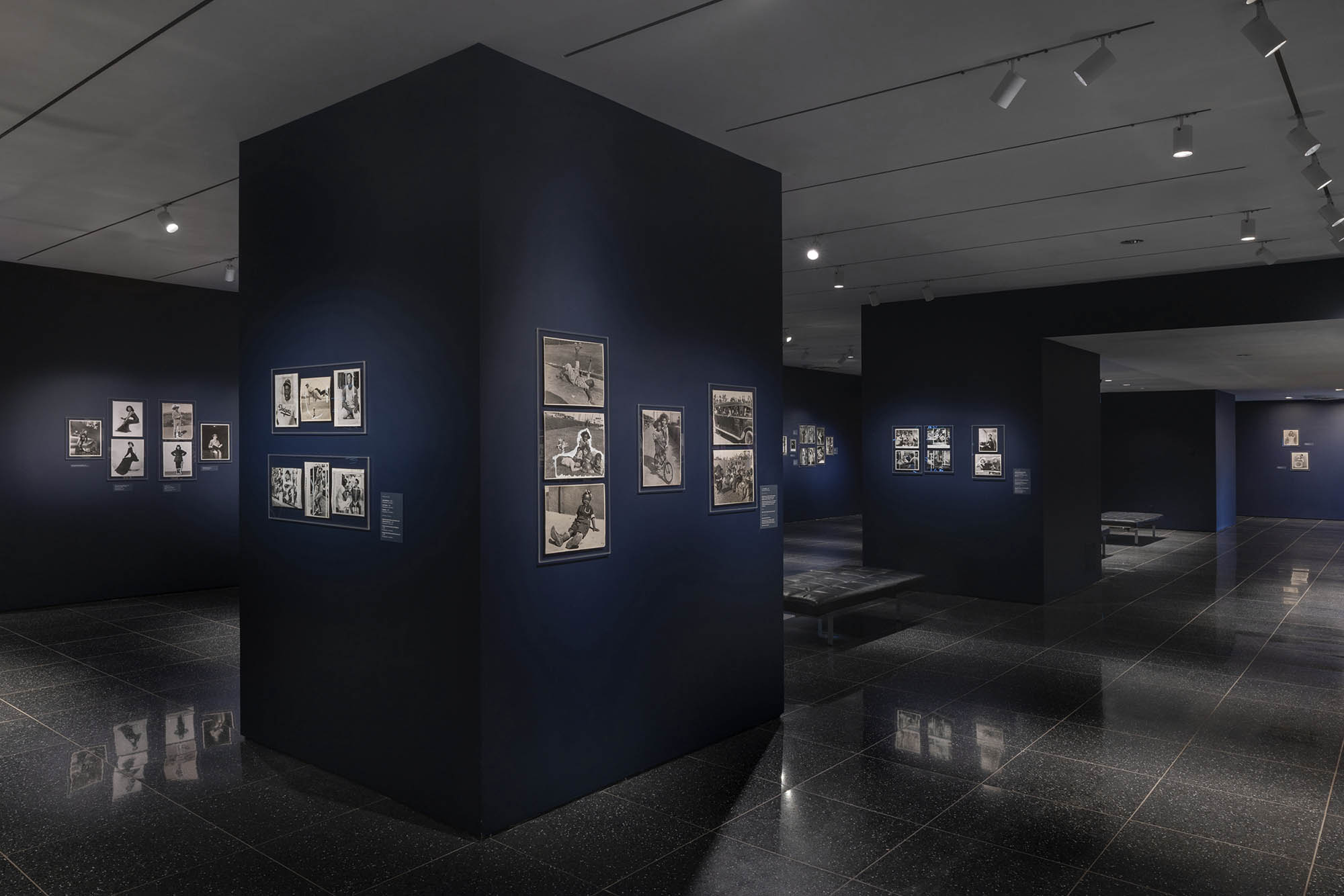
Installation view of the exhibition 'Face Value: Celebrity Press Photography' at The Museum of Modern Art (MoMA), New York, June 2025 - June 2026


Installation view of the exhibition Face Value: Celebrity Press Photography at The Museum of Modern Art (MoMA), New York, June 2025 – June 2026 showing at right in the bottom image at third left in top row, Unknown photographer Jackie Robinson c. 1950
Photos: Jonathan Dorado
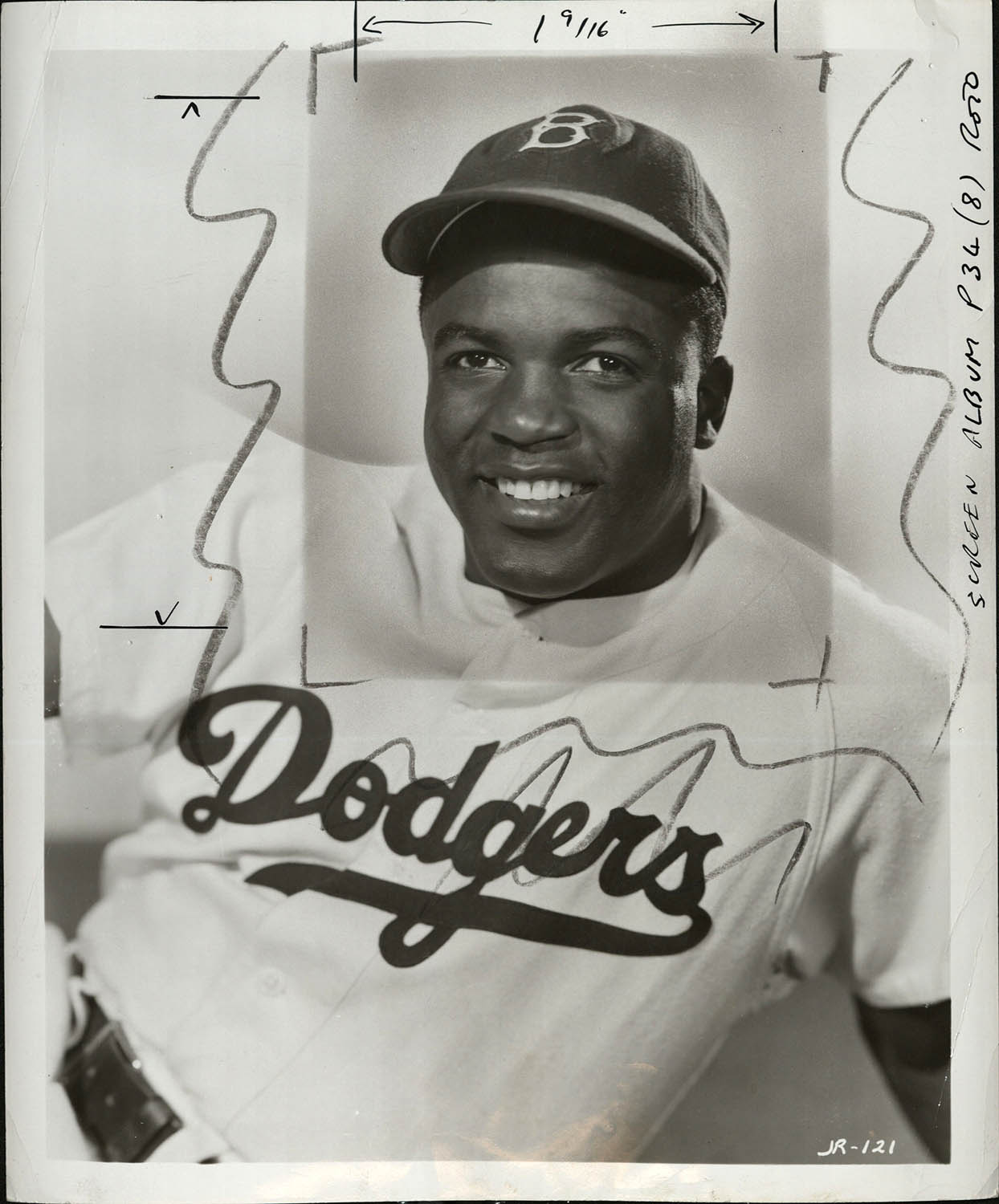
 

Unknown photographer. 'Jackie Robinson' c. 1950


Unknown photographer
Jackie Robinson
c. 1950
Sheet: 10 x 8″ (25.4 x 20.3cm)
The Museum of Modern Art Film Stills Collection


The Museum of Modern Art announces Face Value: Celebrity Press Photography, the first major exhibition of Hollywood studio portraiture to be drawn from the Museum’s film stills archive since 1993. On view in the Titus and Morita Galleries from June 28, 2025, through June 21, 2026, the exhibition will offer a revisionist look at the Department of Film’s photographic archive, examining the evolution of editorial practice before the digital age, AI technology, and social media reshaped the experience of celebrity.

Face Value will feature over 200 works from 1921to 1996, including studio photography of Louis Armstrong, Harry Belafonte, Clara Bow, Louise Brooks, Bette Davis, Mia Farrow, Katharine Hepburn, Dennis Hopper, Lena Horne, Bela Lugosi, Carmen Miranda, Elvis Presley, Diana Ross, Barbara Stanwyck, Elizabeth Taylor, Spencer Tracy, Oprah Winfrey, and many others.

Face Value: Celebrity Press Photography is organised by Ron Magliozzi, Curator, with Katie Trainor, Film Collections Manager, and Cara Shatzman, Collection Specialist, Department of Film.

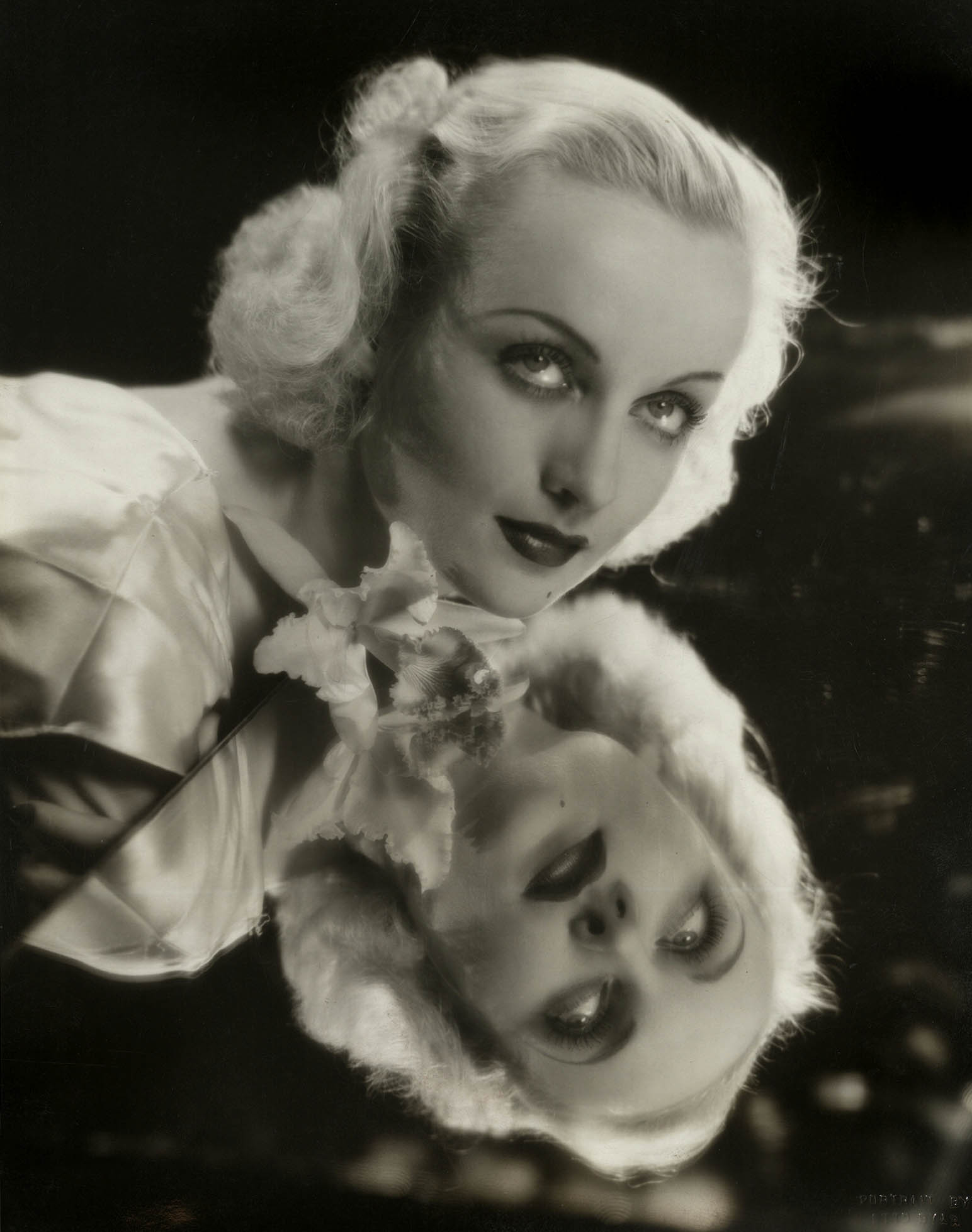
Face Value will encourage viewers to see through the facade of glamour at how celebrity is fabricated and exploited,” says Ron Magliozzi. Showcasing work by over 58 photographers, the exhibition will juxtapose “untouched” images like Otto Dyar’s Carole Lombard (c. 1933) with those altered through traditional press practices such as silhouetting, in-painting, masking, sectioning, and collage, like James Manatt’s Joan Crawford portrait for the film Letty Lynton (1932). Face Value examines how these methods shaped representations of not only film stars but also sports figures, socialites, and politicians, from Jackie Robinson to Jacqueline Kennedy Onassis and Eleanor Roosevelt. Presented in thematic suites, the installation highlights radical editing techniques, stylised visual motifs, and the gendered aesthetics embedded in the system, offering a revealing perspective on the fabrication of glamour and fame.

Since the Museum’s founding, photography has played a vital role in how it has documented the history of motion pictures. Face Value traces the origin of this early initiative to MoMA’s first film curator, Iris Barry, whose archival efforts led to the acquisition of editorial collections from Photoplay (1911-1980) and Dell (1921-1976), two leading publications that helped define Hollywood’s star system. The exhibition includes images of comic stars Buster Keaton, W. C. Fields, Lupe Velez, and Mae West; pioneering actress Hattie McDaniel with Ruby Berkley, the first Black accredited Hollywood correspondent; famed aviatrix Amelia Earhart on a Hollywood film set; and the last photo shoot with Marilyn Monroe.

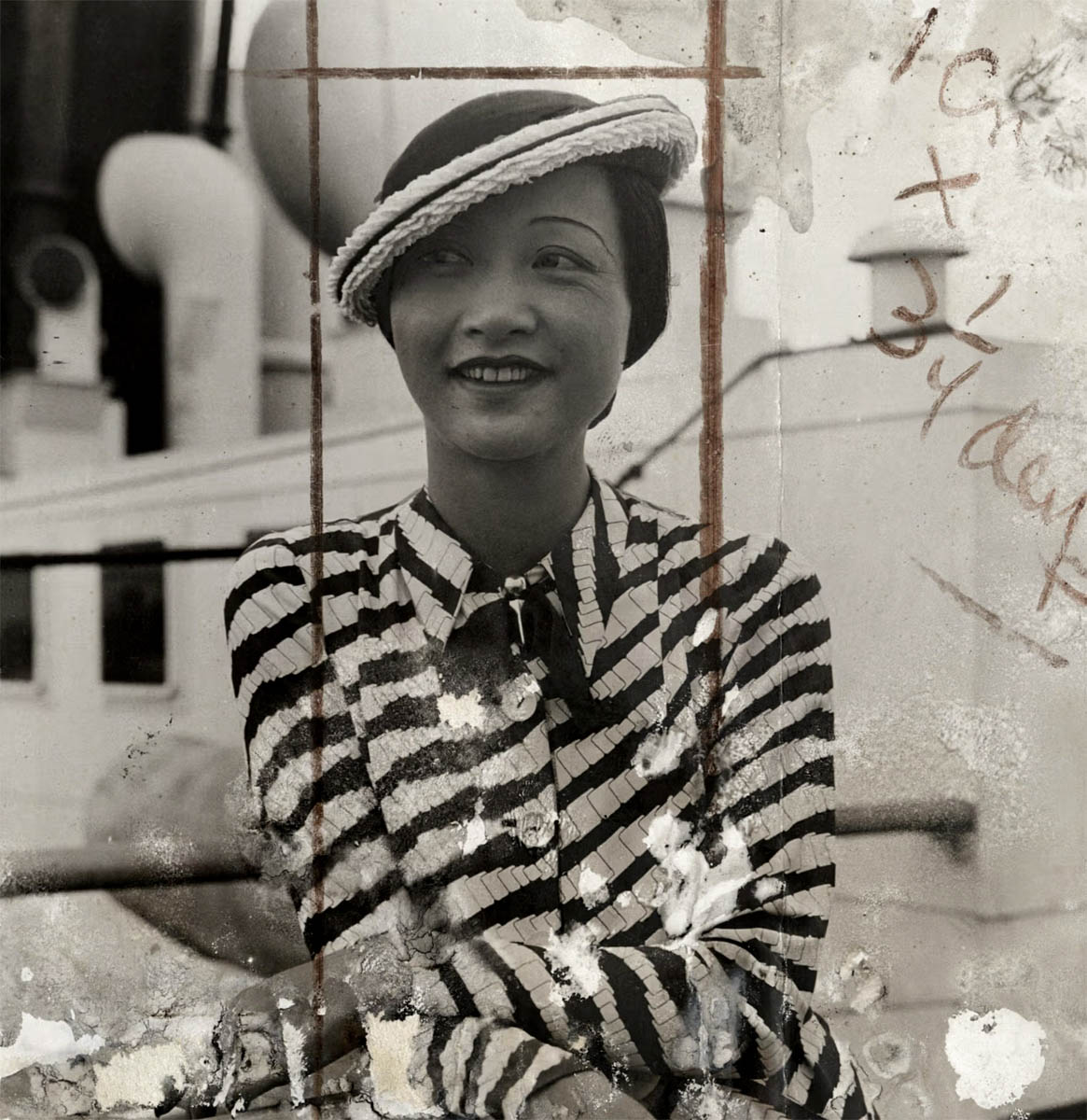
Featuring promotional portraits crafted to cultivate celebrity personas, such as Ray Jones’s Anna May Wong portrait for the film Limehouse Blues, Soul of a Dragon (1934), the exhibition explores how these images were manipulated for public consumption through hands-on editing techniques long before digital tools became standard.

Press release from MoMA
 

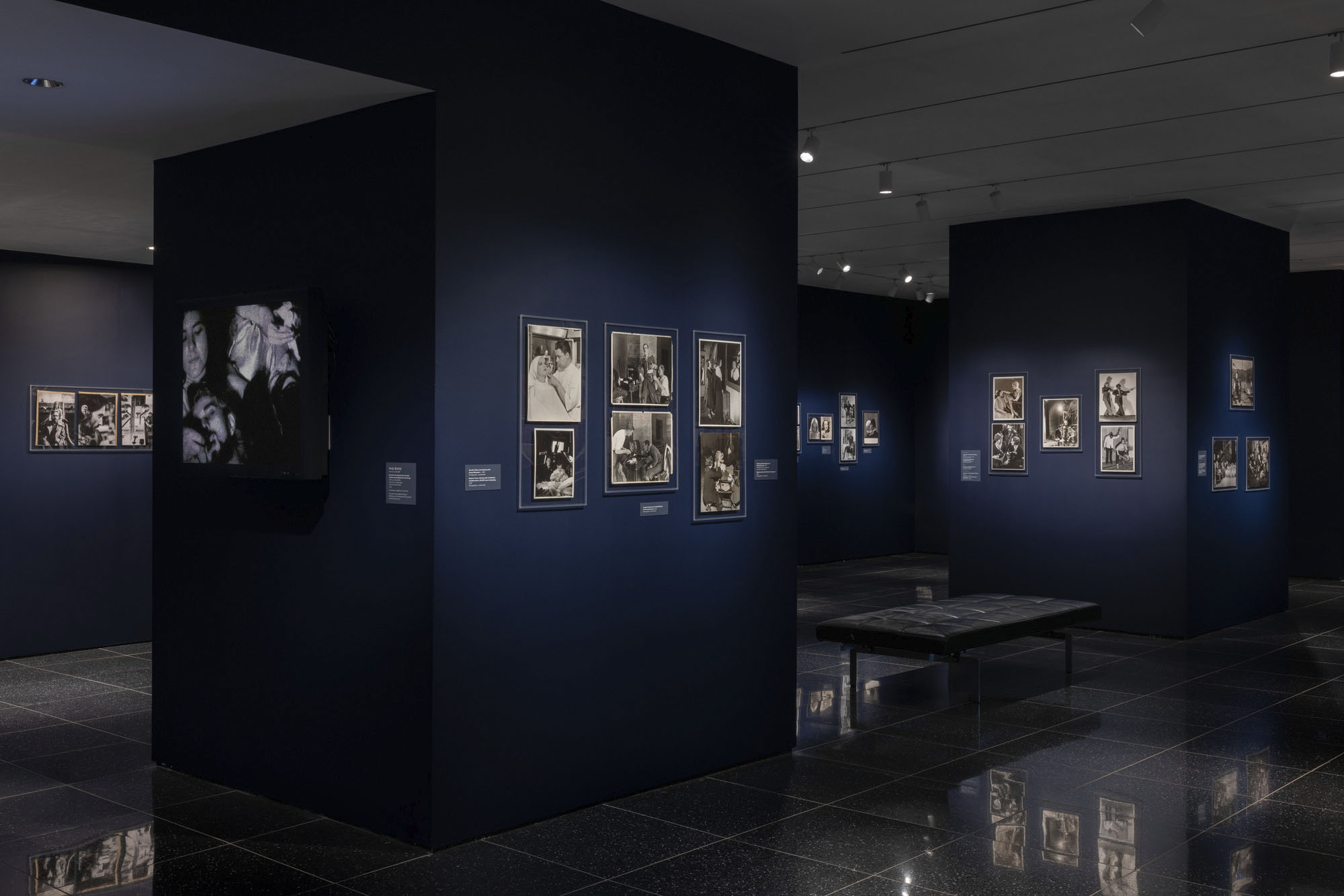
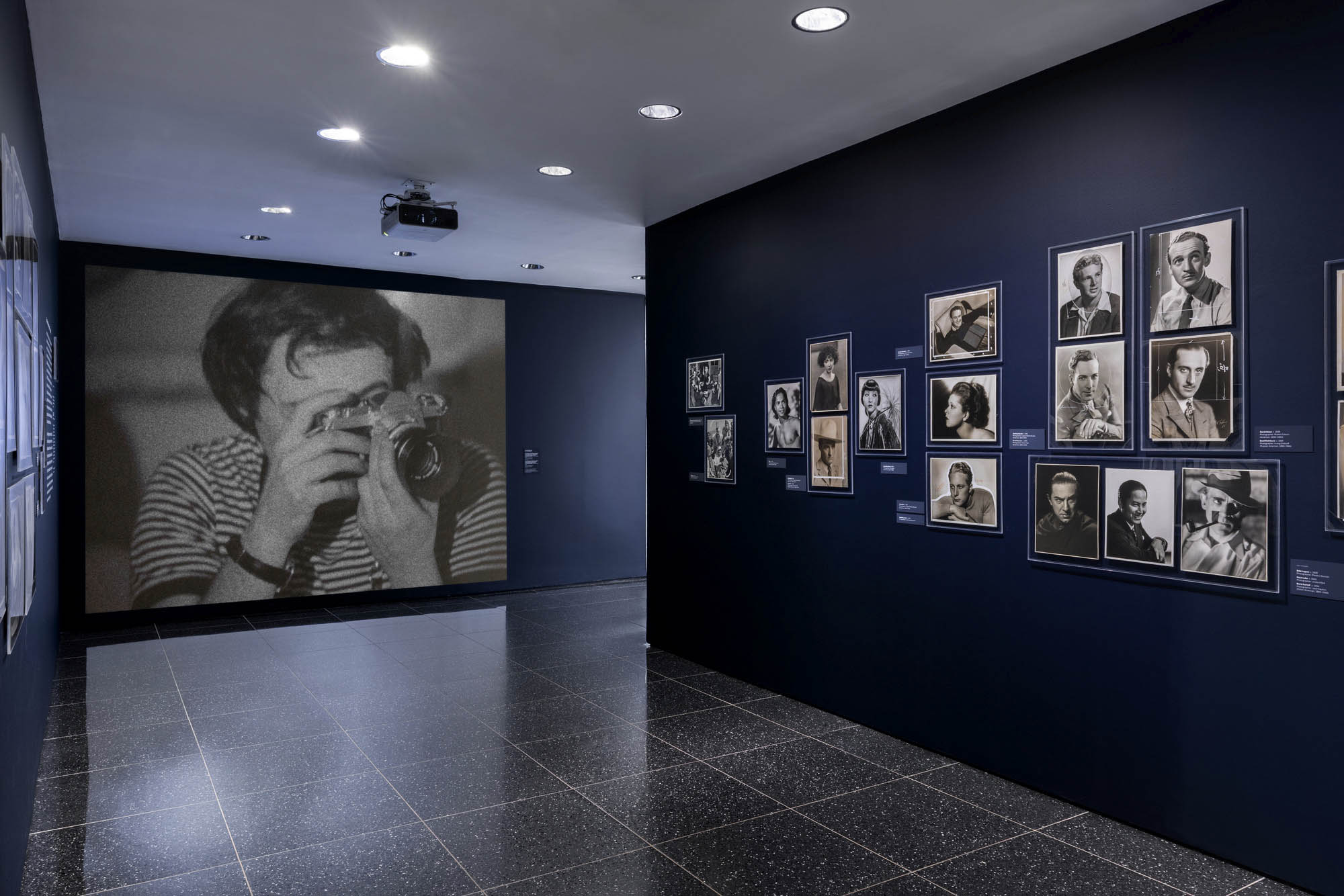
Installation view of the exhibition 'Face Value: Celebrity Press Photography' at The Museum of Modern Art (MoMA), New York, June 2025 - June 2026
Installation view of the exhibition 'Face Value: Celebrity Press Photography' at The Museum of Modern Art (MoMA), New York, June 2025 - June 2026 showing a video still from 'Edie Sedgwick, Gerard Malanga, Benedetta Barzini, Ingrid Superstar, Nat Finkelstein: Danny Williams footage of unknown documentary film shoot' c. 1965, processed 2024


Installation views of the exhibition Face Value: Celebrity Press Photography at The Museum of Modern Art (MoMA), New York, June 2025 – June 2026 showing in the bottom two photographs, video stills from Edie Sedgwick, Gerard Malanga, Benedetta Barzini, Ingrid Superstar, Nat Finkelstein: Danny Williams footage of unknown documentary film shoot c. 1965, processed 2024 (below)
Photos: Jonathan Dorado
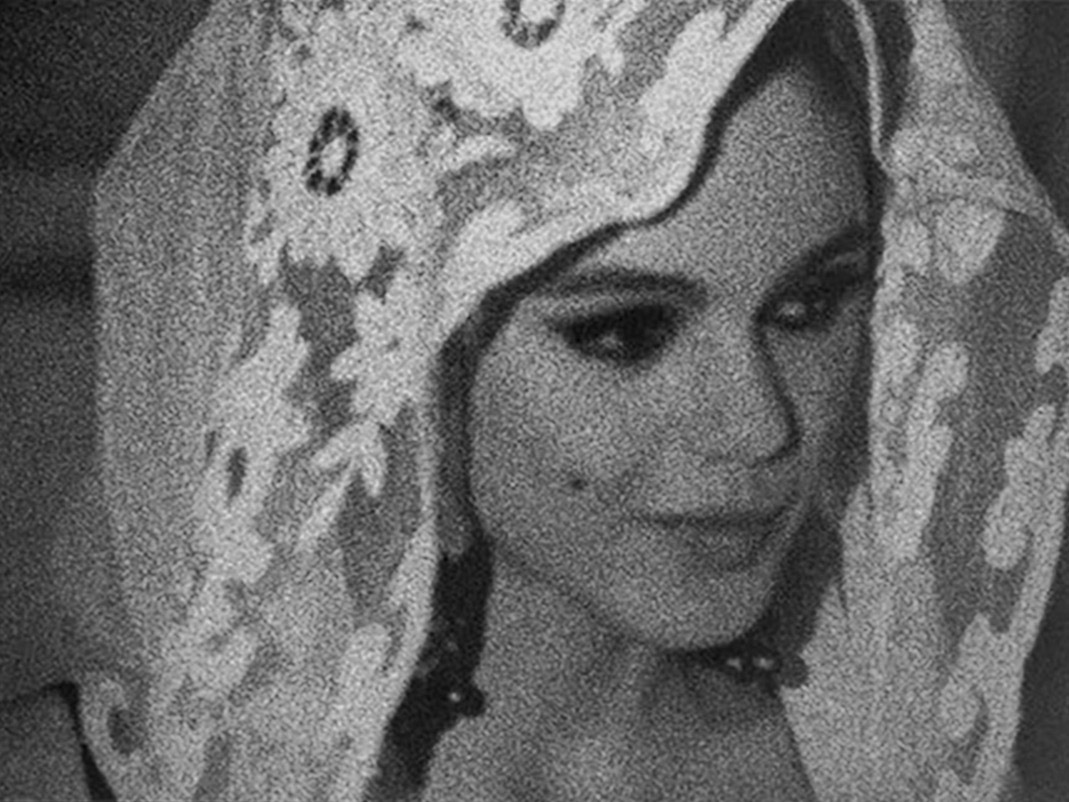
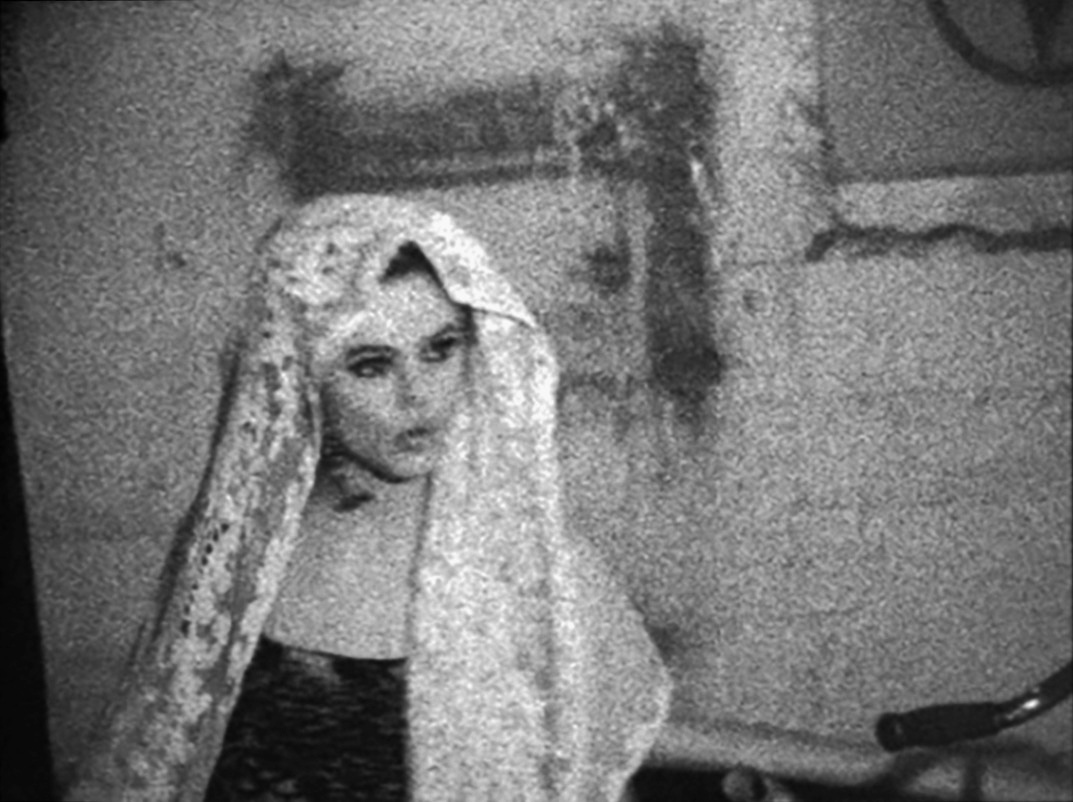
 

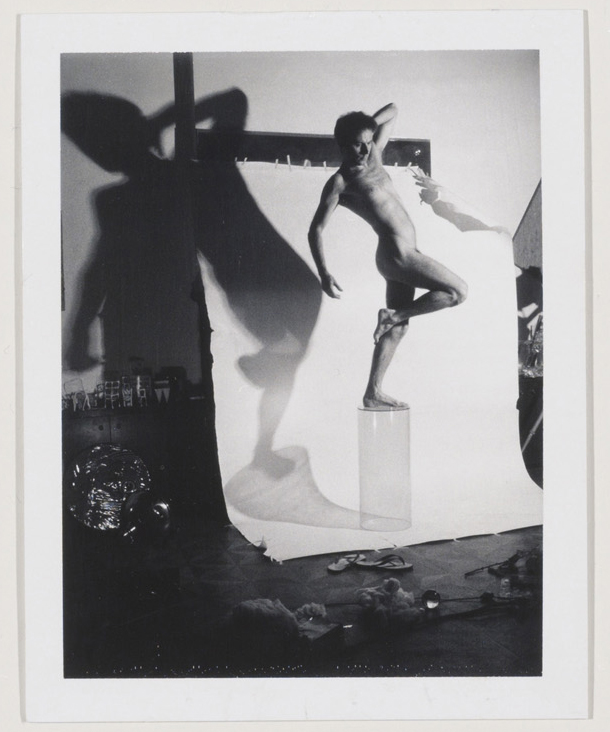
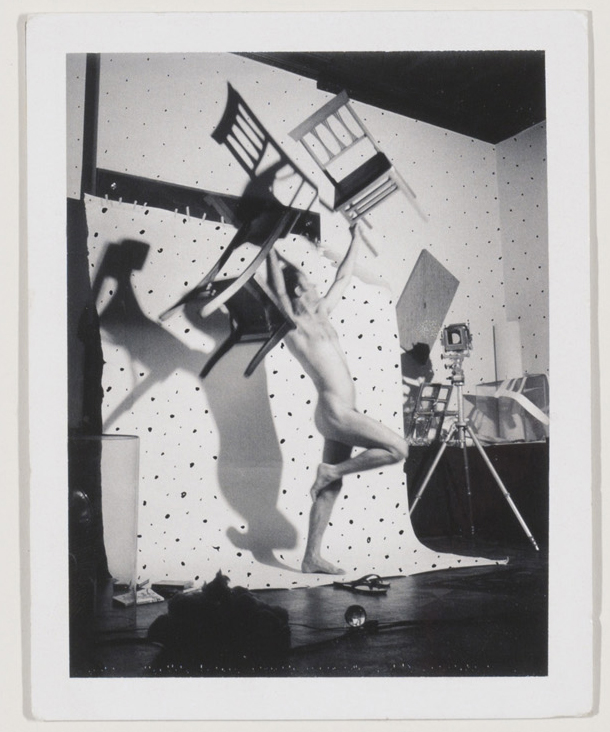
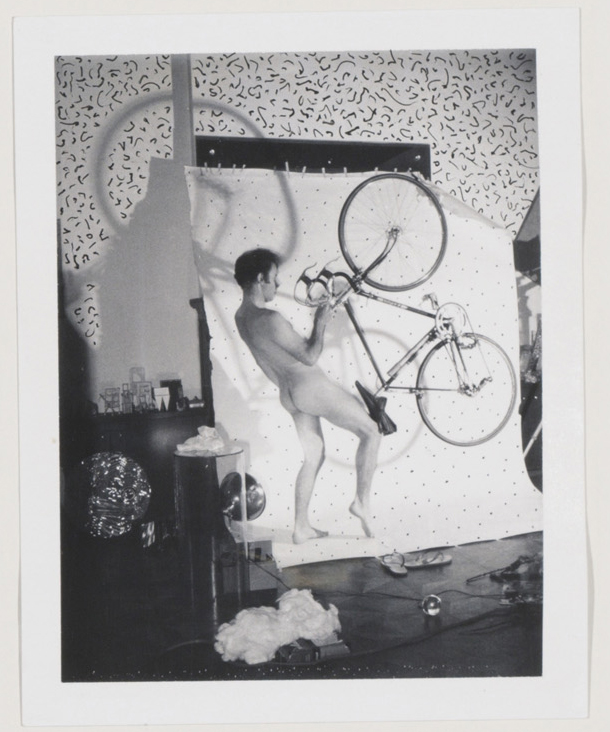
'Edie Sedgwick, Gerard Malanga, Benedetta Barzini, Ingrid Superstar, Nat Finkelstein: Danny Williams footage of unknown documentary film shoot' c. 1965, processed 2024


Edie Sedgwick, Gerard Malanga, Benedetta Barzini, Ingrid Superstar, Nat Finkelstein: Danny Williams footage of unknown documentary film shoot
c. 1965, processed 2024
The Museum of Modern Art Film Stills Collection


Edie Sedgwick dances in Andy Warhol’s Silver Factory during a photoshoot
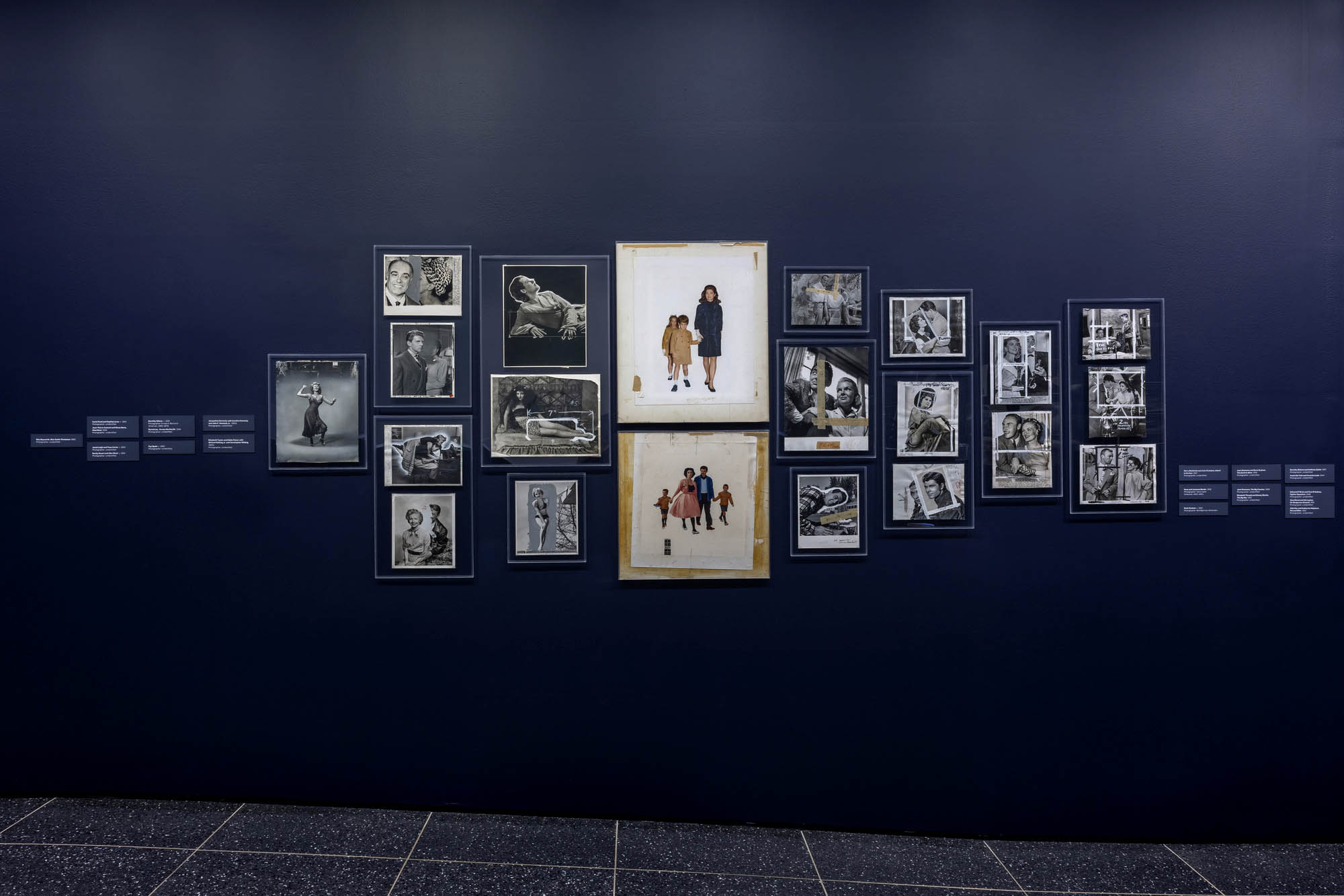
 

Installation view of the exhibition 'Face Value: Celebrity Press Photography' at The Museum of Modern Art (MoMA), New York, June 2025 - June 2026 showing at top centre, 'Jacqueline Kennedy with Caroline Kennedy, John F. Kennedy Jr.' 1960s; and a bottom centre, 'Elizabeth Taylor and Eddie Fisher with Michael Wilding Jr. and Christopher Wilding' 1960s


Installation view of the exhibition Face Value: Celebrity Press Photography at The Museum of Modern Art (MoMA), New York, June 2025 – June 2026 showing at top centre, Jacqueline Kennedy with Caroline Kennedy, John F. Kennedy Jr. 1960s; and a bottom centre, Elizabeth Taylor and Eddie Fisher with Michael Wilding Jr. and Christopher Wilding 1960s
Photo: Jonathan Dorado


Installation view of the exhibition 'Face Value: Celebrity Press Photography' at The Museum of Modern Art (MoMA), New York, June 2025 - June 2026 showing from top left to right, top to bottom, Unknown photographer Harry 'Belafonte and Joan Fontaine' 1957; Gene Lester (American, 1910-1994) 'Dean and Jeannne Martin' 1958; Bob Beerman (American) 'Rock Hudson' c. 1953; Unknown photographer 'Jean Simmons, Rock Hudson [in "This Earth is Mine"]' 1959; Unknown photographer 'Jean Simmons [in "The Big Country"]' 1958; Unknown photographer 'Elizabeth Threatt and Dewey Martin [in "The Big Sky"]' 1952; Unknown photographer 'Dorothy Malone and Anthony Quinn' 1957; Unknown photographer 'André De Toth and Veronica Lake' 1944; Unknown photographer 'Edmund O'Brien and Tom D'Andrea [in "Fighter Squadron"]' 1948; Unknown photographer 'Ward Bond and Ida Lupino [in "On Dangerous Ground"]' 1951; Unknown photographer 'Aldo Ray and Katharine Hepburn [in "Pat and Mike"]' 1952


Installation view of the exhibition Face Value: Celebrity Press Photography at The Museum of Modern Art (MoMA), New York, June 2025 – June 2026 showing from top left to right, top to bottom, Unknown photographer Harry Belafonte and Joan Fontaine 1957 (below); Gene Lester (American, 1910-1994) Dean and Jeannne Martin 1958; Bob Beerman (American) Rock Hudson c. 1953 (top of posting); Unknown photographer Jean Simmons, Rock Hudson [in “This Earth is Mine”] 1959 (below); Unknown photographer Jean Simmons [in “The Big Country”] 1958; Unknown photographer Elizabeth Threatt and Dewey Martin [in “The Big Sky”] 1952; Unknown photographer Dorothy Malone and Anthony Quinn 1957; Unknown photographer André De Toth and Veronica Lake 1944; Unknown photographer Edmund O’Brien and Tom D’Andrea [in “Fighter Squadron”] 1948; Unknown photographer Ward Bond and Ida Lupino [in “On Dangerous Ground”] 1951; Unknown photographer Aldo Ray and Katharine Hepburn [in “Pat and Mike”] 1952
Photo: Jonathan Dorado


Unknown photographer. 'Harry Belafonte and Joan Fontaine [in "Island in the Sun"]' 1957


Unknown photographer
Harry Belafonte and Joan Fontaine [in “Island in the Sun”]
1957
Sheet: 6 15/16 × 9 1/16″ (17.6 × 23 cm)
The Museum of Modern Art Film Stills Collection


Unknown photographer. 'Jean Simmons, Rock Hudson [in "This Earth is Mine"]' 1959


Unknown photographer
Jean Simmons, Rock Hudson [in “This Earth is Mine”]
1959
Sheet: 8 x 9 15/16″ (20.3 x 25.2cm)
The Museum of Modern Art Film Stills Collection
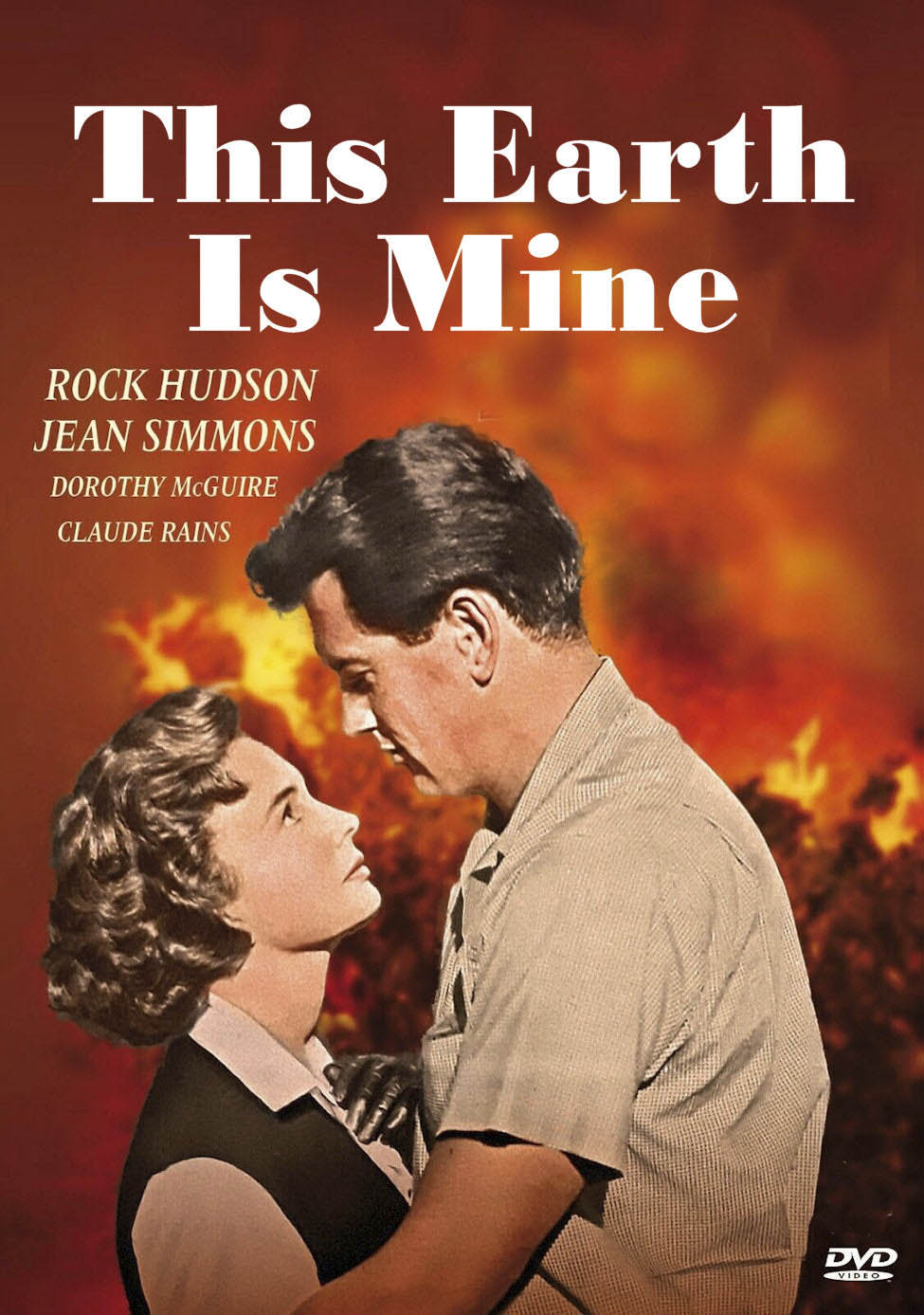
 

'This Earth Is Mine' (1959) DVD cover


This Earth is Mine (1959) DVD cover


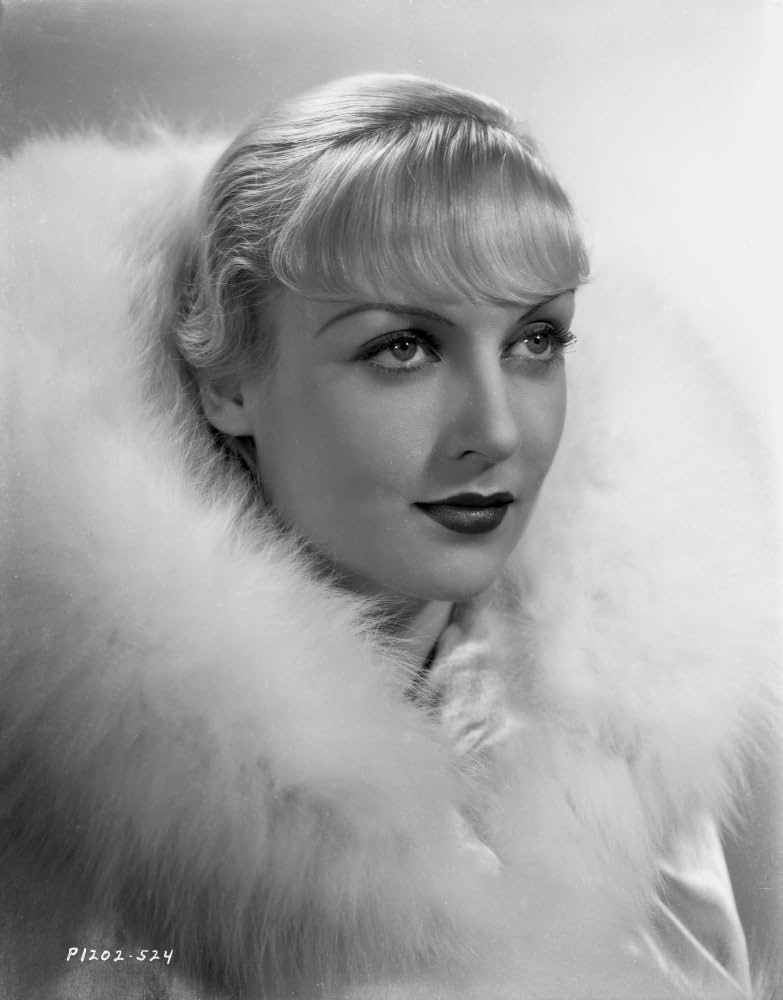
Otto Dyar (American, 1892-1988) 'Carole Lombard' c. 1933


Otto Dyar (American, 1892-1988)
Carole Lombard
c. 1933
Sheet: 13 7/8 x 10 1/2″ (35.2 x 26.7cm)
The Museum of Modern Art Film Stills Collection


Hollywood stills photographers like Dyar “were not mirroring life, but illusion; their subjects were not humans but gods – of love, of allure, of luxury, perfection incarnate from the golden age of Hollywood glamor”


John Kobal (ed), Hollywood glamor portraits, Courier Corporation, 1976, p.V on the Wikipedia website


Otto Dyar was a prominent stills photographer who began his career at the Paramount studios in the 1920s. Initially working as an assistant on major film productions such as the 1927 ‘Wings’, Dyar quickly rose through the ranks to become one of Hollywood’s most notable image-makers.

During the 1930s and 40s, Dyar developed his own, highly dramatic style of lighting and photography that deviated from the neoclassical glamor of the 1920s. Edgy and expressionistic, Dyar’s photographs pushed the iconic features of movie stars like Carole Lombard, Cary Grant, Kay Francis and Joan Crawford to a grittier place that was more in accord with the aesthetics of films made in those decades. Of particular note are Dyar’s star portraits taken outside of the studio, an unusual and daring step at the time.

Despite all the high-contrast lighting, skewed angles and often tiny ‘surrealist’ interventions that point to the influence of photographers like Man Ray, Dyar faithfully accomplished the task of elevating the studio stars to the realm of deities. Like his peers George Hurrell, Ted Allen and Clarence Sinclair Bull, Dyar was not concerned with the psychologies of his sitters. What interested him was amplifying and consolidating the image the stars exuded in their roles, which was usually so powerful that it eclipsed the ‘real’ person that was in front of the camera.

Vigen Galstyan. “Dyar, Otto,” on the Lusadaran: Armenian Photography Foundation website 2015 [Online] Cited 02/04/2026. Used under fair use conditions for the purposes of education and research
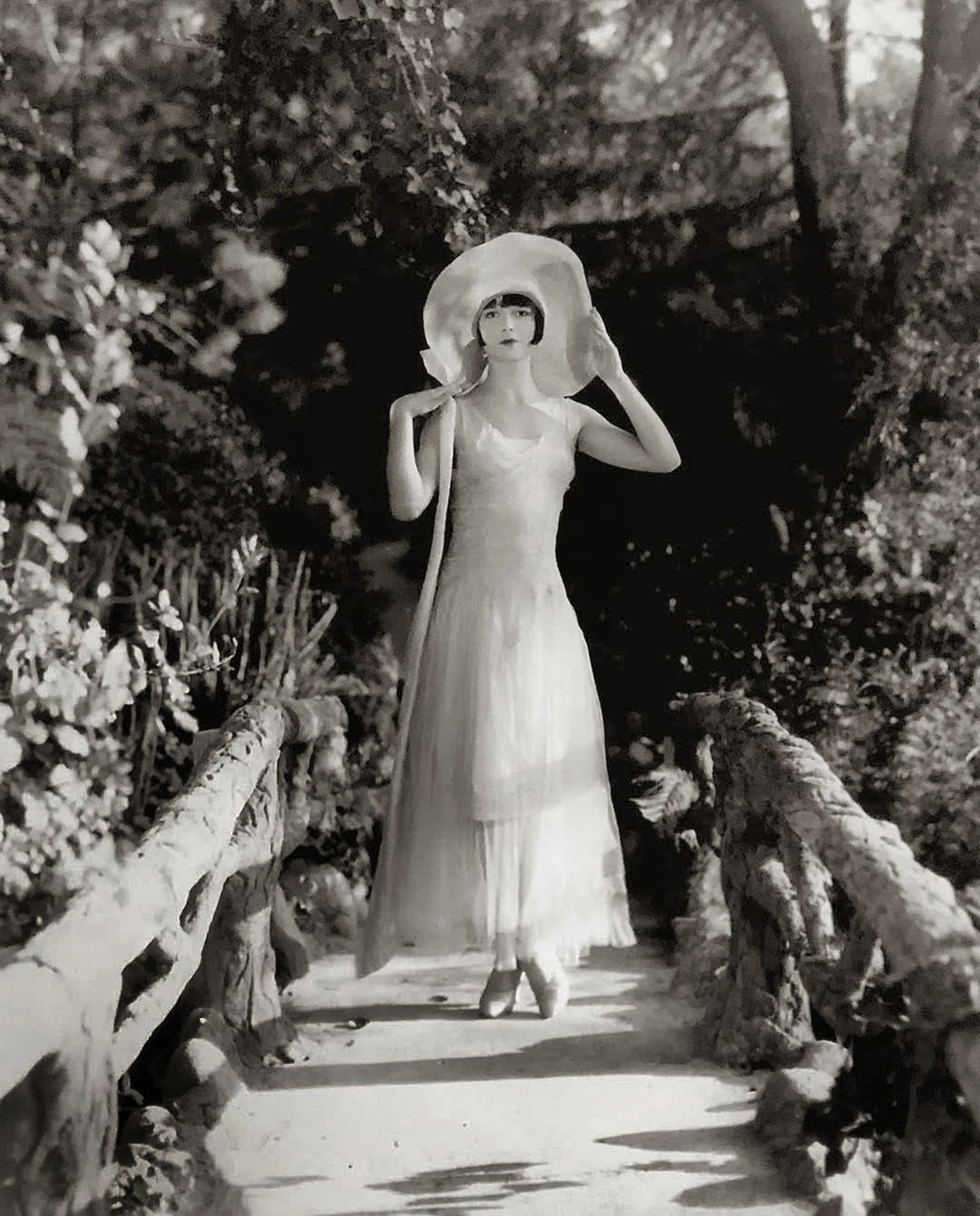
 

Otto Dyar (American, 1892-1988) 'Louise Brooks' c. 1927


Otto Dyar (American, 1892-1988)
Louise Brooks
c. 1927
Sheet: 13 15/16 x 10 15/16″ (35.4 x 27.8cm)
The Museum of Modern Art Film Stills Collection
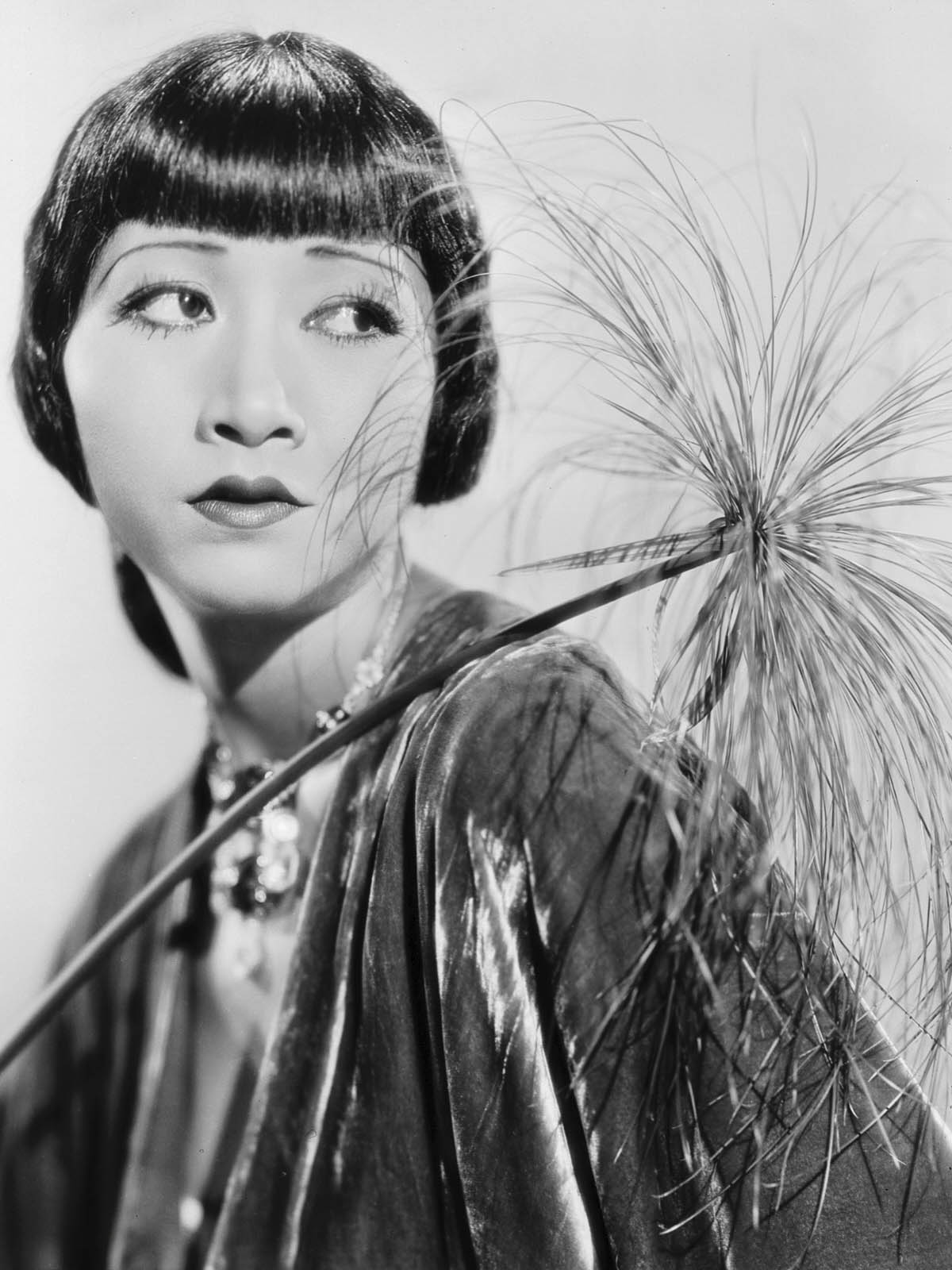
 

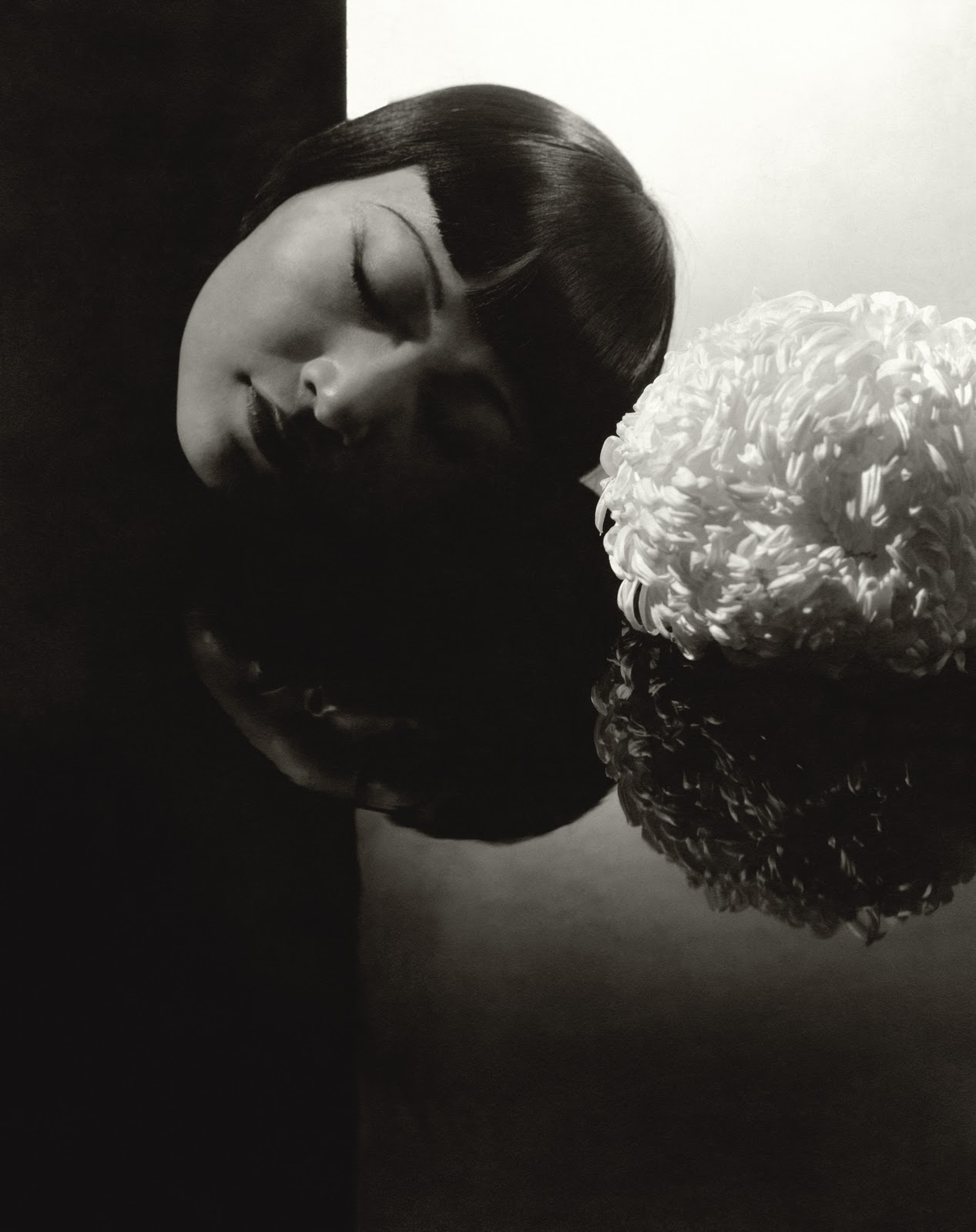
Otto Dyar (American, 1892-1988) 'Anna May Wong' 1930s


Otto Dyar (American, 1892-1988)
Anna May Wong
1930s
Sheet: 13 7/8 x 10 7/8″ (35.2 x 27.6cm)
The Museum of Modern Art Film Stills Collection


Ray Jones (American, 1901-1947) 'Anna May Wong [in "Limehouse Blues"]' 1934


Ray Jones (American, 1901-1947)
Anna May Wong [in “Limehouse Blues”]
1934
Sheet: 12 7/8 x 10″ (32.7 x 25.4cm)
The Museum of Modern Art Film Stills Collection
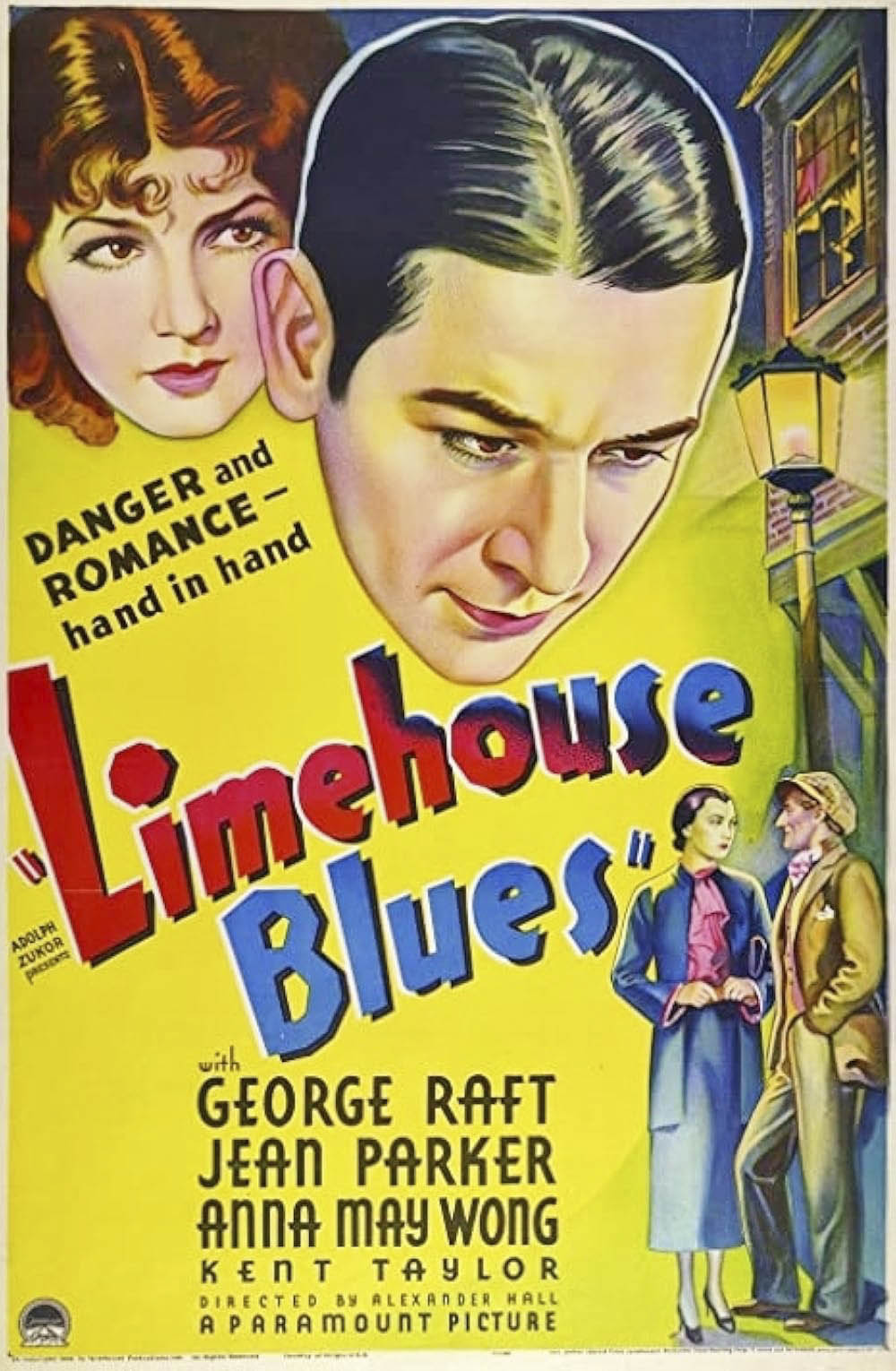
 

'Limehouse Blues' (1934) movie poster


Limehouse Blues (1934) movie poster


Unknown photographer. 'Anna May Wong' c. 1934


Unknown photographer
Anna May Wong
c. 1934
MoMA Film Stills Archive
Sheet: 8 x 6″ (20.3 x 15.2cm)
The Museum of Modern Art Film Stills Collection


Unknown photographer. 'Myrna Loy [in "Across the Pacific"]' 1926


Unknown photographer
Myrna Loy [in “Across the Pacific”]
1926
Sheet: 11 x 14″ (27.9 x 35.6cm)
The Museum of Modern Art Film Stills Collection
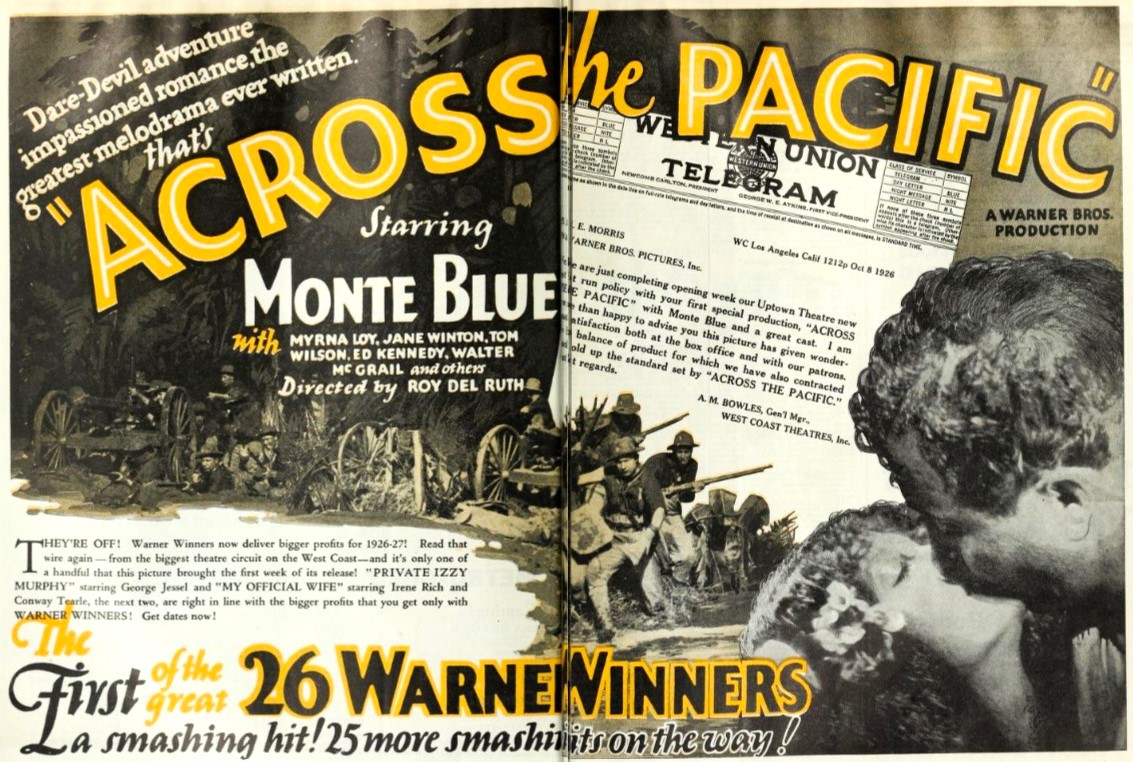
 

Advertisement for the American romantic adventure film 'Across the Pacific' (1926) with Monte Blue and Myrna Loy, on pages 6 and 7 of the October 26, 1926 'Film Daily'


Advertisement for the American romantic adventure film Across the Pacific (1926) with Monte Blue and Myrna Loy, on pages 6 and 7 of the October 26, 1926 Film Daily


John Miehle (American, 1902-1952) 'Dolores del Rio and Edmund Lowe [in "The Bad One"]' 1930


John Miehle (American, 1902-1952)
Dolores del Rio and Edmund Lowe [in “The Bad One”]
1930
Sheet: 13 7/8 x 10 15/16″ (35.2 x 27.8cm)
The Museum of Modern Art Film Stills Collection


John Miehle was born on August 7, 1902 in Los Angeles, California. Being born so close to Hollywood Miehle went to work as an assistant camera man on the 1931 movie “Delicious” starring Janet Gaynor and Charles Farrell.  

He then worked exclusively in the Camera and Electrical Department doing uncredited still photography on some of the best known films, such as “What Price Hollywood?,” “Rain,” “Little Women,” “Top Hat,” “Kitty Foyle,” “Rope” and “Portrait of Jennie.”

He photographed many of the greats as well including Constance Bennett, Joan Crawford, Irene Dunne, Ginger Rogers, Ann Harding, William Powell, Joel McCrea, Katherine Hepburn, Joan Bennett, Delores Del Rio, Randolph Scott, James Stewart, Cary Grant, Jean Arthur, Ruth Hussey, Jennifer Jones, Joseph Cotten, Ethel Barrymoore, Laraine Day, Franchot Tone, Ann Blyth, Farley Granger, and Dana Andrews…

In addition, he did many publicity shots of such stars as Carole Lombard, Marilyn Monroe, and Lucille Ball.

Don’t Forget The Illustrator! “The Classics and “Ginger Rogers” photographer John Miehle,” on the Vintage Movie Star Photos blog Thursday, March 28, 2013 [Online] Cited 12/05/2026. Used under fair use conditions for the purposes of education and research
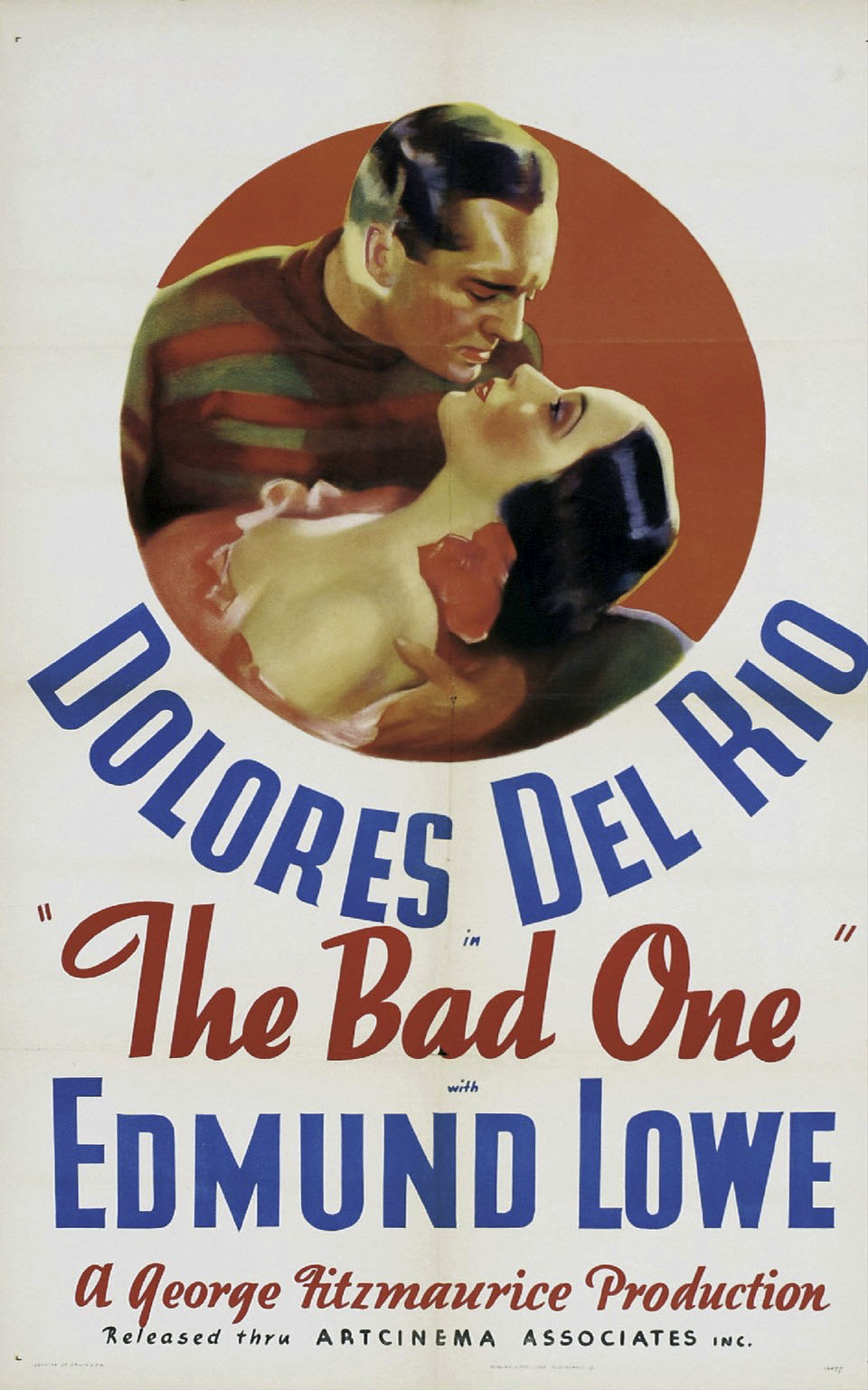
 

'The Bad One' (1930) movie poster


The Bad One (1930) movie poster


William Walling Jr (American, 1904-1983) 'Carole Lombard' c. 1933


William Walling Jr (American, 1904-1983)
Carole Lombard
c. 1933
Sheet: 13 7/8 x 11 15/16″ (35.2 x 30.3cm)
The Museum of Modern Art Film Stills Collection


William Richard Walling, Jr. (October 6, 1904 – December 11, 1983) was an American actor, inventor, and portrait photographer for film studios.


Robert Coburn (American, 1900-1990) 'Vera Zorina [in "The Goldywyn Follies"]' c. 1937


Robert Coburn (American, 1900-1990)
Vera Zorina [in “The Goldywyn Follies”]
c. 1937
Sheet: 13 13/16 x 10 15/16″ (35.1 x 27.8cm)
The Museum of Modern Art Film Stills Collection


Eva Brigitta Hartwig (January 2, 1917 – April 9, 2003), known professionally as Vera Zorina, was a German-Norwegian ballerina, theatre and film actress, and choreographer, chiefly remembered for her films choreographed by her husband George Balanchine. They include the Slaughter on Tenth Avenue sequence from On Your ToesThe Goldwyn FolliesI Was an Adventuress with Erich Von Stroheim and Peter LorreLouisiana Purchase with Bob Hope, and dancing to “That Old Black Magic” in Paramount Pictures’ Star Spangled Rhythm.

Text from the Wikipedia website


Robert Coburn was one of the most influential portrait photographers working in the major Hollywood movie studios from the 1930’s to 1960’s. His star subjects included Rita Hayworth, Joan Crawford, Kim Novak, Carole Lombard, William Holden, Glenn Ford, and Orson Welles. Coburn’s most infamous portraits immortalised Hollywood’s greatest icons and helped to define this era as the Golden Age of Cinema. In 1940, Robert Coburn began a twenty-year career with Columbia Pictures as the head of the still production department and the studio’s chief portrait photographer for many landmark films including “Picnic”, “Gilda”, and “The Big Heat”.

Text from the Fahey/Klein Gallery website
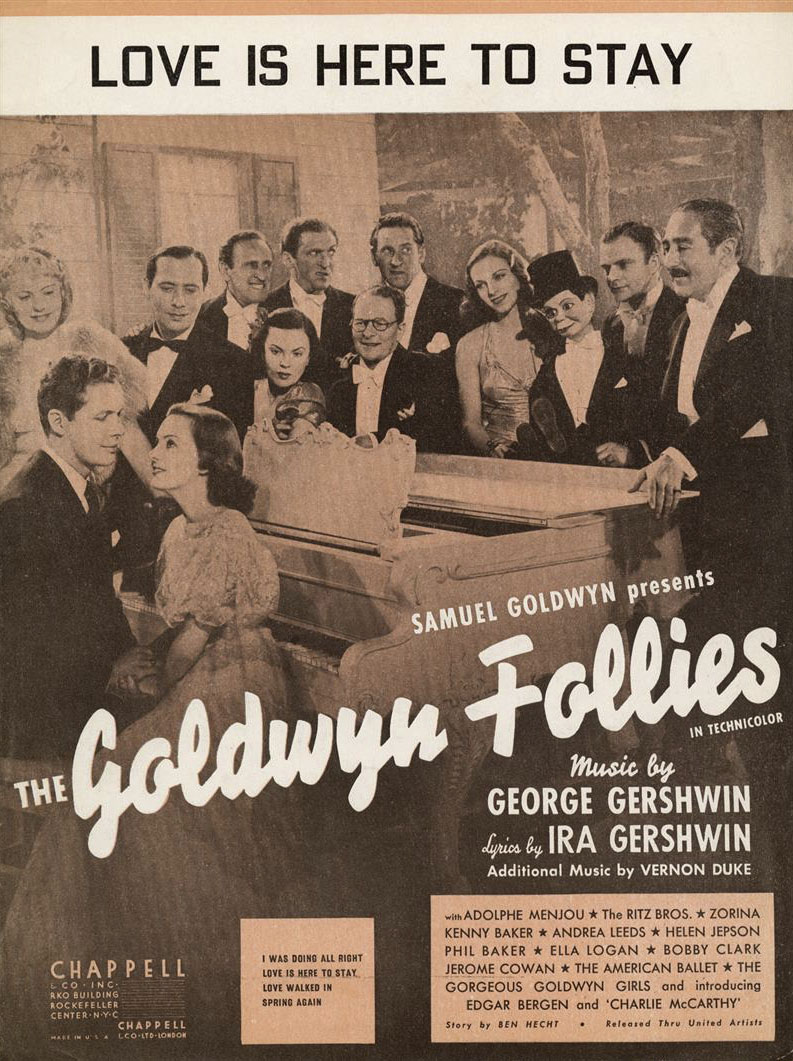
 

'Goldwyn Follies' (1937) movie poster


Goldwyn Follies (1937) movie poster


Face Value: Celebrity Press Photography Introductory text

For MoMA’s founding film curator, Iris Barry, building an archive of images that documented the history of motion pictures was second only to collecting films. Photographs from the study collection that she created were among the first works exhibited in MoMA’s theater gallery. Barry’s initiative eventually led to the acquisition of editorial archives from Photoplay (1911-1980) and Dell (1921-1976), leading fan magazine publishers supporting the Hollywood star system. The portrait photography featured in these publications was produced by film studios to promote the glamorous celebrities under contract to them. Face Value looks at these images and surveys how they were manipulated for public consumption in the decades before digital tools, AI technology, and social media revolutionized the process. 

Over sixty photographers are represented in this installation, which intermingles images that survive untouched with those that show evidence of the hands-on practices that readied them for the press. The standard techniques used – silhouetting, in-painting, masking, sectioning, and collage – were applied not only to photographs of entertainers but to sports figures, socialites, and politicians as well. Organised in suites that highlight radical editing practices, stylised visual motifs, and the gender stereotypes inherent in the studio system, the exhibition offers a demystifying perspective on the glamour of celebrity.

Wall text from the exhibition
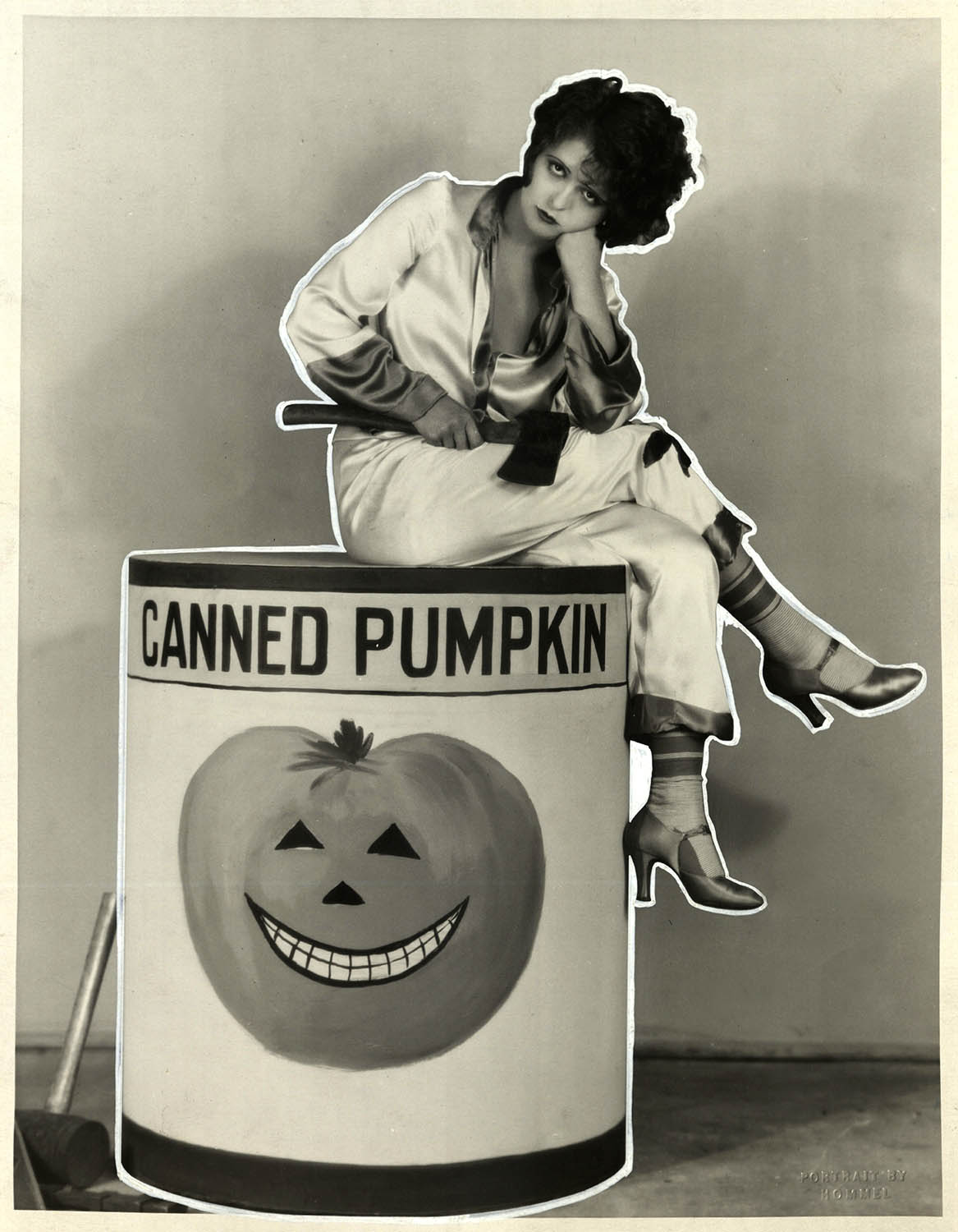
 

George P. Hommel (American, 1901-1953) 'Clara Bow' c. 1929


George P. Hommel (American, 1901-1953)
Clara Bow
c. 1929
Sheet: 14 x 11″ (35.6 x 27.9 cm)
The Museum of Modern Art Film Stills Collection


Overshadowed by the work of 1920s Paramount colleagues Donald Biddle Keyes and Eugene Robert Richee, stillsman George P. Hommel crafted thoughtful portraits highlighting both the beauty and sorrow of those he photographed. Like Keyes, the peripatetic Hommel always looked for new challenges, new opportunities, keeping him on the move. Unobstrusive and elegant, Hommel’s work reveals hidden depths in those he shot. …

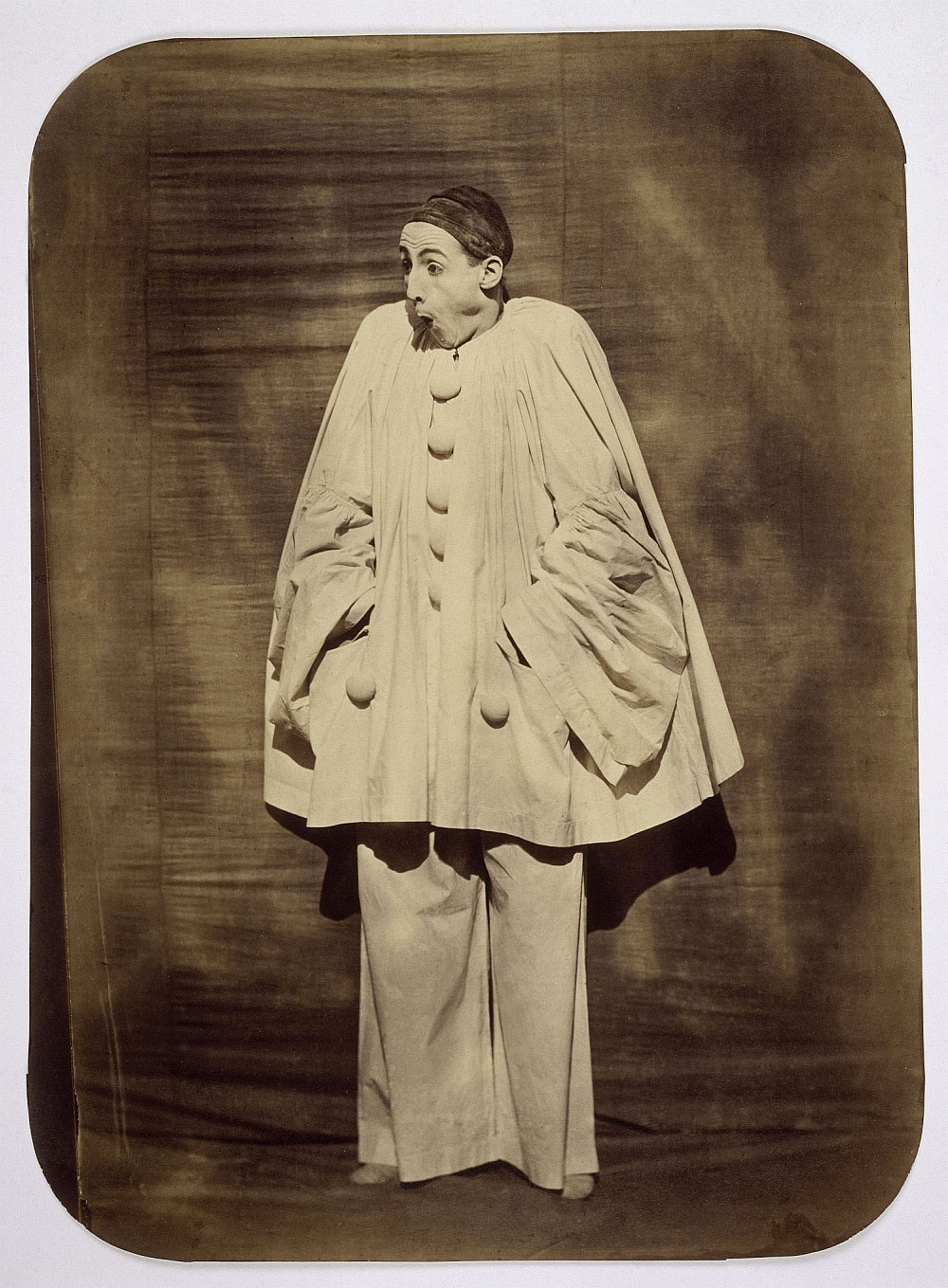
Hommel’s straightforward portraiture captured the vulnerability of his sitters, revealing a wistful and often melancholic look in their expressive eyes. His pensive work focused on serious matters, not straining to create fleeting moods but revealing the heart of those he photographed. Employing simple, dark-textured background, Hommel focused on the eyes and lips, creating a sharp image with an often soft-focus background. His portraits often feature shadows and strong angular lines, creating dramatic composition. Hommel could also capture the sometimes insouciant or even overly exuberant emotions of sitters, often covering their vulnerability and pain, such as in his Pierrot portraits of Clara Bow as clown.

lmharnisch. “Mary Mallory / Hollywood Heights: George P. Hommel, Pensive Photographer,” on The Daily Mirror website, July 27, 2020 [Online] Cited 12/05/2026. Used under fair use conditions for the purposes of education and research


James Manatt (American, 1896-1989) 'Joan Crawford [in "Letty Lynton"]' 1932


James Manatt (American, 1896-1989)
Joan Crawford [in “Letty Lynton”]
1932
Sheet: 13 x 10″ (33 x 25.4cm)
The Museum of Modern Art Film Stills Collection
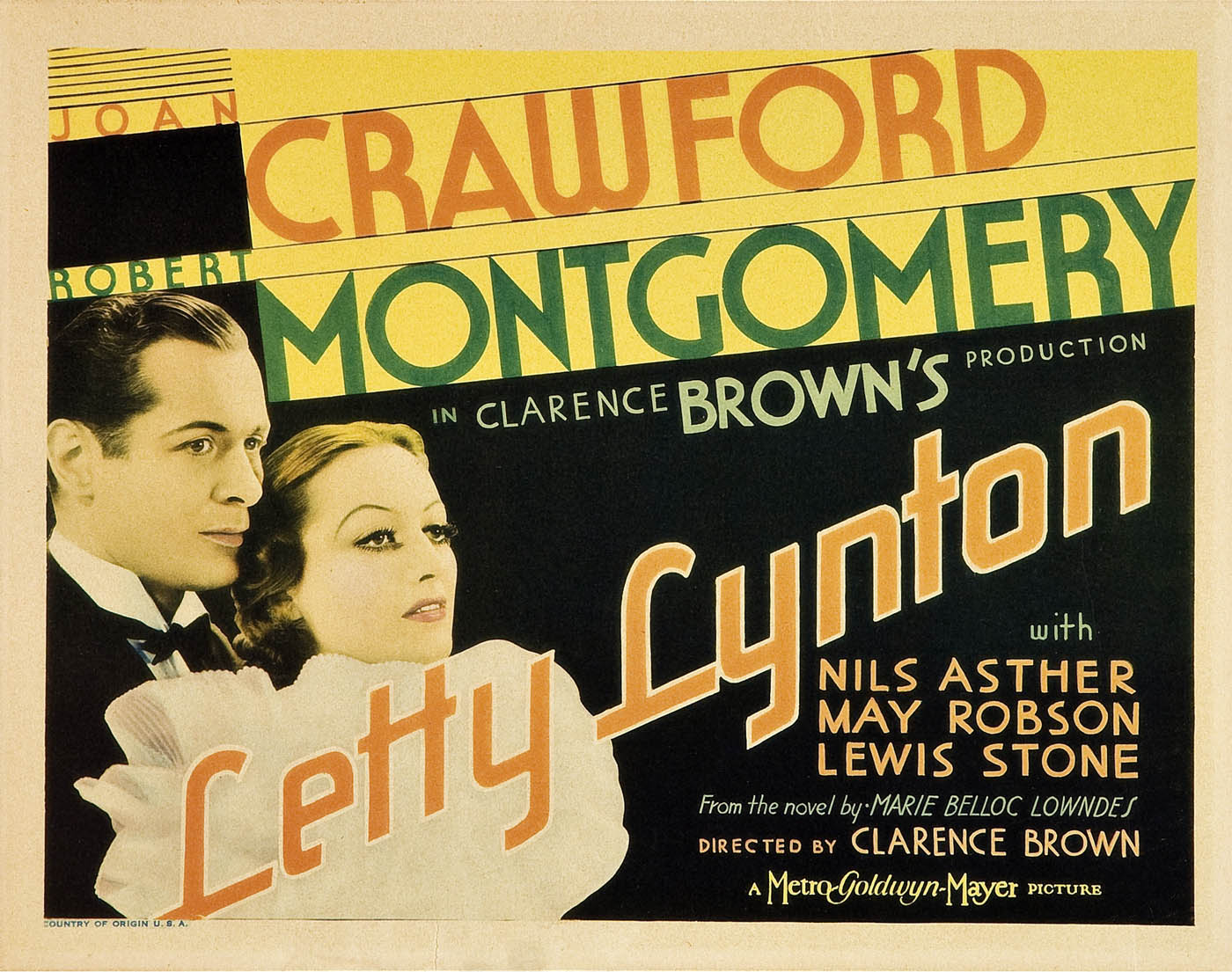
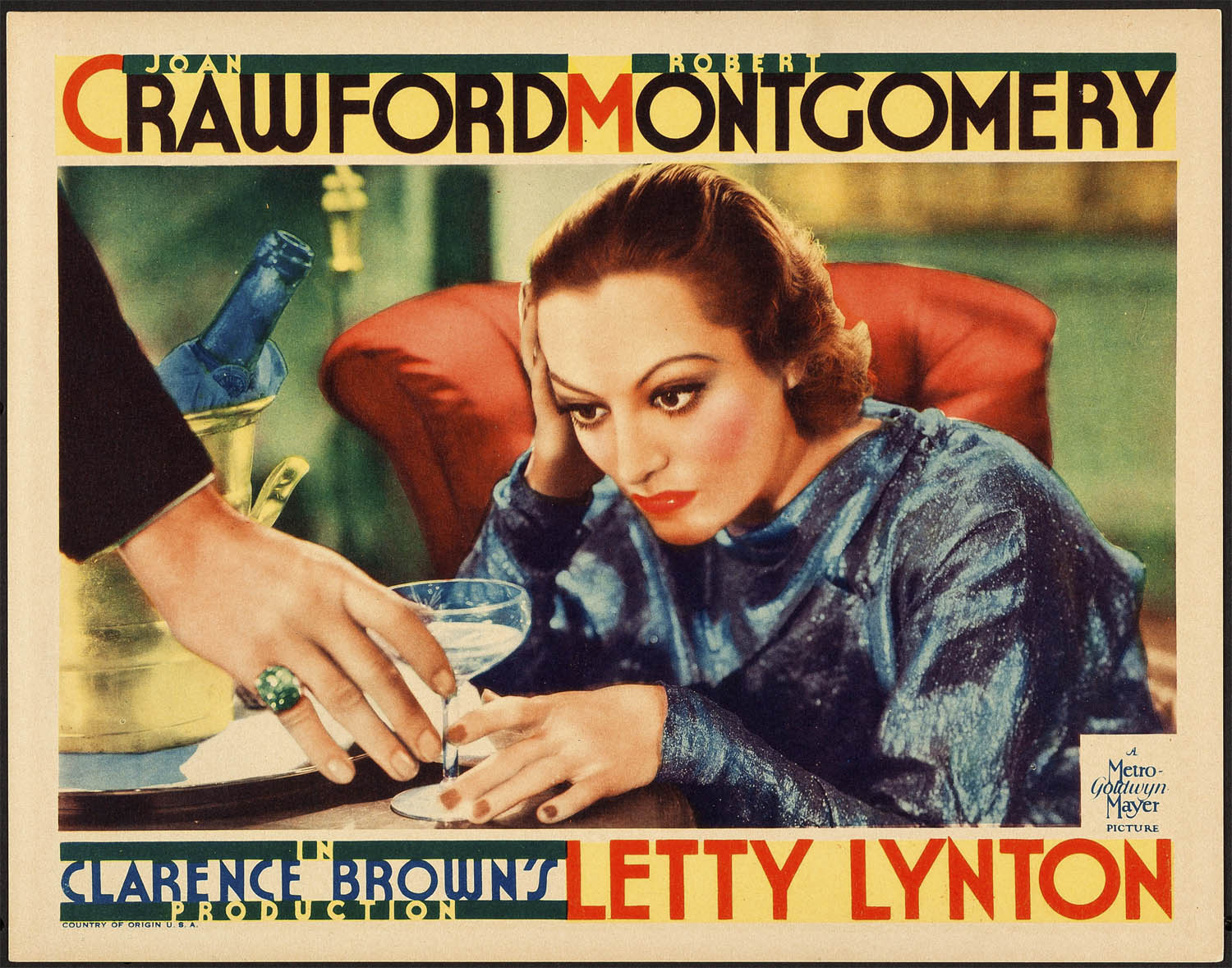
 

'Letty Lynton' (1932) movie poster


Letty Lynton (1932) movie posters


Elmer Fryer (American, 1898-1944) 'Lili Damita [in "The Match King"]' c. 1932


Elmer Fryer (American, 1898-1944)
Lili Damita [in “The Match King”]
c. 1932
Sheet: 14 1/16 x 11″ (35.7 x 27.9cm)
The Museum of Modern Art Film Stills Collection
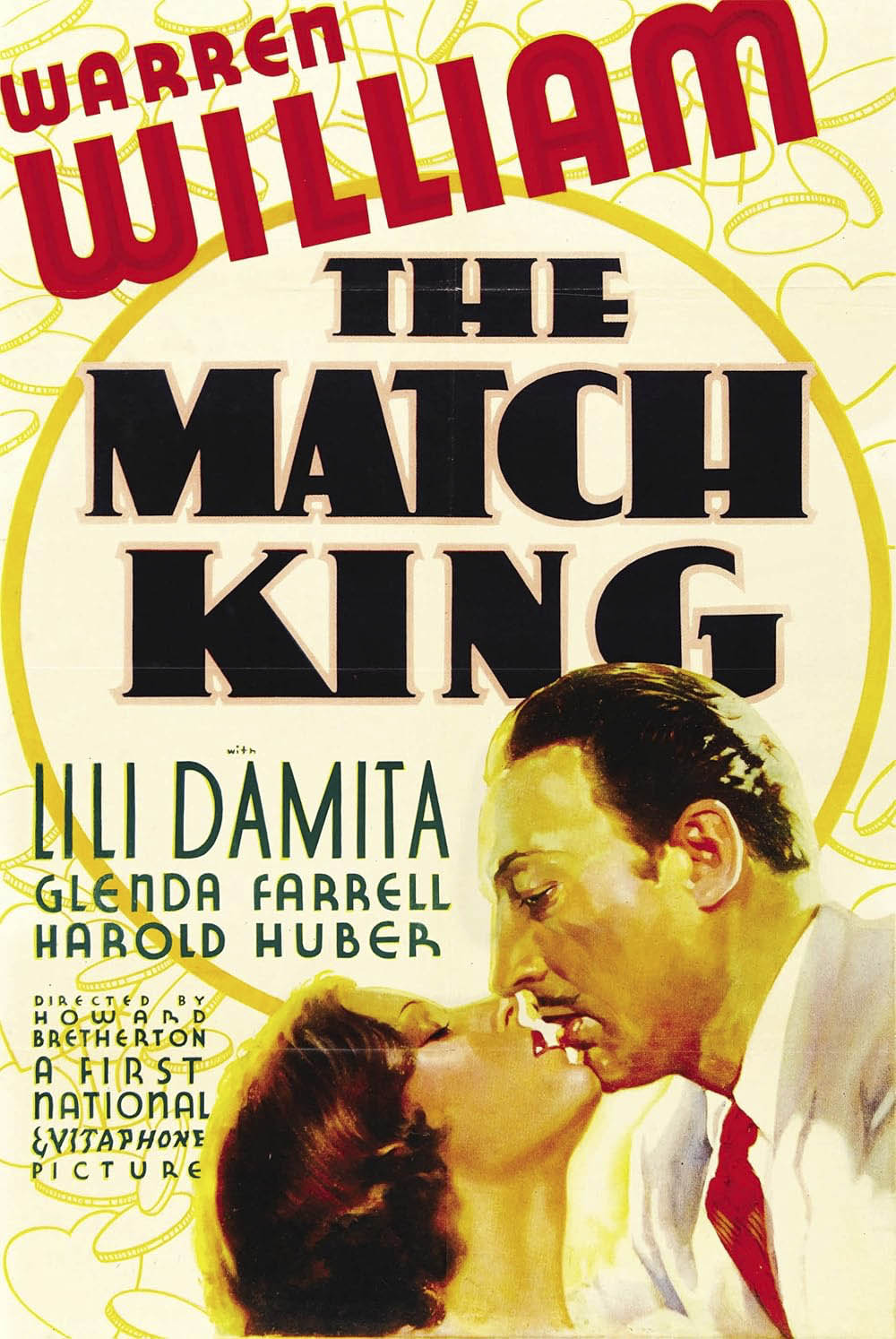
 

'The Match King' (1932) movie poster


The Match King (1932) movie poster


Bert Longworth (American, 1893-1964) 'Amelia Earhart with Helen Hayes [on set of "A Farewell to Arms"]' 1932


Bert Longworth (American, 1893-1964)
Amelia Earhart with Helen Hayes [on set of “A Farewell to Arms”]
1932
Sheet: 13 15/16 x 10 7/8″ (35.4 x 27.6cm)
The Museum of Modern Art Film Stills Collection


As the studio system came into place with the advent of talkies, studios hired many stillsmen to take scene stills, off-camera images, and candids of both above and below the line talent. Photographers took massive amounts of stills around the lot, at public events, premieres, at homes, in posed shots, to be widely distributed to magazines and newspapers for free publicity promoting upcoming films, new talent, and established stars. The journals, fan magazines, and newspapers splashed these images throughout their pages, building awareness and star popularity.

Bert “Buddy” Longworth was one of the stills photographers taking these images. Longworth began his career shooting scene stills at MGM for Greta Garbo’s first three films, including “Flesh and the Devil,” with Longworth capturing the passion of Garbo and John Gilbert as they fell in love. He was employed for a short time at Paramount, but from 1929 on, he worked at Warner Bros. as an action specialist, working on Busby Berkeley’s spectacular musicals, crime pictures, off-set candids, as well as portraits. Scholar David Shields calls him “Hollywood’s foremost expressionist, often using unusual perspective, occasional use of multiple exposures.”

lmharnisch. “Mary Mallory / Hollywood Heights: Bert Longworth and ‘Hold Still, Hollywood’,” on The Daily Mirror website, June 26, 2023 [Online] Cited 12/05/2026. Used under fair use conditions for the purposes of education and research
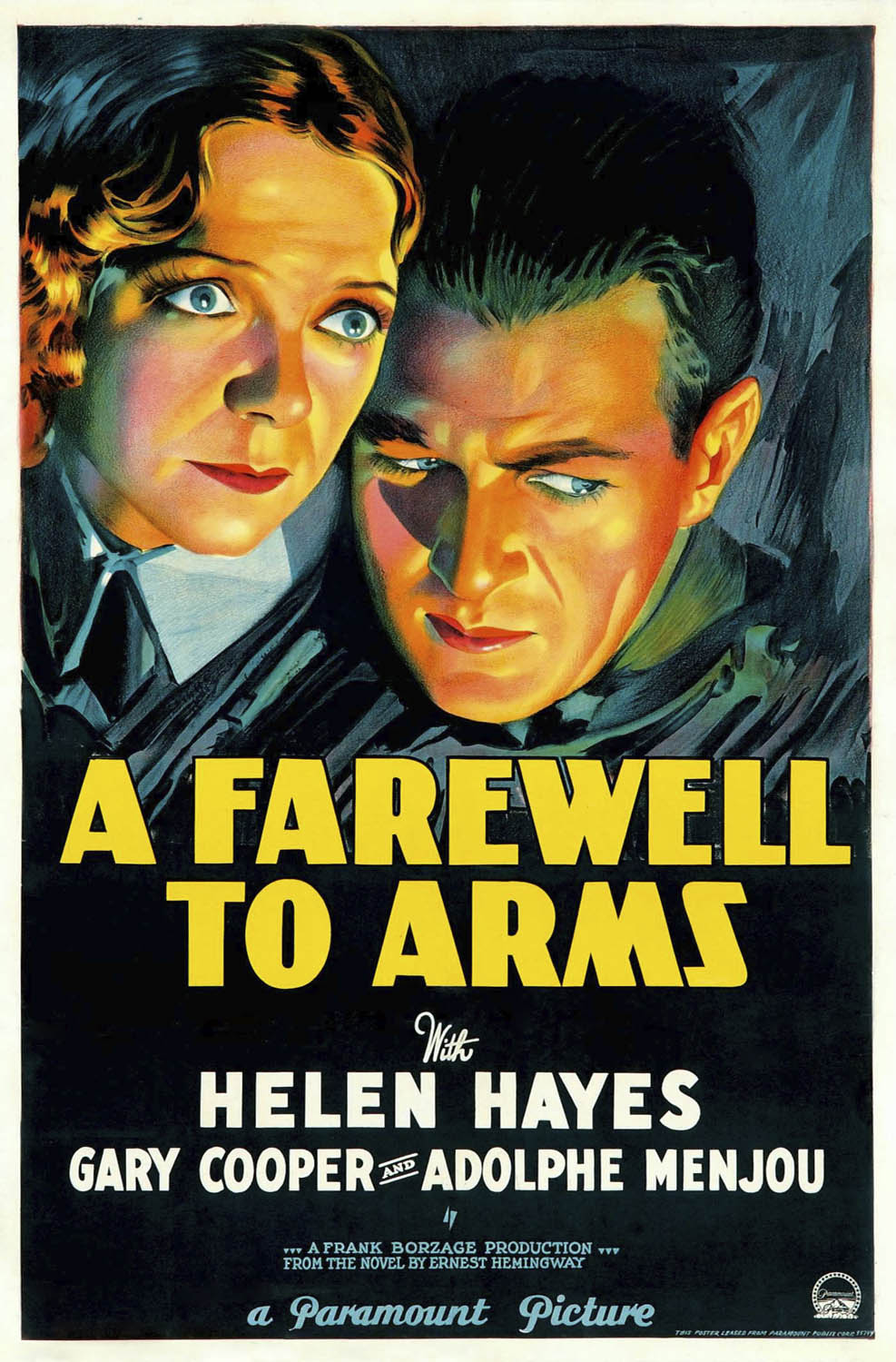
 

'A Farewell To Arms' (1932) movie poster


A Farewell To Arms (1932) movie poster


Unknown photographer. 'Elsa Lanchester [in "The Bride of Frankenstein"]' 1935


Unknown photographer
Elsa Lanchester [in “The Bride of Frankenstein”]
1935
Sheet: 13 1/2 x 9 3/16″ (34.3 x 23.3cm)
The Museum of Modern Art Film Stills Collection
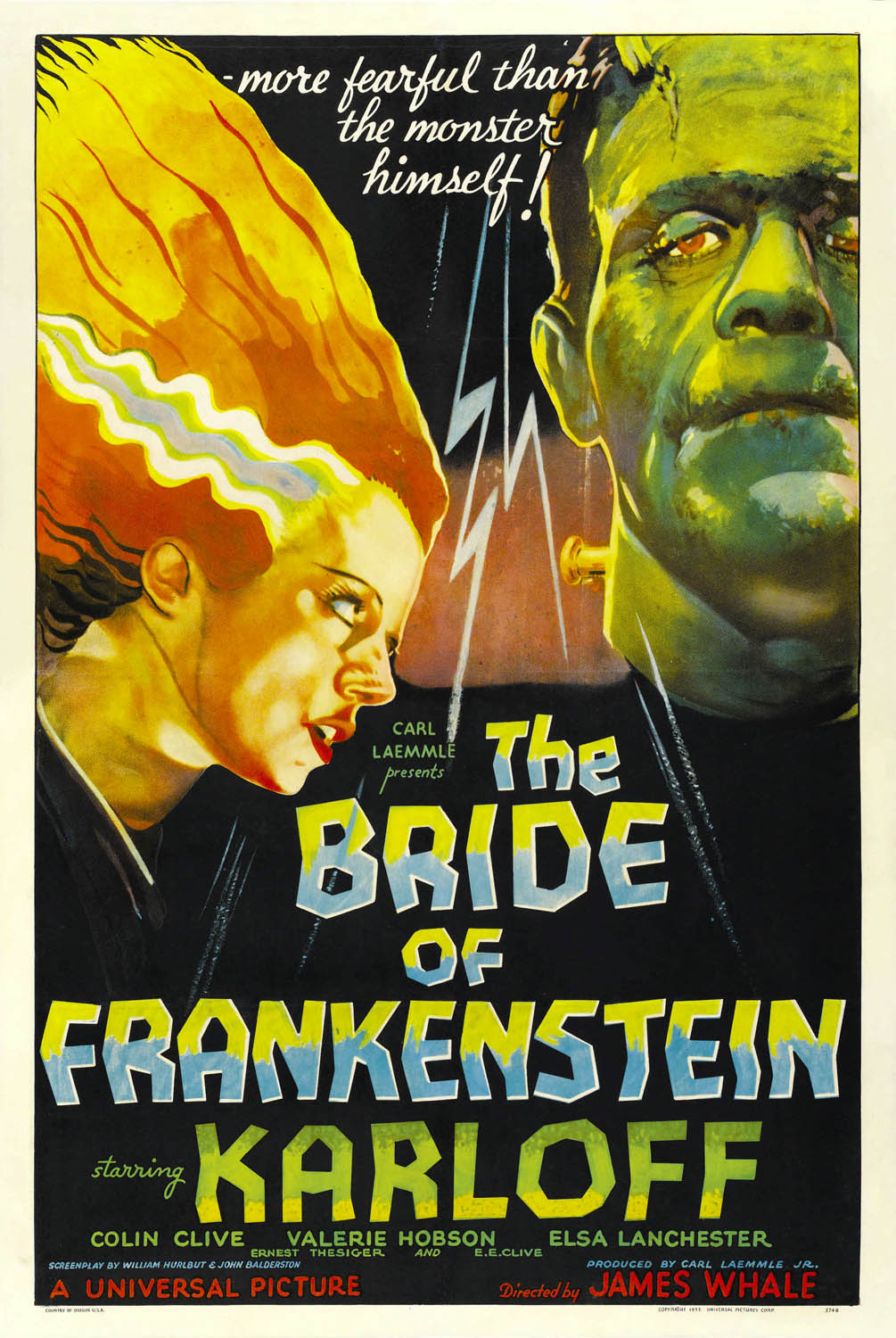
 

'The Bride of Frankenstein' (1935) movie poster


The Bride of Frankenstein (1935) movie poster


I want to talk more about the edited photographs. In many of the photos white-out has been used to separate the subject’s head or face – and in one notable case, their bare legs – from the rest of the image. What are some ways in which these disembodied segments were used by the studios and by the magazines?

RM: We know they were from Photoplay magazine, so if we have a still that’s been edited for Photoplay, Cara went and looked for the issue that published the photograph to see how it was used. It might have been a feature on women’s legs, so that’s why they only focused on the legs.

There’s one grouping of photographs, I call it the “eat face grouping,” where the stars are very close up. There’s a photograph of someone eating someone’s chin. Those were all taken for a particular issue of Photoplay – that’s why they’re all edited in the same way.

With research and detective work you can determine how they were actually used in print. The floating heads, they would attach to biographies. They call that silhouetting, with the white-out.

CS: A lot of the uses I found were very gossipy, which was interesting, a lot of rumor columns. And then of course, like Ron said, highlighting certain aspects of celebrities’ bodies or features.


Back in 1980 MoMA’s exhibition Hollywood Portrait Photographers, 1921 to 1941 actually used a couple of the same images that appear in this show. But that nnnexhibition celebrated the artistry and glamor of these images. Why did you choose to focus more on the ways that these images have been manipulated and edited?

RM: The audience for photographs like this has changed. In 1980 there was a whole generation of people who knew who these performers were, who appreciated them as performers and appreciated their celebrity. Nowadays, younger audiences, in many cases, have no idea who these folks are. Even we sometimes have trouble identifying everyone. Displaying them in that way seemed dated. We wanted to mount them in a way that reflected how visitors today would need to look at them.

The photographs in 1980 were all matted in a very formal way that encouraged appreciation for the beauty of the photograph. I wasn’t interested in how beautiful the images were. I wasn’t interested in the celebrities. We’re mostly interested in the photographs. I wanted them to look like working photographs, and that’s reflected in the way they’re displayed. We did ours on plexi traps, which turned out to be very elegant, but the notion was that it would be a less precious way of mounting them so we would look at them in a less precious way.

The other thing we did differently was to have large numbers of photographs grouped in very dense clusters. To me that reflects social media today. The way we encounter images daily is so dense, and we’re forced to sort through a lot of images that come our way in any one moment. So I wanted visitors to have a contemporary view. It was meant to reflect a digital-age perspective, because analog-versus-digital was a subtext of the show in our heads.

There were two shows that were touchstones for this one: the Hollywood Portrait show of 1980, and the Fame After Photography show, a wonderful show in 1999 that MoMA’s Photography department mounted. They borrowed a lot of film stills for that show, which was also investigating celebrity and fame.

Ron Magliozzi, Cara Shatzman, Jason Persse. “Cropped, Chopped, and Silhouetted: Taking Celebrity at Face Value,” in the MoMA magazine on the MoMA website Sep 17, 2025 [Online] Cited 10/05/2026. Used under fair use conditions for the purposes of education and research


Unknown photographer. 'Louis Armstrong [in "Cabin in the Sky"]' 1943


Unknown photographer
Louis Armstrong [in “Cabin in the Sky”]
1943
Sheet: 8 x 10″ (20.3 x 25.4 cm)
The Museum of Modern Art Film Stills Collection
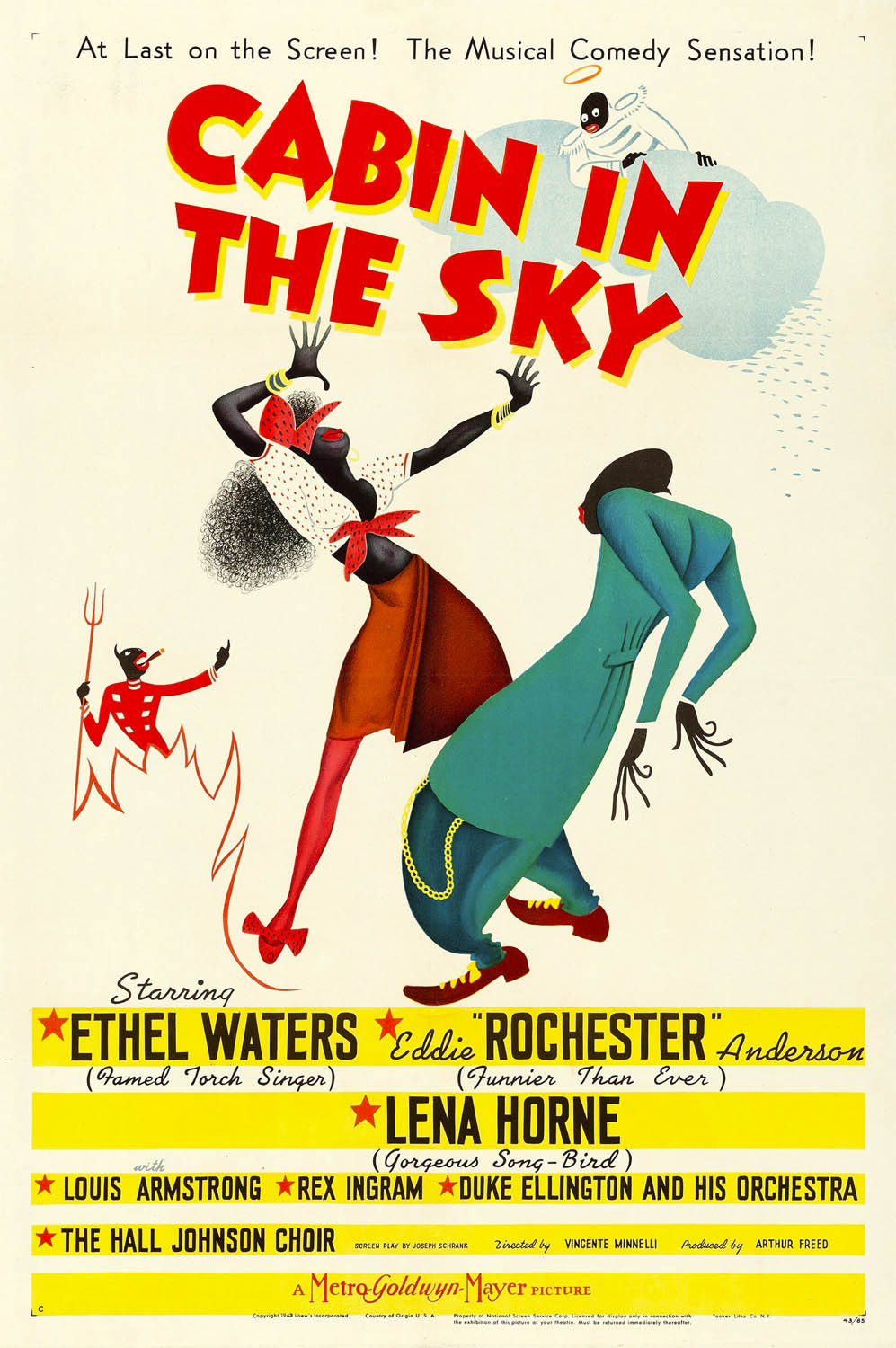
 

'Cabin in the sky' (1943) movie poster


Cabin in the sky (1943) movie poster


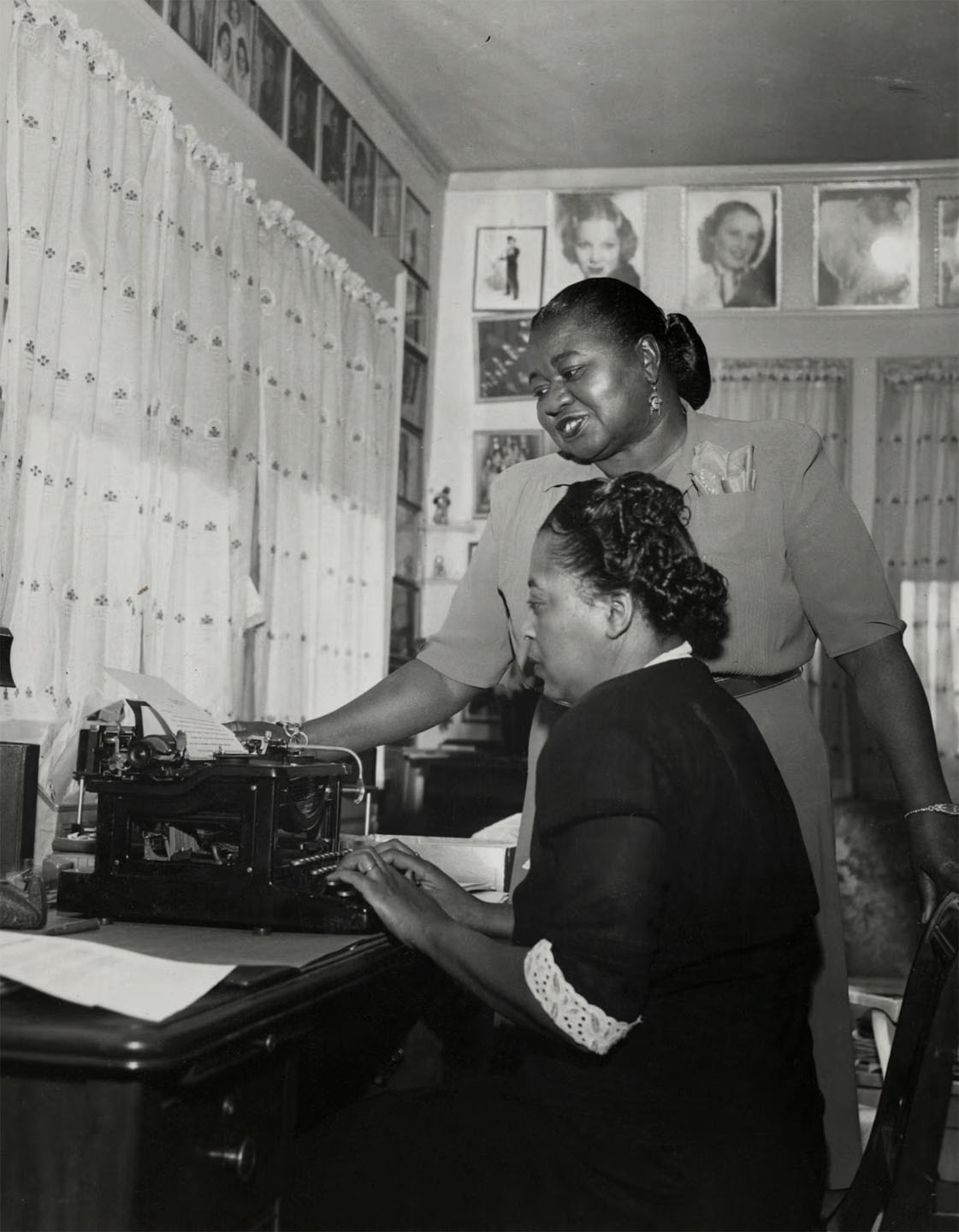
Unknown photographer. 'Hattie McDaniel and Ruby Berkley Goodwin' c. 1948


Unknown photographer
Hattie McDaniel and Ruby Berkley Goodwin
c. 1948
Sheet: 9 1/16 x 7″ (23 x 17.8cm)
The Museum of Modern Art Film Stills Collection


“[Ruby Berkley Goodwin] was also Hattie McDaniel’s publicist. And she was Ethel Waters’s publicist. She was the first Black American to have a syndicated newspaper column. She wrote this very famous autobiography called It’s Good to Be Black that was very, very popular. She was a poet. She was a fascinating person, and I was not familiar with her. That was a great aspect of learning about all of these people in these photographs.”

Ron Magliozzi, Cara Shatzman, Jason Persse. “Cropped, Chopped, and Silhouetted: Taking Celebrity at Face Value,” in the MoMA magazine on the MoMA website Sep 17, 2025 [Oline] Cited 10/05/2026. Used under fair use conditions for the purposes of education and research
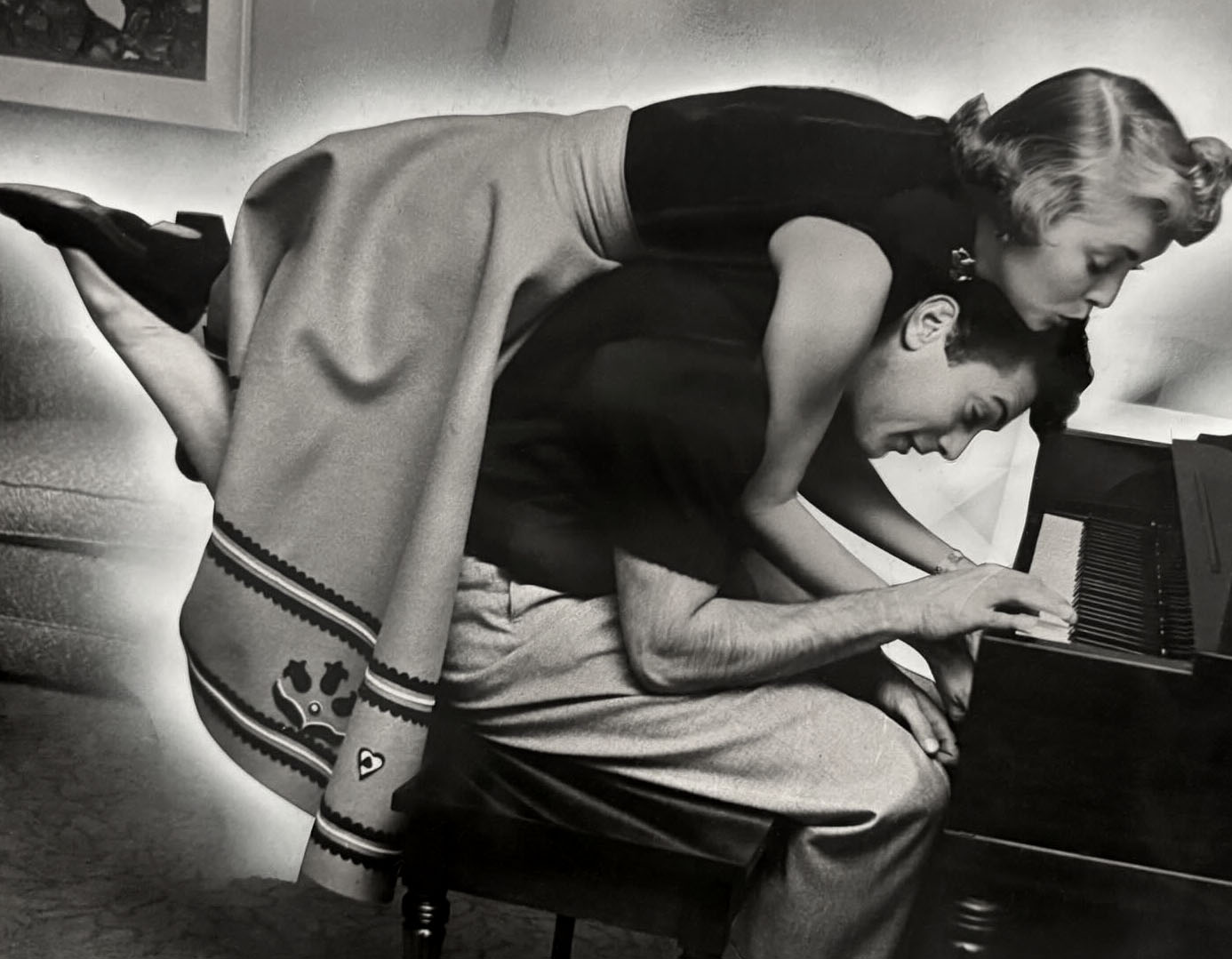
 

Unknown photographer. 'Janet Leigh and Tony Curtis' c. 1950 (detail)


Unknown photographer
Janet Leigh and Tony Curtis
c. 1950 (detail)
Sheet: 8 1/16 x 10″ (20.5 x 25.4cm)
The Museum of Modern Art Film Stills Collection


'Elvis Presley [Fans' Star Library magazine, No. 13]' 1959


Elvis Presley [Fans’ Star Library magazine, No. 13]
1959
Sheet: 7 x 5 1/8″ (17.8 x 13cm)
The Museum of Modern Art Film Stills Collection
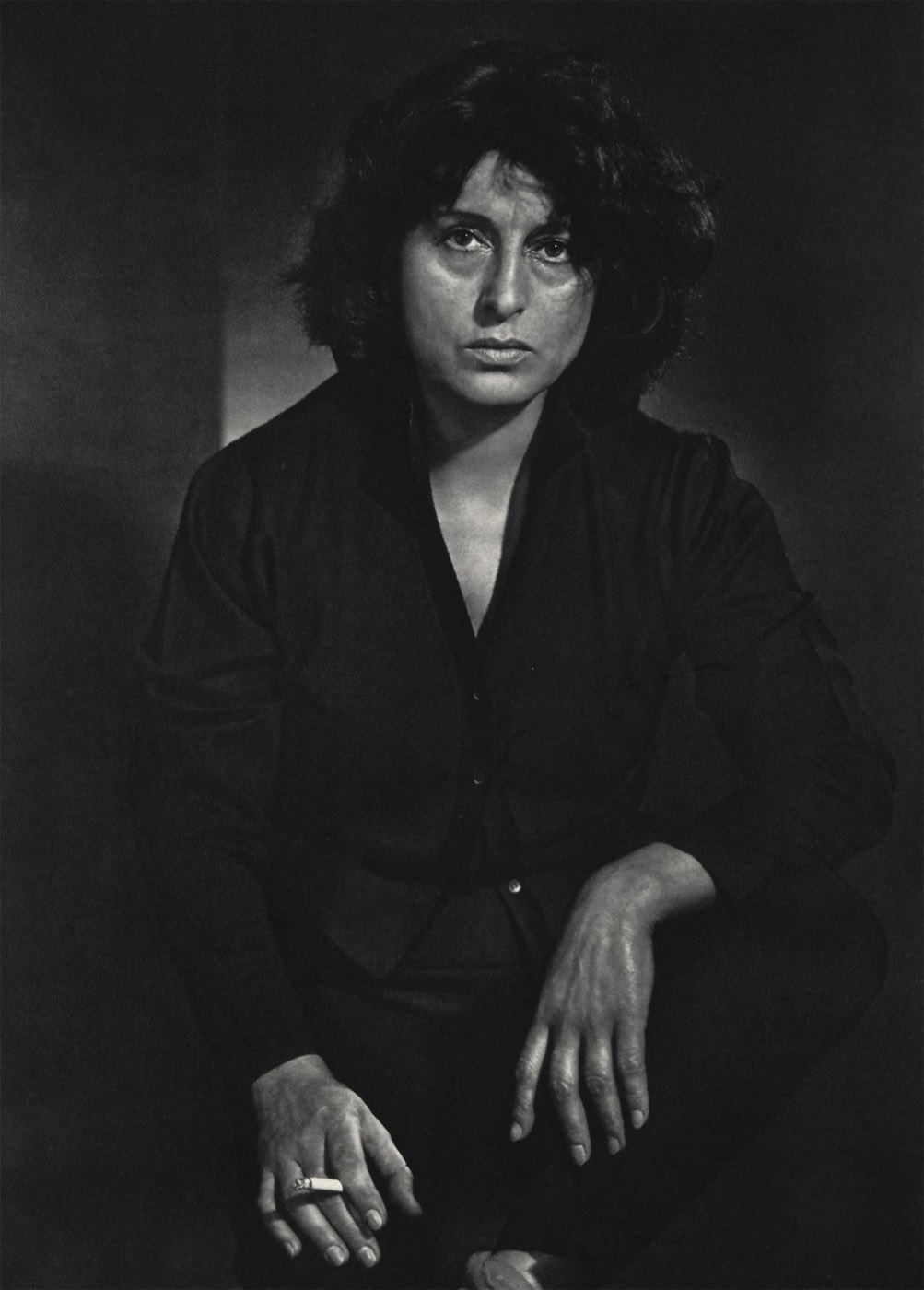
 

Yousuf Karsh (Armenian-Canadian born Mardin, Ottoman Empire (now Turkey), 1908-2002) 'Anna Magnani' 1959


Yousuf Karsh (Armenian-Canadian born Mardin, Ottoman Empire (now Turkey), 1908-2002)
Anna Magnani
1959
Sheet: 20 x 15 15/16″ (50.8 x 40.5cm)
The Museum of Modern Art Film Stills Collection


Anna Maria Magnani (Italian, 1908-1973)

Anna Maria Magnani (Italian; 7 March 1908 – 26 September 1973) was an Italian actress. She was the first Italian woman to win an Academy Award.

Born and raised in Rome, Italy or Alexandria, she worked her way through Rome’s Academy of Dramatic Art by singing at night clubs. During her career, her only child was stricken by polio when he was 18 months old and remained disabled. She was referred to as “La Lupa”, the “perennial toast of Rome” and a “living she-wolf symbol” of the cinema. Time described her personality as “fiery”, and drama critic Harold Clurman said her acting was “volcanic”. In the realm of Italian cinema, she was “passionate, fearless, and exciting”, an actress whom film historian Barry Monush calls “the volcanic earth mother of all Italian cinema.” Director Roberto Rossellini called her “the greatest acting genius since Eleonora Duse”. Playwright Tennessee Williams became an admirer of her acting and wrote The Rose Tattoo (1955) specifically for her to star in, a role for which she received an Academy Award for Best Actress.

After meeting director Goffredo Alessandrini, she received her first screen role in The Blind Woman of Sorrento (La cieca di Sorrento, 1934) and later achieved international attention in Rossellini’s Rome, Open City (1945), which is seen as launching the Italian neorealism movement in cinema. As an actress, she became recognised for her dynamic and forceful portrayals of “earthy lower-class women” in such films as L’Amore (1948), Bellissima (1951), The Rose Tattoo (1955), The Fugitive Kind (1960) and Mamma Roma (1962). As early as 1950, Life had already stated that Magnani was “one of the most impressive actresses since Garbo”.

Text from the Wikipedia website
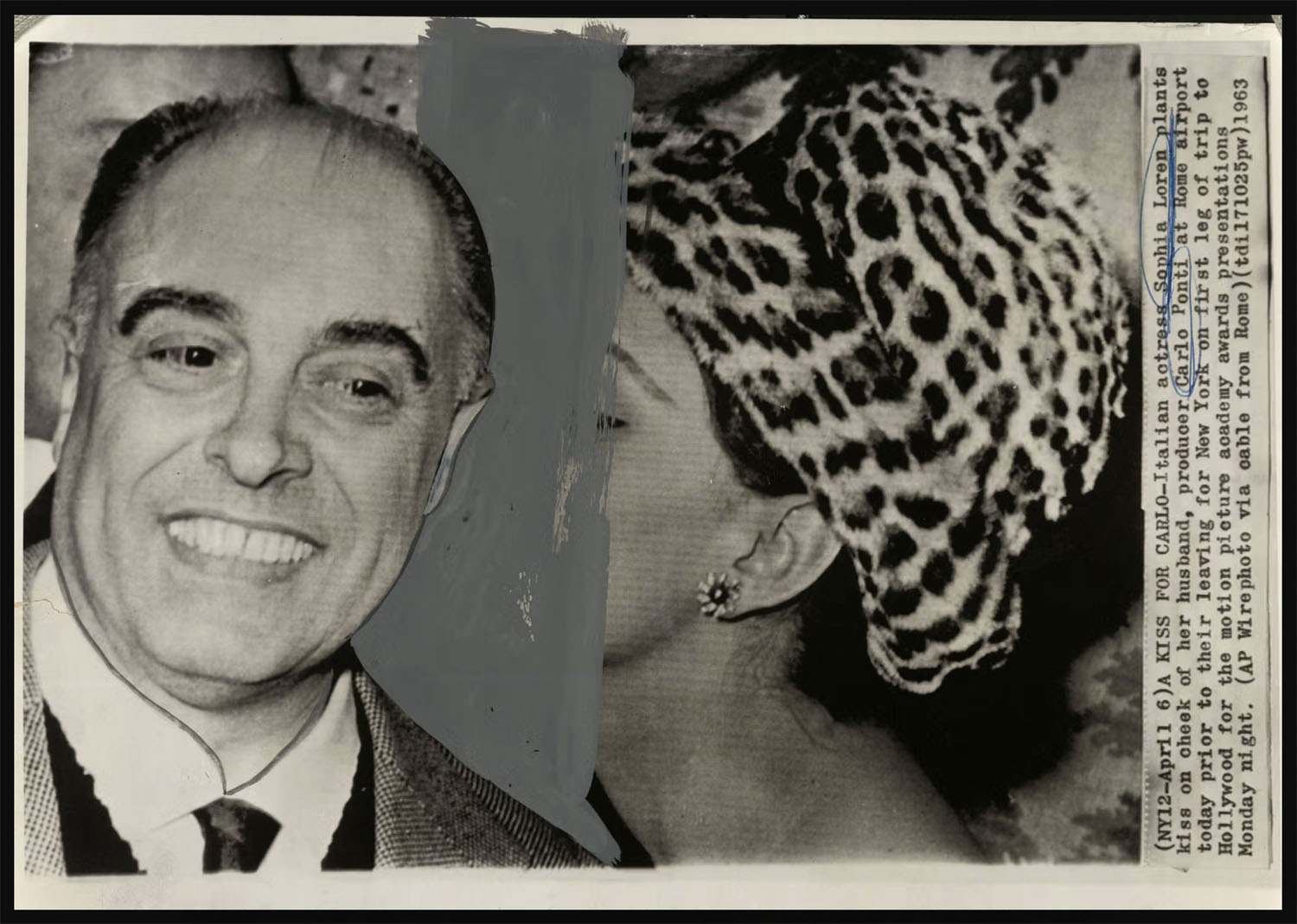
 

Unknown photographer. 'Carlo Ponti and Sophia Loren' c. 1963


Unknown photographer
Carlo Ponti and Sophia Loren
c. 1963
Sheet: 8 x 10″ (20.3 x 25.4cm)
The Museum of Modern Art Film Stills Collection


Ray Wilson. 'Mia Farrow [in "Rosemary's Baby"]' c. 1967


Ray Wilson
Mia Farrow [in “Rosemary’s Baby”]
c. 1967
Sheet: 12 x 8 3/16″ (30.5 x 20.8cm)
The Museum of Modern Art Film Stills Collection
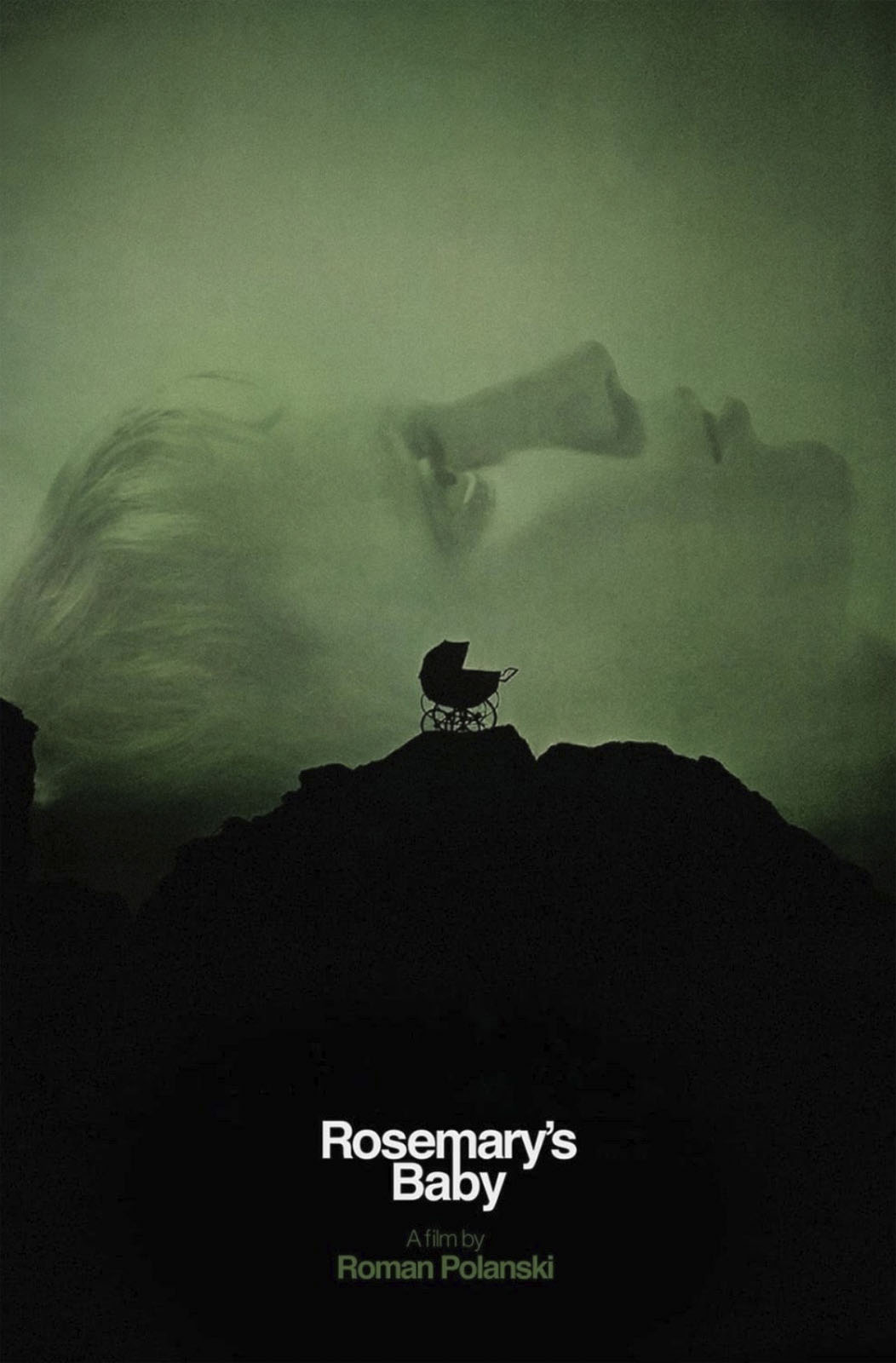
 

'Rosemary's Baby' (1968) movie poster


Rosemary’s Baby (1968) movie poster


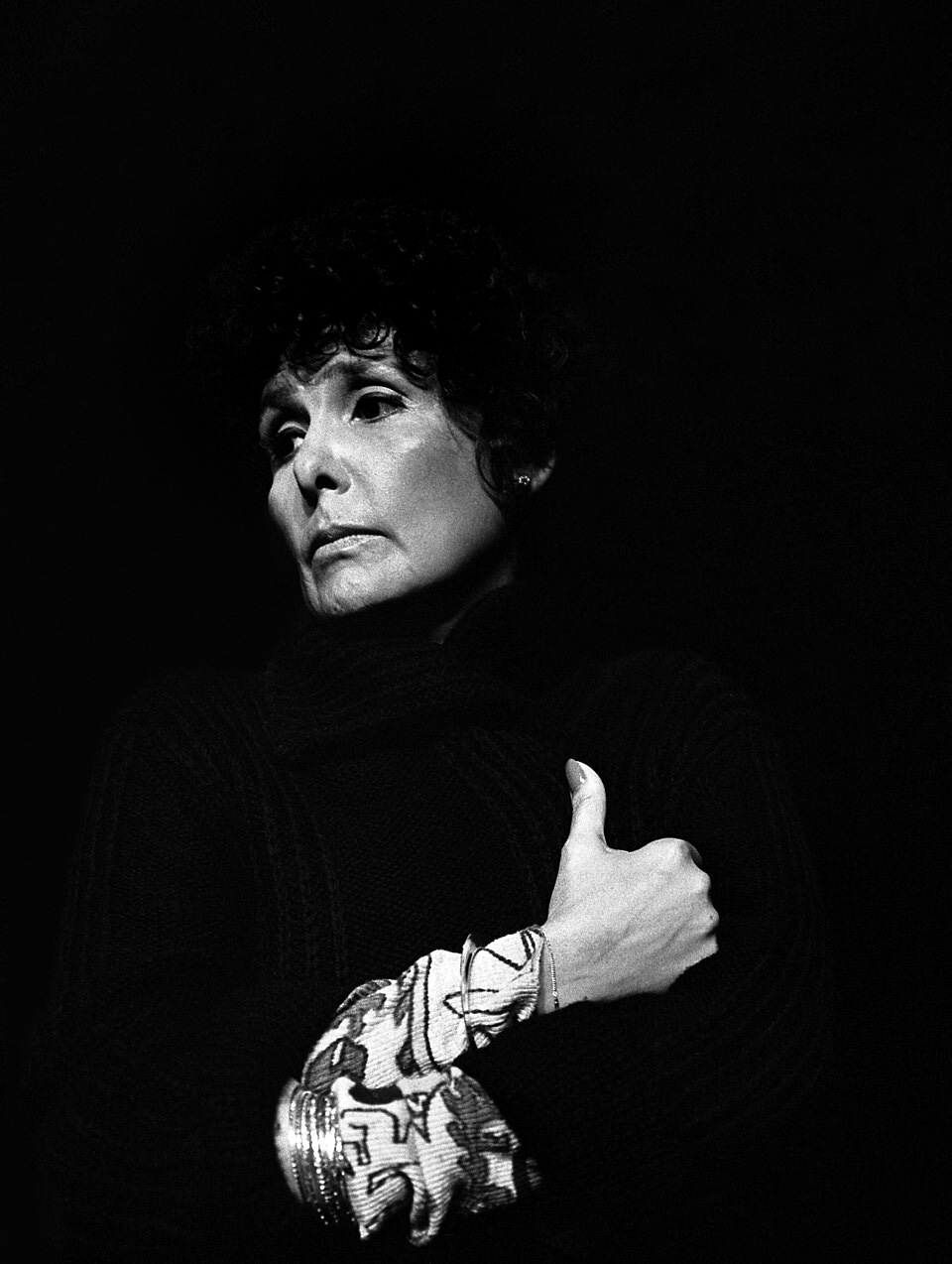
Kathleen Ballard. 'Lena Horne' 1975


Kathleen Ballard
Lena Horne
1975
Sheet: 13 1/16 x 9″ (33.2 x 22.9cm)
The Museum of Modern Art Film Stills Collection


The Museum of Modern Art
11 West 53 Street
New York, NY 10019
Phone: (212) 708-9400

Opening hours:
10.30am – 5.30pm
Open seven days a week

MoMA website

LIKE ART BLART ON FACEBOOK

Back to top

Exhibition: ‘Gay Gotham: Art and Underground Culture in New York’ at the Museum of the City of New York, New York City, Part 2

Exhibition dates: 7th October, 2016 – 26th February, 2017

An exhibition showcasing Lesbian, Gay, Bisexual, Transgender, and Queer artistic life in New York City through the social networks of Leonard Bernstein, Mercedes de Acosta, Harmony Hammond,  Bill T. Jones, Lincoln Kirstein, Greer Lankton, George Platt Lynes,  Robert Mapplethorpe, Richard Bruce Nugent, and Andy Warhol.

Curators: Donald Albrecht, MCNY curator of architecture and design, and Stephen Vider, MCNY Mellon Postdoctoral Fellow.


'The Young Physique' October/November 1964 from the exhibition 'Gay Gotham: Art and Underground Culture in New York' at the Museum of the City of New York, New York City, Oct 2016 - Feb 2017


The Young Physique
October/November 1964
Collection of Kelly McKaig


Part two of this monster posting on the exhibition Gay Gotham: Art and Underground Culture in New York at the Museum of the City of New York.

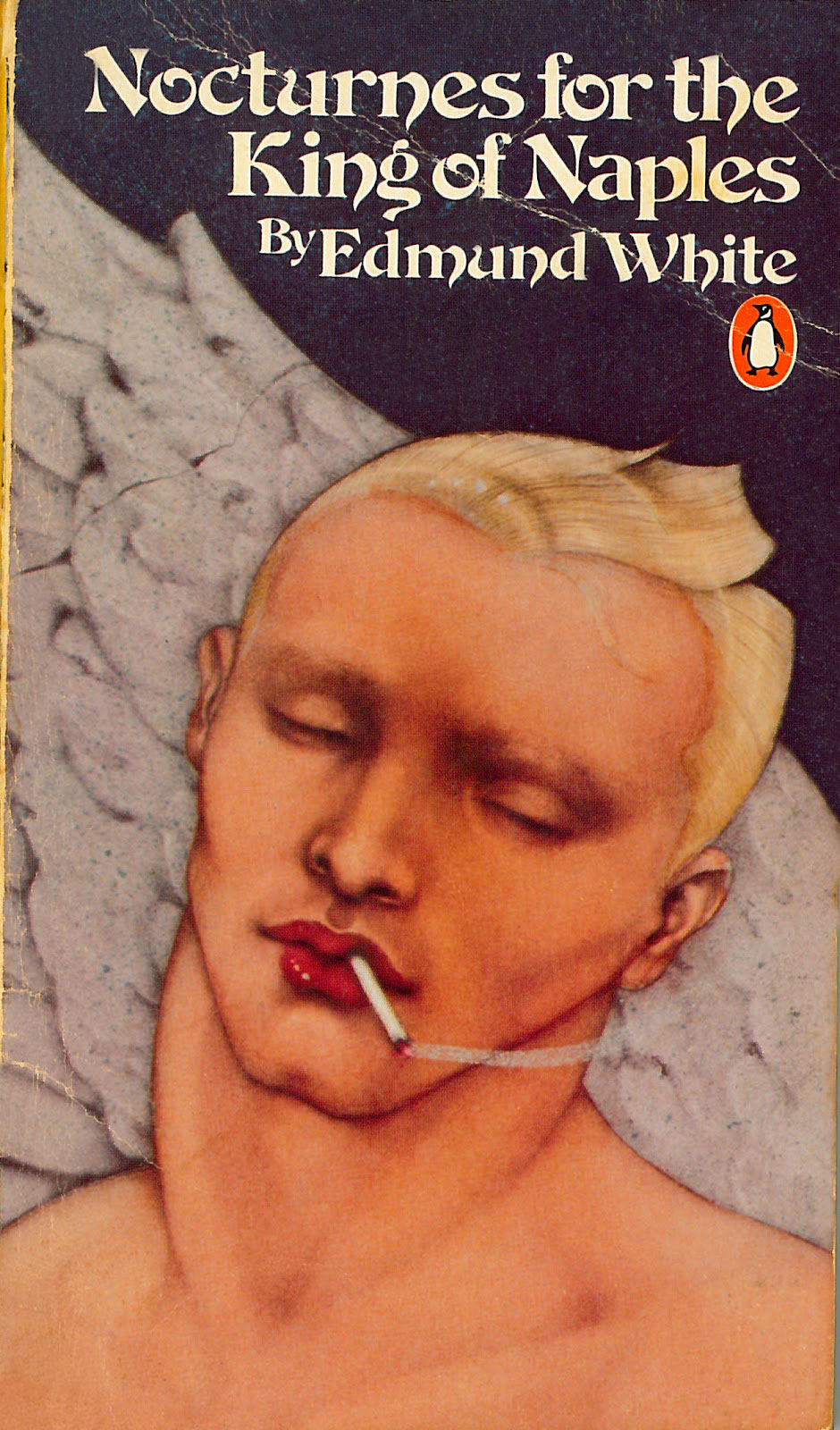
Highlights include photographs by Carl Van Vechten; art work by and of Andy Warhol; a video of the “Panzy Craze” of the the 1920s and 1930s; a photograph of a very young and skinny Robert Mapplethorpe and some of his early art work; some wonderful subversiveness from Greer Lankton; two glorious photographs from one of my favourite artists, Peter Hujar; and a great selection of book covers and posters, including the ever so sensual, German Expressionist inspired Nocturnes for the King of Naples cover art by Mel Odom.

See Part 1 of the posting

Dr Marcus Bunyan


Many thank to the Museum of the City of New York for allowing me to publish the art work in the posting. Please click on the photographs for a larger version of the image.


Themes ~

Printing


Foujita (Japanese-French, 1886-1968) "Helen Morgan Jr. And Jean Malin at the Smart Club Abbey," 'Vanity Fair' February 1931 from the exhibition 'Gay Gotham: Art and Underground Culture in New York' at the Museum of the City of New York, New York City, Oct 2016 - Feb 2017


Foujita (Japanese-French, 1886-1968)
“Helen Morgan Jr. And Jean Malin at the Smart Club Abbey”
Vanity Fair
February 1931
Private collection


Léonard Tsuguharu Foujita (藤田 嗣治 Fujita Tsuguharu, November 27, 1886 – January 29, 1968) was a Japanese-French painter and printmaker born in Tokyo, Japan, who applied Japanese ink techniques to Western style paintings. He has been called “the most important Japanese artist working in the West during the 20th century”. His Book of Cats, published in New York by Covici Friede, 1930, with 20 etched plate drawings by Foujita, is one of the top 500 (in price) rare books ever sold, and is ranked by rare book dealers as “the most popular and desirable book on cats ever published”.


André Tellier (French, b. 1902) 'Twilight Men' (Greenberg, New York) 1931


André Tellier (French, b. 1902)
Twilight Men (Greenberg, New York)
1931
Fales Library and Special Collections, New York University


First published in 1931, this is an extremely uncommon early novel set in New York City of homosexuality and a young man whose gay tendencies infuriates his father, who attempts to set him upon the “path of normality” by hiring a mistress to seduce him.

“Like many early gay novels, the book does not have a happy ending: the main character becomes addicted to drugs, murders his father, and kills himself. This theme (the gay monster or the gay degenerate) occurs very frequently before the 1960’s. Originally, this was the only way that a book with any kind of gay themes could even be published; that is, it was only palatable – or even legal – to feature a gay protagonist if that person “gets what’s coming to him” in the end.

The February 1934 issue of Chanticleer, a gay literary “magazine,” includes reviews by Henry Gerber of several novels, including Twilight Men. He wrote: “TWILIGHT MEN, by Andre Tellier, deals with a young Frenchman, who comes to America, is introduced into homosexual society in New York, becomes a drug addict for no obvious reason, finally kills his father and commits suicide. It is again excellent anti-homosexual propaganda, although the plot is too silly to convince anyone who has known homosexual people at all.”

Little has been written about the author, Andre Tellier, himself. He wrote other books, including A Woman of Paris, The Magnificent Sin, Vagabond April, and Witchfire; but nothing else is really known about him.”

Anonymous text. “First Pages: Twilight Men by Andre Tellier,” on the Somewhere Books website December 28, 2012 [Online] Cited 22/11/2012.


Blair Niles (American, 1880-1959) 'Strange Brother' (Horace Liveright, New York) 1931


Blair Niles (American, 1880-1959)
Strange Brother (Horace Liveright, New York)
1931
Fales Library and Special Collections, New York University


Strange Brother is a gay novel written by Blair Niles published in 1931. The story is about a platonic relationship between a heterosexual woman and a gay man and takes place in New York City in the late 1920s and early 1930s. Strange Brother provides an early and objective documentation of homosexual issues during the Harlem Renaissance.

Mark Thornton, the story’s protagonist, moves to New York City in hopes of feeling like less of an outsider. At a nightclub in Harlem he meets and befriends June Westbrook. One night they witness a man named Nelly being arrested. June encourages Mark to investigate. This leads Mark to attend Nelly’s trial, where he is found guilty and sentenced to six months’ imprisonment on Welfare Island for his feminine affections and gestures. Next Mark researches the crimes against nature sections of the penal code. Shaken up by his findings and the events, Mark confesses his own homosexuality to June.

Mark and June’s friendship continues to grow, and June introduces Mark to a number of friends in her social circle. Various social interactions ensue including a dinner party for a departing professor, a trip to a nightspot featuring a singer called Glory who sings Creole Love Call and attending a drag ball. Despite reading Walt Whitman’s poetry collection Leaves of Grass, Edward Carpenter’s series of papers Love’s Coming of Age, and Countee Cullen’s poetry, Mark is afraid to come out. Subsequently, Mark is threatened with being outed at work. In response to this threat, Mark commits suicide by shooting himself.

Text from the Wikipedia website


Ann Bannon (American, b. 1932) 'I Am a Woman' (Gold Medal Books, New York) 1959


Ann Bannon (American, b. 1932)
I Am a Woman (Gold Medal Books, New York)
1959
Private collection


The classic 1950s novel from the Queen of Lesbian Pulp. “For contemporary readers the books offer a valuable record of gay and lesbian life in the 1950s. Most are set in Greenwich Village, and Ms. Bannon’s descriptions of bars, clubs and apartment parties vividly evoke a vanished community. Her characters also have historical value. Whereas most lesbians in pulp are stereotypes who get punished for their desires, Beebo and her friends are accessibly human. Their struggles with love and relationships are engrossing today, and half a century ago they were revolutionary.” ~ New York Times “Sex. Sleaze. Depravity. Oh, the twisted passions of the twilight world of lesbian pulp fiction.” ~ Chicago Free Press “Little did Bannon know that her stories would become legends, inspiring countless fledgling dykes to flock to the Village, dog-eared copies of her books in hand, to find their own Beebos and Lauras and others who shared the love they dared not name.” ~ San Francisco Bay Guardian “Ann Bannon is a pioneer of dyke drama.” ~ On Our Backs “When I was young, Bannon’s books let me imagine myself into her New York City neighbourhoods of short-haired, dark-eyed butch women and stubborn, tight-lipped secretaries with hearts ready to be broken. I would have dated Beebo, no question.” ~ Dorothy Allison “Bannon’s books grab you and don’t let go.” ~ Village Voice


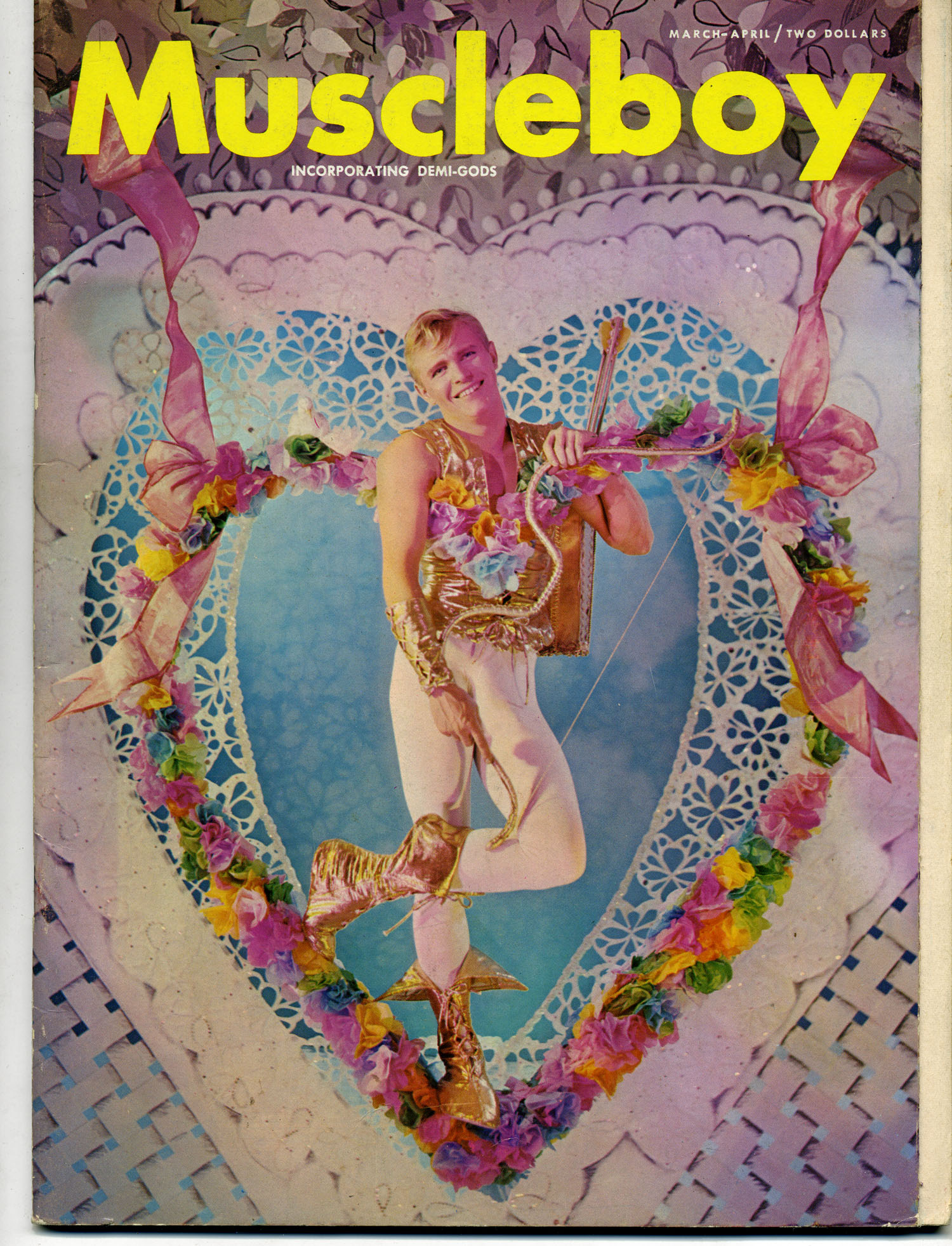
'Muscleboy' March/April 1965


Muscleboy
March/April 1965
Collection of Kelly McKaig


Design by Gran Fury for Art Against AIDS/On The Road and Creative Time, Inc. 'Kissing Doesn't Kill: Greed and Indifference Do' 1989


Design by Gran Fury for Art Against AIDS/On The Road and Creative Time, Inc.
Kissing Doesn’t Kill: Greed and Indifference Do
1989
Bus poster
Gran Fury, Courtesy The New York Public Library Manuscripts and Archives Division


Placemaking: Cruising


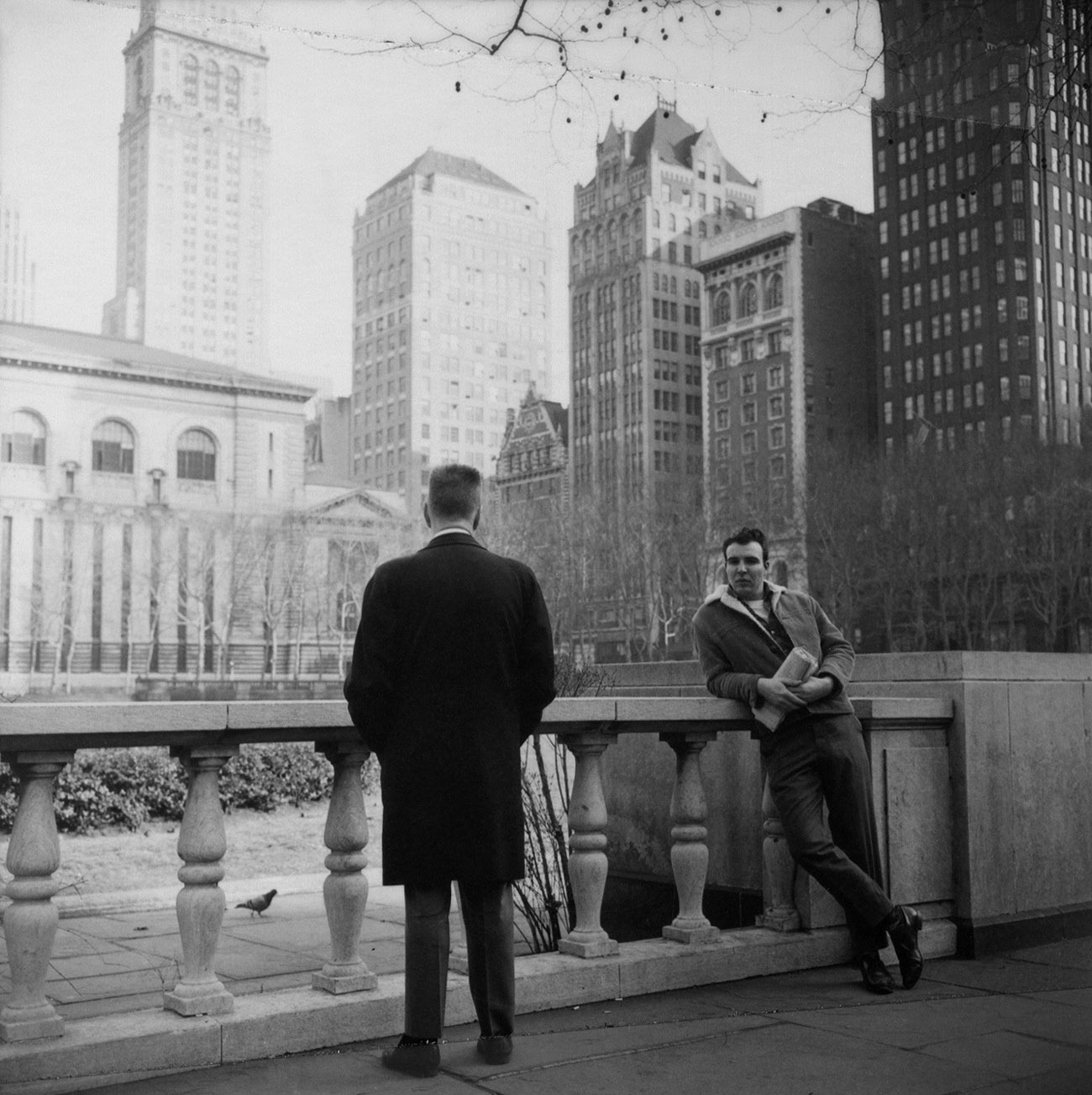
Anonymous photographer. 'New York City street photograph' 1960s


Anonymous photographer
New York City street photograph
1960s
Collection of Philip Aarons and Shelley Fox Aarons, New York


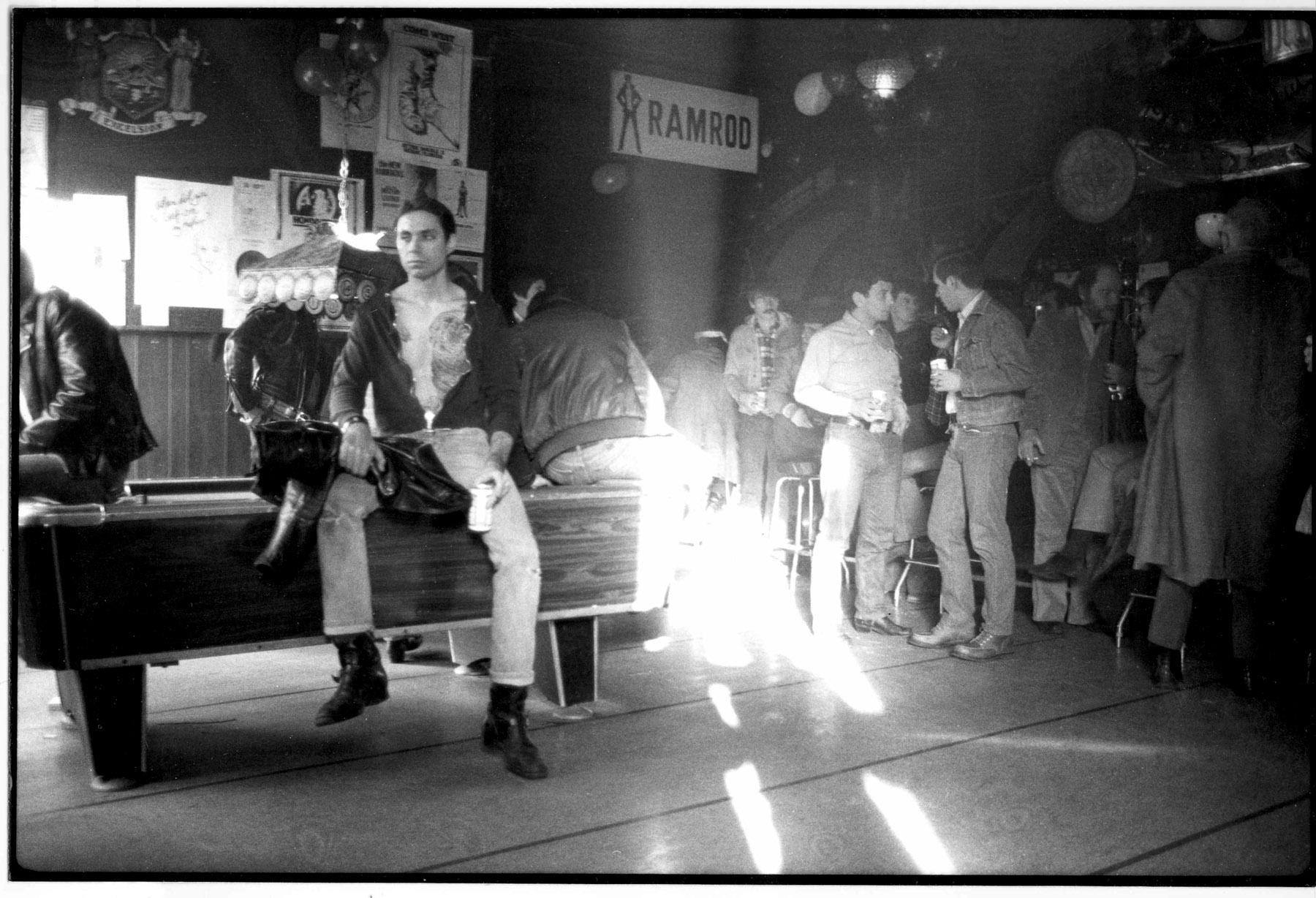
Leonard Fink (American, 1930-1993) 'Charley Inside Ramrod' c. 1976


Leonard Fink (American, 1930-1993)
Charley Inside Ramrod
c. 1976
Courtesy LGBT Community Center National History Archive


THE RAMROD, 394 West Street, (between Charles and West 10th Streets). Constructed in the 1850’s this building (actually two, that were attached) housed S. J. Seely & Co., a lime dealer, and C. August, (on the corner) a porter house, and private residence. In the late 70’s it was one of the most popular leather bars in New York. Attracting a large motorcycle clientele, West Street always had a plethora of bikes parked out front. The doorman, Rico, had a long black bushy beard, and an ever present black cowboy hat, also he wore on his hand a glove with sharp stainless steel blades attached to it, (sort of a precursor to Freddie Kruger). The bar, and Rico could be very intimidating, if you were new, or “Brown” as the uninitiated were called… referring to the brown leather they wore.

Anonymous text. “Greenwich Village: A Gay History,” on the Huzzbears website [Online] Cited 15/02/2021. No longer available online


In June 1993, the Estate of Leonard Fink donated a photographic collection to The Center in New York City through its executor, Steven E. Bing. The materials in the Fink Estate was willed to four AIDS related organisations who gave all of the rights to the photos to the Center Archive. Some of these were signed “Len Elliot,” which might have ben a pseudonym of Fink’s. The collection consists of over 25,000 negatives and images capturing Greenwich Village and much of the spirit of the late 60s and 70s. Some of the most well known images in the collection are Fink’s work at “The Piers” along the Hudson River. Fink documented over 25 years of gay life in New York City but his photography was never exhibited or published in his lifetime. He was self taught and used an old 35mm camera while working out of a homemade darkroom in his West 92nd Street apartment.

Jeffrey James Keyes. “PHOTOS: An Exclusive Peek Inside The Estate of Leonard Fink,” on the Gay Cities website May 27, 2014 [Online] Cited 22/11/2021


Leonard Fink (American, 1930-1993)

Leonard Fink was an amateur photographer who documented over 25 years of gay life in New York including parades, bars, and especially the west side piers. He worked in complete obscurity and was apparently very reclusive. His photographs were seen by only a few close friends and were never exhibited or published in his lifetime. He seems to have taught himself photography using an old 35mm camera and a homemade darkroom in his small apartment on West 92nd street. He lived frugally, spending much of his income on photographic supplies which he bought in bulk and stored in his darkroom and his bedroom. He stored the prints and negatives in a file cabinet. By the time of his death, the photos in the file cabinet covered a period from 1954 to 1992. His photographs of gay life begin with groups of gay men photographed in Greenwich Village in 1967. His photographs of Gay Pride parades begin with the first parade in 1970. His earlier photographs are of friends, trips to Europe, and scenes in New York. Leonard Fink was a colourful and ubiquitous character in the Village and at Pride parades, usually appearing on roller skates in short cut-offs, and a tight t-shirt with cameras always around his neck. He sometimes arrived on a bicycle or a motorcycle. He was born in 1930. His father and older brother were both physicians. He worked for many years as an attorney for the New York Transit Authority. He died of AIDS in 1993.

Anonymous text. “Leonard Fink Photographs,” on The Center website [Online] Cited 22/11/2021


Posing


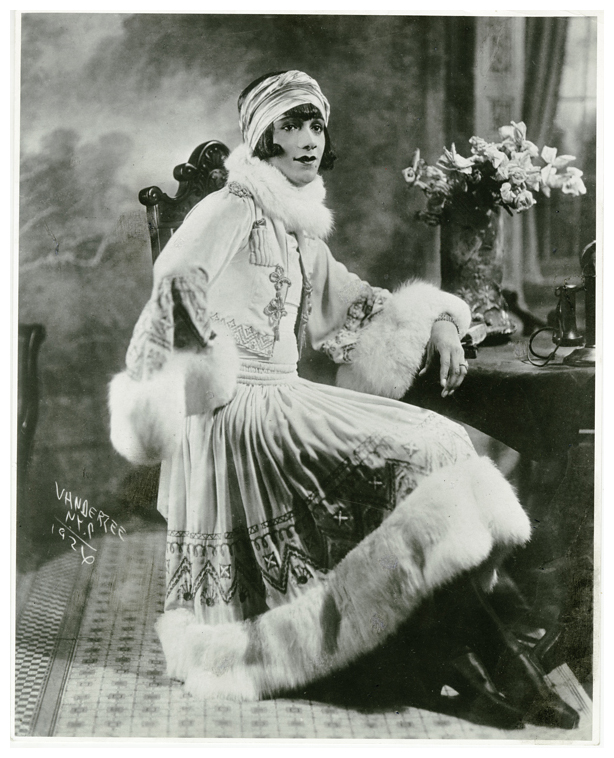
James VanDerZee (African-American, 1886-1983) 'Beau of the Ball' 1926


James VanDerZee (American, 1886-1983)
Beau of the Ball
1926
Gelatin silver print
Donna Mussenden VanDerZee


James VanDerZee (American, 1886-1983)

James Van Der Zee (June 29, 1886 – May 15, 1983) was an African-American photographer best known for his portraits of black New Yorkers. He was a leading figure in the Harlem Renaissance. Aside from the artistic merits of his work, Van Der Zee produced the most comprehensive documentation of the period. Among his most famous subjects during this time were Marcus Garvey, Bill “Bojangles” Robinson and Countee Cullen…

Van Der Zee worked predominantly in the studio and used a variety of props, including architectural elements, backdrops, and costumes, to achieve stylised tableaux vivant in keeping with late Victorian and Edwardian visual traditions. Sitters often copied celebrities of the 1920s and 1930s in their poses and expressions, and he retouched negatives and prints heavily to achieve an aura of glamour…

Works by Van Der Zee are artistic as well as technically proficient. His work was in high demand, in part due to his experimentation and skill in double exposures and in retouching negatives of children. One theme that recurs in his photographs was the emergent black middle class, which he captured using traditional techniques in often idealistic images. Negatives were retouched to show glamor and an aura of perfection. This affected the likeness of the person photographed, but he felt each photo should transcend the subject. His carefully posed family portraits reveal that the family unit was an important aspect of Van Der Zee’s life. “I tried to see that every picture was better-looking than the person.” “I had one woman come to me and say ‘Mr.Van Der Zee my friends tell thats a nice picture, But it doesn’t look like you.’ That was my style.” Said Van Der Zee.

Text from the Wikipedia website


Carl Van Vechten (American, 1880-1964) 'Anna May Wong' 1932


Carl Van Vechten (American, 1880-1964)
Anna May Wong
1932
Gelatin silver print
Museum of the City of New York, Gift of Carl Van Vechten


Carl Van Vechten (American, 1880-1964)

Little known today, Carl Van Vechten was a prolific novelist, critic, photographer, and promoter of all things modern, most actively engaged in the city’s cultural life during the 1920s and ’30s. The City Museum is rich in Van Vechten materials; its collections include about 2,200 photographs taken by him and 3,000 Christmas cards sent to him and his wife, film and theatre actress Fania Marinoff. Taken together, they chronicle Van Vechten’s influential circles of friends and colleagues – a hybrid mash-up that defines the modern America at the heart of White’s new book. Images and correspondence in the City Museum’s collection range from Harlem Renaissance poet Langston Hughes to writer Zelda Fitzgerald (wife of F. Scott), and playwright Eugene O’Neill.

Around 1920 Van Vechten gave up journalism for fiction and over the next decade wrote hotly debated novels about Jazz Age Manhattan. His 1923 book The Blind Bow-Boy, for example, is a classic of gay camp and a public expression of Van Vechten’s sexual orientation; while he and Marinoff were married from 1914 until Van Vechten’s death in 1964, he had numerous homosexual relationships… Van Vechten’s role in the Harlem Renaissance remains a controversial topic. To some he’s a valuable bridge between white and black New Yorkers, to others he’s an outsider who patronised and exploited his African-American subjects…

Carl Van Vechten abandoned writing altogether in the early 1930s and embraced photography, a field he would pursue until his death. All told, it is estimated that Van Vechten took some 15,000 photographs. Because his inherited wealth offered him financial independence, Van Vechten took pictures for his own pleasure, usually inviting local and visiting celebrities to a studio he set up in his own apartment. While Van Vechten was aware of the stylistic artifice of such contemporary commercial photographers as Edward Steichen and Cecil Beaton, he stood apart from them. He used a small-format camera, and his aesthetic, which included deep and dramatic shadows that sometimes obscured his subjects’ faces, resulted in picture-making that was far more immediate and spontaneous than that of his contemporaries. Using this technique, Van Vechten photographed musicians Billie Holiday and George Gershwin, Hollywood actors Laurence Olivier and Anna May Wong, and writers Sinclair Lewis and Clifford Odets, to name only a few. The sum of Van Vechten’s work, according to photography historian Keith F. Davis, “constitutes the single most integrated vision of American arts and letters produced in his era.”

Donald Albrecht. “Carl Van Vechten and Modern New York,” on the Museum of the City of New York website August 26, 2014 [Online] Cited 22/11/2021


Anna May Wong (American, 1905-1961)

Anna May Wong (January 3, 1905 – February 3, 1961) was an American actress. She is considered to be the first Chinese American movie star, and also the first Asian American actress to gain international recognition. Her long and varied career spanned silent film, sound film, television, stage and radio…

Wong’s image and career have left a legacy. Through her films, public appearances and prominent magazine features, she helped to humanise Asian Americans to white audiences during a period of overt racism and discrimination. Asian Americans, especially the Chinese, had been viewed as perpetually foreign in U.S. society but Wong’s films and public image established her as an Asian-American citizen at a time when laws discriminated against Asian immigration and citizenship. Wong’s hybrid image dispelled contemporary notions that the East and West were inherently different.

See an excellent short biography on the Wikipedia website


Carl Van Vechten (American, 1880-1964) 'Hugh Laing' 1941


Carl Van Vechten (American, 1880-1964)
Hugh Laing
1941
Gelatin silver print
Museum of the City of New York, Gift of Carl Van Vechten


Hugh Laing (American, 1911-1988)

Hugh Laing (6 June 1911 – 10 May 1988) was one of the most significant dramatic ballet dancers of the 20th-century. He was the partner of choreographer Antony Tudor. Known for his good looks and the intensity of his stage presence, Laing was never considered a great technician, yet his powers of characterisation and his sense of theatrical timing were considered remarkable. His profile as a significant dancer of his era was almost certainly enhanced by Tudor’s choreographing to his undoubted strengths and Laing is generally regarded as one of the finest dramatic dancers of 20th-century ballet. He remained Tudor’s artistic collaborator and companion until the choreographer’s death in 1987.


Carl Van Vechten (American, 1880-1964) 'Alvin Ailey' 1955


Carl Van Vechten (American, 1880-1964)
Alvin Ailey
1955
Gelatin silver print
Museum of the City of New York, Gift of Carl Van Vechten


Alvin Ailey (American, 1931-1989)

Alvin Ailey (January 5, 1931 – December 1, 1989) was an African-American choreographer and activist who founded the Alvin Ailey American Dance Theater in New York City. He is credited with popularising modern dance and revolutionising African-American participation in 20th-century concert dance. His company gained the nickname “Cultural Ambassador to the World” because of its extensive international touring. Ailey’s choreographic masterpiece Revelations is believed to be the best known and most often seen modern dance performance…

Ailey made use of any combination of dance techniques that best suited the theatrical moment. Valuing eclecticism, he created more a dance style than a technique. He said that what he wanted from a dancer was a long, unbroken leg line and deftly articulated legs and feet (“a ballet bottom”) combined with a dramatically expressive upper torso (“a modern top”). “What I like is the line and technical range that classical ballet gives to the body. But I still want to project to the audience the expressiveness that only modern dance offers, especially for the inner kinds of things.”

Ailey’s dancers came to his company with training from a variety of other schools, from ballet to modern and jazz and later hip-hop. He was unique in that he did not train his dancers in a specific technique before they performed his choreography. He approached his dancers more in the manner of a jazz conductor, requiring them to infuse his choreography with a personal style that best suited their individual talents. This openness to input from dancers heralded a paradigm shift that brought concert dance into harmony with other forms of African-American expression, including big band jazz.

Text from the Wikipedia website


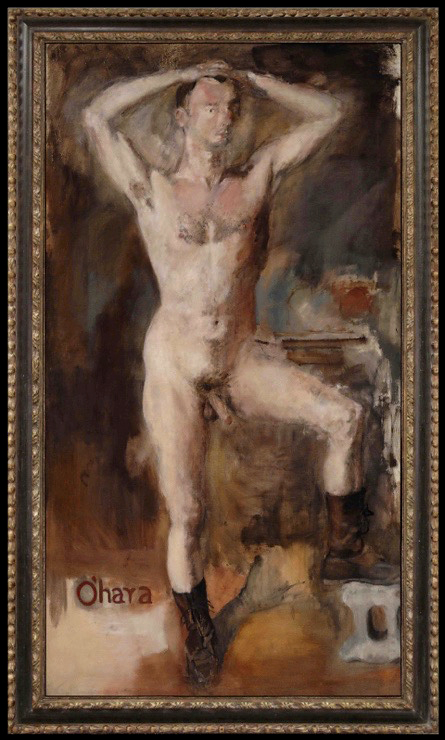
Larry Rivers (American, 1923-2002) 'O'Hara Nude With Boots' 1954


Larry Rivers (American, 1923-2002)
O’Hara Nude With Boots
1954
Oil on canvas
Collection of the Larry Rivers Foundation


“Among Rivers’ portraits of the mid-1950s, the most notable and controversial work for a discussion of the relationship among autobiography, sexuality, and art is O’Hara, which he painted during January 1954 as he re-entered an emotional relationship with the sitter. According to [poet Frank] O’Hara’s biographer, Brad Gooch, Rivers and O’Hara had a relatively short, turbulent romance that began in 1952m but during 1953 the two men became involved in other romantic relationships… Beginning in 1954, however, Rivers and O’Hara resumed their intimate relationship, which then lasted less than a year…

A nude of a contemporary figure on such a huge scale as O’Hara appeared unusual and even controversial in the 1950s New York art world. Rivers recalled that when the painting was first shown at the Whitney Annual in 1955, a guard often stood in front of it to ensure that the painting would not be defaced or damaged: “There was something about the male nude that seemed to be more of a problem than the female nude.” Some contemporary viewers where shocked by O’Hara, given its depiction of a naked male body with meticulous attention to the genitals.”

Dong-Yeon Koh. Larry Rivers and Frank O’Hara: Reframing Male Sexualities. Phd dissertation 2006, pp. 196-198.


Beauford Delaney (American, 1901-1979) 'James Baldwin' c. 1957


Beauford Delaney (American, 1901-1979)
James Baldwin
c. 1957
Oil on canvas board
Halley K. Harrisburg and Michael Rosenfeld, New York


Beauford Delaney (American, 1901-1979)

Beauford Delaney (December 30, 1901 – March 26, 1979) was an American modernist painter. He is remembered for his work with the Harlem Renaissance in the 1930s and 1940s, as well as his later works in abstract expressionism following his move to Paris in the 1950s.

In his Introduction to the Exhibition of Beauford Delaney opening December 4, 1964 at the Gallery Lambert, James Baldwin wrote, “the darkness of Beauford’s beginnings, in Tennessee, many years ago, was a black-blue midnight indeed, opaque and full of sorrow. And I do not know, nor will any of us ever really know, what kind of strength it was that enabled him to make so dogged and splendid a journey.”

James Arthur Baldwin (American, 1924-1987)

James Arthur Baldwin (August 2, 1924 – December 1, 1987) was an American novelist, essayist, playwright, poet, and social critic. His essays, as collected in Notes of a Native Son (1955), explore palpable yet unspoken intricacies of racial, sexual, and class distinctions in Western societies, most notably in mid-20th-century America, and their inevitable if unnameable tensions. Some Baldwin essays are book-length, for instance The Fire Next Time (1963), No Name in the Street (1972), and The Devil Finds Work (1976).

Baldwin’s novels and plays fictionalise fundamental personal questions and dilemmas amid complex social and psychological pressures thwarting the equitable integration not only of black people, but also of gay and bisexual men, while depicting some internalised obstacles to such individuals’ quests for acceptance. Such dynamics are prominent in Baldwin’s second novel, Giovanni’s Room, written in 1956, well before the gay liberation movement.

Text from the Wikipedia website


Performing


The Pansy Craze on Stage and Screen

New York’s queer cultures gained remarkable visibility on the city’s stages in the 1920 and 1930s. Broadway producers and nightclub owners put on plays and acts exploring gay and lesbian themes. They launched a popular “Panzy Craze,” where minorities where accepted. This period lasted until the mid-1930s when morals and ethics changed because of right-wing pressure. The film code was then in full force to protect society’s “morals” and there was, once more, open hostility towards minorities that latest into the 1970s.

With permission of the Museum of the City of New York for Art Blart

The Museum of the City of New York
Film compiliation
Produced by Cramersound


Max Ewing (American, 1903-1934) 'Gallery of Extraordinary Portraits' 1928


Max Ewing (American, 1903-1934)
Gallery of Extraordinary Portraits
1928
Courtesy Yale University, Beinecke Rare Books and Manuscripts Library


Max Ewing’s Gallery of Extraordinary Portraits encapsulates the exhibition’s wider exploration of queer communities in 20th-century New York. Ewing was a novelist, composer, pianist, and sculptor who created this gallery in the walk-in closet of his Manhattan studio apartment on West 31st Street. His semi-public closet exhibition paid homage to interracial, gay, and artistic communities with images of friends and celebrities plastered floor to ceiling, corner to corner.


Sterling Paige. 'Gladys Bentley at the Ubangi Club in Harlem' early 1930s


Sterling Paige
Gladys Bentley at the Ubangi Club in Harlem
early 1930s
Gelatin silver print
Courtesy of the Visual Studies Workshop, Rochester, NY


1960-1995

Portraits
Andy Warhol


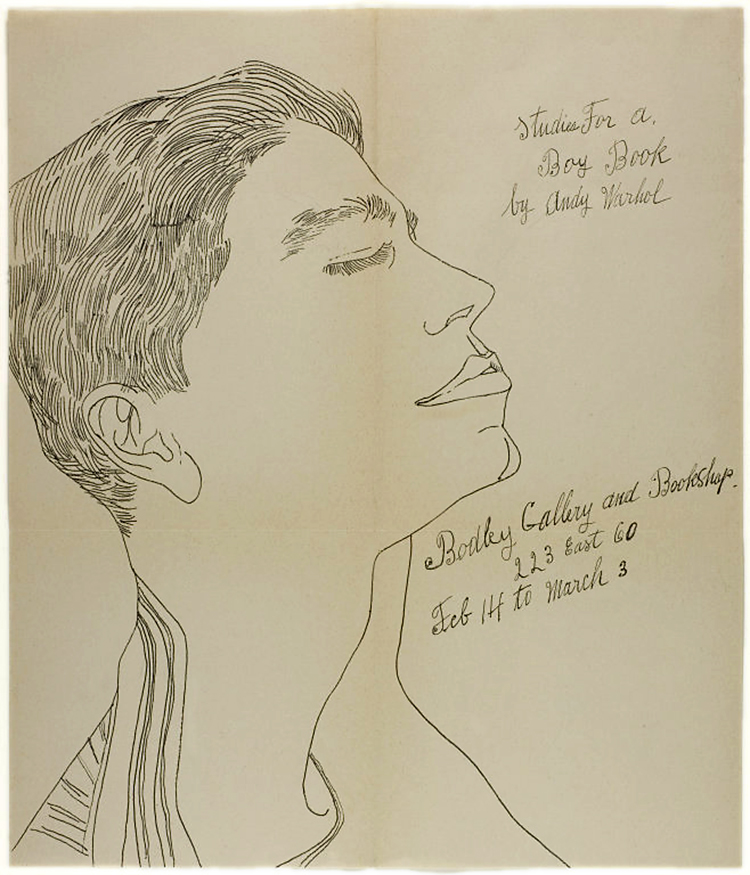
Andy Warhol (American, 1928-1987) 'Studies for a Boy Book' exhibition announcement for Bodley Gallery c. 1956


Andy Warhol (American, 1928-1987)
Studies for a Boy Book exhibition announcement for Bodley Gallery
c. 1956
Offset lithograph Susan Sheehan Gallery, New York


Andy Warhol (American, 1928-1987) 'Gee, Merrie Shoes' 1956


Andy Warhol (American, 1928-1987)
Gee, Merrie Shoes
1956
Hand coloured offset lithograph
Susan Sheehan Gallery, New York


Andy Warhol (American, 1928-1987) 'Cecil Beaton's Feet' 1961


Andy Warhol (American, 1928-1987)
Cecil Beaton’s Feet
1961
Black ink on buff wove paper
Philadephia Museum of Art
The Henry P. Mcllhenny Collection in memory of Frances P. Mcllhenny, 1986


Cecil Beaton (British, 1904-1980) 'Andy Warhol and Candy Darling, New York' 1969


Cecil Beaton (British, 1904-1980)
Andy Warhol and Candy Darling, New York
1969
Gelatin silver print
© The Cecil Beaton Studio Archive at Sotheby’s


Candy Darling (November 24, 1944 – March 21, 1974) was an American transgender actress, best known as a Warhol Superstar. She starred in Andy Warhol’s films Flesh (1968) and Women in Revolt (1971), and was a muse of the protopunk band The Velvet Underground.


Edie Sedgwick Screen Test

Andy Warhol’s silent screen test for his future “super star.”


Harmony Hammond


'Liberation News Service #624' July 3, 1974


Liberation News Service #624, featuring Harmony Hammond, right, with daughter, Tanya, at the Christopher Street Liberation Day Gay Pride March, photograph by Cidne Hart for Liberation News Service, July 3, 1974
Private collection


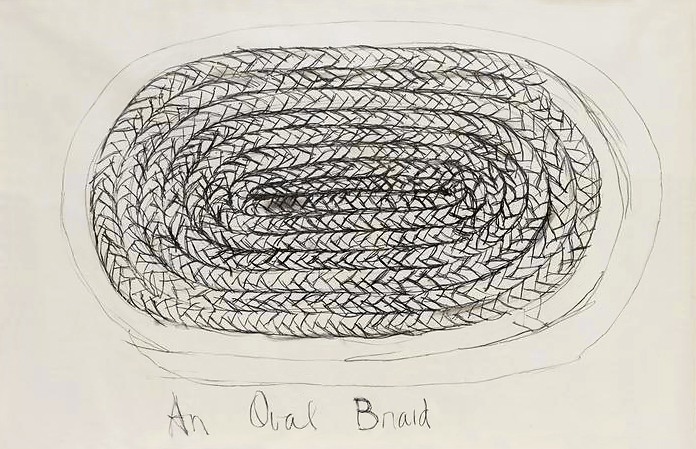
Harmony Hammond (American, b. 1944) 'An Oval Braid' 1972


Harmony Hammond (American, b. 1944)
An Oval Braid
1972
Charcoal on paper
Courtesy the artist and Alexander Gray Associates, New York


Harmony Hammond (American, b. 1944) 'Fan Lady meets Cactus Lady' 1981


Harmony Hammond (American, b. 1944)
Fan Lady meets Cactus Lady
1981
Lithograph
Courtesy the artist and Alexander Gray Associates, New York


Robert Mapplethorpe


Judy Linn (American, b. 1947) 'Robert Gets Dressed at the Chelsea, #3' 1970


Judy Linn (American, b. 1947)
Robert Gets Dressed at the Chelsea, #3
1970
Modern digital print
Courtesy the Artist and Susanne Hilberry Gallery


'Gay Power', Volume 1, No 16, April 15, 1970


Gay Power, Volume 1, No 16, April 15, 1970
Alternative Press Collection, Archives & Special Collections at the Thomas J. Dodd Research Center, University of Connecticut Libraries


Robert Mapplethorpe (American, 1946-1989) 'Light Gallery invitation' 1973


Robert Mapplethorpe (American, 1946-1989)
Light Gallery invitation
1973
Getty Research Institute, Los Angeles California


Ultra Violet modeling Mapplethorpe-designed jewelry, c. 1975


Ultra Violet modeling Mapplethorpe-designed jewelry
c. 1975
Gift of the Robert Mapplethorpe Foundation to The J. Paul Getty Trust and the Los Angeles County Museum of Art


Isabelle Collin Dufresne (French-American, 1935-2014)

Isabelle Collin Dufresne (stage name Ultra Violet; 6 September 1935 – 14 June 2014) was a French-American artist, author, and both a colleague of Andy Warhol and one of the pop artist’s so-called superstars. Earlier in her career, she worked for and studied with surrealist artist Salvador Dalí. Dufresne lived and worked in New York City, and also had a studio in Nice, France…

In 1954, after a meeting with Salvador Dalí, she became his “muse”, pupil, studio assistant, and lover in both Port Lligat, Spain, and in New York City. Later, she would recall, “I realised that I was ‘surreal’, which I never knew until I met Dalí”. In the 1960s, Dufresne began to follow the progressive American Pop Art scene including Jasper Johns, Robert Rauschenberg and James Rosenquist.

In 1963, Dalí introduced Dufresne to Andy Warhol, and soon she moved into the orbit of his unorthodox studio, “The Factory”. In 1964 she selected the stage name “Ultra Violet” at Warhol’s suggestion, because it was her preferred fashion – her hair colour at the time was often violet or lilac. She became one of many “superstars” in Warhol’s Factory, and played multiple roles in over a dozen films between 1965 and 1974…

In the 1980s, she gradually drifted away from the Factory scene, taking a lower profile and working independently on her own art. In her autobiography, published the year after Warhol’s unexpected demise in 1987, she chronicled the activities of many Warhol superstars, including several untimely deaths during and after the Factory years…

In 1990 she opened a studio in Nice and wrote another book detailing her own ideas about art, L’Ultratique. She lived and worked as an artist in New York City, and also maintained a studio in Nice for the rest of her life.

Text from the Wikipedia website


Valerie Santagto (American, b. 1947) 'Robert Mapplethorpe, front, and Jay Johnson in Mapplethorpe designed jewelry' c. 1970-1975


Valerie Santagto (American, b. 1947)
Robert Mapplethorpe, front, and Jay Johnson in Mapplethorpe designed jewellery
c. 1970-75
Gift of the Robert Mapplethorpe Foundation to The J. Paul Getty Trust and the Los Angeles County Museum of Art


Robert Mapplethorpe (American, 1946-1989) 'Jim, Sausalito' 1977


Robert Mapplethorpe (American, 1946-1989)
X Portfolio with Jim, Sausalito
1978
Black silk clamshell case with gelatin silver print photographs mounted on pure rag board
Designed by John Cheim
Courtesy Yoshi Gallery, New York and Cheim & Read, New York


Greer Lankton


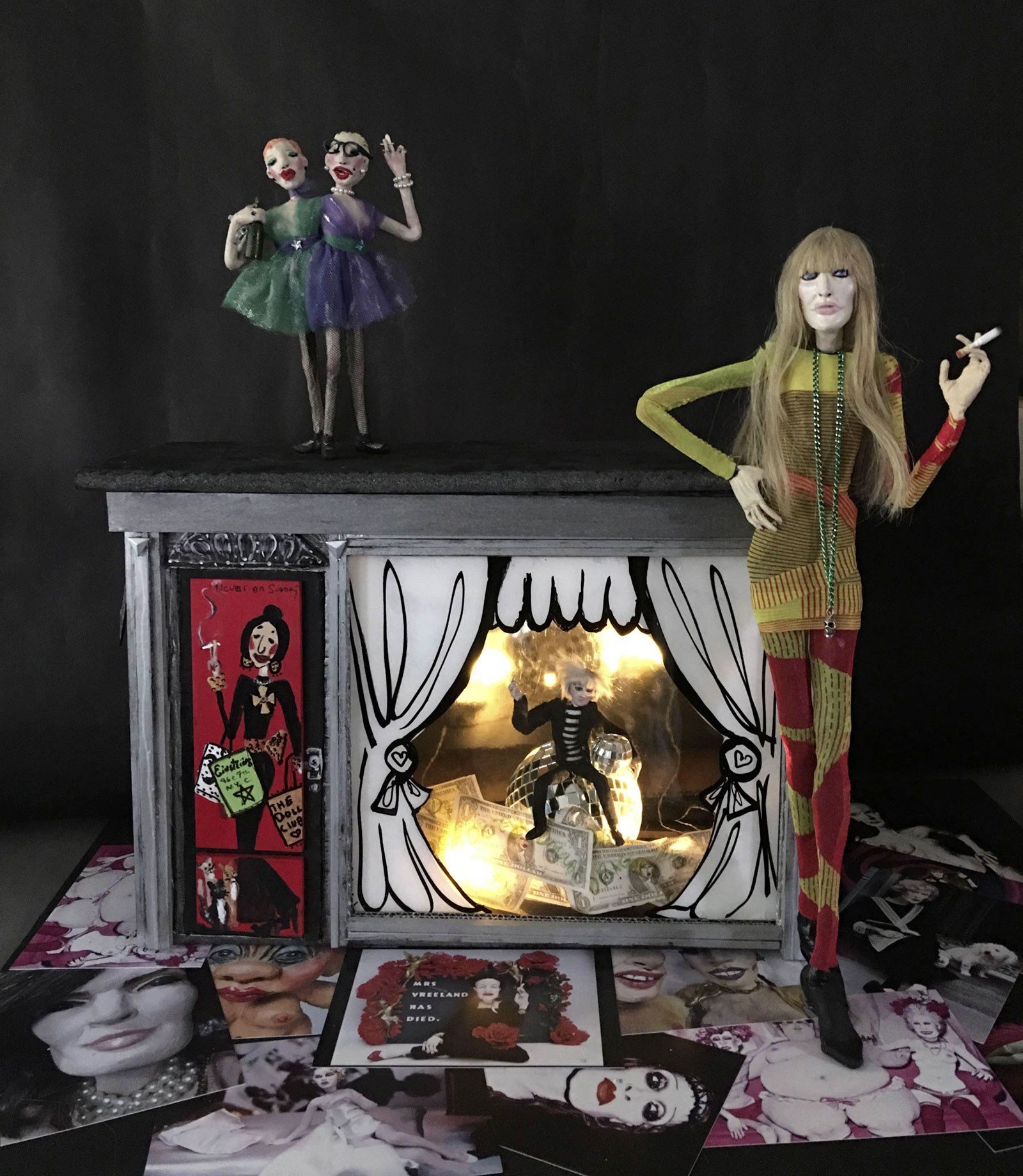
'Einsteins' installation designed by Paul Monroe for 'Gay Gotham', 2016 featuring works by Greer Lankton and Andy Warhol


Einsteins installation designed by Paul Monroe for Gay Gotham, 2016
Courtesy of Greer Lankton Archives Museum

Greer Lankton (American, 1958-1996)
Mini-Einsteins
1987
Cardboard, glass, paint, styrofoam board

Andy Warhol
1990
Fabric, wire, glass, human hair

Teri Toye
1988
Fabric, wire, glass, human hair

Siamese Twins
1988
Paper, wire, fabric


Greer Lankton (American, 1958-1996) (dolls and photo) 'Einsteins "Circus" window display by Greer Lankton and Paul Monroe' 1986


Greer Lankton (American, 1958-1996) (dolls and photo)
Einsteins “Circus” window display by Greer Lankton and Paul Monroe
1986
Courtesy Paul Monroe for Greer Lankton Archives Museum


Greer Lankton (American, 1958-1996)

Greer Lankton (1958 – November 18, 1996) was an American artist known for creating lifelike, sewn dolls that were often modelled on friends and celebrities and posed in elaborate theatrical settings. She was a key figure in the East Village art scene of the 1980s in New York.

Gender and sexuality are recurring themes in Lankton’s art. Her dolls are created in the likeness of those society calls “freaks”, and have often been compared to the surrealist works of Hans Bellmer, who made surreal dolls with interchangeable limbs. She created figures that were simultaneously distressing and glamorous, as if they were both victim and perpetrator of their existence.

In 1981 Lankton was featured in the seminal “New York/New Wave” exhibition at P.S.1 in Long Island City, and began to show her work in the East Village at Civilian Warfare. She gained an almost cult following among East Village residents from her highly theatrical window displays she designed for Einstein’s, the boutique that was run by her husband, Paul Monroe, at 96 East Seventh Street. Besides her more emotionally charged dolls, Lankton also created commissioned portrait dolls. These include a 1989 doll of Diana Vreeland that was commissioned for a window display at Barney’s as well as shrines to her icons, such as Candy Darling.

Critic Roberta Smith described her works in the New York Times as: “Beautifully sewn, with extravagant clothes, make-up and hairstyles, they were at once glamorous and grotesque and exuded intense, Expressionistic personalities that reminded some observers of Egon Schiele. They presaged many of the concerns of 90’s art, including the emphasis on the body, sexuality, fashion and, in their resemblance to puppets, performance.” 

Photographer Nan Goldin said of her work, “Greer was one of the pioneers who blurred the line between folk art and fine art.” She had spots in the prestigious Whitney Biennial and the Venice Biennale, both in 1995, where her busts of Candy Darling, circus fat ladies, and dismembered heads gained her notoriety…

Greer was friends with photographer Nan Goldin, and lived in her apartment in the early 80’s, often posing for her. She also played muse to photographers like David Wojnarowicz and Peter Hujar.

Text from the Wikipedia website


“Writing about the wax dolls of German artist Lotte Pritzel (to whom Lankton’s own work bears a strong family resemblance), Rainer Maria Rilke noted: “With the doll we had to assert ourselves, because if we surrendered to it there was nobody there. It made no response, so we got into the habit of doing things for it, splitting our own slowly expanding nature into opposing parts and to some extent using the doll to establish distance between ourselves and the amorphous world pouring into us” [“Dolls: On the Wax Dolls of Lotte Pritzel,” tr. Idris Parry]. This relationship imbues the doll with its “soul,” Rilke writes, arguing that it is the extremity of this attachment that leads us to both desire and reject the doll. Unalterable strangeness: Lankton’s own work is plotted along the rejection-desire axis, granting the work a peculiar levity that hovers between fearsome and friendly…

Lankton’s art is both realistic and unrealistic, a difficult balance that is not unlike Candy Darling’s work as an actor, which often operated at the juncture between self-conscious play and unanticipated reality to evoke, again, unalterable strangeness. Following Douglas Crimp’s description of the superstar as someone whose “self … recognises otherness already there in itself [and] performs its own self-alienation” [Our Kind of Movie: The Films of Andy Warhol, Cambridge: MIT Press, 2012], Lankton likewise performs the double work of representing bodies (hers and others) while asserting their alienation. Darling rehearsed and played herself in order to be someone else. It might be said that Lankton rehearsed and played others in order to be herself.”

Extract from “Unalterable Strangeness: Andrew Durbin and Paul Monroe on Greer Lankton,” on the Flash Art website, March – April 2015. No longer available online


Paul Monroe. 'Chanel No. 5 earrings' 1985


Paul Monroe
Chanel No. 5 earrings
1985
Glass (actual miniature Chanel products filled with No. 5), 14k gold wire and glass pearls

Candelabra ring
1986
Metal, chain, glass jewels and wax

Paul Monroe and Greer Lankton (American, 1958-1996)
Teri Toye necklace
1985
Clay, acrylic paint, gold metal chain and rhinestones

Einsteins promotional cards 1986-1992
Einsteins business card, 1985


Nan Goldin (American, b. 1953) 'Greer Lankton and Paul Monroe wedding' 1987


Nan Goldin (American, b. 1953)
Greer Lankton and Paul Monroe wedding
1987
Greer Lankton Archives Museum


Bill T. Jones


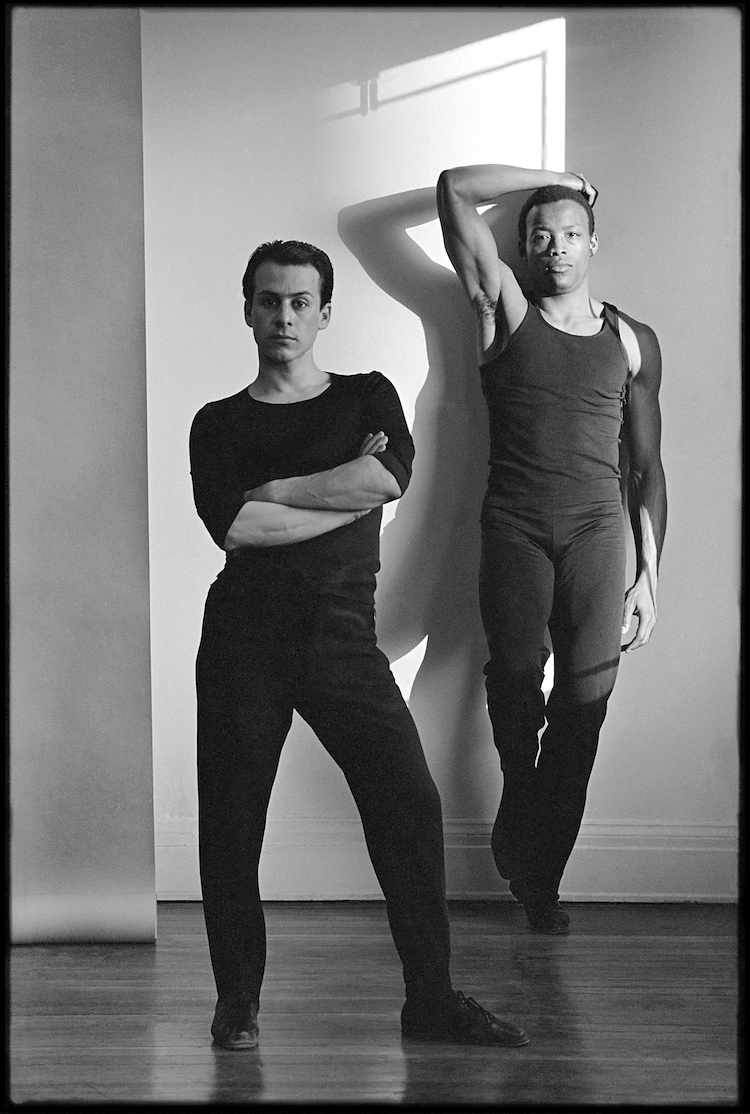
Lois Greenfield (American, b. 1949) 'Bill T. Jones and Arnie Zane' 1982


Lois Greenfield (American, b. 1949)
Bill T. Jones and Arnie Zane
1982
Modern print Courtesy Lois Greenfield Studio


Robert Mapplethorpe (American, 1946-1989) 'Studio Portrait (Bill T. Jones and Arnie Zane)' 1986


Robert Mapplethorpe (American, 1946-1989)
Studio Portrait (Bill T. Jones and Arnie Zane)
1986
Private Collection of Bill T. Jones


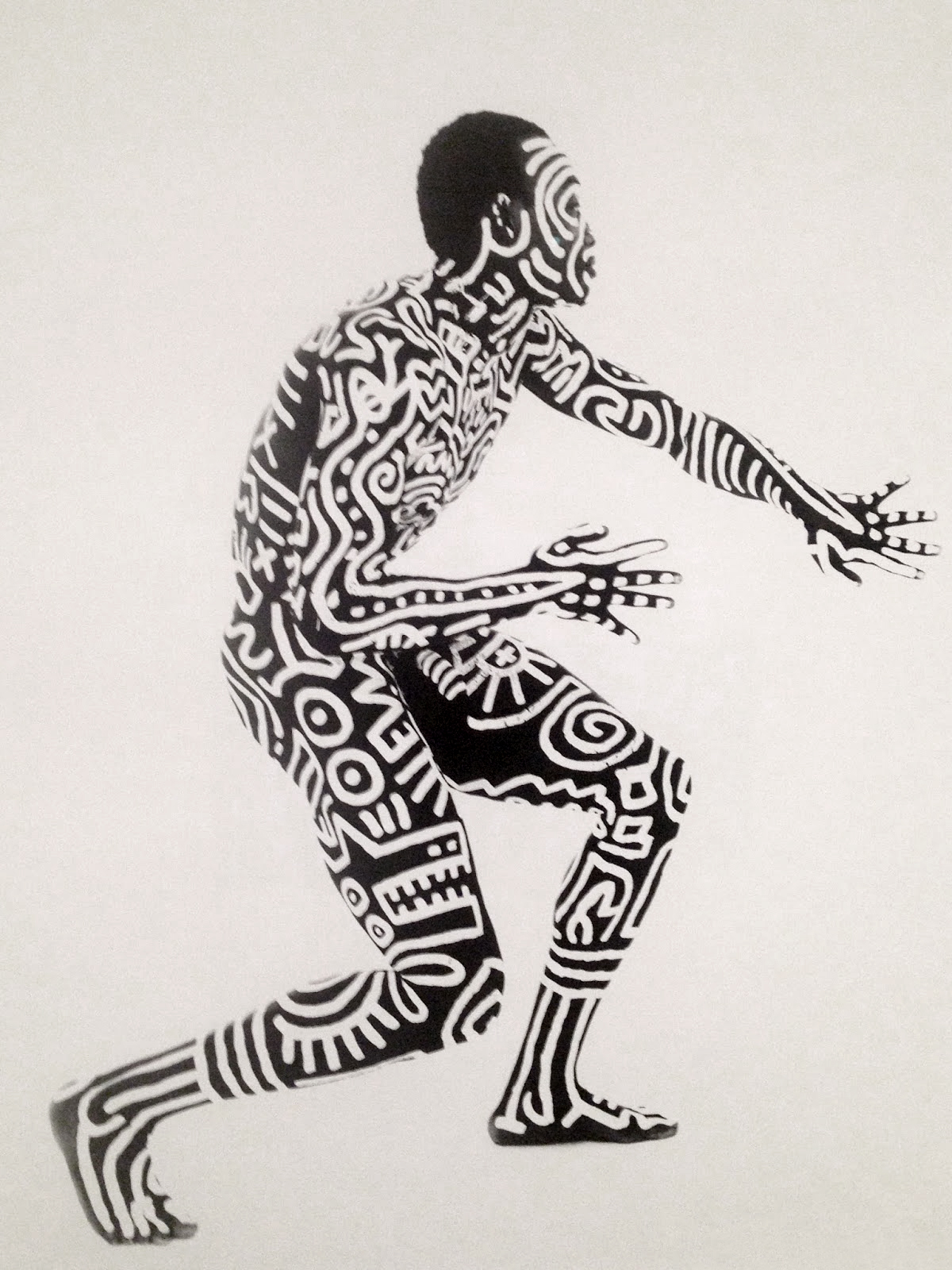
Tseng Kwong Chi (American born Hong Kong, 1950-1990) 'Bill T. Jones Body Painting with Keith Haring' 1983


Tseng Kwong Chi (American born Hong Kong, 1950-1990)
Bill T. Jones Body Painting with Keith Haring
1983
Silver gelatin selenium-toned print
© Muna Tseng Dance Projects, Inc., New York. Body Drawing on Bill T. Jones by Keith Haring
© 1983 Keith Haring Foundation


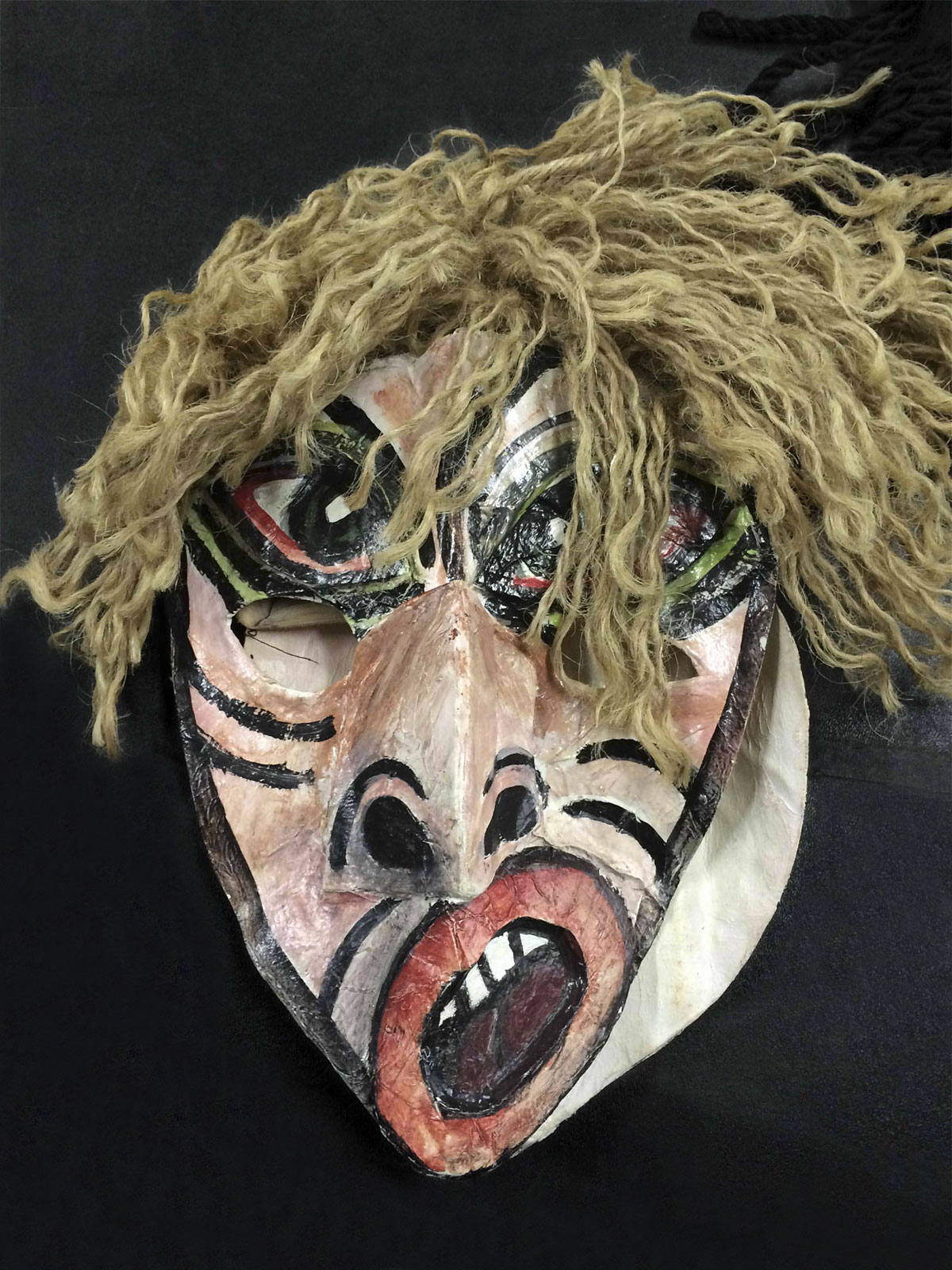
Huck Snyder (American, b. 1993) Small mask from 'Last Supper at Uncle Tom's Cabin' 1990


Huck Snyder (American, b. 1993)
Small mask from Last Supper at Uncle Tom’s Cabin
1990
Painted cardboard and fabric
New York Live Arts


Huck Snyder (American, b. 1993)

Huck Snyder was a visual artist and a designer of vivid stage settings for dancers and performance artists. He created sets and stage furniture that were surrealistic yet extremely simple and almost childlike at times. Imaginative and free in their execution and unmistakably his work, his sets often seemed inseparable from the vision of the performers with whom he worked. Huck had designed stage sets for the performance artist John Kelly beginning with sets for Diary of a Somnambulist in 1985…

Mr. Snyder also created sets for dances by Bill T. Jones and Bart Cook, and for theater pieces by Ishmael Houston-Jones. He conceived, directed and designed his own work “Circus,” a performance-art piece presented in 1987 at La Mama E.T.C. Mr. Snyder’s work has been displayed at the Lincoln Center for the Performing Arts, the Brooklyn Academy of Music and the Dance Theater Workshop in New York. His paintings and installations have been exhibited at galleries throughout the United States and in solo and group shows in Europe and Japan.

Anonymous text. “Huck Snyder,” on the Visual AIDS website Nd [Online] Cited 22/11/2021


Themes ~

Downtown


'Shazork! invitation, Danceteria' late 1980s


Downtown invitations
Shazork! invitation, Danceteria
Late 1980s
Museum of the City of New York, Gift of Carrie Goteiner and Miriam Montaug Ashkenazy in memory of Haoui Montaug


Peter Hujar (American, 1934-1987) 'Quentin Crisp' 1982


Peter Hujar (American, 1934-1987)
Quentin Crisp
1982
Vintage gelatin silver print
© The Peter Hujar Archive; Courtesy Pace/MacGill Gallery, New York and Fraenkel Gallery, San Francisco


Quentin Crisp (English, 1908-1999)

Quentin Crisp was born Denis Charles Pratt in Surrey, England, on December 25, 1908. A self-described flamboyant homosexual, Crisp changed his name in his early 20s as part of his process of reinvention. Teased mercilessly at school as a boy, Crisp left school in 1926. He studied journalism at King’s College London, but failed to graduate. He then moved on to take art classes at Regent Street Polytechnic. Crisp began visiting the cafés of Soho, London, and even worked as a prostitute for six months. Crisp was always true to himself and expressed himself by dying his long hair lavender, polishing his fingernails and toenails, and dressing in an often androgynous style. Despite the ridicule and violence often directed toward him, Crisp carried on. He tried to join the army with the outbreak of World War II, but was rejected by the medical board, who determined that he was suffering from sexual perversion. Instead, Crisp remained in London during the Blitz, entertaining American GIs, whose friendliness inculcated a love for Americans.

Crisp held a number of jobs, including engineer’s tracer, life model, and author. His most famous work, The Naked Civil Servant, detailed his life in a homophobic British society. When the book was adapted for television, Crisp began a new career as a performer and lecturer. He moved to Manhattan in 1981, when he was 72 years old; settling in a studio apartment in the Bowery. Upon meeting and spending time with Crisp, Sting was inspired to pen his hit song, “An Englishman in New York.”

Crisp continued to tour, write, and lecture; including instructions on how to live life with style and the importance of manners. Crisp landed a few roles on American television and the 1990s became his busiest decade as an actor. In 1992, Crisp took on the role of Elizabeth I in the film Orlando.

Quentin Crisp died in November 1999, just shy of his 91st birthday, while touring his one-man show.

Anonymous text. “Quentin Crisp,” on the Biography website Nd [Online] Cited 15/02/2017. No longer available online


Peter Hujar (American, 1934-1987) 'Susan Sontag' 1975, printed 2014


Peter Hujar (American, 1934-1987)
Susan Sontag
1975, printed 2014
Pigmented ink print
© The Peter Hujar Archive; Courtesy Pace/MacGill Gallery, New York and Fraenkel Gallery, San Francisco


Peter Hujar (American, 1934-1987)

Peter Hujar (born 1934) died of AIDS in 1987, leaving behind a complex and profound body of photographs. Hujar was a leading figure in the group of artists, musicians, writers, and performers at the forefront of the cultural scene in downtown New York in the 1970s and early 80s, and he was enormously admired for his completely uncompromising attitude towards work and life. He was a consummate technician, and his portraits of people, animals, and landscapes, with their exquisite black-and-white tonalities, were extremely influential. Highly emotional yet stripped of excess, Hujar’s photographs are always beautiful, although rarely in a conventional way. His extraordinary first book, Portraits in Life and Death, with an introduction by Susan Sontag, was published in 1976, but his “difficult” personality and refusal to pander to the marketplace insured that it was his last publication during his lifetime.

Anonymous text. “About Peter Hujar” on the Peter Hujar Archive website [Online] Cited 22/11/2021

Susan Sontag (American, 1933-2004)

Susan Sontag (January 16, 1933 – December 28, 2004) was an American writer, filmmaker, teacher, and political activist. She published her first major work, the essay “Notes on ‘Camp'”, in 1964. Her best-known works include On Photography, Against Interpretation, Styles of Radical Will, The Way We Live Now, Illness as Metaphor, Regarding the Pain of Others, The Volcano Lover, and In America.

Sontag was active in writing and speaking about, or travelling to, areas of conflict, including during the Vietnam War and the Siege of Sarajevo. She wrote extensively about photography, culture and media, AIDS and illness, human rights, and communism and leftist ideology. Although her essays and speeches sometimes drew controversy, she has been described as “one of the most influential critics of her generation.” …

It was through her essays that Sontag gained early fame and notoriety. Sontag wrote frequently about the intersection of high and low art and expanded the dichotomy concept of form and art in every medium. She elevated camp to the status of recognition with her widely read 1964 essay “Notes on ‘Camp’,” which accepted art as including common, absurd and burlesque themes.

In 1977, Sontag published the series of essays On Photography. These essays are an exploration of photographs as a collection of the world, mainly by travellers or tourists, and the way we experience it… She became a role-model for many feminists and aspiring female writers during the 1960s and 1970s.

Text from the Wikipedia website


Printing


Liza Cowan (American) (designer) 'DYKE, A Quarterly' c. 1974


Liza Cowan (American) (designer)
DYKE, A Quarterly
c. 1974
Flyer
Courtesy Liza Cowan and Penny House


'DYKE, A Quarterly Call for poster design flyer' 1976


DYKE, A Quarterly Call for poster design flyer
1976
Illustration by Liza Cowan Penny House


'Christopher Street' September 1977


Christopher Street
September 1977
Private collection


'Christopher Street' June 1978


Christopher Street
June 1978
Private collection


Edmund White (American, b. 1940) 'Nocturnes for the King of Naples' Paperback edition with cover art by Mel Odom, 1980


Edmund White (American, 1940-2025)
Nocturnes for the King of Naples
Paperback edition with cover art by Mel Odom, 1980 (originally published 1978)
Private collection


Edmund White (American, 1940-2025)

Edmund Valentine White III (1940-2025) is an American novelist, memoirist, playwright, biographer and an essayist on literary and social topics. Since 1999 he has been a professor at Princeton University. France made him Chevalier (and later Officier) de l’Ordre des Arts et des Lettres in 1993.

White’s books include The Joy of Gay Sex, written with Charles Silverstein (1977); his trilogy of semi-autobiographic novels, A Boy’s Own Story (1982), The Beautiful Room Is Empty (1988) and The Farewell Symphony (1997); and his biography of Jean Genet. Much of his writing is on the theme of same-sex love.

White has also written biographies of three French writers: Jean Genet, Marcel Proust and Arthur Rimbaud. He is the namesake of the Edmund White Award for Debut Fiction, awarded annually by Publishing Triangle.

Text from the Wikipedia website


'New York Magazine' June 20, 1994


New York Magazine
June 20, 1994
1994
Courtesy New York Magazine


Posing


Eva Weiss (American born Hong Kong, b. 1950) 'From left, Lois Weaver, Peggy Shaw, and Deb Margolin performing as Split Britches in 'Upwardly Mobile Home'' 1984


Eva Weiss (American born Hong Kong, b. 1950)
From left, Lois Weaver, Peggy Shaw, and Deb Margolin performing as Split Britches in ‘Upwardly Mobile Home’
1984
Contemporary archival print
Courtesy Eva Weiss Photography


Alice O'Malley (American, b. 1962) 'Melanie Hope, Clit Club' c. 1992


Alice O’Malley (American, b. 1962)
Melanie Hope, Clit Club
c. 1992
Vintage gelatin silver print
Alice O’Malley Photography


Tseng Kwong Chi (American born Hong Kong, 1950-1990) 'New York, NY (Statue of Liberty)' 1979


Tseng Kwong Chi (American born Hong Kong, 1950-1990)
New York, NY (Statue of Liberty)
1979
Gelatin silver print
Muna Tseng Dance Projects Inc.


Tseng Kwong Chi (American born Hong Kong, 1950-1990)

Tseng Kwong Chi, known as Joseph Tseng prior to his professional career (Chinese: 曾廣智; c. 1950 – March 10, 1990), was a Hong Kong-born American photographer who was active in the East Village art scene in the 1980s.

Tseng was part of an circle of artists in the 1980s New York art scene including Keith Haring, Kenny Scharf, and Cindy Sherman. Tseng’s most famous body of work is his self-portrait series, East Meets West, also called the “Expeditionary Series”. In the series, Tseng dressed in what he called his “Mao suit” and sunglasses (dubbed a “wickedly surrealistic persona” by the New York Times), and photographed himself situated, often emotionlessly, in front of iconic tourist sites. These included the Statue of Liberty, Cape Canaveral, Disney Land, Notre Dame de Paris, and the World Trade Center. Tseng also took tens of thousands of photographs of New York graffiti artist Keith Haring throughout the 1980s working on murals, installations and the subway. In 1984, his photographs were shown with Haring’s work at the opening of the Semaphore Gallery’s East Village location in a show titled “Art in Transit”. Tseng photographed the first Concorde landing at Kennedy International Airport, from the tarmac. According to his sister, Tseng drew artistic influence from Brassai and Cartier-Bresson.

Text from the Wikipedia website


Chantal Regnault (French-Haitian) 'From left, Whitney Elite, Ira Ebony, Stewart and Chris LaBeija, Ian and Jamal Adonis, Ronald Revlon, House of Jourdan Ball, New Jersey' 1989


Chantal Regnault (French-Haitian)
From left, Whitney Elite, Ira Ebony, Stewart and Chris LaBeija, Ian and Jamal Adonis, Ronald Revlon, House of Jourdan Ball, New Jersey
1989
Gelatin silver print
© Chantal Regnault


Museum of the City of New York
1220 Fifth Ave at 103rd St.,

Opening hours:
Open Daily 10am – 6pm

Museum of the City of New York website

LIKE ART BLART ON FACEBOOK

Back to top

Exhibition: ‘A World of Its Own: Photographic Practices in the Studio’ at the Museum of Modern Art (MoMA), New York Part 1

Exhibition dates: 8th February – 2nd November, 2014

The Edward Steichen Photography Galleries, third floor

Curators: Organised by Quentin Bajac, The Joel and Anne Ehrenkranz Chief Curator, with Lucy Gallun, Assistant Curator, Department of Photography


Bruce Nauman (American, b. 1941) 'Composite Photo of Two Messes on the Studio Floor' 1967 from the exhibition 'A World of Its Own: Photographic Practices in the Studio' at the Museum of Modern Art (MoMA), New York, February - November, 2014


Bruce Nauman (American, b. 1941)
Composite Photo of Two Messes on the Studio Floor 
1967
Gelatin silver print
40 1/2″ x 10′ 3″ (102.9 x 312.4cm)
Gift of Philip Johnson
Museum of Modern Art Collection


A bumper two part posting on this fascinating, multi-dimensional subject: photographic practices in the studio, which may be a stage, a laboratory, or a playground. The exhibition occupies all MoMA’s six photography galleries, each gallery with its own sub theme, namely, Surveying the Studio, The Studio as Stage, The Studio as Set, A Neutral Space, Virtual Spaces and The Studio, from Laboratory to Playground. See Part 2 of the posting.

The review of this exhibition “When a Form Is Given Its Room to Play” by Roberta Smith on the New York Times website (6th February 2014) damns with faint praise. The show is a “fabulous yet irritating survey” which “dazzles but often seems slow and repetitive.” Smith then goes on to list the usual suspects: “And so we get professional portraitists, commercial photographers, lovers of still life, darkroom experimenters, artists documenting performances and a few generations of postmodernists, dead and alive, known and not so, exploring the ways and means of the medium. This adds up to plenty to see: around 180 images from the 1850s to the present by some 90 photographers and artists. The usual suspects here range from Julia Margaret Cameron to Thomas Ruff, with Laszlo Moholy-Nagy, Lucas Samaras, John Divola and Barbara Kasten in between.” There are a few less familiar and postmodern artists thrown in for good measure, but all is “dominated by black-and-white images in an age when colour reigns.”

The reviewer then rightly notes the paucity of “postmodern photography of the 1980s, much of it made by women, that did a lot to reorient contemporary photo artists to the studio. It is a little startling for an exhibition that includes so many younger artists dealing with the artifice of the photograph (Ms. Belin, for example) to represent the Pictures Generation artists with only Cindy Sherman, James Casebere and (in collaboration with Allan McCollum) Laurie Simmons” before finishing on a positive note (I think!), noting that the curators “had aimed for a satisfying viewing experience, which, these days, is something to be grateful for.”


SOMETHING TO BE GRATEFUL FOR… OH, TO BE SO LUCKY IN AUSTRALIA!

Just to have the opportunity to view an exhibition of this quality, depth and breadth of concept would be an amazing thing. Even a third of the number of photographs (say 60 works) that address this subject at any one of the major institutions around Australia would be fantastic but, of that, there is not a hope in hell.

Think Marcus, think… when was the last major exhibition, I mean LARGE exhibition, at a public institution in Australia that actually addressed specific ISSUES and CONCEPTS in photography (such as this), not just putting on monocular exhibitions about an artists work or exhibitions about a regions photographs?

Ah, well… you know, I can’t really remember.

Perhaps the American Dreams exhibition at Bendigo Art Gallery, but that was a GENERAL exhibition about 20th century photography with no strong investigative conceptual theme and it was imported from George Eastman House.

Here in Australia, all we can do is look from afar, purchase the catalogue and wonder wistfully what the exhibition actually looks like and what we are missing out on. MoMA sent me just 10 images media images. I have spent hours scouring the Internet for other images to fill the void of knowledge and vision (and then cleaning those sometimes degraded images), so that those of us not privileged enough to be able to visit New York may gain a more comprehensive understanding of what this exhibition, and this multi-faceted dimension of photography, is all about.

It’s a pity that our venerable Australian institutions and the photography curators in them seem to have had a paucity of ideas when it comes to expounding interesting critiques of the medium over the last twenty years or so. What a missed opportunity.

Dr Marcus Bunyan


Many thankx to MoMA for allowing me to publish six of the photographs in the posting. The rest of the images were sourced from the Internet. Please click on the photographs for a larger version of the image.


Installation view of the exhibition 'A World of Its Own: Photographic Practices in the Studio' at the Museum of Modern Art (MoMA), New York


Installation view of the exhibition A World of Its Own: Photographic Practices in the Studio at the Museum of Modern Art (MoMA), New York, February – November, 2014


Installation view of the exhibition 'A World of Its Own: Photographic Practices in the Studio' at the Museum of Modern Art (MoMA), New York, February - November, 2014


Installation view of the exhibition A World of Its Own: Photographic Practices in the Studio at the Museum of Modern Art (MoMA), New York, February – November, 2014


Installation view of the exhibition 'A World of Its Own: Photographic Practices in the Studio' at the Museum of Modern Art (MoMA), New York, February - November, 2014 showing at right, Seydou Keïta's 'Untitled' 1959


Installation view of the exhibition A World of Its Own: Photographic Practices in the Studio at the Museum of Modern Art (MoMA), New York, February – November, 2014 showing at right, Seydou Keïta’s Untitled 1959


Installation view of the exhibition 'A World of Its Own: Photographic Practices in the Studio' at the Museum of Modern Art (MoMA), New York, February - November, 2014 showing at left and centre the work of Richard Avedon including 'Carl Hoefert, unemployed blackjack dealer, Reno, Nevada', from the series 'In the American West' August 30, 1983; and at right, the work of Peter Hujar including at second and third right, 'David Wojnarowicz' both 1981, and at right, 'Pascal (Paris)' 1980


Installation view of the exhibition A World of Its Own: Photographic Practices in the Studio at the Museum of Modern Art (MoMA), New York, February – November, 2014 showing at left and centre the work of Richard Avedon including Carl Hoefert, unemployed blackjack dealer, Reno, Nevada, from the series In the American West August 30, 1983; and at right, the work of Peter Hujar including at second and third right, David Wojnarowicz both 1981, and at right, Pascal (Paris) 1980


Installation view of the exhibition 'A World of Its Own: Photographic Practices in the Studio' at the Museum of Modern Art (MoMA), New York, February - November, 2014


Installation view of the exhibition A World of Its Own: Photographic Practices in the Studio at the Museum of Modern Art (MoMA), New York, February – November, 2014


Surveying the Studio


Uta Barth (American, b. 1958) 'Sundial (07.13)' 2007 from the exhibition 'A World of Its Own: Photographic Practices in the Studio' at the Museum of Modern Art (MoMA), New York, February - November, 2014


Uta Barth (American, b. 1958)
Sundial (07.13)
2007
Chromogenic colour prints
each 30 x 28 1/4″ (76.2 x 71.8cm)
The Photography Council Fund
Museum of Modern Art Collection


Geta Brâtescu (Romanian, 1926-2018) 'The Studio. Invocation of the Drawing' (L'Atelier. Invocarea desenului) 1979


Geta Brâtescu (Romanian, 1926-2018)
The Studio. Invocation of the Drawing (L’Atelier. Invocarea desenului)
1979
Gelatin silver prints with tempera on paper
33 1/16 x 27 9/16″ (84 x 70cm)
Modern Women’s Fund
Museum of Modern Art Collection


Geta Brătescu was a Romanian visual artist with works in drawing, collage, photography, performance, illustration and film. In 2008, Brătescu received an honorary doctorate from the Bucharest National University of Arts for “her outstanding contributions to the development of contemporary Romanian art”. Brătescu was artistic director of literature and art magazine Secolul 21. A major retrospective of her work was held at the National Museum of Art of Romania in December 1999. In 2015 Brătescu’s first UK solo exhibition was held at the Tate Liverpool. In 2017, she was selected to represent Romania at the 57th Venice Biennale.


Man Ray (American, 1890-1976) 'Laboratory of the Future' 1935


Man Ray (American, 1890-1976)
Laboratory of the Future
1935
Gelatin silver print
9 1/16 x 7″ (23.1 x 17.8cm)
Gift of James Johnson Sweeney
Museum of Modern Art Collection


Charles Sheeler (American, 1883-1965) 'Cactus and Photographer's Lamp, New York' 1931


Charles Sheeler (American, 1883-1965)
Cactus and Photographer’s Lamp, New York
1931
Gelatin silver print
9 1/2 x 6 5/8″ (23.5 x 16.6cm)
Gift of Samuel M. Kootz
Museum of Modern Art Collection


Bringing together photographs, films, videos, and works in other mediums, A World of Its Own: Photographic Practices in the Studio examines the ways in which photographers and artists using photography have worked and experimented within the four walls of the studio space, from photography’s inception to today. Featuring both new acquisitions and works from the Museum’s collection that have not been on view in recent years, A World of Its Own includes approximately 180 works, by approximately 90 artists, such as Berenice Abbott, Uta Barth, Zeke Berman, Karl Blossfeldt, Constantin Brancusi, Geta Brătescu, Harry Callahan, Robert Frank, Jan Groover, Barbara Kasten, Man Ray, Bruce Nauman, Paul Outerbridge, Irving Penn, Adrian Piper, Edward Steichen, William Wegman, and Edward Weston.

The exhibition considers the various roles played by the photographer’s studio as an autonomous space; depending on the time period, context, and the individual motivations (commercial, artistic, scientific) and sensibilities of the photographer, the studio may be a stage, a laboratory, or a playground. Organised thematically, the display unfolds in multiple chapters. Throughout the 20th century, artists have explored their studio spaces using photography, from the use of composed theatrical tableaux (in photographs by Julia Margaret Cameron or Cindy Sherman) to neutral, blank backdrops (Richard Avedon, Robert Mapplethorpe); from the construction of architectural sets within the studio space (Francis Bruguière, Thomas Demand) to chemical procedures conducted within the darkroom (Walead Beshty, Christian Marclay); and from precise recordings of time and motion (Eadweard Muybridge, Dr. Harold E. Edgerton) to amateurish or playful experimentation (Roman Signer, Peter Fischli / David Weiss). A World of Its Own offers another history of photography, a photography created within the walls of the studio, and yet as groundbreaking and inventive as its seemingly more extroverted counterpart, street photography.”

Text from the MoMA website


The exhibition is divided into 6 themes each with its own gallery space:

1/ Surveying the Studio
2/ The Studio as Stage
3/ The Studio as Set
4/ A Neutral Space
5/ Virtual Spaces
6/ The Studio, from Laboratory to Playground


The Studio as Stage


Unidentified photographer (French?) 'Untitled' c. 1855


Unidentified photographer (French?)
Untitled
c. 1855
Albumen silver print from a wet-collodion glass negative
9 3/16 × 6 1/8″ (23.4 × 15.5cm)
Gift of Paul F. Walter
Museum of Modern Art Collection


Cecil Beaton (British, 1904-1980) 'Edith Sitwell' 1927


Cecil Beaton (British, 1904-1980)
Edith Sitwell
1927
Gelatin silver print
11 1/2 × 9 5/8″ (29.3 × 24.5 cm)
Gift of Paul F. Walter
Museum of Modern Art Collection
© 2022 Estate of Cecil Beaton


George Platt Lynes (American, 1907-1955) 'Untitled' 1941


George Platt Lynes (American, 1907-1955)
Untitled
1941
Gelatin silver print
7 5/8 x 9 5/8″ (19.2 x 24.4cm)
Anonymous gift
Museum of Modern Art Collection


Lucas Samaras (American, 1936-2024) 'Auto Polaroid' 1969-1971


Lucas Samaras (American born Greece, 1936-2024)
Auto Polaroid
1969-1971
Eighteen black-and-white instant prints (Polapan), with hand-applied ink
Each 3 3/4 x 2 15/16″ (9.5 x 7.4cm)
Overall 14 5/8 x 24″ (37.2 x 61cm)
Gift of Robert and Gayle Greenhill
Museum of Modern Art Collection


Working in the digital realm long before it was associated with fine art, Samaras pioneered radical new modes of image making throughout his storied career, pushing and redefining the boundaries of portraiture and self-portraiture over the course of seven decades. Centering on the body and the psyche, Samaras’s autobiographical work across photography, painting, installation, assemblage, drawing, textile, and sculpture often meditates on the malleable, shapeshifting nature of selfhood. “I like remaking myself in photography,” the artist once said. …

In the late 1960s, Samaras began working with a Polaroid 360 camera, creating his iconic Auto Polaroids by altering hundreds of images, mostly self-portraits, with applications of ink by his own hand. In 1973, using a Polaroid SX-70, he took this collagist approach further by manipulating the wet emulsion of the film with a stylus or his fingertip before the chemicals set. The resulting distortions in his Photo-Transformations series took on abstract, otherworldly effects, which he would continue exploring amid the rise of other image making technologies in the following decades.

Anonymous. “Remembering Lucas Samaras,” on the Pace Gallery website Mar 7, 2024 [Online] Cited 06/06/2024


Lucas Samaras (American, 1936-2024) 'Auto Polaroid' 1969-1971 (detail)

Lucas Samaras (American, 1936-2024) 'Auto Polaroid' 1969-1971 (detail)

Lucas Samaras (American, 1936-2024) 'Auto Polaroid' 1969-1971 (detail)


Lucas Samaras (American, 1936-2024)
Auto Polaroid (details)
1969-1971
Eighteen black-and-white instant prints (Polapan), with hand-applied ink
Each 3 3/4 x 2 15/16″ (9.5 x 7.4cm)
Overall 14 5/8 x 24″ (37.2 x 61cm)
Gift of Robert and Gayle Greenhill
Museum of Modern Art Collection


Julia Margaret Cameron (British, 1815-1879) 'Madonna with Children' 1864


Julia Margaret Cameron (British, 1815-1879)
Madonna with Children
1864
Albumen silver print
10 1/2 x 8 5/8″ (26.7 x 21.9cm)
Gift of Shirley C. Burden
Museum of Modern Art Collection


Julia Margaret Cameron (British, 1815-1879) 'Untitled (Mary Ryan?)' c. 1867


Julia Margaret Cameron (British, 1815-1879)
Untitled (Mary Ryan?)
c. 1867
Albumen silver print
13 3/16 x 11″ (33.5 x 27.9cm)
Gift of Shirley C. Burden
Museum of Modern Art Collection


Nadar (Gaspard-Félix Tournachon) (French, 1820-1910) Adrien Tournachon (French, 1825-1903) 'Pierrot Surprised' 1854-1855


Nadar (Gaspard-Félix Tournachon) (French, 1820-1910)
Adrien Tournachon (French, 1825-1903)
Pierrot Surprised
1854-1855
Albumen silver print
11 1/4 x 8 3/16″ (28.6 x 20.8cm)
Suzanne Winsberg Collection. Gift of Suzanne Winsberg
Museum of Modern Art Collection


Maurice Tabard (French, 1897-1984) 'Untitled' 1929


Maurice Tabard (French, 1897-1984)
Untitled
1929
Gelatin silver print
6 9/16 x 6 1/2″ (16.7 x 16.5cm)
Gift of Robert Shapazian
Museum of Modern Art Collection


Edward Steichen (American born Luxembourg, 1879-1973) 'Anna May Wong' 1930


Edward Steichen (American born Luxembourg, 1879-1973)
Anna May Wong
1930
Gelatin silver print
16 9/16 x 13 7/16″ (42.1 x 34.1cm)
Gift of the artist
Museum of Modern Art Collection


“Taking people away from their natural circumstances and putting them into the studio in front of a camera did not simply isolate them, it transformed them. Sometimes the change was subtle; sometimes it was great enough to be almost shocking. But always there was transformation.”

~ Irving Penn 1974


Cindy Sherman (American, b. 1954) 'Untitled #131' 1983


Cindy Sherman (American, b. 1954)
Untitled #131
1983
Chromogenic colour print
35 x 16 1/2″ (89 x 41.9cm)
Joel and Anne Ehrenkranz Fund
Museum of Modern Art Collection


The Studio as Set


Barbara Kasten (American, b. 1936) 'Construct I-F' 1979


Barbara Kasten (American, b. 1936)
Construct I-F
1979
Colour instant print (Polaroid Polacolor)
9 1/2 x 7 1/2″ (24.0 x 19.0cm)
Acquired through the generosity of Wendy Larsen
Museum of Modern Art Collection


Barbara Kasten (American, b. 1936) 'Construct NYC 17' 1984


Barbara Kasten (American, b. 1936)
Construct NYC 17
1984
Silver dye bleach print
29 3/8 x 37 1/16″ (74.7 x 94.1cm)
Gift of Foster Goldstrom
Museum of Modern Art Collection


James Casebere (American, b. 1953) 'Subdivision with Spotlight' 1982


James Casebere (American, b. 1953)
Subdivision with Spotlight
1982
Gelatin silver print
14 13/16 x 18 15/16″ (37.6 x 48.1cm)
Purchase
Museum of Modern Art Collection


Francis Bruguière (American, 1879-1945) 'Light Abstraction' c. 1925


Francis Bruguière (American, 1879-1945)
Light Abstraction
c. 1925
Gelatin silver print
9 15/16 x 7 15/16″ (25.2 x 20.2cm)
Gift of Arnold Newman
Museum of Modern Art Collection


Francis Joseph Bruguière (15 October 1879 – 8 May 1945) was an American photographer.

Francis Bruguière was born in San Francisco, California, to Emile Antoine Bruguière (1849-1900) and Josephine Frederikke (Sather) Bruguière (1845-1915). He was the youngest of four sons born into a wealthy banking family and was privately educated. His brothers were painter and physician Peder Sather Bruguière (1874-1967), Emile Antoine Bruguiere Jr. (1877-1935), and Louis Sather Bruguière (1882-1954), who married wealthy heiress Margaret Post Van Alen. He was also a grandson of banker Peder Sather. His mother died in the 1915 sinking of the British ocean liner SS Arabic by a German submarine.

In 1905, having studied painting in Europe, Bruguière became acquainted with photographer and modern art promoter Alfred Stieglitz (who accepted him as a Fellow of the Photo-secession), and set up a studio in San Francisco, recording in a Pictorialist style images of the city after the earthquake and fire; some of them were reproduced in a book called San Francisco in 1918. He co-curated the photographic exhibition at the 1915 Panama-California Exposition in San Diego, and nine of his photographs were included in The Evanescent City (1916) by George Sterling.

In 1918, following the decline of the family fortune, he moved to New York City where he made his living by photographing for Vanity Fair, Vogue, and Harper’s Bazaar. Soon he was appointed the official photographer of the New York Theatre Guild. In this role he photographed the British stage actress Rosalinde Fuller, who was debuting in What’s in a Name? (1920), and she partnered him for the rest of his life.

Throughout his life, Bruguière experimented with multiple-exposure, solarization (years ahead of Man Ray), original processes, abstracts, photograms, and the response of commercially available film to light of various wavelengths. Until his one-man show at the Art Centre of New York in 1927, he showed this work only to friends. In the mid-1920s, he planned to make a film called The Way, depicting stages in a man’s life, to be played by Sebastian Droste with Rosalinde doing all the female parts. To obtain funding, Bruguière took photographs of projected scenes, but Droste died before filming started; so we are left with only the still pictures.

In 1927 they moved to London, where Bruguière co-created the first British abstract film, Light Rhythms, with Oswell Blakeston. Long thought to have been lost, it has now been recovered. During World War II, he returned to painting.

Text from the Wikipedia website


Jaromír Funke (Czech, 1896-1945) 'Composition' c. 1925


Jaromír Funke (Czech, 1896-1945)
Composition
c. 1925
Gelatin silver print
9 1/4 × 11 9/16″ (23.4 × 29.3cm)
Acquired through the generosity of Blanchette Hooker Rockefeller
Museum of Modern Art Collection
© 2022 Miloslava Rupešová


Jaromír Funke (1 August 1896 – 22 March 1945) was a leading Czech photographer during the 1920s and 1930s.

Funke was recognised for his “photographic games” using mirrors, lights, and insignificant objects, such as plates, bottles, or glasses, to create unique works. In his still life imagery he created abstracts of forms and shadows reminiscent of photograms. His work was regarded as logical, original and expressive in nature. A typical feature of Funke’s work would be the “dynamic diagonal.”

Text from the Wikipedia website


Paul Outerbridge (American, 1896-1958) 'Images de Deauville' 1936


Paul Outerbridge (American, 1896-1958)
Images de Deauville
1936
Tri-colour carbro print
15 3/4 x 12 1/4″ (40 x 31.1cm)
Gift of Mrs. Ralph Seward Allen
Museum of Modern Art Collection


Shozo Kitadai, Kiyoji Otsuji. 'Untitled' from the portfolio 'APN (Asahi Picture News)' 1953-1954


Shozo Kitadai, Kiyoji Otsuji
Untitled from the portfolio APN (Asahi Picture News)
1953-1954
Gelatin silver print, printed 2003
7 1/2 × 5 9/16″ (19 × 14.2cm)
Gift of Shigeru Yokota
Museum of Modern Art Collection
© 2022 Seiko Otsuji


Irving Penn (American, 1917-2009) 'Three Steel Blocks, New York' 1980


Irving Penn (American, 1917-2009)
Three Steel Blocks, New York
1980
Platinum/palladium print
13 1/4 × 20 11/16″ (33.6 × 52.5cm)
Acquired through the generosity of Lily Auchincloss
Museum of Modern Art Collection
© The Irving Penn Foundation


Elad Lassry (Israeli, b. 1977) 'Nailpolish' 2009


Elad Lassry (Israeli, b. 1977)
Nailpolish
2009
Chromogenic colour print
14 1/2 x 11 1/2″ (36.8 x 29.2cm)
Fund for the Twenty-First Century
Museum of Modern Art Collection


The Museum of Modern Art
11 West 53 Street
New York, NY 10019
Phone: (212) 708-9400

Opening hours:
10.30am – 5.30pm
Open seven days a week

MoMA website

LIKE ART BLART ON FACEBOOK

Back to top

Exhibition: ‘Edward Steichen In High Fashion: The Conde Nast Years, 1923 – 1937’ at the International Centre of Photography, New York

Exhibition dates: 16th January – 3rd May, 2009


Edward Steichen (American, 1879-1973) 'Gloria Swanson' 1924 'Edward Steichen In High Fashion: The Conde Nast Years, 1923 - 1937' at the International Centre of Photography, New York, Jan - May, 2009


Edward Steichen (American, 1879-1973)
Gloria Swanson (Vanity Fair, February 1, 1924)
1924
Gelatin silver print
The Sylvio Perlstein Collection Courtesy of Condé Nast Archive, Condé Nast Publications, Inc, New York/ Paul Hawryluk, Dawn Lucas and Rachael Smalley


As part of the International Center of Photography’s 2009 Year of Fashion, the museum will host a retrospective of Edward Steichen’s fashion and celebrity portraiture. Edward Steichen: In High Fashion, The Condé Nast Years, 1923-1937, will be on view at ICP (1133 Avenue of the Americas at 43rd Street) from January 16 through May 3, 2009. It will feature 175 vintage photographs, drawn mainly from the extensive archive of original prints at Condé Nast, along with a selection of important prints from the collection of the George Eastman House Museum. This will be the first exhibition in which the full range of his fashion photography and celebrity portraiture will be shown, including many images that have never been exhibited before. Having previously traveled throughout Europe, the exhibition will be presented on its North American tour in this version only at ICP.

Edward Steichen (1879-1973) was already a famed Pictorialist photographer and painter in the United States and abroad when he was offered the position of chief photographer for Vogue and Vanity Fair by Condé Nast. Upon assuming the job, the forty-four year old artist began one of the most lucrative and controversial careers in photography. To Alfred Stieglitz and his followers, Steichen was seen as damaging the cause of photography as a fine art by agreeing to do commercial editorial work. Nevertheless, Steichen’s years at Condé Nast magazines were extraordinarily prolific and inspired. He began by applying the soft focus style he had helped create to the photography of fashion. But soon he revolutionised the field, banishing the gauzy light of the Pictorialist era and replacing it with the clean, crisp lines of Modernism. In the process he changed the presentation of the fashionable woman from that of a distant, romantic creature to that of a much more direct, appealing, independent figure. At the same time he created lasting portraits of hundreds of leading personalities in movies, theatre, literature, politics, music, and sports, including Gloria Swanson, Gary Cooper, Marlene Dietrich, Joan Crawford, Colette, Winston Churchill, Amelia Earhart, Jack Dempsey, Noel Coward, Greta Garbo, Dorothy Parker, and Cecil B. De Mille.

From the ArtDaily.org website


Many thankx to the International Center of Photography for allowing me to publish the photographs in the posting. Please click on the photographs for a larger version of the image.


Edward Steichen (American, 1879-1973) 'On George Baher's yacht' 1928 Edward Steichen (American, 1879-1973) 'Gloria Swanson' 1924 'Edward Steichen In High Fashion: The Conde Nast Years, 1923 - 1937' at the International Centre of Photography, New York, Jan - May, 2009


Edward Steichen (American, 1879-1973)
On George Baher’s yacht
1928
Gelatin silver print
Courtesy Condé Nast Archive


Edward Steichen (American, 1879-1973) 'Gary Cooper' 1930


Edward Steichen (American, 1879-1973)
Gary Cooper
1930
Gelatin silver print
Courtesy Condé Nast Archive


Edward Steichen (American, 1879-1973) 'Joan Crawford' 1932


Edward Steichen (American, 1879-1973)
Joan Crawford
1932
Gelatin silver print
© 1932 Condé Nast


Edward Steichen (American, 1879-1973) 'Princess Nathalie Paley wearing sandals by Shoecraft' 1934


Edward Steichen (American, 1879-1973)
Princess Nathalie Paley wearing sandals by Shoecraft
1934
Gelatin silver print
© 1934 Condé Nast


Princess Natalia Pavlovna Paley (Russian: Наталья Павловна Палей; 5 December 1905 – 27 December 1981) was a Russian aristocrat who was a non-dynastic member of the Romanov family. A daughter of Grand Duke Paul Alexandrovich of Russia, she was a first cousin of the last Russian emperor, Nicholas II. After the Russian Revolution, she emigrated first to France and later to the United States. She became a fashion model, socialite, vendeuse, and briefly pursued a career as a film actress.

Text from the Wikipedia website


Edward Steichen (American, 1879-1973) 'Sinclair Lewis' 1932


Edward Steichen (American, 1879-1973)
Sinclair Lewis
1932
Gelatin silver print
© 1932 Condé Nast


Harry Sinclair Lewis (February 7, 1885 – January 10, 1951) was an American novelist, short-story writer, and playwright. In 1930, he became the first author from the United States (and the first from the Americas) to receive the Nobel Prize in Literature, which was awarded “for his vigorous and graphic art of description and his ability to create, with wit and humour, new types of characters.” Lewis wrote six popular novels: Main Street (1920), Babbitt (1922), Arrowsmith (1925), Elmer Gantry (1927), Dodsworth(1929), and It Can’t Happen Here (1935).

Several of his notable works were critical of American capitalism and materialism during the interwar period. Lewis is respected for his strong characterisations of modern working women.

Text from the Wikipedia website


Edward Steichen (American, 1879-1973) 'Patricia Bowman' 1932


Edward Steichen (American, 1879-1973)
Patricia Bowman
1932
Gelatin silver print
© 1932 Condé Nast

Patricia Bowman (December 12, 1908 – March 18, 1999) was an American ballerina, ballroom dancer, musical theatre actress, television personality, and dance teacher.

Dance critic Jack Anderson described her as “the first American ballerina to win critical acclaim and wide popularity as a classical and a musical-theater dancer … Her sparkling stage personality won her many fans.” She was the first prima ballerina of the Radio City Music Hall when it opened in 1932, and is chiefly remembered for her work as a founding member of the American Ballet Theatre with whom she was a principal dancer from 1939 to 1941.

Text from the Wikipedia website


An exhibition of 175 works by Edward Steichen drawn largely from the Condé Nast archives, this is the first presentation to give serious consideration to the full range of Steichen’s fashion images. Organised by the Musée de l’Elysée, Lausanne, and the Foundation for the Exhibition of Photography, Minneapolis, in conjunction with the International Center of Photography, the exhibition will open at ICP after an extensive tour in Europe. Steichen’s approach to fashion photography was formative and over the course of his career he changed public perceptions of the American woman. An architect of American Modernism and a Pictorialist, Steichen exhibited his fashion images alongside his art photographs. Steichen’s crisp, detailed, high-key style revolutionised fashion photography, and his influence is felt in the field to this day – Richard Avedon, Robert Mapplethorpe, and Bruce Weber are among his stylistic successors.

Text from the International Centre of Photography website


Edward Steichen (American, 1879-1973) 'Evening shoes by Vida Moore' 1927


Edward Steichen (American, 1879-1973)
Evening shoes by Vida Moore
1927
Gelatin silver print
© 1927 Condé Nast


Edward Steichen (American, 1879-1973) 'Model posing for Beauty Primer on hand and nail care' 1934


Edward Steichen (American, 1879-1973)
Model posing for Beauty Primer on hand and nail care
1934
Gelatin silver print
© 1934 Condé Nast


Edward Steichen (American, 1879-1973) 'Anna May Wong' 1930


Edward Steichen (American, 1879-1973)
Anna May Wong
1930
Gelatin silver print
© 1930 Condé Nast


Wong Liu Tsong (January 3, 1905 – February 3, 1961), known professionally as Anna May Wong, was an American actress, considered the first Chinese American film star in Hollywood, as well as the first Chinese American actress to gain international recognition. Her varied career spanned silent film, sound film, television, stage, and radio.

Text from the Wikipedia website


Edward Steichen (American, 1879-1973) 'Sylvia Sidney' 1929


Edward Steichen (American, 1879-1973)
Sylvia Sidney
1929
Gelatin silver print
© 1929 Condé Nast


Sylvia Sidney (born Sophia Kosow; August 8, 1910 – July 1, 1999) was an American stage, screen, and film actress whose career spanned 70 years. She rose to prominence in dozens of leading roles in the 1930s. She was nominated for the Academy Award for Best Supporting Actress for her performance in Summer Wishes, Winter Dreams in 1973. She later gained attention for her role as Juno, a case worker in the afterlife, in Tim Burton’s 1988 film Beetlejuice, for which she won a Saturn Award for Best Supporting Actress.

Text from the Wikipedia website


Edward Steichen (American, 1879-1973) 'Pola Negri' 1925


Edward Steichen (American, 1879-1973)
Pola Negri
1925
Gelatin silver print
© 1925 Condé Nast


Pola Negri (/ˈpoʊlə ˈnɛɡri/; born Barbara Apolonia Chałupiec [apɔˈlɔɲa xaˈwupʲɛt͡s]; 3 January 1897 – 1 August 1987) was a Polish stage and film actress and singer. She achieved worldwide fame during the silent and golden eras of Hollywood and European film for her tragedienne and femme fatale roles. She was also acknowledged as a sex symbol of her time.

Text from the Wikipedia website


Edward Steichen (American, 1879-1973) 'Loretta Young' 1931


Edward Steichen (American, 1879-1973)
Loretta Young
1931
Gelatin silver print
© 1931 Condé Nast


Loretta Young (born Gretchen Michaela Young; January 6, 1913 – August 12, 2000) was an American actress. Starting as a child, she had a long and varied career in film from 1917 to 1989. She received numerous honors including an Academy Award, two Golden Globe Awards, and three Primetime Emmy Awards as well as two stars on the Hollywood Walk of Fame for her work in film and television.

Text from the Wikipedia website


Edward Steichen (American, 1879-1973) 'Mary Heberden' 1935


Edward Steichen (American, 1879-1973)
Mary Heberden
1935
Gelatin silver print
© 1935 Condé Nast


Edward Steichen (American, 1879-1973) 'Mary Heberden' 1935 'Katharine Hepburn wearing a coat by Clare Potter' 1933


Edward Steichen (American, 1879-1973)
Katharine Hepburn wearing a coat by Clare Potter
1933
Gelatin silver print
Courtesy Condé Nast Archive


International Centre of Photography website

LIKE ART BLART ON FACEBOOK

Back to top