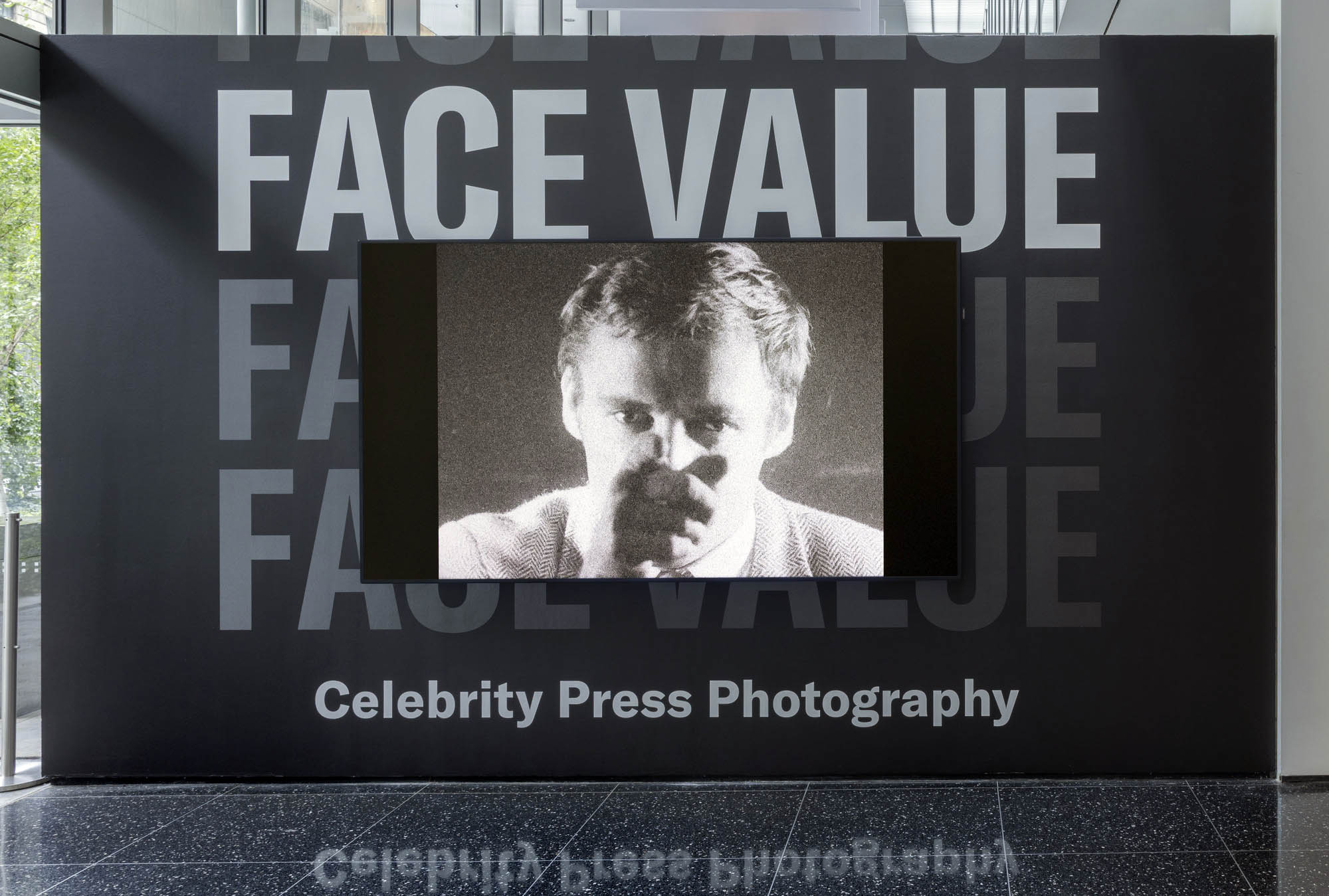
Exhibition: ‘Face Value: Celebrity Press Photography’ at The Museum of Modern Art (MoMA), New York

Exhibition dates: 28th June, 2025 – 21st June, 2026

Curators: Ron Magliozzi, Curator, with Katie Trainor, Film Collections Manager and Cara Shatzman, Collection Specialist, Department of Film.
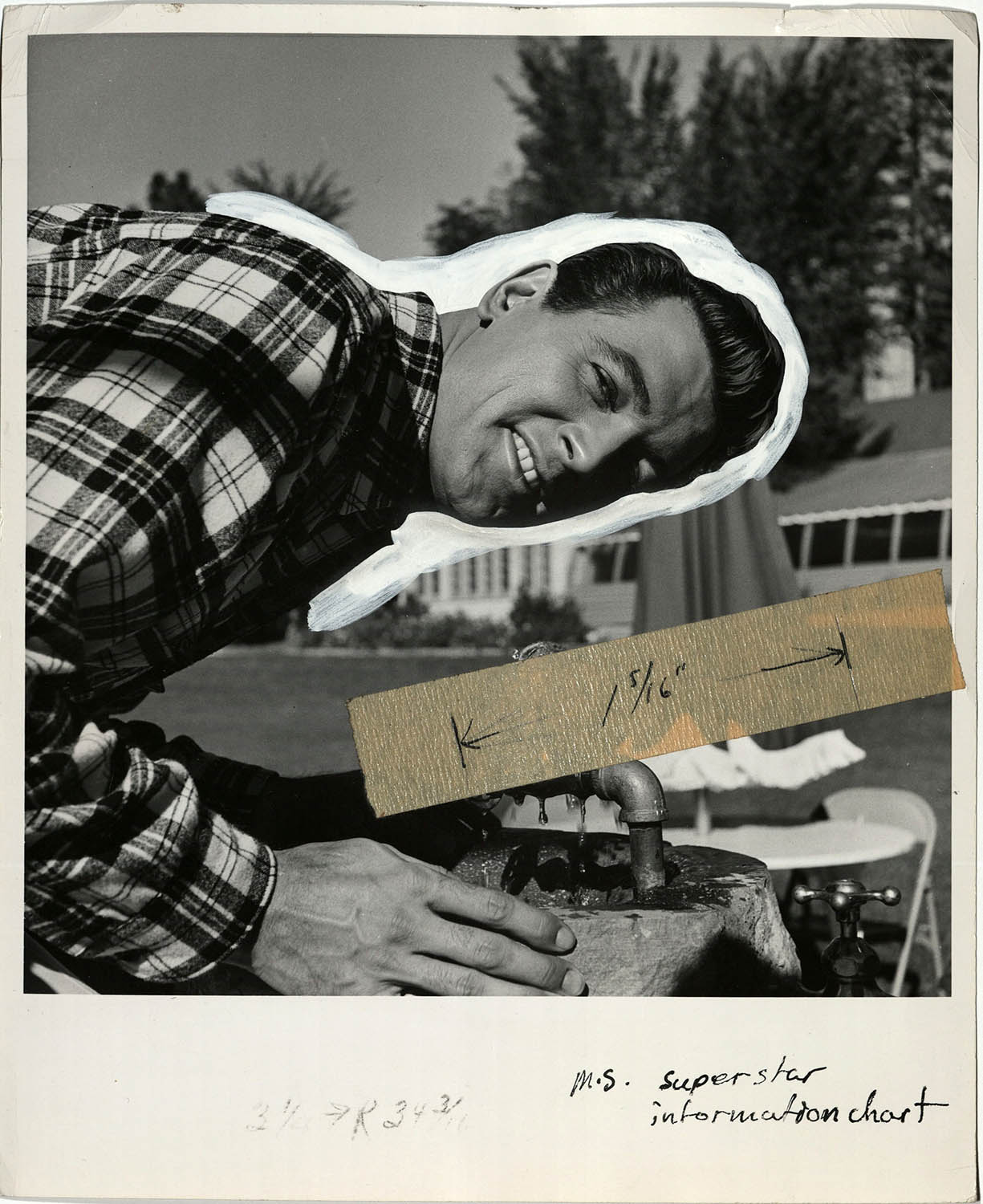
 

Bob Beerman (American) 'Rock Hudson' c. 1953


Bob Beerman (American)
Rock Hudson
c. 1953
Sheet: 9 15/16 x 8″ (25.2 x 20.3cm)
The Museum of Modern Art Film Stills Collection


Silhouetting the celebrity

MoMA always puts on interesting photography exhibitions and this one is no exception. Of course, they have a huge collection to draw from, but it still takes intelligence and curatorial inspiration to bring it all together.

It took me a long time to compile the posting. There were not many media images available but with a bit of digging around on the MoMA collection web pages, and searching online, I managed to find enough photographs to illustrate the exhibition / plus the installation photographs / and the addition of movie posters and magazines to illuminate the films the still photographs were taken from (please note: not in the exhibition). While many of the publicity shots were taken by unknown stills photographers, I have also added bibliographic information for the known photographers where possible.

This would be my only criticism of the exhibition: the inability of the viewer to visualise how these “covered with masking tape, marked up with crayon, or reconfigured with ghostly halos of white-out” photographs were actually used (in the press in everyday life) to create the fantasy ideals of Hollywood glamour stars. Perhaps this was a deliberate curatorial strategy, to concentrate on the pre-production rather than the post-production, to concentrate just on the still photos, without the distraction of further stimuli. And I can understand that decision.

In this posting I can show you three examples of how these still photographs were used: the untouched photograph Jean Simmons, Rock Hudson [in “This Earth is Mine”] by an unknown photographer (1959, below) has then been colourised and used on the front cover of the DVD release of this film; the Limehouse Blues movie poster (1934, below) features a white-out around George Raft’s head, similar to the white-out around Joan Crawford or Rock Hudson (above); and the hair of Elsa Manchester in Elsa Lanchester [in “The Bride of Frankenstein”] by an unknown photographer (1935, below) is graphically stylised and coloured in the The Bride of Frankenstein movie poster (1935, below).

Silhouetting, in-painting, masking, sectioning, and collage were all hands-on practices that readied the photographs for the press whilst in press they promoted the desirous ideal of the glamorous movie starlet, heroic action man, the fantasy ready and available for consumption by the reading public: the beautiful heroine available to the male gaze, aspirational for so many young women.

Dr Marcus Bunyan


Many thankx to MoMA for allowing me to publish the photographs in the posting. Please click on the photographs for a larger version of the image.


“Though Iris Barry, who in 1935 became the founding curator of The Museum of Modern Art’s Film Library, aimed to preserve the history of moving images as an art form, she didn’t stop at moving images. “She was trying to save the record of film history,” explains Ron Magliozzi, a curator in what is today known as the Department of Film. “When the department was founded, the silent period had just ended. And its whole history was considered irrelevant and of no interest. That’s why she was so aggressive in collecting it. Films were the most important thing, and images from film history were second.”

Today, the Museum’s Film Stills Collection includes well over a million publicity photos, production stills, and more – and it’s not all pristine, glossy prints. In the current exhibition Face Value: Celebrity Press Photography, many of the images are covered with masking tape, marked up with crayon, or reconfigured with ghostly halos of white-out. It’s an occasionally startling reminder that the manipulation of photographs – and of celebrity itself – long predates Photoshop and Instagram.”


Jason Persse, Assistant Director, Content Team, MoMA


The Museum of Modern Art announces Face Value: Celebrity Press Photography, the first major exhibition of Hollywood studio portraiture to be drawn from the Museum’s film stills archive since 1993. On view in the Titus and Morita Galleries, the exhibition will offer a revisionist look at the Department of Film’s photographic archive, examining the evolution of editorial practice before the digital age, AI technology, and social media reshaped the experience of celebrity.

Face Value will feature over 200 works from 1921 to 1996, including studio photography of Louis Armstrong, Harry Belafonte, Clara Bow, Louise Brooks, Bette Davis, Mia Farrow, Katharine Hepburn, Dennis Hopper, Lena Horne, Bela Lugosi, Carmen Miranda, Elvis Presley, Diana Ross, Barbara Stanwyck, Elizabeth Taylor, Spencer Tracy, Oprah Winfrey, and many others.

Text from the MoMA website
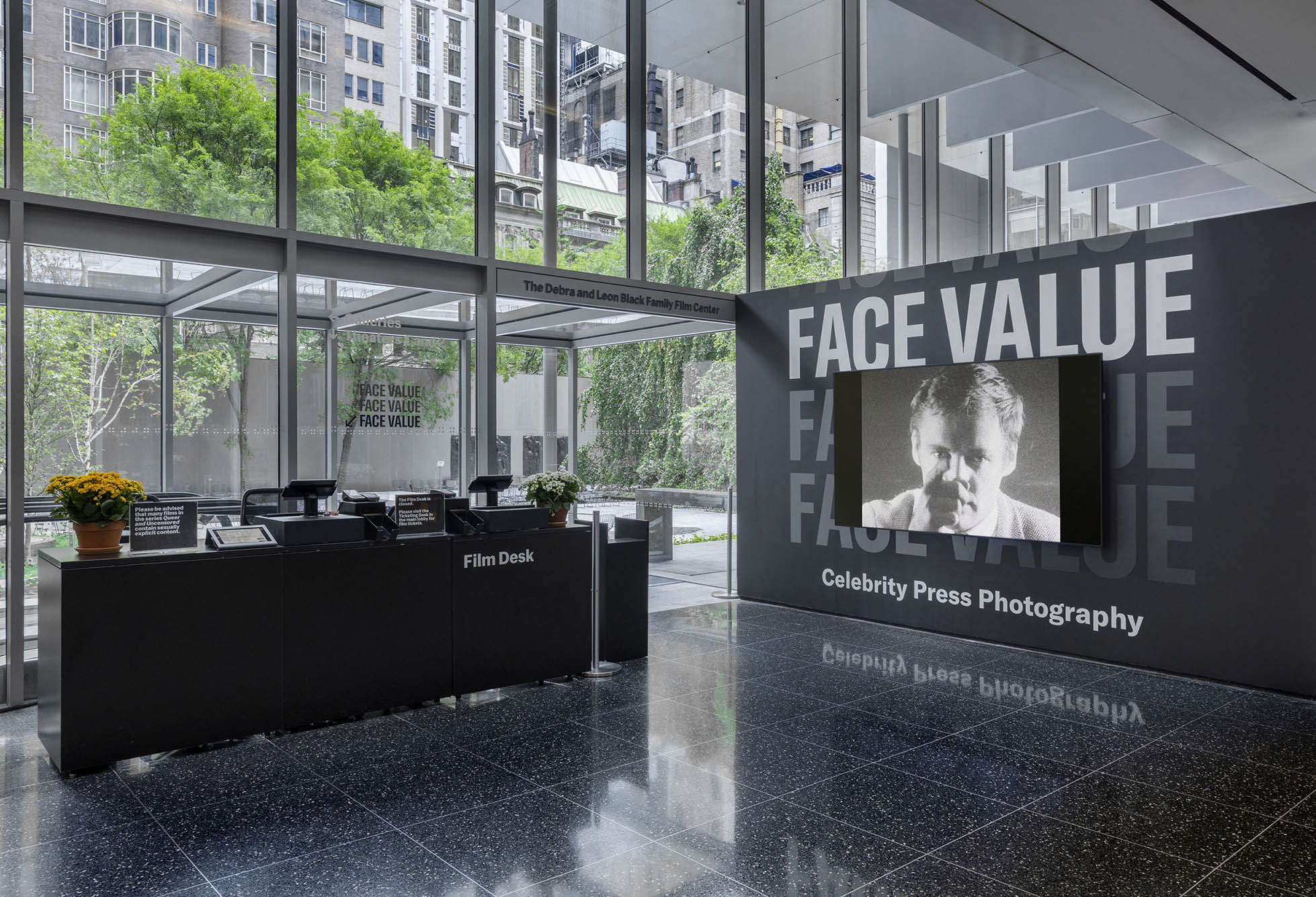
 

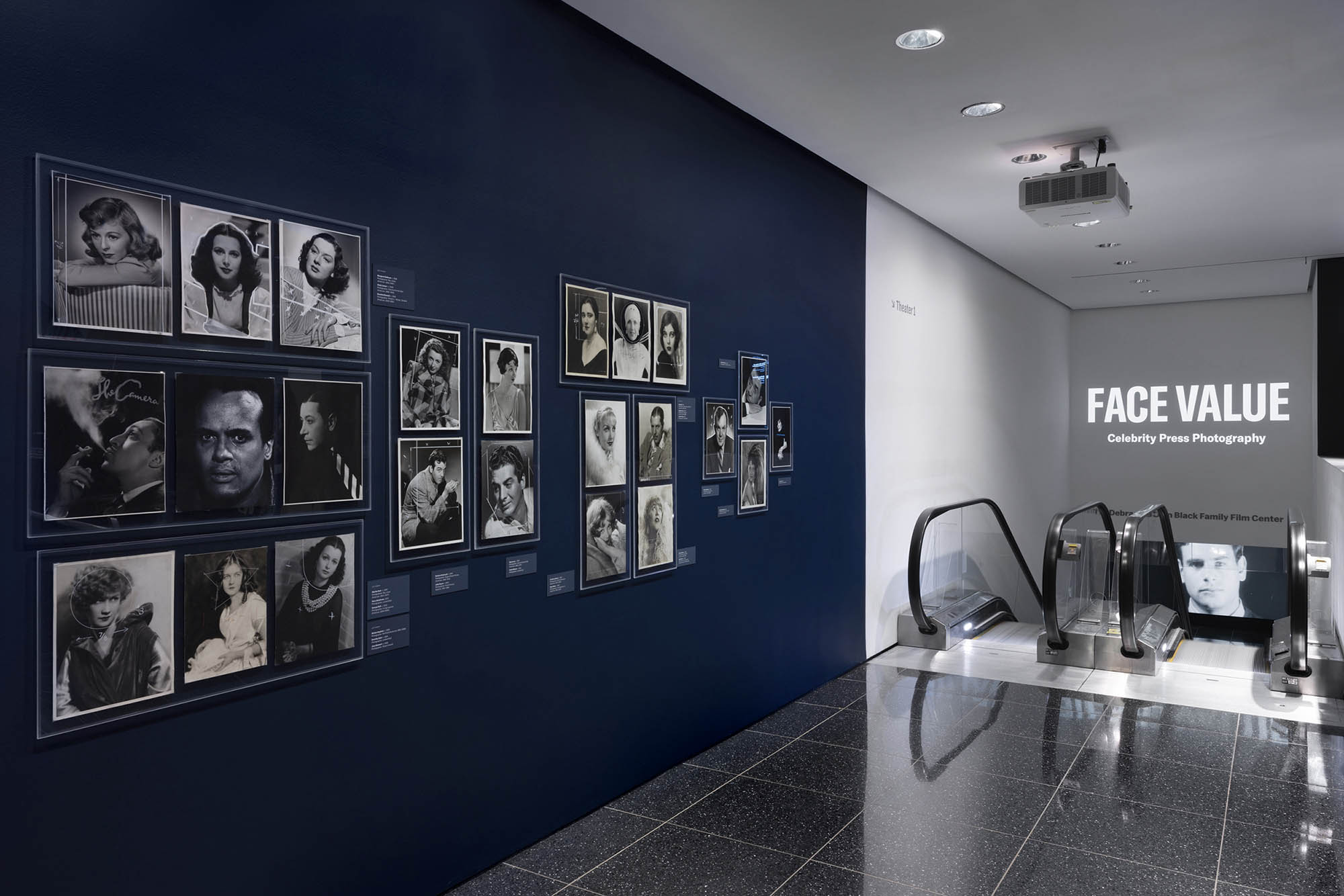
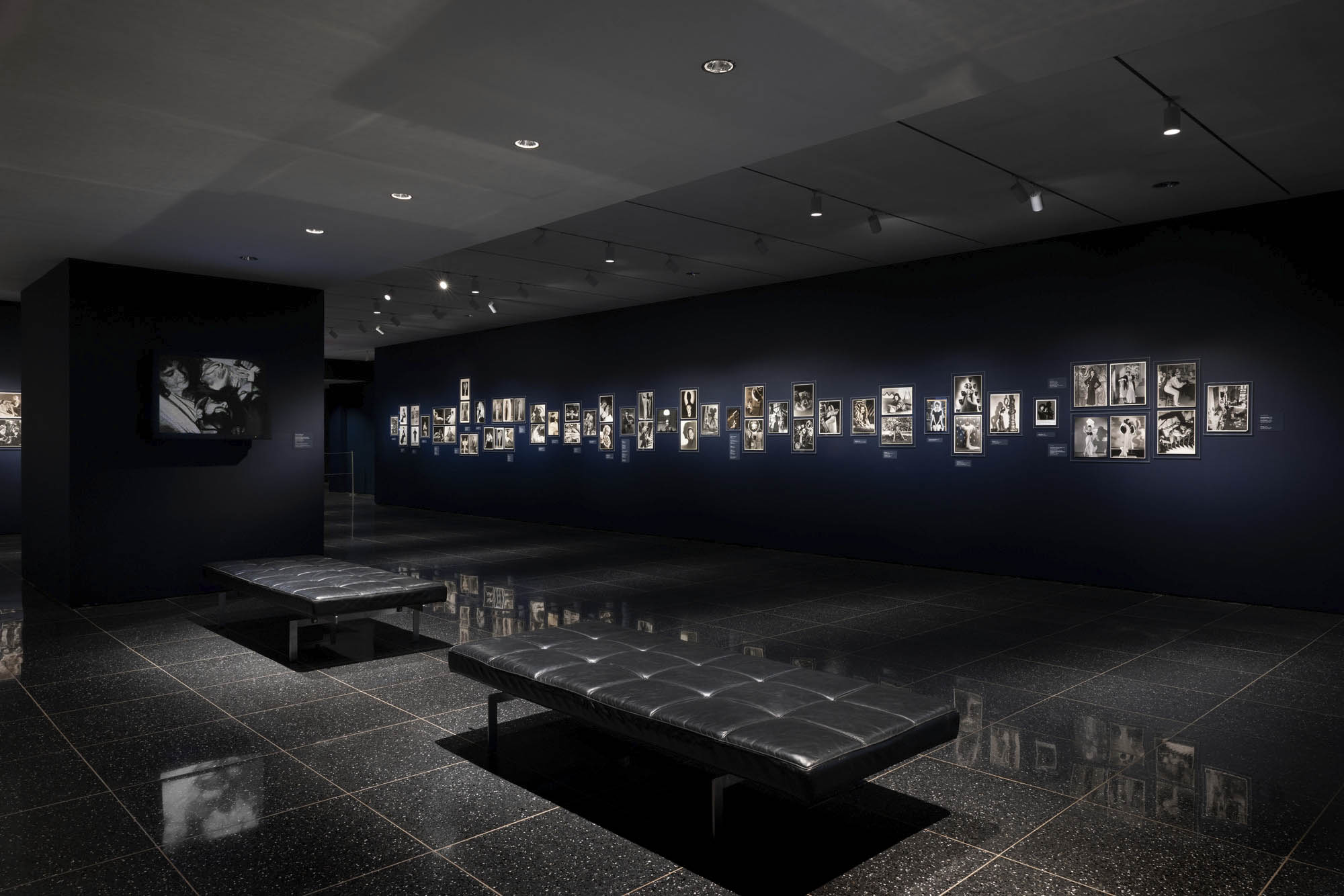
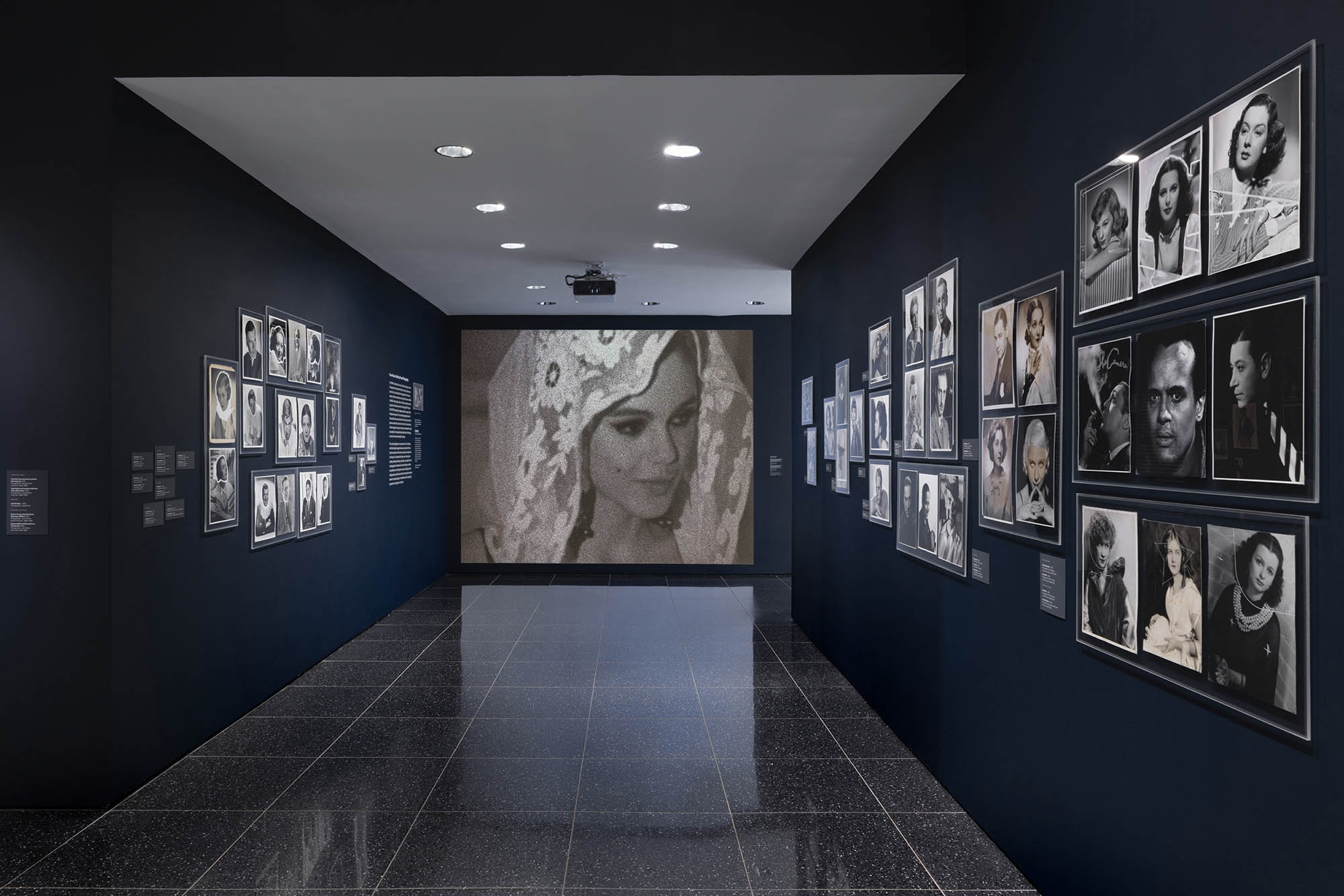
Installation view of the exhibition 'Face Value: Celebrity Press Photography' at The Museum of Modern Art (MoMA), New York, June 2025 - June 2026


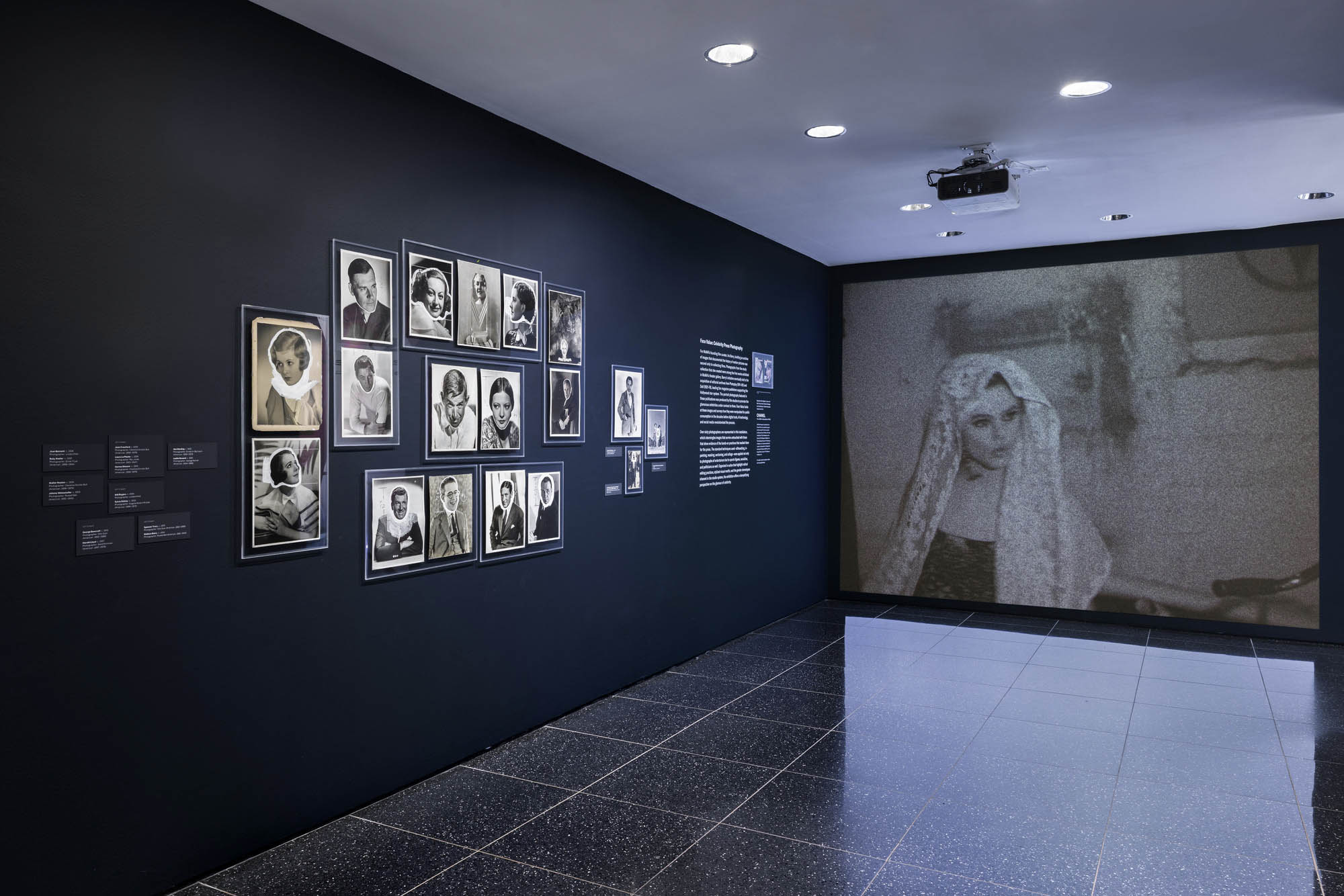
Installation views of the exhibition Face Value: Celebrity Press Photography at The Museum of Modern Art (MoMA), New York, June 2025 – June 2026 showing in the left hand block of 9 photographs of the bottom image, from left to right top row to bottom row: Ray Jones’ Margaret Sullavan c. 1939 (below); Clarence Sinclair Bull’s Hedy Lamarr c. 1940; Adolph L. “Whitey” Schafer’s Rosalind Russell c. 1940; Ray Jones’ Mischa Auer c. 1940; Unknown photographer Harry Belafonte [in “The Angel Levine”] 1970; Irving Lippman’s George Raft c. 1933; Hal Phyfe’s Miriam Hopkins c. 1930; Unknown photographer Dorothy Gish c. 1929; and Imandt’s Joan Bennett c. 1939
Photos: Jonathan Dorado
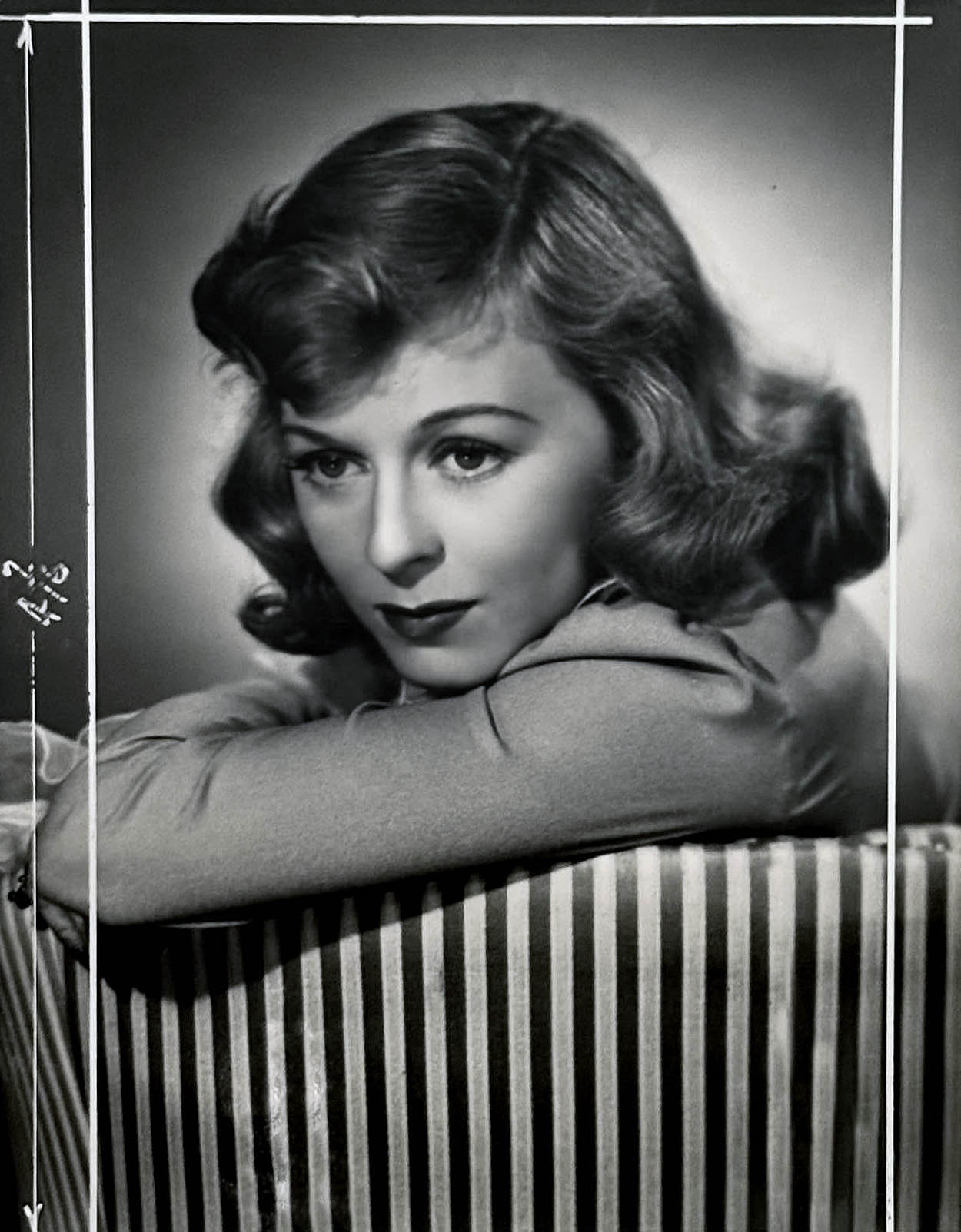
 

Ray Jones (American, 1901-1947) 'Margaret Sullavan' c. 1939


Ray Jones (American, 1901-1947)
Margaret Sullavan
c. 1939
Sheet: 13 7/8 x 10 7/8″ (35.2 x 27.6cm)
The Museum of Modern Art Film Stills Collection
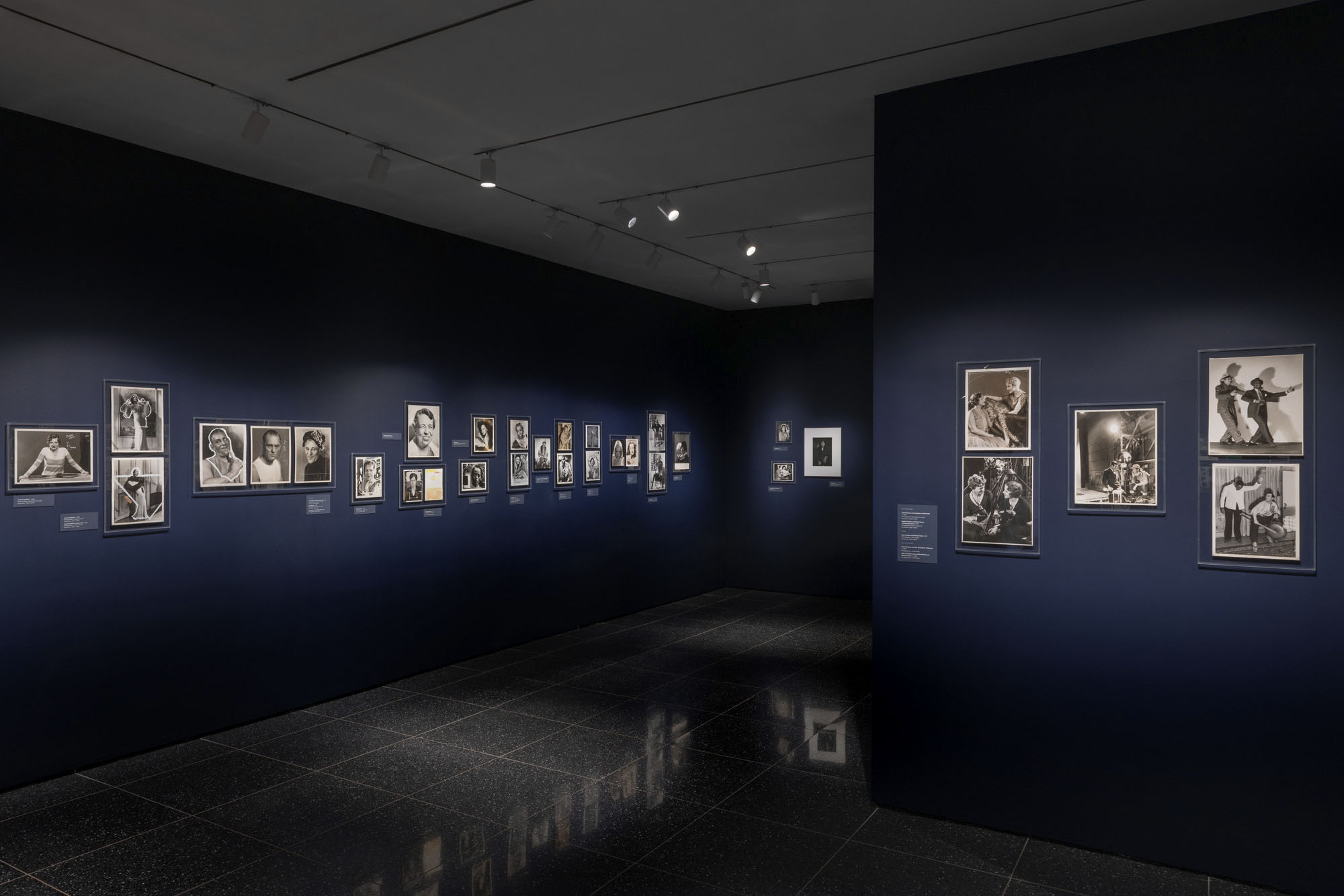
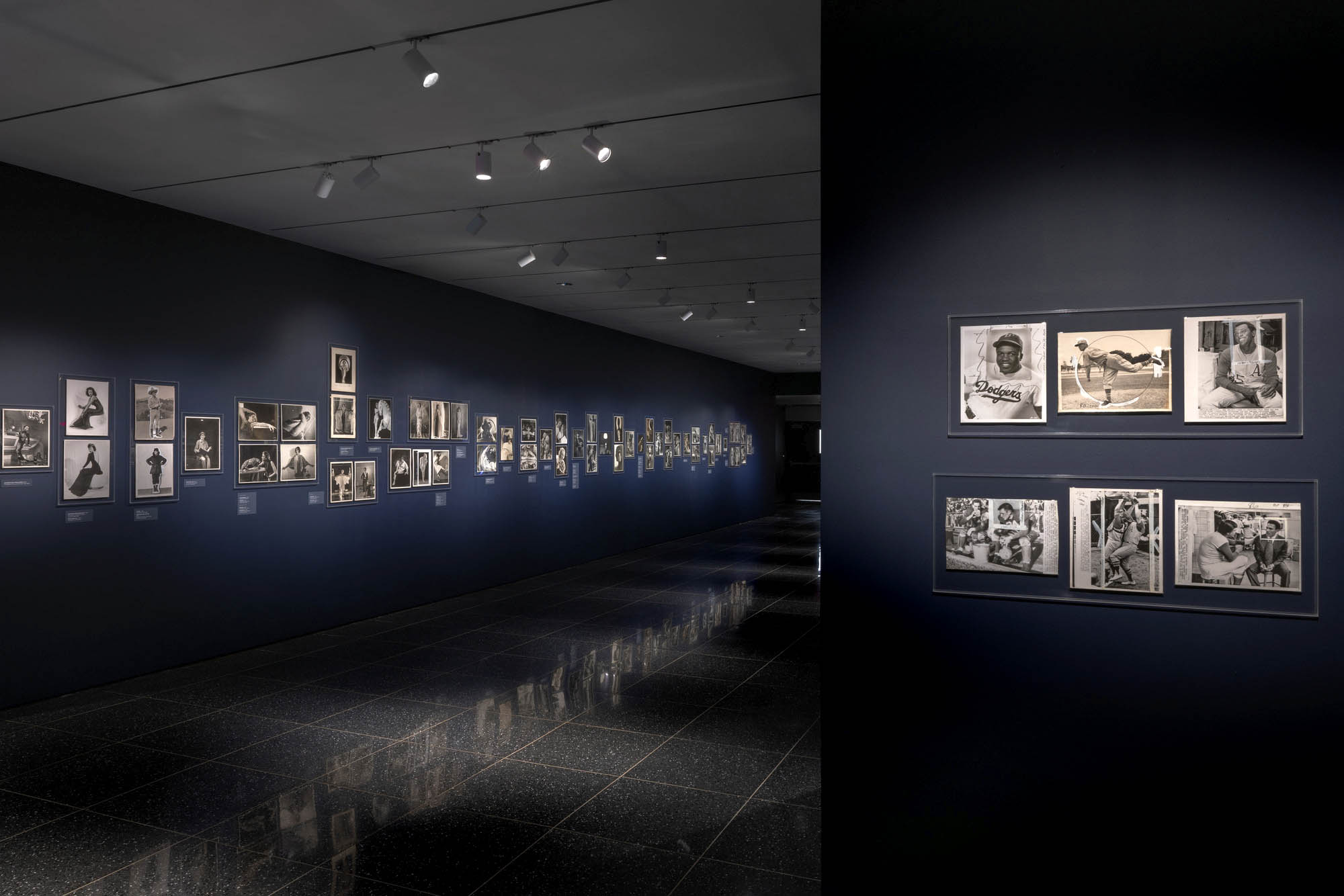
 

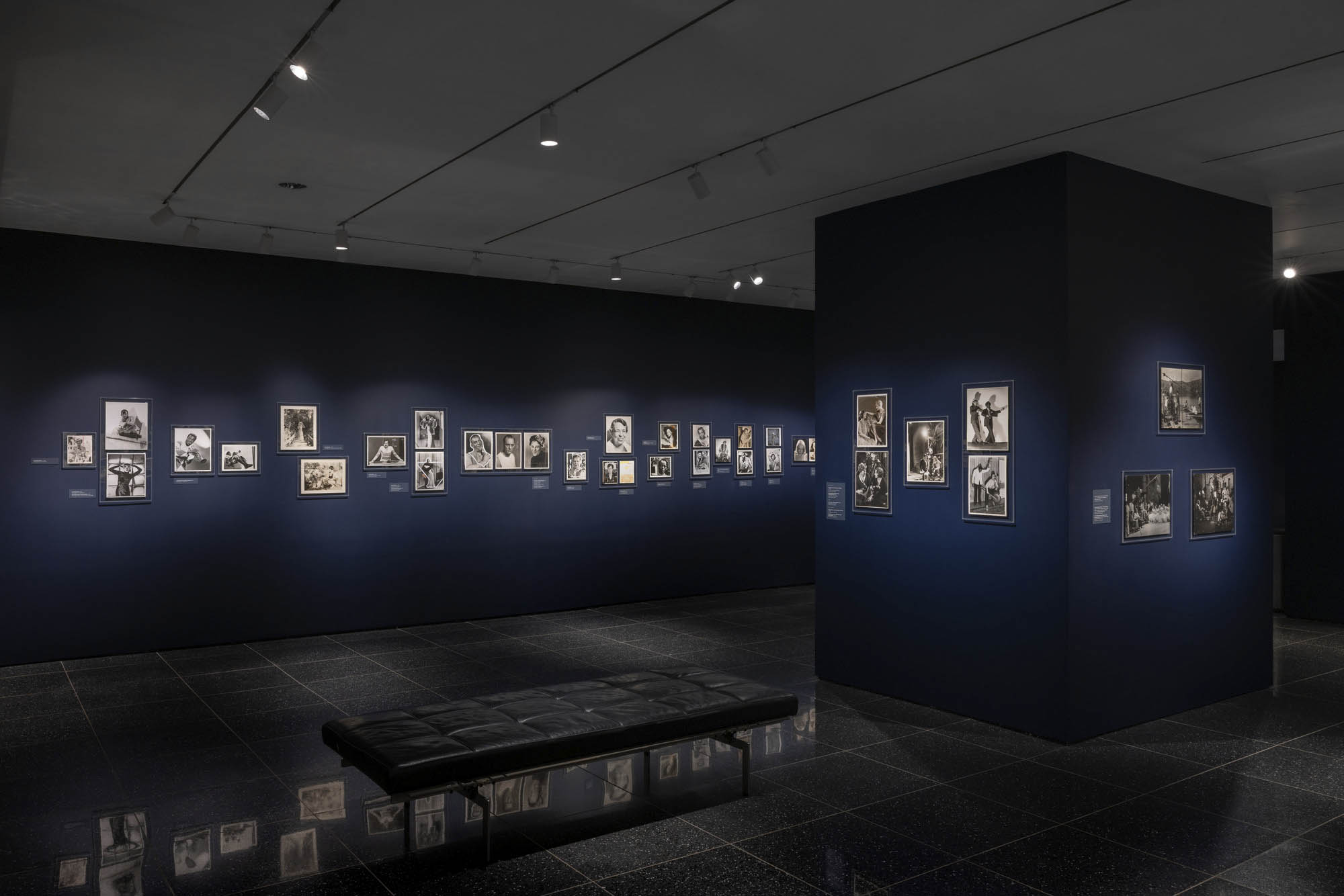
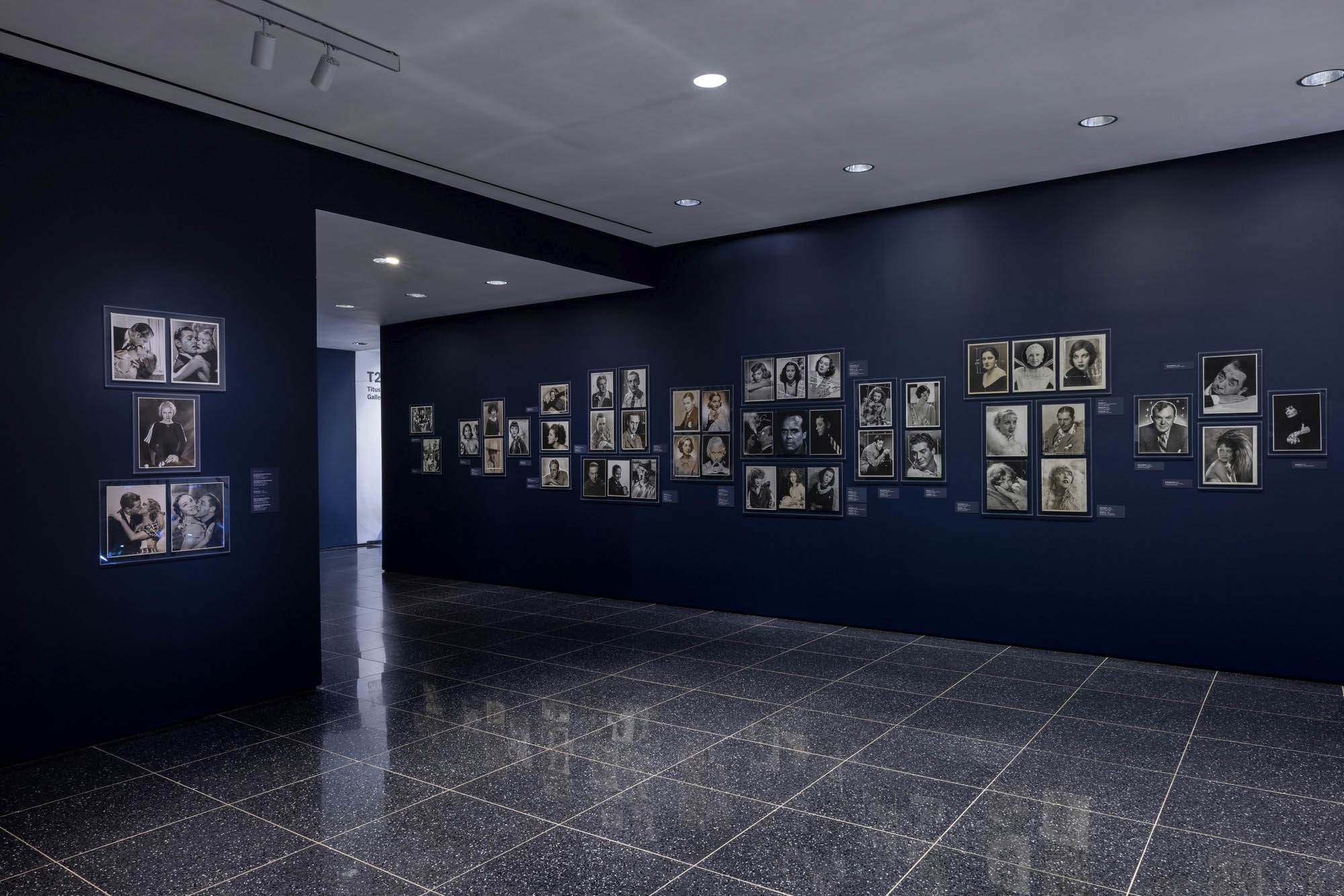
Installation view of the exhibition 'Face Value: Celebrity Press Photography' at The Museum of Modern Art (MoMA), New York, June 2025 - June 2026


Installation view of the exhibition Face Value: Celebrity Press Photography at The Museum of Modern Art (MoMA), New York, June 2025 – June 2026 showing at right in the bottom image at third left in top row, Unknown photographer Jackie Robinson c. 1950
Photos: Jonathan Dorado
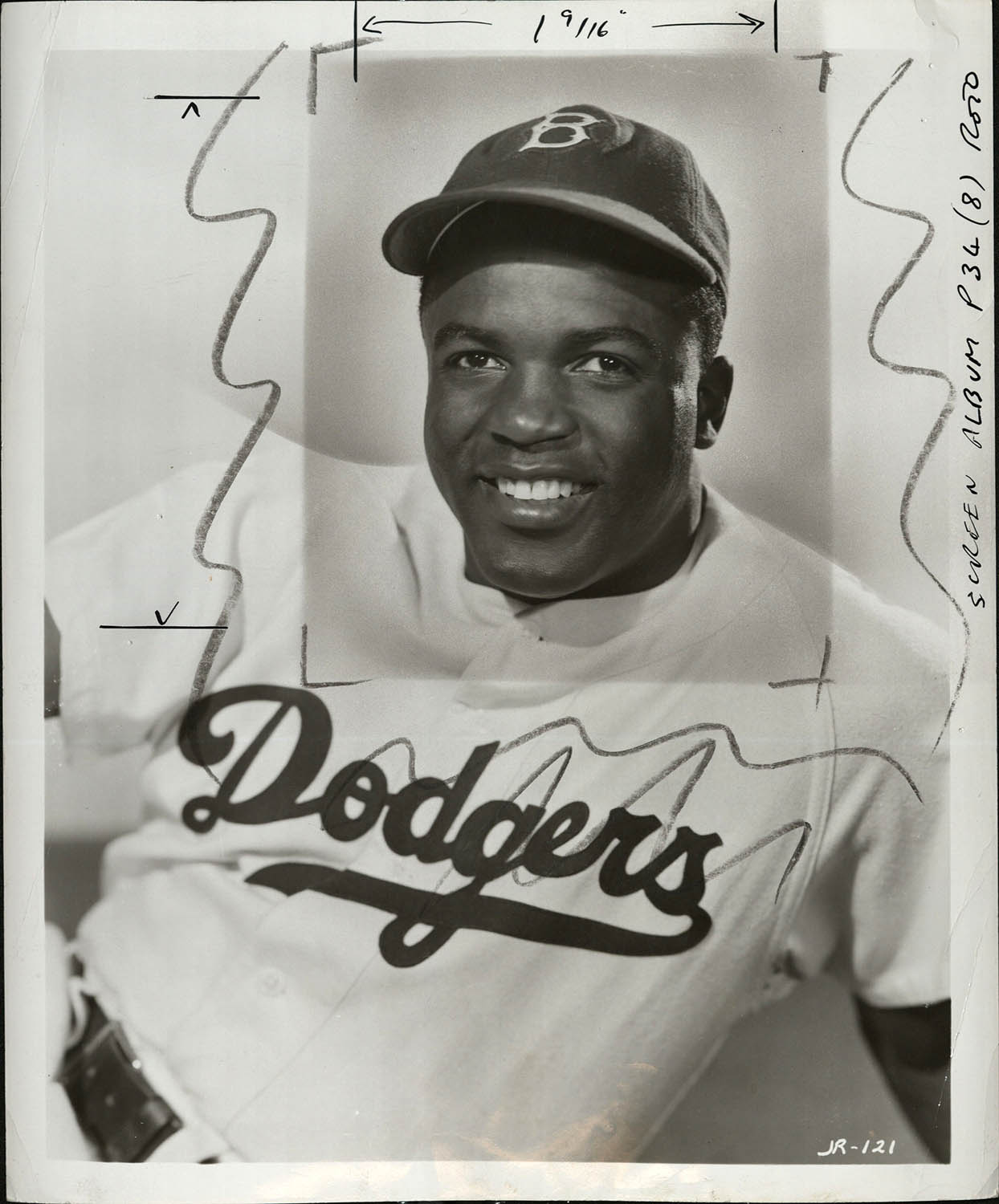
 

Unknown photographer. 'Jackie Robinson' c. 1950


Unknown photographer
Jackie Robinson
c. 1950
Sheet: 10 x 8″ (25.4 x 20.3cm)
The Museum of Modern Art Film Stills Collection


The Museum of Modern Art announces Face Value: Celebrity Press Photography, the first major exhibition of Hollywood studio portraiture to be drawn from the Museum’s film stills archive since 1993. On view in the Titus and Morita Galleries from June 28, 2025, through June 21, 2026, the exhibition will offer a revisionist look at the Department of Film’s photographic archive, examining the evolution of editorial practice before the digital age, AI technology, and social media reshaped the experience of celebrity.

Face Value will feature over 200 works from 1921to 1996, including studio photography of Louis Armstrong, Harry Belafonte, Clara Bow, Louise Brooks, Bette Davis, Mia Farrow, Katharine Hepburn, Dennis Hopper, Lena Horne, Bela Lugosi, Carmen Miranda, Elvis Presley, Diana Ross, Barbara Stanwyck, Elizabeth Taylor, Spencer Tracy, Oprah Winfrey, and many others.

Face Value: Celebrity Press Photography is organised by Ron Magliozzi, Curator, with Katie Trainor, Film Collections Manager, and Cara Shatzman, Collection Specialist, Department of Film.

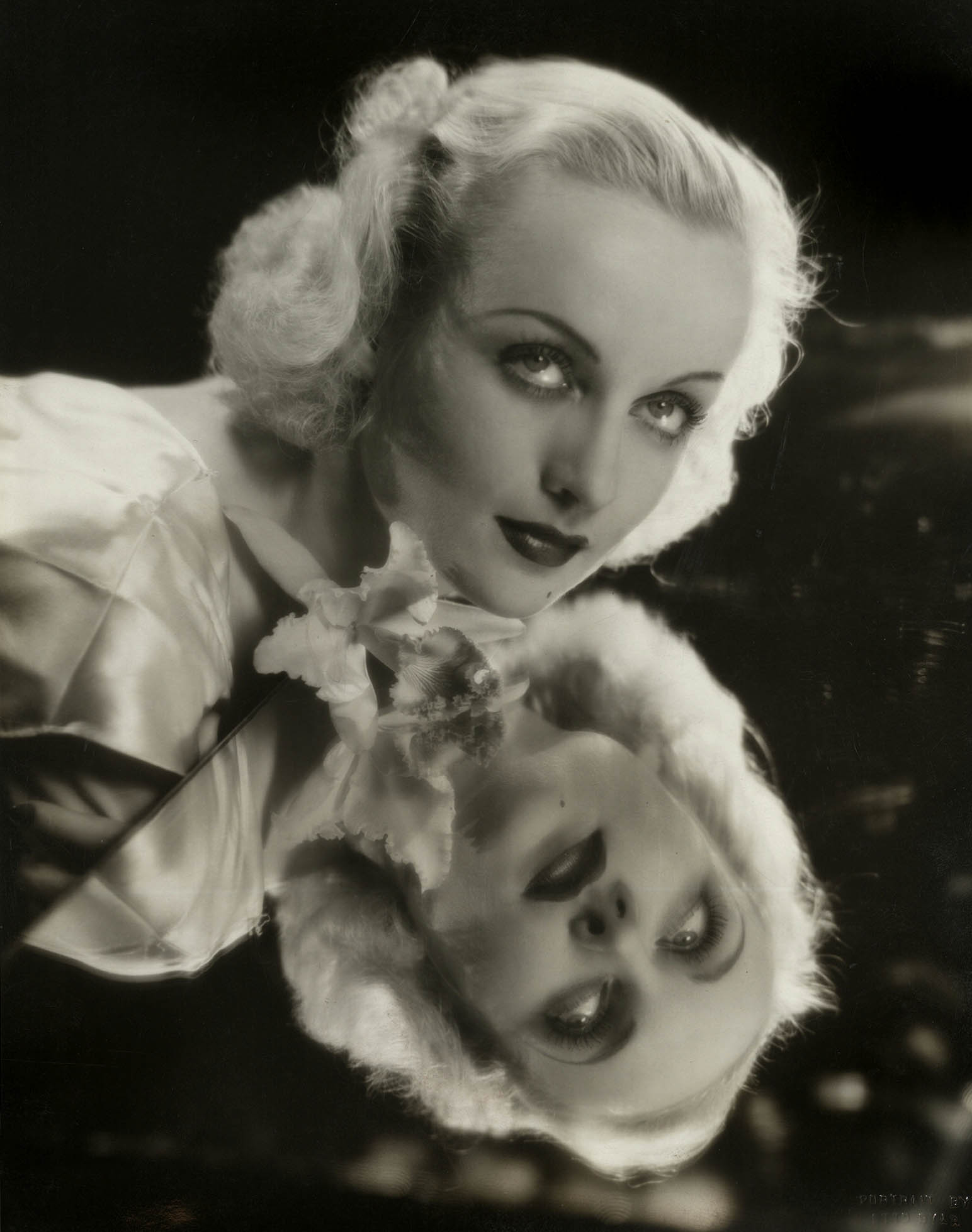
Face Value will encourage viewers to see through the facade of glamour at how celebrity is fabricated and exploited,” says Ron Magliozzi. Showcasing work by over 58 photographers, the exhibition will juxtapose “untouched” images like Otto Dyar’s Carole Lombard (c. 1933) with those altered through traditional press practices such as silhouetting, in-painting, masking, sectioning, and collage, like James Manatt’s Joan Crawford portrait for the film Letty Lynton (1932). Face Value examines how these methods shaped representations of not only film stars but also sports figures, socialites, and politicians, from Jackie Robinson to Jacqueline Kennedy Onassis and Eleanor Roosevelt. Presented in thematic suites, the installation highlights radical editing techniques, stylised visual motifs, and the gendered aesthetics embedded in the system, offering a revealing perspective on the fabrication of glamour and fame.

Since the Museum’s founding, photography has played a vital role in how it has documented the history of motion pictures. Face Value traces the origin of this early initiative to MoMA’s first film curator, Iris Barry, whose archival efforts led to the acquisition of editorial collections from Photoplay (1911-1980) and Dell (1921-1976), two leading publications that helped define Hollywood’s star system. The exhibition includes images of comic stars Buster Keaton, W. C. Fields, Lupe Velez, and Mae West; pioneering actress Hattie McDaniel with Ruby Berkley, the first Black accredited Hollywood correspondent; famed aviatrix Amelia Earhart on a Hollywood film set; and the last photo shoot with Marilyn Monroe.

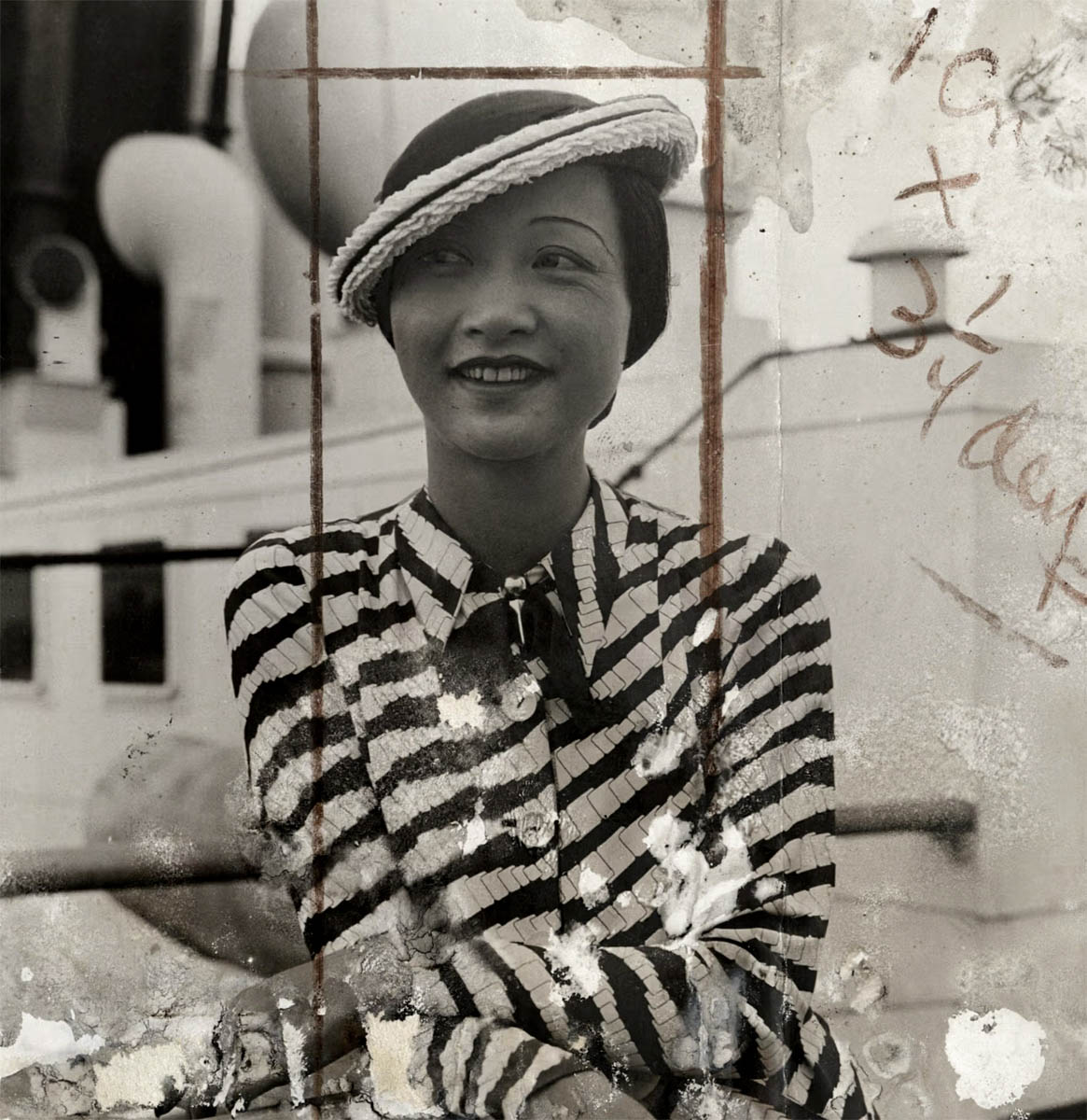
Featuring promotional portraits crafted to cultivate celebrity personas, such as Ray Jones’s Anna May Wong portrait for the film Limehouse Blues, Soul of a Dragon (1934), the exhibition explores how these images were manipulated for public consumption through hands-on editing techniques long before digital tools became standard.

Press release from MoMA
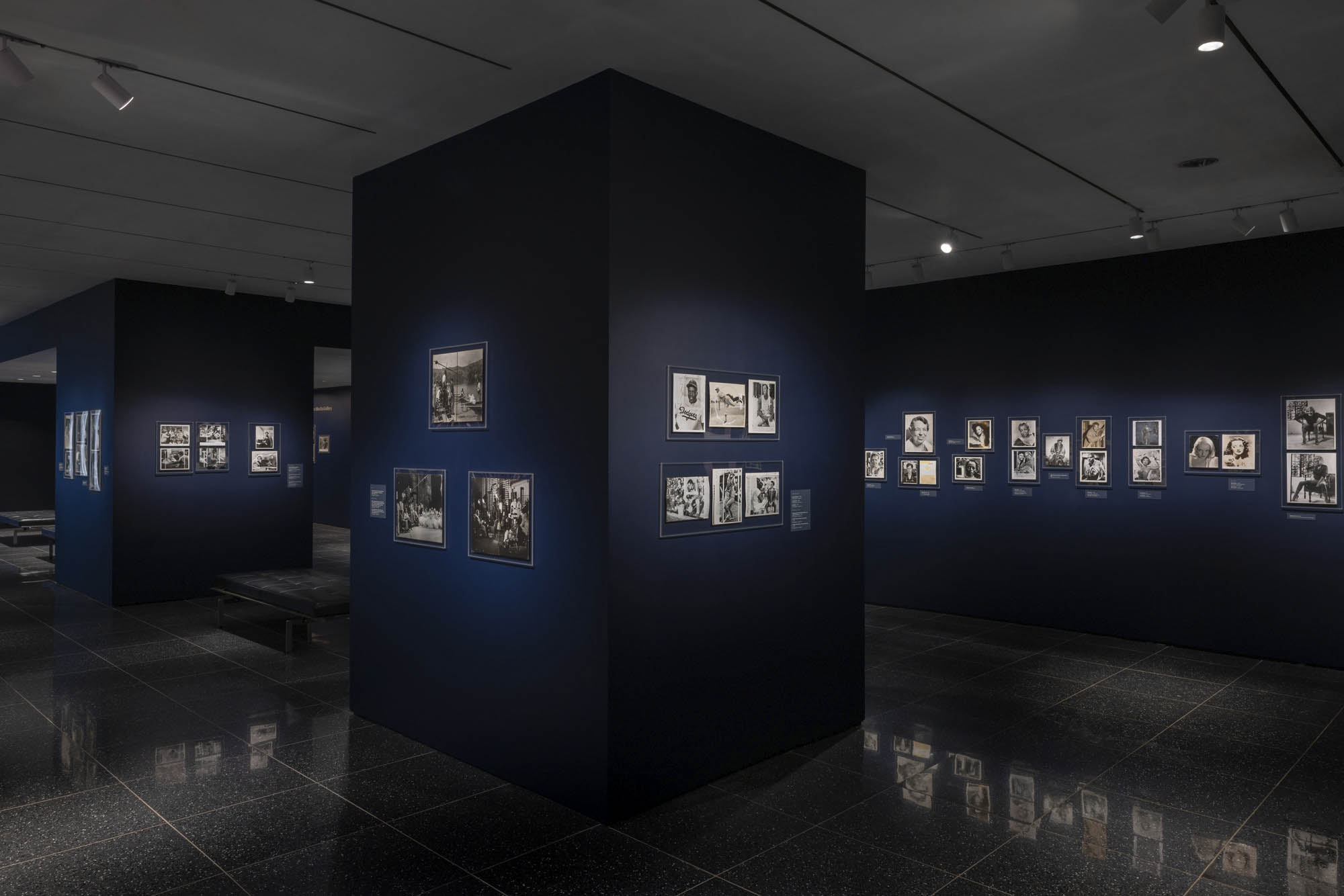
 

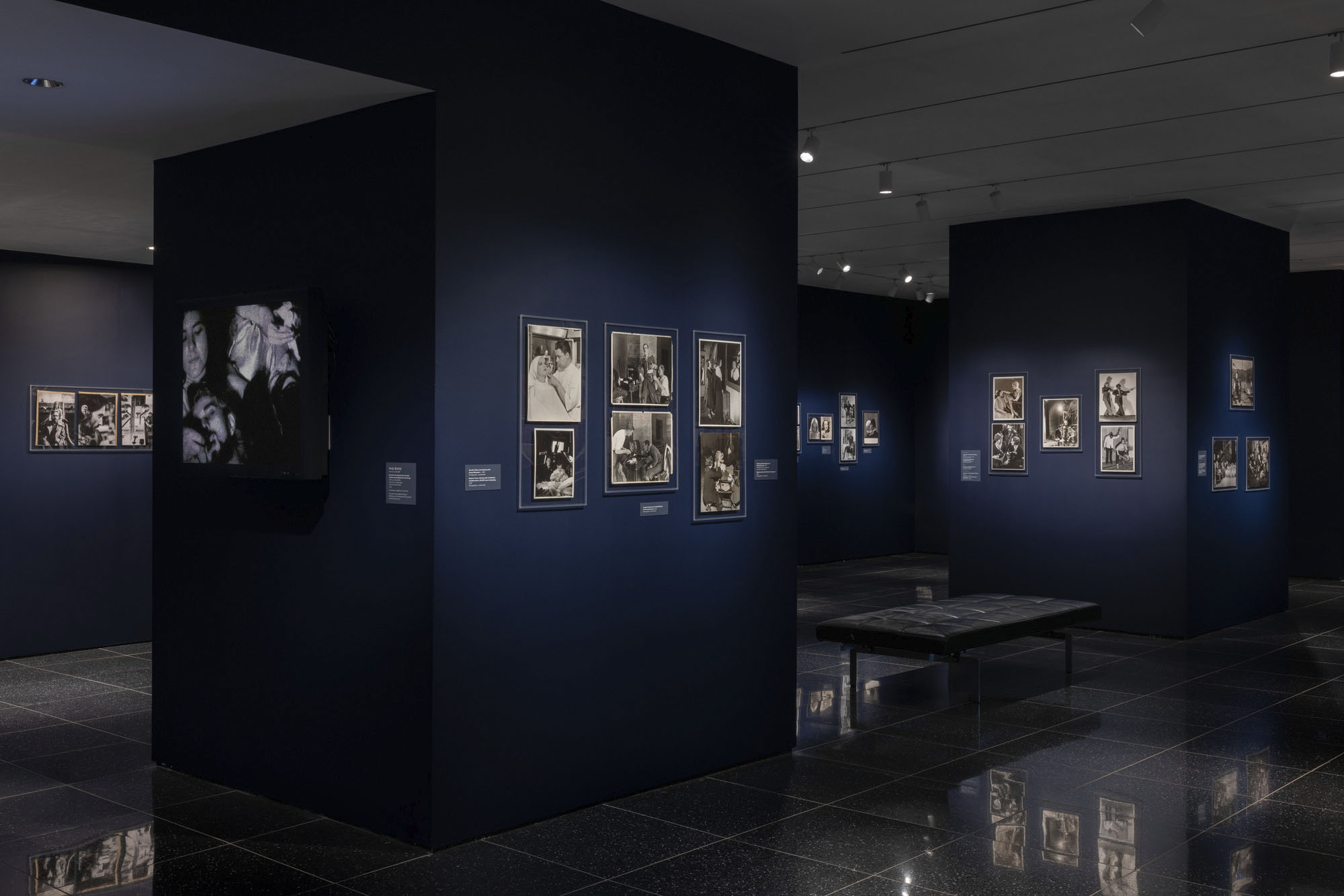
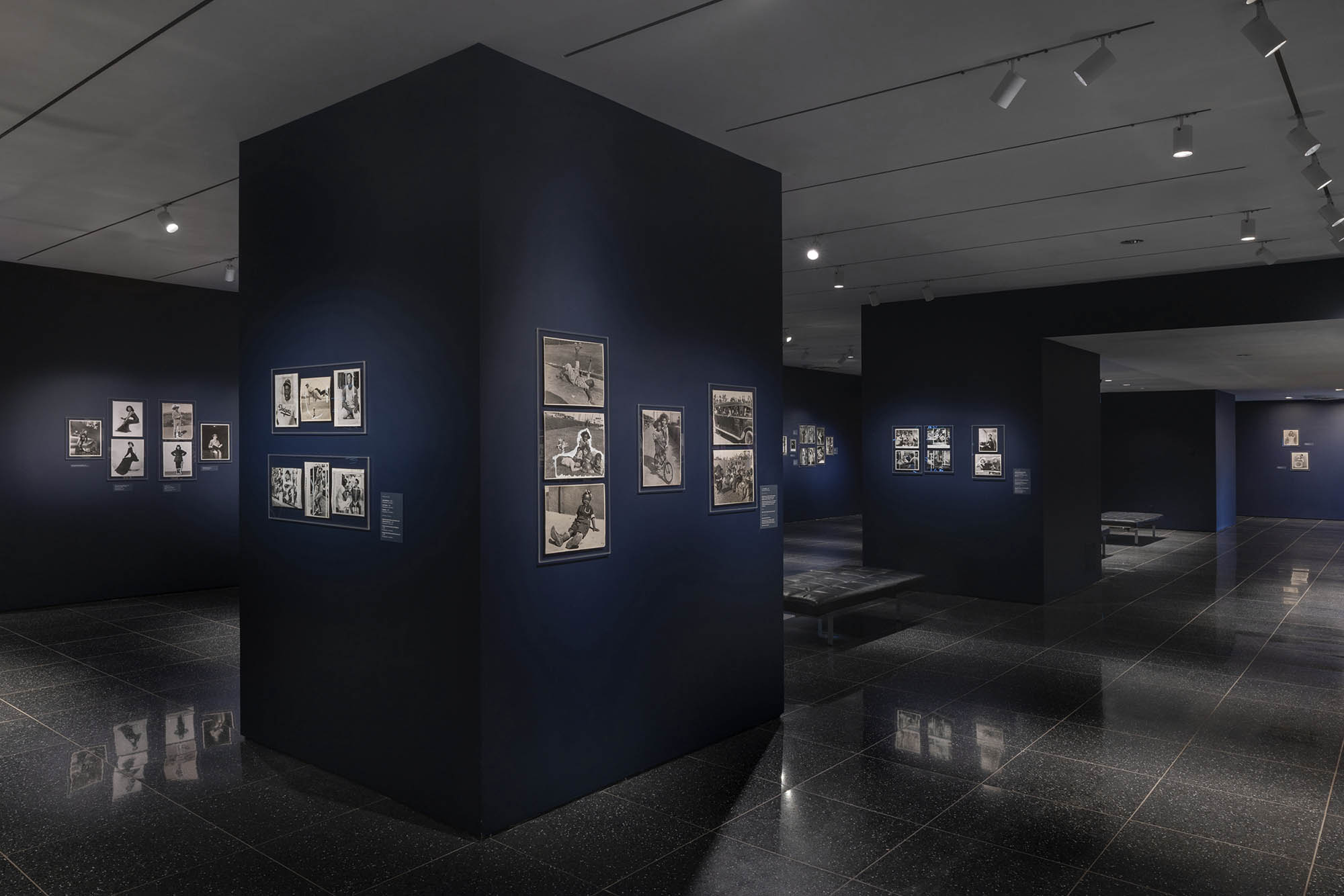
Installation view of the exhibition 'Face Value: Celebrity Press Photography' at The Museum of Modern Art (MoMA), New York, June 2025 - June 2026
Installation view of the exhibition 'Face Value: Celebrity Press Photography' at The Museum of Modern Art (MoMA), New York, June 2025 - June 2026 showing a video still from 'Edie Sedgwick, Gerard Malanga, Benedetta Barzini, Ingrid Superstar, Nat Finkelstein: Danny Williams footage of unknown documentary film shoot' c. 1965, processed 2024


Installation views of the exhibition Face Value: Celebrity Press Photography at The Museum of Modern Art (MoMA), New York, June 2025 – June 2026 showing in the bottom two photographs, video stills from Edie Sedgwick, Gerard Malanga, Benedetta Barzini, Ingrid Superstar, Nat Finkelstein: Danny Williams footage of unknown documentary film shoot c. 1965, processed 2024 (below)
Photos: Jonathan Dorado
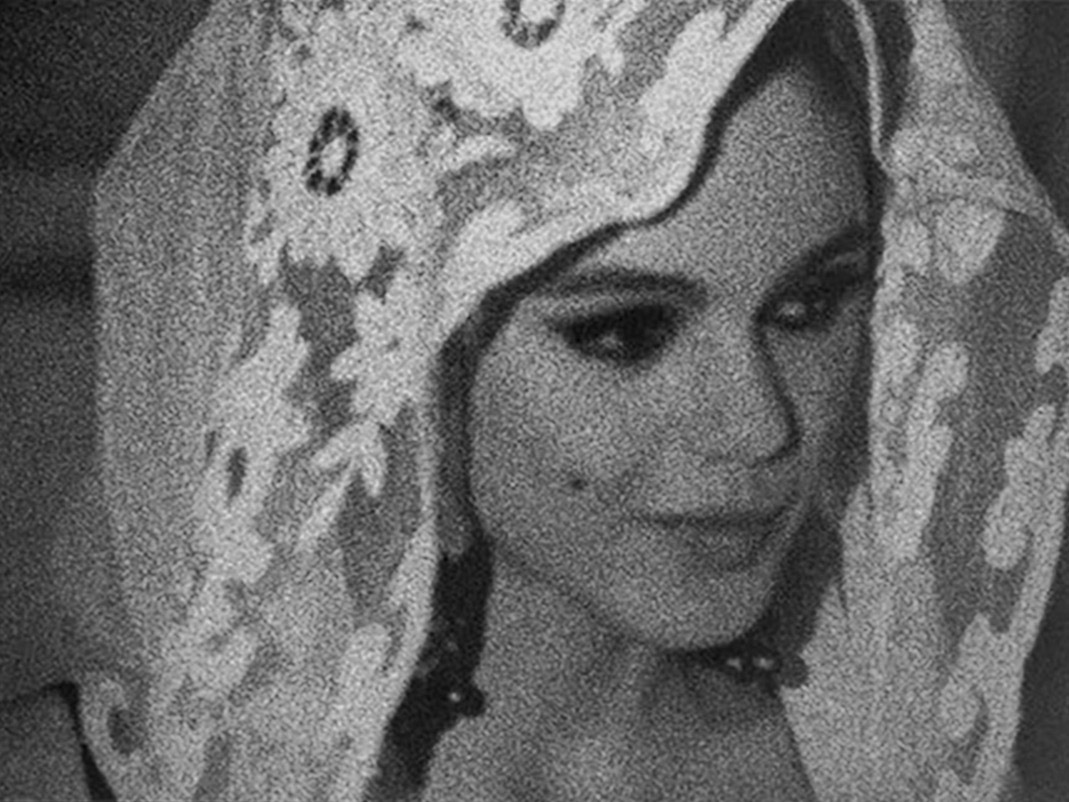
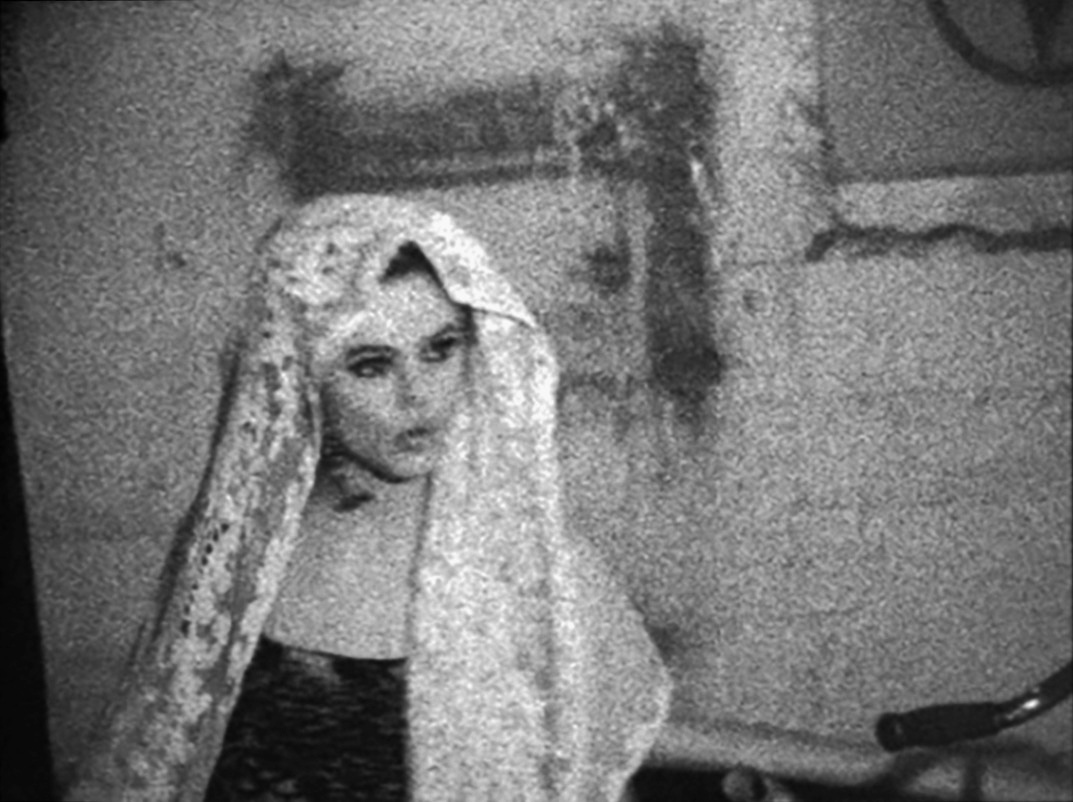
 

'Edie Sedgwick, Gerard Malanga, Benedetta Barzini, Ingrid Superstar, Nat Finkelstein: Danny Williams footage of unknown documentary film shoot' c. 1965, processed 2024


Edie Sedgwick, Gerard Malanga, Benedetta Barzini, Ingrid Superstar, Nat Finkelstein: Danny Williams footage of unknown documentary film shoot
c. 1965, processed 2024
The Museum of Modern Art Film Stills Collection


Edie Sedgwick dances in Andy Warhol’s Silver Factory during a photoshoot
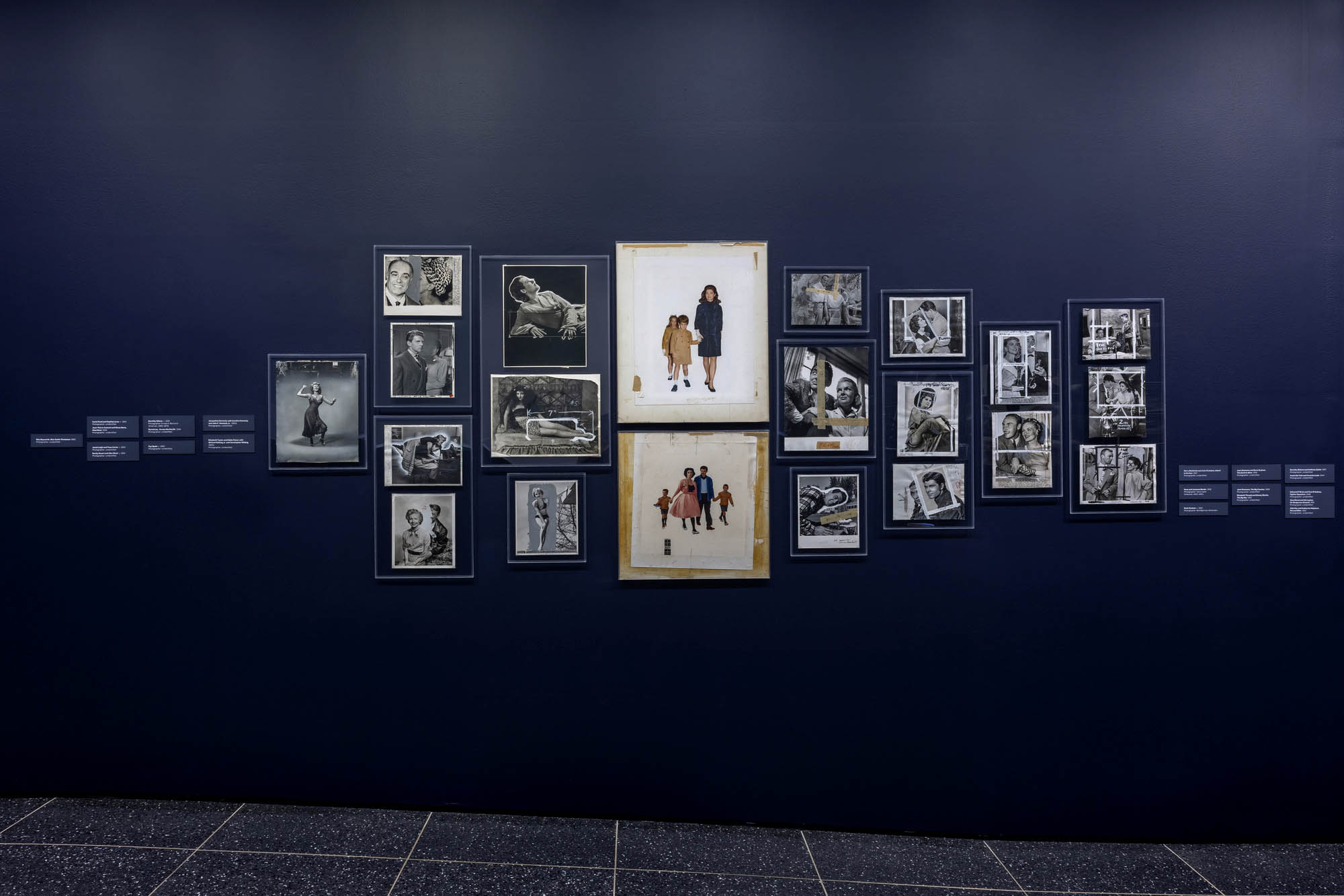
 

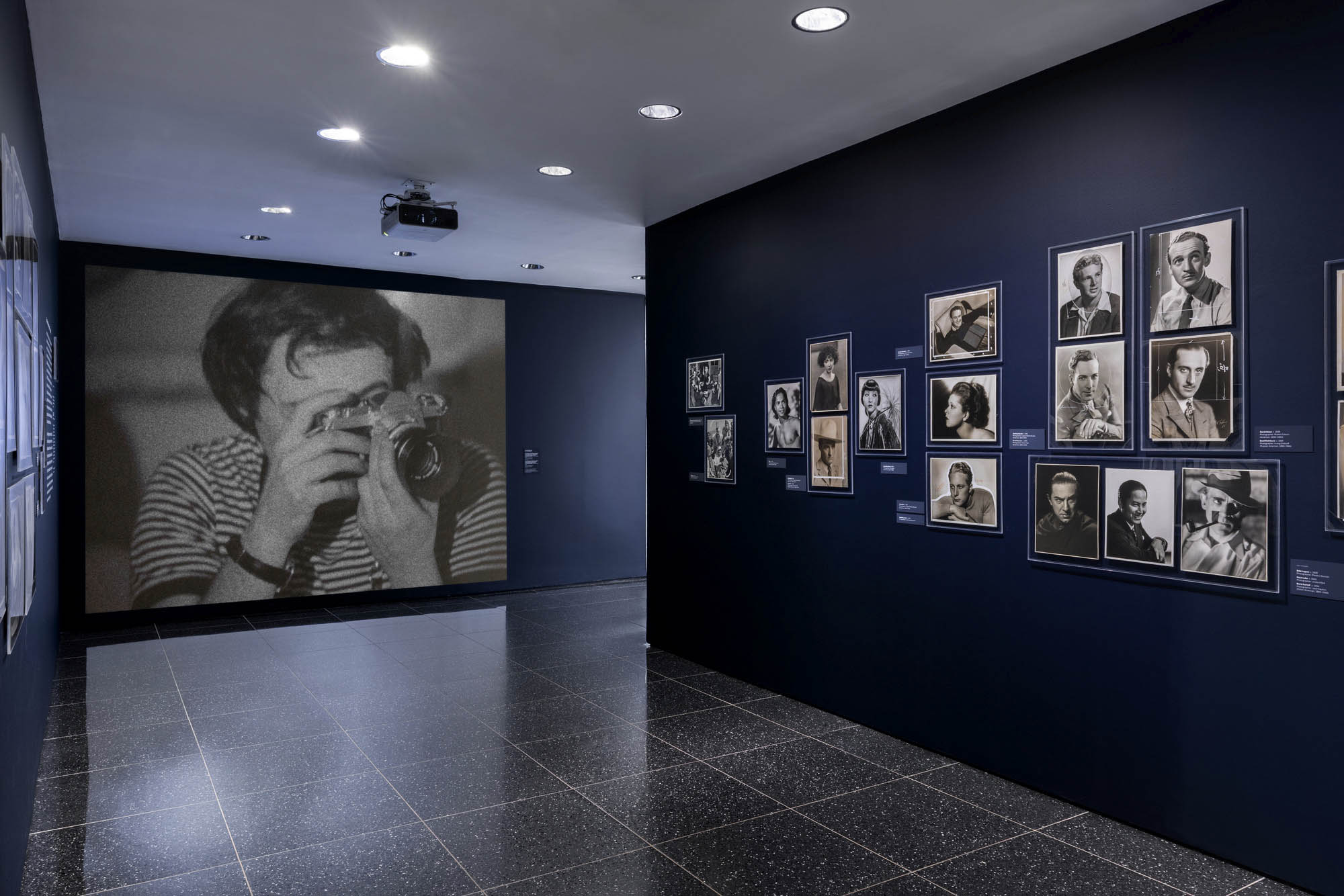
Installation view of the exhibition 'Face Value: Celebrity Press Photography' at The Museum of Modern Art (MoMA), New York, June 2025 - June 2026 showing at top centre, 'Jacqueline Kennedy with Caroline Kennedy, John F. Kennedy Jr.' 1960s; and a bottom centre, 'Elizabeth Taylor and Eddie Fisher with Michael Wilding Jr. and Christopher Wilding' 1960s


Installation view of the exhibition Face Value: Celebrity Press Photography at The Museum of Modern Art (MoMA), New York, June 2025 – June 2026 showing at top centre, Jacqueline Kennedy with Caroline Kennedy, John F. Kennedy Jr. 1960s; and a bottom centre, Elizabeth Taylor and Eddie Fisher with Michael Wilding Jr. and Christopher Wilding 1960s
Photo: Jonathan Dorado


Installation view of the exhibition 'Face Value: Celebrity Press Photography' at The Museum of Modern Art (MoMA), New York, June 2025 - June 2026 showing from top left to right, top to bottom, Unknown photographer Harry 'Belafonte and Joan Fontaine' 1957; Gene Lester (American, 1910-1994) 'Dean and Jeannne Martin' 1958; Bob Beerman (American) 'Rock Hudson' c. 1953; Unknown photographer 'Jean Simmons, Rock Hudson [in "This Earth is Mine"]' 1959; Unknown photographer 'Jean Simmons [in "The Big Country"]' 1958; Unknown photographer 'Elizabeth Threatt and Dewey Martin [in "The Big Sky"]' 1952; Unknown photographer 'Dorothy Malone and Anthony Quinn' 1957; Unknown photographer 'André De Toth and Veronica Lake' 1944; Unknown photographer 'Edmund O'Brien and Tom D'Andrea [in "Fighter Squadron"]' 1948; Unknown photographer 'Ward Bond and Ida Lupino [in "On Dangerous Ground"]' 1951; Unknown photographer 'Aldo Ray and Katharine Hepburn [in "Pat and Mike"]' 1952


Installation view of the exhibition Face Value: Celebrity Press Photography at The Museum of Modern Art (MoMA), New York, June 2025 – June 2026 showing from top left to right, top to bottom, Unknown photographer Harry Belafonte and Joan Fontaine 1957 (below); Gene Lester (American, 1910-1994) Dean and Jeannne Martin 1958; Bob Beerman (American) Rock Hudson c. 1953 (top of posting); Unknown photographer Jean Simmons, Rock Hudson [in “This Earth is Mine”] 1959 (below); Unknown photographer Jean Simmons [in “The Big Country”] 1958; Unknown photographer Elizabeth Threatt and Dewey Martin [in “The Big Sky”] 1952; Unknown photographer Dorothy Malone and Anthony Quinn 1957; Unknown photographer André De Toth and Veronica Lake 1944; Unknown photographer Edmund O’Brien and Tom D’Andrea [in “Fighter Squadron”] 1948; Unknown photographer Ward Bond and Ida Lupino [in “On Dangerous Ground”] 1951; Unknown photographer Aldo Ray and Katharine Hepburn [in “Pat and Mike”] 1952
Photo: Jonathan Dorado


Unknown photographer. 'Harry Belafonte and Joan Fontaine [in "Island in the Sun"]' 1957


Unknown photographer
Harry Belafonte and Joan Fontaine [in “Island in the Sun”]
1957
Sheet: 6 15/16 × 9 1/16″ (17.6 × 23 cm)
The Museum of Modern Art Film Stills Collection


Unknown photographer. 'Jean Simmons, Rock Hudson [in "This Earth is Mine"]' 1959


Unknown photographer
Jean Simmons, Rock Hudson [in “This Earth is Mine”]
1959
Sheet: 8 x 9 15/16″ (20.3 x 25.2cm)
The Museum of Modern Art Film Stills Collection
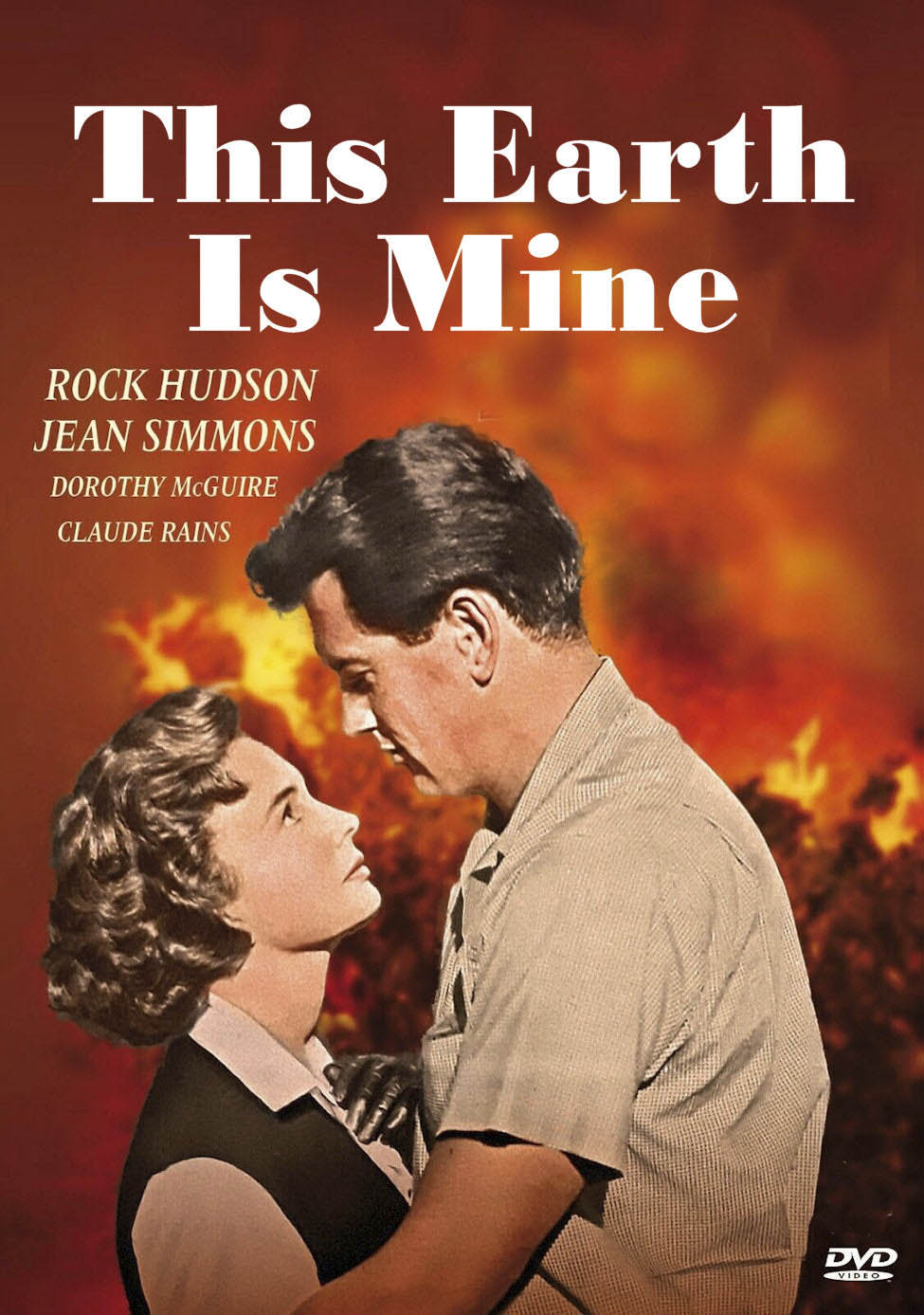
 

'This Earth Is Mine' (1959) DVD cover


This Earth is Mine (1959) DVD cover


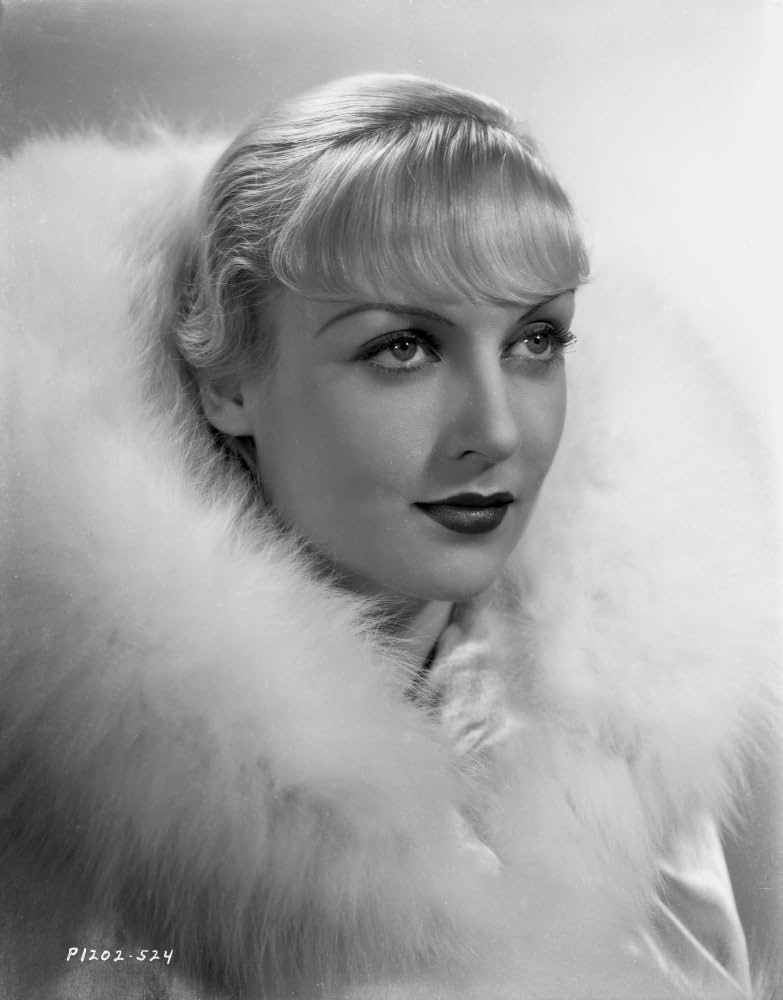
Otto Dyar (American, 1892-1988) 'Carole Lombard' c. 1933


Otto Dyar (American, 1892-1988)
Carole Lombard
c. 1933
Sheet: 13 7/8 x 10 1/2″ (35.2 x 26.7cm)
The Museum of Modern Art Film Stills Collection


Hollywood stills photographers like Dyar “were not mirroring life, but illusion; their subjects were not humans but gods – of love, of allure, of luxury, perfection incarnate from the golden age of Hollywood glamor”


John Kobal (ed), Hollywood glamor portraits, Courier Corporation, 1976, p.V on the Wikipedia website


Otto Dyar was a prominent stills photographer who began his career at the Paramount studios in the 1920s. Initially working as an assistant on major film productions such as the 1927 ‘Wings’, Dyar quickly rose through the ranks to become one of Hollywood’s most notable image-makers.

During the 1930s and 40s, Dyar developed his own, highly dramatic style of lighting and photography that deviated from the neoclassical glamor of the 1920s. Edgy and expressionistic, Dyar’s photographs pushed the iconic features of movie stars like Carole Lombard, Cary Grant, Kay Francis and Joan Crawford to a grittier place that was more in accord with the aesthetics of films made in those decades. Of particular note are Dyar’s star portraits taken outside of the studio, an unusual and daring step at the time.

Despite all the high-contrast lighting, skewed angles and often tiny ‘surrealist’ interventions that point to the influence of photographers like Man Ray, Dyar faithfully accomplished the task of elevating the studio stars to the realm of deities. Like his peers George Hurrell, Ted Allen and Clarence Sinclair Bull, Dyar was not concerned with the psychologies of his sitters. What interested him was amplifying and consolidating the image the stars exuded in their roles, which was usually so powerful that it eclipsed the ‘real’ person that was in front of the camera.

Vigen Galstyan. “Dyar, Otto,” on the Lusadaran: Armenian Photography Foundation website 2015 [Online] Cited 02/04/2026. Used under fair use conditions for the purposes of education and research
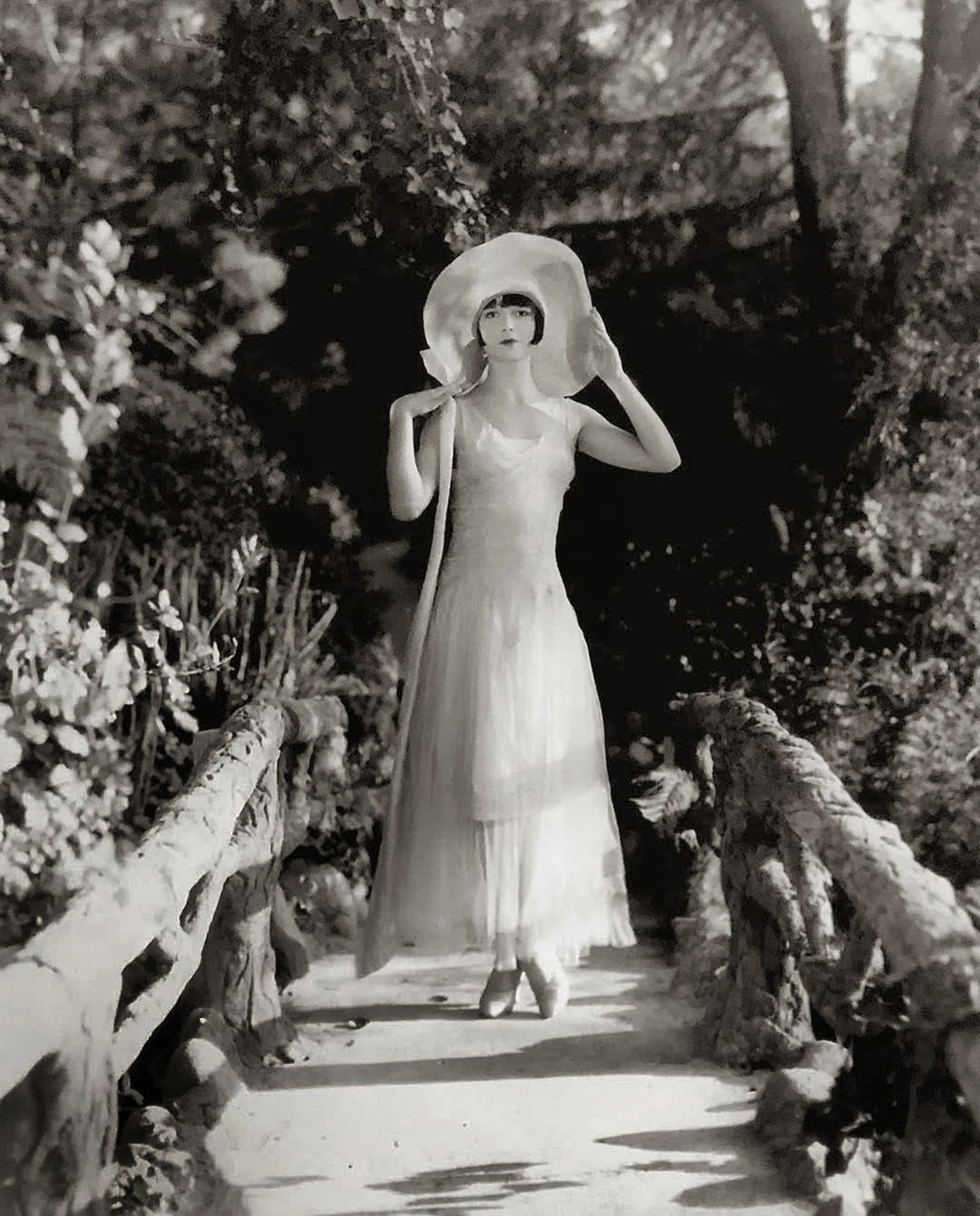
 

Otto Dyar (American, 1892-1988) 'Louise Brooks' c. 1927


Otto Dyar (American, 1892-1988)
Louise Brooks
c. 1927
Sheet: 13 15/16 x 10 15/16″ (35.4 x 27.8cm)
The Museum of Modern Art Film Stills Collection
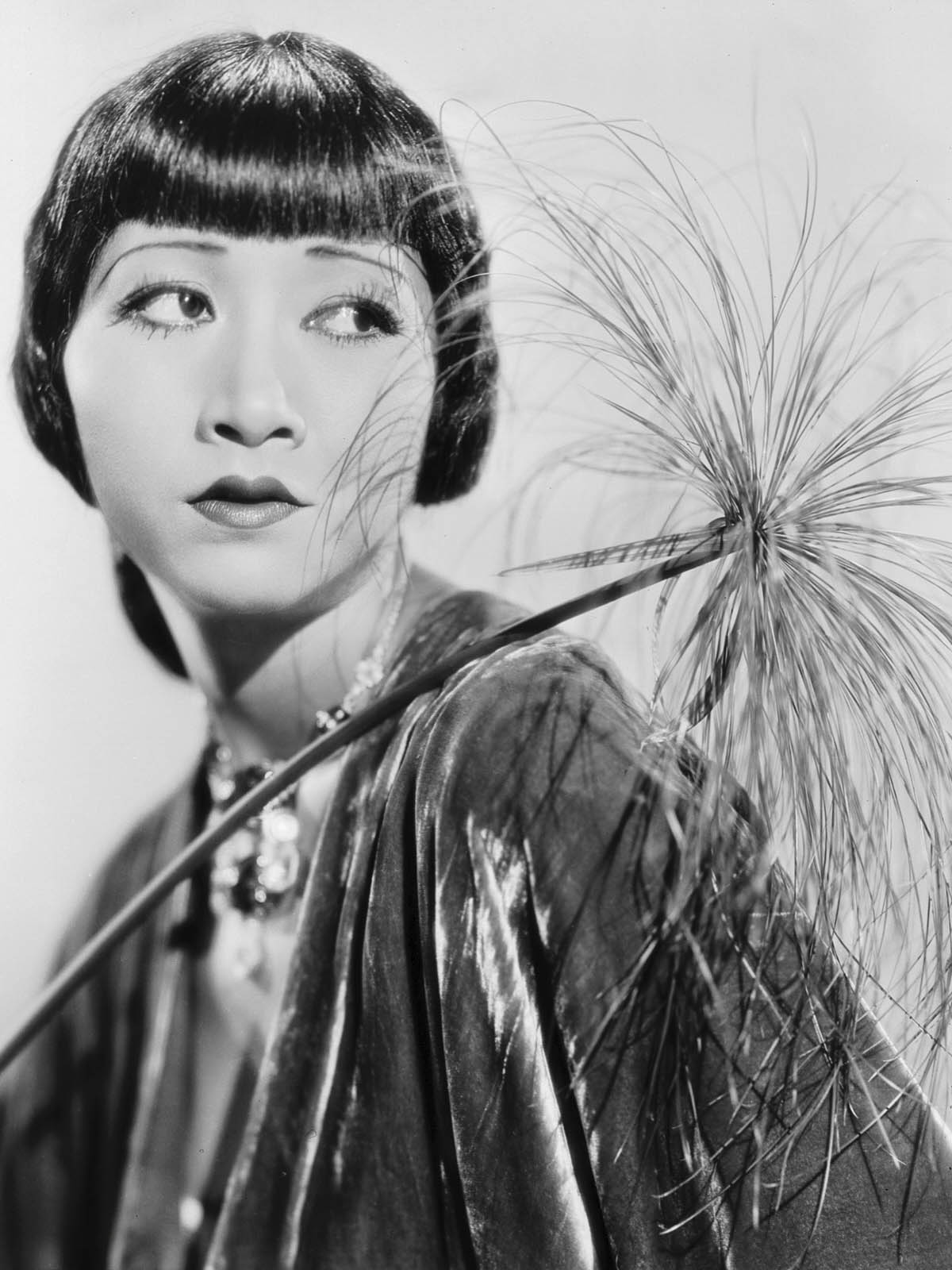
 

Otto Dyar (American, 1892-1988) 'Anna May Wong' 1930s


Otto Dyar (American, 1892-1988)
Anna May Wong
1930s
Sheet: 13 7/8 x 10 7/8″ (35.2 x 27.6cm)
The Museum of Modern Art Film Stills Collection


Ray Jones (American, 1901-1947) 'Anna May Wong [in "Limehouse Blues"]' 1934


Ray Jones (American, 1901-1947)
Anna May Wong [in “Limehouse Blues”]
1934
Sheet: 12 7/8 x 10″ (32.7 x 25.4cm)
The Museum of Modern Art Film Stills Collection
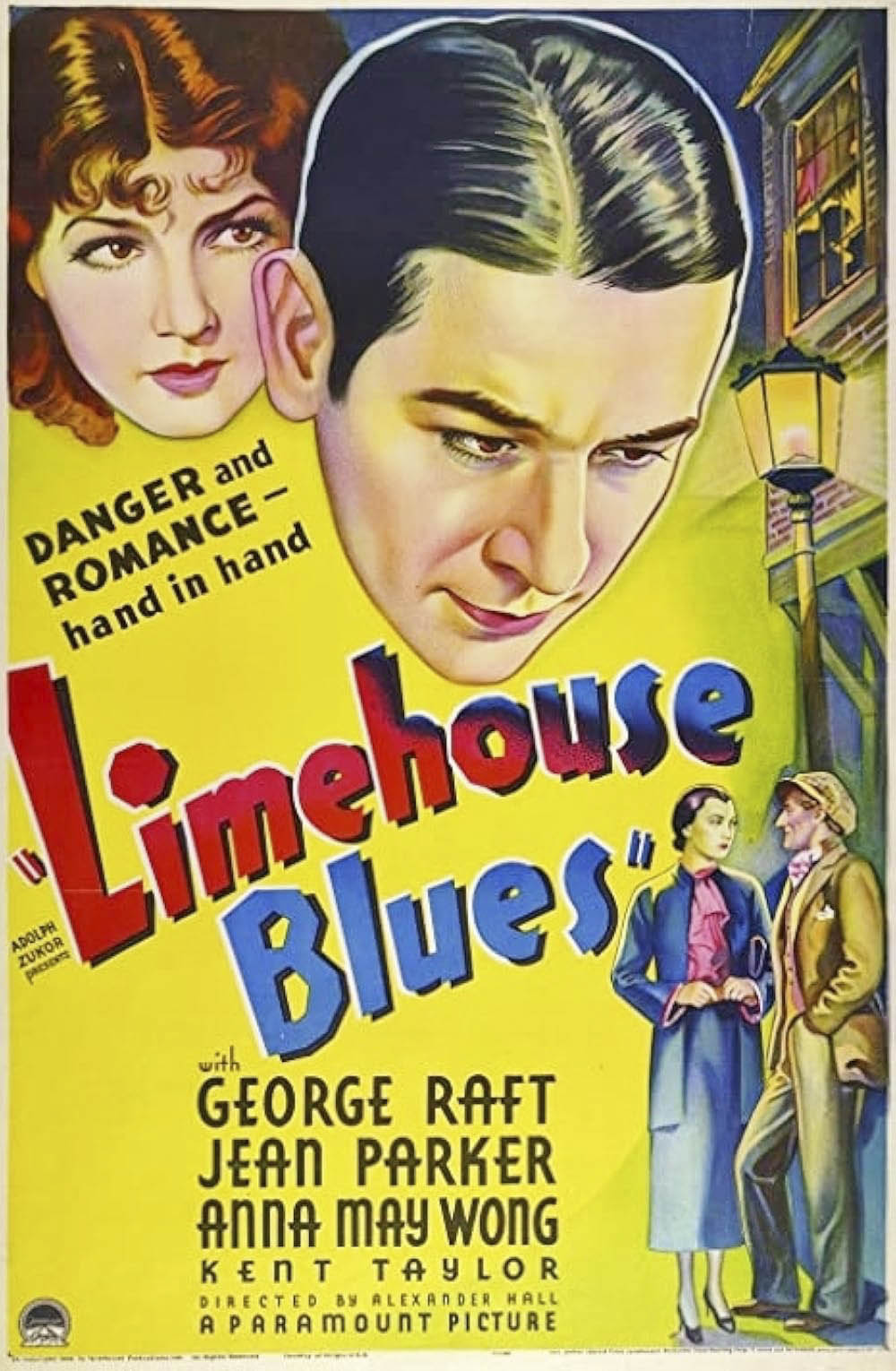
 

'Limehouse Blues' (1934) movie poster


Limehouse Blues (1934) movie poster


Unknown photographer. 'Anna May Wong' c. 1934


Unknown photographer
Anna May Wong
c. 1934
MoMA Film Stills Archive
Sheet: 8 x 6″ (20.3 x 15.2cm)
The Museum of Modern Art Film Stills Collection


Unknown photographer. 'Myrna Loy [in "Across the Pacific"]' 1926


Unknown photographer
Myrna Loy [in “Across the Pacific”]
1926
Sheet: 11 x 14″ (27.9 x 35.6cm)
The Museum of Modern Art Film Stills Collection
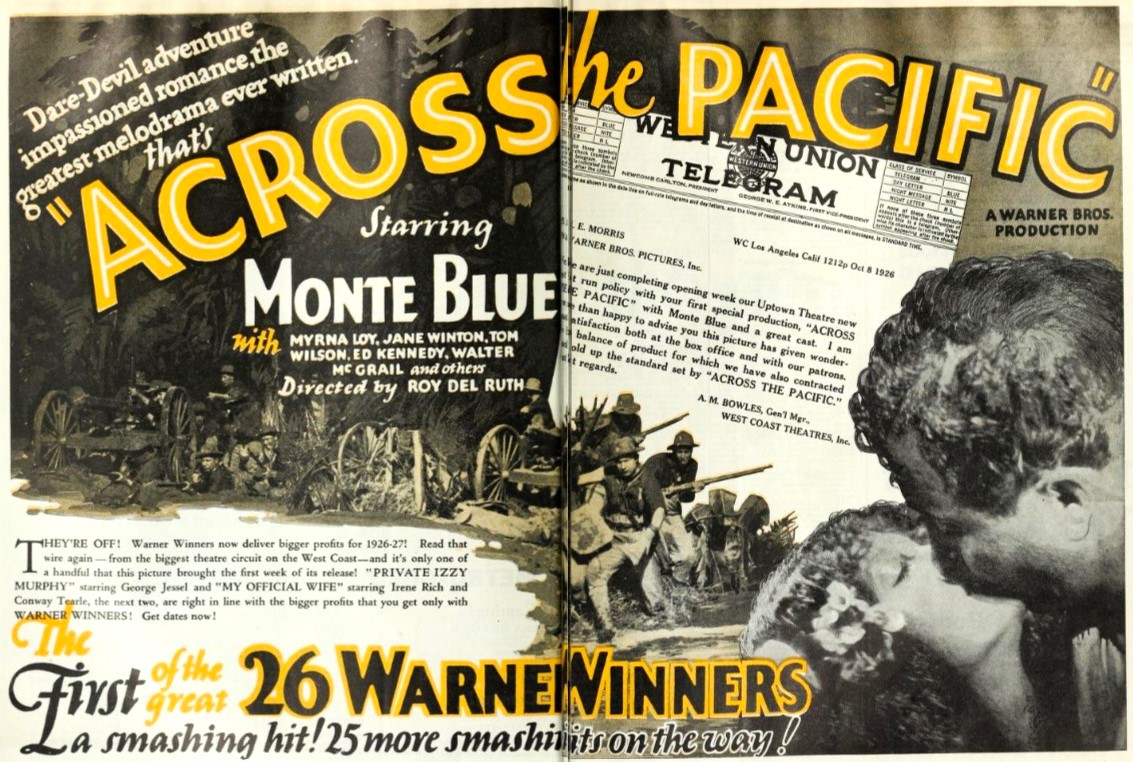
 

Advertisement for the American romantic adventure film 'Across the Pacific' (1926) with Monte Blue and Myrna Loy, on pages 6 and 7 of the October 26, 1926 'Film Daily'


Advertisement for the American romantic adventure film Across the Pacific (1926) with Monte Blue and Myrna Loy, on pages 6 and 7 of the October 26, 1926 Film Daily


John Miehle (American, 1902-1952) 'Dolores del Rio and Edmund Lowe [in "The Bad One"]' 1930


John Miehle (American, 1902-1952)
Dolores del Rio and Edmund Lowe [in “The Bad One”]
1930
Sheet: 13 7/8 x 10 15/16″ (35.2 x 27.8cm)
The Museum of Modern Art Film Stills Collection


John Miehle was born on August 7, 1902 in Los Angeles, California. Being born so close to Hollywood Miehle went to work as an assistant camera man on the 1931 movie “Delicious” starring Janet Gaynor and Charles Farrell.  

He then worked exclusively in the Camera and Electrical Department doing uncredited still photography on some of the best known films, such as “What Price Hollywood?,” “Rain,” “Little Women,” “Top Hat,” “Kitty Foyle,” “Rope” and “Portrait of Jennie.”

He photographed many of the greats as well including Constance Bennett, Joan Crawford, Irene Dunne, Ginger Rogers, Ann Harding, William Powell, Joel McCrea, Katherine Hepburn, Joan Bennett, Delores Del Rio, Randolph Scott, James Stewart, Cary Grant, Jean Arthur, Ruth Hussey, Jennifer Jones, Joseph Cotten, Ethel Barrymoore, Laraine Day, Franchot Tone, Ann Blyth, Farley Granger, and Dana Andrews…

In addition, he did many publicity shots of such stars as Carole Lombard, Marilyn Monroe, and Lucille Ball.

Don’t Forget The Illustrator! “The Classics and “Ginger Rogers” photographer John Miehle,” on the Vintage Movie Star Photos blog Thursday, March 28, 2013 [Online] Cited 12/05/2026. Used under fair use conditions for the purposes of education and research
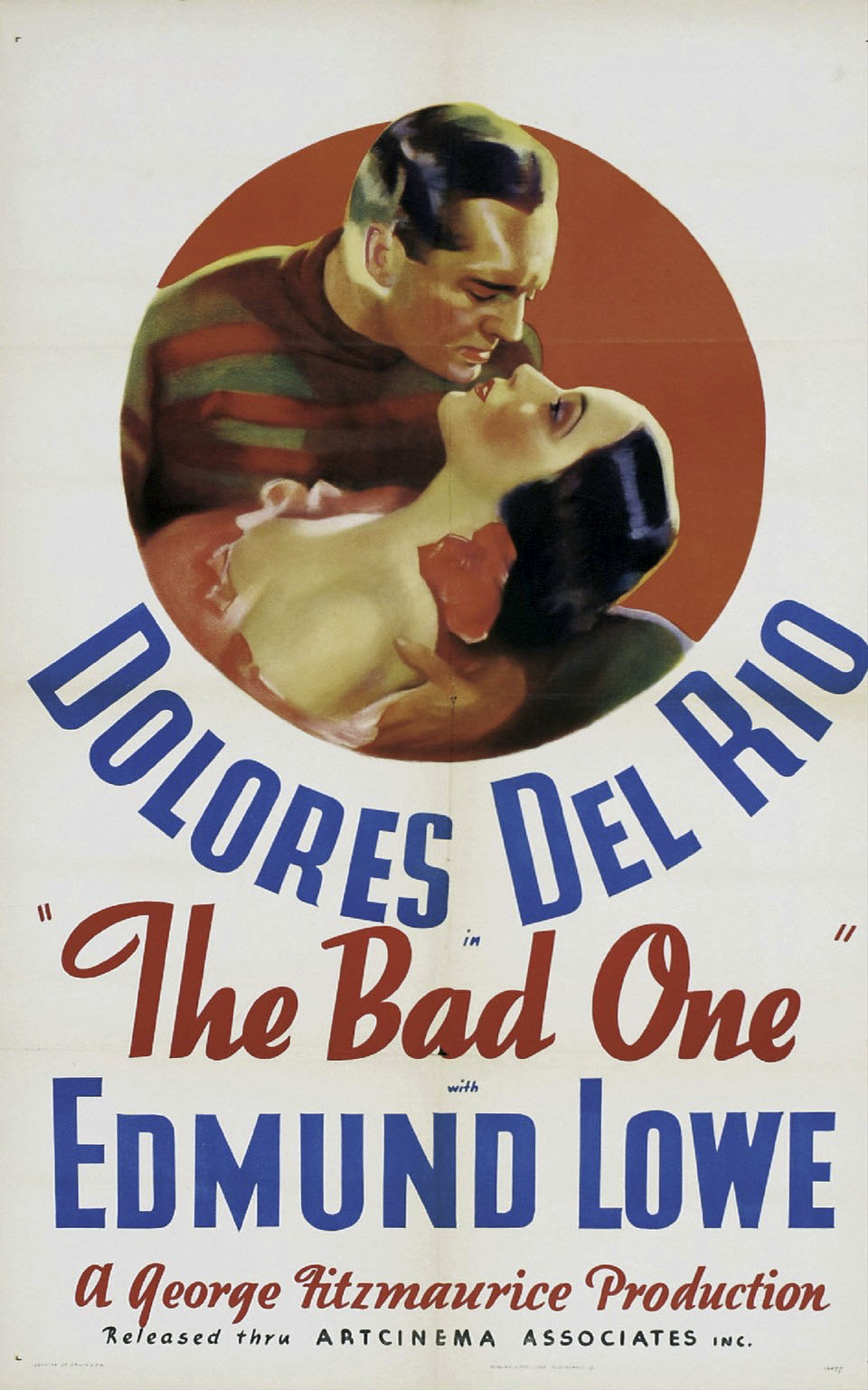
 

'The Bad One' (1930) movie poster


The Bad One (1930) movie poster


William Walling Jr (American, 1904-1983) 'Carole Lombard' c. 1933


William Walling Jr (American, 1904-1983)
Carole Lombard
c. 1933
Sheet: 13 7/8 x 11 15/16″ (35.2 x 30.3cm)
The Museum of Modern Art Film Stills Collection


William Richard Walling, Jr. (October 6, 1904 – December 11, 1983) was an American actor, inventor, and portrait photographer for film studios.


Robert Coburn (American, 1900-1990) 'Vera Zorina [in "The Goldywyn Follies"]' c. 1937


Robert Coburn (American, 1900-1990)
Vera Zorina [in “The Goldywyn Follies”]
c. 1937
Sheet: 13 13/16 x 10 15/16″ (35.1 x 27.8cm)
The Museum of Modern Art Film Stills Collection


Eva Brigitta Hartwig (January 2, 1917 – April 9, 2003), known professionally as Vera Zorina, was a German-Norwegian ballerina, theatre and film actress, and choreographer, chiefly remembered for her films choreographed by her husband George Balanchine. They include the Slaughter on Tenth Avenue sequence from On Your ToesThe Goldwyn FolliesI Was an Adventuress with Erich Von Stroheim and Peter LorreLouisiana Purchase with Bob Hope, and dancing to “That Old Black Magic” in Paramount Pictures’ Star Spangled Rhythm.

Text from the Wikipedia website


Robert Coburn was one of the most influential portrait photographers working in the major Hollywood movie studios from the 1930’s to 1960’s. His star subjects included Rita Hayworth, Joan Crawford, Kim Novak, Carole Lombard, William Holden, Glenn Ford, and Orson Welles. Coburn’s most infamous portraits immortalised Hollywood’s greatest icons and helped to define this era as the Golden Age of Cinema. In 1940, Robert Coburn began a twenty-year career with Columbia Pictures as the head of the still production department and the studio’s chief portrait photographer for many landmark films including “Picnic”, “Gilda”, and “The Big Heat”.

Text from the Fahey/Klein Gallery website
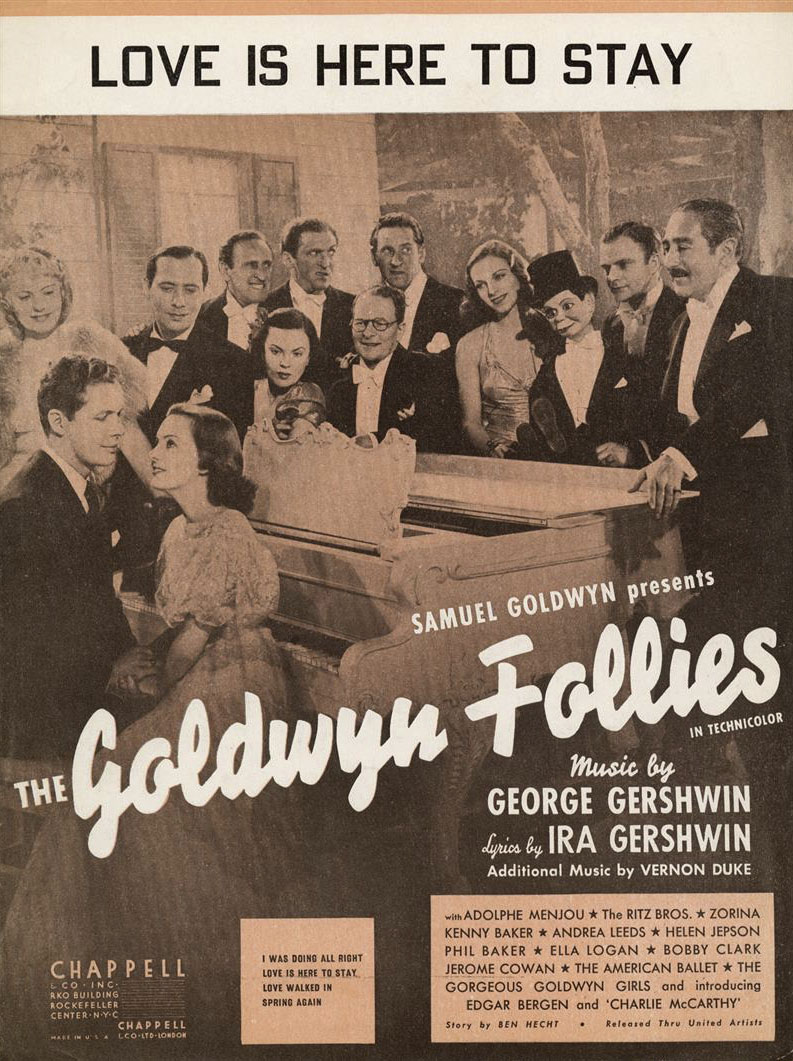
 

'Goldwyn Follies' (1937) movie poster


Goldwyn Follies (1937) movie poster


Face Value: Celebrity Press Photography Introductory text

For MoMA’s founding film curator, Iris Barry, building an archive of images that documented the history of motion pictures was second only to collecting films. Photographs from the study collection that she created were among the first works exhibited in MoMA’s theater gallery. Barry’s initiative eventually led to the acquisition of editorial archives from Photoplay (1911-1980) and Dell (1921-1976), leading fan magazine publishers supporting the Hollywood star system. The portrait photography featured in these publications was produced by film studios to promote the glamorous celebrities under contract to them. Face Value looks at these images and surveys how they were manipulated for public consumption in the decades before digital tools, AI technology, and social media revolutionized the process. 

Over sixty photographers are represented in this installation, which intermingles images that survive untouched with those that show evidence of the hands-on practices that readied them for the press. The standard techniques used – silhouetting, in-painting, masking, sectioning, and collage – were applied not only to photographs of entertainers but to sports figures, socialites, and politicians as well. Organised in suites that highlight radical editing practices, stylised visual motifs, and the gender stereotypes inherent in the studio system, the exhibition offers a demystifying perspective on the glamour of celebrity.

Wall text from the exhibition
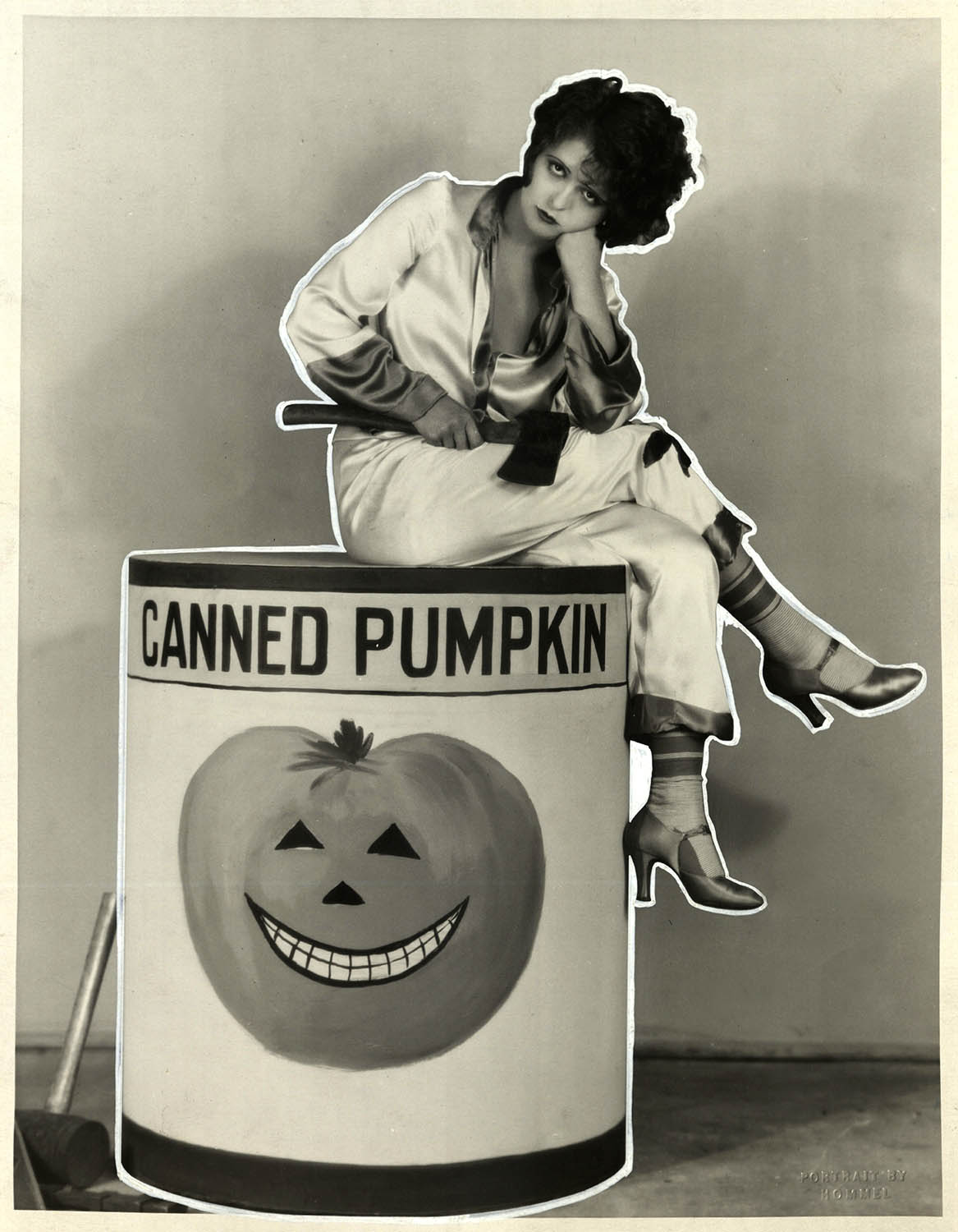
 

George P. Hommel (American, 1901-1953) 'Clara Bow' c. 1929


George P. Hommel (American, 1901-1953)
Clara Bow
c. 1929
Sheet: 14 x 11″ (35.6 x 27.9 cm)
The Museum of Modern Art Film Stills Collection


Overshadowed by the work of 1920s Paramount colleagues Donald Biddle Keyes and Eugene Robert Richee, stillsman George P. Hommel crafted thoughtful portraits highlighting both the beauty and sorrow of those he photographed. Like Keyes, the peripatetic Hommel always looked for new challenges, new opportunities, keeping him on the move. Unobstrusive and elegant, Hommel’s work reveals hidden depths in those he shot. …

Hommel’s straightforward portraiture captured the vulnerability of his sitters, revealing a wistful and often melancholic look in their expressive eyes. His pensive work focused on serious matters, not straining to create fleeting moods but revealing the heart of those he photographed. Employing simple, dark-textured background, Hommel focused on the eyes and lips, creating a sharp image with an often soft-focus background. His portraits often feature shadows and strong angular lines, creating dramatic composition. Hommel could also capture the sometimes insouciant or even overly exuberant emotions of sitters, often covering their vulnerability and pain, such as in his Pierrot portraits of Clara Bow as clown.

lmharnisch. “Mary Mallory / Hollywood Heights: George P. Hommel, Pensive Photographer,” on The Daily Mirror website, July 27, 2020 [Online] Cited 12/05/2026. Used under fair use conditions for the purposes of education and research


James Manatt (American, 1896-1989) 'Joan Crawford [in "Letty Lynton"]' 1932


James Manatt (American, 1896-1989)
Joan Crawford [in “Letty Lynton”]
1932
Sheet: 13 x 10″ (33 x 25.4cm)
The Museum of Modern Art Film Stills Collection
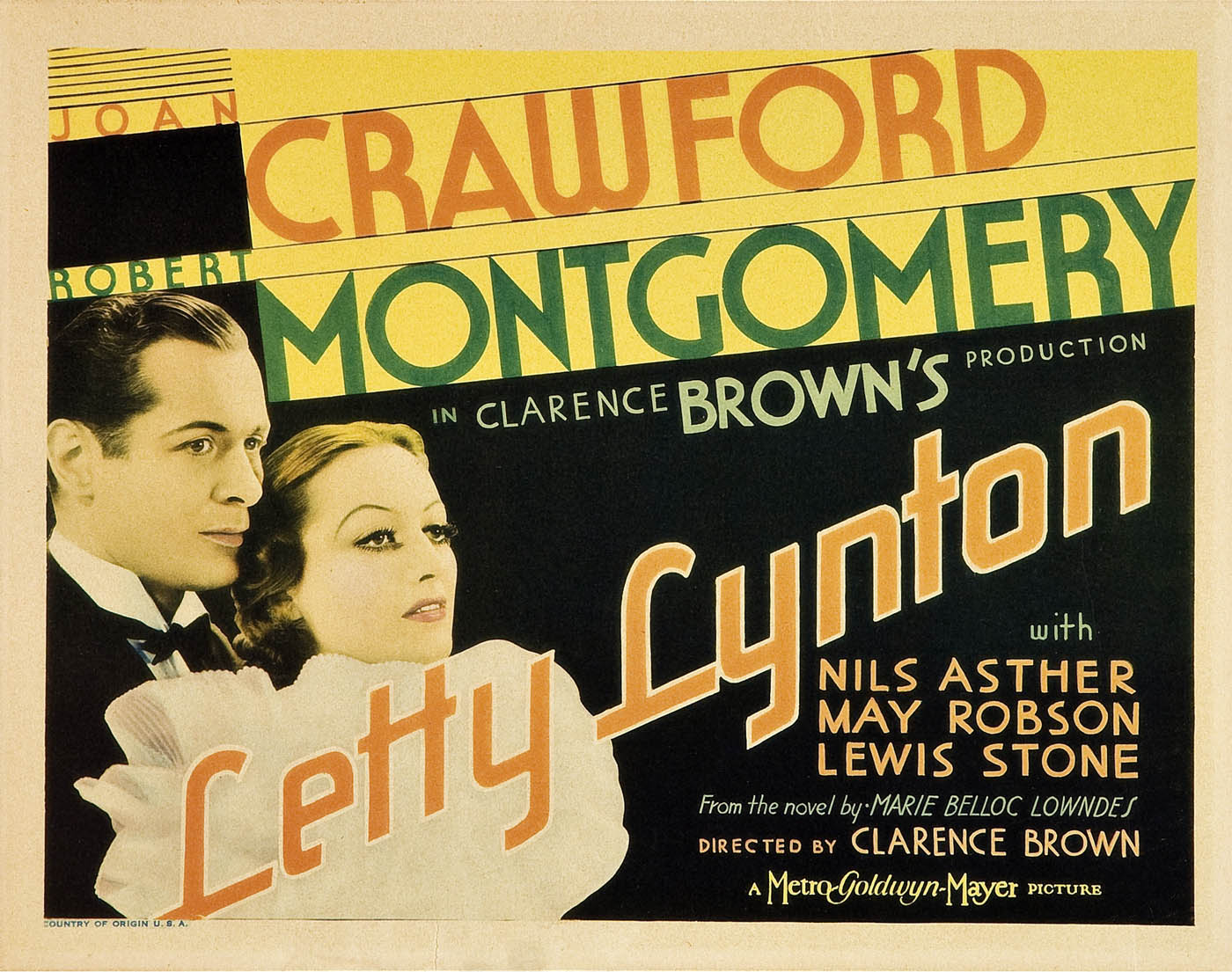
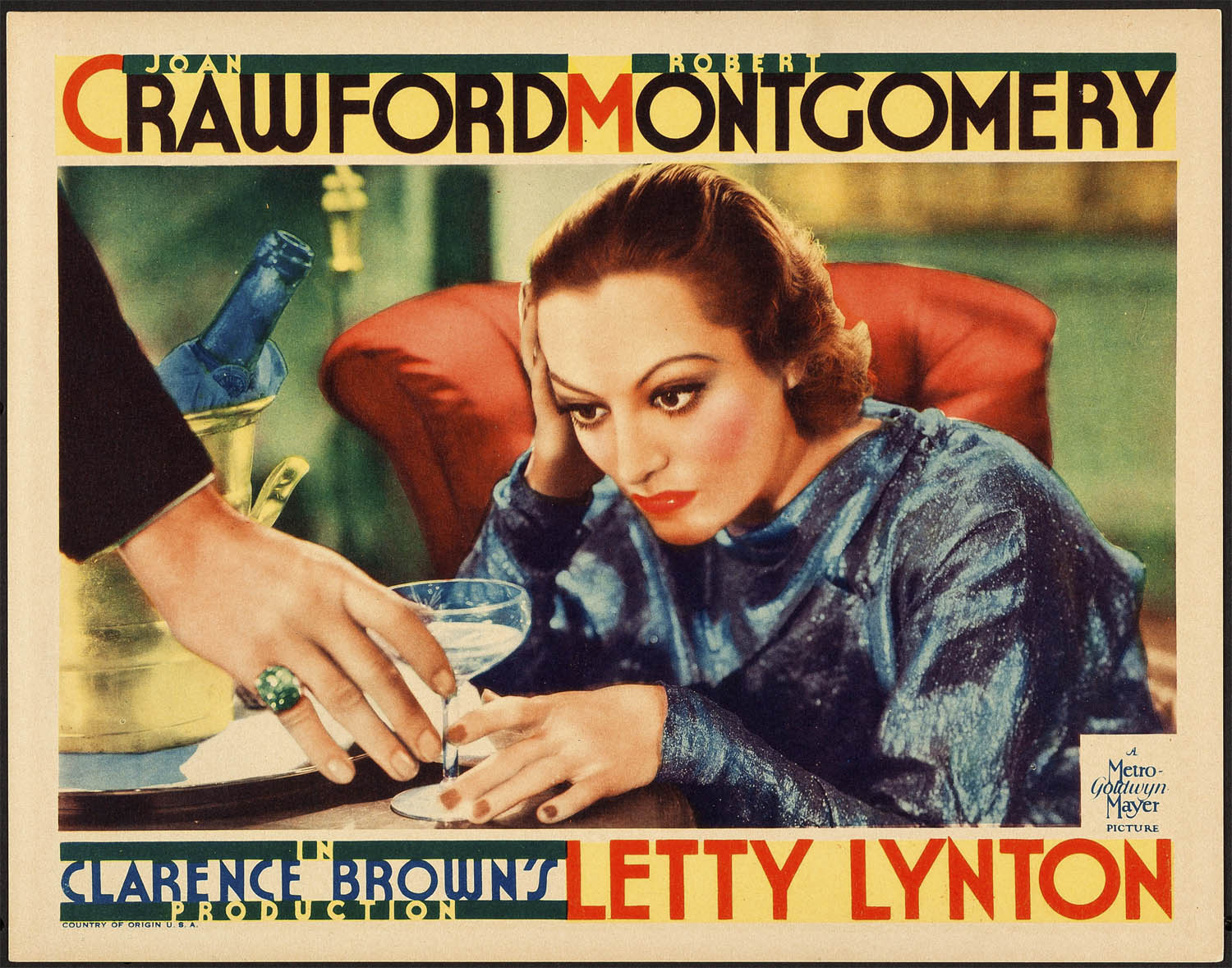
 

'Letty Lynton' (1932) movie poster


Letty Lynton (1932) movie posters


Elmer Fryer (American, 1898-1944) 'Lili Damita [in "The Match King"]' c. 1932


Elmer Fryer (American, 1898-1944)
Lili Damita [in “The Match King”]
c. 1932
Sheet: 14 1/16 x 11″ (35.7 x 27.9cm)
The Museum of Modern Art Film Stills Collection
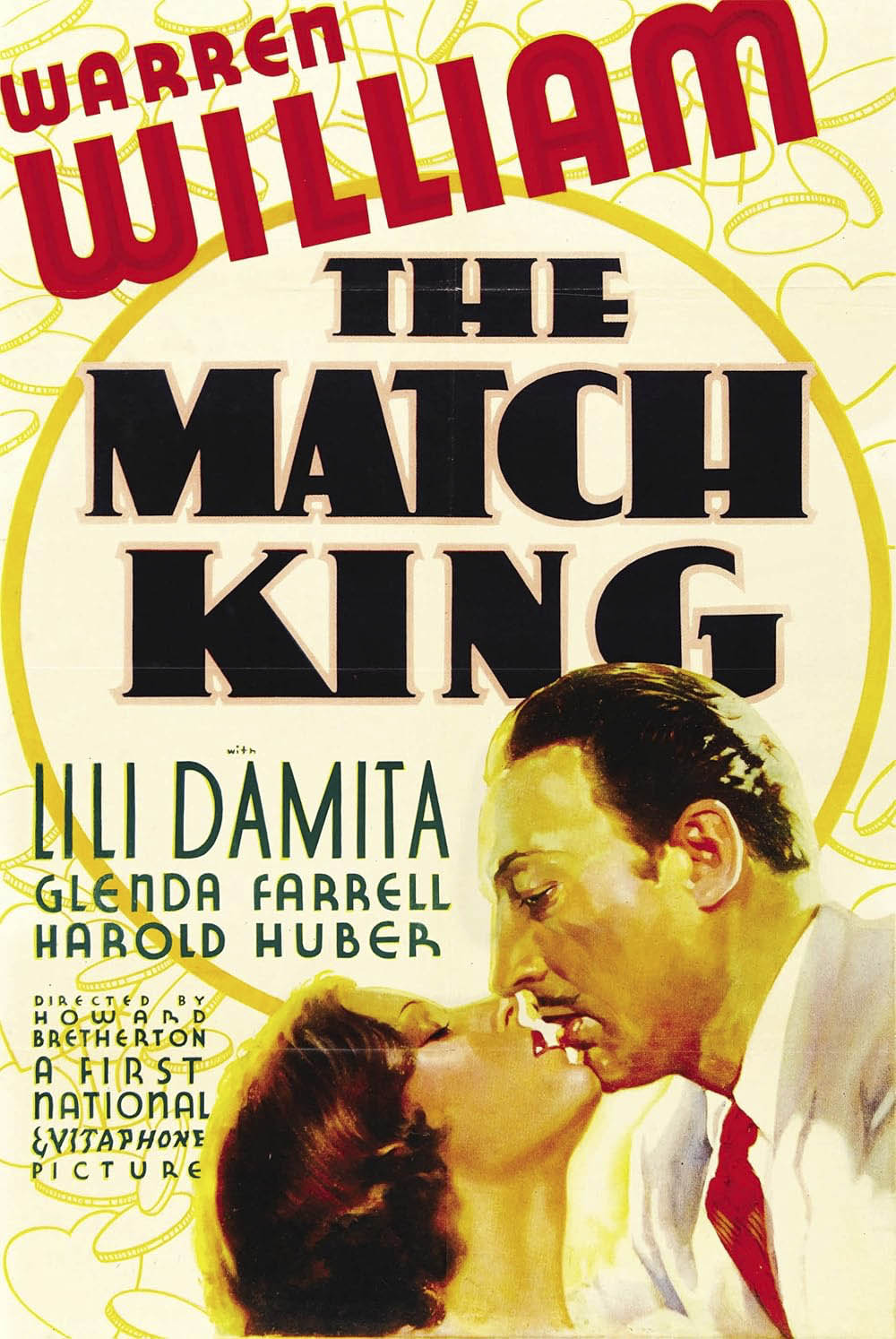
 

'The Match King' (1932) movie poster


The Match King (1932) movie poster


Bert Longworth (American, 1893-1964) 'Amelia Earhart with Helen Hayes [on set of "A Farewell to Arms"]' 1932


Bert Longworth (American, 1893-1964)
Amelia Earhart with Helen Hayes [on set of “A Farewell to Arms”]
1932
Sheet: 13 15/16 x 10 7/8″ (35.4 x 27.6cm)
The Museum of Modern Art Film Stills Collection


As the studio system came into place with the advent of talkies, studios hired many stillsmen to take scene stills, off-camera images, and candids of both above and below the line talent. Photographers took massive amounts of stills around the lot, at public events, premieres, at homes, in posed shots, to be widely distributed to magazines and newspapers for free publicity promoting upcoming films, new talent, and established stars. The journals, fan magazines, and newspapers splashed these images throughout their pages, building awareness and star popularity.

Bert “Buddy” Longworth was one of the stills photographers taking these images. Longworth began his career shooting scene stills at MGM for Greta Garbo’s first three films, including “Flesh and the Devil,” with Longworth capturing the passion of Garbo and John Gilbert as they fell in love. He was employed for a short time at Paramount, but from 1929 on, he worked at Warner Bros. as an action specialist, working on Busby Berkeley’s spectacular musicals, crime pictures, off-set candids, as well as portraits. Scholar David Shields calls him “Hollywood’s foremost expressionist, often using unusual perspective, occasional use of multiple exposures.”

lmharnisch. “Mary Mallory / Hollywood Heights: Bert Longworth and ‘Hold Still, Hollywood’,” on The Daily Mirror website, June 26, 2023 [Online] Cited 12/05/2026. Used under fair use conditions for the purposes of education and research
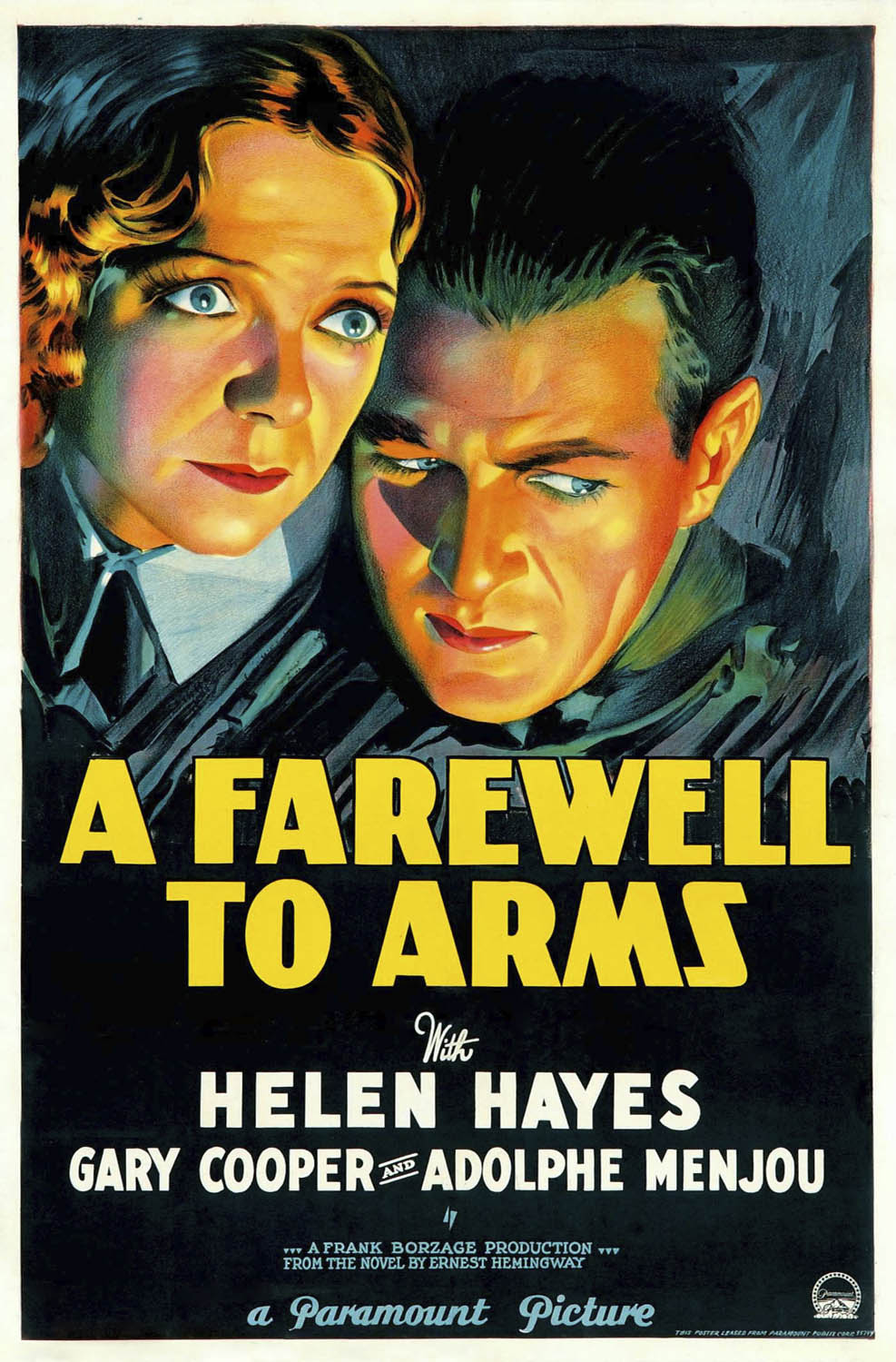
 

'A Farewell To Arms' (1932) movie poster


A Farewell To Arms (1932) movie poster


Unknown photographer. 'Elsa Lanchester [in "The Bride of Frankenstein"]' 1935


Unknown photographer
Elsa Lanchester [in “The Bride of Frankenstein”]
1935
Sheet: 13 1/2 x 9 3/16″ (34.3 x 23.3cm)
The Museum of Modern Art Film Stills Collection
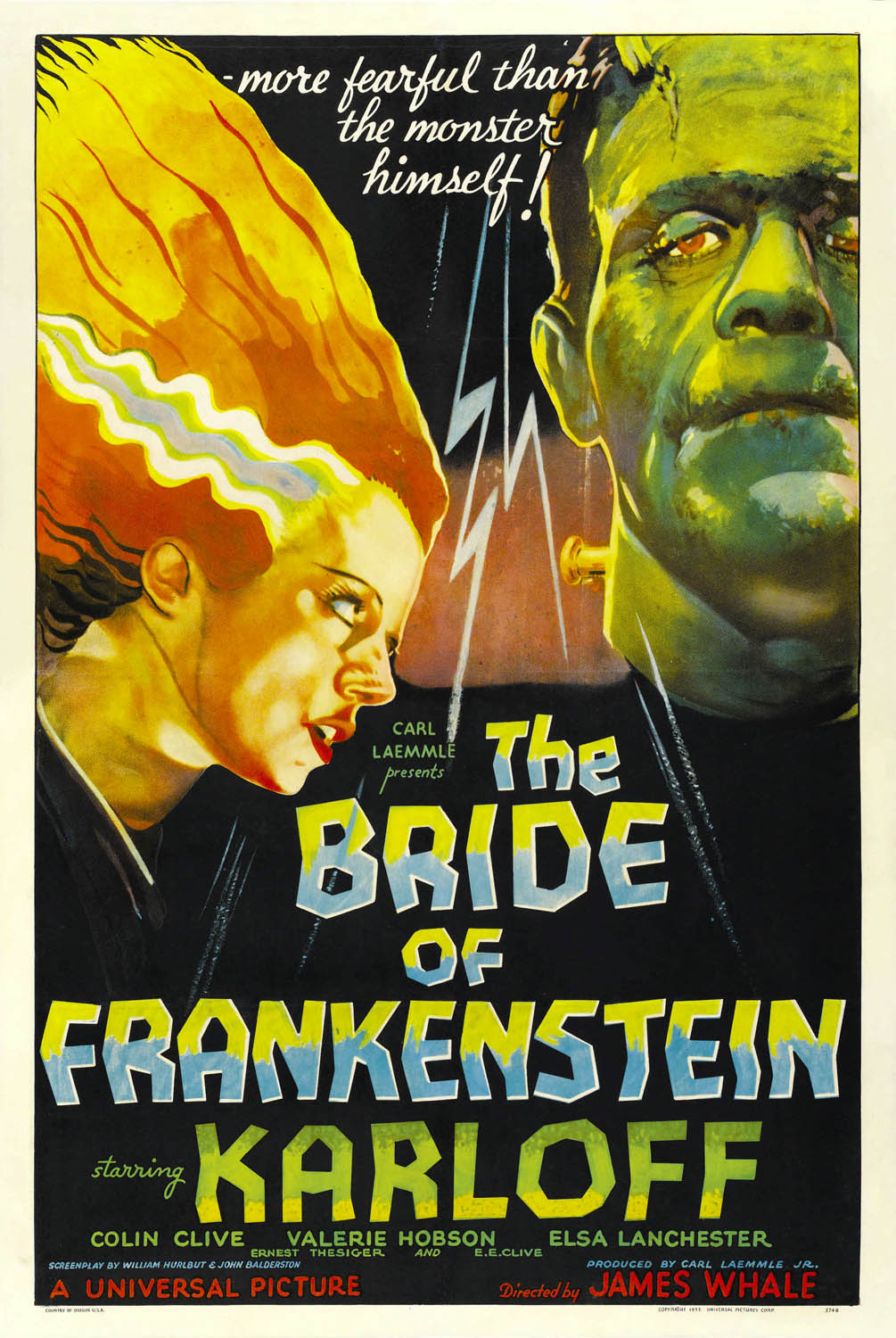
 

'The Bride of Frankenstein' (1935) movie poster


The Bride of Frankenstein (1935) movie poster


I want to talk more about the edited photographs. In many of the photos white-out has been used to separate the subject’s head or face – and in one notable case, their bare legs – from the rest of the image. What are some ways in which these disembodied segments were used by the studios and by the magazines?

RM: We know they were from Photoplay magazine, so if we have a still that’s been edited for Photoplay, Cara went and looked for the issue that published the photograph to see how it was used. It might have been a feature on women’s legs, so that’s why they only focused on the legs.

There’s one grouping of photographs, I call it the “eat face grouping,” where the stars are very close up. There’s a photograph of someone eating someone’s chin. Those were all taken for a particular issue of Photoplay – that’s why they’re all edited in the same way.

With research and detective work you can determine how they were actually used in print. The floating heads, they would attach to biographies. They call that silhouetting, with the white-out.

CS: A lot of the uses I found were very gossipy, which was interesting, a lot of rumor columns. And then of course, like Ron said, highlighting certain aspects of celebrities’ bodies or features.


Back in 1980 MoMA’s exhibition Hollywood Portrait Photographers, 1921 to 1941 actually used a couple of the same images that appear in this show. But that nnnexhibition celebrated the artistry and glamor of these images. Why did you choose to focus more on the ways that these images have been manipulated and edited?

RM: The audience for photographs like this has changed. In 1980 there was a whole generation of people who knew who these performers were, who appreciated them as performers and appreciated their celebrity. Nowadays, younger audiences, in many cases, have no idea who these folks are. Even we sometimes have trouble identifying everyone. Displaying them in that way seemed dated. We wanted to mount them in a way that reflected how visitors today would need to look at them.

The photographs in 1980 were all matted in a very formal way that encouraged appreciation for the beauty of the photograph. I wasn’t interested in how beautiful the images were. I wasn’t interested in the celebrities. We’re mostly interested in the photographs. I wanted them to look like working photographs, and that’s reflected in the way they’re displayed. We did ours on plexi traps, which turned out to be very elegant, but the notion was that it would be a less precious way of mounting them so we would look at them in a less precious way.

The other thing we did differently was to have large numbers of photographs grouped in very dense clusters. To me that reflects social media today. The way we encounter images daily is so dense, and we’re forced to sort through a lot of images that come our way in any one moment. So I wanted visitors to have a contemporary view. It was meant to reflect a digital-age perspective, because analog-versus-digital was a subtext of the show in our heads.

There were two shows that were touchstones for this one: the Hollywood Portrait show of 1980, and the Fame After Photography show, a wonderful show in 1999 that MoMA’s Photography department mounted. They borrowed a lot of film stills for that show, which was also investigating celebrity and fame.

Ron Magliozzi, Cara Shatzman, Jason Persse. “Cropped, Chopped, and Silhouetted: Taking Celebrity at Face Value,” in the MoMA magazine on the MoMA website Sep 17, 2025 [Online] Cited 10/05/2026. Used under fair use conditions for the purposes of education and research


Unknown photographer. 'Louis Armstrong [in "Cabin in the Sky"]' 1943


Unknown photographer
Louis Armstrong [in “Cabin in the Sky”]
1943
Sheet: 8 x 10″ (20.3 x 25.4 cm)
The Museum of Modern Art Film Stills Collection
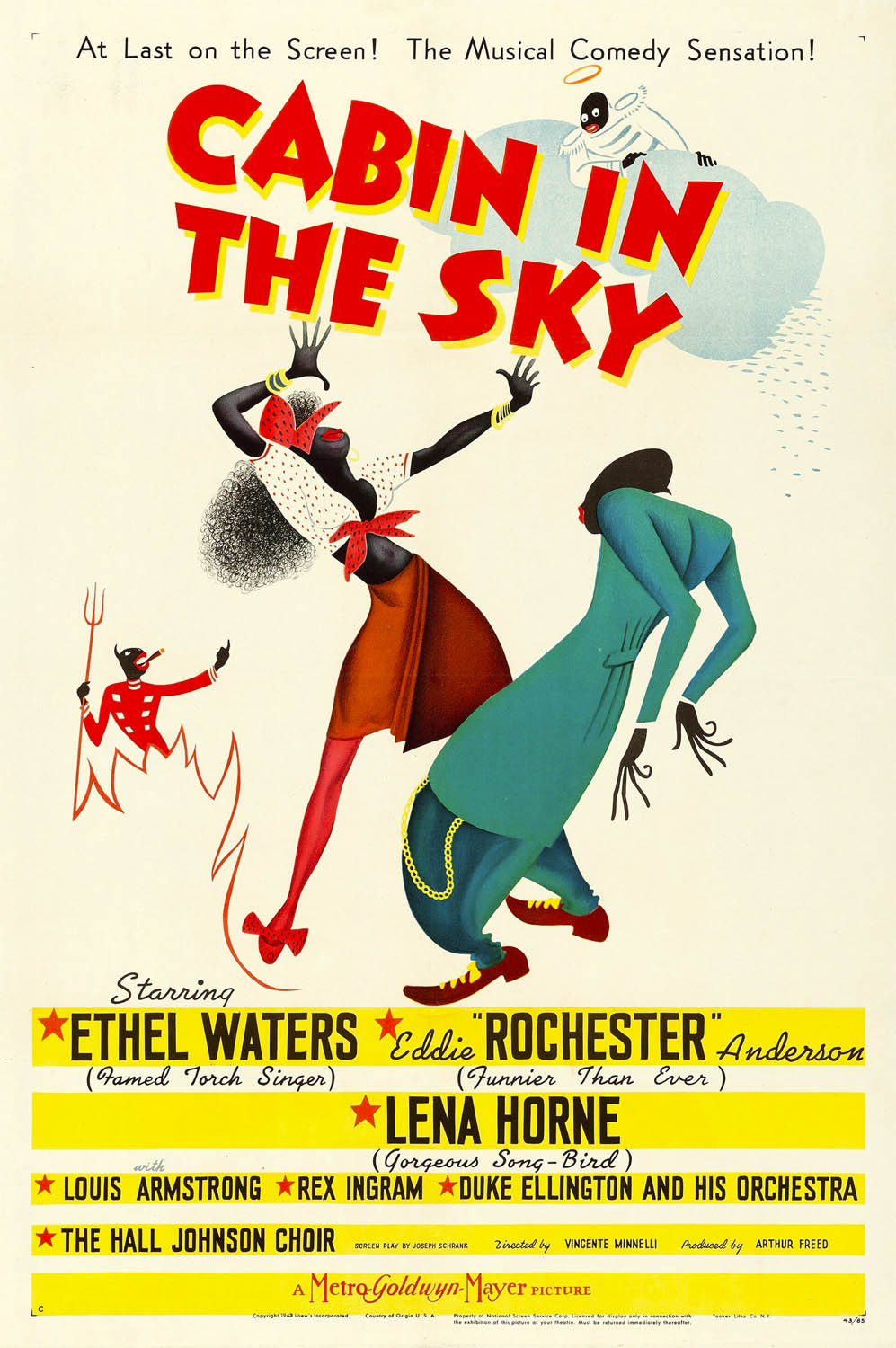
 

'Cabin in the sky' (1943) movie poster


Cabin in the sky (1943) movie poster


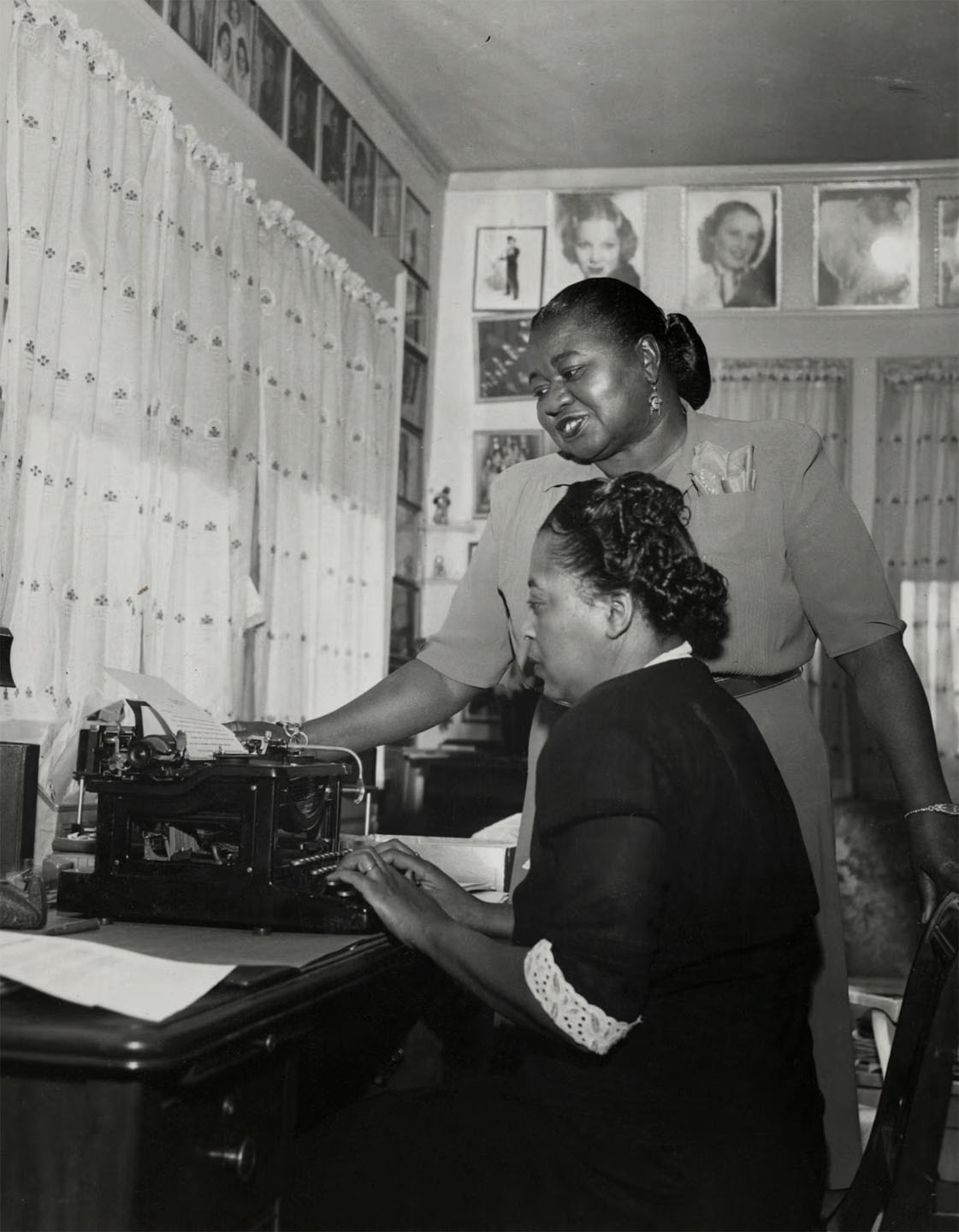
Unknown photographer. 'Hattie McDaniel and Ruby Berkley Goodwin' c. 1948


Unknown photographer
Hattie McDaniel and Ruby Berkley Goodwin
c. 1948
Sheet: 9 1/16 x 7″ (23 x 17.8cm)
The Museum of Modern Art Film Stills Collection


“[Ruby Berkley Goodwin] was also Hattie McDaniel’s publicist. And she was Ethel Waters’s publicist. She was the first Black American to have a syndicated newspaper column. She wrote this very famous autobiography called It’s Good to Be Black that was very, very popular. She was a poet. She was a fascinating person, and I was not familiar with her. That was a great aspect of learning about all of these people in these photographs.”

Ron Magliozzi, Cara Shatzman, Jason Persse. “Cropped, Chopped, and Silhouetted: Taking Celebrity at Face Value,” in the MoMA magazine on the MoMA website Sep 17, 2025 [Oline] Cited 10/05/2026. Used under fair use conditions for the purposes of education and research
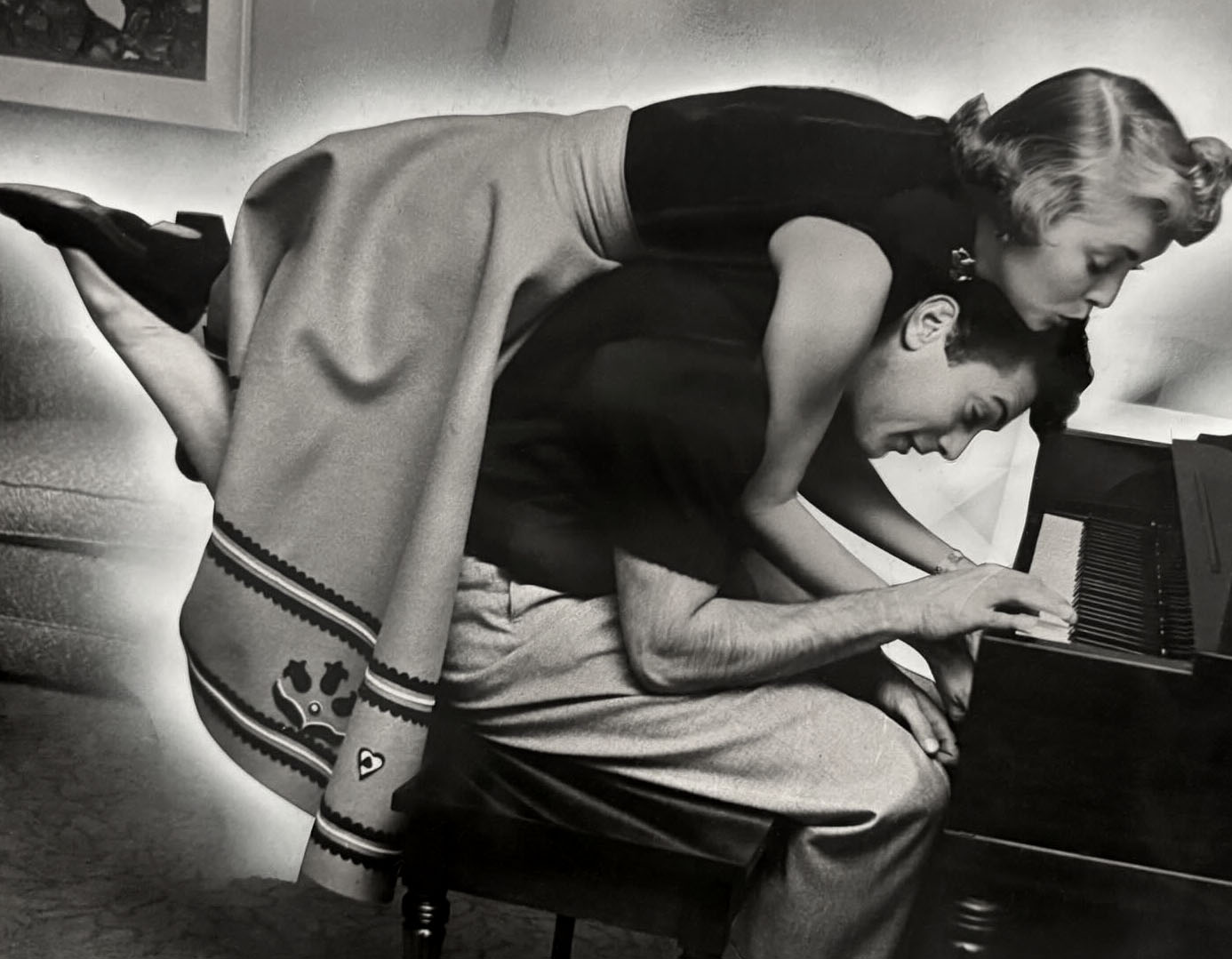
 

Unknown photographer. 'Janet Leigh and Tony Curtis' c. 1950 (detail)


Unknown photographer
Janet Leigh and Tony Curtis
c. 1950 (detail)
Sheet: 8 1/16 x 10″ (20.5 x 25.4cm)
The Museum of Modern Art Film Stills Collection


'Elvis Presley [Fans' Star Library magazine, No. 13]' 1959


Elvis Presley [Fans’ Star Library magazine, No. 13]
1959
Sheet: 7 x 5 1/8″ (17.8 x 13cm)
The Museum of Modern Art Film Stills Collection
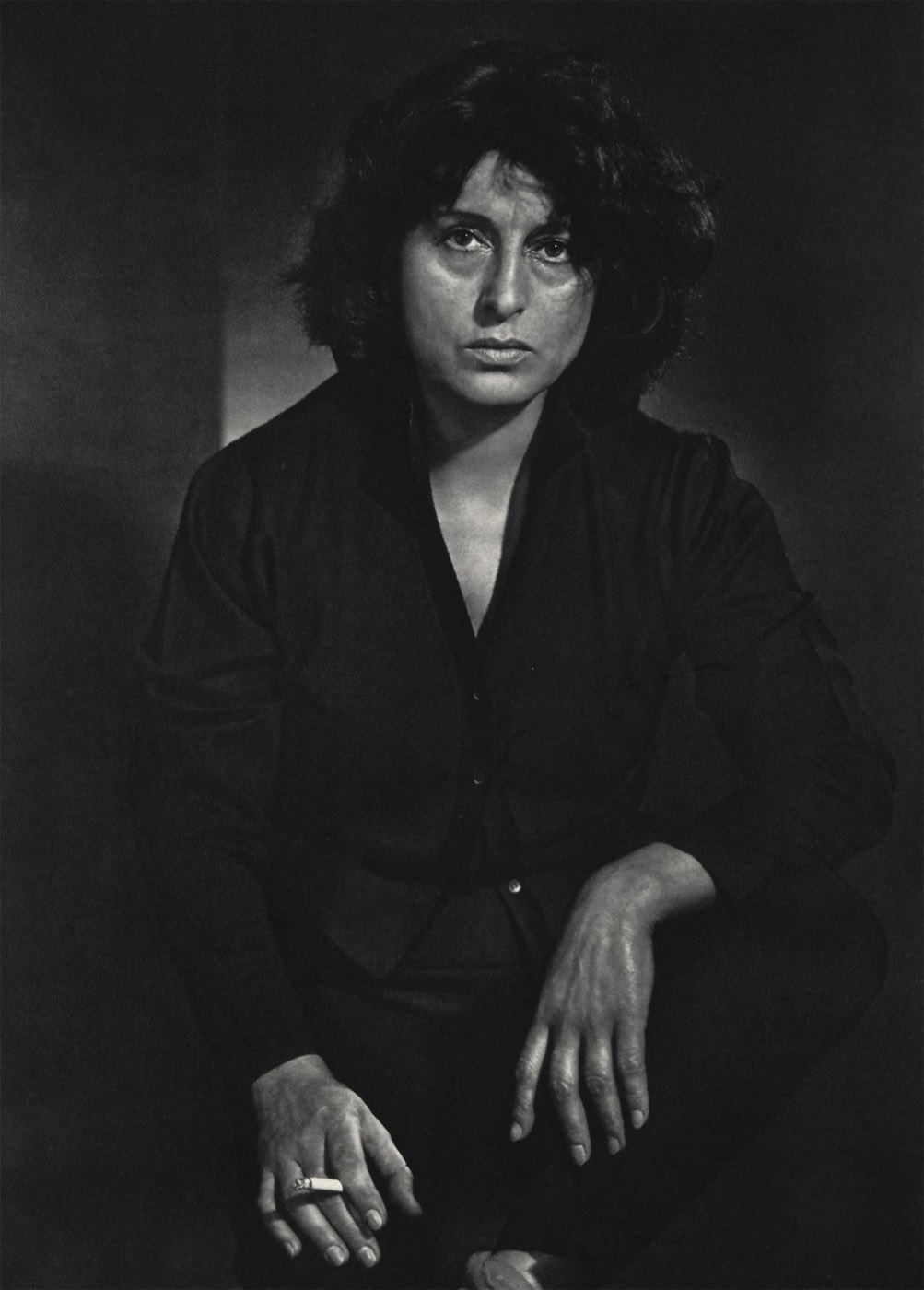
 

Yousuf Karsh (Armenian-Canadian born Mardin, Ottoman Empire (now Turkey), 1908-2002) 'Anna Magnani' 1959


Yousuf Karsh (Armenian-Canadian born Mardin, Ottoman Empire (now Turkey), 1908-2002)
Anna Magnani
1959
Sheet: 20 x 15 15/16″ (50.8 x 40.5cm)
The Museum of Modern Art Film Stills Collection


Anna Maria Magnani (Italian, 1908-1973)

Anna Maria Magnani (Italian; 7 March 1908 – 26 September 1973) was an Italian actress. She was the first Italian woman to win an Academy Award.

Born and raised in Rome, Italy or Alexandria, she worked her way through Rome’s Academy of Dramatic Art by singing at night clubs. During her career, her only child was stricken by polio when he was 18 months old and remained disabled. She was referred to as “La Lupa”, the “perennial toast of Rome” and a “living she-wolf symbol” of the cinema. Time described her personality as “fiery”, and drama critic Harold Clurman said her acting was “volcanic”. In the realm of Italian cinema, she was “passionate, fearless, and exciting”, an actress whom film historian Barry Monush calls “the volcanic earth mother of all Italian cinema.” Director Roberto Rossellini called her “the greatest acting genius since Eleonora Duse”. Playwright Tennessee Williams became an admirer of her acting and wrote The Rose Tattoo (1955) specifically for her to star in, a role for which she received an Academy Award for Best Actress.

After meeting director Goffredo Alessandrini, she received her first screen role in The Blind Woman of Sorrento (La cieca di Sorrento, 1934) and later achieved international attention in Rossellini’s Rome, Open City (1945), which is seen as launching the Italian neorealism movement in cinema. As an actress, she became recognised for her dynamic and forceful portrayals of “earthy lower-class women” in such films as L’Amore (1948), Bellissima (1951), The Rose Tattoo (1955), The Fugitive Kind (1960) and Mamma Roma (1962). As early as 1950, Life had already stated that Magnani was “one of the most impressive actresses since Garbo”.

Text from the Wikipedia website
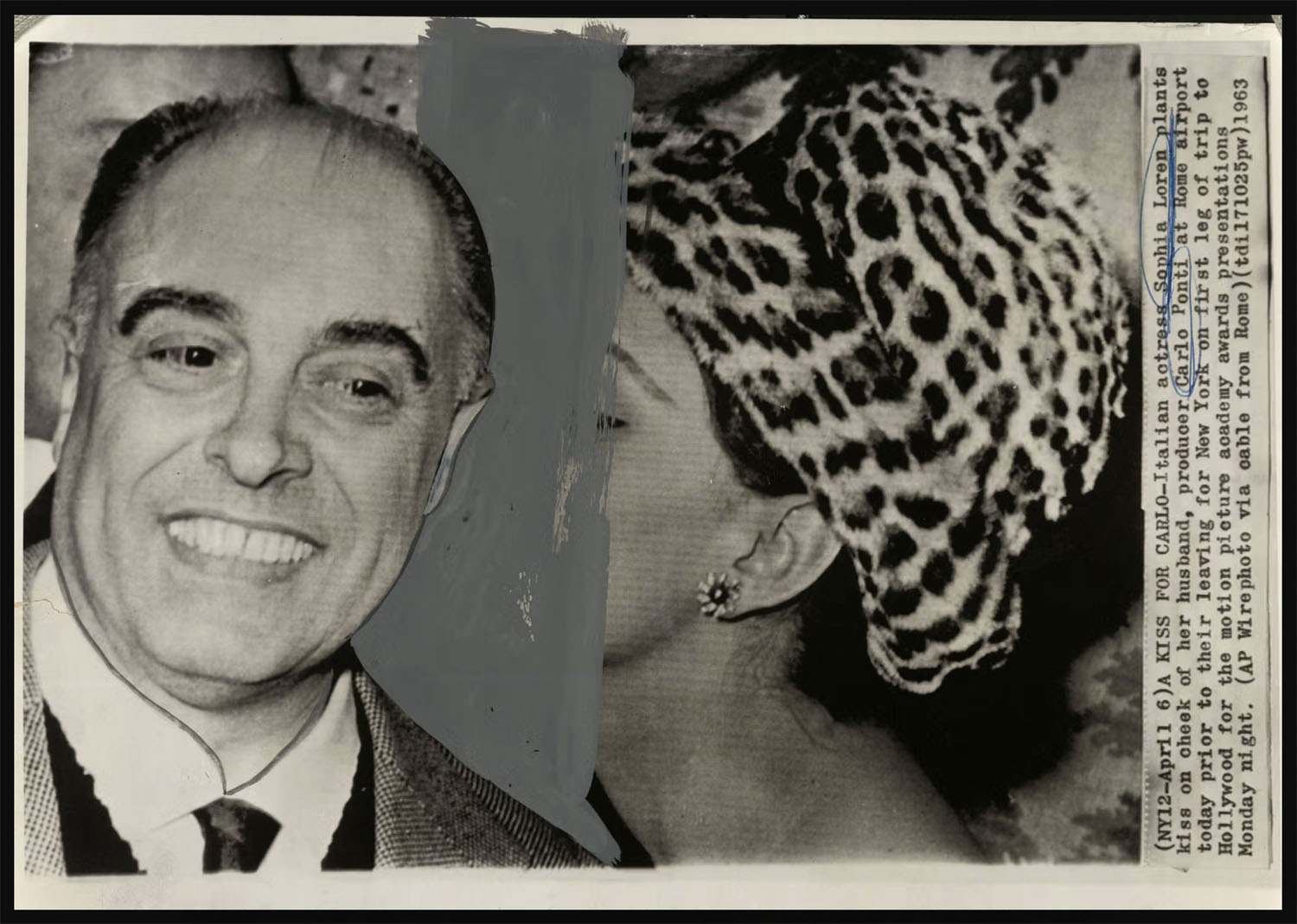
 

Unknown photographer. 'Carlo Ponti and Sophia Loren' c. 1963


Unknown photographer
Carlo Ponti and Sophia Loren
c. 1963
Sheet: 8 x 10″ (20.3 x 25.4cm)
The Museum of Modern Art Film Stills Collection


Ray Wilson. 'Mia Farrow [in "Rosemary's Baby"]' c. 1967


Ray Wilson
Mia Farrow [in “Rosemary’s Baby”]
c. 1967
Sheet: 12 x 8 3/16″ (30.5 x 20.8cm)
The Museum of Modern Art Film Stills Collection
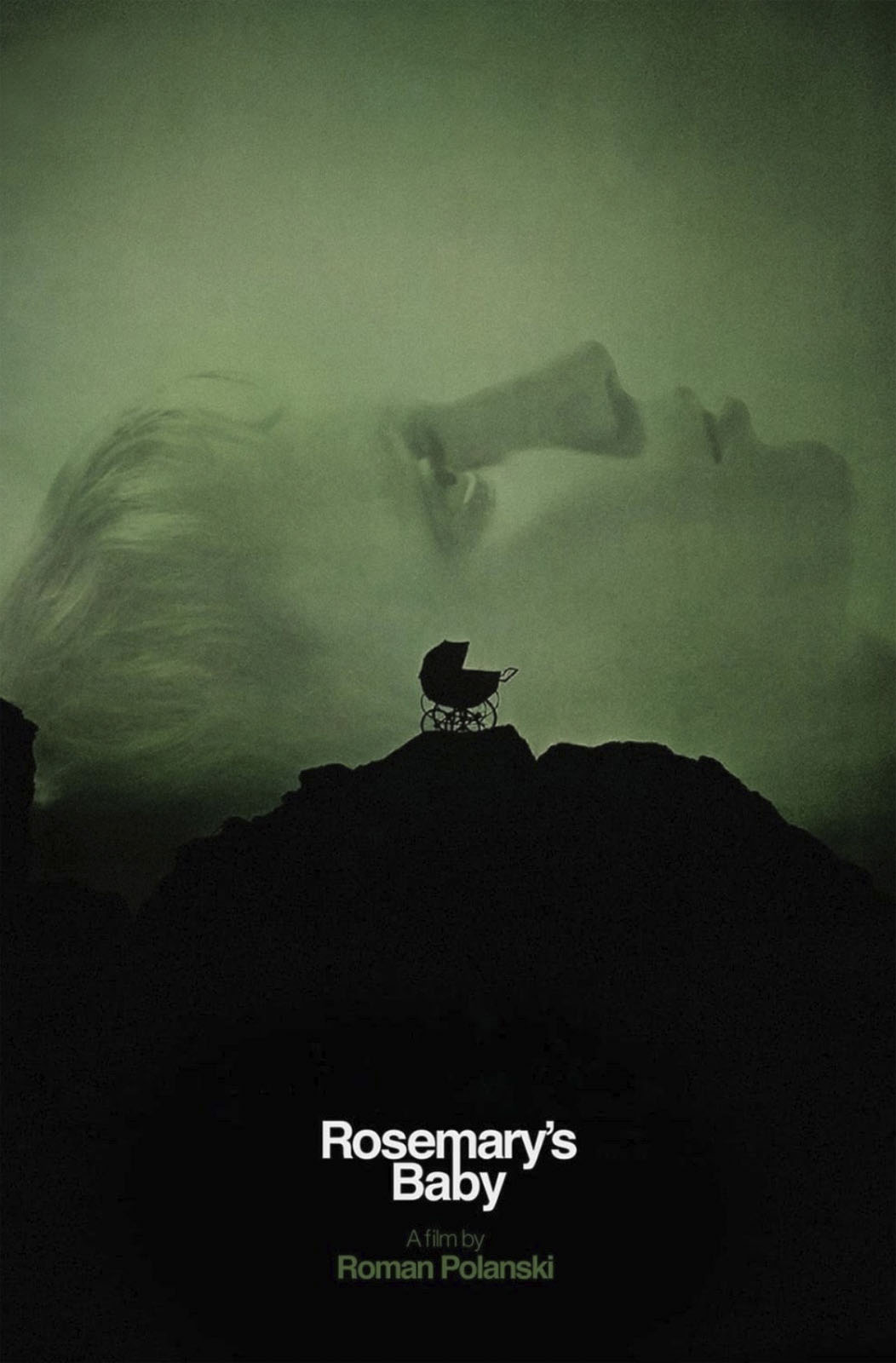
 

'Rosemary's Baby' (1968) movie poster


Rosemary’s Baby (1968) movie poster


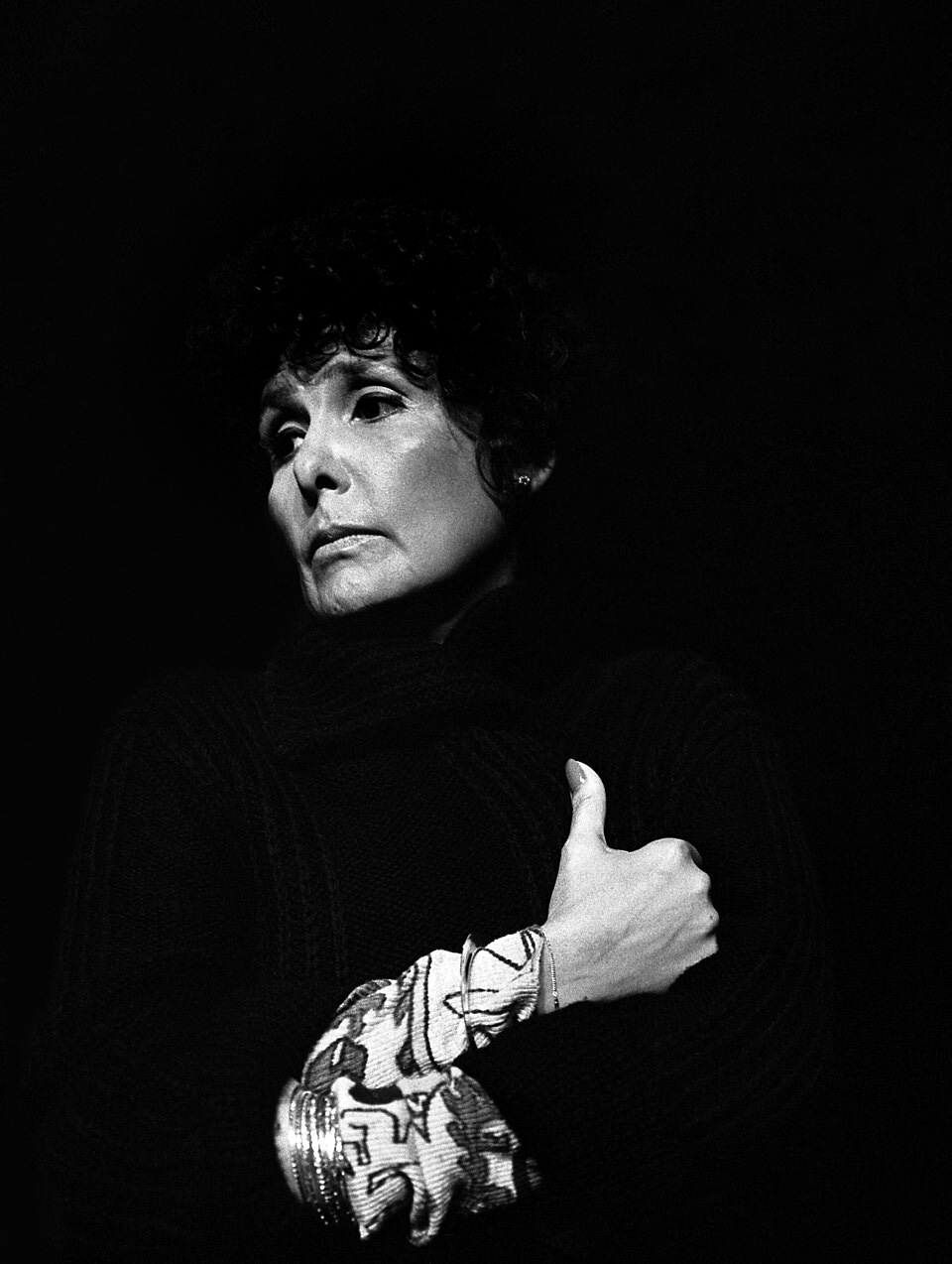
Kathleen Ballard. 'Lena Horne' 1975


Kathleen Ballard
Lena Horne
1975
Sheet: 13 1/16 x 9″ (33.2 x 22.9cm)
The Museum of Modern Art Film Stills Collection


The Museum of Modern Art
11 West 53 Street
New York, NY 10019
Phone: (212) 708-9400

Opening hours:
10.30am – 5.30pm
Open seven days a week

MoMA website

LIKE ART BLART ON FACEBOOK

Back to top

Exhibition: ‘Dorothea Lange: Words & Pictures’ at the Museum of Modern Art, New York

Exhibition dates: 9th February – 9th May, 2020

Curator: Sarah Hermanson Meister, with River Bullock, Beaumont & Nancy Newhall Curatorial Fellow, assisted by Madeline Weisburg, Modern Women’s Fund Twelve-Month Intern, Department of Photography, The Museum of Modern Art.


Dorothea Lange (American, 1895-1965) 'Six Tenant Farmers without Farms, Hardeman County, Texas' 1937, printed 1965 from the exhibition 'Dorothea Lange: Words & Pictures' at the Museum of Modern Art, New York, Feb - May, 2020


Dorothea Lange (American, 1895-1965)
Six Tenant Farmers without Farms, Hardeman County, Texas
1937, printed 1965
Gelatin silver print
12 15/16 × 16 5/8″ (32.9 × 42.2cm)
The Museum of Modern Art, New York. Purchase


This image appeared in Land of the Free and later in Lange and Paul Taylor’s documentary photobook An American Exodus: A Record of Human Erosion (1941), where Lange cropped out the sixth, smaller man, perhaps to simplify the idea of strength and virility conveyed there.


Dorothea Lange (American, 1895-1965) 'A Half-Hour Later, Hardeman County, Texas' 1937, printed 1965 from the exhibition 'Dorothea Lange: Words & Pictures' at the Museum of Modern Art, New York, Feb - May, 2020


Dorothea Lange (American, 1895-1965)
A Half-Hour Later, Hardeman County, Texas
1937, printed 1965
Gelatin silver print
12 1/8 × 15 3/16″ (30.8 × 38.6cm)
The Museum of Modern Art, New York. Purchase


“All photographs – not only those that are so-called ‘documentary,’ … can be fortified by words.”

“And the assignment was… see what was really there. What does it look like, what does it feel like, what actually is the human condition.”


Dorothea Lange


“Lange took so many memorable photographs that it is challenging to shortlist them. One of the greatest is at the entrance to the MoMA show: “Migratory Cotton Picker, Eloy, Arizona” (1940). The farmworker’s hands are close to the lens of the camera. One hand is holding a wooden beam; it could be the implement of his impending crucifixion. The other hand, with its open palm and splayed fingers, covers his mouth. Unforgettably powerful, the photograph resembles self-portraits by Austrian expressionist painter Egon Schiele, who shared Lange’s interest in extremities – hands and feet, and also, wretched misery.”


Arthur Lubow


Closer and closer

While MoMA has closed temporarily due to the novel coronavirus (COVID-19) pandemic, I believe it is important to document and write about those exhibitions that would have been running during this distressing time, as a form of social inclusion, social connection if you like, in the virtual world. I know that I am feeling particularly isolated at the moment, fighting off depression, with a lack of my usual routine and coffee with friends.

Great art always inspires, engages me, makes me feel and care about the world around me. In these photographs by that most excellent of photographers Dorothea Lange, of another desperate time, The Great Depression, we can feel her sincerity and intensity, that resolute gift of seeing the world clearly, despite the abject misery that surrounds her. Fast forward future, and we see the lines of the newly unemployed, desperate, penniless, snaking around the block of the social security buildings here in Australia, this very day.

Lange’s photographs don’t need words. Words are never enough.

The faces weary, furrowed, parched under baking sun, rutted like the land, Tractored Out, Childress County, Texas (1938). Dark eyes pierce the marrow, astringent lines, heavy eyebrows, mirror, set above, tight, tight mouth, Young Sharecropper, Macon County, Georgia (July 1937). I feel what, his pain? his sadness? his despair? Hands, arms, feet, form an important part of Lange’s visual armoury, arm/ory, amour. The hand to chin of Migrant Mother, Nipomo, California (March 1936); the bony arms of Woman of the High Plains, Texas Panhandle (June 1938); hand obscuring face, steely gaze, Funeral Cortege, End of an Era in a Small Valley Town, California (1938); weathered, beaten hands, beaten, Migratory Cotton Picker, Eloy, Arizona (November 1940). These extremities are expressions not just of her subjects, but of herself. A virtual self-portrait.

“One of the greatest is at the entrance to the MoMA show: “Migratory Cotton Picker, Eloy, Arizona” (1940). The farmworker’s hands are close to the lens of the camera. One hand is holding a wooden beam; it could be the implement of his impending crucifixion. The other hand, with its open palm and splayed fingers, covers his mouth. Unforgettably powerful, the photograph resembles self-portraits by Austrian expressionist painter Egon Schiele, who shared Lange’s interest in extremities – hands and feet, and also, wretched misery.” (Press release)

Lange “is a key link in a chain of photographic history. From Evans, she learned how to frame precise images of clapboard churches. But unlike Evans, who usually preferred to keep a distance and capture a building’s architectural integrity, Lange always wanted, as she said when describing how she made “Migrant Mother,” to move “closer and closer”.” Moving closer, her photographs possess an un/bridled intimacy with troubled creatures. Moving closer, seeing clearly. Closer and closer, till death, parts.

Dr Marcus Bunyan


Many thankx to MoMA for allowing me to publish the photographs in posting. Please click on the photographs for a larger version of the image.


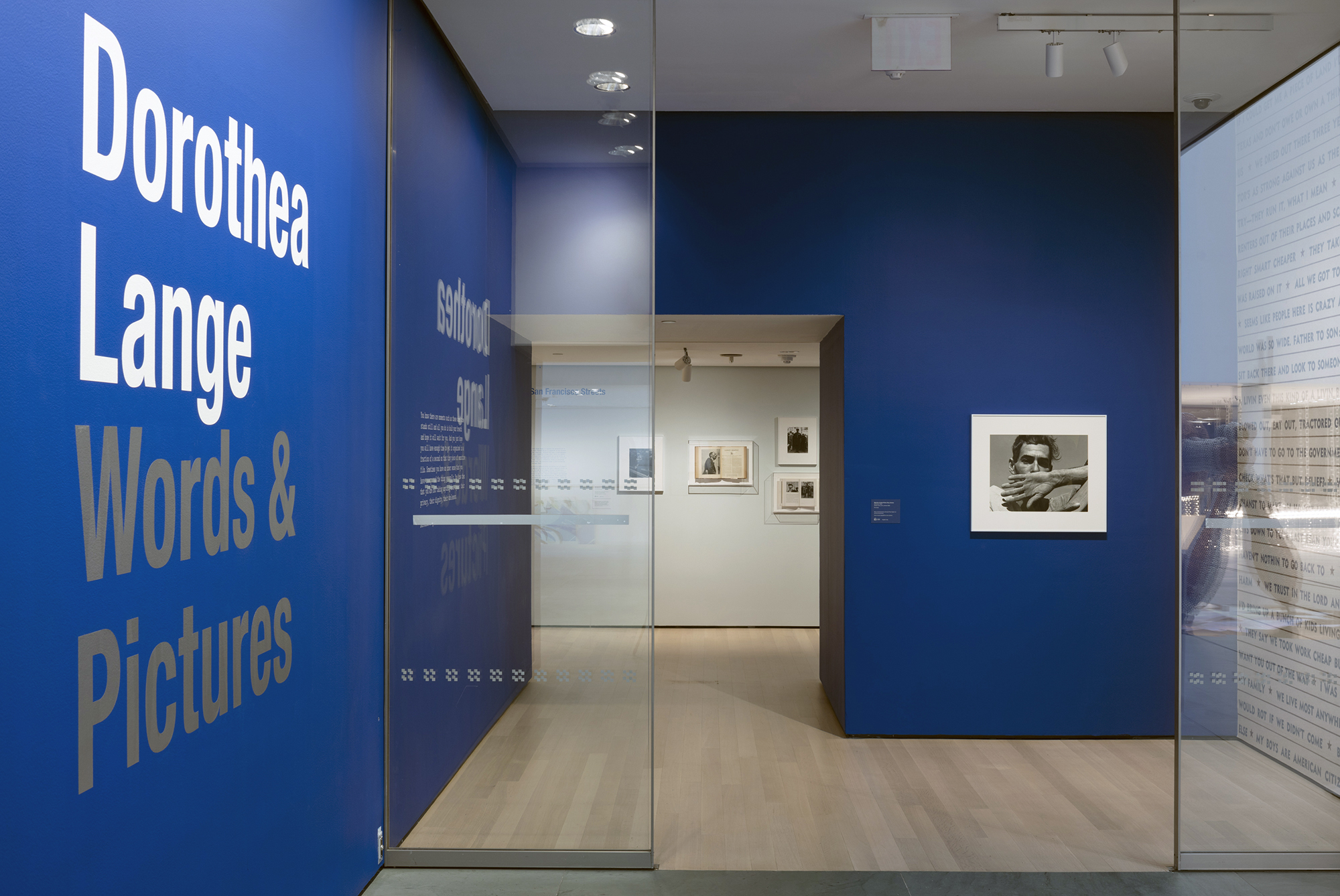
Dorothea Lange: Words & Pictures MoMA exhibition


'Dorothea Lange: Words & Pictures' introduction text


Dorothea Lange: Words & Pictures introduction text


Installation view of 'Dorothea Lange: Words & Pictures', The Museum of Modern Art, New York, February 9, 2020 - May 9, 2020 with at right, 'Migratory Cotton Picker, Eloy, Arizona' November 1940


Installation view of Dorothea Lange: Words & Pictures, The Museum of Modern Art, New York, February 9, 2020 – May 9, 2020 with at right, Migratory Cotton Picker, Eloy, Arizona November 1940
© 2020 The Museum of Modern Art
Photo: John Wronn


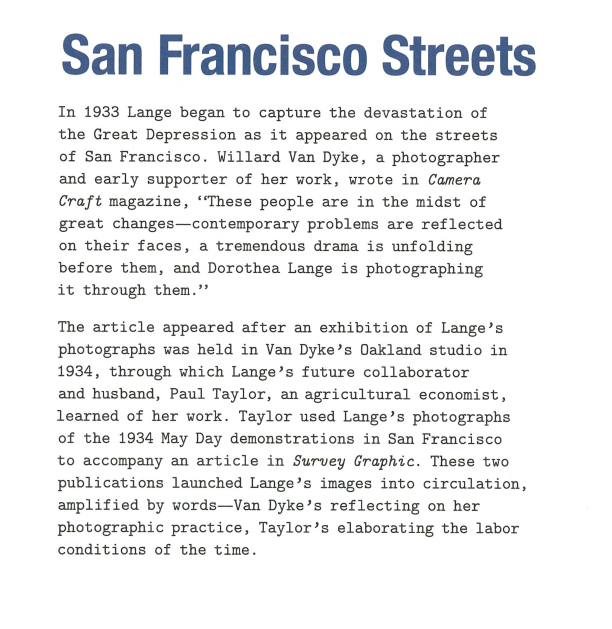
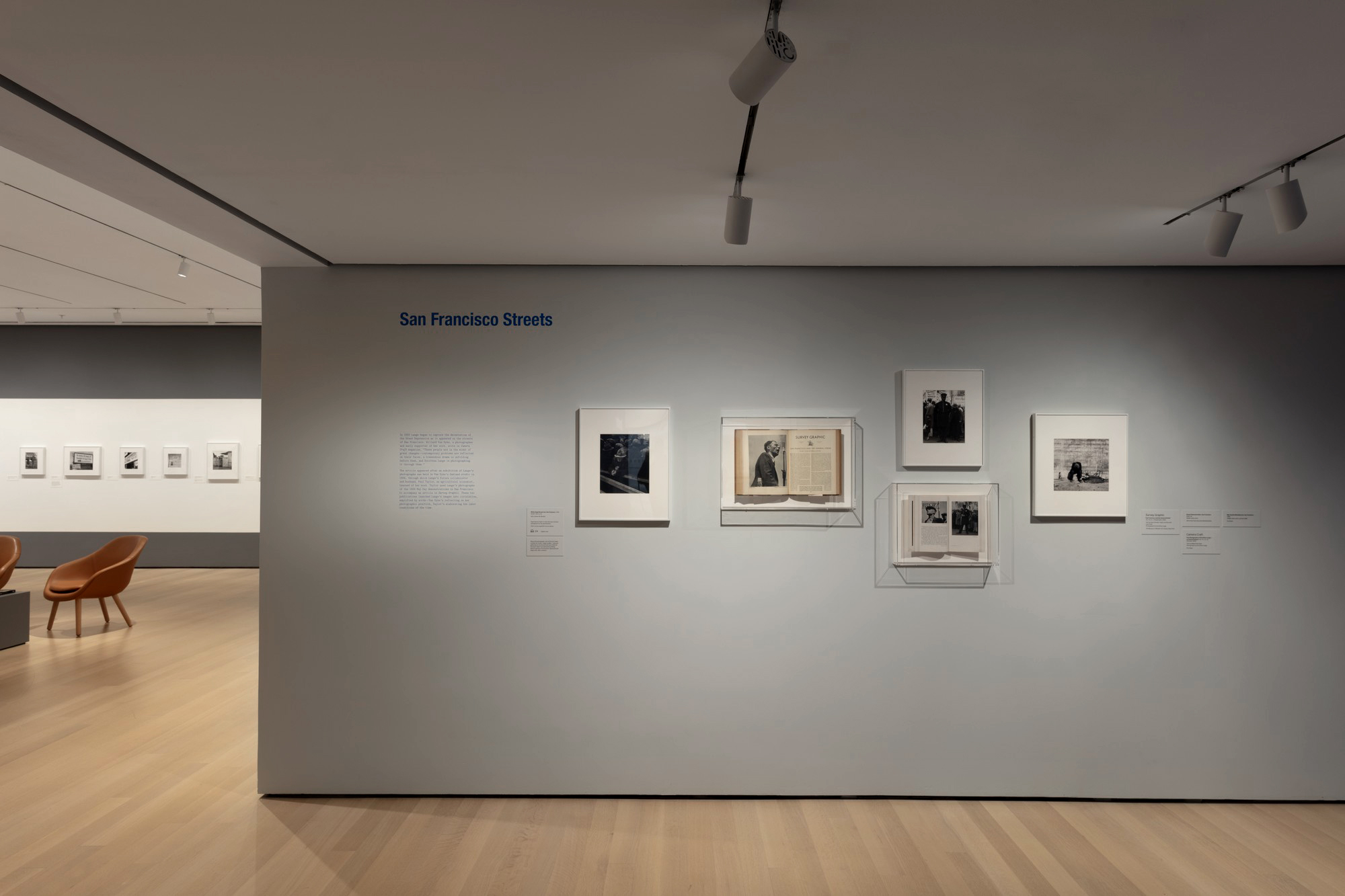
'San Francisco Streets' wall text from the exhibition 'Dorothea Lange: Words & Pictures' at the Museum of Modern Art, New York


Installation view of 'Dorothea Lange: Words & Pictures', The Museum of Modern Art, New York, February 9, 2020 - May 9, 2020 showing at centre left, 'White Angel Bread Line, San Francisco' 1933


San Francisco Streets

Installation view of Dorothea Lange: Words & Pictures, The Museum of Modern Art, New York, February 9, 2020 – May 9, 2020 showing at centre left, White Angel Bread Line, San Francisco 1933
© 2020 The Museum of Modern Art
Photo: John Wronn


Dorothea Lange (American, 1895-1965) 'White Angel Bread Line, San Francisco' 1933 from the exhibition 'Dorothea Lange: Words & Pictures' at the Museum of Modern Art, New York, Feb - May, 2020


Dorothea Lange (American, 1895-1965)
White Angel Bread Line, San Francisco
1933
Gelatin silver print
10 3/4 x 8 7/8″ (27.3 x 22.6cm)
The Museum of Modern Art, New York. Gift of Albert M. Bender


About this photograph, one of the first made outside her studio, Lange recalled, “I was just gathering my forces and that took a little bit because I wasn’t accustomed to jostling about in groups of tormented, depressed and angry men, with a camera.”


'Government Work' wall text from the exhibition 'Dorothea Lange: Words & Pictures' at the Museum of Modern Art, New York


Installation view of 'Dorothea Lange: Words & Pictures', The Museum of Modern Art, New York, February 9, 2020 - May 9, 2020 showing at fifth from left bottom, 'Funeral Cortege, End of an Era in a Small Valley Town, California' 1938; at fourth from left top, 'Grayson, San Joaquin Valley, California' 1938; and at fifth from left top, 'Ex-Slave with Long Memory, Alabama' c. 1937


Government Work

Installation view of Dorothea Lange: Words & Pictures, The Museum of Modern Art, New York, February 9, 2020 – May 9, 2020 showing at fifth from left bottom, Funeral Cortege, End of an Era in a Small Valley Town, California 1938; at fourth from left top, Grayson, San Joaquin Valley, California 1938; and at fifth from left top, Ex-Slave with Long Memory, Alabama c. 1937
© 2020 The Museum of Modern Art
Photo: John Wronn


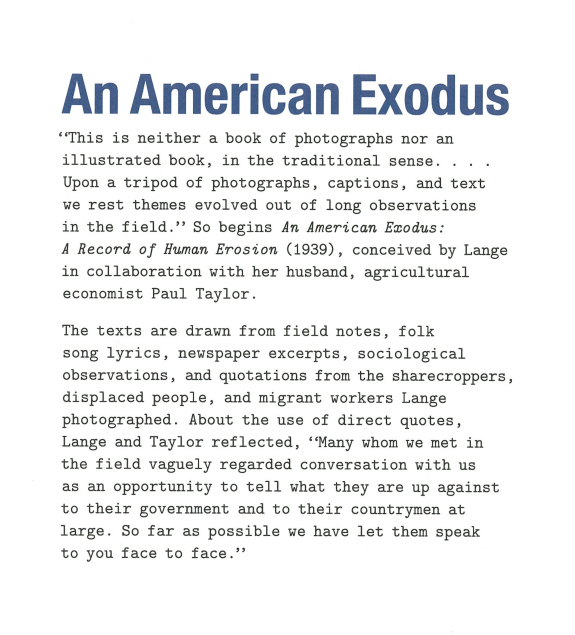
“We use the camera as a tool of research. Upon a tripod of photographs, captions, and text we rest themes evolved out of long observations in the field.”


Dorothea Lange and Paul Taylor, 1939


Dorothea Lange (American, 1895-1965) 'Funeral Cortege, End of an Era in a Small Valley Town, California' 1938, printed c. 1958


Dorothea Lange (American, 1895-1965)
Funeral Cortege, End of an Era in a Small Valley Town, California
1938, printed c. 1958
Gelatin silver print
9 7/16 × 8″ (24 × 20.3cm)
The Museum of Modern Art, New York. Purchase


Dorothea Lange (American, 1895-1965) 'Grayson, San Joaquin Valley, California' 1938, printed 1965


Dorothea Lange (American, 1895-1965)
Grayson, San Joaquin Valley, California
1938, printed 1965
Gelatin silver print
10 3/8 x 16 15/16″ (26.3 x 43cm)
The Museum of Modern Art, New York. Purchase


Regarding this picture, Dorothea Lange’s field notes report: “Grayson was a migratory agricultural labourers’ shack town. It was during the season of the pea harvest. Late afternoon about 6 o’clock. Boys were playing baseball in the road that passes this building, which was used as a church. Otherwise, this corpse, lying at the church, was alone, unattended, and unexplained.” The full negative she made there represents not just this doorway but the entire whitewashed gabled façade. The concrete steps in front of the entrance and foundation blocks are visible. Apparently the form in the doorway was what drew Lange to the scene, however; it has been suggested that she later realised this central feature was important enough to carry the composition and proceeded to concentrate on the portion of the negative with the shallow portal holding the body. She published an even more severely cut-down version in the 1940 US Camera Annual. Bearing the title Doorstep Document, it eliminates the three plain boards that frame the doorway, making the depth of the threshold less evident and the wrapped figure and worn double doors more prominent and funereal.

It is not known why Lange identified the form as a corpse rather than a homeless person. Today we are more inclined to think the latter, since such scenes are common. The relaxed, uncovered pose of the feet indicates a voluntary reclining position. Lange was also some distance away when she made the exposure. One of the playing children may have suggested the corpse idea to test its shock value, and perhaps Lange adopted it for future propaganda purposes. Grayson was just a small town southwest of Modesto, and this church was probably one of the few places of refuge it offered.

It would seem peculiar for the feet of a dead person to be exposed. Here they represent the life, the personality, of this anonymous citizen. Always sensitive to the appearance and performance of others’ feet, due to her own deformity, Lange made hundreds of photographs on the theme. This one is among the most melancholy.

Judith Keller, Dorothea Lange, In Focus: Photographs from the J. Paul Getty Museum (Los Angeles: J. Paul Getty Museum, 2002), 40. © 2002 J. Paul Getty Trust


Dorothea Lange (American, 1895-1965) 'Ex-Slave with Long Memory, Alabama' c. 1937, printed 1965


Dorothea Lange (American, 1895-1965)
Ex-Slave with Long Memory, Alabama
c. 1937, printed 1965
Gelatin silver print
15 3/16 × 11 15/16″ (38.5 × 30.3cm)
The Museum of Modern Art, New York. Purchase


Dorothea Lange 'Land of the Free'

Dorothea Lange 'Land of the Free'


Dorothea Lange (American, 1895-1965)
Archibald Macleish (American, 1892-1982)
Land of the Free
1938
Letterpress open: 9 7/16 x 13 1/8″ (24 x 33.4cm)
The Museum of Modern Art Library, New York


Open at Lange’s Ditched, Stalled and Stranded, San Joaquin Valley, California February 1936


'Land of the Free' wall text from the exhibition 'Dorothea Lange: Words & Pictures' at the Museum of Modern Art, New York


Installation view of 'Dorothea Lange: Words & Pictures', The Museum of Modern Art, New York, February 9, 2020 - May 9, 2020 with at left, 'Ditched, Stalled and Stranded, San Joaquin Valley, California' February 1936; and at centre, 'Six Tenant Farmers without Farms, Hardeman County, Texas' 1937


Land of the Free

Installation view of Dorothea Lange: Words & Pictures, The Museum of Modern Art, New York, February 9, 2020 – May 9, 2020 with at left, Ditched, Stalled and Stranded, San Joaquin Valley, California February 1936; and at centre, Six Tenant Farmers without Farms, Hardeman County, Texas 1937
© 2020 The Museum of Modern Art
Photo: John Wronn


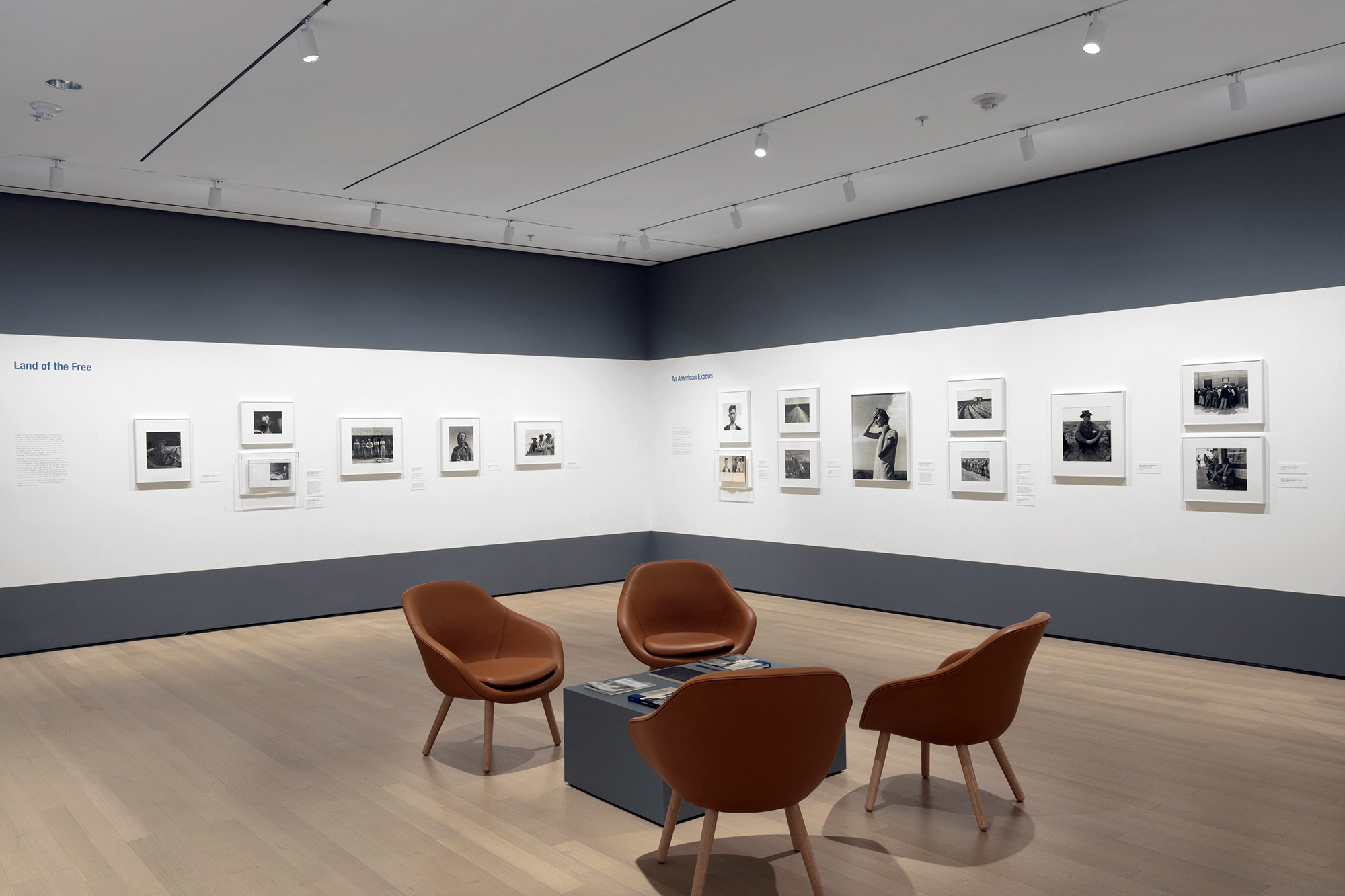
Installation view of 'Dorothea Lange: Words & Pictures', The Museum of Modern Art, New York, February 9, 2020 - May 9, 2020


Land of the Free and An American Exodus

Installation view of Dorothea Lange: Words & Pictures, The Museum of Modern Art, New York, February 9, 2020 – May 9, 2020
© 2020 The Museum of Modern Art
Photo: John Wronn


FOR THE ENTIRE second half of Dorothea Lange’s life, a quotation from the English philosopher Francis Bacon floated in her peripheral vision: “The contemplation of things as they are, without error or confusion, without substitution or imposture, is in itself a nobler thing than a whole harvest of invention.” She pinned a printout of these words up on her darkroom door in 1933. It remained there until she died, at 70, in 1965 – three months before her first retrospective opened at the Museum of Modern Art in New York and three decades after she took the most iconic photograph in the medium’s history.


Dorothea Lange (American, 1895-1965) 'Migrant Mother, Nipomo, California' March 1936


Dorothea Lange (American, 1895-1965)
Migrant Mother, Nipomo, California
March 1936
Gelatin silver print
11 1/8 x 8 9/16″ (28.3 x 21.8cm)
The Museum of Modern Art, New York. Purchase


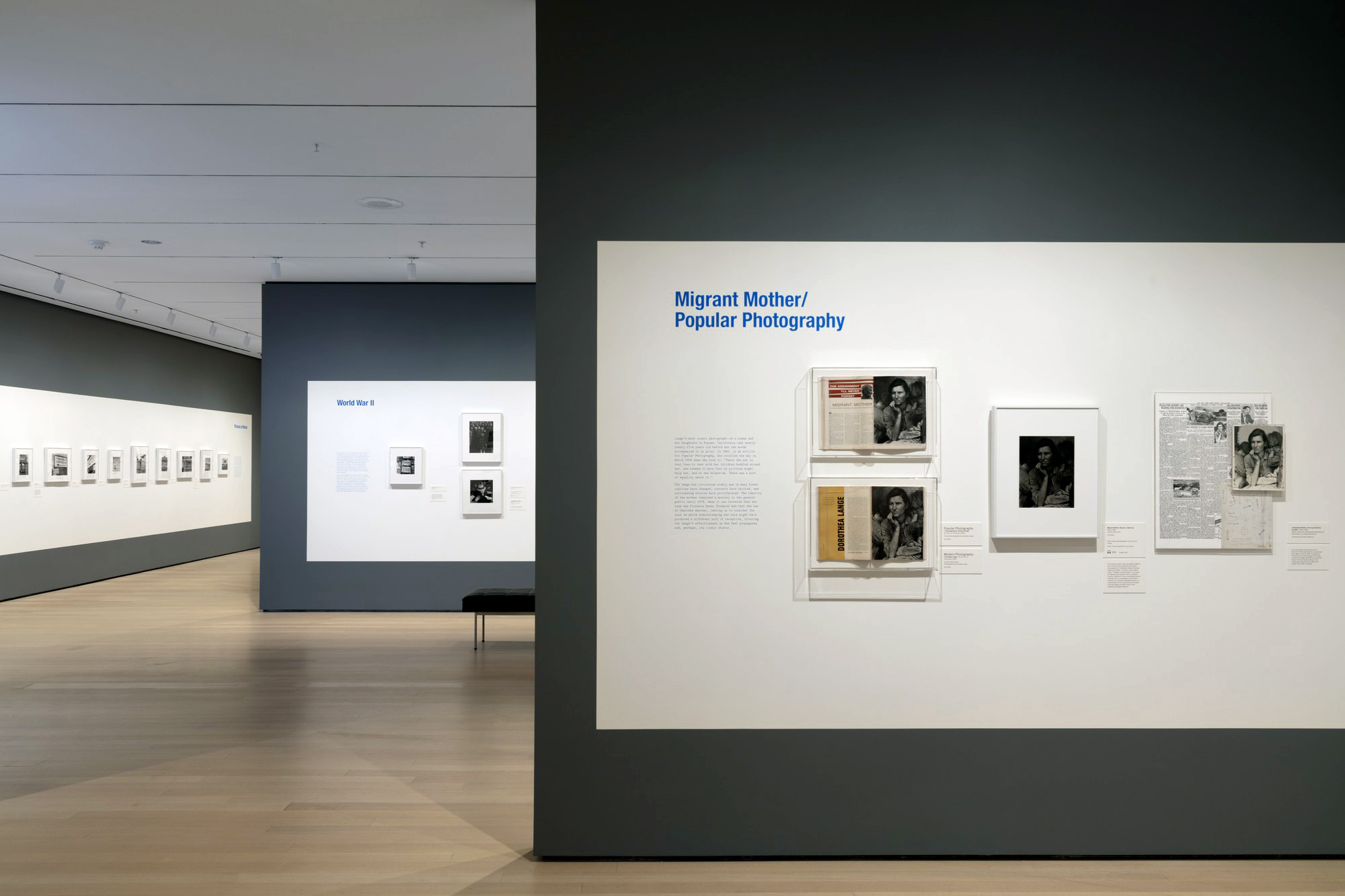
The captions used to describe Migrant Mother are as varied as the publications in which they appeared: “A destitute mother, the type aided by the WPA.” “A worker in the ‘peach bowl.'” “Draggin’-around people.” “In a camp of migratory pea-pickers, San Luis Obispo County, California.” Even in ostensibly factual settings such as newspapers, government reports, or a museum cataloguing sheet, no fixed phrase or set of words was associated with the image until 1952, when it was published as Migrant Mother.


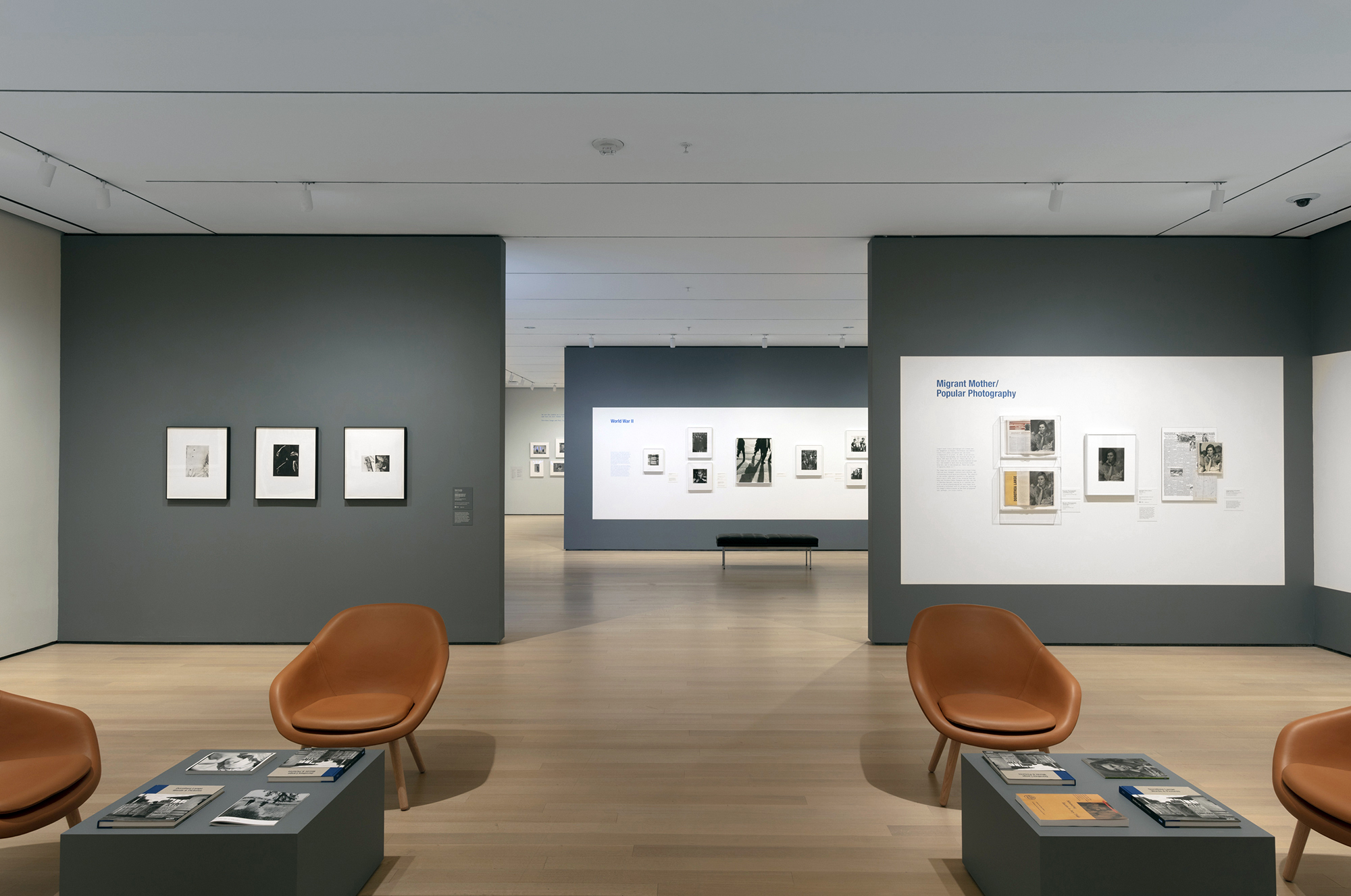
'Lange Migrant Mother / Popular Photography' wall text from the exhibition 'Dorothea Lange: Words & Pictures' at the Museum of Modern Art, New York


Installation view of 'Dorothea Lange: Words & Pictures', The Museum of Modern Art, New York, February 9, 2020 - May 9, 2020

Installation view of 'Dorothea Lange: Words & Pictures', The Museum of Modern Art, New York, February 9, 2020 - May 9, 2020

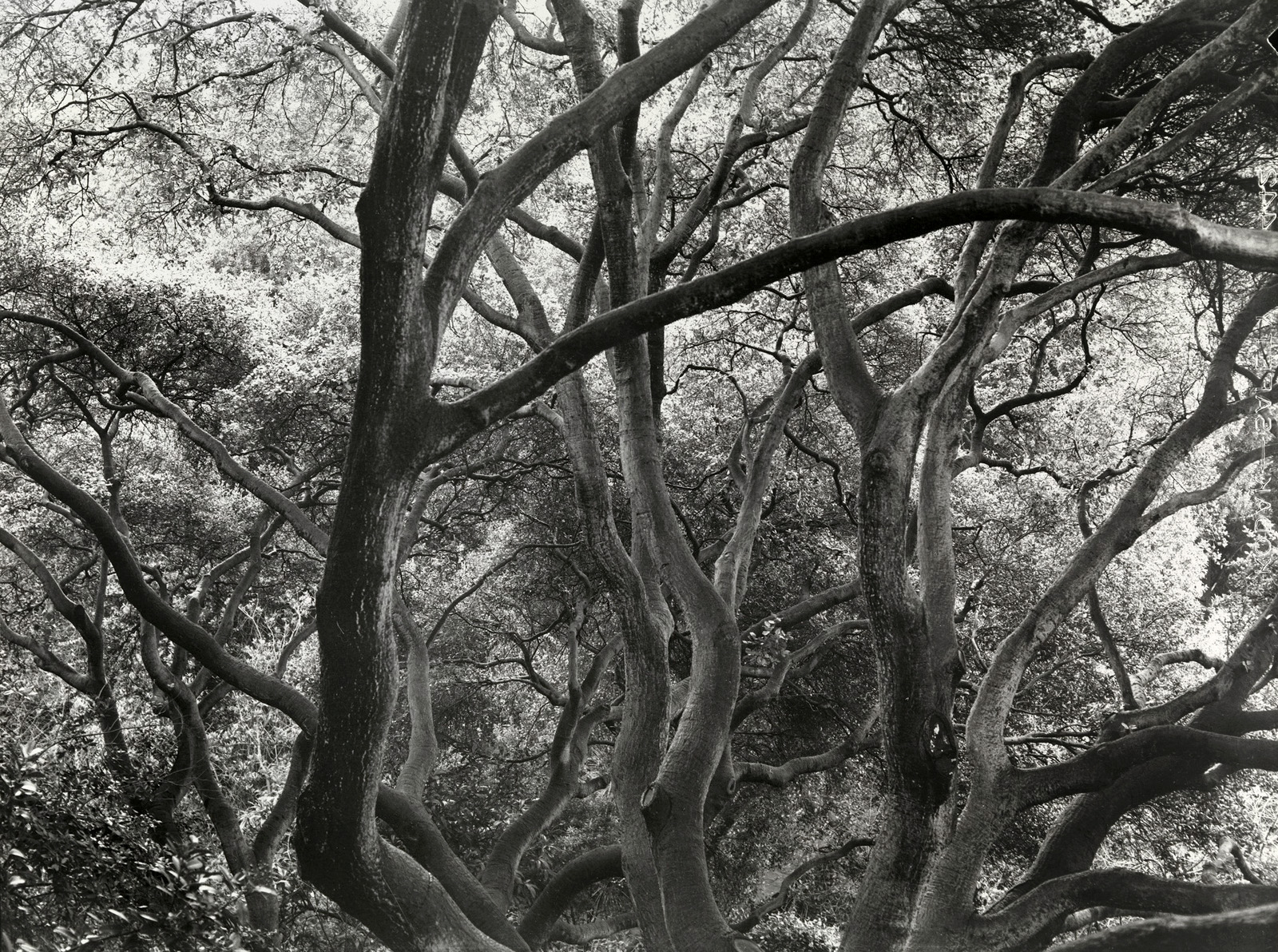
Installation view of 'Dorothea Lange: Words & Pictures', The Museum of Modern Art, New York, February 9, 2020 - May 9, 2020 with at left, 'Sunlit Oak' c. 1957


Migrant Mother / Popular Photography

Installation views of Dorothea Lange: Words & Pictures, The Museum of Modern Art, New York, February 9, 2020 – May 9, 2020 with at left in the bottom photograph, Sunlit Oak c. 1957 (below)
© 2020 The Museum of Modern Art
Photo: John Wronn


Dorothea Lange (American, 1895-1965) 'Sunlit Oak' c. 1957, printed 1965


Dorothea Lange (American, 1895-1965)
Sunlit Oak
c. 1957, printed 1965
Gelatin silver print
30 7/8 × 41 1/8″ (78.4 × 104.5cm)
The Museum of Modern Art, New York. Purchase


Dorothea Lange (American, 1895-1965) 'Kern County, California' 1938


Dorothea Lange (American, 1895-1965)
Kern County, California
1938
Gelatin silver print
12 7/16 x 12 1/2″ (31.6 x 31.7cm)
The Museum of Modern Art, New York. Purchase


'Pictures of Words' wall text from the exhibition 'Dorothea Lange: Words & Pictures' at the Museum of Modern Art, New York


Installation view of 'Dorothea Lange: Words & Pictures', The Museum of Modern Art, New York, February 9, 2020 - May 9, 2020 with at left, 'Western Addition, San Francisco, California' 1951; at fifth from left, 'Kern County, California' 1938; at third from right, 'Crossroads Store, North Carolina' July 1939


Pictures of Words

Installation view of Dorothea Lange: Words & Pictures, The Museum of Modern Art, New York, February 9, 2020 – May 9, 2020 with at left, Western Addition, San Francisco, California 1951 (below); at fifth from left, Kern County, California 1938 (above); at third from right, Crossroads Store, North Carolina July 1939 (below)
© 2020 The Museum of Modern Art
Photo: John Wronn


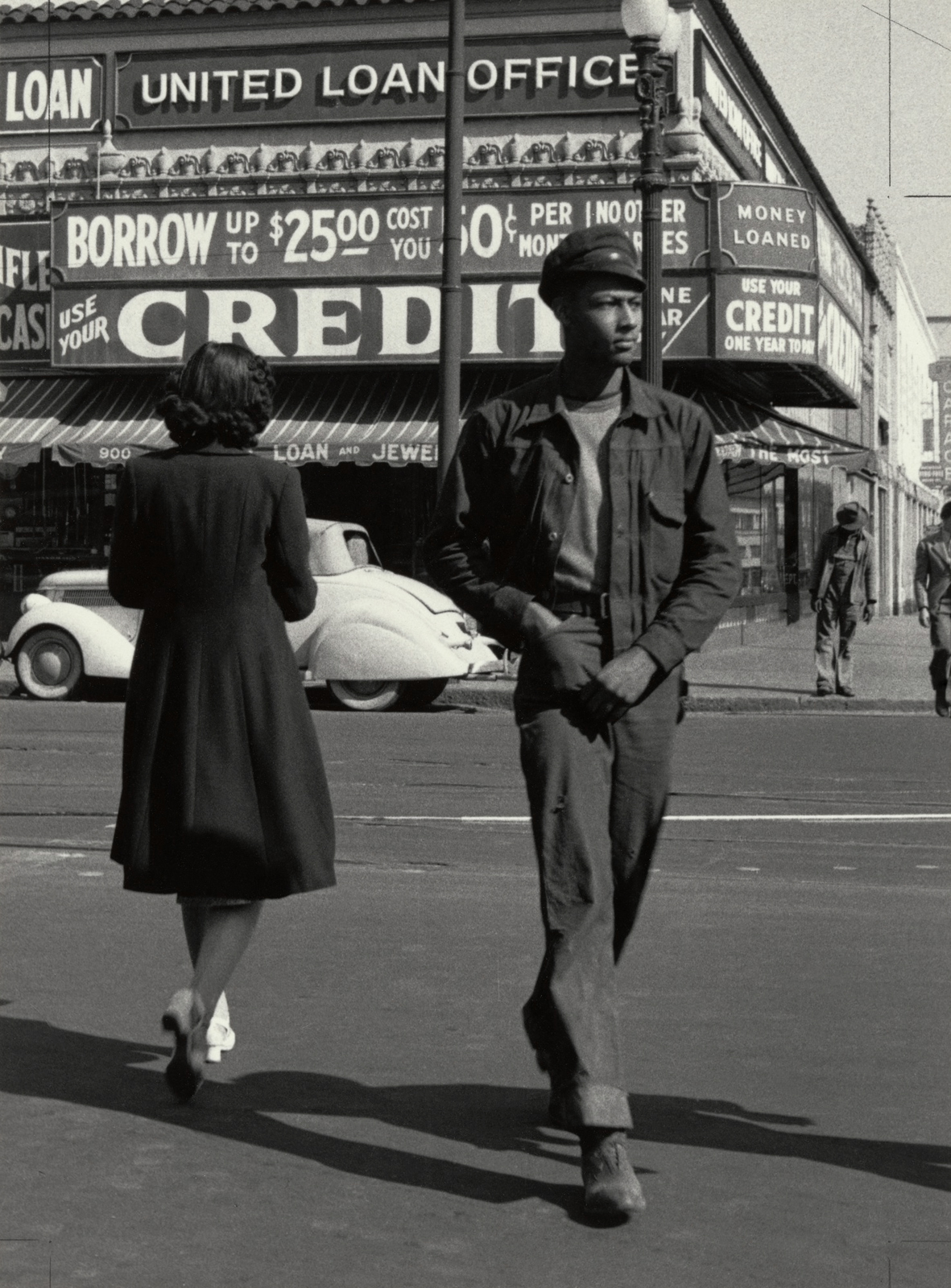
Dorothea Lange (American, 1895-1965) 'Western Addition, San Francisco, California' 1951, printed 1965


Dorothea Lange (American, 1895-1965)
Western Addition, San Francisco, California
1951, printed 1965
Gelatin silver print
7 3/16 × 6″ (23.8 × 17.4cm)
The Museum of Modern Art, New York. Purchase


Dorothea Lange (American, 1895-1965) 'Crossroads Store, North Carolina' July 1939, printed 1965


Dorothea Lange (American, 1895-1965)
Crossroads Store, North Carolina
July 1939, printed 1965
Gelatin silver print
9 11/16 × 13 9/16″ (24.6 × 34.4cm)
The Museum of Modern Art, New York. Purchase


Dorothea Lange (American, 1895-1965) 'Tractored Out, Childress County, Texas' 1938


Dorothea Lange (American, 1895-1965)
Tractored Out, Childress County, Texas
1938
Gelatin silver print
9 5/16 x 12 13/16″ (23.6 x 32.6cm)
The Museum of Modern Art, New York. Purchase


Lange and Taylor’s captions in An American Exodus consider the human impact of environmental crises. The one for this image reads, “Tractors replace not only mules but people. They cultivate to the very door of the houses of those whom they replace.”


Dorothea Lange (American, 1895-1965) 'The Road West, New Mexico' 1938, printed 1965


Dorothea Lange (American, 1895-1965)
The Road West, New Mexico
1938, printed 1965
Gelatin silver print
9 5/8 × 13 1/16″ (24.5 × 33.2cm)
The Museum of Modern Art, New York. Purchase


The image was memorialised later by Robert Frank


Dorothea Lange and Paul S. Taylor. 'An American Exodus. A Record of Human Erosion' New York: Reynal & Hitchcock, 1939

Dorothea Lange and Paul S. Taylor. 'An American Exodus. A Record of Human Erosion' New York: Reynal & Hitchcock, 1939


A seminal work in documentary studies, with powerful photographs of the Depression era made by the wife and husband team of Dorothea Lange and Paul Taylor. They were hired by the Farm Security Administration to document the 300,000 strong, Depression era exodus from rural America, and the struggles these migrant workers overcame in search of basic necessities. The documentary photographer and social scientist’s goal was to “use the camera as a tool of research. Upon a tripod of photographs, captions, and text we rest themes evolved out of long observations in the field. We adhere to the standards of documentary photography as we have conceived them. Quotations which accompany photographs report what the persons photographed said, not what we think might be their unspoken thoughts.” p. 6.

Text from the Abe Books website [Online] Cited 24/02/2020


Dorothea Lange (American, 1895-1965) 'Woman of the High Plains, Texas Panhandle' June 1938, printed 1965


Dorothea Lange (American, 1895-1965)
Woman of the High Plains, Texas Panhandle
June 1938, printed 1965
Gelatin silver print
29 3/4 × 24″ (75.6 × 61cm)
The Museum of Modern Art, New York. Purchase


“IF YOU DIE, YOU’RE DEAD – THAT’S ALL”

When it was published in An American Exodus, this portrait was captioned “If you die, you’re dead – that’s all.” This line was taken from Lange’s field notes, which quote the woman at greater length: “‘We made good money a pullin’ bolls, when we could pull. But we’ve had no work since March. … You can’t get no relief here until you’ve lived here a year. This county’s a hard country. They won’t help bury you here. If you die, you’re dead, that’s all.'”


'An American Exodus' wall text from the exhibition 'Dorothea Lange: Words & Pictures' at the Museum of Modern Art, New York


Installation view of 'Dorothea Lange: Words & Pictures', The Museum of Modern Art, New York, February 9, 2020 - May 9, 2020

Installation view of 'Dorothea Lange: Words & Pictures', The Museum of Modern Art, New York, February 9, 2020 - May 9, 2020 with at left, 'Young Sharecropper, Macon County, Georgia' July 1937; at second left top, 'The Road West, New Mexico' 1938; at centre 'Woman of the High Plains, Texas Panhandle' June 1938; and second right, 'Jobless on the Edge of a Peafield, Imperial Valley, California' February 1937


An American Exodus

Installation view of Dorothea Lange: Words & Pictures, The Museum of Modern Art, New York, February 9, 2020 – May 9, 2020 with at left, Young Sharecropper, Macon County, Georgia July 1937; at second left top, The Road West, New Mexico 1938; at centre Woman of the High Plains, Texas Panhandle June 1938; and second right, Jobless on the Edge of a Peafield, Imperial Valley, California February 1937
© 2020 The Museum of Modern Art
Photo: John Wronn


Dorothea Lange (American, 1895-1965) 'Young Sharecropper, Macon County, Georgia' July 1937, printed 1965


Dorothea Lange (American, 1895-1965)
Young Sharecropper, Macon County, Georgia
July 1937, printed 1965
Gelatin silver print
11 3/4 × 11 3/4″ (29.8 × 29.9cm)
The Museum of Modern Art, New York. Purchase


Dorothea Lange (American, 1895-1965) 'Jobless on the Edge of a Peafield, Imperial Valley, California' February 1937, printed 1965


Dorothea Lange (American, 1895-1965)
Jobless on the Edge of a Peafield, Imperial Valley, California
February 1937, printed 1965
Gelatin silver print
16 15/16 × 15 3/4″ (43 × 40.1cm)
The Museum of Modern Art, New York. Purchase


Dorothea Lange and Paul S. Taylor. 'An American Exodus. A Record of Human Erosion' New York: Reynal & Hitchcock, 1939

Dorothea Lange and Paul S. Taylor. 'An American Exodus. A Record of Human Erosion' New York: Reynal & Hitchcock, 1939


Dorothea Lange and Paul S. Taylor
An American Exodus. A Record of Human Erosion
New York: Reynal & Hitchcock, 1939
First edition. Hardcover
Letterpress open: 10 1/4 x 15 3/8″ (26 x 39.1cm)
The Museum of Modern Art Library, New York


Empathy and Artistry: Rediscovering Dorothea Lange

John Szarkowski was about 13 when he saw an image by Dorothea Lange that “enormously impressed” him. After he had become the powerful director of photography at the Museum of Modern Art, he would recall that he took it to be a “picture of the hard-faced old woman, looking out of the handsome oval window of the expensive automobile with her hand to her face as if the smell of the street was offending her, and I thought, ‘Isn’t that marvellous?’ That a photographer can pin that specimen to the board as some kind of exotic moth and show her there in her true colours.”

A quarter of a century after his initial encounter with the photo, working in 1965 with Lange on his first one-artist retrospective at MoMA, he read her full caption for “Funeral Cortege, End of an Era in a Small Valley Town, California,” and realised that the fancy car belonged to an undertaker and that the expression he took for haughtiness was grief.

The wry confession of his mistake, which Szarkowski made in 1982 to an interviewer, is not mentioned in “Dorothea Lange: Words and Pictures,” which opened Sunday at MoMA. But it illustrates the curatorial theme: Lange’s pictures require verbal commentary to be read legibly.

Curiously, though, the strength of Lange’s photographs at MoMA undercuts the exhibition’s concept. With or without the support of words, Dorothea Lange (1895-1965), created some of the greatest images of the unsung struggles and overlooked realities of American life. Her most iconic photograph, which came to be called “Migrant Mother,” portrays a grave-faced woman in ragged clothing in Nipomo, Calif., in 1936, with two small children burying their faces against her shoulders, and a baby nestled in her lap. It is one of the most famous pictures of all time.

Yet Lange was not simply a Depression photographer. As this revelatory, heartening exhibition shows, she was an artist who made remarkable pictures throughout a career that spanned more than four decades. The photos she took in 1942 of interned Japanese-Americans (which the government suppressed until 1964) display state-administered cruelty with stone-cold clarity: One dignified man in a three-piece suit and overcoat is wearing a tag, like a steer, while disembodied white hands on either side examine and prod him. Her prescient photographs of environmental degradation portray the human cost of building a dam that flooded the Berryessa Valley near Napa. Her empathetic portraits of African-American field hands shine a light on a system of peonage that predated and outlasted the 1930s.

Nevertheless, her fame rests largely on the indelible images she made, starting in 1935, as an employee of the Resettlement Administration and its successor, the Farm Security Administration, both under the leadership of Roy Stryker. Lange endured a fractious relationship with Stryker, who seemed deeply discomfited by a strong-minded woman. He fired her in 1940, saying she was “uncooperative.” To his credit, however, he always acknowledged that “Migrant Mother” was the key image of the Depression.

Seeking a deeper understanding of the economic crisis, Lange and her collaborators in the field interviewed her subjects, and she incorporated their words into her captions. She was the first photographer to do that systematically. The show’s curator, Sarah Hermanson Meister, who drew from the museum’s collection of more than 500 Lange prints, includes many of the captions in the wall labels, in an installation that is patterned after Szarkowski’s 1966 Lange show. (The artist died of esophageal cancer before it opened.)

Lange took so many memorable photographs that it is challenging to shortlist them. One of the greatest is at the entrance to the MoMA show: “Migratory Cotton Picker, Eloy, Arizona” (1940). The farmworker’s hands are close to the lens of the camera. One hand is holding a wooden beam; it could be the implement of his impending crucifixion. The other hand, with its open palm and splayed fingers, covers his mouth. Unforgettably powerful, the photograph resembles self-portraits by Austrian expressionist painter Egon Schiele, who shared Lange’s interest in extremities – hands and feet, and also, wretched misery. …

Many wonderful Lange photographs are not overtly political. “Bad Trouble Over the Weekend” (1964) is a close-up of a woman’s hands folded over her face; one hand bears a wedding band and holds an unlit cigarette. (The subject was her daughter-in-law.) And Lange photographed multi-trunked oaks with the same acuity as fingered hands.

The fame of “Migrant Mother” has cropped Lange’s reputation unfairly. She is a key link in a chain of photographic history. From Evans, she learned how to frame precise images of clapboard churches. But unlike Evans, who usually preferred to keep a distance and capture a building’s architectural integrity, Lange always wanted, as she said when describing how she made “Migrant Mother,” to move “closer and closer.” Her 1938 photograph, “Death in the Doorway,” of a church entrance in the San Joaquin Valley reveals a blanketed corpse that someone, probably unable to afford a burial, has deposited. Evans would never have gone there.

In turn, Lange was revered by the documentary photographers who followed her. The greatest of them, Robert Frank, paid her direct homage in “The Americans,” shooting from the same vantage point the New Mexico highway that Lange had memorialised in “An American Exodus.”

But photography was heading off in a different direction. A year after his Lange exhibition, Mr. Szarkowski mounted “New Documents,” which introduced a younger generation of American photographers: Diane Arbus, Lee Friedlander and Garry Winogrand. Speaking to me in 2003, he explained that these photographers were “rejecting Dorothea’s attitude” that “documentary photography was supposed to do some good” and instead using the camera “to explore their own experience and their own life and not to persuade somebody else what to do or what to work for.” That notion was hardly foreign to Lange. In a picture of a lame person, “Walking Wounded, Oakland” (1954), she found, as did the New Documents artists, a real-life subject that mirrored her own life.

One happy consequence of our dismal political moment is a rediscovery of Lange. In 2018, a major exhibition from her archive was staged at the Barbican Center in London and the Jeu de Paume in Paris.

Perhaps now younger photographers will be inspired to pick up her banner. The need is all too apparent. Where is the photographer of clear eyed empathy and consummate artistry to depict the disquiet, hopelessness and desperate fortitude that riddle the American body politic of today? Who will bring us our “Migrant Mother”?

Arthur Lubow. “Empathy and Artistry: Rediscovering Dorothea Lange,” on The New York Times website Feb. 13, 2020 [Online] Cited 24/03/2020.


Dorothea Lange (American, 1895-1965) 'Migratory Cotton Picker, Eloy, Arizona' November 1940


Dorothea Lange (American, 1895-1965)
Migratory Cotton Picker, Eloy, Arizona
November 1940
Gelatin silver print
19 15/16 × 23 13/16″ (50.7 × 60.5cm)
The Museum of Modern Art, New York. Purchase


Lange '12 Million Black Voices'


Dorothea Lange (American, 1895-1965)
Edwin Rosskam (American, 1903-1985)
Richard Wright (American, 1908-1960)
12 Million Black Voices: A Folk History of the Negro in the United States
1941
Offset lithography open: 10 1/4 x 14 1/2″ (26 x 36.8cm)
The Museum of Modern Art Library


'12 Million Black Voices' wall text from the exhibition 'Dorothea Lange: Words & Pictures' at the Museum of Modern Art, New York


Installation view of 'Dorothea Lange: Words & Pictures', The Museum of Modern Art, New York, February 9, 2020 - May 9, 2020


12 Million Black Voices

Installation view of Dorothea Lange: Words & Pictures, The Museum of Modern Art, New York, February 9, 2020 – May 9, 2020
© 2020 The Museum of Modern Art
Photo: John Wronn


Dorothea Lange (American, 1895-1965) 'Richmond, California' 1942


Dorothea Lange (American, 1895-1965)
Richmond, California
1942
Gelatin silver print
9 3/4 x 7 11/16″ (24.7 x 19.5cm)
The Museum of Modern Art, New York. Purchase


Dorothea Lange (American, 1895-1965) 'Richmond, California' 1942


Dorothea Lange (American, 1895-1965)
Richmond, California
1942, printed 1965
Gelatin silver print
10 7/16 × 13 3/16″ (26.5 × 33.5cm)
The Museum of Modern Art, New York. Purchase


During World War II, at the height of antiJapanese sentiment, Lange documented an explicitly racist billboard advertising the Southern Pacific railroad company. Rather than portraying the billboard in isolation, she disrupted the frame with a handmade sign that seems to undermine the commodification of such political sentiments.


'World War II' wall text from the exhibition 'Dorothea Lange: Words & Pictures' at the Museum of Modern Art, New York


Installation view of 'Dorothea Lange: Words & Pictures', The Museum of Modern Art, New York, February 9, 2020 - May 9, 2020 with at second left top, 'One Nation Indivisible, San Francisco 1942'; and at second left bottom, 'Just About to Step into the Bus for the Assembly Center, San Francisco' April 6, 1942


World War II

Installation view of Dorothea Lange: Words & Pictures, The Museum of Modern Art, New York, February 9, 2020 – May 9, 2020 with at second left top, One Nation Indivisible, San Francisco 1942 (below); and at second left bottom, Just About to Step into the Bus for the Assembly Center, San Francisco April 6, 1942 (below)
© 2020 The Museum of Modern Art
Photo: John Wronn


Dorothea Lange (American, 1895-1965) 'One Nation Indivisible, San Francisco' 1942


Dorothea Lange (American, 1895-1965)
One Nation Indivisible, San Francisco
1942
Gelatin silver print
13 1/8 × 9 13/16″ (33.4 × 25cm)
The Museum of Modern Art, New York. Purchase


Dorothea Lange (American, 1895-1965) 'Just About to Step into the Bus for the Assembly Center, San Francisco' April 6, 1942, printed 1965


Dorothea Lange (American, 1895-1965)
Just About to Step into the Bus for the Assembly Center, San Francisco
April 6, 1942, printed 1965
Gelatin silver print
10 3/8 × 9 13/16″ (26.3 × 25cm)
The Museum of Modern Art, New York. Purchase


The Museum of Modern Art presents Dorothea Lange: Words & Pictures, the first major solo exhibition at the Museum of the photographer’s incisive work in over 50 years. On view from February 9 through May 9, 2020, Dorothea Lange: Words & Pictures includes approximately 100 photographs drawn entirely from the Museum’s collection. The exhibition also uses archival materials such as correspondence, historical publications, and oral histories, as well as contemporary voices, to examine the ways in which words inflect our understanding of Lange’s pictures. These new perspectives and responses from artists, scholars, critics, and writers, including Julie Ault, Wendy Red Star, and Rebecca Solnit, provide fresh insight into Lange’s practice. Dorothea Lange: Words & Pictures is organised by Sarah Meister, Curator, with River Bullock, Beaumont & Nancy Newhall Curatorial Fellow, assisted by Madeline Weisburg, Modern Women’s Fund Twelve-Month Intern, Department of Photography, The Museum of Modern Art.

Toward the end of her life, Dorothea Lange (1895-1965) remarked, “All photographs – not only those that are so-called ‘documentary,’ and every photograph really is documentary and belongs in some place, has a place in history – can be fortified by words.” Organised loosely chronologically and spanning her career, the exhibition groups iconic works together with lesser known photographs and traces their varied relationships to words: from early criticism on Lange’s photographs to her photo-essays published in LIFE magazine, and from the landmark photobook An American Exodus to her examination of the US criminal justice system. The exhibition also includes groundbreaking photographs of the 1930s – including Migrant Mother (1936) – that inspired pivotal public awareness of the lives of sharecroppers, displaced families, and migrant workers during the Great Depression. Through her photography and her words, Lange urged photographers to reconnect with the world – a call reflective of her own ethos and working method, which coupled an attention to aesthetics with a central concern for humanity.

“It seems both timely and urgent that we renew our attention to Lange’s extraordinary achievements,” said Sarah Meister. “Her concern for less fortunate and often overlooked individuals, and her success in using photography (and words) to address these inequities, encourages each of us to reflect on our own civic responsibilities. It reminds me of the unique role that art – and in particular photography – can play in imagining a more just society.”

The exhibition begins in 1933, when Lange, then a portrait photographer, first brought her camera outside into the streets of San Francisco. Lange’s increasing interest in the everyday experience of people she encountered eventually led her to work for government agencies, supporting their objective to raise public awareness and to provide aid to struggling farmers and those devastated by the Great Depression. During this time, Lange photographed her subjects and kept notes that formed the backbone of government reports; these and other archival materials will be represented alongside corresponding photographs throughout the exhibition. Lange’s commitment to social justice and her faith in the power of photography remained constant throughout her life, even when her politics did not align with those who were paying for her work. A central focus of the exhibition is An American Exodus, a 1939 collaboration between Lange and Paul Schuster Taylor, her husband and an agricultural economist. As an object and as an idea, An American Exodus highlights the voices of her subjects by pairing first-person quotations alongside their pictures. Later, Lange’s photographs continued to be useful in addressing marginalised histories and ongoing social concerns. Throughout her career as a photographer for the US Government and various popular magazines, Lange’s pictures were frequently syndicated and circulated outside of their original context. Lange’s photographs of the 1930s helped illustrate Richard Wright’s 12 Million Black Voices (1941), and her 1950s photographs of a public defender were used to illustrate Minimizing Racism in Jury Trials (1969), a law handbook published after Black Panther Huey P. Newton’s first trial during a time of great racial strife.

This collection-based exhibition would not be possible had it not been for Lange’s deep creative ties to the Museum during her lifetime. MoMA’s collection of Lange photographs was built over many decades and remains one of the definitive collections of her work. Her relationship to MoMA’s Department of Photography dates to her inclusion in its inaugural exhibition, in 1940 which was curated by the department’s director, Edward Steichen. Lange is a rare artist in that both Steichen and his successor, John Szarkowski, held her in equally high esteem. More than a generation after her first retrospective, organised by Szarkowski at MoMA in 1966, Dorothea Lange: Words & Pictures uses both historical and contemporary words to encourage a more nuanced understanding of words and pictures in circulation.

Press release from MoMA website


Dorothea Lange (American, 1895-1965) 'Richmond, California' 1942


Dorothea Lange (American, 1895-1965)
Richmond, California
1942
Gelatin silver print
7 3/8 x 6 5/8″ (18.8 x 16.9cm)
The Museum of Modern Art, New York. Purchase


'The Family of Man' wall text from the exhibition 'Dorothea Lange: Words & Pictures' at the Museum of Modern Art, New York

Installation view of 'Dorothea Lange: Words & Pictures', The Museum of Modern Art, New York, February 9, 2020 - May 9, 2020 with at left, 'Richmond, California' 1942


The Family of Man and World War II

Installation view of Dorothea Lange: Words & Pictures, The Museum of Modern Art, New York, February 9, 2020 – May 9, 2020 with at left, Richmond, California 1942 (above)
© 2020 The Museum of Modern Art
Photo: John Wronn


Dorothea Lange (American, 1895-1965) 'Café near Pinole, California' 1956, printed 1965


Dorothea Lange (American, 1895-1965)
Café near Pinole, California
1956, printed 1965
Gelatin silver print
11 15/16 × 16 7/8″ (30.3 × 42.8cm)
The Museum of Modern Art, New York. Purchase


Dorothea Lange (American, 1895-1965) '"Guilty, Your Honor," Alameda County Courthouse, California' 1955-1957, printed 1965


Dorothea Lange (American, 1895-1965)
“Guilty, Your Honor,” Alameda County Courthouse, California
1955-1957, printed 1965
Gelatin silver print
17 1/16 × 14 15/16″ (43.3 × 37.9cm)
The Museum of Modern Art, New York. Purchase


'Public Defender' wall text from the exhibition 'Dorothea Lange: Words & Pictures' at the Museum of Modern Art, New York


Installation view of 'Dorothea Lange: Words & Pictures', The Museum of Modern Art, New York, February 9, 2020 - May 9, 2020

Installation view of 'Dorothea Lange: Words & Pictures', The Museum of Modern Art, New York, February 9, 2020 - May 9, 2020 showing at second left, '"Guilty, Your Honor," Alameda County Courthouse, California' 1955-1957; ; and at right, 'The Defendant, Alameda County Courthouse, California' 1957


Public Defender

Installation view of Dorothea Lange: Words & Pictures, The Museum of Modern Art, New York, February 9, 2020 – May 9, 2020 showing at second left, “Guilty, Your Honor,” Alameda County Courthouse, California 1955-1957 (above); and at right, The Defendant, Alameda County Courthouse, California
1957 (below)
© 2020 The Museum of Modern Art
Photo: John Wronn


Dorothea Lange (American, 1895-1965) 'The Defendant, Alameda County Courthouse, California' 1957


Dorothea Lange (American, 1895-1965)
The Defendant, Alameda County Courthouse, California
1957
Gelatin silver print
12 3/8 x 10 1/8″ (31.4 x 25.8cm)
The Museum of Modern Art, New York. Purchase


Dorothea Lange (American, 1895-1965) 'The Witness, Alameda County Courthouse, California' 1955-57, printed c. 1958


Dorothea Lange (American, 1895-1965)
The Witness, Alameda County Courthouse, California
1955-1957, printed c. 1958
Gelatin silver print
10 5/16 × 8 1/2″ (26.2 × 21.6cm)
The Museum of Modern Art, New York. Gift of the artist


'Late Work' wall text from the exhibition 'Dorothea Lange: Words & Pictures' at the Museum of Modern Art, New York


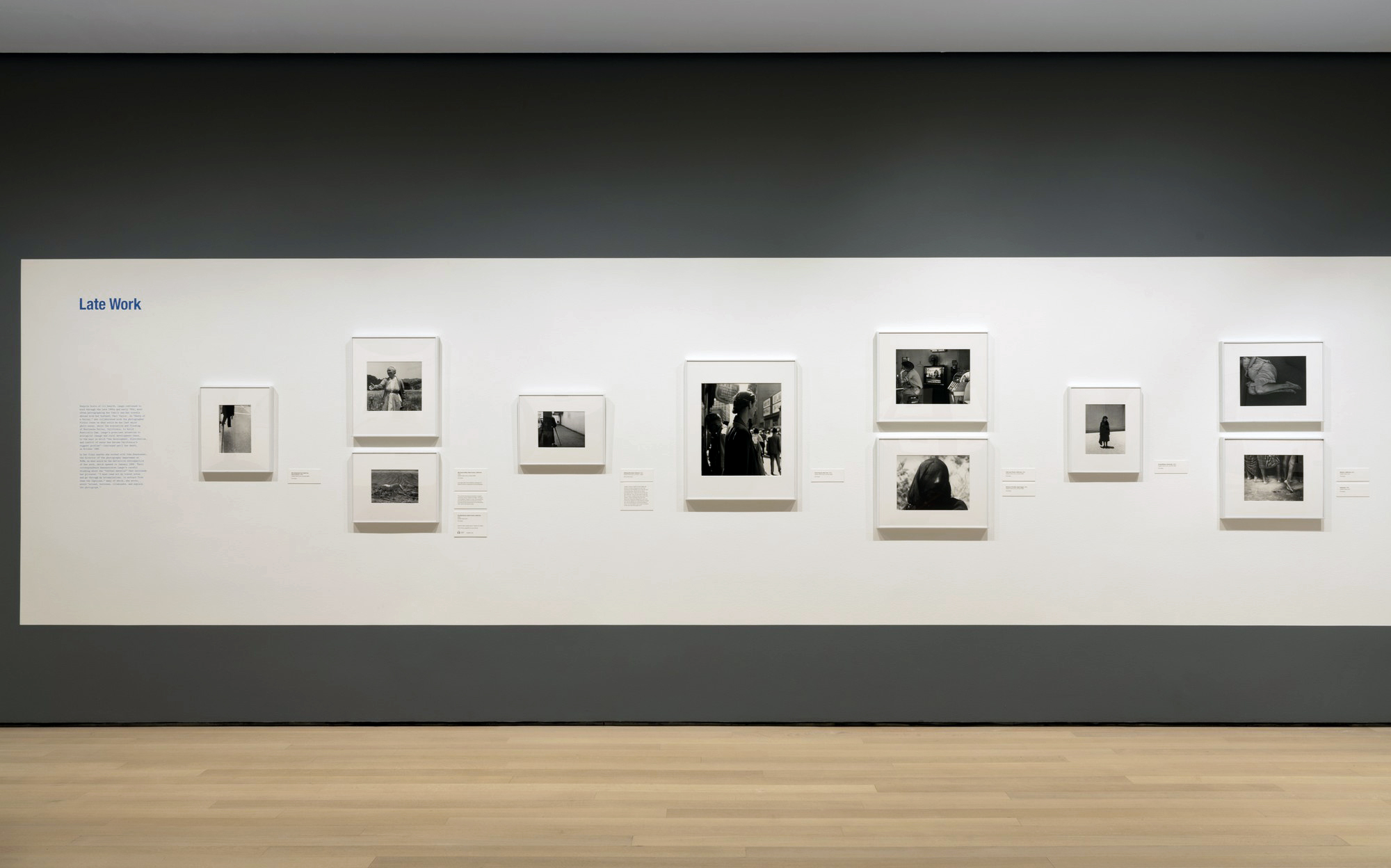
Installation view of 'Dorothea Lange: Words & Pictures', The Museum of Modern Art, New York, February 9, 2020 - May 9, 2020 with at left 'Man Stepping from Cable Car, San Francisco' 1956, and at third left 'Walking Wounded, Oakland' 1954


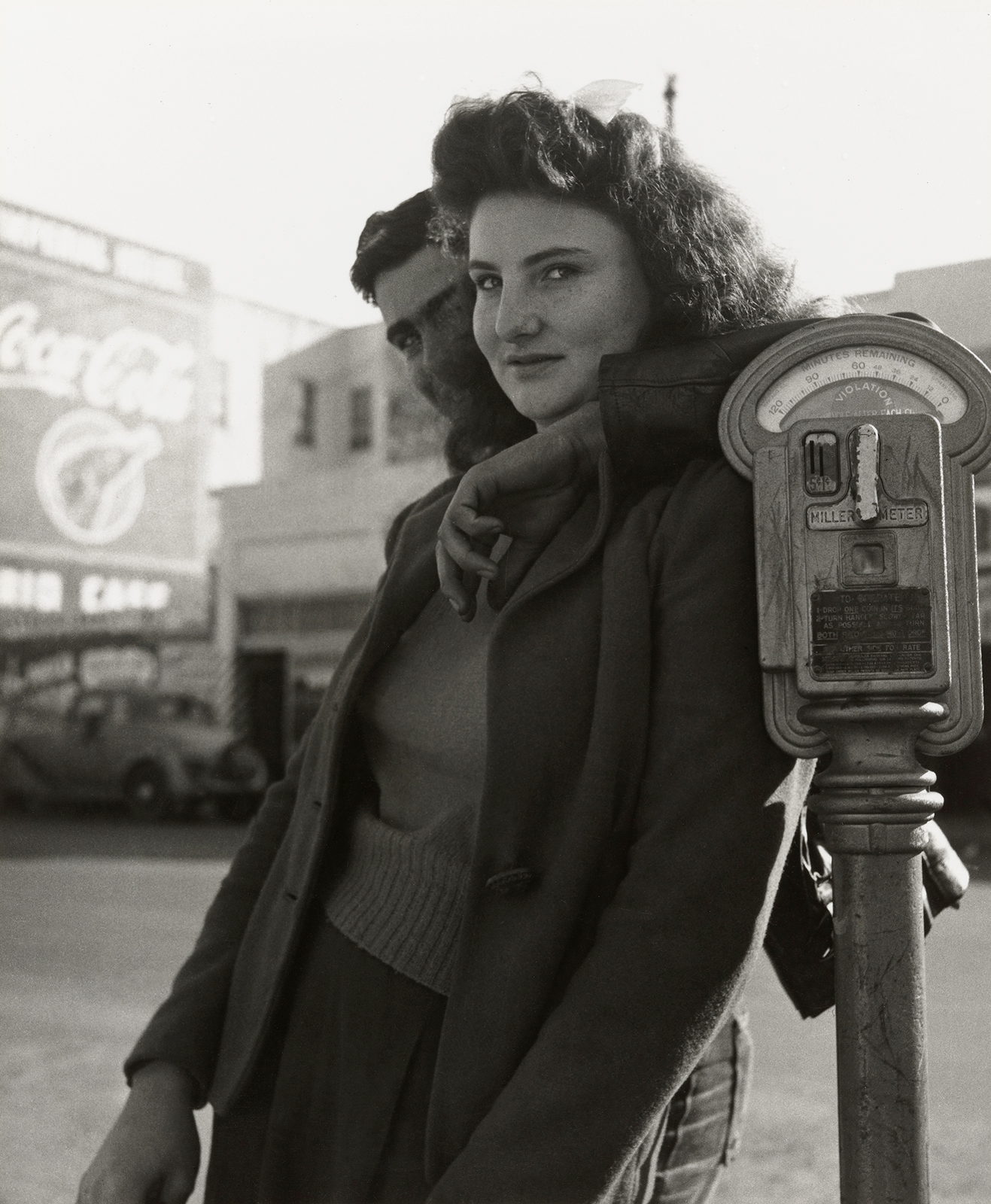
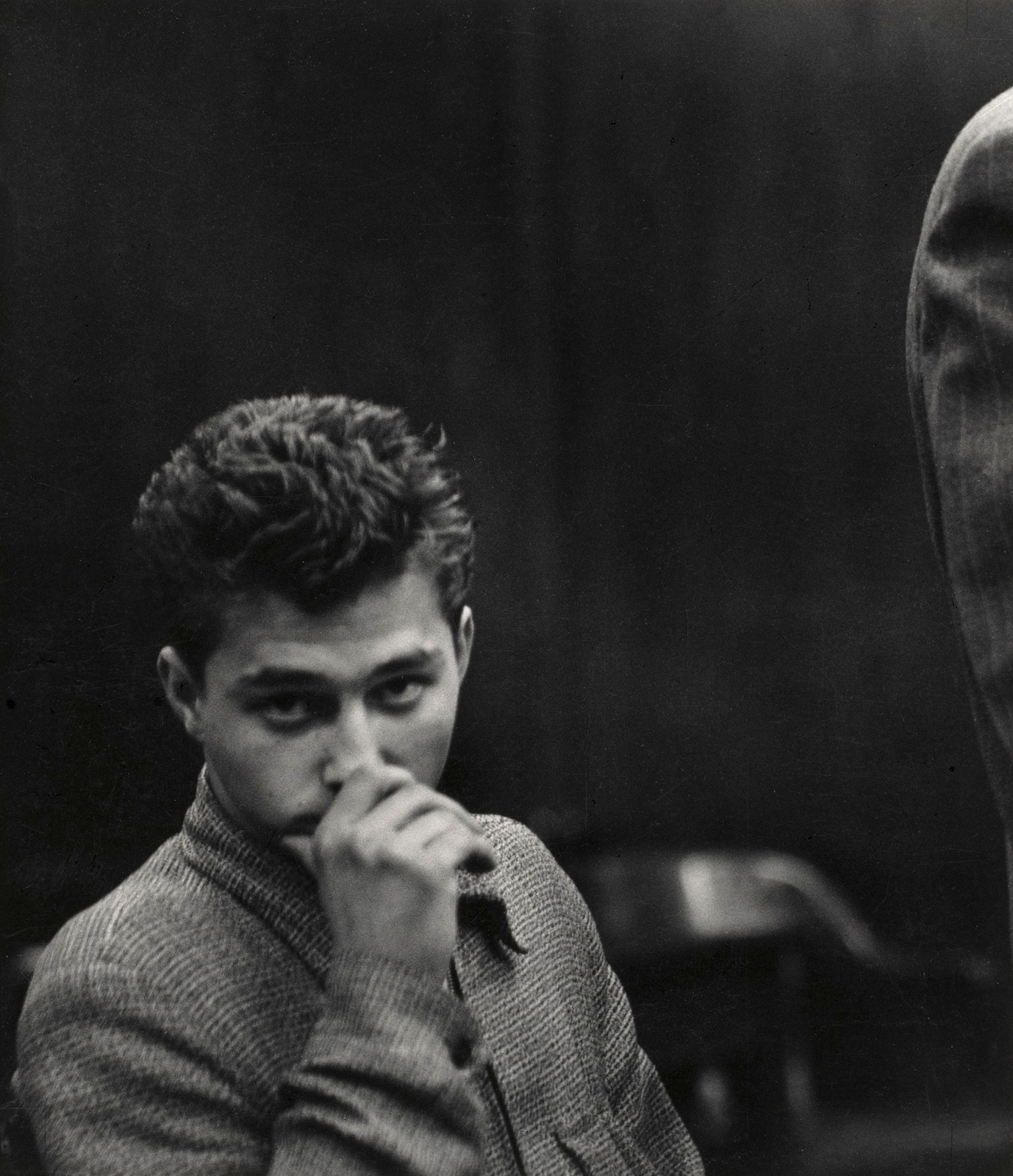
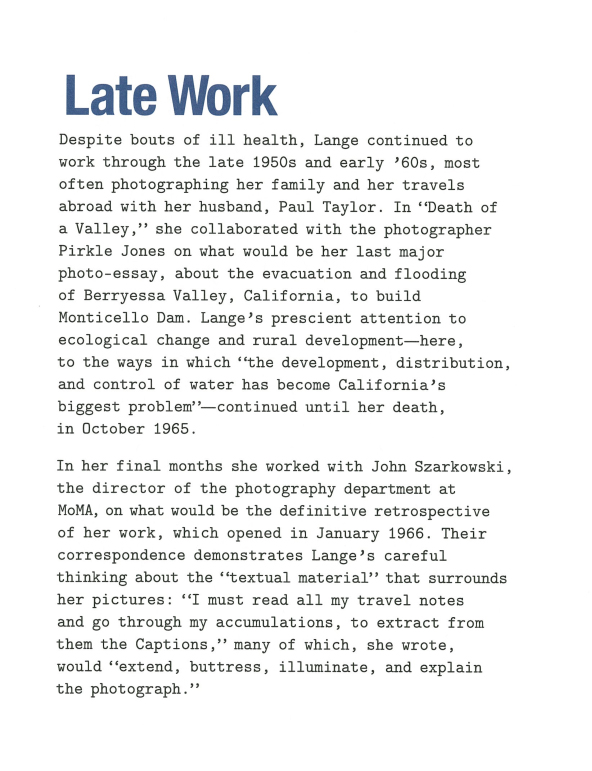
Late work

Installation view of Dorothea Lange: Words & Pictures, The Museum of Modern Art, New York, February 9, 2020 – May 9, 2020 with at left Man Stepping from Cable Car, San Francisco 1956, and at third left Walking Wounded, Oakland, 1954
© 2020 The Museum of Modern Art
Photo: John Wronn


Dorothea Lange (American, 1895-1965) 'Walking Wounded, Oakland' 1954, printed c. 1958


Dorothea Lange (American, 1895-1965)
Walking Wounded, Oakland
1954, printed c. 1958
Gelatin silver print
7 1/2 × 9 1/2″ (19 × 24.2cm)
The Museum of Modern Art, New York. Gift of the artist


Lange’s choice of title for this image was almost certainly influenced by her own experience with disability. As a child she had contracted polio, which left her with a permanent limp. Toward the end of her life she reflected, “No one who hasn’t lived the life of a semi-cripple knows how much that means. I think it perhaps was the most important thing that happened to me, and formed me, guided me, instructed me, helped me, and humiliated me. All those things at once. I’ve never gotten over it and I am aware of the force and the power of it.”


Dorothea Lange (American, 1895-1965) 'Man Stepping from Cable Car, San Francisco' 1956


Dorothea Lange (American, 1895-1965)
Man Stepping from Cable Car, San Francisco
1956
Gelatin silver print
9 3/4 x 6 7/16″ (24.8 x 16.4cm)
The Museum of Modern Art, New York. Purchase


Dorothea Lange (American, 1895-1965) 'Woman in Purdah, Upper Egypt' 1963, printed 1965


Dorothea Lange (American, 1895-1965)
Woman in Purdah, Upper Egypt
1963, printed 1965
Gelatin silver print
12 7/16 × 15 15/16″ (31.6 × 40.5cm)
The Museum of Modern Art, New York. Purchase


Dorothea Lange (American, 1895-1965) 'Bad Trouble Over the Weekend' 1964, printed 1965


Dorothea Lange (American, 1895-1965)
Bad Trouble Over the Weekend
1964, printed 1965
Gelatin silver print
7 3/16 × 5 3/4″ (18.2 × 14.6cm)
The Museum of Modern Art, New York. Purchase


Lange grappled extensively with the titles of the photographs included in her 1966 MoMA retrospective. In a letter to the curator, John Szarkowski, she wrote, “I propose also to caption each print separately, beyond time and place, sometimes with two or three words, sometimes with a quotation, sometimes with a brief commentary. This textual material I shall be working on for some time, on and of.” Rather than identify the subject of this photo as her daughter-in-law, Lange’s title extends the image’s affective reach.


The Museum of Modern Art
11 West 53 Street
New York, NY 10019
Phone: (212) 708-9400

Opening hours:
10.30am – 5.30pm
Open seven days a week

MoMA website

LIKE ART BLART ON FACEBOOK

Back to top

Exhibition: ‘Color Correction’ by Ernst Haas at Christophe Guye Galerie, Zurich

Exhibition dates: 20th January – 25th February 2012


Many thankx to Christophe Guye Galerie, Zurich for allowing me to publish the photographs in the posting. Please click on the photographs for a larger version of the image.


Ernst Haas (American, 1921-1986) 
'New York' 1980


Ernst Haas (American, 1921-1986)

New York
1980
C-print, later print
76.2 x 101.6cm (30 x 40 in)
Edition of 15
Courtesy of Ernst Haas and Christophe Guye Galerie


“No photographer has worked more successfully to express the sheer physical joy of seeing.”


John Szarkowski


“Bored with obvious reality, I find my fascination in transforming it into a subjective point of view. Without touching my subject I want to come to the moment when, through pure concentration of seeing, the composed picture becomes more made than taken. Without a descriptive caption to justify its existence, it will speak for itself – less descriptive, more creative; less informative, more suggestive; less prose, more poetry.”


Ernst Haas from “About Color Photography,” in DU, 1961


Ernst Haas (American, 1921-1986) 'Rush Hour, New York City' Nd


Ernst Haas (American, 1921-1986)
Rush Hour, New York City
Nd
C-print, later print
76.2 x 101.6cm (30 x 40 in)
Edition of 15
Courtesy of Ernst Haas and Christophe Guye Galerie


Ernst Haas (American, 1921-1986) 'New York City, USA' Nd


Ernst Haas (American, 1921-1986)
New York City, USA
Nd
C-print, later print
76.2 x 101.6cm (30 x 40 in)
Edition of 15
Courtesy of Ernst Haas and Christophe Guye Galerie


Ernst Haas (American, 1921-1986) 'New York City, USA' Nd


Ernst Haas (American, 1921-1986)
New York City, USA
Nd
Courtesy of Ernst Haas and Christophe Guye Galerie


Ernst Haas (American, 1921-1986) 'New York City, USA' Nd


Ernst Haas (American, 1921-1986)
New York City, USA
Nd
Courtesy of Ernst Haas and Christophe Guye Galerie


Ernst Haas (American, 1921-1986) 'Feed Line, New York City, USA' Nd


Ernst Haas (American, 1921-1986)
Feed Line, New York City, USA
Nd
Courtesy of Ernst Haas and Christophe Guye Galerie


Ernst Haas (American, 1921-1986) 'New York City, USA' Nd


Ernst Haas (American, 1921-1986)
New York City, USA
Nd
Courtesy of Ernst Haas and Christophe Guye Galerie


Ernst Haas (American, 1921-1986) 'New York City' 1951


Ernst Haas (American, 1921-1986)
New York City
1951
C-print, later print
76.2 x 101.6cm (30 x 40 in)
Edition of 15
Courtesy of Ernst Haas and Christophe Guye Galerie


Ernst Haas (American, 1921-1986) 'Food Day, New York City, USA' 1953


Ernst Haas (American, 1921-1986)
Food Day, New York City, USA
1953
C-print, later print
Courtesy of Ernst Haas and Christophe Guye Galerie


Ernst Haas (American, 1921-1986) '3rd Avenue, Reflection, New York City' 1952


Ernst Haas (American, 1921-1986)
3rd Avenue, Reflection, New York City
1952
C-print, later print
76.2 x 101.6cm (30 x 40 in)
Edition of 15
Courtesy of Ernst Haas and Christophe Guye Galerie


Ernst Haas (American, 1921-1986) 'New York City, USA' 1953


Ernst Haas (American, 1921-1986)
New York City, USA
1953
C-print, later print
76.2 x 101.6cm (30 x 40 in)
Edition of 15
Courtesy of Ernst Haas and Christophe Guye Galerie


Ernst Haas (American, 1921-1986) 'Paris, France' 1954


Ernst Haas (American, 1921-1986)
Paris, France
1954
C-print, later print
76.2 x 101.6cm (30 x 40 in)
Edition of 15
Courtesy of Ernst Haas and Christophe Guye Galerie


Ernst Haas (American, 1921-1986) 'Frigidaire, Paris' 1954


Ernst Haas (American, 1921-1986)
Frigidaire, Paris
1954
C-print, later print
76.2 x 101.6cm (30 x 40 in)
Edition of 15
Courtesy of Ernst Haas and Christophe Guye Galerie


Ernst Haas (American, 1921-1986) 'New York City' 1955


Ernst Haas (American, 1921-1986)
New York City
1955
C-print, later print
76.2 x 101.6cm (30 x 40 in)
Edition of 15
Courtesy of Ernst Haas and Christophe Guye Galerie


Ernst Haas (American, 1921-1986) '
New Orleans' 1957


Ernst Haas (American, 1921-1986)

New Orleans
1957
C-print, later print
76.2 x 101.6cm (30 x 40 in)
Edition of 15
Courtesy of Ernst Haas and Christophe Guye Galerie


Ernst Haas (American, 1921-1986) 'Park Avenue Taxis' 1958


Ernst Haas (American, 1921-1986)
Park Avenue Taxis
1958
C-print, later print
76.2 x 101.6cm (30 x 40 in)
Edition of 15
Courtesy of Ernst Haas and Christophe Guye Galerie


Ernst Haas (American, 1921-1986) '
New Orleans, USA' 1960


Ernst Haas (American, 1921-1986)

New Orleans, USA
1960
C-print, later print
76.2 x 101.6cm (30 x 40 in)
Edition of 15
Courtesy of Ernst Haas and Christophe Guye Galerie


Ernst Haas (American, 1921-1986) 'New York City, USA' 1962


Ernst Haas (American, 1921-1986)
New York City, USA
1962
C-print, later print
76.2 x 101.6cm (30 x 40 in)
Edition of 15
Courtesy of Ernst Haas and Christophe Guye Galerie


Ernst Haas (American, 1921-1986) 'New York City, USA' 1962


Ernst Haas (American, 1921-1986)
New York City, USA
1962
C-print, later print
76.2 x 101.6cm (30 x 40 in)
Edition of 15
Courtesy of Ernst Haas and Christophe Guye Galerie


Ernst Haas (American, 1921-1986) 'Traffic, Mexico City' 1963


Ernst Haas (American, 1921-1986)
Traffic, Mexico City
1963
C-print, later print
76.2 x 101.6cm (30 x 40 in)
Edition of 15
Courtesy of Ernst Haas and Christophe Guye Galerie


Ernst Haas (American, 1921-1986) 'New York City, USA' 1963


Ernst Haas (American, 1921-1986)
New York City, USA
1963
C-print, later print
Courtesy of Ernst Haas and Christophe Guye Galerie


Ernst Haas (American, 1921-1986) 'Lights of New York City, New York City' 1966


Ernst Haas (American, 1921-1986)
Lights of New York City, New York City
1966
C-print, later print
Courtesy of Ernst Haas and Christophe Guye Galerie


Ernst Haas (American, 1921-1986) 'Torn Poster I, Wave, NYC' 1968


Ernst Haas (American, 1921-1986)
Torn Poster I, Wave, NYC
1968
C-print, later print
76.2 x 101.6cm (30 x 40 in)
Edition of 15
Courtesy of Ernst Haas and Christophe Guye Galerie


Ernst Haas (American, 1921-1986) 'New York City, USA' 1968


Ernst Haas (American, 1921-1986)
New York City, USA
1968
C-print, later print
Courtesy of Ernst Haas and Christophe Guye Galerie


Ernst Haas (American, 1921-1986) 'Greenwich Village, New York City, USA' 1970


Ernst Haas (American, 1921-1986)
Greenwich Village, New York City, USA
1970
C-print, later print
76.2 x 101.6cm (30 x 40 in)
Edition of 15
Courtesy of Ernst Haas and Christophe Guye Galerie


Ernst Haas (American, 1921-1986) 'California, USA' 1970


Ernst Haas (American, 1921-1986)
California, USA
1970
C-print, later print
76.2 x 101.6cm (30 x 40 in)
Edition of 15
Courtesy of Ernst Haas and Christophe Guye Galerie


Ernst Haas (American, 1921-1986) 'New York City, USA' 1972


Ernst Haas (American, 1921-1986)
New York City, USA
1972
C-print, later print
Courtesy of Ernst Haas and Christophe Guye Galerie


Ernst Haas (American, 1921-1986) 'New York City, USA' 1973


Ernst Haas (American, 1921-1986)
New York City, USA
1973
C-print, later print
Courtesy of Ernst Haas and Christophe Guye Galerie


Ernst Haas (American, 1921-1986) 'New York City, USA' 1974


Ernst Haas (American, 1921-1986)
New York City, USA
1974
C-print, later print
76.2 x 101.6cm (30 x 40 in)
Edition of 15
Courtesy of Ernst Haas and Christophe Guye Galerie


“Making his first color photographs in 1949, Haas was a member of the prestigious Magnum agency. Known mainly for his commissioned work, whereby he created influential imagery such as iconic Marlboro Man advertisements long before other artists were commissioned to do so, Haas’ work would come to have great influence on later artists, such as Richard Prince, Marc Quinn or Robert Longo. Using color also for his personal work, with a pictorial language recalling at times the works by painter Edward Hopper, Haas has been described as a poet photographer. Haas cropped and abstracted, photographed against the light and out of focus, and used reflections and close-ups to mystify the visible. Interested in the everyday,as well, some of his personal photographs remind of the likes of Lee Friedlander or Stephan Shore.”

Anonymous. “Ernst Haas: Color Correction,” on the Lens Culture website Nd [Online] Cited 15/11/2024


Ernst Haas (American, 1921-1986) 'New Mexico, USA' 1975


Ernst Haas (American, 1921-1986)
New Mexico, USA
1975
C-print, later print
76.2 x 101.6cm (30 x 40 in)
Edition of 15
Courtesy of Ernst Haas and Christophe Guye Galerie


Ernst Haas (American, 1921-1986)
 'Western Skies Motel' 1978


Ernst Haas (American, 1921-1986)
Western Skies Motel
1978
C-Print, later print
76.2 x 101.6cm (30 x 40 in)
Edition of 15
Courtesy of Ernst Haas and Christophe Guye Galerie


Ernst Haas (American, 1921-1986) 'New York City, USA' 1981


Ernst Haas (American, 1921-1986)
New York City, USA
1981
C-Print, later print
76.2 x 101.6cm (30 x 40 in)
Edition of 15
Courtesy of Ernst Haas and Christophe Guye Galerie


Ernst Haas (American, 1921-1986) 'St Louis, Missouri, USA' 1986


Ernst Haas (American, 1921-1986)
St Louis, Missouri, USA
1986
C-Print, later print
76.2 x 101.6cm (30 x 40 in)
Edition of 15
Courtesy of Ernst Haas and Christophe Guye Galerie


Christophe Guye Galerie is proud to present Color Correction: by one of the most important and influential artists in the development of colour photography and the history of the medium on a whole, this exhibition spotlights a body of work that poignantly describes the complex ways in which an artist’s ‘career’ took form. Ernst Haas belonged to the best known, most productive and widely published photographers of the twentieth century. Most commonly associated with vibrant colour photography, Haas was famed for his commercial work. It is undoubtedly however his other, private work that really illuminates the power of his sensibility and his true mastery. Unfortunately this side of his creative output has been kept private and thus escaped posthumous appreciation. It is only now, with the efforts and belief in Haas’ ability of a few, such as William Ewing, former Director of the Musée de l’Elysée in Lausanne, that this body of work is finally revealed and justly let’s this artist’s aptitude shine. The exhibition Color Correction, and Ewing’s corresponding book published by Steidl, uncovers, with an exciting and novel view, the “other” side of Ernst Haas’ visionary.

Color Correction is the first exhibition in Switzerland to present the to-date little known, non-commission work by the late Austrian-born photographer. Uncovering a new side to a much celebrated body of work, the show will include fifteen new and mostly never before seen large format works, alongside a handpicked selection of rare, vintage dye-transfer prints from the 1950s and ’60s. These astoundingly complex and ultimately enveloping pieces form a group exhibited under the title Colour Correction to coincide with the recent Steidl publication Color Correction, by William Ewing.”These images are of great sophistication, and rival (and sometimes surpass) the best of his colleagues”, says Ewing, revealing works “far more edgy, loose, enigmatic, and ambiguous than his celebrated work.”

“Color correction” is a term used in printing, through which the inked proofs are brought into as close equivalence as possible with the original photograph. Ewing has chosen to use the term metaphorically, to suggest “we owe it to Ernst Haas and our understanding of the history of colour photography, to reevaluate his importance in light of this marvellous imagery, kept under wraps for so many years.” It was in 1962 that the first ever colour photography exhibition, Ernst Haas Color Photography, was held at the prestigious MoMA in New York, and not until fourteen years later would colour photography be given another show at the museum with Color Photography by William Eggleston. Though introducing Haas’ work to a large audience and a major milestone in the history of the medium it would not come to have the same effect on the development of the artist’s career. On the contrary: an exhibition planned by Edward Steichen, renowned photographer and curator of MoMA at the time, it was in the end his predecessor John Szakowski who would actually see it realised. With this shift in curatorial visionary, Szakowski would enforce a different taste. Having the duty to complete Steichen’s idea, but keen to champion his own and dissimilar ideas, Szakowski’s enthusiasm regarding the artist and the exhibition Ernst Haas Color Photography was meek, the praise in his accompanying texts all but faint. Steichen, once in favour of Pictorialism, thus a subjective photography, valued Haas’ profound use of the camera, while Szakowski on the other hand chose to favour a less embellished sentiment; a more hardedge modernist inspired American approach. It was this disregard and clashing of personal agendas that would ultimately and erroneously see Haas excluded from the canon of colour photography; his indisputable talent became the victim of the cyclical debate of what art photography should be.

Making his first colour photographs in 1949, Haas was a member of the prestigious Magnum agency. Known mainly for his commissioned work, whereby he created influential imagery such as iconic Marlboro Man advertisements long before other artists were commissioned to do so, Haas’ work would come to have great influence on later artists, such as Richard Prince, Marc Quinn or Robert Longo. Using colour also for his personal work, with a pictorial language recalling at times the works by painter Edward Hopper, Haas has been described as a poet photographer. By no means the first to use the medium in colour, he was said to be “the first to do it masterfully.” Visionary, Haas early on cropped and abstracted, photographing against the light and out of focus, using reflections, close-up to mystify the visible, abstraction of colour and texture. Interested in the everyday, his photographs remind of the likes of Lee Friedlander or Stephan Shore, but rather than documents his works are “vignettes of personal experience.” The works on display in Color Correction reveal this more abstract side of the artist’s oeuvre.

Haas’ work never received the recognition it deserved. The works presented at Christophe Guye Galerie are based upon this dispute, attempting to reveal the true ability of Haas’ work and restore his rightful place in the medium’s canon.

Haas’ formal language echoes decades past while being extremely contemporary at once. Often shooting inches away from the subject at acute and unexpected angles, Haas work was visionary. Lyrical, evocative, and expressive, while at the same time exact, the artist moved away from obvious reality, finding fascination in transforming it into a subjective point of view. The works on view are to be understood not as informative but as creative; description gives way to suggestion. Color Correction – the exhibition as well as the book – show works that are rich, vibrant, and intelligent alike. With this new view on the body of work of one of the medium’s most important advocates, Color Correction hopes to evoke the excitement Steichen expressed when he first came across Haas imaginarium of seeing: “In my estimation we have experienced an epoch in photography. Here is a free spirit, untrammelled by tradition and theory, who has gone out and found beauty unparalleled in photography.”

Press release from the Christophe Guye Galerie website


Ernst Haas (American, 1921-1986) 'New York City' 1952


Ernst Haas (American, 1921-1986)
New York City
1952
C-print, later print
76.2 x 101.6cm (30 x 40 in)
Edition of 15
Courtesy of Ernst Haas and Christophe Guye Galerie


Ernst Haas (American, 1921-1986) 'Brooklyn, New York' 1952


Ernst Haas (American, 1921-1986)
Brooklyn, New York
1952
C-print, later print
101.6 x 76.2cm (40 x 30 in)
Edition of 15
Courtesy of Ernst Haas and Christophe Guye Galerie


Ernst Haas (American, 1921-1986) 'New York City, USA' 1952


Ernst Haas (American, 1921-1986)
New York City, USA
1952
C-print, later print
Courtesy of Ernst Haas and Christophe Guye Galerie


Ernst Haas (American, 1921-1986) 'New York City, USA' 1955


Ernst Haas (American, 1921-1986)
New York City, USA
1955
C-print, later print
Courtesy of Ernst Haas and Christophe Guye Galerie


Ernst Haas (American, 1921-1986) 'Bronco Rider, California' 1957


Ernst Haas (American, 1921-1986)
Bronco Rider, California
1957
C-print, later print
101.6 x 76.2cm (40 x 30 in)
Edition of 15
Courtesy of Ernst Haas and Christophe Guye Galerie


Ernst Haas (American, 1921-1986) 'New York City, USA' 1963


Ernst Haas (American, 1921-1986)
New York City, USA
1963
C-print, later print
Courtesy of Ernst Haas and Christophe Guye Galerie


Ernst Haas (American, 1921-1986) 'Los Angeles, California, USA' 1963


Ernst Haas (American, 1921-1986)
Los Angeles, California, USA
1963
C-print, later print
101.6 x 76.2cm (40 x 30 in)
Edition of 15
Courtesy of Ernst Haas and Christophe Guye Galerie


Ernst Haas (American, 1921-1986) 'Cafe Boi Charbon, Caen, France' 1976


Ernst Haas (American, 1921-1986)
Cafe Boi Charbon, Caen, France
1976
C-print, later print
Courtesy of Ernst Haas and Christophe Guye Galerie


Ernst Haas (American, 1921-1986) 'California, USA' 1976


Ernst Haas (American, 1921-1986)
California, USA
1976
C-print, later print
101.6 x 76.2cm (40 x 30 in)
Courtesy of Ernst Haas and Christophe Guye Galerie


Christophe Guye Galerie
Dufourstrasse 31
8008 Zurich, Switzerland
Phone: +41 44 252 01 11

Opening hours:
Monday to Friday 10am – 6pm
Saturday 11am – 4pm

Christophe Guye Galerie website

LIKE ART BLART ON FACEBOOK

Back to top

Exhibition: ‘Ron Arad: No Discipline’ at The Museum of Modern Art (MoMA), New York

Exhibition dates: 2nd August – 19th October, 2009


Ron Arad (British-Israeli, b. 1951) 'Concrete Stereo' 1983 from the exhibition 'Ron Arad: No Discipline' at The Museum of Modern Art (MoMA), New York, Aug - Oct, 2009


Ron Arad (British-Israeli, b. 1951)
Concrete Stereo
1983
Photo courtesy of Ron Arad Associates and the Museum of Modern Art


One of my favourite designers!

Marcus


Many thankx to the Museum of Modern Art for allowing me to publish the photographs in the posting. Please click on the photographs for a larger version of the image.


Ron Arad (British-Israeli, b. 1951) 'The Rover Chair' 1981 from the exhibition 'Ron Arad: No Discipline' at The Museum of Modern Art (MoMA), New York, Aug - Oct, 2009


Ron Arad (British-Israeli, b. 1951)
The Rover Chair
1981
Tubular steel, leather, and cast-iron Kee Klamp joints
30 3/4 x 27 3/16 x 36 1/4″ (78 x 69 x 92cm); weight 57.3 lbs (26 kg)
Edition by One Off, London
Private collection, London
Photo by Erik and Petra Hesmerg and courtesy of Private Collection, Maastricht, and the Museum of Modern Art


“I picked up this Rover seat and I made myself a frame and this piece sucked me into this world of design.” “If someone had told me a week before that I was going to be a furniture designer, I would think they were crazy.” 

~  Ron Arad


Ron Arad (British-Israeli, b. 1951) 'Sketch for Well Tempered Chair' 1986


Ron Arad (British-Israeli, b. 1951)
Sketch for Well Tempered Chair
1986
Photo courtesy of Vitra Design Museum and the Museum of Modern Art


Ron Arad (British-Israeli, b. 1951) 'Well Tempered Chair Prototype' 1986


Ron Arad (British-Israeli, b. 1951)
Well Tempered Chair Prototype
1986
Photo courtesy of Vitra Design Museum and the Museum of Modern Art


Ron Arad (British-Israeli, b. 1951) 'Big Easy' 1988


Ron Arad (British-Israeli, b. 1951)
Big Easy chair
1988


Ron Arad (British-Israeli, b. 1951) 'Big Easy. Volume 2' 1988


Ron Arad (British-Israeli, b. 1951)
Big Easy. Volume 2
1988
Polished stainless steel
42 1/8 x 50 1/2 x 36 1/4″ (107 x 128.3 x 92.1cm); weight 44 lbs (20 kg)
Edition by One Off, London
Collection of Michael G. Jesselson, New York
Image: Ron Arad Associates, London


The Museum of Modern Art presents Ron Arad: No Discipline, the first major U.S. retrospective of Arad’s work, from August 2 to October 19, 2009. Among the most influential designers of our time, Arad (British, b. Israel 1951) stands out for his adventurous approach to form, structure, technology, and materials in work that spans the disciplines of industrial design, sculpture, architecture, and mixed-medium installation. Arad’s relentless experimentation with materials of all kinds – from steel, aluminium, and bronze to thermoplastics, crystals, fibre-optics, and LEDs – and his radical reinterpretation of some of the most established archetypes in furniture – from armchairs and rocking chairs to desk lamps and chandeliers – have put him at the forefront of contemporary design.

The exhibition features approximately 140 works, including design objects and architectural models, and 60 videos. Most of the objects featured in the exhibition are displayed in a monumental Corten-and-stainless-steel structure specially designed by the artist called Cage sans Frontières (Cage without Borders). The structure measures 126.5 feet (38.5 meters) long, spanning the entire length of the Museum’s International Council gallery, and over 16 feet (5 meters) tall. The exhibition is organised by Paola Antonelli, Senior Curator, and Patricia Juncosa Vecchierini, Curatorial Assistant, Department of Architecture and Design, The Museum of Modern Art.

Ms. Antonelli states: “Arad is well known for his iconoclastic disregard for disciplines – and, at least apparently, for discipline. He has defined much of the current panorama of design, inspiring a generation of practitioners who disregard established modes of practice in favour of mutant design careers that are flexible enough to encompass the range of contemporary design applications, from interactions and interfaces to furniture and shoes.”

Arad’s accomplishments over the past three decades have stirred up the design world by repeatedly updating the concept of the architect / designer / artist and repositioning design side by side with art, both in discourse and in the market – all while keeping one foot firmly in industrial production and large-scale distribution. Idiosyncratic and surprising, Arad’s designs communicate the joy of invention, pleasure, humour, and pride in the display of their technical and constructive skills.

This exhibition celebrates Arad’s spirit by combining industrial design, studio pieces, and architecture. It features Arad’s most celebrated historical pieces, including the Rover Chair (1981) (see above), the Concrete Stereo (1983) (see above), and the Bookworm bookshelves (1993) (see below), along with more recent products such as the PizzaKobra lamp (2008) (see below) and the latest reincarnation of his Volumes series (1998), the armchair duo titled Even the Odd Balls? (2009) (see below).

Cage sans Frontières was specially designed by Arad, developed with Michael Castellana from Ron Arad Associates, and manufactured and installed by Marzorati Ronchetti, Italy, under the direction of Roberto Travaglia. The structure is in the shape of a twisted loop and consists of 240 square cut-outs lined with stainless steel that act as shelves for the objects in the exhibition. The dramatic installation relies on the scale of the structure and on the reflectivity of the inner walls of the cut-outs which creates a ricocheting effect. One side of the structure is continually covered with grey gauze fabric that acts as a translucent, elastic membrane. The fabric was donated by the textile company Maharam and was cut and stitched by the jeans manufacturer Notify, which is also a sponsor of the exhibition. The structure was commissioned and lent to the exhibition by Singapore FreePort Pte Ltd, an arts storage facility.

Monitors installed in the structure and on the walls feature animations of the design and production process of some of the objects on view; animated renderings of architectural projects represented in the exhibition by models; and a video showing time-lapse footage of the construction of Cage sans Frontières. Other objects – including the Bookworm and This Mortal Coil bookshelves (both 1993) and the Shadow of Time clock (1986) – are installed along the perimeter of the gallery. Two of Arad’s sofas, Do-Lo-Res (2008) (see below) and Misfits (1993) (see below), are installed outside the exhibition entrance, and visitors are invited to sit on them.

Ever since he founded his studio, together with long-time business partner Caroline Thorman, in 1981 (first called One Off, and then reestablished in 1989 as Ron Arad Associates), Arad has produced an outstanding array of innovative objects, from limited editions to unlimited series, from carbon fibre armchairs to polyurethane bottle racks. A designer and an architect, trained at the Bezalel Academy of Art in Jerusalem and at London’s Architectural Association School of Architecture, he has also designed memorable spaces – some plastic and tactile, others digital and ethereal – such as the lobby of the Tel Aviv Opera House (1994-98), Yohji Yamamoto’s showroom in Tokyo (2003), and the Holon Design Museum, Israel (nearing completion), all of which will be represented in the exhibition with models and videos. In his influential role as Head of the Design Products Masters’ Degree course at the Royal College of Art in London from 1997 until this year, he has nurtured several innovative designers, including Julia Lohmann, Paul Cocksedge, and Martino Gamper.

The 1981 Rover Chairs (see above), which launched Arad’s design career even though at the time he was not seeking any particular professional label, are emblematic of his early readymade creations. The chairs are made of discarded leather seats from the Rover V8 2L, a British car, anchored in tubular-steel frames using Kee Klamps, an inexpensive scaffolding system. Arad stopped making them once he realised that the overwhelming demand for the chairs was transforming his atelier into a dedicated Rover Chair manufacturer. The Italian company Moroso is about to produce an industrial version of the chair under the name Moreover.

The Concrete Stereo (1983) (see above) is another milestone in Arad’s work with readymades. It is very simply a hi-fi system – with turntable, amplifier, and speakers – cast in concrete. The concrete was then partially chipped away, exposing the steel armature, the electronic components, and the pebbles in the cement.

Objects in the exhibition are grouped as families whose common thread is the exploration, sometimes over years, of a form, a material, a technique, or a structural idea. An example is the investigation of elasticity and surprise that began with the Well Tempered Chair (1986) (see above) – a chair made of four sprung sheets of steel held together by wing nuts that come together to suggest the archetypical shape of an armchair. Another example is the Volumes series (1988), which comprises, among others, his renowned Big Easy (1988) (see above) and its various iterations, among them the Soft Big Easy (1990) (see above) and the painted-fibreglass New Orleans (1999) (see above).

Not Made by Hand, Not Made in China, another important family and a milestone in Arad’s career and in the history of design, is a series of limited-edition objects – vases, sculptures, lamps, and bowls – that Arad presented in 2000 at the annual Milan Furniture Fair. All the objects in the series were made using 3-D printing, which at that time was almost exclusively used to create one-off models for objects that would later be produced in series using traditional manufacturing processes. Treating rapid prototypes as final products rather than templates, Arad turned the new process into an advanced production method, a path that was subsequently followed by several designers.

A more recent family is the Bodyguards (2008) (see below), in which the same initial shape in blown aluminium is differently intersected by imaginary planes and cut to reveal ever-changing personalities, from a rocking chair to a stern bodyguard-like sculpture.

To give life to his ideas, Arad relies on the latitude provided by computers as much as on his own exquisite drafting skills, and he uses both the most advanced automated manufacturing techniques and the simple welding apparatuses in his collaborators’ metal workshops. Often, his work is a combination of high and low technologies, such as his Lolita chandelier (2004) (see below) for Swarovski. Made with 2,100 crystals and 1,050 white LEDs, the Lolita takes the shape of a flat ribbon wound into a corkscrew shape. The ribbon contains 31 processors that enable the display of text messages sent to the Lolita’s mobile phone number. For this exhibition, visitors can send texts to (917) 774-6264. The messages appear at the top of the chandelier and slowly wind down the ribbon’s curves, creating the impression that the chandelier is spinning ever so slightly.”

Press release from the MoMA website


Ron Arad (British-Israeli, b. 1951) 'Soft Big Easy' 1990


Ron Arad (British-Israeli, b. 1951)
Soft Big Easy chair
1990
Injected flame-retardant polyurethane foam, steel, polypropylene, and wool
39 3/8 x 48 7/16 x 31 1/2″ (100 x 123 x 80cm)
Manufactured by Moroso SpA, Italy
Courtesy Moroso SpA, Udine, Italy
Image: CNAC/MNAM/Dist. Réunion des Musées Nationaux/Art Resource, NY. Photo Jean-Claude Planchet


Ron Arad (British-Israeli, b. 1951) 'Large Bookworm' 1993


Ron Arad (British-Israeli, b. 1951)
Large Bookworm
1993
Tempered sprung steel and patinated steel
Bracket height variable, 7 7/8-11 13/16″ (20-30cm); total length 49′ 2 9/16″ (15m); depth 13″ (33cm)
Edition by One Off/Ron Arad Associates, London
Private collection
Image: Ron Arad Associates, London


Ron Arad (British-Israeli, b. 1951) 'Misfits' 1993


Ron Arad (British-Israeli, b. 1951)
Misfits
1993
Injected flame-retardant polyurethane foam, steel, polypropylene, and wool
Six modules: each h. variable, base 39 3/8 x 39 3/8″ (100 x 100cm)
Manufactured by Moroso SpA, Italy, 2007
Courtesy Moroso SpA, Udine, Italy
Image: Ron Arad Associates, London


Misfits is a seating system Arad developed, at Patrizia Moroso’s request, to launch Waterlily, a new water-blown foam made by ICI Polyurethane. From large cubes of foam he carved out modular – or, rather, mock-modular – sections, intending them to be graciously ill-fitting with each other (hence the name). The modules can stand on their own or be combined in various ways, but however they are lined up they are meant to look deliberately mismatched, without continuity from section to section. Some sections have backs and some do not, and the irregular solids and voids created quite a challenge for Moroso, who had to figure out how to cover them all with fabric. The recent reedition of Misfits is made with slightly larger blocks from a different polyurethane foam, which is injected into a mould rather than cut.


Ron Arad (British-Israeli, b. 1951) 'D-Sofa' Prototype 1994


Ron Arad (British-Israeli, b. 1951)
D-Sofa Prototype
1994
Patinated, painted, oxidised stainless steel and mild steel
38 3/16″ x 7′ 1 13/16″ x 35 7/16″ (97 x 218 x 90cm)
Prototype by One Off, London
Pizzuti Collection
Image: Private collection, USA. Photo Erik and Petra Hesmerg


Ron Arad (British-Israeli, b. 1951) 'Uncut' 1997


Ron Arad (British-Israeli, b. 1951)
Uncut chair
1997
Vacuum-formed aluminium sheet and polished stainless steel
32 5/8 x 38 5/8 x 35″ (83 x 98 x 89cm)
Edition by Ron Arad Studio, Italy
Centre Pompidou, Paris, Musée national d’art moderne/Centre de création industrielle


Ron Arad (British-Israeli, b. 1951) 'FPE (Fantastic, Plastic, Elastic)' 1997


Ron Arad (British-Israeli, b. 1951)
FPE (Fantastic, Plastic, Elastic)
1997
Extruded aluminium profiles and injection-moulded polypropylene plastic sheet
31.25 x 17 x 22″ (79.4 x 43.2 x 55.9cm)
Manufactured by Kartell, Italy
The Museum of Modern Art, New York. Gift of the manufacturer
Image: Ron Arad Associates, London


FPE (Fantastic, Plastic, Elastic) is an inexpensive stacking chair made from lightweight plastic and aluminium. The design, originally conceived in plywood (as the Cross Your T’s Chair), was part of a commission from Mercedes-Benz for a transportable exhibition stand that would be taken to motor shows in Europe. The chair was not suited to small-scale production, and was therefore tweaked and perfected for mass manufacture. Its final form is exceptional in the simplicity of its construction: a plastic seat is inserted into channels in double-barrelled extruded aluminium profiles, which, when the chair frame is bent, hold the plastic in place. With no need for glue, screws, or bolts, this method allows the simplest combination of frame and plane to create a sinuous, practical, resilient form – proving Arad’s ability to embrace industrial production and make the best of its possibilities. The FPE can be stacked in groups of eight, comes in three colours (opaline, blue, and red, although it was originally available in yellow), and can be used both indoors and out.


Ron Arad (British-Israeli, b. 1951) 'New Orleans' 1999


Ron Arad (British-Israeli, b. 1951)
New Orleans chair
1999


Ron Arad (British-Israeli, b. 1951) 'Lolita Chandelier' 2004


Ron Arad (British-Israeli, b. 1951)
Lolita Chandelier
2004
Crystals and light-emitting diodes (LEDs)
59″ (150cm) height x 43 1/4″ (110 cm) top-plate diam.; weight 352.7 lbs (160 kg)
Edition by Swarovski, Austria
Courtesy of Galerie Arums, Paris
Send a text message to Lolita: (917) 774-6264
Image: Ron Arad Associates, London


When Nadja Swarovski set out to build a new division for her family’s company, Swarovski Crystal, she invited Arad to reinvent the chandelier as a juxtaposition of traditional form with modern technology. The new collection of chandeliers, called Crystal Palace, launched in 2002, and Arad’s Lolita was ready in 2004. Made with 2,100 crystals and 1,050 white LEDs, Lolita takes the shape of a flat ribbon wound into a corkscrew shape. The ribbon contains thirty-one processors that enable the display of SMS text messages sent to Lolita’s mobile phone number; these messages appear at the top of the chandelier and wind down the ribbon’s curves, slowly enough to give bystanders time to read, creating the impression that the chandelier is spinning ever so slightly. The name is the result of grace under pressure: on the phone with Swarovski and pressed for a name, Arad thought of another work in progress, his LED riddled Lo-Rez-Dolores-Tabula-Rasa, and from there went to “Lolita” – the nickname of Vladimir Nabokov’s Dolores Haze. The name stuck, creating not only a saucy entry in many a design buff’s phone book but a further literary association as well: as a journalist pointed out to Arad, Nabokov’s novel begins, “Lolita, light of my life…”


Ron Arad (British-Israeli, b. 1951) 'Oh Void 2' armchair 2004


Ron Arad (British-Israeli, b. 1951)
Oh Void 2 armchair
2004


Ron Arad (British-Israeli, b. 1951) 'Oh Void 2 armchair' 2006


Ron Arad (British-Israeli, b. 1951)
Oh Void 2 armchair
2006
Acrylic
30 1/4 x 43 x 23 5/8″ (76.8 x 109.2 x 60cm)
Edition by The Gallery Mourmans, the Netherlands
Collection of Michael G. Jesselson, New York


Ron Arad (British-Israeli, b. 1951) 'Table Paved With Good Intentions No. 48' 2005


Ron Arad (British-Israeli, b. 1951)
Table Paved With Good Intentions No. 48
2005
Mirror-polished, laser-cut stainless steel
55″ x 8′ 2″ x 15″ (139.7 x 238.8 x 38.1cm); weight 176.4 lbs (80 kg)
Edition by Ron Arad for The Gallery Mourmans, the Netherlands
Collection Jérôme and Emmanuelle de Noirmont, Paris
Image: Emmanuelle and Jérôme de Noirmont. Photo: Mathieu Ferrier


Arad’s installation for Design Miami in 2005 consisted of sixty-nine tables made of mirror-polished stainless steel and covering an entire gallery, folding at the corners and climbing up the walls like handsome quicksilver parasites from outer space. Arad had experimented with reflective tables eleven years earlier, in an installation for one of the Fondation Cartier’s famous Soirées Nomades, in which designers were invited to provide a stage for music and other types of performances in Jean Nouvel’s building for the Paris-based foundation. There, Arad displayed forty tables that covered the ground floor, reflecting the surrounding trees and enhancing the glass architecture’s openness toward the city surrounding it.


Ron Arad (British-Israeli, b. 1951) 'MT Rocker Chair' 2005


Ron Arad (British-Israeli, b. 1951)
MT Rocker Chair
2005
Polished bronze rods
29 x 33 1/2 x 40″ (73.7 x 85.1 x 101.6cm)
Edition by Ron Arad Associates, London
Private collection, USA
Image: Ron Arad Associates, London


Arad’s work often begins as a studio piece that is later adapted for industrial production, but in some cases the direction is reversed, as was the case with the MT (or “empty”) series. Intrigued by the untapped potential of rotation-moulding, one of the humblest methods of manufacturing plastic products, Arad came up with beautiful, complex concave / convex forms, highlighted by contrasting colours, for an armchair, rocker, and couch. The MT collection is manufactured by Driade, but Arad subsequently translated the rocking piece into versions made of polished stainless steel or bronze, using an exquisite technique involving the patient application, by hand, of metal rods onto a basic structure.


Ron Arad (British-Israeli, b. 1951) 'Southern Hemisphere' 2007


Ron Arad (British-Israeli, b. 1951)
Southern Hemisphere
2007
Patinated aluminium
Photo by Erik and Petra Hesmerg and courtesy of Private Collection, Maastricht, and the Museum of Modern Art


Ron Arad (British-Israeli, b. 1951) 'Do-Lo-Res' 2008


Ron Arad (British-Israeli, b. 1951)
Do-Lo-Res
2008
Polyurethane foam, polyester fibres, and wood
Dimensions variable: 10 13/16 x 8 1/4 x 8 1/4 x 32 1/16″ (27.5 x 21 x 21 x 83cm)
Manufactured by Moroso SpA, Italy
Courtesy Moroso SpA, Udine, Italy
Image: Moroso


Do-Lo-Rez is a seating unit made of rectangular block elements, each one constructed from polyurethane foam, denser at the bottom and softer at the top. The name echoes the Lo-Rez-Dolores-Tabula-Rasa project, and both designs are different manifestations of Arad’s interest in digital pixilation and low resolution. Here the foam “pixels” of different heights are attached to a platform with steel pins and can be rearranged to create different sofa forms.


Ron Arad (British-Israeli, b. 1951) 'PizzaKobra' lamp 2008


Ron Arad (British-Israeli, b. 1951)
PizzaKobra lamp
2008
Chromed steel, aluminium, and light-emitting diodes (LEDs)
Extended: 28 7/8″ (73.3cm) height x 10 1/4″ (26cm) diam.; collapsed: 3/4″ (1.9cm) height x 10 1/4″ (26cm) diam.
Manufactured by iGuzzini illuminazione SpA, Italy, 2008
The Museum of Modern Art, New York. Gift of the manufacturer


This lamp, which transforms itself from a coil as flat as a pizza to a sinuous, rising metal cobra with a single glowing red eye (its on/off switch), is as surprising as it is playful, as much like a twisty Tangle Toy as a very efficient and flexible light source. With its tubular aluminium sections – except for the base, which is heavier steel, for balance – and six LEDs that can be oriented in any direction, the PizzaKobra can be adjusted to suit any lighting requirements.


Ron Arad (British-Israeli, b. 1951) 'Bodyguard' 2008


Ron Arad (British-Israeli, b. 1951)
Bodyguard chair
2008
Polished and partially coloured superplastic aluminium
49 x 36 x 70 1/2″ (124.5 x 91.4 x 179.1cm)
Edition by The Gallery Mourmans, the Netherlands
Private collection, Palm Beach, Florida


The Bodyguards, a recent result of Arad’s experiments with blown aluminium, are all derived from the same bulbous shape, intersected and carved in various ways. Although Arad had sworn off designing rocking chairs, it seemed a natural application for this new technology, allowing him to create these large, polished pieces, which, in addition to rocking back and forth, also swivel in a way Arad describes as “omnidirectional.” With the Bodyguards, as with much of his furniture, Arad explores the expressive qualities of the material, pursuing a way to transcend its physical limitations. He has described the pieces as monsters – huge and labor intensive, some resembling a human torso and revealing colourful insides when cut. (Arad was teased about the number of security guards present at a show in Dolce & Gabbana’s Metropol space in Milan, in 2006 – hence the name.)


Installation Photographs of the Exhibition

Installation view of 'Ron Arad: No Discipline' exhibition featuring 'Cage sans Frontières (Cage without Borders)' with 'Even the Odd Balls?' chairs (2009) and 'Lolita Chandelier' (2004)


Installation view of Ron Arad: No Discipline exhibition featuring Cage sans Frontières (Cage without Borders) with Even the Odd Balls? chairs (2009) and Lolita Chandelier (2004)
Photo courtesy of Ron Arad Associates and the Museum of Modern Art


Installation view of 'Ron Arad: No Discipline' exhibition, featuring 'Cage sans Frontières (Cage without Borders)'


Installation view of Ron Arad: No Discipline exhibition, featuring Cage sans Frontières (Cage without Borders)
Photo courtesy of Ron Arad Associates and the Museum of Modern Art


Installation view of 'Ron Arad: No Discipline' exhibition, featuring 'Cage sans Frontières (Cage without Borders)'


Installation view of Ron Arad: No Discipline exhibition, featuring Cage sans Frontières (Cage without Borders)
Photo courtesy of Ron Arad Associates and the Museum of Modern Art


Installation view of 'Ron Arad: No Discipline' exhibition, featuring 'Cage sans Frontières (Cage without Borders)' with two 'Rolling Volume' chairs (1989 and 1991), left, and two 'Bodyguard' chairs (2007)


Installation view of Ron Arad: No Discipline exhibition, featuring Cage sans Frontières (Cage without Borders) with two Rolling Volume chairs (1989 and 1991), left, and two Bodyguard chairs (2007)


Installation view of 'Ron Arad: No Discipline' exhibition, featuring 'Cage sans Frontières (Cage without Borders)' with in the foreground, 'Oh Void 2' armchairs


Installation view of Ron Arad: No Discipline exhibition, featuring Cage sans Frontières (Cage without Borders) with in the foreground, Oh Void 2 armchairs


The Museum of Modern Art (MoMA)
11, West Fifty-Third Street, New York

Opening hours:
Sun – Fri, 10.30am – 5.30pm
Sat, 10.30am – 7.00pm

MOMA website

LIKE ART BLART ON FACEBOOK

Back to top