
Exhibition dates: 28th June, 2025 – 21st June, 2026
Curators: Ron Magliozzi, Curator, with Katie Trainor, Film Collections Manager and Cara Shatzman, Collection Specialist, Department of Film.
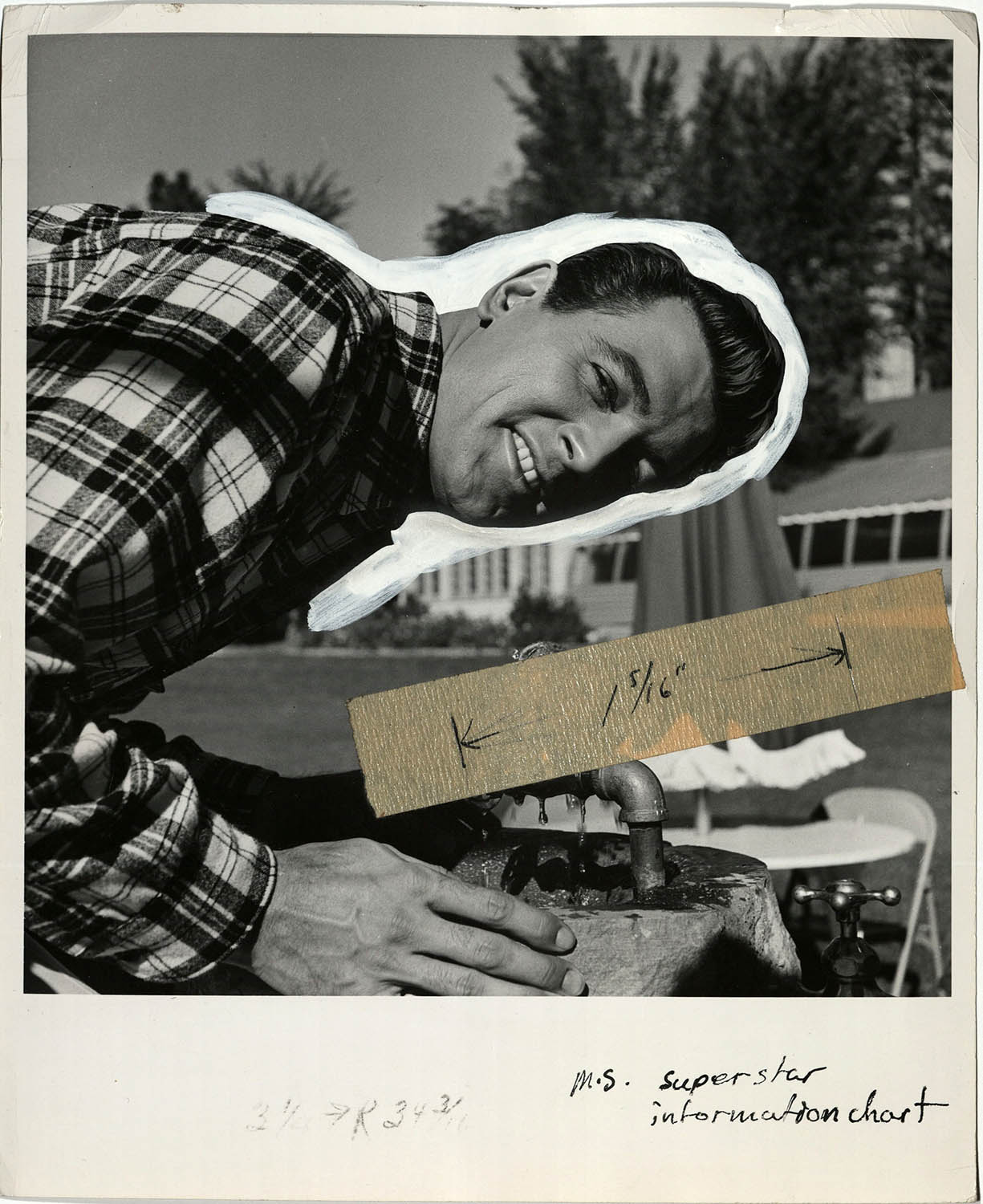
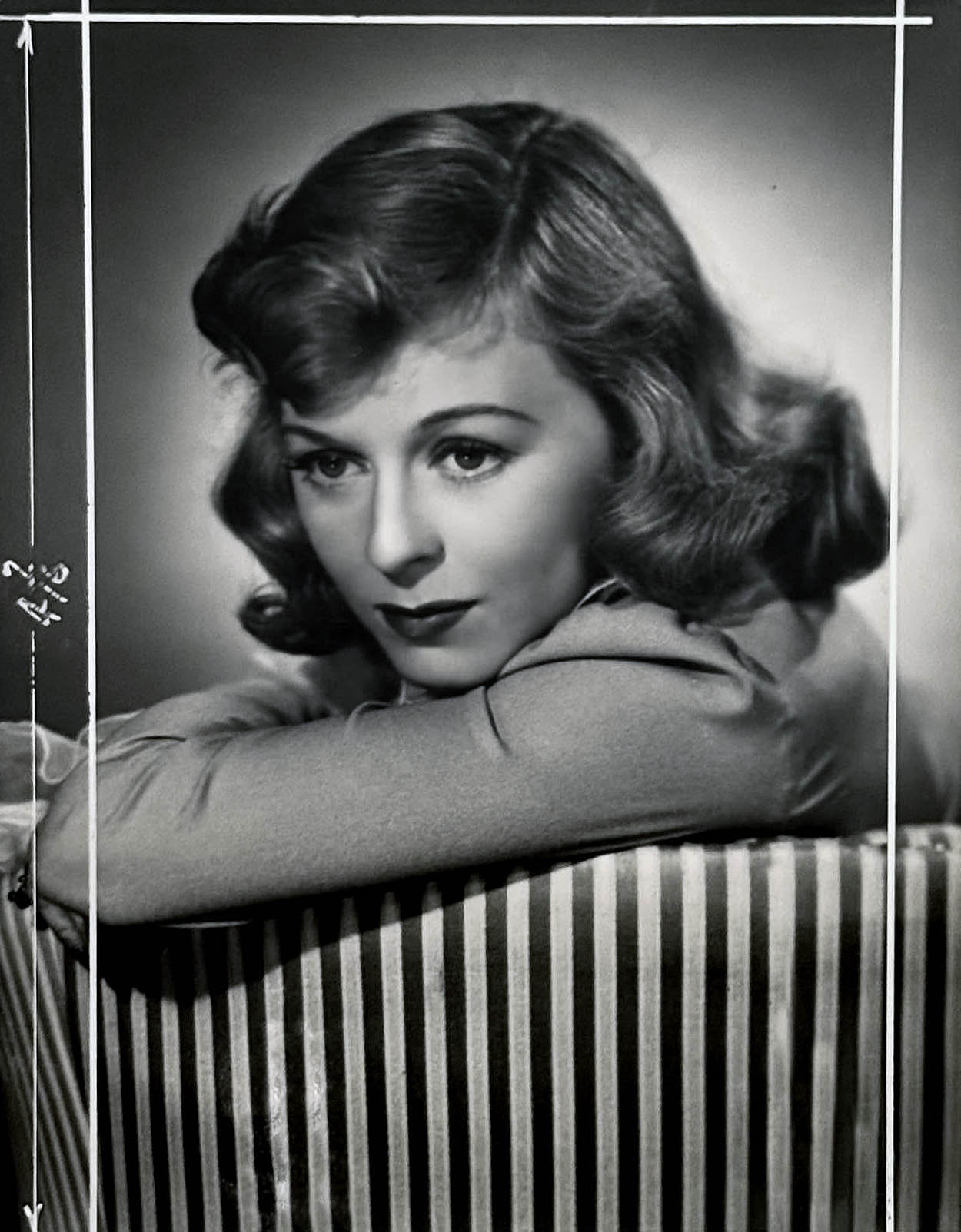
Bob Beerman (American)
Rock Hudson
c. 1953
Sheet: 9 15/16 x 8″ (25.2 x 20.3cm)
The Museum of Modern Art Film Stills Collection
Silhouetting the celebrity
MoMA always puts on interesting photography exhibitions and this one is no exception. Of course, they have a huge collection to draw from, but it still takes intelligence and curatorial inspiration to bring it all together.
It took me a long time to compile the posting. There were not many media images available but with a bit of digging around on the MoMA collection web pages, and searching online, I managed to find enough photographs to illustrate the exhibition / plus the installation photographs / and the addition of movie posters and magazines to illuminate the films the still photographs were taken from (please note: not in the exhibition). While many of the publicity shots were taken by unknown stills photographers, I have also added bibliographic information for the known photographers where possible.
This would be my only criticism of the exhibition: the inability of the viewer to visualise how these “covered with masking tape, marked up with crayon, or reconfigured with ghostly halos of white-out” photographs were actually used (in the press in everyday life) to create the fantasy ideals of Hollywood glamour stars. Perhaps this was a deliberate curatorial strategy, to concentrate on the pre-production rather than the post-production, to concentrate just on the still photos, without the distraction of further stimuli. And I can understand that decision.
In this posting I can show you three examples of how these still photographs were used: the untouched photograph Jean Simmons, Rock Hudson [in “This Earth is Mine”] by an unknown photographer (1959, below) has then been colourised and used on the front cover of the DVD release of this film; the Limehouse Blues movie poster (1934, below) features a white-out around George Raft’s head, similar to the white-out around Joan Crawford or Rock Hudson (above); and the hair of Elsa Manchester in Elsa Lanchester [in “The Bride of Frankenstein”] by an unknown photographer (1935, below) is graphically stylised and coloured in the The Bride of Frankenstein movie poster (1935, below).
Silhouetting, in-painting, masking, sectioning, and collage were all hands-on practices that readied the photographs for the press whilst in press they promoted the desirous ideal of the glamorous movie starlet, heroic action man, the fantasy ready and available for consumption by the reading public: the beautiful heroine available to the male gaze, aspirational for so many young women.
Dr Marcus Bunyan
Many thankx to MoMA for allowing me to publish the photographs in the posting. Please click on the photographs for a larger version of the image.
“Though Iris Barry, who in 1935 became the founding curator of The Museum of Modern Art’s Film Library, aimed to preserve the history of moving images as an art form, she didn’t stop at moving images. “She was trying to save the record of film history,” explains Ron Magliozzi, a curator in what is today known as the Department of Film. “When the department was founded, the silent period had just ended. And its whole history was considered irrelevant and of no interest. That’s why she was so aggressive in collecting it. Films were the most important thing, and images from film history were second.”
Today, the Museum’s Film Stills Collection includes well over a million publicity photos, production stills, and more – and it’s not all pristine, glossy prints. In the current exhibition Face Value: Celebrity Press Photography, many of the images are covered with masking tape, marked up with crayon, or reconfigured with ghostly halos of white-out. It’s an occasionally startling reminder that the manipulation of photographs – and of celebrity itself – long predates Photoshop and Instagram.”
Jason Persse, Assistant Director, Content Team, MoMA
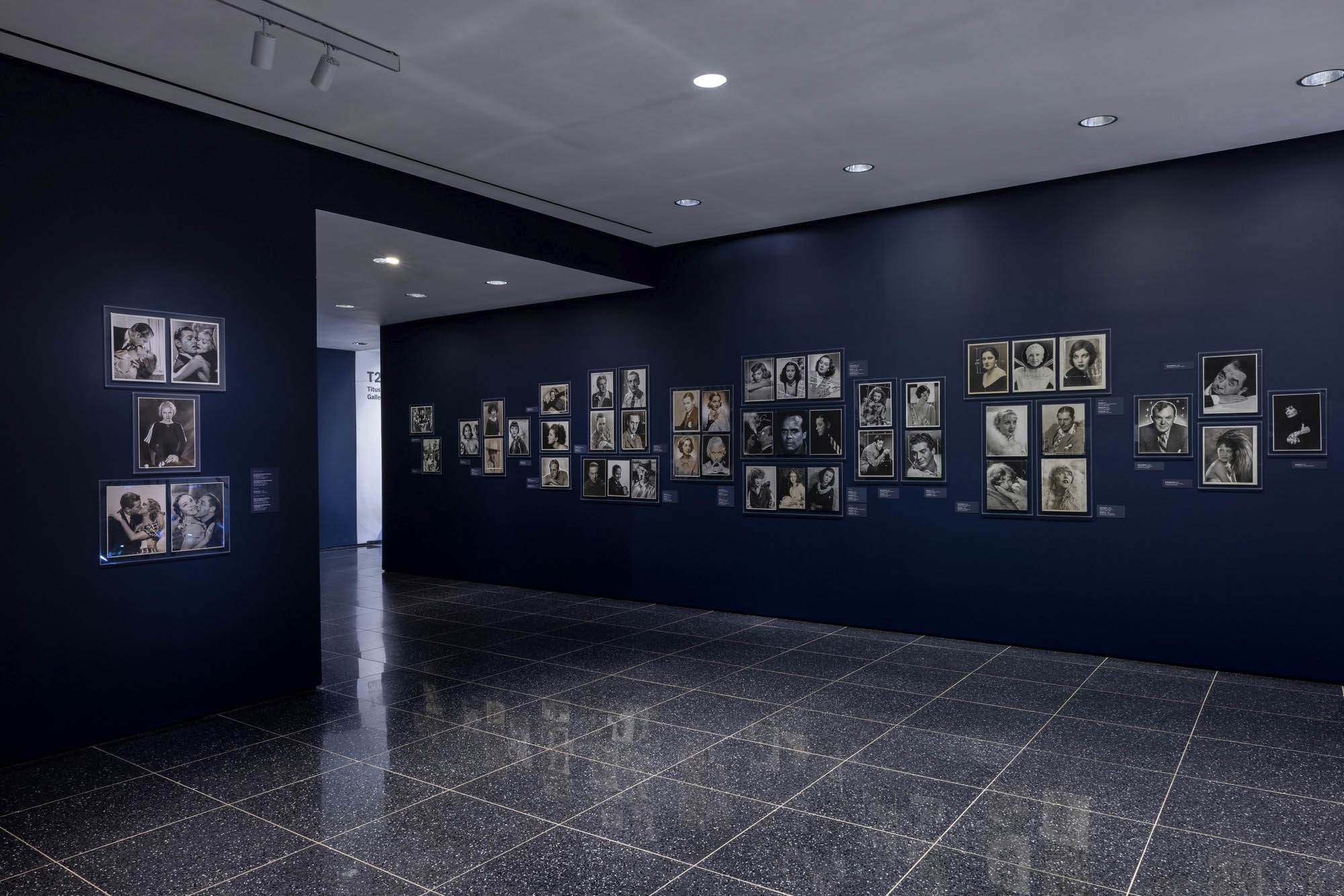
The Museum of Modern Art announces Face Value: Celebrity Press Photography, the first major exhibition of Hollywood studio portraiture to be drawn from the Museum’s film stills archive since 1993. On view in the Titus and Morita Galleries, the exhibition will offer a revisionist look at the Department of Film’s photographic archive, examining the evolution of editorial practice before the digital age, AI technology, and social media reshaped the experience of celebrity.
Face Value will feature over 200 works from 1921 to 1996, including studio photography of Louis Armstrong, Harry Belafonte, Clara Bow, Louise Brooks, Bette Davis, Mia Farrow, Katharine Hepburn, Dennis Hopper, Lena Horne, Bela Lugosi, Carmen Miranda, Elvis Presley, Diana Ross, Barbara Stanwyck, Elizabeth Taylor, Spencer Tracy, Oprah Winfrey, and many others.
Text from the MoMA website
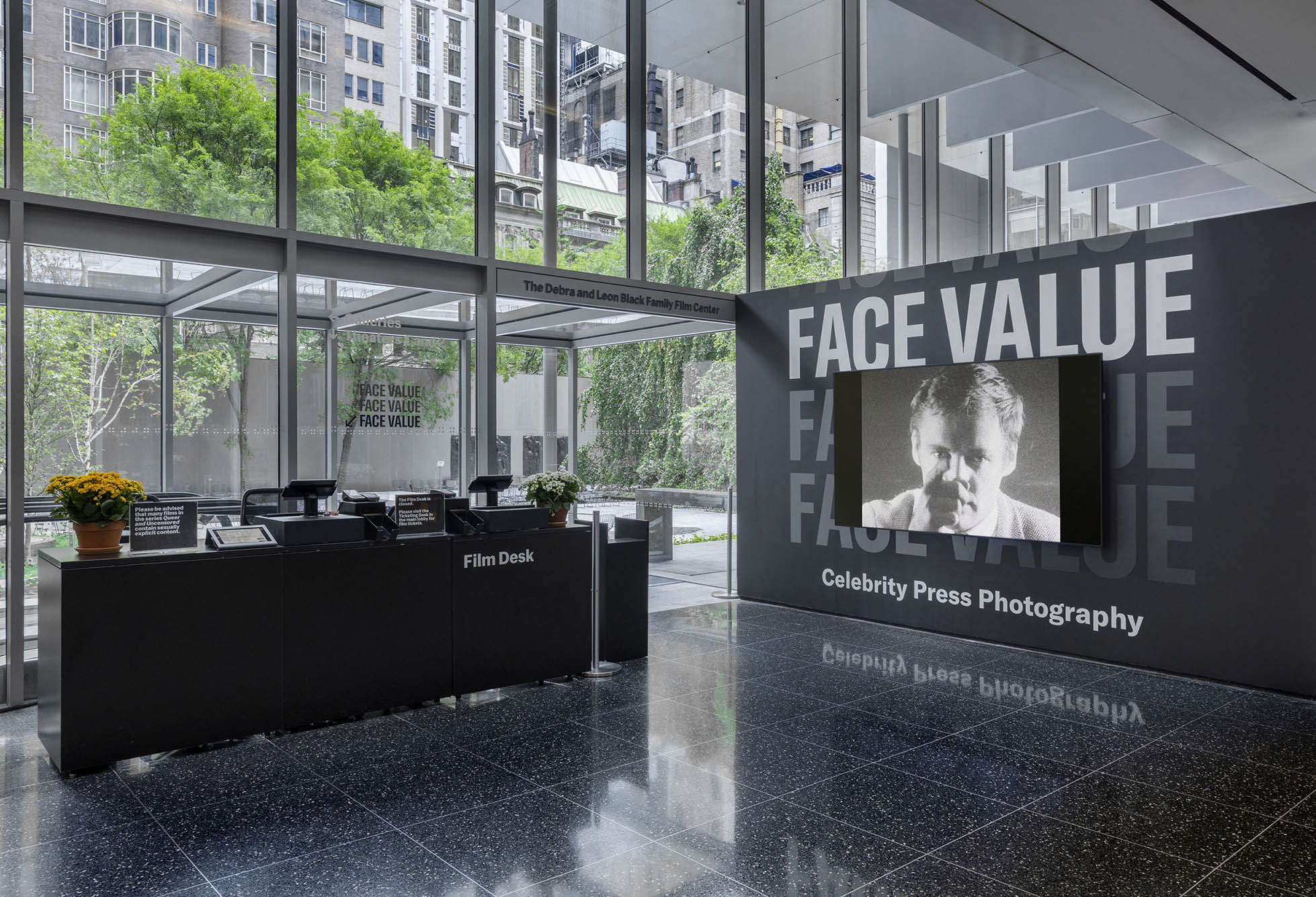
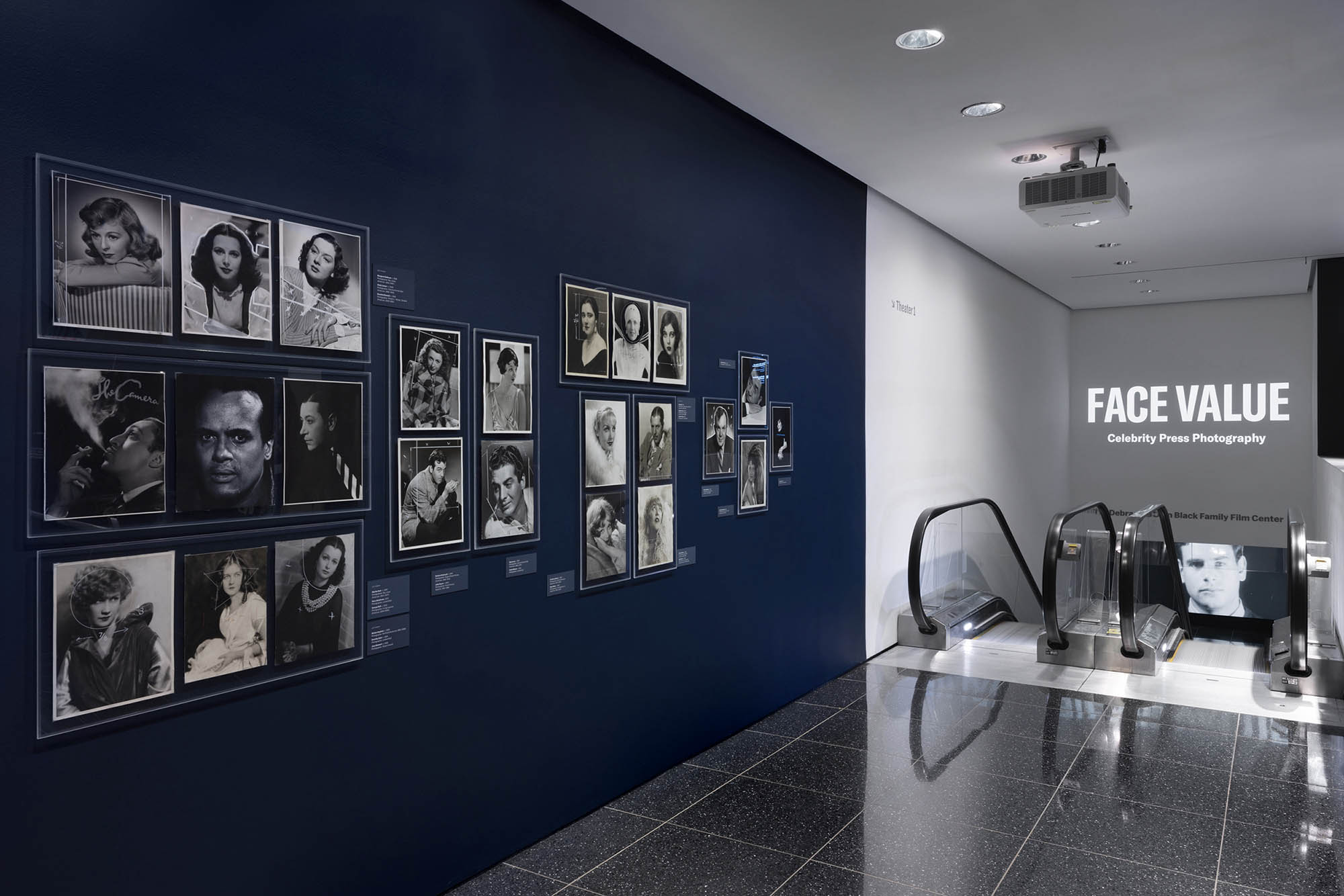
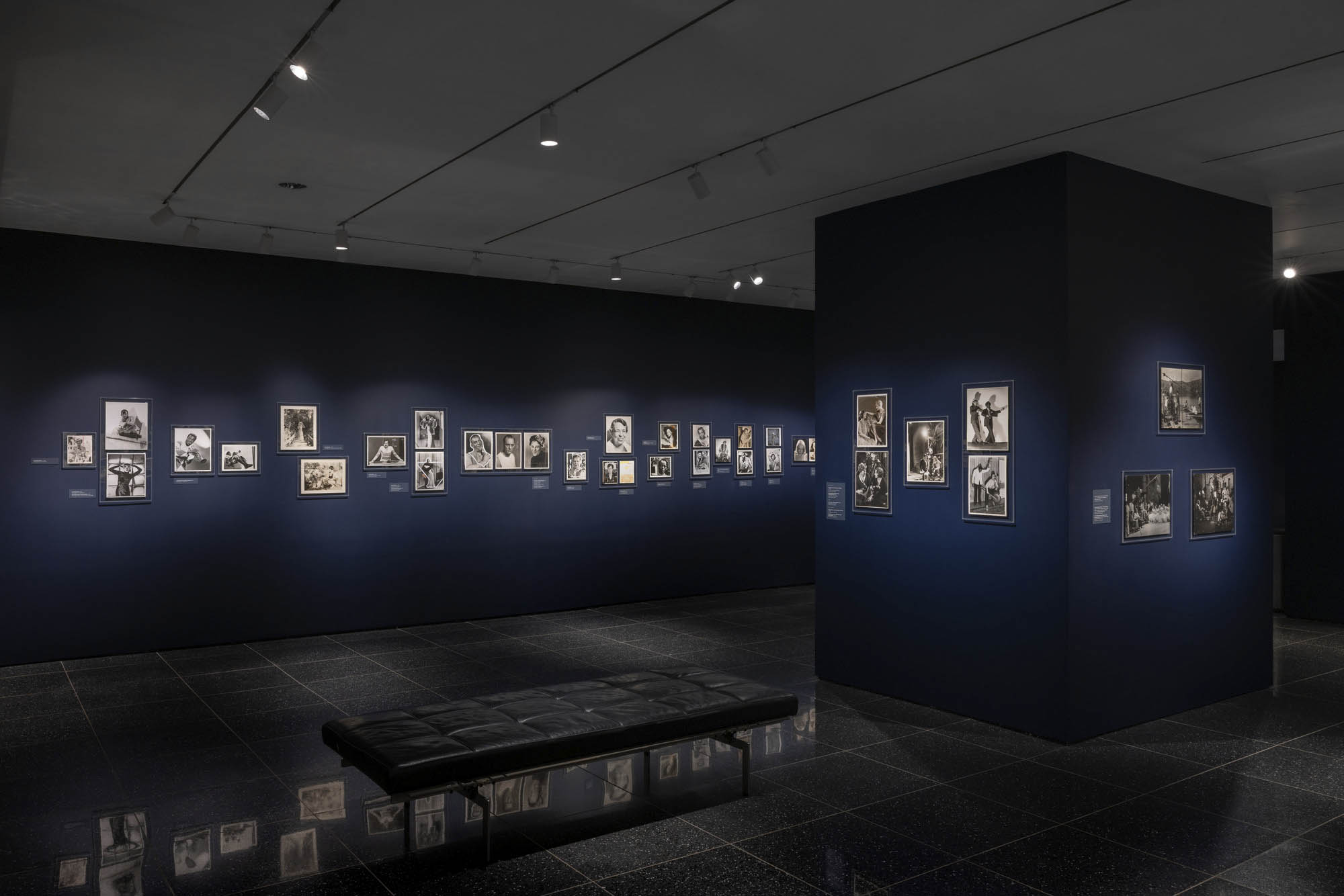
Installation views of the exhibition Face Value: Celebrity Press Photography at The Museum of Modern Art (MoMA), New York, June 2025 – June 2026 showing in the left hand block of 9 photographs of the bottom image, from left to right top row to bottom row: Ray Jones’ Margaret Sullavan c. 1939 (below); Clarence Sinclair Bull’s Hedy Lamarr c. 1940; Adolph L. “Whitey” Schafer’s Rosalind Russell c. 1940; Ray Jones’ Mischa Auer c. 1940; Unknown photographer Harry Belafonte [in “The Angel Levine”] 1970; Irving Lippman’s George Raft c. 1933; Hal Phyfe’s Miriam Hopkins c. 1930; Unknown photographer Dorothy Gish c. 1929; and Imandt’s Joan Bennett c. 1939
Photos: Jonathan Dorado
Ray Jones (American, 1901-1947)
Margaret Sullavan
c. 1939
Sheet: 13 7/8 x 10 7/8″ (35.2 x 27.6cm)
The Museum of Modern Art Film Stills Collection
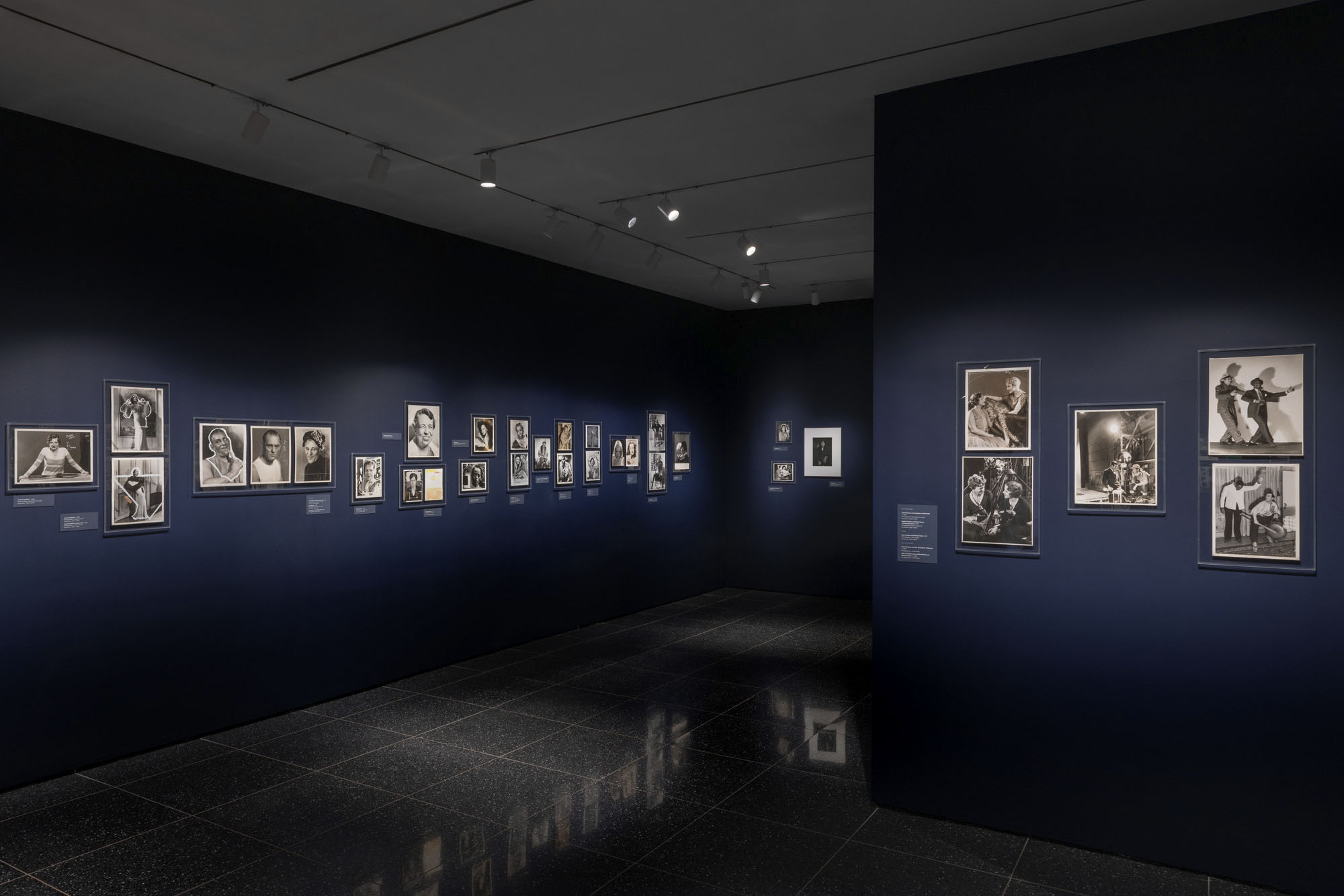
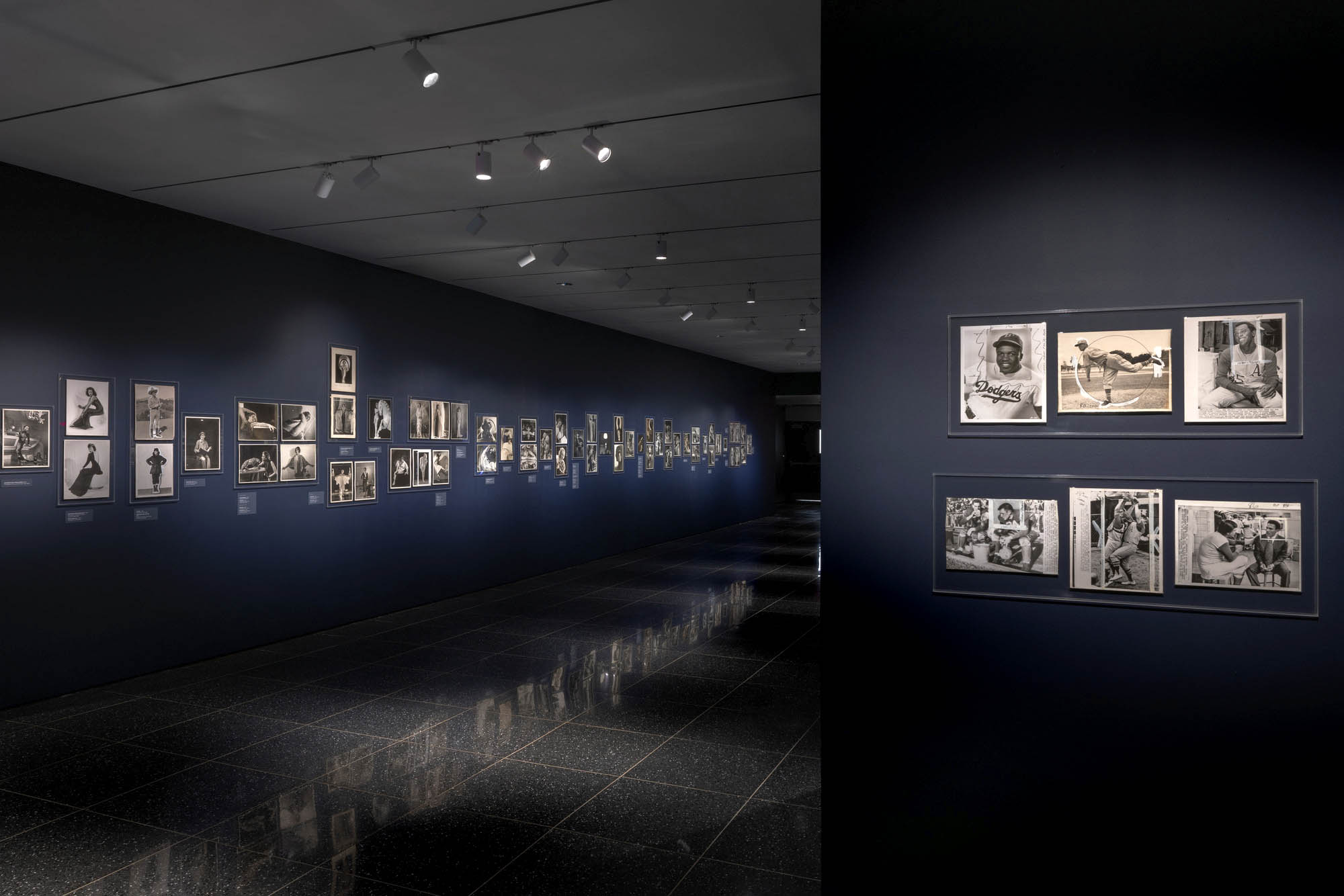
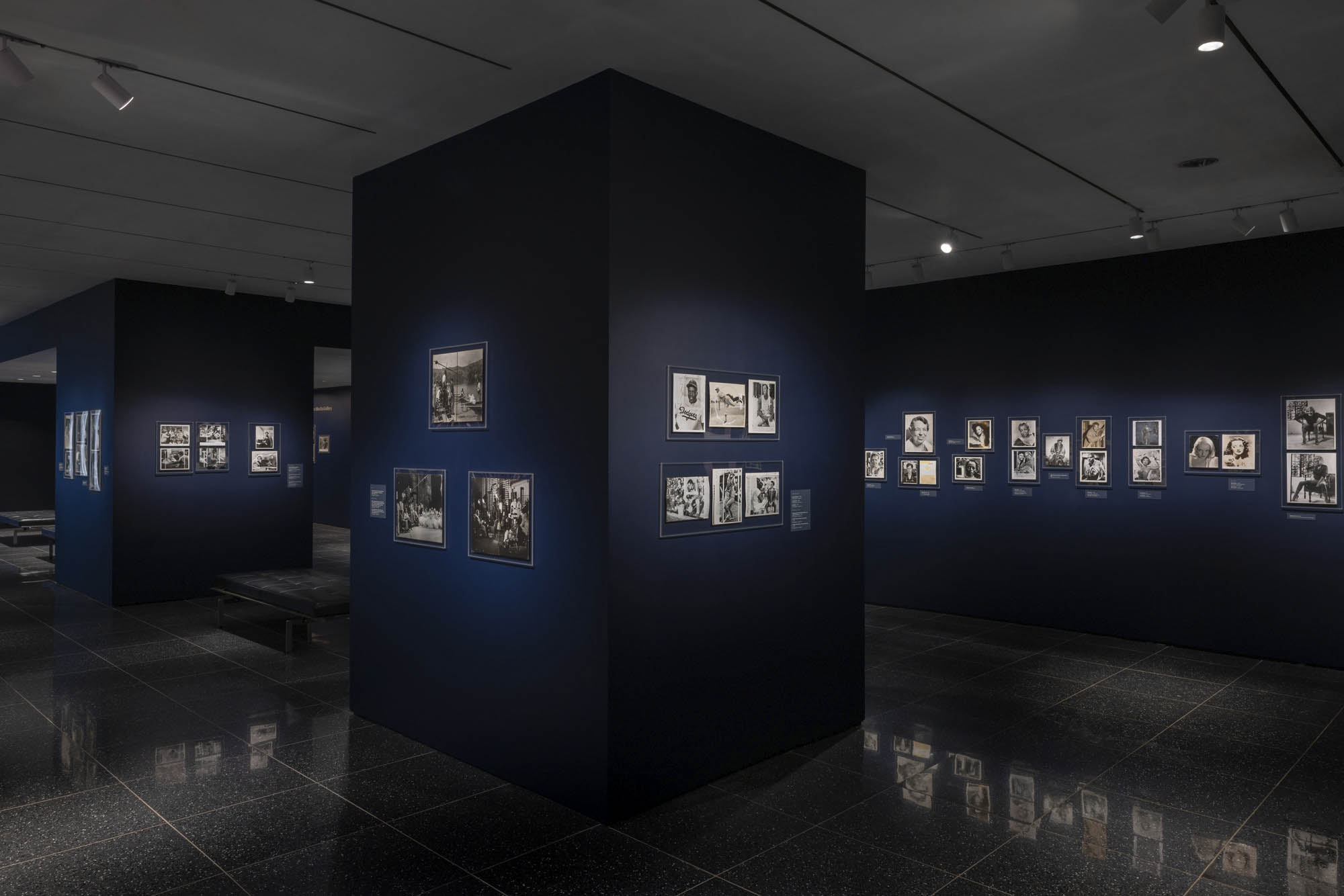
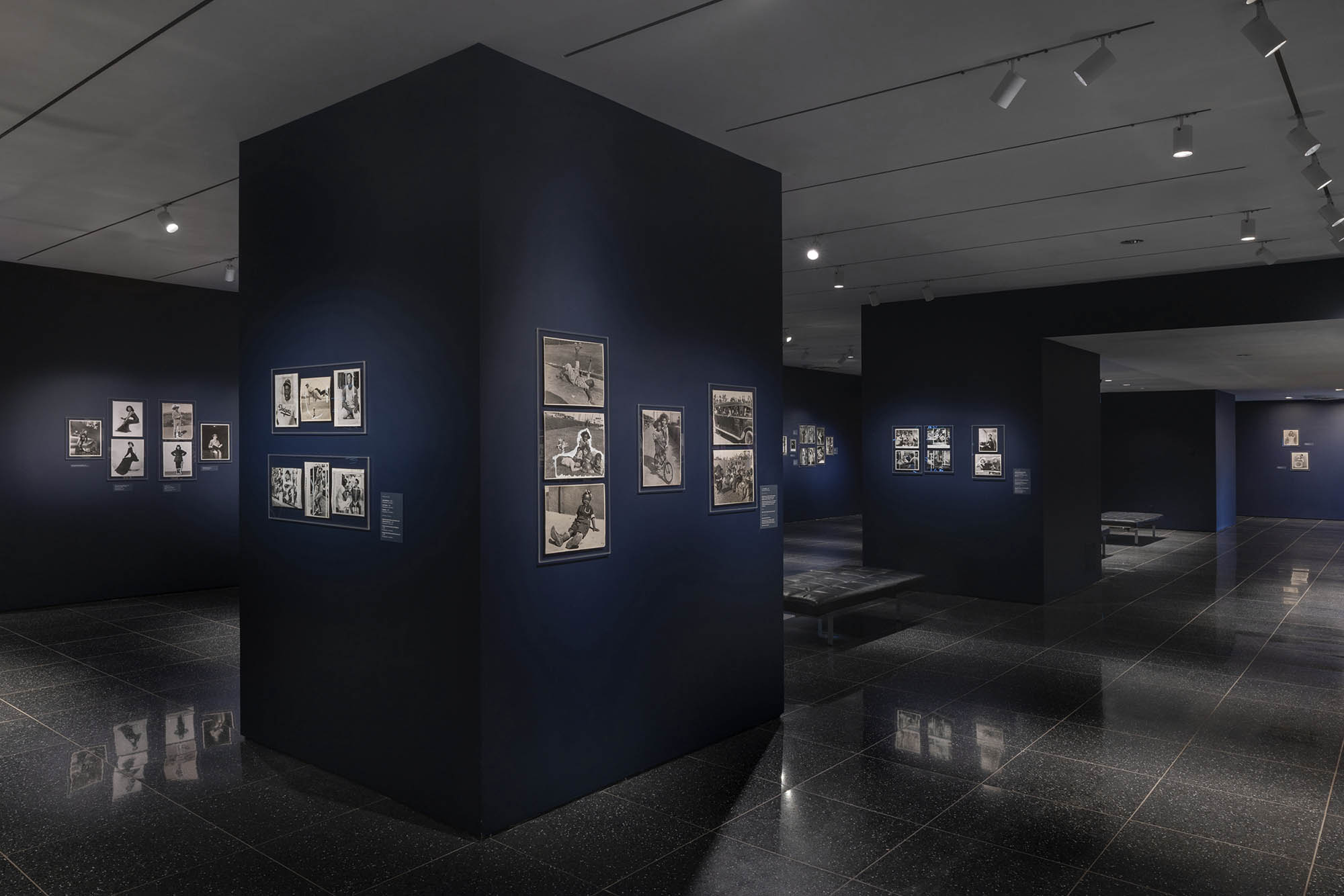
Installation view of the exhibition Face Value: Celebrity Press Photography at The Museum of Modern Art (MoMA), New York, June 2025 – June 2026 showing at right in the bottom image at third left in top row, Unknown photographer Jackie Robinson c. 1950
Photos: Jonathan Dorado
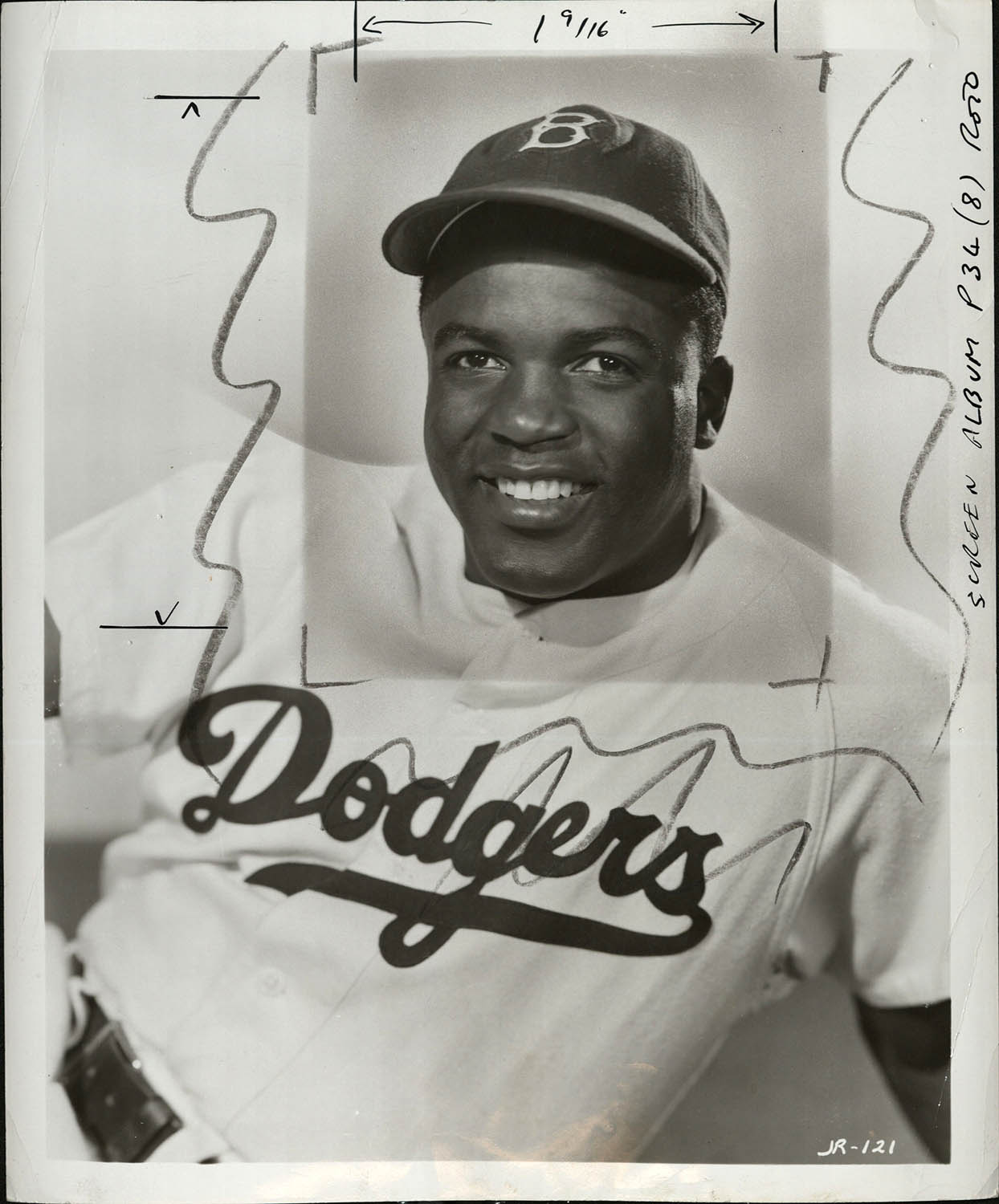
Unknown photographer
Jackie Robinson
c. 1950
Sheet: 10 x 8″ (25.4 x 20.3cm)
The Museum of Modern Art Film Stills Collection
The Museum of Modern Art announces Face Value: Celebrity Press Photography, the first major exhibition of Hollywood studio portraiture to be drawn from the Museum’s film stills archive since 1993. On view in the Titus and Morita Galleries from June 28, 2025, through June 21, 2026, the exhibition will offer a revisionist look at the Department of Film’s photographic archive, examining the evolution of editorial practice before the digital age, AI technology, and social media reshaped the experience of celebrity.
Face Value will feature over 200 works from 1921to 1996, including studio photography of Louis Armstrong, Harry Belafonte, Clara Bow, Louise Brooks, Bette Davis, Mia Farrow, Katharine Hepburn, Dennis Hopper, Lena Horne, Bela Lugosi, Carmen Miranda, Elvis Presley, Diana Ross, Barbara Stanwyck, Elizabeth Taylor, Spencer Tracy, Oprah Winfrey, and many others.
Face Value: Celebrity Press Photography is organised by Ron Magliozzi, Curator, with Katie Trainor, Film Collections Manager, and Cara Shatzman, Collection Specialist, Department of Film.
“Face Value will encourage viewers to see through the facade of glamour at how celebrity is fabricated and exploited,” says Ron Magliozzi. Showcasing work by over 58 photographers, the exhibition will juxtapose “untouched” images like Otto Dyar’s Carole Lombard (c. 1933) with those altered through traditional press practices such as silhouetting, in-painting, masking, sectioning, and collage, like James Manatt’s Joan Crawford portrait for the film Letty Lynton (1932). Face Value examines how these methods shaped representations of not only film stars but also sports figures, socialites, and politicians, from Jackie Robinson to Jacqueline Kennedy Onassis and Eleanor Roosevelt. Presented in thematic suites, the installation highlights radical editing techniques, stylised visual motifs, and the gendered aesthetics embedded in the system, offering a revealing perspective on the fabrication of glamour and fame.
Since the Museum’s founding, photography has played a vital role in how it has documented the history of motion pictures. Face Value traces the origin of this early initiative to MoMA’s first film curator, Iris Barry, whose archival efforts led to the acquisition of editorial collections from Photoplay (1911-1980) and Dell (1921-1976), two leading publications that helped define Hollywood’s star system. The exhibition includes images of comic stars Buster Keaton, W. C. Fields, Lupe Velez, and Mae West; pioneering actress Hattie McDaniel with Ruby Berkley, the first Black accredited Hollywood correspondent; famed aviatrix Amelia Earhart on a Hollywood film set; and the last photo shoot with Marilyn Monroe.
Featuring promotional portraits crafted to cultivate celebrity personas, such as Ray Jones’s Anna May Wong portrait for the film Limehouse Blues, Soul of a Dragon (1934), the exhibition explores how these images were manipulated for public consumption through hands-on editing techniques long before digital tools became standard.
Press release from MoMA
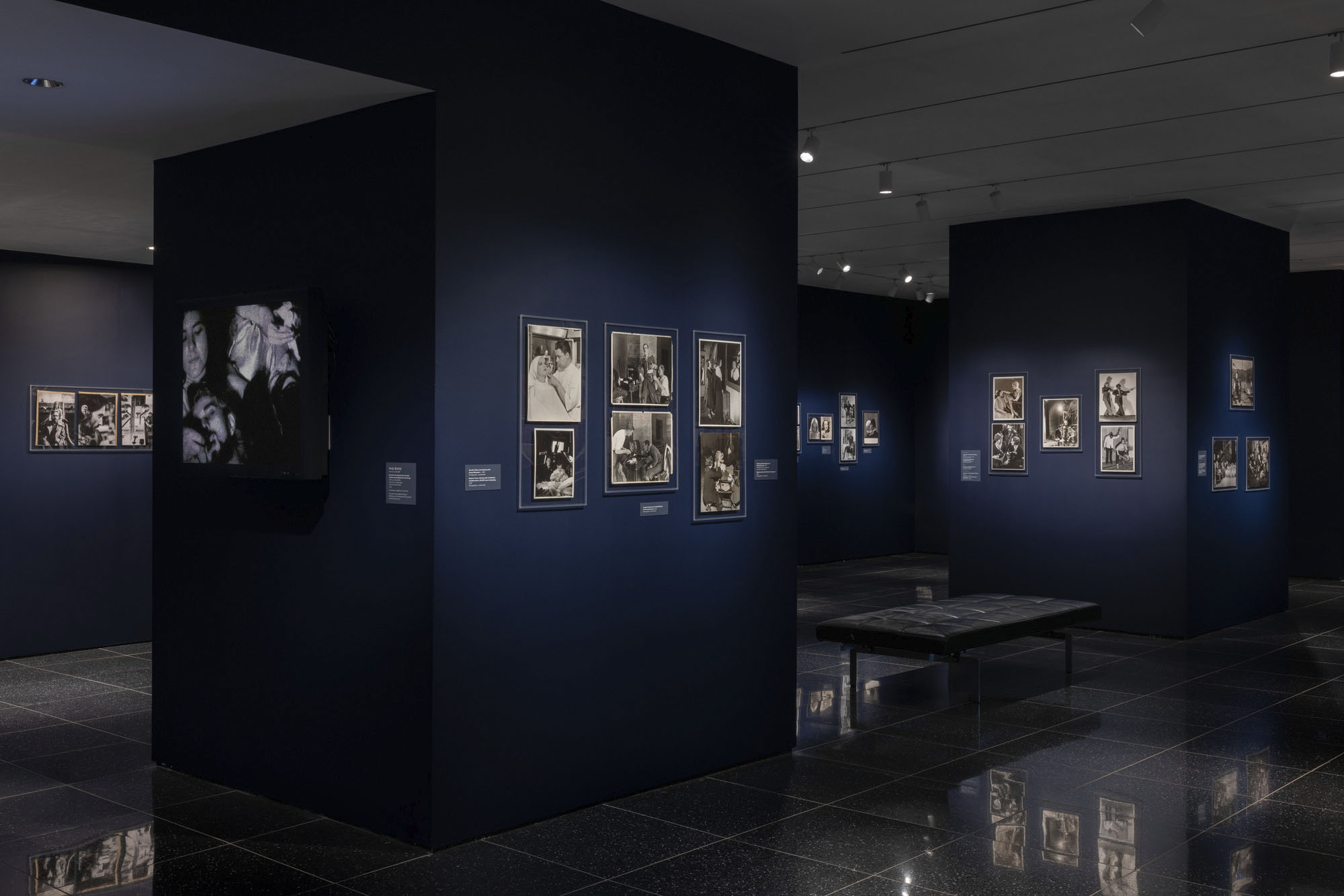
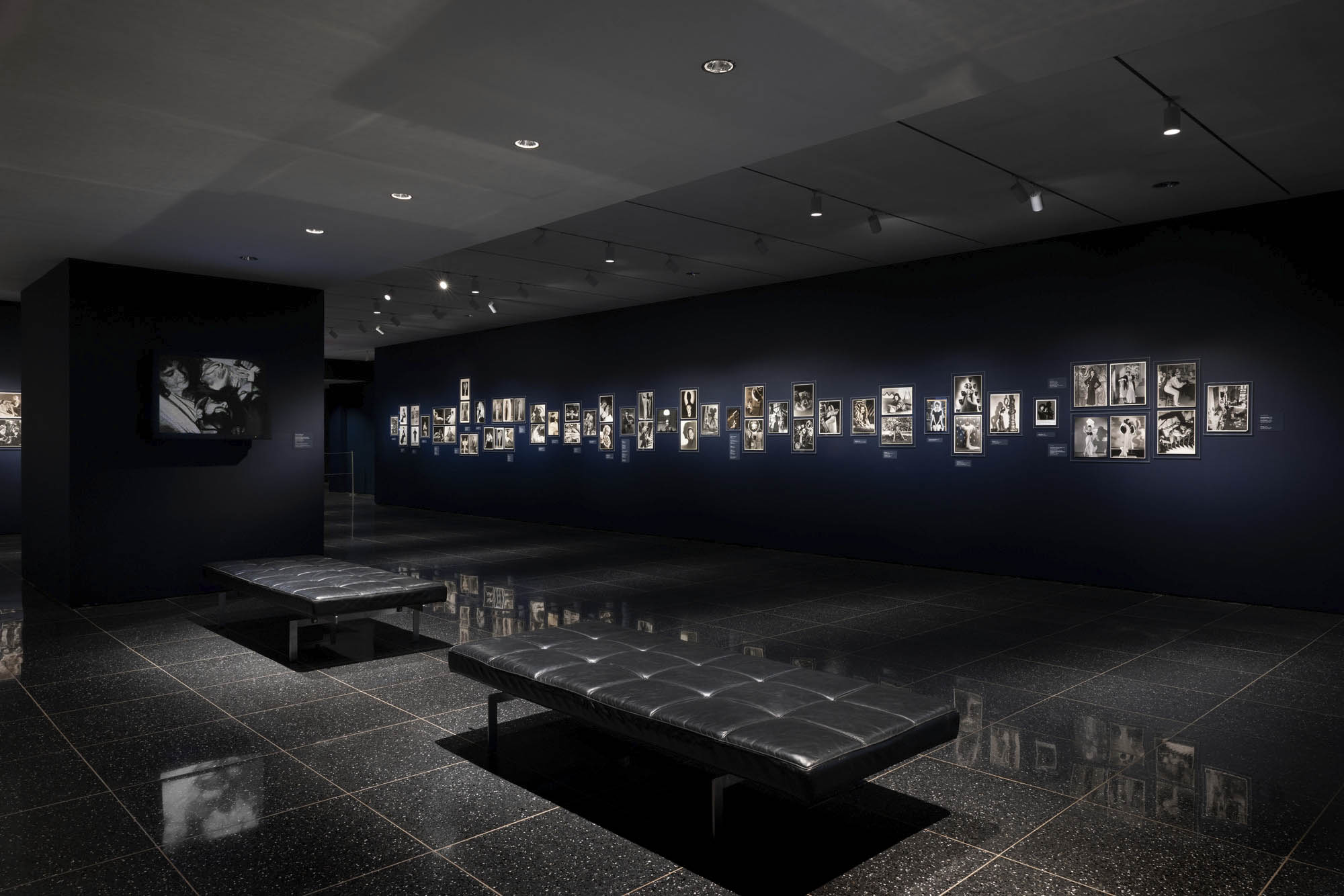
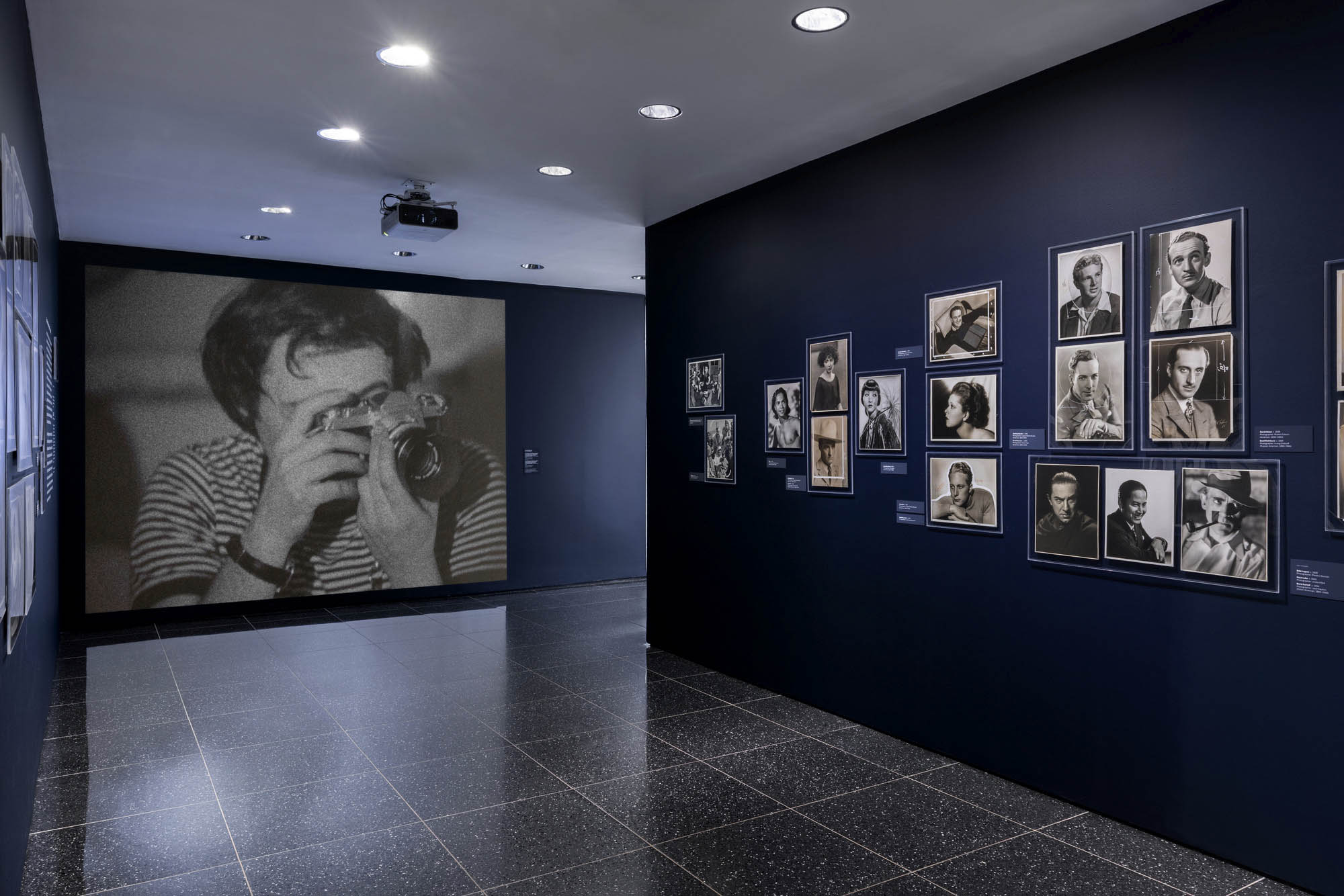
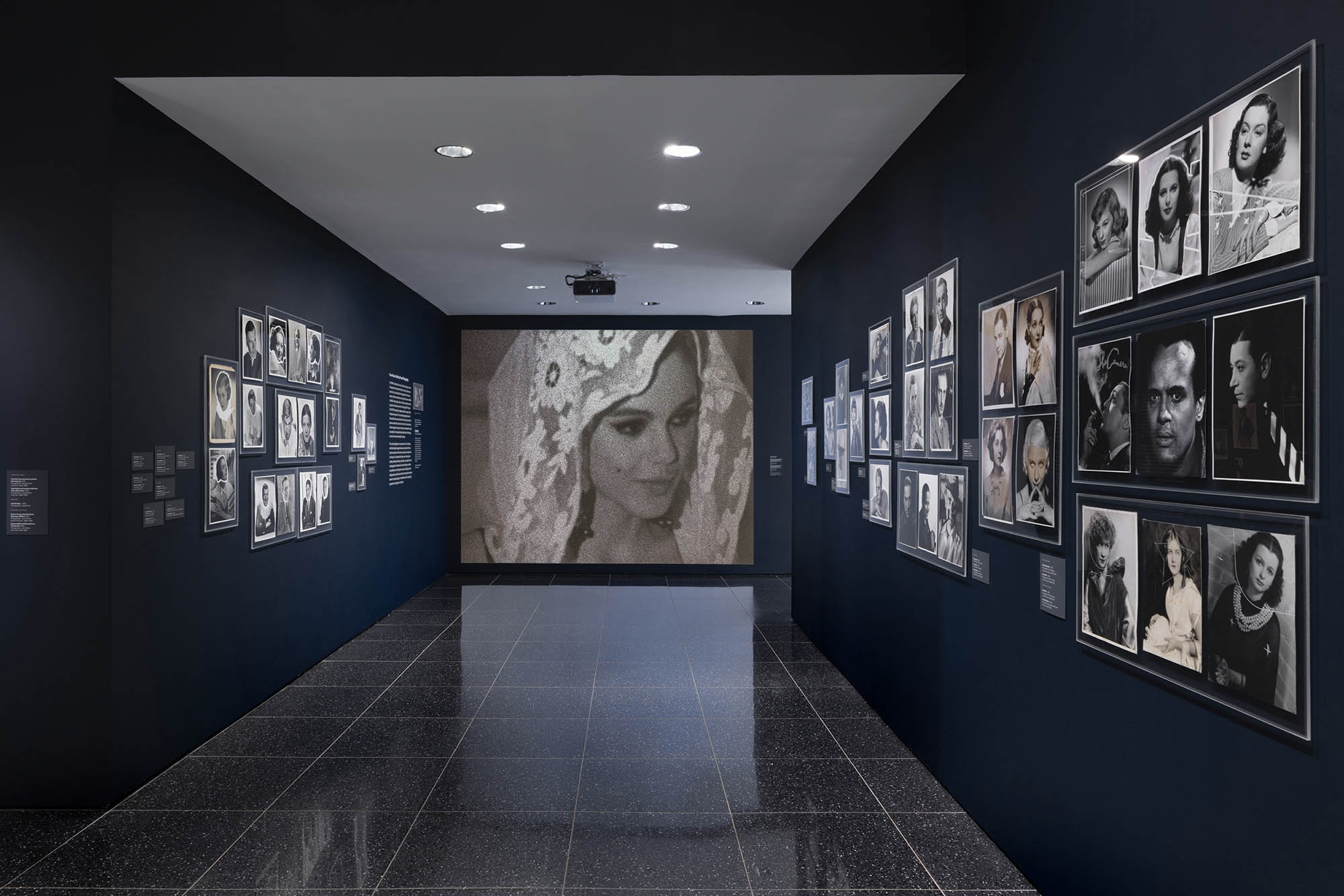
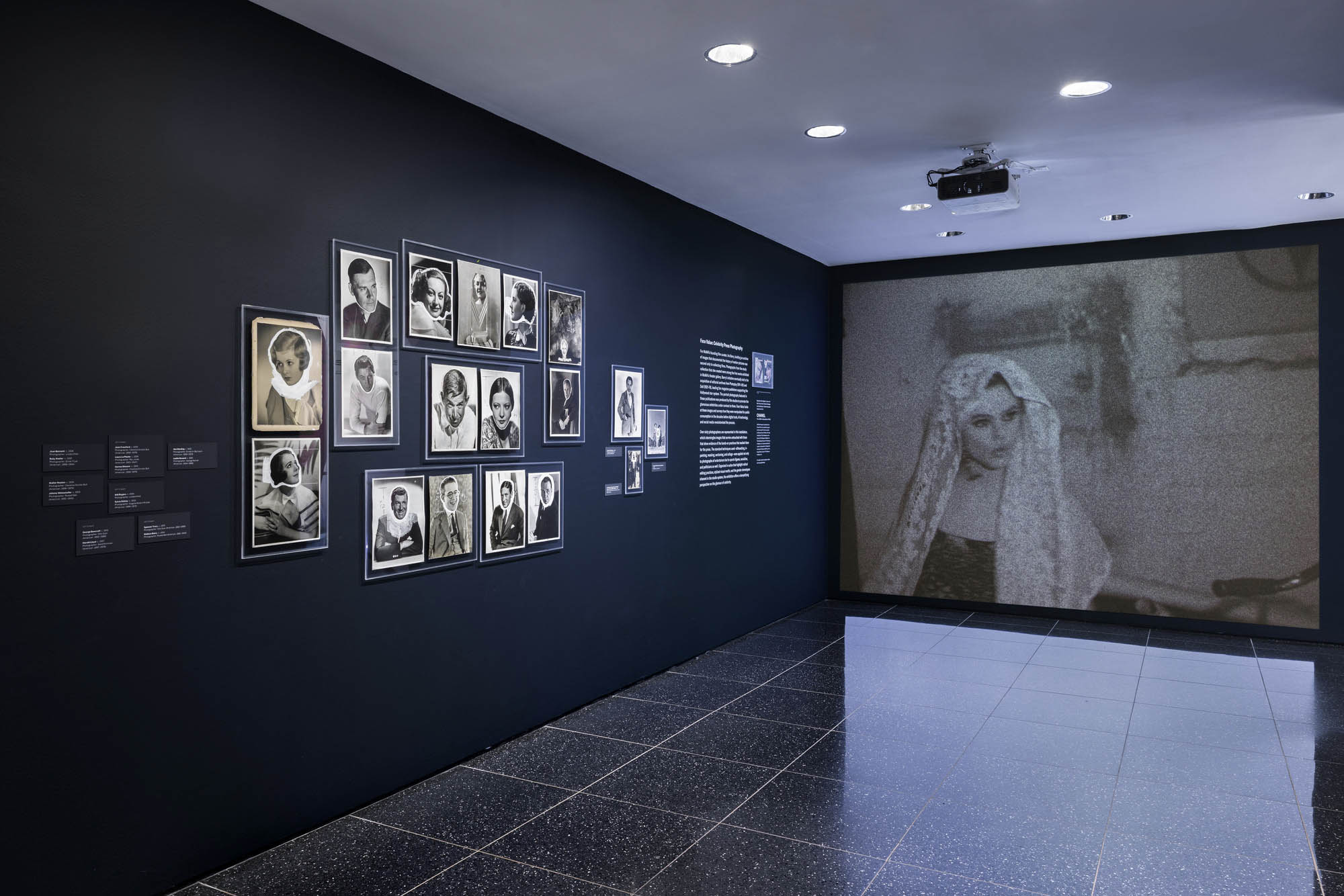
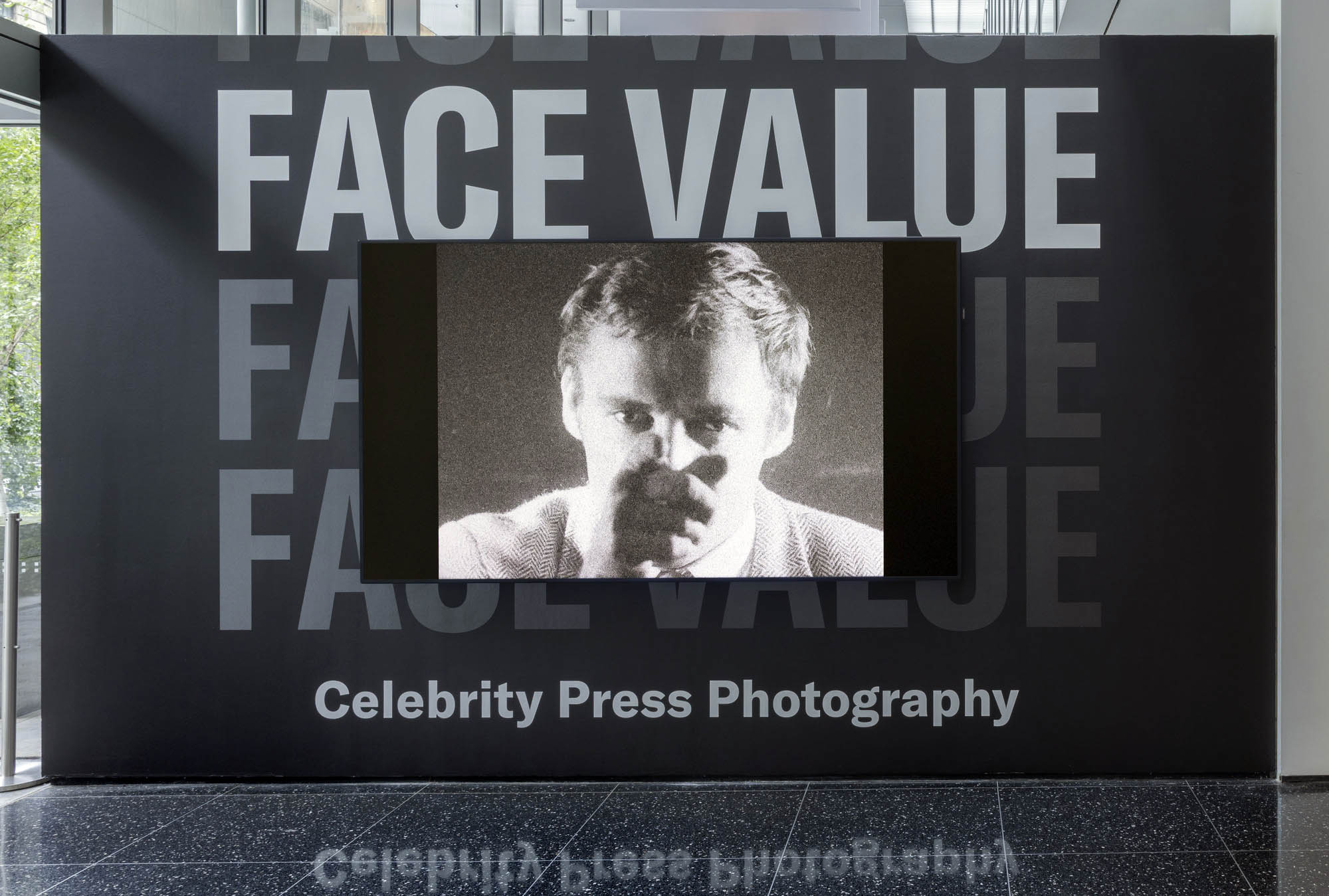
Installation views of the exhibition Face Value: Celebrity Press Photography at The Museum of Modern Art (MoMA), New York, June 2025 – June 2026 showing in the bottom two photographs, video stills from Edie Sedgwick, Gerard Malanga, Benedetta Barzini, Ingrid Superstar, Nat Finkelstein: Danny Williams footage of unknown documentary film shoot c. 1965, processed 2024 (below)
Photos: Jonathan Dorado
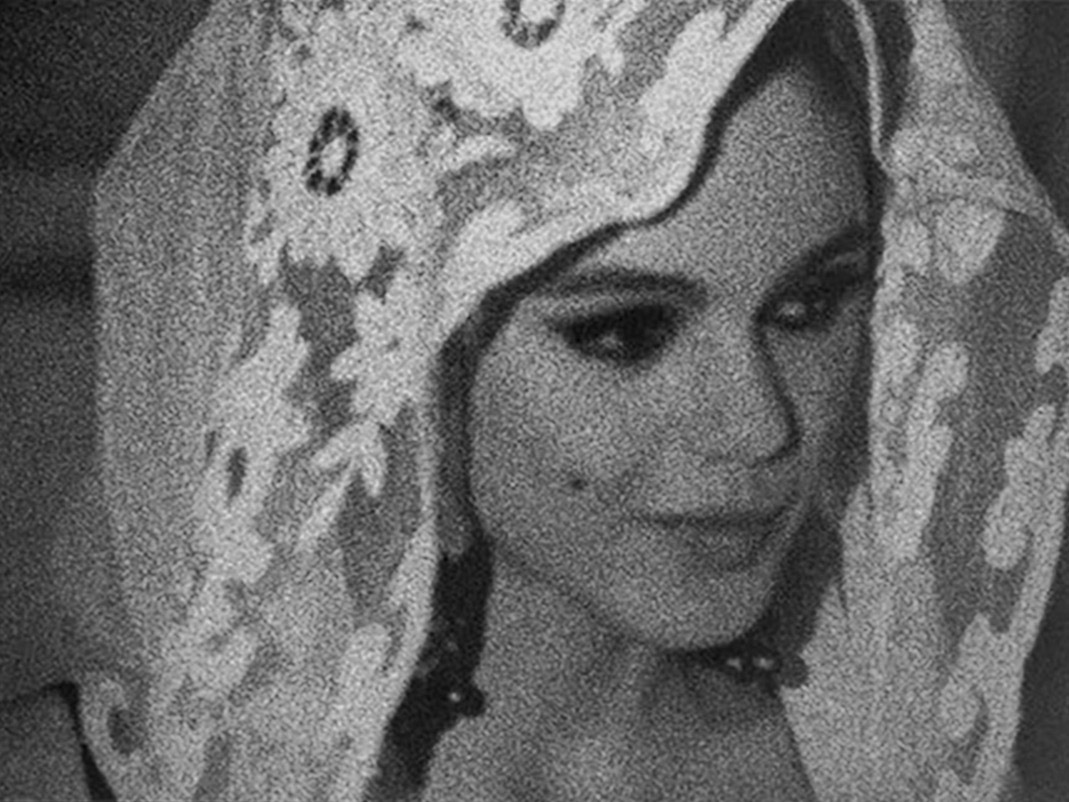
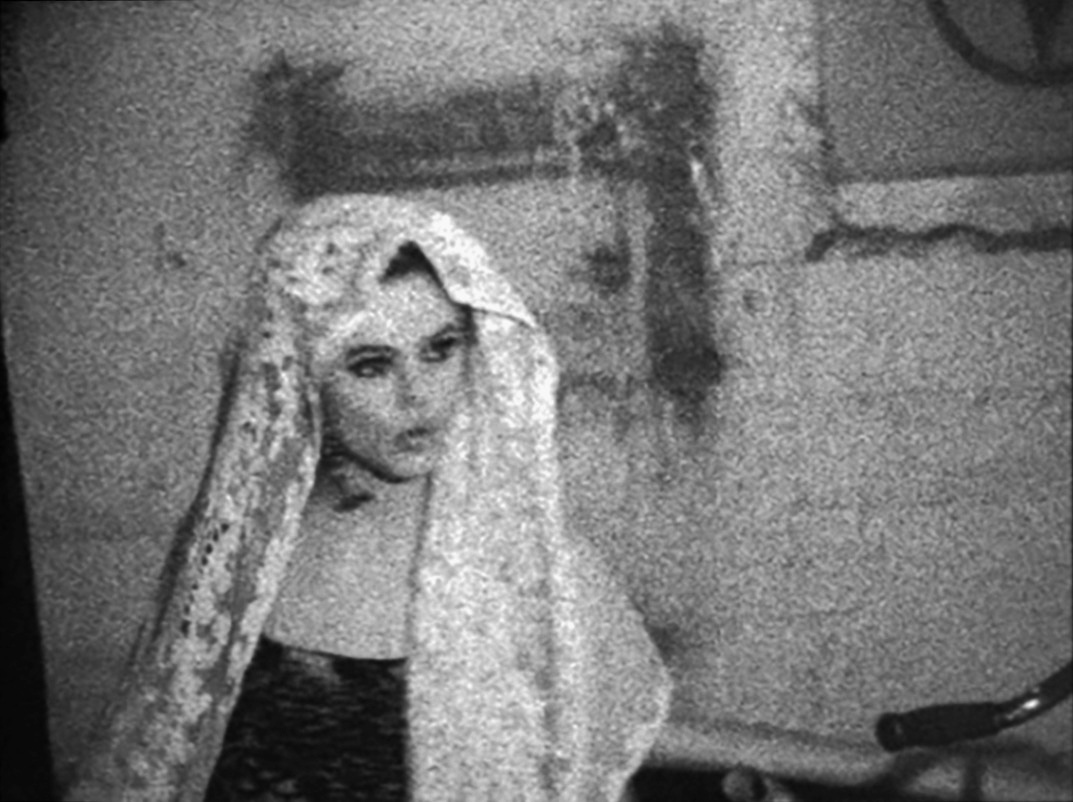
Edie Sedgwick, Gerard Malanga, Benedetta Barzini, Ingrid Superstar, Nat Finkelstein: Danny Williams footage of unknown documentary film shoot
c. 1965, processed 2024
The Museum of Modern Art Film Stills Collection
Edie Sedgwick dances in Andy Warhol’s Silver Factory during a photoshoot
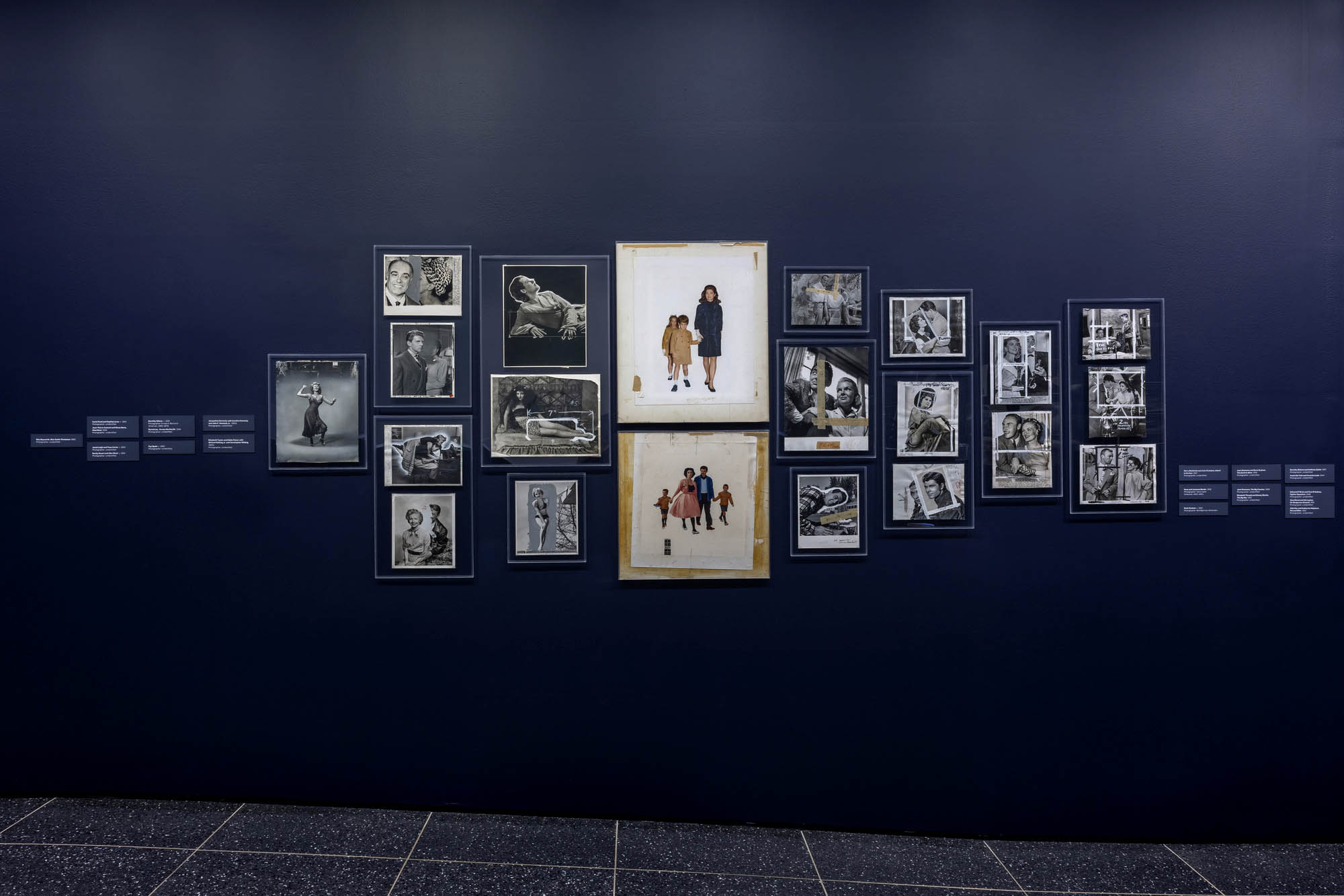
Installation view of the exhibition Face Value: Celebrity Press Photography at The Museum of Modern Art (MoMA), New York, June 2025 – June 2026 showing at top centre, Jacqueline Kennedy with Caroline Kennedy, John F. Kennedy Jr. 1960s; and a bottom centre, Elizabeth Taylor and Eddie Fisher with Michael Wilding Jr. and Christopher Wilding 1960s
Photo: Jonathan Dorado
![Installation view of the exhibition 'Face Value: Celebrity Press Photography' at The Museum of Modern Art (MoMA), New York, June 2025 - June 2026 showing from top left to right, top to bottom, Unknown photographer Harry 'Belafonte and Joan Fontaine' 1957; Gene Lester (American, 1910-1994) 'Dean and Jeannne Martin' 1958; Bob Beerman (American) 'Rock Hudson' c. 1953; Unknown photographer 'Jean Simmons, Rock Hudson [in "This Earth is Mine"]' 1959; Unknown photographer 'Jean Simmons [in "The Big Country"]' 1958; Unknown photographer 'Elizabeth Threatt and Dewey Martin [in "The Big Sky"]' 1952; Unknown photographer 'Dorothy Malone and Anthony Quinn' 1957; Unknown photographer 'André De Toth and Veronica Lake' 1944; Unknown photographer 'Edmund O'Brien and Tom D'Andrea [in "Fighter Squadron"]' 1948; Unknown photographer 'Ward Bond and Ida Lupino [in "On Dangerous Ground"]' 1951; Unknown photographer 'Aldo Ray and Katharine Hepburn [in "Pat and Mike"]' 1952](https://artblart.com/wp-content/uploads/2026/05/face-value-installation-q.jpg "Installation view of the exhibition 'Face Value: Celebrity Press Photography' at The Museum of Modern Art (MoMA), New York, June 2025 - June 2026 showing from top left to right, top to bottom, Unknown photographer Harry 'Belafonte and Joan Fontaine' 1957; Gene Lester (American, 1910-1994) 'Dean and Jeannne Martin' 1958; Bob Beerman (American) 'Rock Hudson' c. 1953; Unknown photographer 'Jean Simmons, Rock Hudson [in \"This Earth is Mine\"]' 1959; Unknown photographer 'Jean Simmons [in \"The Big Country\"]' 1958; Unknown photographer 'Elizabeth Threatt and Dewey Martin [in \"The Big Sky\"]' 1952; Unknown photographer 'Dorothy Malone and Anthony Quinn' 1957; Unknown photographer 'André De Toth and Veronica Lake' 1944; Unknown photographer 'Edmund O'Brien and Tom D'Andrea [in \"Fighter Squadron\"]' 1948; Unknown photographer 'Ward Bond and Ida Lupino [in \"On Dangerous Ground\"]' 1951; Unknown photographer 'Aldo Ray and Katharine Hepburn [in \"Pat and Mike\"]' 1952")
Installation view of the exhibition Face Value: Celebrity Press Photography at The Museum of Modern Art (MoMA), New York, June 2025 – June 2026 showing from top left to right, top to bottom, Unknown photographer Harry Belafonte and Joan Fontaine 1957 (below); Gene Lester (American, 1910-1994) Dean and Jeannne Martin 1958; Bob Beerman (American) Rock Hudson c. 1953 (top of posting); Unknown photographer Jean Simmons, Rock Hudson [in “This Earth is Mine”] 1959 (below); Unknown photographer Jean Simmons [in “The Big Country”] 1958; Unknown photographer Elizabeth Threatt and Dewey Martin [in “The Big Sky”] 1952; Unknown photographer Dorothy Malone and Anthony Quinn 1957; Unknown photographer André De Toth and Veronica Lake 1944; Unknown photographer Edmund O’Brien and Tom D’Andrea [in “Fighter Squadron”] 1948; Unknown photographer Ward Bond and Ida Lupino [in “On Dangerous Ground”] 1951; Unknown photographer Aldo Ray and Katharine Hepburn [in “Pat and Mike”] 1952
Photo: Jonathan Dorado
![Unknown photographer. 'Harry Belafonte and Joan Fontaine [in "Island in the Sun"]' 1957](https://artblart.com/wp-content/uploads/2026/05/unknown-photographer-harry-belafonte-and-joan-fontaine.jpg "Unknown photographer. 'Harry Belafonte and Joan Fontaine [in \"Island in the Sun\"]' 1957")
Unknown photographer
Harry Belafonte and Joan Fontaine [in “Island in the Sun”]
1957
Sheet: 6 15/16 × 9 1/16″ (17.6 × 23 cm)
The Museum of Modern Art Film Stills Collection
![Unknown photographer. 'Jean Simmons, Rock Hudson [in "This Earth is Mine"]' 1959](https://artblart.com/wp-content/uploads/2026/05/jean-simmons-and-rock-hudson.jpg "Unknown photographer. 'Jean Simmons, Rock Hudson [in \"This Earth is Mine\"]' 1959")
Unknown photographer
Jean Simmons, Rock Hudson [in “This Earth is Mine”]
1959
Sheet: 8 x 9 15/16″ (20.3 x 25.2cm)
The Museum of Modern Art Film Stills Collection
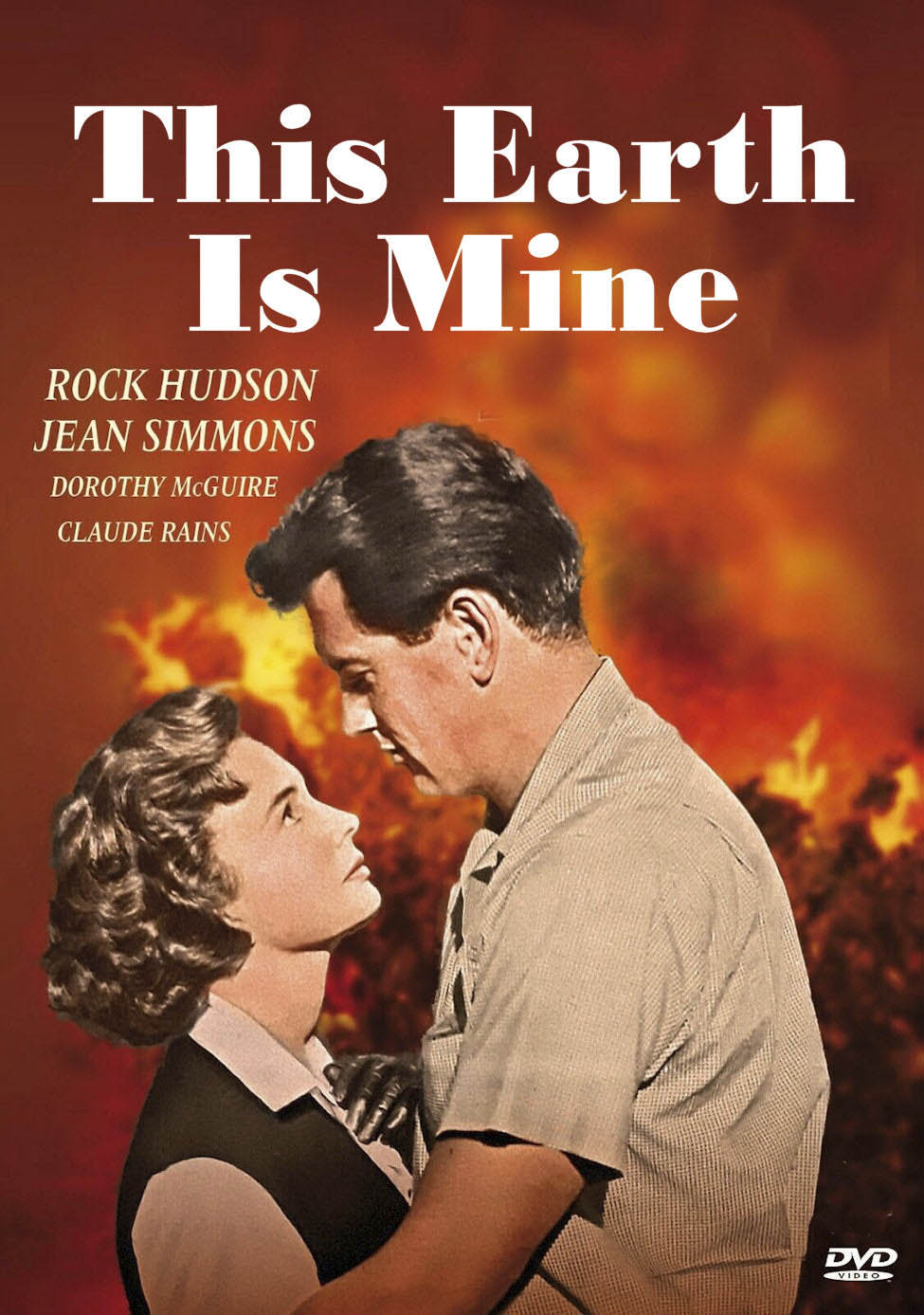
This Earth is Mine (1959) DVD cover
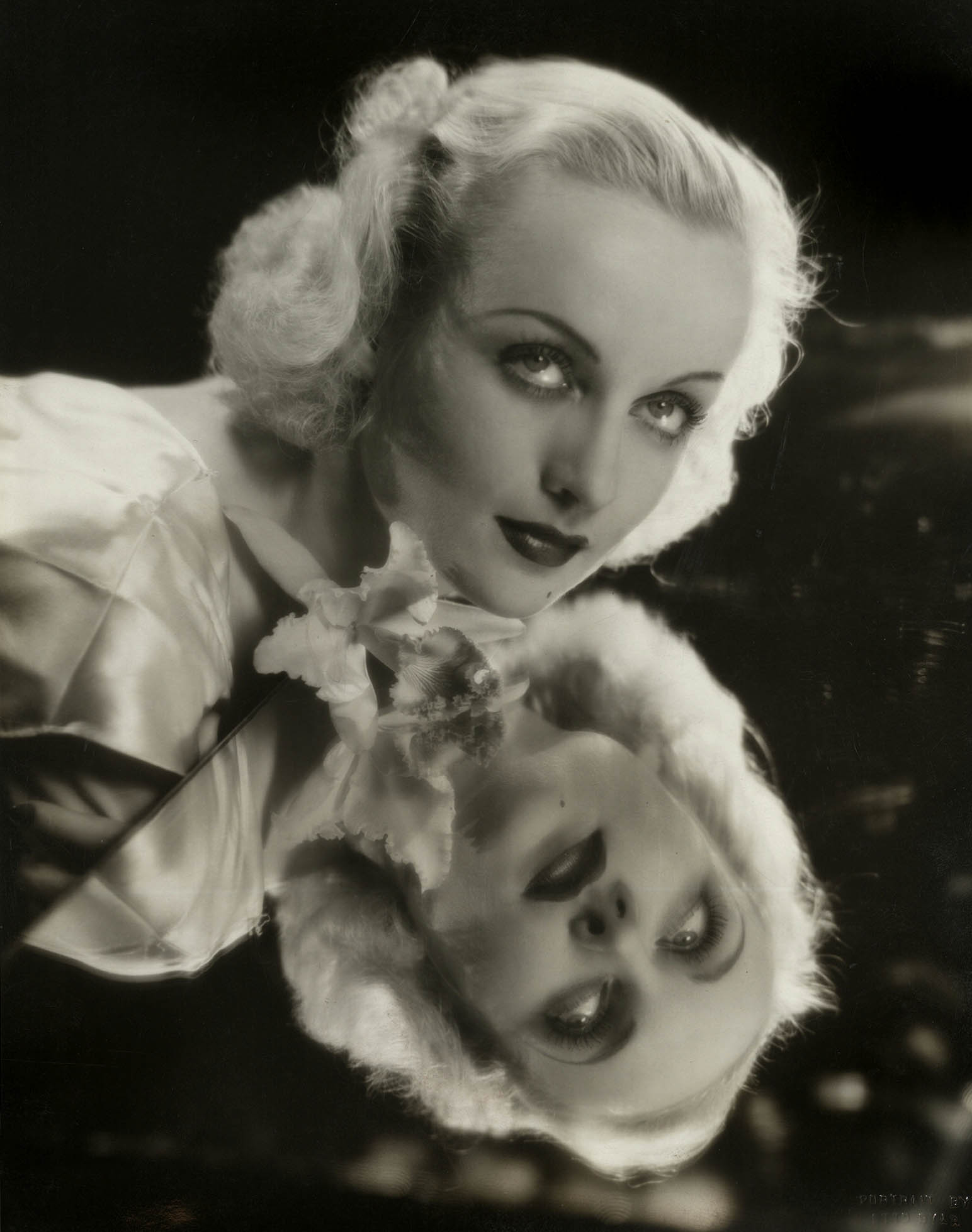
Otto Dyar (American, 1892-1988)
Carole Lombard
c. 1933
Sheet: 13 7/8 x 10 1/2″ (35.2 x 26.7cm)
The Museum of Modern Art Film Stills Collection
Hollywood stills photographers like Dyar “were not mirroring life, but illusion; their subjects were not humans but gods – of love, of allure, of luxury, perfection incarnate from the golden age of Hollywood glamor”
John Kobal (ed), Hollywood glamor portraits, Courier Corporation, 1976, p.V on the Wikipedia website
Otto Dyar was a prominent stills photographer who began his career at the Paramount studios in the 1920s. Initially working as an assistant on major film productions such as the 1927 ‘Wings’, Dyar quickly rose through the ranks to become one of Hollywood’s most notable image-makers.
During the 1930s and 40s, Dyar developed his own, highly dramatic style of lighting and photography that deviated from the neoclassical glamor of the 1920s. Edgy and expressionistic, Dyar’s photographs pushed the iconic features of movie stars like Carole Lombard, Cary Grant, Kay Francis and Joan Crawford to a grittier place that was more in accord with the aesthetics of films made in those decades. Of particular note are Dyar’s star portraits taken outside of the studio, an unusual and daring step at the time.
Despite all the high-contrast lighting, skewed angles and often tiny ‘surrealist’ interventions that point to the influence of photographers like Man Ray, Dyar faithfully accomplished the task of elevating the studio stars to the realm of deities. Like his peers George Hurrell, Ted Allen and Clarence Sinclair Bull, Dyar was not concerned with the psychologies of his sitters. What interested him was amplifying and consolidating the image the stars exuded in their roles, which was usually so powerful that it eclipsed the ‘real’ person that was in front of the camera.
Vigen Galstyan. “Dyar, Otto,” on the Lusadaran: Armenian Photography Foundation website 2015 [Online] Cited 02/04/2026. Used under fair use conditions for the purposes of education and research
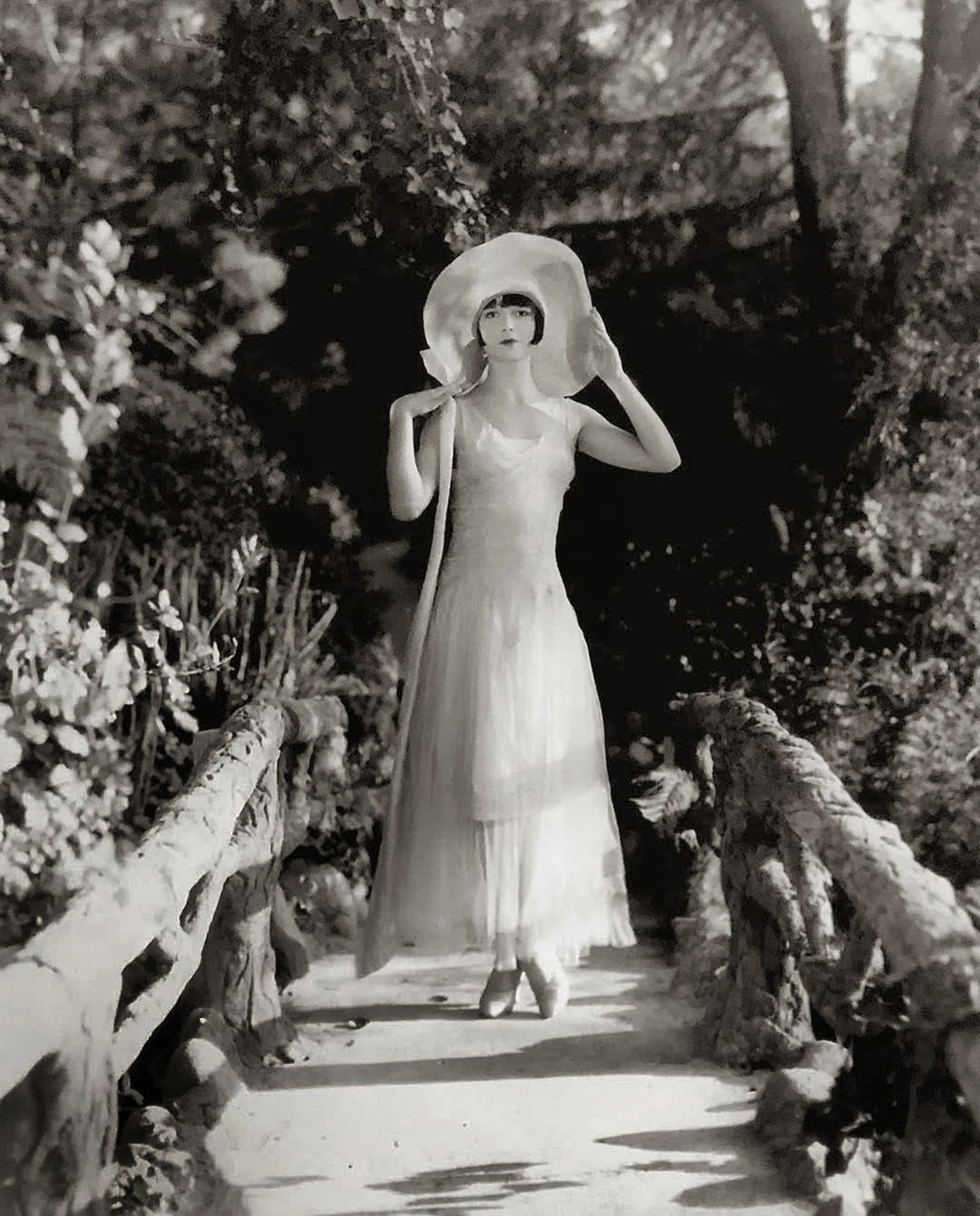
Otto Dyar (American, 1892-1988)
Louise Brooks
c. 1927
Sheet: 13 15/16 x 10 15/16″ (35.4 x 27.8cm)
The Museum of Modern Art Film Stills Collection
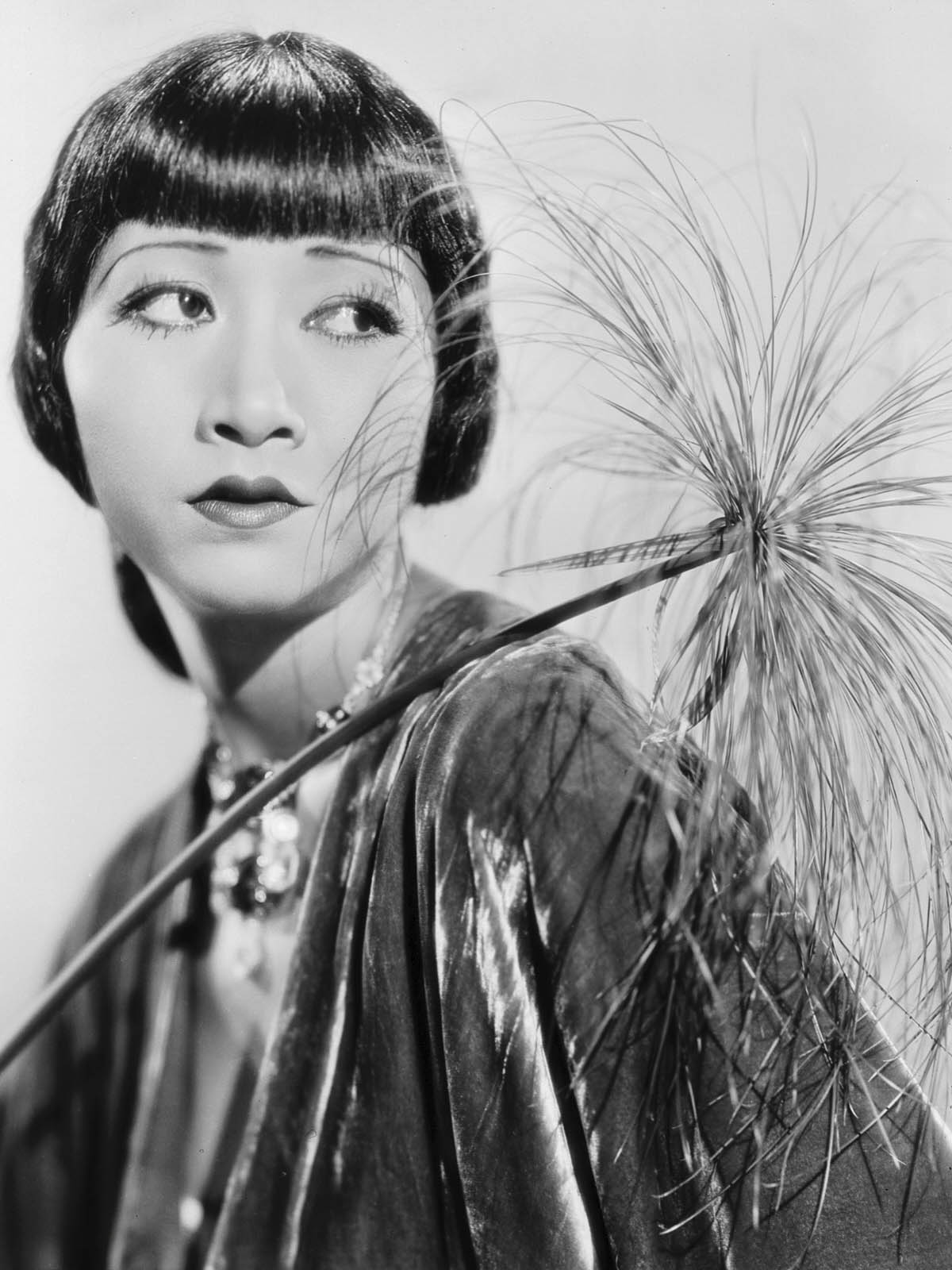
Otto Dyar (American, 1892-1988)
Anna May Wong
1930s
Sheet: 13 7/8 x 10 7/8″ (35.2 x 27.6cm)
The Museum of Modern Art Film Stills Collection
![Ray Jones (American, 1901-1947) 'Anna May Wong [in "Limehouse Blues"]' 1934](https://artblart.com/wp-content/uploads/2026/05/ray-jones-anna-may-wong.jpg "Ray Jones (American, 1901-1947) 'Anna May Wong [in \"Limehouse Blues\"]' 1934")
Ray Jones (American, 1901-1947)
Anna May Wong [in “Limehouse Blues”]
1934
Sheet: 12 7/8 x 10″ (32.7 x 25.4cm)
The Museum of Modern Art Film Stills Collection
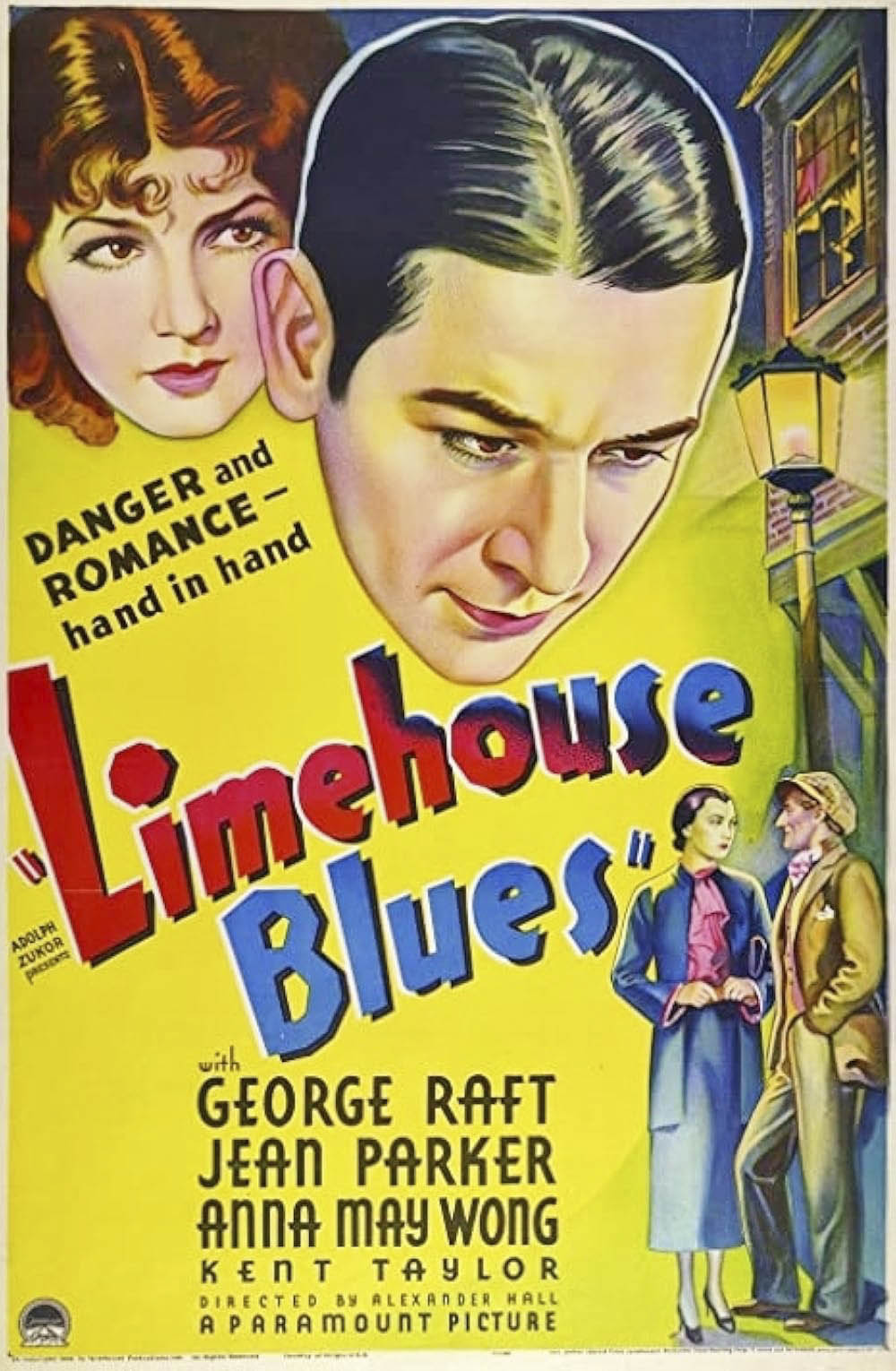
Limehouse Blues (1934) movie poster
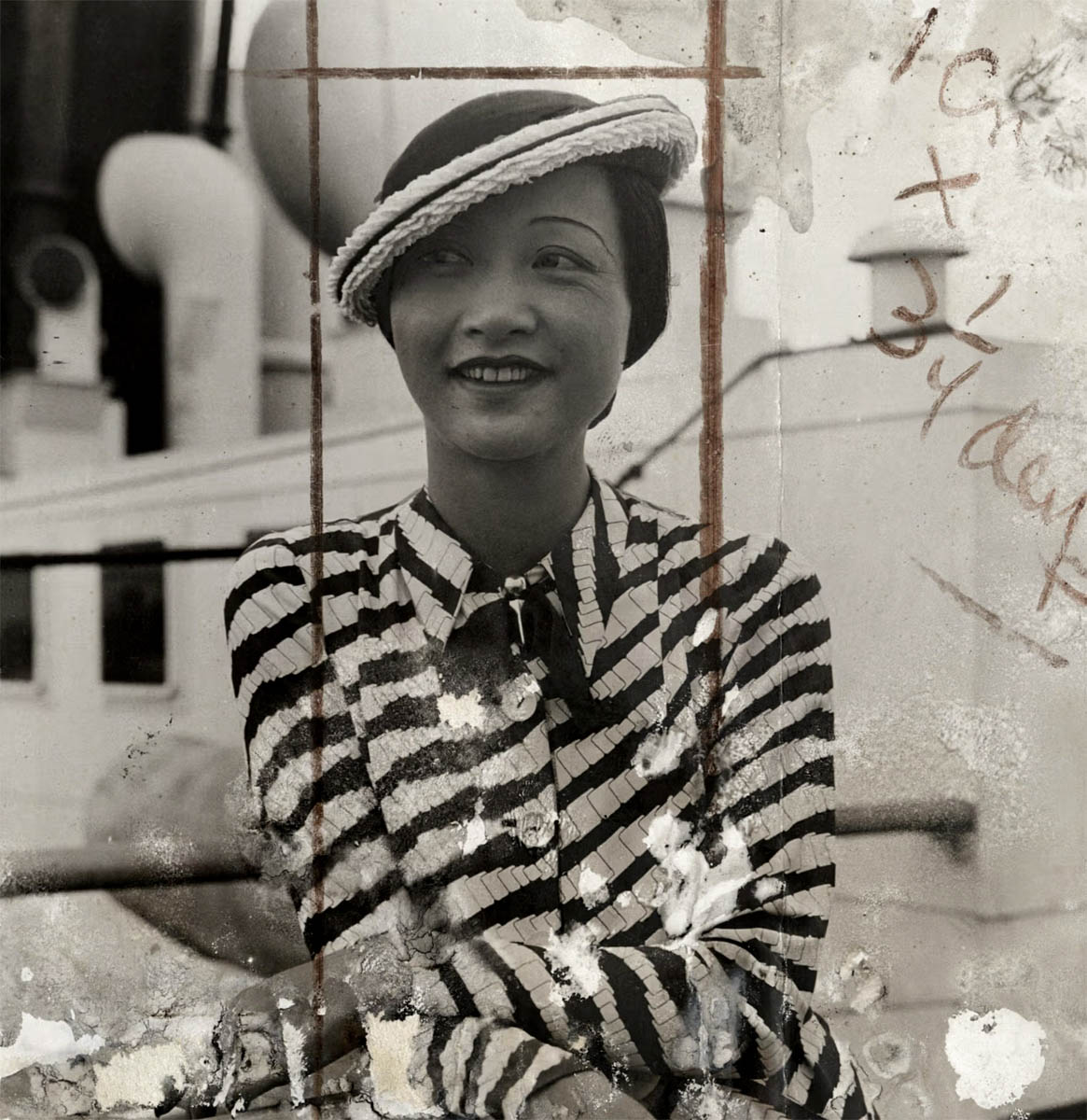
Unknown photographer
Anna May Wong
c. 1934
MoMA Film Stills Archive
Sheet: 8 x 6″ (20.3 x 15.2cm)
The Museum of Modern Art Film Stills Collection
![Unknown photographer. 'Myrna Loy [in "Across the Pacific"]' 1926](https://artblart.com/wp-content/uploads/2026/05/unknown-photographer-myrna-loy.jpg "Unknown photographer. 'Myrna Loy [in \"Across the Pacific\"]' 1926")
Unknown photographer
Myrna Loy [in “Across the Pacific”]
1926
Sheet: 11 x 14″ (27.9 x 35.6cm)
The Museum of Modern Art Film Stills Collection
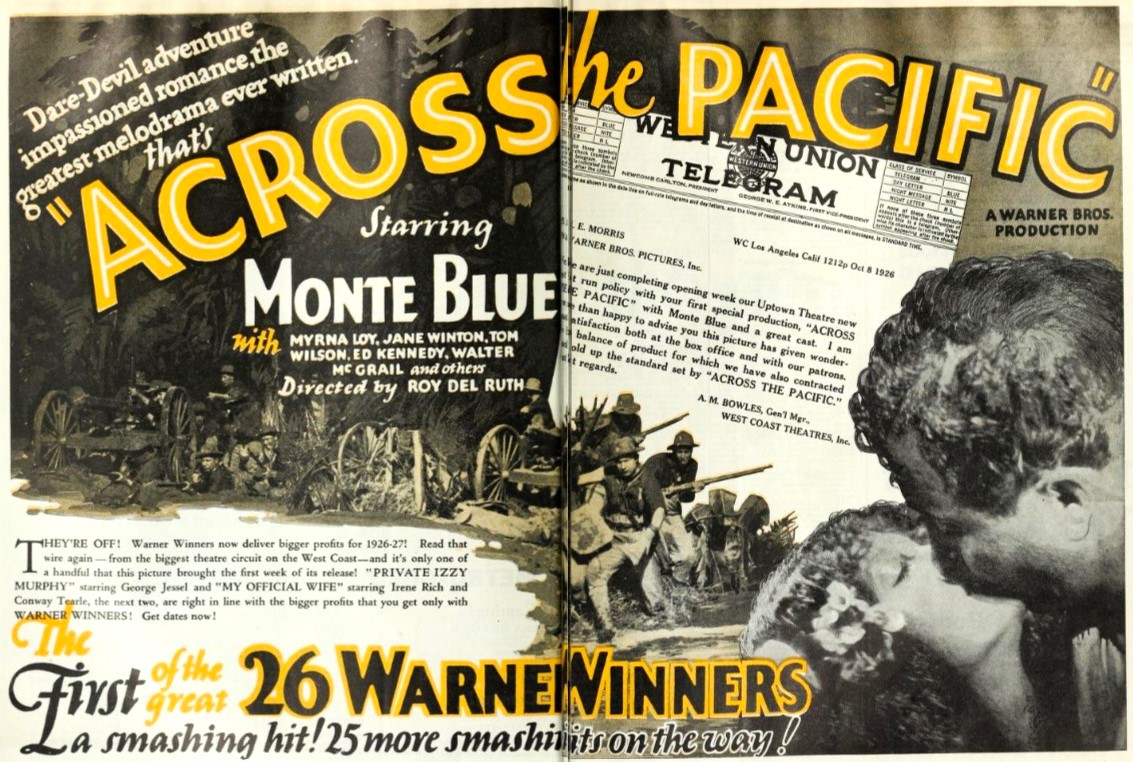
Advertisement for the American romantic adventure film Across the Pacific (1926) with Monte Blue and Myrna Loy, on pages 6 and 7 of the October 26, 1926 Film Daily
![John Miehle (American, 1902-1952) 'Dolores del Rio and Edmund Lowe [in "The Bad One"]' 1930](https://artblart.com/wp-content/uploads/2026/05/john-miehle-dolores-del-rio-and-edmund-lowe-1.jpg "John Miehle (American, 1902-1952) 'Dolores del Rio and Edmund Lowe [in \"The Bad One\"]' 1930")
John Miehle (American, 1902-1952)
Dolores del Rio and Edmund Lowe [in “The Bad One”]
1930
Sheet: 13 7/8 x 10 15/16″ (35.2 x 27.8cm)
The Museum of Modern Art Film Stills Collection
John Miehle was born on August 7, 1902 in Los Angeles, California. Being born so close to Hollywood Miehle went to work as an assistant camera man on the 1931 movie “Delicious” starring Janet Gaynor and Charles Farrell.
He then worked exclusively in the Camera and Electrical Department doing uncredited still photography on some of the best known films, such as “What Price Hollywood?,” “Rain,” “Little Women,” “Top Hat,” “Kitty Foyle,” “Rope” and “Portrait of Jennie.”
He photographed many of the greats as well including Constance Bennett, Joan Crawford, Irene Dunne, Ginger Rogers, Ann Harding, William Powell, Joel McCrea, Katherine Hepburn, Joan Bennett, Delores Del Rio, Randolph Scott, James Stewart, Cary Grant, Jean Arthur, Ruth Hussey, Jennifer Jones, Joseph Cotten, Ethel Barrymoore, Laraine Day, Franchot Tone, Ann Blyth, Farley Granger, and Dana Andrews…
In addition, he did many publicity shots of such stars as Carole Lombard, Marilyn Monroe, and Lucille Ball.
Don’t Forget The Illustrator! “The Classics and “Ginger Rogers” photographer John Miehle,” on the Vintage Movie Star Photos blog Thursday, March 28, 2013 [Online] Cited 12/05/2026. Used under fair use conditions for the purposes of education and research
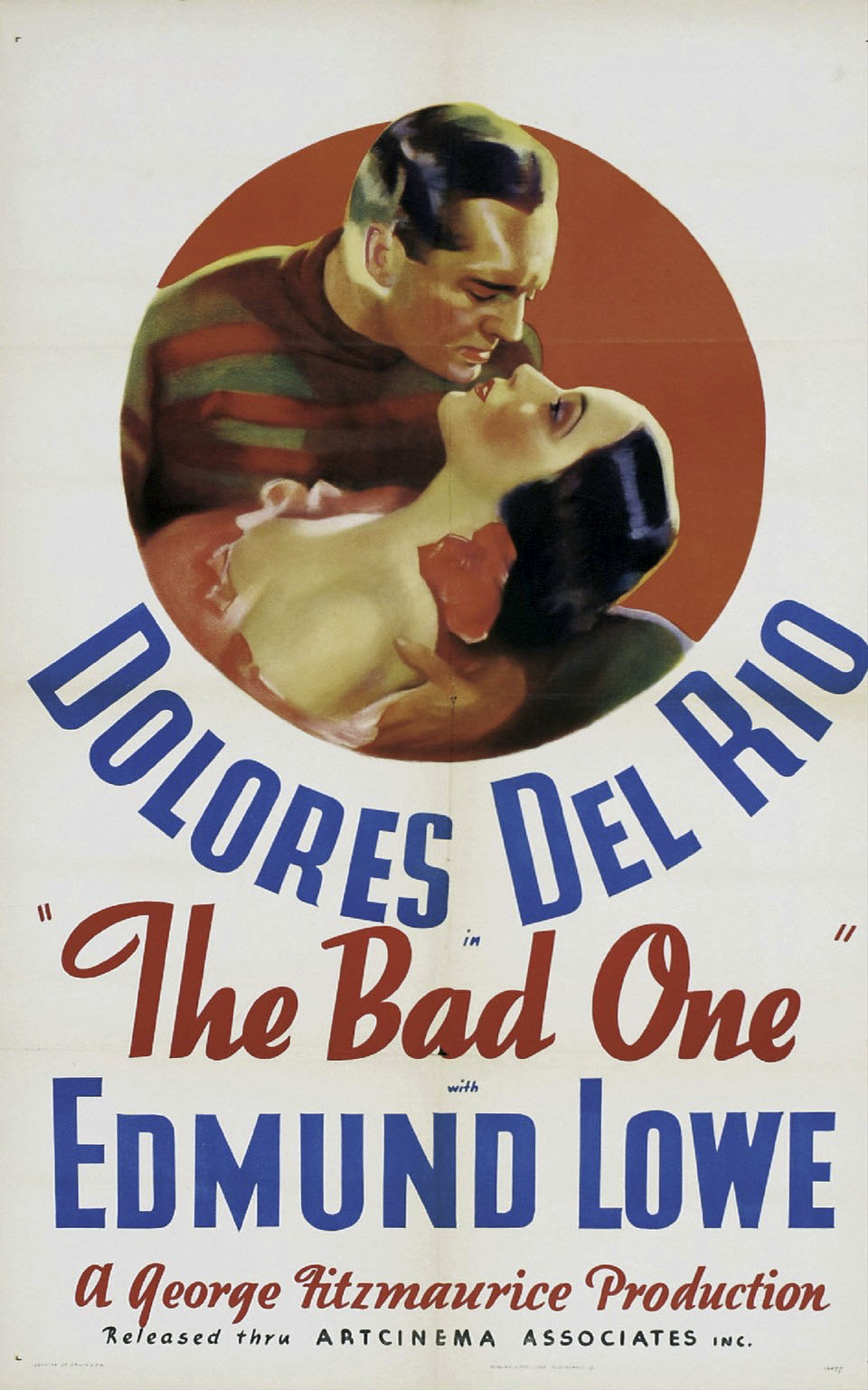
The Bad One (1930) movie poster
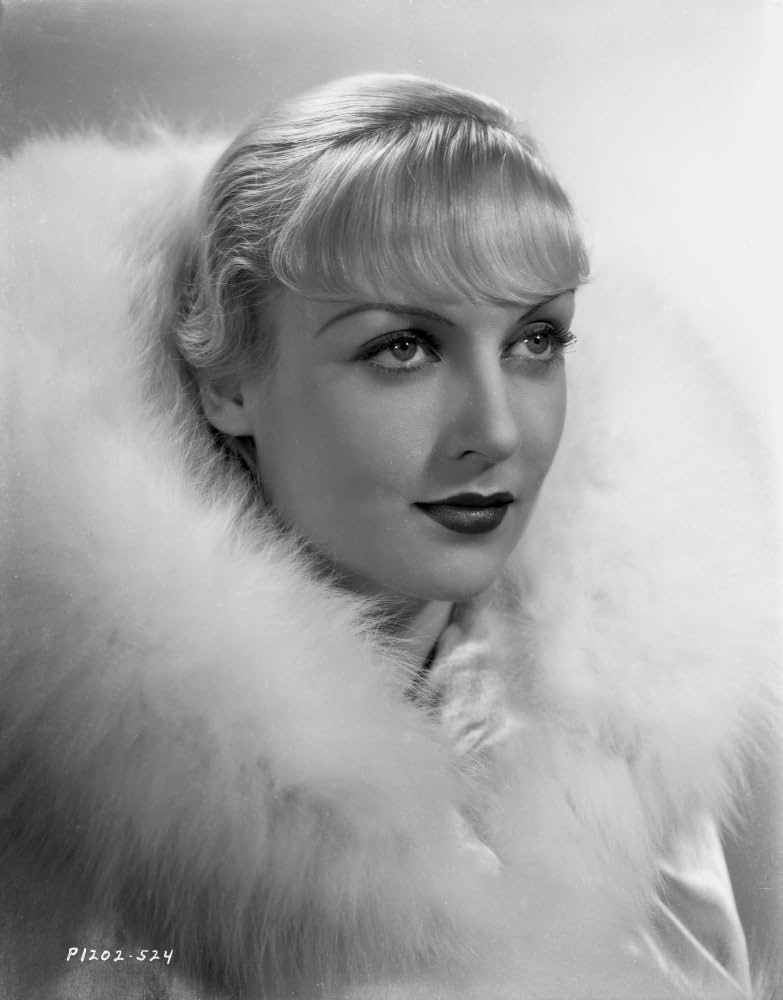
William Walling Jr (American, 1904-1983)
Carole Lombard
c. 1933
Sheet: 13 7/8 x 11 15/16″ (35.2 x 30.3cm)
The Museum of Modern Art Film Stills Collection
William Richard Walling, Jr. (October 6, 1904 – December 11, 1983) was an American actor, inventor, and portrait photographer for film studios.
![Robert Coburn (American, 1900-1990) 'Vera Zorina [in "The Goldywyn Follies"]' c. 1937](https://artblart.com/wp-content/uploads/2026/05/robert-coburn-vera-zorina.jpg "Robert Coburn (American, 1900-1990) 'Vera Zorina [in \"The Goldywyn Follies\"]' c. 1937")
Robert Coburn (American, 1900-1990)
Vera Zorina [in “The Goldywyn Follies”]
c. 1937
Sheet: 13 13/16 x 10 15/16″ (35.1 x 27.8cm)
The Museum of Modern Art Film Stills Collection
Eva Brigitta Hartwig (January 2, 1917 – April 9, 2003), known professionally as Vera Zorina, was a German-Norwegian ballerina, theatre and film actress, and choreographer, chiefly remembered for her films choreographed by her husband George Balanchine. They include the Slaughter on Tenth Avenue sequence from On Your Toes, The Goldwyn Follies, I Was an Adventuress with Erich Von Stroheim and Peter Lorre, Louisiana Purchase with Bob Hope, and dancing to “That Old Black Magic” in Paramount Pictures’ Star Spangled Rhythm.
Text from the Wikipedia website
Robert Coburn was one of the most influential portrait photographers working in the major Hollywood movie studios from the 1930’s to 1960’s. His star subjects included Rita Hayworth, Joan Crawford, Kim Novak, Carole Lombard, William Holden, Glenn Ford, and Orson Welles. Coburn’s most infamous portraits immortalised Hollywood’s greatest icons and helped to define this era as the Golden Age of Cinema. In 1940, Robert Coburn began a twenty-year career with Columbia Pictures as the head of the still production department and the studio’s chief portrait photographer for many landmark films including “Picnic”, “Gilda”, and “The Big Heat”.
Text from the Fahey/Klein Gallery website
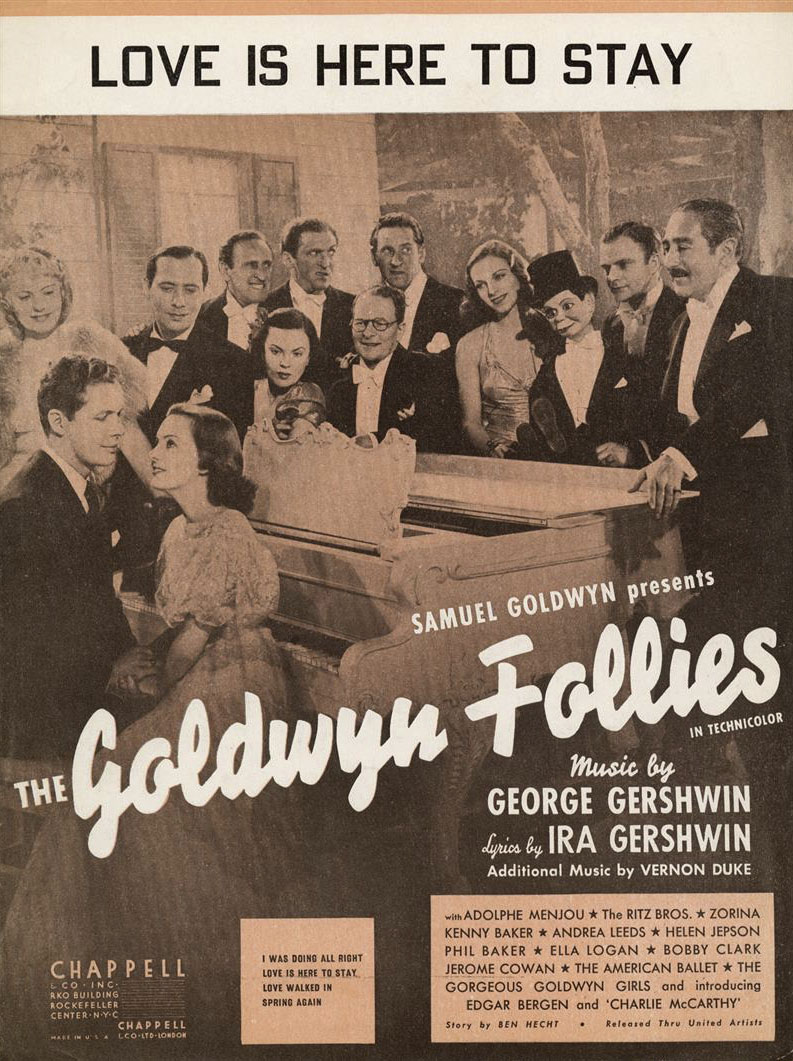
Goldwyn Follies (1937) movie poster
Face Value: Celebrity Press Photography Introductory text
For MoMA’s founding film curator, Iris Barry, building an archive of images that documented the history of motion pictures was second only to collecting films. Photographs from the study collection that she created were among the first works exhibited in MoMA’s theater gallery. Barry’s initiative eventually led to the acquisition of editorial archives from Photoplay (1911-1980) and Dell (1921-1976), leading fan magazine publishers supporting the Hollywood star system. The portrait photography featured in these publications was produced by film studios to promote the glamorous celebrities under contract to them. Face Value looks at these images and surveys how they were manipulated for public consumption in the decades before digital tools, AI technology, and social media revolutionized the process.
Over sixty photographers are represented in this installation, which intermingles images that survive untouched with those that show evidence of the hands-on practices that readied them for the press. The standard techniques used – silhouetting, in-painting, masking, sectioning, and collage – were applied not only to photographs of entertainers but to sports figures, socialites, and politicians as well. Organised in suites that highlight radical editing practices, stylised visual motifs, and the gender stereotypes inherent in the studio system, the exhibition offers a demystifying perspective on the glamour of celebrity.
Wall text from the exhibition
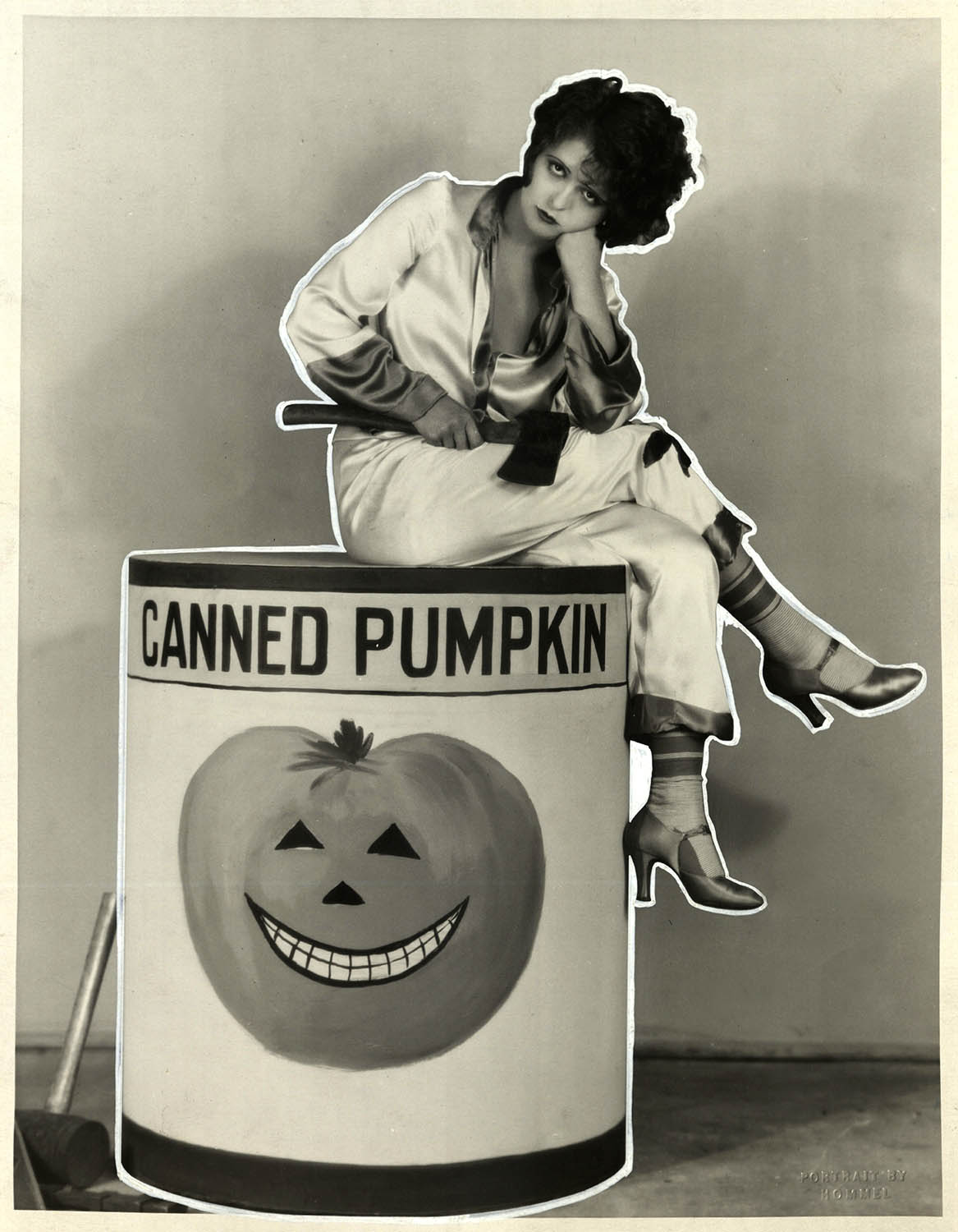
George P. Hommel (American, 1901-1953)
Clara Bow
c. 1929
Sheet: 14 x 11″ (35.6 x 27.9 cm)
The Museum of Modern Art Film Stills Collection
Overshadowed by the work of 1920s Paramount colleagues Donald Biddle Keyes and Eugene Robert Richee, stillsman George P. Hommel crafted thoughtful portraits highlighting both the beauty and sorrow of those he photographed. Like Keyes, the peripatetic Hommel always looked for new challenges, new opportunities, keeping him on the move. Unobstrusive and elegant, Hommel’s work reveals hidden depths in those he shot. …
Hommel’s straightforward portraiture captured the vulnerability of his sitters, revealing a wistful and often melancholic look in their expressive eyes. His pensive work focused on serious matters, not straining to create fleeting moods but revealing the heart of those he photographed. Employing simple, dark-textured background, Hommel focused on the eyes and lips, creating a sharp image with an often soft-focus background. His portraits often feature shadows and strong angular lines, creating dramatic composition. Hommel could also capture the sometimes insouciant or even overly exuberant emotions of sitters, often covering their vulnerability and pain, such as in his Pierrot portraits of Clara Bow as clown.
lmharnisch. “Mary Mallory / Hollywood Heights: George P. Hommel, Pensive Photographer,” on The Daily Mirror website, July 27, 2020 [Online] Cited 12/05/2026. Used under fair use conditions for the purposes of education and research
![James Manatt (American, 1896-1989) 'Joan Crawford [in "Letty Lynton"]' 1932](https://artblart.com/wp-content/uploads/2026/05/james-manatt-joan-crawford.jpg "James Manatt (American, 1896-1989) 'Joan Crawford [in \"Letty Lynton\"]' 1932")
James Manatt (American, 1896-1989)
Joan Crawford [in “Letty Lynton”]
1932
Sheet: 13 x 10″ (33 x 25.4cm)
The Museum of Modern Art Film Stills Collection
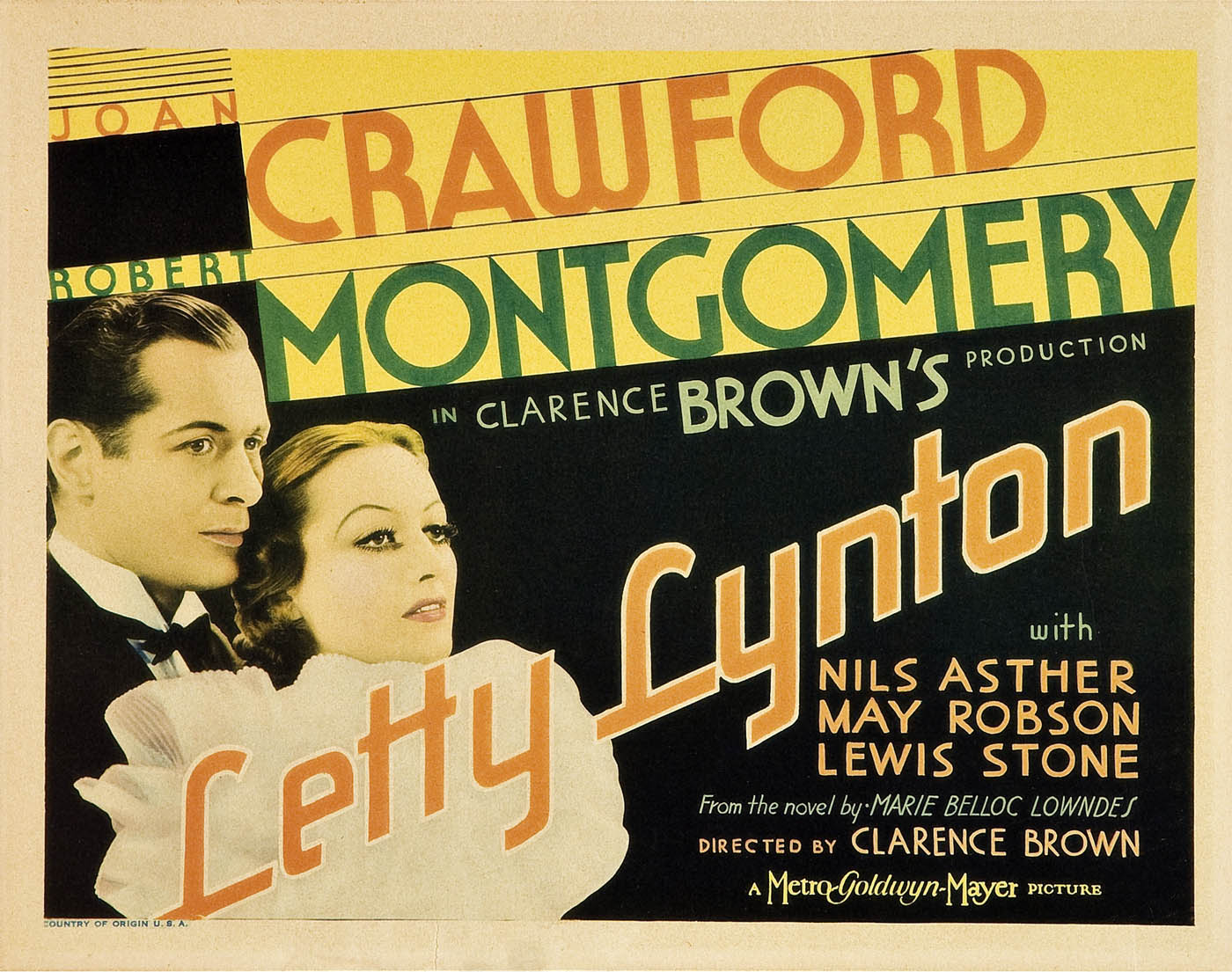
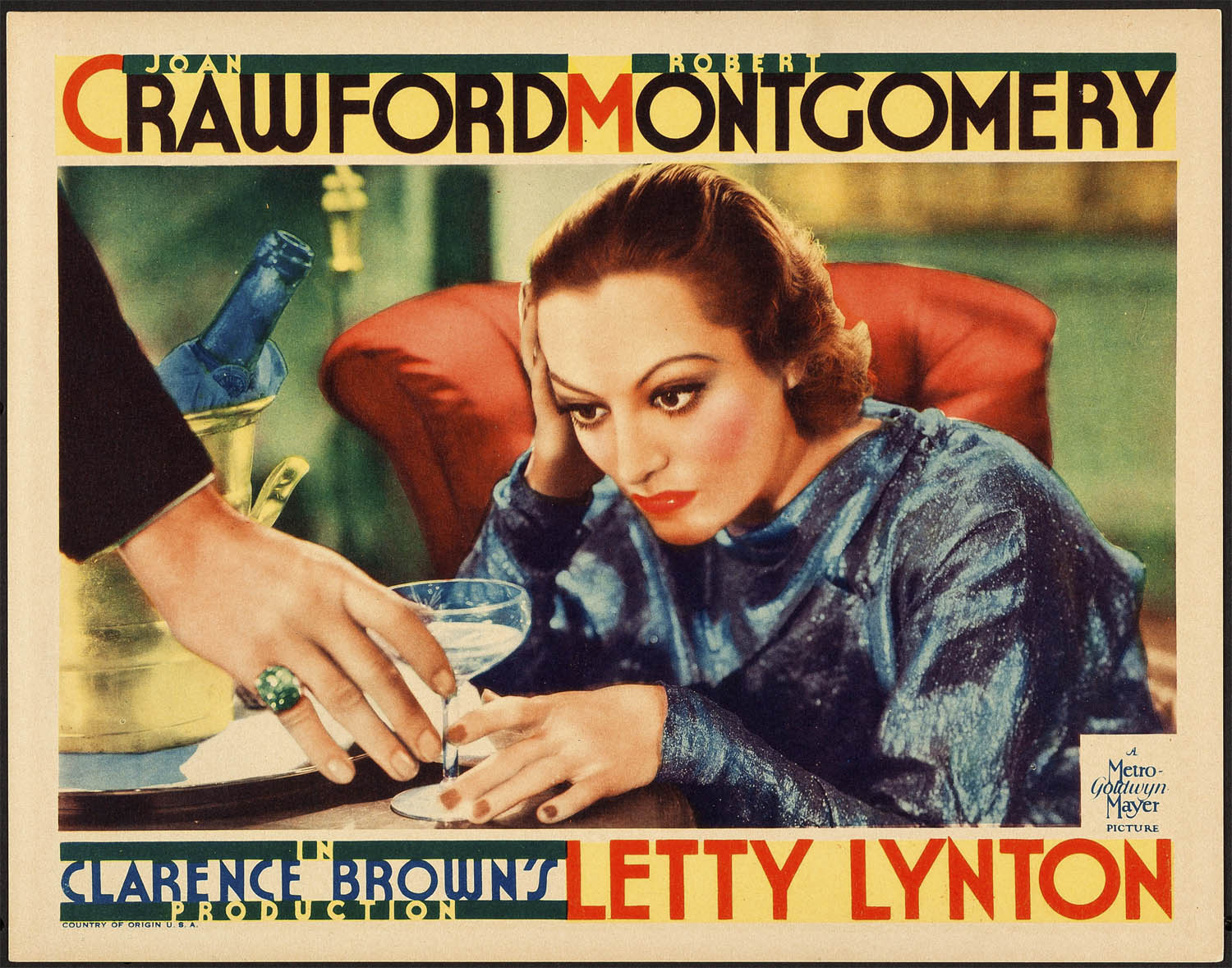
Letty Lynton (1932) movie posters
![Elmer Fryer (American, 1898-1944) 'Lili Damita [in "The Match King"]' c. 1932](https://artblart.com/wp-content/uploads/2026/05/elmer-fryer-lili-damita.jpg "Elmer Fryer (American, 1898-1944) 'Lili Damita [in \"The Match King\"]' c. 1932")
Elmer Fryer (American, 1898-1944)
Lili Damita [in “The Match King”]
c. 1932
Sheet: 14 1/16 x 11″ (35.7 x 27.9cm)
The Museum of Modern Art Film Stills Collection
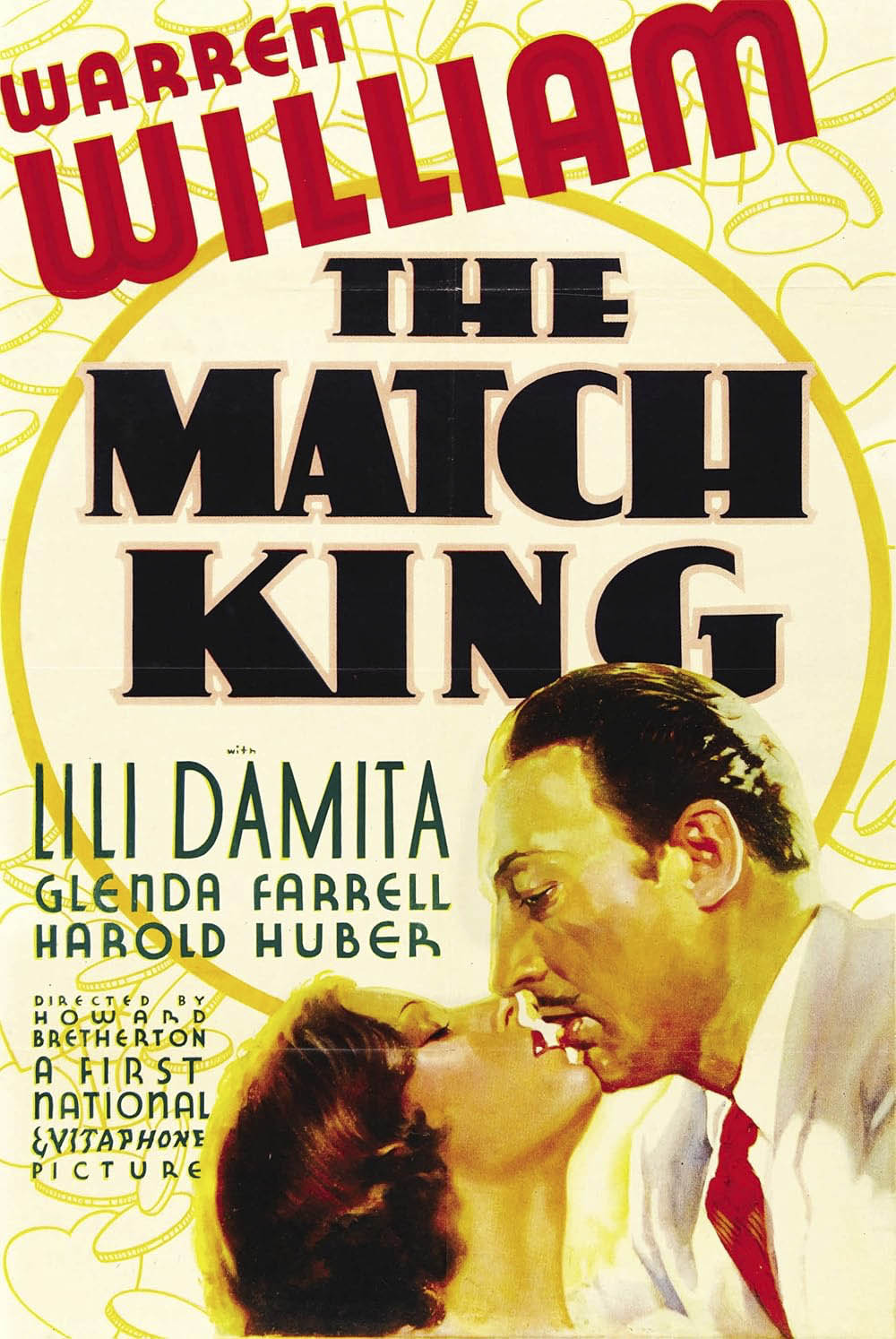
The Match King (1932) movie poster
![Bert Longworth (American, 1893-1964) 'Amelia Earhart with Helen Hayes [on set of "A Farewell to Arms"]' 1932](https://artblart.com/wp-content/uploads/2026/05/bert-longworth-amelia-earhart-and-helen-hayes.jpg "Bert Longworth (American, 1893-1964) 'Amelia Earhart with Helen Hayes [on set of \"A Farewell to Arms\"]' 1932")
Bert Longworth (American, 1893-1964)
Amelia Earhart with Helen Hayes [on set of “A Farewell to Arms”]
1932
Sheet: 13 15/16 x 10 7/8″ (35.4 x 27.6cm)
The Museum of Modern Art Film Stills Collection
As the studio system came into place with the advent of talkies, studios hired many stillsmen to take scene stills, off-camera images, and candids of both above and below the line talent. Photographers took massive amounts of stills around the lot, at public events, premieres, at homes, in posed shots, to be widely distributed to magazines and newspapers for free publicity promoting upcoming films, new talent, and established stars. The journals, fan magazines, and newspapers splashed these images throughout their pages, building awareness and star popularity.
Bert “Buddy” Longworth was one of the stills photographers taking these images. Longworth began his career shooting scene stills at MGM for Greta Garbo’s first three films, including “Flesh and the Devil,” with Longworth capturing the passion of Garbo and John Gilbert as they fell in love. He was employed for a short time at Paramount, but from 1929 on, he worked at Warner Bros. as an action specialist, working on Busby Berkeley’s spectacular musicals, crime pictures, off-set candids, as well as portraits. Scholar David Shields calls him “Hollywood’s foremost expressionist, often using unusual perspective, occasional use of multiple exposures.”
lmharnisch. “Mary Mallory / Hollywood Heights: Bert Longworth and ‘Hold Still, Hollywood’,” on The Daily Mirror website, June 26, 2023 [Online] Cited 12/05/2026. Used under fair use conditions for the purposes of education and research
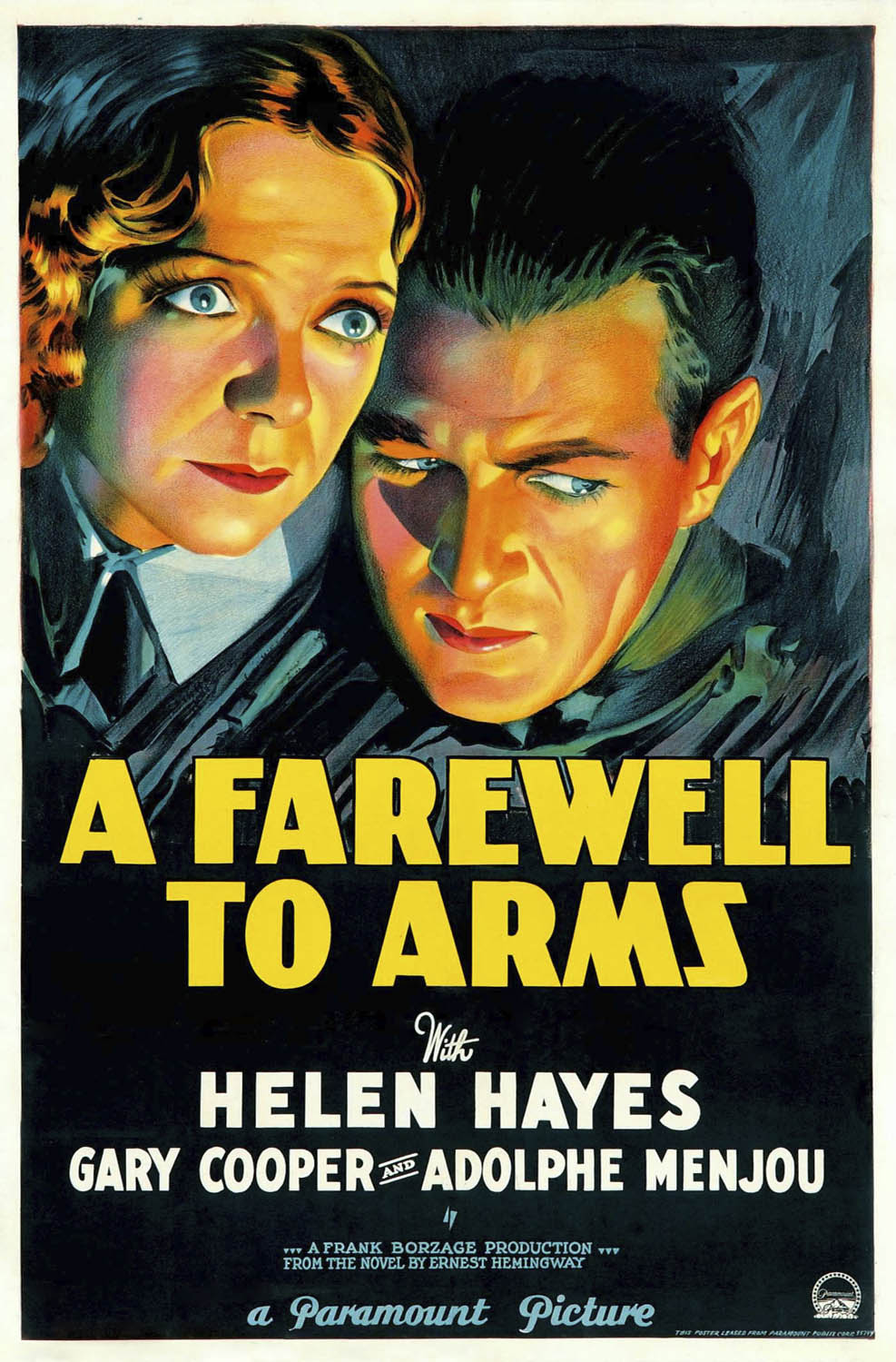
A Farewell To Arms (1932) movie poster
![Unknown photographer. 'Elsa Lanchester [in "The Bride of Frankenstein"]' 1935](https://artblart.com/wp-content/uploads/2026/05/elsa-lanchester.jpg "Unknown photographer. 'Elsa Lanchester [in \"The Bride of Frankenstein\"]' 1935")
Unknown photographer
Elsa Lanchester [in “The Bride of Frankenstein”]
1935
Sheet: 13 1/2 x 9 3/16″ (34.3 x 23.3cm)
The Museum of Modern Art Film Stills Collection
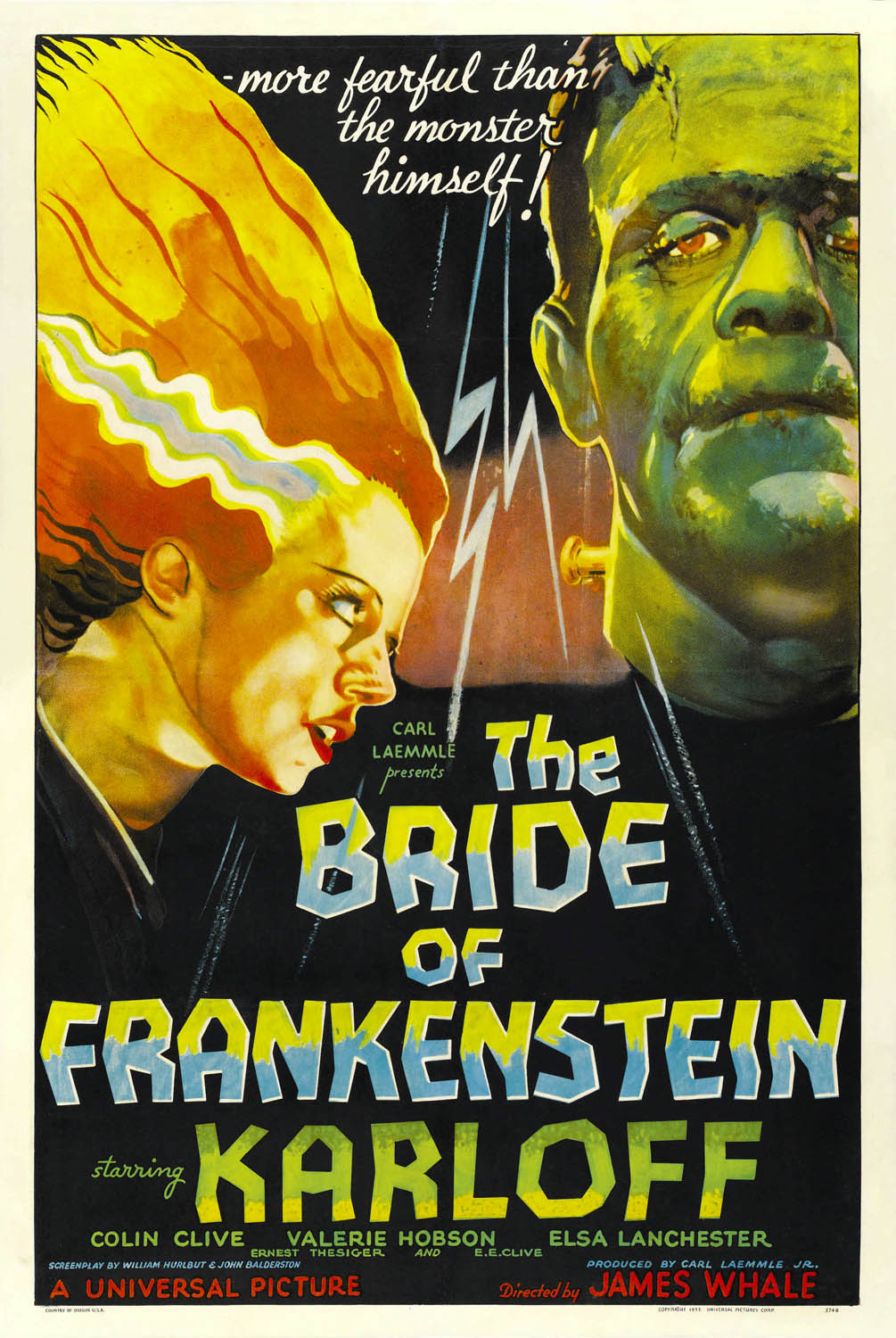
The Bride of Frankenstein (1935) movie poster
I want to talk more about the edited photographs. In many of the photos white-out has been used to separate the subject’s head or face – and in one notable case, their bare legs – from the rest of the image. What are some ways in which these disembodied segments were used by the studios and by the magazines?
RM: We know they were from Photoplay magazine, so if we have a still that’s been edited for Photoplay, Cara went and looked for the issue that published the photograph to see how it was used. It might have been a feature on women’s legs, so that’s why they only focused on the legs.
There’s one grouping of photographs, I call it the “eat face grouping,” where the stars are very close up. There’s a photograph of someone eating someone’s chin. Those were all taken for a particular issue of Photoplay – that’s why they’re all edited in the same way.
With research and detective work you can determine how they were actually used in print. The floating heads, they would attach to biographies. They call that silhouetting, with the white-out.
CS: A lot of the uses I found were very gossipy, which was interesting, a lot of rumor columns. And then of course, like Ron said, highlighting certain aspects of celebrities’ bodies or features.
Back in 1980 MoMA’s exhibition Hollywood Portrait Photographers, 1921 to 1941 actually used a couple of the same images that appear in this show. But that nnnexhibition celebrated the artistry and glamor of these images. Why did you choose to focus more on the ways that these images have been manipulated and edited?
RM: The audience for photographs like this has changed. In 1980 there was a whole generation of people who knew who these performers were, who appreciated them as performers and appreciated their celebrity. Nowadays, younger audiences, in many cases, have no idea who these folks are. Even we sometimes have trouble identifying everyone. Displaying them in that way seemed dated. We wanted to mount them in a way that reflected how visitors today would need to look at them.
The photographs in 1980 were all matted in a very formal way that encouraged appreciation for the beauty of the photograph. I wasn’t interested in how beautiful the images were. I wasn’t interested in the celebrities. We’re mostly interested in the photographs. I wanted them to look like working photographs, and that’s reflected in the way they’re displayed. We did ours on plexi traps, which turned out to be very elegant, but the notion was that it would be a less precious way of mounting them so we would look at them in a less precious way.
The other thing we did differently was to have large numbers of photographs grouped in very dense clusters. To me that reflects social media today. The way we encounter images daily is so dense, and we’re forced to sort through a lot of images that come our way in any one moment. So I wanted visitors to have a contemporary view. It was meant to reflect a digital-age perspective, because analog-versus-digital was a subtext of the show in our heads.
There were two shows that were touchstones for this one: the Hollywood Portrait show of 1980, and the Fame After Photography show, a wonderful show in 1999 that MoMA’s Photography department mounted. They borrowed a lot of film stills for that show, which was also investigating celebrity and fame.
Ron Magliozzi, Cara Shatzman, Jason Persse. “Cropped, Chopped, and Silhouetted: Taking Celebrity at Face Value,” in the MoMA magazine on the MoMA website Sep 17, 2025 [Online] Cited 10/05/2026. Used under fair use conditions for the purposes of education and research
![Unknown photographer. 'Louis Armstrong [in "Cabin in the Sky"]' 1943](https://artblart.com/wp-content/uploads/2026/05/louis-armstrong.jpg "Unknown photographer. 'Louis Armstrong [in \"Cabin in the Sky\"]' 1943")
Unknown photographer
Louis Armstrong [in “Cabin in the Sky”]
1943
Sheet: 8 x 10″ (20.3 x 25.4 cm)
The Museum of Modern Art Film Stills Collection
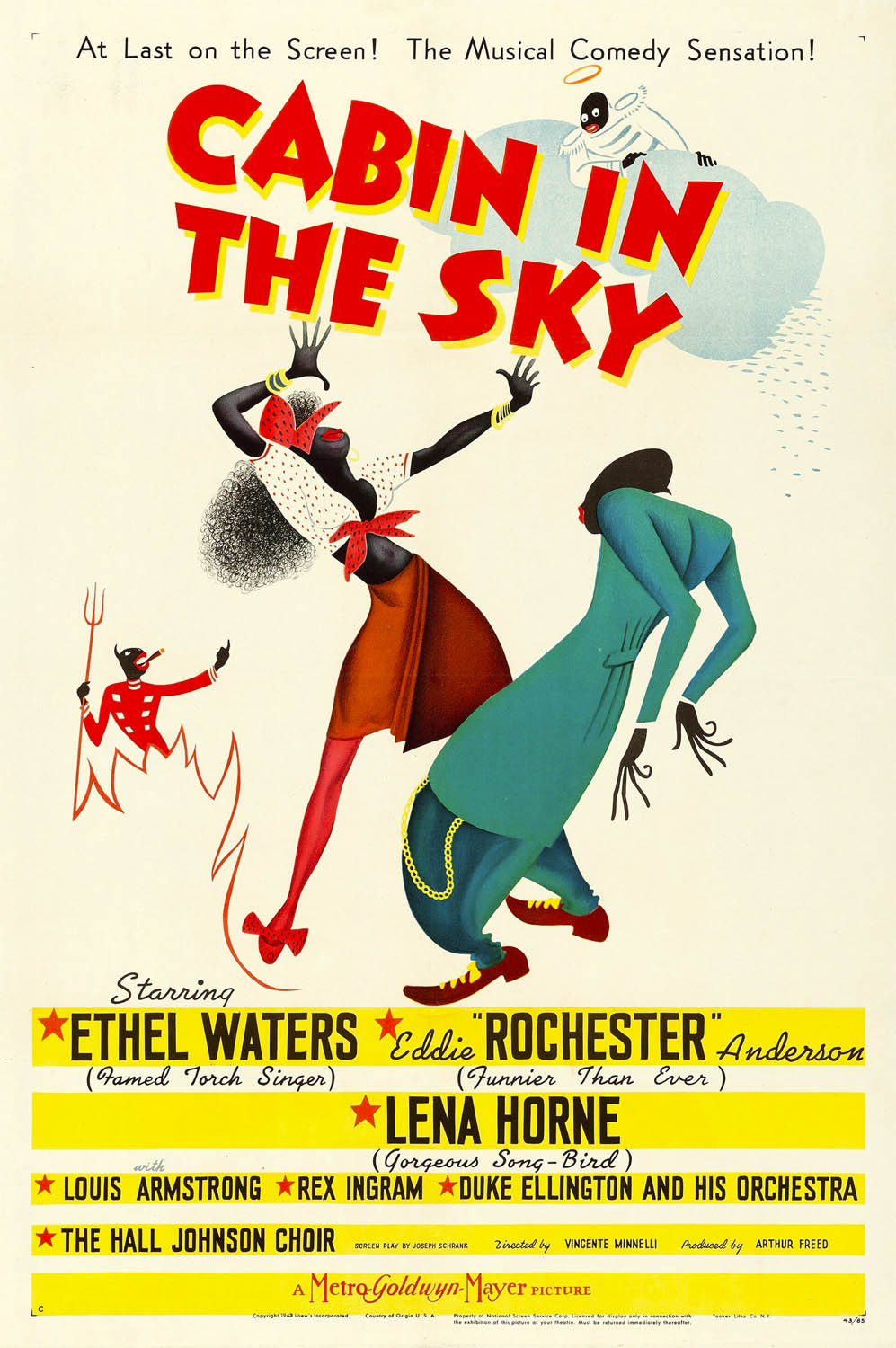
Cabin in the sky (1943) movie poster
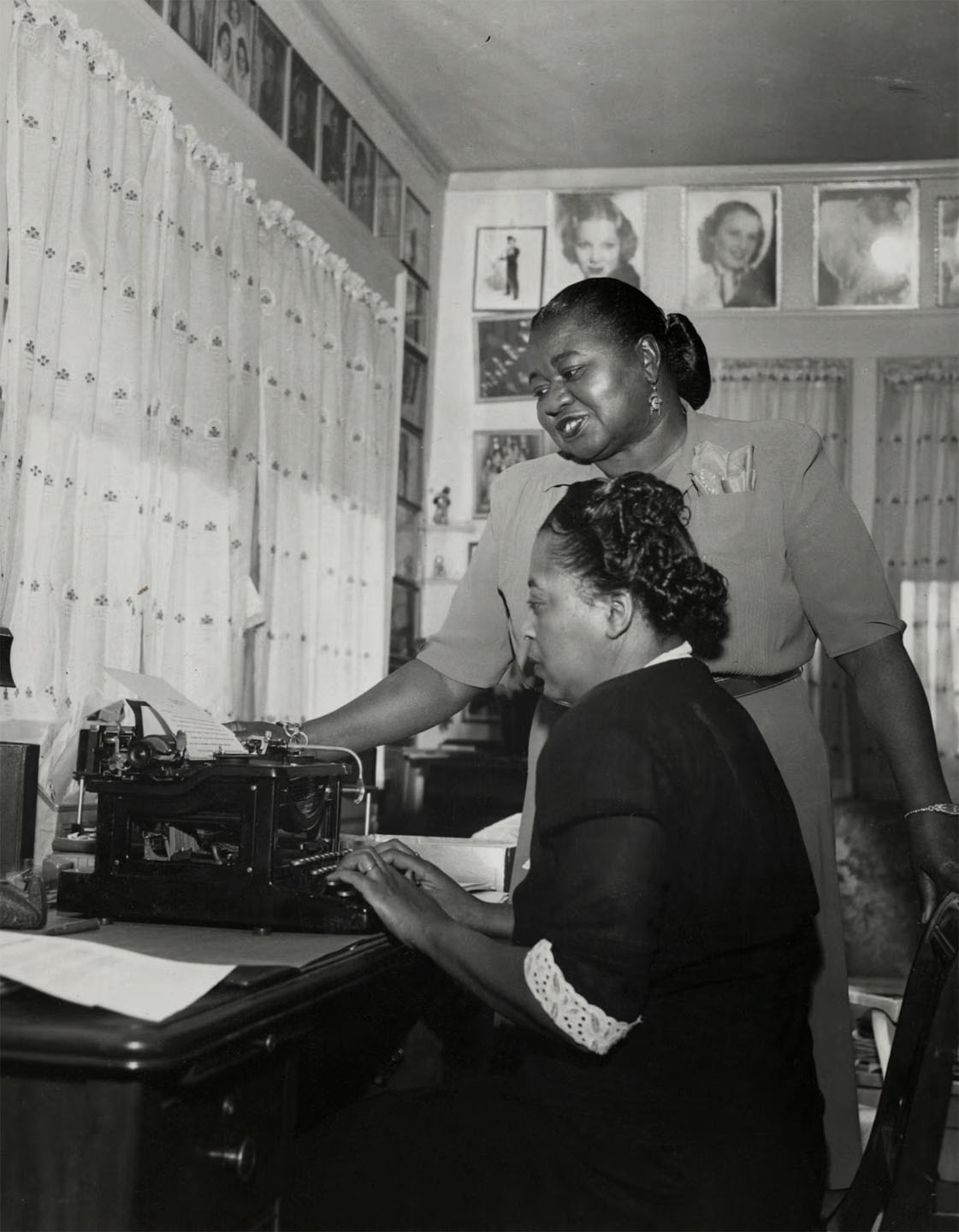
Unknown photographer
Hattie McDaniel and Ruby Berkley Goodwin
c. 1948
Sheet: 9 1/16 x 7″ (23 x 17.8cm)
The Museum of Modern Art Film Stills Collection
“[Ruby Berkley Goodwin] was also Hattie McDaniel’s publicist. And she was Ethel Waters’s publicist. She was the first Black American to have a syndicated newspaper column. She wrote this very famous autobiography called It’s Good to Be Black that was very, very popular. She was a poet. She was a fascinating person, and I was not familiar with her. That was a great aspect of learning about all of these people in these photographs.”
Ron Magliozzi, Cara Shatzman, Jason Persse. “Cropped, Chopped, and Silhouetted: Taking Celebrity at Face Value,” in the MoMA magazine on the MoMA website Sep 17, 2025 [Oline] Cited 10/05/2026. Used under fair use conditions for the purposes of education and research
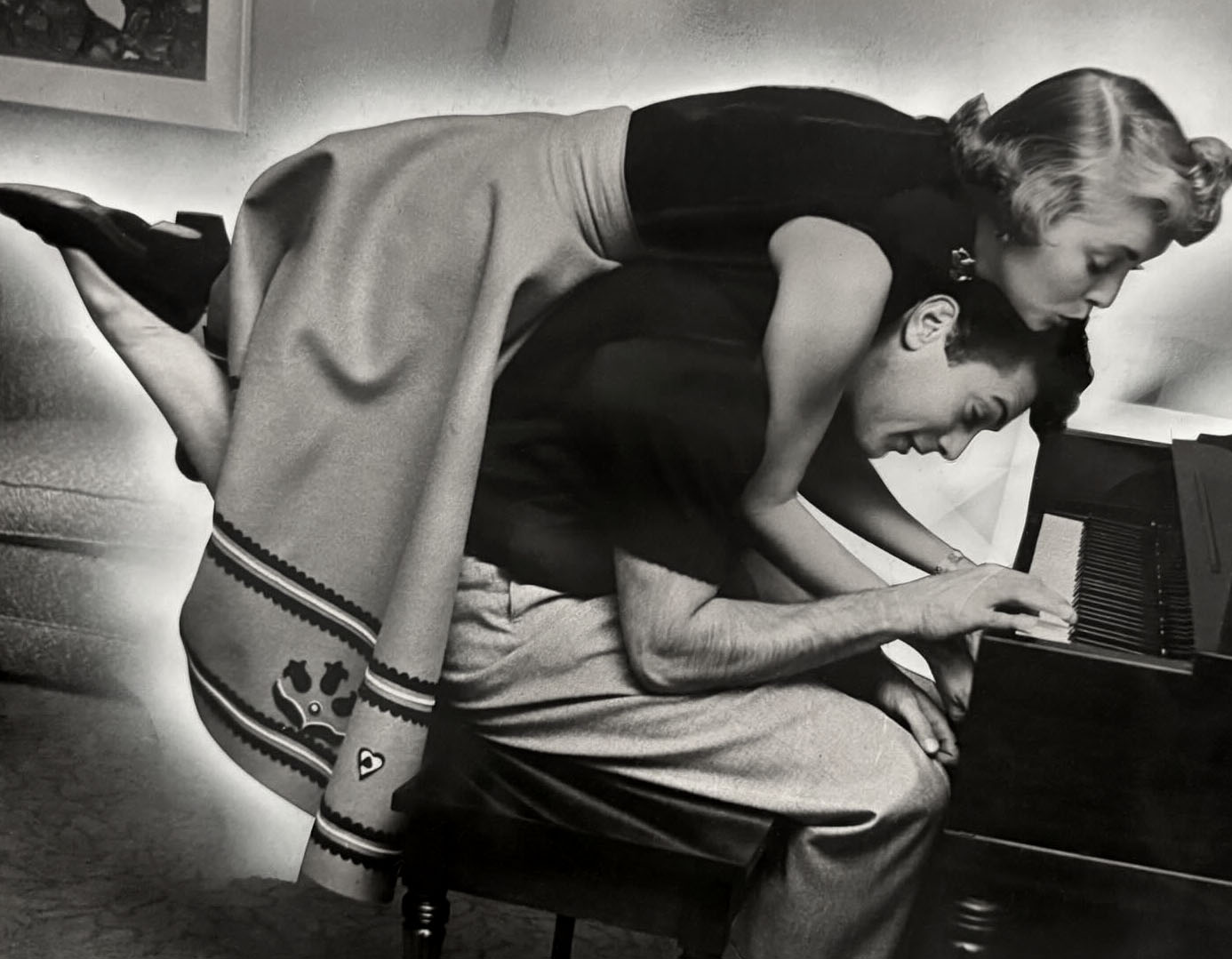
Unknown photographer
Janet Leigh and Tony Curtis
c. 1950 (detail)
Sheet: 8 1/16 x 10″ (20.5 x 25.4cm)
The Museum of Modern Art Film Stills Collection
!['Elvis Presley [Fans' Star Library magazine, No. 13]' 1959](https://artblart.com/wp-content/uploads/2026/05/elvis-presley.jpg "'Elvis Presley [Fans' Star Library magazine, No. 13]' 1959")
Elvis Presley [Fans’ Star Library magazine, No. 13]
1959
Sheet: 7 x 5 1/8″ (17.8 x 13cm)
The Museum of Modern Art Film Stills Collection
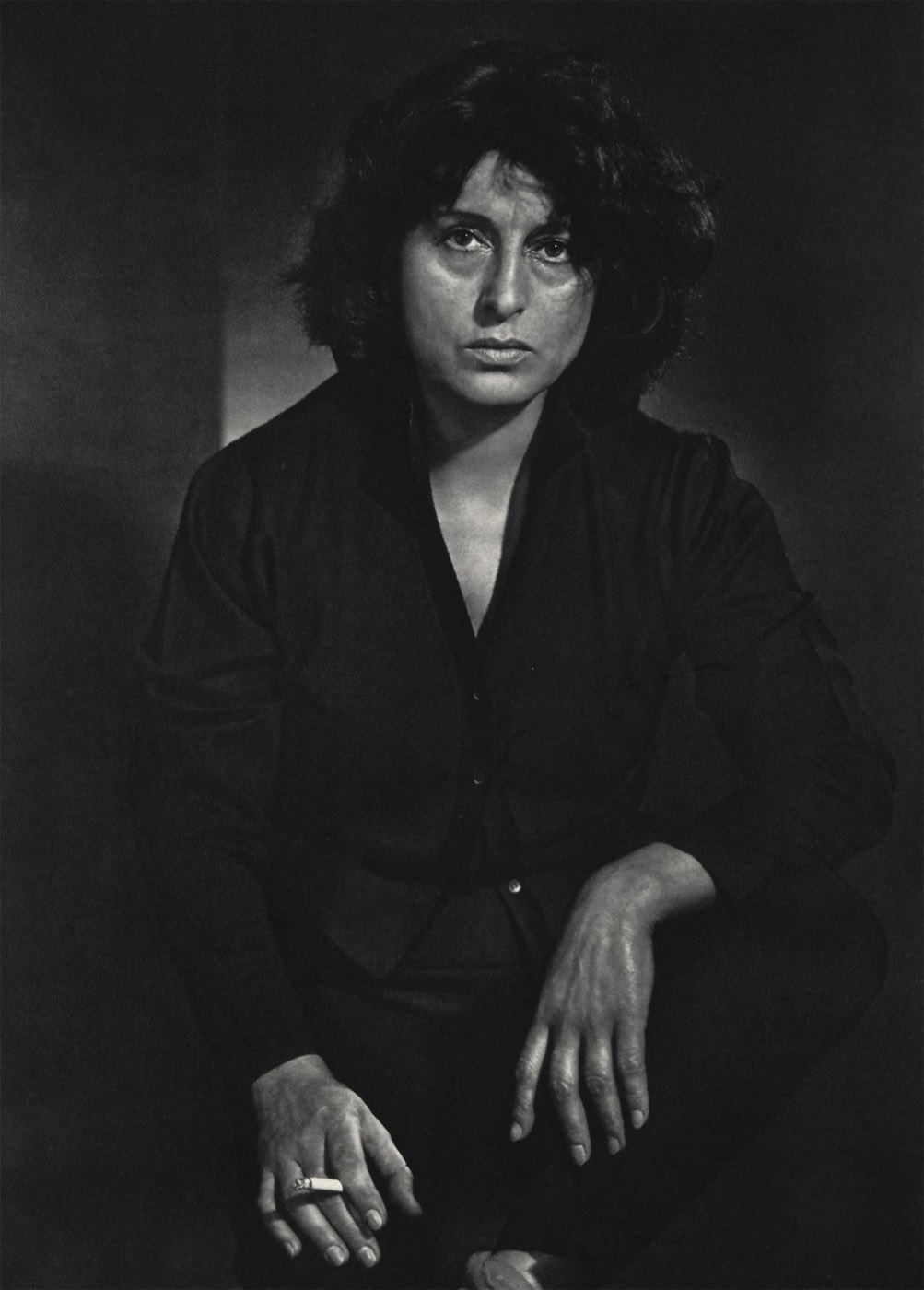
Yousuf Karsh (Armenian-Canadian born Mardin, Ottoman Empire (now Turkey), 1908-2002)
Anna Magnani
1959
Sheet: 20 x 15 15/16″ (50.8 x 40.5cm)
The Museum of Modern Art Film Stills Collection
Anna Maria Magnani (Italian, 1908-1973)
Anna Maria Magnani (Italian; 7 March 1908 – 26 September 1973) was an Italian actress. She was the first Italian woman to win an Academy Award.
Born and raised in Rome, Italy or Alexandria, she worked her way through Rome’s Academy of Dramatic Art by singing at night clubs. During her career, her only child was stricken by polio when he was 18 months old and remained disabled. She was referred to as “La Lupa”, the “perennial toast of Rome” and a “living she-wolf symbol” of the cinema. Time described her personality as “fiery”, and drama critic Harold Clurman said her acting was “volcanic”. In the realm of Italian cinema, she was “passionate, fearless, and exciting”, an actress whom film historian Barry Monush calls “the volcanic earth mother of all Italian cinema.” Director Roberto Rossellini called her “the greatest acting genius since Eleonora Duse”. Playwright Tennessee Williams became an admirer of her acting and wrote The Rose Tattoo (1955) specifically for her to star in, a role for which she received an Academy Award for Best Actress.
After meeting director Goffredo Alessandrini, she received her first screen role in The Blind Woman of Sorrento (La cieca di Sorrento, 1934) and later achieved international attention in Rossellini’s Rome, Open City (1945), which is seen as launching the Italian neorealism movement in cinema. As an actress, she became recognised for her dynamic and forceful portrayals of “earthy lower-class women” in such films as L’Amore (1948), Bellissima (1951), The Rose Tattoo (1955), The Fugitive Kind (1960) and Mamma Roma (1962). As early as 1950, Life had already stated that Magnani was “one of the most impressive actresses since Garbo”.
Text from the Wikipedia website
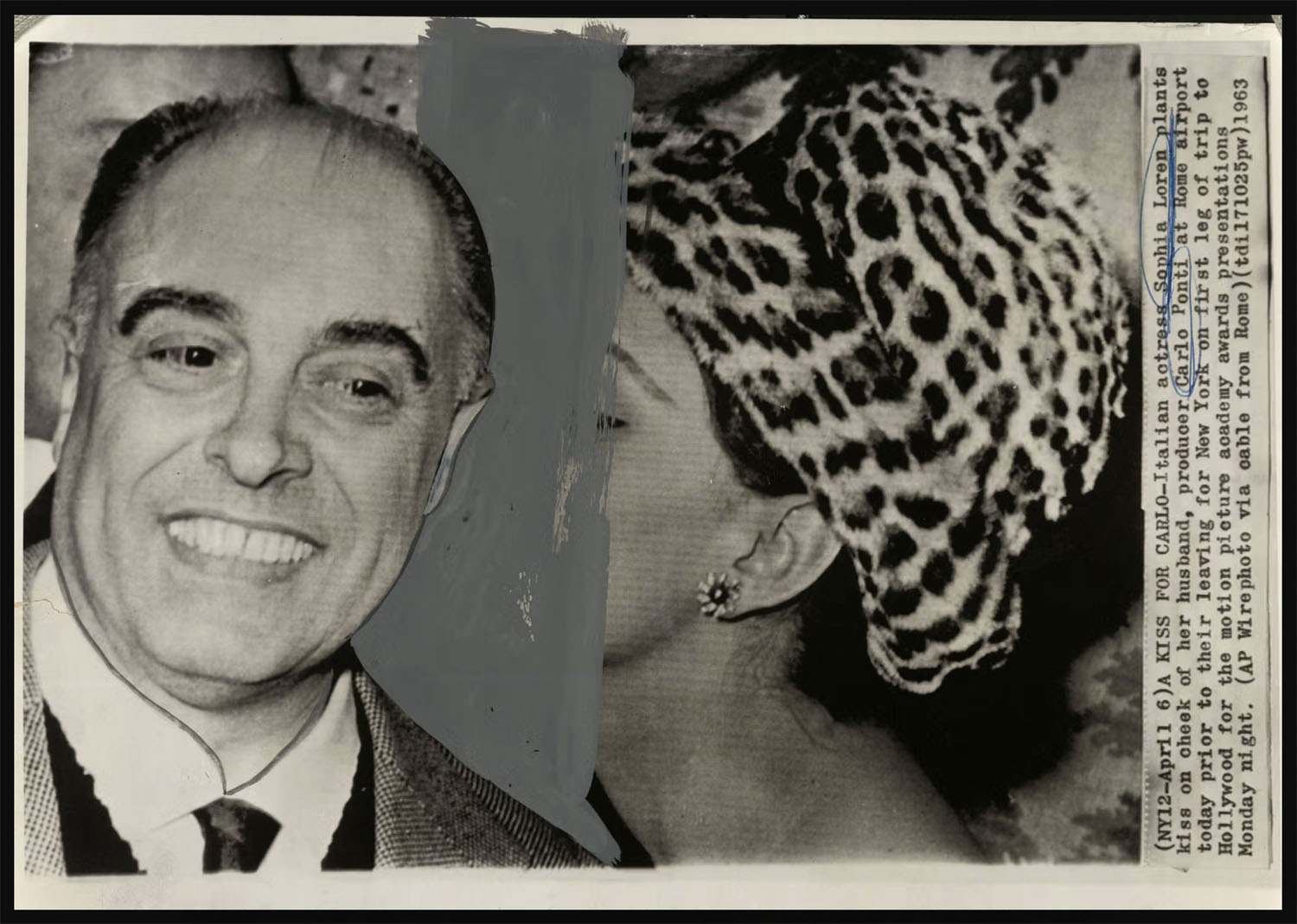
Unknown photographer
Carlo Ponti and Sophia Loren
c. 1963
Sheet: 8 x 10″ (20.3 x 25.4cm)
The Museum of Modern Art Film Stills Collection
![Ray Wilson. 'Mia Farrow [in "Rosemary's Baby"]' c. 1967](https://artblart.com/wp-content/uploads/2026/05/ray-wilson-mia-farrow.jpg "Ray Wilson. 'Mia Farrow [in \"Rosemary's Baby\"]' c. 1967")
Ray Wilson
Mia Farrow [in “Rosemary’s Baby”]
c. 1967
Sheet: 12 x 8 3/16″ (30.5 x 20.8cm)
The Museum of Modern Art Film Stills Collection
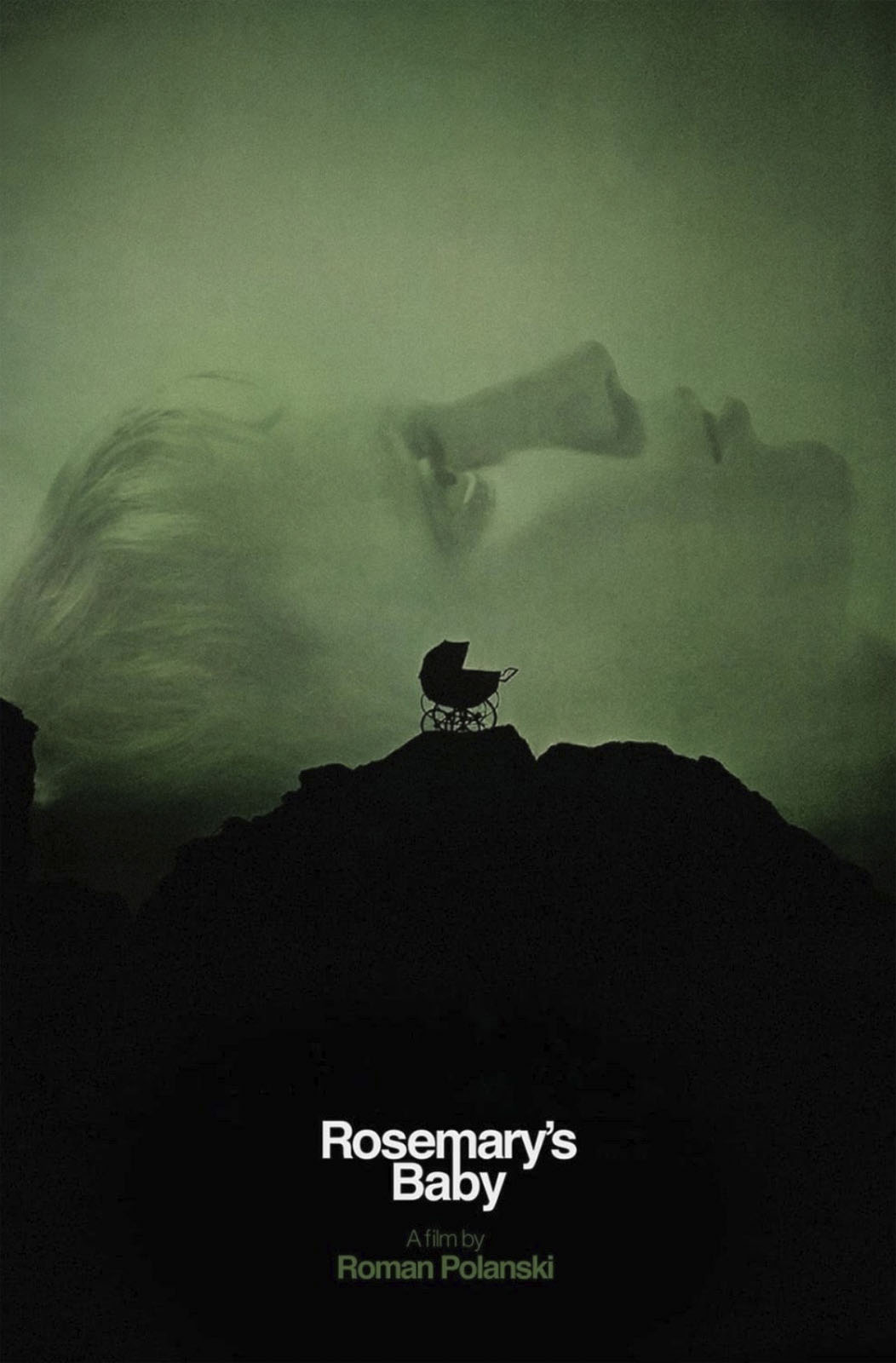
Rosemary’s Baby (1968) movie poster
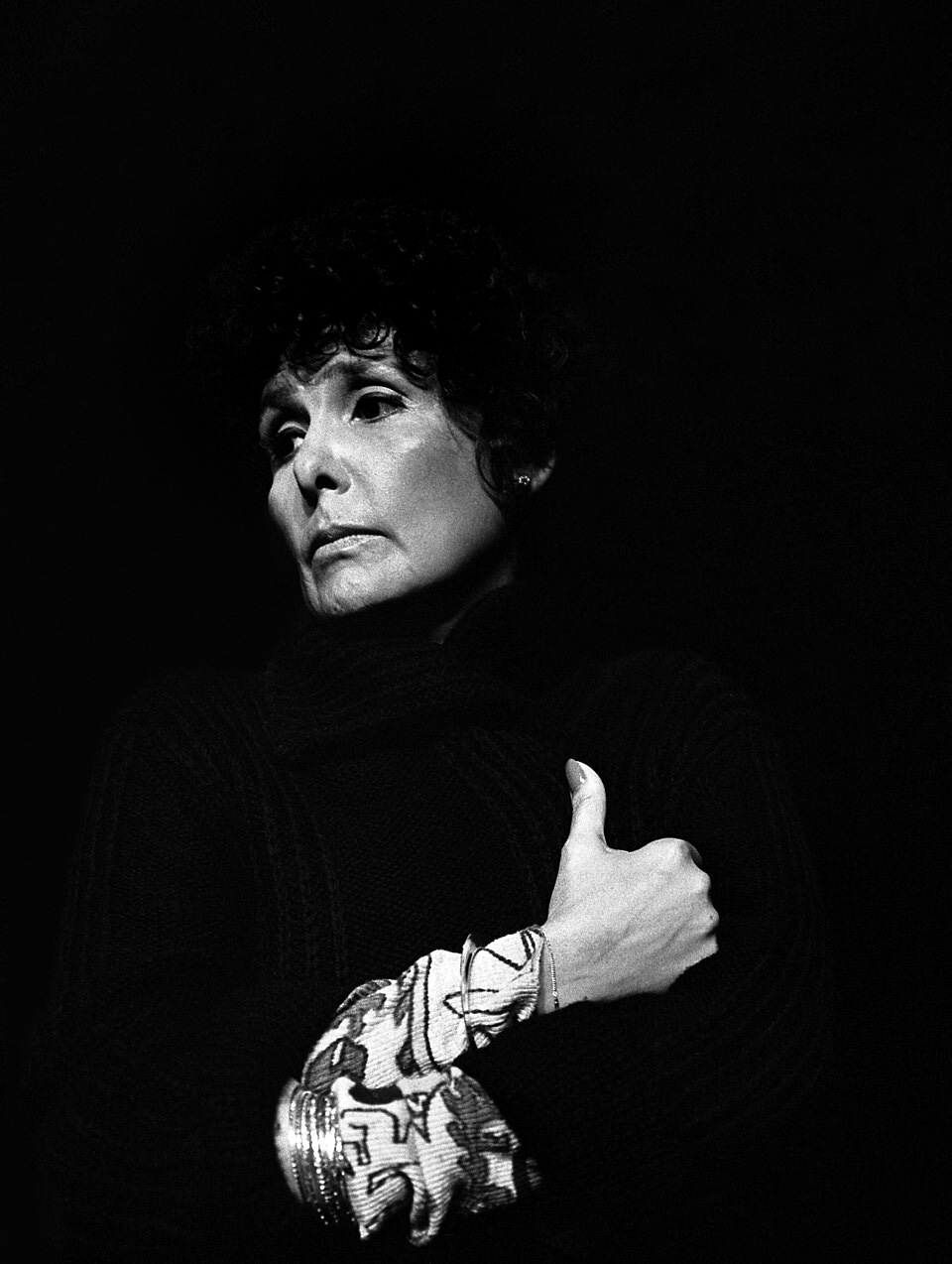
Kathleen Ballard
Lena Horne
1975
Sheet: 13 1/16 x 9″ (33.2 x 22.9cm)
The Museum of Modern Art Film Stills Collection
The Museum of Modern Art
11 West 53 Street
New York, NY 10019
Phone: (212) 708-9400
Opening hours:
10.30am – 5.30pm
Open seven days a week
 Art Blart _ art and cultural memory archive
You must be logged in to post a comment.