Curator: Alexander Moore, Creative Producer, Dulwich Picture Gallery
Artists: Berenice Abbott, Robert Adams, Diane Arbus, Richard Avedon, Ilse Bing, Margaret Bourke‑White, Ted Croner, Imogen Cunningham, Bruce Davidson, Roy DeCarava, William Eggleston, Morris Engel, Walker Evans, Louis Faurer, Lee Friedlander, John Gutmann, Lewis Hine, Peter Hujar, André Kertész, William Klein, Dorothea Lange, Saul Leiter, Arthur Leipzig, Rebecca Lepkoff, Helen Levitt, Mary Ellen Mark, Elaine Mayes, Lisette Model, Nicholas Nixon, Ruth Orkin, Ed Ruscha, Aaron Siskind, Herbert Snitzer, Edward Steichen, Alfred Stieglitz, Weegee, Edward Weston and Garry Winogrand
Some well-known favourites sprinkled with photographs unknown to me:
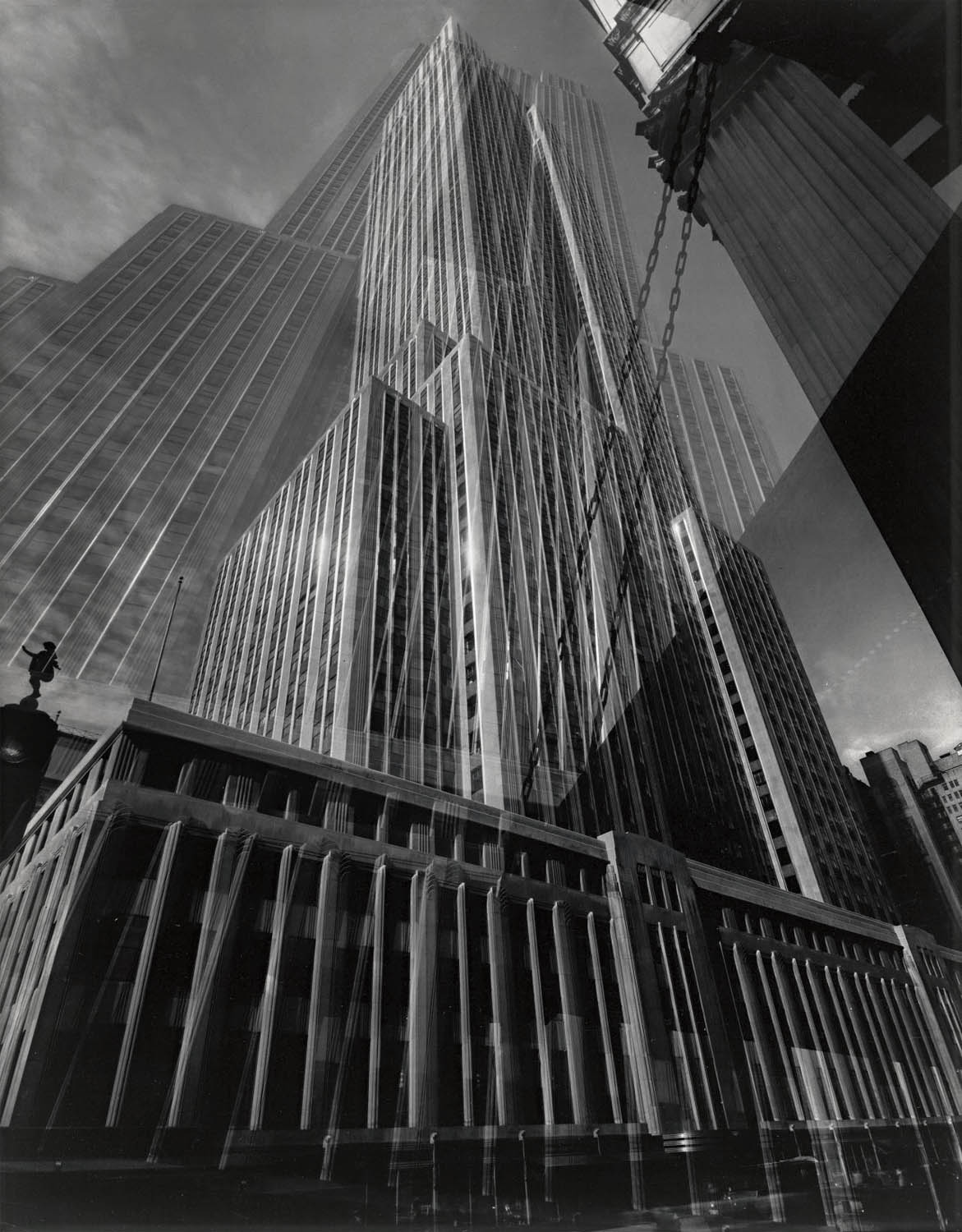
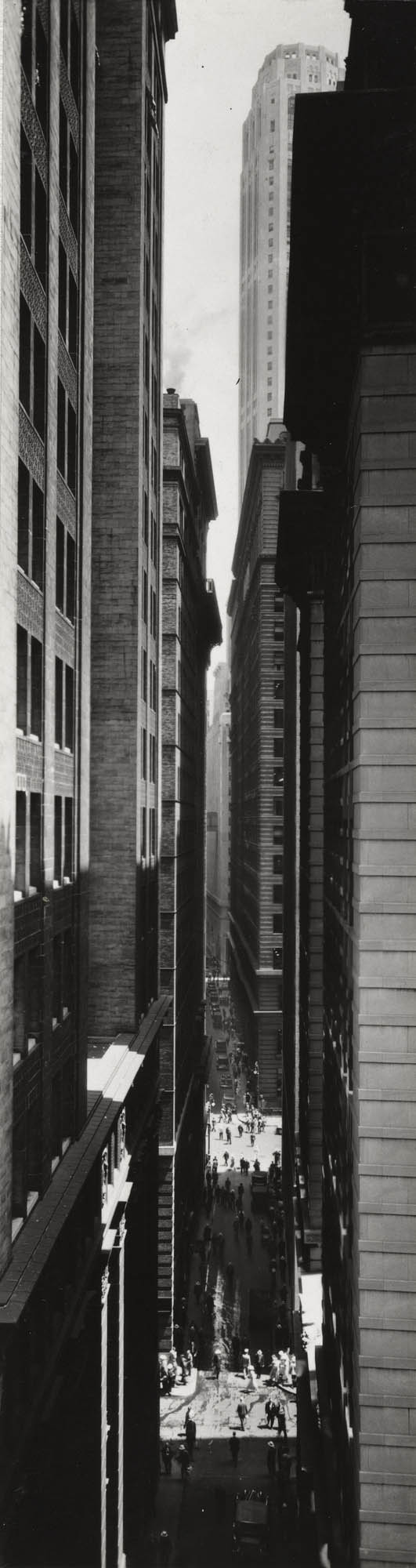
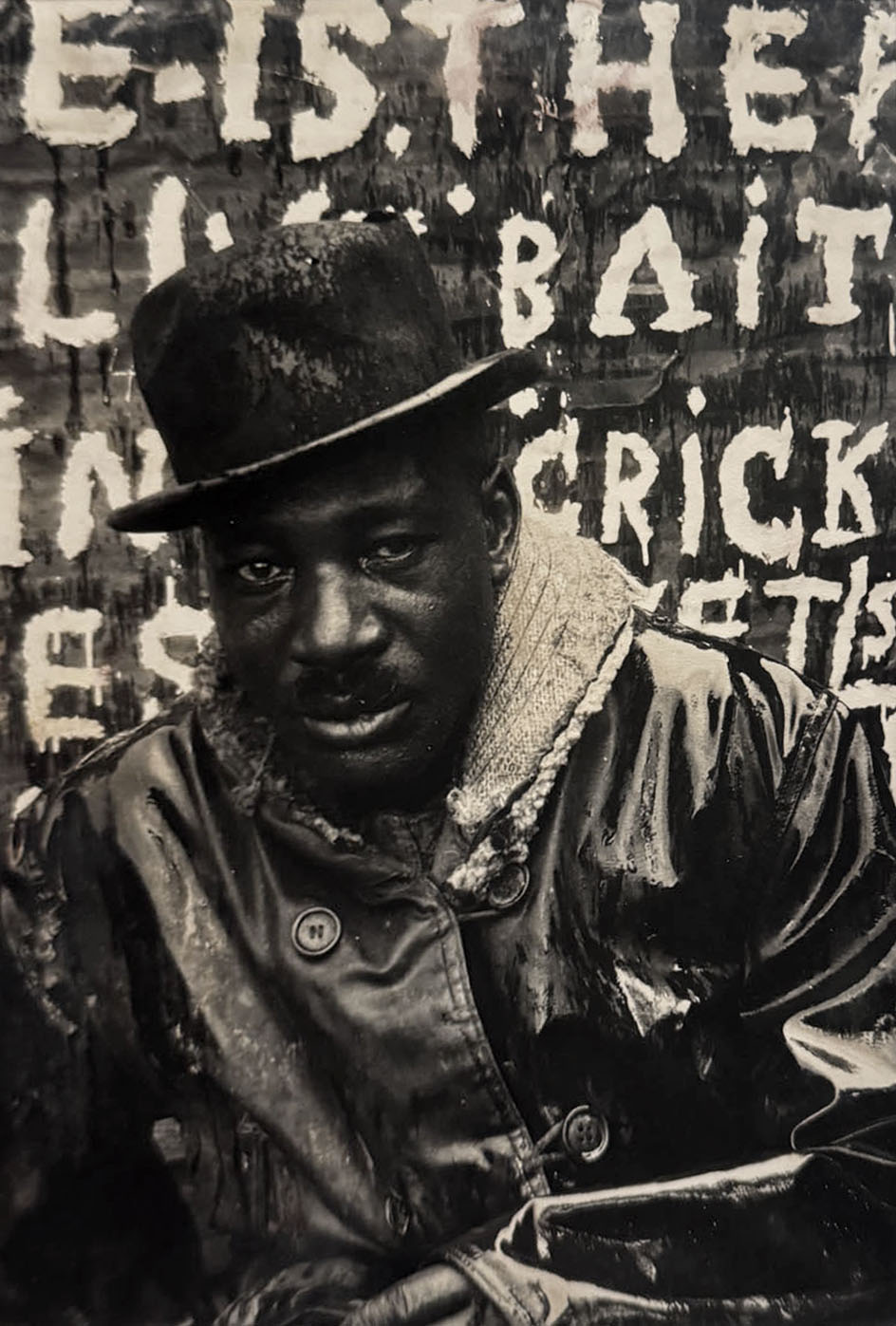
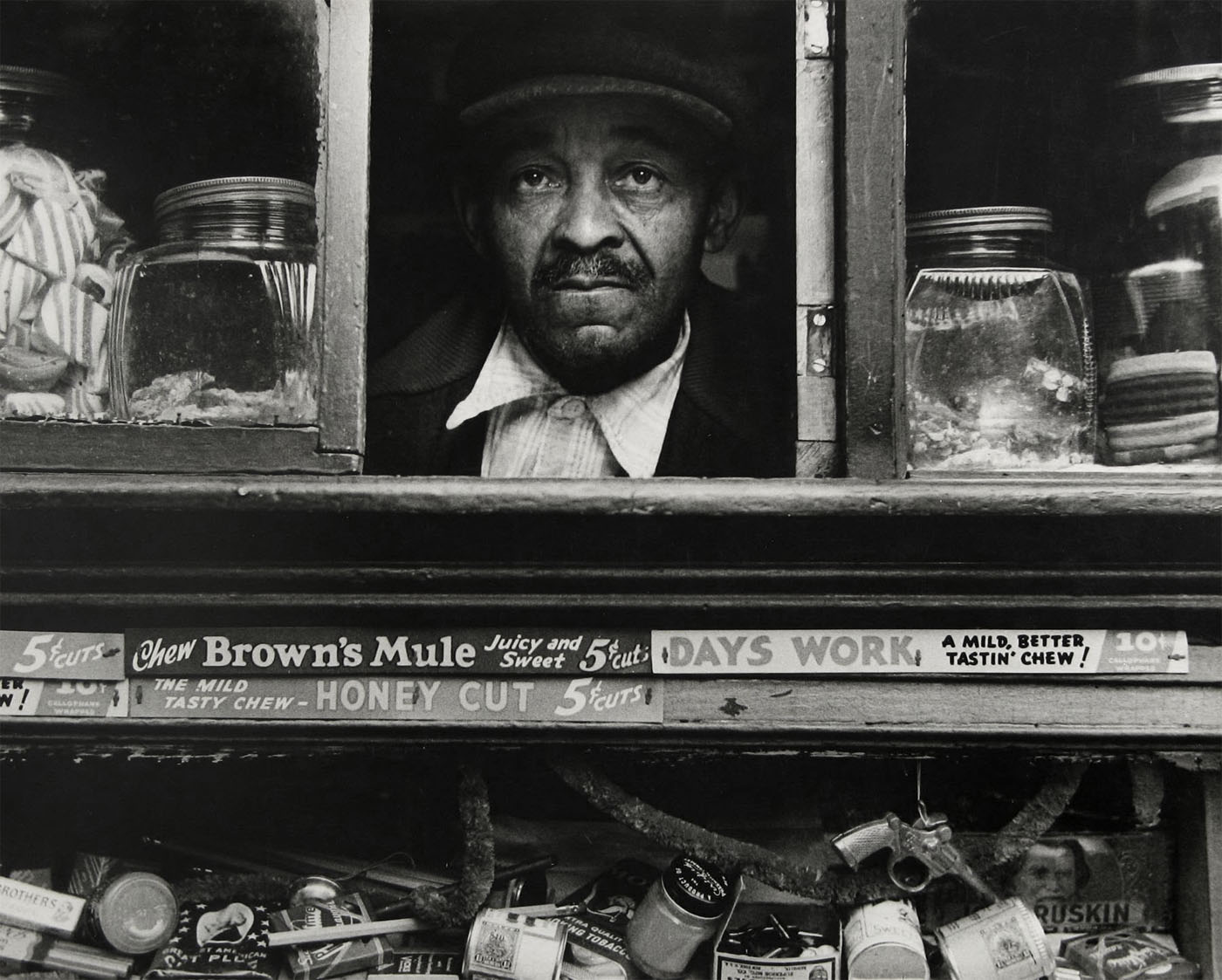
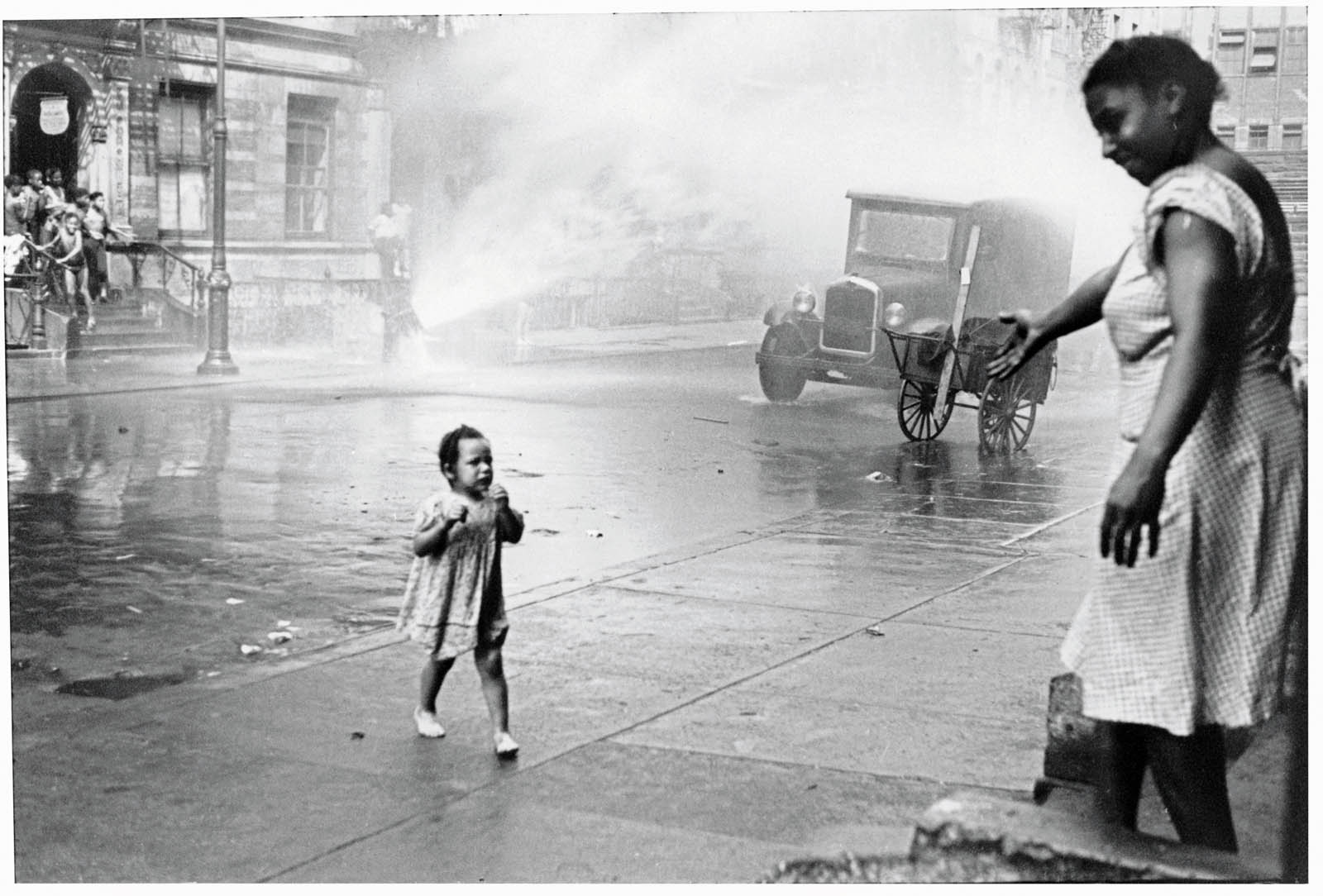
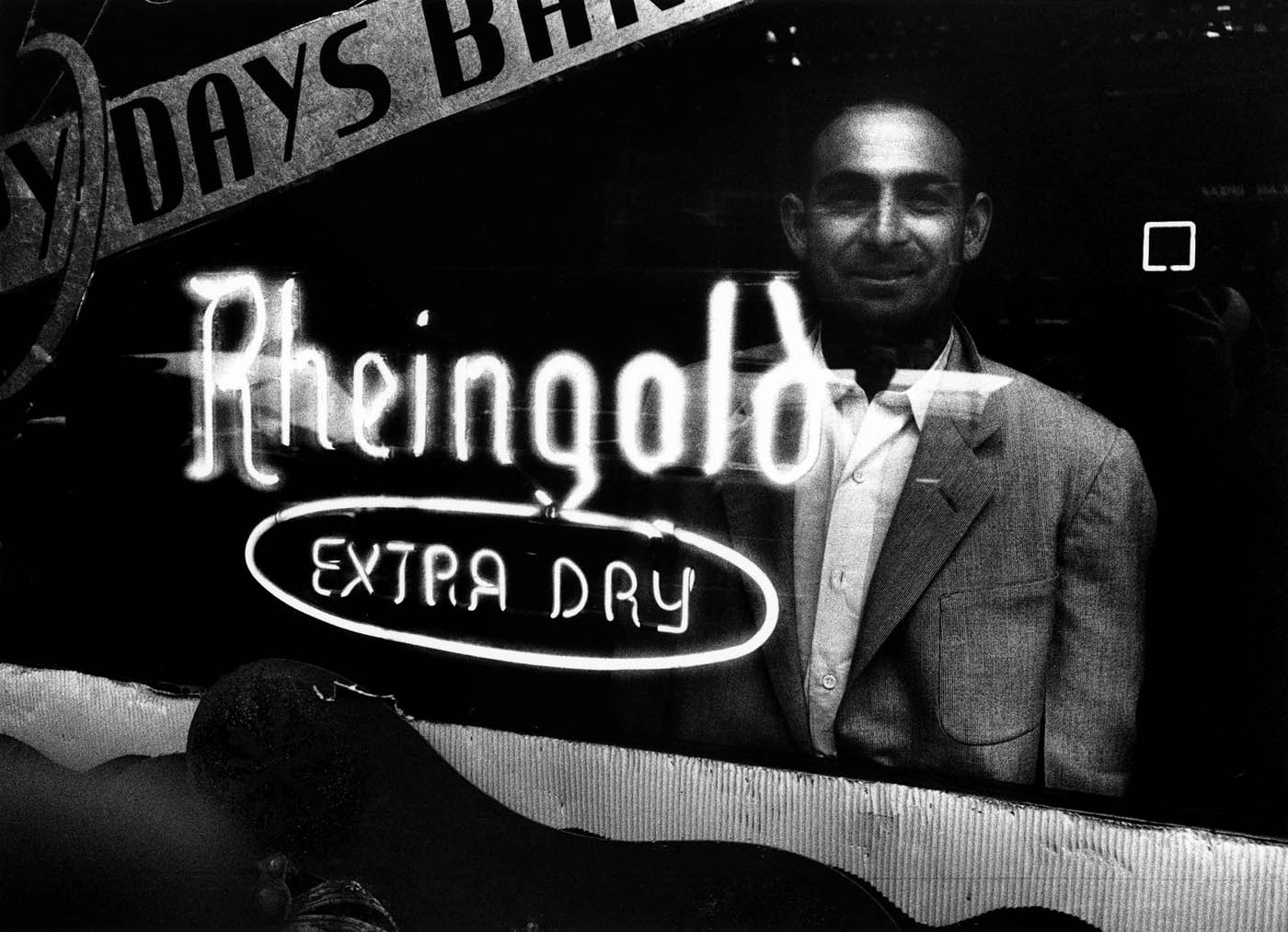
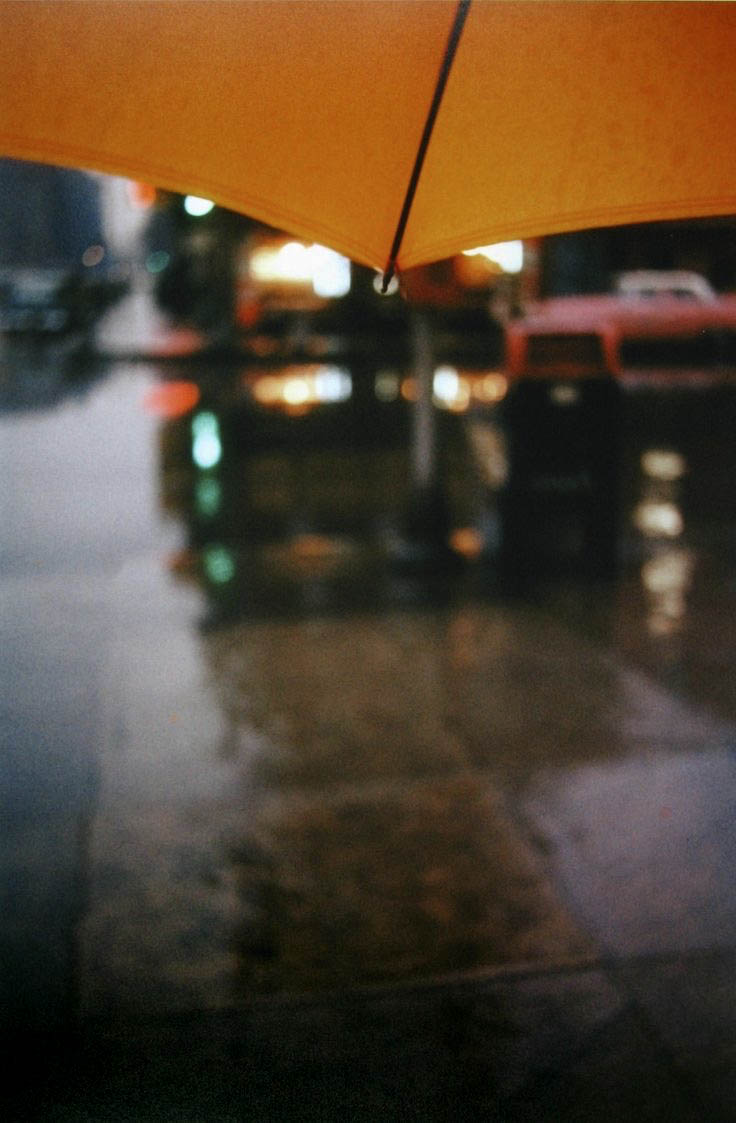
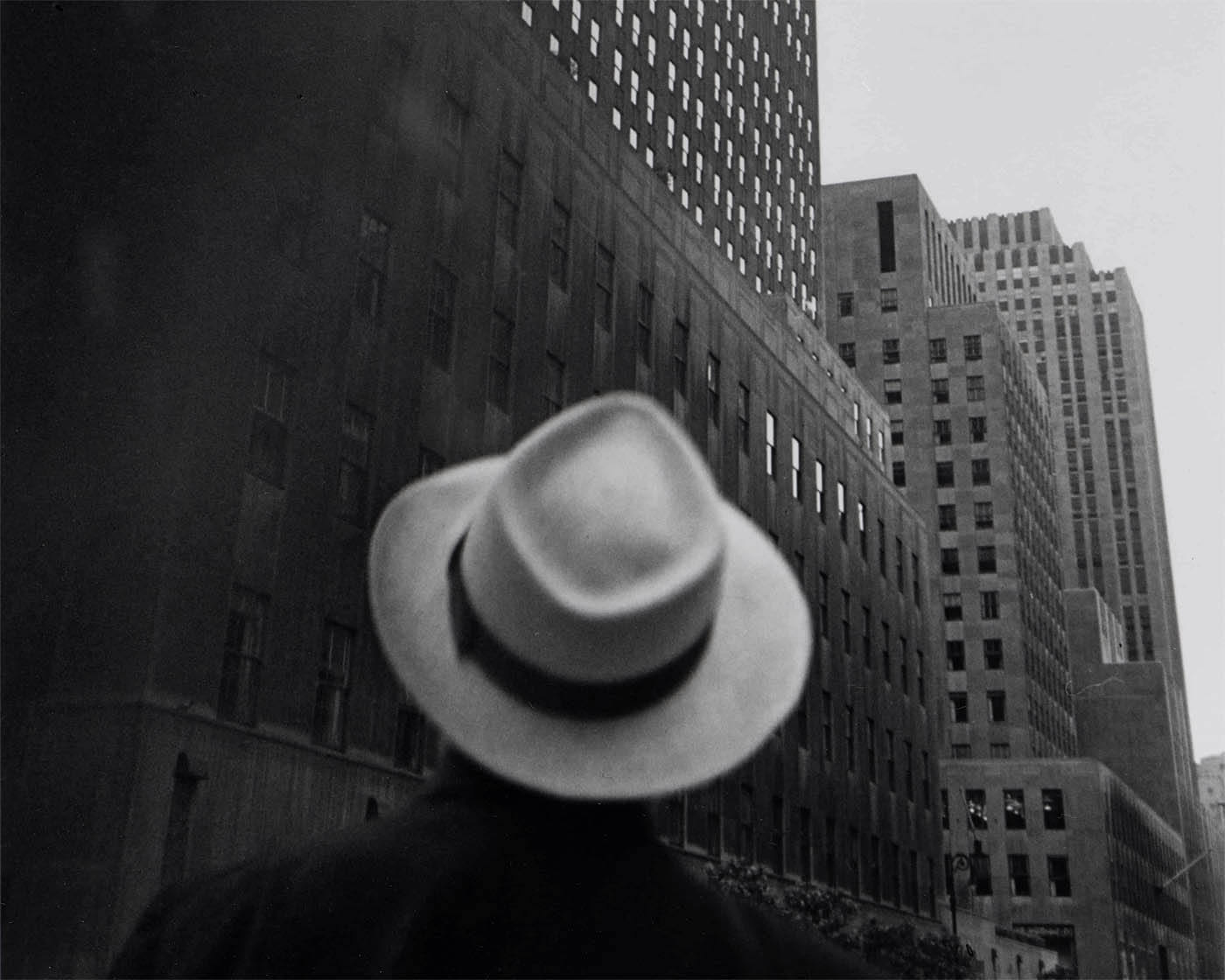
Berenice Abbott’s Exchange Place, New York (1933) Margaret Bourke‑White’s Augusta, Georgia (1936) Morris Engel’s Harlem Merchant, New York (1937) Louis Faurer’s Looking at the RCA Building at Rockefeller Center (1949) Saul Leiter’s Orange Umbrella (c. 1950) William Klein’s Happy Days Bar, 3rd Avenue, New York (1954) Peter Hujar’s Richie (1985)
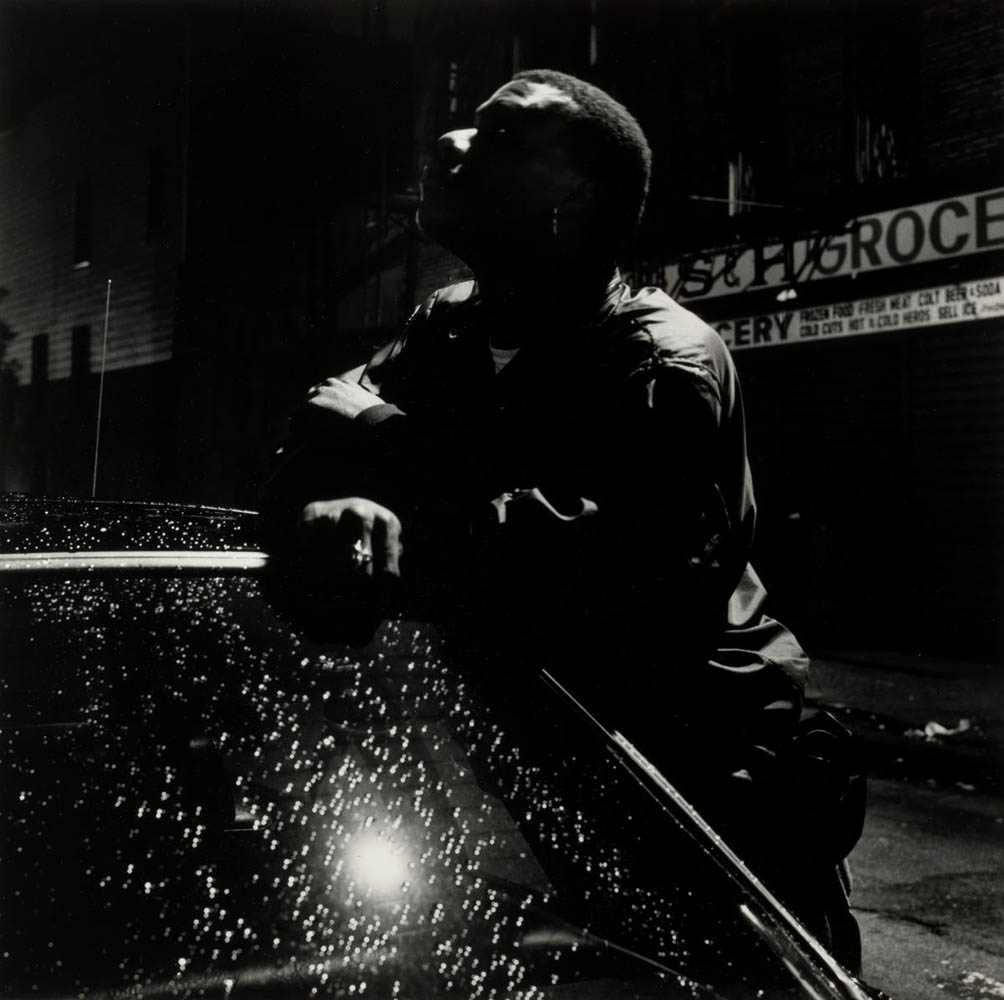
I thought I knew most of Hujar’s photographs but not this one!
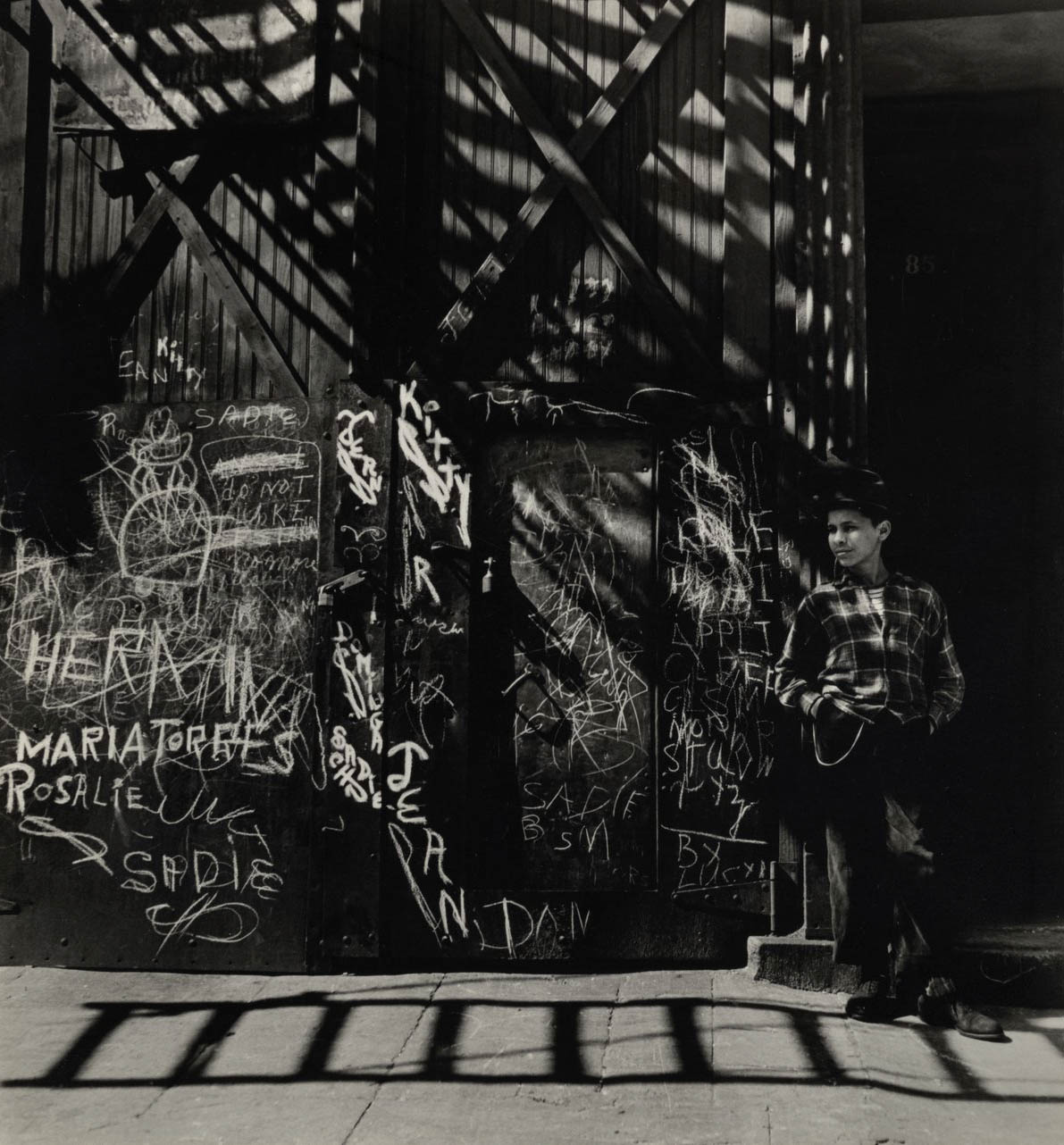
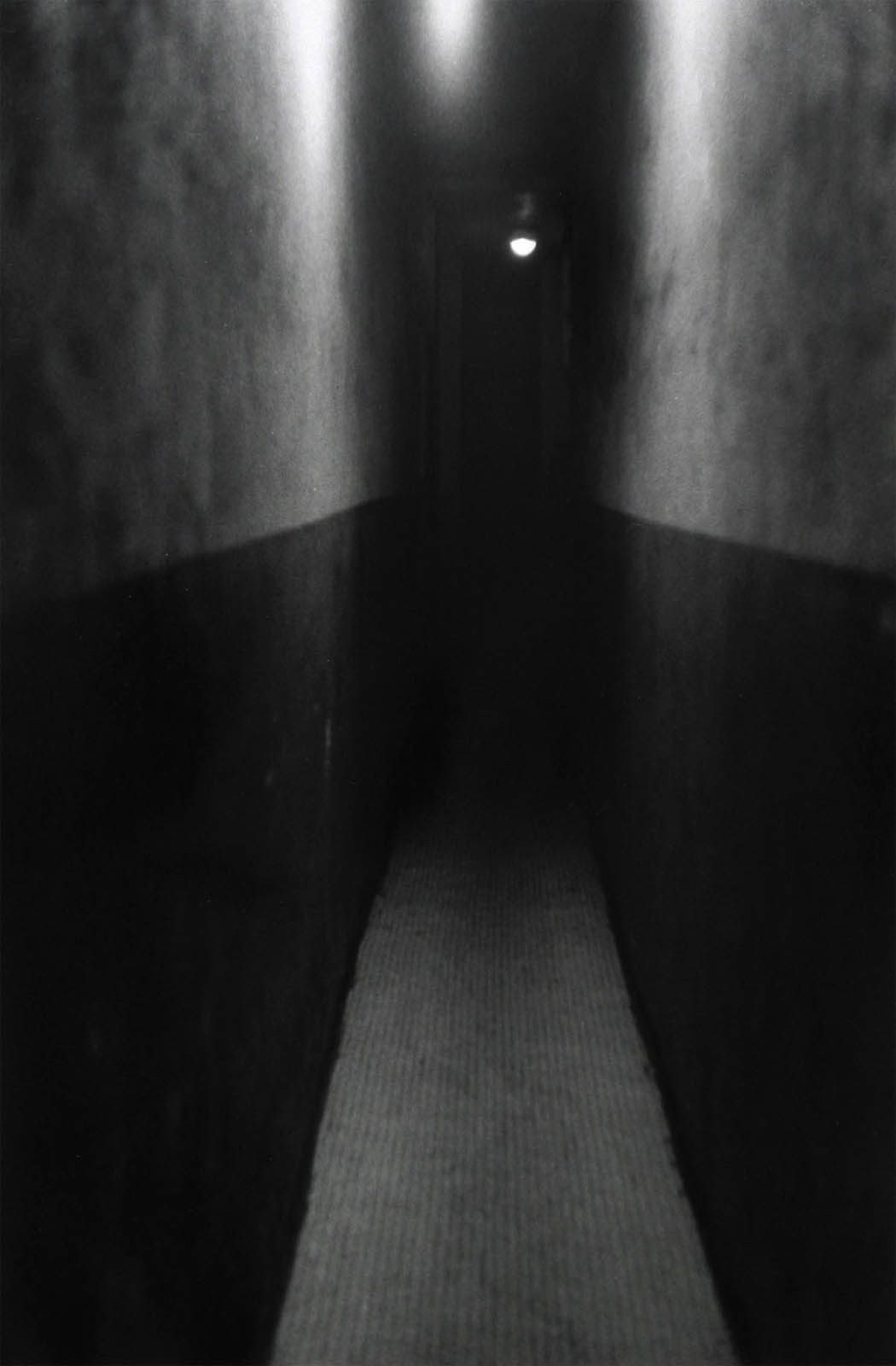
My favourite of the photographs I haven’t seen before is Roy DeCarava’s Hallway (1953), a moody evocation of tenement life in an American city.
So many images so little time!
Dr Marcus Bunyan
Please click on the photographs for a larger version of the image.
“The exhibition as a whole retells the American narrative of the city – almost all of the photographers here are first- or second-generation European immigrants. It also shows how photography became a way for artists to deal with the overwhelming nature of the city, to try to take hold of it, to make it their own – or try, like Garry Winogrand, to disappear into it completely, to come closer to “not existing” as the photographer described his process, a quote emphasised on the exhibition wall. Portrait of a City is about the multiplicity of quiet-but-dazzling instants that happen every day – like Peter Hujar’s Richie, standing to reflect for a second in the rain on a street in New York at night, raindrops glimmering on a car windscreen.”
Step into a century of American city life through photographs that capture the people who built, inhabited, and transformed urban spaces into living, breathing communities.
The exhibition explores one hundred years of American urban life through the people who lived, worked, and moved through its streets. Featuring works by 34 influential photographers from 1907 to 2012, the exhibition traces how photography evolved alongside the modern city, capturing individuals and communities shaped by and shaping their environments.
Photography and the American City
Set in New York, Los Angeles, Chicago, and San Francisco, the photographs reveal cities as dynamic stages for social change. From mass immigration and industrial growth to moments of counterculture and protest, photographers used urban spaces to examine identity, labour, and belonging. Adapting the traditions of portraiture, they recorded faces and lives that reflect the inner story of a nation in flux.
Artists and Highlights
Highlights include works by Alfred Stieglitz, Helen Levitt, Dorothea Lange, Lewis Hine, Berenice Abbott, Walker Evans, Diane Arbus, Garry Winogrand, and Bruce Davidson. Seen together, these portraits and cityscapes form a collective narrative that is both intimate and expansive, capturing the human experience at the heart of America’s evolving cities.
Partners and Collections
The exhibition is presented in special partnership with The Savings Bank Foundation DNB, drawing from its outstanding collection of twentieth-century American photography, with thanks to our partner, Lillehammer Art Museum.
Text from the Dulwich Picture Gallery website
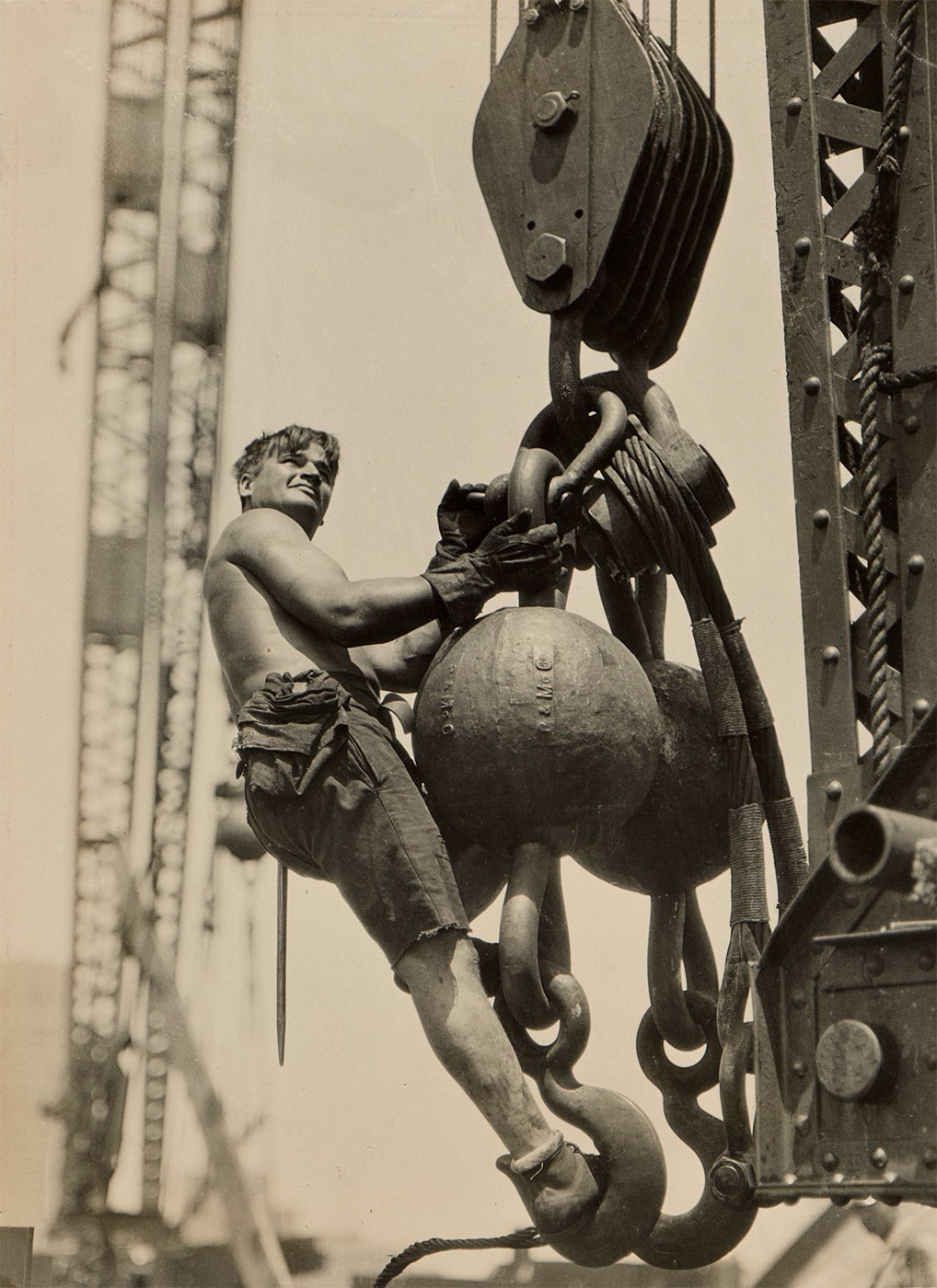
Lewis Hine (American, 1874-1940) Riding the Ball High up on Empire State c. 1930 Courtesy of The Savings Bank Foundation DNB Collection, on deposit at Lillehammer Art Museum
Walker Evans (American, 1903-1975) Main Street, Saratoga Springs, New York 1931 Gelatin silver print
Edward Steichen (American, 1879-1973) The Maypole (Empire State Building) 1932 Gelatin silver print
Berenice Abbott (American, 1898-1991) Exchange Place, New York 1933 Gelatin silver print
Dorothea Lange (American, 1895-1965) White Angel Breadline, San Francisco, California 1933 Gelatin silver print
Dulwich Picture Gallery announces Portrait of a City: A Century of American Photography
In summer 2026, Dulwich Picture Gallery will present a major new exhibition Portrait of a City: A Century of American Photography, bringing together more than 100 landmark works by some of the most influential photographers of the 20th century. The exhibition will chart the dramatic evolution of American city life from the early 1900s to the close of the 20th century. Featuring images from New York, Los Angeles, Chicago and San Francisco, the exhibition draws exclusively from the DNB Saving Bank Foundation’s collection in Norway.
Showcasing 38 leading photographers of the modern era, Portrait of a City traces how photography has shaped our collective understanding of the American city.
It demonstrates how rapid urban expansion catalysed the medium’s rise as a tool to document changing conditions, presenting a compelling visual account of a nation in motion.
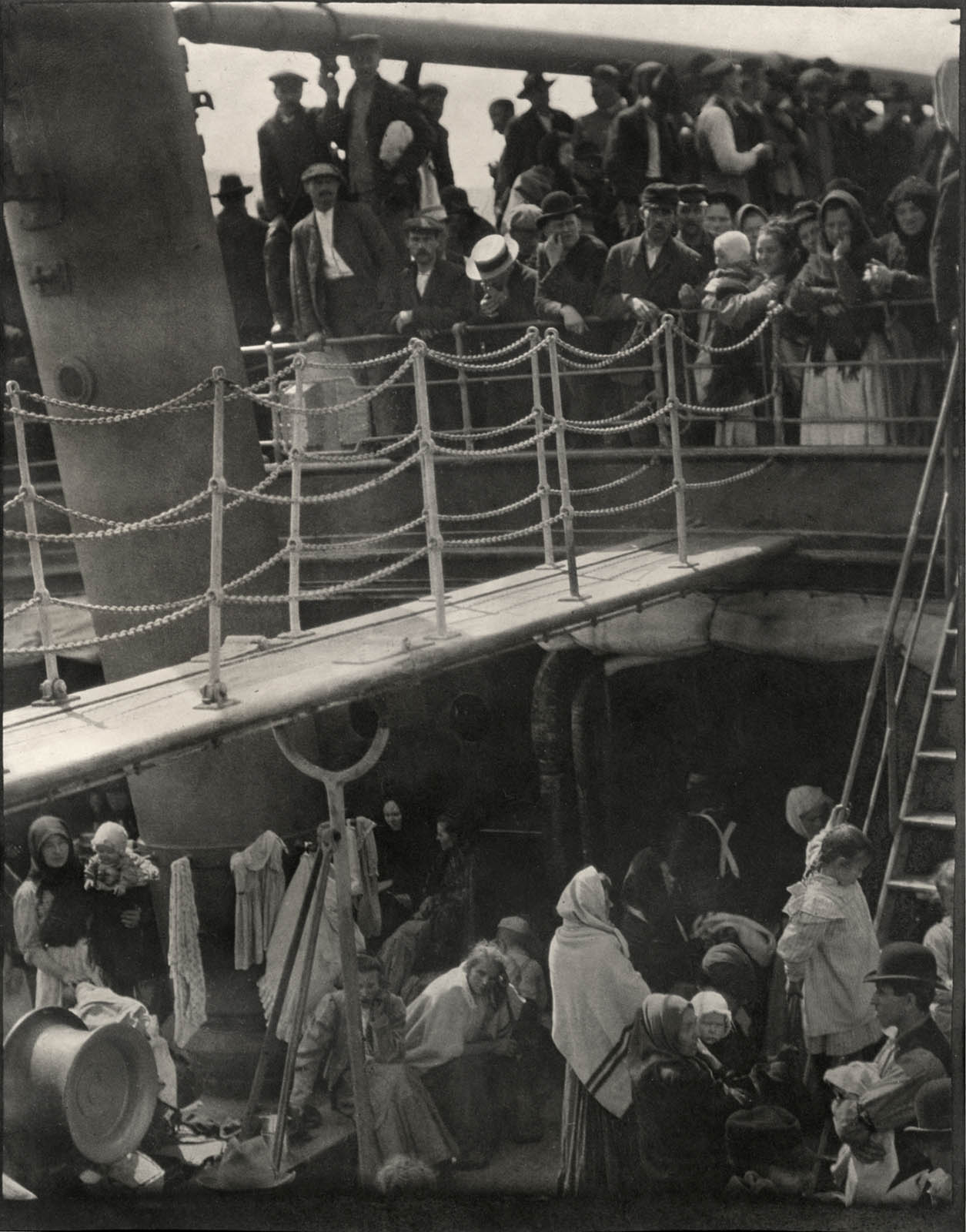
The exhibition opens in the early 1900s, a moment when American cities expanded rapidly through mass immigration, industrial growth and new forms of labour, drawing photographers to sites of social and economic shift. Evolving skylines became symbols of change, captured in works such as Lewis Hine’s Riding the Ball High up on Empire State, 1930. At the same time, photographers like Alfred Stieglitz were redefining the medium’s artistic potential; his seminal image The Steerage, 1907, reveals the realities of labour and class with striking immediacy.
After the Wall Street Crash in 1929, photography took on an urgent social role, recording mass unemployment, poverty and migration. Iconic works, including Dorothea Lange’s White Angel Breadline, San Francisco, 1933 and Margaret Bourke‑White’s Augusta, Georgia, 1936 trace the profound impact of the Great Depression, bringing into sharp focus the harsh realities of the following years for people across the United States.
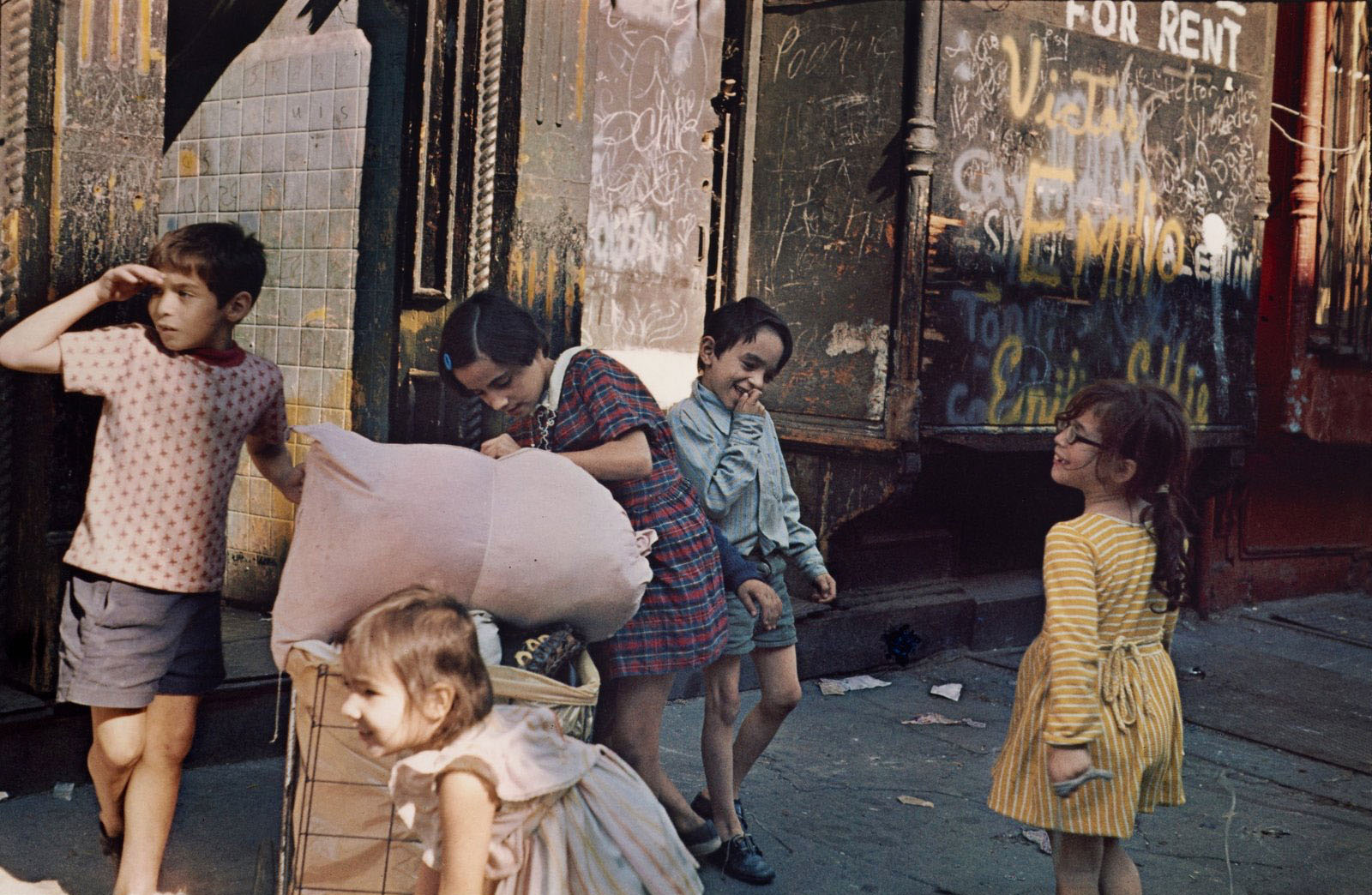
Here, the exhibition changes gear, tracing the rise of photographic modernism through artists such as Walker Evans, whose work helped secure photography’s place within the modern art world. Alongside this, the influence of the New York Photo League is represented through photographers including Weegee, Morris Engel, Ruth Orkin, Aaron Siskind, Rebecca Lepkoff and Lisette Model, whose socially engaged images document the rhythms and pressures of everyday urban life. Also presented are intimate portrayals of marginalised communities in New York, including Helen Levitt and Saul Leiter’s studies of street life and Roy DeCarava’s tender images of Black life in Harlem.
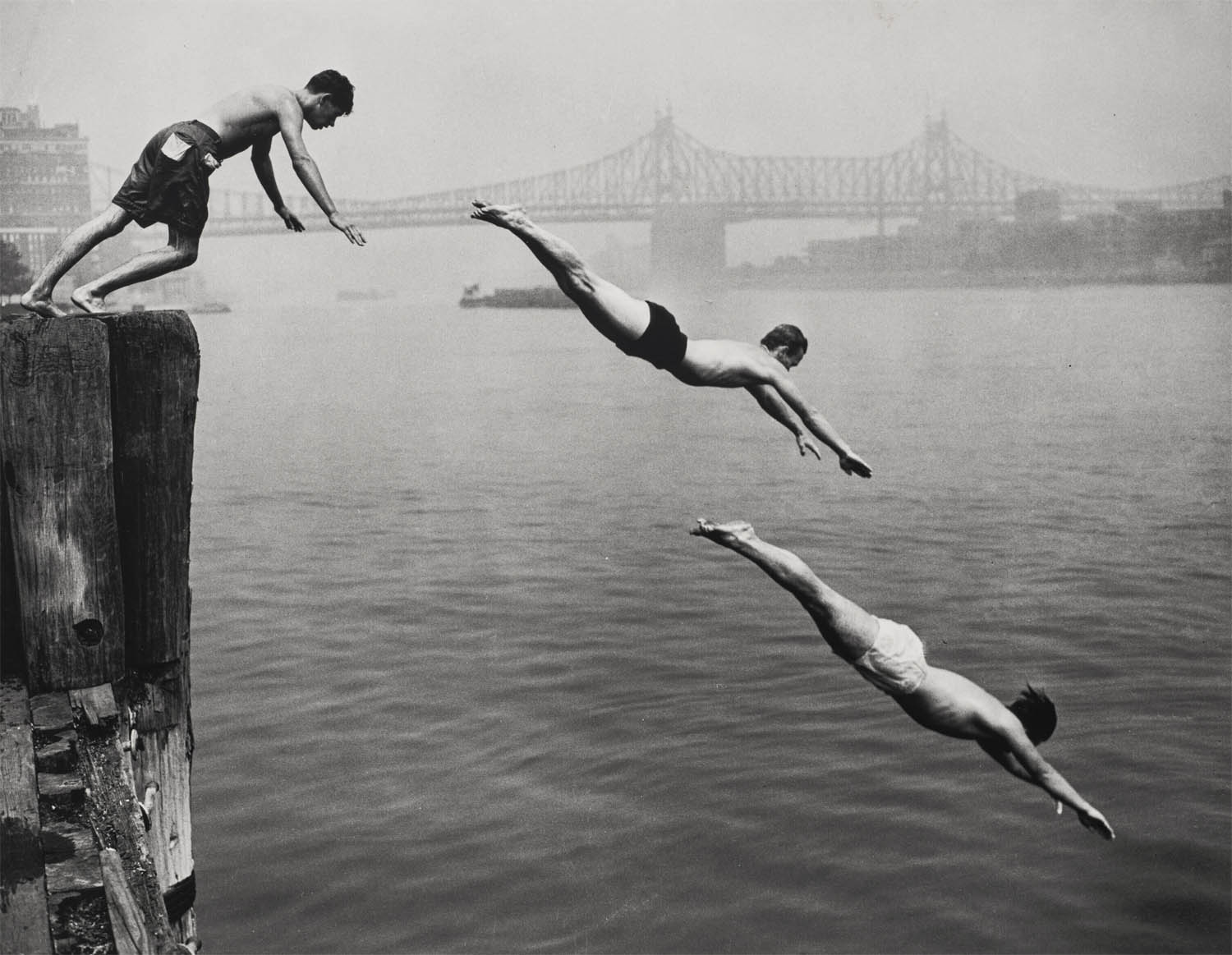
The exhibition then turns to artists documenting the dramatic physical changes reshaping American cities in the mid‑20th century. Works by Berenice Abbott record the evolution of New York’s skyline, setting new architectural forms against the city’s historic fabric, while Arthur Leipzig’s Divers, East River, 1948 captures how peripheral urban spaces became sites of leisure and community.
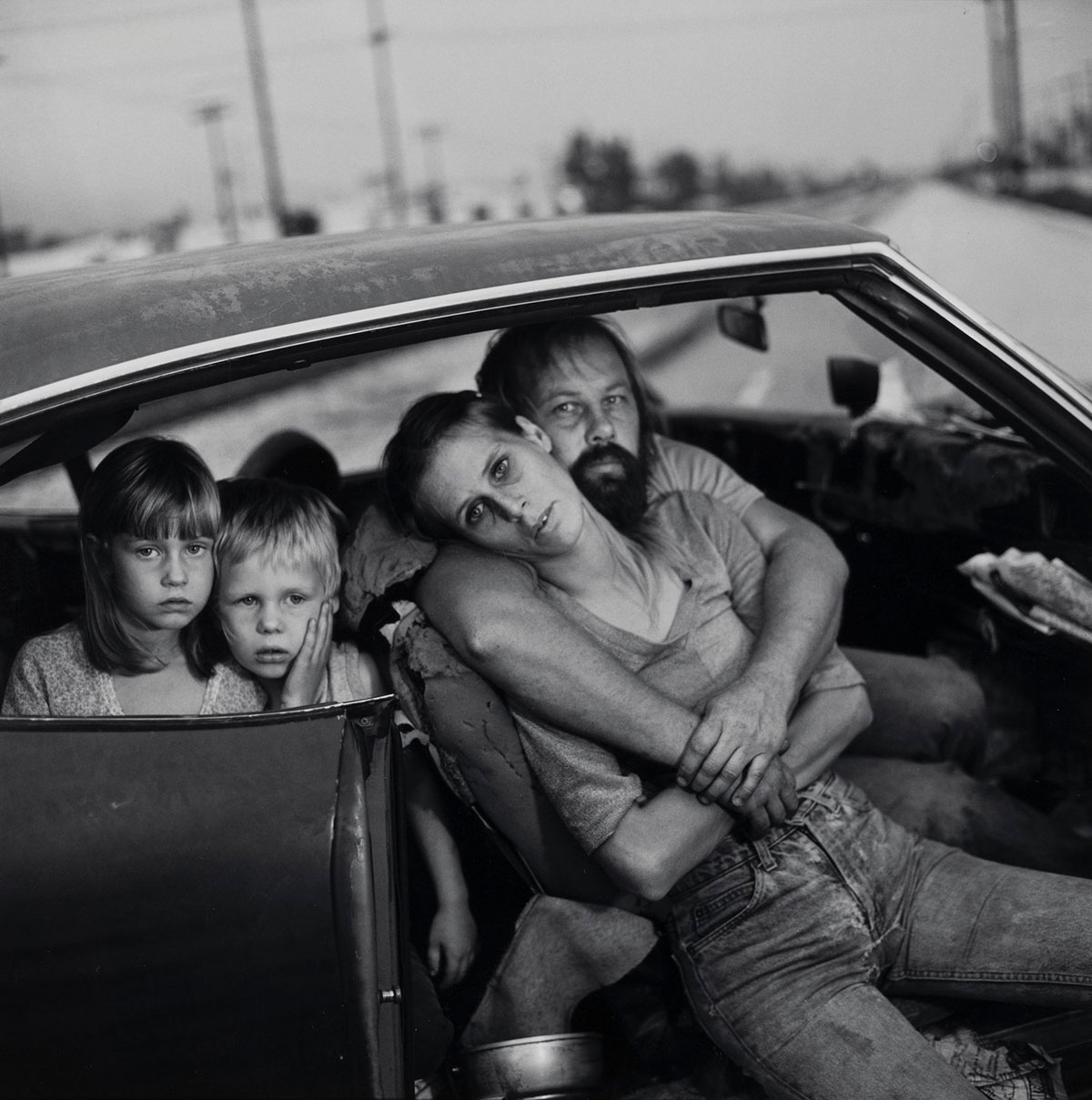
Moving into the 1960s and 1970s, the exhibition explores how photographers responded to a nation undergoing cultural and political transformation. Artists such as Ed Ruscha and Robert Adams examined the structures and systems of the built environment, while Garry Winogrand, Diane Arbus and Lee Friedlander brought new immediacy to street photography. This section also presents powerful depictions of life on the margins, including Mary Ellen Mark’s The Damm Family in Their Car, Los Angeles, 1987, which confronts the realities of homelessness, and Peter Hujar’s Richie, 1985, offering an intimate insight into communities affected by the AIDS crisis.
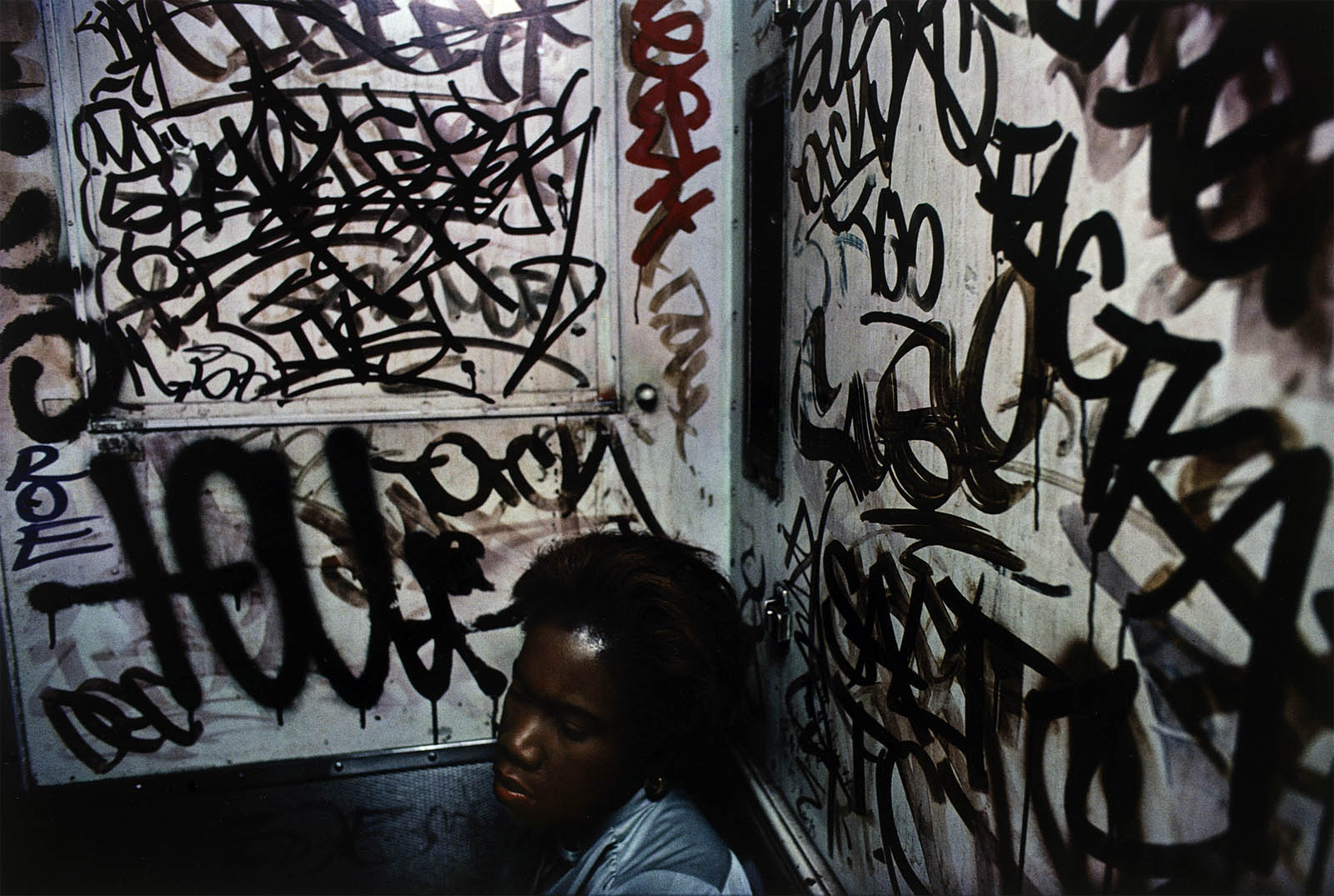
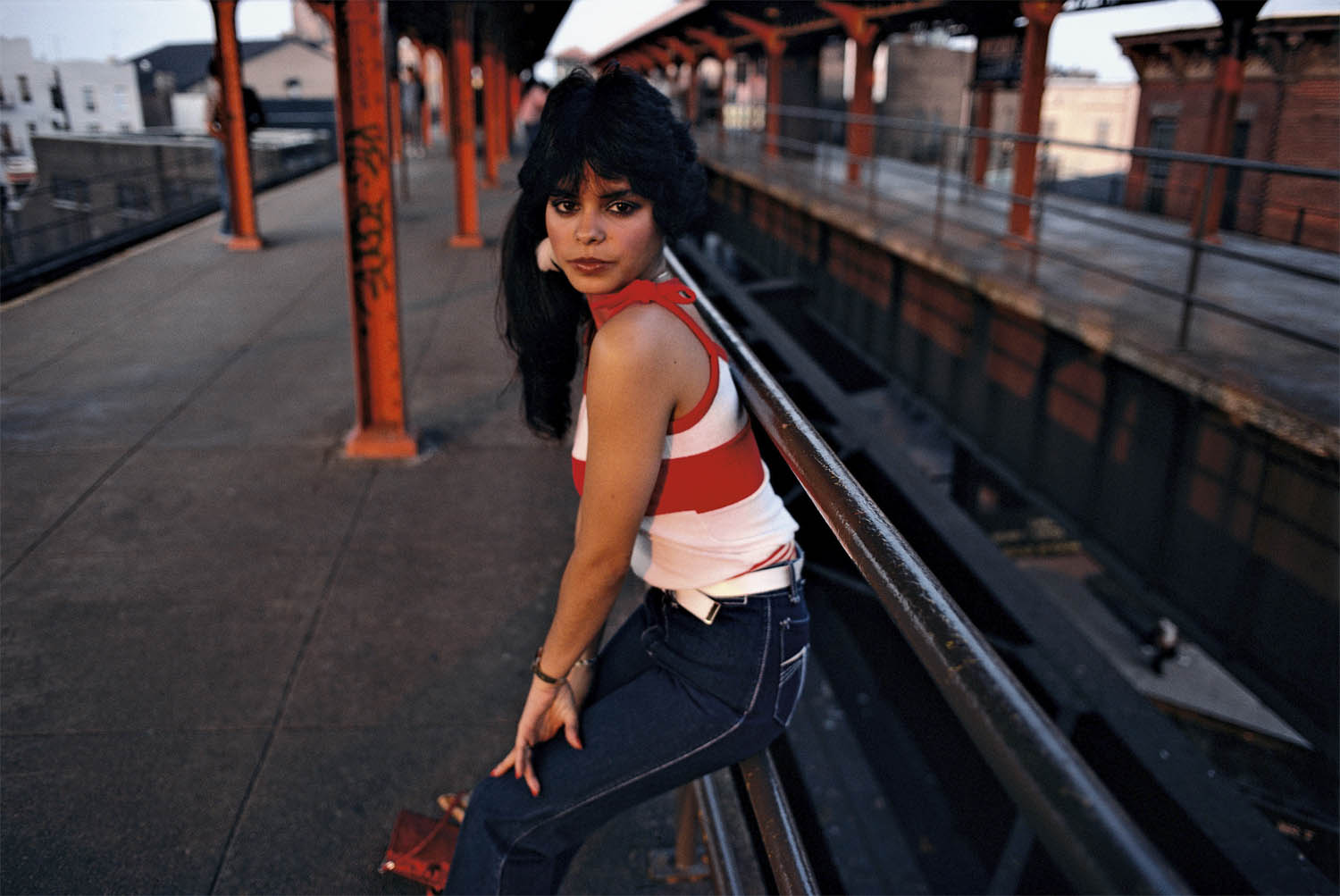
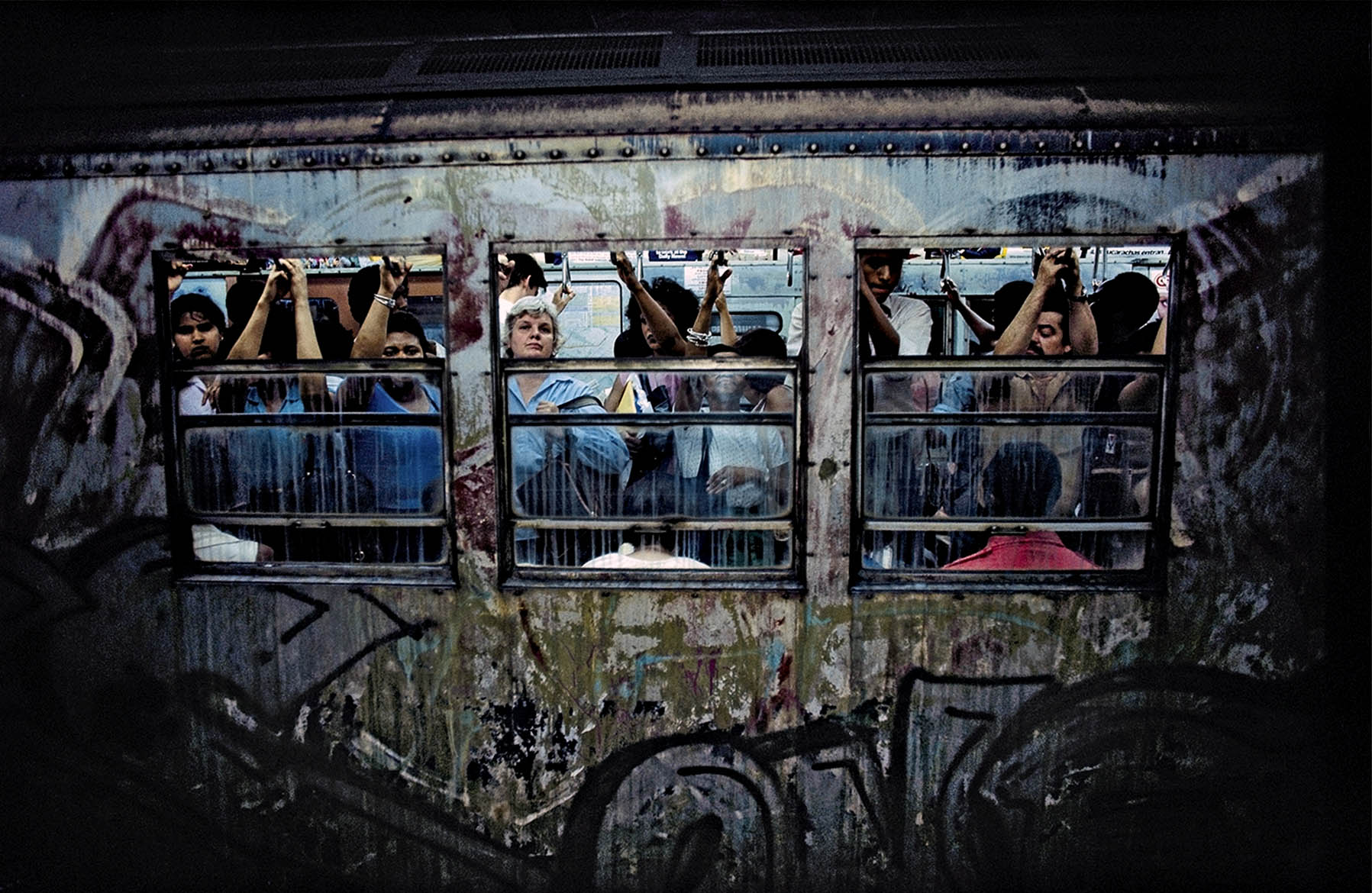
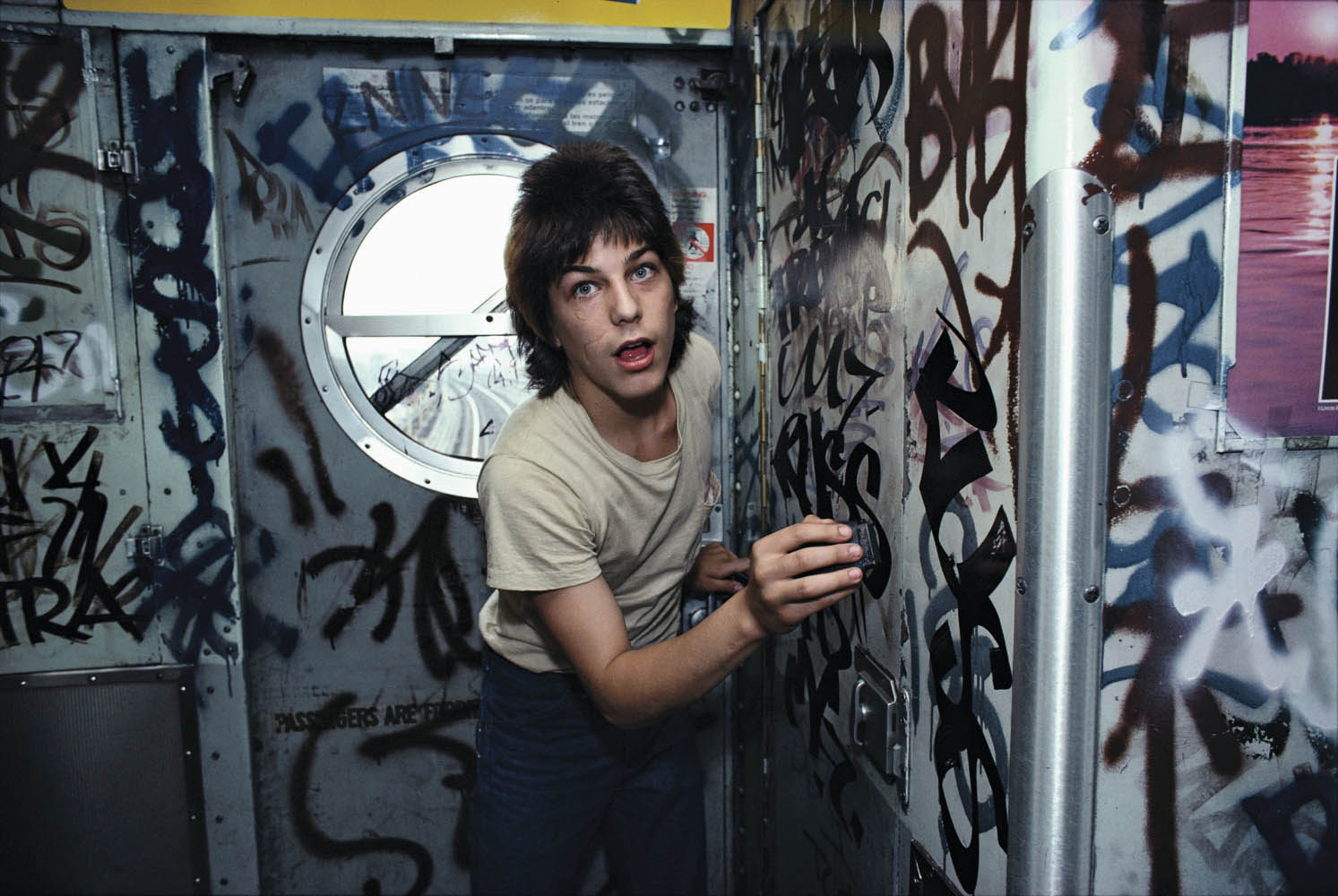
Portrait of a City concludes with a presentation of Bruce Davidson’s renowned Subway series, 1980-85, whose vivid, unflinching photographs capture the diversity, individuality and raw immediacy of New York life, an enduring hallmark of the photographer’s career.
Alexander Moore, Creative Producer, Dulwich Picture Gallery and Curator of the exhibition, said: “American photography offers one of the most vivid and influential records of the modern city, and by bringing this remarkable collection to London, we invite audiences to reflect on how the rhythms, challenges and possibilities of urban life continue to echo through our own – a century of human stories told with extraordinary immediacy and invention.”
Anders Bjørnsen, Manager, Art & Culture, DNB Savings Bank Foundation, said: “These photographs capture the profound social and cultural changes that have shaped the modern American city. We are pleased to share this important collection with new audiences through our collaboration with Dulwich Picture Gallery, and to highlight photography’s unique ability to tell human stories across time and place.”
Jennifer Scott, Director, Dulwich Picture Gallery, said: “The spirit, aspiration, and reality of the 20th Century are captured in these photographs. Meticulously collected over the past ten years by the DNB Savings Bank Foundation, the exhibition is testament to this outstanding Norwegian art collection and creates exciting visual links to the landscape paintings in our Collection.”
Portrait of a City: A Century of American Photography is curated by Alexander Moore, Creative Producer, Dulwich Picture Gallery (Curator of Unearthed: Photography’s Roots, 2021). The exhibition will be accompanied by a full-colour publication written and edited by Alexander Moore and Nils Ohlsen, Director, Lillehammer Art Museum, published by Dulwich Picture Gallery, June 2026.
Press release from the Dulwich Picture Gallery
Arthur Leipzig (American, 1918-2014) Divers, East River 1948 Gelatin silver print Arthur Leipzig/Howard Greenberg Gallery, New York
Louis Faurer (American, 1916-2001) Looking at the RCA Building at Rockefeller Center 1949 Gelatin silver print Louis Faurer/Howard Greenberg Gallery, New York
Roy DeCarava (American, 1919-2009) Hallway 1953 Gelatin silver print
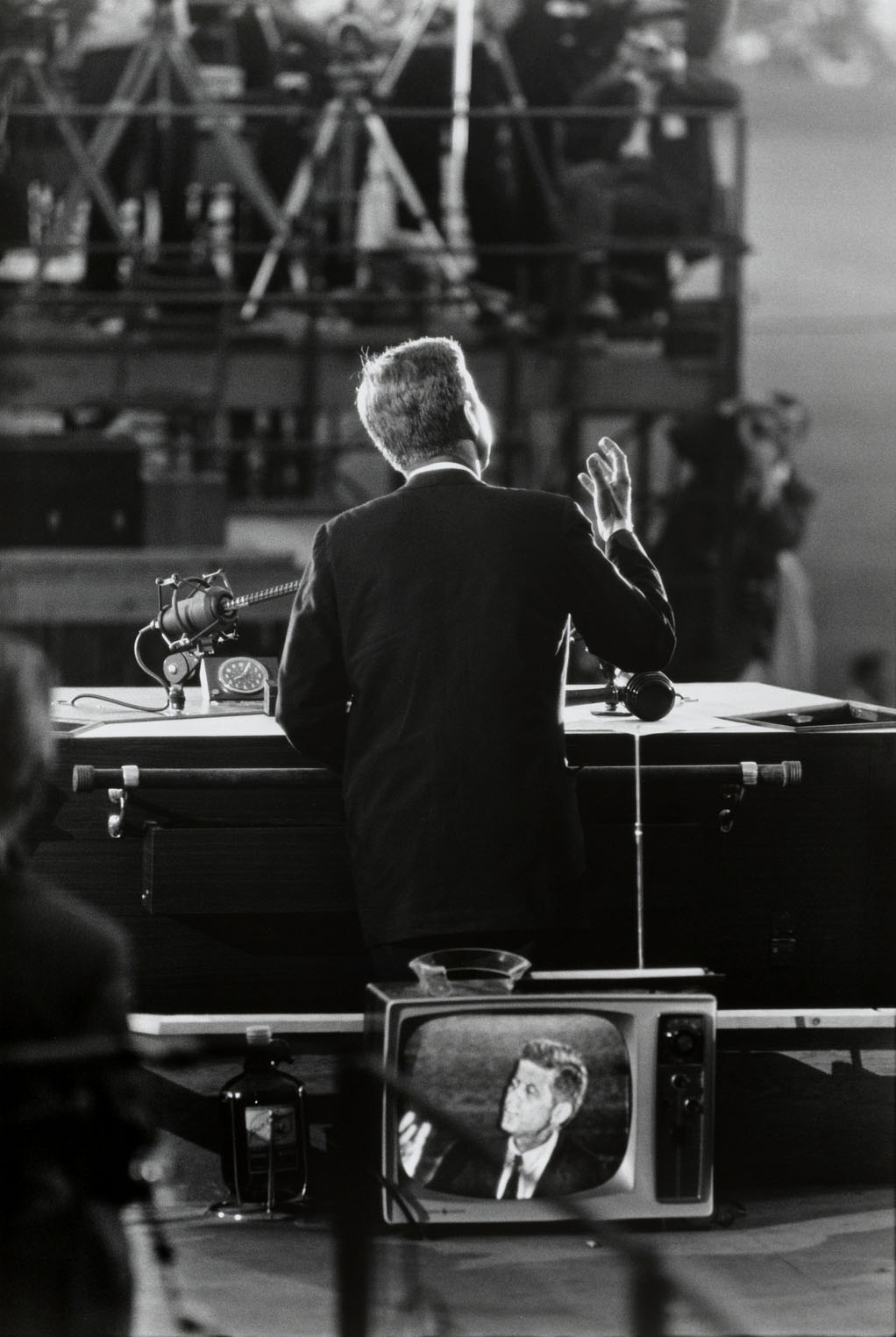
Garry Winogrand (American, 1928-1984) John F. Kennedy, Democratic National Convention, Los Angeles 1960 From the portfolio Big Shots Gelatin silver print
Bruce Davidson (American, b. 1933) Untitled 1980-85 From the Subway series Dye-transfer/chromogenic print
“I wanted to transform the subway from its dark, degrading, and impersonal reality into images that open up our experience again to the color, sensuality, and vitality of the individual souls that ride it each day.”
“It’s a great social equalizer … From the moving train above ground, we see glimpses of the city, and as the train moves into the tunnels, sterile fluorescent light reaches into the stony gloom and we, trapped inside, all hang on together”
“I feel that there was a passion and a purpose to photographing in the subway. We were all in the same boat and I was just expressing the everyday occurrences in the subway at that point in 1980. It’s a different subway, although you still have to watch your back.”
~ Bruce Davidson
Bruce Davidson (American, b. 1933) Untitled 1980-85 From the Subway series Dye-transfer/chromogenic print
Bruce Davidson (American, b. 1933) Untitled 1980-85 From the Subway series Dye-transfer/chromogenic print
Bruce Davidson (American, b. 1933) Untitled 1980-85 From the Subway series Dye-transfer/chromogenic print
You can tell a lot about a person from their self-portrait. In the case of Richard Avedon’s self-portrait (1969, below), we see a man in high key, white shirt positioned off centre against a slightly off-white background, the face possessing an almost innocuous, vapid affectation as though the person being captured by the lens has no presence, no being at all. The same could be said of much of Avedon’s photography. You can also tell a lot about an artist by looking at their early work. In the exhibition there is a photograph of James Baldwin, writer, Harlem, New York 1945, celebrated writer and close friend of the artist, which evidences Avedon’s mature portrait style: the frontal positioning of Afro-American Baldwin against a white background will be repeated by Avedon from the start to the end of his career. This trope, this hook has become the artist’s defining signature.
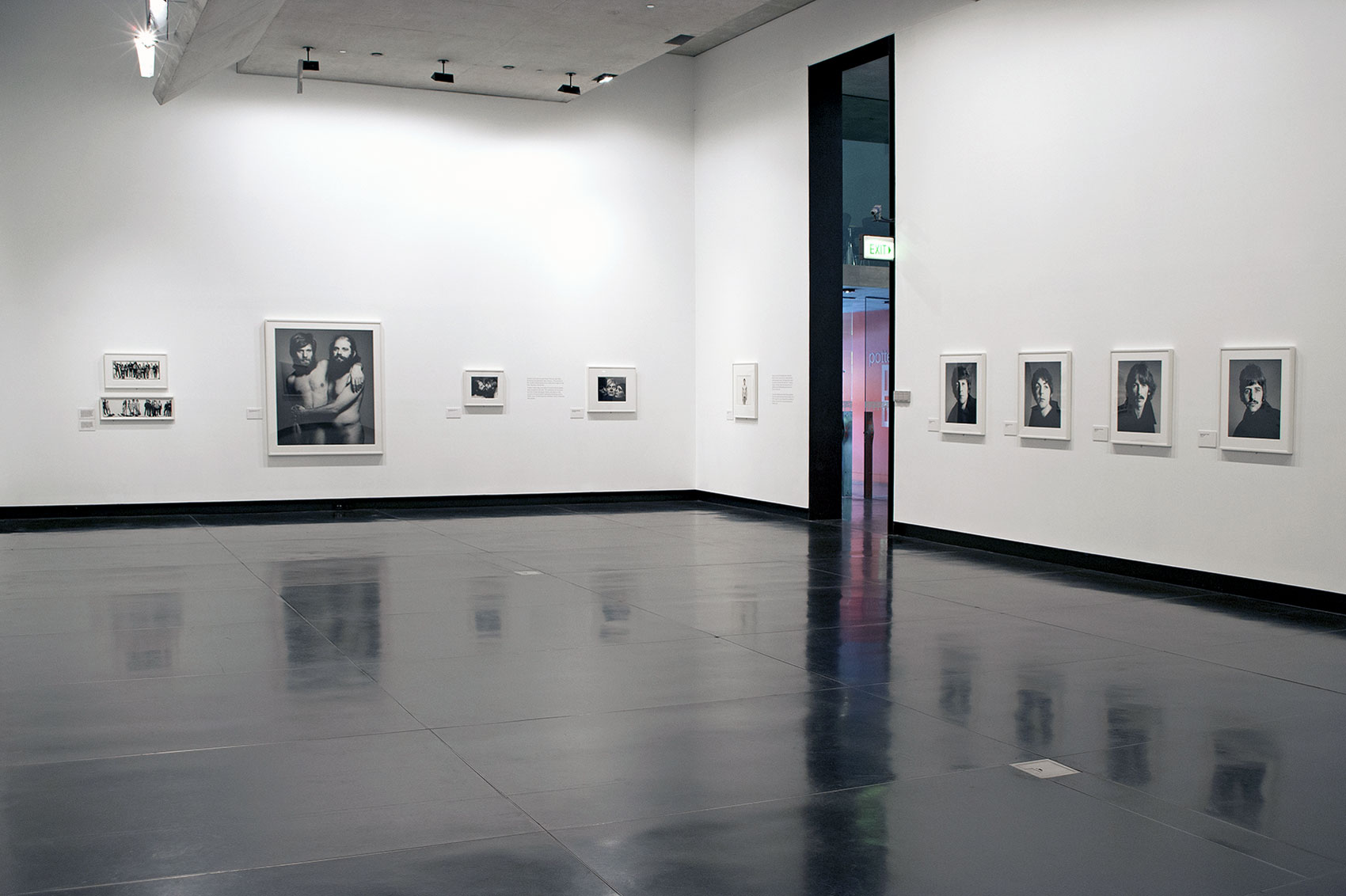
Spread across two floors of the exhibition spaces at The Ian Potter Museum of Art, the exhibition hangs well. The tonal black and white photographs in their white frames, hung above and below the line against the white gallery walls, promote a sense of serenity and minimalism to the work when viewed from afar. Up close, the photographs are clinical, clean, pin sharp and decidedly cold in attitude. Overall the selection of work in the exhibition is weak and the show does not promote the artist to best advantage. There are the usual fashion and portrait photographs, supplemented by street photographs, photographs at the beach and of mental asylums, and distorted photographs. While it is good to see a more diverse range of work from the artist to fill in his back story none of these alternate visions really work. Avedon was definitely not a street photographer (see Helen Levitt for comparison); he couldn’t photograph the mentally ill (see Diane Arbus’ last body of work in the book Diane Arbus: Untitled, 1995) and his distorted faces fail miserably in comparison to Weegee’s (Athur Fellig) fabulous distortions. These are poor images by any stretch of the imagination.
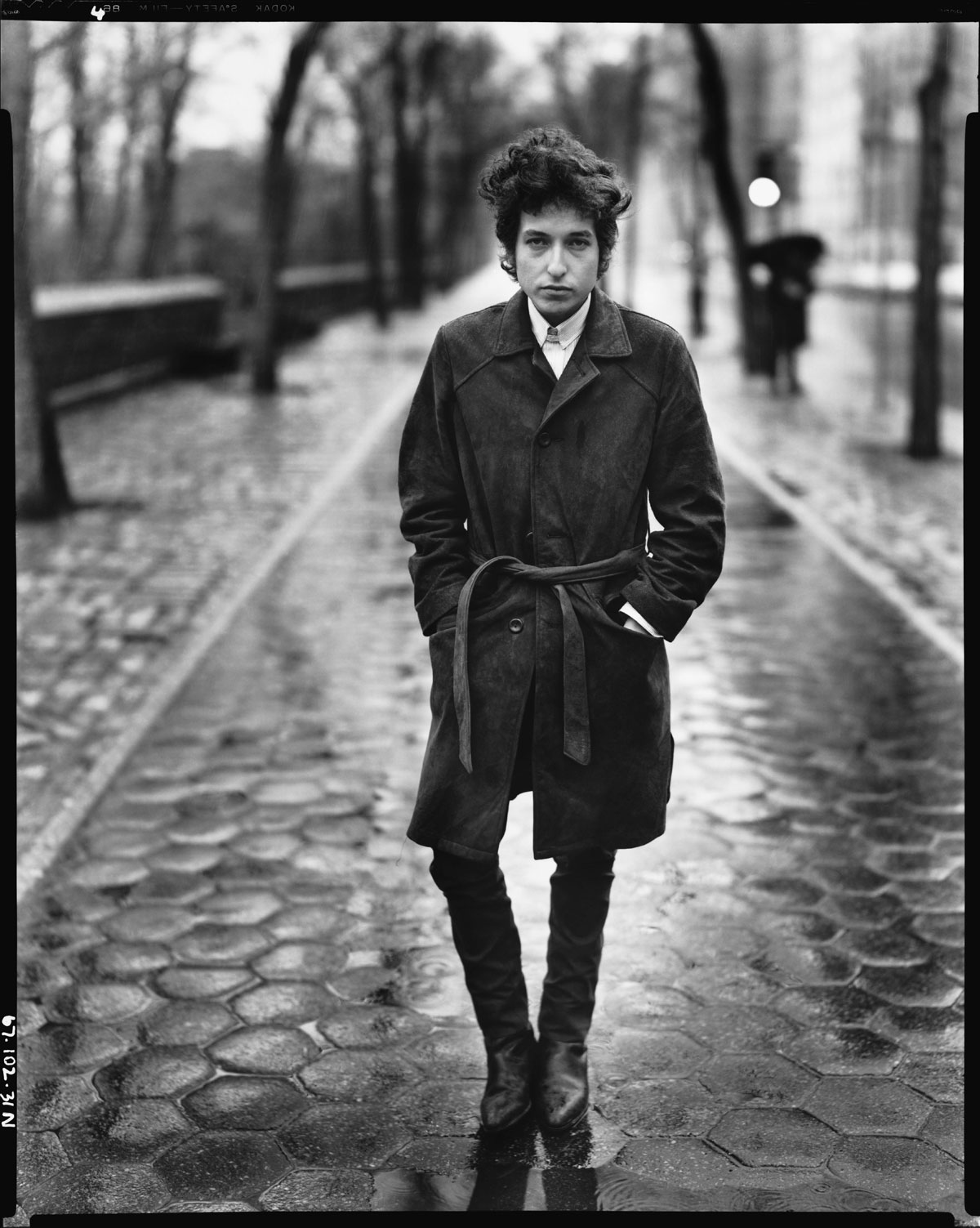
That being said there are some arresting individual images. There is a magical photograph of Truman Capote, writer, 1955 which works because of the attitude of the sitter; an outdoors image of Bob Dylan, musician, Central Park, New York, February 20, 1965 (below) in which the musician has this glorious presence when you stand in front of the image – emanating an almost metaphysical aura – due to the light, low depth of field and stance of the proponent. Also top notch is a portrait of the dancer Rudolf Nureyev, Paris, France, July 25, 1961, in which (for once), the slightly off-white background and the pallid colour of the dancer’s lithe body play off of each other, his placement allowing him to float in the contextless space of the image, his striking pose and the enormousness of his member drawing the eyes of the viewer. All combine to make a memorable, iconic image. Another stunning image is a portrait of the artist Pablo Picasso, artist, Beaulieu, France, April 16, 1958, where the artist’s large, round face fills the picture plane, his craggy features lit by strong side lighting, illuminating the whites of his eyes and just a couple of his eyebrow hairs. Magnificent. And then there are just two images (see below) from the artist’s seminal book In the American West. More on those later.
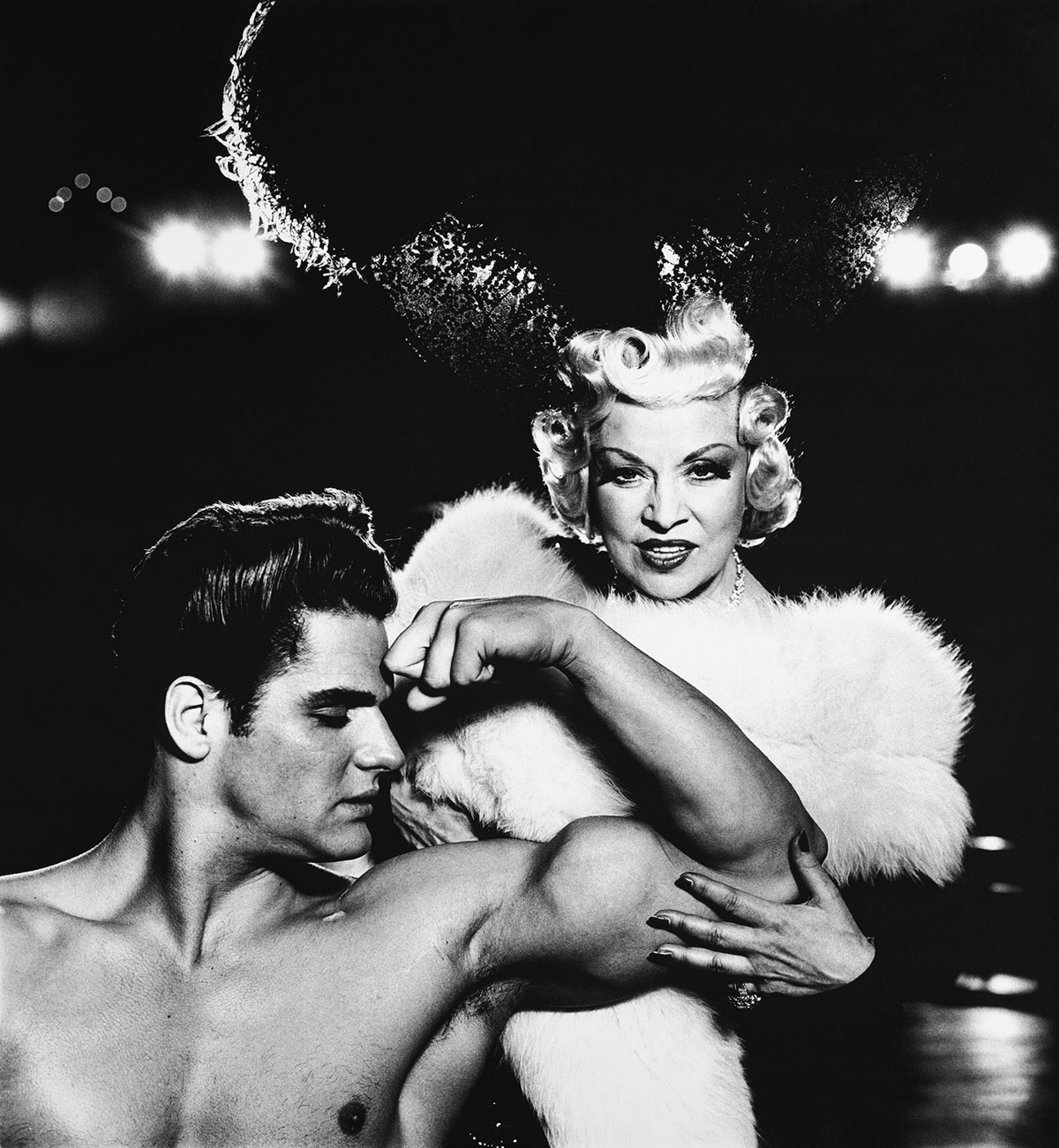
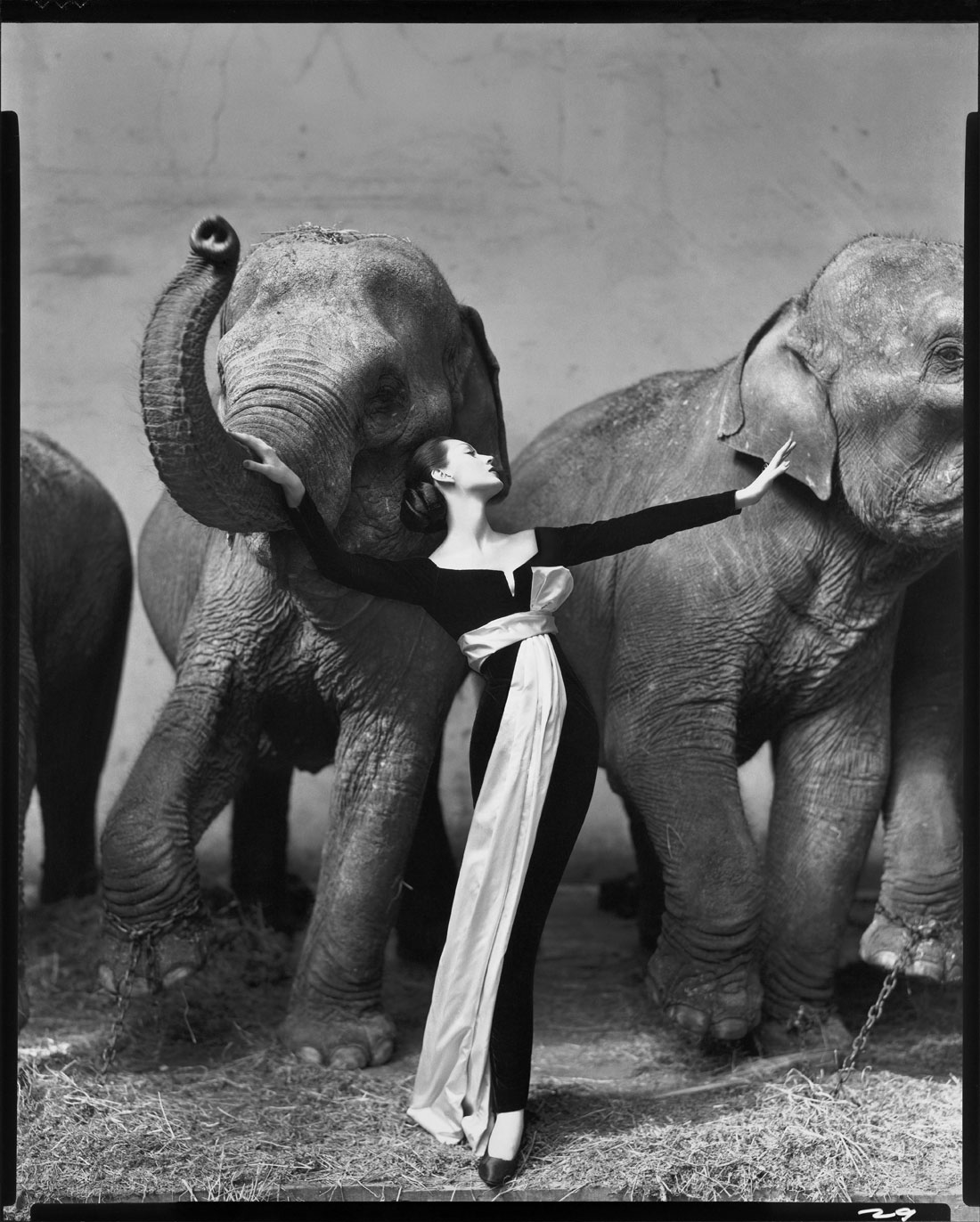
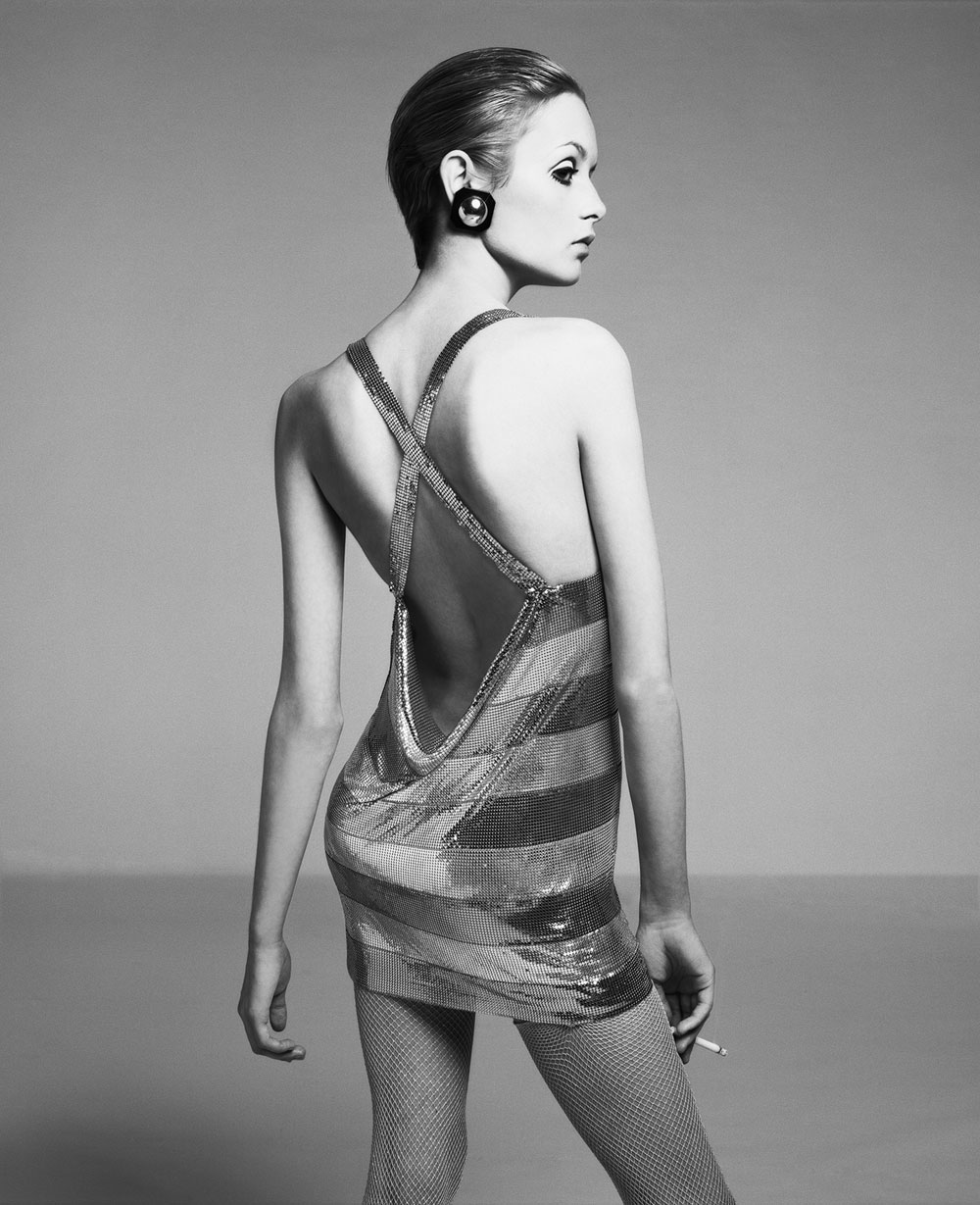
Other portraits and fashion photographs are less successful. A photograph of Twiggy, dress by Roberto Rojas, New York, April 1967 (below), high contrast, cropped close top and bottom, is a vapid portrait of the fashion/model. The image of Elizabeth Taylor, cock feathers by Anello of Emme, New York, July 1964 (below) is, as a good friend of mine said, a cruel photograph of the actress. I tend to agree, although another word, ‘bizarre’, also springs to mind. In some ways, his best known fashion photograph, Dovima with elephants, evening dress by Dior, Cirque d’Hiver, Paris, August 1955 (below) is a ripper of an image… until you observe the punctum, to which my eyes were drawn like a moth to a flame, the horrible shackles around the legs of the elephants.
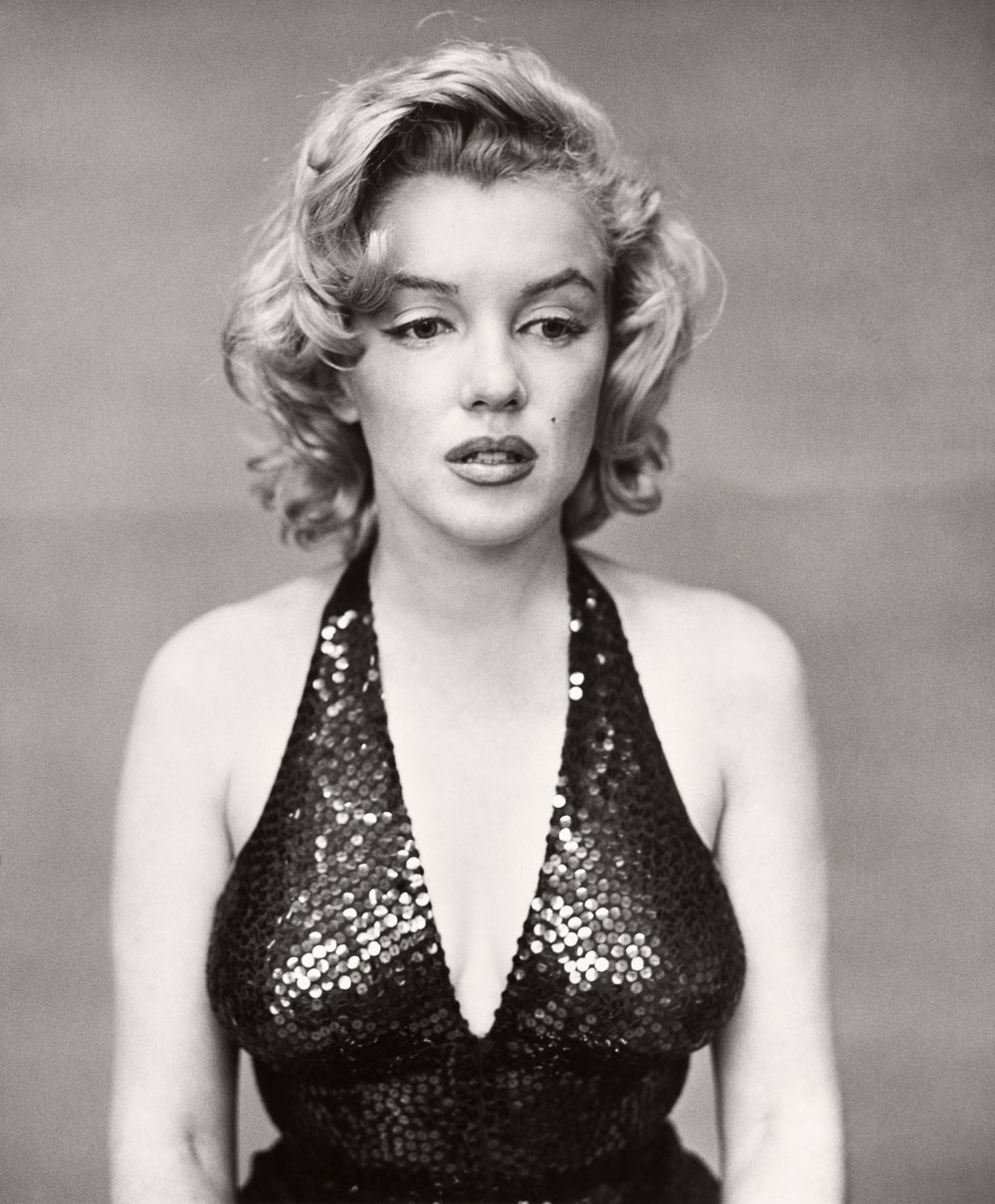
Generally, the portraiture and fashion photographs are a disappointment. If, as Robert Nelson in The Age newspaper states, “Avedon’s portraiture is a search for authenticity in the age of the fake,”1 then Avedon fails on many levels. His deadpan portraits do not revive or refresh the life of the sitter. In my eyes their inflection, the subtle expression of the sitter, is not enough to sustain the line of inquiry. I asked the curator and a representative from the Avedon Foundation what they thought Avedon’s photographs were about and both immediately said, together, it was all about surfaces. “Bullshit” rejoined I, thinking of the portrait of Marilyn Monroe, actress, New York, May 6, 1957 (below), in which the photographer pressed the shutter again and again and again as the actress gallivanted around his studio being the vivacious Marilyn, only hours later, when the mask had dropped, to get the photograph that he and everyone else wanted, the vulnerable women. This, and only this image, was then selected to be printed for public consumption, the rest “archived, protected by the Avedon Foundation, never allowed off the negative or the contact sheet.”2 You don’t do that kind of thing, and take that much time, if you are only interested in surfaces.
On reflection perhaps both of us were right, because there is a paradox that lies at the heart of Avedon’s work. There is the surface vacuousness and plasticity of the celebrity / fashion portrait; then the desire of Avedon to be taken seriously as an artist, to transcend the fakeness of the world in which he lived and operated; and also his desire to always be in control of the process – evidenced by how people had to offer themselves up to the great man in order to have their portrait taken, with no control over the results. While Avedon sought to be in touch with the fragility of humanity – the man, woman and child inside – it was also something he was afraid of. Photography gave him control of the situation. In his constructed images, Avedon is both the creator and the observer and as an artist he is always in control. This control continues today, extending to the dictions of The Richard Avedon Foundation, which was set up by Avedon during his lifetime and under his tenants to solely promote his art after he passed away.
When you look into the eyes of the sitters in Avedon’s portraits, there always seems to be a dead, cold look in the eyes. Very rarely does he attempt to reveal the ambiguity of a face that resists artistic production (see Blake Stimson’s text below). And when he does it is only when he has pushed himself to do it (MM, BD). Was he afraid, was he scared that he might have been revealing too much of himself, that he would have “lost control”? If, as he said, there is finally nothing but the face – an autograph, the signature of the face – then getting their autograph was a way to escape his mundane family life through PERFORMANCE. Unfortunately, the performance that he usually evinces from the rich and famous, this “figuring” out of himself through others through control of that performance – is sometimes bland to the point of indifference. Hence my comment on his self-portrait that I mentioned at the start of this review. It would seem to me that Avedon could not face the complex truth, that he could bring himself, through his portraits, to be both inside and outside of a character at one and the same time… to be vulnerable, to be frightened, to loose control!
If he shines himself as a self-portrait onto others, in a quest or search for the human predicament, then his search is for his own frightened face. Only in the Western Project which formed the basis for his seminal book In the American West – only two of which are in the exhibition – does Avedon achieve a degree of insight, humanity and serenity that his other photographs lack and, perhaps, a degree of quietude within himself. Created after serious heart inflammations hindered Avedon’s health in 1974, he was commissioned in 1979 “by Mitchell A. Wilder (1913-1979), the director of the Amon Carter Museum to complete the “Western Project.” Wilder envisioned the project to portray Avedon’s take on the American West. It became a turning point in Avedon’s career when he focused on everyday working class subjects such as miners soiled in their work clothes, housewives, farmers and drifters on larger-than-life prints instead of a more traditional options with famous public figures… The project itself lasted five years concluding with an exhibition and a catalogue. It allowed Avedon and his crew to photograph 762 people and expose approximately 17,000 sheets of 8 x 10 Tri-X Pan film.”3
In his photographs of drifters, miners, beekeepers, oil rig workers, truckers, slaughterhouse workers, carneys and alike the figure is more frontally placed within the image space, pulled more towards the viewer. The images are about the body and the picture plane, about the minutiae of dress and existence and the presence and dignity of his subjects, more than any of his other work. In this work the control of the sitter works to the artist’s advantage (none of these people had ever had their portrait taken before and therefore had to be coached) and, for once, Avedon is not relying on the ego of celebrity of the transience of fashion but on the everyday attitudes of human beings. Through his portrayal of their ordinariness and individuality, he finally reveals his open, exposed self. The project was embedded with Avedon’s goal to discover new dimensions within himself… “from a Jewish photographer from out East who celebrated the lives of famous public figures to an ageing man at one of the last chapters of his life to discovering the inner-worlds, and untold stories of his Western rural subjects… The collection identified a story within his subjects of their innermost self, a connection Avedon admits would not have happened if his new sense of mortality through severe heart conditions and ageing hadn’t occurred.”4 Definitively, this is his best body of work. Finally he got there.
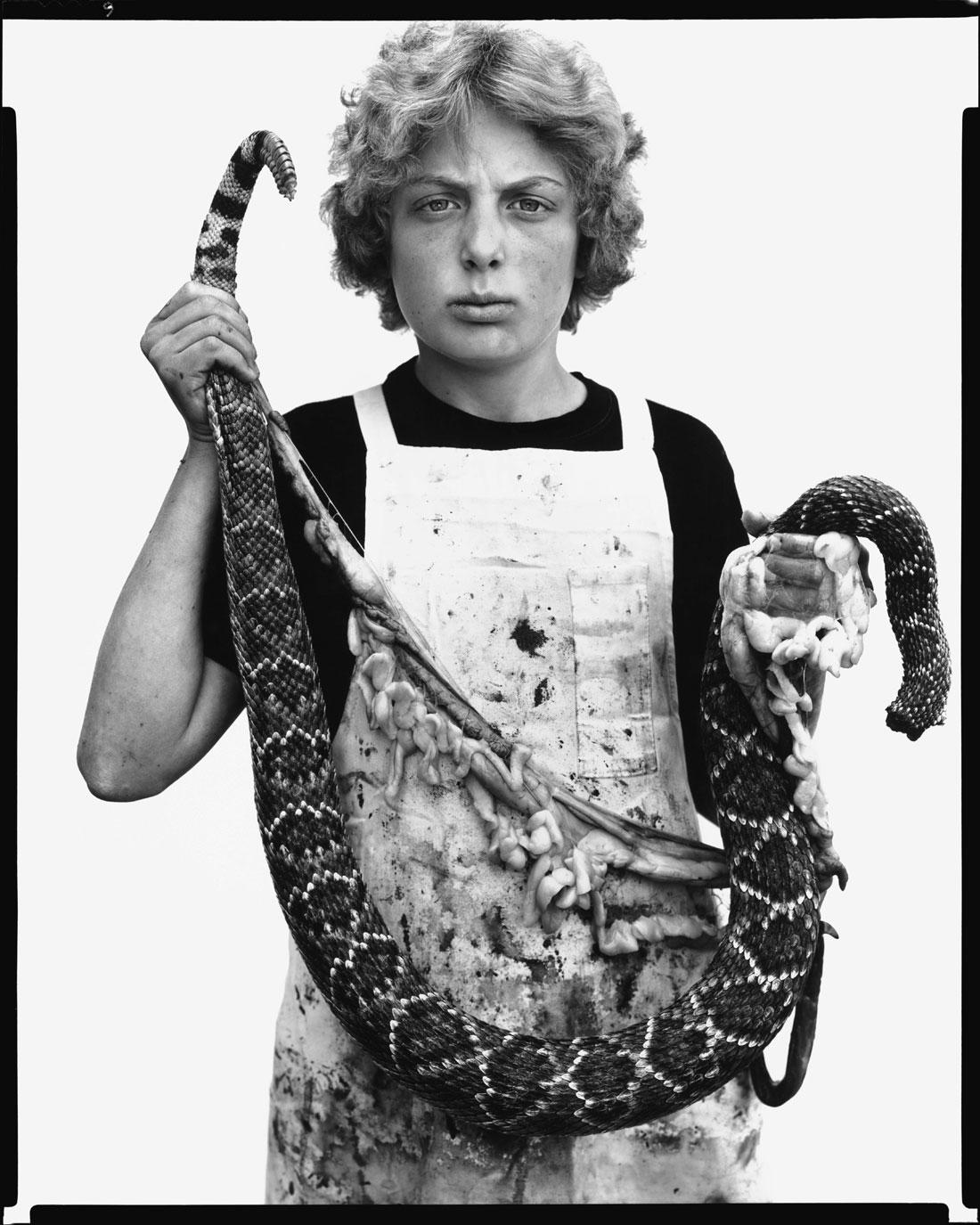
Printed on Agfa’s luscious Portriga Rapid, a double-weight, fibre-based gelatin silver paper which has a warm (brown) colouration for the shadow areas and lovely soft cream highlights, the prints in the exhibition are over six-feet high. The presence of Sandra Bennett, twelve year old, Rocky Ford, Colorado, August 23, 1980 – freckles highlighted by the light, folds of skin under the armpit – and Boyd Fortin, thirteen-year-old, Sweetwater, Texas, March 10, 1979 – visceral innards of the rattlesnake and the look in his eyes – are simply stunning. Both are beautiful prints. In the American West has often been criticised for its voyeuristic themes, for exploiting its subjects and for evoking condescending emotions from the audience such as pity while studying the portraits, but these magnificent photographs are not about that: they are about the exchange of trust between the photographer and a human being, about the dignity of that portrayal, and about the revelation of a “true-self” as much as possible through a photograph – the face of the sitter mirroring the face of the photographer.
While it is fantastic to see these images in Victoria, the first time any Avedon photographs have been seen in this state (well done The Ian Potter Museum of Art!), the exhibition could have been so much more if it had only been more focused on a particular outcome, instead of a patchy, broad brush approach in which everything has been included. I would have been SO happy to see the whole exhibition devoted to Avendon’s most notable and influential work (think Thomas Ruff portraits) – In the American West. The exhibition climaxes (if you like) with three huge, mural-scale portraits of Merce Cunningham (1993, printed 2002), Doon Arbus, writer, New York, 2002 and Harold Bloom, literary critic, New York City, October 28, 2001 (printed 2002), big-statement art that enlarges Avedon’s work to sit alongside other sizeable contemporary art works. Spanning floor to ceiling in the gallery space these overblown edifices, Avedon’s reaction to the ever expanding size of postmodern ‘gigantic’ photography, fall as flat as a tack. At this scale the images simply do not work. As Robert Nelson insightfully observes, “To turn Avedon’s portraiture into contemporary art is technically and commercially understandable, but from an artistic point of view, the conflation of familiarity to bombast seems to be faking it one time to many.”5
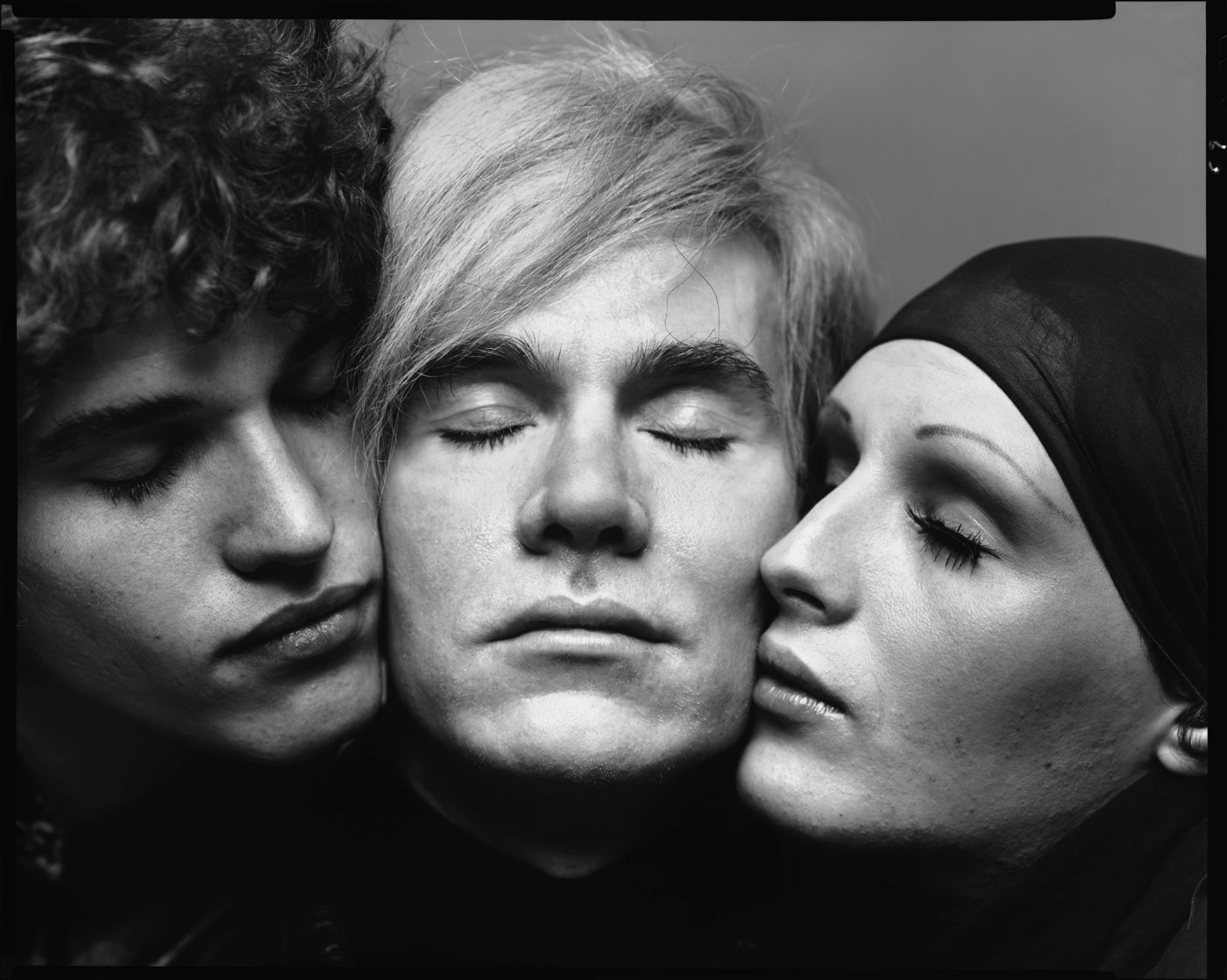
Finally we have to ask what do artists Andy Warhol, Keith Haring, Robert Mapplethorpe and Richard Avedon have in common? Well, they were all based in New York; they are all white, middle class, and reasonably affluent; they were either gay, Jewish or Catholic or a mixture of each; they all liked mixing with celebrities and fashion gurus; and they all have foundations set up in their honour. Only in New York. It seems a strange state of affairs to set up a foundation as an artist, purely to promote, sustain, expand, and protect the legacy and control of your art after you are gone. This is the ultimate in control, about controlling the image of the artist from the afterlife.
Foundations such as the Keith Haring Foundation do good work, undertaking outreach and philanthropic programs, making “grants to not-for-profit groups that engage in charitable and educational activities. In accordance with Keith’s wishes, the Foundation concentrates its giving in two areas: The support of organisations which provide educational opportunities to underprivileged children and the support of organisations which engage in education, prevention and care with respect to AIDS and HIV infection.”6 I asked the representative of The Richard Avedon Foundation what charitable or philanthropic work they did. They offer an internship program. That’s it. For an artist so obsessed with image and surfaces, for an artist that eventually found his way to a deeper level of understanding, it’s about time The Richard Avedon Foundation offered more back to the community than just an internship. Promotion and narcissism are one thing, engagement and openness entirely another.
Dr Marcus Bunyan
Word count: 2,335
Footnotes
1/ Robert Nelson. “Pin sharp portraits show us real life,” in The Age newspaper, Friday January 2, 2014, p. 22.
2/ Andrew Stephens. “Fame and falsehoods,” in Spectrum, The Age newspaper, Saturday November 29, 2014, p. 12.
3/ Anon. “Richard Avedon,” on the Wikipedia website [Online] Cited 01/03/2015
4/ Whitney, Helen. “Richard Avedon: Darkness and Light.” American Masters, Season 10, Episode 3, 1996 quoted in Anon. “Richard Avedon,” on the Wikipedia website [Online] Cited 01/03/2015.
5/ Robert Nelson op cit.,
6/ Anon. “About” on The Keith Haring Foundation website [Online] Cited 01/03/2015
American photographer Richard Avedon (1923-2004) produced portrait photographs that defined the twentieth century. Richard Avedon People explores his iconic portrait making practice, which was distinctive for its honesty, candour and frankness.
One of the world’s great photographers, Avedon is best known for transforming fashion photography from the late 1940s onwards. The full breadth of Avedon’s renowned work is revealed in this stunning exhibition of 80 black and white photographs dating from 1949 to 2002. Avedon’s instantly recognisable iconic portraits of artists, celebrities, and countercultural leaders feature alongside his less familiar portraiture works that capture ordinary New Yorkers going about their daily lives, and the people of America’s West. With uncompromising rawness and tenderness, Avedon’s photographs capture the character of individuals extraordinary in their uniqueness and united in their shared experience of humanity.
Richard Avedon People pays close attention to the dynamic relationship between the photographer and his sitters and focuses on Avedon’s portraits across social strata, particularly his interest in counter-culture. At the core of his artistic work was a profound concern with the emotional and social freedom of the individual in society. The exhibition reveals Avedon’s sensitivity of observation, empathy of identification and clear vision that characterise these portraits.
Text from The Ian Potter Museum of Art website
“There is no truth in photography. There is no truth about anyone’s person.”
“There is no such thing as inaccuracy in a photograph. All photographs are accurate. None of them is truth.”
“Sometimes I think all my pictures are just pictures of me. My concern is… the human predicament; only what I consider the human predicament may simply be my own.”
Richard Avedon
Installation photographs of the exhibition Richard Avedon People at The Ian Potter Museum of Art, Melbourne, February 2015 Photos: Marcus Bunyan
“Photography has had its place in the pas de deux between humanism and anti-humanism, of course, and with two complementary qualities of its own. In the main, we have thought for a long time now, it is photography’s capacity for technological reproduction that defines its greater meaning, both by indexing the world and through its expanded and accelerated means of semiosis. This emphasis on the proliferation of signs and indices has been part of our posthumanism, and it has turned us away consistently from readings that emphasise photography’s second, humanist quality, its capacity to produce recognition through the power of judgment and thus realise the experience of solidarity or common cause.
In keeping with the framing for this collection of writings, we might call the first of these two qualities photography’s ‘either / and’ impulse and the second its ‘either / or’. Where the first impulse draws its structuring ideal from deferring the moment of judgment as it moves laterally from one iteration to the next, one photograph to the next, the second develops its philosophical ground by seeing more than meets the eye in any given photograph or image as the basis of judgment. For example, this is how Kierkegaard described the experience of a ‘shadowgraph’ (or ‘an inward picture which does not become perceptible until I see it through the external’) in his Either/Or:
Sometimes when you have scrutinised a face long and persistently, you seem to discover a second face hidden behind the one you see. This is generally an unmistakable sign that this soul harbours an emigrant who has withdrawn from the world in order to watch over secret treasure, and the path for the investigator is indicated by the fact that one face lies beneath the other, as it were, from which he understands that he must attempt to penetrate within if he wishes to discover anything. The face, which ordinarily is the mirror of the soul, here takes on, though it be but for an instant, an ambiguity that resists artistic production. An exceptional eye is needed to see it, and trained powers of observation to follow this infallible index of a secret grief. … The present is forgotten, the external is broken through, the past is resurrected, grief breathes easily. The sorrowing soul finds relief, and sorrow’s sympathetic knight errant rejoices that he has found the object of his search; for we seek not the present, but sorrow whose nature is to pass by. In the present it manifests itself only for a fleeting instant, like the glimpse one may have of a man turning a corner and vanishing from sight. (Either/Or, Volume 1, 171, 173)
Roland Barthes was trying to describe a similar experience with his account of the punctum just as Walter Benjamin did with his figure of the angel of history: ‘His face is turned toward the past. Where we perceive a chain of events [in the same way we experience photography’s ‘either / and’ iteration of images], he sees one single catastrophe which keeps piling wreckage upon wreckage and hurls it in front of his feet’. As Kierkegaard, Barthes, and Benjamin suggest, the old humanist experience of struggle with the singular experience of on-going failure to realise its hallowed ideals only ever arose in photography or anywhere else fleetingly, but it is all but invisible to us now.”
Søren Kierkegaard.Either/Or, volume I, 1843, 171, 173 quoted in Blake Stimson. “What was Humanism?” on the Either/And website [Online] Cited 01/03/2015. No longer available online. Used under fair use conditions for the purposes of education and research.
Richard Avedon People celebrates the work of American photographer Richard Avedon (1923 to 2004), renowned for his achievements in the art of black and white portraiture. Avedon’s masterful work in this medium will be revealed in an in-depth overview of 80 photographs from 1949 to 2002, to be displayed at The Ian Potter Museum of Art, University of Melbourne from 6 December 2014 to 15 March 2015.
Known for his exquisitely simple compositions, Avedon’s images express the essence of his subjects in charming and disarming ways. His work is also a catalogue of the who’s who of twentieth-century American culture. In the show, instantly recognisable and influential artists, celebrities, and countercultural leaders including Bob Dylan, Truman Capote, Marilyn Monroe, Elizabeth Taylor, and Malcolm X, are presented alongside portraits of the unknown. Always accessible, they convey his profound concern with the emotional and social freedom of the individual.
Ian Potter Museum of Art Director, Kelly Gellatly said, “Richard Avedon was one of the world’s great photographers. He is known for transforming fashion photography from the late 1940s onwards, and his revealing portraits of celebrities, artists and political identities.
“People may be less familiar, however, with his portraiture works that capture ordinary New Yorkers going about their daily lives, and the people of America’s West,” Gellatly continued. “Richard Avedon People brings these lesser-known yet compelling portraits together with his always captivating iconic images. In doing so, the exhibition provides a rounded and truly inspiring insight into Avedon’s extraordinary practice.”
Avedon changed the face of fashion photography through his exploration of motion and emotion. From the outset, he was fascinated by photography’s capacity for suggesting the personality and evoking the life of his subjects. This is evidenced across the works in the exhibition, which span Avedon’s career from his influential fashion photography and minimalist portraiture of well-known identities, to his depictions of America’s working class.
Avedon’s practice entered the public imagination through his long association with seminal American publications. He commenced his career photographing for Harper’s Bazaar, followed by a 20-year partnership with Vogue. Later, he established strong collaborations with Egoiste and The New Yorker, becoming staff photographer for The New Yorker in 1992.
Richard Avedon People is the first solo exhibition of Avedon’s work to be displayed in Victoria following showings in Perth and Canberra. The exhibition was curated by the National Portrait Gallery’s Senior Curator, Dr Christopher Chapman, in partnership with the Richard Avedon Foundation over the course of two years. The Foundation was established by Avedon in his lifetime and encourages the study and appreciation of the artist’s photography through exhibitions, publications and outreach programs.
Dr Christopher Chapman
Dr Christopher Chapman is Senior Curator at the National Portrait Gallery where he has produced major exhibitions exploring diverse experiences of selfhood and identity. He joined the Gallery in 2008 and was promoted to Senior Curator in 2011. He works closely with the Gallery’s management team to drive collection and exhibition strategy. Working in the visual arts field since the late 1980s, Christopher has held curatorial roles at the National Gallery of Australia and the Art Gallery of South Australia. He has lectured in visual arts and culture for the Australian National University and his PhD thesis examined youth masculinity and themes of self-sacrifice in photography and film.
A National Portrait Gallery of Australia exhibition presented in partnership with the Richard Avedon Foundation, New York.
“Insights into the crossover of genres and the convergence of modern media gave Avedon’s work its extra combustive push. He got fame as someone who projected accents of notoriety and even scandal within a decorous field. By not going too far in exceeding known limits, he attained the highest rank at Vogue. In American popular culture, this was where Avedon mattered, and mattered a lot. But it was not enough.
In fact, Avedon’s increasingly parodistic magazine work often left – or maybe fed – an impression that its author was living beneath his creative means. In the more permanent form of his books, of which there have been five so far, he has visualised another career that would rise above fashion. Here Avedon demonstrates a link between what he hopes is social insight and artistic depth, choosing as a vehicle the straight portrait. Supremacy as a fashion photographer did not grant him status in his enterprise – quite the contrary – but it did provide him access to notable sitters. Their presence before his camera confirmed the mutual attraction of the well-connected.”

















You must be logged in to post a comment.