Exhibition: ‘Brassaï – The Secret Signs of Paris’ at Moderna Museet, Stockholm

Exhibition dates: 28th March – 4th October, 2026

Curators: Curated by Anna Tellgren, Moderna Museet, in collaboration with Philippe Ribeyrolles, Estate Brassaï Succession


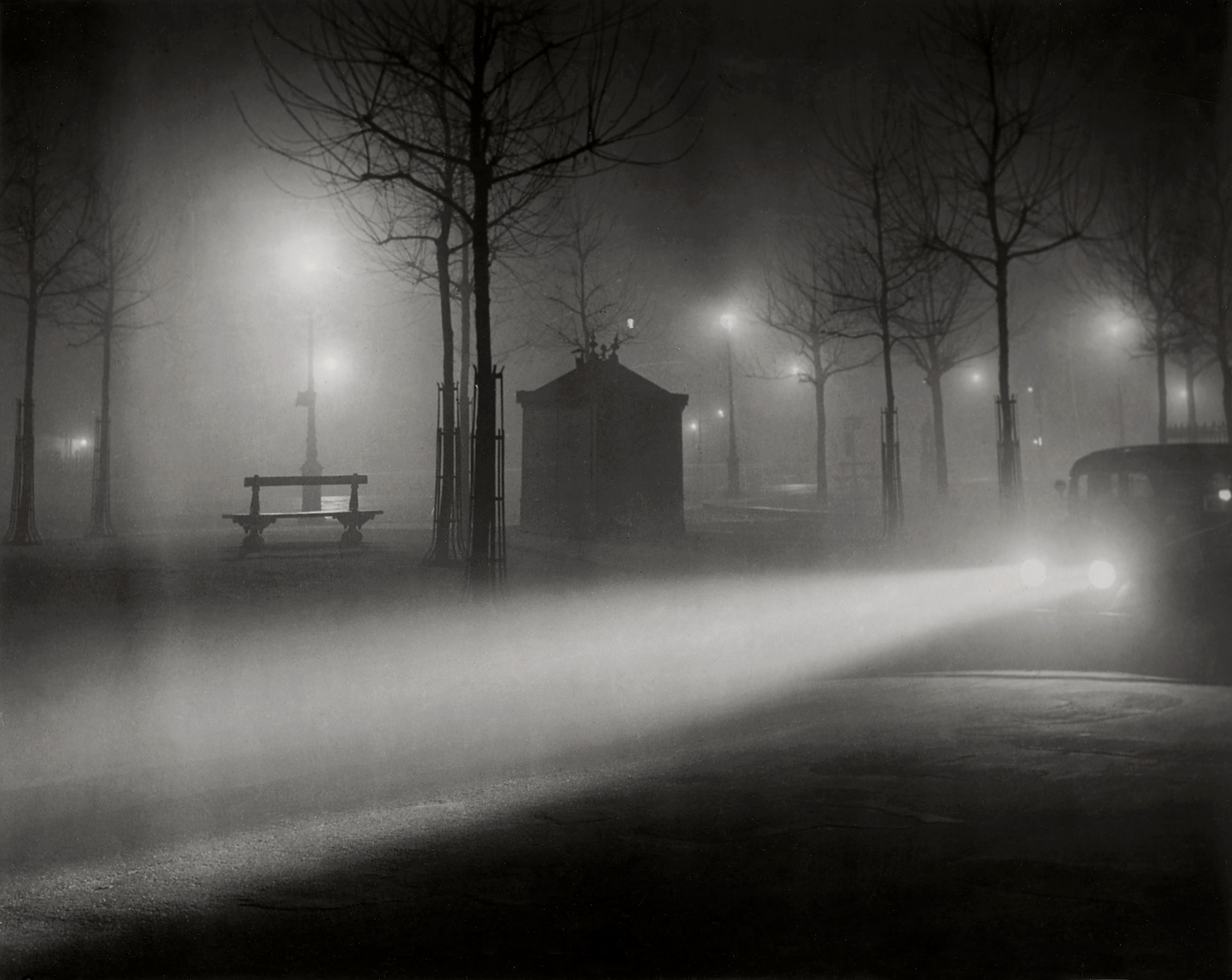
Brassaï (Hungarian-French, 1899-1984) 'L'allumeur de becs de gaz, rue Emile Richard/Lamplighter, Rue Émile-Richard' c. 1931


Brassaï (Hungarian-French, 1899-1984)
L’allumeur de becs de gaz, rue Emile Richard/Lamplighter, Rue Émile-Richard
c. 1931
Vintage silver gelatin print
© Estate Brassaï Succession – Philippe Ribeyrolles 2026


Brassaï’s chimerical – an idea that seems real or possible but is actually an impossible illusion – shimmering, urban light creations are photographs, sometimes staged, from the imagination and nocturnal life of the photographer.

As I have written elsewhere, “It takes a great eye and a great mind, and the liberation of that mind, to be able to transform the mundane, the everyday, the vernacular – into art. Brassaï’s folklore, his mythology of life, suggests that the life of others (those living on the edge) is as valuable and essential to the formation of culture as any other part of existence.”

Brassaï saw something clearly, so that we might see it now.

Dr Marcus Bunyan


Many thankx to the Moderna Museet for allowing me to publish the photographs in the posting. Please click on the photographs for a larger version of the image.


“Brassaï’s photographs invite us to decipher signs – the traces of events and human presence – and to search for the answer to the city’s many mysteries.”


Anna Tellgren, Curator


Brassaï | Introduction by Anna Tellgren with Martina Hoogland Ivanow

In this video, you meet curator Anna Tellgren and artist Martina Hoogland Ivanow, who introduce the exhibition “Brassaï – The Secret Signs of Paris” at Moderna Museet in Stockholm.

Brassaï is one of the most famous photographers in the history of photography. In the early 1930s, he set out with his camera on long nocturnal walks through Paris. Revolving around this treasure of images, the exhibition “Brassaï – The Secret Signs of Paris” includes over 160 black-and-white photographs.

Text from the YouTube website


Installation view of the exhibition 'Brassaï - The Secret Signs of Paris' at Moderna Museet, Stockholm, March - October, 2026
Installation view of the exhibition 'Brassaï - The Secret Signs of Paris' at Moderna Museet, Stockholm, March - October, 2026 showing at right, Brassaï's 'Open Gutter' (c. 1931/1956)


Installation view of the exhibition Brassaï – The Secret Signs of Paris at Moderna Museet, Stockholm, March – October, 2026 showing at right in the bottom image, Brassaï’s Open Gutter (c. 1931/1956, below)


Brassaï (Hungarian-French, 1899-1984) 'Open Gutter' c. 1931/1956


Brassaï (Hungarian-French, 1899-1984)
Open Gutter
c. 1931/1956
Gelatin silver print


Installation view of the exhibition 'Brassaï - The Secret Signs of Paris' at Moderna Museet, Stockholm, March - October, 2026 showing at left, Brassaï's 'Night View Old Paris from Notre Dame - "the Devil" Chimaera' (1933); at top right, 'Morris Column' (1933); and at bottom right, 'Urinal on Boulevard Auguste-Blanqui' (c. 1930-32)


Installation view of the exhibition Brassaï – The Secret Signs of Paris at Moderna Museet, Stockholm, March – October, 2026 showing at left, Brassaï’s Night View Old Paris from Notre Dame – “the Devil” Chimaera (1933); at top right, Morris Column (1933, below); and at bottom right, Urinal on Boulevard Auguste-Blanqui (c. 1930-32)
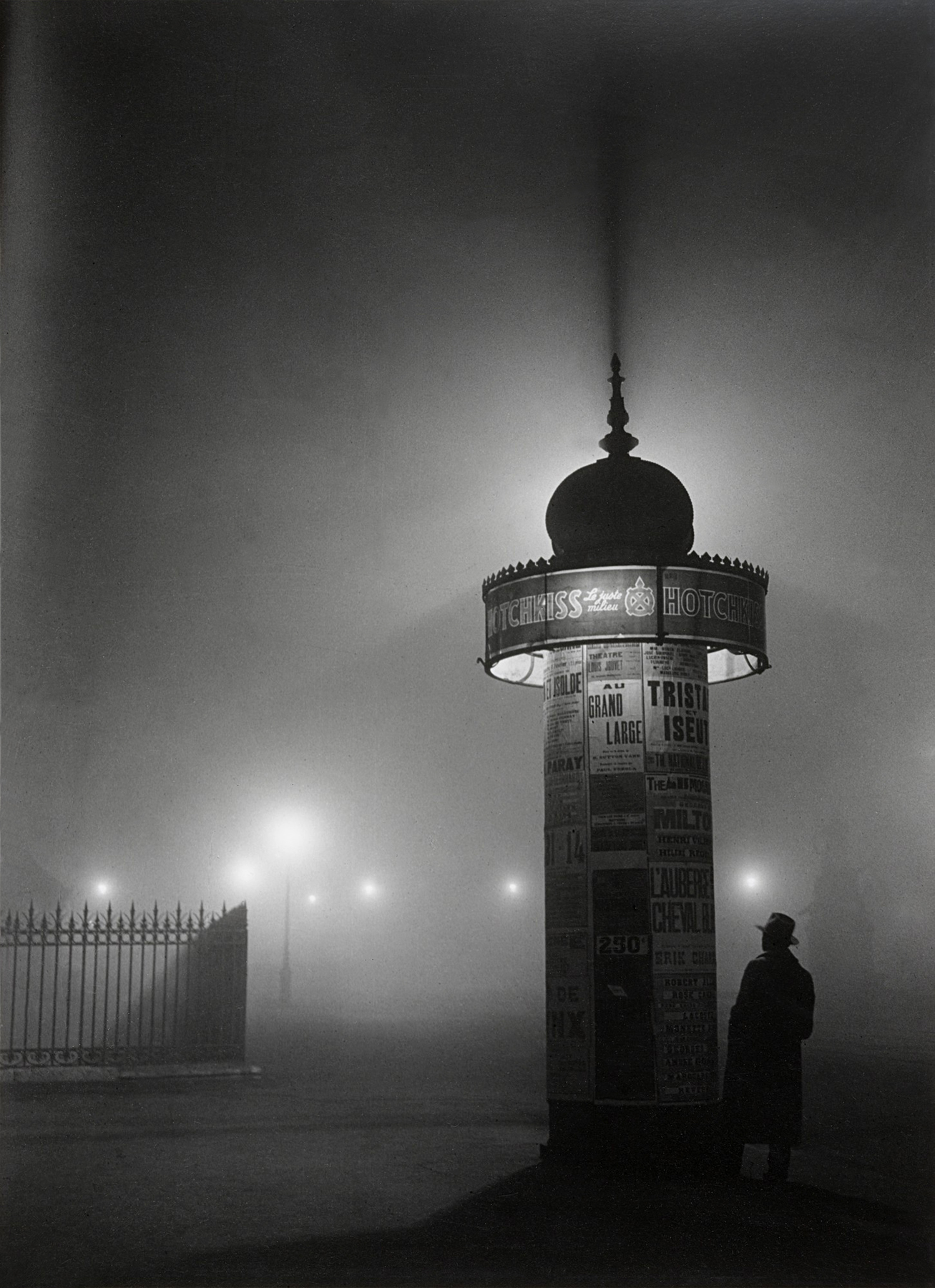
 

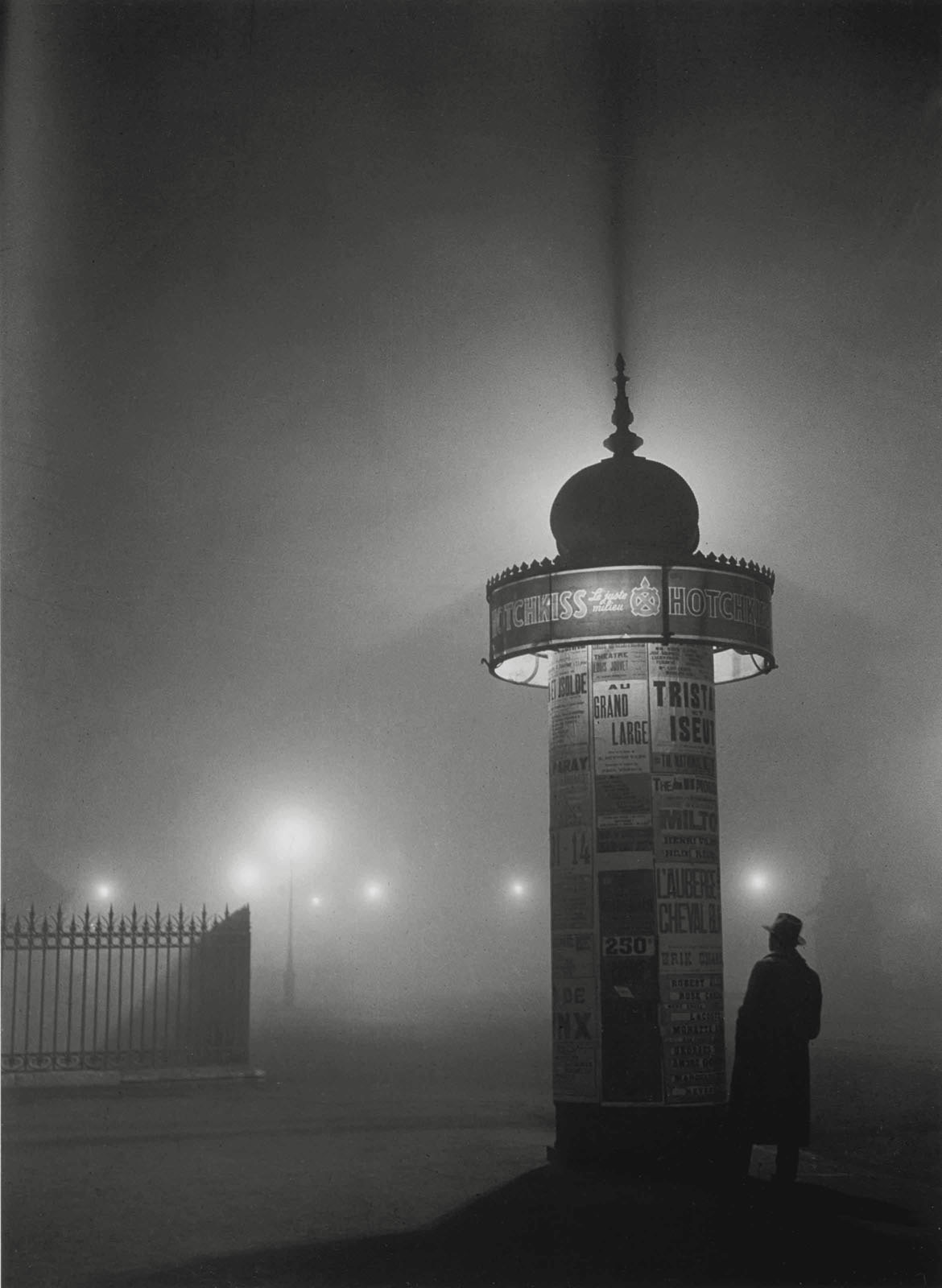
Brassaï (French, 1899-1984) 'Morris Column, avenue de l'Observatoire' 1933


Brassaï (Hungarian-French, 1899-1984)
Morris Column
1933
Gelatin silver print


About the exhibition

Brassaï (1899-1984) is the pseudonym of Gyula Halász, who grew up in Brassó in Transylvania, then Hungary. After studying in Budapest and Berlin, he moved to Paris at the age of twenty-five.

There are three themes in Brassaï’s photographic production and in the exhibition “Brassaï – The Secret Signs of Paris”: the city of Paris with its inhabitants and environments, the portraits of artists and their works, and the city’s graffiti.

Nocturnal Environments and People

When Brassaï moved to Paris in 1924, he first worked as a journalist. His major breakthrough as a photographer came with the book “Paris de nuit” (Paris by Night), published in 1933. Many of his famous motifs can be found here – Notre-Dame and the Eiffel Tower, bars and dance halls, artists and workers, policemen and petty thieves.

The black-and-white photographs with motifs in soft tones were the result of his long nocturnal walks through Paris – his camera lens captures environments and people in the light of street lamps and the light falling from the buildings of the city.

Bars, Dance Halls and Brothels

After the success of “Paris de nuit”, Brassaï received requests to publish the material that includes his more intimate photographs of Paris by night – the bars, dance halls, gay clubs and brothels. But at that time, in post-war Paris, censorship had become stricter and publication had to wait.

It was not until about forty years later, in 1976, that the book “Le Paris secret des années 30” (The Secret Paris of the 30’s) was published, based on Brassaï’s large collection of photographs.

Night Photographs, Graffiti, and Life in Paris

The exhibition “Brassaï – The Secret Signs of Paris” includes more than 160 vintage gelatine silver prints made by the photographer himself.

The first room of the exhibition features Brassaï’s legendary night photographs of Paris, its inhabitants and environments. The middle room shows his extensive documentation of the city’s graffiti, and the last room of the exhibition presents more of his images of life in Paris.

Brassaï’s film from the mid-1950s, “Tant qu’il y aura des bêtes” (As Long as There Are Animals), which was awarded as the most innovative short film at at the Cannes Film Festival in 1956, is also included in the exhibition.

Biography Gyula Halász

Gyula Halász (1899-1984) grew up in Brassó in Transylvania, then Hungary.

After studying art in Budapest and Berlin, he moved to Paris in 1924 and took the name Brassaï, which means “from Brassó”. He was versatile and devoted himself to drawing, painting, sculpture and photography in parallel. Literature was another great interest.

Brassaï moved in Parisian artist circles and his contact with the surrealists, as well as his friendship with Pablo Picasso, sharpened his eye for the unexpected and overlooked. His major breakthrough as a photographer came with the book “Paris de nuit” (“Paris by Night”), published in 1933.

On his wanderings in Paris, Brassaï also discovered street graffiti, which he documented in an extensive series of photographs until the 1950s. At the same time, he also made reporting trips for the magazine “Harper’s Bazaar” to Brazil, Greece and Sweden, among other places.

Brassaï died in 1984, after receiving several awards and participating in exhibitions throughout Europe and the United States during his final years.

Text from the Moderna Museet website


Installation view of the exhibition 'Brassaï - The Secret Signs of Paris' at Moderna Museet, Stockholm, March - October, 2026 showing at centre second left, Brassaï's 'Bal des Quatre Saisons, rue de Lappe' (c. 1932)


Installation view of the exhibition Brassaï – The Secret Signs of Paris at Moderna Museet, Stockholm, March – October, 2026 showing at centre second left, Brassaï’s Bal des Quatre Saisons, rue de Lappe (c. 1932, below)


Brassaï (Hungarian-French, 1899-1984) 'Bal des Quatre Saisons, rue de Lappe' c. 1932


Brassaï (Hungarian-French, 1899-1984)
Bal des Quatre Saisons, rue de Lappe
c. 1932
Gelatin silver print


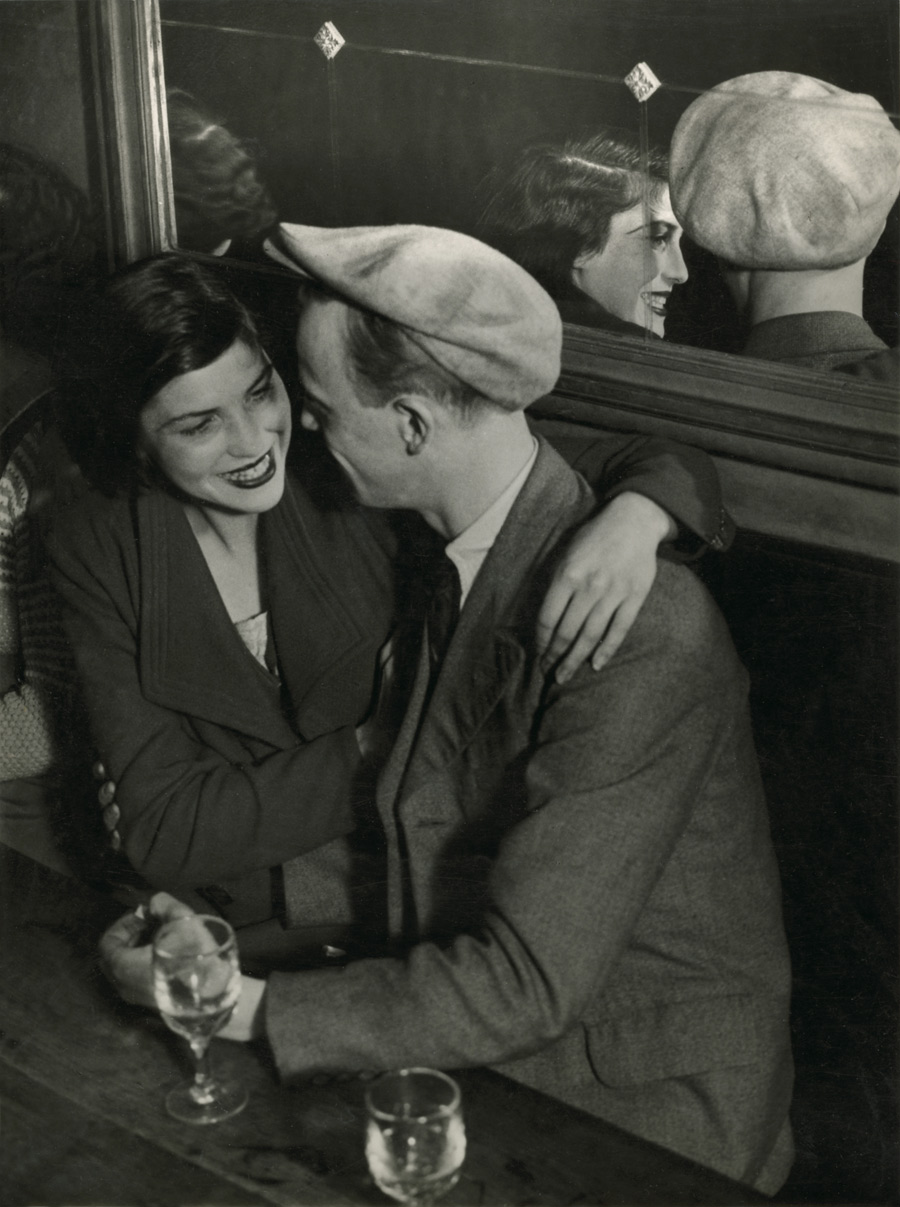
Brassaï (Hungarian-French, 1899-1984) 'Couple d'amoureux dans un petit café, quartier Italie' c. 1932


Brassaï (Hungarian-French, 1899-1984)
Couple d’amoureux dans un petit café, quartier Italie
c. 1932
Gelatin silver print


Installation view of the exhibition 'Brassaï - The Secret Signs of Paris' at Moderna Museet, Stockholm, March - October, 2026 showing from left to right, top to bottom, Brassaï's 'A Couple at the Magic-City Dance Hall, Rue Cognacq-Jay' (c. 1931-32); 'A Two-in-One Suit, the Magic-City Dance Hall' (1931); 'Magic-City Dance Hall, Rue de l'Universite' (1931); 'The Magic-City Dance Hall, Rue Cognacq-Jay' (c. 1931-32)


Installation view of the exhibition Brassaï – The Secret Signs of Paris at Moderna Museet, Stockholm, March – October, 2026 showing from left to right, top to bottom, Brassaï’s A Couple at the Magic-City Dance Hall, Rue Cognacq-Jay (c. 1931-32); A Two-in-One Suit, the Magic-City Dance Hall (1931, below); Magic-City Dance Hall, Rue de l’Universite (1931); The Magic-City Dance Hall, Rue Cognacq-Jay (c. 1931-32)
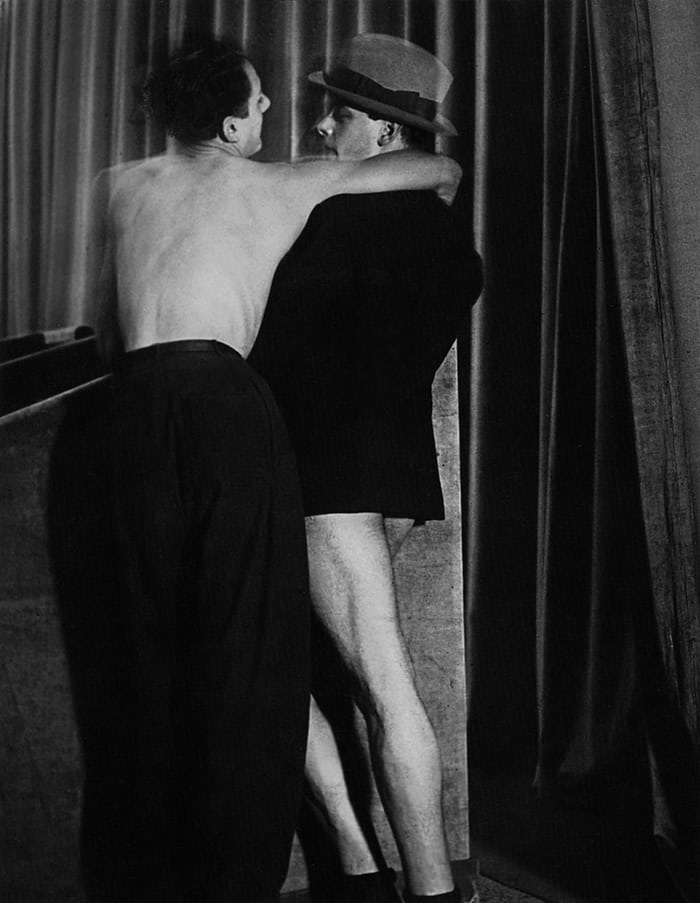
 

Brassaï (Hungarian-French, 1899-1984) 'Young couple wearing a two-in-one suit at Bal De La Montagne Saint-Genevieve' 1931


Brassaï (Hungarian-French, 1899-1984)
A Two-in-One Suit, the Magic-City Dance Hall
1931
Gelatin silver print


Brassaï is one of the most famous photographers in the history of photography. In the early 1930s, he set out with his camera on long nocturnal walks through Paris. Revolving around this treasure of images, the exhibition at Moderna Museet includes over 160 black-and-white photographs and is the first major presentation of Brassaï in Sweden.

Brassaï (1899-1984) is a pseudonym for Gyula Halász, who grew up in Brassó in Transylvania, then Hungary. After studying in Budapest and Berlin, he moved to Paris at the age of twenty-five. There he became part of the Humanist Photography that emerged during the interwar period. The street and the life that unfolded on the sidewalks and cafes became typical motifs for the genre.

Paris, Portraits and Graffiti

The exhibition “Brassaï – The Secret Signs of Paris” includes more than 160 vinted gelatin silver prints, made by the photographer himself.

The audience encounters three central themes in Brassaï’s photographic production: the city of Paris with its inhabitants and environments, the portraits of artists and their works, as well as his extensive documentation of the city’s graffiti.

The title of the exhibition alludes to how Brassaï opens up a hidden world with the help of his camera, his curiosity and his artistic practice, curator Anna Tellgren says.

His photographs invite us to decipher signs – the traces of events and human presence – and to search for the answer to the city’s many mysteries. Here, the extensive series of photographs of graffiti becomes an important part of understanding what Brassaï saw and how he moved in the city. In the exhibition, we follow in his footsteps.

In the exhibition, Brassaï’s short film “Tant qu’il y aura des bêtes” (As long as there are animals) from the mid-1950s is also shown. At the Cannes Film Festival in 1956 it was named the most innovative short film.

The Environments and People of the Night

Brassaï’s major breakthrough as a photographer came with the book “Paris de nuit” (“Paris by Night”), published in 1933. The black-and-white photographs with motifs in soft tones were the result of his long nocturnal walks through Paris – a city in transition between history and modernity. His camera lens captures environments and people in the light of street lamps and the light falling from the city’s most characteristic buildings.

After the success of “Paris de nuit”, Brassaï received requests to publish the material that includes his more intimate photographs of Paris by night – the bars, dance halls, gay clubs and brothels. But at that time, in post-war Paris, censorship had become stricter and publication had to wait.

It was not until about forty years later, in 1976, that the book “Le Paris secret des années 30” (The Secret Paris of the 30’s, 1976) was published, based on Brassaï’s large collection of photographs. In the book, he himself wrote and told the stories behind the images and about the personalities he had met and portrayed.

Press release from Moderna Museet


Installation view of the exhibition 'Brassaï - The Secret Signs of Paris' at Moderna Museet, Stockholm, March - October, 2026 showing from left to right, Brassaï's 'Fairgrounds, Place d'Italie' (c. 1931); '"No One Under 18 Allowed", at the Fairgrounds' (1932-33); 'Three Women Masked for the Parade' (1931); 'The Hands of the Fortune Teller' (1933)


Installation view of the exhibition Brassaï – The Secret Signs of Paris at Moderna Museet, Stockholm, March – October, 2026 showing from left to right, Brassaï’s Fairgrounds, Place d’Italie (c. 1931); “No One Under 18 Allowed”, at the Fairgrounds (1932-33); Three Women Masked for the Parade (1931, below); The Hands of the Fortune Teller (1933, below)


Brassaï (Hungarian-French, 1899-1984) 'Three Women Masked for the Parade' 1931


Brassaï (Hungarian-French, 1899-1984)
Three Women Masked for the Parade
1931
Vintage gelatin silver print
© Estate Brassaï Succession – Philippe Ribeyrolles 2026


Brassaï (Hungarian-French, 1899-1984) 'Les mains de la cartomancienne/The Hands of the Fortune Teller' 1933


Brassaï (Hungarian-French, 1899-1984)
Les mains de la cartomancienne/The Hands of the Fortune Teller
1933
Vintage silver gelatin print
© Estate Brassaï Succession – Philippe Ribeyrolles 2026


Installation view of the exhibition 'Brassaï - The Secret Signs of Paris' at Moderna Museet, Stockholm, March - October, 2026 showing from left to right, Brassaï's 'Hotel du lion d'Or in the Chaconne Neighbourhood' (c. 1934); 'Marlene, Paris' (1937); 'Kiss on a Swing at a Street' Fair (c. 1935-37)


Installation view of the exhibition Brassaï – The Secret Signs of Paris at Moderna Museet, Stockholm, March – October, 2026 showing from left to right, Brassaï’s Hotel du lion d’Or in the Chaconne Neighbourhood (c. 1934); Marlene, Paris (1937, below); Kiss on a Swing at a Street Fair (c. 1935-37)


Brassaï (Hungarian-French, 1899-1984) 'Marlene, Paris' 1937


Brassaï (Hungarian-French, 1899-1984)
Marlene, Paris
1937
Vintage silver gelatin print
© Estate Brassaï Succession – Philippe Ribeyrolles 2026


Brassaï – The Secret Signs of Paris

Text by curator Anna Tellgren

At the age of twenty-five, the Hungarian-born Gyula Halász, better known as Brassaï, moved to Paris, the city that became his home and which came to shape his entire life and oeuvre. Brassaï was multifaceted, using a variety of media, including drawing, sculpture, painting and photography. Literature was another of his major interests and writing was part of his practice throughout his career.

In different contexts, Brassaï has elaborated on why he started photographing, on his longing to preserve everything he experienced and was fascinated by as a flâneur through Paris. Photography became the form of expression that best corresponded to what he wanted to achieve. A shimmer lies over the memories from the first years in the French capital, from the bars in the neighbourhoods around Montparnasse and Montmartre where he hung out with his friends until the early hours of the morning. Through the images, we gain access to the famous monuments, bridges, the small squares, markets, and fairgrounds – magically illuminated by the glow of gas lanterns. But we see them captured from another perspective, from other angles, presenting an alternative Paris, beyond the tourist hotspots. The exhibition focuses on the intense period in the 1930s when Brassaï became an innovator of nocturnal photography and one of the foremost portraitists of the city and life in Paris. The title of the exhibition, “The Secret Signs of Paris”, alludes to how the photographer opened the door to a hidden world using his camera, his curiosity, and his artistic practice [1]. His photographs challenge us to interpret signs – the traces of events and human presence – and to look for the answer to the many mysteries of the city. Here, the comprehensive series of photographs of graffiti becomes an important element in understanding what Brassaï saw and how he moved through the city. The exhibition allows us to follow in his footsteps.

Gyula Halász was born in 1899 in Brassó, Transylvania, which was part of Hungary at the time [2]. That was also where he grew up, with the exception of when his father, a professor of French, stayed in Paris with his family from 1903 to 1904 [3]. In the lead-up to the First World War, the family fled to Budapest. After serving a year in the Austro-Hungarian cavalry, Gyula Halász started studying at the art academy in Budapest in 1918. He moved to Berlin in 1920, where he continued studying art. In February 1924 he arrived in Paris, where he stayed for the rest of his life, never returning to his home country.

In the early years in Paris, he supported himself by writing articles for Hungarian and German magazines, illustrated with his photographs and those of other photographers. He assumed the pseudonym Brassaï, which means “from Brassó”, and continued to publish and work under this artist name. He moved in artist circles, and contacts in the Hungarian diaspora led to different kinds of commissions. Photographer André Kertész and Charles Rado were among his compatriots. The latter started the photo agency Rapho, which represented Brassaï both in Paris and New York. Around 1930 he began photographing more seriously, using a folding camera of the brand Voigtländer Bergheil with glass negatives (6.5 x 9 cm), switching to a Rolleiflex in the mid-1930s with medium-format (6 x 6 cm) negatives. His career as aphotographer took off fast and photography became his main source of income. He took all kinds of jobs, even photographing hairstyles for the famous hairdresser Monsieur Antoine and hiring two assistants to keep up [4]. In the early years, Brassaï moved around between small hotels in Montparnasse, where he even installed a darkroom to develop his own photographs, which he continued doing throughout his career.

Brassaï’s photographic production encompasses three main themes, of which the city of Paris is the most famous; but his portraits of artists and their work, as well as his interest in graffiti are also well-known. One of the many writers and artists that Brassaï met and socialised with over the years was Henry Miller, who lived in Paris from 1930 to 1939, becoming a friend and champion of Brassaï’s photography in several contexts [5]. Another major influence was Pablo Picasso. They were introduced to each other in 1932 by the publisher Tériade, ahead of a commission for the Surrealist magazine Minotaure, leading to a lifelong friendship. Brassaï continued to photograph Picasso’s sculptures and published the book “Conversations avec Picasso” (Conversations with Picasso) in 1964, which presents personal and everyday images of one of modern art’s most celebrated artists [6]. Other artists that he portrayed in text and image include Pierre Bonnard, Georges Braque, Salvador Dalí, Henri Matisse, Germaine Richier, and Jacques Villon – later collecting the portraits in a book about the artists in his life [7].

Brassaï’s major breakthrough as photographer came with the book “Paris de nuit” (Paris by night) which was published by Arts et Métiers graphiques in 1933, with a text by the writer and diplomat Paul Morand. The book contains sixty-four carefully selected photographs published in a spiral-bound soft-cover book (25 x 19.3 cm). The photographs are printed as full-page bleeds on matt, black, relatively thick paper. The title on the cover is written with red dots to resemble the city’s many neon lights. The book includes many of the famous motifs – the dark cobblestone streets, the narrow alleyways, the prostitutes, Notre-Dame, the metro, the Eiffel Tower, and the cats – all rendered in dark tones, only illuminated by the light emanating from the many characteristic buildings around Paris. The production of the book is a complex story, with Brassaï collaborating closely with the designer and publisher Charles Peignot and the journalist Jean Bernier, who wrote all the captions [8]. The book was part of a tradition from the late nineteenth century, in which established writers, and later filmmakers, were fascinated by the underworld of Paris, describing it from the perspective of a flâneur. Other popular publications at the time were the many magazines reporting on crime and publishing detective stories illustrated with images by Brassaï and other photographers who specialised in these nocturnal adventures.

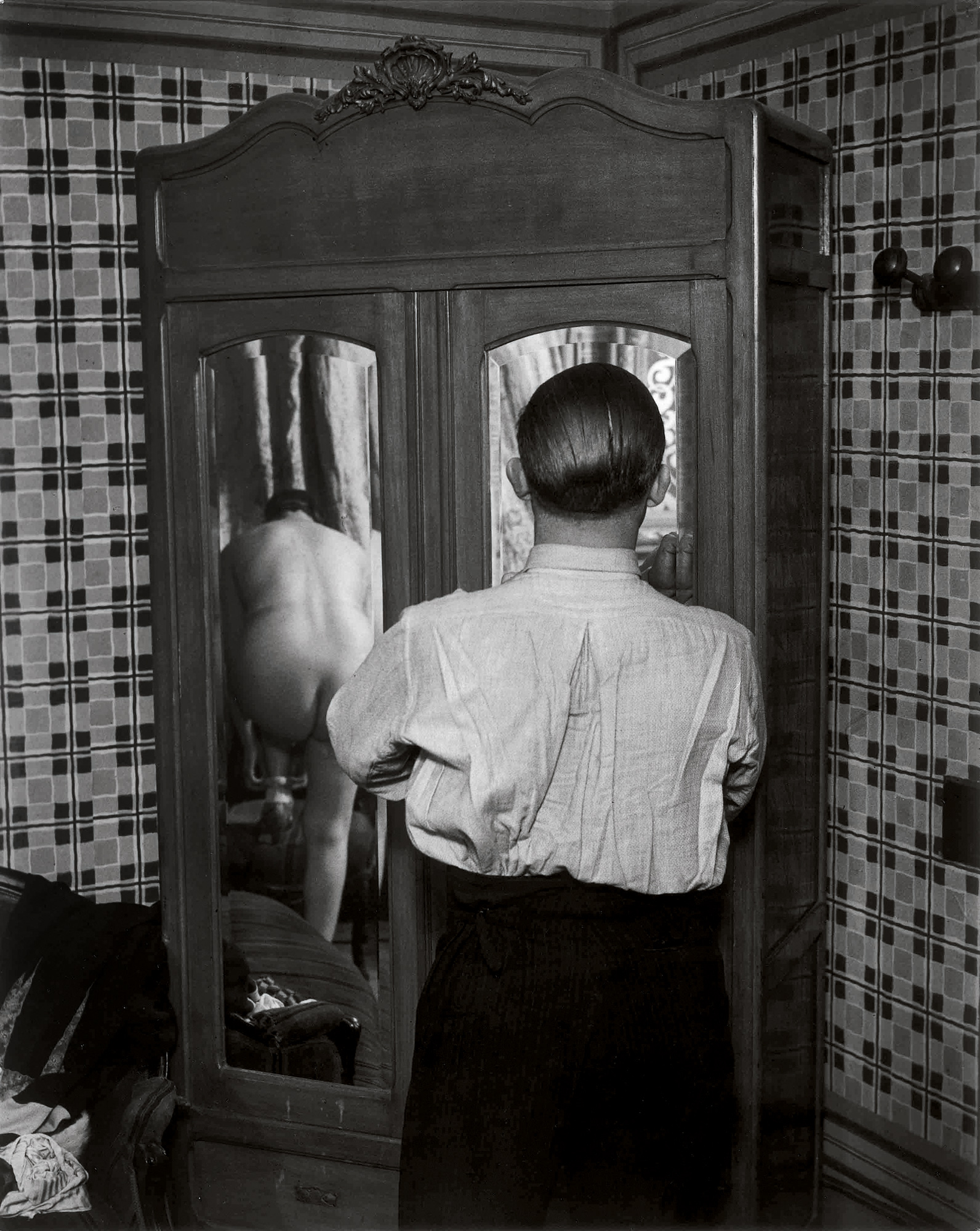
After the success of “Paris de nuit”, Brassaï started a new collaboration around his more intimate photographs of Paris by night – the bars, dance establishments, the homosexual clubs, bordellos [9]. Despite the interest it generated, he decided to pursue other projects instead. After the war, the atmosphere had shifted and stricter censorship than in the 1930s was put into place, making it simply too difficult to publish these types of images openly. It wasn’t until the mid-1970s that Brassaï got in touch with the publisher Claude Gallimard, suggesting a number of book projects based on the vast material from Paris. This led to the book “Le Paris secret des années 30” (1976) for which Brassaï himself developed the design idea and was closely involved in the entire process [10]. With the distance of forty years, he told the story behind the images and whom we encounter. We learn of Grand Albert and his gang, La Môme Bijou, Kiki de Montparnasse, of the atmosphere at Le Monocle and Chez Suzy. But, as it turns out, we weren’t told everything – it was later revealed that Brassaï’s assistant Gabriel Kiss played the role of customer in the series from Chez Suzy, but the prostitutes were really working there. Brassaï staged a sequence of events at the brothel, which was probably necessary to fulfil the discretion guaranteed to customers and to obtain permission to enter as a photographer. The photographs included in the book were all taken between 1929 and 1934, and it’s as if Brassaï here achieved his photographic zenith and is one with the events, people, and surroundings he lived in and documented. The book has become one of the most important sources with regards to his practice as a photographer and is a classic within the history of photobooks.

At the time of Brassaï’s breakthrough as a photographer, the medium was in an intense phase of development, which was influenced by the breakthrough of the small-format camera and the major entry that photography made into the illustrated press [11]. News from all corners of the world was reported in the form of large photo reportages. There was a high demand for photographs and a market emerged in which different types of photo agencies and photo editors handled the assignments and managed the contacts. Examples of these popular magazines include the French Vu, and the English Picture Post, American Life and Look and in Sweden, from 1938 onwards, the illustrated magazine Se. While press photography was professionalised, many of the avant-garde movements, like Futurism, Bauhaus, Russian Constructivism, Dada, and Surrealism, were also interested in photography. Paris was a hub and had been the epicentre of new ideas since the discovery and establishment of photography from the mid-nineteenth century onwards. This is where many of the most famous photographers came to live and work, including Brassaï and his colleagues Henri Cartier-Bresson, Robert Doisneau, André Kertész, Germaine Krull, and Sabine Weiss. They were all representatives of the so-called humanist photography, a movement that arose in the interbellum years in parallel with technological, artistic, and commercial progress [12]. The streets and the life that unfolded on their sidewalks and in the cafés, became symbols in themselves for this special visual poetry, which enticed the photographers, like the writers and artists, to go on long, lonely rambles through the city.

On his recurring walks through Paris, Brassaï discovered street graffiti [13]. Throughout his entire oeuvre from the early 1930s onwards, these signs from walls are present. His work on the graffiti images continued until the late 1950s and was collected in a book by the photographer in 1960, where he sorted them into nine different themes [14]. The collection included the well-known “Le Roi Soleil” (The sun king) and other images of primitive masks, faces, and animals, as well as expressions of magic, love, and death. Brassaï wrote about his extensive series of graffiti photographs in several articles, interpreting these signs on the city walls as a kind of original writing, reading mythological figures into the motifs – demons, heroes, and gods [15]. One could define his collection of graffiti as a kind of archive of human expressivity and creativity. Later he wrote specifically about graffiti in Paris and reflected on his interest in this art form with neither name nor status [16].

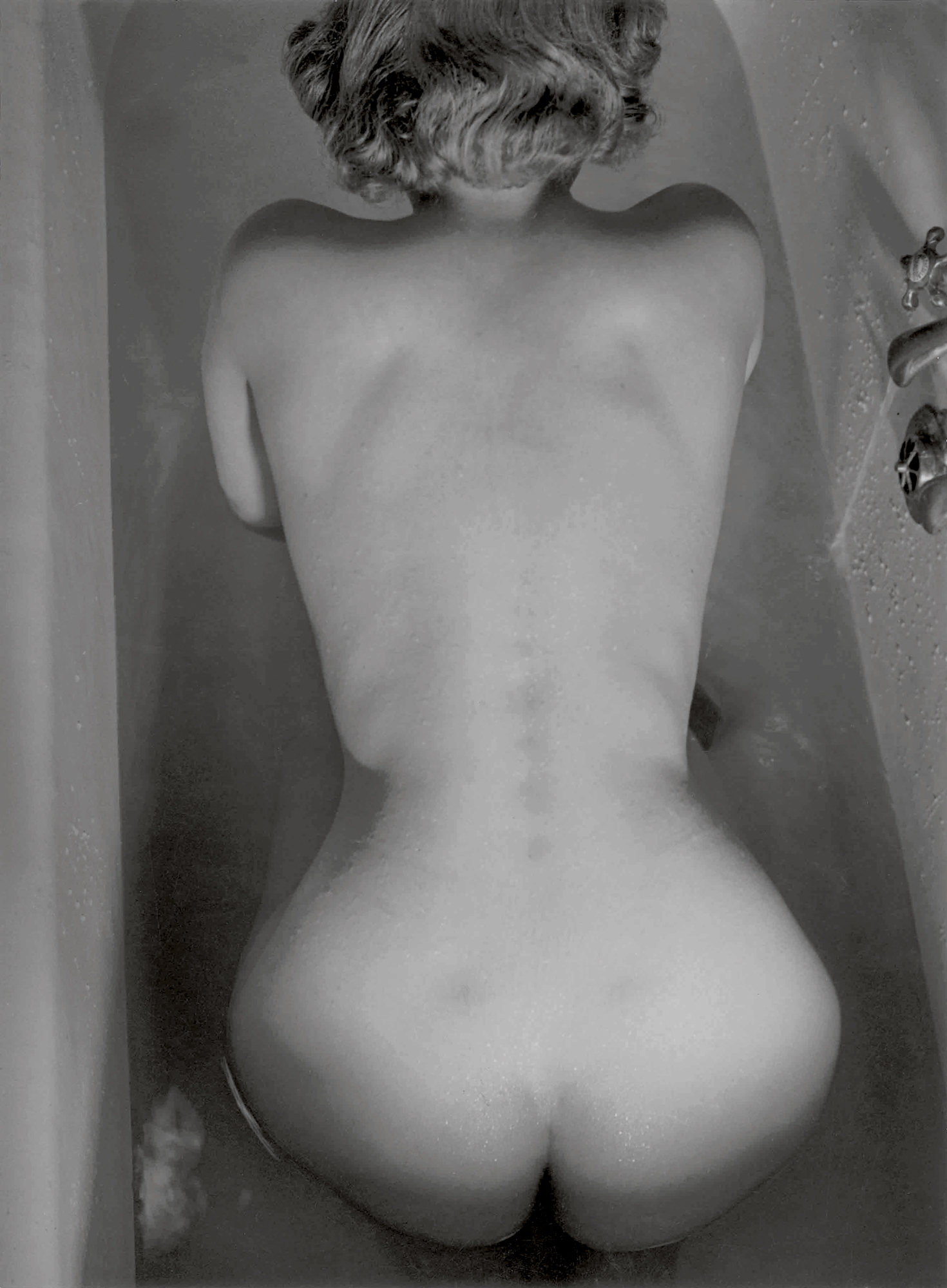
In connection with his interest in graffiti, Brassaï collaborated with and moved in Surrealist circles for some years [17]. His first commission was to photograph Picasso’s sculptures for the debut issue of Minotaure in 1933 [18]. Thereafter his article on graffiti was published in the double number 3-4 and in the same number he collaborated with Salvador Dalí on an article about unintended sculptures, as well as one about modern architecture, in which his close-ups of the famous Art Nouveau Paris metro entrances were included [19]. He had many friends in the group and also shared Surrealism’s interest in the rediscovered French photographer Eugène Atget, who had documented the old Paris during the decade following the turn of the twentieth century. Later, Brassaï came to oppose the view of his photographs as “Surrealist” and unreal, claiming that everything he documented was real – which did not, however, hinder him from participating in Minotaure or André Breton’s books [20]. In this period he also created a series of nude studies, whose forms made their way into his sculptures and the series “Transmutations” (1934), a kind of engravings executed on his already exposed photographic glass plates, clearly influenced by his association with the Surrealist movement.

In the war years, Brassaï stayed in Paris, since he didn’t want to leave his photographic archive of negatives in the apartment on rue du Faubourg Saint-Jacques, where he had moved in 1935 and that he kept for the rest of his life. But he refused to have his photographs published during the war or to work for the German occupying forces and spent his time writing and drawing instead. After the war, he started photographing again and his photographs were among other things shown as enormous enlargements as part of the set design in several theatre productions. This was when he met Gilberte Boyer. They married in 1948 and she would accompany her husband on trips and work assignments. One of his most important employers at the time was Carmel Snow, the legendary editor of the fashion magazine Harper’s Bazaar in New York [21]. They had met in 1937 and collaborated for over twenty-five years. Initially he took portraits of artists in their studios for the magazine, but later he also engaged in fashion photography – from balls, exclusive dinner parties, and Parisian high society. In the 1950s he started producing photographic travel reportages for Harper’s Bazaar, travelling to Brazil, Greece, Italy, Morocco, Spain, and Sweden.

When the borders reopened after the Second World War, many young photographers went out into the world and established themselves for shorter or longer periods in the French capital to learn and experience. One of this next generation of photographers was the American photographer Louis Stettner, who made the acquaintance of Brassaï when he settled in Paris [22]. Stettner’s inner circle included the Frenchman Édouard Boubat and the Swedish photographers Rune Hassner and Tore Johnson [23]. They were inspired by and worked in the tradition of the humanist photographers. Rune Hassner was based in Paris from 1949 to 1957; he took on reportage commissions from various magazines, as well as working as a fashion photographer. Through the years he wrote a large number of articles for Swedish photo magazines, in which he introduced European photography and its practitioners to Swedish readers [24]. Brassaï was one of the people he met and interviewed, describing him as one of the most innovative photographers of our time and a well-known personality in French cultural circles [25]. The article is one of several published to highlight Brassaï’s visit to Stockholm and Vålådalen in December 1953.

In the 1950s, Brassaï became the object of several retrospective exhibitions and new book projects. Early on, he had participated in a number of group exhibitions of contemporary photography at galleries in Paris and already in 1937 six photographs by him were included in the exhibition “Photography 1839-1937” at the Museum of Modern Art in New York. Later, in 1956, MoMA presented the celebrated exhibition “Language of the Wall: Parisian Graffiti Photographed by Brassaï”, which was followed by a retrospective in 1968. The exhibition led to him being rediscovered by American photo historians, curators, and gallerists, which resulted in further exhibitions and inclusion in the collections of many of the major art institutions in the US, as well as the many important museums and collections in France. He stopped photographing in the 1970s, stating that he preferred to travel in his own universe of photographs and make them better known [26]. In the last ten years of his life, he received several prizes and distinctions, such as the first Grand Prix National de la Photographie in 1978. Brassaï died in 1984 in Beaulieu-sur-Mer on the French Riviera. His spirit hovers over all of us who love Paris and return again and again to visit our own favourite places – and over new generations of young people who travel there for several months or years to find themselves and the soul of the city.

Anna Tellgren


Notes

1/ The title is inspired by the book Paris’ hemliga tecken, Stockholm: Wahlström & Widstrand, 1952, with texts by Göran Schildt and photographs by Tore Johnson. The book is one of many slightly more poetic travelogues from Paris that came about as a collaboration between a writer or poet and a photographer.

2/ For a detailed biography see Giberte Brassaï, “Biographie”, in Alain Sayag and Annick Lionel-Marie, Brassaï, Paris: Centre Pompidou and Éditions du Seuil, 2000, pp. 303-305. See also, Stuart Alexander, “Chronology”, Brassaï, ed. Peter Galassi, Madrid: Fundación Mapfre, 2018, pp. 338-343.

3/ Brassaï’s father, whose name was also Gyula Halász, was professor of French literature at the local university. His mother’s name was Matilde Verzár, and he had two younger brothers, Kálmán Halász (1900-1978) and Endre “Bandi” Halász (1913-1944). Brassaï wrote to his parents regularly – these letters were published in Hungarian in 1980 and later in translation. They are the main source of information when it comes to his early life and career, see Brassaï, Letters to My Parents, Chicago: The University of Chicago Press, 1997.

4/ For an in-depth analysis and interpretation of all the different steps in Brassaï’s career, see Peter Galassi, “Brassaï: Photographer”, Brassaï, ed. Peter Galassi, Madrid: Fundación Mapfre, 2018, pp. 10-71.

5/ Henry Miller wrote an essay about Brassaï, “The Eye of Paris”, c. 1932, which was published in Henry Miller, Max and the White Phagocytes, Paris: Obelisk Press, 1938. The essay was also published in the photobook Brassaï, Paris: Édition Neuf, 1952, edited by Robert Delpire and Pierre Faucheux.

6/ The book was illustrated with 53 photographs by the photographer, Brassaï, Conversations avec Picasso, Paris: Gallimard, 1964.

7/ Brassaï, Les artistes de ma vie , Paris: Éditions Denoël, 1982.

8/ See also Sylvie Aubenas and Quentin Bajac, “From Paris After Dark to the Secret Paris of the 1930s”, Brassaï Paris Nocturne, London: Thames & Hudson, 2013, pp. 11-33. The book was printed in an edition of 12,000 starting at the end of 1932 and into early 1933, which is why both years of publication occur in bibliographies.

9/ It resulted in the book Volupté de Paris, Paris: Paris-Publications, 1934, published in a small edition by Victor Vidal, who worked with erotic literature. Brassaï was very critical of how the content was changed without consulting him and he never included it in his own bibliography. When it came to the photographs in Paris de nuit, the publisher never returned the negatives to the photographer and they were first found in 1984 in the archives of the publishing house Flammarion, which had bought up Arts et Métiers graphiques, see Kim Sichel, Brassaï: Paris le jour, Paris la nuit, Paris: Musée Carnavalet, 1988.

10/ Brassaï, Le Paris secret des années 30, Paris: Éditions Gallimard, 1976. In English translation by Richard Miller, The Secret Paris of the ’30s, London: Thames & Hudson, 1976.

11/ See Stuart Alexander, “Brassaï and the Illustrated Press”, Brassaï, ed. Peter Galassi, Madrid: Fundación Mapfre, 2018, pp. 72-87.

12/ On humanist photography see Marie de Thézy, La photographie humaniste 1930-1960, Histoire d’un movement, Paris: Contrejour, 1992.

13/ See also Karolina Lewandowska, Graffiti Brassaï. Le langage du mur, Paris: Édition du Centre Pompidou and Édition Xavier Barral, 2016.

14/ Brassaï Graffiti. Zwei Gespräche mit Picasso, Stuttgart: Chr. Belser Verlag, 1961. Graffiti de Brassaï, Paris: Les éditions du temps, 1960. See also the later expanded edition in English Brassaï Graffiti, Paris: Flammarion, 2002.

15/ Brassaï, “Du mur des cavernes au mur d’usine”, Minotaure, no. 3-4, 1933, pp. 6-7.

16/ “Graffiti parisiens”, XXe siècle (Paris), no. 10, 1958, pp. 21-24.

17/ See further La Subversion des images: Surréalisme, photographie, film, eds. Quentin Bajac and Clément Chéroux, Paris: Édition du Centre Pompidou, 2009.

18/ André Breton, “Picasso dans son element”, Minotaure, no. 1, 1933, pp. 8-29.

19/ Salvador Dalí and Brassaï, “Sculptures involontaires”, Minotaure, no. 3-4, 1933, p. 68; Salvador Dalí, “De la beauté terrifiante et comestible, de l’architecture modern’ style”, Minotaure, no. 3-4, 1933, pp. 69-76.

20/ Sylvie Aubenas, “Brassaï and Paris by Night”, Brassaï Paris Nocturne, London: Thames & Hudson, 2013, pp. 110-113. Three night photographs by Brassaï are included in André Breton, L’Amour fou, Paris: Gallimard, 1937.

21/ Together with the Russian art director Alexey Brodovitch, Carmel Snow made the fashion magazine Harper’s Bazaar into one of the more innovative magazines in the 1940s and ’50s, both in terms of form and content. See also Gabriel Bauret, Alexey Brodovitch, Paris: Éditions Assouline, 1998.

22/ Brassaï later wrote a foreword dated 1983, published in the book by Louis Stettner, Early Joys. Photographs from 1947-1972, New York: Janet Iffland, 1987, pp. 7-9.

23/ For more information on the young Swedish photographers in Paris, see Anna Tellgren, Tio fotografer. Självsyn och bildsyn. Svensk fotografi under 1950-talet i ett internationellt perspektiv (Ten Photographers. Self-perception and Pictorial Perception. Swedish Photography in the 1950s in an International Perspective), diss., Linköping Studies in Arts and Science no. 151, Stockholm: Informationsförlaget, 1997, pp. 151-229.

24/ See for example Rune Hassner, “Fotobohemer, skickliga yrkesmän och ‘konstfotografer'”, Svensk Fotografisk Tidskrift, no. 7, 1949, pp. 139-142. For a compilation see also Rune Hassner, Bilder & Ord. Bibliografi, filmografi, utställningsförteckning med mera, eds. Rune Hassner and Birgitta Forsell, Visuellt. Konst- och bildvetenskapliga institutionens skriftserie no. 7, Gothenburg: Gothenburg University, 2002. In 1988 Rune Hassner (1928-2003) became the first director of the Hasselblad Centre (part of the Hasselblad Foundation in Gothenburg) – a position that he held until his retirement in 1994.

25/ Rune Hassner, “Brassaï”, Nordisk Tidskrift för Fotografi, no. 1, 1954, pp. 13-15.

26/ From an interview with Brassaï in 1974 in Paul Hill and Thomas Cooper, “Brassaï”, Dialogue with Photography, Manchester: Cornerhouse Publication, 1979/1992, pp. 38-42.


Installation view of the exhibition 'Brassaï - The Secret Signs of Paris' at Moderna Museet, Stockholm, March - October, 2026 showing Brassaï's 'Graffiti - Croix de Lorraine (Series II)' c. 1945


Installation view of the exhibition Brassaï – The Secret Signs of Paris at Moderna Museet, Stockholm, March – October, 2026 showing Brassaï’s Graffiti – Croix de Lorraine (Series II) (c. 1945)


Installation view of the exhibition 'Brassaï - The Secret Signs of Paris' at Moderna Museet, Stockholm, March - October, 2026 showing from left to right, top to bottom, Brassaï's 'Graffiti from series III The Birth of Mankind' c. 1932/1956; 'Graffiti from series III The Birth of Mankind' c. 1932/1956; 'Graffiti from series VII Death' c. 1932/1956; 'Graffiti from series VIII Magic' c. 1932/1956


Installation view of the exhibition Brassaï – The Secret Signs of Paris at Moderna Museet, Stockholm, March – October, 2026 showing from left to right, top to bottom, Brassaï’s Graffiti from series III The Birth of Mankind c. 1932/1956; Graffiti from series III The Birth of Mankind c. 1932/1956; Graffiti from series VII Death c. 1932/1956; Graffiti from series VIII Magic c. 1932/1956


Installation view of the exhibition 'Brassaï - The Secret Signs of Paris' at Moderna Museet, Stockholm, March - October, 2026 showing  Brassaï's 'Graffiti de la série IX "Images primitives"/Graffiti from Series IX "Primitive Images"' (c. 1932-1956)


Installation view of the exhibition Brassaï – The Secret Signs of Paris at Moderna Museet, Stockholm, March – October, 2026 showing Brassaï’s Graffiti de la série IX “Images primitives”/Graffiti from Series IX “Primitive Images” (c. 1932-1956)


Brassaï (Hungarian-French, 1899-1984) 'Graffiti de la série IX "Images primitives"/Graffiti from Series IX "Primitive Images"' c. 1932-1956


Brassaï (Hungarian-French, 1899-1984)
Graffiti de la série IX “Images primitives”/Graffiti from Series IX “Primitive Images”
c. 1932-1956
Vintage silver gelatin print
© Estate Brassaï Succession – Philippe Ribeyrolles 2026


Brassaï – The Secret Signs of Paris

Hungarian-born Gyula Halász, better known as Brassaï, was only twenty-five when he moved to Paris, the city that became his home and shaped the rest of his life and work. His walks through the city awakened a longing to preserve all the fascinating things he saw and experienced, not least the people and milieus that emerged after nightfall. The exhibition focuses on the intense period in the 1930s when Brassaï became an innovator of nocturnal photography and one of the foremost portraitists of Paris.

Brassaï was born in 1899 in Brassó, Transylvania, and studied art in Budapest and Berlin. Versatile in his practice, he worked across drawing, painting, sculpture and photography. Literature was another major interest, and writing remained important to him throughout his career. After arriving in Paris in 1924, he initially worked as a journalist. His breakthrough as photographer came with the 1933 book Paris de nuit. It features many of the city’s famous motifs, evocatively illuminated by the glow of gas streetlights – Notre-Dame and the Eiffel Tower, bars and dancehalls, performers and workers, policemen and thieves.

He moved in artist circles and his interaction with the Surrealists, as well as his friendship with Pablo Picasso, sharpened his awareness of the unexpected and overlooked. On his rambles through the city, Brassaï also discovered street graffiti and he continued to document these signs, symbols and traces of life in a comprehensive series of photographs until the 1950s. He compared them to children’s drawings and cave paintings, but also saw similarities with contemporary art. In the final years before his death in 1984, Brassaï received major recognition, including numerous awards and exhibitions around Europe and the USA.

The title of the exhibition, The Secret Signs of Paris, alludes to how the photographer revealed a hidden world through his camera. His photographs
become clues to interpreting the city’s poetry. In the exhibition, we follow Brassaï through all hours of the day, from evening to early morning, during the day in the streets and squares of Paris, and back to the night’s shadowy activities.

Technique and Practice

Around 1930, Brassaï started photographing in earnest. He used a Voigtländer Bergheil folding camera with a glass negative (6.5 x 9cm), and, from the mid-1930s onwards, a Rolleiflex with medium-format negatives (6 x 6cm). In the early years he installed a darkroom in the hotel he was staying at, in which he developed his own photographs. In 1935, he bought an apartment on rue du Faubourg Saint-Jacques in Montparnasse, which was both his home and his studio, including a darkroom and his photographic archive. Throughout his career he continued to develop his own photographs. Initially the prints were
relatively small, from c. 5 x 5cm to c. 20 x 30cm, on different types of photo papers. From the 1950s onwards, Brassaï worked on larger prints, up to 40 x 50cm, on glossy paper in editions of c. 30, adapted to the American market.

All the photographs by Brassaï in the exhibition belong to Estate Brassaï
Succession, Paris, unless stated otherwise. They are vintage gelatine silver prints, produced by the photographer himself. © Estate Brassaï Succession – Philippe Ribeyrolles 2026

Paris by Night

Paris has long been perceived as the city above all others for lovers and romantic encounters. Many of Brassaï’s nocturnal photographs show couples entwined on benches, in parks and in dark allies. The flip-side of this was the widespread prostitution, that had women offering their services to passing men in the alleyways and hotels around town. Brassaï often photographed the women who worked the streets around the old fresh food market in central Paris, Les Halles, which was demolished in 1971. His images speak the tough lives of the prostitutes, but also the strong sense of community among them and the invisible safety net that it provided. In recent years, his photographs of prostitutes and other marginalised people have been criticised for aestheticising vulnerable lives and reinforcing the position of power that the photographer – and thus also the viewer – occupies. Brassaï himself saw his nocturnal photographs as a way of preserving the old, mythical Paris that writers and artists have depicted for centuries.

Brassaï and Swedish Photographers

When the borders re-opened after the Second World War, a great number of young photographers went abroad. Several of them established themselves in Paris to learn, work, and experience the city – some briefly, others for longer periods of time. Among them were the Swedes Rune Hassner and Tore Johnson. Hassner started his career as a fashion and documentary photographer, but he also wrote articles for Swedish photography magazines, in which he introduced
European photography to his colleagues and photo enthusiasts back home in Sweden. One of the people he met and interviewed was Brassaï, who in turn was producing travel reportages for Harper’s Bazaar, visiting places such as Brazil and Greece – as well as Stockholm and Vålådalen, in December 1953. During this visit, he had his portrait taken by Hans Hammarskiöld, who, together with Hassner and Johnson, belonged to the circle of Swedish photographers who debuted in the early 1950s, and later formed the influential group Tio fotografer (Ten Photographers).

Les Bals Musette

In the 1976 book Le Paris secret des années 30 (The Secret Paris of the ’30s) Brassaï recounts about the dance halls that were popular at the time, the so-called Bals musette, which were often located on the outskirts of Paris. Young working-class women and men gathered there to socialise and dance to small orchestras of brass instruments, drums, and accordions. The bal musette scene had its own fashion, music, codes, and often even interiors, featuring fixed benches upholstered in red imitation leather, glass lights, and multicoloured paper garlands hanging from the ceiling. It radiated poetry, gaiety, and dreams, but also came with risks. This was where pimps found young girls to exploit, and knife fights between rival gangs were not uncommon. Several of these establishments were on the rue de Lappe in the 11th arrondissement. With time they were bought up and remade into a kind of scenography for tourists looking for the “real Paris”, seeking out the city’s underworld.

The Balls

At this time, several large-scale public balls were organised, that would spread across Parisian streets and squares. At the ball for medical students that was held every autumn after their final exams the participants appeared almost naked, covered in nothing but gold glitter. One of the more famous balls was Le Bal des Quat’z’Arts, the art students’ spring ball. Although the theme changed from year to year, for example from Egyptian to Gallic, not many people actually wore a costume. Instead the event was known for its playful atmosphere. The festivities kicked off in the art school courtyard, continuing into the rue Bonaparte and the surrounding quarters, ending in a morning dip in the fountain at the Place de la Concorde. One of the balls that Brassaï attended and documented was Magic-City, the legendary masquerade ball organised for a few years around 1930 for members of the queer community. Here he met all of them who came to dance, party and be seen. Brassaï’s photographs today stand as important testimonies to an early queer nightlife in Paris.

Queer lives

In the 1930s, there were a few meeting places for the city’s queer communities in the area around Montparnasse in Paris. One of the first lesbian bars was Le Monocle on boulevard Edgar-Quinet, or “the temple of Sapphic love”, as Brassaï put it. He was introduced to the scene by “La grosse Claude”, one of the regulars. Fat Claude’s real name was Violette Morris and she was a renowned athlete, who during the Second World War, was recruited as a Nazi spy. She was killed in 1944 by activists in the French Resistance Movement. Brassaï’s photographs of the queer scene were early, unusually candid depictions of what was then a marginalised and often disregarded group. In his writings, he often reiterated how he was drawn to the people who lived and worked at night, describing his method of being introduced and accepted into the scenes that he moved in. He never photographed in secret. Even so, he was more than once threatened and had his plates stolen by those who did not want to risk being recognised and exposed.

Graffiti

Brassaï discovered the city’s graffiti on his recurring rambles through Paris. From the early 1930s until the end of the 1950s he worked on documenting these signs on walls and facades. Over the years he refined his method, carrying a notepad around with him in which he sketched the figures and noted their locations so he could revisit them. Sometimes he returned to photograph them in better light or he would find them several years later to examine how they had developed. In this way he assembled a kind of visual archive of human expression and creativity. Brassaï collated the images in the book Graffiti (1960), where he organises them in nine chapters, each with their own theme. The first chapter was entitled “The Wall as Proposition”, followed by “Language of the Wall”, “The Birth of Mankind”, “Masks and Faces”, “Animals”, “Love”, “Death”, “Magic”, and “Primitive Images”.

Presented here are around forty of Brassaï’s graffiti photographs, including
the well-known Le Roi Soleil (The Sun King). In several articles,
Brassaï wrote about his comprehensive graffiti series, explaining how
he understood these spontaneous signs on the city’s walls as a form
of archetypal writing. He saw the motifs as representing mythological
figures like demons, heroes and gods, comparing them to children’s
drawings and cave paintings. He shared this interest with the Surrealists
and one of Brassaï’s first articles was published under the title
“Du mur et des cavernes au mur d’usine” (From cave walls to factory
walls) in Minotaure no. 3-4 1933, a Surrealist-oriented art journal.

Brassaï developed his thoughts on graffiti in dialogue with others, notably the artist Pablo Picasso and the poet Jacques Prévert. At the same time, the French artist Jean Dubuffet developed the term l’art brut (raw art) in his search for a more original, primitive imagery beyond the art establishment. Graffiti came to be part of this artistic movement and Dubuffet included photographs by Brassaï in his vast collection, now housed at the museum Collection de l’Art Brut in
Lausanne. The first monographic exhibition of the series, Language of the Wall. Parisian Graffiti Photographed by Brassaï, was presented in 1956 at the Museum of Modern Art in New York. It featured some 120 photographs, among them a number in larger formats, a few of which are also included in this exhibition.

Conversations with Picasso

The artist who came to mean the most to Brassaï was Pablo Picasso. They were introduced to each other in 1932 by the publisher Tériade, ahead of an assignment for the Surrealist magazine Minotaure. This led to Brassaï photographing Picasso’s sculptures for an article by André Breton. In the 1930s, they moved in the same circles, but it was not until the war years in the early 1940s that their friendship deepened. Brassaï continued documenting Picasso in his studio – his sculptures, work process, visiting artist friends – collating his recollections of their encounters in the book Conversations with Picasso (1964). Reflected in recurring motifs in their respective oeuvres, such as acrobats, horses and clowns, is their shared love of the circus, which they often attended together. There are several examples from the legendary Cirque Medrano on boulevard Marguerite de Rochechouart in Montmartre, a place that had been a hub for artists and performers since the late nineteenth century.

Chez Suzy

In the 1930s, bordellos were still a lucrative industry. The businesses were spread all over the city, both in affluent areas and in those marked by organised crime. Often there was just an illuminated, enlarged house number sign indicating that there was a bordello behind the closed doors. Chez Suzy was a smaller bordello in the Latin Quarter, where clients could come and go completely anonymously. Brassaï photographed the Madame and “her girls”, for example when meeting with a client. Later, it was revealed that the man seen in these images was Brassaï’s assistant Gabriel Kiss and that the captured events were staged, which was probably necessary in order to uphold the promised customer discretion. When the so-called Marthe Richard law came into power in 1946, the system in which prostitutes were controlled by the state, forced to register with the police and undergo regular medical exams was abolished. The law also criminalised pimping. As a result, over one hundred bordellos in Paris closed down.

As Long as There Are Animals

In the years 1954 and 1955 Brassaï returned again and again to Zoo de Vincennes (Parc zoologique de Paris), not with his still camera but with a 16 mm film camera. The result is the 1956 short film Tant qu’il y aura des bêtes (As Long as There Are Animals), in which the animals’ movements and behaviour produce a kind of visual choreography. The film consists of a series of scenes that register rather than explain, working with repetition, rhythm, and form. It was first shown at the Cannes film festival in 1956, where it won an honorary mention for innovative and experimental short film: Mention au film de recherche – court métrage. In retrospect, it appears as a moving-image work related to Brassaï’s graffiti studies, reflecting his interest in the hidden
patterns of existence.

Wall texts from the exhibition


Brassaï (Hungarian-French, 1899-1984) 'Fumeuse dopium au chat/Opium smoker with cat' c. 1931


Brassaï (Hungarian-French, 1899-1984)
Fumeuse dopium au chat/Opium smoker with cat
c. 1931
Vintage silver gelatin print
© Estate Brassaï Succession – Philippe Ribeyrolles 2026


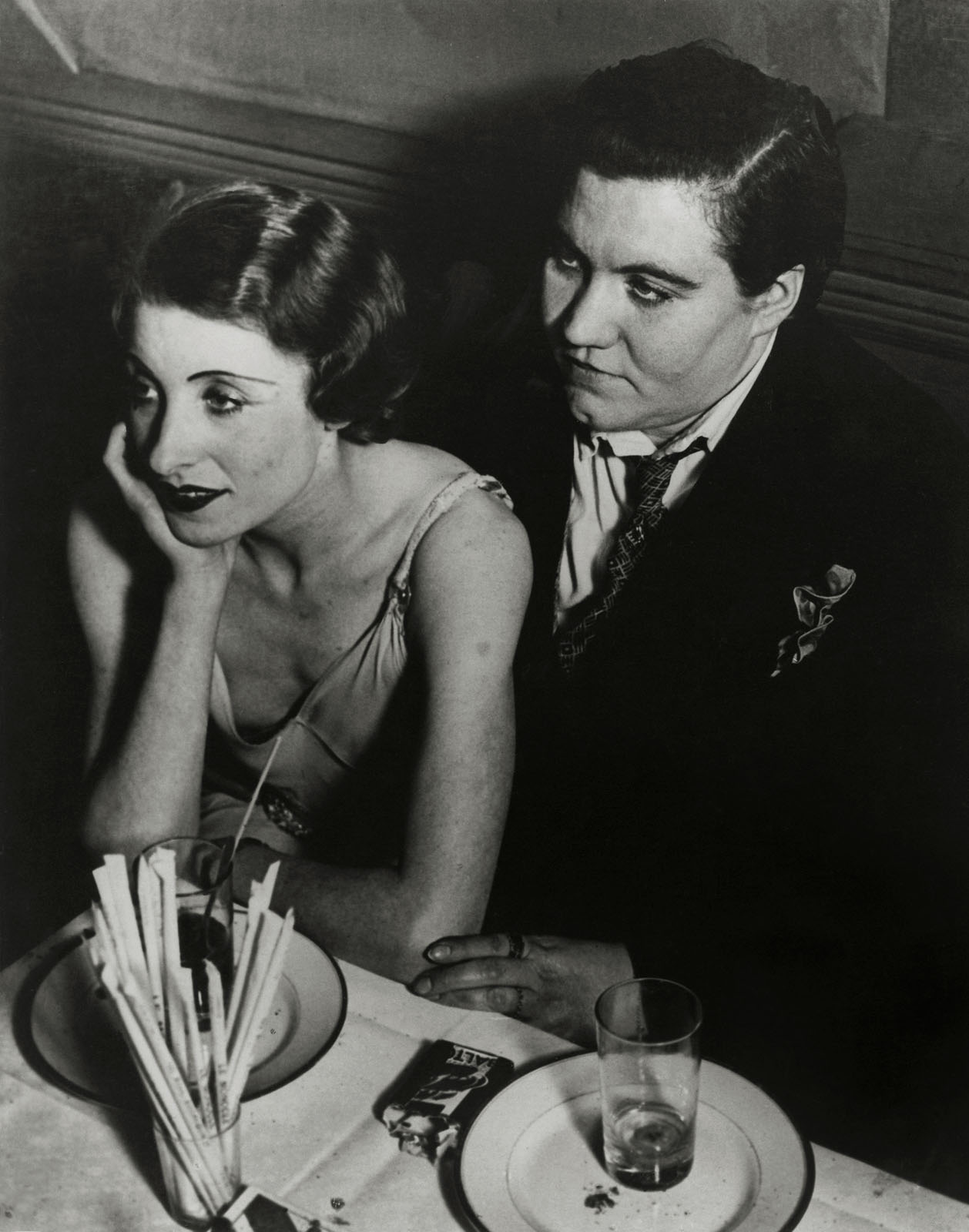
Brassaï (Hungarian-French, 1899-1984) 'La grosse Claude et son amie, au Monocle/Fat Claude and her Girlfriend, at Le Monocle' c. 1932


Brassaï (Hungarian-French, 1899-1984)
La grosse Claude et son amie, au Monocle/Fat Claude and her Girlfriend, at Le Monocle
c. 1932
Vintage silver gelatin print
© Estate Brassaï Succession – Philippe Ribeyrolles 2026


Violette Morris, known as Fat Claude, was a multi-talented athlete who excelled in soccer, car racing, shot put, and boxing during the 1920s. She was well-known in Parisian bohemian and queer circles, frequently dressed in men’s suits, and captured iconically by Brassaï. During the Nazi occupation of France, Morris became an informer and collaborator for the Gestapo, accused of passing French military secrets and intelligence to Germany. She was assassinated by the French Resistance in 1944 while driving her car in Normandy.


Brassaï (Hungarian-French, 1899-1984) 'Escalier de la Butte Montmartre/Steps of Montmartre' c. 1937


Brassaï (Hungarian-French, 1899-1984)
Escalier de la Butte Montmartre/Steps of Montmartre
c. 1937
Vintage silver gelatin print
© Estate Brassaï Succession – Philippe Ribeyrolles 2026


Brassaï (Hungarian-French, 1899-1984) 'La Tour Eiffel éclairée/The Eiffel Tower Illuminated' 1931


Brassaï (Hungarian-French, 1899-1984)
La Tour Eiffel éclairée/The Eiffel Tower Illuminated
1931
Vintage silver gelatin print
© Estate Brassaï Succession – Philippe Ribeyrolles 2026


'Brassaï - The Secret Signs of Paris' exhibition catalogue cover


Brassaï – The Secret Signs of Paris exhibition catalogue cover


Explore the exhibition catalogue

An extensive catalogue accompanies the exhibition, published by Moderna Museet and Silvana Editoriale, Milan.

The catalogue reproduces all of the more than 160 photographs included in the exhibition and features, among other texts, a piece by Brassaï himself, one by his nephew Philippe Ribeyrolles, along with a newly written essay by the French author Nina Bouraoui. Design: Malmsten Hellberg, Stockholm.

Writers: Nina Bouraoui, Brassaï, Philippe Ribeyrolles, Anna Tellgren
Editor: Anna Tellgren
Binding: Hardcover with dust jacket
Language: English
Graphic design: Malmsten Hellberg
Format: 21.7 × 28 cm
Number of pages: 208
Number of images: approx. 160

ISBN 978-91-988136-1-6

Published in collaboration with Silvana Editoriale, Milan


Moderna Museet, Stockholm

Moderna Museet is ten minutes away from Kungsträdgården, and twenty minutes from T-Centralen or Gamla Stan. Walk past Grand Hotel and Nationalmuseum on Blasieholmen, opposite the Royal Palace. After crossing the bridge to Skeppsholmen, continue up the hill. The entrance to Moderna Museet and Arkitekturmuseet is on the left-hand side.

Opening hours:
Tuesday – Sunday 11 – 18
Monday closed
Moderna Museet website

LIKE ART BLART ON FACEBOOK

Back to top

Exhibition: ‘The Paris of Brassaï. Photographs of the City Picasso Loved’ at the Museo Picasso Málaga

Exhibition dates: 19th October, 2021 – 3rd April, 2022


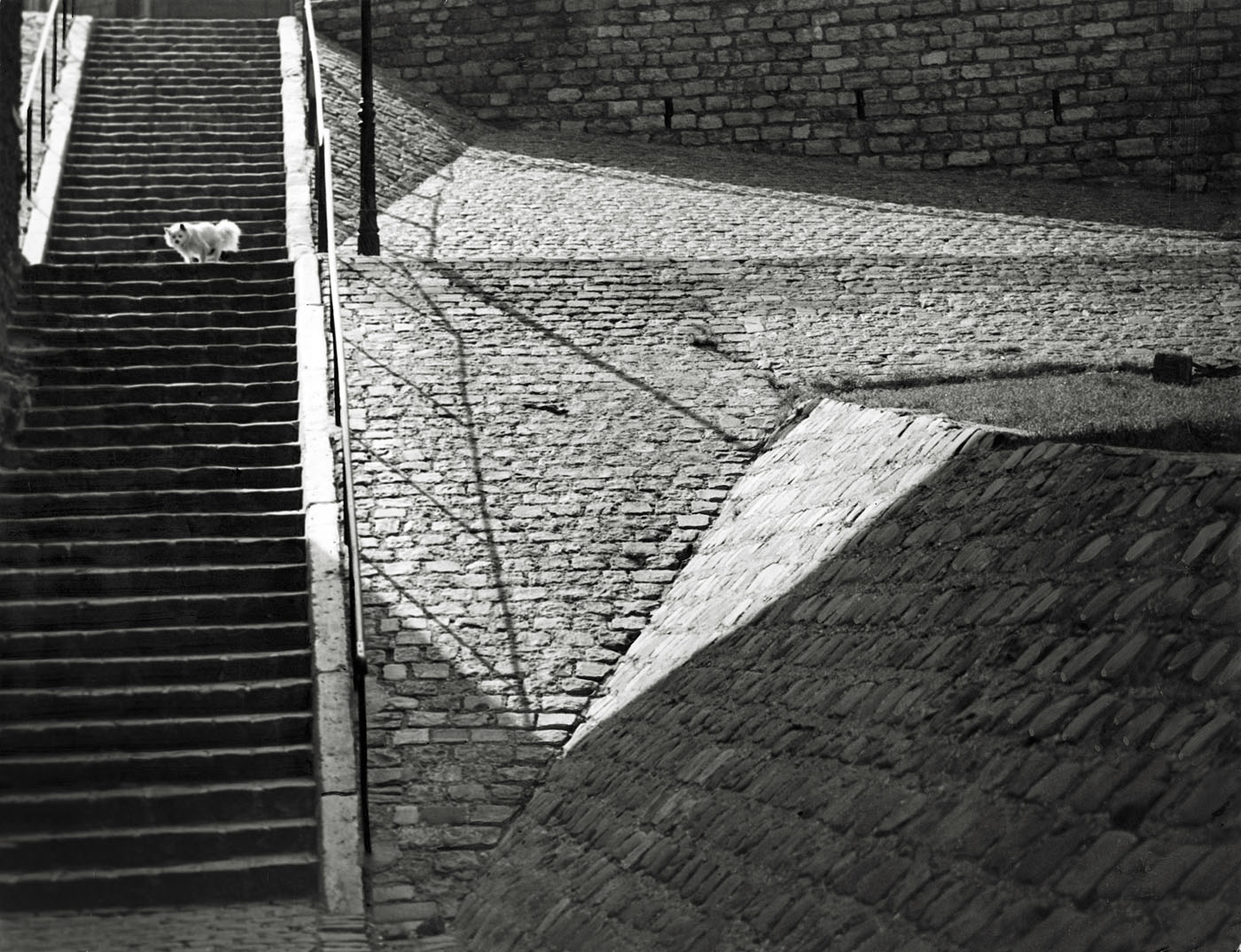
Brassaï (Hungarian-French, 1899-1984) 'Steps of Montmartre with a white dog, Paris' 1932 from the exhibition Exhibition: 'The Paris of Brassaï. Photographs of the City Picasso Loved' at the Museo Picasso Málaga, Oct, 2021 - April, 2022


Brassaï (Hungarian-French, 1899-1984)
Steps of Montmartre with a white dog, Paris
1932
Gelatin silver print
30 x 40cm
Estate Brassaï Succession, Paris
© Estate Brassaï Succession-Philippe Ribeyrolles


A quick text today as I’m still not well with bronchitis.

I really struggled to get images for this posting, the museum supplying 12 of the 21 photographs while I gathered the rest after seeing an installation image from the exhibition and deciphering further images from the preview to the catalogue of the exhibition on the Amazon website.

If you are interested in the subject matter – photographs of an environment where Picasso was in his element, a volcano at the epicentre of a vibrant, creative city – then I think the catalogue would be the way to go… but at close to $100 for just 152 pages the cost might seem a little excessive.

My favourite images in the posting are the two atmospheric photographs of Picasso’s sculptures in his studios.

Dr Marcus Bunyan


Many thankx to the Museo Picasso Málaga for allowing me to publish the photographs in the posting. Please click on the photographs for a larger version of the image.


Brassaï (Hungarian-French, 1899-1984) 'A chair in the Luxembourg Gardens, Paris' 1947 from the exhibition Exhibition: 'The Paris of Brassaï. Photographs of the City Picasso Loved' at the Museo Picasso Málaga, Oct, 2021 - April, 2022


Brassaï (Hungarian-French, 1899-1984)
A chair in the Luxembourg Gardens, Paris
1947
Gelatin silver print
23 x 17.5cm
Estate Brassaï Succession, Paris
© Estate Brassaï Succession-Philippe Ribeyrolles


Brassaï (Hungarian-French, 1899-1984) 'Luxembourg Gardens basin, Paris' 1930 from the exhibition Exhibition: 'The Paris of Brassaï. Photographs of the City Picasso Loved' at the Museo Picasso Málaga, Oct, 2021 - April, 2022


Brassaï (Hungarian-French, 1899-1984)
Luxembourg Gardens basin, Paris
1930
Gelatin silver print
29.6 x 22.3cm
Estate Brassaï Succession, Paris
© Estate Brassaï Succession-Philippe Ribeyrolles


Brassaï (Hungarian-French, 1899-1984) 'Au Cochon Limousin' 1935


Brassaï (Hungarian-French, 1899-1984)
‘Au cochon limousin’, rue Lecourbe, Paris
1935
Gelatin silver print, modern copy
29.8 x 22.9cm
Estate Brassaï Succession, Paris
© Estate Brassaï Succession-Philippe Ribeyrolles


Brassaï (Hungarian-French, 1899-1984) 'Fat Claude and her girlfriend at Le Monocle, Paris' c. 1932


Brassaï (Hungarian-French, 1899-1984)
Fat Claude and her girlfriend at Le Monocle, Paris
c. 1932
Gelatin silver print
27.6 x 22.1cm
Estate Brassaï Succession, Paris
© Estate Brassaï Succession-Philippe Ribeyrolles


Brassaï (Hungarian-French, 1899-1984) 'Kiki with her accordion player at the Cabaret des Fleurs, Rue de Montparnasse' c. 1932


Brassaï (Hungarian-French, 1899-1984)
Kiki with her accordion player at the Cabaret des Fleurs, Rue de Montparnasse
c. 1932
Gelatin silver print
© Estate Brassaï Succession-Philippe Ribeyrolles


Brassaï (Hungarian-French, 1899-1984) 'Trapeze artists, Medano Circus' 1932


Brassaï (Hungarian-French, 1899-1984)
Trapeze artists, Medano Circus
1932
Gelatin silver print
© Estate Brassaï Succession-Philippe Ribeyrolles


Brassaï (Hungarian-French, 1899-1984) 'Colonne Morris dans le Brouillard' 1933


Brassaï (Hungarian-French, 1899-1984)
Colonne Morris dans le Brouillard
1933
Gelatin silver print
© Estate Brassaï Succession-Philippe Ribeyrolles


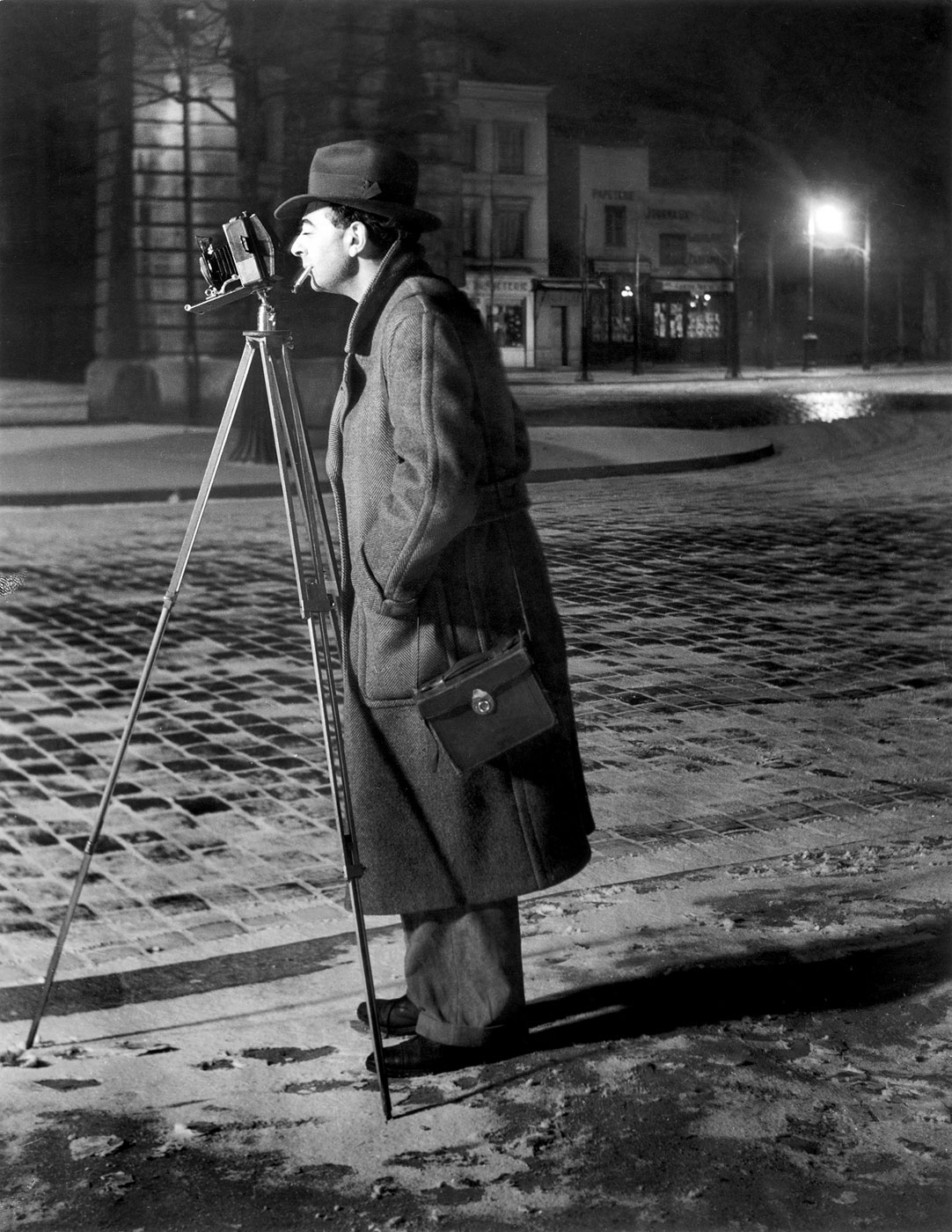
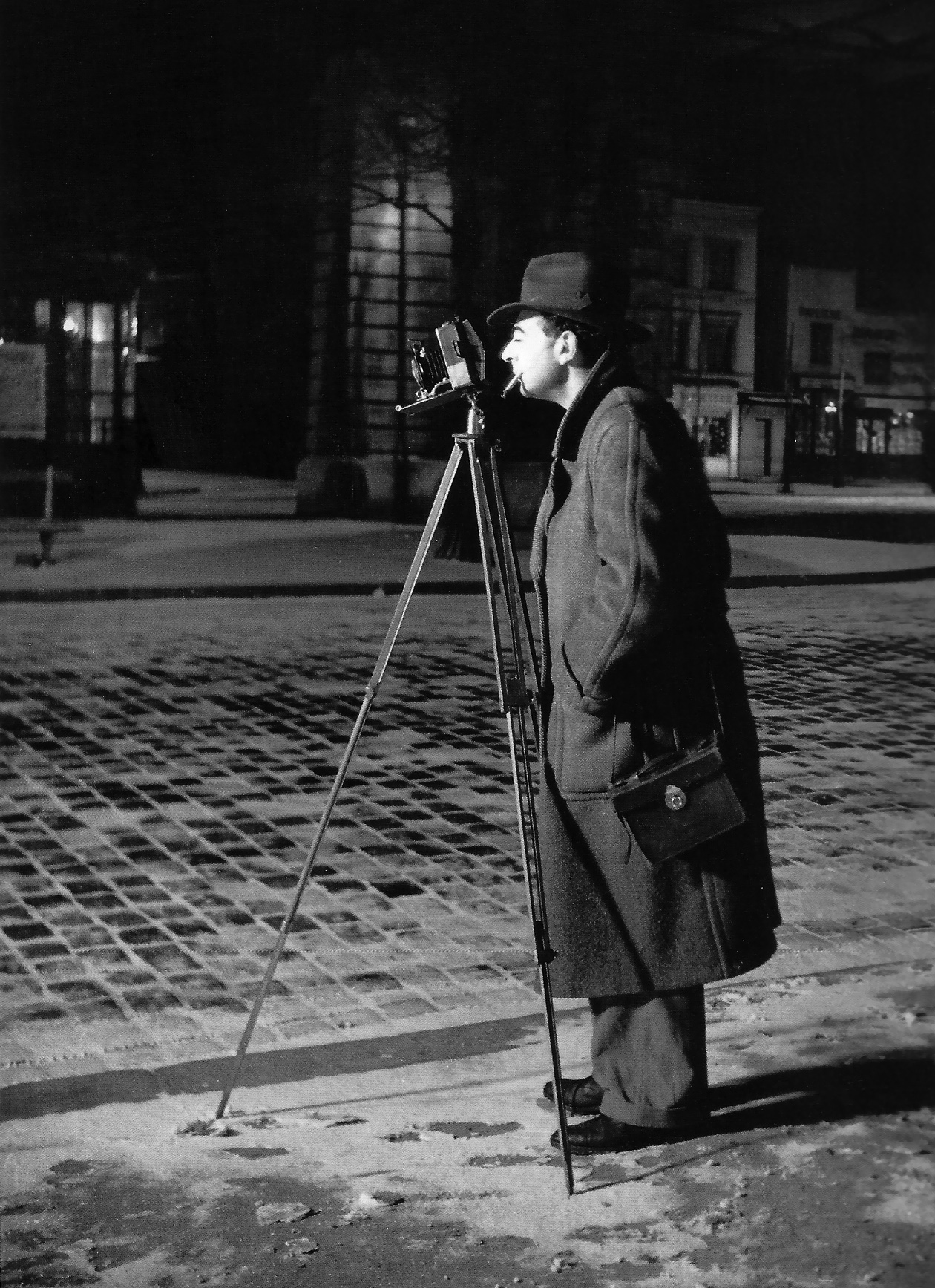
Brassaï (Hungarian-French, 1899-1984) 'Self-portrait, Boulevard Saint-Jacques, Paris' 1930-1932


Brassaï (Hungarian-French, 1899-1984)
Self-portrait, Boulevard Saint-Jacques, Paris
1930-1932
Gelatin silver print
29.6 x 22.9cm
Estate Brassaï Succession, Paris
© Estate Brassaï Succession-Philippe Ribeyrolles


The exhibition The Paris of Brassaï. Photographs of the City Picasso Loved, presented by Museo Picasso Málaga, shows the work of one of the most famous European photographers of the first half of the 20th century. With his work, Brassaï helped to create the universal public image of Paris, the Eternal City. It is displayed here alongside works by Pablo Picasso, Pierre Bonnard, Georges Braque, Lucien Clergue, Fernand Léger, Dora Maar and Henri Michaux, and with period piece films, posters, sheet music and a large quantity of documentary material.

Brassaï’s photographs invite the viewer to wander through Paris, with its river Seine, Notre Dame, its brothels and its markets. His conjured up a superb depiction of society in his many shots of the intellectual, literary, and artistic scene of 1930s and 1940s Paris, ranging from Sartre to Beckett.

This exhibition has been organised with sponsorship from Fundación Unicaja and the special collaboration of Estate Brassaï succession, Paris; Institut Français, Seville, and Musée national Picasso-Paris. It sheds light on the professional relationship and friendship between Brassaï and Picasso, who considered Brassaï to be the best photographer of his work.


Brassaï arrived in Paris from Hungary in 1924. Little by little, he discovered the dynamic nature and the social idiosyncrasies of the great metropolis. While he initially explored the city’s nightlife, over time he began to create a precise X-ray of its architecture and its people. He joined the fascinating intellectual and artistic avant-garde community of which Picasso was a member, becoming one of its finest eyewitness photographers. But Brassaï was not just a photographer, he was also a versatile artist who drew, made sculptures, decorated, and made films.

As a photographer, Brassaï constructed a visual topography of the city of light (and shadows) in the 1930s and 40s, but this exhibition also aims to show him as a prolific creative artist. The Paris of Brassaï. Photographs of the City Picasso Loved features over 300 works, with photographs, drawings and sculptures that come mainly from the Brassaï family archives (Estate Brassaï Succession). Also on display are photographs and artworks by Pablo Picasso, alongside works by Pierre Bonnard, Georges Braque, Lucien Clergue, Fernand Léger, Dora Maar and Henri Michaux.

Films, posters, musical scores, theatre programmes and a large quantity of documentary material from the Paris of that period, make up an exhibition that takes the visitor back to an unforgettable city and time.

The structure of the exhibition comprises four sections that relate to film, the visual arts, literature, and music, based on the photographic work of one of the most famous photographers of the first half of the 20th century. The exhibition layout begins with Who is Brassaï? which displays artistic works whose main feature is their expressive freedom. Paris by Day features scenes from everyday life as if they were being shown for the first time: Paris by Night is a journey through a city of shadows that evokes the melancholy that emanated from the streets and characters. Conversations with Picasso brings together work by the two artists who enjoyed a long-lasting professional and personal relationship.

The Eye of Paris

Brassaï was the pseudonym of Gyula Halász (1899-1984), a Hungarian photographer who was best known for his work on Paris, the city where he made his career. When he was three years old, his family moved to the French capital, in the year that his father, a professor of literature, was teaching at the Sorbonne. As a young man, Brassaï studied painting and sculpture at the Academy of Fine Arts in Budapest, before joining the Cavalry of the Austro-Hungarian army during the First World War. In 1920, he went to live in Berlin to work as a journalist and to study at the University of the Arts. In 1924, he moved back to Paris, where he remained for the rest of his life. He soon made friends with writers Henry Miller (who described him in one of his books as “the eye of Paris”), León-Paul Fargue and Jacques Prévert. Inspired by his frequent night-time walks around Paris, Gyula Halász asked to borrow a camera to capture the beauty of the streets and gardens in the rain and fog. He used poetic metaphors in these pictures, leading more than one graphic reporter to describe him as a poet with a camera. He then began to sign his work with the pseudonym Brassaï. It means “the man from Brasso”, his birthplace, which is now part of Romania.

In the 1930s, Paris was by no means a feast. Various events were leaving their mark on a new age, with major financial and political repercussions. The decade began with one of the greatest financial crises the world had ever experienced: the Great Depression. This was to lead to the collapse of the financial system and to poverty for thousands of families. Europe was facing the possibility of new wars and uprisings that would lead to the rise of totalitarianism. Culture and art were not blind to these events, but art dealers and artists were irresistibly drawn to Paris, seeking in the City of Light a new artistic and personal life that matched their ideals, along with the necessary freedom to make them happen.

Brassaï’s photographic work during these years helped to construct the image we have today of the French capital, with its depictions of artistic, social and intellectual life. He took X-ray-like shots of the great city, during the day and at night, from its dark alleyways to it dazzling social and artistic scene. The exhibition The Paris of Brassaï. Photographs of the City Picasso Loved shows the modern, cosmopolitan city par excellence, in a Europe that bore the hallmarks of the great changes brought about by 19th-century industry and by the international exhibitions of the early 20th-century. It was a city that Brassaï loved, as did his colleague and friend, Pablo Picasso.

Night Walks

In 1932 he published his first photographic book, “Paris de Nuit”. It contained high-contrast night shots with full bleed and no margins that feature the play of light and shadow, taken on streets, squares, rooftops, street corners, gardens, buildings and monuments. During his nocturnal wanderings, smoking cigarette after cigarette, the gaslights, fog and car headlights lit up a unique Paris, transforming its rigorously classical architecture and capturing the strange beauty of the fleeting shadows. His negatives became black and white photographs with a strong sense of mystery. They are pictures that alter your perception of the familiar. “Paris de Nuit” was a cultural sensation and a well-deserved success that caught the attention of leading art magazines such as Minotaure, one of the most important cultural publications of the time.

Brassaï liked to say that his birthplace was very close to that of Count Dracula, and that, like him, he was a nocturnal creature. For this reason, in several of his unforgettable photobooks he showed an alternative Paris, with scenes in brothels and bars where young gay men, lesbians and transvestites are all seen having fun. They also contain scenes from the city’s social life, high society, and intellectual circles.

Portraying the Intellectual Circles

The photographer himself described 1932 and 1933 as the most important years of his life. It was during these years that he met the key figures of Parisian cultural life, many of whom were also foreigners, and he evolved alongside the intellectual milieu and the artistic avant-garde movements that were flourishing in Paris at the time.

His earliest works coincided with the rise of Surrealism in France. The movement believed that photography encouraged a division of the poetic personality simultaneously into subject and object. But although his pictures display the same attraction to the dreamworld expressed by the surrealists, and his series on graffiti indicates his interest in the wonder of random discovery and the primitive world, Brassaï always denied belonging to the movement. His photographs, based on the traditional realist style, are evocative images that condense the atmosphere of a brief moment, without becoming documentary photography.

Brassaï was part of the Paris intellectual circle, as was Picasso, at a time when art was flourishing. He took photographs of artists who were to become the sacred monsters of our age, many of whom were his friends: Pablo Picasso, Salvador Dalí, Alberto Giacometti, as well as leading writers of the time such as Jean Genet and Henri Michaux. His portraits reveal his great skill at capturing the personality of his sitters, creating a collective portrait of the intellectual circle.

On the Walls of Paris

Brassaï was the first person in the history of modern photography to intuitively consider the camera as a tool with which to dissect urban life. “The eye of Paris”, as Henry Miller dubbed him in one of his essays, also directed his gaze at the drawings, marks and doodles on Paris walls. He came across these popular anonymous signs and imprints on walls during his walks along Parisian alleyways: faces, symbols, animals, handprints, the scratched-on outlines of sketches… They were captivatingly primitive, and he elevated them to the status of “Art Maudit” or Damned Art because, for him, they were more than just ways for people to express themselves.

Over the years, Brassaï compiled a catalogue of the marks that the capital’s inhabitants left on its walls, with photos that no editor would publish, until at last they were collected together in a book, Graffiti (1961), after Edward Steichen declared his admiration for this work and his intention of organising an exhibition at MoMA in New York. When Brassaï immortalised these street pictures, the term graffiti had not yet been coined, and it was not until the 1980s that it finally became classified as Urban or Street Art.

Brassaï was a prolific creative artist who also produced drawings and sculptures, wrote numerous articles and published 17 books. His film Tant qu’il y aura des bêtes won the award for the best original short film at the Cannes Film Festival in 1956, and in 1978 he won France’s Grand Prix National de la Photographie.

Brassaï / Picasso. A Friendship

Photography constantly accompanied Picasso, not only as a testimony to his life, but often revealing his personality, work and inner circle. Of all the many relationships he struck up in Paris with writers, essayists, playwrights and visual artists, the Museo Picasso Málaga exhibition focuses on the close and prolific professional relationship between Brassaï and Pablo Picasso.

In December. 1932, the art critic Tériade invited Brassaï to take pictures of Picasso, his studio and his sculptures, to illustrate the first issue of Minotaure. This collaboration led to a long and sincere friendship that was sustained by mutual admiration. Brassaï was fascinated by Picasso’s personality, and Picasso admired the photographer’s unbiased gaze. The two friends were both foreigners in the big city: one of them was to become one of the great photographers of the 20th century, and the other, the great artist who changed the history of art. They shared an extraordinary gift for observation, as well as great curiosity. They both collected strange objects that had been thrown away and found again by chance, and they shared a keen interest in primitive art, art brut, bones, poetry and graffiti. They also had a common dislike of focussing on a single discipline, in their urge to explore other creative fields.

This obvious and very special complicity meant that Brassaï became an exceptional witness to Picasso’s private world: the places where he created art, the works themselves, his family life and his friends. Brassaï was one of the few people Picasso allowed free access to his studios, and he was the first to photograph his sculptures. The Málaga-born artist opened the doors of his studios to him in Boisgeloup, La Boétie and Grands Augustins, successively. Brassaï had a great sense of detail, he knew how to put order into disorder, and he composed his photographs in an almost architectural way, giving a new dimension to the works Picasso created and the objects and materials with which he surrounded himself.

One of the most important books in terms of getting to know Picasso, is Brassaï’s Conversations with Picasso (1964), a fascinating text that is outstanding for the immediacy and detail of a man who wrote in the same way he took pictures. This chronicle, which Brassaï illustrated with over 50 photographs, runs from September 1943 – eleven years after he first met Picasso – to September 1962. It provides us with two decades-worth of the artist’s story and, above all, of an environment where Picasso was the epicentre, while at the same time describing the history of art and the main events of those years. The relationship between Brassaï and Picasso remained intact until the Spaniard’s death in 1973. Brassaï died in the South of France in 1984 and was buried in Montparnasse cemetery, in the city that both he and Picasso loved.

For the occasion, Museo Picasso Málaga and La Fábrica have jointly published the photobook Brassaï (Paris & Picasso), which contains 105 full-page photographs and an excerpt from the text in which Henry Miller dubbed Brassaï “The eye of Paris”. This bi-lingual hardback edition is printed on coated paper, to highlight the photographs’ half-tones and nuances of light and shade. The book is now available to purchase from the Museo Picasso Málaga bookshop and is due to be distributed to Spanish, European and US bookshops.

Press release from the Museo Picasso Málaga


Brassaï (Hungarian-French, 1899-1984) 'The fireplace in Pablo Picasso's studio, Rue La Boétie' 1932


Brassaï (Hungarian-French, 1899-1984)
The fireplace in Pablo Picasso’s studio, Rue La Boétie
1932
Gelatin silver print
© Estate Brassaï Succession-Philippe Ribeyrolles


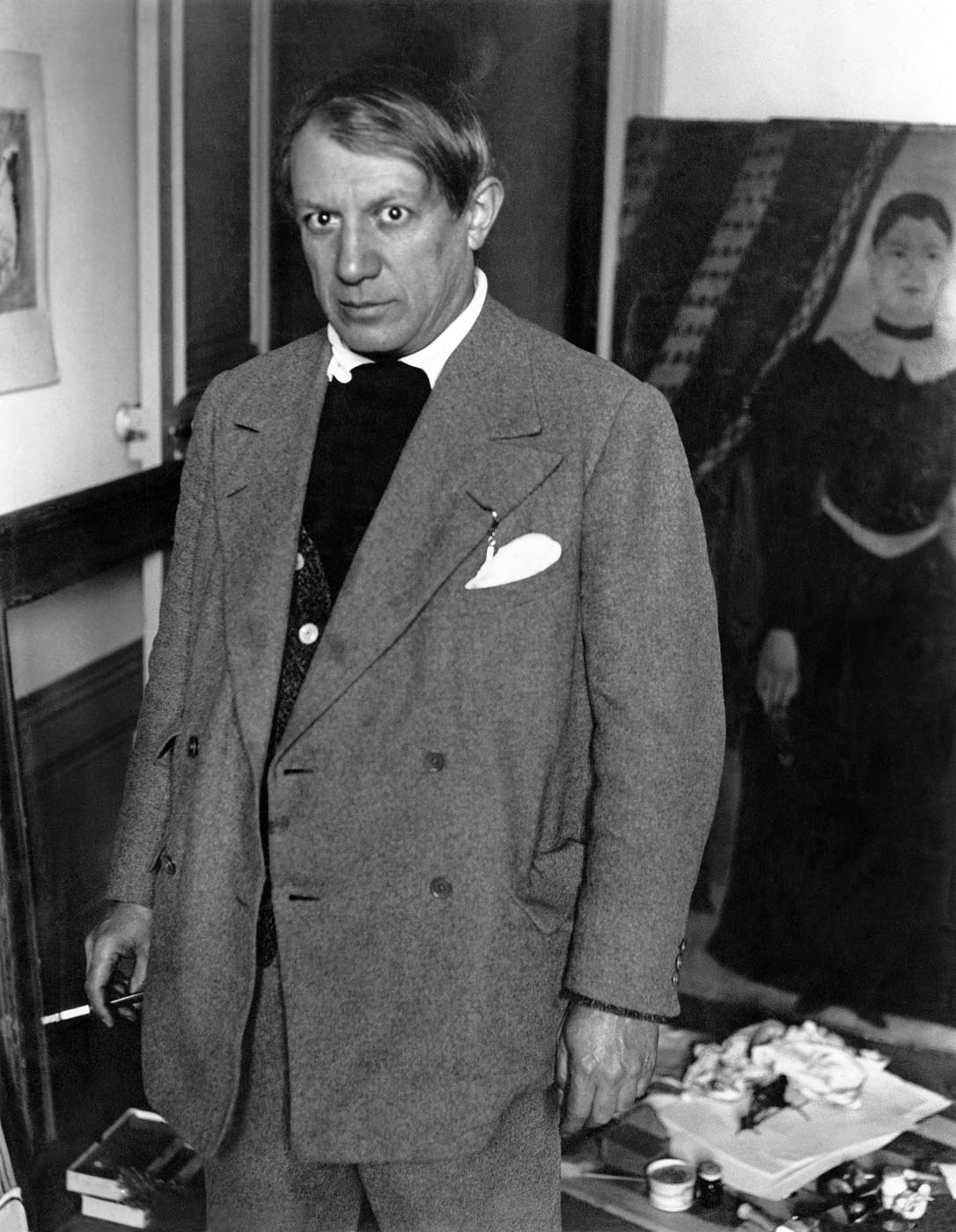
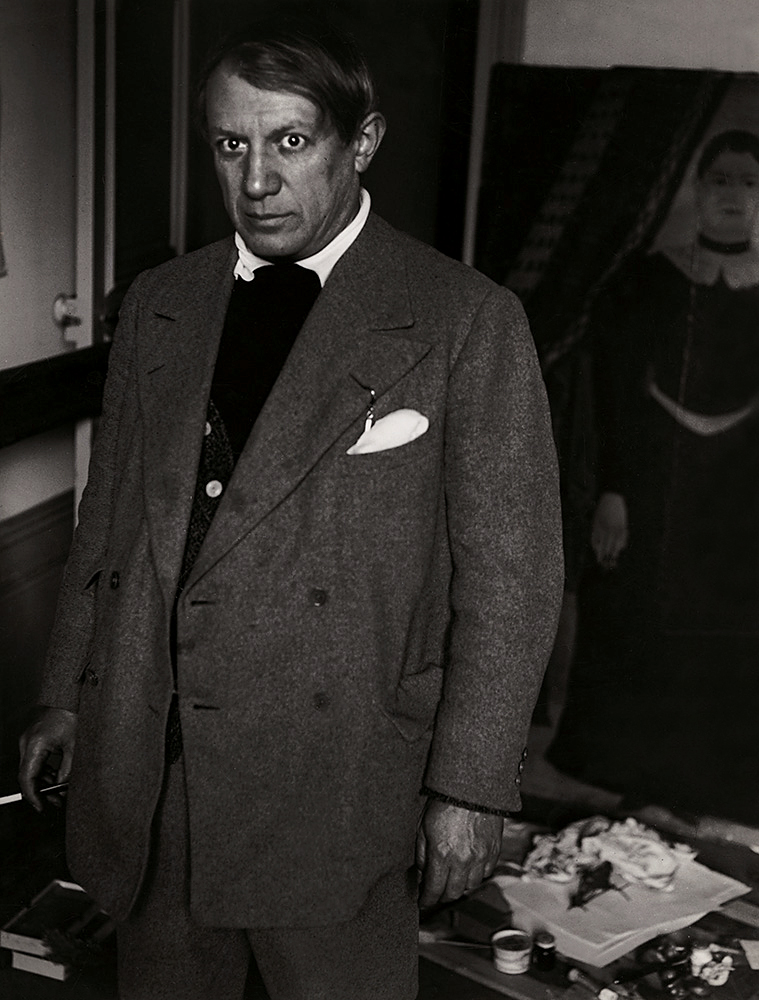
Brassaï (Hungarian-French, 1899-1984) 'Pablo Picasso in the studio on Rue la Boétie, in front of the portrait of Yadwigha by Henri Rousseau, Paris' 1932


Brassaï (Hungarian-French, 1899-1984)
Pablo Picasso in the studio on Rue la Boétie, in front of the portrait of Yadwigha by Henri Rousseau, Paris
1932
Gelatin silver print
28.1 x 21.8cm
Estate Brassaï Succession, Paris
© Estate Brassaï Succession-Philippe Ribeyrolles


“When I enter the studio, I leave my body at the door… I only allow my spirit to go in there and paint”


Pablo Picasso


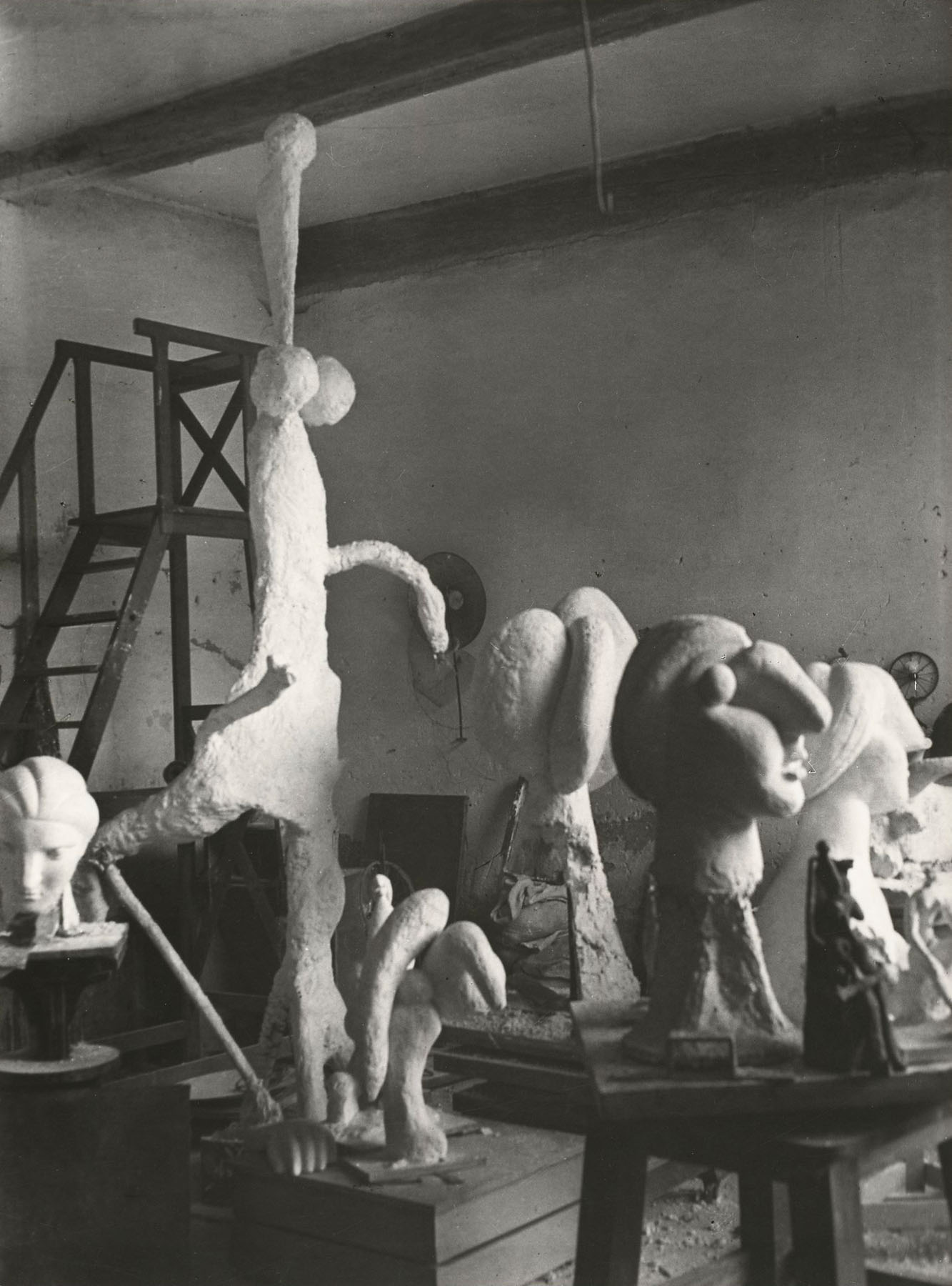
Brassaï (Hungarian-French, 1899-1984) 'Plaster sculptures in Pablo Picasso's studio, Boisgeloup' December 1932


Brassaï (Hungarian-French, 1899-1984)
Plaster sculptures in Pablo Picasso’s studio, Boisgeloup
December 1932
Gelatin silver print
© Estate Brassaï Succession-Philippe Ribeyrolles


In 1930, Picasso acquires a house and land near Gisors, Normandy, with the aim of creating monumental sculptures. Of those he creates there, La femme au vase (Woman with Vase), a piece from 1933, stands out for its great symbolic weight, given that it is placed on the artist’s tomb in the Château of Vauvenargues. But it is above all the busts of Marie-Thérèse Walter, his young secret lover, who both Brassaï and Boris Kochno capture with their respective lenses in attempts to recreate the peculiar atmosphere of that country studio, inhabited by strange creatures. While Kochno’s report is that of an amateur, Brassaï’s is a commission for the first issue of Minotaure art magazine, from 1933, accompanying a text by André Breton, “Picasso dans son élément” (Picasso in his Element), which reveals Picasso as a sculptor, a facet of his work that was completely unknown until then.

Anonymous text from the Museo Picasso website Nd [Online] Cited 11/03/2022


Brassaï (Hungarian-French, 1899-1984) 'Weekend, Paris' 1936


Brassaï (Hungarian-French, 1899-1984)
Weekend, Paris
1936
Gelatin silver print
© Estate Brassaï Succession-Philippe Ribeyrolles


Brassaï (Hungarian-French, 1899-1984) 'Man with Ram (1943), Bust of Dora Maar (1941) and Seated Cat (1941-1943) by Pablo Picasso, Paris' 1943


Brassaï (Hungarian-French, 1899-1984)
Man with Ram (1943), Bust of Dora Maar (1941) and Seated Cat (1941-1943) by Pablo Picasso, Paris
1943
Gelatin silver print
30 x 20.7cm
Estate Brassaï Succession, Paris
© Estate Brassaï Succession-Philippe Ribeyrolles
© Sucesión Pablo Picasso, VEGAP, Málaga, 2021


Brassaï (Hungarian-French, 1899-1984) 'Pablo Picasso at the window of his studio on the Rue des Grands Augustins, Paris' 1939


Brassaï (Hungarian-French, 1899-1984)
Pablo Picasso at the window of his studio on the Rue des Grands Augustins, Paris
1939
Gelatin silver print
© Estate Brassaï Succession-Philippe Ribeyrolles


Pablo Picasso (Spanish, 1881-1973) 'Ile de la Cité – vue de Notre-Dame de Paris' Paris, 26 February 1945


Pablo Picasso (Spanish, 1881-1973)
Ile de la Cité – vue de Notre-Dame de Paris
Paris, 26 February 1945
Oil on canvas
80 x 120cm
Museum Ludwig, Cologne
© Rheinisches Bildarchiv Cologne
© Sucesión Pablo Picasso, VEGAP, Málaga, 2021


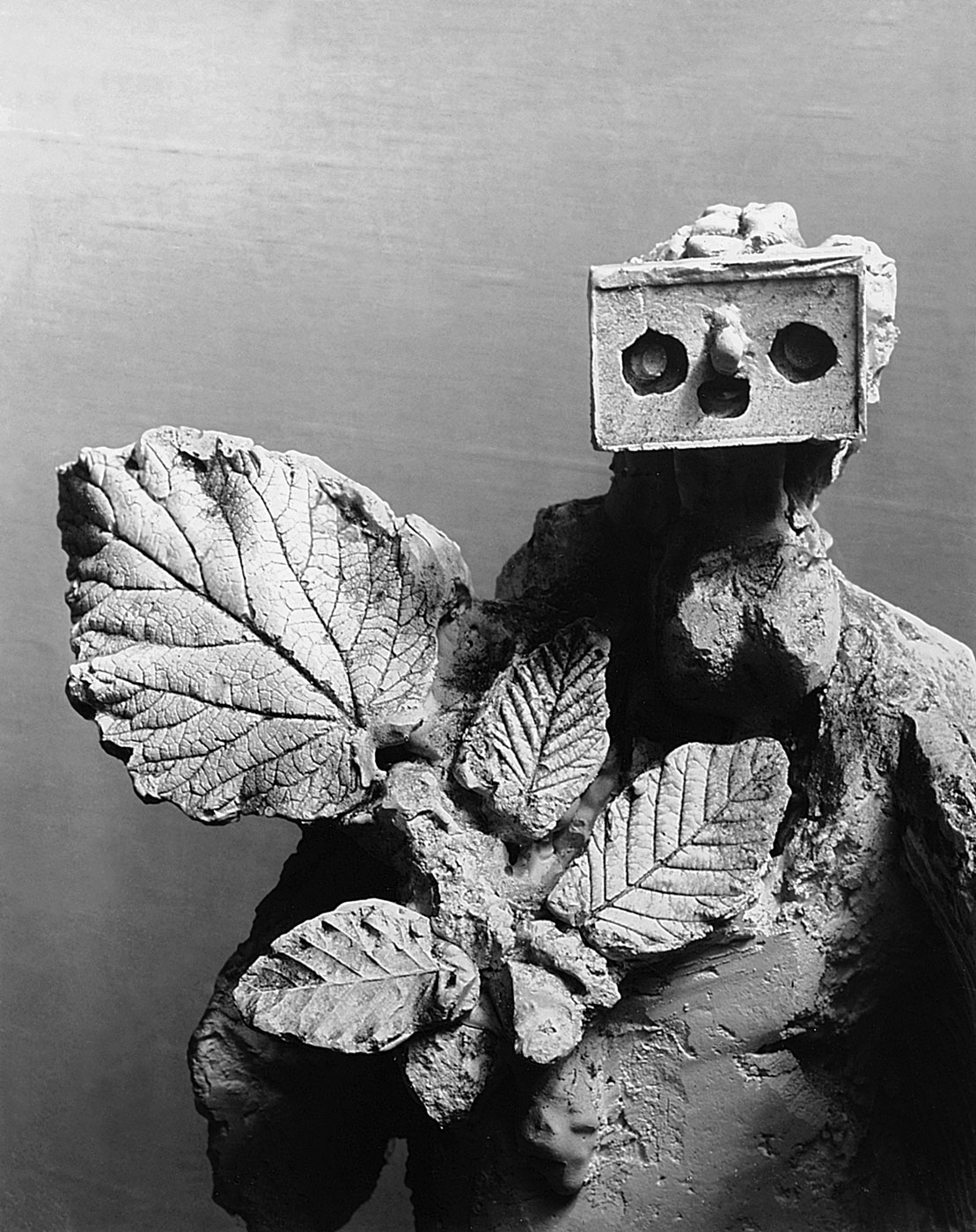
Brassaï (Hungarian-French, 1899-1984) 'Detail of the plaster sculpture Woman with Leaves (Pablo Picasso, 1934) in the studio on the rue des Grands- Augustins, Paris' 1943


Brassaï (Hungarian-French, 1899-1984)
Detail of the plaster sculpture Woman with Leaves (Pablo Picasso, 1934) in the studio on the rue des Grands Augustins, Paris
1943
Gelatin silver print
27.7 x 22.1cm
Estate Brassaï Succession, Paris
© Estate Brassaï Succession-Philippe Ribeyrolles
© Sucesión Pablo Picasso, VEGAP, Málaga, 2021


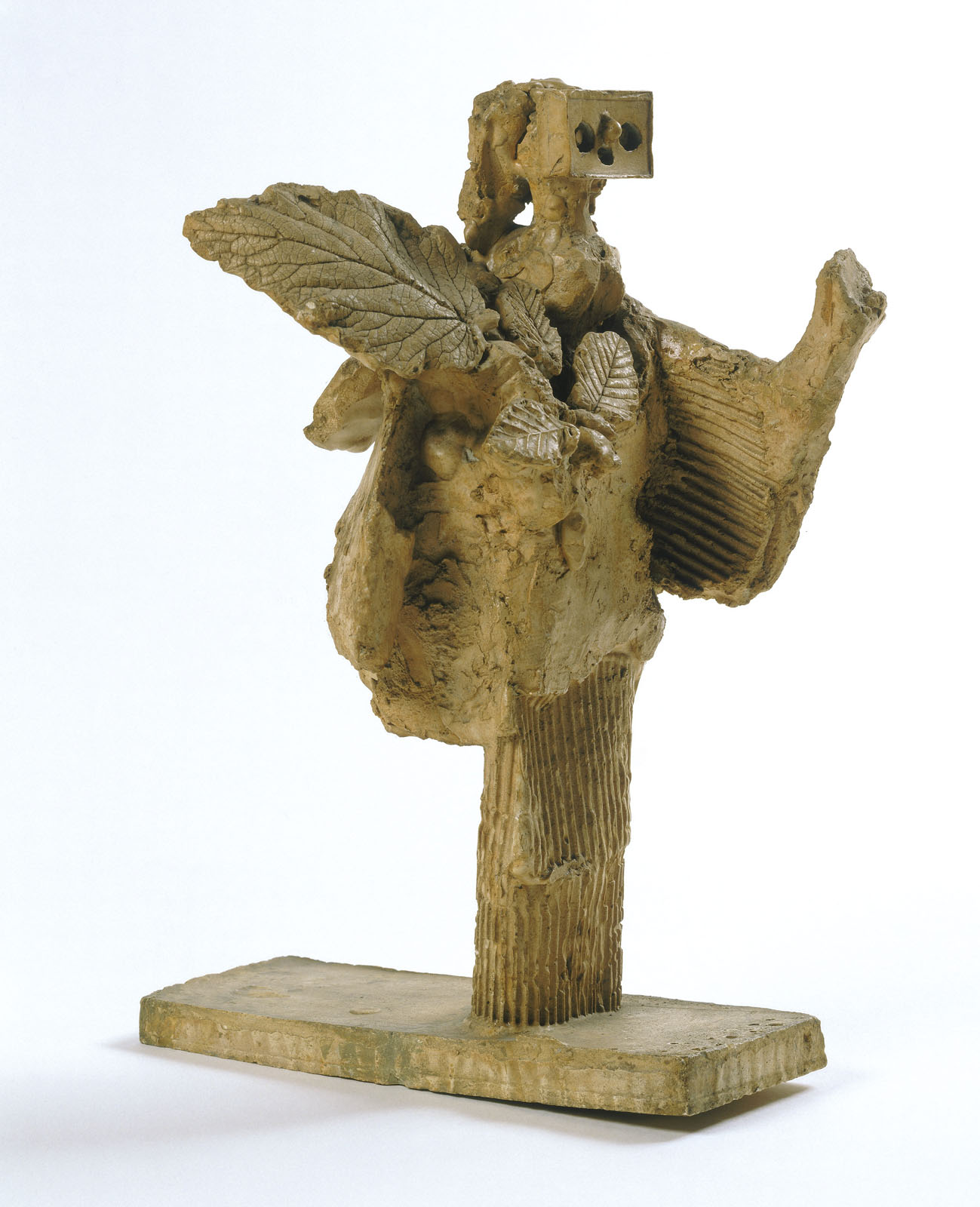
Pablo Picasso (Spanish, 1881-1973) 'Woman with Leaves, Boisgeloup' 1934


Pablo Picasso (Spanish, 1881-1973)
Woman with Leaves, Boisgeloup
1934
Original plaster varnished
38.5 x 27.5 x 21cm
Fundación Almine y Bernard Ruiz-Picasso para el Arte, Madrid
On temporary loan to the Museo Picasso Málaga
© Sucesión Pablo Picasso, VEGAP, Málaga, 2021


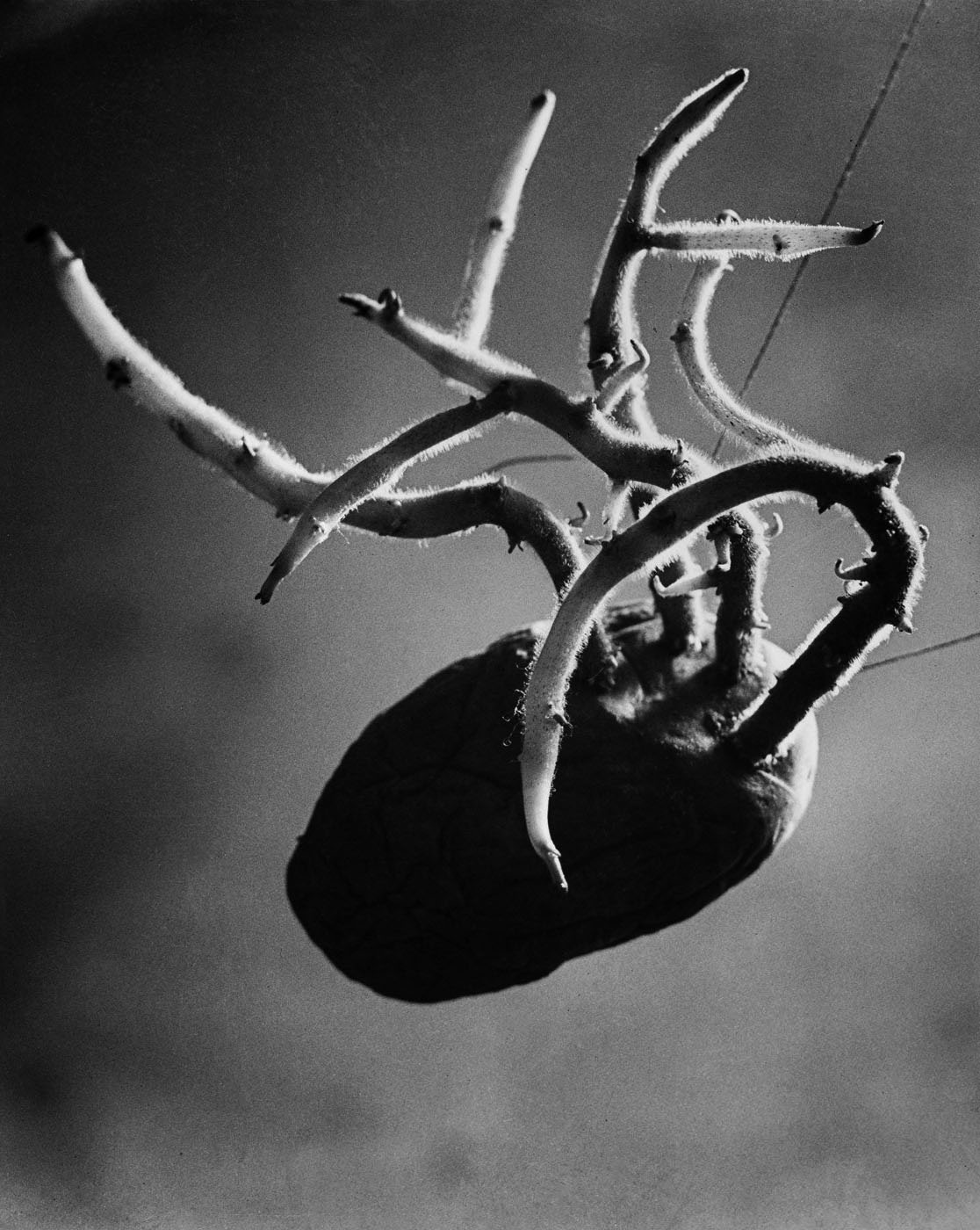
Brassaï (Hungarian-French, 1899-1984) 'Circumstantial Magic. Sprouting Potato' 1931


Brassaï (Hungarian-French, 1899-1984)
Circumstantial Magic. Sprouting Potato
1931
Gelatin silver print
© Estate Brassaï Succession-Philippe Ribeyrolles


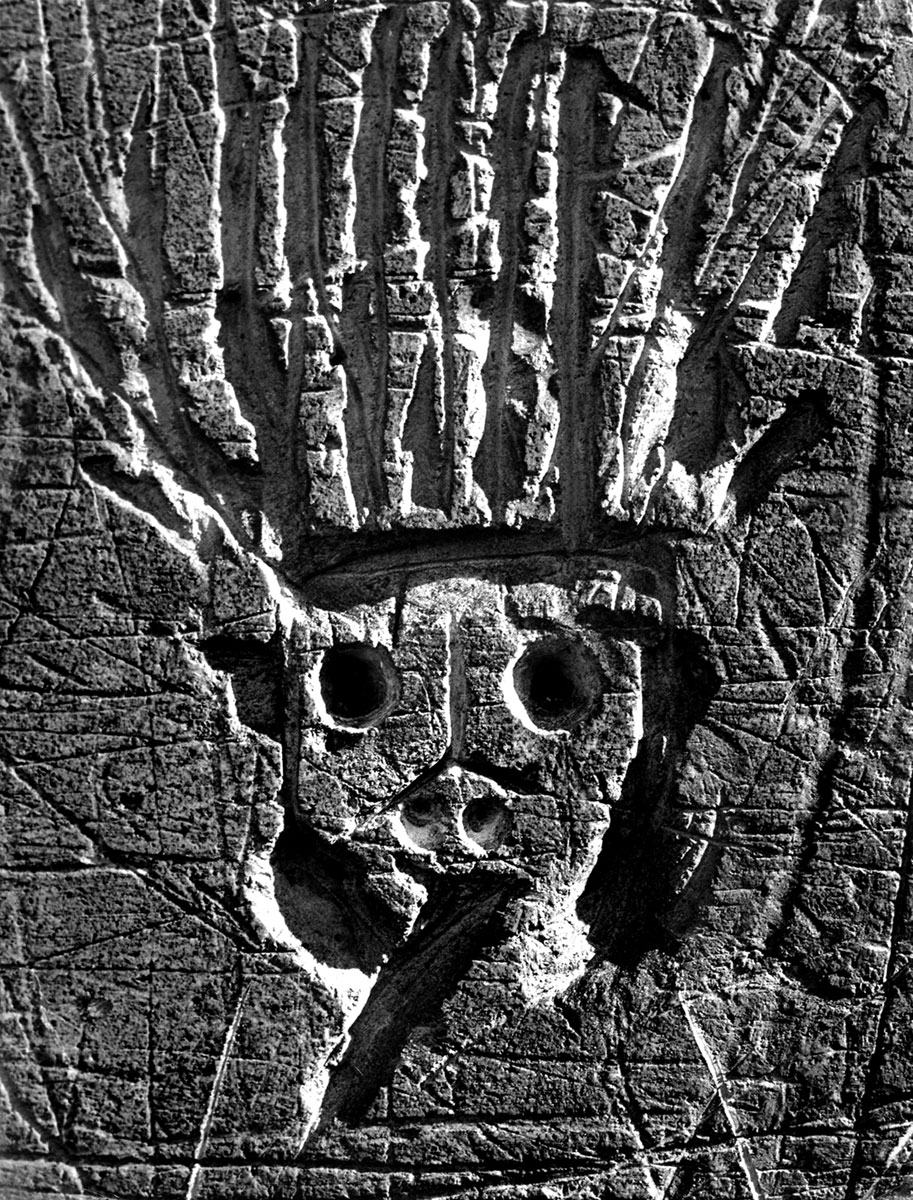
Brassaï (Hungarian-French, 1899-1984) 'The Sun King, Paris' 1930-1950


Brassaï (Hungarian-French, 1899-1984)
The Sun King, Paris
1930-1950
From the Graffiti series
Gelatin silver print
40 x 29.5cm
Estate Brassaï Succession, Paris
© Estate Brassaï Succession-Philippe Ribeyrolles


Brassaï (Hungarian-French, 1899-1984) 'Le Poussin' 1955


Brassaï (Hungarian-French, 1899-1984)
Le Poussin
1955
From the Graffiti series
Gelatin silver print
© Estate Brassaï Succession-Philippe Ribeyrolles


Museo Picasso Málaga
Palacio de Buenavista C/ San Agustín, 8
29015 Málaga, Spain

Opening hours:
Daily 10am – 7pm

Museo Picasso Málaga website

LIKE ART BLART ON FACEBOOK

Back to top

Exhibition: ‘Brassaï’ at Fundación MAPFRE, Barcelona

Exhibition dates: 20th February – 13th May, 2018

Curator: Mr. Peter Galassi


Brassaï (Gyulá Halász) (Hungarian-French, 1899-1984) 'Vista per sota del Pont Royal cap al Pont de Solférino [View through the pont Royal toward the pont Solférino]' c. 1933 from the exhibition 'Brassaï' at Fundación MAPFRE, Barcelona, Feb - May, 2018


Brassaï (Gyulá Halász) (Hungarian-French, 1899-1984)
Vista per sota del Pont Royal cap al Pont de Solférino
View through the pont Royal toward the pont Solférino

c. 1933
(Nuit / Night 53)
40.1 x 51cm
© Estate Brassaï Succession, Paris


For those who know how to look

Not everyone can see. It takes a great eye and a great mind, and the liberation of that mind, to be able to transform the mundane, the everyday, the vernacular – into art. Brassaï’s folklore, his mythology of life, suggests that the life of others (those living on the edge) is as valuable and essential to the formation of culture as any other part of existence.

Brassaï’s work comes alive at night and, as Alejandra Uribe Ríos observes, “The night was undoubtedly the great muse of his work, his inspiration.” While he got some of his friends to stage scenes for his book Paris by night – acting as prostitutes and customers hanging around in back alleys – it matters not one bit. The artist was embedded in this world and represents what he knows, what he has seen in his mind’s eye.

The density of his photographs is incredible – their atmosphere thick and heavy; revealing and beautiful. “In certain photographs, objects take on a particular light, a fascinating presence. Vision has fixed them “as they are in themselves” […]. It confers a density that is entirely foreign to their real existence. They are there, one might say, for the first time, but at the same time for the last.” The first and last, a circular compaction of time and space into the eternal present, objects as they are in themselves and will always be.

That fascinating presence can be felt even today, for that is what the time freeze of photography does: it “look backwards and forwards in the same instance.”

Brassaï saw something clearly, so that we might see it now. Look at the seemingly mundane space portrayed in Concierge’s Lodge, Paris (1933, below) from his book Paris de jour / Paris by Day. The photograph could be taken at night, but it is day! The small amount of sunlight falls on the tied-back curtain in the doorway; the crumpled mat lies outside the door; the two doors compete for our visual attention – one the solid presence that holds up the left hand side of the image, the other the vanishing point in the distance; and the eye is led down to this door by the pavement and the gutter with a band of water emphasising the form. The verticality of the worn and ancient stone work is emphasised by the modern metal box in front of it, leading the eye up to the Concierge sign only, mind you, for numbers 5 & 7. But then the mystery… what is going on above the ancient door at the rear – the sky, a ceiling, another wall lit by the last rays of the sun? Such a dense, complex image that requires an intimate knowledge of the mystery of place, in both the artist and the viewer.

Here we see Brassaï in Self-portrait, Boulevard Saint-Jacques, Paris 14ème, standing in the snow at night, heavy overcoat, hat, cigarette hanging out of his mouth, squinting through his camera to previsualise not just the photograph he is taking, but it’s final, physical embodiment, the print. In our world today of Insta-photos, millions and millions of photographs that mean basically nothing, and where anyone without training can pick up a camera and think of themselves a photographer, there is something to be said for taking the time to train and educate your eye and your mind. Only then might you reveal something about the world and, possibly, yourself as well.

Dr Marcus Bunyan

@mapfrefcultura #expo_brassai


Many thankx to Fundación MAPFRE for allowing me to publish the photographs in the posting. Please click on the photographs for a larger version of the image.


“I was eager to penetrate this other world, this fringe world, the secret, sinister world of mobsters, outcasts, toughs, pimps, whores, addicts, inverts. Rightly or wrongly, I felt at the time that this underground world represented Paris at its least cosmopolitan, its most alive, its most authentic, that in these colourful faces of its underworld there had been preserved from age to age, almost without alteration, the folklore of its most remote past.”


Brassaï, 1976


“In certain photographs, objects take on a particular light, a fascinating presence. Vision has fixed them “as they are in themselves” […]. It confers a density that is entirely foreign to their real existence. They are there, one might say, for the first time, but at the same time for the last.”


Brassaï, undated note


“To oblige the model to behave as if the photographer isn’t there really is to stage a comic performance. What’s natural is precisely not to dodge the photographer’s presence. The natural thing in that situation is for the model to pose honestly.”


Brassaï, undated note


“The night suggests, he does not teach. The night finds us and surprises us by its strangeness; it liberates in us the forces that, during the day, are dominated by reason.”

“Night does not show things, it suggests them. It disturbes and surprises us with its strangeness. It liberates forces within us which are dominated by our reason during the daytime.”


Brassaï


“The night was undoubtedly the great muse of his work, his inspiration. The train tracks, the lovers, the fog, the posters, the ballet and the cabarets. Everything is worthy of portraying for those who know how to look and that is undoubtedly one of Brassai’s merits: embodying the everyday, rescuing the magical, the lyrical, the mystery of common life, and doing it with elegance, converting the seemingly trivial into a artwork.”


Alejandra Uribe Ríos


Brassaï (Gyulá Halász) (Hungarian-French, 1899-1984) 'Porteria, París [Concierge's Lodge, Paris]' 1933 from the exhibition from the exhibition 'Brassaï' at Fundación MAPFRE, Barcelona, Feb - May, 2018


Brassaï (Gyulá Halász) (Hungarian-French, 1899-1984)
Porteria, París
Concierge’s Lodge, Paris

1933
(Paris de jour / Paris by Day 686)
29.3 x 22.2cm
© Estate Brassaï Succession, Paris


Brassaï (Gyulá Halász) (Hungarian-French, 1899-1984) 'The Eiffel Tower seen through the Gate of the Trocadéro' 1930-1932


Brassaï (Gyulá Halász) (Hungarian-French, 1899-1984)
La Torre Eiffel vista a través del reixat del Trocadéro
La torre Eiffel vista a través de la reja del Trocadero
The Eiffel Tower seen through the Gate of the Trocadéro

1930-32
(Nuit / Night 1; variant of Paris de nuit / Paris by Night, plate 57)
30 x 23.6cm
© Estate Brassaï Succession, Paris


Brassaï (Gyulá Halász) (Hungarian-French, 1899-1984) 'Extinguishing a Streetlight, rue Émile Richard' c. 1932


Brassaï (Gyulá Halász) (Hungarian-French, 1899-1984)
Apagant un fanal, Rue Émile Richard
Apagando una farola, rue Émile Richard
Extinguishing a Streetlight, rue Émile Richard

c. 1932
(Nuit / Night 267)
22.9 x 28.1cm
© Estate Brassaï Succession, Paris


Brassaï (Gyulá Halász) (Hungarian-French, 1899-1984) 'Avenue de l'Observatoire' 1934


Brassaï (Gyulá Halász) (Hungarian-French, 1899-1984)
Avenue de l’Observatoire
1934
Gelatin silver print
23.4 x 30.1cm
© Estate Brassaï Succession, Paris


Brassaï (Gyulá Halász) (Hungarian-French, 1899-1984) 'Streetwalker, near the place d’Italie' 1932


Brassaï (Gyulá Halász) (Hungarian-French, 1899-1984)
Meuca, a prop de la Place d’Italie
Prostituta, cerca de la Place d’Italie
Streetwalker, near the place d’Italie
1932
(Plaisirs / Pleasure 333)
29.9 x 22.9cm
© Estate Brassaï Succession, Paris


Introduction

Fundación MAPFRE is launching its 2018 exhibition programme in Barcelona with the exhibition Brassaï, a comprehensive survey of the career of this celebrated Hungarian-born French photographer whose work helped to define the spirit of Paris in the 1930s. Brassaï was one of the most important of the group of European and American photographers whose work in the inter-war years greatly enriched photography’s potential as a form of artistic expression.

The artist began to take photographs in 1929 or 1930, maintaining an intense level of activity throughout the 1930s. Brassaï’s principal subject was Paris, where he settled in 1924, intending to become a painter. Around the end of World War I the artistic centre of the city had shifted from Montmartre to Montparnasse where most of the artists, constituting a major international community, lived like a large family. Brassï was fascinated by the French capital and later said that he started to take photographs in order to express his passion for the city at night. Soon, however, he also began to take portraits, nudes, still life, images of everyday life and depictions of picturesque corners of the city and moments captured during the day.

Brassaï’s confidence in the power of blunt, straightforward photography to transform what it describes, as well as his talent for extracting from ordinary life iconic images of lasting force, won him an important place among the pioneers of modern photography.

This exhibition offers a survey of the artist’s career through more than 200 works (vintage photographs, a number of drawings, a sculpture and documentary material) grouped into twelve thematic sections, of which the two devoted to Paris in the 1930s are the most important. Produced by Fundación MAPFRE and curated by Peter Galassi, chief curator of the Department of Photography at the MoMA, New York, from 1991 to 2011, this is the first retrospective exhibition on Brassaï to be organised since 2000 (Centre Pompidou) and the first to be held in Spain since 1993.

The exhibition benefits from the exceptional loan of the Estate Brassaï Succession (Paris) and other loans from some of the most important institutions and private collections in Europe and the United States, including: The Art Institute of Chicago, The Museum of Fine Arts (Houston), The Metropolitan Museum of Art (New York), The Museum of Modern Art (New York), the Musée National d’Art Moderne, Centre Pompidou (París), The Philadelphia Museum of Art, The San Francisco Museum of Modern Art, David Dechman and Michel Mercure, ISelf Collection (London) and Nicholas and Susan Pritzker.

The Photographer – Brassaï (Gyulá Halász, 1899-1984)

Brassaï (the pseudonym of Gyulá Halász) was born in 1899 in Brassó, Transylvania (present-day Braşov in Rumania), from where he subsequently took his name for signing his photographs (Brassaï means “from Brassó”).

After studying art in Budapest and Berlin, he moved to Paris and very soon began to earn occasional money and establish a reputation by selling articles and caricatures to German and Hungarian magazines. Photographs were rapidly replacing traditional magazine illustrations and Brassaï also functioned as a one-man photo-agency. Eventually he started making photographs himself, abandoning painting and sculpting, disciplines for which he nevertheless retained great interest and to which he returned during his career. Around 1900, an aesthetic movement had justified its claim that photography was as a fine art by imitating the appearance of the traditional arts. It was not until the 1920s and 1930s that a new generation rejected that approach and began exploring the artistic potential of plain, ordinary photographs. When the tradition that they launched began to achieve widespread recognition in the 1970s, Brassaï would be recognised as one of its leading figures.

During the German occupation of Paris, Brassaï was obliged to stop taking photographs and he thus returned to drawing and writing. In 1949 he obtained French nationality. After the war he once again devoted part of his time to photography and traveled regularly to undertake commissions for the American magazine Harper’s Bazaar. He died in Beaulieu-sur-Mer (France) in 1984 without ever returning to his native Brassó.

The sections of the exhibition

Paris by Night

Paris by Night was in fact the result of a commission which the publisher Charles Peignot gave to the young and still unknown Brassaï. The book, of which a copy is presented in the exhibition, was published in December 1932 and was extremely successful thanks in part to its modern design, pages without margins and richly toned photogravures. Brassaï continued to explore nocturnal Paris throughout the 1930s, developing a personal vision that is embodied in numerous prints in the exhibition.

They evoke the city’s dynamic, vibrant mood: the close-up image of a gargoyle on Notre Dame Cathedral rather than a conventional view of that building, or the Pont Royal seen from the water rather than from above. These are almost always silent images in which time seems to stand still.

Pleasures

When Brassaï reorganised his archive just after World War II, gathered under the rubric Plaisirs he included his pictures of small-time criminals and prostitutes and other figures of Parisian low life together with images of Parisian entertainments, including cheap dance halls to local street fairs to the annual entertainments designed to flout bourgeois conventions. Brassaï obtained permission to work backstage at the famous Folies Bergère, which allowed him to observe everything that was happening from a high viewpoint. His images of Parisian low life transpose to the vivid new medium of photography a vital mythology that had been elaborated in literature and the traditional visual arts.

No one photographed Paris by night as skilfully as Brassaï but he also built up a considerable collection of images of the city by day. Its famous monuments, picturesque corners and details of everyday life are the subject of many of these photographs. Some of his images of the early 1930s reveal his interest in daring geometrical forms and abrupt truncation, for example his famous images of the city’s cobblestones. But even his boldest graphic experiments reflect his abiding fascination with the continuities of an enduring human civilisation.

Paris by day

Nobody photographed Paris at night as accurately as Brassaï, but also accumulated a considerable collection of images of the city in daylight. Monuments, picturesque corners or details of everyday life play a large part in these scenes.

Some of his photographs from the thirties also reflect his interest in geometric styles or abrupt cuts, as shown by the famous cobblestone images of city streets. But even these bolder graphic experiments reflect, like the rest of his images of the city, his permanent fascination with what for him was presented as a remote and inexhaustible tradition, in constant development.

Graffiti

The notion of graffiti as a powerful art form first emerged in the 20th century. Like African tribal objects, children’s art or that of the mentally ill, graffiti was considered more expressive and vital than the refined forms of traditional western art.

Brassaï was in fact one of the first to focus on this subject matter. He was an inveterate hoarder who throughout his life collected all types of cast-off objects and from almost the moment he began to take photographs he used the medium to record the graffiti he saw on the walls of Paris. He preferred examples of graffiti that had been incised or scratched to drawn or painted ones, as well as those in which the irregularity of the wall itself played an important role in aesthetic terms. He took hundreds of images of this type of which only a small selection is on display here.

Minotaure

Between the time of his arrival in Paris in early 1924 and his first steps in photography taken six years later, Brassaï built up a large circle of friends within the international community of artists and writers in Montparnasse. They included Les deux aveugles [The two blind men], as the art critics Maurice Raynal and the Greek-born E. Tériade referred to themselves. In December 1932, the same month that Paris de nuit was published, Tériade invited Brassaï to photograph Picasso and his studios to illustrate the first issue of Minotaure, the deluxe art magazine that would be published in 1933 by the Swiss publisher Albert Skira. Copies of various different issues are on display in this section. This collaboration marked the starting point of Brassaï’s friendship with Picasso, one of the most important of his entire life. Over the following years Brassaï would play an important role in the life of the magazine, particularly with the projects for which he collaborated with Salvador Dalí and as an illustrator to texts by André Breton, although in some cases as an artist in his own right. The first number of the magazine included a series of nudes by Brassaï and his growing graffiti series, while number 7 devoted several pages to Brassaï’s nocturnal visions. All these evoke the artist’s modernity and his relationship with the most important circles of the Parisian avant-garde.

Personages / Characters

In 1949 in his prologue to Camera in Paris, a monograph on contemporary photographers, Brassaï paraphrased Baudelaire in The Painter of modern Life and established a line of continuity between the art of the photographer and that of some of the great artists of the past such as Rembrandt, Goya and Toulouse-Lautrec. In this sense he explained how, like them, photography could elevate ordinary subjects to the level of the universal. The people depicted in this gallery reflect that idea as not only do we see a worker at Les Halles market, a transvestite or a penitent in Seville, but through the dignity given to them by the image all of them exceed their individuality and come to represent a collective.

Places and things

One of Brassaï’s earliest projects, which was never produced, was a book of photographs of cacti. Many years later, in 1957, he made a short film on animals. Most of his photographs of objects or places, however, focus on human creations, reflecting his boundless curiosity about the people that made them, used them or lived in them.

During his trips Brassaï took numerous photographs of which a small selection are on display here: a view of Gaudí’s Sagrada Familia from a high viewpoint, a painted wall in Sacromonte, Granada, and a shop window in New Orleans. In some of these images, such as Vineyard, Château Mouton-Rothschild (June 1953), the viewpoint jumps sharply from the foreground to the background, splitting the image in half along its horizontal axis – a pictorial device invented by Brassaï.

Society

During the mid-1930s and just after World War II, Brassaï photographed at more than two dozen gatherings of Parisian high society – costume balls, fancy soirées, and other events both at private homes and such elegant venues as the Ritz – as well as the famous Nuit de Longchamp (the race course just outside of Paris) every summer from 1936 to 1939. At these events he had much less opportunity to intervene in the action than in Parisian dance halls and bars, but he nonetheless was able to create lasting images of a distinct social reality. Perhaps the most extraordinary of them is his photograph of the celebration of the fiftieth anniversary of the Art Nouveau interior of the swank restaurant Maxim’s (completed just a few years before the Casa Garriga Nogués). Although that image has been famous since it was made in 1949, Brassaï’s series on Parisian high society is poorly known, and several of the photographs are presented for the first time in this exhibition.

Body of a woman

During the occupation of Paris (1940-1944), Brassaï declined to work for the Germans and so was unable to photograph openly. His only income seems to have come from a clandestine commission from Picasso to photograph the master’s sculptures. Partly at Picasso’s urging, Brassaï returned to drawing. Most of the drawings that he made in 1943-1945, like most of the drawings that survive from his time as an art student in Berlin in 1921-1922, are female nudes. The same is the case with many of the sculptures that he started to produce after the war, often made from stones worn by the effect of water.

It would be foolish to attempt to disguise the intensity of Brassaï’s male gaze behind the curtain of a purely aesthetic pursuit of “form.” What is distinctive and powerful in his images of the female body is their unembarrassed carnal urgency.

Portraits: artists, writers, friends

Pablo Picasso, Salvador Dalí, Henry Miller (who gave Brassaï the sobriquet “The eye of Paris”), Pierre Reverdy, Jacques Prévert, Henri Matisse and Léon-Paul Fargue are just a few of the subjects of the portraits on display in this section of the exhibition.

Most of Brassaï’s portraits are of people that he knew and perhaps as a result of that closeness they convey a powerful spirit of frankness, unencumbered by posturing. It is also true; however, that Brassaï regularly achieved that spirit even when he did not know the subject.

Sleep

Broadly speaking, the hallmark of advance European photography in the 1920s and 1930s was a new sense of mobility and spontaneity. But spontaneity was alien to Brassaï’s sensibility, which instead sought clarity and stability. Instead of the popular, hand-held camera, a 35mm Leica, Brassaï chose a camera that used glass plates and often stood on a tripod. As if to declare his independence from the aesthetic of mobility, he chose sleeping in public as a recurrent motif.

The street

Brassaï’s work for Harper’s Bazaar led him to travel in France and in numerous other places, from Spain to Sweden, the United States and Brazil. While the roots of his talent lay in Paris he thus produced an extensive body of photographs taken in places that were unfamiliar to him. The exhibition includes a number of these works, three of them depicting Spain.

Press release from Fundación MAPFRE


Brassaï (Gyulá Halász) (Hungarian-French, 1899-1984) 'Chez Suzy' 1931-1932


Brassaï (Gyulá Halász) (Hungarian-French, 1899-1984)
Chez Suzy
1931-1932
(Plaisirs / Pleasure 352)
30 x 23.8cm
© Estate Brassaï Succession, Paris


Brassaï (Gyulá Halász) (Hungarian-French, 1899-1984) 'Nude in the Bathtub' 1938


Brassaï (Gyulá Halász) (Hungarian-French, 1899-1984)
Nu a la banyera
Desnudo en la bañera
Nude in the Bathtub
1938
(Nu / Naked 199)
23.5 x 17.3cm
© Estate Brassaï Succession, Paris


Brassaï (Gyulá Halász) (Hungarian-French, 1899-1984) 'Four Seasons Ball, rue de Lappe' c. 1932


Brassaï (Gyulá Halász) (Hungarian-French, 1899-1984)
Bal des Quatre Saisons, rue de Lappe
Four Seasons Ball, rue de Lappe
c. 1932
(Plaisirs / Pleasures 2)
49.8 x 40.4 cm
Estate Brassaï Succession, Paris © Estate Brassaï Succession, Paris


Brassaï (Gyulá Halász) (Hungarian-French, 1899-1984) 'At Magic City' c. 1932


Brassaï (Gyulá Halász) (Hungarian-French, 1899-1984)
Al Magic City
En Magic City
At Magic City
c. 1932
(Plaisirs / Pleasures 439)
23.2 x 16.6cm
© Estate Brassaï Succession, Paris


Brassaï (Gyulá Halász) (Hungarian-French, 1899-1984) 'Lovers at the Gare Saint-Lazare' 1937


Brassaï (Gyulá Halász) (Hungarian-French, 1899-1984)
Amants a l’estació de Saint-Lazare
Amantes en la Gare Saint-Lazare
Lovers at the Gare Saint-Lazare
c. 1937
(Plaisirs / Pleasures 143)
23.6 x 17.3cm
© Estate Brassaï Succession, Paris


Brassaï (Gyulá Halász) (Hungarian-French, 1899-1984) 'Haute Couture Soirée' 1935


Brassaï (Gyulá Halász) (Hungarian-French, 1899-1984)
Vetllada d’alta costura
Velada de alta costura
Haute Couture Soirée
1935
(Soirées 85 (image reversed))
17.6 x 21.1cm
© Estate Brassaï Succession, Paris


Brassaï (Gyulá Halász) (Hungarian-French, 1899-1984) 'Lobster Seller, Seville' 1951


Brassaï (Gyulá Halász) (Hungarian-French, 1899-1984)
Venedor de marisc, Sevilla
Vendedor de marisco, Sevilla
Lobster Seller, Seville
1951
(Étranger / Foreign 401)
49.3 x 37cm
© Estate Brassaï Succession, Paris


Brassaï (Gyulá Halász) (Hungarian-French, 1899-1984) 'New Orleans' 1957


Brassaï (Gyulá Halász) (Hungarian-French, 1899-1984)
New Orleans
1957
(Amérique / America 451)
35.9 x 29.4cm
© Estate Brassaï Succession, Paris


Brassaï (Gyulá Halász) (Hungarian-French, 1899-1984) 'Montmartre' 1930-1931


Brassaï (Gyulá Halász) (Hungarian-French, 1899-1984)
Montmartre
1930-1931
[Paris de jour / Paris by day 472.C]
29.8 x 39.6 cm
© Estate Brassaï Succession, Paris


Brassaï (Gyulá Halász) (Hungarian-French, 1899-1984) 'Jean Genet, Paris' 1948


Brassaï (Gyulá Halász) (Hungarian-French, 1899-1984)
Jean Genet, Paris
1948
(Arts 787.E)
39.7 x 30.2cm
© Estate Brassaï Succession, Paris


Brassaï (Gyulá Halász) (Hungarian-French, 1899-1984) 'Picasso Holding One Of The Sculptures' 1939


Brassaï (Gyulá Halász) (Hungarian-French, 1899-1984)
Picasso Tenant Une De Les Sculptures
Picasso Holding One Of The Sculptures

1939
© Estate Brassaï Succession, Paris


Brassaï (Gyulá Halász) (Hungarian-French, 1899-1984) 'Portrait of Picasso in His Studio at 23 rue de La Boëtie, Paris' 1932


Brassaï (Gyulá Halász) (Hungarian-French, 1899-1984)
Portrait of Picasso in His Studio at 23 rue de La Boëtie, Paris
1932
© Estate Brassaï Succession, Paris


23 rue de La Boëtie, Paris


23 rue de La Boëtie, Paris


Brassaï (Gyulá Halász) (Hungarian-French, 1899-1984) 'Self-portrait, Boulevard Saint-Jacques, Paris 14ème' c. 1931-1932


Brassaï (Gyulá Halász) (Hungarian-French, 1899-1984)
Self-portrait, Boulevard Saint-Jacques, Paris 14ème
c. 1931-1932
© Estate Brassaï Succession, Paris


Fundación MAPFRE – Instituto de Cultura
Casa Garriga i Nogués exhibition space
Calle Diputació, 250
Barcelona

Opening hours:
Mondays closed
Tuesday to Sundays (and holidays): 11 am – 7 pm

Fundación MAPFRE website

LIKE ART BLART ON FACEBOOK

Back to top

Exhibition: ‘Paris as Muse: Photography, 1840s-1930s’ at The Metropolitan Museum of Art, New York

Exhibition dates: 28th January – 4th May, 2014

Curator: Jeff L. Rosenheim


Eugène Atget (French, Libourne 1857–1927 Paris) 'Quai d'Anjou, 6h du matin' 1924 from the exhibition 'Paris as Muse: Photography, 1840s-1930s' at The Metropolitan Museum of Art, New York, January - May, 2014


Eugène Atget (French, Libourne 1857-1927 Paris)
Quai d’Anjou, 6h du matin
1924
Albumen silver print from glass negative
17.7 x 22.8cm (6 15/16 x 8 15/16 in.)
Gilman Collection, Purchase, William Talbott Hillman Foundation Gift, 2005


If there is one city in the world in which I would really like to live, it would be Paris. I have loved her since first going there as a teenager and she has never foresaken that love: always romantic, beautiful, intriguing, Paris is my kind of city. As a flâneur there is much to observe, much to digest and assimilate through periods of reflection.

Where do you start? Steichen, Stieglitz, Fox Talbot, Marville, Brassaï, Jeanloup Sieff, Cartier-Bresson, Jacques-Mandé Daguerre, Nadar, any photographer of note but above all Atget – all acquiescent to her charms. Strange as it may seem, it is not that the photographer takes photos of Paris (as though possessing an object of desire), but that the city allows these revelations to occur as a kind of benediction, a kind of divine blessing. Am I making any sense here? Perhaps I am just too much in love, but having photographed in Pere-Lachaise Cemetery for example, there is nothing quite like the feeling I get when in the City of Light.

The photographs in this posting are magnificent. The intimacy of the Brassaï, the tonality of the Steichen; the dankness of the Marville and the informality of the Stieglitz. The first two Atget are cracking images. Note how the auteur éditeur uses the darkness of the tree trunks to divide the picture plane, better than anyone has done before or since. It is a pleasure to be able to show you Atget’s Work Room with Contact Printing Frames (c. 1910, below), an image I have never seen before in all the years I have been looking at his work. Make sure you enlarge the image to see all the details including the simplicity of the trestle table: “On the table are the wooden frames the photographer used to contact print his glass negatives; at right are several bins of negatives stacked vertically; below the table are his chemical trays; on the shelves above are stacks of paper albums – a shelf label reads escaliers et grilles (staircases and grills).”

I am particularly taken by the feather duster, the parcels wrapped in newspapers and tied with string, and intrigued by the print of a moonrise(?) over a bridge high up, tacked to the wall (see detail image below). Obviously this image meant a lot to him because it is the only one in the room and it would have taken a bit of an effort to put it up there. I wonder whose image it is, and what bridge it is of…

Dr Marcus Bunyan


Many thankx to The Metropolitan Museum of Art for allowing me to publish the photographs in the posting. Please click on the photographs for a larger version of the image.


“Oysters and a glass of wine, a corner café, the Sunday bird market on the Île de la Cité, a lover’s stolen kiss: Paris has loomed large in the imagination of artists, writers, and architects for centuries. For 175 years, it has attracted photographers from around the world who have succumbed to its spell and made it their home for part, if not all, of their lives.

Paris as Muse: Photography, 1840s-1930s (January 27 – May 4, 2014) celebrates the first 100 years of photography in Paris and features some 40 photographs, all drawn from the Museum’s collection. Known as the “City of Light” even before the birth of the medium in 1839, Paris has been muse to many of the most celebrated photographers, from Louis-Jacques-Mandé Daguerre (one of the field’s inventors) and Nadar to Charles Marville, Eugène Atget, and Henri Cartier-Bresson. The show focuses primarily on architectural views, street scenes, and interiors. It explores the physical shape and texture of Paris and how artists have found poetic ways to record its essential qualities using the camera.”

Text from The Metropolitan Museum of Art website


Eugène Atget (French, Libourne 1857-1927 Paris) 'Nôtre Dame' 1922 from the exhibition 'Paris as Muse: Photography, 1840s-1930s' at The Metropolitan Museum of Art, New York, January - May, 2014


Eugène Atget (French, Libourne 1857-1927 Paris)
Nôtre Dame
1922
Albumen silver print from glass negative
18.2 x 22.1cm (7 1/8 x 8 11/16 in.)
Gilman Collection, Purchase, Joseph M. Cohen Gift, 2005


Atget likely avoided Nôtre Dame during his early career as it was already well documented by other photographers. In his old age, however, he worked more for his own pleasure and during the last five years of his life photographed the cathedral regularly. He always viewed it in an eccentric way – either in the distance, as here, or in detail.


Eugène Atget (French, Libourne 1857-1927 Paris) 'Untitled [Atget's Work Room with Contact Printing Frames]' c. 1910


Eugène Atget (French, Libourne 1857-1927 Paris)
Untitled [Atget’s Work Room with Contact Printing Frames]
c. 1910
Albumen silver print from glass negative
20.9 x 17.3cm (8 1/4 x 6 13/16 in.)
Purchase, The Horace W. Goldsmith Foundation Gift, through Joyce and Robert Menschel, 1990


This straightforward study by Atget of his own work room offers a rare glimpse of the inner sanctum of an auteur éditeur, as he described his profession. On the table are the wooden frames the photographer used to contact print his glass negatives; at right are several bins of negatives stacked vertically; below the table are his chemical trays; on the shelves above are stacks of paper albums – a shelf label reads escaliers et grilles (staircases and grills). Atget used these homemade albums to organise his vast picture collection from which he sold views of old Paris to clients.


Eugène Atget (French, Libourne 1857–1927 Paris) 'Untitled [Atget's Work Room with Contact Printing Frames]' c. 1910 (detail)


Eugène Atget (French, Libourne 1857-1927 Paris)
Untitled [Atget’s Work Room with Contact Printing Frames] (detail)
c. 1910
Albumen silver print from glass negative
20.9 x 17.3cm (8 1/4 x 6 13/16 in.)
Purchase, The Horace W. Goldsmith Foundation Gift, through Joyce and Robert Menschel, 1990


Eugène Atget (French, Libourne 1857-1927 Paris) 'Marchand de Vin, Rue Boyer, Paris' 1910-1911


Eugène Atget (French, Libourne 1857-1927 Paris)
Marchand de Vin, Rue Boyer, Paris
1910-1911
Albumen silver print from glass negative
21.5 x 17.6cm (8 7/16 x 6 15/16 in.)
Gilman Collection, Purchase, Joseph M. Cohen Gift, 2005


Eugène Atget (French, Libourne 1857–1927 Paris) 'Boulevard de Strasbourg, Corsets, Paris' 1912


Eugène Atget (French, Libourne 1857-1927 Paris)
Boulevard de Strasbourg, Corsets, Paris
1912
Gelatin silver print from glass negative
22.4 x 17.5cm (8 13/16 x 6 7/8 in.)
The Metropolitan Museum of Art, New York, Gilman Collection
Purchase, Ann Tenenbaum and Thomas H. Lee Gift, 2005


Atget found his vocation in photography in 1897, at the age of forty, after having been a merchant seaman, a minor actor, and a painter. He became obsessed with making what he termed “documents for artists” of Paris and its environs and compiling a visual compendium of the architecture, landscape, and artefacts that distinguish French culture and history. By the end of his life, Atget had amassed an archive of more than eight thousand negatives, which he organised into such categories as Parisian Interiors, Vehicles in Paris, and Petits Métiers (trades and professions).

In Atget’s inventory of Paris, shop windows figure prominently and the most arresting feature mannequin displays. In the 1920s the Surrealists recognised in Atget a kindred spirit and reproduced a number of his photographs in their journals and reviews. Antiquated mannequins such as the ones depicted here struck them as haunting, dreamlike analogues to the human form.


Marie-Charles-Isidore Choiselat (French, 1815-1858) Stanislas Ratel (French, 1824-1904) 'Untitled [The Pavillon de Flore and the Tuileries Gardens]' 1849


Marie-Charles-Isidore Choiselat (French, 1815-1858)
Stanislas Ratel (French, 1824-1904)
Untitled [The Pavillon de Flore and the Tuileries Gardens]
1849
Daguerreotype
15.2 x 18.7cm (6 x 7 3/8 in.)
Gilman Collection, Purchase, The Horace W. Goldsmith Foundation Gift, through Joyce and Robert Menschel, 2005


Taken in September 1849 from a window of the École des Beaux-Arts, this daguerreotype exhibits the dazzling exactitude and presence that characterise these mirrors of reality. True to the daguerreotype’s potential, stationary objects are rendered with remarkable precision; under magnification one can clearly discern minute architectural details on the Pavillon de Flore, features of statuary and potted trees in the Tuileries Gardens, even the chimney pots on the buildings in the background along the rue de Rivoli.

Daguerre himself had chosen a nearly identical vantage point in 1839 for one of his earliest demonstration pieces, and it may well have been with that archetypal image in mind that Choiselat and Ratel made this large daguerreotype a decade later. Choiselat and Ratel, among the earliest practitioners to utilise and improve upon Daguerre’s process, first published their methods for enhancing the sensitivity of the daguerreotype plate in 1840 and had achieved exposure times of under two seconds by 1843. Unlike Daguerre’s long exposure, which failed to record the presence of moving figures, this image includes people (albeit slightly blurred) outside the garden gates, on the Pont Royal, and peering over the quai wall above the floating warm-bath establishment moored in the Seine. Still more striking is the dramatic rendering of the cloud-laden sky, achieved by the innovative technique of masking the upper portion of the plate partway through the exposure.


William Henry Fox Talbot (British, 1800-1877) 'The Boulevards at Paris' May-June 1843


William Henry Fox Talbot (British, 1800-1877)
The Boulevards at Paris
May-June 1843
Salted paper print from paper negative
15.1 x 19.9cm (5 15/16 x 7 13/16 in. )
Gilman Collection, Purchase, The Horace W. Goldsmith Foundation Gift, through Joyce and Robert Menschel, 2005


Talbot traveled to Paris in May 1843 to negotiate a licensing agreement for the French rights to his patented calotype process and, with Henneman, to give first hand instruction in its use to the licensee, the Marquis of Bassano.

No doubt excited to be traveling on the continent with a photographic camera for the first time, Talbot seized upon the chance to fulfil the fantasy he had first imagined on the shores of Lake Como ten years before. Although his business arrangements ultimately yielded no gain, Talbot’s views of the elegant new boulevards of the French capital are highly successful, a lively balance to the studied pictures made at Lacock Abbey. Filled with the incidental details of urban life, architectural ornamentation, and the play of spring light, this photograph, unlike much of the earlier work, is not a demonstration piece but rather a picture of the real world. The animated roofline punctuated with chimney pots, the deep shopfront awning, the line of waiting horse and carriages, the postered kiosks, and the characteristically French shuttered windows all evoke as vivid a notion of mid-nineteenth-century Paris now as they must have when Talbot first showed the photographs to his friends and family in England.

A variant of this scene, taken from a higher floor in Talbot’s Paris hotel, appeared as plate 2 in The Pencil of Nature.


Alfred Stieglitz (American, Hoboken, New Jersey 1864 - 1946 New York) 'A Snapshot, Paris' 1911, printed 1912


Alfred Stieglitz (American, Hoboken, New Jersey 1864 – 1946 New York)
A Snapshot, Paris
1911, printed 1912
Photogravure
13.8 x 17.4cm (5 7/16 x 6 7/8 in.)
Gift of J. B. Neumann, 1958


Born in Hoboken, New Jersey, Stieglitz trained to be an engineer in Germany and moved to New York in 1890. His lifelong ambition as an artist (and advocate for the arts) was to prove that photography was as capable of artistic expression as painting or sculpture. As the editor of Camera Notes, the journal of the Camera Club of New York, and then later Camera Work (1902-1917), Stieglitz espoused his belief in the aesthetic potential of the medium. He published work by photographers who shared his conviction alongside European modernists such as Auguste Rodin, Pablo Picasso, Constantin Brancusi, and Francis Picabia.


Michel Seuphor (Belgian, 1901-1999) 'Paris' 1929


Michel Seuphor (Belgian, 1901-1999)
Paris
1929
Gelatin silver print
11.4 x 16.4cm (4 1/2 x 6 7/16 in.)
Purchase, The Horace W. Goldsmith Foundation Gift, through Joyce and Robert Menschel, 1994
© 2011 Artists Rights Society (ARS), New York


The Belgian painter, poet, designer, and art critic Seuphor moved to Paris in 1925 and entered the artistic community of such expatriate artists as Wassily Kandinsky, Piet Mondrian, and Theo van Doesburg. Little is known about his work with the camera except that this photograph was made the year Seuphor founded Cercle et Carré (Circle and Square), a group dedicated to abstraction that would include Kandinsky, Mondrian, Jean Arp, Kurt Schwitters, and Le Corbusier.


Marie-Charles-Isidore Choiselat (French, 1815-1858) Stanislas Ratel (French, 1824-1904) 'Défilé sur le Pont-Royal' May 1, 1844


Marie-Charles-Isidore Choiselat (French, 1815-1858)
Stanislas Ratel (French, 1824-1904)
Défilé sur le Pont-Royal
May 1, 1844
Daguerreotype
Gilman Collection, Gift of The Howard Gilman Foundation, 2005


In January 1839 the Romantic painter and printmaker Louis-Jacques-Mandé Daguerre (1787-1851) showed members of the French Académie des Sciences an invention he believed would forever change visual representation: photography. Each daguerreotype (as Daguerre dubbed his invention) is an image produced on a highly polished, silver-plated sheet of copper.

Using an “accelerating liquid” of their own devising, the daguerreotypists Choiselat and Ratel were able to reduce exposure times from minutes to seconds, which allowed them to capture events as they happened. Here the mounted guards stationed along one of Paris’s most famous bridges registered clearly on the daguerreotype plate, but even with a short exposure time the moving crowds and rolling carriages became a blur of activity.


Charles Marville (French, Paris 1813 - 1879 Paris) 'Rue Traversine (from the Rue d'Arras)' c. 1868


Charles Marville (French, Paris 1813 – 1879 Paris)
Rue Traversine (from the Rue d’Arras)
c. 1868
Albumen silver print from glass negative
34.8 x 27.5cm (13 11/16 x 10 13/16 in. )
Gift of Howard Stein, 2010


Brassaï (French born Romania, Brașov 1899 - 1984 Côte d'Azur) 'Street Fair, Boulevard St. Jacques, Paris' 1931


Brassaï (French born Romania, Brașov 1899 – 1984 Côte d’Azur)
Street Fair, Boulevard St. Jacques, Paris
1931
Gelatin silver print
22.9 x 17.1cm (9 x 6 3/4 in.)
Purchase, Alfred Stieglitz Society Gifts, 2007
© The Estate of Brassai


Born in Transylvania, Gyula Halász studied painting and sculpture in Hungary and moved to Paris in 1924 to work as a journalist. About 1930 he changed his name to Brassaï and took up photography. The camera became a constant companion on his nightly walks through the city’s seamier quarters, where he aimed his lens at showgirls, prostitutes, ragpickers, transvestites, and other inhabitants of the demimonde. His first and most famous book of photographs, Paris de nuit (Paris by Night), published in 1933, includes a variation of this scene of three masked women tempting men into a sideshow.


Edward J. Steichen (American born Luxembourg, Bivange 1879 - 1973 West Redding, Connecticut) 'Untitled [Brancusi's Studio]' c. 1920


Edward J. Steichen (American born Luxembourg, Bivange 1879 – 1973 West Redding, Connecticut)
Untitled [Brancusi’s Studio]
c. 1920
Gelatin silver print
24.4 x 19.4cm (9 5/8 x 7 5/8 in.)
Gift of Grace M. Mayer, 1992
Reprinted with permission of Joanna T. Steichen.


Steichen lived in Paris on and off from 1900 to 1924, making paintings and photographs. A cofounder with Alfred Stieglitz of the Photo-Secession, Steichen offered his former New York studio to the fledgling organisation as an exhibition space in 1905. Known first as the Little Galleries of the Photo-Secession and later simply by its address on Fifth Avenue, 291, the gallery introduced modern French art to America through the works of Rodin, Matisse, Cézanne, and, in 1914, Constantin Brancusi.

Steichen and Brancusi, who met at Rodin’s studio, became lifelong friends. This view of a corner of Brancusi’s studio on the impasse Roncin shows several identifiable works, including Cup (1917) and Endless Column (1918). The photograph’s centrepiece is the elegant polished bronze Golden Bird (1919), which soars above the other forms. Distinct from Brancusi’s studio photographs – subjective meditations on his own creations – Steichen’s view is more orchestrated, geometric, and objective. Golden Bird is centred, the light modulated, and the constellation of masses carefully balanced in the space defined by the camera. A respectful acknowledgment of the essential abstraction of the sculpture, the photograph seems decidedly modern and presages the formal studio photographs Steichen made in the service of Vanity Fair and Vogue beginning in 1923.


The Metropolitan Museum of Art
1000 Fifth Avenue at 82nd Street
New York, New York 10028-0198
Phone: 212-535-7710

Opening hours:
Thursday – Tuesday 10am – 5pm
Closed Wednesday

The Metropolitan Museum of Art website

LIKE ART BLART ON FACEBOOK

Back to top

Exhibition: ‘French Twist: Masterworks of Photography from Atget to Man Ray’ at the Delaware Art Museum, Wilmington, DE

Exhibition dates: 29th June – 15th September, 2013

Curator: Heather Campbell Coyle


Ilse Bing (German, 1899-1998) 'Cancan Dancers' Moulin Rouge 1931


Ilse Bing (German, 1899-1998)
Cancan Dancers
Moulin Rouge 1931
Gelatin silver print
6 1/4 × 9 in. (15.9 × 22.9cm)
Collection of Michael Mattis and Judith Hochberg
© Estate of Ilse Bing. Courtesy Edwynn Houk Gallery, New York


C’est magnifique!

Dr Marcus Bunyan


Many thankx to the Delaware Art Museum for allowing me to publish the photographs in the posting. Please click on the photographs for a larger version of the image.


Ilse Bing (German, 1899-1998) 'Champ-de-Mars from the Eiffel Tower' 1931


Ilse Bing (German, 1899-1998)
Champ-de-Mars from the Eiffel Tower
1931
7 1/2 x 11 inches
Collection of Michael Mattis and Judith Hochberg
© Estate of Ilse Bing, Courtesy Edwynn Houk Gallery, New York


Ilse Bing (German, 1899-1998) 'Boarding House for Young Women, Tours' 1935


Ilse Bing (German, 1899-1998)
Boarding House for Young Women, Tours
1935
Gelatin silver print
11 1/8 × 7 1/2 in. (28.3 × 19.1cm)
Collection of Michael Mattis and Judith Hochberg
© Estate of Ilse Bing. Courtesy Edwynn Houk Gallery, New York


Ilse Bing (German, 1899-1998) 'Lovers, Bal Musette des Quatre Saisons, rue de Lappe' c. 1932


Brassaï (French, 1899-1984)
Lovers, Bal Musette des Quatre Saisons, rue de Lappe
c. 1932
9 3/8 x 7 inches
Collection of Michael Mattis and Judith Hochberg
© The Brassaï Estate-RMN


In the early 20th century, between the two world wars, Paris saw a fervour of change. From 1910 to 1940, the city became a creative epicentre for artistic exploration, attracting international avant-garde artists – including photographers experimenting with Surrealism, Modernism, and the new reportage. French Twist: Masterworks of Photography from Atget to Man Ray, on view at the Delaware Art Museum from June 29, 2013 through September 15, 2013, features 100 vintage prints from this golden age of French photography and explores the variety and inventiveness of native and immigrant photographers working in France in the early 20th century.

This exhibition presents a number of themes that capture the flavour and nightlife of Paris at this exciting moment. “Life of the Streets,” “Diversions,” and “Paris by Night” are just some of the topics that these masterful photographs explore. Visitors will experience Eugène Atget‘s lyrical views of Paris streets and gardens, Man Ray‘s surrealist experiments, and Henri Cartier-Bresson‘s pioneering photojournalism, as well as works by Ilse Bing, Brassaï, Jacques-Henri Lartigue, André Kertész, and Dora Maar. Many of these artists settled in France for life, while others, fleeing the Nazis, brought their Paris‐trained sensibilities and influences to America.

Eugène Atget

The exhibition opens with one of the most significant figures in the history of photography, Eugène Atget, whose work influenced a range of artists from Surrealists to documentary photographers. This selection encompasses pictures of city streets, architectural details, and the gardens at Versailles and includes one of his most famous photographs, Boulevard de Strasbourg, Corsets (1912).

La vie de la rue (Life of the Street)

This section includes images of the streets and buildings of Paris – of the bustling Champ-de-Mars and the deserted Avenue du Maine – and features a large selection of photographs by Ilse Bing. In her modernist views of urban architecture, Bing provides a modern take on the old city through unexpected angles and dramatic cropping.

Divertissement (Diversions)

Divertissement focuses on the myriad amusements available in the City of Lights. Lartigue provides an insider’s view of upper-class life in the Belle Epoque, while Bing and Brassaï chronicle the attractions of the dance hall, the theatre, and the street.

Henri Cartier-Bresson

The master of the “decisive moment” and one of the most significant photojournalists of the 20th century, Henri Cartier-Bresson is featured along with 17 famous photographs from his travels around the world. This section includes his stellar images of the Spanish Second Republic and his iconic view of the coronation of George VI in London.

Les basses classes (The Lower Classes)

Between the wars, photographers from Ilse Bing to Andre Kertész to Brassaï chronicled lives of poor Parisians, often bringing a Modernist sensibility, rather than a reformer’s eye, to scenes of urban poverty.

Paris de nuit (Paris by Night) 

In 1933 Brassaï released his photo book Paris by Night, which chronicled the city’s streets and amusements after dark. The book became an immediate success and Brassaï became famous as the foremost photographer of the city’s bars and brothels, performers, and prostitutes.

L’art pour l’art (Art for Art’s Sake)

This section focuses on the technical experimentation and virtuoso technique of photographers including Pierre Dubreuil, Edward Steichen, and Pal Funk Angelo. It features examples of unusual techniques like cliché-verre, solarisation, and oil printing.

Cliché verre is a combination of art and photography. In brief, it is a method of either etching, painting or drawing on a transparent surface, such as glass, thin paper or film and printing the resulting image on a light sensitive paper in a photographic darkroom. It is a process first practiced by a number of French painters during the early 19th century. The French landscape painter Jean-Baptiste-Camille Corot was the best known of these. Some contemporary artists have developed techniques for achieving a variety of line, tone, texture and colour by experimenting with film, frosted Mylar, paint and inks and a wide assortment of tools for painting, etching, scratching, rubbing and daubing.

Andre Kertész, Dora Maar, Man Ray

These three important photographers – all immigrants to Paris between the Wars and all involved in Surrealist movement – are featured in individual sections that highlight their most famous works. Kertész is represented by his photographs of the painter Piet Mondrian’s studio. Maar’s Surrealist street photographs capture her dark humor, and a full complement of Man Ray’s experimental and psychologically charged images summarize his photographic interests.

La figure (Portraits and Nudes)

La Figure showcases experimental approaches to the classic subject of the female nude, including a cameraless photograph and a solarisation by Man Ray and a distortion created with fun-house-type mirrors by Kertész.

Ilse Bing (German, 1899-1998), nicknamed the “Queen of the Leica” after her camera of choice, moved to Paris in 1930 and immersed herself in its cultural milieu, interacting with painters like Pavel Tchelitchev and fashionistas Elsa Schiaparelli and Carmel Snow. The decade she spent in France is considered the high point of her artistic career.

Dora Maar (French, 1907-1997) created startlingly imaginative Surrealist photographs under the tutelage of Man Ray. However, she is best known as Picasso’s lover, muse, and “Weeping Woman” from 1936 to 1943. Her photographs documenting Picasso’s creation of Guernica hang alongside the painting in the Reina Sofía museum in Madrid.

Jacques‐Henri Lartigue (French, 1894-1986), considered by many to be a child prodigy, received his first camera as a gift when he was six years old and immediately set to work documenting the activities of his energetic family and circle of friends. Lartigue’s light‐hearted snapshots capture the essence of France’s Belle Époque, the halcyon period before World War I when it seemed that modernity would bring nothing but progress and delight.

Text from the Delaware Art Museum


Eugène Atget (French, 1857-1927) 'Boulevard de Strasbourg Corsets' 1912


Eugène Atget (French, 1857-1927)
Boulevard de Strasbourg Corsets
1912
Printing-out paper
8 3/4 x 7 inches
Collection of Michael Mattis and Judith Hochberg


Eugène Atget (French, 1857-1927) 'Rue Egynard' 1901


Eugène Atget (French, 1857-1927)
Rue Egynard
1901
Albumen print
8 1/4 × 7 in. (21 × 17.8cm)
Collection of Michael Mattis and Judith Hochberg


Man Ray (American, 1890-1976) 'Solarized nude' 1930


Man Ray (American, 1890-1976)
Solarized nude
1930
11 5/8 x 8 7/8 inches
Collection of Michael Mattis and Judith Hochberg
© 2013 Man Ray Trust / Artists Rights Society (ARS), NY / ADAGP, Paris


Edward Steichen (American, 1879-1973) 'Three Pears and an Apple, Voulangis, France' 1921


Edward Steichen (American, 1879-1973)
Three Pears and an Apple, Voulangis, France
1921
Gelatin silver print
14 x 11 inches
Collection of Michael Mattis and Judith Hochberg


Man Ray (American, 1890-1976) 'Kiki de Montparnasse' 1923


Man Ray (American, 1890-1976)
Kiki de Montparnasse
1923
11 x 8 3/4 inches
Collection of Michael Mattis and Judith Hochberg
© 2013 Man Ray Trust / Artists Rights Society (ARS), NY / ADAGP, Paris


Brassaï (French, 1899-1984) 'Fille de Montmartre playing Russian billiards, Blvd Rochechouart' 1932-33


Brassaï (French, 1899-1984)
Fille de Montmartre playing Russian billiards, Blvd Rochechouart
1932-1933
11 1/4 x 8 1/4 inches
Collection of Michael Mattis and Judith Hochberg
© The Brassaï Estate-RMN


Delaware Art Museum
2301 Kentmere Parkway
Wilmington, DE 19806

Opening hours:
Wednesday – Sunday 10am – 4pm
Closed Monday and Tuesday

Delaware Art Museum website

LIKE ART BLART ON FACBEOOK

Back to top