Exhibition: ‘Brassaï – The Secret Signs of Paris’ at Moderna Museet, Stockholm

Exhibition dates: 28th March – 4th October, 2026

Curators: Curated by Anna Tellgren, Moderna Museet, in collaboration with Philippe Ribeyrolles, Estate Brassaï Succession


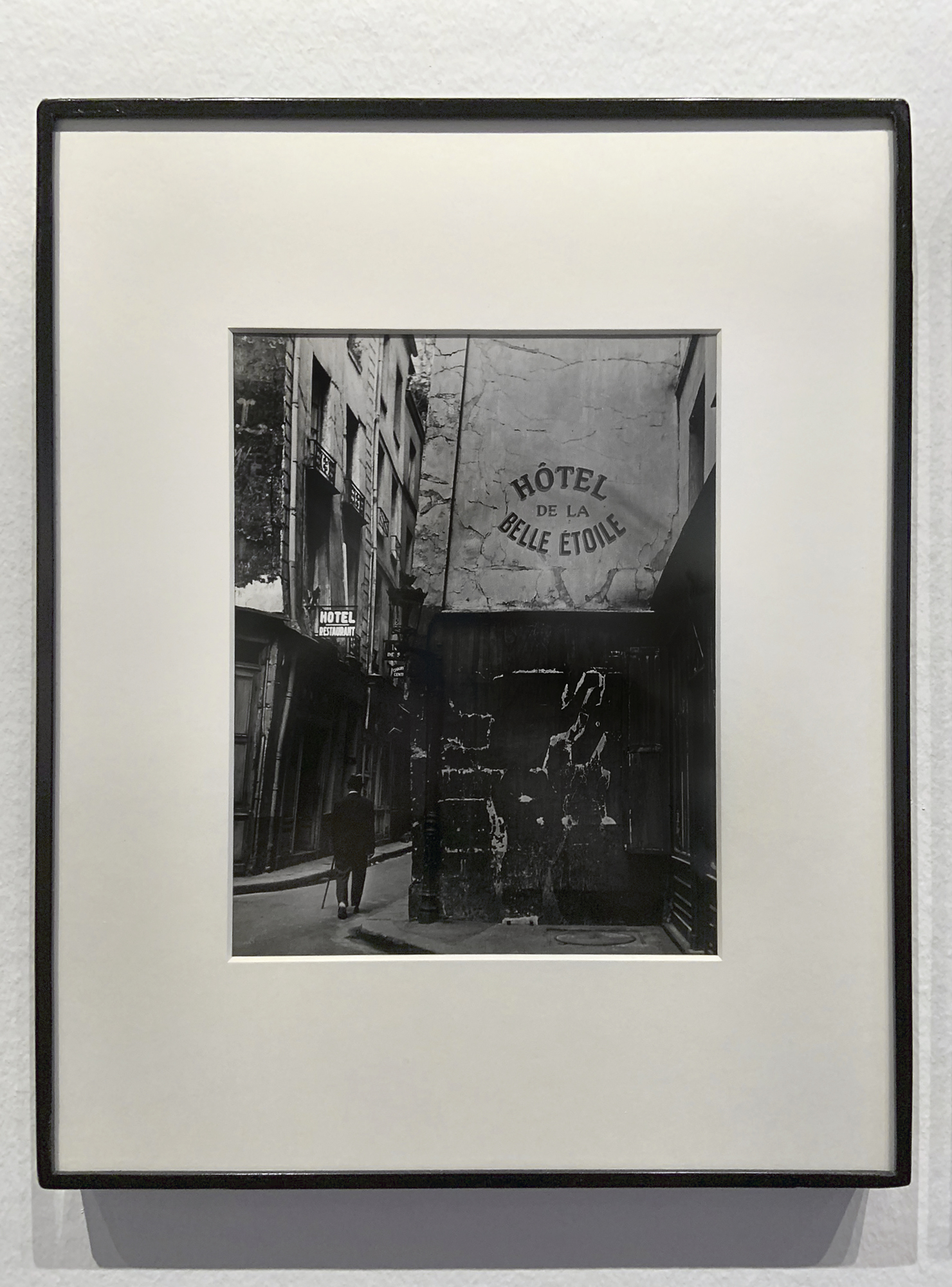
Brassaï (Hungarian-French, 1899-1984) 'L'allumeur de becs de gaz, rue Emile Richard/Lamplighter, Rue Émile-Richard' c. 1931


Brassaï (Hungarian-French, 1899-1984)
L’allumeur de becs de gaz, rue Emile Richard/Lamplighter, Rue Émile-Richard
c. 1931
Vintage silver gelatin print
© Estate Brassaï Succession – Philippe Ribeyrolles 2026


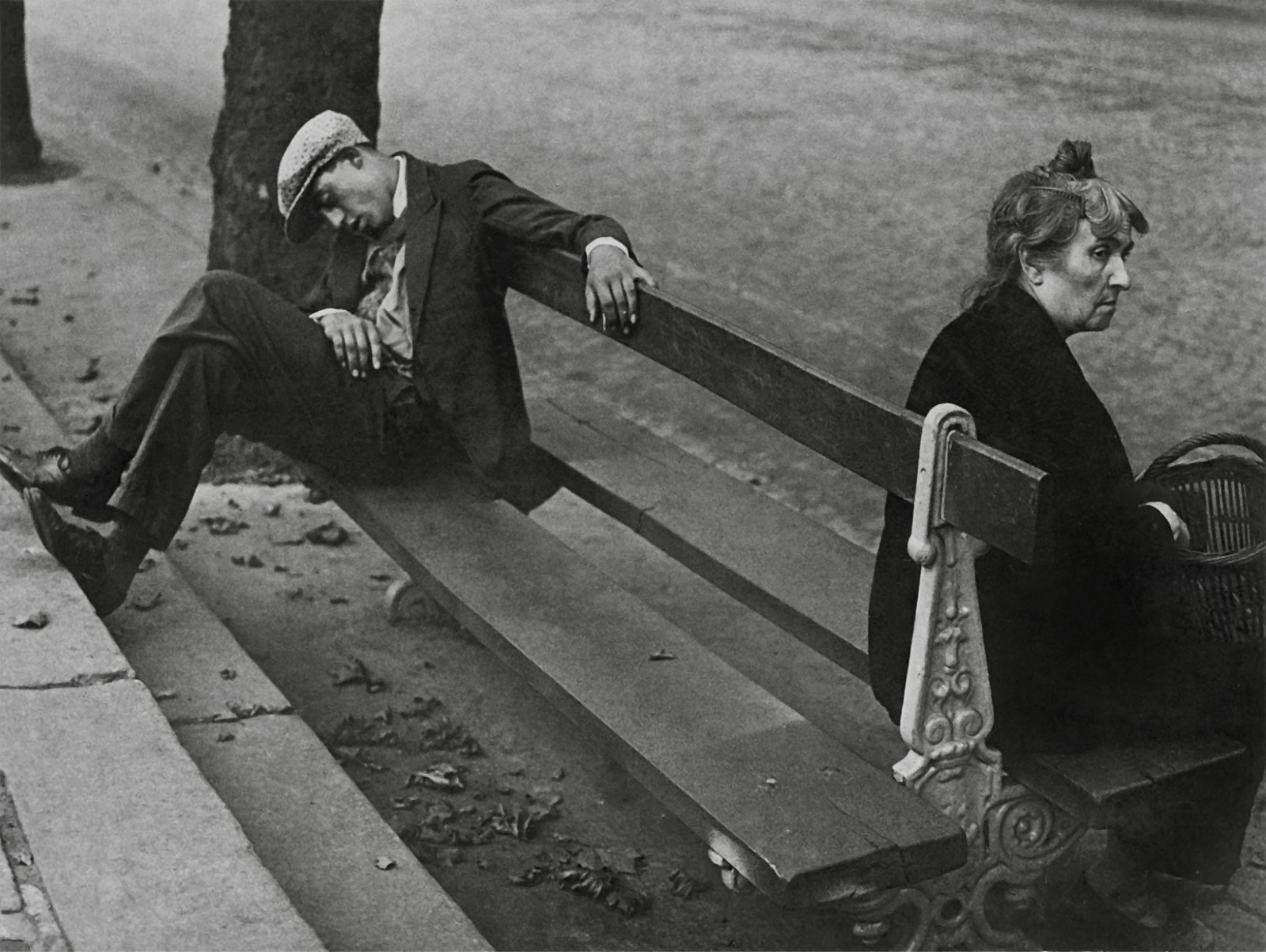
Brassaï’s chimerical – an idea that seems real or possible but is actually an impossible illusion – shimmering, urban light creations are photographs, sometimes staged, from the imagination and nocturnal life of the photographer.

As I have written elsewhere, “It takes a great eye and a great mind, and the liberation of that mind, to be able to transform the mundane, the everyday, the vernacular – into art. Brassaï’s folklore, his mythology of life, suggests that the life of others (those living on the edge) is as valuable and essential to the formation of culture as any other part of existence.”

Brassaï saw something clearly, so that we might see it now.

Dr Marcus Bunyan


Many thankx to the Moderna Museet for allowing me to publish the photographs in the posting. Please click on the photographs for a larger version of the image.


“Brassaï’s photographs invite us to decipher signs – the traces of events and human presence – and to search for the answer to the city’s many mysteries.”


Anna Tellgren, Curator


Brassaï | Introduction by Anna Tellgren with Martina Hoogland Ivanow

In this video, you meet curator Anna Tellgren and artist Martina Hoogland Ivanow, who introduce the exhibition “Brassaï – The Secret Signs of Paris” at Moderna Museet in Stockholm.

Brassaï is one of the most famous photographers in the history of photography. In the early 1930s, he set out with his camera on long nocturnal walks through Paris. Revolving around this treasure of images, the exhibition “Brassaï – The Secret Signs of Paris” includes over 160 black-and-white photographs.

Text from the YouTube website


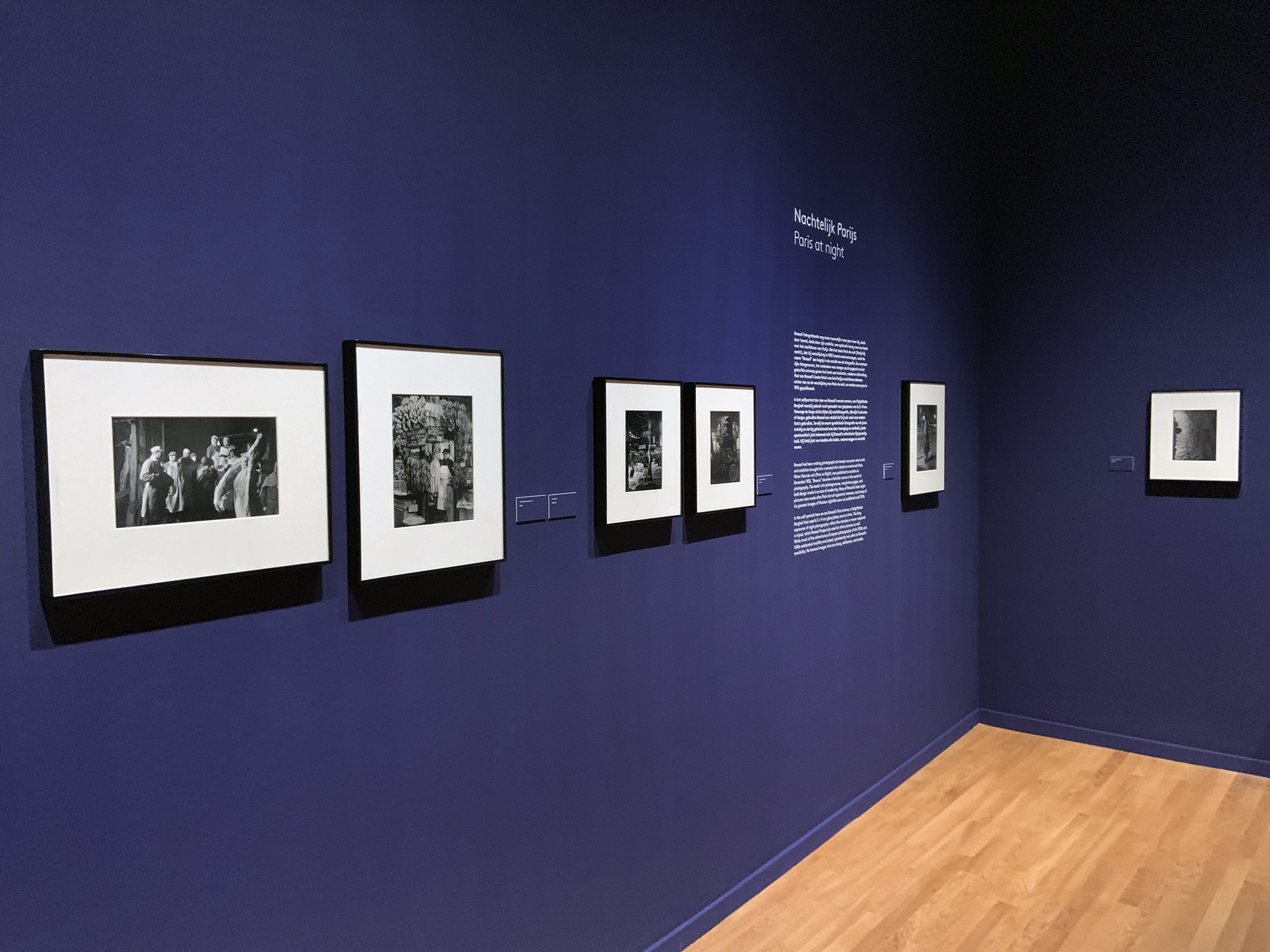
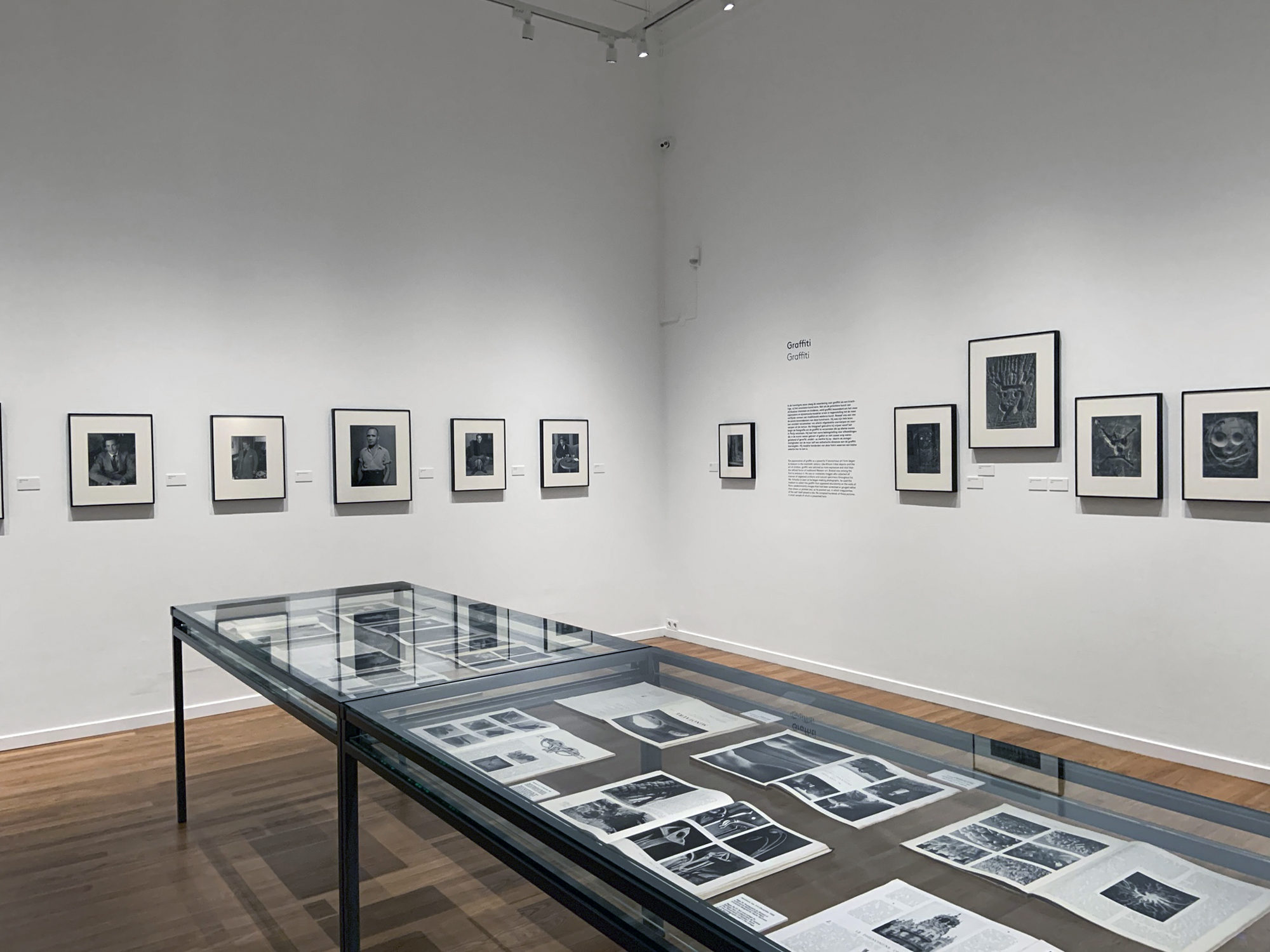
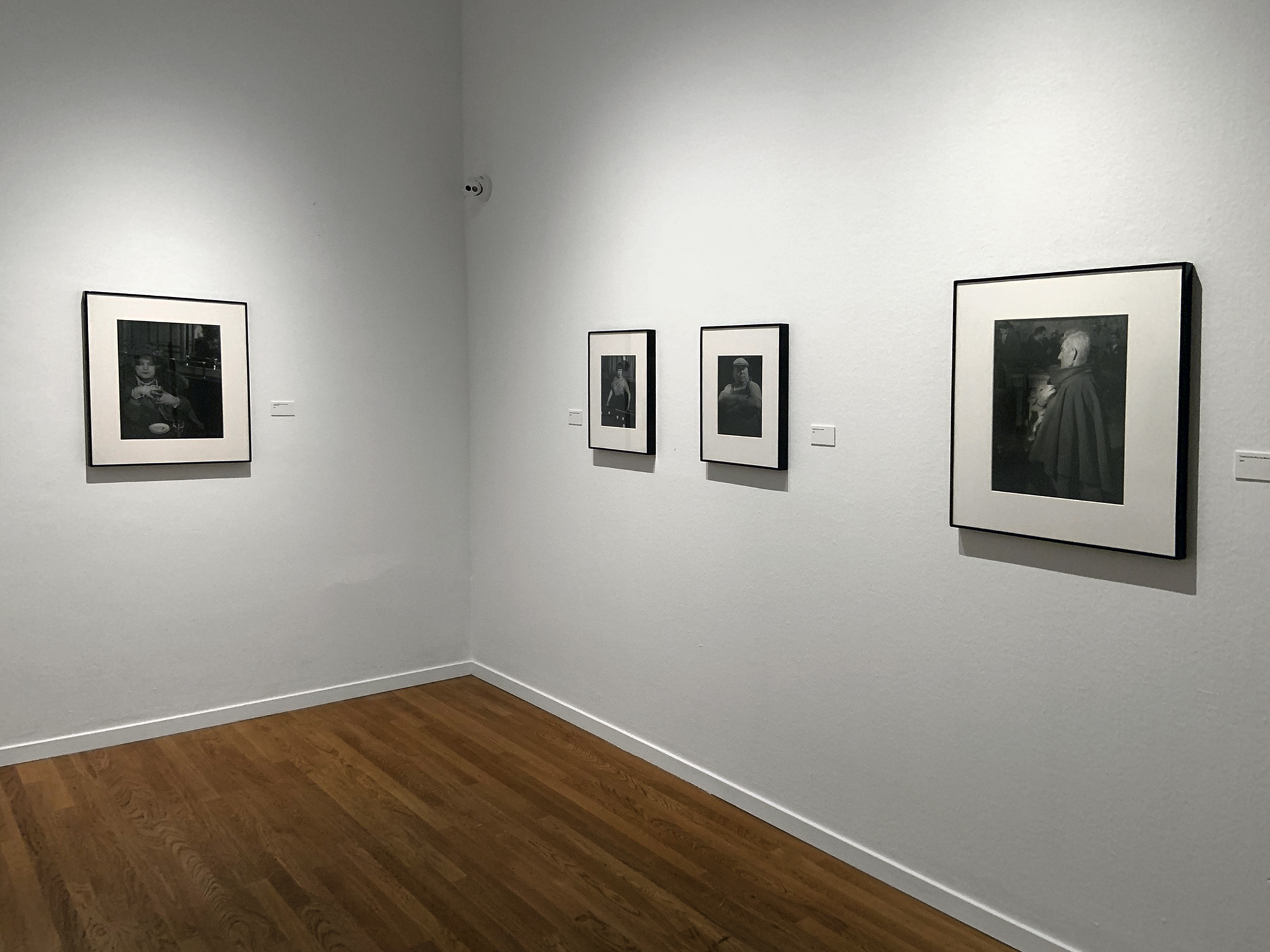
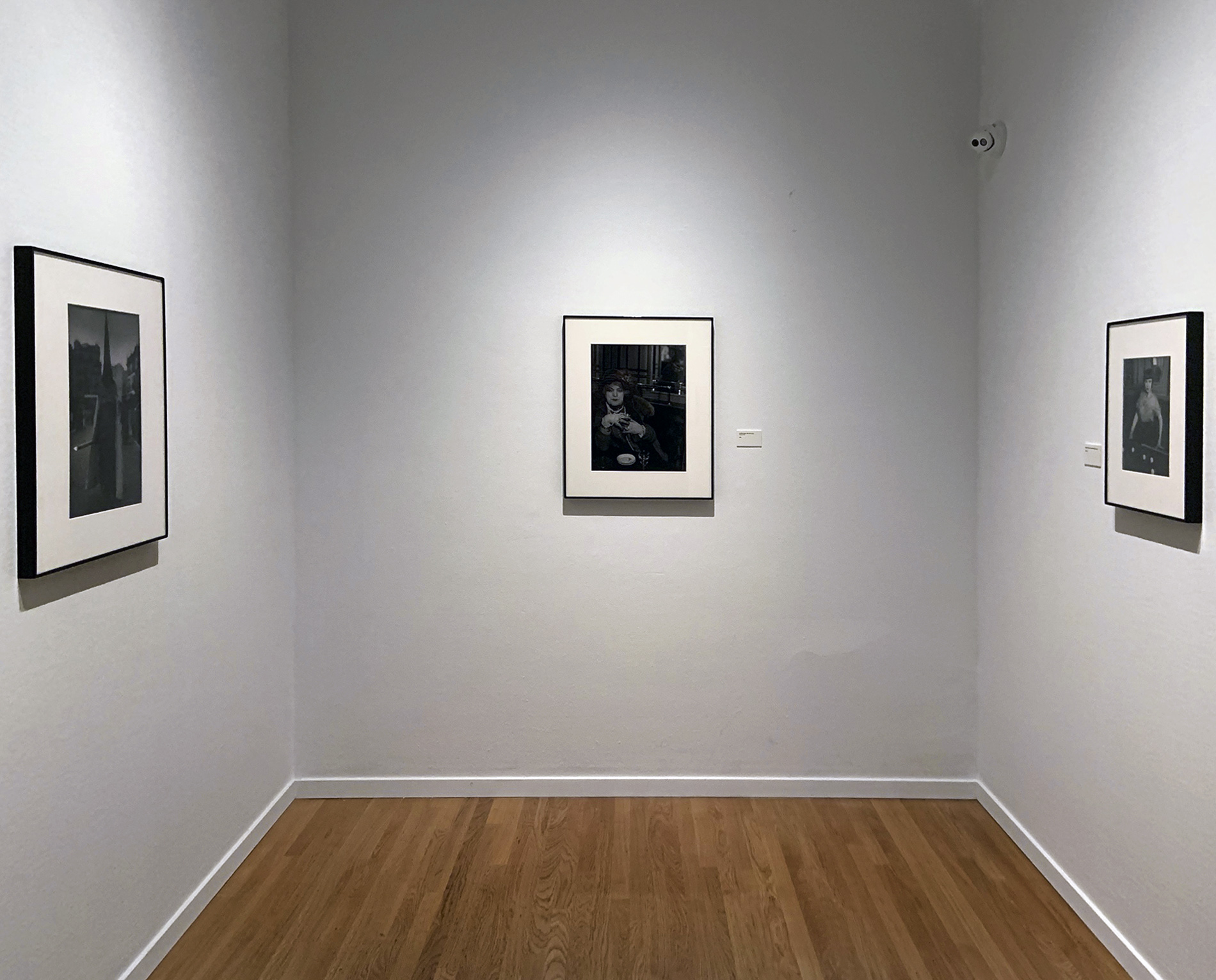
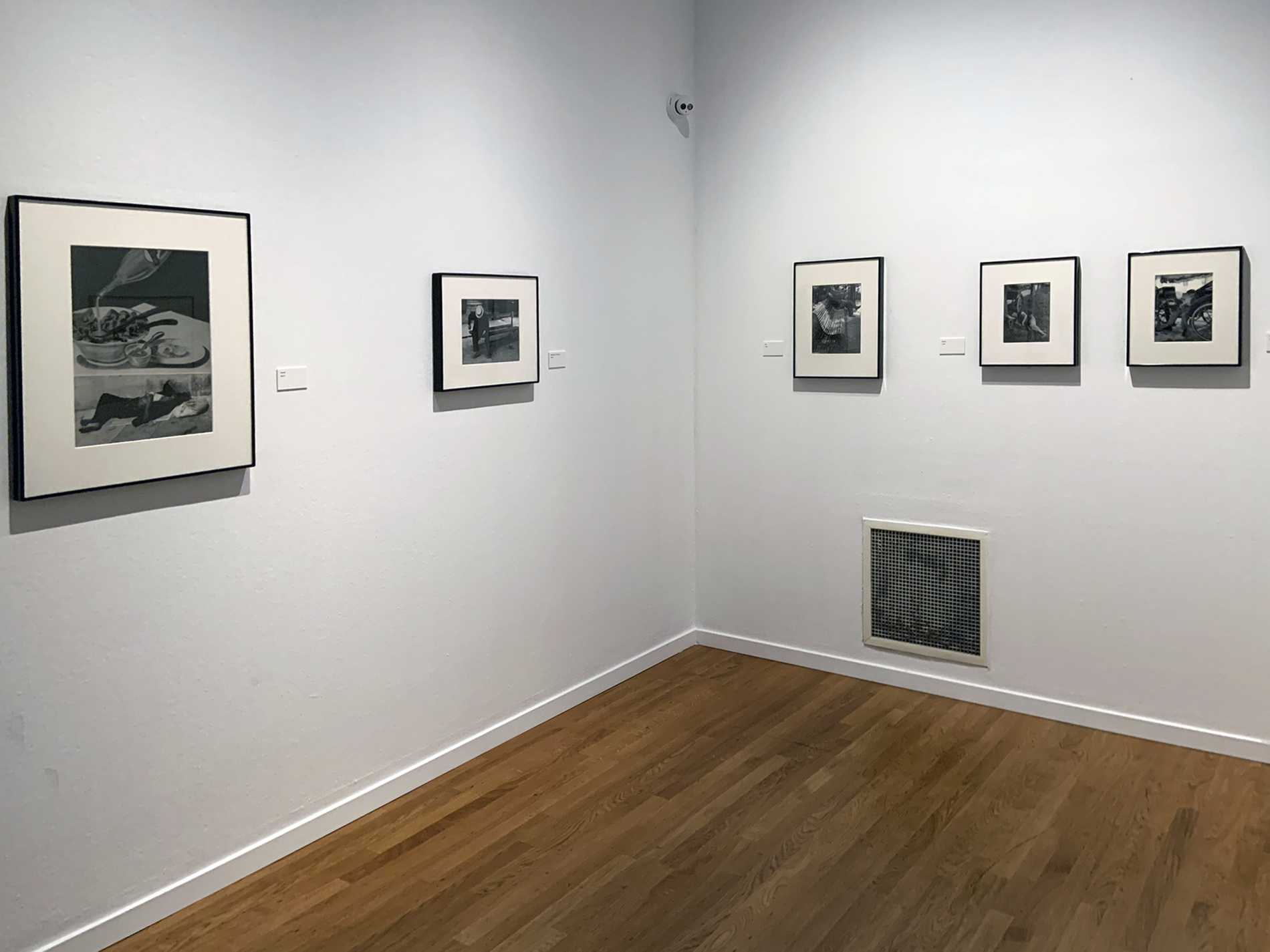
Installation view of the exhibition 'Brassaï - The Secret Signs of Paris' at Moderna Museet, Stockholm, March - October, 2026
Installation view of the exhibition 'Brassaï - The Secret Signs of Paris' at Moderna Museet, Stockholm, March - October, 2026 showing at right, Brassaï's 'Open Gutter' (c. 1931/1956)


Installation view of the exhibition Brassaï – The Secret Signs of Paris at Moderna Museet, Stockholm, March – October, 2026 showing at right in the bottom image, Brassaï’s Open Gutter (c. 1931/1956, below)


Brassaï (Hungarian-French, 1899-1984) 'Open Gutter' c. 1931/1956


Brassaï (Hungarian-French, 1899-1984)
Open Gutter
c. 1931/1956
Gelatin silver print


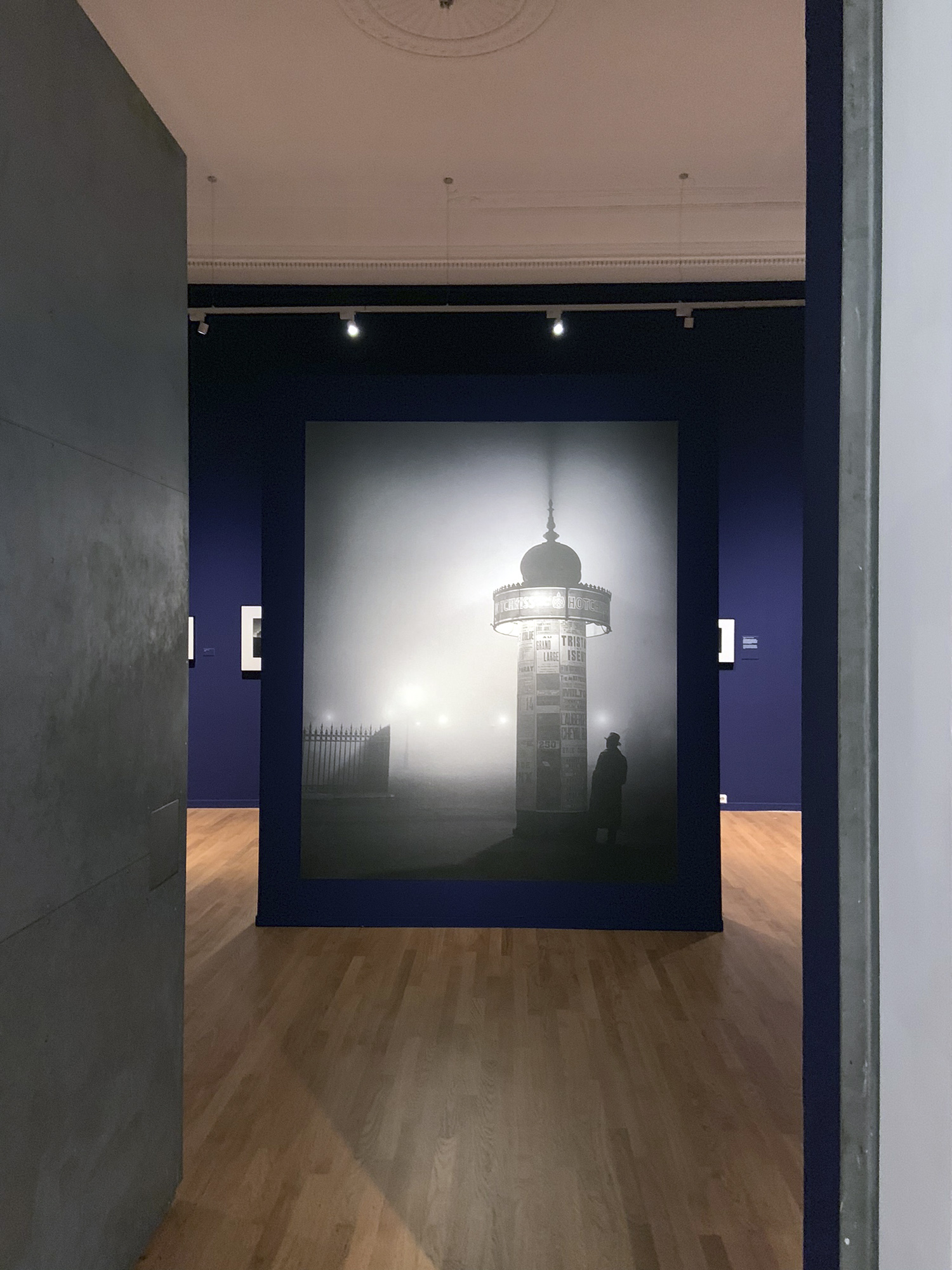
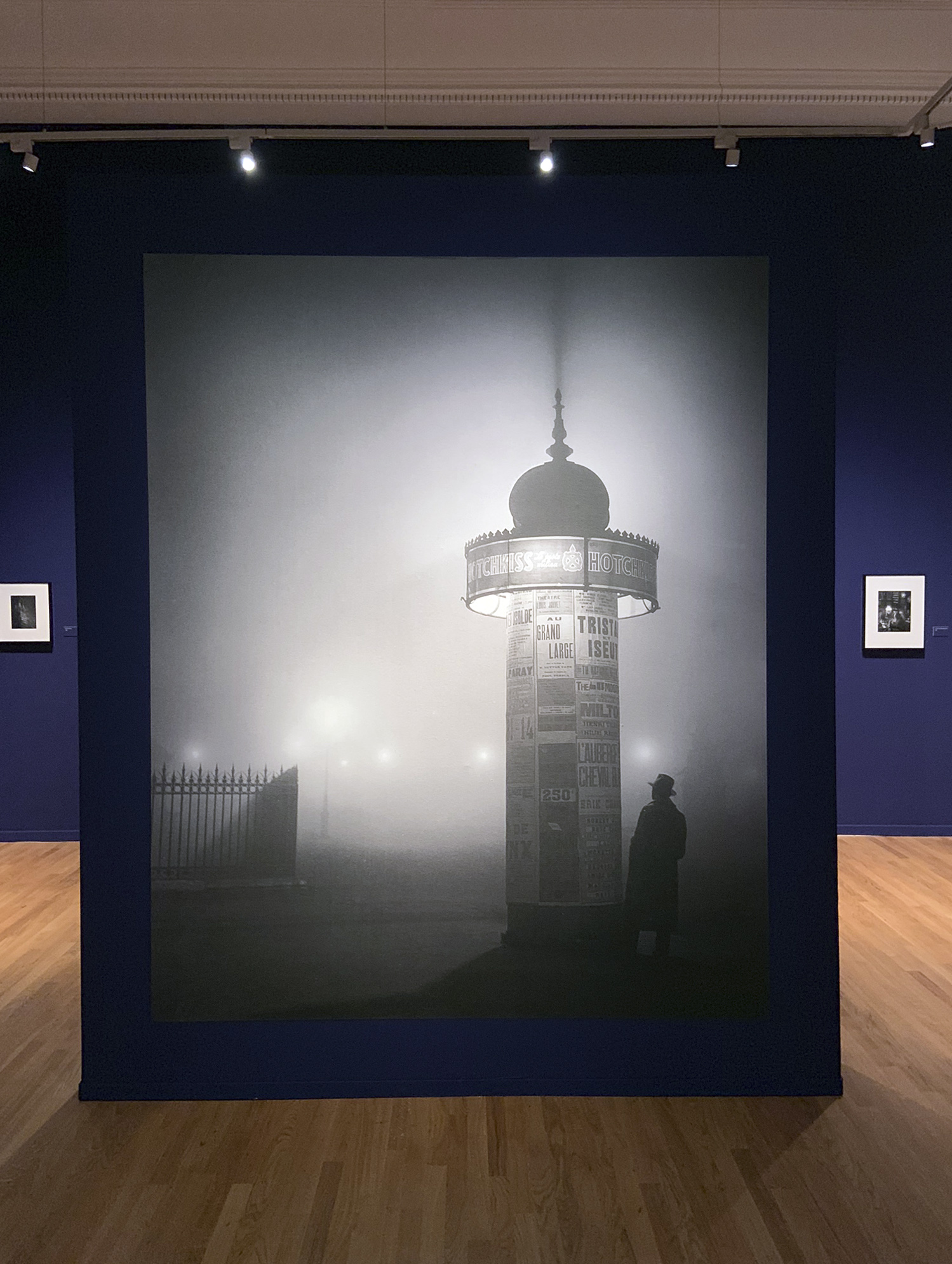
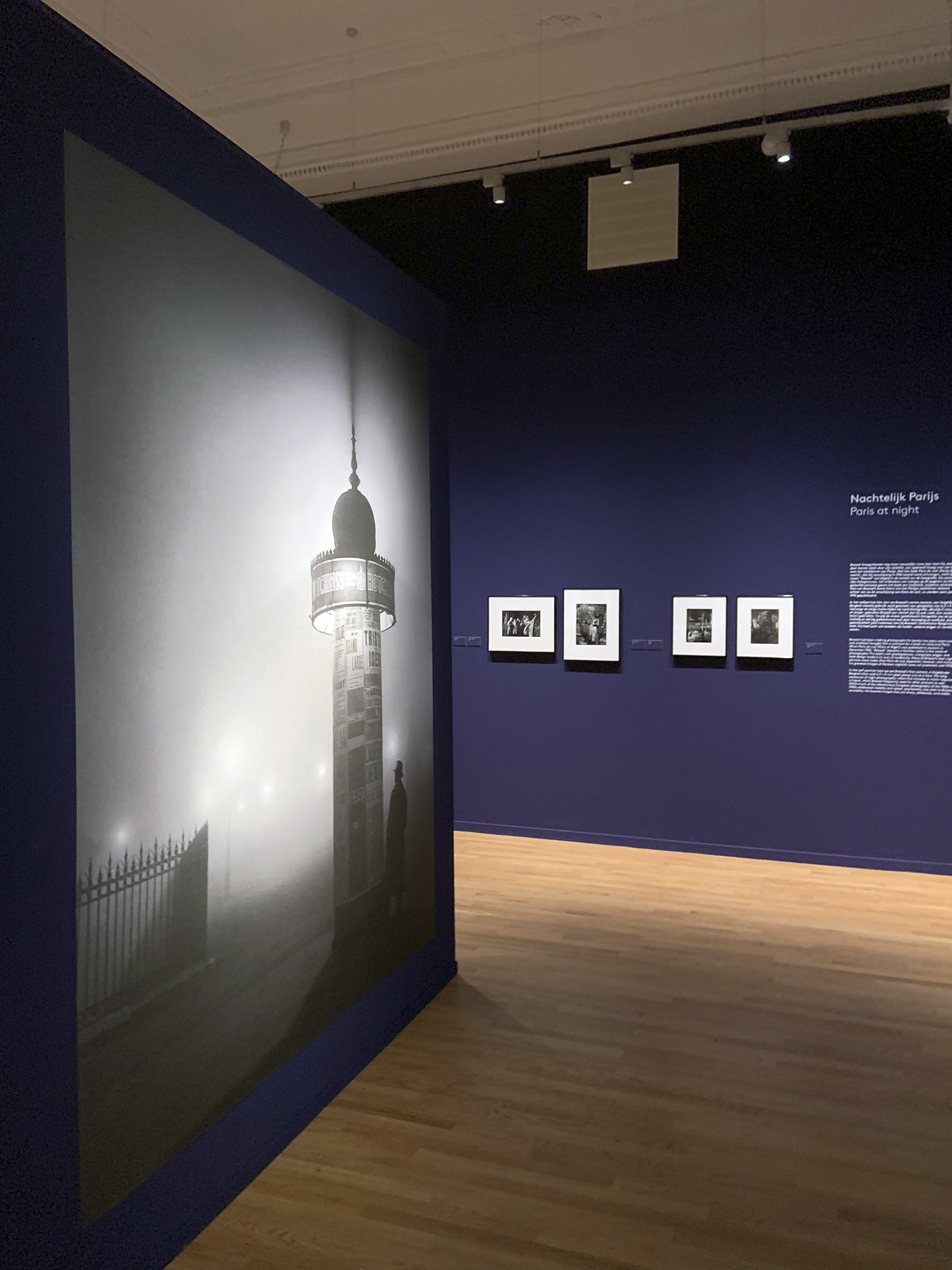
Installation view of the exhibition 'Brassaï - The Secret Signs of Paris' at Moderna Museet, Stockholm, March - October, 2026 showing at left, Brassaï's 'Night View Old Paris from Notre Dame - "the Devil" Chimaera' (1933); at top right, 'Morris Column' (1933); and at bottom right, 'Urinal on Boulevard Auguste-Blanqui' (c. 1930-32)


Installation view of the exhibition Brassaï – The Secret Signs of Paris at Moderna Museet, Stockholm, March – October, 2026 showing at left, Brassaï’s Night View Old Paris from Notre Dame – “the Devil” Chimaera (1933); at top right, Morris Column (1933, below); and at bottom right, Urinal on Boulevard Auguste-Blanqui (c. 1930-32)
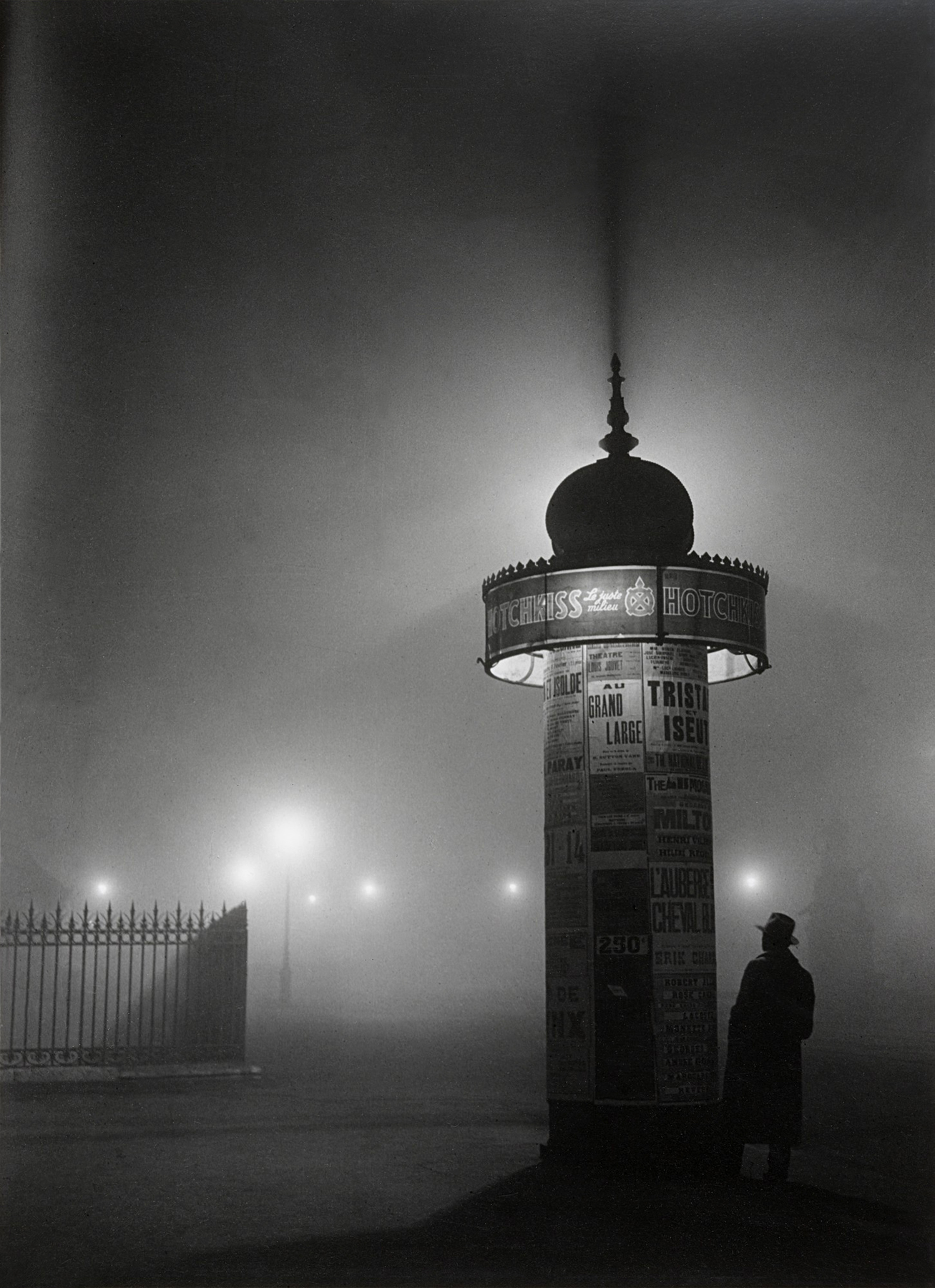
 

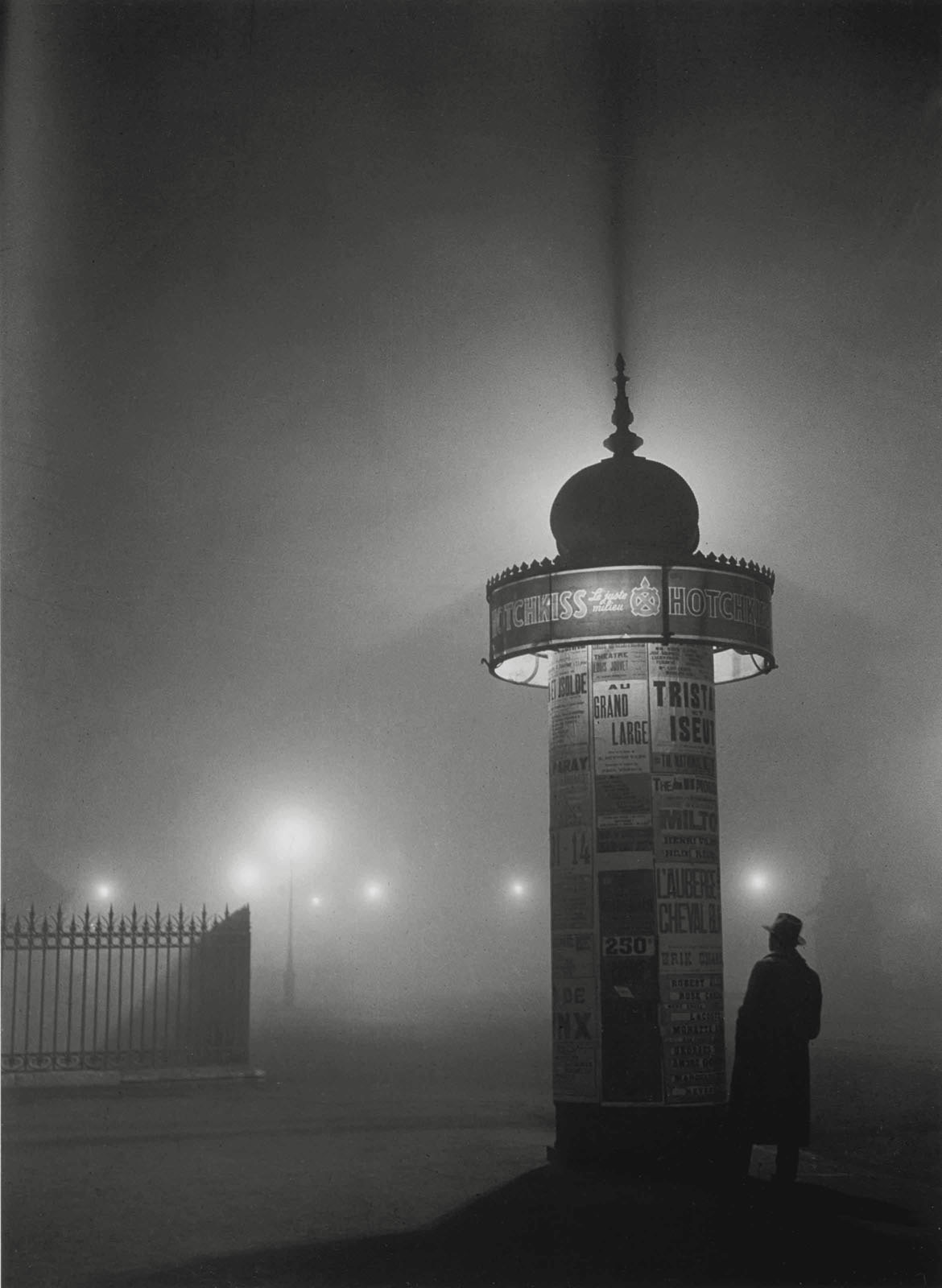
Brassaï (French, 1899-1984) 'Morris Column, avenue de l'Observatoire' 1933


Brassaï (Hungarian-French, 1899-1984)
Morris Column
1933
Gelatin silver print


About the exhibition

Brassaï (1899-1984) is the pseudonym of Gyula Halász, who grew up in Brassó in Transylvania, then Hungary. After studying in Budapest and Berlin, he moved to Paris at the age of twenty-five.

There are three themes in Brassaï’s photographic production and in the exhibition “Brassaï – The Secret Signs of Paris”: the city of Paris with its inhabitants and environments, the portraits of artists and their works, and the city’s graffiti.

Nocturnal Environments and People

When Brassaï moved to Paris in 1924, he first worked as a journalist. His major breakthrough as a photographer came with the book “Paris de nuit” (Paris by Night), published in 1933. Many of his famous motifs can be found here – Notre-Dame and the Eiffel Tower, bars and dance halls, artists and workers, policemen and petty thieves.

The black-and-white photographs with motifs in soft tones were the result of his long nocturnal walks through Paris – his camera lens captures environments and people in the light of street lamps and the light falling from the buildings of the city.

Bars, Dance Halls and Brothels

After the success of “Paris de nuit”, Brassaï received requests to publish the material that includes his more intimate photographs of Paris by night – the bars, dance halls, gay clubs and brothels. But at that time, in post-war Paris, censorship had become stricter and publication had to wait.

It was not until about forty years later, in 1976, that the book “Le Paris secret des années 30” (The Secret Paris of the 30’s) was published, based on Brassaï’s large collection of photographs.

Night Photographs, Graffiti, and Life in Paris

The exhibition “Brassaï – The Secret Signs of Paris” includes more than 160 vintage gelatine silver prints made by the photographer himself.

The first room of the exhibition features Brassaï’s legendary night photographs of Paris, its inhabitants and environments. The middle room shows his extensive documentation of the city’s graffiti, and the last room of the exhibition presents more of his images of life in Paris.

Brassaï’s film from the mid-1950s, “Tant qu’il y aura des bêtes” (As Long as There Are Animals), which was awarded as the most innovative short film at at the Cannes Film Festival in 1956, is also included in the exhibition.

Biography Gyula Halász

Gyula Halász (1899-1984) grew up in Brassó in Transylvania, then Hungary.

After studying art in Budapest and Berlin, he moved to Paris in 1924 and took the name Brassaï, which means “from Brassó”. He was versatile and devoted himself to drawing, painting, sculpture and photography in parallel. Literature was another great interest.

Brassaï moved in Parisian artist circles and his contact with the surrealists, as well as his friendship with Pablo Picasso, sharpened his eye for the unexpected and overlooked. His major breakthrough as a photographer came with the book “Paris de nuit” (“Paris by Night”), published in 1933.

On his wanderings in Paris, Brassaï also discovered street graffiti, which he documented in an extensive series of photographs until the 1950s. At the same time, he also made reporting trips for the magazine “Harper’s Bazaar” to Brazil, Greece and Sweden, among other places.

Brassaï died in 1984, after receiving several awards and participating in exhibitions throughout Europe and the United States during his final years.

Text from the Moderna Museet website


Installation view of the exhibition 'Brassaï - The Secret Signs of Paris' at Moderna Museet, Stockholm, March - October, 2026 showing at centre second left, Brassaï's 'Bal des Quatre Saisons, rue de Lappe' (c. 1932)


Installation view of the exhibition Brassaï – The Secret Signs of Paris at Moderna Museet, Stockholm, March – October, 2026 showing at centre second left, Brassaï’s Bal des Quatre Saisons, rue de Lappe (c. 1932, below)


Brassaï (Hungarian-French, 1899-1984) 'Bal des Quatre Saisons, rue de Lappe' c. 1932


Brassaï (Hungarian-French, 1899-1984)
Bal des Quatre Saisons, rue de Lappe
c. 1932
Gelatin silver print


Brassaï (Hungarian-French, 1899-1984) 'Couple d'amoureux dans un petit café, quartier Italie' c. 1932


Brassaï (Hungarian-French, 1899-1984)
Couple d’amoureux dans un petit café, quartier Italie
c. 1932
Gelatin silver print


Installation view of the exhibition 'Brassaï - The Secret Signs of Paris' at Moderna Museet, Stockholm, March - October, 2026 showing from left to right, top to bottom, Brassaï's 'A Couple at the Magic-City Dance Hall, Rue Cognacq-Jay' (c. 1931-32); 'A Two-in-One Suit, the Magic-City Dance Hall' (1931); 'Magic-City Dance Hall, Rue de l'Universite' (1931); 'The Magic-City Dance Hall, Rue Cognacq-Jay' (c. 1931-32)


Installation view of the exhibition Brassaï – The Secret Signs of Paris at Moderna Museet, Stockholm, March – October, 2026 showing from left to right, top to bottom, Brassaï’s A Couple at the Magic-City Dance Hall, Rue Cognacq-Jay (c. 1931-32); A Two-in-One Suit, the Magic-City Dance Hall (1931, below); Magic-City Dance Hall, Rue de l’Universite (1931); The Magic-City Dance Hall, Rue Cognacq-Jay (c. 1931-32)
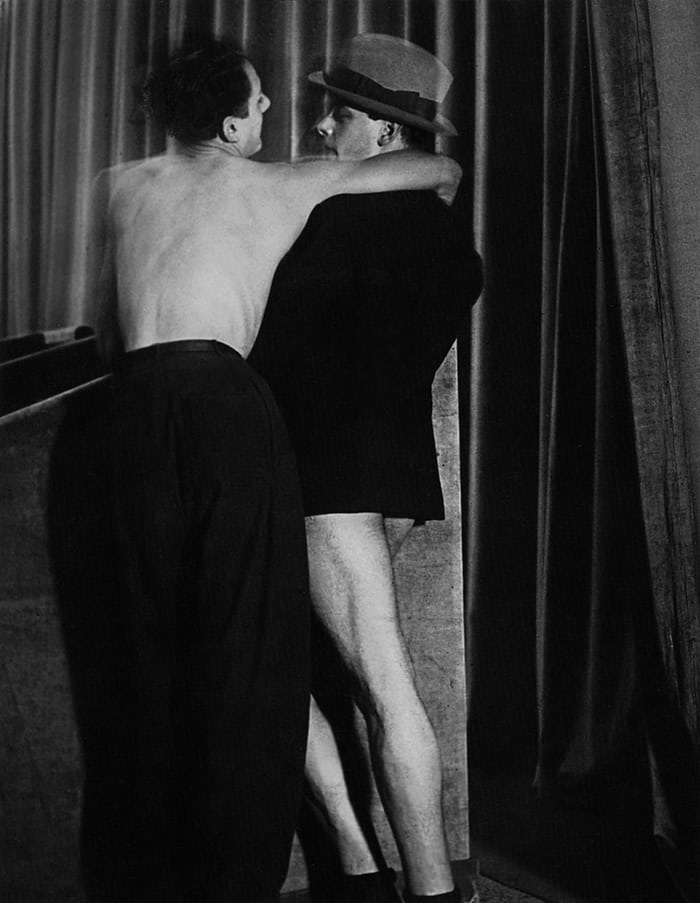
 

Brassaï (Hungarian-French, 1899-1984) 'Young couple wearing a two-in-one suit at Bal De La Montagne Saint-Genevieve' 1931


Brassaï (Hungarian-French, 1899-1984)
A Two-in-One Suit, the Magic-City Dance Hall
1931
Gelatin silver print


Brassaï is one of the most famous photographers in the history of photography. In the early 1930s, he set out with his camera on long nocturnal walks through Paris. Revolving around this treasure of images, the exhibition at Moderna Museet includes over 160 black-and-white photographs and is the first major presentation of Brassaï in Sweden.

Brassaï (1899-1984) is a pseudonym for Gyula Halász, who grew up in Brassó in Transylvania, then Hungary. After studying in Budapest and Berlin, he moved to Paris at the age of twenty-five. There he became part of the Humanist Photography that emerged during the interwar period. The street and the life that unfolded on the sidewalks and cafes became typical motifs for the genre.

Paris, Portraits and Graffiti

The exhibition “Brassaï – The Secret Signs of Paris” includes more than 160 vinted gelatin silver prints, made by the photographer himself.

The audience encounters three central themes in Brassaï’s photographic production: the city of Paris with its inhabitants and environments, the portraits of artists and their works, as well as his extensive documentation of the city’s graffiti.

The title of the exhibition alludes to how Brassaï opens up a hidden world with the help of his camera, his curiosity and his artistic practice, curator Anna Tellgren says.

His photographs invite us to decipher signs – the traces of events and human presence – and to search for the answer to the city’s many mysteries. Here, the extensive series of photographs of graffiti becomes an important part of understanding what Brassaï saw and how he moved in the city. In the exhibition, we follow in his footsteps.

In the exhibition, Brassaï’s short film “Tant qu’il y aura des bêtes” (As long as there are animals) from the mid-1950s is also shown. At the Cannes Film Festival in 1956 it was named the most innovative short film.

The Environments and People of the Night

Brassaï’s major breakthrough as a photographer came with the book “Paris de nuit” (“Paris by Night”), published in 1933. The black-and-white photographs with motifs in soft tones were the result of his long nocturnal walks through Paris – a city in transition between history and modernity. His camera lens captures environments and people in the light of street lamps and the light falling from the city’s most characteristic buildings.

After the success of “Paris de nuit”, Brassaï received requests to publish the material that includes his more intimate photographs of Paris by night – the bars, dance halls, gay clubs and brothels. But at that time, in post-war Paris, censorship had become stricter and publication had to wait.

It was not until about forty years later, in 1976, that the book “Le Paris secret des années 30” (The Secret Paris of the 30’s, 1976) was published, based on Brassaï’s large collection of photographs. In the book, he himself wrote and told the stories behind the images and about the personalities he had met and portrayed.

Press release from Moderna Museet


Installation view of the exhibition 'Brassaï - The Secret Signs of Paris' at Moderna Museet, Stockholm, March - October, 2026 showing from left to right, Brassaï's 'Fairgrounds, Place d'Italie' (c. 1931); '"No One Under 18 Allowed", at the Fairgrounds' (1932-33); 'Three Women Masked for the Parade' (1931); 'The Hands of the Fortune Teller' (1933)


Installation view of the exhibition Brassaï – The Secret Signs of Paris at Moderna Museet, Stockholm, March – October, 2026 showing from left to right, Brassaï’s Fairgrounds, Place d’Italie (c. 1931); “No One Under 18 Allowed”, at the Fairgrounds (1932-33); Three Women Masked for the Parade (1931, below); The Hands of the Fortune Teller (1933, below)


Brassaï (Hungarian-French, 1899-1984) 'Three Women Masked for the Parade' 1931


Brassaï (Hungarian-French, 1899-1984)
Three Women Masked for the Parade
1931
Vintage gelatin silver print
© Estate Brassaï Succession – Philippe Ribeyrolles 2026


Brassaï (Hungarian-French, 1899-1984) 'Les mains de la cartomancienne/The Hands of the Fortune Teller' 1933


Brassaï (Hungarian-French, 1899-1984)
Les mains de la cartomancienne/The Hands of the Fortune Teller
1933
Vintage silver gelatin print
© Estate Brassaï Succession – Philippe Ribeyrolles 2026


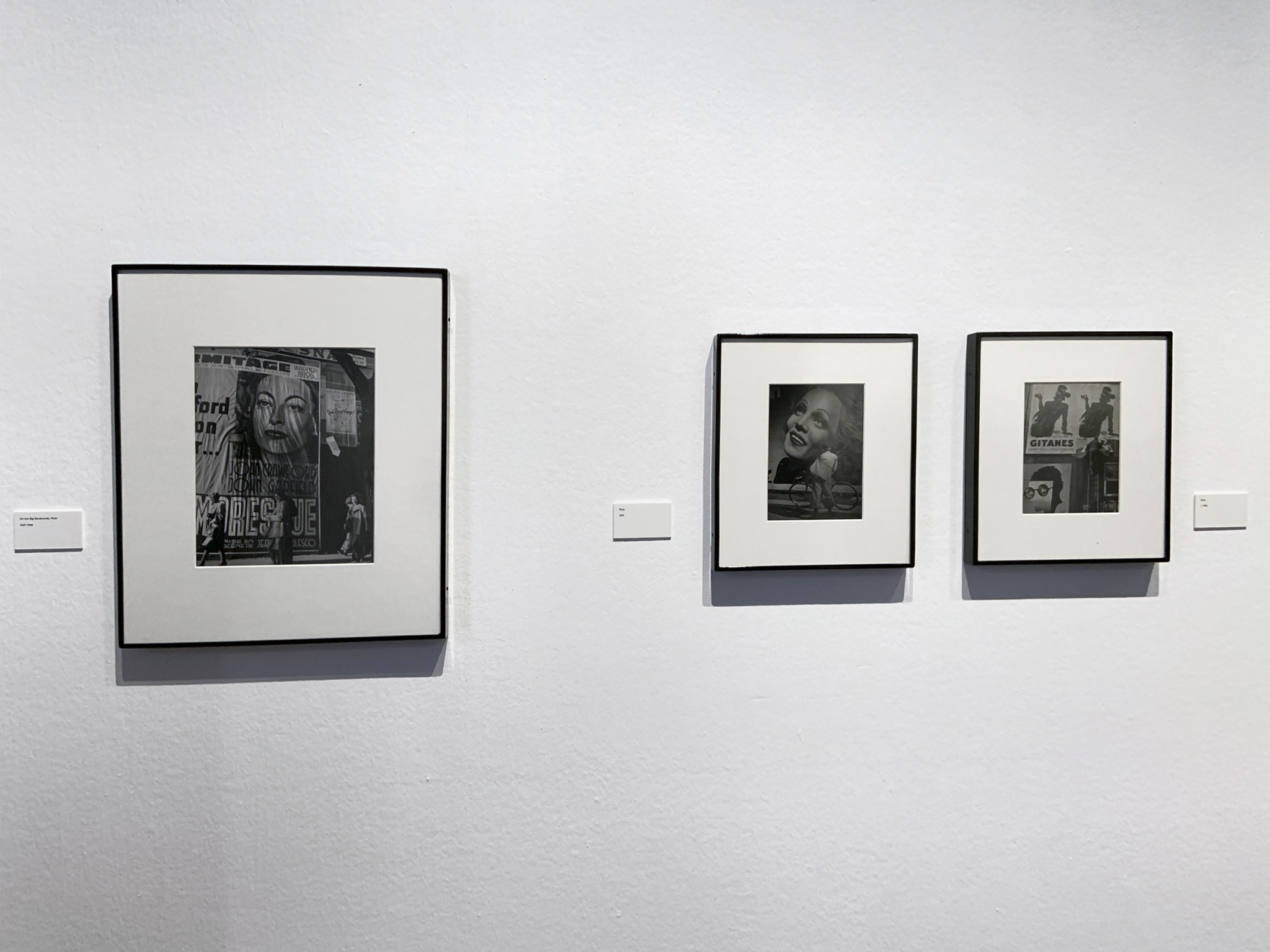
Installation view of the exhibition 'Brassaï - The Secret Signs of Paris' at Moderna Museet, Stockholm, March - October, 2026 showing from left to right, Brassaï's 'Hotel du lion d'Or in the Chaconne Neighbourhood' (c. 1934); 'Marlene, Paris' (1937); 'Kiss on a Swing at a Street' Fair (c. 1935-37)


Installation view of the exhibition Brassaï – The Secret Signs of Paris at Moderna Museet, Stockholm, March – October, 2026 showing from left to right, Brassaï’s Hotel du lion d’Or in the Chaconne Neighbourhood (c. 1934); Marlene, Paris (1937, below); Kiss on a Swing at a Street Fair (c. 1935-37)


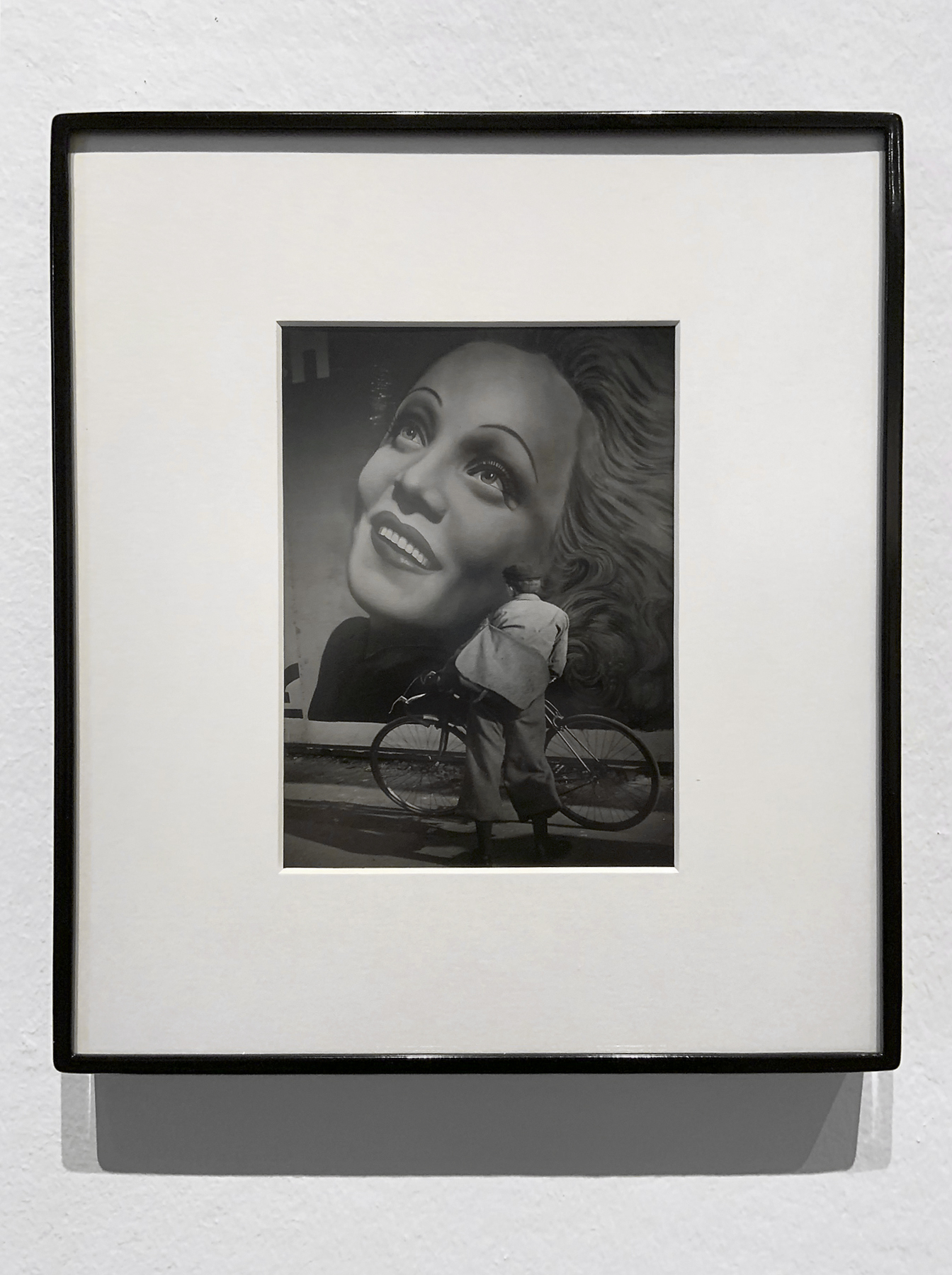
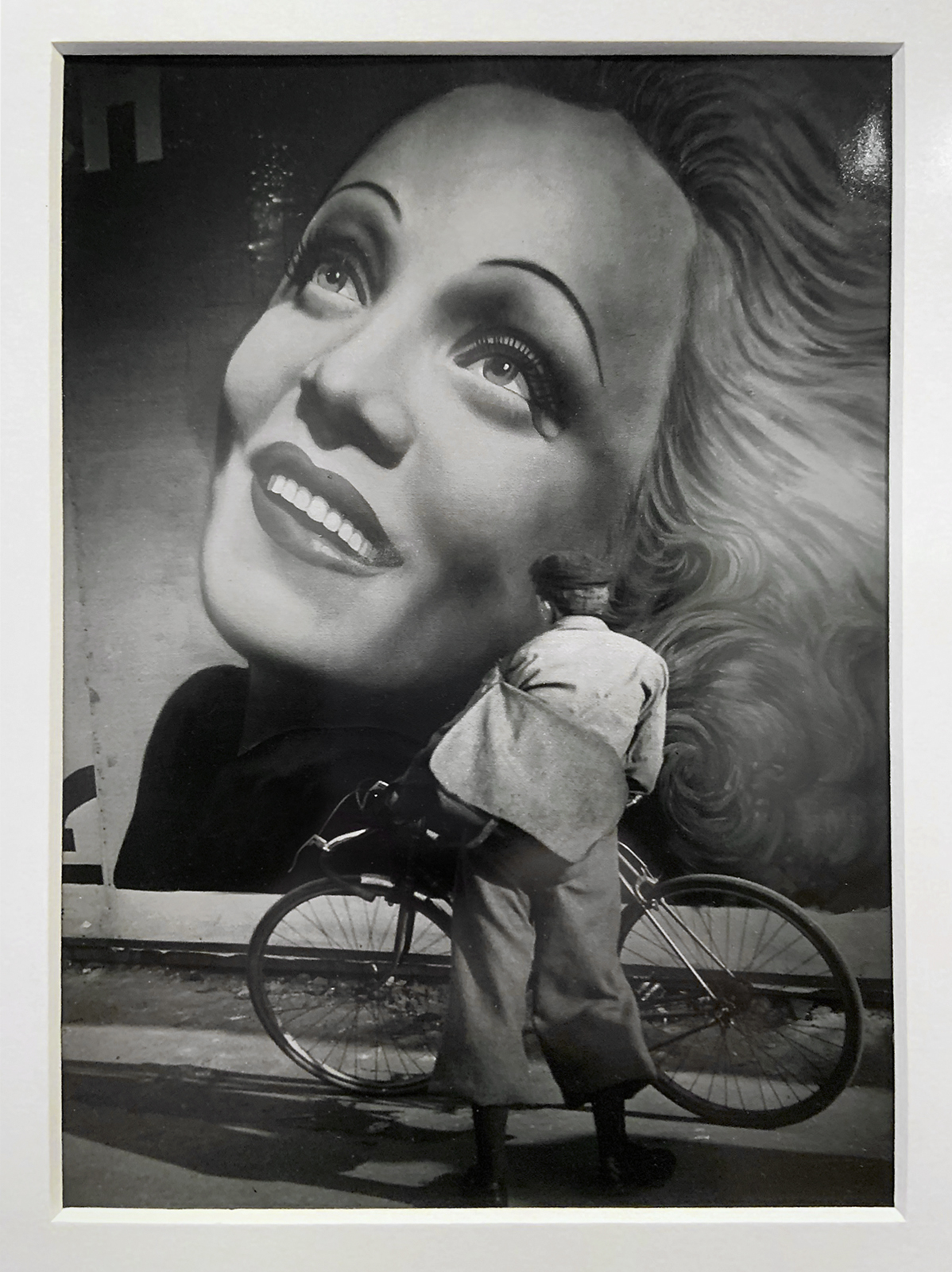
Brassaï (Hungarian-French, 1899-1984) 'Marlene, Paris' 1937


Brassaï (Hungarian-French, 1899-1984)
Marlene, Paris
1937
Vintage silver gelatin print
© Estate Brassaï Succession – Philippe Ribeyrolles 2026


Brassaï – The Secret Signs of Paris

Text by curator Anna Tellgren

At the age of twenty-five, the Hungarian-born Gyula Halász, better known as Brassaï, moved to Paris, the city that became his home and which came to shape his entire life and oeuvre. Brassaï was multifaceted, using a variety of media, including drawing, sculpture, painting and photography. Literature was another of his major interests and writing was part of his practice throughout his career.

In different contexts, Brassaï has elaborated on why he started photographing, on his longing to preserve everything he experienced and was fascinated by as a flâneur through Paris. Photography became the form of expression that best corresponded to what he wanted to achieve. A shimmer lies over the memories from the first years in the French capital, from the bars in the neighbourhoods around Montparnasse and Montmartre where he hung out with his friends until the early hours of the morning. Through the images, we gain access to the famous monuments, bridges, the small squares, markets, and fairgrounds – magically illuminated by the glow of gas lanterns. But we see them captured from another perspective, from other angles, presenting an alternative Paris, beyond the tourist hotspots. The exhibition focuses on the intense period in the 1930s when Brassaï became an innovator of nocturnal photography and one of the foremost portraitists of the city and life in Paris. The title of the exhibition, “The Secret Signs of Paris”, alludes to how the photographer opened the door to a hidden world using his camera, his curiosity, and his artistic practice [1]. His photographs challenge us to interpret signs – the traces of events and human presence – and to look for the answer to the many mysteries of the city. Here, the comprehensive series of photographs of graffiti becomes an important element in understanding what Brassaï saw and how he moved through the city. The exhibition allows us to follow in his footsteps.

Gyula Halász was born in 1899 in Brassó, Transylvania, which was part of Hungary at the time [2]. That was also where he grew up, with the exception of when his father, a professor of French, stayed in Paris with his family from 1903 to 1904 [3]. In the lead-up to the First World War, the family fled to Budapest. After serving a year in the Austro-Hungarian cavalry, Gyula Halász started studying at the art academy in Budapest in 1918. He moved to Berlin in 1920, where he continued studying art. In February 1924 he arrived in Paris, where he stayed for the rest of his life, never returning to his home country.

In the early years in Paris, he supported himself by writing articles for Hungarian and German magazines, illustrated with his photographs and those of other photographers. He assumed the pseudonym Brassaï, which means “from Brassó”, and continued to publish and work under this artist name. He moved in artist circles, and contacts in the Hungarian diaspora led to different kinds of commissions. Photographer André Kertész and Charles Rado were among his compatriots. The latter started the photo agency Rapho, which represented Brassaï both in Paris and New York. Around 1930 he began photographing more seriously, using a folding camera of the brand Voigtländer Bergheil with glass negatives (6.5 x 9 cm), switching to a Rolleiflex in the mid-1930s with medium-format (6 x 6 cm) negatives. His career as aphotographer took off fast and photography became his main source of income. He took all kinds of jobs, even photographing hairstyles for the famous hairdresser Monsieur Antoine and hiring two assistants to keep up [4]. In the early years, Brassaï moved around between small hotels in Montparnasse, where he even installed a darkroom to develop his own photographs, which he continued doing throughout his career.

Brassaï’s photographic production encompasses three main themes, of which the city of Paris is the most famous; but his portraits of artists and their work, as well as his interest in graffiti are also well-known. One of the many writers and artists that Brassaï met and socialised with over the years was Henry Miller, who lived in Paris from 1930 to 1939, becoming a friend and champion of Brassaï’s photography in several contexts [5]. Another major influence was Pablo Picasso. They were introduced to each other in 1932 by the publisher Tériade, ahead of a commission for the Surrealist magazine Minotaure, leading to a lifelong friendship. Brassaï continued to photograph Picasso’s sculptures and published the book “Conversations avec Picasso” (Conversations with Picasso) in 1964, which presents personal and everyday images of one of modern art’s most celebrated artists [6]. Other artists that he portrayed in text and image include Pierre Bonnard, Georges Braque, Salvador Dalí, Henri Matisse, Germaine Richier, and Jacques Villon – later collecting the portraits in a book about the artists in his life [7].

Brassaï’s major breakthrough as photographer came with the book “Paris de nuit” (Paris by night) which was published by Arts et Métiers graphiques in 1933, with a text by the writer and diplomat Paul Morand. The book contains sixty-four carefully selected photographs published in a spiral-bound soft-cover book (25 x 19.3 cm). The photographs are printed as full-page bleeds on matt, black, relatively thick paper. The title on the cover is written with red dots to resemble the city’s many neon lights. The book includes many of the famous motifs – the dark cobblestone streets, the narrow alleyways, the prostitutes, Notre-Dame, the metro, the Eiffel Tower, and the cats – all rendered in dark tones, only illuminated by the light emanating from the many characteristic buildings around Paris. The production of the book is a complex story, with Brassaï collaborating closely with the designer and publisher Charles Peignot and the journalist Jean Bernier, who wrote all the captions [8]. The book was part of a tradition from the late nineteenth century, in which established writers, and later filmmakers, were fascinated by the underworld of Paris, describing it from the perspective of a flâneur. Other popular publications at the time were the many magazines reporting on crime and publishing detective stories illustrated with images by Brassaï and other photographers who specialised in these nocturnal adventures.

After the success of “Paris de nuit”, Brassaï started a new collaboration around his more intimate photographs of Paris by night – the bars, dance establishments, the homosexual clubs, bordellos [9]. Despite the interest it generated, he decided to pursue other projects instead. After the war, the atmosphere had shifted and stricter censorship than in the 1930s was put into place, making it simply too difficult to publish these types of images openly. It wasn’t until the mid-1970s that Brassaï got in touch with the publisher Claude Gallimard, suggesting a number of book projects based on the vast material from Paris. This led to the book “Le Paris secret des années 30” (1976) for which Brassaï himself developed the design idea and was closely involved in the entire process [10]. With the distance of forty years, he told the story behind the images and whom we encounter. We learn of Grand Albert and his gang, La Môme Bijou, Kiki de Montparnasse, of the atmosphere at Le Monocle and Chez Suzy. But, as it turns out, we weren’t told everything – it was later revealed that Brassaï’s assistant Gabriel Kiss played the role of customer in the series from Chez Suzy, but the prostitutes were really working there. Brassaï staged a sequence of events at the brothel, which was probably necessary to fulfil the discretion guaranteed to customers and to obtain permission to enter as a photographer. The photographs included in the book were all taken between 1929 and 1934, and it’s as if Brassaï here achieved his photographic zenith and is one with the events, people, and surroundings he lived in and documented. The book has become one of the most important sources with regards to his practice as a photographer and is a classic within the history of photobooks.

At the time of Brassaï’s breakthrough as a photographer, the medium was in an intense phase of development, which was influenced by the breakthrough of the small-format camera and the major entry that photography made into the illustrated press [11]. News from all corners of the world was reported in the form of large photo reportages. There was a high demand for photographs and a market emerged in which different types of photo agencies and photo editors handled the assignments and managed the contacts. Examples of these popular magazines include the French Vu, and the English Picture Post, American Life and Look and in Sweden, from 1938 onwards, the illustrated magazine Se. While press photography was professionalised, many of the avant-garde movements, like Futurism, Bauhaus, Russian Constructivism, Dada, and Surrealism, were also interested in photography. Paris was a hub and had been the epicentre of new ideas since the discovery and establishment of photography from the mid-nineteenth century onwards. This is where many of the most famous photographers came to live and work, including Brassaï and his colleagues Henri Cartier-Bresson, Robert Doisneau, André Kertész, Germaine Krull, and Sabine Weiss. They were all representatives of the so-called humanist photography, a movement that arose in the interbellum years in parallel with technological, artistic, and commercial progress [12]. The streets and the life that unfolded on their sidewalks and in the cafés, became symbols in themselves for this special visual poetry, which enticed the photographers, like the writers and artists, to go on long, lonely rambles through the city.

On his recurring walks through Paris, Brassaï discovered street graffiti [13]. Throughout his entire oeuvre from the early 1930s onwards, these signs from walls are present. His work on the graffiti images continued until the late 1950s and was collected in a book by the photographer in 1960, where he sorted them into nine different themes [14]. The collection included the well-known “Le Roi Soleil” (The sun king) and other images of primitive masks, faces, and animals, as well as expressions of magic, love, and death. Brassaï wrote about his extensive series of graffiti photographs in several articles, interpreting these signs on the city walls as a kind of original writing, reading mythological figures into the motifs – demons, heroes, and gods [15]. One could define his collection of graffiti as a kind of archive of human expressivity and creativity. Later he wrote specifically about graffiti in Paris and reflected on his interest in this art form with neither name nor status [16].

In connection with his interest in graffiti, Brassaï collaborated with and moved in Surrealist circles for some years [17]. His first commission was to photograph Picasso’s sculptures for the debut issue of Minotaure in 1933 [18]. Thereafter his article on graffiti was published in the double number 3-4 and in the same number he collaborated with Salvador Dalí on an article about unintended sculptures, as well as one about modern architecture, in which his close-ups of the famous Art Nouveau Paris metro entrances were included [19]. He had many friends in the group and also shared Surrealism’s interest in the rediscovered French photographer Eugène Atget, who had documented the old Paris during the decade following the turn of the twentieth century. Later, Brassaï came to oppose the view of his photographs as “Surrealist” and unreal, claiming that everything he documented was real – which did not, however, hinder him from participating in Minotaure or André Breton’s books [20]. In this period he also created a series of nude studies, whose forms made their way into his sculptures and the series “Transmutations” (1934), a kind of engravings executed on his already exposed photographic glass plates, clearly influenced by his association with the Surrealist movement.

In the war years, Brassaï stayed in Paris, since he didn’t want to leave his photographic archive of negatives in the apartment on rue du Faubourg Saint-Jacques, where he had moved in 1935 and that he kept for the rest of his life. But he refused to have his photographs published during the war or to work for the German occupying forces and spent his time writing and drawing instead. After the war, he started photographing again and his photographs were among other things shown as enormous enlargements as part of the set design in several theatre productions. This was when he met Gilberte Boyer. They married in 1948 and she would accompany her husband on trips and work assignments. One of his most important employers at the time was Carmel Snow, the legendary editor of the fashion magazine Harper’s Bazaar in New York [21]. They had met in 1937 and collaborated for over twenty-five years. Initially he took portraits of artists in their studios for the magazine, but later he also engaged in fashion photography – from balls, exclusive dinner parties, and Parisian high society. In the 1950s he started producing photographic travel reportages for Harper’s Bazaar, travelling to Brazil, Greece, Italy, Morocco, Spain, and Sweden.

When the borders reopened after the Second World War, many young photographers went out into the world and established themselves for shorter or longer periods in the French capital to learn and experience. One of this next generation of photographers was the American photographer Louis Stettner, who made the acquaintance of Brassaï when he settled in Paris [22]. Stettner’s inner circle included the Frenchman Édouard Boubat and the Swedish photographers Rune Hassner and Tore Johnson [23]. They were inspired by and worked in the tradition of the humanist photographers. Rune Hassner was based in Paris from 1949 to 1957; he took on reportage commissions from various magazines, as well as working as a fashion photographer. Through the years he wrote a large number of articles for Swedish photo magazines, in which he introduced European photography and its practitioners to Swedish readers [24]. Brassaï was one of the people he met and interviewed, describing him as one of the most innovative photographers of our time and a well-known personality in French cultural circles [25]. The article is one of several published to highlight Brassaï’s visit to Stockholm and Vålådalen in December 1953.

In the 1950s, Brassaï became the object of several retrospective exhibitions and new book projects. Early on, he had participated in a number of group exhibitions of contemporary photography at galleries in Paris and already in 1937 six photographs by him were included in the exhibition “Photography 1839-1937” at the Museum of Modern Art in New York. Later, in 1956, MoMA presented the celebrated exhibition “Language of the Wall: Parisian Graffiti Photographed by Brassaï”, which was followed by a retrospective in 1968. The exhibition led to him being rediscovered by American photo historians, curators, and gallerists, which resulted in further exhibitions and inclusion in the collections of many of the major art institutions in the US, as well as the many important museums and collections in France. He stopped photographing in the 1970s, stating that he preferred to travel in his own universe of photographs and make them better known [26]. In the last ten years of his life, he received several prizes and distinctions, such as the first Grand Prix National de la Photographie in 1978. Brassaï died in 1984 in Beaulieu-sur-Mer on the French Riviera. His spirit hovers over all of us who love Paris and return again and again to visit our own favourite places – and over new generations of young people who travel there for several months or years to find themselves and the soul of the city.

Anna Tellgren


Notes

1/ The title is inspired by the book Paris’ hemliga tecken, Stockholm: Wahlström & Widstrand, 1952, with texts by Göran Schildt and photographs by Tore Johnson. The book is one of many slightly more poetic travelogues from Paris that came about as a collaboration between a writer or poet and a photographer.

2/ For a detailed biography see Giberte Brassaï, “Biographie”, in Alain Sayag and Annick Lionel-Marie, Brassaï, Paris: Centre Pompidou and Éditions du Seuil, 2000, pp. 303-305. See also, Stuart Alexander, “Chronology”, Brassaï, ed. Peter Galassi, Madrid: Fundación Mapfre, 2018, pp. 338-343.

3/ Brassaï’s father, whose name was also Gyula Halász, was professor of French literature at the local university. His mother’s name was Matilde Verzár, and he had two younger brothers, Kálmán Halász (1900-1978) and Endre “Bandi” Halász (1913-1944). Brassaï wrote to his parents regularly – these letters were published in Hungarian in 1980 and later in translation. They are the main source of information when it comes to his early life and career, see Brassaï, Letters to My Parents, Chicago: The University of Chicago Press, 1997.

4/ For an in-depth analysis and interpretation of all the different steps in Brassaï’s career, see Peter Galassi, “Brassaï: Photographer”, Brassaï, ed. Peter Galassi, Madrid: Fundación Mapfre, 2018, pp. 10-71.

5/ Henry Miller wrote an essay about Brassaï, “The Eye of Paris”, c. 1932, which was published in Henry Miller, Max and the White Phagocytes, Paris: Obelisk Press, 1938. The essay was also published in the photobook Brassaï, Paris: Édition Neuf, 1952, edited by Robert Delpire and Pierre Faucheux.

6/ The book was illustrated with 53 photographs by the photographer, Brassaï, Conversations avec Picasso, Paris: Gallimard, 1964.

7/ Brassaï, Les artistes de ma vie , Paris: Éditions Denoël, 1982.

8/ See also Sylvie Aubenas and Quentin Bajac, “From Paris After Dark to the Secret Paris of the 1930s”, Brassaï Paris Nocturne, London: Thames & Hudson, 2013, pp. 11-33. The book was printed in an edition of 12,000 starting at the end of 1932 and into early 1933, which is why both years of publication occur in bibliographies.

9/ It resulted in the book Volupté de Paris, Paris: Paris-Publications, 1934, published in a small edition by Victor Vidal, who worked with erotic literature. Brassaï was very critical of how the content was changed without consulting him and he never included it in his own bibliography. When it came to the photographs in Paris de nuit, the publisher never returned the negatives to the photographer and they were first found in 1984 in the archives of the publishing house Flammarion, which had bought up Arts et Métiers graphiques, see Kim Sichel, Brassaï: Paris le jour, Paris la nuit, Paris: Musée Carnavalet, 1988.

10/ Brassaï, Le Paris secret des années 30, Paris: Éditions Gallimard, 1976. In English translation by Richard Miller, The Secret Paris of the ’30s, London: Thames & Hudson, 1976.

11/ See Stuart Alexander, “Brassaï and the Illustrated Press”, Brassaï, ed. Peter Galassi, Madrid: Fundación Mapfre, 2018, pp. 72-87.

12/ On humanist photography see Marie de Thézy, La photographie humaniste 1930-1960, Histoire d’un movement, Paris: Contrejour, 1992.

13/ See also Karolina Lewandowska, Graffiti Brassaï. Le langage du mur, Paris: Édition du Centre Pompidou and Édition Xavier Barral, 2016.

14/ Brassaï Graffiti. Zwei Gespräche mit Picasso, Stuttgart: Chr. Belser Verlag, 1961. Graffiti de Brassaï, Paris: Les éditions du temps, 1960. See also the later expanded edition in English Brassaï Graffiti, Paris: Flammarion, 2002.

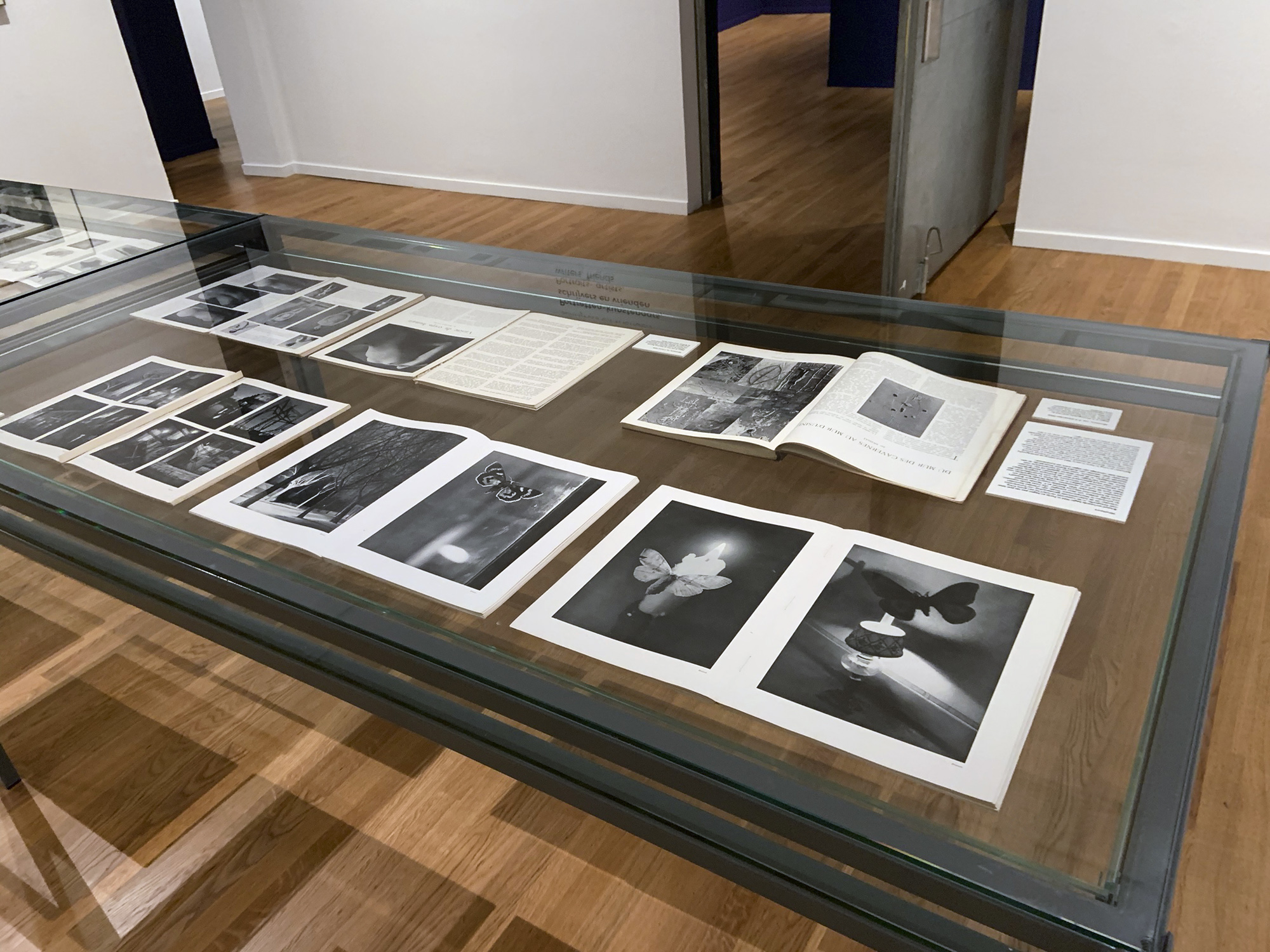
15/ Brassaï, “Du mur des cavernes au mur d’usine”, Minotaure, no. 3-4, 1933, pp. 6-7.

16/ “Graffiti parisiens”, XXe siècle (Paris), no. 10, 1958, pp. 21-24.

17/ See further La Subversion des images: Surréalisme, photographie, film, eds. Quentin Bajac and Clément Chéroux, Paris: Édition du Centre Pompidou, 2009.

18/ André Breton, “Picasso dans son element”, Minotaure, no. 1, 1933, pp. 8-29.

19/ Salvador Dalí and Brassaï, “Sculptures involontaires”, Minotaure, no. 3-4, 1933, p. 68; Salvador Dalí, “De la beauté terrifiante et comestible, de l’architecture modern’ style”, Minotaure, no. 3-4, 1933, pp. 69-76.

20/ Sylvie Aubenas, “Brassaï and Paris by Night”, Brassaï Paris Nocturne, London: Thames & Hudson, 2013, pp. 110-113. Three night photographs by Brassaï are included in André Breton, L’Amour fou, Paris: Gallimard, 1937.

21/ Together with the Russian art director Alexey Brodovitch, Carmel Snow made the fashion magazine Harper’s Bazaar into one of the more innovative magazines in the 1940s and ’50s, both in terms of form and content. See also Gabriel Bauret, Alexey Brodovitch, Paris: Éditions Assouline, 1998.

22/ Brassaï later wrote a foreword dated 1983, published in the book by Louis Stettner, Early Joys. Photographs from 1947-1972, New York: Janet Iffland, 1987, pp. 7-9.

23/ For more information on the young Swedish photographers in Paris, see Anna Tellgren, Tio fotografer. Självsyn och bildsyn. Svensk fotografi under 1950-talet i ett internationellt perspektiv (Ten Photographers. Self-perception and Pictorial Perception. Swedish Photography in the 1950s in an International Perspective), diss., Linköping Studies in Arts and Science no. 151, Stockholm: Informationsförlaget, 1997, pp. 151-229.

24/ See for example Rune Hassner, “Fotobohemer, skickliga yrkesmän och ‘konstfotografer'”, Svensk Fotografisk Tidskrift, no. 7, 1949, pp. 139-142. For a compilation see also Rune Hassner, Bilder & Ord. Bibliografi, filmografi, utställningsförteckning med mera, eds. Rune Hassner and Birgitta Forsell, Visuellt. Konst- och bildvetenskapliga institutionens skriftserie no. 7, Gothenburg: Gothenburg University, 2002. In 1988 Rune Hassner (1928-2003) became the first director of the Hasselblad Centre (part of the Hasselblad Foundation in Gothenburg) – a position that he held until his retirement in 1994.

25/ Rune Hassner, “Brassaï”, Nordisk Tidskrift för Fotografi, no. 1, 1954, pp. 13-15.

26/ From an interview with Brassaï in 1974 in Paul Hill and Thomas Cooper, “Brassaï”, Dialogue with Photography, Manchester: Cornerhouse Publication, 1979/1992, pp. 38-42.


Installation view of the exhibition 'Brassaï - The Secret Signs of Paris' at Moderna Museet, Stockholm, March - October, 2026 showing Brassaï's 'Graffiti - Croix de Lorraine (Series II)' c. 1945


Installation view of the exhibition Brassaï – The Secret Signs of Paris at Moderna Museet, Stockholm, March – October, 2026 showing Brassaï’s Graffiti – Croix de Lorraine (Series II) (c. 1945)


Installation view of the exhibition 'Brassaï - The Secret Signs of Paris' at Moderna Museet, Stockholm, March - October, 2026 showing from left to right, top to bottom, Brassaï's 'Graffiti from series III The Birth of Mankind' c. 1932/1956; 'Graffiti from series III The Birth of Mankind' c. 1932/1956; 'Graffiti from series VII Death' c. 1932/1956; 'Graffiti from series VIII Magic' c. 1932/1956


Installation view of the exhibition Brassaï – The Secret Signs of Paris at Moderna Museet, Stockholm, March – October, 2026 showing from left to right, top to bottom, Brassaï’s Graffiti from series III The Birth of Mankind c. 1932/1956; Graffiti from series III The Birth of Mankind c. 1932/1956; Graffiti from series VII Death c. 1932/1956; Graffiti from series VIII Magic c. 1932/1956


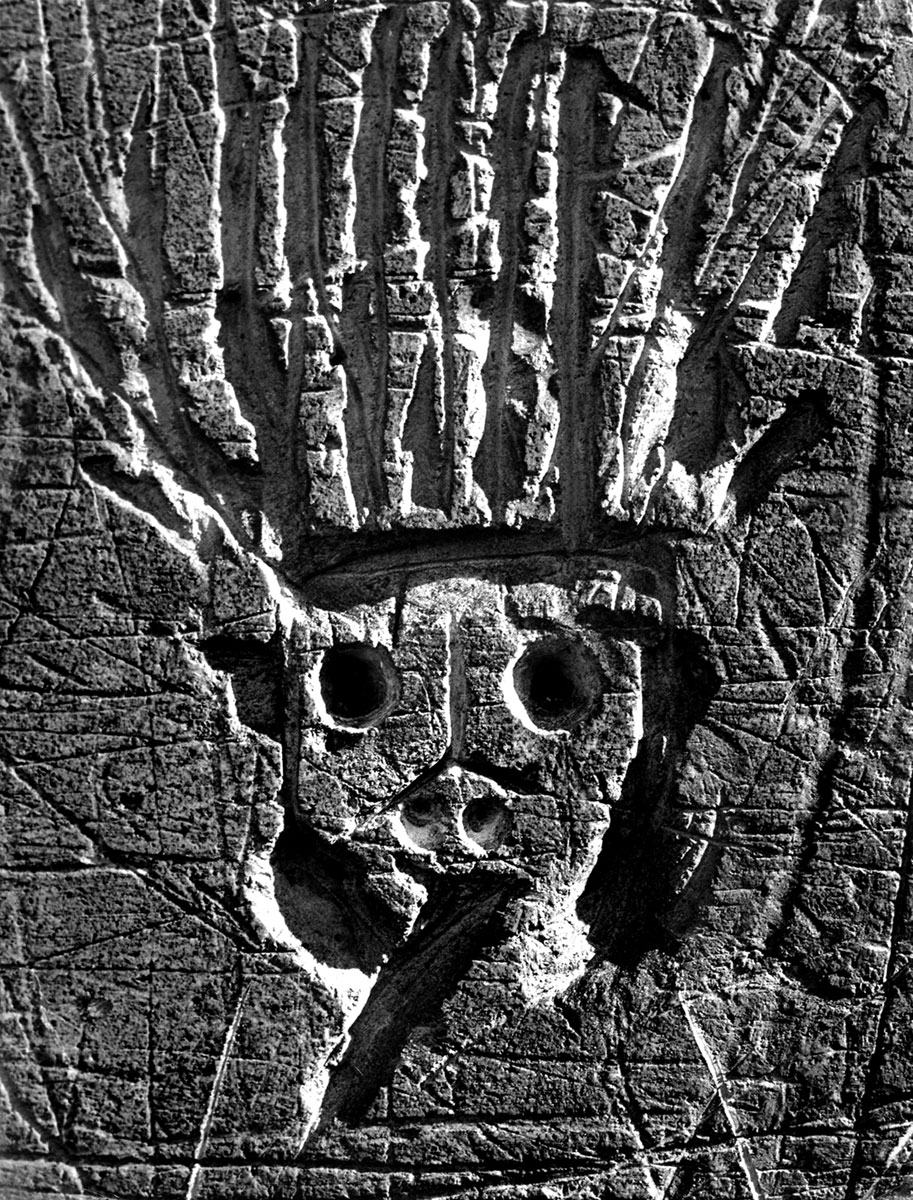
Installation view of the exhibition 'Brassaï - The Secret Signs of Paris' at Moderna Museet, Stockholm, March - October, 2026 showing  Brassaï's 'Graffiti de la série IX "Images primitives"/Graffiti from Series IX "Primitive Images"' (c. 1932-1956)


Installation view of the exhibition Brassaï – The Secret Signs of Paris at Moderna Museet, Stockholm, March – October, 2026 showing Brassaï’s Graffiti de la série IX “Images primitives”/Graffiti from Series IX “Primitive Images” (c. 1932-1956)


Brassaï (Hungarian-French, 1899-1984) 'Graffiti de la série IX "Images primitives"/Graffiti from Series IX "Primitive Images"' c. 1932-1956


Brassaï (Hungarian-French, 1899-1984)
Graffiti de la série IX “Images primitives”/Graffiti from Series IX “Primitive Images”
c. 1932-1956
Vintage silver gelatin print
© Estate Brassaï Succession – Philippe Ribeyrolles 2026


Brassaï – The Secret Signs of Paris

Hungarian-born Gyula Halász, better known as Brassaï, was only twenty-five when he moved to Paris, the city that became his home and shaped the rest of his life and work. His walks through the city awakened a longing to preserve all the fascinating things he saw and experienced, not least the people and milieus that emerged after nightfall. The exhibition focuses on the intense period in the 1930s when Brassaï became an innovator of nocturnal photography and one of the foremost portraitists of Paris.

Brassaï was born in 1899 in Brassó, Transylvania, and studied art in Budapest and Berlin. Versatile in his practice, he worked across drawing, painting, sculpture and photography. Literature was another major interest, and writing remained important to him throughout his career. After arriving in Paris in 1924, he initially worked as a journalist. His breakthrough as photographer came with the 1933 book Paris de nuit. It features many of the city’s famous motifs, evocatively illuminated by the glow of gas streetlights – Notre-Dame and the Eiffel Tower, bars and dancehalls, performers and workers, policemen and thieves.

He moved in artist circles and his interaction with the Surrealists, as well as his friendship with Pablo Picasso, sharpened his awareness of the unexpected and overlooked. On his rambles through the city, Brassaï also discovered street graffiti and he continued to document these signs, symbols and traces of life in a comprehensive series of photographs until the 1950s. He compared them to children’s drawings and cave paintings, but also saw similarities with contemporary art. In the final years before his death in 1984, Brassaï received major recognition, including numerous awards and exhibitions around Europe and the USA.

The title of the exhibition, The Secret Signs of Paris, alludes to how the photographer revealed a hidden world through his camera. His photographs
become clues to interpreting the city’s poetry. In the exhibition, we follow Brassaï through all hours of the day, from evening to early morning, during the day in the streets and squares of Paris, and back to the night’s shadowy activities.

Technique and Practice

Around 1930, Brassaï started photographing in earnest. He used a Voigtländer Bergheil folding camera with a glass negative (6.5 x 9cm), and, from the mid-1930s onwards, a Rolleiflex with medium-format negatives (6 x 6cm). In the early years he installed a darkroom in the hotel he was staying at, in which he developed his own photographs. In 1935, he bought an apartment on rue du Faubourg Saint-Jacques in Montparnasse, which was both his home and his studio, including a darkroom and his photographic archive. Throughout his career he continued to develop his own photographs. Initially the prints were
relatively small, from c. 5 x 5cm to c. 20 x 30cm, on different types of photo papers. From the 1950s onwards, Brassaï worked on larger prints, up to 40 x 50cm, on glossy paper in editions of c. 30, adapted to the American market.

All the photographs by Brassaï in the exhibition belong to Estate Brassaï
Succession, Paris, unless stated otherwise. They are vintage gelatine silver prints, produced by the photographer himself. © Estate Brassaï Succession – Philippe Ribeyrolles 2026

Paris by Night

Paris has long been perceived as the city above all others for lovers and romantic encounters. Many of Brassaï’s nocturnal photographs show couples entwined on benches, in parks and in dark allies. The flip-side of this was the widespread prostitution, that had women offering their services to passing men in the alleyways and hotels around town. Brassaï often photographed the women who worked the streets around the old fresh food market in central Paris, Les Halles, which was demolished in 1971. His images speak the tough lives of the prostitutes, but also the strong sense of community among them and the invisible safety net that it provided. In recent years, his photographs of prostitutes and other marginalised people have been criticised for aestheticising vulnerable lives and reinforcing the position of power that the photographer – and thus also the viewer – occupies. Brassaï himself saw his nocturnal photographs as a way of preserving the old, mythical Paris that writers and artists have depicted for centuries.

Brassaï and Swedish Photographers

When the borders re-opened after the Second World War, a great number of young photographers went abroad. Several of them established themselves in Paris to learn, work, and experience the city – some briefly, others for longer periods of time. Among them were the Swedes Rune Hassner and Tore Johnson. Hassner started his career as a fashion and documentary photographer, but he also wrote articles for Swedish photography magazines, in which he introduced
European photography to his colleagues and photo enthusiasts back home in Sweden. One of the people he met and interviewed was Brassaï, who in turn was producing travel reportages for Harper’s Bazaar, visiting places such as Brazil and Greece – as well as Stockholm and Vålådalen, in December 1953. During this visit, he had his portrait taken by Hans Hammarskiöld, who, together with Hassner and Johnson, belonged to the circle of Swedish photographers who debuted in the early 1950s, and later formed the influential group Tio fotografer (Ten Photographers).

Les Bals Musette

In the 1976 book Le Paris secret des années 30 (The Secret Paris of the ’30s) Brassaï recounts about the dance halls that were popular at the time, the so-called Bals musette, which were often located on the outskirts of Paris. Young working-class women and men gathered there to socialise and dance to small orchestras of brass instruments, drums, and accordions. The bal musette scene had its own fashion, music, codes, and often even interiors, featuring fixed benches upholstered in red imitation leather, glass lights, and multicoloured paper garlands hanging from the ceiling. It radiated poetry, gaiety, and dreams, but also came with risks. This was where pimps found young girls to exploit, and knife fights between rival gangs were not uncommon. Several of these establishments were on the rue de Lappe in the 11th arrondissement. With time they were bought up and remade into a kind of scenography for tourists looking for the “real Paris”, seeking out the city’s underworld.

The Balls

At this time, several large-scale public balls were organised, that would spread across Parisian streets and squares. At the ball for medical students that was held every autumn after their final exams the participants appeared almost naked, covered in nothing but gold glitter. One of the more famous balls was Le Bal des Quat’z’Arts, the art students’ spring ball. Although the theme changed from year to year, for example from Egyptian to Gallic, not many people actually wore a costume. Instead the event was known for its playful atmosphere. The festivities kicked off in the art school courtyard, continuing into the rue Bonaparte and the surrounding quarters, ending in a morning dip in the fountain at the Place de la Concorde. One of the balls that Brassaï attended and documented was Magic-City, the legendary masquerade ball organised for a few years around 1930 for members of the queer community. Here he met all of them who came to dance, party and be seen. Brassaï’s photographs today stand as important testimonies to an early queer nightlife in Paris.

Queer lives

In the 1930s, there were a few meeting places for the city’s queer communities in the area around Montparnasse in Paris. One of the first lesbian bars was Le Monocle on boulevard Edgar-Quinet, or “the temple of Sapphic love”, as Brassaï put it. He was introduced to the scene by “La grosse Claude”, one of the regulars. Fat Claude’s real name was Violette Morris and she was a renowned athlete, who during the Second World War, was recruited as a Nazi spy. She was killed in 1944 by activists in the French Resistance Movement. Brassaï’s photographs of the queer scene were early, unusually candid depictions of what was then a marginalised and often disregarded group. In his writings, he often reiterated how he was drawn to the people who lived and worked at night, describing his method of being introduced and accepted into the scenes that he moved in. He never photographed in secret. Even so, he was more than once threatened and had his plates stolen by those who did not want to risk being recognised and exposed.

Graffiti

Brassaï discovered the city’s graffiti on his recurring rambles through Paris. From the early 1930s until the end of the 1950s he worked on documenting these signs on walls and facades. Over the years he refined his method, carrying a notepad around with him in which he sketched the figures and noted their locations so he could revisit them. Sometimes he returned to photograph them in better light or he would find them several years later to examine how they had developed. In this way he assembled a kind of visual archive of human expression and creativity. Brassaï collated the images in the book Graffiti (1960), where he organises them in nine chapters, each with their own theme. The first chapter was entitled “The Wall as Proposition”, followed by “Language of the Wall”, “The Birth of Mankind”, “Masks and Faces”, “Animals”, “Love”, “Death”, “Magic”, and “Primitive Images”.

Presented here are around forty of Brassaï’s graffiti photographs, including
the well-known Le Roi Soleil (The Sun King). In several articles,
Brassaï wrote about his comprehensive graffiti series, explaining how
he understood these spontaneous signs on the city’s walls as a form
of archetypal writing. He saw the motifs as representing mythological
figures like demons, heroes and gods, comparing them to children’s
drawings and cave paintings. He shared this interest with the Surrealists
and one of Brassaï’s first articles was published under the title
“Du mur et des cavernes au mur d’usine” (From cave walls to factory
walls) in Minotaure no. 3-4 1933, a Surrealist-oriented art journal.

Brassaï developed his thoughts on graffiti in dialogue with others, notably the artist Pablo Picasso and the poet Jacques Prévert. At the same time, the French artist Jean Dubuffet developed the term l’art brut (raw art) in his search for a more original, primitive imagery beyond the art establishment. Graffiti came to be part of this artistic movement and Dubuffet included photographs by Brassaï in his vast collection, now housed at the museum Collection de l’Art Brut in
Lausanne. The first monographic exhibition of the series, Language of the Wall. Parisian Graffiti Photographed by Brassaï, was presented in 1956 at the Museum of Modern Art in New York. It featured some 120 photographs, among them a number in larger formats, a few of which are also included in this exhibition.

Conversations with Picasso

The artist who came to mean the most to Brassaï was Pablo Picasso. They were introduced to each other in 1932 by the publisher Tériade, ahead of an assignment for the Surrealist magazine Minotaure. This led to Brassaï photographing Picasso’s sculptures for an article by André Breton. In the 1930s, they moved in the same circles, but it was not until the war years in the early 1940s that their friendship deepened. Brassaï continued documenting Picasso in his studio – his sculptures, work process, visiting artist friends – collating his recollections of their encounters in the book Conversations with Picasso (1964). Reflected in recurring motifs in their respective oeuvres, such as acrobats, horses and clowns, is their shared love of the circus, which they often attended together. There are several examples from the legendary Cirque Medrano on boulevard Marguerite de Rochechouart in Montmartre, a place that had been a hub for artists and performers since the late nineteenth century.

Chez Suzy

In the 1930s, bordellos were still a lucrative industry. The businesses were spread all over the city, both in affluent areas and in those marked by organised crime. Often there was just an illuminated, enlarged house number sign indicating that there was a bordello behind the closed doors. Chez Suzy was a smaller bordello in the Latin Quarter, where clients could come and go completely anonymously. Brassaï photographed the Madame and “her girls”, for example when meeting with a client. Later, it was revealed that the man seen in these images was Brassaï’s assistant Gabriel Kiss and that the captured events were staged, which was probably necessary in order to uphold the promised customer discretion. When the so-called Marthe Richard law came into power in 1946, the system in which prostitutes were controlled by the state, forced to register with the police and undergo regular medical exams was abolished. The law also criminalised pimping. As a result, over one hundred bordellos in Paris closed down.

As Long as There Are Animals

In the years 1954 and 1955 Brassaï returned again and again to Zoo de Vincennes (Parc zoologique de Paris), not with his still camera but with a 16 mm film camera. The result is the 1956 short film Tant qu’il y aura des bêtes (As Long as There Are Animals), in which the animals’ movements and behaviour produce a kind of visual choreography. The film consists of a series of scenes that register rather than explain, working with repetition, rhythm, and form. It was first shown at the Cannes film festival in 1956, where it won an honorary mention for innovative and experimental short film: Mention au film de recherche – court métrage. In retrospect, it appears as a moving-image work related to Brassaï’s graffiti studies, reflecting his interest in the hidden
patterns of existence.

Wall texts from the exhibition


Brassaï (Hungarian-French, 1899-1984) 'Fumeuse dopium au chat/Opium smoker with cat' c. 1931


Brassaï (Hungarian-French, 1899-1984)
Fumeuse dopium au chat/Opium smoker with cat
c. 1931
Vintage silver gelatin print
© Estate Brassaï Succession – Philippe Ribeyrolles 2026


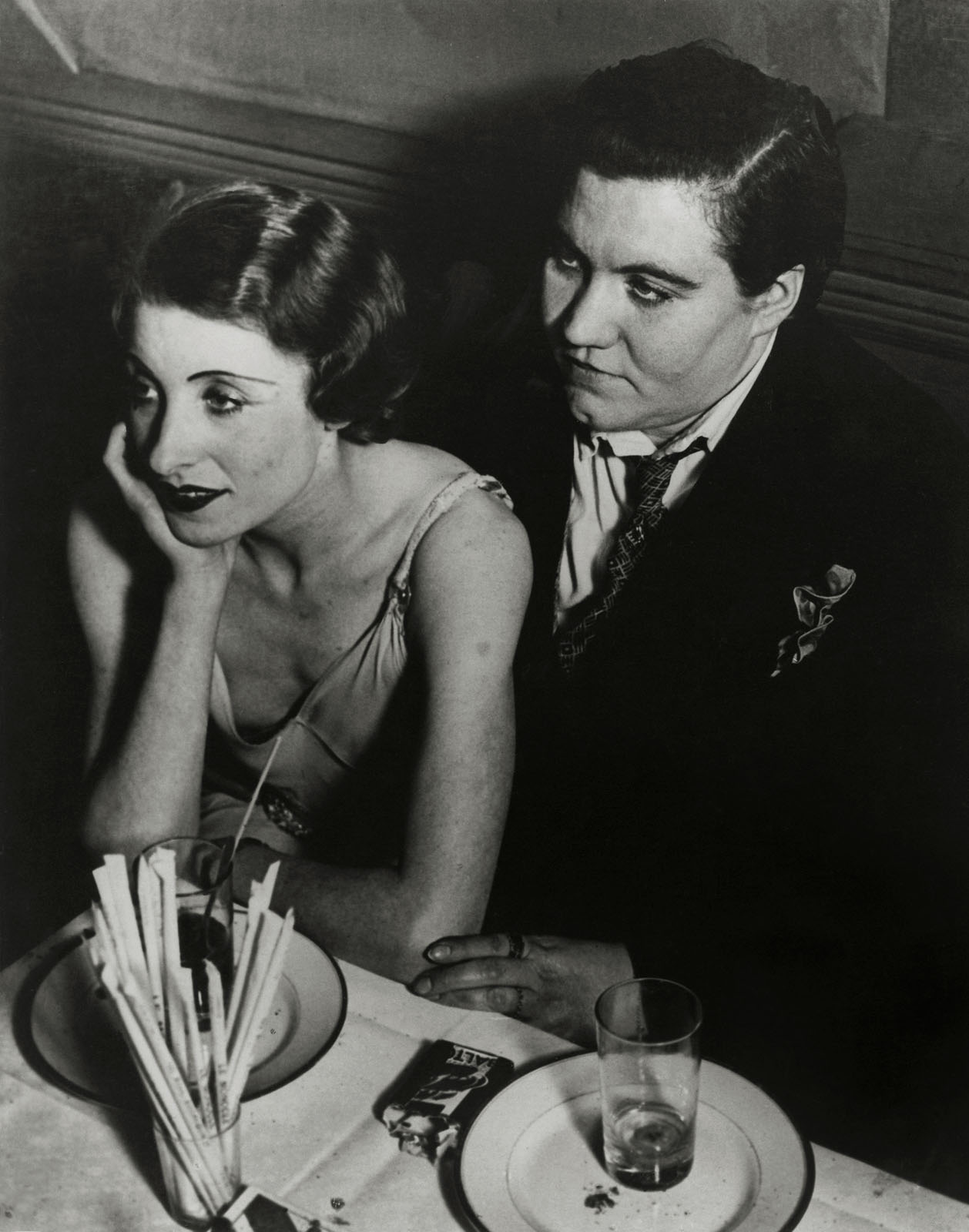
Brassaï (Hungarian-French, 1899-1984) 'La grosse Claude et son amie, au Monocle/Fat Claude and her Girlfriend, at Le Monocle' c. 1932


Brassaï (Hungarian-French, 1899-1984)
La grosse Claude et son amie, au Monocle/Fat Claude and her Girlfriend, at Le Monocle
c. 1932
Vintage silver gelatin print
© Estate Brassaï Succession – Philippe Ribeyrolles 2026


Violette Morris, known as Fat Claude, was a multi-talented athlete who excelled in soccer, car racing, shot put, and boxing during the 1920s. She was well-known in Parisian bohemian and queer circles, frequently dressed in men’s suits, and captured iconically by Brassaï. During the Nazi occupation of France, Morris became an informer and collaborator for the Gestapo, accused of passing French military secrets and intelligence to Germany. She was assassinated by the French Resistance in 1944 while driving her car in Normandy.


Brassaï (Hungarian-French, 1899-1984) 'Escalier de la Butte Montmartre/Steps of Montmartre' c. 1937


Brassaï (Hungarian-French, 1899-1984)
Escalier de la Butte Montmartre/Steps of Montmartre
c. 1937
Vintage silver gelatin print
© Estate Brassaï Succession – Philippe Ribeyrolles 2026


Brassaï (Hungarian-French, 1899-1984) 'La Tour Eiffel éclairée/The Eiffel Tower Illuminated' 1931


Brassaï (Hungarian-French, 1899-1984)
La Tour Eiffel éclairée/The Eiffel Tower Illuminated
1931
Vintage silver gelatin print
© Estate Brassaï Succession – Philippe Ribeyrolles 2026


'Brassaï - The Secret Signs of Paris' exhibition catalogue cover


Brassaï – The Secret Signs of Paris exhibition catalogue cover


Explore the exhibition catalogue

An extensive catalogue accompanies the exhibition, published by Moderna Museet and Silvana Editoriale, Milan.

The catalogue reproduces all of the more than 160 photographs included in the exhibition and features, among other texts, a piece by Brassaï himself, one by his nephew Philippe Ribeyrolles, along with a newly written essay by the French author Nina Bouraoui. Design: Malmsten Hellberg, Stockholm.

Writers: Nina Bouraoui, Brassaï, Philippe Ribeyrolles, Anna Tellgren
Editor: Anna Tellgren
Binding: Hardcover with dust jacket
Language: English
Graphic design: Malmsten Hellberg
Format: 21.7 × 28 cm
Number of pages: 208
Number of images: approx. 160

ISBN 978-91-988136-1-6

Published in collaboration with Silvana Editoriale, Milan


Moderna Museet, Stockholm

Moderna Museet is ten minutes away from Kungsträdgården, and twenty minutes from T-Centralen or Gamla Stan. Walk past Grand Hotel and Nationalmuseum on Blasieholmen, opposite the Royal Palace. After crossing the bridge to Skeppsholmen, continue up the hill. The entrance to Moderna Museet and Arkitekturmuseet is on the left-hand side.

Opening hours:
Tuesday – Sunday 11 – 18
Monday closed
Moderna Museet website

LIKE ART BLART ON FACEBOOK

Back to top

Exhibition: ‘The Paris of Brassaï. Photographs of the City Picasso Loved’ at the Museo Picasso Málaga

Exhibition dates: 19th October, 2021 – 3rd April, 2022


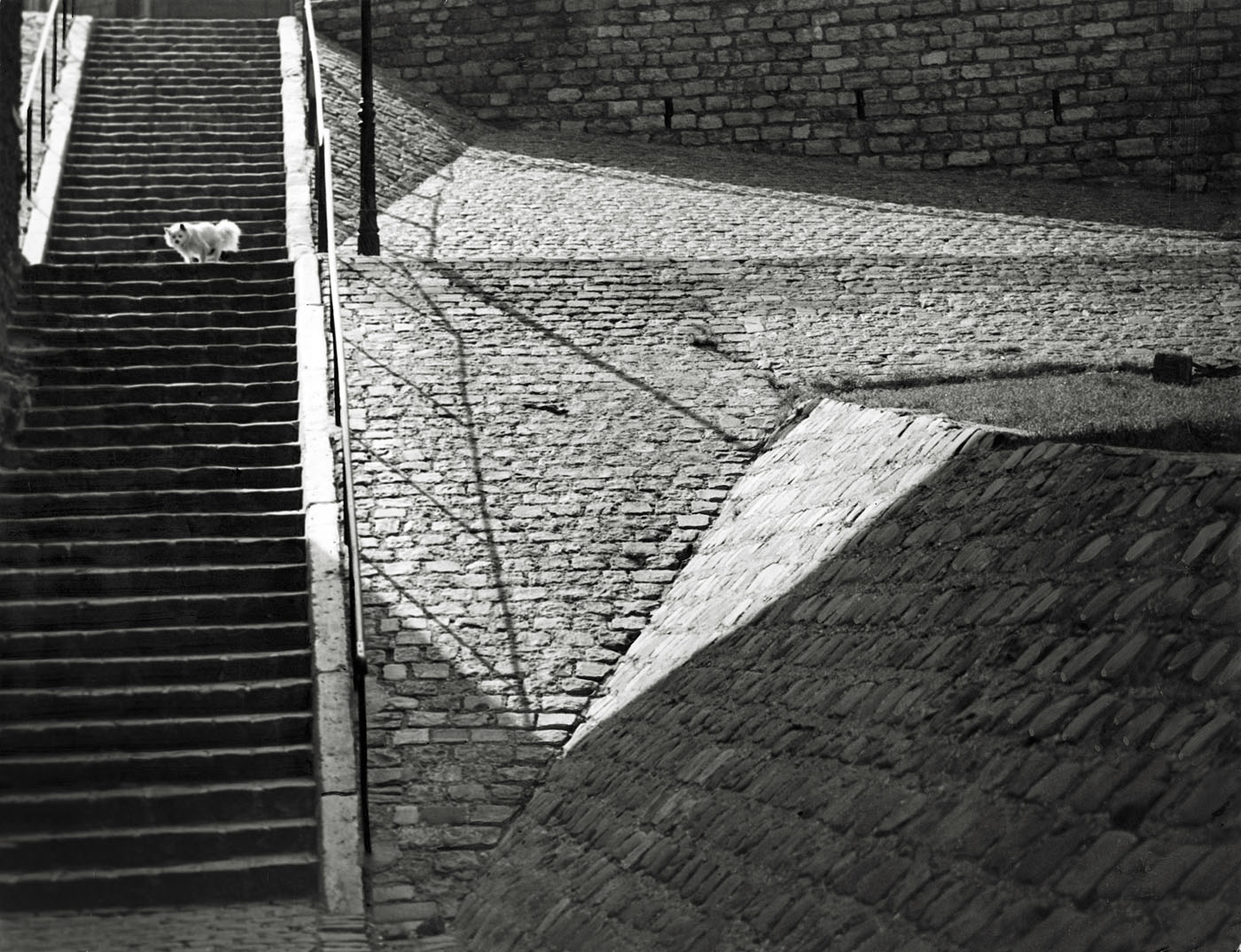
Brassaï (Hungarian-French, 1899-1984) 'Steps of Montmartre with a white dog, Paris' 1932 from the exhibition Exhibition: 'The Paris of Brassaï. Photographs of the City Picasso Loved' at the Museo Picasso Málaga, Oct, 2021 - April, 2022


Brassaï (Hungarian-French, 1899-1984)
Steps of Montmartre with a white dog, Paris
1932
Gelatin silver print
30 x 40cm
Estate Brassaï Succession, Paris
© Estate Brassaï Succession-Philippe Ribeyrolles


A quick text today as I’m still not well with bronchitis.

I really struggled to get images for this posting, the museum supplying 12 of the 21 photographs while I gathered the rest after seeing an installation image from the exhibition and deciphering further images from the preview to the catalogue of the exhibition on the Amazon website.

If you are interested in the subject matter – photographs of an environment where Picasso was in his element, a volcano at the epicentre of a vibrant, creative city – then I think the catalogue would be the way to go… but at close to $100 for just 152 pages the cost might seem a little excessive.

My favourite images in the posting are the two atmospheric photographs of Picasso’s sculptures in his studios.

Dr Marcus Bunyan


Many thankx to the Museo Picasso Málaga for allowing me to publish the photographs in the posting. Please click on the photographs for a larger version of the image.


Brassaï (Hungarian-French, 1899-1984) 'A chair in the Luxembourg Gardens, Paris' 1947 from the exhibition Exhibition: 'The Paris of Brassaï. Photographs of the City Picasso Loved' at the Museo Picasso Málaga, Oct, 2021 - April, 2022


Brassaï (Hungarian-French, 1899-1984)
A chair in the Luxembourg Gardens, Paris
1947
Gelatin silver print
23 x 17.5cm
Estate Brassaï Succession, Paris
© Estate Brassaï Succession-Philippe Ribeyrolles


Brassaï (Hungarian-French, 1899-1984) 'Luxembourg Gardens basin, Paris' 1930 from the exhibition Exhibition: 'The Paris of Brassaï. Photographs of the City Picasso Loved' at the Museo Picasso Málaga, Oct, 2021 - April, 2022


Brassaï (Hungarian-French, 1899-1984)
Luxembourg Gardens basin, Paris
1930
Gelatin silver print
29.6 x 22.3cm
Estate Brassaï Succession, Paris
© Estate Brassaï Succession-Philippe Ribeyrolles


Brassaï (Hungarian-French, 1899-1984) 'Au Cochon Limousin' 1935


Brassaï (Hungarian-French, 1899-1984)
‘Au cochon limousin’, rue Lecourbe, Paris
1935
Gelatin silver print, modern copy
29.8 x 22.9cm
Estate Brassaï Succession, Paris
© Estate Brassaï Succession-Philippe Ribeyrolles


Brassaï (Hungarian-French, 1899-1984) 'Fat Claude and her girlfriend at Le Monocle, Paris' c. 1932


Brassaï (Hungarian-French, 1899-1984)
Fat Claude and her girlfriend at Le Monocle, Paris
c. 1932
Gelatin silver print
27.6 x 22.1cm
Estate Brassaï Succession, Paris
© Estate Brassaï Succession-Philippe Ribeyrolles


Brassaï (Hungarian-French, 1899-1984) 'Kiki with her accordion player at the Cabaret des Fleurs, Rue de Montparnasse' c. 1932


Brassaï (Hungarian-French, 1899-1984)
Kiki with her accordion player at the Cabaret des Fleurs, Rue de Montparnasse
c. 1932
Gelatin silver print
© Estate Brassaï Succession-Philippe Ribeyrolles


Brassaï (Hungarian-French, 1899-1984) 'Trapeze artists, Medano Circus' 1932


Brassaï (Hungarian-French, 1899-1984)
Trapeze artists, Medano Circus
1932
Gelatin silver print
© Estate Brassaï Succession-Philippe Ribeyrolles


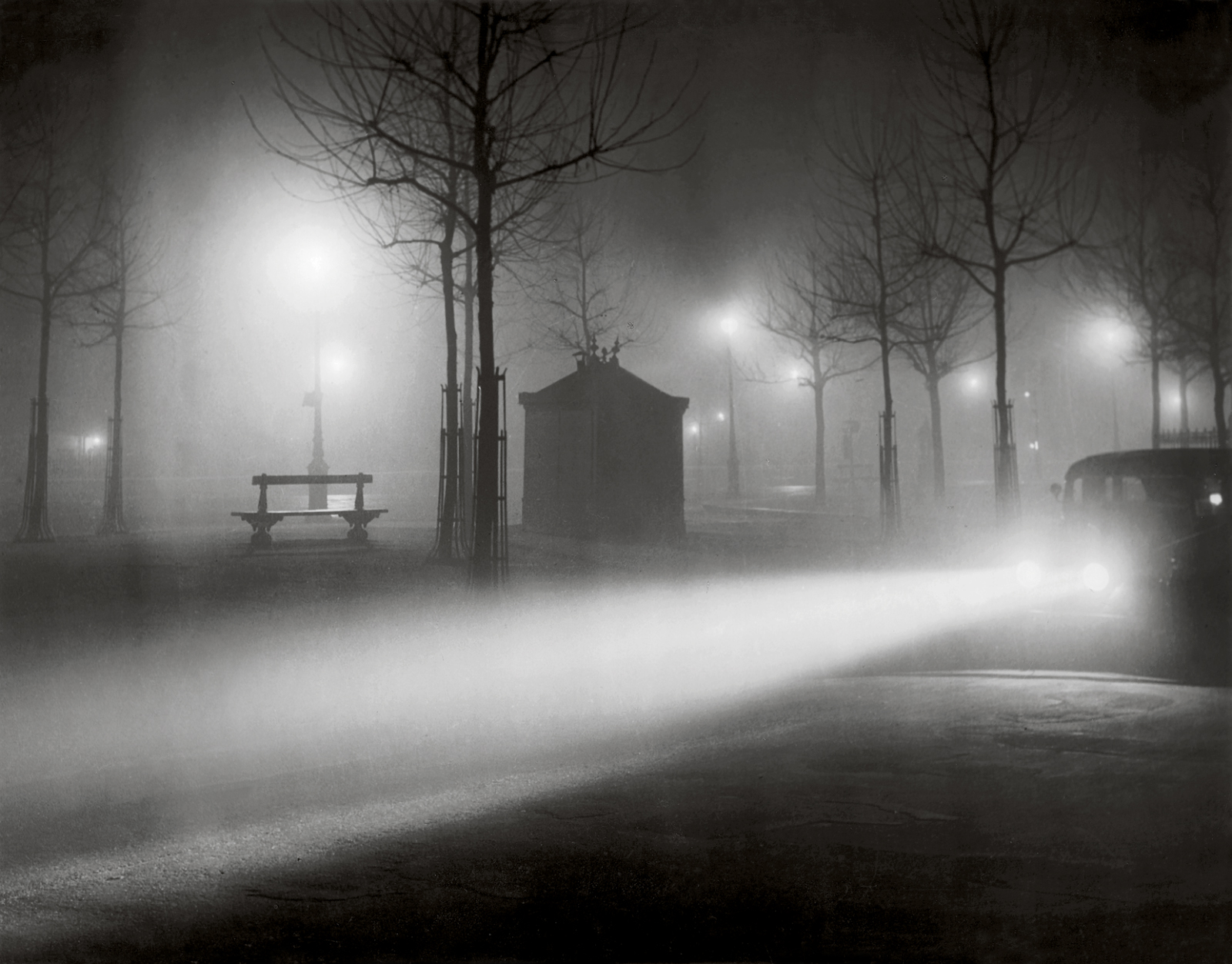
Brassaï (Hungarian-French, 1899-1984) 'Colonne Morris dans le Brouillard' 1933


Brassaï (Hungarian-French, 1899-1984)
Colonne Morris dans le Brouillard
1933
Gelatin silver print
© Estate Brassaï Succession-Philippe Ribeyrolles


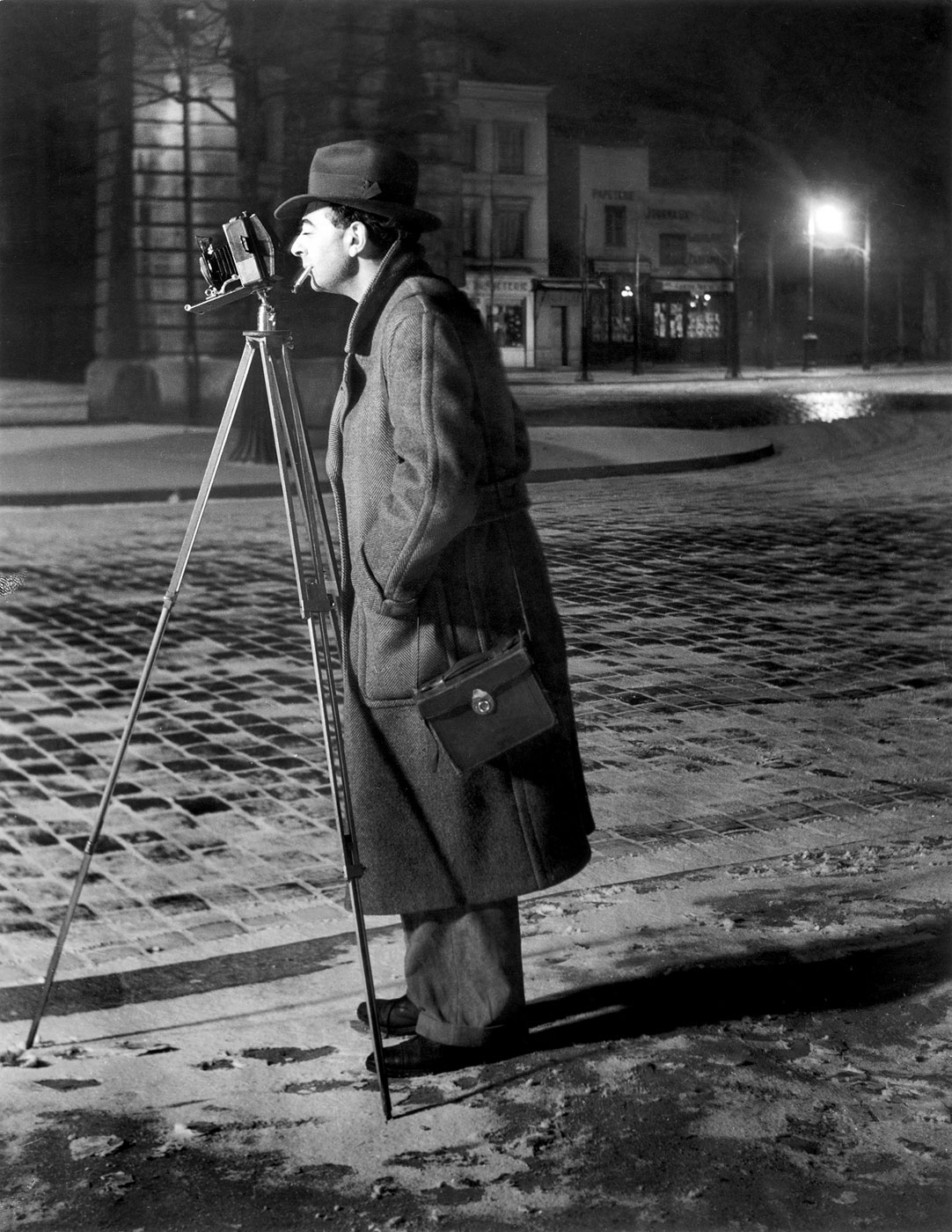
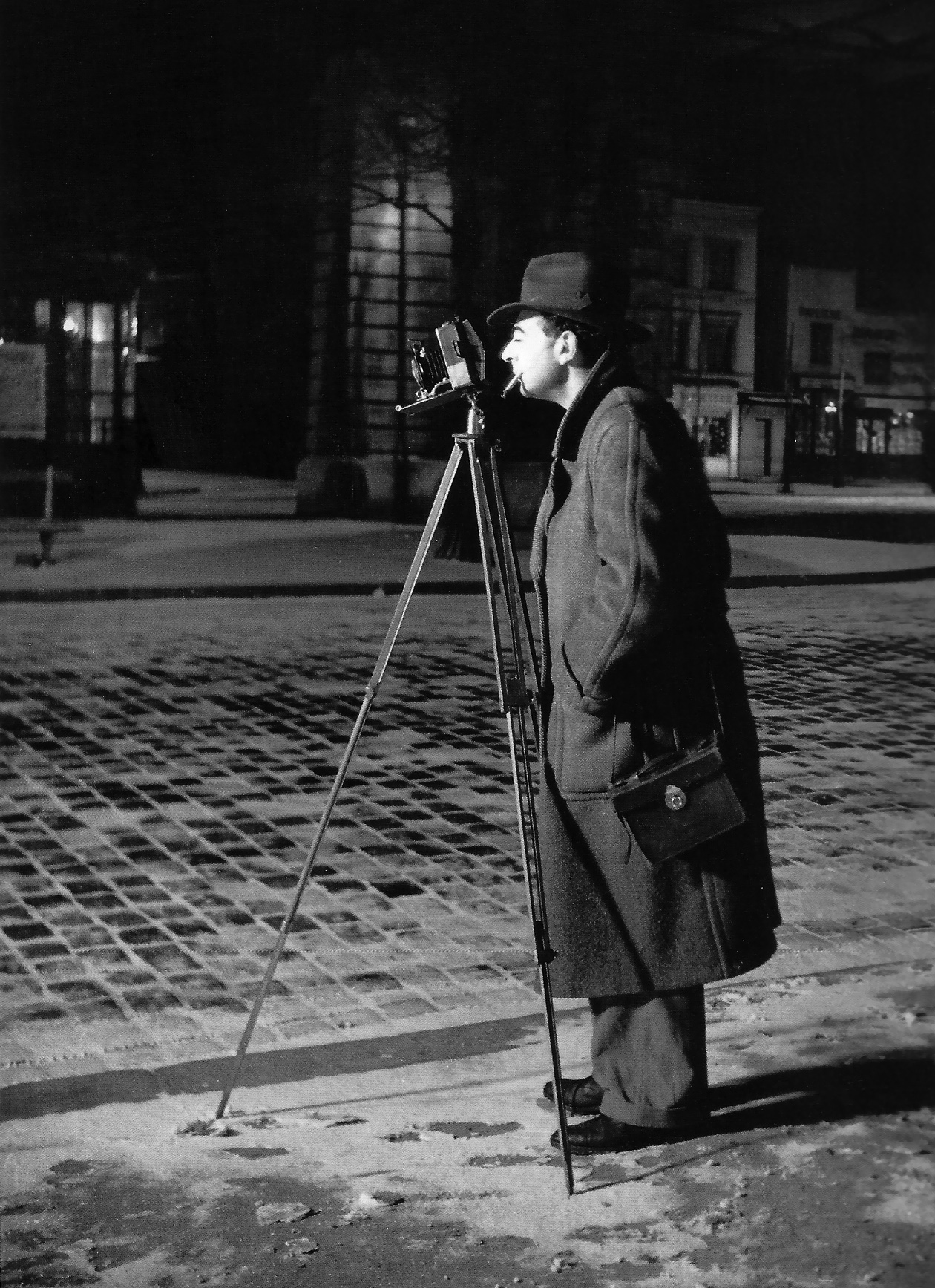
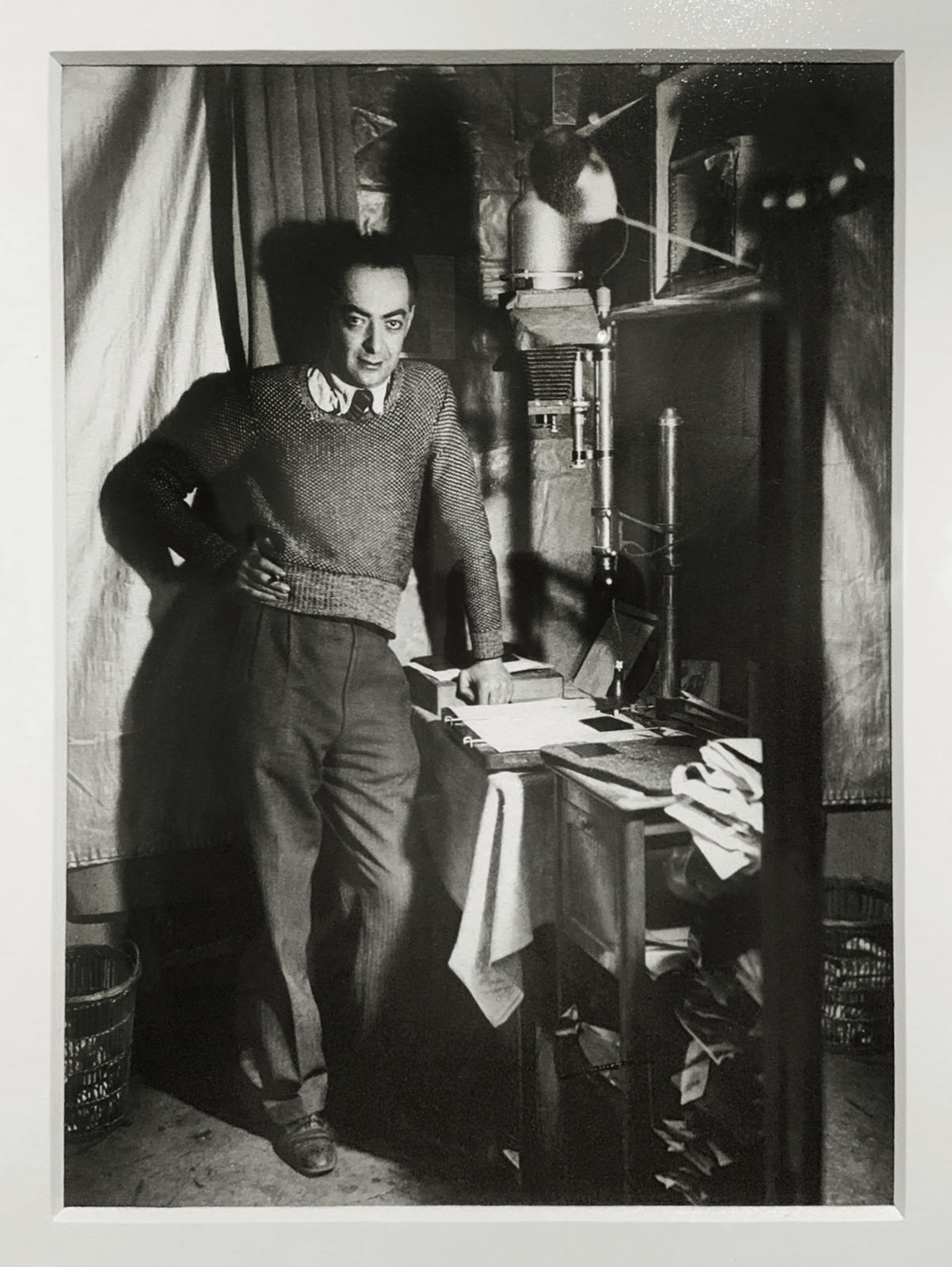
Brassaï (Hungarian-French, 1899-1984) 'Self-portrait, Boulevard Saint-Jacques, Paris' 1930-1932


Brassaï (Hungarian-French, 1899-1984)
Self-portrait, Boulevard Saint-Jacques, Paris
1930-1932
Gelatin silver print
29.6 x 22.9cm
Estate Brassaï Succession, Paris
© Estate Brassaï Succession-Philippe Ribeyrolles


The exhibition The Paris of Brassaï. Photographs of the City Picasso Loved, presented by Museo Picasso Málaga, shows the work of one of the most famous European photographers of the first half of the 20th century. With his work, Brassaï helped to create the universal public image of Paris, the Eternal City. It is displayed here alongside works by Pablo Picasso, Pierre Bonnard, Georges Braque, Lucien Clergue, Fernand Léger, Dora Maar and Henri Michaux, and with period piece films, posters, sheet music and a large quantity of documentary material.

Brassaï’s photographs invite the viewer to wander through Paris, with its river Seine, Notre Dame, its brothels and its markets. His conjured up a superb depiction of society in his many shots of the intellectual, literary, and artistic scene of 1930s and 1940s Paris, ranging from Sartre to Beckett.

This exhibition has been organised with sponsorship from Fundación Unicaja and the special collaboration of Estate Brassaï succession, Paris; Institut Français, Seville, and Musée national Picasso-Paris. It sheds light on the professional relationship and friendship between Brassaï and Picasso, who considered Brassaï to be the best photographer of his work.


Brassaï arrived in Paris from Hungary in 1924. Little by little, he discovered the dynamic nature and the social idiosyncrasies of the great metropolis. While he initially explored the city’s nightlife, over time he began to create a precise X-ray of its architecture and its people. He joined the fascinating intellectual and artistic avant-garde community of which Picasso was a member, becoming one of its finest eyewitness photographers. But Brassaï was not just a photographer, he was also a versatile artist who drew, made sculptures, decorated, and made films.

As a photographer, Brassaï constructed a visual topography of the city of light (and shadows) in the 1930s and 40s, but this exhibition also aims to show him as a prolific creative artist. The Paris of Brassaï. Photographs of the City Picasso Loved features over 300 works, with photographs, drawings and sculptures that come mainly from the Brassaï family archives (Estate Brassaï Succession). Also on display are photographs and artworks by Pablo Picasso, alongside works by Pierre Bonnard, Georges Braque, Lucien Clergue, Fernand Léger, Dora Maar and Henri Michaux.

Films, posters, musical scores, theatre programmes and a large quantity of documentary material from the Paris of that period, make up an exhibition that takes the visitor back to an unforgettable city and time.

The structure of the exhibition comprises four sections that relate to film, the visual arts, literature, and music, based on the photographic work of one of the most famous photographers of the first half of the 20th century. The exhibition layout begins with Who is Brassaï? which displays artistic works whose main feature is their expressive freedom. Paris by Day features scenes from everyday life as if they were being shown for the first time: Paris by Night is a journey through a city of shadows that evokes the melancholy that emanated from the streets and characters. Conversations with Picasso brings together work by the two artists who enjoyed a long-lasting professional and personal relationship.

The Eye of Paris

Brassaï was the pseudonym of Gyula Halász (1899-1984), a Hungarian photographer who was best known for his work on Paris, the city where he made his career. When he was three years old, his family moved to the French capital, in the year that his father, a professor of literature, was teaching at the Sorbonne. As a young man, Brassaï studied painting and sculpture at the Academy of Fine Arts in Budapest, before joining the Cavalry of the Austro-Hungarian army during the First World War. In 1920, he went to live in Berlin to work as a journalist and to study at the University of the Arts. In 1924, he moved back to Paris, where he remained for the rest of his life. He soon made friends with writers Henry Miller (who described him in one of his books as “the eye of Paris”), León-Paul Fargue and Jacques Prévert. Inspired by his frequent night-time walks around Paris, Gyula Halász asked to borrow a camera to capture the beauty of the streets and gardens in the rain and fog. He used poetic metaphors in these pictures, leading more than one graphic reporter to describe him as a poet with a camera. He then began to sign his work with the pseudonym Brassaï. It means “the man from Brasso”, his birthplace, which is now part of Romania.

In the 1930s, Paris was by no means a feast. Various events were leaving their mark on a new age, with major financial and political repercussions. The decade began with one of the greatest financial crises the world had ever experienced: the Great Depression. This was to lead to the collapse of the financial system and to poverty for thousands of families. Europe was facing the possibility of new wars and uprisings that would lead to the rise of totalitarianism. Culture and art were not blind to these events, but art dealers and artists were irresistibly drawn to Paris, seeking in the City of Light a new artistic and personal life that matched their ideals, along with the necessary freedom to make them happen.

Brassaï’s photographic work during these years helped to construct the image we have today of the French capital, with its depictions of artistic, social and intellectual life. He took X-ray-like shots of the great city, during the day and at night, from its dark alleyways to it dazzling social and artistic scene. The exhibition The Paris of Brassaï. Photographs of the City Picasso Loved shows the modern, cosmopolitan city par excellence, in a Europe that bore the hallmarks of the great changes brought about by 19th-century industry and by the international exhibitions of the early 20th-century. It was a city that Brassaï loved, as did his colleague and friend, Pablo Picasso.

Night Walks

In 1932 he published his first photographic book, “Paris de Nuit”. It contained high-contrast night shots with full bleed and no margins that feature the play of light and shadow, taken on streets, squares, rooftops, street corners, gardens, buildings and monuments. During his nocturnal wanderings, smoking cigarette after cigarette, the gaslights, fog and car headlights lit up a unique Paris, transforming its rigorously classical architecture and capturing the strange beauty of the fleeting shadows. His negatives became black and white photographs with a strong sense of mystery. They are pictures that alter your perception of the familiar. “Paris de Nuit” was a cultural sensation and a well-deserved success that caught the attention of leading art magazines such as Minotaure, one of the most important cultural publications of the time.

Brassaï liked to say that his birthplace was very close to that of Count Dracula, and that, like him, he was a nocturnal creature. For this reason, in several of his unforgettable photobooks he showed an alternative Paris, with scenes in brothels and bars where young gay men, lesbians and transvestites are all seen having fun. They also contain scenes from the city’s social life, high society, and intellectual circles.

Portraying the Intellectual Circles

The photographer himself described 1932 and 1933 as the most important years of his life. It was during these years that he met the key figures of Parisian cultural life, many of whom were also foreigners, and he evolved alongside the intellectual milieu and the artistic avant-garde movements that were flourishing in Paris at the time.

His earliest works coincided with the rise of Surrealism in France. The movement believed that photography encouraged a division of the poetic personality simultaneously into subject and object. But although his pictures display the same attraction to the dreamworld expressed by the surrealists, and his series on graffiti indicates his interest in the wonder of random discovery and the primitive world, Brassaï always denied belonging to the movement. His photographs, based on the traditional realist style, are evocative images that condense the atmosphere of a brief moment, without becoming documentary photography.

Brassaï was part of the Paris intellectual circle, as was Picasso, at a time when art was flourishing. He took photographs of artists who were to become the sacred monsters of our age, many of whom were his friends: Pablo Picasso, Salvador Dalí, Alberto Giacometti, as well as leading writers of the time such as Jean Genet and Henri Michaux. His portraits reveal his great skill at capturing the personality of his sitters, creating a collective portrait of the intellectual circle.

On the Walls of Paris

Brassaï was the first person in the history of modern photography to intuitively consider the camera as a tool with which to dissect urban life. “The eye of Paris”, as Henry Miller dubbed him in one of his essays, also directed his gaze at the drawings, marks and doodles on Paris walls. He came across these popular anonymous signs and imprints on walls during his walks along Parisian alleyways: faces, symbols, animals, handprints, the scratched-on outlines of sketches… They were captivatingly primitive, and he elevated them to the status of “Art Maudit” or Damned Art because, for him, they were more than just ways for people to express themselves.

Over the years, Brassaï compiled a catalogue of the marks that the capital’s inhabitants left on its walls, with photos that no editor would publish, until at last they were collected together in a book, Graffiti (1961), after Edward Steichen declared his admiration for this work and his intention of organising an exhibition at MoMA in New York. When Brassaï immortalised these street pictures, the term graffiti had not yet been coined, and it was not until the 1980s that it finally became classified as Urban or Street Art.

Brassaï was a prolific creative artist who also produced drawings and sculptures, wrote numerous articles and published 17 books. His film Tant qu’il y aura des bêtes won the award for the best original short film at the Cannes Film Festival in 1956, and in 1978 he won France’s Grand Prix National de la Photographie.

Brassaï / Picasso. A Friendship

Photography constantly accompanied Picasso, not only as a testimony to his life, but often revealing his personality, work and inner circle. Of all the many relationships he struck up in Paris with writers, essayists, playwrights and visual artists, the Museo Picasso Málaga exhibition focuses on the close and prolific professional relationship between Brassaï and Pablo Picasso.

In December. 1932, the art critic Tériade invited Brassaï to take pictures of Picasso, his studio and his sculptures, to illustrate the first issue of Minotaure. This collaboration led to a long and sincere friendship that was sustained by mutual admiration. Brassaï was fascinated by Picasso’s personality, and Picasso admired the photographer’s unbiased gaze. The two friends were both foreigners in the big city: one of them was to become one of the great photographers of the 20th century, and the other, the great artist who changed the history of art. They shared an extraordinary gift for observation, as well as great curiosity. They both collected strange objects that had been thrown away and found again by chance, and they shared a keen interest in primitive art, art brut, bones, poetry and graffiti. They also had a common dislike of focussing on a single discipline, in their urge to explore other creative fields.

This obvious and very special complicity meant that Brassaï became an exceptional witness to Picasso’s private world: the places where he created art, the works themselves, his family life and his friends. Brassaï was one of the few people Picasso allowed free access to his studios, and he was the first to photograph his sculptures. The Málaga-born artist opened the doors of his studios to him in Boisgeloup, La Boétie and Grands Augustins, successively. Brassaï had a great sense of detail, he knew how to put order into disorder, and he composed his photographs in an almost architectural way, giving a new dimension to the works Picasso created and the objects and materials with which he surrounded himself.

One of the most important books in terms of getting to know Picasso, is Brassaï’s Conversations with Picasso (1964), a fascinating text that is outstanding for the immediacy and detail of a man who wrote in the same way he took pictures. This chronicle, which Brassaï illustrated with over 50 photographs, runs from September 1943 – eleven years after he first met Picasso – to September 1962. It provides us with two decades-worth of the artist’s story and, above all, of an environment where Picasso was the epicentre, while at the same time describing the history of art and the main events of those years. The relationship between Brassaï and Picasso remained intact until the Spaniard’s death in 1973. Brassaï died in the South of France in 1984 and was buried in Montparnasse cemetery, in the city that both he and Picasso loved.

For the occasion, Museo Picasso Málaga and La Fábrica have jointly published the photobook Brassaï (Paris & Picasso), which contains 105 full-page photographs and an excerpt from the text in which Henry Miller dubbed Brassaï “The eye of Paris”. This bi-lingual hardback edition is printed on coated paper, to highlight the photographs’ half-tones and nuances of light and shade. The book is now available to purchase from the Museo Picasso Málaga bookshop and is due to be distributed to Spanish, European and US bookshops.

Press release from the Museo Picasso Málaga


Brassaï (Hungarian-French, 1899-1984) 'The fireplace in Pablo Picasso's studio, Rue La Boétie' 1932


Brassaï (Hungarian-French, 1899-1984)
The fireplace in Pablo Picasso’s studio, Rue La Boétie
1932
Gelatin silver print
© Estate Brassaï Succession-Philippe Ribeyrolles


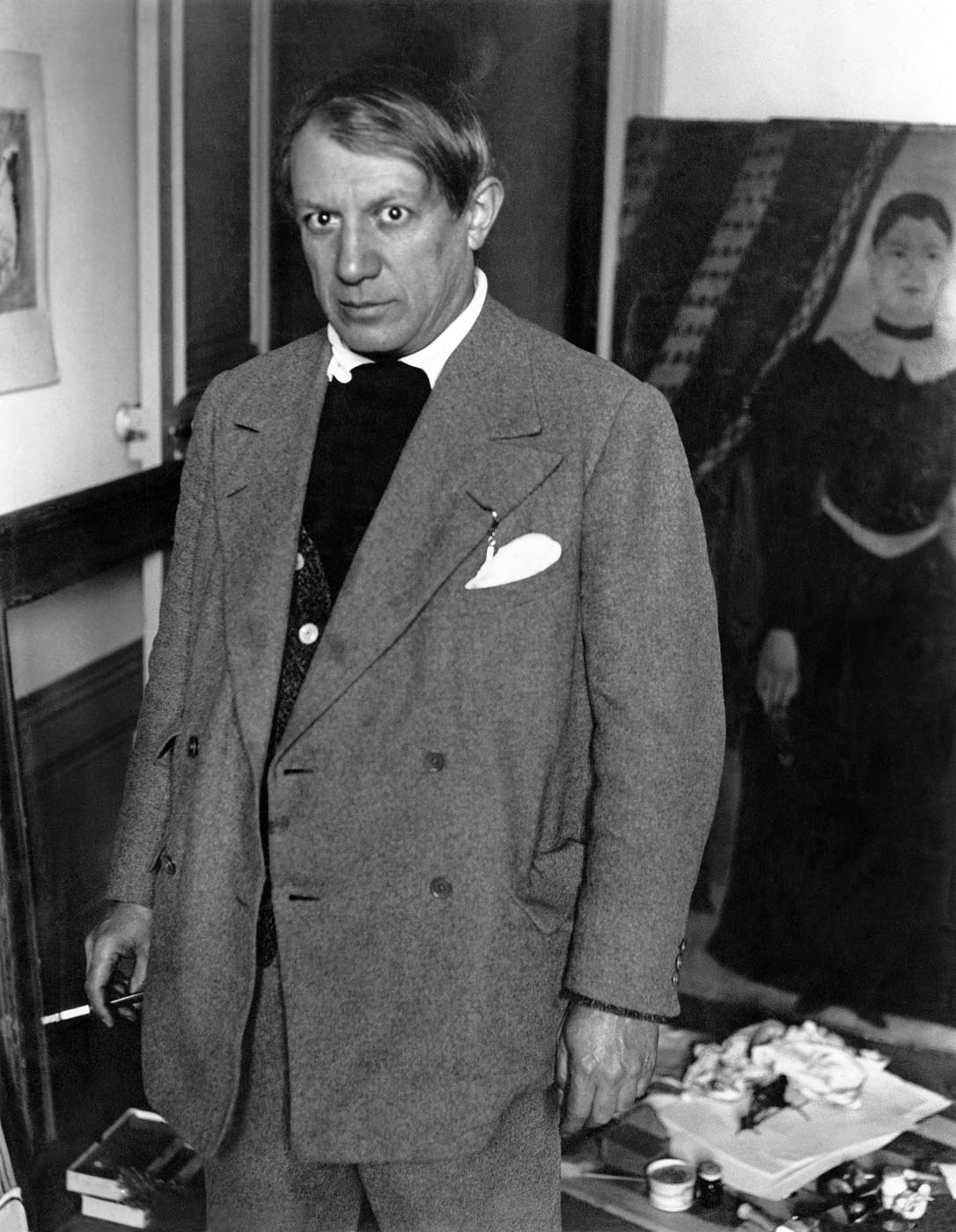
Brassaï (Hungarian-French, 1899-1984) 'Pablo Picasso in the studio on Rue la Boétie, in front of the portrait of Yadwigha by Henri Rousseau, Paris' 1932


Brassaï (Hungarian-French, 1899-1984)
Pablo Picasso in the studio on Rue la Boétie, in front of the portrait of Yadwigha by Henri Rousseau, Paris
1932
Gelatin silver print
28.1 x 21.8cm
Estate Brassaï Succession, Paris
© Estate Brassaï Succession-Philippe Ribeyrolles


“When I enter the studio, I leave my body at the door… I only allow my spirit to go in there and paint”


Pablo Picasso


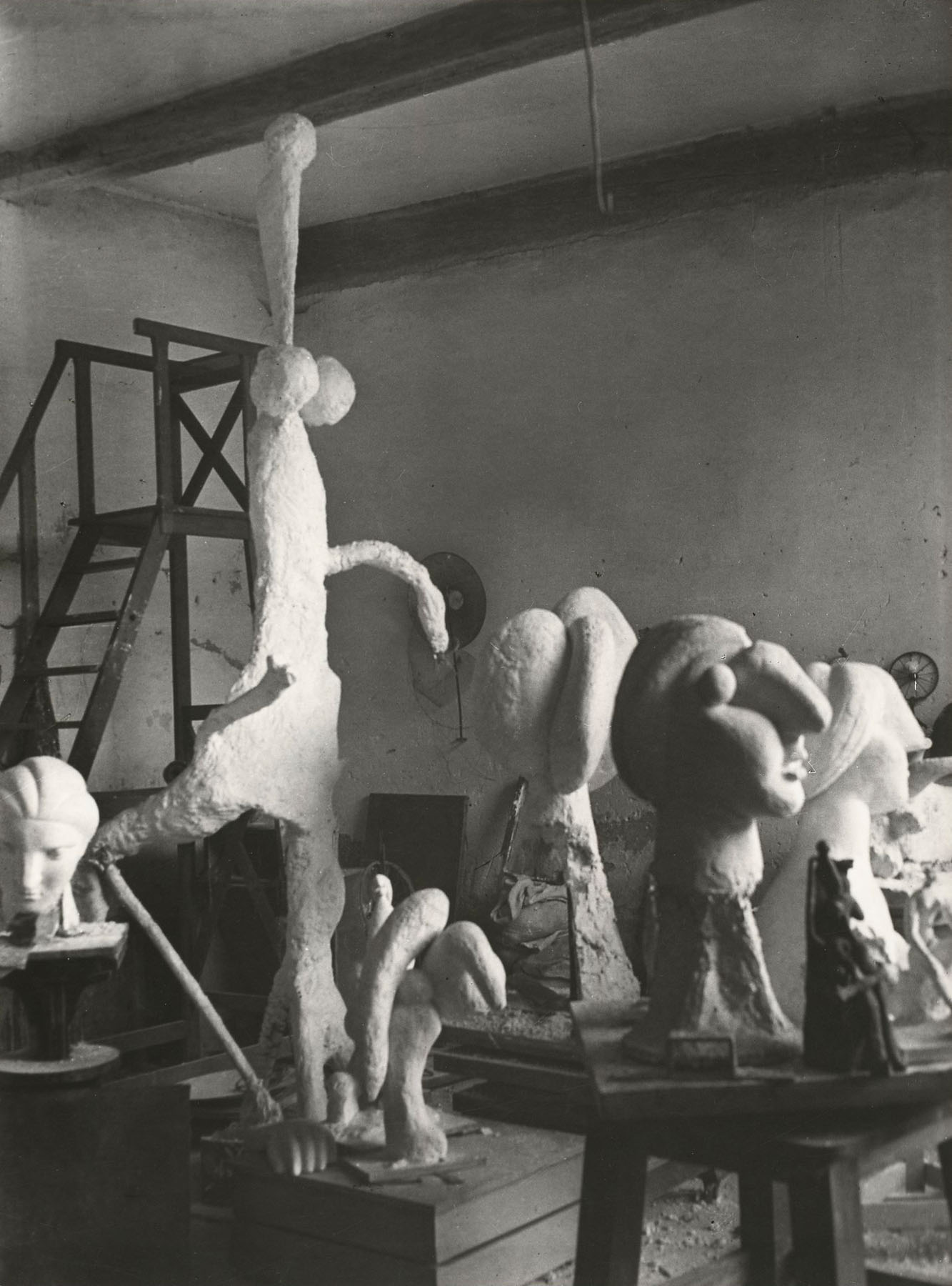
Brassaï (Hungarian-French, 1899-1984) 'Plaster sculptures in Pablo Picasso's studio, Boisgeloup' December 1932


Brassaï (Hungarian-French, 1899-1984)
Plaster sculptures in Pablo Picasso’s studio, Boisgeloup
December 1932
Gelatin silver print
© Estate Brassaï Succession-Philippe Ribeyrolles


In 1930, Picasso acquires a house and land near Gisors, Normandy, with the aim of creating monumental sculptures. Of those he creates there, La femme au vase (Woman with Vase), a piece from 1933, stands out for its great symbolic weight, given that it is placed on the artist’s tomb in the Château of Vauvenargues. But it is above all the busts of Marie-Thérèse Walter, his young secret lover, who both Brassaï and Boris Kochno capture with their respective lenses in attempts to recreate the peculiar atmosphere of that country studio, inhabited by strange creatures. While Kochno’s report is that of an amateur, Brassaï’s is a commission for the first issue of Minotaure art magazine, from 1933, accompanying a text by André Breton, “Picasso dans son élément” (Picasso in his Element), which reveals Picasso as a sculptor, a facet of his work that was completely unknown until then.

Anonymous text from the Museo Picasso website Nd [Online] Cited 11/03/2022


Brassaï (Hungarian-French, 1899-1984) 'Weekend, Paris' 1936


Brassaï (Hungarian-French, 1899-1984)
Weekend, Paris
1936
Gelatin silver print
© Estate Brassaï Succession-Philippe Ribeyrolles


Brassaï (Hungarian-French, 1899-1984) 'Man with Ram (1943), Bust of Dora Maar (1941) and Seated Cat (1941-1943) by Pablo Picasso, Paris' 1943


Brassaï (Hungarian-French, 1899-1984)
Man with Ram (1943), Bust of Dora Maar (1941) and Seated Cat (1941-1943) by Pablo Picasso, Paris
1943
Gelatin silver print
30 x 20.7cm
Estate Brassaï Succession, Paris
© Estate Brassaï Succession-Philippe Ribeyrolles
© Sucesión Pablo Picasso, VEGAP, Málaga, 2021


Brassaï (Hungarian-French, 1899-1984) 'Pablo Picasso at the window of his studio on the Rue des Grands Augustins, Paris' 1939


Brassaï (Hungarian-French, 1899-1984)
Pablo Picasso at the window of his studio on the Rue des Grands Augustins, Paris
1939
Gelatin silver print
© Estate Brassaï Succession-Philippe Ribeyrolles


Pablo Picasso (Spanish, 1881-1973) 'Ile de la Cité – vue de Notre-Dame de Paris' Paris, 26 February 1945


Pablo Picasso (Spanish, 1881-1973)
Ile de la Cité – vue de Notre-Dame de Paris
Paris, 26 February 1945
Oil on canvas
80 x 120cm
Museum Ludwig, Cologne
© Rheinisches Bildarchiv Cologne
© Sucesión Pablo Picasso, VEGAP, Málaga, 2021


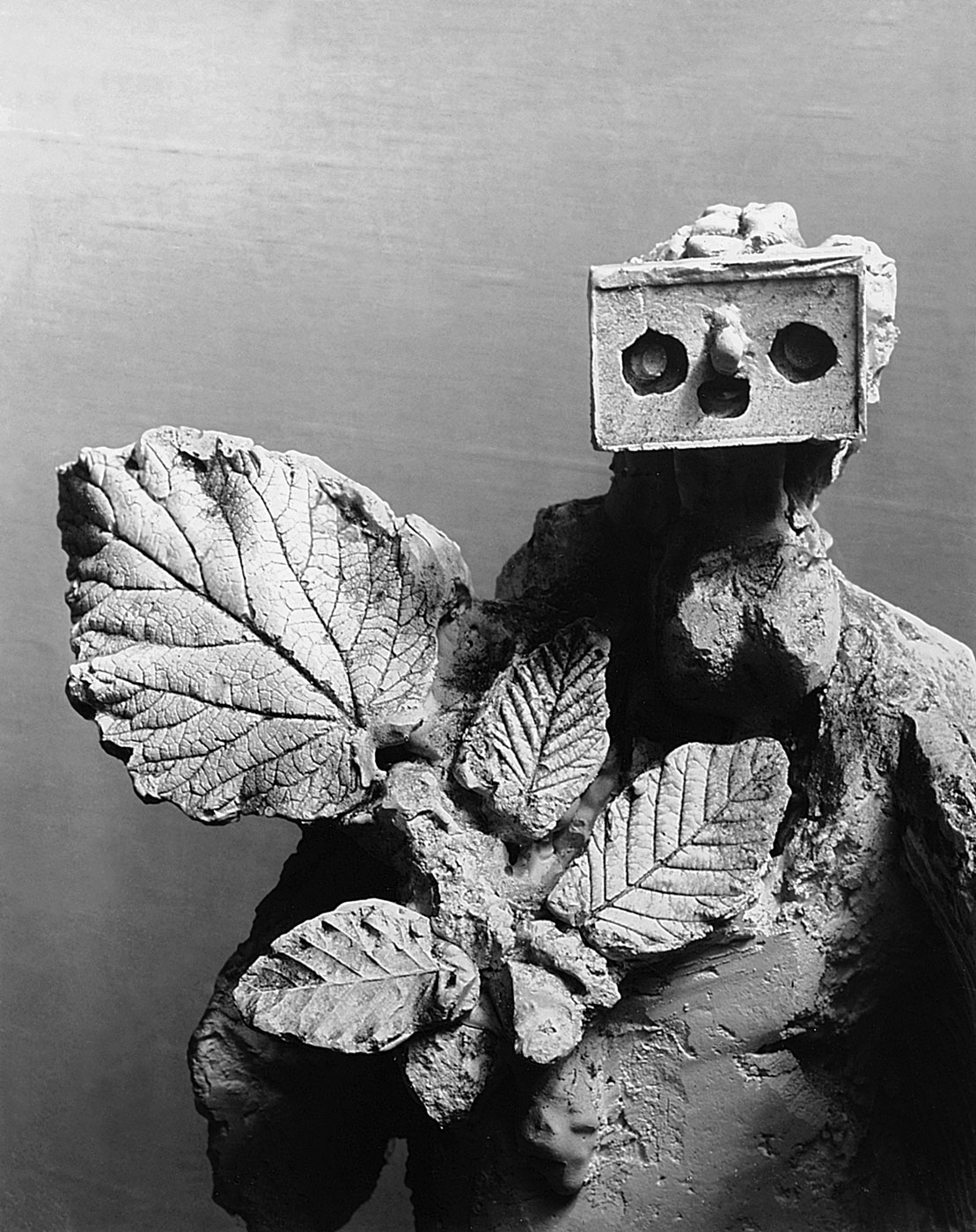
Brassaï (Hungarian-French, 1899-1984) 'Detail of the plaster sculpture Woman with Leaves (Pablo Picasso, 1934) in the studio on the rue des Grands- Augustins, Paris' 1943


Brassaï (Hungarian-French, 1899-1984)
Detail of the plaster sculpture Woman with Leaves (Pablo Picasso, 1934) in the studio on the rue des Grands Augustins, Paris
1943
Gelatin silver print
27.7 x 22.1cm
Estate Brassaï Succession, Paris
© Estate Brassaï Succession-Philippe Ribeyrolles
© Sucesión Pablo Picasso, VEGAP, Málaga, 2021


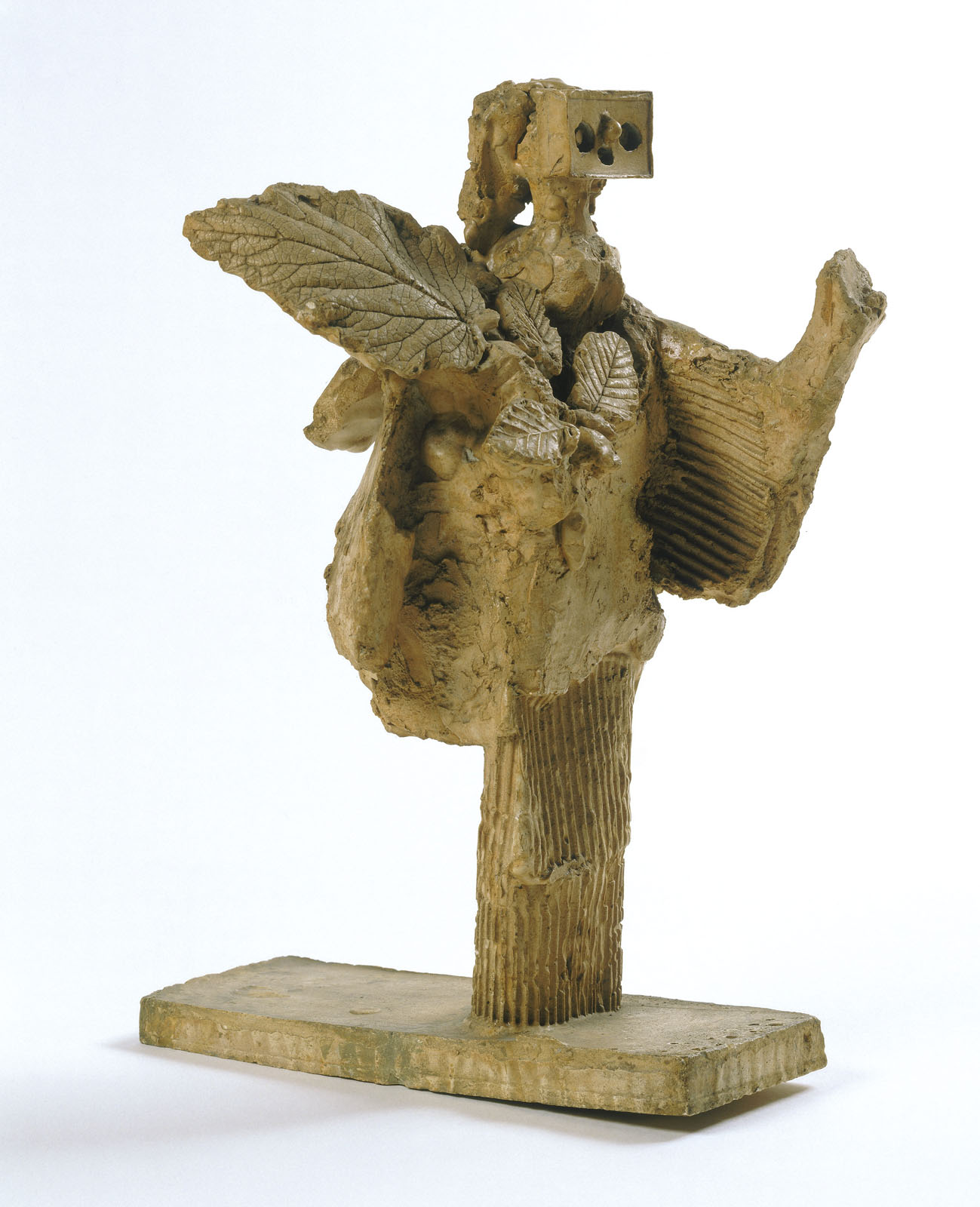
Pablo Picasso (Spanish, 1881-1973) 'Woman with Leaves, Boisgeloup' 1934


Pablo Picasso (Spanish, 1881-1973)
Woman with Leaves, Boisgeloup
1934
Original plaster varnished
38.5 x 27.5 x 21cm
Fundación Almine y Bernard Ruiz-Picasso para el Arte, Madrid
On temporary loan to the Museo Picasso Málaga
© Sucesión Pablo Picasso, VEGAP, Málaga, 2021


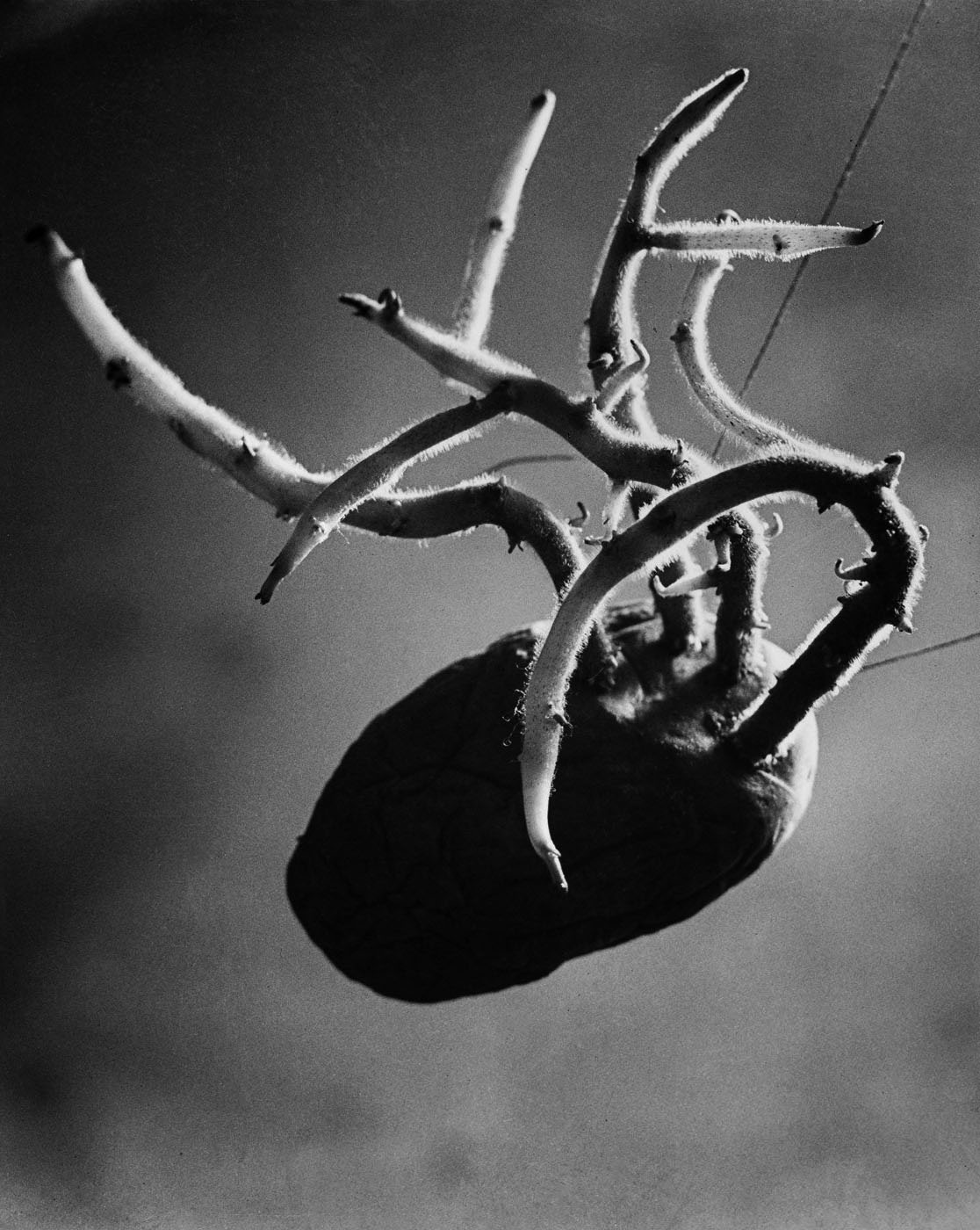
Brassaï (Hungarian-French, 1899-1984) 'Circumstantial Magic. Sprouting Potato' 1931


Brassaï (Hungarian-French, 1899-1984)
Circumstantial Magic. Sprouting Potato
1931
Gelatin silver print
© Estate Brassaï Succession-Philippe Ribeyrolles


Brassaï (Hungarian-French, 1899-1984) 'The Sun King, Paris' 1930-1950


Brassaï (Hungarian-French, 1899-1984)
The Sun King, Paris
1930-1950
From the Graffiti series
Gelatin silver print
40 x 29.5cm
Estate Brassaï Succession, Paris
© Estate Brassaï Succession-Philippe Ribeyrolles


Brassaï (Hungarian-French, 1899-1984) 'Le Poussin' 1955


Brassaï (Hungarian-French, 1899-1984)
Le Poussin
1955
From the Graffiti series
Gelatin silver print
© Estate Brassaï Succession-Philippe Ribeyrolles


Museo Picasso Málaga
Palacio de Buenavista C/ San Agustín, 8
29015 Málaga, Spain

Opening hours:
Daily 10am – 7pm

Museo Picasso Málaga website

LIKE ART BLART ON FACEBOOK

Back to top

European photographic research tour exhibition: ‘Brassaï’ at Foam, Amsterdam

Exhibition dates: 13th September – 4th December 2019
Visited September 2019 posted July 2020


Installation view of the exhibition 'Brassaï' at Foam, Amsterdam


Installation view of the exhibition Brassaï at Foam, Amsterdam
Photo: Marcus Bunyan


These are my thoughts at the time of my seeing the exhibition.


I have been blessed this trip by seeing an amazing selection of master photographers… Brassaï being no exception.
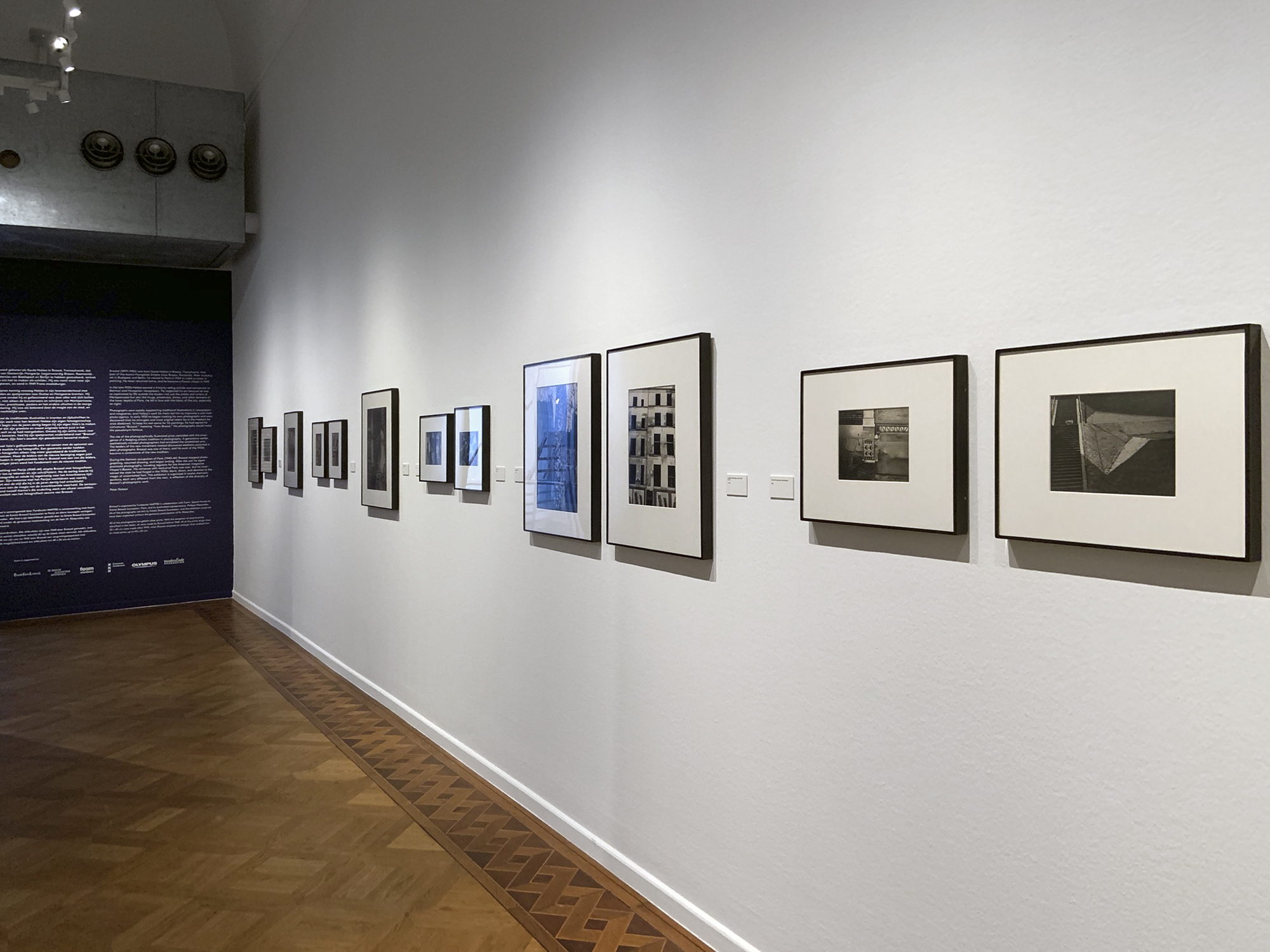
Every print in this exhibition is a vintage print. They were made by Brassaï before 1968. If larger than 30 x 40cm they were made after 1945 when he started printing with an enlarger.
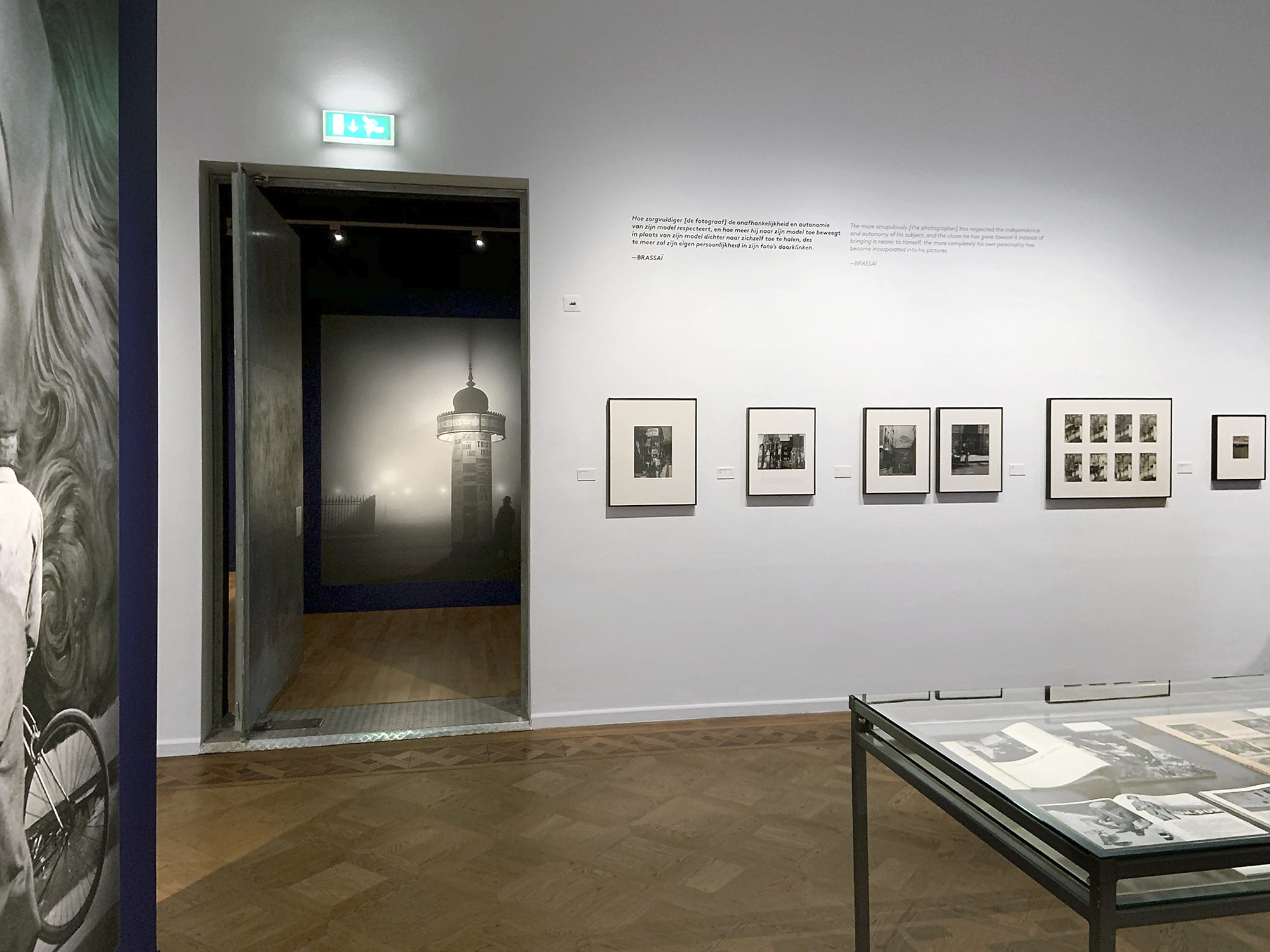
As usual, the iPhone camera makes all the images too light and adds too much contrast. Think darker, less contrast in these vintage prints.
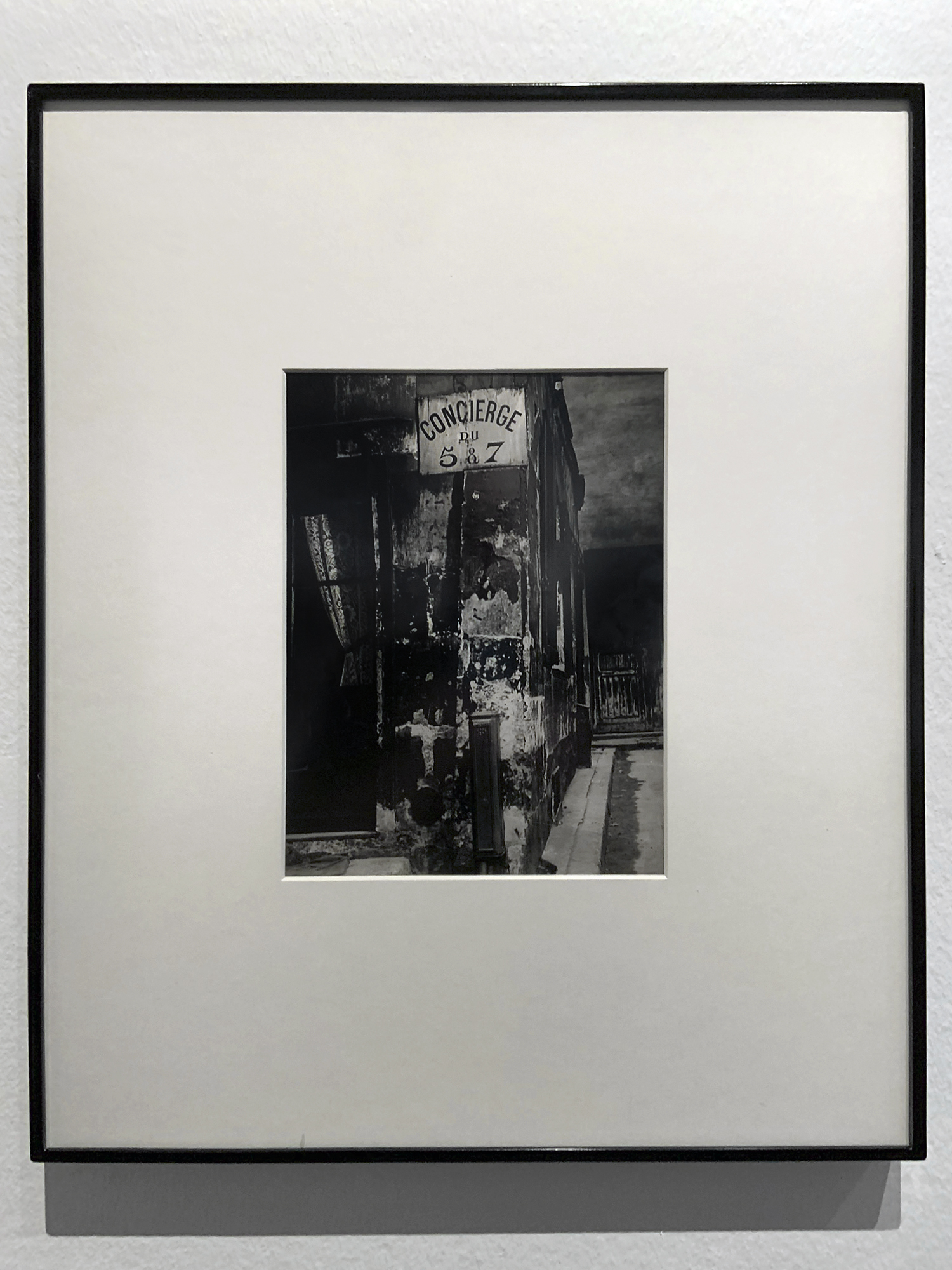
Brassaï’s prints are – just like those of Josef Sudek and August Sander that I have seen on this trip – much softer and with a more limited tonal range than I imagined. They are all the more atmospheric and magical because of it.

To walk around the exhibition and then arrive at an alcove (see walk through below)… to stand in front of Le Môme Bijou, the old lady with the jewellery and Billiard Player, is such a privilege. I am surrounded by the presence of these famous images. I peer intently at each of them, observing the details, feeling their eyes stare back at me. No deflection of intent, just these human beings and their spirit presented in a photograph. Brassaï captured their essence before they drifted away, just in that moment.

In the latter print the dark billiard ball was almost indistinguishable from the baize; in the former, the circular light in the woman’s eyes means that Brassaï must have set up a light, or that there was a light source, above and behind the camera. Specular highlights twinkle off jewellery and pearls. Even as she is draped in her bourgeois, bohemian ornamentation this dame of the night possesses a resilient, composed, determined air.

Personally, I think Brassaï’s Graffiti series are far stronger than Lee Friedlander’s series of the same name.

The juxtaposition of the photographs in Paris at Night is something I will always remember.

Dr Marcus Bunyan


Please click on the photographs for a larger version of the image. All iPhone installation photographs © Marcus Bunyan


The more scrupulously [the photographer] has respected the independence and autonomy of his subject, and the closer he has gone toward it instead of bringing it nearer to himself, the more completely his own personality has become incorporated into his pictures.


Brassaï


Foam is proud to present the first retrospective of Brassaï in the Netherlands. The French photographer of Hungarian descent is considered a key figure of 20th-century photography.

Brassaï (1899-1984) created countless iconic images of 1930s Parisian life. He was famous for capturing the grittier aspects of the city, but also documented high society, including the ballet, opera, and intellectuals – among them his friends and contemporaries like Pablo Picasso, Salvador Dalí and Henri Matisse. The exhibition at Foam traces his career with over 170 vintage prints, plus a selection of drawings, a sculpture and documentary material.

Brassaï gathers many of the artistic facets of the photographer, from photos to drawings of female nudes. It is organised in twelve thematic sections: Paris by Day, and by Night, Minotaure, Graffiti, Society, Places and Things, Personages, Sleep, Pleasures, Body of a Woman, Portraits – Artists, Writers, Friends and The Street. Each is very different from the next – reflecting the diversity of Brassaï’s photographic work.


Digital walk through of the exhibition Brassaï at Foam, Amsterdam in September 2019


Installation view of the exhibition 'Brassaï' at Foam, Amsterdam

Installation view of the exhibition 'Brassaï' at Foam, Amsterdam

Installation view of the exhibition 'Brassaï' at Foam, Amsterdam showing at second right, Brassaï's 'Paris' 1937, and at right 'Paris' c. 1932


Installation views of the exhibition Brassaï at Foam, Amsterdam showing at second right in the bottom image, Brassaï’s Paris 1937, and at right Paris c. 1932
Photo: Marcus Bunyan


Brassaï (French, 1899-1984) 'Paris' c. 1932 (installation view)


Brassaï (French, 1899-1984)
Paris (installation view)
c. 1932
Gelatin silver print
Photo: Marcus Bunyan


Brassaï (French, 1899-1984) 'Paris' 1937 (installation view)


Brassaï (French, 1899-1984)
Paris (installation view)
1937
Gelatin silver print
Photo: Marcus Bunyan


Brassaï (French, 1899-1984) 'Paris' 1937 (installation view)


Brassaï (French, 1899-1984)
Paris (installation view)
1937
Gelatin silver print
Photo: Marcus Bunyan


Installation view of the exhibition 'Brassaï' at Foam, Amsterdam

Wall text from the exhibition 'Brassaï' at Foam, Amsterdam


Installation views of the exhibition Brassaï at Foam, Amsterdam
Photos: Marcus Bunyan


Foam is proud to announce the first retrospective of Brassaï in the Netherlands. This French photographer of Hungarian descent is considered as one of the key figures of 20th-century photography. Brassaï (1899-1984) created countless iconic images of 1930s Parisian life. He was famous for capturing the grittier aspects of the city, but also documented high society, including the ballet, opera, and intellectuals – among them his friends and contemporaries like Pablo Picasso, Salvador Dalí and Henri Matisse. The exhibition at Foam traces his career with over 170 vintage prints, plus a selection of drawings, a sculpture and documentary material.

Gyula Halász, Brassaï’s original name, was born in 1899 in Brassó, Transylvania (then part of the Austro-Hungarian empire, nowadays Brasov, Romania). He studied at the University of Arts in Berlin before finally settling in Paris in 1924, a city that was to become the main subject of his work. He started as a painter but soon discovered that his strongest and most original talent lay in photography. To keep his real name for his paintings, he signed journalistic work, caricatures and photographs with ‘Brassaï’ (from Brassó). His photos would make this pseudonym more famous than his real name. Brassaï’s work of the 1930s would become a cornerstone of a new tradition as photography was discovered as a medium with aesthetic potential. A generation earlier photographers had merely emulated the established arts. Now photography became an art in itself and the perfect medium to capture modern life.

The nocturnal scenes collected in his book Paris by Night (1933) are complemented by his work that reveals the everyday life of the city by day. The monuments, picturesque spots, scenes from daily life and architectural details are present in his work as a reflection of the irresistible fascination the artist felt for the French capital. In his quest to cover all of the facets of Paris, he also immersed himself in the city’s darker side. For Brassaï the gang members, outcasts, prostitutes and drug addicts all represented the least cosmopolitan aspect of Paris, an aspect that was more alive and more authentic. He compiled a huge collection of images of entertainment venues, ranging from night clubs to popular festivals and featuring the people who frequented them. Brassaï was deeply immersed in a wide circle of friends among the writers and artists of Montparnasse, who also became the subjects for some of his portraits. Most of the portraits taken by Brassaï were of well-known people, putting him into a very comfortable position. He collaborated with the luxury art magazine Minotaure right from its very first issue and enjoyed a prominent role for the publication over the years. After the war, he also travelled regularly on commissioned shoots for the American magazine Harper’s Bazaar.

The exhibition at Foam gathers many of the artistic facets of the photographer, from photos to drawings of female nudes. It is organised in twelve thematic sections: Paris by Day, and by Night, Minotaure, Graffiti, Society, Places and Things, Personages, Sleep, Pleasures, Body of a Woman, Portraits – Artists, Writers, Friends and The Street. Each is very different from the next – reflecting the diversity of Brassaï’s photographic work.

Press release from the Foam gallery website


Brassaï (French, 1899-1984) 'Staircase, Montmartre' 1937 (installation view)


Brassaï (French, 1899-1984)
Staircase, Montmartre (installation view)
1937
Gelatin silver print
Photo: Marcus Bunyan


Brassaï (French, 1899-1984) 'Les Escaliers de Montmartre, Paris' 1936 from the exhibition 'Brassaï' at Foam, Amsterdam, Sept - Dec, 2019


Brassaï (French, 1899-1984)
Les Escaliers de Montmartre, Paris
1936
Gelatin silver print


Brassaï (French, 1899-1984) 'La rue Quincampoix' c. 1932 (installation view)


Brassaï (French, 1899-1984)
La rue Quincampoix (installation view)
c. 1932
Gelatin silver print
Photo: Marcus Bunyan


Brassaï (French, 1899-1984) 'La rue Quincampoix' c. 1932 (installation view)


Brassaï (French, 1899-1984)
La rue Quincampoix (installation view)
c. 1932
Gelatin silver print
Photo: Marcus Bunyan


Brassaï (French, 1899-1984) 'Pillar of the Elevated, Metro Glacière' 1932 (installation view)


Brassaï (French, 1899-1984)
Pillar of the Elevated, Metro Glacière (installation view)
1932
Gelatin silver print
Photo: Marcus Bunyan


Brassaï (French, 1899-1984) 'Near the rue Mouffetard' c. 1945 (installation view)


Brassaï (French, 1899-1984)
Near the rue Mouffetard (installation view)
c. 1945
Gelatin silver print
Photo: Marcus Bunyan


Installation view of the exhibition 'Brassaï' at Foam, Amsterdam

Installation view of the exhibition 'Brassaï' at Foam, Amsterdam showing at centre, Brassaï's 'Concierge's Lodge, Paris' 1933


Installation views of the exhibition Brassaï at Foam, Amsterdam showing in the lower image at centre, Brassaï’s Concierge’s Lodge, Paris, 1933
Photos: Marcus Bunyan


Brassaï (French, 1899-1984) 'Concierge's Lodge, Paris' 1933 (installation view)


Brassaï (French, 1899-1984)
Concierge’s Lodge, Paris (installation view)
1933
Gelatin silver print
Photo: Marcus Bunyan


Brassaï (French, 1899-1984) 'Concierge's Lodge, Paris' 1933 (installation view)


Brassaï (French, 1899-1984)
Concierge’s Lodge, Paris (installation view)
1933
Gelatin silver print
Photo: Marcus Bunyan


Brassaï (French, 1899-1984) 'Concierge's Lodge, Paris' 1933 from the exhibition 'Brassaï' at Foam, Amsterdam, Sept - Dec, 2019


Brassaï (French, 1899-1984)
Concierge’s Lodge, Paris
1933
Gelatin silver print
Photo: Marcus Bunyan


Brassaï (French, 1899-1984) 'Lovers at the gare Saint Lazare' c. 1937 (installation view)


Brassaï (French, 1899-1984)
Lovers at the gare Saint Lazare (installation view)
c. 1937
Gelatin silver print
Photo: Marcus Bunyan


Brassaï (French, 1899-1984) 'Sunday Painter, avenue du Général Leclerc' 1946 (installation view)


Brassaï (French, 1899-1984)
Sunday Painter, avenue du Général Leclerc (installation view)
1946
Gelatin silver print
Photo: Marcus Bunyan


Brassaï (French, 1899-1984) 'Sunday Painter, avenue du Général Leclerc' 1946 (installation view)


Brassaï (French, 1899-1984)
Sunday Painter, avenue du Général Leclerc (installation view)
1946
Gelatin silver print
Photo: Marcus Bunyan


Brassaï (French, 1899-1984) 'Annecy' 1936 (installation view)


Brassaï (French, 1899-1984)
Annecy (installation view)
1936
Gelatin silver print
Photo: Marcus Bunyan


Brassaï (French, 1899-1984) 'Hôtel de la Belle Étoile' 1945 (installation view)


Brassaï (French, 1899-1984)
Hôtel de la Belle Étoile (installation view)
1945
Gelatin silver print
Photo: Marcus Bunyan


Brassaï (French, 1899-1984) 'A Corpse on the Banks on the Seine' 1931 (installation view)


Brassaï (French, 1899-1984)
A Corpse on the Banks on the Seine (installation view)
1931
Gelatin silver print
Photo: Marcus Bunyan


Brassaï (French, 1899-1984) 'Les Fétes de Paris: La Nuit Féerique de Longhamp' 1937


Brassaï (French, 1899-1984)
Les Fétes de Paris: La Nuit Féerique de Longhamp
1937
In L’illustration, no. 4, 923 (July 10, 1937)
13. Rue Saint-Georges, Paris (9°)
Photo: Marcus Bunyan


Regards, no. 155 (December 31, 1936)


Regards, no. 155 (December 31, 1936)
Back cover
Photo: Marcus Bunyan


Installation view of the exhibition 'Brassaï' at Foam, Amsterdam


Installation view of the exhibition Brassaï at Foam, Amsterdam showing at at left, Brassaï’s Meat Porters, Les Halles c. 1935 and at second left, Au Cochon Limousin 1935
Photo: Marcus Bunyan


Brassaï (French, 1899-1984) 'Meat Porters, Les Halles' c. 1935 (installation view)


Brassaï (French, 1899-1984)
Meat Porters, Les Halles (installation view)
c. 1935
Gelatin silver print
Photo: Marcus Bunyan


Brassaï (French, 1899-1984) 'Au Cochon Limousin' 1935 (installation view)


Brassaï (French, 1899-1984)
Au Cochon Limousin (installation view)
1935
Gelatin silver print
Photo: Marcus Bunyan


Brassaï (French, 1899-1984) 'Les Halles' 1930-32 (installation view)


Brassaï (French, 1899-1984)
Les Halles (installation view)
1930-1932
Gelatin silver print
Photo: Marcus Bunyan


Brassaï (French, 1899-1984) 'Cesspool cleaners' c. 1931 (installation view)


Brassaï (French, 1899-1984)
Cesspool cleaners (installation view)
c. 1931
Gelatin silver print
Photo: Marcus Bunyan


Paris de nuit / Paris at night

Brassaï had been making photographs for barely two years when luck and ambition brought him a contract for a book on nocturnal Paris. When Paris de nuit (Paris at Night) was published to acclaim in December 1932, “Brassaï” became a familiar name in the world of photography. The book’s rich photogravures, marginalises pages, and bold design made it an icon of modernity. Many of Brassaï’s best night picture were made after Paris de nuit appeared, however, and many of his greatest images of Parisian nightlife were not published until 1976.

In the self-portrait here we see Brassaï’s first camera, a Voigtländer Bergheil that used 6.5 x 9 cm glass plates one at a time. The long exposures of night photography – often five minutes or more – required a tripod, which Brassaï frequently used for other pictures as well. While much of the adventurous European photography of the 1920s and 1930s celebrated mobility and speed, spontaneity was alien to Brassaï’s sensibility. He favoured images that are sharp, deliberate, and stable.


Installation view of the exhibition 'Brassaï' at Foam, Amsterdam showing a modern enlargement of Brassaï's 'Morris Column, avenue de l'Observatoire' 1934 

Installation view of the exhibition 'Brassaï' at Foam, Amsterdam showing a modern enlargement of Brassaï's 'Morris Column, avenue de l'Observatoire' 1934 

Installation view of the exhibition 'Brassaï' at Foam, Amsterdam showing at left a modern enlargement of Brassaï's 'Morris Column, avenue de l'Observatoire' 1934 


Installation views of the exhibition Brassaï at Foam, Amsterdam showing a modern enlargement of Brassaï’s Morris Column, avenue de l’Observatoire 1934
Photos: Marcus Bunyan


Brassaï (French, 1899-1984) 'Morris Column, avenue de l'Observatoire' 1934 (installation view)


Brassaï (French, 1899-1984)
Morris Column, avenue de l’Observatoire (installation view)
1934
Gelatin silver print
Photo: Marcus Bunyan


Brassaï (French, 1899-1984) 'Morris Column, avenue de l'Observatoire' 1934


Brassaï (French, 1899-1984)
Morris Column, avenue de l’Observatoire
1934
Gelatin silver print


Installation view of the exhibition 'Brassaï' at Foam, Amsterdam showing at right, Brassaï's 'Self portrait, On the boulevard Saint-Jacques' 1930-1932


Installation view of the exhibition Brassaï at Foam, Amsterdam showing at right, Brassaï’s Self portrait, On the boulevard Saint-Jacques 1930-1932
Photo: Marcus Bunyan


Brassaï (Gyulá Halász, 1899 - 1984) 'Self-portrait, Boulevard Saint-Jacques, Paris 14ème' c. 1931-1932


Brassaï (French, 1899-1984)
Self portrait, On the boulevard Saint-Jacques
1930-1932
Gelatin silver print


Voigtländer Bergheil Built in 1932


Voigtländer
Bergheil
Built in 1932
6.5 x 9cm negative
Green


Installation view of the exhibition 'Brassaï' at Foam, Amsterdam

Installation view of the exhibition 'Brassaï' at Foam, Amsterdam showing at left, Brassaï's 'The Tour Saint-Jacques' 1932-1933, and at third right 'View through the pont Royal toward the pont Solférino' c. 1933


Installation view of the exhibition Brassaï at Foam, Amsterdam showing in the bottom image at left, Brassaï’s The Tour Saint-Jacques 1932-1933, and at third right View through the pont Royal toward the pont Solférino c. 1933
Photos: Marcus Bunyan


Brassaï (French, 1899-1984) 'The Tour Saint-Jacques' 1932-33 (installation view)


Brassaï (French, 1899-1984)
The Tour Saint-Jacques (installation view)
1932-1933
Gelatin silver print
Photo: Marcus Bunyan


Brassaï (French, 1899-1984) 'View through the pont Royal toward the pont Solférino' c. 1933


Brassaï (French, 1899-1984)
View through the pont Royal toward the pont Solférino
c. 1933
Gelatin silver print


Installation view of the exhibition 'Brassaï' at Foam, Amsterdam showing at right, Brassaï's 'Avenue de l'Observatoire in the Fog' c. 1937


Installation view of the exhibition Brassaï at Foam, Amsterdam showing at right, Brassaï’s Avenue de l’Observatoire in the Fog c. 1937
Photo: Marcus Bunyan


Brassaï (French, 1899-1984) 'Avenue de l'Observatoire in the Fog' c. 1937 (installation view)


Brassaï (French, 1899-1984)
Avenue de l’Observatoire in the Fog (installation view)
c. 1937
Gelatin silver print
Photo: Marcus Bunyan


Brassaï (French, 1899-1984) 'Avenue de l'Observatoire in the Fog' c. 1937


Brassaï (French, 1899-1984)
Avenue de l’Observatoire in the Fog
c. 1937
Gelatin silver print


Brassaï (French, 1899-1984) 'Paris de Nuit' (Paris at Night) 1932


Brassaï (French, 1899-1984)
Paris de Nuit (Paris at Night) pp. 9-10
1932
Book


Brassaï (French, 1899-1984) 'Paris de Nuit' (Paris at Night) 1932


Brassaï (French, 1899-1984)
Paris de Nuit (Paris at Night) pp. 13-14
1932
Book


Digital flick through of Brassaï’s Paris de Nuit (Paris at Night) book 1932
Video: Marcus Bunyan


Brassaï (French, 1899-1984) 'Paris de Nuit' (Paris at Night) 1932 (installation view)


Brassaï (French, 1899-1984)
Paris de Nuit (Paris at Night) pp. 19-20 (installation view)
1932
Book
Photo: Marcus Bunyan


Minotaure, no. 7 (June 1935)


Minotaure, no. 7 (June 1935)
Pages 24-25: Photographs by Brassaï, “Nuits parisiennes” (Parisian Nights)
Pages 26-29: Photographs by Brassaï
Photo: Marcus Bunyan


Portraits – artists, writers and friends

In Brassaï’s era, portraits and nudes were bread-and-butter genres for any professional photographer. As a portraitist Brassaï made a speciality of artists and writers, who often were his friends, and in 1982 he collected many of the best pictures in Les artistes de ma vie (The Artists of My Life), for which he also wrote the lively text. He excelled at two distinct types of portraiture: In one, the artist is framed by his environment – the studio. In the other, the subjects confronts the photographer frankly, and the setting hardly matters. In an undated note, Brassaï summed up his approach to the second type: “To oblige the model to behave as if the photographer isn’t there really is to stage a comic performance. What’s natural is precisely not to dodge the photographer’s presence. The natural thing in that situation is for the model to pose honestly.”


Installation view of the exhibition 'Brassaï' at Foam, Amsterdam showing at right, 'Oskar Kokoschka in his Studio, Paris' 1931-1932

Installation view of the exhibition 'Brassaï' at Foam, Amsterdam at third right, Brassaï's 'Kiki de Montparnasse and her Friends, Thérèse Treize and Lily' c. 1932


Installation views of the exhibition Brassaï at Foam, Amsterdam showing in the top photograph at right, Oskar Kokoschka in his Studio, Paris 1931-1932 (below) and in the bottom photograph at third right, Brassaï’s Kiki de Montparnasse and her Friends, Thérèse Treize and Lily c. 1932 (below)
Photos: Marcus Bunyan


Brassaï (French, 1899-1984) 'Oskar Kokoschka in his Studio, Paris' 1931-1932


Brassaï (French, 1899-1984)
Oskar Kokoschka in his Studio, Paris (installation view)
1931-1932
Gelatin silver print
Photo: Marcus Bunyan


Brassaï (French, 1899-1984) 'Kiki de Montparnasse and her Friends, Thérèse Treize and Lily' c. 1932 (installation view)


Brassaï (French, 1899-1984)
Kiki de Montparnasse and her Friends, Thérèse Treize and Lily (installation view)
c. 1932
Gelatin silver print
Photo: Marcus Bunyan


Installation view of the exhibition 'Brassaï' at Foam, Amsterdam

Installation view of the exhibition 'Brassaï' at Foam, Amsterdam

Installation view of the exhibition 'Brassaï' at Foam, Amsterdam

Installation view of the exhibition 'Brassaï' at Foam, Amsterdam showing at left, Brassaï's 'Jean Genet' 1948


Installation views of the exhibition Brassaï at Foam, Amsterdam showing in the bottom photograph at left, Brassaï’s Jean Genet 1948 (below)
Photos: Marcus Bunyan


Brassai. 'Jean Genet' 1948


Brassaï (French, 1899-1984)
Jean Genet
1948
Gelatin silver print


Graffiti

The appreciation of graffiti as a powerful if anonymous art form began to blossom in the twentieth century. Like African tribal objects and the art of children, graffiti was admired as more expressive and vital than the refined forms of traditional Western art. Brassaï was among the first to embrace it. He was an inveterate magpie who collected all manner of neglected artefacts and natural specimens throughout his life. Virtually as soon as he began making photographs, he used the medium to collect the graffiti that appeared abundantly on the walls of Paris – predominantly images that had been scratched or gouged rather than drawn or painted and, as he pointed out, in which irregularities of the wall itself played a role. He compiled hundreds of these pictures, a small sample of which is presented here.

Minotaure

Between arriving in Paris in early 1924 and taking up photography six years later, Brassaï developed a wide circle of friends among the international community of artists and writers in Montparnasse. Among them were Les deux aveugles (The Two Blind Men), as the art critics Maurice Raynal and E. Tériade called themselves. In December 1932 – the same month Brassaï’s book Paris de unit (Paris at Night) appeared – Tériade invited Brassaï to photograph Pablo Picasso and his studios in and near Paris for the first issue of Minotaure, a lavish art magazine launched in June 1933 by the Swiss published Albert Skira. Thus began one of the key friendships of Brassaï’s life. Over the next few years he played prominent role in Minotaure, notable as a collaborator of Salvador Dalí, as an illustrator of texts by André Breton, and, on a few occasions, as an artist in his own right.


Installation view of the exhibition 'Brassaï' at Foam, Amsterdam showing to the right, photographs from Brassaï's series 'Graffiti'


Installation views of the exhibition Brassaï at Foam, Amsterdam showing to the right, photographs from Brassaï’s series Graffiti
Photo: Marcus Bunyan


Minotaure, nos. 3-4 (December 1933)

Minotaure, nos. 3-4 (December 1933)


Minotaure, nos. 3-4 (December 1933)
Pages 6-7: Photographs and text by Brassaï, “Du mur des cavernes au mur d’usine” (From the Wall of the Caves to the Wall of the Factory).
Photos: Marcus Bunyan


This was the first appearance in print of Brassaï’s series Graffiti.


Brassaï (French, 1899-1984) 'The Sun King' 1945-1950 (installation view)


Brassaï (French, 1899-1984)
The Sun King (installation view)
1945-1950
From the series Graffiti
Gelatin silver print
Photo: Marcus Bunyan


Brassai. 'Untitled' from the series 'Graffiti' 1950


Brassaï (French, 1899-1984)
Untitled (installation view)
1950
From the series Graffiti
Gelatin silver print
Photo: Marcus Bunyan


Brassai. 'Untitled' from the series 'Graffiti' 1945-1955


Brassaï (French, 1899-1984)
Untitled (installation view)
1945-1955
From the series Graffiti
Gelatin silver print
Photo: Marcus Bunyan


Brassai. 'Untitled' from the series 'Graffiti' 1945-1955


Brassaï (French, 1899-1984)
Untitled (installation view)
1945-1955
From the series Graffiti
Gelatin silver print
Photo: Marcus Bunyan


Installation view of the exhibition 'Brassaï' at Foam, Amsterdam showing photographs from the section Personages including at left 'La Môme Bijou, Bar de la Lune, Montmartre' 1932; and in the centre, 'Billiard Player, boulevard Rochechouart' 1932-1933 and 'Market Porter, Les Halles' 1939


Installation view of the exhibition Brassaï at Foam, Amsterdam showing photographs from the section Personages including at left La Môme Bijou, Bar de la Lune, Montmartre 1932; and in the centre, Billiard Player, boulevard Rochechouart 1932-1933 and Market Porter, Les Halles 1939
Photo: Marcus Bunyan


Personages

In the introduction to a book of his photographs that was published in 1949, Brassaï linked the modern arts of photography and film to the work of artists of the past who had depicted everyday life, among them Rembrandt van Rijn, Honoré Daumier, Edgar Degas, and Henri de Toulouse-Lautrec. He praised them for the “desire to get beyond the anecdotal and to promote [their] subjects to the dignity of types.” Brassaï himself had a talent for rendering at the same time a generic social role and a particular individual who inhabited it, as if his attentiveness to the person would elevate him or her into a distinctive personage.


Installation view of the exhibition 'Brassaï' at Foam, Amsterdam showing photographs from the section Personages including at left, 'Festival in Seville' 1951; and at right, 'La Môme Bijou, Bar de la Lune, Montmartre' 1932


Installation view of the exhibition Brassaï at Foam, Amsterdam showing photographs from the section Personages including at left, Festival in Seville 1951; and at right, La Môme Bijou, Bar de la Lune, Montmartre 1932
Photo: Marcus Bunyan


Installation view of the exhibition 'Brassaï' at Foam, Amsterdam showing photographs from the section Personages including at left, 'Festival in Seville' 1951; at centre, 'La Môme Bijou, Bar de la Lune, Montmartre' 1932; and at right, 'Billiard Player, boulevard Rochechouart' 1932-1933


Installation view of the exhibition Brassaï at Foam, Amsterdam showing photographs from the section Personages including at left, Festival in Seville 1951; at centre, La Môme Bijou, Bar de la Lune, Montmartre 1932; and at right, Billiard Player, boulevard Rochechouart 1932-1933
Photo: Marcus Bunyan


Installation view of the exhibition 'Brassaï' at Foam, Amsterdam showing a photograph from the section Personages, 'La Môme Bijou, Bar de la Lune, Montmartre' 1932


Installation view of the exhibition Brassaï at Foam, Amsterdam showing a photograph from the section Personages, La Môme Bijou, Bar de la Lune, Montmartre 1932
Photo: Marcus Bunyan


Brassaï (French, 1899-1984) 'La Môme Bijou, Bar de la Lune, Montmartre' 1932 (installation view)


Brassaï (French, 1899-1984)
La Môme Bijou, Bar de la Lune, Montmartre (installation view)
1932
Gelatin silver print
Photo: Marcus Bunyan


Brassaï (French, 1899-1984) 'La Môme Bijou, Bar de la Lune, Montmartre' 1932


Brassaï (French, 1899-1984)
La Môme Bijou, Bar de la Lune, Montmartre
1932
Gelatin silver print


Installation view of the exhibition 'Brassaï' at Foam, Amsterdam showing photographs from the section Personages including at left 'La Môme Bijou, Bar de la Lune, Montmartre' 1932; and at right, 'Billiard Player, boulevard Rochechouart' 1932-1933


Installation view of the exhibition Brassaï at Foam, Amsterdam showing photographs from the section Personages including at left La Môme Bijou, Bar de la Lune, Montmartre 1932; and at right, Billiard Player, boulevard Rochechouart 1932-1933
Photo: Marcus Bunyan


Brassaï (French, 1899-1984) 'Billiard Player, boulevard Rochechouart' 1932-33 (installation view)


Brassaï (French, 1899-1984)
Billiard Player, boulevard Rochechouart (installation view)
1932-1933
Gelatin silver print
Photo: Marcus Bunyan


Brassaï (French, 1899-1984) 'Billiard Player, boulevard Rochechouart' 1932-1933


Brassaï (French, 1899-1984)
Billiard Player, boulevard Rochechouart
1932-1933
Gelatin silver print


Installation view of the exhibition 'Brassaï' at Foam, Amsterdam showing photographs from the section Personages including at left 'Billiard Player, boulevard Rochechouart' 1932-1933; and at right, 'Market Porter, Les Halles' 1939


Installation view of the exhibition Brassaï at Foam, Amsterdam showing photographs from the section Personages including at left Billiard Player, boulevard Rochechouart 1932-1933; and at right, Market Porter, Les Halles 1939
Photo: Marcus Bunyan


Brassaï (French, 1899-1984) 'Market Porter, Les Halles' 1939 (installation view)


Brassaï (French, 1899-1984)
Market Porter, Les Halles (installation view)
1939
Gelatin silver print
Photo: Marcus Bunyan


Brassaï (French, 1899-1984) 'Bal des Quatre Saisons, rue de Lappe' c. 1932


Brassaï (French, 1899-1984)
Bal des Quatre Saisons, rue de Lappe
c. 1932
Gelatin silver print


Brassaï (French, 1899-1984) 'Chez Suzy' 1931-1932


Brassaï (French, 1899-1984)
Chez Suzy
1931-1932
Gelatin silver print


Brassaï (French, 1899-1984) 'At the Hôtel des Terrasses' c. 1932 (installation view)


Brassaï (French, 1899-1984)
At the Hôtel des Terrasses (installation view)
c. 1932
Gelatin silver print
Photo: Marcus Bunyan


Installation view of the exhibition 'Brassaï' at Foam, Amsterdam showing photographs from Brassaï's series 'Sleep'


Installation view of the exhibition Brassaï at Foam, Amsterdam showing photographs from Brassaï’s series Sleep
Photo: Marcus Bunyan


Sleep

In 1945 Brassaï wrote a brief essay to accompany some of his pictures of sleepers. It reads in part “All things that stand against their inclination – a tree, a column, a tower, a rock – are regarded with a malign eye by gravity … She especially has a grudge against man, that foolhardy being who, in open collusion with the sunlight, alone among his brothers under the spell of gravitation, dares to stand up. For sunlight and gravity fight over living beings, the one turning over what the other has put up. Alas! Sunlight lives a long way away and can never be found when she is needed the most. Thus gravity is suited to have the last word.”


Installation view of the exhibition 'Brassaï' at Foam, Amsterdam showing photographs from Brassaï's series 'Sleep' with at left, 'Paris' c. 1934; and at centre, 'Sleeping' c. 1935


Installation view of the exhibition Brassaï at Foam, Amsterdam showing photographs from Brassaï’s series Sleep with at left, Paris c. 1934; and at centre, Sleeping c. 1935
Photo: Marcus Bunyan


Brassaï (French, 1899-1984) 'Paris' c. 1934 (installation view)


Brassaï (French, 1899-1984)
Paris (installation view)
c. 1934
Gelatin silver print
Photo: Marcus Bunyan


Brassaï (French, 1899-1984) 'Sleeping' c. 1935 (installation view)


Brassaï (French, 1899-1984)
Sleeping (installation view)
c. 1935
Gelatin silver print
Photo: Marcus Bunyan


Brassaï (French, 1899-1984) 'Montmartre' 1930-1931


Brassaï (French, 1899-1984)
Montmartre
1930-1931
Gelatin silver print


Foam
Keizersgracht 609
1017 DS Amsterdam
The Netherlands
Phone: + 31 20 5516500

Opening hours:
Monday – Wednesday 10am – 6pm
Thursday – Friday 10am – 9pm
Sat-Sun 10am – 6pm

Foam website

LIKE ART BLART ON FACEBOOK

Back to top

Stencil art: I promise never to make art again

November 2011


I Promise Never To Make Art Again


Stencil art just off Chapel St in Windsor, Melbourne, January 2012.

Someone even filled it out – obviously a severe crisis of confidence!


LIKE ART BLART ON FACEBOOK

Back to top

Essay: ‘Now you see it, now you don’t: the history and conservation of The Keith Haring Mural, Johnston Street, Collingwood, Melbourne,’ by Dr Marcus Bunyan

November 2011


Keith Haring (American, 1958-1990) 'Barking Dogs and Spaceships and Angels and Coyotes' both 1982 'Subway drawings'


Keith Haring (American, 1958-1990)

Barking Dogs and Spaceships and Angels and Coyotes

both 1982

Subway drawings

Chalk on subway posters laid on canvas


In response to the polemic article “Brushed aside: artistic landmark must return to 1980s glory” by Hannah Mathews in The Age newspaper on November 17th, 2011 I feel compelled to offer a more balanced appraisal of the problems regarding the conservation and preservation of the Keith Haring Mural painted on a wall of the former Collingwood Technical School in Collingwood, Melbourne.

I was not going to publish this essay but now the time is right!

As I note in the essay Haring’s attitude to repainting seems to be at best ambiguous. As several people advocate, I support building a wall perpendicular to the original and painting a facsimile on the new wall. As the original is one of few remaining outdoor murals in the artists hand, I believe it is important to conserve what we have left of the original and painting a simulacra would satisfy those that want a “fresh” copy.

This essay is based on my own question, namely an investigation into the deterioration of a public work of art; the stabilisation of an ephemeral work; the role of the conservator in preserving the work; and the broader cultural perspectives involved when treating the work: reflections on the community from which it originates and notions of ownership and authorship. It was completed as part of my Master of Art Curatorship being undertaken at The University of Melbourne.

Please remember that this essay was written last year in September 2010, before the report from Arts Victoria and was then recently updated. Many thankx to Dr Ted Gott and to Andrew Thorn for their knowledge and help during the research for this essay.

Dr Marcus Bunyan


PS. Apologies that there are no image credits in the essay. If anyone knows the photographers please let me know and I will post but I hope they do not mind me using the photographs (in the interests of art, research and conservation).


Abstract

This essay will examine the history and conservation of The Keith Haring Mural painted on a wall of the former Collingwood Technical School in Collingwood, Melbourne. The essay will attempt to identify the issues involved with current attempts to conserve the mural, including issues of authorship, custodianship vs ownership, stabilisation of the mural and the debate between repainting and conserving. This essay is based on my own question, namely an investigation into the deterioration of a public work of art; the stabilisation of an ephemeral work; the role of the conservator in preserving the work; and the broader cultural perspectives involved when treating the work: reflections on the community from which it originates and notions of ownership and authorship.

Keywords

Keith Haring, Collingwood Technical School, Collingwood, Melbourne, painting, mural, public art, urban art, graffiti, Ted Gott, Andrew Thorn, THREAD, gay art group, homosexuality, HIV/AIDS, New York, National Gallery of Victoria, Australian Centre for Contemporary Art, Arts Victoria.

Word count: 5,056


Keith Haring Water Wall Mural at The National Gallery of Victoria


Keith Haring Water Wall Mural at The National Gallery of Victoria, later destroyed


Introduction

In the early 1980s, New York artist and social activist Keith Haring (4th May, 1958 – 16th February, 1990) was on the brink of fame. He appeared at the Whitney Biennial and Sao Paulo Biennale in 1983 and made friendships with Andy Warhol and Jean-Michel Basquiat.1 Haring was also gay; he died of HIV/AIDS at a young age. His folk art/graffiti style of bold figures and pagan inspired designs outlined in black and other colours investigated concepts of birth, life, death, power, money, technology and the relationship of human beings to the planet on which they live. Haring never feared confronting his viewer with difficult socio-political problems. Embedded in the street culture of the day, Haring was one of the first artists to be heavily influenced by disco dancing and rap music, his ghetto blaster blaring out as he painted his trademark murals. Today his work can be seen to represent the quintessential essence of the 1980s: through its use of colour; the vibrancy of the gyrating bodies; and the topicality of the issues the work addressed. His imagery “has become a widely recognised visual language of the 20th century”2 and his work represents a culture in which “notions of graffiti, advertising and design became increasingly blurred.”3

Early expressions of his creativity that are precursors to his mature style were the chalk drawings on black paper that Haring undertook in the subway stations of New York, using vacant advertising spaces. These drawings were made using quickness and stealth for fear of being caught and were ephemeral; either being destroyed when the next advert was pasted in place or, when his fame became greater, souvenired by acolytes.

“Riding the subway from his uptown apartment to the clubs, Haring noticed black paper hanging next to advertisements in the cars, awaiting the next ad. He used this opportunity to draw in chalk on the black paper with all sorts of childlike imagery: barking dogs, babies, unisex figures, spaceships, TV sets, etc. The outline style of imagery could be appreciated individually as cartoon cels or together to form a narrative. The subway drawings magnify Haring’s cartoons into a new Pop Art that at once was urban narrative, science fiction and hieroglyphics. These subway drawings initiated his first one man shows.”4


As Ted Gott has commented, “… Haring was seen as revolutionary, around 1981, for the manner in which he mastered the freedom and fluidity of the graffiti artists’ calligraphic defacement of public property, and catapulted it over into a mainstream artistic form. By presenting the visual language of one social class in the medium [paint on canvas] and milieus [commercial art galleries] of another elite class, Haring broke the rules then prescribed by the art world…”5

Into this context of rising fame came John Buckley, inaugural Director of Melbourne’s new Centre for Contemporary Art (CCA, later called the Australian Centre for Contemporary Art, or ACCA).6  Buckley met Haring in 1982 on a research visit to New York and invited him to Australia. After organising various grants to fund the trip, Haring arrived for a three-week visit. He was in Australia from 18th February to 8th March 1984 and completed three major projects (The Water Wall mural at The National Gallery of Victoria, the mural painted in the forecourt of The Art Gallery of New South Wales and the mural painted on the side of the former Collingwood Technical School).7 During this period he also completed other smaller works (such as a piece for the Hardware Club in Melbourne and the Glamorgan preparatory school, part of Geelong Grammar School), as well as thirteen large exhibition-quality ink drawings and four acrylic paintings.8 The latter were eventually used in the exhibition Keith Haring at ACCA’s new premises in Melbourne between 10th October – 17th November, 1985,9 and then returned to the artist by John Buckley. Some confusion exists in this matter as Haring states in his biography that his Australian experience wasn’t that hot and that he felt ripped off because the paintings he left in Australia were never returned to him, that there had never been any exhibition of his work and that the work had never been paid for.10

Since ACCA had not secured a physical home at the time of the arrival of Haring (later to be in the Botanical Gardens), Buckley arranged for Haring to paint a large mural on the inside of the water wall at The National Gallery of Victoria between 21st – 22nd February 1984. Haring then travelled to Sydney and painted the AGNSW mural between 28th February – 1st March 1984 before returning to Melbourne and painting the mural at The Collingwood Technical School in one day on Tuesday 6th March 1984.11 While the first two murals were intentionally impermanent (the Water Wall was supposed to last 3 months but was destroyed by vandalism just 2 weeks after its creation,12 Haring mistakenly believing that it was attacked as a protest against the mistaken belief that he had appropriated Aboriginal motifs in its composition13 and the AGNSW mural was painted over after one month to make way for the Biennale exhibition of 1984),14 the community based project in Collingwood would become Haring’s only large, permanent evidence of his visit to Australia:
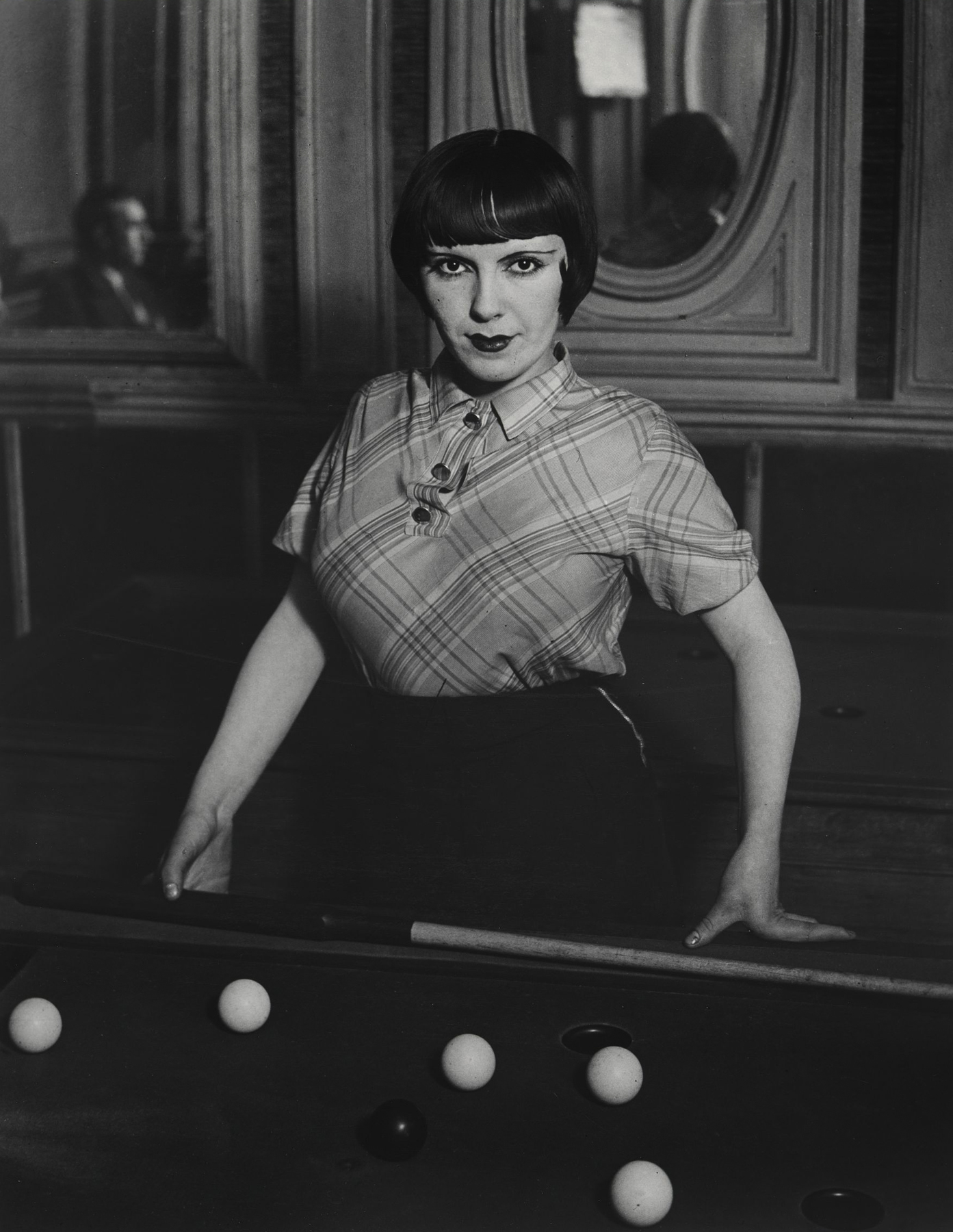
“In his interview given at the Collingwood Technical School immediately upon completion of the project on 6 March 1984, Keith Haring said about the Collingwood mural: “I had fun. I mean, it’s the most fun I’ve had since I’ve been here. It’s more fun working here than it is inside a museum. [and] It’s the only permanent thing that I did while I was in Australia.””15

“The base tint of yellow was painted onto the wall with rollers by Collingwood Technical School staff on Monday 5 March 1984,”16 the day before Haring’s ‘performance’ when he painted the mural in just two main colours, red and green, in front of a large audience; the performance was photographed and videotaped giving us unique footage of the artist at work.17 The mural features a multi-layered frieze of dancing figures in the lower half of the mural and his fear of technology in the upper half, a “hybrid man/computer monster, his vision of a future de-humanising evolution, which was ridden by two human figures …”18
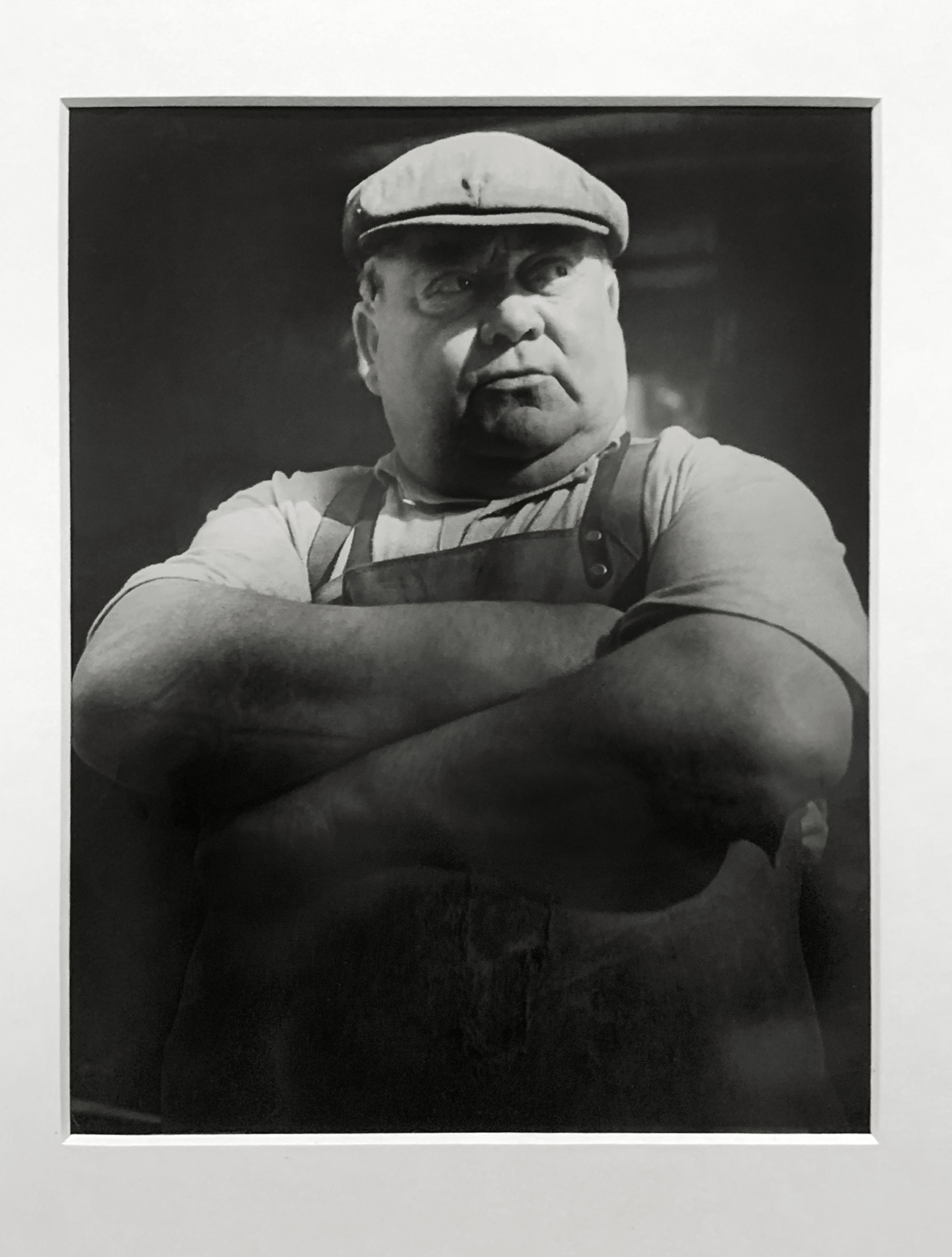
In all three murals the work was undertaken freehand with no use of preparatory drawings or grids using ladders and a cherry-picker to raise and lower the artist into position – all to the blare of his ghetto blaster. For Haring there was no turning back: “Whatever marks I make are immediately recorded and immediately on view. There are no “mistakes” because nothing can be erased.”19


Keith Haring painting The Keith Haring Mural, Johnston Street, Collingwood, Melbourne, 1984


Keith Haring painting The Keith Haring Mural, Johnston Street, Collingwood, Melbourne, 1984


The painting of The Keith Haring Mural, Johnston Street, Collingwood, Melbourne, 1984


The painting of The Keith Haring Mural, Johnston Street, Collingwood, Melbourne, 1984


Significance of the Mural

According to the Statement of Significance on the Heritage Council of Victoria database, “The Mural has historical and social significance as the work of a major artist. Keith Haring is considered one of the most significant artists of his generation. As a role model for gay artists and Aids activism his influence was international.

The Keith Haring Mural is of social significance as a landmark piece of public art in Melbourne. Its prominent inner city location is indicative of the changing physical and social landscape of a former working class suburb.

The Mural is also of social significance for its influence on young artists for its inner city setting and use of popular culture themes and imagery.”20

Emily Sharpe states that the mural may also be the last surviving extant [outdoor] mural in the world painted entirely by his hand,21 although this information is contradicted by The Haring Foundation in a quotation later in the essay (see the section ‘To restore or conserve?’ below, Footnote 49).


Keith Haring mural on the side of the former Collingwood Technical School in 2010 (painted 1984)


Keith Haring mural on the side of the former Collingwood Technical School in 2010 (painted 1984)


Issues in Conservation

During the period 1994-1995 a recently formed gay art group in Melbourne called THREAD (of which I was a part, the acronym of which is now lost to my memory) became concerned about the deterioration of the Keith Haring mural on the side of the Collingwood Technical School in Johnston Street, Collingwood. The group tried to engage the city of Yarra (the inner Melbourne municipality where the mural is located) and other organisations (The National Trust) about the possibility of repainting the mural due to the importance of the mural and its painting by an internationally renowned gay artist. Basically, as conservator Andrew Thorn succinctly puts it, “to repaint the mural on the basis of identity giving ownership.”22

While the intentions of the group were entirely honourable in such a proposal, on reflection and with the passing of the years, being older and wiser, I realise the error of our ways. While acknowledging that the group probably did want to take ownership of the mural on the basis of sexual identity at the time I think the group was just motivated by a desire to get something to happen and we did at least succeed in starting a dialogue between those that had an interest in conserving the mural. One of the problems was that none of us had conservation experience and, as Tom Dixon noted in a phone call to him about the mural,23  the representation of the group was never consistent as it was always a different person that you were talking to.

The profile of the mural was also raised through newspaper articles: “A series of newspaper articles drew attention to the vexed issues around its historic significance and increasing deterioration; these articles formed an important research component of the subsequent classification report” (The book in which this article is quoted incorrectly states that students helped Haring paint the mural – see p. 146).24 These concerns eventually led to the stabilisation of the mural by conservator Andrew Thorn in 1996 and its listing by the National Trust of Australia (Victoria) (NTAV) in 1997. During the treatment of the mural in 1996 Thorn undertook various conservation treatments, namely cleaning of the paint surface (including removal of stains), paint consolidation (fine cracking and detachments within the red paint and reattachment of the yellow paint), reattachments of lower render due to rising damp, consolidation and protection of the paint film with a protective coating system and reintegration of small areas of loss. A proposal for future maintenance was envisaged that included regular inspections, maintenance and care,25 but unfortunately it would seem that this maintenance has not been undertaken. In a recent report (2007) on the condition of the mural Thorn notes that, “incipient deterioration can be avoided, but if regular maintenance is not continued, the painting will be lost.”26 Thorn also notes that the resin gloss layer applied in 1996 to prevent AO (anti-oxidant) and UV (ultraviolet) deterioration “shows clear signs of degradation,” and should have been reapplied at 5 yearly intervals to maintain effectiveness.27 The report also notes that the yellow ground has become paler since 1996, the eroded reds need consolidation, the rising moisture is having a greater effect on the surface than previously and the green brushstrokes are beginning to show signs of loss.28


The missing door of the Keith Haring mural on the side of the former Collingwood Technical School in 2010 detail (painted 1984)


The missing door of the Keith Haring mural on the side of the former Collingwood Technical School in 2010 detail (painted 1984)


Keith Haring mural on the side of the former Collingwood Technical School in 2010 detail (painted 1984)


Keith Haring mural on the side of the former Collingwood Technical School in 2010 detail (painted 1984)


Ownership or custodianship

I support the concept of custodianship (or shared ownership) of a work of art rather than ownership per se. I believe that many people have a stake in the cultural value of a work of art and that custodianship, being a caretaker of the work, engages with the idea that the work belongs to everyone and that everyone should have access to enjoy it. Of course being gay offers a close affinity to the work of Keith Haring but, as Andrew Thorn notes, “that does not impart greater ownership of common property or of visual arts and imagery. It does give some ownership but not the right to snatch ownership from others.”29

In a separate email he continues, “At the same time it is necessary in giving ownership to wrest it from those that have claims and this process requires substantial diplomacy. It moves ownership from exclusive to shared. Ownership and identity are good and necessary things and if a work or an artist provides inspiration and support that is not to be denigrated and must be respected … Claiming of ownership is not an aggressive act but part of belonging and identity … It is necessary to engage in a community spirit to ensure a highly significant work and its maker are treated with the respect they deserve.”30

While the earlier attempts by the THREAD group could be seen as an attempt to obtain cultural ownership I acknowledge that this position is untenable. It must be a difficult task – the diplomacy of negotiating with all vested interests. But as Thorn rightly notes this comes down to the modern democratic process, the freedom to elect decision makers – not make the decisions themselves but delegate the responsibility to elected others. We must possess the ability to respect anybody’s relationship and enjoyment of the mural as much as we should respect Thorn’s professional judgment as an internationally renowned conservator to ensure this work is protected in the best possible way so that future generations can enjoy the work.


Keith Haring mural on the side of the former Collingwood Technical School in 2010 detail (painted 1984)

Keith Haring mural on the side of the former Collingwood Technical School in 2010 detail (painted 1984)


Keith Haring mural on the side of the former Collingwood Technical School in 2010 detail (painted 1984)


The conservator and the cultural landscape

The conservation of artefacts is an integral part of the cultural landscape. The nature of the cultural landscape is a fluid environment: a palimpsest where the authorship of the original work of art is a textual site, where “change (and decay), alteration, editing, revision and restoration represent the true life of objects.”31

“”The document is the textual site where the agents of textuality meet: author, copyist, editor, typesetter and reader.” In art and architecture there would be, besides artist and architect, builders, conservators, curators, preservationists, historians, viewers and users.”32 Embedded within the work are the memory and history of the object, within culture. Conservator Andrew Thorn observes, “It is a societal need to preserve the past and keep it for the future. Far more pragmatic issues dominate the profession [that of conservation] and unlike some contemporary art practice it does not need the props of modernist theory in any form to exist.”33

I beg to differ. Conservation exists only within culture. It is embedded within it and linked to the history and memory of the object. The nature of the cultural landscape and our heritage is a constitutive process: “an approach to heritage which understands it not as an object which is the static locus of some internal value, but as a process.”34 And that process invokes the social, cultural, economic and political contexts that include the act of interpretation and the concept of representation.

Laurajane Smith argues that, “heritage is heritage because it is subjected to the management and preservation/ conservation process, not because it simply ‘is’. The process does not just ‘find’ sites and places to manage and protect. It is itself a constitutive cultural process that identifies those things and places that can be given meaning and value as ‘heritage’, reflecting contemporary and cultural social values, debates and aspirations.”35 Gibson and Pendlebury unpack this statement further:

“In the first and most obvious sense, it follows from this position that there is nothing self-apparent or given about regimes of value and significance, rather these frameworks are specific to our particular social, cultural, economic and political contexts. Drawing on the anthropologist Marcel Mauss’s famous proscription on the cultural and historical specificity of contemporary personhood, objects, building and places are ‘formulated’ as heritage ‘only for us, amongst us’.”36

The value of an object cannot exist without reference to its historicity, its relationship to everything and everyone around us and conservation needs these frameworks of theory to have existence. As Foucault notes, “The space in which we live, which draws us out of ourselves, in which the erosion of our lives, our time and our history occurs, the space that claws and gnaws at us, is also, in itself, a heterogeneous space. In other words, we do not live in a kind of void, inside of which we could place individuals and things. We do not live inside a void that could be colored with diverse shades of light, we live inside a set of relations that delineates sites which are irreducible to one another and absolutely not superimposable on one another.”37

Complementary to Foucault’s notion of a set of relations that delineates sites and heterotopic spaces is how Janet Wolff positions these sites, these texts, within a sociology of cultural production:

“… the meaning which audiences ‘read’ in texts and other cultural products is partly constructed by those audiences. Cultural codes, including language itself, are complex and dense systems of meaning, permeated by innumerable sets of connotations and significations. This means that they can be read in different ways, with different emphases, and also in a more or less critical or detached frame of mind. In short, any reading of any cultural product is an act of interpretation … the way in which we ‘translate’ or interpret particular works is always determined by our own perspective and our own position in ideology. This means that the sociology of art cannot simply discuss ‘the meaning’ of a novel or painting, without reference to the question of who reads or sees it, and how. In this sense, a sociology of cultural production must be supplemented with, and integrated into, a sociology of cultural reception.”38


I understand that the conservator is not an editor (and here I am not abrogating the right of conservators to conserve, far from it). What I am proposing, however, is that an acknowledgment of the many voices that constitute the life and memory of an object, including the post-structuralist theory that analyses these histories and interpretations, be included in the negotiations with all parties and stakeholders. This perspective also acknowledges the changing contexts of interpretation of the Keith Haring Mural as it becomes ever more precious as one of the few outdoor murals left in the world painted in the author’s hand.


Keith Haring mural on the side of the former Collingwood Technical School in 2010 (painted 1984)


Keith Haring mural on the side of the former Collingwood Technical School in 2010 (painted 1984)


To restore or conserve?

“The painting can be preserved and not fade or deteriorate further if the recommendations of my 1996 and 2010 reports are adhered to. If you think this is not true you need to provide the evidence … it is assumed you respect my professional judgement in ensuring this work is protected in the best possible way so that all people can enjoy the masterpiece painted by Keith Haring as far into the future as possible. Over painting the mural ends the work of Keith Haring on that day.”39


The vexatious issue of restoring or conserving the Keith Haring mural has been an ongoing source of debate since the early attempts by the THREAD group to have the work “restored” (i.e. over painted) in the mid-1990s. Haring’s attitude to repainting seems to be at best ambiguous. The statement of significance of the mural when listed by The National Trust of Australia (Victoria) in 1997 notes that,

“Crucial to the fate of the mural and, given its exposure to the elements, is whether the artist himself would have accepted the deterioration of the mural or have condoned some form of restoration. Haring’s own feelings appear to have been ambivalent in the matter. In favour of restoring the mural i.e., repainting – is the fact that the simplistic three colour design devoid of subtle harmonies would not present serious problems in restoring it to its original condition. Opinion appears to be divided regarding the moral considerations in the matter and even the Estate of Keith Haring is unclear in this matter.”40


John Buckley “recalls a conversation with Haring who, with a characteristic lack of preciousness, said that the mural could, when needed, just be repainted by any good signwriter”41 but Andrew Thorn disputes this interpretation noting that “Keith talked about the continuity of his work. What Buckley stated contradicts the attitude presented by Haring throughout his biography. Another point to consider here is that Keith died within 6 years of completing the painting and I am certain beyond doubt that the condition of the painting even after 6 years would have been more or less pristine. There is no indication throughout the last two years of his life that Keith had any concern for his made works and that his declining health and the pain associated with that allowed him little time to consider anything other than his current work and failing health. If Buckley provides evidence of a friendship that Keith denies in his biography I for one would re-assess the intention of the artist.”42

This brings up the thorny issue of the ephemerality of street art. “Art academic Chris McAuliffe expressed his view regarding the impermanence of this work, arguing that ‘… as graffiti, it should be left to fade … If you subject it to conservation procedures then you transpose graffiti into a realm that it was opposed to. You make it art’.43 Personally I believe that all street art, whether officially sanctioned (like the Keith Haring mural) or not, is art. Distinction can only be made between street art / graffiti (not necessarily officially sanctioned: think the early chalk drawings of Haring or the street art of Banksy) and vandalism or tagging. Perhaps ephemerality is inherently built into street art, that documentation is enough to substantiate the life of the work, but that does not mean we have to sit by and let work be defaced or fade away without attempts at conservation.

According to Donna Wheeler there is an “unbreachable divide” between the two camps of Haring devotees. “Those on the conservatorial side see the mural as a cultural artefact, one that contains the artist’s rare and authentic touch evidenced in each singular brushstroke; they advocate a commitment to preservation, or stabilisation, with the caveat that even with their best efforts, the mural will continue to fade and eventually cease to exist. The Haring Foundation, and many others, including several curators and Haring’s original Australian contact, John Buckley, are hoping to restore, or more accurately, repaint the work, claiming that this would most closely follow Haring’s wishes. Yes, the original paint and brushstrokes would be forever lost, but Haring’s intent, creative vision and integral design will live on, in all its jellybean vibrancy.”44

I disagree with the stance taken by those that wish to repaint the mural. The hand of the author would be lost and the mural would simply become a simulacra of the original, a sign value that is an illusion of reality, a repainting purporting to “look like” the original but actually nothing like it.45 Support for this stance are the photographs of the original Crack is Wack (1986) mural painted by Keith Haring and the over painted mural photographs shown by Andrew Thorn at the public forum into the future of the mural in April 2010.46 In this presentation Thorn, “illustrated the losses inherent with repainting and also showed that the most iconic Haring mural ‘Crack is Wack’, is not the painting that Haring is photographed in front of the day he completed it.”47

Thorn states, “I support making a new copy of the painting, I just believe it should not devalue the original. Repainting over the original destroys the original work by Keith Haring. What you have is a copy and an irretrievable original, that is to say you have destroyed the work of Keith Haring. This is against the law administered by Heritage Victoria and devalues the work monetarily. This may seem an odd point to raise but becomes more significant when one considers the copyright act in relation to artists and their rights. The law there clearly states that any action that devalues a work or diminishes the artist’s reputation is a violation of the copyright act. The Haring Foundation need to be aware of this international law and particularly in the context of the Crack is Wack no longer being the work of Keith Haring and thereby diminishing his reputation by deception.”

In reply the Haring Foundation note that, “the ONLY Haring mural that was completely repainted was the Crack is Wack mural in NYC, due to it’s absolutely dreadful condition. It, too, is a landmark and highly valued by its community, and while no longer the original, it most definitely remains a Keith Haring mural. There are several outdoor murals that are untouched: Tuttomondo in Pisa (cleaned only); Necker Hospital in Paris; murals in Amsterdam and Phoenix, AZ. Numerous outdoor murals were only cleaned and lightly repaired and there are over a dozen indoor murals in public institutions that are untouched …

The Haring Foundation does not always recommend a complete repainting, that would be silly. But the awful condition of the Collingwood mural is similar to that of Crack is Wack and therefore the Foundation does highly recommend that it be repainted. Further to Crack is Wack, when Keith originally painted it, he had no permission, and so was required by the city to paint it out, completely covering over his first version. Shortly thereafter, he was granted permission by the city, and the second version he painted was different from the first version. Keith’s first version is often reproduced in books and catalogs and this has led to the utterly incorrect assumption that the Haring Foundation actually destroyed his first version and replaced it with something completely different over it. Not true.”49

While it is correct that Haring returned on the following day and painted a second version, not a copy of the first, conservator Andrew Thorn states that, “Since his death in 1990, the west painting has been repainted with imagery not resembling either of the two original Haring works … and this has in turn been reapplied more or less faithfully in 2007. This last painting, the one currently visible, is the fourth in the series and bears no resemblance to either of the two original works … The current painting appears not to be the work of Keith Haring, but continues to be considered his signature outdoor work … Haring may have painted the third image, but there is no record of this … The third and seemingly anonymous rendition continues the overall message but with new iconography, and appears not to be the work of Keith Haring.”50

Thorn supports the painting of a facsimile, a replica of the original, as does artist and academic Dr Megan Evans: “I think the best option is to preserve it [the original] and then do a replica nearby which is done in honour of the Haring work. I think this would be more interesting conceptually also as to have a repainted work is like covering up the mark of the past and to make a facsimile is to recreate it in a contemporary context.”51 I agree with the concept of making a facsimile positioned close to the original. Perhaps this could be completed on a new wall that is perpendicular to the original wall that the mural is painted on. Of course the pertinent question would be the permissions needed to erect such a wall, the cost of its construction, the cost of painting the new mural and its upkeep.


Keith Haring (American, 1958-1990) 'Crack is Wack' as completed by Haring in 1986


Keith Haring (American, 1958-1990)
Crack is Wack
as completed by Haring in 1986 (1st version, now overpainted)


Anonymous. 'Crack is Wack' 1986


Current Crack is Wack
painted after 1990


Now you see it, now you don’t

This brings me to my final point: now you see it, now you don’t. While I must take at face value the assertion by Andrew Thorn that the mural can be preserved and not fade or deteriorate further if the recommendations of his 1996 and 2010 reports are adhered to, and while I respect his professional judgment in that statement, unfortunately past experience (i.e. the lack of maintenance of the mural between 1996, the year of the last stabilisation, and now) tells me that the mural will continue to deteriorate and fade unless a specific and regular maintenance plan is financially funded and put in place. Donna Wheeler observes that the mural “is but a shadow of its former self”52 and I agree with this assertion. I was shocked to see the mural when visiting it recently compared to how I remember it in 1996 (ah, memory!). Though still an original Haring, it is pale and wane, almost an imitation of itself (and that is an irony in itself), and it made me sad to see the mural in this condition, as I remember how vibrant it was back in the early 1990s.

“According to ACCA curator Hannah Mathews, when the mural was last stabilised in 1996, it was estimated that a tiny sum of A$200 ($178) was needed annually to maintain the work. A combination of factors including pollution and time has left the mural in its current degraded state. Some estimate that it could cost around A$25,000 ($22,000) to stabilise, with an additional A$1,000 ($900) a year for maintenance. Although the issue of whether to repaint the mural is up for debate, all parties agree that the work needs stabilisation as soon as possible to prevent further surface lifting and cracking of the paint … Yarra mayor Jane Garrett said … “Following the forum [Yarra Talking Art forum: “The Keith Haring Mural: yesterday, today, tomorrow” on 29th April 2010 held in Collingwood], [the] Council [is setting up] a working group, which will seek to include representatives from Skills Victoria, Heritage Victoria, the arts community and other stakeholders, to discuss the mural’s future and come to a consensus on the most appropriate way to preserve it.”53

All parties need to agree and as quickly as possible. While Haring was quite happy to send his work out into the world for the enjoyment of all it would be a disservice to his memory and his status as an internationally renowned artist to have the only Haring mural in Australia deteriorate further. Time is of the essence. As Mark Holsworth on his Melbourne Art & Culture Critic blog insightfully opines, “Street art is not the property of the street artists – it belongs to everyone. Even if the artist intends for the art to be ephemeral there is no reason for their wishes to be carried out; the person giving the gift does not get to determine how the gift is used.”54

In the final analysis everyone needs to come to consensus about the future of the Keith Haring Mural for without proper conservation and maintenance it will truly be a case of now you see it, no you don’t.

Dr Marcus Bunyan

Word count: 5,056


Endnotes

1/ Keith Haring on Wikipedia [Online] Cited 25/09/2010
2/ Ibid.,
3/ Gott, Ted. “Fragile Memories: Keith Haring and the Water Window Mural at the National Gallery of Victoria,” in Art Bulletin of Victoria Vol. 43. Melbourne: National Gallery of Victoria, p. 8
4/ “Keith Haring New York,” on the Woodward Gallery website [Online] Cited 25/09/2010. No longer available online
5/ Gott, Ted. Op cit., pp. 7-8
6/ Gott, Ted. Op cit., p. 8
7/ Gott, Ted. Keith Haring’s Collingwood Mural. Draft of a paper given at a Keith Haring Public Forum, Collingwood, 29th April 2010 by Ted Gott, Senior Curator, International Art, National Gallery of Victoria
8/ Gott, Ted and Sullivan, Lisa. “Keith Haring in Australia.” in Art and Australia, Vol. 39, No.4, June-July-Aug 2002: (560)-567. ISSN: 0004-301X. Cited 09/10/2010
9/ Buckley, John. “Keith Haring” exhibition catalogue. Melbourne: Australian Centre for Contemporary Art (ACCA), 1985
10/ Gott, Ted and Sullivan, Lisa. Op. cit., p. 564. See also Footnote 15 and Gruen, John. Keith Haring: The Authorized Biography. New York: Prentice-Hall, 1991, p. 113
11/ Gott, Ted and Sullivan, Lisa. Op. cit.,
12/ Gott, Ted and Sullivan, Lisa. Op. cit., p. 562. See also Footnote 10 and Footnote 15. “Vandals,” Herald, Saturday 10th March 1984, p. 1; “Vandals smash gallery pane,” The Age, Monday 12th March , 1984, p. 19
13/ Gott, Ted and Sullivan, Lisa. Op. cit., Footnote 15 and Gruen, John. Keith Haring: The Authorized Biography. New York: Prentice-Hall, 1991, p. 113
14/ Gott, Ted and Sullivan, Lisa. Op. cit., p. 564
15/ Gott, Ted. Keith Haring’s Collingwood Mural. Op cit.,
16/ Gott, Ted. Keith Haring’s Collingwood Mural. Op cit.,
17/ Gott, Ted. Keith Haring’s Collingwood Mural. Op cit.,
18/ Gott, Ted and Sullivan, Lisa. Op. cit., p. 566. See also Gott, Ted. Keith Haring’s Collingwood Mural. Op cit.,
“Uniquely, we have a surviving record of Keith Haring’s own interpretation of the Collingwood mural, revealed during an interview conducted with the artist shortly after the painting’s completion on Tuesday 6 March 1984. There Keith Haring noted how: “What’s going on in the bottom is about – I mean, all these people are doing different things, right? Some of them are like dancing, like rap dancing, or acrobatics.  Some of them are almost like they are fighting. But the way they are all together means that they can’t – I mean, if one of them comes out, the whole thing falls down. So they sort of depend on all of them to make it work. So it’s sort of like society or whatever, where the world only works when lots of individuals do their part, right?
The thing at the top is, I guess, the impending doom or impending possibility of technological … the confrontation between technology and the human element, which is still holding up the technology, and based on the technology. But it sort of takes a semi-circle in evolution, where people evolved up to a certain point, and now they’ve evolved so far that they’ve invented a computer or a machine to evolve further. And the computer is maybe evolving more than people were. So it’s about that sort of confrontation, I guess.””
19/ Gott, Ted and Sullivan, Lisa. Op. cit., p. 562. See also Footnote 8 and Haring, Keith. “Keith Haring,” in Flash Art, No. 116, March 1984, p. 22
20/ Anonymous. “Keith Haring Mural: Statement of Significance,” on Heritage Council of Victoria database [Online] Cited 04/10/2010
21/ Sharpe, Emily. “Saving Keith Haring Down Under: Melbourne work is last surviving wall painting by the late artist’s own hand,” on The Art Newspaper website. Published online 08/06/2010. Cited 06/08/2010. No longer available online
22/ Thorn, Andrew. Email to the author. 24/08/2010.
23/ Dixon, Tom. Member of the Public Art Committee of the National Trust of Australia (Victoria) (NTAV). Telephone conversation with the author 26/08/2010. The Public Art Committee considers murals, mosaics, and sculptures; and such works can be found in parks and reserves, public streets, squares and buildings; and publicly accessible parts of privately owned buildings.
24/ Masterson, Andrew. “Off the wall art,” in The Age. Melbourne: Summer Age supplement. December 27th, 1994, p. 4-5 quoted in Gibson, Lisanne and Pendlebury, John R. “Values not Shared: The Street Art of Melbourne’s City Laneways,” chapter in Valuing historic environments. Farnham: Ashgate Publishing Limited, 2009, p. 146
25/ Thorn, Andrew. “Conservation Treatment Report.” The Keith Haring Mural Johnston Street, Collingwood. Final Report prepared for Northern Institute, 1997.
26/ Thorn, Andrew. “Review of Condition and Treatment.” The Keith Haring Mural Johnston Street, Collingwood. Prepared for City of Yarra, 2007, p. 1
27/ Ibid., p. 2
28/ Ibid., p. 3-5
29/ Thorn, Andrew. Email to the author. 23/08/2010.
30/ Thorn, Andrew. Email to the author. 24/08/2010.
31/ McCaughy, Patrick. Review of “Securing the Past: Conservation in Art, Architecture and Literature” by Paul Eggert in The Australian, December 02, 2009. [Online] Cited 12/06/2010. No longer available online
32/ Ibid.,
33/ Thorn, Andrew. Email to the author. 23/08/2010.
34/ Gibson, Lisanne and Pendlebury, John R. Valuing historic environments. Farnham: Ashgate Publishing Limited, 2009, p. 72
35/ Smith, Laurajane. Uses of Heritage. Oxford: Routledge, 2006, p. 3 (italics in original) quoted in Gibson, Lisanne and Pendlebury, John R. Valuing historic environments. Farnham: Ashgate Publishing Limited, 2009, p. 72
36/ Mauss, Marcel. “A category of the human mind: The notion of person; the notion of self,” in Carrithers, M., Collins, S. and Lukes, S. (eds.,). The Category of the Person: Anthropology, Philosophy, History. Cambridge: Cambridge University Press, 1985, p. 22, cited in Gibson, Lisanne and Pendlebury, John R. Valuing historic environments. Farnham: Ashgate Publishing Limited, 2009, p. 72
37/ Foucault, Michel. Of Other Spaces (1967), “Heterotopias.” Diacritics 16 (Spring 1986), pp. 22-27
38/ Wolff, Janet. The Social Production of Art. Basingstoke: Macmillan, 1993, p. 97
39/ Thorn, Andrew. Email to the author. 23/08/2010.
40/ National Trust of Australia (Victoria). Classification Report for ‘Keith Haring Mural’, Johnston Street, Collingwood, File number 6675. Extract from Statement of Significance, 4th August 1997 quoted in Gibson, Lisanne and Pendlebury, John R. “Values not Shared: The Street Art of Melbourne’s City Laneways,” in Valuing historic environments. Farnham: Ashgate Publishing Limited, 2009, p. 146
41/ Wheeler, Donna. “When Keith Came To Town,” on Holiday Goddess, Female-Friendly Travel website. [Online] Cited 06/08/2010. No longer available online
42/ Thorn, Andrew. Email to the author. 23/08/2010.
43/ McAuliffe, Chris quoted in Masterson, Andrew “Off the wall art,” in The Age. Melbourne: Summer Age supplement. December 27th, 1994, p. 4-5 quoted in Gibson, Lisanne and Pendlebury, John R. Valuing historic environments. Farnham: Ashgate Publishing Limited, 2009, p. 72
44/ Op. cit.,
45/ See Tseëlon, E. The Masque of Femininity: The Representation of Women in Everyday Life. London: Sage, 1995, p. 128
46/ Yarra Talking Arts forum. “The Keith Haring mural: yesterday, today, tomorrow.” Thursday 29th April, 2010
47/ Thorn, Andrew. Email to the author. 23/08/2010.
48/ Ibid.,
49/ Gruen, Julia. “Save the Keith Haring Mural” web page on Facebook [Online] Cited 21/11/2011. No longer available online
50/ Thorn, Andrew. “Another Red Haring,” keynote paper presented at the International Council of Museums Conservation Committee  (ICOMCC) triennial Conference, Lisbon, October 2011
51/ Evans, Megan. Email to the author. 08/09/2010.
52/ Wheeler, Donna Op cit.,
53/ Sharpe, Emily Op cit.,
54/ Holsworth, Mark. “Another Banksy Gone,” on Melbourne Art & Culture Critic blog. [Online] Cited 06/10/2010.


LIKE ART BLART ON FACEBOOK

Back to top