
Exhibition dates: 14th December, 2025 – 25th July, 2026
Curator: Oluremi C. Onabanjo, The Peter Schub Curator, with the assistance of Chiara M. Mannarino, Curatorial Assistant, The Robert B. Menschel Department of Photography
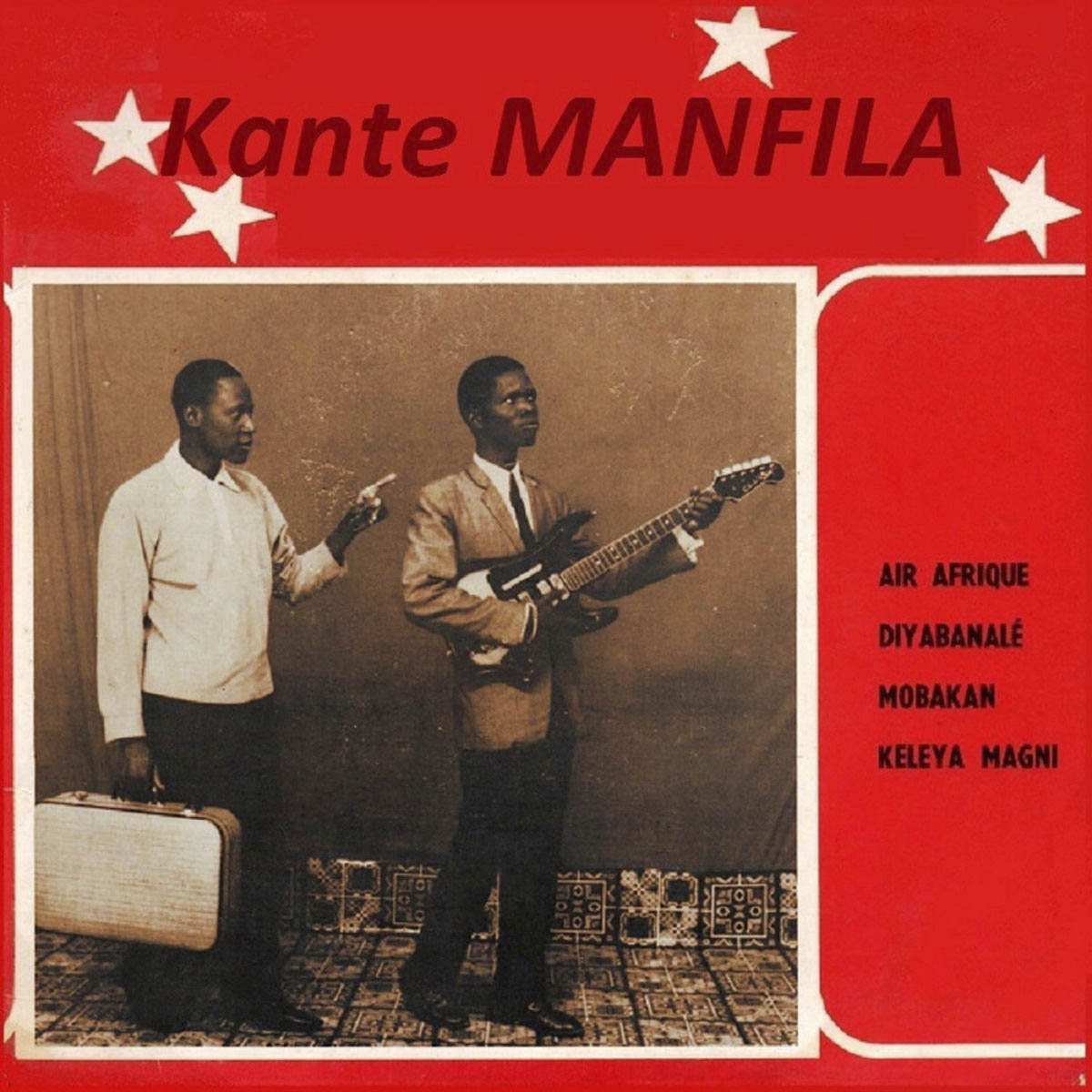
Air Afrique
DJIMA RECORDS
1969
Vinyl 45tour Mono
7 1/16 x 7 1/16″ (18 x 18cm)
Air Afrique Collective, courtesy of Lamine Diaoune,
Ahmadou-Bamba Thiam, Djiby Kebe, Jeremy Konko
Of being and becoming
Why do I love African photography so much after the “winds of decolonial change” swept through the continent which “saw the disintegration of colonial territories and the formation of transnational solidarity across the African continent and diaspora.”
Firstly, I love the vibrancy present in photographs of everyday life – at the club, with friends, dancing, drinking. I love the hairstyles, I love the fabrics, I love the way people are proud of themselves and their cultural heritage. Joy, love, exuberance, passion. There is something so infectious and engaging about these photographs, something that draws you into the transformative freedom of African identities.
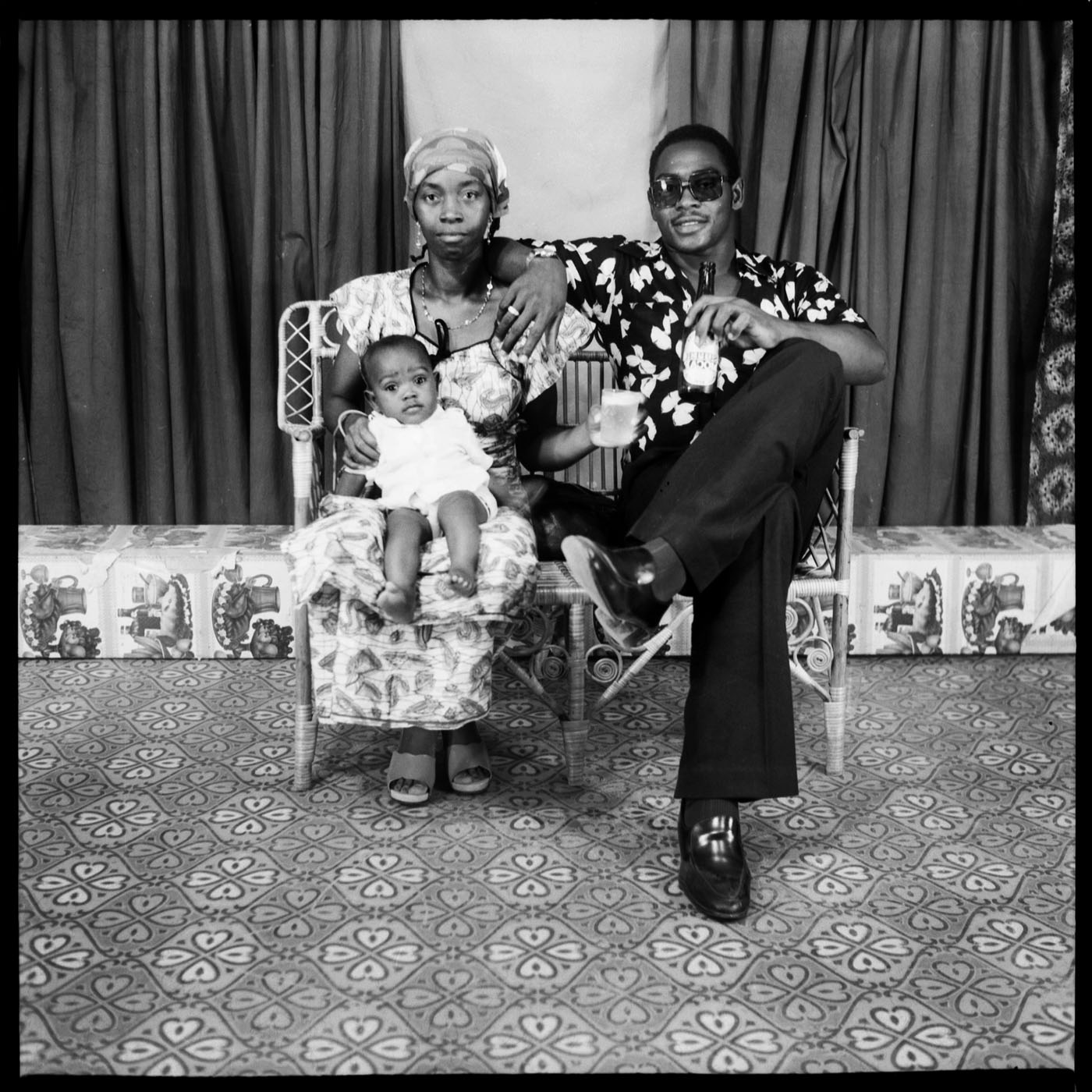
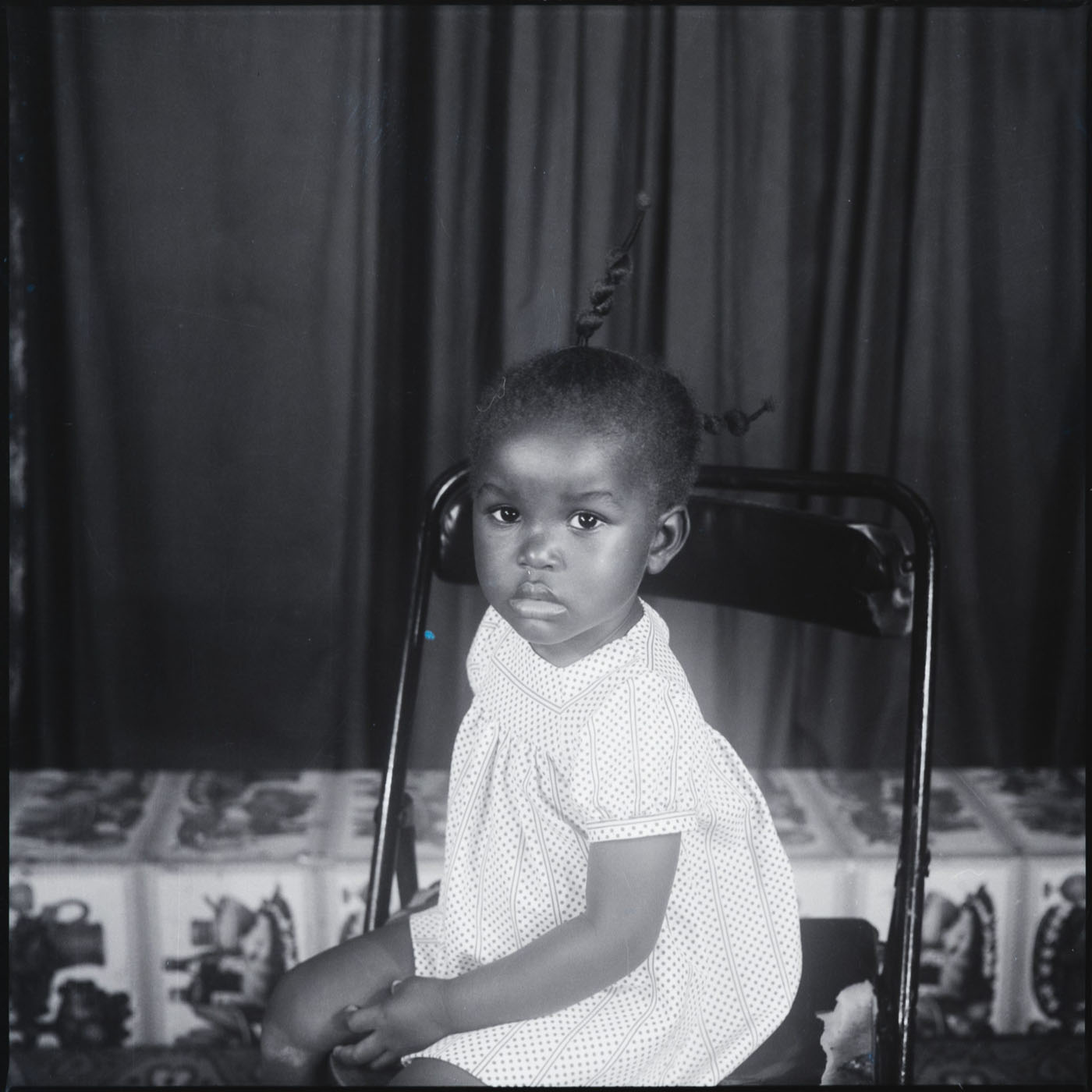
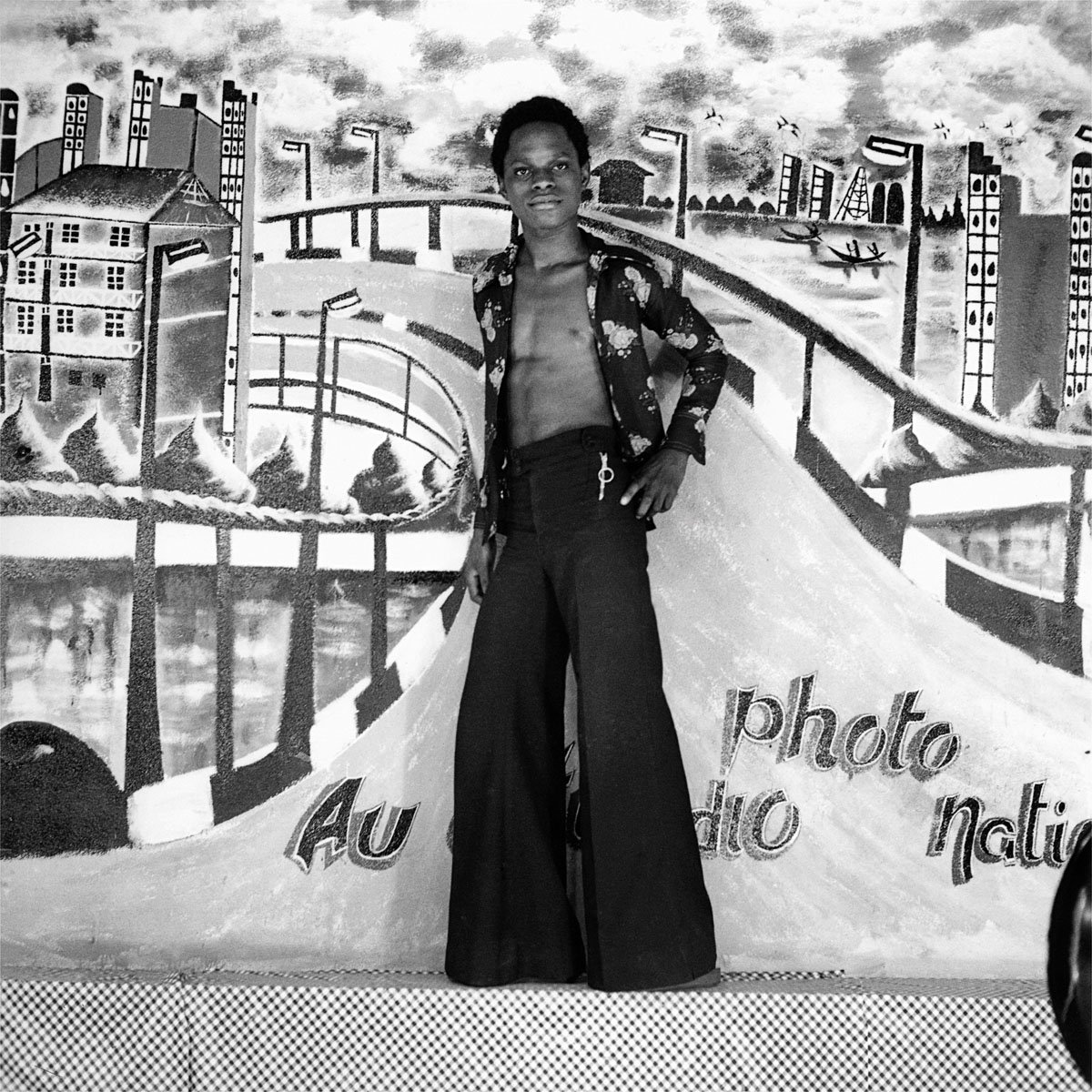
Secondly, I love the studio photographs that enable the sitter to dream the great dreams of life, to imagine who they want to be before the camera. Here, in a symbiotic relationship between the photographer and the sitter, the “studio becomes a kind of imaginative enterprise. You can go and be who you are, or you can go and be who you want to be.” In Sanlé Sory’s studio his “portraits made possible a particular process of being and becoming for his sitters. He reflected the ideas that they wanted to communicate – whether to friends, lovers, strangers, or themselves.” (Gallery label) The resulting portrait made the sitter feel connected to a cosmopolitan world. Both a world of dreams and aspirations and Africans’ lived experiences and realities.
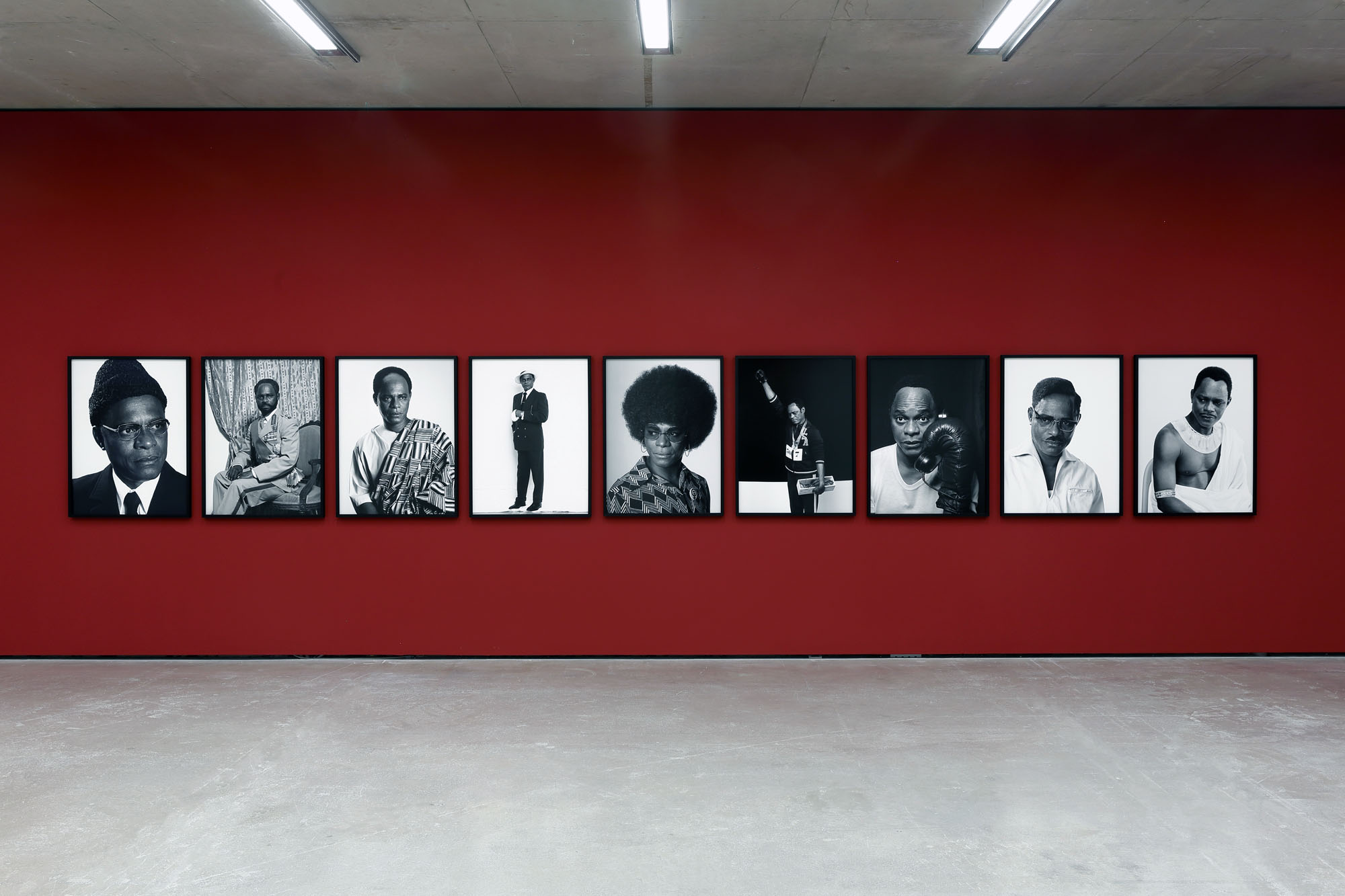
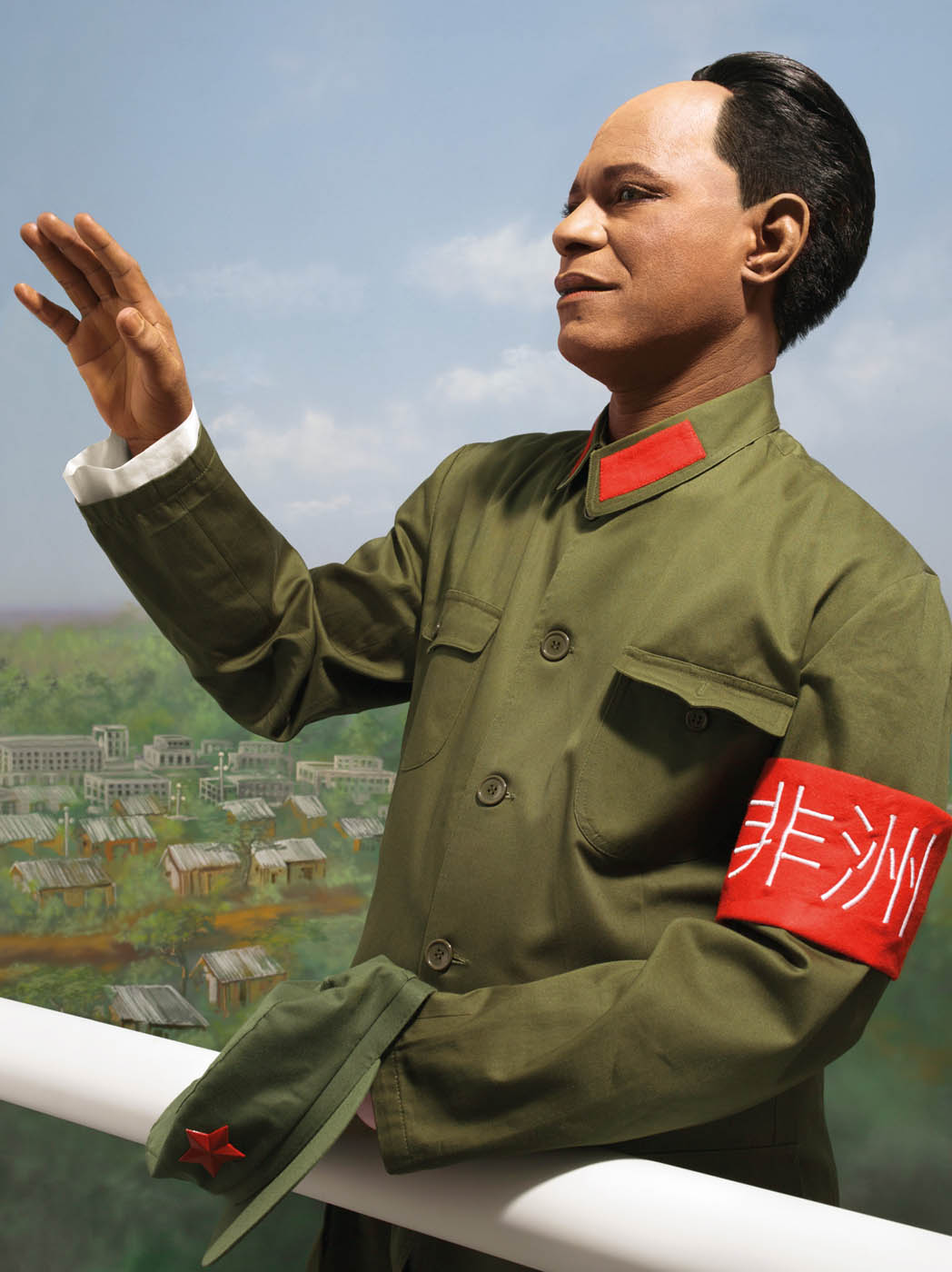
Thirdly, I love how the photographer turns the camera towards himself, conceptually enacting in a staged theatricality of becoming, envisioning himself as different personalities through the act of constructing identities. Heroes, travellers, intellectuals, philosophers and, in Samuel Fosso’s case, prominent figures from 20th-century Pan-African liberation and American civil rights movements. African spirits and activists, intellectuals, and political leaders who fought for Black emancipation across the globe.
Pan-African modes of image-making after the end of colonisation open up, as curator Oluremi C. Onabanjo so eloquently states, “dazzling modes of Pan-African possibility” where everything is possible in every/body. There is no wringing of the hands here, no use of colonial photographs rehashed for contemporary consumption, just a joy, joy, joy in present and future becoming.
Dr Marcus Bunyan
Many thankx to the Museum of Modern Art for allowing me to publish the photographs in the posting. Please click on the photographs for a larger version of the image.
“Imagination is a Magic carpet
Upon which we may soar
To distant lands and climes
And even go beyond the moon
To any planet in the sky
If we came from nowhere here
Why can’t we go somewhere there?.
Sun Ra, “Imagination,” 1970
The Museum of Modern Art’s exhibition Ideas of Africa: Portraiture and Political Imagination showcases how photographic portraits fuel ideas of Pan-African subjectivity and solidarity. On view from December 14, 2025, through July 25, 2026, the exhibition considers the transatlantic call and response that constructed Africa as a political idea, due to the “winds of decolonial change” that swept the African continent in tandem with the Civil Rights movement in the United States. Ideas of Africa is the third exhibition organised at The Museum of Modern Art in celebration of the 2019 gift of modern and contemporary African art from prolific collector Jean Pigozzi. The exhibition features core works from this gift, alongside a selection of recent acquisitions and key loans.
Text from The Museum of Modern Art website
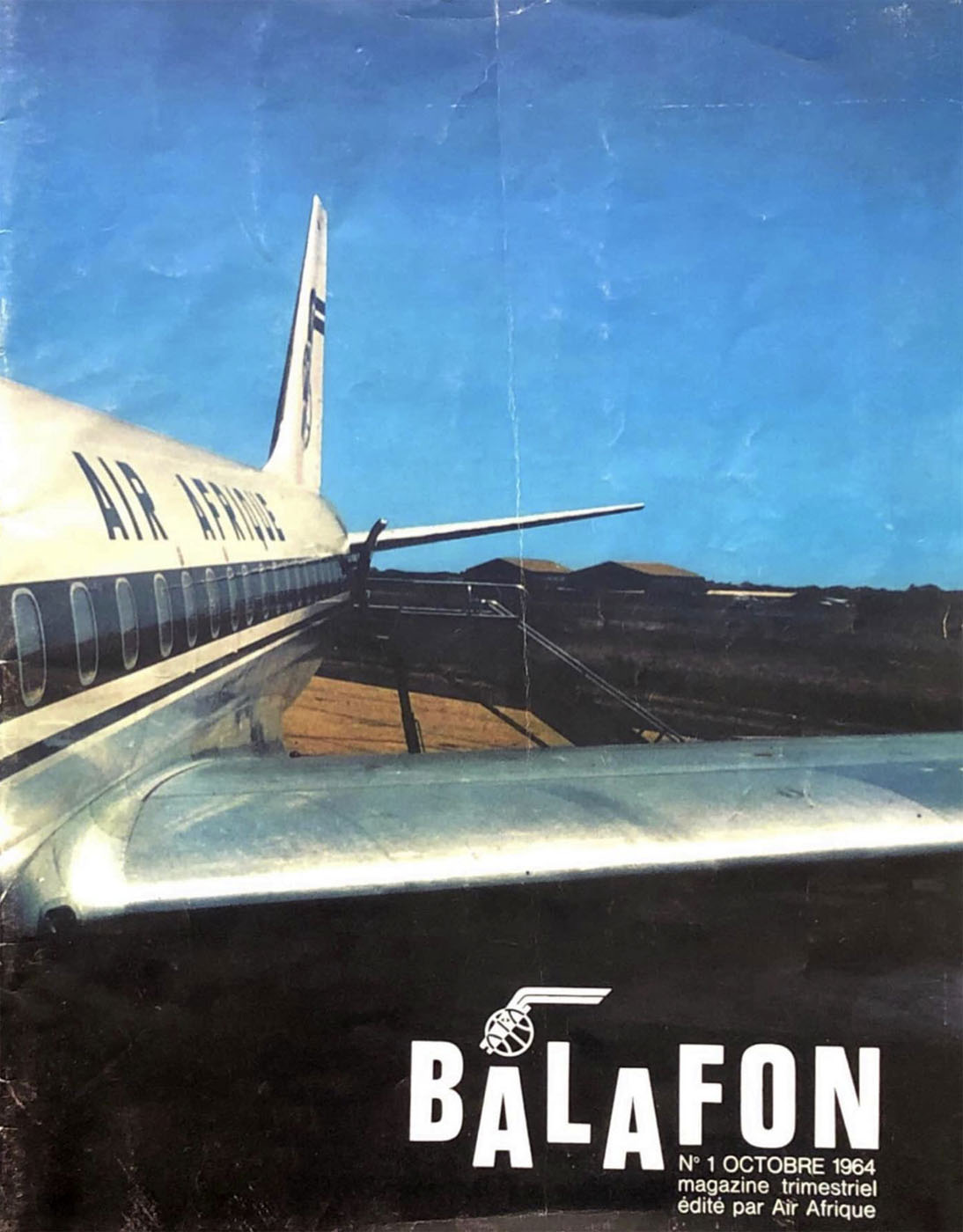
Air Afrique
Balafon No. 1
1964
Magazine, softcover
10 5/8 x 8 1/4″ (27 x 21cm)
Air Afrique Collective, courtesy of Lamine Diaoune,
Ahmadou-Bamba Thiam, Djiby Kebe, Jeremy Konko
From 1961 to 2002, Air Afrique served as the official transnational carrier for francophone West and Central Africa, providing regular jet service throughout the continent and internationally. The airline was also deeply committed to the production of Pan-African arts and culture. It funded vinyl records, published books on African history, and produced the in-flight magazine Balafon, which reported on events across Africa and beyond. Twenty years after the airline shuttered, a Paris-based artist collective formed to revitalise the spirit of Air Afrique through design collaborations, film programs, and a magazine. Their collection of archival ephemera, on view here, comprises gifts and purchases from former Air Afrique staff.
Inspired by the international activities of Air Afrique, both past and present, this reading table presents issues of the airline’s in-flight magazine, Balafon, one of which features a portrait of the Malian photographer Malick Sidibé on its cover. This table also includes a selection of photobooks, catalogues, and scholarly publications, celebrating the circulation of images and ideas in Africa during the decolonial era. These books are additionally available to browse within the gallery, offering further directions for reading, thinking, dreaming, and imagining.
Gallery label from Ideas of Africa: Portraiture and Political Imagination, 2025
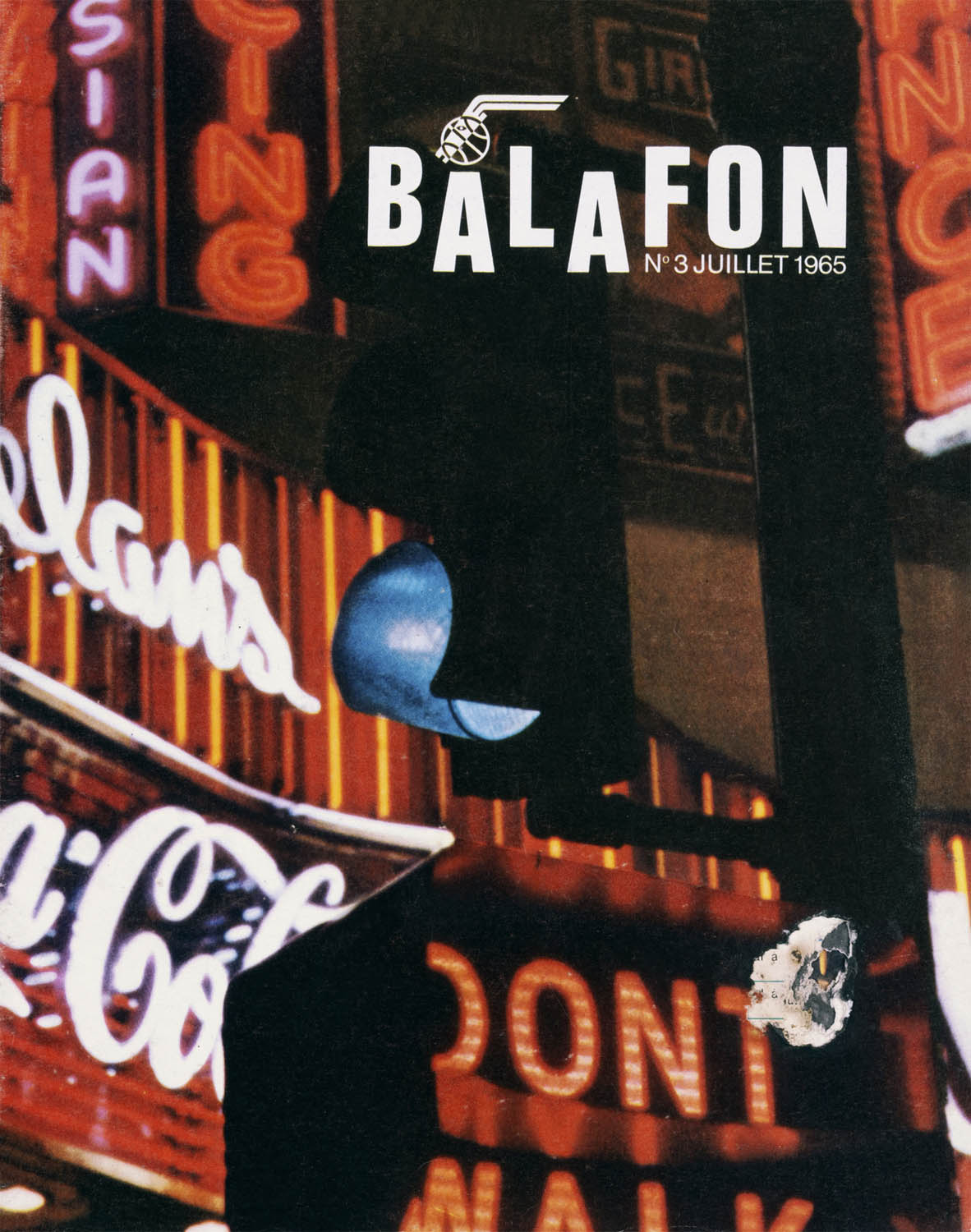
Air Afrique
Balafon No. 3
1965
Magazine, softcover
10 5/8 x 8 1/4″ (27 x 21cm)
Air Afrique Collective, courtesy of Lamine Diaoune,
Ahmadou-Bamba Thiam, Djiby Kebe, Jeremy Konko
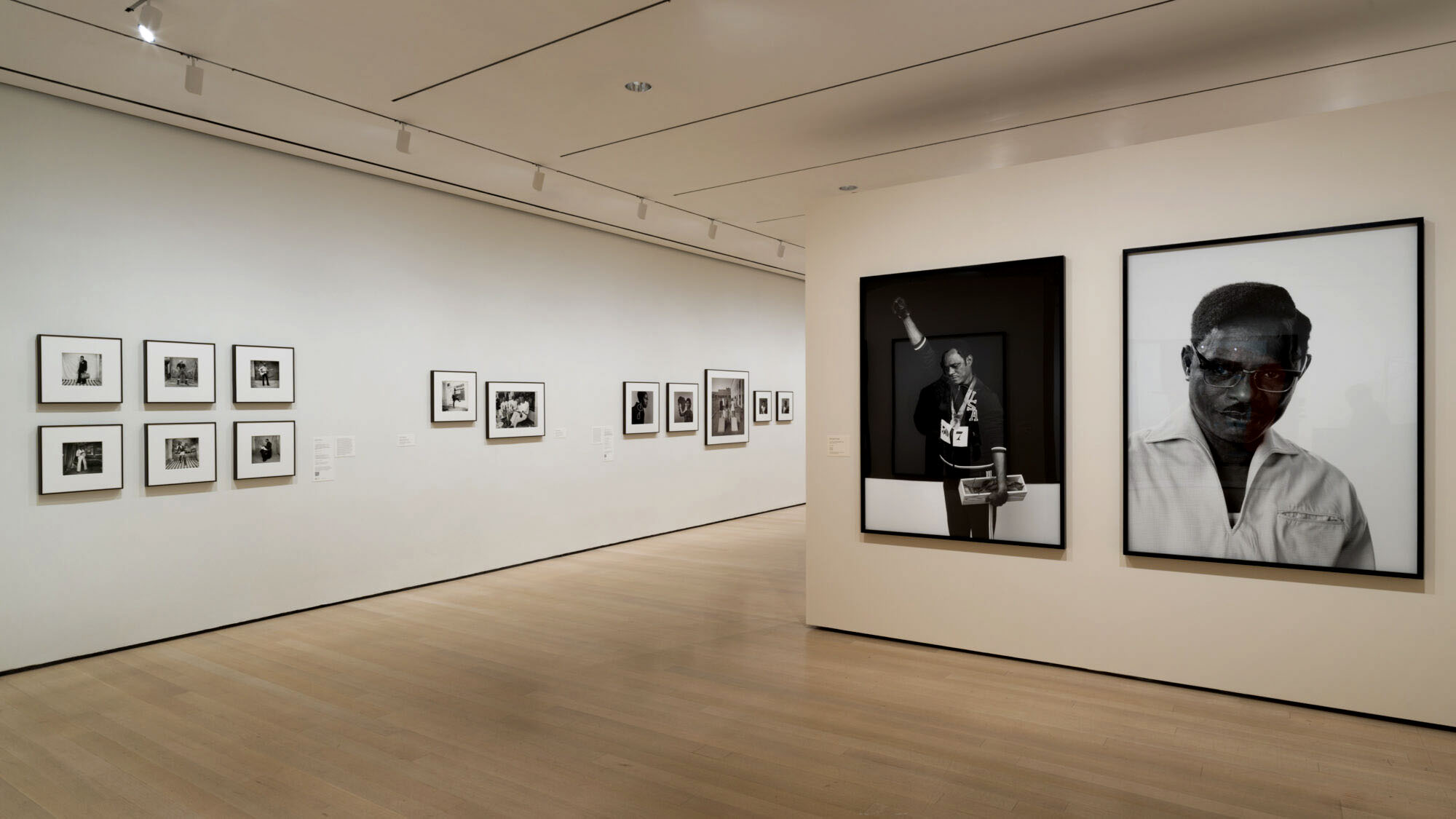
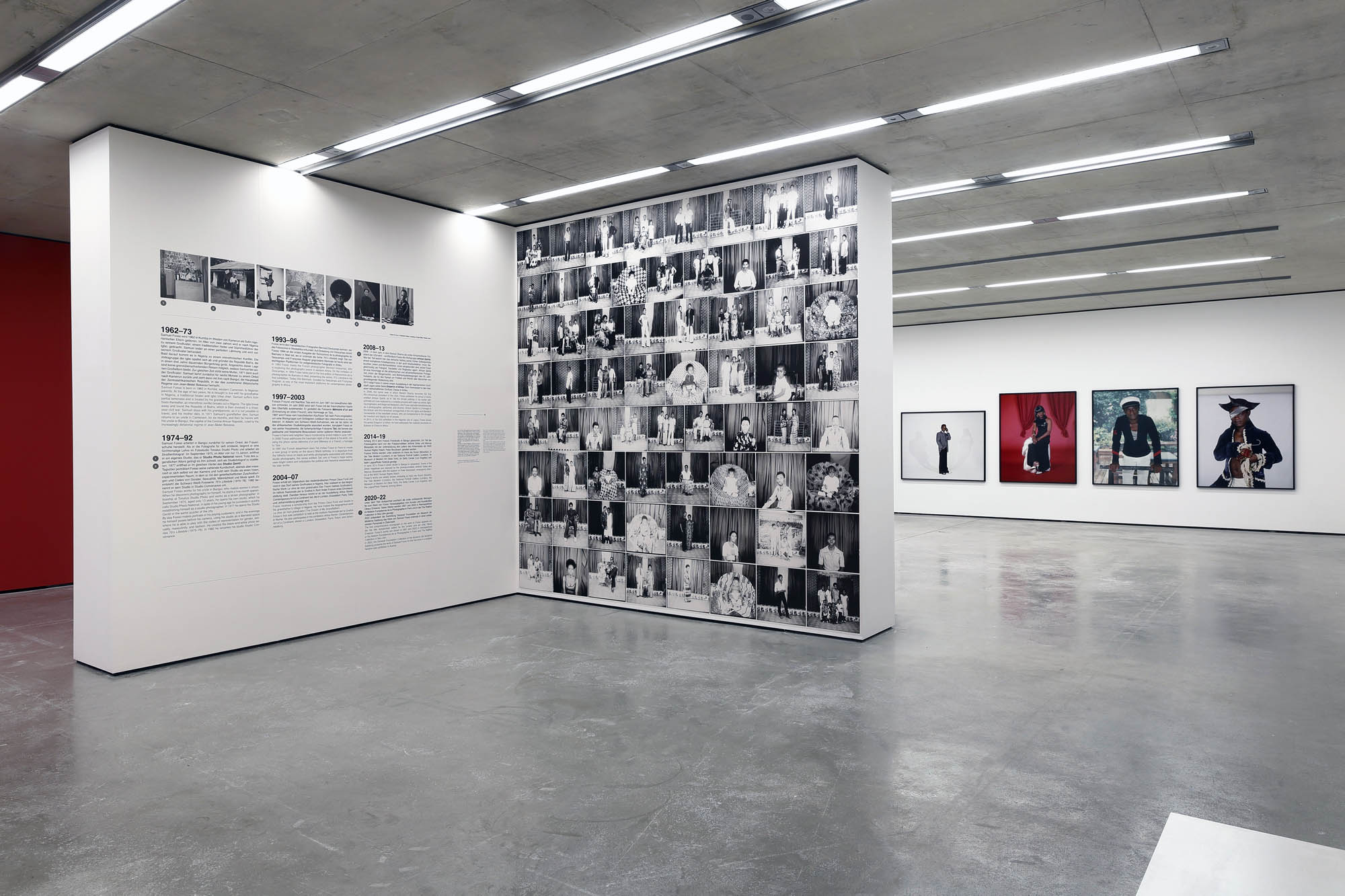
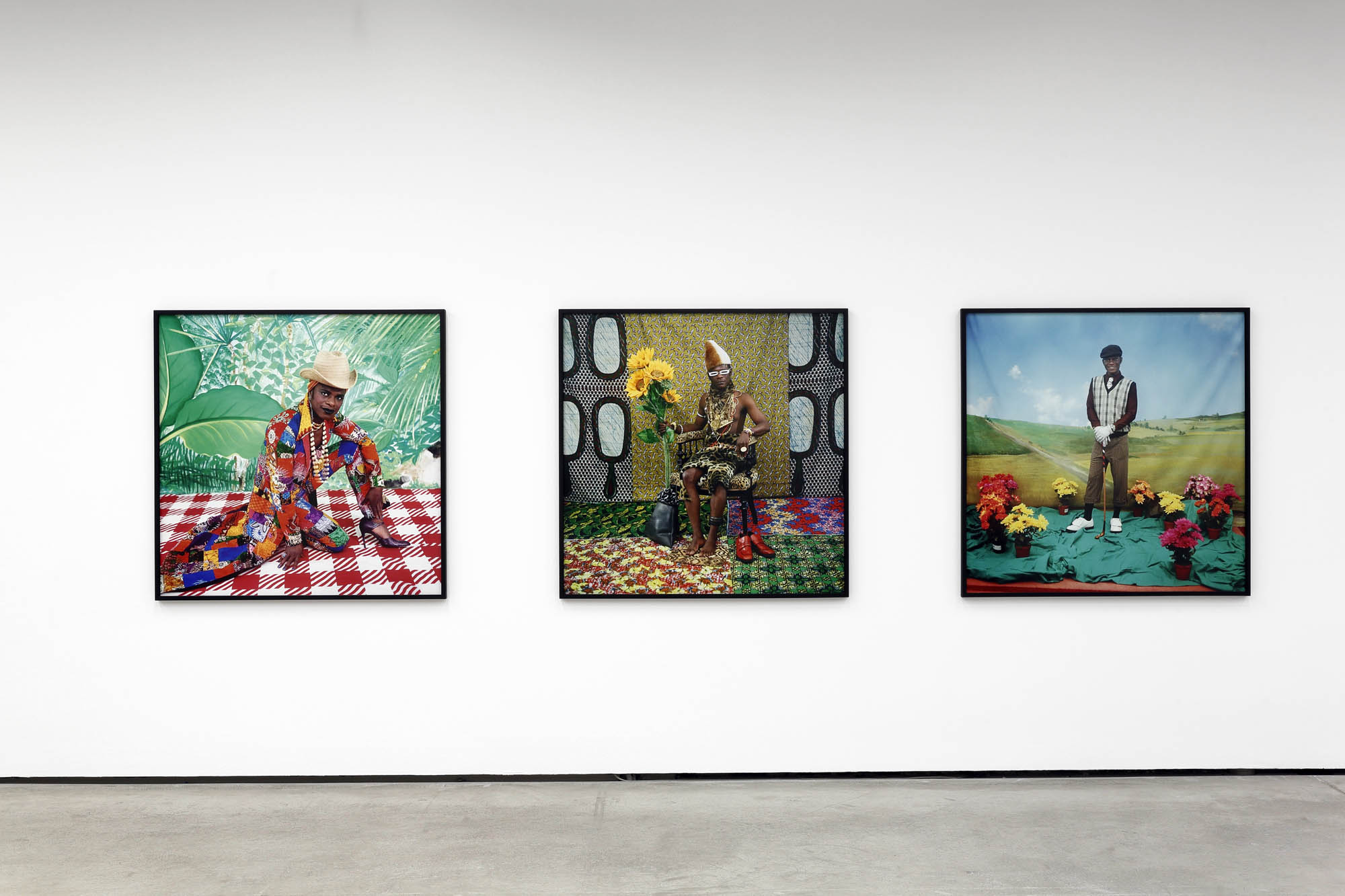
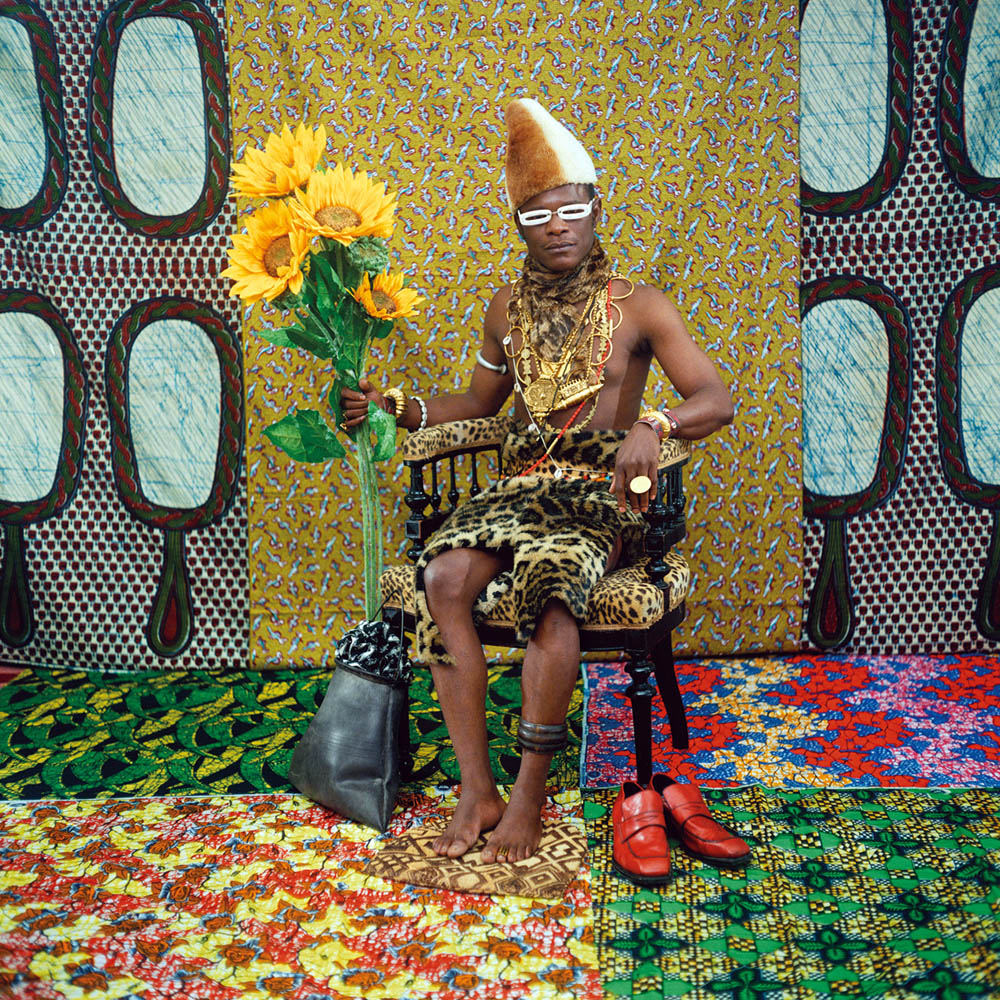
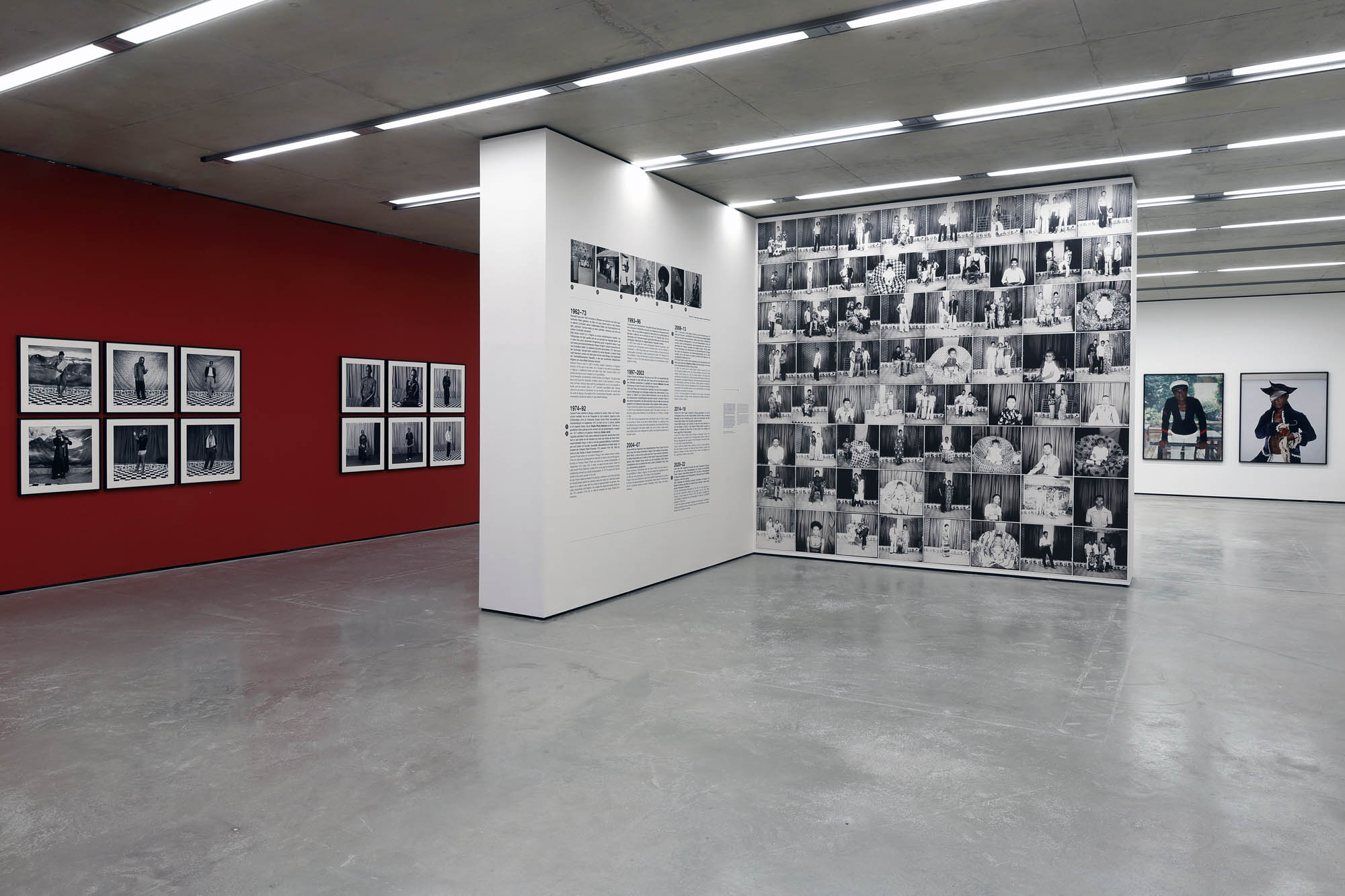
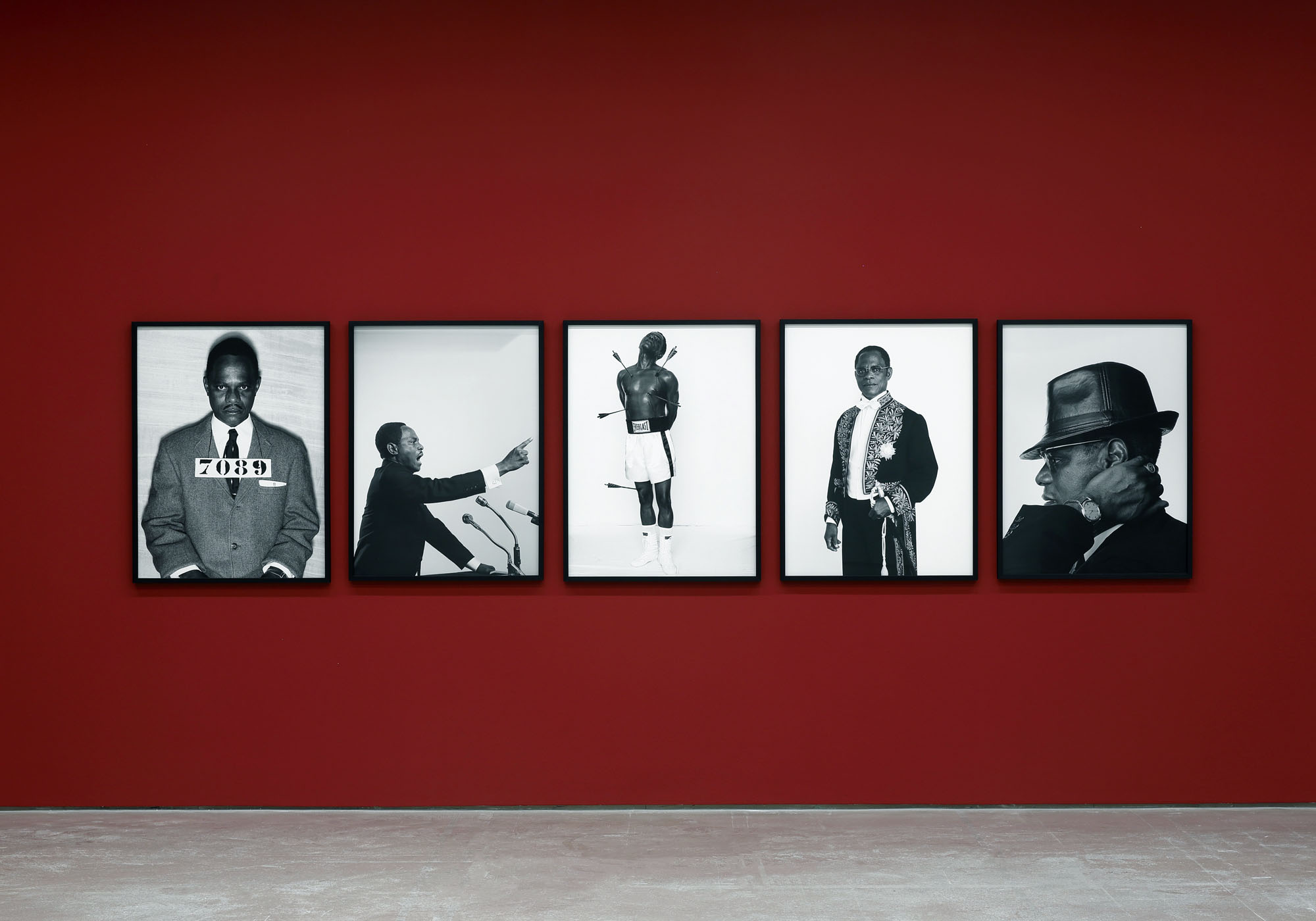
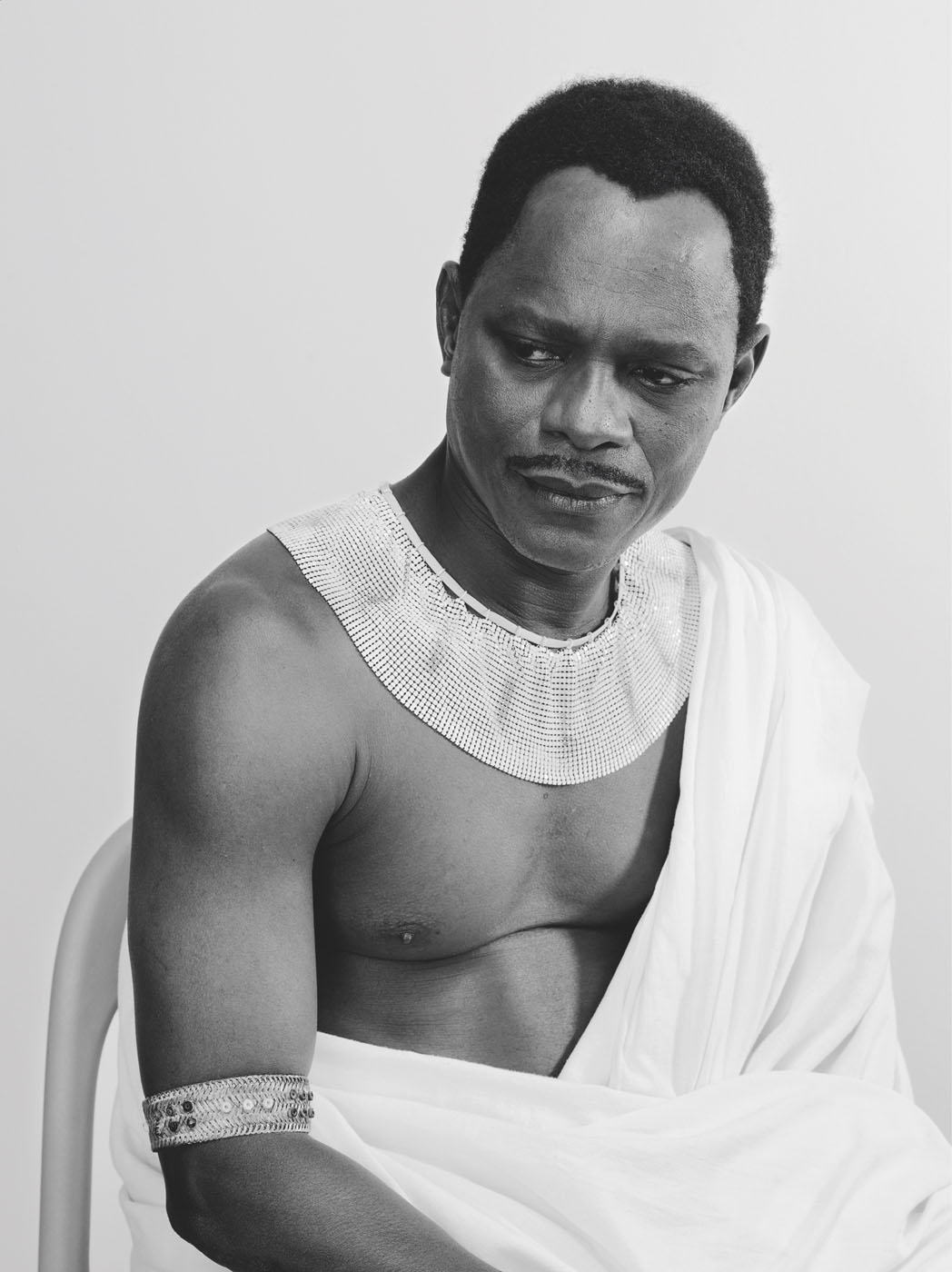
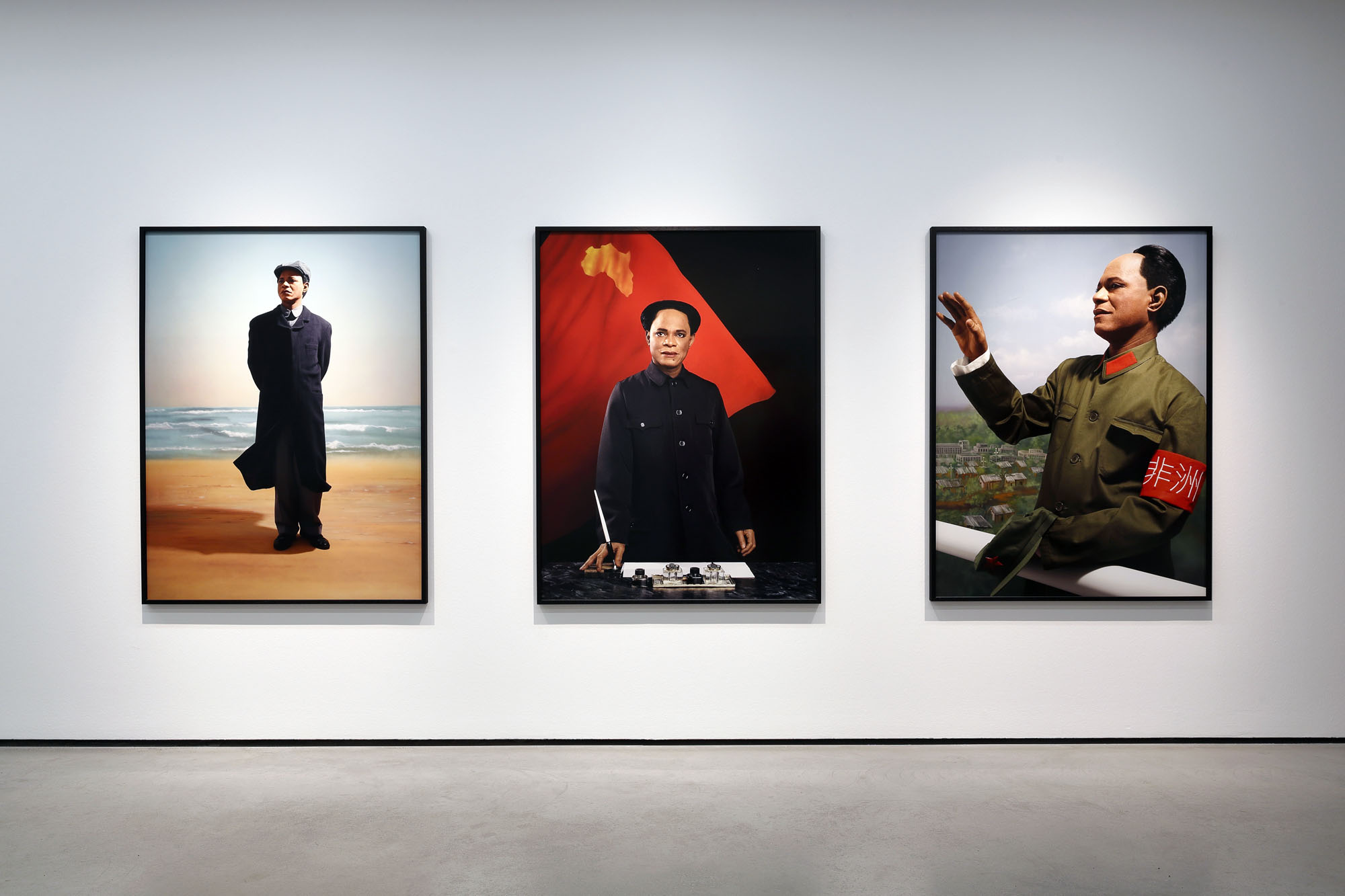
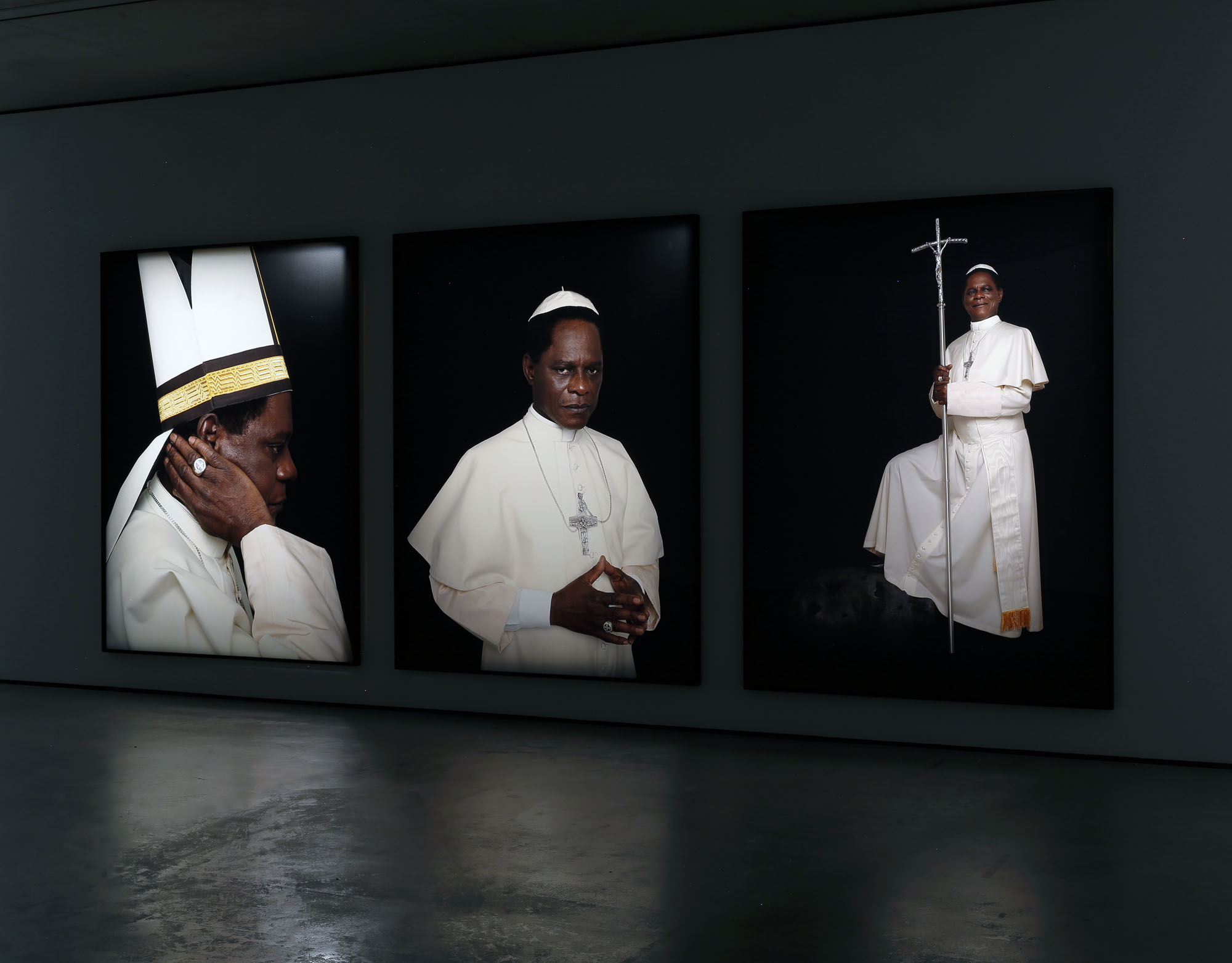
Installation view of the exhibition Ideas of Africa: Portraiture and Political Imagination at The Museum of Modern Art (MoMA), New York, December 2025 – July 2026 showing at right two Untitled photographs from the series African Spirits (2008, below) by Samuel Fosso (French and Central African born Cameroon, b. 1962)
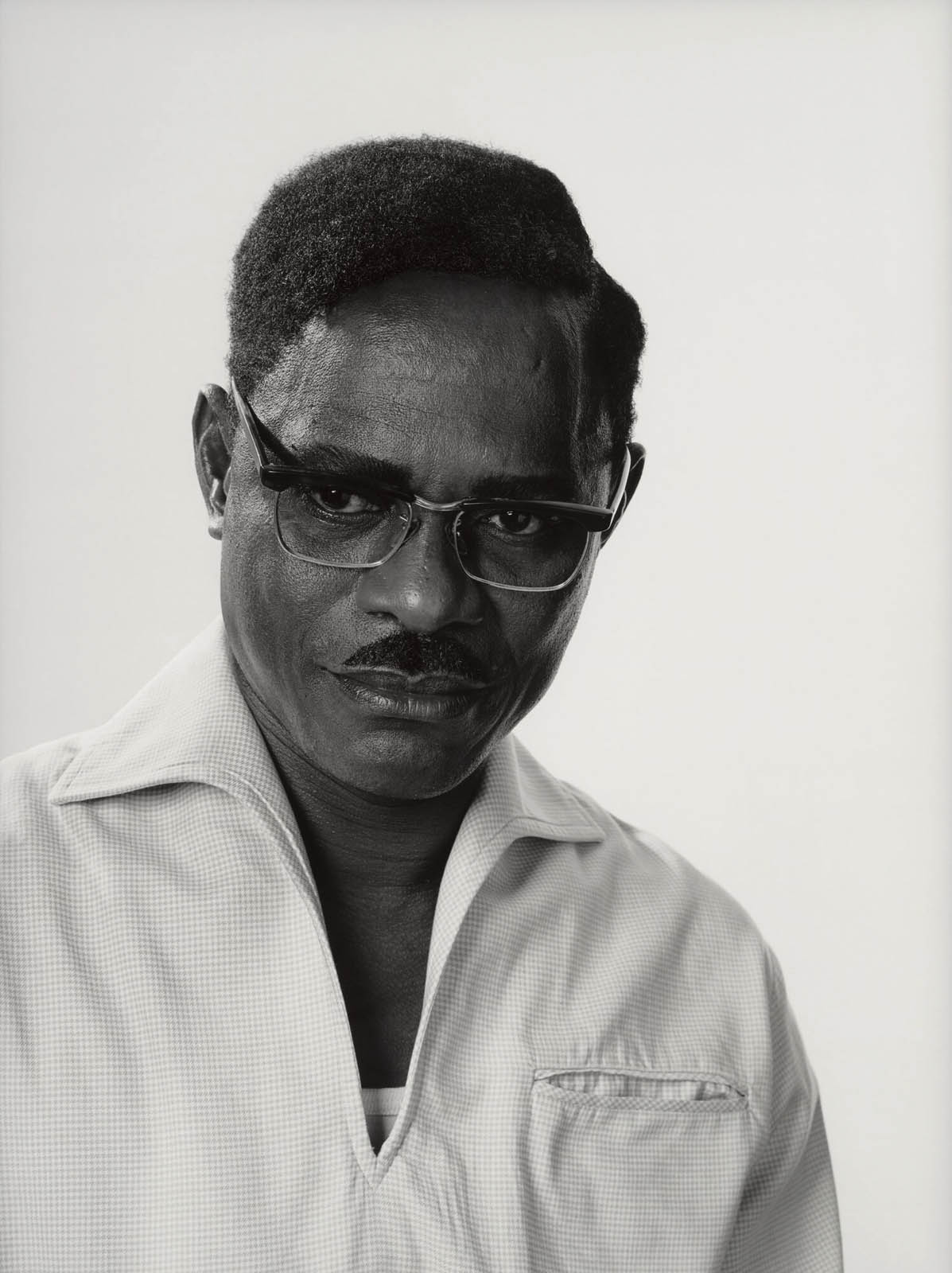
Samuel Fosso (French and Central African born Cameroon, b. 1962)
Untitled from the series African Spirits
2008
Gelatin silver print
64 1/8 x 48 1/16″ (162.8 x 122cm)
Museum of Modern Art, New York
The Family of Man Fund
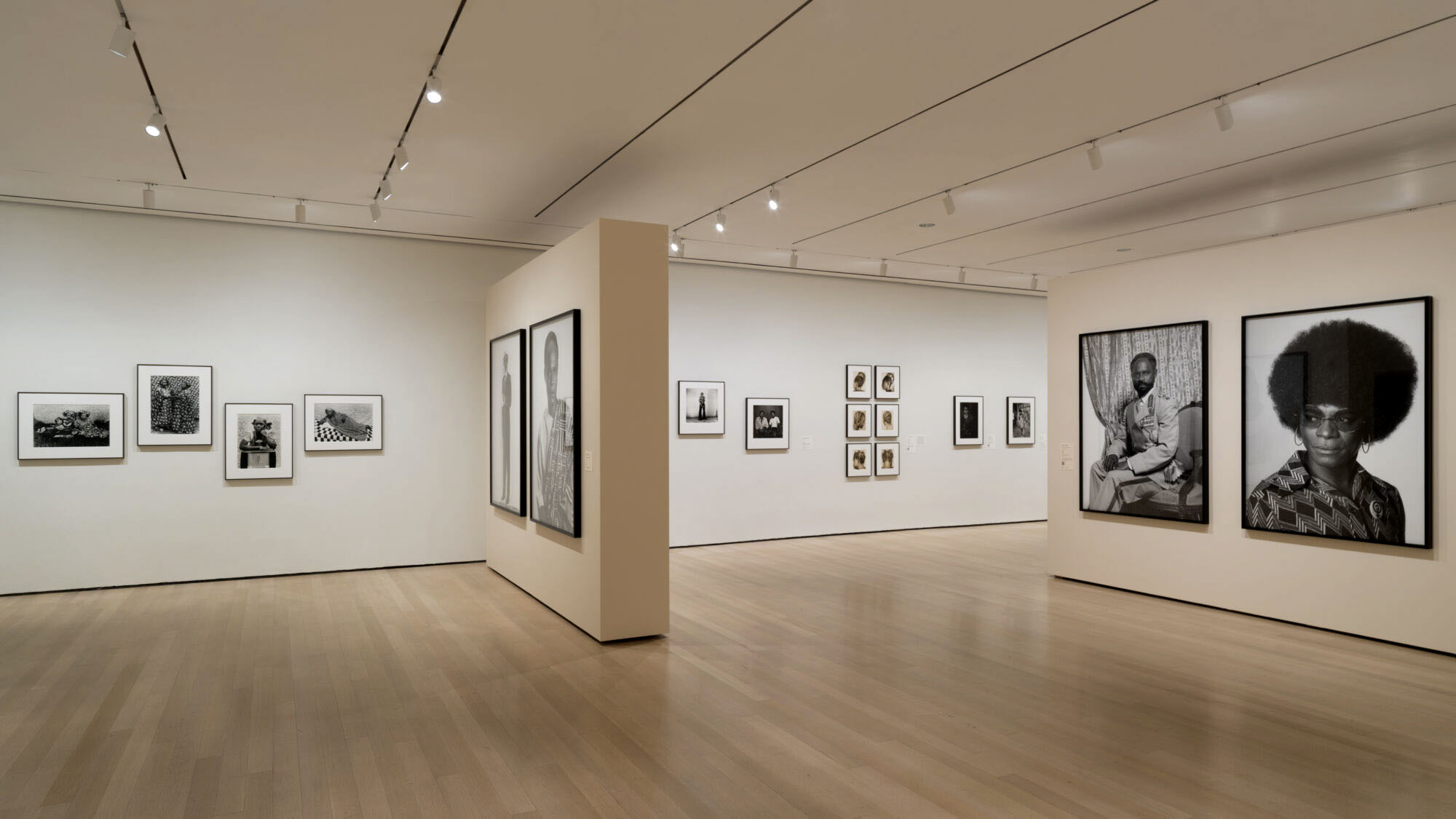
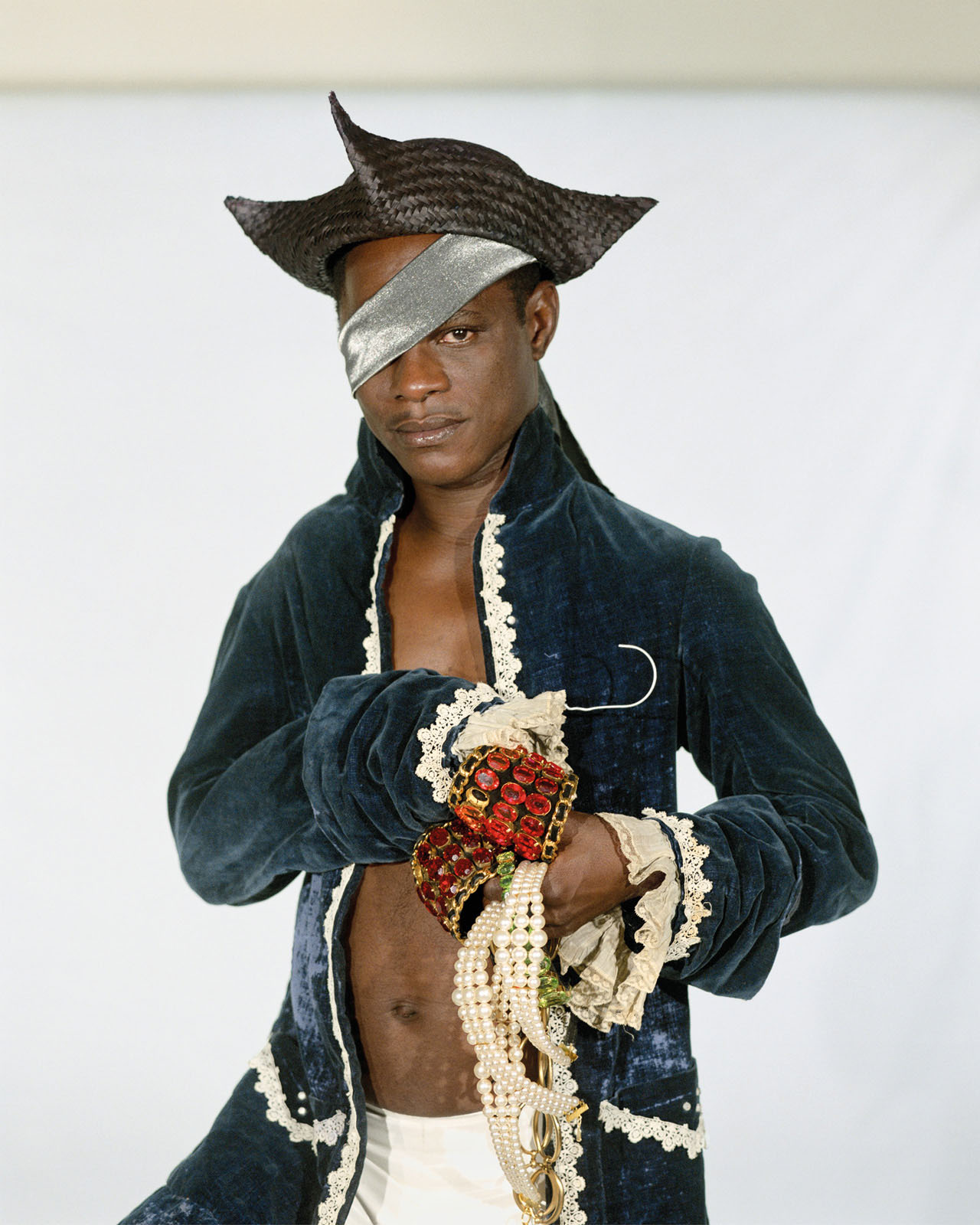
Installation view of the exhibition Ideas of Africa: Portraiture and Political Imagination at The Museum of Modern Art (MoMA), New York, December 2025 – July 2026 showing at left photographs by Seydou Keïta (Malian, 1923-2001); and at right, two Untitled photographs from the series African Spirits (2008, below) by Samuel Fosso (French and Central African born Cameroon, b. 1962)
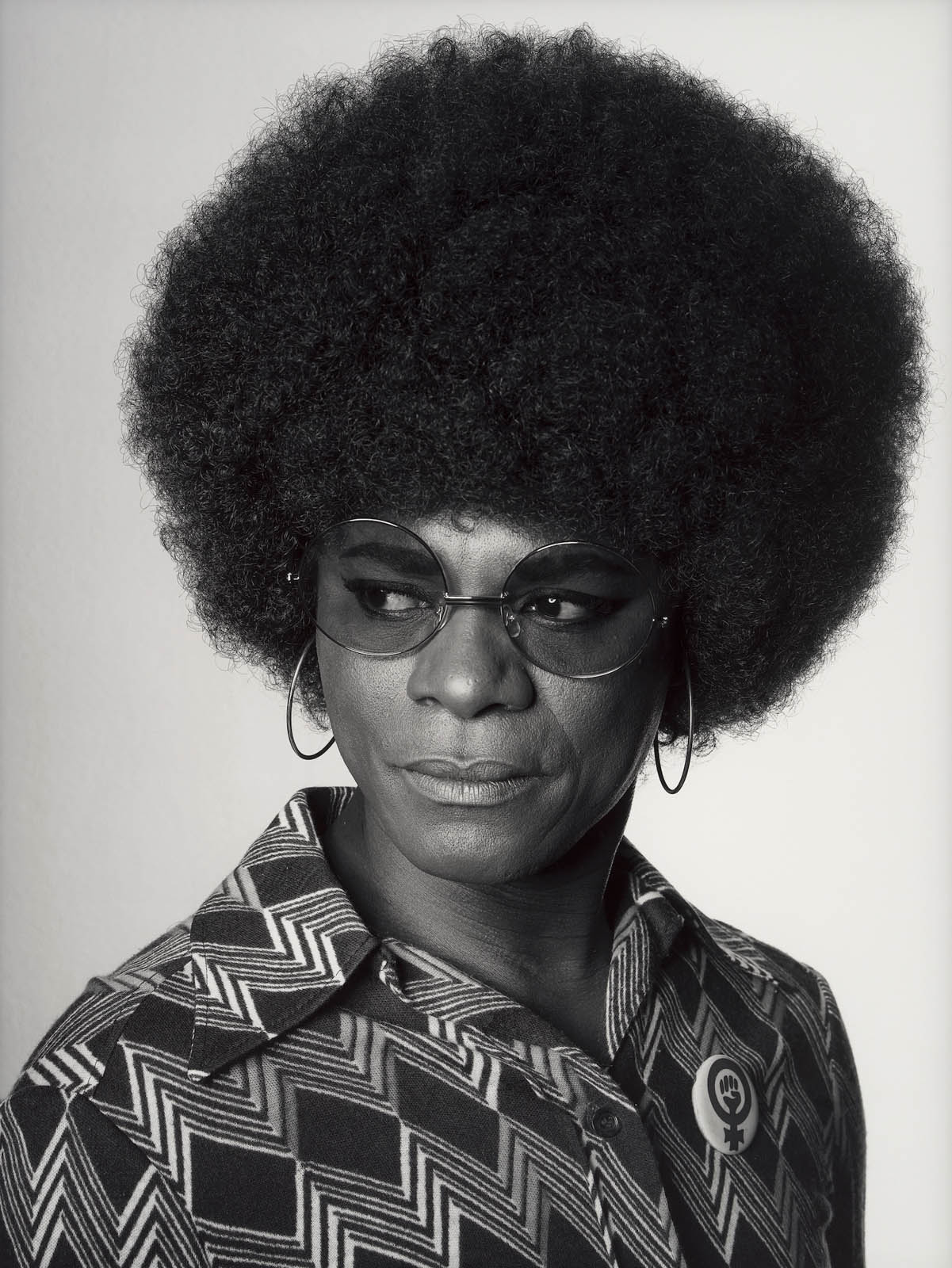
Samuel Fosso (French and Central African born Cameroon, b. 1962)
Untitled from the series African Spirits
2008
Gelatin silver print
64 1/8 x 48 1/16″ (162.8 x 122cm)
Museum of Modern Art, New York
The Family of Man Fund
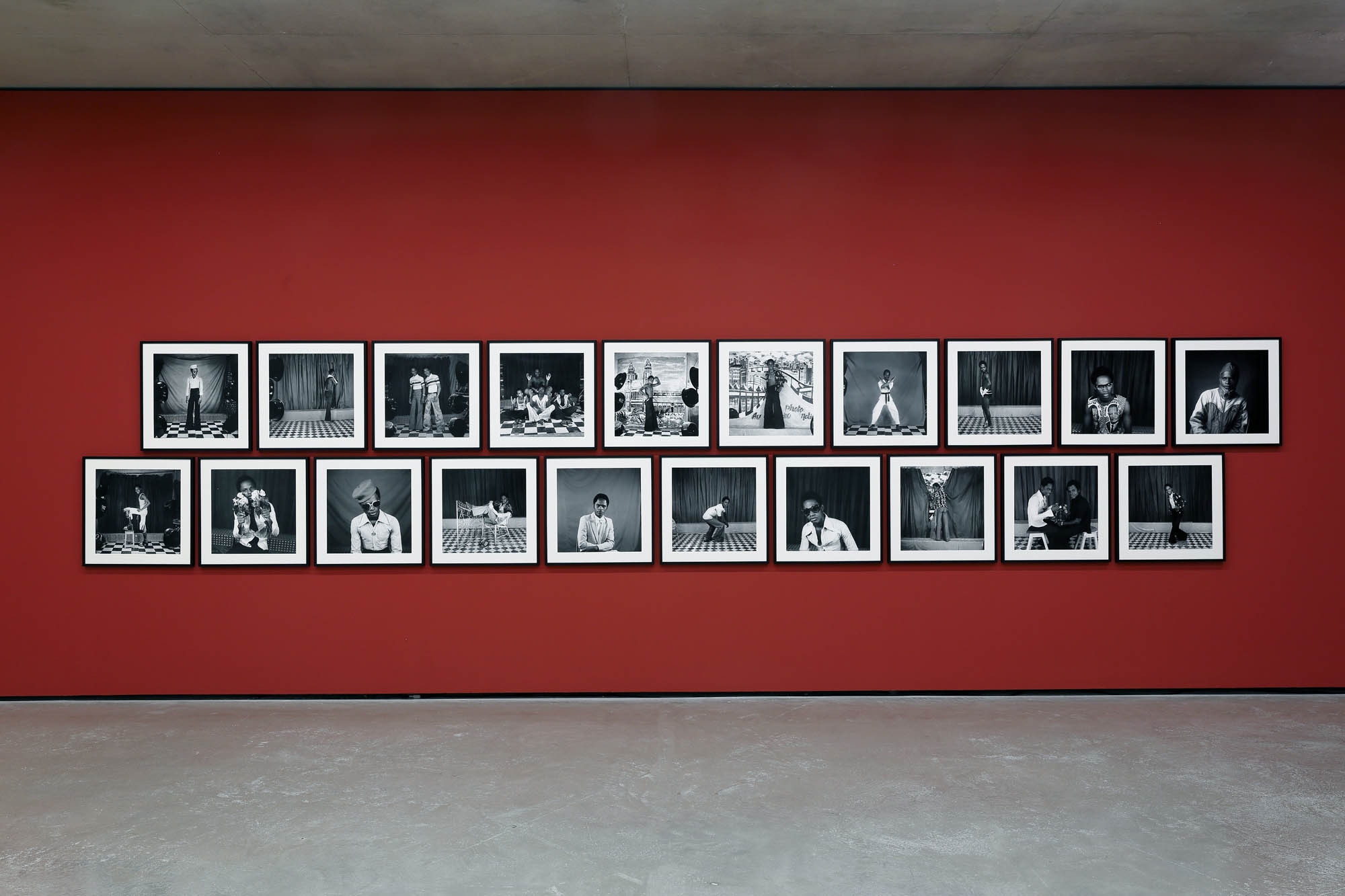
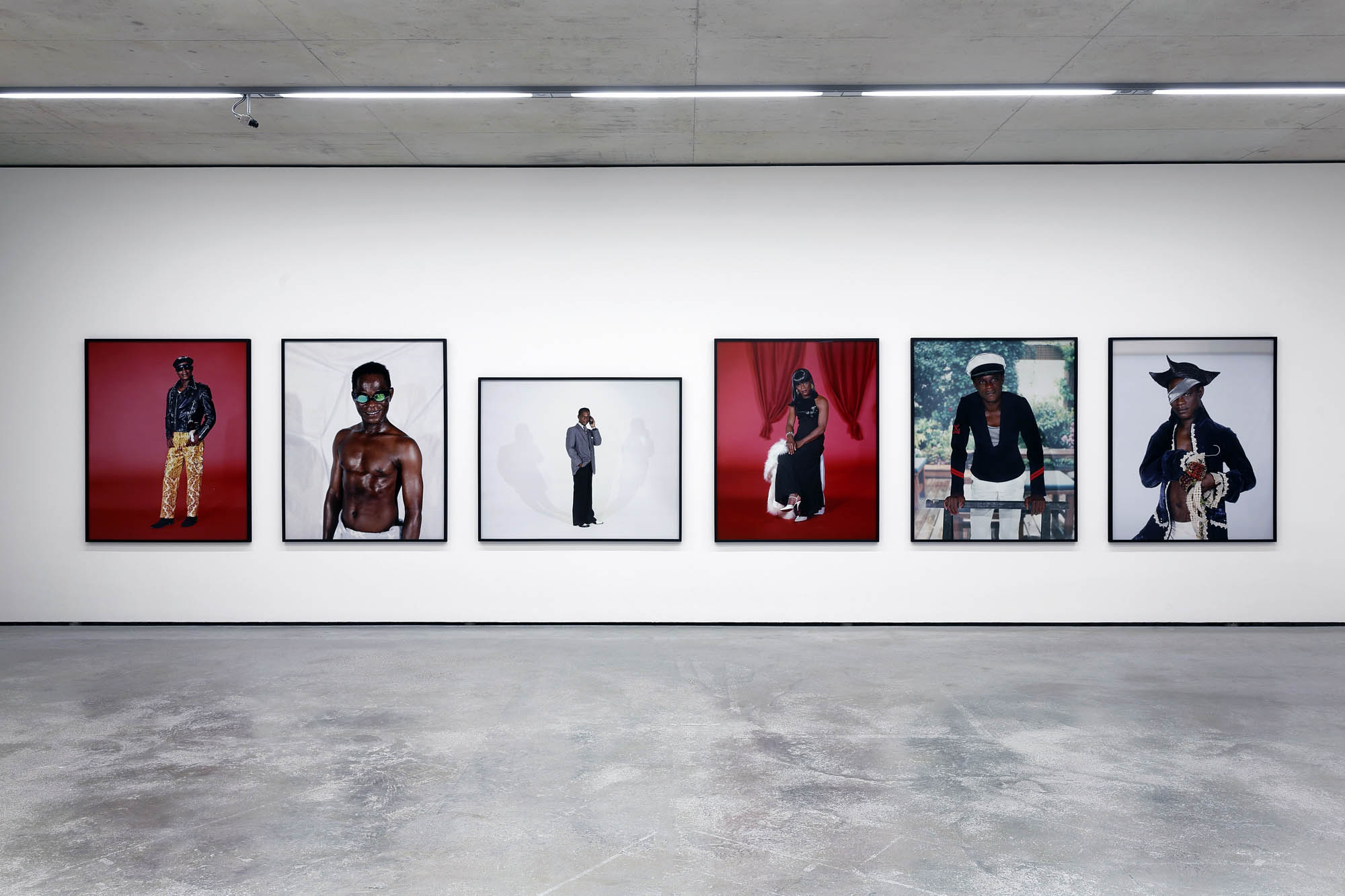
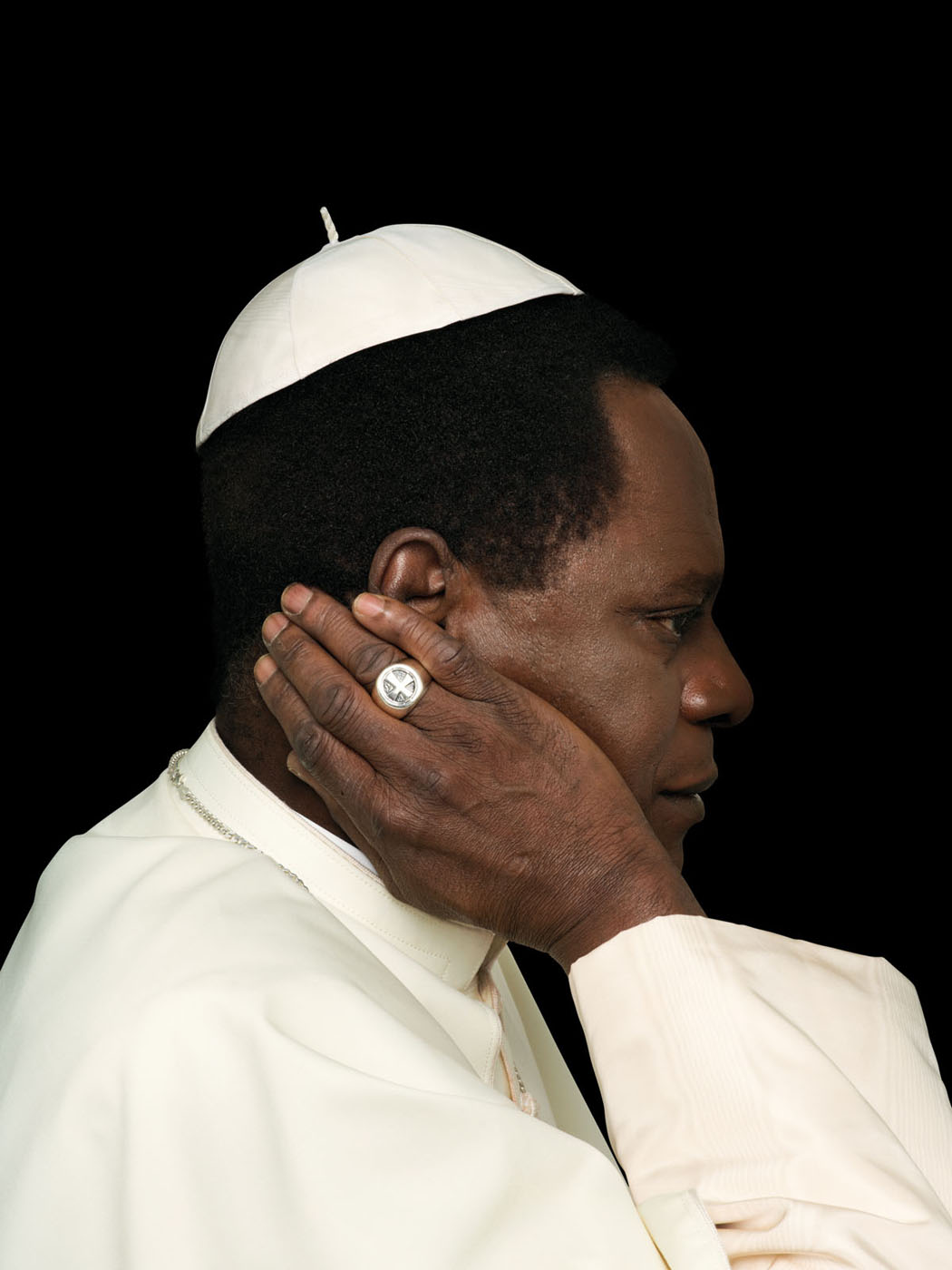
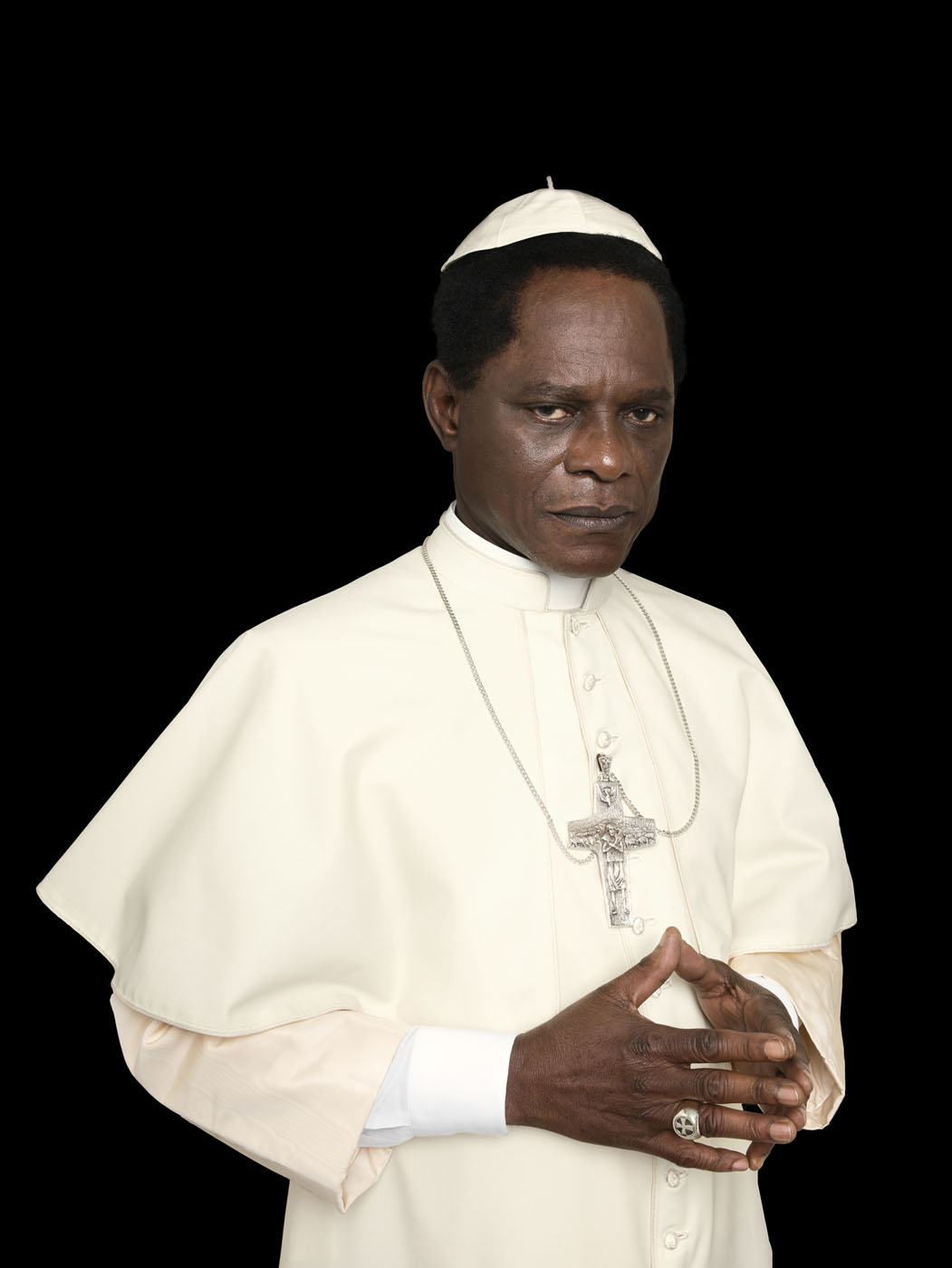
Artist, Silvia Rosi: African Spirit is a series of self-portraits where Fosso transforms himself into key figures of the Pan-African liberation movement of the 1960s and 70s.
I’m Silvia Rosi. I’m an artist working with photography and moving image.
Samuel Fosso started his career taking portraits of people in the studio, where there was always this act of constructing identities through props, poses, and the photographer’s imagination. At the end of each workday, Fosso would turn the camera toward himself.
In this series, he recreates these iconic photographs, taking on the faces of Angela Davis, of Martin Luther King, while at the same time remaining himself. For me, there’s this sense of recognition but also his own presence makes us question what it means to embody these figures.
The lighting and the poses and the composition echo this studio portrait tradition, but there’s always an element of theatricality that keeps you aware of the labor of becoming someone else. He neutralises the scene, removing the backdrop, and we’re forced to look at the subject that we have in front.
Turning the camera inwards can be really revolutionary. I think that’s something that deeply resonates with me, this idea of being in charge of my own representation and giving yourself complexity through images.
Text from the MoMA website
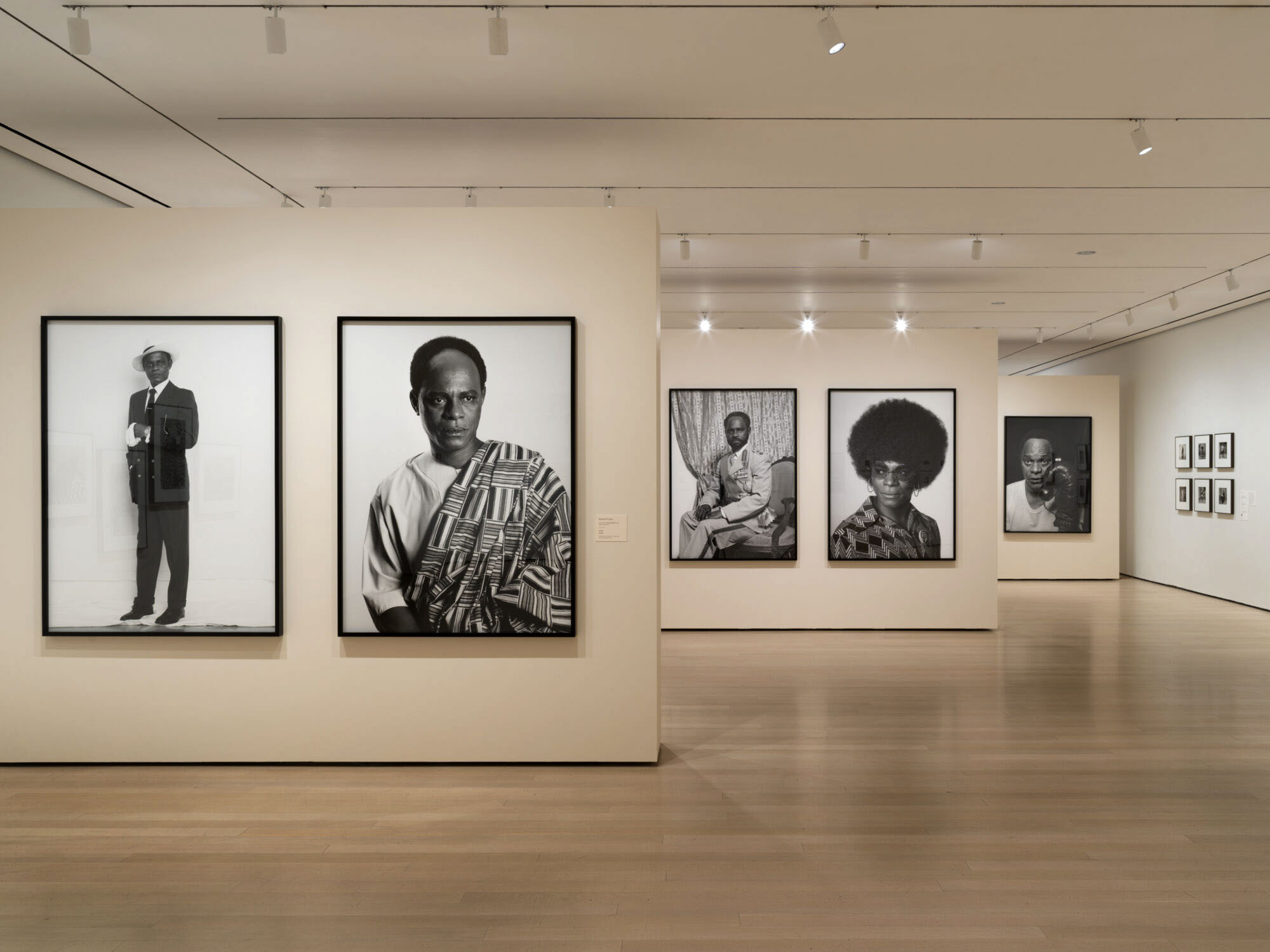
Installation view of the exhibition Ideas of Africa: Portraiture and Political Imagination at The Museum of Modern Art (MoMA), New York, December 2025 – July 2026 showing five Untitled photographs from the series African Spirits (2008) by Samuel Fosso (French and Central African born Cameroon, b. 1962)
The Museum of Modern Art’s exhibition Ideas of Africa: Portraiture and Political Imagination showcases how photographic portraits fuel ideas of Pan-African subjectivity and solidarity. On view from December 14, 2025, through July 25, 2026, the exhibition considers the transatlantic call and response that constructed Africa as a political idea, due to the “winds of decolonial change” that swept the African continent in tandem with the Civil Rights movement in the United States. Ideas of Africa is the third exhibition organised at The Museum of Modern Art in celebration of the 2019 gift of modern and contemporary African art from prolific collector Jean Pigozzi. The exhibition features core works from this gift, alongside a selection of recent acquisitions and key loans. Ideas of Africa: Portraiture and Political Imagination is organised by Oluremi C. Onabanjo, The Peter Schub Curator, with the assistance of Chiara M. Mannarino, Curatorial Assistant, The Robert B. Menschel Department of Photography.
Conceptually influenced by The Idea of Africa, a landmark publication by the late philosopher V. Y. Mudimbe (1941-2025), the exhibition brings together works by 20th-century photographers such as Seydou Keïta, Malick Sidibé, Jean Depara, Sanlé Sory, and Ambroise Ngaimoko, who worked across key urban centers in West and Central Africa during the “golden age of African portraiture.” Images by James Barnor and Kwame Brathwaite illuminate Pan-African modes of image-making across the African diaspora. Works by contemporary artists of African descent, including Samuel Fosso, Silvia Rosi, and Njideka Akunyili Crosby, alongside ephemera selected from the archive of the artist collective Air Afrique, embody the physical circulation of these ideas across space and time.
“As we continue to witness transformative shifts in the global geopolitical order, it is instructive to revisit a moment in history that saw the disintegration of colonial territories and the formation of transnational solidarity across the African continent and diaspora. This exhibition locates dazzling modes of Pan-African possibility in images made by inventive photographers who registered and beckoned in new worlds,” says Oluremi C. Onabanjo.
Ideas of Africa features a reading room as a tribute to the aspirations of knowledge production and the proliferation of the photographic image in print media during the decolonial era. In the reading room, visitors can access a selection of historical and contemporary photobooks and publications.
On the occasion of the exhibition, MoMA is publishing a richly illustrated catalogue featuring a lead essay by Oluremi C. Onabanjo, contributions by poet Momtaza Mehri and film programmer Yasmina Price, and reproductions of key texts by Brent Hayes Edwards and V. Y. Mudimbe. 140 pages, 105 color illustrations. Hardcover, $50. ISBN: 978-1-63345-171-1.
Press release from The Museum of Modern Art
![Installation view of the exhibition 'Ideas of Africa: Portraiture and Political Imagination' at The Museum of Modern Art (MoMA), New York, December 2025 - July 2026 showing at left, Malick Sidibé 'Nuit de Noël' (Happy Club) [Christmas Eve] 1963; and at second left, Malick Sidibé 'Regardez-Moi' [Look at Me!] 1962](https://artblart.com/wp-content/uploads/2026/06/ideas_of_africa_installation_d.jpg "Installation view of the exhibition 'Ideas of Africa: Portraiture and Political Imagination' at The Museum of Modern Art (MoMA), New York, December 2025 - July 2026 showing at left, Malick Sidibé 'Nuit de Noël' (Happy Club) [Christmas Eve] 1963; and at second left, Malick Sidibé 'Regardez-Moi' [Look at Me!] 1962")
Installation view of the exhibition Ideas of Africa: Portraiture and Political Imagination at The Museum of Modern Art (MoMA), New York, December 2025 – July 2026 showing at left, Malick Sidibé Nuit de Noël (Happy Club) [Christmas Eve] (1963, below); and at second left, Malick Sidibé Regardez-Moi [Look at Me!] (1962, below)
![Malick Sidibé (Malian, 1936–2016) 'Nuit de Noël' (Happy Club) [Christmas Eve] 1963 (printed January 2006)](https://artblart.com/wp-content/uploads/2026/06/sidibe-nuit-de-noel.jpg "Malick Sidibé (Malian, 1936–2016) 'Nuit de Noël' (Happy Club) [Christmas Eve] 1963 (printed January 2006)")
Malick Sidibé (Malian, 1936-2016)
Nuit de Noël (Happy Club) [Christmas Eve]
1963 (printed January 2006)
Gelatin silver print
Image: 39 x 39″ (99 x 99.1cm)
Sheet: 47 1/4 x 47 1/4″ (120 x 120cm)
Frame: 53 9/16 x 53 9/16″ (136 x 136cm)
Courtesy The Walther Collection, New York / Neu-Ulm
![Malick Sidibé (Malian, 1936–2016) 'Regardez-Moi' [Look at Me!] 1962 (printed January 2006)](https://artblart.com/wp-content/uploads/2026/06/malick-sidibe-regardez-moi.jpg "Malick Sidibé (Malian, 1936–2016) 'Regardez-Moi' [Look at Me!] 1962 (printed January 2006)")
Malick Sidibé (Malian, 1936-2016)
Regardez-Moi [Look at Me!]
1962 (printed January 2006)
Gelatin silver print
Image: 39 3/8 x 39″ (100 x 99cm)
Sheet: 47 1/4 x 47 1/4″ (120 x 120cm)
Frame: 52 3/16 x 52 3/16 x 1″ (132.5 x 132.5 x 2.5cm)
Courtesy The Walther Collection, New York / Neu-Ulm
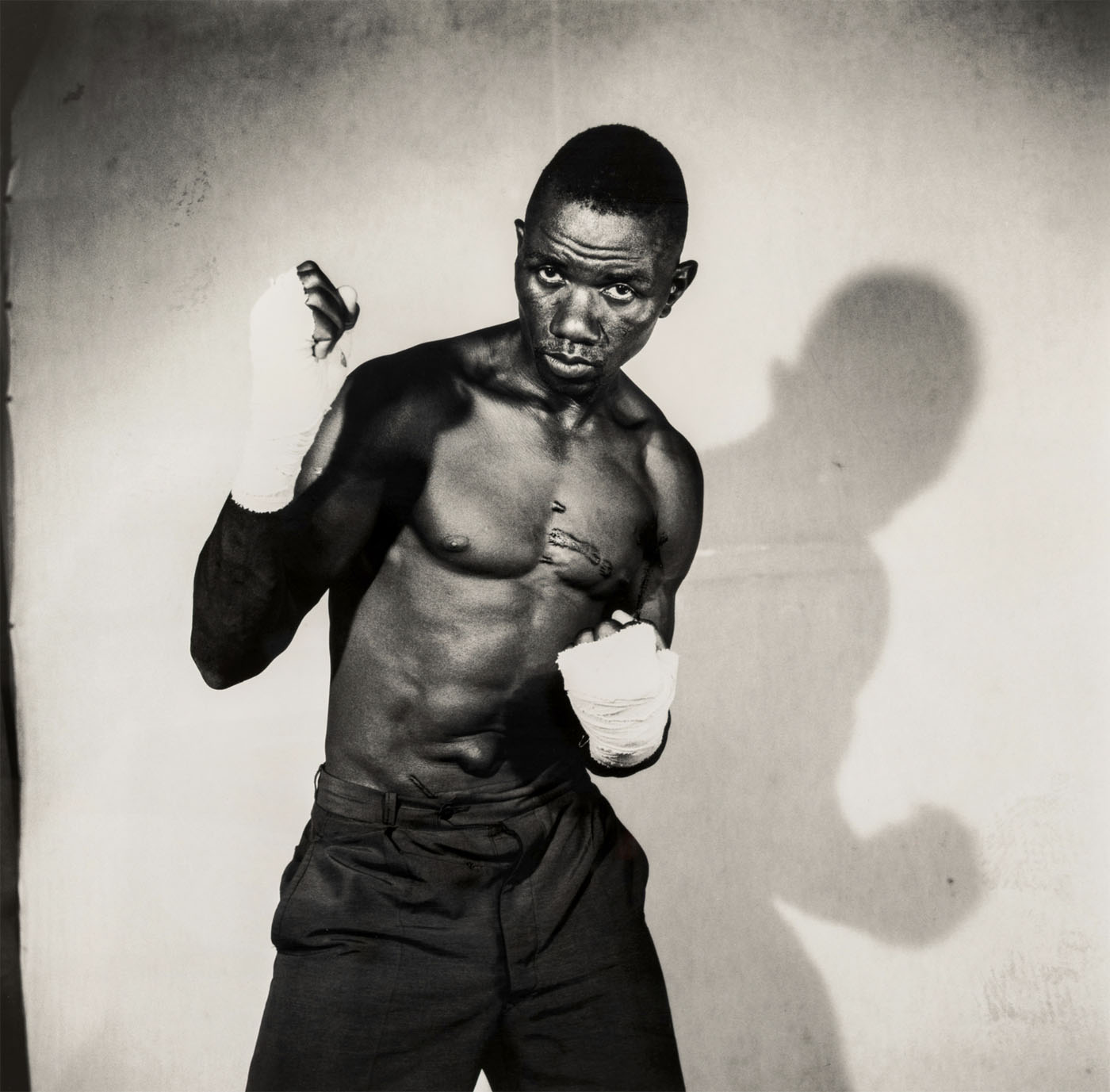
Malick Sidibé (Malian, 1936–2016)
Boxeur (Boxer)
1966
Gelatin silver print
Image: 16 15/16 x 16 15/16″ (43 x 43 cm)
Frame: 27 9/16 x 27 9/16 x 9/16″ (70 x 70 x 1.5cm)
Museum of Modern Art, New York
The Jean Pigozzi African Art Collection
For Sidibé, the roving “eye of Bamako,” the city was his studio. Active during the 1960s and ’70s, Sidibé shot on 35mm film and often printed proofs of the exposures he took at weekend parties. He arranged them sequentially on pastel cardstock and displayed them at his studio so that clients might purchase souvenirs of their exploits. Sidibé’s images of youth culture emphatically pushed back against Mali’s normative state attitudes and expectations of decorum. Revelling in effusive gestures and strong poses, he deftly photographed a community full of elegance, style, and sensational flair that staked its claim on a connection to a global African Diaspora.
Gallery label from Ideas of Africa: Portraiture and Political Imagination, 2025

Malick Sidibé (Malian, 1936-2016)
Nuit du 10 octobre 1970 (Night of October 10, 1970)
1970
Twenty-two gelatin silver prints mounted on paper
12 3/4 x 19 3/4″ (32.4 x 50.2cm)
Museum of Modern Art, New York
Judith and Wm. Brian Little Fund
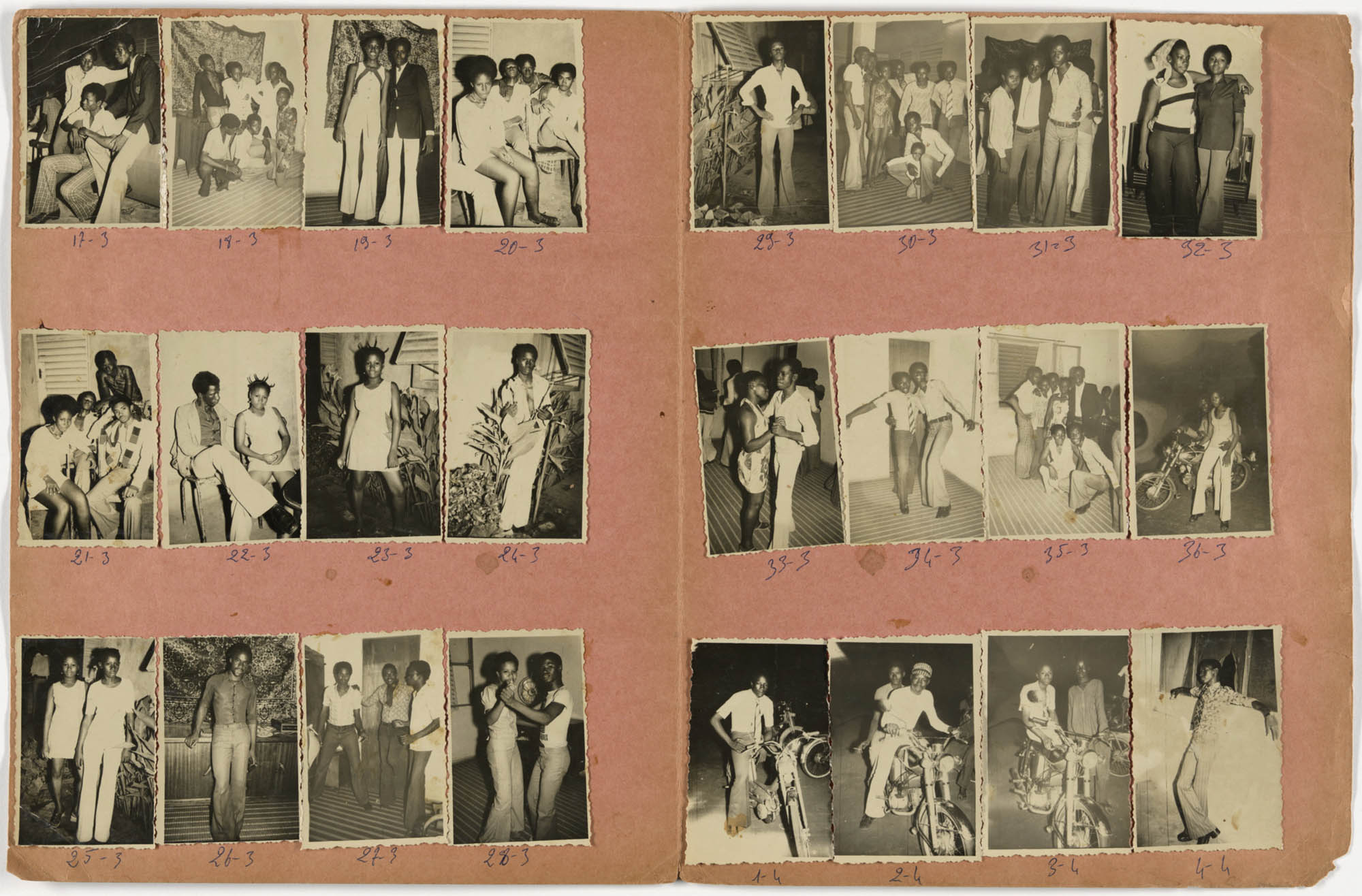
Malick Sidibé (Malian, 1936-2016)
Untitled
July 28, 1973
Twenty-four gelatin silver prints mounted on paper
12 3/4 x 19 3/4″ (32.4 x 50.2cm)
Museum of Modern Art, New York
Judith and Wm. Brian Little Fund
“This wind of change blowing through Africa … is no ordinary wind,” wrote Ghana’s first president, Kwame Nkrumah, in 1963. “It is a raging hurricane against which the old order cannot stand.” In the 1960s, independence movements swept across the African continent, resulting in the disintegration of colonial territories. These transformative struggles coincided with an exhilarating campaign for civil rights in the United States, forging a transatlantic call-and-response that established “Africa” as a political idea.
Ideas of Africa: Portraiture and Political Imagination examines the role of portrait photography within this emerging sense of Pan-Africanism. It unites portraits by mid-century photographers from across West and Central Africa and works by contemporary artists of African descent, illuminating different modes of image making and forms of transnational solidarity. As the art historian Kobena Mercer has argued, “‘Africa’ has never been a static entity, confined to the boundaries of geography, but has always had a diasporic dimension.” Embedded within the exhibition is a reading room featuring a selection of photobooks, alongside archival ephemera from the Paris-based collective Air Afrique. Following in the wake of the eponymous international airline, the group has continued the circulation of Pan-African culture and ideas into the present day.
Conceptually influenced by the late philosopher V. Y. Mudimbe’s book The Idea of Africa (1994), in which he exposes Western views of Africa as politicised constructions, this exhibition demonstrates how African photographers grappled with Africa as a political idea in their own ways. Presenting subjects for whom the personal was undeniably political, their images assert photography’s unique potential to creatively reflect our surroundings and beckon new worlds. At a time when profound shifts are once again transforming the global geopolitical order, Ideas of Africa attests to the enduring relevance of these themes.
Gallery text from Ideas of Africa: Portraiture and Political Imagination, 2025
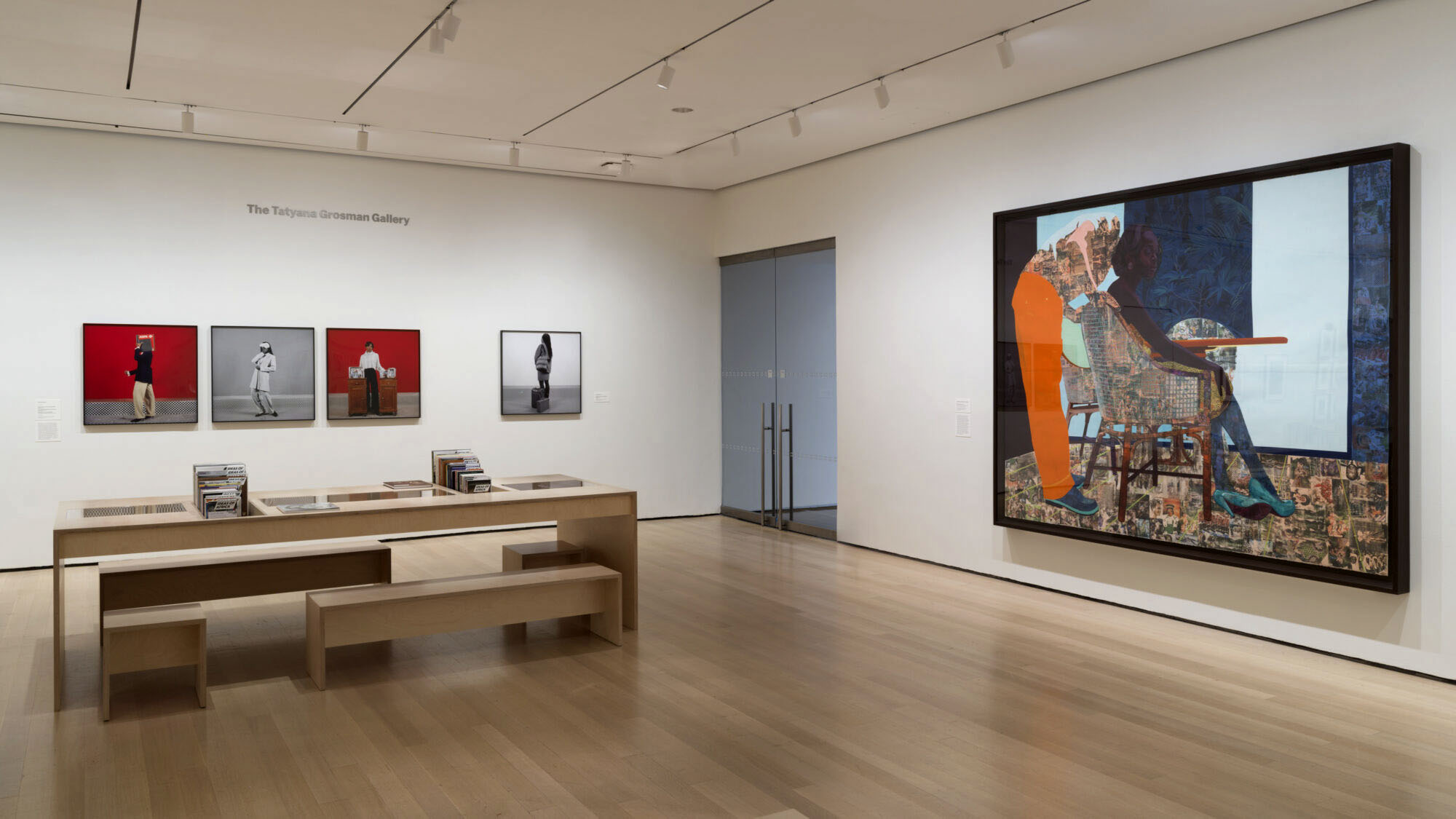
Installation view of the exhibition Ideas of Africa: Portraiture and Political Imagination at The Museum of Modern Art (MoMA), New York, December 2025 – July 2026 showing at left the work of Silvia Rosi (below); and at right, Njideka Akunyili Crosby And We Begin to Let Go (2013, below)
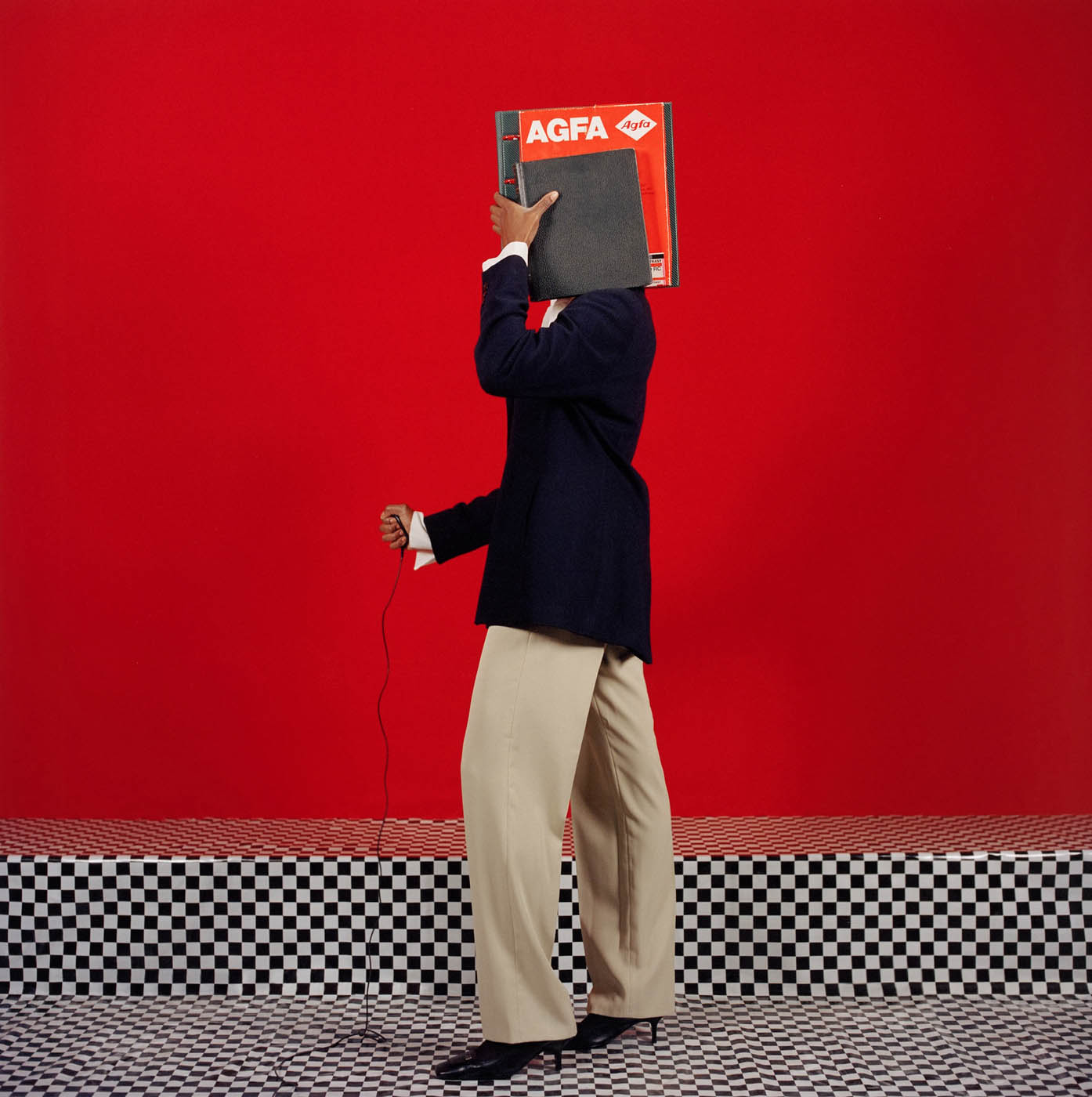
Silvia Rosi (Togolese and Italian, b. 1992)
Disintegrata di profilo (Disintegrated in Profile)
2024
Inkjet print
31 1/2 x 31 1/2″ (80 x 80cm)
Museum of Modern Art, New York
Carl Jacobs Fund
Rosi has said, “I’m not just performing, but reflecting on history.” Through photographic self-portraits, the artist examines personal, familial, and national narratives of migration, memory, and belonging. Deeply informed by the history of West African studio portraiture, Rosi’s images elegantly synthesise the formal strategies of mid-century African photographers, including many of those represented in this exhibition. Rosi often reenacts moments from her family’s past. Disintegrated Waiting, for instance, recalls when her mother first arrived in Italy from Togo. “She once said, ‘I used to be integrated, now I’m disintegrated,'” the artist shared. “To me this phrase is … an expression of the experience of diaspora.”
Gallery label from Ideas of Africa: Portraiture and Political Imagination, 2025
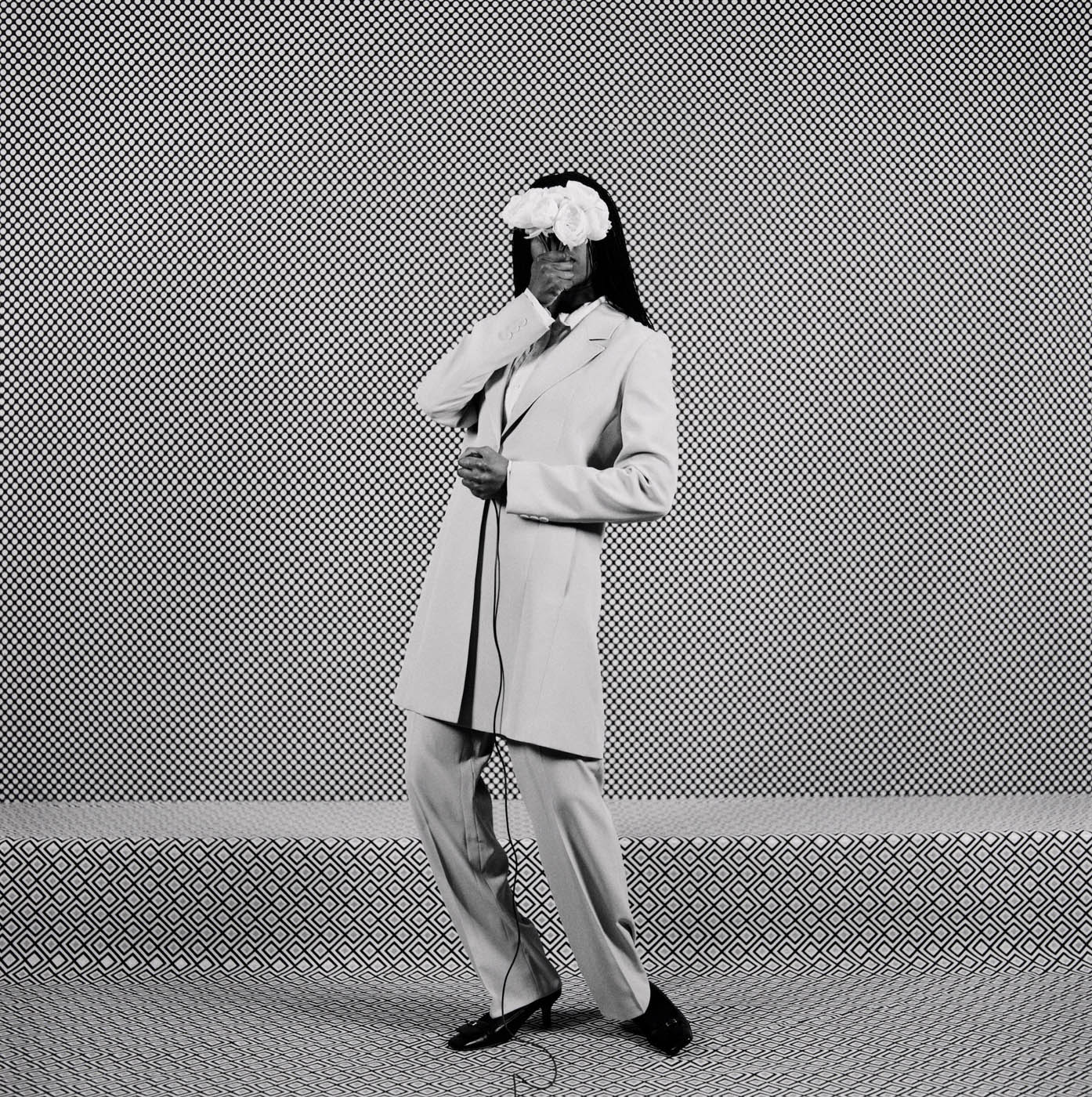
Silvia Rosi (Togolese and Italian, b. 1992)
Sposa italiana disintegrata (Disintegrated Italian Wife)
2024
Inkjet print
31 1/2 x 31 1/2″ (80 x 80cm)
Museum of Modern Art, New York
Carl Jacobs Fund

Njideka Akunyili Crosby (Nigerian, born 1983)
And We Begin to Let Go
2013
Acrylic, acetone transfers, charcoal, pastel, marble dust, and
collage on paper
Sheet: 84 x 105″ (213.4 x 266.7cm)
Museum of Modern Art, New York
Promised gift of Jerry I. Speyer and Katherine Farley
Nigerian-born, Los Angeles-based artist Njideka Akunyili Crosby moved to the US at the age of 17 (after winning the green card lottery in her home town) to train as a painter at the Pennsylvania Academy of Fine Art and, later, Yale University. Here, as in many of her portraits, Crosby gives an intimate portrayal of her interracial marriage and day-to-day life in America. She combines photo-transfer processes with painting and collaged fabrics, fusing Nigerian and American materials, images, and cultural traditions.
In her practice, Akunyili Crosby meditates on familial life within a transcultural context. Her large-scale compositions of everyday domestic scenes synthesise drawing, painting, printmaking, and photography. And We Begin to Let Go depicts the artist and her husband, who leans over her shoulder. To make it, Akunyili Crosby drew from Nigerian print media publications and her family’s photographic archive. She united these images’ varied photographic textures through the same formal treatment: acetone transfer, a printmaking technique through which a printed image is transferred onto another surface using an acetone solvent. Images of smiling faces, elaborate coifs, and patterned clothing suffuse the picture plane, accruing on the surfaces this marital encounter.
Gallery label from Ideas of Africa: Portraiture and Political Imagination, 2025
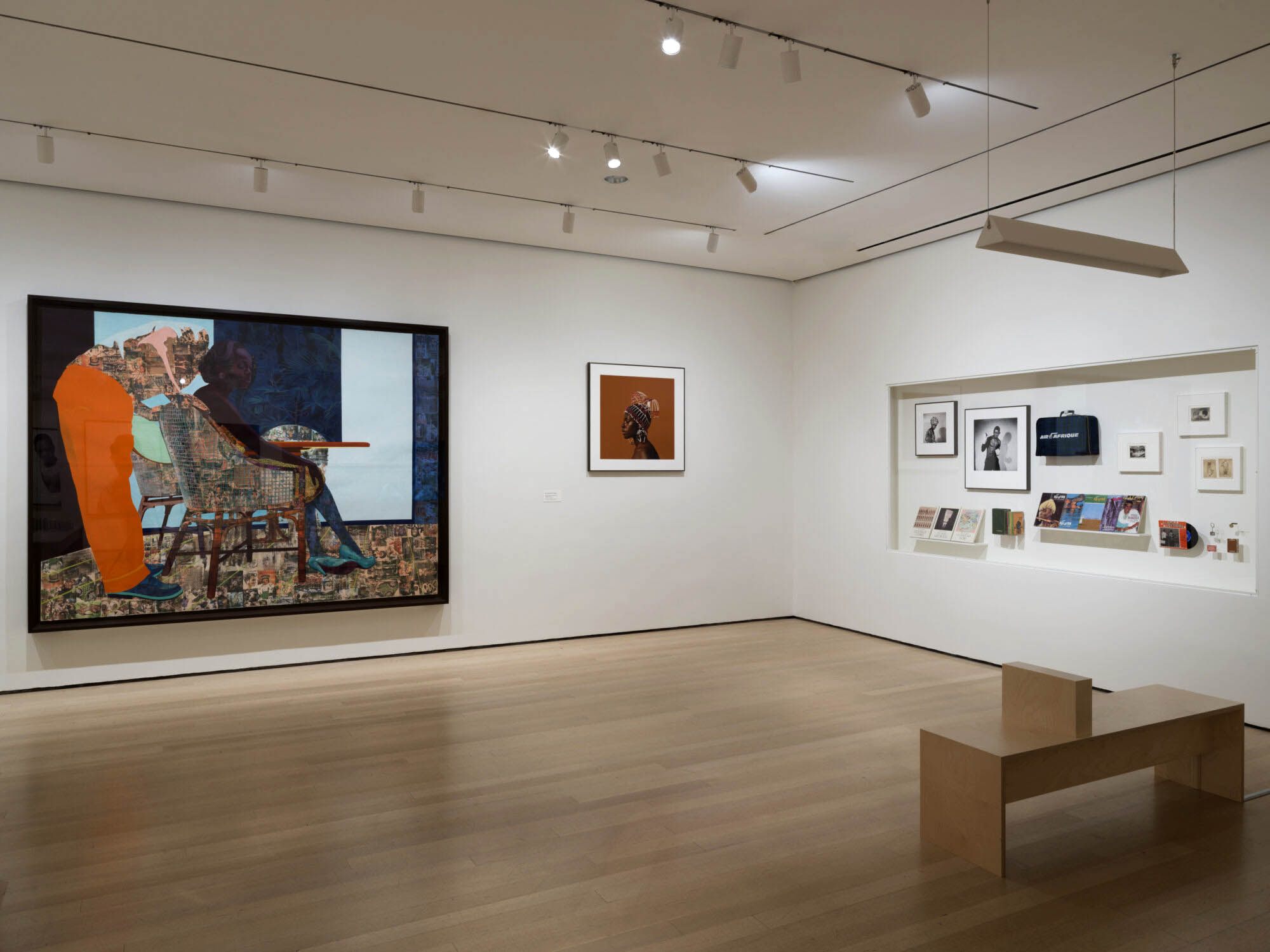
Installation view of the exhibition Ideas of Africa: Portraiture and Political Imagination at The Museum of Modern Art (MoMA), New York, December 2025 – July 2026 showing at left, Njideka Akunyili Crosby And We Begin to Let Go (2013, above); and at centre, Kwame Brathwaite Untitled (Sikolo with Carolee Prince Designs) (1964-1968, below)
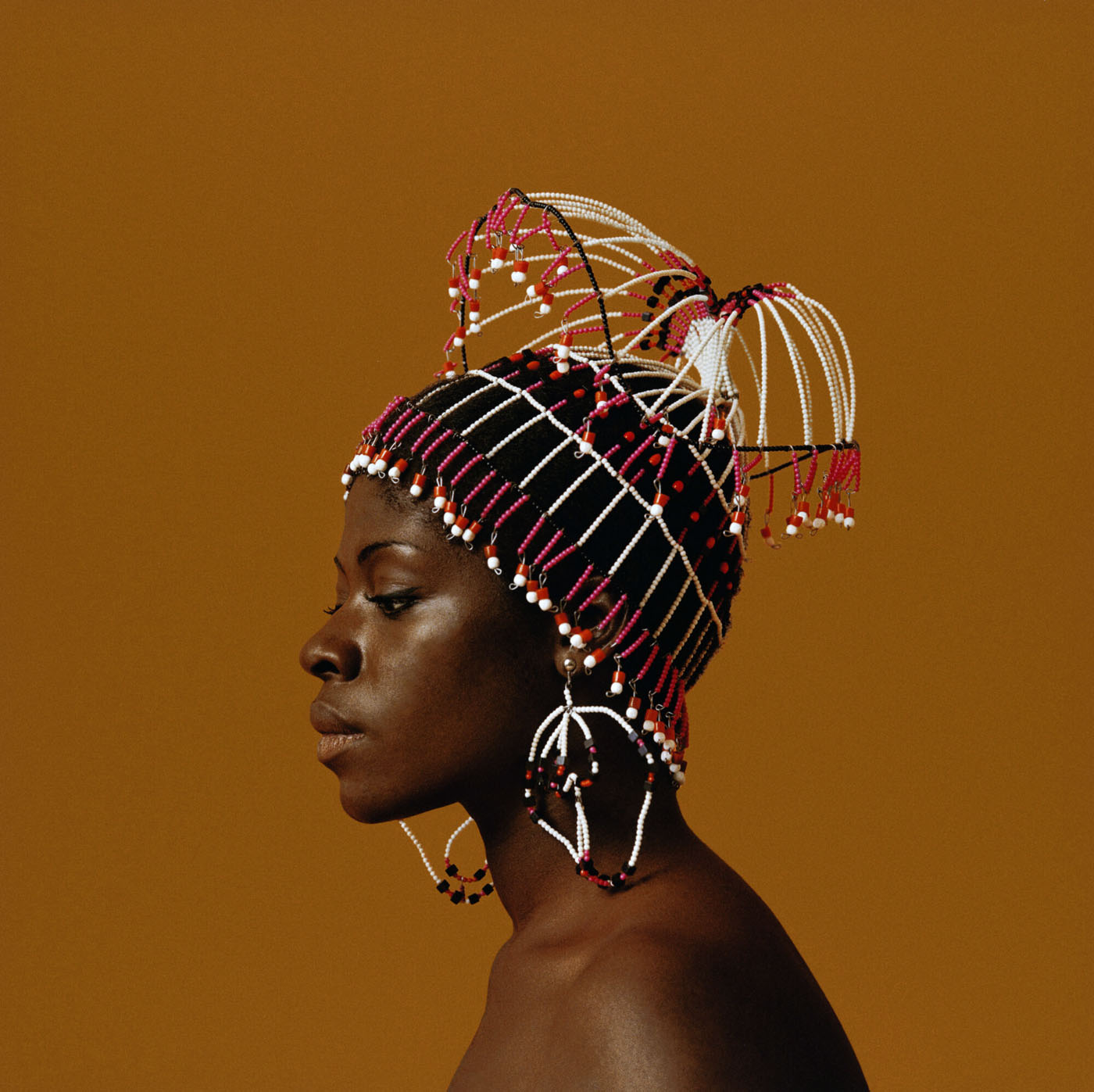
Kwame Brathwaite (American, 1938-2023)
Untitled (Sikolo with Carolee Prince Designs)
1964-1968
Inkjet print, printed 2024
30 x 30″ (76.2 x 76.2cm)
Museum of Modern Art, New York
Committee on Photography Fund
Brathwaite, for whom photography functioned at the nexus of Black artistic, political, and cultural expression, rhythmically documented jazz scenes in Harlem and the Bronx. In 1956 he cofounded the African Jazz-Art Society and Studios (AJASS) in the South Bronx, where he made structured portraits of the Grandassa Models, a group of women who were part of the Black Is Beautiful movement of the 1960s and ’70s. “Black Is Beautiful was my directive … It was a time when people were protesting injustices related to race, class, and human rights around the globe,” Brathwaite said. “I focused on perfecting my craft so that I could use my gift to inspire thought, relay ideas, and tell stories of our struggle, our work, our liberation. … Oppression still exists today, and we must keep fighting, keep on pushing until we are free.”
Gallery label from Ideas of Africa: Portraiture and Political Imagination, 2025
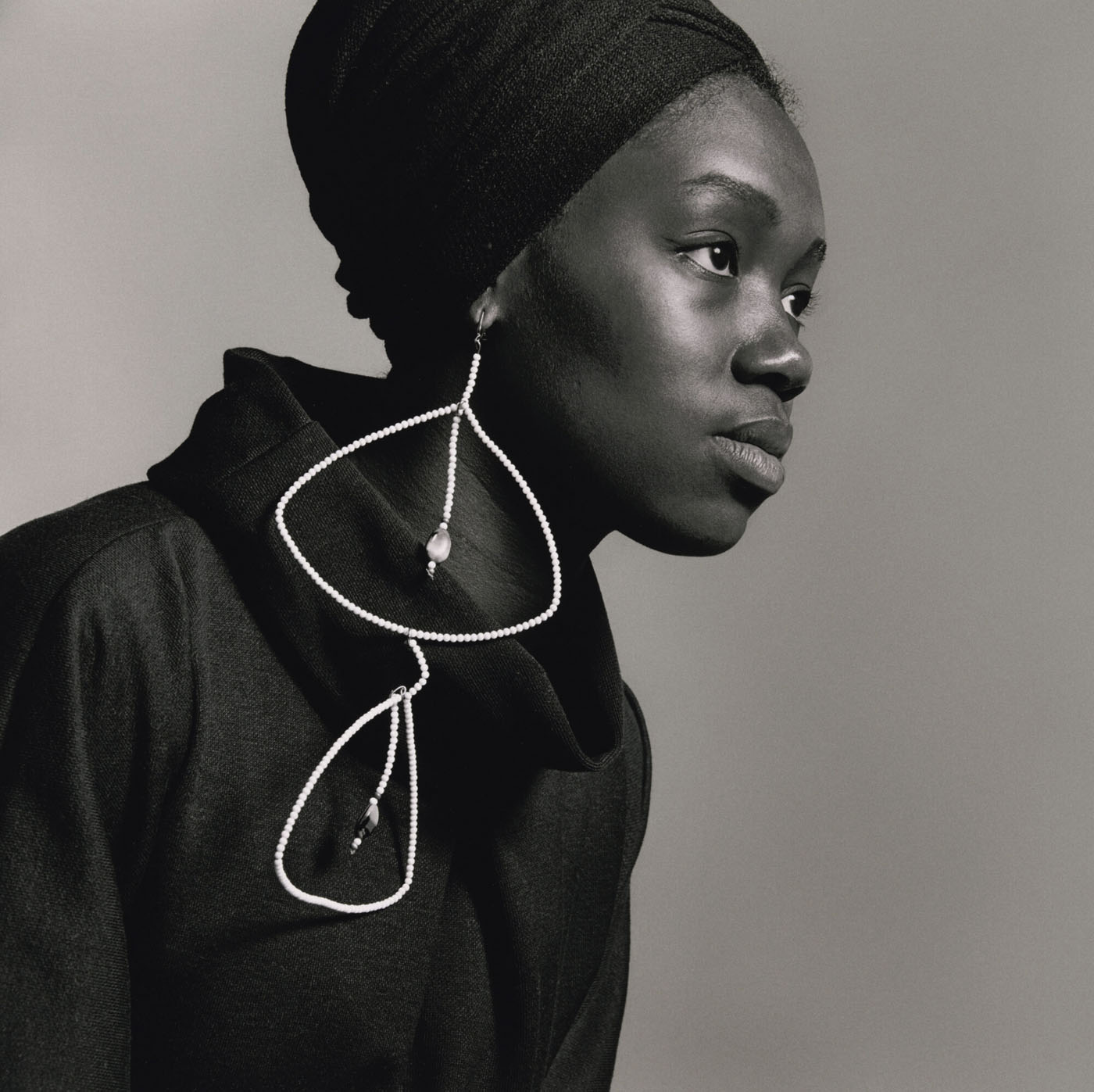
Kwame Brathwaite (American, 1938-2023)
Untitled (Nomsa with Earrings)
1964-1968
Inkjet print, printed 2024
15 x 15″ (38.1 x 38.1cm)
Museum of Modern Art, New York
Committee on Photography Fund
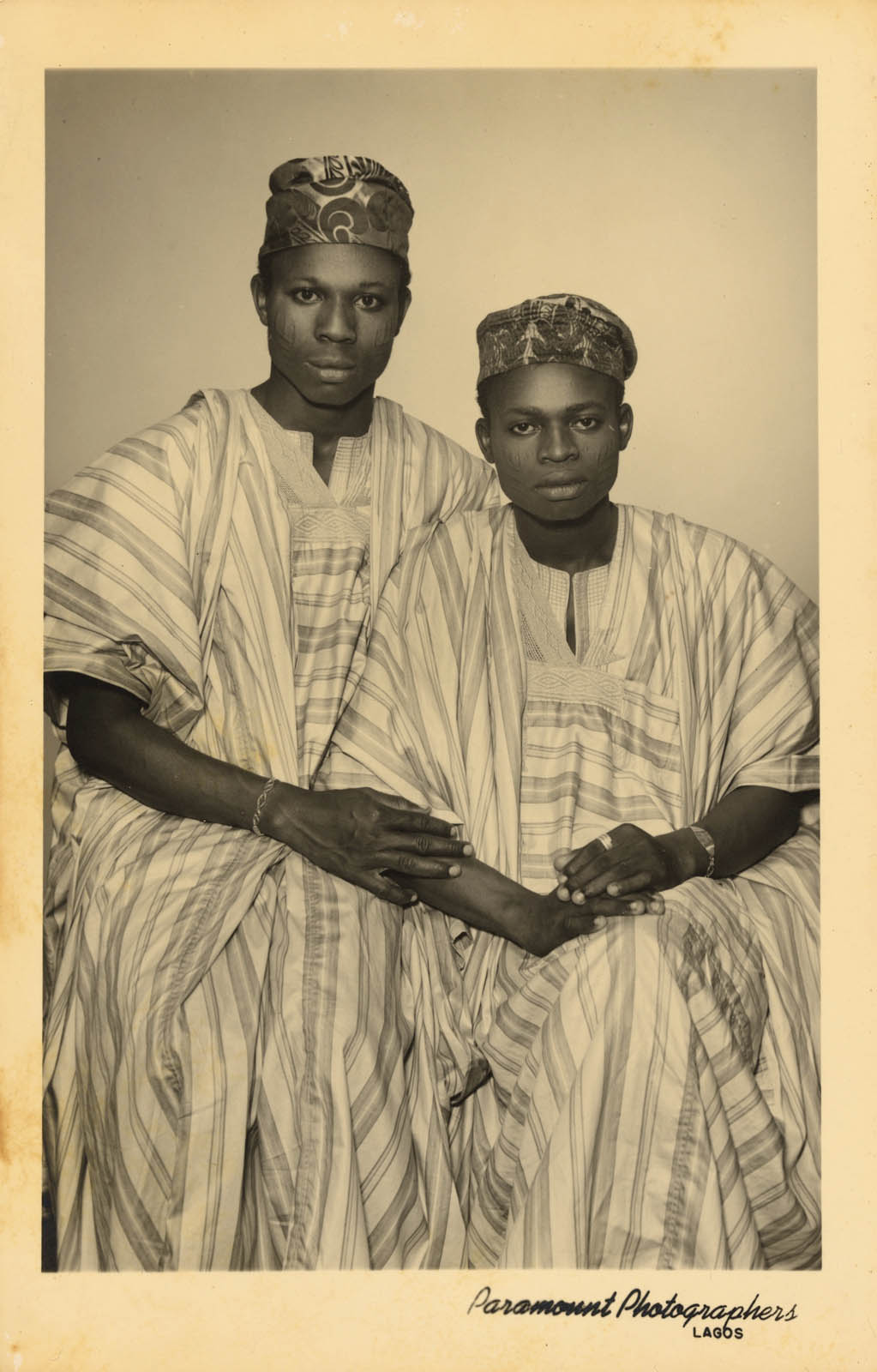
Felix Akinniran Olunloyo (Nigerian)
Untitled
c. 1950-1970
Gelatin silver print
5 1/2 x 3 9/16″ (13.9 x 9cm)
Museum of Modern Art, New York
The Jean Pigozzi African Art Collection. Gift of Jean Pigozzi
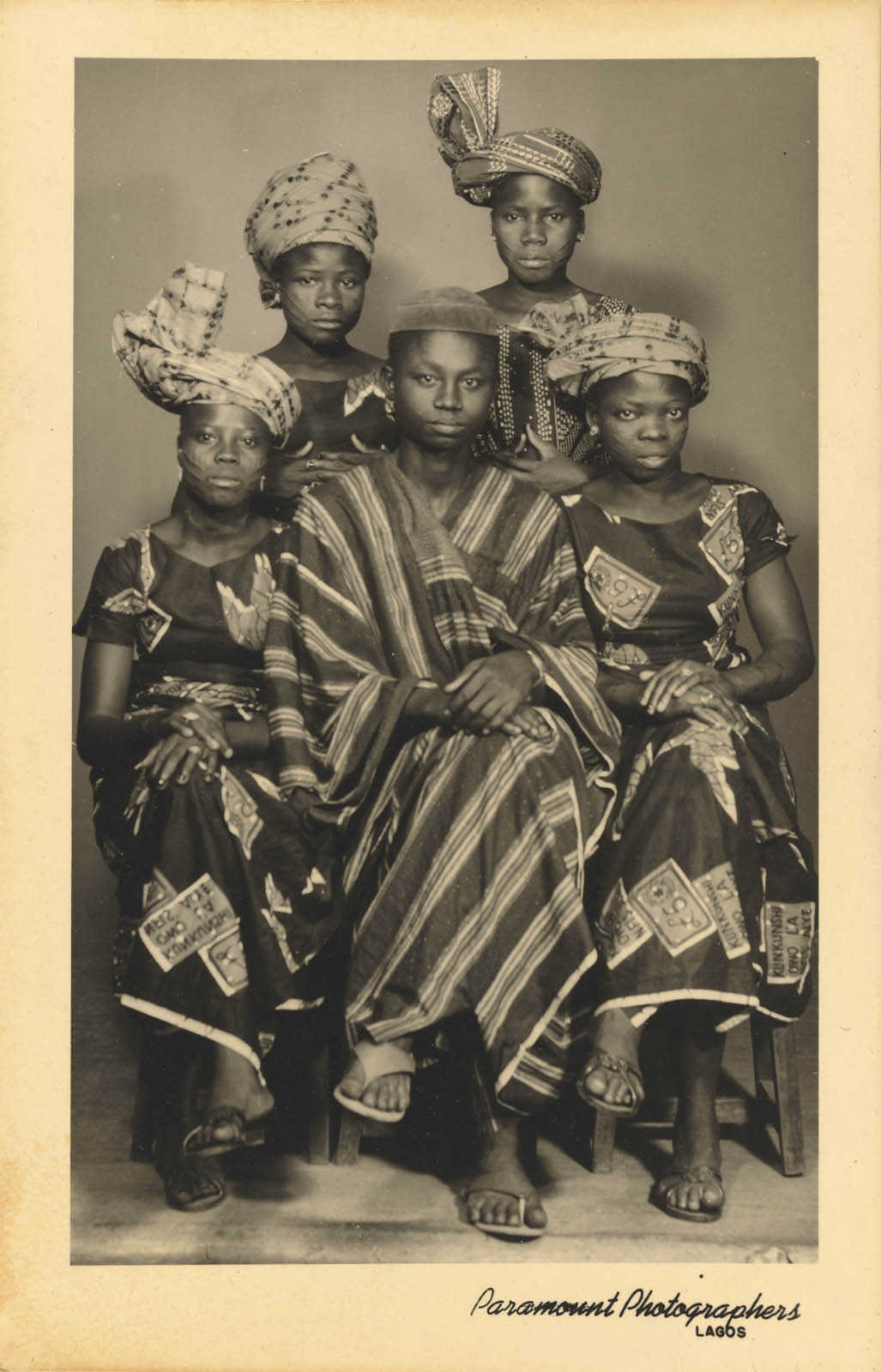
Felix Akinniran Olunloyo (Nigerian)
Untitled
c. 1950-1970
Gelatin silver print
5 1/2 x 3 9/16″ (13.9 x 9cm)
Museum of Modern Art, New York
The Jean Pigozzi African Art Collection. Gift of Jean Pigozzi
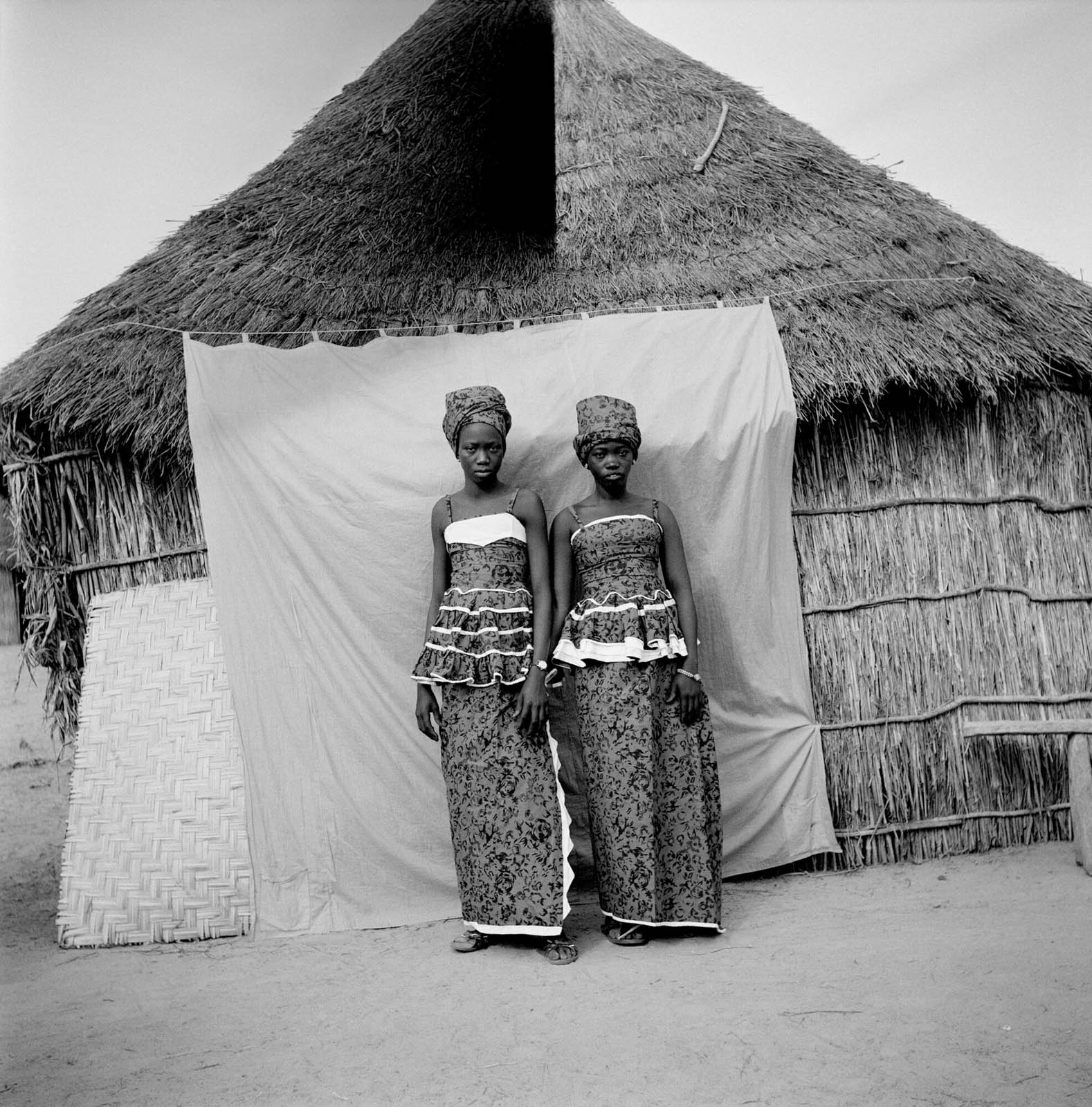
Oumar Ka (Senegalese, 1930-2020)
Untitled (Two Women with Thatched Roof House)
1959-1968
Gelatin silver print, printed 2024
17 × 17″ (43.2 × 43.2 cm)
Museum of Modern Art, New York
Gift of Bernard Lumpkin and Carmine Boccuzzi in honor of Darren Walker
Historian, Giulia Paoletti: Getting a portrait done was a serious business, because this single portrait would circulate and stand for this person.
My name is Giulia Paoletti, and I am a researcher on photography and modern art in Africa.
In 1959, Oumar Ka met a photographer who gave him a camera, so he learned by himself. Photography in Senegal was extremely popular. Dozens and dozens of studios existed. But he started going from village to village taking portraits, and then he would go home, develop the negatives, and return the following week with the prints. So, you meet his sitters by their own home, in towns, sometimes in this open landscape. And that is a major distinction from other photographers who worked in a studio.
In this photograph, we see two young women in matching outfits, posing for the camera against a white backdrop attached to this thatched-roof house. The landscape, the architecture, the sky – this is part of who they are and how they want to be perceived. They’re young, they’re serious, they’re confident.
As Senegal is shifting from a colonised place to an independent country, these are sitters that are making visible their experience of modernisation, which looked very different from the experience if someone lived in the capital city. There is often this tendency to flatten what is African modernity, and instead it’s important to show the variety of experiences and subjects at the time.
Text from the MoMA website
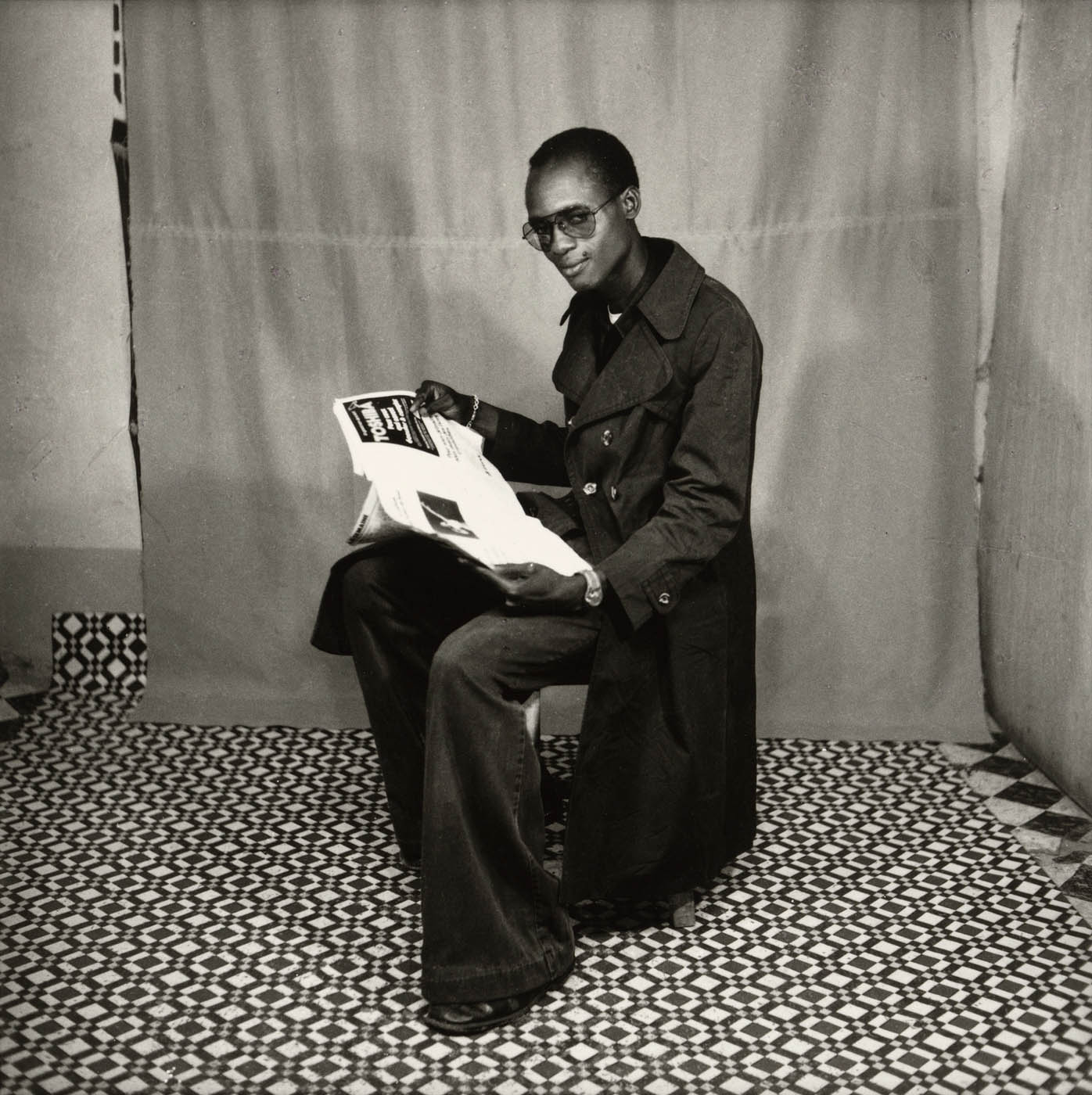
Sanlé Sory (Burkinabé, b. 1943)
L’Intellectuel (The Intellectual)
1970-85
Gelatin silver print
8 1/8 x 8 1/8″ (20.6 x 20.6cm)
Museum of Modern Art, New York
Committee on Photography Fund
“Everyone chooses what they want in photography,” Sory once said. First opening his studio, Volta Photo, in Bobo-Dioulasso, Upper Volta (present-day Burkina Faso), in 1960, Sory organised bals poussières (or “dust balls,” named after the dirt clouds that dancers kicked up) in the fields of the nearby Kou Valley. The sound of his Multiblitz flash accompanied the percussion at parties, setting an elusive tone for his reportage de nuit (nighttime journalism). At Volta Photo, Sory’s portraits made possible a particular process of being and becoming for his sitters. He reflected the ideas that they wanted to communicate – whether to friends, lovers, strangers, or themselves.
Gallery label from Ideas of Africa: Portraiture and Political Imagination, 2025
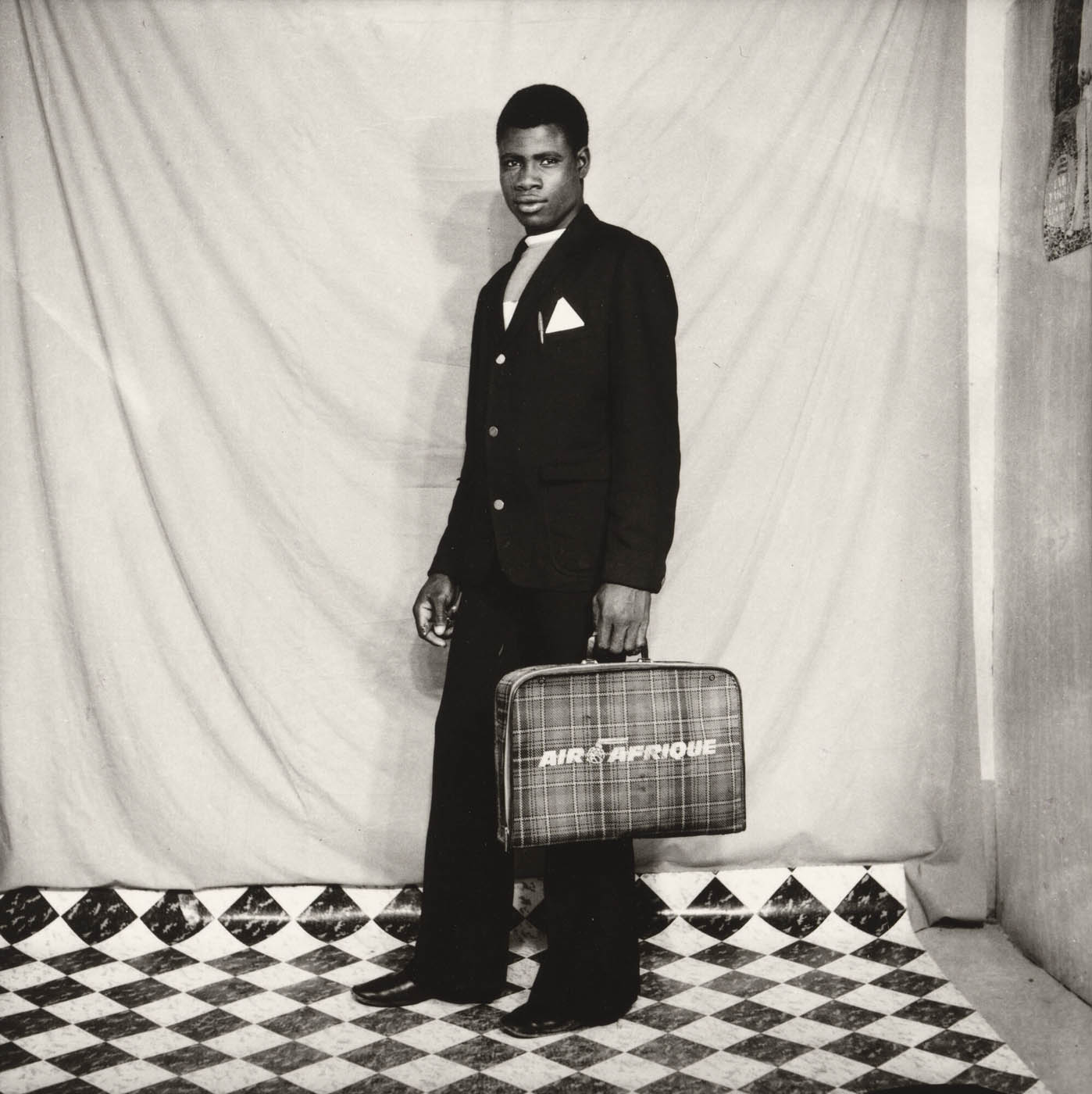
Sanlé Sory (Burkinabé, b. 1943)
Le Voyageur (The Traveller)
1970-1985
Gelatin silver print
8 1/8 x 8 1/8″ (20.6 x 20.6cm)
Museum of Modern Art, New York
Committee on Photography Fund
Historian, Antawan I. Byrd: One of the fundamental principles of studio portraiture, especially as it developed in West Africa, is that the studio becomes a kind of imaginative enterprise. You can go and be who you are, or you can go and be who you want to be.
Hello, I’m Antawan I. Byrd. I am a curator, and my research focuses on photography in West Africa during the mid-20th century.
Sanlé Sory opened up his own photography studio in Bobo-Dioulasso, one of the major cities in present-day Burkina Faso. This is a time right after independence, in 1960, and so there is this sense of optimism and hope about the sovereign nation.
Sory once remarked, “Fun is central to my work.” I think he’s speaking about the dynamics of collaboration. Oftentimes, clients would line up outside of the studio, and Sory would have a sort of menu that they can choose from. They could point and say, “Sory, I’d like this portrait here, and I’d like to pose with that prop there.”
Here we’re looking at six portraits, and they’re assuming different personalities. There’s one figure who appears as the intellectual, reading a newspaper. Another figure standing powerfully with his hands in the air as if he’s a boxer. There’s another wielding a Air Afrique briefcase, suggesting that he is a traveller.
When we think about the studio as a kind of imaginative space, it’s possible that the figure with the briefcase has just come back from a trip. But it’s entirely possible that he’s never left Bobo-Dioulasso at all, and holding that briefcase is a way to signal his ambition to travel.
Text from the MoMA website
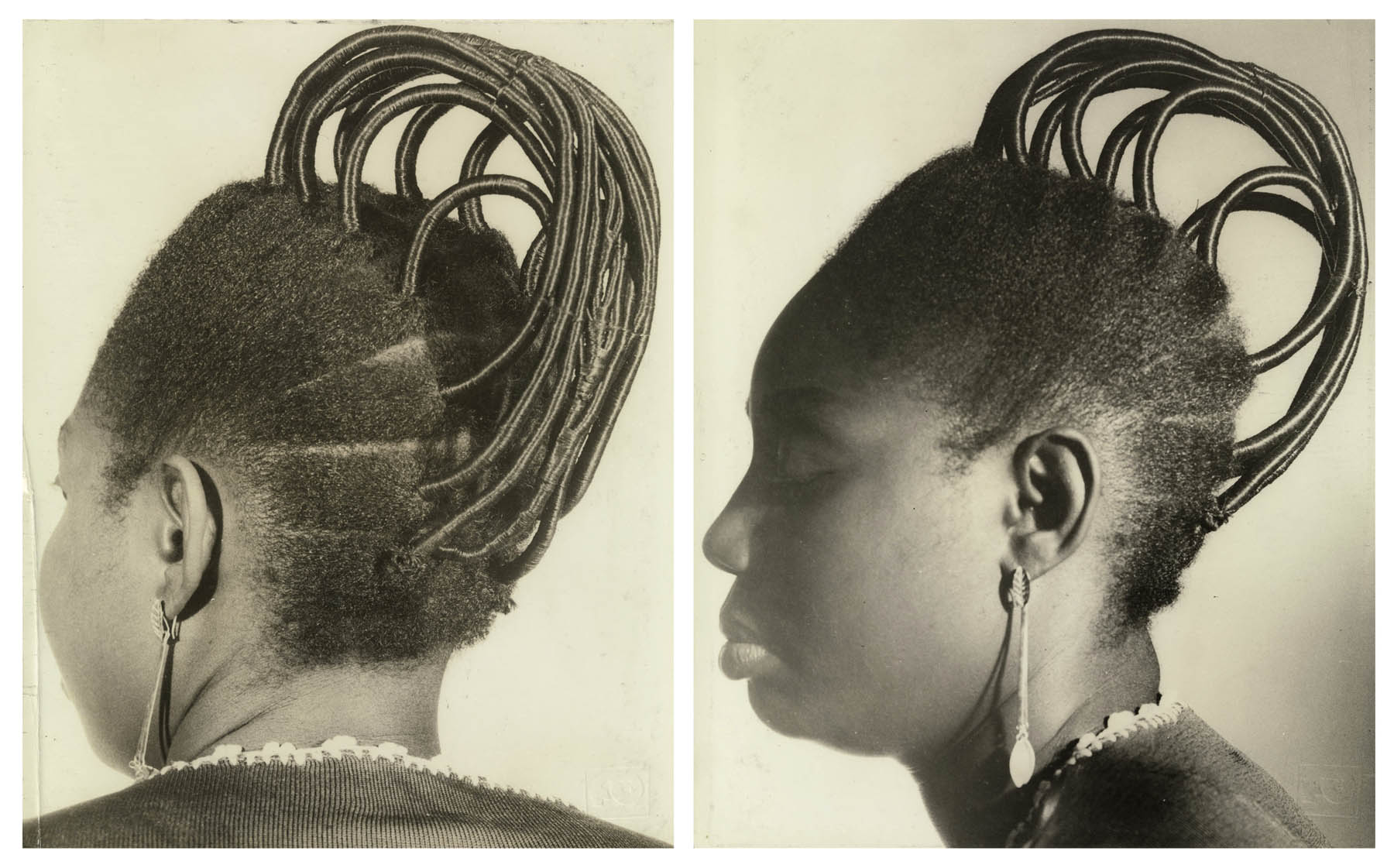
J.D. ‘Okhai Ojeikere (Nigerian, 1930-2014)
Brush Eko Bridge
1973
Two gelatin silver prints
Each 11 x 8″ (27.9 x 20.3cm)
Museum of Modern Art, New York
The Family of Man Fund
In 1968 Ojeikere embarked on a monumental project to document the myriad hairstyles worn by women across a newly independent Nigeria. Over the next seven years, he amassed more than one thousand photographs. Together, these rigorously composed images form a portrait of a nation undergoing social and physical transformation – with feminine beauty standards providing the ultimate symbol. In Brush Eko Bridge, clean lines appear across a woman’s carefully parted scalp, her hair threaded to sculptural effect. In profile her hairdo evokes the highways and architectural developments that were then populating the Lagos skyline.
Gallery label from Ideas of Africa: Portraiture and Political Imagination, 2025
Historian, Antawan I. Byrd: The hairstyles project is often described as Ojeikere’s most ambitious body of work, and it’s a body of work that he pursued over nearly half a century.
My name’s Antawan Byrd. I’m an art historian and curator based in Chicago.
J. D. ‘Okhai Ojeikere evolved as a photographer alongside major political shifts in Nigerian history. 1960 is when the country attains independence from British rule. Ojeikere began to attend many of the festivals that were celebrating traditional culture. Hair design was coming back into fashion after a long period of being regarded as retrograde by the colonial government. It was at one of those festivals that he began to make his earliest images of Nigerian hairstyles.
He was so fascinated by the nuances of the designs as you encounter them from different angles. Some of the hair designs are straightforward cornrow styles, whereas others are realised through the use of thread that’s been wrapped around strands of hair.
Many of the hair designs carry references to contemporary bridges and buildings in terms of their architectural design. That’s in part because after independence, the nation is being built, the skyline is being built, the hairstyles are being built. And so I think for Ojeikere, he was conscious of the multiplicity of changes that were happening. It’s simultaneously about hair and the tradition of hair, and yet it’s also about architecture and commerce and trade.
Text from the MoMA website

James Barnor (Ghanaian, born 1929)
Ever Young Studio, Accra
c. 1954-1959
Gelatin silver print, printed 2018-20
9 1/2 x 9 1/2″ (24.1 x 24.1cm)
Museum of Modern Art, New York
Acquired through the generosity of Heidi and Richard Rieger
Artist, James Barnor: Everything that happened in Accra passed through my street, and I call myself Lucky Jim. Anything that was happening, I was there.
I’m James Barnor. I was born on the 6th of June 1929. I had witnessed photography from a very small age because my mother’s brother was a professional photographer. My cousin was practicing in Accra, in Ghana. Because it was in the family, I must have thought, “Ah, this is something I could do in the future.”
Portraiture was number one. People are more important than places. I love people. ’53, I got a studio and I called it Ever Young. I thought about making people young, or even [laughs] better than they were before.
My sister was a nurse, and so I knew some nurses, and Evelyn was at the nursing training college. This is a portrait that I took of her. I had so many different backgrounds. And this was actually drawn on the wall. This is a sky. You can see the clouds. When I look at the different tones, from the white highlight to the black of the hair, it’s so very nice. This is a picture that I like very much.
I’m lucky to be alive and to be telling the story about my work. The inspiration that people get from my work will carry on and inspire others to develop their own way. The future is going to be grander because of photography.
Text from the MoMA website
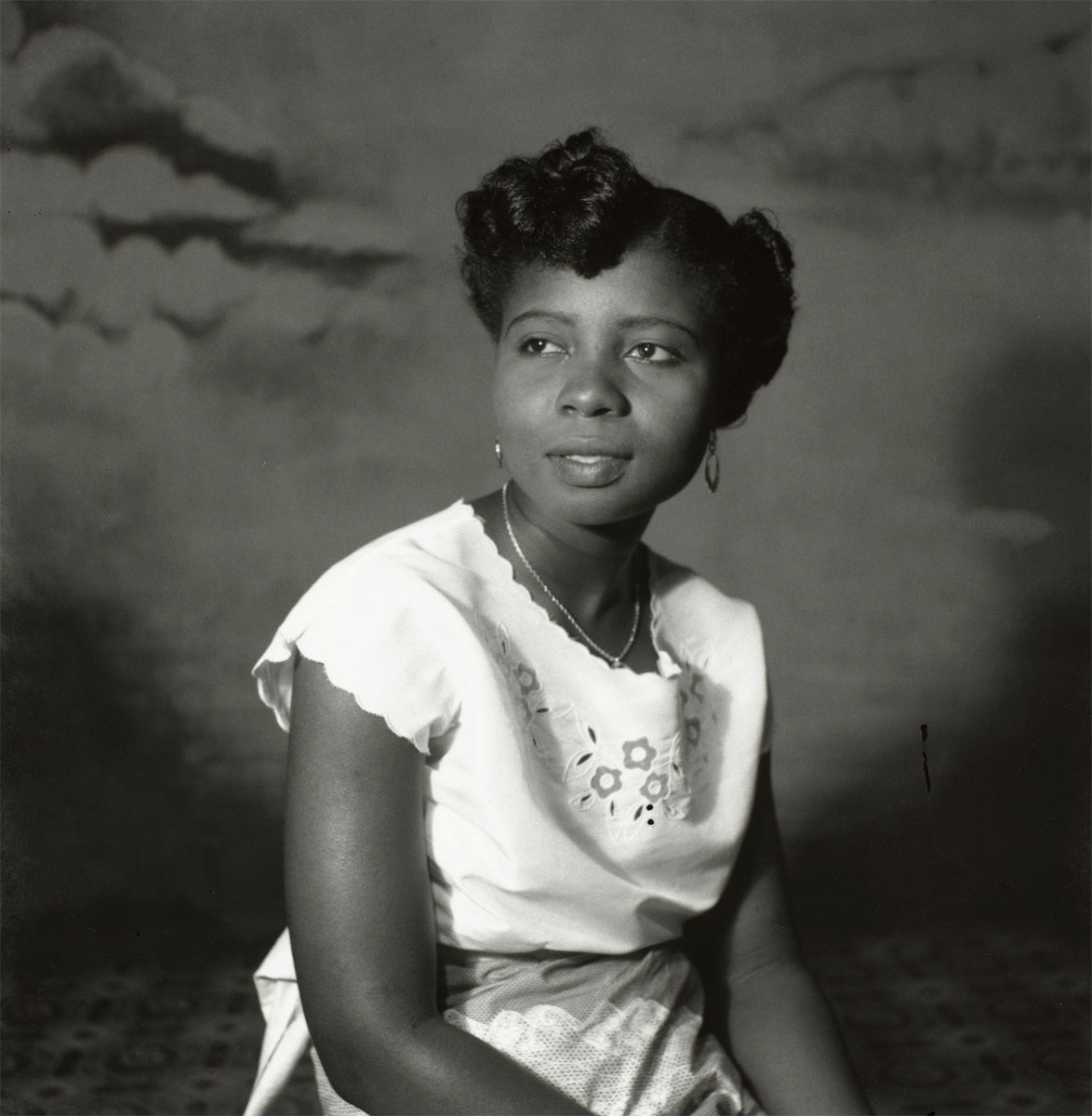
James Barnor (Ghanaian, b. 1929)
Portrait of Evelyn Abbew, Ever Young Studio, Accra
c. 1954-1959
Gelatin silver print, printed 2018-2020
9 1/2 x 9 1/2″ (24.1 x 24.1cm)
Museum of Modern Art, New York
Acquired through the generosity of Ruth Nordenbrook
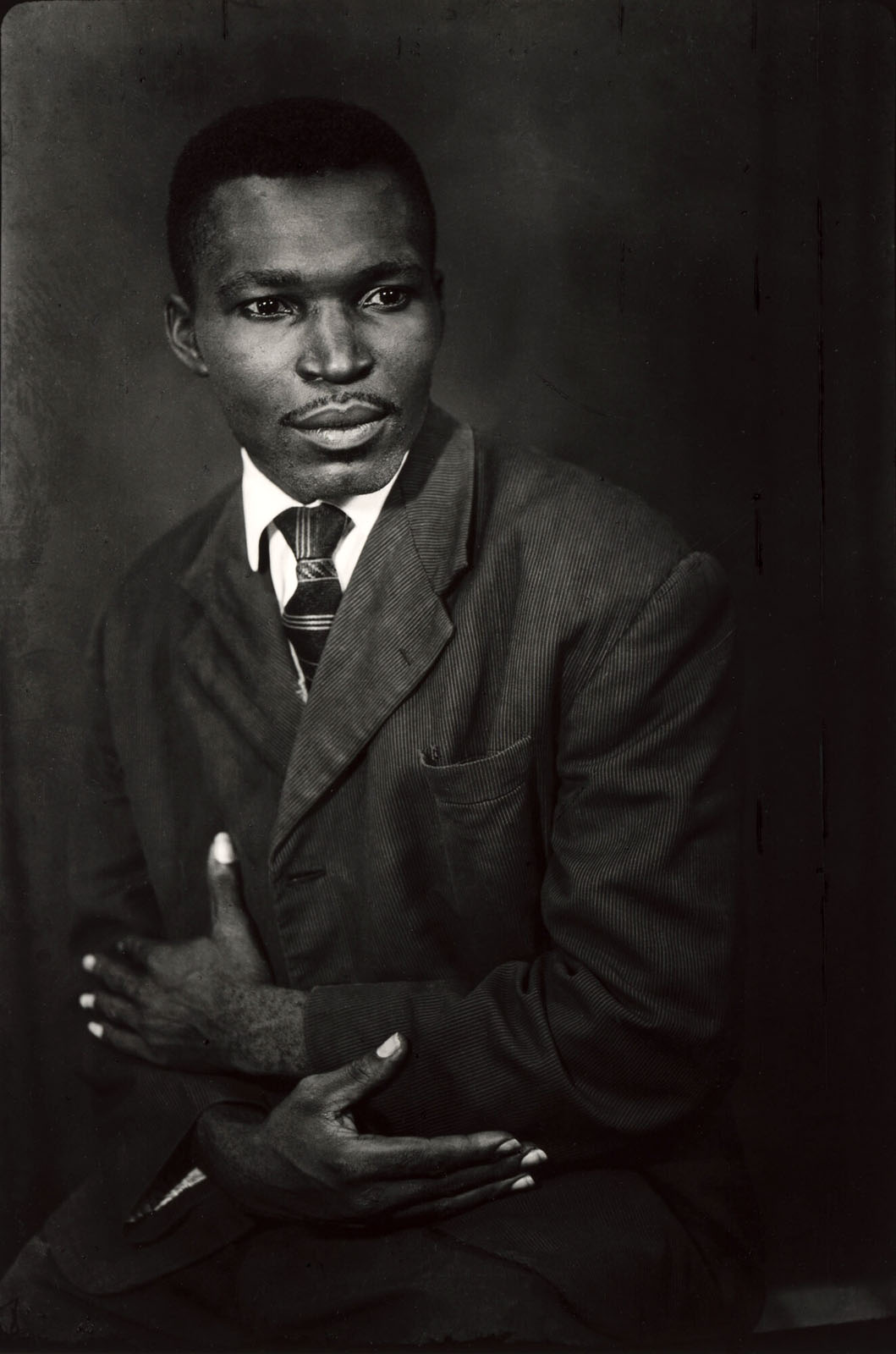
Jean Depara (Congolese born Angola, 1928-1997)
Un Jazzeur (Jazzman)
1960
Gelatin silver print, printed later
23 x 19″ (58.4 x 48.3cm)
Museum of Modern Art, New York
The Jean Pigozzi African Art Collection. Gift of Jean Pigozzi
Historian, Sandrine Colard: Depara’s images, when you look at them, you see mostly people partying at nighttime or in his studio. So you don’t directly see people articulating a political discourse, but their bodies are.
My name is Sandrine Colard, and I’m a historian of African art and photography.
Jean Depara was living in Léopoldville, which will become Kinshasa. It was the capital of the Belgian Congo, seen as a very modern city for Africa at that time.
This is a portrait of a Black man in a suit and tie. The way the arms of this man are folded upon themselves – he’s touching himself in a delicate way. Under a colonial system, Black men are seen as a workforce. Your body is to be put into service of colonial power, and so the very fact of dressing up, this delicate relationship to his own body – for pleasure, enjoyment, beauty – is just something that’s radically opposing the construction of Black masculinity in the colonial Congo.
The fact that it’s also entitled Jazzeur makes a connection with music. Jazz is a diasporic language throughout the world, and a musician is definitely not someone who is enlisted into the colonial economy. All of that together, I would say, is really a sort of different portrait being constructed for Congolese masculinity at that time.
Text from the MoMA website
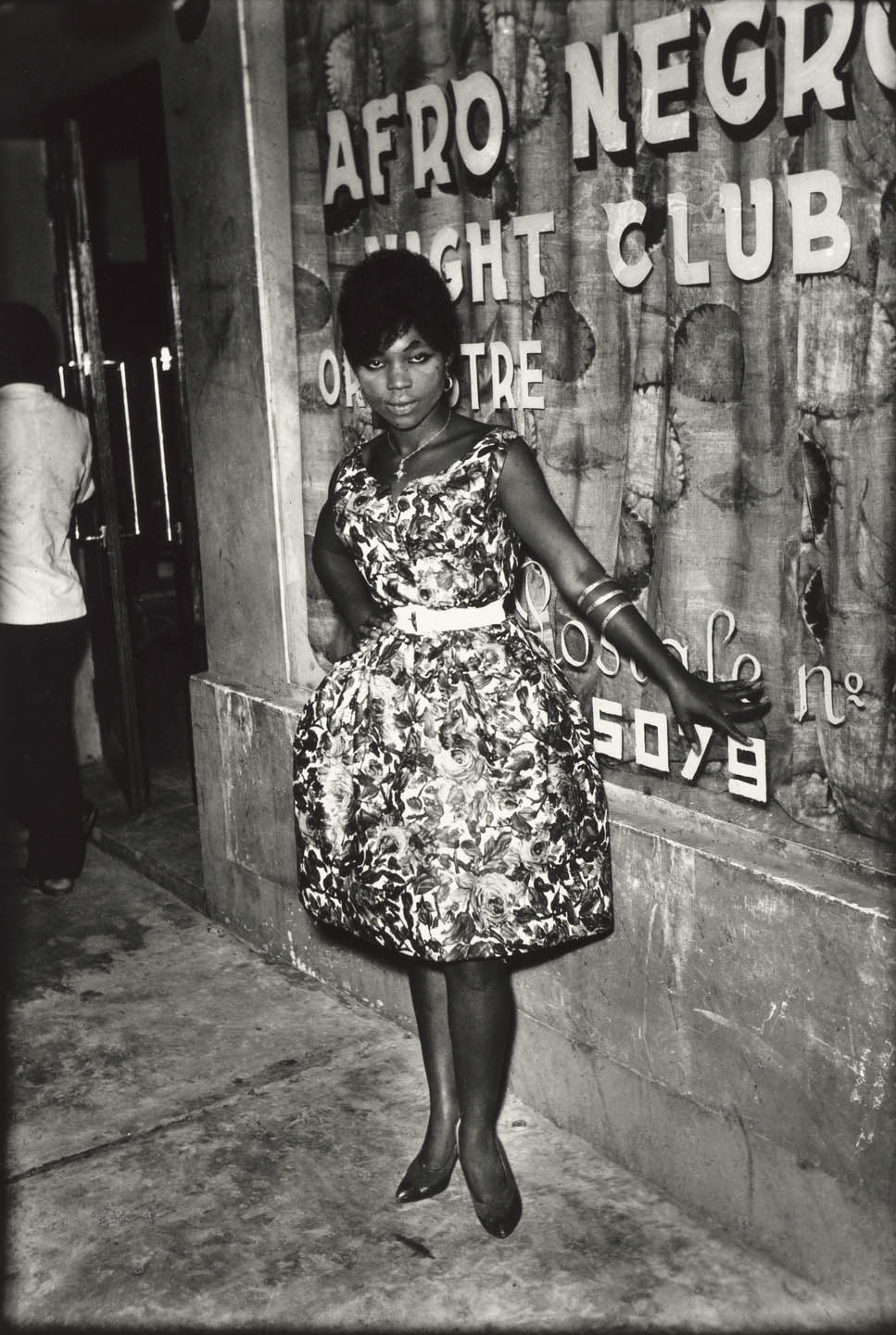
Jean Depara (Congolese, born Angola, 1928-1997)
Una Moziki
c. 1960
Gelatin silver print, printed later
23 x 19″ (58.4 x 48.3cm)
Museum of Modern Art, New York
The Jean Pigozzi African Art Collection. Gift of Jean Pigozzi

Jean Depara (Congolese, born Angola, 1928-1997)
Le Progrès (The Progress)
1975
Gelatin silver print, printed later
15 3/4 x 11 13/16″ (40 x 30cm)
Museum of Modern Art, New York
The Jean Pigozzi African Art Collection. Gift of Jean Pigozzi
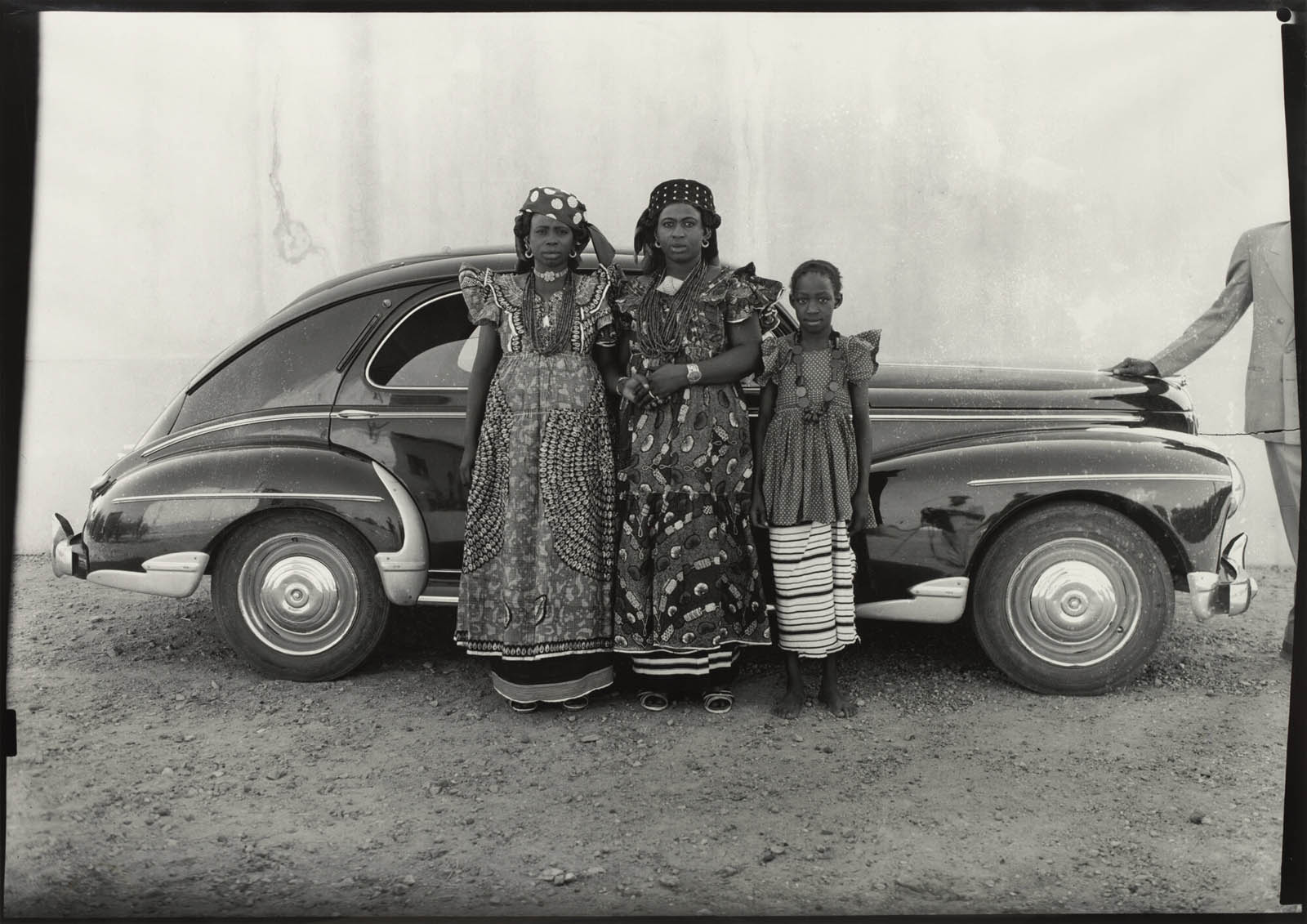
Seydou Keïta (Malian, 1923-2001)
Untitled
1954
Gelatin silver print, printed later
46 15/16 x 65 7/8″ (119.2 x 167.3cm)
Museum of Modern Art, New York
The Jean Pigozzi African Art Collection. Gift of Jean Pigozzi
Introduction
Curator, Oluremi C. Onabanjo: I’m Oluremi Onabanjo. I’m the Peter Schub Curator of Photography at The Museum of Modern Art.
This exhibition includes some of the most iconic image-makers working across cities in West and Central Africa, at a moment when the continent was transitioning from European colonial powers to independent nations run by Africans themselves. Within this context, people are really interested in what it means to be themselves. What are the dreams you have, the places you want to go? How do you see yourself? Photographic portraits are the perfect way to wrestle with these questions.
And that’s important for understanding the great Seydou Keïta, who was working in Bamako, in French Sudan, but which became, in 1960, an independent Mali. People who came to Keïta’s studio were interested in being seen as connected to a cosmopolitan world. Keïta was extremely proud of making people look beautiful. He used sunlight for all of his photographs. He had a number of props – watches, radios, rings – to gesture to their investment in this global imaginary that they are constructing with Keïta.
With this exhibition, I encourage you to really think about how a portrait is made. These are deliberately constructed compositions, and when we are attentive to those moves, we might see things anew.
Text from the MoMA website
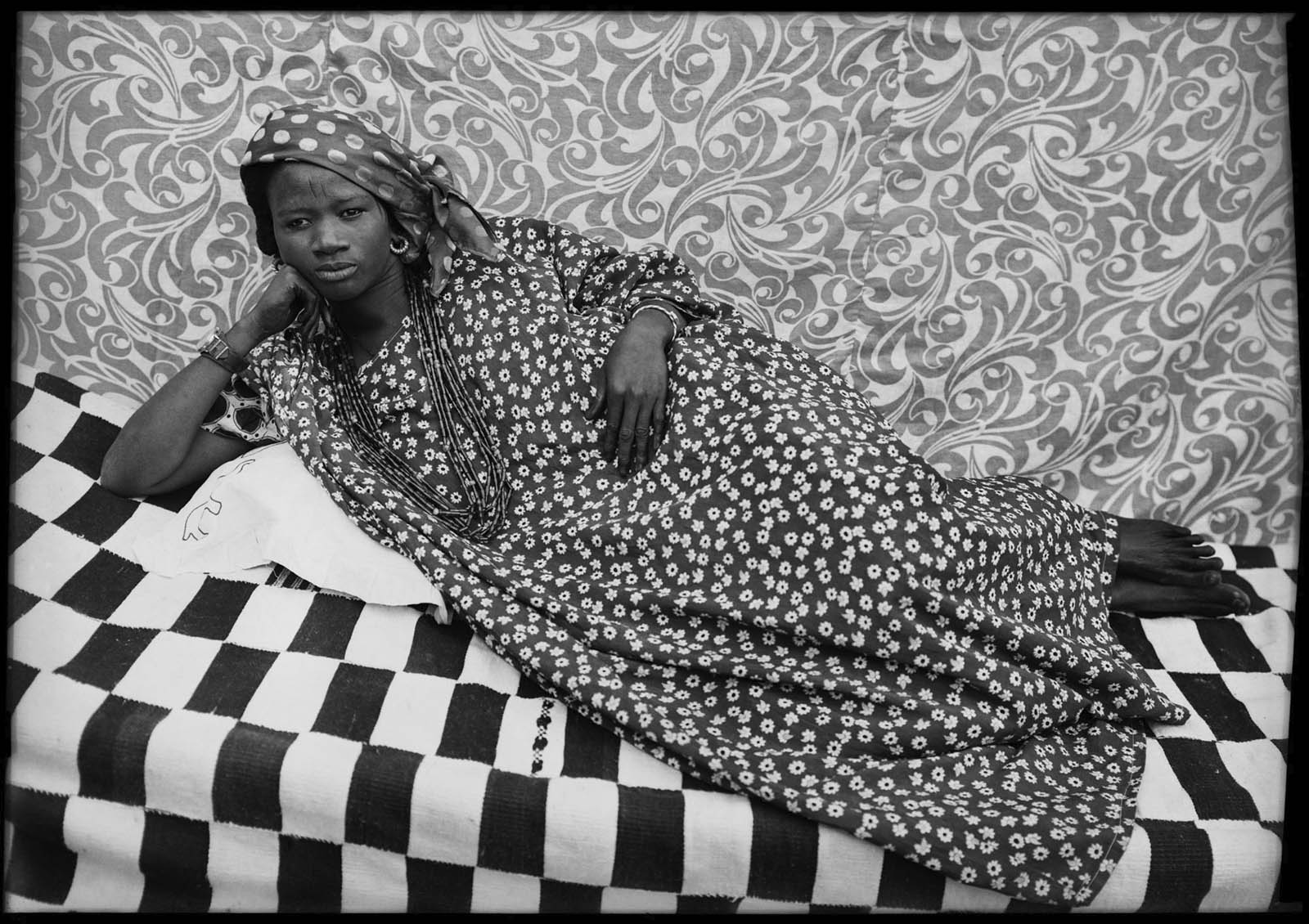
Seydou Keïta (Malian, 1923-2001)
Untitled (Bamako)
1956-1957
Gelatin silver print, printed 1997
15 9/16 x 22 1/8″ (39.5 x 56.2cm)
Museum of Modern Art, New York
The Family of Man Fund
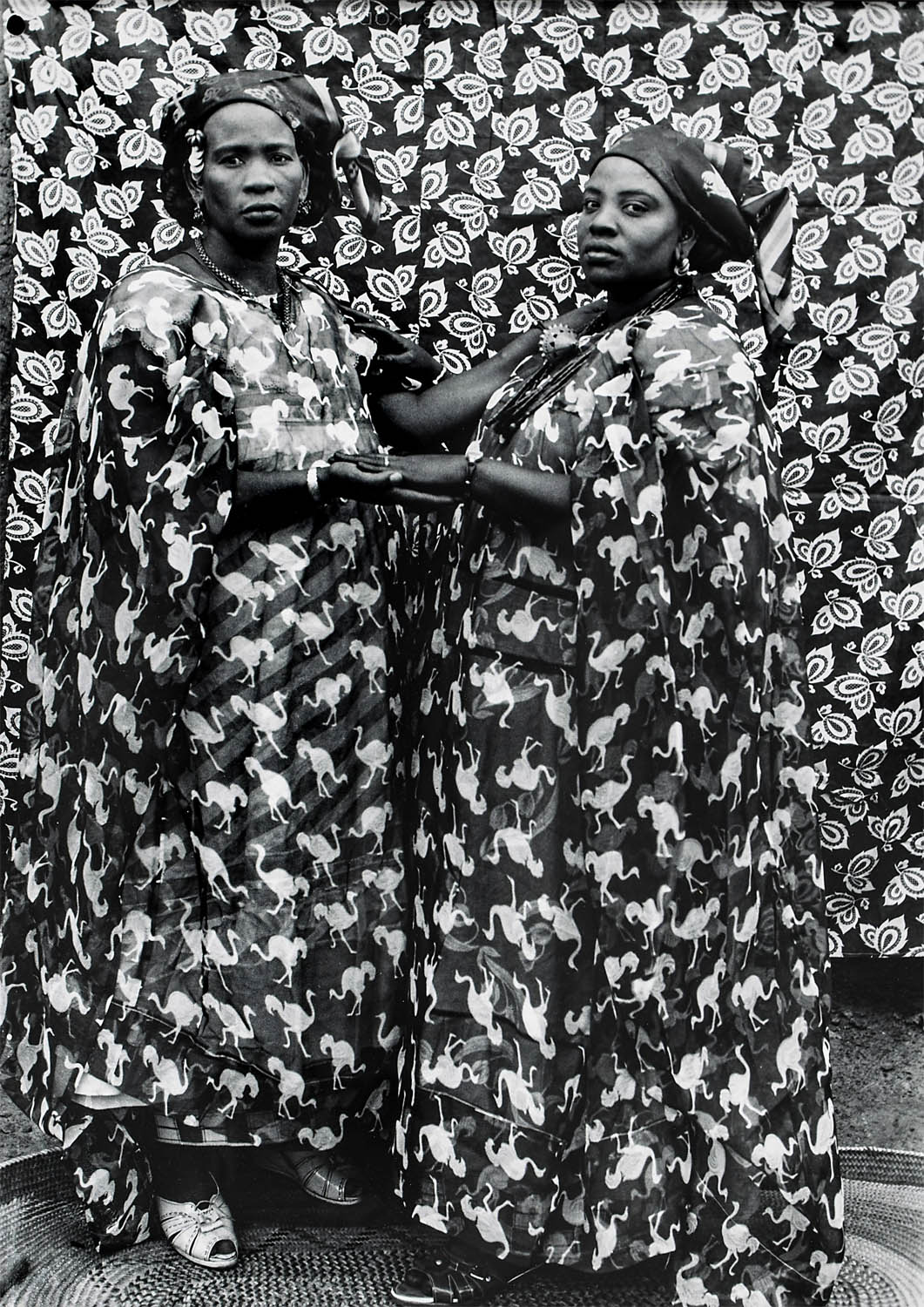
Seydou Keïta (Malian, 1923-2001)
Untitled
1956
Modern gelatin silver print
Image: 22 3/8 x 15 11/16″ (56.8 x 39.8cm)
Frame: 30 3/16 x 23 7/16″ (76.7 x 59.6cm)
Sheet: 23 7/8 x 19 15/16″ (60.7 x 50.7cm)
Museum of Modern Art, New York
The Jean Pigozzi African Art Collection
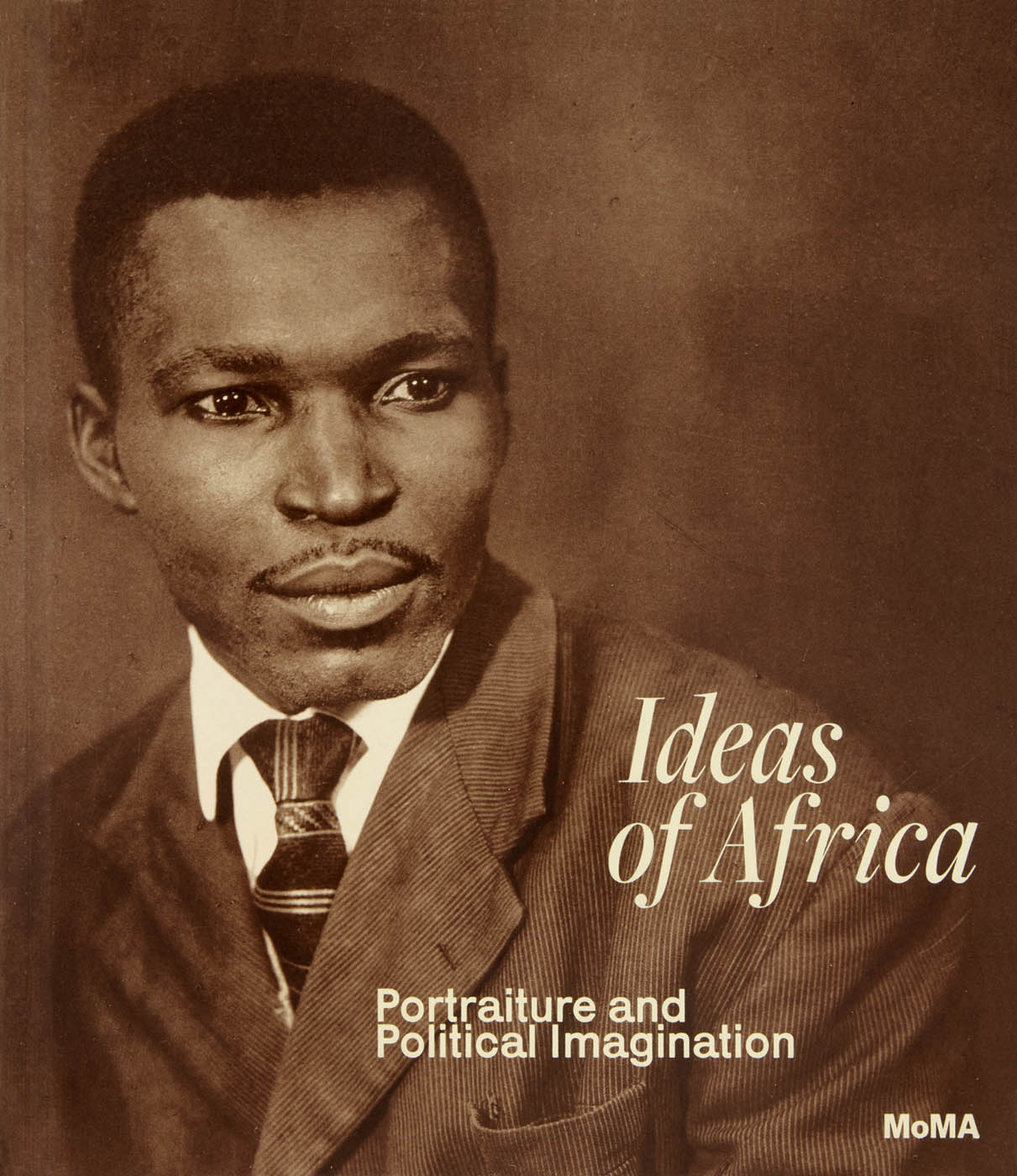
Ideas of Africa: Portraiture and Political Imagination catalogue cover
The Museum of Modern Art
11 West 53 Street
New York, NY 10019
Phone: (212) 708-9400
Opening hours:
10.30am – 5.30pm
Open seven days a week









You must be logged in to post a comment.