Exhibition: ‘Ideas of Africa: Portraiture and Political Imagination’ at The Museum of Modern Art (MoMA), New York

“There is something so infectious and engaging about these photographs, something that draws you into the transformative freedom of African identities.” Dr Marcus Bunyan

Exhibition dates: 14th December, 2025 – 25th July, 2026

Curator: Oluremi C. Onabanjo, The Peter Schub Curator, with the assistance of Chiara M. Mannarino, Curatorial Assistant, The Robert B. Menschel Department of Photography
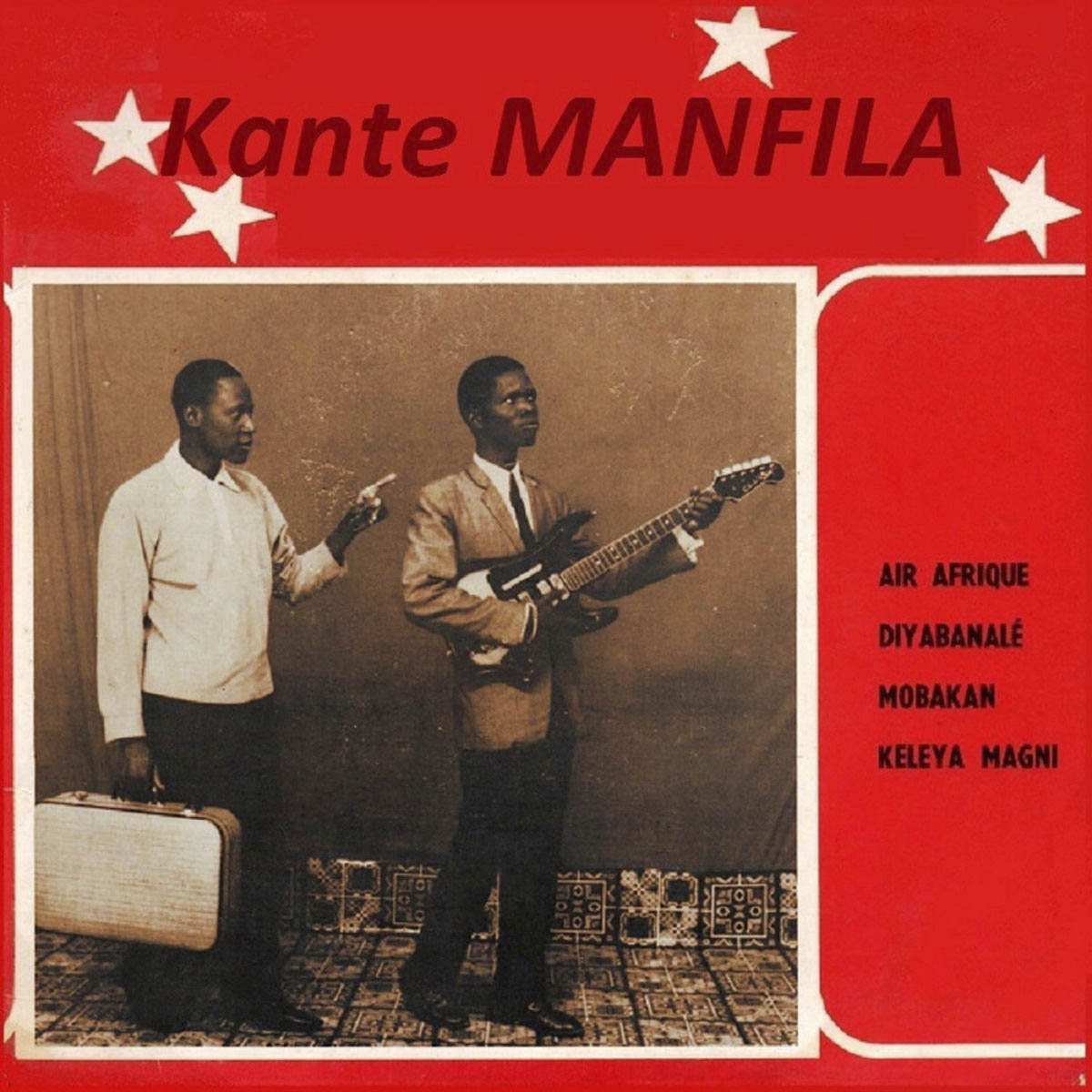
 

Air Afrique. 'DJIMA RECORDS' 1969


Air Afrique
DJIMA RECORDS
1969
Vinyl 45tour Mono
7 1/16 x 7 1/16″ (18 x 18cm)
Air Afrique Collective, courtesy of Lamine Diaoune,
Ahmadou-Bamba Thiam, Djiby Kebe, Jeremy Konko


Of being and becoming

Why do I love African photography so much after the “winds of decolonial change” swept through the continent which “saw the disintegration of colonial territories and the formation of transnational solidarity across the African continent and diaspora.”

Firstly, I love the vibrancy present in photographs of everyday life – at the club, with friends, dancing, drinking. I love the hairstyles, I love the fabrics, I love the way people are proud of themselves and their cultural heritage. Joy, love, exuberance, passion. There is something so infectious and engaging about these photographs, something that draws you into the transformative freedom of African identities.

Secondly, I love the studio photographs that enable the sitter to dream the great dreams of life, to imagine who they want to be before the camera. Here, in a symbiotic relationship between the photographer and the sitter, the “studio becomes a kind of imaginative enterprise. You can go and be who you are, or you can go and be who you want to be.” In Sanlé Sory’s studio his “portraits made possible a particular process of being and becoming for his sitters. He reflected the ideas that they wanted to communicate – whether to friends, lovers, strangers, or themselves.” (Gallery label) The resulting portrait made the sitter feel connected to a cosmopolitan world. Both a world of dreams and aspirations and Africans’ lived experiences and realities.

Thirdly, I love how the photographer turns the camera towards himself, conceptually enacting in a staged theatricality of becoming, envisioning himself as different personalities through the act of constructing identities. Heroes, travellers, intellectuals, philosophers and, in Samuel Fosso’s case, prominent figures from 20th-century Pan-African liberation and American civil rights movements. African spirits and activists, intellectuals, and political leaders who fought for Black emancipation across the globe.

Pan-African modes of image-making after the end of colonisation open up, as curator Oluremi C. Onabanjo so eloquently states, “dazzling modes of Pan-African possibility” where everything is possible in every/body. There is no wringing of the hands here, no use of colonial photographs rehashed for contemporary consumption, just a joy, joy, joy in present and future becoming.

Dr Marcus Bunyan


Many thankx to the Museum of Modern Art for allowing me to publish the photographs in the posting. Please click on the photographs for a larger version of the image.


“Imagination is a Magic carpet
Upon which we may soar
To distant lands and climes
And even go beyond the moon
To any planet in the sky
If we came from nowhere here
Why can’t we go somewhere there?

.
Sun Ra, “Imagination,” 1970


The Museum of Modern Art’s exhibition Ideas of Africa: Portraiture and Political Imagination showcases how photographic portraits fuel ideas of Pan-African subjectivity and solidarity. On view from December 14, 2025, through July 25, 2026, the exhibition considers the transatlantic call and response that constructed Africa as a political idea, due to the “winds of decolonial change” that swept the African continent in tandem with the Civil Rights movement in the United States. Ideas of Africa is the third exhibition organised at The Museum of Modern Art in celebration of the 2019 gift of modern and contemporary African art from prolific collector Jean Pigozzi. The exhibition features core works from this gift, alongside a selection of recent acquisitions and key loans.

Text from The Museum of Modern Art website
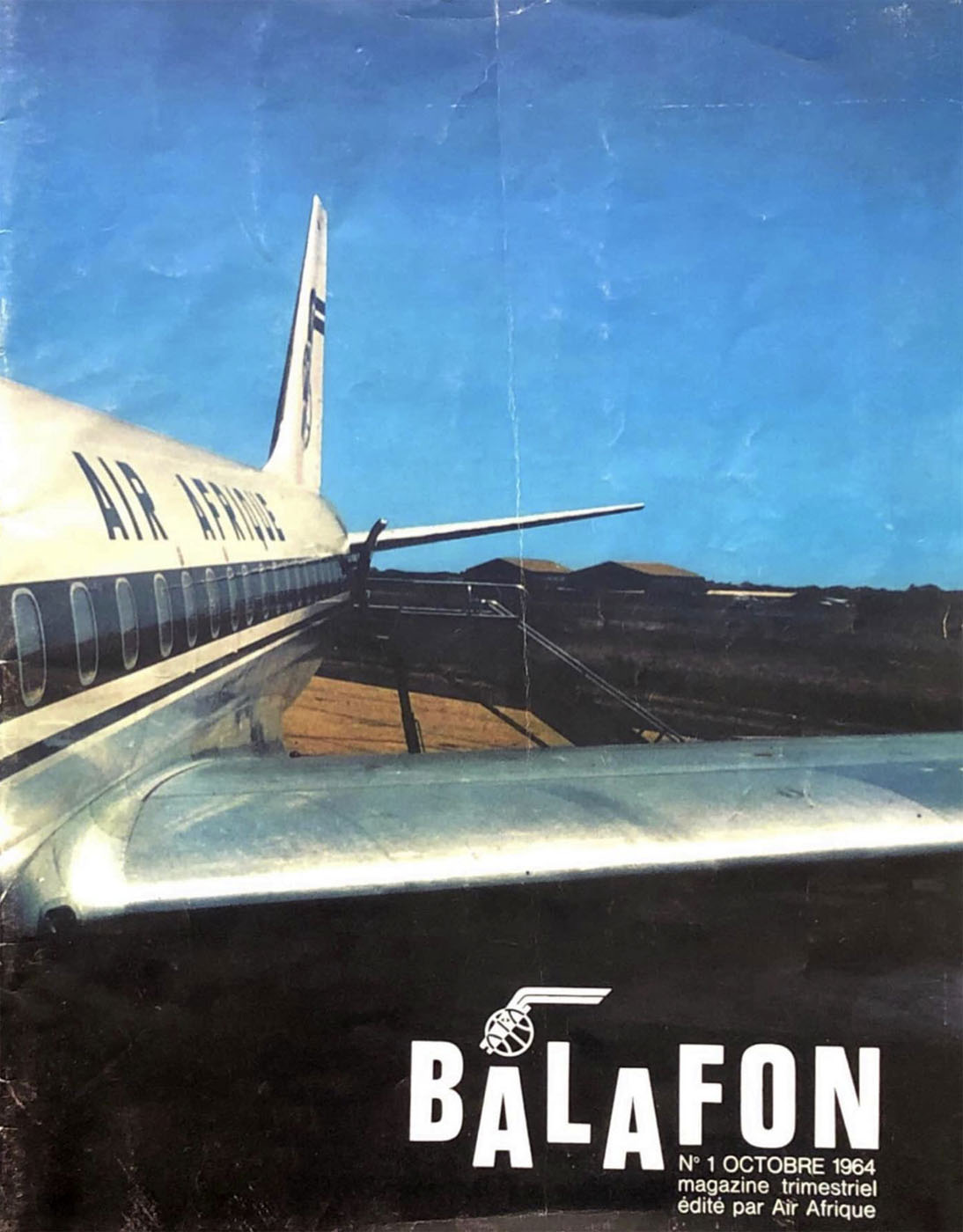
 

Air Afrique. 'Balafon No. 1' 1964


Air Afrique
Balafon No. 1
1964
Magazine, softcover
10 5/8 x 8 1/4″ (27 x 21cm)
Air Afrique Collective, courtesy of Lamine Diaoune,
Ahmadou-Bamba Thiam, Djiby Kebe, Jeremy Konko


From 1961 to 2002, Air Afrique served as the official transnational carrier for francophone West and Central Africa, providing regular jet service throughout the continent and internationally. The airline was also deeply committed to the production of Pan-African arts and culture. It funded vinyl records, published books on African history, and produced the in-flight magazine Balafon, which reported on events across Africa and beyond. Twenty years after the airline shuttered, a Paris-based artist collective formed to revitalise the spirit of Air Afrique through design collaborations, film programs, and a magazine. Their collection of archival ephemera, on view here, comprises gifts and purchases from former Air Afrique staff.

Inspired by the international activities of Air Afrique, both past and present, this reading table presents issues of the airline’s in-flight magazine, Balafon, one of which features a portrait of the Malian photographer Malick Sidibé on its cover. This table also includes a selection of photobooks, catalogues, and scholarly publications, celebrating the circulation of images and ideas in Africa during the decolonial era. These books are additionally available to browse within the gallery, offering further directions for reading, thinking, dreaming, and imagining.

Gallery label from Ideas of Africa: Portraiture and Political Imagination, 2025
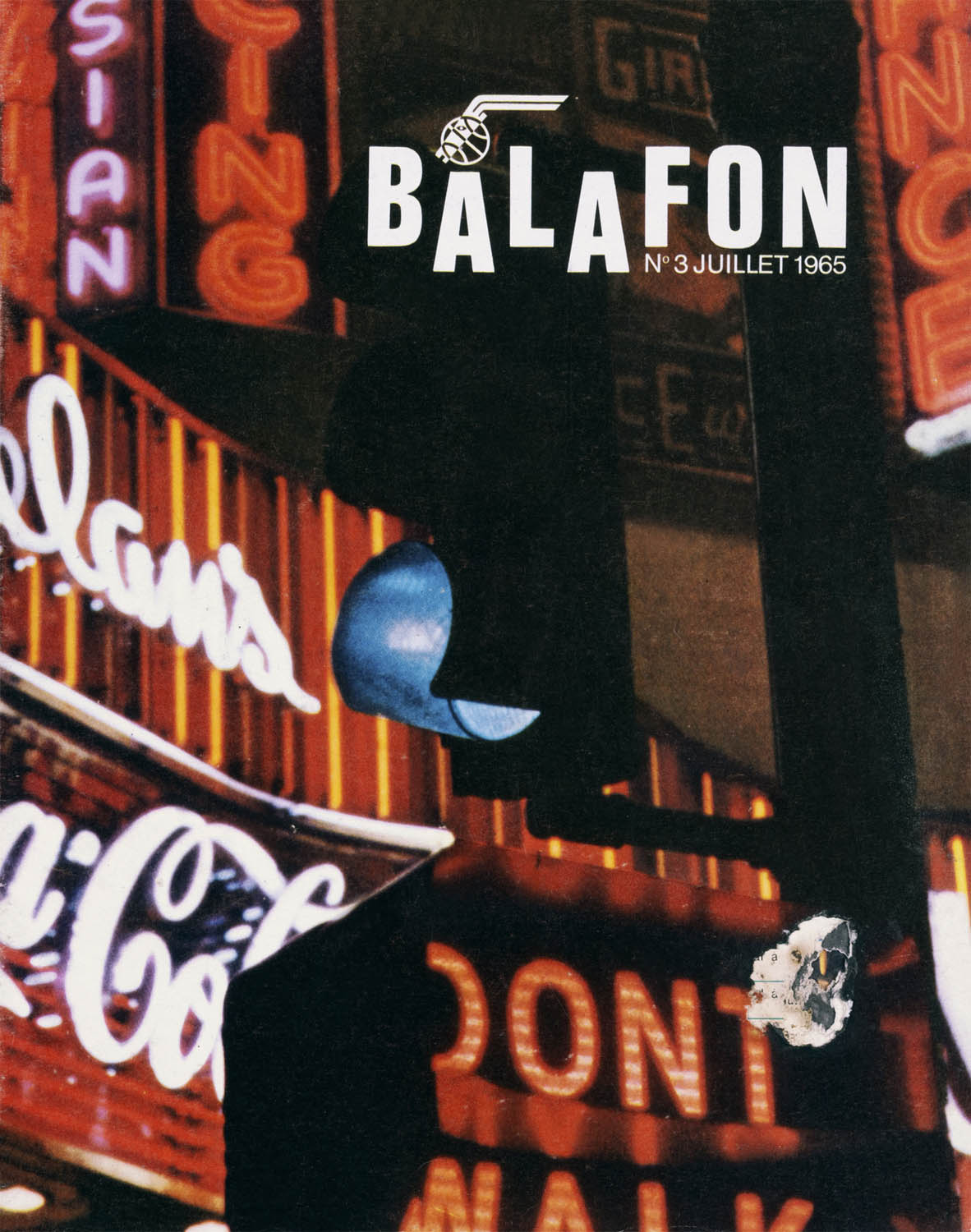
 

Air Afrique. 'Balafon No. 3' 1965


Air Afrique
Balafon No. 3
1965
Magazine, softcover
10 5/8 x 8 1/4″ (27 x 21cm)
Air Afrique Collective, courtesy of Lamine Diaoune,
Ahmadou-Bamba Thiam, Djiby Kebe, Jeremy Konko
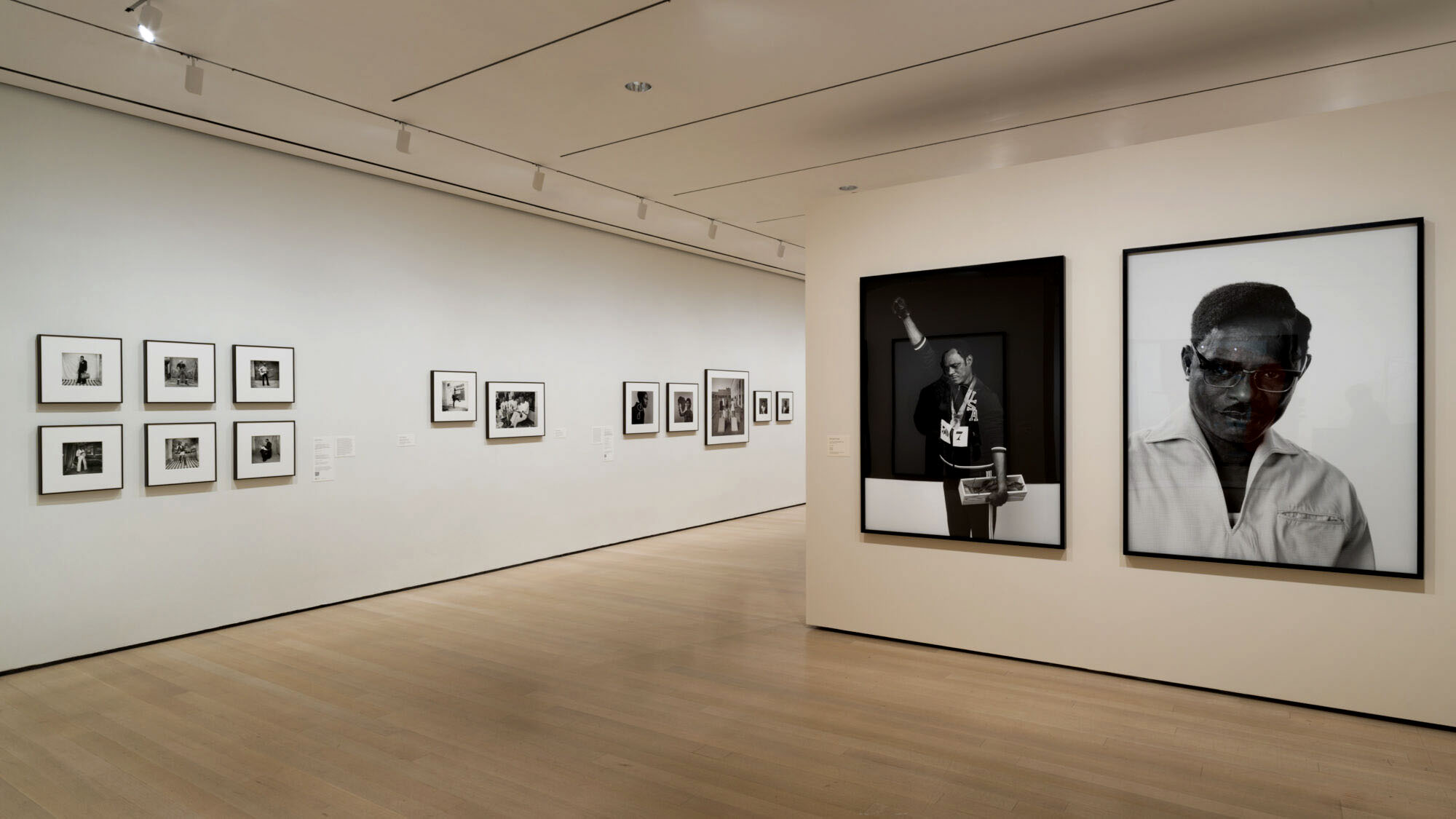
 

Installation view of the exhibition 'Ideas of Africa: Portraiture and Political Imagination' at The Museum of Modern Art (MoMA), New York, December 2025 - July 2026 showing at right two 'Untitled' photographs from the series 'African Spirits' (2008) by Samuel Fosso (French and Central African born Cameroon, b. 1962)


Installation view of the exhibition Ideas of Africa: Portraiture and Political Imagination at The Museum of Modern Art (MoMA), New York, December 2025 – July 2026 showing at right two Untitled photographs from the series African Spirits (2008, below) by Samuel Fosso (French and Central African born Cameroon, b. 1962)
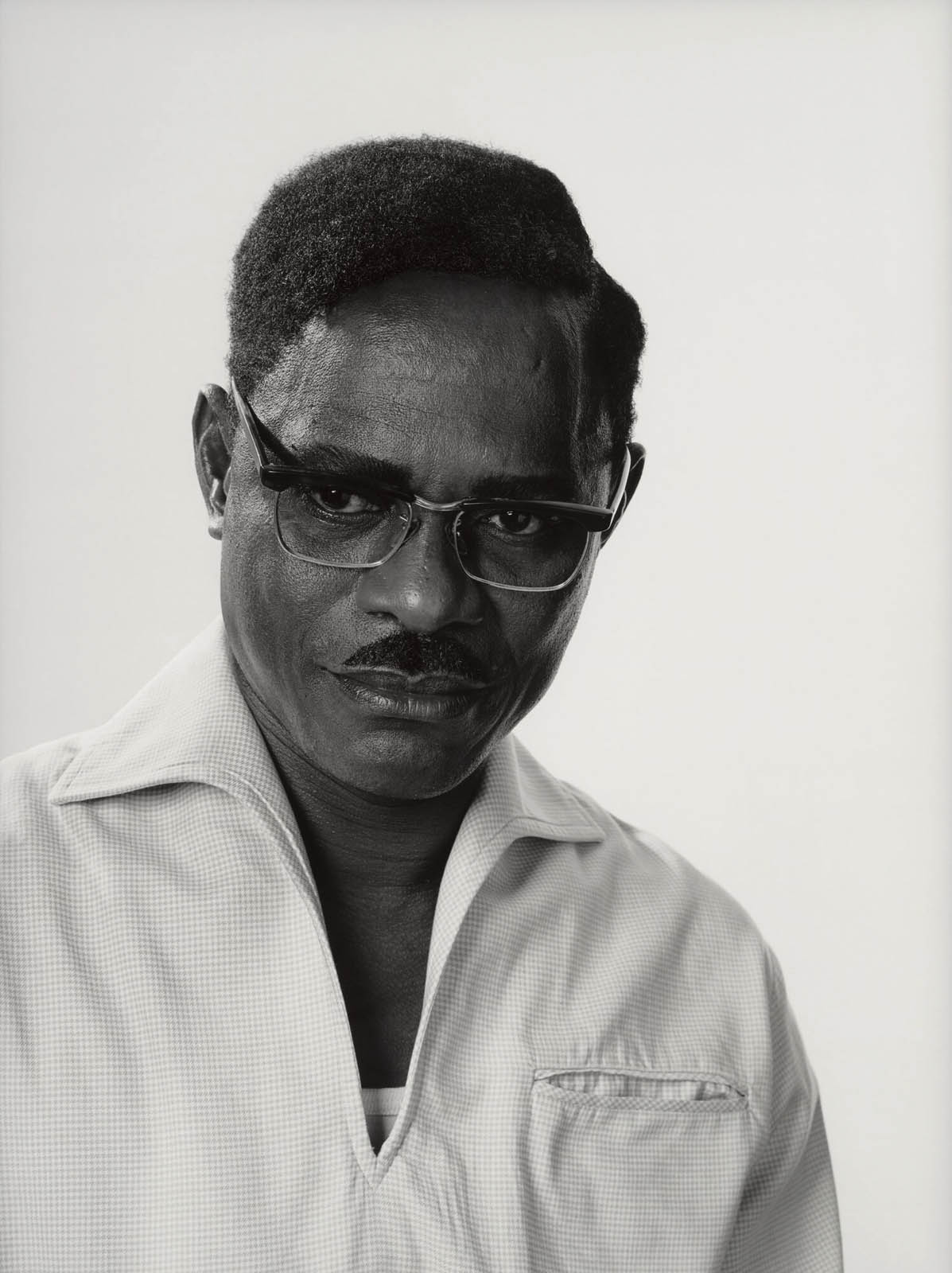
 

Samuel Fosso (French and Central African, born Cameroon 1962) 'Untitled' from the series 'African Spirits' 2008


Samuel Fosso (French and Central African born Cameroon, b. 1962)
Untitled from the series African Spirits
2008
Gelatin silver print
64 1/8 x 48 1/16″ (162.8 x 122cm)
Museum of Modern Art, New York
The Family of Man Fund
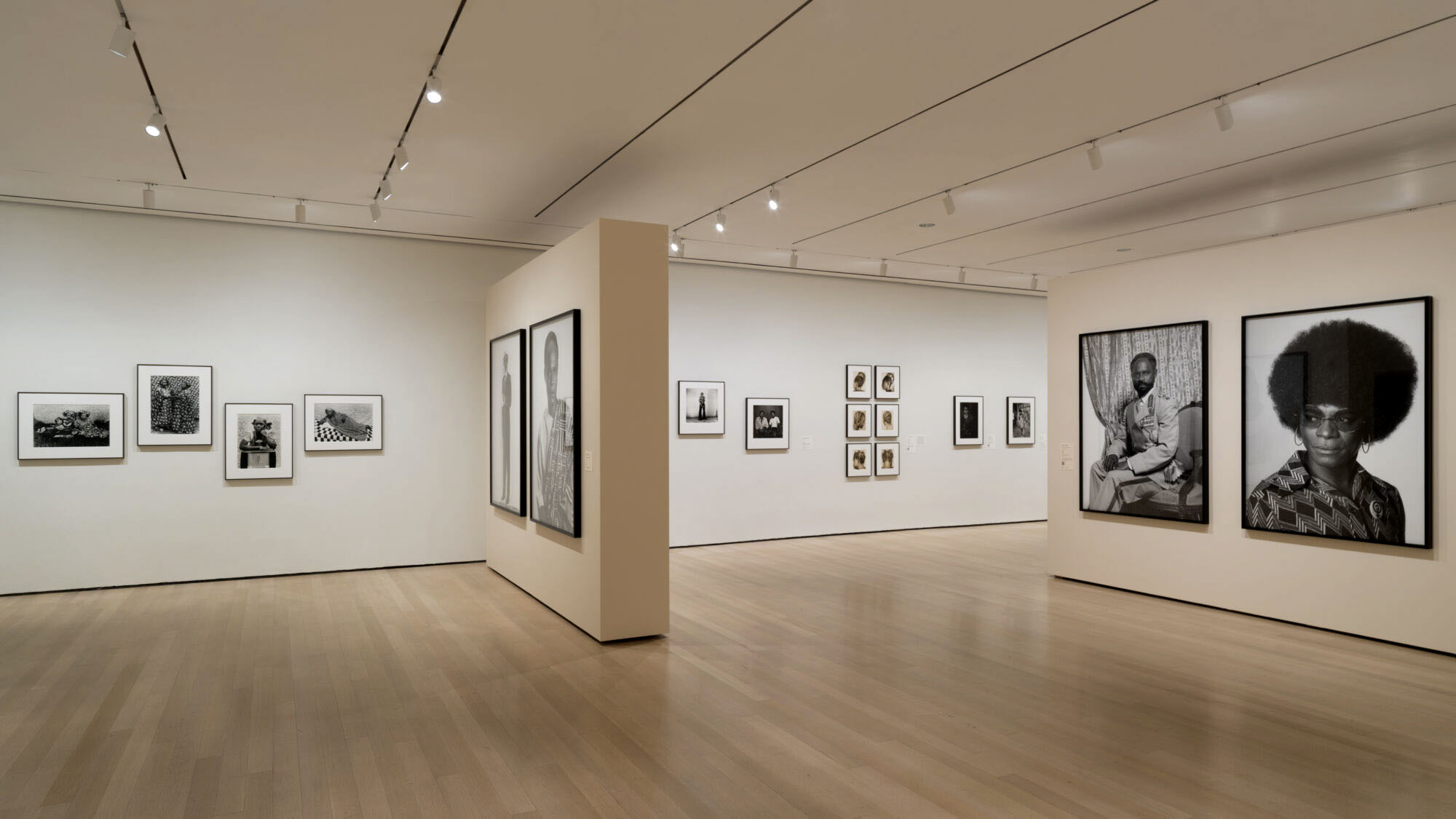
 

Installation view of the exhibition 'Ideas of Africa: Portraiture and Political Imagination' at The Museum of Modern Art (MoMA), New York, December 2025 - July 2026 showing at left photographs by Seydou Keïta (Malian, 1923-2001); and at right, two 'Untitled' photographs from the series 'African Spirits' (2008) by Samuel Fosso (French and Central African born Cameroon, b. 1962)


Installation view of the exhibition Ideas of Africa: Portraiture and Political Imagination at The Museum of Modern Art (MoMA), New York, December 2025 – July 2026 showing at left photographs by Seydou Keïta (Malian, 1923-2001); and at right, two Untitled photographs from the series African Spirits (2008, below) by Samuel Fosso (French and Central African born Cameroon, b. 1962)
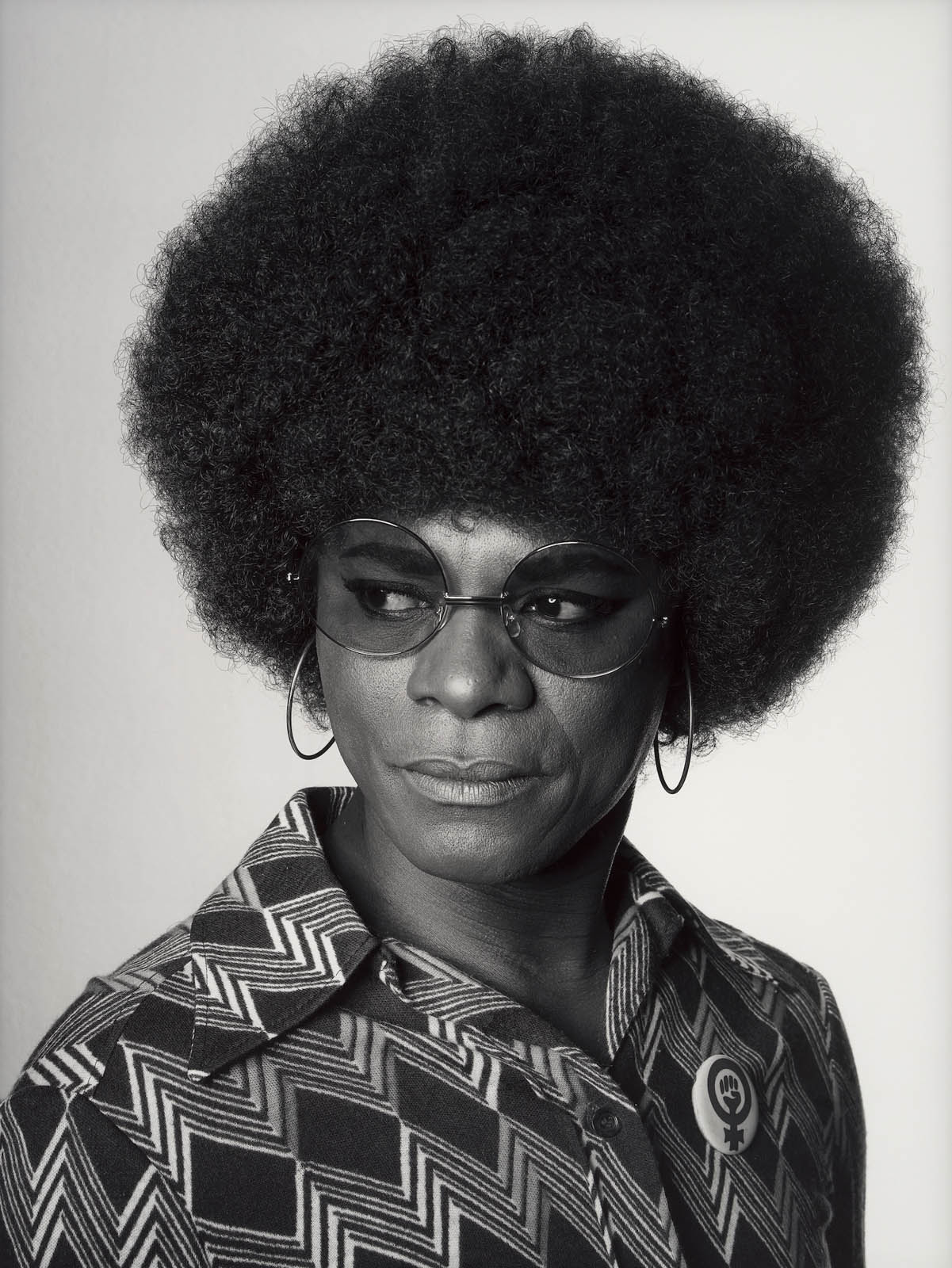
  

Samuel Fosso (French and Central African, born Cameroon 1962) 'Untitled' from the series 'African Spirits' 2008


Samuel Fosso (French and Central African born Cameroon, b. 1962)
Untitled from the series African Spirits
2008
Gelatin silver print
64 1/8 x 48 1/16″ (162.8 x 122cm)
Museum of Modern Art, New York
The Family of Man Fund


Artist, Silvia Rosi:  African Spirit is a series of self-portraits where Fosso transforms himself into key figures of the Pan-African liberation movement of the 1960s and 70s.

I’m Silvia Rosi. I’m an artist working with photography and moving image.

Samuel Fosso started his career taking portraits of people in the studio, where there was always this act of constructing identities through props, poses, and the photographer’s imagination. At the end of each workday, Fosso would turn the camera toward himself.

In this series, he recreates these iconic photographs, taking on the faces of Angela Davis, of Martin Luther King, while at the same time remaining himself.  For me, there’s this sense of recognition but also his own presence makes us question what it means to embody these figures.

The lighting and the poses and the composition echo this studio portrait tradition, but there’s always an element of theatricality that keeps you aware of the labor of becoming someone else. He neutralises the scene, removing the backdrop, and we’re forced to look at the subject that we have in front.

Turning the camera inwards can be really revolutionary. I think that’s something that deeply resonates with me, this idea of being in charge of my own representation and giving yourself complexity through images.

Text from the MoMA website
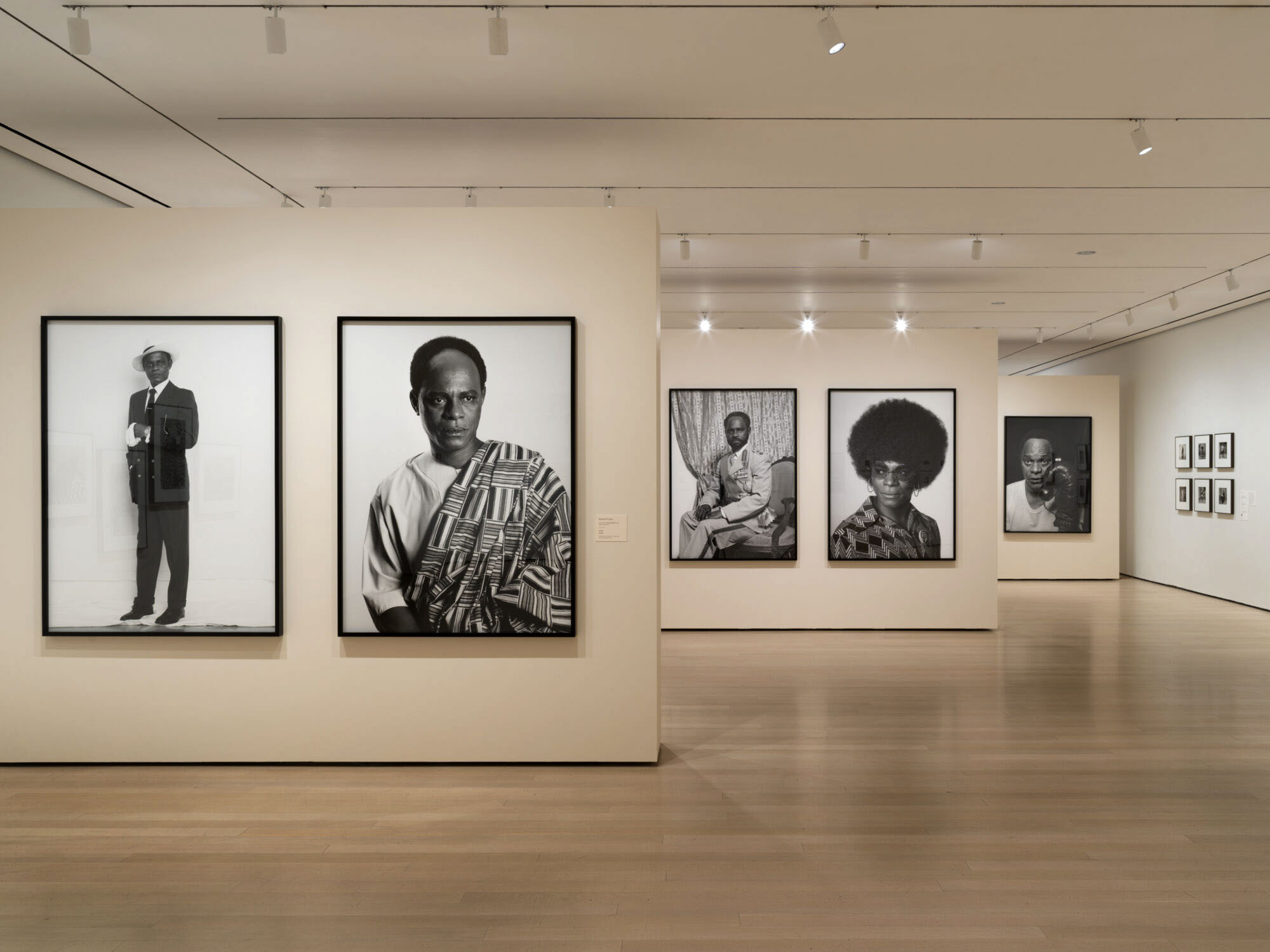
  

Installation view of the exhibition 'Ideas of Africa: Portraiture and Political Imagination' at The Museum of Modern Art (MoMA), New York, December 2025 - July 2026 showing five 'Untitled' photographs from the series 'African Spirits' (2008) by Samuel Fosso (French and Central African born Cameroon, b. 1962)


Installation view of the exhibition Ideas of Africa: Portraiture and Political Imagination at The Museum of Modern Art (MoMA), New York, December 2025 – July 2026 showing five Untitled photographs from the series African Spirits (2008) by Samuel Fosso (French and Central African born Cameroon, b. 1962)


The Museum of Modern Art’s exhibition Ideas of Africa: Portraiture and Political Imagination showcases how photographic portraits fuel ideas of Pan-African subjectivity and solidarity. On view from December 14, 2025, through July 25, 2026, the exhibition considers the transatlantic call and response that constructed Africa as a political idea, due to the “winds of decolonial change” that swept the African continent in tandem with the Civil Rights movement in the United States. Ideas of Africa is the third exhibition organised at The Museum of Modern Art in celebration of the 2019 gift of modern and contemporary African art from prolific collector Jean Pigozzi. The exhibition features core works from this gift, alongside a selection of recent acquisitions and key loans. Ideas of Africa: Portraiture and Political Imagination is organised by Oluremi C. Onabanjo, The Peter Schub Curator, with the assistance of Chiara M. Mannarino, Curatorial Assistant, The Robert B. Menschel Department of Photography. 

Conceptually influenced by The Idea of Africa, a landmark publication by the late philosopher V. Y. Mudimbe (1941-2025), the exhibition brings together works by 20th-century photographers such as Seydou Keïta, Malick Sidibé, Jean Depara, Sanlé Sory, and Ambroise Ngaimoko, who worked across key urban centers in West and Central Africa during the “golden age of African portraiture.” Images by James Barnor and Kwame Brathwaite illuminate Pan-African modes of image-making across the African diaspora. Works by contemporary artists of African descent, including Samuel Fosso, Silvia Rosi, and Njideka Akunyili Crosby, alongside ephemera selected from the archive of the artist collective Air Afrique, embody the physical circulation of these ideas across space and time. 

“As we continue to witness transformative shifts in the global geopolitical order, it is instructive to revisit a moment in history that saw the disintegration of colonial territories and the formation of transnational solidarity across the African continent and diaspora. This exhibition locates dazzling modes of Pan-African possibility in images made by inventive photographers who registered and beckoned in new worlds,” says Oluremi C. Onabanjo. 

Ideas of Africa features a reading room as a tribute to the aspirations of knowledge production and the proliferation of the photographic image in print media during the decolonial era. In the reading room, visitors can access a selection of historical and contemporary photobooks and publications. 

On the occasion of the exhibition, MoMA is publishing a richly illustrated catalogue featuring a lead essay by Oluremi C. Onabanjo, contributions by poet Momtaza Mehri and film programmer Yasmina Price, and reproductions of key texts by Brent Hayes Edwards and V. Y. Mudimbe. 140 pages, 105 color illustrations. Hardcover, $50. ISBN: 978-1-63345-171-1.

Press release from The Museum of Modern Art


Installation view of the exhibition 'Ideas of Africa: Portraiture and Political Imagination' at The Museum of Modern Art (MoMA), New York, December 2025 - July 2026 showing at left, Malick Sidibé 'Nuit de Noël' (Happy Club) [Christmas Eve] 1963; and at second left, Malick Sidibé 'Regardez-Moi' [Look at Me!] 1962


Installation view of the exhibition Ideas of Africa: Portraiture and Political Imagination at The Museum of Modern Art (MoMA), New York, December 2025 – July 2026 showing at left, Malick Sidibé Nuit de Noël (Happy Club) [Christmas Eve] (1963, below); and at second left, Malick Sidibé Regardez-Moi [Look at Me!] (1962, below)


Malick Sidibé (Malian, 1936–2016) 'Nuit de Noël' (Happy Club) [Christmas Eve] 1963 (printed January 2006)


Malick Sidibé (Malian, 1936-2016)
Nuit de Noël (Happy Club) [Christmas Eve]
1963 (printed January 2006)
Gelatin silver print
Image: 39 x 39″ (99 x 99.1cm)
Sheet: 47 1/4 x 47 1/4″ (120 x 120cm)
Frame: 53 9/16 x 53 9/16″ (136 x 136cm)
Courtesy The Walther Collection, New York / Neu-Ulm


Malick Sidibé (Malian, 1936–2016) 'Regardez-Moi' [Look at Me!] 1962 (printed January 2006)


Malick Sidibé (Malian, 1936-2016)
Regardez-Moi [Look at Me!]
1962 (printed January 2006)
Gelatin silver print
Image: 39 3/8 x 39″ (100 x 99cm)
Sheet: 47 1/4 x 47 1/4″ (120 x 120cm)
Frame: 52 3/16 x 52 3/16 x 1″ (132.5 x 132.5 x 2.5cm)
Courtesy The Walther Collection, New York / Neu-Ulm
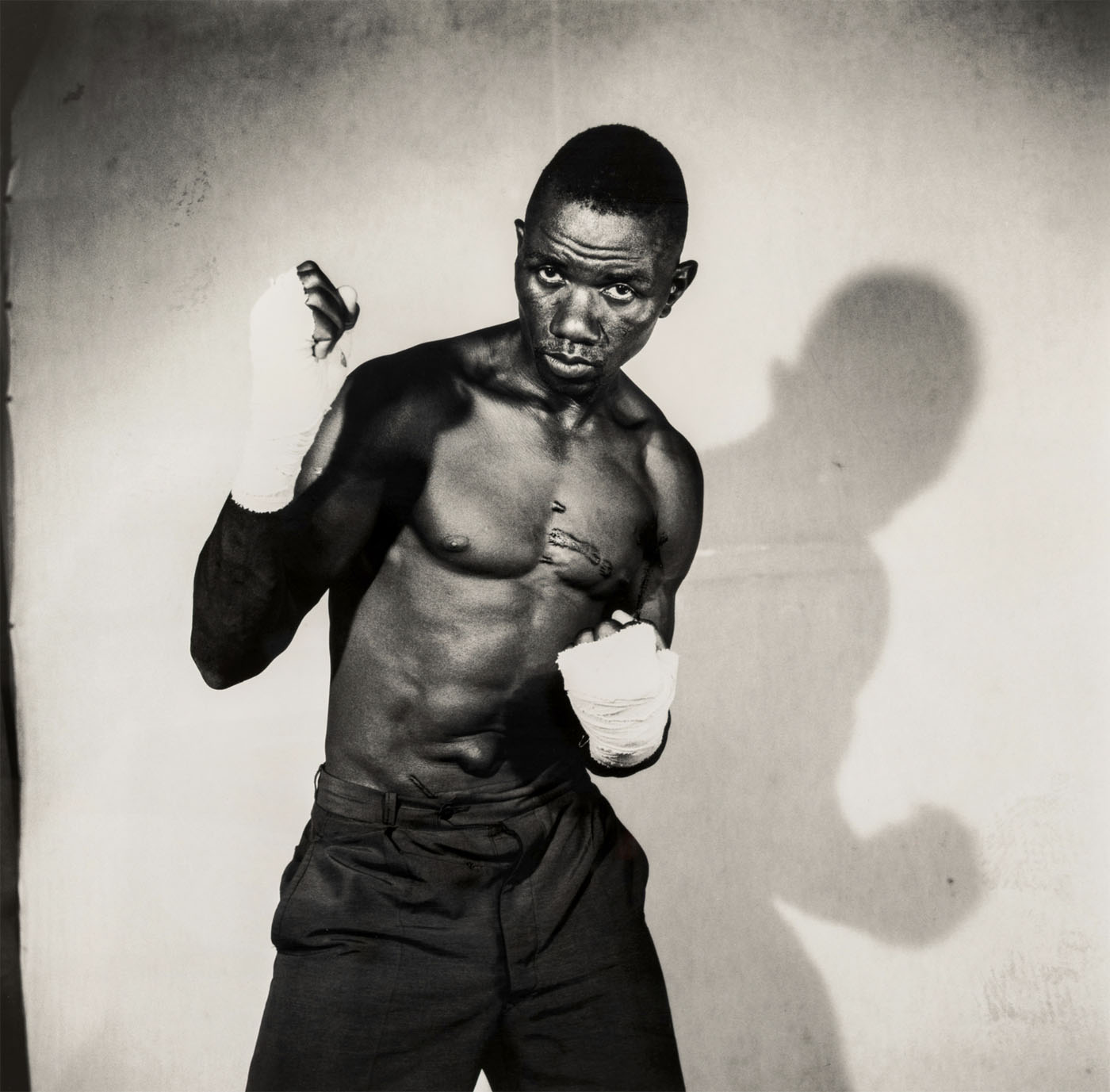
 

Malick Sidibé (Malian, 1936–2016) 'Boxeur' (Boxer) 1966


Malick Sidibé (Malian, 1936–2016)
Boxeur (Boxer)
1966
Gelatin silver print
Image: 16 15/16 x 16 15/16″ (43 x 43 cm)
Frame: 27 9/16 x 27 9/16 x 9/16″ (70 x 70 x 1.5cm)
Museum of Modern Art, New York
The Jean Pigozzi African Art Collection


For Sidibé, the roving “eye of Bamako,” the city was his studio. Active during the 1960s and ’70s, Sidibé shot on 35mm film and often printed proofs of the exposures he took at weekend parties. He arranged them sequentially on pastel cardstock and displayed them at his studio so that clients might purchase souvenirs of their exploits. Sidibé’s images of youth culture emphatically pushed back against Mali’s normative state attitudes and expectations of decorum. Revelling in effusive gestures and strong poses, he deftly photographed a community full of elegance, style, and sensational flair that staked its claim on a connection to a global African Diaspora.

Gallery label from Ideas of Africa: Portraiture and Political Imagination, 2025


Malick Sidibé (Malian, 1936–2016) 'Nuit du 10 octobre 1970' (Night of October 10, 1970) 1970


Malick Sidibé (Malian, 1936-2016)
Nuit du 10 octobre 1970 (Night of October 10, 1970)
1970
Twenty-two gelatin silver prints mounted on paper
12 3/4 x 19 3/4″ (32.4 x 50.2cm)
Museum of Modern Art, New York
Judith and Wm. Brian Little Fund
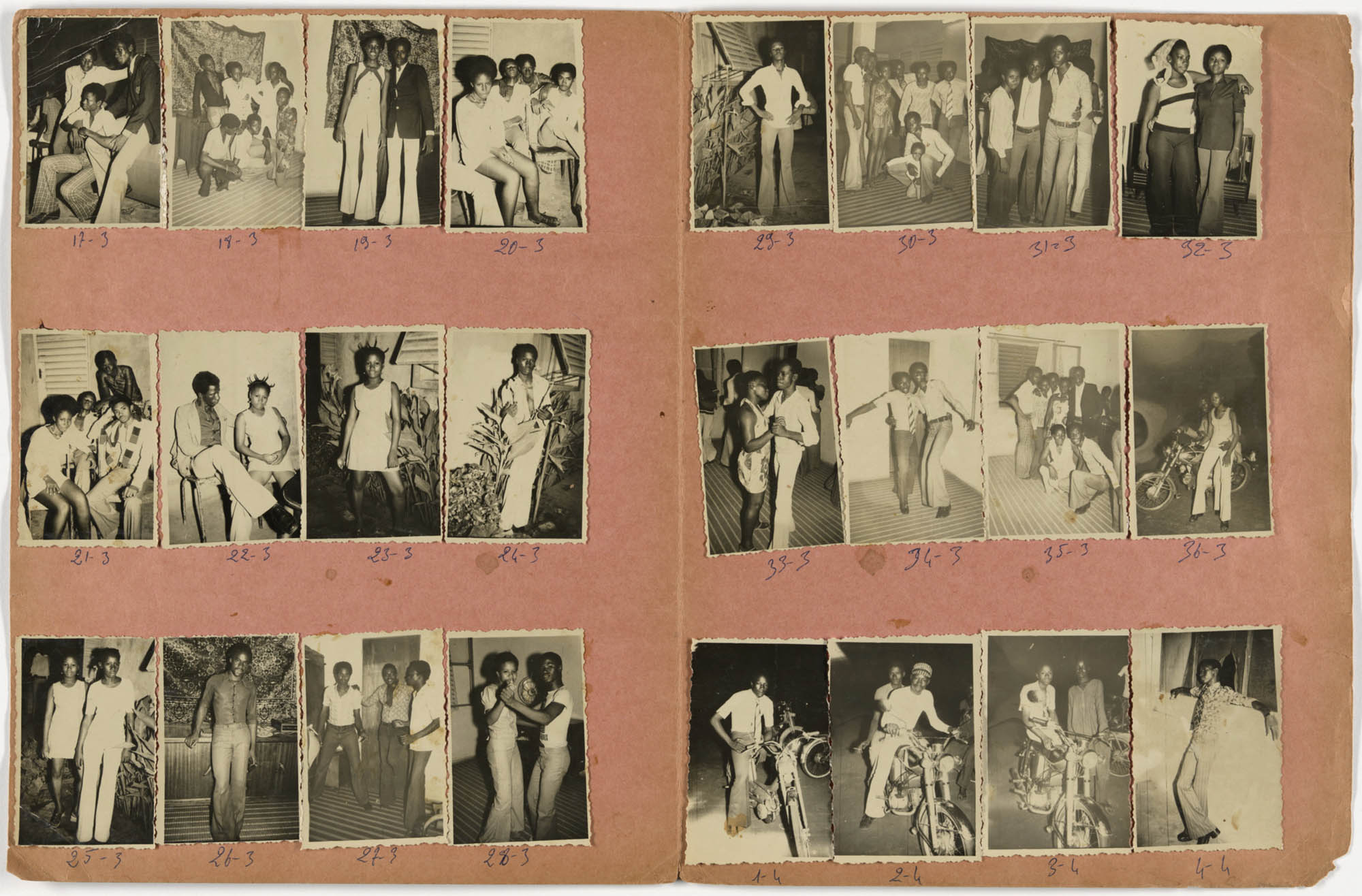
  

Malick Sidibé (Malian, 1936–2016) 'Untitled' July 28, 1973


Malick Sidibé (Malian, 1936-2016)
Untitled
July 28, 1973
Twenty-four gelatin silver prints mounted on paper
12 3/4 x 19 3/4″ (32.4 x 50.2cm)
Museum of Modern Art, New York
Judith and Wm. Brian Little Fund


“This wind of change blowing through Africa … is no ordinary wind,” wrote Ghana’s first president, Kwame Nkrumah, in 1963. “It is a raging hurricane against which the old order cannot stand.” In the 1960s, independence movements swept across the African continent, resulting in the disintegration of colonial territories. These transformative struggles coincided with an exhilarating campaign for civil rights in the United States, forging a transatlantic call-and-response that established “Africa” as a political idea.

Ideas of Africa: Portraiture and Political Imagination examines the role of portrait photography within this emerging sense of Pan-Africanism. It unites portraits by mid-century photographers from across West and Central Africa and works by contemporary artists of African descent, illuminating different modes of image making and forms of transnational solidarity. As the art historian Kobena Mercer has argued, “‘Africa’ has never been a static entity, confined to the boundaries of geography, but has always had a diasporic dimension.” Embedded within the exhibition is a reading room featuring a selection of photobooks, alongside archival ephemera from the Paris-based collective Air Afrique. Following in the wake of the eponymous international airline, the group has continued the circulation of Pan-African culture and ideas into the present day.

Conceptually influenced by the late philosopher V. Y. Mudimbe’s book The Idea of Africa (1994), in which he exposes Western views of Africa as politicised constructions, this exhibition demonstrates how African photographers grappled with Africa as a political idea in their own ways. Presenting subjects for whom the personal was undeniably political, their images assert photography’s unique potential to creatively reflect our surroundings and beckon new worlds. At a time when profound shifts are once again transforming the global geopolitical order, Ideas of Africa attests to the enduring relevance of these themes.

Gallery text from Ideas of Africa: Portraiture and Political Imagination, 2025
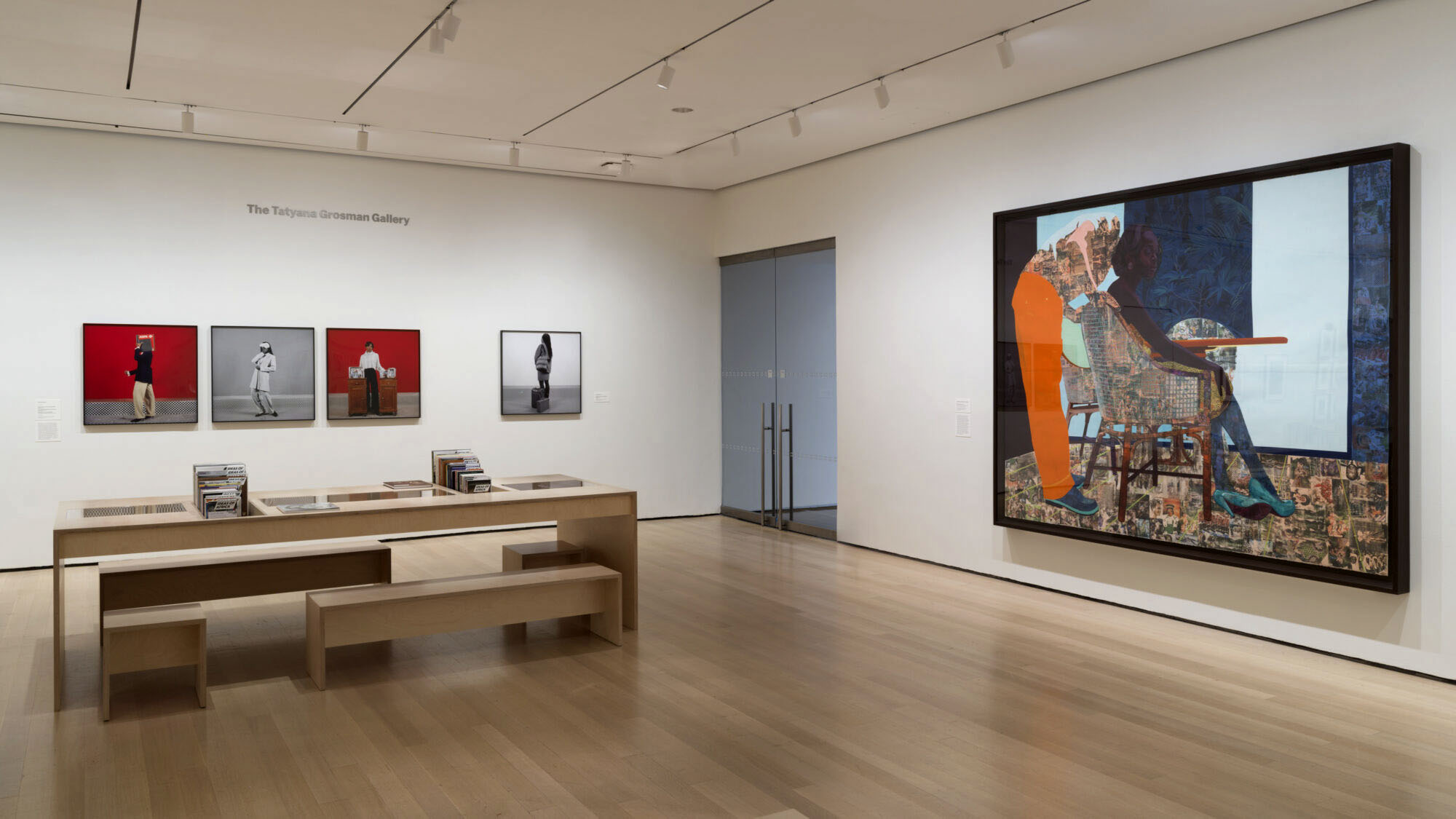
  

Installation view of the exhibition 'Ideas of Africa: Portraiture and Political Imagination' at The Museum of Modern Art (MoMA), New York, December 2025 - July 2026 showing at left the work of Silvia Rosi; and at right, Njideka Akunyili Crosby's 'And We Begin to Let Go' (2013)


Installation view of the exhibition Ideas of Africa: Portraiture and Political Imagination at The Museum of Modern Art (MoMA), New York, December 2025 – July 2026 showing at left the work of Silvia Rosi (below); and at right, Njideka Akunyili Crosby And We Begin to Let Go (2013, below)
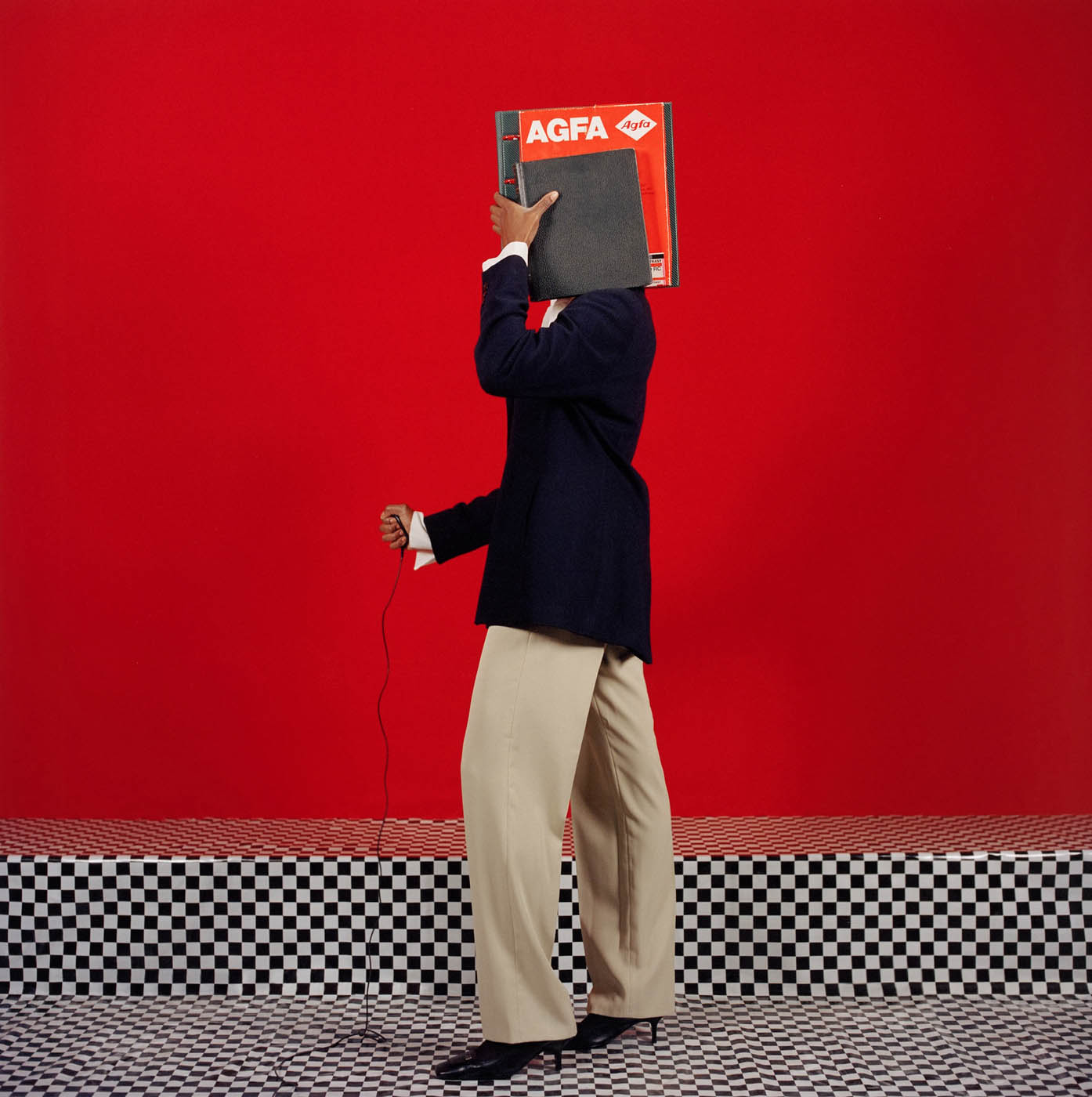
  

Silvia Rosi (Togolese and Italian, born 1992) 'Disintegrata di profilo' (Disintegrated in Profile) 2024


Silvia Rosi (Togolese and Italian, b. 1992)
Disintegrata di profilo (Disintegrated in Profile)
2024
Inkjet print
31 1/2 x 31 1/2″ (80 x 80cm)
Museum of Modern Art, New York
Carl Jacobs Fund


Rosi has said, “I’m not just performing, but reflecting on history.” Through photographic self-portraits, the artist examines personal, familial, and national narratives of migration, memory, and belonging. Deeply informed by the history of West African studio portraiture, Rosi’s images elegantly synthesise the formal strategies of mid-century African photographers, including many of those represented in this exhibition. Rosi often reenacts moments from her family’s past. Disintegrated Waiting, for instance, recalls when her mother first arrived in Italy from Togo. “She once said, ‘I used to be integrated, now I’m disintegrated,'” the artist shared. “To me this phrase is … an expression of the experience of diaspora.”

Gallery label from Ideas of Africa: Portraiture and Political Imagination, 2025
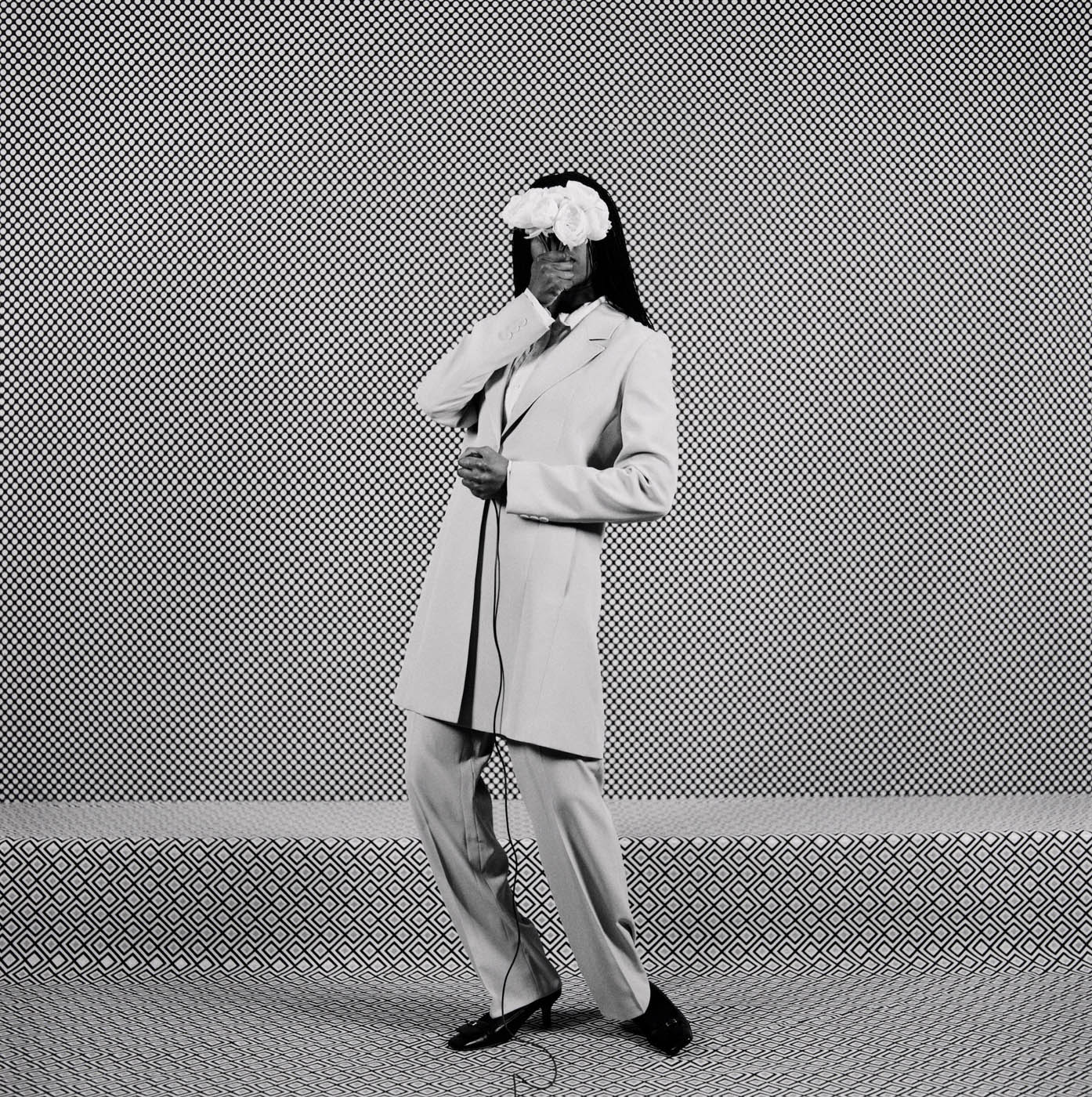
  

Silvia Rosi (Togolese and Italian, born 1992) 'Sposa italiana disintegrata' (Disintegrated Italian Wife) 2024


Silvia Rosi (Togolese and Italian, b. 1992)
Sposa italiana disintegrata (Disintegrated Italian Wife)
2024
Inkjet print
31 1/2 x 31 1/2″ (80 x 80cm)
Museum of Modern Art, New York
Carl Jacobs Fund


Njideka Akunyili Crosby (Nigerian, born 1983) 'And We Begin to Let Go' 2013


Njideka Akunyili Crosby (Nigerian, born 1983)
And We Begin to Let Go
2013
Acrylic, acetone transfers, charcoal, pastel, marble dust, and
collage on paper
Sheet: 84 x 105″ (213.4 x 266.7cm)
Museum of Modern Art, New York
Promised gift of Jerry I. Speyer and Katherine Farley


Nigerian-born, Los Angeles-based artist Njideka Akunyili Crosby moved to the US at the age of 17 (after winning the green card lottery in her home town) to train as a painter at the Pennsylvania Academy of Fine Art and, later, Yale University. Here, as in many of her portraits, Crosby gives an intimate portrayal of her interracial marriage and day-to-day life in America. She combines photo-transfer processes with painting and collaged fabrics, fusing Nigerian and American materials, images, and cultural traditions.

In her practice, Akunyili Crosby meditates on familial life within a transcultural context. Her large-scale compositions of everyday domestic scenes synthesise drawing, painting, printmaking, and photography. And We Begin to Let Go depicts the artist and her husband, who leans over her shoulder. To make it, Akunyili Crosby drew from Nigerian print media publications and her family’s photographic archive. She united these images’ varied photographic textures through the same formal treatment: acetone transfer, a printmaking technique through which a printed image is transferred onto another surface using an acetone solvent. Images of smiling faces, elaborate coifs, and patterned clothing suffuse the picture plane, accruing on the surfaces this marital encounter.

Gallery label from Ideas of Africa: Portraiture and Political Imagination, 2025
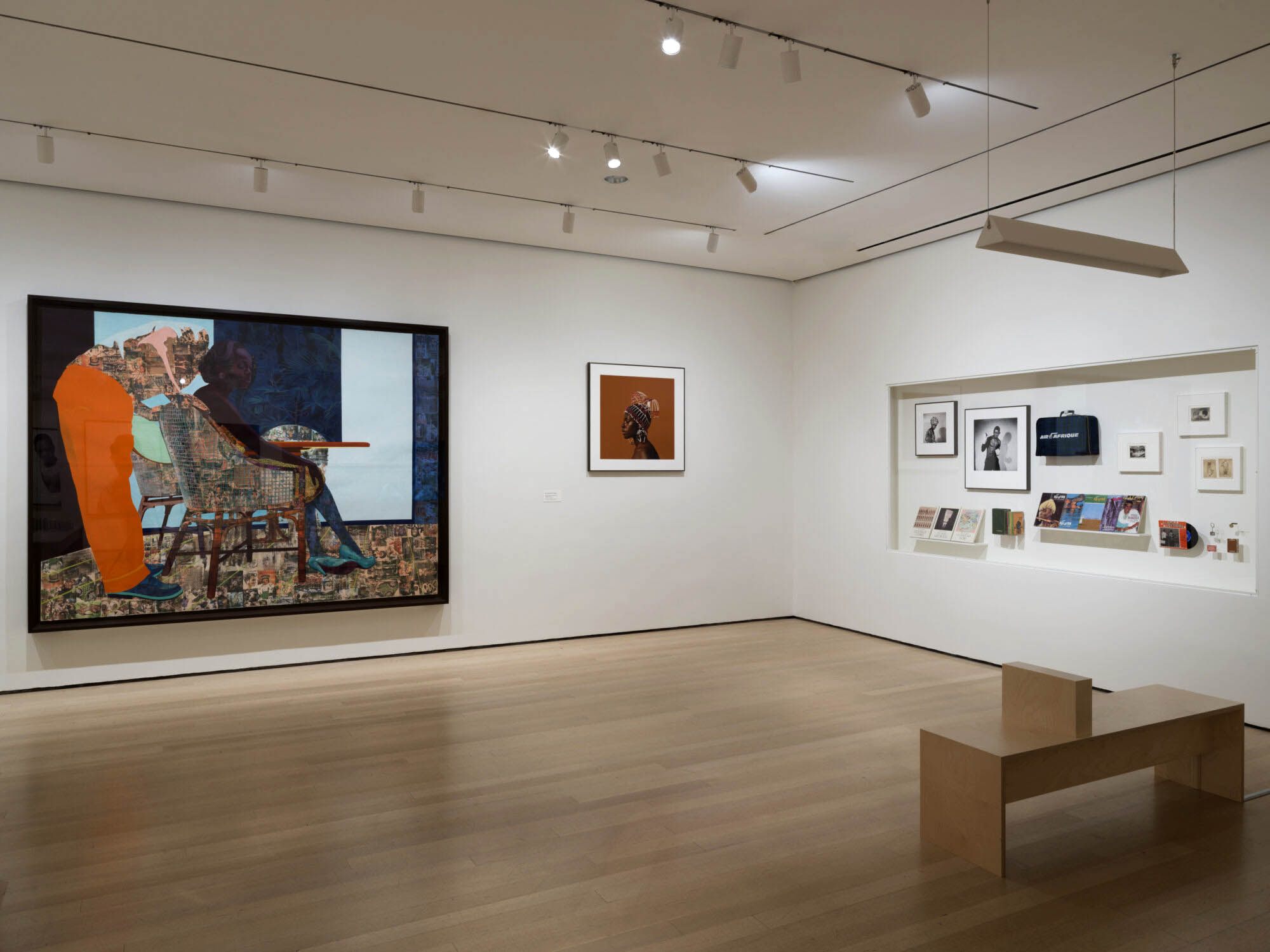
  

Installation view of the exhibition 'Ideas of Africa: Portraiture and Political Imagination' at The Museum of Modern Art (MoMA), New York, December 2025 - July 2026 showing at left, Njideka Akunyili Crosby 'And We Begin to Let Go' (2013); and at centre, Kwame Brathwaite 'Untitled (Sikolo with Carolee Prince Designs)' 1964-1968


Installation view of the exhibition Ideas of Africa: Portraiture and Political Imagination at The Museum of Modern Art (MoMA), New York, December 2025 – July 2026 showing at left, Njideka Akunyili Crosby And We Begin to Let Go (2013, above); and at centre, Kwame Brathwaite Untitled (Sikolo with Carolee Prince Designs) (1964-1968, below)
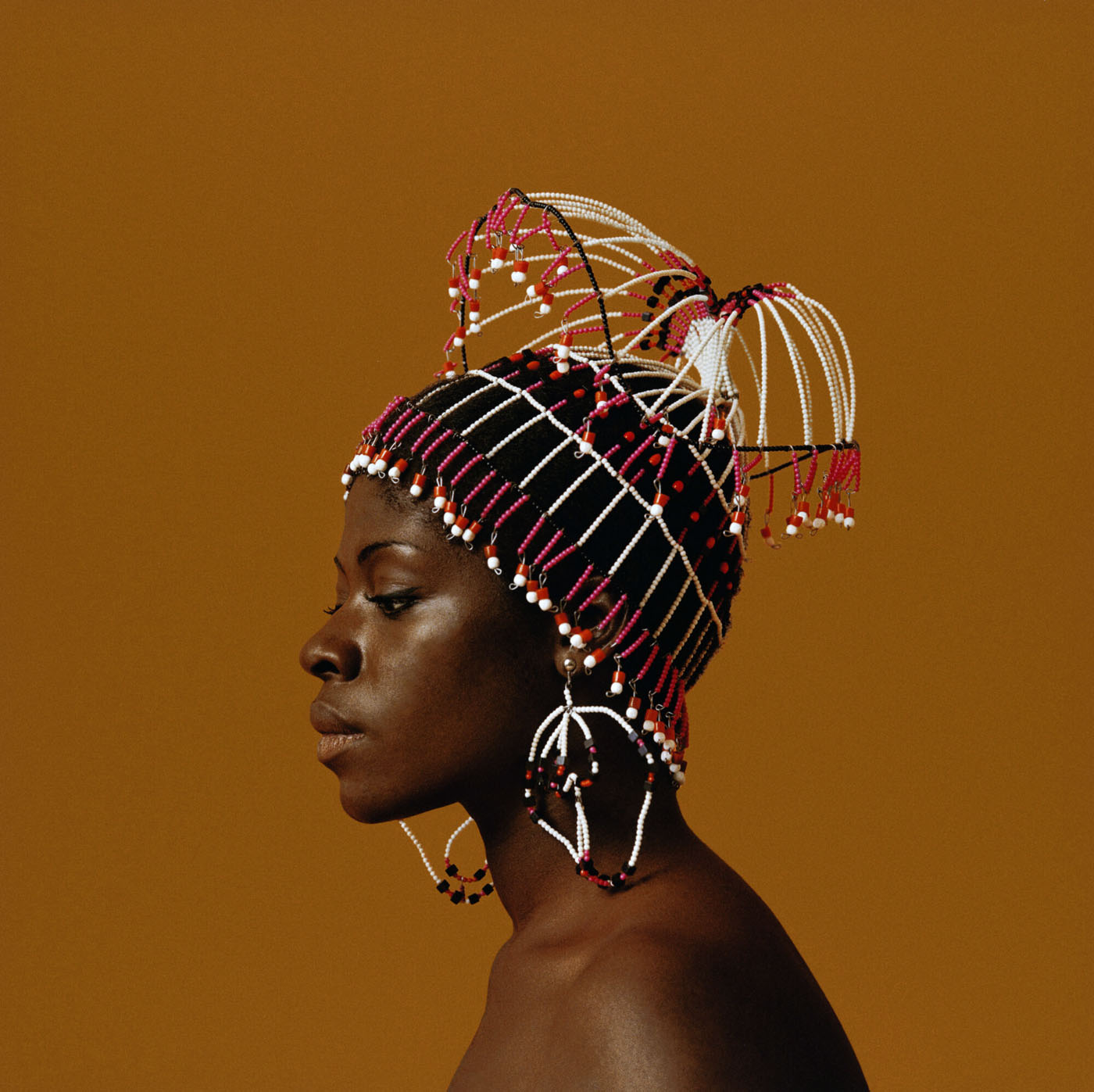
  

Kwame Brathwaite (American, 1938–2023) 'Untitled (Sikolo with Carolee Prince Designs)' 1964-1968


Kwame Brathwaite (American, 1938-2023)
Untitled (Sikolo with Carolee Prince Designs)
1964-1968
Inkjet print, printed 2024
30 x 30″ (76.2 x 76.2cm)
Museum of Modern Art, New York
Committee on Photography Fund


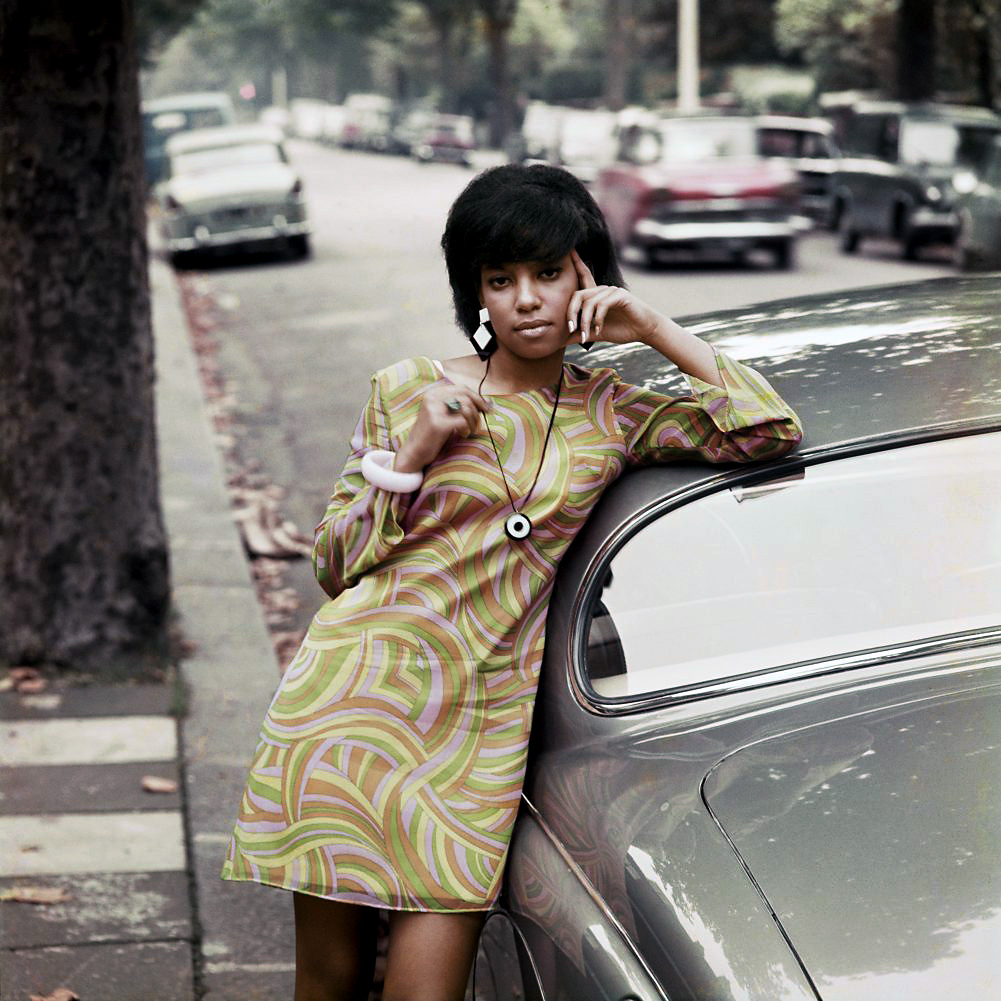
Brathwaite, for whom photography functioned at the nexus of Black artistic, political, and cultural expression, rhythmically documented jazz scenes in Harlem and the Bronx. In 1956 he cofounded the African Jazz-Art Society and Studios (AJASS) in the South Bronx, where he made structured portraits of the Grandassa Models, a group of women who were part of the Black Is Beautiful movement of the 1960s and ’70s. “Black Is Beautiful was my directive … It was a time when people were protesting injustices related to race, class, and human rights around the globe,” Brathwaite said. “I focused on perfecting my craft so that I could use my gift to inspire thought, relay ideas, and tell stories of our struggle, our work, our liberation. … Oppression still exists today, and we must keep fighting, keep on pushing until we are free.”

Gallery label from Ideas of Africa: Portraiture and Political Imagination, 2025
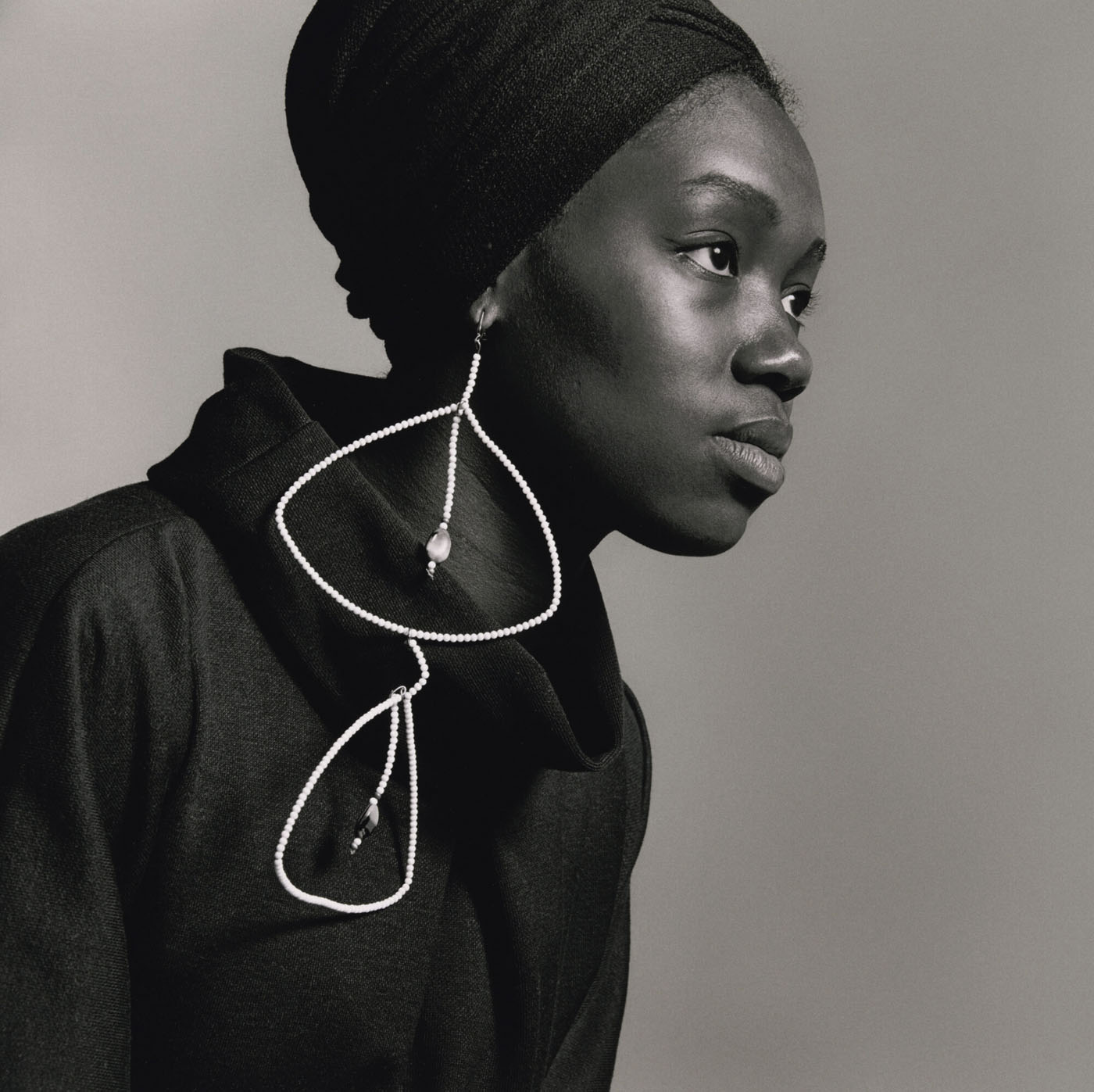
 

Kwame Brathwaite (American, 1938–2023) 'Untitled (Nomsa with Earrings)' 1964-1968


Kwame Brathwaite (American, 1938-2023)
Untitled (Nomsa with Earrings)
1964-1968
Inkjet print, printed 2024
15 x 15″ (38.1 x 38.1cm)
Museum of Modern Art, New York
Committee on Photography Fund
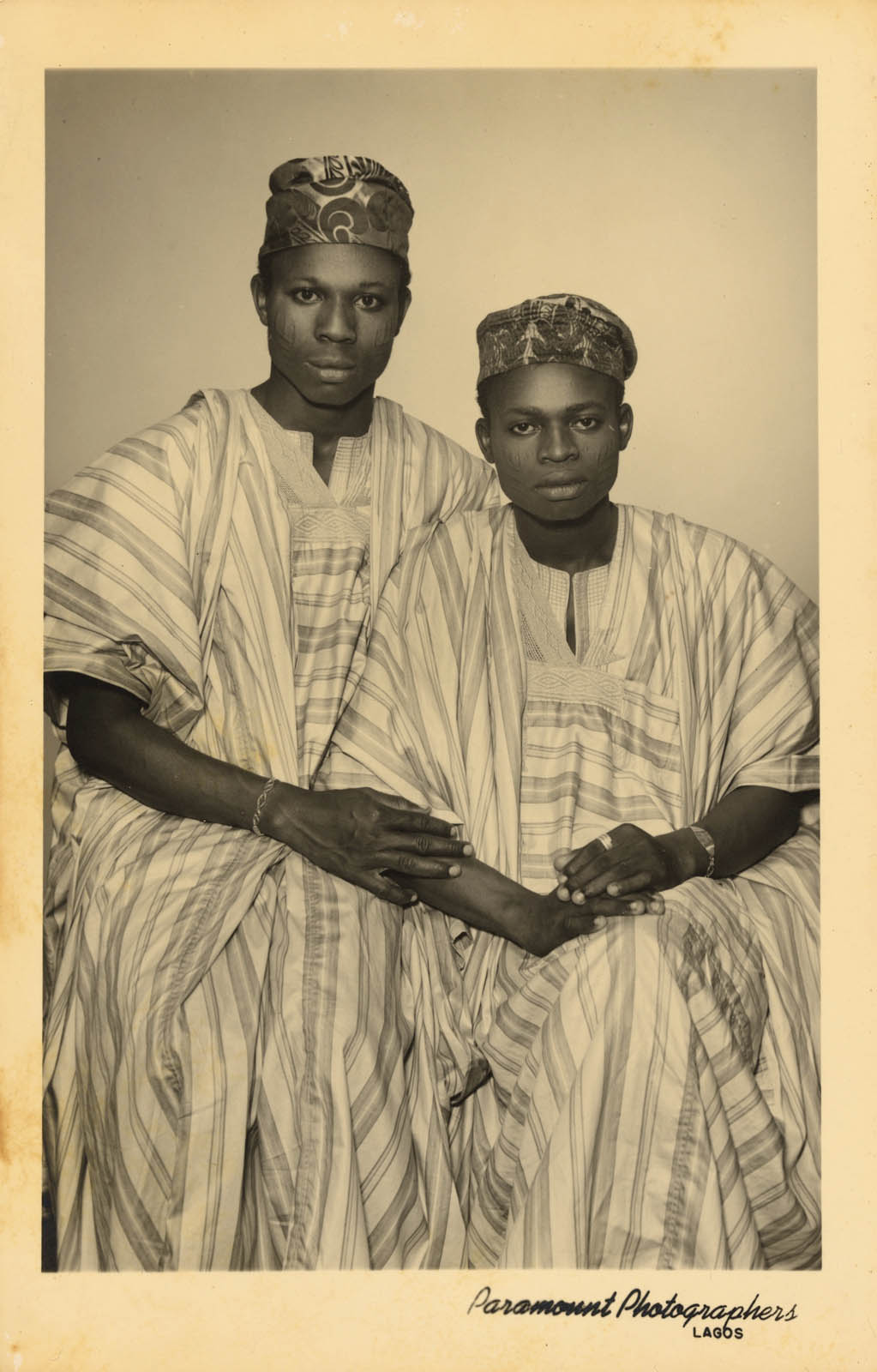
 

Felix Akinniran Olunloyo (Nigerian) 'Untitled' c. 1950-1970


Felix Akinniran Olunloyo (Nigerian)
Untitled
c. 1950-1970
Gelatin silver print
5 1/2 x 3 9/16″ (13.9 x 9cm)
Museum of Modern Art, New York
The Jean Pigozzi African Art Collection. Gift of Jean Pigozzi
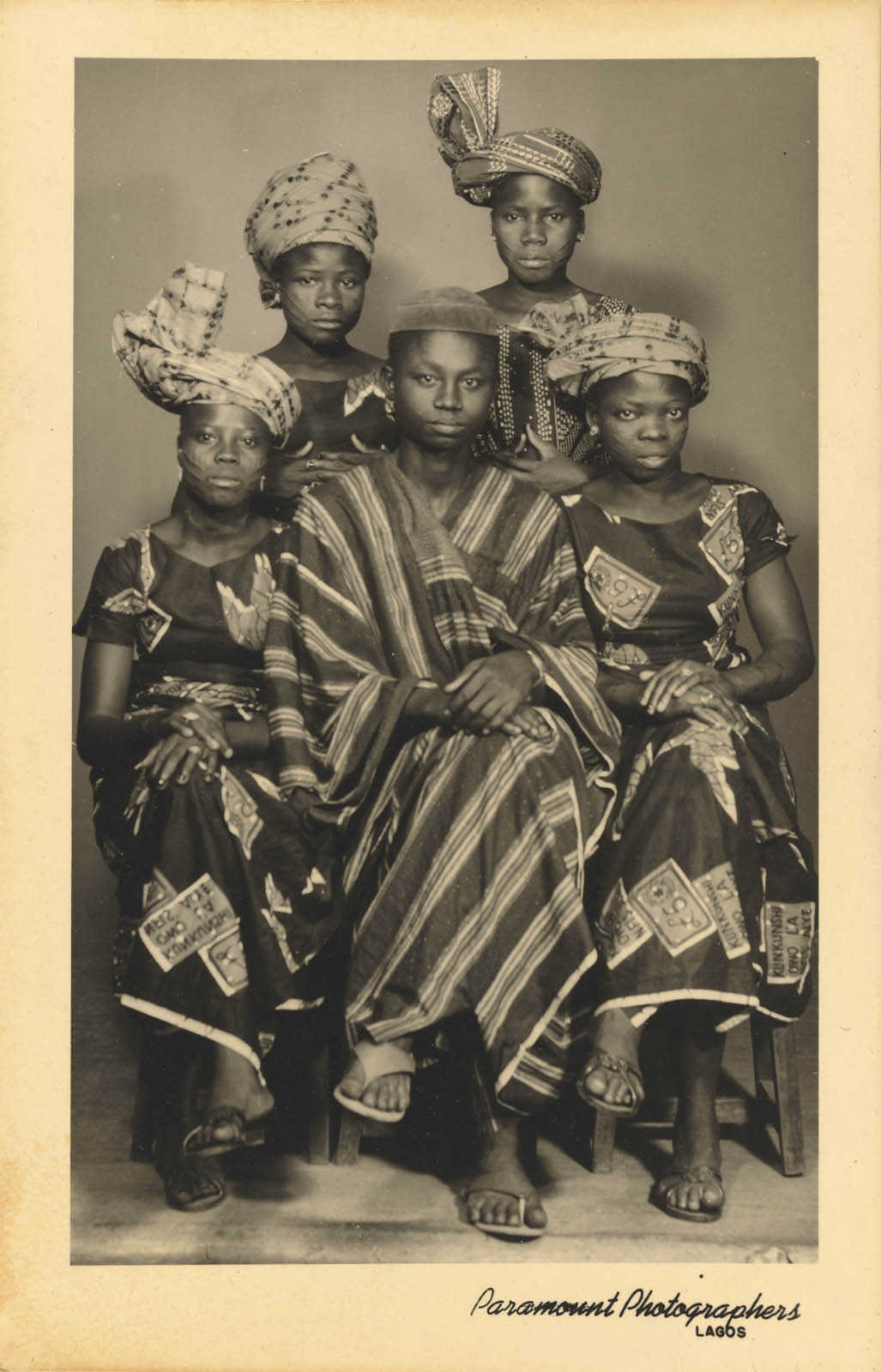
 

Felix Akinniran Olunloyo (Nigerian) 'Untitled' c. 1950-1970


Felix Akinniran Olunloyo (Nigerian)
Untitled
c. 1950-1970
Gelatin silver print
5 1/2 x 3 9/16″ (13.9 x 9cm)
Museum of Modern Art, New York
The Jean Pigozzi African Art Collection. Gift of Jean Pigozzi
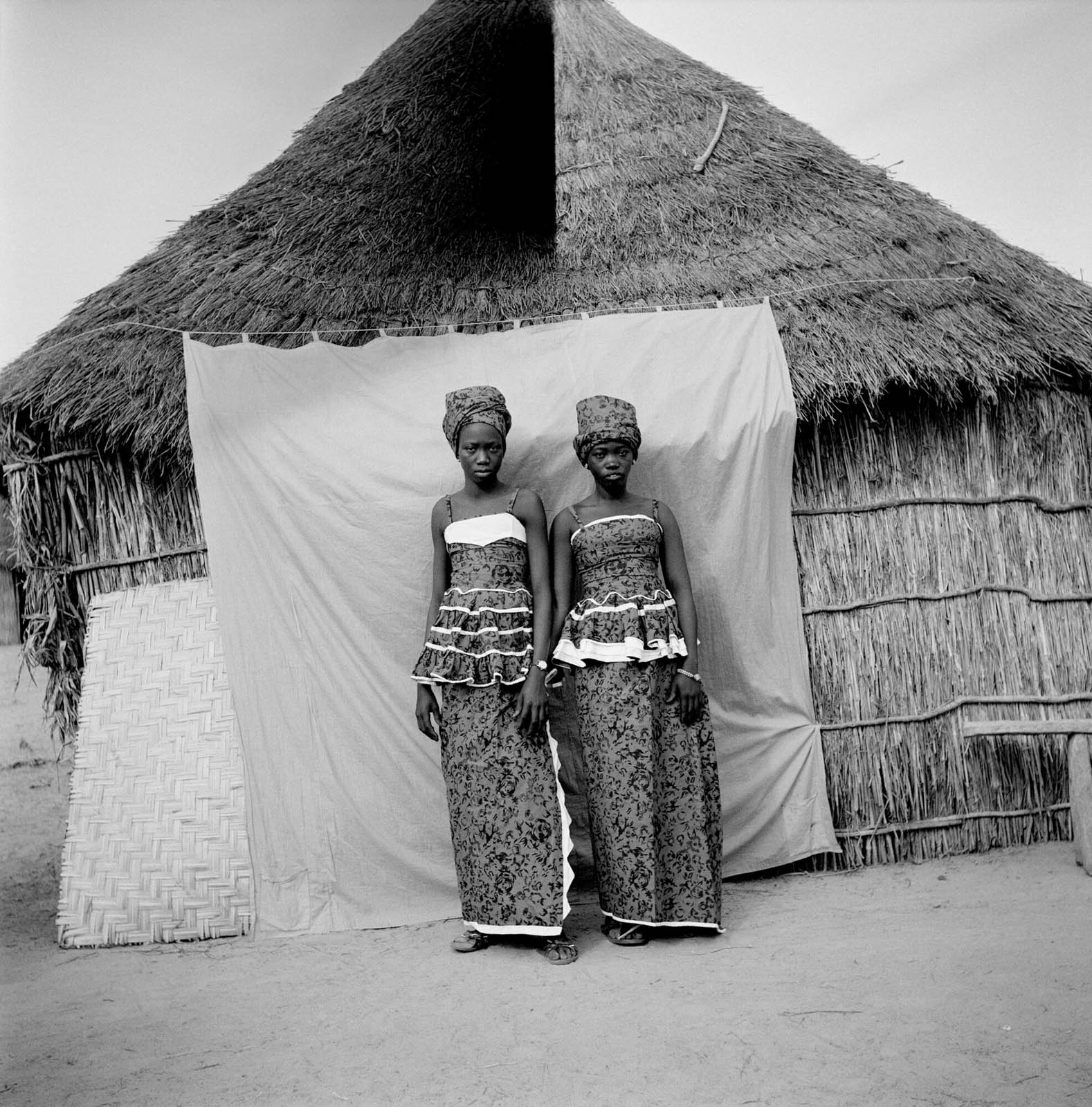
 

Oumar Ka (Senegalese, 1930–2020) 'Untitled (Two Women with Thatched Roof House)' 1959-1968


Oumar Ka (Senegalese, 1930-2020)
Untitled (Two Women with Thatched Roof House)
1959-1968
Gelatin silver print, printed 2024
17 × 17″ (43.2 × 43.2 cm)
Museum of Modern Art, New York
Gift of Bernard Lumpkin and Carmine Boccuzzi in honor of Darren Walker


Historian, Giulia Paoletti:  Getting a portrait done was a serious business, because this single portrait would circulate and stand for this person.

My name is Giulia Paoletti, and I am a researcher on photography and modern art in Africa.

In 1959, Oumar Ka  met a photographer who gave him a camera, so he learned by himself.  Photography in Senegal was extremely popular. Dozens and dozens of studios existed. But he started going from village to village taking portraits, and then he would go home, develop the negatives, and return the following week with the prints. So, you meet  his sitters by their own home, in towns, sometimes in this open landscape. And that is a major distinction from other photographers who worked in a studio.

In this photograph, we see two young women in matching outfits, posing for the camera against a white backdrop attached to this thatched-roof house.  The landscape, the architecture, the sky – this is part of who they are and how they want to be perceived.  They’re young, they’re serious, they’re confident.

As Senegal is shifting from a colonised place to an independent country, these are sitters that are making visible their experience of modernisation, which looked very different from the experience if someone lived in the capital city. There is often this tendency to flatten what is African modernity, and instead it’s important to show the variety of experiences and subjects at the time.

Text from the MoMA website
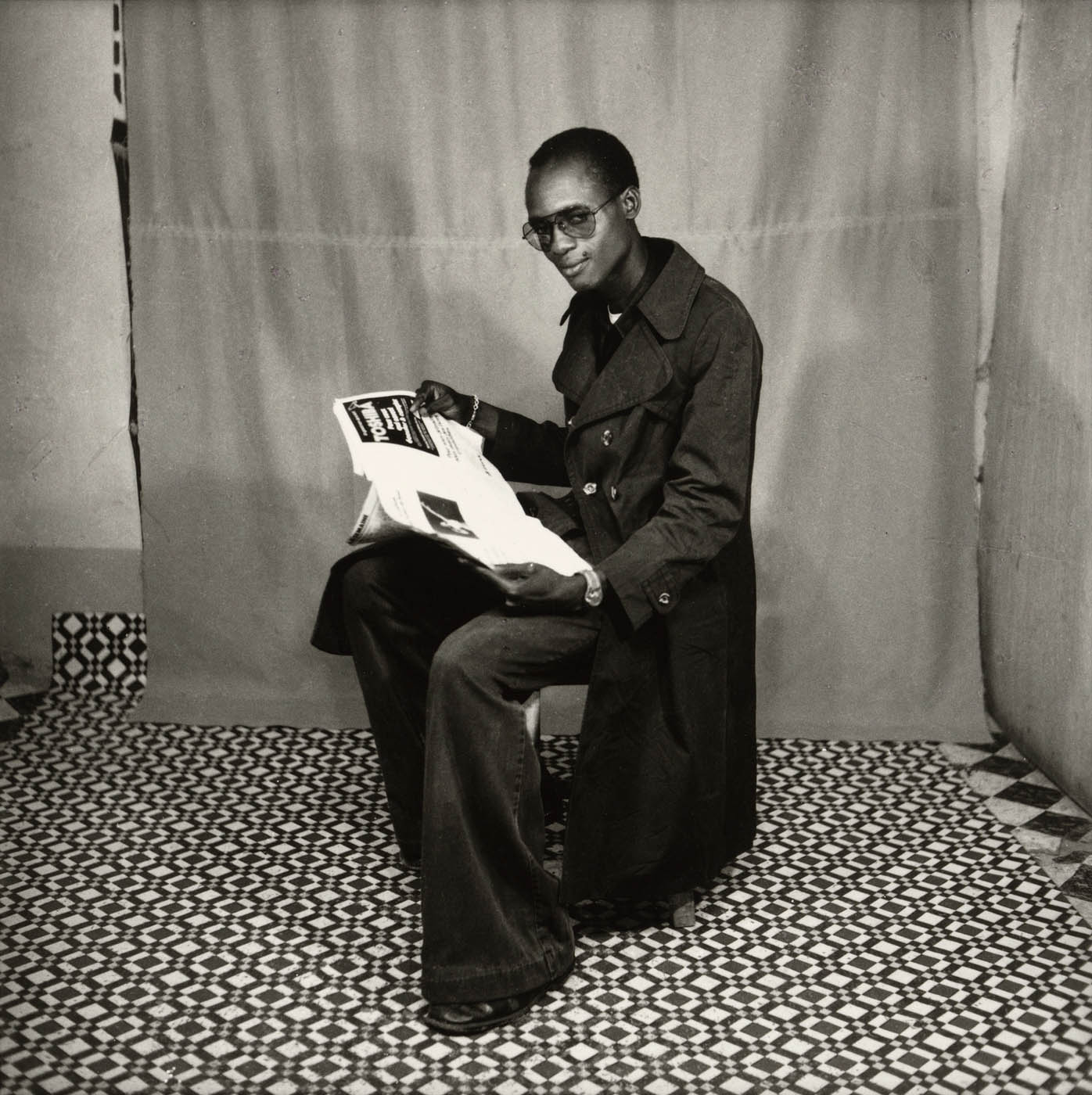
 

Sanlé Sory (Burkinabé, born 1943) 'L'Intellectuel' (The Intellectual) 1970-1985


Sanlé Sory (Burkinabé, b. 1943)
L’Intellectuel (The Intellectual)
1970-85
Gelatin silver print
8 1/8 x 8 1/8″ (20.6 x 20.6cm)
Museum of Modern Art, New York
Committee on Photography Fund


“Everyone chooses what they want in photography,” Sory once said. First opening his studio, Volta Photo, in Bobo-Dioulasso, Upper Volta (present-day Burkina Faso), in 1960, Sory organised bals poussières (or “dust balls,” named after the dirt clouds that dancers kicked up) in the fields of the nearby Kou Valley. The sound of his Multiblitz flash accompanied the percussion at parties, setting an elusive tone for his reportage de nuit (nighttime journalism). At Volta Photo, Sory’s portraits made possible a particular process of being and becoming for his sitters. He reflected the ideas that they wanted to communicate – whether to friends, lovers, strangers, or themselves.

Gallery label from Ideas of Africa: Portraiture and Political Imagination, 2025
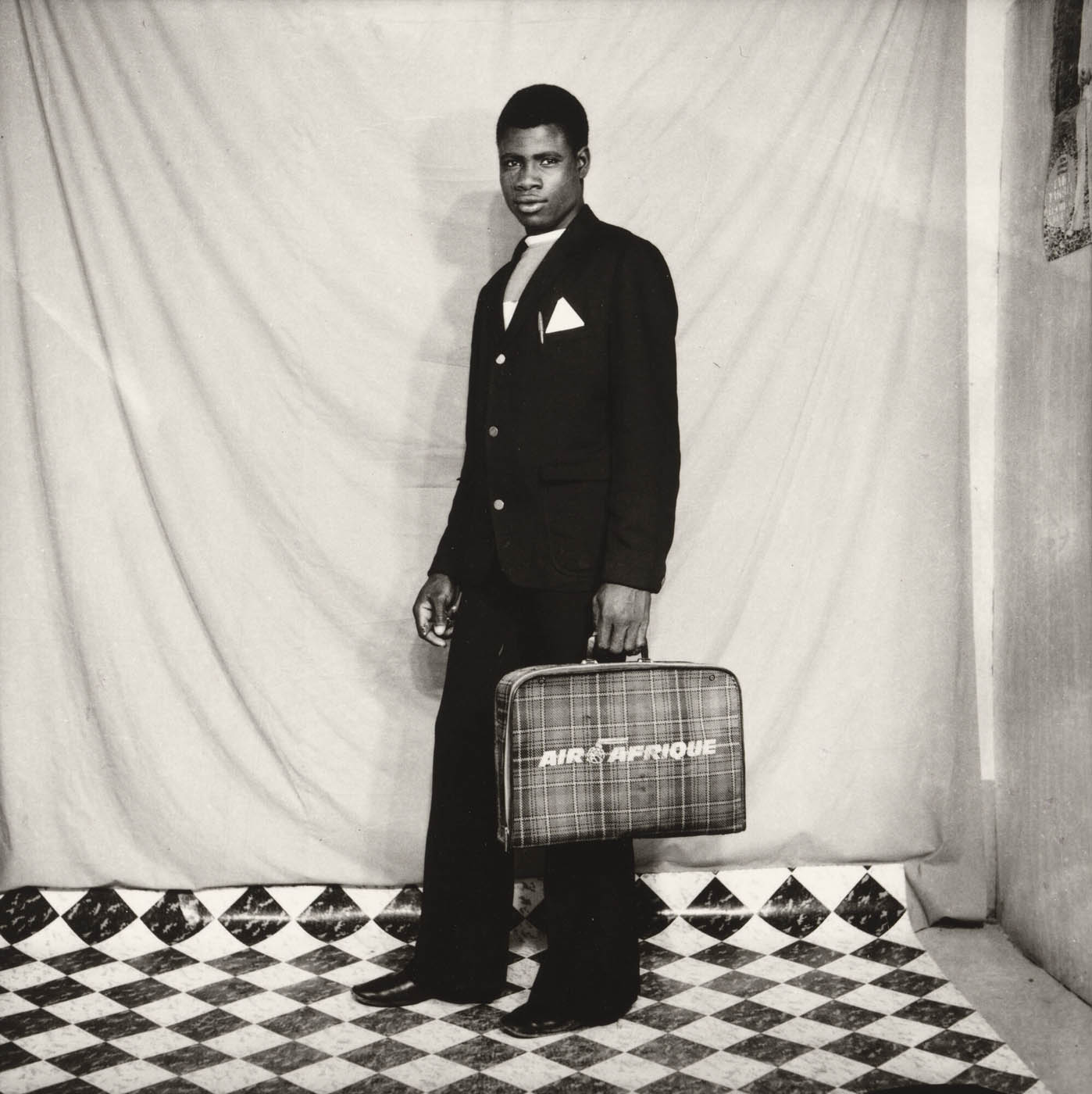
 

Sanlé Sory (Burkinabé, born 1943) 'Le Voyageur' (The Traveler) 1970-1985


Sanlé Sory (Burkinabé, b. 1943)
Le Voyageur (The Traveller)
1970-1985
Gelatin silver print
8 1/8 x 8 1/8″ (20.6 x 20.6cm)
Museum of Modern Art, New York
Committee on Photography Fund


Historian, Antawan I. Byrd:  One of the fundamental principles of studio portraiture, especially as it developed in West Africa, is that the studio becomes a kind of imaginative enterprise. You can go and be who you are, or you can go and be who you want to be.

Hello, I’m Antawan I. Byrd. I am a curator, and my research focuses on photography in West Africa during the mid-20th century.

Sanlé Sory opened up his own photography studio in Bobo-Dioulasso, one of the major cities in present-day Burkina Faso. This is a time right after independence, in 1960, and so there is this sense of optimism and hope about the sovereign nation.

Sory once remarked, “Fun is central to my work.” I think he’s speaking about the dynamics of collaboration. Oftentimes, clients would line up outside of the studio, and Sory would have a sort of menu that they can choose from. They could point and say, “Sory, I’d like this portrait here, and I’d like to pose with that prop there.”

Here we’re looking at six portraits, and they’re assuming different personalities. There’s one figure who appears as the intellectual, reading a newspaper. Another figure standing powerfully with his hands in the air as if he’s a boxer. There’s another wielding a Air Afrique briefcase, suggesting that he is a traveller.

 When we think about the studio as a kind of imaginative space, it’s possible that the figure with the briefcase has just come back from a trip. But it’s entirely possible that he’s never left  Bobo-Dioulasso at all, and holding that briefcase is a way to signal his ambition to travel.

Text from the MoMA website
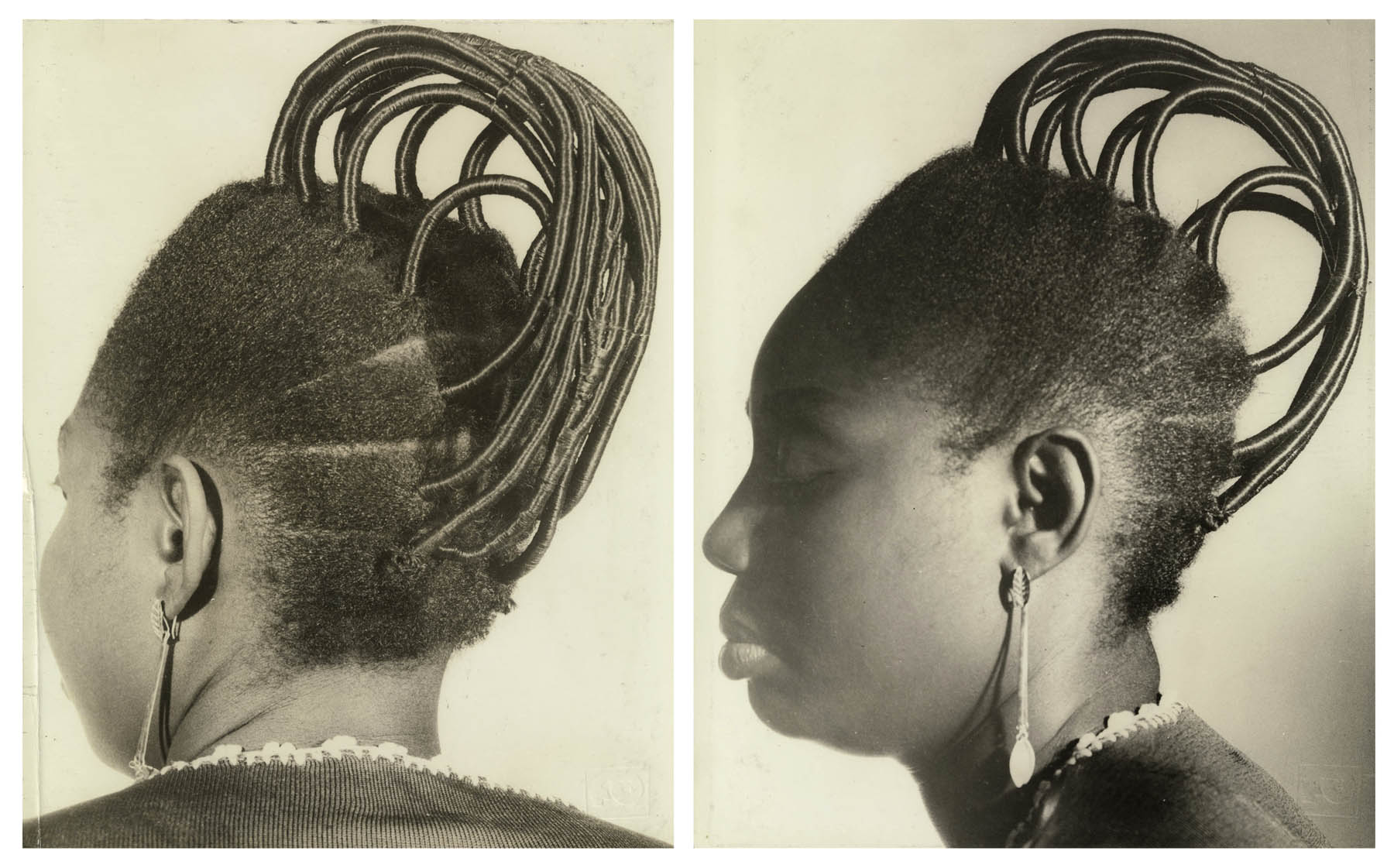
 

J.D. 'Okhai Ojeikere (Nigerian, 1930-2014) 'Brush Eko Bridge' 1973


J.D. ‘Okhai Ojeikere (Nigerian, 1930-2014)
Brush Eko Bridge
1973
Two gelatin silver prints
Each 11 x 8″ (27.9 x 20.3cm)
Museum of Modern Art, New York
The Family of Man Fund


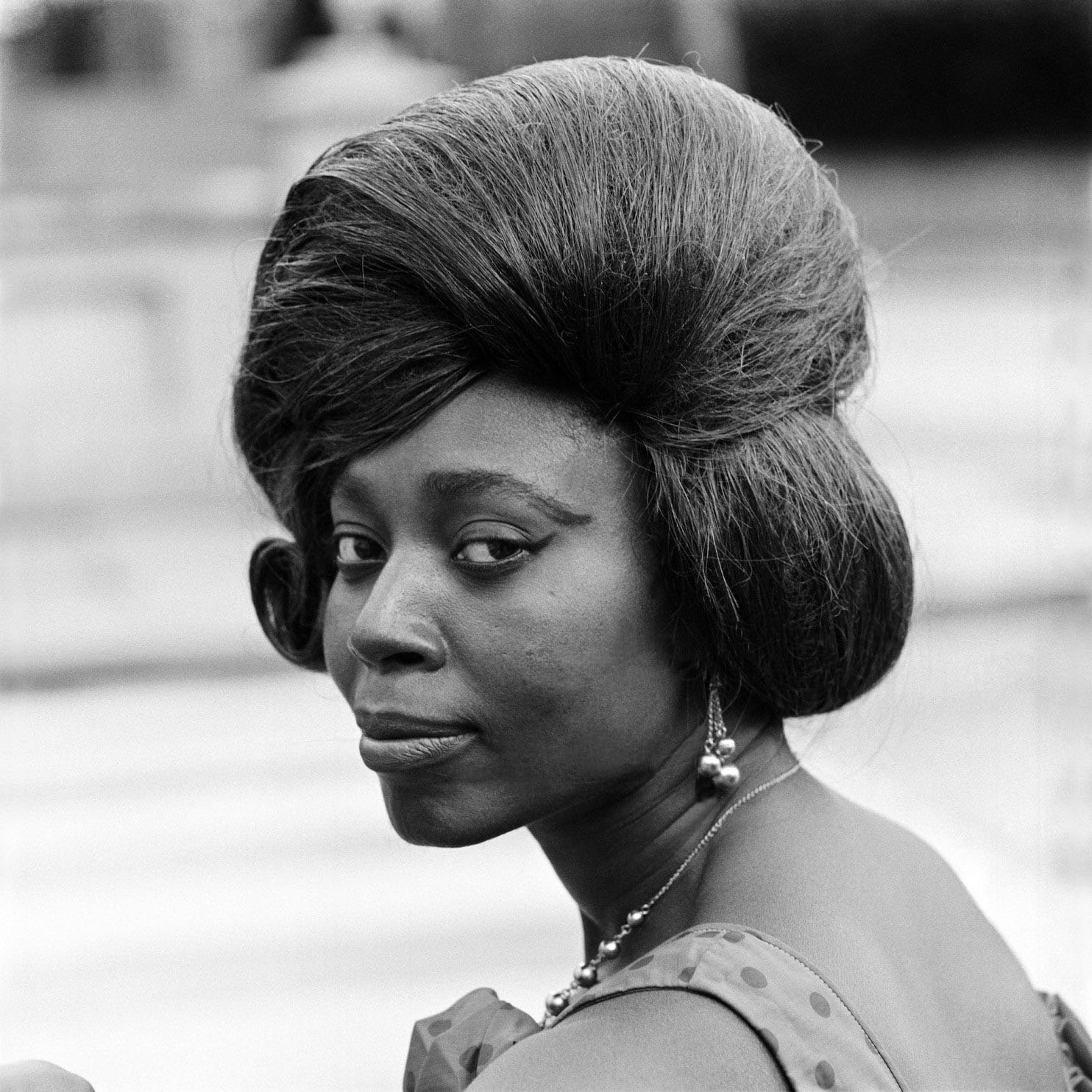
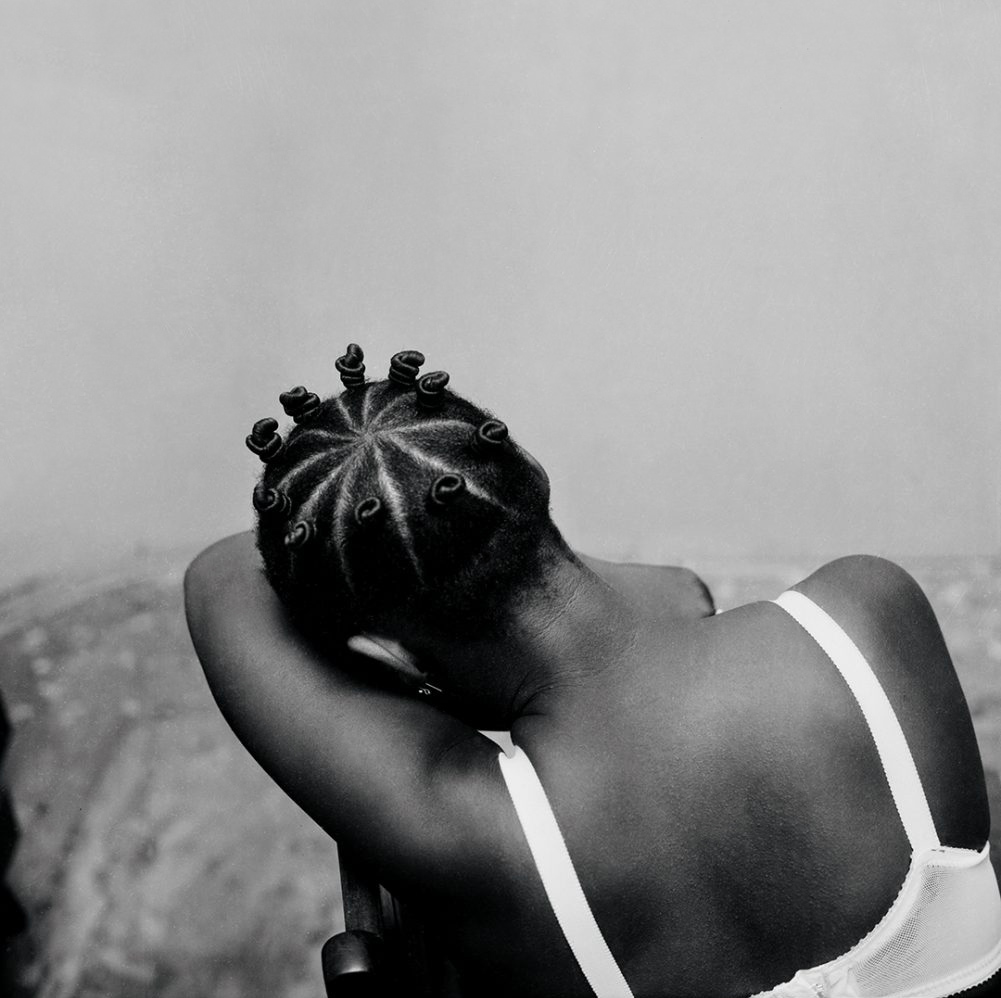
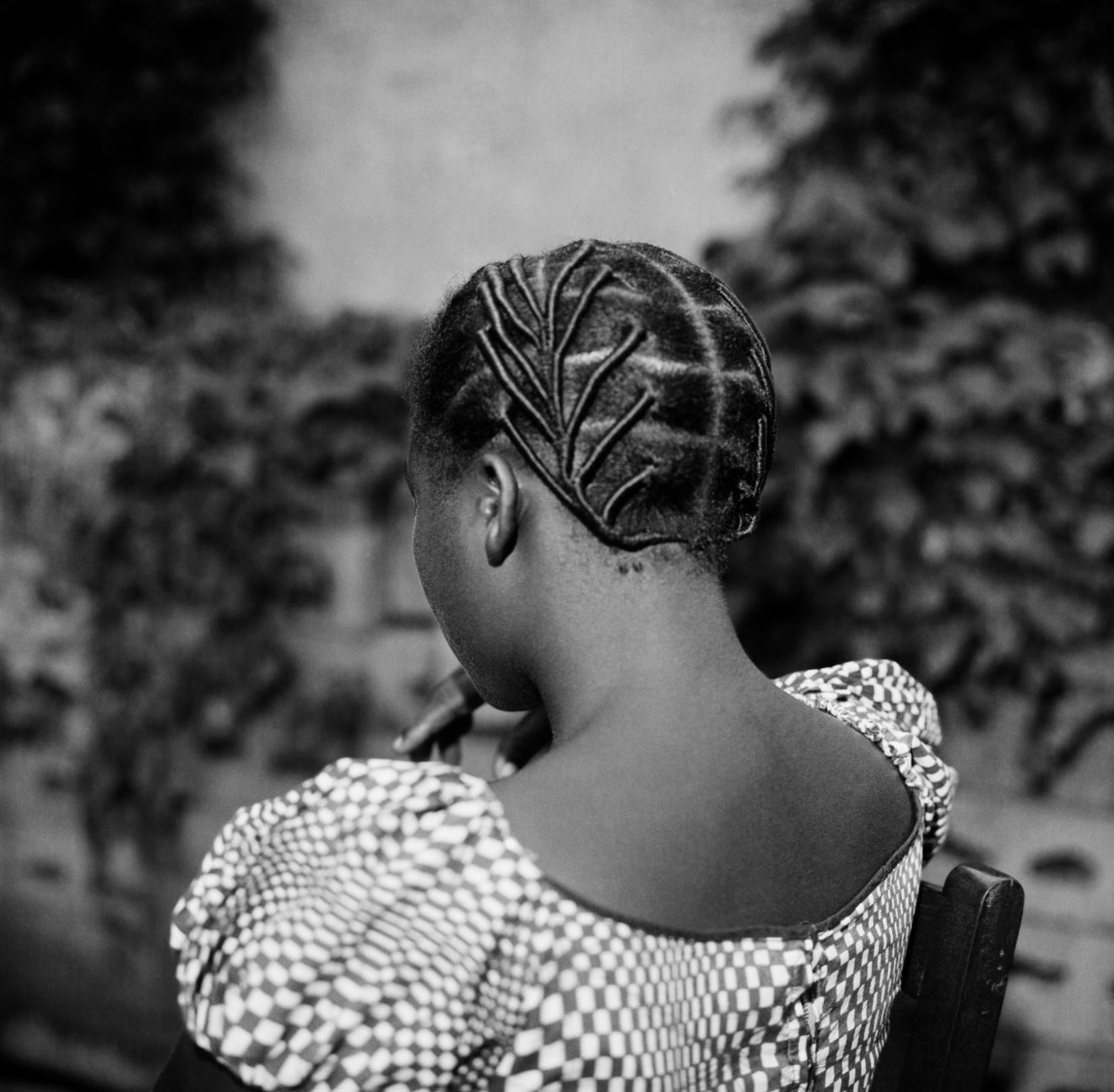
In 1968 Ojeikere embarked on a monumental project to document the myriad hairstyles worn by women across a newly independent Nigeria. Over the next seven years, he amassed more than one thousand photographs. Together, these rigorously composed images form a portrait of a nation undergoing social and physical transformation – with feminine beauty standards providing the ultimate symbol. In Brush Eko Bridge, clean lines appear across a woman’s carefully parted scalp, her hair threaded to sculptural effect. In profile her hairdo evokes the highways and architectural developments that were then populating the Lagos skyline.

Gallery label from Ideas of Africa: Portraiture and Political Imagination, 2025


Historian, Antawan I. Byrd:   The hairstyles project is often described as Ojeikere’s most ambitious body of work, and it’s a body of work that he pursued over nearly half a century.

My name’s Antawan Byrd. I’m an art historian and curator based in Chicago.

J. D. ‘Okhai Ojeikere evolved as a photographer alongside major political shifts in Nigerian history. 1960 is when the country attains independence from British rule.  Ojeikere began to attend many of the festivals that were celebrating traditional culture. Hair design was coming back into fashion after a long period of being regarded as retrograde by the colonial government.  It was at one of those festivals that he began to make his earliest images of Nigerian hairstyles.

 He was so fascinated by the nuances of the designs as you encounter them from different angles. Some of the hair designs are straightforward cornrow styles, whereas others are realised through the use of thread that’s been wrapped around strands of hair.

Many of the hair designs carry references to contemporary bridges and buildings in terms of their architectural design. That’s in part because after independence, the nation is being built, the skyline is being built, the hairstyles are being built. And so I think for Ojeikere, he was conscious of the multiplicity of changes that were happening. It’s simultaneously about hair and the tradition of hair, and yet it’s also about architecture and commerce and trade.

Text from the MoMA website


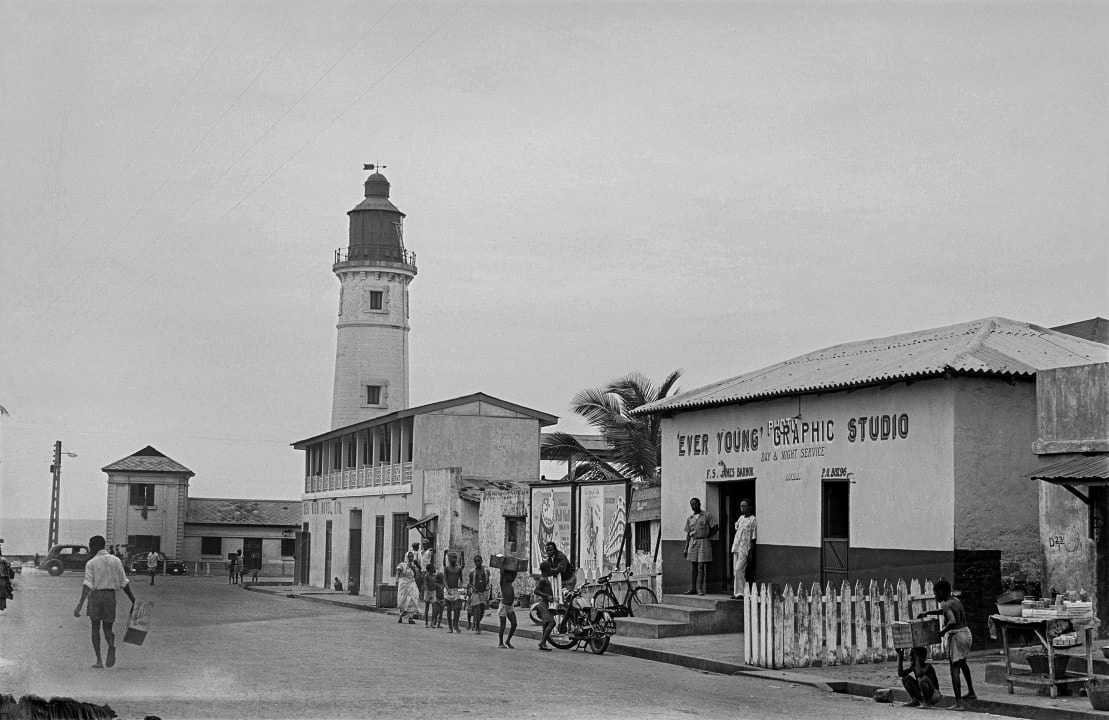
James Barnor (Ghanian, b. 1929) 'Ever Young studio. Accra' 1954-1959


James Barnor (Ghanaian, born 1929)
Ever Young Studio, Accra
c. 1954-1959
Gelatin silver print, printed 2018-20
9 1/2 x 9 1/2″ (24.1 x 24.1cm)
Museum of Modern Art, New York
Acquired through the generosity of Heidi and Richard Rieger


Artist, James Barnor:  Everything that happened in Accra passed through my street, and I call myself Lucky Jim. Anything that was happening, I was there.

I’m James Barnor. I was born on the 6th of June 1929. I had witnessed photography from a very small age because my mother’s brother was a professional photographer. My cousin was practicing in Accra, in Ghana. Because it was in the family, I must have thought, “Ah, this is something I could do in the future.”

Portraiture was number one. People are more important than places. I love people. ’53, I got a studio and I called it Ever Young. I thought about making people young, or even [laughs] better than they were before.

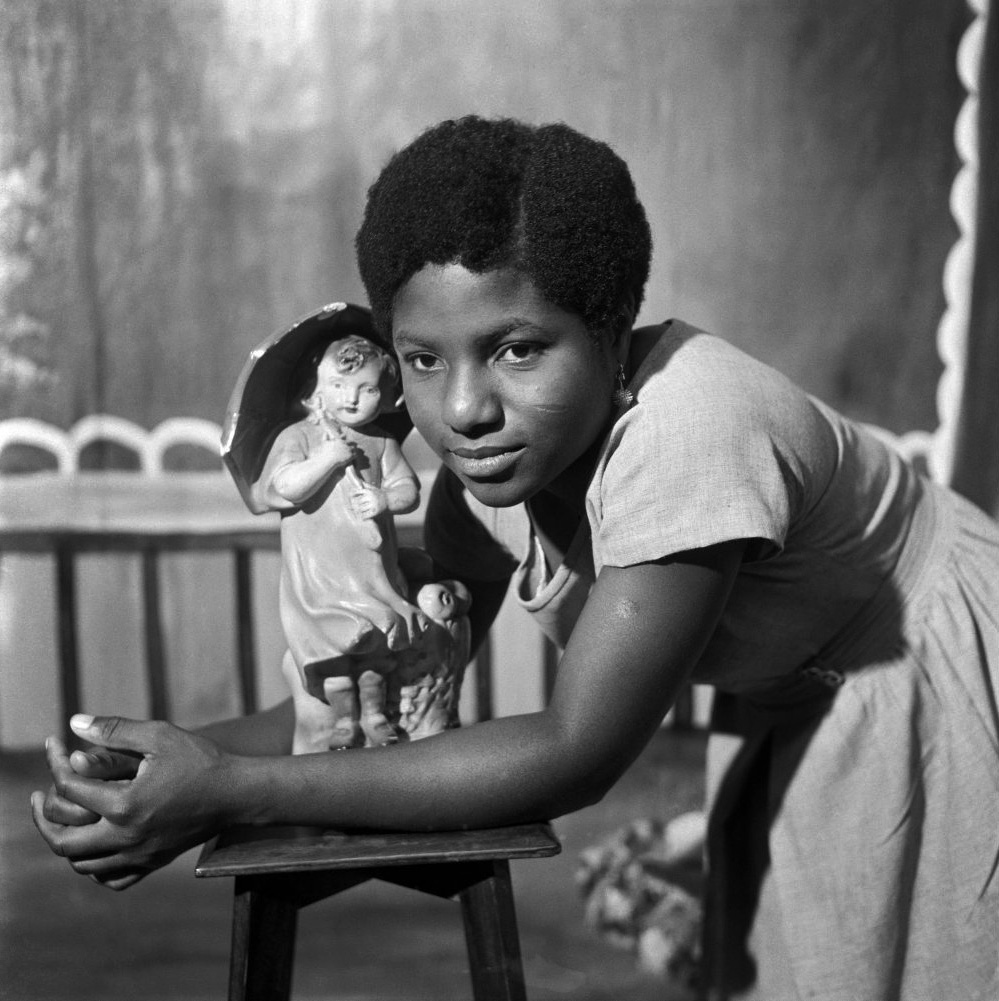
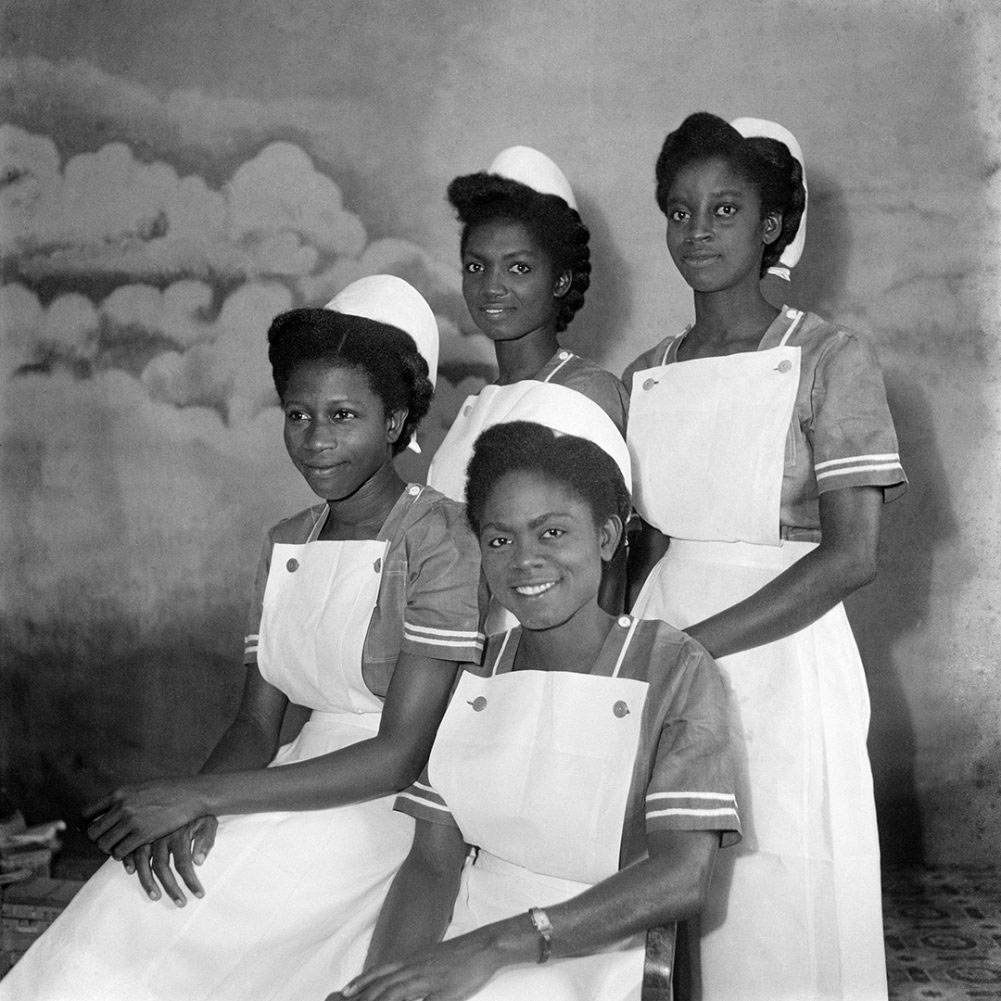
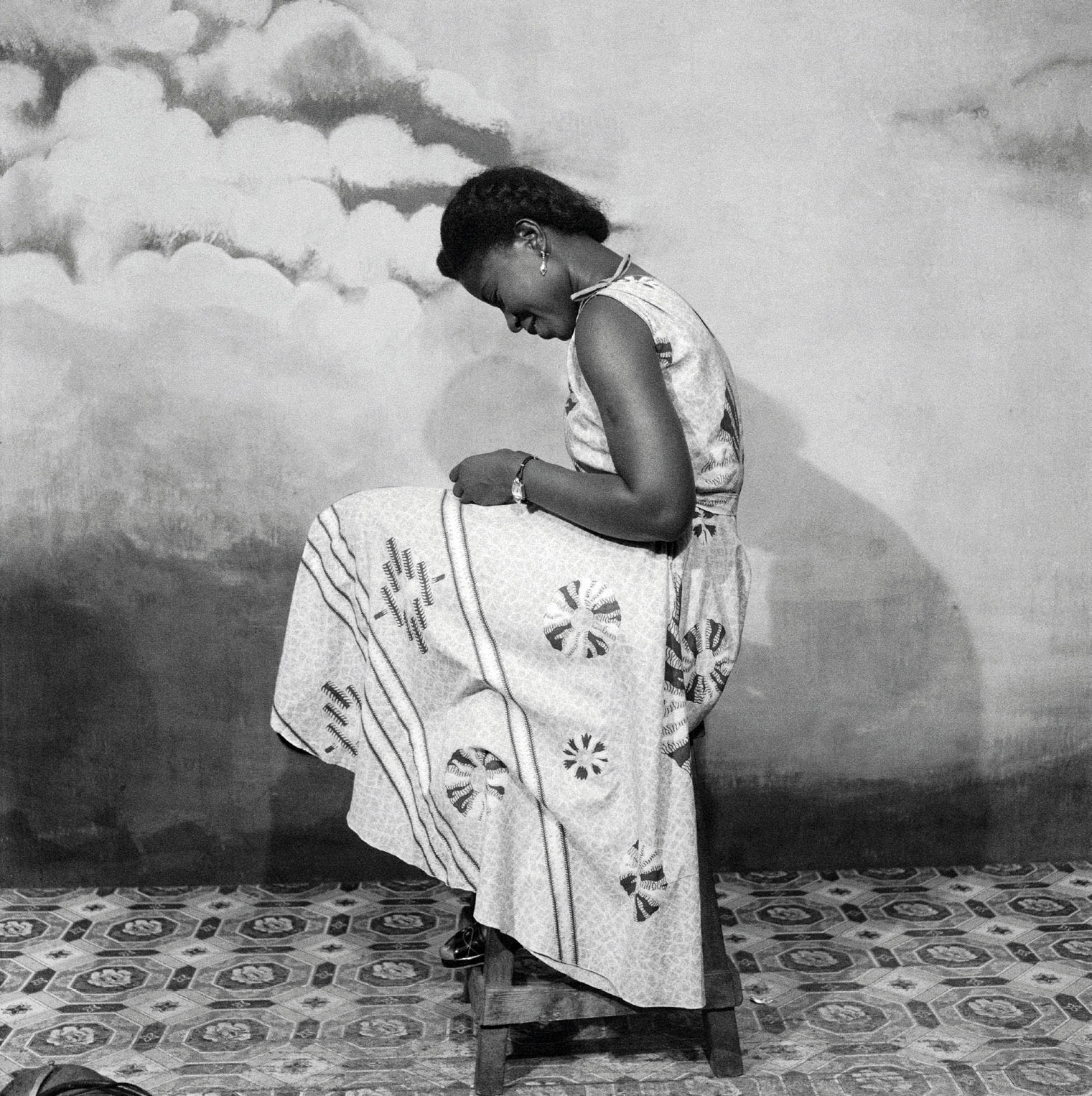
My sister was a nurse, and so I knew some nurses, and Evelyn was at the nursing training college. This is a portrait that I took of her. I had so many different backgrounds. And this was actually drawn on the wall. This is a sky. You can see the clouds. When I look at the different tones, from the white highlight to the black of the hair, it’s so very nice. This is a picture that I like very much.

I’m lucky to be alive and to be telling the story about my work. The inspiration that people get from my work will carry on and inspire others to develop their own way. The future is going to be grander because of photography.

Text from the MoMA website
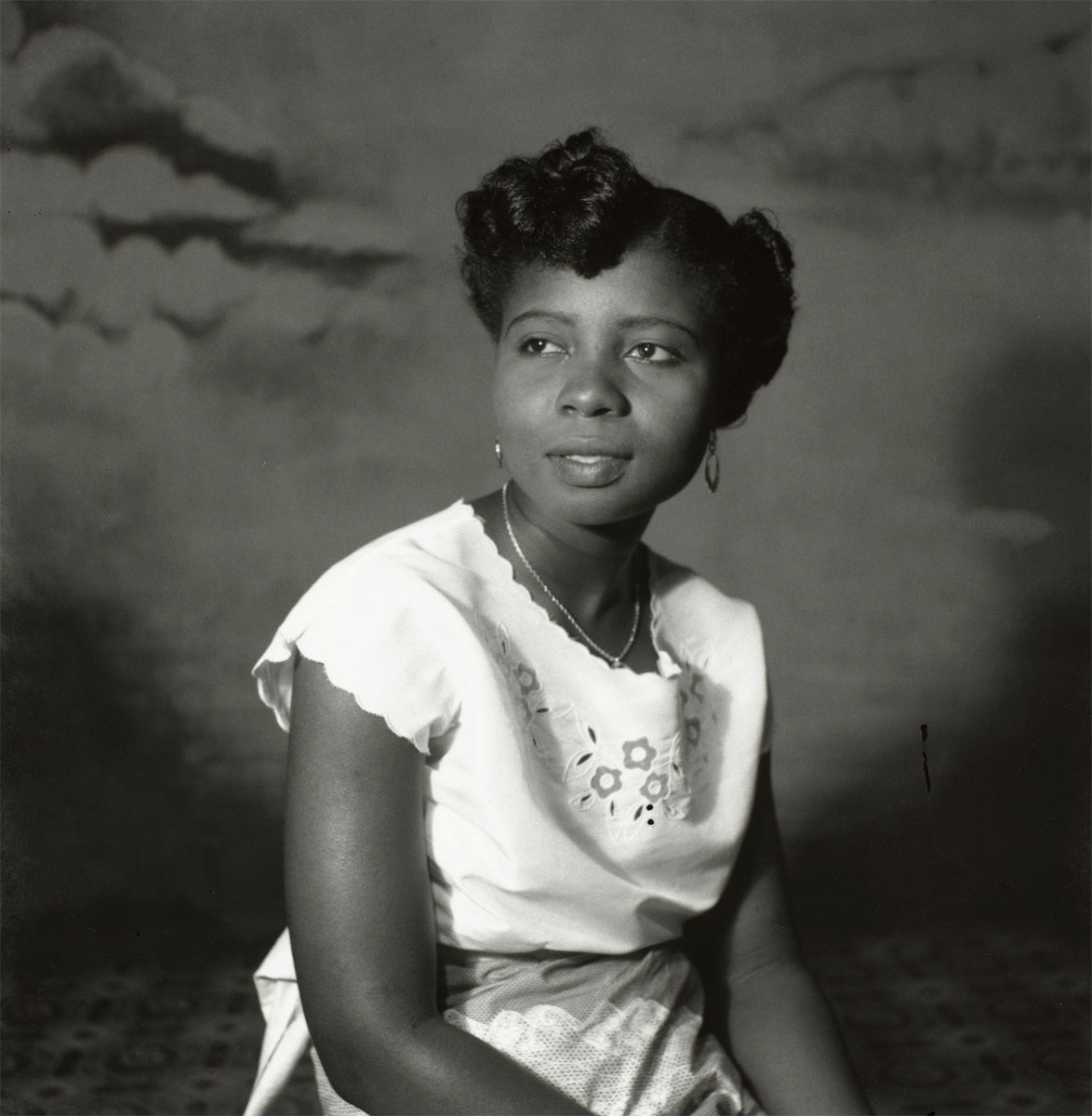
 

James Barnor (Ghanaian, born 1929) 'Portrait of Evelyn Abbew, Ever Young Studio, Accra' c. 1954-1959


James Barnor (Ghanaian, b. 1929)
Portrait of Evelyn Abbew, Ever Young Studio, Accra
c. 1954-1959
Gelatin silver print, printed 2018-2020
9 1/2 x 9 1/2″ (24.1 x 24.1cm)
Museum of Modern Art, New York
Acquired through the generosity of Ruth Nordenbrook
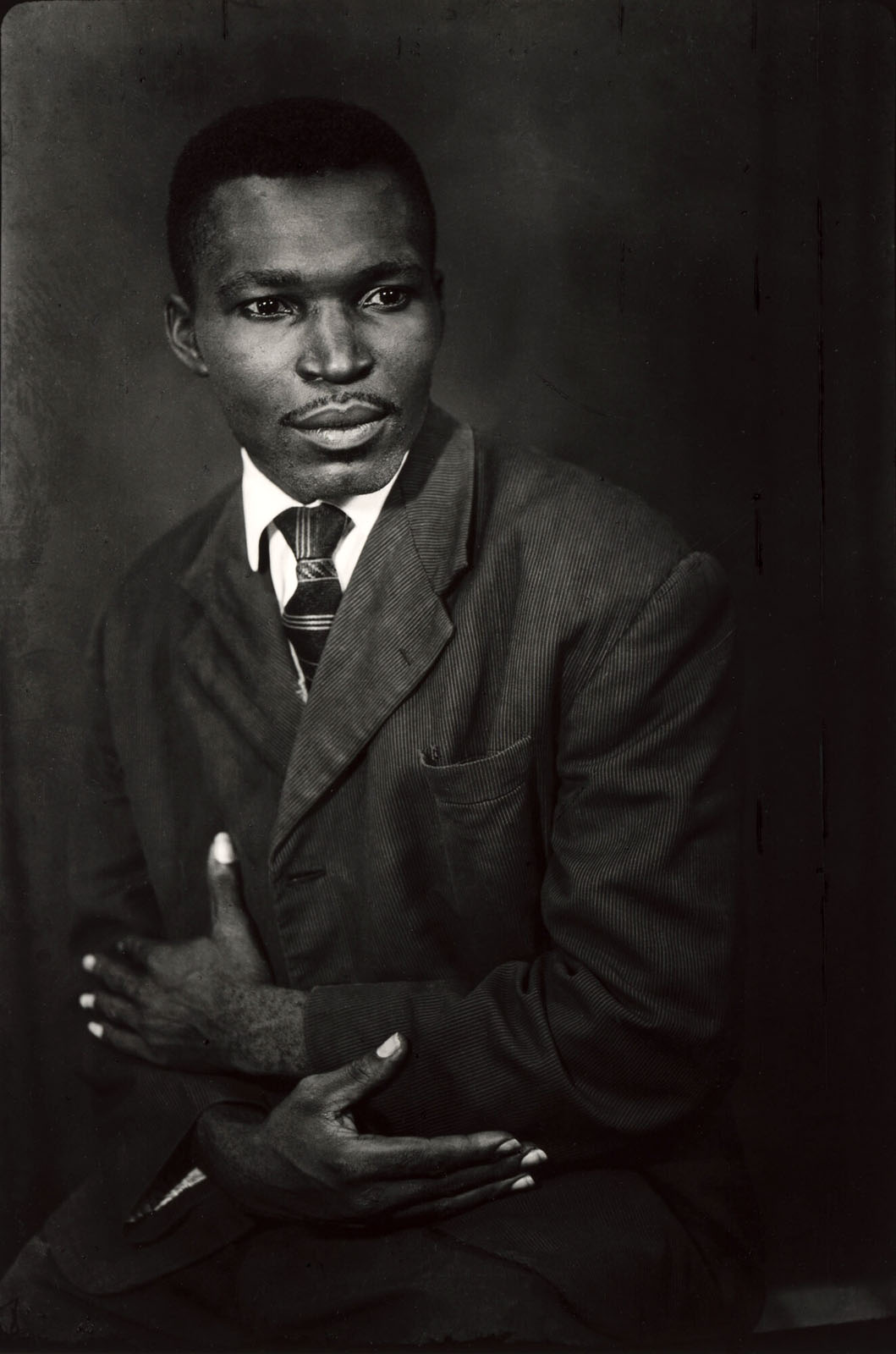
 

Jean Depara (Congolese, born Angola, 1928–1997) 'Un Jazzeur (Jazzman)' 1960


Jean Depara (Congolese born Angola, 1928-1997)
Un Jazzeur (Jazzman)
1960
Gelatin silver print, printed later
23 x 19″ (58.4 x 48.3cm)
Museum of Modern Art, New York
The Jean Pigozzi African Art Collection. Gift of Jean Pigozzi


Historian, Sandrine Colard:  Depara’s images, when you look at them, you see mostly people partying at nighttime or in his studio. So you don’t directly see people articulating a political discourse, but their bodies are.

My name is Sandrine Colard, and I’m a historian of African art and photography.

Jean Depara was living in Léopoldville, which will become Kinshasa. It was the capital of the Belgian Congo, seen as a very modern city for Africa at that time.

This is a portrait of a Black man in a suit and tie. The way the arms of this man are folded upon themselves – he’s touching himself in a delicate way.   Under a colonial system,  Black men are seen as a workforce. Your body is to be put into service of colonial power,  and so the very fact of dressing up,  this delicate relationship to his own body – for pleasure, enjoyment, beauty – is just something that’s radically opposing the construction of Black masculinity in the colonial Congo.   

The fact that it’s also entitled Jazzeur makes a connection with music. Jazz is a diasporic language throughout the world, and a musician is definitely not someone who is enlisted into the colonial economy. All of that together, I would say, is really a sort of different portrait being constructed for Congolese masculinity at that time.

Text from the MoMA website
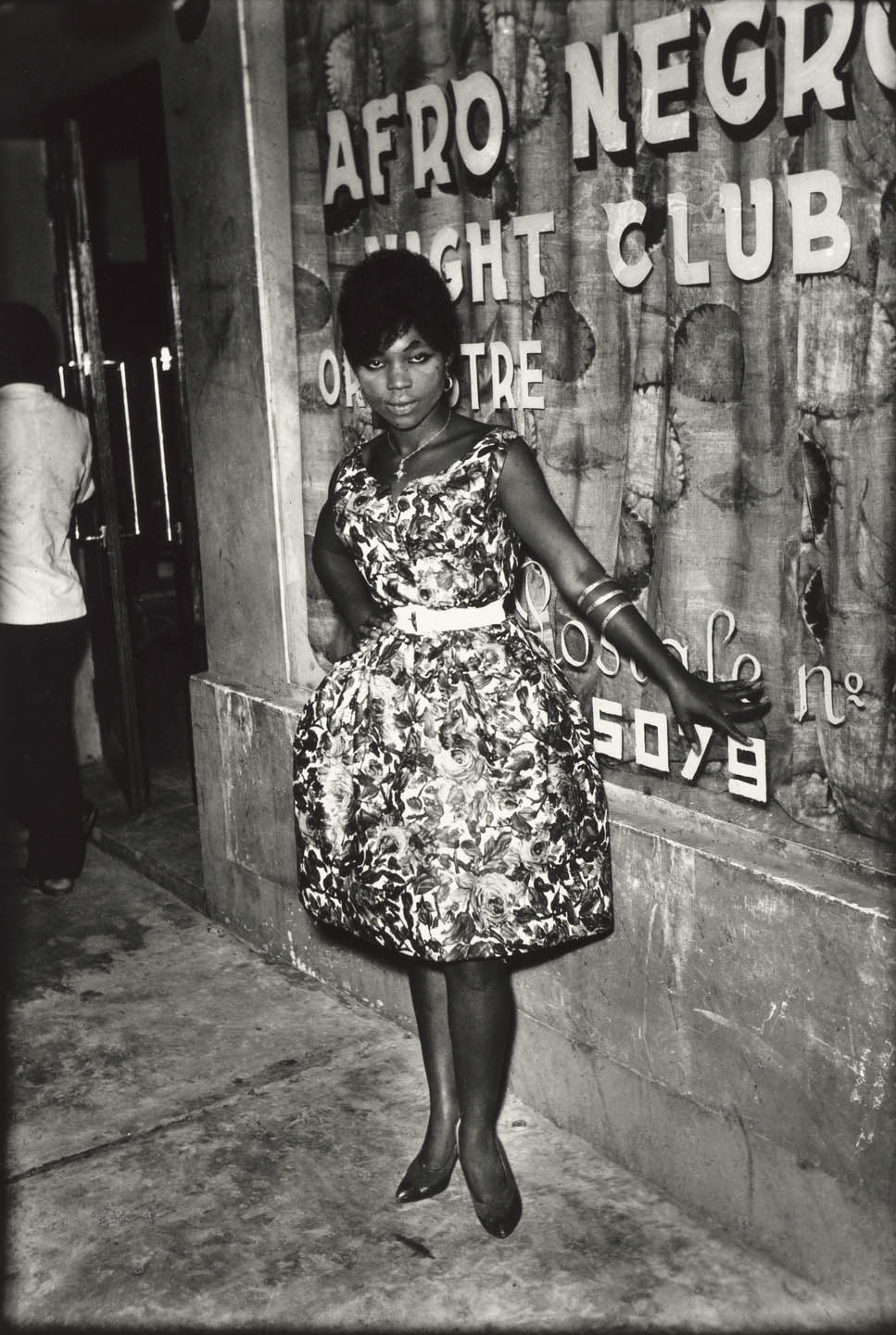
 

Jean Depara (Congolese, born Angola, 1928-1997) 'Una Moziki' c. 1960


Jean Depara (Congolese, born Angola, 1928-1997)
Una Moziki
c. 1960
Gelatin silver print, printed later
23 x 19″ (58.4 x 48.3cm)
Museum of Modern Art, New York
The Jean Pigozzi African Art Collection. Gift of Jean Pigozzi


Jean Depara (Congolese, born Angola, 1928–1997) 'Le Progrès' (The Progress) 1975


Jean Depara (Congolese, born Angola, 1928-1997)
Le Progrès (The Progress)
1975
Gelatin silver print, printed later
15 3/4 x 11 13/16″ (40 x 30cm)
Museum of Modern Art, New York
The Jean Pigozzi African Art Collection. Gift of Jean Pigozzi
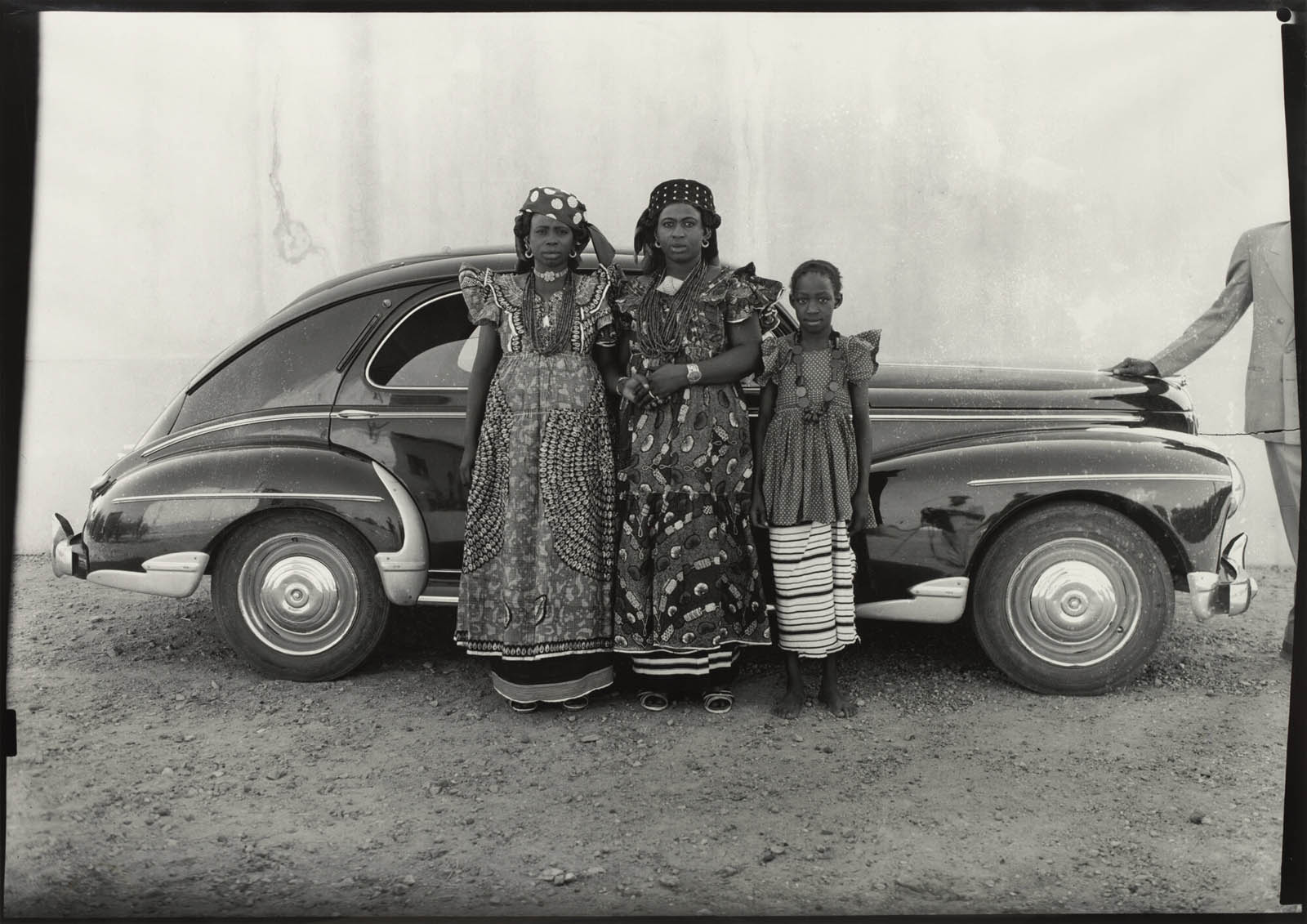
 

Seydou Keïta (Malian, 1923–2001) 'Untitled' 1954


Seydou Keïta (Malian, 1923-2001)
Untitled
1954
Gelatin silver print, printed later
46 15/16 x 65 7/8″ (119.2 x 167.3cm)
Museum of Modern Art, New York
The Jean Pigozzi African Art Collection. Gift of Jean Pigozzi


Introduction

Curator, Oluremi C. Onabanjo: I’m Oluremi Onabanjo. I’m the Peter Schub Curator of Photography at The Museum of Modern Art.

This exhibition includes some of the most iconic image-makers working across cities in West and Central Africa, at a moment when the continent was transitioning from European colonial powers to independent nations run by Africans themselves. Within this context, people are really interested in what it means to be themselves. What are the dreams you have, the places you want to go? How do you see yourself? Photographic portraits are the perfect way to wrestle with these questions.

 And that’s important for understanding the great Seydou Keïta, who was working in Bamako, in French Sudan, but which became, in 1960, an independent Mali.  People who came to Keïta’s studio were interested in being seen as connected to a cosmopolitan world. Keïta was extremely proud of making people look beautiful.  He used sunlight for all of his photographs. He had a number of props – watches, radios, rings – to gesture to their investment in this global imaginary that they are constructing with Keïta.

With this exhibition, I encourage you to really think about how a portrait is made. These are deliberately constructed compositions, and when we are attentive to those moves, we might see things anew.

Text from the MoMA website
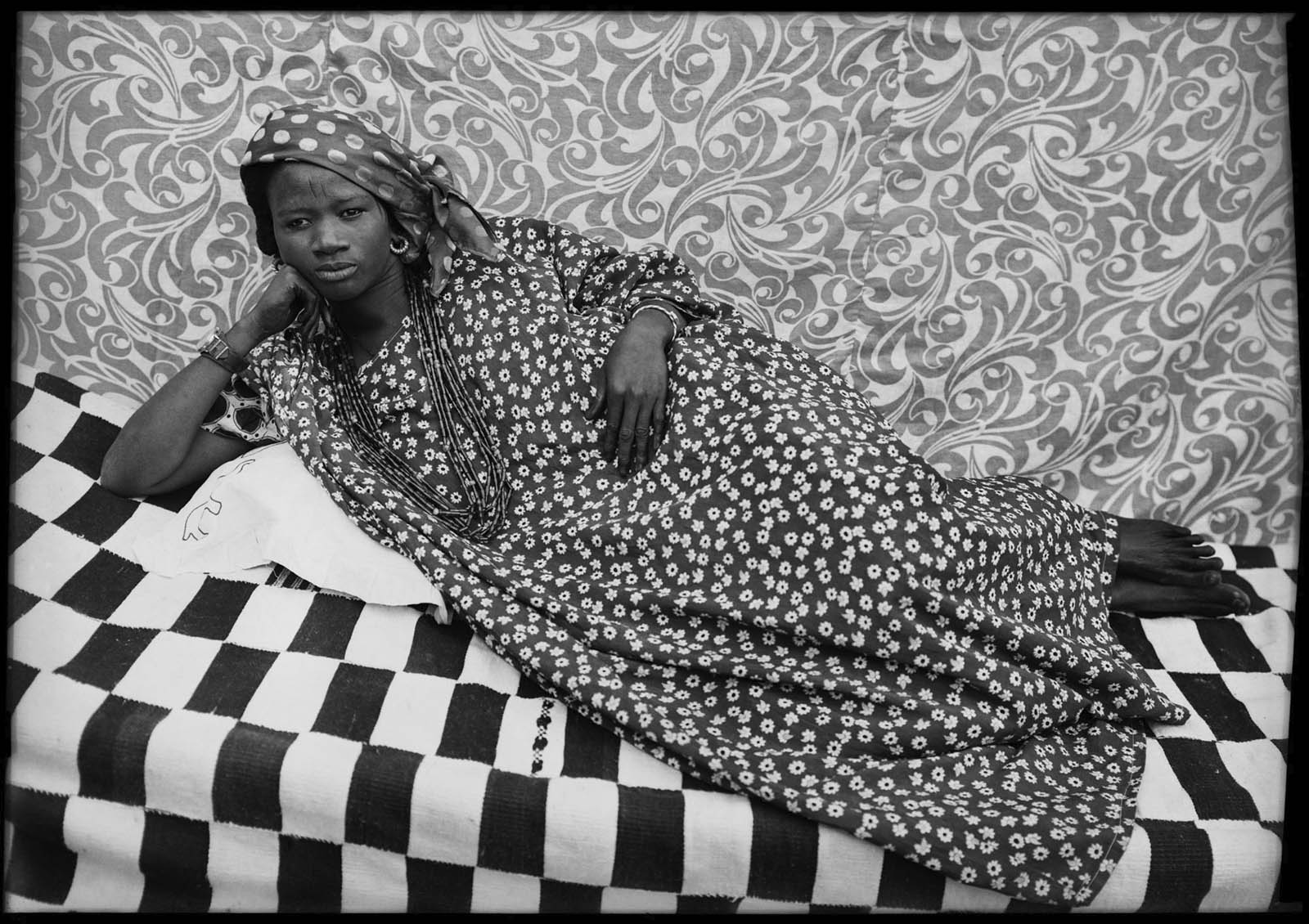
 

Seydou Keïta (Malian, c. 1921-2001) 'Untitled' 1953-1957, printed c. 1994-2001


Seydou Keïta (Malian, 1923-2001)
Untitled (Bamako)
1956-1957
Gelatin silver print, printed 1997
15 9/16 x 22 1/8″ (39.5 x 56.2cm)
Museum of Modern Art, New York
The Family of Man Fund
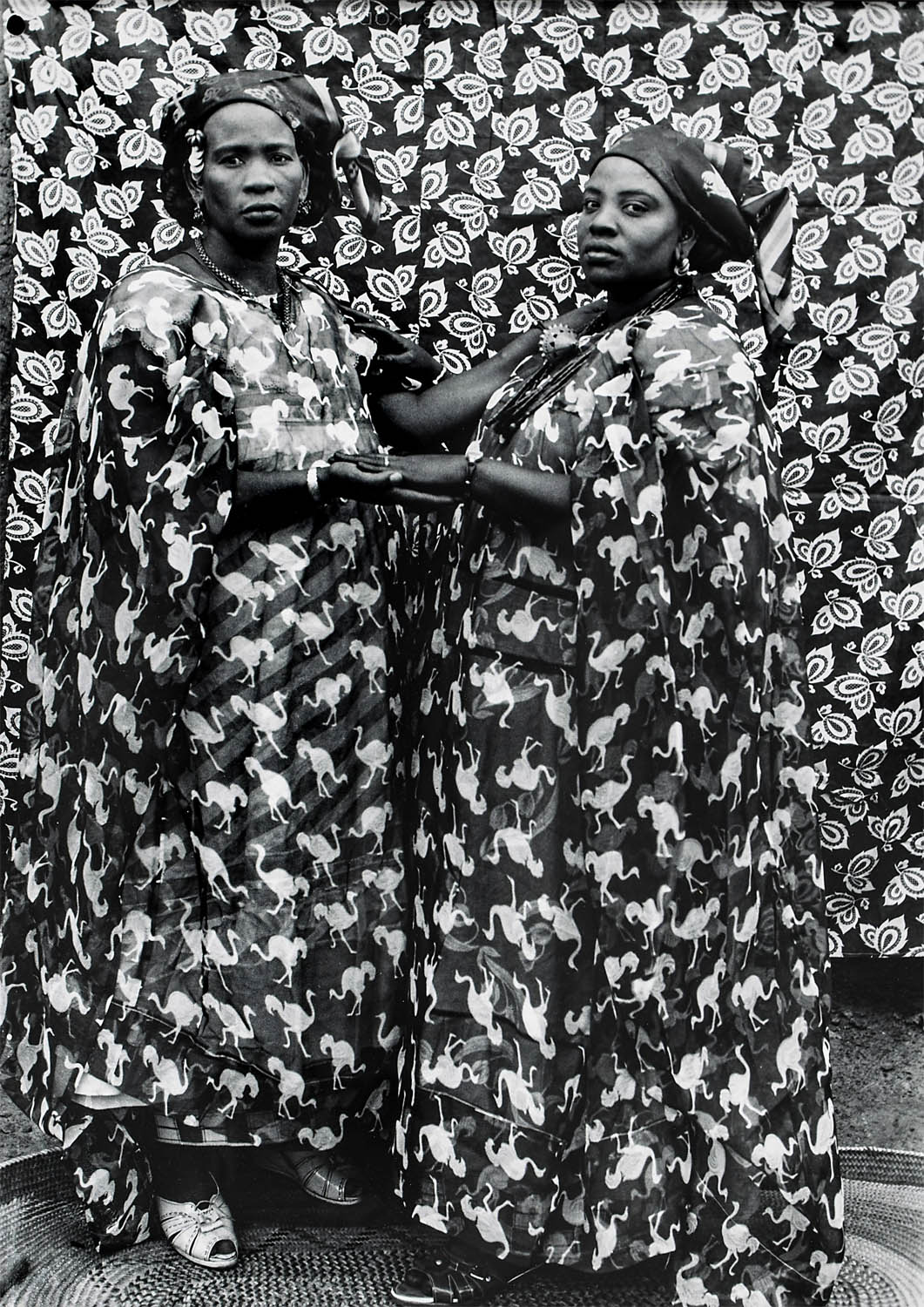
 

Seydou Keïta (Malian, 1923–2001) 'Untitled' 1956


Seydou Keïta (Malian, 1923-2001)
Untitled
1956
Modern gelatin silver print
Image: 22 3/8 x 15 11/16″ (56.8 x 39.8cm)
Frame: 30 3/16 x 23 7/16″ (76.7 x 59.6cm)
Sheet: 23 7/8 x 19 15/16″ (60.7 x 50.7cm)
Museum of Modern Art, New York
The Jean Pigozzi African Art Collection
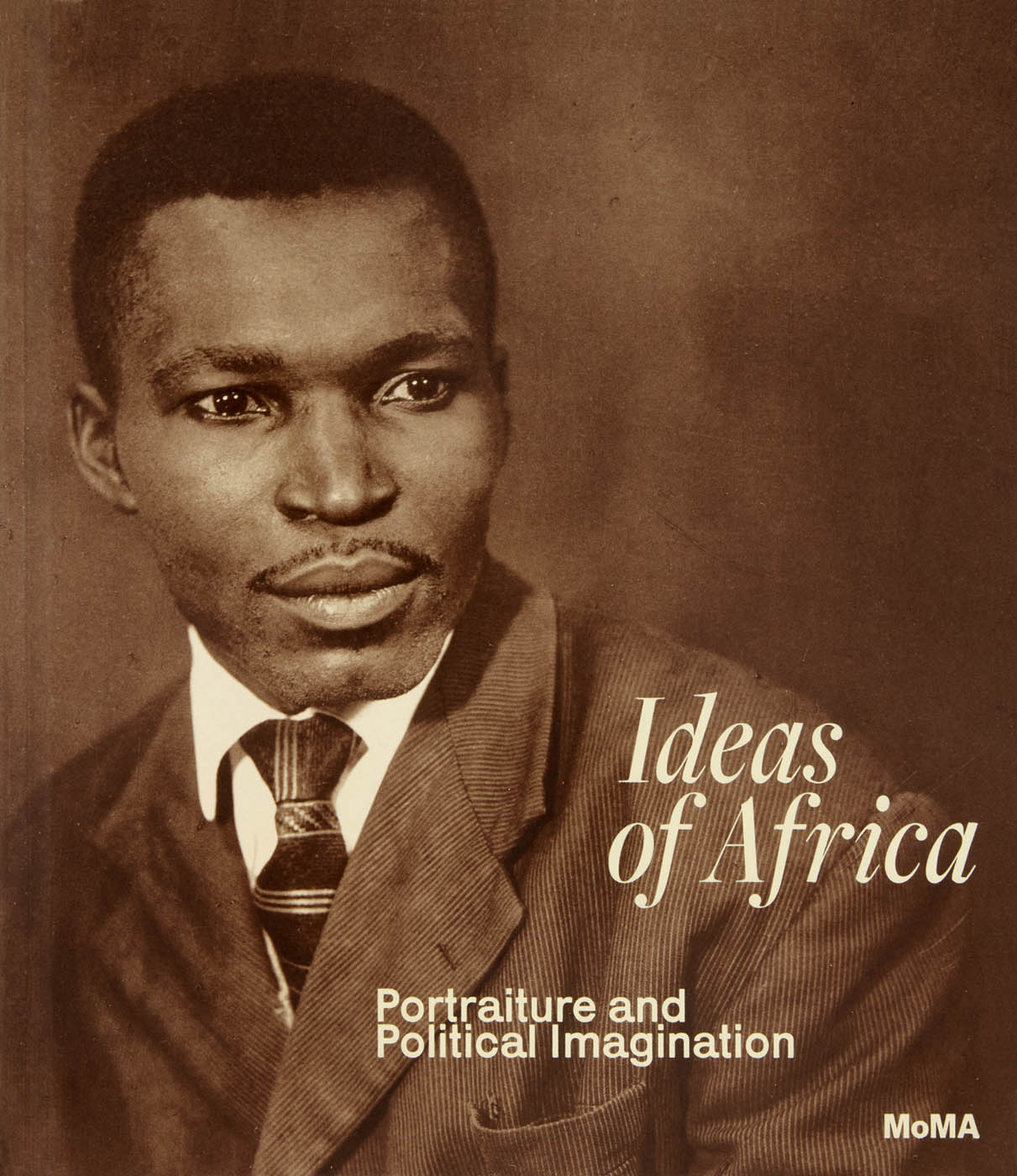
 

'Ideas of Africa: Portraiture and Political Imagination' catalogue cover


Ideas of Africa: Portraiture and Political Imagination catalogue cover

Buy the book on Amazon


The Museum of Modern Art
11 West 53 Street
New York, NY 10019
Phone: (212) 708-9400

Opening hours:
10.30am – 5.30pm
Open seven days a week
MoMA website

LIKE ART BLART ON FACEBOOK

Back to top
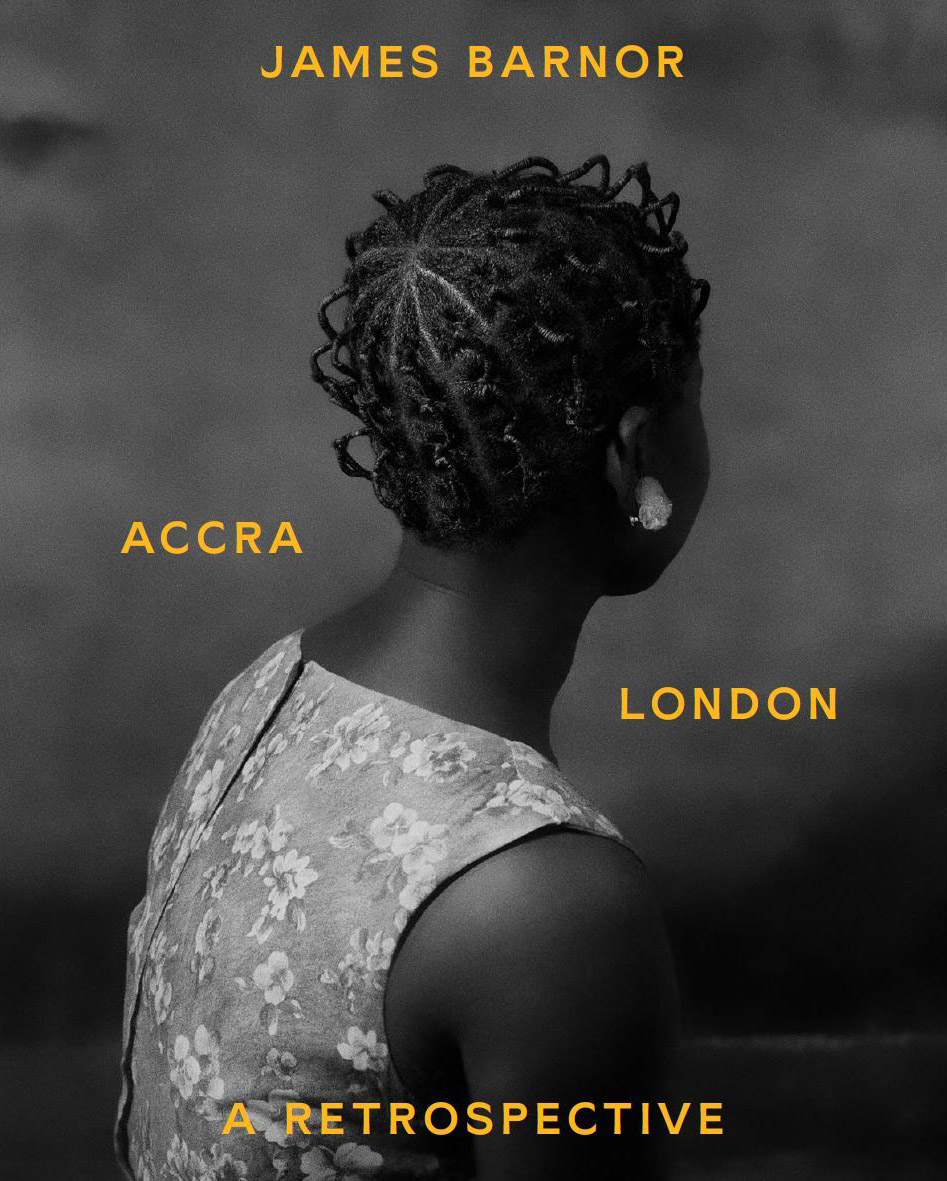
Exhibition: ‘James Barnor: Accra/London – A Retrospective’ at the Serpentine North Gallery, London

Exhibition dates: 19th May – 24th October, 2021


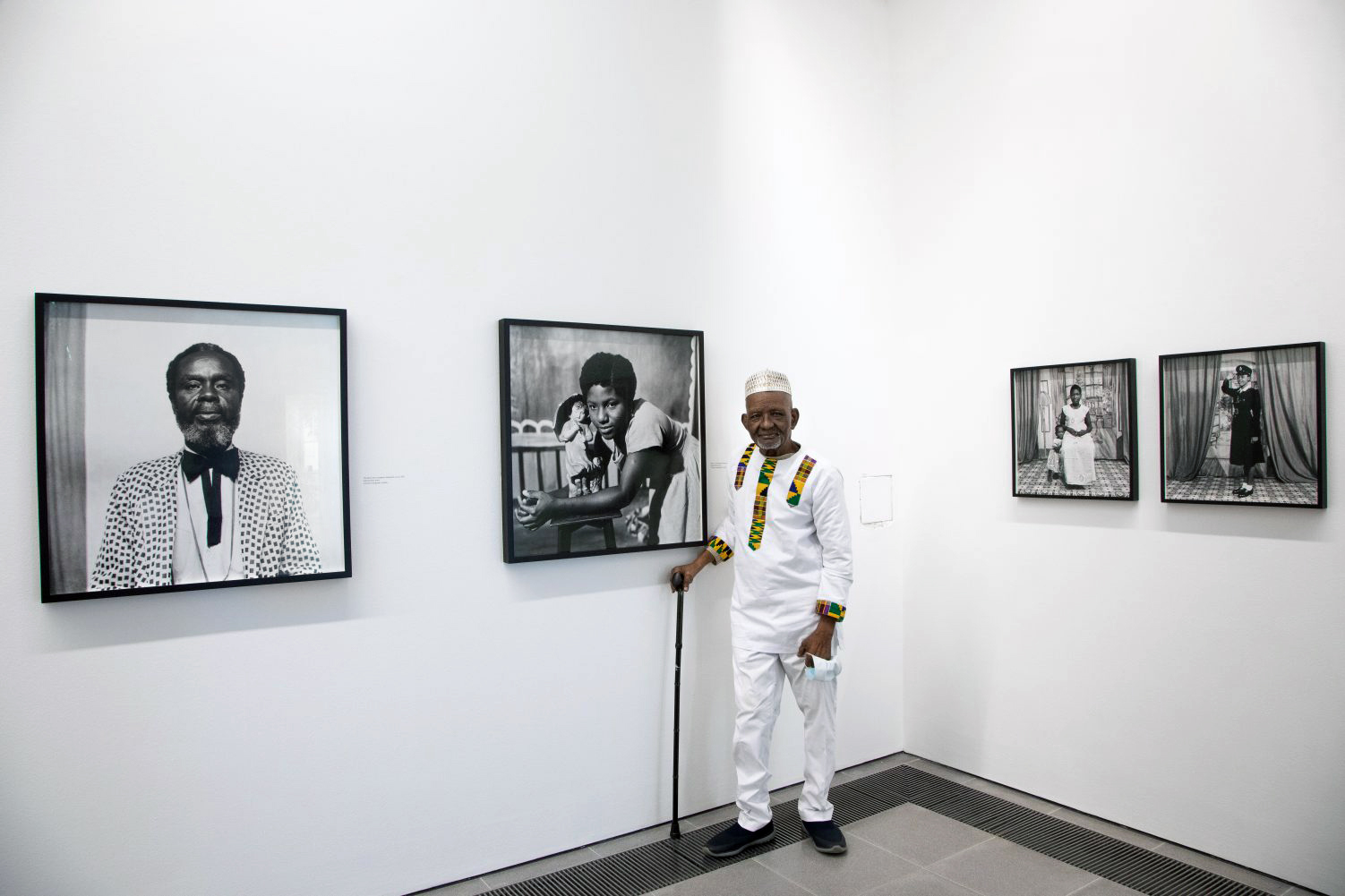
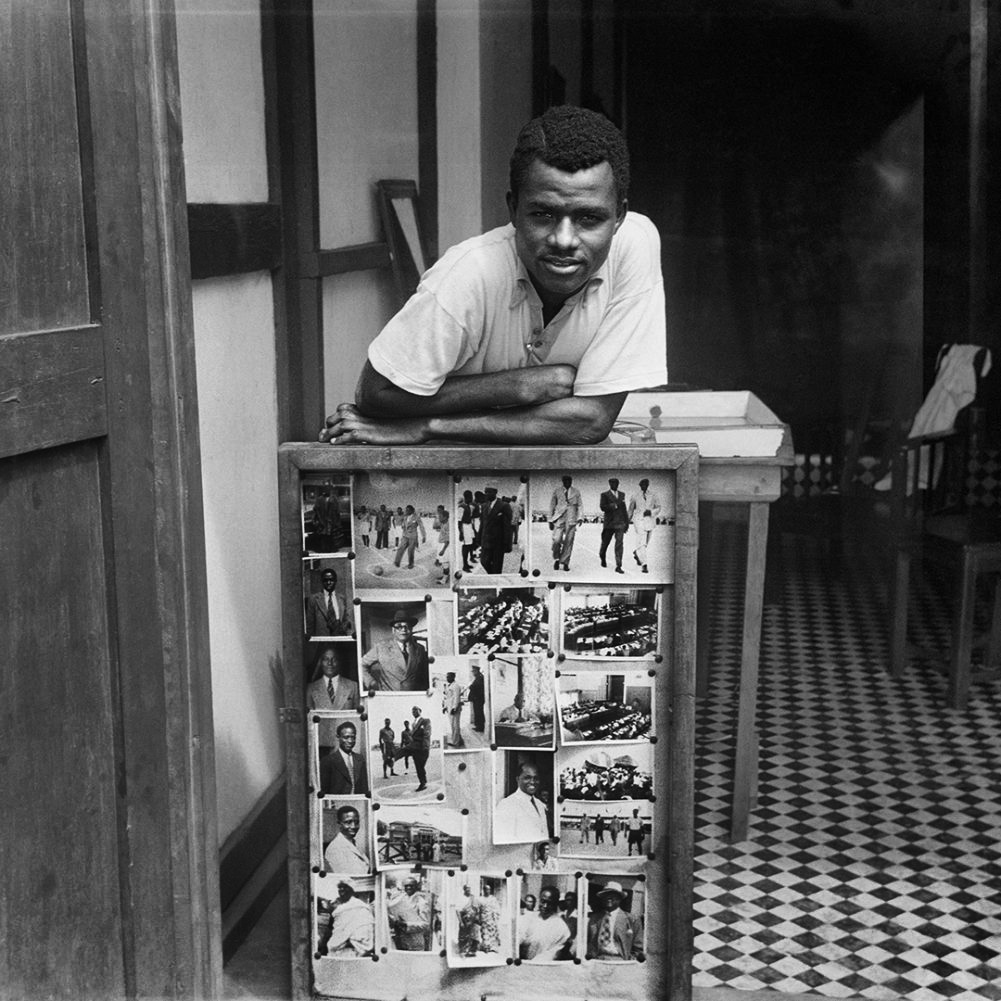
James Barnor (Ghanian, b. 1929) 'Portrait of James Barnor in front of some of his photographs, Accra' 1957 from the exhibition 'James Barnor: Accra/London – A Retrospective' at the Serpentine North Gallery, London, May - Oct, 2021


James Barnor (Ghanian, b. 1929)
Portrait of James Barnor in front of some of his photographs, Accra
1957
Courtesy Autograph


It’s late, but it’s better late than never

After a life of giving – putting his photographs out into the world, generous of his energy and spirit – this ‘Ever Young’ artist is, finally, getting the recognition that he so richly deserves.

In the tradition of Black African photographers such as Malick Sidibé, Seydou Keïta and Sanlé Sory, Barnor’s photographs present people of all ages and all walks of life – whether in Accra, Ghana or in the suburbs of London, England – through direct and honest studio portraits or in more candid documents of the communities that surrounded him. Barnor’s work “is the intimate documentation of African and Afro-diasporic lives across time and space. Whether taking family snapshots, commissioned portraits or commercial assignments, Barnor approaches the photographic process as a collaborative venture, a conversation with the sitter, and these images are a testament to a lifetime of encounters.”

In all of Barnor’s work their is a sensitivity to subject matter. Noticeably, in the work from the 1960s onwards there is a freeing up of the picture plane, a playfulness and freshness in these images, which capture the spirit which is naturally embedded within African culture. I look at his photographs and they make me smile. For example, the glorious presence of the women in Family members at the occasion of the engagement of James’ cousin (late 1970s, below) or the radiant women with the Christmas tree on top of the television in At Ataa Quarcoopome, family members at the occasion of the engagement of James cousin (c. 1970-1971, below). People at ease in front of the camera, with no overt acting up, no pretension. His Afro-modernist colour photographs of people in Accra in the 1970s are magnificent for their refined use of limited colour palettes and the relaxed ease of the subjects. As the press release states, “These images are drawn from a long lifetime of capturing people and places with the camera, a lifetime in which Barnor acts as witness, maker, interpreter and storyteller.” As he says, the story is the picture.

But what pushes Barnor’s photographs further than other Black African photographers is that he ventured to another, foreign land to photograph Afro-diasporic lives across time and space. Imagine arriving in London in 1959 where you couldn’t get work as a Black photographer, and all the racism that this statement entails, to then continue to photograph for Drum magazine the vibrant and growing Afro diasporic community. In the ‘Swinging Sixties’ where ‘Black was Beautiful’, Barnor’s photographs were “affirming the place of black bodies in public and encouraging the active mixing of multinational cultural markers… Bridging between the world of Africa and Europe gave Barnor a unique perspective, and the best of his photographs simmer with cross-cultural style and verve.”1 This can be seen particularly in his personal images from parties, weddings, and family outings and in his cover work for Drum, where his models are in public – happy, proud and free. It is wonderful for me to see pictures such as A group of friends photographed during Mr. And Mrs Sackey’s wedding, London (c. 1966, below) for its depiction of a world where skin colour does not matter, should never matter. For too long has this world been ruled by hatred and division.

Barnor’s photographs plant the seed of equality and happiness as a way of transmitting this knowledge to others. “He is a living archive, a link between the birth of photography in West Africa and the development of the discipline for the modern era.”2 It is his passion and feeling for the practice of photography, the stories that it tells and his engagement with the spirit of the people that he encounters – as a conversation between equals – that intuitively ground his work in the history of photography and the history of Black culture and makes them forever young. As the article on the L’Officiel website by Kleaver Cruz observes, “… it is his calling to connect with his subjects, to create space for them to be free, and to capture their essence for the record, for the sake of our existence as Black and African peoples, and for what has become an important archive of the lives he has interacted with over the course of his own long and rich life.”

Lives across time and space, across this life and the next.

Dr Marcus Bunyan


Footnotes

1/ Loring Knoblauch. “James Barnor, The Roadmaker,” on the Collector Daily website, June 18, 2021 [Online] Cited 17/10/2021

2/ Kleaver Cruz. “Legends Deserve Flowers: The Legacy of James Barnor,” on the L’Officiel website 19th May 2021 [Online] Cited 10th July 2021.

3/ Ibid.,


Many thankx to the Serpentine Gallery for allowing me to publish the photographs in the posting. Please click on the photographs for a larger version of the image.


“I came across a magazine with an inscription that said: “A civilisation flourishes when men plant trees under which they themselves will never sit.” But to me it’s not only plants – putting something in somebody’s life, a young person’s life, is the same as planting a tree that you will not cut and sell during your lifetime. That has helped me a lot in my work. Sometimes the more you give, the more you get.”


James Barnor


“I wish the recognition that I’m getting now had come to me when I was about 65. And I wish when I was 60, 65, 70, my work was regarded as ‘iconic,’ or whatever people call it now. Then I would have had the chance to approach people for assignments and I would not have been taken for granted. And I’d have been able to buy the type of equipment I needed or wanted, and sold pictures at places that understood my work. It’s late, but it’s better late than never.”


James Barnor


“It took me a long time to understand the art of photography. There is a big difference between doing art and doing photography. I have come to realise that, when you get an education, as soon as you see a picture, you already know this should be here, that should be there. You form the story before you take the pictures: you take two or three, and you are on the way.”


James Barnor, Frieze Magazine, May 2021


“You can google all the technical stuff. It’s the ideas that you have that’re important. The community development, the self-involvement. Go and learn and be knowledgeable and take the camera. The story is the picture.”


James Barnor


James Barnor (born 1929) 'Mr. Blavo and friends at a Youth Development Club party, Scout Headquarters, Accra' 1953 from the exhibition 'James Barnor: Accra/London – A Retrospective' at the Serpentine North Gallery, London, May - Oct, 2021


James Barnor (Ghanian, b. 1929)
Mr. Blavo and friends at a Youth Development Club party, Scout Headquarters, Accra
1953
© James Barnor/Autograph ABP, London


As a young person, Barnor was active in Youth Development Clubs and other social activities organised for young people in Accra. In this image, he captured some new and old friends during a camping-style party hosted at the Boy Scout Headquarters in the capital city. At the centre of the group is someone Barnor was less familiar with, but remembered as a classmate and one of the first trained health workers in the country; on her left is E. Quarshie Blavo, a prominent Scout and youth leader who was “always coming up with ideas to get the youth united and to learn and do things and give service;” to her right is another friend of Barnor’s, Mr. Kitson-Mills who worked as a Tax Controller. Barnor was also part of developing the youth hostel system in Ghana, which offered affordable options for young Ghanaians who wanted to travel and get better acquainted with all their home country had to offer.

Extract from Kleaver Cruz. “Legends Deserve Flowers: The Legacy of James Barnor,” on the L’Officiel website 19th May 2021 [Online] Cited 10th July 2021.


James Barnor (born 1929) 'Eva, London' 1960s, printed 2010


James Barnor (Ghanian, b. 1929)
Eva, London
1960s, printed 2010
© James Barnor/Autograph ABP, London


A celebration of the great Ghanaian photographer, who established his Ever Young studio in Accra in the early 1950s, and documented London during the swinging 60s as a photojournalist for Drum magazine. Capturing the mood of Ghana as it transitioned to independence in the 1950s, Barnor’s work remains an important reference for painters, photographers and film-makers.

The Serpentine presents a major survey of British-Ghanaian photographer James Barnor, whose career spans six decades, two continents and numerous photographic genres through his work with studio portraiture, photojournalism, editorial commissions and wider social commentary.

Born in 1929 in Ghana, James Barnor established his famous Ever Young studio in Accra in the early 1950s, capturing a nation on the cusp of independence in an ambiance animated by conversation and highlife music. In 1959 he arrived in London, furthering his studies and continuing assignments for influential South African magazine Drum which reflected the spirit of the era and the experiences of London’s burgeoning African diaspora. He returned to Ghana in the early 1970s to establish the country’s first colour processing lab while continuing his work as a portrait photographer and embedding himself in the music scene. He returned to London in 1994.

Central to Barnor’s work is the intimate documentation of African and Afro-diasporic lives across time and space. Whether taking family snapshots, commissioned portraits or commercial assignments, Barnor approaches the photographic process as a collaborative venture, a conversation with the sitter, and these images are a testament to a lifetime of encounters. Barnor’s desire to bring communities with him along his journey extends to his lifelong passion for education, not just as a means of furthering his own skills but also as a way of transmitting his knowledge to others. The recent digitisation of his archive of 32,000 images has enabled him to adopt the daily practice of revisiting his pictures with fresh eyes and memories to share his extraordinary life and work with a new generation.

Organised in broadly chronological order, James Barnor: Accra/London – A Retrospective moves between the two countries, and includes portraits taken at his first studio, Ever Young; images taken in and around the independence movement in Ghana; Barnor’s era-defining work for South African anti-apartheid / Black lifestyle publication Drum and extensive photography of life in 1960s London; plus work from his time managing the first colour-processing laboratory in 1970s Ghana.

Text from the Serpentine North Gallery website


James Barnor at Serpentine 2021


'James Barnor: Accra/London – A Retrospective' (Installation view, 19 May - 24 October 2021, Serpentine) showing at centre, 'Beatrice with trademark figurine, Ever Young Studio, Accra' (c. 1953), and at left 'The Pastor (Oscar Lamptey), Mamprobi, Accra' (1955)


James Barnor: Accra/London – A Retrospective (Installation view, 19 May – 24 October 2021, Serpentine) showing at centre, Beatrice with trademark figurine, Ever Young Studio, Accra (c. 1953, below), and at left The Pastor (Oscar Lamptey), Mamprobi, Accra (1955, below)
Photo: Zoe Maxwell


James Barnor (Ghanian, b. 1929) 'Beatrice with trademark figurine, Ever Young Studio, Accra' c. 1953


James Barnor (Ghanian, b. 1929)
Beatrice with trademark figurine, Ever Young Studio, Accra
c. 1953
Courtesy of Autograph


James Barnor (Ghanian, b. 1929) 'The Pastor (Oscar Lamptey), Mamprobi, Accra' 1955


James Barnor (Ghanian, b. 1929)
The Pastor (Oscar Lamptey), Mamprobi, Accra
1955
Courtesy of Autograph


James Barnor (Ghanian, b. 1929) 'Roy Ankrah and an unknown boxer in a remote area of Ghana' 1952


James Barnor (Ghanian, b. 1929)
Roy Ankrah and an unknown boxer in a remote area of Ghana
1952
James Barnor/Courtesy Autograph ABP


John Theophilus Oti Ankrah (25 December 1925 – 28 May 1995), better known as Roy Ankrah, was a Ghanaian featherweight contender during the 1950s. He was given the nicknames “The Black Flash” and “Mr. Perpetual Motion” because of his fast hands and crafty footwork. Ankrah held the Commonwealth featherweight title from 1951 to 1952 and had his biggest fight against then-reigning NBA, NYSAC, and The Ring bantamweight world champion in a non-title fight as both fighters weighed above the 118lbs limit of bantamweight.


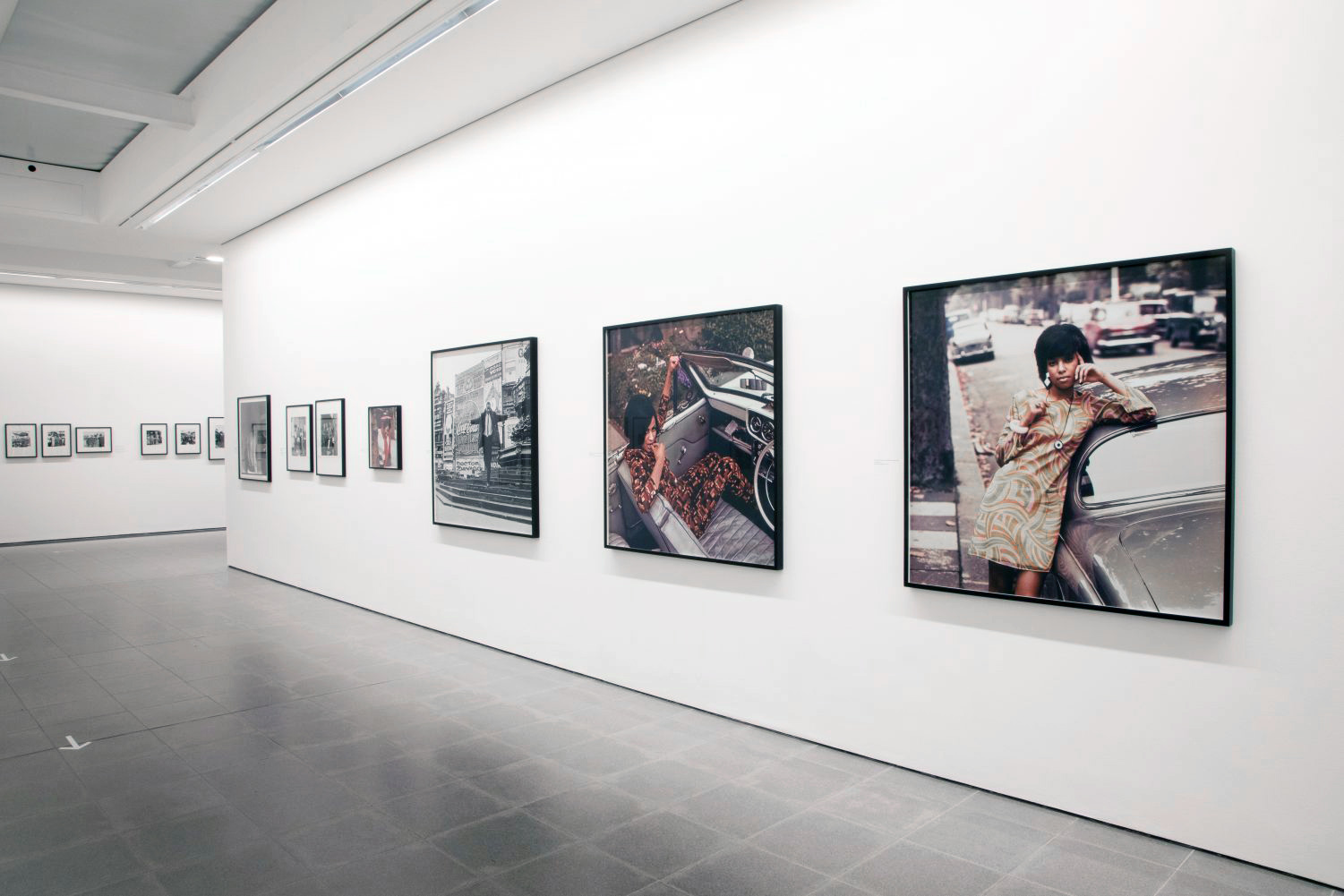
'James Barnor: Accra/London – A Retrospective' (Installation view, 19 May - 24 October 2021, Serpentine) showing at right 'Drum Cover Girl Erlin Ibreck, London' (1966)


James Barnor: Accra/London – A Retrospective (Installation view, 19 May – 24 October 2021, Serpentine) showing at right Drum Cover Girl Erlin Ibreck, London (1966, below)
Photo: Zoe Maxwell


James Barnor (Ghanian, b. 1929) 'Drum Cover Girl Erlin Ibreck, London' 1966, printed 2010


James Barnor (Ghanian, b. 1929)
Drum Cover Girl Erlin Ibreck, London
1966, printed 2010
© James Barnor courtesy of Galerie Clémentine de la Féronnière


James Barnor (Ghanian, b. 1929) ''Drum' magazine cover with Constance Mulondo, East Africa edition' August 1967


James Barnor (Ghanian, b. 1929)
‘Drum’ magazine cover with Constance Mulondo, East Africa edition
August 1967


James Barnor (Ghanian, b. 1929) 'Marie Hallowi, 'Drum' covergirl, Kent' 1966


James Barnor (Ghanian, b. 1929)
Marie Hallowi, ‘Drum’ covergirl, Kent
1966


'James Barnor: Accra/London – A Retrospective' (Installation view, 19 May - 24 October 2021, Serpentine) showing Barnor cover photographs for the Drum magazine


James Barnor: Accra/London – A Retrospective (Installation views, 19 May – 24 October 2021, Serpentine) showing Barnor cover photographs for the magazine Drum
Photo: Zoe Maxwell


“There weren’t magazines or newspapers showing Black models – Drum started it,” he said. “Any time I saw a Drum cover in London, side by side with international magazines, I felt really satisfied. I knew I was recording something. I knew I had to take care of my negatives.” ~ James Barnor


'James Barnor: Accra/London – A Retrospective' (Installation view, 19 May - 24 October 2021, Serpentine)

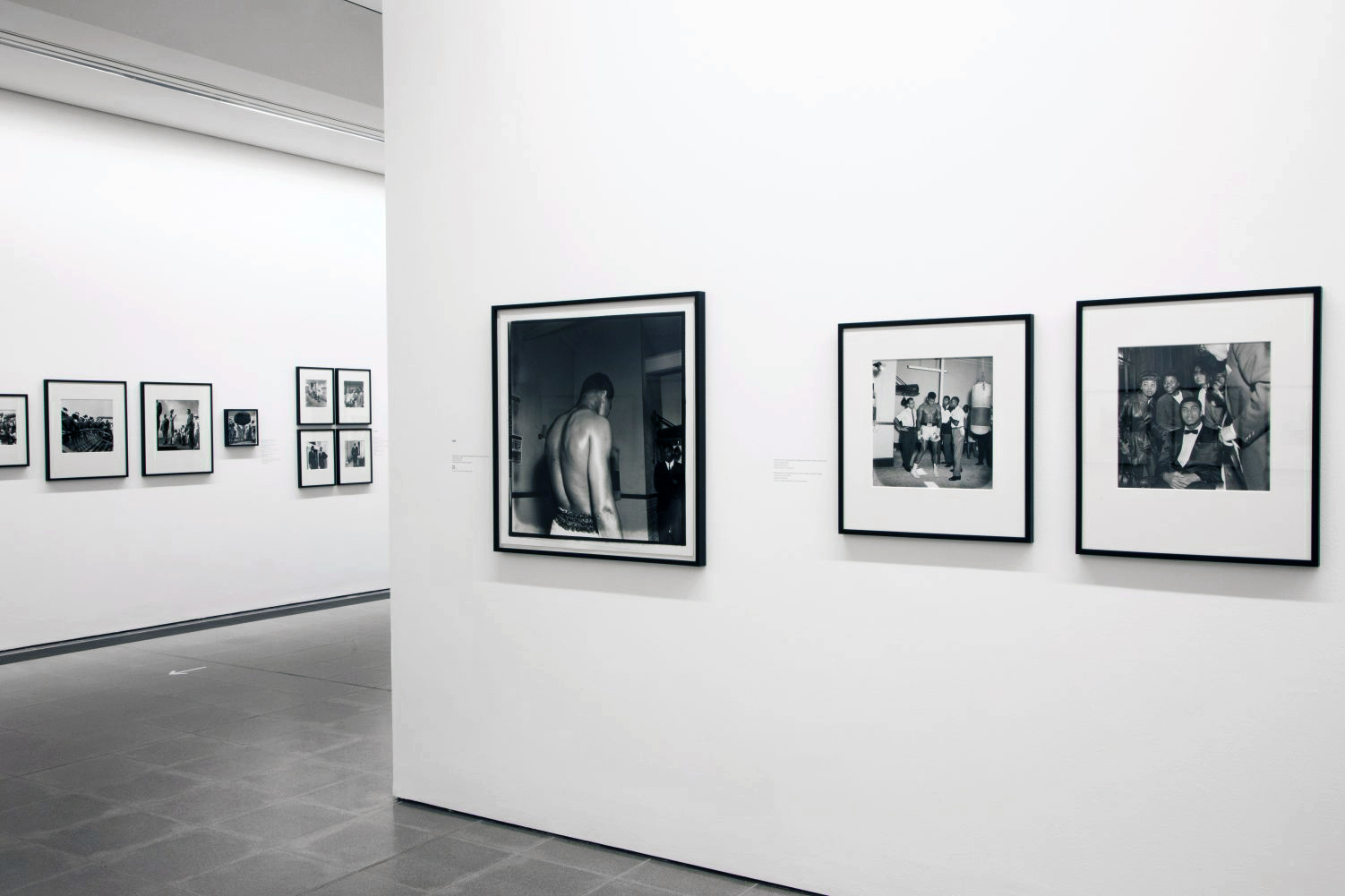
'James Barnor: Accra/London – A Retrospective' (Installation view, 19 May - 24 October 2021, Serpentine) showing at third right 'Mohammed Ali preparing for his fight against Brian London, London' (1966)


James Barnor: Accra/London – A Retrospective (Installation view, 19 May – 24 October 2021, Serpentine) showing in the bottom image at third right Mohammed Ali preparing for his fight against Brian London, London (1966, below)
Photo: Zoe Maxwell


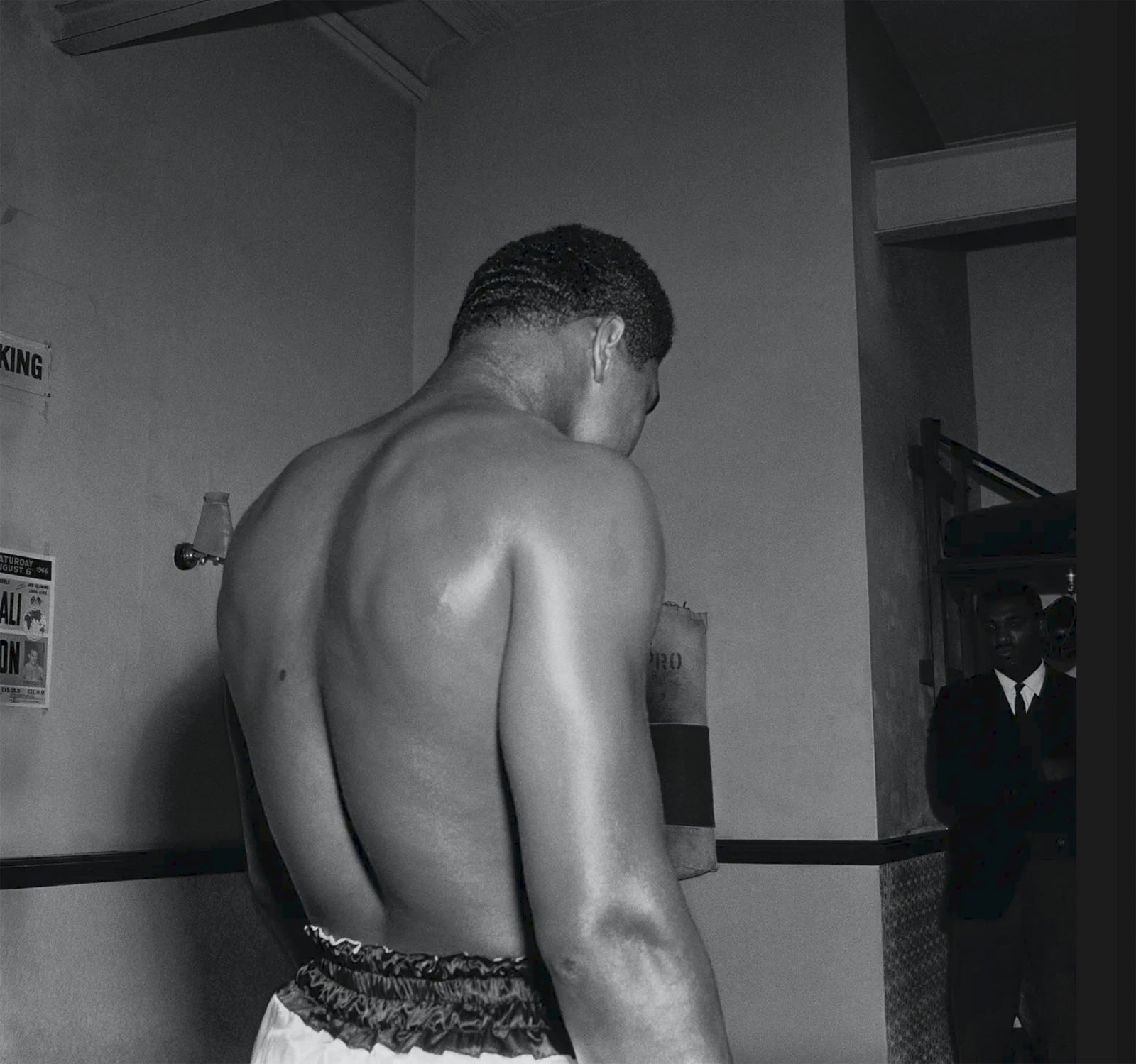
James Barnor (Ghanian, b. 1929) 'Mohammed Ali preparing for his fight against Brian London, London' 1966


James Barnor (Ghanian, b. 1929)
Mohammed Ali preparing for his fight against Brian London, London
1966


At 24 years old, Muhammad Ali, then the heavyweight champion of the world, was scheduled to defend his title against Brian London in the UK’s capital in 1966. Barnor was commissioned by Drum to capture Ali during his preparation for the big fight. “I didn’t talk to him at all. I should have asked him to do this or that for me. I’m sure that he would have done anything I asked him to do – ‘turn this way’ or ‘you do that,’ he would have done it. But he was so fascinating,” Barnor says of photographing the young star. Consistent with his intuitive spirit, Barnor chose to focus on the icon’s back rather than his face. “Nobody would have thought of photographing somebody’s back,” he recalls. Barnor shot this image with a Mamiya he had acquired from trading the camera he came to London with following the completion of his studies at Medway College of Art in Kent.

Extract from Kleaver Cruz. “Legends Deserve Flowers: The Legacy of James Barnor,” on the L’Officiel website 19th May 2021 [Online] Cited 10th July 2021.


James Barnor (Ghanian, b. 1929) 'Self Portrait with Nkrumah, Roy Ankrah and his Wife, Rebecca, Accra' Nd


James Barnor (Ghanian, b. 1929)
Self Portrait with Nkrumah, Roy Ankrah and his Wife, Rebecca, Accra
Nd
Courtesy Autograph, London


James Barnor’s career as a studio portraitist, photojournalist and Black lifestyle photographer spans six decades, recording major social and political changes in Accra and London. His pioneering, resolutely modern work has influenced generations of photographers in Africa and around the world. James Barnor: Accra/London – A Retrospective, focuses on the period 1950-1980, selected from more than 32,000 available images.

Central to Barnor’s work is the intimate documentation of African and Afro-diasporic lives across time and space. Whether making family snapshots, commissioned portraits or commercial assignments, Barnor approaches the photographic process as a collaborative venture, a conversation with the sitter, and his images are a testament to a lifetime of encounters.

Organised in broadly chronological order, James Barnor: Accra/London – A Retrospective moves between the two countries, and includes portraits taken at his first studio, Ever Young; images taken in and around the independence movement in Ghana; Barnor’s era-defining work for South African anti-apartheid / Black lifestyle publication Drum and extensive photography of life in 1960s London; plus work from his time managing the first colour-processing laboratory in 1970s Ghana. His life-long passion for music is visible through portraits of musicians and performers.

“James Barnor’s work reminds us how thrillingly expansive life is; his photographs offer the possibility of connection and exchange across continents and through time. These images are drawn from a long lifetime of capturing people and places with the camera, a lifetime in which Barnor acts as witness, maker, interpreter and storyteller. We are immensely proud to be able to present this show atSerpentine this summer. We are so grateful to James Barnor for his vision, his unfailing energy and for sharing his memories so generously.”

Hans Ulrich Obrist, Artistic Director, and Bettina Korek, Chief Executive, Serpentine

This exhibition is part of Serpentine’s commitment to programming pioneering artists achieving wider recognition later in their careers, including exhibitions in recent years by Rose Wylie (2017), Luchita Hurtado and Faith Ringgold (both 2019).

About James Barnor

Born in 1929 in Accra, Ghana, Barnor came from a family of photographers. He initially trained under a photographic apprenticeship with his cousin J. P. D. Dodoo, before establishing Ever Young, his first studio, in the early 1950s. Barnor likened Ever Young to a community centre, and it was there that he captured a nation on the cusp of independence in an environment of lively conversation and music. During this time, he also undertook assignments for the Daily Graphic newspaper, documenting key events and figures in the lead-up to Ghana’s independence in 1957, which established him as the first photojournalist in the country. Enticed by a friend’s promise that ‘London was the place for him’, Barnor left Accra in 1959 and spent the next decade furthering his studies, continuing assignments for Drum, and photographing his ever-growing circle of family and friends. He returned to Accra a decade later to establish the first colour-processing laboratory in Ghana. Barnor settled permanently in the UK in 1994 and lives in West London.

On the occasion of the exhibition Serpentine is publishing a catalogue, Accra/London – A Retrospective, with Koenig Books, which is co-produced with MASI Lugano and Detroit Institute of Arts. Richly illustrated and designed by Mark El-khatib, it includes contributions by head of the photographic collection at the Musée du quai Branly – Jacques Chirac in Paris, Christine Barthe; architect Sir David Adjaye OBE; artist David Hartt; curator Alicia Knock, and a personal recollection from former Drum magazine model, Erlin Ibreck, who worked with Barnor on numerous shoots during the 1960s in London. The catalogue also includes a conversation between Barnor and Serpentine Artistic Director Hans Ulrich Obrist.

Press release from the Serpentine North Gallery website


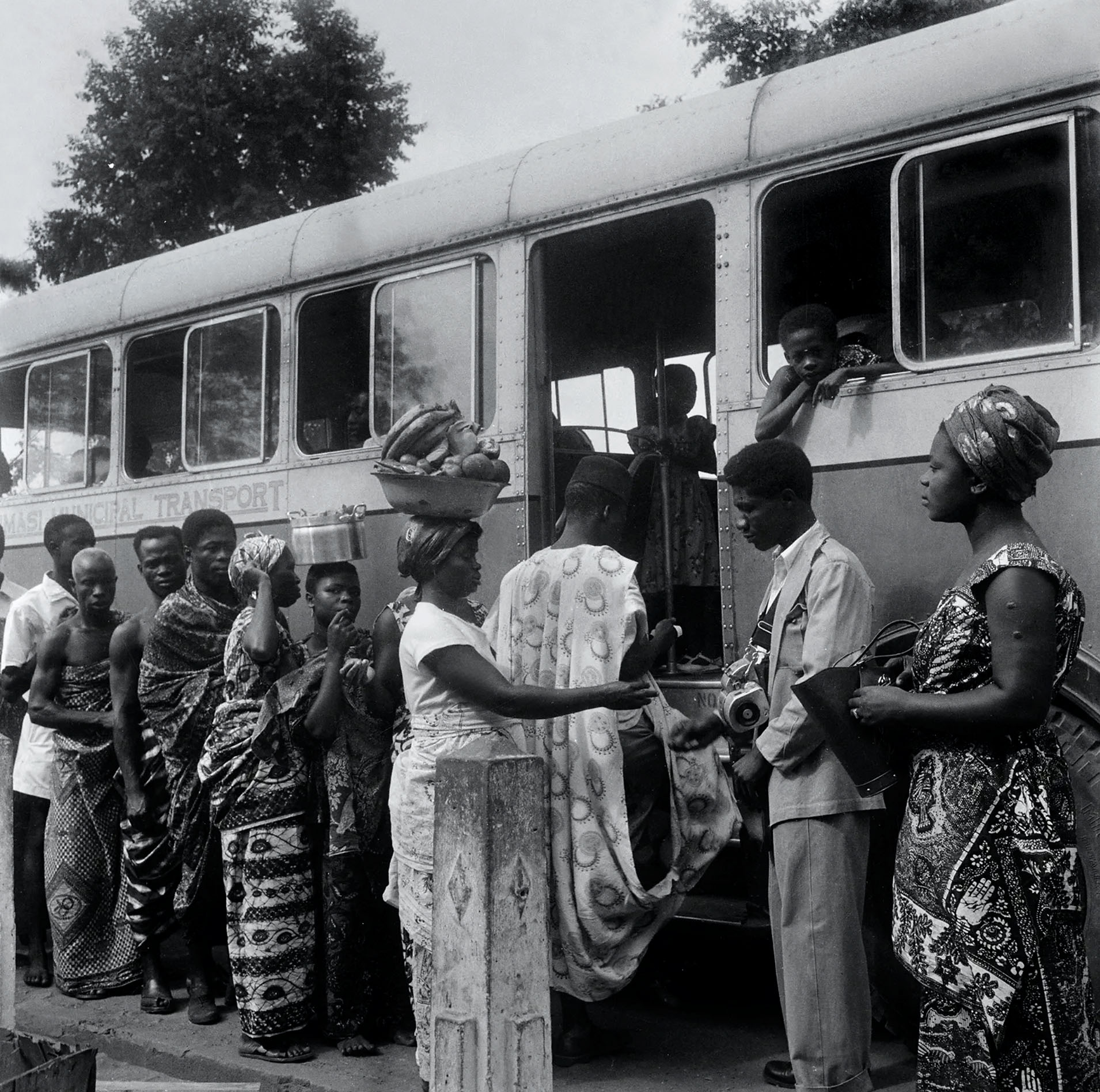
James Barnor (born 1929) 'Revolution in the public transport ticketing system, Accra' c. 1950s


James Barnor (Ghanian, b. 1929)
Revolution in the public transport ticketing system, Accra
c. 1950s
Courtesy Autograph, London


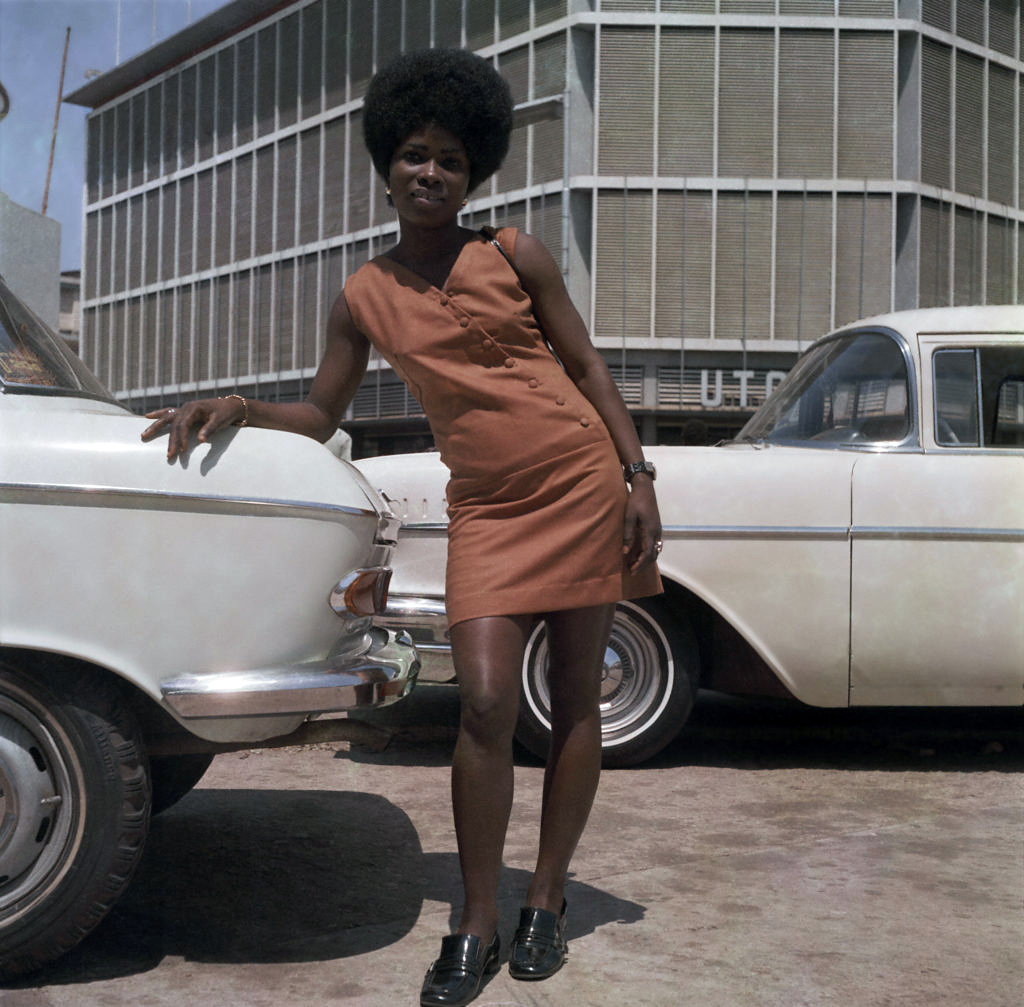
On March 6, 1957, the nation known today as Ghana gained its independence from British colonial rule, marking a growing tide of independence movements across the continent. In the capital city of Accra, where Barnor grew up, many waves of change occurred, including an upgraded bus system. Recalling today, Barnor describes the busyness of the capital city and how the municipal bus system transported people throughout the metropolitan area and its suburbs, as well as the enhancement of its technology, evidence of which we see in the suited conductor issuing paper tickets detailing the price and distance which each passenger was travelling. Barnor also notes elements of interaction between different classes, which is apparent in the dress and accessories of the woman on the far right in contrast to the other passengers. In regard to the people looking directly into the lens, Barnor recalls the excitement and curiosity when he showed up with a camera; after all, Barnor was the nation’s first newspaper photographer and, when people saw him, many understood that their image could potentially appear in the next day’s publication. “Oh yes… somebody with a camera coming, you know, people would ask, ‘What are you shooting for?’ By all means, everybody looks at you,” he says.

Extract from Kleaver Cruz. “Legends Deserve Flowers: The Legacy of James Barnor,” on the L’Officiel website 19th May 2021 [Online] Cited 10th July 2021.


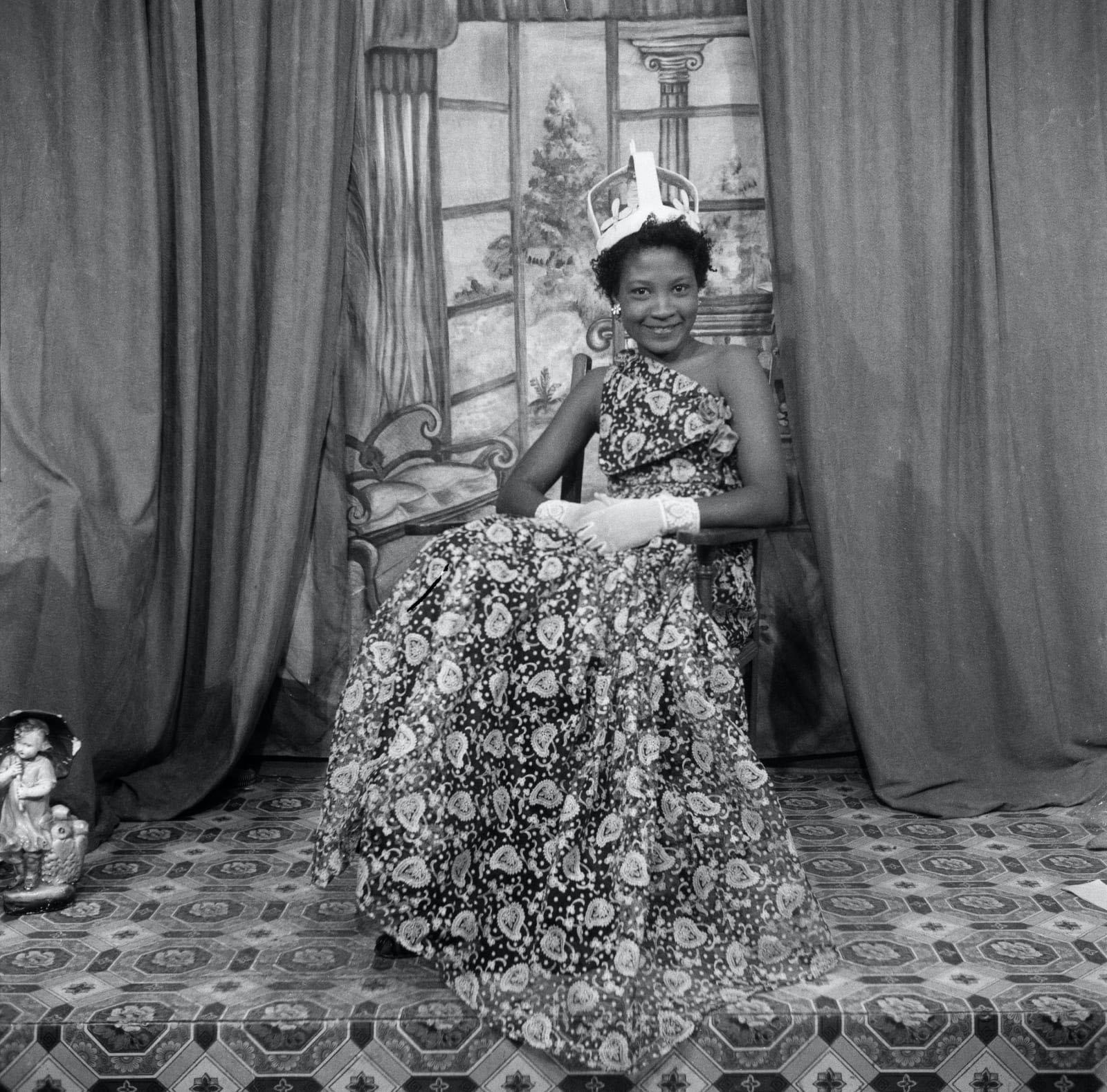
James Barnor (born 1929) 'Naa Jacobson as Ballroom Queen, Ever Queen Studio, Accra' 1955


James Barnor (Ghanian, b. 1929)
Naa Jacobson as Ballroom Queen, Ever Queen Studio, Accra
1955


There are so many stories here;
I have a special relationship with many of my models.
This is my comfort zone because I am inspired:
distracted and also attracted by so many details!
These are some of the people I enjoyed photographing most,
But there are so many more stories to tell.

~ James Barnor


James Barnor (born 1929) 'Four Nurses (graduates of Korle Bu Teaching Hospital), Ever Young Studio, Accra' c. 1957


James Barnor (Ghanian, b. 1929)
Four Nurses (graduates of Korle Bu Teaching Hospital), Ever Young Studio, Accra
c. 1957
Courtesy Autograph


James Barnor (Ghanian, b. 1929) 'Nigerian Superman. Old Polo Ground, Mantse Agbona Park, Accra' 1958


James Barnor (Ghanian, b. 1929)
Nigerian Superman. Old Polo Ground, Mantse Agbona Park, Accra
1958
© James Barnor courtesy of Galerie Clémentine de la Féronnière


James Barnor (Ghanian, b. 1929) 'A car accident outside Accra Brewery' Nd


James Barnor (Ghanian, b. 1929)
A car accident outside Accra Brewery
Nd
© James Barnor courtesy of Galerie Clémentine de la Féronnière


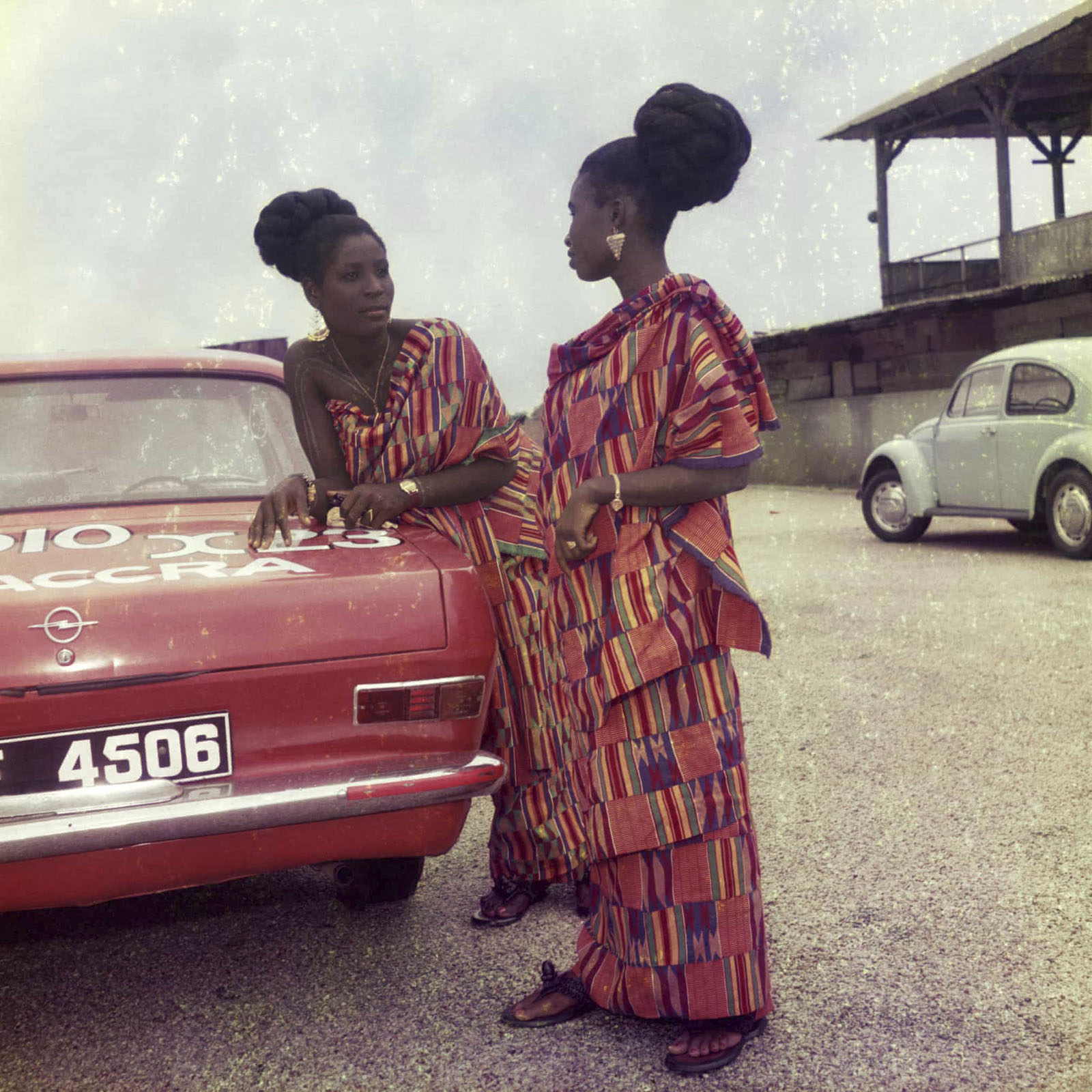
James Barnor (Ghanian, b. 1929). 'Untitled, Studio X23, Accra' 1975


James Barnor (Ghanian, b. 1929)
Untitled, Studio X23, Accra
1975
© James Barnor courtesy of Galerie Clémentine de la Féronnière


James Barnor (Ghanian, b. 1929) 'Family members at the occasion of the engagement of James' cousin. Amanomo, Accra' Late 1970s


James Barnor (Ghanian, b. 1929)
Family members at the occasion of the engagement of James’ cousin, Amanomo, Accra
Late 1970s
© James Barnor courtesy of Galerie Clémentine de la Féronnière


James Barnor (Ghanian, b. 1929) 'Ghanaian traditional hairstyle at Studio X23, Accra' c. 1970s


James Barnor (Ghanian, b. 1929)
Ghanaian traditional hairstyle at Studio X23, Accra
c. 1970s, modern print
Inkjet print
© James Barnor, courtesy galerie Clémentine de la Féronnière


In 1973 Barnor converted a small storeroom given to him by his cousin Albert M. Quarcoopome into a darkroom before expanding into a building. This became his second studio Studio X23 (1973-1994) where alongside a multifaceted commission practice he continued working as a portrait photographer for twenty years.


Ever Young Studio, Jamestown, Accra


Ever Young Studio, Jamestown, Accra
Credit: James Barnor


Barnor’s studio was like a “community center,” he remembers, and he made “people feel at home,” by talking to and getting to know them. “Young men would come by to have a chat and have their photograph taken,” he said. “Most people had confidence in me already. Everybody knew me in Ghana as a successful photographer – they knew they would be satisfied.”

Barnor says he believes the photographs he took during this time showed a different, stylish view of his home country – one that belied assumptions. “When I had my studio in Ghana people thought we (Ghanaians) didn’t dress up,” he said. “But all my sitters, my friends, were fashion conscious – women would often request full-length photos with shoes, a handbag and their accessories.”

Emma Firth. “From Accra to London, how photographer James Barnor captured decades of style,” on the CNN style website 20th June 2020 [Online] Cited 10/07/2021


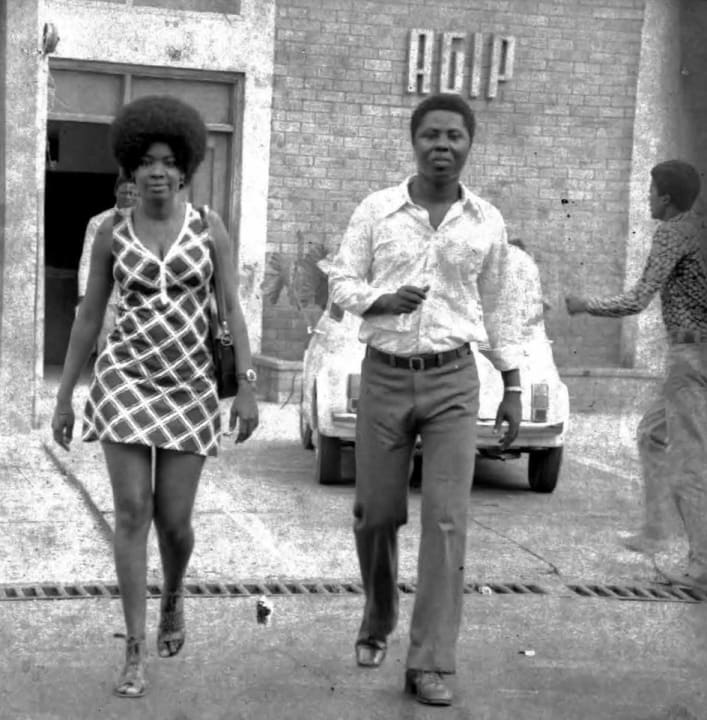
James Barnor (Ghanian, b. 1929) 'AGIP with Graphic Designer' 1974


James Barnor (Ghanian, b. 1929)
AGIP with Graphic Designer
1974


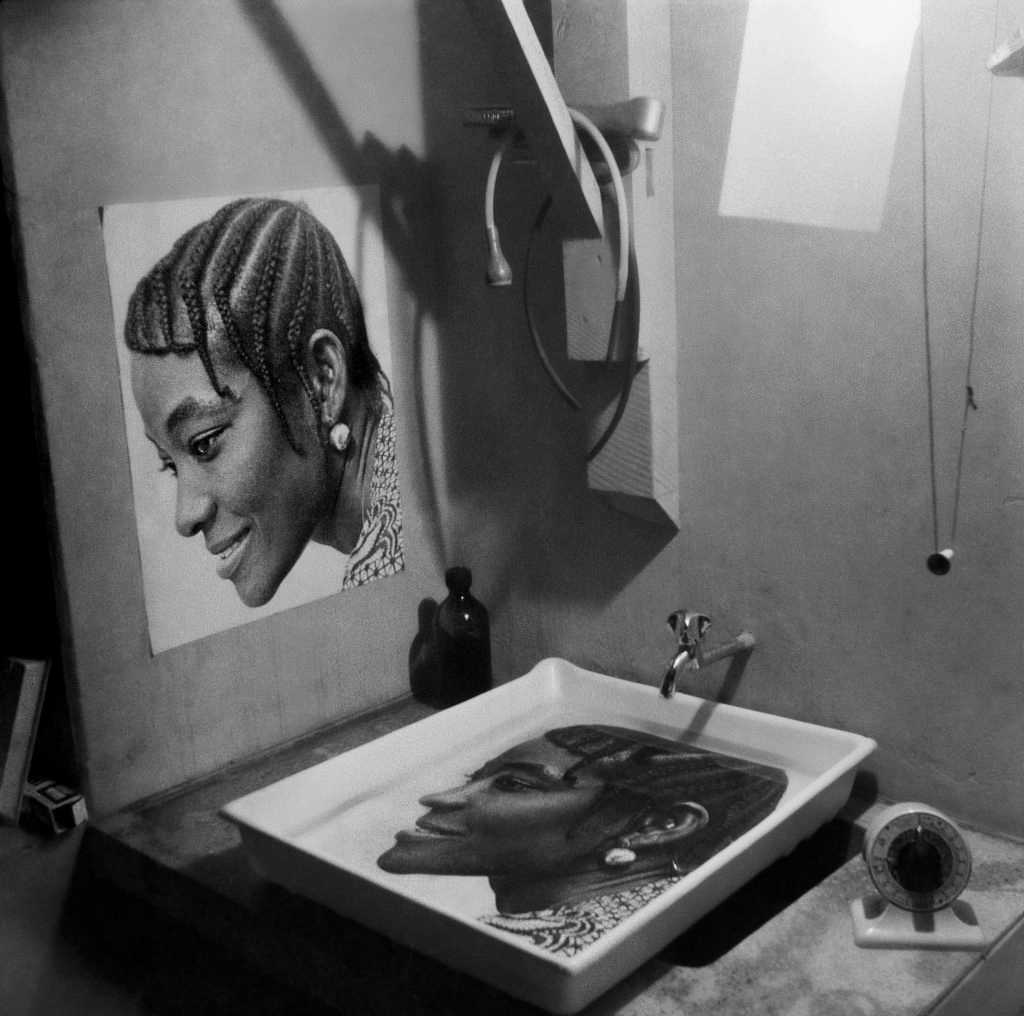
James Barnor (Ghanian, b. 1929) 'Print in progress, Studio X23. Accra' 1972


James Barnor (Ghanian, b. 1929)
Print in progress, Studio X23, Accra
1972
© James Barnor courtesy of Galerie Clémentine de la Féronnière


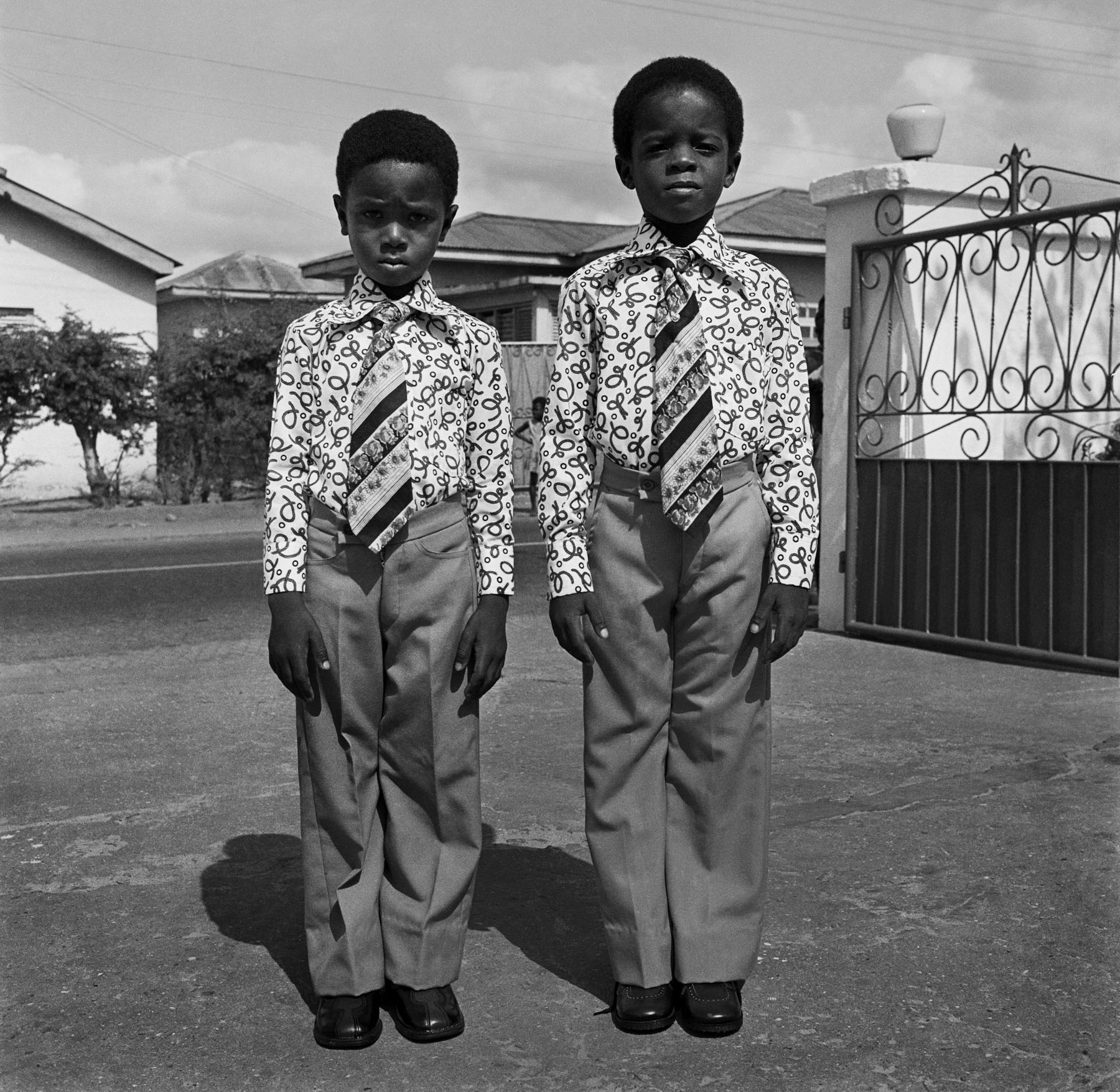
James Barnor (Ghanian, b. 1929) 'Kids dressed in identical suits. Accra' 1970s


James Barnor (Ghanian, b. 1929)
Kids dressed in identical suits, Accra
1970s
© James Barnor courtesy of Galerie Clémentine de la Féronnière


James Barnor (Ghanian, b. 1929) 'Ever Young studio. Accra' 1954


James Barnor (Ghanian, b. 1929)
Ever Young studio, Accra
1954
© James Barnor courtesy of Galerie Clémentine de la Féronnière


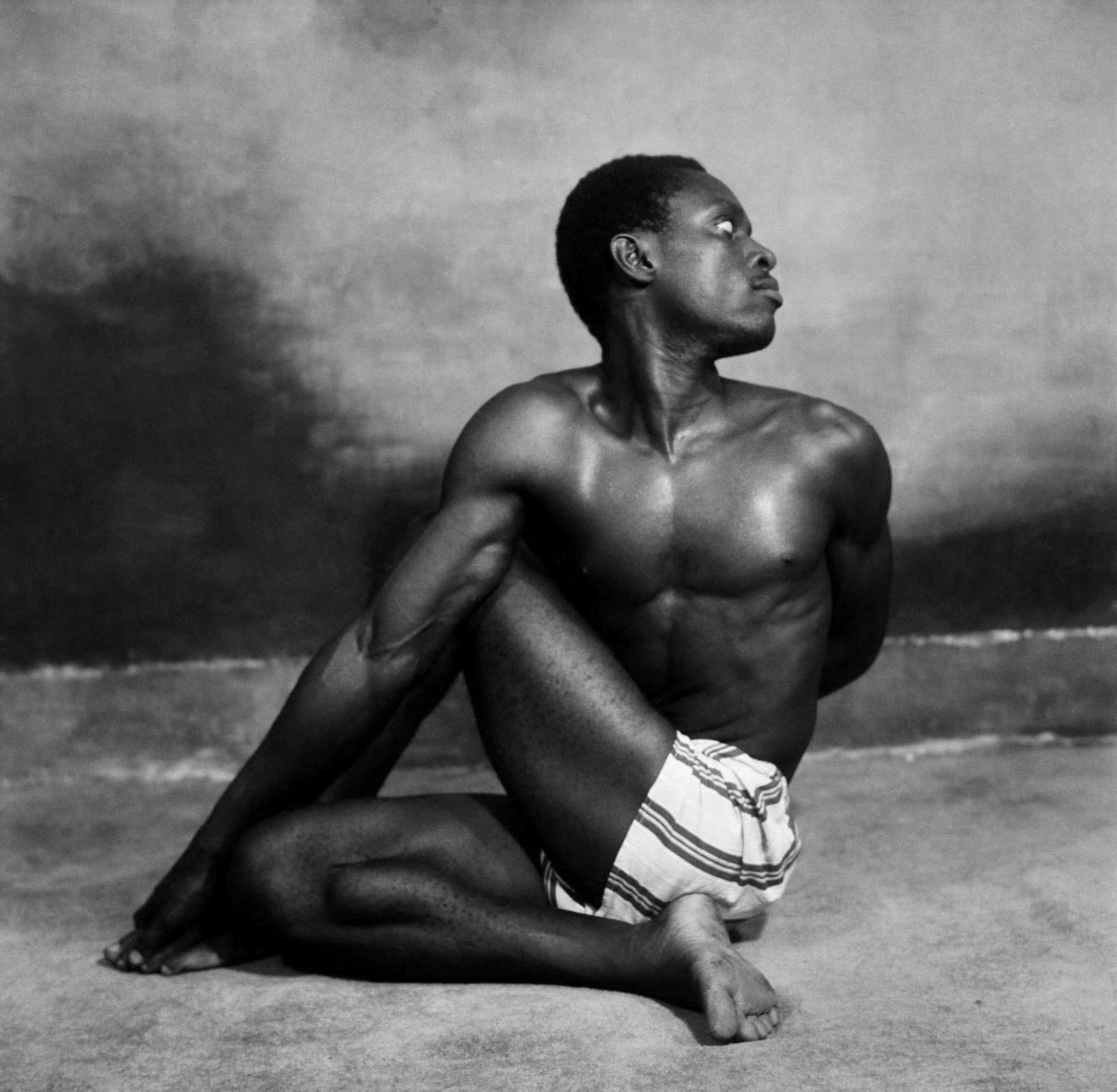
James Barnor (Ghanian, b. 1929) 'J Peter Dodoo Jnr., Yoga student of "Mr Strong", Ever Young Studio, Accra' c. 1955


James Barnor (Ghanian, b. 1929)
J Peter Dodoo Jnr., Yoga student of “Mr Strong”, Ever Young Studio, Accra
c. 1955, modern print
Inkjet print
© James Barnor, courtesy galerie Clémentine de la Féronnière


Accra in the 1950s was a decade marked by the significant transformation of nation building and the rise of cosmopolitanism. Photography served as an important medium for sitters to articulate their own self-actualisation. Barnor described his first studio Ever Young (1953-1959), in the Jamestown district of the city, as a community centre filled with music and conversation, a drop-in space that embodied precisely this spirit of reinvention through the frame.


James Barnor (Ghanian, b. 1929) 'Evelyn Abbew, Ever Young Studio, Accra' 1954


James Barnor (Ghanian, b. 1929)
Evelyn Abbew, Ever Young Studio, Accra
1954
© James Barnor/Autograph ABP, London


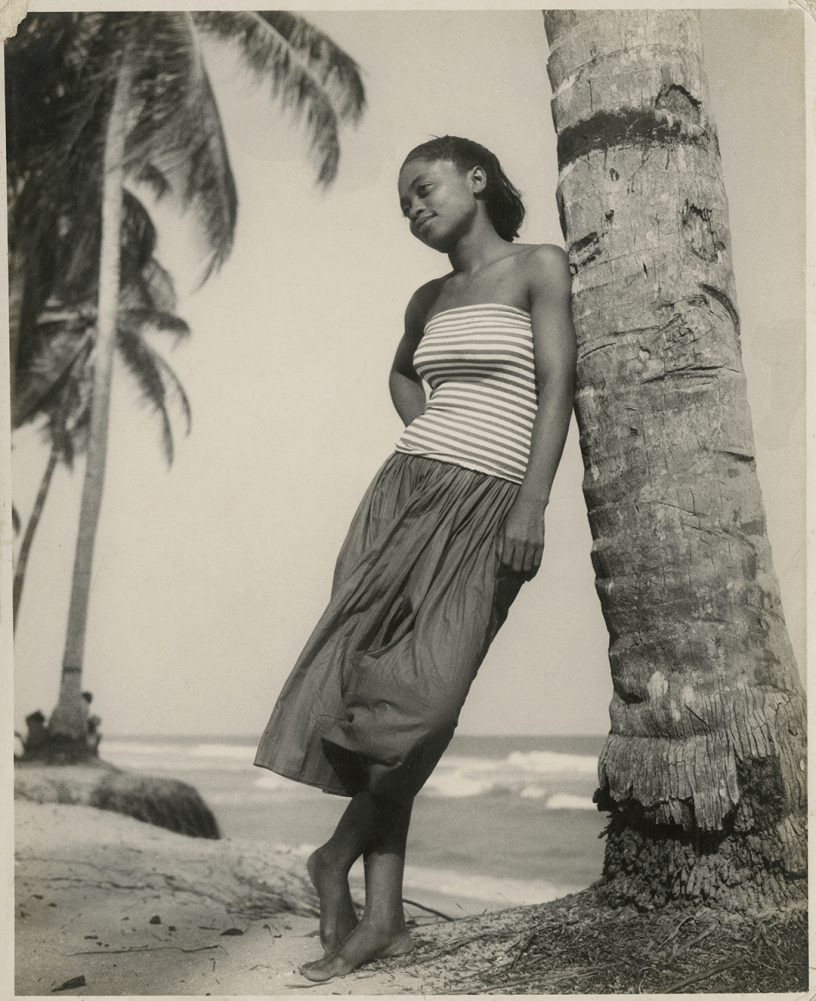
James Barnor (Ghanian, b. 1929) 'Emma Christiana Bruce Annan, Drum Party, Chorkor Beach, Accra' 1954-1956


James Barnor (Ghanian, b. 1929)
Emma Christiana Bruce Annan, Drum Party, Chorkor Beach, Accra
1954-1956
Courtesy Galerie Clémentine de la Féronnière


Introduction

Throughout his career, British-Ghanaian photographer James Barnor has captured images of societies in transition and transformation. Moving between Accra and London to cultivate a practice that encompasses the genres of studio portraiture, photojournalism and social documentary photography, Barnor witnessed and recorded major social and political changes during a career that spans over six decades and two continents. This exhibition, the largest survey of his work to date, is drawn from his extensive archive and focuses on the decades 1950-1980.

Born in 1929 in Accra, Ghana, Barnor came from a family of photographers. He initially trained under a photographic apprenticeship with his cousin J. P. D. Dodoo, before establishing Ever Young, his first studio, in the early 1950s. Barnor likened Ever Young to a community centre, and it was there that he captured a nation on the cusp of independence in an environment of lively conversation and music. During this time, he also undertook assignments for the Daily Graphic newspaper, owned by the Mirror Group, documenting key events and figures in the lead-up to Ghana’s independence in 1957, which established him as the first photojournalist in the country. Enticed by a friend’s promise that ‘London was the place for him’, Barnor arrived in London in December 1959 and spent the next decade furthering his studies, continuing assignments for the influential South African magazine Drum, and photographing his ever-growing circle of family and friends. He returned to Accra a decade later to establish the first colour-processing laboratory in Ghana. Barnor settled permanently in the UK in 1994 and now lives in West London.

Central to Barnor’s work is the intimate documentation of African and Afro-diasporic lives across time and space. Whether taking family snapshots, commissioned portraits or commercial assignments, Barnor approaches the photographic process as a collaborative venture, a conversation with the sitter, and these images are a testament to a lifetime of encounters. Barnor’s desire to bring communities with him along his journey extends to his lifelong passion for education, not just as a means of furthering his own skills but also as a way of transmitting his knowledge to others. The recent digitisation of his archive of 32,000 images has enabled him to adopt the daily practice of revisiting his pictures with fresh eyes and memories to share his extraordinary life and work with a new generation.

Ever Young Studio

Barnor first developed his photographic skills while serving an apprenticeship under his cousin J. P. D. Dodoo before going out on his own to establish Ever Young Studio in the early 1950s. Initially a modest, outdoor set-up with a darkroom in his aunt’s vacant room, the studio later moved to the Jamestown district of Accra in 953. Ever Young was a hive of activity, a drop-in space for people of all ages and all walks of life: ‘My studio was at a spot where everything happened in Accra, where young and old people met from various backgrounds, free to talk about everything and anything.’

Barnor took the name Ever Young from the story of Iduna’s Grove that he learned in school as a child. In the myth ‘Iduna, the beautiful young goddess of the Norsemen, lived in a pretty grove called Ever Young. She had a golden casket full of the most beautiful apples. A hero might come, tired and weary to Iduna’s Grove, feeling that he was growing old. Then Iduna would give him an apple and as soon as he had eaten it he would feel fresh and young again. It is not surprising that Iduna’s Grove was never lonely. As soon as the last rosy fruit had been given away, the casket was filled again by an invisible hand.’

The ethos of the name Ever Young can be felt in Barnor’s youthful energy and commitment to inspiring younger generations. The name also refers to his photographic training and process: ‘The essence of my studio profession is retouching, that’s the training I had, even though I wasn’t perfect. I thought that if someone came in, I’d make them look younger. So, if I open a studio, what should I call it? Ever Young.’

Accra Life

Barnor’s early work depicting life in and around Accra in the 1950s resisted the formal quality and rigid structure associated with large-format studio portraiture, becoming progressively more candid as he documented the communities around him using a small camera.

‘For me it was like living in two worlds: there was the careful handling of a sitter in my “studio” with a big camera on a heavy tripod, and then running around town chasing news and sports! … If I needed a picture, or a new story, I would rush to the Makola market, where people behave most like themselves. I enjoyed this more than studio photography. I would use a small camera. It was good for finding stories.’

Barnor became great friends with Drum magazine’s energetic proprietor, Jim Bailey. Drum was an influential South African politics and lifestyle magazine that also served as an anti-apartheid platform. When visiting Ghana, Bailey would host impromptu, often legendary, parties for the Drum community. One gathering was organised by Barnor at his studio, with another taking place on the beach, where he recounts that ‘people were swimming under the moon’.

Independence

In 1957, Ghana became the first West African country to gain independence from British colonial rule when Dr Kwame Nkrumah was elected its Prime Minister. Nkrumah’s political trajectory compounded by ‘philosophical consciencism’, an ideology for decolonisation to enable social revolution, saw him organising extensively with scholars and activists such as George Padmore and W.E.B Du Bois, who all resided in the country. Barnor was there to capture it all.

After gaining attention after one of his photographs was published in the Telegraph, Barnor was commissioned by UK-based Black Star Picture Agency and Drum magazine to photograph this time of significant historic transformation for a new nation, and the subsequent celebrations that drew people from all over the world.

‘I was the first newspaper photographer in Ghana, and I’m proud of that. Newspaper photography changed people’s lives and it changed journalism in Ghana. I was part of this moment.’

London

‘My friend and mentor, A. Q. A. Archampong, who had been my class teacher, had decided to go to England to study. We always kept in touch. Before he left, I said to him: “If the place is alright, write to me.” So, in his first letter to me, he wrote: “London is the place for you”.’

In 1959, two years after Ghana’s independence, Barnor arrived in London. After initially lodging in Peckham, he was introduced to Dennis Kemp by the Ghanaian Embassy, a lecturer in visual education working for the Kodak Lecture Service, who was researching Africa in preparation for a trip to document the forthcoming Nigerian independence celebrations. Kemp shared Barnor’s passion for photography and the two toured schools around the country where Kemp gave lectures using his archive of images on subjects that interested him, such as his travels, climbing and pot-holing, in order to demonstrate Kodak products as visual teaching aids. Barnor also joined Kemp on his trip to Nigeria in October 1960, and lodged at his flat in Holborn, eventually receiving a grant from the Ghana Cocoa Marketing Board to support his training. Barnor and Kemp would often host coffee evenings with friends discussing approaches to photography and shared interests in African cultures and philosophies.

Drum

‘When I saw Drum with my photos on the cover, alongside other magazines at the newsstands, I felt like I was in heaven.’

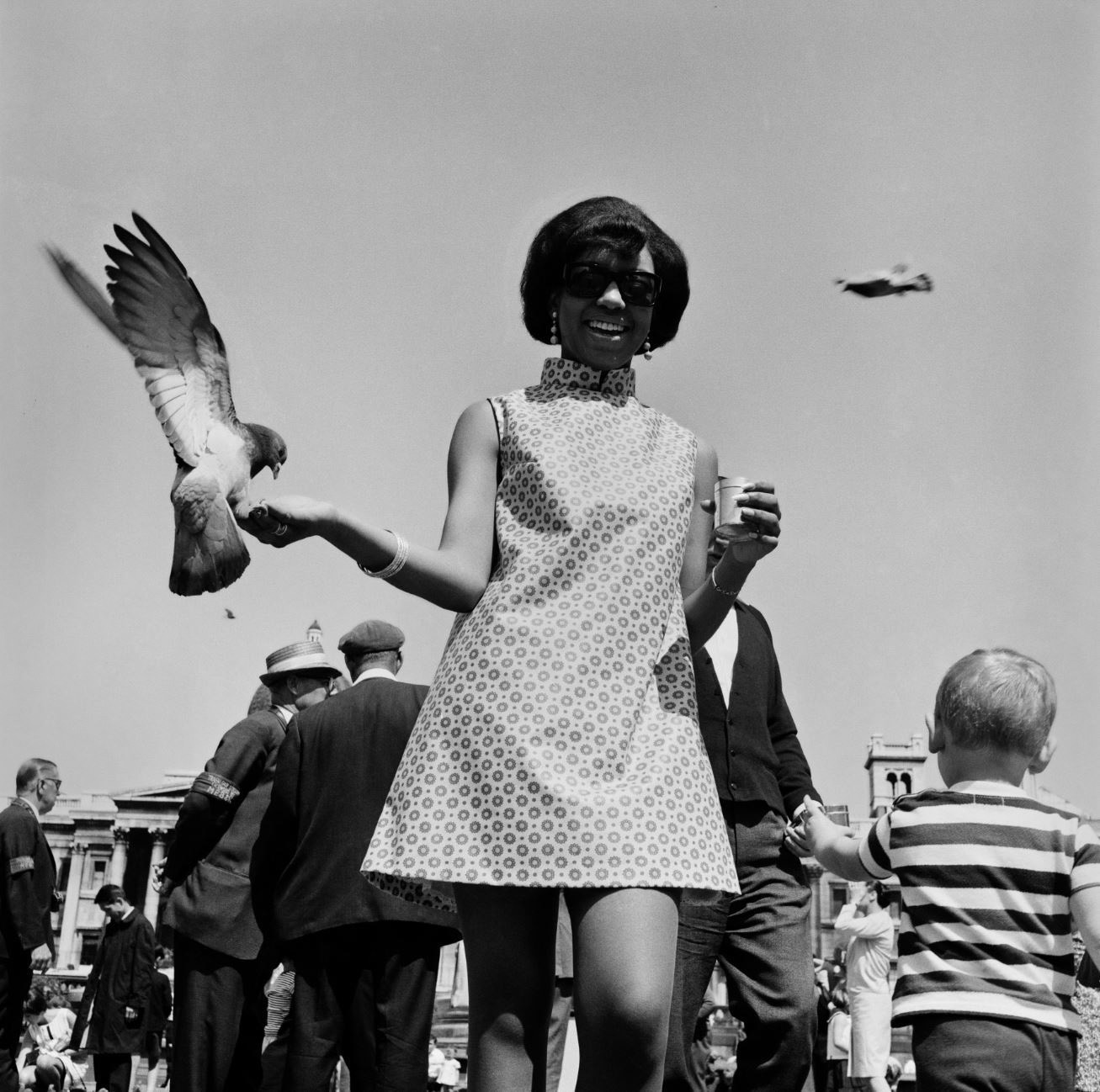
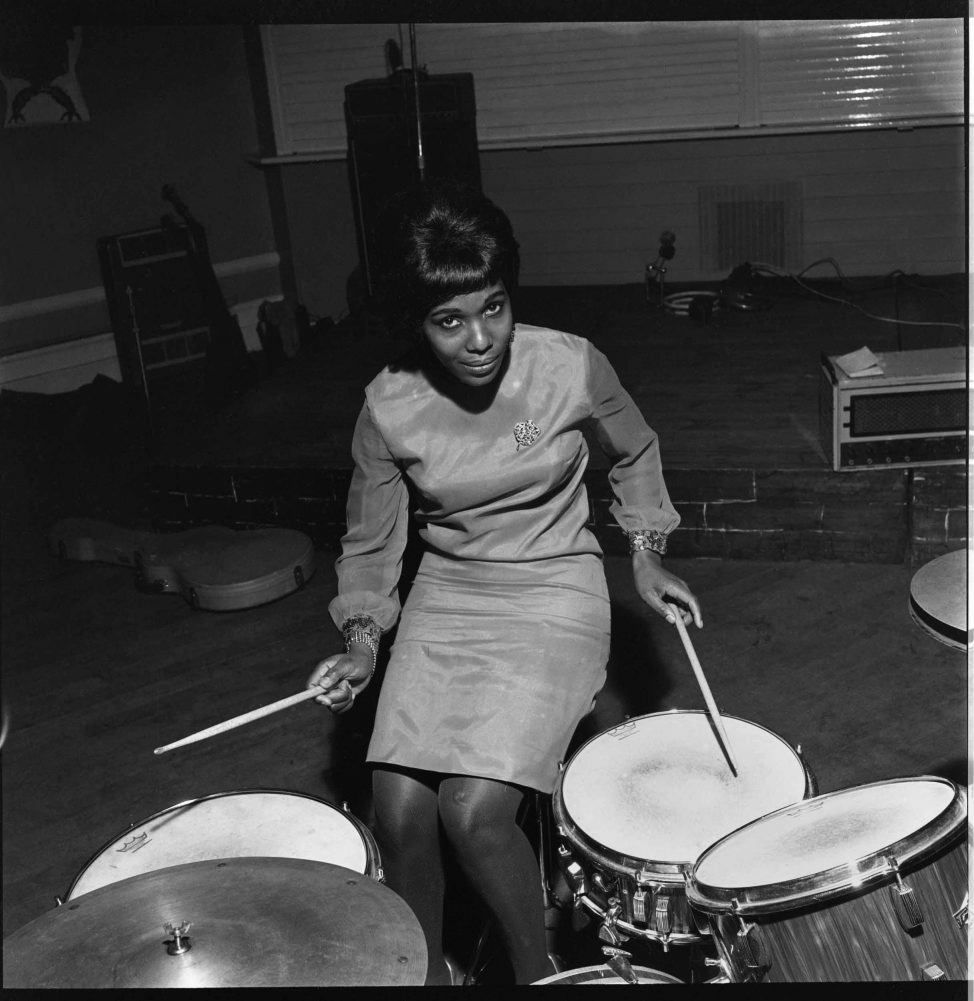
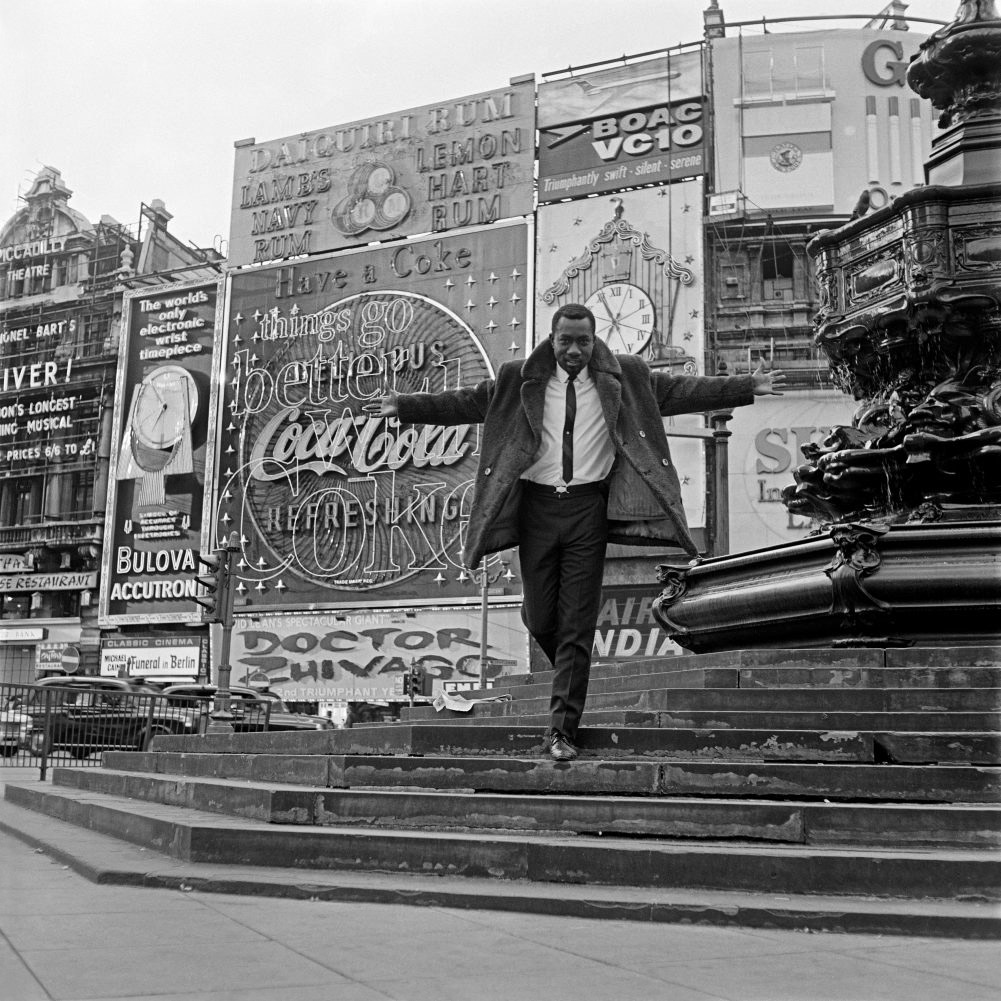
In London, Barnor continued assignments for Drum. He captured the experiences of a vibrant and growing Afro diasporic community for the magazine, playing a key role in placing models of African descent, such as Erlin Ibreck and Marie Hallowi, on the cover. Through his work for Drum, Barnor combined studio portraiture and street photography, capturing a singular vision of a diasporic ‘Swinging Sixties’ in London. Whether picturing Hallowi gazing seductively from a convertible car, or Mike Eghan joyously floating down the steps at Piccadilly Circus, these pictorial narratives articulate the Afro-diasporic reclaiming of space and agency in self-expression.

‘You couldn’t get work in the 1960s as a Black photographer. It wouldn’t happen that a Black photographer would instruct white sitters […] If you worked for a studio in London, you worked behind the scenes in the darkroom doing odd jobs. Drum though, where I did freelance work, was different. They let me photograph the cover girls, Muhammad Ali, Mike Eghan (the BBC presenter). Drum was my home in London, my office, I got everything done there.’

UK 1960s

In 1960, Barnor moved to Kent, where he learned about colour photography at the Colour Processing Laboratories (CPL) in Edenbridge, the UK’s leading lab at the time. With Kemp’s encouragement he enrolled in a three-year course at Medway College of Art in Rochester. At Medway, he learned the technical aspects of colour photography, while continuing to work during the holidays at CPL. After graduating he was employed as a technician at the college before he was hired as a photographer in the design section of Centre for Educational Television Overseas (CETO).

During this period Barnor became close to Kemp’s family, who lived in Southwick, West Sussex, spending his free time rock climbing with Kemp and going on weekly outings with the Tunbridge Wells Overseas Club, a community group that fostered friendships between people who had recently settled in West Kent. Barnor was offered full-time employment as a colour printer by CPL in 1968.

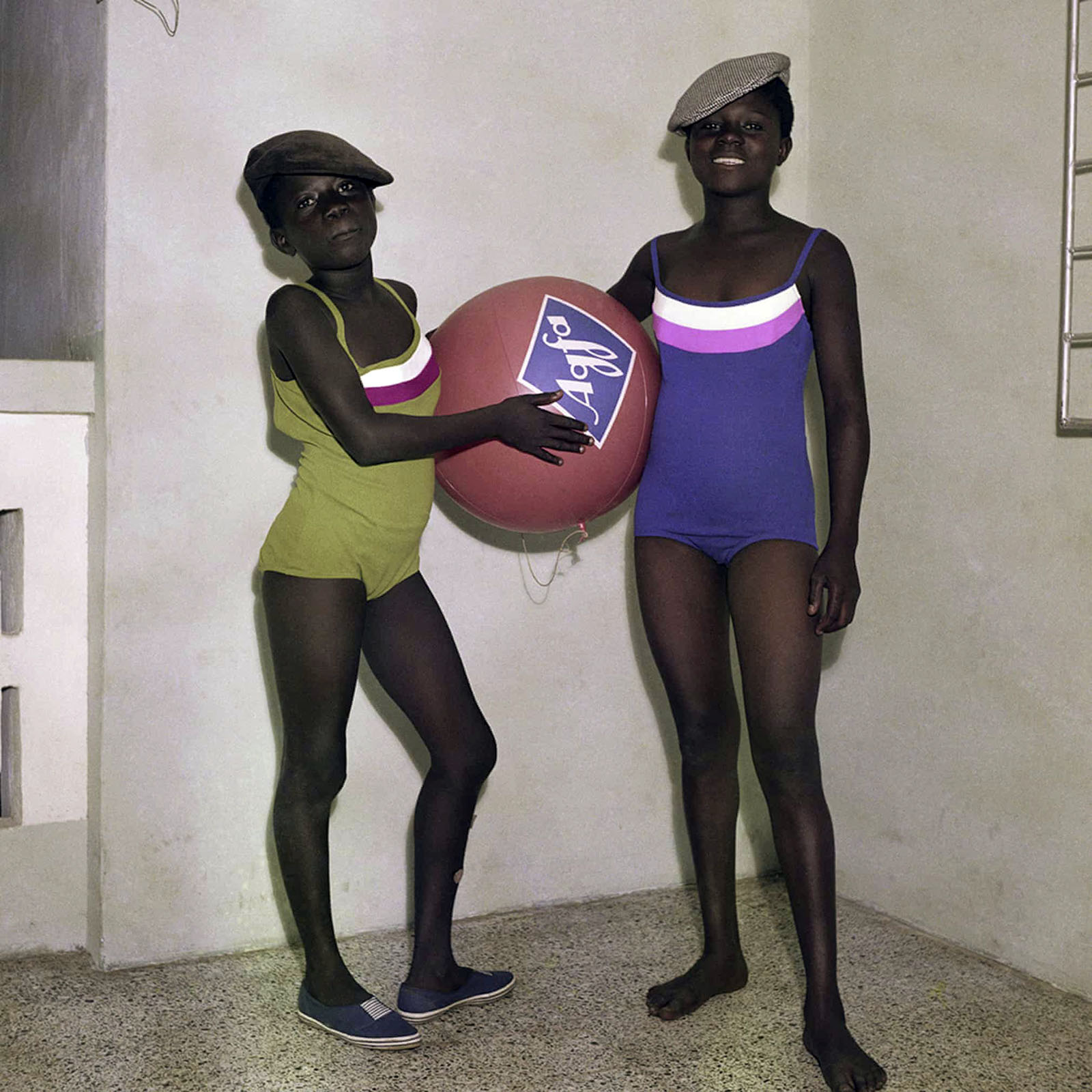
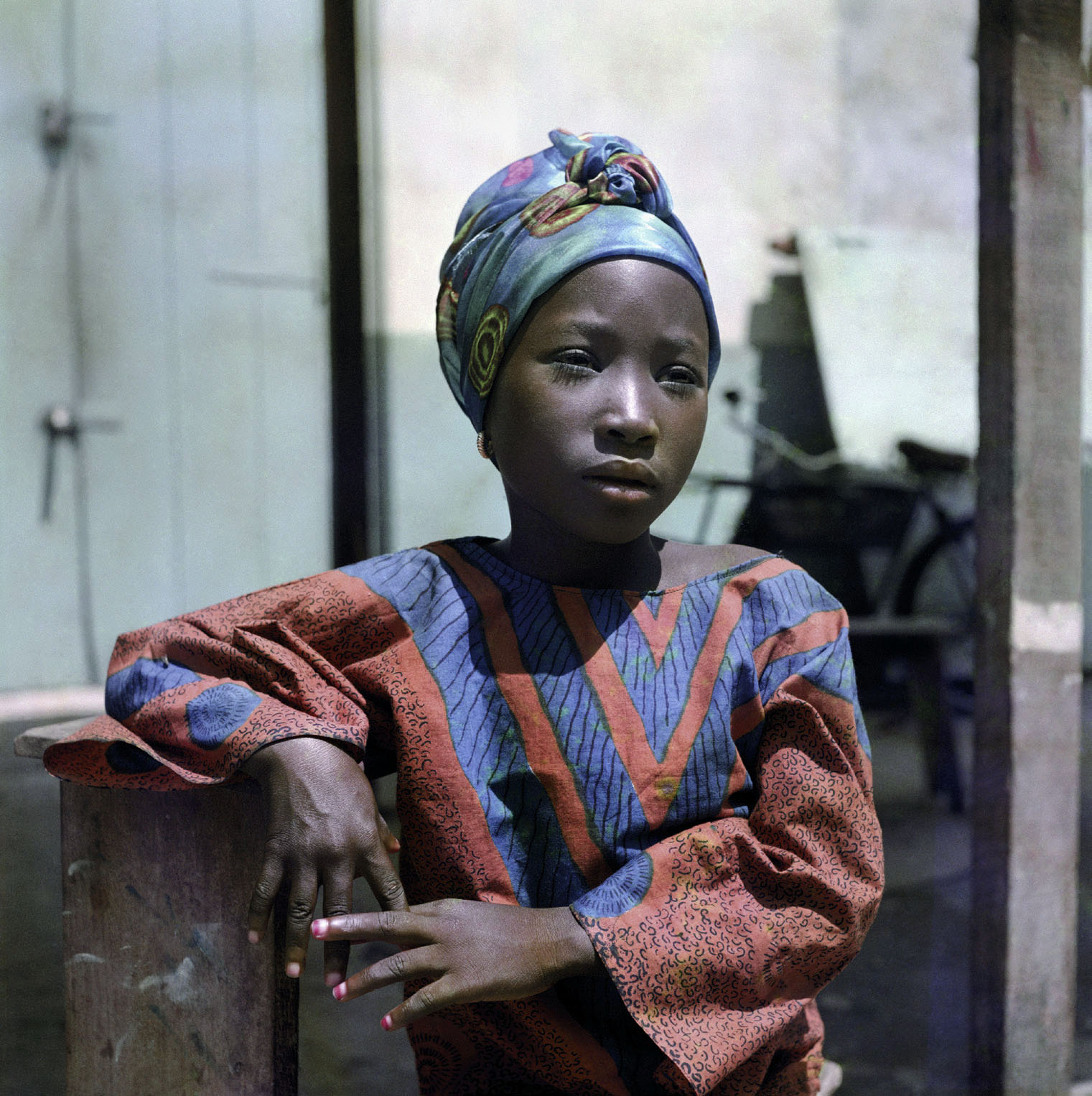
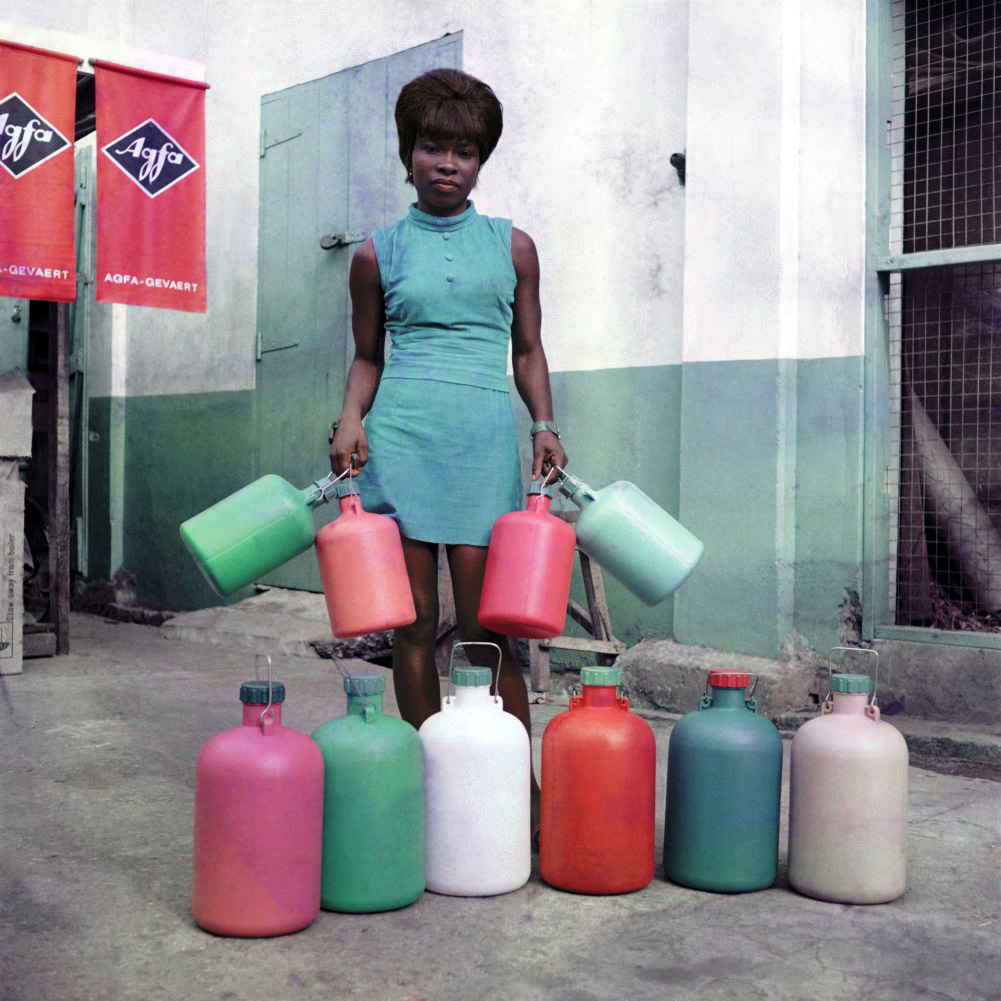
Colour in Ghana

Driven by a desire to share the experience and kills he acquired while working with colour photography in the UK, Barnor returned to Ghana in 1970 as a trained manager for Sick-Hagemayer, a subdivision of the photographic equipment and materials manufacturer Agfa-Gevaert, to establish the first colour-processing laboratory in the country, where he worked until 1973 before establishing his own studio. Prior to the introduction of colour film-processing labs in West Africa in the 1970s, photographers had to improvise or send films for processing abroad. With a local colour processing lab in Accra, under Barnor’s leadership, came a greater demand and wider access to colour photography. People wanted their photographs to depict the range of vibrant life and Ghanaian fashion around them. Barnor excelled in this regard, using his knowledge of colour and singular aesthetic to capture popular dress and create a new style of portraiture.

‘Colour really changed people’s ideas about photography. Kente is Ghanaian woven fabric with many different colours, and people wanted their photographs taken after church or in town wearing this cloth, so the news spread quickly.’

Accra Life and Studio X23

[Barnor] established his second studio, Studio X23 in 1973. Barnor initially converted a small storeroom given to him by his cousin Albert M. Quarcoopome into a darkroom before expanding into other parts of the building. Although he returned to Ghana with little intention of continuing a studio practice, it nevertheless found him again and for the next twenty years Barnor continued his practice as a portrait photographer.

Commissions

Alongside his studio practice Barnor regularly took on commercial commissions, many of which were passed on to him by his friend the graphic designer Emmanuel Odartey Lamptey. Barnor shot images for clients including a promotional calendar for the Italian oil company AGIP, and publicity shots and record sleeve images for musicians like E. K. Nyame. ‘I was close to the music fraternity too. I knew E.T. Mensah, who played the trumpet and the sax and spearheaded high-life music before all the others. I knew all the musicians. I was taking their pictures.’

Music

While continuing to run Studio X23 and working at the United States Information Service throughout the 1970s and 80s Barnor’s attention became increasingly focussed on pursuing his passion for music through the management of children’s troupe Ebaahi Gbiko (All Will Be Well One Day), later renamed Fee Hi (All is Well). The group rehearsed in the yard of the studio every day with the understanding that they had to attend school. He felt that practising together after school kept the group out of trouble and focused on their education: ‘I don’t play drums, write music or sing, but I took them in like my own children.’ The troupe became an important part of Barnor’s life, and he accompanied them on a tour of Italy in 1983 as part of an anti-apartheid campaign focusing on the living conditions of South African children for which they had been officially nominated.

As a result of the early 1980s global economic recession, by the middle of the decade Ghana’s economy collapsed, leading to a debt crisis that spread across the African continent. This made conditions difficult for Barnor to continue his photographic practice, the troupe disbanded and in 1994 he returned to the UK. Barnor enrolled in business-management classes in the evening and secured a rehearsal space with the hope of reforming the troupe and bringing them to London but was unable to arrange work permits and relinquished the idea. Today, former members of Fee Hi are, as Barnor notes: ‘All over the diaspora. They have since joined other groups, and I feel very pleased. The memory of them will never leave me.’

Text from the Serpentine North Gallery


James Barnor (Ghanian, b. 1929) 'Drum cover girl Erlin Ibreck at Trafalgar Square, London' 1966


James Barnor (Ghanian, b. 1929)
Drum cover girl Erlin Ibreck at Trafalgar Square, London
1966, modern print
C-Type Print
© James Barnor, courtesy galerie Clémentine de la Féronnière


Throughout the 1960s James Barnor shot six covers for Drum, a leading lifestyle, culture and politics magazine on the African continent that also served as anti-apartheid platform. By combining studio portraiture and street photography, Barnor’s lens captured the experiences of a vibrant and growing Afro diasporic community in London, playing a key role in placing models of African descent such as Erlin Ibreck on the cover of Drum. Here he captured the experiences of another growing and vibrant ‘Swinging Sixties’ as articulated by the Afro diasporic community in their self-expression thus reclaiming of space and agency.


James Barnor (Ghanian, b. 1929) 'Model playing drums: Constance Mulondo, 'Drum' cover, at London University Weekend with the band The Millionaires, London' 1967


James Barnor (Ghanian, b. 1929)
Model playing drums: Constance Mulondo, Drum cover, at London University Weekend with the band The Millionaires, London
1967
© James Barnor, courtesy galerie Clémentine de la Féronnière


James Barnor (Ghanian, b. 1929) 'Mike Eghan at Piccadilly Circus, London' 1967


James Barnor (Ghanian, b. 1929)
Mike Eghan at Piccadilly Circus, London
1967
© James Barnor/Autograph ABP, London


As part of his work with Drum, Barnor captured the BBC’s first Black broadcaster, Mike Eghan, on the steps of the famous Eros statue in Piccadilly Circus, central London. Another photo shows street-scouted cover girl, 19-year-old Erlin Ibreck – whom he met waiting for a bus – feeding pigeons in Trafalgar Square.


James Barnor (Ghanian, b. 1929) 'Coffee night at Theobald's Road, London' 1960


James Barnor (Ghanian, b. 1929)
Coffee night at Theobald’s Road, London
1960
James Barnor/Courtesy Autograph ABP


James Barnor (Ghanian, b. 1929) 'Pearly King, Petticoat Lane Market, London' 1960s


James Barnor (Ghanian, b. 1929)
Pearly King, Petticoat Lane Market, London
1960s
Courtesy Galerie Clémentine de la Féronnière


James Barnor (Ghanian, b. 1929) 'Early morning in Covent Garden market in 1960s London' 1960s


James Barnor (Ghanian, b. 1929)
Early morning in Covent Garden market in 1960s London
1960s
Courtesy Galerie Clémentine de la Féronnière


James Barnor (Ghanian, b. 1929) 'Drum cover girl Rosemarie Thompson, London' 1967


James Barnor (Ghanian, b. 1929)
Drum cover girl Rosemarie Thompson, London
1967
Courtesy of Autograph


James Barnor (Ghanian, b. 1929) 'Wedding guests, London' 1960s


James Barnor (Ghanian, b. 1929)
Wedding guests, London
1960s
Courtesy of Autograph


James Barnor (Ghanian, b. 1929) 'A group of friends photographed during Mr. And Mrs Sackey's wedding, London' c. 1966


James Barnor (Ghanian, b. 1929)
A group of friends photographed during Mr. And Mrs Sackey’s wedding, London
c. 1966
Courtesy of Galerie Clémentine de la Féronnière


James Barnor (Ghanian, b. 1929) 'At Ataa Quarcoopome, family members at the occasion of the engagement of James cousin, Amanomo, Accra' c. 1970-1971


James Barnor (Ghanian, b. 1929)
At Ataa Quarcoopome, family members at the occasion of the engagement of James cousin, Amanomo, Accra
c. 1970-1971
Courtesy of Galerie Clémentine de la Féronnière


James Barnor (Ghanian, b. 1929) Wedding Portrait, Nii Ayi, Holy Trinity Cathedral, Accra 1970-1980


James Barnor (Ghanian, b. 1929)
Wedding Portrait, Nii Ayi, Holy Trinity Cathedral, Accra
1970-1980
Courtesy of Galerie Clémentine de la Féronnière


James Barnor (Ghanian, b. 1929) 'E. K. Nyame, the legendary Ghanaian musician, photographed for a record cover, Accra' c. 1975


James Barnor (Ghanian, b. 1929)
E. K. Nyame, the legendary Ghanaian musician, photographed for a record cover, Accra
c. 1975
Courtesy of Galerie Clémentine de la Féronnière


James Barnor (Ghanian, b. 1929) 'Sister holding Brother, Accra' 1979


James Barnor (Ghanian, b. 1929)
Sister holding Brother, Accra
1979
Courtesy Galerie Clémentine de la Féronnière


James Barnor (Ghanian, b. 1929) ''Drum' cover model Marie Hallowi at Charing Cross Station, London' 1966


James Barnor (Ghanian, b. 1929)
Drum cover model Marie Hallowi at Charing Cross Station, London

1966
Courtesy of Galerie Clémentine de la Féronnière


James Barnor (Ghanian, b. 1929) 'Members of the Tunbridge Wells Overseas Club, Relaxing after a Hot Summer Sunday Walk, Kent' c. 1968


James Barnor (Ghanian, b. 1929)
Members of the Tunbridge Wells Overseas Club, Relaxing after a Hot Summer Sunday Walk, Kent
c. 1968
Courtesy of Galerie Clémentine de la Féronnière


James Barnor (Ghanian, b. 1929) 'Two friends dressed for a church celebration with James' car, Accra' 1970


James Barnor (Ghanian, b. 1929)
Two friends dressed for a church celebration with James’ car, Accra
1970


James Barnor (Ghanian, b. 1929) 'James Barnor at the studio Agfa-Gevaert in Mortsel, Belgium' 1969


James Barnor (Ghanian, b. 1929)
James Barnor at the studio Agfa-Gevaert in Mortsel, Belgium
1969
© James Barnor Courtesy of Galerie Clémentine de la Féronnière


James Barnor (Ghanian, b. 1929) 'Mavis and Mary Barnor with an Agfa advertising ball' 1970


James Barnor (Ghanian, b. 1929)
Mavis and Mary Barnor with an Agfa advertising ball
1970
© James Barnor/Autograph ABP, London


James Barnor (Ghanian, b. 1929) 'Miss Sophia Salomon, Kokomlemle, Accra' c. 1972


James Barnor (Ghanian, b. 1929)
Miss Sophia Salomon, Kokomlemle, Accra
c. 1972
Courtesy of Autograph


James Barnor (Ghanian, b. 1929) 'Salah Day, Kokomlemle, Accra' 1973


James Barnor (Ghanian, b. 1929)
Salah Day, Kokomlemle, Accra
1973
© James Barnor/Autograph ABP, London


James Barnor (Ghanian, b. 1929) 'A shop assistant at the Sick-Hagemeyer store. Accra' 1971


James Barnor (Ghanian, b. 1929)
A shop assistant at the Sick-Hagemeyer store. Accra
1971
© James Barnor courtesy of Galerie Clémentine de la Féronnière


James Barnor (Ghanian, b. 1929) 'A store assistant on Station Road, Accra' 1971


James Barnor (Ghanian, b. 1929)
A store assistant on Station Road, Accra
1971
© James Barnor courtesy of Galerie Clémentine de la Féronnière


James Barnor (Ghanian, b. 1929) 'AGIP calendar model' 1974


James Barnor (Ghanian, b. 1929)
AGIP calendar model
1974
October Gallery, London


James Barnor (Ghanian, b. 1929) 'Model posing for Agip 1 Calendar, Accra' c. 1974-1975


James Barnor (Ghanian, b. 1929)
Model posing for Agip 1 Calendar, Accra
c. 1974-1975
© James Barnor Courtesy of Galerie Clémentine de la Féronnière


James Barnor (Ghanian, b. 1929) 'Fee Hii Cultural troupe' c. 1983-1984


James Barnor (Ghanian, b. 1929)
Fee Hii Cultural troupe
c. 1983-1984


'James Barnor: Accra/London – A Retrospective' book cover


James Barnor: Accra/London – A Retrospective book cover


Serpentine Gallery
Kensington Gardens
London W2 3XA
Phone: 020 7402 6075

Opening hours:
Tuesday – Sunday 10am – 6pm

Serpentine Gallery website

LIKE ART BLART ON FACEBOOK

Back to top