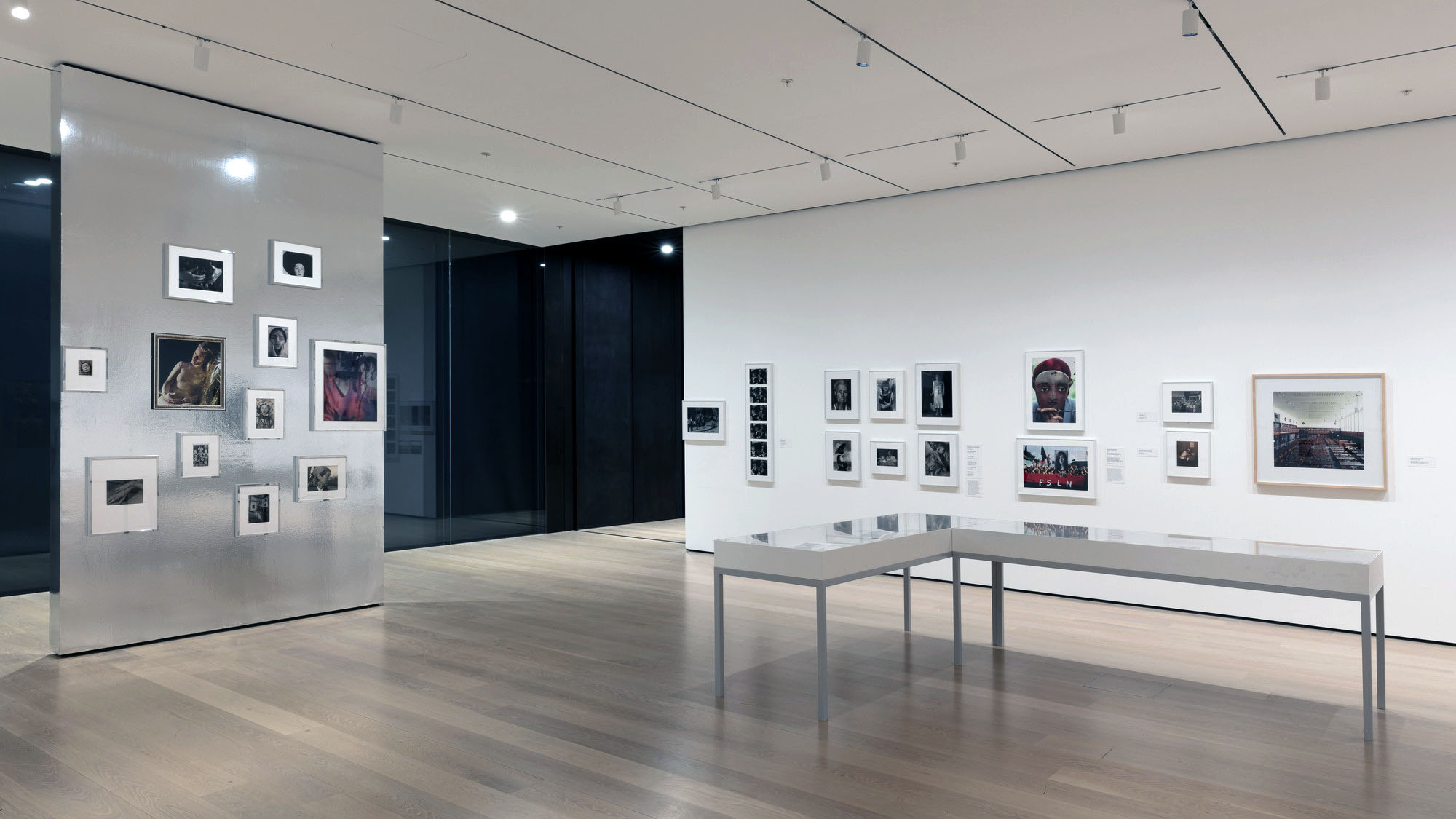
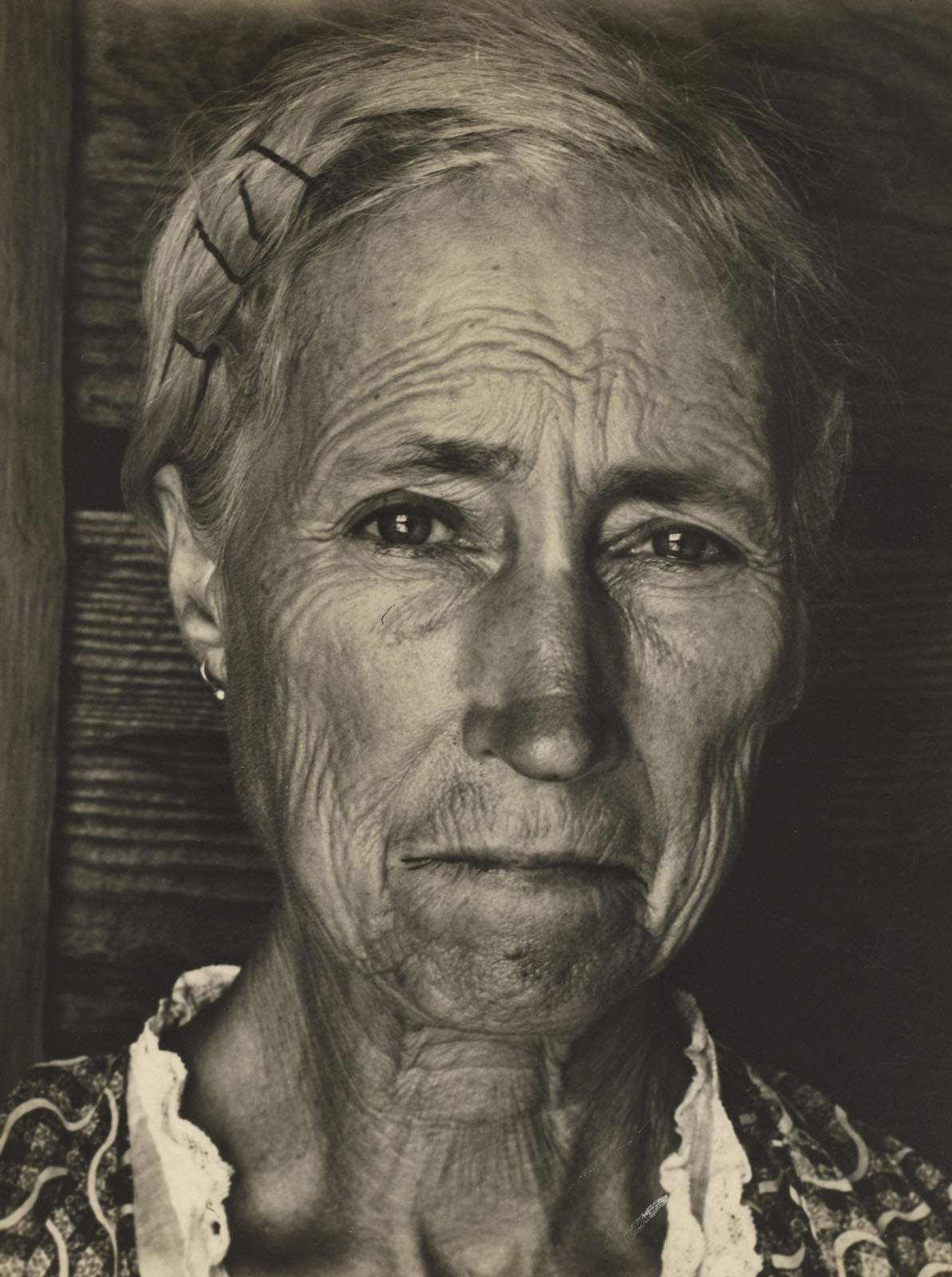
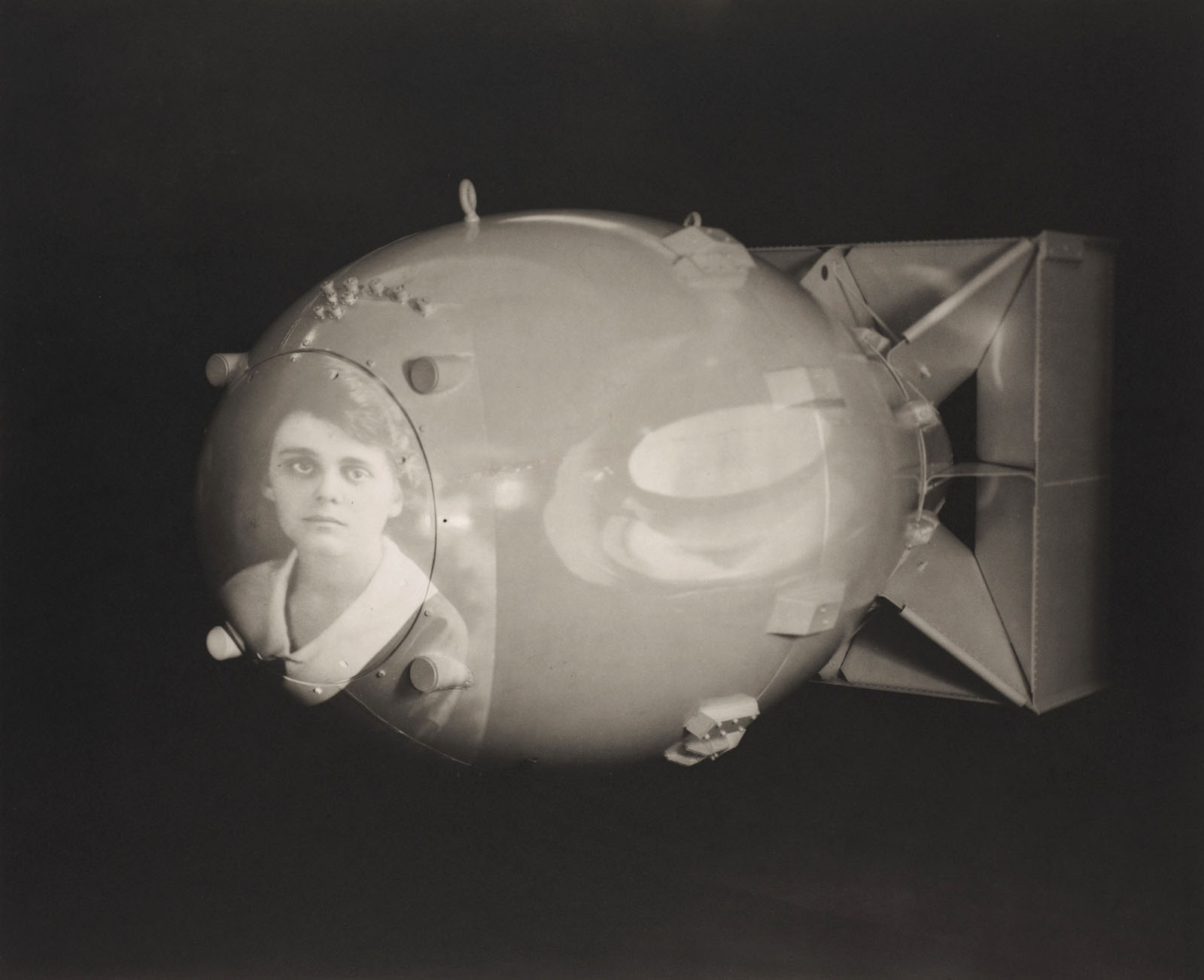
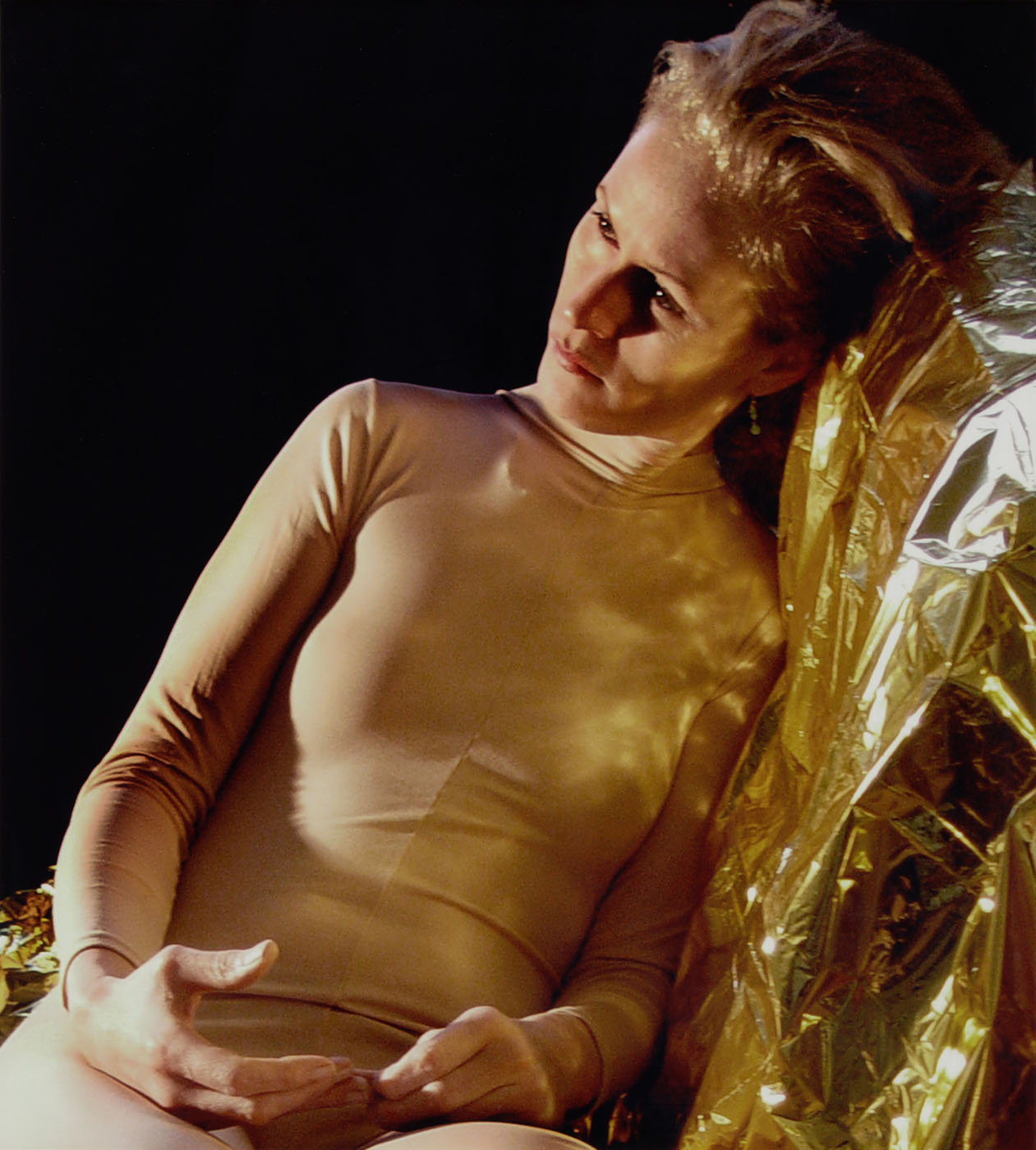
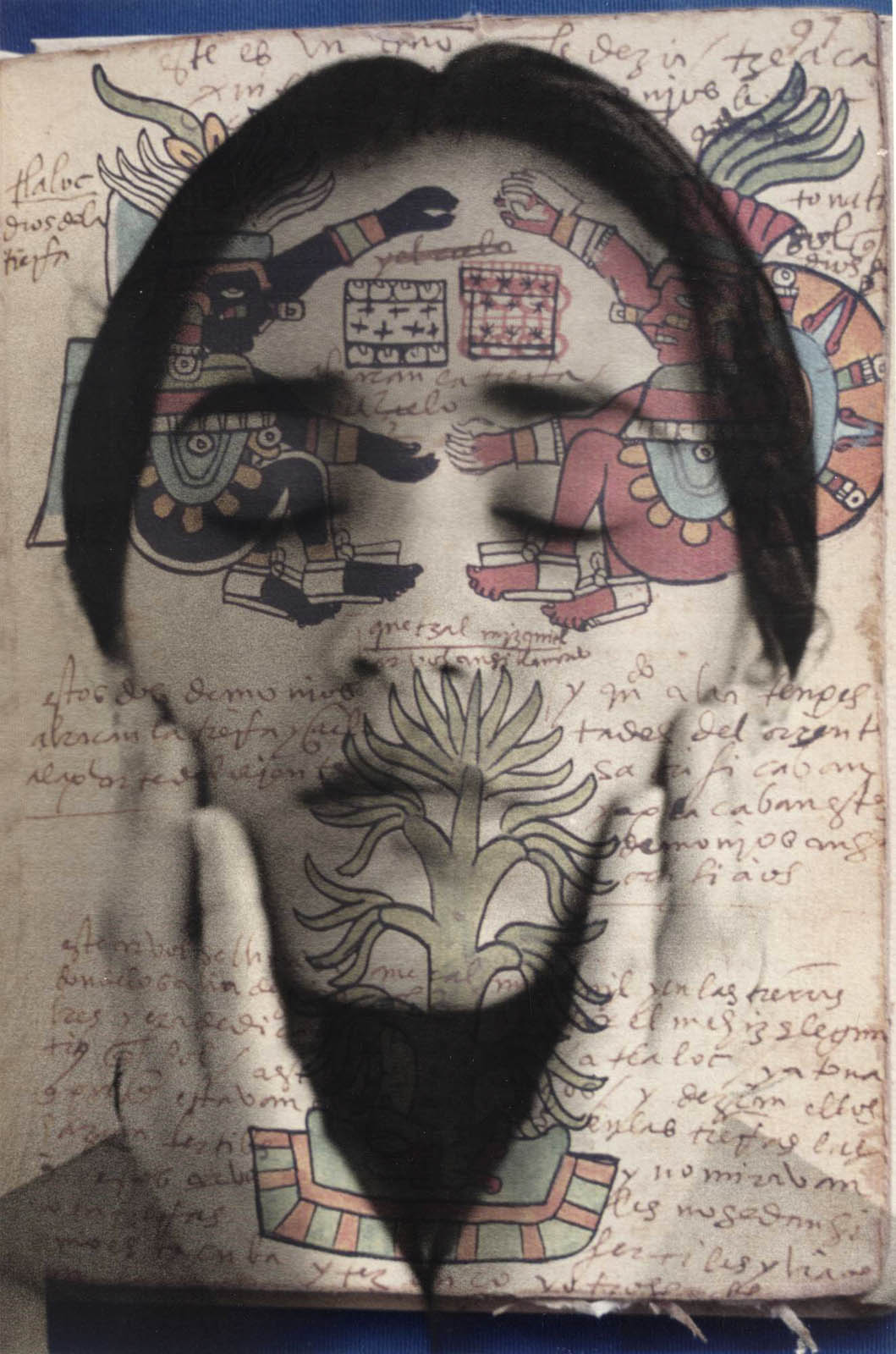
Exhibition: ‘Women Photographers 1900-1975: A Legacy of Light’ at NGV International, Melbourne, Part 1

Exhibition dates: 28th November, 2025 – 3rd May, 2026

Curator: Maggie Finch, Curator of Photography at the NGV
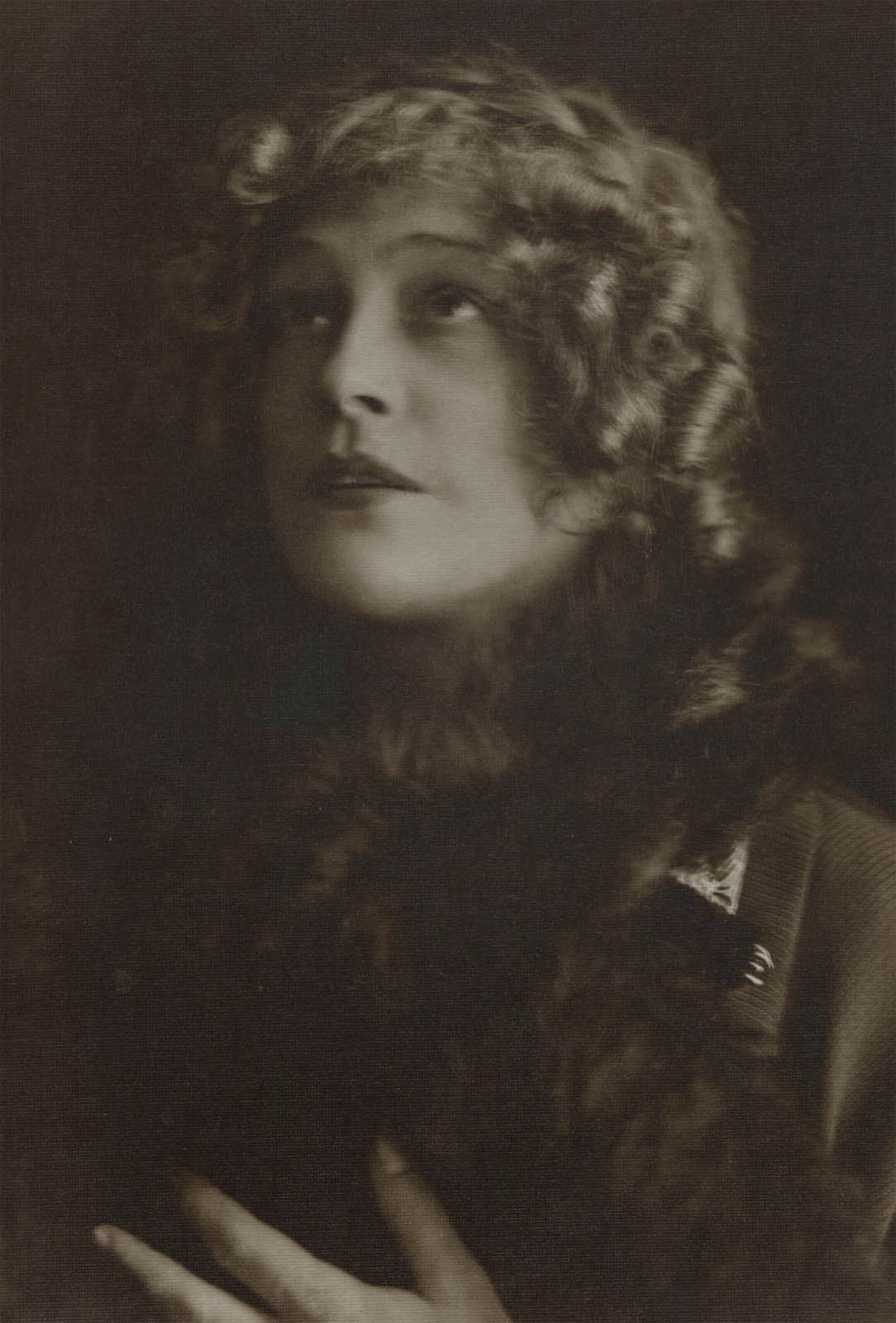
 

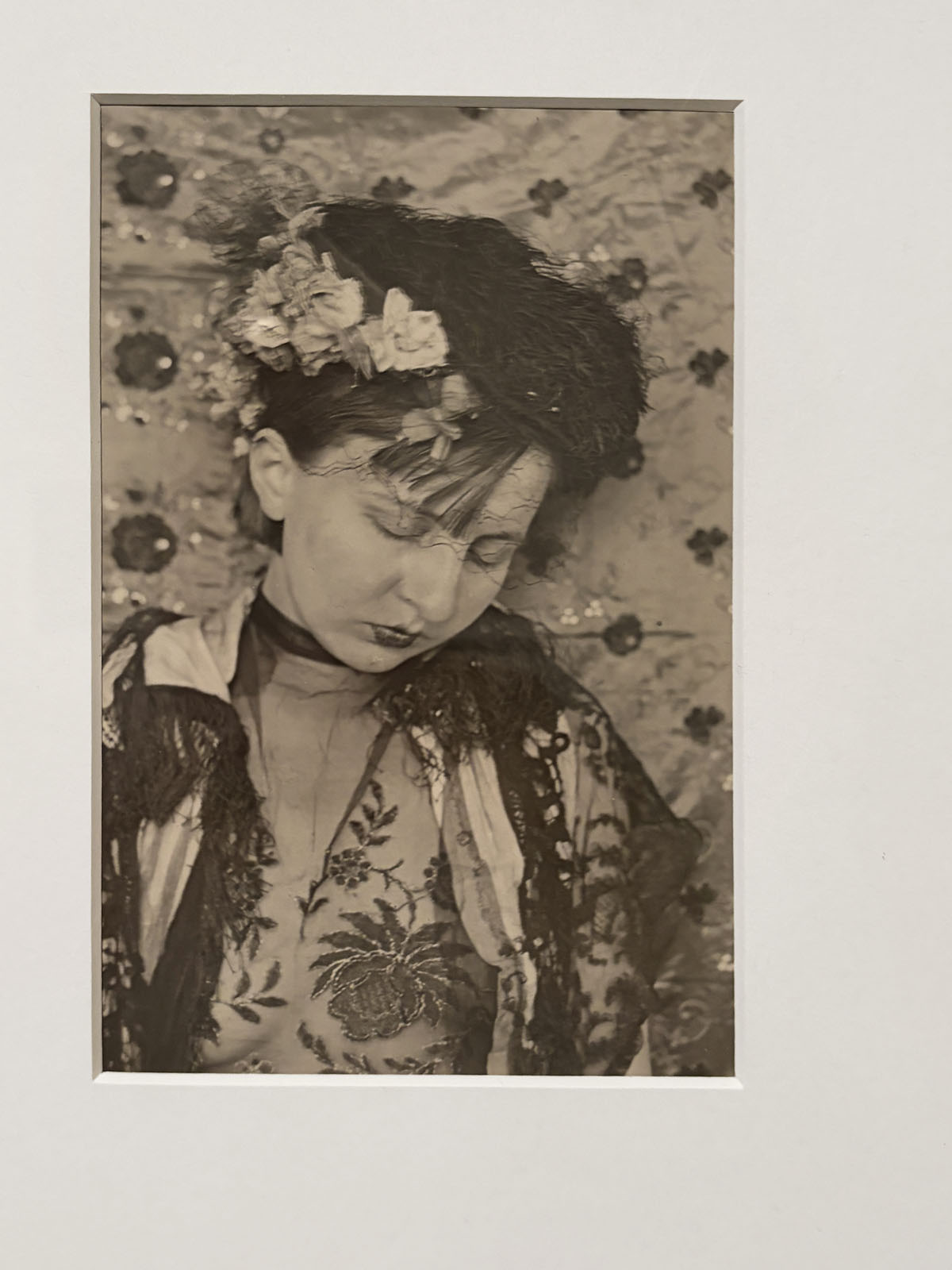
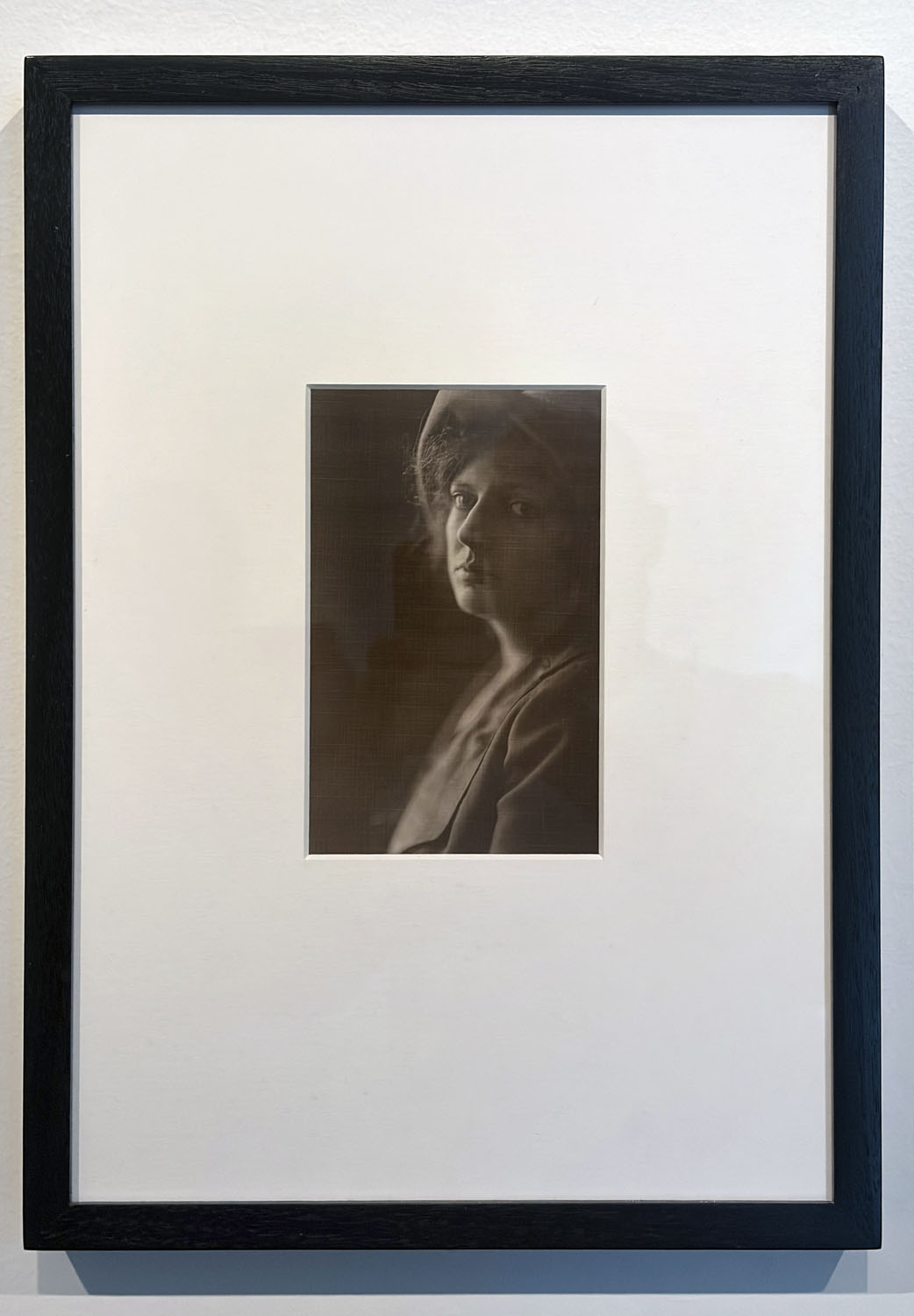
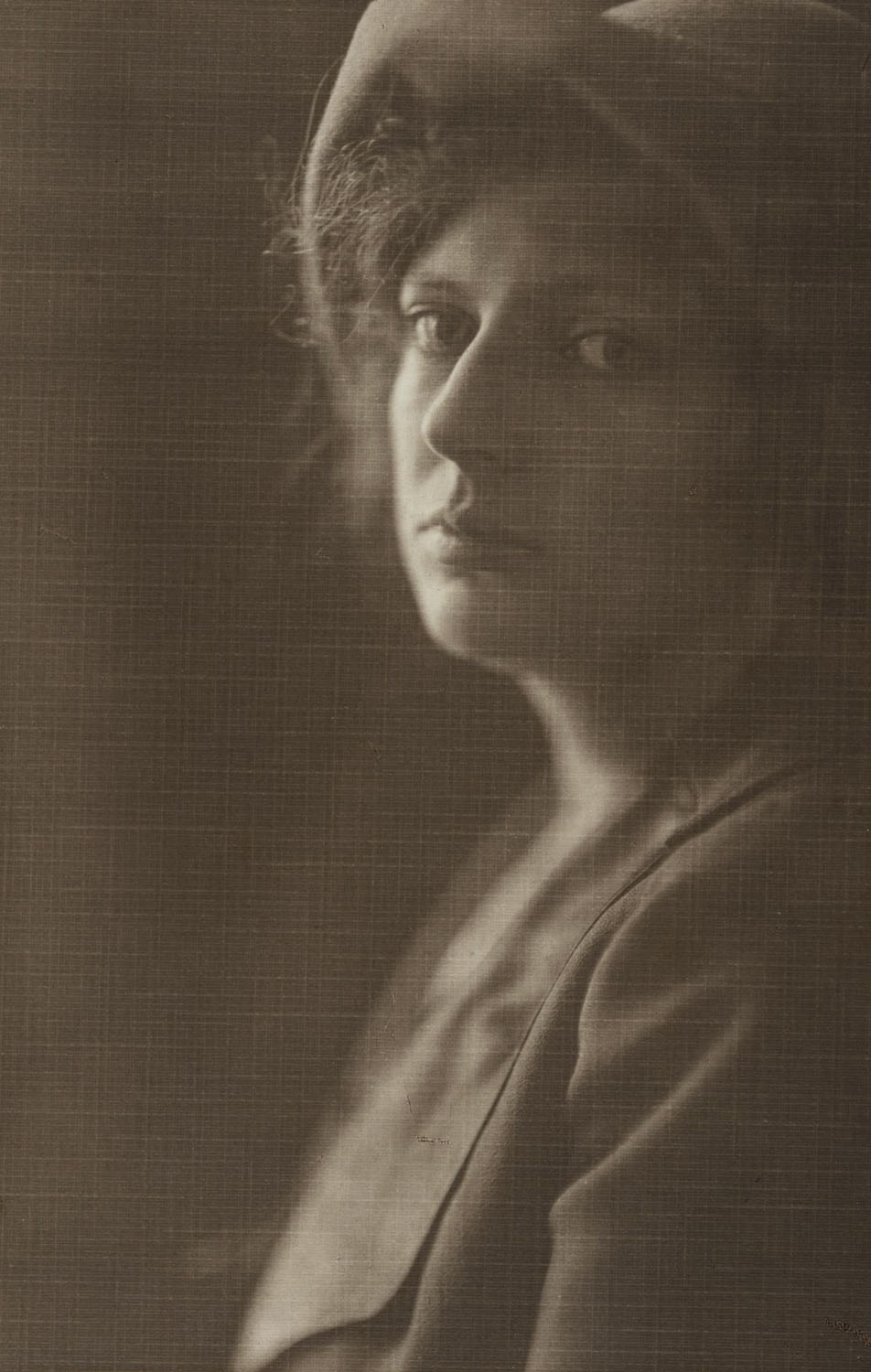
Mina Moore (New Zealand, 1882-1957) 'Nellie Stewart' c. 1913-1916


Mina Moore (New Zealand, 1882-1957)
Nellie Stewart
c. 1913-1916
Gelatin silver photograph
18.6 x 12.7cm (image)
National Gallery of Victoria, Melbourne
Gift of the Latrobe Collection, State Library of Victoria, 1992


Sisters May and Mina Moore operated their photography studio from 1913 in the newly completed Auditorium Building at 167 Collins Street, Melbourne. This building also housed a concert hall, where recitals, operas and music performances were presented. The location was particularly advantageous for the photographers as it provided a steady stream of performers and productions in need of promotional portraits.

Wall text from the exhibition

Nellie Stewart, born Eleanor Stewart Towzey (1858-1931) was an Australian actress and singer, known as “Our Nell” and “Sweet Nell”. Born into a theatrical family, Stewart began acting as a child. As a young woman, she built a career playing in operetta and Gilbert and Sullivan operas.


It’s great to have a record of this extensive photography exhibition at the National Gallery of Victoria, Melbourne

In this first part of the exhibition, Part 1 of a huge two-part posting on Art Blart (posting proceeds as in a walk through of the exhibition), highlights for me included:

~ Two photographs by the under appreciated Bahaus artist and self taught photographer Gertrud Arndt (German, 1903-2000) whose portraits of friends, still-lifes, and performative self-portrait images are rarely seen

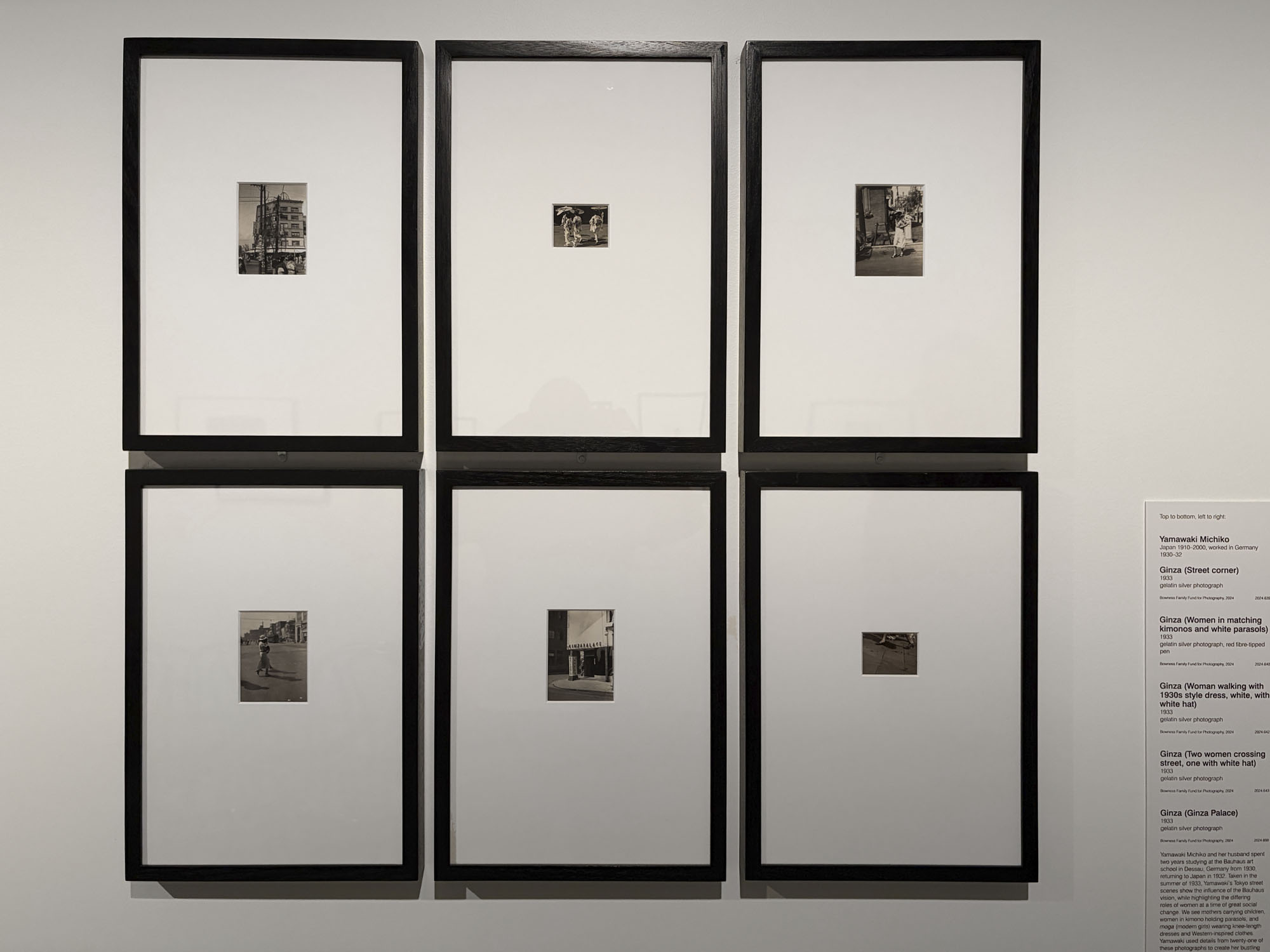
~ Six small, intense, jewel-like photographs by Bauhaus student Yamawaki Michiko (Japan, 1910-2000, worked in Germany 1930-1932) of “new women” and street corners in Ginza, Japan which were a revelation for their beauty, pictorial composition, tonality, spatiality and physical presence of the image

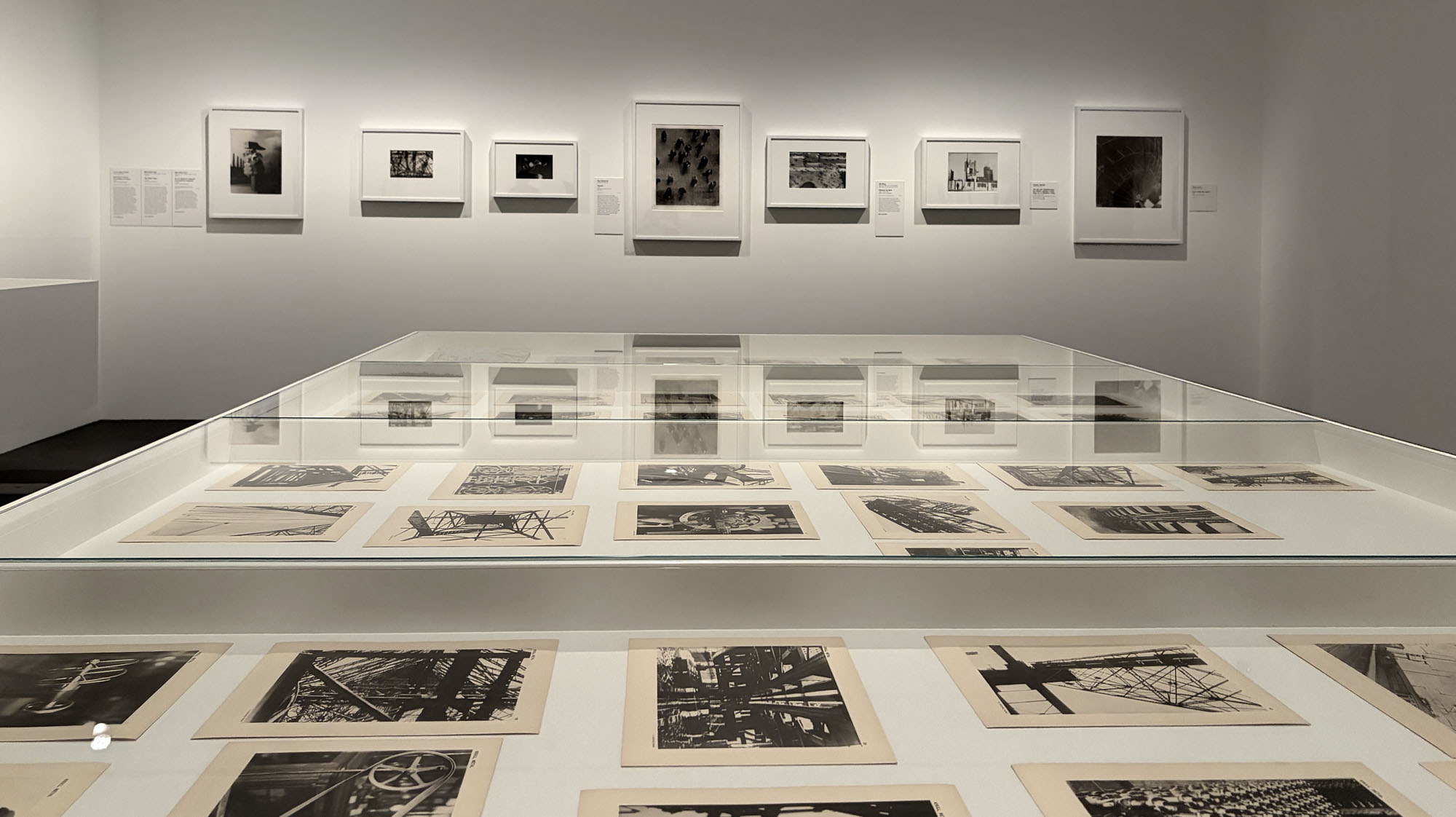
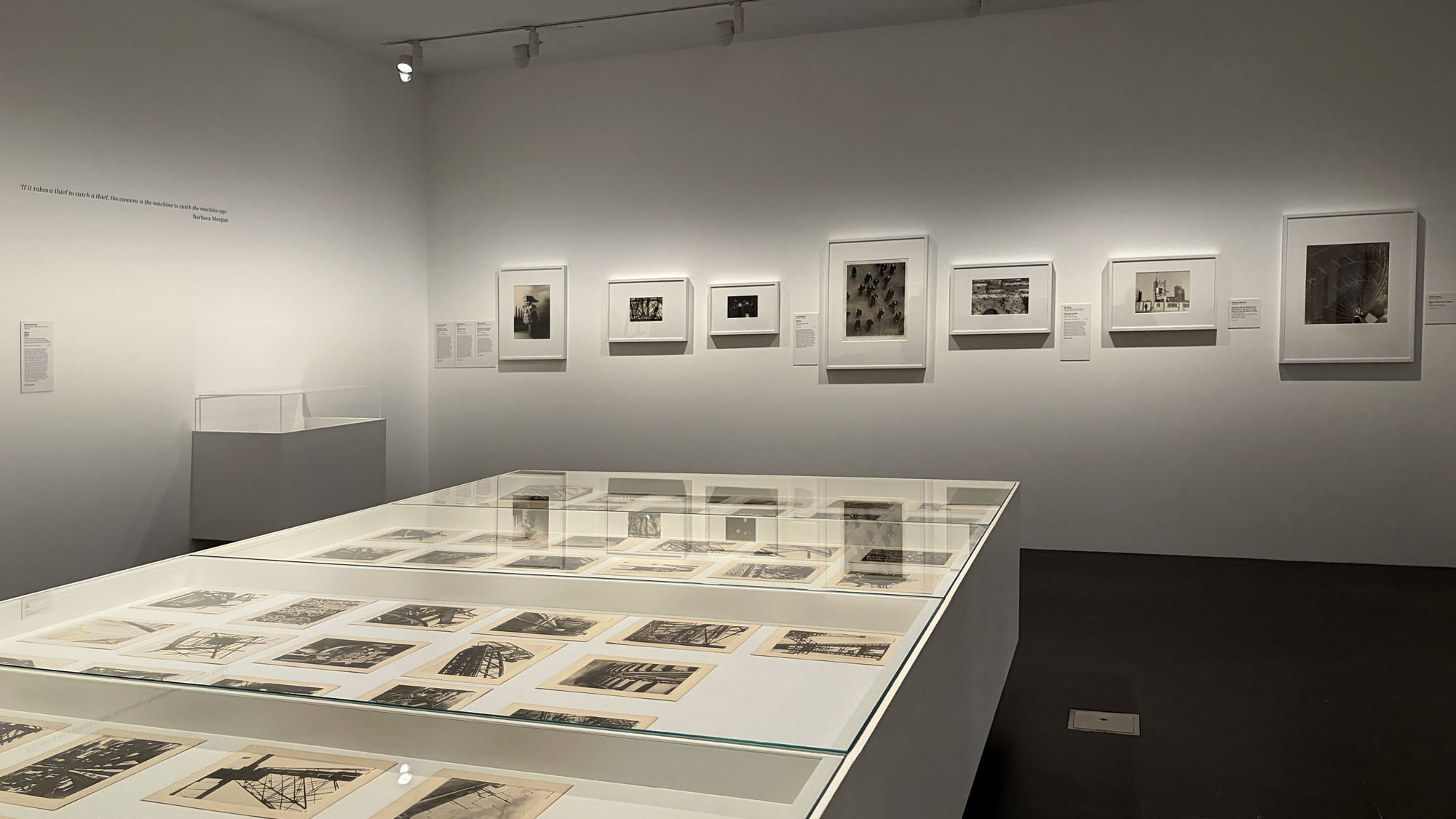
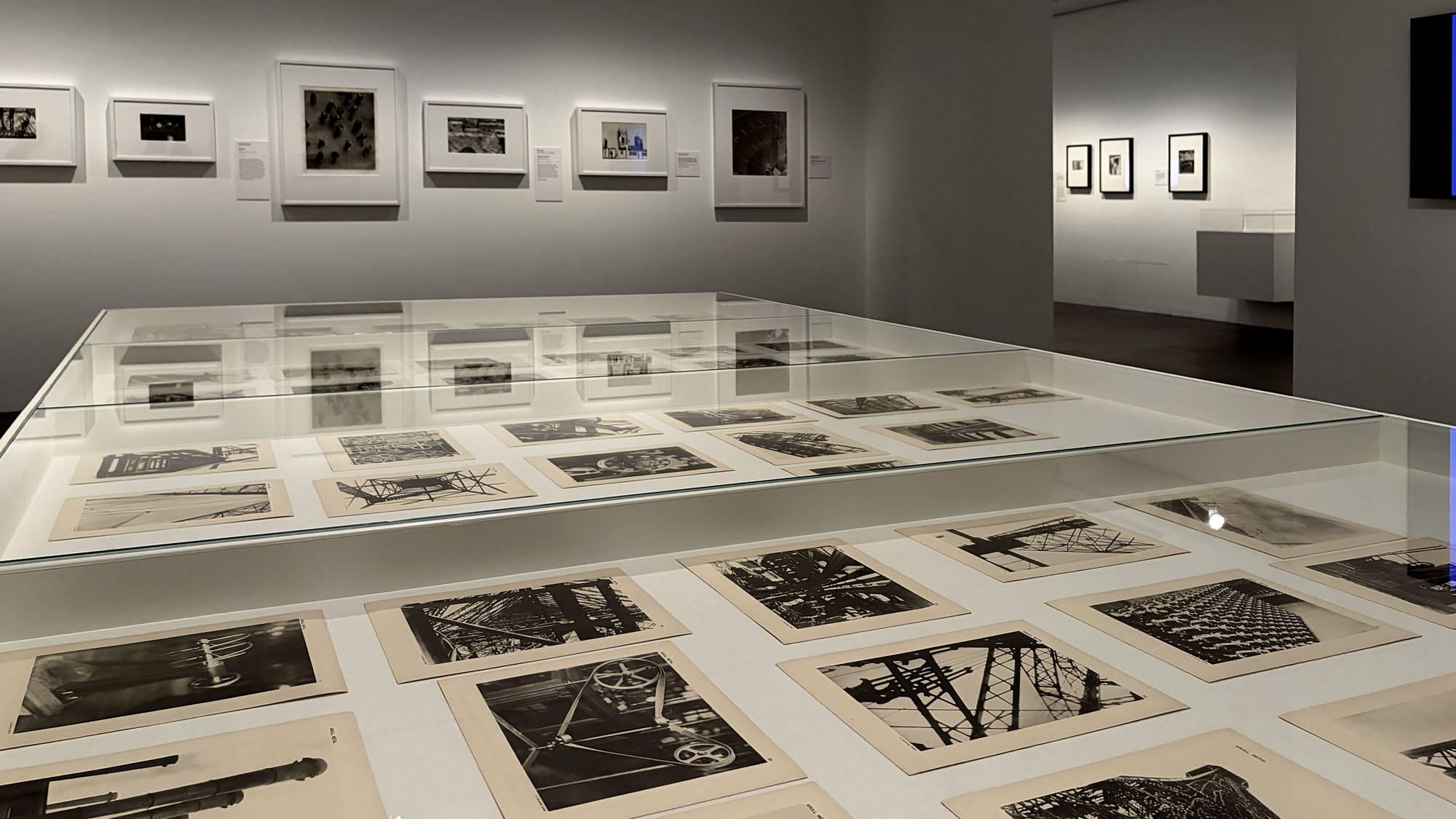
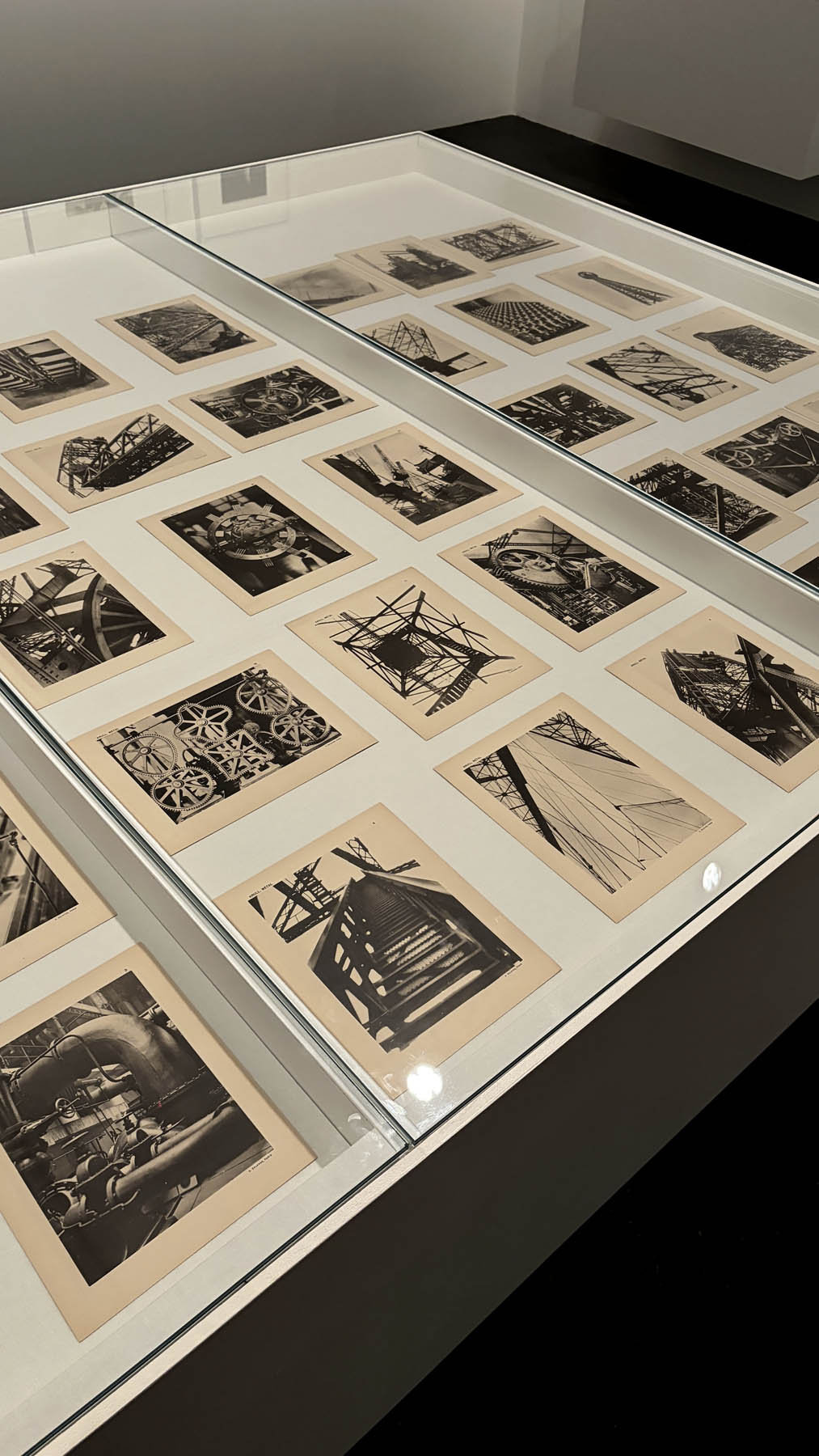
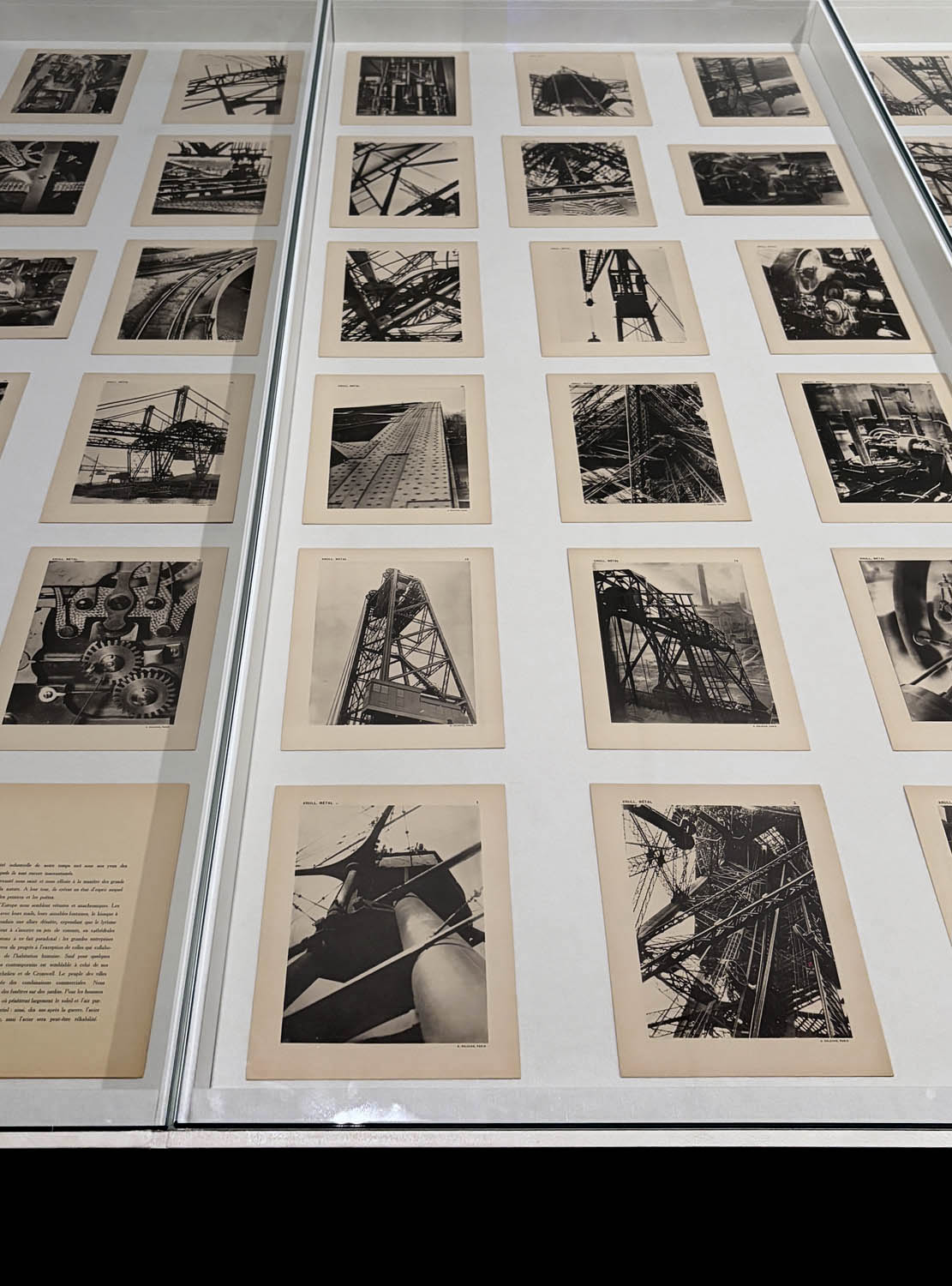
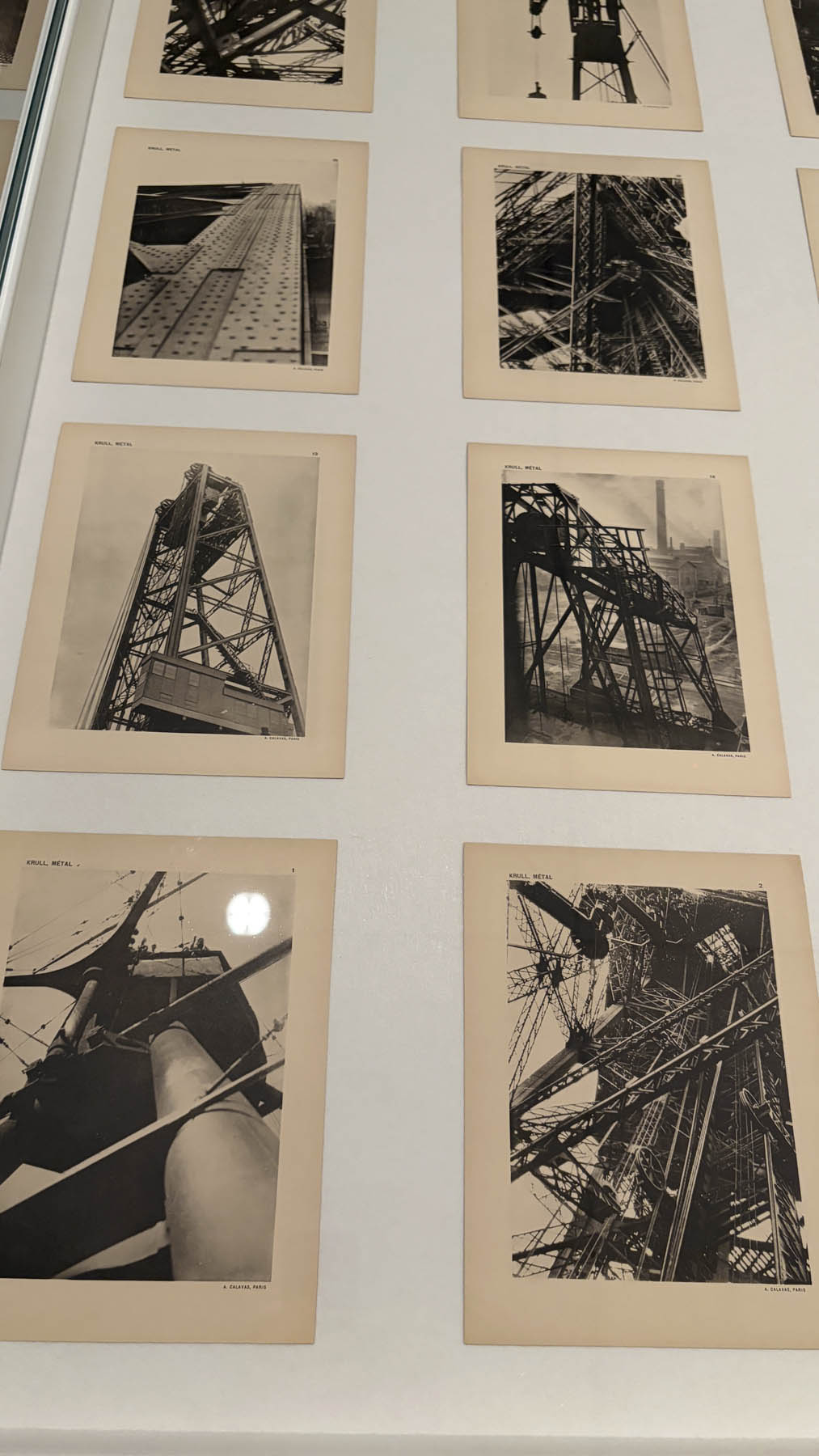
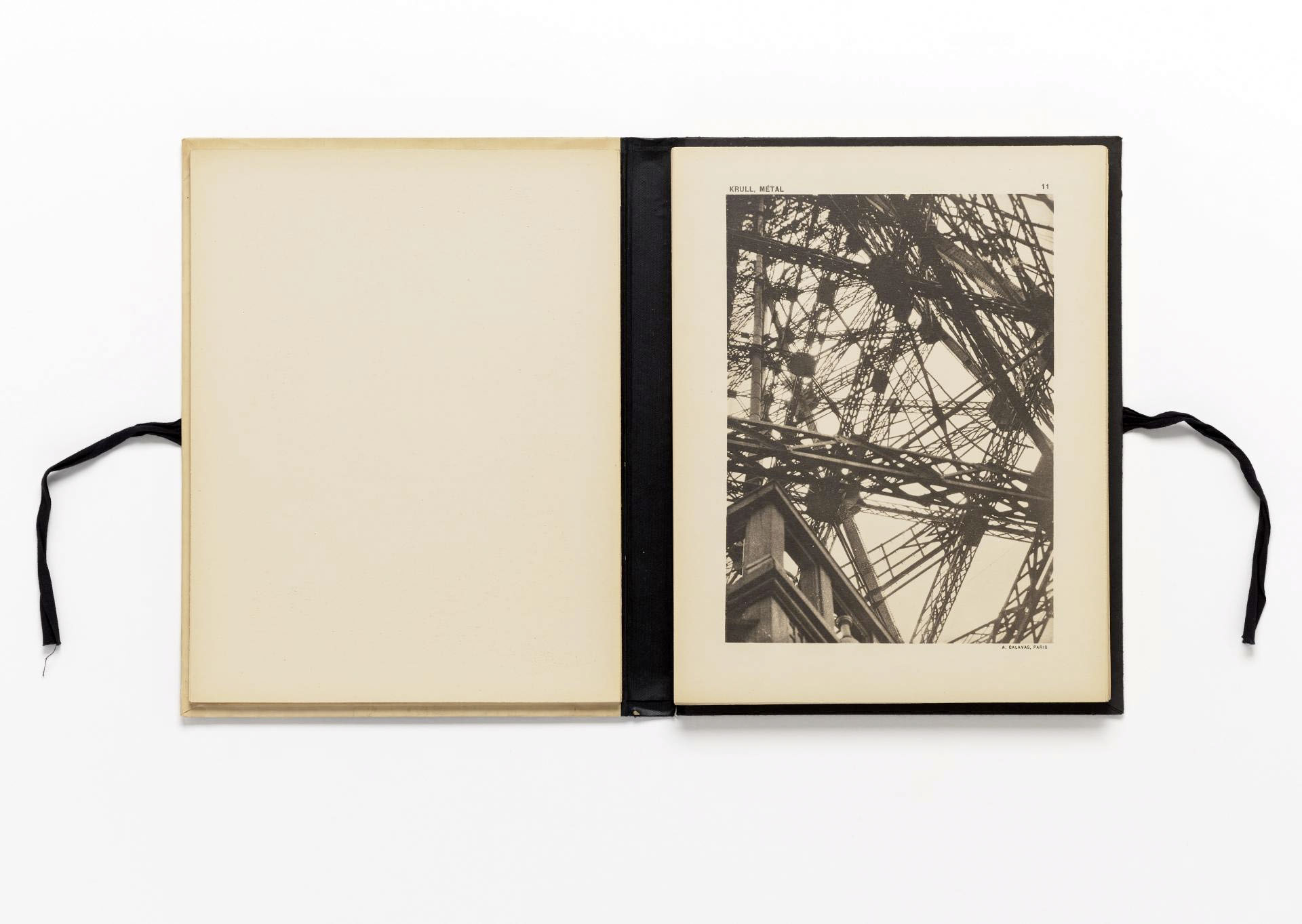
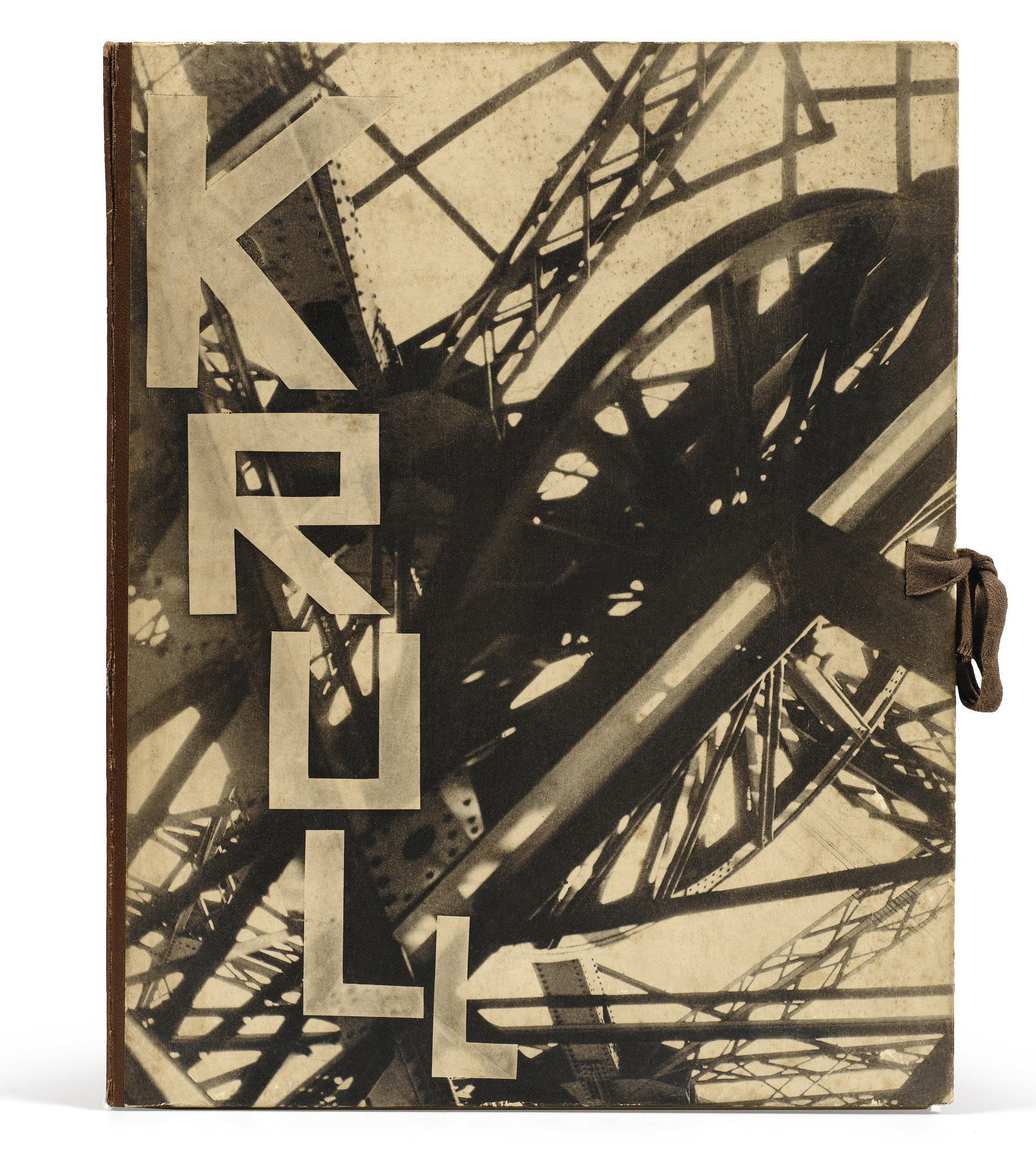
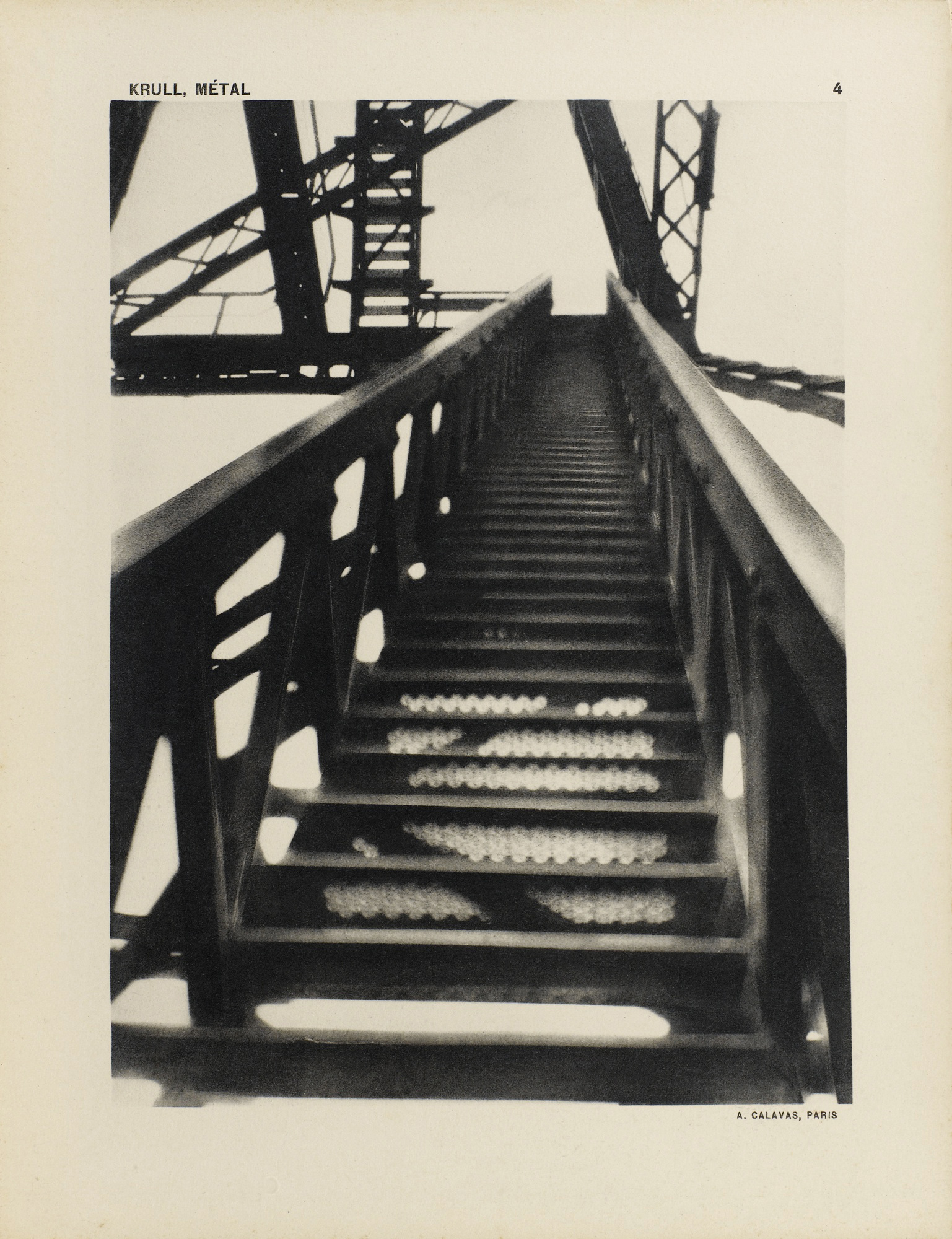
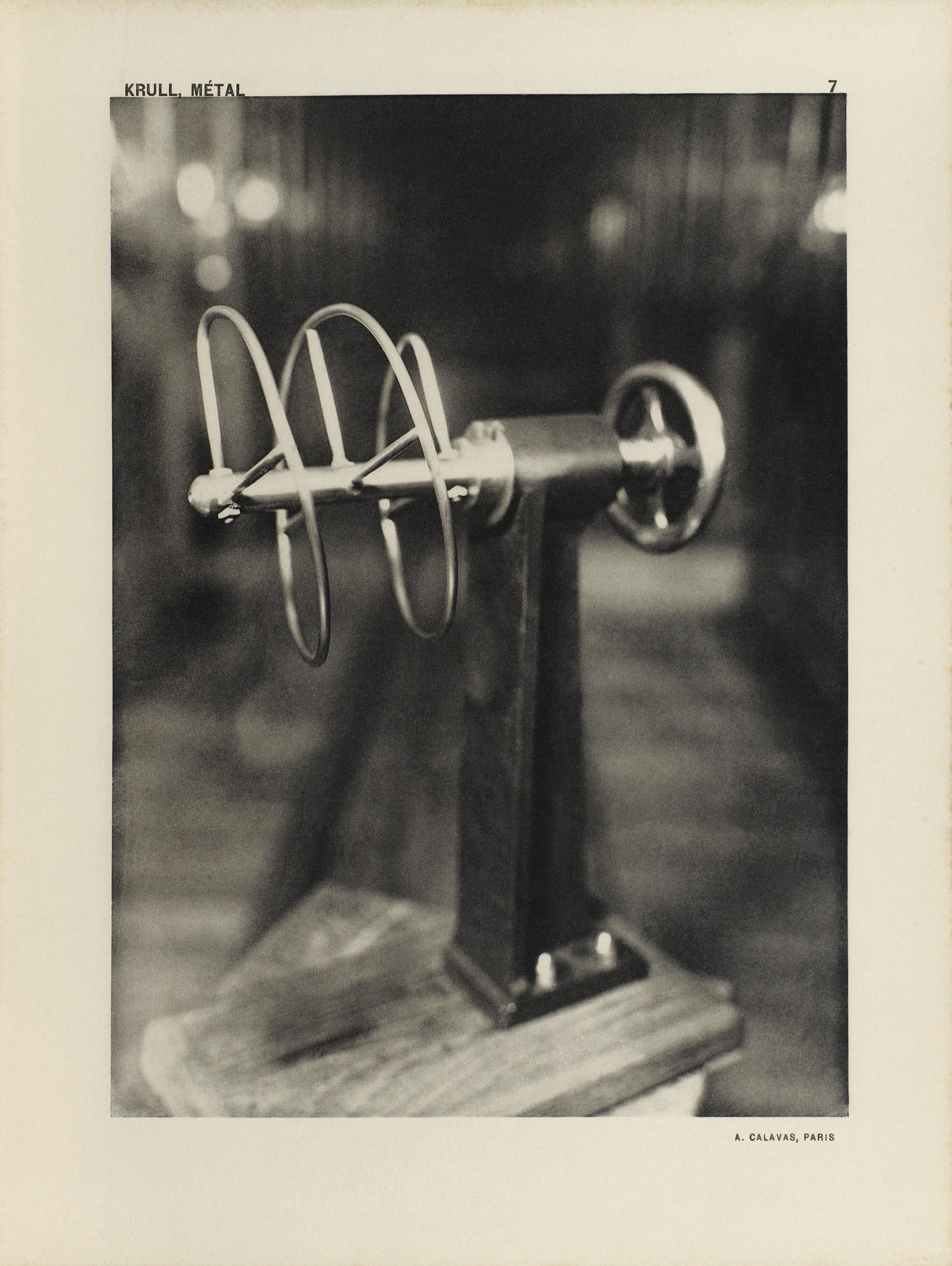
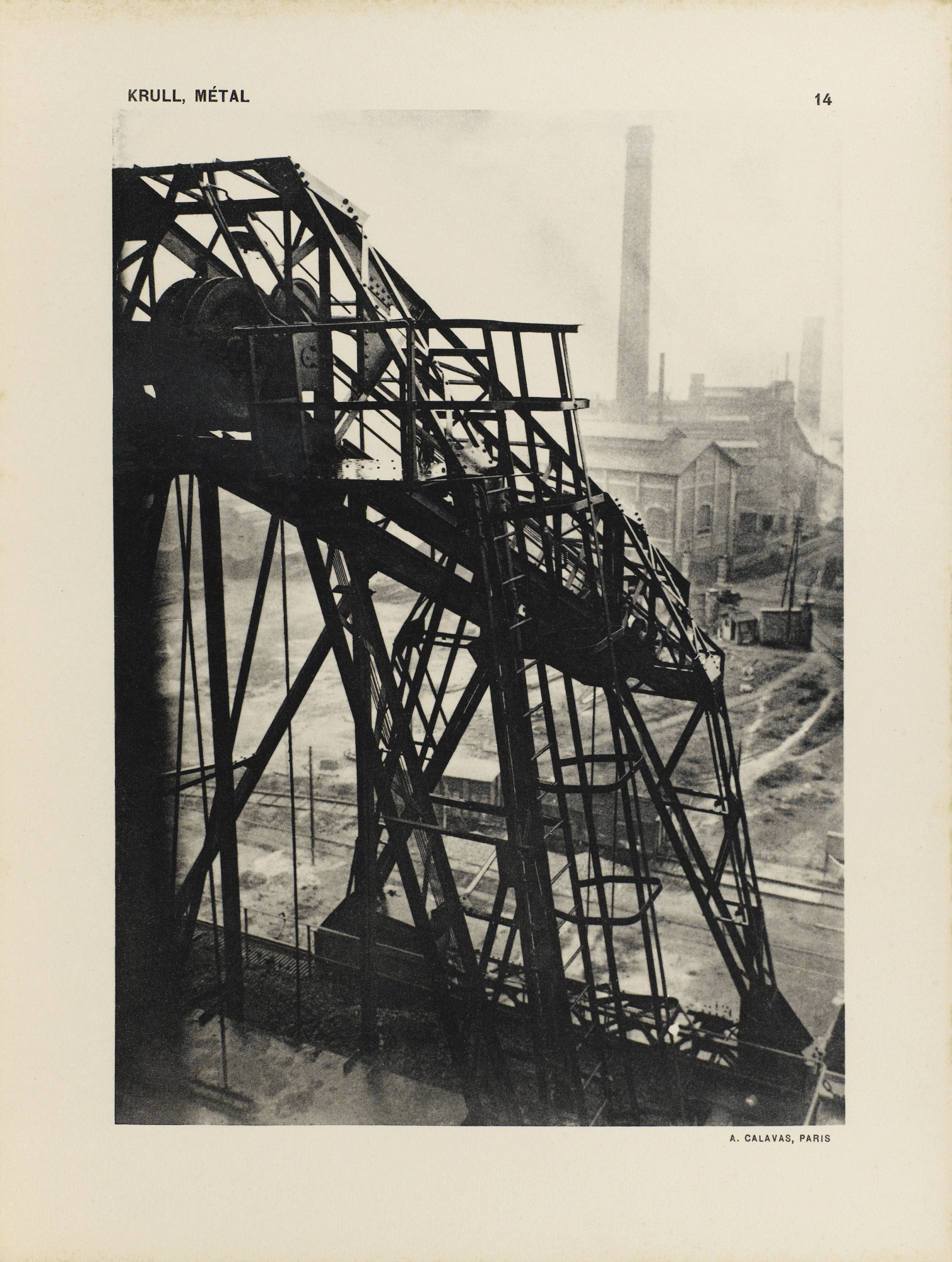
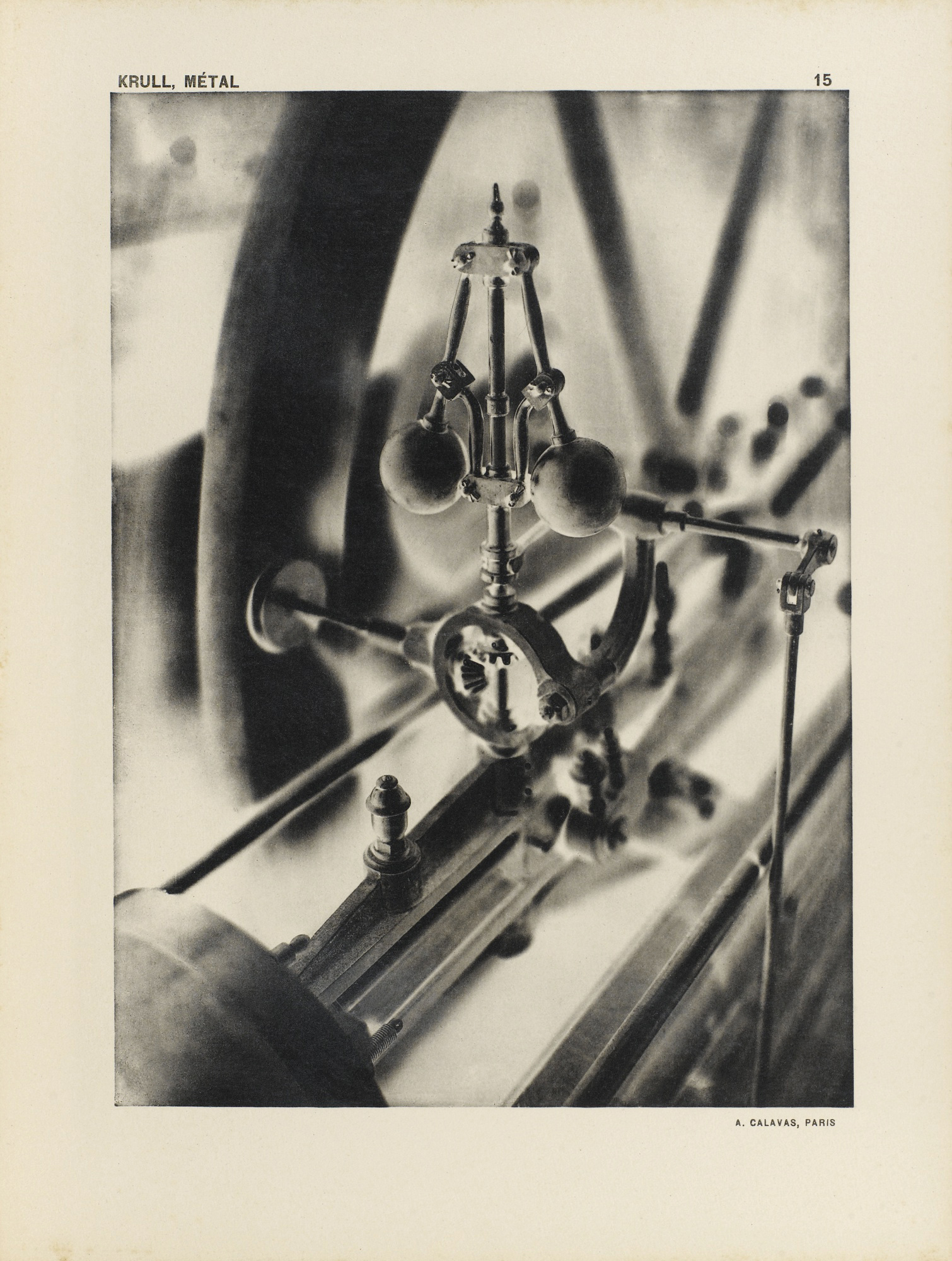
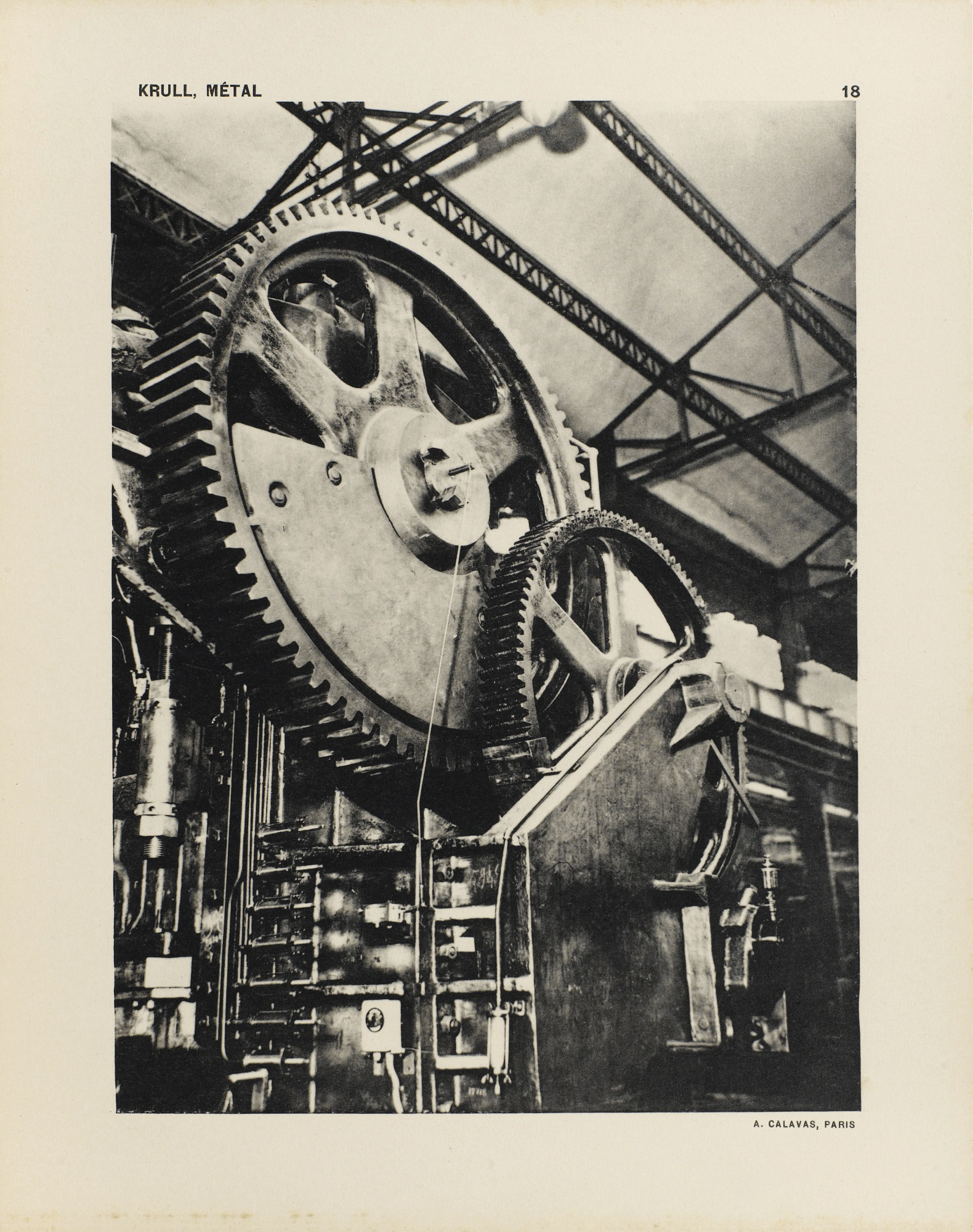
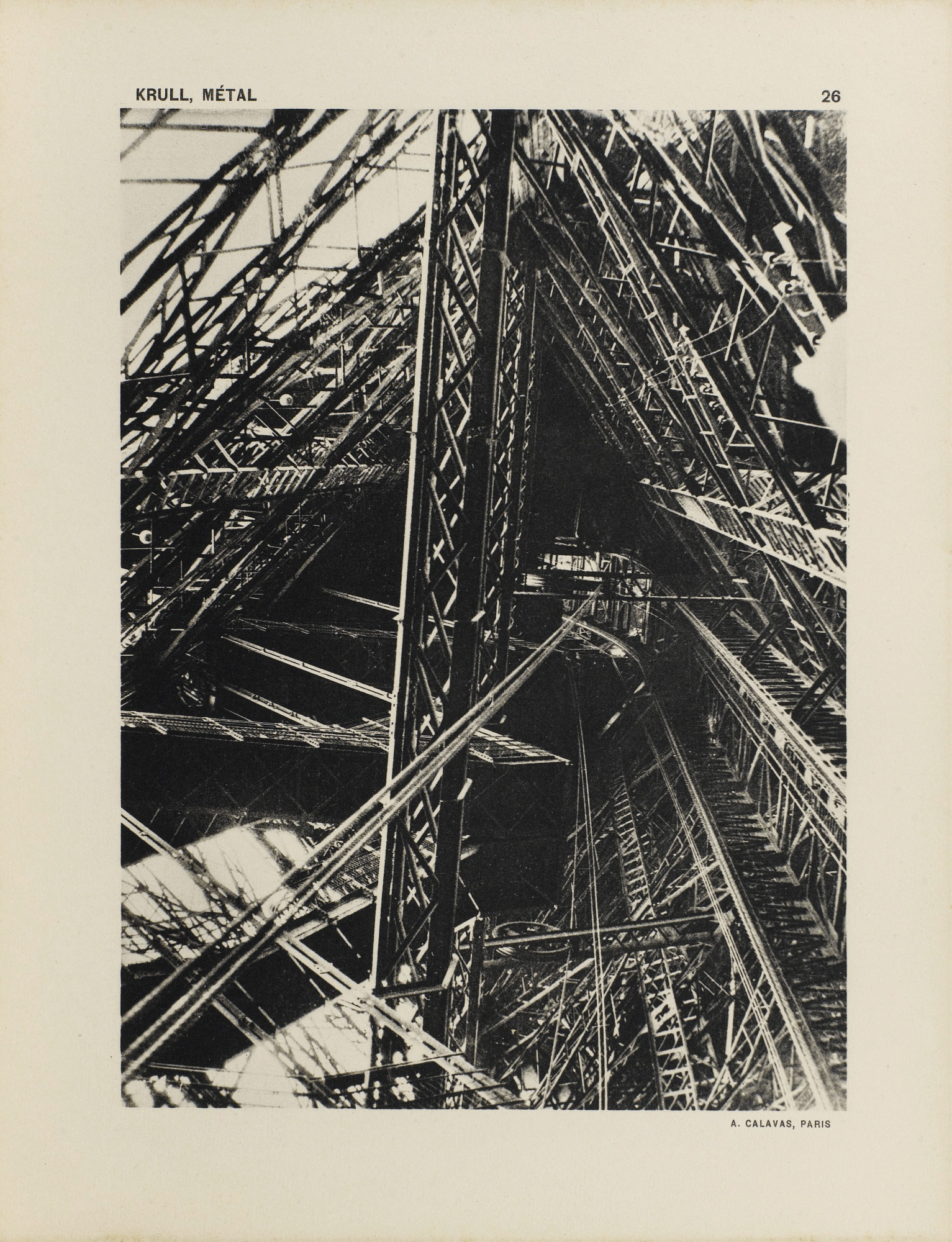
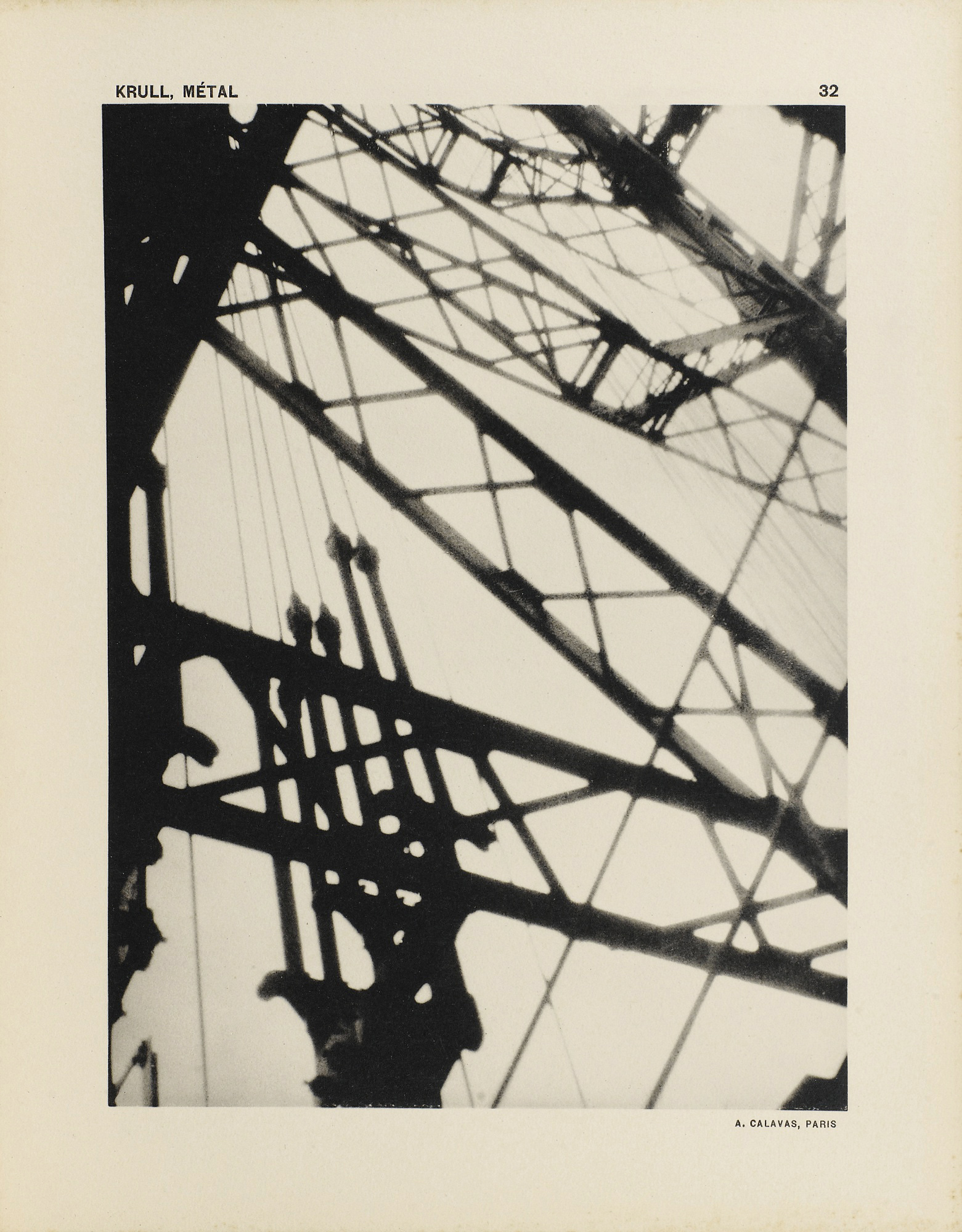
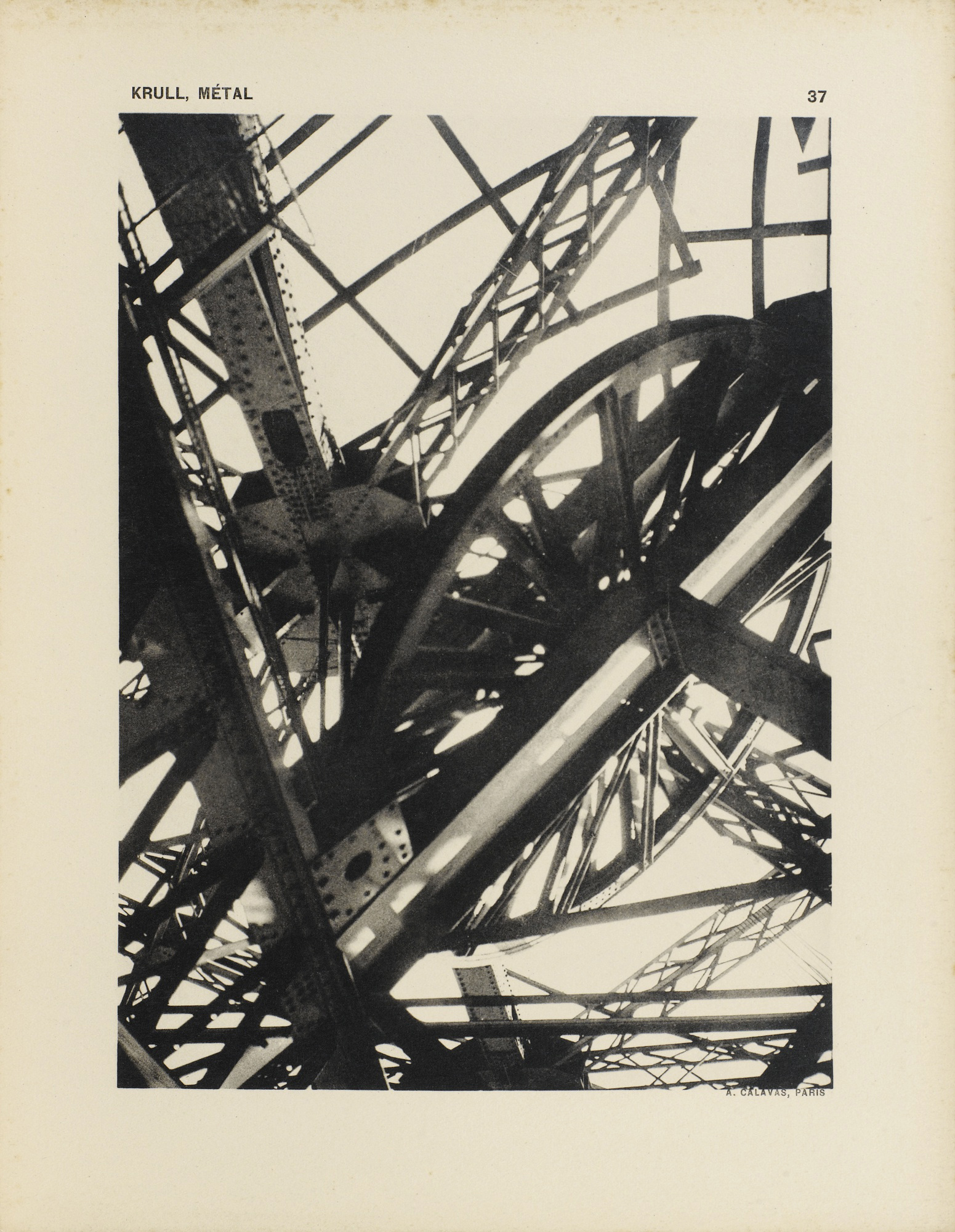
~ The groundbreaking portfolio Métal by Germaine Krull (European, 1897-1985) which was magnificently laid out so that you could “appreciate its unique design as an object” and the “vitality of the photography”, allowing the viewer to begin to understand the complex relationships between images one to another and the flow of the whole folio. A joy to behold!

More comment to follow in Part 2 of the posting.

Dr Marcus Bunyan


Many thankx to the NGV for allowing me to publish the media images in the posting. All installation photographs © Marcus Bunyan. Please click on the photographs for a larger version of the image. View Part 2 of the posting.
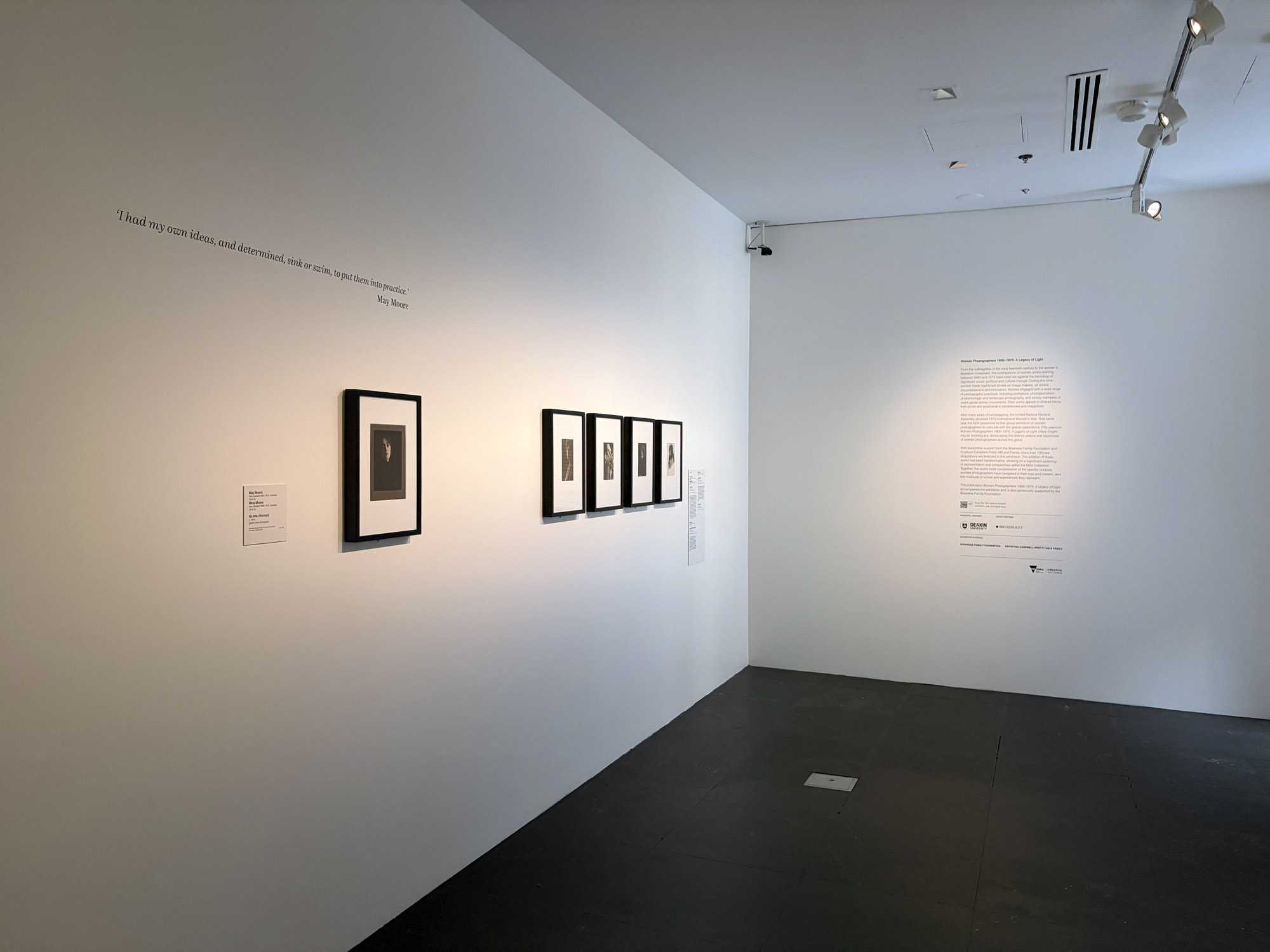
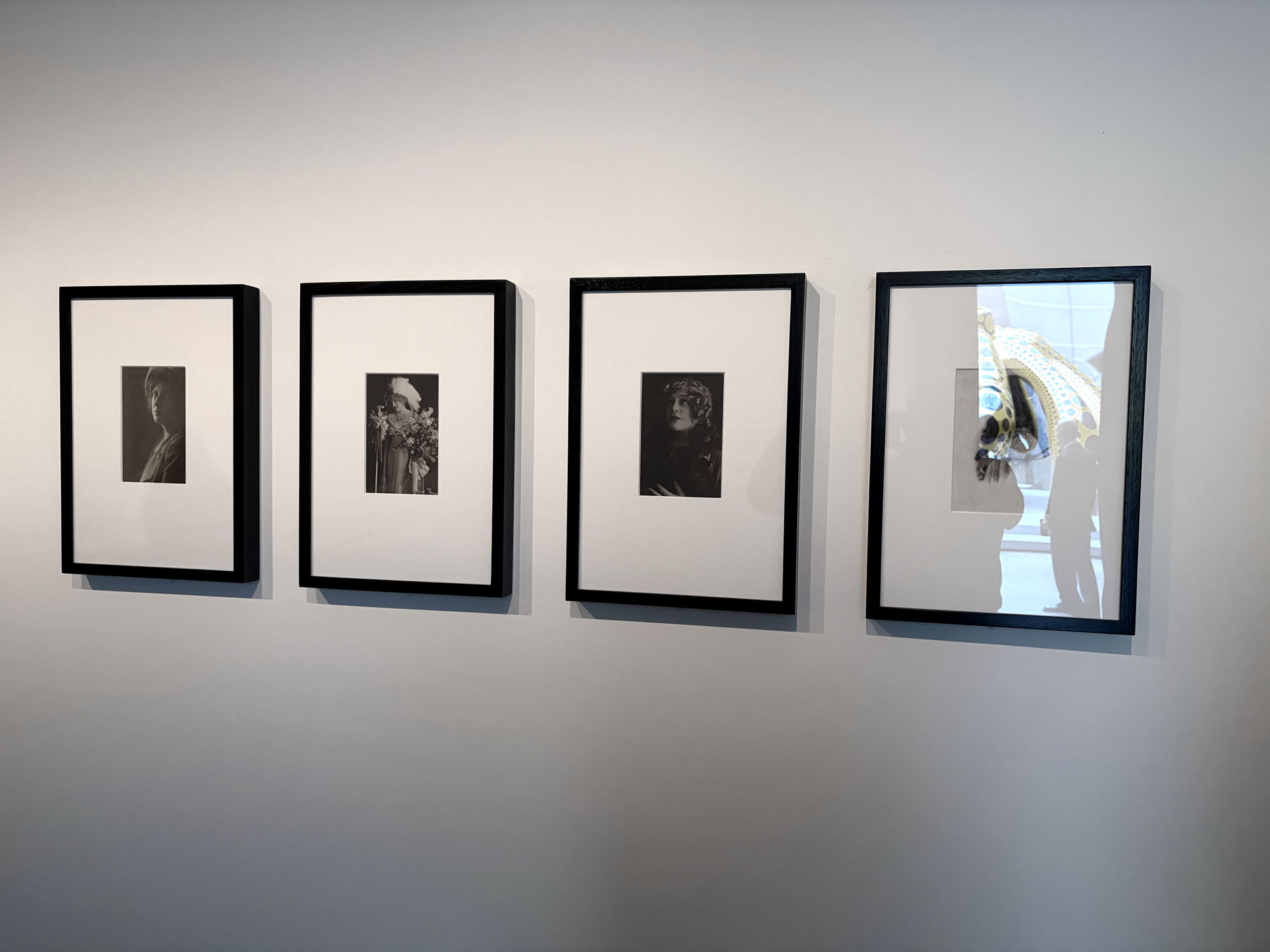


Entrance to the exhibition 'Women Photographers 1900-1975: A Legacy of Light' at NGV International, Melbourne, November 2025 - May 2026
Entrance to the exhibition 'Women Photographers 1900-1975: A Legacy of Light' at NGV International, Melbourne, November 2025 - May 2026 showing at left, Mina and May Moore's 'Murial Starr' (c. 1913-1916); at second left, May Moore's 'Janina Korolewicz-Wayda' (c. 1910-1920); at at third right, Mina Moore's 'Nellie Stewart' (c. 1913-1916)


Entrance to the exhibition Women Photographers 1900-1975: A Legacy of Light at NGV International, Melbourne, November 2025 – May 2026 showing at left, Mina and May Moore’s Murial Starr (c. 1913-1916, below); at second left, May Moore’s Janina Korolewicz-Wayda (c. 1910-1920); at at third right, Mina Moore’s Nellie Stewart (c. 1913-1916, above)
Photos: Marcus Bunyan


Women Photographers 1900-1975: A Legacy of Light celebrates the wide-ranging photographic practices of more than eighty women artists working between 1900 and 1975. Featuring prints, postcards, photobooks and magazines, the exhibition explores the role of photographers as image-makers, and the ways in which women artists create an image of themselves, of others, of the times – from images of the women’s suffrage movement at the turn of the twentieth century, through to the women’s liberation movement and beyond. From Melbourne to Tokyo, Paris to Buenos Aires, the exhibition showcases the works of trailblazing artists such as Berenice Abbott, Lola Álvarez Bravo, Claude Cahun and Marcel Moore, Imogen Cunningham, Mikki Ferrill, Sue Ford, Christine Godden, Ponch Hawkes, Annemarie Heinrich, Ruth Hollick, Florence Henri, Kati Horna, Germaine Krull, Tina Modotti, Lucia Moholy, Toyoko Tokiwa, Yamazawa Eiko and many more.

The exhibition reflects a recent collecting focus on celebrating the contributions of women artists of the early twentieth century in the NGV Photography Collection. Featuring portraiture, photojournalism, landscape photography, photomontage, experimental avant-garde imagery and more, Women Photographers 1900-1975: A Legacy of Light presents the diverse work of women photographers against the backdrop of significant social, political and cultural events.

Text from the National Gallery of Victoria
 

Installation view of the exhibition 'Women Photographers 1900-1975: A Legacy of Light' at NGV International, Melbourne, November 2025 - May 2026 showing May and Mina Moore's 'Murial Starr' (c. 1913-1916)


Installation view of the exhibition Women Photographers 1900-1975: A Legacy of Light at NGV International, Melbourne, November 2025 – May 2026 showing May and Mina Moore’s Murial Starr (c. 1913-1916, below)
Photo: Marcus Bunyan
 

May and Mina Moore (New Zealand, 1881-1931 and 1882-1957) 'Murial Starr' c. 1913-1916


May and Mina Moore (New Zealand, 1881-1931 and 1882-1957)
Murial Starr
c. 1913-1916
Gelatin silver photograph
19.6 x 12.5cm (image)
National Gallery of Victoria, Melbourne
Gift of the Latrobe Collection, State Library of Victoria, 1992


Sisters May and Mina Moore established their Wellington studio-portraiture business in around 1907. May, originally trained as a painter, learned to operate the camera while Mina, a schoolteacher, gained skills in printing. Expanding their business to Australia, May established a Sydney studio in 1911 while, two years later, Mina set up a Melbourne studio, which was later taken over by photographer Ruth Hollick. The pair became known for their studio portraits of actors, artists and musicians. Using only natural light, they created dramatic images marked by a striking chiaroscuro effect (a technique involving strong contrasts of light and shade) on the faces of their subjects.

Wall text from the exhibition

Muriel Starr (1888-1950) was a Canadian stage actress. She was particularly popular in Australia in the 1910s and 1920s. She appeared in one film, Within the Law (1916), an adaptation of her stage success. She was also known for the plays East of Suez, Birds of Paradise and Madame X.
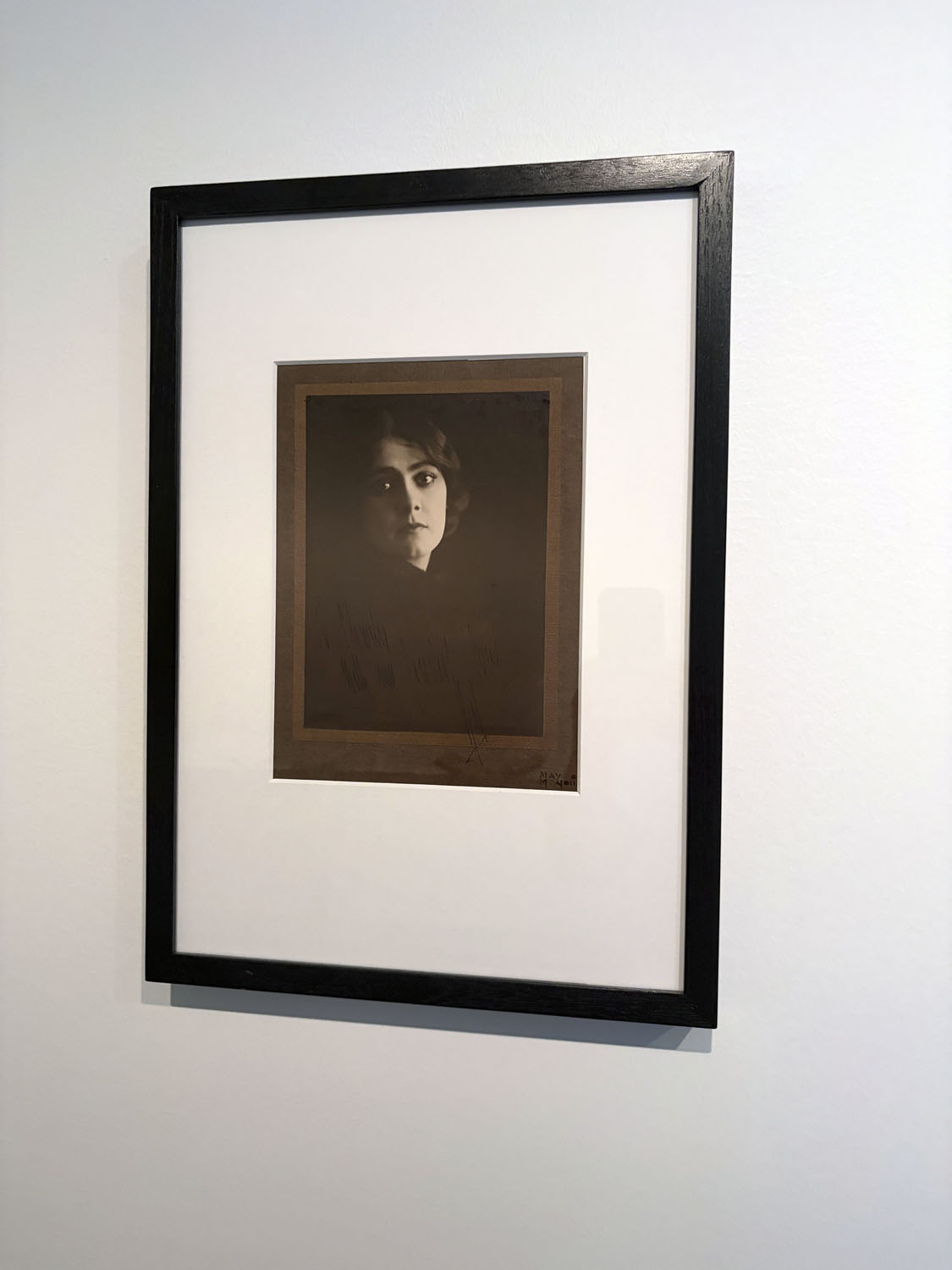
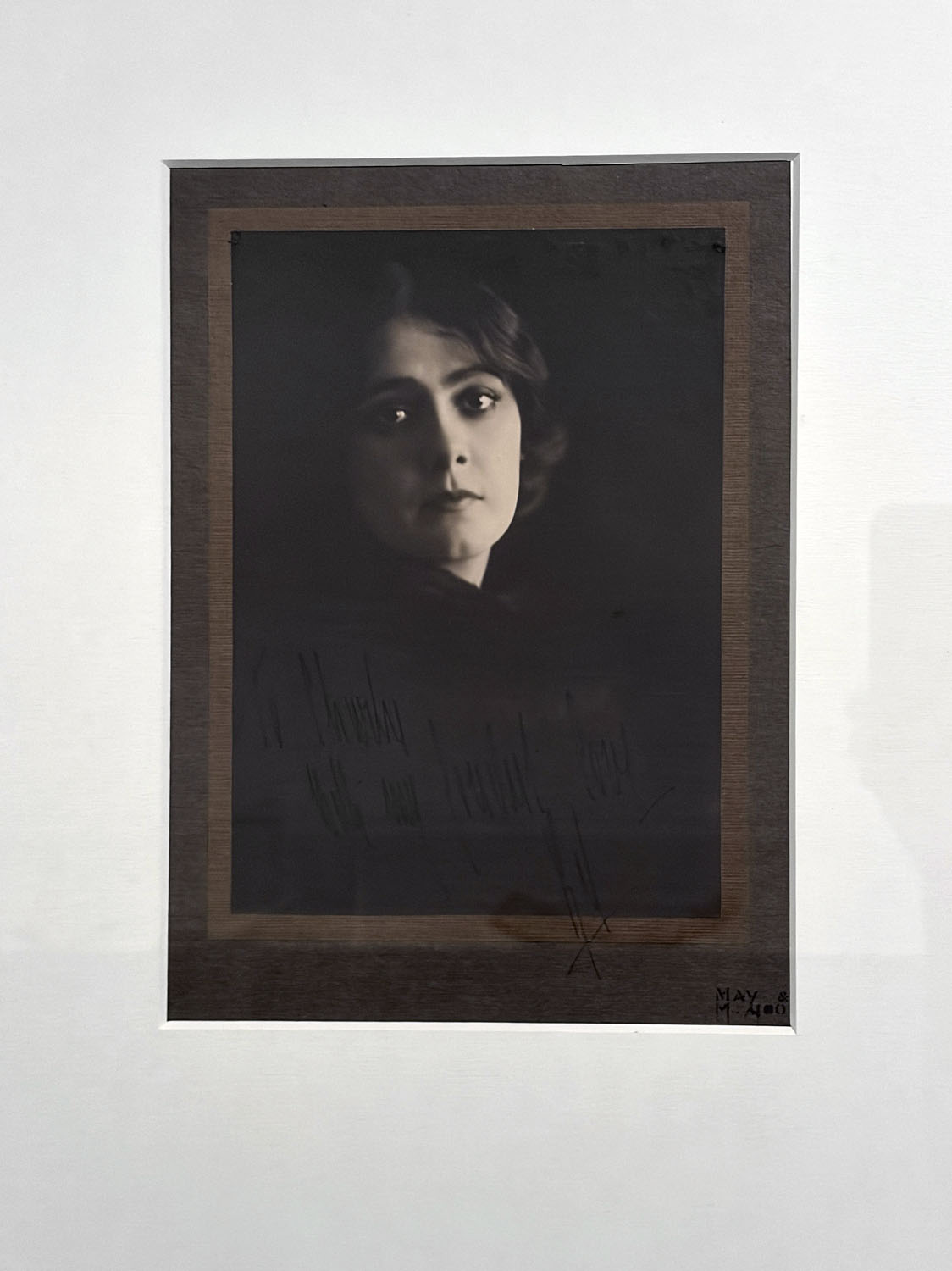
 

Installation view of the exhibition 'Women Photographers 1900-1975: A Legacy of Light' at NGV International, Melbourne, November 2025 - May 2026 showing May and Mina Moore's 'No title (Woman)' (c. 1914)


Installation views of the exhibition Women Photographers 1900-1975: A Legacy of Light at NGV International, Melbourne, November 2025 – May 2026 showing May and Mina Moore’s No title (Woman) (c. 1914)
Photos: Marcus Bunyan
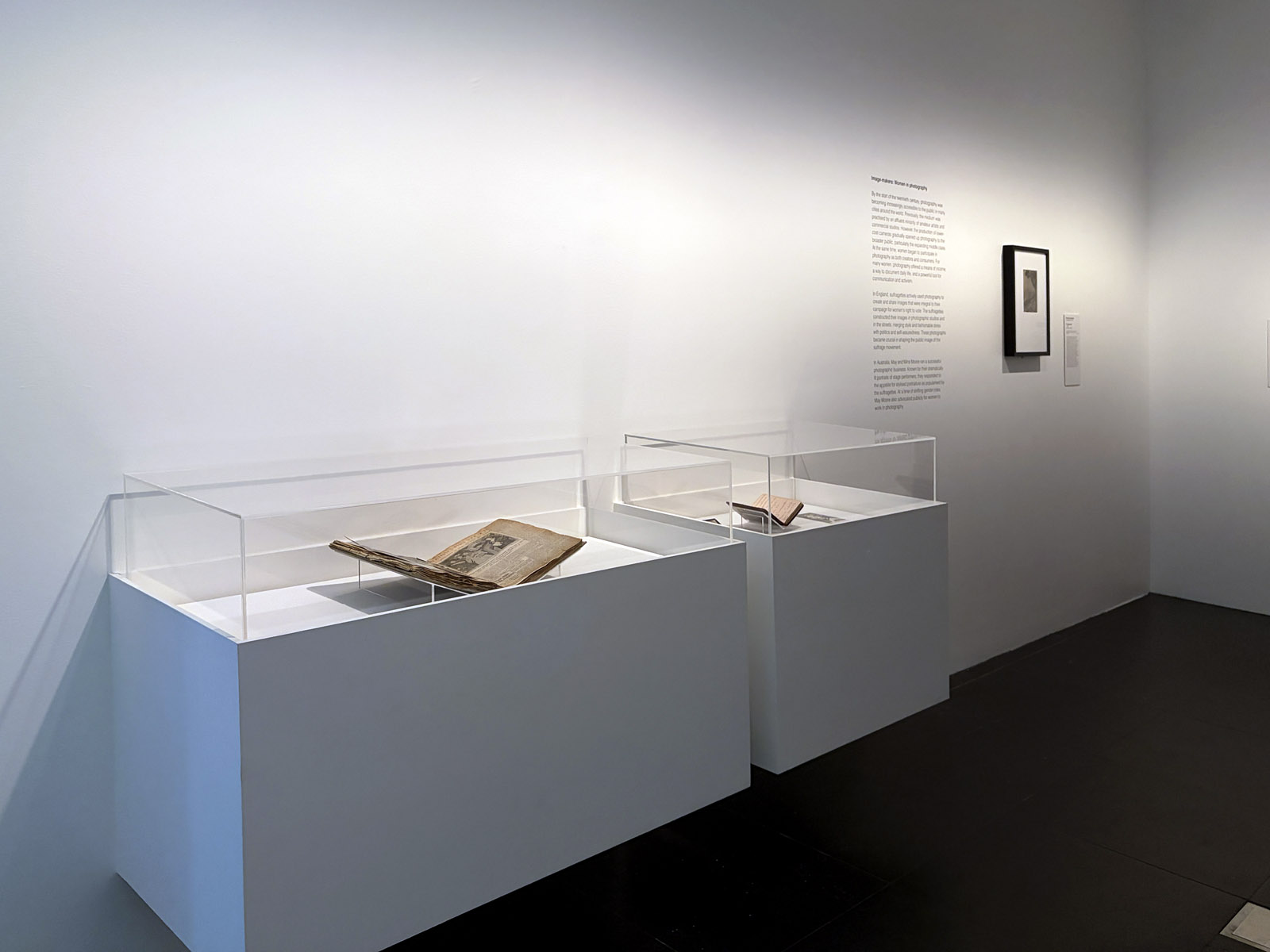
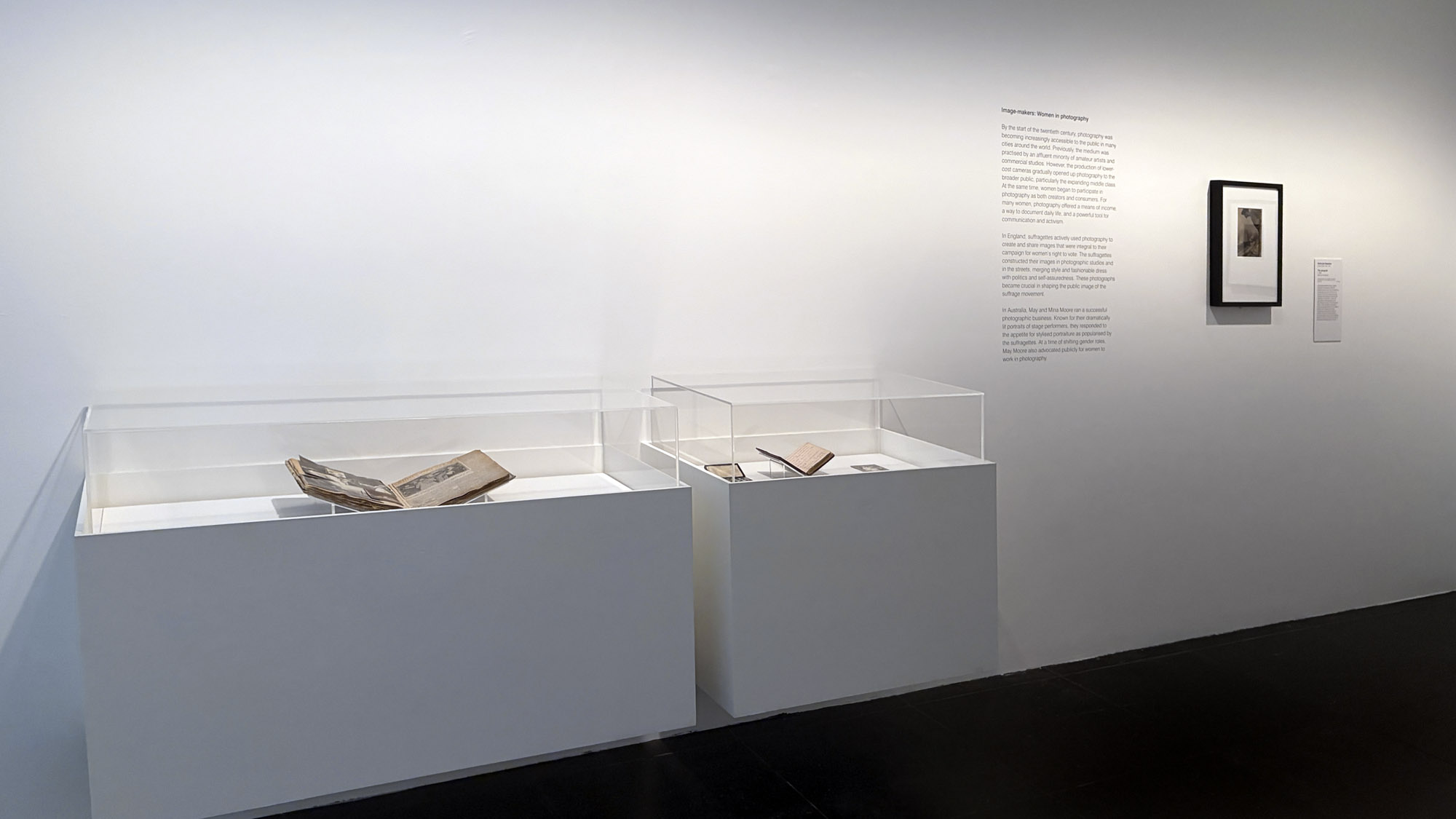
 

Installation view of the exhibition 'Women Photographers 1900-1975: A Legacy of Light' at NGV International, Melbourne, November 2025 - May 2026


Installation views of the exhibition Women Photographers 1900-1975: A Legacy of Light at NGV International, Melbourne, November 2025 – May 2026
Photos: Marcus Bunyan
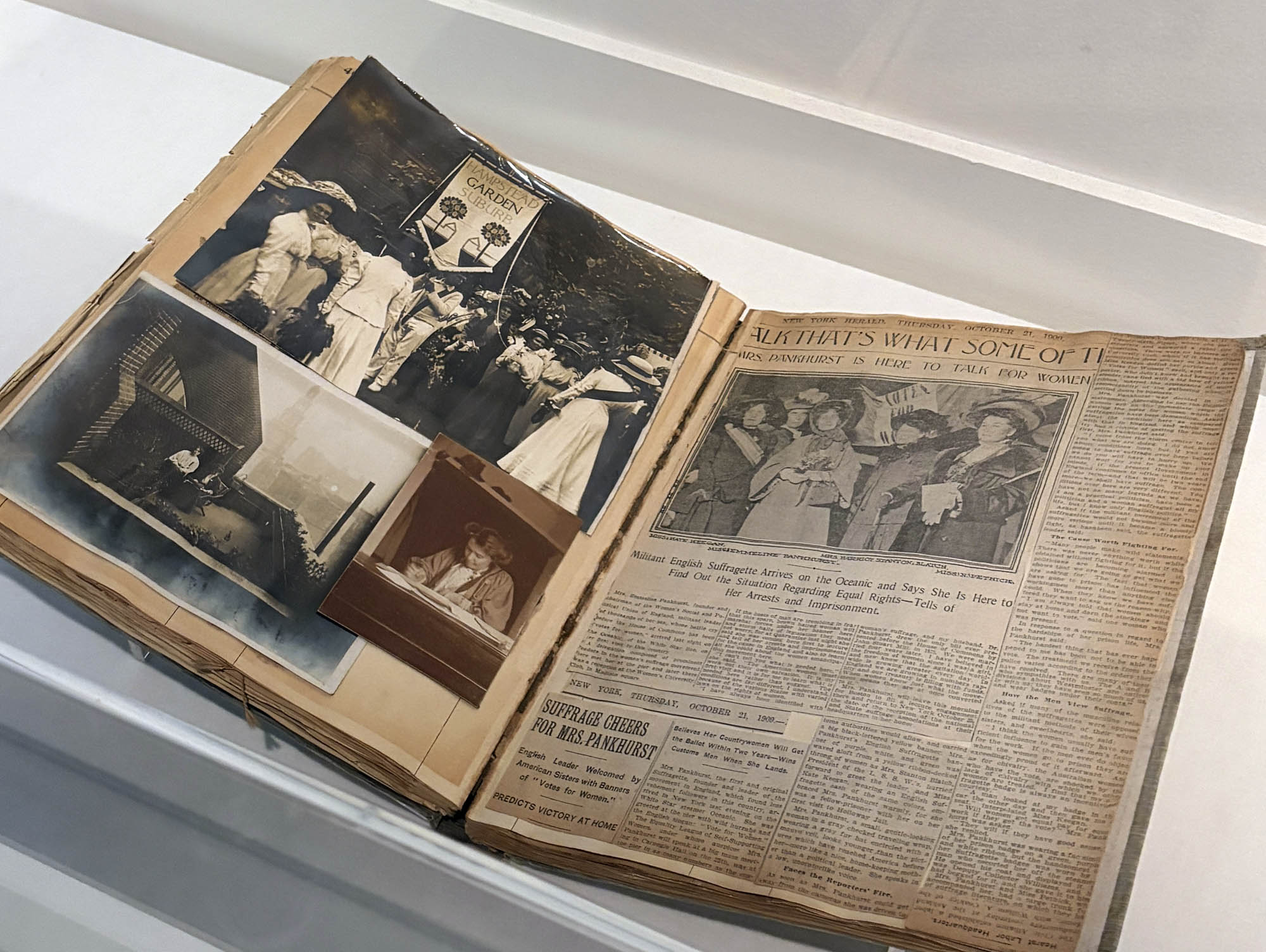
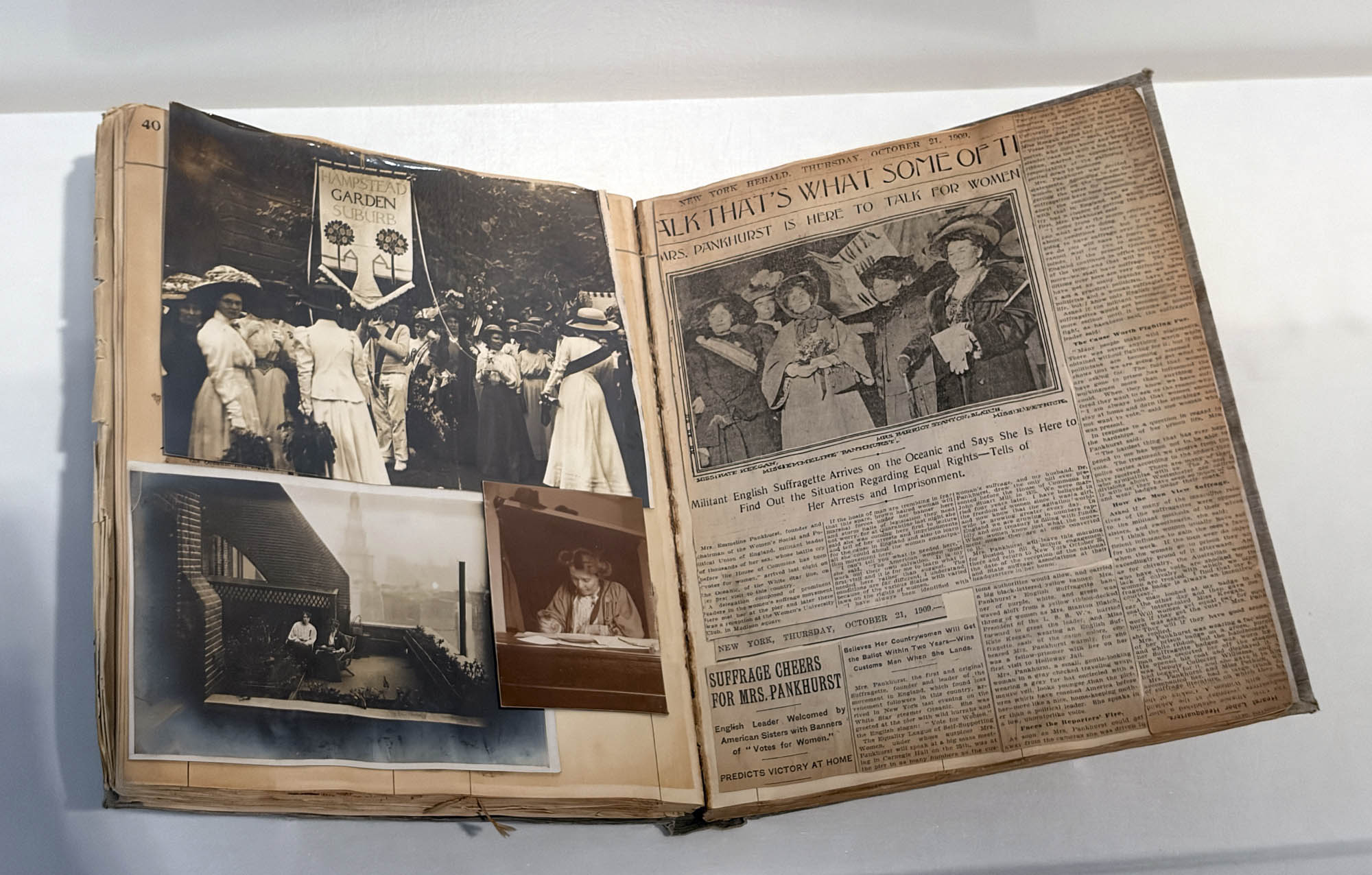
 

Installation view of the exhibition 'Women Photographers 1900-1975: A Legacy of Light' at NGV International, Melbourne, November 2025 - May 2026 showing Isabel Seymour (England, 1882-1963) 'The Seymour Album' (c. 1907-1911)


Installation view of the exhibition Women Photographers 1900-1975: A Legacy of Light at NGV International, Melbourne, November 2025 – May 2026 showing Isabel Seymour (England, 1882-1963) The Seymour Album (c. 1907-1911). Recent acquisition
Photos: Marcus Bunyan


The suffragette Isabel Seymour was employed by the Women’s Social and Political Union (WSPU) in London in 1906. Fluent in English and German, she facilitated international speaking tours for the organisation. Assembled by Seymour for the WSPU, this personal scrapbook includes photographs, postcards, advertisements and newspaper articles detailing suffragette activities. The album provides a historical snapshot of the activities and people involved in the suffragette movement, through one of its key organisations.

Vitrine text from the exhibition
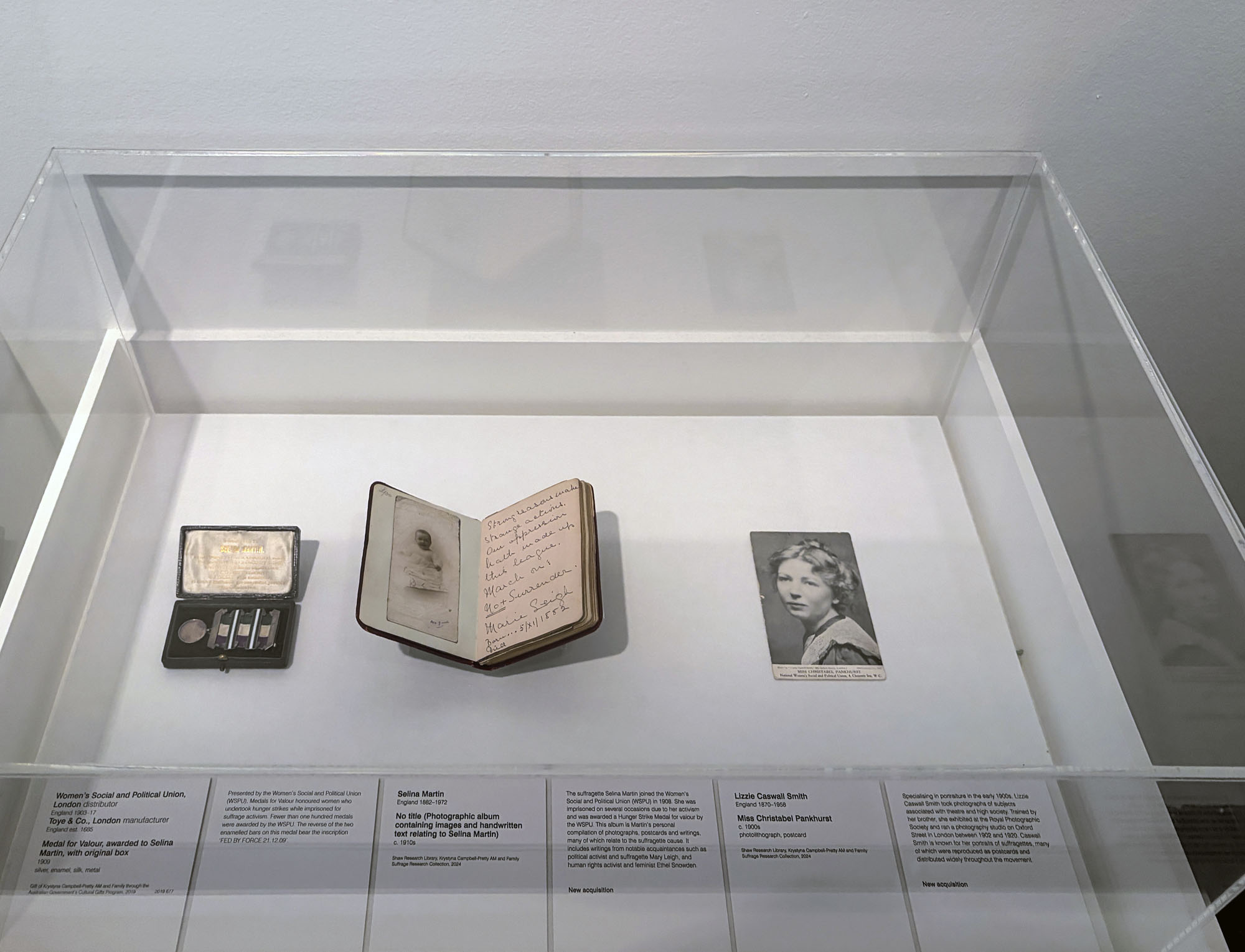
 

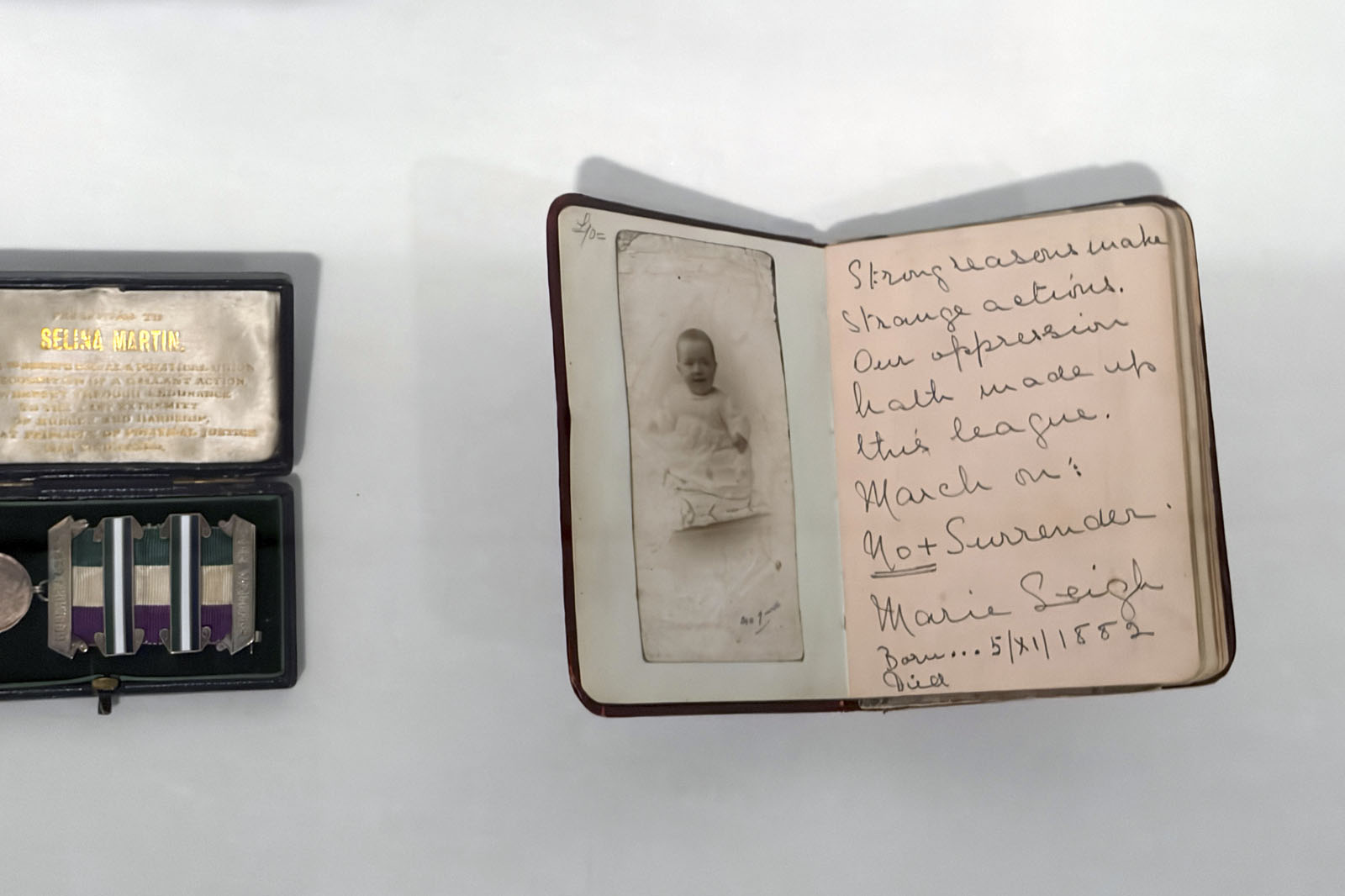
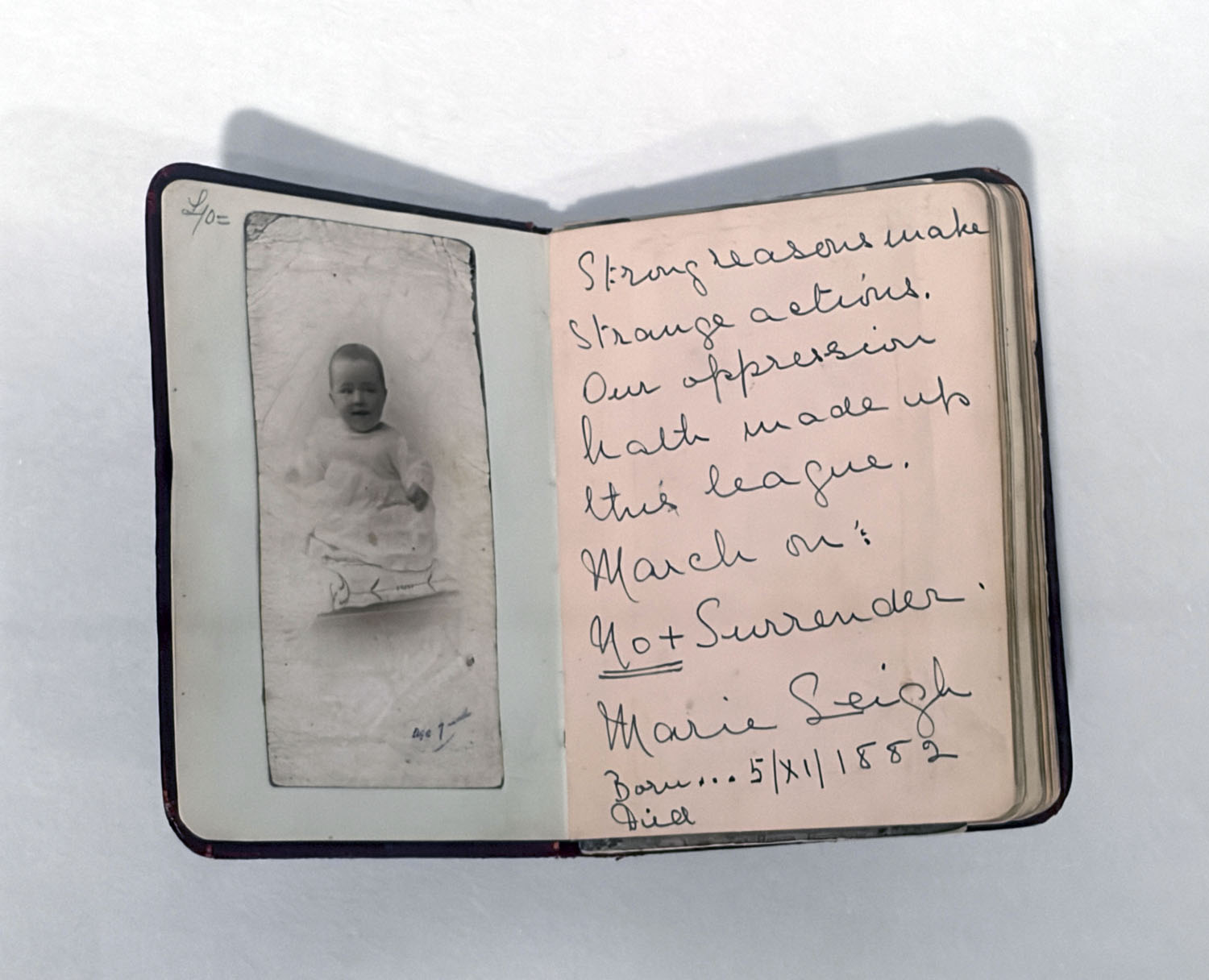
Installation view of the exhibition 'Women Photographers 1900-1975: A Legacy of Light' at NGV International, Melbourne, November 2025 - May 2026 showing from left to right, Woman's Social and Political Union (distributor) Toye & Co. (manufacturer) 'Medal for Valour, awarded to Selina Martin, with original box' (1909); Selina Martin (England, 1882-1972) 'No title (Photographic album containing images and handwritten text relating to Selina Martin)' (c. 1910); Lizzie Casual Smith (England, 1870-1956) 'Miss Christabel Pankhurst' (c. 1900s)


Installation view of the exhibition Women Photographers 1900-1975: A Legacy of Light at NGV International, Melbourne, November 2025 – May 2026 showing from left to right, Woman’s Social and Political Union (distributor) Toye & Co. (manufacturer) Medal for Valour, awarded to Selina Martin, with original box (1909); Selina Martin (England, 1882-1972) No title (Photographic album containing images and handwritten text relating to Selina Martin) (c. 1910); Lizzie Casual Smith (England, 1870-1956) Miss Christabel Pankhurst (c. 1900s)
Photo: Marcus Bunyan
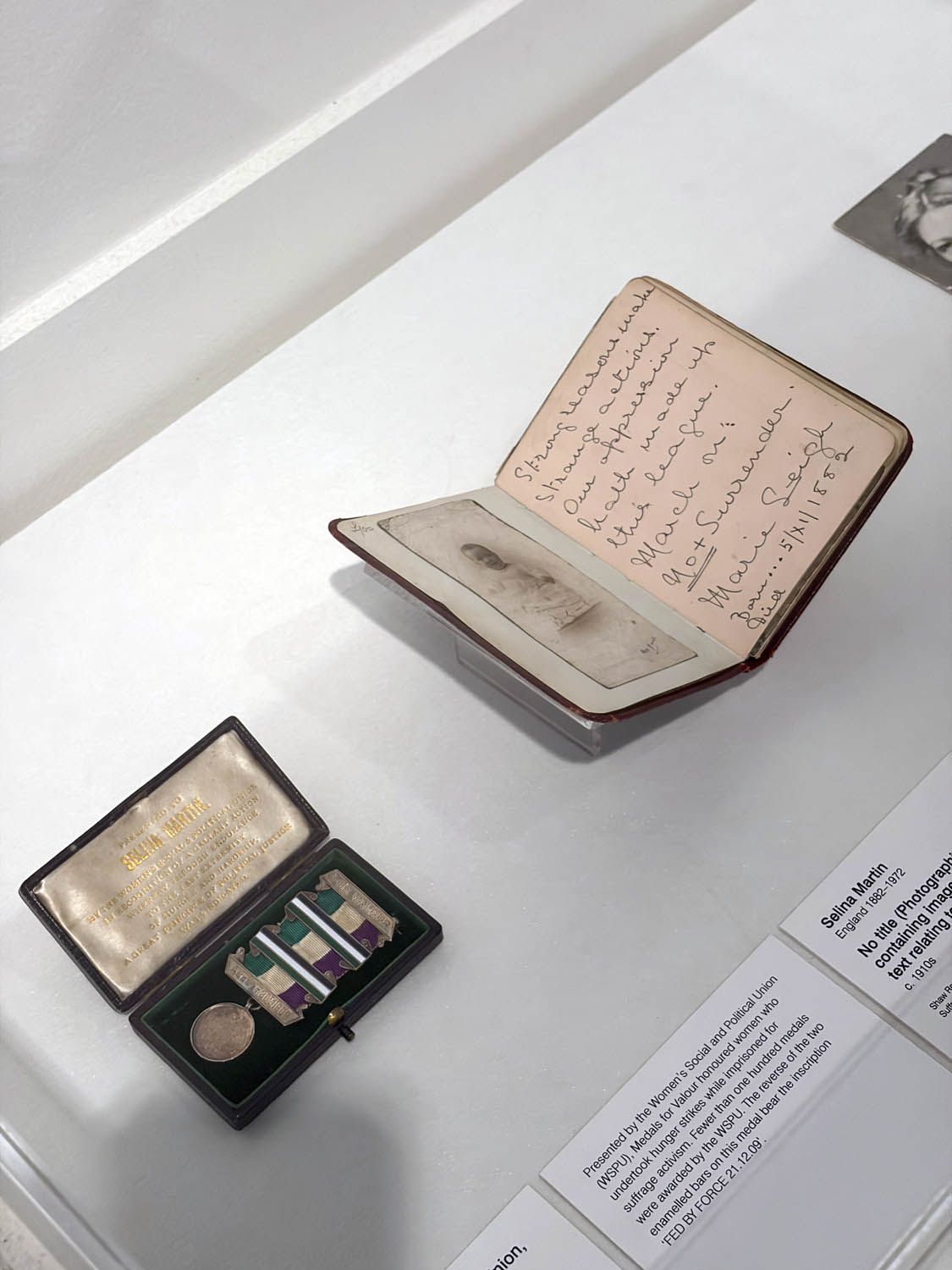
 

Installation view of the exhibition 'Women Photographers 1900-1975: A Legacy of Light' at NGV International, Melbourne, November 2025 - May 2026


Installation view of the exhibition Women Photographers 1900-1975: A Legacy of Light at NGV International, Melbourne, November 2025 – May 2026 showing at left, Woman’s Social and Political Union (distributor) Toye & Co. (manufacturer) Medal for Valour, awarded to Selina Martin, with original box (1909) and at right, Selina Martin (England, 1882-1972) No title (Photographic album containing images and handwritten text relating to Selina Martin) (c. 1910)
Photo: Marcus Bunyan
 

Installation view of the exhibition 'Women Photographers 1900-1975: A Legacy of Light' at NGV International, Melbourne, November 2025 - May 2026


Installation view of the exhibition Women Photographers 1900-1975: A Legacy of Light at NGV International, Melbourne, November 2025 – May 2026 showing at left, Woman’s Social and Political Union (distributor) Toye & Co. (manufacturer) Medal for Valour, awarded to Selina Martin, with original box (1909) and at right, Selina Martin (England, 1882-1972) No title (Photographic album containing images and handwritten text relating to Selina Martin) (c. 1910)
Photos: Marcus Bunyan

New acquisition


The suffragette Selina Martin joined the Women’s Social and Political Union (WSPU) in 1908. She was imprisoned on several occasions due to her activism and was awarded a Hunger Strike Medal for valour by the WSPU. This album is Martin’s personal compilation of photographs, postcards and writings, many of which relate to the suffragette cause. It includes writing from notable acquaintances such as political activist and suffragette Mary Leigh, and human rights activist and feminist Ethel Snowden.

Vitrine text from the exhibition

Selina Martin (English, 1882-1972) was a member of the suffragette movement in the early 20th century. She was arrested several times. Her Hunger Strike Medal given ‘for Valour’ by the Women’s Social and Political Union (WSPU) was sold at auction in Nottingham in 2019.
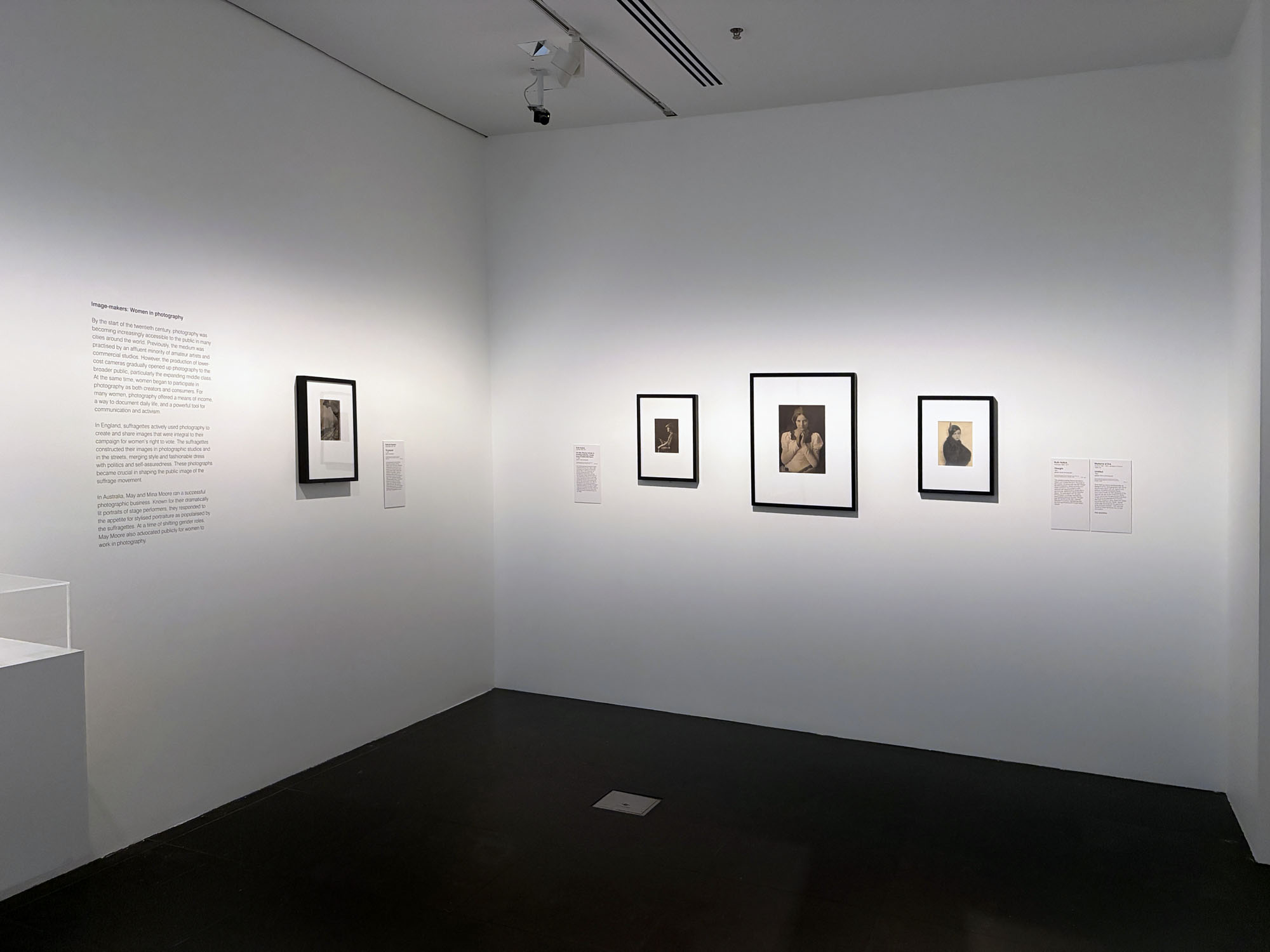
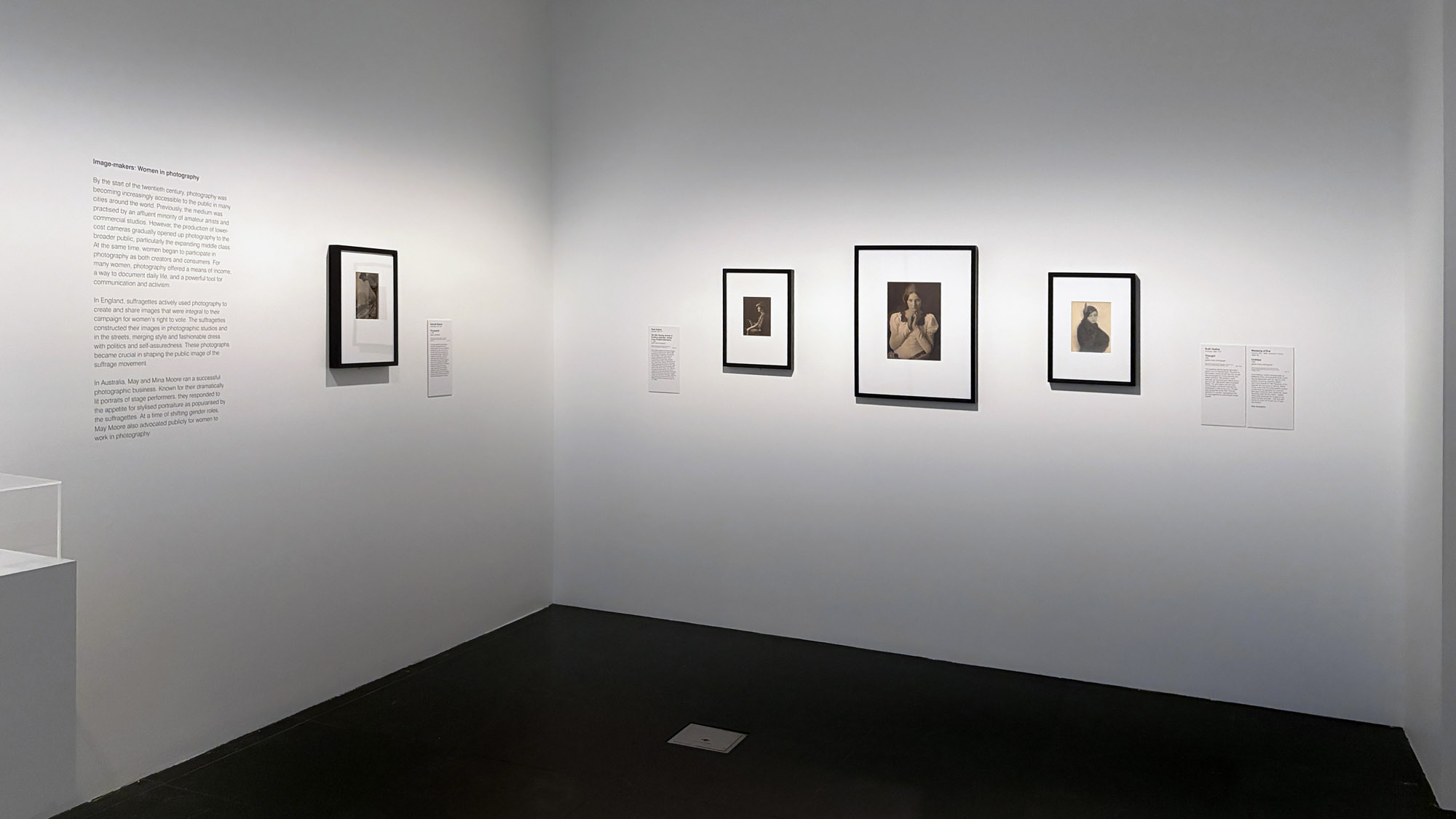
 

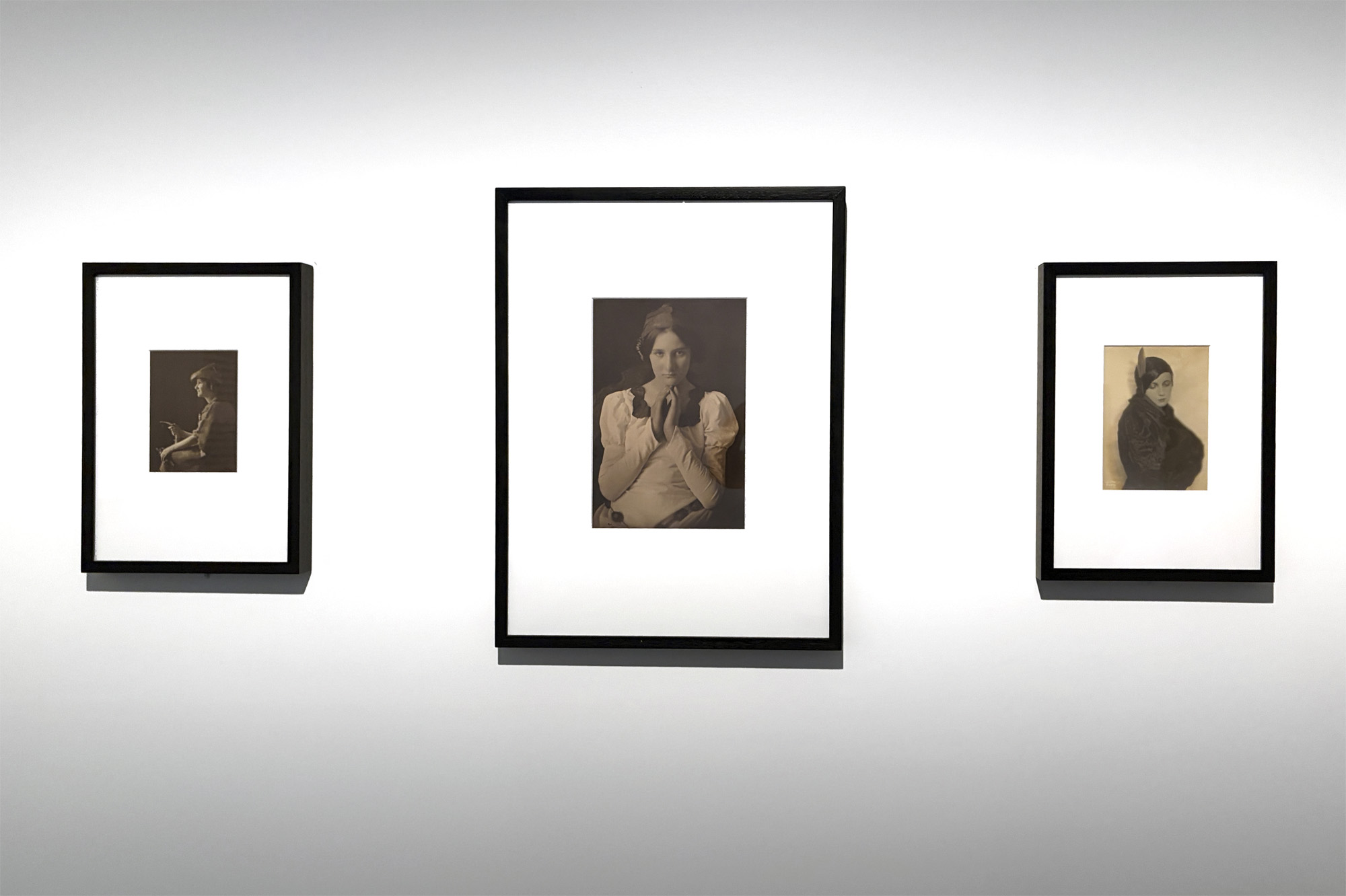
Installation view of the exhibition 'Women Photographers 1900-1975: A Legacy of Light' at NGV International, Melbourne, November 2025 - May 2026 showing at left, Gertrude Kasebier 'The gargoyle' (c. 1900, below); at third right, Ruth Hollick 'No title (Young woman in hunting costume, model Lucy Crosbie Morrison)' (c. 1920); at second right, Ruth Hollick 'Thought' (1921); and at right, Madame d'Ora 'Untitled' (1931)


Installation views of the exhibition Women Photographers 1900-1975: A Legacy of Light at NGV International, Melbourne, November 2025 – May 2026 showing at left, Gertrude Kasebier The gargoyle (c. 1900, below); at third right, Ruth Hollick No title (Young woman in hunting costume, model Lucy Crosbie Morrison) (c. 1920, below); at second right, Ruth Hollick Thought (1921, below); and at right, Madame d’Ora Untitled (1931, below)
Photos: Marcus Bunyan


Image-Makers: Women in Photography

By the start of the twentieth century, photography was becoming increasingly accessible to the public in many cities around the world. Previously, the medium was practised by an affluent minority of amateur artists and commercial studios. However, the production of lower-cost cameras gradually opened up photography to the broader public, particularly the expanding middle class. At the same time, women began to participate in photography as both creators and consumers. For many women, photography offered a means of income, a way to document daily life, and a powerful tool for communication and activism.

In England, suffragettes actively used photography to create and share images that were integral to their campaign for women’s right to vote. The suffragettes constructed their images in photographic studios and in the streets, merging style and fashionable dress with politics and self-assuredness. These photographs became crucial in shaping the public image of the suffrage movement.

In Australia, May and Mina Moore ran a successful photographic business. Known for their dramatically lit portraits of stage performers, they responded to the appetite for stylised portraiture as popularised by the suffragettes. At a time of shifting gender roles, May Moore also advocated publicly for women to work in photography.
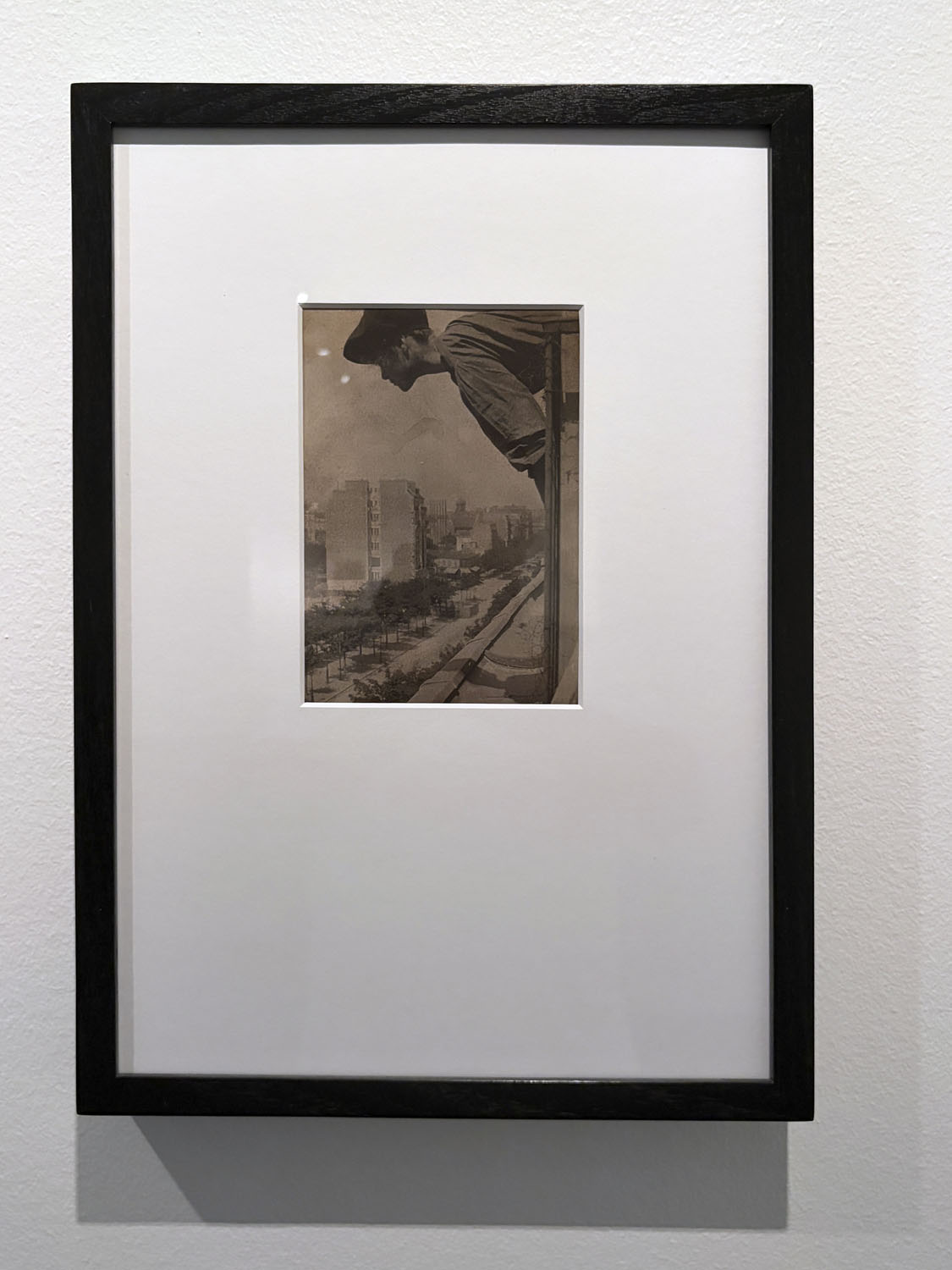
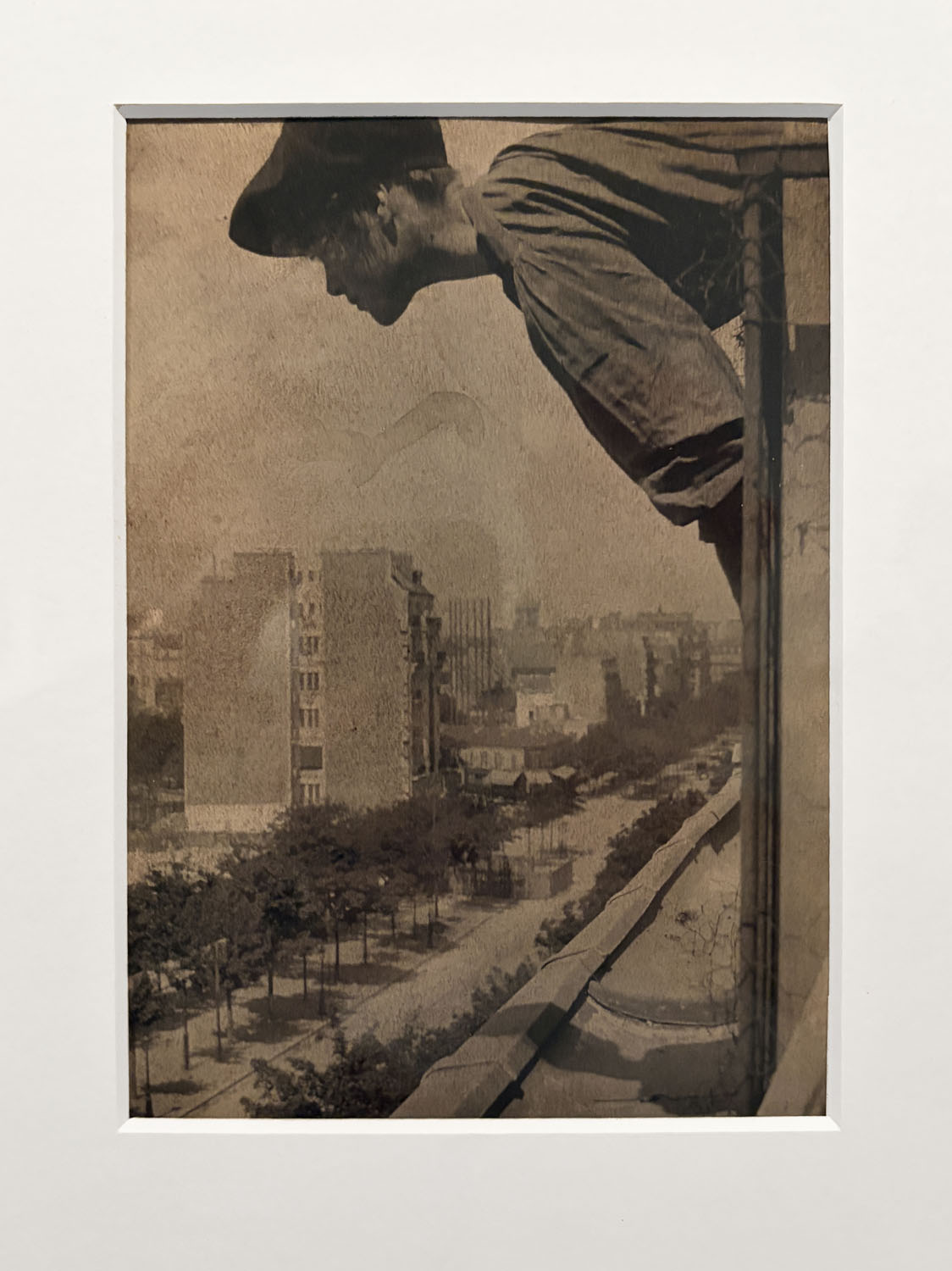
 

Installation view of the exhibition 'Women Photographers 1900-1975: A Legacy of Light' at NGV International, Melbourne, November 2025 - May 2026 showing Gertrude Kasebier 'The gargoyle' (c. 1900)


Installation views of the exhibition Women Photographers 1900-1975: A Legacy of Light at NGV International, Melbourne, November 2025 – May 2026 showing Gertrude Kasebier The gargoyle (c. 1900, below)
Photos: Marcus Bunyan


Gertrude Kasebier (American, 1852-1934) 'Gargoyle' 1901


Gertrude Kasebier (American, 1852-1934)
The gargoyle
c. 1900
Platinum photograph
20.6 x 13.5 cm (image and sheet)
National Gallery of Victoria, Melbourne
Purchased through The Art Foundation of Victoria with the assistance of the Herald & Weekly Times Limited, Fellow, 1979


In the early twentieth century, leading Pictorialist photographer Gertrude Käsebier played a key role in establishing photography as a form of fine art. As a member of the Photo-Secession group alongside Alfred Stieglitz, Käsebier was dedicated to Pictorialism, a style that emphasised artistic expression over documentary accuracy. This photograph, taken in Paris, highlights the painterly, emotional qualities inherent in Pictorialism. Käsebier has created an evocative image using composition and light to transform the scene. After leaving the Photo-Secession group in 1912, Käsebier became a founder and active member of the Pictorial Photographers of America.

Wall text from the exhibition
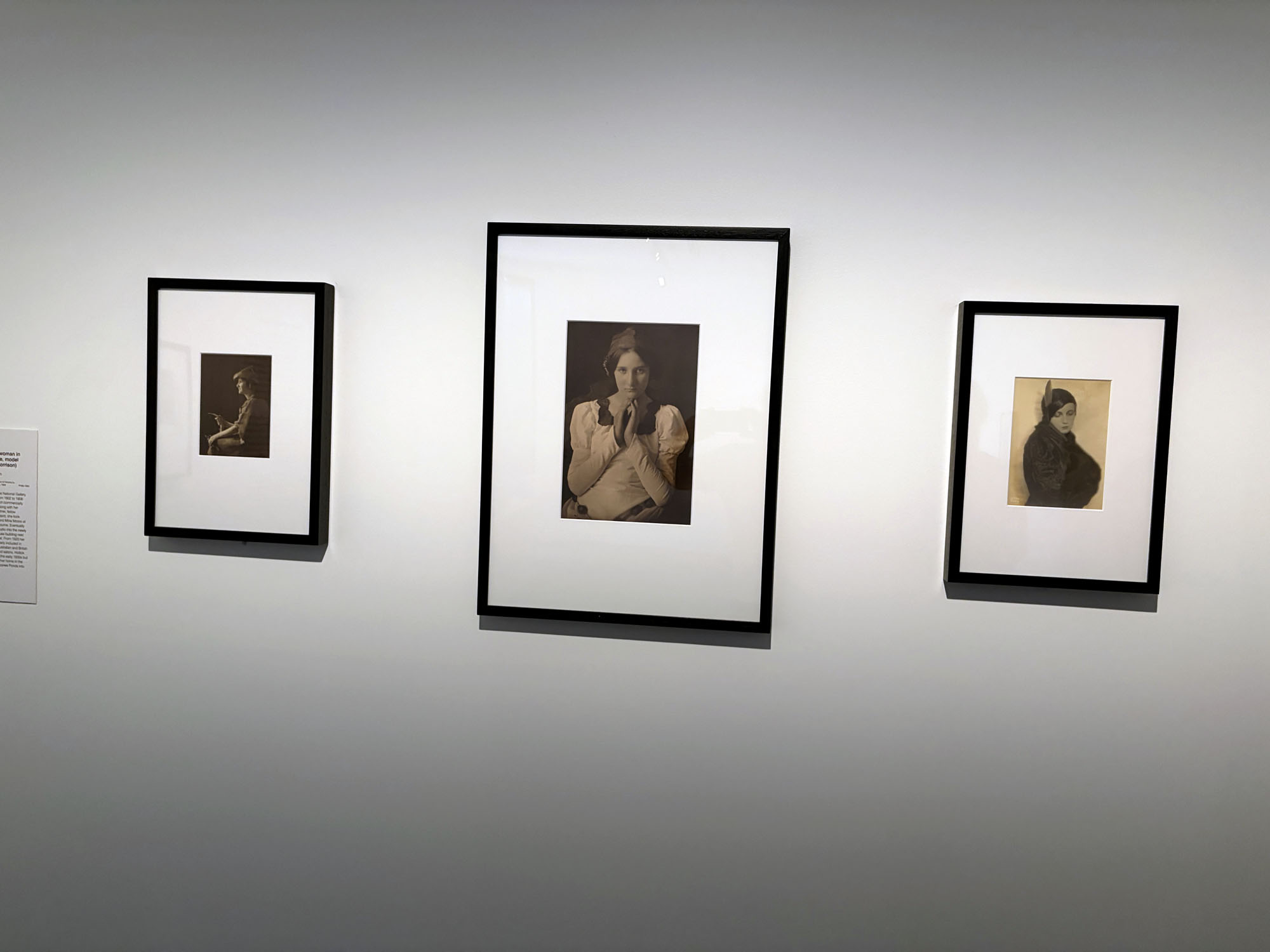
 

Installation view of the exhibition 'Women Photographers 1900-1975: A Legacy of Light' at NGV International, Melbourne, November 2025 - May 2026 showing at left, Ruth Hollick 'No title (Young woman in hunting costume, model Lucy Crosbie Morrison)' (c. 1920); at second left, Ruth Hollick 'Thought' (1921); and at right, Madame d'Ora 'Untitled' (1931)


Installation view of the exhibition Women Photographers 1900-1975: A Legacy of Light at NGV International, Melbourne, November 2025 – May 2026 showing at left, Ruth Hollick No title (Young woman in hunting costume, model Lucy Crosbie Morrison) (c. 1920, below); at second left, Ruth Hollick Thought (1921, below); and at right, Madame d’Ora Untitled (1931, below)
Photos: Marcus Bunyan
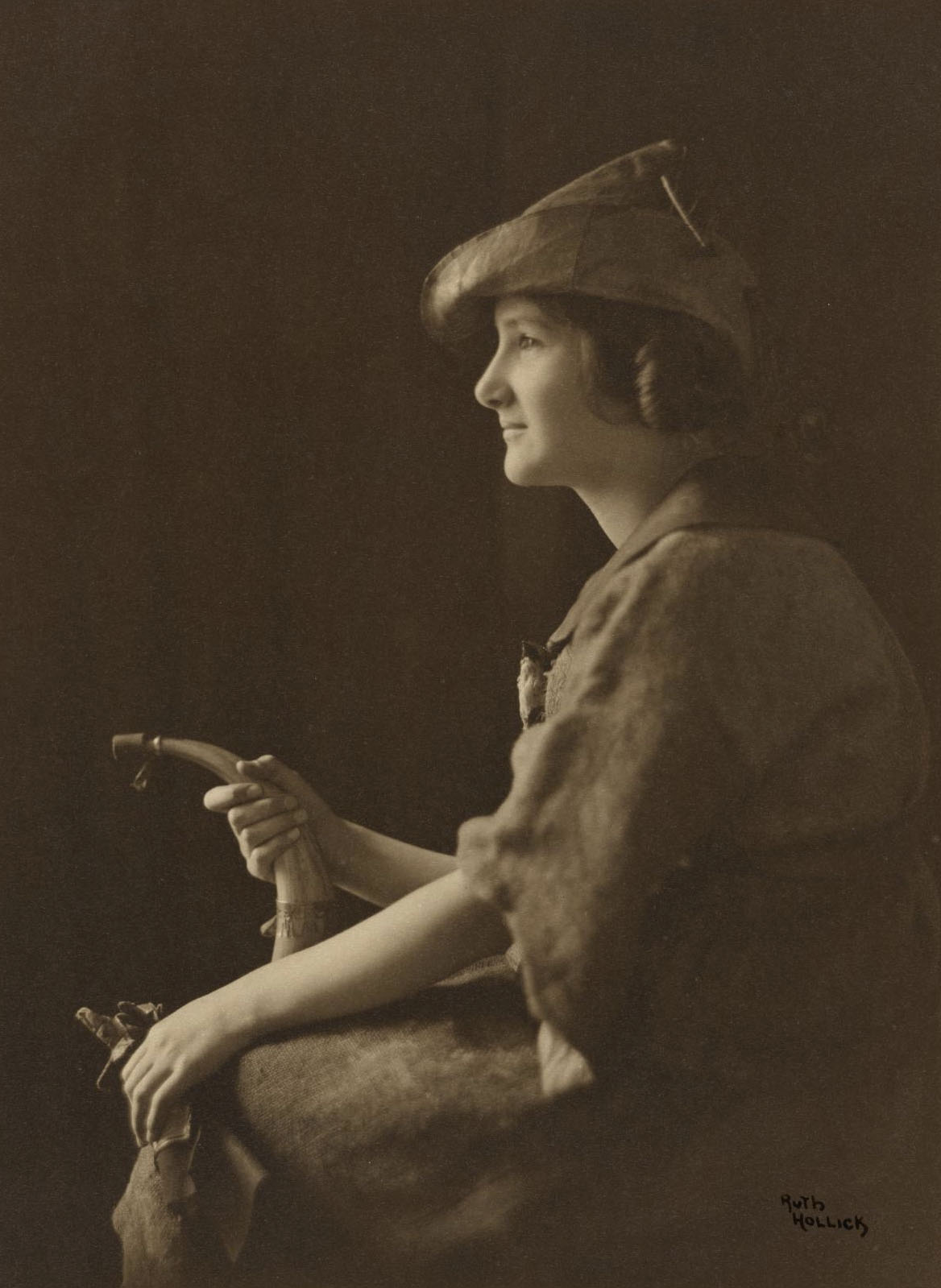
 

Ruth Hollick (Australian, 1883-1977) 'No title (Young woman in hunting costume, model Lucy Crosbie Morrison)' c. 1920


Ruth Hollick (Australian, 1883-1977)
No title (Young woman in hunting costume, model Lucy Crosbie Morrison)
c. 1920
Gelatin silver photograph
20.0 x 14.6cm (image)
National Gallery of Victoria, Melbourne
Presented through The Art Foundation of Victoria by Mrs Lucy Crosbie Morrison, Member, 1993
Public domain


Ruth Hollick attended the National Gallery of Victoria Art School from 1902 to 1906 and began to photograph commercially around 1908. In 1918, along with her life and professional partner, fellow photographer Dorothy Izard, she took over the studio of May and Mina Moore at 167 Collins Street, Melbourne. Eventually Hollick expanded her studio into the newly completed Chartres House building next door at 165 Collins Street. From 1920 her photographs were regularly included in magazines as well as Australian and British Pictorialist exhibitions and salons. Hollick closed her city studio in the early 1930s but continued working from her home in the Melbourne suburb of Moonee Ponds into the 1960s.

Wall text from the exhibition
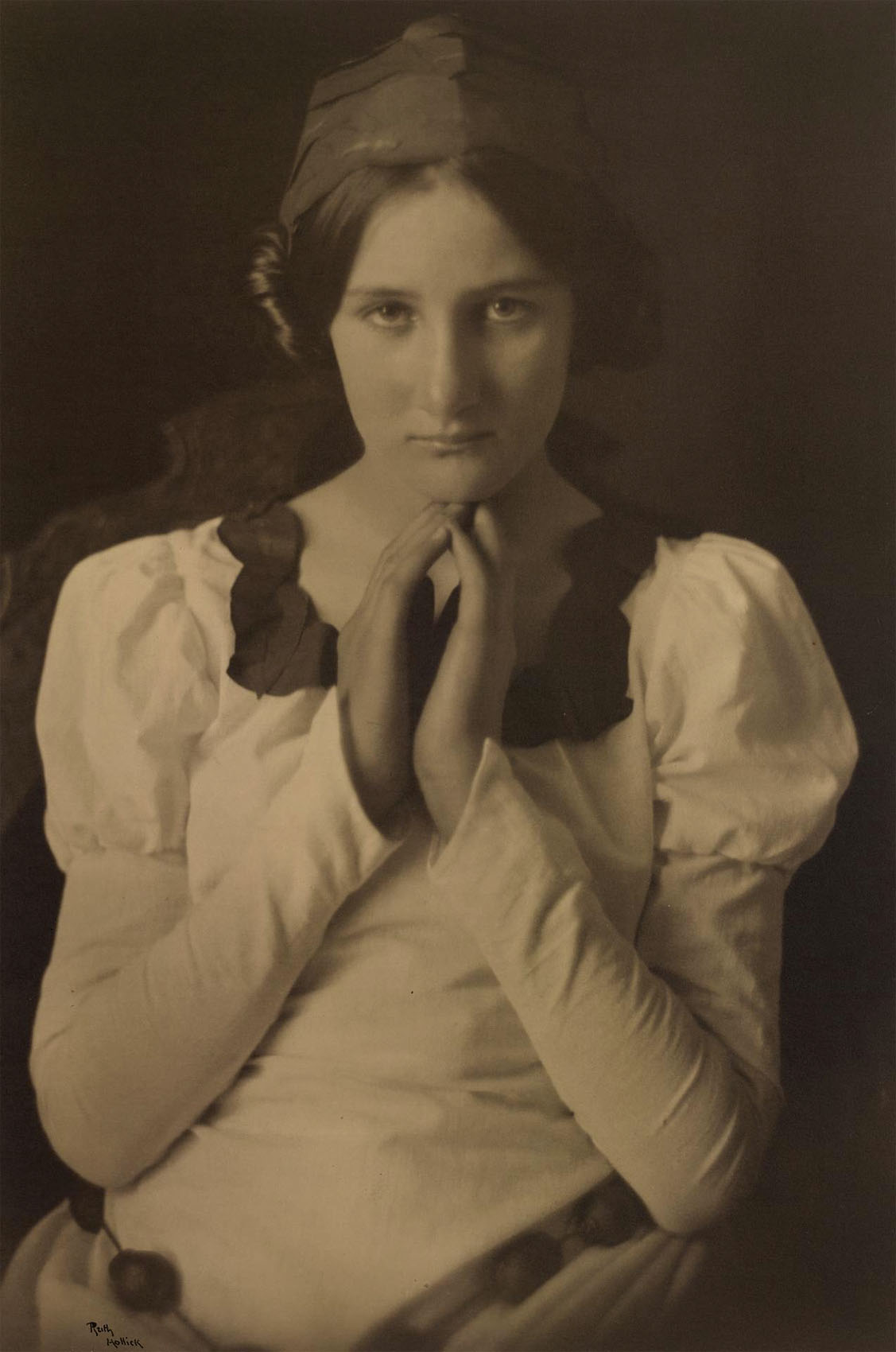
 

Ruth Hollick (Australian, 1883-1977) 'Thought' 1921


Ruth Hollick (Australian, 1883-1977)
Thought
1921
Gelatin silver photograph
37.4 x 25.3cm (image)
National Gallery of Victoria, Melbourne
Presented through The Art Foundation of Victoria by Mrs Lucy Crosbie Morrison, Member, 1993
Public domain


This sensitive portrait depicts the artist’s niece Lucy Crosbie Morrison. The pose of the subject, combined with the title, reveals the photographer’s careful direction and artistic ambition. The subject’s outfit, adorned with appliqué gum leaves and a gumnut belt, references native Australian plants. The work aligns with the style of Pictorialism, a popular international photographic trend at the time. Thought was recognised at the 1921 Colonial Exhibition in London, highlighting both its local significance and broader artistic appeal.

Wall text from the exhibition
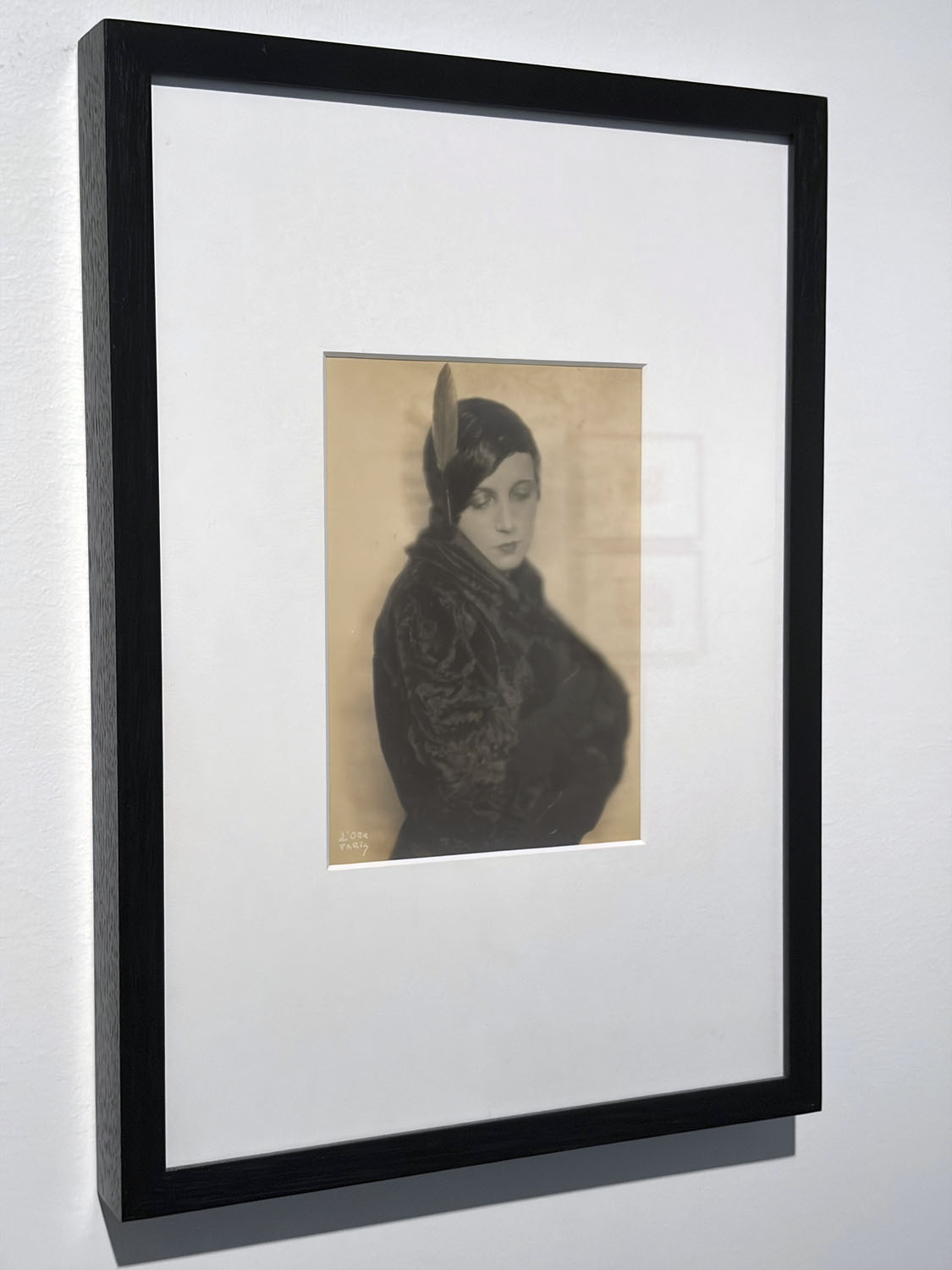
 

Dora Kallmus (Madame d'Ora) (Austrian, 1881–1963) 'Untitled' 1931 (installation view)


Dora Kallmus (Madame d’Ora) (Austrian, 1881–1963)
Untitled (installation view)
1931
Gelatin silver photograph
22.4 x 16.4cm (image and sheet)
National Gallery of Victoria, Melbourne
Gift of Krystyna Campbell-Pretty AM and Family through the Australian Government’s Cultural Gifts Program, 2023
Photo: Marcus Bunyan


Dora Kallmus, known professionally as Madame d’Ora, photographed high-profile figures associated with art, fashion and politics, including Josephine Baker and Coco Chanel. In 1907 Madame d’Ora opened her first studio in Vienna, Atelier d’Ora, one of the first photography studios in Vienna to be operated by a woman. She later moved to Paris, where her career flourished well into the 1930s – Atelier d’Ora was renowned for its glamorous, softly focused portraits – until she was forced to close her studio due to Nazi occupation.

Wall text from the exhibition


Dora Kallmus (1881-1963), better known as Madame d’Ora, was an unusual woman for her time with a spectacular career as one of the leading photographic portraitists of the early twentieth century. This exhibition, the largest museum retrospective on the Austrian photographer to date in the United States, presents the different periods of her life, from her early upbringing as the daughter of Jewish intellectuals in Vienna, to her days as a premier society photographer, through her survival during the Holocaust. Forging a path in a field that was dominated by men, d’Ora enjoyed an illustrious 50-year career, from 1907 until 1957. The show includes more than 100 examples of her work, which is distinguished for its extreme elegance, and utter depth and darkness.

Born into a privileged background and coming of age amidst the creative and intellectual atmosphere of fin-de-siècle Vienna, Kallmus was extremely well cultured. At age 23 while on a trip to the Côte d’Azur, she purchased her first camera, a Kodak box camera. She was the first woman photographer in Vienna to open her own studio and in May 1906, she was listed in the commercial register as a photographer for the first time. Self-styled simply as d’Ora, she initially took portraits of friends and members from her social circle. In the autumn of 1909, an exhibition of her work received a lively response from the press. Critics both praised the artistic style of her portraits and emphasized the prominent individuals who streamed in to view the show.

Over the course of her lifetime, d’Ora turned her lens on many artists, including Josephine Baker, Colette, Gustav Klimt, Tamara de Lempicka, and Pablo Picasso, among others. Alongside these commissions, she also photographed members of the Habsburg family and Viennese aristocracy, the Rothschild family, and other prominent cultural figures and politicians. D’Ora had close ties to avant-garde artistic circles and captured members of the Expressionist dance movement with her lens, including Anita Berber and Sebastian Droste. Fashion and glamor subjects were another important mainstay of her business. She regularly photographed Wiener Werkstätte fashion models and the designer Emilie Flöge of the Schwestern Flöge salon wearing artistic reform dresses. When d’Ora moved to Paris in 1925, she shifted her focus to fashion, covering the couture scene and leading lights of the period until 1940. She befriended key figures, such as the French milliner Madame Agnès and the Spanish designer Cristóbal Balenciaga, as well as the top fashion magazine editors of the day. She also helped create and sustain glamorous images for a variety of celebrities, including Cecil Beaton, Maurice Chevalier, and Colette.

When the Nazis seized control of Paris in 1940, she was forced to close her studio and flee. She spent the war years in a semi-underground existence living in Ardèche in the southeast of France. Her sister Anna Kallmus, along with other family and friends, died in the Chełmno concentration camp. After World War II, d’Ora returned to Paris, profoundly affected by personal losses. While she lacked an elegant studio in Paris, d’Ora’s lasting connections to wealthy clients remained and many of them returned to her. While she accepted portrait commissions, mostly for financial stability, she also pushed into new, sometimes darker directions. Around 1948, she embarked on an astonishing series of photographs in displaced persons or refugee camps, which was commissioned by the United Nations. From around 1949 to 1958, d’Ora worked on a project, which she called “my big final work.” She visited numerous slaughterhouses in Paris, and amid the pools of blood and deathly screams, she stood in an elegant suit and a hat photographing the butchered animals hundreds of times.

Anonymous. “Madame d’Ora,” on the Neue Galerie website Nd [Online] Cited 30/03/2026. Used under fair use conditions for the purposes of education and research
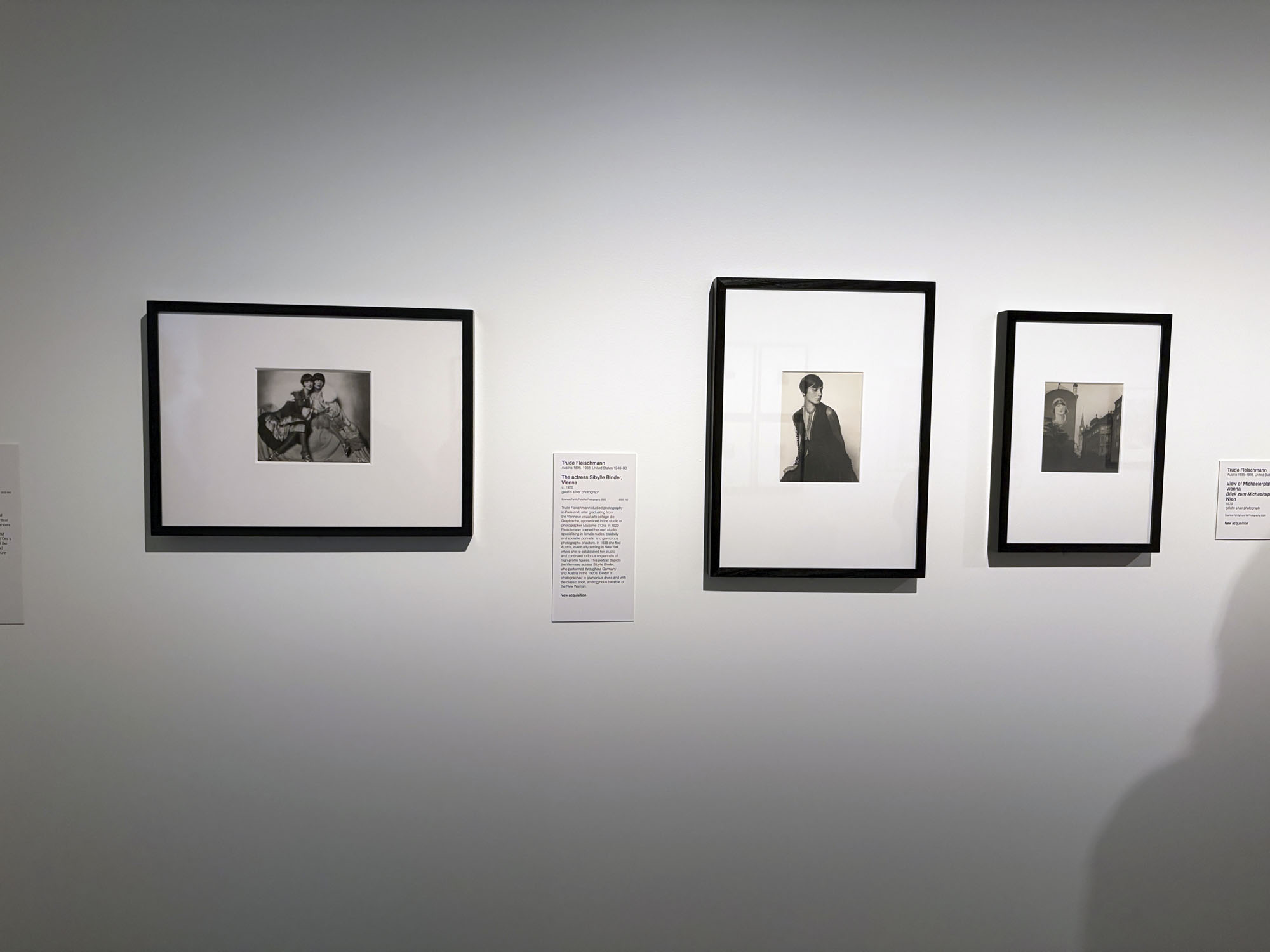
 

Installation view of the exhibition 'Women Photographers 1900-1975: A Legacy of Light' at NGV International, Melbourne, November 2025 - May 2026 showing at left, Madame D'Ora 'The Dolly Sisters' (c. 1928); at second right, Trude Fleischmann 'The actress Sibylle Binder, Vienna' (c. 1926); and at right, Trude Fleischmann 'View of Michaelerplatz, Vienna' (1929)


Installation view of the exhibition Women Photographers 1900-1975: A Legacy of Light at NGV International, Melbourne, November 2025 – May 2026 showing at left, Madame D’Ora The Dolly Sisters (c. 1928, below); at second right, Trude Fleischmann The actress Sibylle Binder, Vienna (c. 1926, below); and at right, Trude Fleischmann View of Michaelerplatz, Vienna (1929, below)
Photo: Marcus Bunyan
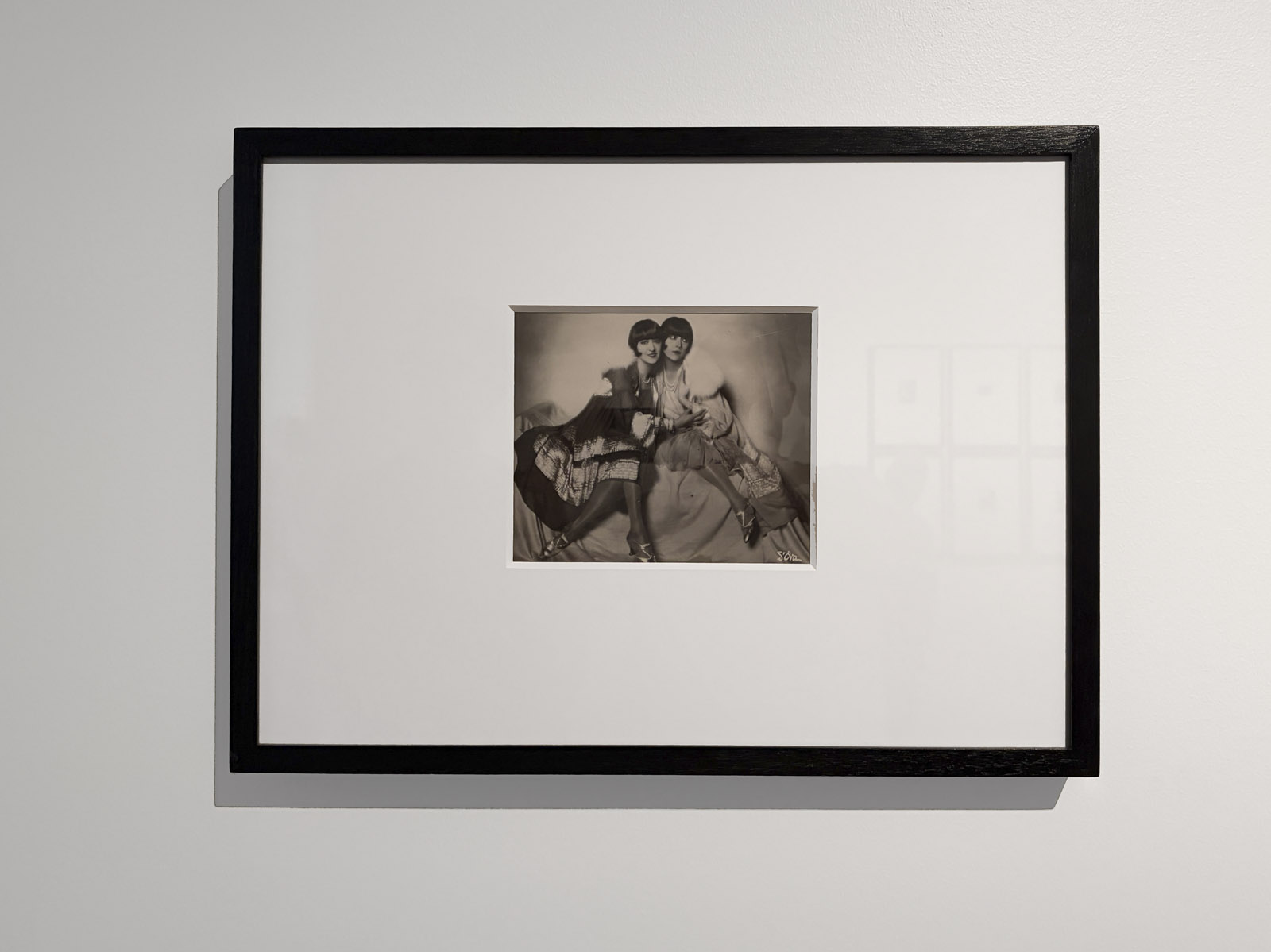
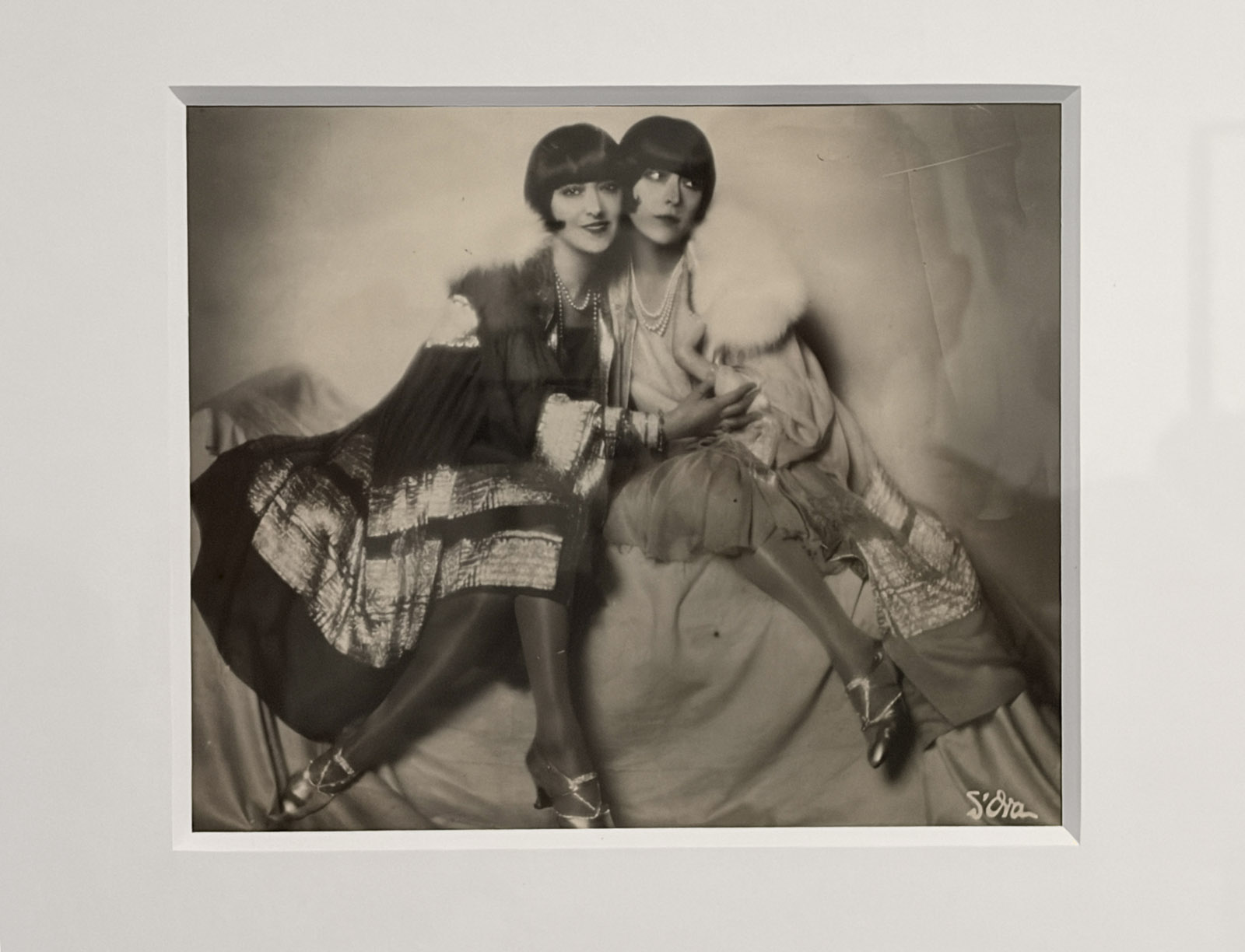
 

Dora Kallmus (Madame d'Ora) (Austrian, 1881–1963) 'The Dolly sisters' c. 1928 (installation view)


Dora Kallmus (Madame d’Ora) (Austrian, 1881–1963)
The Dolly sisters (installation views)
c. 1928
Gelatin silver photograph
18.0 x 21.1cm
National Gallery of Victoria, Melbourne
Bowness Family Fund for Photography, 2022
Photos: Marcus Bunyan


Around 1928 Madame d’Ora photographed the Dolly Sisters, who were celebrated for their glamorous performances in the 1920s. Jenny and Rosie Dolly, Hungarian-American identical twins, were vaudeville and cabaret dancers adored in Britain, the United States and across Europe for their beauty and erotically charged performances. In d’Ora’s photograph they embody the ideal of the modern woman, with bobbed hair and short skirts, dressed in glittering couture costumes and adorned with pearls.

Wall text from the exhibition
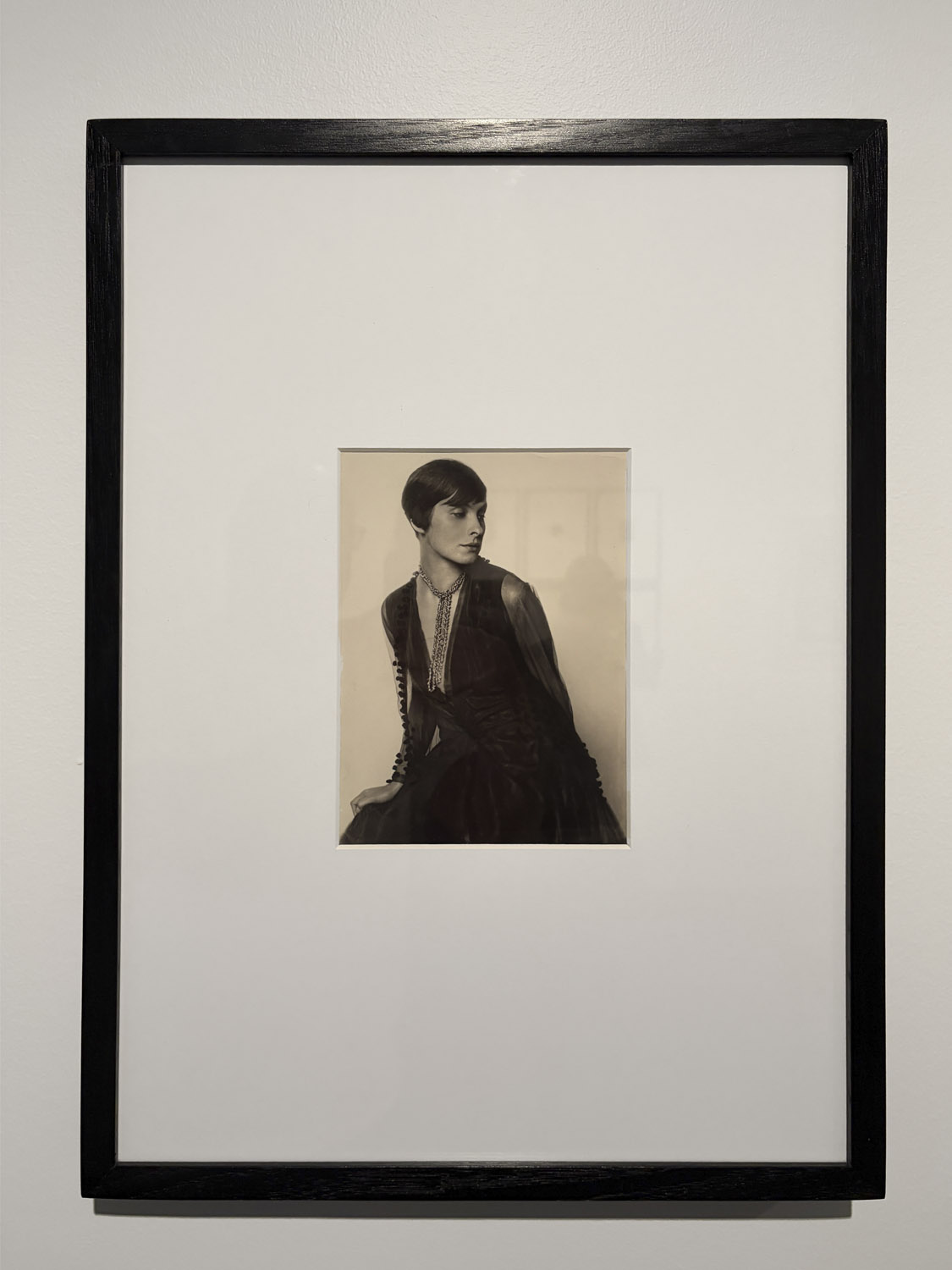
 

Trude Fleischmann (American born Austria, 1895-1990) 'The actress Sibylle Binder, Vienna' c. 1926 (installation view)


Trude Fleischmann (American born Austria, 1895-1990)
The actress Sibylle Binder, Vienna
c. 1926
Gelatin silver photograph
21.9 x 16.2cm (image)
22.9 x 17.1cm (sheet)
National Gallery of Victoria, Melbourne
Bowness Family Fund for Photography, 2022
Photo: Marcus Bunyan
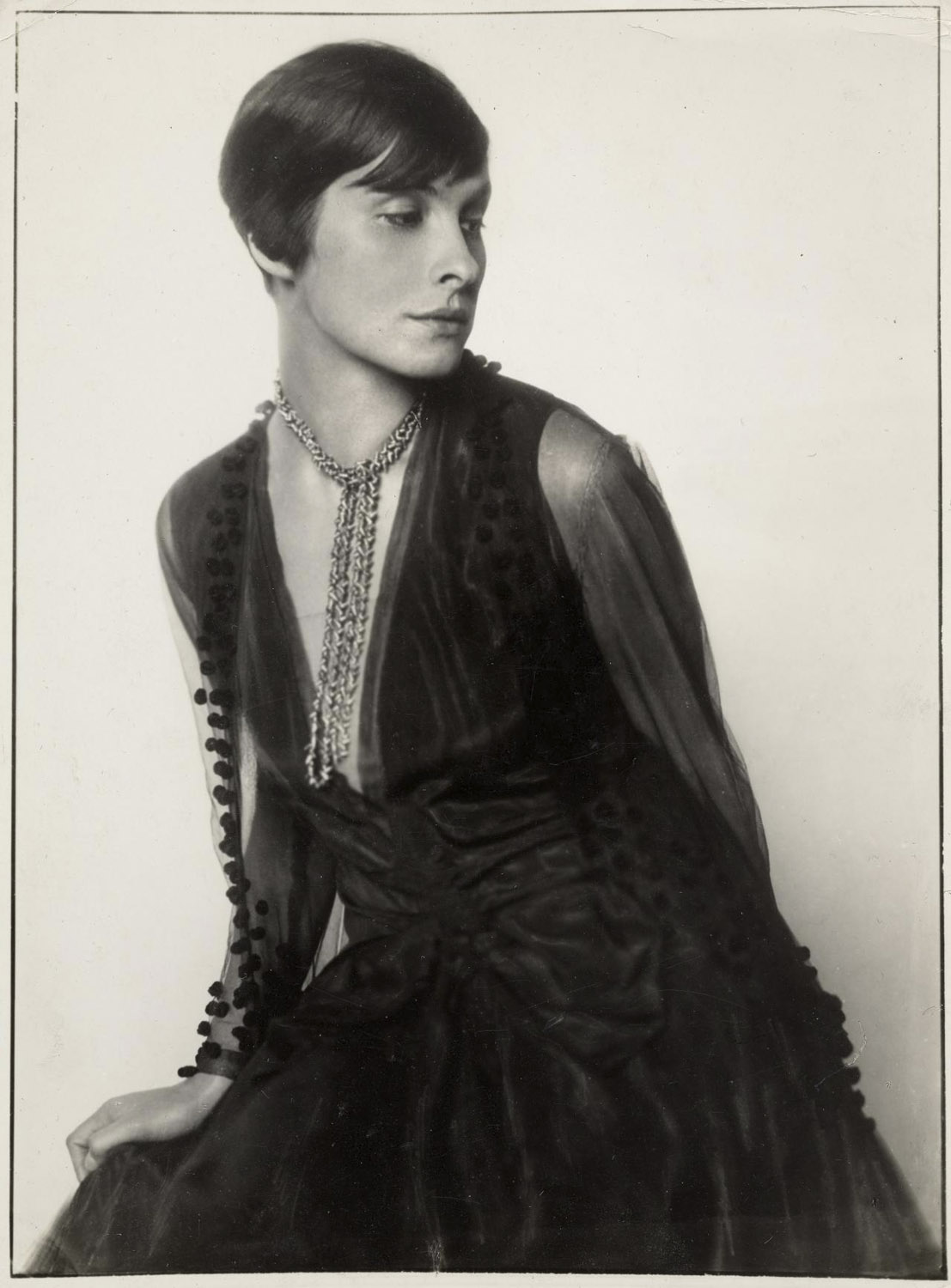
 

Trude Fleischmann (American born Austria, 1895-1990) 'The actress Sibylle Binder, Vienna' c. 1926


Trude Fleischmann (American born Austria, 1895-1990)
The actress Sibylle Binder, Vienna
c. 1926
Gelatin silver photograph
21.9 x 16.2cm (image)
22.9 x 17.1cm (sheet)
National Gallery of Victoria, Melbourne
Bowness Family Fund for Photography, 2022
Public domain


Trude Fleischmann studied photography in Paris and, after graduating from the Viennese visual arts college die Graphische, apprenticed in the studio of photographer Madame d’Ora. In 1920 Fleischmann opened her own studio, specialising in female nudes, celebrity and socialite portraits, and glamorous photographs of actors. In 1938 she fled Austria, eventually settling in New York, where she re-established her studio and continued to focus on portraits of high-profile figures. This portrait depicts the Viennese actress Sibylle Binder, who performed throughout Germany and Austria in the 1920s. Binder is photographed in glamorous dress and with the classic short, androgynous hairstyle of the New Woman.

Wall text from the exhibition


Sybille Binder (Austrian, 1895-1962)

Sybille Binder (5 January 1895 – 30 June 1962) was an Austrian actress of Jewish descent whose career of over 40 years was based variously in her home country, Germany and Britain, where she found success in films during the 1940s.

Career

Binder began her stage career in Berlin in 1915, then in 1918 moved to Munich, where she enjoyed success in classical drama. Between 1916 and 1918 she also appeared in a handful of silent films. In 1922, she returned to Berlin and received acclaim for her performance in Frank Wedekind’s Earth Spirit. Over the next few years she performed regularly in Germany and Austria then, in the mid-1930s as war approached and conditions in Germany became difficult, she made the decision to move to England.

Between 1942 and 1950 Binder featured in 13 British films, including several of superior quality. Her first screen appearance in Britain came auspiciously in the highly acclaimed supernatural drama Thunder Rock, playing opposite dramatic heavyweights including Michael Redgrave, James Mason and Frederick Valk. Other notable films in which Binder appeared were war drama Candlelight in Algeria (1944), hugely popular period melodrama Blanche Fury, espionage thriller Against the Wind and amnesia-themed romance Portrait from Life (all 1948).

Binder returned to Germany in 1950, settling in Düsseldorf, where she successfully picked up her stage career but did not attempt to break into the German film industry. She died on 30 June 1962, aged 67.

Text from the Wikipedia website
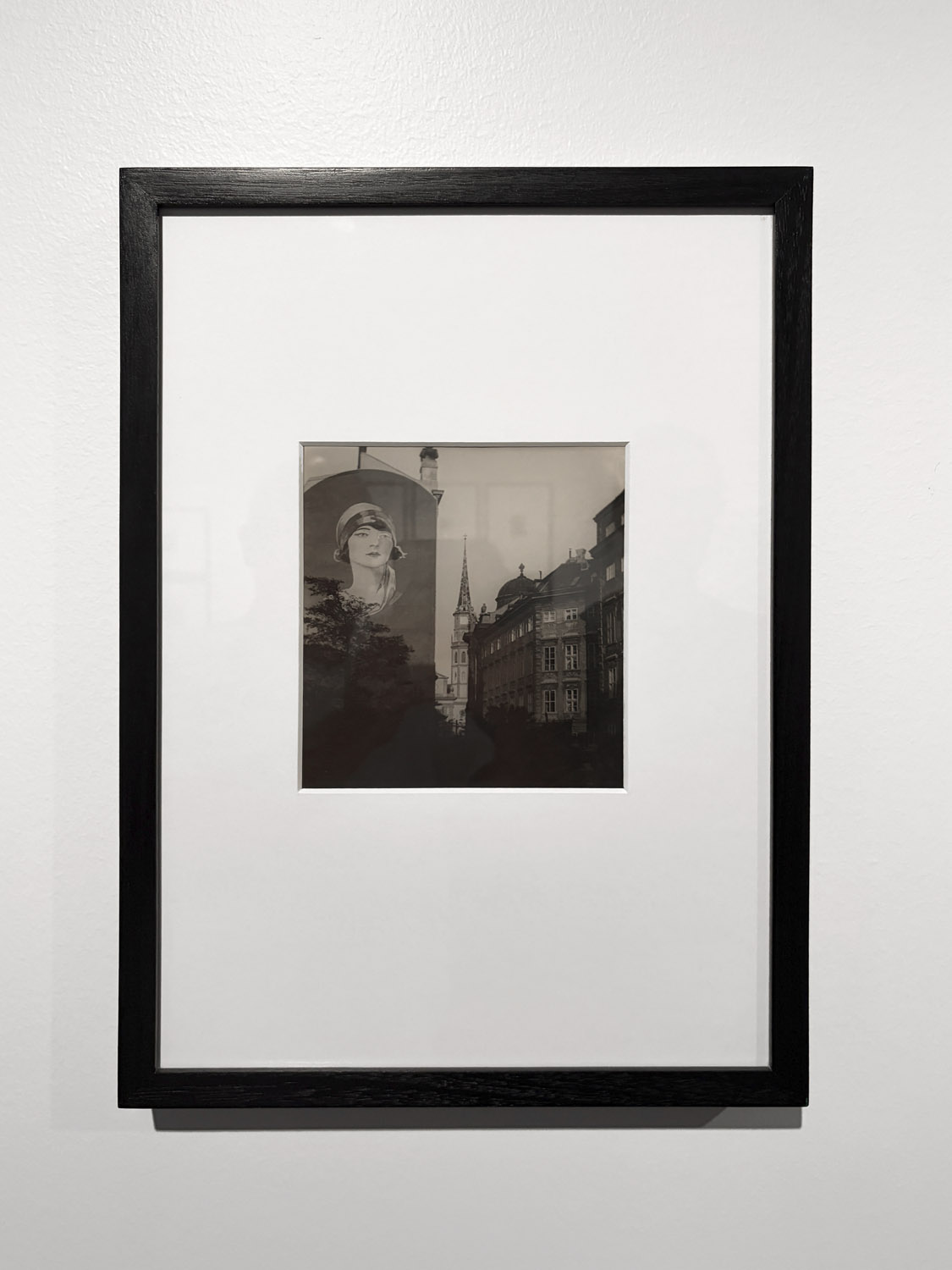
 

Trude Fleischmann (American born Austria, 1895-1990) 'View of Michaelerplatz, Vienna' (Blick zum Michaelerplatz Wien) 1929 (installation view)


Trude Fleischmann (American born Austria, 1895-1990)
View of Michaelerplatz, Vienna (Blick zum Michaelerplatz Wien)
1929
Gelatin silver photograph
18.4 x 16.6cm (image)
19.0 x 17.3cm (sheet)
National Gallery of Victoria, Melbourne
Bowness Family Fund for Photography, 2024
Photo: Marcus Bunyan
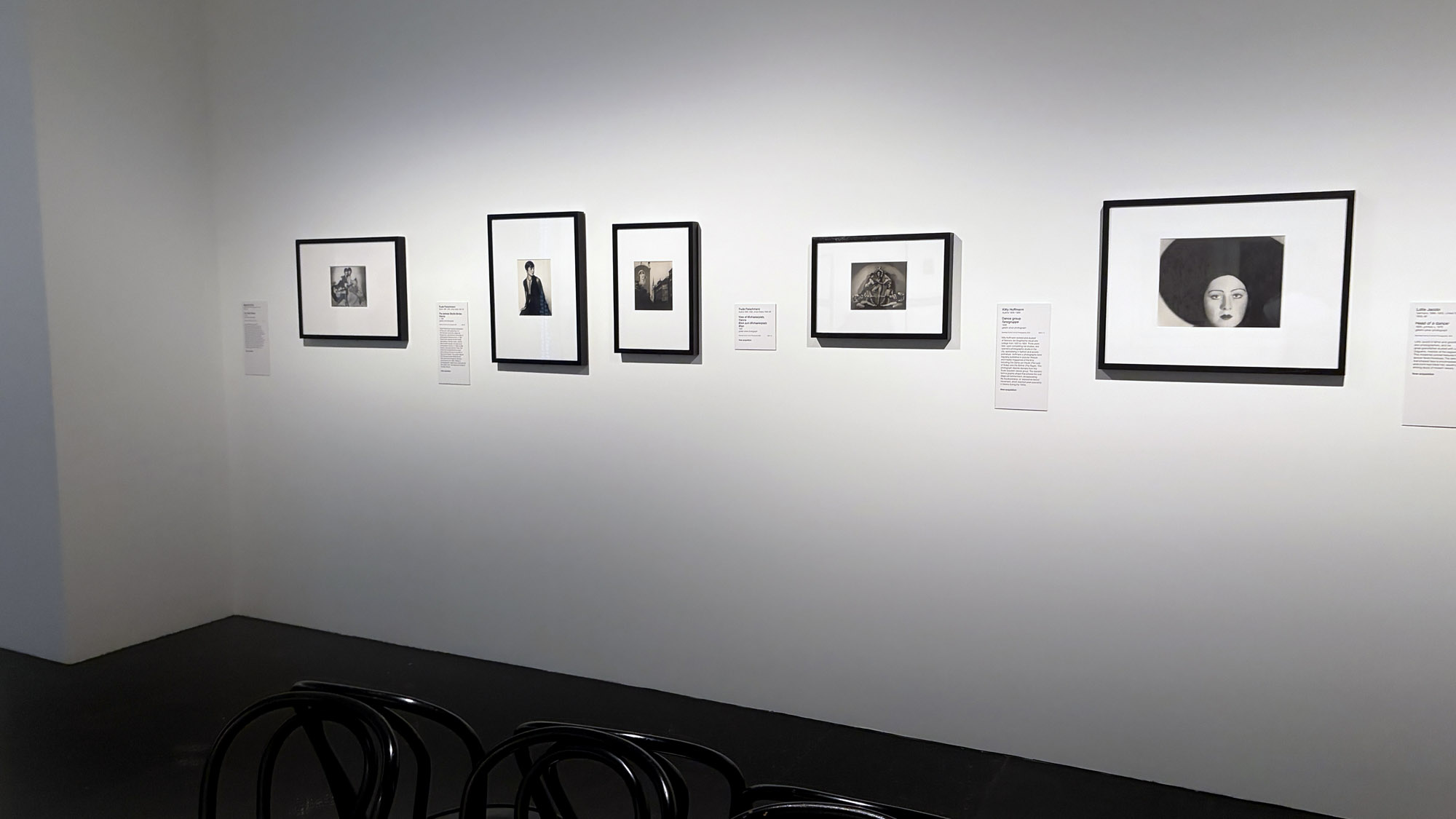
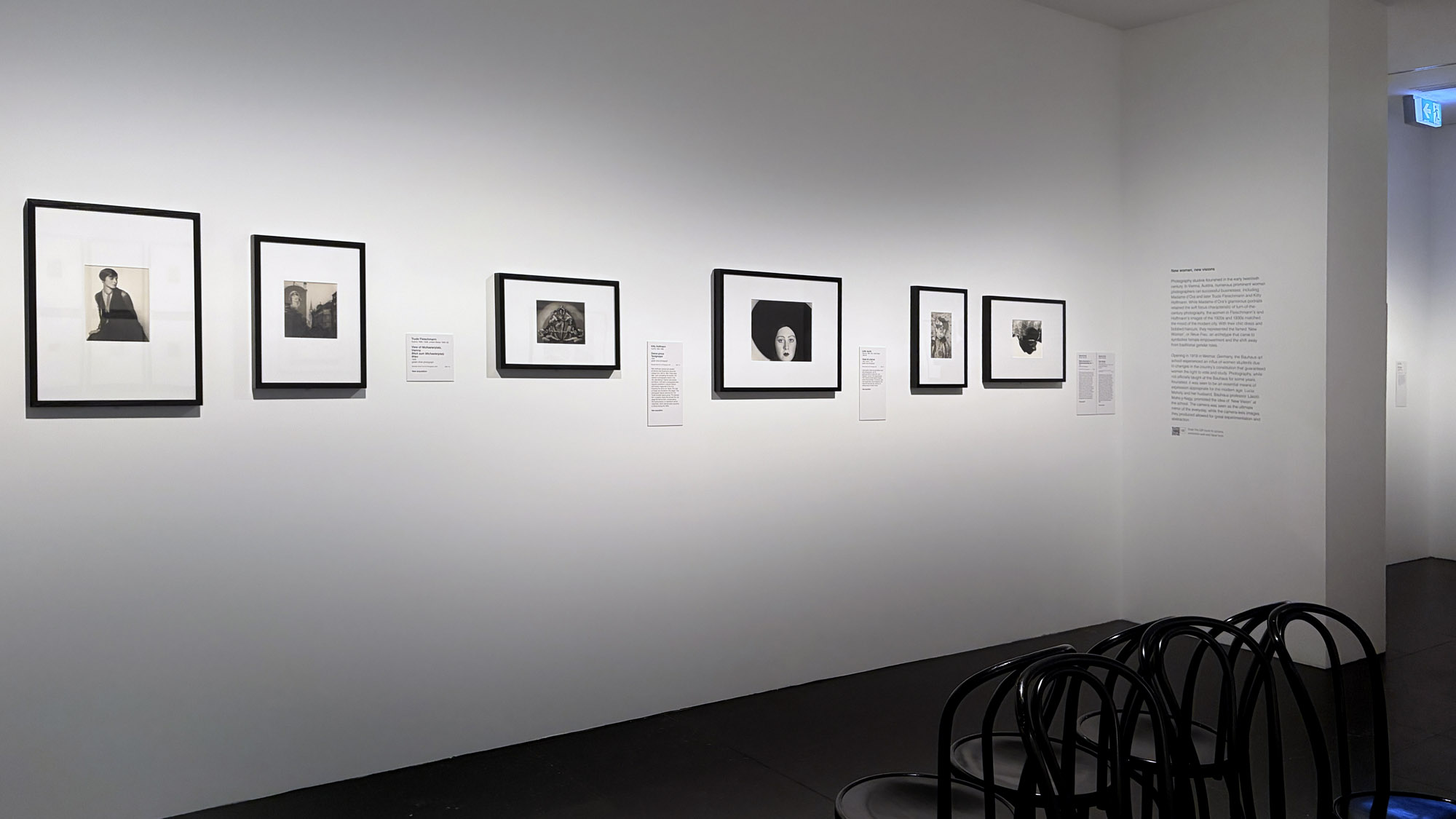
 

Installation view of the exhibition 'Women Photographers 1900-1975: A Legacy of Light' at NGV International, Melbourne, November 2025 - May 2026
Installation view of the exhibition 'Women Photographers 1900-1975: A Legacy of Light' at NGV International, Melbourne, November 2025 - May 2026 showing at third left, Kitty Hoffmann 'Posing dance group' (Tanzgruppe Trude Goodwin) (1930); at third right, Lotte Jacobi 'Head of a dancer' (1929); at second right, Gertrud Arndt 'Mask self-portrait No. 11' (1930); and at right, Gertrud Arndt 'Wera Waldek' (1930)


Installation view of the exhibition Women Photographers 1900-1975: A Legacy of Light at NGV International, Melbourne, November 2025 – May 2026 showing in the bottom image at third left, Kitty Hoffmann Posing dance group (Tanzgruppe Trude Goodwin) (1930, below); at third right, Lotte Jacobi Head of a dancer (1929, below); at second right, Gertrud Arndt Mask self-portrait No. 11 (1930, below); and at right, Gertrud Arndt Wera Waldek (1930, below)
Photos: Marcus Bunyan


New Women, New Visions

Photography studios flourished in the early twentieth century. In Vienna, Austria, numerous prominent women photographers ran successful businesses, including Madame d’Ora and later Trude Fleischmann and Kitty Hoffmann. While Madame d’Ora’s glamorous portraits retained the soft focus characteristic of turn-of-the-century photography, the women in Fleischmann’s and Hoffmann’s images of the 1920s and 1930s matched the mood of the modern city. With their chic dress and bobbed haircuts, they represented the famed ‘New Woman’, or Neue Frau, an archetype that came to symbolise female empowerment and the shift away from traditional gender roles.

Opening in 1919 in Weimar, Germany, the Bauhaus art school experienced an influx of women students due to changes in the country’s constitution that guaranteed women the right to vote and study. Photography, while not officially taught at the Bauhaus for some years, flourished: it was seen to be an essential means of expression appropriate for the modern age. Lucia Moholy and her husband, Bauhaus professor László Moholy-Nagy, promoted the idea of ‘New Vision’ at the school. The camera was seen as the ultimate mirror of the everyday, while the camera-less images they produced allowed for great experimentation and abstraction.
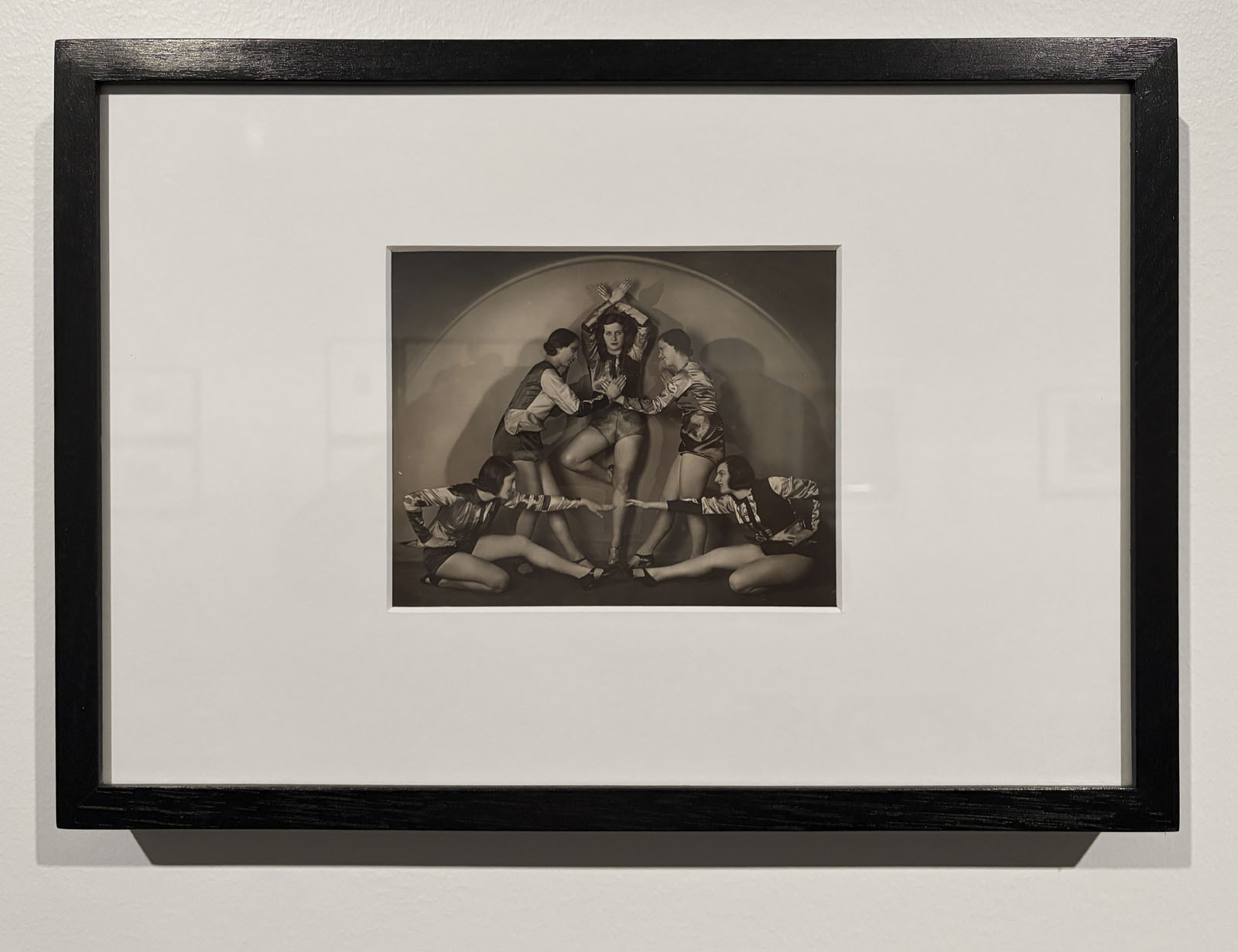
 

Kitty Hoffmann (Austrian, 1900-1968) 'Posing dance group' (Tanzgruppe Trude Goodwin) 1930 (installation view)


Kitty Hoffmann (Austrian, 1900-1968)
Posing dance group (Tanzgruppe Trude Goodwin) (installation view)
1930
Gelatin silver photograph
15.9 x 19.8cm (image)
16.8 x 20.7cm (sheet)
National Gallery of Victoria, Melbourne
Bowness Family Fund for Photography, 2024
Photo: Marcus Bunyan
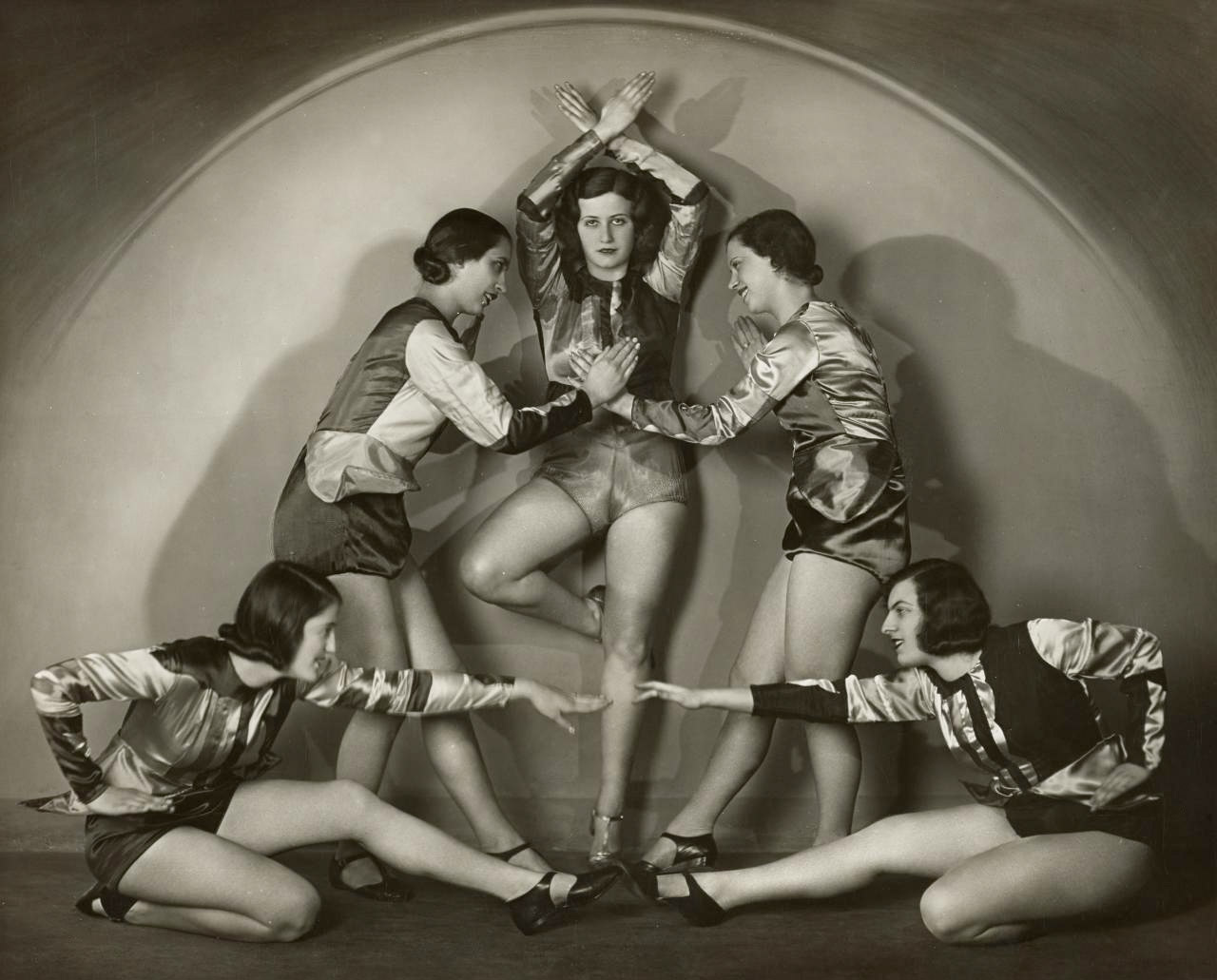
 

Kitty Hoffmann (Austrian, 1900-1968) 'Posing dance group' (Tanzgruppe Trude Goodwin) 1930


Kitty Hoffmann (Austrian, 1900-1968)
Posing dance group (Tanzgruppe Trude Goodwin)
1930
Gelatin silver photograph
15.9 x 19.8cm (image) 16.8 x 20.7cm (sheet)
National Gallery of Victoria, Melbourne
Bowness Family Fund for Photography, 2024


Kitty Hoffmann worked and studied at Vienna’s die Graphische visual arts college from 1922 to 1924. Three years later, upon completing her studies, she opened a photographic studio in the city, specialising in fashion and society portraiture. Hoffmann’s photographs were regularly published in popular lifestyle and theatre magazines of the time, including Die Dame von Heute (The Lady of Today) and Die Bühne (The Stage). This photograph depicts dancers from the Trude Goodwin dance group. The dancers form a graphic shape that echoes the oval stage-set behind them, encapsulating the Ausdruckstanz, or ‘expressive dance’ movement, which reached peak popularity in Vienna during the 1920s.

Wall text from the exhibition


Lotte Jacobi (German-American, 1896-1990) 'Head of a dancer' 1929, printed c. 1970


Lotte Jacobi (German-American, 1896-1990)
Head of a dancer
1929, printed c. 1970
Gelatin silver photograph
26.4 x 33.2cm (image)
27.7 x 35.3cm (sheet)
National Gallery of Victoria, Melbourne
Bowness Family Fund for Photography, 2021
Public domain


Lotte Jacobi’s father and grandfather were also photographers, and her great-grandfather studied with Louis Daguerre, inventor of the daguerreotype. This modernist portrait features Russian dancer Niuta Norskaya. The dancer’s pale, oval-shaped face is encompassed by her wide-brimmed black hat, resulting in a striking study of modern beauty.

Wall text from the exhibition
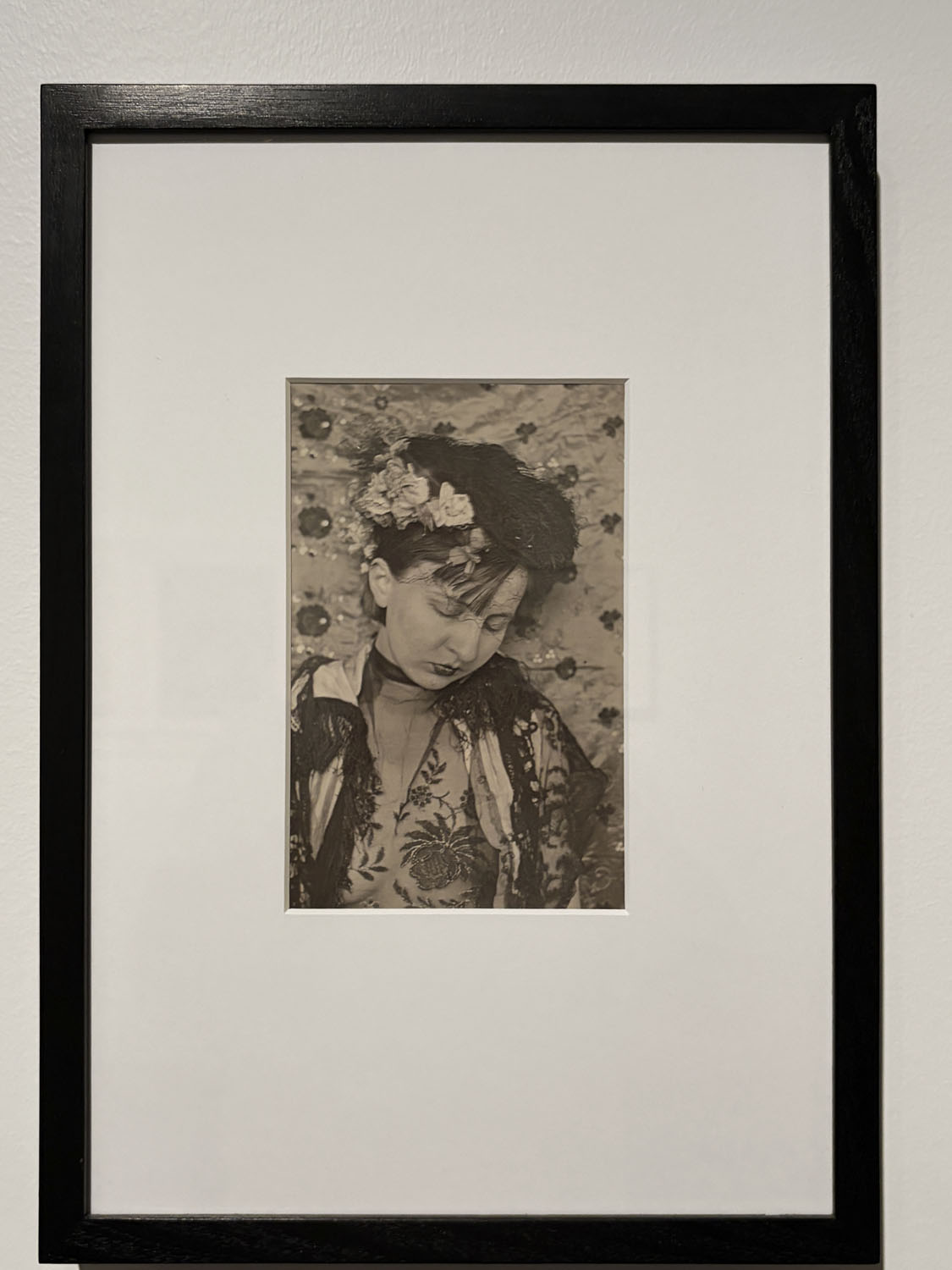
 

Gertrud Arndt (German, 1903-2000) 'Mask self-portrait no. 11' (Maskenselbstbildnis Nr. 11) 1930 (installation view)


Gertrud Arndt (German, 1903-2000)
Mask self-portrait no. 11 (Maskenselbstbildnis Nr. 11) (installation views)
1930
Gelatin silver photograph
22.9 x 14.7cm (image and sheet)
National Gallery of Victoria, Melbourne
Bowness Family Fund for Photography, 2024
Photos: Marcus Bunyan


Gertrud Arndt (born Gertrud Hantschk in Upper Silicia) set out to become an architect, beginning a three-year apprenticeship in 1919 at the architecture firm of Karl Meinhardt in Erfurt, where her family lived at the time. While there, she began teaching herself photography by taking pictures of buildings in town. She also attended courses in typography, drawing, and art history at the Kunstgewerbeschule (School of design). Encouraged by Meinhardt, a friend of Walter Gropius, Arndt was awarded a scholarship to continue her studies at the Bauhaus in Weimar. Enrolled from 1923 to 1927, Arndt took the Vorkurs (foundation course) from László Moholy-Nagy, who was a chief proponent of the value of experimentation with photography. After her Vorkurs, Georg Muche, leader of the weaving workshop, persuaded her to join his course, which then became the formal focus of her studies. Upon graduation, in March 1927, she married fellow Bauhaus graduate and architect Alfred Arndt. The couple moved to Probstzella in Eastern Germany, where Arndt photographed buildings for her husband’s architecture firm. 

In 1929, Hannes Meyer invited Alfred Arndt to teach at the Bauhaus, where Arndt focused her energy on photography, entering her period of greatest activity, featuring portraits of friends, still-lifes, and a series of performative self-portraits, as well as At the Masters’ Houses, which shows the influence of her studies with Moholy-Nagy as well as her keen eye for architecture. After the Bauhaus closed, in 1932, the couple left Dessau and moved back to Probstzella. Three years after the end of World War II the family moved to Darmstadt; Arndt almost completely stopped making photographs.

Mitra Abbaspour, Associate Curator, Department of Photography “Gertrud Arndt,” on the MoMA website 2014 [Online] Cited 31/03/2026. Used under fair use conditions for the purposes of education and research
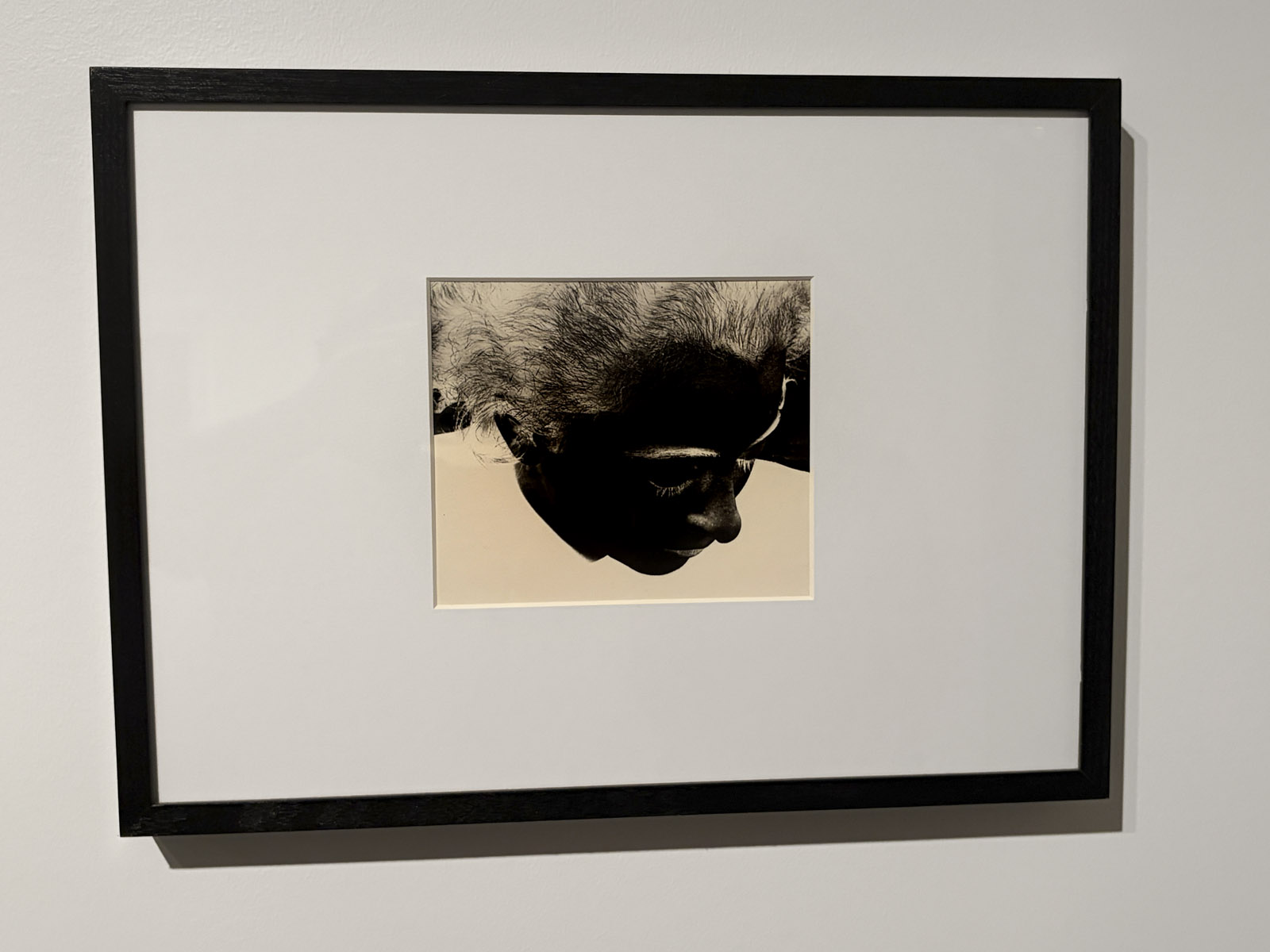
 

Gertrud Arndt (German, 1903-2000) 'Wera Waldek' 1930, printed 1984 (installation view)


Gertrud Arndt (German, 1903-2000)
Wera Waldek
1930, printed 1984
From the Bauhaus portfolio I (1919-1933) 1984
Gelatin silver photograph
(19.0 x 22.5cm) irreg. (image)
27.0 x 35.3cm (sheet)
National Gallery of Victoria, Melbourne
Gift of Galerie Kicken Berlin in memory of Rudolf Kicken (1947-2014), 2024
Photo: Marcus Bunyan


Originally wanting to study architecture, Gertrud Arndt enrolled at the Bauhaus school in 1923-1924, ultimately specialising in weaving. A self-taught photographer, she informally developed her skills while apprenticing at an architect’s office in Erfurt prior to her studies, later photographing buildings for her husband’s architecture firm. Printing this picture in its negative state, rather than turning it into a positive image, Arndt creates a striking dreamlike effect. The portrait depicts fellow Bauhaus architecture student Wera Waldek, who made designs for children’s play furniture and housing interiors. The image forms part of the Bauhaus Portfolio I 1919-1933, published by Rudolf Kicken Galerie in 1984.

Wall text from the exhibition
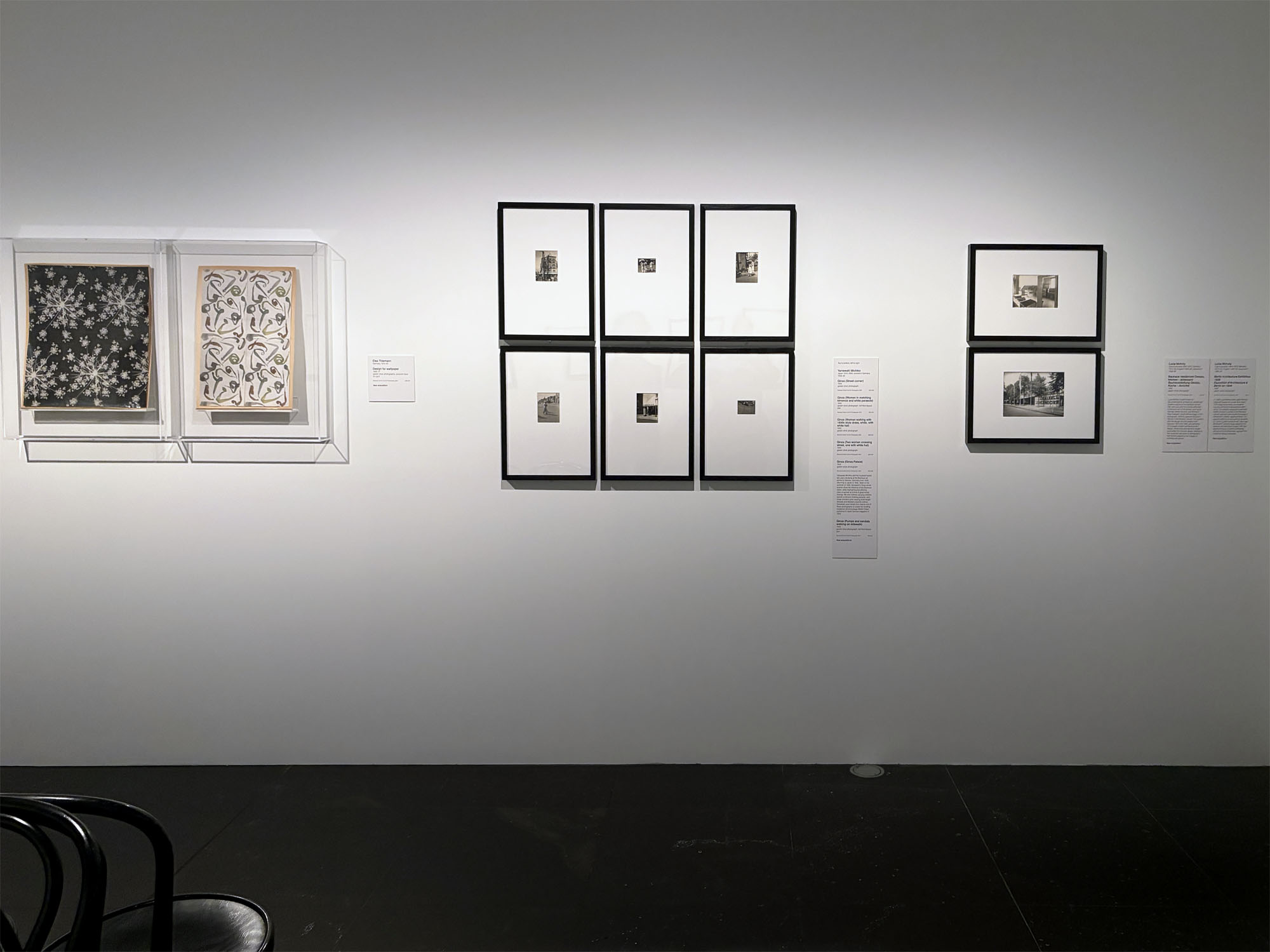
 

Installation view of the exhibition 'Women Photographers 1900-1975: A Legacy of Light' at NGV International, Melbourne, November 2025 - May 2026
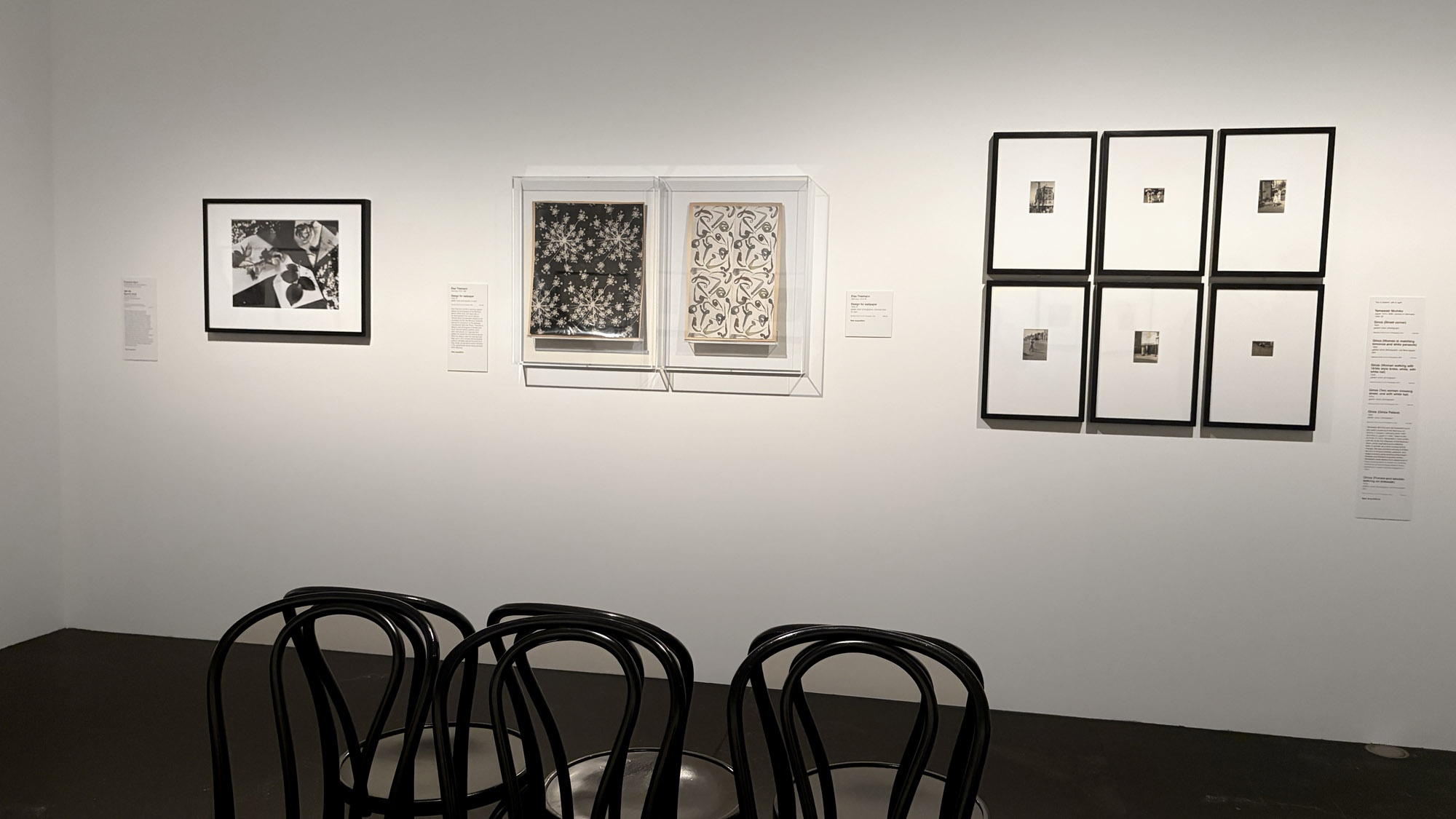
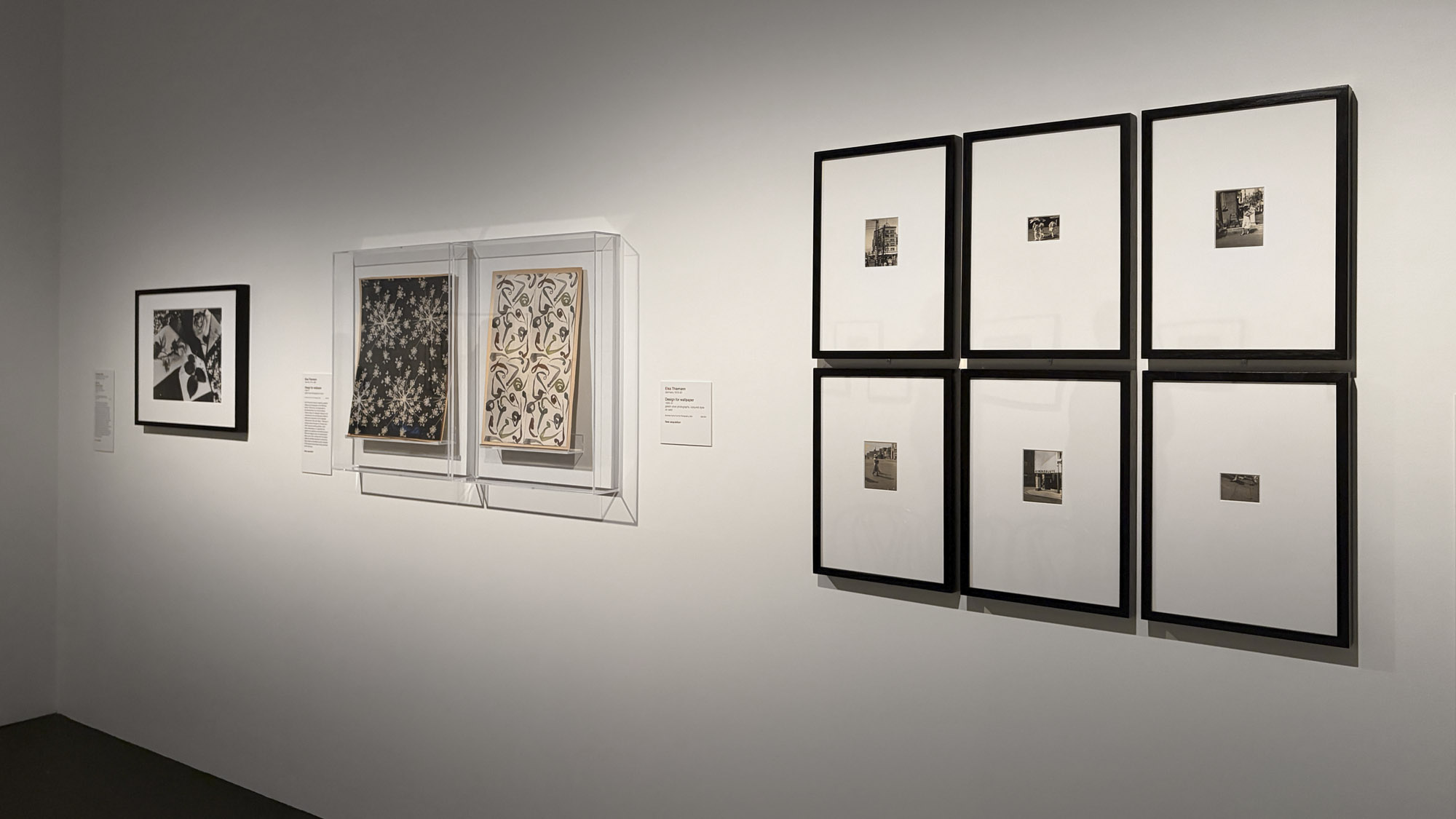
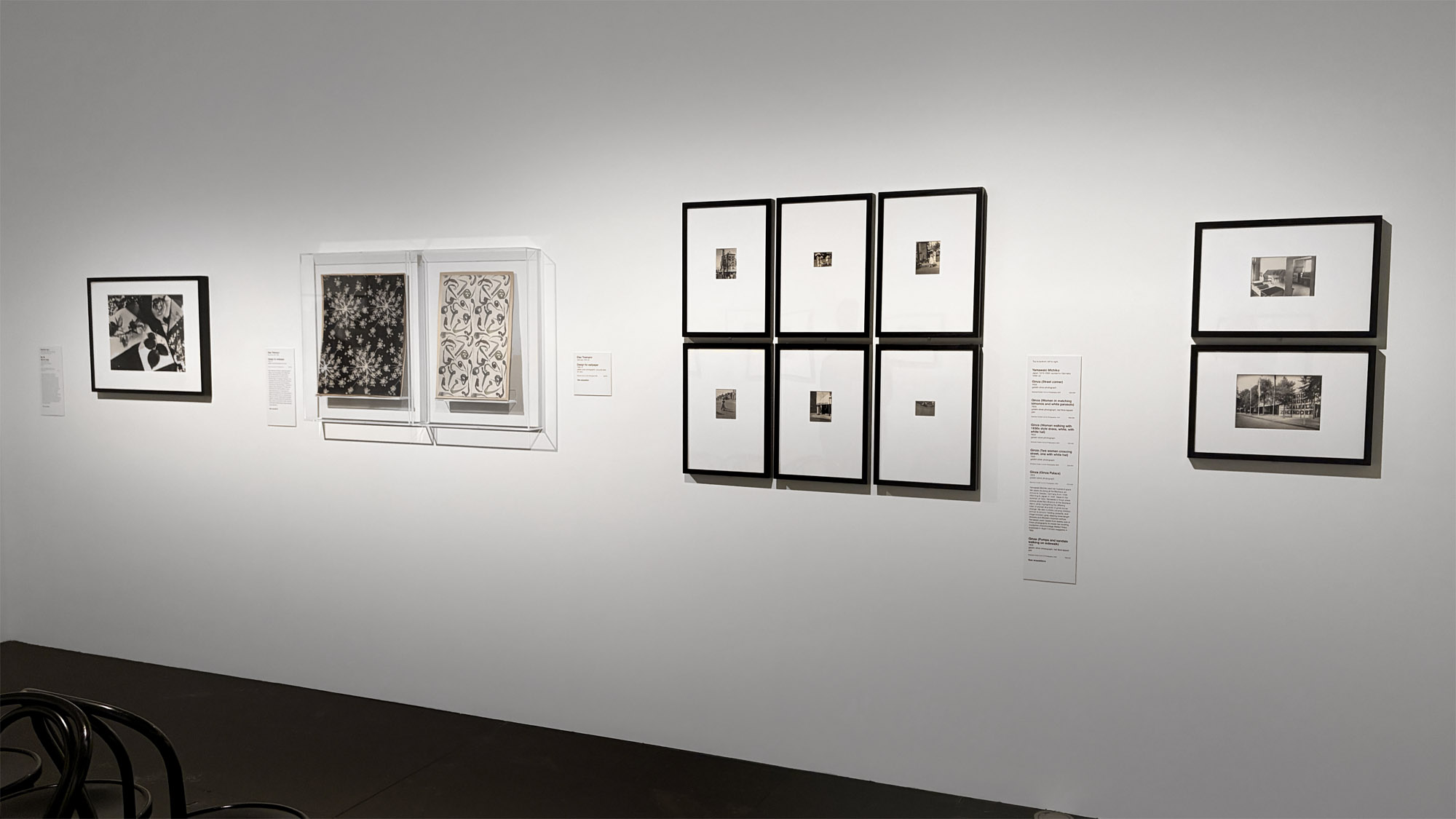
Installation view of the exhibition 'Women Photographers 1900-1975: A Legacy of Light' at NGV International, Melbourne, November 2025 - May 2026 showing from left to right in the bottom image, Florence Henri 'Still life' (Nature morte) (1931 printed 1975, below); Elsa Thiemann (German, 1910-1981) 'Design for wallpaper' (1930-1931); 1930s photographs by Yamawaki Michiko (Japan, 1910-2000, worked in Germany 1930-1932); and two 1920s photographs by Lucia Moholy of the Bauhaus, Dessau


Installation view of the exhibition Women Photographers 1900-1975: A Legacy of Light at NGV International, Melbourne, November 2025 – May 2026 showing from left to right in the bottom image, Florence Henri Still life (Nature morte) (1931 printed 1975, below); Elsa Thiemann (German, 1910-1981) Design for wallpaper (1930-1931); 1930s photographs by Yamawaki Michiko (Japan, 1910-2000, worked in Germany 1930-1932) see below; and two 1920s photographs by Lucia Moholy of the Bauhaus, Dessau, see below
Photos: Marcus Bunyan


Elsa Thiemann trained in painting, graphic design and photography at the Bauhaus school. While there, she responded to an advertisement from school director Hannes Meyer for wallpaper designs to be considered for the new Bauhaus collection, planned for production by the wallpaper manufacturer Gebrüder Rasch. Thiemann’s designs used photograms of flowers and hand-coloured swirling patterns, which were meticulously cut, organised and pasted into repetitious symmetrical layouts. While her designs were not manufactured, likely due to their contrast with the brighter patterns ultimately selected for production, they remain as standalone works indicative of the experimental design being practised at the Bauhaus.

New acquisition. Wall text from the exhibition
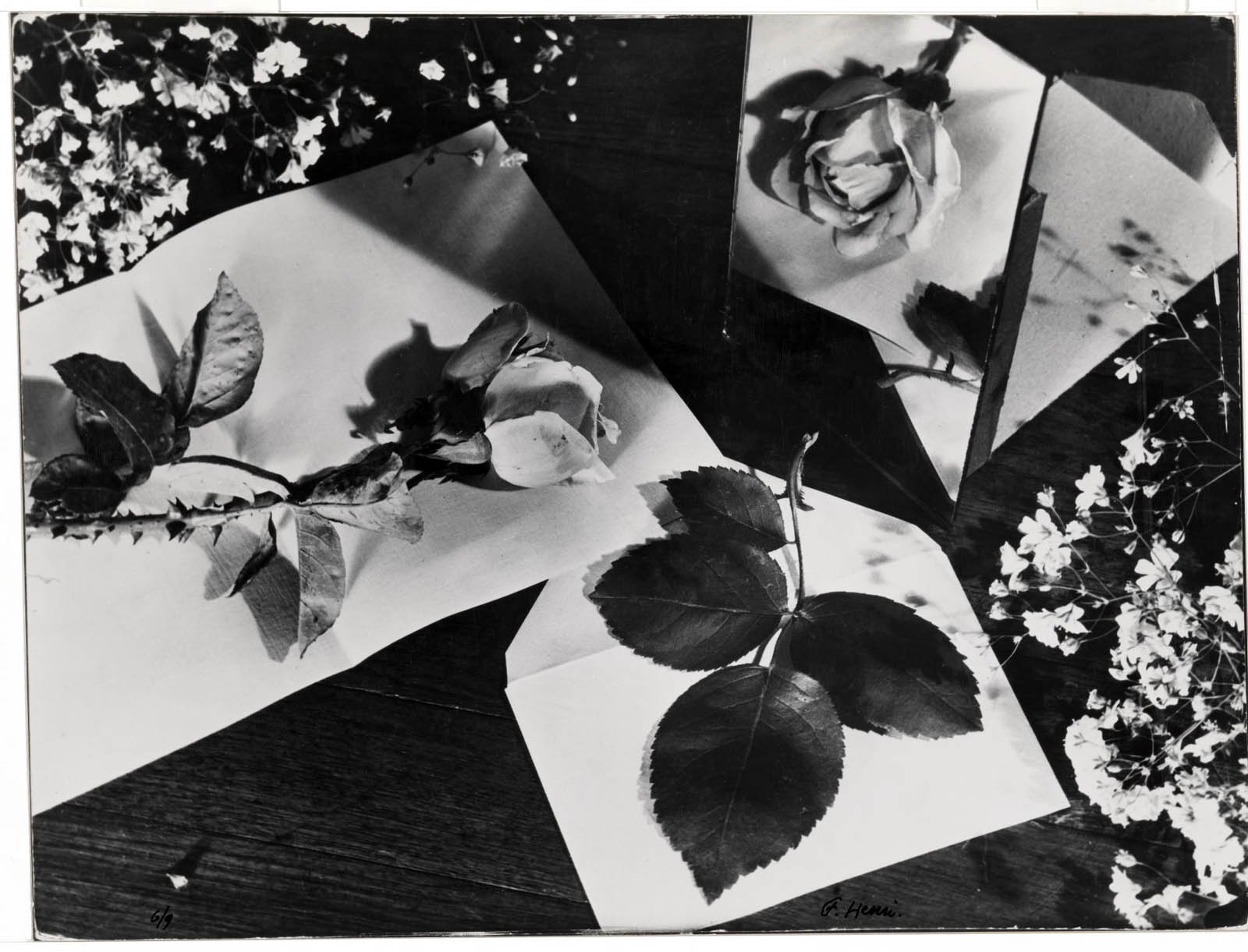
 

Florence Henri (European, 1893-1982) 'Still life' (Nature morte) 1931, printed 1975


Florence Henri (European, 1893-1982)
Still life (Nature morte)
1931, printed 1975
Gelatin silver photograph
35.9 x 47.9cm (image and sheet)
ed. 6/9
National Gallery of Victoria, Melbourne
Gift of Krystyna Campbell-Pretty AM and Family through the Australian Government’s Cultural Gifts Program, 2022
© Florence Henri / Licensed by the Copyright Agency, Australia


After studying music and painting, Florence Henri was introduced to photography in 1927 while attending the Bauhaus school. There, she met László Moholy-Nagy and Lucia Moholy, whose influence (especially Moholy’s) led Henri to focus solely on photography. In 1929 she established a studio in Paris, where she became renowned for her avant-garde and experimental practice. In addition to portraits of women, her work often features still-life compositions that combine everyday objects like envelopes and sheets of paper with natural elements such as flowers and leaves. Henri also frequently used mirrors as a means of fragmenting the pictorial space.

Wall text from the exhibition. New acquisition
  

Installation view of the exhibition 'Women Photographers 1900-1975: A Legacy of Light' at NGV International, Melbourne, November 2025 - May 2026


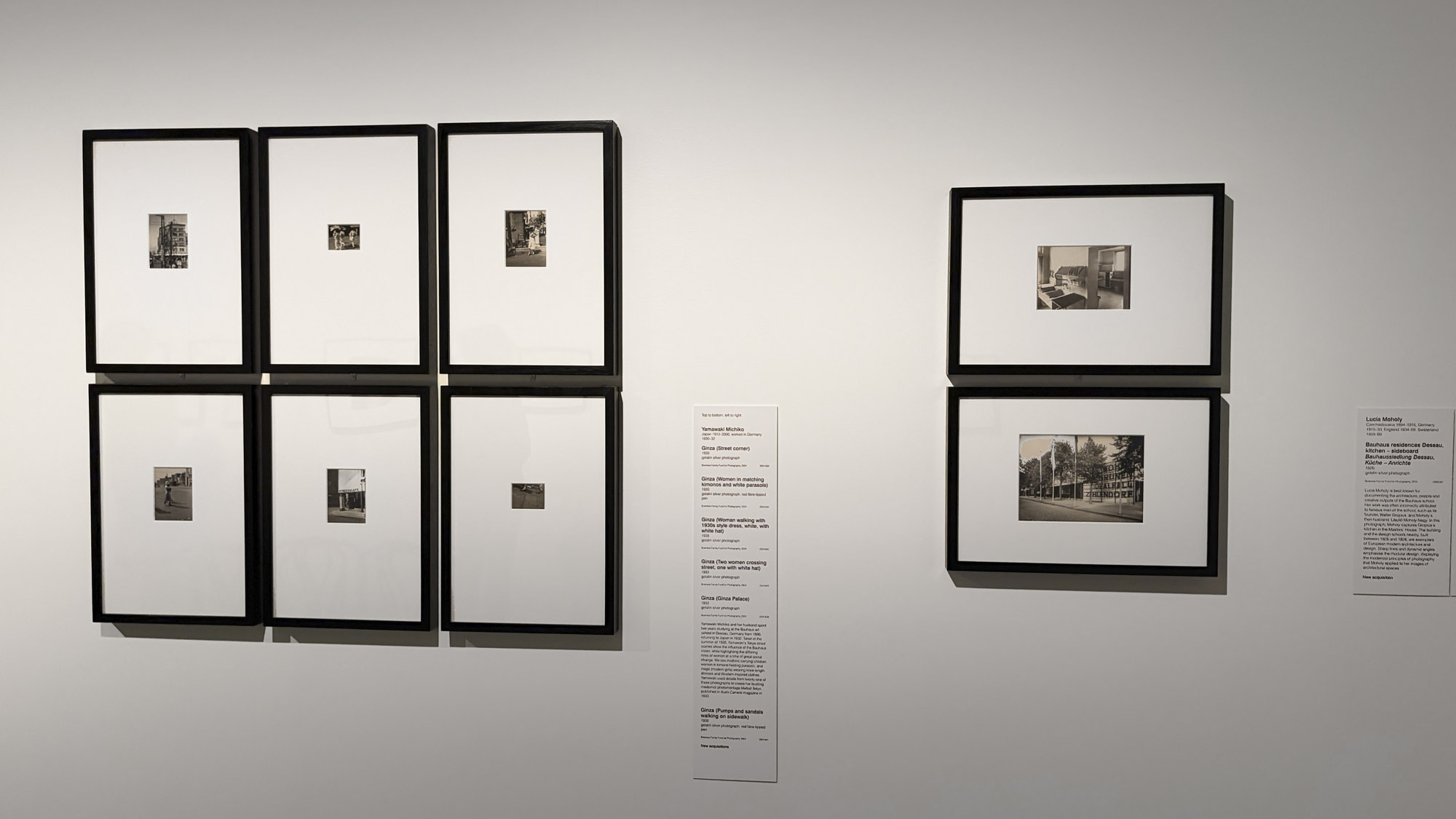
Installation view of the exhibition Women Photographers 1900-1975: A Legacy of Light at NGV International, Melbourne, November 2025 – May 2026 showing photographs by Yamawaki Michiko, top to bottom, left to right: Ginza (Street corner) (1932, below); Ginza (Women in matching kimonos and white parasols) (1932); Ginza (Woman walking with 1930s style dress, white, with white hat) (1932, below); Ginza (Two women crossing street, one with white hat) (1932, below); Ginza (Ginza Palace) (1932, below); Ginza (Pumps and sandals walking on sidewalk) (1932). New acquisitions
Photo: Marcus Bunyan


Yamawaki Michiko and her husband spent two years studying at the Bauhaus art school in Dessau, Germany from 1930, returning to Japan in 1932. Taken in the summer of 1933, Yamawaki’s Tokyo street scenes show the influence of the Bauhaus vision, while highlighting the differing roles of women at a time of great social change. We see mothers carrying children, women in kimono holding parasols, and moga (modern girls) wearing knee-length dresses and Western-inspired clothes. Yamawaki used details from twenty-one of these photographs to create her bustling modernist photomontage Melted Tokyo, published in Asahi Camera magazine in 1933.

Wall text from the exhibition
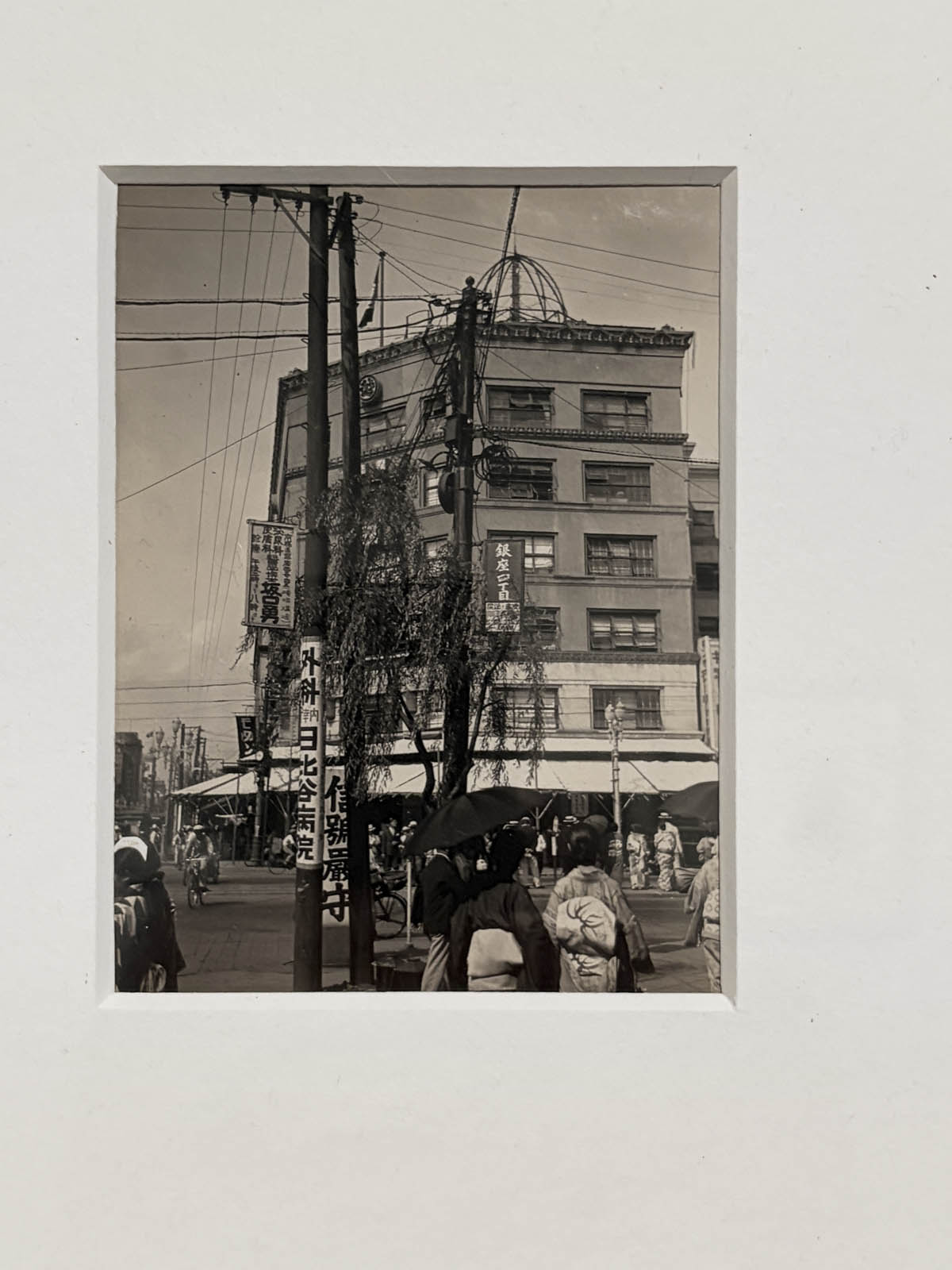
 

Yamawaki Michiko (Japan, 1910-2000, worked in Germany 1930-1932) 'Ginza (Street corner)' 1932 (installation view)


Yamawaki Michiko (Japan, 1910-2000, worked in Germany 1930-1932)
Ginza (Street corner) (installation view)
1932
Gelatin silver photograph
11.0 x 8.2 cm (image and sheet)
National Gallery of Victoria, Melbourne
Bowness Family Fund for Photography, 2024
Photo: Marcus Bunyan
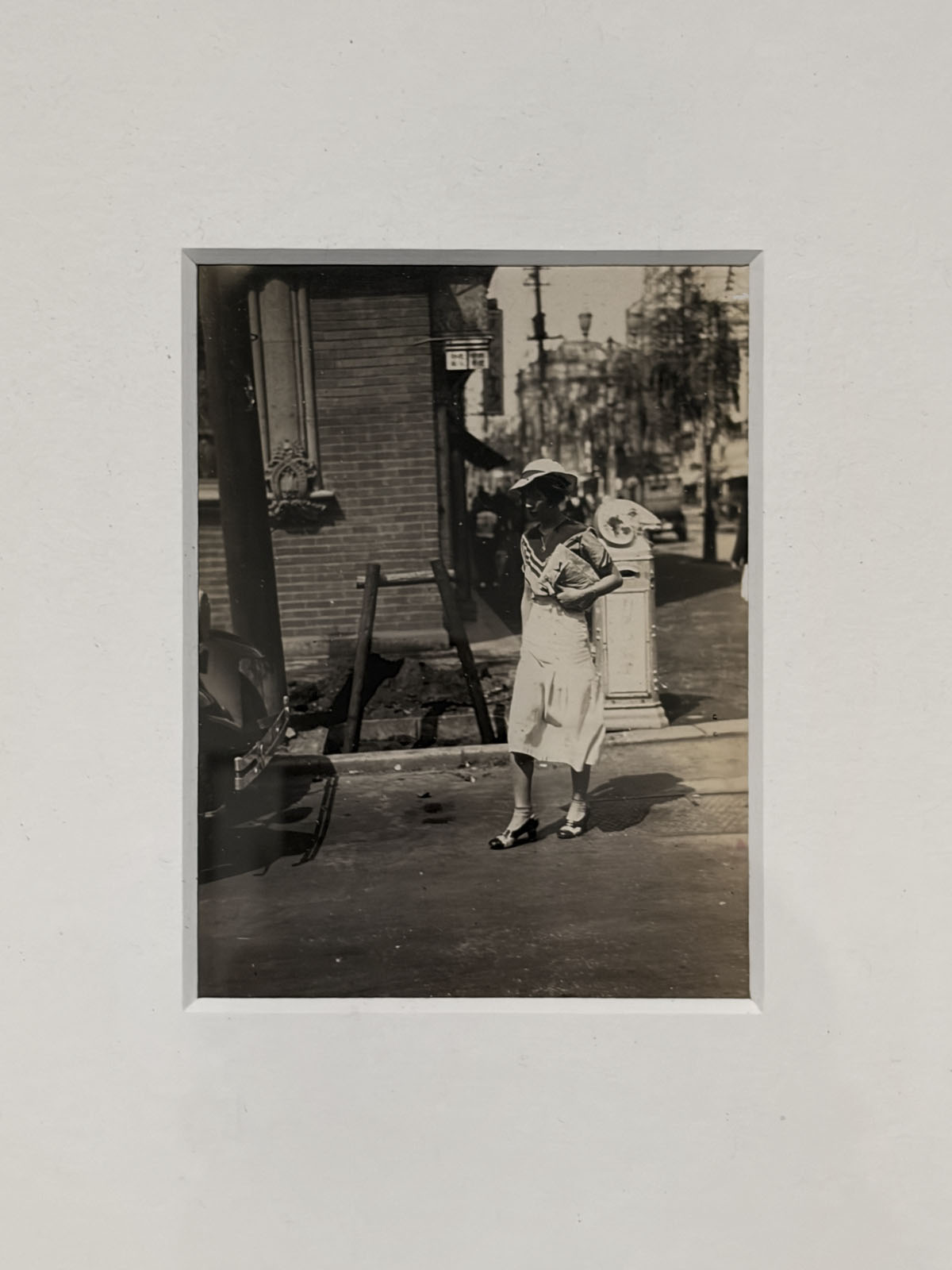
 

Yamawaki Michiko (Japan, 1910-2000, worked in Germany 1930-1932) 'Ginza (Woman walking with 1930s style dress, white, with white hat)' 1932 (installation view)


Yamawaki Michiko (Japan, 1910-2000, worked in Germany 1930-1932)
Ginza (Woman walking with 1930s style dress, white, with white hat) (installation view)
1932
Gelatin silver photograph
11.2 x 8.3cm (image)
12.6 x 10.0cm (sheet)
National Gallery of Victoria, Melbourne
Bowness Family Fund for Photography, 2024
Photo: Marcus Bunyan
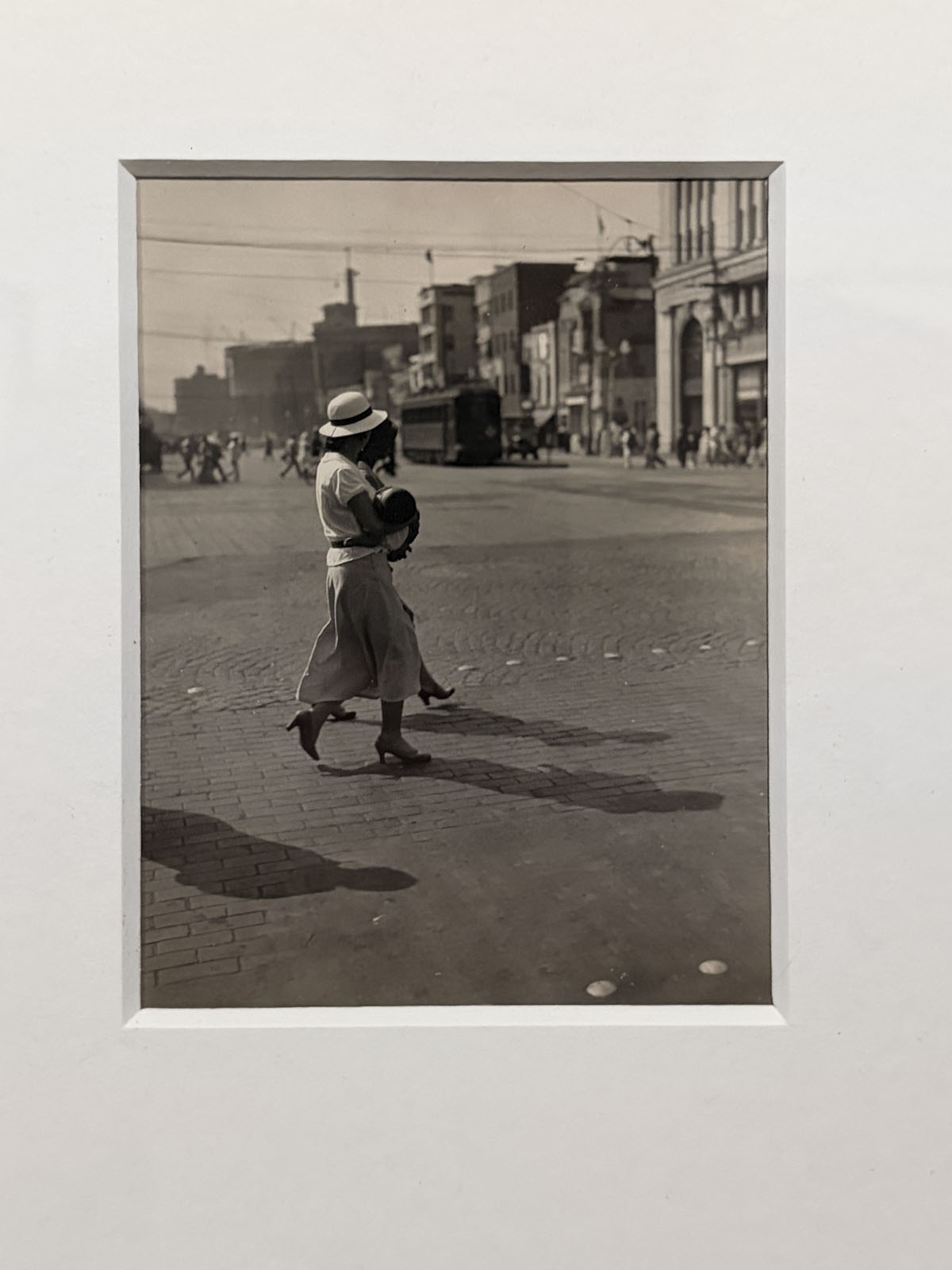
 

Yamawaki Michiko (Japan, 1910-2000, worked in Germany 1930-1932) 'Ginza (Two women crossing street, one with white hat)' 1932 (installation view)


Yamawaki Michiko (Japan, 1910-2000, worked in Germany 1930-1932)
Ginza (Two women crossing street, one with white hat) (installation view)
1932
Gelatin silver photograph
11.2 x 8.2cm (image)
12.6 x 10.0cm (sheet)
National Gallery of Victoria, Melbourne
Bowness Family Fund for Photography, 2024
Photo: Marcus Bunyan
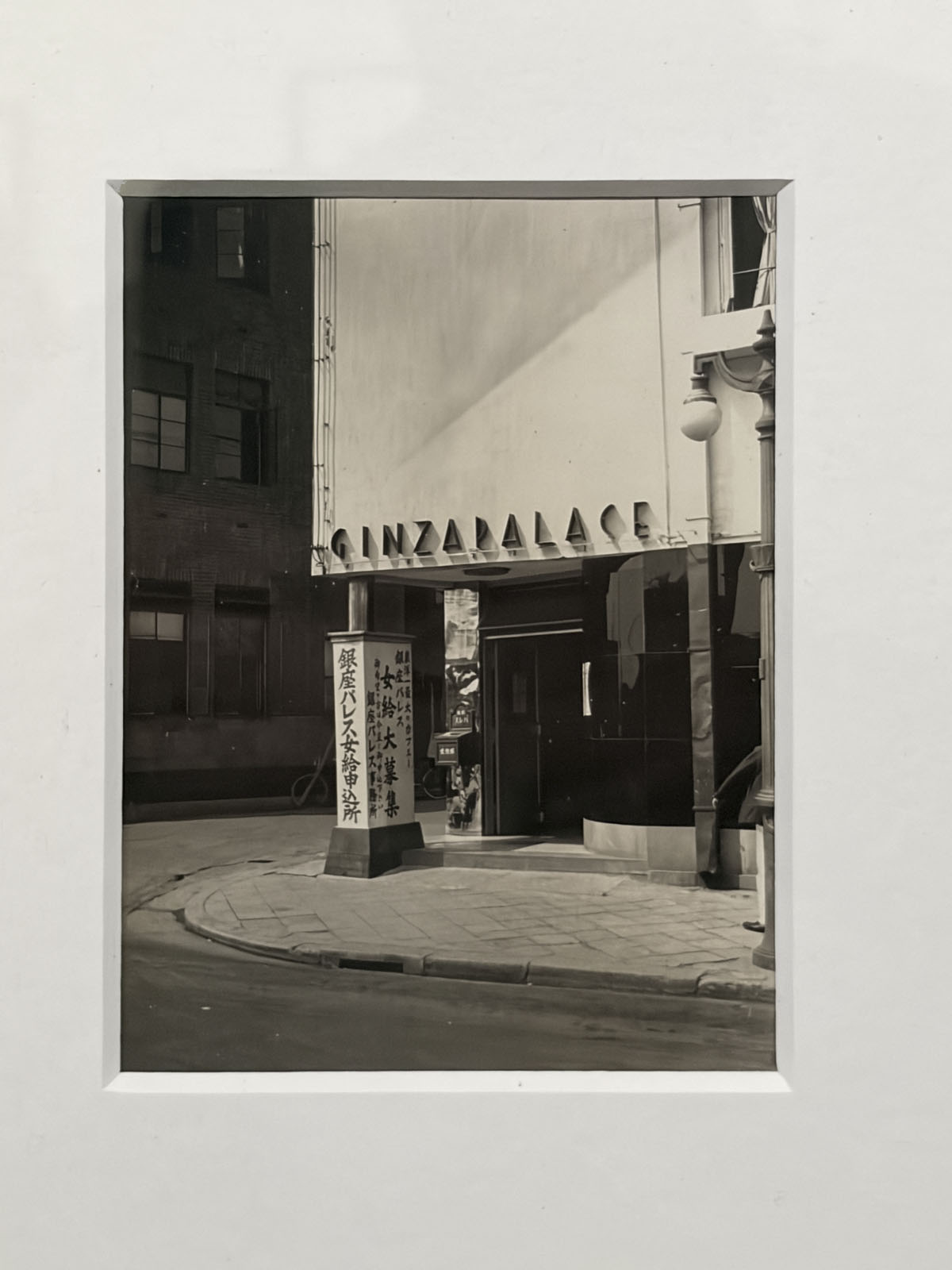
  

Yamawaki Michiko (Japan, 1910-2000, worked in Germany 1930-1932) 'Ginza (Ginza Palace)' (installation view)


Yamawaki Michiko (Japan, 1910-2000, worked in Germany 1930-1932)
Ginza (Ginza Palace) (installation view)
1932
Gelatin silver photograph
11.2 x 8.3cm (image)
12.5 x 10.0cm (sheet)
National Gallery of Victoria, Melbourne
Bowness Family Fund for Photography, 2024
Photo: Marcus Bunyan
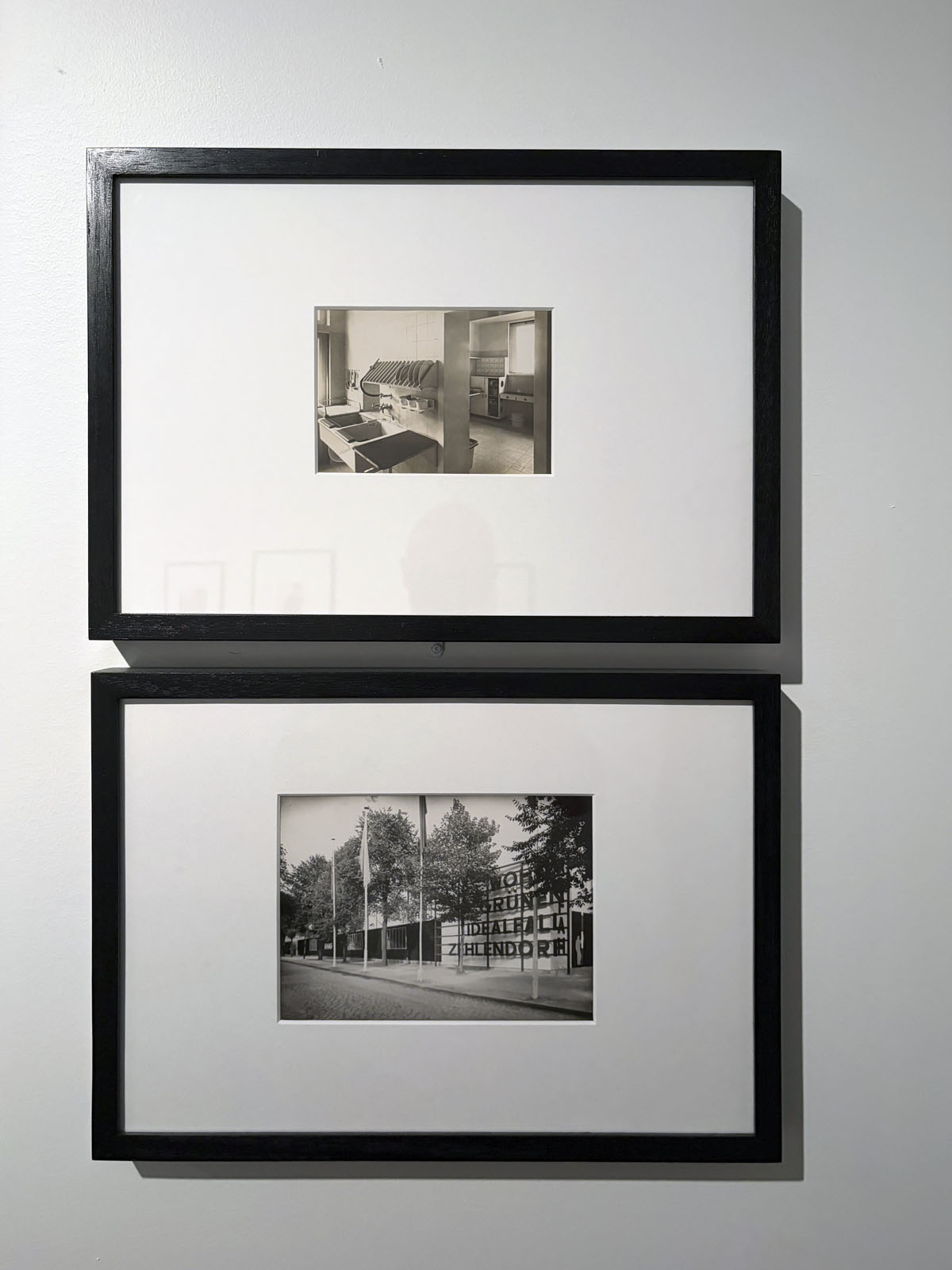
  

Installation view of the exhibition 'Women Photographers 1900-1975: A Legacy of Light' at NGV International, Melbourne, November 2025 - May 2026 showing at top, Lucia Moholy 'Bauhaus residences Dessau, kitchen – sideboard' (1926); and at bottom, 'Berlin Architecture Exhibition' (1928)


Installation view of the exhibition Women Photographers 1900-1975: A Legacy of Light at NGV International, Melbourne, November 2025 – May 2026 showing at top, Lucia Moholy Bauhaus residences Dessau, kitchen – sideboard (1926, below); and at bottom, Lucia Moholy Berlin Architecture Exhibition (1928, below)
Photo: Marcus Bunyan
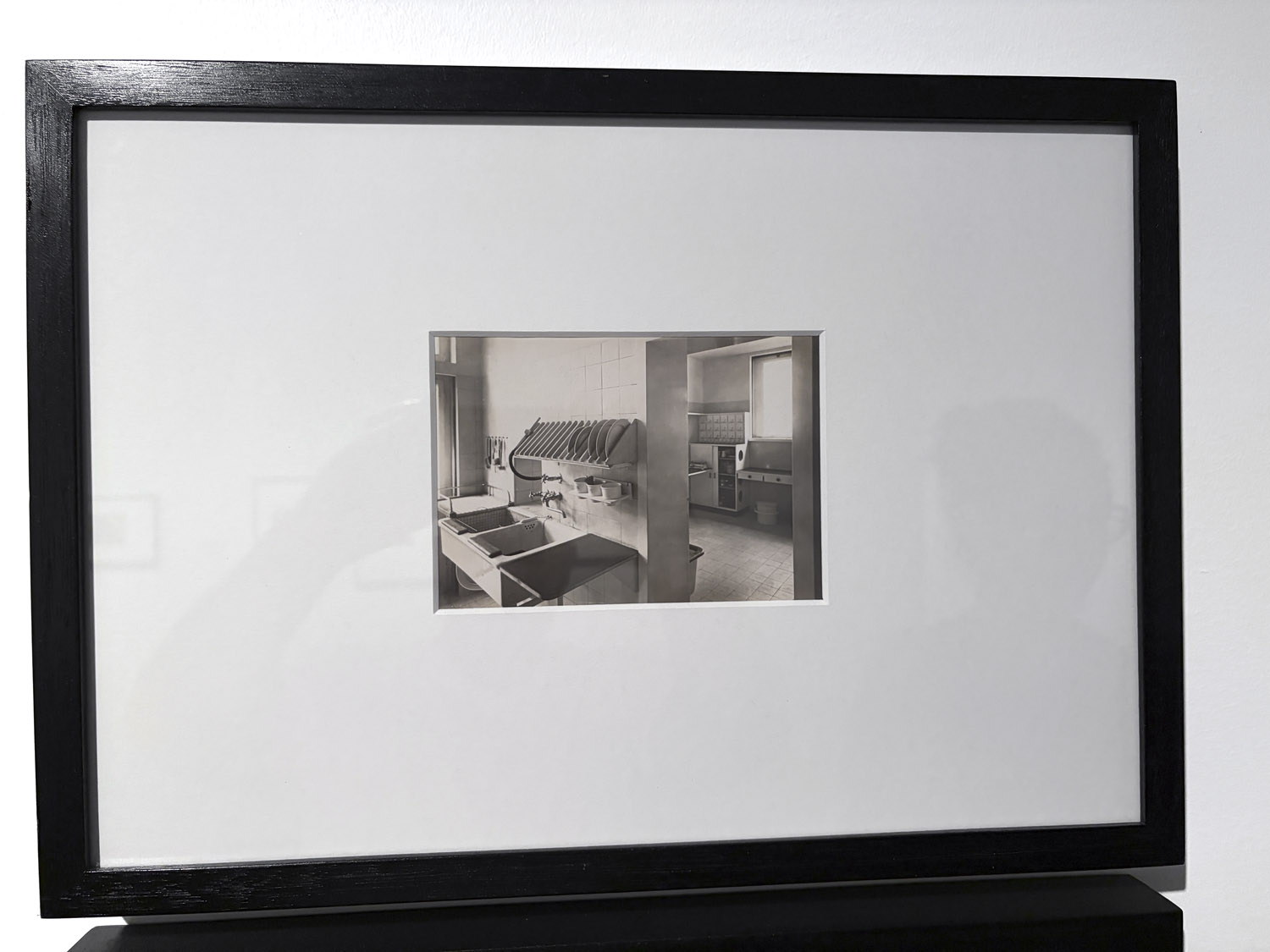
  

Lucia Moholy (British born Czech, 1894-1989) 'Bauhaus residences Dessau, kitchen – sideboard' (Bauhaussiedlung Dessau, küche – anrichte) 1926 (installation view)


Lucia Moholy (British born Czech, 1894-1989)
Bauhaus residences Dessau, kitchen – sideboard (Bauhaussiedlung Dessau, küche – anrichte)
1926
Gelatin silver photograph
11.9 x 16.8cm (image)
13.0 x 17.9cm (sheet)
National Gallery of Victoria, Melbourne
Bowness Family Fund for Photography, 2024
Photo: Marcus Bunyan


Lucia Moholy is best known for documenting the architecture, people and creative outputs of the Bauhaus school. Her work was often incorrectly attributed to famous men of the school, such as its founder, Walter Gropius, and Moholy’s then husband, László Moholy-Nagy. In this photograph, Moholy captures Gropius’s kitchen in the Masters’ House. The building and the design schools nearby, built between 1925 and 1926, are exemplars of European modern architecture and design. Sharp lines and dynamic angles emphasise the modular design, displaying the modernist principles of photography that Moholy applied to her images of architectural spaces.

Wall text from the exhibition
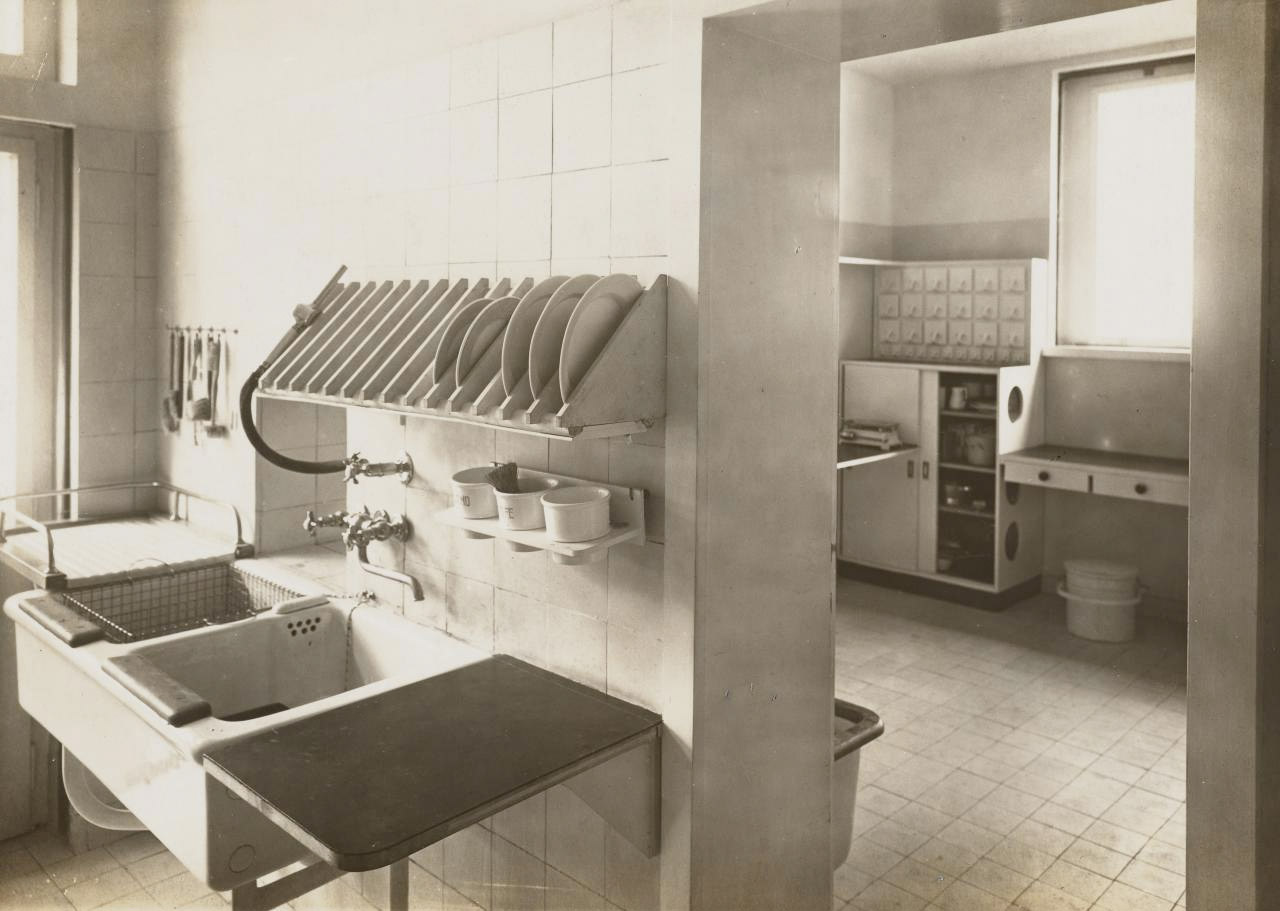
  

Lucia Moholy (British born Czech, 1894-1989) 'Bauhaus residences Dessau, kitchen – sideboard' (Bauhaussiedlung Dessau, küche – anrichte) 1926


Lucia Moholy (British born Czech, 1894-1989)
Bauhaus residences Dessau, kitchen – sideboard (Bauhaussiedlung Dessau, küche – anrichte)
1926
Gelatin silver photograph
11.9 x 16.8cm (image) 13.0 x 17.9cm (sheet)
National Gallery of Victoria, Melbourne
Bowness Family Fund for Photography, 2023
© 2023 Lucia Moholy Estate/Artists Rights Society (ARS), New York/VG Bild-Kunst, Bonn


“I suggest that Walter Gropius was most likely not interested in the ‘design’ of kitchens. These function rooms he would have not visited often nor did he cook. Gropius had a maid while in the Bauhaus as well as in later life. The kitchen at the Bauhaus was functional according to the times and the needs as seen by the employers of the maids who worked in them. Whereas the Frankfurt Kitchens were a result of attention to design as well as function and efficiency. …

Lucia had not enjoyed small town Dessau and intense campus life at the Bauhaus. She worked in Berlin but at in 1933 Moholy had to flee in fear of arrest for her communist association, leaving all her possessions behind including her negatives.

After time on Prague and Paris, Lucia Moholy settled In England in 1934 where she worked as a portrait photographer and teacher. …

After seeing her images as uncredited illustrations in the catalogue of a 1938 exhibition on the Bauhaus at the Museum of Modern Art, New York and many later publications, Lucia Moholy became aware that her negatives had survived. She found they had come into the possession of Walter Gropius who took them to his new teaching post America in 1937. He could easily have found Lucia post war. For years Lucia Moholy asked Gropius to give the plates back but he would not until her lawyers were able to force the return about half the original number in 1957. She complained that Gropius enjoyed the use and income from the photographs while she lived in want.”

Gael Newton AM. “Lucia Moholy: The Kitchen,” on the Photo-web website, March 2026 [Online] Cited 02/04/2026. Used under fair use conditions for the purposes of education and research


The question remains: what happened to the remaining negatives not returned by Walter Gropius to Lucia Moholy in the 1957 settlement? According to Moholy’s own card catalogue, which she used to keep track of her works, 330 negatives remained missing from her collection by the time of her death in 1989. Lost, damaged or stolen … the reputation of Gropius is forever sullied by his unseemly, grasping, patriarchal actions. MB
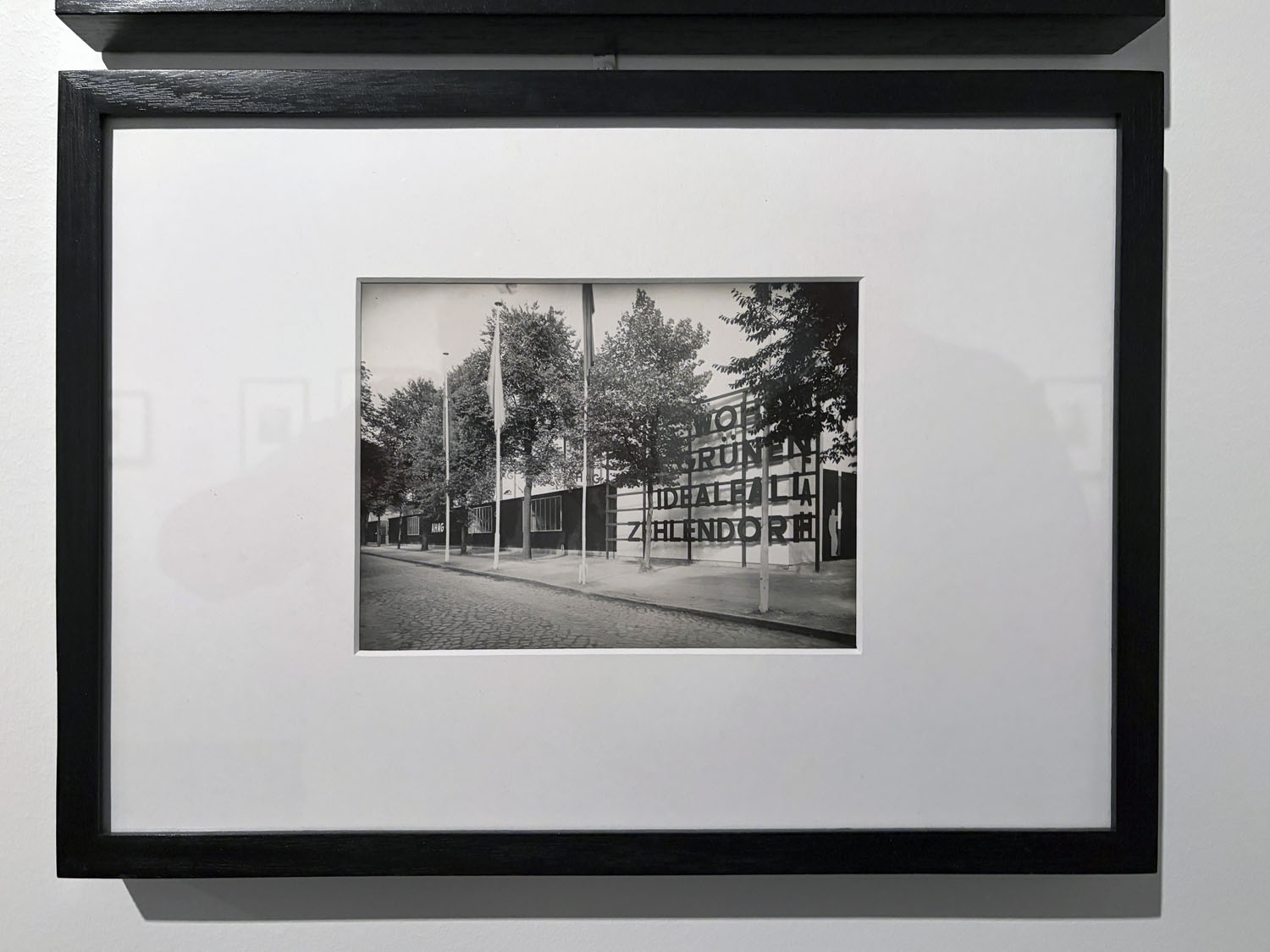


Lucia Moholy (British born Czech, 1894-1989) 'Berlin Architecture Exhibition' (Exposition d'Architecture à Berlin en 1928) 1928 (installation view)


Lucia Moholy (British born Czech, 1894-1989)
Berlin Architecture Exhibition (Exposition d’Architecture à Berlin en 1928)
1928
Gelatin silver photograph
16.3 x 22.4cm (image)
16.9 x 22.9 cm (sheet)
National Gallery of Victoria, Melbourne
Bowness Family Fund for Photography, 2024
Photo: Marcus Bunyan


In 1928 Lucia Moholy and László Moholy-Nagy left Dessau for a new life in Berlin. This image documents an innovative housing exhibition showcasing modern living. The display, designed by architect Walter Gropius, founder of the Bauhaus school, featured new housing concepts in Zehlendorf, a Berlin neighbourhood. The graphic lettering on the building translates to ‘Live in a green environment, ideal case: Zehlendorf’. Moholy-Nagy designed the interiors, and Moholy’s images, with their signature focus on starkly contrasting vertical and horizontal lines, highlight their modernist design principles.

Wall text from the exhibition


Like many women of her time, Lucia Moholy often found herself in the shadow cast by her more conspicuous male peers – one of whom happened to be her husband, the photographer László Moholy-Nagy. After marrying in 1921, the couple moved to Weimar, Germany, so that he could begin a professorship at the Bauhaus, the influential German school of architecture, design, and applied arts. While László taught, Lucia undertook photography training, serving as an apprentice in Otto Eckner’s Bauhaus photography studio. By 1926 she had mastered a wide range of techniques, installed a darkroom in their home, and begun collaborating with her husband on experimental forms of cameraless photography.

As part of her photographic practice, Lucia began documenting the people and architectural spaces of the Bauhaus. Many of her images focus on the women who either supported or participated in the school’s activities. Edith Tschichold (1926), for instance, depicts the wife of German typographer and frequent Bauhaus collaborator Jan Tschichold. Meanwhile, Florence Henri (1927) portrays the notable Surrealist artist at the outset of her career, when she came to the Bauhaus in 1927 as a visiting photography student. Both portraits are tightly cropped around the women’s faces, revealing expressions of wistfulness or self-assurance that pull viewers into a shared emotional space.

One of Lucia’s more iconic portraits is an untitled photograph of her husband, who, sporting a machinist’s coveralls over his shirt and tie, humorously attempts to block the camera lens with his hand. The candid shot hints at the playful nature of the couple’s working relationship; once circulated, it also helped to shape László’s persona as an artist-constructor. Despite happy appearances, their relationship began to deteriorate as László declined to credit Lucia for many of their collaborations, including the celebrated 1925 book Malerei, Photografie, Film (Painting, Photography, Film).

This was not the only – or even the most significant – erasure of Lucia’s career. Forced to flee Germany in 1933 due to the rise of the Nazi Party, she made the difficult decision to leave behind her collection of 560 glass-plate negatives, which she described as “my only tangible asset.”

Following World War II, in the midst of a revival of interest in the Bauhaus, she tried desperately to locate them with no success. It wasn’t until 1954 that Walter Gropius, founder and former head of the Bauhaus, acknowledged that the negatives were in his possession, that he had been reproducing them, and that he had no intention of returning them to her. Lucia Moholy’s precise visual records of the school’s architecture – such as Bauhaus Workshop Building from Below. Oblique View (1926) – had been circulated without attribution for years in order to promote Bauhaus aesthetics. In fact, 49 of her prints appeared uncredited in the catalogue accompanying MoMA’s exhibition Bauhaus, 1919–1928, which was mounted in 1938 with Gropius’s input. 

As part of her legal efforts to reclaim the negatives, Lucia wrote, “Everybody, except myself, have used, and admit to having used my photographs […] and often also without mentioning my name. Everyone – except myself – have derived advantages from using my photographs, either directly, or indirectly, in a number of ways, be it in cash or prestige, or both.”

Her claim was ultimately successful, leading to the return of 230 extant negatives in 1957. However, the acknowledgement of her influence – both as a collaborator in László Moholy-Nagy’s photographic experiments, and as an agent in the construction of Bauhaus visual identity – remains an ongoing project.

Dana Ostrander, Curatorial Assistant, Department of Photography “Lucia Moholy,” on the MoMA website 2020 [Online] Cited 31/03/2026
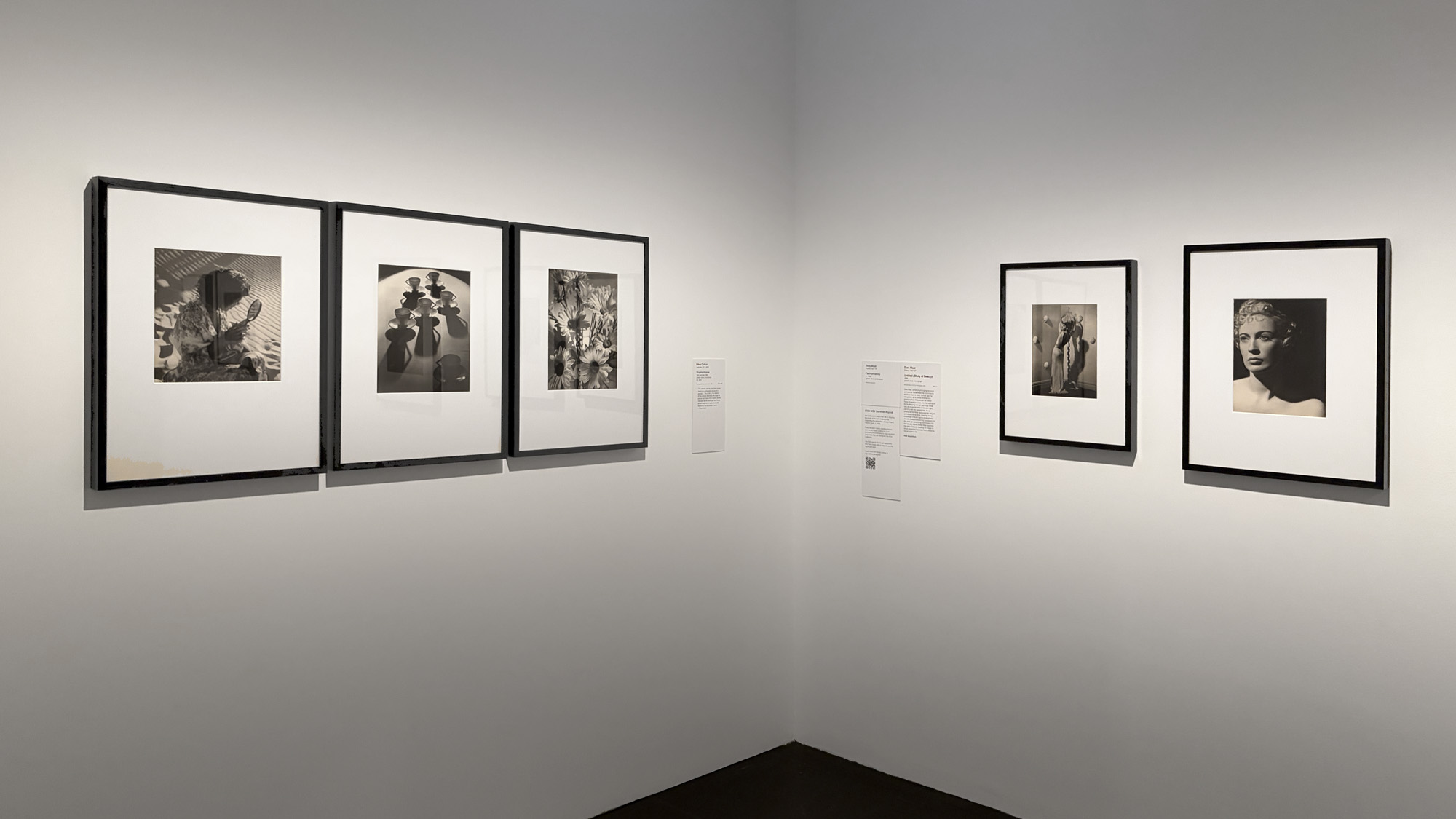
 

Installation view of the exhibition 'Women Photographers 1900-1975: A Legacy of Light' at NGV International, Melbourne, November 2025 - May 2026


Installation view of the exhibition Women Photographers 1900-1975: A Legacy of Light at NGV International, Melbourne, November 2025 – May 2026 showing from left to right, Olive Cotton Girl with mirror (1938, below); Teacup ballet (1935 printed 1992, below); Shasta daisies (1937 printed 1992, below); at second right, Dora Maar Fashion study (c. 1936, below); and at right, Untitled (Study of Beauty (1936, below)
Photo: Marcus Bunyan
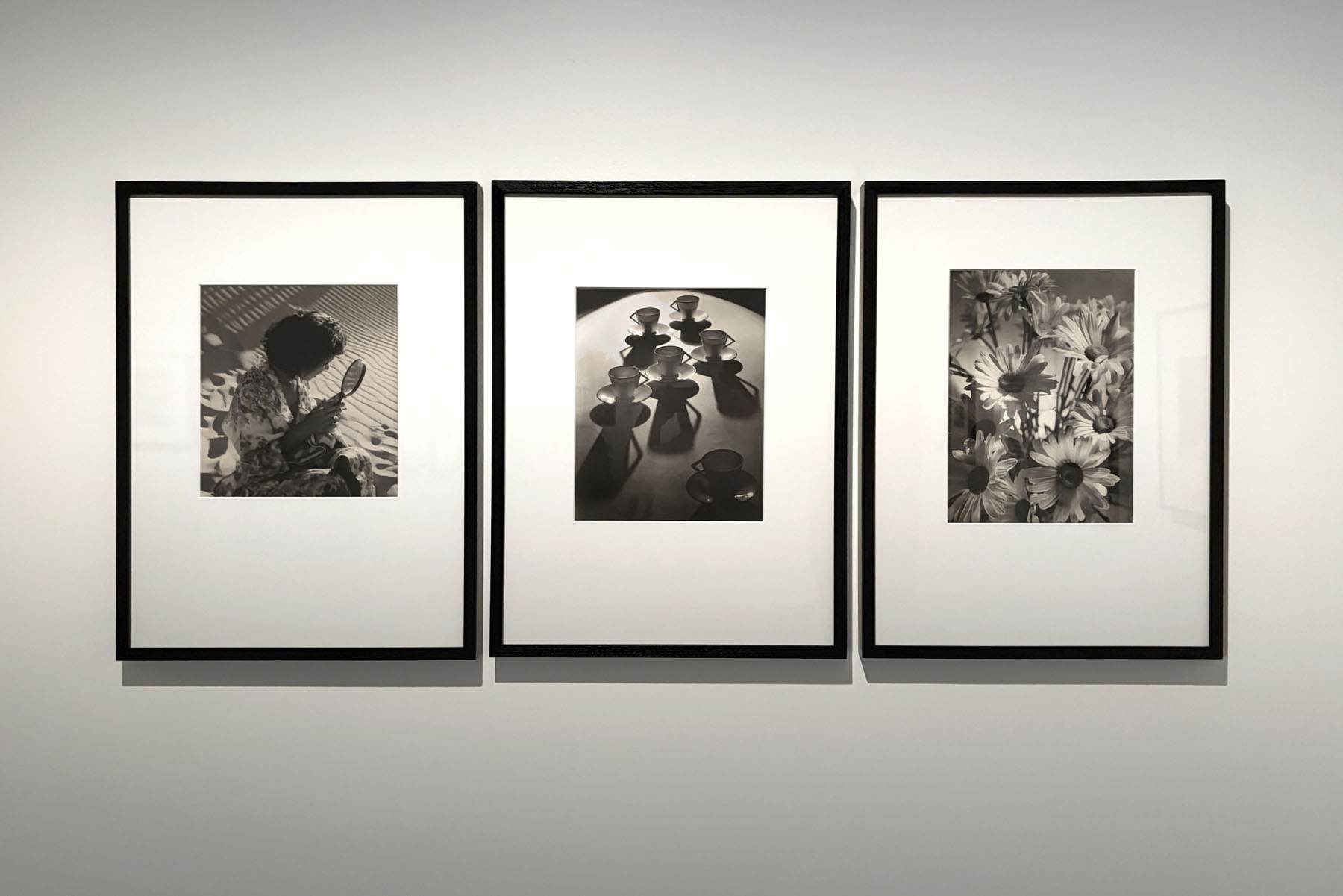
 

Installation view of the exhibition 'Women Photographers 1900-1975: A Legacy of Light' at NGV International, Melbourne, November 2025 - May 2026 showing from left to right, Olive Cotton's 'Girl with mirror' (1938); 'Teacup ballet' (1935 printed 1992); 'Shasta daisies' (1937 printed 1992)


Installation view of the exhibition Women Photographers 1900-1975: A Legacy of Light at NGV International, Melbourne, November 2025 – May 2026 showing from left to right, Olive Cotton’s Girl with mirror (1938, below); Teacup ballet (1935 printed 1992, below); Shasta daisies (1937 printed 1992, below)
Photo: Marcus Bunyan
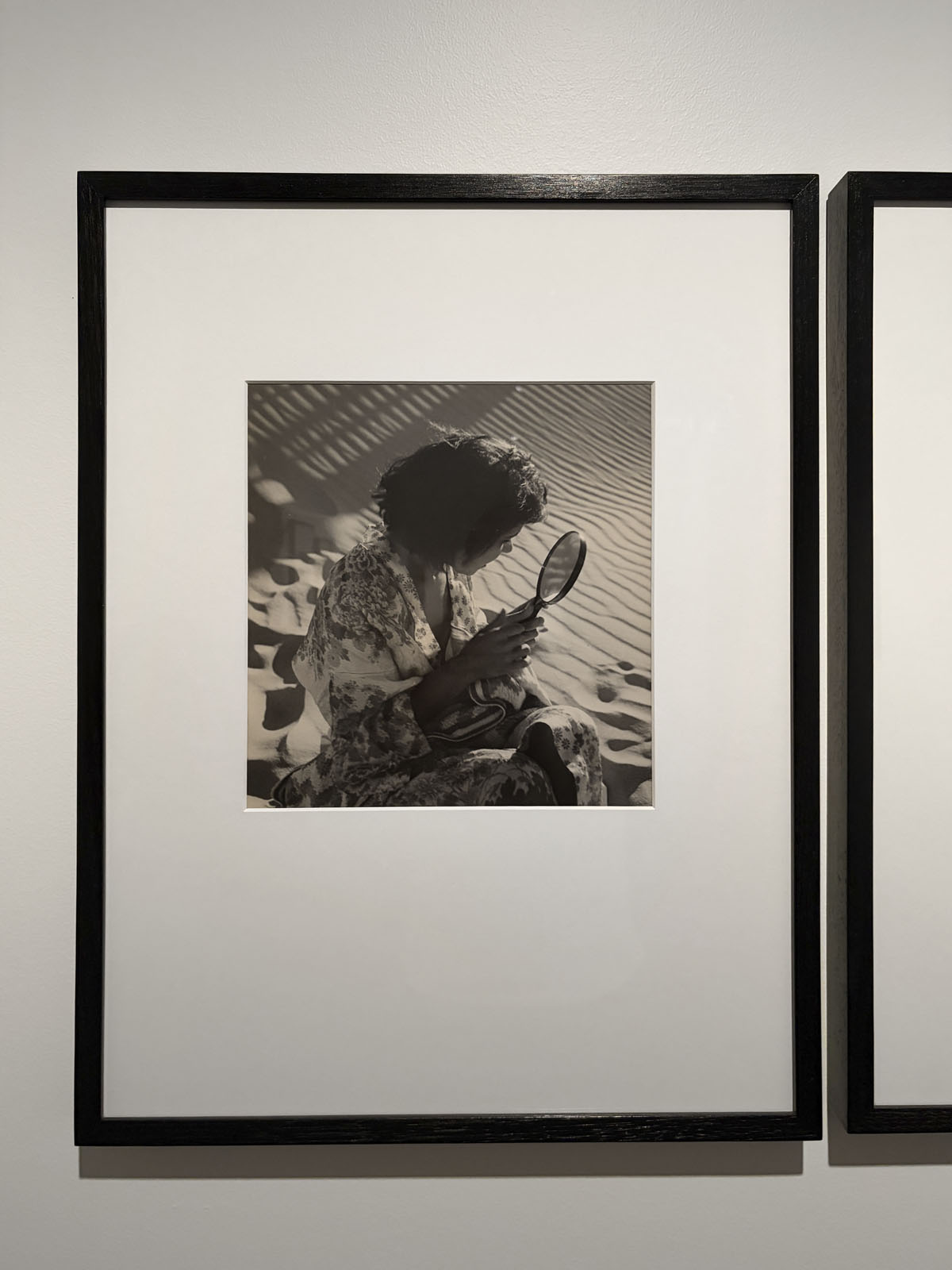
 

Olive Cotton (Australian, 1911-2003) 'Girl with mirror' 1938 (installation view)


Olive Cotton (Australian, 1911-2003)
Girl with mirror (installation view)
1938
Gelatin silver photograph
31.8 x 29.9cm (image)
National Gallery of Victoria, Melbourne
Purchased from Admission Funds, 1992
Photo: Marcus Bunyan


Olive Cotton created this image while assisting her colleague and then partner Max Dupain on location at beaches around Sydney. According to Cotton, when Dupain was shooting fashion photographs, she had the freedom to create her own images while the model was ‘waiting her turn to be photographed by Max’. Dupain’s camera tripod cast ‘long slanting lines of shadow’ against the sand. While its creation was incidental, this photograph demonstrates Cotton’s eye for composition and her mastery of light and shade, emphasising the graphic elements of the scene.

Wall text from the exhibition
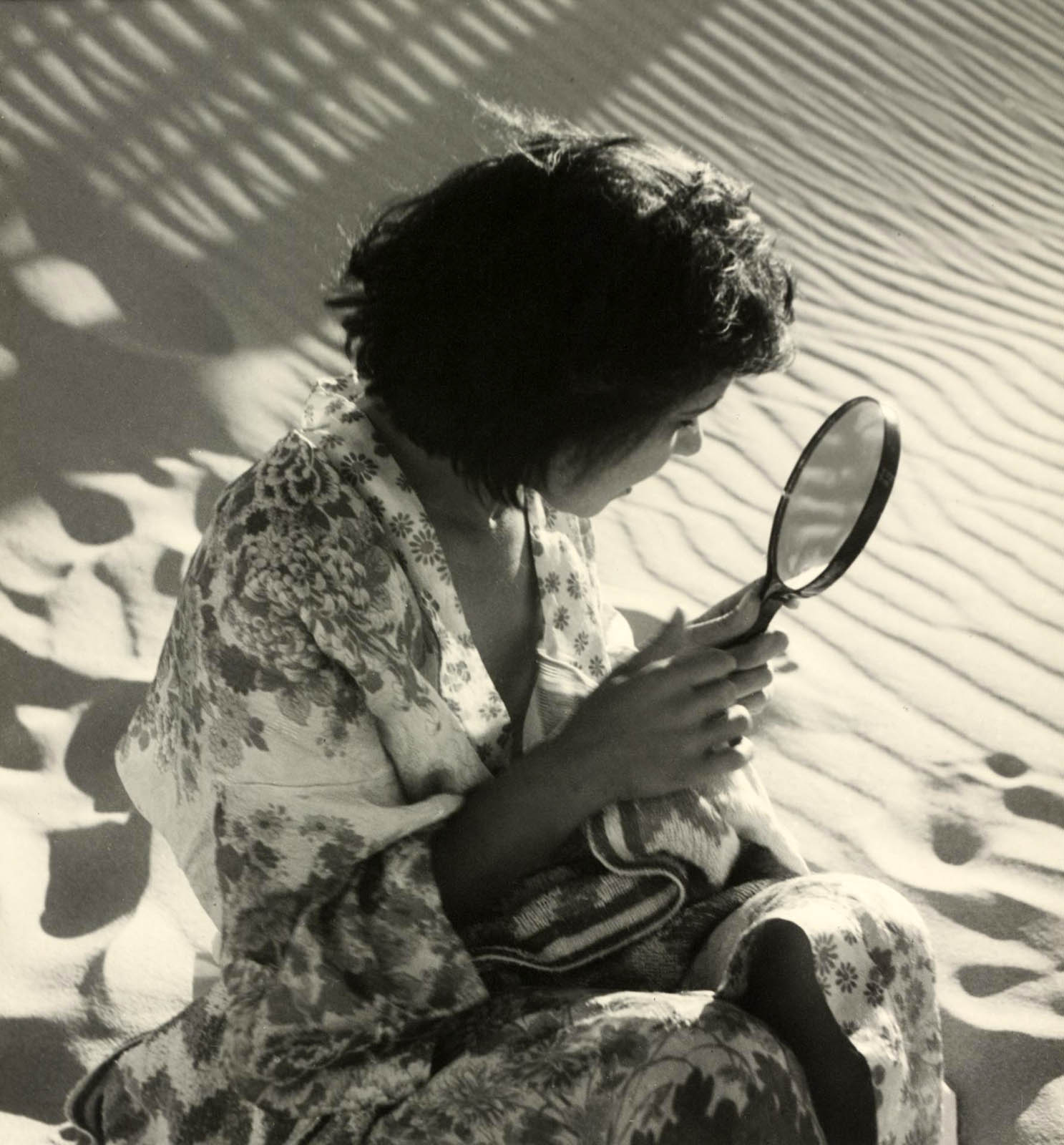
 

Olive Cotton (Australian, 1911-2003) 'Girl with mirror' 1938


Olive Cotton (Australian, 1911-2003)
Girl with mirror
1938
Gelatin silver photograph
31.8 x 29.9cm (image)
National Gallery of Victoria, Melbourne
Purchased from Admission Funds, 1992
© The estate of Olive Cotton
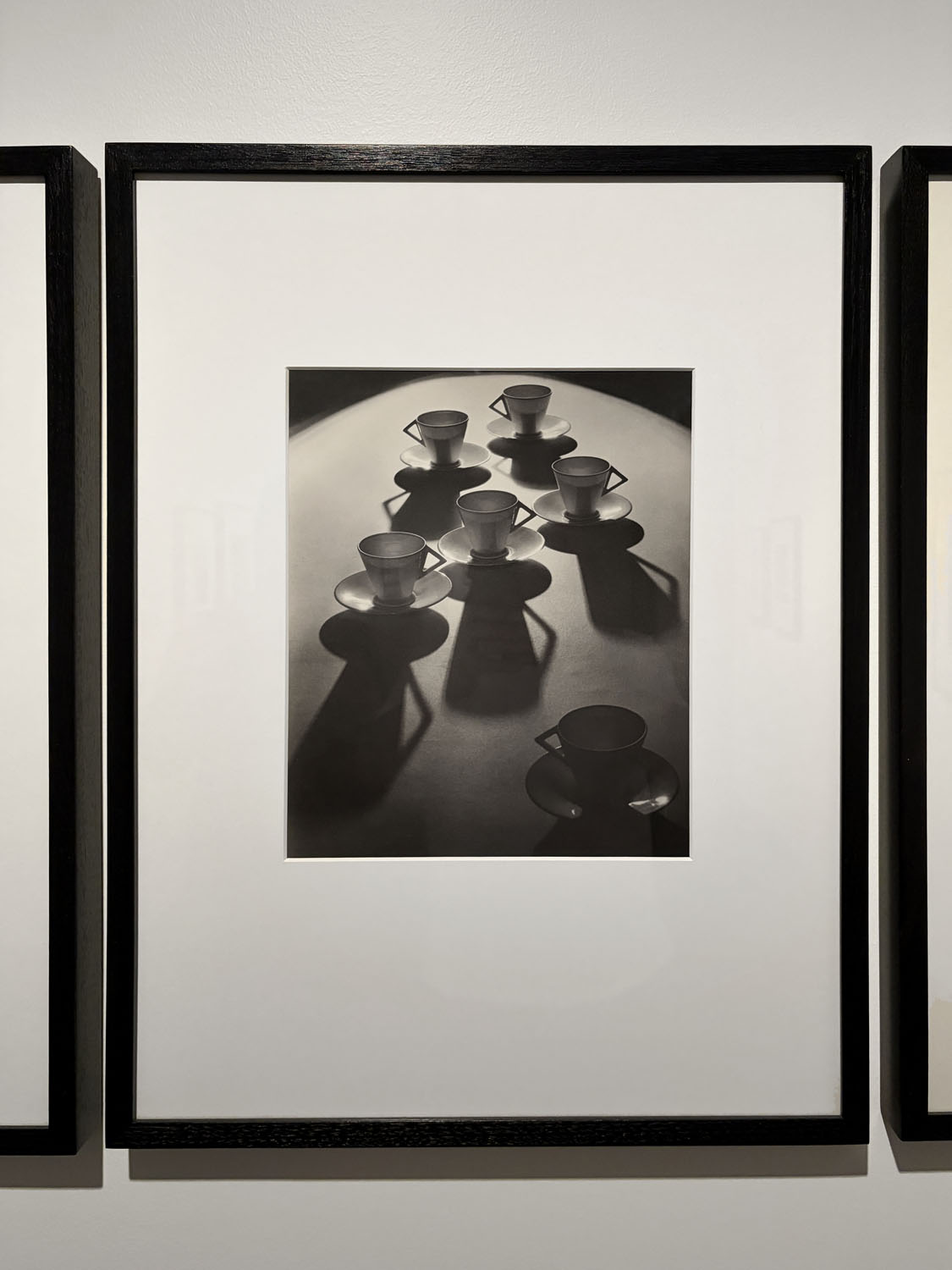
 

Olive Cotton (Australian, 1911-2003) 'Teacup ballet' 1935, printed 1992 (installation view)


Olive Cotton (Australian, 1911-2003)
Teacup ballet (installation view)
1935, printed 1992
Gelatin silver photograph
36.0 x 29.2cm (image)
National Gallery of Victoria, Melbourne
Purchased from Admission Funds, 1992
Photo: Marcus Bunyan


Upon purchasing a set of inexpensive cups and saucers to replace the mugs in photographer Max Dupain’s Sydney studio, where she was a studio assistant, Olive Cotton recognised the potential for a dynamic composition. Later describing the handles of the cups as ‘arms akimbo’, Cotton, in her efforts ‘to express a dance theme’, used a spotlight to accentuate shadows, resulting in a ‘ballet-like composition’. Through her deft use of lighting and arrangement of objects, the teacups appear transformed, as if they are ballerinas performing onstage. The image was immediately successful both in Australia and abroad, being included in the London Salon of Photography from September 1935.

Wall text from the exhibition


Olive Cotton (Australia 1911-2003) 'Teacup ballet' 1935, printed 1992


Olive Cotton (Australian, 1911-2003)
Teacup ballet
1935, printed 1992
Gelatin silver photograph
36.0 x 29.2cm (image)
ed. 21/50
National Gallery of Victoria, Melbourne
Purchased from Admission Funds, 1992
© The estate of Olive Cotton
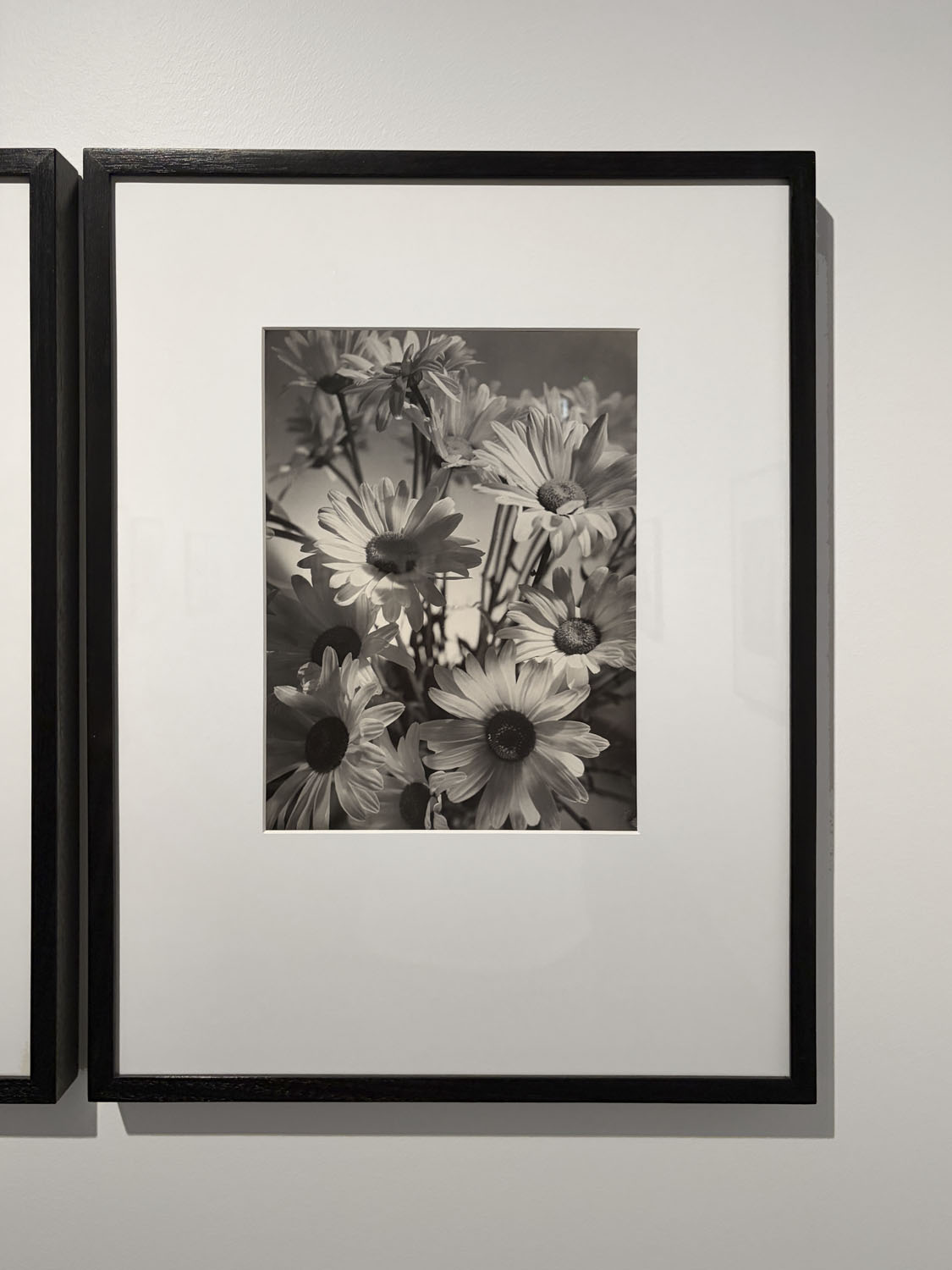
 

Olive Cotton (Australia 1911-2003) 'Shasta daisies' 1937, printed 1992 (installation view)


Olive Cotton (Australia 1911-2003)
Shasta daisies
1937, printed 1992
Gelatin silver photograph
38.2 x 28.1cm (image)
National Gallery of Victoria, Melbourne
Purchased from Admission Funds, 1992
Photo: Marcus Bunyan


‘The camera can do more than merely record an unchanging picture of a subject … The lighting, the relation of the various objects to the shape of picture and many other factors can be changed by the individual, and this is where discernment and personality come into the picture as it were.’

~ Olive Cotton
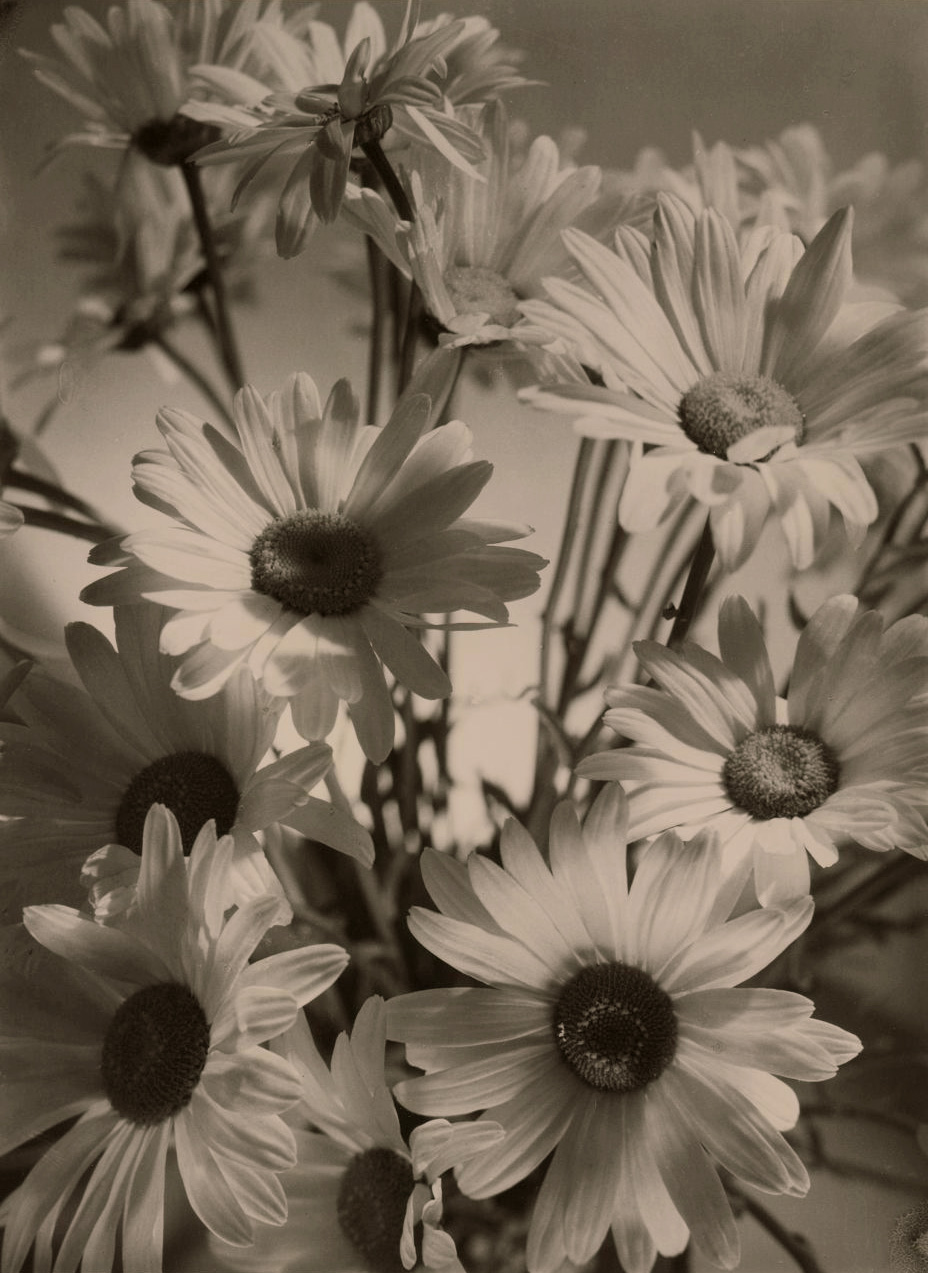
 

Olive Cotton (Australian, 1911 - 2003) 'Shasta daisies' 1937


Olive Cotton (Australian, 1911-2003)
Shasta daisies
1937, printed 1992
Gelatin silver photograph
38.2 x 28.1cm (image)
ed. 8/25
National Gallery of Victoria, Melbourne
Purchased from Admission Funds, 1992
© The estate of Olive Cotton
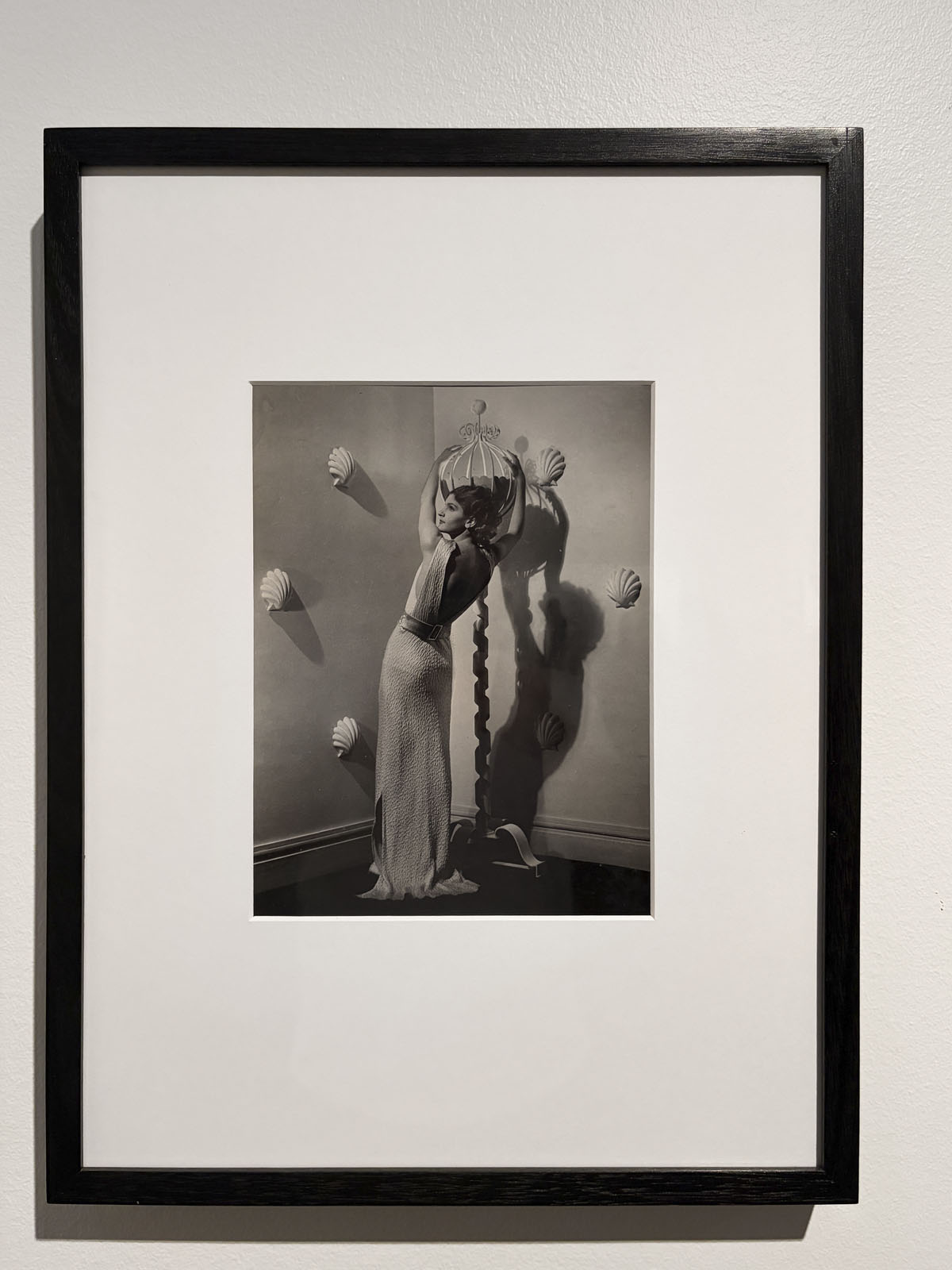
 

Dora Maar (French, 1907-1997) 'Fashion study' c. 1936 (installation view)


Dora Maar (French, 1907-1997)
Fashion study (installation view)
c. 1936
Gelatin silver photograph
Proposed acquisition
  

Dora Maar (French 1907-1997) 'Untitled (Study of beauty)' 1936 (installation view)


Dora Maar (French 1907-1997)
Untitled (Study of beauty) (installation view)
1936
Gelatin silver photograph
33.0 x 24.1cm
Bowness Family Fund for Photography, 2021


Dora Maar (French 1907-1997) 'Untitled (Study of Beauty)' 1936


Dora Maar (French 1907-1997)
Untitled (Study of beauty)
1936
Gelatin silver photograph
33.0 x 24.1cm
Bowness Family Fund for Photography, 2021
© Dora Maar / Licensed by Copyright Agency, Australia


Dora Maar, a French photographer, poet and painter, established her commercial studio in Paris in 1932, quickly gaining recognition as a portrait and fashion photographer. While known as one of Pablo Picasso’s muses and the inspiration for his Weeping woman paintings, Maar was an influential artist in her own right, painting well into her eighties. As a photographer, Maar developed an elegant and experimental style, drawing on her knowledge of avant-garde photography and the ideas underpinning Surrealism. In this work, an advertising commission for the haircare brand Dolfar, Maar explores the ideal of beauty, creating an image in which the subject appears like a classical statue come to life.
 

Installation view of the exhibition 'Women Photographers 1900-1975: A Legacy of Light' at NGV International, Melbourne, November 2025 - May 2026


Installation view of the exhibition Women Photographers 1900-1975: A Legacy of Light at NGV International, Melbourne, November 2025 – May 2026
Photo: Marcus Bunyan


Featuring some of the most iconic images from the twentieth century by the likes of Diane Arbus, Dora Maar, Lee Miller, Dorothea Lange, Olive Cotton and many more, Women Photographers 1900-1975: A Legacy of Light celebrates the images, lives and stories of more than 70 influential artists working between 1900 to 1975. Opening 28 November 2025 at NGV International, the exhibition features more than 300 rare and innovative photographs, prints, postcards, photobooks and magazines from the NGV Collection – with 170+ recently acquired and 130+ on display for the very first time.

Featuring portraiture, photojournalism, landscape photography, fashion photography, experimental avant-garde imagery and more, Women Photographers 1900-1975: A Legacy of Light explores the work of the artists against the backdrop of significant social, political and cultural events – from Melbourne to Tokyo, Paris to Buenos Aires. From historic images of the suffrage movement at the turn of the twentieth century, through to the women’s liberation movement and beyond, the exhibition reveals how these artists have used key photographic styles to capture, reflect and challenge the world around them. This exhibition highlights the rich networks of exchange of information, ideas and support between many of these women across the world.

The exhibition showcases the work of prominent and leading figures of photography, as well as drawing attention to lesser-known artists. Featured artists include Berenice Abbott, Lola Álvarez Bravo, Claude Cahun and Marcel Moore, Imogen Cunningham, Mikki Ferrill, Sue Ford, Christine Godden, Ponch Hawkes, Annemarie Heinrich, Ruth Hollick, Florence Henri, Kati Horna, Germaine Krull, Tina Modotti, Lucia Moholy, Tokiwa Toyoko, Francesca Woodman, Yamazawa Eiko, among many others.

The exhibition reflects a recent strategic collecting focus on celebrating the contributions of women artists of the early twentieth century in the NGV Photography collection. Many of the new works on display – including by artists previously unrepresented in the NGV Collection – have been acquired with the generous support of the Bowness Family Foundation, who have been involved with the NGV for almost 25 years and who also generously contributed to the publication. There have also been significant works joining the NGV Collection with the generous support of Krystyna Campbell-Pretty AM and Family, as well as Professor Wang Gungwu, and Joy Anderson.

Highlight works include an outstanding selection of photographs by Dora Maar, including fashion photographs, social documentary images and portraiture. Dora Maar was a sophisticated artist and image-maker and deeply connected within the avant-garde community. In 1935-36, she created these studio images of Pablo Picasso, with whom she was romantically involved. In these portraits, on display in the exhibition, Maar turns the gaze of her camera onto Picasso, offering the viewer a candid insight into their private domestic lives.

A further highlight is Dorothea Lange’s instantly recognisable work, Migrant Mother, Nipomo, California, 1936, commissioned as part of a campaign by the US government Farm Security Administration to bring recognition to the impacts of the Great Depression on working class families. Lange created several photographs of the woman, Florence Owens Thompson, and her children. This image, focussed on Thompson’s seemingly anxious face, became a poignant symbol of the times.

In the 1930s German-born Ilse Bing became known as the ‘Queen of Leica’ for her use of the small, hand-held camera which allowed her the flexibility to shoot from dizzying angles, create contrasts of light, shade and shadows, and dynamic perspectives. The exhibition will feature Bing’s iconic modernist image, Self-portrait 1931, showing the artist’s reflection, of herself and her camera, accompanied by her side profile in another angled mirror demonstrating the significance of the camera in her image-making.

Inner-city Melbourne of the 1970s is brought to life in the photographs of Ponch Hawkes, offering audiences a first-hand glimpse into the changing social dynamics and sense of activism of the period. Photographs on display include her documentation of life in communal houses, of urban graffiti calling for childcare and social housing, of celebrations for Gay Pride Week, and documentation of the Women’s Theatre Group, performing outdoors beneath a Women’s Liberation banner.

Also on display is Olive Cotton’s iconic Teacup ballet, 1935, a wonderful study of light, shadows and forms. Cotton had purchased an inexpensive set of cups and saucers to replace the mugs in the Sydney studio of photographer Max Dupain, where she was studio assistant. Realising their potential for a dynamic arrangement, she photographed the teacups with elongated shadows, creating a striking composition of shadow play that Cotton described as “ballet-like”.

American artist Lee Miller moved to Paris in 1929, where she became Man Ray’s photographic student, then colleague, model and lover – all the while creating her own extraordinary photographs. On display in the exhibition is Miller’s portrait of Man Ray, taken in 1931 in Miller’s Paris apartment depicting her subject framed tightly, his gaze diverted.

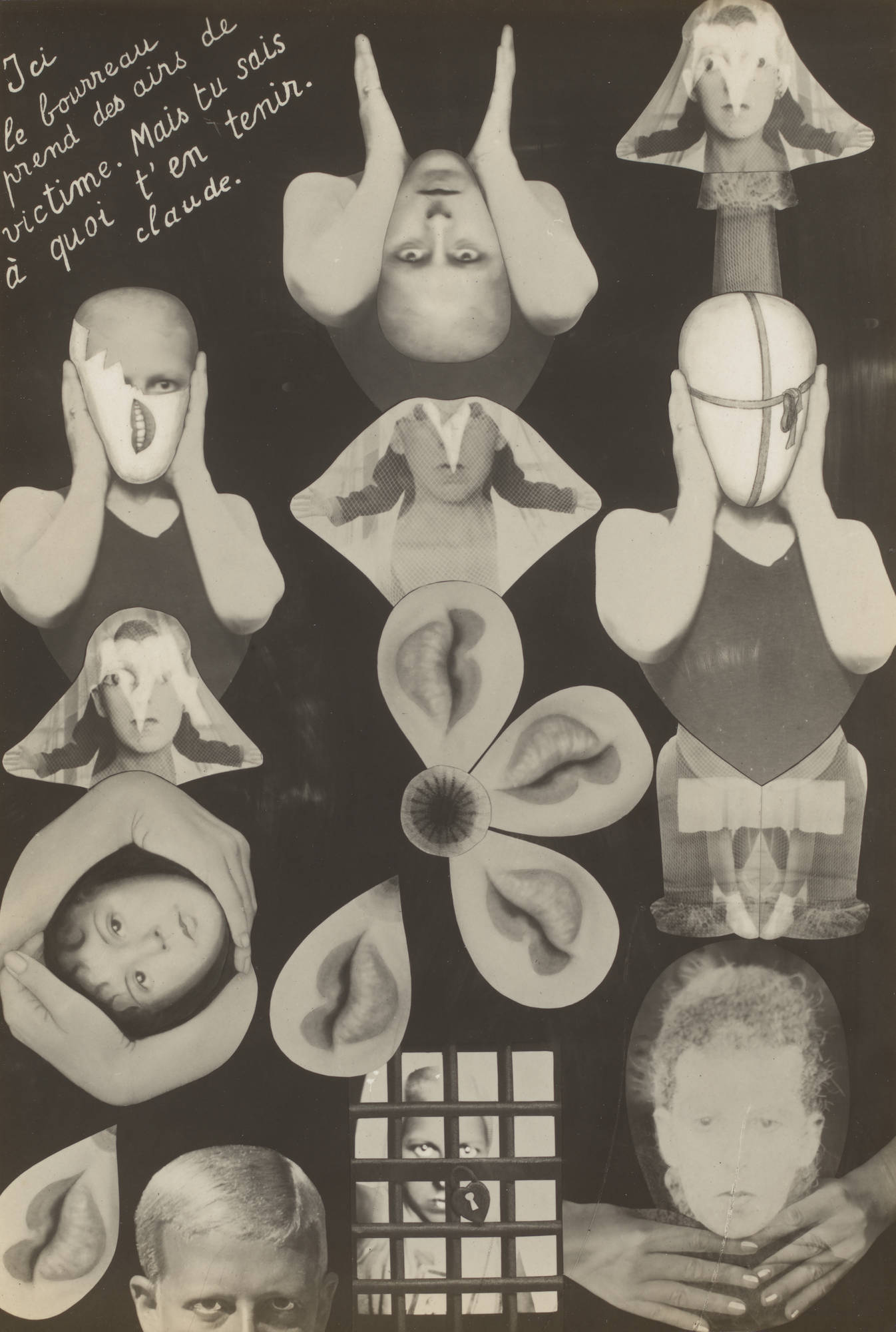
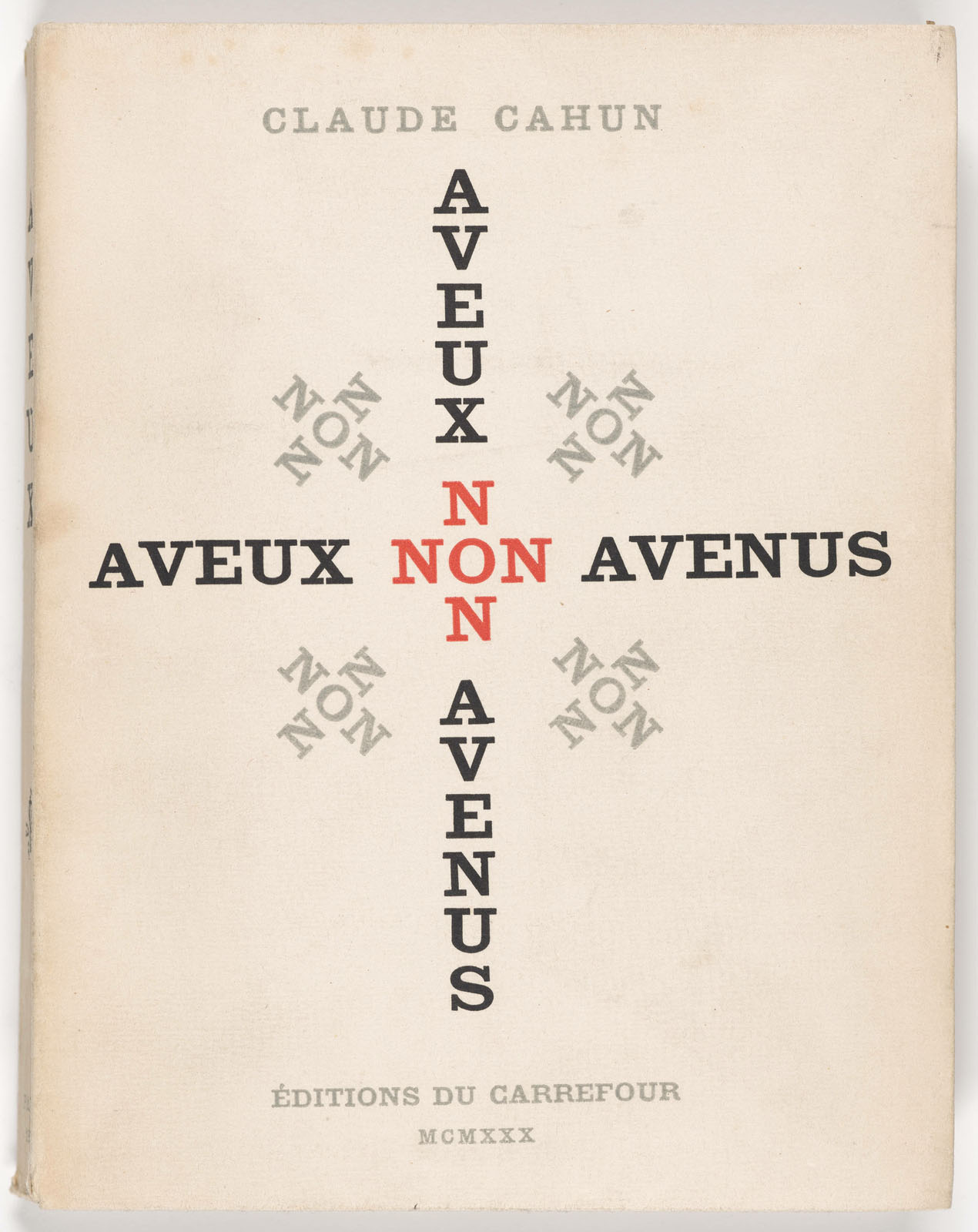
Lucy Schwob and Suzanne Malherbe, better known by their adopted alliterative pseudonyms Claude Cahun and Marcel Moore, were an artist duo who radically questioned the constraints of gender in their artwork and lives. The pair are represented in this exhibition with the artist’s book Aveux non Avenus, 1930. In this highly experimental book, featuring ‘essay-poems’ and collaborative photomontages, which feature self-portraits of Cahun with a shaved head and androgynous appearance and dress, Cahun and Moore raise powerful questions about identity, sexuality and self-expression.

Las Lavanderas (The Washerwomen) c. 1940, also on display, is one of several photographs created by Mexican artist Lolo Álvarez Bravo of women washing their clothes at a waterfront. The sun casts long shadows from a nearby structure, transforming the scene of everyday labour into one of dynamic angles and forms. Bravo is known for her passionate documentation of the peoples and cultures of Mexico, through such dynamic and vivid compositions.

Parliamentary Secretary for Creative Industries, Katie Hall, said: “This exhibition will celebrate the work of women photographers who documented the world around them from vastly different places and perspectives. The NGV continues to present exhibitions that show us life through different lenses and introduce us to creative trailblazers from around the world.”

Tony Ellwood AM, Director, NGV, said: “Like all collecting institutions globally, the NGV has been actively looking at historically underrepresented areas of our collection, including gender. Though this is a long and ongoing process, this exhibition offers an opportunity to celebrate and share the more than 300 works by women photographers, many of which we’ve collected since 2020. We hope this exhibition gives audiences the chance to discover the work of lesser-known photographers or deepen their appreciation of familiar ones.”

Professor Simon Tormey, Dean, Faculty of Arts and Education, Deakin, said: “This important exhibition foregrounds the often-overlooked contributions of women to the evolution of photography across the twentieth century. At Deakin, where we teach and research across Creative Arts and Photography, we are proud to support initiatives that celebrate artistic innovation and also challenge historical silences. This collaboration with the NGV exemplifies our commitment to the transformative power of the arts.”

The exhibition will be accompanied by a beautifully illustrated publication exploring the images, lives and stories of women photographers from the pivotal period of 1900-1975. The publication will feature new essays from NGV Curators and international contributors including leading American art historian, critic and curator Abigail Solomon-Godeau; Emeritus Professor at the ANU School of Art & Design Helen Ennis; World Press Photo lead curator Amanda Maddox; photographer and writer Carla Williams, and Tokyo Photographic Art Museum curator Yamada Yuri. Women Photographers 1900–1975 will be co-published with Hatje Cantz in Berlin.

This exhibition coincides with the fifty-year anniversary of the first International Women’s Year in 1975, as declared by the United Nations.

Press release from the National Gallery of Victoria
 

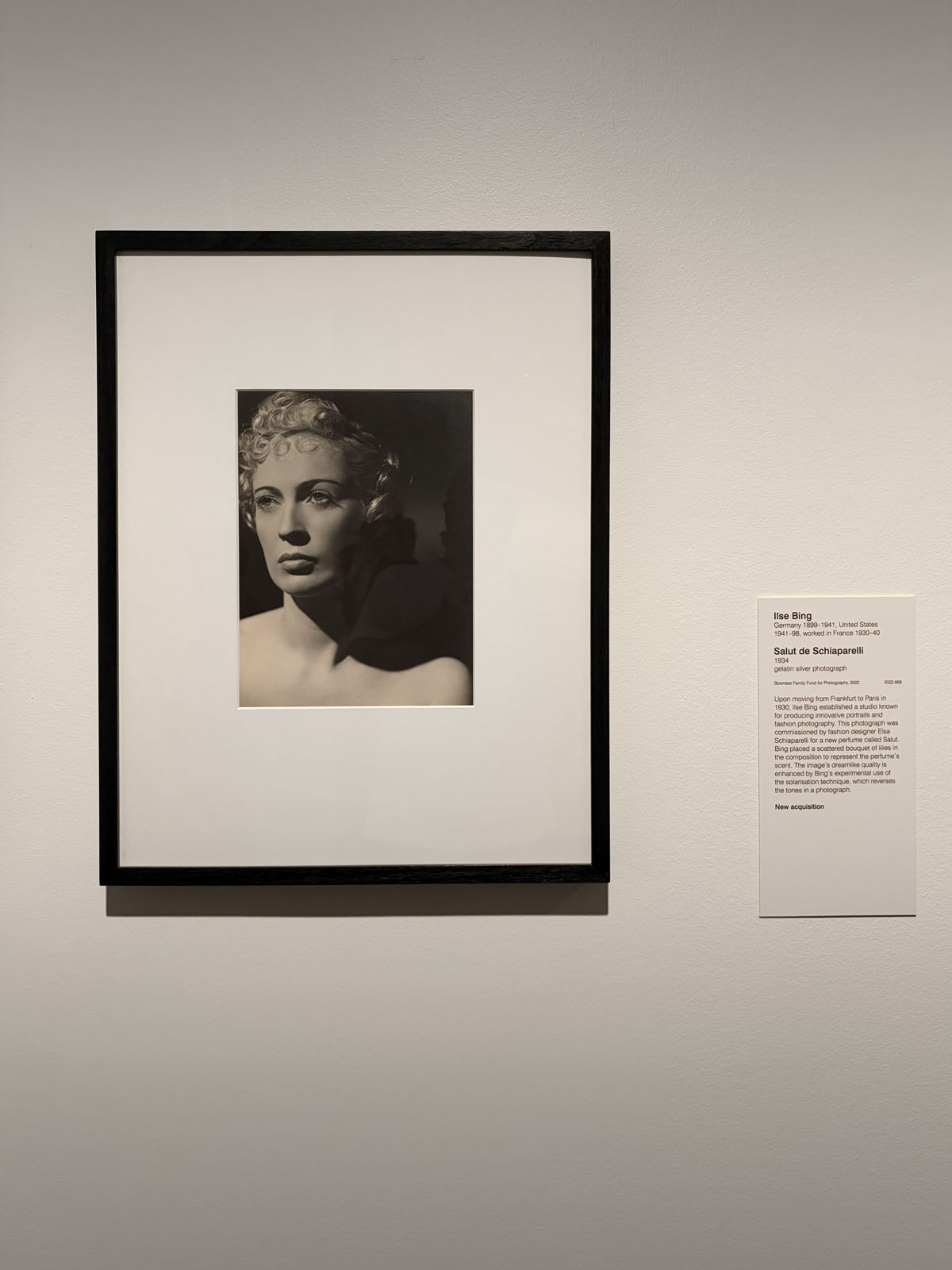
Installation view of the exhibition 'Women Photographers 1900-1975: A Legacy of Light' at NGV International, Melbourne, November 2025 - May 2026 showing at left, Ilse Bing 'Salut de Schiaparelli' (1934)


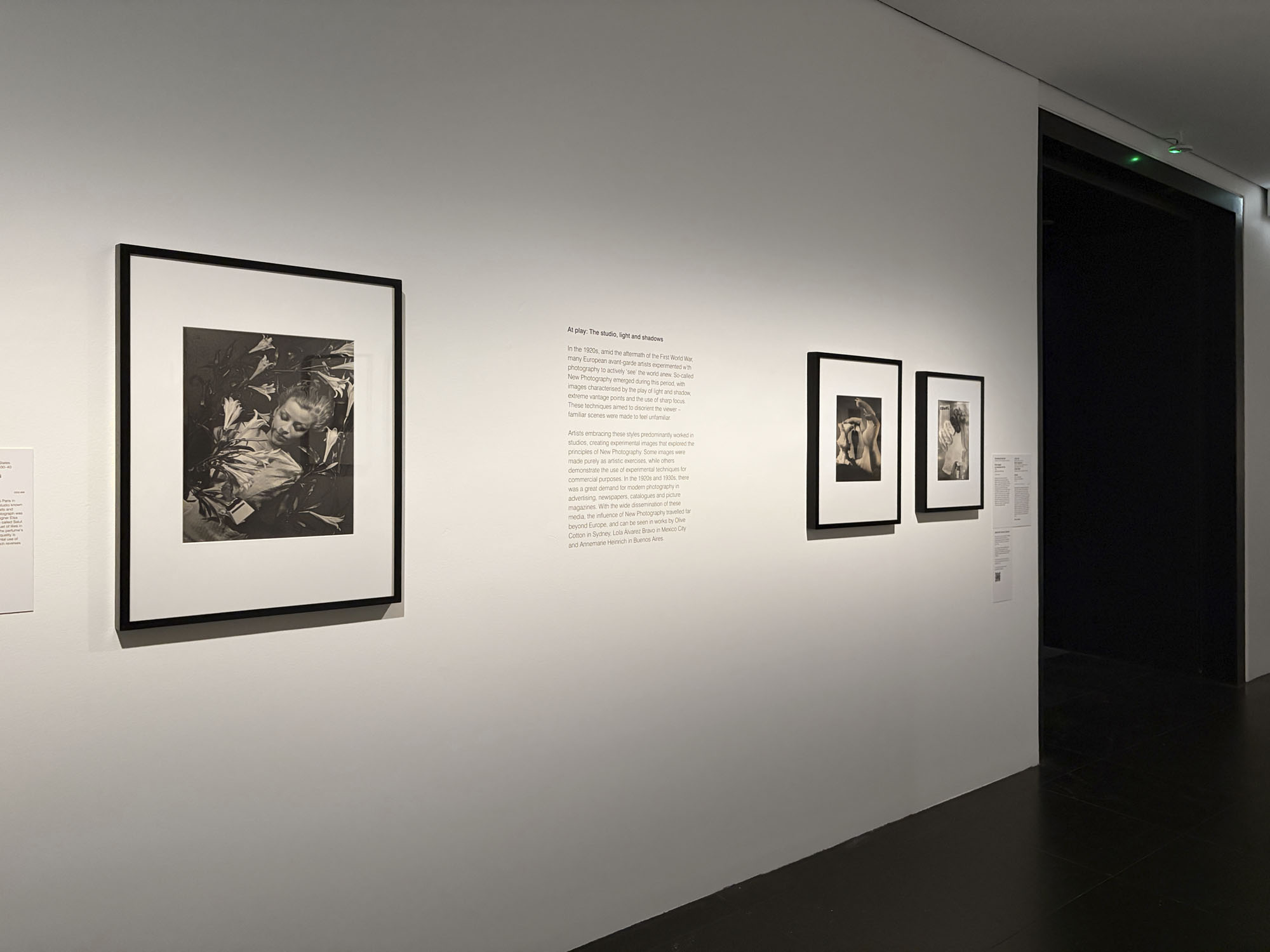
Installation view of the exhibition Women Photographers 1900-1975: A Legacy of Light at NGV International, Melbourne, November 2025 – May 2026 showing at left, Ilse Bing Salut de Schiaparelli (1934, below)
Photo: Marcus Bunyan
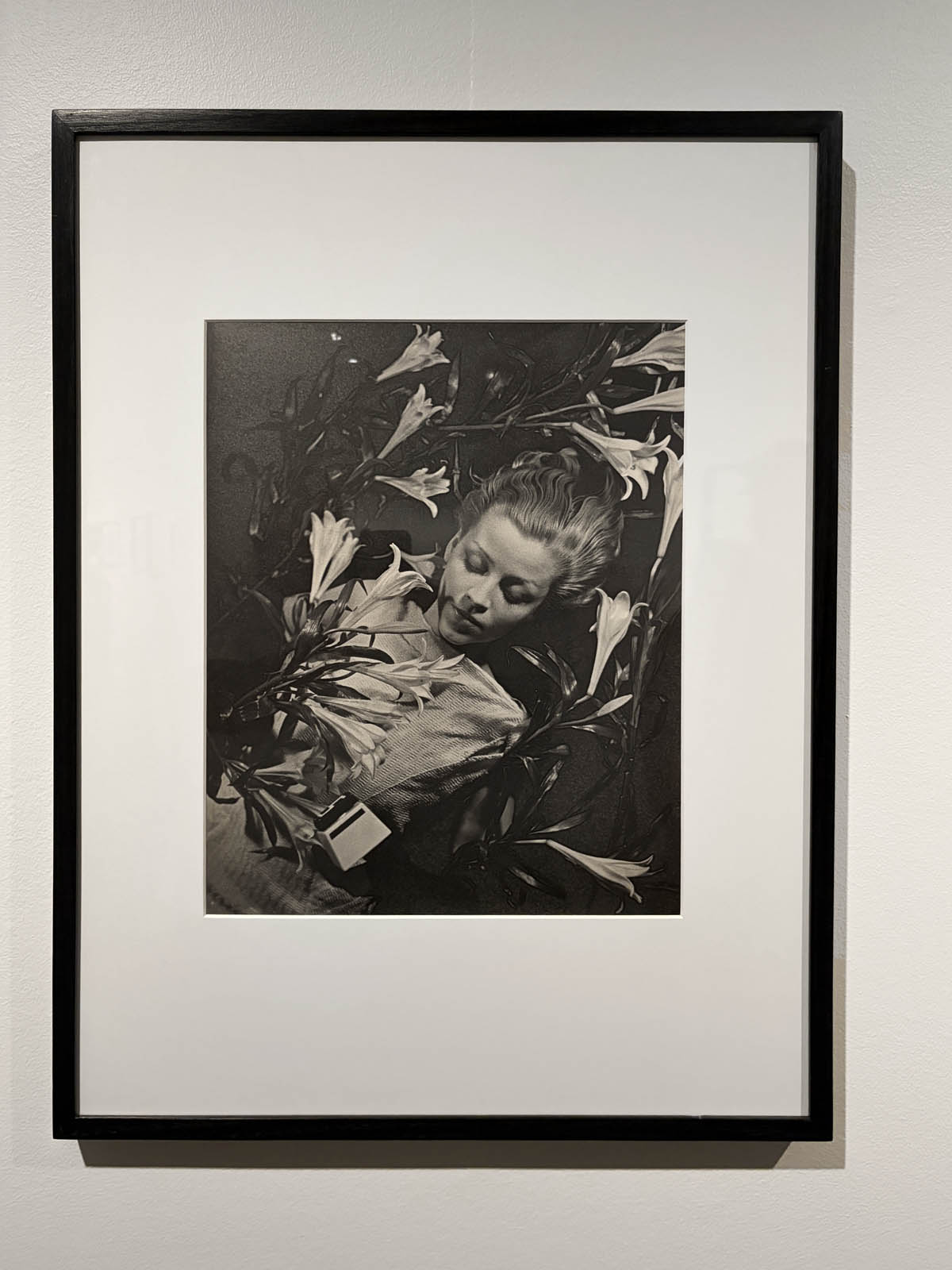
 

Ilse Bing (German, 1899-1998) Salut de Schiaparelli 1934 (installation view)


Ilse Bing (German, 1899-1998)
Salut de Schiaparelli (installation view)
1934
Gelatin silver photograph
49.5 x 39.7cm (image and sheet)
National Gallery of Victoria, Melbourne
Bowness Family Fund for Photography, 2022
Photo: Marcus Bunyan
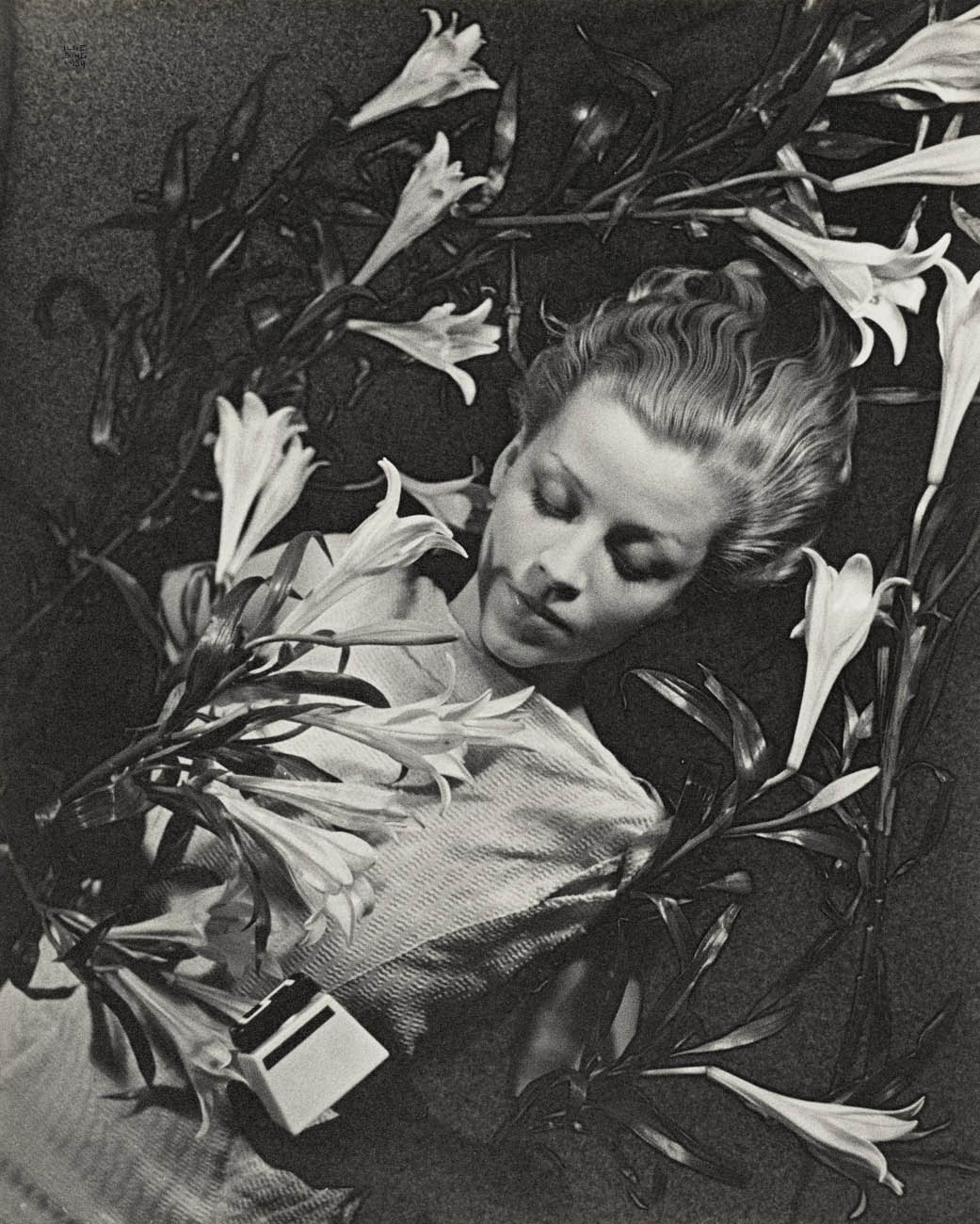
 

Ilse Bing (German, 1899-1998, United States 1941-1998) 'Salut de Schiaparelli' 1934


Ilse Bing (German, 1899-1998)
Salut de Schiaparelli
1934
Gelatin silver photograph
49.5 x 39.7cm (image and sheet)
National Gallery of Victoria, Melbourne
Bowness Family Fund for Photography, 2022


Upon moving from Frankfurt to Paris in 1930, Ilse Bing established a studio known for producing innovative portraits and fashion photography. This photograph was commissioned by fashion designer Elsa Schiaparelli for a new
perfume called Salut. Bing placed a scattered bouquet of lilies in the composition to represent the perfume’s scent. The image’s dreamlike quality is enhanced by Bing’s experimental use of the solarisation technique, which reverses the tones in a photograph.

Wall text from the exhibition


At Play: The Studio, Light and Shadows

In the 1920s, amid the aftermath of the First World War, many European avant-garde artists experimented with photography to actively ‘see’ the world anew. So-called New Photography emerged during this period, with images characterised by the play of light and shadow, extreme vantage points and the use of sharp focus. These techniques aimed to disorient the viewer – familiar scenes were made to feel unfamiliar.

Artists embracing these styles predominantly worked in studios, creating experimental images that explored the principles of New Photography. Some images were made purely as artistic exercises, while others demonstrate the use of experimental techniques for commercial purposes. In the 1920s and 1930s, there was a great demand for modern photography in advertising, newspapers, catalogues and picture magazines. With the wide dissemination of these media, the influence of New Photography travelled far beyond Europe, and can be seen in works by Olive Cotton in Sydney, Lola Álvarez Bravo in Mexico City and Annemarie Heinrich in Buenos Aires.
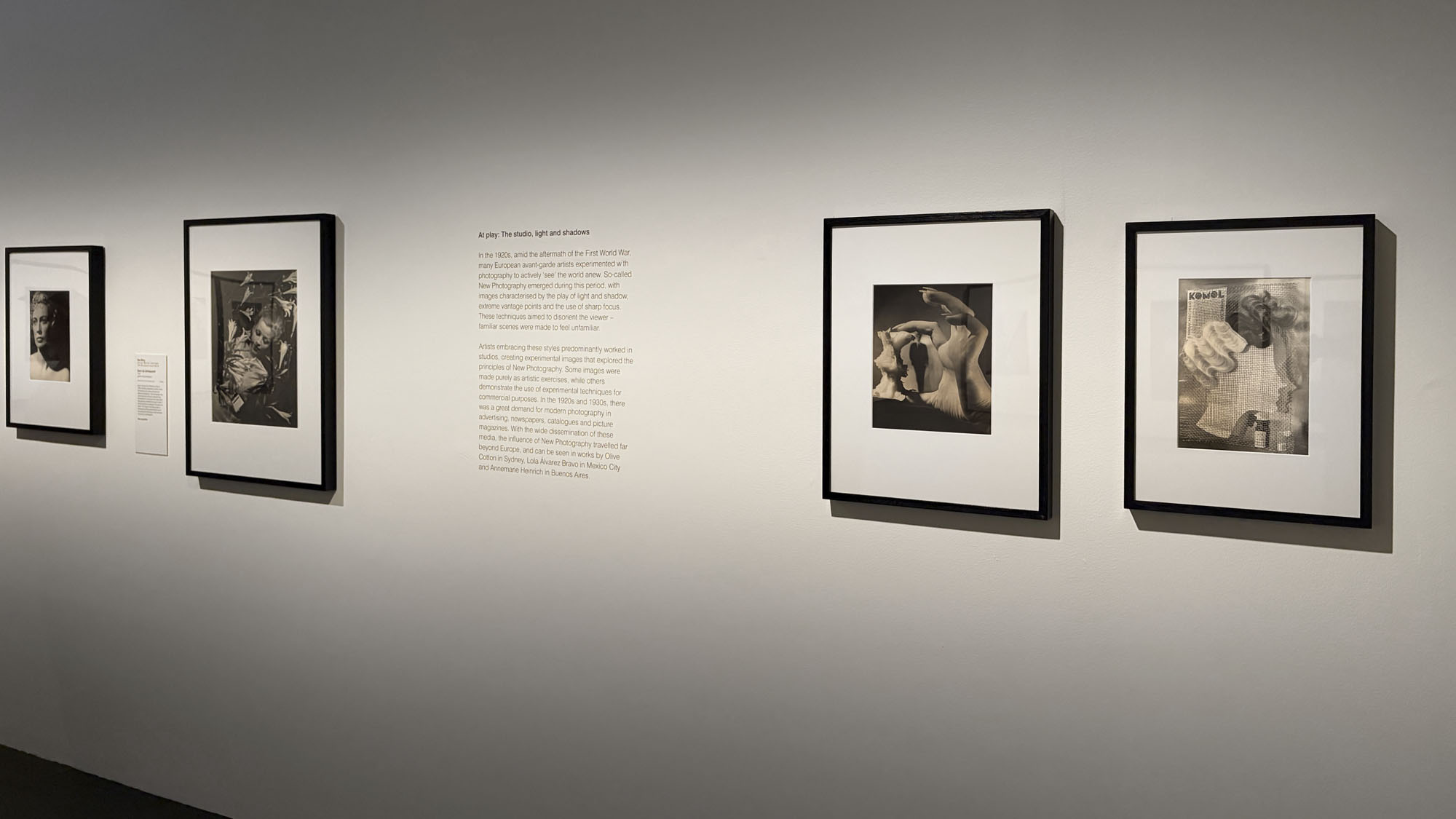
 

Installation view of the exhibition 'Women Photographers 1900-1975: A Legacy of Light' at NGV International, Melbourne, November 2025 - May 2026 showing at second left, Ilse Bing 'Salut de Schiaparelli'(1934); at second right, Annemarie Heinrich (Argentinian born Germany, 1912-2005) 'Eva's apple' (La manzana de Eva) 1953; and at right, ringl+pit (German, active 1930-1933, Ellen Auerbach and Grete Stern) 'Komol' (1931, printed 1984)


Installation view of the exhibition Women Photographers 1900-1975: A Legacy of Light at NGV International, Melbourne, November 2025 – May 2026 showing at second left, Ilse Bing Salut de Schiaparelli (1934, above); at second right, Annemarie Heinrich (Argentinian born Germany, 1912-2005) Eva’s apple (La manzana de Eva) 1953; and at right, ringl+pit (German, active 1930-1933, Ellen Auerbach and Grete Stern) Komol (1931 printed 1984, below)
Photo: Marcus Bunyan
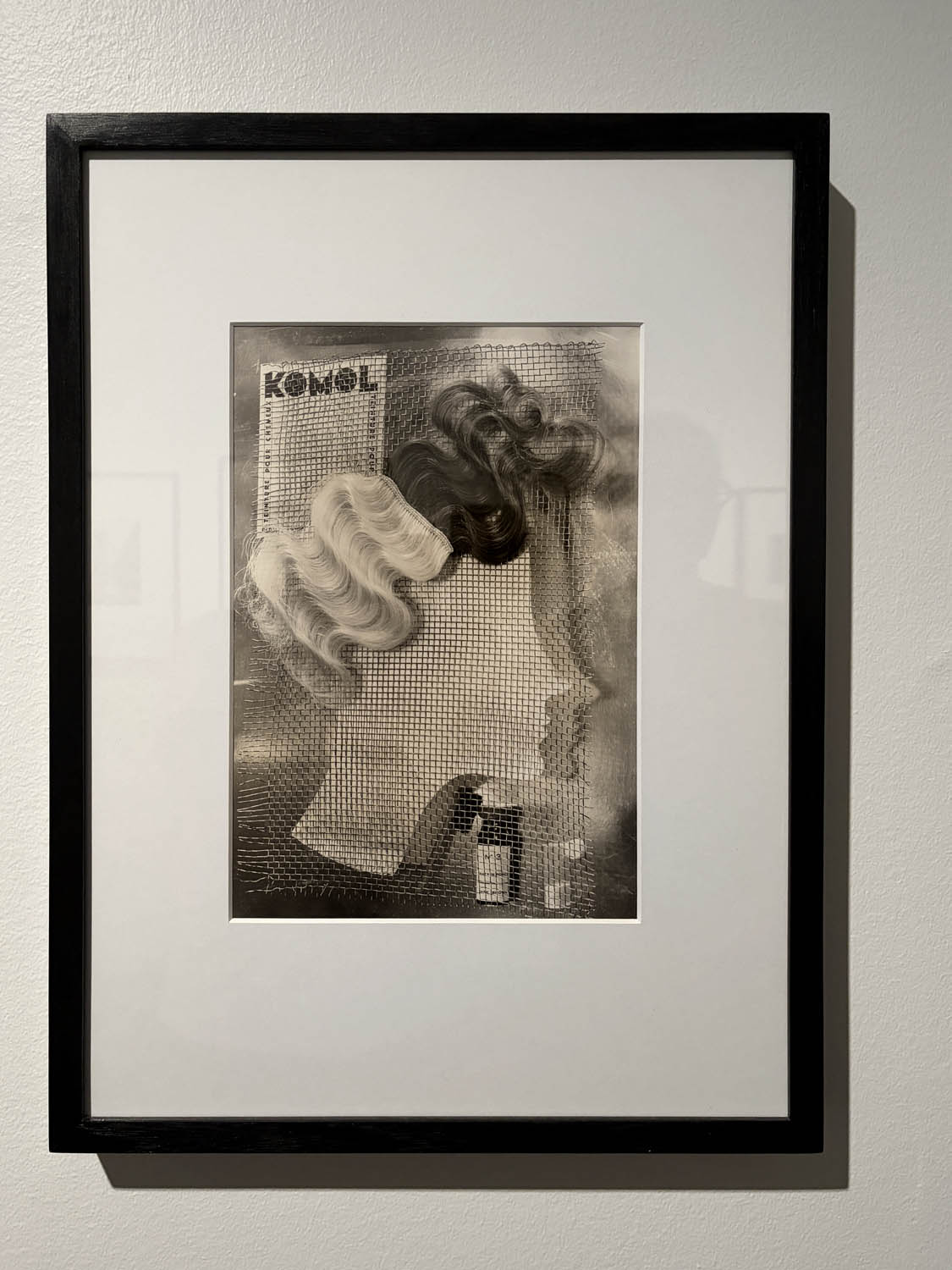
 

ringl+pit, Berlin Grete Stern (Argentine born Germany, 1904-1999) Ellen Auerbach (American born Germany, 1906-2004) 'Komol' 1931, printed 1984 (installation view)


ringl+pit, Berlin
Grete Stern (Argentine born Germany, 1904-1999)
Ellen Auerbach (American born Germany, 1906-2004)
Komol
1931, printed 1984
Gelatin silver photograph
34.4 x 23.3cm (image)
35.2 x 24.0cm (sheet)
National Gallery of Victoria, Melbourne
Bowness Family Fund for Photography, 2022
Photo: Marcus Bunyan


Named after the childhood nicknames of Grete Stern (Ringl) and Ellen Auerbach (Pit), photography studio ringl+pit was sought after for its highly innovative and experimental work. The studio’s work broke free from feminine ideals and expectations. Komol, an unconventional advertisement for hair dye, is a tongue-in-cheek reference to the shallow nature of commercialised femininity. ringl+pit’s playful productions speak to the safety of the artists’ shared space, described by art historian Elizabeth Otto as ‘a haven of humour and honesty for the photographers in contrast to the outside world that does not understand them’.

Wall text from the exhibition
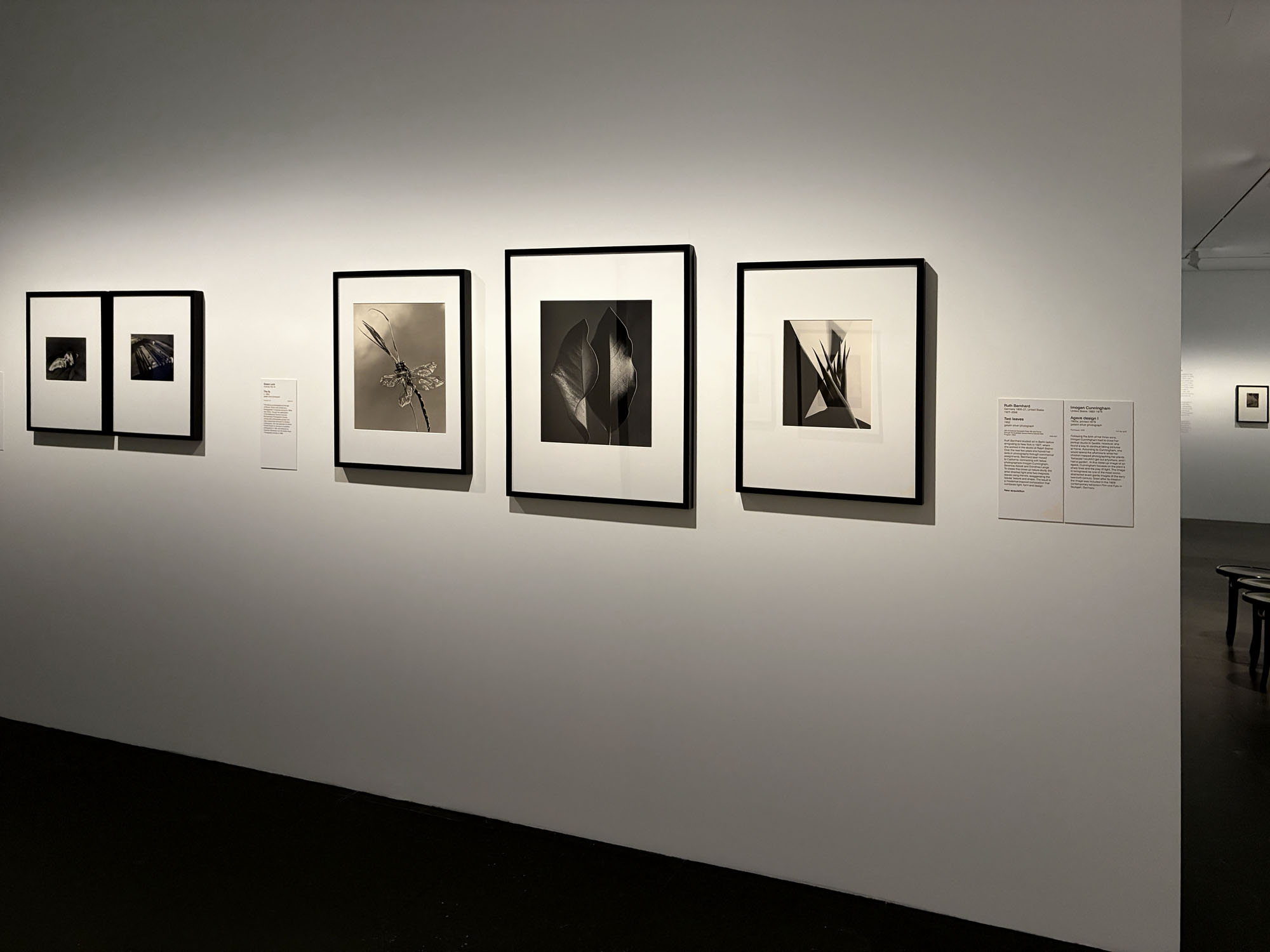
 

Installation view of the exhibition 'Women Photographers 1900-1975: A Legacy of Light' at NGV International, Melbourne, November 2025 - May 2026
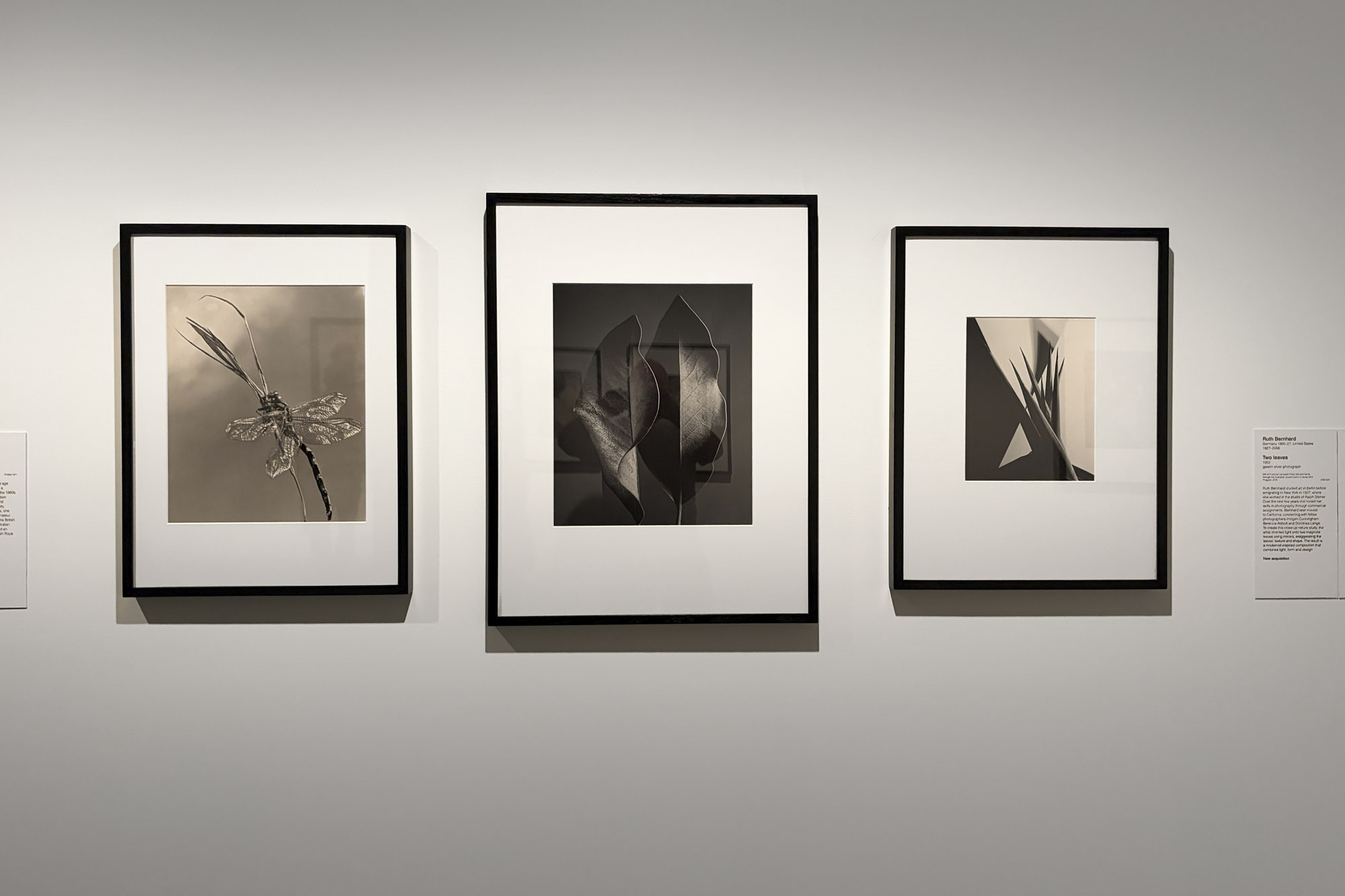
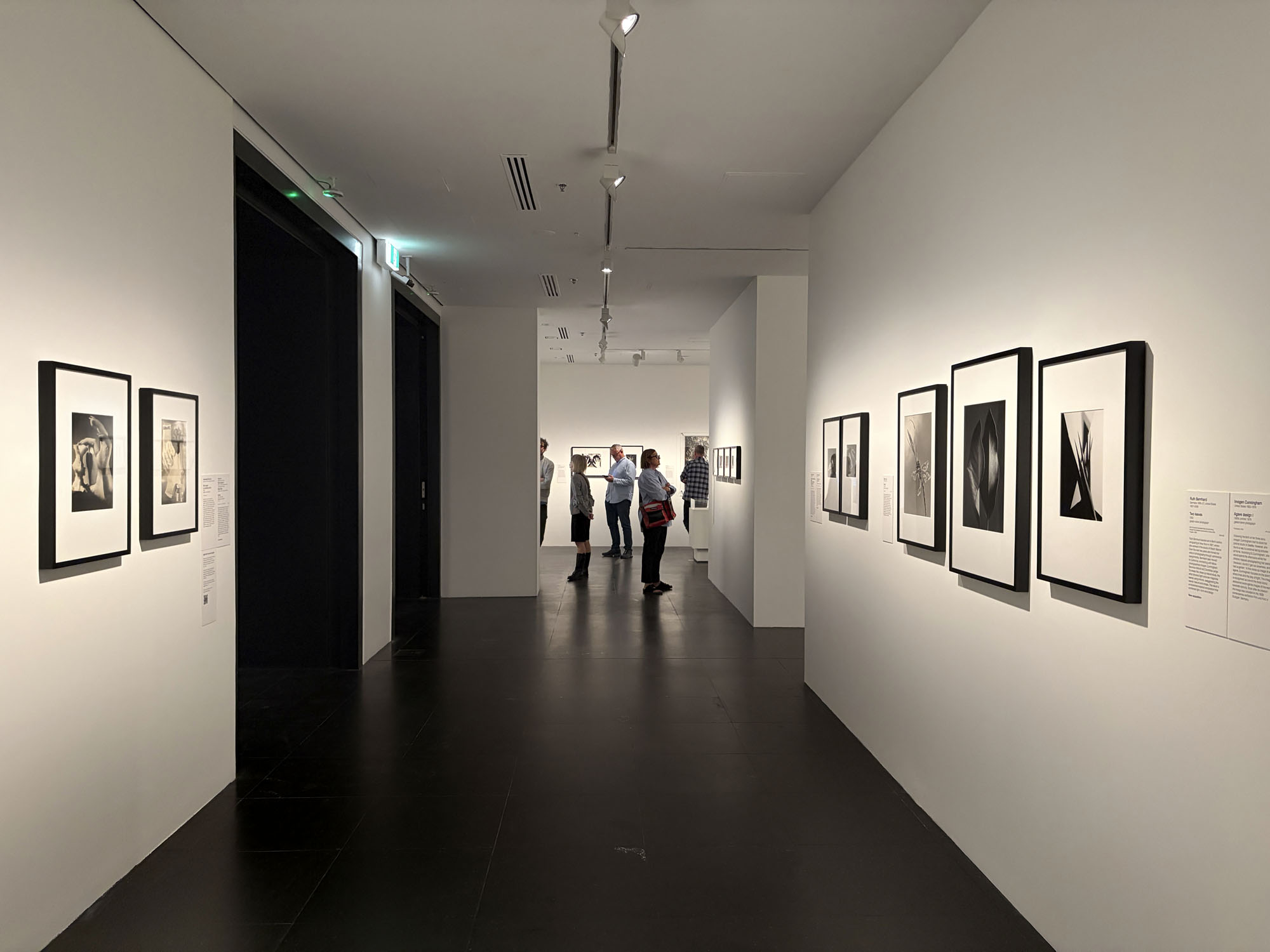
Installation view of the exhibition 'Women Photographers 1900-1975: A Legacy of Light' at NGV International, Melbourne, November 2025 - May 2026 showing at left, Grace Lock 'The fly' (c. 1960s); Ruth Bernhard 'Two Leaves' (1952); and at right, Imogen Cunningham 'Agave design I' (1920s, printed 1979)


Installation view of the exhibition Women Photographers 1900-1975: A Legacy of Light at NGV International, Melbourne, November 2025 – May 2026 showing at left in the bottom image, Grace Lock The fly (c. 1960s); Ruth Bernhard Two Leaves (1952); and at right, Imogen Cunningham Agave design I (1920s, printed 1979)
Photos: Marcus Bunyan
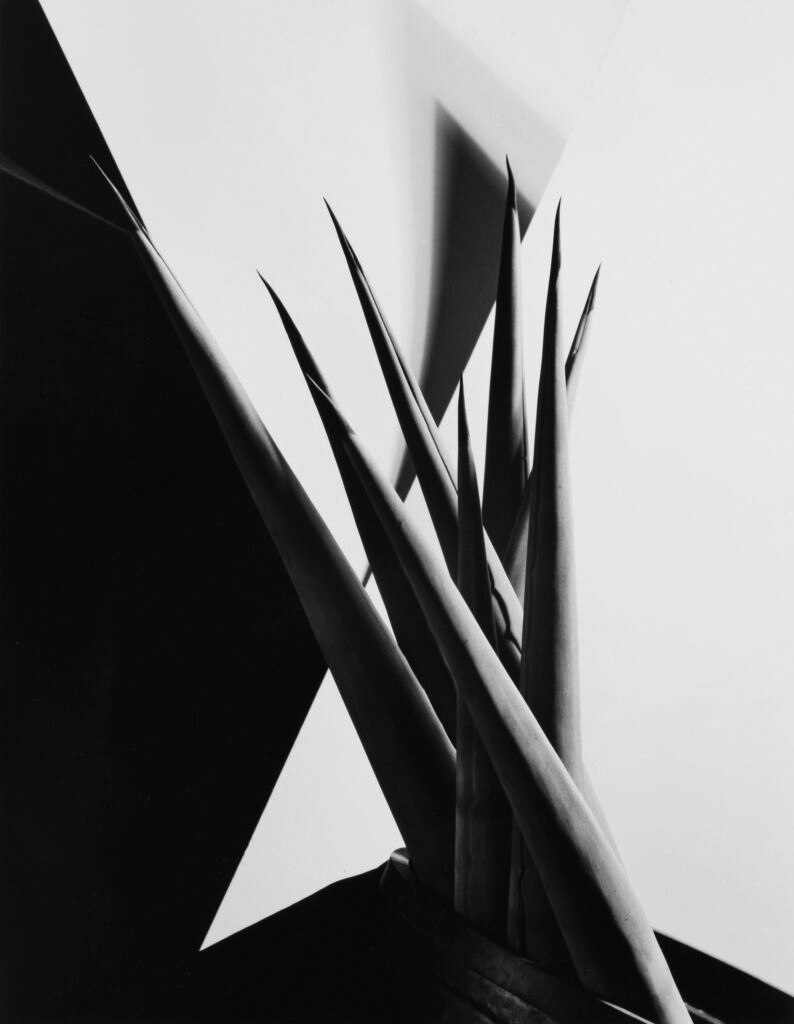
 

Imogen Cunningham (American, 1883-1976) 'Agave Design I' 1920s, printed 1979


Imogen Cunningham (American, 1883-1976)
Agave Design I
1920s, printed 1979
Gelatin silver photograph
32.6 x 25.6cm (image and sheet)
49.6 x 39.8cm (support)
National Gallery of Victoria, Melbourne
Purchased, 1979

Image from the Art Blart archive


Following the birth of her three sons, Imogen Cunningham had to close her portrait studio in Seattle. However, she found a way to continue taking pictures at home. According to Cunningham, she would spend the afternoons while her children napped photographing her plants, ‘because I couldn’t get out anywhere, and I had a garden’. In this close-up image of an agave, Cunningham focuses on the plant’s sharp lines and the play of light. The image is recognised as one of the most iconic abstracted avant-garde images of the early twentieth century. Soon after its creation, the image was included in the 1929 contemporary exhibition Film und Foto in Stuttgart, Germany.

Wall text from the exhibition
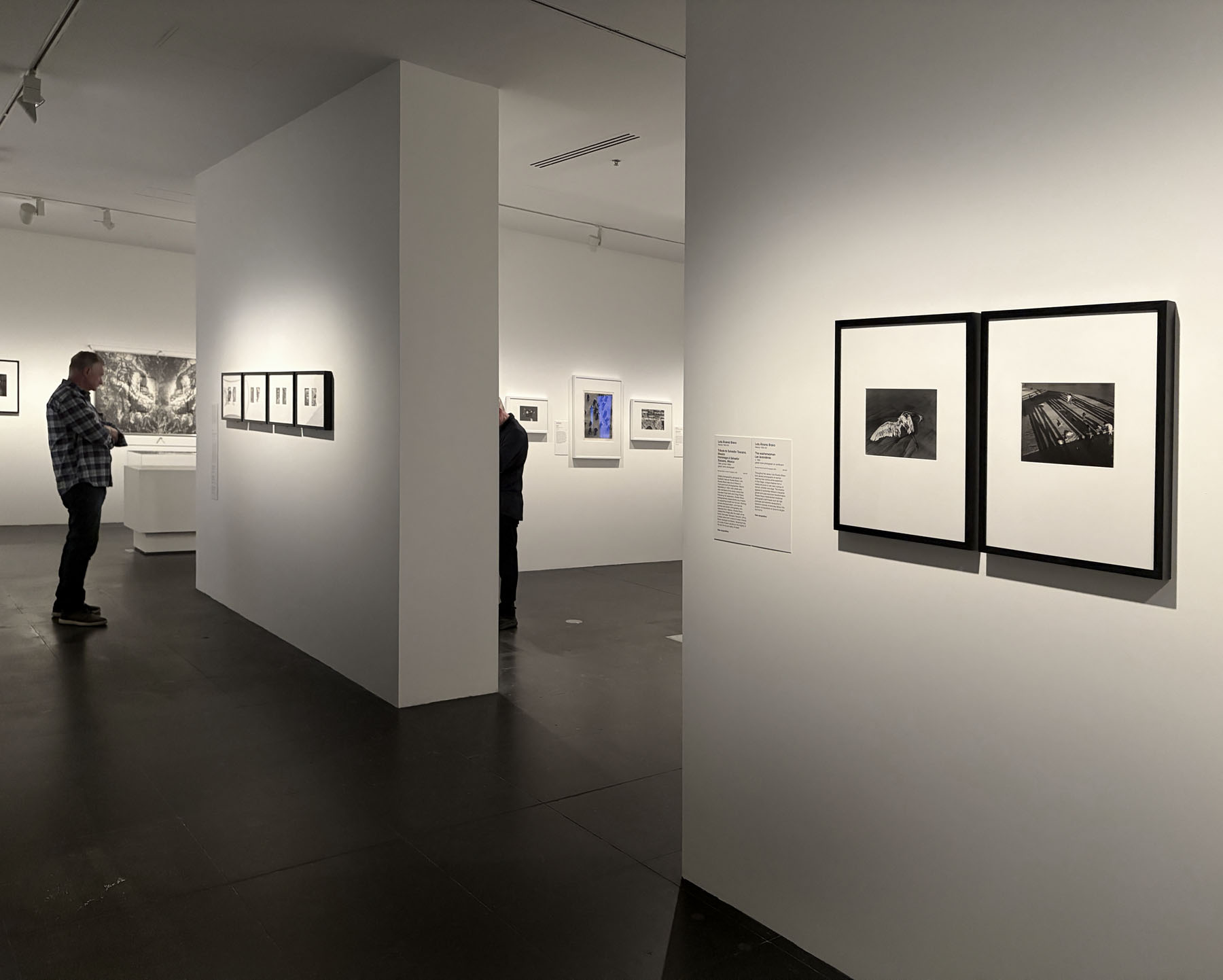
 

Installation view of the exhibition 'Women Photographers 1900-1975: A Legacy of Light' at NGV International, Melbourne, November 2025 - May 2026 showing two photographs by Lola Álvarez Bravo (Mexican, 1903-1993) with at second right, 'Tribute to Salvador Toscano' (1949, printed 1960s) New acquisition; and at right, 'The washerwomen' (Las Lavanderas) (c. 1950, below) New acquisition


Installation view of the exhibition Women Photographers 1900-1975: A Legacy of Light at NGV International, Melbourne, November 2025 – May 2026 showing two photographs by Lola Álvarez Bravo (Mexican, 1903-1993) with at second right, Tribute to Salvador Toscano (1949 printed 1960s, below) New acquisition; and at right, The washerwomen (Las Lavanderas) (c. 1950, below) New acquisition
Photo: Marcus Bunyan
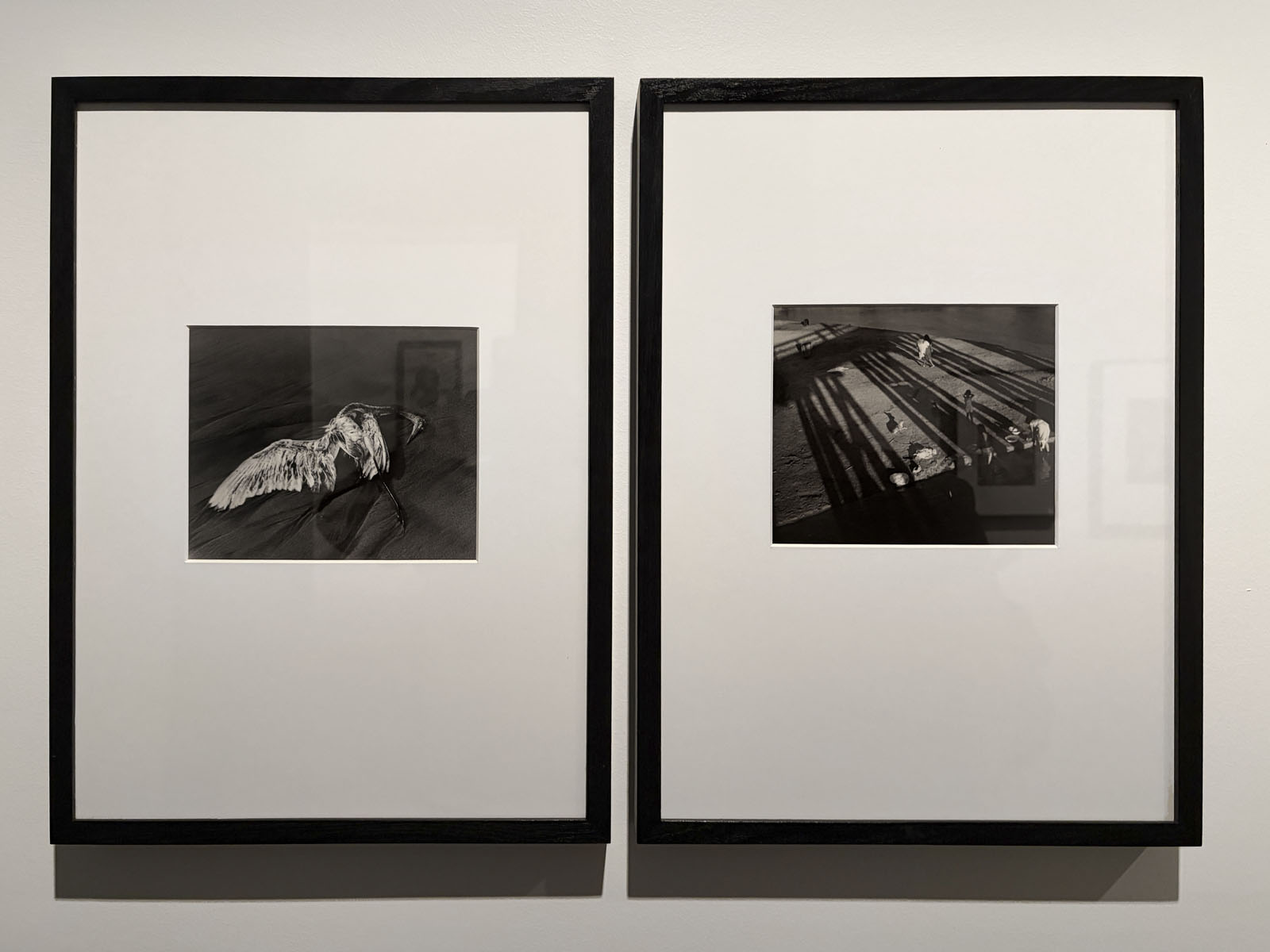
 

Installation view of the exhibition 'Women Photographers 1900-1975: A Legacy of Light' at NGV International, Melbourne, November 2025 - May 2026 showing at left, Lola Álvarez Bravo 'Tribute to Salvador Toscano' (1949, printed 1960s) New acquisition; and at right, Lola Álvarez Bravo 'The washerwomen' (Las Lavanderas) (c. 1950, below) New acquisition


Installation view of the exhibition Women Photographers 1900-1975: A Legacy of Light at NGV International, Melbourne, November 2025 – May 2026 showing at left, Lola Álvarez Bravo Tribute to Salvador Toscano (1949, printed 1960s) New acquisition; and at right, Lola Álvarez Bravo The washerwomen (Las Lavanderas) (c. 1950, below) New acquisition
Photo: Marcus Bunyan

New acquisitions
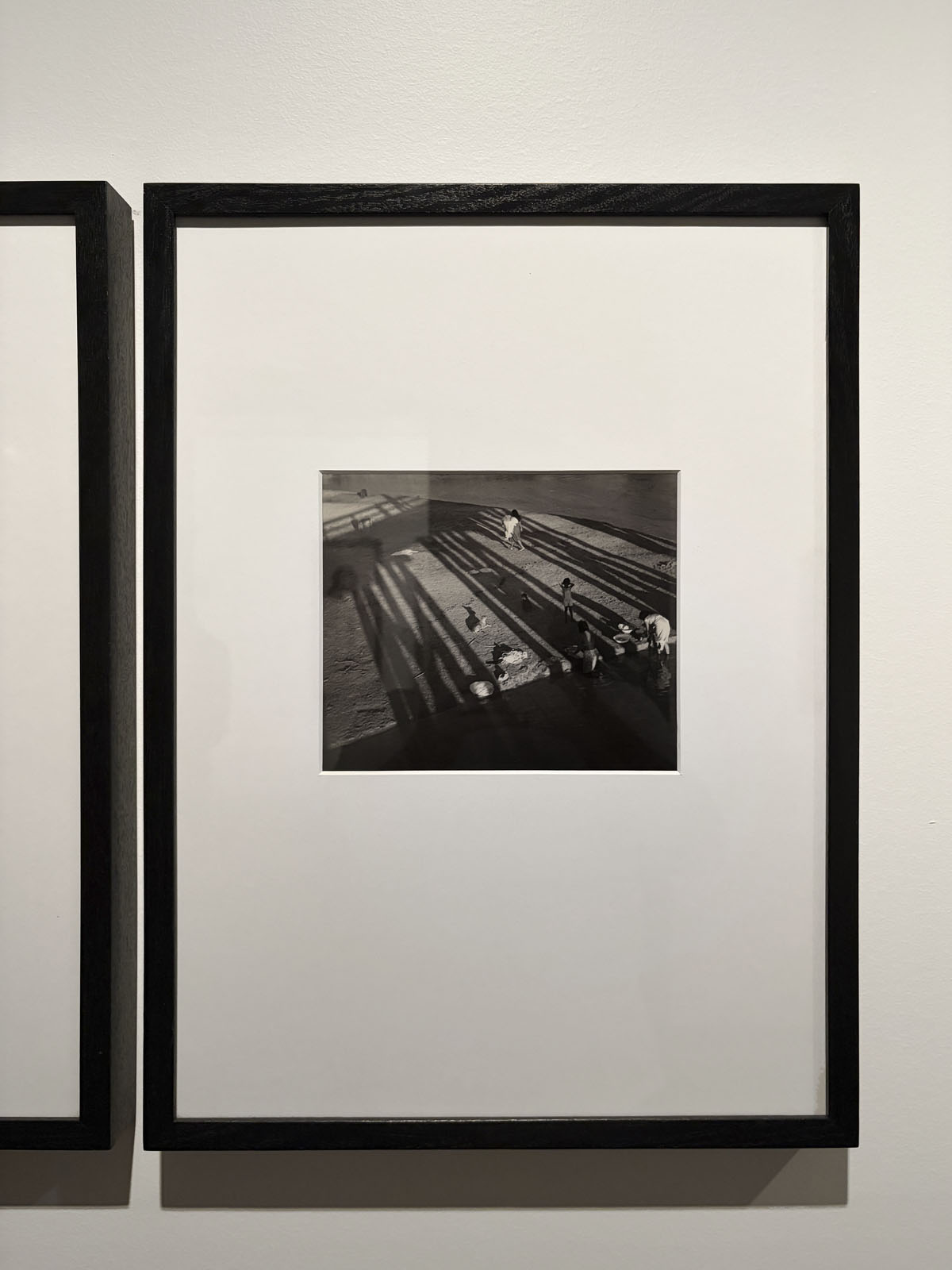
 

Lola Álvarez Bravo (Mexican, 1903-1993) 'The washerwomen (Las Lavanderas) c. 1950 (installation view)


Lola Álvarez Bravo (Mexican, 1903-1993)
The washerwomen (Las Lavanderas)
c. 1950
Gelatin silver photograph on cardboard
18.9 × 22.3cm (image and sheet)
National Gallery of Victoria, Melbourne
Bowness Family Fund for Photography, 2024
Photo: Marcus Bunyan

New acquisition


Throughout her career, Lola Álvarez Bravo took several photographs of women washing their clothes at the waterfront. In this image, a large shadow from a nearby structure is cast over a group of women, children and dogs. The shadow appears to symbolise Mexico’s industrial growth and post-revolution transformation. Álvarez Bravo implemented modernist photography techniques such as high contrasts and extreme viewpoints to transform scenes of everyday labour into graphic compositions of dynamic angles and forms.

Wall text from the exhibition
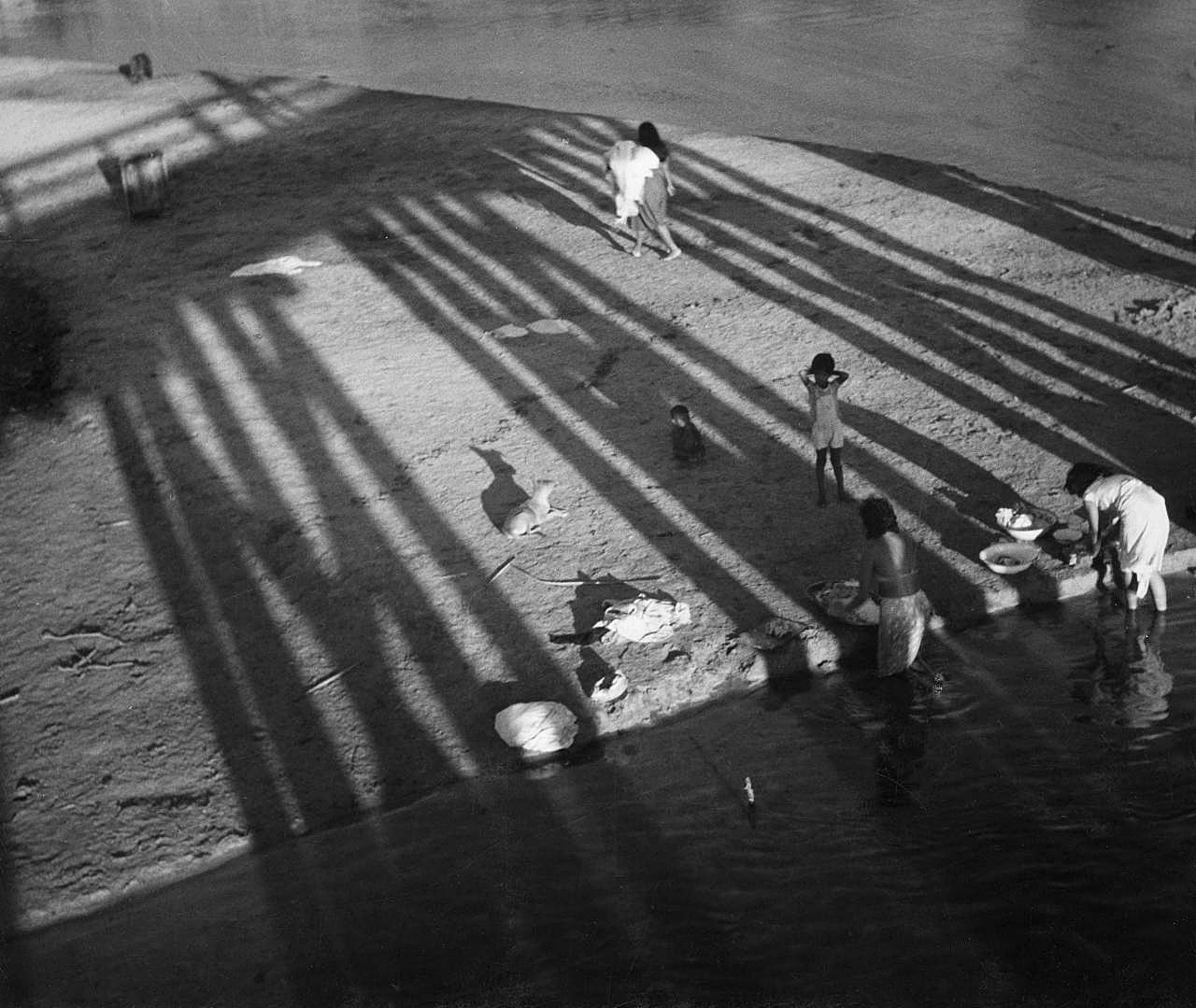
 

Lola Álvarez Bravo (Mexican, 1903-1993) 'The washerwomen' (Las Lavanderas) c. 1950


Lola Álvarez Bravo (Mexican, 1903-1993)
The washerwomen (Las Lavanderas)
c. 1950
Gelatin silver photograph on cardboard
18.9 x 22.3cm (image and sheet)
National Gallery of Victoria, Melbourne
Bowness Family Fund for Photography, 2024
© Center for Creative Photography, The University of Arizona Foundation

New acquisition
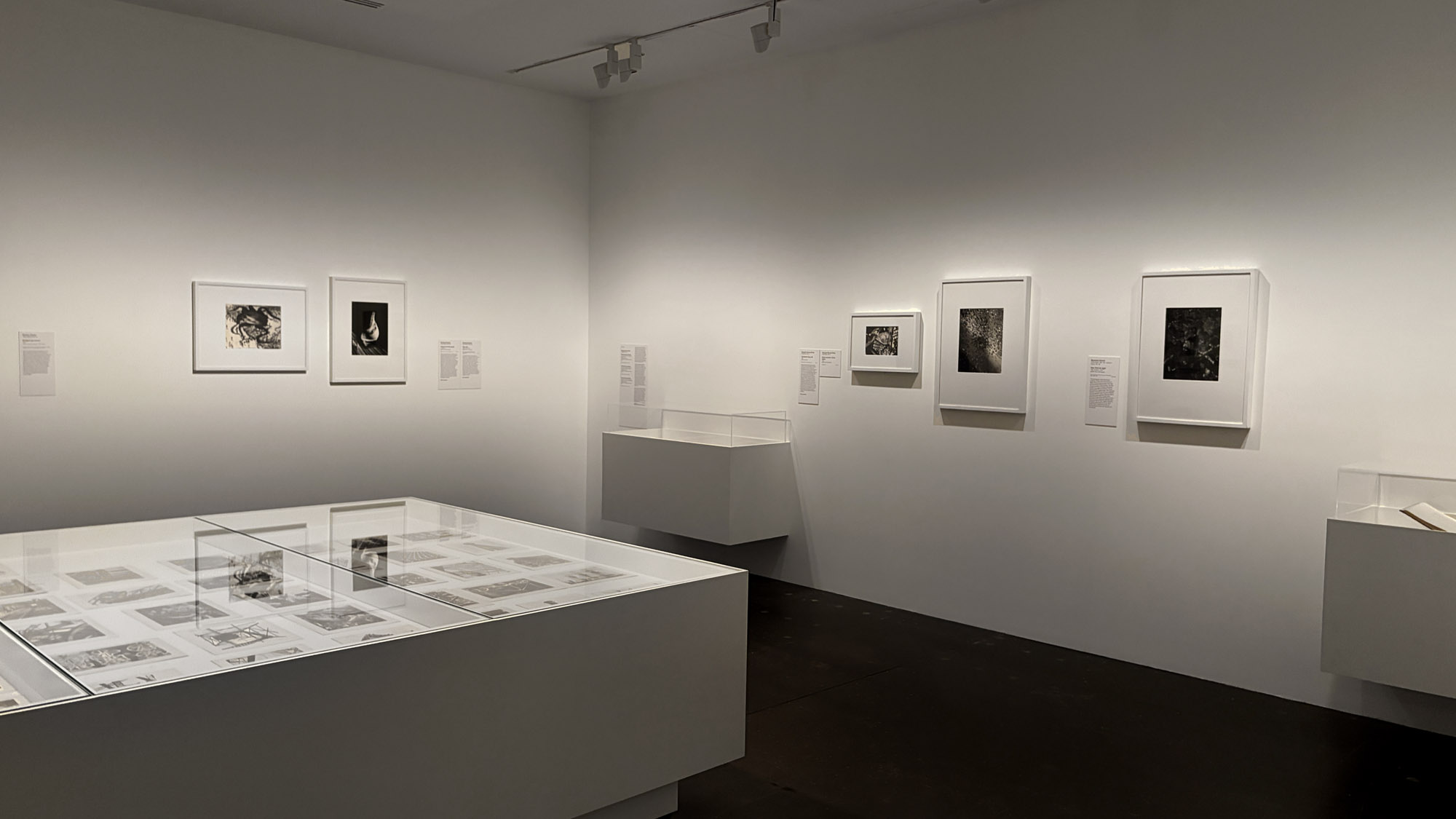
 

Installation view of the exhibition 'Women Photographers 1900-1975: A Legacy of Light' at NGV International, Melbourne, November 2025 - May 2026


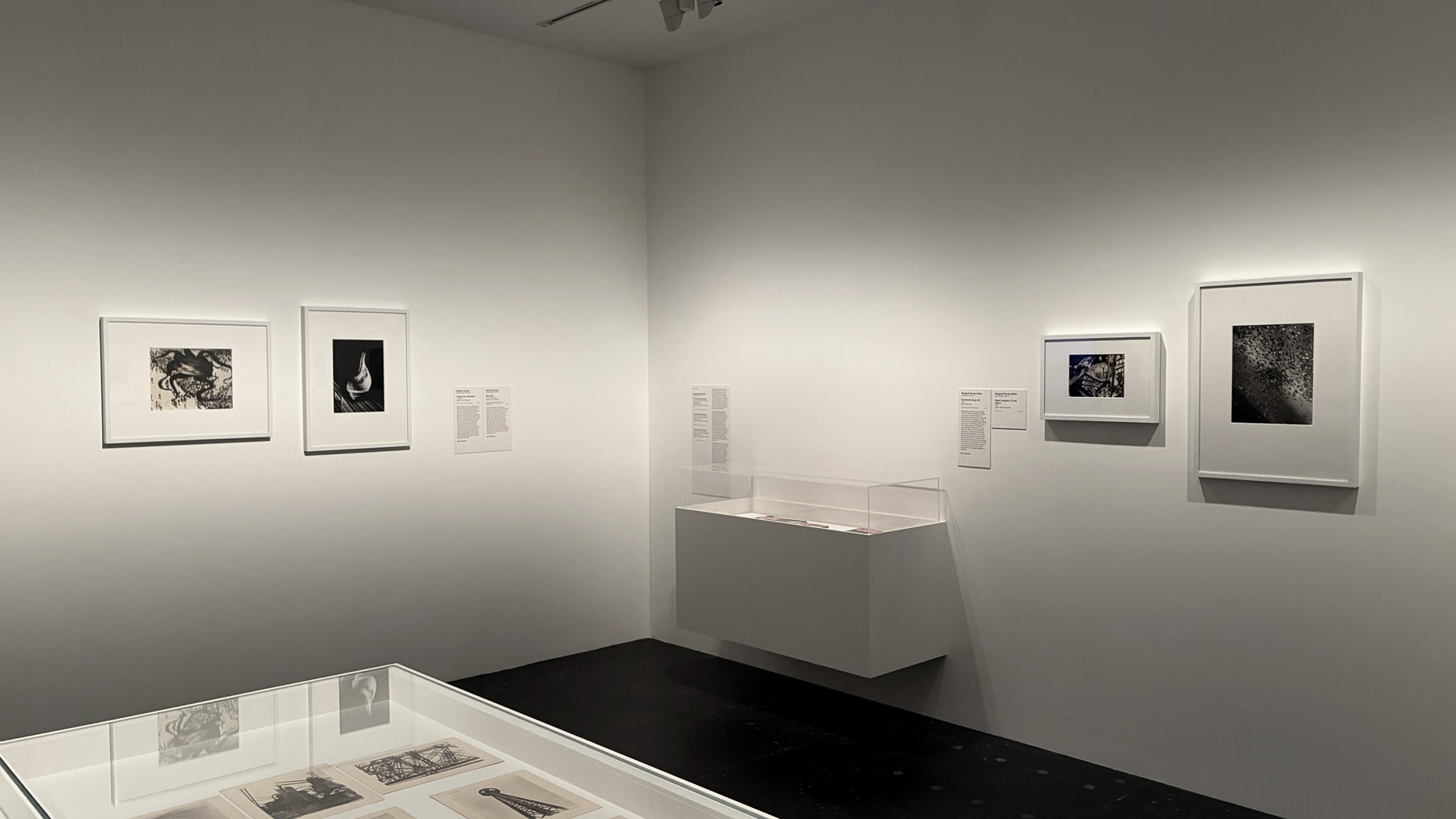
Installation view of the exhibition Women Photographers 1900-1975: A Legacy of Light at NGV International, Melbourne, November 2025 – May 2026 showing in the bottom image at left, Barbara Morgan (United States, 1900-1992) Hearst over the people (c. 1938-1939, below) New acquisition; at second left, Barbara Morgan City shell (1938, printed 1972); at second right, Margaret Bourke-White Campbell’s Soup No. 6 (1935, below) New acquisition; and at right, Margaret Bourke-White Beach accident, Coney Island (1952, below)
Photos: Marcus Bunyan
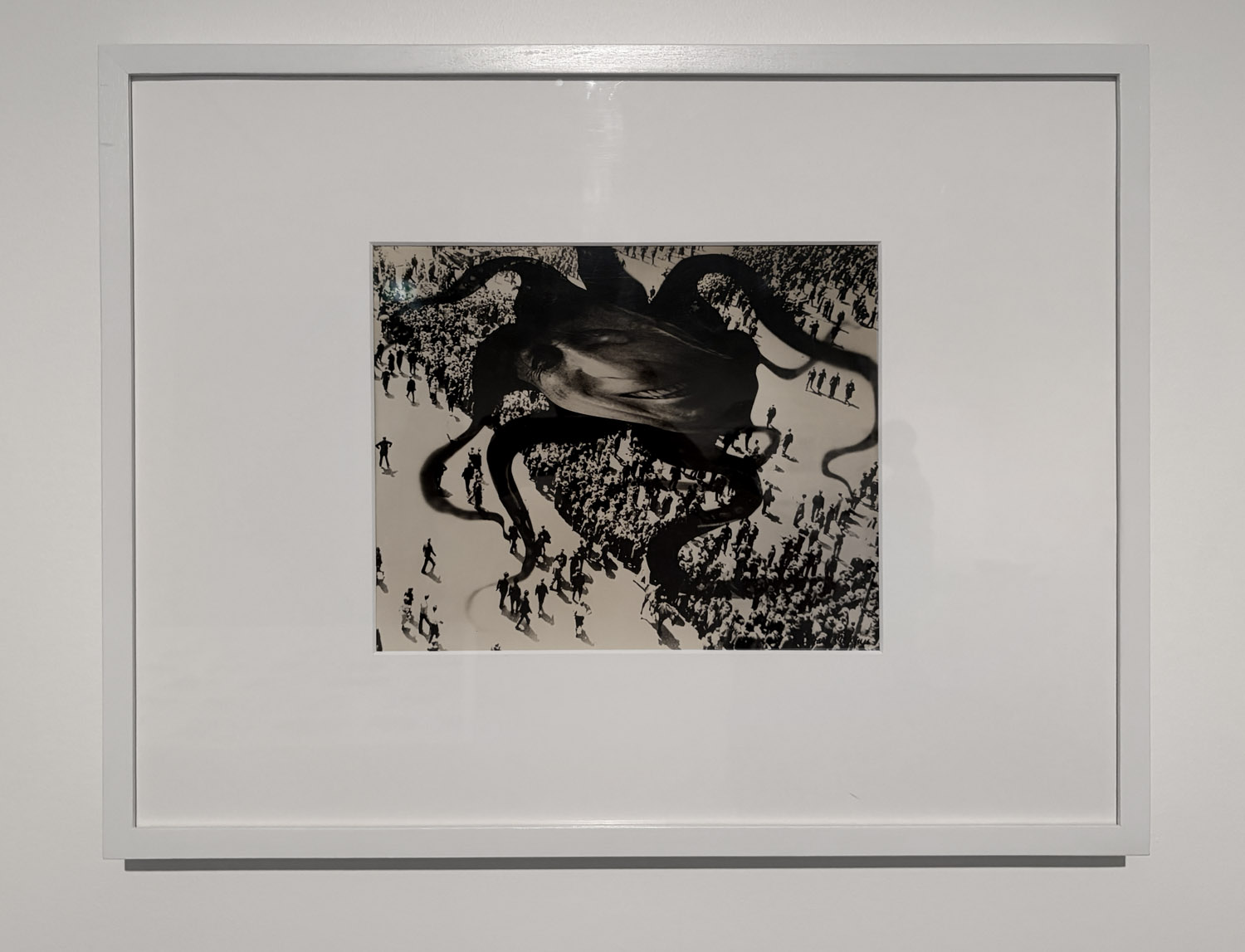
 

Barbara Morgan (American, 1900-1992) 'Hearst over the people' c. 1938-1939 (installation view)


Barbara Morgan (American, 1900-1992)
Hearst over the people (installation view)
c. 1938-1939
Gelatin silver photograph
26.3 x 32.4cm (image)
26.8 x 33.0cm (sheet)
National Gallery of Victoria, Melbourne
Bowness Family Fund for Photography, 2023
Photo: Marcus Bunyan

New acquisition


After moving to New York in 1930 with her photojournalist husband, Barbara Morgan turned to photography after a decade devoted to painting and printmaking. While her children were sleeping, she would experiment with avant-garde photographic techniques. In this photomontage, the artist set out to ‘visually distort the consummate distorter’: media mogul William Randolph Hearst, notorious for his sensationalist news empire. Hearst’s grinning face is stretched into a sinister omniscient octopus, its tentacles writhing into crowds of workers on the street. First published in the influential left-wing magazine New Masses, this is a compelling depiction of psychological infiltration. It also, perhaps, proposes Hearst as an effigy of authority for agitators to protest.

Wall text from the exhibition
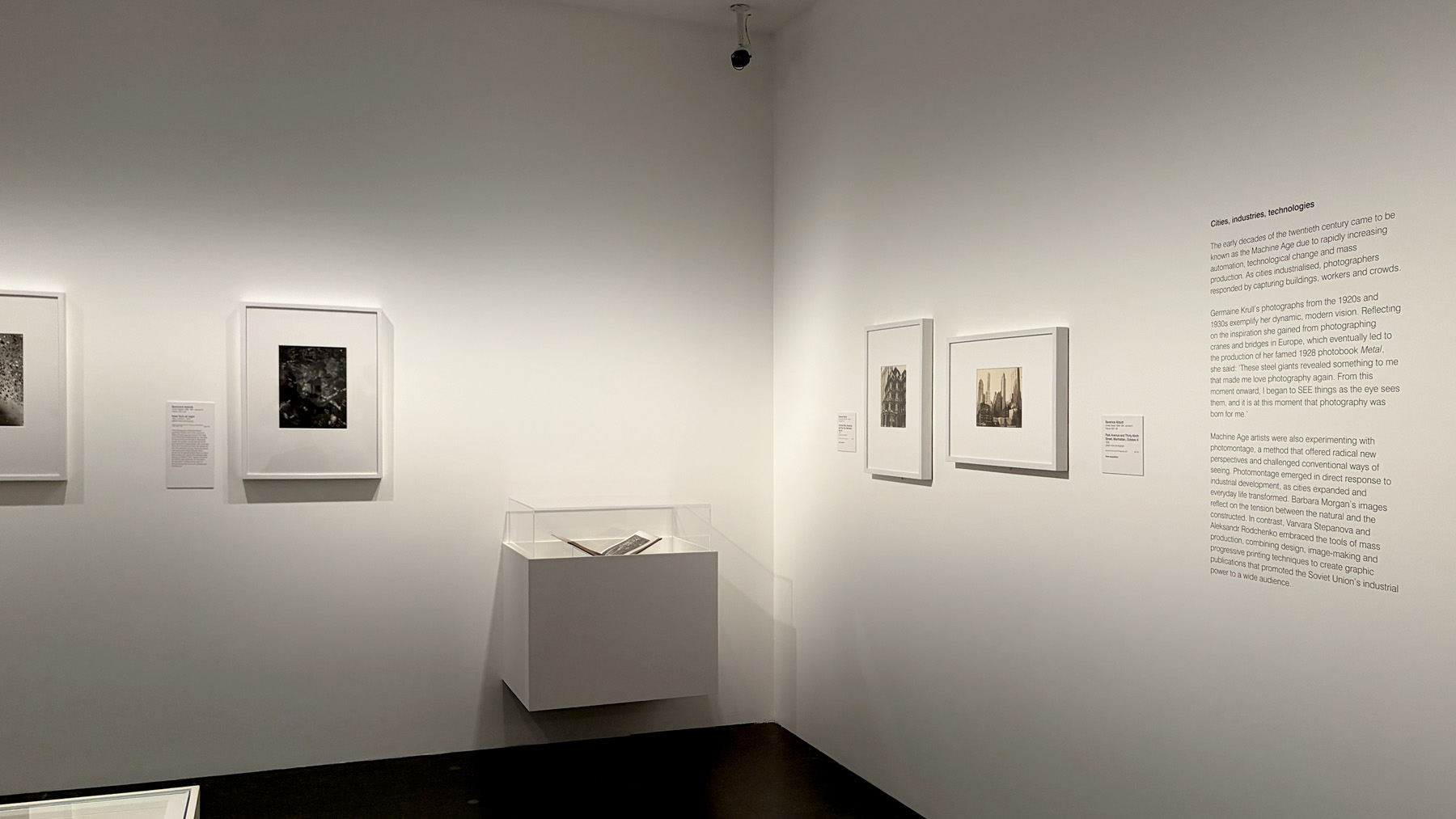
 

Installation view of the exhibition 'Women Photographers 1900-1975: A Legacy of Light' at NGV International, Melbourne, November 2025 - May 2026


Installation view of the exhibition Women Photographers 1900-1975: A Legacy of Light at NGV International, Melbourne, November 2025 – May 2026 showing at left, Berenice Abbott New York at Night (1932); at second left, Berenice Abbott Old Post Office, Broadway and Park Row, Manhattan, May 25 (1938, below); and at right, Berenice Abbott Park Avenue and Thirty-Ninth Street, Manhattan, October 8 (1936)
Photos: Marcus Bunyan


Cities, Industries, Technologies

The early decades of the twentieth century came to be known as the Machine Age due to rapidly increasing automation, technological change and mass production. As cities industrialised, photographers responded by capturing buildings, workers and crowds.

Germaine Krull’s photographs from the 1920s and 1930s exemplify her dynamic, modern vision. Reflecting on the inspiration she gained from photographing cranes and bridges in Europe, which eventually led to the production of her famed 1928 photobook Métal, she said: “These steel giants revealed something to me that made me love photography again. From this moment onward, I began to SEE things as the eye sees them, and it is at this moment that photography was born for me.”

Machine Age artists were also experimenting with photomontage, a method that offered radical new perspectives and challenged conventional ways of seeing. Photomontage emerged in direct response to industrial development, as cities expanded and everyday life transformed. Barbara Morgan’s images reflect on the tension between the natural and the constructed. In contrast, Varvara Stepanova and Aleksandr Rodchenko embraced the tools of mass production, combining design, image-making and progressive printing techniques to create graphic publications that promoted the Soviet Union’s industrial power to a wide audience.
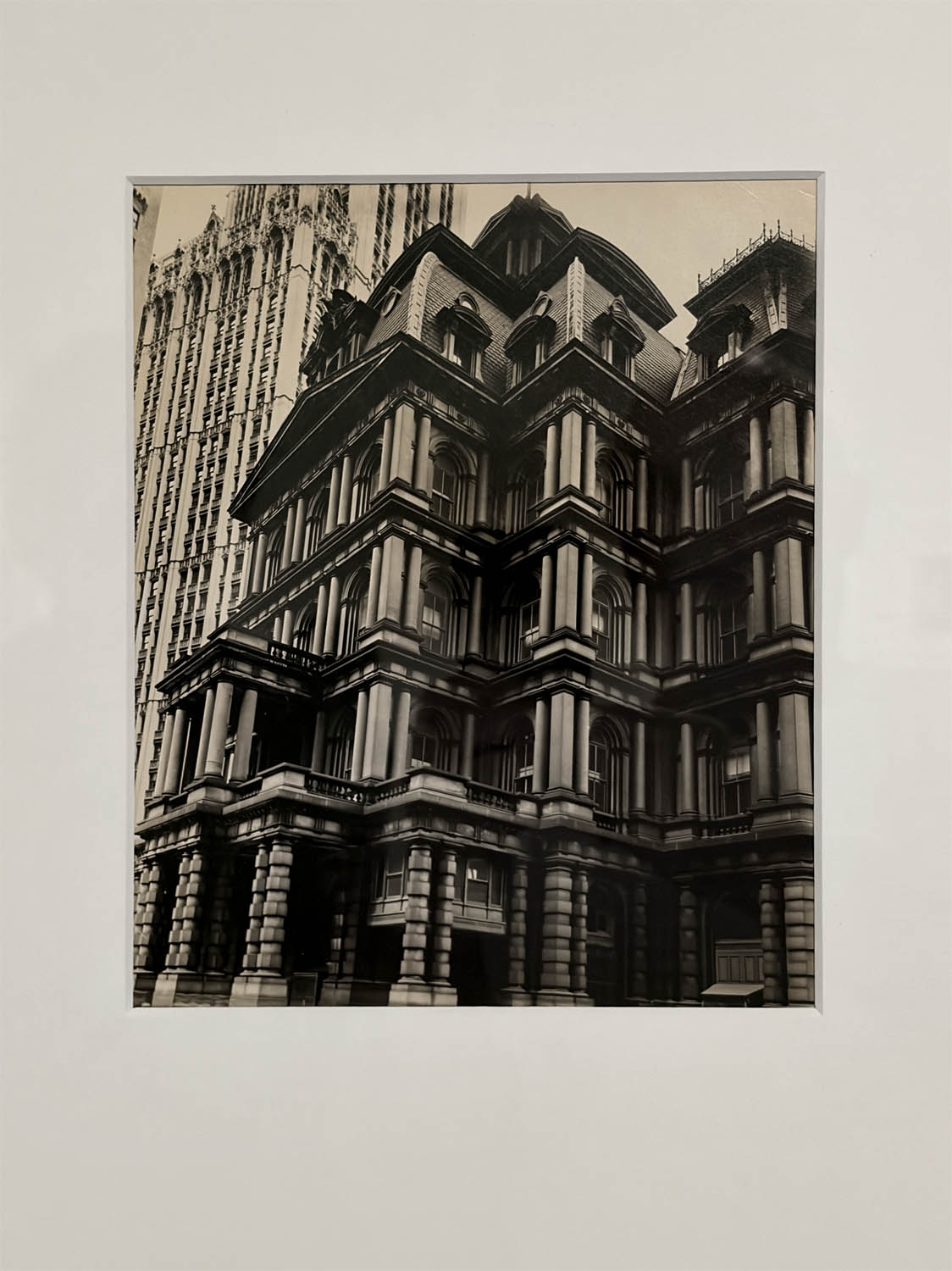
 

Berenice Abbott (American, 1898-1991) 'Old Post Office, Broadway and Park Row, Manhattan, May 25' 1938 (installation view)


Berenice Abbott (American, 1898-1991)
Old Post Office, Broadway and Park Row, Manhattan, May 25 (installation view0
1938
Gelatin silver photograph
23.9 x 19.3cm (image)
25.3 x 20.3cm (sheet)
National Gallery of Victoria, Melbourne
Bowness Family Fund for Photography, 2021
Photo: Marcus Bunyan

New acquisition
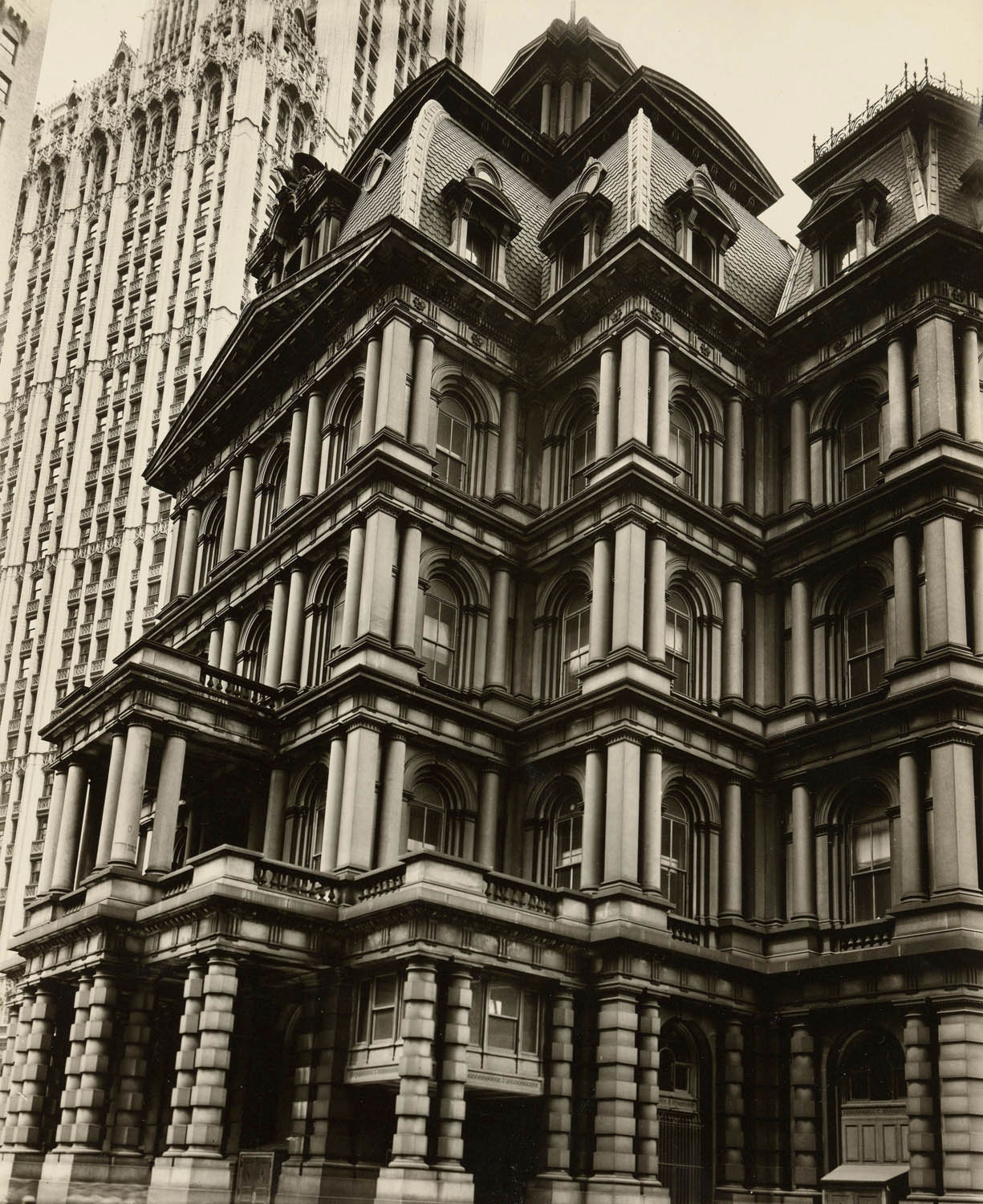
 

Berenice Abbott (American, 1898-1991) 'Old Post Office, Broadway and Park Row, Manhattan, May 25' 1938


Berenice Abbott (American, 1898-1991)
Old Post Office, Broadway and Park Row, Manhattan, May 25
1938
Gelatin silver photograph
23.9 x 19.3cm (image)
25.3 x 20.3cm (sheet)
National Gallery of Victoria, Melbourne
Bowness Family Fund for Photography, 2021

New acquisition
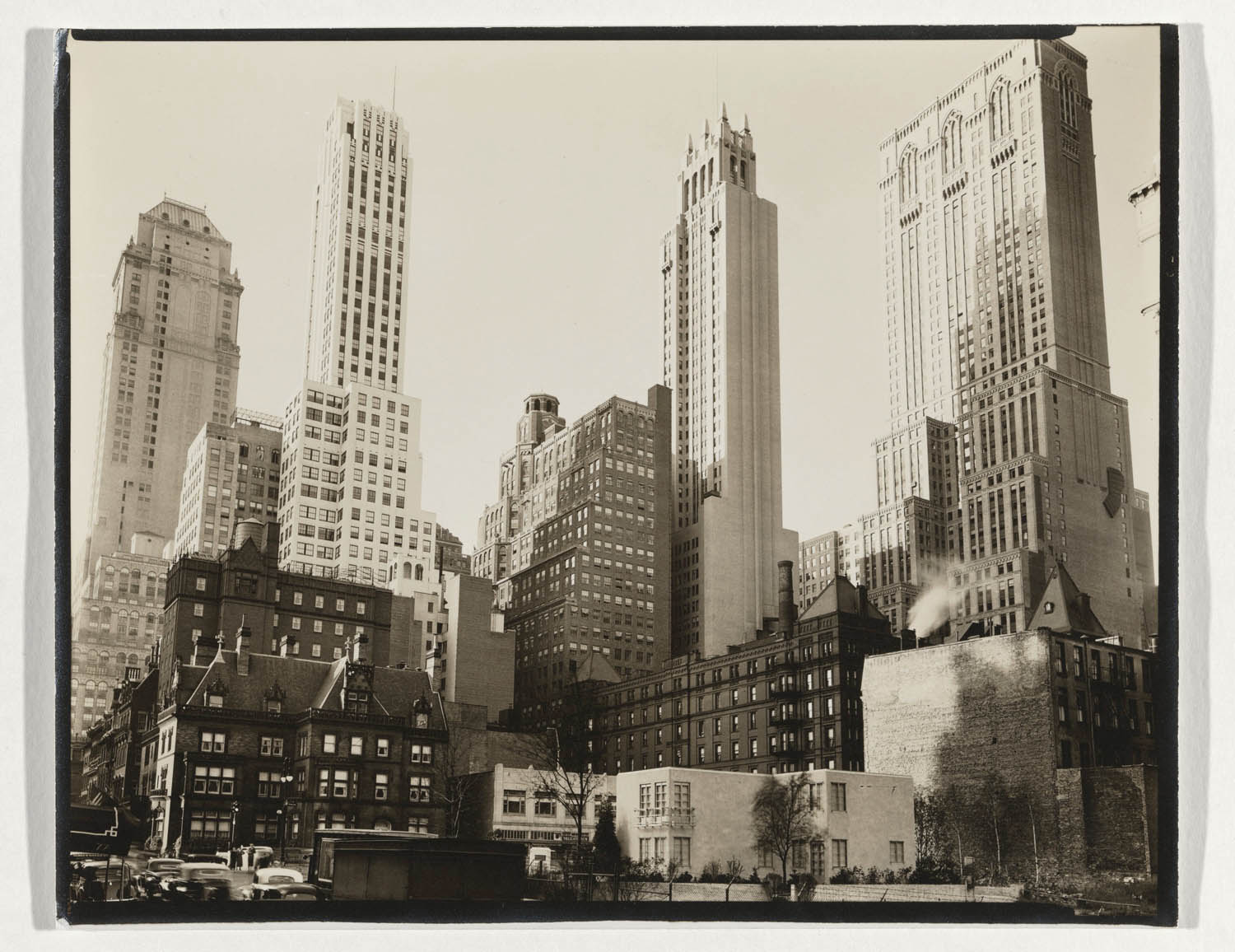
 

Berenice Abbott (American, 1898-1991) 'Park Avenue and Thirty-ninth Street, Manhattan, October 8' 1936
Berenice Abbott (American, 1898-1991) 'Park Avenue and 39th Street, New York' 1936


Berenice Abbott (American, 1898-1991)
Park Avenue and Thirty-ninth Street, Manhattan, October 8
1936
Gelatin silver photograph
19.3 x 24.3cm (image) (irreg)
20.2 x 25.2cm (sheet)
National Gallery of Victoria, Melbourne
Bowness Family Fund for Photography, 2021
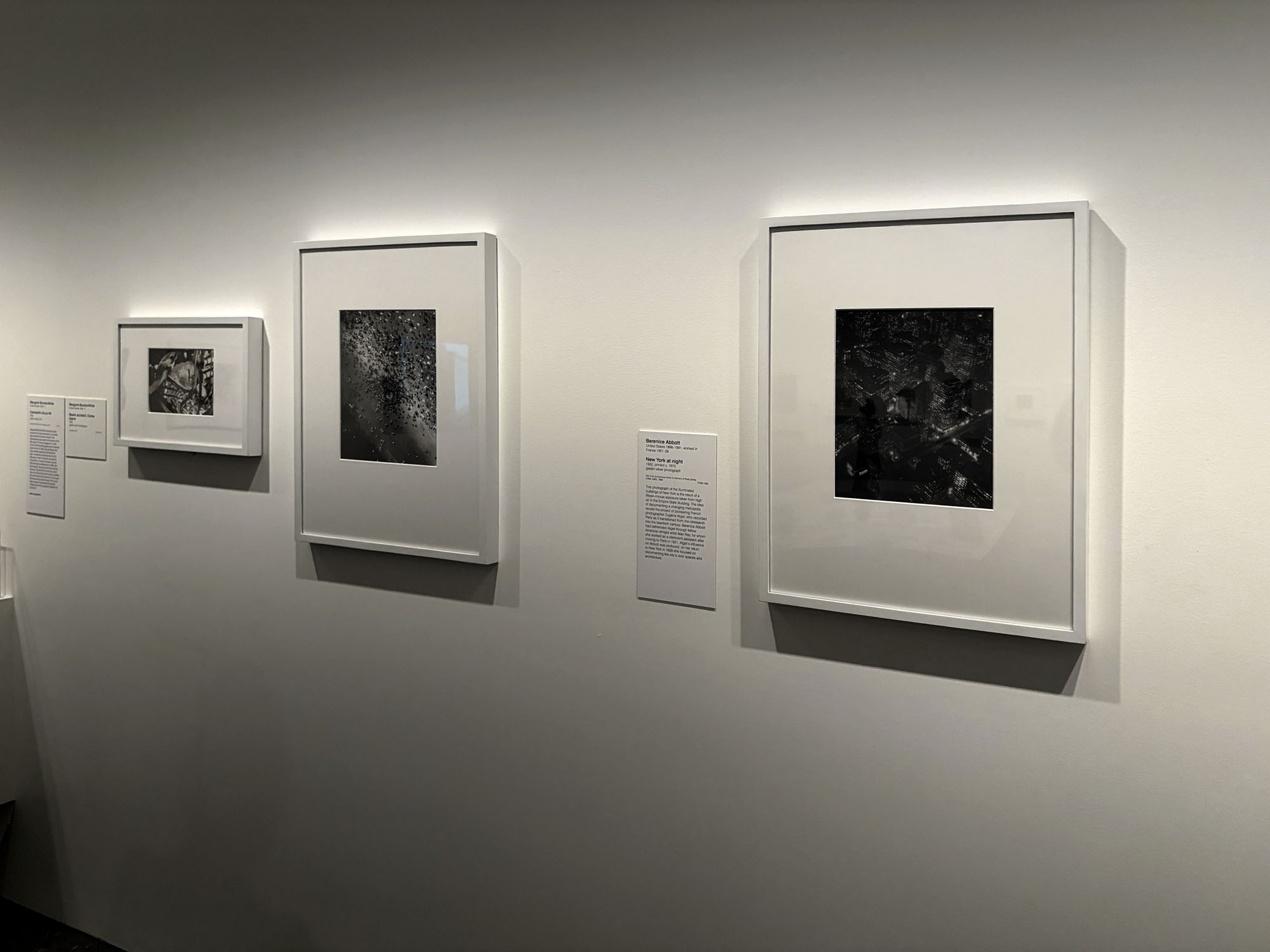
 

Installation view of the exhibition 'Women Photographers 1900-1975: A Legacy of Light' at NGV International, Melbourne, November 2025 - May 2026 showing at left, Margaret Bourke-White 'Campbell's Soup No. 6' (1935); Margaret Bourke-White 'Beach accident, Coney Island' (1952); and at right, Berenice Abbott 'New York at night' (1932 printed c. 1975)


Installation view of the exhibition Women Photographers 1900-1975: A Legacy of Light at NGV International, Melbourne, November 2025 – May 2026 showing at left, Margaret Bourke-White Campbell’s Soup No. 6 (1935, below); Margaret Bourke-White Beach accident, Coney Island (1952, below); and at right, Berenice Abbott New York at night (1932 printed c. 1975, below)
Photo: Marcus Bunyan
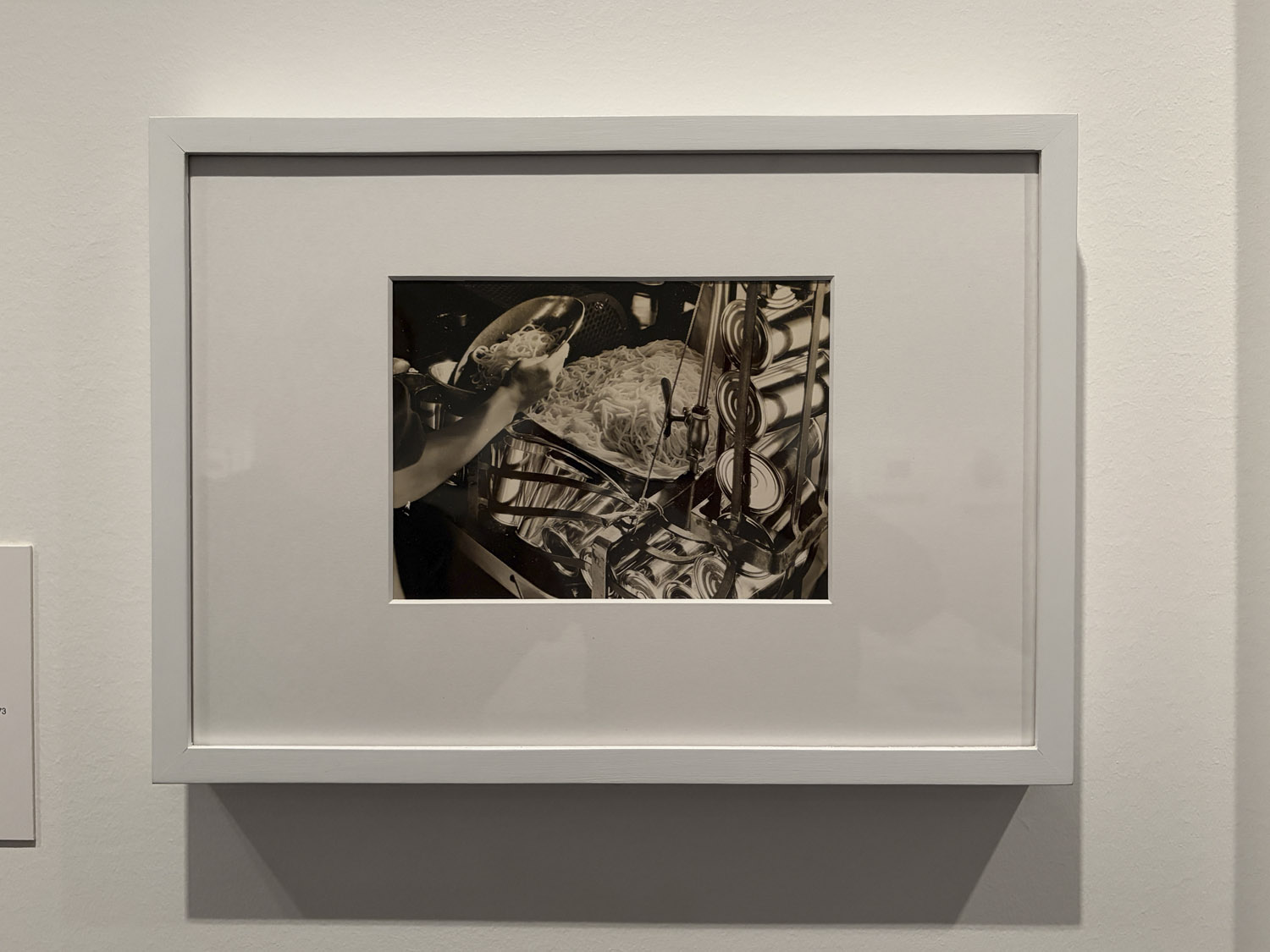
 

Margaret Bourke-White (American, 1904-1971) 'Campbell's Soup #6' 1935 (installation view)


Margaret Bourke-White (American, 1904-1971)
Campbell’s Soup #6 (installation view)
1935
Gelatin silver print
17.3 × 24.1cm (image and sheet)
National Gallery of Victoria, Melbourne
Bowness Family Fund for Photography, 2024
© Public Domain
Photo: Marcus Bunyan

New acquisition
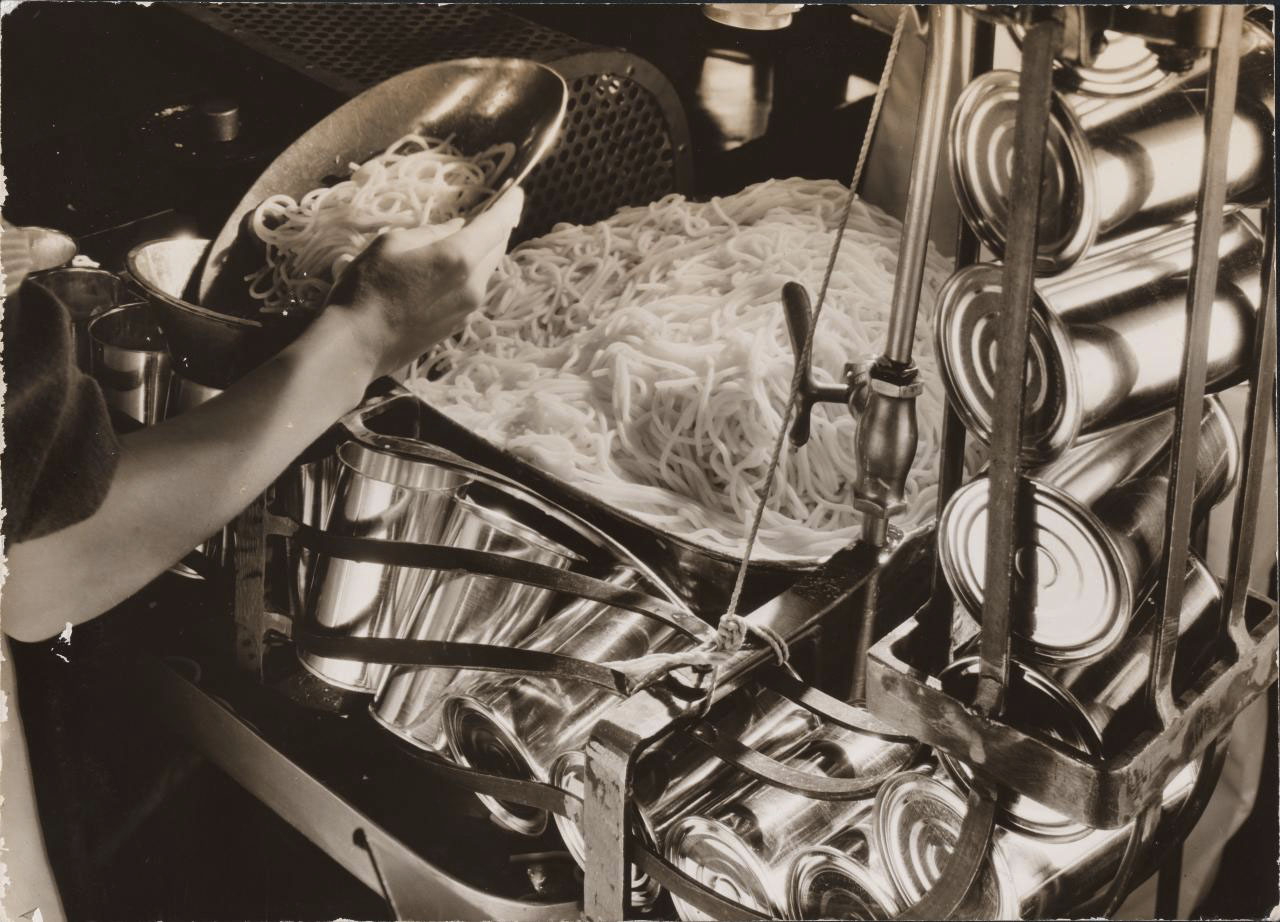
 

Margaret Bourke-White (American, 1904-1971) 'Campbell's Soup #6' 1935


Margaret Bourke-White (American, 1904-1971)
Campbell’s Soup #6
1935
Gelatin silver print
17.3 × 24.1cm (image and sheet)
National Gallery of Victoria, Melbourne
Bowness Family Fund for Photography, 2024
Public Domain

New acquisition


Margaret Bourke-White became widely known for her documentation of workers and scenes of modern industry. Her photography was used on the cover of the first issue of Fortune magazine in 1930, and on the first photographically illustrated cover of Life in 1936. Bourke-White often documented aspects of the Machine Age, contrasting machines and human labourers. Taken in a factory owned by Campbell’s, a major American canned-food company established in 1869, this photograph captures part of the canning process. Bourke-White’s framing, which does not show the worker’s face, amplifies the dominance of the machine. The image first featured as a commission for a local food magazine alongside the caption ‘tangled and tricky, spaghetti defeats the mechanic’.

Wall text from the exhibition
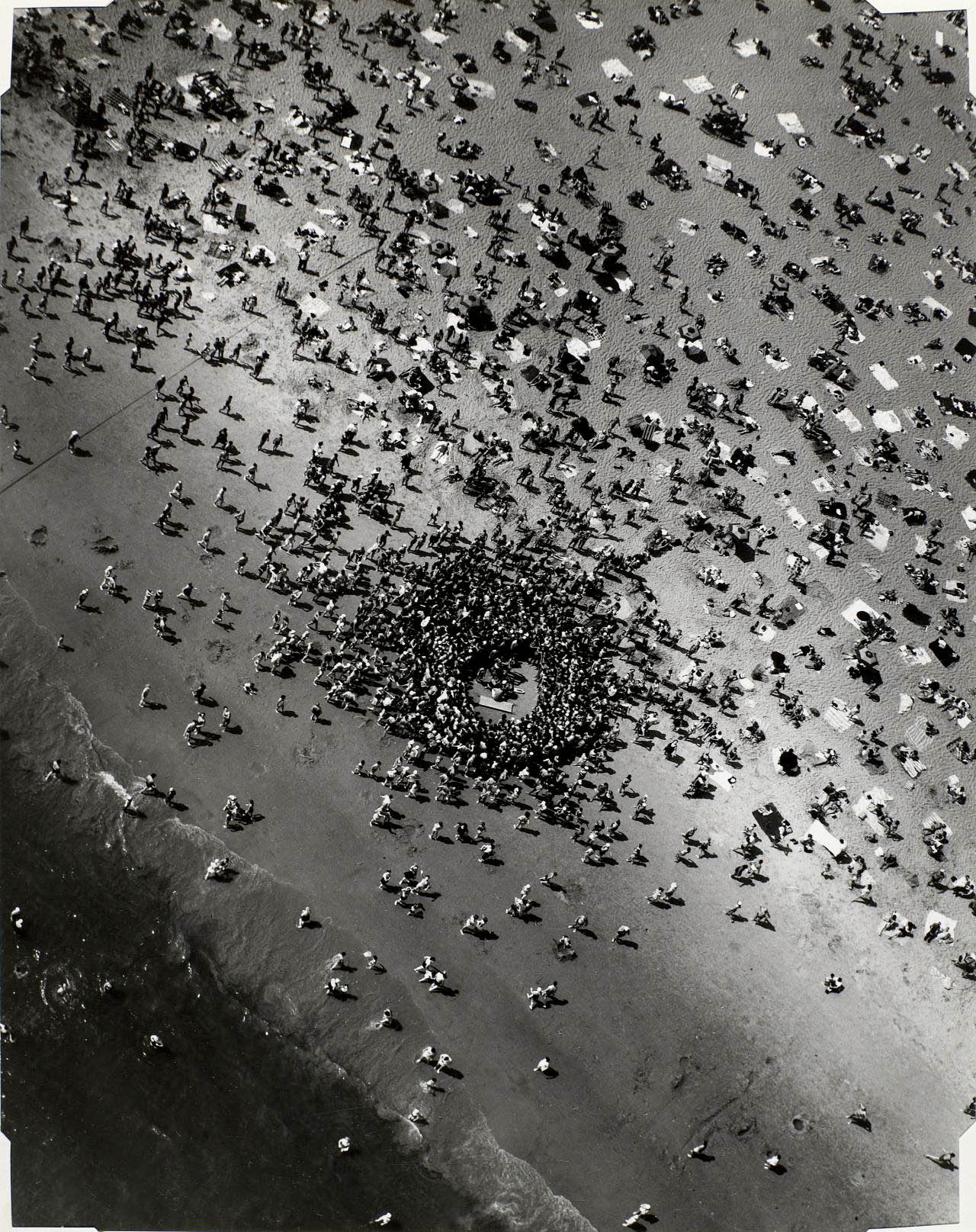
 

Margaret Bourke-White (American, 1904-1971) 'Beach accident, Coney Island' 1952


Margaret Bourke-White (American, 1904-1971)
Beach accident, Coney Island
1952
Gelatin silver photograph
35.2 x 27.9cm (image and sheet)
National Gallery of Victoria, Melbourne
Purchased, 1973
Public domain
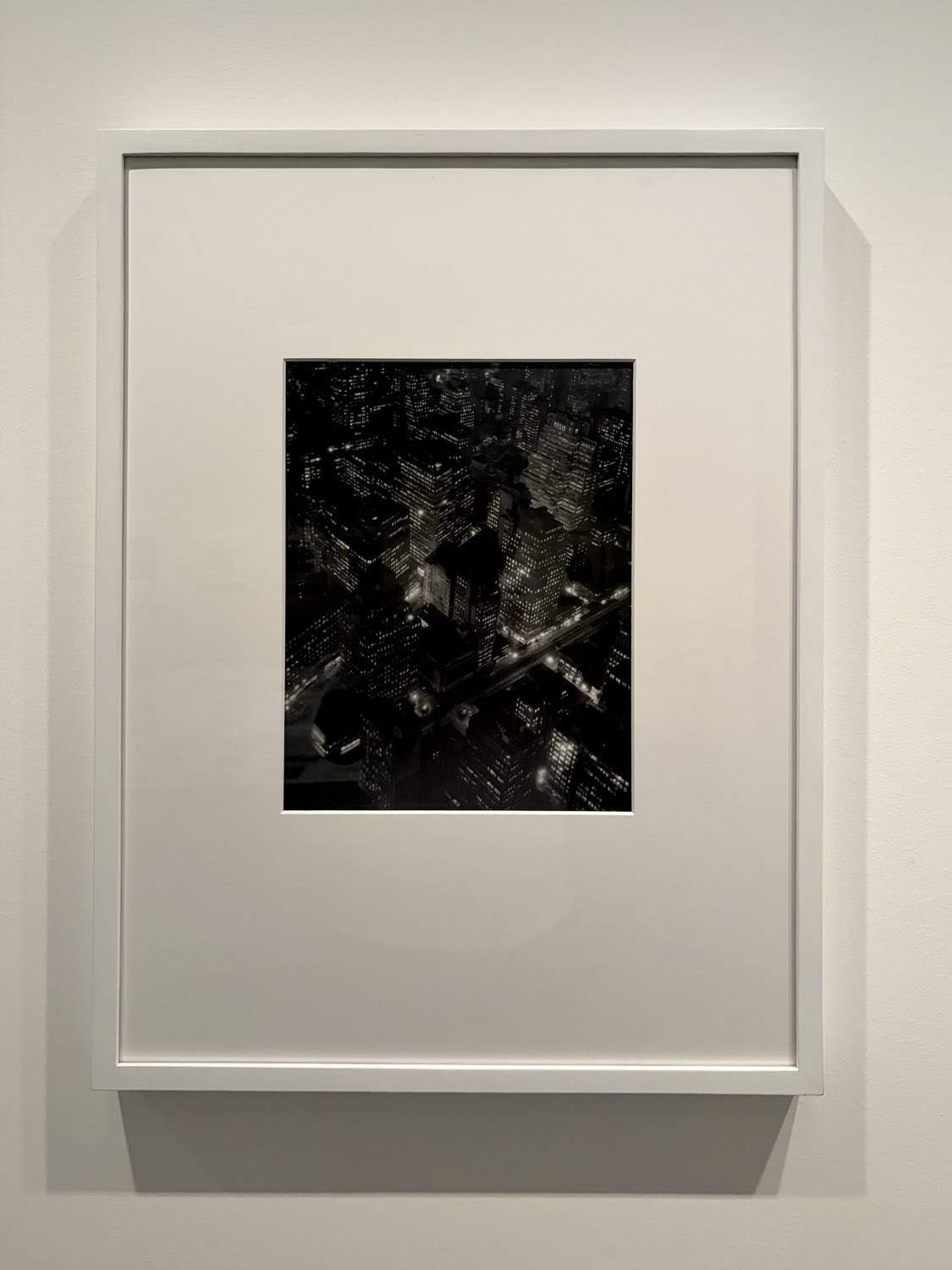
 

Berenice Abbott (American, 1898-1991) 'New York at night' 1932, printed c. 1975 (installation view)


Berenice Abbott (American, 1898-1991)
New York at night
1932, printed c. 1975
Gelatin silver photograph
34.1 x 26.1cm (image and sheet)
49.8 x 40.0cm (support)
National Gallery of Victoria, Melbourne
Gift of an anonymous donor in memory of Rosa Zerfas (1896-1983), 1985
Photo: Marcus Bunyan


This photograph of the illuminated buildings of New York is the result of a fifteen-minute exposure taken from high up in the Empire State Building. The idea of documenting a changing metropolis recalls the project of pioneering French photographer Eugène Atget, who recorded Paris as it transitioned from the nineteenth into the twentieth century. Berenice Abbott had befriended Atget through fellow American émigré artist Man Ray, for whom she worked as a darkroom assistant after moving to Paris in 1921. Atget’s influence on Abbott was profound: on her return to New York in 1929 she focused on documenting the city’s civic spaces and architecture.

Wall text from the exhibition


Berenice Abbott (American, 1898-1991) 'New York at Night' 1932


Berenice Abbott (American, 1898-1991)
New York at Night
1932
Gelatin silver print
12 7/8 x 10 9/16″ (32.7 x 26.9cm)

Photograph from the Art Blart archive
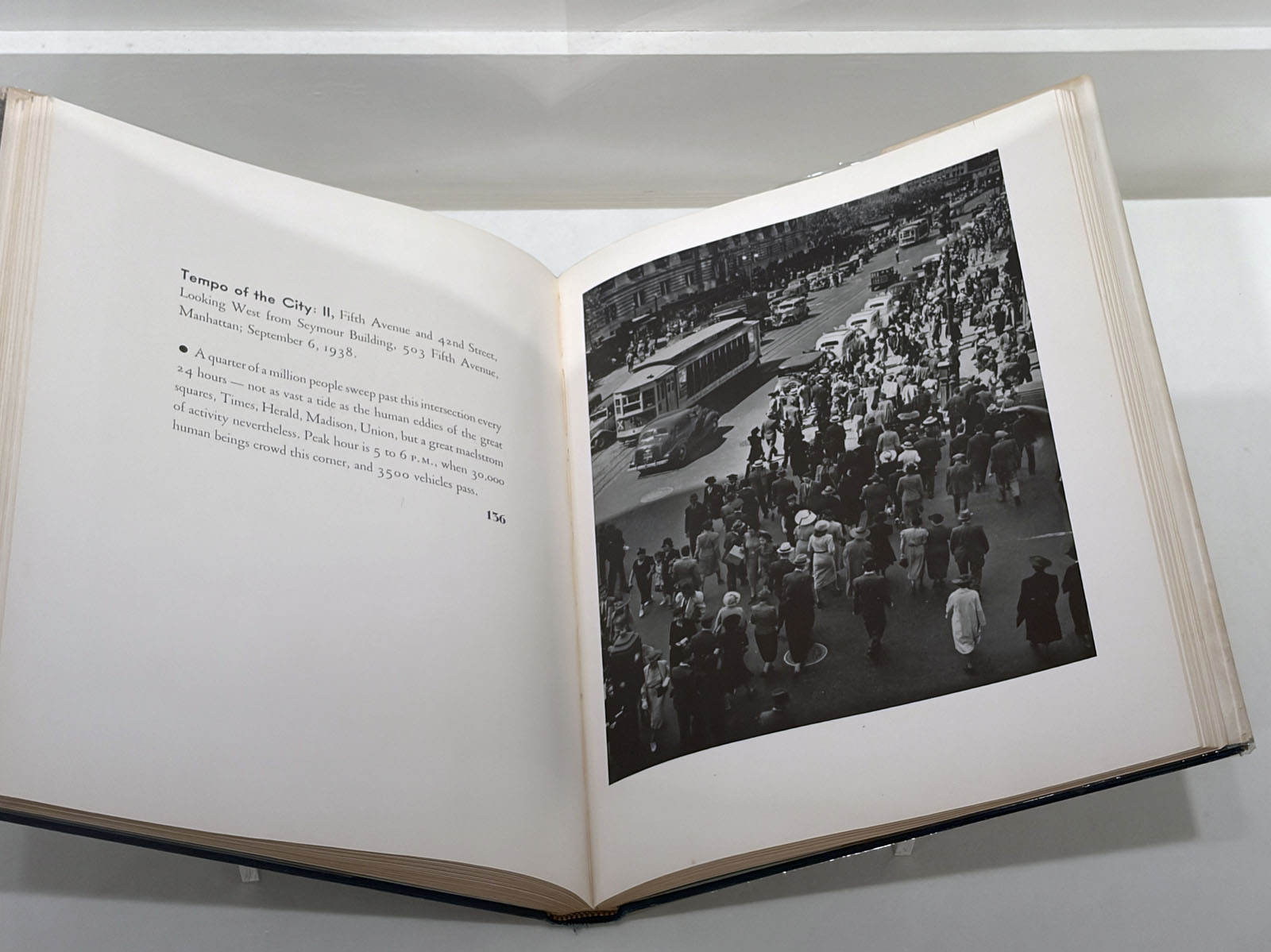
 

Berenice Abbott (American, 1898-1991) 'Changing New York' 1939 (installation view)


Berenice Abbott (American, 1898-1991)
Changing New York
1939
Artist’s book: half-tone and letterpress text, blue cloth cover, photographic dust jacket
1st edition
Purchased NGV Foundation 2022
Photo: Marcus Bunyan

New acquisition


In her funding proposal for the photobook Changing New York, Berenice Abbott described her desire to capture the ‘spirit’ of the city, driven by the realisation that ‘the tempo of the metropolis is not of eternity, or even time, but of the vanishing instant’. The images in the photobook are accompanied by texts written by Abbott’s partner, art critic Elizabeth McCausland. However, recent research has revealed that Abbott and McCausland’s original intentions for the book were significantly different to what was ultimately published, included alternate texts and a more innovative interplay between words and images.

Vitrine text from the exhibition
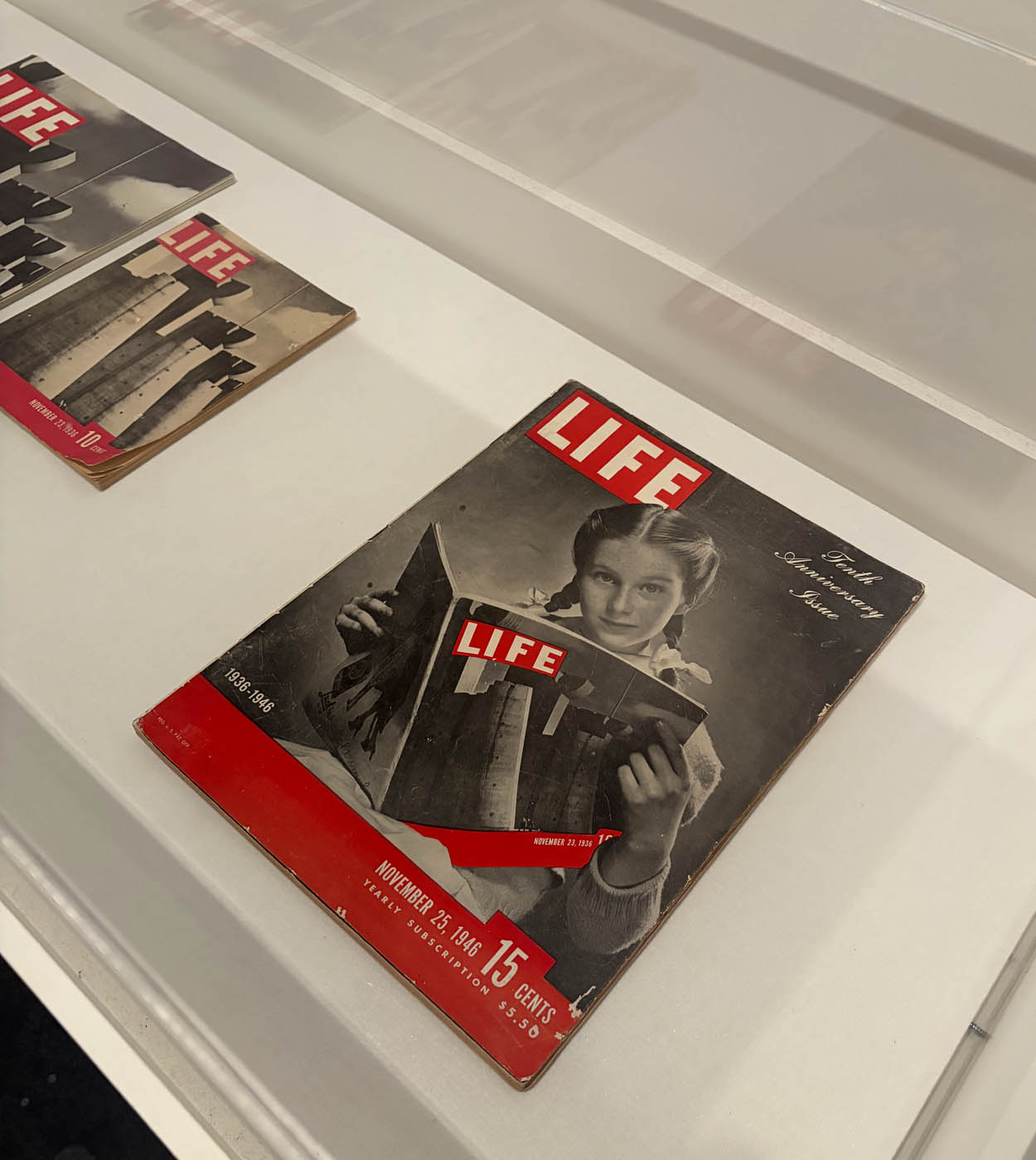
 

Margaret Bourke-White (American, 1904-1971) 'Fort Peck Dam, Montana' Front cover, 'Life' magazine, first issue, November 1936 (left); Margaret Bourke-White (American, 1904-1971) 'Fort Peck Dam, Montana' Front cover, 'Life' magazine, first issue, November 1936, 'Salesman's edition' (second left); Margaret Bourke-White (American, 1904-1971) 'Fort Peck Dam, Montana' reproduced on front cover, Life magazine, tenth anniversary issue, 25 November 1946 (right)


Margaret Bourke-White (American, 1904-1971)
Fort Peck Dam, Montana
Front cover, Life magazine, first issue, November 1936
Published by Time Inc.
Magazine: offset lithographs and printed text
Shaw research Library, Gift of Patrick Pound, 2025

Margaret Bourke-White (American, 1904-1971)
Fort Peck Dam, Montana
Front cover, Life magazine, first issue, November 1936, ‘Salesman’s edition’
Published by Time Inc.
Magazine: offset lithographs and printed text
Shaw research Library, Gift of Patrick Pound, 2025

Margaret Bourke-White (American, 1904-1971)
Fort Peck Dam, Montana
Reproduced on front cover, Life magazine, tenth anniversary issue, 25 November 1946
Published by Time Inc.
Magazine: offset lithographs and printed text
Shaw research Library, Gift of Patrick Pound, 2025
Photo: Marcus Bunyan

New acquisitions


When the American publication Life was purchased by Henry Luce in 1936, it was transformed into a photographic news magazine. Its aim was to let its readers ‘see’ the world. Photojournalist Margaret Bourke-White had preciously worked with Luce at Fortune magazine, and a year later he sent Bourke-White to the Soviet Union as the first official foreign photographer allowed to create images of Soviet industry. Later, she was the first accredited woman photographer assigned to photograph the effects of the Second World War.

In 1936 Life magazine gave Margaret Bourke-White the brief of seeking out something ‘grand’ and aspirational at the chain of dams being built at the Columbia River basin. The dams were being built to stimulate the economy as the United States grappled with the devastating effects of the Great Depression. The resulting photograph was selected for the first cover of the relaunched Life magazine. An image of modern industry, the composition emphasises the graphic forms and patterns created by the bases of the elevated spillway. The pillars seem to repeat endlessly, overshadowing two workers dwarfed by the enormous construction. Bourke-White’s image is considered an iconic representation of the Machine Age.

Vitrine text from the exhibition
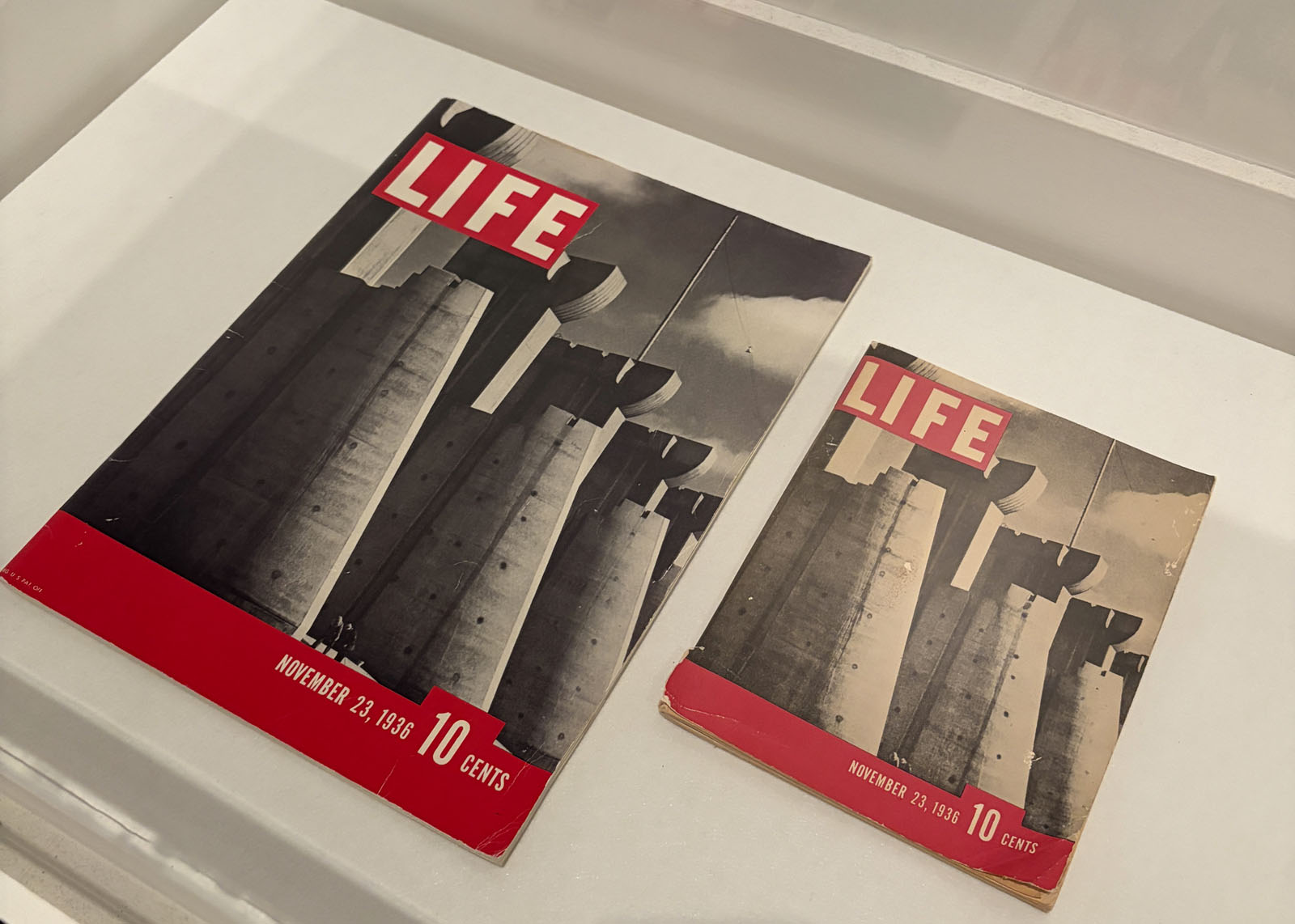
 

Margaret Bourke-White (American, 1904-1971) 'Fort Peck Dam, Montana' Front cover, 'Life' magazine, first issue, November 1936 (left); Margaret Bourke-White (American, 1904-1971) 'Fort Peck Dam, Montana' Front cover, 'Life' magazine, first issue, November 1936, 'Salesman's edition' (second left)


Margaret Bourke-White (American, 1904-1971)
Fort Peck Dam, Montana
Front cover, Life magazine, first issue, November 1936
Published by Time Inc.
Magazine: offset lithographs and printed text
Shaw research Library, Gift of Patrick Pound, 2025

Margaret Bourke-White (American, 1904-1971)
Fort Peck Dam, Montana
Front cover, Life magazine, first issue, November 1936, ‘Salesman’s edition’
Published by Time Inc.
Magazine: offset lithographs and printed text
Shaw research Library, Gift of Patrick Pound, 2025
Photos: Marcus Bunyan

New acquisitions
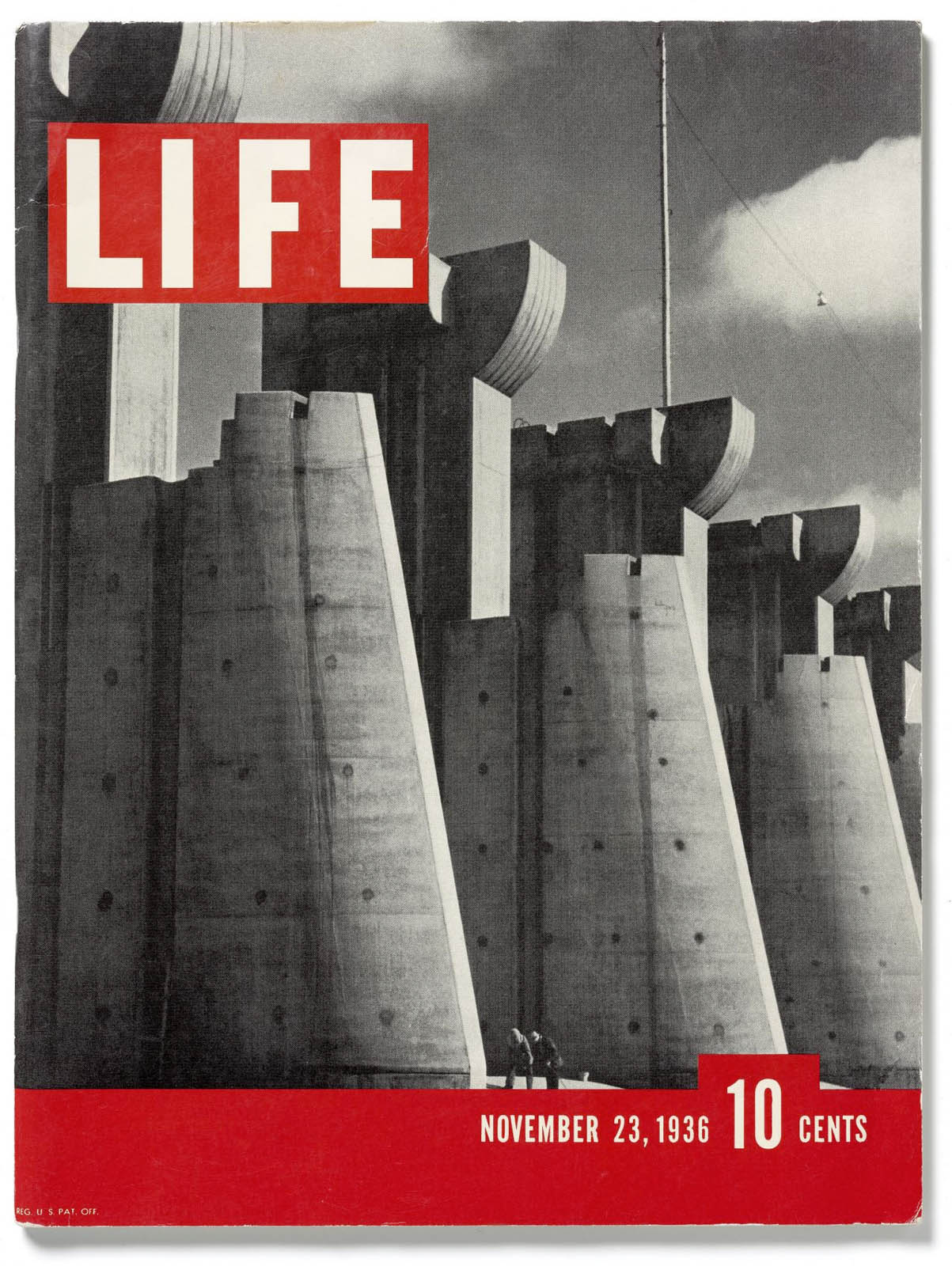
 

Margaret Bourke-White (American, 1904-1971) 'Fort Peck Dam, Montana'
Front cover, 'Life' magazine, first issue, November 1936


Margaret Bourke-White (American, 1904-1971)
Fort Peck Dam, Montana
Front cover, Life magazine, first issue, November 1936
Published by Time Inc.
Magazine: offset lithographs and printed text
Shaw research Library, Gift of Patrick Pound, 2025
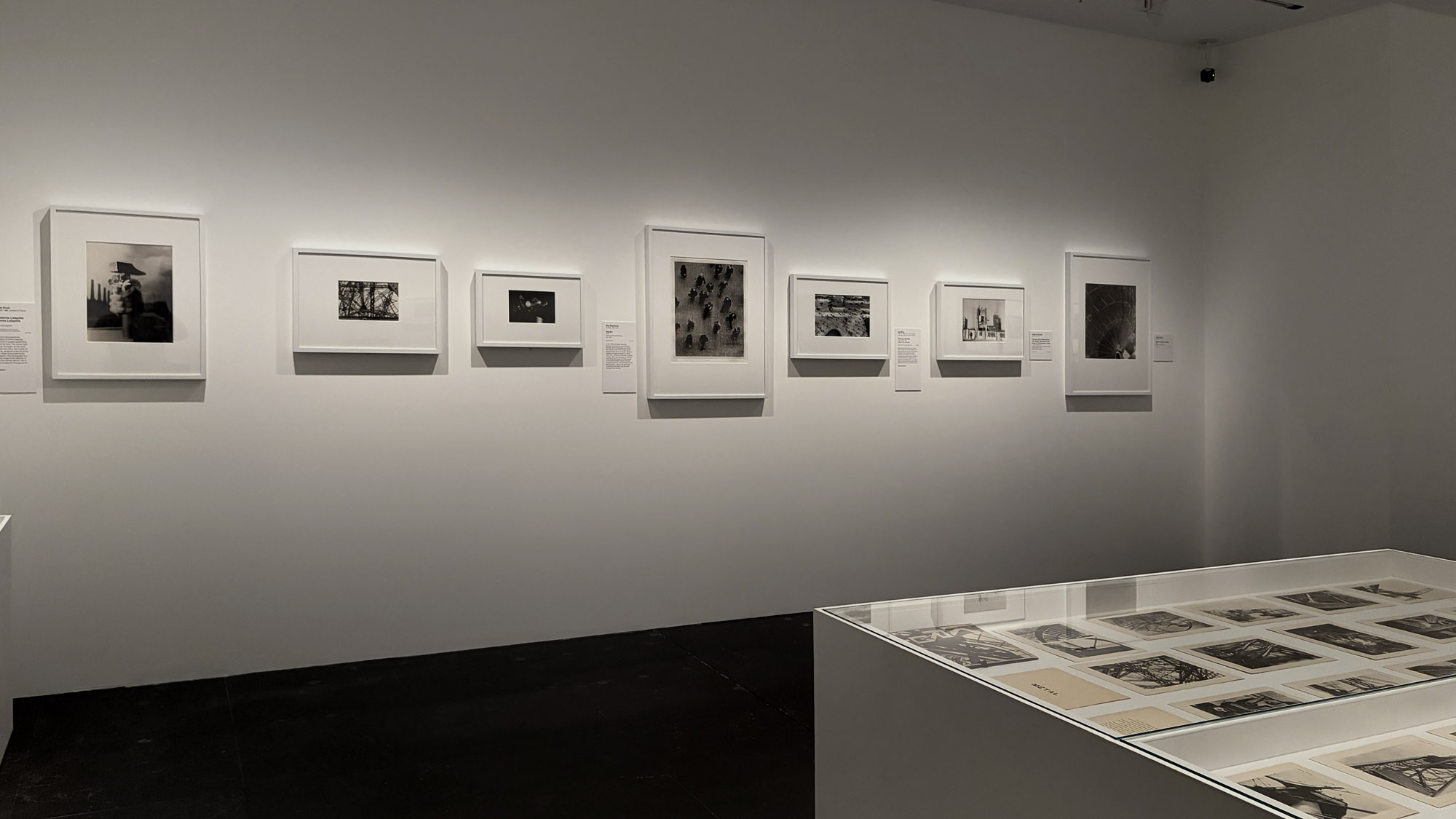
 

Installation view of the exhibition 'Women Photographers 1900-1975: A Legacy of Light' at NGV International, Melbourne, November 2025 - May 2026 showing at left, Laure Albin Guillot (French, 1879-1962) 'Hammer in bloom' 1940s New acquisition; at second left, Germaine Krull 'The Eiffel Tower' (c. 1928); at third left, Germaine Krull 'At the Galeries Lafayette' c. 1930 New acquisition; at centre, Bea Maddock 'Square' (1972); at third right, Ilse Bing 'Champs de Mars' (1931, printed 1994) New acquisition; at second right, Heather George 'The last wall of Melbourne's Old Eastern Markets comes down for the Southern Cross' (c. 1966, printed 1978); and at right, Olive Cotton 'Radio telescope, Parkes' (1964)


Installation view of the exhibition Women Photographers 1900-1975: A Legacy of Light at NGV International, Melbourne, November 2025 – May 2026 showing at left, Laure Albin Guillot (French, 1879-1962) Hammer in bloom 1940s New acquisition; at second left, Germaine Krull The Eiffel Tower (c. 1928, below); at third left, Germaine Krull At the Galeries Lafayette c. 1930 New acquisition; at centre, Bea Maddock Square (1972, below); at third right, Ilse Bing Champs de Mars (1931 printed 1994, below) New acquisition; at second right, Heather George The last wall of Melbourne’s Old Eastern Markets comes down for the Southern Cross (c. 1966 printed 1978, below); and at right, Olive Cotton Radio telescope, Parkes (1964)
Photo: Marcus Bunyan
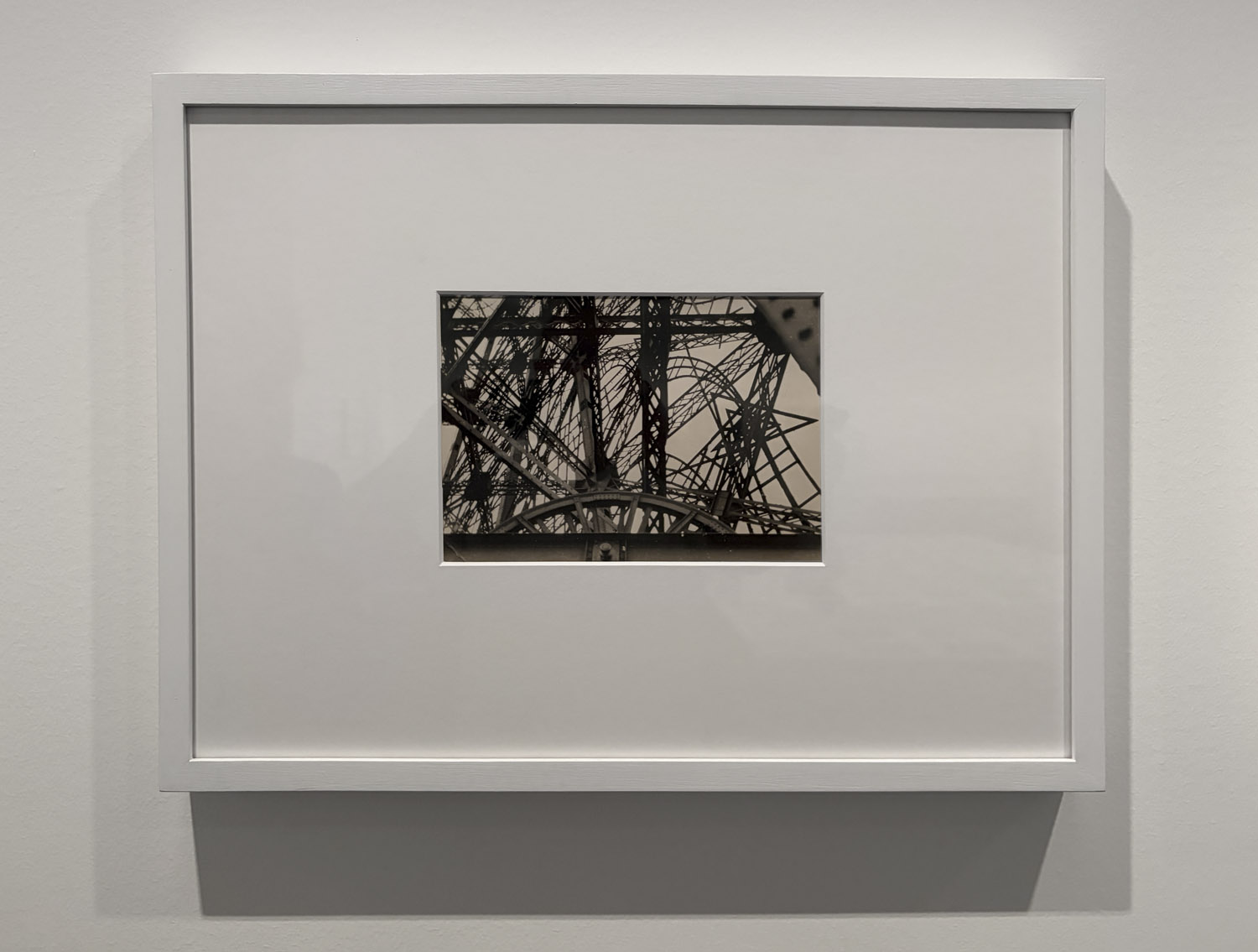
 

Germaine Krull (Dutch born Germany, 1897-1985) 'The Eiffel Tower' c. 1928 (installation view)


Germaine Krull (Dutch born Germany, 1897-1985)
The Eiffel Tower (installation view)
c. 1928
Gelatin silver photograph
17.0 x 24.3cm (image and sheet)
National Gallery of Victoria, Melbourne
Bowness Family Fund for Photography, 2022
Photo: Marcus Bunyan

New acquisition
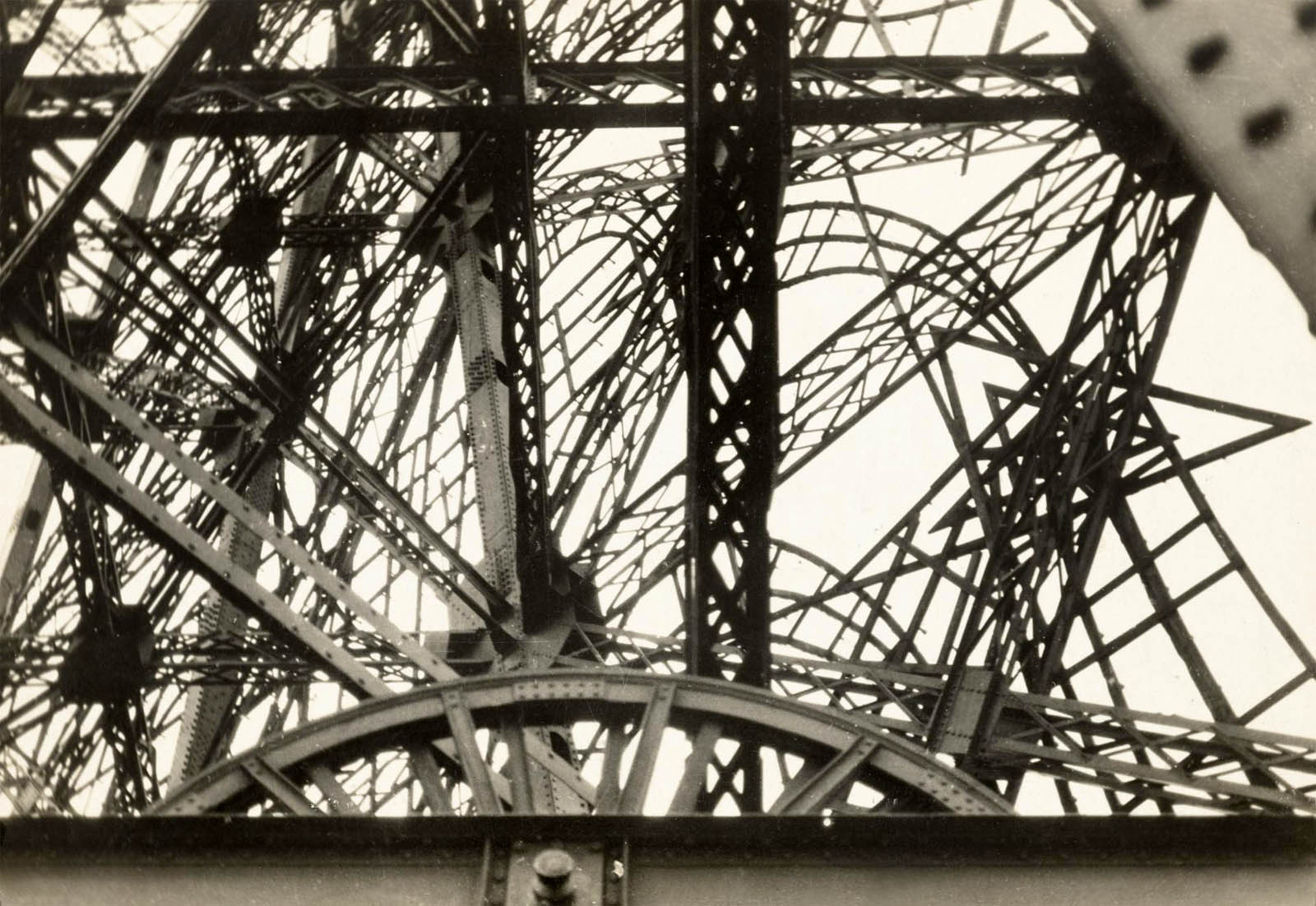
 

Germaine Krull (Dutch born Germany, 1897-1985) 'The Eiffel Tower' c. 1928


Germaine Krull (Dutch born Germany, 1897-1985)
The Eiffel Tower
c. 1928
Gelatin silver photograph
17.0 x 24.3cm (image and sheet)
National Gallery of Victoria, Melbourne
Bowness Family Fund for Photography, 2022

New acquisition


Germaine Krull photographed industrial forms, political upheaval and modern life. Trained in Munich, she opened a portrait studio in 1919, relocating to Paris in 1926. Three years later, Krull’s photographs were included in the renowned 1929 exhibition Film und Foto in Stuttgart, Germany, the first international exhibition of modernist photography. During the 1920s the Eiffel Tower became a symbol of modernity for many artists, including Krull. In this image, she reimagines the visual language of the man-made structure, highlighting both
the beauty and functionality of the famous landmark. Krull led a peripatetic life across four continents, focusing on photojournalism in South-East Asia after the Second World War and later living among Tibetan monks.

Wall text from the exhibition
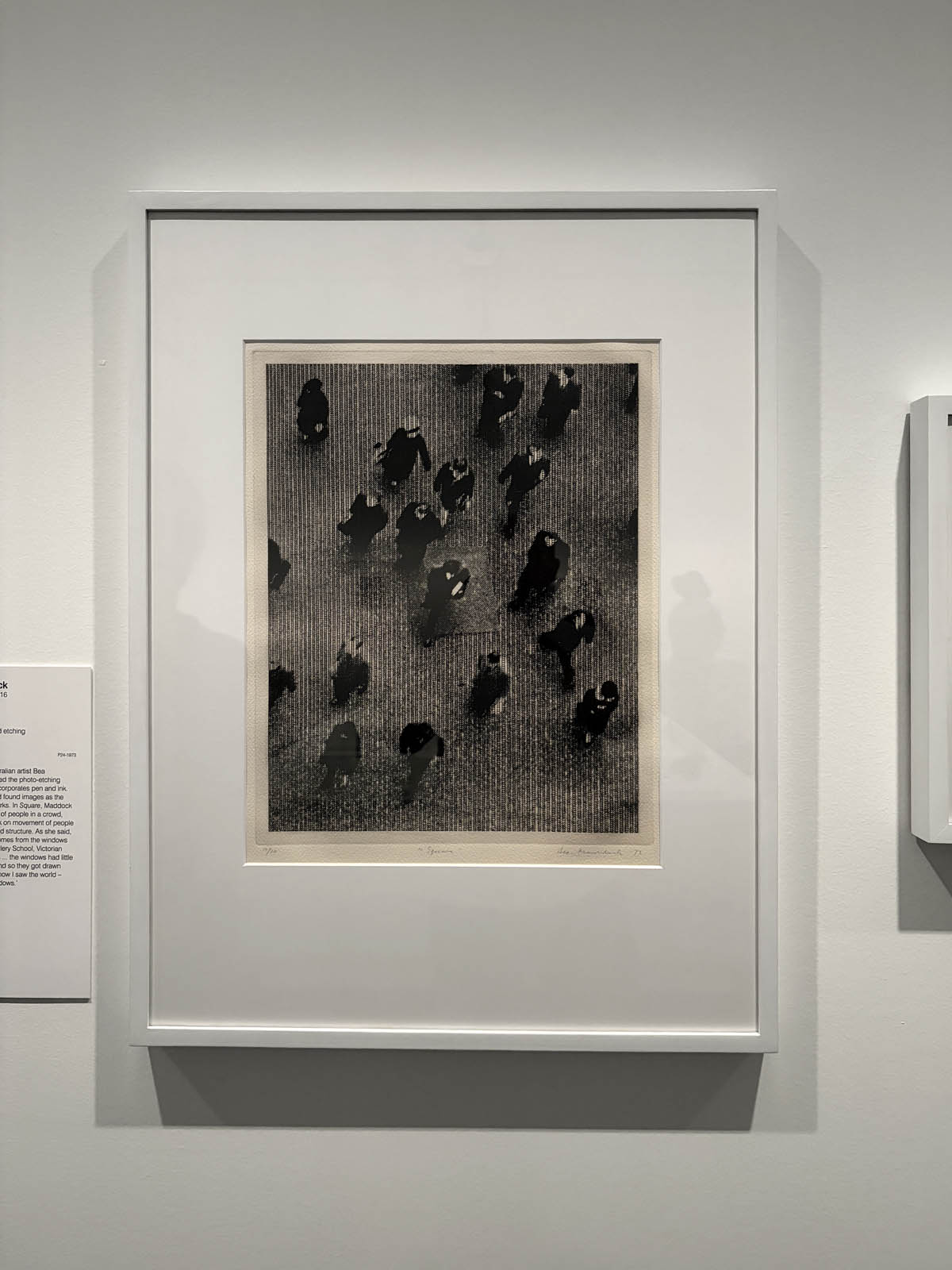
 

Bea Maddock (Australian, 1934-2016)
'Square' 1972 (installation view)
Bea Maddock (Australian, 1934-2016) 'Square' 1972 (installation view)


Bea Maddock (Australian, 1934-2016)
Square
1972
Photo-etching and etching
46.2 × 36.7cm (image) 49.0 × 39.4cm (plate) 76.0 × 56.8cm (sheet)
National Gallery of Victoria, Melbourne
Purchased, 1973
Photos: Marcus Bunyan
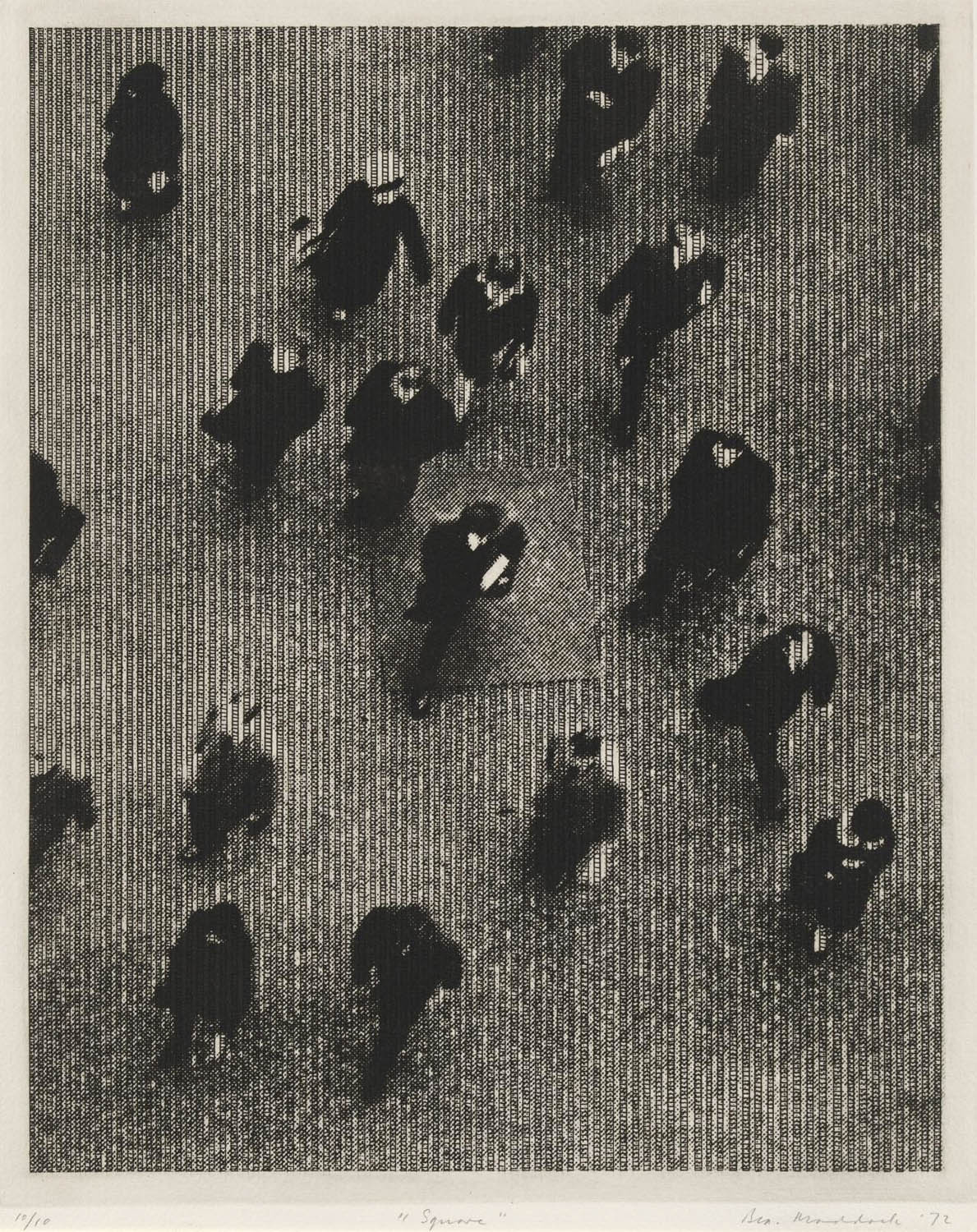
 

Bea Maddock (Australian, 1934-2016) 'Square' 1972


Bea Maddock (Australian, 1934-2016)
Square
1972
Photo-etching and etching
46.2 × 36.7cm (image) 49.0 × 39.4cm (plate) 76.0 × 56.8cm (sheet)
National Gallery of Victoria, Melbourne
Purchased, 1973
© Courtesy of the artist


In the 1970s, Australian artist Bea Maddock embraced the photo-etching process, which incorporates pen and ink. She regularly used found images as the basis for these works. In Square, Maddock overlaid an image of people in a crowd, taken from ‘a book on movement of people in cities’, with a grid structure. As she said, “The actual grid comes from the windows in the National Gallery School, Victorian College of the Arts … the windows had little grills on them … and so they got drawn in because that’s how I saw the world – through those windows.”

Wall text from the exhibition
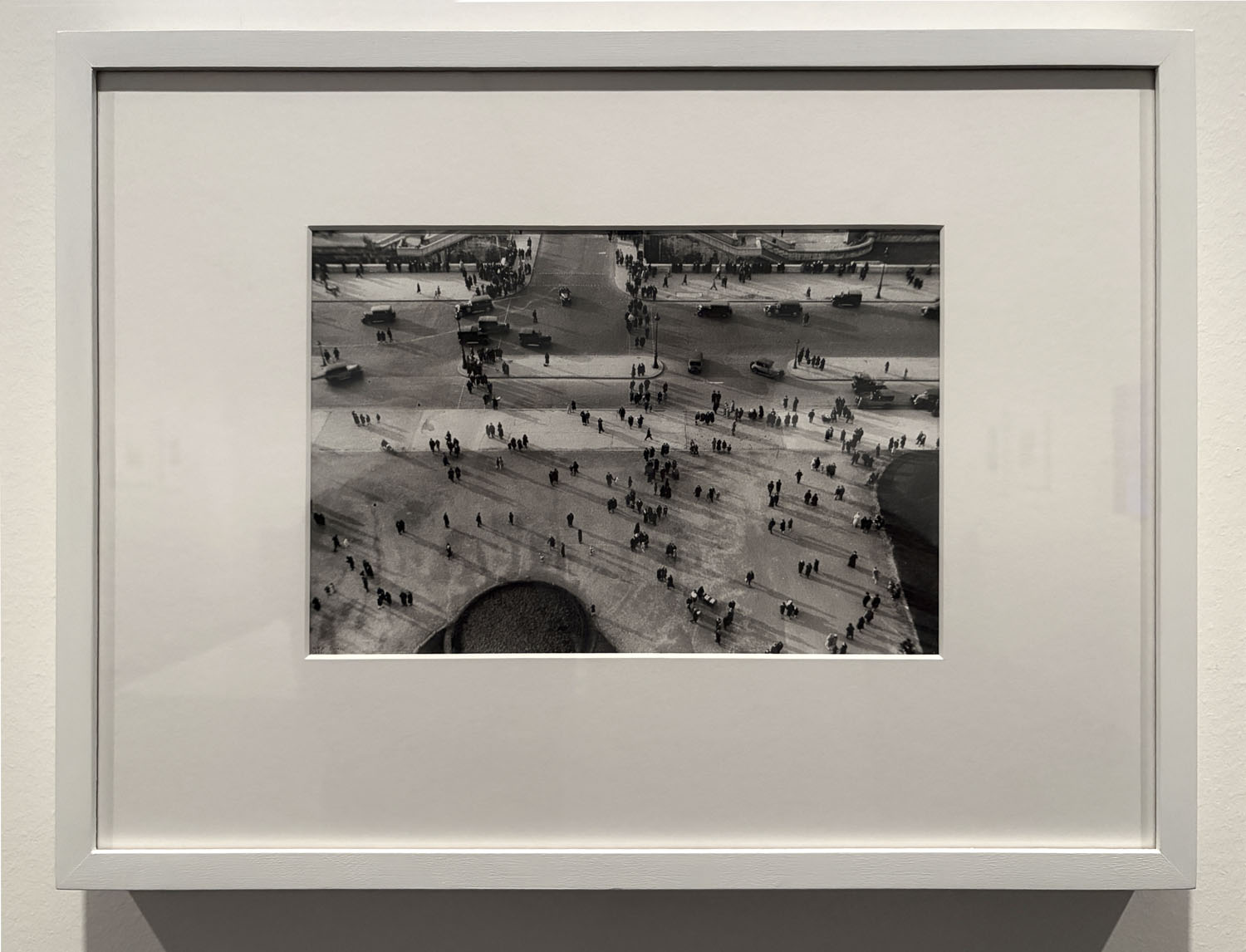
 

Ilse Bing (German, 1899-1998) 'Champs de Mars' 1931, printed 1994 (installation view)


Ilse Bing (German, 1899-1998)
Champs de Mars (installation view)
1931, printed 1994
Gelatin silver photograph
21.9 x 33.1cm (image) 27.6 x 35.3cm (sheet)
National Gallery of Victoria, Melbourne
Bowness Family Fund for Photography, 2022
Photo: Marcus Bunyan
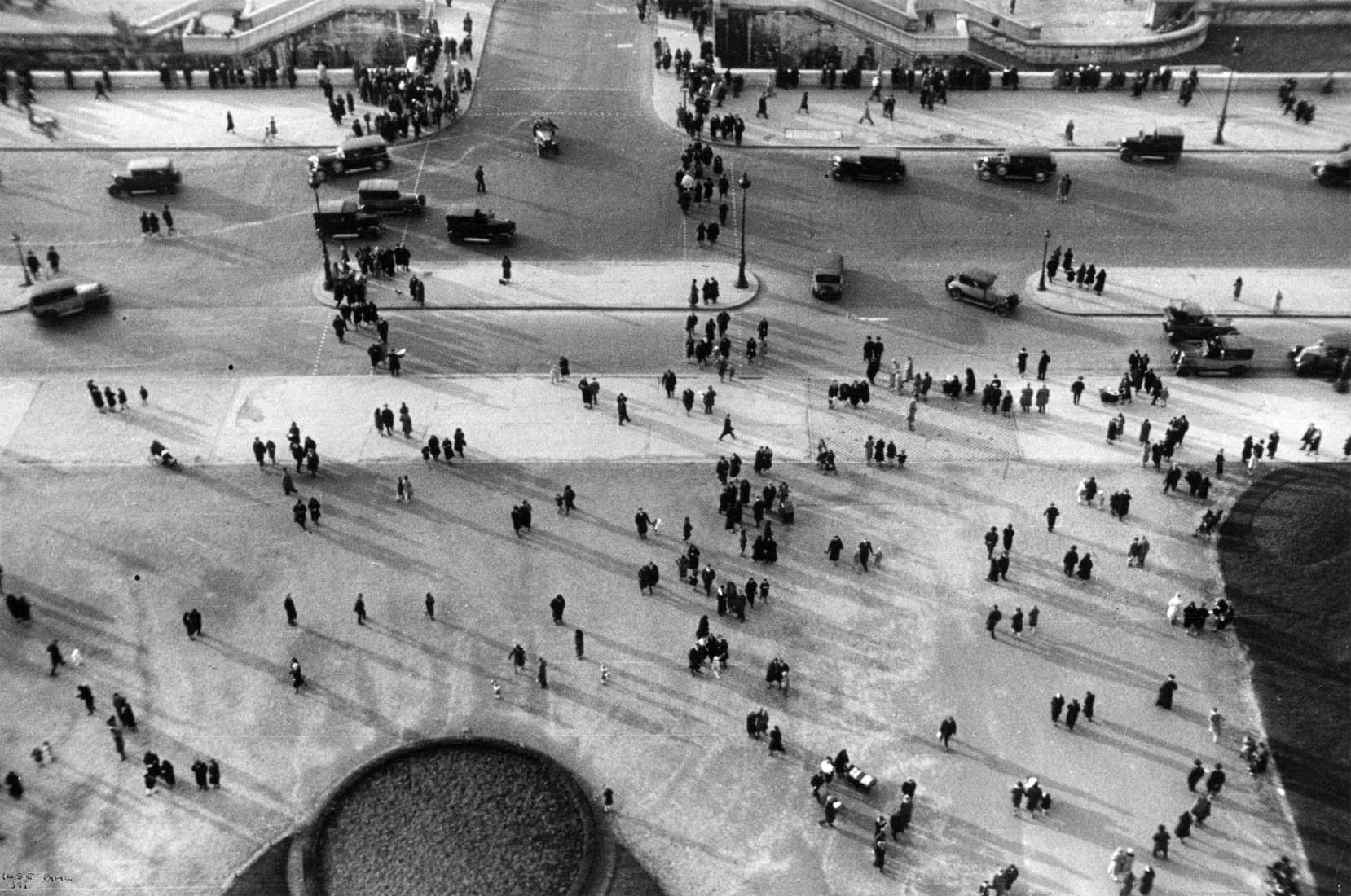
 

Ilse Bing (German, 1899-1998) 'Champs de Mars' 1931, printed 1994


Ilse Bing (German, 1899-1998)
Champs de Mars
1931, printed 1994
Gelatin silver photograph
21.9 x 33.1cm (image) 27.6 x 35.3cm (sheet)
National Gallery of Victoria, Melbourne
Bowness Family Fund for Photography, 2022


Taken atop the Eiffel Tower, this image sees Ilse Bing turn her lightweight 35 mm Leica camera downwards, photographing the people and bustling city below. The distance created by this dizzying viewpoint reduces the scene to a pattern of shapes and forms. Images such as these were characteristic of a ‘new way of seeing’ that was adopted by avant-garde photographers during the interwar period.

Wall text from the exhibition
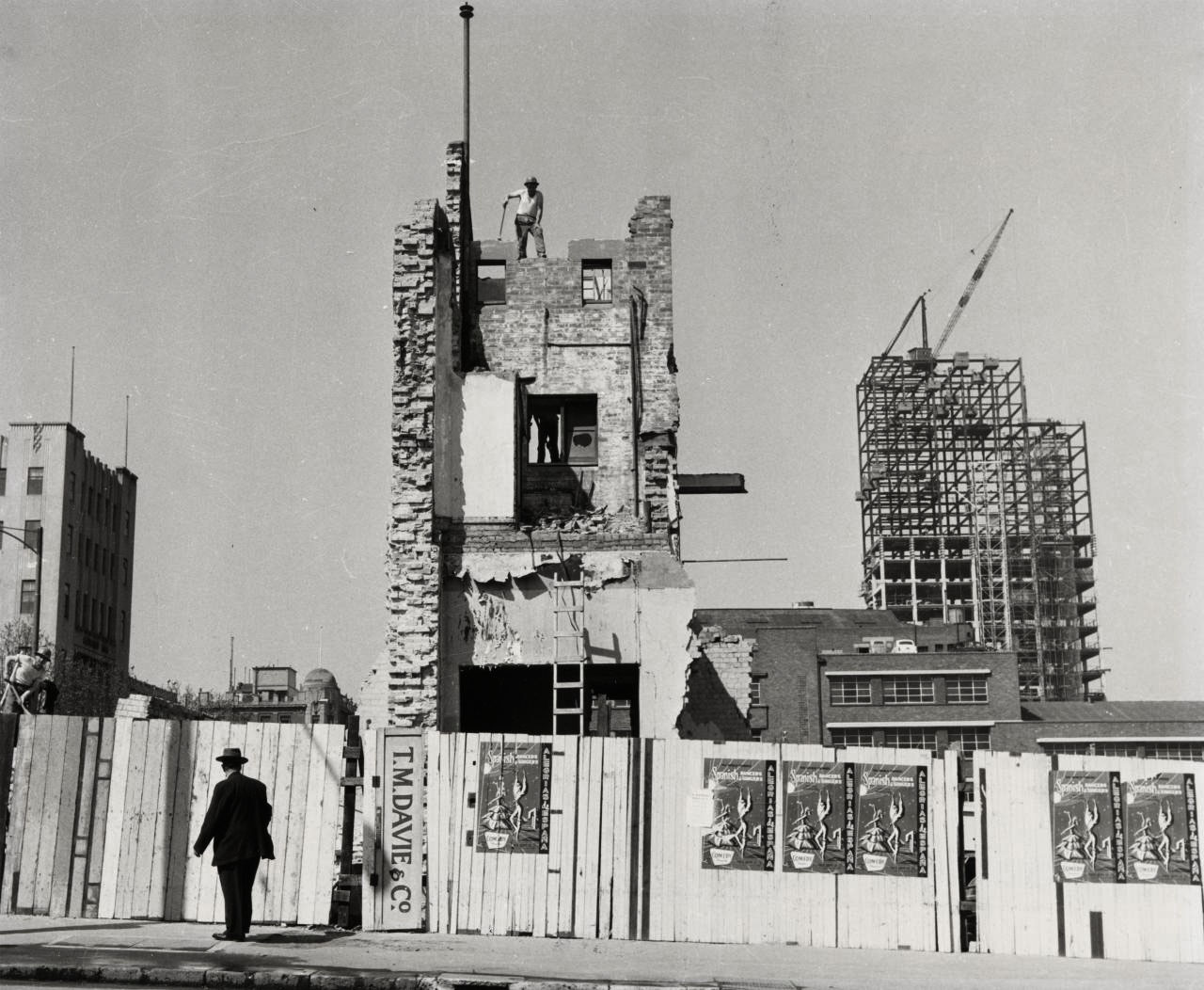
 

Heather George (Australian, 1907-1983) 'The last wall of Melbourne's Old Eastern Markets comes down for the Southern Cross' c. 1966, printed 1978


Heather George (Australian, 1907-1983)
The last wall of Melbourne’s Old Eastern Markets comes down for the Southern Cross
c. 1966, printed 1978
From the Melbourne, old buildings and new projects series (c. 1966)
Gelatin silver photograph
24.0 × 29.1cm (image)
National Gallery of Victoria, Melbourne
Purchased, 1980
Public domain
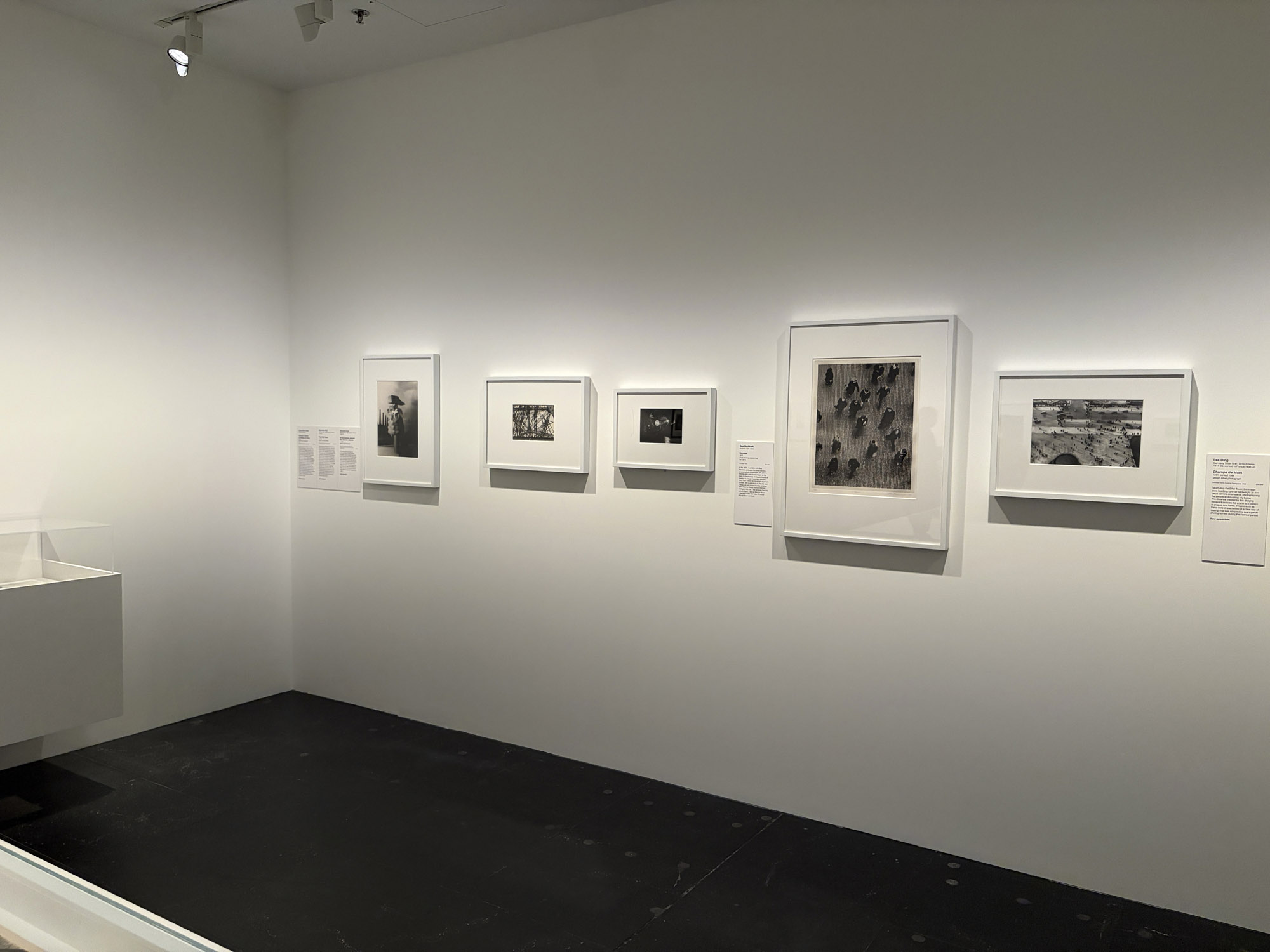
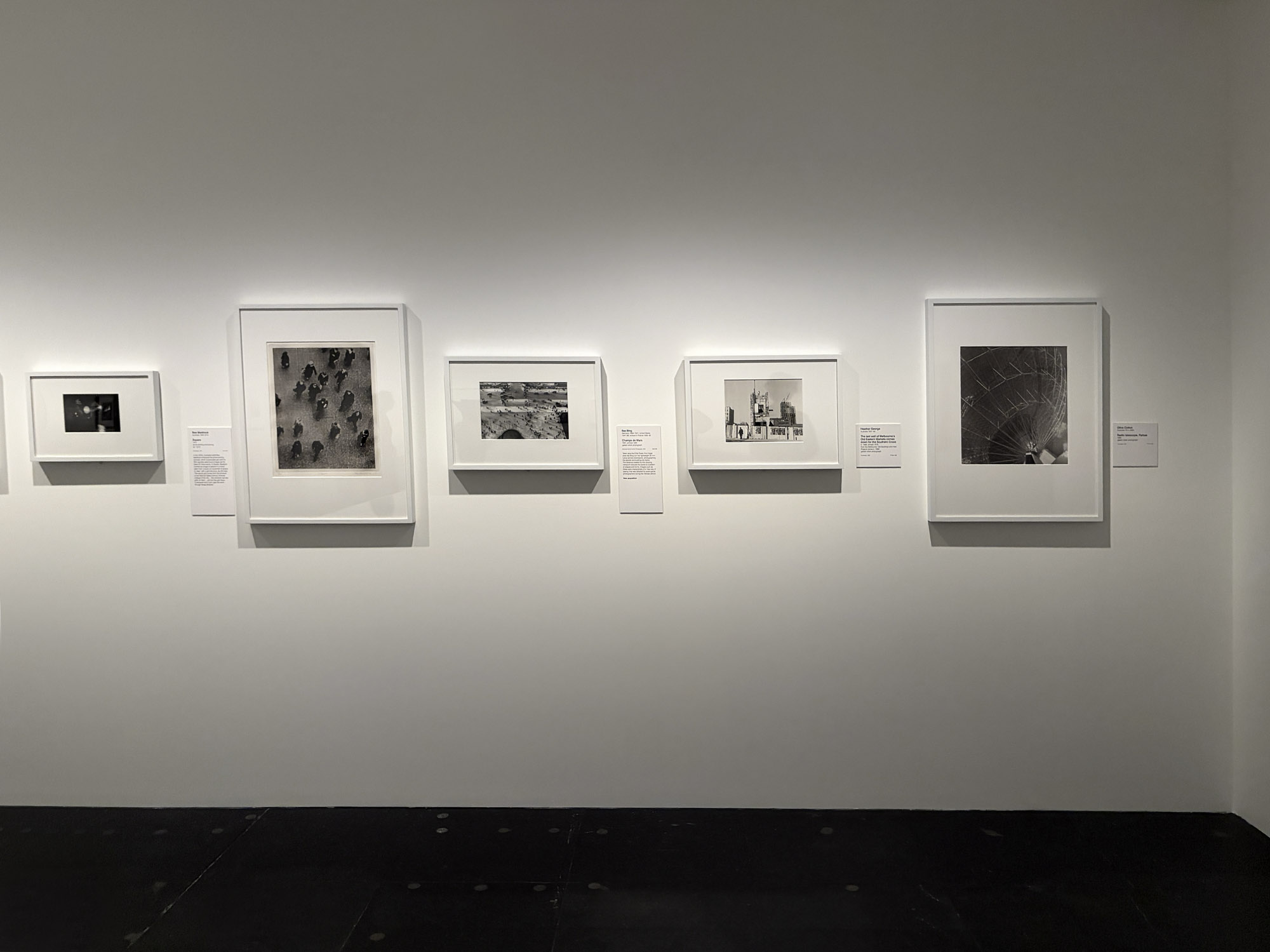
 

Installation view of the exhibition 'Women Photographers 1900-1975: A Legacy of Light' at NGV International, Melbourne, November 2025 - May 2026


Installation view of the exhibition Women Photographers 1900-1975: A Legacy of Light at NGV International, Melbourne, November 2025 – May 2026 showing in the bottom image at left, Germaine Krull At the Galeries Lafayette c. 1930 New acquisition; at second left, Bea Maddock Square (1972, above); at third left, Ilse Bing Champs de Mars (1931 printed 1994, above) New acquisition; at second right, Heather George The last wall of Melbourne’s Old Eastern Markets comes down for the Southern Cross (c. 1966 printed 1978, above); and at right, Olive Cotton Radio telescope, Parkes (1964)
Photos: Marcus Bunyan
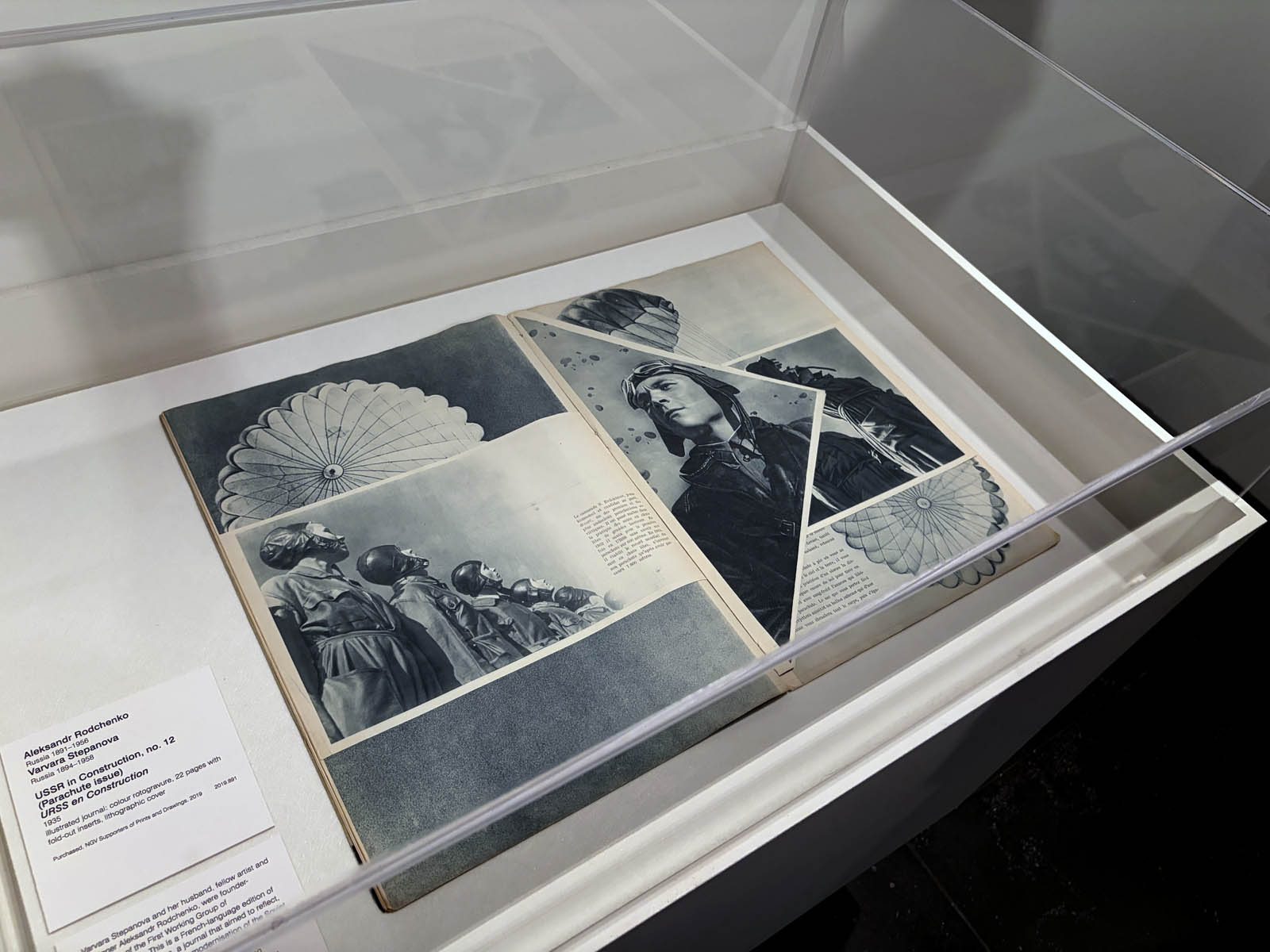
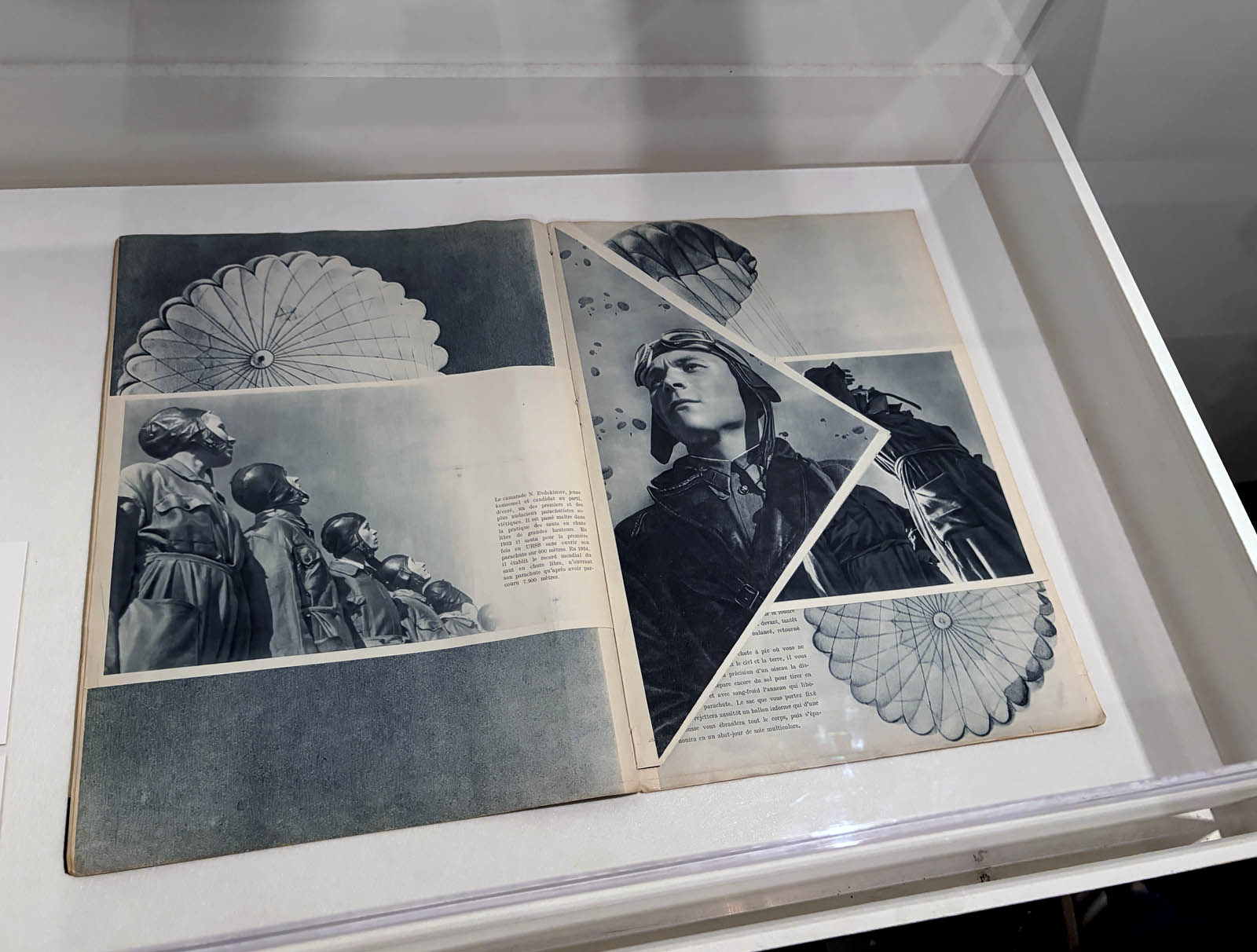
 

Aleksandr Rodchenko (Russian, 1891-1956) and Varvara Stepanova (Russian, 1894-1958) 'USSR in construction, no.12 (Parachute issue)' 1935 (installation view)


Aleksandr Rodchenko (Russian, 1891-1956) and Varvara Stepanova (Russian, 1894-1958)
USSR in construction, no.12 (Parachute issue) (installation views)
1935
Illustrated journal: colour rotogravure, 22 pages with fold-out inserts, lithographic cover
42.3 x 60.3 x 1.2cm (open)
42.3 x 30.3 x 0.4cm (closed)
National Gallery of Victoria, Melbourne
Purchased, NGV Supporters of Prints and Drawings, 2019
Photos: Marcus Bunyan


Varvara Stepanova and her husband, fellow artist and designer Aleksandr Rodchenko, were founder-members of the First Working Group of Constructivists. This is a French-language edition of USSR in Construction, a journal that aimed to reflect, through photography, the modernisation of the Soviet Union and to promote its industrial power. The journal employed cutting-edge artistic and printing developments, and this issue was designed by Stepanova and Rodchenko using original ideas around photomontage and page design. Dedicated to the ‘brave Soviet paratroopers’, the so-called ‘Parachute’ issue draws upon the circular form of the opened parachute.

Wall text from the exhibition
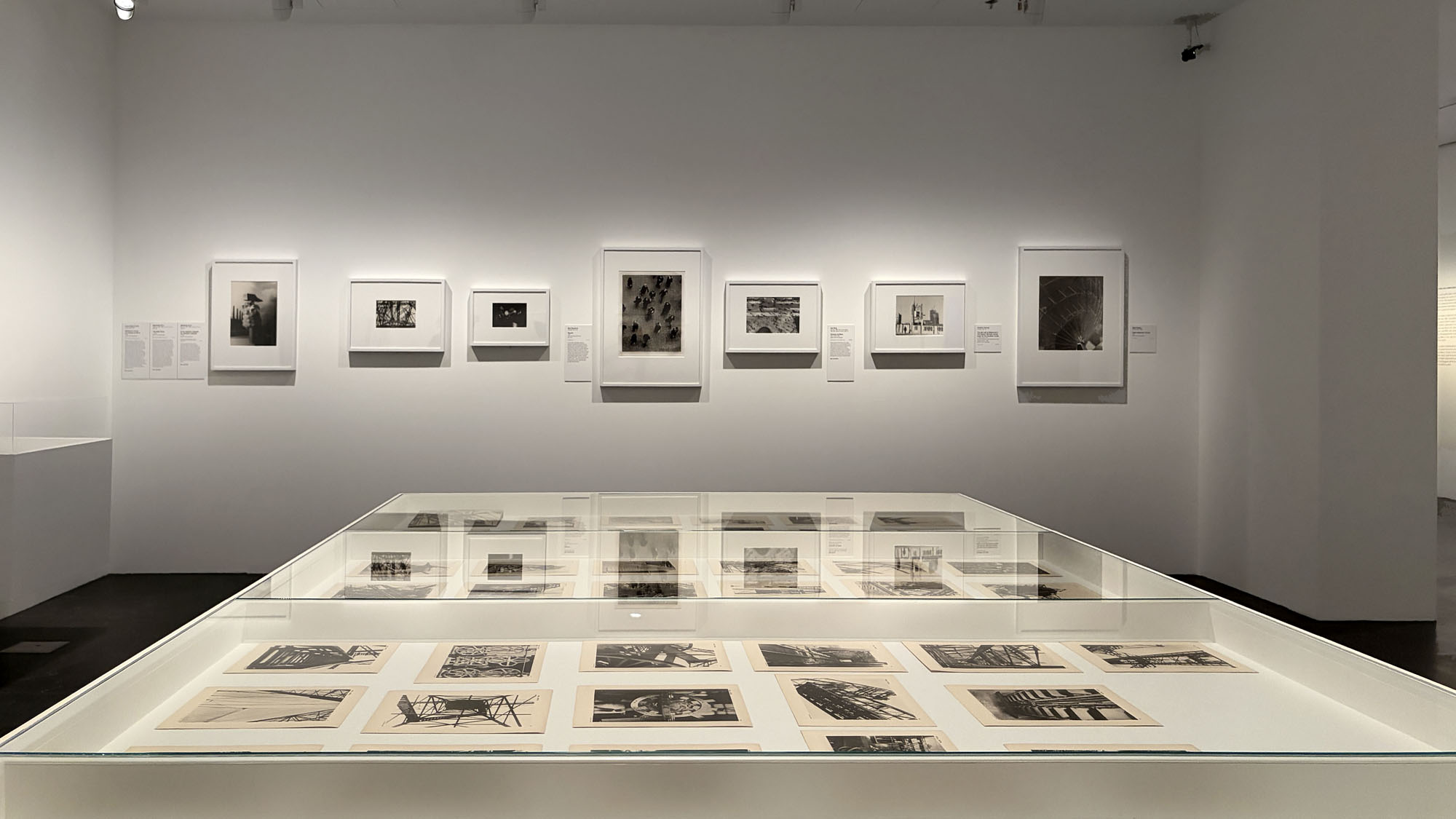
 

Installation view of the exhibition 'Women Photographers 1900-1975: A Legacy of Light' at NGV International, Melbourne, November 2025 - May 2026 showing in the foreground, Germaine Krull's portfolio 'Métal' 1928


Installation view of the exhibition Women Photographers 1900-1975: A Legacy of Light at NGV International, Melbourne, November 2025 – May 2026 showing collotypes from Germaine Krull’s portfolio Métal 1928
Photos: Marcus Bunyan


One of the most significant modernist photobooks of the 1920s, Germaine Krull’s Métal portfolio comprises sixty-four images printed on individual sheets, a title page and a three-page preface by the French writer and journalist Florent Fels. Krull photographed iron structures such as cranes and transport bridges in Amsterdam, Rotterdam, Marseille and Saint-Malo, as well as the Eiffel Tower in Paris. Krull showcases the beauty and innovation of the structures, conveying the sense of awe that accompanied the rapid industrialisation of the time. The presentation of the photographs – loose, to be arranged however the viewer chooses – is also radical, allowing for endless interpretations.

Wall text from the exhibition
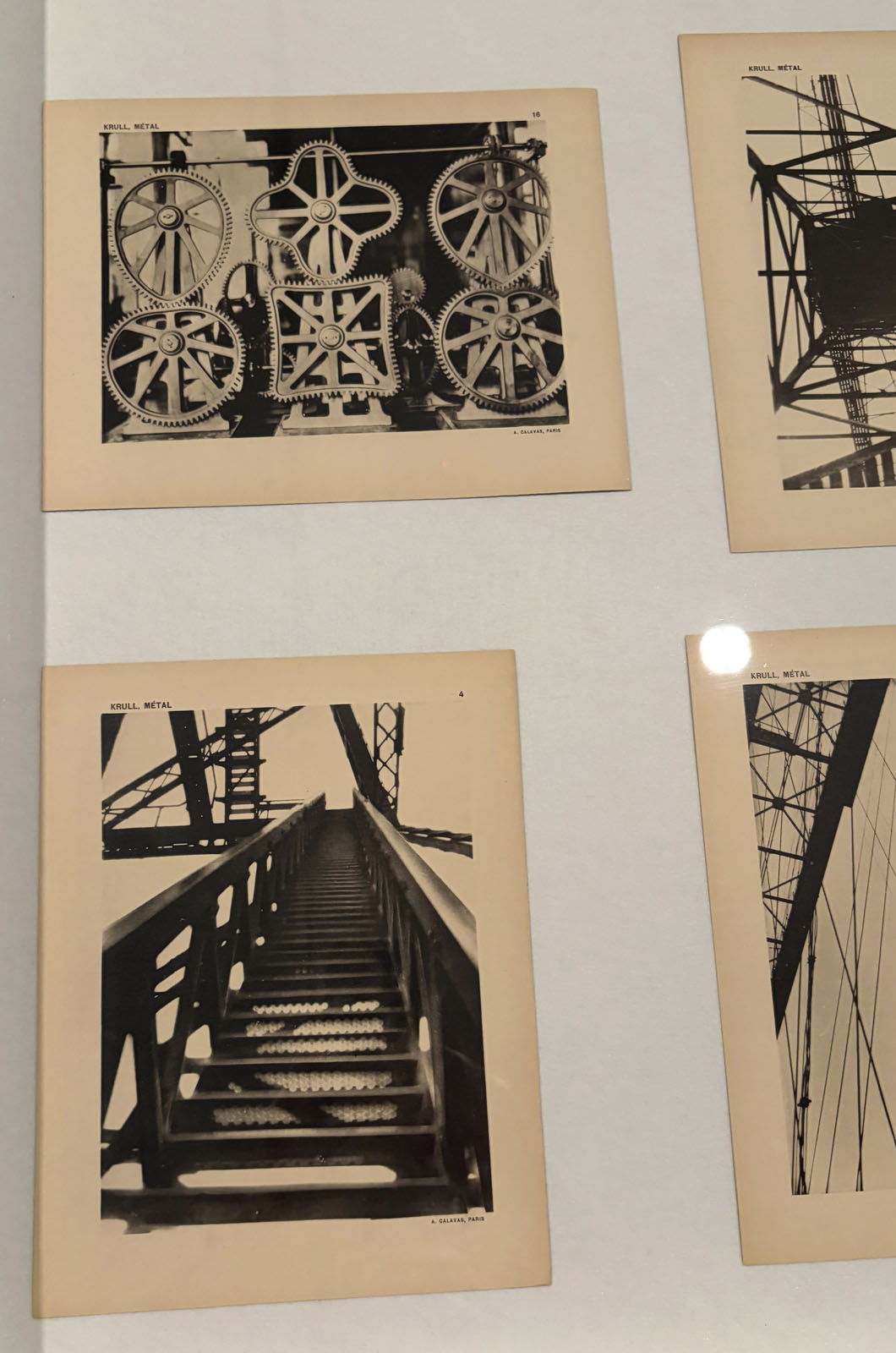
 

Germaine Krull (European, 1897-1985) 'Métal' 1928
Germaine Krull (photographer) Cover design by M. Tchimoukow. 'MÉTAL' cover 1928
Germaine Krull (1897-1985) Image from the portfolio 'MÉTAL' 1928


Germaine Krull (European, 1897-1985)
Métal
1928
64 black and white collotype plates, letterpress on paper, black cloth-backed paper-covered board portfolio with ribbons
30.5 x 23.5 x 2.5cm (overall)
National Gallery of Victoria, Melbourne
Bowness Family Fund for Photography, 2023

Photographs from the Art Blart posting Germaine Krull Métal 1928, December 2018. Used under fair use conditions for the purposes of education and research


Germaine Krull’s 1928 publication Métal is often described as one of the most significant photobooks of the twentieth century. Interestingly, Métal is not a book in a conventional sense, of sequential pages bound together with a narrative to guide the structure. Rather, when looking through this new acquisition to the NGV Collection you can immediately appreciate its unique design as an object. This dynamic format which, along with the vitality of the photography, has continued to inspire graphic designers, book publishers and artists since its publication almost a century ago.

Métal consists of a folded board cover, with ribbons attached, that acts as a folder for the pages within. The cover, designed by artist Lou Tchimoukow, reproduces one of Krull’s photographs of a detail of machinery on Paris’s Eiffel Tower. This image is overlaid with bold, vertically arranged letters spelling out ‘KRULL’ in a staggered pattern that mimics the lines of the structure beneath. Within the folder are sixty-four unbound plates. Each plate reproduces a photograph by Germaine Krull of industrial forms (and on one occasion, two images to a page) printed as collotypes, as well as the words ‘Krull, Métal’ at the top left, the plate number at the top right, and the publisher’s information ‘A. Calavas, Paris’ at the base. There is also an insert of eight pages (two sheets folded) that includes texts by journalist Florent Fels, and words from Krull herself. …

For Métal, Krull brought together a selection of recent photographs which, as she wrote in the introductory text, were from sites that included the Eiffel Tower, as well as the cranes and transport bridges of Amsterdam, Rotterdam, Marseille and Saint-Malo. Apart from the Eiffel Tower, they are emblematic of new industries and engineering emerging in these European cities in the decade after the end of the First World War and could, at first glance, be read as a tribute to modernity as seen through this rapid industrial development.

The presentation of the photographs, however, disrupts the opportunity for any clear narrative, or interpretation. While they are numbered, Krull’s images are printed without any captions (a radical technique in a photobook for the period). The audience is encouraged to actively engage: they are able to construct their own sequences and visual associations. And the composition of the images is highly varied – some close up and cropped, showing the cogs, bolts and mechanics; some reveal dizzying angles and perspectives; some show clear lines, some are abstracted; the majority are taken outside, some are within a factory; some are printed on the vertical, some on the horizontal; some are the result of multiple exposures, as if to emphasise a sense of movement or energy.

Art historian Professor Kim Sichel writes that Krull constructs an ‘activist narrative’ in Métal: ‘Through narrative techniques that are part taxonomy, part lyrical poem, part vertiginous montage, part Industrial-Age adulation, and by making the whole volume uncomfortable and strange to read, she brings her machine parts to life as they oscillate uneasily throughout the album’.2

The photographs in Métal can be linked to contemporary art movements circulating within Europe, such as the visual language of the ‘New Vision’ styles of photography emerging out of the Bauhaus in Germany, or the clean lines of the ‘New Objectivity’ as demonstrated by photographers, such as Albert Renger-Patzsch. Krull’s photographic vision, however, remains dynamic and unique – it does not follow one clear aesthetic or technical path. Métal is an innovative publication: it is open-ended and allows for endless interpretations.

2/ Kim Sichel, “Montage: Germaine Krull’s Métal,” in Sichel, Kim, Making Strange: The Modernist Photobook in France, Yale University Press, Connecticut, 2020, pp. 33–4.

Maggie Finch. “Germaine Krull Métal portfolio 1928,” on the NGV website 22 Oct 25 [Online] Cited 24/12/2025. This article first appeared in the January–February 2024 edition of NGV Magazine. Used under fair use conditions for the purposes of education and research


NGV International
180 St Kilda Rd, Melbourne

Opening hours:
Open daily, 10am – 5pm

National Gallery of Victoria website

LIKE ART BLART ON FACEBOOK

Back to top

Exhibition: ‘Our Selves: Photographs by Women Artists from Helen Kornblum’ at the Museum of Modern Art (MoMA), New York

Exhibition dates: 16th April – 2nd October, 2022

Organised by Roxana Marcoci, The David Dechman Senior Curator of Photography, with Dana Ostrander, Curatorial Assistant, and Caitlin Ryan, Curatorial Assistant, Department of Photography, MoMA


Lotte Jacobi (American, 1896-1990) 'Head of the Dancer' 1929 from the exhibition 'Our Selves: Photographs by Women Artists from Helen Kornblum' at the Museum of Modern Art (MoMA), New York, April - Oct, 2022


Lotte Jacobi (American, 1896-1990)
Head of the Dancer Niura Norskaya
1929
Gelatin silver print
7 1/2 × 9 3/8″ (19.1 × 23.8cm)
The Museum of Modern Art, New York
Gift of Helen Kornblum in honour of Roxana Marcoci


With a focus on people, this is a challenging exhibition that can only scratch the surface of the importance of the photographic work of women artists to the many investigations critical to the promotion of equality and diversity in a complex and male orientated world.

Germaine Krull is always a favourite, as is the work of neutered genius (and my hero), Claude Cahun. Susan Meiselas’s immersive work is also impressive in its “understanding of social, political and global issues and of the potentially complex ethical relationship between photographer and subject”, especially in her early work Carnival Strippers (1972-1975). I also particularly like the sensibility of the Mexican women photographers: sensitive portraits of strong women.

The most cringe worthy photograph that illustrates some of the ills associated with a male-orientated society is Ruth Orkin’s staged but spontaneous photograph, American Girl in Florence, Italy (1951, below) which was “an instant conversation starter about feminism and street harassment long… [and which is] more relevant now than ever for what it truly represents: independence, freedom and self-determination.”

“The photos ran in Cosmopolitan magazine in 1952 in a photo essay, “When You Travel Alone…”, offering tips on “money, men and morals to see you through a gay trip and a safe one.” The article encourages readers to buy ship and train tickets ahead of time. It reminds them to bring their birth certificate and check in with the State Department. The caption on the photo of Craig walking down the street reflects cultural mores of the era.

“Public admiration … shouldn’t fluster you. Ogling the ladies is a popular, harmless and flattering pastime you’ll run into in many foreign countries. The gentlemen are usually louder and more demonstrative than American men, but they mean no harm.”

It’s a far cry from what we tell women these days, but for its time the mere notion of encouraging women to travel alone was progressive. That’s what made the photos so special, Craig says. They offered a rare glimpse of two women – behind and in front of the camera – challenging the era’s gender roles and loving every minute of it.”1


Talking of challenging gender roles, I’m rather surprised there aren’t any photographs by Diane Arbus, Cindy Sherman or Francesca Woodman for example, critical women photographers who challenge our orientation towards our selves and the world. Many others could have been included as well. But that is the joy and paradox of collecting: what do you collect and what do you leave out. You have to focus on what you like and what is available.

“Rather than presenting a chronological history of women photographers or a linear account of feminist photography, the exhibition prompts new appraisals and compelling dialogues from a contemporary, intersectional feminist perspective. African-diasporic, queer, and postcolonial / Indigenous artists have brought new mindsets and questions to the canonical narratives of art history. Our Selves will reexamine a host of topics, countering racial and gender invisibility, systemic racial injustice, and colonialism, through a diversity of photographic practices, including portraiture, photojournalism, social documentary, advertising, avant-garde experimentation, and conceptual photography.” (Press release)

Dr Marcus Bunyan


1/ Emanuella Grinberg. “The real story behind ‘An American Girl in Italy’,” on the CNN website March 30, 2017 [Online] Cited 28/08/2022


Many thankx to the Museum of Modern Art for allowing me to publish the photographs in the posting. Please click on the photographs for a larger version of the image.


The Museum of Modern Art announces Our Selves: Photographs by Women Artists from Helen Kornblum, an exhibition that will present 90 photographic works by female artists from the last 100 years, on view from April 16 to October 2, 2022. Drawn exclusively from the Museum’s collection, thanks to a transformative gift of photographs from Helen Kornblum in 2021, the exhibition takes as a starting point the idea that the histories of feminism and photography have been intertwined.


Installation view of the exhibition 'Our Selves: Photographs by Women Artists from Helen Kornblum' at the Museum of Modern Art (MoMA), New York

Installation view of the exhibition 'Our Selves: Photographs by Women Artists from Helen Kornblum' at the Museum of Modern Art (MoMA), New York

Installation view of the exhibition 'Our Selves: Photographs by Women Artists from Helen Kornblum' at the Museum of Modern Art (MoMA), New York

Installation view of the exhibition 'Our Selves: Photographs by Women Artists from Helen Kornblum' at the Museum of Modern Art (MoMA), New York

Installation view of the exhibition 'Our Selves: Photographs by Women Artists from Helen Kornblum' at the Museum of Modern Art (MoMA), New York


Installation views of the exhibition Our Selves: Photographs by Women Artists from Helen Kornblum at the Museum of Modern Art (MoMA), New York


How have women artists used photography as a tool of resistance? Our Selves: Photographs by Women Artists from Helen Kornblum reframes restrictive notions of womanhood, exploring the connections between photography, feminism, civil rights, Indigenous sovereignty, and queer liberation. “Society consumes both the good girl and the bad girl,” wrote artist Silvia Kolbowski in 1984. “But somewhere between those two polarities, space must be made for criticality.”

Spanning more than 100 years of photography, the works in this exhibition range from Frances Benjamin Johnston’s early documentary photographs of racially segregated education in turn-of-the-century United States, to a contemporary portrait by Chemehuevi artist Cara Romero that celebrates the specificity of Indigenous art forms. A tribute to the generosity of collector Helen Kornblum, Our Selves features women’s contributions to a diversity of practices, including portraiture, photojournalism, social documentary, avant-garde experimentation, advertising, and performance.

As we continue to reckon with equity and diversity, Our Selves invites viewers to meditate on the artist Carrie Mae Weems’s evocative question: “In one way or another, my work endlessly explodes the limits of tradition. I’m determined to find new models to live by. Aren’t you?”

Text from the MoMA website


Alma Lavenson (American, 1897-1989) 'Self-Portrait' 1932 from the exhibition 'Our Selves: Photographs by Women Artists from Helen Kornblum' at the Museum of Modern Art (MoMA), New York, April - Oct, 2022


Alma Lavenson (American, 1897-1989)
Self-Portrait
1932
Gelatin silver print
9 × 11 7/8″ (22.9 × 30.2cm)
The Museum of Modern Art, New York
Gift of Helen Kornblum in honour of Roxana Marcoci


Germaine Krull (Dutch born Germany, 1897-1985) 'The Hands of the Actress Jenny Burnay' c. 1930 from the exhibition 'Our Selves: Photographs by Women Artists from Helen Kornblum' at the Museum of Modern Art (MoMA), New York, April - Oct, 2022


Germaine Krull (Dutch born Germany, 1897-1985)
The Hands of the Actress Jenny Burnay
c. 1930
Gelatin silver print
6 1/2 × 8 5/8″ (16.5 × 21.9cm)
The Museum of Modern Art, New York
Gift of Helen Kornblum in honour of Roxana Marcoci


Germaine Krull (Dutch born Germany, 1897-1985)

Germaine Krull was a pioneer in the fields of avant-garde photomontage, the photographic book, and photojournalism, and she embraced both commercial and artistic loyalties. Born in Wilda-Poznań, East Prussia, in 1897, Krull lived an extraordinary life lasting nine decades on four continents – she was the prototype of the edgy, sexually liberated Neue Frau (New Woman), considered an icon of modernity and a close cousin of the French garçonne and the American flapper. She had a peripatetic childhood before her family settled in Munich in 1912. She studied photography from 1916 to 1918 at Bayerische Staatslehranstalt für Lichtbildwesen (Instructional and Research Institute for Photography), and in 1919 opened her own portrait studio. Her early engagement with left-wing political activism led to her expulsion from Munich. Then, on a visit to Russia in 1921, she was incarcerated for her counterrevolutionary support of the Free French cause against Hitler. In 1926, she settled in Paris, where she became friends with artists Sonia and Robert Delaunay and intellectuals André Malraux, Jean Cocteau, Colette, and André Gide, who were also subjects of her photographic portraits.

Krull’s artistic breakthrough began in 1928, when she was hired by the nascent VU magazine, the first major French illustrated weekly. Along with photographers André Kertész and Éli Lotar, she developed a new form of reportage rooted in a freedom of expression and closeness to her subjects that resulted in intimate close-ups, all facilitated by her small-format Icarette, a portable, folding bed camera. During this period, she published the portfolio, Metal (Métal) (1928), a collection of 64 pictures of modernist iron giants, including cranes, railways, power generators, the Rotterdam transporter bridge, and the Eiffel Tower, shot in muscular close-ups and from vertiginous angles. Krull participated in the influential Film und Foto, or Fifo, exhibition (1929-1930), which was accompanied by two books, Franz Roh’s and Jan Tschichold’s Foto-Auge (Photo-Eye) and Werner Gräff’s Es kommt der neue Fotograf! (Here Comes the New Photographer!). Fifo marked the emergence of a new critical theory of photography that placed Krull at the forefront of Neues Sehen or Neue Optik (New Vision) photography, a new direction rooted in exploring fully the technical possibilities of the photographic medium through a profusion of unconventional lens-based and darkroom techniques. After the end of World War II, she traveled to Southeast Asia, and then moved to India, where, after a lifetime dedicated to recording some of the major upheavals of the twentieth century, she decided to live as a recluse among Tibetan monks.

Introduction by Roxana Marcoci, Senior Curator, Department of Photography, 2016


Ruth Orkin (American, 1921-1985) 'American Girl in Italy' 1951


Ruth Orkin (American, 1921-1985)
American Girl in Florence, Italy
1951
Gelatin silver print
8 1/2 × 11 15/16″ (21.6 × 30.3cm)
The Museum of Modern Art, New York
Gift of Helen Kornblum in honour of Roxana Marcoci


Although this photograph appears to be a street scene caught on the fly-an instance of what Henri Cartier-Bresson called the “decisive moment”  – it was actually staged for the camera by Orkin and her model. “The idea for this picture had been in my mind for years, ever since I had been old enough to go through the experience myself,” Orkin later wrote. While travelling alone in Italy, she met the young woman in the photograph at a hotel in Florence and together they set out to reenact scenes from their experiences as lone travellers. “We were having a hilarious time when this corner of the Piazza della Repubblica suddenly loomed on our horizon,” the photographer recalled. “Here was the perfect setting I had been waiting for all these years… And here I was, camera in hand, with the ideal model! All those fellows were positioned perfectly, there was no distracting sun, the background was harmonious, and the intersection was not jammed with traffic, which allowed me to stand in the middle of it for a moment.” The picture, with its eloquent blend of realism and theatricality, was later published in Cosmopolitan magazine as part of the story “Don’t Be Afraid to Travel Alone.”

Text from the Metropolitan Museum of Art website


Imogen Cunningham (American, 1883-1976) 'Three Harps' 1935


Imogen Cunningham (American, 1883-1976)
Three Harps
1935
Gelatin silver print
9 5/8 × 7 1/2″ (24.4 × 19.1cm)
The Museum of Modern Art, New York
Gift of Helen Kornblum in honour of Roxana Marcoci


Consuelo Kanaga (American, 1894-1978) 'School Girl, St. Croix' 1963


Consuelo Kanaga (American, 1894-1978)
School Girl, St. Croix
1963
Gelatin silver print
12 13/16 × 8 15/16″ (32.5 × 22.7cm)
The Museum of Modern Art, New York
Gift of Helen Kornblum in honour of Roxana Marcoci


Gertrud Arndt (German, 1903–2000) 'Untitled (Masked Self-Portrait, Dessau)' 1930


Gertrud Arndt (German, 1903–2000)
Untitled (Masked Self-Portrait, Dessau)
1930
Gelatin silver print
9 × 5 5/8 in. (22.9 × 14.3cm)
The Museum of Modern Art, New York
Gift of Helen Kornblum in honour of Roxana Marcoci


Gertrud Arndt (German, 1903-2000)

Gertrud Arndt (born Gertrud Hantschk in Upper Silicia) set out to become an architect, beginning a three-year apprenticeship in 1919 at the architecture firm of Karl Meinhardt in Erfurt, where her family lived at the time. While there, she began teaching herself photography by taking pictures of buildings in town. She also attended courses in typography, drawing, and art history at the Kunstgewerbeschule (School of design). Encouraged by Meinhardt, a friend of Walter Gropius, Arndt was awarded a scholarship to continue her studies at the Bauhaus in Weimar. Enrolled from 1923 to 1927, Arndt took the Vorkurs (foundation course) from László Moholy-Nagy, who was a chief proponent of the value of experimentation with photography. After her Vorkurs, Georg Muche, leader of the weaving workshop, persuaded her to join his course, which then became the formal focus of her studies. Upon graduation, in March 1927, she married fellow Bauhaus graduate and architect Alfred Arndt. The couple moved to Probstzella in Eastern Germany, where Arndt photographed buildings for her husband’s architecture firm.

In 1929, Hannes Meyer invited Alfred Arndt to teach at the Bauhaus, where Arndt focused her energy on photography, entering her period of greatest activity, featuring portraits of friends, still-lifes, and a series of performative self-portraits, as well as At the Masters’ Houses, which shows the influence of her studies with Moholy-Nagy as well as her keen eye for architecture. After the Bauhaus closed, in 1932, the couple left Dessau and moved back to Probstzella. Three years after the end of World War II the family moved to Darmstadt; Arndt almost completely stopped making photographs.

Introduction by Mitra Abbaspour, Associate Curator, Department of Photography, 2014


Claude Cahun (Lucy Schwob) (French, 1894-1954) 'M.R.M (Sex)' c. 1929-1930


Claude Cahun (Lucy Schwob) (French, 1894-1954)
M.R.M (Sex)
c. 1929-1930
Gelatin silver print
6 × 4 in. (15.2 × 10.2cm)
The Museum of Modern Art, New York
Gift of Helen Kornblum in honour of Roxana Marcoci


Juliet Jacques: I’m Juliet Jacques. I am a writer and filmmaker based in London. You’re looking at a photomontage by the French artist Claude Cahun, entitled M.R.M (Sex). It’s a photomontage of Cahun’s self-portraits.

Claude Cahun was born in 1894 in France into a family of prominent Jewish intellectuals and began making photomontages in 1912 when she was 18. The works were often exploring Cahun’s own identity in terms of gender and sexuality, but also this sense of a complex and fragmented personhood. Nonbinary pronouns, as we’d understand them now, weren’t officially in existence in the 1920s. Cahun actually wrote “Masculine? Feminine? It depends on the situation. Neuter is the only gender that always suits me.” So, I think either she or they is appropriate.

M.R.M was published as one of the illustrations in Cahun’s book Aveux non Avenus in 1930. Throughout the book you see this playing with the possibilities of gender expression that are kind of funny, sometimes melancholic, but are very emotionally complicated and do really speak to a sense of sometimes being trapped by the confines of gender and sometimes finding these very playful and beautiful ways to break out of it.

Artists and writers, we’re supposed to be dreamers, I think, and people who want to come up with a better world. And of course Cahun’s work is really suggesting different possibilities of free expression.

It’s hard to know how Cahun might have felt about being included in an exhibition of women artists. But, I think Cahun definitely deserves a place within this feminist canon, if not a strictly female one.

Transcript of audio from the MoMA website


Claude Cahun (Lucy Schwob) (French, 1894-1954) 'Aveux non avenus' (Disavowals or Cancelled Confessions) 1930


Claude Cahun (Lucy Schwob) (French, 1894-1954)
Aveux non avenus (Disavowals or Cancelled Confessions)
1930
Illustrated book with photogravures
Cover (closed) approx. 8 11/16 × 6 11/16″ (22 × 17cm)
The Museum of Modern Art, New York
Gift of Helen Kornblum in honour of Roxana Marcoci


Juliet Jacques: My name is Juliet Jacques.

You’re looking at Claude Cahun’s book Aveux non Avenus, which has been translated variously as “denials” or “disavowals” or “cancelled confessions.”

It’s an autobiographical text that doesn’t just refuse the conventions of memoir, it also really refuses to open up to the reader in a clearly understandable way. It’s this mixture of photography and aphorisms and longer prose-poetic passages. It doesn’t have a formalised narrative. It’s rather just exploring the fragmented and somewhat chaotic nature of their own consciousness and what they are able to access.

I’ve just flipped to page 91. Cahun writes:

“Consciousness. The carver. My enthusiasms, my impulses, my little passions were irksome. … Come on, then. … By a process of elimination, what is necessary about me? … The material is badly cut. I want it to be straightened up. A clumsy snip with the scissors. Bach! Let’s even it up on the other side. … A stain? We’ll cover it up. Let’s trim it again. I no longer exist. Perfect. Now nothing can come between us.”


The affinity I felt with Cahun is because I ended up doing a lot of writing that got bracketed as confessional or sort of first-person autobiographical writing. You can get yourself into a situation where you’re constantly expected to give away details about your personal life. And what I have always found really interesting about Cahun is the refusal of that trap, even in the project of putting oneself on the page.

I was always looking for queer and trans writers, and Cahun’s work gave me this gender non-conforming take on art that I thought always should have been there.

Transcript of audio from the MoMA website


Hulleah J. Tsinhnahjinnie (Native American (Seminole-Muscogee-Navajo)) 'Vanna Brown, Azteca Style' 1990


Hulleah J. Tsinhnahjinnie (Native American (Seminole-Muscogee-Navajo))
Vanna Brown, Azteca Style
1990
Photocollage
15 11/16 × 22 13/16″ (39.9 × 58cm)
The Museum of Modern Art, New York
Gift of Helen Kornblum in honour of Roxana Marcoci


Veronica Passalacqua: My name is Veronica Passalacqua, and I’m a curator at the C.N. Gorman Museum at the University of California Davis. My research focus is upon contemporary Native American art with a specialty in photography. This is a work called Vanna Brown, Azteca Style by the Navajo-Tuskegee artist Hulleah Tsinhnahjinnie.

It’s a hand collage that depicts Tsinhnahjinnie’s friend, dressed in her Azteca dancing regalia within the frame of a Philco television set. It was the beginning of a series of works and videos related to a project called NTV, or Native Television. She wanted to create her own vision of what she’d like to see on television.

Curator, Roxana Marcoci: The photograph makes reference to Wheel of Fortune, a televised game show where contestants guess words and phrases one letter at a time. Vanna White has been the show’s co-host for 40 years.

Veronica Passalacqua: Vanna White was always dressed in these elaborate gowns to show the letters of the enduring game show. She was there really as a symbol of the idealised beauty that television was portraying. Tsinhnahjinnie changes the name from Vanna White to Vanna Brown, addressing the beauty that she sees in her friend. What Tsinhnahjinnie wanted to focus on was this notion that you can create these beautiful images when you have a relationship with the sitter.

I’d like to read you a quote by Tsinhnahjinnie: “No longer is the camera held by an outsider looking in, the camera is held with brown hands opening familiar worlds. We document ourselves with a humanising eye, we create new visions with ease, and we can turn the camera to show how we see you.”

Transcript of audio from the MoMA website


Laura Gilpin (American, 1881-1979) 'Navajo Weaver' 1933


Laura Gilpin (American, 1881-1979)
Navajo Weaver
1933
Platinum print
13 1/8 × 9 3/8 in. (33.3 × 23.8cm)
The Museum of Modern Art, New York
Gift of Helen Kornblum in honour of Roxana Marcoci


Lola Alvarez Bravo (Mexican, 1907-1993) 'Frida Kahlo' c. 1945


Lola Alvarez Bravo (Mexican, 1907-1993)
Frida Kahlo
c. 1945
Gelatin silver print
8 3/8 × 6 1/4″ (21.3 × 15.9cm)
The Museum of Modern Art, New York
Gift of Helen Kornblum in honour of Roxana Marcoci


Lucia Moholy (British born Prague, 1894-1989) 'Frau Finsler' 1926


Lucia Moholy (British born Prague, 1894-1989)
Frau Finsler
1926
Gelatin silver print
7 7/8 × 10″ (20 × 25.4cm)
The Museum of Modern Art, New York
Gift of Helen Kornblum in honour of Roxana Marcoci


Margaret Bourke-White (American, 1904-1971) 'Woman, Locket, Georgia' 1936


Margaret Bourke-White (American, 1904-1971)
Woman, Locket, Georgia
1936
Gelatin silver print
13 × 9 3/4″ (33 × 24.8cm)
The Museum of Modern Art, New York
Gift of Helen Kornblum in honour of Roxana Marcoci


Margrethe Mather (American, 1885-1952) 'Buffie Johnson, Painter' 1933


Margrethe Mather (American, 1885-1952)
Buffie Johnson, Painter
1933
Gelatin silver print
3 3/4 × 2 7/8″ (9.5 × 7.3cm)
The Museum of Modern Art, New York
Gift of Helen Kornblum in honour of Roxana Marcoci


Meridel Rubenstein (American, b. 1948) 'Fatman with Edith' 1993


Meridel Rubenstein (American, b. 1948)
Fatman with Edith
1993
Palladium print
18 1/2 × 22 1/2″ (47 × 57.2cm)
The Museum of Modern Art, New York
Gift of Helen Kornblum in honour of Roxana Marcoci


Helen Kornblum: I’m Helen Kornblum. If there’s a theme in my collection, I’d say it’s people. My interest in people, meeting people, knowing people, learning about people.

I have felt about my photographs almost like a third child. Each one actually has its own story for me. Where I found them, who led me to them. I’ve just attached myself in different ways to each one.

One, for instance, is Fatman with Edith by Meridel Rubenstein. With this photograph she conflates war with the feminine. She has the inhumanly destructive warhead, the plutonium bomb, called Fatman, dropped on Nagasaki, juxtaposed with a portrait of a woman, Edith Warner, and a nurturing, warm cup of tea.

Curator, Roxana Marcoci: In the early 1940s Robert Oppenheimer, a physicist in charge of The Manhattan Project developed the first atomic bomb.This photograph belongs to a series that explores encounters in New Mexico between indigenous communities and the scientists who created the bomb. These two worlds collided in the home of Edith Warner, who ran a tearoom in Los Alamos.

Helen Kornblum: Oppenheimer knew Edith Warner, who lived near Santa Fe. And when he came to create the bomb at Los Alamos, he asked Edith if he could bring scientists to her home for a place away from the creation of this bomb, and he would come with them for dinner, all during the Manhattan Project.

Roxana Marcoci: By pairing two seemingly dissimilar images, Rubenstein said she hopes “to enlarge the lives of ordinary people, and strip the mythic characters of history down to their ordinariness.”

Transcript of audio from the MoMA website


Edith Warner (1893-1951), also known by the nickname “The Woman at Otowi Crossing”, was an American tea room owner in Los Alamos, New Mexico, who is best known for serving various scientists and military officers working at the Los Alamos National Laboratory during the original creation of the atomic bomb as a part of the Manhattan Project. Warner’s influence on the morale and overall attitude of the people there has been noted and written about by various journalists and historians, including several books about her life, a stage play, a photography exhibition, an opera, and a dance.

Text from the Wikipedia website


Rosemarie Trockel (German, b. 1952) 'Untitled' 2004


Rosemarie Trockel (German, b. 1952)
Untitled
2004
Chromogenic print
20 3/4 × 19″ (52.7 × 48.3 cm)
The Museum of Modern Art, New York
Gift of Helen Kornblum in honour of Roxana Marcoci


Tatiana Parcero (Mexican, b. 1967) 'Interior Cartography #35' 1996


Tatiana Parcero (Mexican, b. 1967)
Interior Cartography #35
1996
Chromogenic print and acetate
9 3/8 × 6 3/16 in. (23.8 × 15.7cm)
The Museum of Modern Art, New York
Gift of Helen Kornblum in honour of Roxana Marcoci


Artist, Tatiana Parcero

My name is Tatiana Parcero. I’m from Mexico and I’m a visual artist and a psychologist. The work is called Interior Cartography #35, and belongs to the series of the same name.

Cartography is a science that deals with maps. I am interested in working with the body as a territory, where I can explore different paths at a physical and also in a symbolic level.

I am the one that appears in all the photographs. When I did this specific shot, I wanted to show a moment of introspection and calm. And when you see my hands near my cheeks, I wanted to represent a way to be in touch with myself, not just in a physical way, but in a more spiritual way.

The image superimposed on the face is from the Codex Tudela of the 16th century. The codices are documents that were created by ancient civilisations, like Mayans, Aztecs, that represent the pre-Columbian cultures of Mexico, their amazing universe, and the way that they lived.

When I moved to New York from Mexico, I was feeling a little bit out of place and I wanted to recreate a sense of belonging. The work is a way to connect myself with my country and the ancient cultures that are before me.

I decided to study psychology because I wanted to help people. I wanted to be able to understand emotions and be able to translate personal experiences into images and make them more accessible. It’s important for me to give the viewer several layers so that you can really explore the image and make your own interpretations and reflections. I think art can transform you and take you to a parallel universe. That is where I feel that you can be able to heal and to cure.

Transcript of audio from the MoMA website


Lorie Novak (American, b. 1954) 'Self-Portraits' 1987


Lorie Novak (American, b. 1954)
Self-Portraits
1987
Chromogenic print
22 1/2 × 18 9/16″ (57.2 × 47.1cm)
The Museum of Modern Art, New York
Gift of Helen Kornblum in honour of Roxana Marcoci


The Museum of Modern Art announces Our Selves: Photographs by Women Artists from Helen Kornblum, an exhibition that will present 90 photographic works by female artists from the last 100 years, on view from April 16 to October 2, 2022. Drawn exclusively from the Museum’s collection, thanks to a transformative gift of photographs from Helen Kornblum in 2021, the exhibition takes as a starting point the idea that the histories of feminism and photography have been intertwined. Our Selves: Photographs by Women Artists from Helen Kornblum is organised by Roxana Marcoci, The David Dechman Senior Curator, with Dana Ostrander, Curatorial Assistant, and Caitlin Ryan, Curatorial Assistant, Department of Photography, MoMA.

Rather than presenting a chronological history of women photographers or a linear account of feminist photography, the exhibition prompts new appraisals and compelling dialogues from a contemporary, intersectional feminist perspective. African-diasporic, queer, and postcolonial / Indigenous artists have brought new mindsets and questions to the canonical narratives of art history. Our Selves will reexamine a host of topics, countering racial and gender invisibility, systemic racial injustice, and colonialism, through a diversity of photographic practices, including portraiture, photojournalism, social documentary, advertising, avant-garde experimentation, and conceptual photography. Highlighting both iconic and rare or lesser-known images, the exhibition’s groupings and juxtapositions of modern and contemporary works will encourage unexpected connections in the Museum’s fifth-floor collection galleries, which are typically devoted to art from the 1880s through the 1940s.

Our Selves will open with a wall of self-portraits and portraits of female artists by such modernist photographers as Lola Álvarez Bravo, Gertrud Arndt, Lotte Jacobi, and Lucia Moholy, alongside contemporary practitioners including Tatiana Parcero, Rosemarie Trockel, and Lorie Novak. Inviting viewers to consider the structural relationship between knowledge and power, Frances Benjamin Johnston’s Penmanship Class (1899) – a depiction of racially segregated education at the turn of the 20th century in the United States – will hang near Candida Höfer’s Deutsche Bucherei Leipzig IX (1997) – a part of Höfer’s series documenting library interiors weighted by forms of social inequality and colonial supremacy. Lorna Simpson’s Details (1996), a portfolio of 21 found photographs, signals how both the camera and language can culturally inscribe the body and reinforce racial and gender stereotypes.

Works by Native artists including Cara Romero and Hulleah J. Tsinhnahjinnie, and non-Native practitioners such as Sharon Lockhart and Graciela Iturbide, explore indigeneity and its relationship to colonial history. Photographs by Flor Garduño, Ana Mendieta, Marta María Pérez Bravo, and Mariana Yampolsky attest to the overlapping histories of colonialism, ethnographic practice, and patriarchy in Latin America.

Our Selves is accompanied by a richly illustrated catalogue that features more than 100 colour and black-and-white photographs. A critical essay by curator Roxana Marcoci asks the question, “What is a Feminist Picture?” and a series of 12 focused essays by Dana Ostrander, Caitlin Ryan, and Phil Taylor address a range of themes, from dance to ecology to perception. The catalogue offers both historical context and critical interpretation, exploring the myriad ways in which different photographic practices can be viewed when looking through a feminist lens.

Press release from the MoMA website


Installation view of the exhibition 'Our Selves: Photographs by Women Artists from Helen Kornblum' at the Museum of Modern Art (MoMA), New York


Installation view of the exhibition Our Selves: Photographs by Women Artists from Helen Kornblum at the Museum of Modern Art (MoMA), New York.

The images below before the next installation image are left to right in the above installation image.


Graciela Iturbide (Mexican, b. 1943) 'Mujercita' 1981


Graciela Iturbide (Mexican, b. 1943)
Mujercita
1981
Gelatin silver print
10 1/8 × 6 3/4″ (25.7 × 17.1cm)
The Museum of Modern Art, New York
Gift of Helen Kornblum in honour of Roxana Marcoci


Mariana Yampolsky (Mexican, 1925-2002) 'Mujeres Mazahua' 1989


Mariana Yampolsky (Mexican, 1925-2002)
Mujeres Mazahua
1989
Gelatin silver print
13 5/8 × 18 1/2″ (34.6 × 47cm)
The Museum of Modern Art, New York
Gift of Helen Kornblum in honour of Roxana Marcoci


Flor Garduño (Mexican, b. 1957) 'Reina (Queen)' 1989


Flor Garduño (Mexican, b. 1957)
Reina (Queen)
1989
Gelatin silver print
12 1/4 × 8 3/4″ (31.1 × 22.2cm)
The Museum of Modern Art, New York
Gift of Helen Kornblum in honour of Roxana Marcoci


Barbara Morgan (American, 1900-1992) 'Corn Stalks Growing' 1945


Barbara Morgan (American, 1900-1992)
Corn Stalks Growing
1945
Gelatin silver print
12 3/16 × 9″ (31 × 22.9cm)
The Museum of Modern Art, New York
Gift of Helen Kornblum in honour of Roxana Marcoci


Sonya Noskowiak (American born Germany, 1900-1975) 'Plant Detail' 1931


Sonya Noskowiak (American born Germany, 1900-1975)
Plant Detail
1931
Gelatin silver print
9 11/16 × 7 1/2″ (24.6 × 19.1cm)
The Museum of Modern Art, New York
Gift of Helen Kornblum in honour of Roxana Marcoci


Imogen Cunningham (American, 1883-1976) 'Agave Design I' 1920s


Imogen Cunningham (American, 1883-1976)
Agave Design I
1920
Gelatin silver print
12 7/8 × 9 13/16″ (32.7 × 24.9cm)
The Museum of Modern Art, New York
Gift of Helen Kornblum in honour of Roxana Marcoci


Florence Henri (Swiss born United States, 1893-1982) 'Composition Nature Morte' 1931


Florence Henri (Swiss born United States, 1893-1982)
Composition Nature Morte
1931
Gelatin silver print
3 3/8 × 4 1/2″ (8.6 × 11.4cm)
The Museum of Modern Art, New York
Gift of Helen Kornblum in honour of Roxana Marcoci


Alma Lavenson (American, 1897-1989) 'Eucalyptus Leaves' 1933


Alma Lavenson (American, 1897-1989)
Eucalyptus Leaves
1933
Gelatin silver print
12 × 9″ (30.5 × 22.9cm)
The Museum of Modern Art, New York
Gift of Helen Kornblum in honour of Roxana Marcoci


Ruth Bernhard (American born Germany, 1905-2006) 'Angel Wings' 1943


Ruth Bernhard (American born Germany, 1905-2006)
Angel Wings
1943
Gelatin silver print
9 5/8 × 6 1/4″ (24.4 × 15.9cm)
The Museum of Modern Art, New York
Gift of Helen Kornblum in honour of Roxana Marcoci


Nelly (Elli Sougioultzoglou-Seraidari) (Greek born Turkey, 1899-1998) 'Elizaveta "Lila" Nikolska in the Parthenon, Athens, Greece' November 1930


Nelly (Elli Sougioultzoglou-Seraidari) (Greek born Turkey, 1899-1998)
Elizaveta “Lila” Nikolska in the Parthenon, Athens, Greece
November 1930
Gelatin silver print
6 × 8 1/2″ (15.2 × 21.6cm)
The Museum of Modern Art, New York
Gift of Helen Kornblum in honour of Roxana Marcoci


Installation view of the exhibition 'Our Selves: Photographs by Women Artists from Helen Kornblum' at the Museum of Modern Art (MoMA), New York


Installation view of the exhibition Our Selves: Photographs by Women Artists from Helen Kornblum at the Museum of Modern Art (MoMA), New York

The images below before the next installation image are left to right in the above installation image.


Laurie Simmons (American, b. 1949) 'Three Red Petit-Fours' 1990


Laurie Simmons (American, b. 1949)
Three Red Petit-Fours
1990
Chromogenic print
23 × 35″ (58.4 × 88.9cm)
The Museum of Modern Art, New York
Gift of Helen Kornblum in honour of Roxana Marcoci


Kati Horna (Mexican, 1912-2000) 'Figurines' c. 1933


Kati Horna (Mexican, 1912-2000)
Figurines
c. 1933
Gelatin silver print
8 1/2 × 8″ (21.6 × 20.3cm)
The Museum of Modern Art, New York
Gift of Helen Kornblum in honour of Roxana Marcoci


Dora Maar (French 1907-1997) 'Mannequin in Window' 1935


Dora Maar (French 1907-1997)
Mannequin in Window
1935
Gelatin silver print
9 1/2 × 6″ (24.1 × 15.2 cm)
The Museum of Modern Art, New York
Gift of Helen Kornblum in honour of Roxana Marcoci


Inge Morath (Austrian, 1923-2002) 'Siesta of a Lottery Ticket Vendor, Plaza Mayor, Madrid' 1955


Inge Morath (Austrian, 1923-2002)
Siesta of a Lottery Ticket Vendor, Plaza Mayor, Madrid
1955
Gelatin silver print
7 3/16 × 4 3/4″ (18.3 × 12.1cm)
The Museum of Modern Art, New York
Gift of Helen Kornblum in honour of Roxana Marcoci


Ringl + Pit (German) Grete Stern (Argentine born Germany, 1904-1999) Ellen Auerbach (German, 1906-2004) 'Columbus' Egg' 1930


Ringl + Pit (German)
Grete Stern (Argentine born Germany, 1904-1999)
Ellen Auerbach (German, 1906-2004)
Columbus’ Egg
1930
Gelatin silver print
8 3/4 × 7 1/2″ (22.2 × 19.1cm)
The Museum of Modern Art, New York
Gift of Helen Kornblum in honour of Roxana Marcoci


Yva (Else Ernestine Neuländer) (German, 1900-1942) 'Untitled' 1935


Yva (Else Ernestine Neuländer) (German, 1900-1942)
Untitled
1935
Gelatin silver print
9 1/16 × 6 11/16″ (23 × 17cm)
The Museum of Modern Art, New York
Gift of Helen Kornblum in honour of Roxana Marcoci


Marie Cosindas (American, 1923-2017) 'Masks, Boston' 1966


Marie Cosindas (American, 1923-2017)
Masks, Boston
1966
Dye transfer print
10 × 7″ (25.4 × 17.8cm)
The Museum of Modern Art, New York
Gift of Helen Kornblum in honour of Roxana Marcoci


Kati Horna (Mexican, 1912-2000) 'Man and Candlesticks' c. 1933


Kati Horna (Mexican, 1912-2000)
Man and Candlesticks
c. 1933
Gelatin silver print
8 × 7 3/4″ (20.3 × 19.7cm)
The Museum of Modern Art, New York
Gift of Helen Kornblum in honour of Roxana Marcoci


Barbara Probst (German, b. 1964) 'Exposure #78, NYC, Collister and Hubert St.' 2010


Barbara Probst (German, b. 1964)
Exposure #78, NYC, Collister and Hubert St.
2010
Two inkjet prints (diptych)
18 3/4 × 28″ (47.6 × 71.1cm)
The Museum of Modern Art, New York
Gift of Helen Kornblum in honour of Roxana Marcoci


Barbara Probst (German, b. 1964)

Artist, Barbara Probst: I am Barbara Probst. I’m an artist working with photography. I’m born in Munich, in Germany, and I live in New York.

I’m interested in photography as a phenomenon that seemingly and supposedly depicts reality. But maybe it is the subjectivity of the photographer, which determines the image. And not the objectivity of the world.

I get a set of pictures from the same moment. By comparing these pictures, it becomes quite clear that the link between reality and photography is very thin and fragile because every picture from this moment gives a different take of this moment.

None of these images is more true or more false than any others. They are equally truthful. The viewpoints and angles and settings of the cameras and the framing and all these things determine the picture.

It’s not what is in front of the camera that determines the picture. It’s the photographer behind the camera that decides how reality is translated into an image.

Audio of Barbara Probst from the video “Elles X Paris Photo: Barbara Probst.” © Fisheye l’Agence 2021

Transcript of audio from the MoMA website


Installation view of the exhibition 'Our Selves: Photographs by Women Artists from Helen Kornblum' at the Museum of Modern Art (MoMA), New York


Installation view of the exhibition Our Selves: Photographs by Women Artists from Helen Kornblum at the Museum of Modern Art (MoMA), New York

The images below before the next installation image are left to right in the above installation image.


Carrie Mae Weems (American, b. 1953) 'Untitled (Woman and Daughter with Makeup)' 1990


Carrie Mae Weems (American, b. 1953)
Untitled (Woman and Daughter with Makeup)
1990
Gelatin silver print
27 3/16 × 27 3/16″ (69.1 × 69.1cm)
The Museum of Modern Art, New York
Gift of Helen Kornblum in honour of Roxana Marcoci


“My work endlessly explodes the limits of tradition.”

~ Carrie Mae Weems


What does it mean to bear witness to history? The artist Carrie Mae Weems has asked this question for decades through photography, video, performance, installation, and social practice. For Weems, to examine the past is to imagine a different future. “In one way or another, my work endlessly explodes the limits of tradition,” she declared in an interview with her friend, the photographer Dawoud Bey. “I’m determined to find new models to live by. Aren’t you?”1

Weems was trained as both a dancer and a photographer before enrolling in the folklore studies program at the University of California, Berkeley, in the mid-1980s, where she became interested in the observation methods used in the social sciences. In the early 1990s, she began placing herself in her photographic compositions in an “attempt to create in the work the simultaneous feeling of being in it and of it.”2 She has since called this recurring figure an “alter-ego,” “muse,” and “witness to history” who can stand in for both the artist and audience. “I think it’s very important that as a Black woman she’s engaged with the world around her,” Weems has said, “she’s engaged with history, she’s engaged with looking, with being. She’s a guide into circumstances seldom seen.”3

In her 1990 Kitchen Table series – 20 gelatin silver prints and 14 texts on silkscreen panels – Weems uses her own persona to “respond to a number of issues: woman’s subjectivity, woman’s capacity to revel in her body, and the woman’s construction of herself, and her own image.”4 Weems, or rather her protagonist, inhabits the same intimate domestic interior throughout the series. Anchored around a wooden table illuminated by an overhead light, scenes such as Untitled (Man smoking) and Untitled (Woman and Daughter with Makeup) portray the protagonist alongside a rotating cast of characters (friends, children, lovers) and props (posters, books, playing cards, a birdcage). In Untitled (Woman and Daughter with Makeup), for example, the woman sits at the table with a young girl; they gaze into mirrors at their own reflections, applying lipstick in parallel gestures. The photograph shows that gender is a learned performance, at the same time tenderly centering its Black women subjects.

With projects such as From Here I Saw What Happened and I Cried (1995), the act of witnessing is suggested in the first-person title. The J. Paul Getty Museum commissioned the work in 1994, inviting the artist to respond to 19th-century photographs of African American subjects collected by the lawyer Jackie Napoleon Wilson. In 28 chromogenic photographic prints overlaid with text on glass, Weems appropriated images from a variety of sources: Wilson’s collection, museum and university archives, The National Geographic, and the work of photographers like Walker Evans, Robert Frank, and Garry Winogrand. The artist cropped and reformatted these photographs, adding blue and red tints, text, and circular mats resembling a camera lens. Through this reframing, Weems poses a question about power: Who is doing the looking, and for what reasons?

Among the rephotographed images are four daguerreotypes by photographer J. T. Zealy of enslaved men and women – two father-and-daughter pairs, named Renty, Delia, Jack, and Drana – commissioned as racial types by Swiss naturalist Louis Agassiz in 1850. Weems exposes Agassiz’s racist pseudoscience and the violence of the white Anglo-American gaze through the addition of texts that address the subjects: “You became a scientific profile,” “a negroid type,” “an anthropological debate,” “& a photographic subject.” Discussing the daguerreotypes, the artist has described the sitters as agents of resistance and refusal: “In their anthropological way, most of these photographs were meant to strip the subjects of their humanity. But if you look closely, what you see is the evidence of a contest of wills over contested territory, contested terrain – contested by the by the owner of the Black body and the photographer’s attempt to conquer it vis-à-vis the camera.”5

Caitlin Ryan, Curatorial Assistant, Department of Photography, 2021


1/ “Carrie Mae Weems by Dawoud Bey,” BOMB, July 1, 2009, https://bombmagazine.org/articles/carrie-mae-weems/
2/ Ibid.
3/ Ibid.
4/ Weems, quoted in Carrie Mae Weems: The Kitchen Table Series (Houston: Contemporary Arts Museum Houston, 1996), 6.
5/ Weems to Deborah Willis, “In Conversation with Carrie Mae Weems,” in To Make Their Own Way in the World: The Enduring Legacy of the Zealy Daguerreotypes, eds. Ilisa Barbash, Molly Rogers, and Deborah Willis (Cambridge, MA: Peabody Museum Press; New York, NY: Aperture, 2020), 397.


Curator, Roxana Marcocci: We’re looking at a photograph from Carrie Mae Weems’s larger body of work, the Kitchen Table series.

Artist, Carrie Mae Weems: About 1990, I think, I had been really thinking a lot about what it meant to develop your own voice. And so I made this body of work.

It started as a kind of response to my sense of what needed to happen, what needed to be and these ideas about the sort of spaces of domesticity that have historically belonged to women.

Roxana Marcoci: In this image, Weems applies makeup in front of a mirror while a young girl seated in front of another mirror, puts on lipstick and looks at her own reflection. The two enact beauty in a synchronised performance, through posing, mirroring, and self-empowerment.

Carrie Mae Weems: I made them all in my own kitchen, using a single light source hanging over the kitchen table. It just swung open this door of what I could actually do in my own environment. What I’m suggesting really is that the battle around the family, the battle around monogamy, the battle around polygamy, the social dynamics that happens between men and women, that war gets carried on in that space.

The Kitchen Table series would not be simply a voice for African-American women, but more generally for women.

Audio of Carrie Mae Weems in the Art21 digital series Extended Play, “Carrie Mae Weems / ‘The Kitchen Table Series.'” © Art21, Inc. 2011

Transcript of audio from the MoMA website


Cara Romero (Native American (Chemehuevi), b. 1977) 'Wakeah' 2018


Cara Romero (Native American (Chemehuevi), b. 1977)
Wakeah
2018
Inkjet print
52 × 44″ (132.1 × 111.8cm)
The Museum of Modern Art, New York
Gift of Helen Kornblum in honour of Roxana Marcoci


Artist, Cara Romero: My name is Cara Romero, and this photograph is called Wakeah.

The inspiration for the First American Girl series was a lifetime of seeing Native American people represented in a dehumanised way. My daughter was born in 2006 and I really wanted her self image to be different. But all of the dolls that depict Native American girls were inaccurate. They lacked the detail. They lacked the love. They lacked the historical accuracy. So the series began with Wakeah.

Wakeah is Wakeah Jhane Myers and she is an incredible artist in her own right. She descends from both the Kiowa and Comanche tribes of Oklahoma. We posed Wakeah in the doll box much like you would find on the store shelves, placing all of her cultural accoutrement around her. She is wearing a traditional Southern Buckskin dress. She has a change of moccasins and her fan that she uses in dance. A lot of people ask me about the suitcase, and this is an inside joke between Native people, many of us carry our regalia in a suitcase as a way to keep it safe.

It took five family members over a year to make her regalia that she wears to compete at the pow wow dance. These contemporary pieces of regalia are really here against all odds. They exist through activism, through resistance.

A lot of what I’m doing is constructing these stories about resisting these ideas of being powerless, of being gone. Instead, I’m constructing a story of power and of knowledge and of presence. I want the viewer to fall in love. I want them to see how much I love the people that I’m working with.

Transcript of audio from the MoMA website


Catherine Opie (American, b. 1961) 'Angela Scheirl' 1993


Catherine Opie (American, b. 1961)
Angela Scheirl
1993
Silver dye bleach print
19 5/16 × 15″ (49.1 × 38.1cm)
The Museum of Modern Art, New York
Gift of Helen Kornblum in honour of Roxana Marcoci


Louise Lawler (American, b. 1947) 'Sappho and Patriarch' 1984


Louise Lawler (American, b. 1947)
Sappho and Patriarch
1984
Silver dye bleach print
39 3/4 × 27 1/2″ (101 × 69.9cm)
The Museum of Modern Art, New York
Gift of Helen Kornblum in honour of Roxana Marcoci


Installation view of the exhibition 'Our Selves: Photographs by Women Artists from Helen Kornblum' at the Museum of Modern Art (MoMA), New York


Installation view of the exhibition Our Selves: Photographs by Women Artists from Helen Kornblum at the Museum of Modern Art (MoMA), New York

The images below before the next installation image are left to right in the above installation image.


Candida Höfer (German, b. 1944) 'Deutsche Bücherei Leipzig IX' 1997


Candida Höfer (German, b. 1944)
Deutsche Bücherei Leipzig IX
1997
C-print
The Museum of Modern Art, New York
Gift of Helen Kornblum in honour of Roxana Marcoci


Sharon Lockhart (American, b. 1964) 'Untitled' 2010


Sharon Lockhart (American, b. 1964)
Untitled
2010
Chromogenic print
37 × 49″ (94 × 124.5cm)
The Museum of Modern Art, New York
Gift of Helen Kornblum in honour of Roxana Marcoci


Installation view of the exhibition 'Our Selves: Photographs by Women Artists from Helen Kornblum' at the Museum of Modern Art (MoMA), New York


Installation view of the exhibition Our Selves: Photographs by Women Artists from Helen Kornblum at the Museum of Modern Art (MoMA), New York

The images below are left to right in the above installation image.


Mary Ellen Mark (American, 1940-2015) 'Tiny, Halloween, Seattle' 1983


Mary Ellen Mark (American, 1940-2015)
Tiny, Halloween, Seattle
1983
Gelatin silver print
Image: 13 5/16 × 9″ (33.8 × 22.9cm)
Sheet: 14 × 11″ (35.6 × 27.9cm)
The Museum of Modern Art, New York
Gift of Helen Kornblum in honour of Roxana Marcoci


Dorothea Lange (American, 1895-1965) 'Mother and Child, San Joaquin Valley' 1938


Dorothea Lange (American, 1895-1965)
Mother and Child, San Joaquin Valley
1938
Gelatin silver print
7 × 9 1/2″ (17.8 × 24.1cm)
The Museum of Modern Art, New York
Gift of Helen Kornblum in honour of Roxana Marcoci


Anne Noggle (American, 1922-2005) 'Shirley Condit de Gonzales' 1986


Anne Noggle (American, 1922-2005)
Shirley Condit de Gonzales
1986
Gelatin silver print
18 1/8 × 13″ (46 × 33cm)
The Museum of Modern Art, New York
Gift of Helen Kornblum in honour of Roxana Marcoci


Nell Dorr (American, 1893-1988) 'Mother and Child' 1940


Nell Dorr (American, 1893-1988)
Mother and Child
1940
Gelatin silver print
13 15/16 × 10 13/16″ (35.4 × 27.5cm)
The Museum of Modern Art, New York
Gift of Helen Kornblum in honour of Roxana Marcoci


Susan Meiselas (American, b. 1948) 'Carnival Strippers' book cover 1975


Susan Meiselas (American, b. 1948)
Carnival Strippers
1976
New York: Farrar, Straus and Giroux.
The Museum of Modern Art Library, New York


Susan Meiselas (American, b. 1948) 'Tentful of marks, Tunbridge, VT' 1974


Susan Meiselas (American, b. 1948)
Tentful of Marks, Tunbridge, Vermont
1974, printed c. 2000
Gelatin silver print
7 11/16 × 11 3/4″ (19.5 × 29.9cm)
The Museum of Modern Art, New York
Gift of Helen Kornblum in honour of Roxana Marcoci


Wary of photography’s power to shape our understanding of social, political and global issues and of the potentially complex ethical relationship between photographer and subject, Susan Meiselas has developed an immersive approach through which she gets to know her subjects intimately. Carnival Strippers is among her earliest projects and the first in which she became accepted by the community she was documenting. Over the summers of 1972 to 1975, she followed an itinerant, small-town carnival, photographing the women who performed in the striptease shows. She captured not only their public performances, but also their private lives. To more fully contextualise these images, Meiselas presents them with audio recordings of interviews with the dancers, giving them voice and a measure of control over the way they are presented.

Additional text from “Seeing Through Photographs online course”, Coursera, 2016


Susan Meiselas (American, b. 1948)

Artist, Susan Meiselas: My name is Susan Meiselas. I’m a photographer based in New York.

Carnival Strippers is my first real body of work. The idea of projecting a self to attract a male gaze was completely counter to my sense of culture, what I wanted for myself. So I was fascinated by women who were choosing to do that. I just felt, magnetically, I need to know more.

The feminists of that period were perceiving the girl shows as exploitative institutions that should be closed down. I actually was positioned in the place of feeling these voices should be heard. They should self-define as to who they are and what their economic realities are.

Getting to know the women was very much one by one, obviously I’m in the public fairgrounds making this photograph so there are many other people surrounding me. There weren’t many other cameras. I mean, if we were making this picture today, it’s interesting the differences of how many people would have been with cameras, iPhones, etc. So I don’t think she’s performing for me. She’s performing for the public.

The girl show moves around from town to town. My working process was to be somewhere on a weekend, go back to Boston, which at the time was my base, and process the work and bring back the contact sheets and show whoever was there the following weekend, what the pictures were. And they left little initials saying, I like this one, I don’t like that one.

This negotiated or collaborative space with photography really still fascinates me. It’s a kind of offering, it’s a moment in which someone says, I want you to be here with us. The challenge of making that moment, creating that moment, that’s what still intrigues me, I think, and keeps me engaged with photography.

Transcript of audio from the MoMA website


Susan Meiselas (American, b. 1948) 'Traditional Indian dance mask from the town of Monimbó, adopted by the rebels during the fight against Somoza to conceal identity, Nicaragua' 1978


Susan Meiselas (American, b. 1948)
Traditional mask used in the popular insurrection, Monimbo, Nicaragua
1978
Chromogenic print
23 1/2 × 15 3/4″ (59.7 × 40cm)
The Museum of Modern Art, New York
Gift of Helen Kornblum in honour of Roxana Marcoci


Traditional Indian dance mask from the town of Monimbó, adopted by the rebels during the fight against Somoza to conceal identity, Nicaragua


Susan Meiselas (American, b. 1948) 'A Funeral Procession in Jinotepe for Assassinated Student Leaders. Demonstrators Carry a Photograph of Arlen Siu, an FSLN Guerilla Fighter Killed in the Mountains Three Years Earlier' 1978


Susan Meiselas (American, b. 1948)
A Funeral Procession in Jinotepe for Assassinated Student Leaders. Demonstrators Carry a Photograph of Arlen Siu, an FSLN Guerilla Fighter Killed in the Mountains Three Years Earlier
1978
Chromogenic print
15 3/8 × 23 1/4″ (39.1 × 59.1cm)
The Museum of Modern Art, New York
Gift of Helen Kornblum in honour of Roxana Marcoci


“The camera…gives me both a point of connection and a point of separation.”

~ Susan Meiselas


“The camera is an excuse to be someplace you otherwise don’t belong,” said the photographer Susan Meiselas. “It gives me both a point of connection and a point of separation.” Meiselas studied anthropology before turning to teaching and photography, and her photographic work has remained firmly rooted in those early interests.

Beginning in 1972, Meiselas spent three consecutive summers documenting women who performed stripteases as part of itinerant, small-town carnivals throughout New England. She not only photographed them at work and during their down time, but she made audio recordings of interviews she conducted with the dancers (and the men who surrounded them), to add context and give her subjects a voice. Meiselas later reflected, “The feminists of that period were perceiving the girls’ shows as exploitative institutions that should be closed down, and so I actually was positioned in the place of feeling these voices should be heard, they should self-define as to who they are and what their economic realities are.”1 Meiselas travelled with the dancers from town to town, eventually becoming accepted by the community of women. This personal connection comes across in the intimacy of the scenes. Her photo book Carnival Strippers2 was published in 1976, the same year that Meiselas was invited to join the international photographic cooperative Magnum Photos.

Over the last 50 years, Meiselas has remained dedicated to getting to know her subjects, and she maintains relationships with them, sometimes returning to photograph them decades after the initial project. One place she has photographed again and again is Nicaragua, starting with the burgeoning Sandinista revolution. From June 1978 to July 1979, she documented the violent end of the regime of dictator Anastasio Somoza Debayle. In 1990 she returned to the country with her book of photographs made at that time, Nicaragua3, and used it as a tool to track down as many subjects of those photographs as she could: “Now I want to retrace my steps, to go back to the photos I took at the time of the insurrection, and search for the people in them. What brought them to cross my path at the moment they did? What’s happened to them since? What do they think now? What do they remember?”4 She gathered their testimonies and co-directed a film, Pictures from a Revolution 5, that explored the Nicaraguan people’s hardships after the revolution. She went back to Nicaragua yet again in 2004, on the 25th anniversary of Somoza’s overthrow, and worked with local communities to install murals of her photographs on the sites where they were taken.6 It is the job of a photojournalist to bear witness, but Meiselas also considers ways in which she can challenge and confront future communities with the scenes she has witnessed.

In 1997, Meiselas completed a six-year-long project about the photographic history of the Kurds, working to piece together a collective memory of people who faced extreme displacement and destruction. She gathered these memories in a book – Kurdistan: In the Shadow of History7 – an exhibition and an online archive that can still be added to today. Throughout this project Meiselas worked with both forensic and historical anthropologists who added their own specialised context; the innumerable oral accounts from the Kurdish people themselves provide a perspective often left out of history books.

Referring to her early studies in anthropology, Meiselas said, “Those very primary experiences of diversity led me to be more curious about the world, putting me into a certain mode of exploration and openness to difference at a young age.” She has long understood the importance of giving a voice to her often little-known and marginalised subjects, and through her work she draws attention to a wide variety of human rights and social justice issues. Meiselas constantly considers the challenging relationship between photographer and subject, and the relationship of images to memory and history, always looking for new cross-disciplinary and collaborative ways to evolve the medium of documentary storytelling.

Jane Pierce, Carl Jacobs Foundation Research Assistant, Department of Photography


1/ The Museum of Modern Art, New York, “Seeing Through Photographs,” YouTube video, 5:03. February 13, 2019 https://youtu.be/HHQwAkPj8Bc
2/ Susan Meiselas, Carnival Strippers (New York: Noonday Press, 1976) and a revised second edition with bonus CD (New York: Steidl, 2003).
3/ Susan Meiselas, Nicaragua (New York: Pantheon Books, 1981).
4/ Susan Meiselas, Alfred Guzzetti and Richard P. Rogers, Pictures from a Revolution, DVD (New York: Kino International Corp., 1991).
5/ Susan Meiselas, Alfred Guzzetti, and Richard P. Rogers, Pictures from a Revolution, DVD (New York: Kino International Corp., 1991).
6/ Susan Meiselas, Alfred Guzzetti, and Pedro Linger Gasiglia, Reframing History, DVD (2004).
7/ Susan Meiselas, Kurdistan: In the Shadow of History (New York: Random House, 1997).


Frances Benjamin Johnston (American, 1864-1952) 'Penmanship Class' 1899


Frances Benjamin Johnston (American, 1864-1952)
Penmanship Class
1899
Platinum print
7 3/8 × 9 3/8 in. (18.7 × 23.8cm)
The Museum of Modern Art, New York
Gift of Helen Kornblum in honour of Roxana Marcoci


Frances Benjamin Johnston (American, 1864-1952)

After setting up her own photography studio in 1894, in Washington, D.C., Frances Benjamin Johnston was described by The Washington Times as “the only lady in the business of photography in the city.”1 Considered to be one of the first female press photographers in the United States, she took pictures of news events and architecture and made portraits of political and social leaders for over five decades. From early on, she was conscious of her role as a pioneer for women in photography, telling a reporter in 1893, “It is another pet theory with me that there are great possibilities in photography as a profitable and pleasant occupation for women, and I feel that my success helps to demonstrate this, and it is for this reason that I am glad to have other women know of my work.”2

In 1899, the principal of the Hampton Normal and Agricultural Institute in Virginia commissioned Johnston to take photographs at the school for the 1900 Exposition Universelle in Paris. The Hampton Institute was a preparatory and trade school dedicated to preparing African American and Native American students for professional careers. Johnston took more than 150 photographs and exhibited them in the Exposition Nègres d’Amerique (American Negro Exhibit) pavilion, which was meant to showcase improving race relations in America. The series won the grand prize and was lauded by both the public and the press.

Years later, writer and philanthropist Lincoln Kirstein discovered a leather-bound album of Johnston’s Hampton Institute photographs. He gave the album to The Museum of Modern Art, which reproduced 44 of its original 159 photographs in a book called The Hampton Album, published in 1966. In its preface, Kirstein acknowledged the conflict inherent in Johnston’s images, describing them as conveying the Institute’s goal of assimilating its students into Anglo-American mainstream society according to “the white Victorian ideal as criterion towards which all darker tribes and nations must perforce aspire.”3 The Hampton Institute’s most famous graduate, educator, leader, and presidential advisor Booker T. Washington, advocated for black education and accommodation of segregation policies instead of political pressure against institutionalised racism, a position criticised by anti-segregation activists such as author W. E. B. Du Bois.

Johnston’s pictures neither wholly celebrate nor condemn the Institute’s goals, but rather they reveal the complexities of the school’s value system. This is especially clear in her photographs contrasting pre- and post-Hampton ways of living, including The Old Well and The Improved Well (Three Hampton Grandchildren). In both images, black men pump water for their female family members. The old well system is represented by an aged man, a leaning fence, and a wooden pump that tilts against a desolate sky, while the new well is handled by an energetic young boy in a yard with a neat fence, a thriving tree, and two young girls dressed in starched pinafores. Johnston’s photographs have prompted the attention of artists like Carrie Mae Weems, who has incorporated the Hampton Institute photographs into her own work to explore what Weems described as “the problematic nature of assimilation, identity, and the role of education.”4

Johnston’s photographs of the Hampton Institute were only a part of her long and productive career. Having started out by taking society and political portraits, she later extensively photographed gardens and buildings, hoping to encourage the preservation of architectural structures that were quickly disappearing. Her pictures documenting the changing landscape of early-20th-century America became sources for historians and conservationists and led to her recognition by the American Institute for Architects (AIA). At a time when photography was often thought of as scientific in its straightforwardness, Johnston recognised its expressive power. As she wrote in 1897, “It is wrong to regard photography as purely mechanical. Mechanical it is, up to a certain point, but beyond that there is great scope for individual and artistic expression.”5

Introduction by Kristen Gaylord, Beaumont and Nancy Newhall Curatorial Fellow, Department of Photography, 2016


1/ “Washington Women with Brains and Business,” The Washington Times, April 21, 1895, 9.
2/ Clarence Bloomfield Moore, “Women Experts in Photography,” The Cosmopolitan XIV.5 (March 1893), 586.
3/ Lincoln Kirstein, “Introduction,” in The Hampton Album: 44 photographs by Frances B. Johnston from an album of Hampton Institute (New York: The Museum of Modern Art, 1966), 10.
4/ Quoted in Denise Ramzy and Katherine Fogg, “Interview: Carrie Mae Weems,” Carrie Mae Weems: The Hampton Project (New York: Aperture, 2000), 78.
5/ Frances Benjamin Johnston, “What a Woman Can Do with a Camera,” The Ladies’ Home Journal (September 1897): 6-7.


Installation view of the exhibition 'Our Selves: Photographs by Women Artists from Helen Kornblum' at the Museum of Modern Art (MoMA), New York

Installation view of the exhibition 'Our Selves: Photographs by Women Artists from Helen Kornblum' at the Museum of Modern Art (MoMA), New York


Installation views of the exhibition Our Selves: Photographs by Women Artists from Helen Kornblum at the Museum of Modern Art (MoMA), New York


The Museum of Modern Art
11 West 53 Street
New York, NY 10019
Phone: (212) 708-9400

Opening hours:
10.30am – 5.30pm
Open seven days a week

MoMA website

LIKE ART BLART ON FACEBOOK

Back to top

Exhibition: ‘Unearthed: Photography’s Roots’ at the Dulwich Picture Gallery, London

Exhibition dates: 8th December 2020 – 9th May 2021

Curator: Alexander Moore

The exhibition will include work by the following 41 artists (in alphabetical order):

Nobuyoshi Araki, Anna Atkins, Alois Auer, Cecil Beaton, Karl Blossfeldt, Adolphe Braun, Jan Brueghel the Elder, Mat Collishaw, Imogen Cunningham, Roger Fenton, Adam Fuss, Ori Gersht, Cecilia Glaisher, Joy Gregory, William Henry Fox Talbot, Sir John Herschel, Gyula Holics, Jan van Huysum, Henry Irving, Charles Jones, Sarah Jones, André Kertész, Nick Knight, Lou Landauer, Richard Learoyd, Pradip Malde, Robert Mapplethorpe, John Moffat, Sarah Moon, James Mudd, Kazumasa Ogawa, T Enami, Dr Albert G Richards, Scowen & Co., Scheltens & Abbenes, Helen Sear, Edward Steichen, Josef Sudek, Lorenzo Vitturi, Edward Weston, Walter Woodbury.


Charles Jones (British, 1866-1959) 'Broccoli Leamington' c. 1895-1910 from the exhibition 'Unearthed: Photography's Roots' at the Dulwich Picture Gallery, London, Dec 2020 - May 2021


Charles Jones (British, 1866-1959)
Broccoli Leamington
c. 1895-1910
© Sean Sexton
Photo copyright Dulwich Picture Gallery


A difficult thing said simply

What a wonderful selection of photographs to start the year 2021.

As Laura Cumming observes, there is a profound connection between photography and photosynthesis – both created through light, both constructed and political. For the photograph is ALWAYS the choice of the photographer, and the landscape has ALWAYS been shaped and constructed since human beings emerged on this earth. Nothing in the natural world is ever “natural” but always mediated by time, space, context, power and desire. Desire to control the direction of a river, desire for food and shelter, desire for Lebensraum or living space as a practice of settler colonialism, desire to celebrate the “natural” world, desire to procreate, desire to propagate the (genetically modified) vegetable. A desire to desire.

Photography’s symbiotic relationship with the natural world is the relationship of photography and transmutation (the action of changing or the state of being changed into another form), photography and transmogrification (the act or process of changing or being changed completely). The natural world, through an action (that of being photographed), changes its state (flux) and, further, changes its state to a completely different form (fixed in liquid fixer; fixed, saved, but fluid, in the digital pixel). Flowers and vegetables are alive then wither and die, only to remain “the same” in the freeze frame of the death-defying photograph.

Photography’s fluidity and fixity – of movement, time, space, context, representation – allows “the infinite possibility of experimentation” not, as Cumming argues, “without the interference of humanity, accident, sound or movement” but through their very agency. It is the human hand that arranges these pyramidal broccoli, the accident of light in the photogram that allows us to pierce a clump of Bory’s Spleenwort root structure. It is human imagination, the movement of the human mind, that allows the artist Charles Jones to darken the Bean Longpod cases so that these become seared in the mind’s eye, fixed in all time and space as iconic image: the “transformation of an earthy root vegetable into an abstracted object worthy of adulation.”

While the process of photographing flower and vegetable may well be due to the interference of humanity, accident, sound or movement, contemplation or decisive moment, the final outcome of the image – the representation of the natural in the physicality of the print – usually attempts to hide these processes in images that are frozen in time, images that play on the notion of memento mori and the transient nature of life. In the presence of a triple death (ie. the death of the plant or flower, the time freeze or death moment of the photograph, and our knowledge that these plants and flowers in the photograph have already died), it is the abstraction of the death reality in images of flowers, plants and vegetables that allows for a touch of the soul. These photographs “provide a glimpse into the terrain of the unseen, or what German philosopher and cultural critic Walter Benjamin coined the “optical unconsciousness”.”1 Here, photography allows us to capture the realm of the unseen and also allows us to glimpse the expansive terrain of the human imaginary. The camera reveals aspects of reality that register in our senses but never quite get processed consciously. (Is there anything “real” about Cunningham’s Two Callas 1929 other than a vibration of the energy of the cosmos?)

Still, still, still we are (unconsciously) aware of all that is embedded within a photograph for photography makes us feel, makes us remember “that which lies beyond the frame, or what photographs compel us to remember and forget, what they enable us to uncover and repress…”. Like any great work of art, when we look at a great photograph it is not what we BELIEVE that matters when we look, but how the art work makes us FEEL, how it touches the depths of our soul. These are the roots of photography, un/earthed, in the languages of image – (sub)conscious stories of the human imagination which seek to make sense of our roots in Earth.

Dr Marcus Bunyan


Footnotes

1/ A different nature presents itself to the movie camera than to the naked eye. Instead of being something we enter into unconsciously or vaguely, in film we enter nature analytically. While a painter lovely caresses the surfaces of nature, the cameraman chucks a piece of dynamite at it, then reassembles the pieces:

“Our taverns and our metropolitan streets, our offices and furnished rooms, our railroad stations and our factories appeared to have us locked up hopelessly. Then came the film and burst this prison-world asunder by the dynamite of the tenth of a second, so that now, in the midst of its far-clung ruins and debris, we calmly and adventurously go travelling.”

A movie camera can be mounted on a speeding locomotive, dropped down a sewer, or secreted in a valise and carried surreptitiously around a city. The camera reveals aspects of reality that register in our senses but never quite get processed consciously. Film changed how we view the least significant minutiae of reality just as surely as Freud’s Psychopathology of Everyday Life changed how we look at incidental phenomenon like slips of the tongue. In other words, film serves as an optical unconscious. Benjamin asserts the film camera “introduces us to unconscious optics as does psychoanalysis to unconscious impulses.

“Richard Prouty. “The optical unconsciousness,” on the One-Way Street website Oct 16, 2009 [Online] Cited 03/01/2021


Many thankx to the Dulwich Picture Gallery for allowing me to publish the artwork in the posting. Please click on the photographs for a larger version of the image.


“The Dulwich show amounts to a political history of photography by other means. Should it aspire to nothing more than the fictions of painting? Should it be a catalogue, a document, a celebration of the natural life? Where Glaisher records the precise difference between two varieties of fern, Jones observes the Sputnik-like eccentricity of a plucked turnip. Where Imogen Cunningham sees the perfect abstraction of a calla lily, Edward Weston anthropomorphises a pepper, so that it momentarily resembles the torso of a body-builder. …

Perhaps the desire to photograph the vegetable world brings its own peace, as well as the infinite possibility of experimentation without the interference of humanity, accident, sound or movement. But perhaps it also has something to do with the profound connection between photography and photosynthesis. The very light that gives life to a rose, before its petals drop, is the same light that preserves it in a death-defying photograph.”


Laura Cumming. “Unearthed: Photography’s Roots review – cauliflowers saying cheese…” on the Guardian website Sun 29 Nov 2020 [Online] Cited 23/12/2020


Anna Atkins (English, 1799-1871) 'Ceylon' c. 1850 from the exhibition 'Unearthed: Photography's Roots' at the Dulwich Picture Gallery, London, Dec 2020 - May 2021


Anna Atkins (English, 1799-1871)
Ceylon [examples of ferns]
c. 1850
Cyanotype


After publishing her own book of cyanotype photograms of British algae in the 1840s, Atkins collaborated with her childhood friend and fellow scholar Anna Dixon on a second book of photograms. The book, Cyanotypes of British and Foreign Ferns, was published in 1853 and now resides in the J. Paul Getty Museum in Los Angeles.

This particular image [above] is a selection from Cyanotypes of British and Foreign Ferns. A collection of four distinct ferns, it’s simply captioned “Ceylon”. At the time these cyanotypes were being made, the island of Ceylon – modern day Sri Lanka – was under British rule. It would be nearly another century before the island declared independence from Atkins’ home country. Despite the abundant difficulties of travel in the 1850s, Atkins’s many scientific and business connections no doubt helped her obtain several foreign specimens for this book of fern cyanotypes.

Anonymous text on the 20 x 200 website [Online] Cited 24/12/2020


This unique camera-less photograph was part of an extensive project to document plants from Great Britain and British colonies like Ceylon (now Sri Lanka), and illustrates an early example of how important photography would become in our attempts to learn about and protect the natural world. Anna Atkins (British, 1799-1871) was a trained botanist who adopted photographic processes in order to describe, analyse, and, in a manner of speaking, preserve plant specimens from around the world. She is widely considered the first person to use photographs to illustrate a book, her British Algae: Cyanotype Impressions published in 1843. This particular photograph was produced with Anna Dixon for a later compilation: Cyanotypes of British and Foreign Flowering Plants and Ferns in 1854. With these and other projects, Atkins helped establish photography as an important tool in scientific and ecological observation. …

Atkins made all of her cyanotypes in England, often receiving specimens through imperial trade. This image, therefore, was produced over 5,000 miles away from where the plant originated

Brian Piper. “Object Lesson: Ceylon cyanotype by Anna Atkins,” on the New Orleans Museum of Art website March 23, 2020 [Online] Cited 24/12/2020.


Anna Atkins (English, 1799-1871) 'Plate 55 – Dictyota dichotoma, in the young state and in fruit' 1853


Anna Atkins (English, 1799-1871)
Plate 55 – Dictyota dichotoma, in the young state and in fruit
1853
From Photographs of British Algae: Cyanotype Impressions Volume 1 (Part 1)
Cyanotype
Photo copyright Horniman Museum and Gardens


Cecilia Glaisher (British, 1828-1892) 'Bory's Spleenwort (Asplenium onopteris)' c. 1853-1856


Cecilia Glaisher (British, 1828-1892)
Bory’s Spleenwort (Asplenium onopteris)
c. 1853-1856
Salted paper print


Cecilia Glaisher (British, 1828-1892)

Cecilia Glaisher (20 April 1828 – 28 December 1892) was an English amateur photographer, artist, illustrator and print-maker, working in the 1850s world of Victorian science and natural history. …

The British Ferns – Photographed from Nature by Mrs Glaisher was planned as an illustrated guide to identifying ferns, with the entomologist Edward Newman (1801-1876), a fern expert and publisher. Made using William Henry Fox Talbot’s photogenic drawing process during what has come to be known as the Victorian fern craze, it was to be published in a number of parts and intended to appeal to the growing number of fern collectors whose enthusiasm was fuelled by increasingly informative and magnificently illustrated fern publications. The use of photography, according to the printed handbill produced by Newman to promote the work, would allow fern specimens to be “displayed with incomparable exactness, producing absolute facsimiles of the objects, perfect in artistic effect and structural details”. A portfolio of ten prints, in mounts embossed with Newman’s publishing details, was presented by him to the Linnean Society in London in December 1855. However, perhaps due to an inability to raise sufficient subscriptions, or difficulties in producing prints in consistent quantities, the project appears to have been abandoned by 1856.

Text from the Wikipedia website


Roger Fenton (British, 1819-1869) 'Fruit and Flowers' 1860


Roger Fenton (British, 1819-1869)
Fruit and Flowers
1860
Albumen print from a collodion negative
Victoria & Albert Museum


In tackling still lifes, Roger Fenton gave form to his ardent belief that no subject was off limits to photography, even one intimately linked to the history of painting and seemingly so dependent on colour. Faced with terrible weather in 1860 that curtailed his ability to photograph landscapes, Fenton drew upon the skills he had perfected earlier in the decade while photographing the collection of the British Museum and trained his lens on carefully balanced still-life arrangements. Cleverly massing and juxtaposing forms and tonal values, and brazenly taking advantage of photography’s ability to convey detail, Fenton quickly produced a series of unprecedented vivaciousness that convincingly demonstrated why photography should be counted as an art. Fruit and Flowers is among the last images this towering figure in the history of photography made before quitting photography for good at age 41.

Fruit and Flowers is an ebullient, in-your-face celebration of summer’s bounty. Shot head on and close up, the densely packed arrangement seems ready to tumble from the large, glossy 14- by nearly 17-inch albumen print made from a collodion negative. Dozens of juicy, sensuous grapes flank a tall, centred vase decorated with a tendril pattern; the vase holds pansies at its top while plums nestle at the base. At right, a few grapes dangle over the edge of a marble tabletop, falling into the viewer’s space, as does a striped, tasseled cloth at left. Star-shaped hoyas are reflected in a chased silver goblet, and two immense lilies, their stems obscured, appear to hover untethered above. The lilies are balanced compositionally by a large rose that faces the viewer, while a second rose, near the bottom, separates the grapes and a nude figurine. Ferns and lily of the valley complete the floral medley.

The prominent roses and lilies may allude to the sacred, as both are associated with the Virgin Mary, but myriad wine references, such as the grapes, the chalice decorated with grape vines, and especially the impish figurine, whose physical attributes link him to bacchanalian Roman festivals, point decidedly to the profane. At the same time, the withering rose, drooping leaves, and tired-looking plums remind the viewer that such pleasures are ephemeral.

Anonymous. “Fruit and Flowers: Roger Fenton,” on the National Gallery of Art website [Online] Cited 24/12/2020.


Charles Jones (British, 1866-1959) 'Bean Longpod' c. 1895-1910


Charles Jones (British, 1866-1959)
Bean Longpod
c. 1895-1910
© Sean Sexton
Photo copyright Dulwich Picture Gallery


In Bean Longpod (1895-1910), now on view in “Unearthed,” the titular plant cuts through the centre of the composition, leaving little room for anything else. Other works play with their subjects’ placement: Broccoli Leamington (1895-1910), for instance, finds large broccoli heads sitting atop one another in a pyramid-like formation. The overall effect of this unusual treatment, notes the Michael Hoppen Gallery, is the “transformation of an earthy root vegetable into an abstracted” object worthy of adulation. …

According to the Michael Hoppen Gallery, which hosted a 2015 exhibition on Jones, “[t]he extraordinary beauty of each Charles Jones print rests in the intensity of focus on the subject and the almost portrait-like respect with which each specimen is treated.”


Ogawa Kazumasa (Japanese, 1860-1929) 'Iris Kaempferi' c. 1894


Ogawa Kazumasa (Japanese, 1860-1929)
Iris Kaempferi
c. 1894
From Some Japanese Flowers
Chromo-collotype
Hand-coloured photograph
Photo copyright Dulwich Picture Gallery


Ogawa Kazumasa (Japanese, 1860-1929) 'Japanese Lilies' c. 1894


Ogawa Kazumasa (Japanese, 1860-1929)
Japanese Lilies
c. 1894
From Some Japanese Flowers
Chromo-collotype
Hand-coloured photograph
Photo copyright Dulwich Picture Gallery


Ogawa Kazumasa lived from the 1860s to almost the 1930s, surely one of the most fascinating 70-year stretches in Japanese history. Ogawa’s homeland “opened” to the world when he was a boy, and for the rest of his life he bore witness to the sometimes beautiful, sometimes strange, sometimes exhilarating results of a once-isolated culture assimilating seemingly everything foreign – art, technology, customs – all at once. Naturally he picked up a camera to document it all, and history now remembers him as a pioneer of his art. During the 1890s he published Some Japanese Flowers, a book containing his pictures of just that.

The following year, Ogawa’s hand-coloured photographs of Japanese flowers also appeared in the American books Japan, Described and Illustrated by the Japanese, edited by the renowned Anglo-Irish expatriate Japanese culture scholar Francis Brinkley and published in Boston, the city where Ogawa had spent a couple of years studying portrait photography and processing.

Ogawa’s varied life in Japan included working as an editor at Shashin Shinpō (写真新報), the only photography journal in the country at the time, as well as at the flower magazine Kokka (国華), which would certainly have given him the experience he needed to produce photographic specimens such as these. Though Ogawa invested a great deal in learning and employing the highest photographic technologies, they were the highest photographic technologies of the 1890s, when colour photography necessitated adding colours – of particular importance in the case of flowers – after the fact.

… Even as everything changed so rapidly all around him, as he mastered the just-as-rapidly developing tools of his craft, Ogawa nevertheless kept his eye for the natural and cultural aspects of his homeland that seemed never to have changed at all.

Colin Marshall. “Beautiful Hand-Colored Japanese Flowers Created by the Pioneering Photographer Ogawa Kazumasa (1896),” on the Open Culture website March 22nd, 2019 [Online] Cited 24/12/2020.


The stunning floral images … are the work of Ogawa Kazumasa, a Japanese photographer, printer, and publisher known for his pioneering work in photomechanical printing and photography in the Meiji era. Studying photography from the age of fifteen, Ogawa moved to Tokyo aged twenty to further his study and develop his English skills which he believed necessary to deepen his technical knowledge. After opening his own photography studio and working as an English interpreter for the Yokohama Police Department, Ogawa decided to travel to the United States to learn first hand the advance photographic techniques of the time. Having little money, Ogawa managed to get hired as a sailor on the USS Swatara and six months later landed in Washington. For the next two years, in Boston and Philadelphia, Ogawa studied printing techniques including the complicated collotype process with which he’d make his name on returning to Japan.

In 1884, Ogawa opened a photographic studio in Tokyo and in 1888 established a dry plate manufacturing company, and the following year, Japan’s first collotype business, the “K. Ogawa printing factory”. He also worked as an editor for various photography magazines, which he printed using the collotype printing process, and was a founding member of the Japan Photographic Society.

Anonymous. “Ogawa Kazumasa’s Hand-Coloured Photographs of Flowers (1896),” on The Public Domain Review website [Online] Cited 24/12/2020.


Ogawa Kazumasa (Japanese, 1860-1929) 'Chrysanthemum' c. 1894


Ogawa Kazumasa (Japanese, 1860-1929)
Chrysanthemum
c. 1894
From Some Japanese Flowers
Chromo-collotype
Hand-coloured photograph
Photo copyright Dulwich Picture Gallery


Ogawa Kazumasa (Japanese, 1860-1929) 'Morning Glory' c. 1894


Ogawa Kazumasa (Japanese, 1860-1929)
Morning Glory
c. 1894
From Some Japanese Flowers
Chromo-collotype
Hand-coloured photograph
Photo copyright Dulwich Picture Gallery


A central focus for the show and a truly rare opportunity for visitors will be a display of 11 works by the inventor and pioneer, Kazumasa Ogawa, whose effectively coloured photographs were created 30 years before colour film was invented. Ogawa combined printmaking and traditions in Japan to create truly original and pioneering photographs. By developing up to 16 different colour plates per image from expertly hand coloured prints he made Japan the world’s leading producer of coloured photographs, the display of which is hoped to be a revelation for many.


Imogen Cunningham (American, 1883-1976) 'Agave Design I' 1920s


Imogen Cunningham (American, 1883-1976)
Agave Design I
1920s
Gelatin silver print


Edward Steichen (American, 1879-1973) 'Magnolia Blossoms, Voulangis, France' c. 1921


Edward Steichen (American, 1879-1973)
Magnolia Blossoms, Voulangis, France
c. 1921
Gelatin silver print
19.4 x 23.8cm


Edward Steichen (American, 1879-1973) 'Foxgloves, France' 1925


Edward Steichen (American, 1879-1973)
Foxgloves, France
1925
Gelatin silver print


Karl Blossfeldt (German, 1865-1932) 'Adiantum pedatum. Maidenhair Fern' before 1926


Karl Blossfeldt (German, 1865-1932)
Adiantum pedatum. Maidenhair Fern
before 1926
Private Collection, Derbyshire


Karl Blossfeldt (German, 1865-1932) 'Impatiens Glandulifera' 1928


Karl Blossfeldt (1865-1932)
Impatiens Glandulifera
1928
Gelatin silver print
27 x 20.5cm


Imogen Cunningham (American, 1883-1976) 'Two Callas' 1929


Imogen Cunningham (American, 1883-1976)
Two Callas
1929
Gelatin silver print


Edward Weston (American, 1886-1958) 'Pepper No. 30' 1930


Edward Weston (American, 1886-1958)
Pepper No. 30
1930
Gelatin silver print contact print
24.1 × 19.2cm


A year later, during a four-day period from August 2-6, 1930, Weston took at least thirty more negatives of peppers. He first tried again with plain muslin or a piece of white cardboard as the backdrop, but for these images he thought the contrast between the backdrop and the pepper was too stark. On August 3 he found a large tin funnel, and, placing it on its side, he set a pepper just inside the large open end. He wrote:

It was a bright idea, a perfect relief for the pepper and adding reflecting light to important contours. I still had the pepper which caused me a week’s work, I had decided I could go no further with it, yet something kept me from taking it to the kitchen, the end of all good peppers. I placed it in the funnel, focused with the Zeiss, and knowing just the viewpoint, recognizing a perfect light, made an exposure of six minutes, with but a few moments’ preliminary work, the real preliminary was on in hours passed. I have a great negative, – by far the best!

It is a classic, completely satisfying, – a pepper – but more than a pepper; abstract, in that it is completely outside subject matter. It has no psychological attributes, no human emotions are aroused: this new pepper takes one beyond the world we know in the conscious mind.

To be sure, much of my work has this quality… but this one, and in fact all of the new ones, take one into an inner reality, – the absolute, – with a clear understanding, a mystic revealment. This is the “significant presentation” that I mean, the presentation through one’s intuitive self, seeing “through one’s eyes, not with them”: the visionary.”

By placing the pepper in the opening of the funnel, Weston was able to light it in a way that portrays the pepper in three dimensions, rather than as a flat image. It is this light that gives the image much of its extraordinary quality.

Edward Weston (1961). Nancy Newhall (ed.,). The Day-books of Edward Weston, Volume II. NY: Horizon Press. p. 180 quoted on the Wikipedia website.


Edward Steichen (American, 1879-1973) 'Delphiniums' 1940


Edward Steichen (American, 1879-1973)
Delphiniums
1940
Dye imbibition print
Digital image courtesy of the George Eastman Museum
© 2019 The Estate of Edward Steichen/Artists Rights Society (ARS), New York


Gyula Holics (Hungarian, 1919-1989) 'Peas' 1950s


Gyula Holics (Hungarian, 1919-1989)
Peas
1950s
Gelatin silver print
23.8 x 18.1cm


Robert Mapplethorpe (American, 1946-1989) 'Tulip' 1984


Robert Mapplethorpe (American, 1946-1989)
Tulip
1984
© Robert Mapplethorpe Foundation
Used by permission


Robert Mapplethorpe (American, 1946-1989) 'Orchid' 1985


Robert Mapplethorpe (American, 1946-1989)
Orchid
1985
© Robert Mapplethorpe Foundation
Used by permission


Trace the history of photography from the 1840s to present day, as seen through depictions of nature. In Summer 2020, we present our first major photography exhibition, tracing the rich history of the medium told through depictions of nature, bringing together over 100 works by 25 leading international photographers.

This autumn, Dulwich Picture Gallery will present the first exhibition to trace the history of photography as told through depictions of nature, revealing how the subject led to key advancements in the medium, from its very beginnings in 1840 to present day. Unearthed: Photography’s Roots will be the first major photography show at Dulwich Picture Gallery, bringing together over 100 works by 35 leading international photographers, many never seen before.

Presenting just one of the many possible histories of photography, this exhibition follows the lasting legacy of the great pioneers who made some of the world’s first photographs of nature, examining key moments in the medium’s history and the influences of sociological change, artistic movements and technological developments, including Pictorialism through to Modernism, experiments with colour and contemporary photography and new technologies.

Arranged chronologically and with a focus on botany and science throughout, the exhibition will highlight the innovations of some of the medium’s key figures, including William Henry Fox Talbot (1800-1877), Imogen Cunningham (1883-1976) and Robert Mapplethorpe (1946-1989) as well as several overlooked photographers including Japanese artist, Kazumasa Ogawa (1860-1929) and the English gardener, Charles Jones (1866-1959). It will be the first show to publicly exhibit work by Jones, whose striking modernist photographs of plants remained unknown until 20 years after his death, when they were discovered in a trunk at Bermondsey Market in 1981.

Questioning the true age of photography, the exhibition will open with some of the first known Victorian images by William Henry Fox Talbot, positioning his experimentation with paper negatives as the very beginning of photography. It will also introduce a key selection of cyanotypes by one of the first women photographers, Anna Atkins (1799-1871), who created camera-less photograms of the algae specimens found along the south coast of England. Displayed publicly for the first time, these works highlight the ground-breaking accuracy of Atkins’ approach, and the remarkably contemporary appearance of her work which has inspired many artists and designers.

The exhibition will also foreground the artists who produced unprecedented photographic art in the twentieth century without artistic intention. The medium allowed for quick documentation of nature’s infinite specimens, making it an important tool for scientists and botanists such as the German photographer and teacher Karl Blossfeldt (1865-1932) who captured close-up views of plant specimens in order to study and share an understanding of nature’s ‘architecture’. A selection of Blossfeldt’s ‘study aids’ will be displayed alongside work by the proud gardener Charles Jones, who used a glass plate camera to keep a meticulously illustrated record of his finest crops. Seen together for the first time, the two artists will be examined for their pragmatic approach that set them apart from the romanticised style of their time.

A central focus for the show and a truly rare opportunity for visitors will be a display of 11 works by the inventor and pioneer, Kazumasa Ogawa, whose effectively coloured photographs were created 30 years before colour film was invented. Ogawa combined printmaking and traditions in Japan to create truly original and pioneering photographs. By developing up to 16 different colour plates per image from expertly hand coloured prints, he made Japan the world’s leading producer of coloured photographs, the display of which is hoped to be a revelation for many.

Unearthed: Photography’s Roots will aim to highlight how nature photography has remained consistently radical, inventive and influential over the past two centuries with the final rooms in the exhibition dedicated to more recent advancements in the medium. A selection of work by the renowned symbolist photographers Imogen Cunningham and Robert Mapplethorpe will highlight the coded language of nature in photography. Both artists used nature to tackle the oppression experienced in their lives by channelling the strength and the sexuality of the natural subjects they photographed. This powerful symbolism, in works such as Mapplethorpe’s Tulips (1984) and Cunningham’s Agave Design I (1920s), allowed both artists to express themselves at a time when homosexuality was criminalised and women artists fought for recognition.

The final room culminates with contemporary works that reveal the enduring influence of early forms of photography and still life, with a spotlight on the artists today who are re-shaping the definition of these mediums through digital processes. Mat Collishaw’s (b.1966) Auto-Immolation (2010) combines new technology and ancient religious ideals, whilst Richard Learoyd’s (b.1966) camera-obscura photographs present a new dimension in the traditional still life genre pioneered by the artists of the Dutch Golden Age. The Gallery’s Mausoleum will host On Reflection (2014), by renowned Israeli video artist, Ori Gersht (b.1967), displayed publicly for the first time in the UK. An homage to the work of Flemish still-life painter Jan Brueghel the Elder, this ambitious work uses modern technolgy to capture the dynamic explosion of mirrored glass reflecting meticulously detailed floral arrangements by the Old Master. Brueghel’s Still Life A Stoneware Vase of Flowers, 1607-08, will also be included in the exhibition, on loan from St John’s College, Oxford for the first time in 300 years.

Unearthed: Photography’s Roots is curated by Alexander Moore, Creative Producer at Dulwich Picture Gallery, and former Head of Exhibitions for Mario Testino. He said:

“I am thrilled to present this extensive survey of photography which celebrates botany in its various guises – from Robert Mapplethorpe’s beautifully shot tulips, to Anna Atkins’ algae specimens. There is beauty to be found in all of the works in the exhibition, which includes some new discoveries. More than anything though, this exhibition reveals nature as the gift that keeps on giving – a conduit for the development of photography, it is also a force for hope and well-being that we have come to depend on so much in recent months. I hope the energy of this timely exhibition provides visitors with a new perspective on the power of the natural world – and perhaps the encouragement to take some pictures themselves!”


The exhibition will include a number of major loans from public and private collections, many never displayed publicly before. Lenders include The Horniman Museum, the Museum of Domestic Design and Architecture, Michael Hoppen Gallery and Blain Southern. A catalogue will accompany featuring essays by Alexander Moore and art historian and 17th-century still life painting specialist, Dr Fred Meijer.

Press release from the Dulwich Picture Gallery


Mat Collishaw (English, b. 1966) 'Auto Immolation 002' 2010 (still)


Mat Collishaw (English, b. 1966)
Auto Immolation 002 (still)
2010
Hard Drive, LCD Screen, Steel, Surveillance Mirror, Wood
300 x 113.5 x 52cm


Lorenzo Vitturi (Italian, b. 1980) 'Yellow and Red Bokkom Mix #2' 2013


Lorenzo Vitturi (Italian, b. 1980)
Yellow and Red Bokkom Mix #2
2013
Giclee print on Hahnemuhle bamboo paper
29.5 x 44cm
Edition of 7
© Lorenzo Vitturi
Courtesy of Flowers Gallery


Ori Gersht (Israeli, b. 1967) 'On Reflection' 2014


Ori Gersht (Israeli, b. 1967)
On Reflection
2014
© the Artist


Ori Gersht explores the binary oppositions of attraction and repulsion by capturing the moment when “destruction in the exploding mirrors becomes… the moment of creation.”

In the adjacent exhibition rooms, viewers are faced with ten enlarged video stills from the film presented as archival pigment prints. The images somewhat reverse the symbolic value of still-life paintings, or the idea that they are meant to immortalise the experience of nature. Frozen in time, images of the explosion also plays on the notion of memento mori and the transient nature of life. Thanatotic [the name chosen by Freud to represent a universal death instinct] undertones are also seen in the fine network of cracks in the mirrors, which are especially noticeable in On Reflection, Material E01 and On Reflection, Material B02 (both 2014). Gersht’s works provide a glimpse into the terrain of the unseen, or what German philosopher and cultural critic Walter Benjamin coined the “optical unconsciousness.” The outcome is a powerful reminder of the fragility of existence.

Crystal Tong. “On Reflection: Ori Gersht,” on the ArtAsiaPacific website [Online] Cited 24/12/2020.


Ori Gersht (Israeli, b. 1967) 'On Reflection' 2014 (detail)


Ori Gersht (Israeli, b. 1967)
On Reflection (detail)
2014
© the Artist


Ori Gersht (Israeli, b. 1967) 'On Reflection' 2014 (detail)


Ori Gersht (Israeli, b. 1967)
On Reflection (detail)
2014
© the Artist


Richard Learoyd (British, b. 1966) 'Large Poppies' 2019


Richard Learoyd (British, b. 1966)
Large Poppies
2019
© the Artist
Image courtesy of Michael Hoppen Gallery


Dulwich Picture Gallery
Gallery Road, London
SE21 7AD
Phone: 020 8693 5254

Opening hours:
Tuesday – Sunday 10am – 5pm
Closed Mondays (except Bank Holiday Mondays)

Dulwich Picture Gallery website

LIKE ART BLART ON FACEBOOK

Back to top