
Bénin aller-retour. Regards sur le Dahomey de 1930
Exhibition dates: 14th October, 2025 – 14th June, 2026
Curators: Julien Faure-Conorton, head of research and scientific promotion of the collections, Albert-Kahn Museum and David-Sean Thomas, exhibition manager, Albert-Kahn Museum
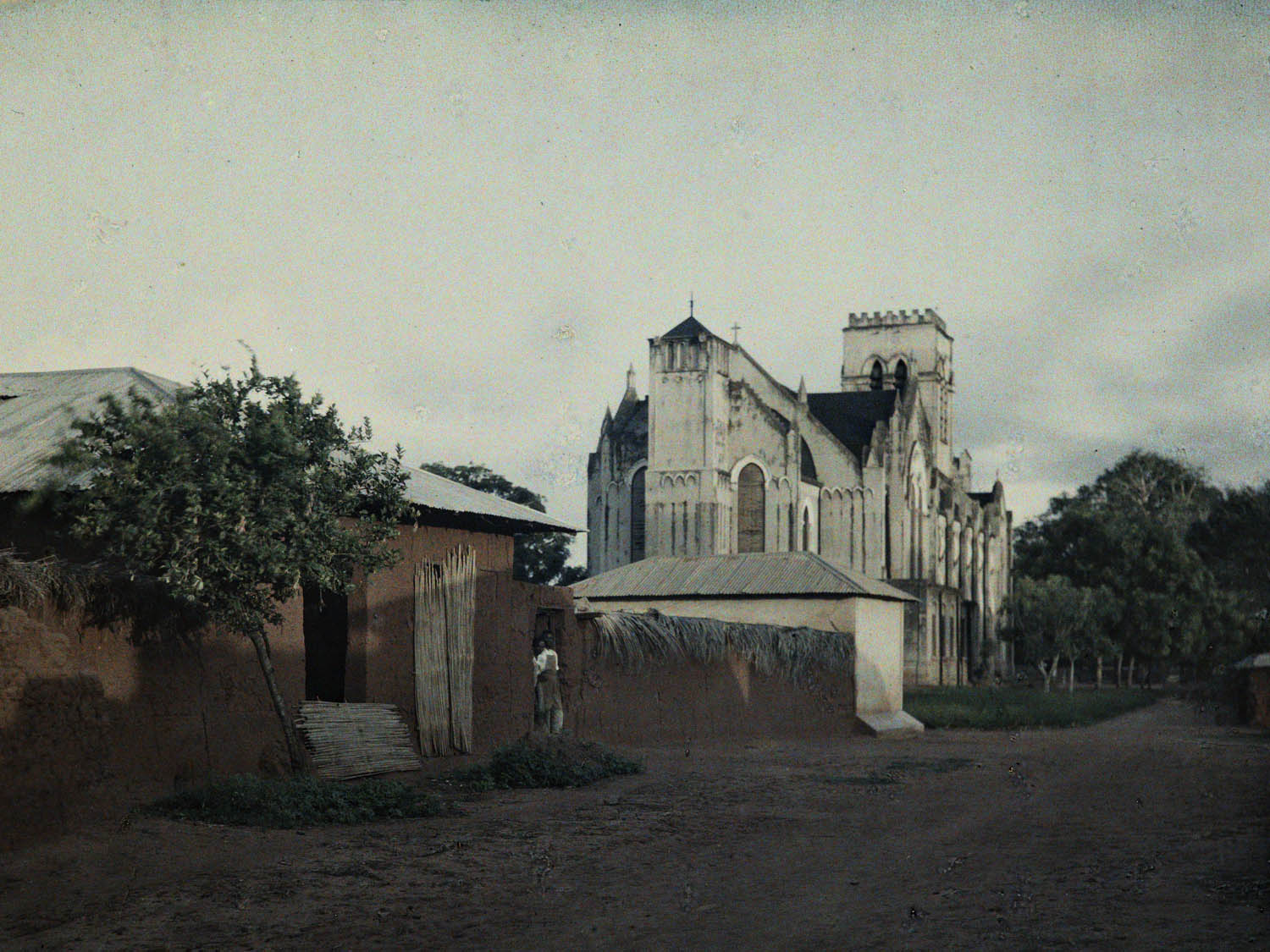
Frédéric Gadmer (French, 1878-1954)
L’église au soleil couchant, Ouidah, Dahomey (Bénin), 2 mai 1930
(The church at sunset, Ouidah, Dahomey (Benin), May 2, 1930)
1930
Autochrome
9 x 12cm
Archives de la Planète, Musée départemental Albert-Kahn,
Département des Hauts-de-Seine
Honneur et patrie (Honour and fatherland)
Another exhibition on an obscure topic that Art Blart likes to promote…
Of all things, I was watching an episode of Tom Clancy’s Jack Ryan on streaming the other day and one of the Russian characters turns around and says, “Once a colony, always a colony.” As Dr Ama Biney cogently observes, “the past is not dead … it lives on in the present.” This is how she perceives the impact of history.1
The past leading the present.
Reading the history of Dahomey (now Benin) it’s the usual story of many European countries slicing and dicing the people, treasures and resources of a foreign kingdom.
“… the 1897 invasion of Benin contributed to the greater African holocaust enshrined in our experience of enslavement, colonialism and neo-colonialism. The brutal desecration of Benin lives and culture through the theft of over 4,000 of its artefacts by Western Europeans seems to be a known but yet untold story. It led to the demise of the Great Benin Kingdom, marking a most significant period in the continuing scramble for African resources. During the invasion the Oba (King) was deposed and deported to Calabar [Nigeria] on 13 September 1897 where he died 16 years later.”1
The photographs in this posting were taken in 1930 only 17 years after the exiled Oba died. The wounds would have been raw and open, probably still are.
While the first two photographs below are NOT in the exhibition, they are most pertinent for they inform all that follows, no matter what the Albert Kahn Museum – which promotes the work of Albert Kahn (1860-1940), a French banker and philanthropist who devoted his fortune to promoting knowledge and understanding between peoples – likes to think.
“Proud and resigned, the ministers of Behanzin pose on the deck of the Mésange. As a reminder of the victory, the motto ‘Honneur et patrie’ (the motto of the French army) is displayed above their heads.”
Dr Marcus Bunyan
1/ Michelle Yaa Asantewa. “The invasion of Benin Kingdom,” on the Pambazuka News website 24.02.2015 [Online] Cited 27/05/2026
Many thankx to the Musée départemental Albert-Kahn for allowing me to publish the photographs in the posting. Please click on the photographs for a larger version of the image.
“The term ‘post-colonial’ is used generally to describe all cultures affected by the imperial process from the moment of colonisation to the present day. It is also considered as the most appropriate term for the new cross-cultural criticism which has emerged in recent years and for the discourse through which it is constituted.”
W.D Ashcroft, Gareth Griffiths and Helen Tiffin. The Empire Writes Back: Theory and Practice in Post-Colonial Literatures. London: Routledge, 1989. p.2.
“I do not think people are used to seeing cultures that were labelled primitive as contemporary culture. This is primitivism in continued operation, in the inability to recognise these as photographs of people that are connected to contemporary culture. The blind spot is so large; it is devastating and it continues to affect First Nations peoples. The sensitivities and limitations around displaying the photographic evidence of the people who perished is tied up in this primitivist ideology.”
Brook Andrew speaking in interview in Brook Andrew and Jessica Neath. “Encounters with Legacy Images: Decolonising and Re-imagining Photographic Evidence from the Colonial Archive,” in History of Photography, 42:3, 2018, pp. 217-238.
The exile of King Behanzin in photographs
King Behanzin finally surrendered in January 1894 and was deported to Martinique with his family. This exile was immortalised by a few black and white photographs taken by a sailor on the schooner “La Mésange”.
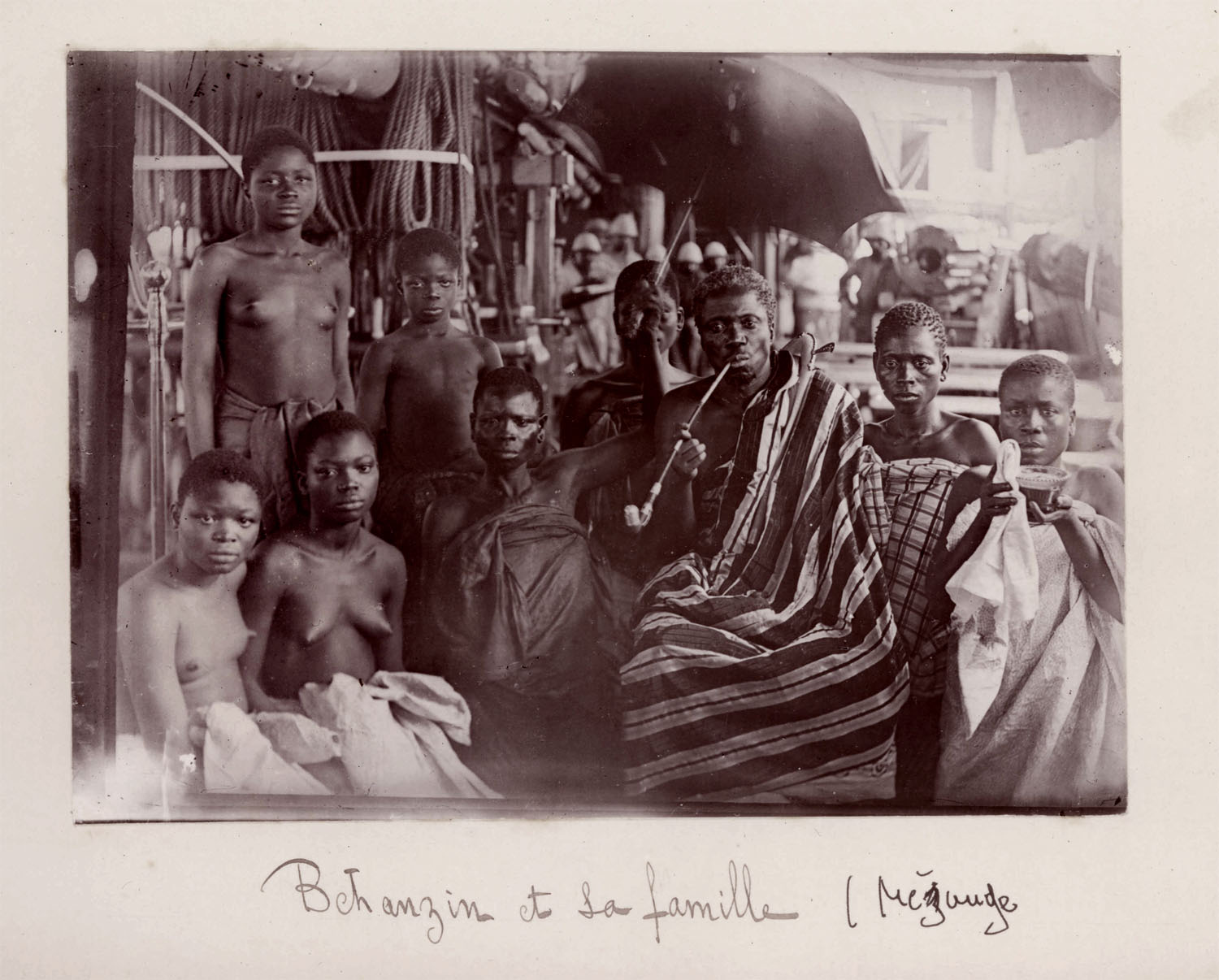
Unknown photographer
Behanzin and his family
January 1894
SHD Vincennes
THIS PHOTOGRAPH IS NOT IN THE EXHIBITION
Behanzin and his family
The exiled king remains dignified; he is surrounded by his relatives – women and a child. One of the women holds an umbrella to protect his head and another seems to be bringing him a drink. The looks are serious, but not overpowering. In the background are French soldiers wearing colonial helmets; on the left, ropes remind us that we are on a ship.
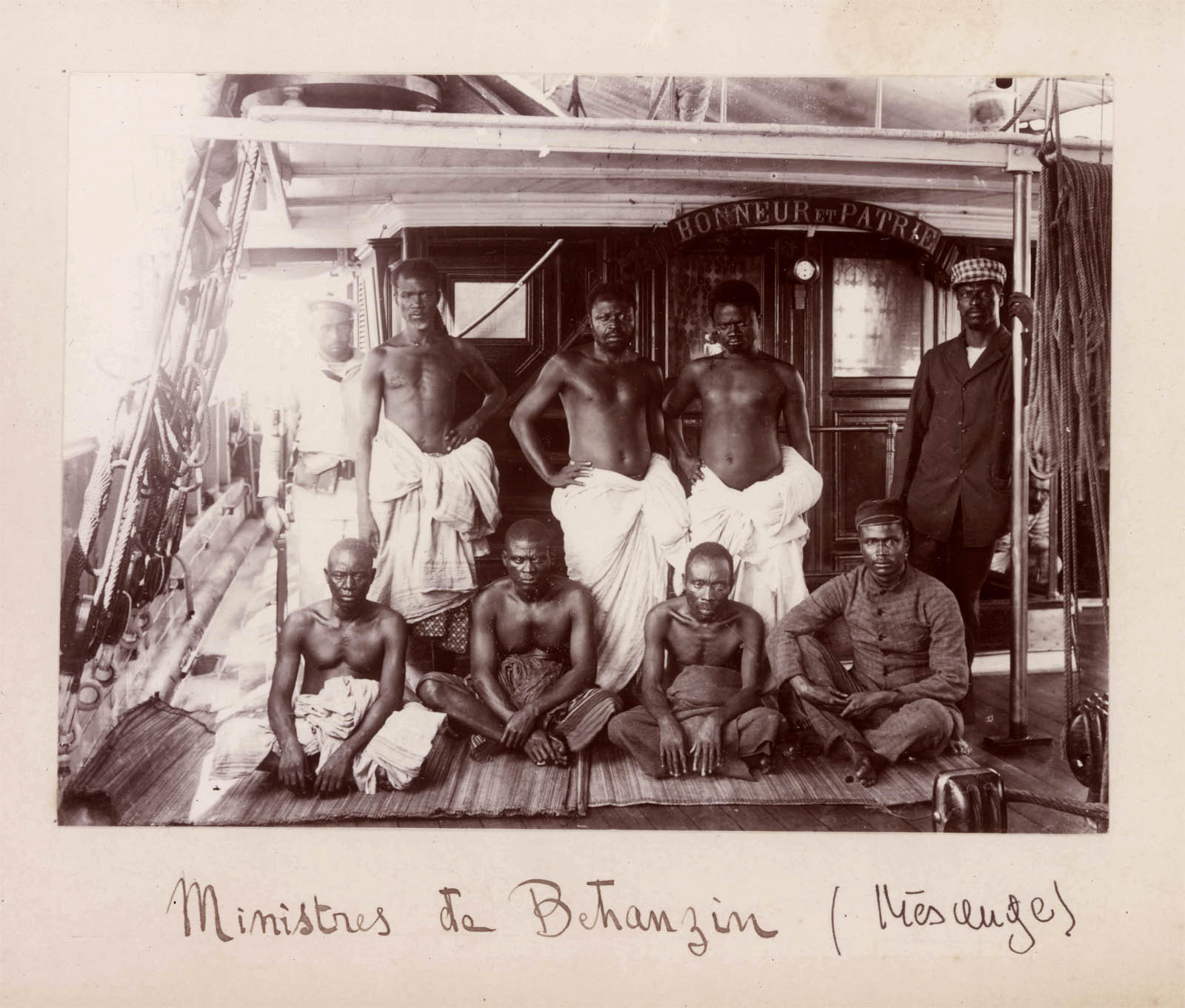
Unknown photographer
Behanzin’s ministers
January 1894
SHD Vincennes
THIS PHOTOGRAPH IS NOT IN THE EXHIBITION
Behanzin’s ministers
Proud and resigned, the ministers of Behanzin pose on the deck of the Mésange. As a reminder of the victory, the motto ‘Honneur et patrie’ (the motto of the French army) is displayed above their heads. One of their jailers, a sailor armed with a rifle, poses with them, but curiously blurred by the light, he seems to fade away in front of the dignity of this government in exile.
Text from the Service historique de la Défense (SHD) website
The conquest of Dahomey (1890-1894)
This conquest was organised in three stages, punctuated by three military-scientific expeditions. The first expedition, which aimed essentially to defend the French trading posts on the coast, was entrusted to Commander Terrillon of the Troupes de Marine and took place from March to April 1890. It ended with the battle of Atchoupa, on 20 April 1890, and a French victory. A first peace treaty was signed on 3 October 1890, but it was not ratified by the Chamber of Deputies. The situation between the kingdom of Dahomey and France remained tense, with King Behanzin, hostile to French interference, opting for a policy of force and confrontation. A second expedition was organised from July to December 1892, preceded by a maritime blockade of the coast. This time it was no longer a question of defending the French establishments with a rapidly built-up force, but of leading an expedition into the heart of the kingdom of Dahomey, with the eventual establishment of a protectorate. The expedition was entrusted to Colonel Dodds. Starting from Cotonou and Porto Novo, the French column went up to Abomey, the capital of the kingdom of Dahomey, occupied on 17 November 1892. It was there that the now General Dodds had the royal objects seized and sent to France. He also proclaimed the deposition of King Behanzin, but did not manage to take him prisoner. This was the aim of the third expedition, from October 1894 to January 1895. It ended on 15 January with the proclamation of a new king of Dahomey, allied with France, then with the surrender of Behanzin, and finally with the proclamation of the French protectorate over Dahomey on 29 January 1895.
With Behanzin defeated, Upper Dahomey opened up to French penetration, with the Niger in its sights. According to the Minister of Foreign Affairs, Delcassé, the aim was to keep the road to the Sudan and Niger open by establishing a French sphere of influence in Upper Dahomey. From 1894 to 1898, a series of missions made it possible to establish this French trusteeship, recognised by a series of conventions with Germany and the United Kingdom between 1897 and 1898.
Anonymous. “The conquest of Dahomey (1890-1894),” on the Service historique de la Défense (SHD) website Nd [Online] Cited 27/05/2026
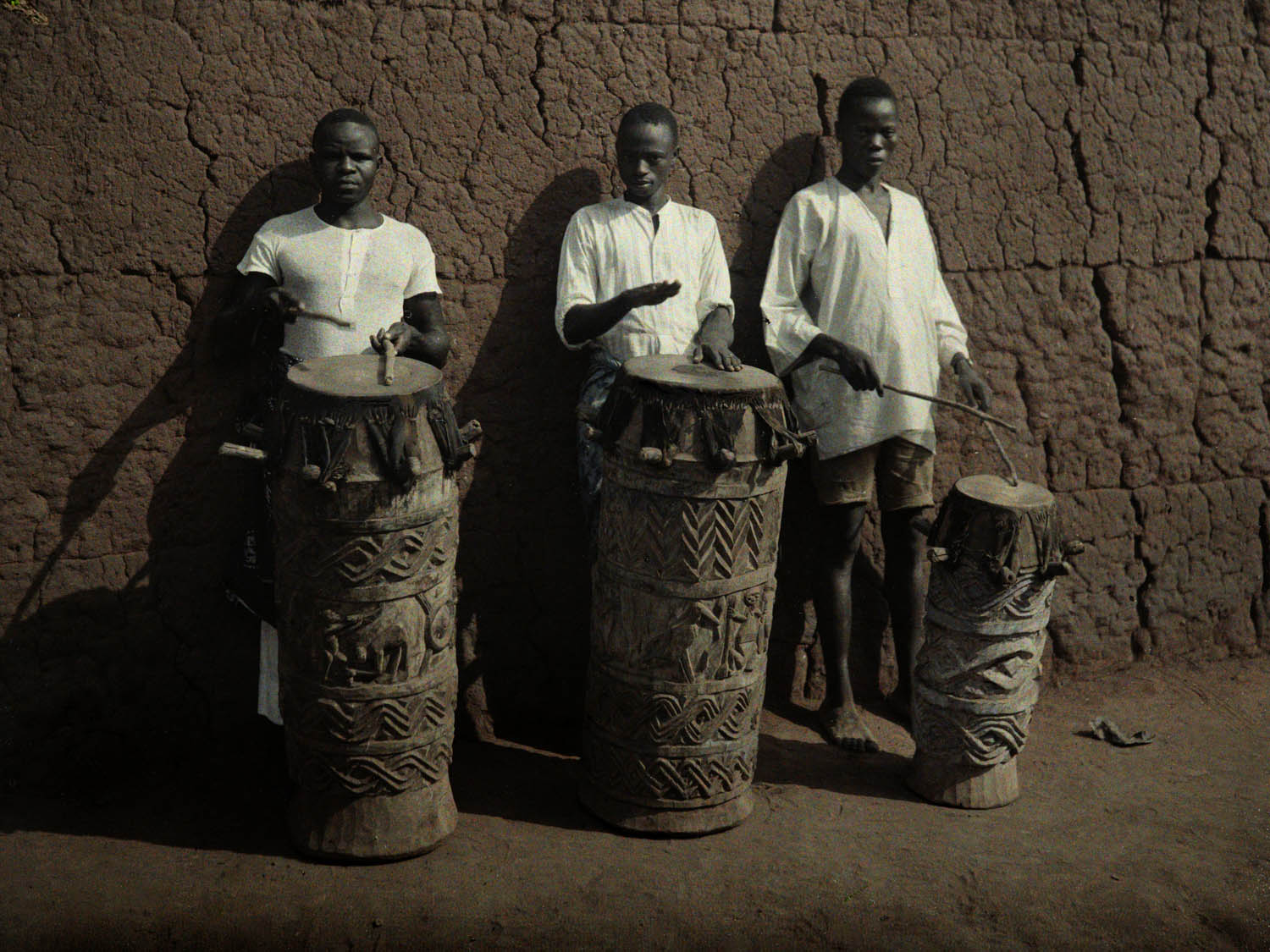
Frédéric Gadmer (French, 1878-1954)
Joueurs de tambours royaux, Sakété, Dahomey (Bénin), 14 janvier 1930
(Royal drummers, Sakété, Dahomey (Benin), January 14, 1930)
1930
Autochrome
9 x 12cm
Archives de la Planète, Musée départemental Albert-Kahn,
Département des Hauts-de-Seine
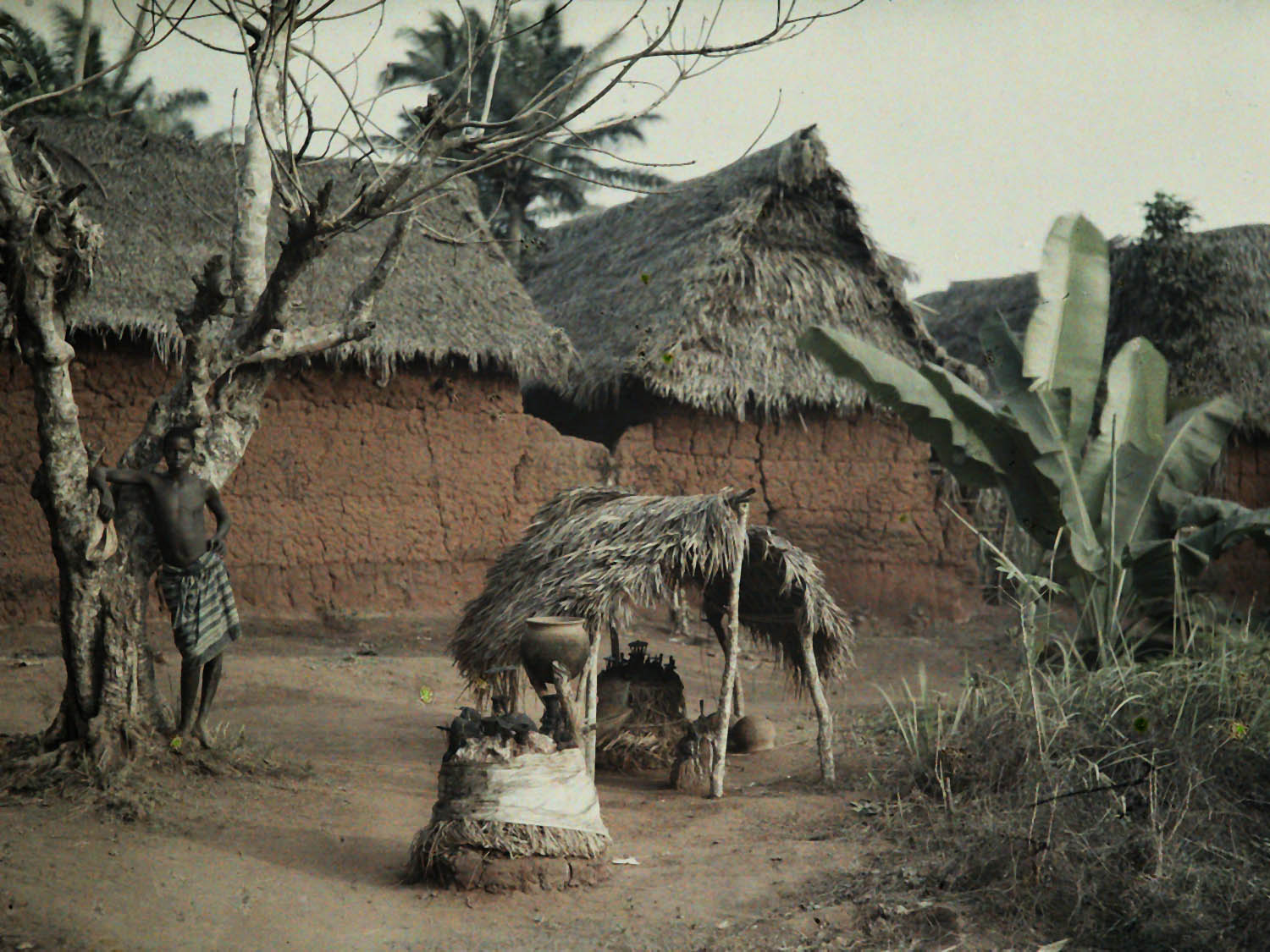
Frédéric Gadmer (French, 1878-1954)
Autel du vodún Djéholou, Adjarra, Dahomey (Bénin), 19 janvier 1930
(Vodun altar of Djéholou, Adjarra, Dahomey (Benin), January 19, 1930)
1930
Autochrome
9 x 12cm
Archives de la Planète, Musée départemental Albert-Kahn,
Département des Hauts-de-Seine
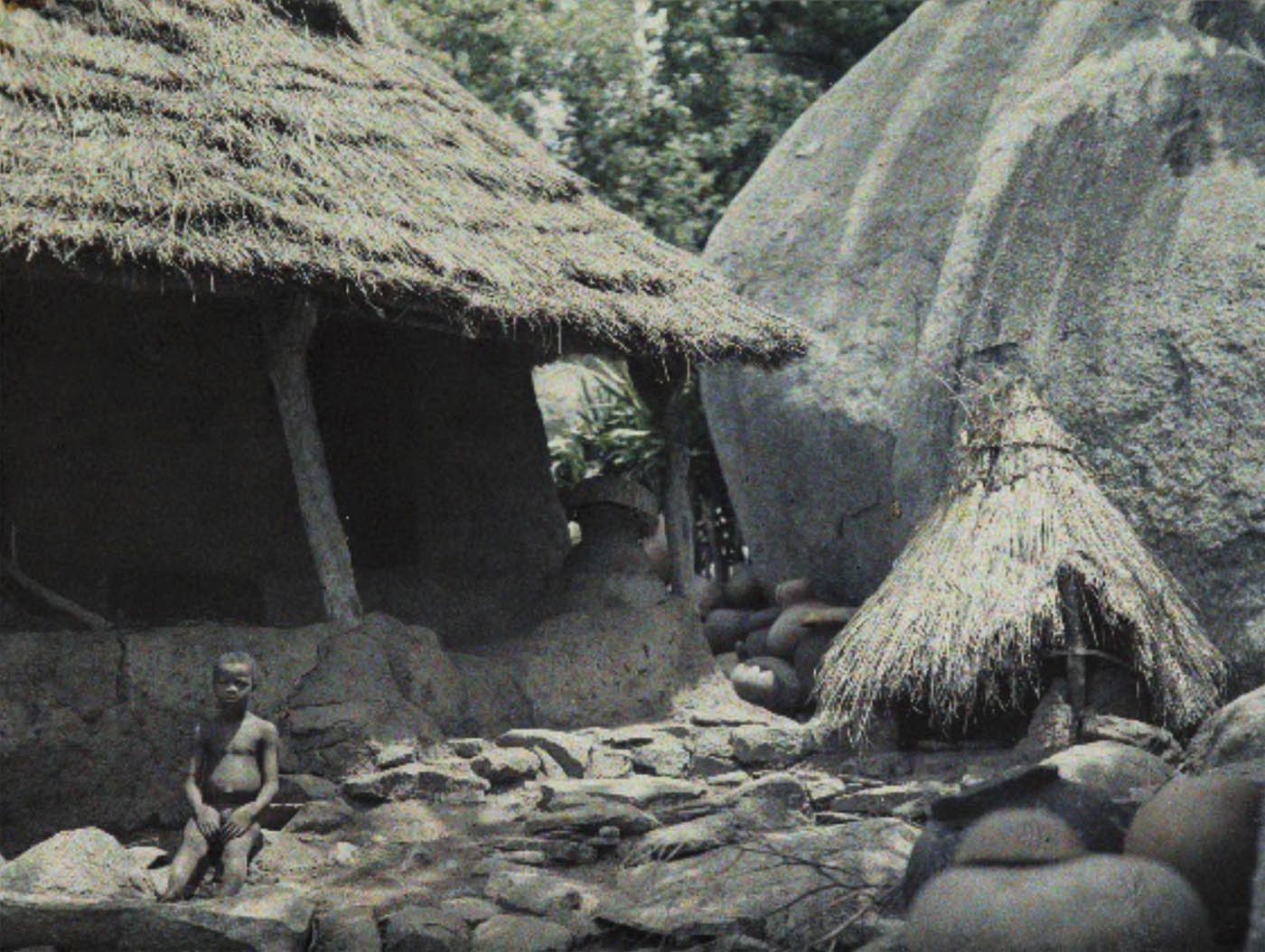
Frédéric Gadmer (French, 1878-1954)
Village dans les collines, Dahomey (Bénin), 26 avril 1930
(Village in the Hills, Dahomey (Benin), April 26, 1930)
1930
Autochrome
Archives de la Planète, Musée départemental Albert-Kahn,
Département des Hauts-de-Seine
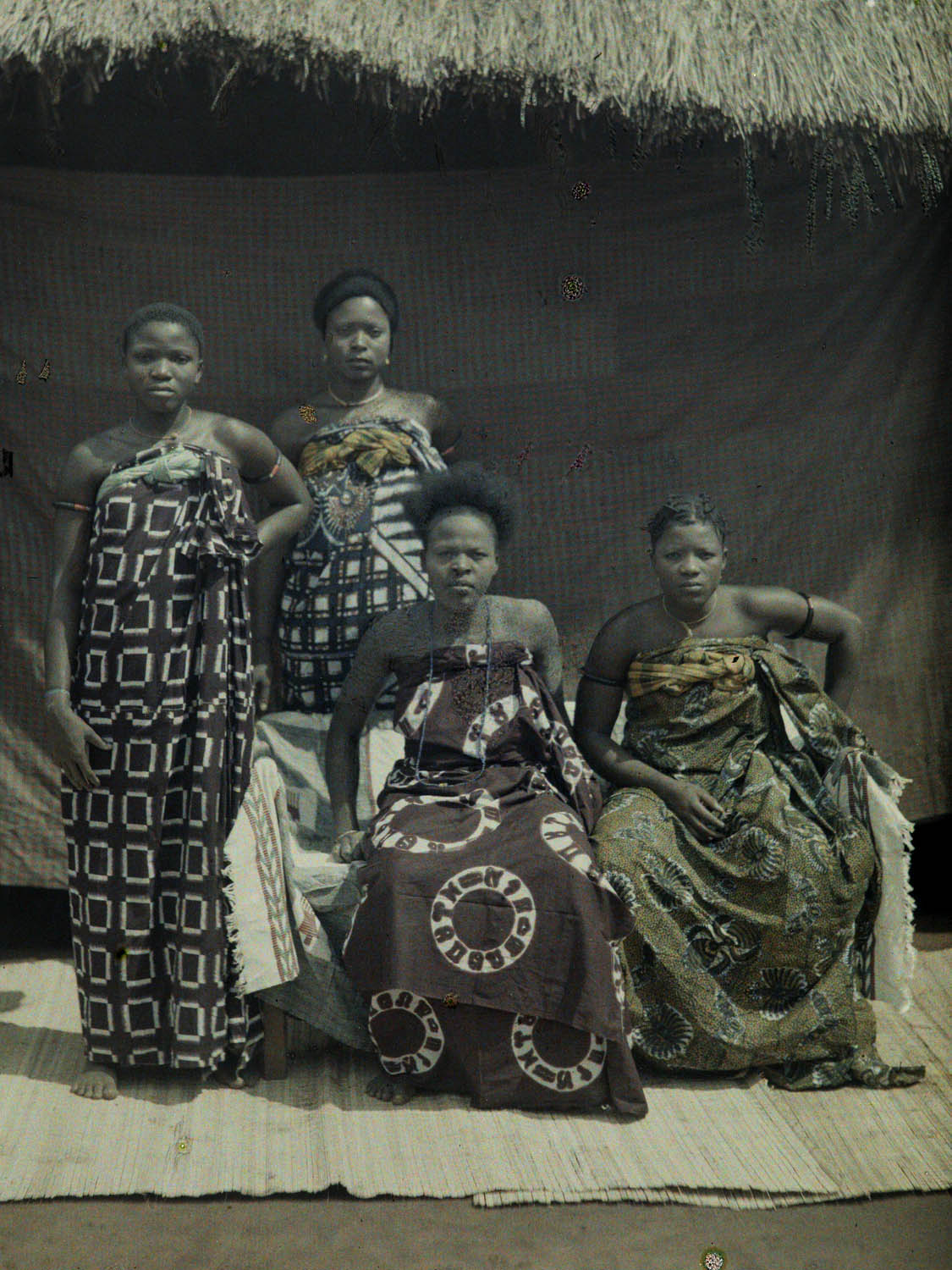
Frédéric Gadmer (French, 1878-1954)
Soeurs et épouses du chef Justin Aho, Abomey, Dahomey (Bénin), 8 mars 1930
(Sisters and wives of Chief Justin Aho, Abomey, Dahomey (Benin), March 8, 1930)
1930
Autochrome
12 x 9 cm
Archives de la Planète, Musée départemental Albert-Kahn, Département des Hauts-de-Seine
The Albert-Kahn Museum’s current exhibition, A Return Trip to Benin. Shared Perspectives on Dahomey in 1930 (Bénin aller-retour. Regards sur le Dahomey de 1930), offers a reinterpretation of the films and photographs produced during a mission to Dahomey (now Benin) led from January to May 1930 by Catholic missionary Francis Aupiais and camera operator Frédéric Gadmer for Albert Kahn’s Archives of the Planet. This immersion, meant as a Franco-Beninese dialogue, questions the views on non-European cultures in a context of colonial rule and the birth of ethnography.
Following on from a series of inaugural exhibitions dedicated to travel and gardens, the Albert-Kahn Museum continues to explore the fundamental themes of its collections, this time focusing on perspectives on non-European cultures and the ethnographic dimension of the Archives of the Planet, recently added to the UNESCO ‘Memory of the World’ Register.
The 1930 mission to Dahomey was unique in several ways: it was the only foray by the Archives of the Planet into sub-Saharan Africa, the last major expedition before the project was halted due to Albert Kahn’s bankruptcy, and the result of an initiative by an atypical clergyman, Father Francis Aupiais (1877-1945). This missionary priest, committed to a long-term endeavour to improve knowledge of African cultures, contacted Albert Kahn in 1927 and convinced him to finance his project to document Dahomey’s cultural and religious practices, in line with the philanthropist’s humanist views.
One of the first film collections of French ethnography
Father Aupiais’s goal was to promote an ‘African recognitio’ by documenting the traditional culture of Dahomey, particularly royal ceremonies and vodun rituals, which he held in high esteem. The mission lasted four and a half months, during which Frédéric Gadmer produced 1,102 autochromes (colour photographs) and shot 140 film reels under Aupiais’s direction. These films, the first of this scale to be shot in Dahomey, constitute the largest collection of films in the Archives of the Planet and one of the first film collections of French ethnography, five years after the founding of the Paris Institute of Ethnology and one year before the Dakar-Djibouti mission.
Recently digitised in high definition (4K), these films constitute the narrative arc of the exhibition, which aims to present the outline, challenges, and legacy of this unusual mission, a century later. Projected in large format throughout an immersive journey, they offer unprecedented image quality and immerse visitors in the intimacy of Dahomey’s ceremonies and cults, forging links between yesterday’s protagonists and today’s visitors, between France and Benin.
Numerous objects, in a large part loaned by the musée du Quai Branly – Jacques Chirac, echo the still and moving images: emblems of power, vodun artifacts, and tools dedicated to divination are striking in their sophistication, matching the uses for which they were intended, documented in the films. These rare pieces also feature items exhibited in France by Father Aupiais himself.
Views from contemporary African artists
A Return Trip to Benin also questions the contemporary reception of images from 1930 through the eyes of artists from the African continent. Serving as a perspective and critical counterpoint, artworks by Ishola Akpo, Thulani Chauke, Sènami Donoumassou, Bronwyn Lace, Roméo Mivekannin, Angelo Moustapha, and Marcus Neustetter, several of which were created specifically for the exhibition, combine painting, photography, installation, and performance, reappropriating and reactivating the photographs and films.
The Albert-Kahn Museum
Located in Boulogne-Billancourt, France, the Albert-Kahn Museum preserves and promotes the work of Albert Kahn (1860-1940), a French banker and philanthropist who devoted his fortune to promoting knowledge and understanding between peoples. In addition to the collection of photographs and films in the Archives of the Planet, it features a four-hectare landscaped garden, the vegetal embodiment of its patron’s universalist dream.
An ambitious renovation completed in 2022 significantly increased the space dedicated to exhibitions, notably thanks to a new 2,300-square-meter building designed by Japanese architect Kengo Kuma, creating a dialogue between the image collections and the garden. The museum has welcomed more than 600,000 visitors since its reopening.
Press release from Musée départemental Albert-Kahn, Paris
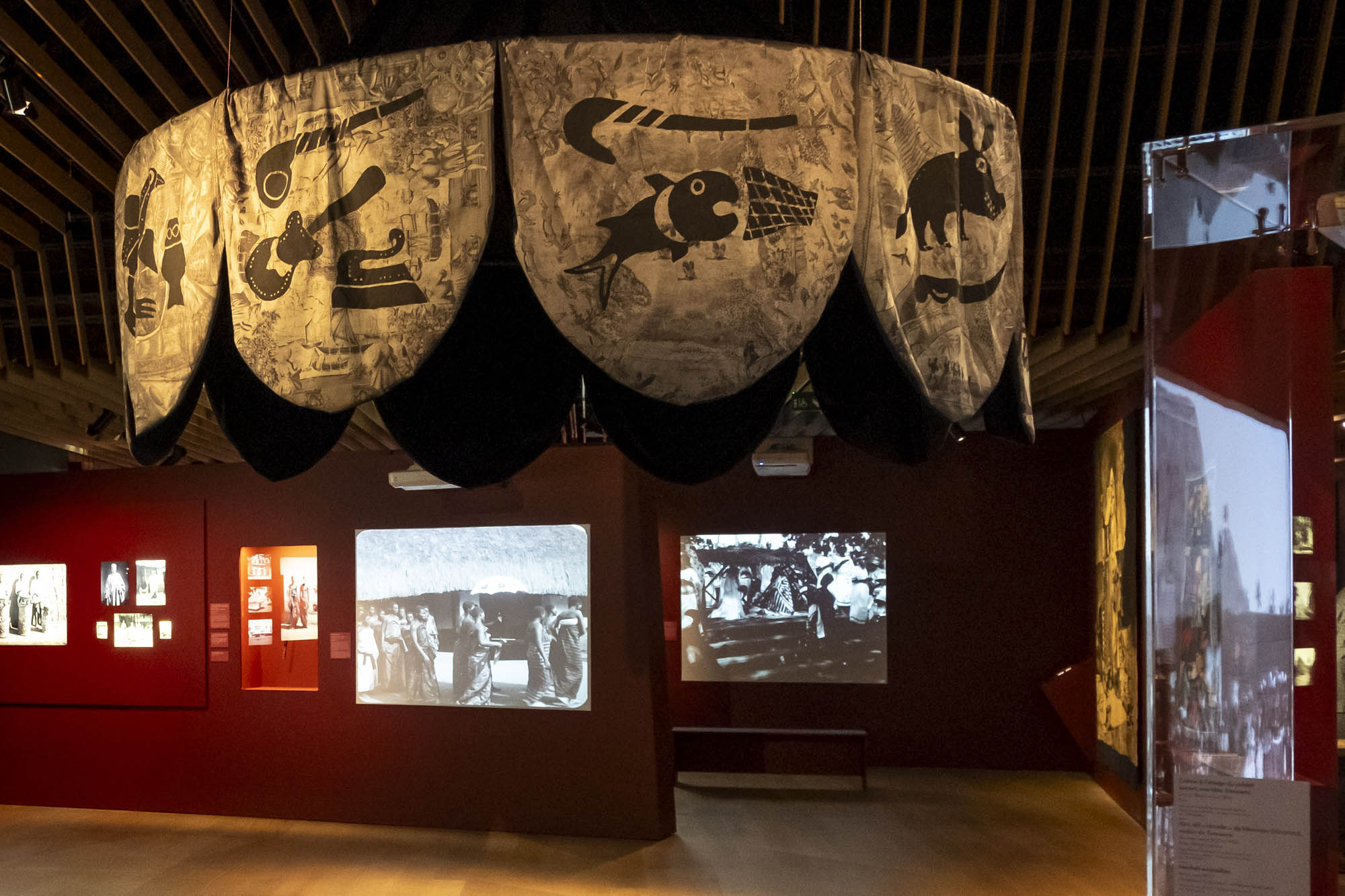
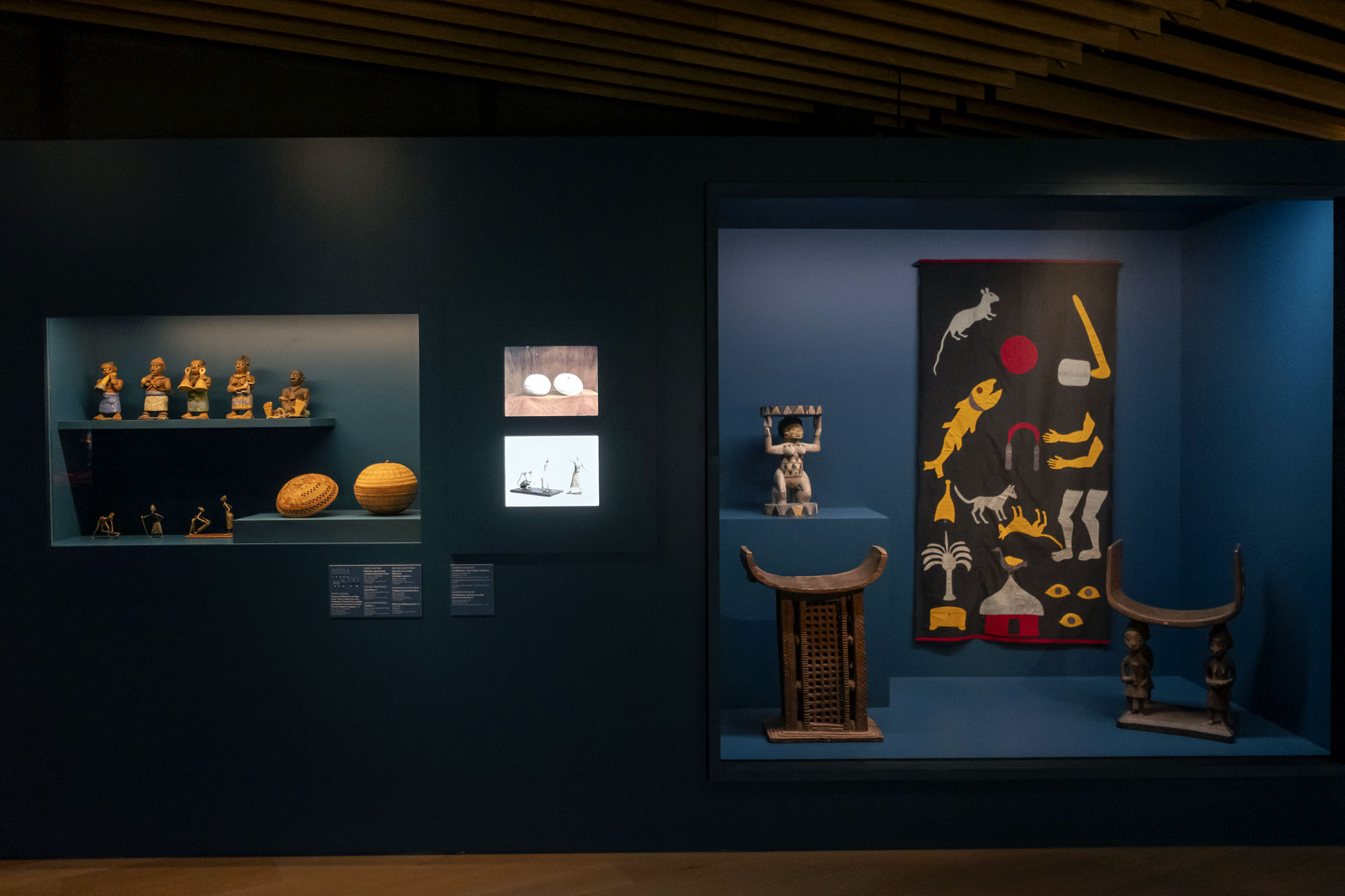
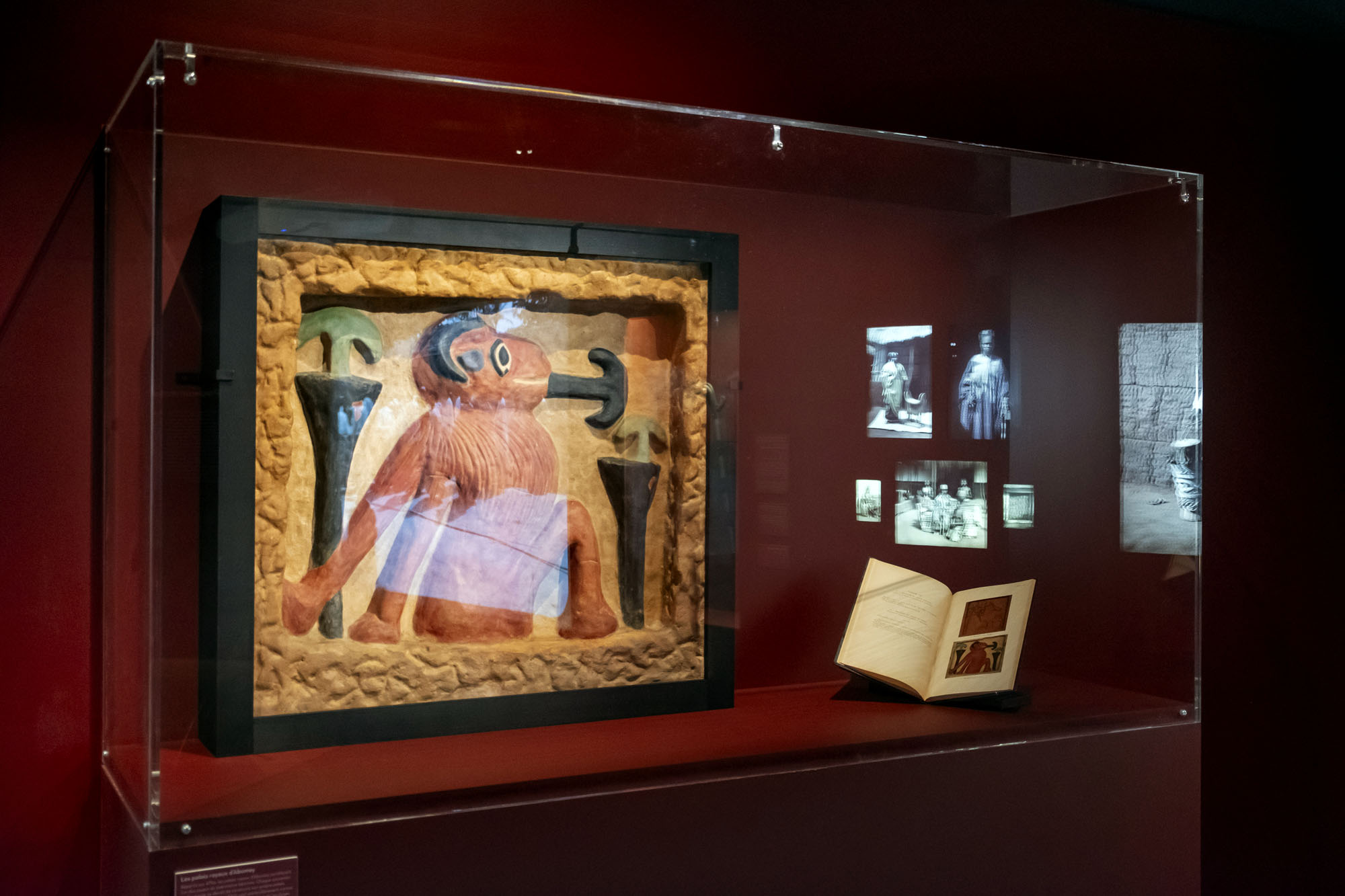
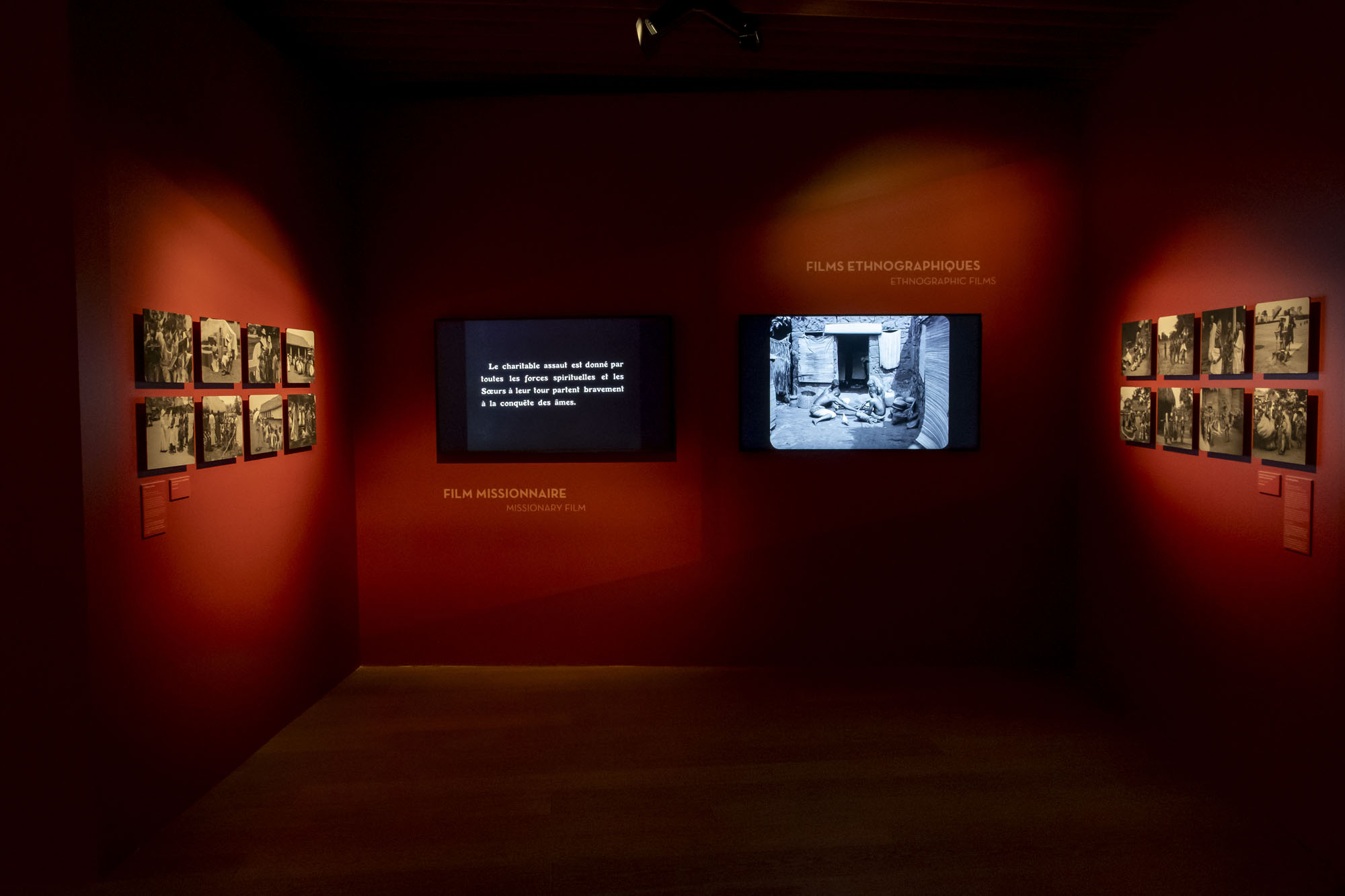
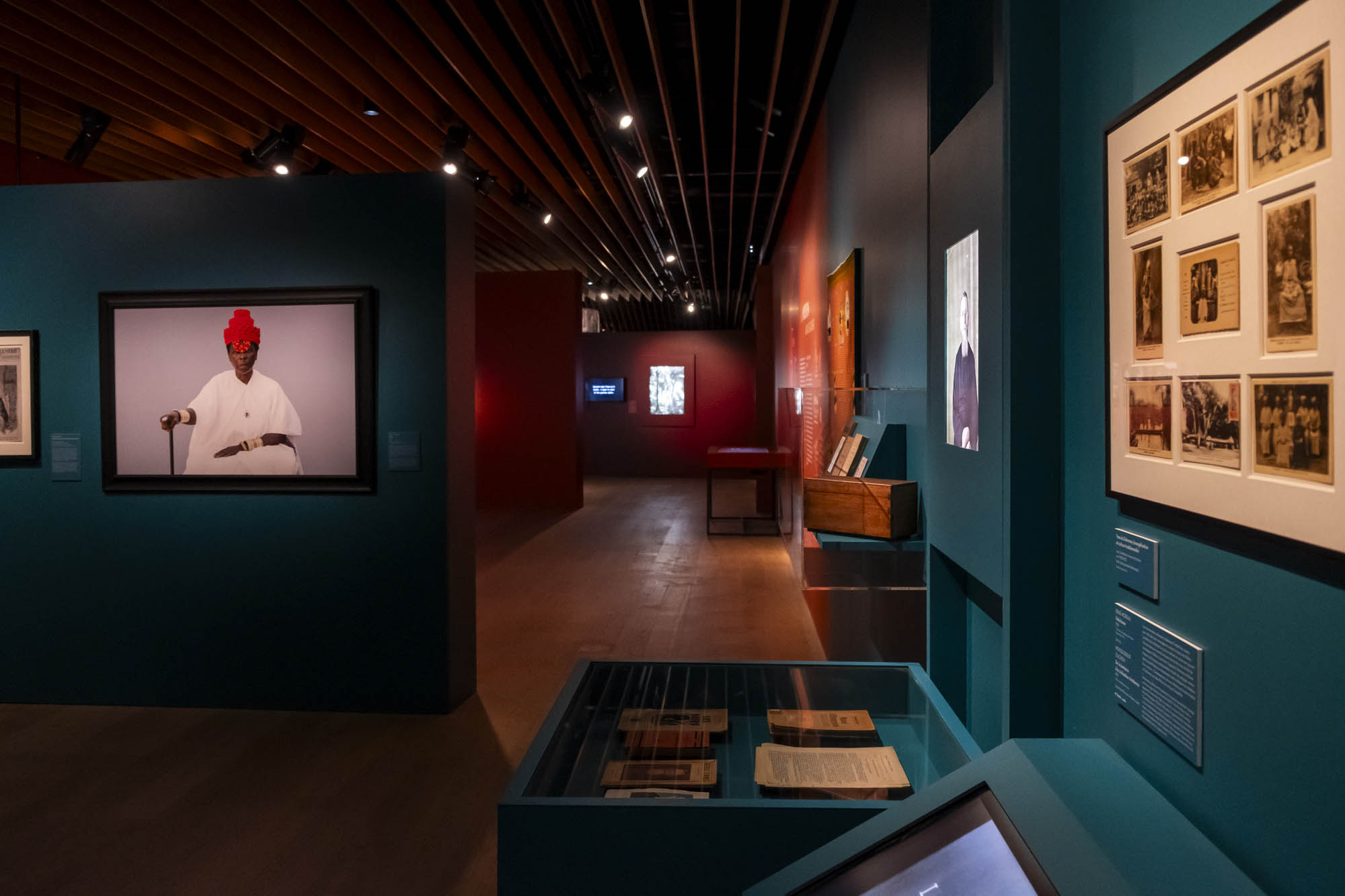
Installation view of the exhibition A Return Trip to Benin. Shared Perspectives on Dahomey in 1930 at Musée départemental Albert-Kahn, Paris, October 2025 – June 2026
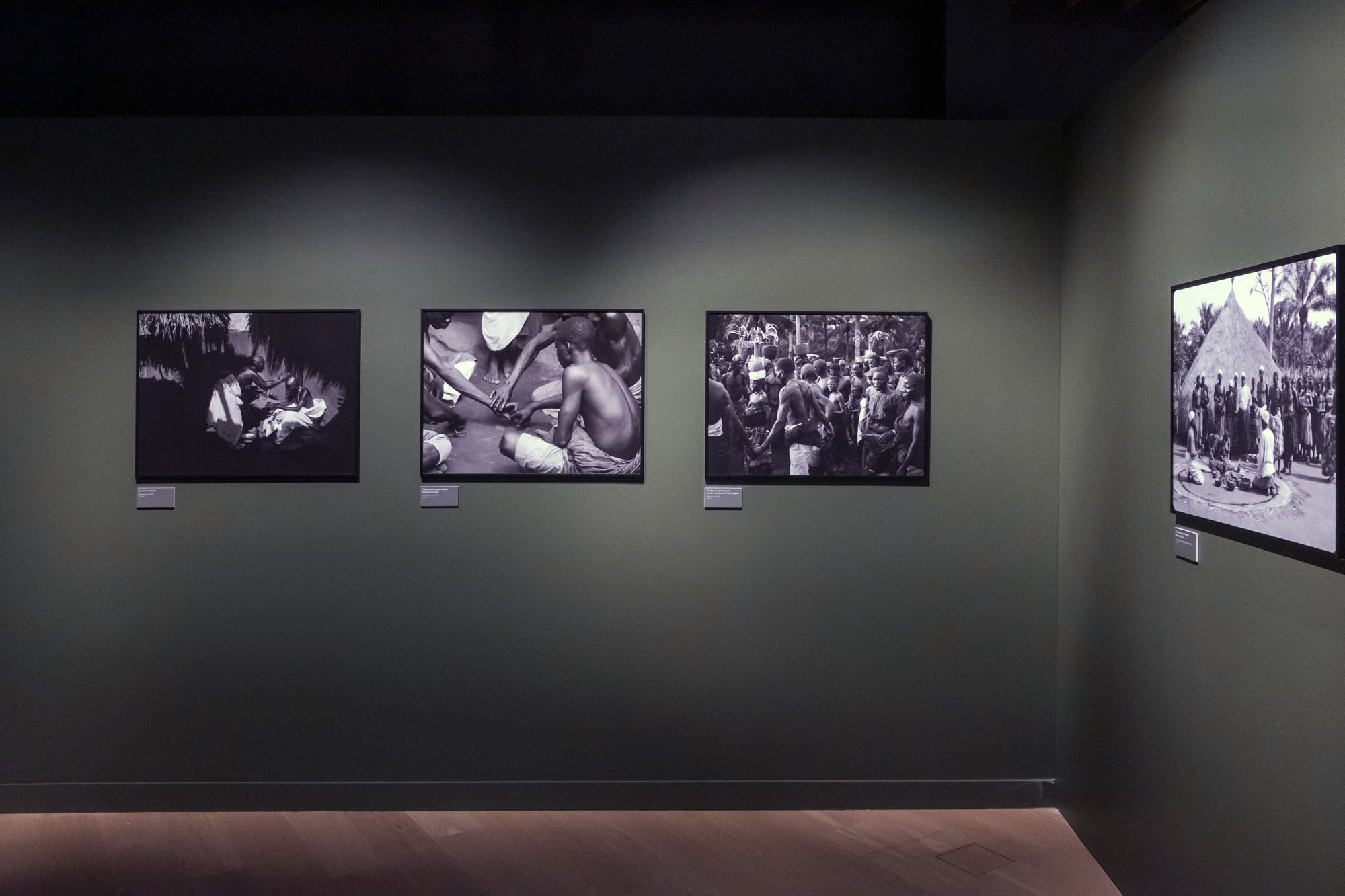
Installation view of the exhibition A Return Trip to Benin. Shared Perspectives on Dahomey in 1930 at Musée départemental Albert-Kahn, Paris, October 2025 – June 2026 showing a selection of black and white photographs by Frédéric Gadmer (French, 1878-1954) (see below)
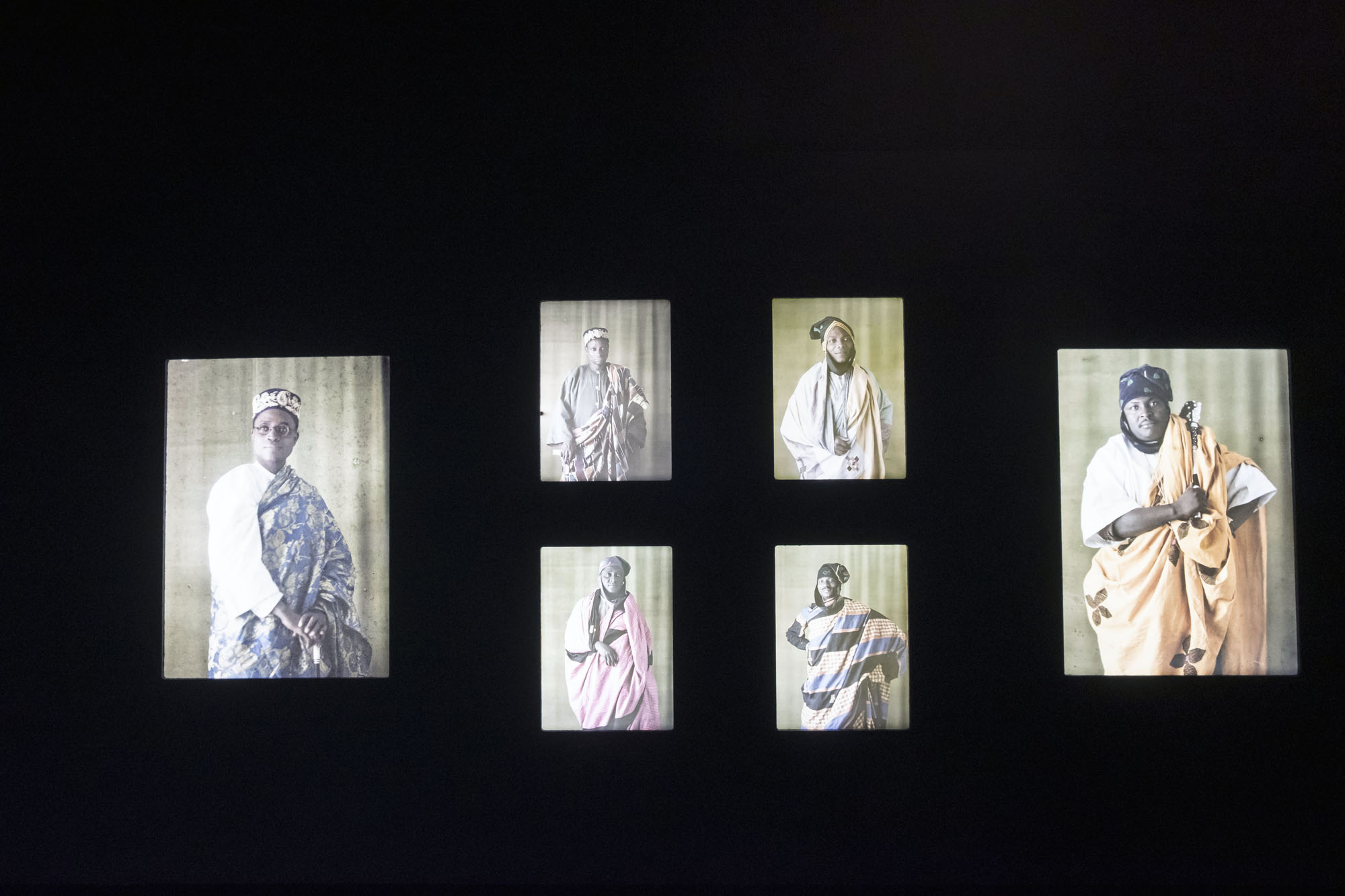
Installation view of the exhibition A Return Trip to Benin. Shared Perspectives on Dahomey in 1930 at Musée départemental Albert-Kahn, Paris, October 2025 – June 2026 showing a selection of Automchromes by Frédéric Gadmer (French, 1878-1954)
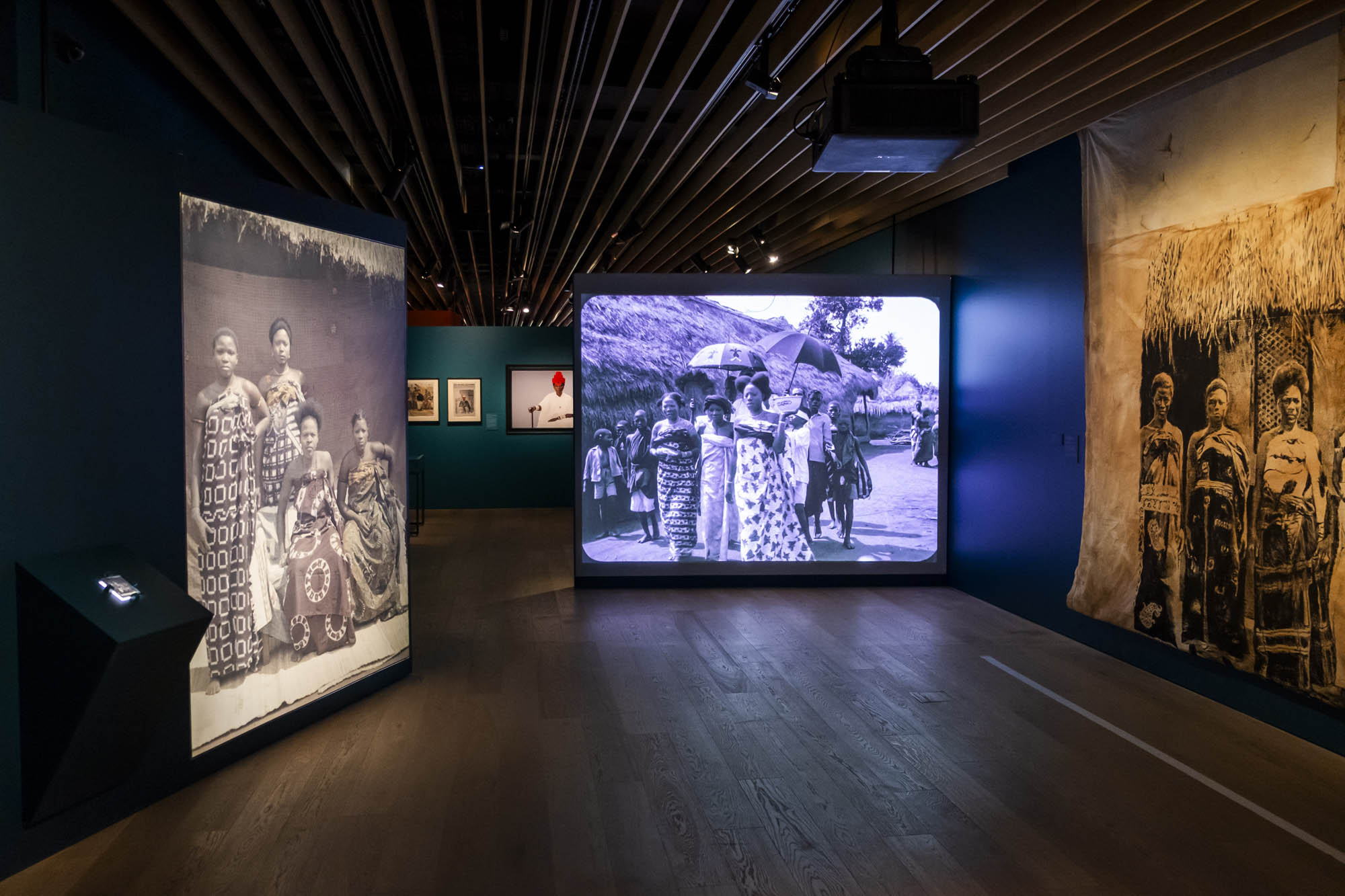
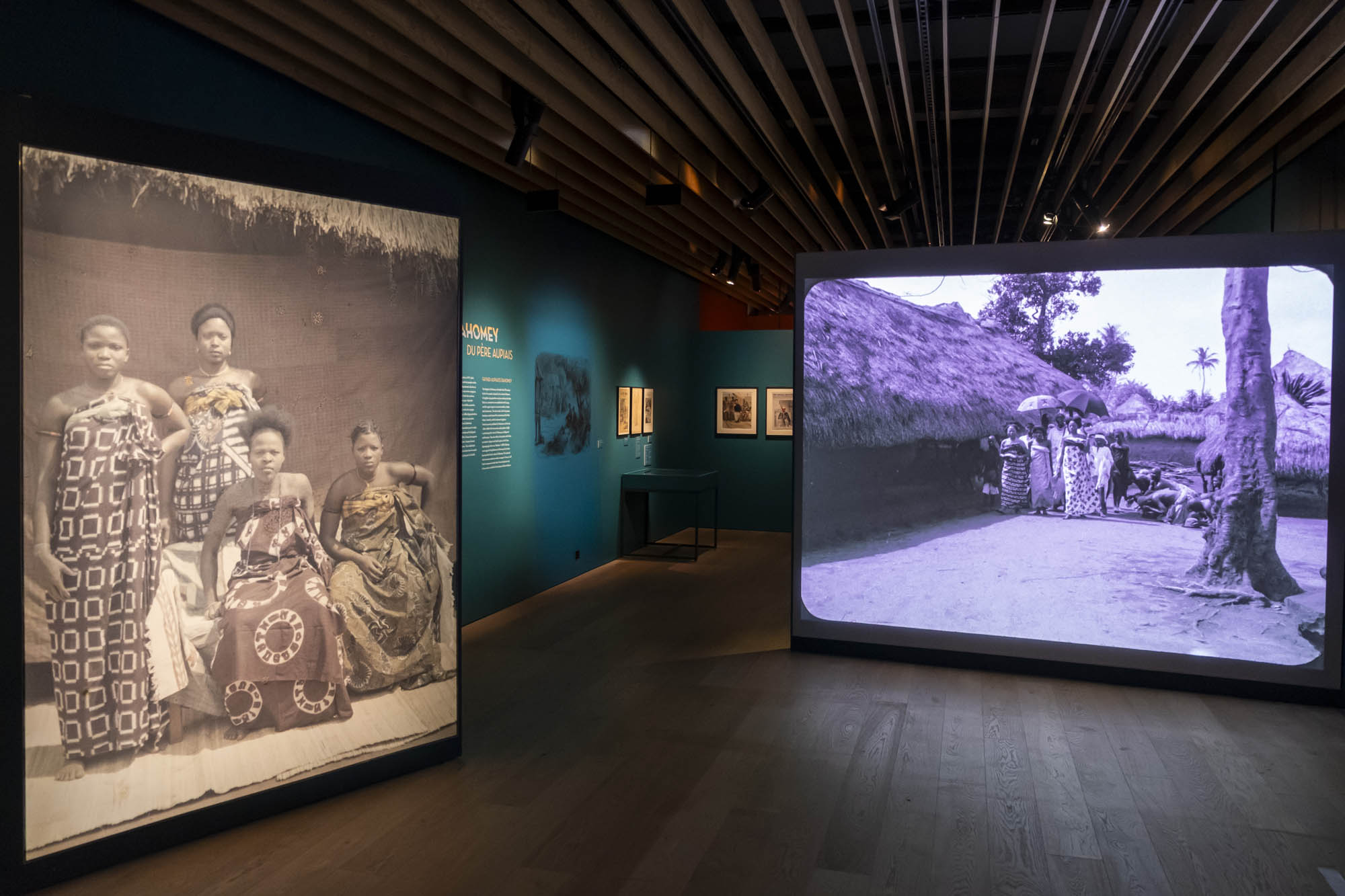
Installation views of the exhibition A Return Trip to Benin. Shared Perspectives on Dahomey in 1930 at Musée départemental Albert-Kahn, Paris, October 2025 – June 2026 showing at left, Frédéric Gadmer (French, 1878-1954) Soeurs et épouses du chef Justin Aho, Abomey, Dahomey (Bénin), 8 mars 1930 (Sisters and wives of Chief Justin Aho, Abomey, Dahomey (Benin), March 8, 1930) 1930
Bénin aller-retour. Regards sur le Dahomey de 1930 offers a new interpretation of films and photographs produced during a Mission des Archives de la Planète, carried out by Catholic missionary Francis Aupiais and cameraman Frédéric Gadmer in Dahomey (present-day Benin) from January to May 1930. This immersive exhibition, shaped as a Franco-Beninese dialogue, questions how extra-European cultures were viewed in a context of colonial domination and the emergence of ethnography.
The 1930 mission to Dahomey was unique in several aspects: it was the only foray by the Archives de la Planète into sub-Saharan Africa, the last major expedition before the project was halted due to the bankruptcy of Kahn bank, it was the initiative of an atypical man of the church, Father Francis Aupiais (1877-1945), and lasted four and a half months, during which Frédéric Gadmer produced 1,102 autochromes (colour photographs) and shot 140 reels of film under Aupiais’s direction.
These films, the first of this scale to be shot in Dahomey, constitute the most extensive collection of films in the Archives de la Planète and one of the earliest film collections of French ethnography, five years following the establishment of the Institut d’ethnologie de Paris and one year prior to the Dakar-Djibouti mission.
Bénin aller-retour also interrogates the contemporary reception of the 1930 images through the perspective of artists from the African continent. The works of Ishola Akpo, Thulani Chauke, Sènami Donoumassou, Bronwyn Lace, Roméo Mivekannin, Angelo Moustapha, and Marcus Neustetter, several of which were created especially for the exhibition, combine painting, photography, installation, and performance, as reappropriations – and reactivations – of the photographs and films.
The Exhibition
A major exhibition for the 2025-2026 season at the Albert-Kahn Departmental Museum, A Return Trip to Benin. Shared Perspectives on Dahomey in 1930 offers a reinterpretation of films and photographs produced during an Archives of the Planet mission led by Catholic missionary Francis Aupiais and cameraman Frédéric Gadmer in Dahomey (present-day Benin) from January to May 1930. This immersive experience, in the form of a Franco-Beninese dialogue, questions the way non-European cultures were perceived within the context of colonial rule and the birth of ethnography. Prior to the exhibition, fieldwork documentation missions were carried out in 2023-2024 by the Albert-Kahn Departmental Museum in partnership with Beninese heritage experts, as part of a cooperation program between the Hauts-de-Seine Department and the Zou Community of Municipalities in Benin.
A Unique Mission of the Archives of the Planet
Following a reopening cycle dedicated to travel, and then an exhibition showcasing images of gardens, the Albert-Kahn departmental museum continues its exploration of the fundamental themes of its collections, this time focusing on the perspective of the other and the ethnographic dimension of the Archives of the Planet, recently inscribed on UNESCO’s Memory of the World Register.
The 1930 mission to Dahomey is unique in several respects: the only incursion of the Archives of the Planet into sub-Saharan Africa, the last large-scale expedition before the project was halted due to the bankruptcy of the Kahn bank, it resulted from the initiative of an atypical clergyman, Father Francis Aupiais (1877-1945). This missionary priest, committed to a long-term project for a better understanding of African cultures, contacted Albert Kahn in 1927 and convinced him to finance his work documenting Dahomean cultural and religious practices, which naturally aligned with the philanthropist’s humanist project.
One of the first film collections of French ethnography
Father Aupiais’s aim was to contribute to an “African recognition” by documenting the evangelisation but especially the traditional culture of Dahomey, in particular the royal ceremonies and Vodun rites, which he held in high esteem. The mission lasted four and a half months, during which Frédéric Gadmer produced 1,102 autochromes (colour photographs) and shot 140 reels of film, under Aupiais’s direction. These films, the first of this scale shot in Dahomey, constitute the largest collection of films in the Archives of the Planet and one of the first film collections of French ethnography, five years after the founding of the Paris Institute of Ethnology and one year before the Dakar-Djibouti mission.
Recently digitised in high definition (4K), these films form the central thread of the exhibition, which aims to present the unfolding, the stakes, and the legacy, a century later, of this unique mission. Projected in large format throughout an immersive experience, they offer unprecedented image quality and plunge visitors into the heart of Dahomean ceremonies and rituals, forging connections between the protagonists of the past and the public of today, between France and Benin.
Numerous objects, loaned notably by the Musée du quai Branly – Jacques Chirac, resonate with the still and moving images: emblems of power, Vodun attributes, and divination tools are striking in their sophistication, reflecting the uses for which they were intended and which the films document. Among these rare pieces are some objects exhibited in France by Father Aupiais himself.
Artists’ Perspectives from the African Continent
A Benin Round Trip also explores the contemporary reception of images from 1930 through the perspectives of artists from the African continent. Serving as contextualisation and critical counterpoints, the works of Ishola Akpo, Thulani Chauke, Sènami Donoumassou, Bronwyn Lace, Roméo Mivekannin, Angelo Moustapha, and Marcus Neustetter, several of which were created specifically for the exhibition, blend painting, photography, installation, and performance, representing a reappropriation – and reactivation – of the photographs and films.
Throughout the exhibition, a genuine exchange of perspectives is fostered to construct new narratives that respect Beninese sensibilities and knowledge. This approach was made possible thanks to the numerous collaborations established with heritage experts in Benin, both within the framework of the project’s scientific committee and in that of two documentation missions carried out on site by the Albert-Kahn departmental museum in 2023-2024, thus continuing Albert Kahn’s program: “training to see, training to know.”
Exhibition design and layout
The exhibition offers an immersion in the images of 1930 through a modern and minimalist scenography, the juxtaposition of photographs and films with numerous objects and the spectacular presentation of the films in the form of large format projections.
Father Aupiais’s Dahomey
This introductory section presents the historical context as well as the figure of Francis Aupiais, the initiator of this Archives of the Planet mission, whose figure remains well known in Benin.
The Kingdom of Dahomey was founded in the 17th century by the Fon people, under the cultural influence of neighboring peoples and pre-existing city-states. Links were quickly forged with Europe, and the region saw the arrival of travellers, traders, and missionaries. The slave trade, established by Europeans to meet the demand of the Americas and the West Indies, exacerbated conflicts between kingdoms. The travel accounts published by Westerners at the time, riddled with inaccuracies and prejudices, revelled in describing the warlike and ferocious nature of the rulers of Dahomey. They also demonstrate a fascination with Vodun, a religion and animistic system of thought that they denigrate as “fetishism.”
In 1894, following a war against the King of Dahomey, Béhanzin, the country became a French colony: Dahomey. This conquest, which received considerable media attention in France, was still fresh in everyone’s minds when Francis Aupiais arrived there for the Society of African Missions.
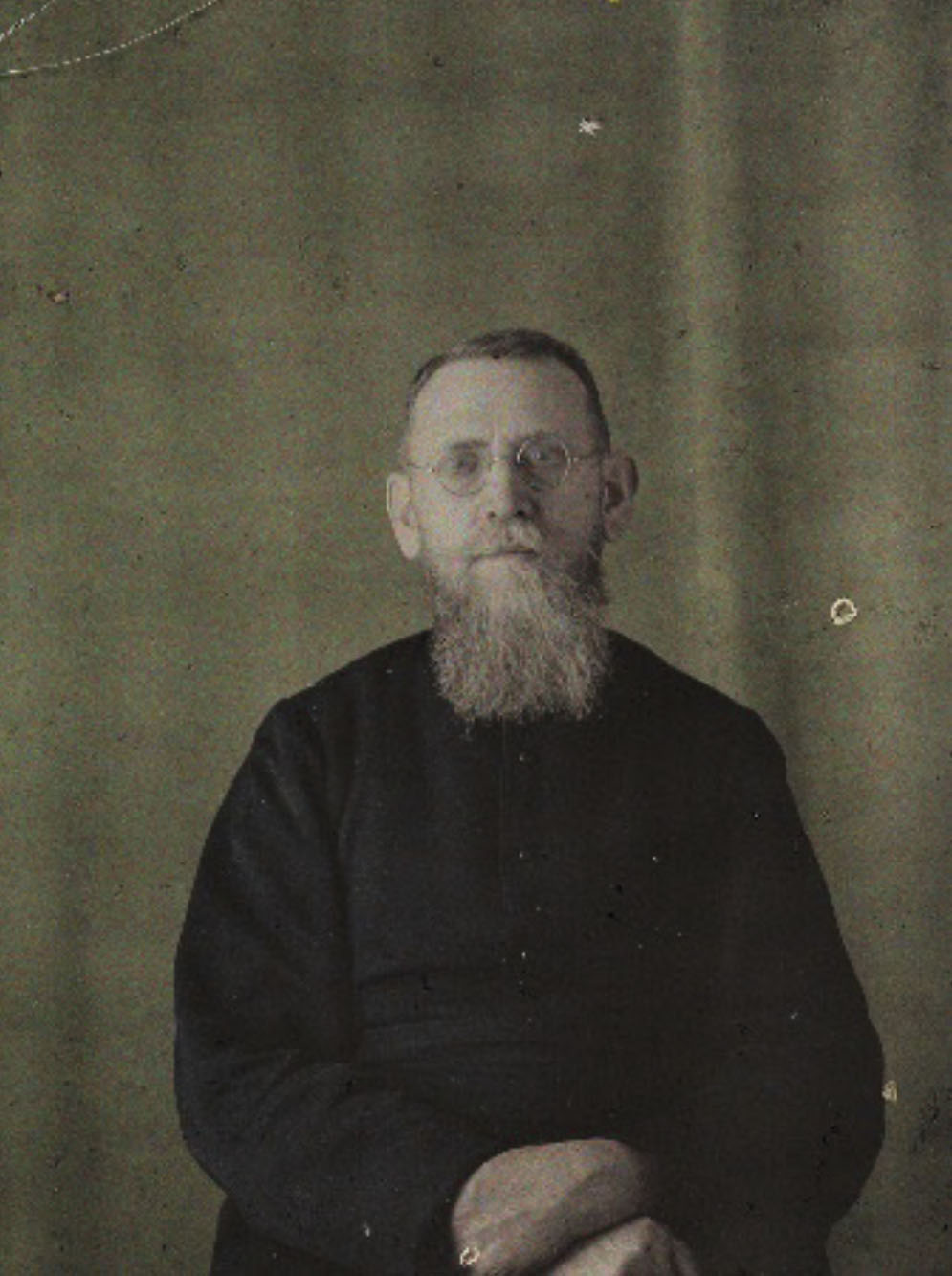
Auguste Léon (French, 1857-1942)
Portrait du révérend père Aupiais, Boulogne-sur-Seine, 9 août 1927
(Portrait of Reverend Father Aupiais, Boulogne-sur-Seine, August 9, 1927)
1927
Autochrome
Archives de la Planète, Musée départemental Albert-Kahn, Département des Hauts-de-Seine
~ Francis Aupiais (1877-1945)
Ordained a priest of the Society of African Missions of Lyon in 1902, Francis Aupiais was sent to Dahomey the following year. There, he served as director of schools and later as superior of the mission in the capital, Porto-Novo. Like the Bishop of Dahomey, François Steinmetz (1868-1952), he sought to understand and promote Dahomean culture. To this end, he learned the language and researched its history, art, and customs from local authorities, particularly Vodun religious leaders.
This fraternal dialogue materialised within the journal La Reconnaissance africaine (1925-1927), to which the future writer Paul Hazoumé (1890-1980) contributed, as well as Thomas Mouléro (1888-1975) and Gabriel Kiti (1900-1948), the first two Dahomeans ordained priests.
Returning to France at the end of 1926, Father Aupiais undertook an intense propaganda campaign aimed at “rehabilitating Black people in the eyes of Europeans” and attended the Paris Institute of Ethnology in preparation for his most ambitious undertaking: a film mission to Dahomey.
The Aupiais-Gadmer Mission
This space presents the second protagonist of the adventure, Frédéric Gadmer, and provides visitors with insights into the 1930 mission (duration, route, topics covered, dual film corpus, etc.).
On January 1, 1930, Father Aupiais arrived in Cotonou accompanied by Frédéric Gadmer, an operator for the Archives of the Planet. For four and a half months, the two men traveled nearly 1,600 kilometers by train and car. Their itinerary focused on southern Dahomey: the Porto-Novo region, where Aupiais had lived for nearly twenty-five years, and the Abomey region, capital of the former kingdom of Dahomey. The pair also made a short stay in the north, in Natitingou, whose culture the missionary wished to document from a comparative perspective. Gadmer carried three devices with him: a camera
for creating autochromes (colour slides) and two cameras with complementary capabilities, an ICA and a Debrie. In total, Gadmer produced 1,102 autochromes
representing 312 different subjects and shot 140 reels of film, representing
a little over 10 kilometres of film, equivalent to 8 hours and 30 minutes of footage.
This constitutes the largest film corpus in the Archives of the Planet and one of the most ambitious ethnographic undertakings of the first half of the 20th century.
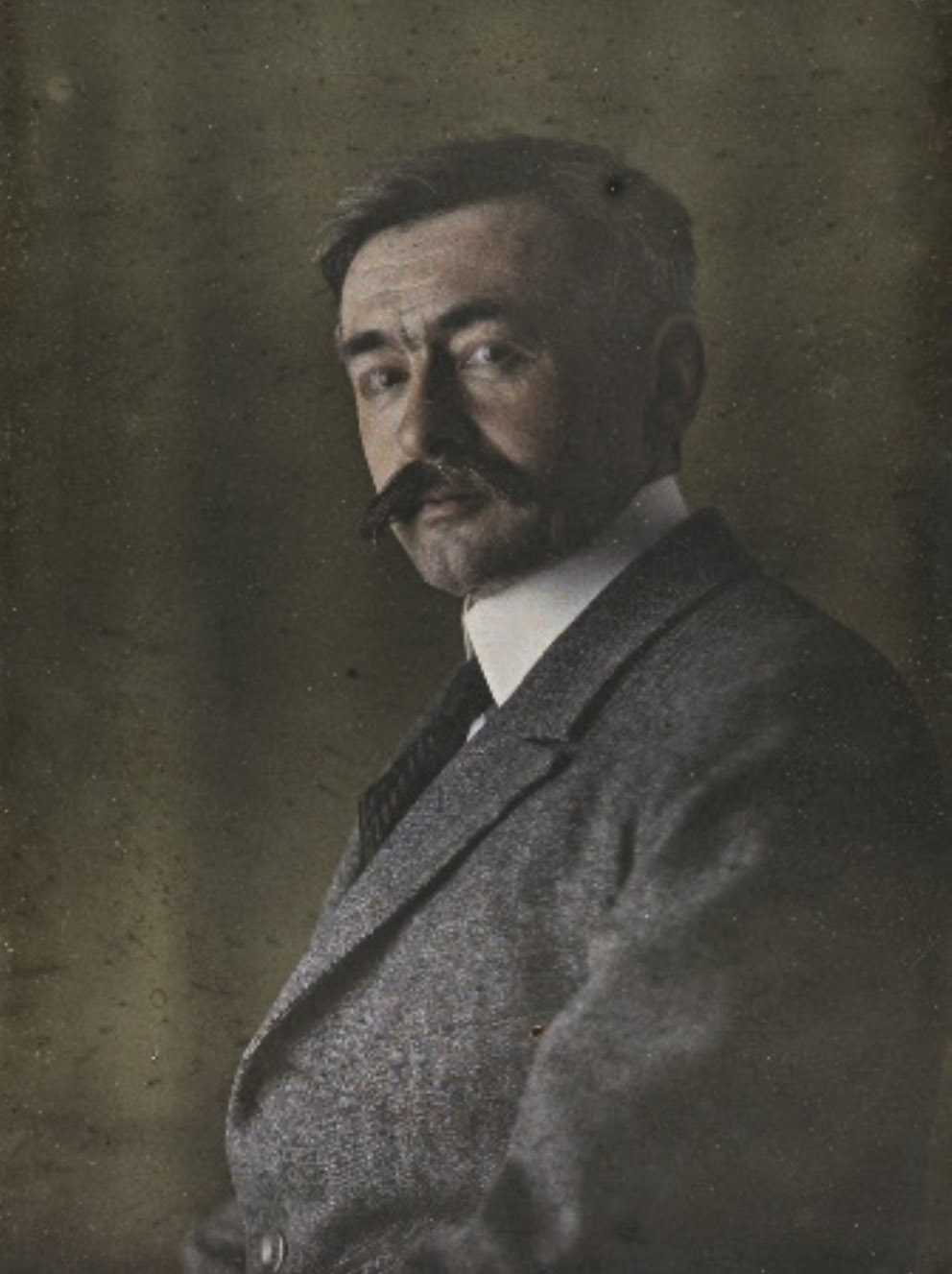
Aris Lachalarde (French, 1881-1964)
Portrait de Frédéric Gadmer, Boulogne-sur-Seine
(Portrait of Frédéric Gadmer, Boulogne-sur-Seine)
Nd
Autochrome
Archives de la Planète, Musée départemental Albert-Kahn, Département des Hauts-de-Seine
~ Frédéric Gadmer (1878-1954)
A professional photographer, Frédéric Gadmer was employed by the army during the First World War and undertook a long mission in Cameroon (1916-1918). In 1919, Albert Kahn (1860-1940) recruited this seasoned photographer for the Archives of the Planet. Gadmer became one of the most prolific photographers for the banker’s philanthropic project, distinguishing himself by his taste for distant horizons, from Syria to Canada, by way of Persia and Afghanistan.
He trained in filmmaking in 1924, thus acquiring a valuable dual skill set
which contributed to his being chosen to accompany Father Aupiais to Dahomey in 1930. A reserved and rigorous man, Gadmer combined the humanist ambitions of the missionary with the documentary rigour of Jean Brunhes (1869-1930), scientific director of the Archives of the Planet, while also overcoming the technical difficulties of the field (high temperature, high humidity, etc.).
A Portrait of Dahomey
This third section, the largest in the exhibition, explores the three main themes addressed by the photographs and films of the mission.
~ Colonisation and Evangelisation
Given the circumstances, colonial influence and missionary activities are, of course, central to the corpus. This section notably presents Christian Dahomey, a missionary propaganda film conceived by Aupiais alongside his documentation of traditional Dahomean culture.
During their mission, Aupiais and Gadmer primarily documented three interconnected themes that sketch a rich and nuanced portrait of Dahomey at that time: colonisation and evangelisation, power and royalty, and finally, Vodun.
In 1930, the French presence was palpable everywhere, from newly constructed avenues to the lucrative palm oil trade. The role played by French Catholic missionaries is also described by Aupiais in Le Dahomey chrétien, a propaganda film extolling the benefits of evangelisation through education, healthcare, and agricultural production. This idealised vision however, it obscures a harsher reality: that of a population under colonial rule, often coerced by force. But the voices denouncing this situation and demanding a form of independence – which would be proclaimed in 1960 – remained a minority. An agent of colonisation, Aupiais was also a defender of the Dahomeans and their rights, notably speaking out against forced labour.
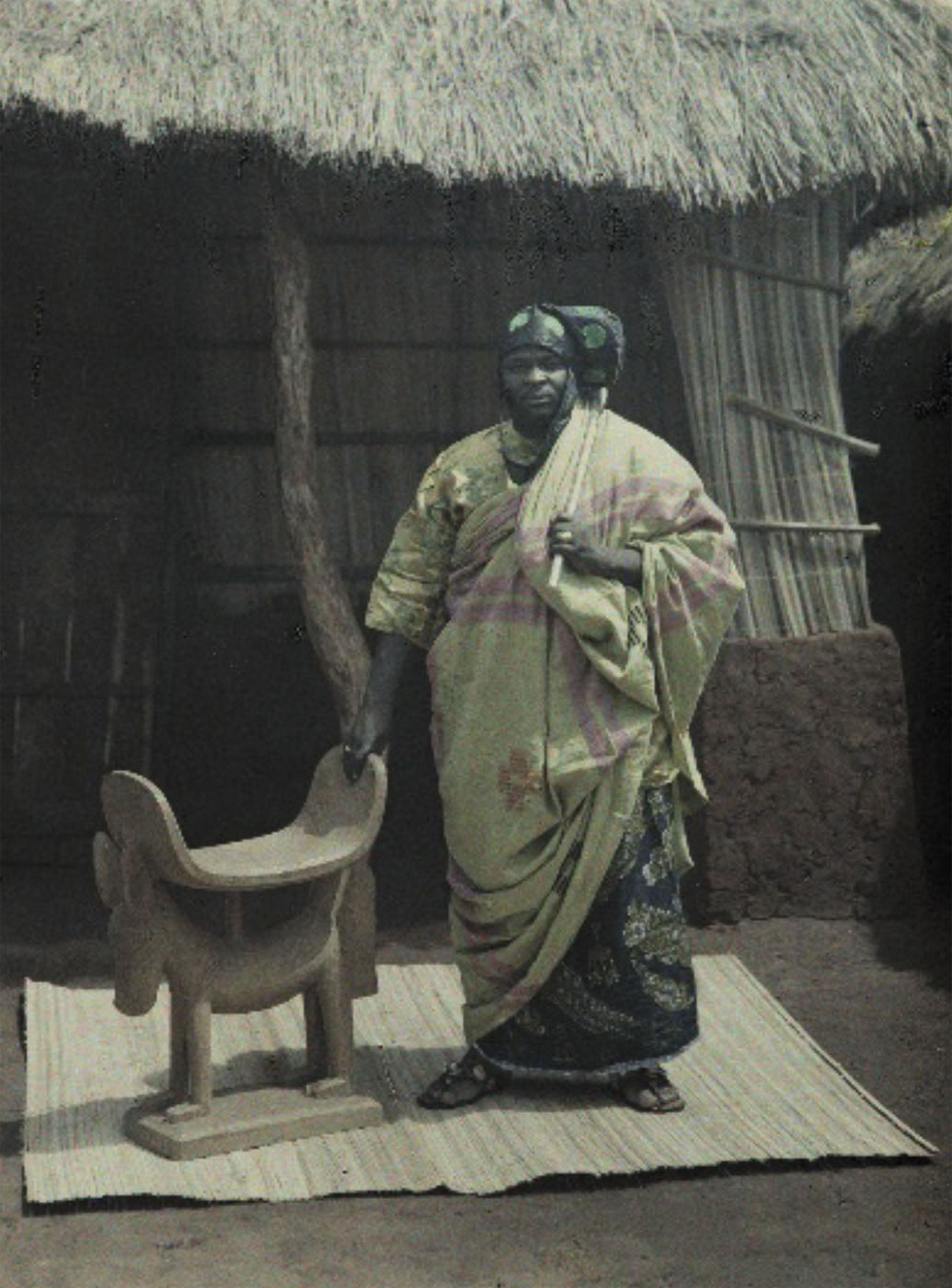
Frédéric Gadmer (French, 1878-1954)
Portrait du chef de canton Justin Aho, Dahomey (Bénin), 8 mars 1930
(Portrait of Chief Justin Aho, Dahomey (Benin), March 8, 1930)
1930
Autochrome
Archives de la Planète, Musée départemental Albert-Kahn, Département des Hauts-de-Seine
~ Power and Royalty
One of Aupiais’s main areas of study concerns the ceremonial surrounding the manifestations of power and royal ceremonies, particularly funeral rites, in Dahomean culture.
Aupiais’s interest in what he calls “ceremonialism” leads him to document everything related to Dahomean traditions and customs in order to reveal their beauty and sophistication. This is how Gadmer filmed numerous royal ceremonies, especially funeral rites.
Beyond protocol, the seats of power are also depicted, from the Honmè Palace in Porto-Novo to the famous royal palaces of Abomey. The prestige objects – royal staffs, parasols, palanquins – attest to a splendour that is also a tool for legitimising power, particularly for the canton chiefs, who owe their position to the colonial authorities.
The portraits painted by Gadmer are a perfect testimony to this. The claim to a
historical heritage is further expressed through panegyrics that celebrate the genealogy and exploits of the ancient kings whose power is linked to the divine. Royalty, colonisation, and Vodun are thus intimately linked.
~ Vodun
This section explores how Aupiais documented Vodun ceremonies, not to denigrate them, but rather to demonstrate the respectability of this religion, which is, more broadly, a way of thinking.
A system of thought and an animistic religion, Vodun embodies a worldview in which the elements of nature (earth, thunder, water, etc.) serve as intermediaries between humans and a higher spiritual entity. Initiates, both men and women, are responsible for their worship: these are the vodunsi, the “wives of Vodun.”
Through its complexity and richness, and the refinement of its ceremonies and associated dances, Vodun perfectly aligns with Aupiais’s interest in “ceremonialism.” The missionary saw this as proof of the high spiritual value of the Dahomeans, which, according to him, predisposed them to convert to Catholicism. His privileged relationships with religious leaders gave him access to rare ceremonies, never before filmed.
These scenes offer a unique glimpse into the vitality of Vodun in 1930, a vitality that continues to this day. Among the subjects filmed, prayers to ancestors and the divinatory art of Fa received particular attention.
The Making of Films
This fourth section offers a different perspective, examining the behind-the-scenes aspects of the mission and what it entailed to make a film in 1930 for the Archives of the Planet. The question of staging is also addressed and explained, as well as the context of the birth of ethnographic cinema.
The Dahomey mission is by far the best documented in the Archives of the Planet thanks to the shooting diary kept by Gadmer. This exceptional document not only provides us with very precise information about the content of the 140 reels shot by the cameraman using his two cameras, but it also offers valuable insights into his filming methods, the conditions on location, and the technical difficulties encountered.
The recent digitisation of the original reels in high definition has been a true revelation: it has allowed for a reassessment of the scope and ethnographic value of these films and a rediscovery of the formal beauty of the shots filmed by Gadmer. Previously unseen images have also emerged, in particular shot marks, “ghost” portraits of rare power, which bear witness to both an era in the history of cinema and the dignity of a population under colonial rule.
Comparison with other contemporary ethnographic works – particularly the films of the American anthropologists Melville and Frances Herskovits – while
underlining the unique character of the images produced by Aupiais and
Gadmer, also reveals some of their limitations.
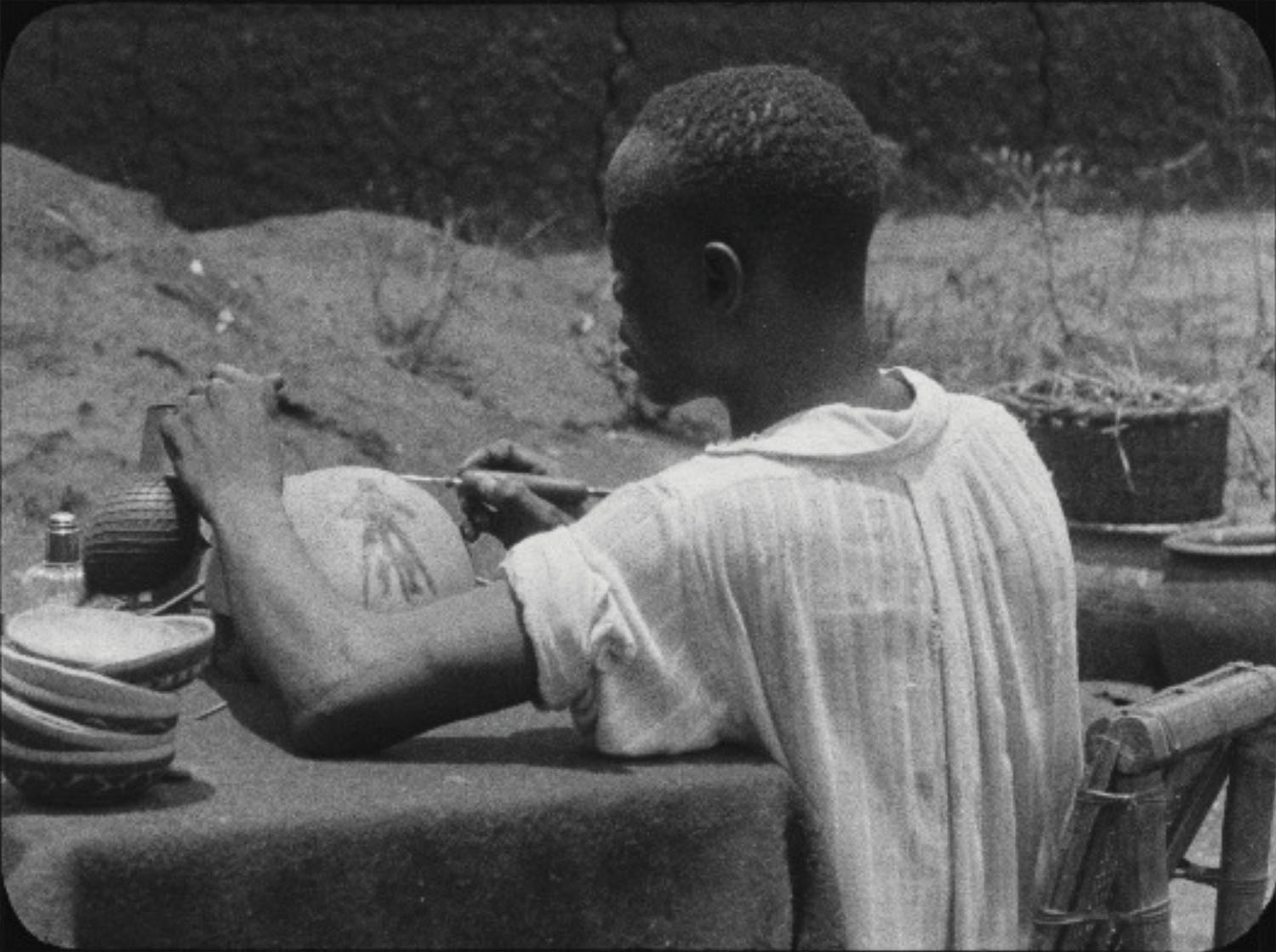
Frédéric Gadmer (French, 1878-1954)
Le pyrograveur Jean Dado, Dahomey (Bénin), 3 avril 1930
(The pyrographer Jean Dado, Dahomey (Benin), April 3, 1930)
1930
Still frame
© Crossroads of African Cultures, Lyon
Sharing and Legacy
Finally, the exhibition concludes with a look at the dissemination of these images upon the mission’s return and their legacy to the present day. Topics covered include the 1931 Vincennes Colonial Exhibition, Father Aupiais’ lectures, as well as the work carried out on this collection since 1945 and the contemporary reinterpretations proposed by artists from the Centre for the Less Good Idea in Johannesburg.
Upon returning from the mission, Aupiais disseminated its findings. On October 24, 1930, an exhibition of Dahomean art was inaugurated by the Minister of Colonies at the headquarters of the Kahn Foundations’ general secretariat (a few meters from the current museum). Aupiais presented pieces from the collection he had assembled to reveal the cultural richness of Dahomey to the French. At the same time, he provided commentary on the films shot by Gadmer under his direction.
In 1931, the Vincennes Colonial Exhibition provided an opportunity to showcase the images brought back from the mission, but also, for Albert Kahn, to host the members of the Dahomey delegation at his estate. Soon ordered by his superiors to cease his “melanophile propaganda,” Aupiais would not return to these films until years later, dedicating lectures to them until his death in 1945.
Since then, this collection has been a constant subject of study.
Today, it is at the heart of a dual collaborative approach: documentary, with two field missions to meet with Beninese experts, and artistic, by inviting prominent figures from the African continent to reclaim and reactivate this shared century-old heritage.
Text from the Musée départemental Albert-Kahn website
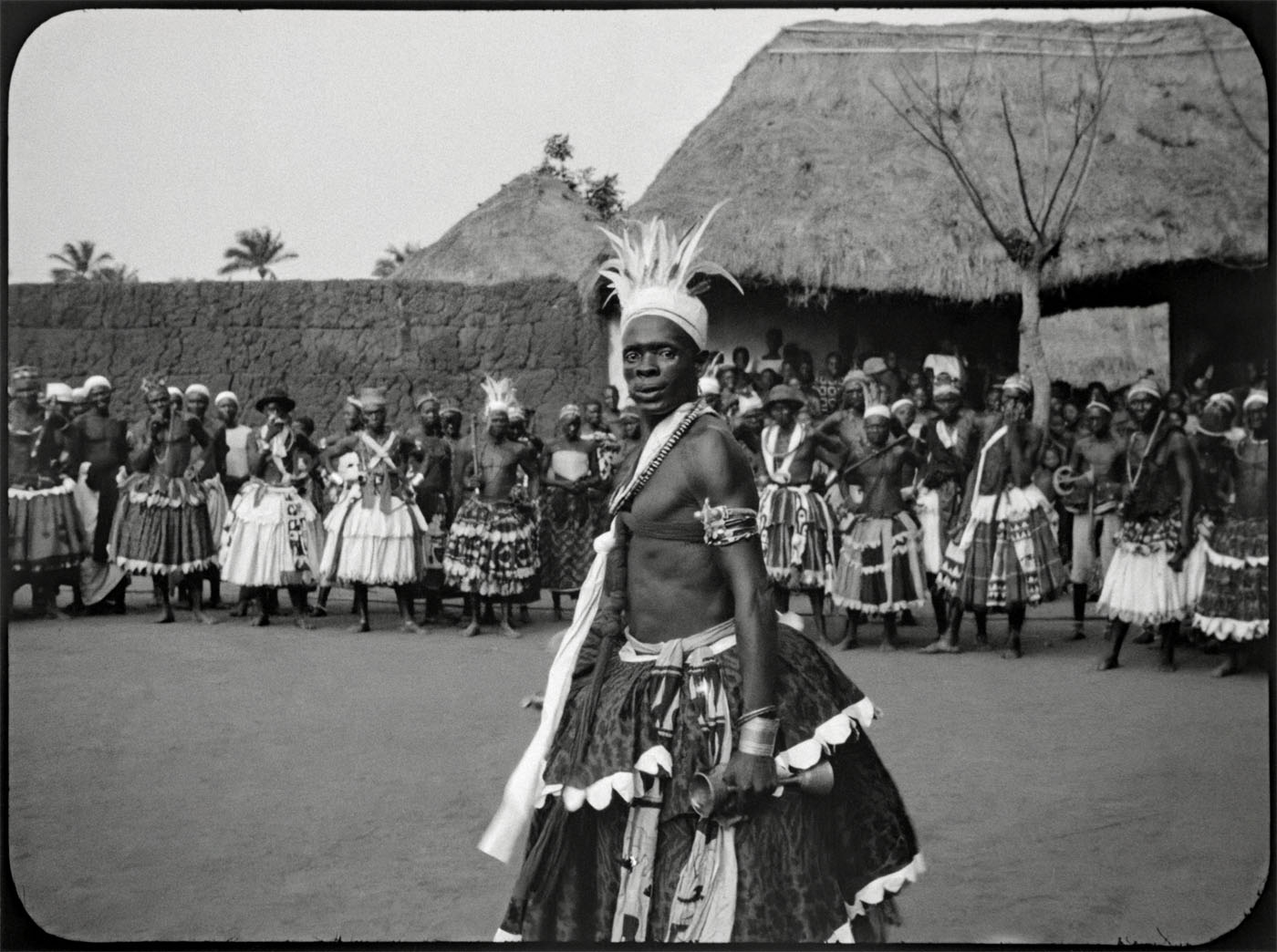
Frédéric Gadmer (French, 1878-1954)
Vodúnon exécutant la danse de Hèviosso, Oumbégamé (près d’Abomey), Dahomey (Bénin), 17 février 1930
(Vodun performing the dance of Heviosso, Oumbégamé (near Abomey), Dahomey (Benin), February 17, 1930)
1930
Frame taken from the reel “Fetishism 1”
35mm nitrate film (negative)
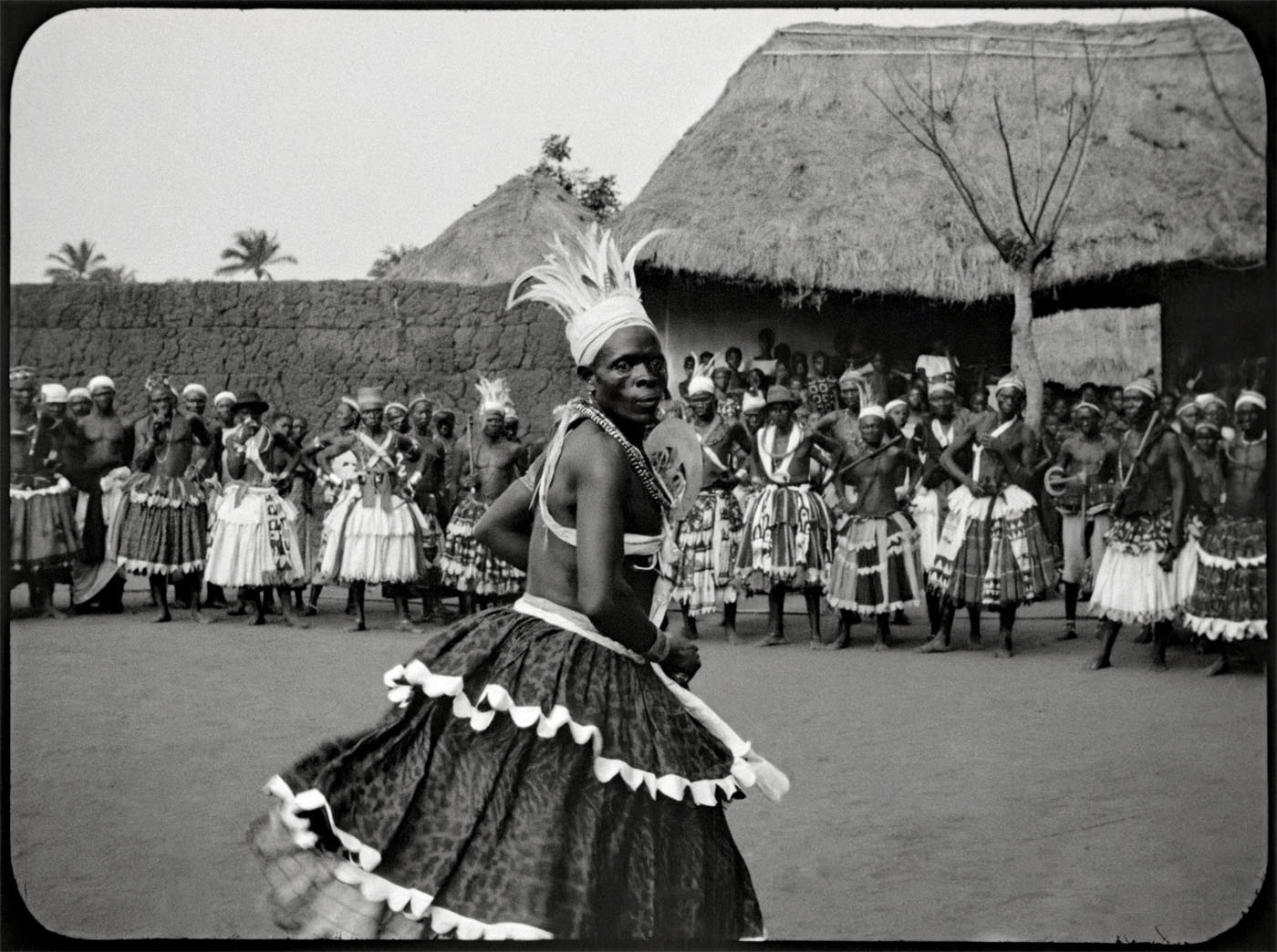
Frédéric Gadmer (French, 1878-1954)
Vodúnon exécutant la danse de Hèviosso, Oumbégamé (près d’Abomey), Dahomey (Bénin), 17 février 1930
(Vodun performing the dance of Heviosso, Oumbégamé (near Abomey), Dahomey (Benin), February 17, 1930)
1930
Frame taken from the reel “Fetishism 1”
35mm nitrate film (negative)
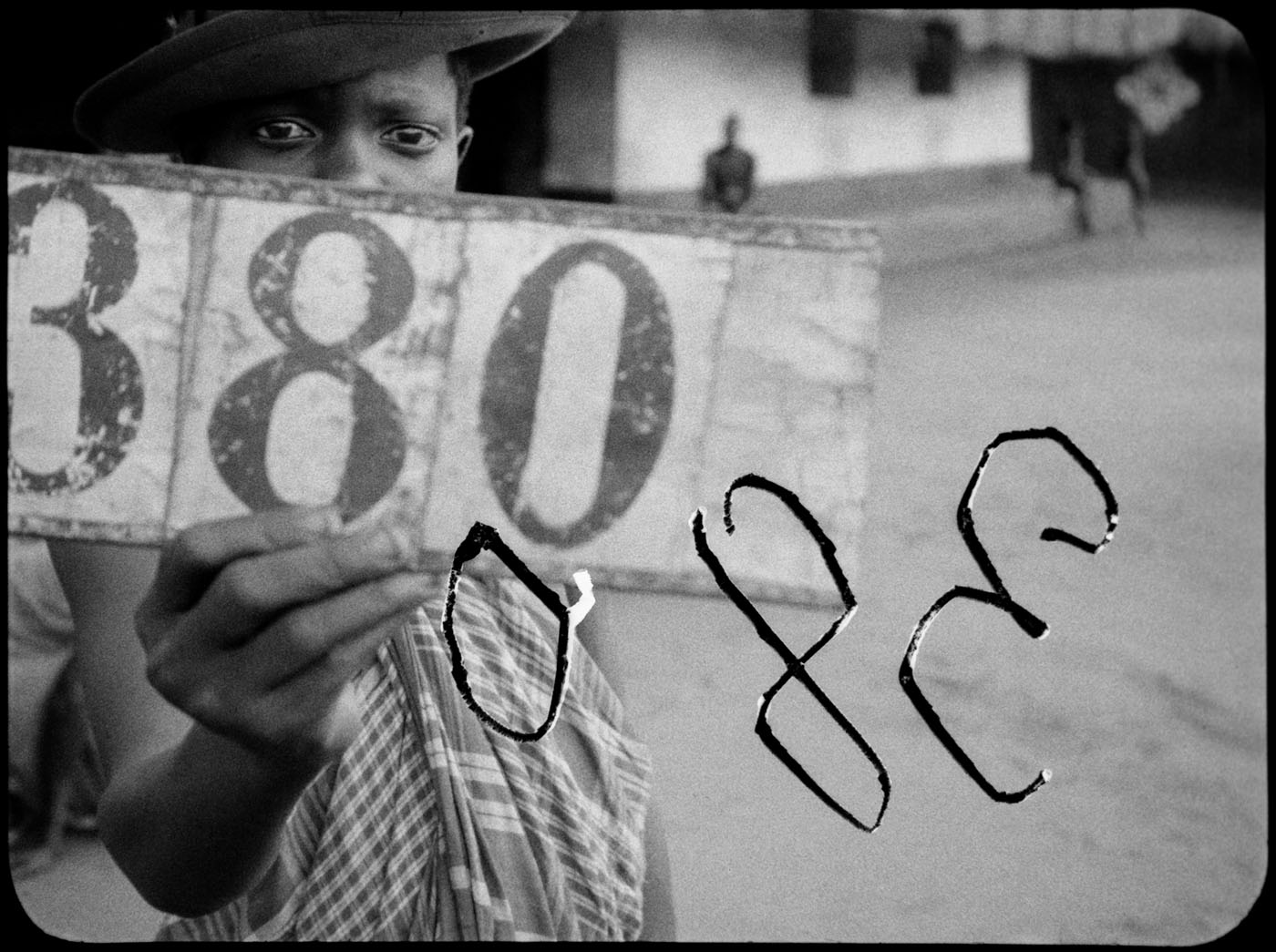
Frédéric Gadmer (French, 1878-1954)
Marque du plan No. 380, Djimé (environs d’Abomey), Dahomey (Bénin), 26 mars 1930 (Mark of plan No. 380, Djimé (near Abomey), Dahomey (Benin), March 26, 1930)
1930
Still image from the reel “Various Scenes”
35mm nitrate film
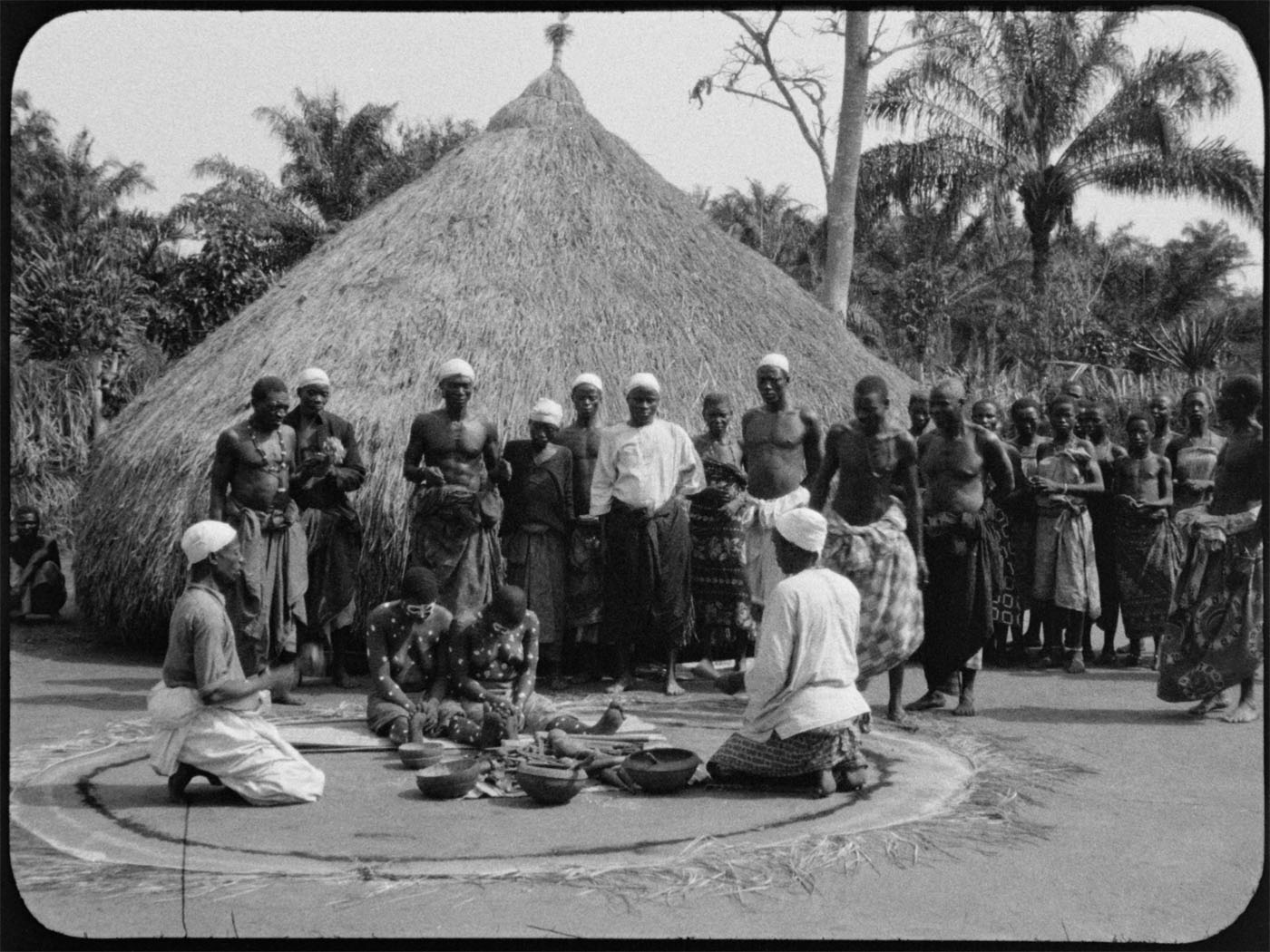
Frédéric Gadmer (French, 1878-1954)
Cérémonie de purifi cation de deux vodúnsi, Agbankamé (près d’Abomey), Dahomey (Bénin), 18 février 1930
(Purification ceremony of two vodunsi, Agbankamé (near Abomey), Dahomey (Benin), February 18, 1930)
1930
Frame taken from the reel “Fetishism 3”
35mm nitrate film (negative)
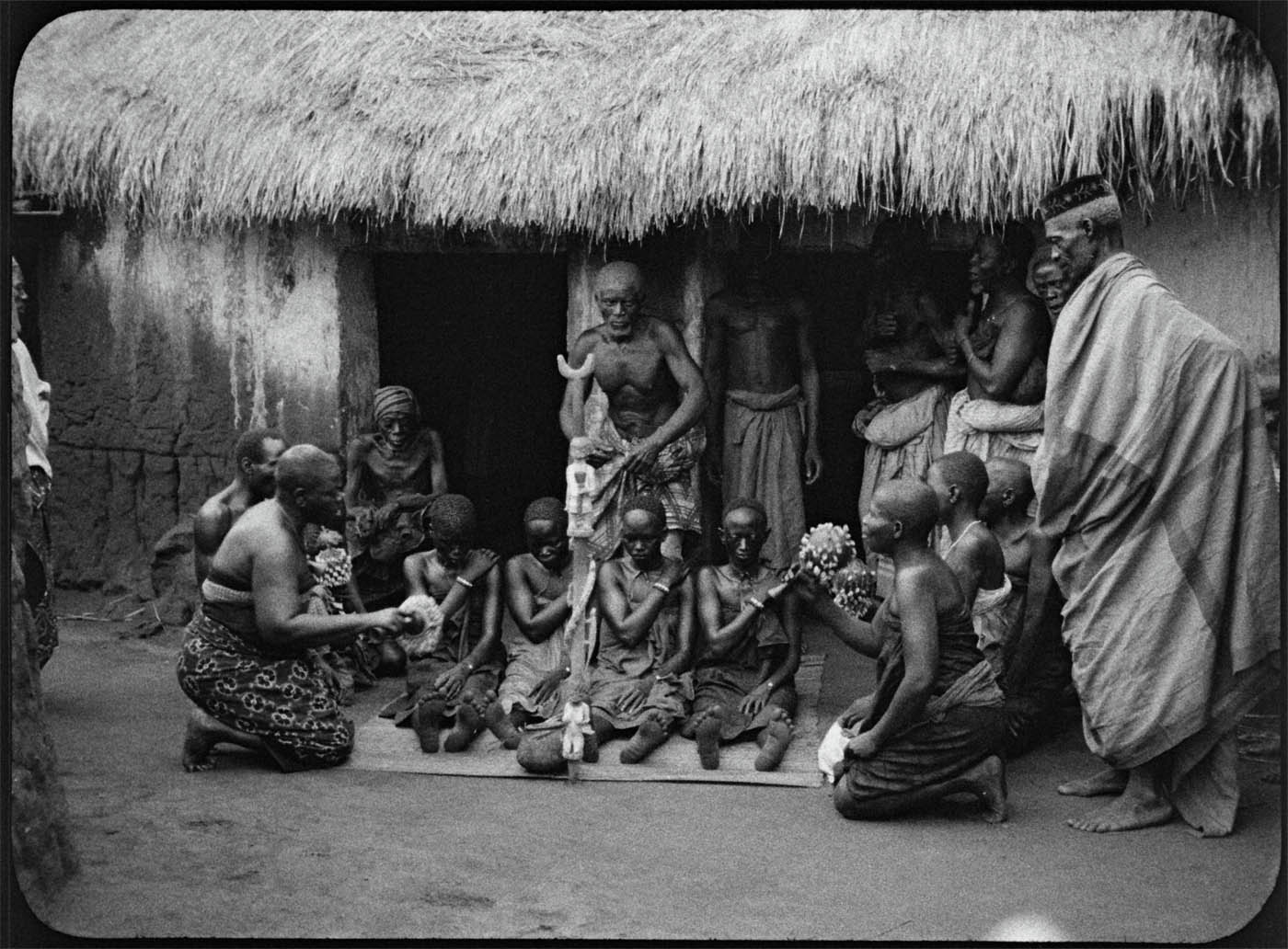
Frédéric Gadmer (French, 1878-1954)
Consécration de quatre vodúnsi dans un couvent, Covè, Dahomey (Bénin), 11 mars 1930
(Consecration of four vodunsi in a convent, Covè, Dahomey (Benin), March 11, 1930)
1930
Frame taken from the reel “Fetishism 1”
35mm nitrate film (negative)
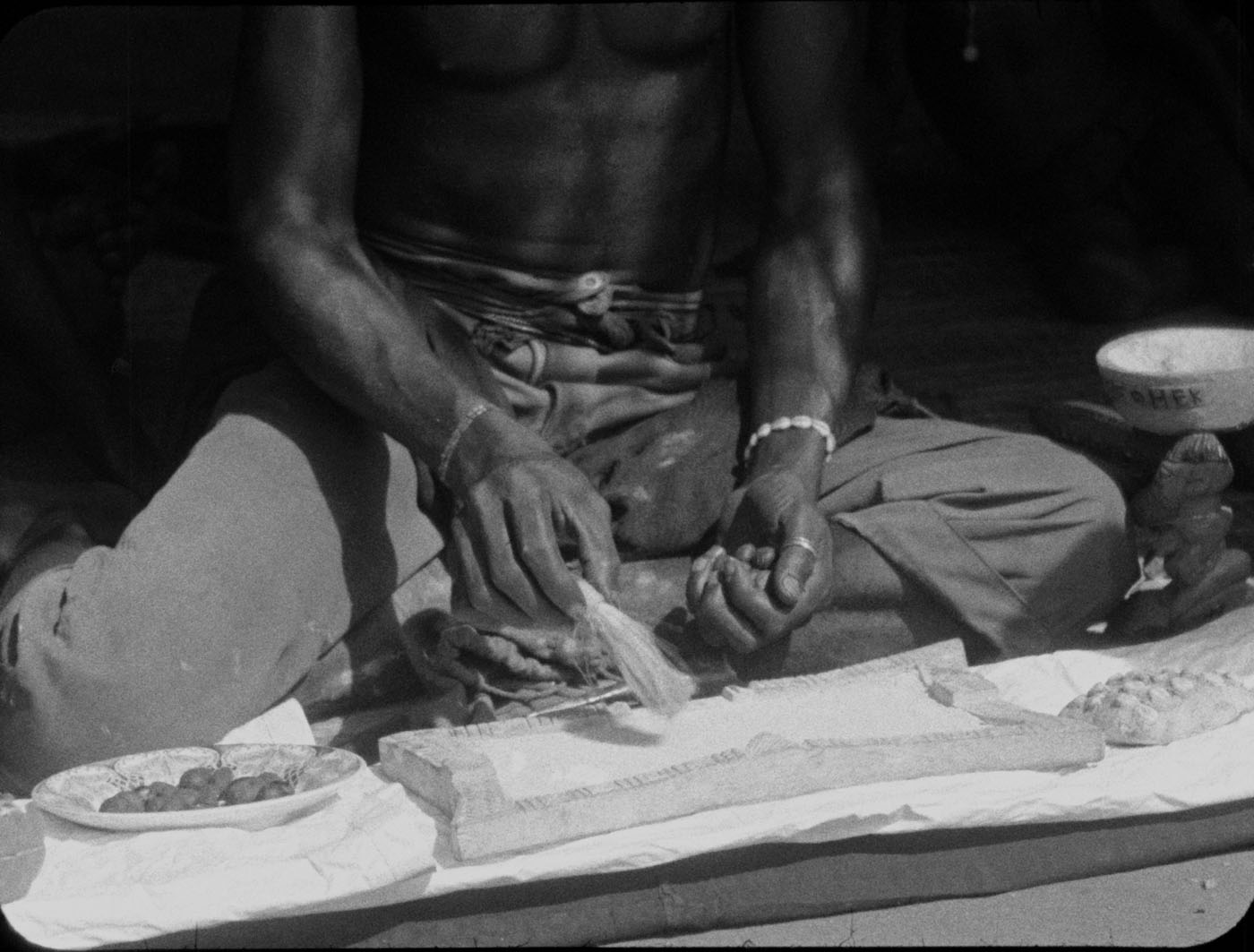
Frédéric Gadmer (French, 1878-1954)
Consultation du Fa par le bokonon, Banhito (près de Porto-Novo), Dahomey (Bénin), 12 avril 1930
(Consultation of the Fa oracle by the bokonon, Banhito (near Porto-Novo), Dahomey (Benin), April 12, 1930)
1930
Frame extracted from the reel “Dances, Funeral of a King”
35mm nitrate film (negative)
The contemporary journey
The curators chose to give prominence to contemporary art by inviting several African artists, particularly from Benin, to enrich the perspective on this shared heritage that is the Archives of the Planet.
This dialogue between past and present is materialised through paintings, photographs, performances, sound creations, and installations, through which the artists appropriate the exhibition’s theme by offering a counterpoint to the historical narrative.
Among the works on display, five were directly inspired by the autochromes and films of the 1930 mission, three of which were commissioned specifically for the exhibition.
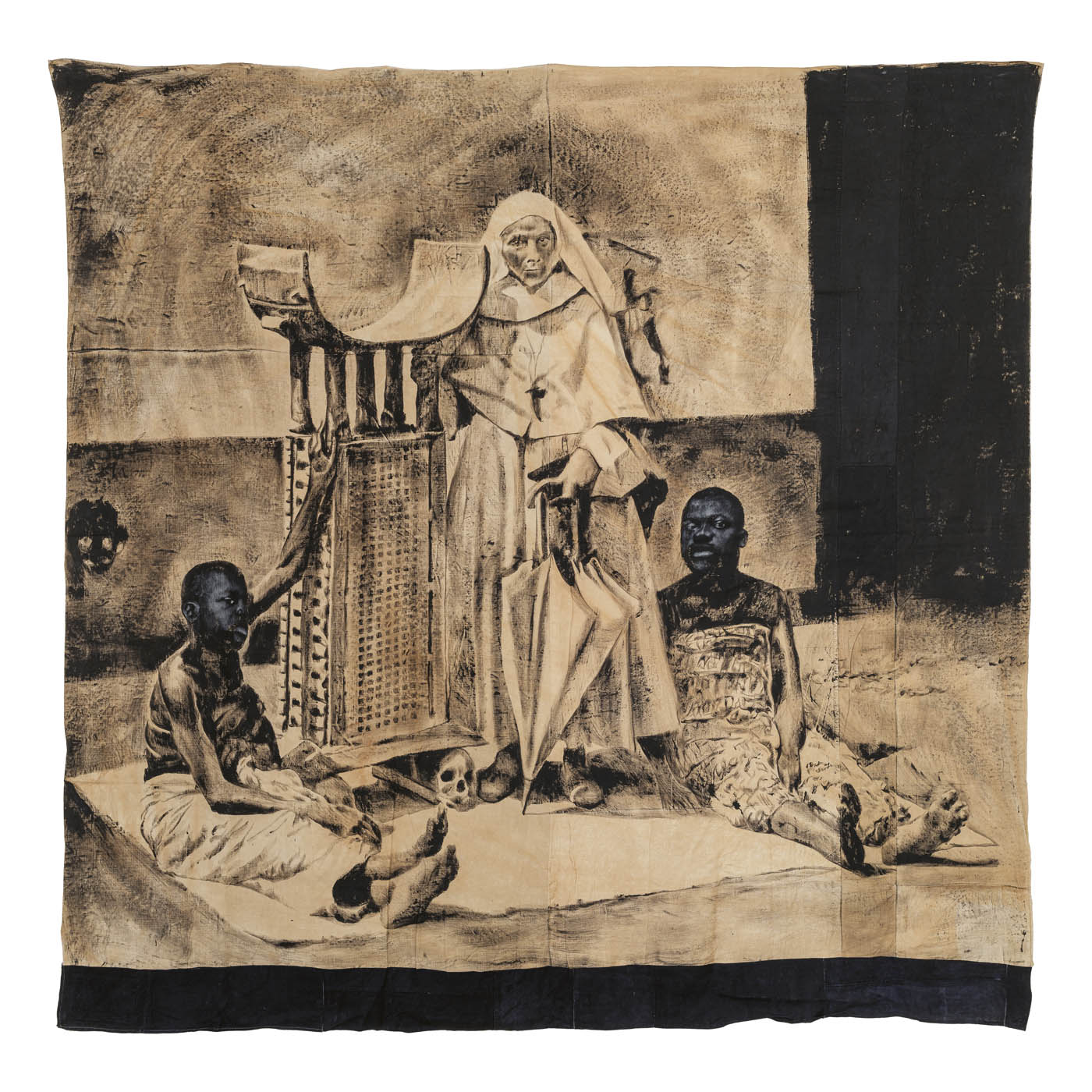
Roméo Mivekannin (Ivory Coast, b. 1986)
La Mère Mélanie et deux épouses de Glélé, palais royaux d’Abomey
(Mother Melanie and two wives of Glélé, royal palaces of Abomey)
2021
Painting, elixir bath, pigments and binders on canvas
255 x 264cm
Courtesy Galerie Cécile Fakhoury, Paris
Roméo Mivekannin
The work of Roméo Mivekannin (born in 1986) revisits Western representations of Black bodies. In his paintings and sculptures, the artist appropriates testimonies from the colonial past (paintings, photographs) to subvert their meaning, for example, by inserting his self-portrait into Frédéric Gadmer’s autochromes, which depict the figures involved in the evangelisation of Dahomey.
Commissioned for the exhibition thanks to the support of the Friends of the Albert-Kahn Museum, his work, entitled Adangba, takes the form of an imposing parasol decorated with royal motifs, inspired by the autochromes and films of the 1930 mission. It overlooks the central section of the exhibition dedicated to Beninese cultural heritage.
Angelo Moustapha
Voted best percussionist in Africa in 2017, Angelo Moustapha (born in 1993) weaves together the traditional sounds of his native Benin with innovative artistic currents, such as modern jazz. Ibilè, which means “origin” or “identity” in Yoruba, is a musical creation conceived specifically for the exhibition. Angelo Moustapha composed it, drawing inspiration from the rhythms visible in scenes filmed in 1930. It is not an attempt to recreate the original sound of these silent films, but rather an invitation to take a fresh look at these archival images.
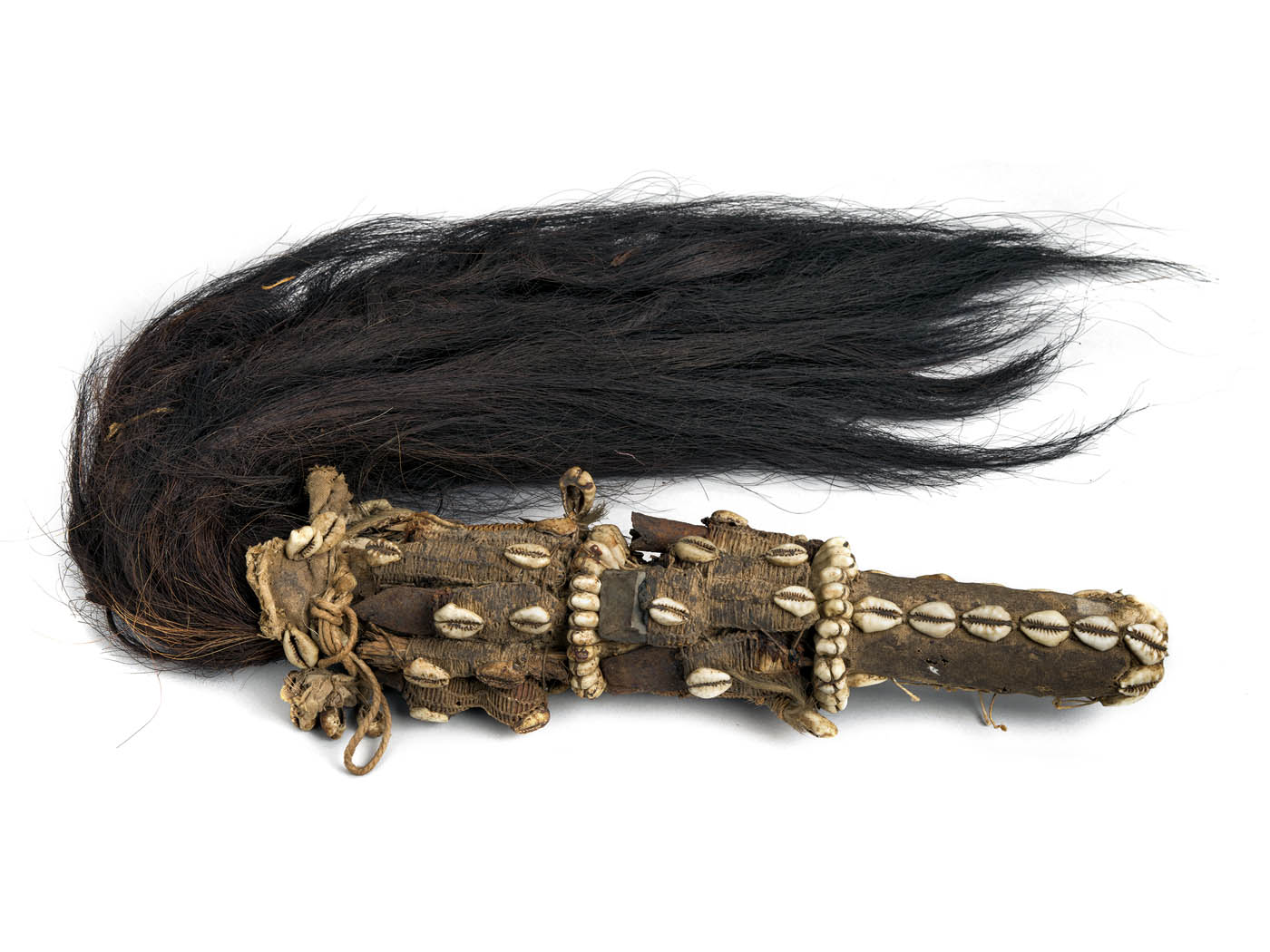
Bronwyn Lace (b. 1980)
Bronwyn Lace dans le Pepper’s Ghost, SO Academy, Johannesburg, 12 mai 2023
(Bronwyn Lace at Pepper’s Ghost, SO Academy, Johannesburg, May 12, 2023)
2023
Digital photograph by Zivanai Matangi
The Centre for the Less Good Idea, Johannesburg
Bronwyn Lace
Co-founder with William Kentridge of the Centre for the Less Good Idea, an unconventional artistic creation space based in Johannesburg, Bronwyn Lace (born in 1980) has collaborated with the Albert-Kahn Departmental Museum since 2022. Her performance, Amazing Grapes, is inspired by the films of Father Aupiais and Frédéric Gadmer, which she overlays with her own childhood memories in South Africa. It has been specially adapted for the exhibition to be presented in a miniature “Pepper’s Ghost” (a theatrical optical illusion device).
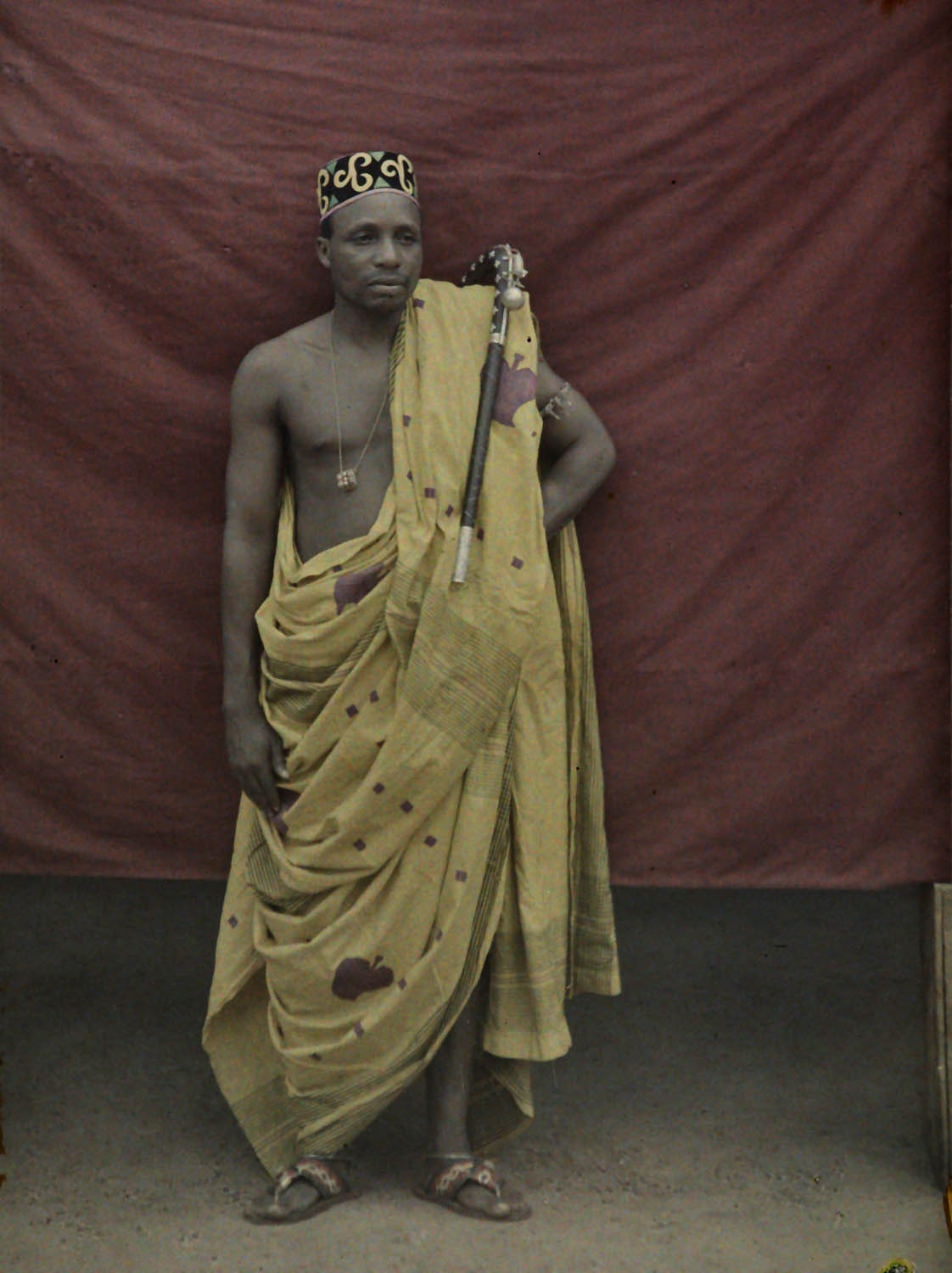
Frédéric Gadmer (French, 1878-1954)
Portait du chef de canton Zodéougan, Zado, Dahomey (Bénin), 28 février 1930 (Portrait of Chief Zodéougan, Zado, Dahomey (Benin), February 28, 1930)
1930
Autochrome
Archives de la Planète, Musée départemental Albert-Kahn, Département des Hauts-de-Seine
Thulani Chauke
South African dancer, choreographer, and performer, Thulani Chauke regularly collaborates with William Kentridge and the Centre for the Less Good Idea. Fascinated by one of the autochromes from the 1930 mission – the portrait of canton chief Zodéougan – he has created a work that highlights the performative dimension of colonial archives and raises questions about how we see ourselves and others: Finding the Dahomean Prince (2025).
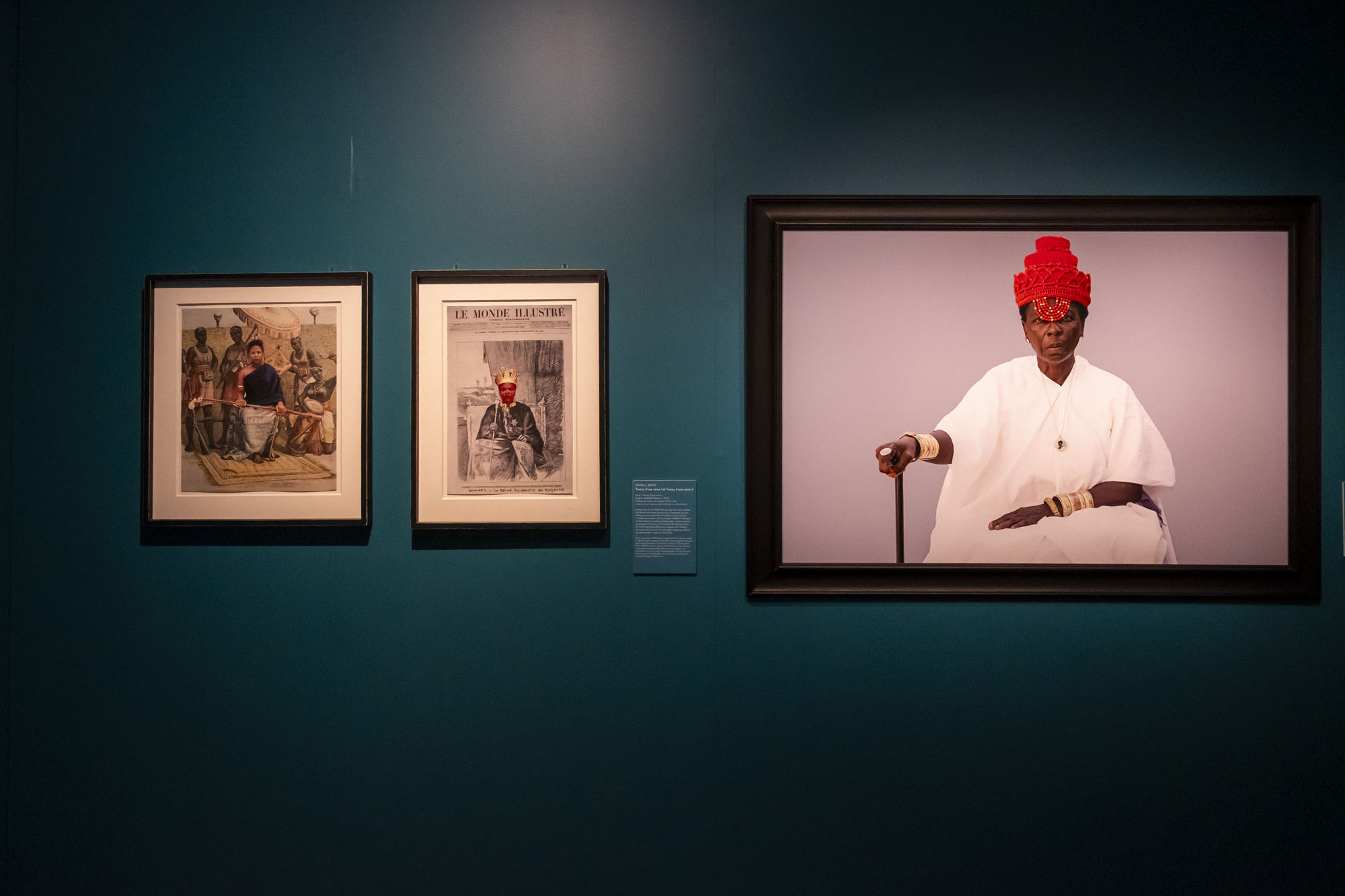
Installation view of the exhibition A Return Trip to Benin. Shared Perspectives on Dahomey in 1930 at Musée départemental Albert-Kahn, Paris, October 2025 – June 2026 showing the work of Ishola Akpo with at left, Trace d’une reine I (2020, below); and at right, Iyami (2021, below)
Ishola Akpo
Ishola Akpo (born in 1983) brings forgotten African narratives to light by creating composite works that engage in a dialogue between personal and collective memory. In the series Traces of a Queen from his AGBARA Women project, the Beninese artist combines contemporary photography, historical iconography, and embroidery to bring back from oblivion major female figures in African history, such as Queen Tassi Hangbé, long erased from the royal genealogies of Dahomey.
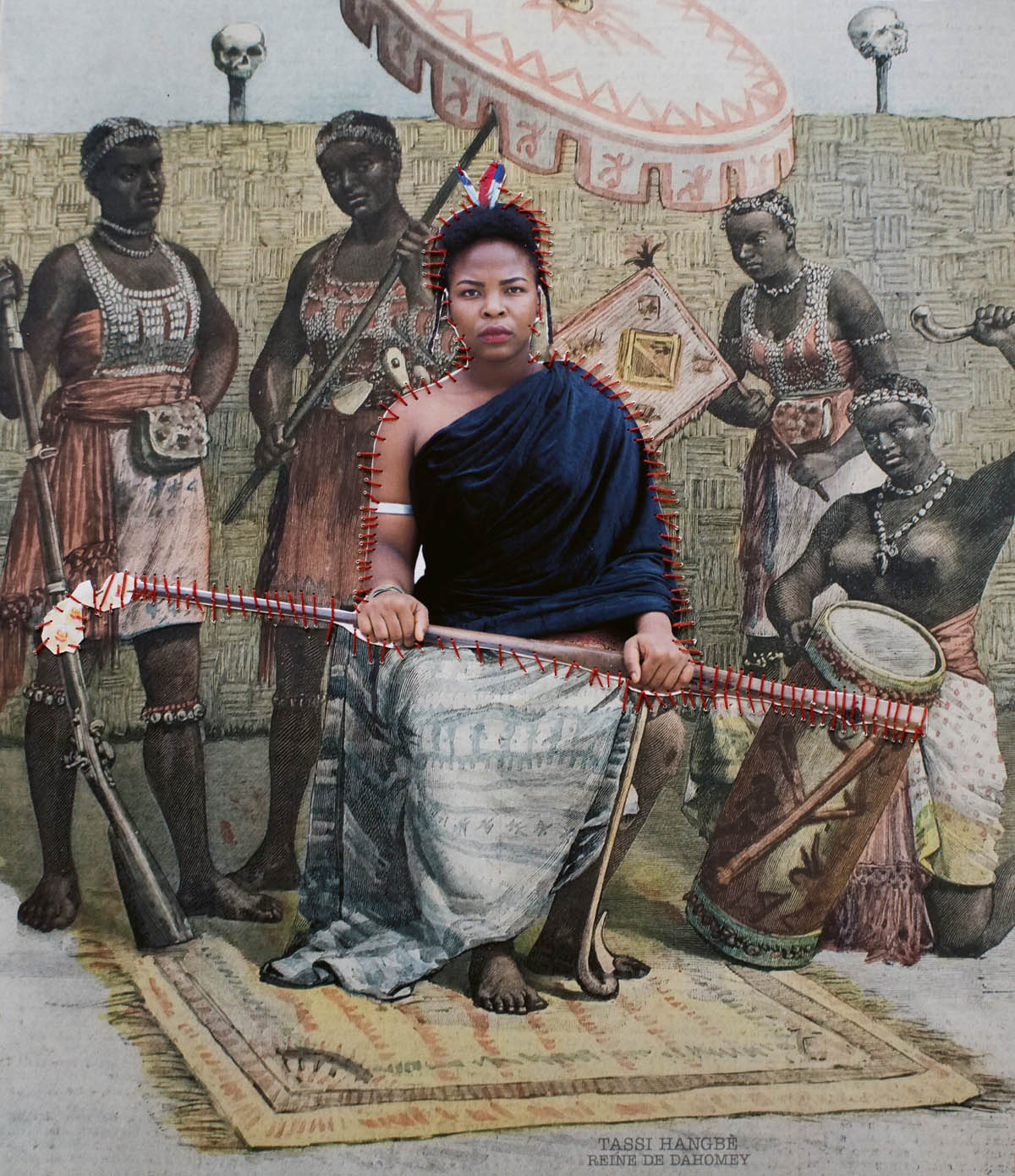
Ishola Akpo (Benin, b. 1983)
Trace d’une reine I
2020
Traces of a Queen series, AGBARA Women project
Collage and sewing on paper, cotton thread,
44 x 37.5cm
Zinsou Collection, Ouidah
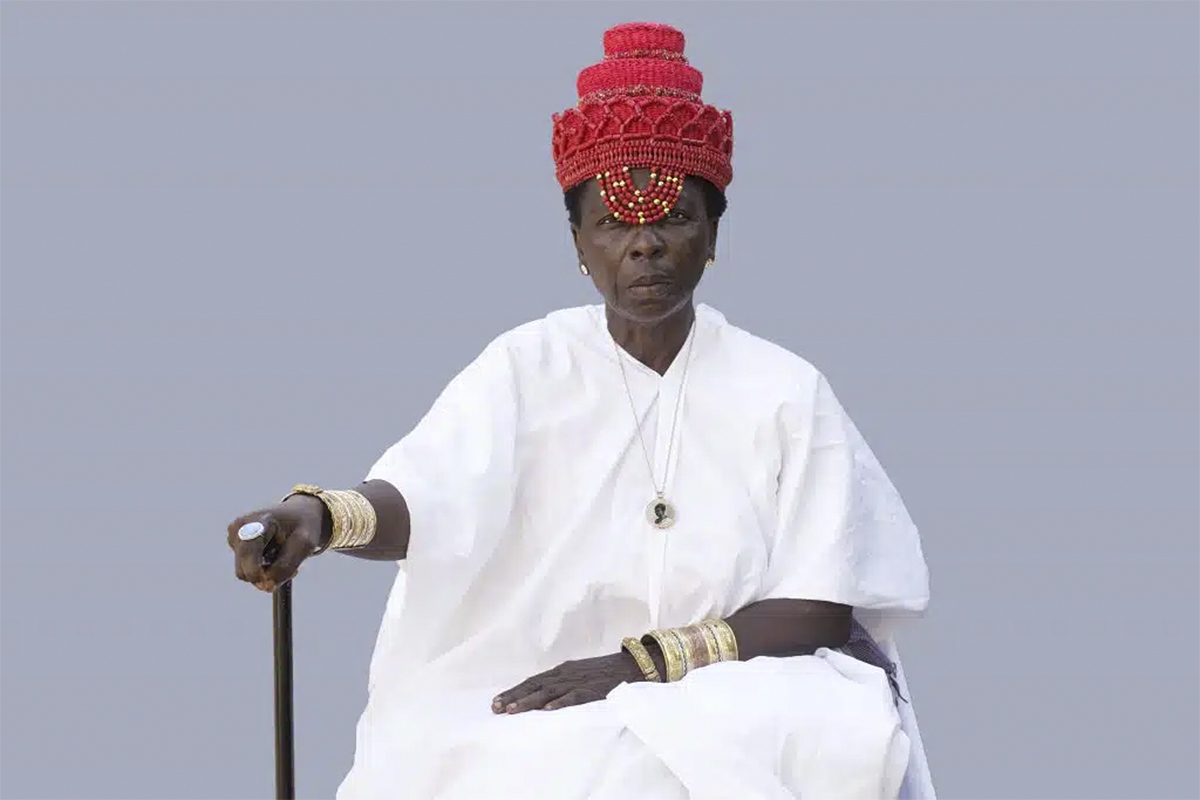
Ishola Akpo (Benin, b. 1983)
Iyami
2021
Noticing the lack of archives on the queens of various African kingdoms, artist Ishola Akpo created several series of works that retrace their history, using different mediums as a metaphor for the complex stories of the figures and their true political weight. Among them, the Agbara Women photographic series creates fictional portraits that shed light on the queens’ histories. Each portrait’s elements trace Akpo’s Yoruba/Nago culture and its traditions, the photos and illustrations of the Zinsou Foundation Archives on Dahomey, and the artist’s travels and books. For example, Iyami is a portrait of a regal-looking older woman, seated and swathed in crisp white cloth, adorned with a red beaded crown and various pieces of gold and silver jewellery. The woman clasps a wooden staff; the solemn authority of this gesture is underscored by her stoic expression. The title of the work means mother in the West African language Yoruba, and the portrait sitter is the artist’s actual mother. Through this fictionalised photograph, Akpo creates a space for a relationship between the “little stories” of contemporary women embodying “great women”. More than just an ode to the power of women, the series questions the amnesic and patriarchal dimensions of African history, embodied by portraits of known and forgotten queens.
Text from the KADIST website Nd [Online] Cited 13/05/2026. Used under fair use conditions for the purposes of education and research
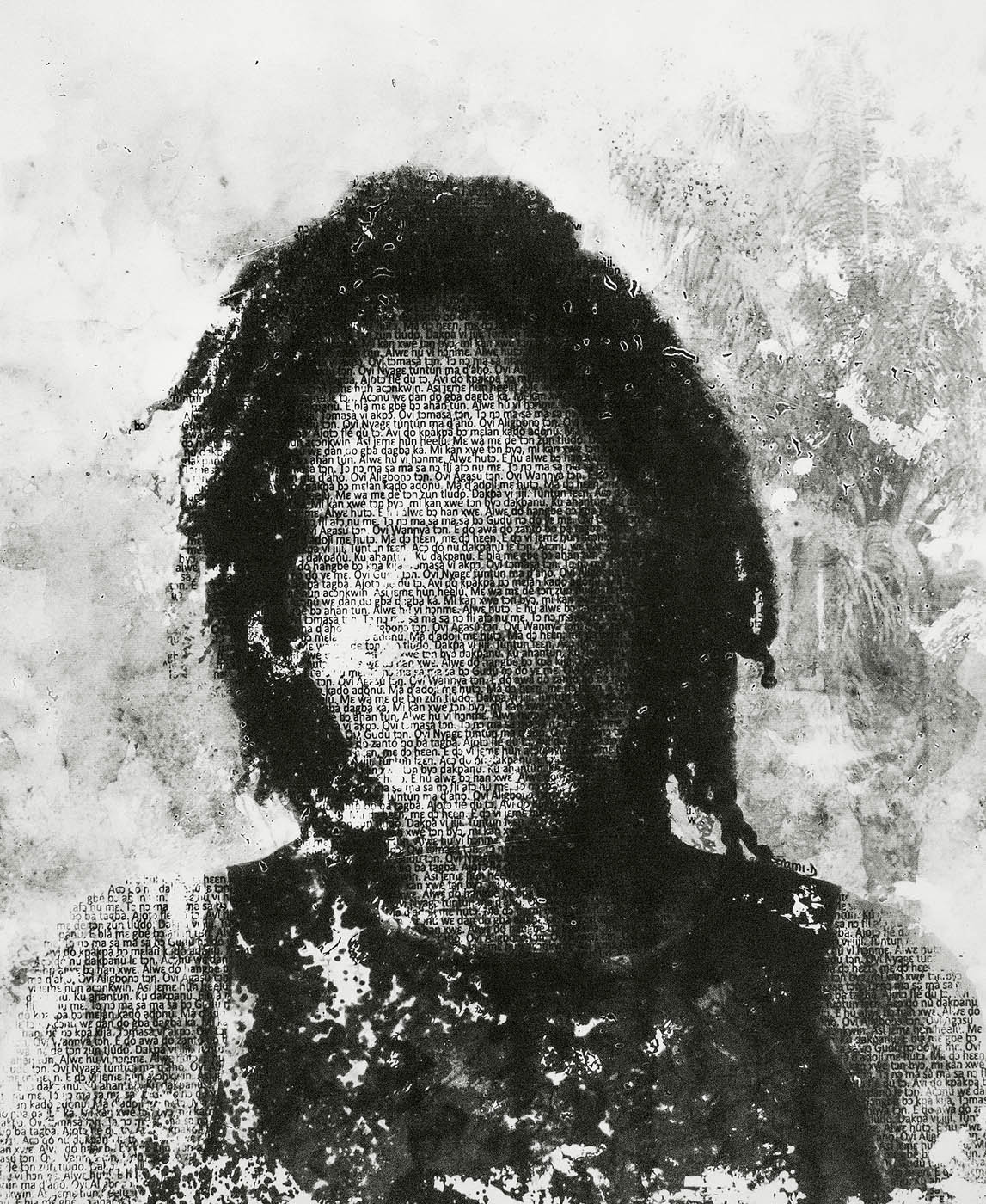
Sènami Donoumassou (Benin, b. 1991)
Ahantun dagbanu (series Akɔ mla mla)
2022
Silver gelatin print on baryta paper, accompanied by sound recordings
61 x 50.8 cm
Artist’s personal collection
Sènami Donoumassou
A Beninese visual artist, Sènami Donoumassou (born in 1991) uses various modes of expression to explore the notions of identity, heritage, and history: videos, installations, photograms, and drawings. The works in her series
Akɔ mla mla (“Panegyrics”), as well as her installation Ðɛgbè (“Prayer”), which examines the notion of religious syncretism, perfectly echo the images collected by Father Aupiais and Frédéric Gadmer in 1930, bearing witness to
the richness and perpetuation of traditional culture in Benin.
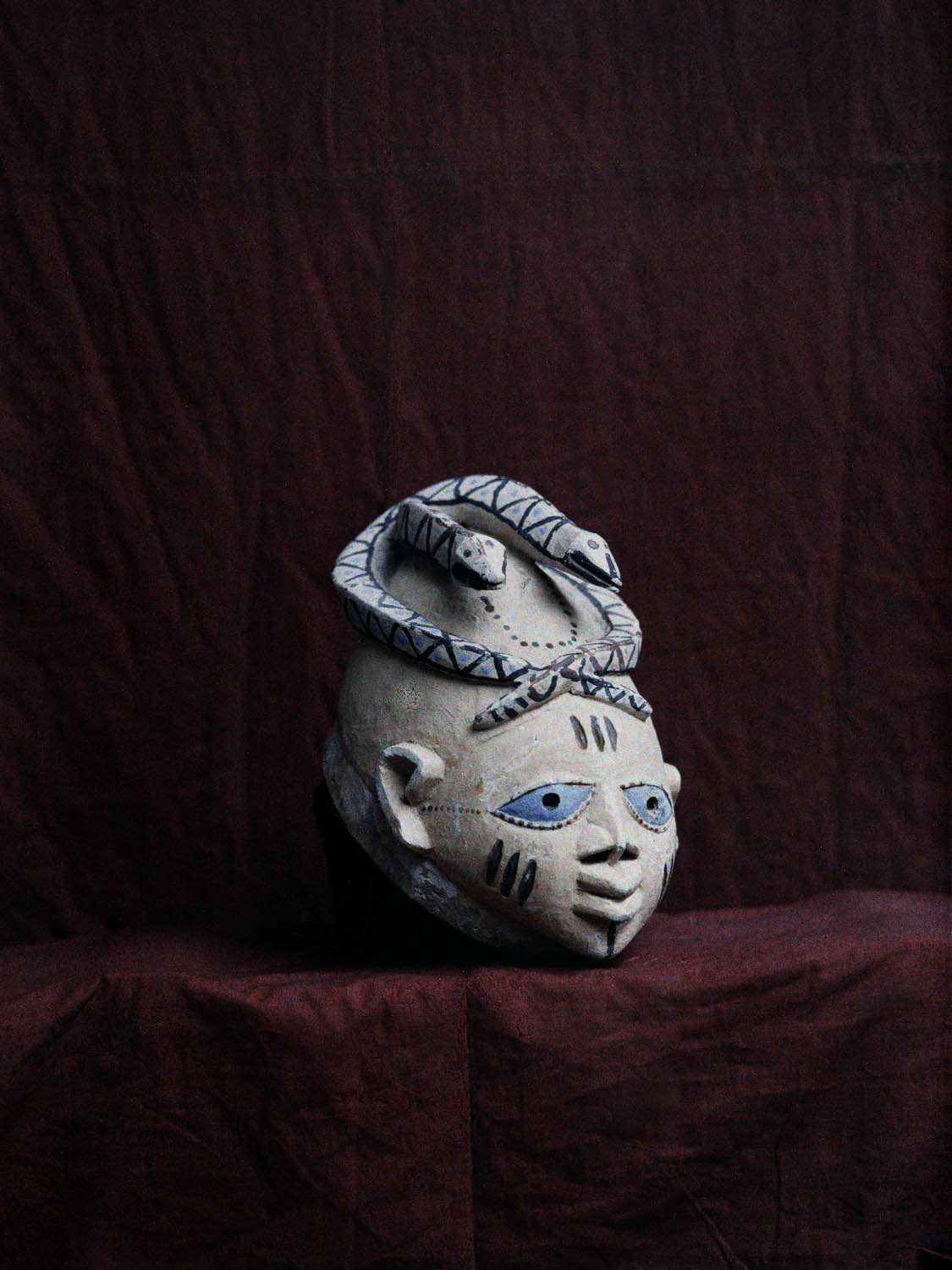
Georges Chevalier (French, 1882-1967)
Art dahoméen: masque Gèlèdè aux serpents géminés, Orléans, 14 décembre 1927
(Dahomean art: Gelede mask with twin serpents, Orléans, December 14, 1927)
1927
Autochrome
12 x 9cm
Archives de la Planète, Musée départemental Albert-Kahn, Département des Hauts-de-Seine
A heritage in images and objects
The autochromes and films made in Dahomey by Frédéric Gadmer under the direction of Father Aupiais document many aspects of the country’s cultural heritage, particularly royal, religious, and funerary ceremonies. These images constitute a precious testimony of what Aupiais called “ceremonialism.”
In the exhibition, the various concepts involved are explained through educational texts intended for both adults and young audiences (for whom a family tour is dedicated). The curators have also selected emblematic heritage objects, similar to those seen in the films and photographs, in order to allow visitors to better understand their materiality, function, and use.
In total, nearly thirty objects (tapestries, seats, statuettes, royal staffs, gourds, etc.) are on display thanks to the support of the Musée du quai Branly – Jacques Chirac, as well as the collaboration of the Carrefour des cultures africaines in Lyon, the Muséum de Toulouse, and private collections. Among this collection of objects are pieces gathered by Father Aupiais himself and exhibited in France as early as 1927 to demonstrate to Europeans the richness of Dahomean culture.
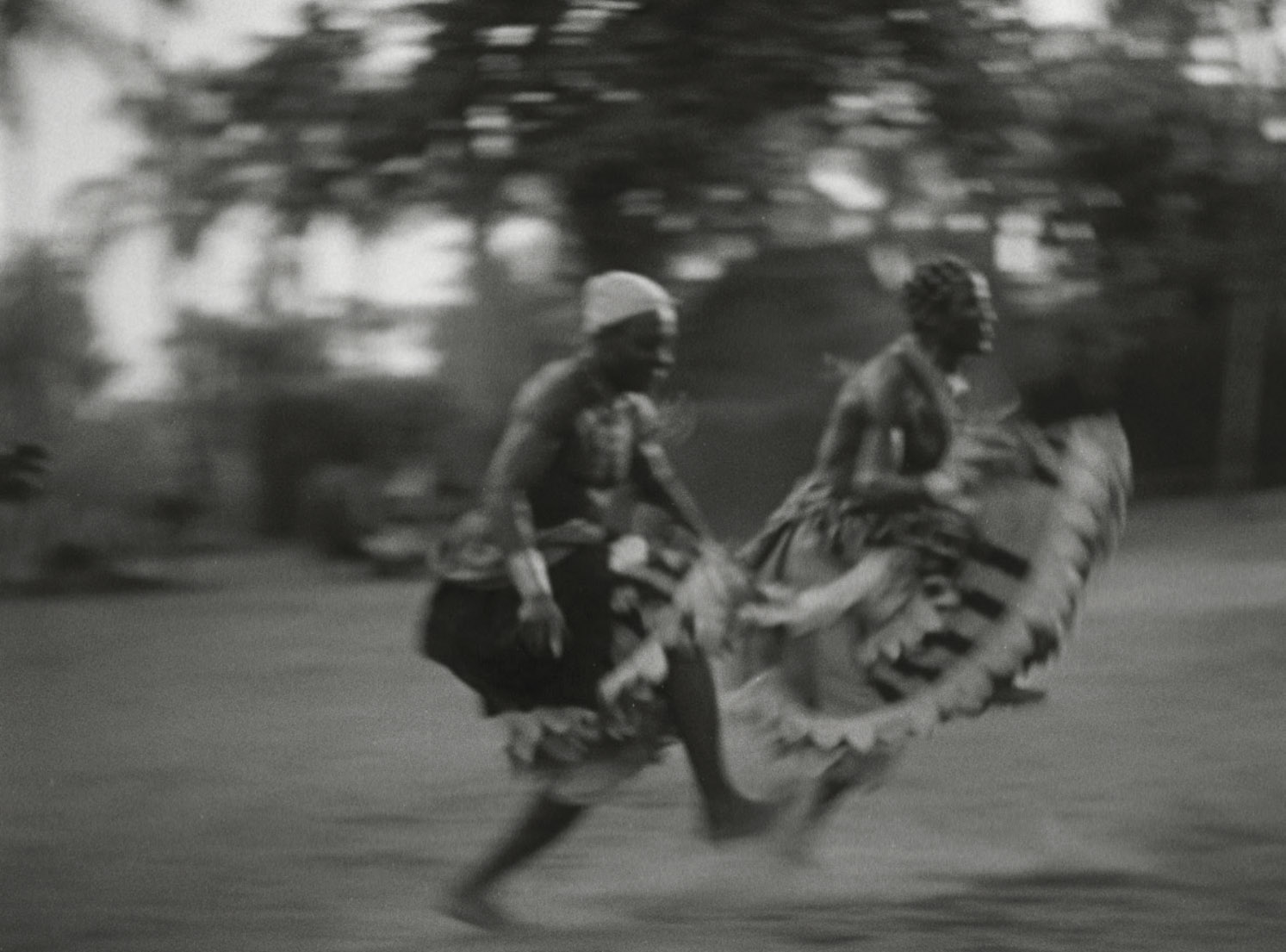
Frances and Melville Herskovits
Danse des vodúnsi de Hèviosso, Dahomey
(Dance of the Vodunsi of Heviosso, Dahomey)
1931
Still frame
© Human Studies Film Archives, Museum of Natural History, Smithsonian Institution, Washington
Melville (1895-1963) and Frances (Shapiro) Herskovits (1897-1972) were pioneering American anthropologists who revolutionised African and African Diaspora studies. Working as a team from the late 1920s through the 1940s, they conducted field research in West Africa, South America, and the Caribbean, focusing on cultural continuities from Africa in Black communities.
An ethnographic mission?
The exhibition also situates this mission of the Archives of the Planet within the context of the emergence of ethnography as a discipline in France. Upon his return to France at the end of 1926, Father Aupiais attended lectures by Marcel Mauss (1872-1950) and associated with Paul Rivet (1876-1956) and Maurice Lévy-Bruhl, who, along with Mauss, founded the Institute of Ethnology in Paris in 1925.
This new scientific discipline significantly influenced the organization of the mission funded by Albert Kahn and can thus be compared to other similar undertakings carried out in the following years, such as the Dakar-Djibouti mission (1931-1933). A striking parallel also exists abroad with the work of the American anthropologists Melville and Frances Herskovits, who traveled extensively through Dahomey less than a year after Father Aupiais and Frédéric Gadmer. For the first time in France, the exhibition presents their filmed and audio recordings, which allow for a better understanding of the images collected by Aupiais and Gadmer.
Shared perspectives and international cooperation
The preparation of the exhibition involved numerous collaborations with heritage experts in Benin, both within the scientific committee and the project team, as well as during the two fact-finding missions conducted on-site by the Albert-Kahn Departmental Museum in 2023 and 2024. These field missions were carried out with the support of the Ministry for Europe and Foreign Affairs as part of the cooperation program between the Hauts-de-Seine Department and the Zou Community of Municipalities in Benin.
The Department launched its international cooperation program with Benin in 2017 as part of its international solidarity policy, with the main objectives being the fight against food insecurity among vulnerable populations, securing the incomes of small-scale producers, developing market-connected agricultural entrepreneurship, and promoting sustainable development and positive action through agroecology. This initiative notably led to the deployment of an agricultural development program in the Zou region. To continue the work begun, the program was renewed in 2022 for a period of four years. Its objective: to strengthen family farming and support households and social entrepreneurs in rural and peri-urban areas.
This cooperation also includes a cultural component, integrated into the agreement in 2022, which has grown in scope over recent years, thanks to the involvement of the Zou inter-municipal council in hosting documentary missions in preparation for the exhibition. This cultural component enabled the organization, in November-December 2023 in Abomey, of an exhibition entitled “The Zou, from Yesterday to Today: Intersecting Perspectives,” combining images from 1930 and the present day. Public conferences and screenings were also held, notably in Covè in 2024 where the films of Frédéric Gadmer and Francis Aupiais were screened on the very sites where they had been filmed.
Finally, the “Dahomey” collection from the Albert-Kahn Departmental Museum was presented in 2023 at the School of African Heritage (Porto-Novo) and in 2024 at the Zinsou Foundation (Cotonou), anticipating a desired tour of the exhibition in Benin – currently under study – as well as possible partnerships with future Beninese museums, in particular the International Vodun Museum in Porto-Novo and the Museum of the Kings and Amazons of Dahomey in Abomey.
Text from the Musée départemental Albert-Kahn website
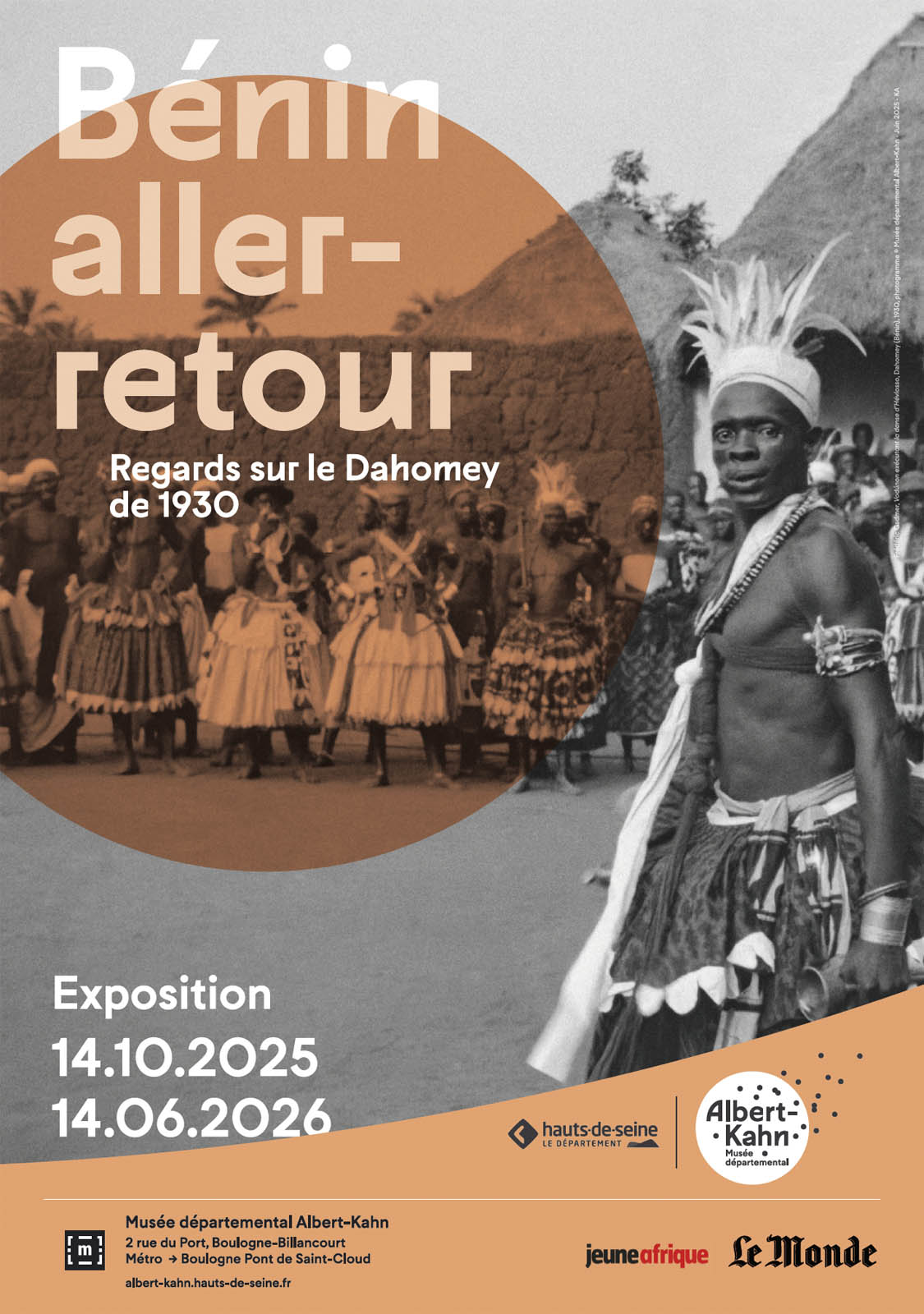
A Return Trip to Benin. Shared Perspectives on Dahomey in 1930 exhibition poster
Musée départemental Albert-Kahn
Albert-Kahn Museum
2 rue du Port, 92100 Boulogne-Billancourt, Paris
Opening hours:
Tuesday to Sunday (closed Mondays) 11am – 6pm


You must be logged in to post a comment.