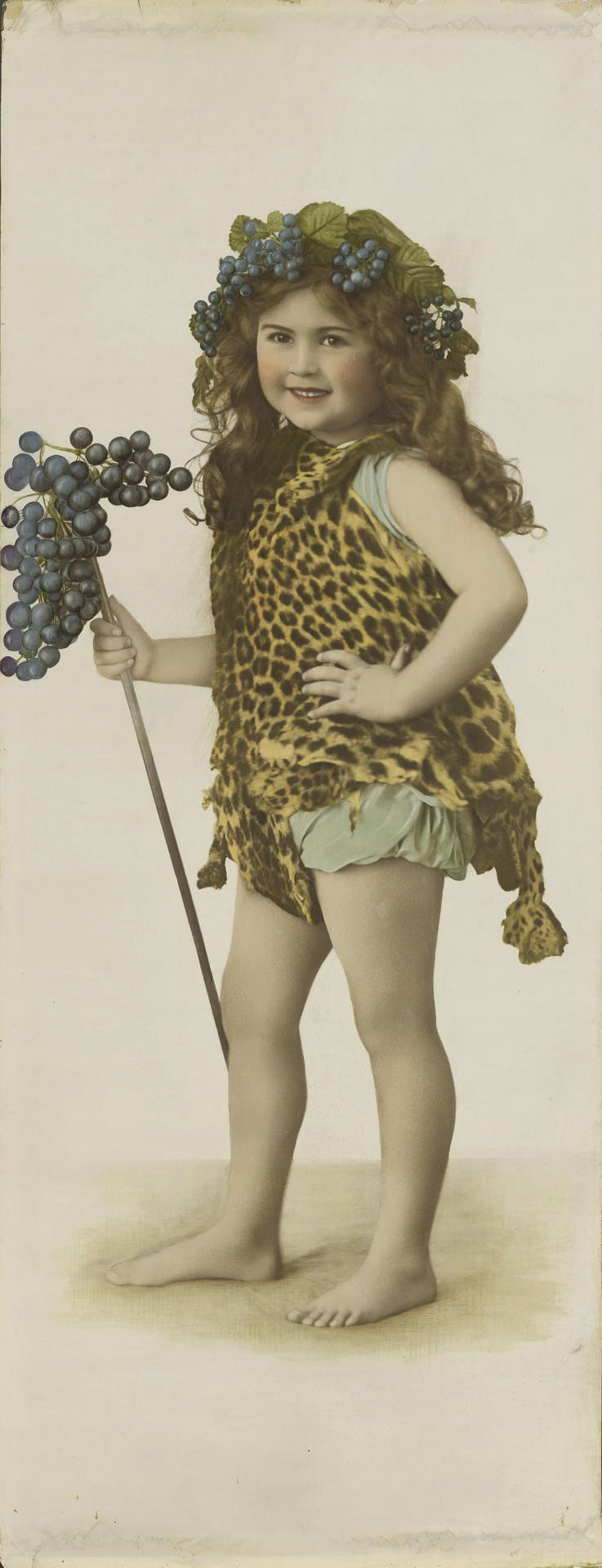
Exhibition: ‘Women Photographers 1900-1975: A Legacy of Light’ at NGV International, Melbourne, Part 2

“Aesthetically (both pictorially and in exhibition design) there is a wonderful frisson to the grouping of the photographs in these darker, enclosed, tightly curated gallery spaces that is so intoxicating to the senses.” Dr Marcus Bunyan

Exhibition dates: 28th November, 2025 – 3rd May, 2026

Curator: Maggie Finch, Curator of Photography at the NGV
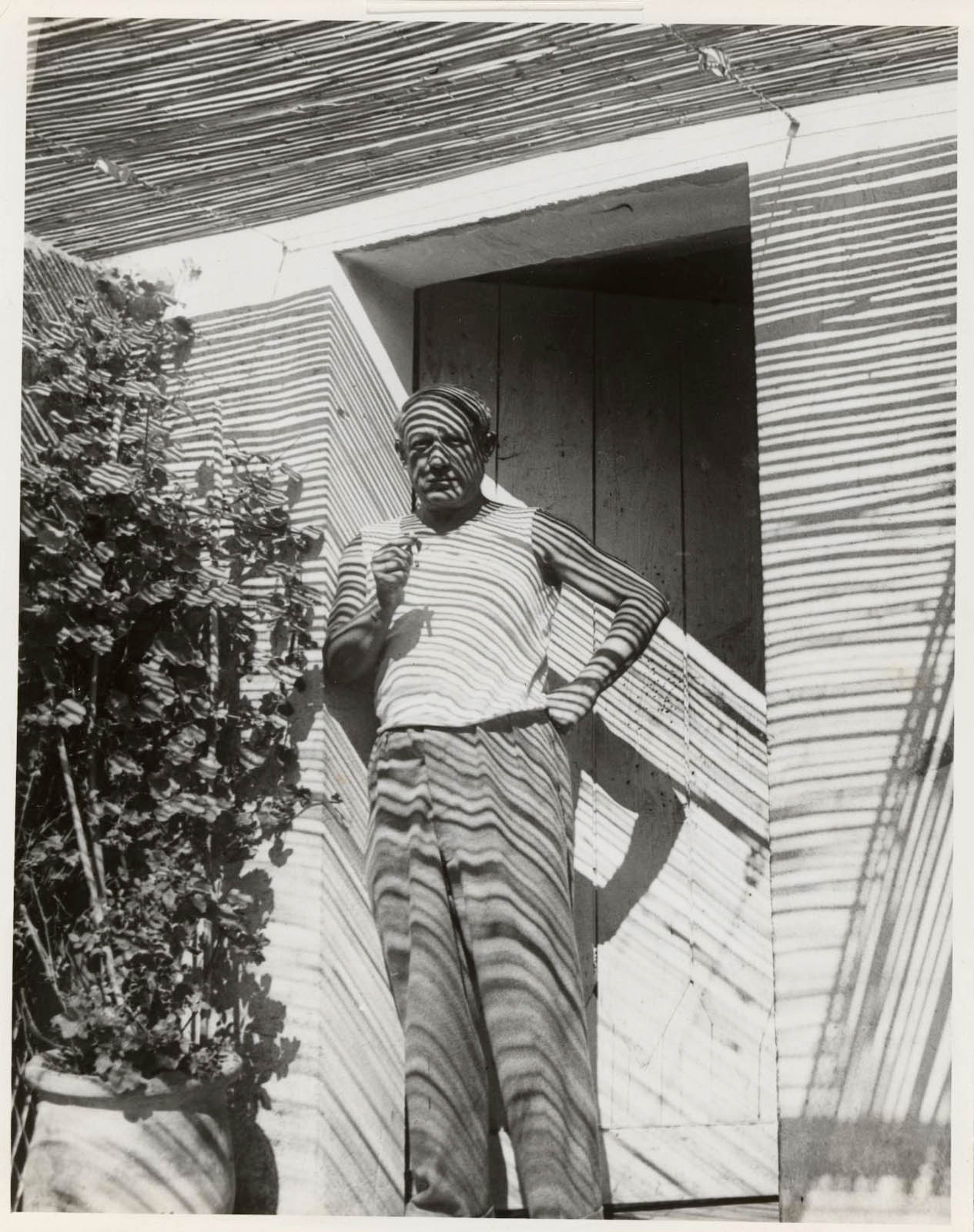
 

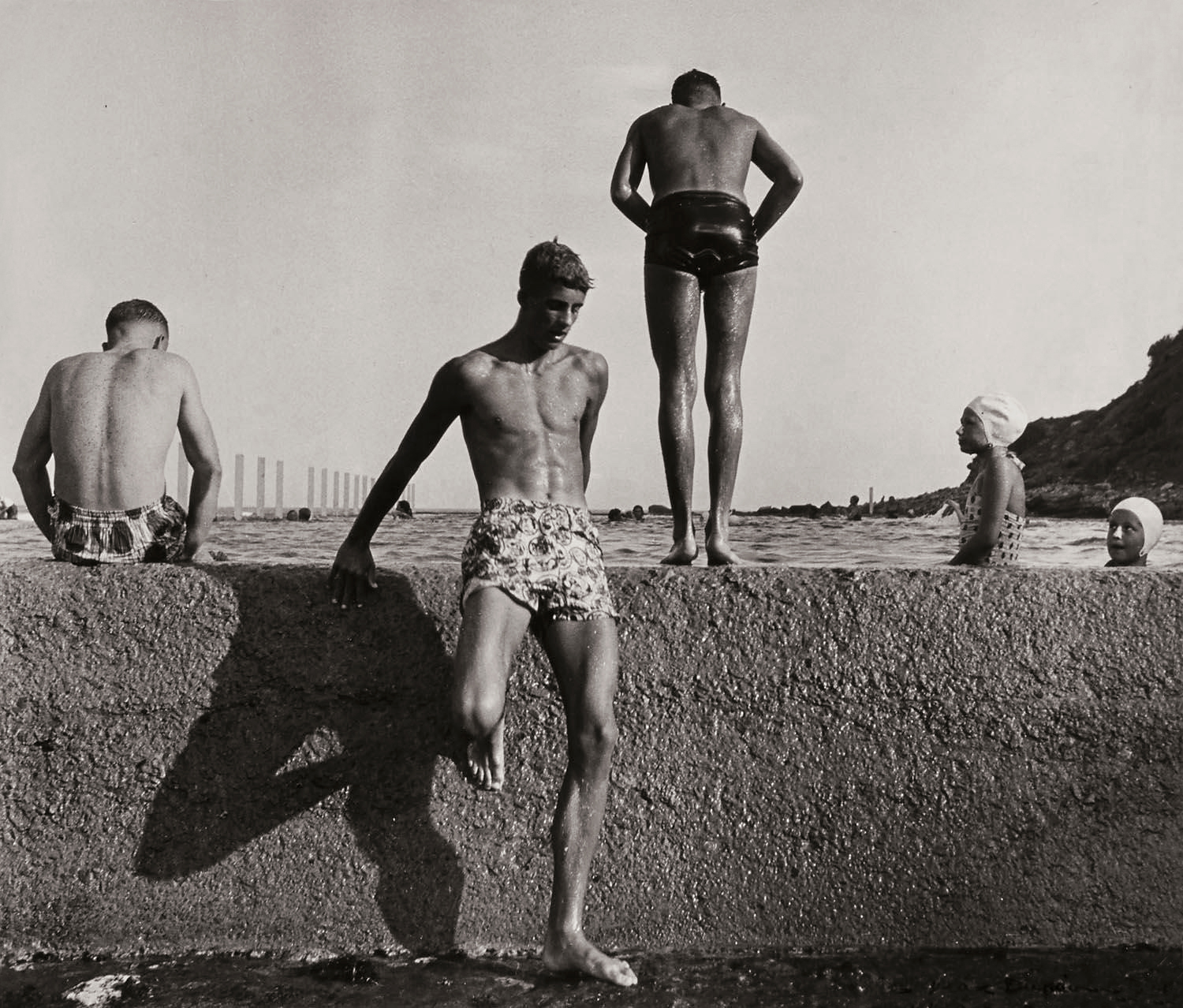
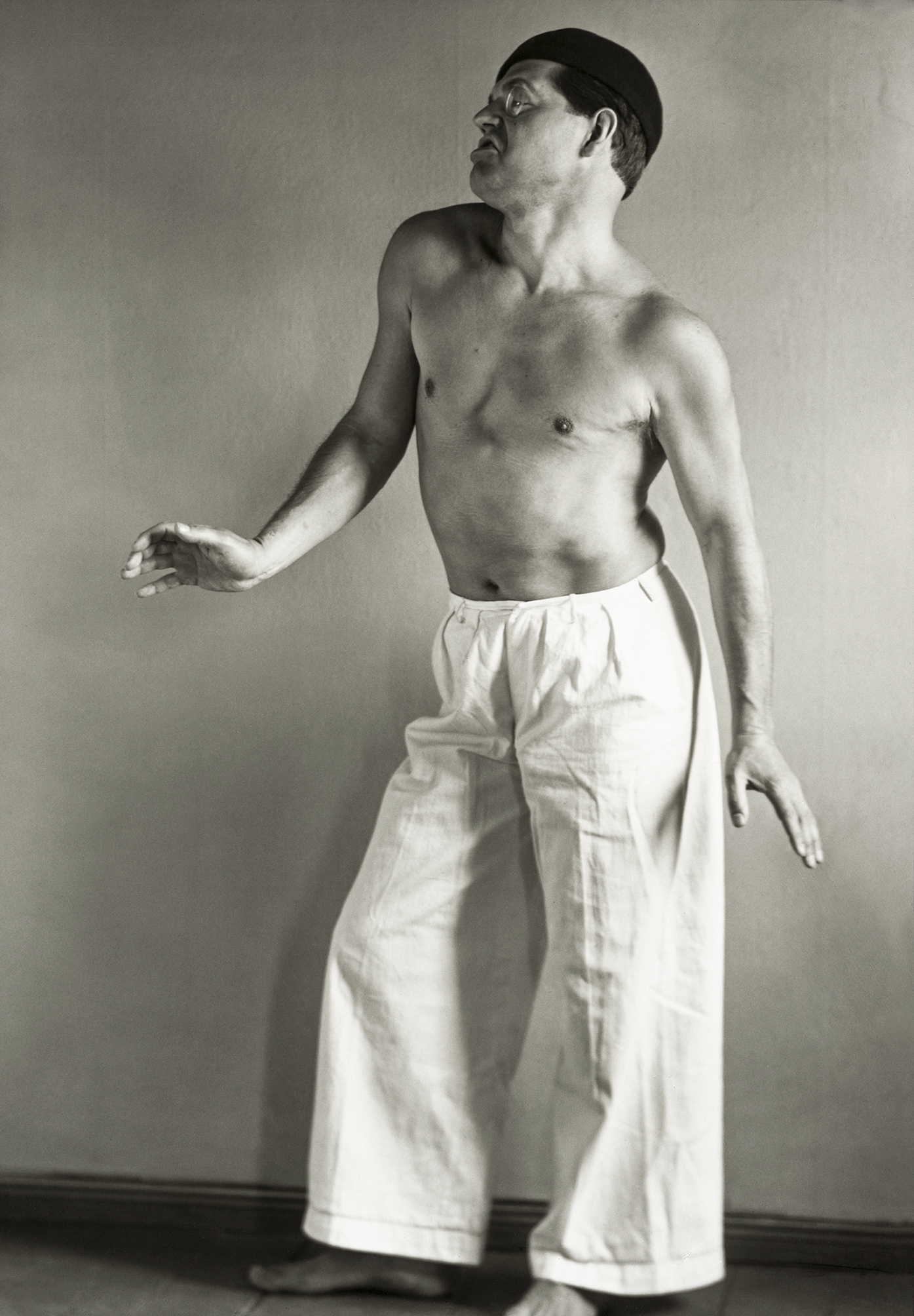
Dora Maar (French 1907-1997) 'Pablo Picasso standing under reed screening, Mougins, summer, 1937' (Pablo Picasso debout sous les cannisses, Mougins, été, 1937) 1937


Dora Maar (French 1907-1997)
Pablo Picasso standing under reed screening, Mougins, summer, 1937 (Pablo Picasso debout sous les cannisses, Mougins, été, 1937)
1937
Gelatin silver photograph
22.0 x 17.2cm (image)
23.1 x 18.2cm (sheet)
National Gallery of Victoria, Melbourne
Gift of Krystyna Campbell-Pretty AM and Family through the Australian Government’s Cultural Gifts Program, 2022
© Dora Maar. Licensed by Copyright Agency, Australia


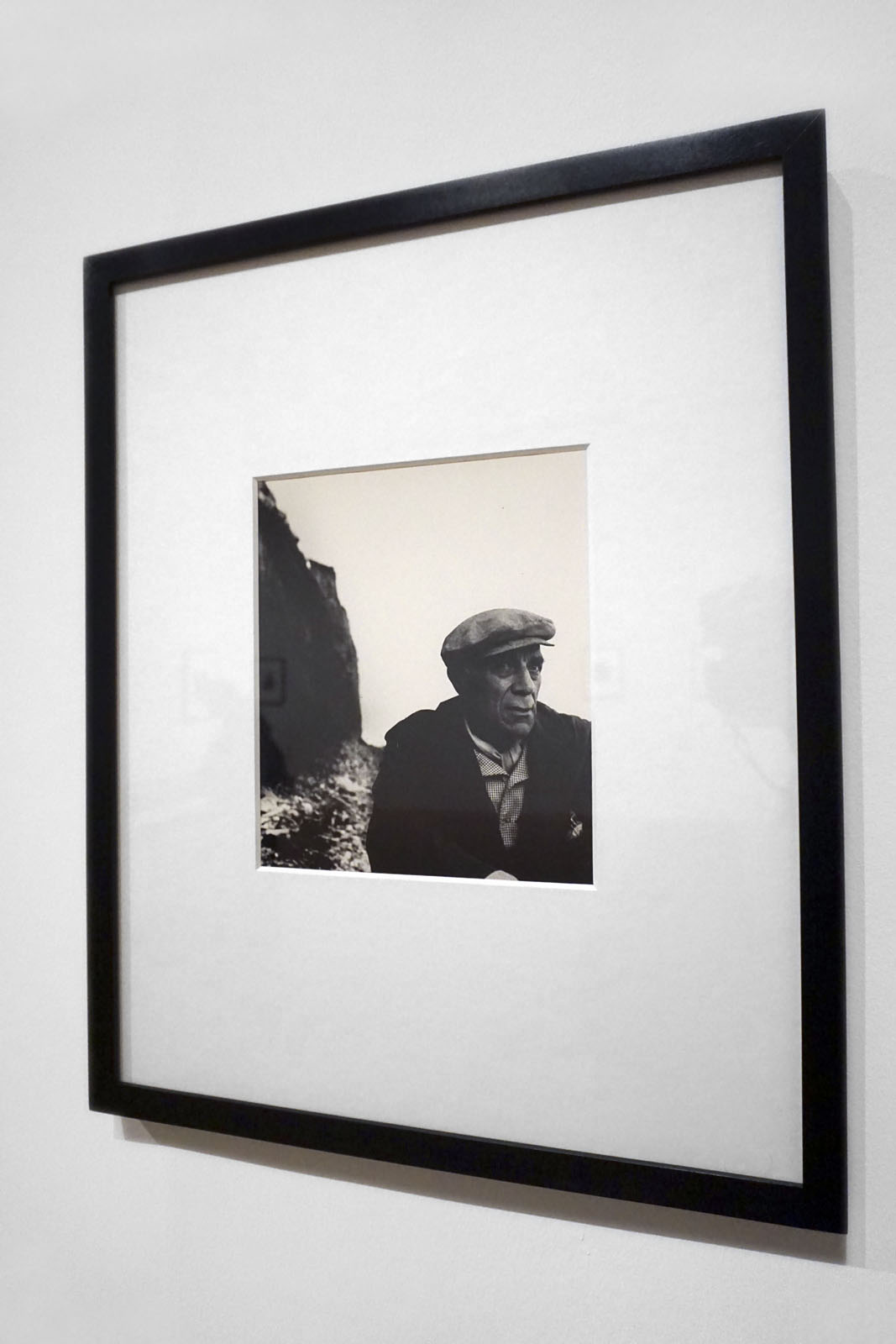
After being introduced to Pablo Picasso in 1935, Dora Maar became his lover, model and muse until their tumultuous liaison ended in 1943. During their time together, Maar famously documented the creation of the monumental painting Guernica in Picasso’s Paris studio. This portrait captures the artist at ease, bathed in an endlessly echoing lineation of shadows from the above reed screen. The portrait Maar took of Picasso a year later, displayed nearby, shows him seated outside, his eyes glinting with intensity. Both images were taken in Mougins, near Cannes, an area that Picasso returned to every summer.

Wall text from the exhibition


The interface of light

For much of its running length this exhibition of cinematic scope at the National Gallery of Victoria curated by the dependable Maggie Finch is a stimulating ride.

The early galleries in particular are a joy to behold, mixing as they do international and Australian female photographers mainly from the period between the two world wars. This placement of Australian photography in an international context (or vice versa) is something I have desired to see for a very long time in an Australian photographic exhibition. One informing the other. And it works so well!

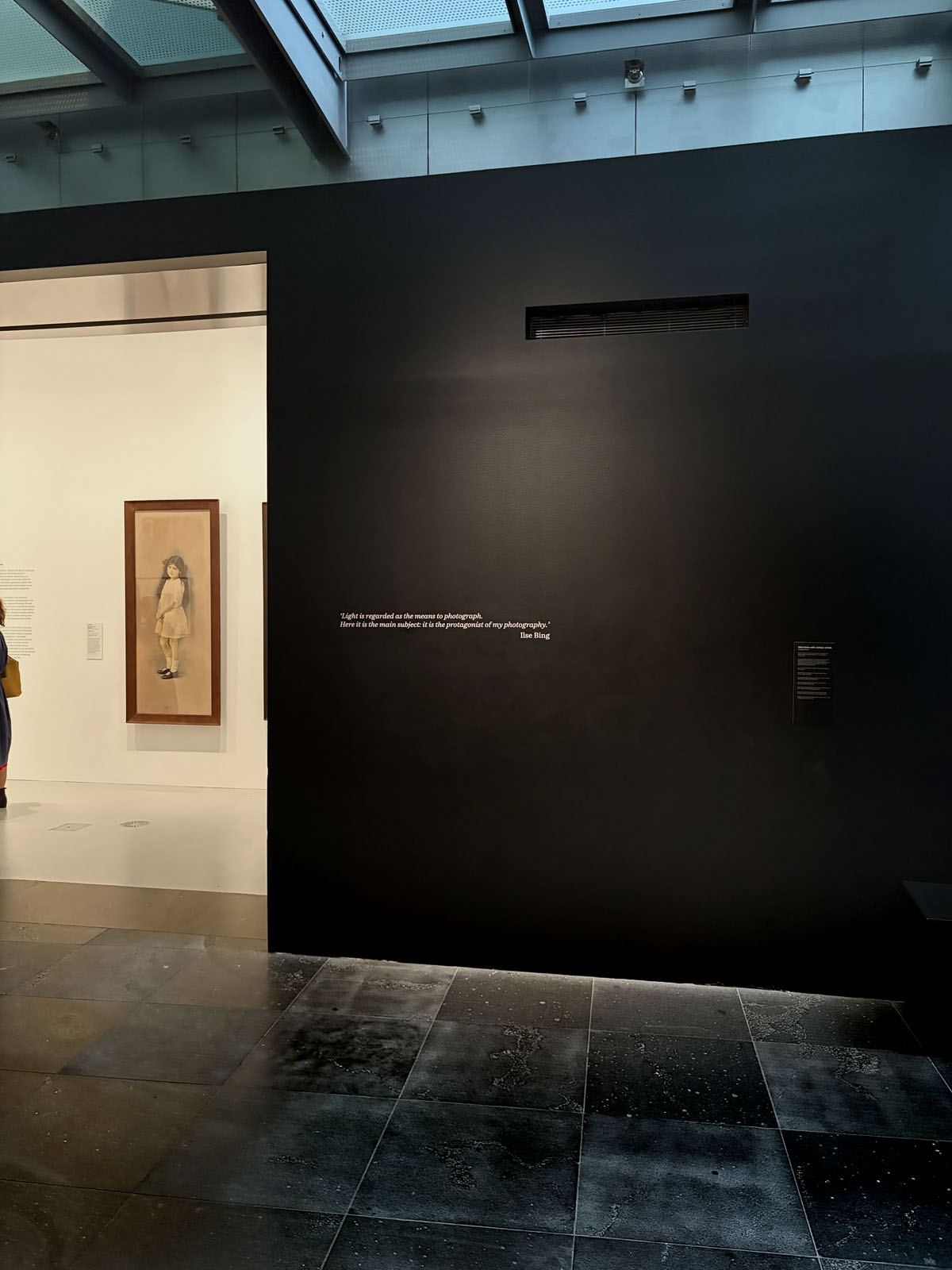
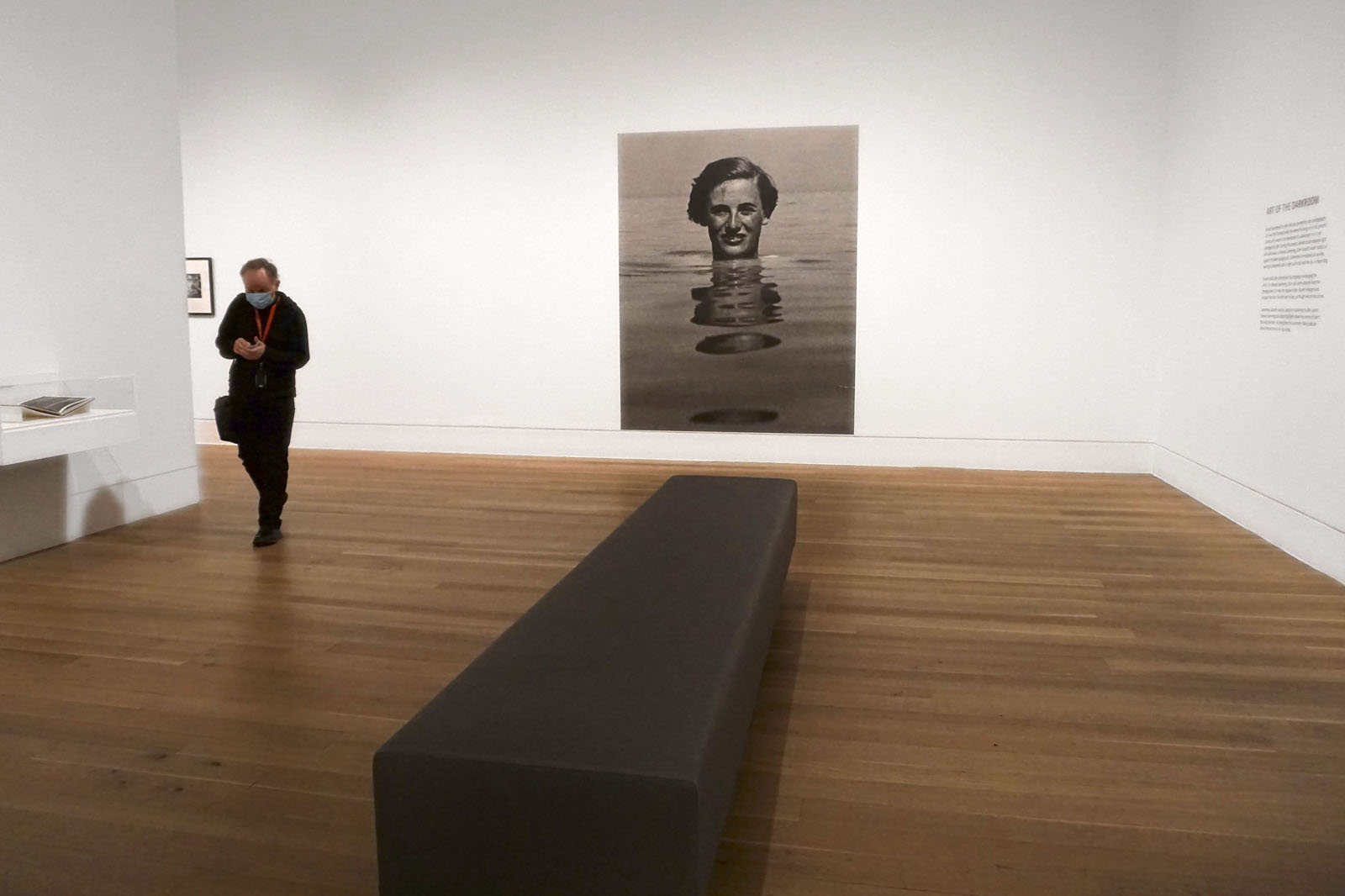
Aesthetically (both pictorially and in exhibition design) there is a wonderful frisson to the grouping of the photographs in these darker, enclosed, tightly curated gallery spaces that is so intoxicating to the senses. Ruth Hollick meets Madame d’Ora, Florence Henri meets Yamawaki Michiko, and Olive Cotton meets Dora Maar on the gallery walls, interwoven into an intertextual conversation on photography that spans identities, countries and continents. Perhaps not a legacy of light rather the interface of light, a shared connection, one nexus to another. I could have breathed in these photographs for hours!

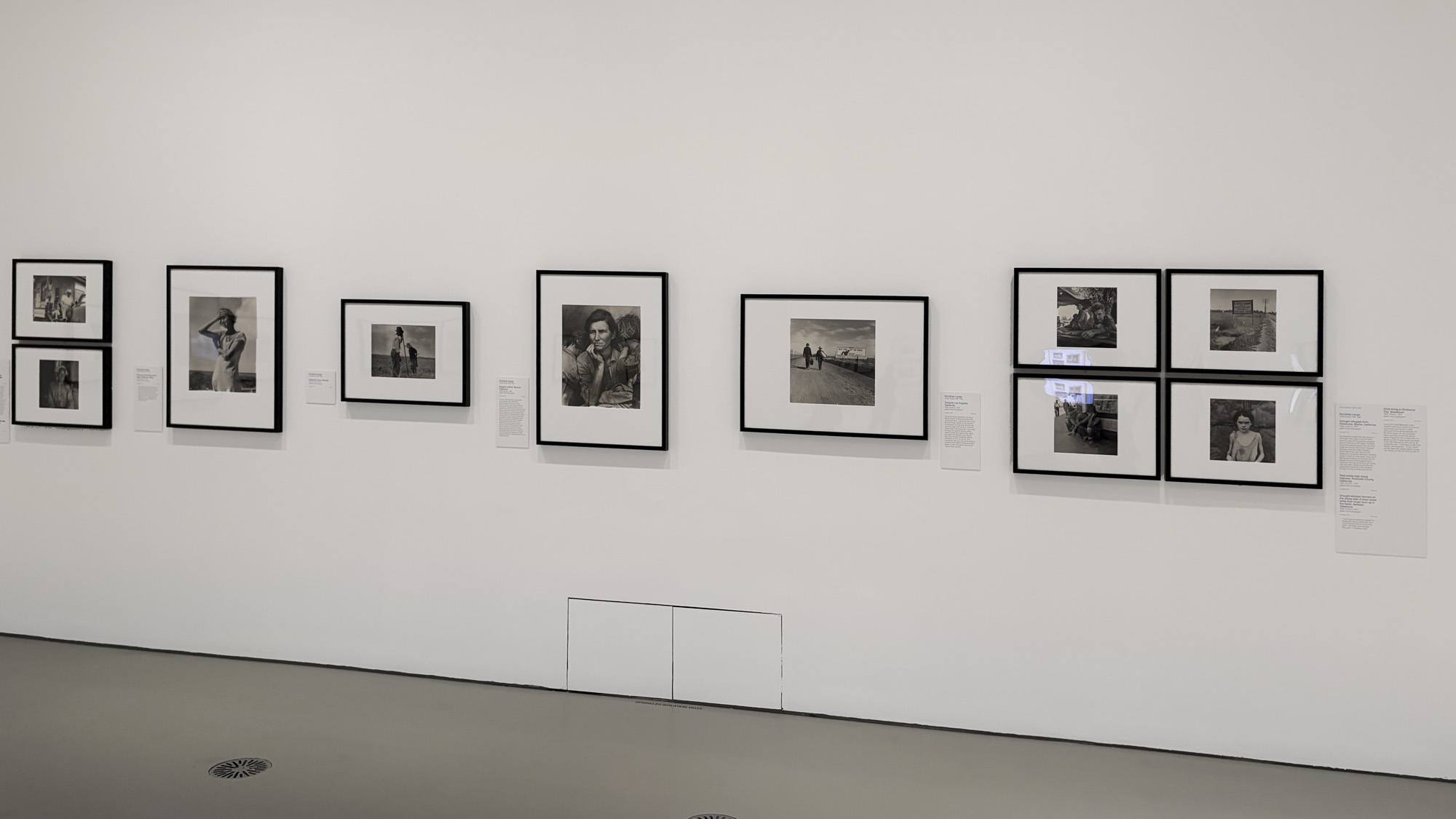
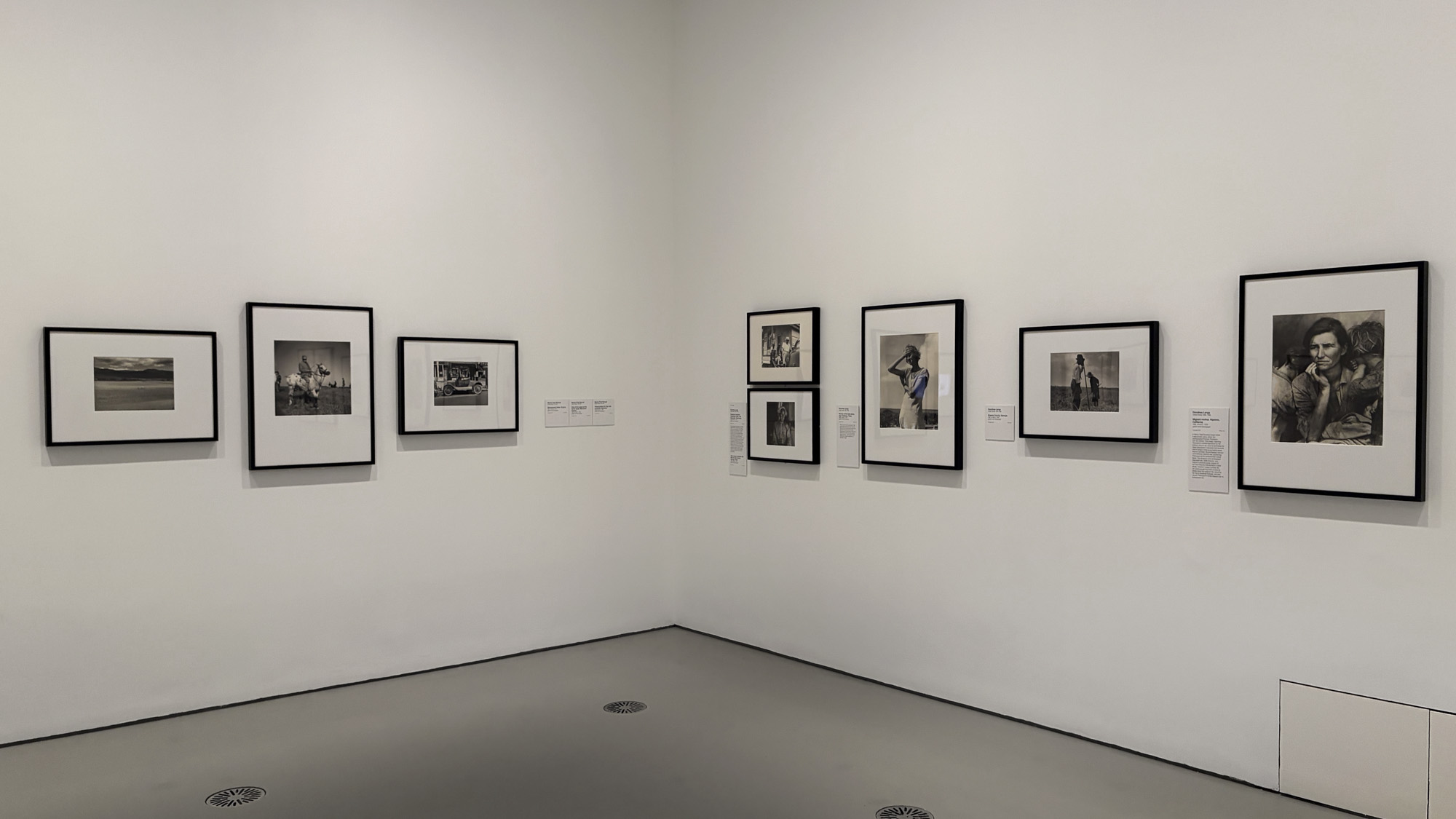
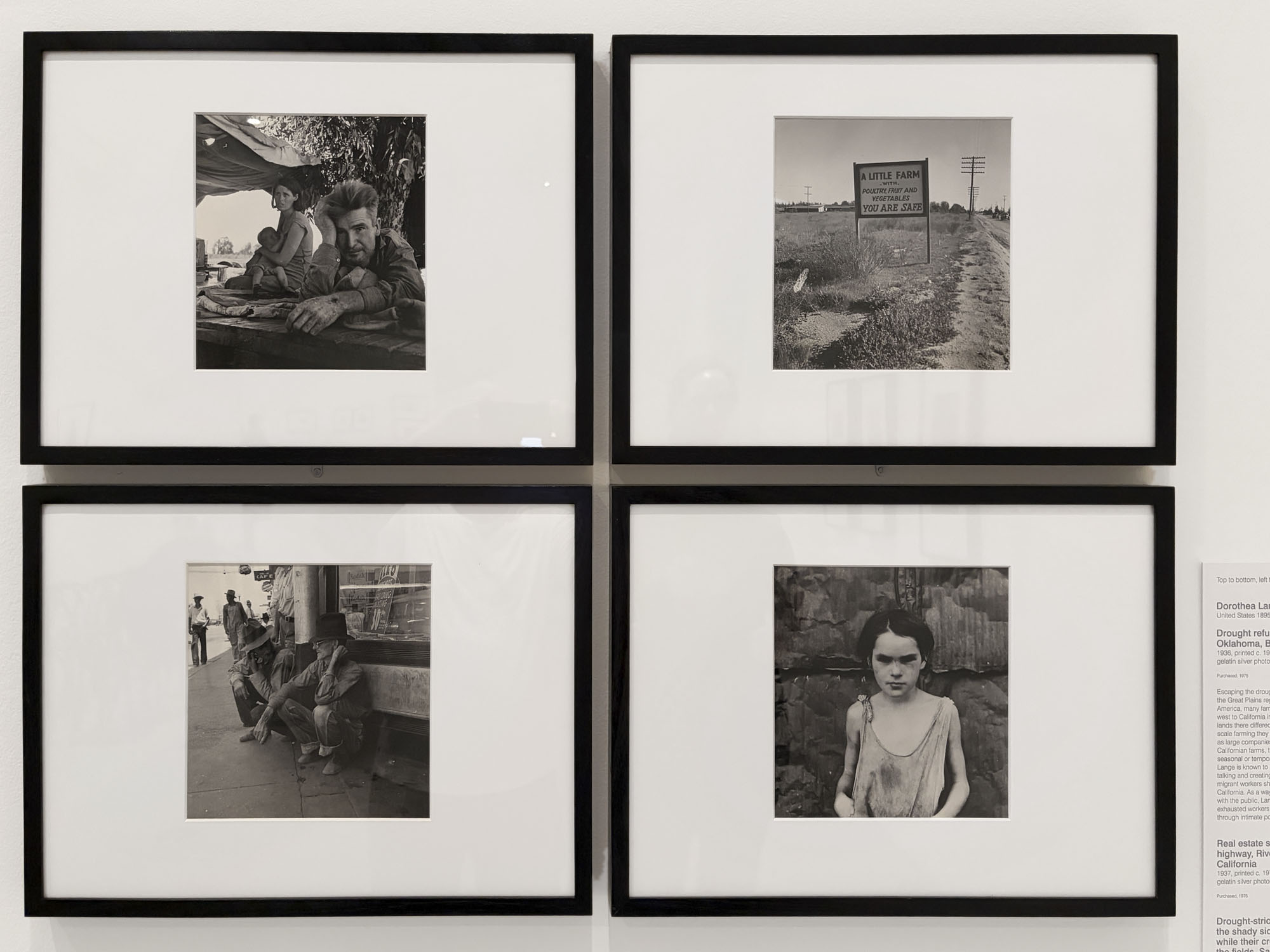
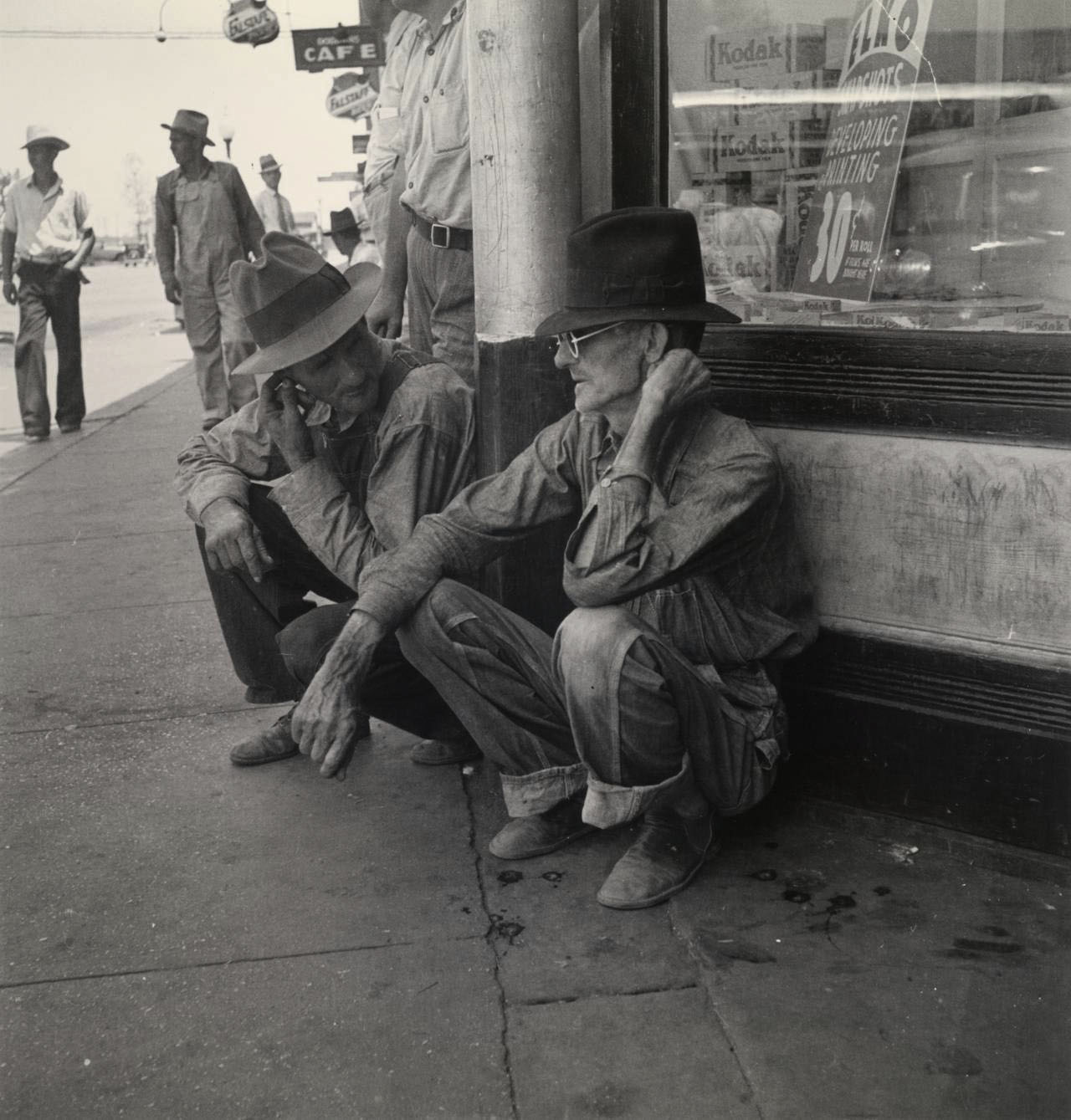
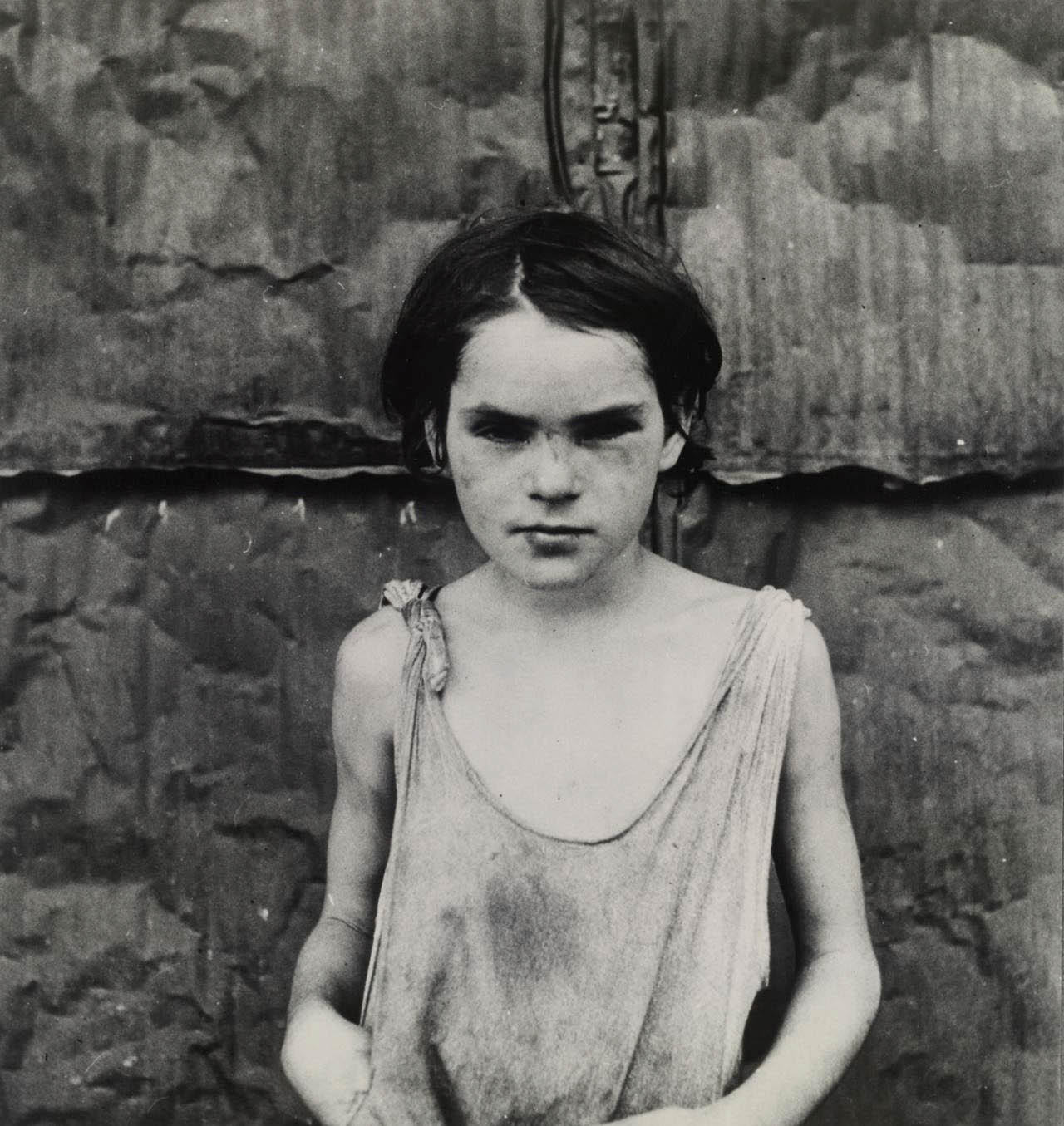
That energy starts to dissipate as the gallery spaces open out in the second half of the exhibition, especially in the section ‘People and Place’ (see below). Poor Farm Security Administration prints of now famous photographs printed very flatly in the mid-1970s and purchased for the gallery in the same time period don’t help the cause – they need to be replaced in the collection with more appropriate prints of these images.

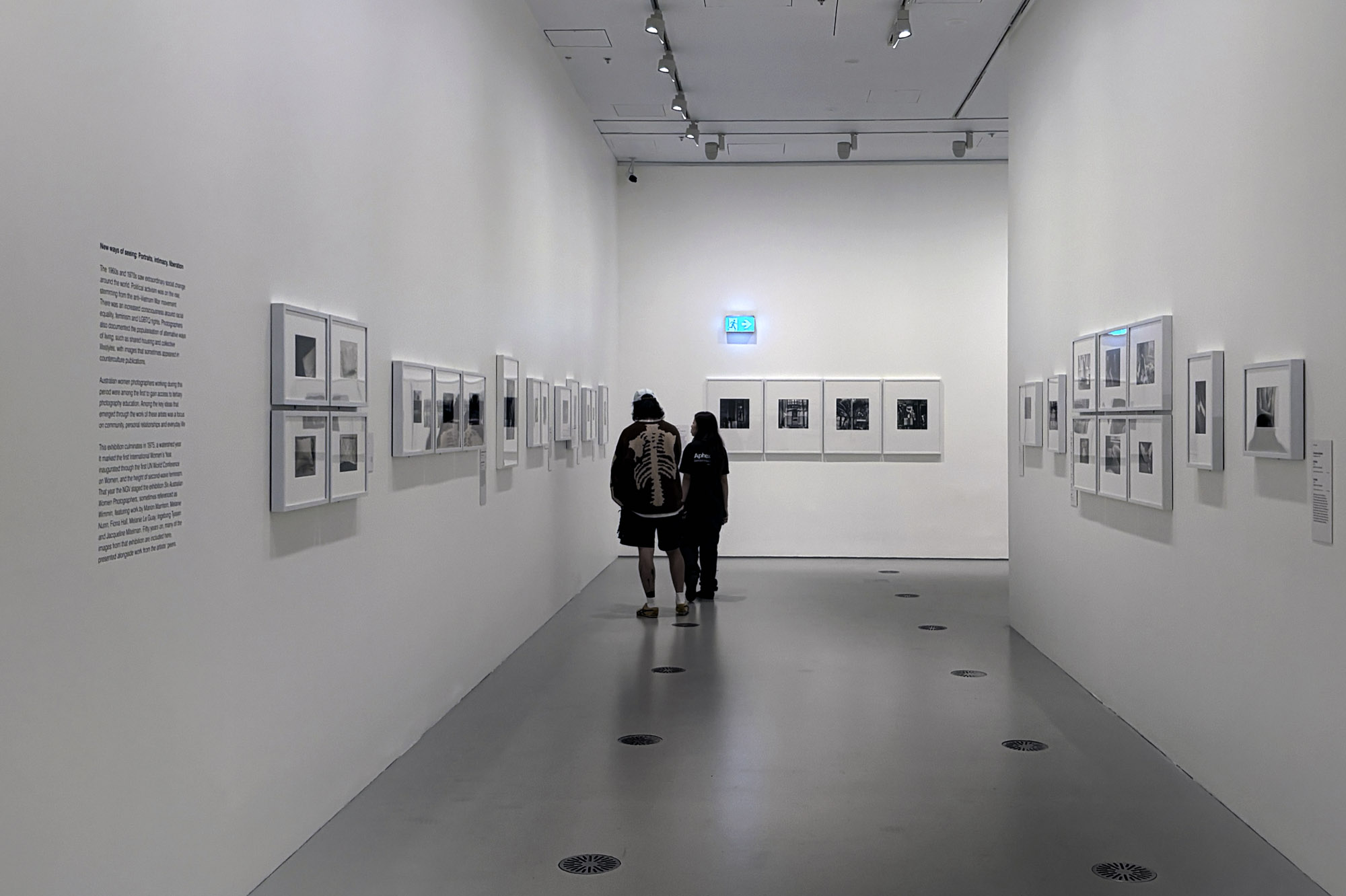
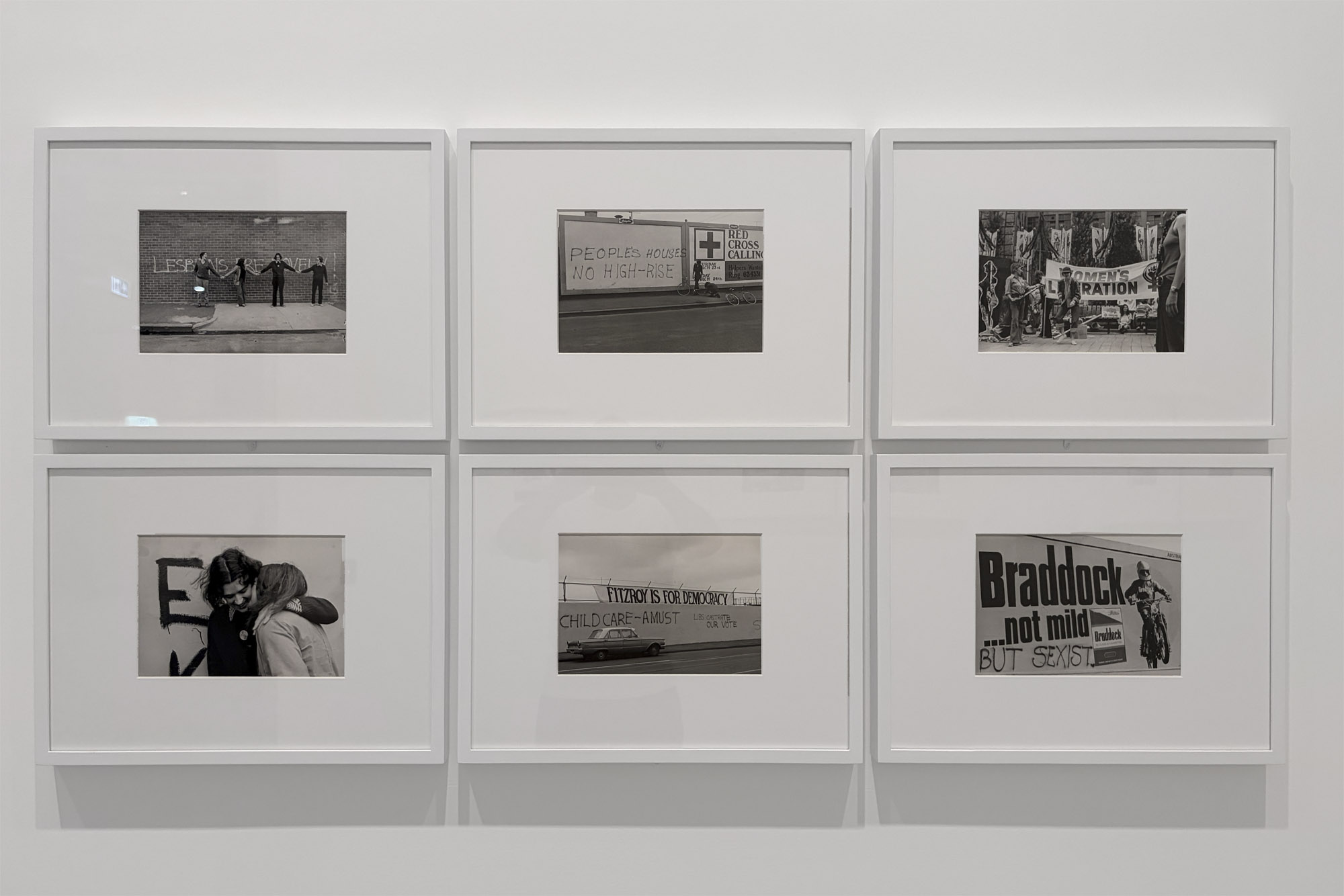
By the time of the final section, ‘New Ways Of Seeing: Portraits, Intimacy, Liberation’ (see below), the international representation has disappeared altogether and all the intoxicating energy has gone. In this section we find strong, eloquent and important Australian photographs from the period – conceptual, feminist, and on liberation – but it would have been great to have seen them paired with photographs from international photographers such as Cindy Sherman, Mary Ellen Mark, and Valie Export for example.

On reflection I can say that this is a strong exhibition from the NGV coherently and intelligently curated by Maggie Finch. It is fantastic to see that the gallery has been “splashing the cash” in recent years – supported by Krystyna Campbell-Pretty AM and the Bowness family – with over 170 new acquisitions for the photographic collection.

However for a public gallery, with most of the photographs already in the collection, to charge $25 entry price is really beyond the pale. I went twice to see the exhibition and $50 is a fair whack of money out of anyone’s budget.

Dr Marcus Bunyan


Many thankx to the NGV for allowing me to publish the media images in the posting. All installation photographs © Marcus Bunyan. Please click on the photographs for a larger version of the image. View Part 1 of the posting.
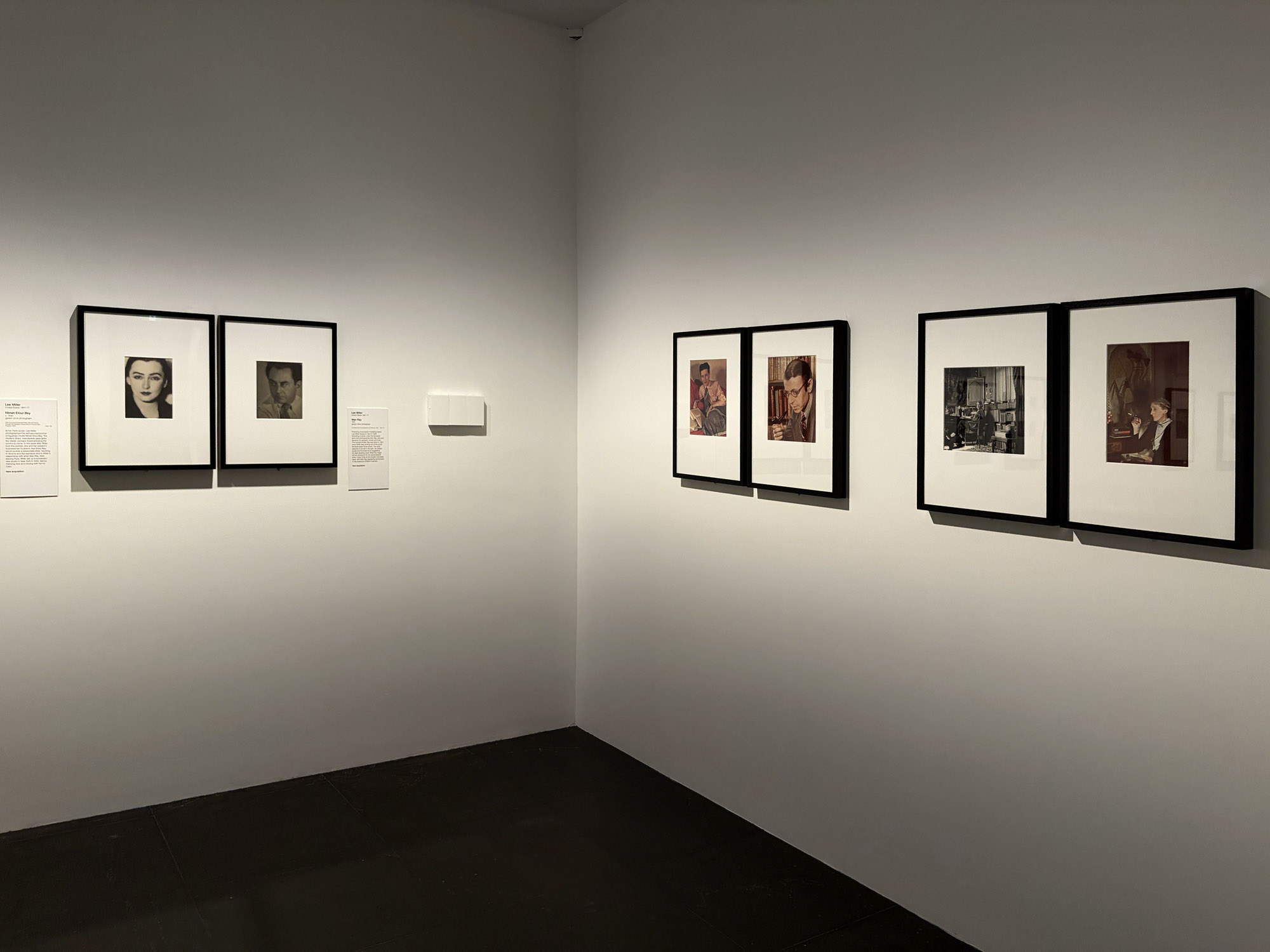


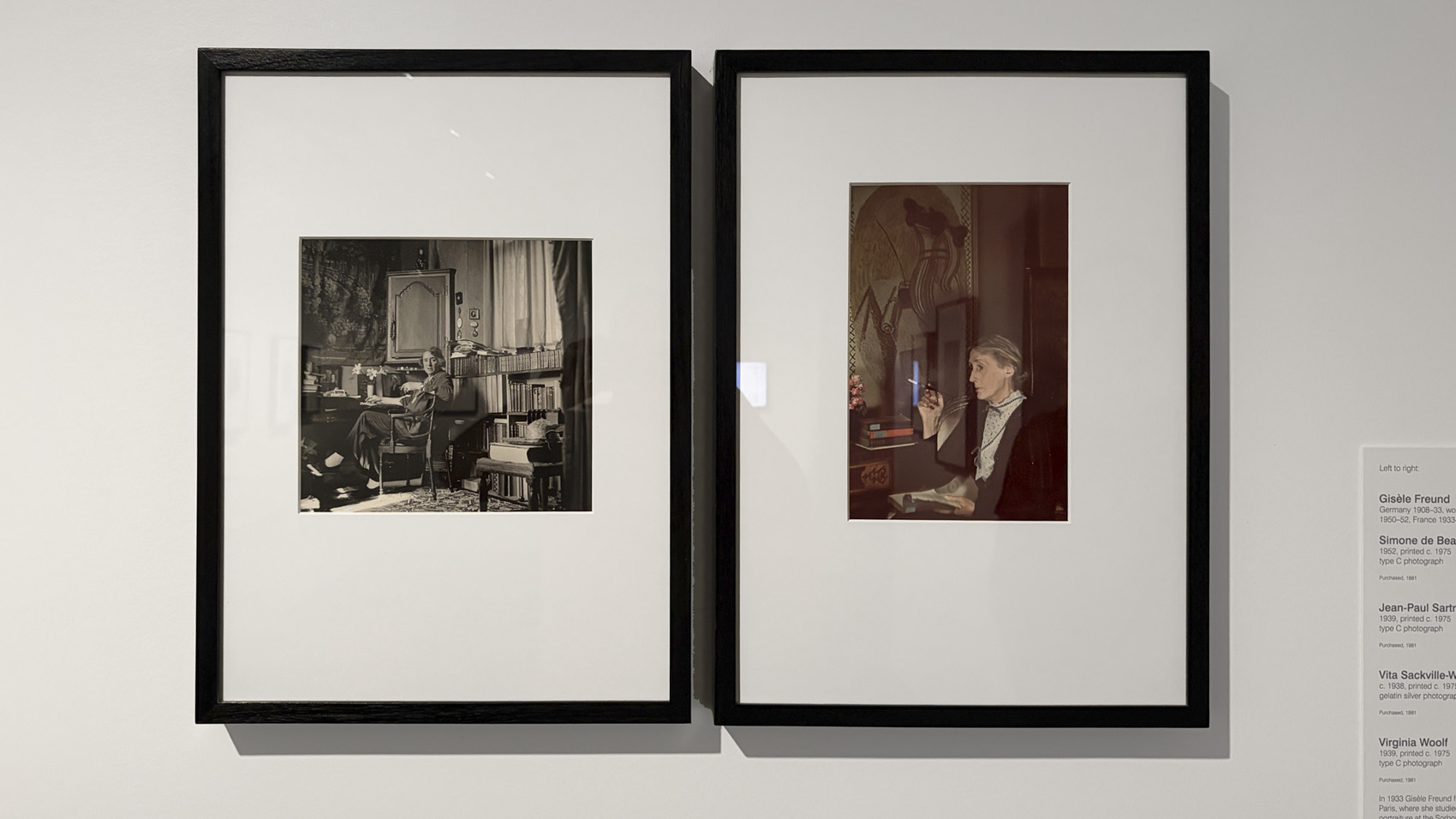
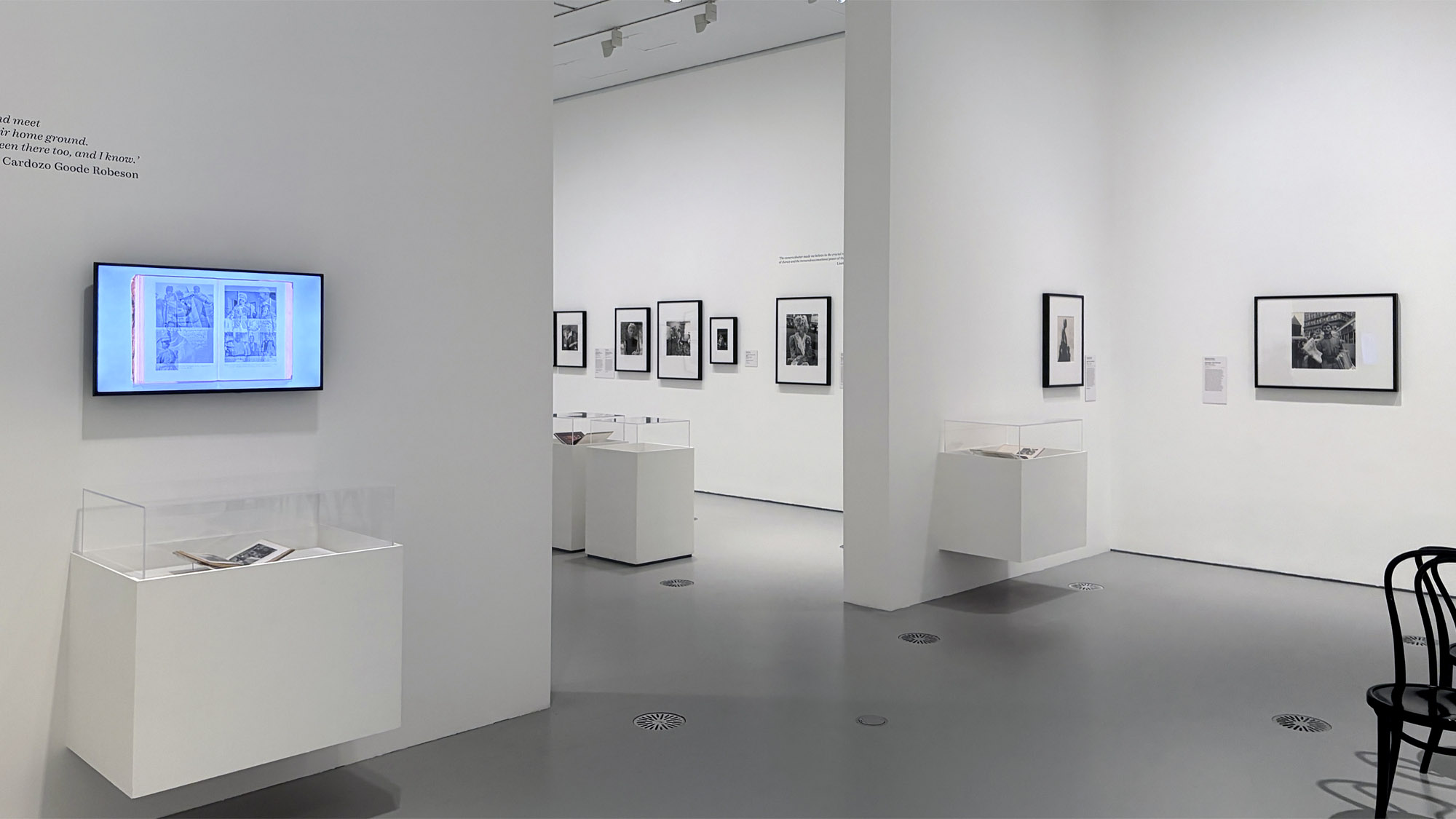
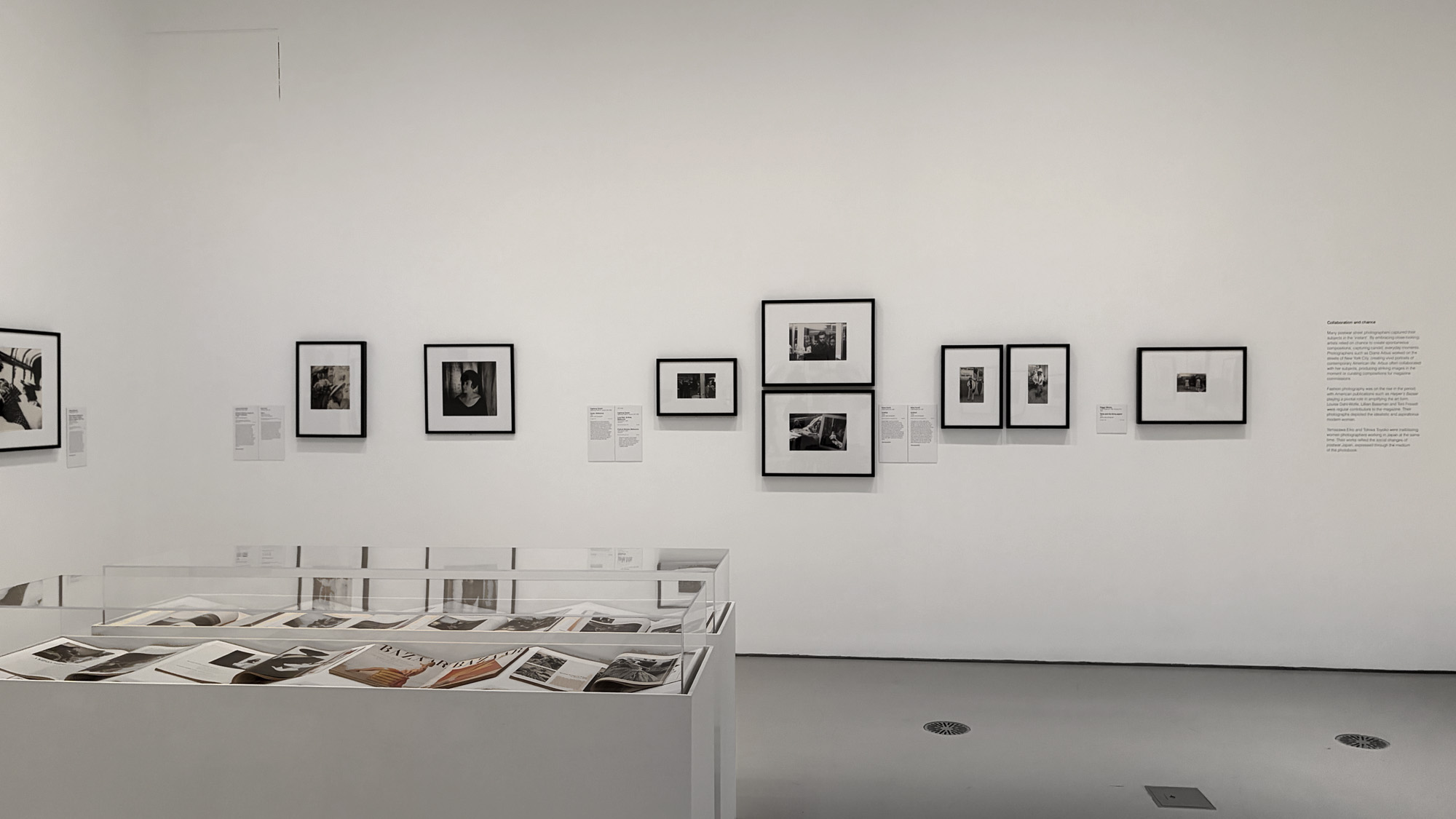
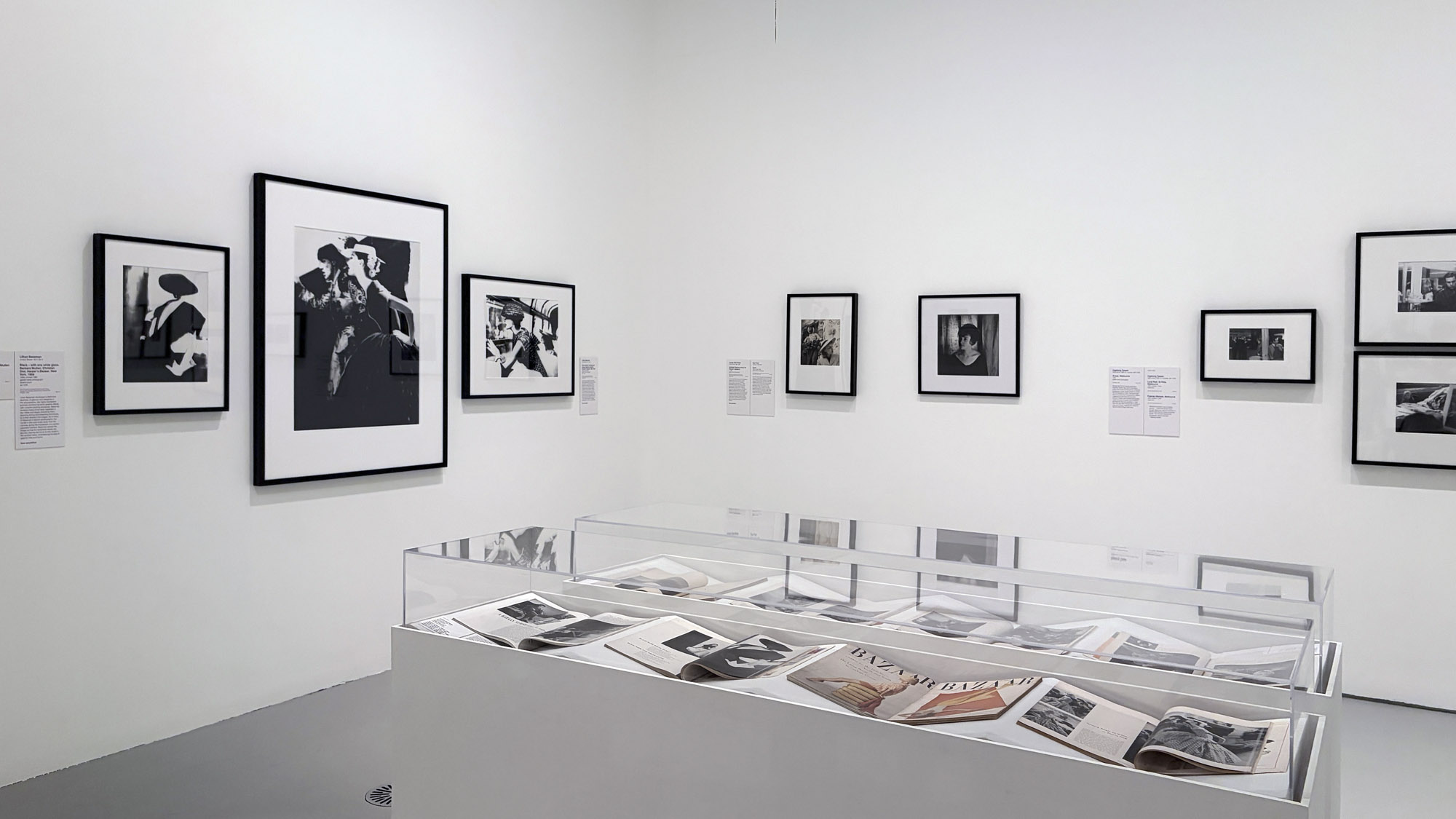
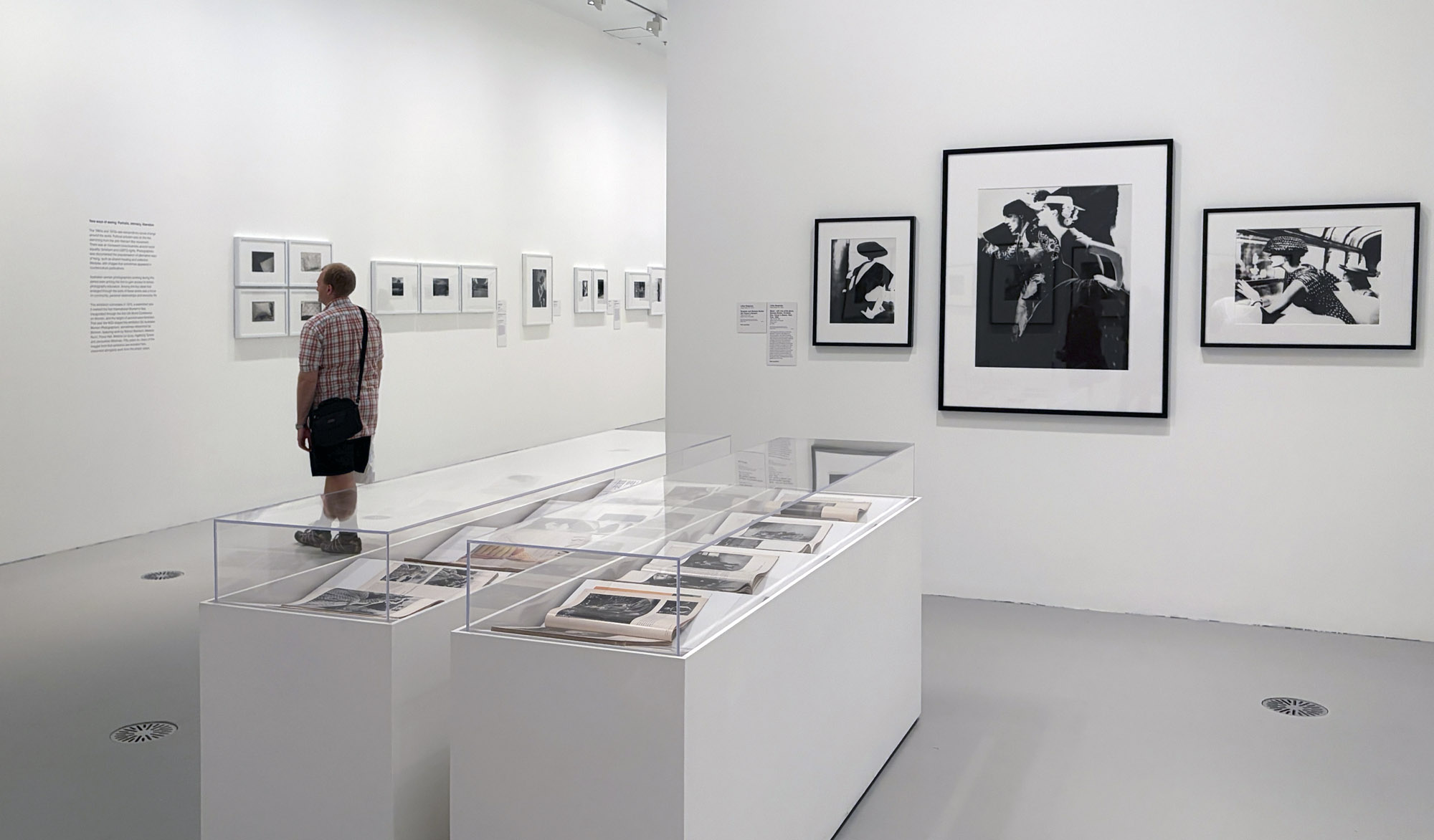
Installation view of the exhibition 'Women Photographers 1900-1975: A Legacy of Light' at NGV International, Melbourne, November 2025 - May 2026 showing from left to right, Lee Miller 'Nimet Eloui Bey' (c. 1930); Lee Miller 'Man Ray' (1931); Gisele Freund's 'Simone de Beauvoir '(1952 printed c. 1975), 'Jean-Paul Satre' (1939 printed c. 1975), 'Vita Sackville-West' (1938 printed c. 1975) and 'Virginia Woolfe' (1939 printed c. 1975)


Installation view of the exhibition Women Photographers 1900-1975: A Legacy of Light at NGV International, Melbourne, November 2025 – May 2026 showing from left to right, Lee Miller Nimet Eloui Bey (c. 1930, below); Lee Miller Man Ray (1931, below); Gisele Freund’s Simone de Beauvoir (1952 printed c. 1975, below), Jean-Paul Satre (1939 printed c. 1975, below), Vita Sackville-West (1938 printed c. 1975, below) and Virginia Woolfe (1939 printed c. 1975, below)
Photo: Marcus Bunyan


Women Photographers 1900-1975: A Legacy of Light celebrates the wide-ranging photographic practices of more than eighty women artists working between 1900 and 1975. Featuring prints, postcards, photobooks and magazines, the exhibition explores the role of photographers as image-makers, and the ways in which women artists create an image of themselves, of others, of the times – from images of the women’s suffrage movement at the turn of the twentieth century, through to the women’s liberation movement and beyond. From Melbourne to Tokyo, Paris to Buenos Aires, the exhibition showcases the works of trailblazing artists such as Berenice Abbott, Lola Álvarez Bravo, Claude Cahun and Marcel Moore, Imogen Cunningham, Mikki Ferrill, Sue Ford, Christine Godden, Ponch Hawkes, Annemarie Heinrich, Ruth Hollick, Florence Henri, Kati Horna, Germaine Krull, Tina Modotti, Lucia Moholy, Toyoko Tokiwa, Yamazawa Eiko and many more.

The exhibition reflects a recent collecting focus on celebrating the contributions of women artists of the early twentieth century in the NGV Photography Collection. Featuring portraiture, photojournalism, landscape photography, photomontage, experimental avant-garde imagery and more, Women Photographers 1900-1975: A Legacy of Light presents the diverse work of women photographers against the backdrop of significant social, political and cultural events.

Text from the NGV website
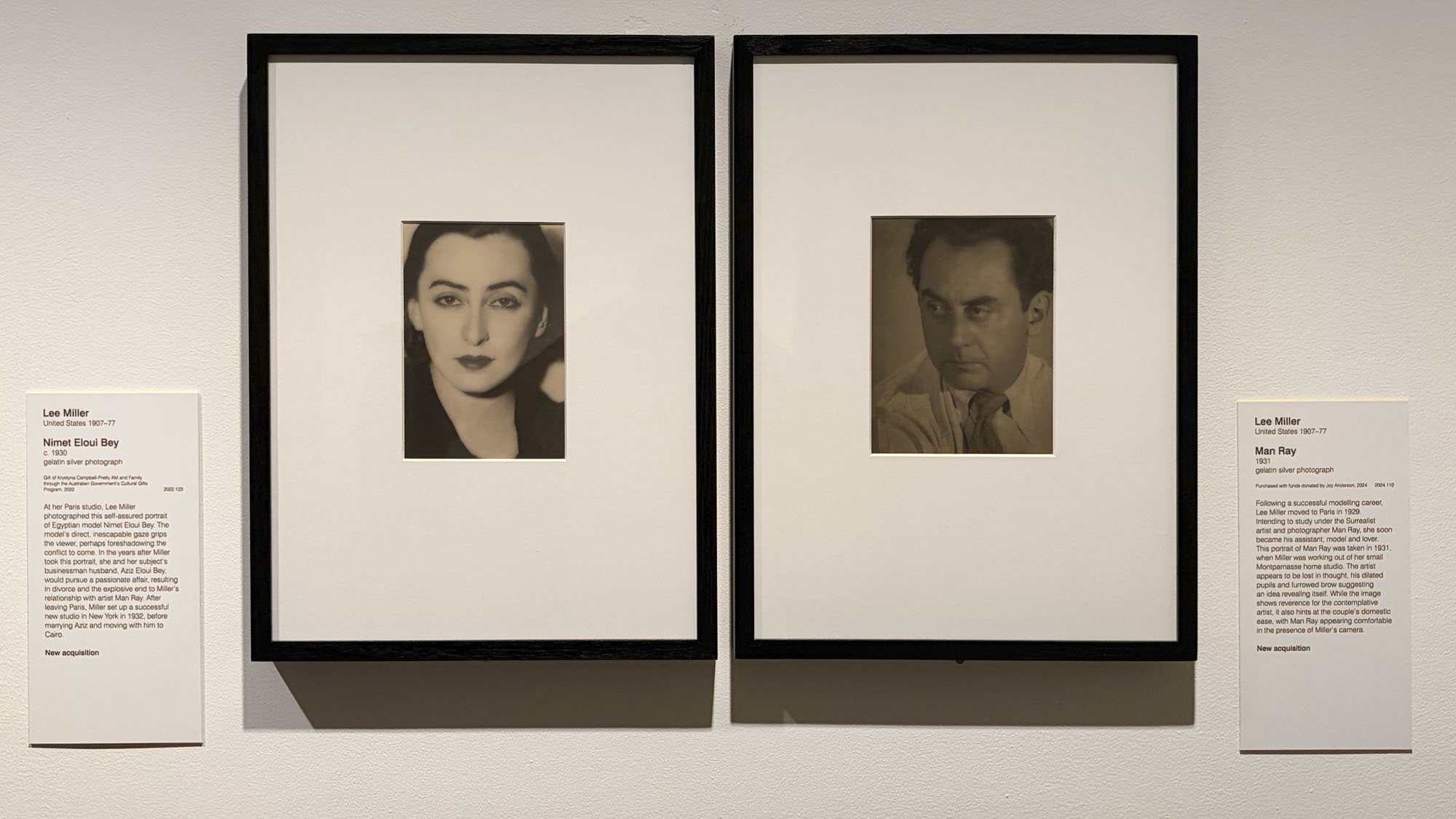
 

Installation view of the exhibition 'Women Photographers 1900-1975: A Legacy of Light' at NGV International, Melbourne, November 2025 - May 2026 showing from left to right, Lee Miller 'Nimet Eloui Bey' (c. 1930) and Lee Miller 'Man Ray' (1931)


Installation view of the exhibition Women Photographers 1900-1975: A Legacy of Light at NGV International, Melbourne, November 2025 – May 2026 showing from left to right, Lee Miller Nimet Eloui Bey (c. 1930, below) and Lee Miller Man Ray (1931, below)
Photo: Marcus Bunyan
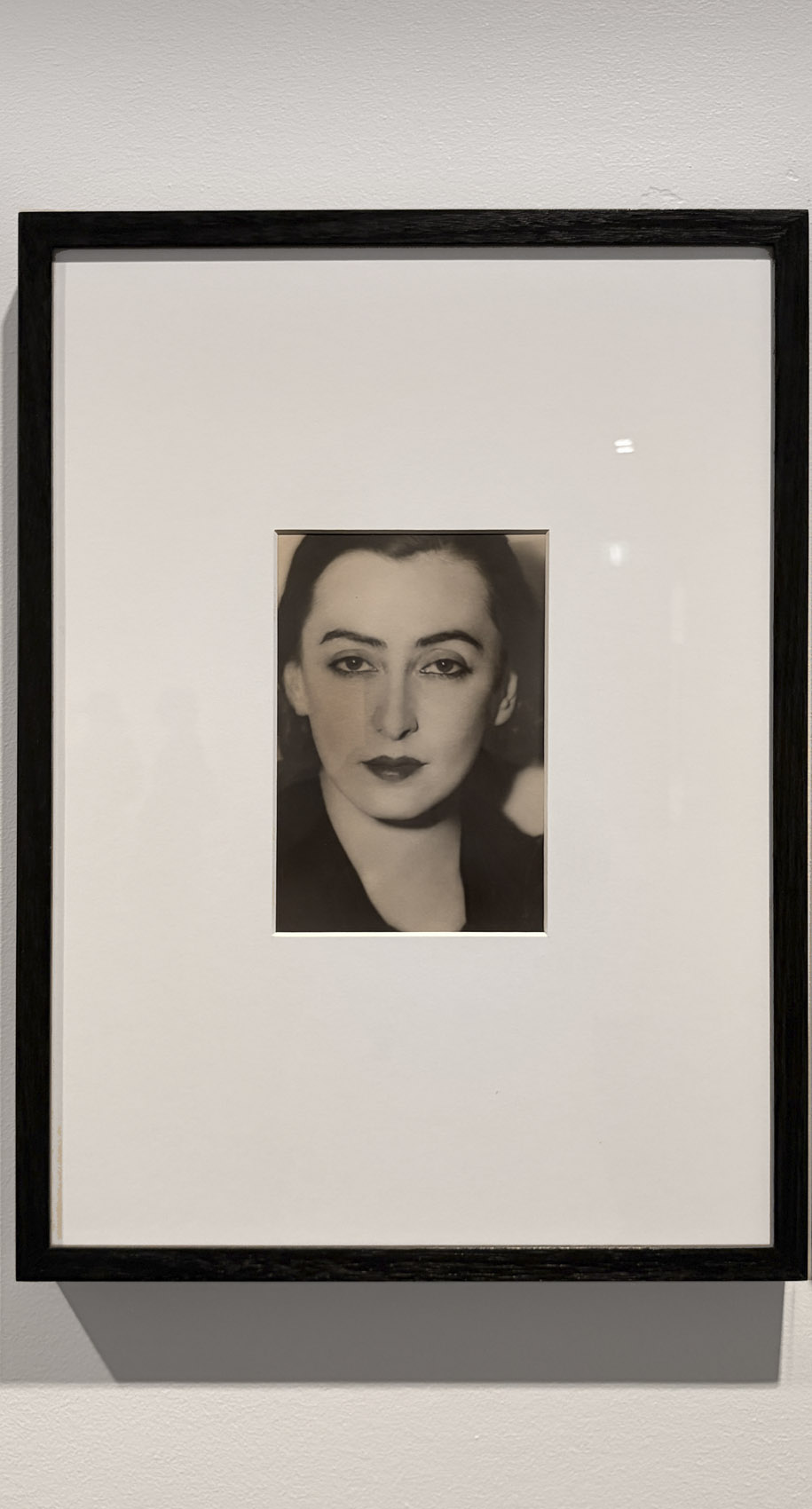
 

Lee Miller (American, 1907-1977) 'Nimet Eloui Bey' c. 1930 (installation view)


Lee Miller (American, 1907-1977)
Nimet Eloui Bey (installation view)
c. 1930
Gelatin silver photograph
23.0 x 15.8cm (image and sheet)
National Gallery of Victoria, Melbourne
Gift of Krystyna Campbell-Pretty AM and Family through the Australian Government’s Cultural Gifts Program, 2022
© Lee Miller Archives, England 2023


At her Paris studio, Lee Miller photographed this self-assured portrait of Egyptian model Nimet Eloui Bey. The model’s direct, inescapable gaze grips the viewer, perhaps foreshadowing the conflict to come. In the years after Miller took this portrait, she and her subject’s businessman husband, Aziz Eloui Bey, would pursue a passionate affair, resulting in divorce and the explosive end to Miller’s relationship with artist Man Ray. After leaving Paris, Miller set up a successful new studio in New York in 1932, before marrying Aziz and moving with him to Cairo.

Wall text from the exhibition
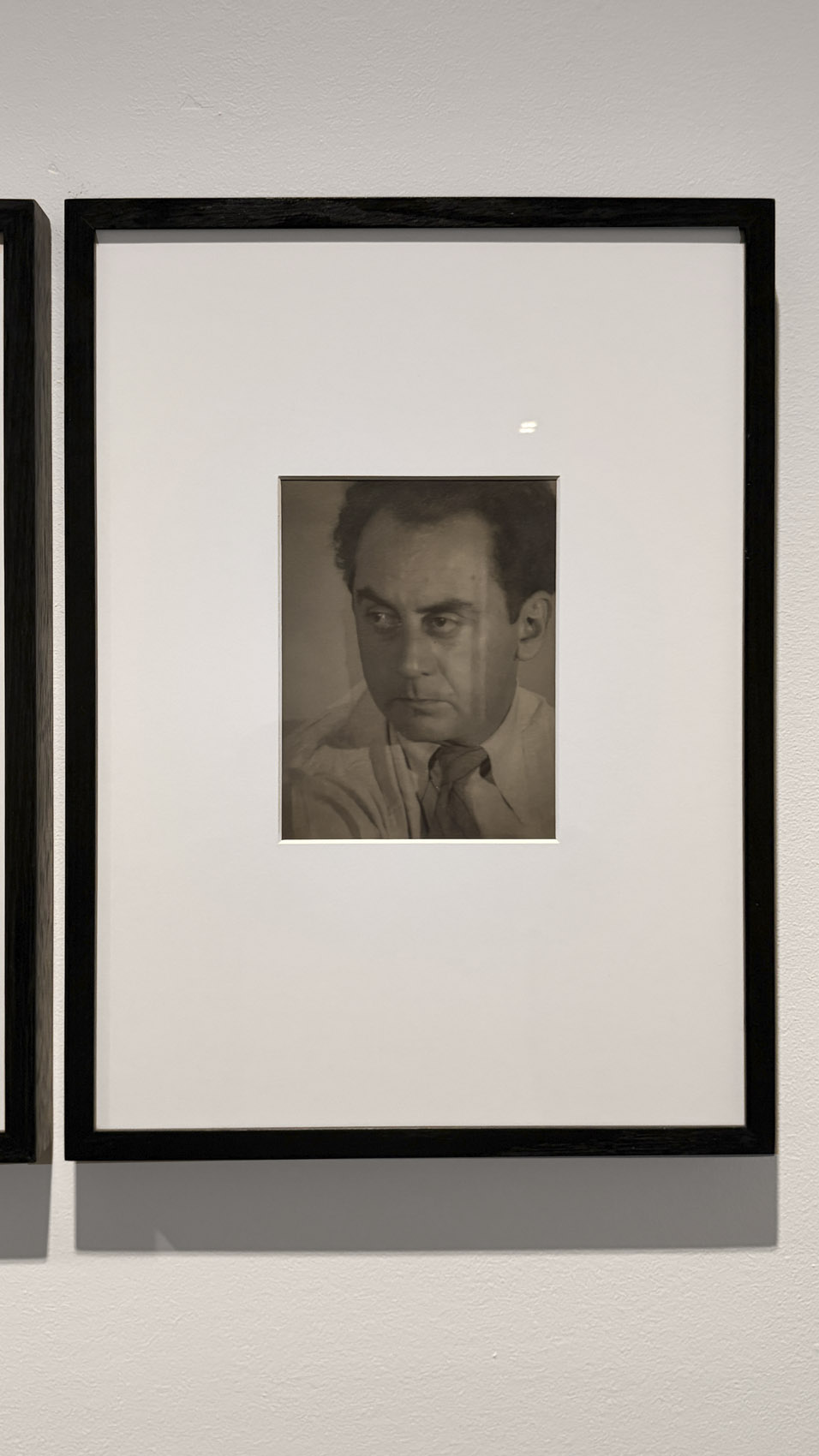
 

Lee Miller (American, 1907-1977) 'Man Ray' 1931 (installation view)


Lee Miller (American, 1907-1977)
Man Ray (installation view)
1931
Gelatin silver photograph
23.1 x 17.5cm (image and sheet)
National Gallery of Victoria, Melbourne
Purchased with funds donated by Joy And
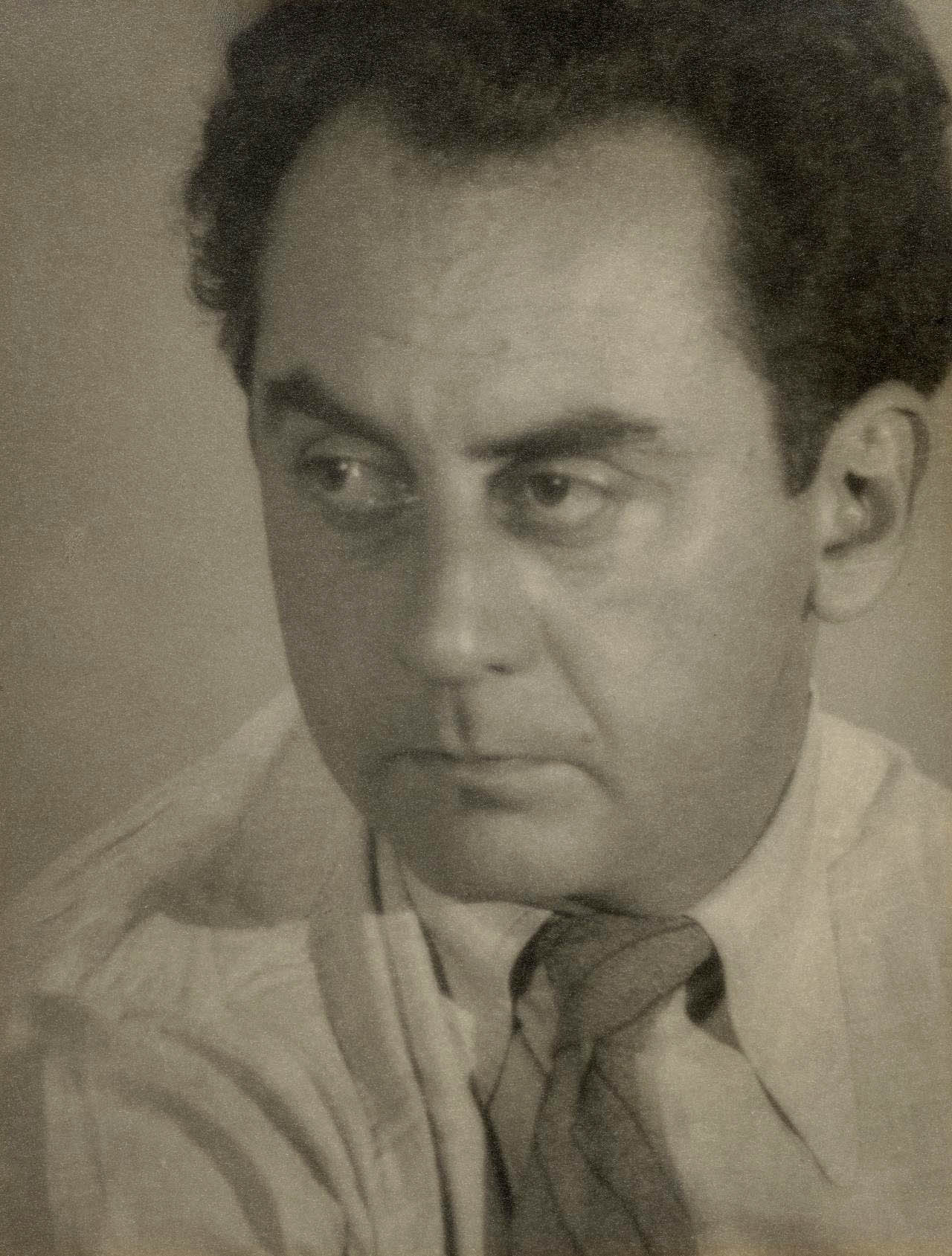
 

Lee Miller (American, 1890-1976) 'Man Ray' 1931


Lee Miller (American, 1890-1976)
Man Ray
1931
Gelatin silver photograph
23.1 x 17.5cm (image and sheet)
National Gallery of Victoria, Melbourne
Purchased with funds donated by Joy Anderson, 2024
© Lee Miller Archives, England 2023. All rights reserved


Following a successful modelling career, Lee Miller moved to Paris in 1929. Intending to study under the Surrealist artist and photographer Man Ray, she soon became his assistant, model and lover. This portrait of Man Ray was taken in 1931, when Miller was working out of her small Montparnasse home studio. The artist appears to be lost in thought, his dilated pupils and furrowed brow suggesting an idea revealing itself. While the image shows reverence for the contemplative artist, it also hints at the couple’s domestic ease, with Man Ray appearing comfortable in the presence of Miller’s camera.

Wall text from the exhibition
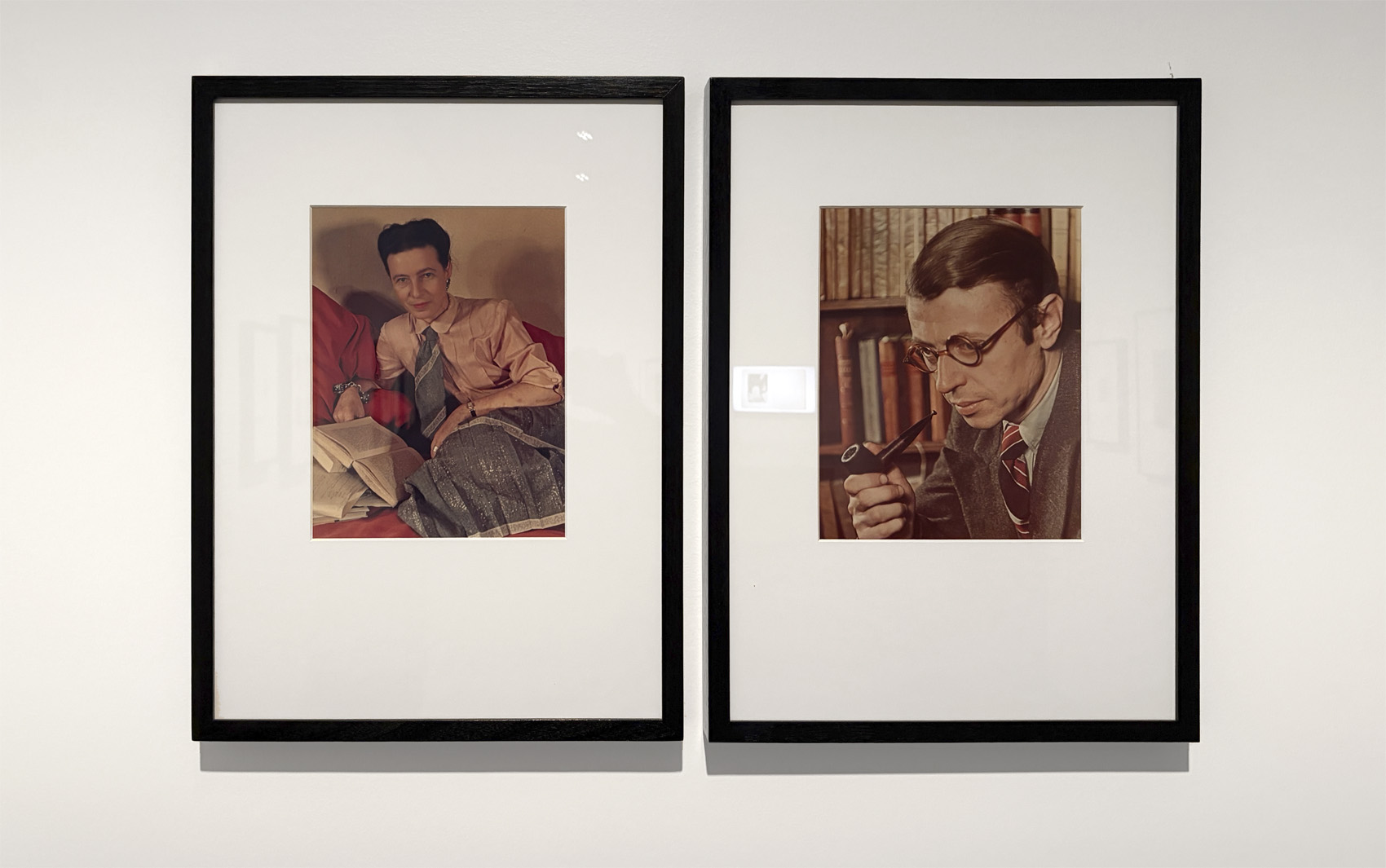
 

Installation view of the exhibition Women Photographers 1900-1975: A Legacy of Light at NGV International, Melbourne, November 2025 – May 2026 showing from left to right, Gisèle Freund's 'Simone de Beauvoir' (1952 printed c. 1975) and 'Jean-Paul Satre' (1939 printed c. 1975)


Installation view of the exhibition Women Photographers 1900-1975: A Legacy of Light at NGV International, Melbourne, November 2025 – May 2026 showing from left to right, Gisèle Freund’s Simone de Beauvoir (1952 printed c. 1975) and Jean-Paul Satre (1939 printed c. 1975)
Photo: Marcus Bunyan
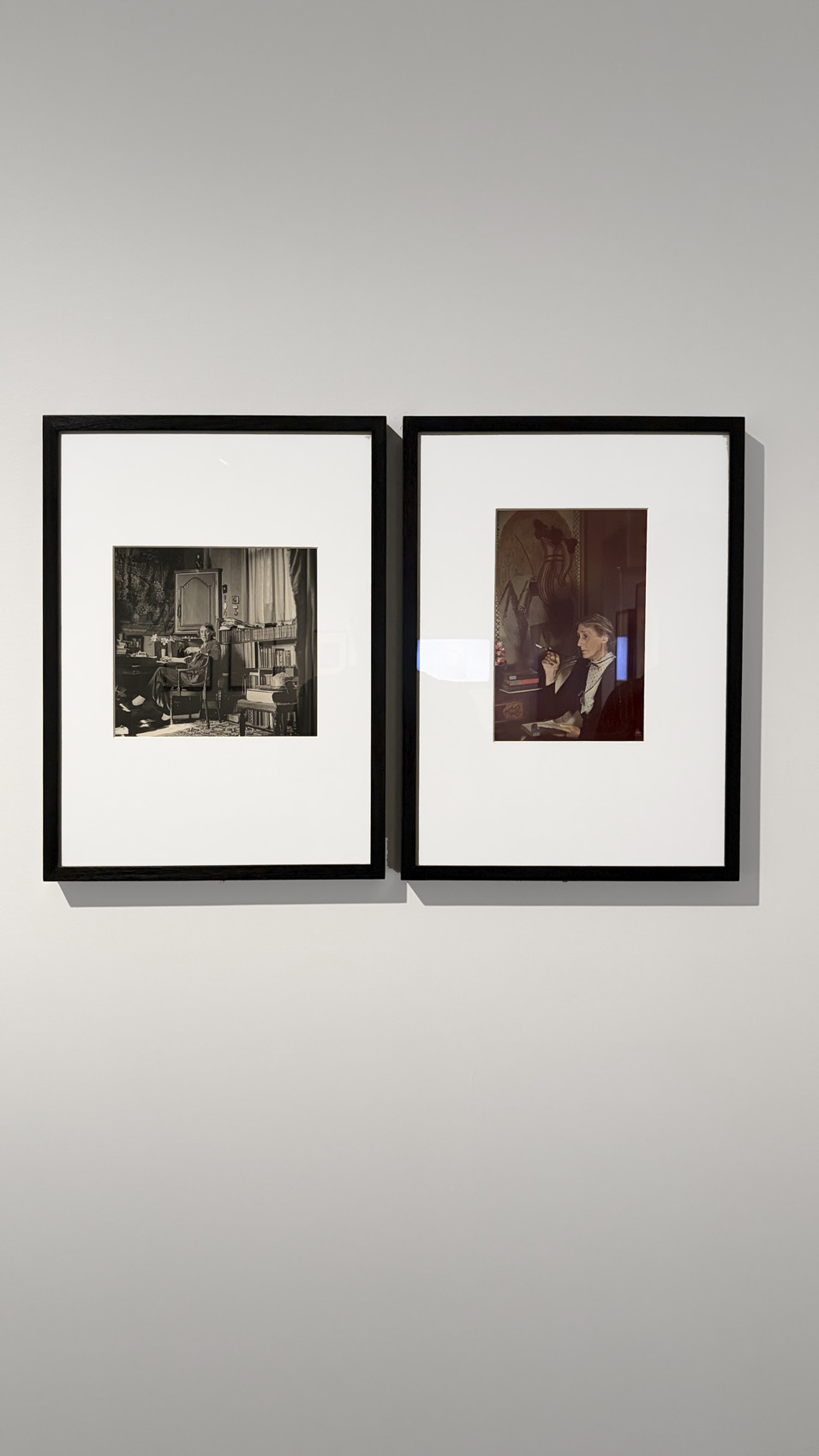
 

Installation view of the exhibition Women Photographers 1900-1975: A Legacy of Light at NGV International, Melbourne, November 2025 – May 2026 showing from left to right, Gisèle Freund's 'Vita Sackville-West' (1938 printed c. 1975) and 'Virginia Woolfe' (1939 printed c. 1975)


Installation view of the exhibition Women Photographers 1900-1975: A Legacy of Light at NGV International, Melbourne, November 2025 – May 2026 showing from left to right, Gisèle Freund’s Vita Sackville-West (1938 printed c. 1975) and Virginia Woolfe (1939 printed c. 1975)
Photos: Marcus Bunyan


In 1933 Gisèle Freund fled Frankfurt for Paris, where she studied photographic portraiture at the Sorbonne. Uniquely for the time, she used Kodachrome and Agfacolor positive film for her colour portraits of writers and artists in Paris – her portrait of James Joyce was selected as the first colour cover of Time magazine in 1939. That same year she photographed Virginia Woolf at her home in Tavistock Square, London. Freund later recalled of her encounter with Woolf, ‘frail, luminous, she was the very incarnation of her prose’.

Wall text from the exhibition


In Exchange: Social Milieu and Collaboration

The intertwined lives of avant-garde artists working in the interwar period often played out in works of art depicting friendship and love. Photographers captured these relationships, often revealing both the affection and the complex relations between themselves and their artistic collaborators, muses and subjects.

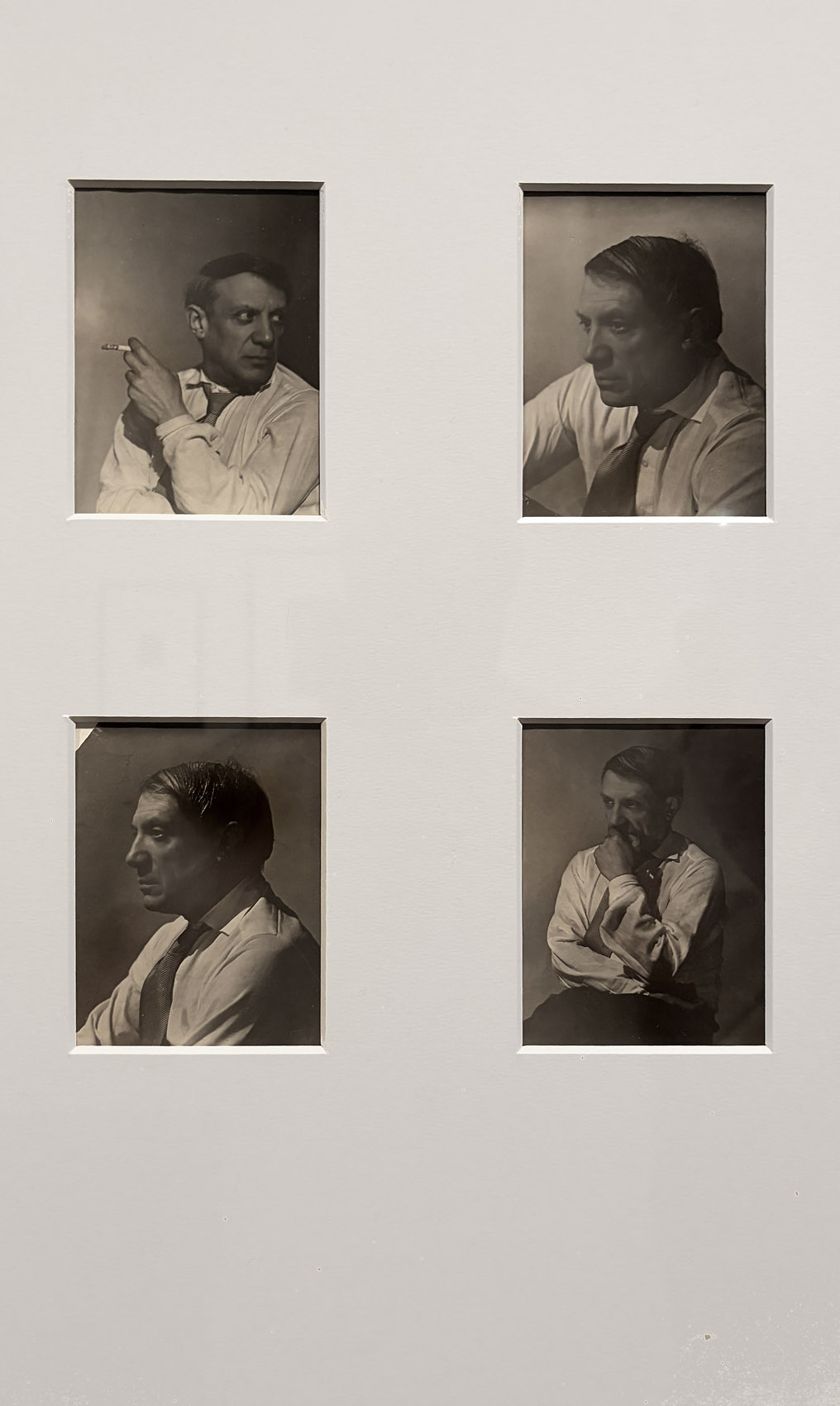
Paris in the interwar period was a hotbed for artistic exchange. Between 1935 and 1936, Dora Maar photographed her then partner Pablo Picasso in her Paris studio. She also created collaborative images with fellow Surrealists such as Léonor Fini, Jacqueline Lamba and André Breton. Lee Miller, also working in Paris during this period, photographed her lover and artistic partner Man Ray. Miller, in turn, was the subject of many of Man Ray’s own works.

In Mexico, Kati Horna frequently photographed her close friend, British-born painter and writer Leonora Carrington. Lola Álvarez Bravo’s image of the Spanish Surrealist artist Remedios Varo is another example of the playful and experimental collaborations between artists at the time. Such photographs demonstrate the mutual influence between women artists.
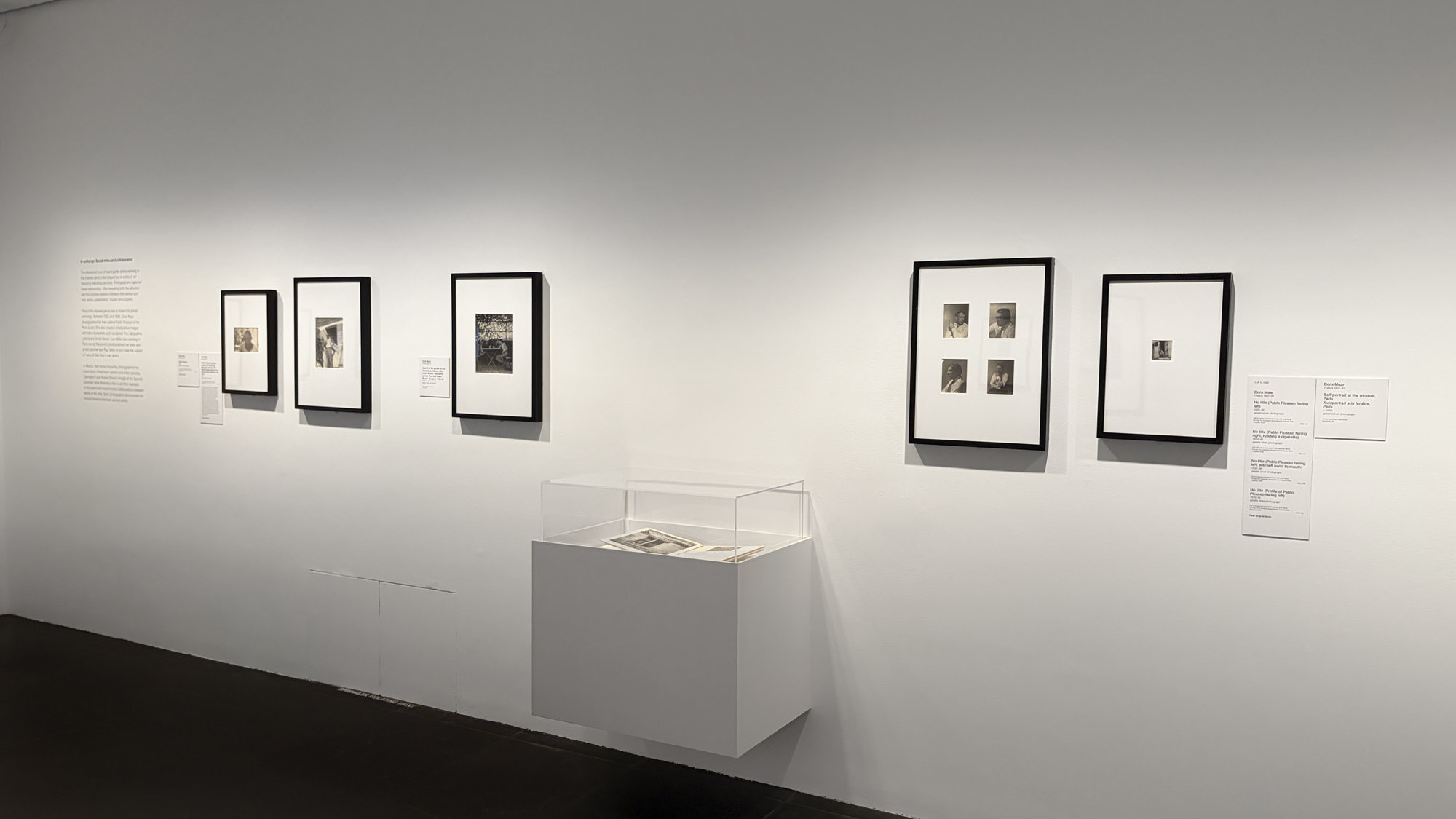
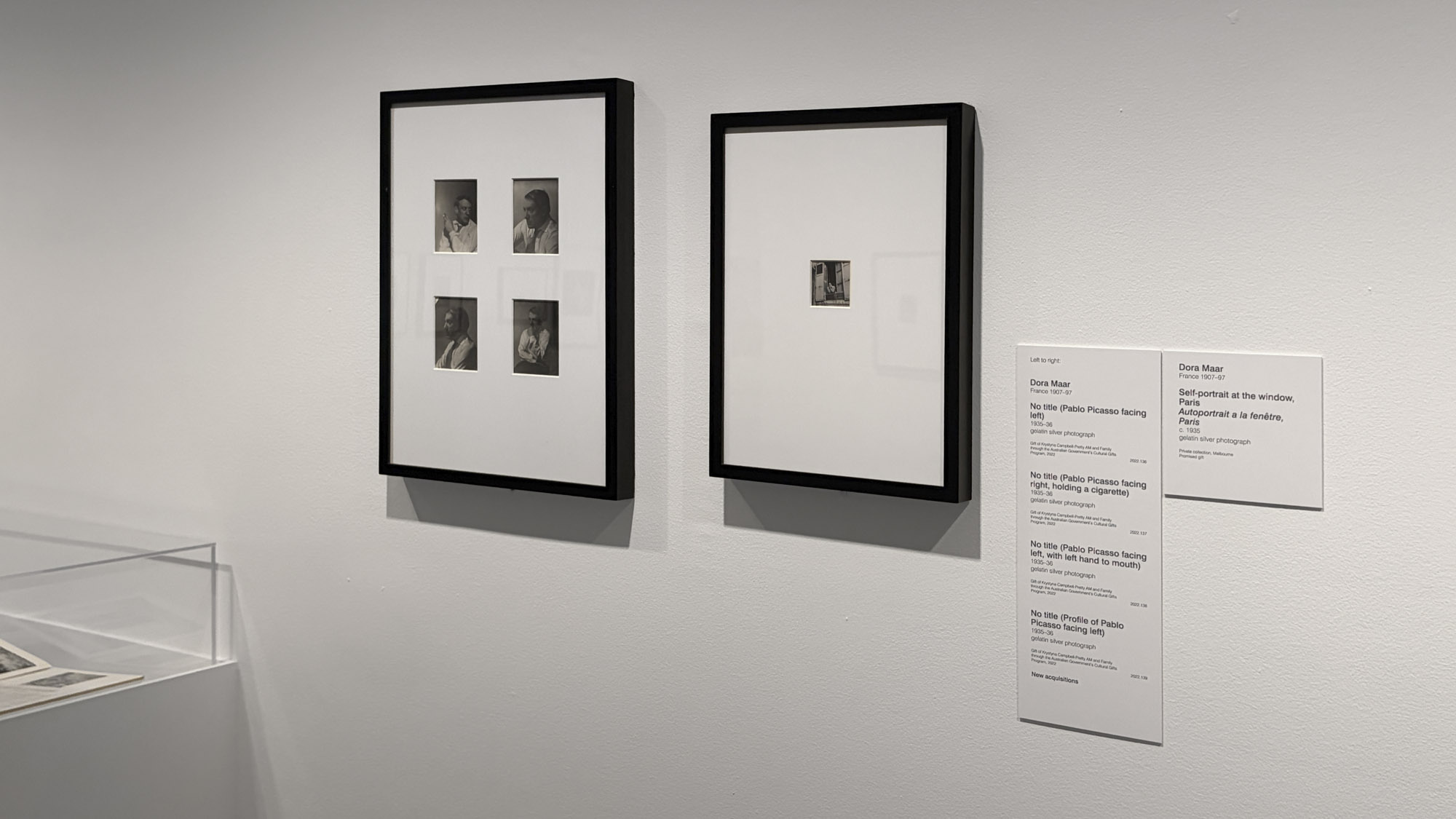
 

Installation view of the exhibition Women Photographers 1900-1975: A Legacy of Light at NGV International, Melbourne, November 2025 – May 2026 showing photographs by Dora Maar including at second right, photographs of Picasso (1935-1936) and at right, 'Self-portrait at the window' (c. 1935)


Installation view of the exhibition Women Photographers 1900-1975: A Legacy of Light at NGV International, Melbourne, November 2025 – May 2026 showing photographs by Dora Maar including at second right, photographs of Picasso (1935-1936, below) and at right, Self-portrait at the window (c. 1935, below)
Photos: Marcus Bunyan
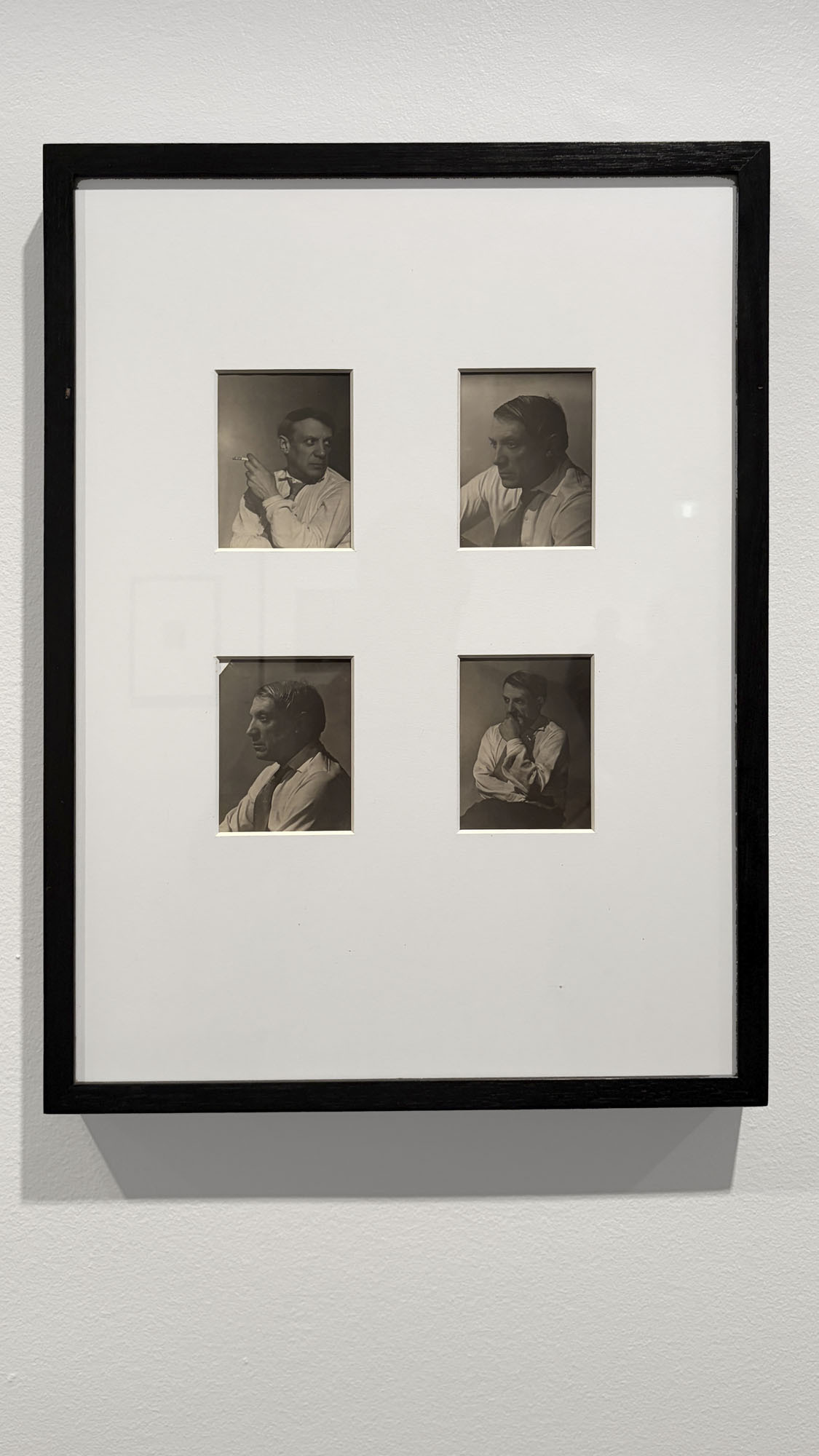
 

Installation view of the exhibition Women Photographers 1900-1975: A Legacy of Light at NGV International, Melbourne, November 2025 – May 2026 showing photographs by Dora Maar of Picasso (1935-1936)


(clockwise from bottom left)

Dora Maar (French, 1907-1997)
No title (Pablo Picasso facing left)
No title (Pablo Picasso facing right, holding a cigarette)
No title (Profile of Pablo Picasso facing left)
No title (Pablo Picasso facing left, with left hand to mouth) (installation view)
1935-1936
Gelatin silver photographs
National Gallery of Victoria, Melbourne
Gift of Krystyna Campbell-Pretty AM and Family through the Australian Government’s Cultural Gifts Program, 2022
Photos: Marcus Bunyan
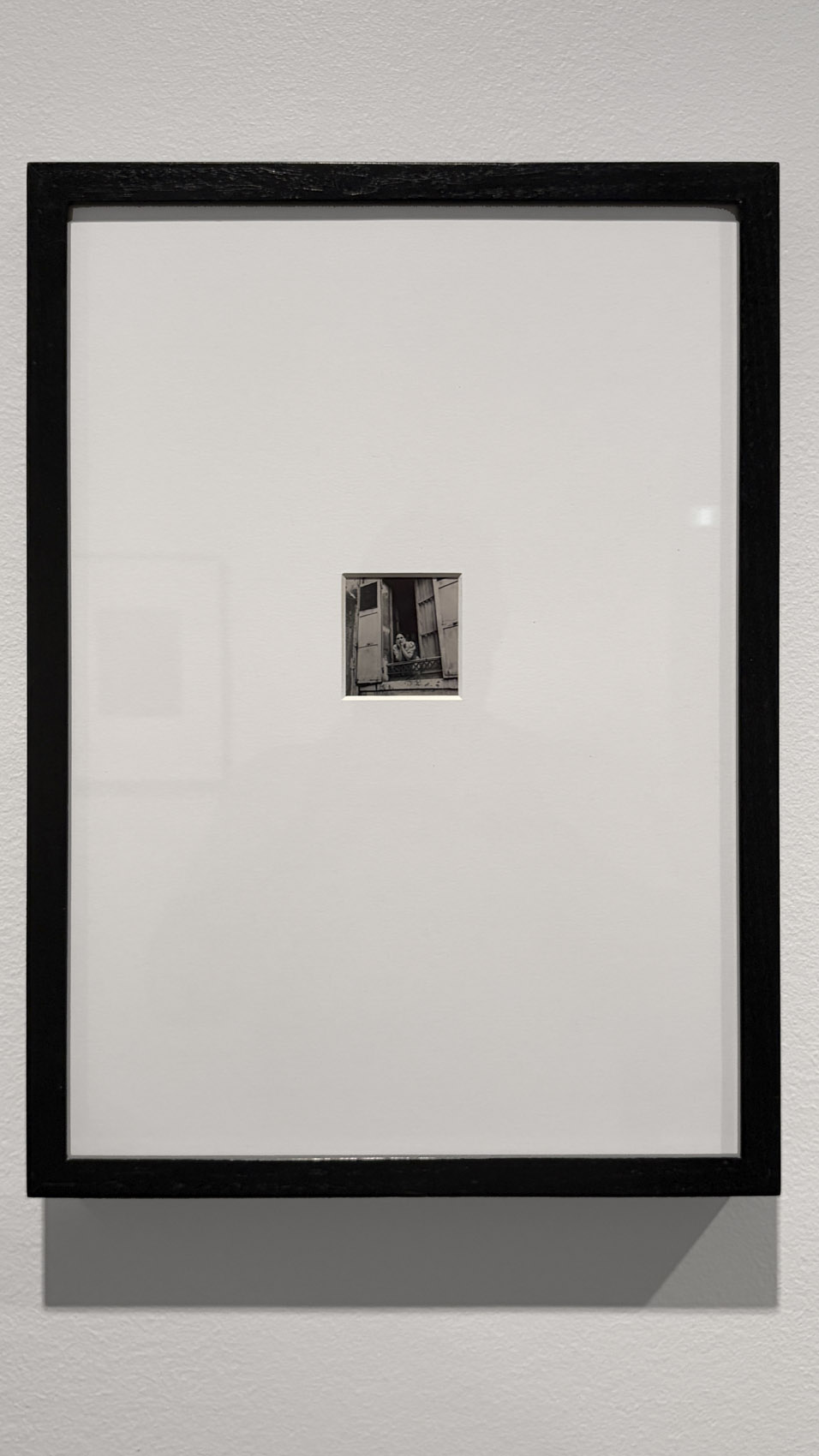
 

Dora Maar (French, 1907-1997) 'Self-portrait at the window' c. 1935 (installation view)


Dora Maar (French, 1907-1997)
Self-portrait at the window (installation view)
c. 1935
Gelatin silver print
Private collection, Melbourne
Promised gift
Photo: Marcus Bunyan
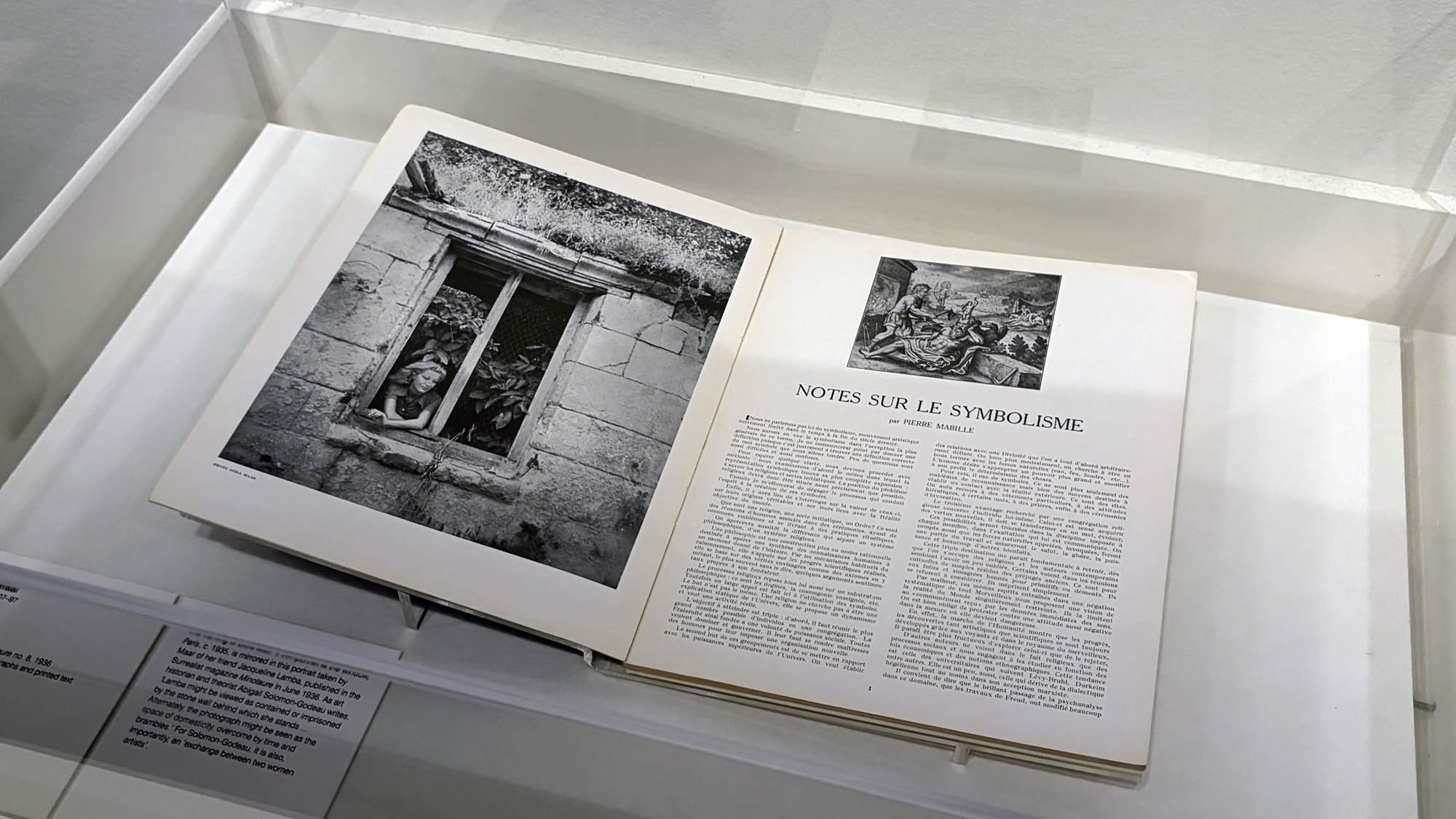
 

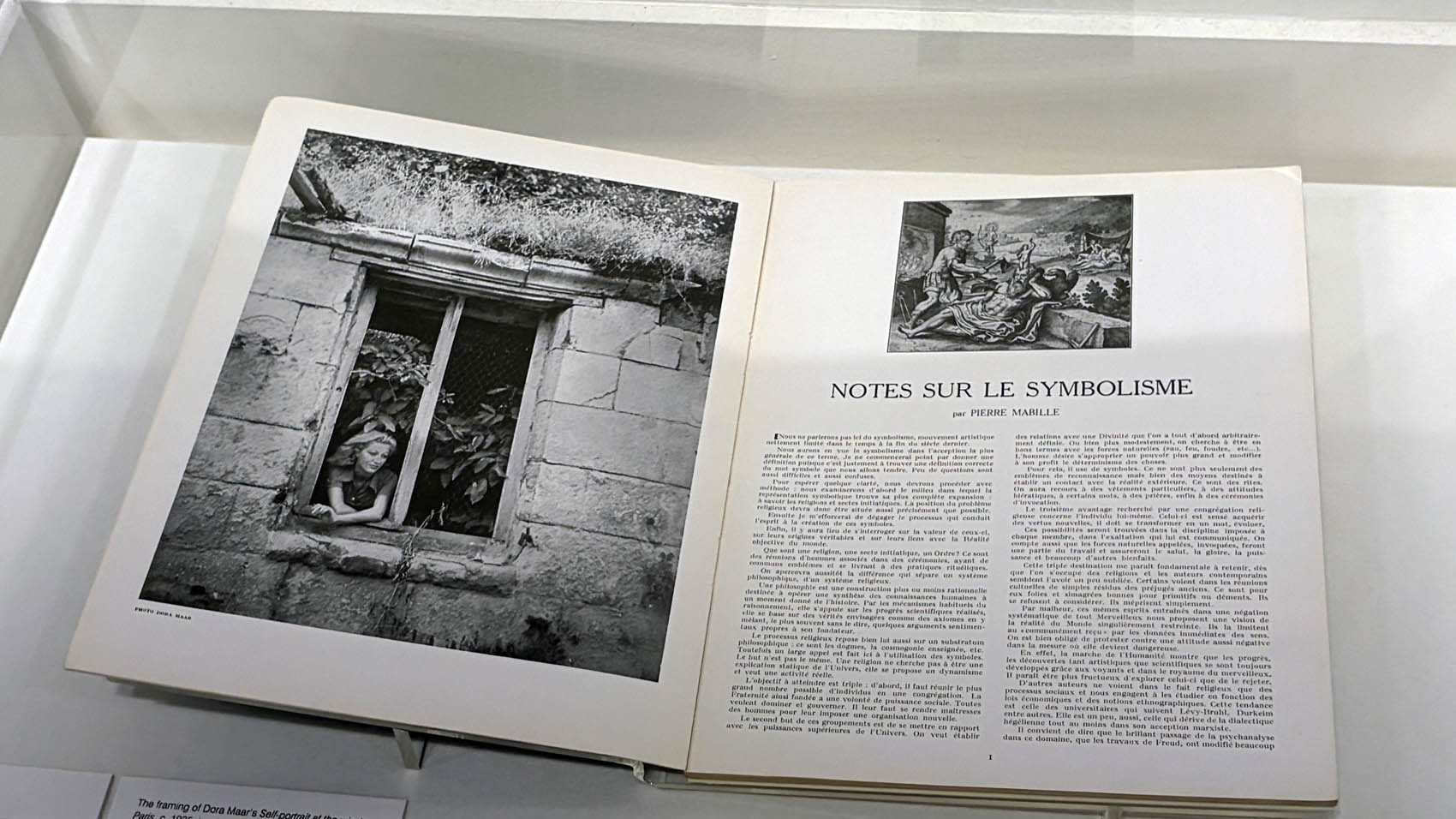
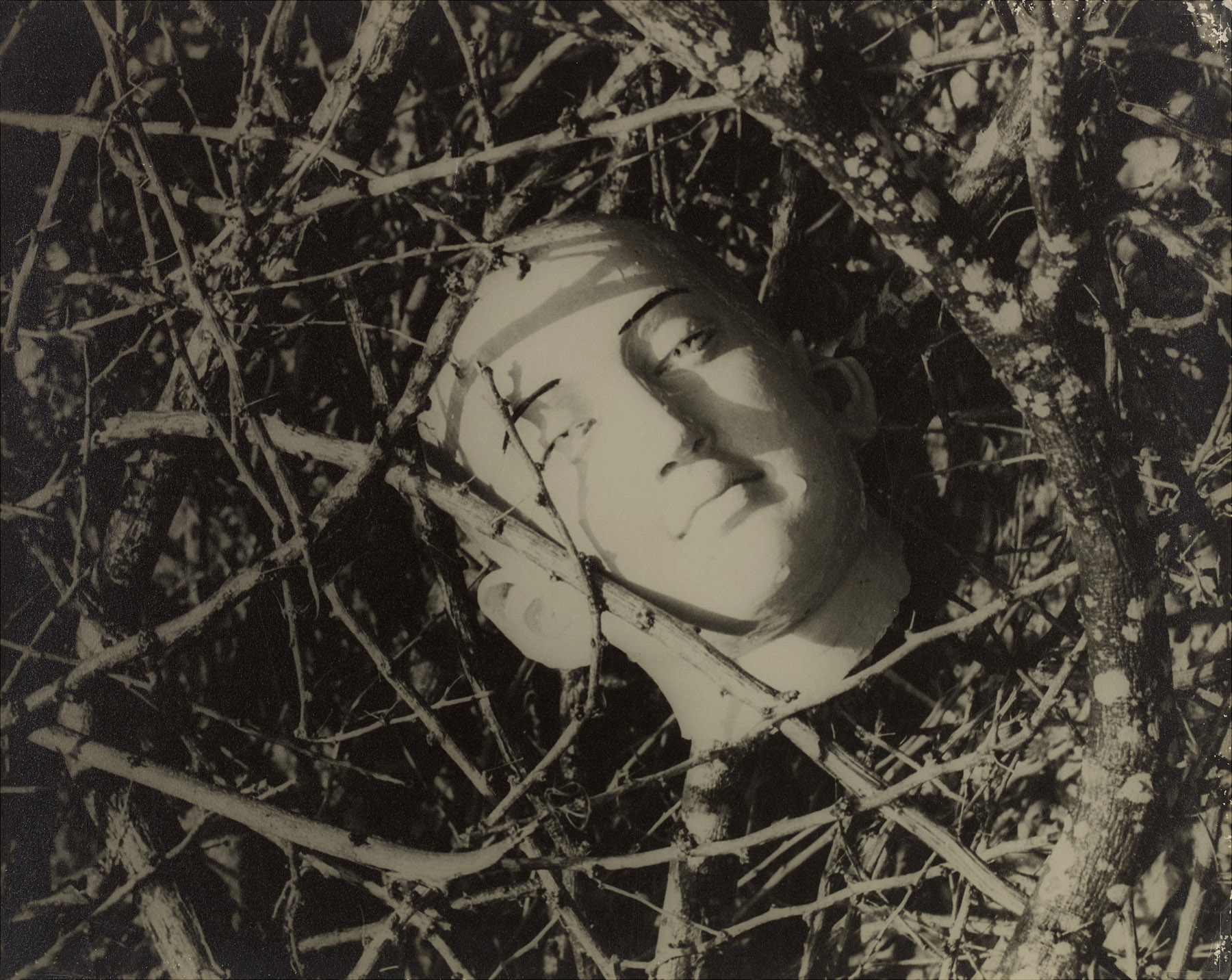
Dora Maar (French, 1907-1997) 'Dawn' 1935 Reproduced in 'Minotaure' No. 8, 1936 (installation view)


Dora Maar (French, 1907-1997)
Dawn (installation view)
1935
Reproduced in Minotaure No. 8, 1936
Magazine: offset lithographs and printed text
Shaw Research Library
Photos: Marcus Bunyan


The framing of Dora Maar’s Self-portrait at the window, Paris, c. 1935, is mired in this portrait taken by Maar of her friend Jacqueline Lamba, published in the Surrealist magazine Minotaure in June 1936. As art historian and theorist

Abigail Solomon-Godeau writes, ‘Lambda might be viewed as contained or imprisoned by the stone wall behind which she stands … Alternately, the photograph might be seen as the space of domesticity, overcome by time and brambles’. For Solomon-Godeau, it is also, importantly, an ‘exchange between two women artists’.

Vitrine text from the exhibition
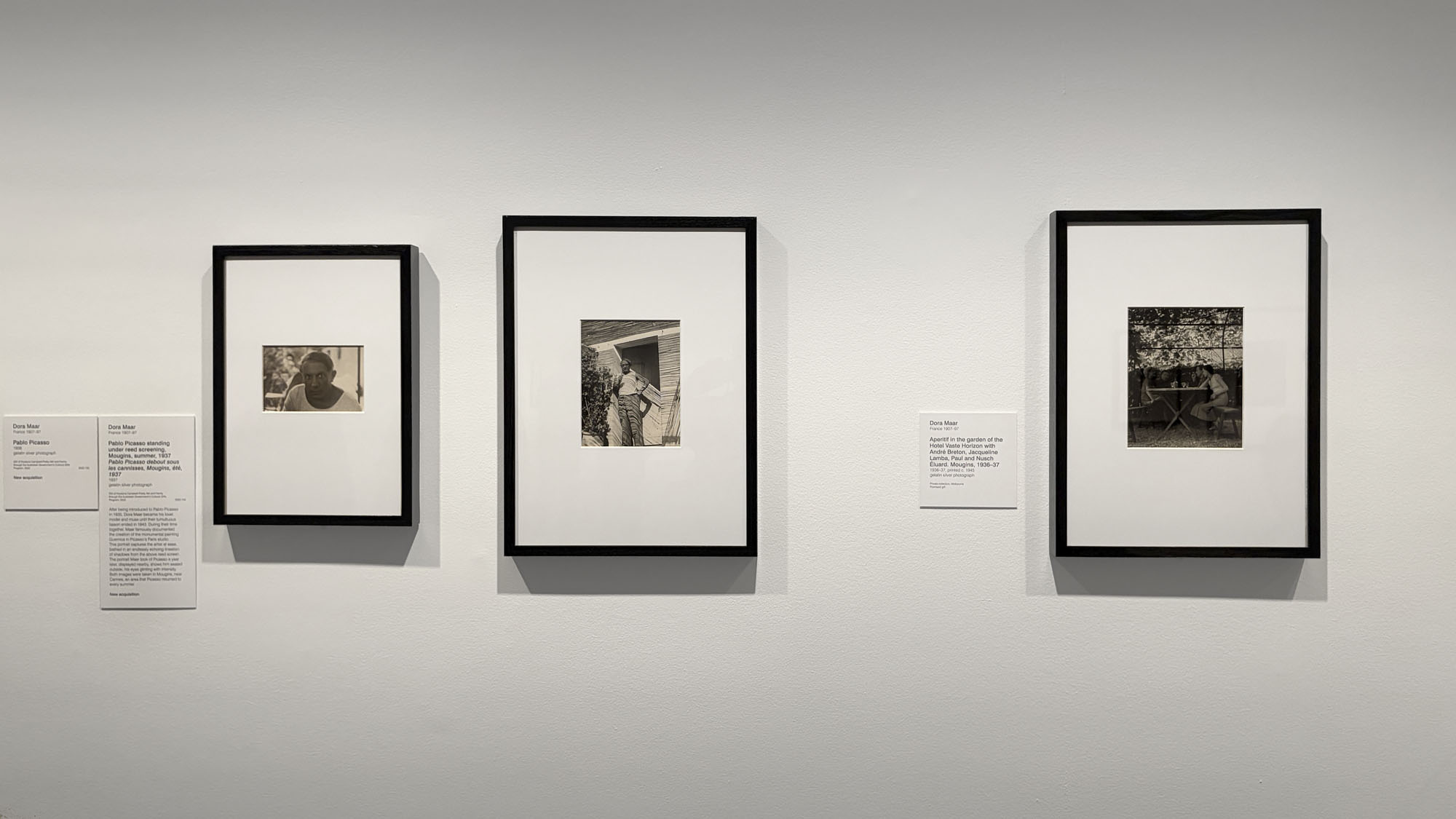
 

Installation view of the exhibition 'Women Photographers 1900-1975: A Legacy of Light' at NGV International, Melbourne, November 2025 – May 2026 showing from left to right, Dora Maar's 'Pablo Picasso' (1938); 'Pablo Picasso standing under reed screening. Mougins, summer, 1937' (1937) and 'Aperitif in the garden of the Hotel Vaste Horizon with Andre Breton, Jacqueline lamb, Paul and Nusch Eluard. Mougins, 1936-1937' (1936-1937)


Installation view of the exhibition Women Photographers 1900-1975: A Legacy of Light at NGV International, Melbourne, November 2025 – May 2026 showing from left to right, Dora Maar’s Pablo Picasso (1938, below); Pablo Picasso standing under reed screening. Mougins, summer, 1937 (1937, top of posting) and Aperitif in the garden of the Hotel Vaste Horizon with Andre Breton, Jacqueline lamb, Paul and Nusch Eluard. Mougins, 1936-1937 (1936-1937)
Photo: Marcus Bunyan
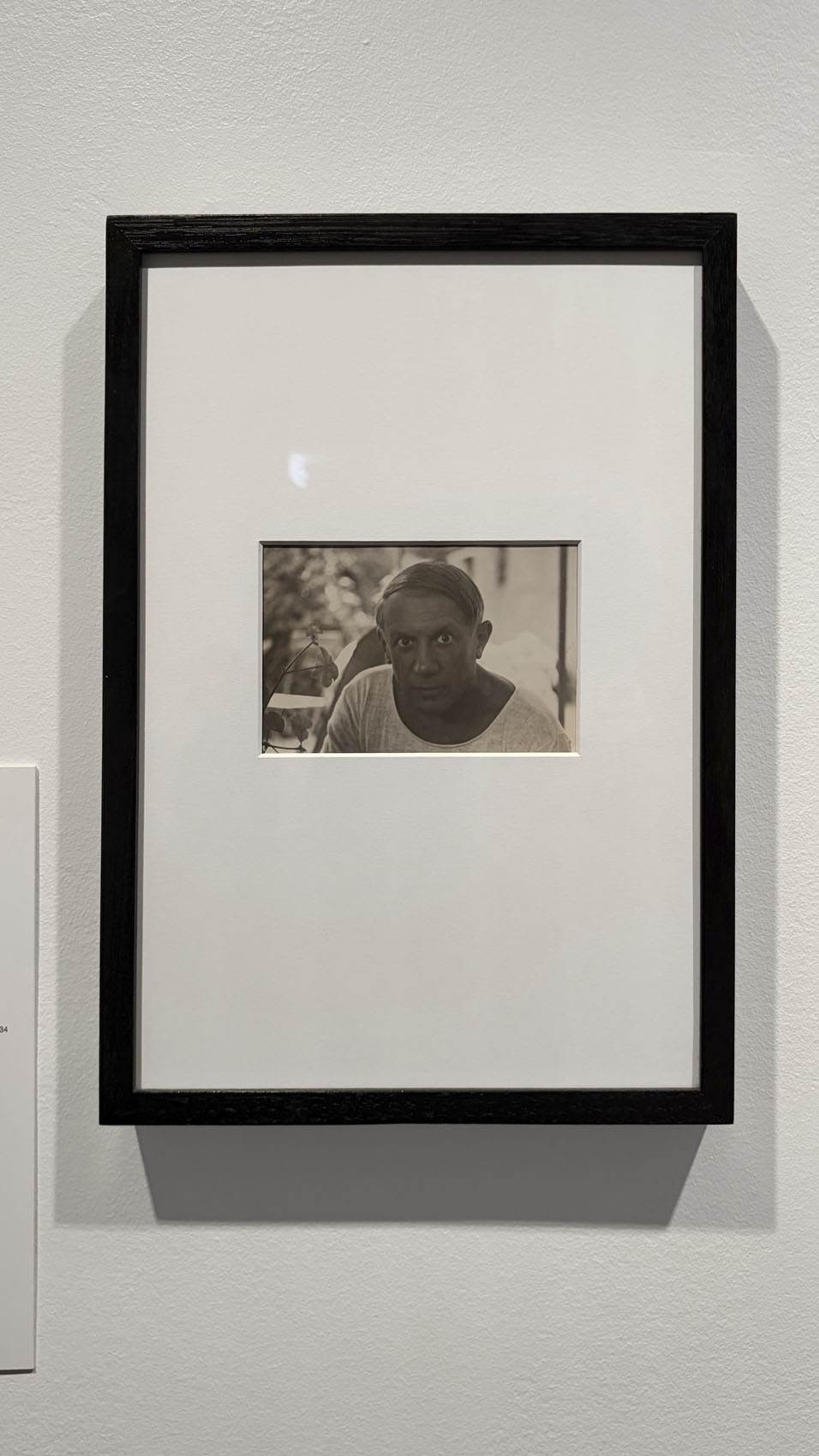
 

Dora Maar (French, 1907-1997) 'Pablo Picasso' 1938 (installation view)


Dora Maar (French, 1907-1997)
Pablo Picasso (installation view)
1938
Gelatin silver print
11.9 x 17.9cm (image and sheet)
National Gallery of Victoria, Melbourne
Gift of Krystyna Campbell-Pretty AM and Family through the Australian Government’s Cultural Gifts Program, 2022
Photo: Marcus Bunyan
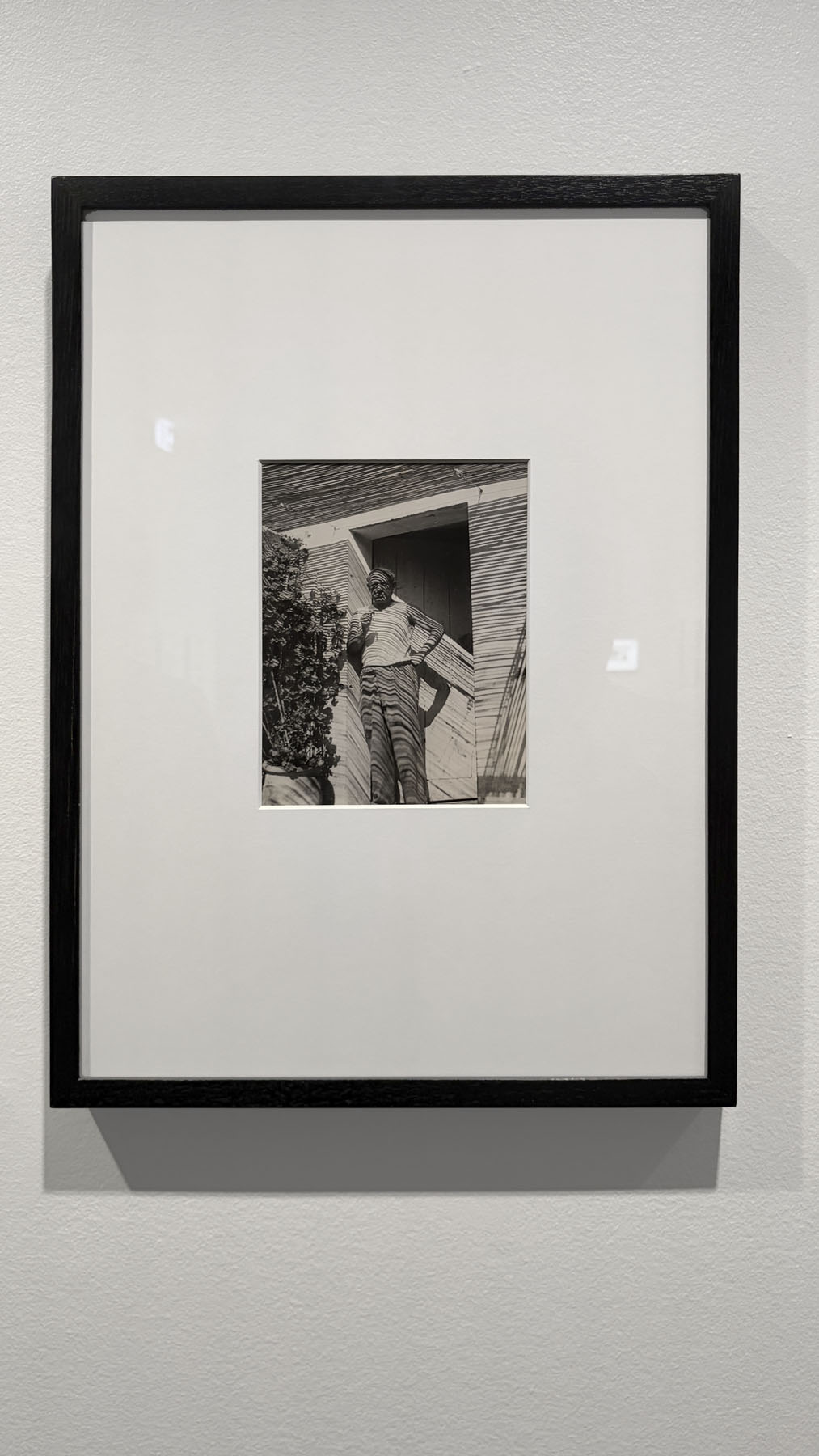
 

Dora Maar (French 1907-1997) 'Pablo Picasso standing under reed screening, Mougins, summer, 1937' (Pablo Picasso debout sous les cannisses, Mougins, été, 1937) 1937 (installation view)


Dora Maar (French, 1907-1997)
Pablo Picasso standing under reed screening, Mougins, summer, 1937 (Pablo Picasso debout sous les cannisses, Mougins, été, 1937) (installation view)
1937
22.0 x 17.2cm (image)
23.1 x 18.2cm (sheet)
National Gallery of Victoria, Melbourne
Gift of Krystyna Campbell-Pretty AM and Family through the Australian Government’s Cultural Gifts Program, 2022
Photo: Marcus Bunyan
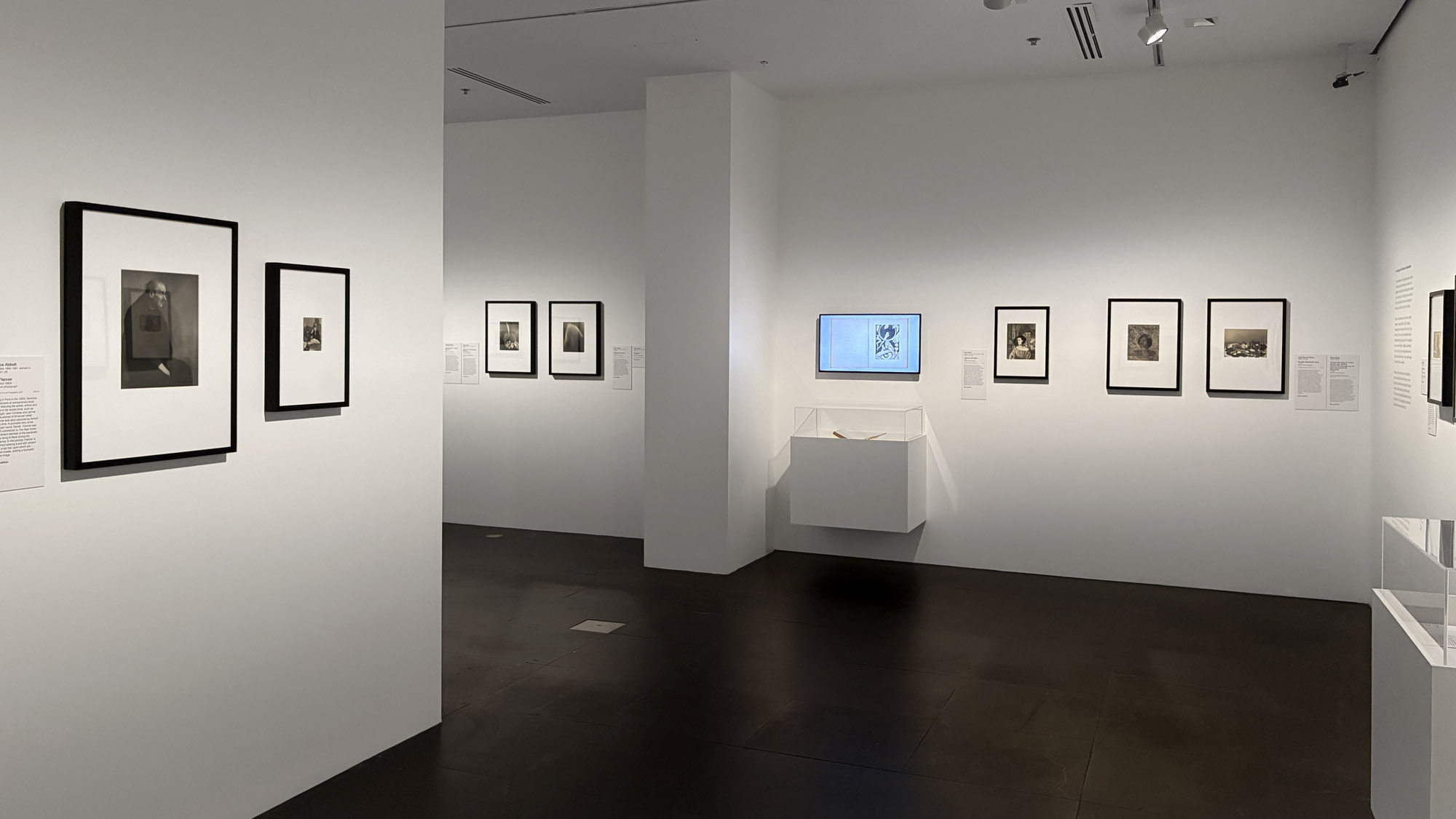
 

Installation view of the exhibition 'Women Photographers 1900-1975: A Legacy of Light' at NGV International, Melbourne, November 2025 – May 2026 showing at left, Berenice Abbott 'Eugène Atget' 1927


Installation view of the exhibition Women Photographers 1900-1975: A Legacy of Light at NGV International, Melbourne, November 2025 – May 2026 showing at left, Berenice Abbott Eugène Atget (1927, printed c. 1970-1978)
Photo: Marcus Bunyan


Berenice Abbott (American, 1898-1991) 'Janet Flanner' 1927


Berenice Abbott (American, 1898-1991)
Janet Flanner
1927
Gelatin silver photograph
Bowness Family Fund for Photography, 2024


While living in Paris in the 1920s, Berenice Abbott produced an extraordinary body of images featuring the artists, writers and performers in her social circle, such as Eugène Atget, Jean Cocteau and James Joyce. This portrait of American
writer Janet Flanner was also captured by Abbott during this time. A journalist who wrote under the pen name ‘Genêt’, Flanner was a long-term contributor to The New Yorker and a prominent member of the expatriate community living in Paris during the interwar period. In this portrait, Flanner is photographed wearing a suit with striped pants and a top hat, upon which are stacked two masks, adding a Surrealist edge to the image.

Wall text from the exhibition
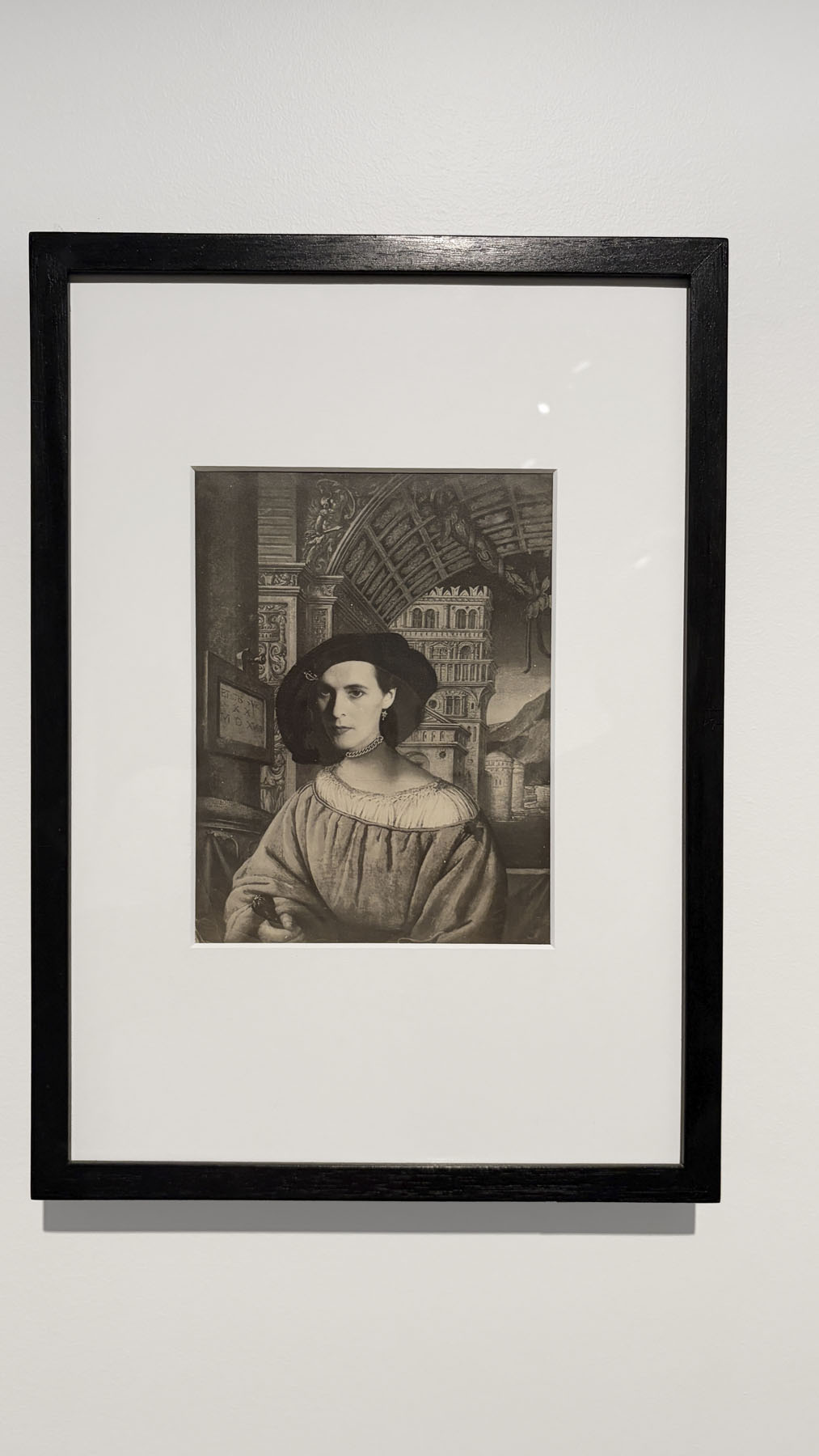
 

Kati Horna (Mexican born Hungary, 1912-2000) 'Leonora Carrington' 1957 (installation view)


Kati Horna (Mexican born Hungary, 1912-2000)
Leonora Carrington (installation view)
1957
Gelatin silver photograph
24.2 x 18.2cm (image)
25.3 x 20.2cm (sheet)
National Gallery of Victoria, Melbourne
Bowness Family Fund for Photography, 2024
Photo: Marcus Bunyan


Born to a Jewish family in Hungary, Kati Horna was forced to leave Europe following the rise of Nazism. She belonged to the circle of Surrealist expatriate artists in Mexico producing experimental images. In this photocollage, Horna has superimposed an image of British-born painter and writer Leonora Carrington – a close friend of hers – onto a reproduction of Hans Holbein the Younger’s 1518 painting Portrait of an unknown young man. Created on the occasion of Carrington’s birthday, the humorous merging of the photograph with the painted reproduction, coupled with the clash of genders and time periods, gives the scene a Surrealist tone.

Wall text from the exhibition
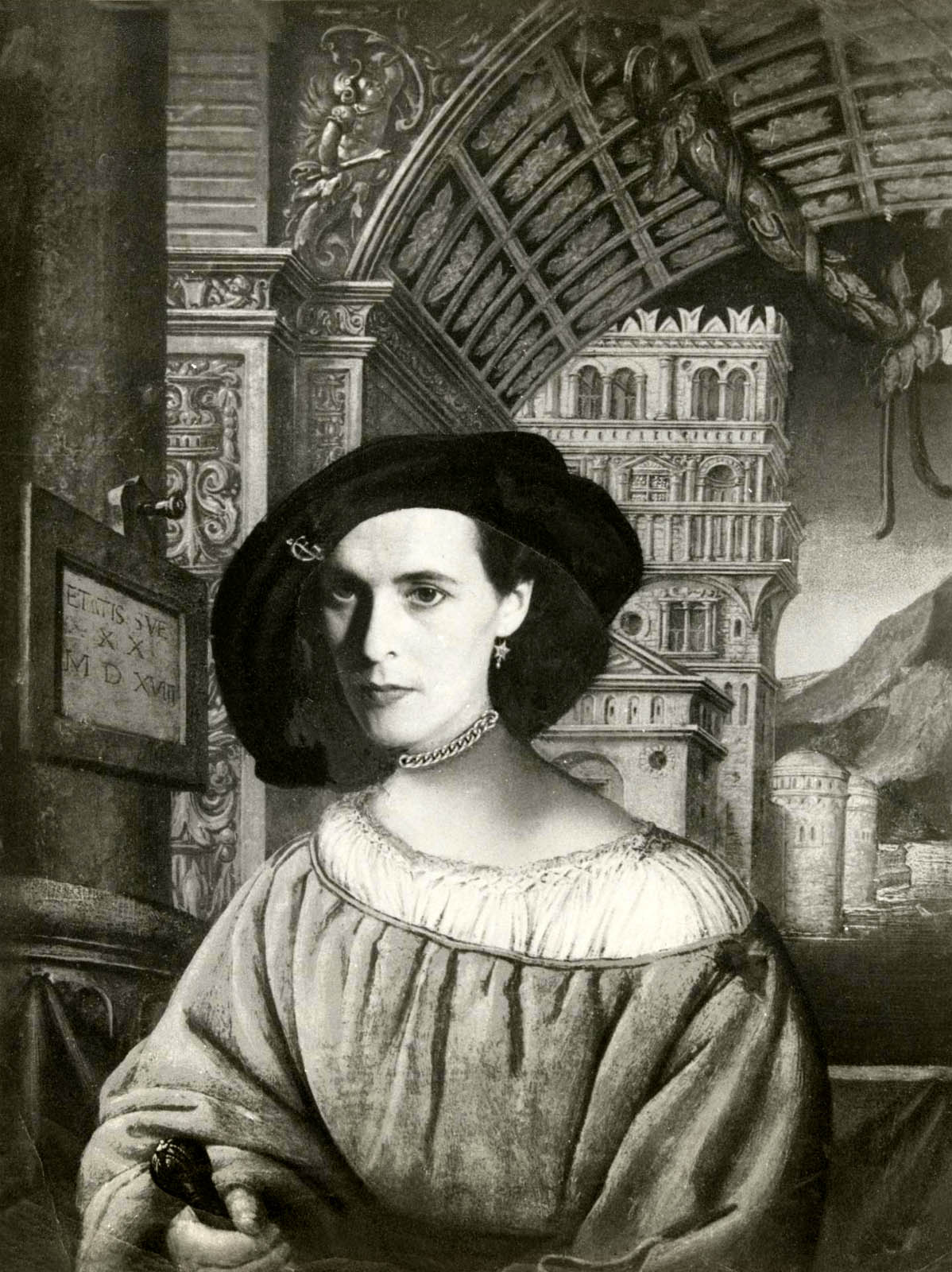
 

Kati Horna (Mexican born Hungary, 1912-2000) 'Leonora Carrington' 1957


Kati Horna (Mexican born Hungary, 1912-2000)
Leonora Carrington
1957
Gelatin silver photograph
24.2 x 18.2cm (image)
25.3 x 20.2cm (sheet)
National Gallery of Victoria, Melbourne
Bowness Family Fund for Photography, 2024
© Kati Horna, courtesy Michael Hoppen Gallery
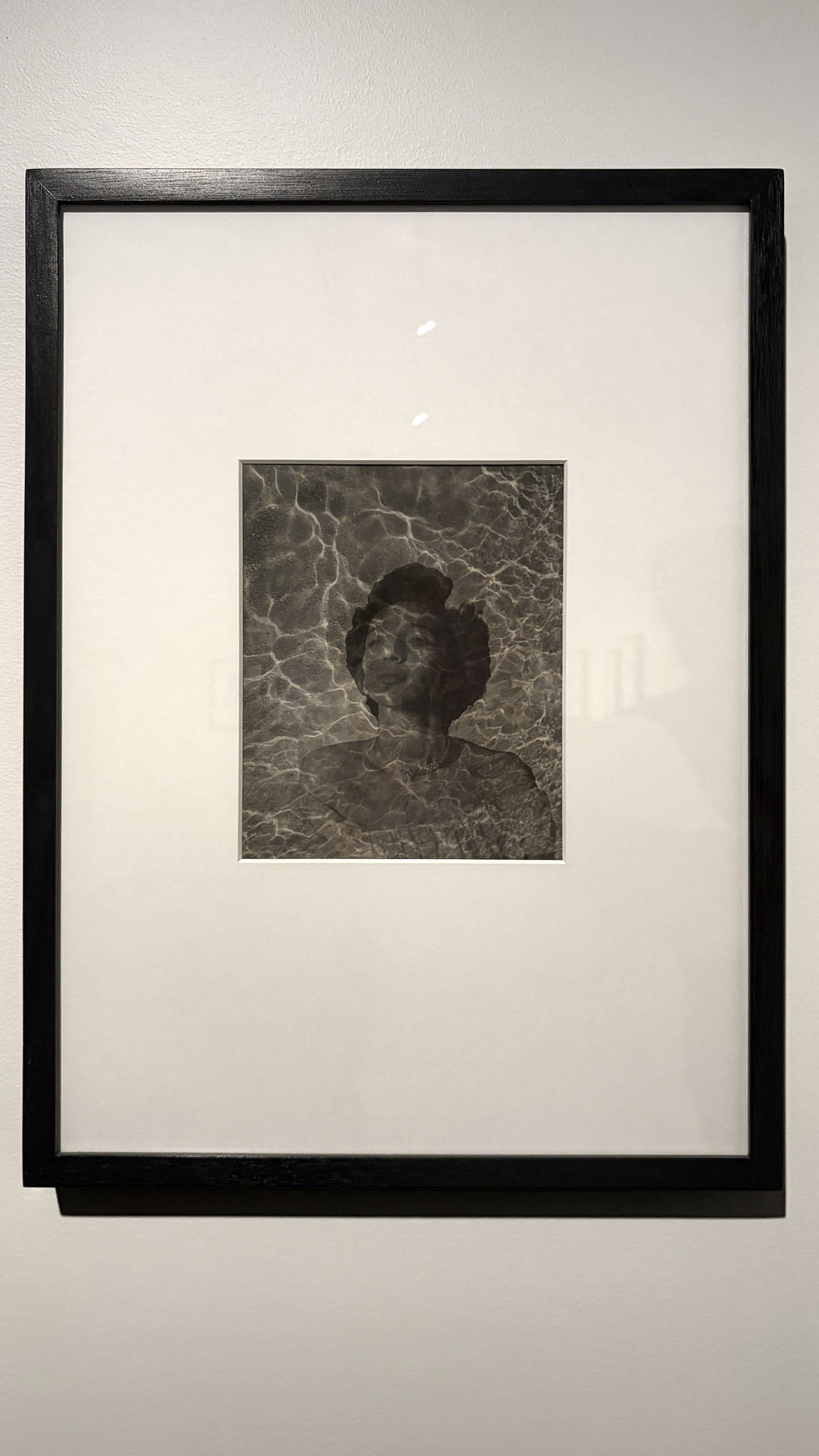
 

Lola Álvarez Bravo (Mexican, 1903-1993) 'No title (Remedios Varo)' c. 1950 (installation view)


Lola Álvarez Bravo (Mexican, 1903-1993)
No title (Remedios Varo) (installation view)
c. 1950
Gelatin silver photograph
23.4 x 18.9cm (image and sheet)
National Gallery of Victoria, Melbourne
Bowness Family Fund for Photography, 2024
Photo: Marcus Bunyan


Lola Álvarez Bravo was one of the first artists to produce photomontages in Mexico. At the forefront of artistic experimentation, Álvarez Bravo created this image by layering multiple negatives. The subject is believed to be Remedios Varo, a Spanish Surrealist artist who arrived in Mexico in 1941. Alongside Álvarez Bravo, Kati Horna and Leonora Carrington, Varo was part of a community of expatriate artists and intellectuals active in Mexico during the mid twentieth century. Drawing inspiration from the Surrealist movement, Álvarez Bravo overlaid the portrait with an image of rippling water, creating a tranquil scene in which the subject appears to be floating.

Wall text from the exhibition


Unlike in many other countries, in Mexico artists had opportunities to work as long as they did not threaten the locals’ career prospects. Thus, many Spanish-speaking immigrants started teaching in universities, raising a new generation of Mexican creatives and academics. Apart from their jobs, the majority of Europeans did not interact closely with the locals, preferring to keep the company of their fellow refugees. The reason was not the rejection of local customs but the shared experience of war, tragedy, and dramatic flight across ravaged Europe.

The house of the artist Remedios Varo was the central meeting point for the whole community. Anyone in need could find company, shelter, and money raised by all group members. Varo hosted dinners and parties. She also sent party invitations to random addresses taken from a phone book.

Anastasiia Kirpalov. “The Mexican Escape of European Surrealists During World War II,” on The Collector website Oct 15, 2024 [Online] Cited 17/04/026. Used under fair use conditions for the purposes of education and research
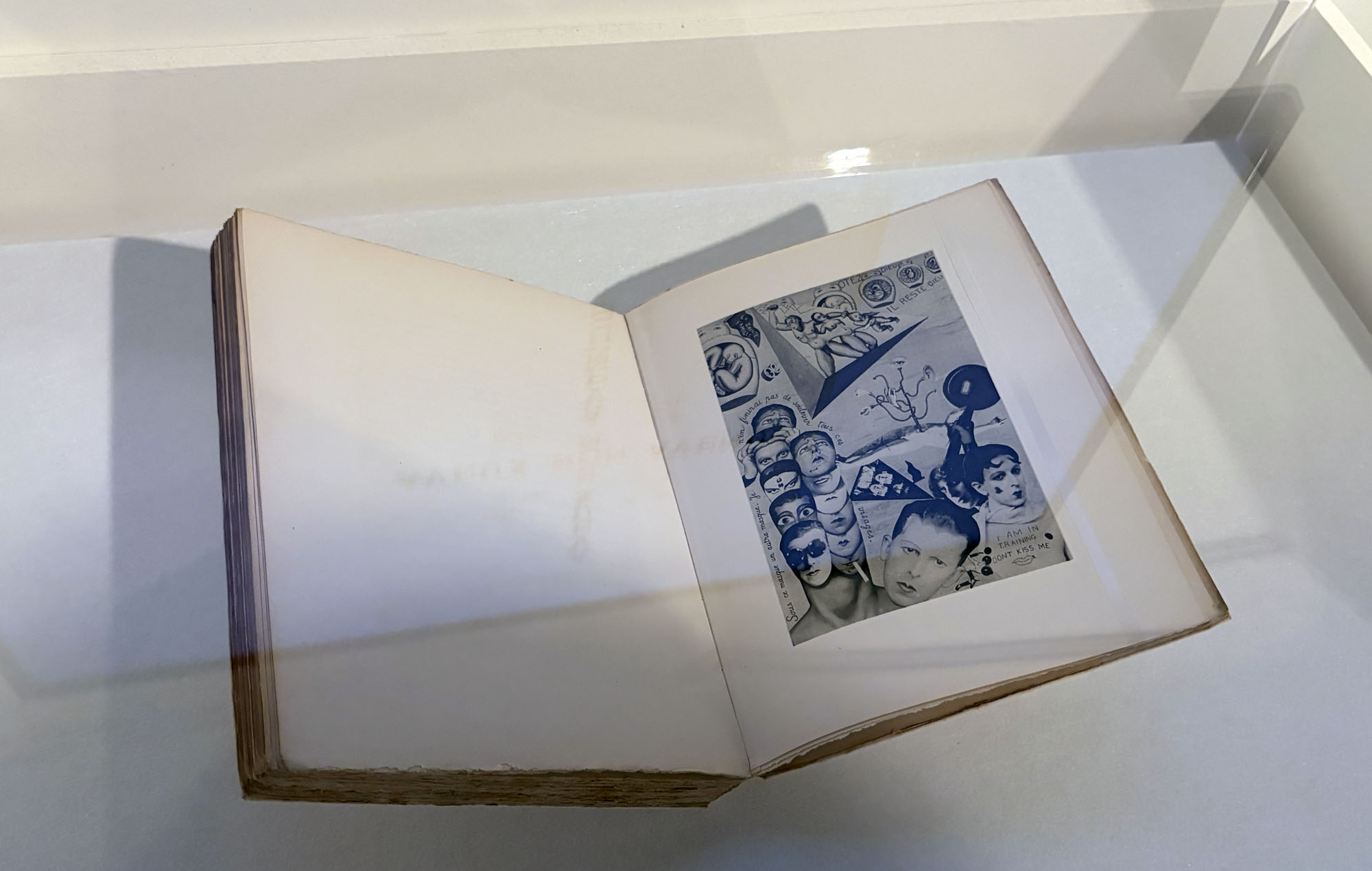
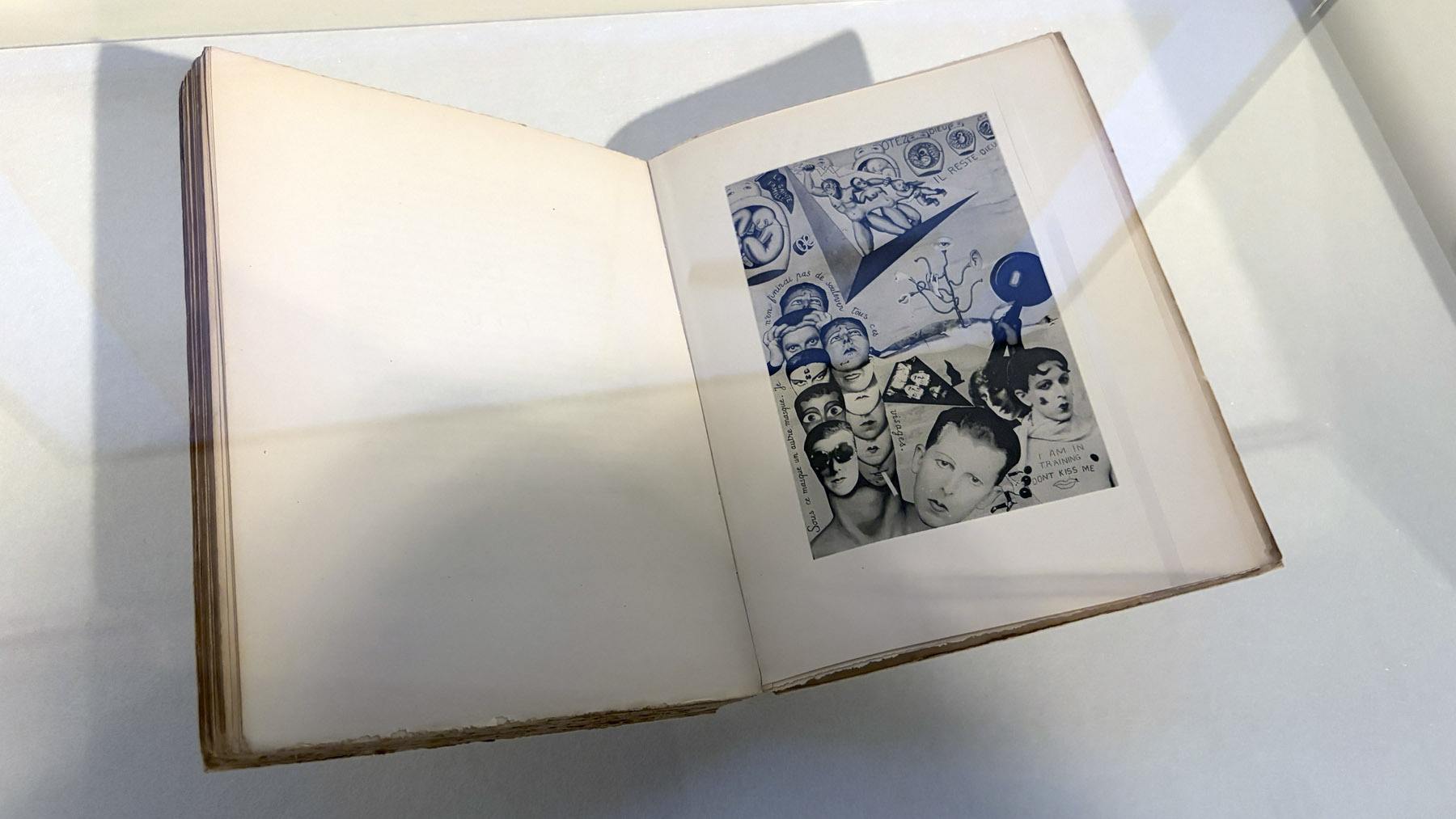
 

Claude Cahun (French, 1894-1854) and Marcel Moore (French, 1892-1872) 'Disavowals', or 'Cancelled Confessions' (Aveux non avenus) 1930 (installation view)


Claude Cahun (French, 1894-1854) and Marcel Moore (French, 1892-1872)
Disavowals, or Cancelled Confessions (Aveux non avenus) (installation views)
1930
Published by Éditions du Carrefour, Paris
Illustrated book: photogravure, letterpress text, 237 pages, 10 heliographs, paper cover, stitched binding
Shaw Research Library, acquired through the Friends of the Gallery library Endowment, 2017
Photos: Marcus Bunyan


Born Lucy Schwob, Claude Cahun was a celebrated French artist associated with the Surrealist movement. Aveux non avenus, loosely translated as Cancelled Confessions or Disavowals, is the second book Cajun created with her stepsister, lifelong partner and artistic collaborator, graphic artist Marcel Moore. This subversive semi-autobiographical work couples poems, recollections and aphorisms with dreamlike photomontages. The photomontages include many of Cahun’s performative self-portraits, images that challenge established notions of gender identity.

Vitrine text from the exhibition
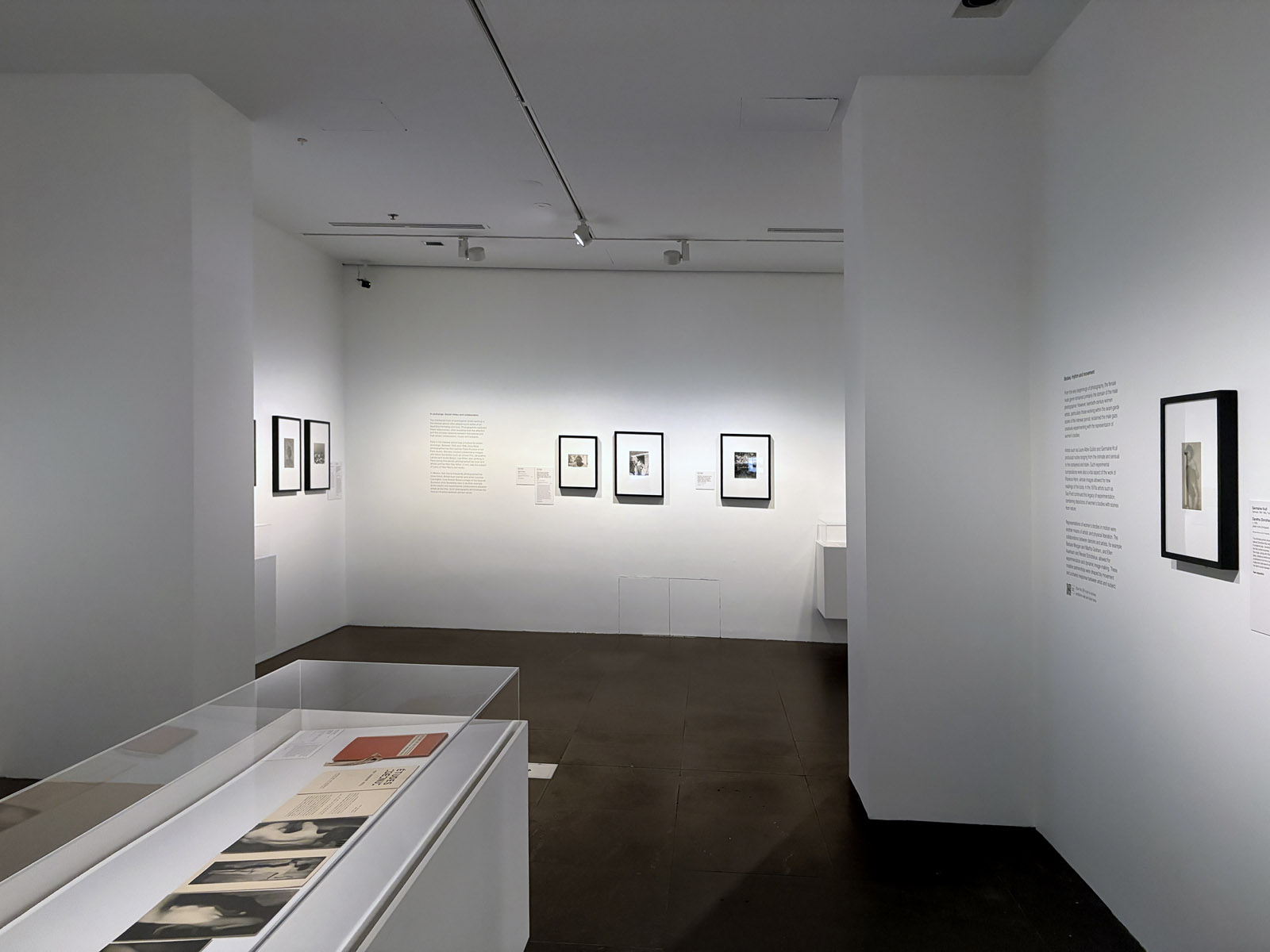
 

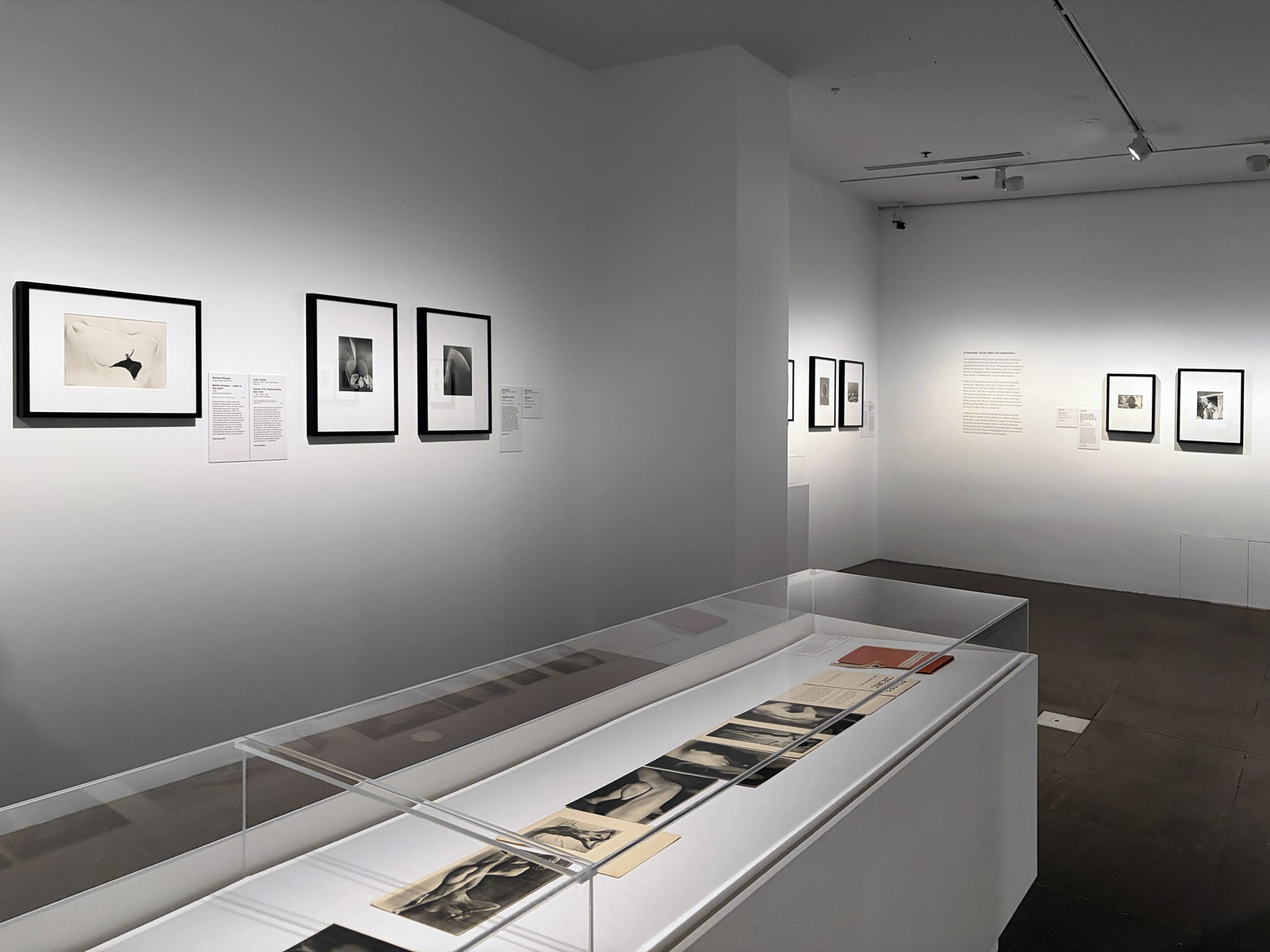
Installation view of the exhibition 'Women Photographers 1900-1975: A Legacy of Light at NGV' International, Melbourne, November 2025 – May 2026
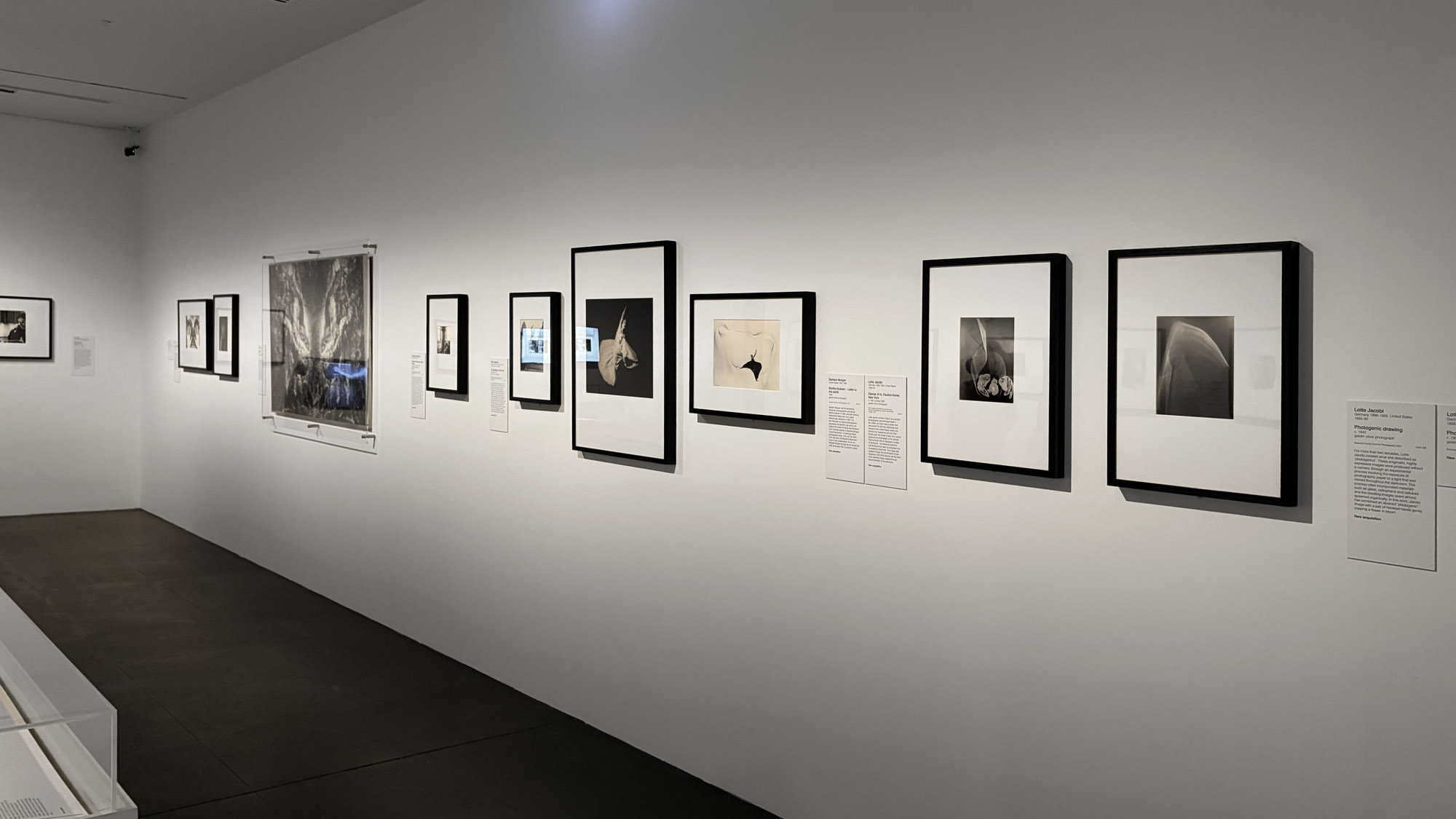
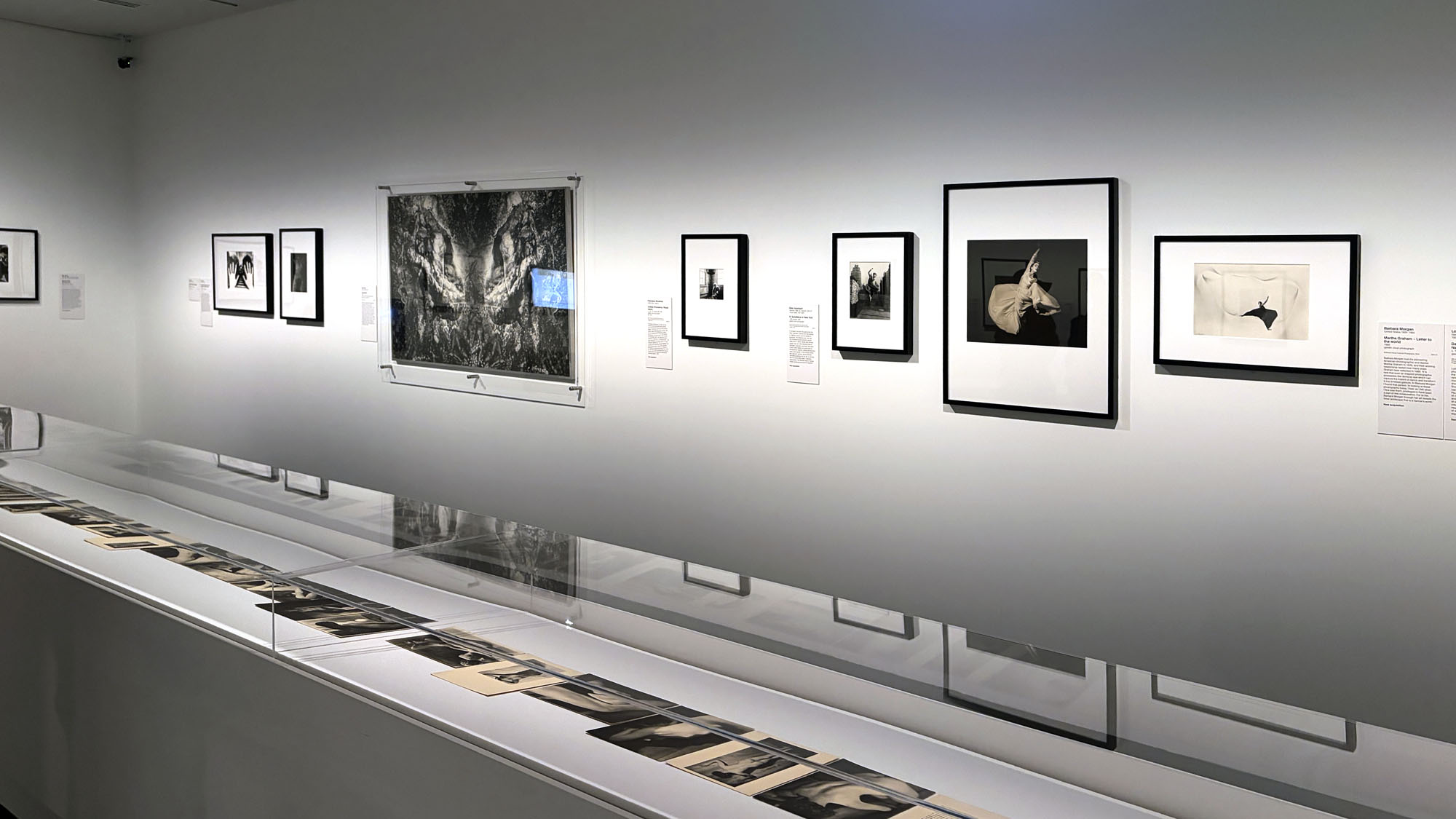
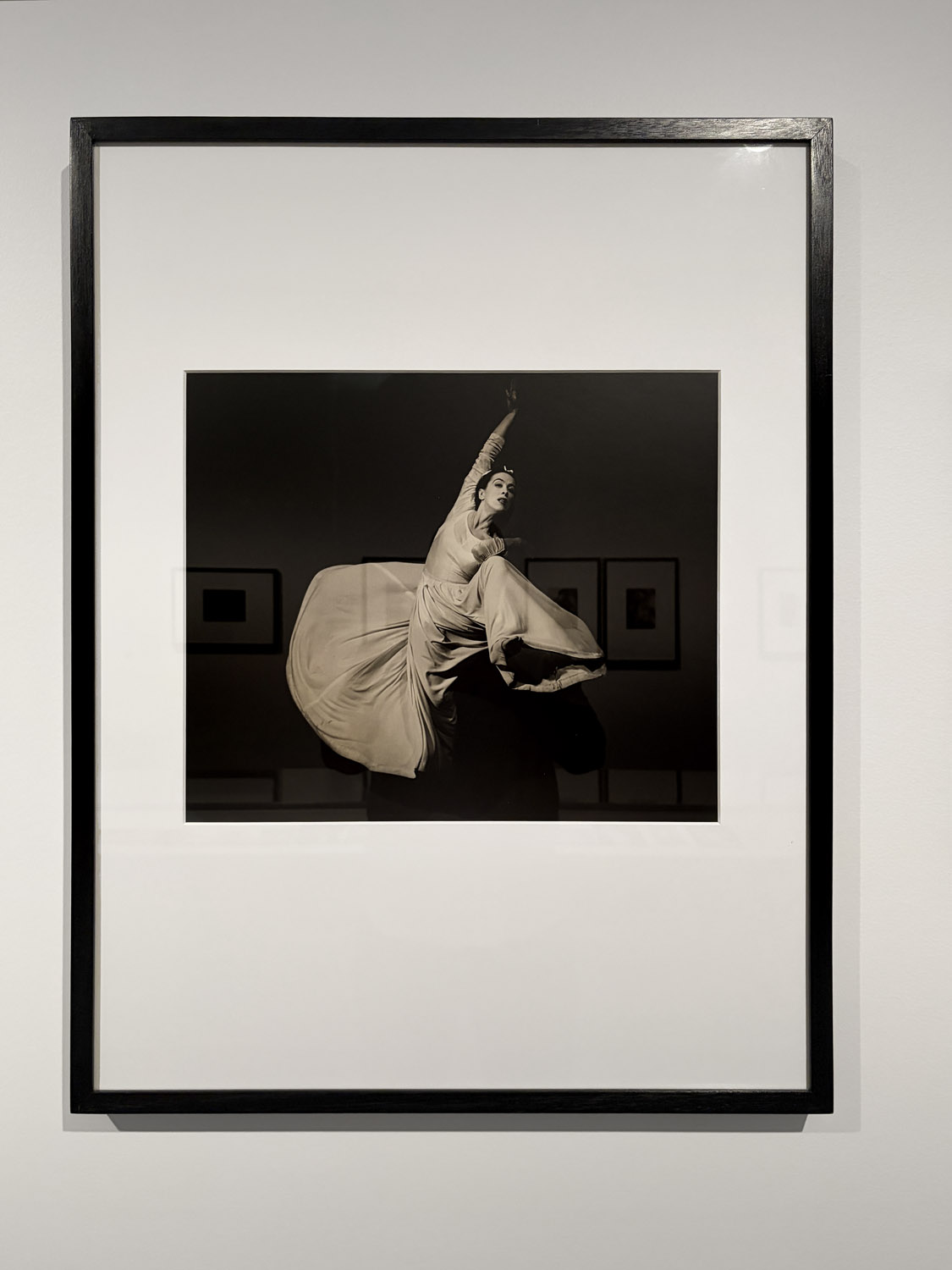
Installation view of the exhibition 'Women Photographers 1900-1975: A Legacy of Light at NGV' International, Melbourne, November 2025 – May 2026 showing from left to right in the bottom image, Francesca Woodman 'Untitled (Providence, Rhode Island)' (c. 1975-1978 printed after 1981); Ellen Auerbach R. 'Schottelius in New York' (1953 printed 1992); Barbara Morgan 'Martha Graham – Letter to the world' (1940); Lotti Jacobi 'Dancer #16, Pauline Koner, New York' (c. 1937, printed 1992); and two 'Photogenic drawing' (c. 1940 and c. 1950)


Installation views of the exhibition Women Photographers 1900-1975: A Legacy of Light at NGV International, Melbourne, November 2025 – May 2026 showing from left to right in the bottom image, Francesca Woodman Untitled (Providence, Rhode Island) (c. 1975-1978 printed after 1981, below); Ellen Auerbach R. Schottelius in New York (1953 printed 1992, below); Barbara Morgan Martha Graham – Letter to the world (1940, below); Lotti Jacobi Dancer #16, Pauline Koner, New York (c. 1937, printed 1992); and two Photogenic drawing (c. 1940 and c. 1950)
Photos: Marcus Bunyan


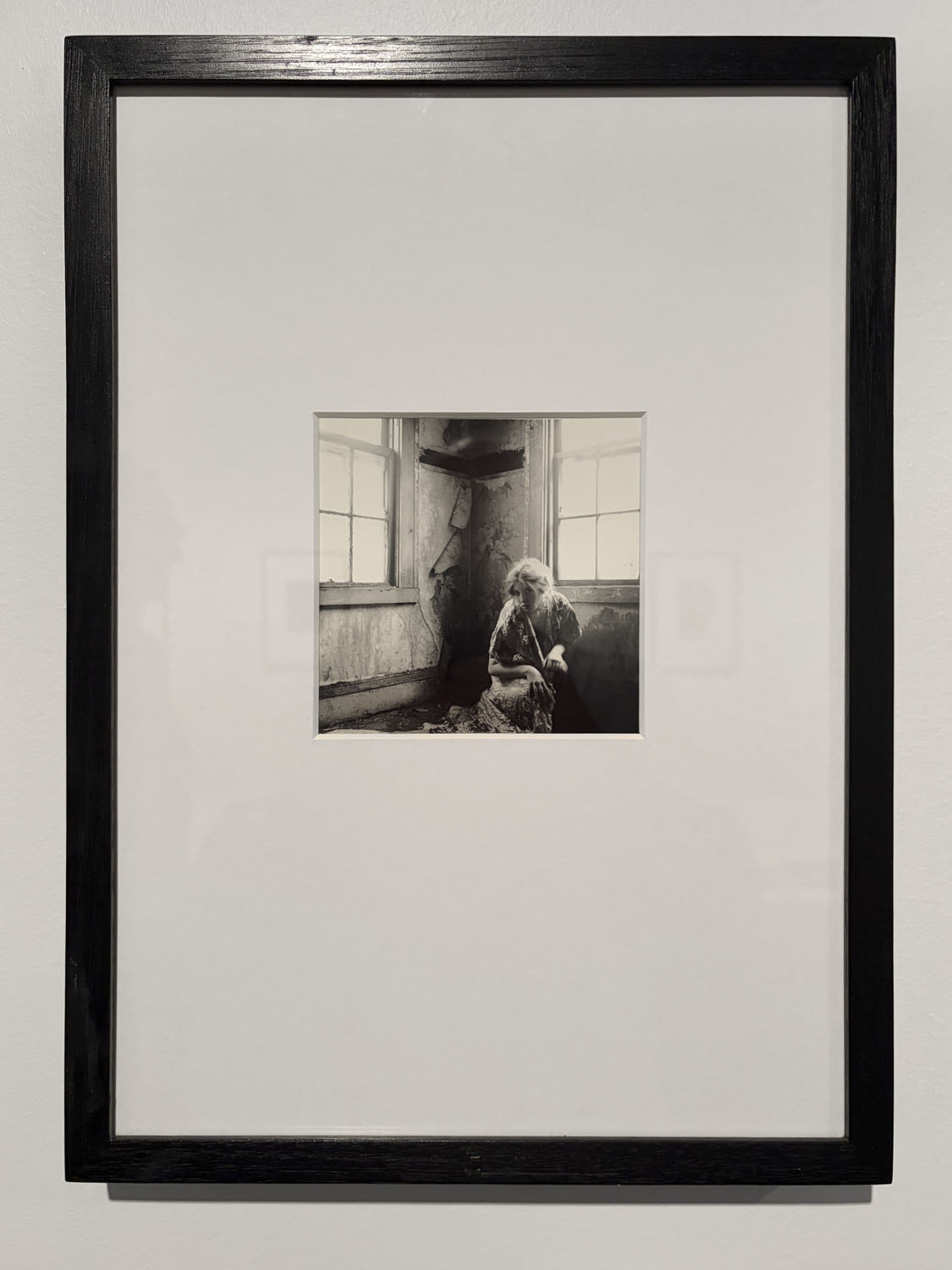
Francesca Woodman (American, 1958-1981) 'Untitled (Providence, Rhode Island)' (c. 1975-1978, printed after 1981) (installation view)


Francesca Woodman (American, 1958-1981)
Untitled (Providence, Rhode Island) (installation view)
c. 1975-1978, printed after 1981
Gelatin silver photograph
13.7 x 13.8cm (image)
25.3 x 20.3cm (sheet)
National Gallery of Victoria, Melbourne
Gift of Krystyna Campbell-Pretty AM and Family through the Australian Government’s Cultural Gifts Program, 2025
Photo: Marcus Bunyan


Francesca Woodman is known for her intimate black-and-white self-portraits and photographs featuring other women sitters. The bodies are often blurred, with faces hidden and appearing to blend into the background. In this self-portrait, Woodman crouches down in the corner of a decrepit room, her patterned gown somehow reflecting – or merging with – the floral wallpaper that peels down in rough remnants behind her. The photograph was created while Woodman was a student at the Rhode Island School of Design in Providence, where she studied from 1975 to 1978 and which produced the majority of her extant photographs following her untimely death in 1981.

Wall text from the exhibition


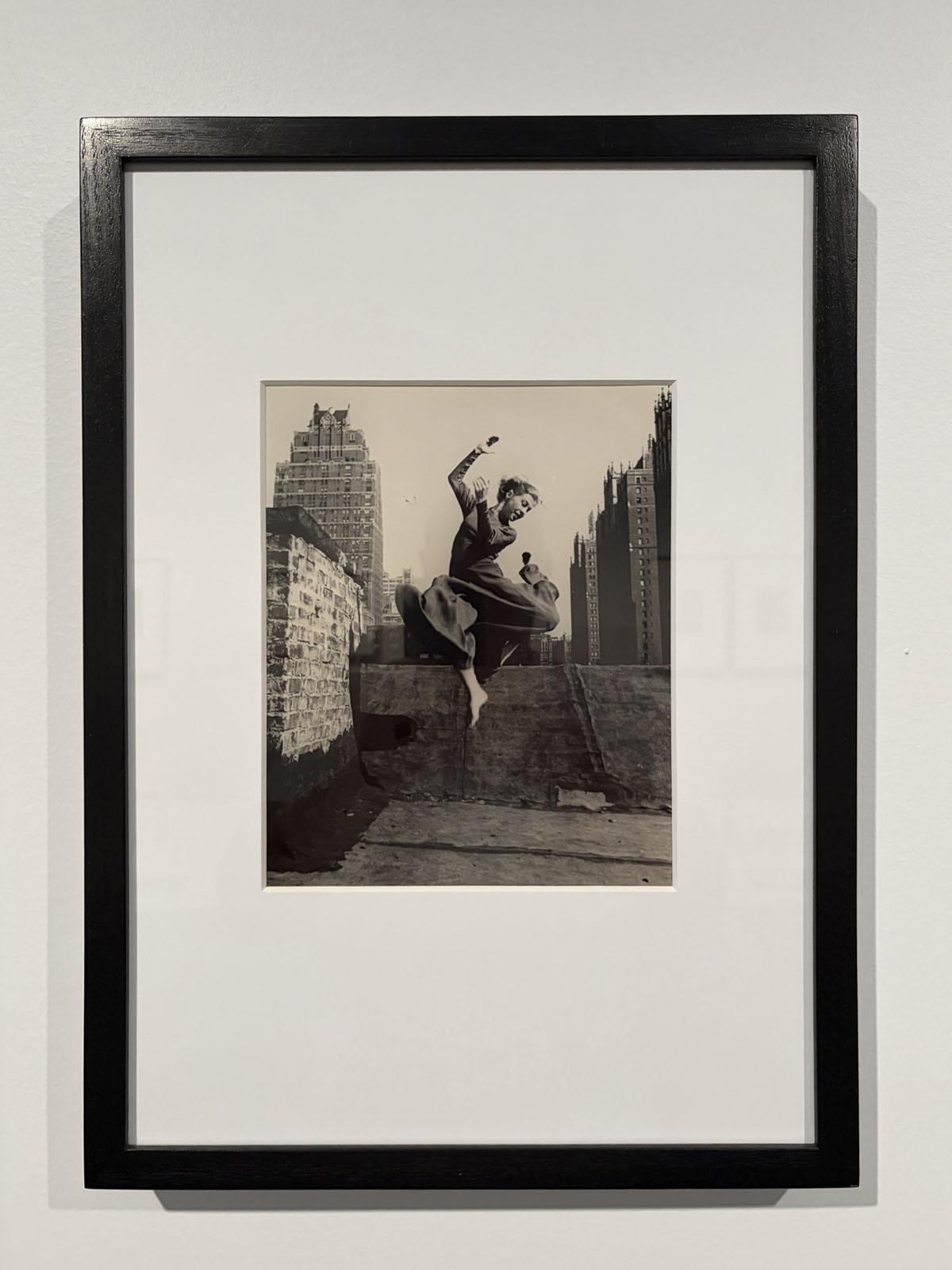
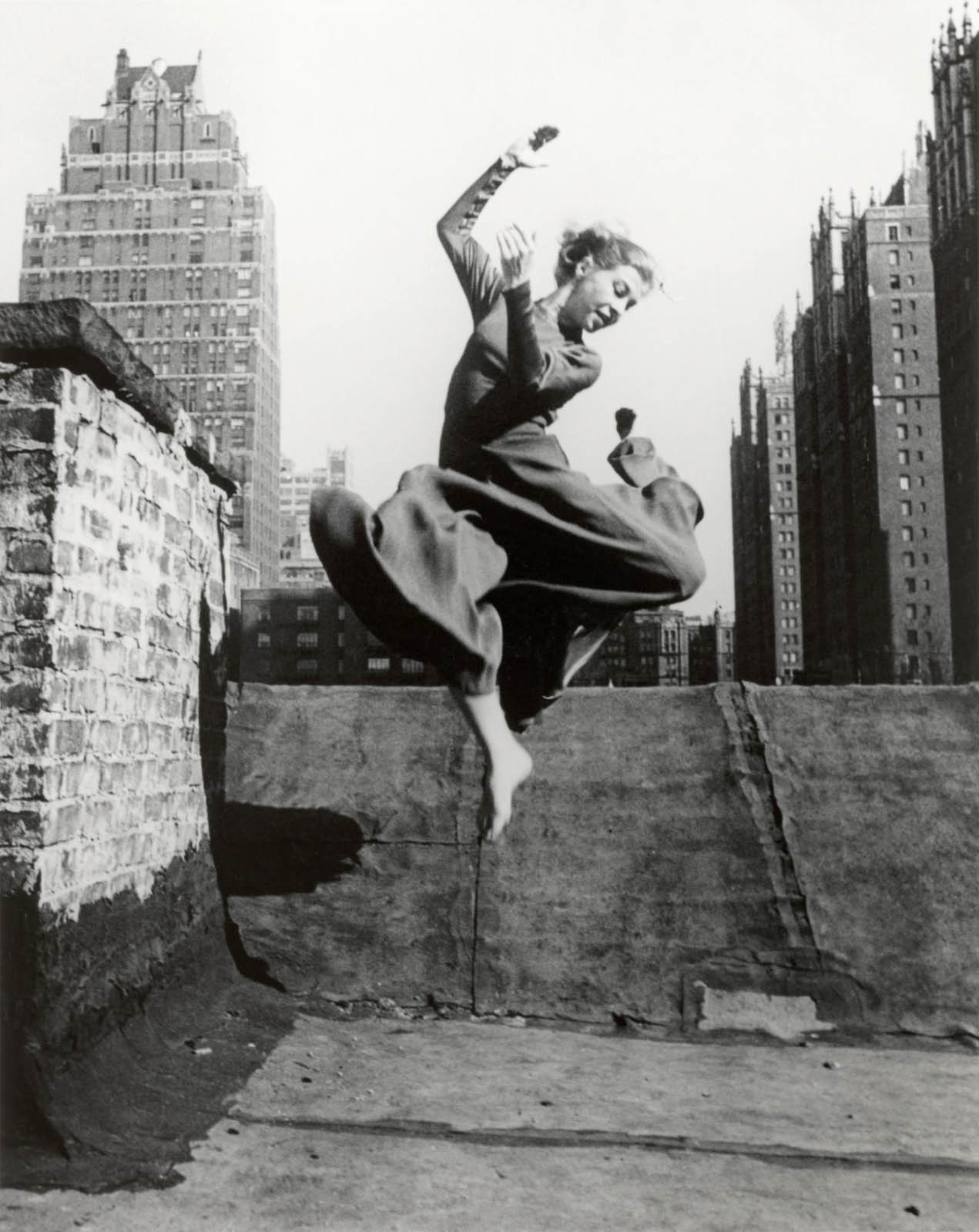
Ellen Auerbach (German 1906-2004) 'R. Schottelius in New York' 1953, printed 1992 (installation view)


Ellen Auerbach (German 1906-2004)
R. Schottelius in New York (installation view)
1953, printed 1992
Gelatin silver photograph
23.2 x 18.5cm (image)
25.0 x 27.5cm (sheet)
National Gallery of Victoria, Melbourne
Gift of Krystyna Campbell-Pretty AM and Family through the Australian Government’s Cultural Gifts Program, 2023
Photo: Marcus Bunyan


Ellen Auerbach (German 1906-2004) 'R. Schottelius in New York' 1953, printed 1992


Ellen Auerbach (German 1906-2004)
R. Schottelius in New York
1953, printed 1992
Gelatin silver photograph
23.2 x 18.5cm (image)
25.0 x 27.5cm (sheet)
National Gallery of Victoria, Melbourne
Gift of Krystyna Campbell-Pretty AM and Family through the Australian Government’s Cultural Gifts Program, 2023
© Ellen Auerbach. VG Bild-Kunst/Copyright Agency


A constant innovator throughout her life, Ellen Auerbach received her first camera in 1928 as a tool to aid her studies in sculpture. The following year, she met her professional and romantic partner Grete Stern in Berlin, where they formed studio ringl+pit. After escaping fascist Germany, Auerbach eventually relocated to the United States and continued her photographic practice, settling among New York’s avant-garde. In this rooftop scene, she captures German dancer Renate Schottelius leaping into the air. In contrast with the surrounding static, imposing skyscrapers, the liberated body in joyous motion serves as a symbol for freedom.

Wall text from the exhibition


Barbara Morgan (American, 1900-1992) 'Martha Graham – Letter to the world' 1940 (installation view)


Barbara Morgan (American, 1900-1992)
Martha Graham – Letter to the world (installation view)
1940
Gelatin silver photograph
38.9 x 48.2cm (image and sheet)
National Gallery of Victoria, Melbourne
Bowness Family Fund for Photography, 2024
Photo: Marcus Bunyan


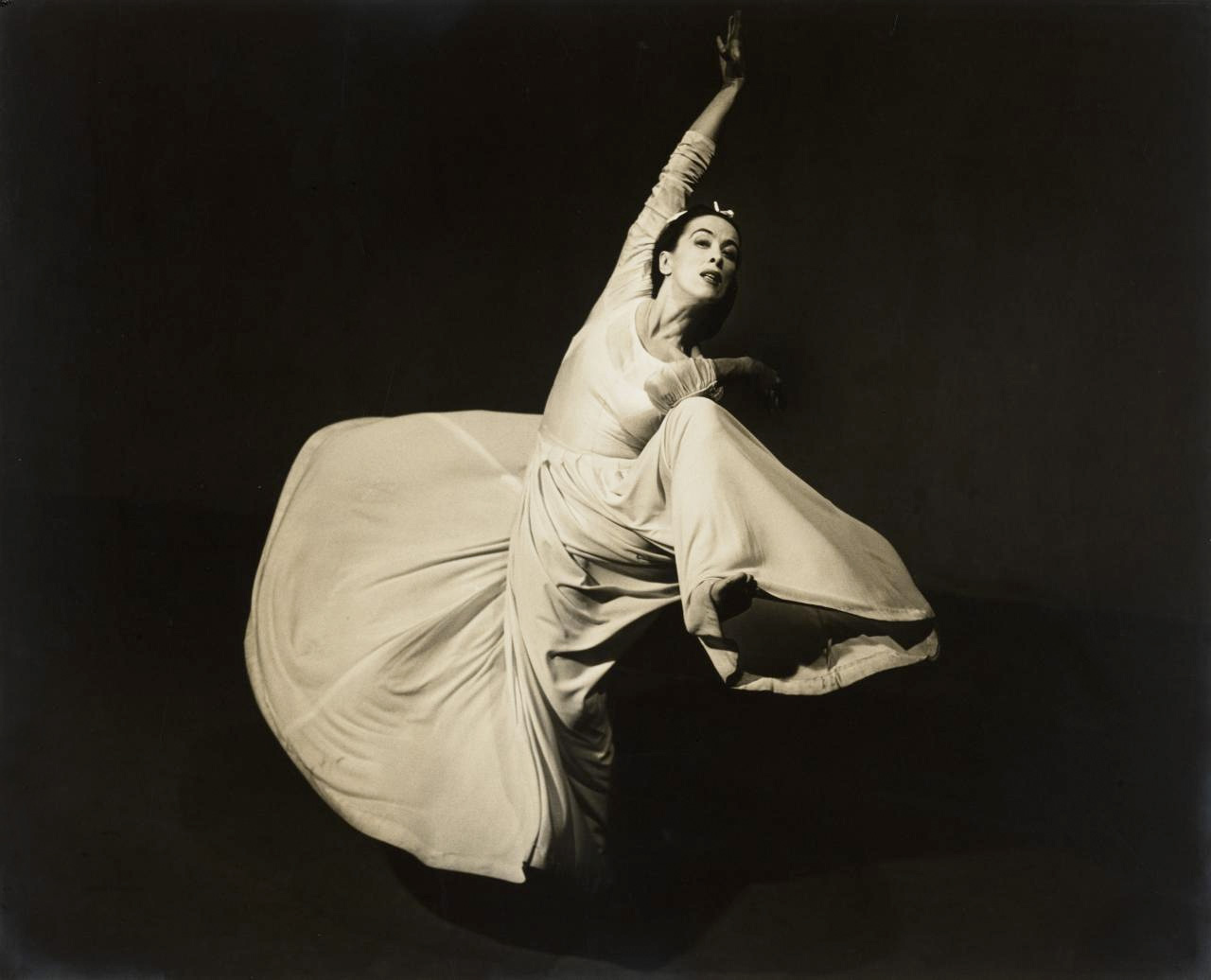
Barbara Morgan (American, 1900-1992) 'Martha Graham – Letter to the world' 1940


Barbara Morgan (American, 1900-1992)
Martha Graham – Letter to the world
1940
Gelatin silver photograph
38.9 x 48.2cm (image and sheet)
National Gallery of Victoria, Melbourne
Bowness Family Fund for Photography, 2024
© The Barbara Morgan Estate


Barbara Morgan met the pioneering American choreographer and dancer Martha Graham in 1935, and their working relationship lasted over six decades. Graham later reflected in 1980: “It is rare that even an inspired photographer possesses the demonic eye which can capture the instant of dance and transform it into timeless gesture. In Barbara Morgan I found that person. In looking at these photographs today, I feel, as I felt when I first saw them, privileged to have been a part of this collaboration. For to me, Barbara Morgan through her art reveals the inner landscape that is a dancer’s world.”

Wall text from the exhibition


Installation view of the exhibition 'Women Photographers 1900-1975: A Legacy of Light' at NGV International, Melbourne, November 2025 – May 2026


Installation view of the exhibition Women Photographers 1900-1975: A Legacy of Light at NGV International, Melbourne, November 2025 – May 2026
Photo: Marcus Bunyan


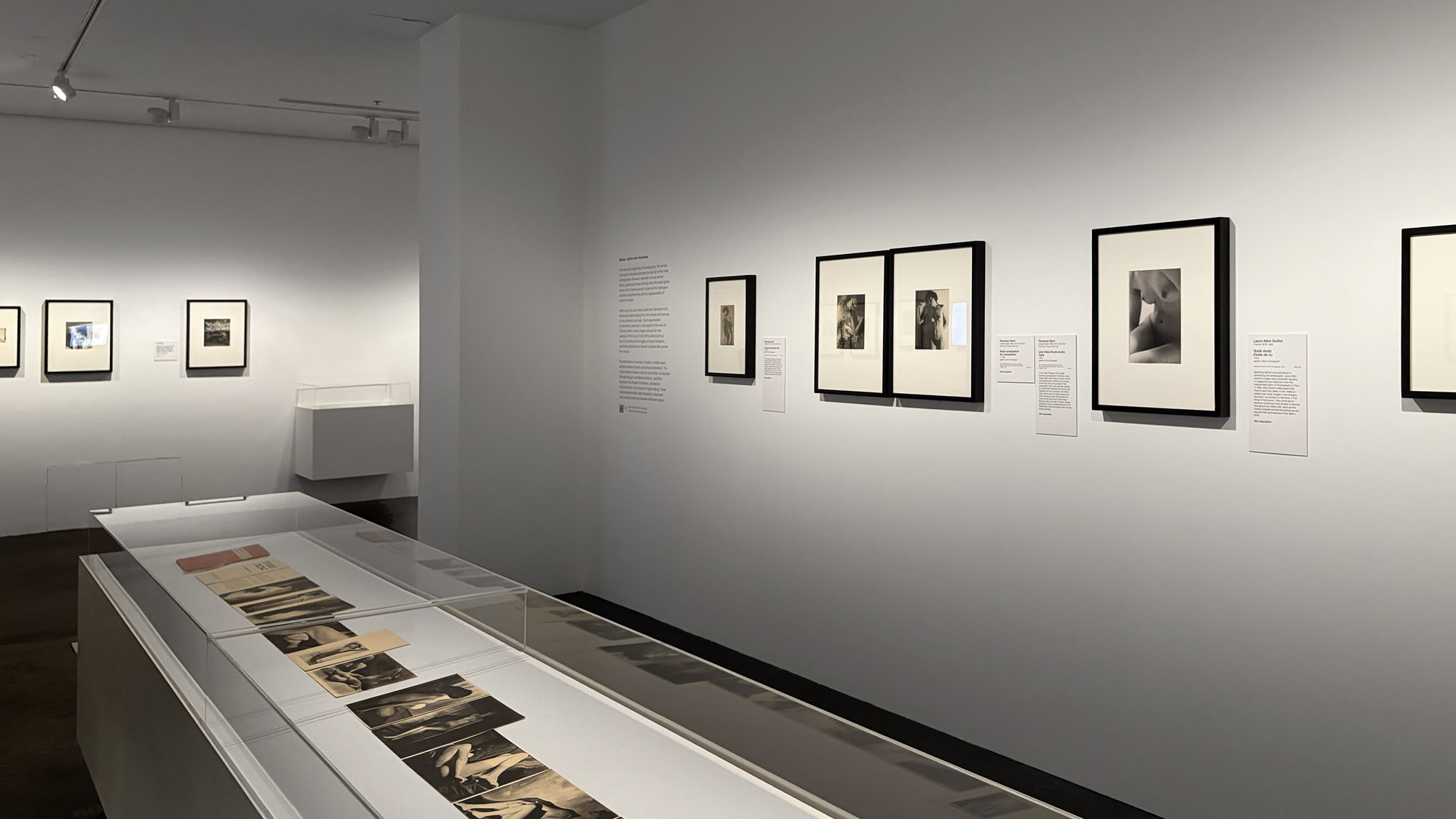
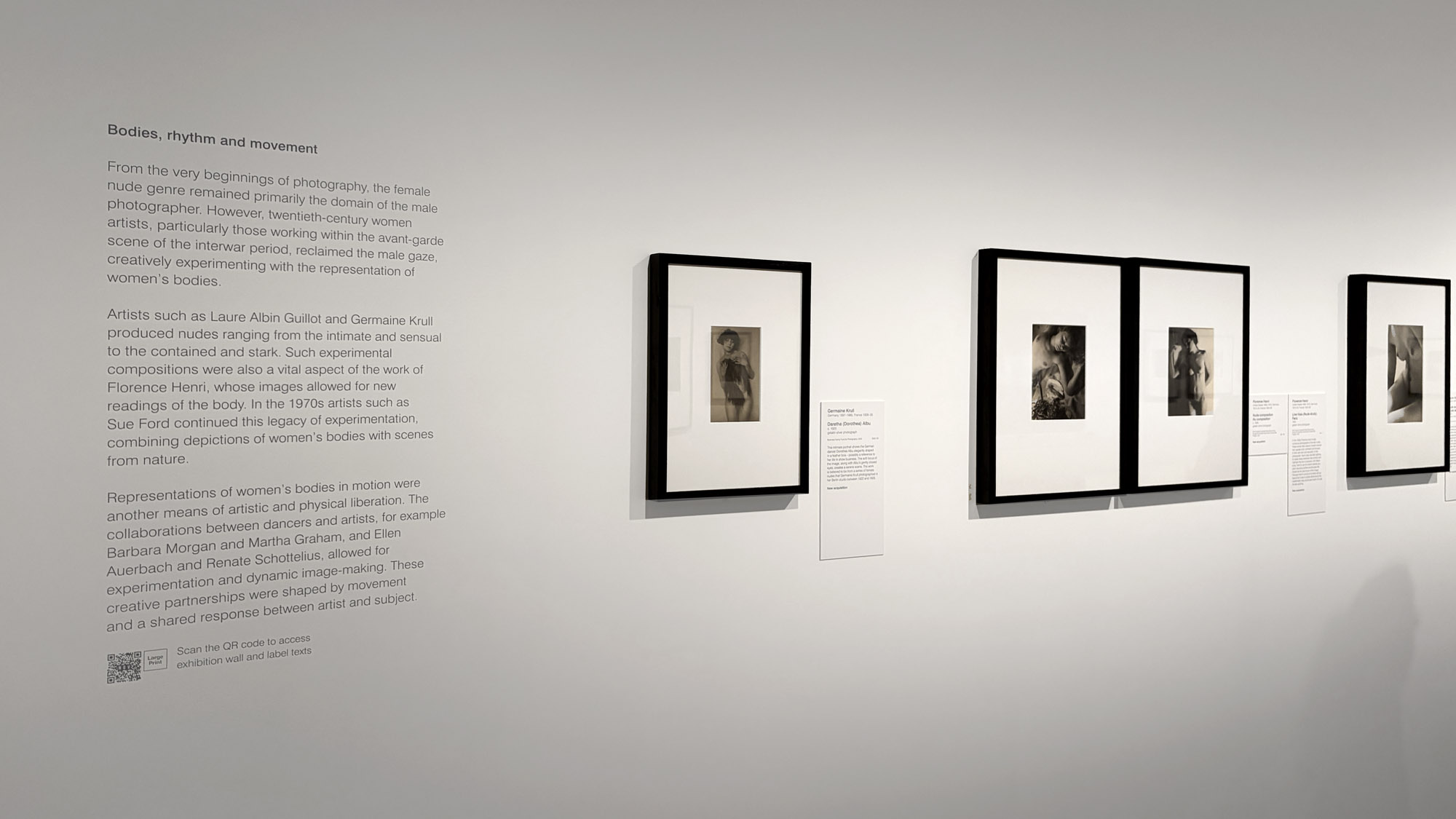
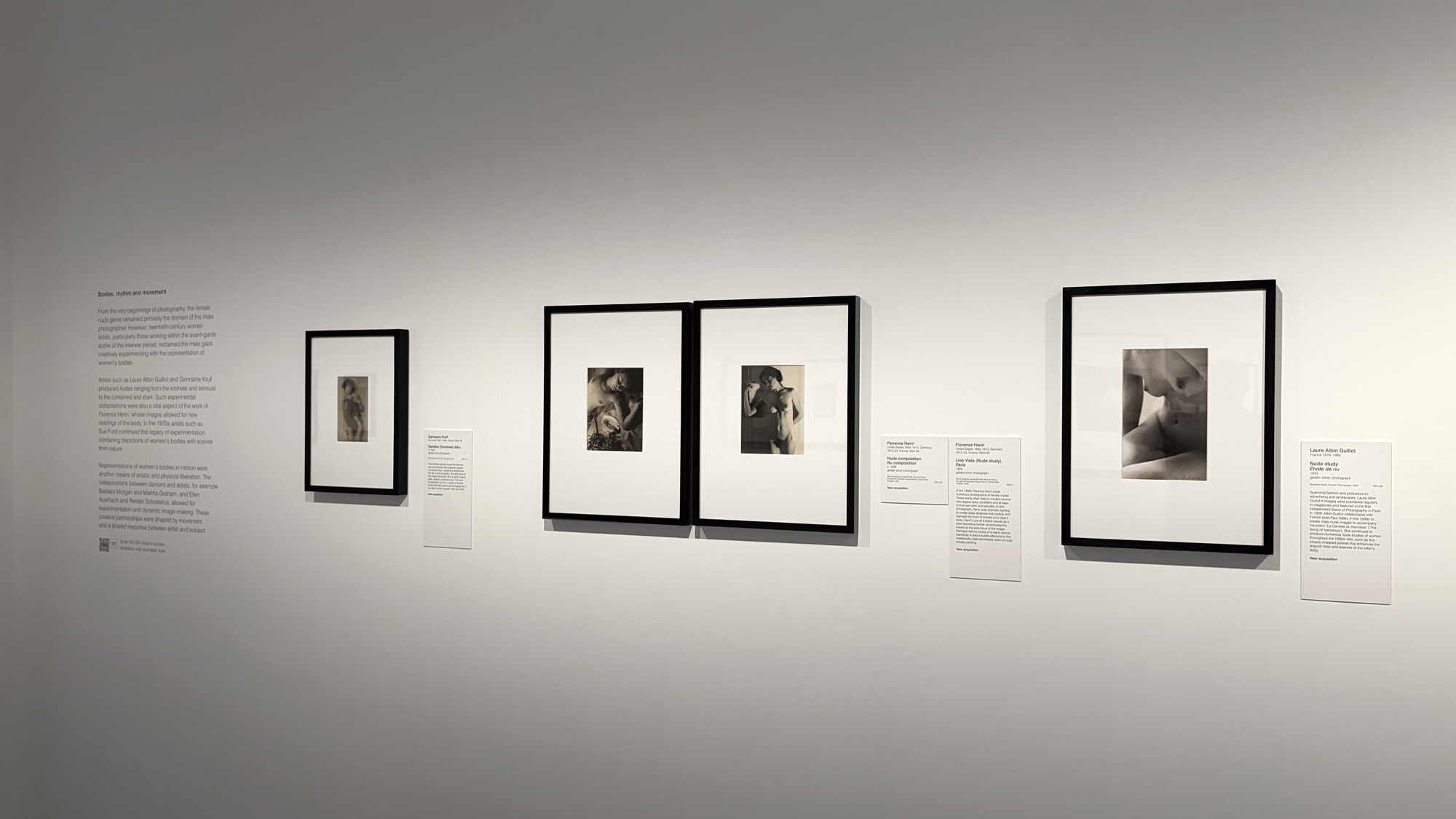
Bodies, Rhythm and Movement

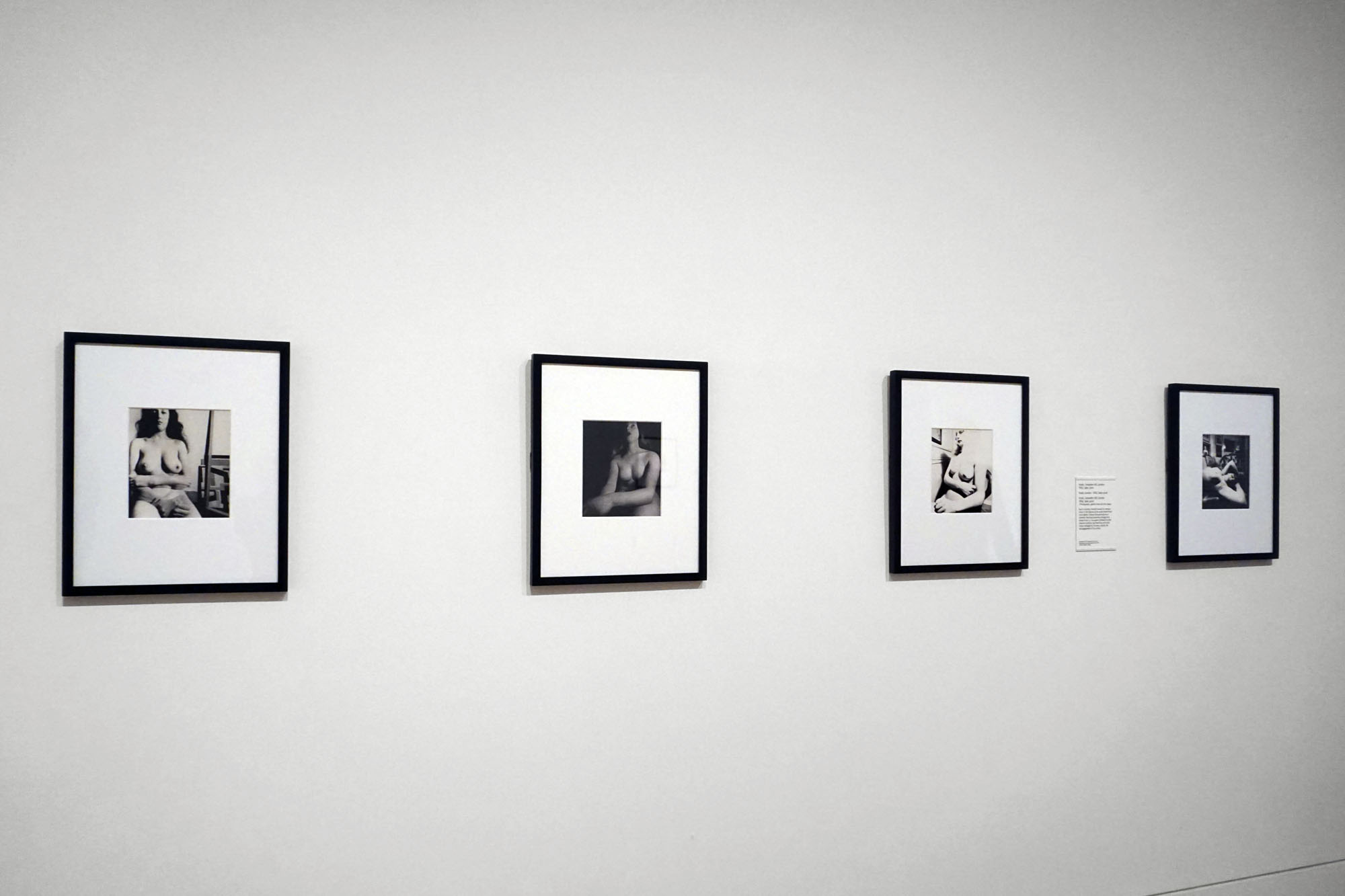
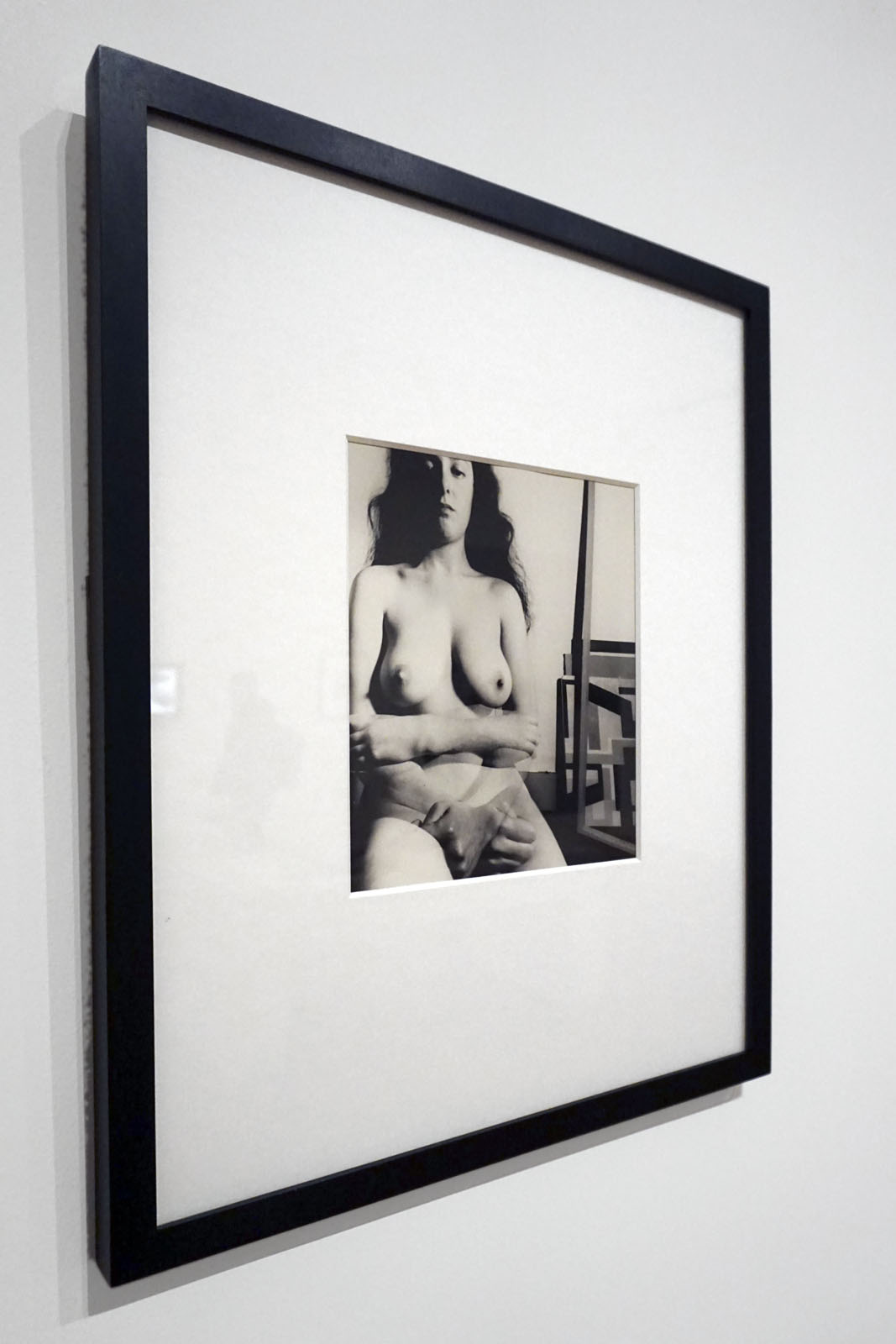
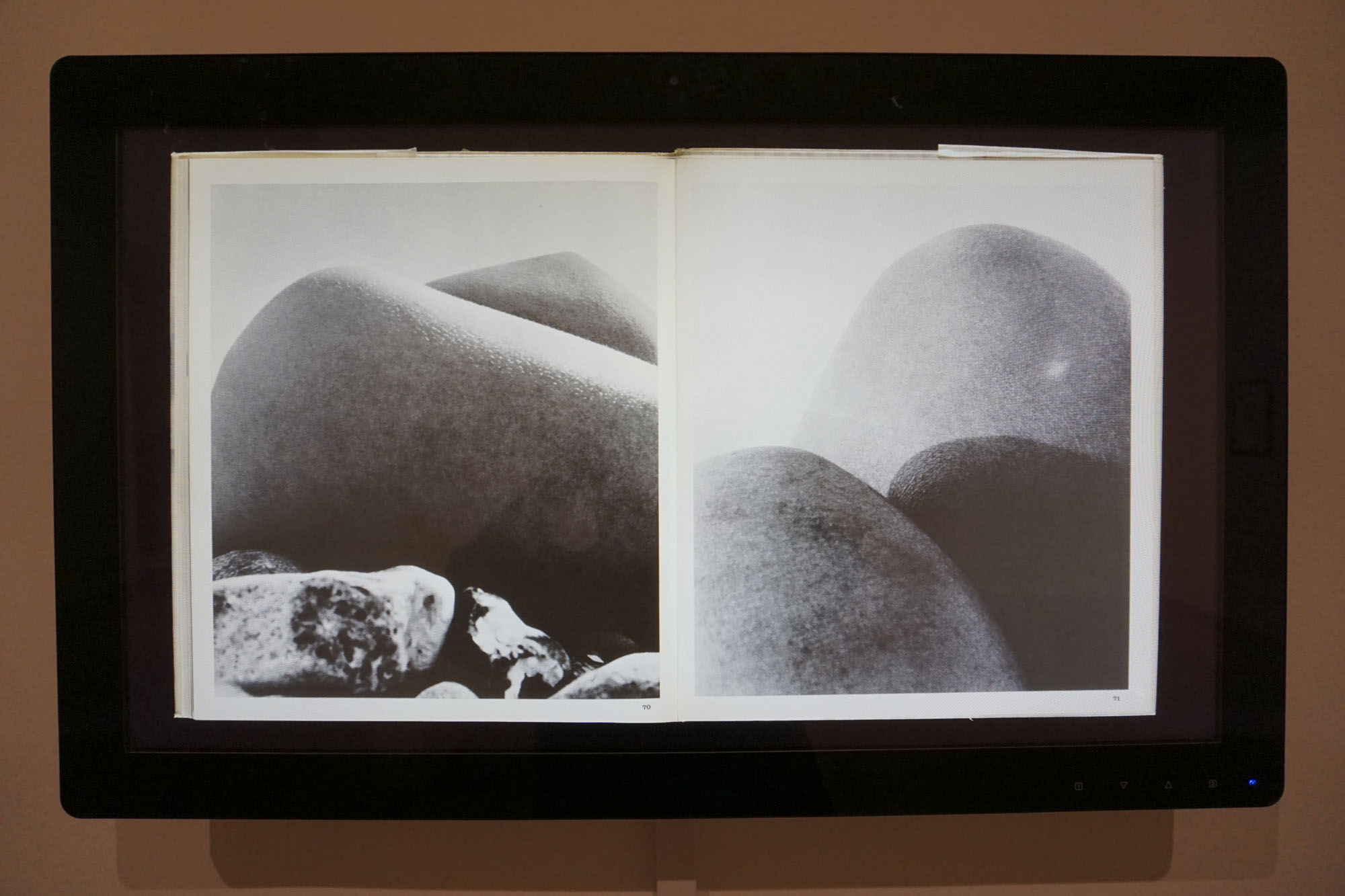
From the very beginnings of photography, the female nude genre remained primarily the domain of the male photographer. However, twentieth-century women artists, particularly those working within the avant-garde scene of the interwar period, reclaimed the male gaze, creatively experimenting with the representation of women’s bodies.

Artists such as Laure Albin Guillot and Germaine Krull produced nudes ranging from the intimate and sensual to the contained and stark. Such experimental compositions were also a vital aspect of the work of Florence Henri, whose images allowed for new readings of the body. In the 1970s artists such as Sue Ford continued this legacy of experimentation, combining depictions of women’s bodies with scenes from nature.

Representations of women’s bodies in motion were another means of artistic and physical liberation. The collaborations between dancers and artists, for example Barbara Morgan and Martha Graham, and Ellen Auerbach and Renate Schottelius, allowed for experimentation and dynamic image-making. These creative partnerships were shaped by movement and a shared response between artist and subject.


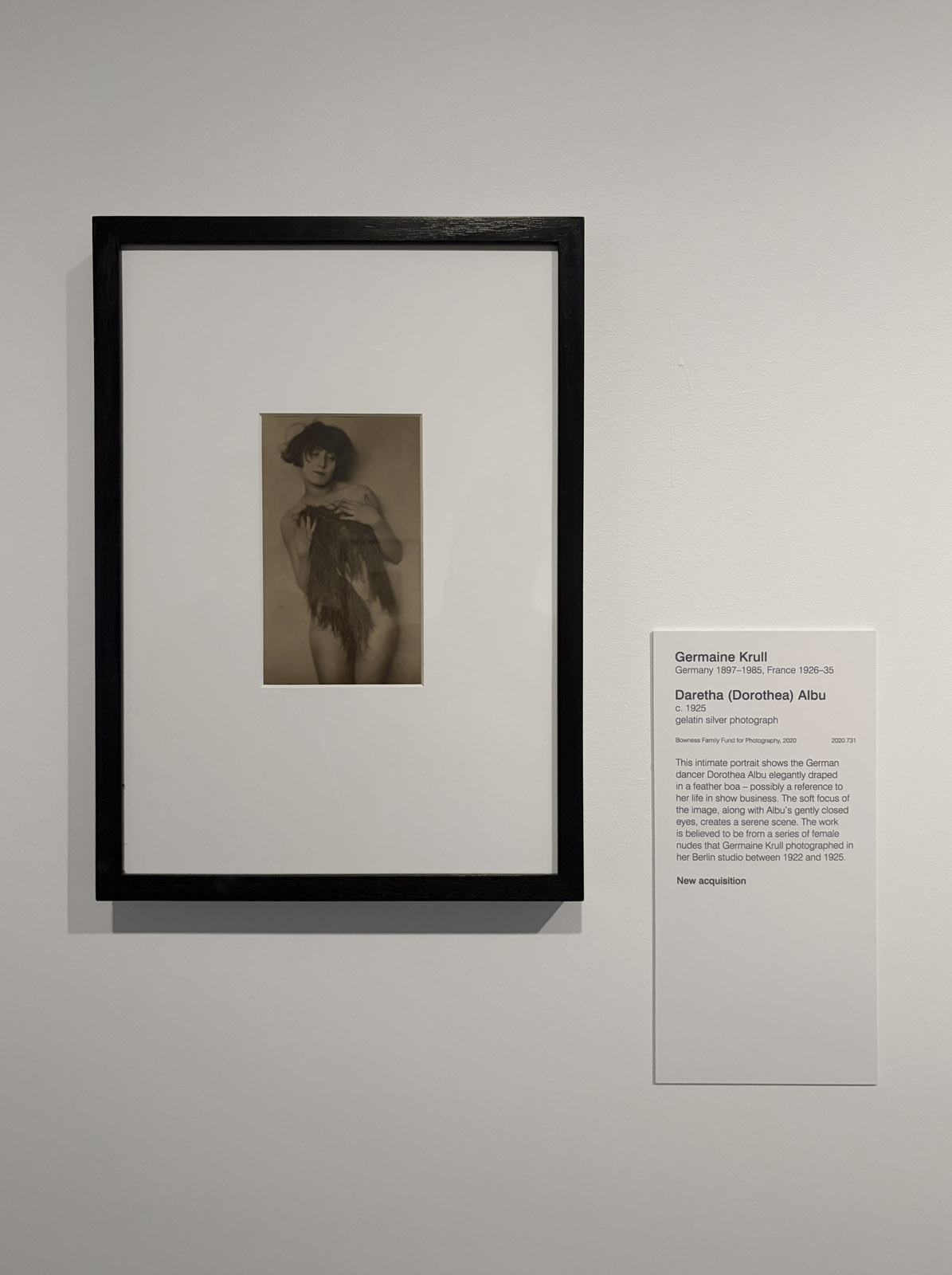
Installation view of the exhibition 'Women Photographers 1900-1975: A Legacy of Light' at NGV International, Melbourne, November 2025 – May 2026 showing at left, Germaine Krull 'Daretha (Dorothea) Albu' (c. 1925)


Installation view of the exhibition Women Photographers 1900-1975: A Legacy of Light at NGV International, Melbourne, November 2025 – May 2026 showing at left, Germaine Krull Daretha (Dorothea) Albu (c. 1925, below)
Photo: Marcus Bunyan


Installation view of the exhibition 'Women Photographers 1900-1975: A Legacy of Light' at NGV International, Melbourne, November 2025 – May 2026


Installation view of the exhibition Women Photographers 1900-1975: A Legacy of Light at NGV International, Melbourne, November 2025 – May 2026 showing from left to right, Germaine Krull Daretha (Dorothea) Albu (c. 1925, below); Florence Henri Nude composition (c. 1930, below); Florence Henri Line Viala (Nude study), Paris (1934); and Laure Albin Guillot Nude Study (1943)
Photo: Marcus Bunyan


Germaine Krull (European, 1897-1985) 'Daretha (Dorothea) Albu' c. 1925 (installation view)


Germaine Krull (European, 1897-1985)
Daretha (Dorothea) Albu (installation view)
c. 1925
Gelatin silver photograph
19.7 x 11.7cm (image and sheet)
National Gallery of Victoria, Melbourne
Bowness Family Fund for Photography, 2020
Photo: Marcus Bunyan


This intimate portrait shows the German dancer Dorothea Albu elegantly draped in a feather boa – possibly a reference to her life in show business. The soft focus of the image, along with Albu’s gently closed eyes, creates a serene scene. The work is believed to be from a series of female nudes that Germaine Krull photographed in her Berlin studio between 1922 and 1925.

Wall text from the exhibition


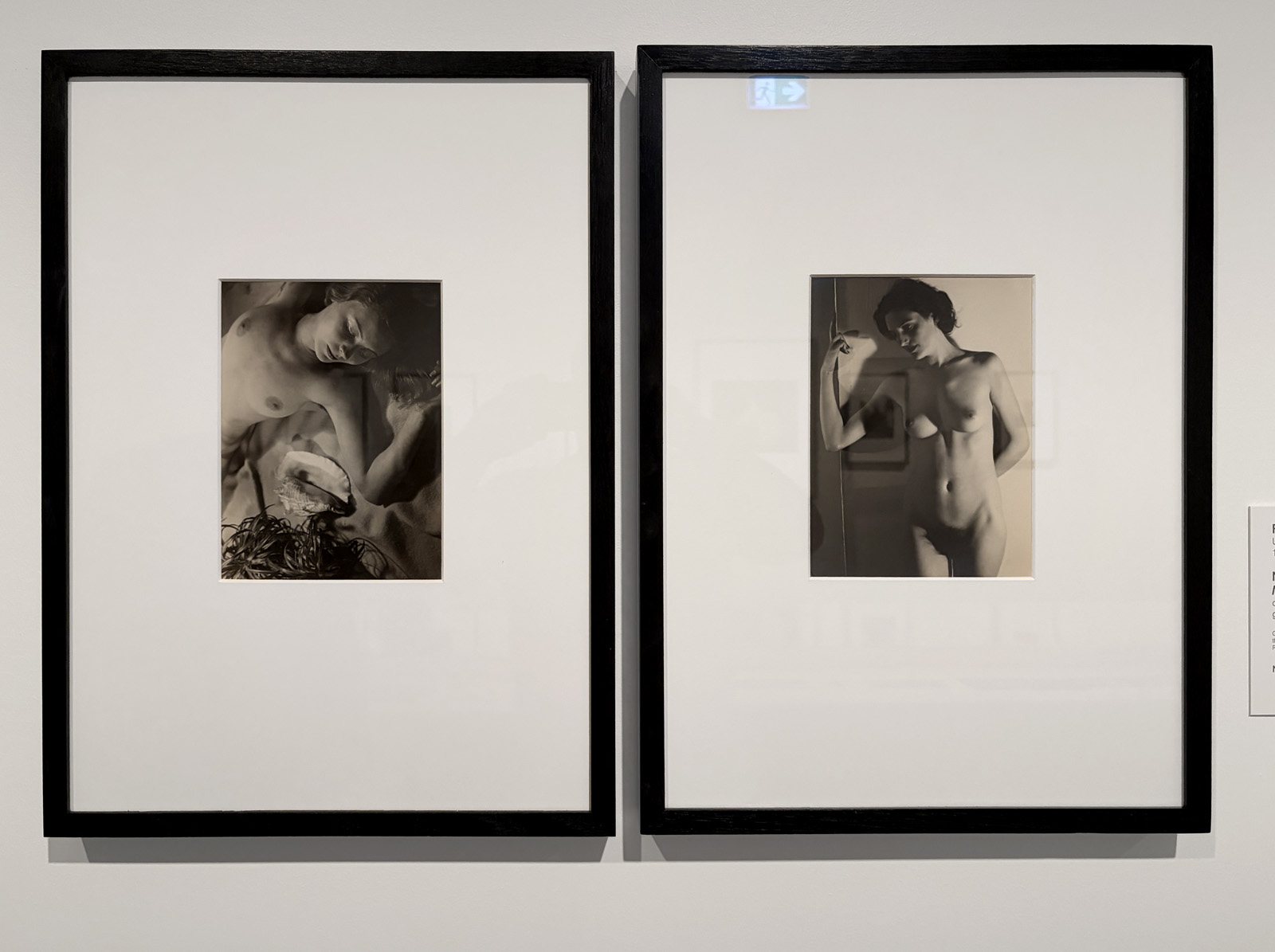
Installation view of the exhibition 'Women Photographers 1900-1975: A Legacy of Light' at NGV International, Melbourne, November 2025 – May 2026 showing from left to right, Florence Henri (European born USA, 1893-1982) 'Nude composition' (c. 1930) and Florence Henri (European born USA, 1893-1982) 'Line Viala (Nude study), Paris' (1934)


Installation view of the exhibition Women Photographers 1900-1975: A Legacy of Light at NGV International, Melbourne, November 2025 – May 2026 showing from left to right, Florence Henri Nude composition (c. 1930, below) and Florence Henri Line Viala (Nude study), Paris (1934, below)
Photo: Marcus Bunyan


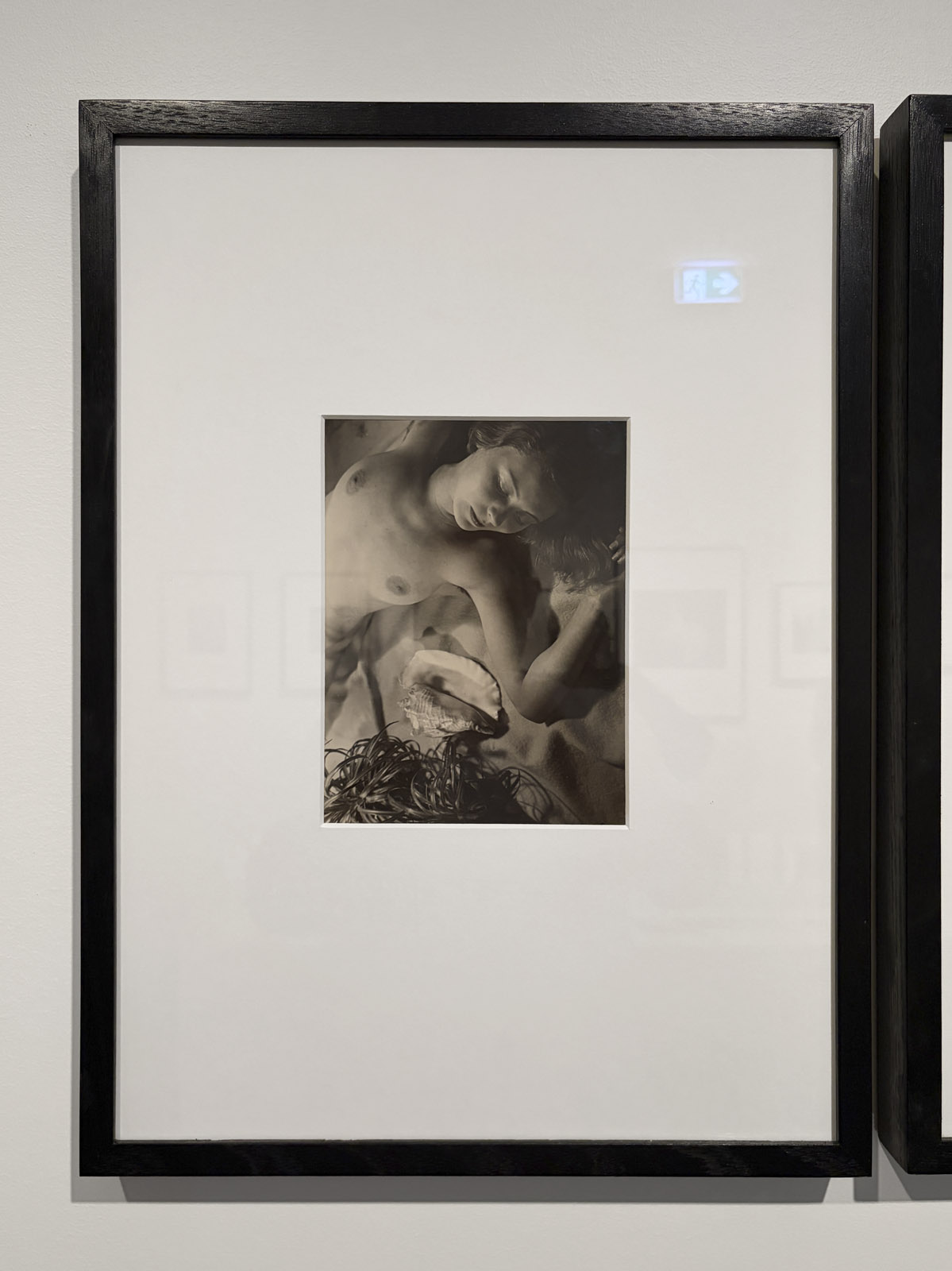
Florence Henri (European born USA, 1893-1982) 'Nude composition' (Nu composition) c. 1930 (installation view)


Florence Henri (European born USA, 1893-1982)
Nude composition (Nu composition) (installation view)
c. 1930
Gelatin silver photograph
22.9 x 17.0cm (image and sheet)
National Gallery of Victoria, Melbourne
Gift of Krystyna Campbell-Pretty AM and Family through the Australian Government’s Cultural Gifts Program, 2021
Photo: Marcus Bunyan


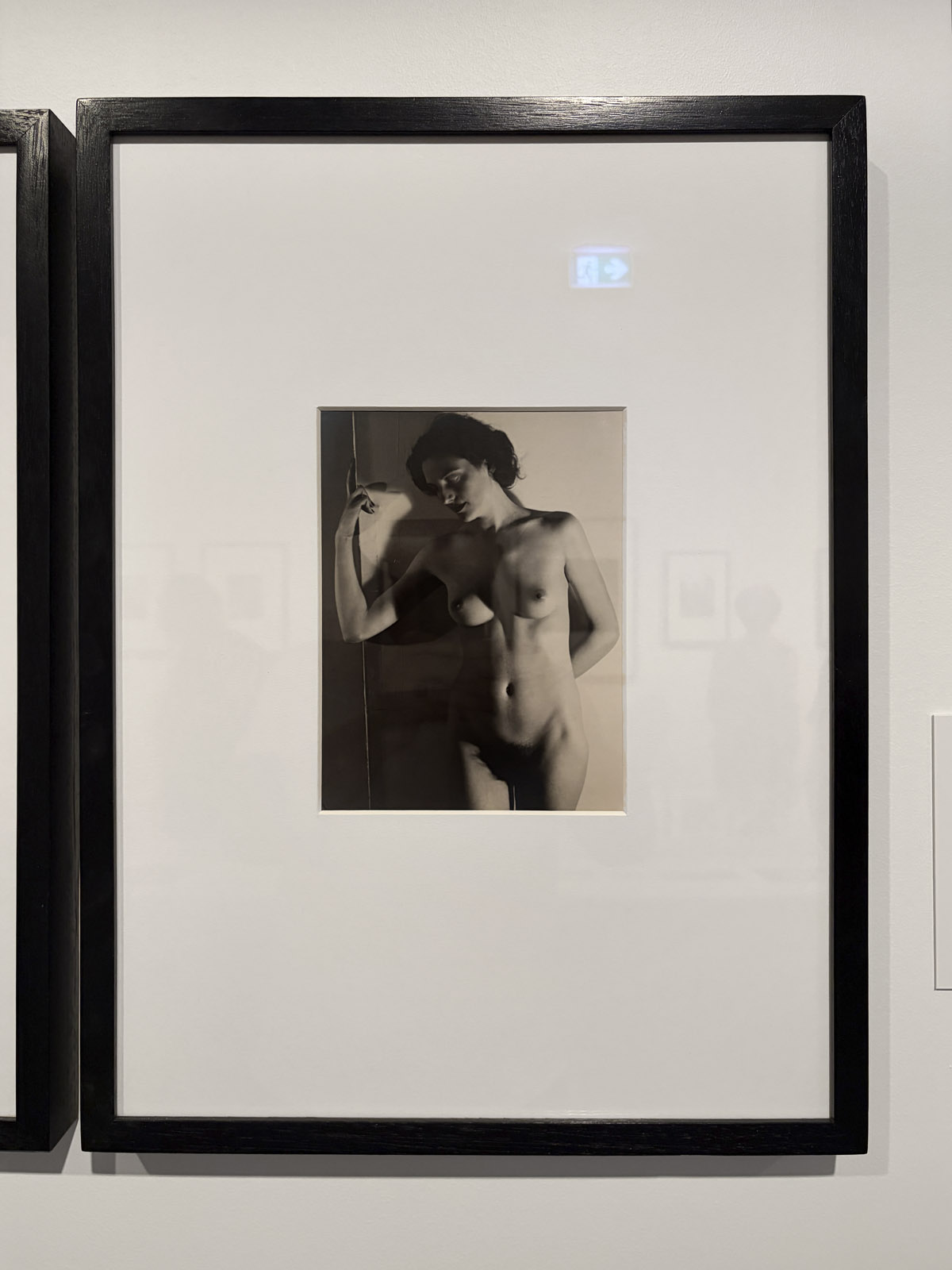
Florence Henri (European born USA, 1893-1982) 'Line Viala (Nude study), Paris' 1934 (installation view)


Florence Henri (European born USA, 1893-1982)
Line Viala (Nude study), Paris (installation view)
1934
Gelatin silver photograph
22.9 x 17.2cm (image and sheet)
National Gallery of Victoria, Melbourne
Gift of Krystyna Campbell-Pretty AM and Family through the Australian Government’s Cultural Gifts Program, 2023
Photo: Marcus Bunyan


In the 1930s Florence Henri made numerous photographs of female nudes. These works often feature modern women who appear bold, confident and at ease in their own skin and sexuality. In this photograph, Henri uses dramatic lighting to create deep shadows that contour and highlight the form of actress Line Viala’s body. Henri’s use of a blank canvas as a plain backdrop further accentuates the model as the sole focus of the image. Perhaps Henri’s choice of a blank canvas backdrop is also a subtle reference to the traditionally male-dominated realm of nude female painting.

Wall text from the exhibition


Florence Henri (European born USA, 1893-1982) 'Nude composition (Nu composition)' c. 1930


Florence Henri (European born USA, 1893-1982)
Nude composition (Nu composition)
c. 1930
Gelatin silver photograph
22.9 x 17.0cm (image and sheet)
National Gallery of Victoria, Melbourne
Gift of Krystyna Campbell-Pretty AM and Family through the Australian Government’s Cultural Gifts Program, 2021
© Florence Henri / Licensed by the Copyright Agency, Australia


Another vital aspect of her practice was her nude female compositions, such as Nude composition (Nu composition), 1930. Created in the year after establishing her studio in Paris, it employs her characteristically unique, elevated vantage point and raking lighting to disrupt a sense of visual order and perspective. Henri constructs a scene in which the upper half of a woman’s naked body (her chest, breasts, arms, head and hair) creates an asymmetrical focal point at the top of the photograph. Lying next to the woman, and, seemingly, the subject of her gaze, is a large shell, while plants at the base of the image echo the woman’s flowing hair. While appearing to be set on a bed of sand, on closer inspection the textured base is revealed as a coarse sheet.

The dreamlike image, confident and controlled, which merges the female body with the symbolic shell and forms from nature, creates a scene of sensuousness and self-empowerment that is erotic and modern. Henri’s nude compositions, along with those of peers working in France such as Dora Maar and Nora Dumas, claimed the female body as a subject of their own – a trend that emerged among a number of female photographers, in the interwar period.

Maggie Finch. “Florence Henri Nude composition (Nu composition),” on the NGV website 16 Mar 23 [Online] Cited 24/12/2025. Used under fair use condition for the purposes of education and research


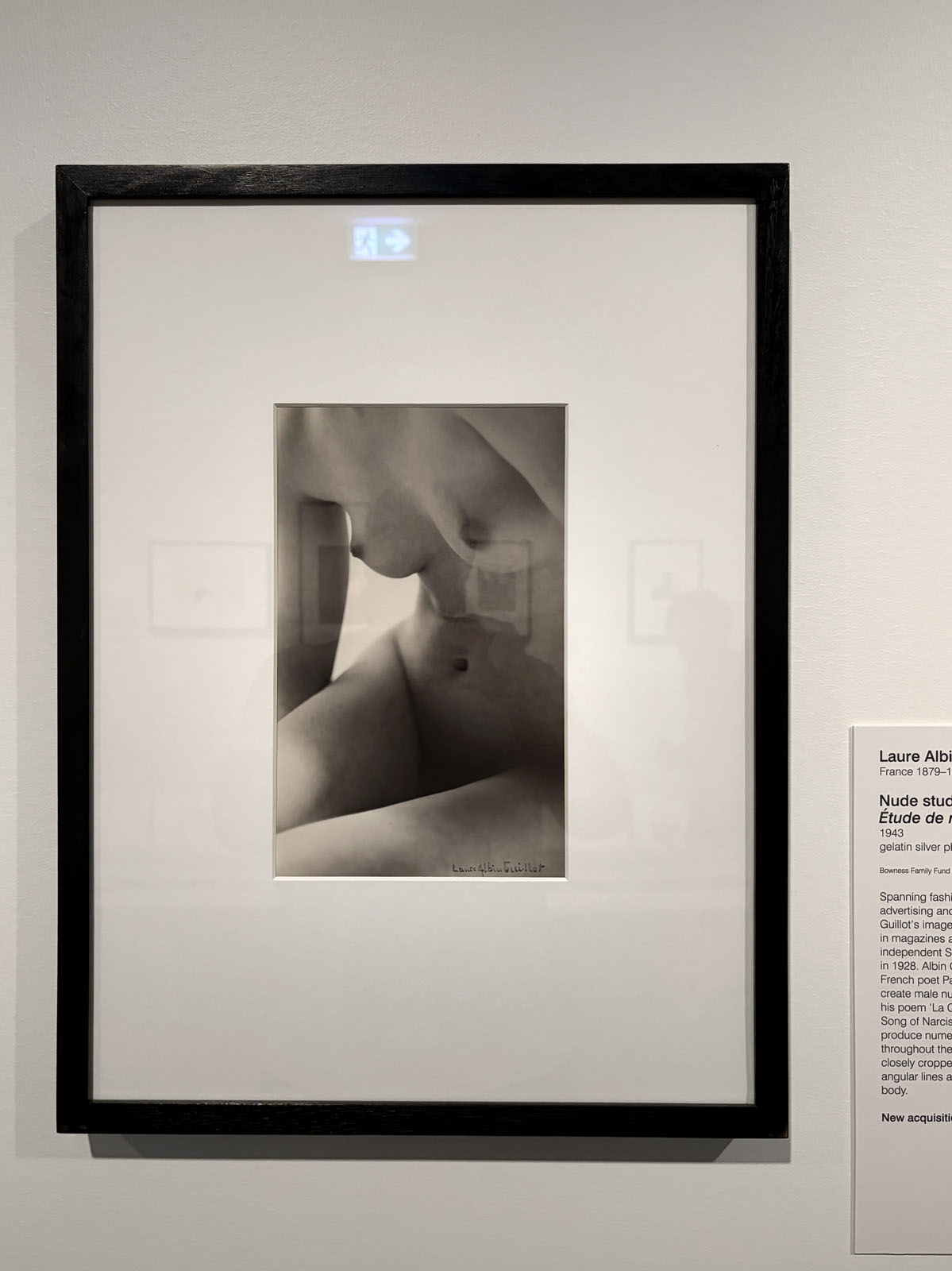
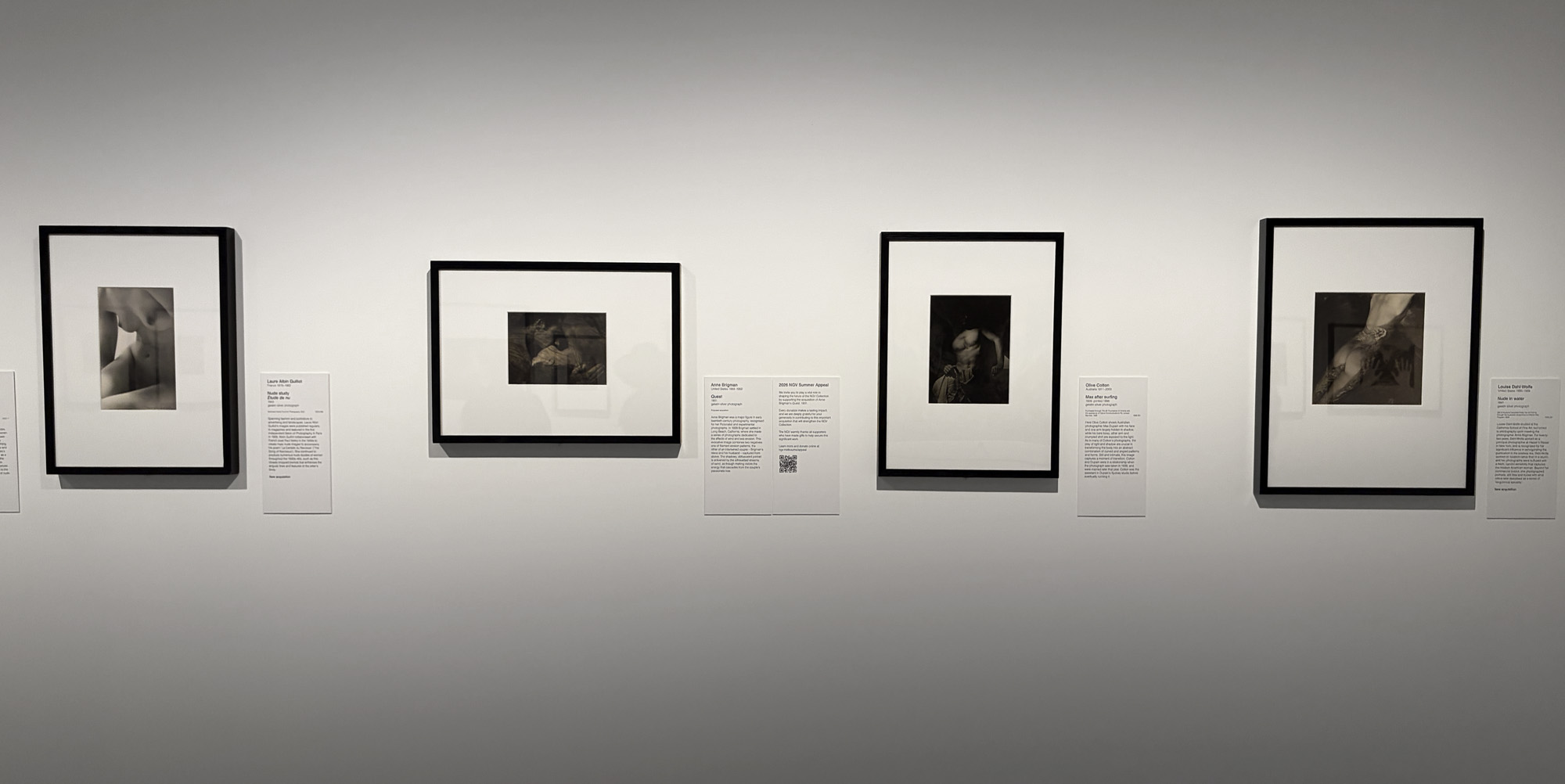
Laure Albin Guillot (French, 1879-1962) 'Nude study' (Étude de nu) 1943 (installation view)


Laure Albin Guillot (French, 1879-1962)
Nude study (Étude de nu) (installation view)
1943
Gelatin silver photograph
29.5 x 17.9cm (image)
29.5 x 23.1cm (sheet)
National Gallery of Victoria, Melbourne
Bowness Family Fund for Photography, 2023
Photo: Marcus Bunyan


Spanning fashion and portraiture to advertising and landscapes, Laure Albin Guillot’s images were published regularly in magazines and featured in the first independent Salon of Photography in Paris in 1928. Albin Guillot collaborated with French poet Paul Valéry in the 1930s to create male nude images to accompany his poem ‘La Cantate du Narcisse’ (‘The Song of Narcissus’). She continued to produce numerous nude studies of women throughout the 1930s–40s, such as this closely cropped portrait that enhances the angular lines and features of the sitter’s body.

Wall text from the exhibition


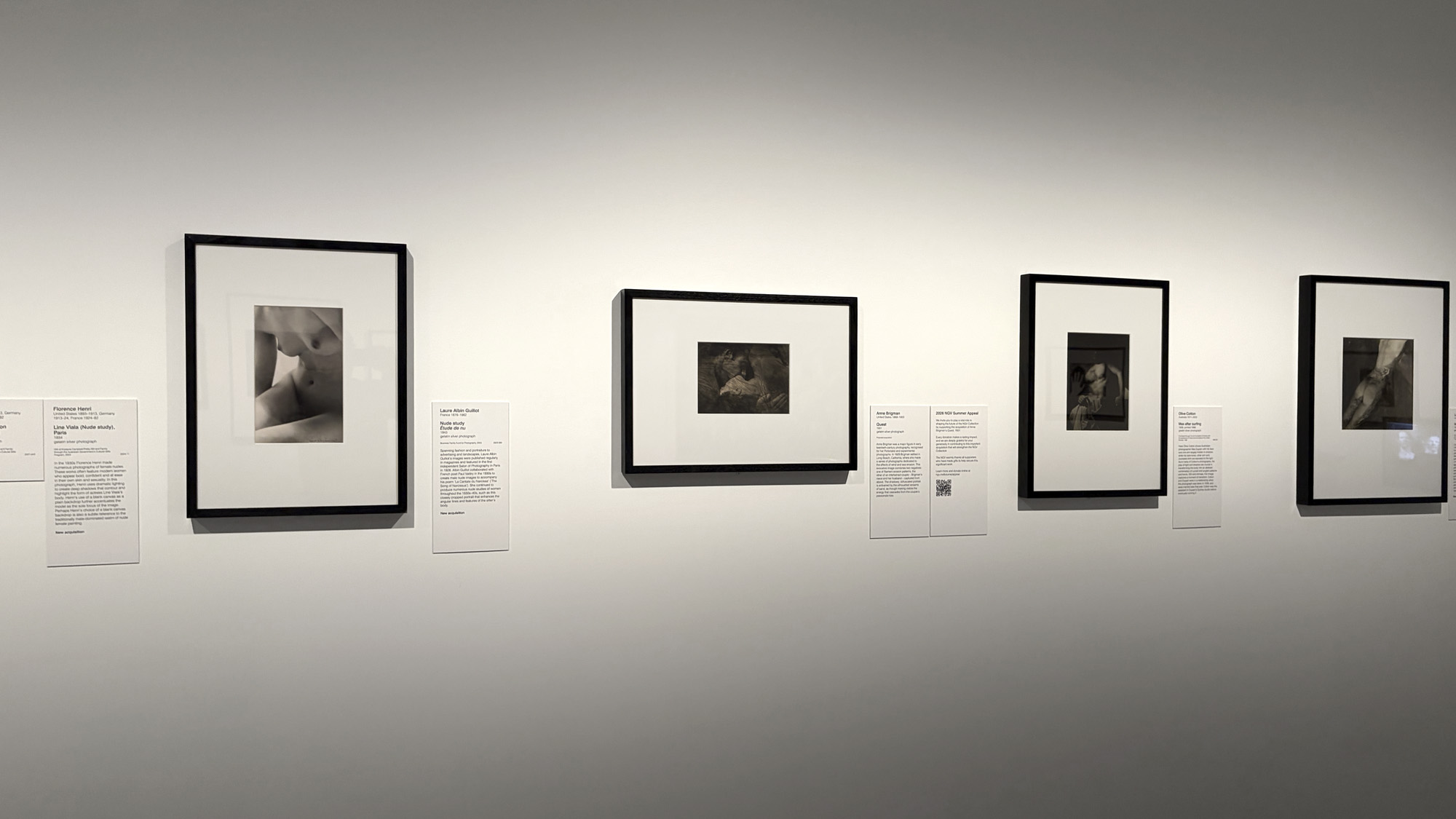
Installation view of the exhibition 'Women Photographers 1900-1975: A Legacy of Light' at NGV International, Melbourne, November 2025 – May 2026 showing from left to right, Laure Albin Guillot 'Nude study' (Étude de nu) (1943); Anne Brigman 'Quest' (1931); Olive Cotton 'Max after surfing' (1939 printed 1998); and Louise Dahl-Wolfe 'Nude in water' (1941)


Installation views of the exhibition Women Photographers 1900-1975: A Legacy of Light at NGV International, Melbourne, November 2025 – May 2026 showing from left to right, Laure Albin Guillot Nude study (Étude de nu) (1943, above); Anne Brigman Quest (1931); Olive Cotton Max after surfing (1939, printed 1998); and Louise Dahl-Wolfe Nude in water (1941)
Photos: Marcus Bunyan


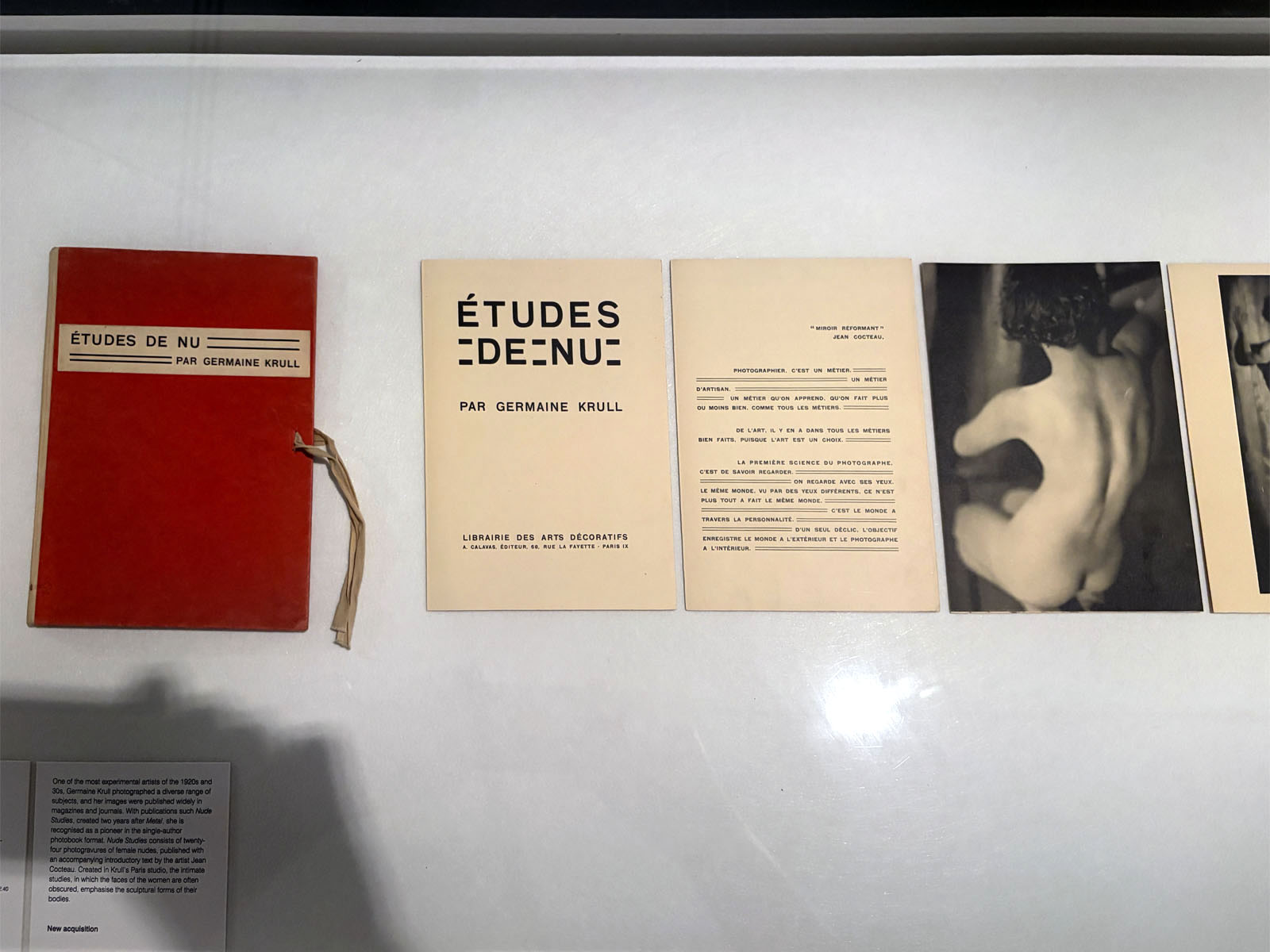
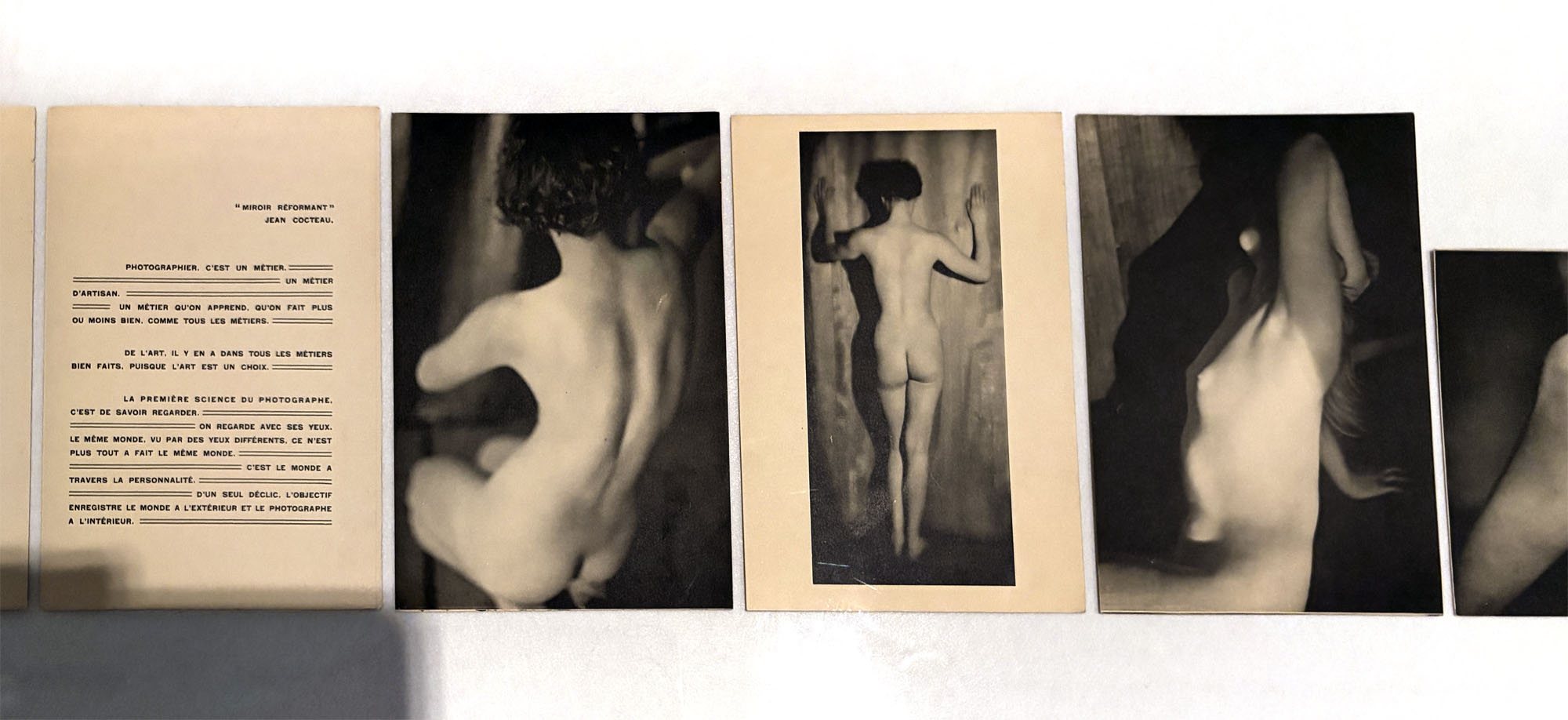
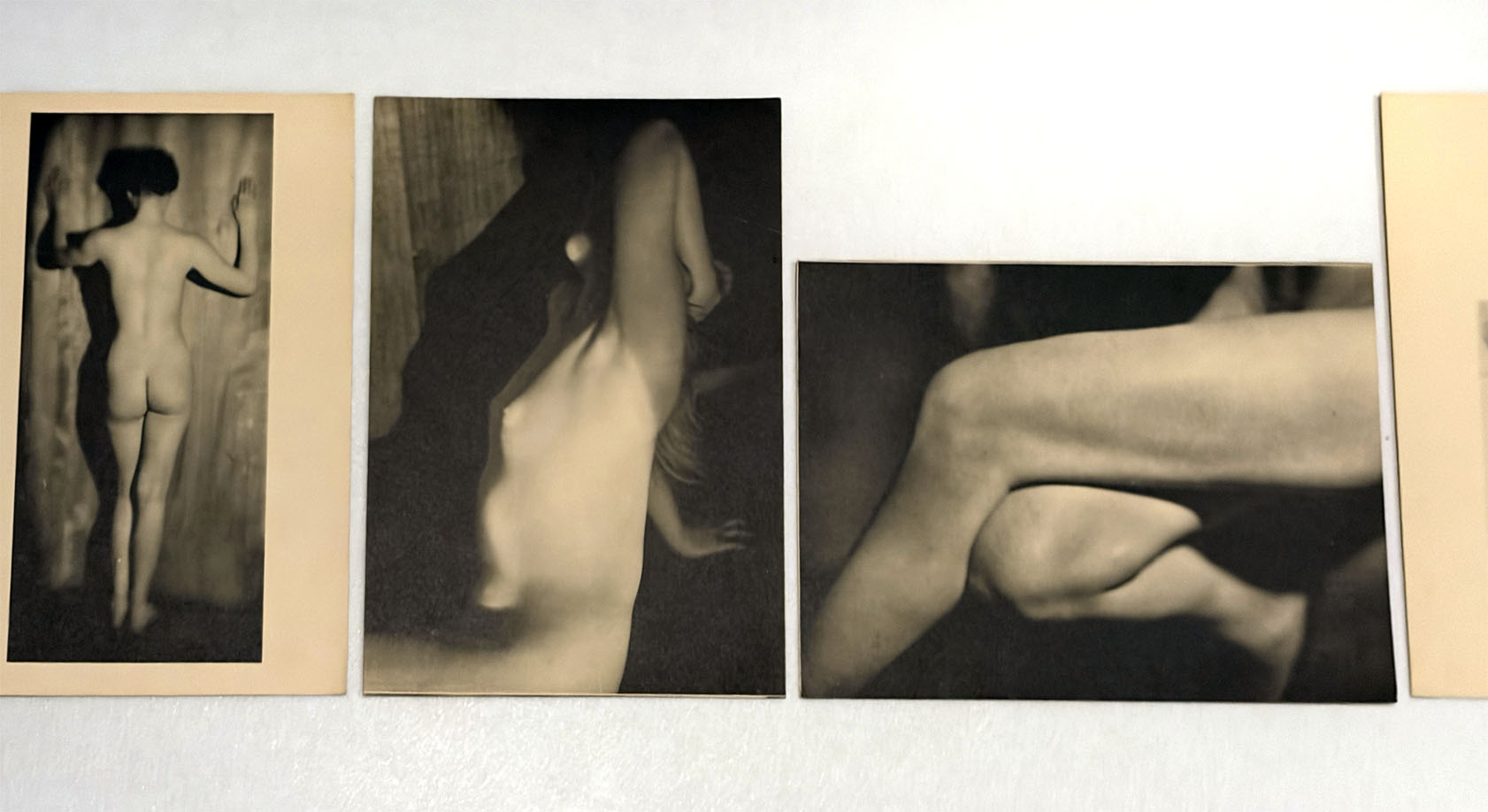
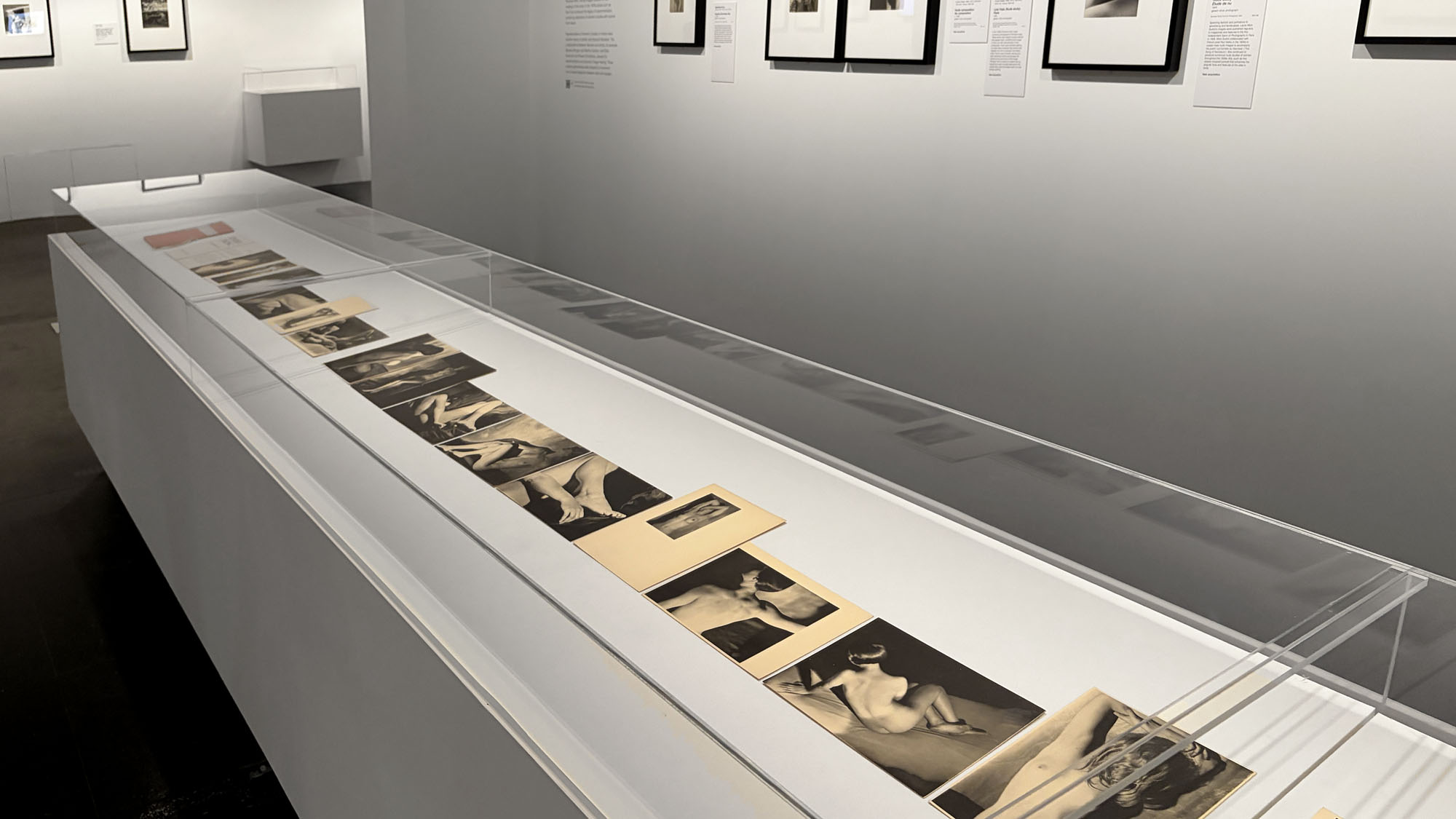
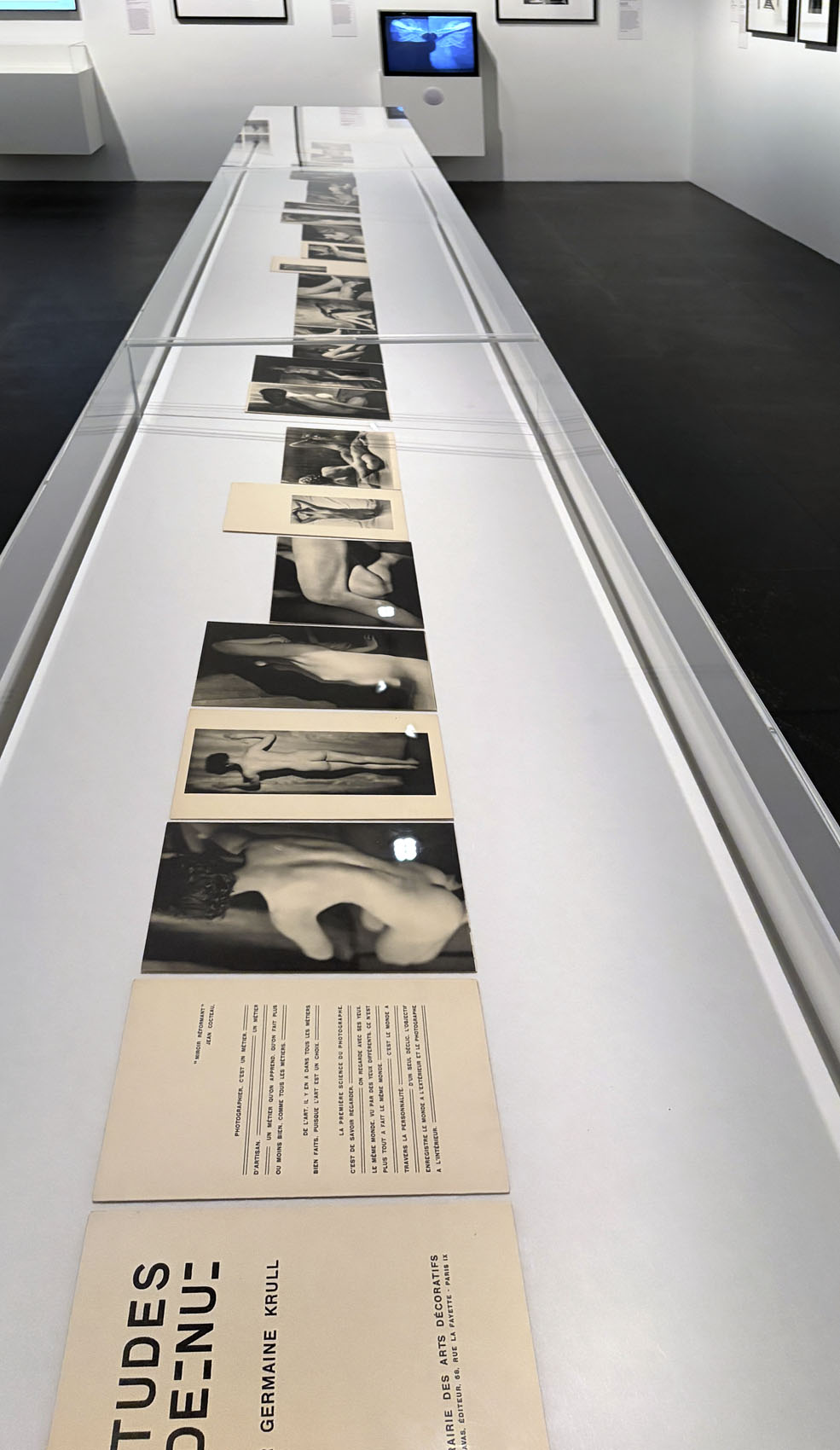
Installation view of the exhibition 'Women Photographers 1900-1975: A Legacy of Light' at NGV International, Melbourne, November 2025 – May 2026 showing Germaine Krull 'Nude studies (Études de nu)' (1930)


Installation views of the exhibition Women Photographers 1900-1975: A Legacy of Light at NGV International, Melbourne, November 2025 – May 2026 showing Germaine Krull Nude studies (Études de nu) (1930)
Photos: Marcus Bunyan


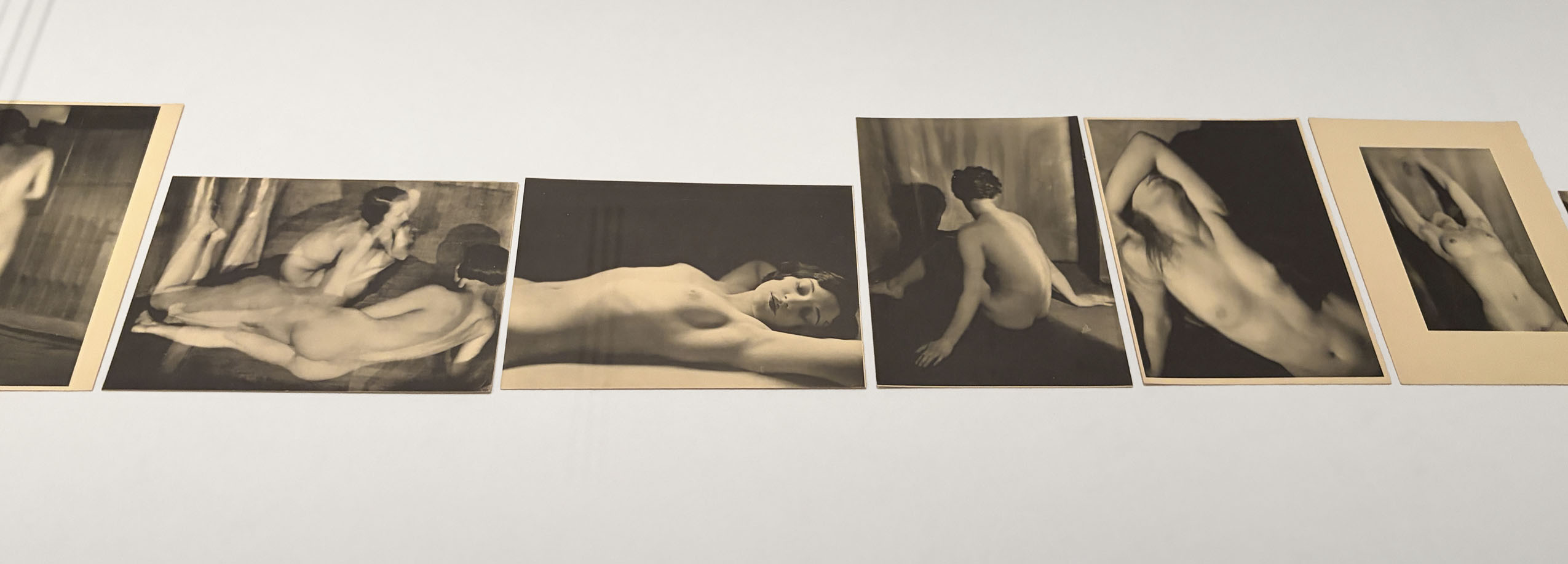
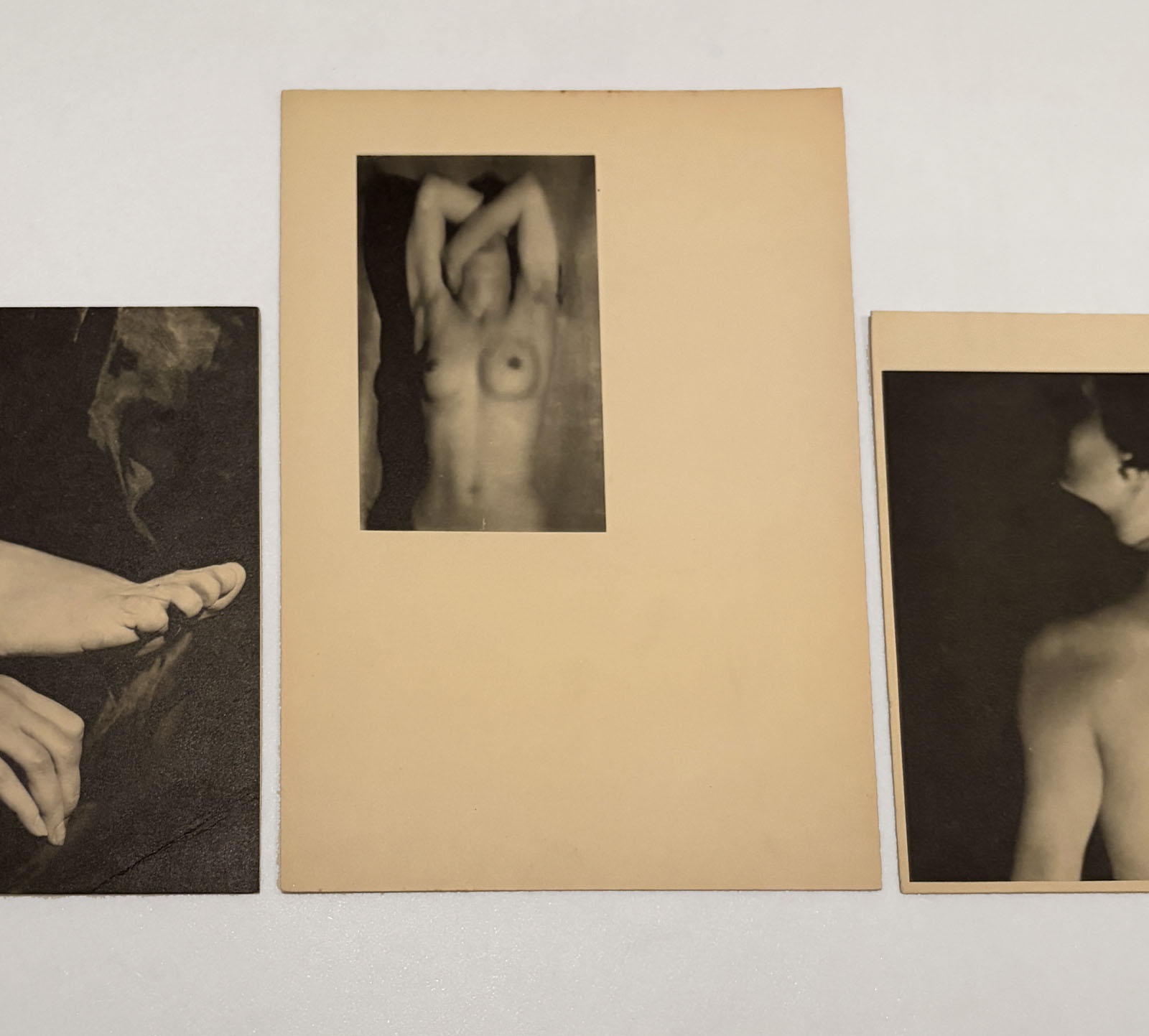
One of the most experimental artists of the 1920s and 30s, Germaine Krull photographed a diverse range of subjects, and her images were published widely in magazines and journals. With publications such Nude Studies, created two years after Metal, she is recognised as a pioneer in the single-author photobook format. Nude Studies consists of twenty-four photogravures of female nudes, published with an accompanying introductory text by the artist Jean Cocteau. Created in Krull’s Paris studio, the intimate studies, in which the faces of the women are often obscured, emphasise the sculptural forms of their bodies.

Wall text from the exhibition


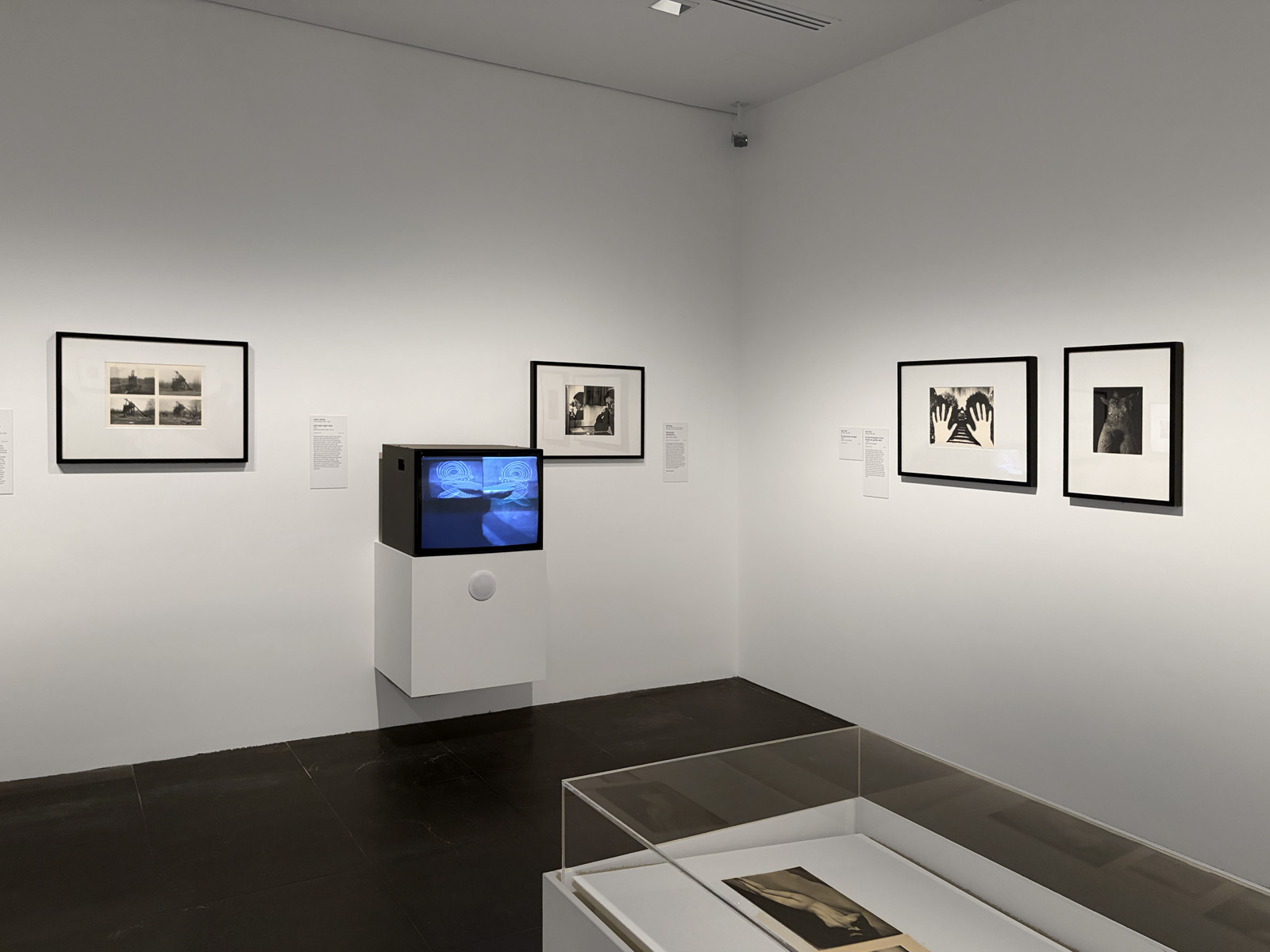
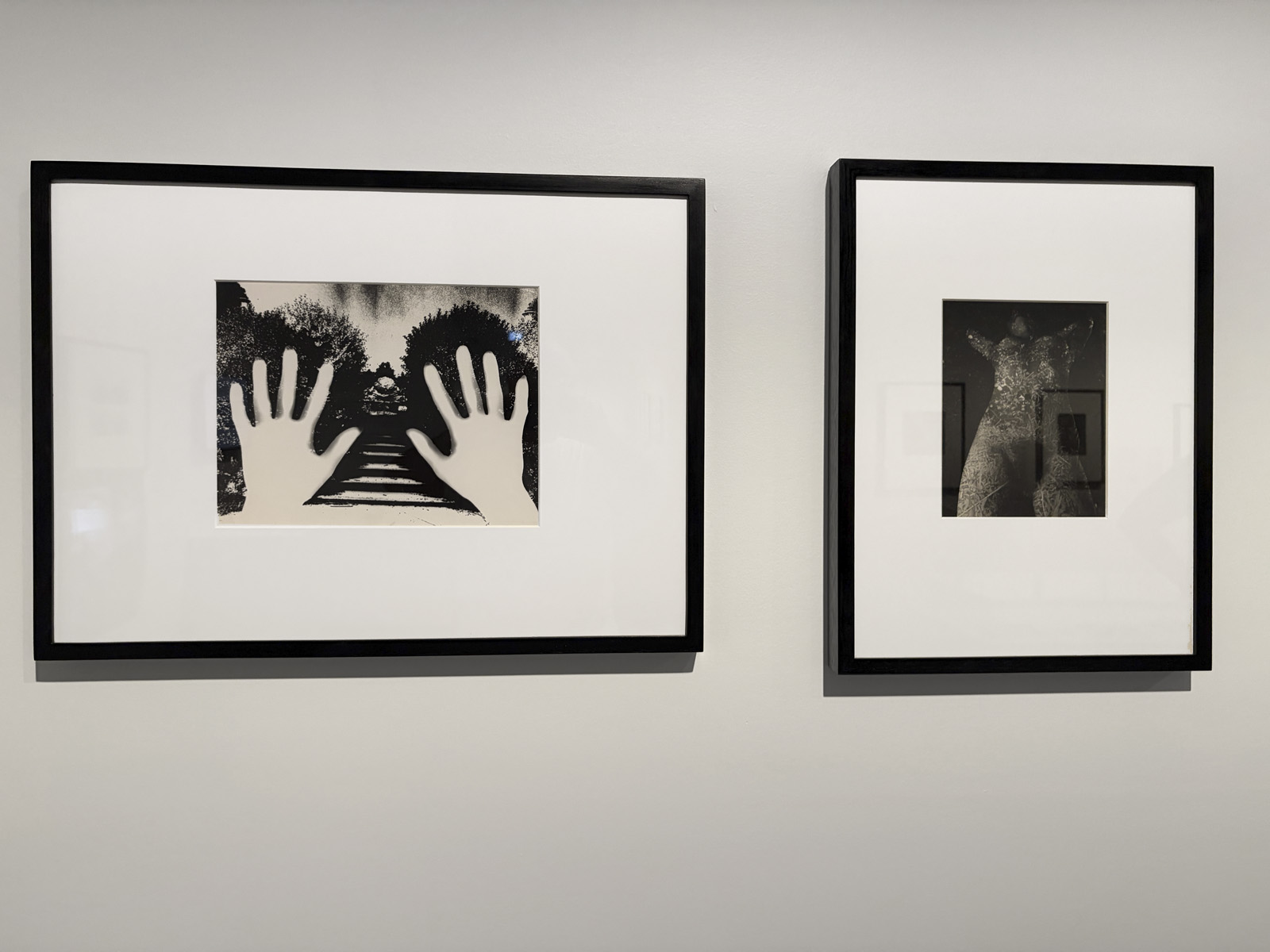
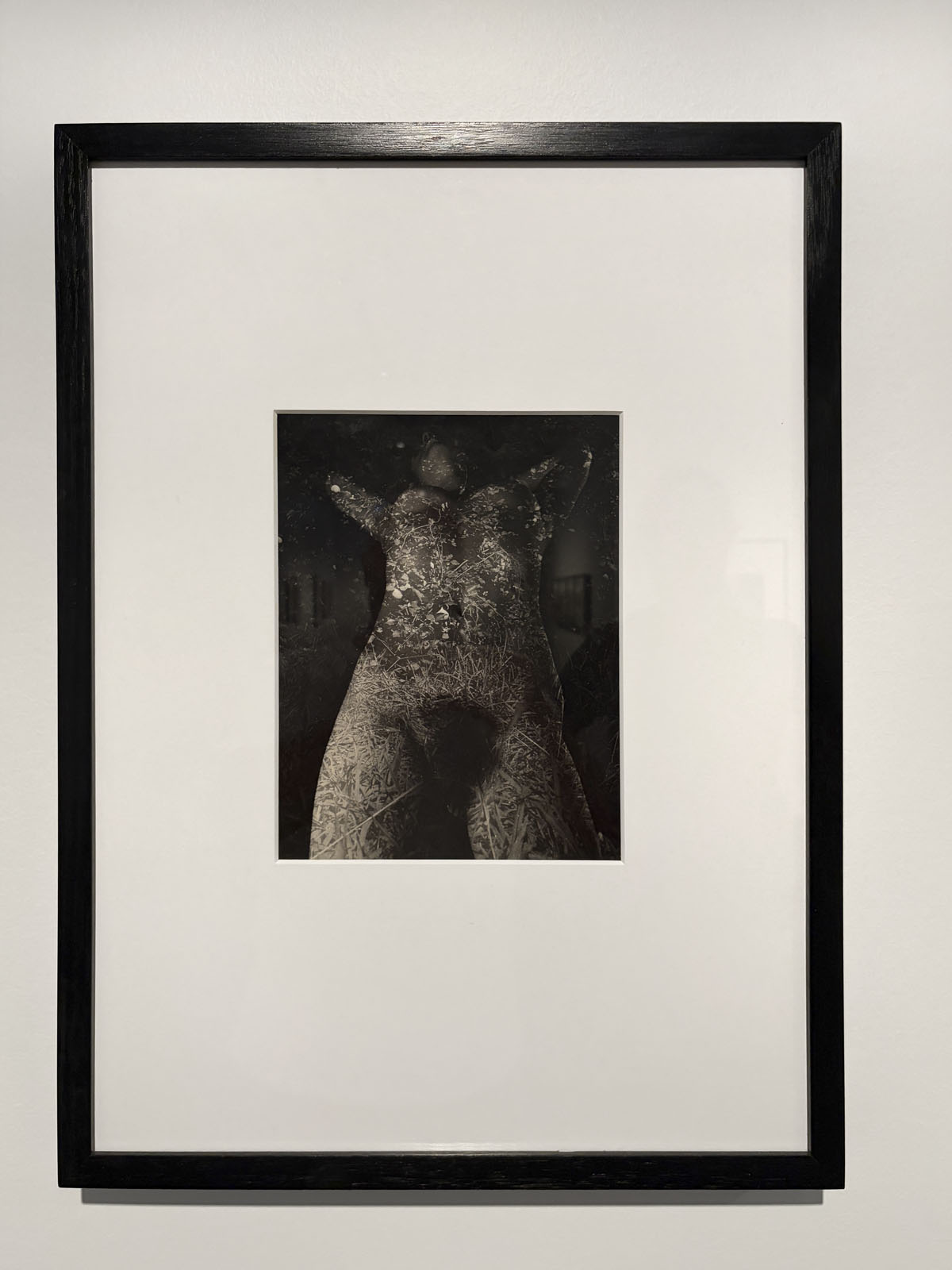
Installation view of the exhibition 'Women Photographers 1900-1975: A Legacy of Light' at NGV International, Melbourne, November 2025 – May 2026 showing from left to right, Bernd Becher and Hilla Becher 'Coal tipple, Goodspring, Pennsylvania' (1975); Ilse Bing 'Self-portrait' (1931 printed c. 1993); and two Sue Ford photographs, 'No title (Photogram of two hands and garden path)' (c. 1970, below) and 'No title (Nude montage)' (1960s)


Installation view of the exhibition Women Photographers 1900-1975: A Legacy of Light at NGV International, Melbourne, November 2025 – May 2026 showing from left to right, Bernd Becher and Hilla Becher Coal tipple, Goodspring, Pennsylvania (1975, below); Ilse Bing Self-portrait (1931 printed c. 1993, below); and two Sue Ford photographs, No title (Photogram of two hands and garden path) (c. 1970, below) and No title (Nude montage) (1960s)
Photo: Marcus Bunyan


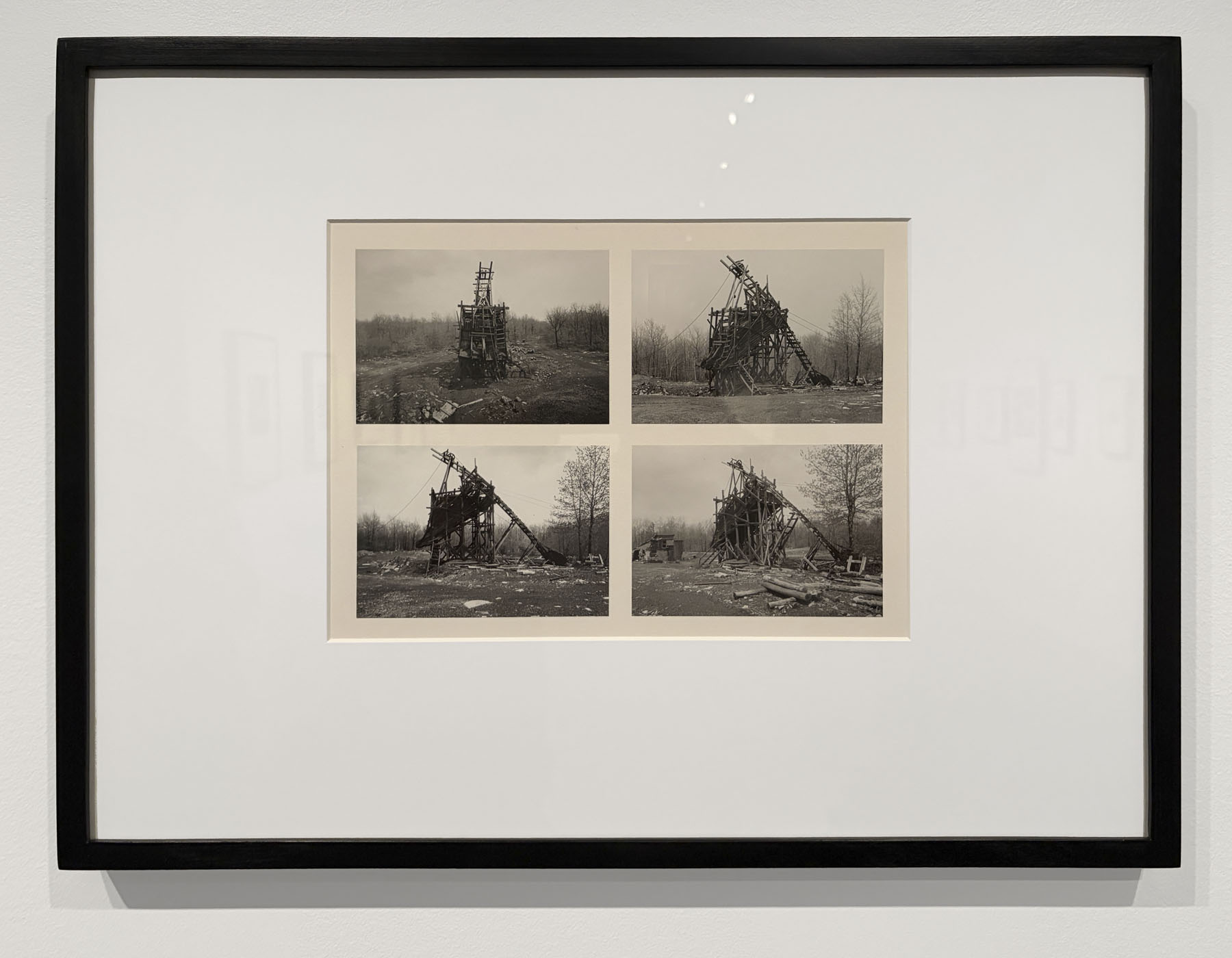
Bernd Becher and Hilla Becher (German, 1931-2007/1934-2015) 'Coal tipple, Goodspring, Pennsylvania' 1975 (installation view)


Bernd Becher and Hilla Becher (German, 1931-2007/1934-2015)
Coal tipple, Goodspring, Pennsylvania (installation view)
1975
From the Artists and photographs folio 1975
Gelatin silver photographs
24.0 x 33.9cm (image and sheet)
40.7 x 49.6cm (support)
ed. 9/60
National Gallery of Victoria, Melbourne
Purchased, 1976
Photo: Marcus Bunyan


Bernd and Hilla Becher (German, 1931-2007 and 1934-2015) 'Coal tipple, Goodspring, Pennsylvania' 1975


Bernd Becher and Hilla Becher (German, 1931-2007/1934-2015)
Coal tipple, Goodspring, Pennsylvania
1975
From the Artists and photographs folio 1975
Gelatin silver photographs
24.0 x 33.9cm (image and sheet)
40.7 x 49.6cm (support)
ed. 9/60
National Gallery of Victoria, Melbourne
Purchased, 1976
© Estate Bernd & Hilla Becher, represented by Max Becher


In 1959 married artists Bernd and Hilla Becher started photographing industrial architecture, a practice that would continue for over four decades. While predominantly documenting structures throughout Germany’s Ruhr region, they occasionally worked overseas – this work was made on their first trip to the United States. The Bechers created a system for comparing structures: photographing them from a consistent angle, under virtually identical lighting conditions, printing images at the same size and often displaying them in grids. According to Hilla Becher, their archive allows for narratives to naturally emerge: “Structural patterns and their transformations … can be proved to exist in the case of such relatively exhaustive comparative series.”

Wall text from the exhibition


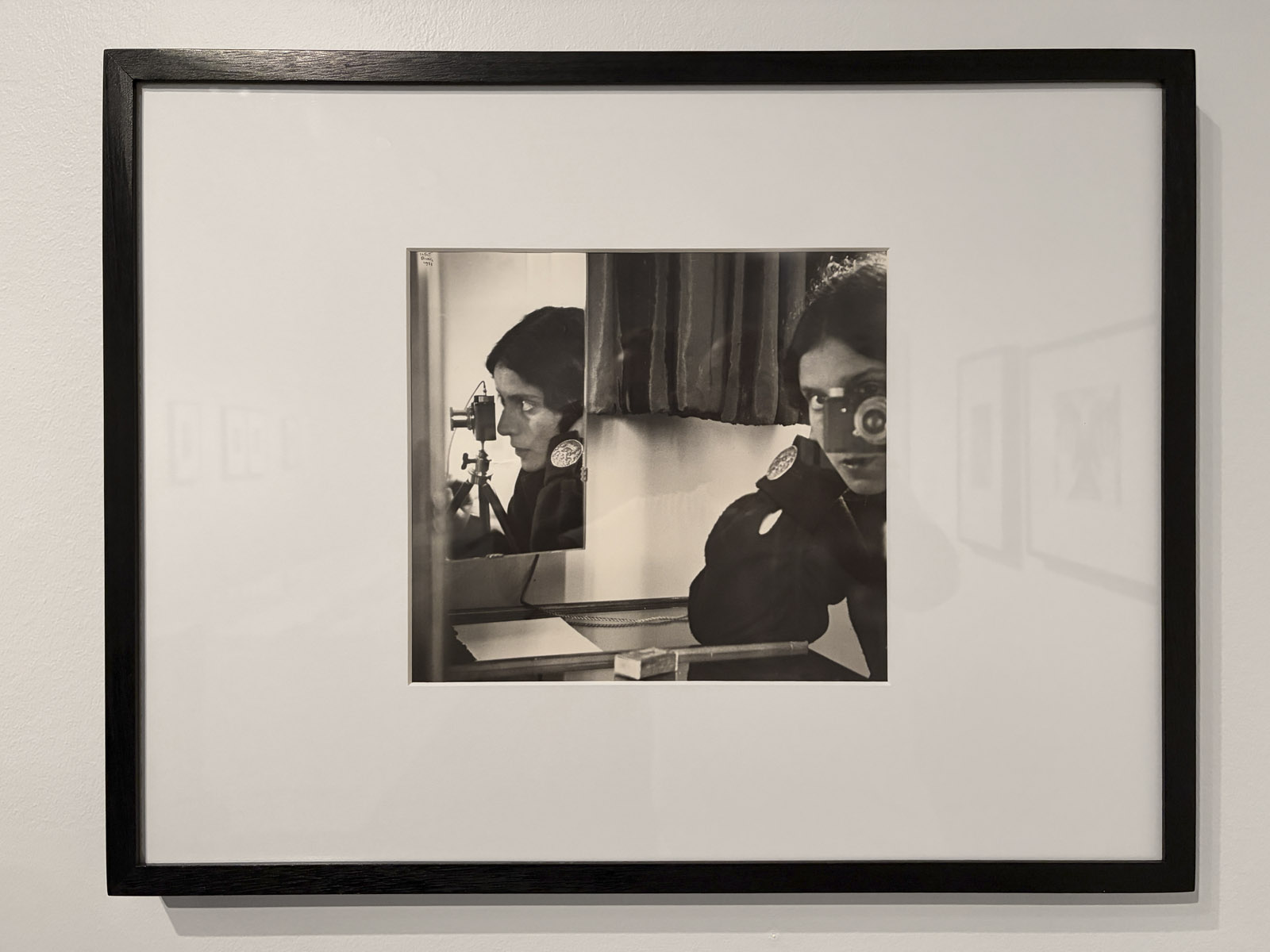
Ilse Bing (German, 1899-1998) 'Self-portrait (Autoportrait)' 1931, printed 1993 (installation view)


Ilse Bing (German, 1899-1998)
Self-portrait (Autoportrait) (installation view)
1931, printed 1993
Gelatin silver photograph
26.7 x 29.4cm (image)
27.9 x 35.3cm (sheet)
National Gallery of Victoria, Melbourne
Bowness Family Fund for Photography, 2023
Photo: Marcus Bunyan


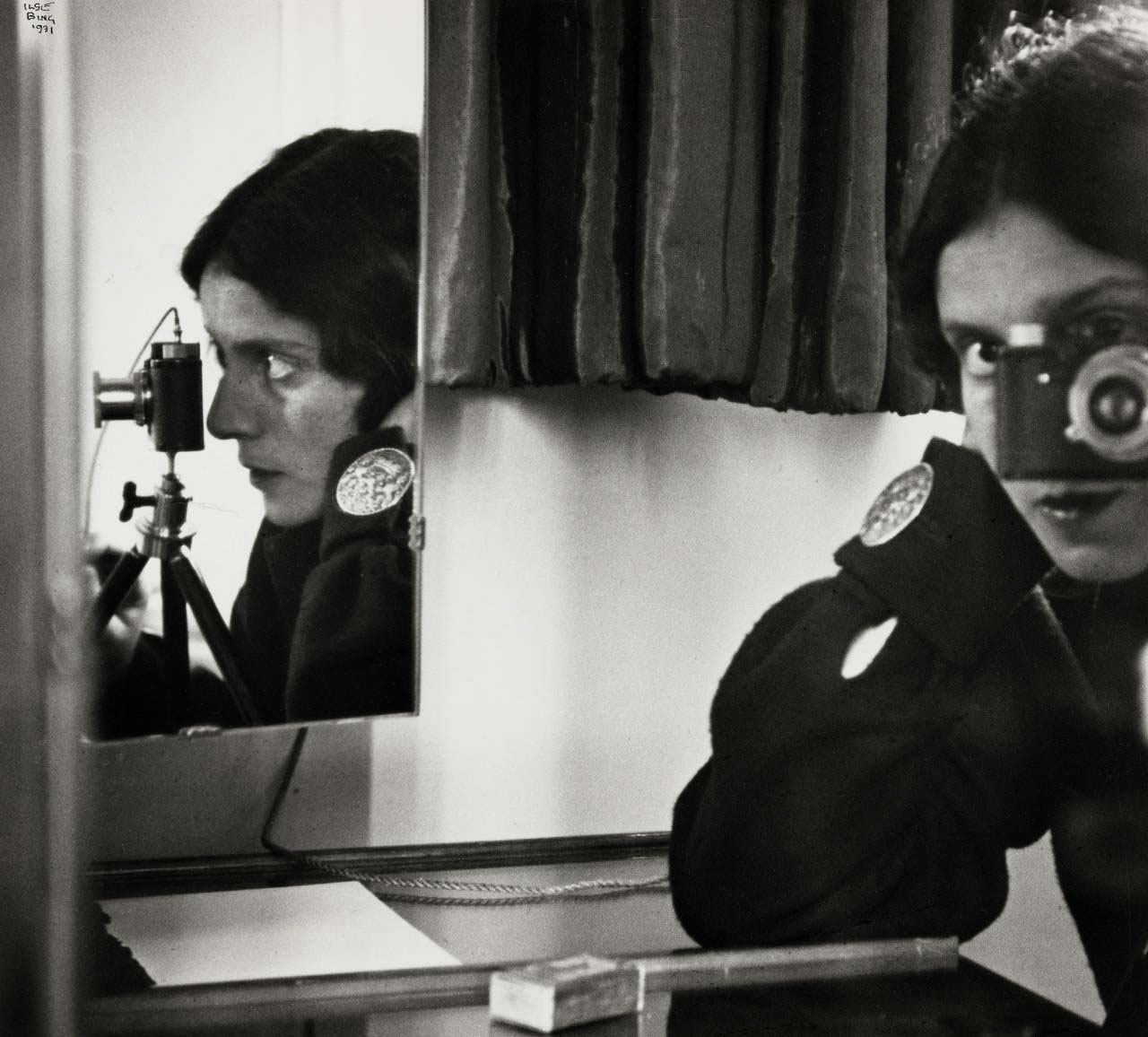
Ilse Bing (German, 1899-1998) 'Self-portrait (Autoportrait)' 1931, printed 1993


Ilse Bing (German, 1899-1998)
Self-portrait (Autoportrait)
1931, printed 1993
Gelatin silver photograph
26.7 x 29.4cm (image)
27.9 x 35.3cm (sheet)
National Gallery of Victoria, Melbourne
Bowness Family Fund for Photography, 2023
© Ilse Bing Estate
Photo: National Gallery of Victoria, Melbourne


Ilse Bing began making photographs in the late 1920s, when she purchased one of the first 35 mm cameras produced by the German company Leica. She made use of the camera’s portability, capturing motion, dizzying angles and contrasts of light, shade and shadow – compositional elements that characterised the New Photography movement. Inspired by Florence Henri, Bing used her camera to disrupt the picture plane. In this famed self-portrait, Bing uses mirrors as a fracturing tool. The self-portrait shows Bing’s reflection holding a camera, accompanied by her side profile in another angled mirror. She controls the various gazes: her own, the viewer’s, the camera’s.

Wall text from the exhibition


Time and Mirrors

Photography has long been associated with mirrors and time – as a way of remembering, reflecting and retrieving information. As early as 1859, American writer Oliver Wendell Holmes Sr described photography, specifically the daguerreotype, as ‘the mirror with a memory’.

Many artists use the camera to explore identity through portraits and self-portraits. In Ilse Bing’s 1931 self-portrait, captured with her Leica camera, a mirror disrupts the image, disorienting the viewer. Four decades later, Joan Jonas extended this idea, using a video monitor as a mirror to explore reflection, perception and the self.

By the 1970s, repetition and seriality became central to photographic practice. Through sequences of images, artists such as Eve Sonneman, Sue Ford and Bernd and Hilla Becher explored how photography could record and interpret change – both immediate and long-term. Their images reveal the camera’s dual role as an objective instrument and a conceptual recorder of the world.


Installation view of the exhibition 'Women Photographers 1900-1975: A Legacy of Light' at NGV International, Melbourne, November 2025 – May 2026 showing from left to right, two Sue Ford photographs, 'No title (Photogram of two hands and garden path)' (c. 1970) and 'No title (Nude montage)' (1960s)


Installation view of the exhibition Women Photographers 1900-1975: A Legacy of Light at NGV International, Melbourne, November 2025 – May 2026 showing from left to right, two Sue Ford photographs, No title (Photogram of two hands and garden path) (c. 1970, below) and No title (Nude montage) (1960s, below)
Photo: Marcus Bunyan


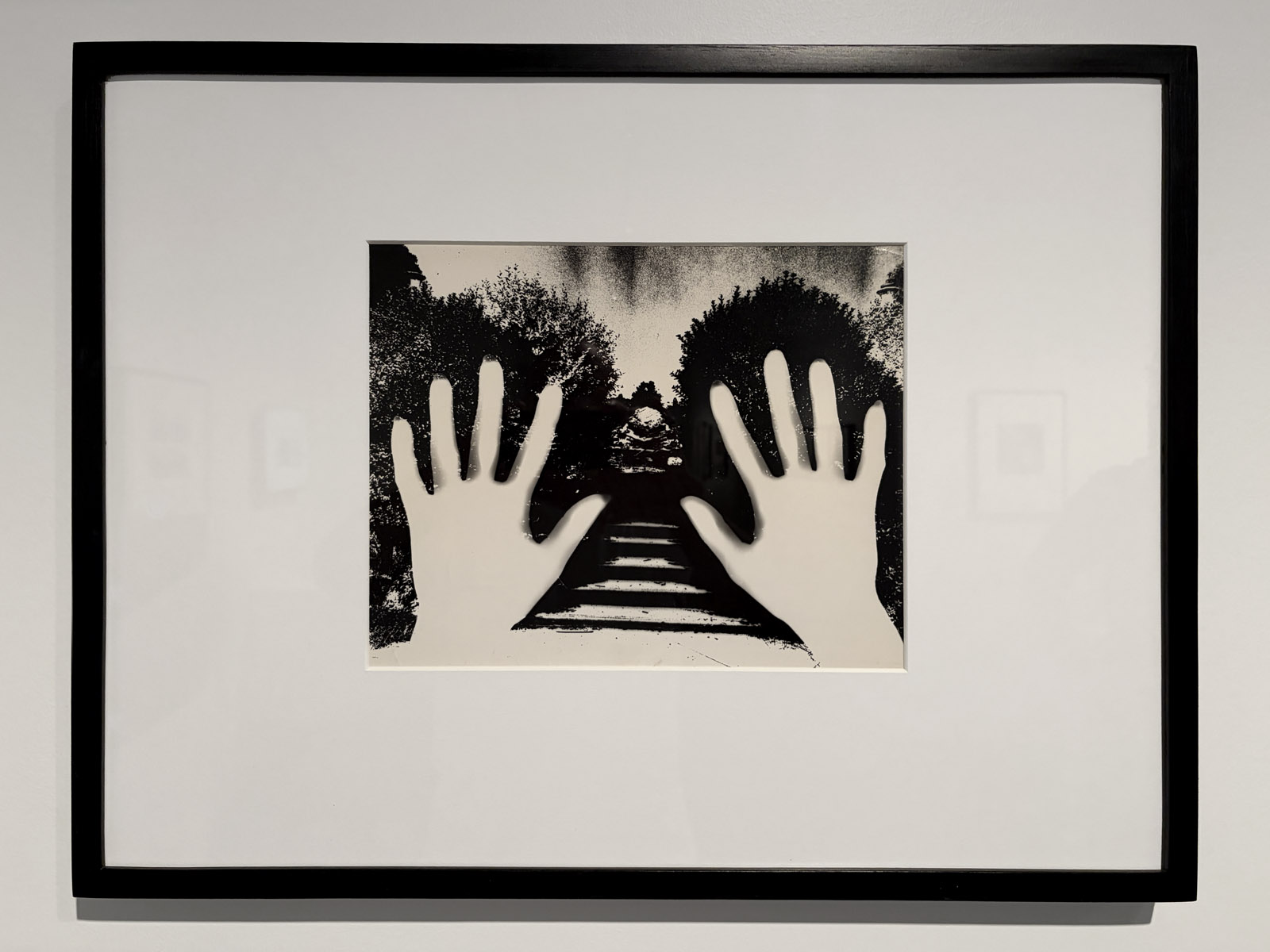
Sue Ford (Australian, 1943-2009) 'No title (Photogram of two hands and garden path)' c. 1970 (installation view)


Sue Ford (Australian, 1943-2009)
No title (Photogram of two hands and garden path) (installation view)
c. 1970
Gelatin silver photograph
27.6 x 34.7cm irreg. (image and sheet)
38.5 x 44.8cm (support)
National Gallery of Victoria, Melbourne
Gerstl Bequest, 2000
Photo: Marcus Bunyan


In the late 1960s and early 70s, Sue Ford created several bodies of highly experimental work. These works involved complex montages, photograms and layered negatives, revealing hours of darkroom experimentation in her Eltham studio in Melbourne’s north-east. Such experiments coincided with Ford’s burgeoning interest in left-wing politics, and her exposure via the media to world events such as the NASA moon landings and the Vietnam War. Ford incorporated imagery and ideas relating to these events, as well as her interest in environmentalism, into these abstracted, Surrealism-inspired works.

Wall text from the exhibition


Sue Ford (Australian, 1943-2009) 'No title (Nude montage)' 1960s (installation view)


Sue Ford (Australian, 1943-2009)
No title (Nude montage) (installation view)
1960s
Gelatin silver photograph
25.6 x 19.9cm (image and sheet)
National Gallery of Victoria, Melbourne
Gerstl Bequest, 2000
Photo: Marcus Bunyan


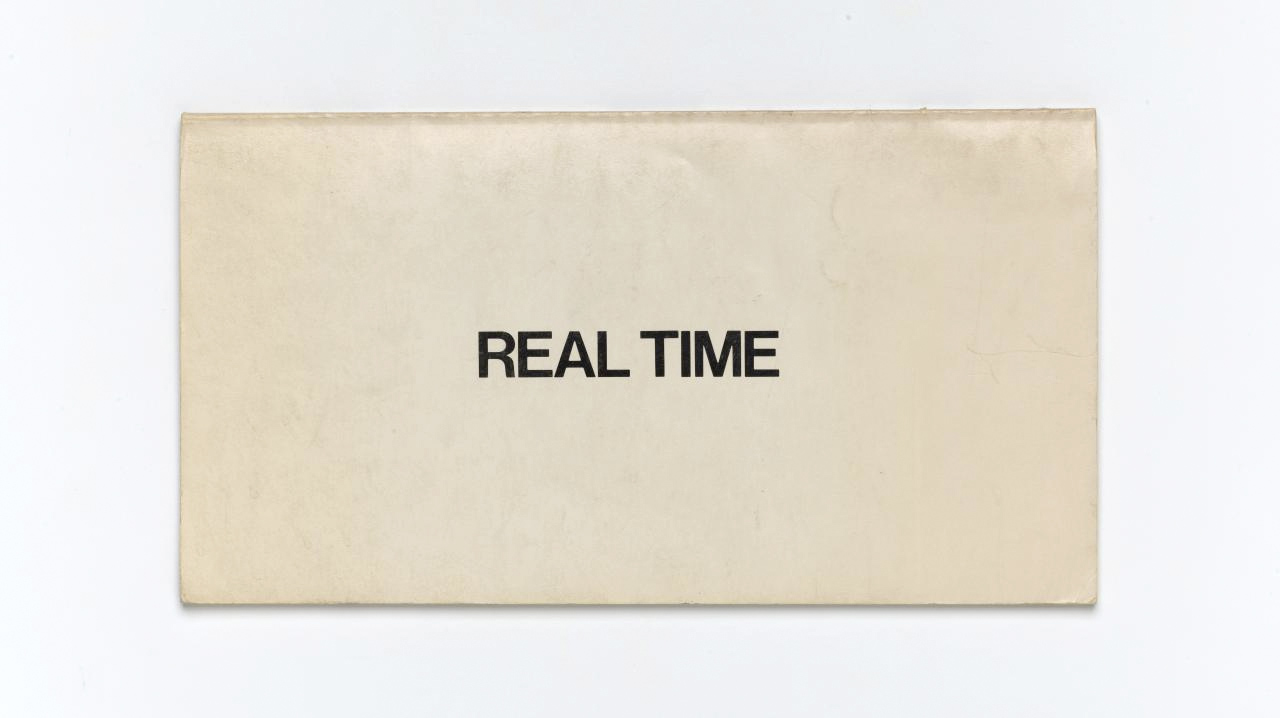
Eve Sonneman (American, b. 1946) 'Real time' 1968-1974, 1976 (published) (cover)
Eve Sonneman (American, b. 1946) 'Real time' 1968-1974 (installation view)


Eve Sonneman (American, b. 1946)
Real time (installation view bottom)
1968-1974, 1976 (published) (cover)
Artist’s book: photo-offset lithographs and printed text, 46 folios, printed paper cover, glued binding
20.5 x 38.0 x 0.8cm (closed)
1st edition
National Gallery of Victoria, Melbourne
Purchased, NGV Supporters of Photography, 2021
© Eve Sonneman


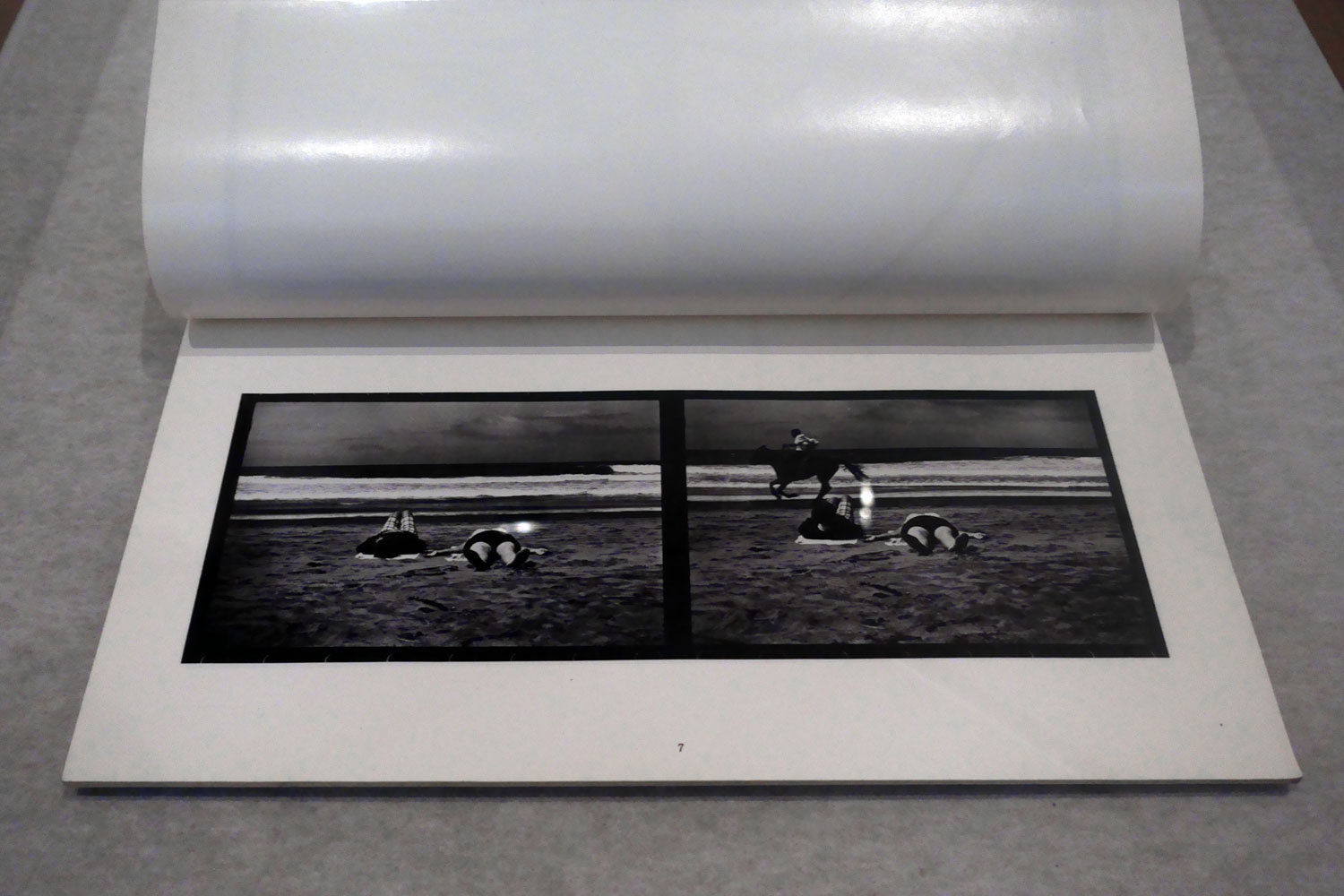
Real Time is composed of paired photographs taken seconds apart, separated by a black-line border. The ordered presentation allows the viewer to consider the relationship between the images, and the small changes and passing of time between them. Eve Sonneman first showed the photographs at the Museum of Modern Art in New York, before publishing them as a book. In 1976 she saw an
advertisement in Artforum from newly established press Printed Matter, which was seeking artists’ books to publish. “So I sent [my photographs] in and that work became my first published book, Real Time,” Sonneman recalled. “I was as thrilled as could be!”

Wall text from the exhibition


Sue Ford (Australian, 1943-2009) 'Ross, 1964; Ross, 1974' 1964-1974, printed 1974 (installation view)


Sue Ford (Australian, 1943-2009)
Ross, 1964; Ross, 1974 (installation view)
1964-1974, printed 1974
From the Time series (1962-1974)
Gelatin silver photograph
11.1 × 20.1cm
National Gallery of Victoria, Melbourne
Purchased with the assistance of the Visual Arts Board and the KODAK (Australasia) PTY LTD Fund, 1974
Photo: Marcus Bunyan


Sue Ford (Australian, 1943-2009) 'Jim, 1964; Jim, 1974' 1964-1974, printed 1974 (installation view)


Sue Ford (Australian, 1943-2009)
Jim, 1964; Jim, 1974 (installation view)
1964-1974, printed 1974
From the Time series (1962-1974)
Gelatin silver photograph
11.1 × 20.1cm
National Gallery of Victoria, Melbourne
Purchased with the assistance of the Visual Arts Board and the KODAK (Australasia) PTY LTD Fund, 1974
Photo: Marcus Bunyan


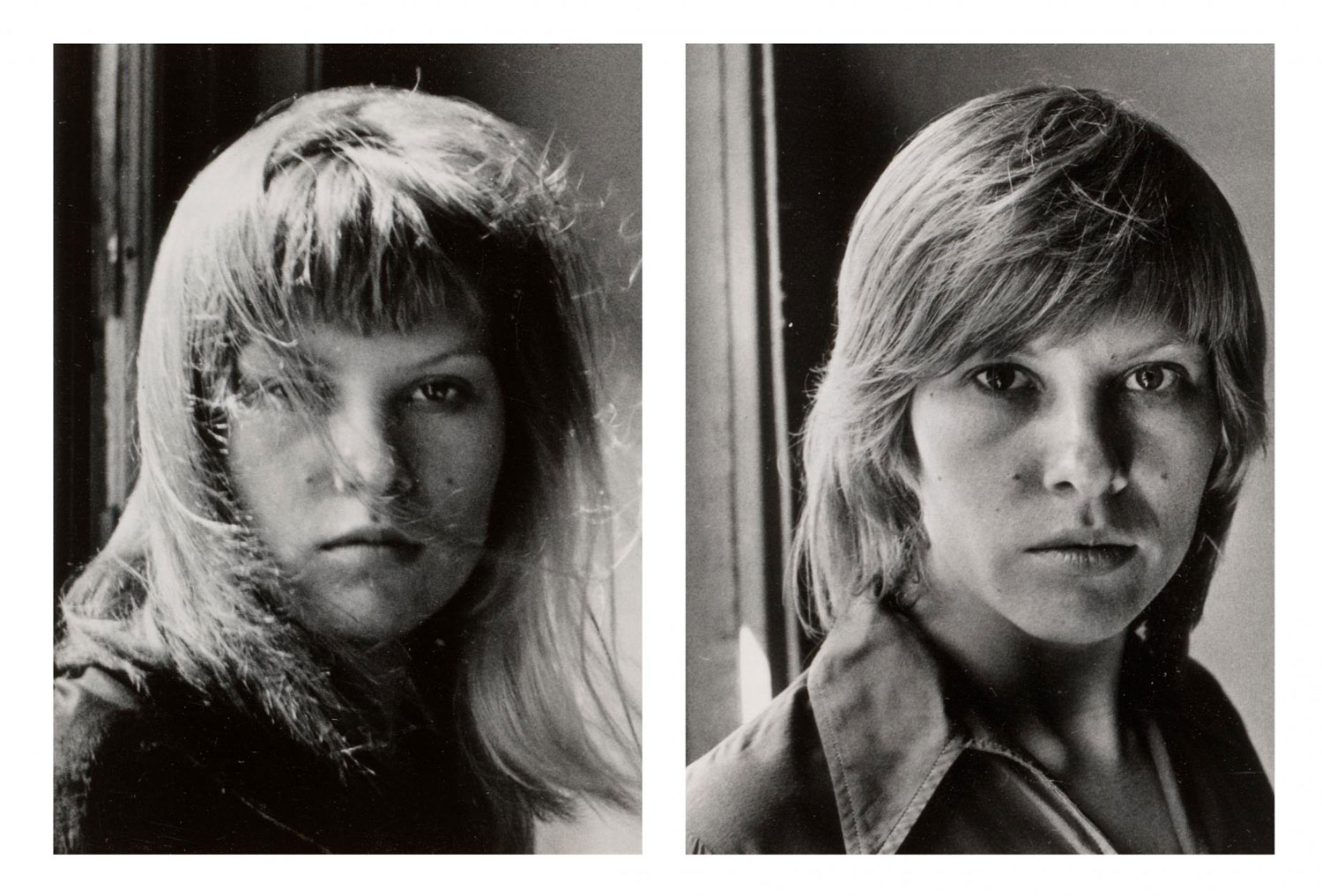
Sue Ford (Australian, 1943-2009) 'Annette 1962; Annette 1974' 1974 from the 'Time' series


Sue Ford (Australian, 1943-2009)
Annette, 1962; Annette, 1974
1962-1974, printed 1974
From the Time series (1962-1974)
Gelatin silver photograph
11.1 x 20.1cm
National Gallery of Victoria, Melbourne
Purchased with the assistance of the Visual Arts Board and the KODAK (Australasia) Pty Ltd Fund, 1974
© Courtesy of the artist


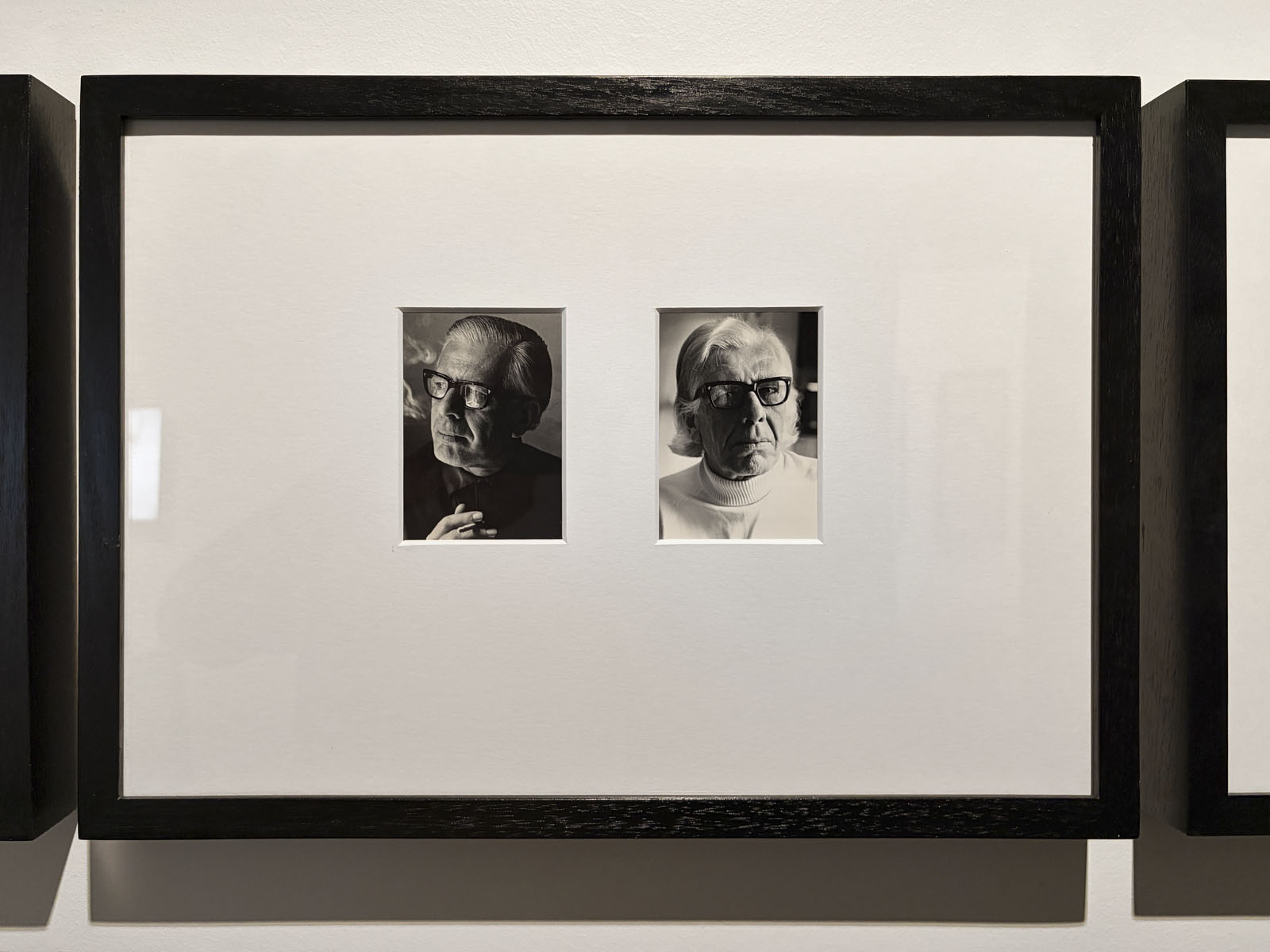
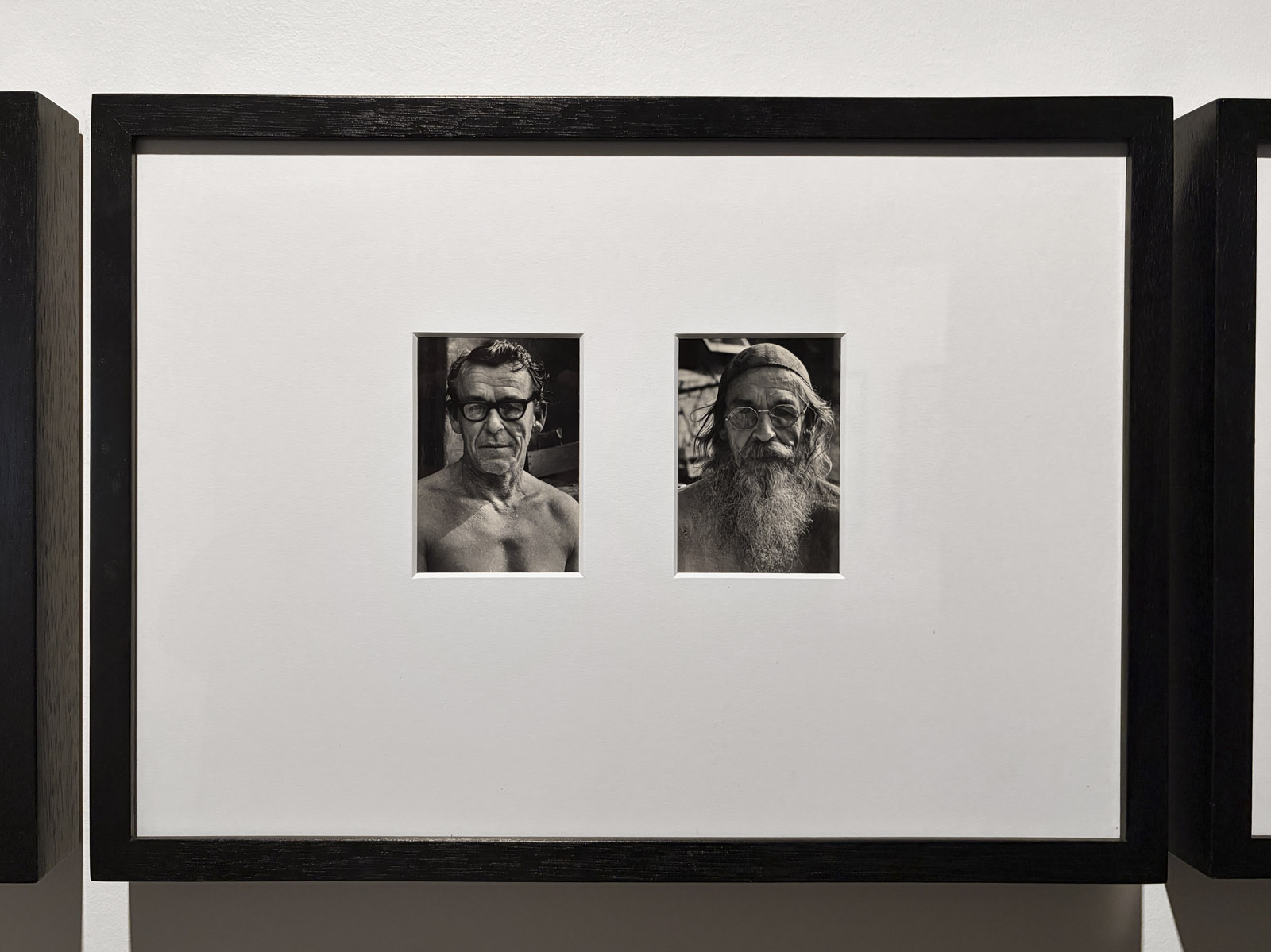
“For some time I have been thinking about the camera itself. Trying to explore its particular UNIQUENESS, coming to terms with the fact that I had been trying to ignore for some years, that the camera is actually a MACHINE. … In “Time Series” I tried to use the camera as objectively as possible. It was a time machine. For me it was an amazing experience. It wasn’t until I placed the photograph of the younger face beside the recent photograph that I could fully appreciate the change. The camera showed me with absolute clarity, something I could only just perceive with my naked eye.”

~ Sue Ford, Time Series: An Exhibition of Photographs, Melbourne, 1974

Wall text from the exhibition


Installation view of the exhibition 'Women Photographers 1900-1975: A Legacy of Light' at NGV International, Melbourne, November 2025 – May 2026
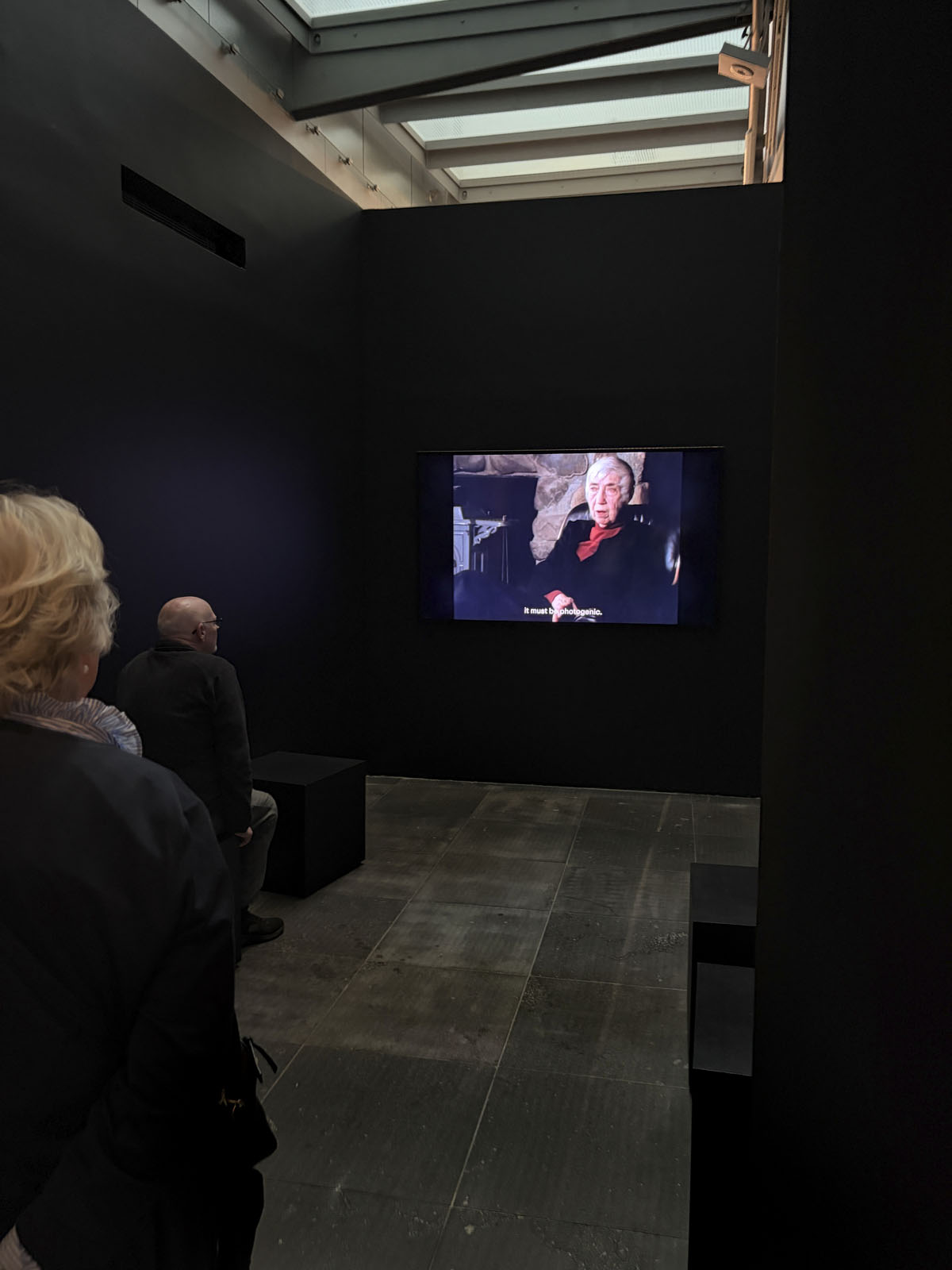
Installation view of the exhibition 'Women Photographers 1900-1975: A Legacy of Light' at NGV International, Melbourne, November 2025 – May 2026 showing a video of Imogen Cunningham


Installation views of the exhibition Women Photographers 1900-1975: A Legacy of Light at NGV International, Melbourne, November 2025 – May 2026 showing in the bottom image a video still of Imogen Cunningham
Photos: Marcus Bunyan


Installation view of the exhibition 'Women Photographers 1900-1975: A Legacy of Light' at NGV International, Melbourne, November 2025 – May 2026
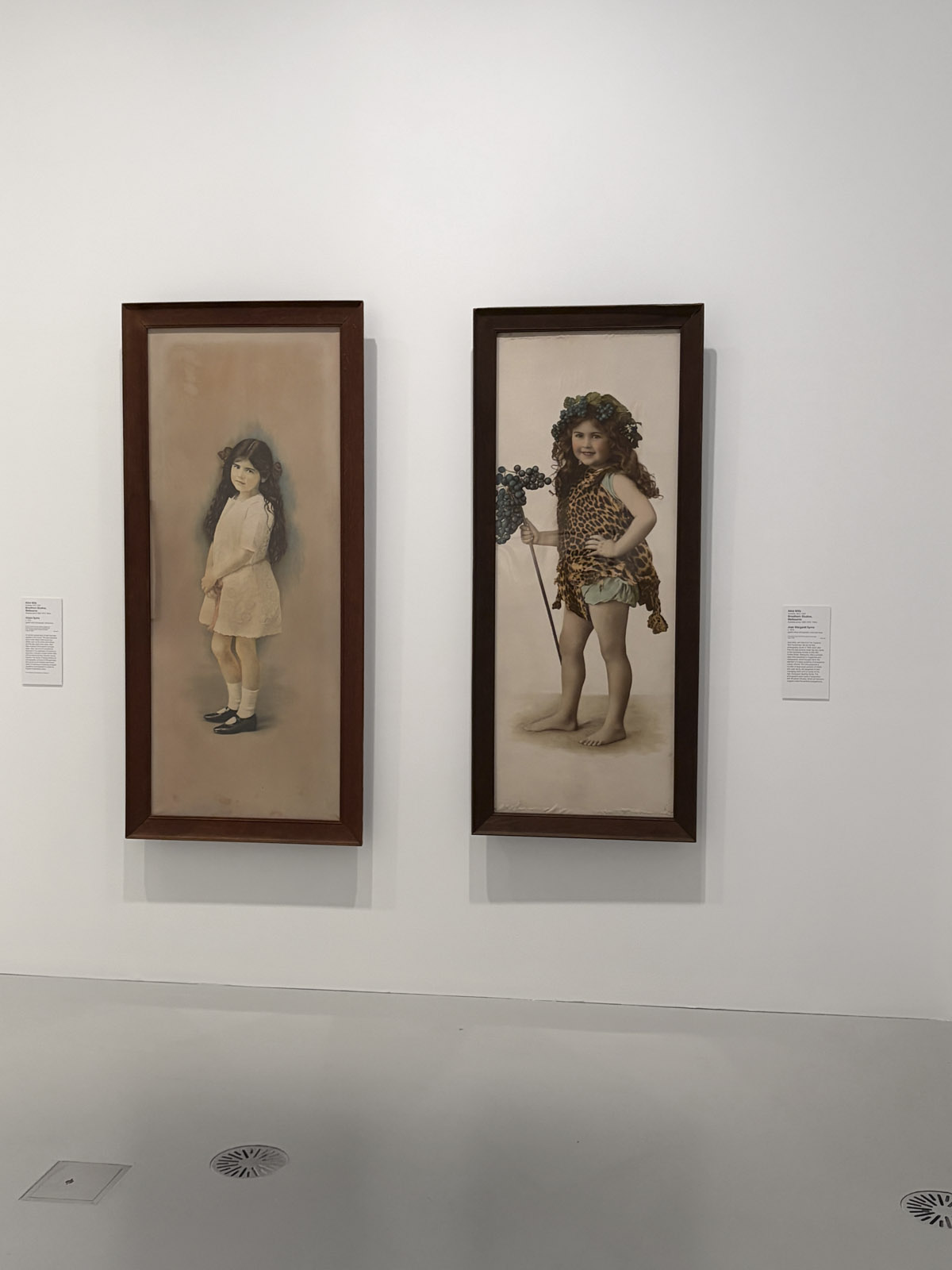
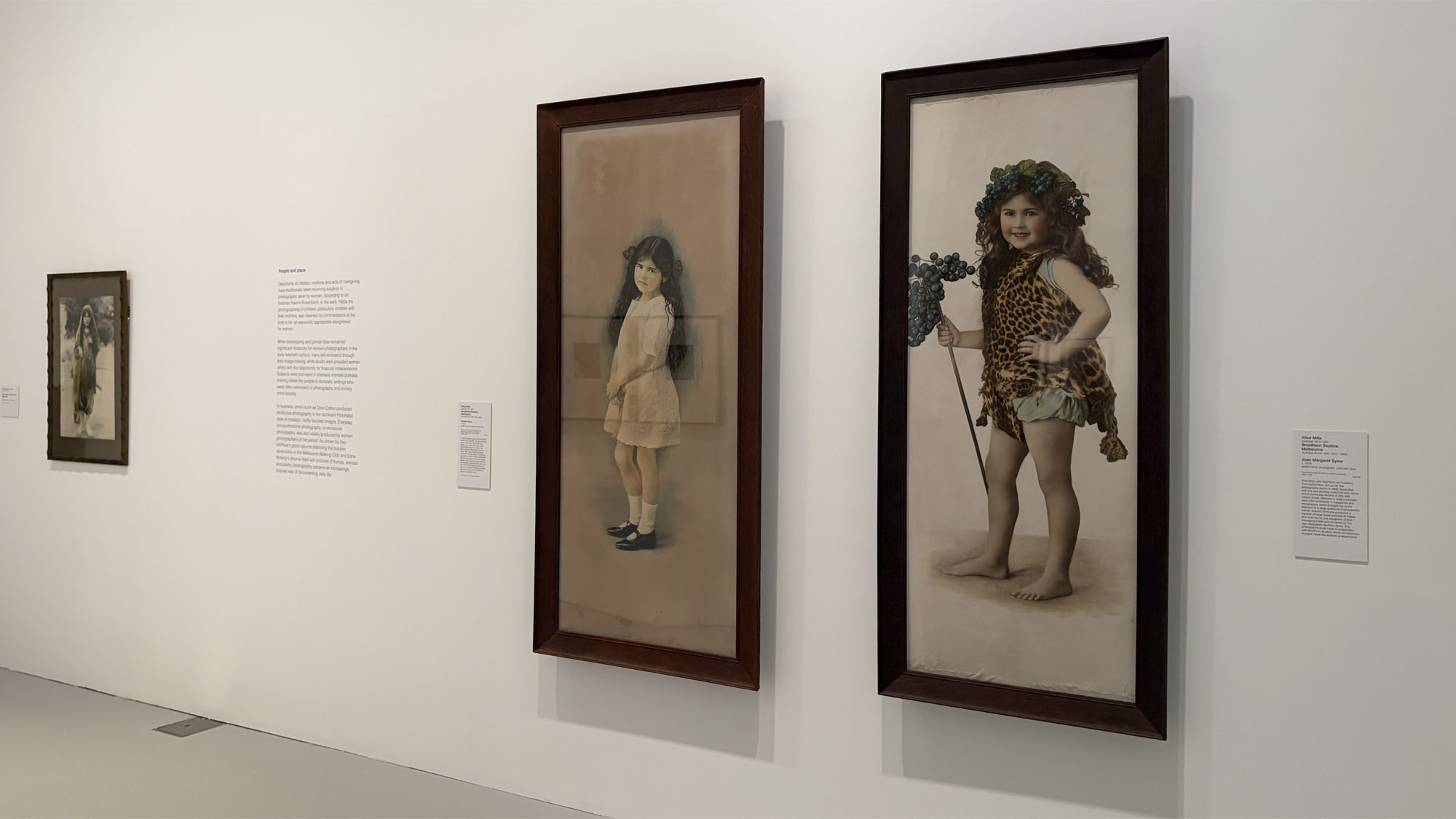
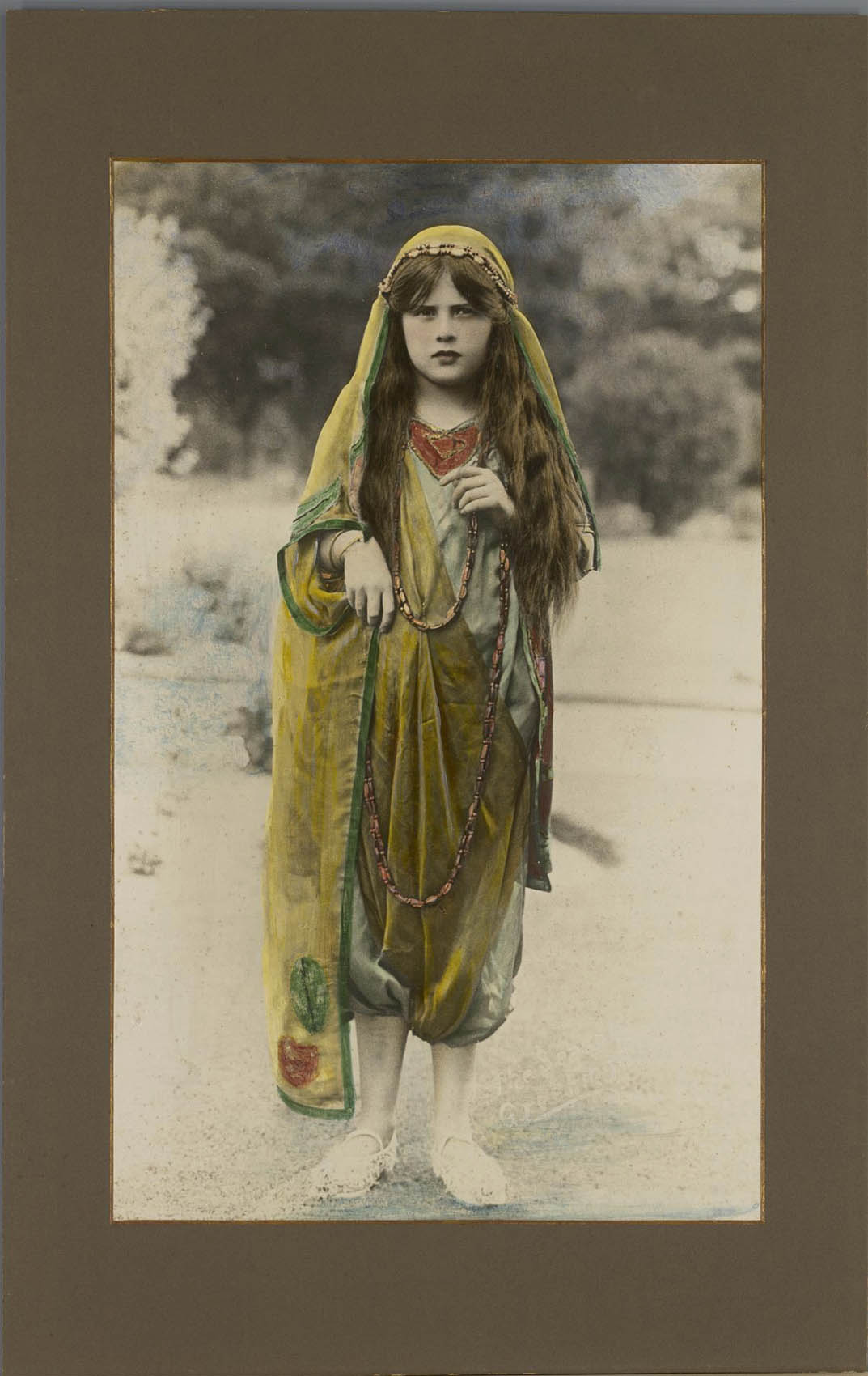
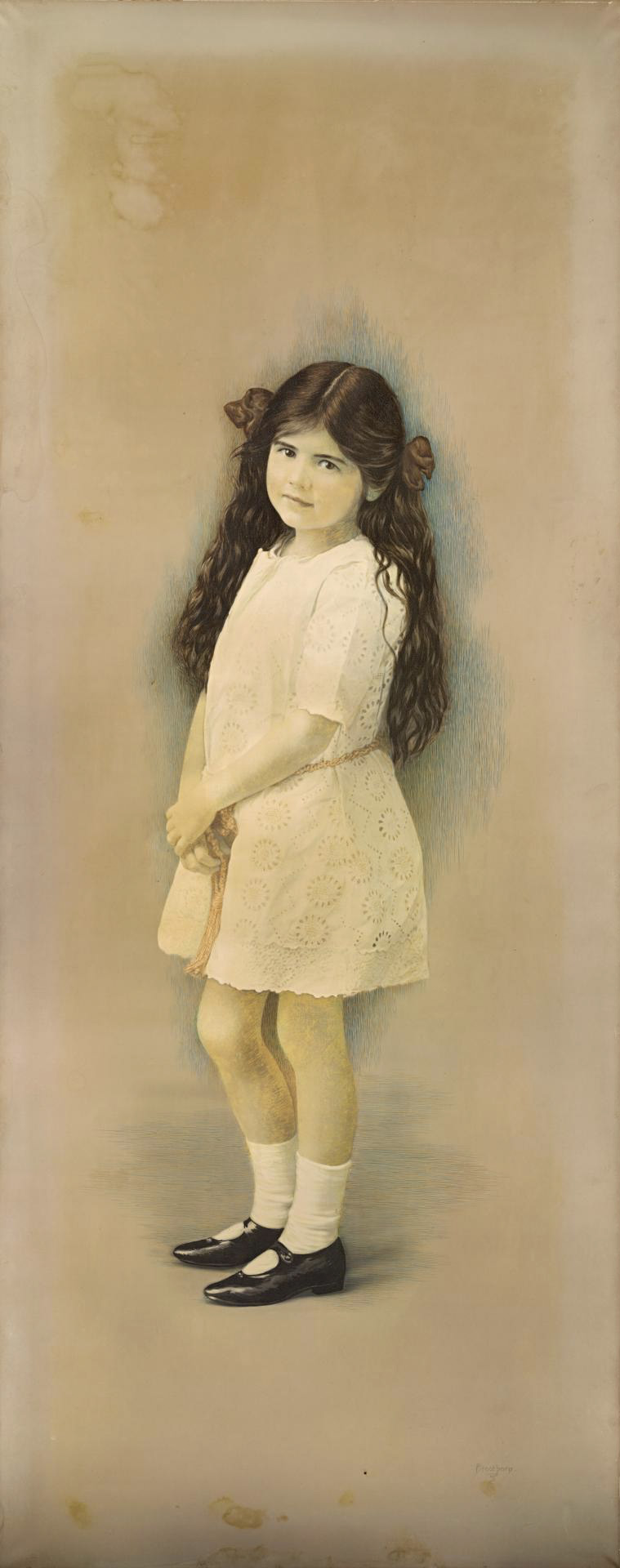
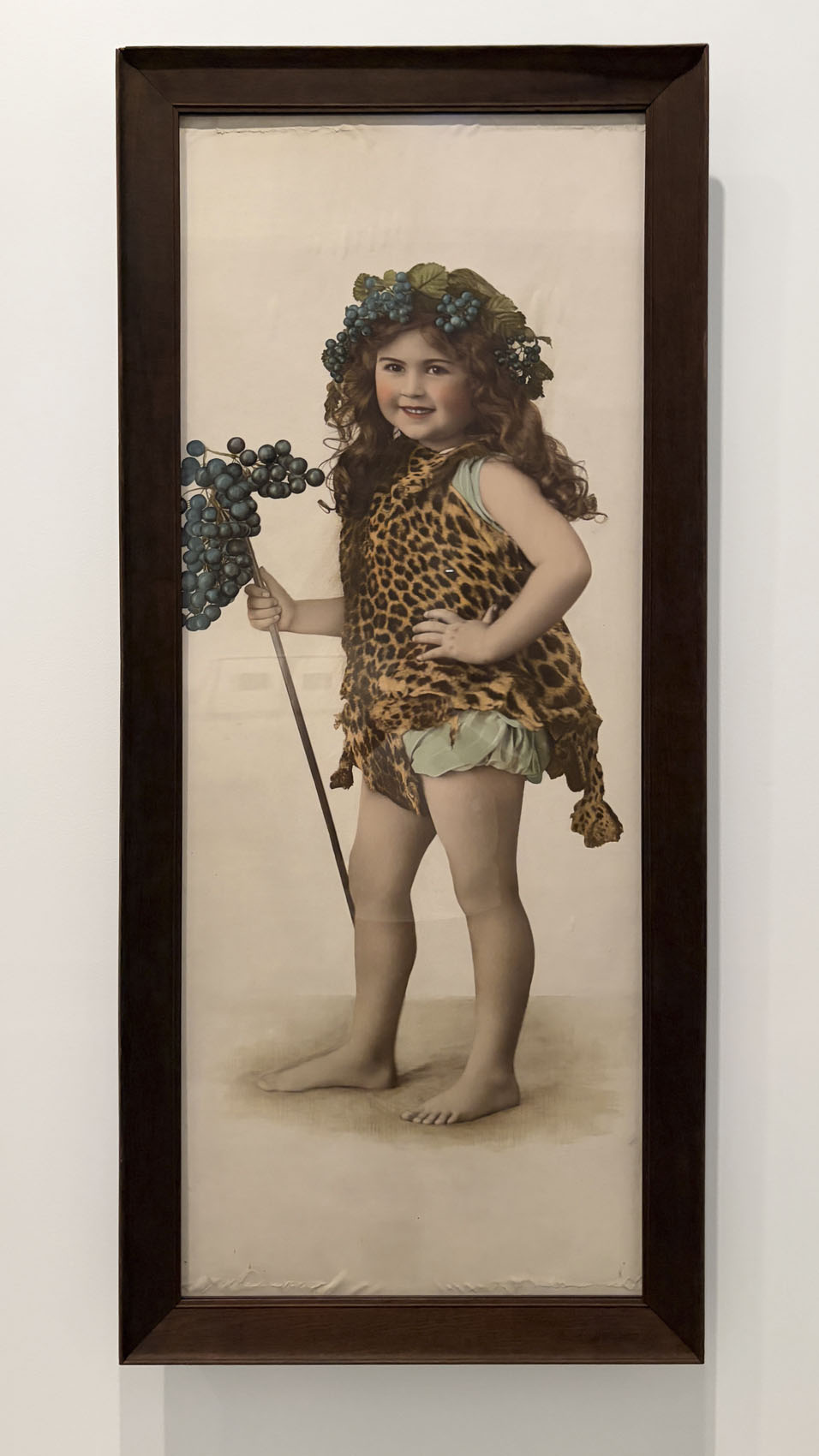
Installation view of the exhibition 'Women Photographers 1900-1975: A Legacy of Light' at NGV International, Melbourne, November 2025 – May 2026 showing from left to right three photographs by Alice Mills, 'Hilaire Syme dressed for the Kismit Ball' (1912-1915); 'Hilaire Syme' (c. 1910); and 'Joan Margaret Syme' (c. 1918)


Installation views of the exhibition Women Photographers 1900-1975: A Legacy of Light at NGV International, Melbourne, November 2025 – May 2026 showing in the bottom image from left to right three photographs by Alice Mills, Hilaire Syme dressed for the Kismit Ball (1912-1915, below); Hilaire Syme (c. 1910, below); and Joan Margaret Syme (c. 1918, below)
Photos: Marcus Bunyan


People and Place

Depictions of children, mothers and acts of caregiving have traditionally been recurring subjects in photographs taken by women. According to art historian Naomi Rosenblum, in the early 1900s the photographing of children, particularly children with their mothers, was deemed by commentators at the time to be ‘an especially appropriate assignment for women’.

While stereotyping and gender bias remained significant obstacles for women photographers in the early twentieth century, many still innovated through their image-making, while studio work provided women artists with the opportunity for financial independence. Subjects were portrayed in intensely intimate portraits, making visible the people in domestic settings who were often overlooked in photographs and society more broadly.

In Australia, artists such as Olive Cotton produced landscape photography in the dominant Pictorialist style of nostalgic, softly focused images. Everyday, non-professional photography, or vernacular photography, was also widely produced by women photographers of the period. As shown by Inez McPhee’s photo albums depicting the outdoor adventures of the Melbourne Walking Club and Edna Walling’s albums filled with pictures of friends, animals and plants, photography became an increasingly popular way of documenting daily life.


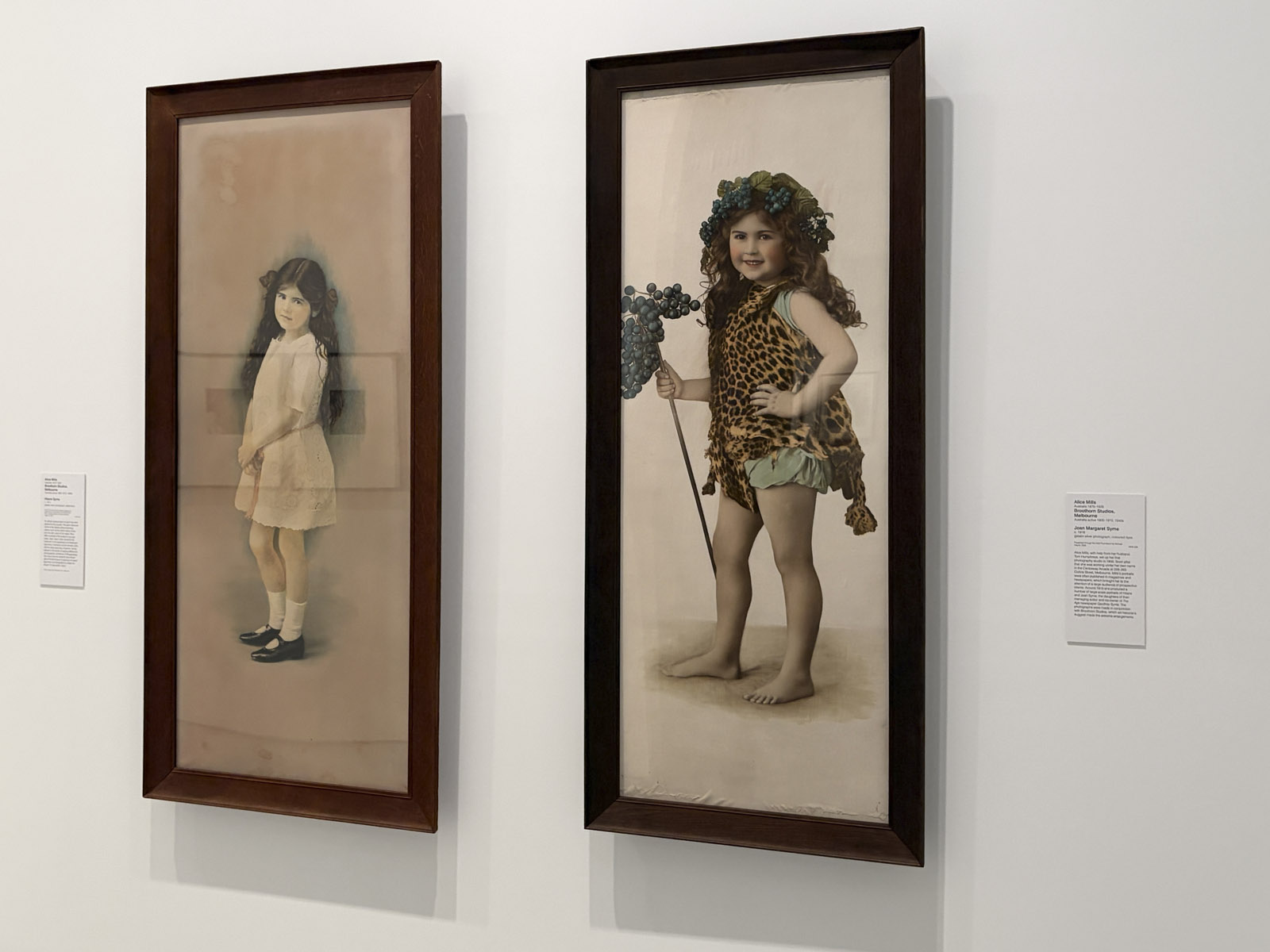
Alice Mills (attributed to) (Australian, 1870-1929) 'Hilaire Syme dressed for the Kismit Ball' 1912-1915


Alice Mills (attributed to) (Australian, 1870-1929)
Hilaire Syme dressed for the Kismit Ball
1912-1915
gelatin silver photograph, coloured dyes
70.5 x 43.3cm (image)
National Gallery of Victoria, Melbourne
Gift of Dr Veronica Condon, 2005
Public domain


Alice Mills (attributed to) (Australian, 1870-1929) Broothorn Studios, Melbourne 'Hilaire Syme' c. 1910


Alice Mills (attributed to) (Australian, 1870-1929)
Broothorn Studios, Melbourne
Hilaire Syme
c. 1910
Gelatin silver photograph, watercolour
185.5 x 74.4cm (image)
National Gallery of Victoria, Melbourne
Gift of Dr Veronica Condon, Geoffrey Haggard and Jennifer Smyth, descendants of Sir Geoffrey Syme K.B.E., Managing Editor of the Age newspaper (1908-1942), 2004


An almost opaque layer of paint has been applied to this portrait. The paint obscures some of the details while enhancing others, such as the child’s shiny shoes and the satin sash of her dress. Alice Mills’s portrait of the subject’s younger sister, Joan, has a more conventional treatment in the application of translucent pigments. It remains unclear whether Mills did the hand-colouring. However, having trained in the studio of leading Melbourne photographer Johnstone O’Shaughnessy, she would almost certainly have known about the technique of applying oil-based pigments to photographs to create the illusion of naturalistic colour.

Wall text from the exhibition


Alice Mills (attributed to) (Australian, 1870-1929) Broothorn Studios, Melbourne 'Joan Margaret Syme' c. 1918 (installation view)


Alice Mills (attributed to) (Australian, 1870-1929)
Broothorn Studios, Melbourne
Joan Margaret Syme (installation view)
c. 1918
Gelatin silver photograph, coloured dyes
243.85 x 91.45cm (approx)
National Gallery of Victoria, Melbourne
Presented through the NGV Foundation by Michael Hayne, 2005
Public domain
Photo: Marcus Bunyan


Alice Mills (attributed to) (Australian, 1870-1929) Broothorn Studios, Melbourne 'Joan Margaret Syme' c. 1918


Alice Mills (attributed to) (Australian, 1870-1929)
Broothorn Studios, Melbourne
Joan Margaret Syme
c. 1918
Gelatin silver photograph, coloured dyes
243.85 x 91.45cm (approx)
National Gallery of Victoria, Melbourne
Presented through the NGV Foundation by Michael Hayne, 2005
Public domain


Alice Mills, with help from her husband, Tom Humphreys, set up her first photography studio in 1900. Soon after that she was working under her own name in the Centreway Arcade at 259-263 Collins Street, Melbourne. Mills’s portraits were often published in magazines and newspapers, which brought her to the attention of a large audience of prospective clients. Around 1915 she produced a number of large-scale portraits of Hilaire and Joan Syme, the daughters of then managing editor and co-owner of The Age newspaper Geoffrey Syme. The photographs were made in conjunction with Broothorn Studios, which art historians suggest made the extreme enlargements.

Wall text from the exhibition


Installation view of the exhibition 'Women Photographers 1900-1975: A Legacy of Light' at NGV International, Melbourne, November 2025 - May 2026
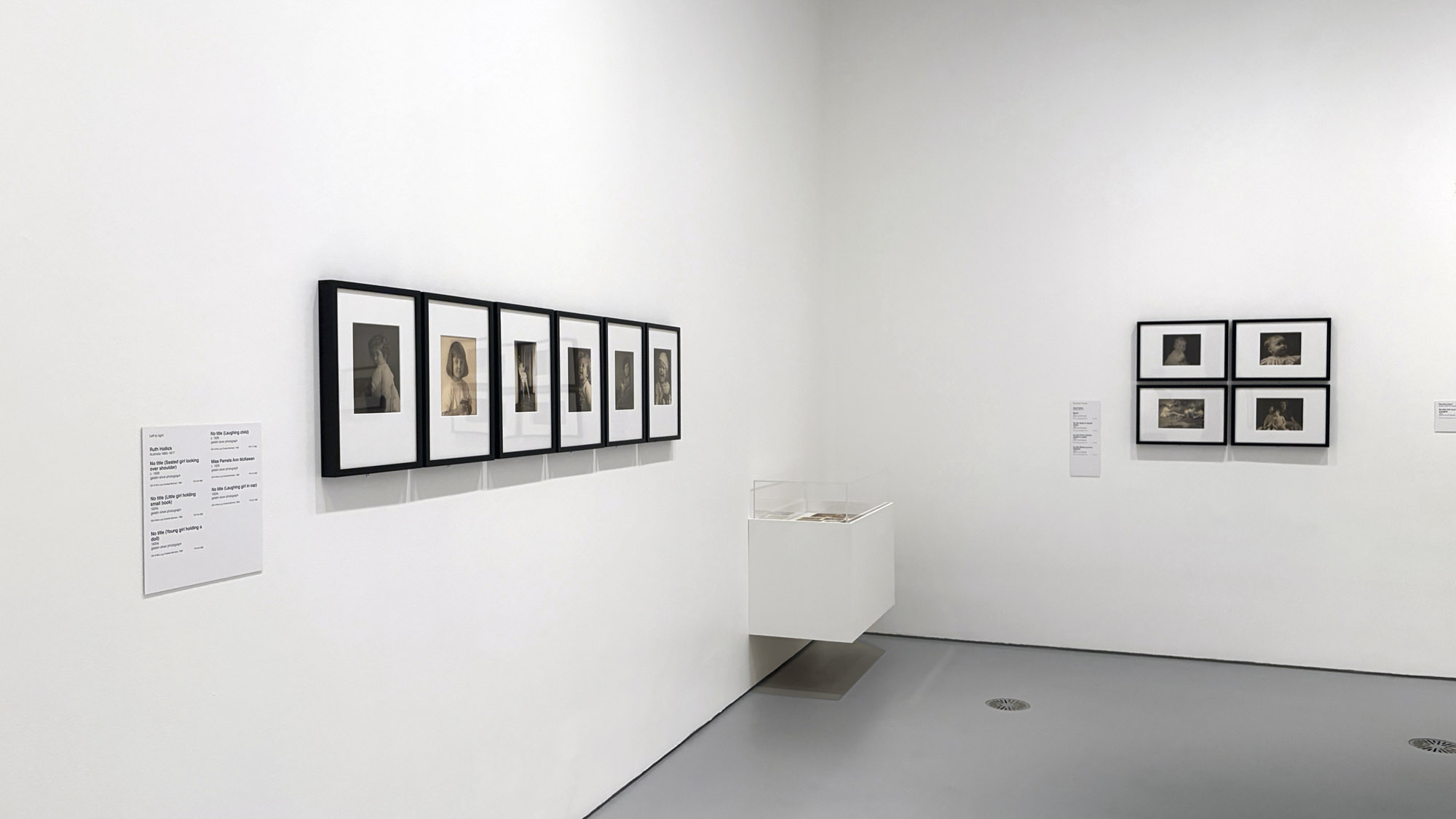
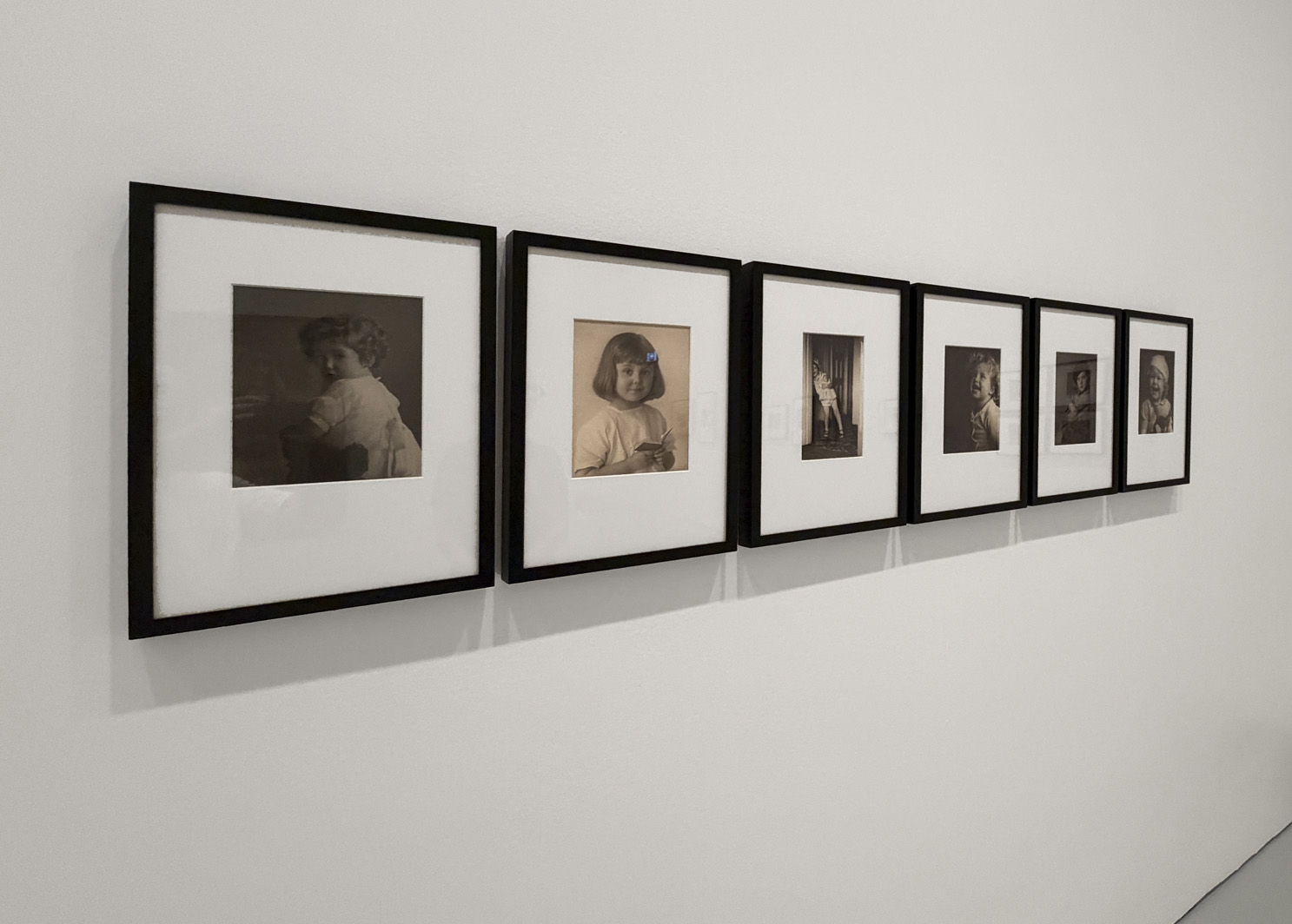
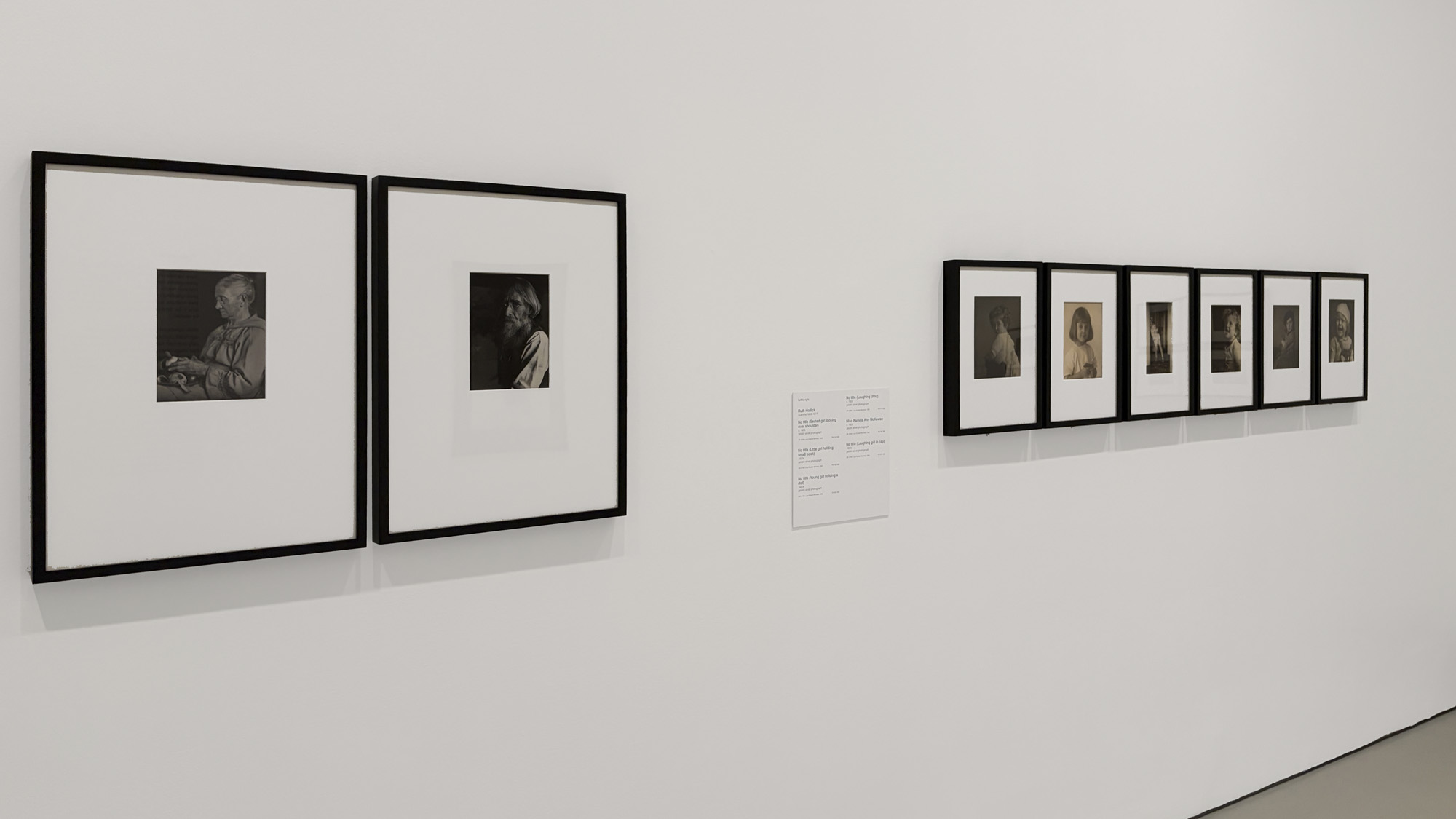
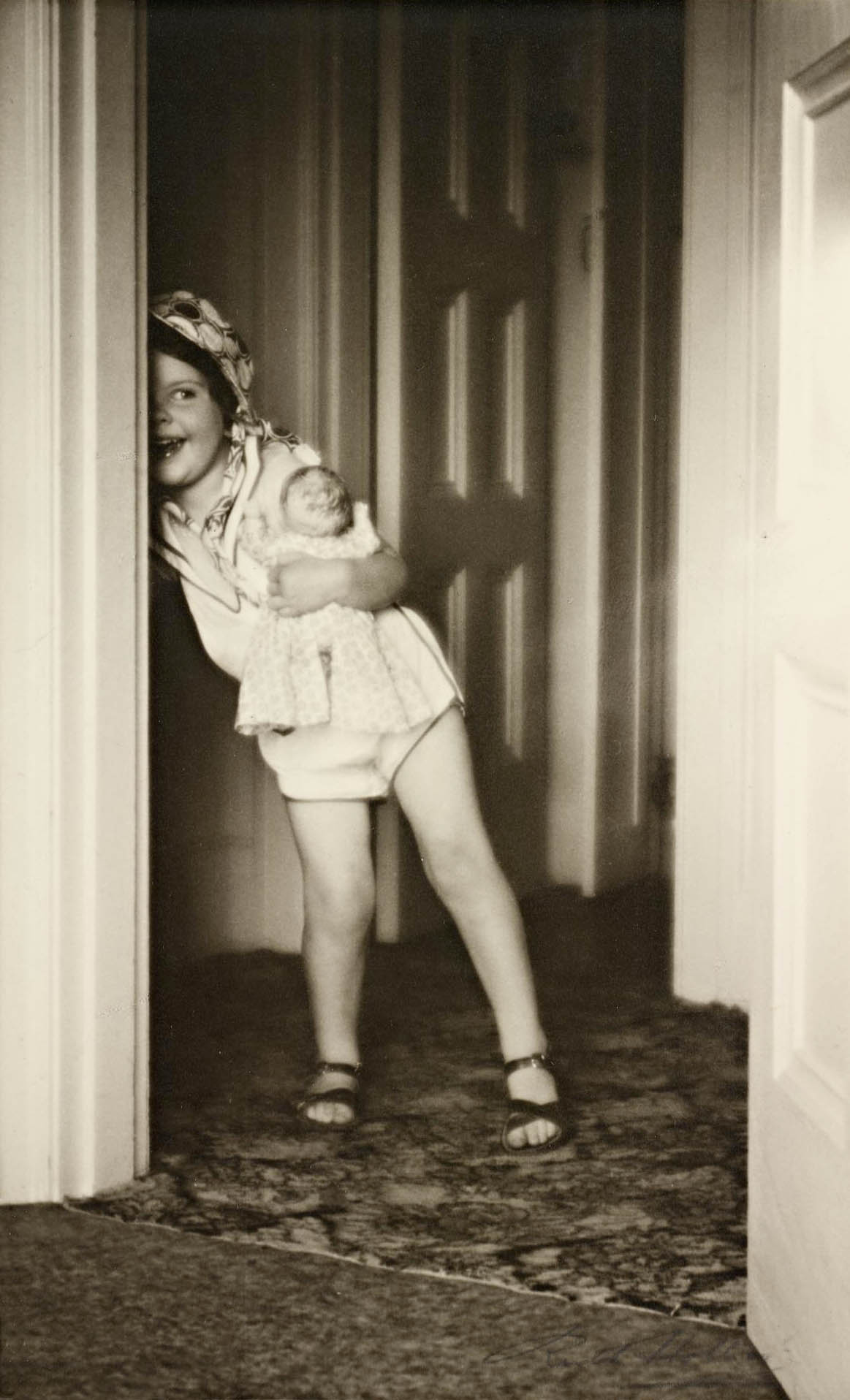
Installation view of the exhibition 'Women Photographers 1900-1975: A Legacy of Light' at NGV International, Melbourne, November 2025 - May 2026 showing from left to right in the bottom image two Imogen Cunningham photographs, 'My mother peeling apples' (1910, printed 1979) and 'My father' (1906, printed 1979) and six 1920s photographs by the Australian photographer Ruth Hollick (1883-1977): 'No title (Seated girl looking over shoulder)' (c. 1926); 'No title (Little girl holding small book)' (1920s); 'No title (Young girl holding a doll)' (1920s); 'No title (Laughing child)' (c. 1926); 'Miss Pamela Ann McKewan' (c. 1929); and 'No title (Laughing girl in cap)' (1920s)


Installation views of the exhibition Women Photographers 1900-1975: A Legacy of Light at NGV International, Melbourne, November 2025 – May 2026 showing from left to right in the bottom image two Imogen Cunningham photographs, My mother peeling apples (1910, printed 1979) and My father (1906, printed 1979) and six 1920s photographs by the Australian photographer Ruth Hollick (1883-1977): No title (Seated girl looking over shoulder) (c. 1926); No title (Little girl holding small book) (1920s); No title (Young girl holding a doll) (1920s); No title (Laughing child) (c. 1926); Miss Pamela Ann McKewan (c. 1929); and No title (Laughing girl in cap) (1920s)
Photos: Marcus Bunyan


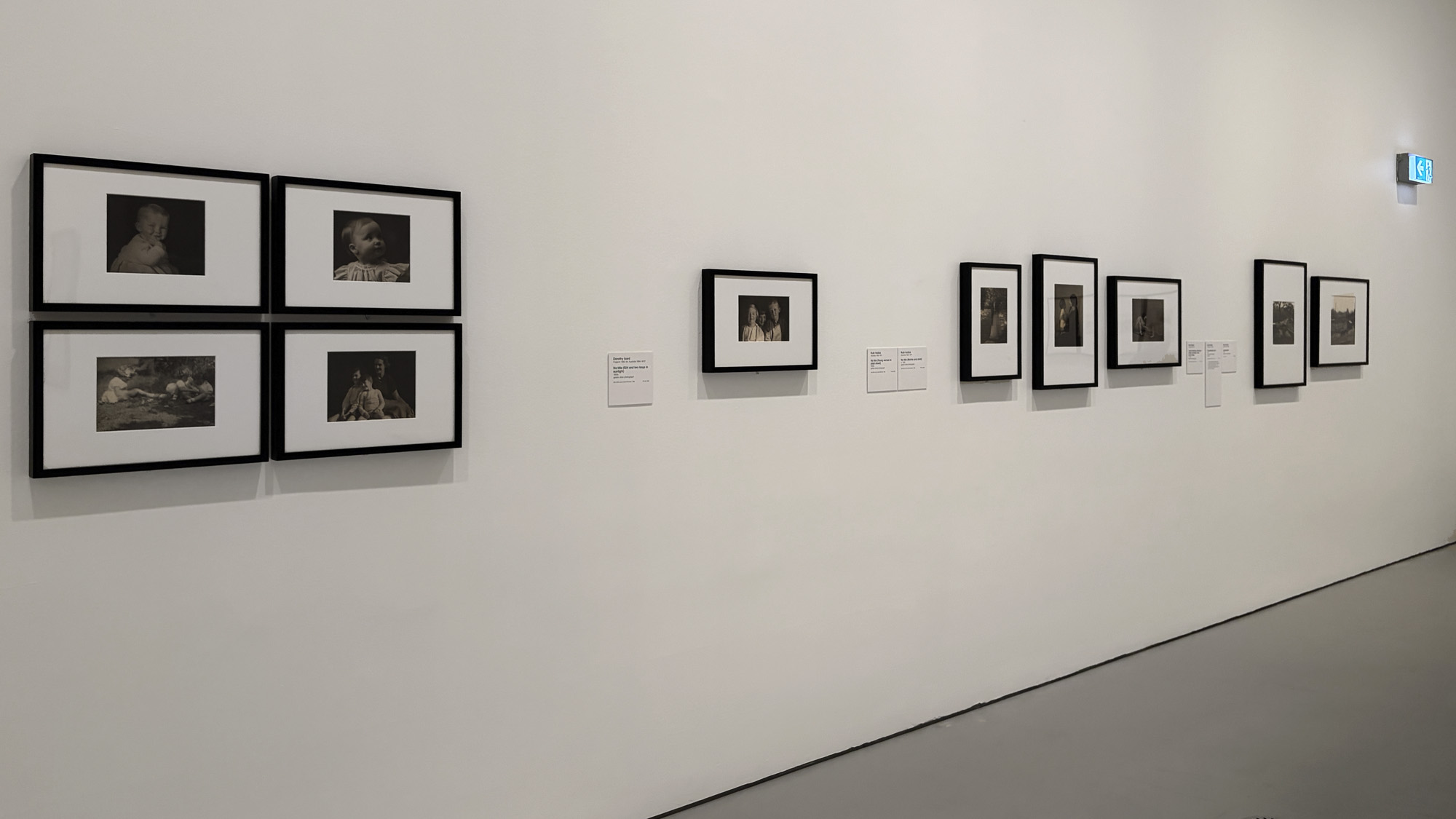
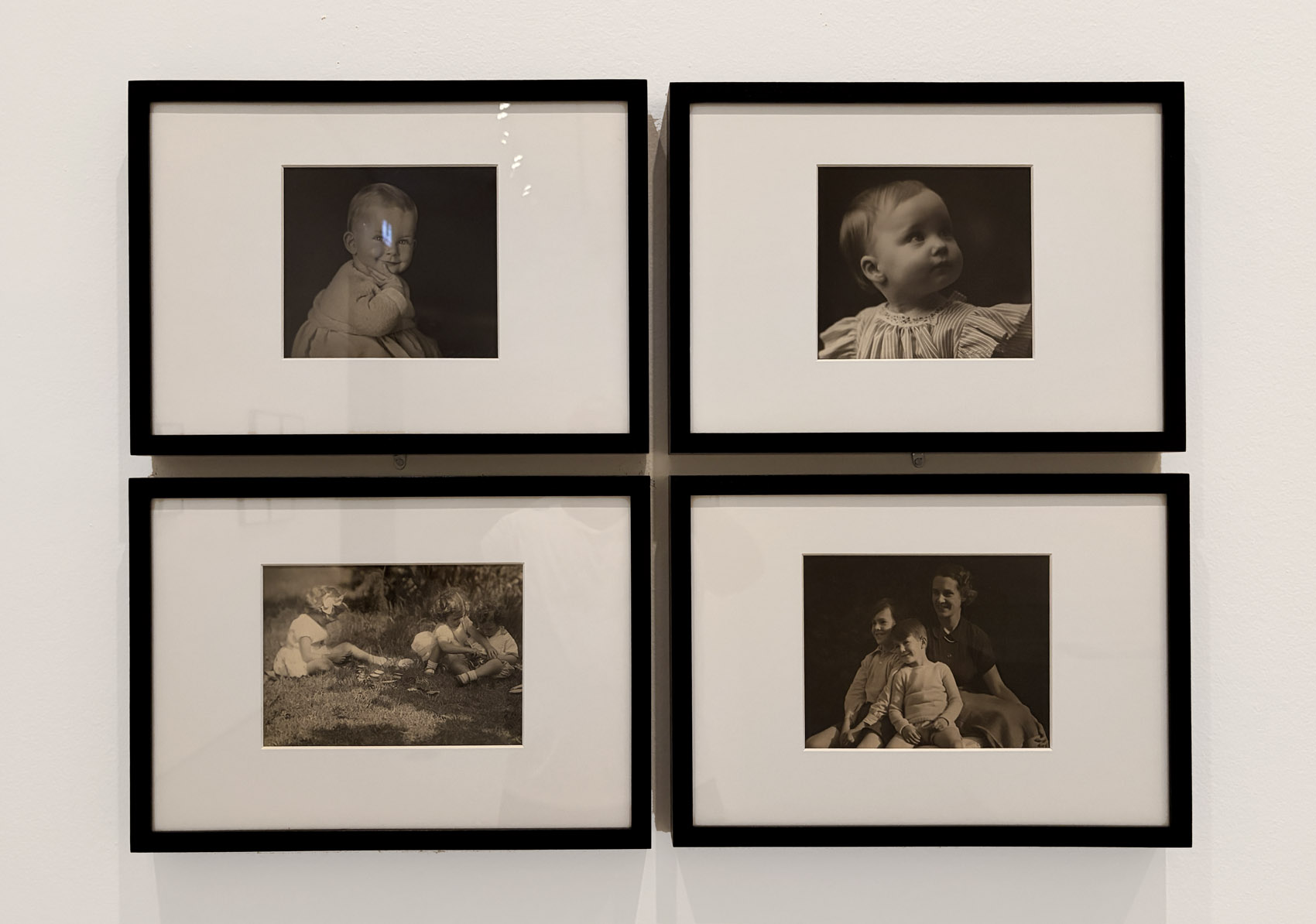
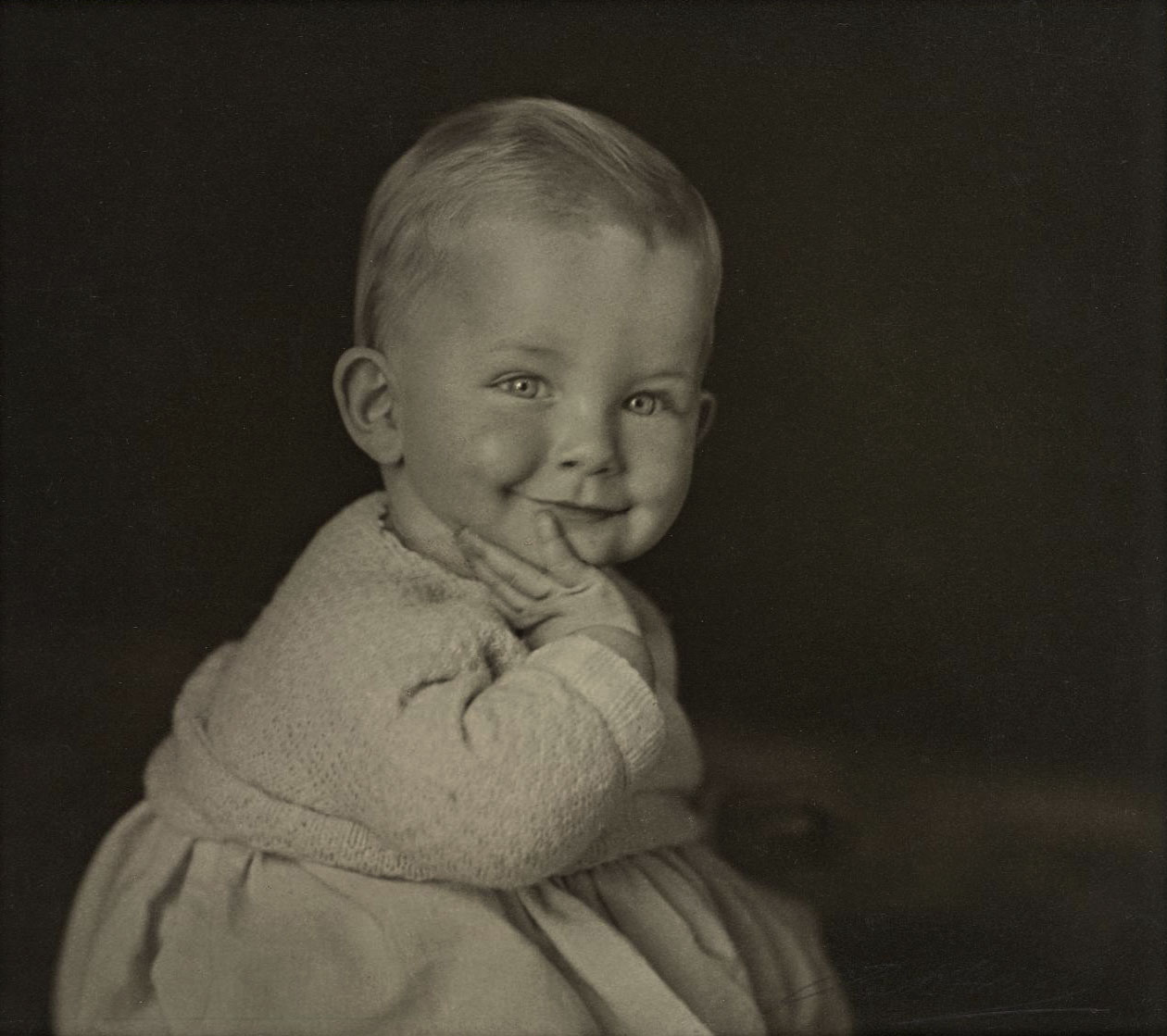
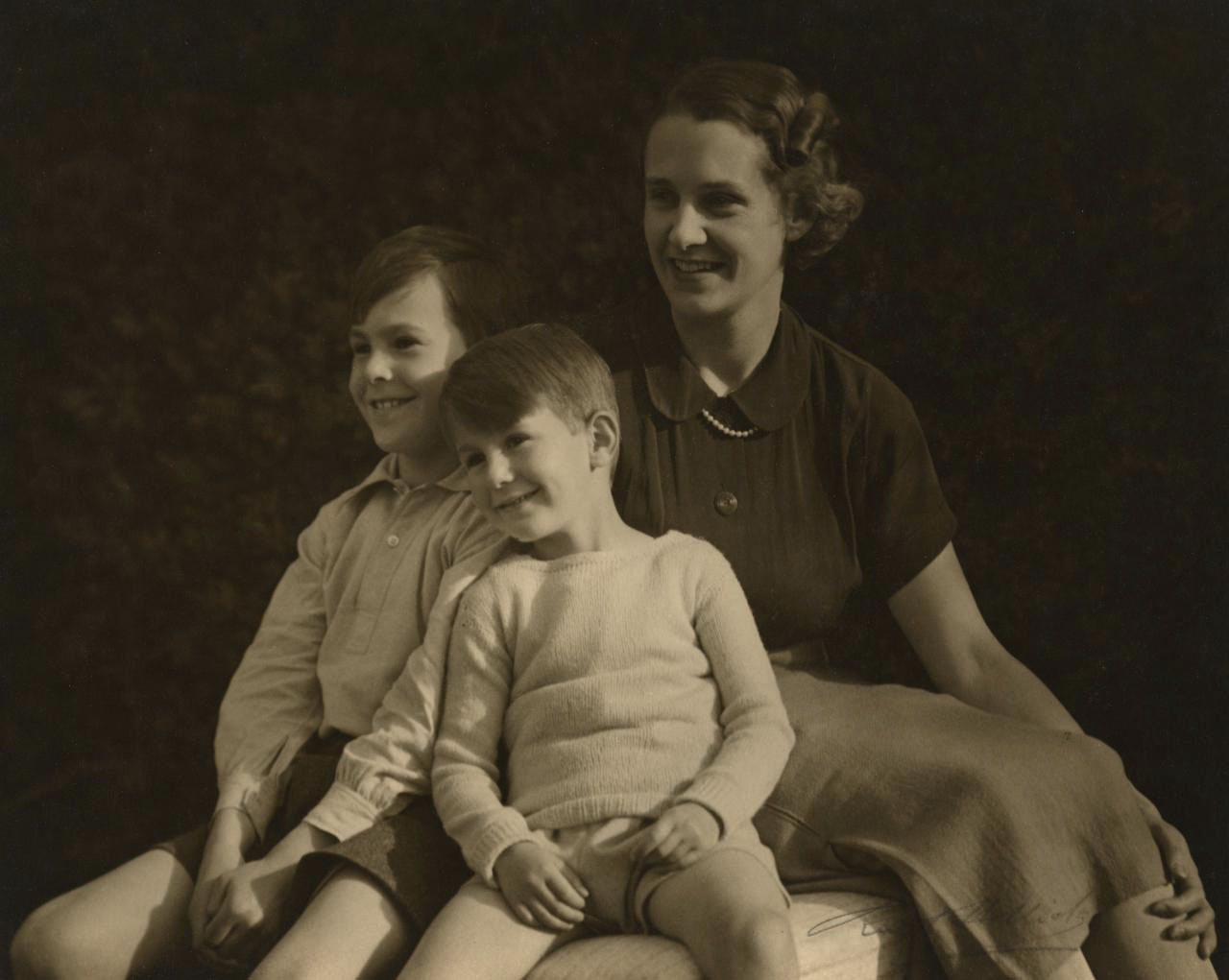
Installation view of the exhibition 'Women Photographers 1900-1975: A Legacy of Light' at NGV International, Melbourne, November 2025 - May 2026 showing  at left four photographs by Ruth Hollick: 'Bobby' (1927); 'No title (Baby in striped dress)' (1920s); 'No title (Three children seated on grass)' (1920s); and 'No title (Mother and two children)' (1920s)


Installation view of the exhibition Women Photographers 1900-1975: A Legacy of Light at NGV International, Melbourne, November 2025 – May 2026 showing at left four photographs by Ruth Hollick: Bobby (1927); No title (Baby in striped dress) (1920s); No title (Three children seated on grass) (1920s); and No title (Mother and two children) (1920s)
Photo: Marcus Bunyan


Installation view of the exhibition 'Women Photographers 1900-1975: A Legacy of Light' at NGV International, Melbourne, November 2025 - May 2026 showing four photographs by Ruth Hollick: 'Bobby' (1927); 'No title (Baby in striped dress)' (1920s); 'No title (Three children seated on grass)' (1920s); and 'No title (Mother and two children)' (1920s)


Installation view of the exhibition Women Photographers 1900-1975: A Legacy of Light at NGV International, Melbourne, November 2025 – May 2026 showing four photographs by Ruth Hollick: Bobby (1927); No title (Baby in striped dress) (1920s); No title (Three children seated on grass) (1920s); and No title (Mother and two children) (1920s)
Photo: Marcus Bunyan


Ruth Hollick (Australian, 1883-1977) 'Bobby' 1927


Ruth Hollick (Australian, 1883-1977)
Bobby
1927
Gelatin silver photograph
18.8 x 21.4cm (image)
National Gallery of Victoria, Melbourne
Gift of Mrs Lucy Crosbie Morrison, 1992
Public domain


Ruth Hollick (Australian, 1883-1977) 'No title (Mother and two children)' 1920s


Ruth Hollick (Australian, 1883-1977)
No title (Mother and two children)
1920s
Gelatin silver photograph
19.0 x 23.9cm (image)
National Gallery of Victoria, Melbourne
Gift of Mrs Lucy Crosbie Morrison, 1992
Public domain


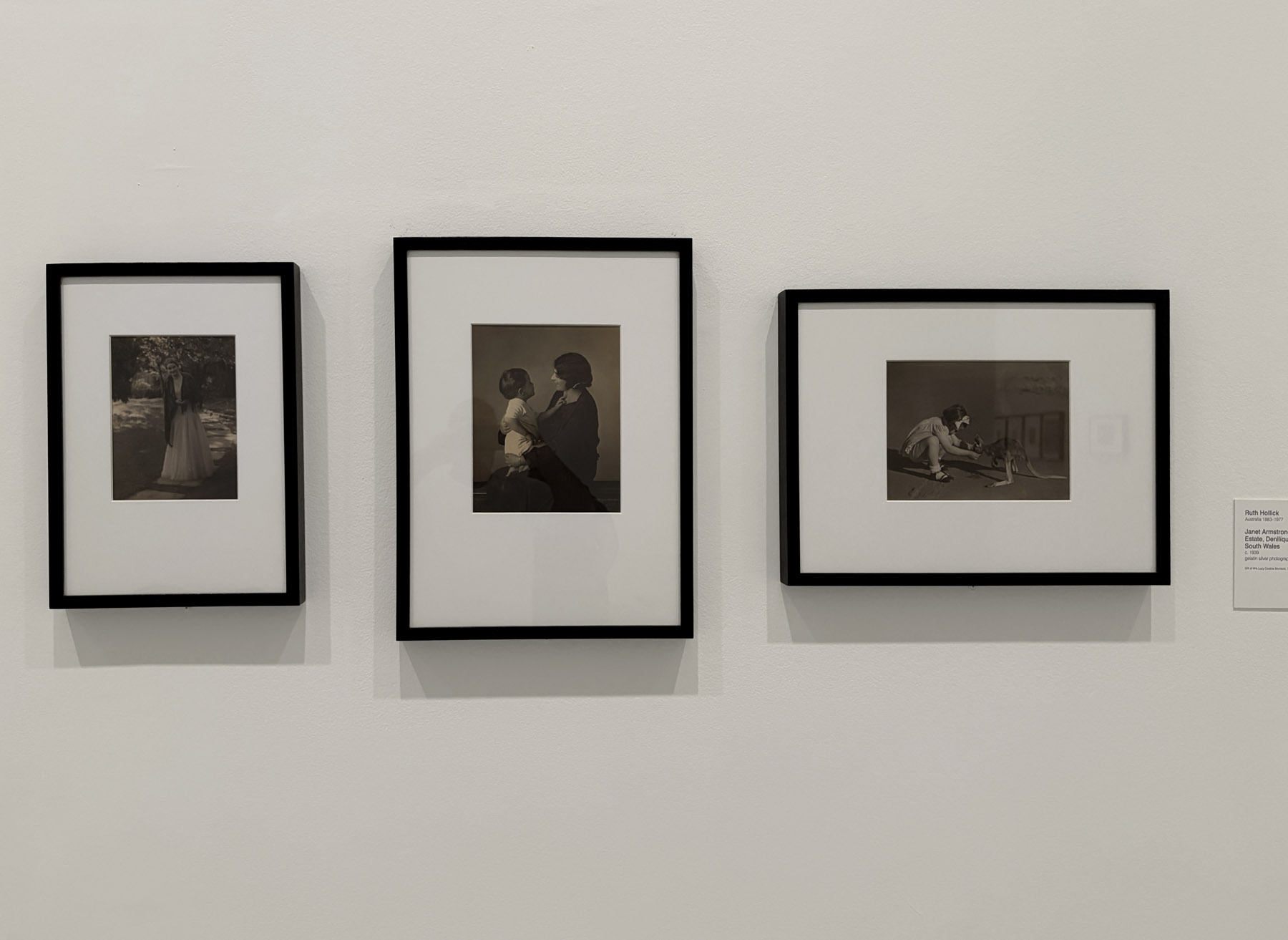
Installation view of the exhibition 'Women Photographers 1900-1975: A Legacy of Light' at NGV International, Melbourne, November 2025 - May 2026 showing from left to right three photographs by Ruth Hollick: 'No title (Young woman in plaid shawl)' (1920s); 'No title (Mother and child)' (c. 1926); and 'Janet Armstrong, Woodbury Estate, Deniliquin, New South Wales' (c. 1939) (installation view)


Installation view of the exhibition Women Photographers 1900-1975: A Legacy of Light at NGV International, Melbourne, November 2025 – May 2026 showing from left to right three photographs by Ruth Hollick: No title (Young woman in plaid shawl) (1920s); No title (Mother and child) (c. 1926); and Janet Armstrong, Woodbury Estate, Deniliquin, New South Wales (c. 1939)
Photo: Marcus Bunyan


Ruth Hollick (Australian, 1883-1977) 'No title (Young girl holding a doll)' 1920s


Ruth Hollick (Australian, 1883-1977)
No title (Young girl holding a doll)
1920s
Gelatin silver photograph
23.9 x 14.6cm (image)
National Gallery of Victoria, Melbourne
Gift of Mrs Lucy Crosbie Morrison, 1992


Installation view of the exhibition 'Women Photographers 1900-1975: A Legacy of Light' at NGV International, Melbourne, November 2025 - May 2026


Installation view of the exhibition Women Photographers 1900-1975: A Legacy of Light at NGV International, Melbourne, November 2025 – May 2026
Photo: Marcus Bunyan


Installation view of the exhibition 'Women Photographers 1900-1975: A Legacy of Light' at NGV International, Melbourne, November 2025 - May 2026
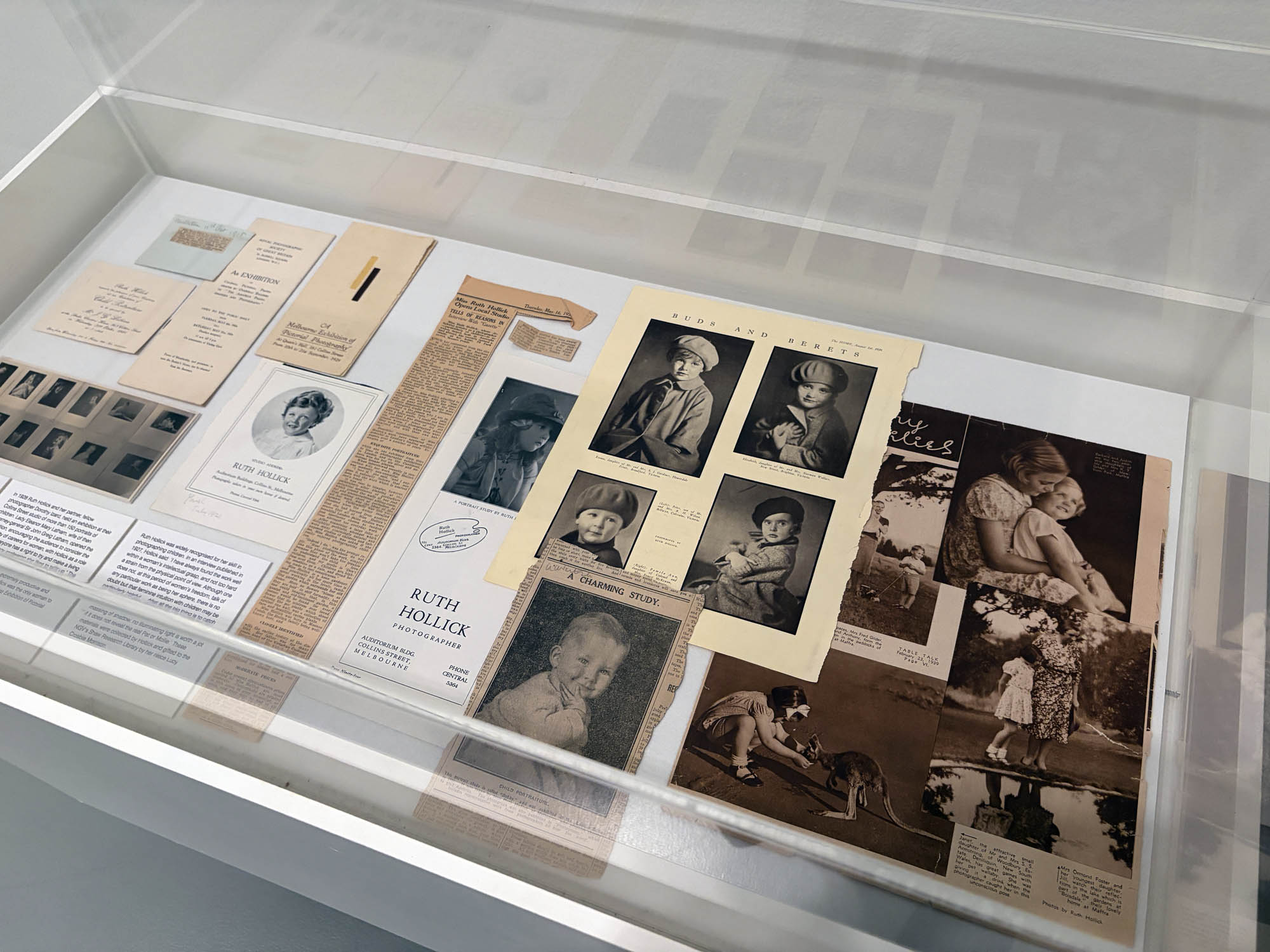
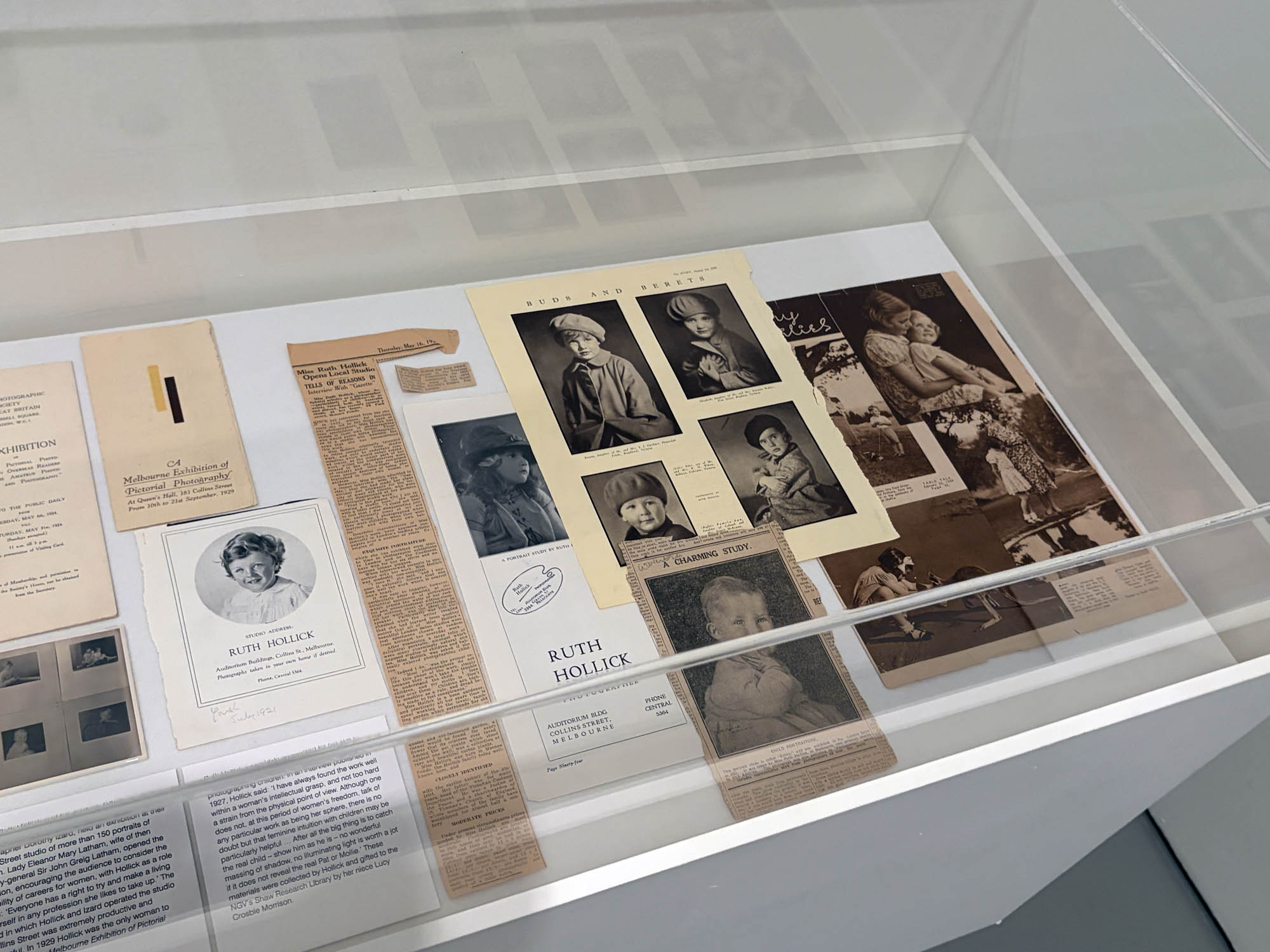
Installation view of the exhibition 'Women Photographers 1900-1975: A Legacy of Light' at NGV International, Melbourne, November 2025 - May 2026 showing clippings, press releases, brochures, reviews, invitations and other ephemeral material relating to Ruth Hollick and the Ruth Hollick studio


Installation views of the exhibition Women Photographers 1900-1975: A Legacy of Light at NGV International, Melbourne, November 2025 – May 2026 showing clippings, press releases, brochures, reviews, invitations and other ephemeral material relating to Ruth Hollick and the Ruth Hollick studio
Photos: Marcus Bunyan


In 1928 Ruth Hollick and her partner, fellow photographer Dorothy Izard, held an exhibition at their Collins Street studio of more than 150 portraits of children. Lady Eleanor Mary Latham, wife of then attorney-general Sir John Greig Latham, opened the exhibition, encouraging the audience to consider the possibility of career for women, with Hollick as a role model: ‘Everyone has a right to try and make a living for herself in any profession she likes to take up.’ The period in which Hollick and Izard operated the studio in Collins Street was extremely productive and successful. In 1929 Hollick was the only woman to participate in the Melbourne Exhibition of Pictorial Photography.

Ruth Hollick was widely recognised for her skill in photographing children. In an interview published in 1927, Hollick said: ‘I have always found the work well within a woman’s intellectual grasp, and not too hard a strain from the physical point of view. Although one does not, at this period of women’s freedom, talk of any particular work as being her sphere, there is no doubt but that feminine intuition with children may be particularly helpful … After all the big thing is to catch the real child – show him as he is – no wonderful massing of shadow, no illuminating light is worth a lot if it does not reveal the real Pat or Mollie.’ These materials were collected by Hollick and gifted to the NGV’s Shaw Research Library by her niece Lucy Crosbie Morrison.

Vitrine text from the exhibition


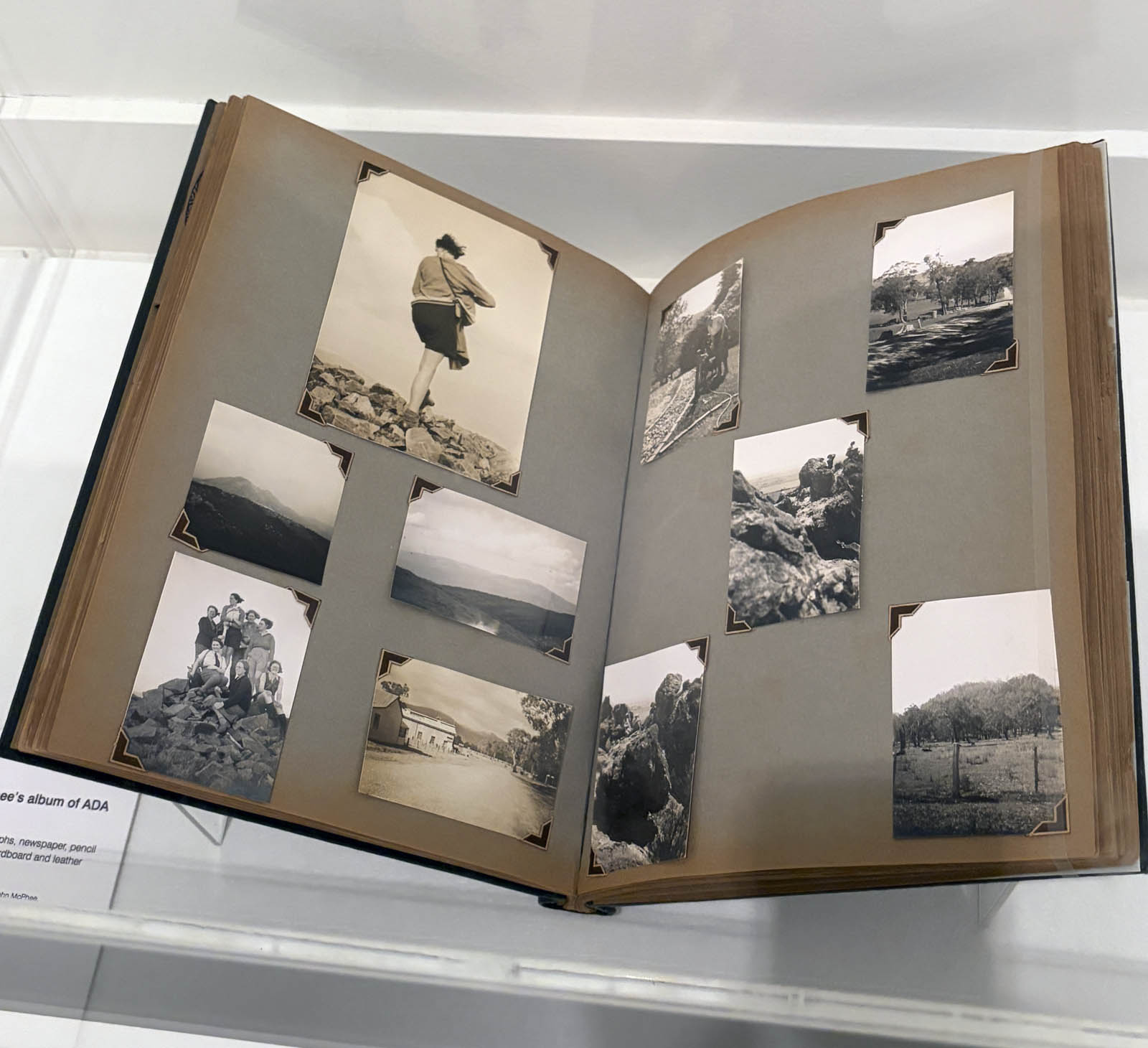
Inez McPhee (Australian, 1908-1999) 'No title (Inez McPhee's album of ADA river trip)' 1936 (installation view)


Inez McPhee (Australian, 1908-1999)
No title (Inez McPhee’s album of ADA river trip) (installation view)
1936
28.1 x 22.4cm (page)
28.5 x 23.0 x 3.1cm (closed)
28.5 x 46.0 x 1.5cm (open)
Album: gelatin silver photographs, newspaper, pencil and pen and ink, 62 pages, cardboard and leather cover, stitched binding
Presented through the NGV Foundation by John McPhee, Member and Ann Luck, 2004
Photo: Marcus Bunyan


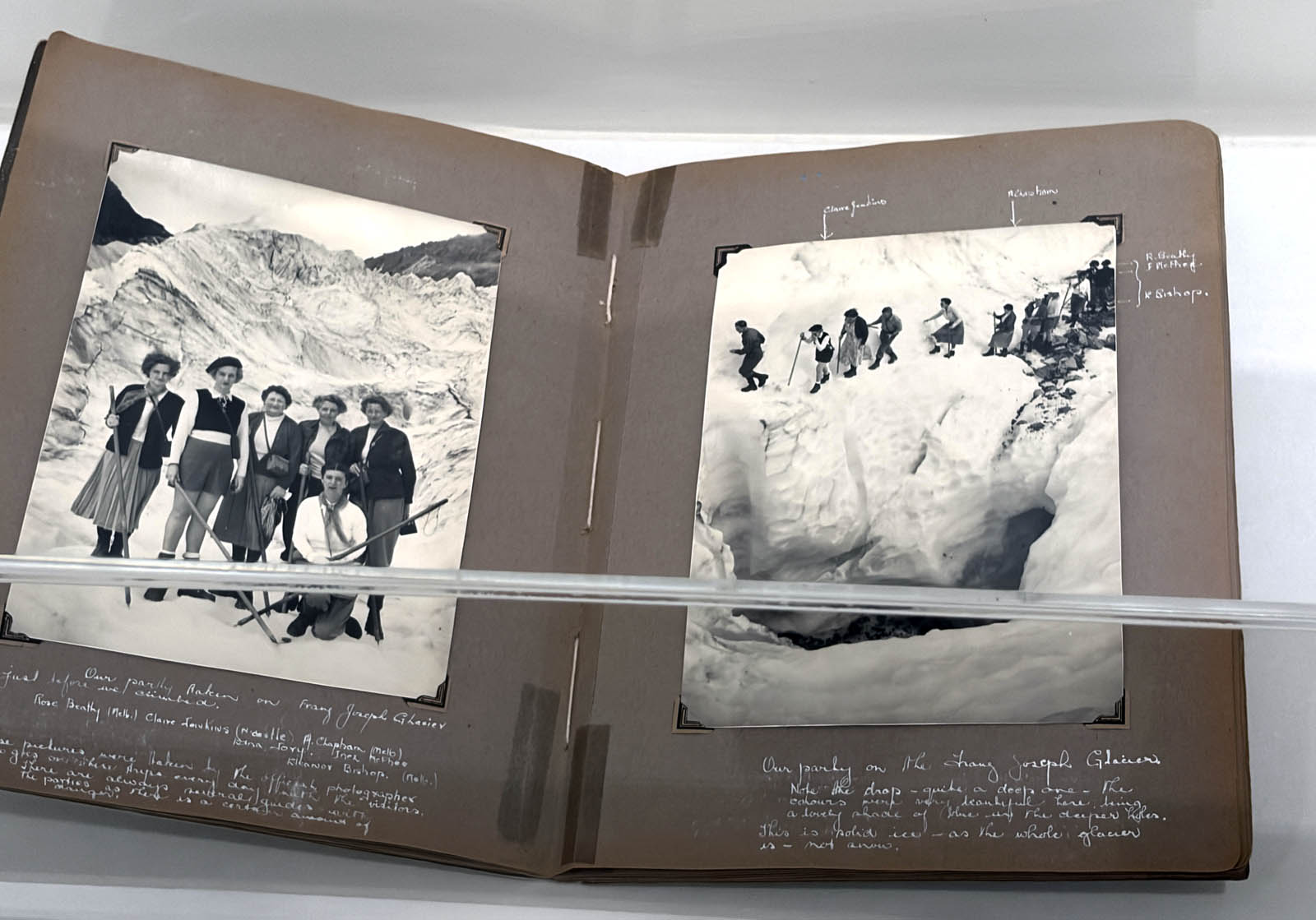
Inez McPhee (Australian, 1908-1999) 'No title (Inez McPhee's album of a trip to New Zealand)' 1953 (installation view)


Inez McPhee (Australian, 1908-1999)
No title (Inez McPhee’s album of a trip to New Zealand) (installation view)
1953
Album: gelatin silver photographs, collage, pencil, 40 pages, cardboard cover, stitched binding
31.0 x 24.1cm (page)
31.1 x 24.8 x 1.4cm (closed)
31.1 x 49.0 x 1.0cm (open)
Presented through the NGV Foundation by John McPhee, Member and Ann Luck, 2004
Photo: Marcus Bunyan


Inez McPhee was an active member of the Melbourne Women’s Walking Club, founded in 1922. McPhee took her camera on bushwalks with the group and, typical of amateur photographers of the period, compiled albums of the prints. Her albums are filled with images of women engaging in outdoor activities.

Vitrine text from the exhibition


Installation view of the exhibition 'Women Photographers 1900-1975: A Legacy of Light' at NGV International, Melbourne, November 2025 – May 2026


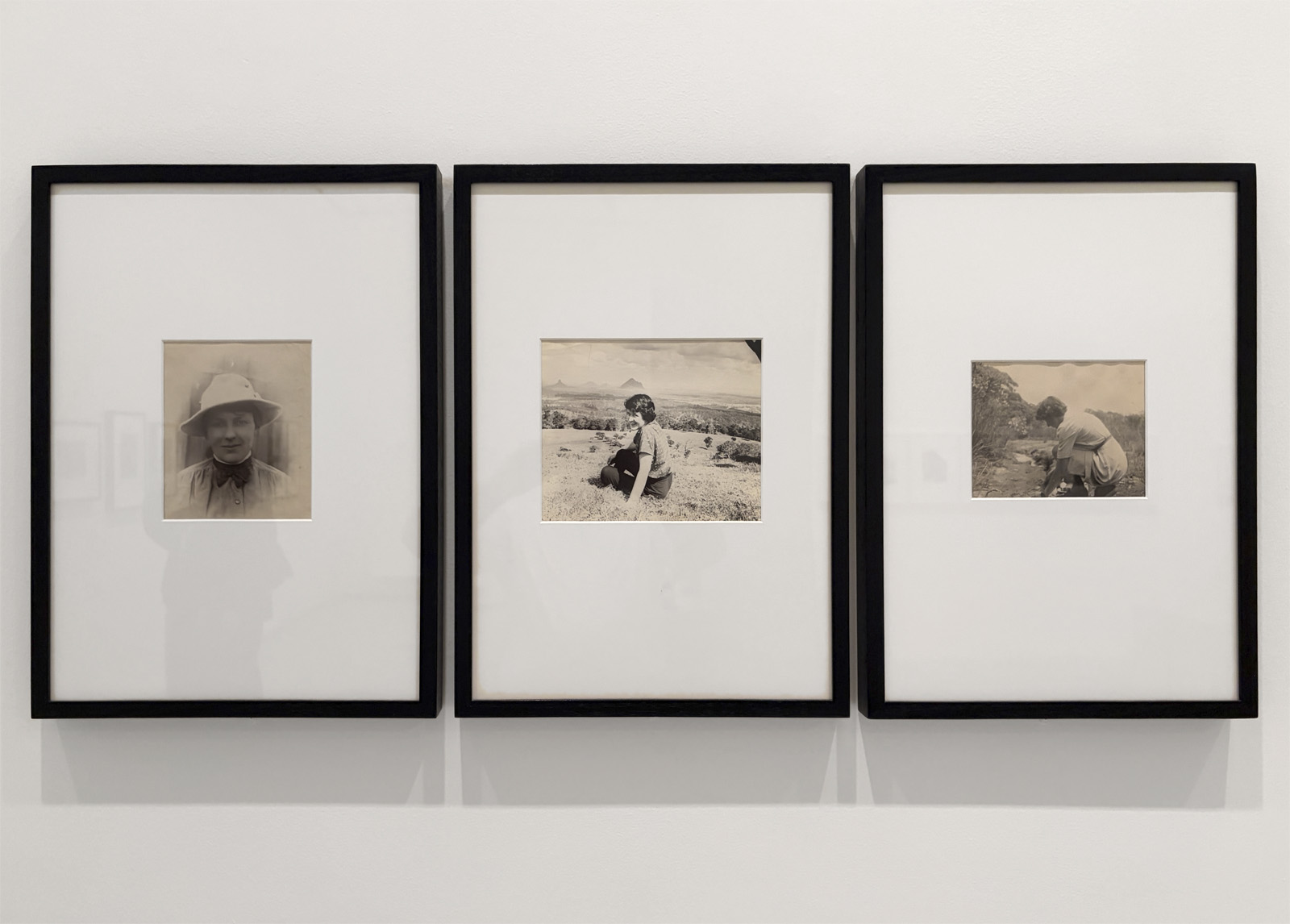
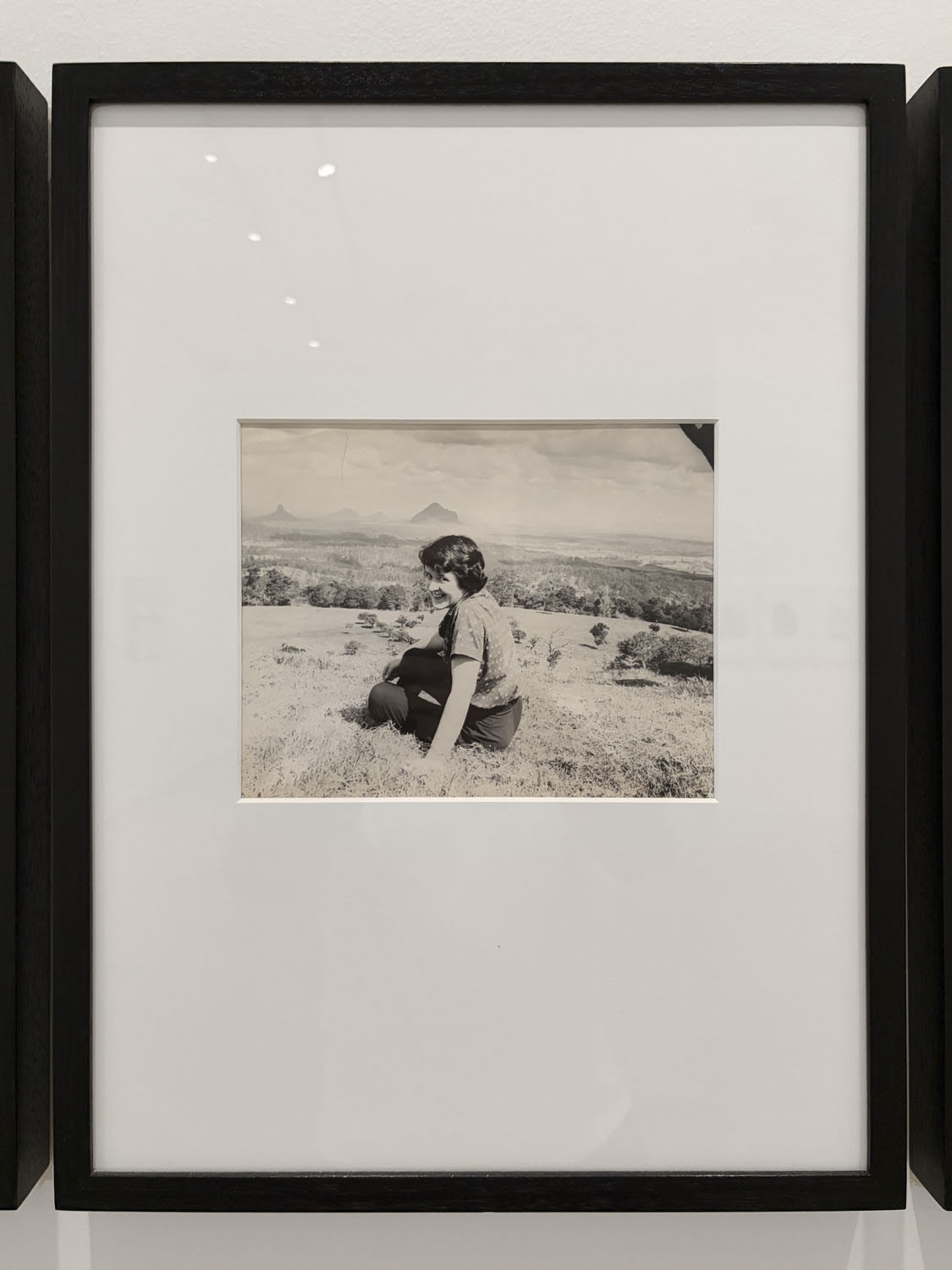
Installation view of the exhibition Women Photographers 1900-1975: A Legacy of Light at NGV International, Melbourne, November 2025 – May 2026 showing at left three photographs by Edna Walling: Doris Oak-Rhind, Edna’s Walling’s sister (1920s); Estelle Thompson (1950s-1960s); and No title (Young woman preparing picnic) (1940s)
Photo: Marcus Bunyan


Installation view of the exhibition Women Photographers 1900-1975: A Legacy of Light at NGV International, Melbourne, November 2025 – May 2026 showing at left to right, three photographs by Edna Walling (Australian born England, 1895-1973) 'Doris Oak-Rhind, Edna's Walling's sister' (1920s); 'Estelle Thompson' (1950s-1960s); and 'No title (Young woman preparing picnic)' (1940s)


Installation view of the exhibition Women Photographers 1900-1975: A Legacy of Light at NGV International, Melbourne, November 2025 – May 2026 showing at left to right, three photographs by Edna Walling (Australian born England, 1895-1973) Doris Oak-Rhind, Edna’s Walling’s sister (1920s); Estelle Thompson (1950s-1960s); and No title (Young woman preparing picnic) (1940s)
Photo: Marcus Bunyan


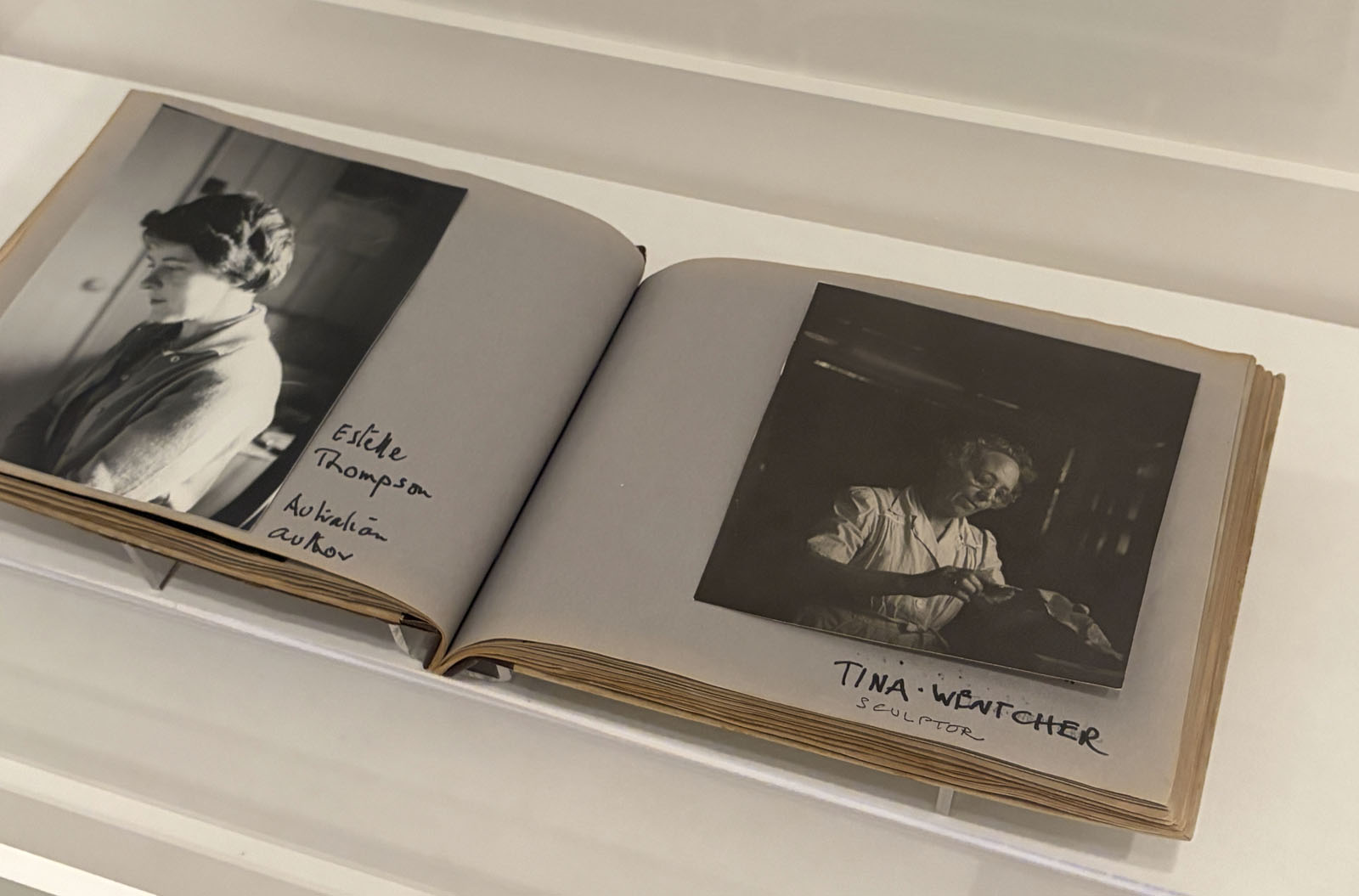
Edna Walling (Australian born England, 1895-1973) 'Estelle Thompson' 1950s-1960s (installation view)


Edna Walling (Australian born England, 1895-1973)
Estelle Thompson (installation view)
1950s-1960s
Gelatin silver photograph
25.4 x 20.6cm (image and sheet)
National Gallery of Victoria, Melbourne
Gift of Mrs Barbara Barnes, 1983
Photo: Marcus Bunyan


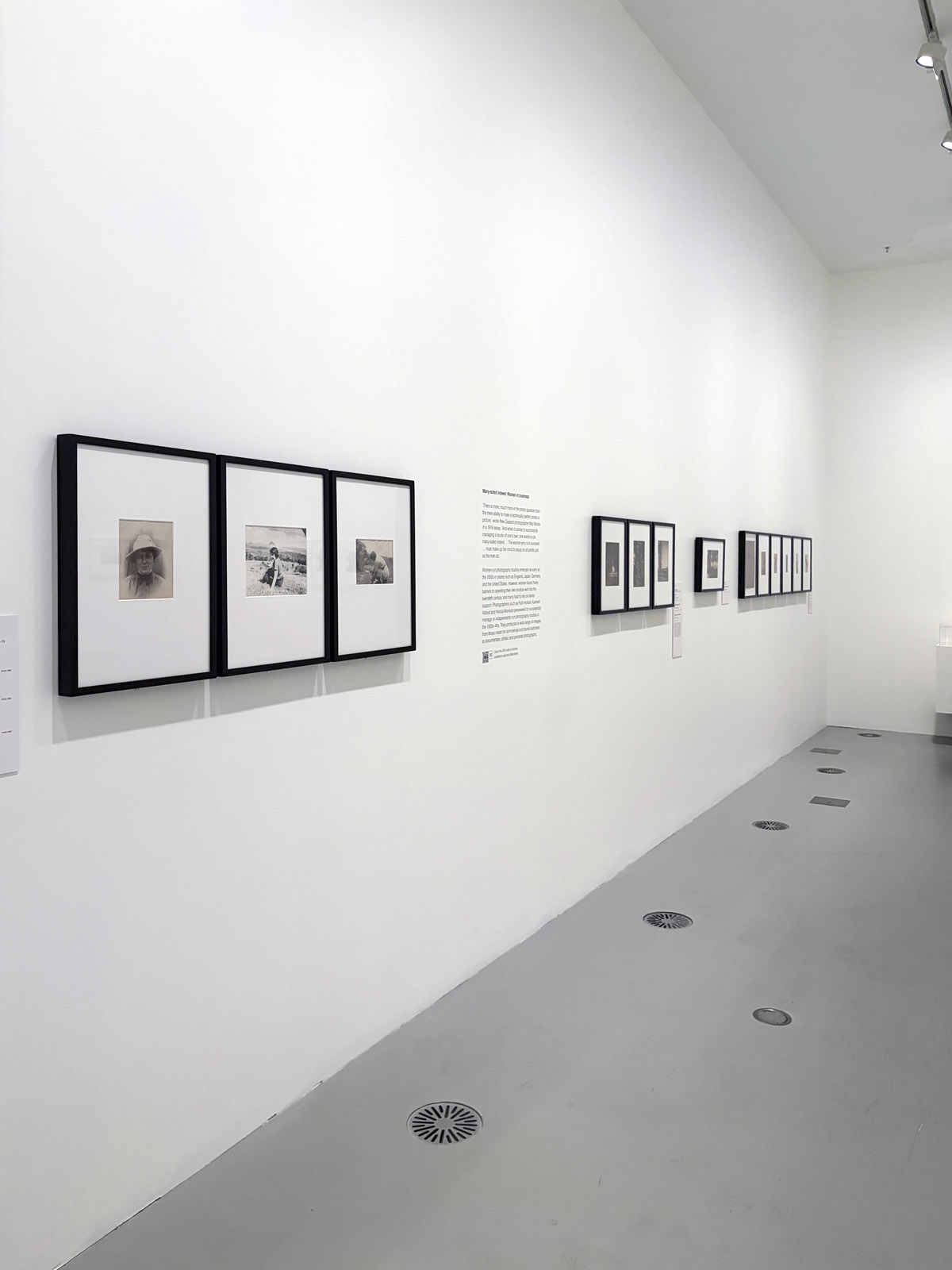
Many-sided Indeed: Women In Business

“There is more, much more in the photo question than the mere ability to make a technically perfect photo or picture,” wrote New Zealand photographer May Moore in a 1916 essay. “And when it comes to successfully managing a studio of one’s own, one wants to be many-sided indeed … The woman who is to succeed … must make up her mind to equip on all points just as the men do.”

Women-run photography studios emerged as early as the 1850s in places such as England, Japan, Germany and the United States. However, women faced many barriers to operating their own studios well into the twentieth century, and many had to rely on family support. Photographers such as Ruth Hollick, Karimeh Abbud and Hedda Morrison persevered to successfully manage or independently run photography studios in the 1920s-40s. They produced a wide range of images, from those made for commercial and tourist purposes to documentary, artistic and personal photographs.


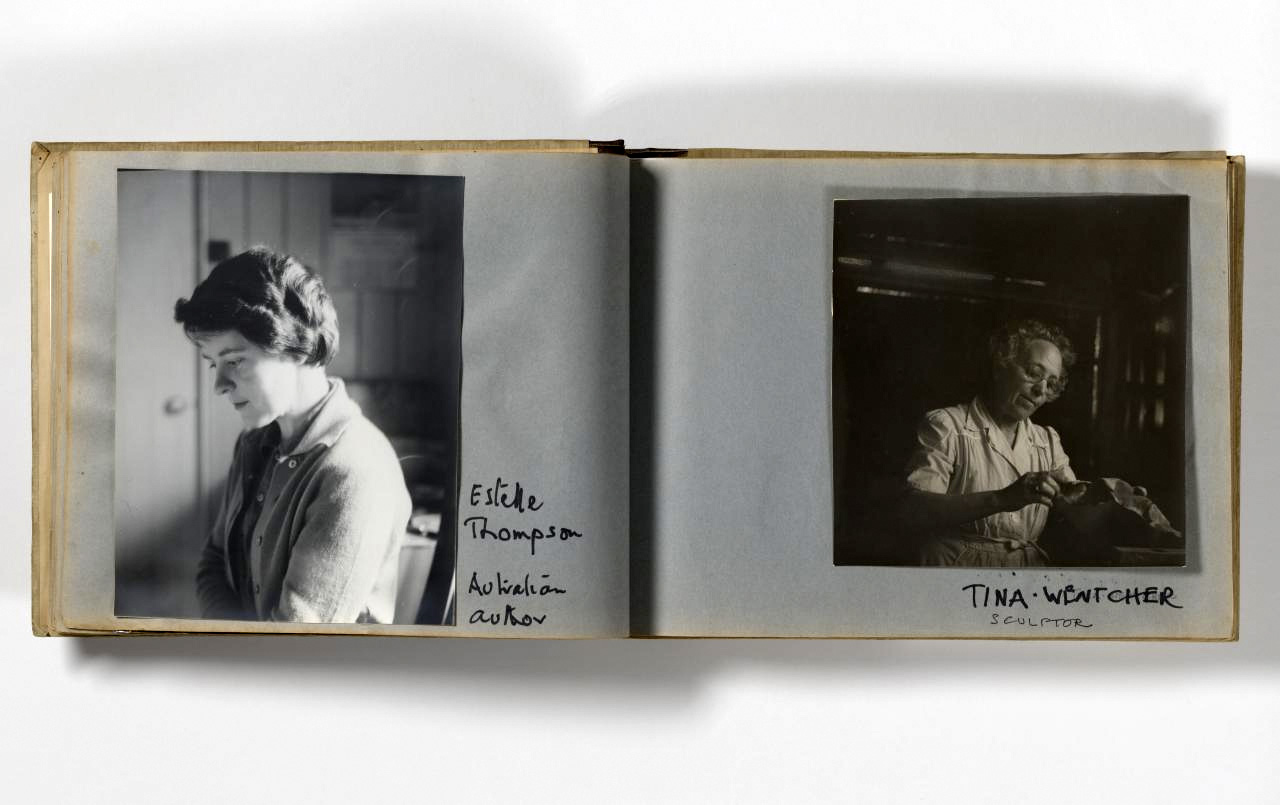
Edna Walling (Australian born England, 1895-1973) 'No title (Album)' 1950s-1960s (installation view)


Edna Walling (Australian born England, 1895-1973)
No title (Album) (installation view)
1950s-1960s
Album: gelatin silver photographs, 48 pages, cardboard, leather and colour photo-lithograph cover, metal screw binding
24.6 x 32.0cm (page)
25.6 x 34.8 x 3.6cm (closed)
25.6 x 62.8cm (open)
National Gallery of Victoria, Melbourne
Gift of Mrs Barbara Barnes, 1983
Photo: Marcus Bunyan


Landscape designer Edna Walling kept a personal photo album to capture the creative effervescence of the community at her property at Bickleigh Vale Village in Mooroolbark, Victoria. Nicknamed ‘Trouser Lane’, the property was designed by Walling to be a ‘community of connected gardens and cottages. Many people, including many women, shared in Walling’s unique vision for the space, visiting and residing at Trouser lane over the years. Walling’s album features, among others, images of writer Estelle Thompson, landscape designer Daphne Pearson, builder Esme Johnson, violinist Perry Hart and ballet dancers Harcourt Algernoff and Graham Smith. Also interspersed throughout the album are photographic flower studies.

Vitrine text from the exhibition


Edna Walling (Australian born United Kingdom, 1895-1973) 'No title' (Album) 1950s-1960s


Edna Walling (Australian born United Kingdom, 1895-1973)
No title (Album)
1950s-1960s
Album; gelatin silver photographs, 48 pages, cardboard, leather and colour photo-lithograph cover, metal screw binding
24.6 x 32.0cm (page)
25.6 x 34.8 x 3.6cm (closed)
25.6 x 62.8cm (open)
National Gallery of Victoria, Melbourne
Gift of Mrs Barbara Barnes, 1983


Installation view of the exhibition 'Women Photographers 1900-1975: A Legacy of Light' at NGV International, Melbourne, November 2025 - May 2026
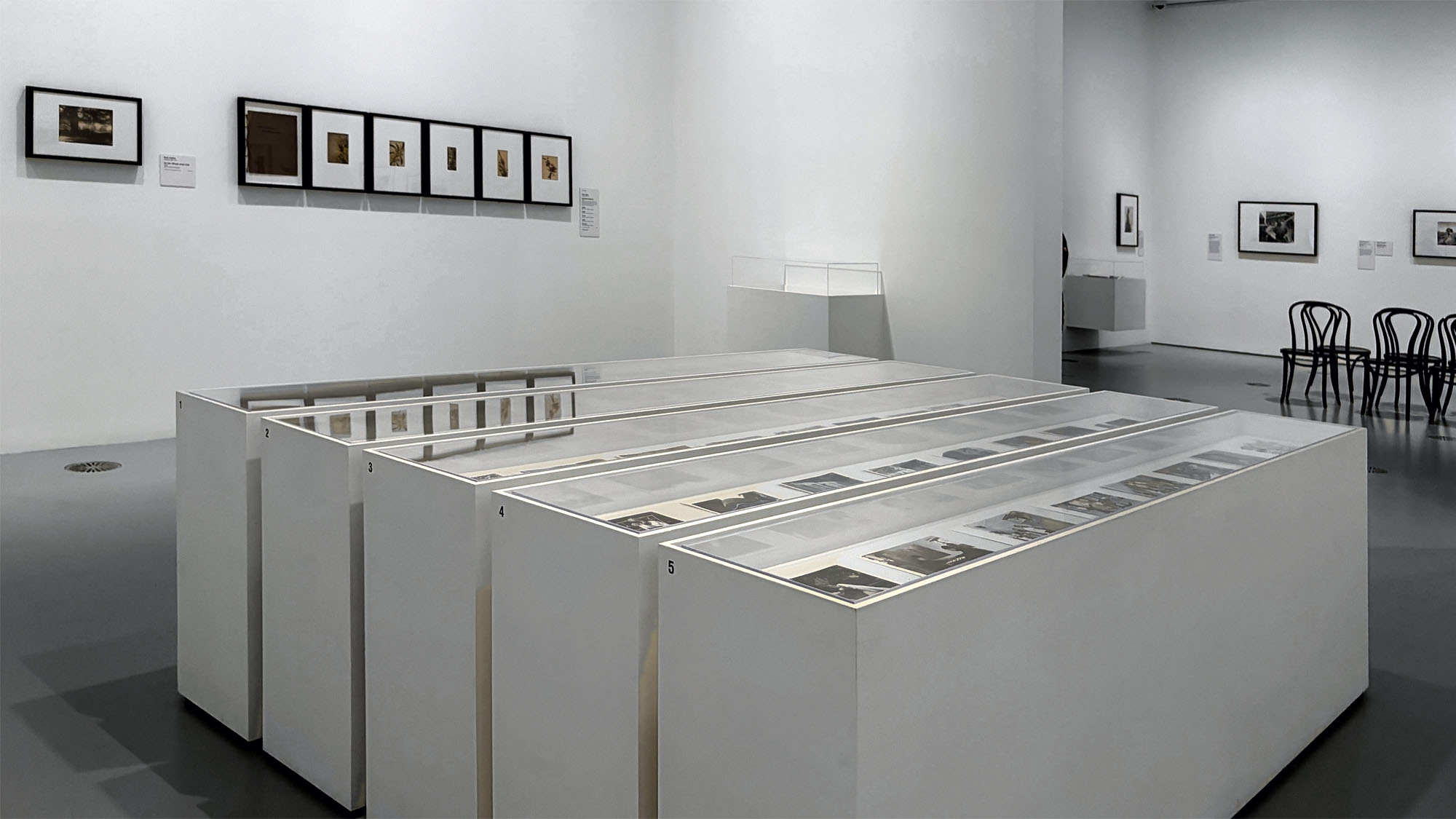
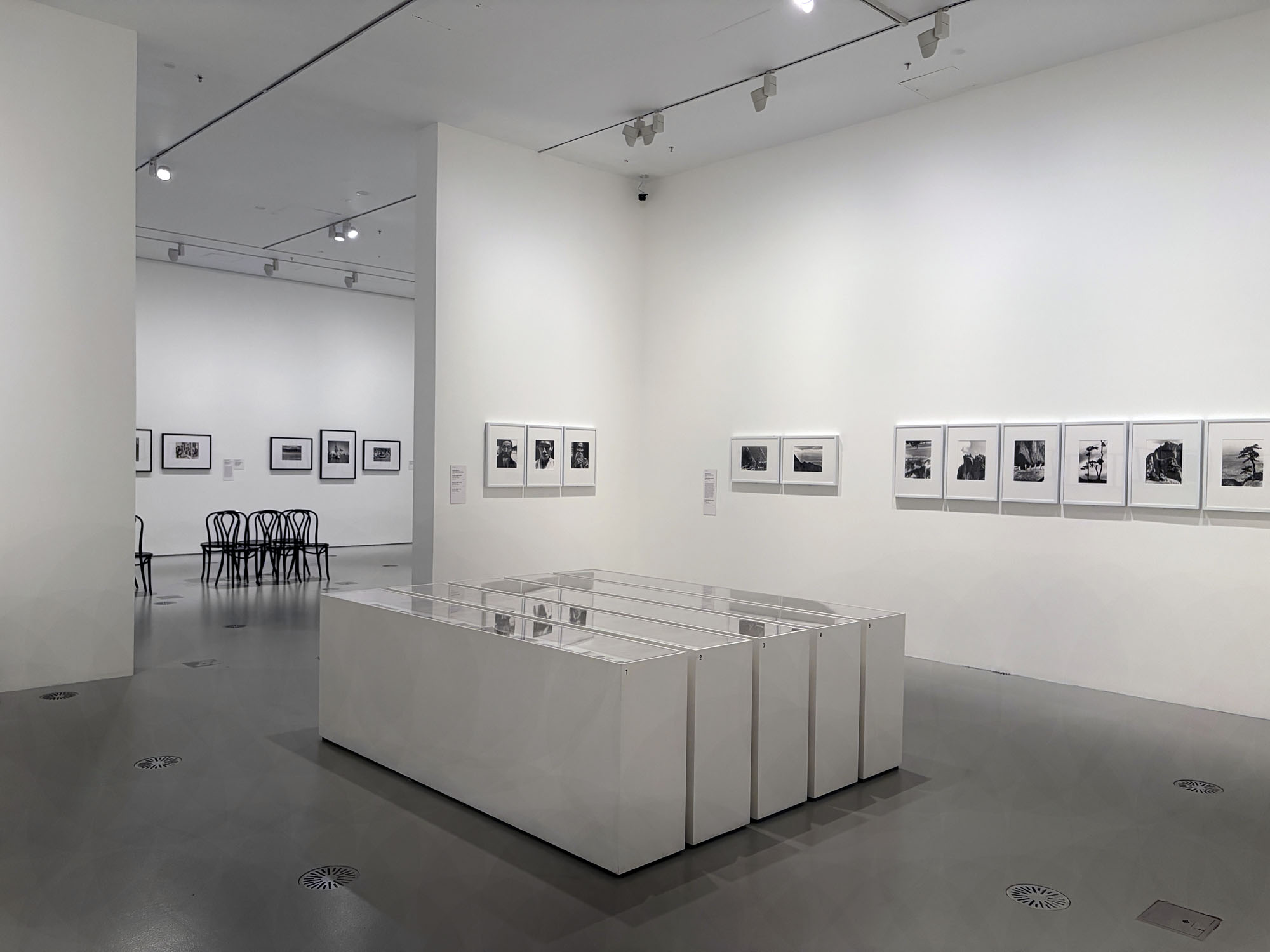
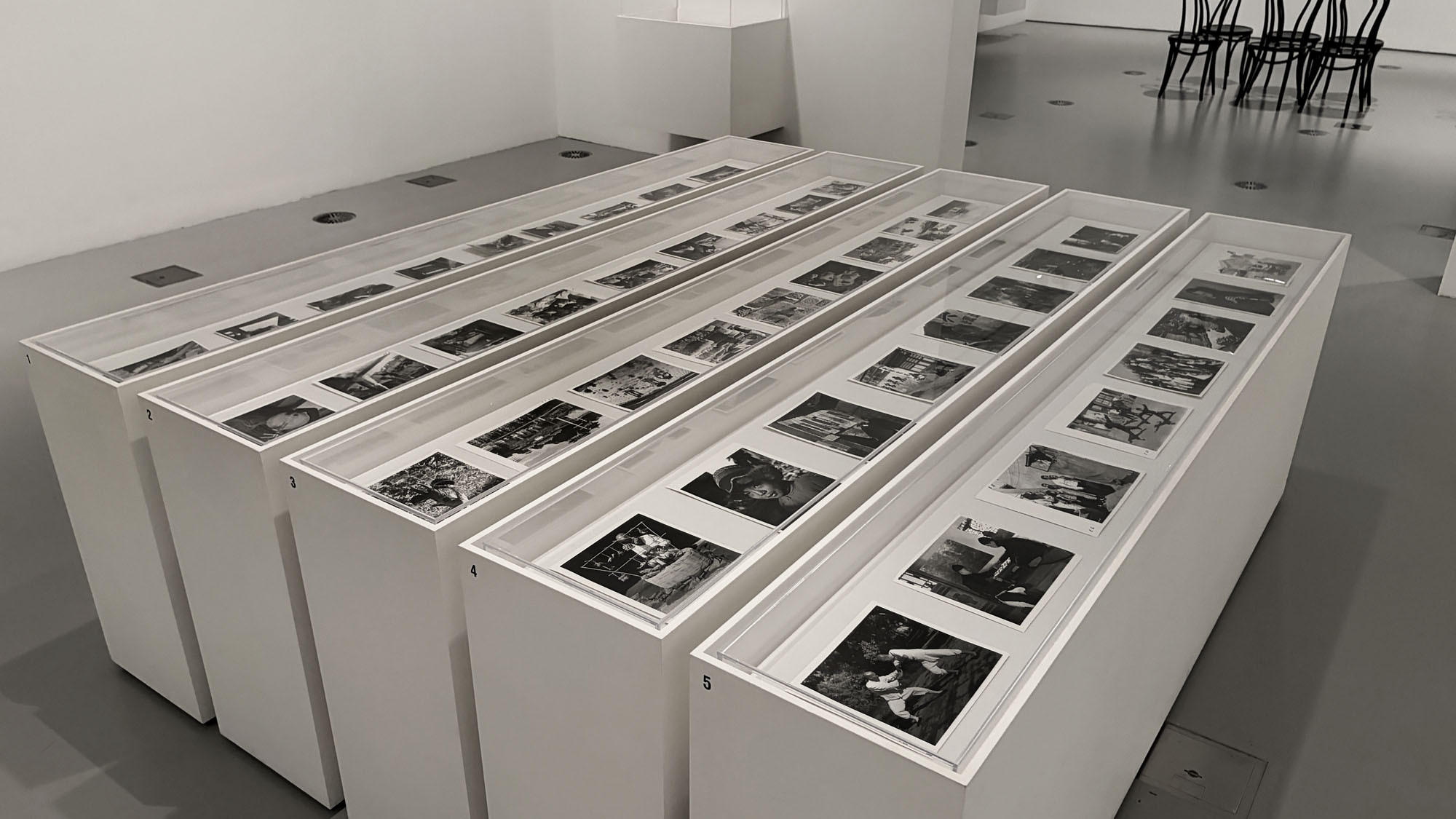
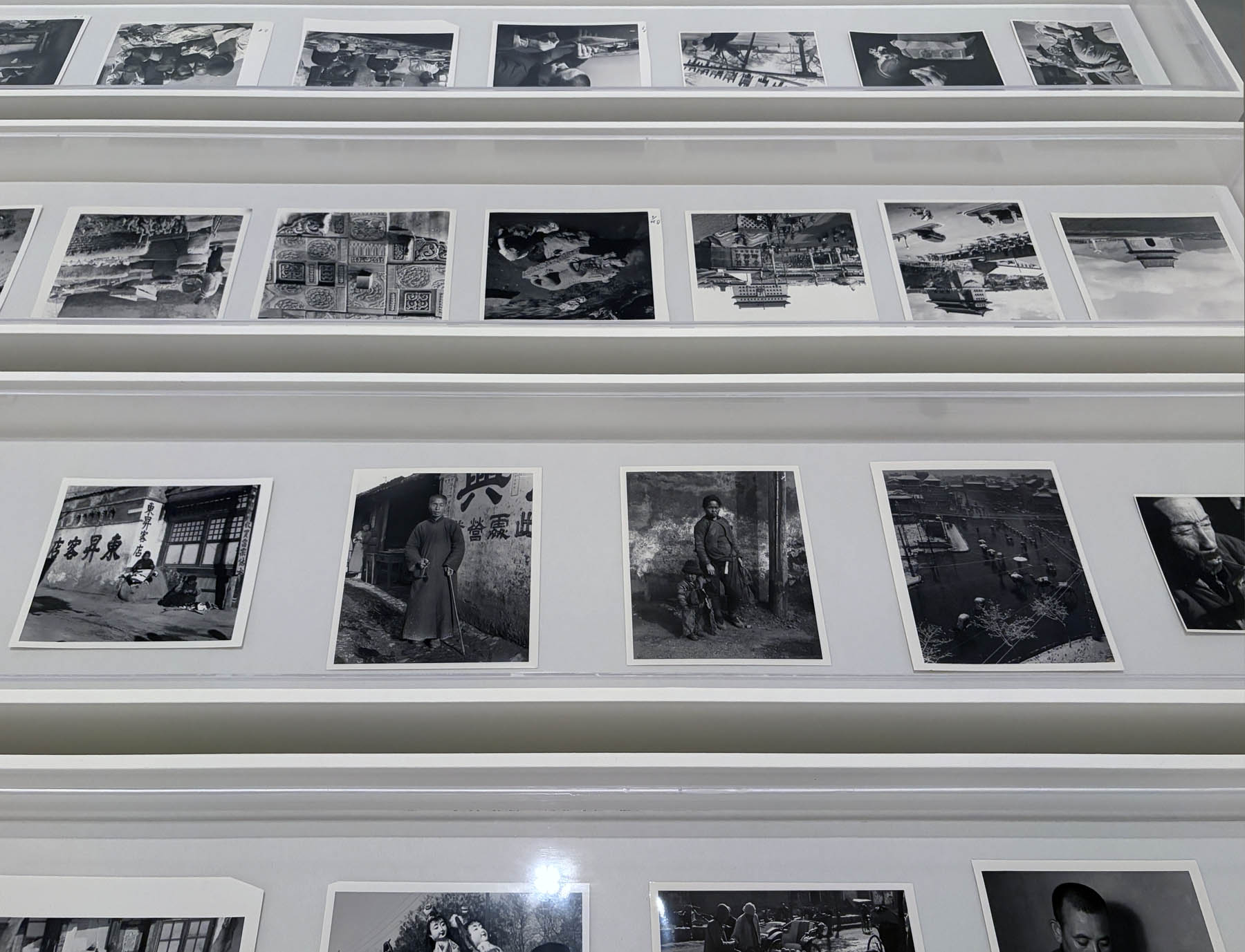
Installation view of the exhibition 'Women Photographers 1900-1975: A Legacy of Light' at NGV International, Melbourne, November 2025 - May 2026 showing in the display cases photographs by Hedda Morrison (Australian born Germany, 1908-1991)


Installation views of the exhibition Women Photographers 1900-1975: A Legacy of Light at NGV International, Melbourne, November 2025 – May 2026 showing in the display cases in the lower two images, photographs by Hedda Morrison (Australian born Germany, 1908-1991)
Photos: Marcus Bunyan


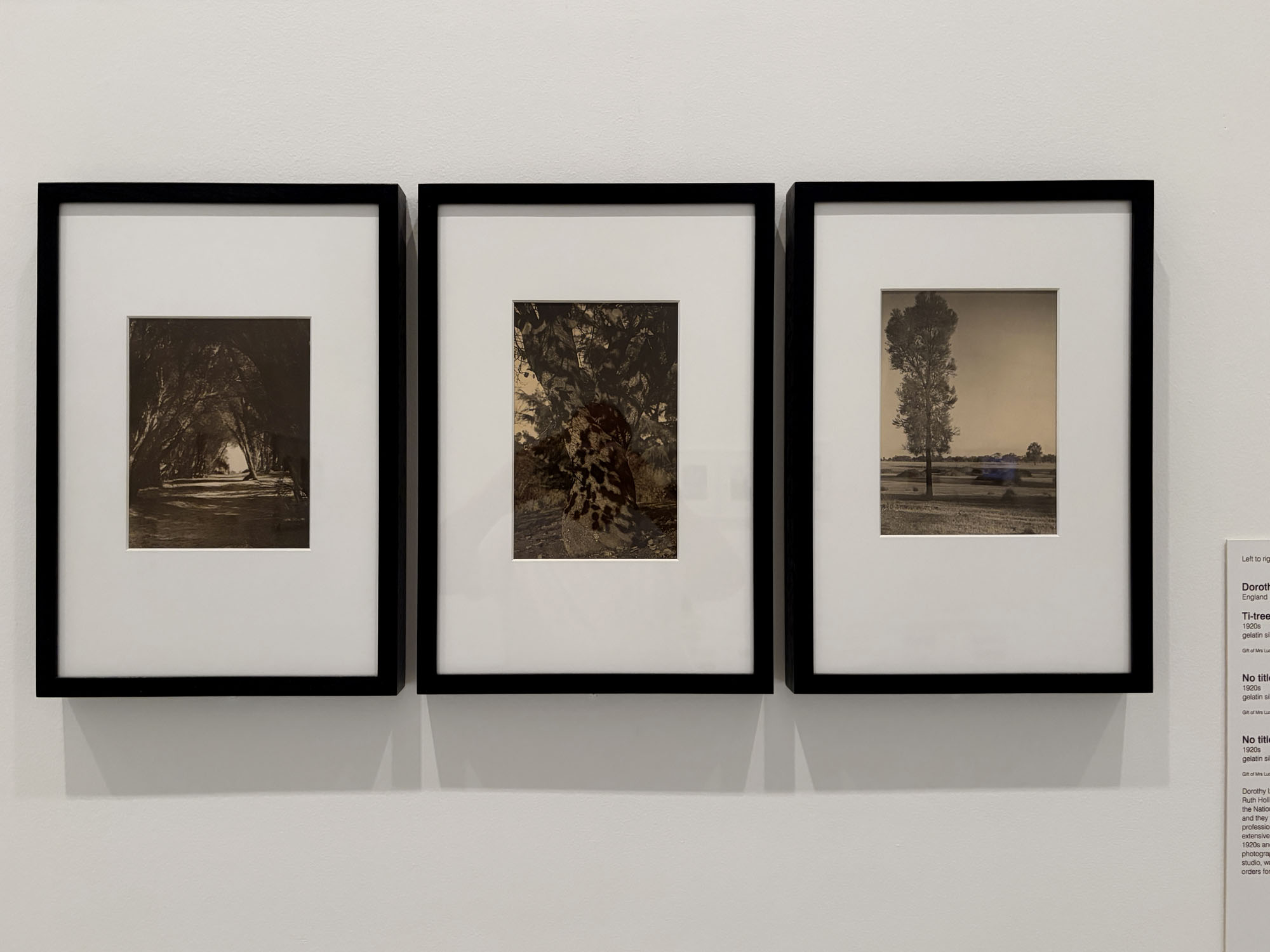
Installation view of the exhibition 'Women Photographers 1900-1975: A Legacy of Light' at NGV International, Melbourne, November 2025 - May 2026 showing three photographs by Dorothy Izard (Australian born England, 1882-1972): 'Ti-trees' (1920s); 'No title (Dappled tree)' (1920s); and 'No title (Tree in paddock)' (1920s)


Installation view of the exhibition Women Photographers 1900-1975: A Legacy of Light at NGV International, Melbourne, November 2025 – May 2026 showing three photographs by Dorothy Izard (Australian born England, 1882-1972): Ti-trees (1920s); No title (Dappled tree) (1920s); and No title (Tree in paddock) (1920s)
Photo: Marcus Bunyan


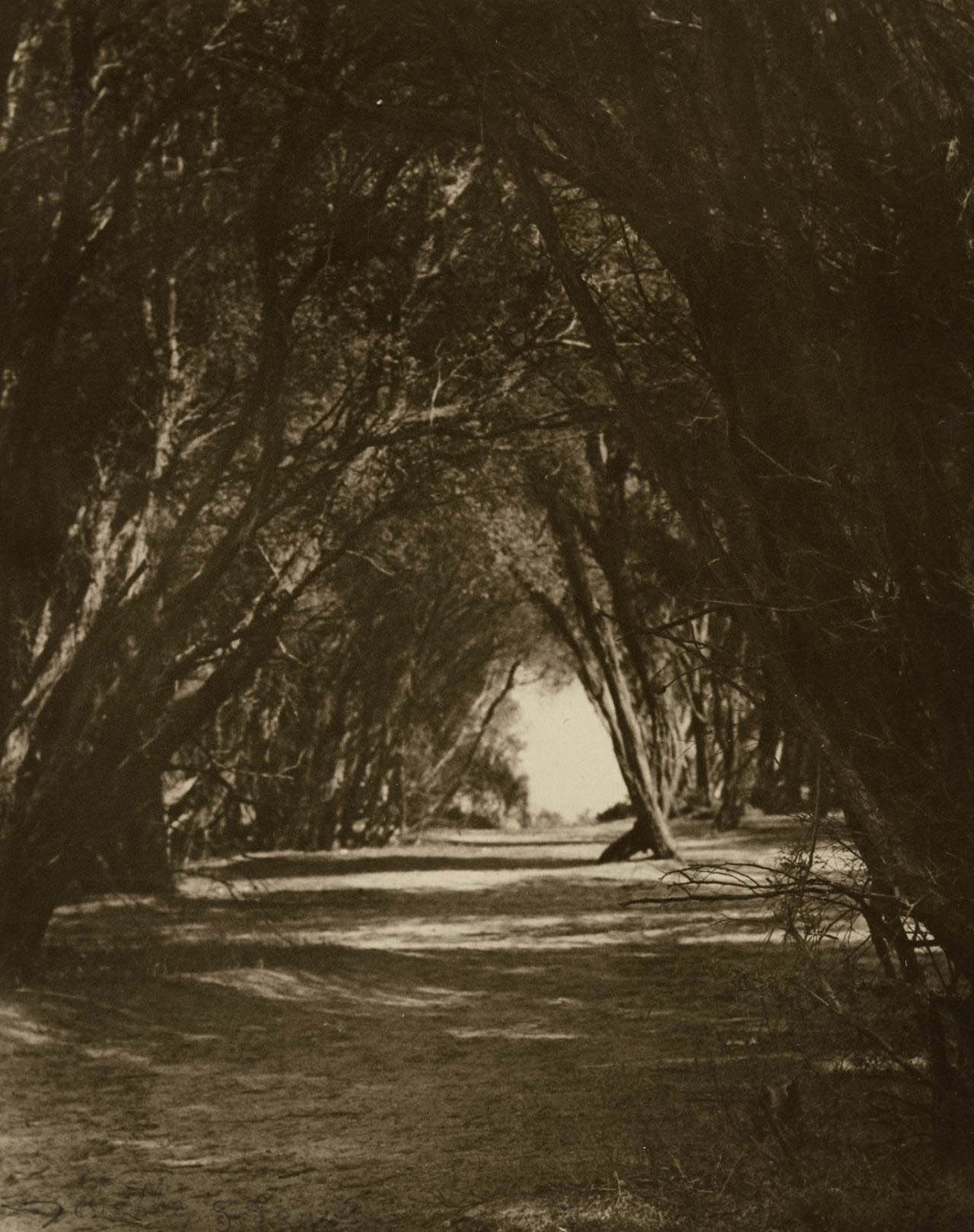
Dorothy Izard (Australian born England, 1882-1972) 'Ti-trees' 1920s


Dorothy Izard (Australian born England, 1882-1972)
Ti-trees
1920s
Gelatin silver photograph
22.8 × 18.4cm (image)
National Gallery of Victoria, Melbourne
Gift of Mrs Lucy Crosbie Morrison, 1992


Dorothy Izard met fellow photographer Ruth Hollick when they were students at the National Gallery of Victoria Art School, and they formed both a romantic and a professional partnership. They travelled extensively around regional Victoria in the 1920s and 1930s. Izard was a landscape photographer and, at Hollick’s home studio, was responsible for printing the orders for Hollick’s photographs.

Wall text from the exhibition


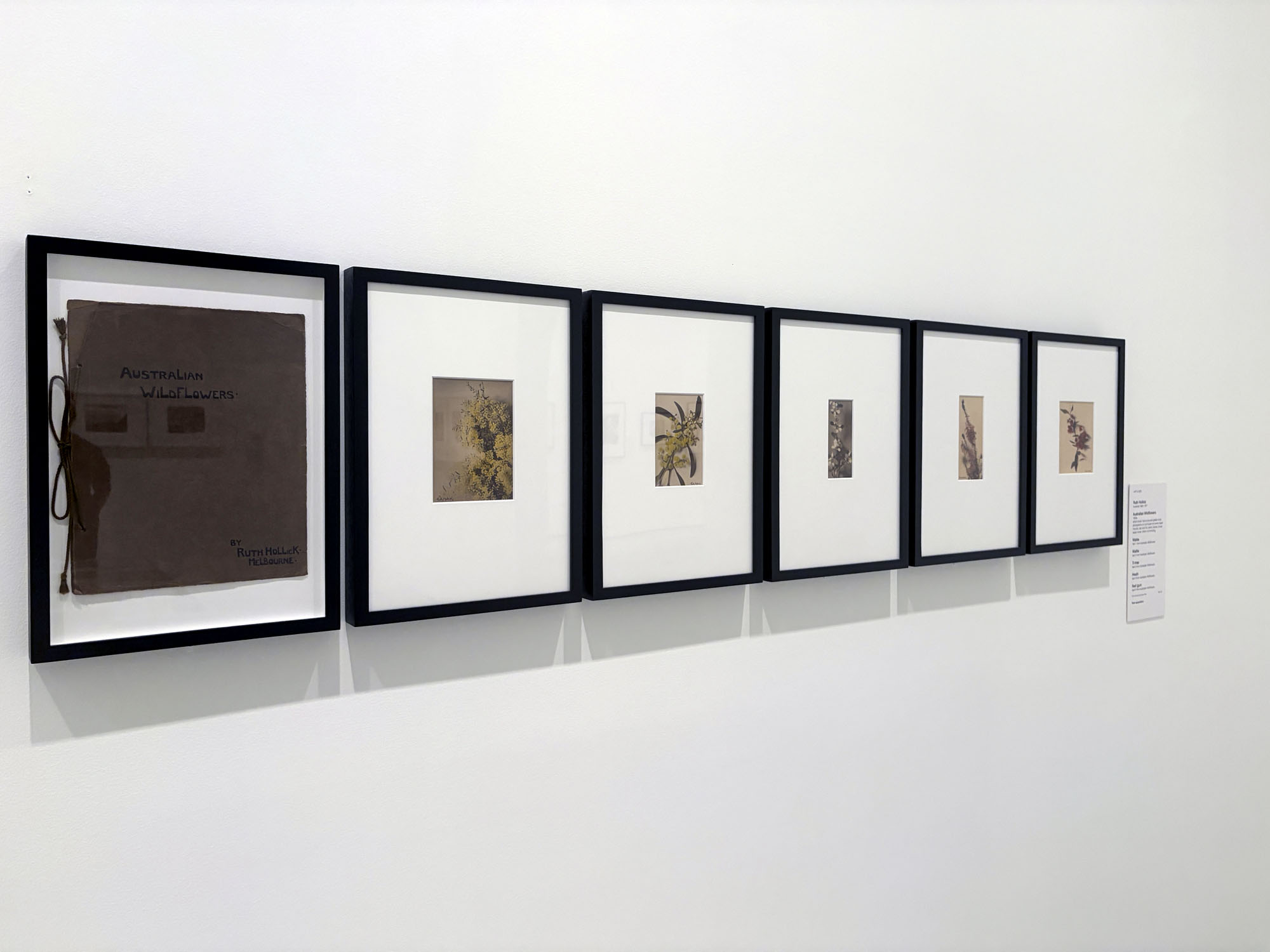
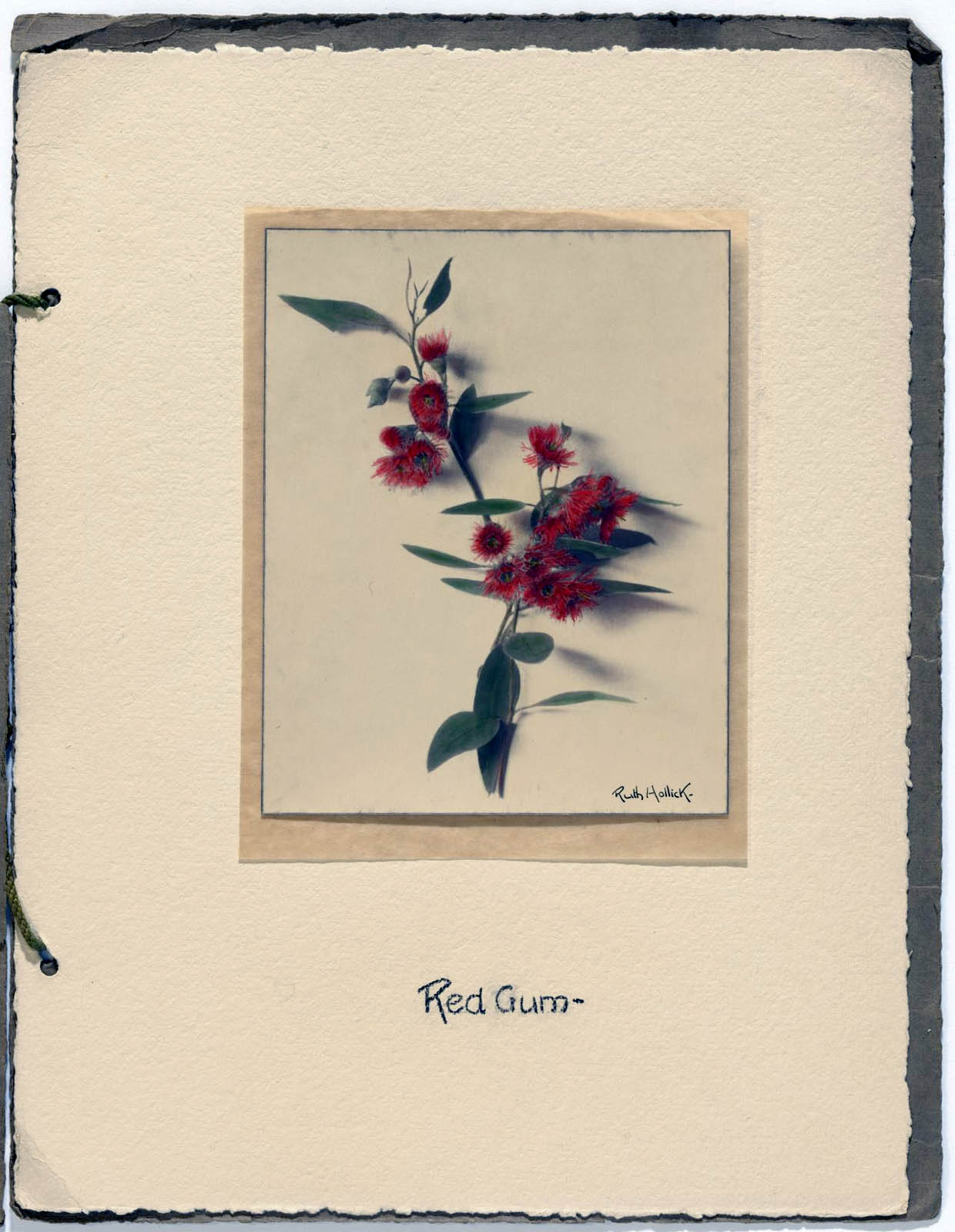
Installation view of the exhibition 'Women Photographers 1900-1975: A Legacy of Light' at NGV International, Melbourne, November 2025 - May 2026 showing  Ruth Hollick's artist book 'Australian flowers' (1950s)


Installation view of the exhibition Women Photographers 1900-1975: A Legacy of Light at NGV International, Melbourne, November 2025 – May 2026 showing Ruth Hollick’s artist book Australian flowers (1950s, below)
Photo: Marcus Bunyan


Ruth Hollick (Australian, 1883-1977) 'Australian wildflowers' 1950s


Ruth Hollick (Australian, 1883-1977)
Australian wildflowers
1950s
Artist’s book: hand-coloured gelatin silver photographs on buff paper on brown paper mounts, pen and ink, pencil, (other materials), [5] leaves, brown paper cover, cotton cord binding
33.2 x 25.5cm (page)
34.3 x 26.3 x 1.0cm irreg. (closed)
34.3 x 53.1 x 1.1cm irreg. (open)
National Gallery of Victoria, Melbourne
Gift of Pamela Jane Green, 2021
Public domain


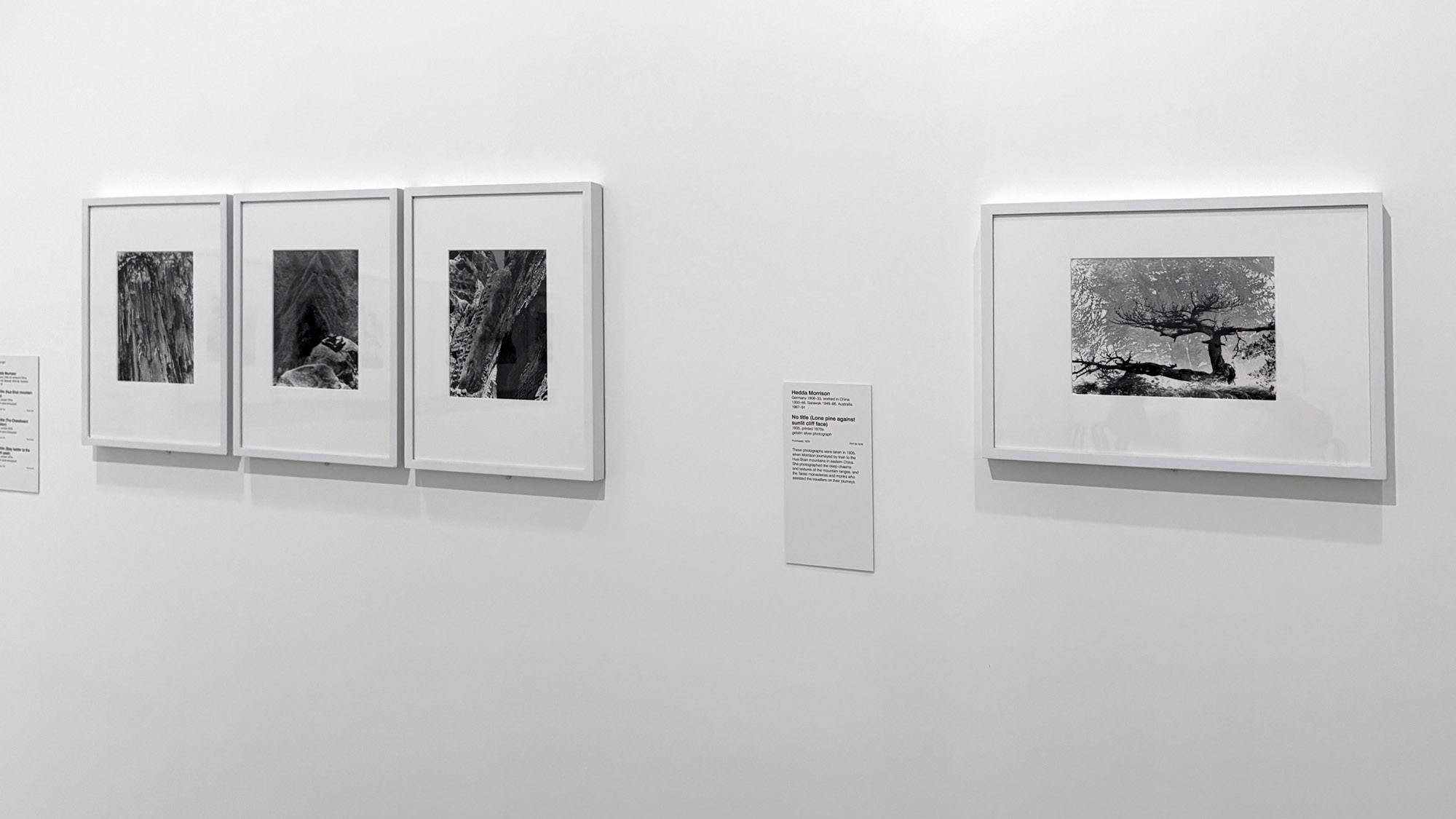
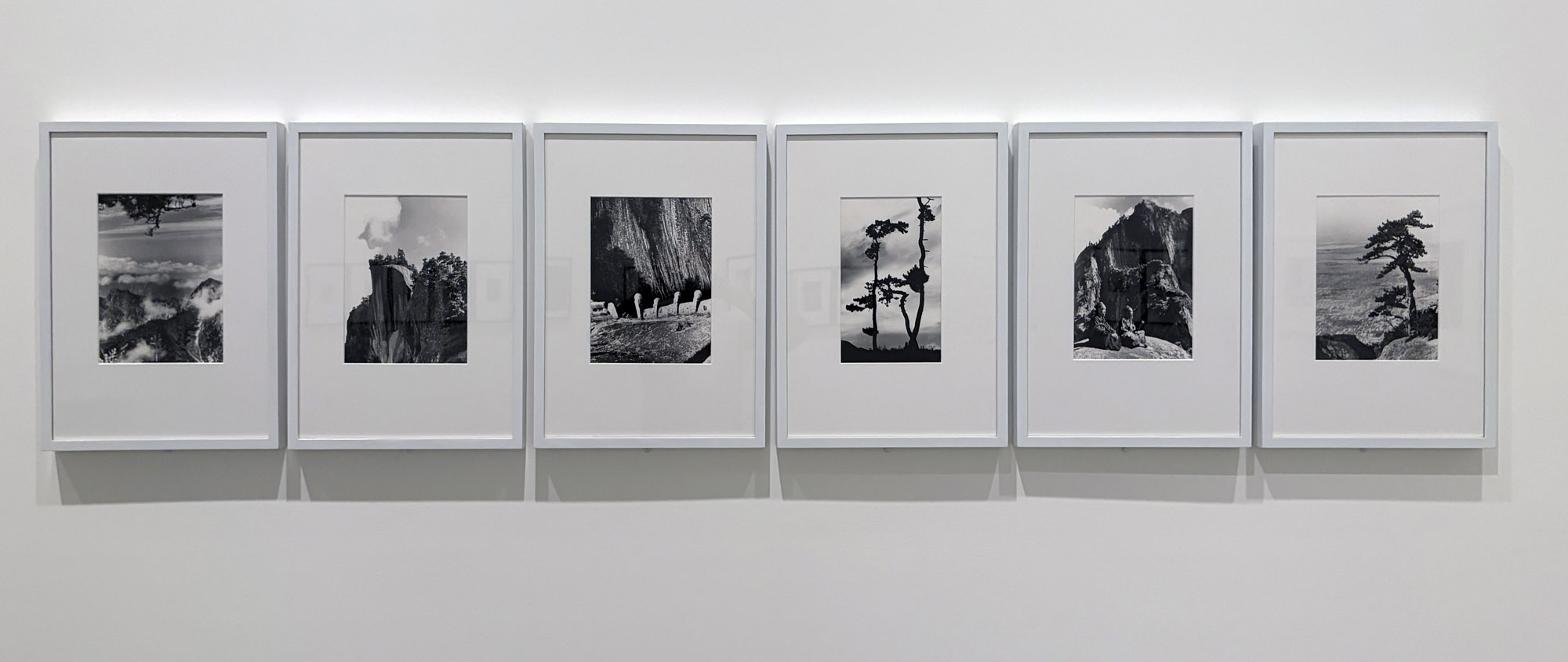
Installation view of the exhibition 'Women Photographers 1900-1975: A Legacy of Light' at NGV International, Melbourne, November 2025 - May 2026 showing from left to right, four photographs by Hedda Morrison (Australian born Germany, 1908-1991): 'No title (Hua Shan mountain face)' (1935, printed 1970s); 'No title (The Chessboard Pavilion)' (1935, printed 1970s); 'No title (Step ladder to the nothingness peak)' (1935, printed 1970s); and 'No title (Lone pine against sunlit cliff face)' (1935, printed 1970s)


Installation view of the exhibition Women Photographers 1900-1975: A Legacy of Light at NGV International, Melbourne, November 2025 – May 2026 showing from left to right, four photographs by Hedda Morrison (Australian born Germany, 1908-1991): No title (Hua Shan mountain face) (1935, printed 1970s); No title (The Chessboard Pavilion) (1935, printed 1970s); No title (Step ladder to the nothingness peak ) (1935, printed 1970s); and No title (Lone pine against sunlit cliff face) (1935 printed 1970s, below)
Photo: Marcus Bunyan


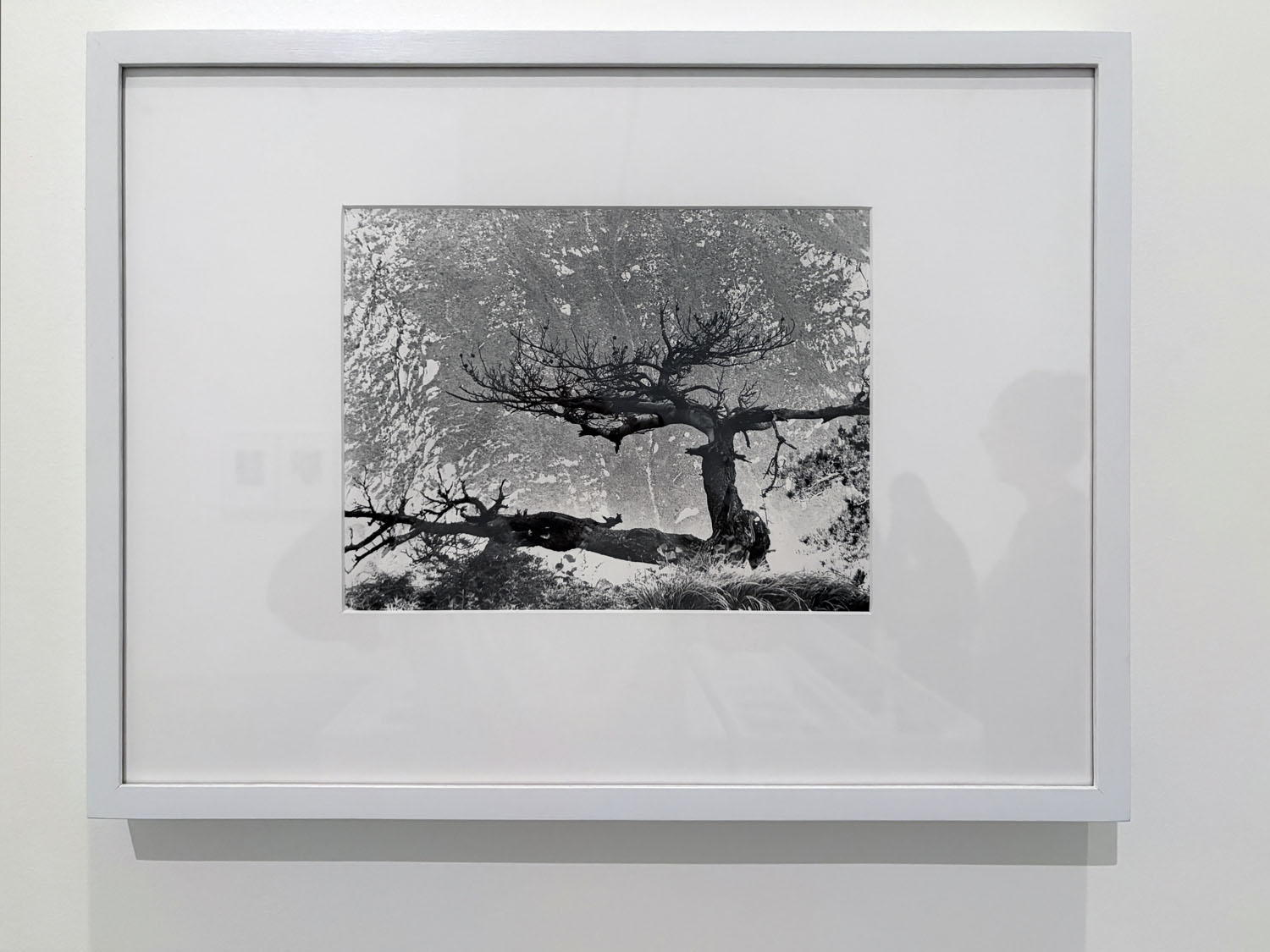
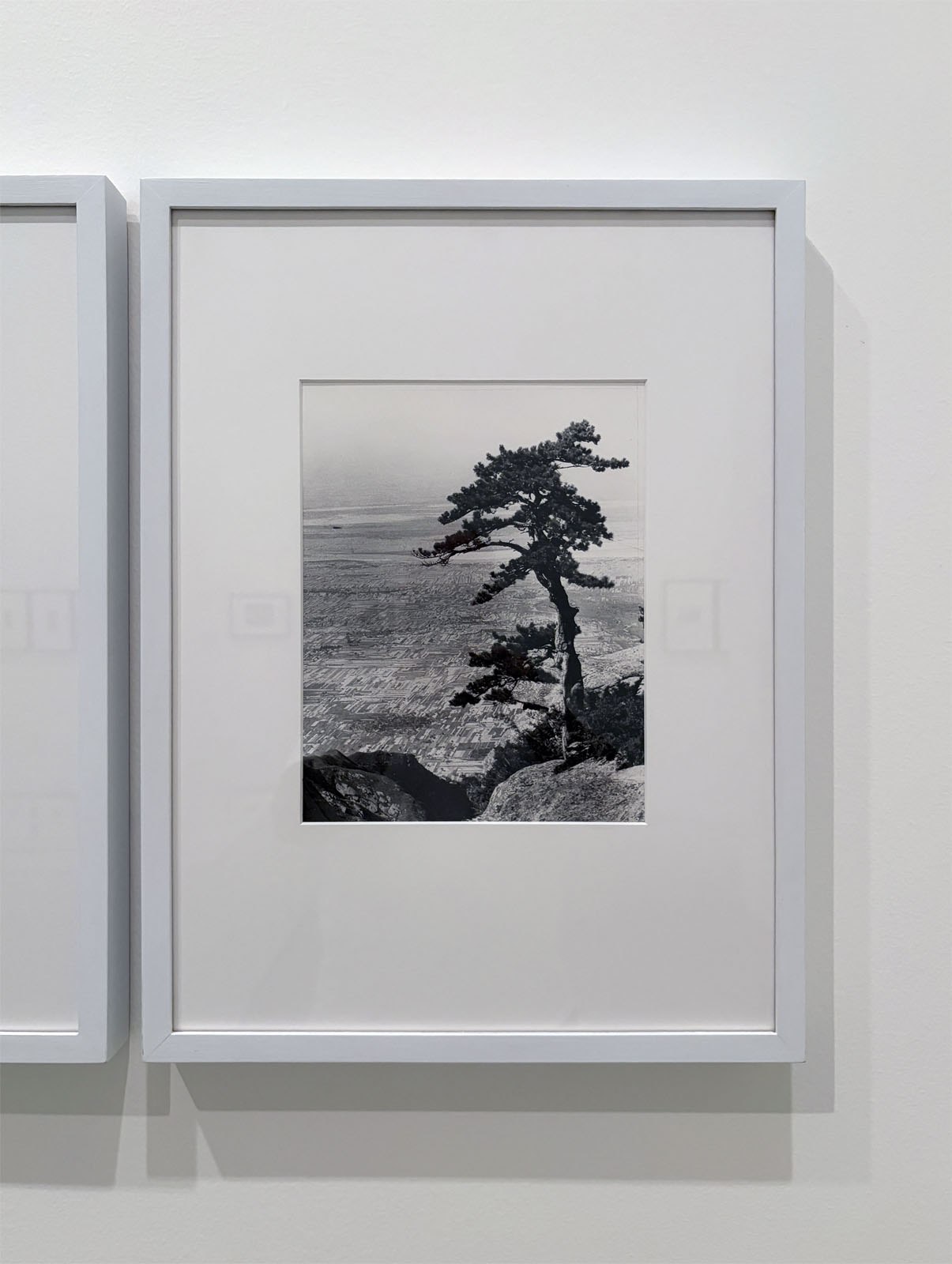
Hedda Morrison (Australian born Germany, 1908-1991) 'No title (Lone pine against sunlit cliff face)' 1935 (installation view)


Hedda Morrison (Australian born Germany, 1908-1991)
No title (Lone pine against sunlit cliff face) (installation view)
1935
Gelatin silver photograph
22.8 x 30.3cm (image)
National Gallery of Victoria, Melbourne
Purchased, 1976
Photo: Marcus Bunyan


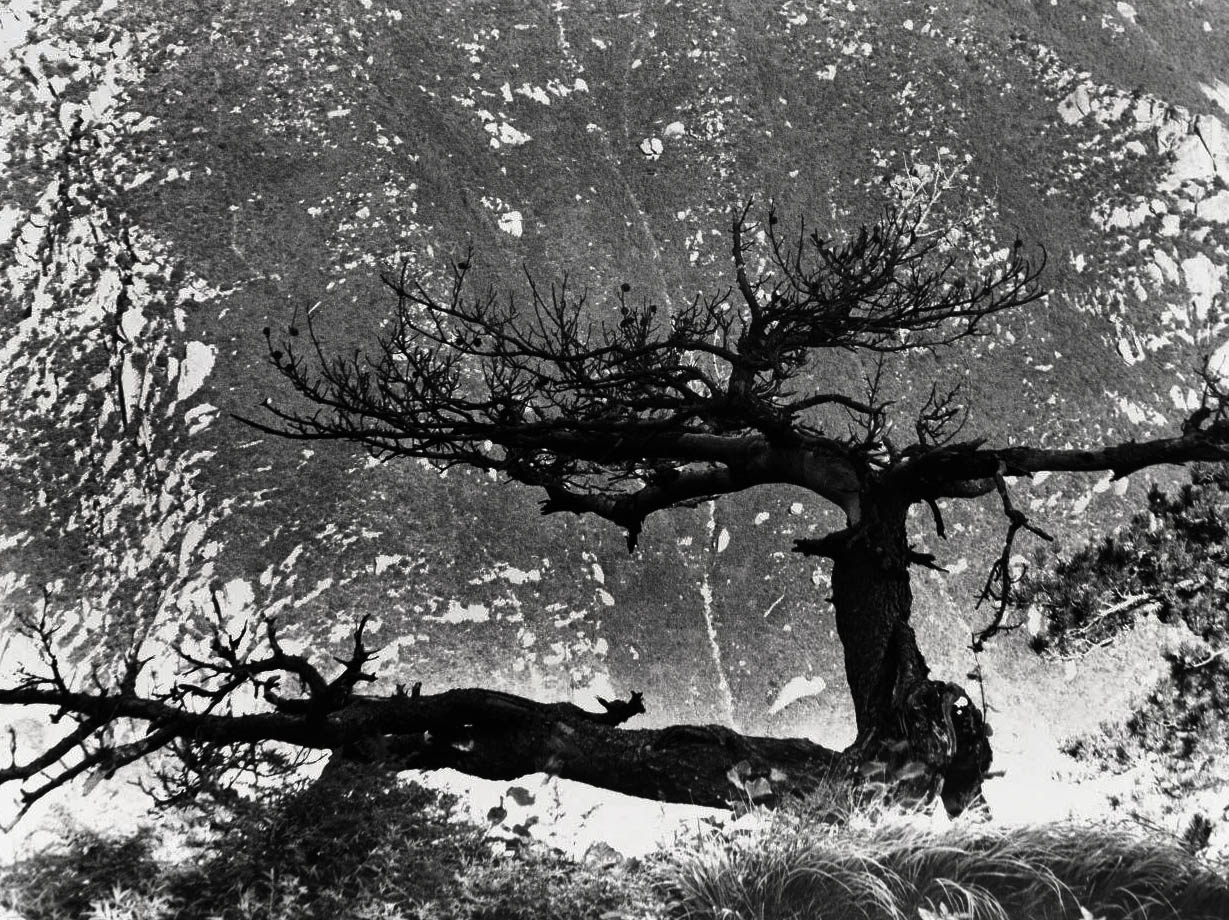
Hedda Morrison (German, 1908-1991) 'No title (Lone pine against sunlit cliff face)' 1935


Hedda Morrison (German, 1908-1991)
No title (Lone pine against sunlit cliff face)
1935
Gelatin silver photograph
22.8 x 30.3cm (image)
National Gallery of Victoria, Melbourne
Purchased, 1976
© Harvard-Yenching Library. Originals held by the Harvard-Yenching Library, Harvard University


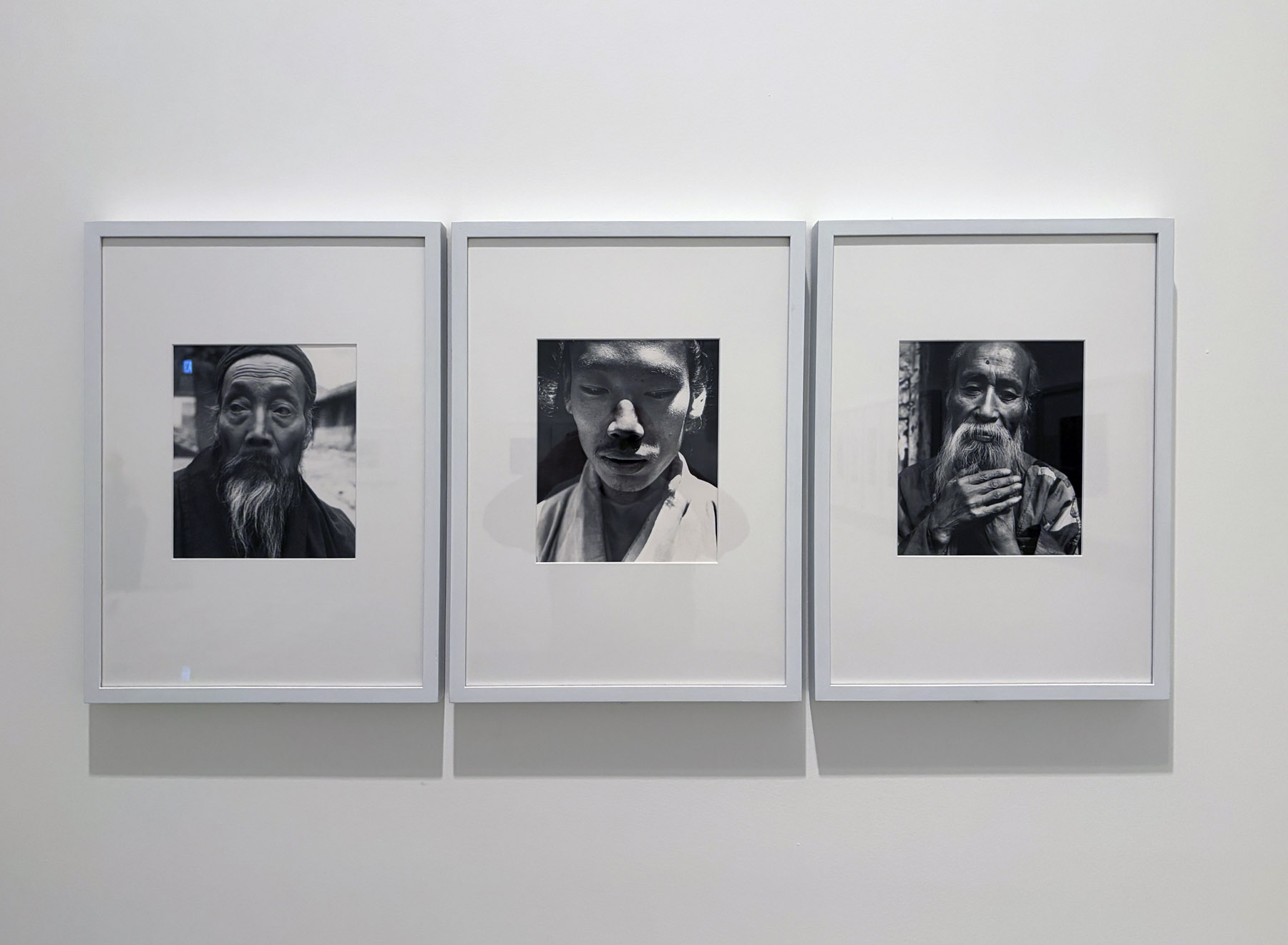
These photographs were taken in 1935, when Morrison journeyed by train to the Hua Shan mountains in eastern China. She photographed the deep chasms and textures of the mountain ranges, and the Taoist monasteries and monks who assisted the travellers on their journeys.

Wall text from the exhibition


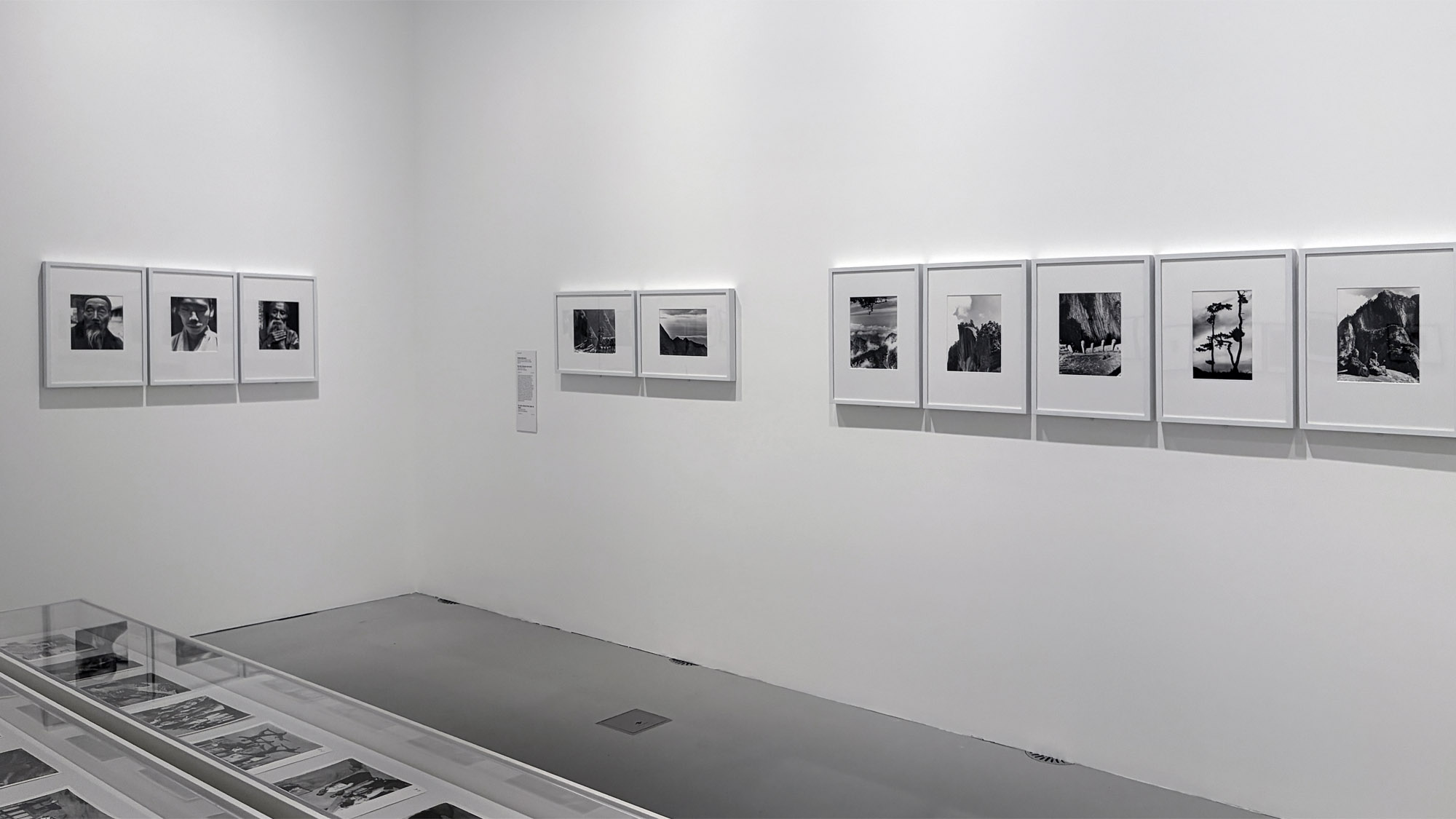
Installation view of the exhibition 'Women Photographers 1900-1975: A Legacy of Light' at NGV International, Melbourne, November 2025 - May 2026 showing photographs by Hedda Morrison (Australian born Germany, 1908-1991)


Installation view of the exhibition Women Photographers 1900-1975: A Legacy of Light at NGV International, Melbourne, November 2025 – May 2026 showing photographs by Hedda Morrison (Australian born Germany, 1908-1991)
Photo: Marcus Bunyan


Installation view of the exhibition 'Women Photographers 1900-1975: A Legacy of Light' at NGV International, Melbourne, November 2025 - May 2026 showing from left to right, six photographs by Hedda Morrison: 'No title (Morning clouds)' (1935, printed 1970s); 'No title (Fairy palm cliff)' (1935, printed 1970s); 'No title (The stone balustrade)' (1935, printed 1970s); 'No title (Three gnarled pines)' (1935, printed 1970s); 'No title (Two Taoist priests below the fiery palm cliff)' (1935, printed 1970s); and 'No title (Pine tree above the Yellow River plain)' (1935, printed 1970s)


Installation view of the exhibition Women Photographers 1900-1975: A Legacy of Light at NGV International, Melbourne, November 2025 – May 2026 showing from left to right, six photographs by Hedda Morrison: No title (Morning clouds) (1935, printed 1970s); No title (Fairy palm cliff) (1935, printed 1970s); No title (The stone balustrade) (1935, printed 1970s); No title (Three gnarled pines) (1935, printed 1970s); No title (Two Taoist priests below the fiery palm cliff) (1935, printed 1970s); and No title (Pine tree above the Yellow River plain) (1935, printed 1970s)
Photo: Marcus Bunyan


Hedda Morrison (Australian born Germany, 1908-1991) 'No title (Pine tree above the Yellow River plain)' 1935, printed 1970s (installation view)


Hedda Morrison (Australian born Germany, 1908-1991)
No title (Pine tree above the Yellow River plain) (installation view)
1935, printed 1970s
Gelatin silver photograph
30.3 x 22.7cm (image)
National Gallery of Victoria, Melbourne
Purchased, 1976
Photo: Marcus Bunyan


Installation view of the exhibition 'Women Photographers 1900-1975: A Legacy of Light' at NGV International, Melbourne, November 2025 – May 2026 showing from left to right, three photographs by Hedda Morrison: 'No title (Taoist priest)' (1935, printed 1970s); 'No title (Taoist novice)' (1935, printed 1970s); and 'No title (Taoist priest)' (1935, printed 1970s)


Installation view of the exhibition Women Photographers 1900-1975: A Legacy of Light at NGV International, Melbourne, November 2025 – May 2026 showing from left to right, three photographs by Hedda Morrison: No title (Taoist priest) (1935, printed 1970s); No title (Taoist novice) (1935, printed 1970s); and No title (Taoist priest) (1935, printed 1970s)
Photo: Marcus Bunyan


Installation view of the exhibition 'Women Photographers 1900-1975: A Legacy of Light' at NGV International, Melbourne, November 2025 - May 2026


Installation views of the exhibition Women Photographers 1900-1975: A Legacy of Light at NGV International, Melbourne, November 2025 – May 2026
Photos: Marcus Bunyan


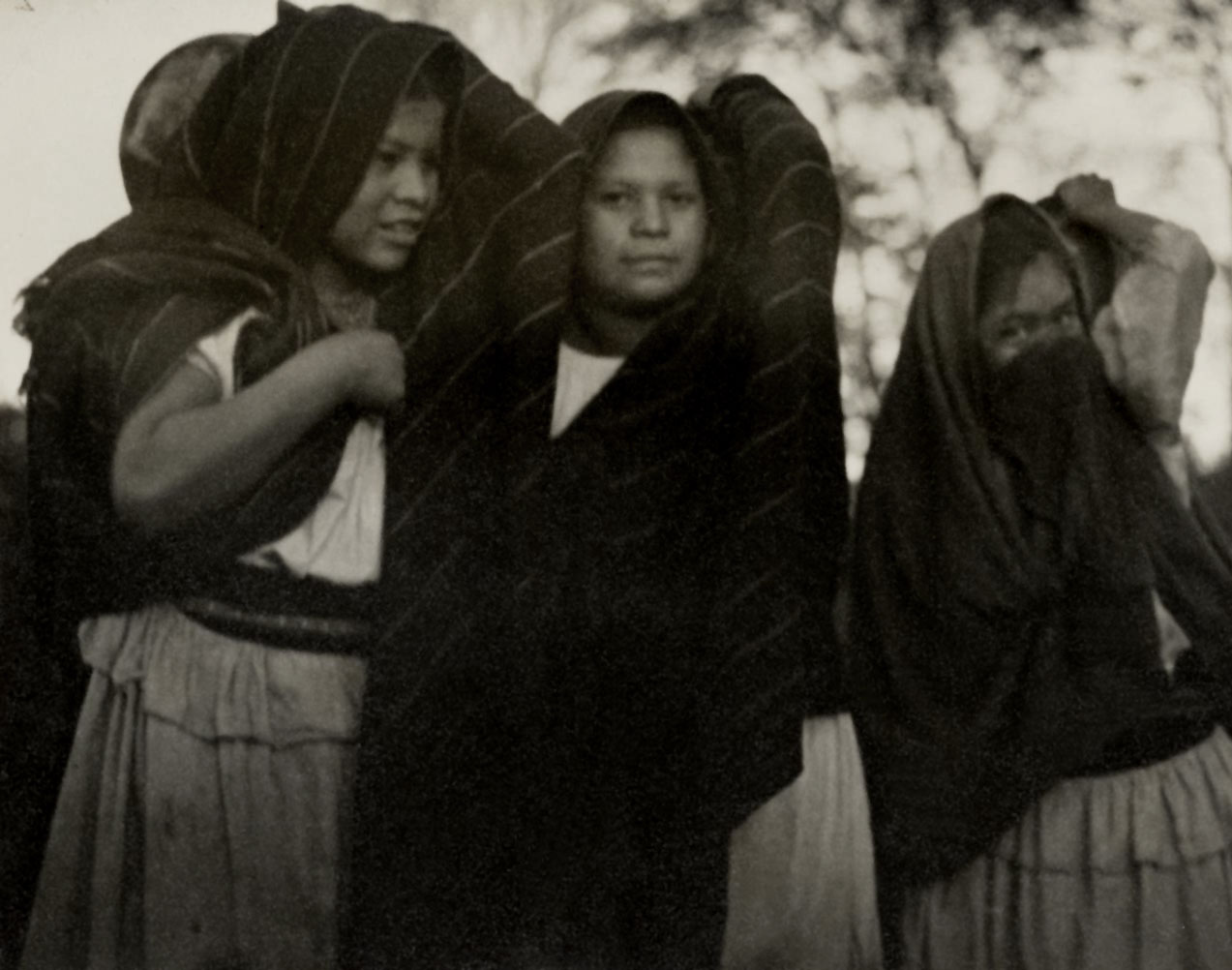
Tina Modotti (Italian, 1896-1942) 'Girls in shawls' 1924-1929


Tina Modotti (Italian, 1896-1942)
Girls in shawls
1924-1929
Gelatin silver photograph
13.2 x 16.9cm (image and sheet)
National Gallery of Victoria, Melbourne
Bowness Family Fund for Photography, 2024


Tina Modotti is known for her socially and politically charged photographs documenting Mexican working life. For Modotti, art, life and politics were inextricably linked. Her photographs show the artist’s commitment to documenting the lives of women and working people. This image is believed to be from a project exploring the popular arts of Mexico, specifically the
shawl-like rebozo, and exemplifies Modotti’s humanist style of documentary photography. It is one of the photographs anthropologist Frances Toor commissioned from Modotti and Edward Weston for the magazine Mexican Folkways, published between 1925 and 1937.

Wall text from the exhibition


Dora Maar (French 1907-1997) 'Vendors laughing behind their charcuterie stall, Barcelona' (Vendeuses et vendeur riant derrière leur étal de charcuterie, Barcelone) 1933


Dora Maar (French 1907-1997)
Vendors laughing behind their charcuterie stall, Barcelona (Vendeuses et vendeur riant derrière leur étal de charcuterie, Barcelone)
1933
Gelatin silver photograph
27.2 x 24.0cm (image)
30.3 x 24.0cm (sheet)
National Gallery of Victoria, Melbourne
Gift of Krystyna Campbell-Pretty AM and Family through the Australian Government’s Cultural Gifts Program, 2021
Public domain


In 1933 Dora Maar travelled to Spain, where she documented the extreme poverty of the country’s cities through people she met on the streets. Aligning with her left-wing politics and opposition to fascism, her photographs honour working-class citizens rather than buildings or monuments. Maar was fascinated by the characters she encountered in La Boqueria, the market in the heart of Barcelona. In this image, she captures a joyful moment as the women vendors playfully turn away from her, hiding their gaze, while a man smiles directly into Maar’s lens.

Wall text from the exhibition


The Document

The primary aim of social documentary photography is to draw attention to social issues, often to promote social or political change. This style of photography blossomed during the tumultuous period of the 1930s, when photographers were commissioned by the United States government to document the effects of the Great Depression. The increased popularity of illustrated mass media such as newspapers and magazines also allowed for the broad dissemination of social documentary images and texts.

The ability of social documentary photography to present a purely objective representation of people or places continues to be fertile ground for debate today.


Installation view of the exhibition 'Women Photographers 1900-1975: A Legacy of Light' at NGV International, Melbourne, November 2025 - May 2026 showing Farm Security Administration photographs by Dorothea Lange
Installation view of the exhibition 'Women Photographers 1900-1975: A Legacy of Light' at NGV International, Melbourne, November 2025 - May 2026


Installation views of the exhibition Women Photographers 1900-1975: A Legacy of Light at NGV International, Melbourne, November 2025 – May 2026 showing Farm Security Administration photographs by Dorothea Lange
Photos: Marcus Bunyan


Installation view of the exhibition 'Women Photographers 1900-1975: A Legacy of Light' at NGV International, Melbourne, November 2025 - May 2026 showing clockwise from bottom left, four photographs by Dorothea Lange: 'Drought-stricken farmers on the shady side of town street while their crops burn up in the fields, Sallisaw, Oklahoma' (1936 printed c. 1975); 'Drought refugees from Oklahoma, Blythe, California' (1936, printed c. 1975); 'Real Estate sign along highway, Riverside County, California' (1937, printed c. 1975); and 'Child living in Oklahoma City, Shacktown' (1936 printed c. 1975)


Installation view of the exhibition Women Photographers 1900-1975: A Legacy of Light at NGV International, Melbourne, November 2025 – May 2026 showing clockwise from bottom left, four photographs by Dorothea Lange: Drought-stricken farmers on the shady side of town street while their crops burn up in the fields, Sallisaw, Oklahoma (1936 printed c. 1975, below); Drought refugees from Oklahoma, Blythe, California (1936, printed c. 1975); Real Estate sign along highway, Riverside County, California (1937, printed c. 1975); and Child living in Oklahoma City, Shacktown (1936 printed c. 1975, below)
Photo: Marcus Bunyan


Dorothea Lange (American, 1895-1965) 'Drought-stricken farmers on the shady side of town street while their crops burn up in the fields, Sallisaw, Oklahoma' 1936, printed c. 1975


Dorothea Lange (American, 1895-1965)
Drought-stricken farmers on the shady side of town street while their crops burn up in the fields, Sallisaw, Oklahoma
1936, printed c. 1975
Gelatin silver photograph
26.4 x 25.4cm (image)
28.0 x 35.4cm (sheet)
National Gallery of Victoria, Melbourne
Purchased, 1975
Public domain


Dorothea Lange (American, 1895-1965) 'Child living in Oklahoma City, Shacktown' 1936, printed c. 1975


Dorothea Lange (American, 1895-1965)
Child living in Oklahoma City, Shacktown
1936, printed c. 1975
Gelatin silver photograph
26.9 x 25.5cm (image)
28.0 x 35.4cm (sheet)
National Gallery of Victoria, Melbourne
Purchased, 1975
Public domain


During the Great Depression, many migrants travelling in search of economic opportunity were forced to create temporary camps along roadsides. For Dorothea Lange, who photographed many such experiences over several years, images like this one were part of a greater project to spark public awareness of the difficulties people were facing. As Lange later said, ‘I had begun to talk to the people I photographed … In the migrant camps, there were always talkers. It gave us a chance to meet on common ground.’

Wall text from the exhibition


In Focus: Farm Security Administration Project

The Farm Security Administration (FSA) was established in 1937 as part of United States President Franklin D. Roosevelt’s New Deal economic reforms, which provided relief to farmers left impoverished by the hardships of the Great Depression. Led by Roy Stryker, the FSA’s photography program was to be one of the most influential social documentary projects ever developed. Many images were reproduced in newspapers and periodicals to show the harsh realities of life for those living in poverty, with the aim of encouraging public support for the government’s economic policies.

The program ran as part of several government agencies, including the Resettlement Administration (1935-37), then the Farm Security Administration (1937-42) and the Office of War Information (1942-44). Stryker hired a range of photographers for the project and, despite their being given comparable briefs, the unique eye of each photographer is apparent in the over 175,000 pictures produced by the project.

As well as forming a comprehensive pictorial record of American life from 1935 to 1944, the FSA photography program generated some of the most recognisable documentary photographs of the twentieth century, including images by women such as Dorothea Lange, Marion Post Wolcott and Marjory Collins.


Dorothea Lange (American, 1895-1965) 'Woman of the high plains, near Childress, Texas' 1938, printed c. 1975 (installation view)


Dorothea Lange (American, 1895-1965)
Woman of the high plains, near Childress, Texas (installation view)
1938, printed c. 1975
Gelatin silver photograph
49.4 x 39.3cm (image)
50.5 x 40.6cm (sheet)
National Gallery of Victoria, Melbourne
Purchased, 1975
Public domain


Dorothea Lange (American, 1895-1965) 'Woman of the High Plains, Texas Panhandle' June 1938, printed c. 1975


Dorothea Lange (American, 1895-1965)
Woman of the high plains, near Childress, Texas
1938, printed c. 1975
Gelatin silver photograph
49.4 x 39.3cm (image)
50.5 x 40.6cm (sheet)
National Gallery of Victoria, Melbourne
Purchased, 1975
Public domain


‘We’ve had no work since March. The worst thing we did was when we sold the car, but we had to sell it to eat, and now we can’t get away from here … This county’s a hard county. They won’t help bury you here. If you die, you’re dead, that’s all.’

~ The subject of this photograph, Nettie Featherston, to Dorothea Lange

Wall text from the exhibition


Dorothea Lange (United States 1895-1965) 'Towards Los Angeles, California' 1936, printed c. 1975


Dorothea Lange (American, 1895-1965)
Towards Los Angeles, California
1936, printed c. 1975
Gelatin silver photograph
39.6 x 39.1cm (image)
40.8 x 50.5cm (sheet)
National Gallery of Victoria, Melbourne
Purchased, 1975


During the Great Depression, the Great Plains of North America became known as the Dust Bowl. A severe drought turned the soil to dust, leading to the migration of thousands of small-scale farmers who could no longer work the land. Dorothea Lange made many road trips to document the plight of migrants heading west in search of work and opportunities. Many of Lange’s photographs, such as this one, show workers travelling in difficult conditions, on foot and by car. This photograph was also used as the basis for a scene in the 1939 film Of Mice and Men, based on John Steinbeck’s story of two migrant ranch workers.

Wall text from the exhibition


Installation view of the exhibition 'Women Photographers 1900-1975: A Legacy of Light' at NGV International, Melbourne, November 2025 - May 2026 showing from top to bottom, two photographs by Dorothea Lange: 'Plantation Overseer, Mississippi Delta, near Clarksdale, Mississippi' (1936, printed c. 1975) and 'Born a slave, resettled after the Civil War, Carrizo Springs, Texas' (1936, printed c. 1975)


Installation view of the exhibition Women Photographers 1900-1975: A Legacy of Light at NGV International, Melbourne, November 2025 – May 2026 showing from top to bottom, two photographs by Dorothea Lange: Plantation Overseer, Mississippi Delta, near Clarksdale, Mississippi (1936, printed c. 1975) and Born a slave, resettled after the Civil War, Carrizo Springs, Texas (1936 printed c. 1975, below)
Photo: Marcus Bunyan


Dorothea Lange (American, 1895-1965) 'Born a slave, resettled after the Civil War, Carrizo Springs, Texas' 1936, printed c. 1975


Dorothea Lange (American, 1895-1965)
Born a slave, resettled after the Civil War, Carrizo Springs, Texas
1936, printed c. 1975
Gelatin silver photograph
26.5 x 25.4cm (image)
28.0 x 35.4cm (sheet)
National Gallery of Victoria, Melbourne
Purchased, 1975
Public domain


Dorothea Lange witnessed racial segregation in the Southern states and often photographed individuals affected by the resulting social and economic inequalities. This work is also known by an alternate title: ‘Bob Lemmons, Carrizo Springs, Texas. Born a slave about 1850, south of San Antonio. Came to Carrizo Springs during the Civil War with white cattlemen seeking new range. In 1865, with his master was one of the first settlers. Knew Billy the Kid, King Fisher, and other noted bad men of the border.’

Wall text from the exhibition


Marion Post Wolcott (American, 1910-1990) 'Shenandoah Valley, Virginia' 1941, printed c. 1975 (installation view)


Marion Post Wolcott (American, 1910-1990)
Shenandoah Valley, Virginia (installation view)
1941, printed c. 1975
Gelatin silver photograph
25.6 x 34.1cm (image)
28.0 x 35.4cm (sheet)
National Gallery of Victoria, Melbourne
Purchased, 1975
Public domain
Photo: Marcus Bunyan


Marion Post Wolcott (American, 1910-1990) 'Shenandoah Valley, Virginia' 1941, printed c. 1975


Marion Post Wolcott (American, 1910-1990)
Shenandoah Valley, Virginia
1941, printed c. 1975
Gelatin silver photograph
25.6 x 34.1cm (image)
28.0 x 35.4cm (sheet)
National Gallery of Victoria, Melbourne
Purchased, 1975
Public domain


Marion Post Wolcott (American, 1910-1990) 'One of the judges at the horse races, Warrenton, Virginia' 1941, printed c. 1975 (installation view)


Marion Post Wolcott (American, 1910-1990)
One of the judges at the horse races, Warrenton, Virginia (installation view)
1941, printed c. 1975
Gelatin silver photograph
39.6 x 39.1cm (image)
40.8 x 50.5cm (sheet)
National Gallery of Victoria, Melbourne
Purchased, 1975
Public domain
Photo: Marcus Bunyan


Marion Post Wolcott (American, 1910-1990) 'Transportation for hep cats Louisville, Kentucky' 1940, printed c. 1975 (installation view)


Marion Post Wolcott (American, 1910-1990)
Transportation for hep cats Louisville, Kentucky (installation view)
1940, printed c. 1975
Gelatin silver photograph
25.7 x 34.1cm (image)
36.1 x 44.6cm (sheet)
National Gallery of Victoria, Melbourne
Purchased, 1975
Public domain
Photo: Marcus Bunyan


Marion Post Wolcott (American, 1910-1990) 'Transportation for hep cats Louisville, Kentucky' 1940, printed c. 1975


Marion Post Wolcott (American, 1910-1990)
Transportation for hep cats Louisville, Kentucky
1940, printed c. 1975
Gelatin silver photograph
25.7 x 34.1cm (image)
36.1 x 44.6cm (sheet)
National Gallery of Victoria, Melbourne
Purchased, 1975
Public domain


Installation view of the exhibition 'Women Photographers 1900-1975: A Legacy of Light' at NGV International, Melbourne, November 2025 - May 2026 showing from third left to right, three photographs by Marion Post Wolcott: 'Near Wadesboro, North Carolina' (1938, printed c. 1975); 'Baptismal service, Morehead, Kentucky' (1940, printed c. 1975); and 'Jitterbugging in a juke joint on Saturday night, Clarksdale, Mississippi' (1939, printed c. 1975)


Installation view of the exhibition Women Photographers 1900-1975: A Legacy of Light at NGV International, Melbourne, November 2025 – May 2026 showing from third left to right, three photographs by Marion Post Wolcott: Near Wadesboro, North Carolina (1938 printed c. 1975, below); Baptismal service, Morehead, Kentucky (1940 printed c. 1975, below); and Jitterbugging in a juke joint on Saturday night, Clarksdale, Mississippi (1939 printed c. 1975, below)
Photo: Marcus Bunyan


Marion Post Wolcott (American, 1910-1990) 'Near Wadesboro, North Carolina' 1938, printed c. 1975 (installation view)


Marion Post Wolcott (American, 1910-1990)
Near Wadesboro, North Carolina (installation view)
1938, printed c. 1975
Gelatin silver photograph
26.4 × 26.5cm (image)
28.0 × 35.3cm (sheet)
National Gallery of Victoria, Melbourne
Purchased, 1975
Public domain
Photo: Marcus Bunyan


The people in this photograph are the children of tenant farmers. The older child holds the hand of the younger, whose legs are bowed likely due to rickets, a medical condition caused by malnourishment. This is a vivid image that captures both the intimacy between children and the effects of environmental and economic devastation.

Wall text from the exhibition


Marion Post Wolcott (American, 1910-1990) 'Haircutting in front of plantation store after being paid off on Saturday, Mileston Plantation, Mississippi Delta' 1939, printed c. 1939 (installation view)


Marion Post Wolcott (American, 1910-1990)
Haircutting in front of plantation store after being paid off on Saturday, Mileston Plantation, Mississippi Delta (installation view)
1939, printed c. 1939
Gelatin silver photograph
27.0 x 34.6cm (image and sheet)
National Gallery of Victoria, Melbourne
Purchased, 1980
Photo: Marcus Bunyan


Marion Post Wolcott (American, 1910–1990) '[Haircutting in Front of General Store and Post Office on Marcella Plantation, Mileston, Mississippi]' 1939


Marion Post Wolcott (American, 1910-1990)
Haircutting in front of plantation store after being paid off on Saturday, Mileston Plantation, Mississippi Delta
1939, printed c. 1939
Gelatin silver photograph
27.0 x 34.6cm (image and sheet)
National Gallery of Victoria, Melbourne
Purchased, 1980


Marion Post Wolcott (American, 1910-1990) 'Baptismal service, Morehead, Kentucky' 1940, printed c. 1975


Marion Post Wolcott (American, 1910-1990)
Baptismal service, Morehead, Kentucky
1940, printed c. 1975
Gelatin silver photograph
36.3 X 49.3cm (image) 40.7 X 50.5cm (sheet)
National Gallery of Victoria, Melbourne
Purchased, 1975


Marion Post Wolcott (American, 1910-1990)
Jitterbugging in a juke joint on Saturday night, Clarksdale, Mississippi
1939, printed c. 1975
gelatin silver photograph
36.7 x 49.3cm (image) 40.7 x 50.5cm (sheet)
National Gallery of Victoria, Melbourne
Purchased, 1975


Marion Post Wolcott had a keen sense of social justice, having lived in Austria in the early 1930s, where she witnessed firsthand the rise of Nazism. On her return home to New York in 1933, she was determined to use her photography to raise awareness of social inequalities. While working for the Farm Security Administration (FSA) in the segregated American South, Wolcott witnessed the bleak economic situation endured by African Americans, which was exacerbated by the Great Depression. With an ‘open eye’, Wolcott captured both the positive effects of the FSA and the difficult realities of daily life. Her candid images of African American communities in the South – such as this joyful shot of people dancing – countered the dominant images of Black lives as they were commonly represented in mainstream media.

Wall text from the exhibition


Installation view of the exhibition 'Women Photographers 1900-1975: A Legacy of Light' at NGV International, Melbourne, November 2025 - May 2026 showing three photographs by Australian photographer Heather George


Installation view of the exhibition Women Photographers 1900-1975: A Legacy of Light at NGV International, Melbourne, November 2025 – May 2026 showing three photographs by Heather George (Australia, 1907-1983): Rawhide bed, Wave Hill Station (1952, printed 1978); Stockyards, Wave Hill Station, Northern Territory (1952, printed 1978); and Stockyards, stockmen in distance. Wave Hill Station, Northern Territory (1952, printed 1978)
Photo: Marcus Bunyan


Heather George (Australia, 1907-1983) 'Stockyards, Wave Hill Station, Northern Territory' 1952, printed 1978


Heather George (Australia, 1907-1983)
Stockyards, Wave Hill Station, Northern Territory
1952, printed 1978
From The Northern Territory series (1952)
Gelatin silver photograph
24.0 x 28.8cm (image)
National Gallery of Victoria, Melbourne
Purchased, 1980
Public domain


In the 1950s and 1960s Heather George worked as a freelance photographer and photojournalist. In 1952 Walkabout magazine published a series of photographs George made in the Northern Territory outback, including images of Wave Hill Station, a vast pastoral lease on the lands of the Gurindji people. Fourteen years later, it was to go down in history as the location of a turning point in the recognition of land rights for Australia’s First Nations peoples.

Wall text from the exhibition


Consuelo Kanaga (American, 1894-1978) 'She is a Tree of Life' 1950


Consuelo Kanaga (American, 1894-1978)
She is a tree of life to them
1950
Gelatin silver photograph
32.8 x 24.1cm (image and sheet)
National Gallery of Victoria, Melbourne
Bowness Family Fund for Photography, 2024
© Consuelo Kanaga


Consuelo Kanaga worked at the San Francisco Chronicle from 1915, later joining the California Camera Club, where she met photographers Imogen Cunningham, Dorothea Lange and Edward Weston. Kanaga’s image-making was informed by her involvement in liberal politics and the nascent civil rights
movement. In 1950 she stayed in an artists’ colony in Maitland, Florida, and documented the lives of Black field workers living there. This refined portrait of a mother with her children became well known around the world after its inclusion in the touring exhibition The Family of Man, curated by pioneering photographer Edward Steichen.

Wall text from the exhibition


Ruth Orkin (American, 1921-1985) 'American girl in Italy, Florence' 1951, printed 1980 (installation view)


Ruth Orkin (American, 1921-1985)
American girl in Italy, Florence (installation view)
1951, printed 1980
Gelatin silver photograph
30.2 x 46.9cm (image)
40.3 x 50.6cm (sheet)
National Gallery of Victoria, Melbourne
Gift of Krystyna Campbell-Pretty AM and Family through the Australian Government’s Cultural Gifts Program, 2022
Photo: Marcus Bunyan


In 1950 freelance photographer Ruth Orkin was included in the Young Photographers exhibition at the Museum of Modern Art, New York, and in 1951 Life magazine sent her on assignment to Israel. Before returning to America, she spent time in Italy, where she met a young American painter, Jinx Allen. The women collaborated on a series of photographs commissioned from Orkin by Cosmopolitan magazine for an article titled ‘Don’t Be Afraid to Travel Alone’. Standing in a Florence intersection, Orkin captured her friend as she manoeuvred through a crowd of men. The resulting image is reminiscent of a movie still – Orkin would go on to co-direct two feature films with her husband in the 1950s.

Wall text from the exhibition


Installation view of the exhibition 'Women Photographers 1900-1975: A Legacy of Light' at NGV International, Melbourne, November 2025 - May 2026 showing from left to right, Maggie Diaz '3AW mobile studio, Elwood Beach' (1960s printed 2014); Maggie Diaz 'Ladies at the bar, Tavern Club, Chicago' (1957, printed 2014); three photographs by Diane Arbus: 'Girl with a cigar in Washington Square Park, N.Y.C.' (1965, printed later); 'Blaze Starr in her living room, Baltimore, Md.' (1964, printed later); 'A Couple at a Dance, N.Y.C.' (1960, printed later); and Lisette Model 'Woman with veil, San Francisco' (1949, printed c. 1960)


Installation view of the exhibition Women Photographers 1900-1975: A Legacy of Light at NGV International, Melbourne, November 2025 – May 2026 showing from left to right, Maggie Diaz 3AW mobile studio, Elwood Beach (1960s printed 2014, below); Maggie Diaz Ladies at the bar, Tavern Club, Chicago (1957, printed 2014); three photographs by Diane Arbus: Girl with a cigar in Washington Square Park, N.Y.C. (1965, printed later); Blaze Starr in her living room, Baltimore, Md. (1964, printed later); A Couple at a Dance, N.Y.C. (1960, printed later); and Lisette Model Woman with veil, San Francisco (1949, printed c. 1960)
Photo: Marcus Bunyan


Maggie Diaz (American, 1925-2016, Australia 1961-2016) '3AW mobile studio, Elwood Beach' 1960s, printed 2014 (installation view)


Maggie Diaz (American, 1925-2016, Australia 1961-2016)
3AW mobile studio, Elwood Beach (installation view)
1960s, printed 2014
Pigment print
27.9 x 30.0cm (image)
48.2 x 33.0cm (sheet)
ed. 2/25
National Gallery of Victoria, Melbourne
Purchased, Victorian Foundation for Living Australian Artists, 2015
Photo: Marcus Bunyan


Maggie Diaz (American, 1925-2016, Australia 1961-2016) '3AW mobile studio, Elwood Beach' 1960s, printed 2014


Maggie Diaz (American, 1925-2016, Australia 1961-2016)
3AW mobile studio, Elwood Beach
1960s, printed 2014
Pigment print
27.9 x 30.0cm (image)
48.2 x 33.0cm (sheet)
ed. 2/25
National Gallery of Victoria, Melbourne
Purchased, Victorian Foundation for Living Australian Artists, 2015
© Maggie Diaz


Moving to Australia in 1961, American photographer Maggie Diaz established her Melbourne studio specialising in advertising, portraiture and social documentary photography. Among her commercial clients was the local radio station 3AW, which displayed her photographs in its new CBD studio. A 1964 article in Melbourne newspaper The Age described the headquarters, noting with apparent surprise that the commissioned photographs are ‘the work of a woman’.

Wall text from the exhibition


Installation view of the exhibition 'Women Photographers 1900-1975: A Legacy of Light' at NGV International, Melbourne, November 2025 - May 2026


Installation view of the exhibition Women Photographers 1900-1975: A Legacy of Light at NGV International, Melbourne, November 2025 – May 2026
Photo: Marcus Bunyan


BOTH: Mikki Ferrill (American, b. 1937) 'Untitled' 1970s (installation view)


BOTH

Mikki Ferrill (American, b. 1937)
Untitled (installation view)
1970s
Gelatin silver photograph
20.7 x 13.6cm (image)
25.5 x 20.2cm (sheet)
National Gallery of Victoria, Melbourne
Bowness Family Fund for Photography, 2024
Photo: Marcus Bunyan


Valeria ‘Mikki’ Ferrill is an African American photographer known for her documentation of the Black community in Chicago’s South Side during the 1960s and 70s. Ferrill studied advertising design and illustration at the School of the Art Institute of Chicago. She eventually became a photojournalist, joining a group of Black photographers from the area who shot for local periodicals and newspapers. Ferrill worked on assignments in Mexico in the late 1960s, returning to Chicago in 1970.

Throughout

Wall text from the exhibition


Collaboration and Change

Many postwar street photographers captured their subjects in the ‘instant’. By embracing close-looking, artists relied on chance to create spontaneous compositions, capturing candid, everyday moments. Photographers such as Diane Arbus worked on the streets of New York City, creating vivid portraits of contemporary American life. Arbus often collaborated with her subjects, producing striking images in the moment or curating compositions for magazine commissions.

Fashion photography was on the rise in the period, with American publications such as Harper’s Bazaar playing a pivotal role in amplifying the art form. Louise Dahl-Wolfe, Lillian Bassman and Toni Frissell were regular contributors to the magazine. Their photographs depicted the idealistic and aspirational modern woman.

Yamazawa Eiko and Tokiwa Toyoko were trailblazing women photographers working in Japan at the same time. Their works reflect the social changes of postwar Japan, expressed through the medium of the photobook.


Installation view of the exhibition 'Women Photographers 1900-1975: A Legacy of Light' at NGV International, Melbourne, November 2025 - May 2026
Installation view of the exhibition 'Women Photographers 1900-1975: A Legacy of Light' at NGV International, Melbourne, November 2025 - May 2026 showing at left, three photographs by the photographer Lillian Bassman (American, 1917-2012): 'Black - with one white glove, Barbara Mullen, Christian Dior, Harper's Bazaar, New York, 1958' (1958, printed (1994); 'Toreador and Barbara Mullen (for Harper's Bazaar)' (1950, printed 2006); and 'More fashion mileage per dress, Barbara Vaughn, Harper’s Bazaar, New York' (1956)


Installation views of the exhibition Women Photographers 1900-1975: A Legacy of Light at NGV International, Melbourne, November 2025 – May 2026 showing at left, three photographs by the photographer Lillian Bassman (American, 1917-2012): Black – with one white glove, Barbara Mullen, Christian Dior, Harper’s Bazaar, New York, 1958 (1958, printed (1994); Toreador and Barbara Mullen (for Harper’s Bazaar) (1950, printed 2006); and More fashion mileage per dress, Barbara Vaughn, Harper’s Bazaar, New York (1956, below)
Photos: Marcus Bunyan


Installation view of the exhibition 'Women Photographers 1900-1975: A Legacy of Light' at NGV International, Melbourne, November 2025 - May 2026 showing at right, three photographs by the photographer Lillian Bassman (American, 1917-2012): 'Black - with one white glove, Barbara Mullen, Christian Dior, Harper's Bazaar, New York, 1958' (1958, printed (1994); 'Toreador and Barbara Mullen (for Harper's Bazaar)' (1950, printed 2006); and 'More fashion mileage per dress, Barbara Vaughn, Harper's Bazaar, New York' (1956)


Installation view of the exhibition Women Photographers 1900-1975: A Legacy of Light at NGV International, Melbourne, November 2025 – May 2026 showing at right, three photographs by the photographer Lillian Bassman (American, 1917-2012): Black – with one white glove, Barbara Mullen, Christian Dior, Harper’s Bazaar, New York, 1958 (1958, printed (1994); Toreador and Barbara Mullen (for Harper’s Bazaar) (1950, printed 2006); and More fashion mileage per dress, Barbara Vaughn, Harper’s Bazaar, New York (1956, below)
Photo: Marcus Bunyan


Lillian Bassman (American, 1917-2012) 'More fashion mileage per dress, Barbara Vaughn, Harper's Bazaar, New York' 1956


Lillian Bassman (American, 1917-2012)
More fashion mileage per dress, Barbara Vaughn, Harper’s
Bazaar, New York

1956
gelatin silver photograph, ed. 13/25
43.1 x 60.9cm (image)
50.8 x 56.5cm (sheet)
Gift of Krystyna Campbell-Pretty AM and Family through
the Australian Government’s Cultural Gifts Program, 2023
© Estate of Lillian Bassman


Lillian Bassman began her career as a painting assistant at the Works Progress Administration, and studied fashion illustration and textile design at Pratt Institute in the late 1930s. In 1940 the famed art director of Harper’s Bazaar magazine, Alexey Brodovitch, offered her a scholarship to study under
him. This led to her role as art director of the magazine’s spinoff Junior Bazaar. There she worked with photographers such as Richard Avedon and Robert Frank, and in 1947 began working as a freelance photographer in fashion and advertising.

Wall text from the exhibition


New Ways Of Seeing: Portraits, Intimacy, Liberation

The 1960s and 1970s saw extraordinary social change around the world. Political activism was on the rise, stemming from the anti-Vietnam War movement. There was an increased consciousness around racial equality, feminism and LGBTQ rights. Photographers also documented the popularisation of alternative ways of living, such as shared housing and collective lifestyles, with images that sometimes appeared in counterculture publications.

Australian women photographers working during this period were among the first to gain access to tertiary photography education. Among the key ideas that emerged through the work of these artists was a focus on community, personal relationships and everyday life.

This exhibition culminates in 1975, a watershed year. It marked the first International Women’s Year, inaugurated through the first UN World Conference on Women, and the height of second-wave feminism. That year the NGV staged the exhibition Six Australian Women Photographers, sometimes referenced as Wimmin, featuring work by Marion Marrison, Melanie Nunn, Fiona Hall, Melanie Le Guay, Ingeborg Tyssen and Jacqueline Mitelman. Fifty years on, many of the images from that exhibition are included here, presented alongside work from the artists’ peers.

Text from the NGV website


Installation view of the exhibition 'Women Photographers 1900-1975: A Legacy of Light' at NGV International, Melbourne, November 2025 - May 2026


Installation view of the exhibition Women Photographers 1900-1975: A Legacy of Light at NGV International, Melbourne, November 2025 – May 2026
Photo: Marcus Bunyan


ALL: Christine Godden (Australian, b. 1947) 'Untitled' 1974 (installation view)


 ALL

Christine Godden (Australian, b. 1947)
Untitled (installation view)
1974
Gelatin silver photographs
National Gallery of Victoria, Melbourne
Purchased from Admission Funds, 1991
© Christine Godden
Photo: Marcus Bunyan


Christine Godden (Australian, b. 1947) 'Untitled' 1974


Christine Godden (Australian, b. 1947)
Untitled
1974
Gelatin silver photograph
15.2 x 22.5cm (image) 20.0 x 25.2cm (sheet)
National Gallery of Victoria, Melbourne
Purchased from Admission Funds, 1991
© Christine Godden


Installation view of the exhibition 'Women Photographers 1900-1975: A Legacy of Light' at NGV International, Melbourne, November 2025 - May 2026 showing at left, six photographs by Christine Godden (Australian, b. 1947) 'Untitled' 1973/1974


Installation view of the exhibition Women Photographers 1900-1975: A Legacy of Light at NGV International, Melbourne, November 2025 – May 2026 showing at left, six photographs by Christine Godden (Australian, b. 1947) Untitled 1973/1974 (below)
Photo: Marcus Bunyan


ALL: Christine Godden (Australian, b. 1947) 'Untitled' 1973/74, printed 1986 (installation view)


Christine Godden (Australian, b. 1947)
Untitled
1973, printed 1986
Untitled
1973, printed 1986
Untitled
1973, printed 1986
Untitled
1974
Untitled
1973, printed 1986
Untitled
1974
Purchased from Admission Funds, 1991
Photo: Marcus Bunyan


Installation view of the exhibition 'Women Photographers 1900-1975: A Legacy of Light' at NGV International, Melbourne, November 2025 - May 2026 showing at left, six photographs by Christine Godden (Australian, b. 1947) 'Untitled' 1973/1974; and four photographs by Marion Marrison (Australian, b. 1951) including at right 'No title (Lady)' (1973)


Installation view of the exhibition Women Photographers 1900-1975: A Legacy of Light at NGV International, Melbourne, November 2025 – May 2026 showing at left, six photographs by Christine Godden (Australian, b. 1947) Untitled 1973/1974 (above); and four photographs by Marion Marrison (Australian, b. 1951) including at right No title (Lady) (1973)
Photo: Marcus Bunyan


Installation view of the exhibition 'Women Photographers 1900-1975: A Legacy of Light' at NGV International, Melbourne, November 2025 - May 2026 showing at right, four photographs by Fiona Hall (Australian, b. 1953)


Installation view of the exhibition Women Photographers 1900-1975: A Legacy of Light at NGV International, Melbourne, November 2025 – May 2026 showing at right, four 1974 photographs by Fiona Hall (Australian, b. 1953)
Photo: Marcus Bunyan


Fiona Hall began focusing on photography in the mid 1970s, following her time as an assistant to British landscape photographer Fay Godwin. Taken with a large-format camera, Hall’s early photographs were influenced by late modernism and formalism, the study of art focusing on the visual aspects of a work. In this image, Hall plays with forms and lines, capturing the elements of the room as if they have been layered, and she positions herself so that her reflection appears as though it is hovering in space. Curator and art historian Helen Ennis writes that while we often expect self-portraiture to reveal the artist, Hall’s photograph seems to conceal her.

Wall text from the exhibition


Installation view of the exhibition 'Women Photographers 1900-1975: A Legacy of Light' at NGV International, Melbourne, November 2025 - May 2026 showing at right, four 1974 photographs by Fiona Hall (Australian, b. 1953); and at right, four photographs by Sue Ford (Australian, 1943-2009)


Installation view of the exhibition Women Photographers 1900-1975: A Legacy of Light at NGV International, Melbourne, November 2025 – May 2026 showing at right, four 1974 photographs by Fiona Hall (Australian, b. 1953); and at right, four photographs by Sue Ford (Australian, 1943-2009) (below)
Photo: Marcus Bunyan


Installation view of the exhibition 'Women Photographers 1900-1975: A Legacy of Light' at NGV International, Melbourne, November 2025 - May 2026 showing from left to right, Sue Ford 'Carmel and Trish' (1962, printed 1988) and Sue Ford 'Sue Pike' (1963, printed 1988)


Installation view of the exhibition Women Photographers 1900-1975: A Legacy of Light at NGV International, Melbourne, November 2025 – May 2026 showing from left to right, Sue Ford Carmel and Trish (1962, printed 1988) and Sue Ford Sue Pike (1963, printed 1988)
Photo: Marcus Bunyan


Carmel and Trish (1962, printed 1988) was taken early in Sue Ford’s artistic career, and features her friends Carmel and Trish posing in a paddock. Although Ford approached her photography seriously, her sense of humour comes through in this image, which has been described as both an experiment and a playful critique of photography. Throughout her career, Ford often turned the camera on herself, as well as on her family, friends and acquaintances, using the medium to explore social and political issues. Her work is aligned with the important wave of Australian feminist photographers active during the 1970s

Wall text from the exhibition


Installation view of the exhibition 'Women Photographers 1900-1975: A Legacy of Light' at NGV International, Melbourne, November 2025 - May 2026 showing pages from Carol Jerrems (Australian, 1949-1980) and Virginia Fraser ​(Australian, 1947-2021) 'A book about Australian Women' ​Melbourne, Outback Press, 1974​ (below)


Installation view of the exhibition Women Photographers 1900-1975: A Legacy of Light at NGV International, Melbourne, November 2025 – May 2026 showing pages from Carol Jerrems (Australian, 1949-1980) and Virginia Fraser ​(Australian, 1947-2021) A book about Australian Women ​Melbourne, Outback Press, 1974​ (below)
Photo: Marcus Bunyan


Carol Jerrems (Australian, 1949-1980) and Virginia Fraser ​(Australian, 1947-2021) 'A book about Australian Women' ​ Melbourne, Outback Press, 1974​


Carol Jerrems (Australian, 1949-1980) and Virginia Fraser ​(Australian, 1947-2021)
A book about Australian Women
Melbourne, Outback Press, 1974​
Shaw Research Library


This book features 131 photographs by the Melbourne-based photographer Carol Jerrems, interspersed with interviews and texts edited by Virginia Fraser. Published in 1974, the year before International Women’s Year, it captures a moment in time when many Australian women were deeply engaged in global feminist ideas. Described as a ‘collective portrait’, A Book About Australian Women has become an iconic reference in Australian feminist history. It highlights a diverse group of women involved in cultural life across Australia. Some of those featured include writer Anne Summers, painter Grace Cossington Smith, film director Jennie Boddington and the Wiradjuri tennis champion Evonne Goolagong Cawley.

Vitrine text from the exhibition
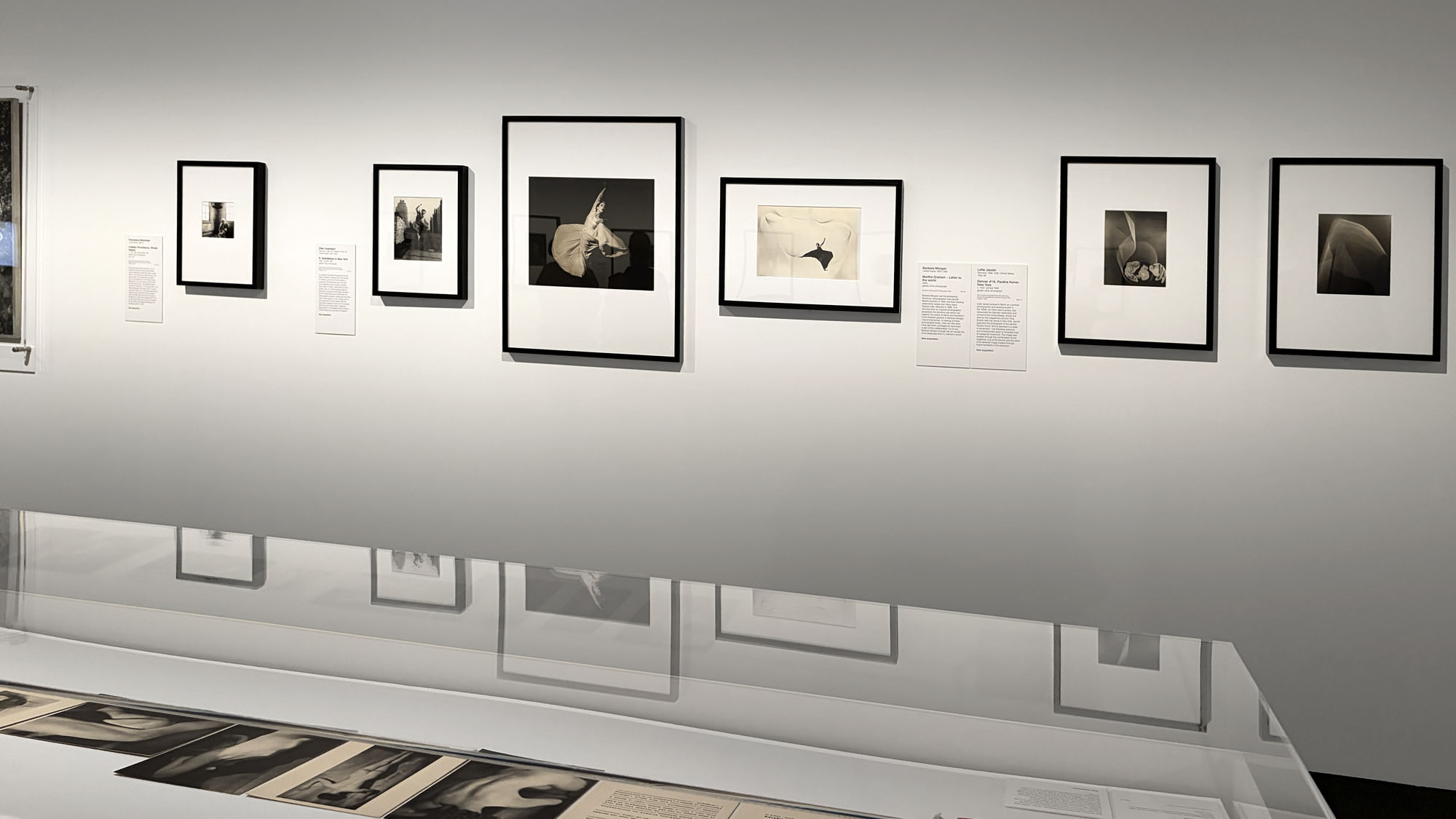
 

Carol Jerrems (Australian, 1949-1980) 'Kath Walker, Moongalba' 1974


Carol Jerrems (Australian, 1949-1980)
Kath Walker (Oodgeroo Noonuccal), Moongalba
1974
Gelatin silver photograph
16.3 x 24.2cm (image and sheet)
ed. 1/9
National Gallery of Victoria, Melbourne
Gift of Ms Ingeborg Tyssen, 2001
© Courtesy of Ken Jerrems & estate of Lance Jerrems


Carol Jerrems studied photography at Prahran College in Melbourne, winning several student awards before first exhibiting her work in the early 1970s. Jerrems collaborated with Australian artist Virginia Fraser on the 1974 publication A Book About Australian Women, a suite of portraits featuring a diverse range of subjects. This portrait was taken as part of that project, and an edition is included in the book. The work features Oodgeroo Noonuccal, previously known as Kath Walker, who was an Aboriginal rights activist, poet, WWII veteran, environmentalist and educator. Noonuccal is photographed with her pen poised at the learning centre she established on Minjerribah (North Stradbroke Island, Queensland) to teach visitors to the island about Aboriginal culture and Country.

Wall text from the exhibition
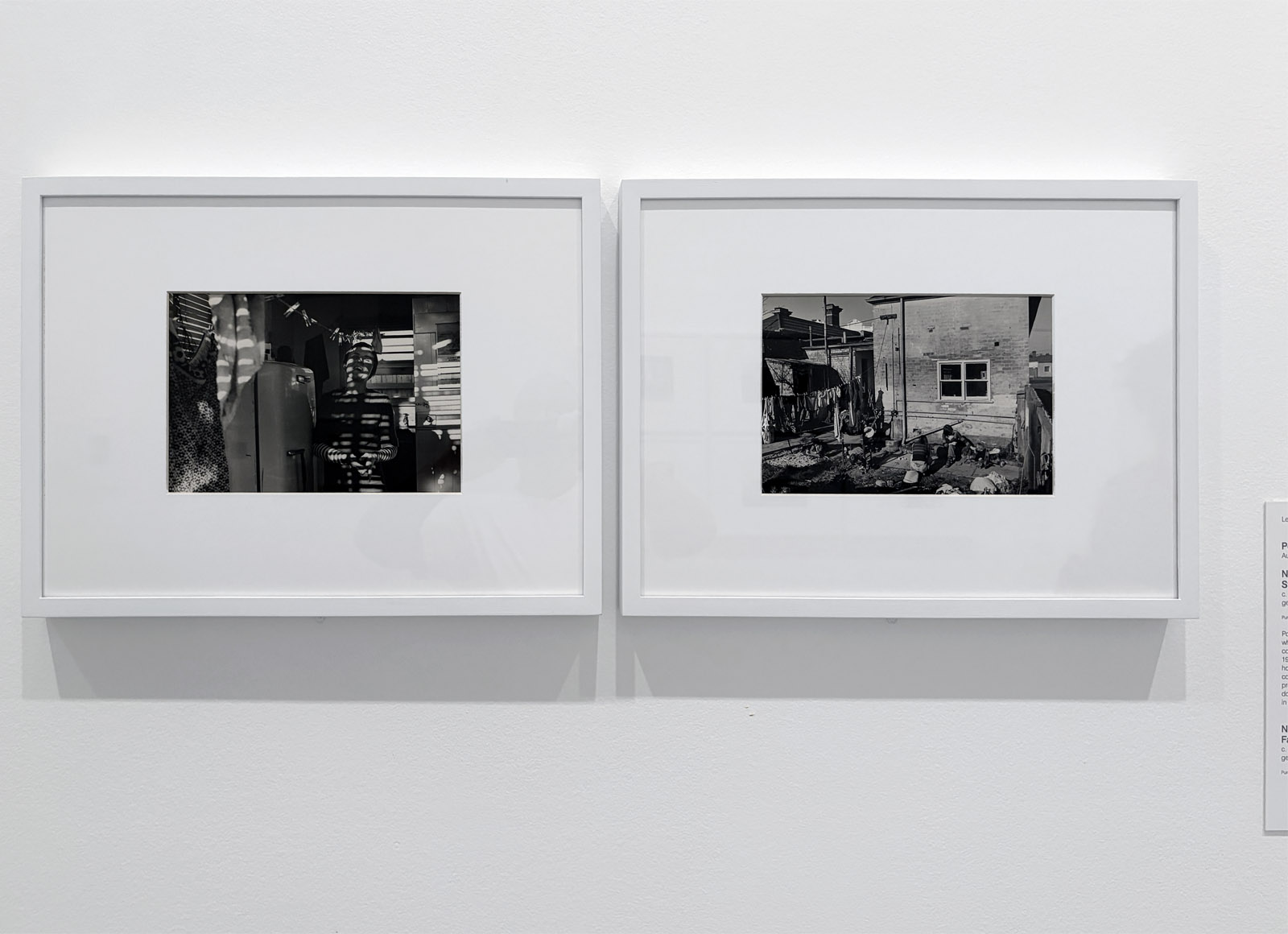
 

Installation view of the exhibition 'Women Photographers 1900-1975: A Legacy of Light' at NGV International, Melbourne, November 2025 - May 2026 showing from left to right, two photographs by Ponch Hawkes (Australian, b. 1946): 'No title (Helen at Falconer Street)' (c. 1975 printed 2018); and 'No title (In the backyard at Falconer Street)' (c. 1975 printed 2018)


Installation view of the exhibition Women Photographers 1900-1975: A Legacy of Light at NGV International, Melbourne, November 2025 – May 2026 showing from left to right, two photographs by Ponch Hawkes (Australian, b. 1946): No title (Helen at Falconer Street) (c. 1975 printed 2018); and No title (In the backyard at Falconer Street) (c. 1975 printed 2018)
Photo: Marcus Bunyan


Ponch Hawkes began to photograph while working as a journalist for the counterculture magazine The Digger in 1972. In 1973 she moved into a communal house in Melbourne with fellow Digger contributor Helen Garner. Together they produced stories for the broadsheet, documenting new ways of living emerging in inner-city Melbourne in the early 1970s.

Wall text from the exhibition
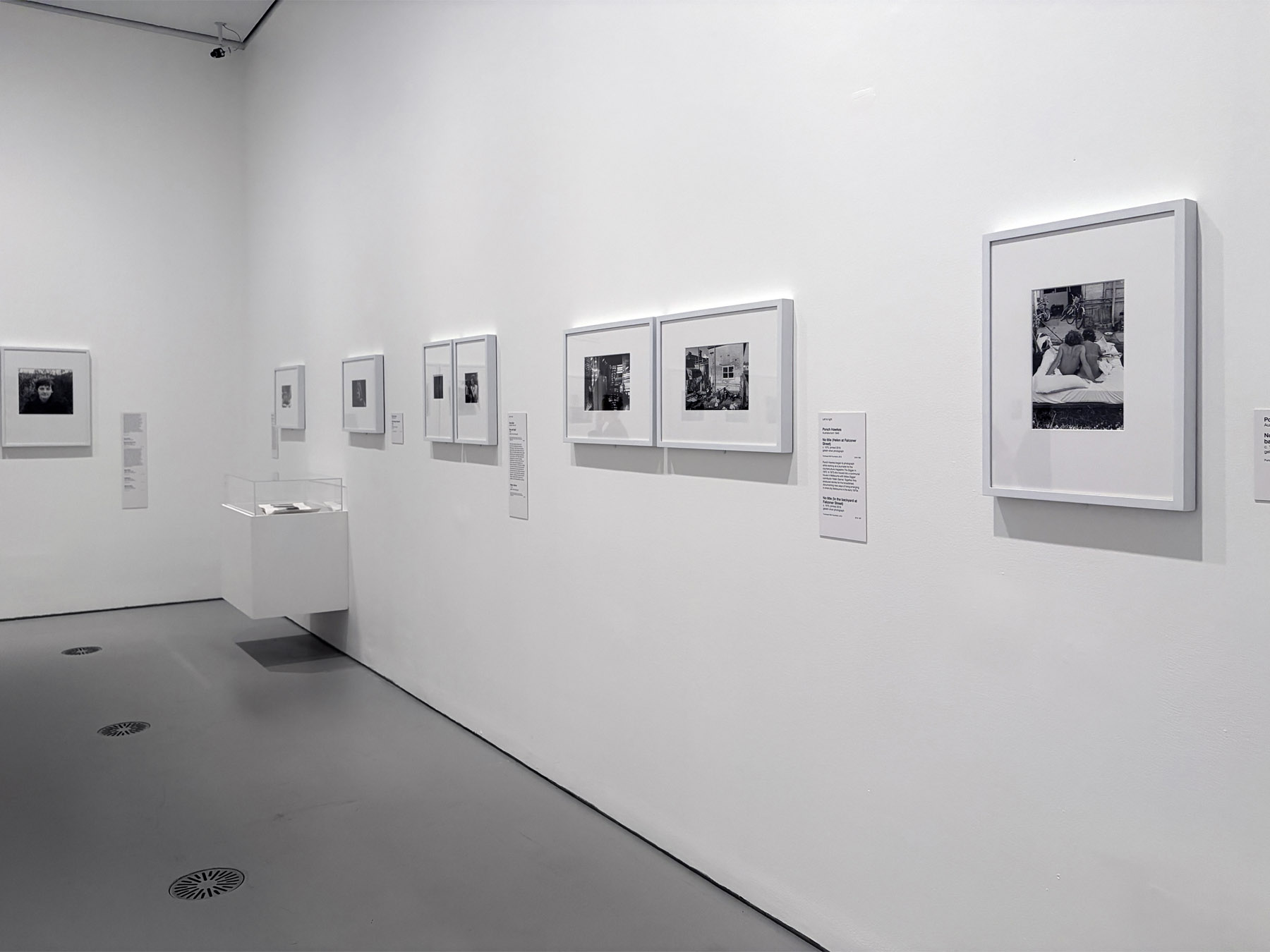
 

Installation view of the exhibition 'Women Photographers 1900-1975: A Legacy of Light' at NGV International, Melbourne, November 2025 - May 2026 showing at right, Ponch Hawkes 'No title (Summer night in the backyard at Falconer Street)' (c. 1975 printed 2018)


Installation view of the exhibition Women Photographers 1900-1975: A Legacy of Light at NGV International, Melbourne, November 2025 – May 2026 showing at right, Ponch Hawkes No title (Summer night in the backyard at Falconer Street) (c. 1975 printed 2018, below)
Photo: Marcus Bunyan
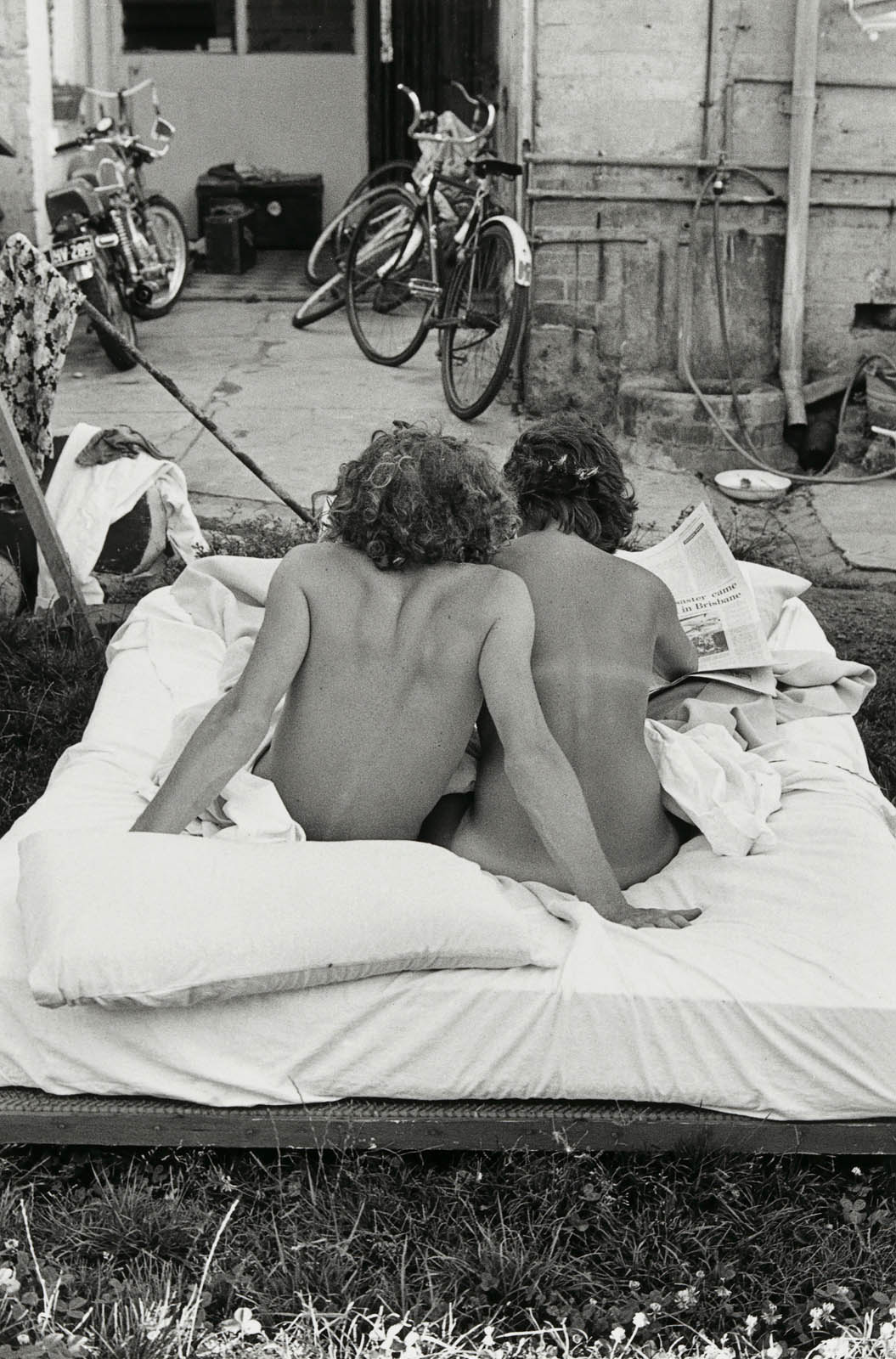
 

Ponch Hawkes (Australian, b. 1945) 'No title (Summer night in the backyard at Falconer Street)' c. 1975, printed 2018


Ponch Hawkes (Australian, b. 1945)
No title (Summer night in the backyard at Falconer Street)
c. 1975, printed 2018
Gelatin silver photograph
30.3 x 20.3cm (image)
38.3 x 27.9cm (sheet)
Purchased NGV Foundation, 2018
© Ponch Hawkes
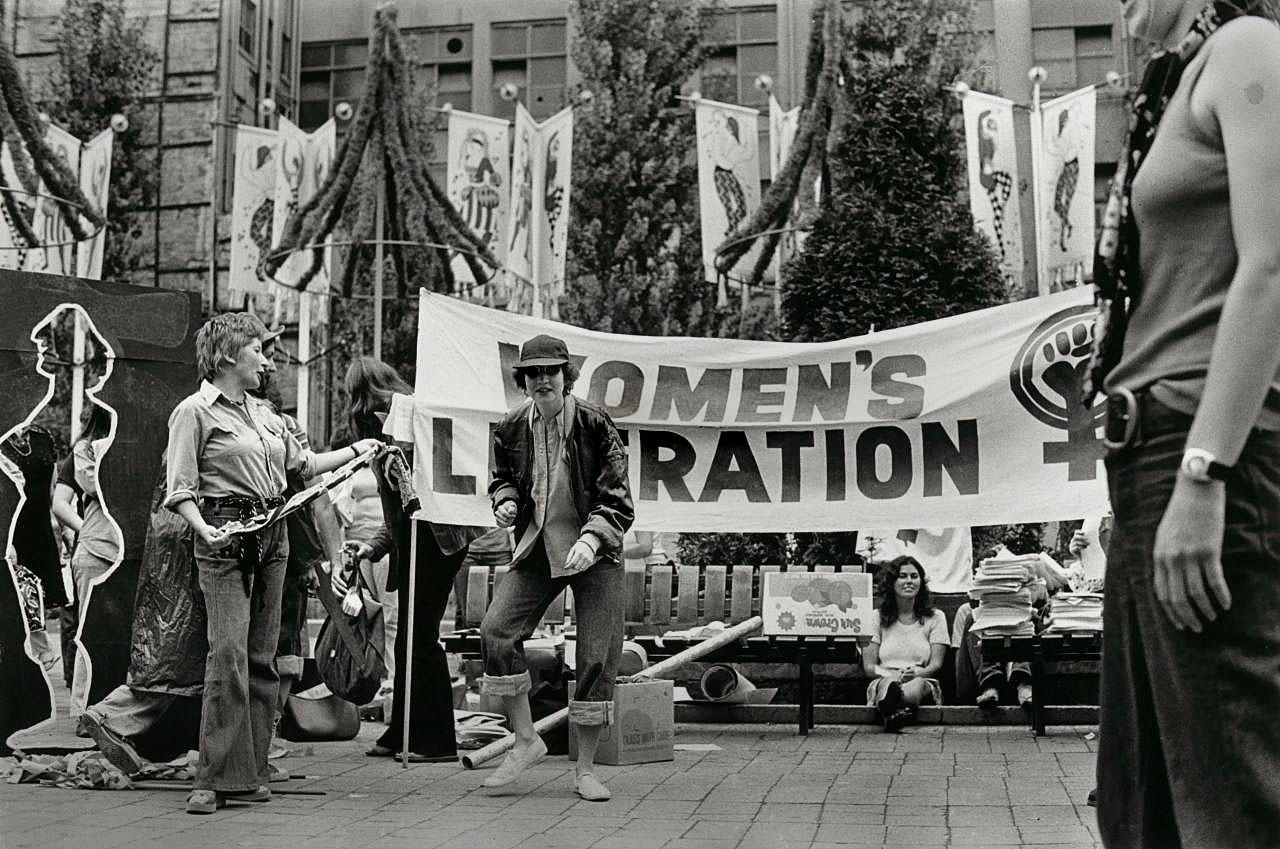
 

Ponch Hawkes (Australian, b. 1945) 'No title (Women's Theatre Group, performing outdoors beneath a Women's Liberation banner in the City Square)' 1975, printed 2018


Ponch Hawkes (Australian, b. 1945)
No title (Women’s Theatre Group, performing outdoors beneath a Women’s Liberation banner in the City Square)
1975, printed 2018
Gelatin silver photograph
20.2 x 30.3cm (image)
28.0 x 38.2cm (sheet)
National Gallery of Victoria, Melbourne
Purchased NGV Foundation, 2018
© Ponch Hawkes, 2023
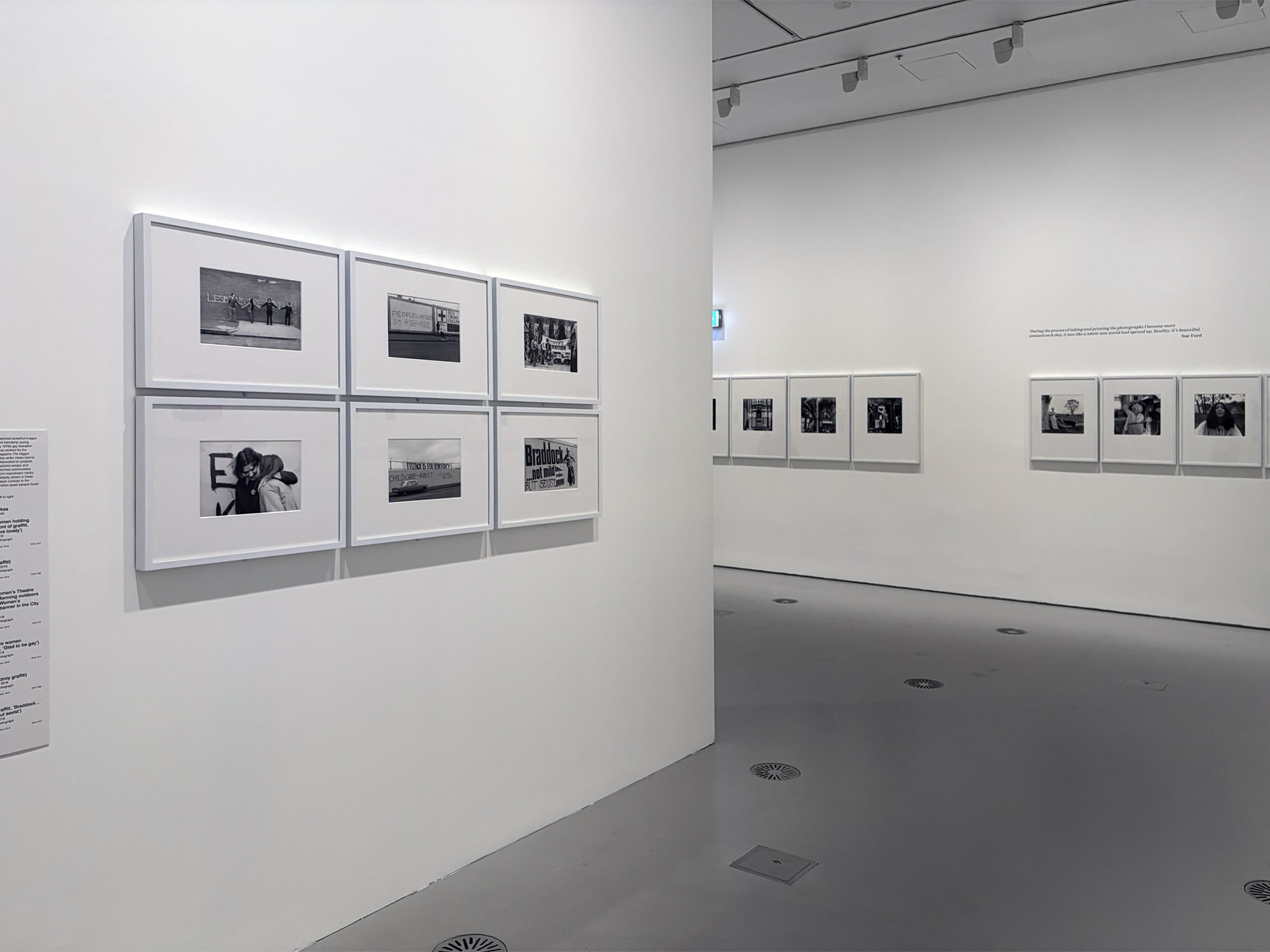
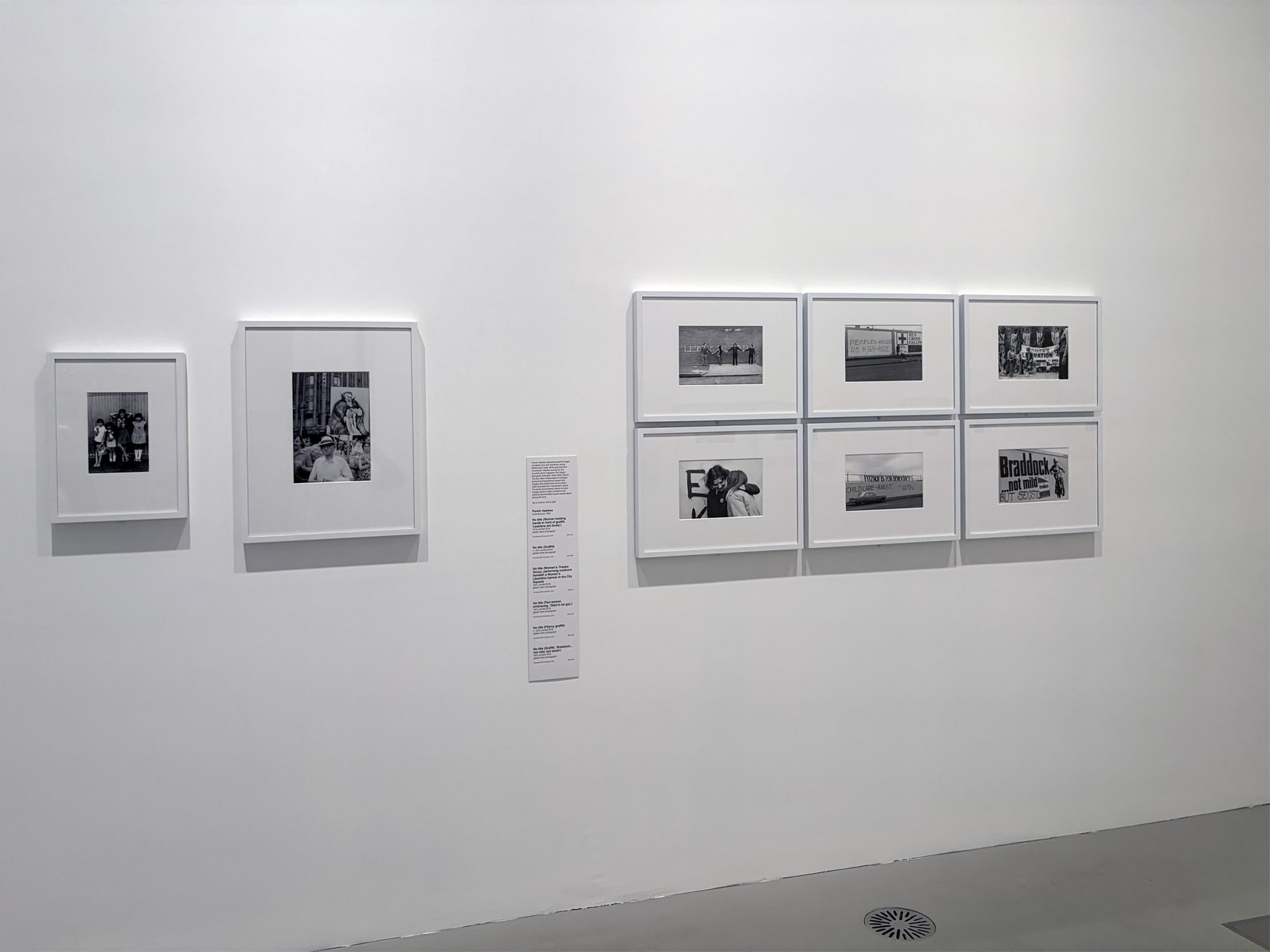
 

Installation view of the exhibition 'Women Photographers 1900-1975: A Legacy of Light' at NGV International, Melbourne, November 2025 - May 2026
Installation view of the exhibition 'Women Photographers 1900-1975: A Legacy of Light' at NGV International, Melbourne, November 2025 - May 2026 showing in the bottom image, top to bottom left to right, six photographs by Ponch Hawkes: 'No title (Women holding hands in front of graffiti, 'Lesbians are lovely')' (1973, printed 2018); 'No title (Graffiti)' (1975, printed 2018); 'No title (Women's Theatre Group, performing outdoors beneath a Women's Liberation banner in the City Square)' (1975, printed 2018); 'No title (Two women embracing, 'Glad to be gay')' (1973, printed 2018); 'No title (Fitzroy graffiti)' (1973, printed 2018); 'No title (Graffiti, 'Braddock… not mild, but sexist')' (1973, printed 2018)


Installation view of the exhibition Women Photographers 1900-1975: A Legacy of Light at NGV International, Melbourne, November 2025 – May 2026 showing in the bottom image, top to bottom left to right, six photographs by Ponch Hawkes: No title (Women holding hands in front of graffiti, ‘Lesbians are lovely’) (1973, printed 2018); No title (Graffiti) (1975, printed 2018); No title (Women’s Theatre Group, performing outdoors beneath a Women’s Liberation banner in the City Square) (1975, printed 2018); No title (Two women embracing, ‘Glad to be gay’) (1973, printed 2018); No title (Fitzroy graffiti) (1973, printed 2018); No title (Graffiti, ‘Braddock… not mild, but sexist’) (1973, printed 2018)
Photo: Marcus Bunyan


Ponch Hawkes captured powerful images of lesbian love and friendship during Melbourne’s early 1970s gay liberation movement. Hawkes worked for the counterculture magazine The Digger alongside Australian writer Helen Garner. The two often collaborated on projects, producing impassioned essays and imagery that platformed communities often excluded from mainstream media. The pride and solidarity shown in these images stand in stark contrast to the extreme discrimination queer people faced during the time.

Wall text from the exhibition
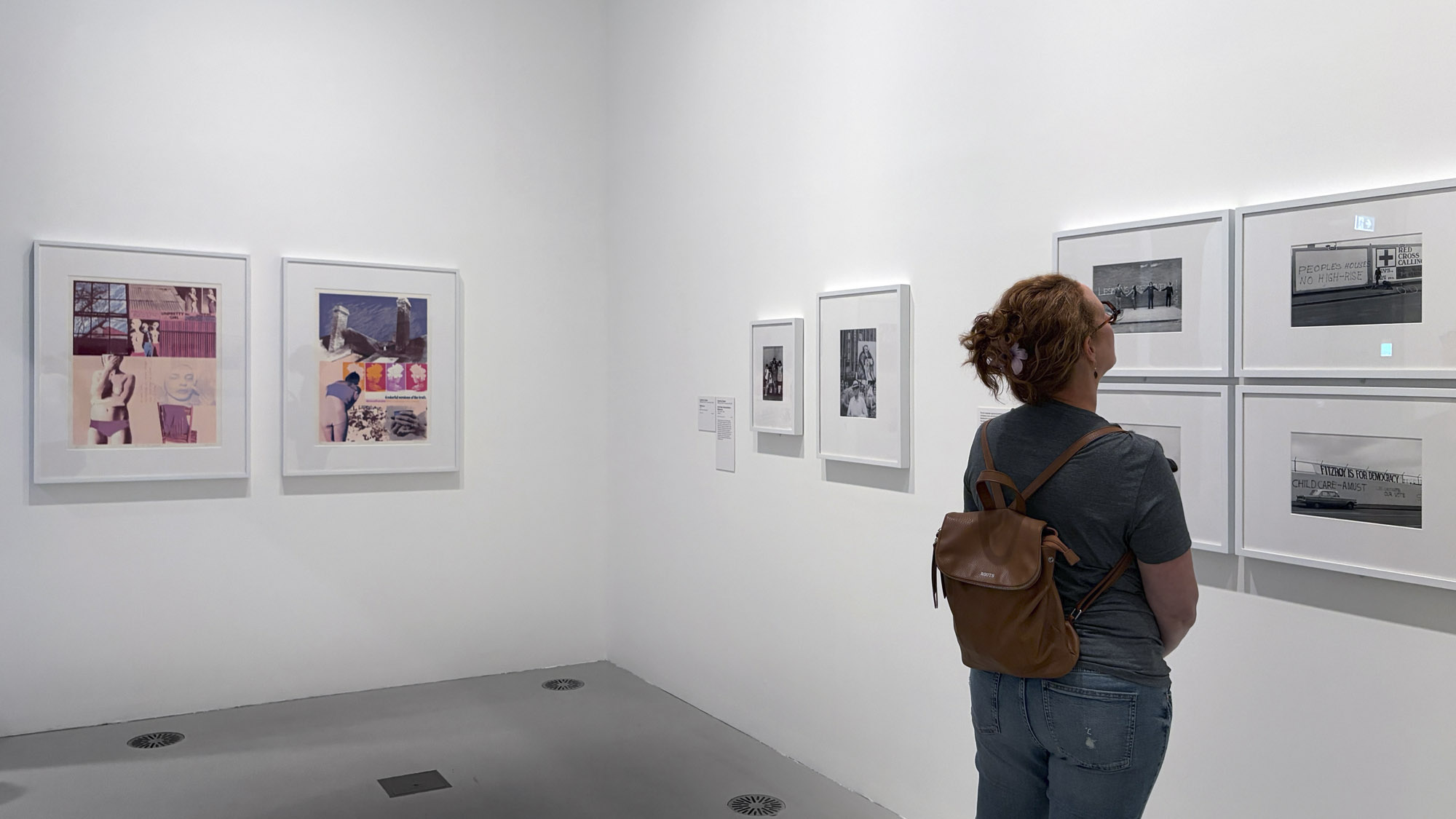
 

Installation view of the exhibition 'Women Photographers 1900-1975: A Legacy of Light' at NGV International, Melbourne, November 2025 - May 2026 showing at left, Ann Newmarch 'We must risk unlearning' (1975, below); and at second left, Ann Newmarch 'Two versions' (1975, below) with at right, photographs by Ponch Hawkes


Installation view of the exhibition Women Photographers 1900-1975: A Legacy of Light at NGV International, Melbourne, November 2025 – May 2026 showing at left, Ann Newmarch We must risk unlearning (1975, below) and at second left, Ann Newmarch Two versions (1975, below) with at right, photographs by Ponch Hawkes
Photo: Marcus Bunyan
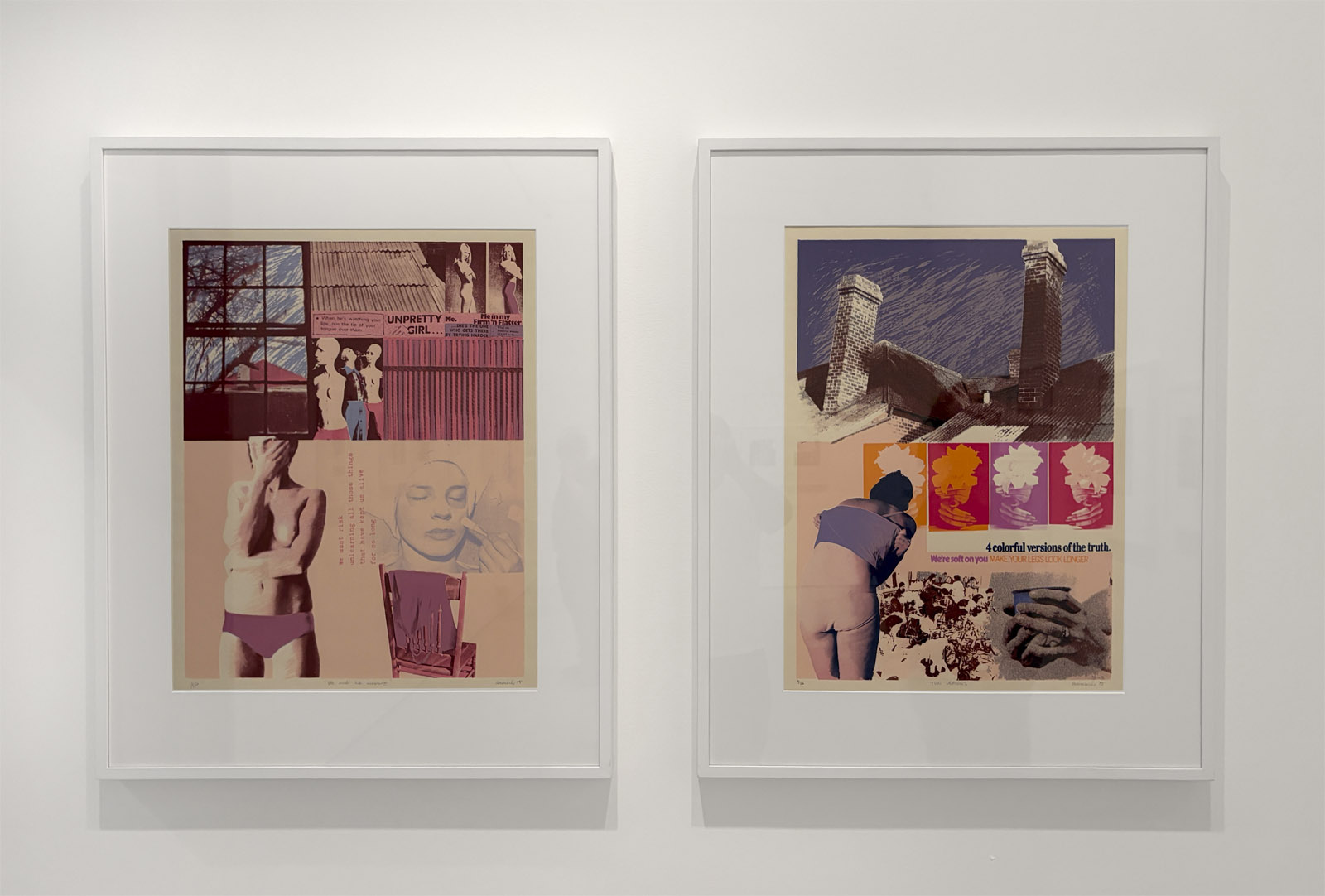
 

Installation view of the exhibition 'Women Photographers 1900-1975: A Legacy of Light' at NGV International, Melbourne, November 2025 - May 2026 showing from left to right, Ann Newmarch 'We must risk unlearning' (1975) and Ann Newmarch 'Two versions' (1975)


Installation view of the exhibition Women Photographers 1900-1975: A Legacy of Light at NGV International, Melbourne, November 2025 – May 2026 showing from left to right, Ann Newmarch We must risk unlearning (1975) and Ann Newmarch Two versions (1975)
Photo: Marcus Bunyan


NGV International
180 St Kilda Rd, Melbourne

Opening hours:
Open daily, 10am – 5pm

National Gallery of Victoria website

LIKE ART BLART ON FACEBOOK

Back to top

Exhibition: ‘Bill Brandt: Inside the Mirror’ at Tate Britain, London

Exhibition dates: 17th October, 2022 – 15th January, 2023

Curators: Bill Brandt: Inside the Mirror is curated by Carol Jacobi, Curator of British Art 1850-1915 and James Finch, Assistant Curator of 19th Century British Art at Tate Britain, supported by Yasufumi Nakamori, Senior Curator of International Art (Photography), Tate Modern.


Bill Brandt (British born Germany, 1904-1983) 'Woman Swimming' Nd from the exhibition 'Bill Brandt: Inside the Mirror' at Tate Britain, London, Oct, 2022 - Jan, 2023


Bill Brandt (British born Germany, 1904-1983)
Woman Swimming
Nd
Tate
Accepted by HM Government in lieu of inheritance tax from the Estate of Barbara Lloyd and allocated to Tate 2009
© The Estate of Bill Brandt


The swimmer is Moran Scott, who knew Brandt in Varengeville-sur-mer.


I have written about the German-British photographer Bill Brandt in other postings on Art Blart: Bill Brandt at the Fundación Mapfre, Madrid in 2021; and Bill Brandt: Shadow and Light at the Museum of Modern Art, New York in 2013. After viewing installation photographs of this exhibition at Tate Britain it seems a particularly sparse and limited representation of the great artists work.

Of interest are cabinets where we can see Brandt’s many photobooks and magazine spreads and observe the pairing of the images and their compositional rhymes, but some of these are facsimiles. We also notice the different cropping of the image Toppers (below) from the same image with a different title seen earlier, Hatter’s window, Bond Street (c. 1931-1935, below).

For me, the most exciting experience is seeing the double page magazine spread ‘The Perfect Parlourmaid’ from Picture Post magazine 29 July 1939 featuring photographs from Brandt’s book The English at Home (1936). I have never seen this before, nor many of the images the spread contains. It shows how the editors and photographer constructed the story they wanted to tell.

Dr Marcus Bunyan


Many thankx to Tate Britain for the four press images. Installation images are courtesy of my friend and artist Drager Meurtant who took them at my request. Many thankx to him for his effort.


British photographer Bill Brandt (1904-1983) was a leading photographer in the mid-20th century. This period of experimentation and rapid growth saw photography displayed in art galleries and seen by millions in illustrated magazines.

Brandt’s images of daily life merged documentary with art. He was inspired by many sources, from books such as Alice in Wonderland to the sculpture of Henry Moore and the film Citizen Kane.

This exhibition of works in Tate’s collection reveals how Brandt changed his practice throughout his career and crafted each photograph to capture the surreal beauty he saw in the everyday.


Installation view of the exhibition 'Bill Brandt: Inside the Mirror' at Tate Britain, London, October 2022 - January 2023


Installation view of the exhibition Bill Brandt: Inside the Mirror at Tate Britain, London, October 2022 – January 2023 showing at centre, Brandt’s Woman Swimming (modern mural enlargement, above)
Photo: Drager Meurtant


‘The photographer has to wait until something between dreaming and action occurs in the expression of the face.’


Bill Brandt


Installation view of the exhibition 'Bill Brandt: Inside the Mirror' at Tate Britain, London, October 2022 - January 2023 showing from left to right, Brandt's photographs 'Louise Nevelson's Eye' (1963); 'Pablo Picasso at "La Californie"' (1955); 'Georges Braque on the beach at Varengeville, Normandy' (1955); and 'Glenda Jackson' (1971)


Installation view of the exhibition Bill Brandt: Inside the Mirror at Tate Britain, London, October 2022 – January 2023 showing from left to right, Brandt’s photographs Louise Nevelson’s Eye (1963, below); Pablo Picasso at “La Californie” (1955, below); Georges Braque on the beach at Varengeville, Normandy (1955, below); and Glenda Jackson (1971, below)
Photo: Drager Meurtant


Installation view of the exhibition 'Bill Brandt: Inside the Mirror' at Tate Britain, London, October 2022 - January 2023 showing Brandt's photograph 'Louise Nevelson's Eye' (1963)


Installation view of the exhibition Bill Brandt: Inside the Mirror at Tate Britain, London, October 2022 – January 2023 showing Brandt’s photograph Louise Nevelson’s Eye (1963, below)
Photo: Drager Meurtant


Bill Brandt (British born Germany, 1904-1983) 'Louise Nevelson's Eye' 1963 from the exhibition 'Bill Brandt: Inside the Mirror' at Tate Britain, London, Oct, 2022 - Jan, 2023


Bill Brandt (British born Germany, 1904-1983)
Louise Nevelson’s Eye
1963
Gelatin silver print on paper, later print
© The Estate of Bill Brandt


Brandt’s first job as a photographer was in the studio of Grete Kolliner, in Vienna. Greta taught Brandt to compose and light the scene and modify the image in the darkroom to create the desired effect. in the studio of Man Ray in Paris, he learned the surreal potential of manipulating and distorting these techniques.

In the 1950s and 60s Brandt represented artists by their eyes, including the sculptor Louise Nevelson. Her gaze avoids us, suggesting inner thought. The extreme close-up makes her features unfamiliar and strange; their textures and reflections take on the vastness of a landscape.

Wall text


Bill Brandt (British born Germany, 1904-1983) 'Pablo Picasso at "La Californie"' 1955 from the exhibition 'Bill Brandt: Inside the Mirror' at Tate Britain, London, Oct, 2022 - Jan, 2023


Bill Brandt (British born Germany, 1904-1983)
Pablo Picasso at “La Californie”
1955
Gelatin silver print on paper, later print
© The Estate of Bill Brandt


Installation view of the exhibition 'Bill Brandt: Inside the Mirror' at Tate Britain, London, October 2022 - January 2023 showing Brandt's photograph 'Georges Braque on the beach at Varengeville, Normandy' (1955)


Installation view of the exhibition Bill Brandt: Inside the Mirror at Tate Britain, London, October 2022 – January 2023 showing Brandt’s photograph Georges Braque on the beach at Varengeville, Normandy (1955, below)
Photo: Drager Meurtant


Bill Brandt (British born Germany, 1904-1983) 'Georges Braque on the beach at Varengeville, Normandy' 1955


Bill Brandt (British born Germany, 1904-1983)
Georges Braque on the beach at Varengeville, Normandy
1955
Gelatin silver print on paper, later print
© The Estate of Bill Brandt


After the Second World War, Brandt could travel again and he spent time on the north and south French coast. He photographed artists Pablo Picasso and Georges Braque.

Picasso was 74 when Brandt photographed him in his villa on the Cote d’Azur, for the American magazine Harper’s Bazaar. Brandt wrote a self-deprecating account of Picasso avoiding the sitting. The portrait turned out relatively conventionally, the close-up head and preoccupied gaze sharp against the soft-focus complexities of the cluttered room.

Accepted by HM Government in Lieu of inheritance Tax and allocated to Tate 2019

Wall text


Bill Brandt (British born Germany, 1904-1983) 'Glenda Jackson' 1971


Bill Brandt (British born Germany, 1904-1983)
Glenda Jackson
1971
Tate
Gift Eric and Louise Franck London Collection 2013
© The Estate of Bill Brandt


Installation view of the exhibition 'Bill Brandt: Inside the Mirror' at Tate Britain, London, October 2022 - January 2023 showing from left to right, Brandt's photograph 'Louise Nevelson's Eye' (1963); 'Pablo Picasso at "La Californie"' (1955); 'Georges Braque on the beach at Varengeville, Normandy' (1955)


Installation view of the exhibition Bill Brandt: Inside the Mirror at Tate Britain, London, October 2022 – January 2023 showing from left to right, Brandt’s photograph Louise Nevelson’s Eye (1963, above); Pablo Picasso at “La Californie” (1955, above); Georges Braque on the beach at Varengeville, Normandy (1955, above)
Photo: Drager Meurtant


Installation view of the exhibition 'Bill Brandt: Inside the Mirror' at Tate Britain, London, October 2022 - January 2023

Installation view of the exhibition 'Bill Brandt: Inside the Mirror' at Tate Britain, London, October 2022 - January 2023 showing at left in the bottom image, Brandt's photograph 'Glenda Jackson' (1971) next to a modern mural enlargement


Installation views of the exhibition Bill Brandt: Inside the Mirror at Tate Britain, London, October 2022 – January 2023 showing at left in the bottom image, Brandt’s photograph Glenda Jackson (1971, above) next to a modern mural enlargement
Photos: Drager Meurtant


Installation view of the exhibition 'Bill Brandt: Inside the Mirror' at Tate Britain, London, October 2022 - January 2023 showing at right, Brandt's photograph 'Portrait of a Young Girl, Eaton Place' (1955) next to a modern mural enlargement

Installation view of the exhibition 'Bill Brandt: Inside the Mirror' at Tate Britain, London, October 2022 - January 2023 showing at right, Brandt's photograph 'Portrait of a Young Girl, Eaton Place' (1955) next to a modern mural enlargement


Installation views of the exhibition Bill Brandt: Inside the Mirror at Tate Britain, London, October 2022 – January 2023 showing at right, Brandt’s photograph Portrait of a Young Girl, Eaton Place (1955, below) next to a modern mural enlargement
Photos: Drager Meurtant


Citizen Kane

Brandt saw Orson Welles revolutionary film Citizen Kane many times after its release in 1941. Its style was openly artificial. Theatrical lighting, deep focus and wide angles distorted figures, making familiar settings appear strange and surreal.

‘I’d never seen a film in which real rooms were used and you could see everything, the ceiling, the terrific perspective. I was very much inspired by it and I thought I must make photographs like that.’

In 1944, Brandt bought a simpler camera, the Kodak Wide Angle. This type of camera was used by auctioneers or the police for recording merchandise and evidence, because it could capture a whole room. He began a series of experimental interiors that changed his photographic style.

Wall text


Bill Brandt (British born Germany, 1904-1983) 'Portrait of a Young Girl, Eaton Place' 1955


Bill Brandt (British born Germany, 1904-1983)
Portrait of a Young Girl, Eaton Place
1955
Tate
Gift Eric and Louise Franck London Collection 2013
© The Estate of Bill Brandt


Brandt photographed people in rooms with a Kodak Wide Angle camera. The lens was fixed and kept everything beyond four feet away in focus. Her profile is enlarged in contrast to the small, distant windows that appear sharp in the background.

Judith looms like Alice in Wonderland. Her pose creates a dreamlike effect and her eyes are in shadow. The formal interior recalls the beginning of Alice’s adventure. The empty chair adds to the uncanny atmosphere. A similar button-backed, seat featured in Alice Through the Looking Glass. It was a prop in many of Brandt’s photographs.

Gift of Eric and Louise Franck London Collection 2013

Wall text


Kodak wide angle view camera / Bill Brandt. The camera is equipped with a Carl Zeiss Protar 1:18 8.5cm lens. This very rare Kodak wide angle view camera is very slim, and does not have bellows. The front accepts interchangeable panels should the user wish to fit other suitable lenses. There is a spring-back with a ground glass, two plate holders and a transport case. Bill Brandt used one of these cameras for photographs in his book “Wide Angle Nudes”. Format 6.5 x 8.5 inches (16.5 x 21.5cm) The wide angle lens has a very large depth of field, and the aperture of f45 eliminates the need to focus. The field of view is 110° or the equivalent to a rectilinear lens of 14 or 15 mm on a 35 mm camera.

Anonymous text. “Wide angle KODAK View Camera / Bill Brandt,” on the Antiq Photo website [Online] Cited 05/11/2022


What Brandt had bought was a rare Kodak Wide Angle Camera with Zeiss Protar Lens, used by police for recording crime scenes. The wide angle lens captured the whole scene while the small f45 aperture gave full depth-of-field. Essentially it was a fixed focus box camera allowing untrained coppers to get the shot on the generous full plate film. The lens was a Carl Zeiss Jena f18 Protar of 85mm focal length, giving a very wide 110 degree angle of view, equivalent to 15mm lens on 35mm format.

These cameras are extremely rare, perhaps only made for the police force, but John Rushton’s website has one and you can see all the details. It is an original design, as the pictures show, with curious features such as the small “feet” on the back which allows you to lay it on the ground to shoot vertically up.

Greg Neville. “Bill Brandt’s camera,” on the Greg Neville photography blog October 26, 2015 [Online] Cited 05/11/2022. No longer available online


Wide-angle Kodak View camera


Wide-angle Kodak View camera


Today Tate Britain opens a free exhibition dedicated to celebrated British photographer Bill Brandt (1904-1983). 44 original photographs from across his career are displayed alongside the magazines and photobooks in which these images were most often seen. Entitled Bill Brandt: Inside the Mirror, this is Tate’s first Brandt exhibition. It reveals the secrets of his artistry and the fascinating ways he staged and refined his photographs. Drawn from Tate’s collection, the show includes many recent acquisitions which reflect Tate’s ongoing commitment to strengthening its holdings of photography.

Bill Brandt was first known as a photojournalist, renowned in the 1930s for his observations of British life and later for his landscapes, portraits and nudes. But his images were always carefully crafted to ‘enter the mirror’, as he put it, employing formal experimentation and artistic interventions to evoke the surreal beauty he saw in everyday life. This exhibition celebrates his theatrical direction of people and setting, his mastery of composition and abstraction, and his dialogues with the work of other artists.

Although Brandt’s images can appear candid and spontaneous, he did not capture people unaware. He worked closely with those he photographed, directing and lighting them to cast ‘the spell that charges the commonplace with beauty’. He sometimes waited for hours to capture effects at specific times of day – as in Woman Swimming – and some of his most mysterious scenes were taken at night. Brandt developed his own film and printed his own photographs, giving him further opportunities to rebalance light and dark, and change the composition through cropping and enlarging. He even used ink and pencil to alter prints, for example introducing plumes of smoke onto Hail, Hell & Halifax. The series of Brandt’s nudes shown in the exhibition include some of his best-known and most evocative works, which further explore his interest in altered perspectives, surreal effects and abstract compositions.

As well as being an artist in his own right, Brandt took inspiration from many other artists and art forms. The exhibition explores some of these conversations between his photographs and other imagery, from Gustave Doré’s engravings of London to Henry Moore’s air raid shelter drawings to Orson Welles’ 1941 movie Citizen Kane. Brandt’s handmade photobook ‘A Dream’ – which is being exhibited for the first time – reveals further influences, such as John Tenniel’s surreal illustrations to Alice in Wonderland and the dramatic shadows of Expressionist cinema. Brandt also became famous for his portraits of artists, such as the actor Glenda Jackson at home in the early 1970s, and an arresting close-up of sculptor Louise Nevelson’s eye.

The exhibition at Tate Britain coincides with a group of newly opened photography displays at Tate Modern. These include a room of recently acquired photographs by Martha Rosler, two photographic series by Laura Aguilar and Lyle Ashton Harris, and a selection of photobooks documenting the war in Bosnia. There is also a display of images from Liz Johnson Artur’s series Time don’t run here, depicting the Black Lives Matter protests in London over the summer of 2020, which is accompanied by a new book about Artur from Tate Publishing.

Press release from the Tate Museum


Installation view of the exhibition 'Bill Brandt: Inside the Mirror' at Tate Britain, London, October 2022 - January 2023 showing Brandt's photograph 'Race Goers, Auteuil Races, Paris' (1931)


Installation view of the exhibition : Inside the Mirror at Tate Britain, London, October 2022 – January 2023 showing Brandt’s photograph Race Goers, Auteuil Races, Paris (1931, below)
Photo: Drager Meurtant


Bill Brandt (British born Germany, 1904-1983) 'Race Goers, Auteuil Races, Paris' 1931


Bill Brandt (British born Germany, 1904-1983)
Race Goers, Auteuil Races, Paris
1931
Gelatin silver print on paper, later print
© The Estate of Bill Brandt


Brandt often photographed the spectacle of horse races. These racegoers are dressed in fashionable clothing of the time – Brandt mischievously mischievously twins their ties, collars and bowler hats. The sophisticated air is further subverted by their anxious matching gestures as they watch the race.

The softly focused natural setting contrasts with the sharply suited figures. Brandt enhanced this by brightening details such as the pocket handkerchief, scratched away to expose white paper. This print has been rephotographed from an earlier print.

Accepted by HM Government in Lieu of inheritance Tax and allocated to Tate 2019

Wall text


Installation view of the exhibition 'Bill Brandt: Inside the Mirror' at Tate Britain, London, October 2022 - January 2023

Installation view of the exhibition 'Bill Brandt: Inside the Mirror' at Tate Britain, London, October 2022 - January 2023 showing at left, Brandt's photograph 'Butcher in Notting Hill Gate' (1930); and at right, 'Regency Houses, Park Lane, Mayfair' (c. 1930-1939)


Installation view of the exhibition Bill Brandt: Inside the Mirror at Tate Britain, London, October 2022 – January 2023 showing at left, Brandt’s photograph Butcher in Notting Hill Gate (1930); and at right, Regency Houses, Park Lane, Mayfair (c. 1930-1939, below)
Photos: Drager Meurtant


Bill Brandt (British born Germany, 1904-1983) 'Regency Houses, Park Lane, Mayfair' c. 1930-1939


Bill Brandt (British born Germany, 1904-1983)
Regency Houses, Park Lane, Mayfair
c. 1930-1939
Gelatin silver print on paper, later print
© The Estate of Bill Brandt


A lorry, bus and carriage pass prosperous old houses whose blank windows give nothing away. This later exhibition print is larger then the version in The English At Home, with greater contrast to stress shape and pattern. The traffic is cropped to divert less attention from the rhythm of the railings. Shadows have been added to the curved facades so they stand out adjacent the flat ones.

Wall text


Installation view of the exhibition 'Bill Brandt: Inside the Mirror' at Tate Britain, London, October 2022 - January 2023 showing at centre, Brandt's photograph 'Hatter's window, Bond Street' (c. 1931-1935)


Installation view of the exhibition Bill Brandt: Inside the Mirror at Tate Britain, London, October 2022 – January 2023 showing at centre, Brandt’s photograph Hatter’s window, Bond Street (c. 1931-1935, below)
Photo: Drager Meurtant


Bill Brandt (British born Germany, 1904-1983) 'Hatter's window, Bond Street' c. 1931-1935


Bill Brandt (British born Germany, 1904-1983)
Hatter’s window, Bond Street
c. 1931-1935
Gelatin silver print on paper, later print
© The Estate of Bill Brandt


Staging

Like many photographers in Britain in the 1930s, Brandt made his name documenting contemporary society for illustrated magazines. Inspired by the success of the book Paris by Night (1933) by Hungarian-French photographer Brassaï, who was an early influence, Brandt published groundbreaking photobooks The English At Home (1936) and A Night in London (1937).

Brandt did not seek to capture people unaware or catch a decisive moment, as Henri Cartier-Bresson called it. He felt he could attempt a more meaningful kind of realism by engaging and gaining cooperation with those he photographed. The people in this room posed for him or were played by friends and family like a drawing he planned and sketched, staged and directed…

Wall text


Installation view of the exhibition 'Bill Brandt: Inside the Mirror' at Tate Britain, London, October 2022 - January 2023 showing at rear right, Brandt's photograph 'A Billingsgate Porter' (c. 1934)


Installation view of the exhibition Bill Brandt: Inside the Mirror at Tate Britain, London, October 2022 – January 2023 showing at rear right, Brandt’s photograph A Billingsgate Porter (c. 1934)
Photo: Drager Meurtant


Installation view of the exhibition 'Bill Brandt: Inside the Mirror' at Tate Britain, London, October 2022 - January 2023 showing Brandt's photograph 'Flowerseller in Hampstead, All a blowin' and a growin'' (1936)


Installation view of the exhibition Bill Brandt: Inside the Mirror at Tate Britain, London, October 2022 – January 2023 showing Brandt’s photograph Flowerseller in Hampstead, All a blowin’ and a growin’ (1936, below)
Photo: Drager Meurtant


Bill Brandt (British born Germany, 1904-1983) 'Flowerseller in Hampstead, All a blowin' and a growin'' 1936


Bill Brandt (British born Germany, 1904-1983)
Flowerseller in Hampstead, All a blowin’ and a growin’
1936
Gelatin silver print on paper, later print
© The Estate of Bill Brandt


Flower sellers were well-known figures from London life and literature during the Victorian and Edwardian eras (1837-1910), most famously Eliza Doolittle in George Bernard Shaw’s play, Pygmalion (1913). The bright noon day sun casts strong shadows on the flower seller’s face and feet. The black dress and had, perhaps strengthened in the printing, give her a solid silhouette. Her feathered hat stands out against the white sign.


Installation view of the exhibition 'Bill Brandt: Inside the Mirror' at Tate Britain, London, October 2022 - January 2023 showing Brandt's photograph 'Housewife, Bethnal Green' (1937)


Installation view of the exhibition Bill Brandt: Inside the Mirror at Tate Britain, London, October 2022 – January 2023 showing Brandt’s photograph Housewife, Bethnal Green (1937, below)
Photo: Drager Meurtant


Bill Brandt (British born Germany, 1904-1983) 'Housewife, Bethnal Green' 1937


Bill Brandt (British born Germany, 1904-1983)
Housewife, Bethnal Green
1937
Gelatin silver print on paper, later print
Gift of Eric and Louise Franck London Collection 2013
© The Estate of Bill Brandt


This young woman posed from Brandt at her work, but like many people he photographed, her name was not recorded. Brandt retouched the print to enhance stains on the apron and the pavement, playing into some stereotypes about the hardship of working-class life in Bethnal Green, a lower income area. The title and location tell us that she is cleaning her own step and is not a domestic worker. Brandt has enhanced the gleam of her wedding ring, suggesting this is her married home.

Wall text


Installation views of the exhibition 'Bill Brandt: Inside the Mirror' at Tate Britain, London, October 2022 - January 2023 showing the cover and pages from Brandt's photobook 'The English At Home' (1936)

Installation views of the exhibition 'Bill Brandt: Inside the Mirror' at Tate Britain, London, October 2022 - January 2023 showing the cover and pages from Brandt's photobook 'The English At Home' (1936)


Installation views of the exhibition Bill Brandt: Inside the Mirror at Tate Britain, London, October 2022 – January 2023 showing the cover and pages from Brandt’s photobook The English At Home (1936)
Photos: Drager Meurtant


The pictures of Brandt’s photobooks were carefully paired. He wrote that although he found the social contrast of the thirties ‘visually exciting… I never intended them for political propaganda.’ The 63 photographs in The English At Home were arranged to prompt visual and human comparisons, rather than political ones.

Cabinet text


Installation view of the exhibition 'Bill Brandt: Inside the Mirror' at Tate Britain, London, October 2022 - January 2023 showing 'All Dressed up for the Show' and 'All a blowin' and a growin'' from 'The English At Home' (1936)


All Dressed up for the Show
All a blowin’ and a growin’
From The English At Home (1936)
Photo: Drager Meurtant


Brandt’s titles often draw attention to conservations between the images; the men are ‘dressed up’ in buttonholes like those the flower seller trades. There are also compositional rhymes; the street sign in All a blowing’ and a growin’ mirrors he sign in All Dressed up for the Show.

Cabinet text


Bill Brandt. 'All Dressed up for the Show' From 'The English At Home' (1936)


All Dressed up for the Show
From The English At Home (1936)


Installation view of the exhibition 'Bill Brandt: Inside the Mirror' at Tate Britain, London, October 2022 - January 2023 showing Brandt's 'A Whitechapel Blind Beggar' and 'A Billingsgate Porter' from 'The English At Home' (1936)


A Whitechapel Blind Beggar
A Billingsgate Porter
From The English At Home (1936)
Photo: Drager Meurtant


As an immigrant to Britain, Brandt was interested in other incomers to the city. In this pair, the Italian porter, Ernie Delmonte faces a street vendor whose name is not recorded. Many sailors and dockworkers from countries that Britain had colonised lived in Whitechapel. This man may have been a veteran of the First World War.

The vendor is selling lottery tickets. Brandt’s title refers to the name of a Whitechapel pub, commemorating Henry de Montfort, a medieval aristocrat who lost his sight in battle and lived as a poor man in the area. It chimes with the vendor’s imperious presence, despite the shabby suit.

Cabinet text


Bill Brandt. 'A Whitechapel Blind Beggar' From 'The English At Home' (1936)


A Whitechapel Blind Beggar
From The English At Home (1936)


Bill Brandt. 'A Billingsgate Porter' From 'The English At Home' (1936)


A Billingsgate Porter
From The English At Home (1936)


Installation view of the exhibition 'Bill Brandt: Inside the Mirror' at Tate Britain, London, October 2022 - January 2023 showing 'Middle-class Tailors' and 'Toppers' from 'The English At Home' (1936)


Middle-class Tailors
Toppers
From The English At Home (1936)
Photo: Drager Meurtant


This pairing explores Brandt’s fascination with the language of clothes. Both photographs set high status garments in the working world of the trade. The untidy backgrounds of shop and workshop make visual and thematic connections. The ripple of silk in the jacket rhymes with the reflection in the vitrine. The dark and light heads of the tailors provide a surreally humorous echo of the dark and light top hats.

Cabinet text

NB. Notice the different cropping of the image Toppers from the same image with a different title seen earlier, Hatter’s window, Bond Street (c. 1931-1935, above) ~ Marcus


Bill Brandt. 'Toppers' From 'The English At Home' (1936)


Toppers
From The English At Home (1936)


Installation view of the exhibition 'Bill Brandt: Inside the Mirror' at Tate Britain, London, October 2022 - January 2023 showing 'Brighton Beach' and 'Brighton Belle' from 'The English At Home' (1936)


Brighton Beach
Brighton Belle
From The English At Home (1936)
Photo: Drager Meurtant


Bill Brandt. 'Brighton Beach' From 'The English At Home' (1936)


Brighton Beach
From The English At Home (1936)


Bill Brandt. 'Brighton Belle' From 'The English At Home' (1936)


Brighton Belle
From The English At Home (1936)


Installation view of the exhibition 'Bill Brandt: Inside the Mirror' at Tate Britain, London, October 2022 - January 2023 showing 'The Perfect Parlourmaid' from 'Picture Post' magazine 29 July 1939


‘The Perfect Parlourmaid’
Picture Post magazine 29 July 1939
Photo: Drager Meurtant


Installation view of the exhibition 'Bill Brandt: Inside the Mirror' at Tate Britain, London, October 2022 - January 2023 showing a double page magazine spread 'The Perfect Parlourmaid' from 'Picture Post' magazine 29 July 1939 featuring photographs from 'The English at Home' (1936)


Double page magazine spread ‘The Perfect Parlourmaid’ from Picture Post magazine 29 July 1939 featuring photographs from The English at Home (1936)
Photo: Drager Meurtant


In Brandt’s first book, The English at Home (1936), he juxtaposed the privileged and working classes, frequently using his friends and family as subjects. Pratt, the stern parlourmaid in the country house of one of the photographer’s wealthy uncles, was a particular favourite of Brandt’s, perhaps because she so thoroughly inhabited her role.

Text from the Metropolitan Museum of Art website


Installation view of the cover of Bill Brandt's photobook 'A Night in London' (1937) from the exhibition 'Bill Brandt: Inside the Mirror' at Tate Britain, London, October 2022 - January 2023


Installation view of the cover of Bill Brandt’s photobook A Night in London (1937)
Photo: Drager Meurtant


Installation view of the exhibition 'Bill Brandt: Inside the Mirror' at Tate Britain, London, October 2022 - January 2023 showing 'Homeless Girl' and 'Footsteps Coming Closer' from 'A Night in London' (1937)


Homeless Girl
Footsteps Coming Closer
From A Night in London (1937)
Photo: Drager Meurtant


Installation view of the exhibition 'Bill Brandt: Inside the Mirror' at Tate Britain, London, October 2022 - January 2023 showing 'Ride In A Handsom Cab' and 'Admiralty Arch Almost Empty Of Traffic' from 'A Night in London' (1937)


Ride In A Handsom Cab
Admiralty Arch Almost Empty Of Traffic
From A Night in London (1937)
Photo: Drager Meurtant


Installation view of the exhibition 'Bill Brandt: Inside the Mirror' at Tate Britain, London, October 2022 - January 2023 showing 'Unchanging London' which is Brandt's 'Tooting Broadway Tube Station' (1938)


(at right)

Unchanging London

which is

Bill Brandt (British born Germany, 1904-1983)
Tooting Broadway Tube Station
1938
Photo: Drager Meurtant


Installation view of the exhibition 'Bill Brandt: Inside the Mirror' at Tate Britain, London, October 2022 - January 2023 showing Brandt nudes from the 1950s


Installation view of the exhibition Bill Brandt: Inside the Mirror at Tate Britain, London, October 2022 – January 2023 showing Brandt nudes from the 1950s
Photo: Drager Meurtant


Installation view of the exhibition 'Bill Brandt: Inside the Mirror' at Tate Britain, London, October 2022 - January 2023 showing Brandt nudes from the 1950s


Installation view of the exhibition Bill Brandt: Inside the Mirror at Tate Britain, London, October 2022 – January 2023 showing Brandt’s nudes from the 1950s
Photo: Drager Meurtant


Installation view of the exhibition 'Bill Brandt: Inside the Mirror' at Tate Britain, London, October 2022 - January 2023 showing a 1950s Brandt nude


Installation view of the exhibition Bill Brandt: Inside the Mirror at Tate Britain, London, October 2022 – January 2023 showing a 1950s Brandt nude
Photo: Drager Meurtant


Bill Brandt (British born Germany, 1904-1983) 'Nude' 1954


Bill Brandt (British born Germany, 1904-1983)
Nude, London
1954
Gelatin silver print on paper, later print
© The Estate of Bill Brandt


Bill Brandt (British born Germany, 1904-1983) 'Nude, Camden Hill, London' 1956


Bill Brandt (British born Germany, 1904-1983)
Nude, Camden Hill, London
1956
Gelatin silver print on paper, later print
© The Estate of Bill Brandt


Interactive film of section 6 of Perspective of Nudes

Brandt’s book, Perspective of Nudes, published in 1961 (in the display case nearby) was divided into six sections. Throughout the book, images were paired so their compositions complemented each other. The last section can be viewed on this screen.


Installation view of the exhibition 'Bill Brandt: Inside the Mirror' at Tate Britain, London, October 2022 - January 2023

Installation view of the exhibition 'Bill Brandt: Inside the Mirror' at Tate Britain, London, October 2022 - January 2023


Bill Brandt (British born Germany, 1904-1983) 'Nude, Taxo d'Aval, France' 1957, later print


Bill Brandt (British born Germany, 1904-1983)
Nude, Taxo d’Aval, France
1957, later print
Tate
Accepted by HM Government in Lieu of Inheritance Tax and allocated to Tate 2019
© The Estate of Bill Brandt


Bill Brandt (British born Germany, 1904-1983) 'Nude, St. John's Wood, London' 1955 (installation view)


Bill Brandt (British born Germany, 1904-1983)
Nude, St. John’s Wood, London (installation view)
1955
Gelatin silver print on paper, later print
Accepted by HM Government in Lieu of inheritance Tax and allocated to Tate 2019
Photo: Drager Meurtant


In the 1950s, Brandt photographed in a more modern studio. The geometry of the paintings of his brother [in the background], Rolf, compliments the abstraction of the nudes. He experimented with distorting effects that were not dependent on the camera.

Wall text


Bill Brandt (British born Germany, 1904-1983) 'Nude, London' 1952 (installation view)


Bill Brandt (British born Germany, 1904-1983)
Nude, London (installation view)
1952
Gelatin silver print on paper, later print
Photo: Drager Meurtant


One of Brandt’s best-known nudes is unusual in its intimacy and focus on the sitter’s face. This later variation removes grey and the figure is flattened into black and white shapes. These contrast with touches of texture around the nipple and eyebrow, and three dimensionality at the curves of the eyes, lips and breast.

Wall text


Bill Brandt (British, born Germany 1904-1983) 'Nude, London' 1952


Bill Brandt (British born Germany, 1904-1983)
Nude, London
1952
Gelatin silver print on paper, later print
© The Estate of Bill Brandt


Tate Britain
Millbank, London SW1P 4RG
United Kingdom
Phone: +44 20 7887 8888

Opening hours:
10.00am – 18.00pm daily

Tate Britain website

LIKE ART BLART ON FACEBOOK

Back to top

Photographs: ‘Women’ 1960s British / Australian 35mm colour slides Part 2

February 2021


Unknown photographer (British). 'Nude portrait' 1960s? from 'Women' 1960s British / Australian 35mm colour slides Part 2


Unknown photographer (British)
Nude portrait
1960s?
35mm colour slide


This is the second part of my posting on 88 colour slides of nude women that I bought in Daylesford (an hour and a half from Melbourne) at an antique centre. I have spent hours digitally restoring these slides for they were in a poor state. Unfortunately the colour has gone but I felt the slides were so interesting, so beautiful, that they were worth preserving.

Compared to the women in Part 1 of the posting, the women in these photographs are more knowing of their sexuality and the part they are playing in their own representation, the acting for the camera. Even so, there is nothing prudish or smutty about these photographs. Despite the professional? amateur? photographer being almost certainly male (and all the appellations that the male gaze brings with it), the women are joyful when displaying their bodies, unafraid and uninhibited in the posing of their bodies before the camera. Here “the enshrining of Woman as a blank screen upon which the ideas and desires of both artist and viewer are projected” is balanced by the identity, presence and vitality of the women themselves. They take possession of their image, not simply as passive participants in the act of representation, but as active, engaged, powerful human beings who have a vital role in their own portrayal.

This selection features images that have a more British flavour including shots in a traditional back garden of an English house with lawn, crazy paving and roses (reminding me of my mother’s garden). Other photographs are shot in a flat – one in front of curtain, another using flash in a temporary studio made from rolls of paper hung down behind the model. Further photographs are shot in what looks like a rental bedsit using flash – against a door with the edge of the bed appearing at left, or in a small bedside mirror with overhead light, guest instructions for the room appearing at left. One can only surmise the arrangements made for the model and photographer to meet up in such a small, dingy space. Did they know each other beforehand, was money exchanged, did they have sex afterwards or part without ever seeing each other again, and what was going on in each of their lives, that they ended up in this space at this time for these photographs? What brought them to this place, and what happened to their lives afterwards? One can only surmise…

The setting of domestic suburbia is prevalent in many of these intimate images. Women lie on couches with cats; sit on a stool surrounded by chair, curtain and floral carpet; and are photographed as a pair using numerous props including a chair and a table covered with a bedspread, while on the ground a blanket is laid on the carpet for them to sit on. It’s all very amateur and experimental, using whatever surroundings and objects were available. My personal favourite is a magnificent woman, head titled down and away from the camera, strong dark shadow with the profile of a classical bust falling on the bed and wall behind, flattening the space of the image. Three Vincent van Gogh posters are tacked to the wall of the habitat behind: beauty and bed meets beauty and bed, that of van Gogh’s The Bedroom Arles 1888 (see below). I wonder what Vincent would have made of this Venus, how he would have painted her.

At the bottom of the posting you can see examples of naturist magazines, for the posing in these photographs has historical links to the history and photography of naturism (naturism is a lifestyle of non-sexual nudity, and the cultural movement which advocates for and defends that lifestyle). Of particular interest to me are the advertisements for the “Spielplatz” in St Albans, for my mother was a member for many years at this nudist retreat in the heart of Hertfordshire, owning a caravan and enjoying the summer months in England swimming and sunbathing nude. The Spielplatz (meaning playground)  – “the place to be when you have nothing on” – is the UK’s longest-operating naturist resort founded in 1929 by Charles Macaskie and his wife Dorothy, and still going strong. Other magazines, such as the Australian Figure and Vigour (A Controversial Periodical Devoted to Fearless Fact … SEXOLOGY – ART – THEATRE – BEAUTY) and Australasian Post concentrate on the more salacious side of sex and the portrayal of the female body (for the desires of men): ‘ARE WE SLAVES TO SEX?’ screams the headline, and ‘IS OUR SOCIETY SEX-SICK?’ or, ‘SPANKED WOMEN! * YOU’LL BE SHOCKED! Meekly, at the word of a cruel husband or parent, they submit themselves to pain and utter humiliation!’ Meekly – there is the key word (in a quiet, gentle, and submissive manner) – women become subservient to men, submitting themselves to pain and humiliation not just from a husband, but even a parent. This is so wrong on so many levels.

Titles such as “The Triumph of Naturism”, “Health and Efficiency” “Health and Sunshine” emphasise the link between nature, the body and the machine, how a healthy body promotes a healthy mind, all the while lurking in the background are half-remembered links to the discredited science of eugenics (a set of beliefs and practices that aim to improve the genetic quality of a human population, historically by excluding people and groups judged to be inferior or promoting those judged to be superior) and to the 1935 Nazi propaganda film directed, produced, edited, and co-written by Leni Riefenstahl titled Triumph of the Will, which chronicles the 1934 Nazi Party Congress in Nuremberg, which was attended by more than 700,000 Nazi supporters. Meanwhile, portrayals of the male body in some of the very same magazines concentrate on the mightiest men of muscledom, bulging pinups and masters of muscle. A youthful Arnold Schwarzenegger (photographed by that wonderful artist Gregor Arax) poses in all his glory for these physical culture magazines, as does a very young Sean Connery – the muscular phallic body of the muscle gods transferring across to the desirability and availability of such a body in gay porn photographs from the 1970s. As they say in ‘Master of muscle’, “It begins with a picture…”

Dr Marcus Bunyan


Please click on the photographs for a larger version of the image. View Part 1 of the posting.


Addendum November 2021

On 30 October 2021 I received a wonderful email from Miss Ulrike Muehlbachler in Austria. She gave me some valuable information with regard to these colour slides as below:

“All of them should be digitalised at the highest possible resolution as soon as possible. 1960’s colour slides now tend to chemical reactions – which destroys the images more and more through the years (this has been done!)

1/ The blond model is Annette Johnson. For more information on Annette Johnson please see The Kamera Club website.

2/ The voluptuous woman is UK-model Ann Austin. For more information on Ann Austin please see The Kamera Club website.


Best regards from old Austria, Europe
Miss Ulrike Muehlbachler – painting artist, music producer & former stock photographer”


More valuable information came from Russ who runs The Kamera Club website:

The slides seem to be a mixture of models from different countries including the UK, as I can name a few. Also I’d say that although several of the models posed for Harrison Marks none of the shots are taken by him. They were originally published as sets under ‘Esquire Color Slides’ and were notorious for going red!

They were not taken at Ewhurst Manor [a legendary UK-filming location at 37 Furzehill Road, Borehamwood used for “glamour” photography, now sadly totally demolished], at least those I’ve seen taken in the gardens. I know the grounds of Ewhurst fairly well having studied numerous images of the place over the years. I can safely say there wasn’t a walled round pond there 🙂

I will need to look through the slides again, but I can see Sue Owen, Models named Robyn and Georgina and a few others I recognise.

These slides seem to turn up all over the place, so the distribution must have been pretty good even back in the 1960’s.

Russ”


Unknown photographer (British). 'Nude portrait' 1960s?


Unknown photographer (British)
Nude portrait
1960s?
35mm colour slide


Unknown photographer (British). 'Nude portrait' 1960s?


Unknown photographer (British)
Nude portrait
1960s?
35mm colour slide


Unknown photographer (British). 'Nude portrait' 1960s?


Unknown photographer (British)
Nude portrait (1)
1960s?
35mm colour slide


Unknown photographer (British). 'Nude portrait' 1960s?


Unknown photographer (British)
Nude portrait
1960s?
35mm colour slide


Unknown photographer (British). 'Nude portrait' 1960s?


Unknown photographer (British)
Nude portrait
1960s?
35mm colour slide


Unknown photographer (British). 'Nude portrait' 1960s?


Unknown photographer (British)
Nude portrait
1960s?
35mm colour slide


Unknown photographer (British). 'Nude portrait' 1960s?


Unknown photographer (British)
Nude portrait
1960s?
35mm colour slide


Unknown photographer (British). 'Nude portrait (Annette Johnson)' 1960s?


Unknown photographer (British)
Nude portrait (Annette Johnson)
1960s?
35mm colour slide


Unknown photographer (British). 'Nude portrait (Annette Johnson and friend)' 1960s?


Unknown photographer (British)
Nude portrait (Annette Johnson and friend)
1960s?
35mm colour slide


Unknown photographer (British). 'Nude portrait (Annette Johnson and friend)' 1960s?


Unknown photographer (British)
Nude portrait (Annette Johnson and friend)
1960s?
35mm colour slide


Unknown photographer (British). 'Nude portrait (Annette Johnson and friend)' 1960s?


Unknown photographer (British)
Nude portrait (Annette Johnson and friend)
1960s?
35mm colour slide


Unknown photographer (Australian?). 'Nude portrait' 1960s?


Unknown photographer (British? Australian?)
Nude portrait
1960s?
35mm colour slide


Unknown photographer (Australian?). 'Nude portrait' 1960s?


Unknown photographer (British? Australian?)
Nude portrait
1960s?
35mm colour slide


Unknown photographer (Australian?). 'Nude portrait' 1960s?


Unknown photographer (British? Australian?)
Nude portrait
1960s?
35mm colour slide


Unknown photographer (Australian?). 'Nude portrait' 1960s?


Unknown photographer (British? Australian?)
Nude portrait
1960s?
35mm colour slide


Unknown photographer (Australian?). 'Nude portrait' 1960s?


Unknown photographer (British? Australian?)
Nude portrait
1960s?
35mm colour slide


Unknown photographer (Australian?). 'Nude portrait' 1960s?


Unknown photographer (British? Australian?)
Nude portrait
1960s?
35mm colour slide


Unknown photographer (Australian?). 'Nude portrait' 1960s?


Unknown photographer (British? Australian?)
Nude portrait
1960s?
35mm colour slide


Unknown photographer (Australian?). 'Nude portrait' 1960s?


Unknown photographer (British? Australian?)
Nude portrait
1960s?
35mm colour slide


Unknown photographer (Australian?). 'Nude portrait' 1960s?


Unknown photographer (British? Australian?)
Nude portrait
1960s?
35mm colour slide


Unknown photographer (Australian?). 'Nude portrait' 1960s?


Unknown photographer (British? Australian?)
Nude portrait
1960s?
35mm colour slide


Unknown photographer (Australian?). 'Nude portrait' 1960s?


Unknown photographer (British? Australian?)
Nude portrait
1960s?
35mm colour slide


Unknown photographer (Australian?). 'Nude portrait' 1960s?


Unknown photographer (British? Australian?)
Nude portrait
1960s?
35mm colour slide


Unknown photographer (Australian?). 'Nude portrait' 1960s?


Unknown photographer (British? Australian?)
Nude portrait
1960s?
35mm colour slide


Unknown photographer (Australian?). 'Nude portrait' 1960s?


Unknown photographer (British? Australian?)
Nude portrait
1960s?
35mm colour slide


Unknown photographer (Australian?). 'Nude portrait' 1960s?


Unknown photographer (British? Australian?)
Nude portrait
1960s?
35mm colour slide


Unknown photographer (Australian?). 'Nude portrait' 1960s?


Unknown photographer (British? Australian?)
Nude portrait
1960s?
35mm colour slide


Vincent van Gogh (1853 - 1890) ‘The Bedroom’ Arles, October 1888


Vincent van Gogh (1853-1890)
The Bedroom
Arles, October 1888
Oil on canvas
72.4 cm x 91.3 cm
Van Gogh Museum, Amsterdam


While he was in Arles, Van Gogh made this painting of his bedroom in the Yellow House. He prepared the room himself with simple furniture and with his own work on the wall. The bright colours were meant to express absolute ‘repose’ or ‘sleep’. Research shows that the strongly contrasting colours we see in the work today are the result of discolouration over the years. The walls and doors, for instance, were originally purple rather than blue. The apparently odd angle of the rear wall, meanwhile, is not a mistake on Van Gogh’s part – the corner really was skewed. The rules of perspective seem not to have been accurately applied throughout the painting, but this was a deliberate choice. Vincent told Theo in a letter that he had deliberately ‘flattened’ the interior and left out the shadows so that his picture would resemble a Japanese print. Van Gogh was very pleased with the painting: ‘When I saw my canvases again after my illness, what seemed to me the best was the bedroom.’

Text from the Van Gogh Museum website [Online] Cited 21/02/2021


Unknown photographer (Australian?). 'Nude portrait' 1960s?


Unknown photographer (British? Australian?)
Nude portrait
1960s?
35mm colour slide


Unknown photographer (Australian?). 'Nude portrait' 1960s?


Unknown photographer (British? Australian?)
Nude portrait
1960s?
35mm colour slide


Unknown photographer (Australian?). 'Nude portrait' 1960s?


Unknown photographer (British)
Nude portrait
1960s?
35mm colour slide


Hanimex slide carousel and box

Hanimex slide carousel and box


Hanimex slide carousel and box


35mm colour slide


35mm colour slide


Unknown photographer (Australian?). 'Nude portrait' 1960s?


Unknown photographer (British? Australian?)
Nude portrait
1960s?
35mm colour slide


Unknown photographer (Australian?). 'Nude portrait' 1960s?


Unknown photographer (British? Australian?)
Nude portrait
1960s?
35mm colour slide


Unknown photographer (Australian?). 'Nude portrait' 1960s?


Unknown photographer (British? Australian?)
Nude portrait
1960s?
35mm colour slide


Unknown photographer (Australian?). 'Nude portrait' 1960s?


Unknown photographer (British? Australian?)
Nude portrait
1960s?
35mm colour slide


Unknown photographer (Australian?). 'Nude portrait' 1960s?


Unknown photographer (British? Australian?)
Nude portrait
1960s?
35mm colour slide


Unknown photographer (Australian?). 'Nude portrait' 1960s?


Unknown photographer (British? Australian?)
Nude portrait
1960s?
35mm colour slide


Unknown photographer (Australian?). 'Nude portrait' 1960s?


Unknown photographer (British? Australian?)
Nude portrait
1960s?
35mm colour slide


Unknown photographer (Australian?). 'Nude portrait' 1960s?


Unknown photographer (British? Australian?)
Nude portrait
1960s?
35mm colour slide


Unknown photographer (Australian?). 'Nude portrait' 1960s?


Unknown photographer (British? Australian?)
Nude portrait
1960s?
35mm colour slide


Unknown photographer (Australian?). 'Nude portrait' 1960s?


Unknown photographer (British? Australian?)
Nude portrait
1960s?
35mm colour slide


Unknown photographer (Australian?). 'Nude portrait' 1960s?


Unknown photographer (British? Australian?)
Nude portrait
1960s?
35mm colour slide


Unknown photographer (Australian?). 'Nude portrait' 1960s?


Unknown photographer (British? Australian?)
Nude portrait
1960s?
35mm colour slide


Sun Bathing Review Summer 1949

Sun Bathing Review Summer 1949


Sun Bathing Review
Summer 1949


Eve in the Sun about 1956


Rosemary Andrée
My life story
1945

Eve in the Sun
about 1956


"Are We Slaves to Sex?" in 'Figure and Vigour' Vol. 1, No. 5 November 1952


“Are We Slaves to Sex?”
Figure and Vigour Vol. 1, No. 5
November 1952


Sun Bathing Review Autumn 1955


Sun Bathing Review
Autumn 1955


Australasian Post December 8 1955


“Spanked Women!”
Australasian Post
December 8 1955


Sunbathing For Health January 1956


Sunbathing For Health
January 1956


Health And Efficiency February 1956


Health And Efficiency
February 1956


Health And Efficiency February 1957

Health And Efficiency February 1957


Health And Efficiency
February 1957
Adverts for Photographic Art Albums


The Naturist Vol. XX, No. 7 June 1957


The Naturist Vol. XX, No. 7
June 1957


The Naturist Vol. XX, No. 10 September 1957

The Naturist Vol. XX, No. 10 September 1957


The Naturist Vol. XX, No. 10
September 1957


'Sun Bathing Review' Vol. 16, No. 61 Spring 1958


Sun Bathing Review Vol. 16, No. 61
Spring 1958


The Naturist Monthly Vol. XXII, No. 3 February 1959

The Naturist Monthly Vol. XXII, No. 3 February 1959


The Naturist Monthly Vol. XXII, No. 3
February 1959


The Naturist Monthly Vol. XXII, No. 3 February 1959


Advert for Nudist Life at Spielplatz by Charles Sennet.
The Naturist Monthly Vol. XXII, No. 3
February 1959


Spielplatz

1/ playground

2/playing field


Health and Sunshine 1 Jan. 1943


Herbert Rittlinger (German, 1909-1978)
“An Island Paradise”
Health and Sunshine
Special Edition XIV
1960s


Herbert Rittlinger was not only known for his writing. His photographic work is equally popular. He dealt with nude photography in the sense of naturism. He also published several photo textbooks and illustrated books. For years he was also the author of a monthly column on the subject of “nude photography” in the photo magazine. From 1963 until his death he was a member of the DGPh (German Society for Photography). Above all, he dealt with the subject of water sports in photography and writing.

In many of his books, he joined committed to nudism a (nude), even in the more prudish 1950s. Rittlinger wrote as early as 1950 about the then disreputable term “nudity culture”:

“But to apply this beautiful expression to the very simple, very natural and in the appropriate place quite often practiced nudism, or to the honest nudist groups (many of their members are not by chance canoeists!) With their […] free and sporty and clean atmosphere – is impolite and, at best, shows gross ignorance. Only – the obscenity of the philistine is by no means “impolite” anymore, but rather malicious! “Naturism” (FKK) is also not a happy word. But it has asserted and naturalised itself from the distance to all speculative machinations. From the proper sportswear to Petrarcaup to here the jump is not that big: Our shores of the sun also call for ultimate physical freedom. What the gift of nudity in the air and sun means for women in particular, who withdraw three quarters of their bodies from the vital demand “let air on their skin”, even when doing sport, will be best appreciated by them. Fortunately, under the thicket of narrow and conventional convention, most people have enough cleanliness of sensation to enjoy fresh naturalness. In the face of venerable, dreamy Moselle towns, or under the peering amused or even evil glances of the honest rural population, any unintended challenge is strictly forbidden, if only for reasons of [good …] taste. But if you are in a lonely area.” ~ The new school of canoeing. River-sea-whitewater-open-air life. p. 295.


Herbert Rittlinger’s text and images in the “Sun Friends” and “HELIOS” magazine described the ideal opportunities to combine canoeing with naturism. So also the special editions written and illustrated by Rittlinger: “Dalmatian Summer”, “We moved to Friuli” and “Sun trip to Provence” from these then leading nudist publishers.

Text translated from the German Wikipedia entry


Health and Sunshine Special Edition XIX

Health and Sunshine Special Edition XIX


Hans-Joachim Fritzsch
“Naked in the Sun”
Health and Sunshine
Special Edition XIX
1960s


Health and Sunshine 1960s


Health and Sunshine
1960s


Health and Efficiency April 1960

Health and Efficiency April 1960

Health and Efficiency April 1960

Health and Efficiency April 1960

Health and Efficiency April 1960


Health and Efficiency
April 1960


Australasian Post Jan 28 1965


Australasian Post
Jan 28 1965


Topless Girl Australasian Post Jan 28 1965

Topless Girl Australasian Post Jan 28 1965


“Topless Girl Tells”
Australasian Post
Jan 28 1965


"I am a nudist" from 'Australasian Post' November 18, 1965


“I am a nudist” from Australasian Post
November 18, 1965


'New Zealand Naturist Magazine' #39 June 1966 Naturism Nudism Adult Pamphlet


New Zealand Naturist Magazine #39
June 1966
Naturism Nudism Adult Pamphlet


Australasian Post July 27 1967 Arax


Australasian Post
July 27 1967
Photos by Arax (Krikor (Gregor) Djololian – Studio Arax)


Australasian Post November 9 1967


Australasian Post
November 9 1967


Australasian Post November 9 1967


Australasian Post
November 9 1967


Australasian Post Nov 27 1969


Australasian Post
November 27 1969


Australasian Post May 29 1969


Australasian Post
May 29 1969


Sun Seeker Magazine 1 Jan 1970

Sun Seeker 1 Jan 1970


Sun & Health Limited (Publisher)
Frank Stephens (Editor)
Sun Seeker No. 190
1 Jan 1970


Sun Lovers First Bumper Book Jan 1972


Sun Lovers First Bumper Book
Jan 1972


Health And Efficiency Number 851 March 1972


Health And Efficiency Number 851
March 1972


Gay male porn 1970s

Gay male porn 1970s

Gay male porn 1970s

Gay male porn 1970s

Gay male porn 1970s


Photographs from GAY magazine
mid-1970s
Barry Lowe papers
© Australian Queer Archives
With permission


LIKE ART BLART ON FACEBOOK

Back to top

Photographs: ‘Women’ 1960s Australian 35mm colour slides Part 1

January 2021


Unknown photographer (Australian?). 'Nude portrait' 1960s? from 'Women' 1960s Australian 35mm colour slides Part 1


Unknown photographer (Australian?)
Nude portrait (1)
1960s?
35mm colour slide


Before lockdown struck Melbourne I travelled up to Daylesford (an hour and a half from the city) and purchased a Hanimex carousel containing approximately 88 colour slides of nude women, from an antique centre for $80. Mounted in Kodak Ready-mounts, the slide film itself has no markings – no number and no name, completely blank. These could therefore be dupe (duplicate) slides, where the film has no brand.

I have spent hours digitally restoring these slides for they were in a poor state. You can see a detail from an unrestored slide below. Unfortunately the colour has gone but I felt the slides were so interesting, so beautiful, that they were worth preserving. What makes them rare is that most of the slides are Australian, set on the beach and in the bush. I have never seen anything like them in Australian photography before. This posting features the most Australian of the slides with background of surf, sand and sea, Australian gums and fauna.

There is nothing prudish or smutty about these photographs. Despite the professional? amateur? photographer being almost certainly male (and all the appellations that the male gaze brings with it), the women are joyful when displaying their bodies, unafraid and uninhibited in the posing of their bodies before the camera. Here “the enshrining of Woman as a blank screen upon which the ideas and desires of both artist and viewer are projected” is balanced by the identity, presence and vitality of the women themselves. They take possession of their image, not simply as passive participants in the act of representation, but as active, engaged, powerful human beings who have a vital role in their own portrayal.

This posing has historical links to the history and photography of naturism (naturism is a lifestyle of non-sexual nudity, and the cultural movement which advocates for and defends that lifestyle. Both may also be referred to as nudism) and vitalist1, movements which sprung up around the world before and after the First World War.2 Examples of magazines and pamphlets from 1921-1949 can be seen at the bottom of the posting including an Australian publication, Physique Culture Art Album, c. 1936-1940. As with early male physique magazines, early naturist magazines link the beauty of the physical form to the classical ideal; and being natural, in the sun, outdoors to health and vitality (“A Magazine for all interested in Physical Fitness, Hygiene, Diet, Sunbathing, and a Healthy Natural Life”).

Whether these photographs were for personal use, or for publication, remains unknown. Either way, the photographer has access to numerous models. In this posting there seem to be 6 separate photo sessions featuring different models – 1-9, 10-14, 15-19, 20-22, 23-32, and 33-37. Numbers 1-9 and 10-14 may be the same model but I am unsure of this.

What I am sure of is this: the photographer is not some drongo who does not know how to use a camera. He is wonderfully proficient with a camera, an artist in every sense of the word. I just look at the line of the body in No. 4 and 5 and note the light, the placement of the figure against the background and the position of the horizon line, the elongation of the female form, the sensuous curve of the body… similarly, the beauty, suppleness, lighting and placement of the body in No’s 23-27 is a delight. How he fills the pictorial frame with the horizontal body in No. 25 with the knee touching the edge of the frame on the right hand side, the feet and hands touching the sand, the head thrown back and cropped, the upper line of the body following the line of the dam behind, the undulating curve of the upper and lower body mimicking the curve of the hand, low depth of field and beautiful light, is superlative.

I have never had the opportunity to photograph the female form but in finding these colour slides, rescuing them from oblivion, studying them, imbibing them, the process has given me a greater insight into the vitality and beauty of the female form, a deeper understanding of the anima (originally used to describe ideas such as breath, soul, spirit or vital force, Jung began using the term in the early 1920s to describe the inner feminine side of men),3 and of mother / earth.

Dr Marcus Bunyan


Please click on the photographs for a larger version of the image. View Part 2 of the posting.


Addendum November 2021

On 30 October 2021 I received a wonderful email from Miss Ulrike Muehlbachler in Austria. She gave me some valuable information with regard to these colour slides as below:

“All of them should be digitalised at the highest possible resolution as soon as possible. 1960’s colour slides now tend to chemical reactions – which destroys the images more and more through the years (this has been done!)

1/ The blond model is Annette Johnson. For more information on Annette Johnson please see The Kamera Club website.

2/ The voluptuous woman is UK-model Ann Austin. For more information on Ann Austin please see The Kamera Club website.


Best regards from old Austria, Europe
Miss Ulrike Muehlbachler – painting artist, music producer & former stock photographer”


More valuable information came from Russ who runs The Kamera Club website:

The slides seem to be a mixture of models from different countries including the UK, as I can name a few. Also I’d say that although several of the models posed for Harrison Marks none of the shots are taken by him. They were originally published as sets under ‘Esquire Color Slides’ and were notorious for going red!

They were not taken at Ewhurst Manor [a legendary UK-filming location at 37 Furzehill Road, Borehamwood used for “glamour” photography, now sadly totally demolished], at least those I’ve seen taken in the gardens. I know the grounds of Ewhurst fairly well having studied numerous images of the place over the years. I can safely say there wasn’t a walled round pond there 🙂

I will need to look through the slides again, but I can see Sue Owen, Models named Robyn and Georgina and a few others I recognise.

These slides seem to turn up all over the place, so the distribution must have been pretty good even back in the 1960’s.

Russ”


Footnotes

1/ “Faced with ‘a queasy sickening feeling that all was not right’, by the fin-de-siècle many Modernists in America, Australia, Britain, Canada and Europe expanded the field of art into raw nature, ethnic communities and tribal cultures as vitalisers of energy that could be emotionally and creatively liberating. Following theories of Vitalism by Henri Bergson, Hans Driesch, Alois Riegl and Friedrich Nietzsche, ‘the vital state’ (‘l’élan vital’) became widely engaged for its conception of life as a constant process of metamorphosis, impelled by the free flow of energies able to generate what Bergson called ‘creative evolution’. Imbricated within Neo-Lamarckian ecological evolutionary theories, Vitalism was also embraced for being anti-rationalist and anti-mechanistic, particularly in its opposition to Thomas Huxley’s conception of plants and animals as machines, and its reconception of them as inspiring organisms within unspoiled nature, perpetually mutating into increasingly complex species and solidarist colonies following the Transformist concept of ‘life-force’.

Pitched against mechanistic productivity and repressive materialism, Vitalism spawned an expanding field of Modernist art in which artists embraced nature, intuition, instinct, spontaneity, chance, intense emotion, memory, unconscious states, uncanny vibrations, and a psychology of time. This pursuit was enhanced by the further expansion of art into Anthroposophy, Organicism, Supernaturalism, Magnetism, Eurhythmics, Freikorperkultur, Heliotherapy, Herbalism, Homeopathy, Naturopathy, Nudism, Theosophy and Vegetarianism, free dance plus regenerative new sports and physical cultures. The artists exploring this expanded field were doing so … within cultures as geopolitically widespread as Britain, China, France, Iceland, Oslo, Switzerland and the Soviet Union.”

Anonymous. “Vitalist Modernism,” on the Association for Art History website [Online] Cited 27/01/2021.

2/ Body culture

The terrible physical losses and psychological traumas of the First World War changed Australian society and prompted anxious concerns about the direction of the nation. For some this meant an inward-looking isolationism, a desire that Australian culture should develop independently and untouched by the ‘degenerate’ influences of Europe.

The search for rejuvenation frequently involved explorations of the capabilities and vulnerabilities of the human body. In the hands of artists, corporeal forms came to symbolise nationhood, most often expressed through references to the art of Classical Greece and mythological subjects. The evolution of a new Australian ‘type’ was also proposed in the 1930s – a white Australian drawn from British stock, but with an athletic and streamlined shape honed by time spent swimming and surfing on local beaches.

This art often has a distinctive quality to it, which in the light of history can sometimes make for disquieting viewing. With the terrible knowledge of how the Nazi Party in Germany subsequently used eugenics in its systematic slaughter of those with so-called ‘bad blood’, the Australian enthusiasm for ‘body culture’ can now seem problematic. Images of muscular nationalism soon lost their cache in Australia following the Second World War, tainted by undesirable fascistic overtones.

In the 1930s Max Dupain responded to Henri Bergson’s book Creative Evolution (1907) in which he considered creativity and intuition as central to the renewed development of society, and the artist as prime possessor of these powers. Vitalism, as this philosophy was termed, was believed to be expressed through polarised sexual energies. …

The invocation of the Classical body as a modern prototype was a powerful idea in the 1930s. The Graeco- Roman goddess Diana, the virgin patron goddess of the hunt, was popularly invoked as an ideal of female perfection, and represented with a slender and athletic physique.

Anonymous wall text from the exhibition Brave New World: Australia 1930s at the Ian Potter Centre: NGV Australia, Melbourne, July – October 2017

3/ Anima originated from Latin, and was originally used to describe ideas such as breath, soul, spirit or vital force. Jung began using the term in the early 1920s to describe the inner feminine side of men.

Anima: The inner self of an individual; the soul. In Jungian psychology, the unconscious or true inner self of an individual, as opposed to the persona, or outer aspect of the personality. In Jungian psychology, the feminine inner personality as present in the unconscious of the male.


Unknown photographer (Australian?). 'Nude portrait' 1960s? from 'Women' 1960s Australian 35mm colour slides Part 1


Unknown photographer (Australian?)
Nude portrait (2)
1960s?
35mm colour slide


Unknown photographer (Australian?) 'Nude portrait' 1960s? (detail unrestored)


Unknown photographer (Australian?)
Nude portrait (2) (detail unrestored)
1960s?
35mm colour slide


Unknown photographer (Australian?). 'Nude portrait' 1960s?


Unknown photographer (Australian?)
Nude portrait (3)
1960s?
35mm colour slide


Unknown photographer (Australian?). 'Nude portrait' 1960s?


Unknown photographer (Australian?)
Nude portrait (4)
1960s?
35mm colour slide


Unknown photographer (Australian?). 'Nude portrait' 1960s?


Unknown photographer (Australian?)
Nude portrait (5)
1960s?
35mm colour slide


Unknown photographer (Australian?). 'Nude portrait' 1960s?


Unknown photographer (Australian?)
Nude portrait (6)
1960s?
35mm colour slide


Unknown photographer (Australian?). 'Nude portrait' 1960s?


Unknown photographer (Australian?)
Nude portrait (7)
1960s?
35mm colour slide


Unknown photographer (Australian?). 'Nude portrait' 1960s?


Unknown photographer (Australian?)
Nude portrait (8)
1960s?
35mm colour slide


Unknown photographer (Australian?). 'Nude portrait' 1960s?


Unknown photographer (Australian?)
Nude portrait (9)
1960s?
35mm colour slide


Unknown photographer (Australian?). 'Nude portrait' 1960s?


Unknown photographer (Australian?)
Nude portrait (10)
1960s?
35mm colour slide


Unknown photographer (Australian?). 'Nude portrait' 1960s?


Unknown photographer (Australian?)
Nude portrait (11)
1960s?
35mm colour slide


Unknown photographer (Australian?). 'Nude portrait' 1960s?


Unknown photographer (Australian?)
Nude portrait (12)
1960s?
35mm colour slide


Unknown photographer (Australian?). 'Nude portrait' 1960s?


Unknown photographer (Australian?)
Nude portrait (13)
1960s?
35mm colour slide


Unknown photographer (Australian?). 'Nude portrait' 1960s?


Unknown photographer (Australian?)
Nude portrait (14)
1960s?
35mm colour slide


Unknown photographer (Australian?). 'Nude portrait' 1960s?


Unknown photographer (Australian?)
Nude portrait (15)
1960s?
35mm colour slide


Unknown photographer (Australian?). 'Nude portrait' 1960s?


Unknown photographer (Australian?)
Nude portrait (16)
1960s?
35mm colour slide


Unknown photographer (Australian?). 'Nude portrait' 1960s?


Unknown photographer (Australian?)
Nude portrait (17)
1960s?
35mm colour slide


Unknown photographer (Australian?). 'Nude portrait' 1960s?


Unknown photographer (Australian?)
Nude portrait (18)
1960s?
35mm colour slide


Unknown photographer (Australian?). 'Nude portrait' 1960s?


Unknown photographer (Australian?)
Nude portrait (19)
1960s?
35mm colour slide


Unknown photographer (Australian?). 'Nude portrait' 1960s?


Unknown photographer (Australian?)
Nude portrait (20)
1960s?
35mm colour slide


Unknown photographer (Australian?). 'Nude portrait' 1960s?


Unknown photographer (Australian?)
Nude portrait (21)
1960s?
35mm colour slide


Unknown photographer (Australian?). 'Nude portrait' 1960s?


Unknown photographer (Australian?)
Nude portrait (22)
1960s?
35mm colour slide


Unknown photographer (Australian?). 'Nude portrait' 1960s?


Unknown photographer (Australian?)
Nude portrait (23)
1960s?
35mm colour slide


Unknown photographer (Australian?). 'Nude portrait' 1960s?


Unknown photographer (Australian?)
Nude portrait (24)
1960s?
35mm colour slide


Unknown photographer (Australian?). 'Nude portrait' 1960s?


Unknown photographer (Australian?)
Nude portrait (25)
1960s?
35mm colour slide


Unknown photographer (Australian?). 'Nude portrait' 1960s?


Unknown photographer (Australian?)
Nude portrait (26)
1960s?
35mm colour slide


Unknown photographer (Australian?). 'Nude portrait' 1960s?


Unknown photographer (Australian?)
Nude portrait (27)
1960s?
35mm colour slide


Unknown photographer (Australian?). 'Nude portrait' 1960s?


Unknown photographer (Australian?)
Nude portrait (28)
1960s?
35mm colour slide


Unknown photographer (Australian?). 'Nude portrait' 1960s?


Unknown photographer (Australian?)
Nude portrait (29)
1960s?
35mm colour slide


Unknown photographer (Australian?). 'Nude portrait' 1960s?


Unknown photographer (Australian?)
Nude portrait (30)
1960s?
35mm colour slide


Unknown photographer (Australian?). 'Nude portrait' 1960s?


Unknown photographer (Australian?)
Nude portrait (31)
1960s?
35mm colour slide


Unknown photographer (Australian?). 'Nude portrait' 1960s?


Unknown photographer (Australian?)
Nude portrait (32)
1960s?
35mm colour slide


Unknown photographer (Australian?). 'Nude portrait' 1960s?


Unknown photographer (Australian?)
Nude portrait (33)
1960s?
35mm colour slide


Unknown photographer (Australian?). 'Nude portrait' 1960s?


Unknown photographer (Australian?)
Nude portrait (34)
1960s?
35mm colour slide


Unknown photographer (Australian?). 'Nude portrait' 1960s?


Unknown photographer (Australian?)
Nude portrait (35)
1960s?
35mm colour slide


Unknown photographer (Australian?). 'Nude portrait' 1960s?


Unknown photographer (Australian?)
Nude portrait (36)
1960s?
35mm colour slide


Unknown photographer (Australian?). 'Nude portrait' 1960s?


Unknown photographer (Australian?)
Nude portrait (36) (detail unrestored)
1960s?
35mm colour slide


Unknown photographer (Australian?). 'Nude portrait' 1960s?


Unknown photographer (Australian?)
Nude portrait (37)
1960s?
35mm colour slide


Athletic Publications Ltd. (London) (Publisher). 'Through the Day. How workers can easily increase their health, efficiency, and happiness' 1921


Athletic Publications Ltd. (London) (Publisher)
Through the Day. How workers can easily increase their health, efficiency, and happiness
1921


Vivre Integralement #103 15th October 1931 French Naturist Magazine


Vivre Integralement #103
15th October 1931
French Naturist Magazine


Health & Physical Culture Publishing Co. Ltd. (Sydney Australia) (Publisher) 'Physique Culture Art Album' c. 1936-1940


Health & Physical Culture Publishing Co. Ltd. (Sydney Australia) (Publisher)
Physique Culture Art Album
c. 1936-1940


'Sun Bathing Review Summer' 1939


Sun Bathing Review
Vol. 7, No. 26
Summer 1939


'Health & Efficiency' April 1941


Health & Efficiency
Volume XI, No. 4
April 1941


'Health & Efficiency April' 1941


Health & Efficiency
Volume XI, No. 4
April 1941


'The Naturist' May 1943


The Naturist
May 1943


'The Naturist' May 1943


The Naturist
Vol. VI, No. 6
May 1943


'Sun Bathing Review' Autumn 1943


Sun Bathing Review
Vol. II, No. 43
Autumn 1943


Rosemary Andrée. 'My Life Story' 1945


Rosemary Andrée
My Life Story
1945


British performer, actress, dancer and physical culture expert Rosemary Andrée. Andrée became known as Britain’s “Pocket Venus” and toured internationally in stage shows, modelled for Britain’s finest photographers, made home exercise movies for women and enjoyed great public appeal during the 1930’s and 1940’s.


Douglas Stewart. 'Beauty and Naturism' April 1947


Douglas Stewart
Beauty and Naturism
Paperback
April 1947


'Health and Efficiency' May 1949


Health and Efficiency
May 1949


Unknown photographer (Australian?). 'Nude portrait' 1960s?


Unknown photographer (Australian?)
Nude portrait (38)
1960s?
35mm colour slide


LIKE ART BLART ON FACEBOOK

Back to top

Photographs: Max Dupain (Australian, 1911-1992) Part 1

November 2020


Max Dupain (Australian, 1911-1992) 'Sydney Harbour Crepuscule' 1937


Max Dupain (Australian, 1911-1992)
Sydney Harbour Crepuscule
1937
Gelatin silver print
32.5 x 47cm


Noun. crépuscule m (plural crépuscules) twilight, dusk (the time of the day when the sun sets)


Iv’e been saving up these images for some time. This, the first of a two-part posting, features many images that are rare online, especially in a large size.

Dupain was a master of the use of light and form (Tea Towel Trio, 1934), an early proponent of Modernist photography in Australia (Silos at Pyrmont; Silos through windscreen, both 1935), an expert in night photography (Mosman Bay at dusk, 1937) and the use of chiaroscuro (Passengers Disembarking from Ferry, 1950s; Newsstand, Nd). He was an innovator in surrealist photography (Night with her train of stars and her gift of sleep, 1936-37), photomontage (Nude Figure with Shell Transposed, 1936), and advertising photography. His nude studies evidence an experimentation towards the representation of the human body (Jean with Wire Mesh, 1938; Nude Figure behind Wire Mesh, 1930s), his portraits possess a sensitivity and feeling towards subject matter (Portrait of Boy in Sunlight, 1936), while his portrayal of Australian culture –  the body as architecture (Bondi, 1939); the myth of the surf lifesaver (Life Guards with Flag and Reel March, Nd); and the bustling metropolis (Rush Hour, Kings Cross, 1938) address the burgeoning self confidence of the Australian nation in the 1930s.

Seemingly, there was nothing that Dupain could not turn his hand too, that he could not photograph.

What strikes me most when looking at his photographs is the precision of his visual inquiry. His focus, his previsualisation, in knowing exactly what he wanted to say in that image – even while shifting genres and points of view. Like the subtle camera positioning of Atget where the angles are not what you would expect, Dupain rarely puts his camera where a mere mortal would stand to take a photograph. He looks, down (Manly, 1940s), up (crouching on his haunches to make the Life Guards and the Bondi couple seem monumental) and across – framing his compositions with diagonals, arches, and waves of people, almost like musical annotation. Everything looks simple and eloquent, elegant, but beneath the surface these are sophisticated images.

Far from being nostalgic, I look at Dupain’s body of work, and then at an individual photograph like Buses, Eddy Avenue (Nd) – and marvel at Dupain’s contemporary rendition (rending?) of time and space. Placing his camera as far to the right as he dared, Dupain captures the diagonal line of the parked buses in sunlight framed by the dark arch of the tunnel, the tram passing from left to right, the perfectly positioned clocktower and willowy flag giving a sense of movement… and then that man, that man, standing stock still at right with his shadow falling in front of him. IF he was not there, the whole focus of the image, the punctum, would be gone. It would just be a serviceable image. But he IS there and Dupain recognised that!

Similarly, in one of my favourite photographs by Dupain, At Newport (1952) “Dupain’s viewpoint turns the top of the wall into a taught line across the picture and his five bathers are strung out along it and held in tension like forms on a wire. As one prepares to dive, his counterweight, the sinewy young man, descends on the dry side. At the picture’s edges, the girls in bathing caps counterbalance the boy with hunched shoulders.” Birds on a wire, notes on a musical stave. Can you imagine being Dupain standing there and recognising that composition and the distorted shadow, in that very instance of its emergence, its flowering, for that ever so brief second in the existence of the cosmos….

Simply put, Max Dupain is the greatest Australian male photographer that has ever lived.

Dr Marcus Bunyan

View Max Dupain photographs Part 2


All images are used under fair use conditions for the purpose of educational research. Please click on the photographs for a larger version of the image.


Max Dupain (Australian, 1911-1992) 'Mosman Bay at dusk' 1937


Max Dupain (Australian, 1911-1992)
Mosman Bay at dusk
1937
Gelatin silver print
28 x 37.5cm


Max Dupain (Australian, 1911-1992) 'Night with her train of stars and her gift of sleep' 1936-1937


Max Dupain (Australian, 1911-1992)
Night with her train of stars and her gift of sleep
1936-37
Gelatin silver print
30 x 36cm


Max Dupain (Australian, 1911-1992) '(Rhythmic Form)' 1935


Max Dupain (Australian, 1911-1992)
(Rhythmic Form)
1935
Gelatin silver print
22.5 x 30.5cm


Max Dupain (Australian, 1911-1992) '(Nude Figure with Trombone Shadow)' 1930s


Max Dupain (Australian, 1911-1992)
(Nude Figure with Trombone Shadow)
1930s
Gelatin silver print
25 x 17.5cm


Max Dupain (Australian, 1911-1992) '(Nude Figure with Shell Transposed)' 1936


Max Dupain (Australian, 1911-1992)
(Nude Figure with Shell Transposed)
1936
Gelatin silver print
50 x 35.5cm


Max Dupain (Australian, 1911-1992) 'Two forms' 1939


Max Dupain (Australian, 1911-1992)
Two forms
1939
Gelatin silver print
50.5 x 38.5cm


This photograph relates conceptually to Dupain’s experiments with photographs of nudes. According to the vitalist philosophies of the time, the spiralling rounded shell being shaped by nature is feminine, while the hard metallic tool is man-made and represents the masculine principle. Photographed on a plain surface and lit with raking light, the sense of space is ambiguous. Dupain retained an interest in still-lifes throughout his career, returning to them particularly towards the end of his life. In the 1930s his most well-known still-life was Shattered intimacy 1936 (AGNSW collection) where an image of broken glass and a broken classical statue has been solarised, producing a powerful narrative. Two forms is a more contemplative image as the shell and the head of a hammer lie side by side and are of similar scale. Interestingly, the two forms are distant from each other, rather than close together, and their scale gives them equality. It is not known whether Dupain necessarily subscribed to the contemporaneous anxiety about the ‘new woman’, but certainly one can read this image as an examination of difference.

© Art Gallery of New South Wales Photography Collection Handbook, 2007


Max Dupain (Australian, 1911-1992) 'Tea Towel Trio' 1934


Max Dupain (Australian, 1911-1992)
Tea Towel Trio
1934
Gelatin silver print
29.5 x 22cm


Max Dupain (Australian, 1911-1992) 'Still Life' 1935


Max Dupain (Australian, 1911-1992)
Still Life
1935
Gelatin silver print
29.5 x 21.5cm


Max Dupain (Australian, 1911-1992) 'Blankets' Nd


Max Dupain (Australian, 1911-1992)
Blankets
Nd
Gelatin silver print
31 x 24cm


Max Dupain (Australian, 1911-1992) '(Male Nude with Discus)' Nd


Max Dupain (Australian, 1911-1992)
(Male Nude with Discus)
Nd
Gelatin silver print
39 x 32cm


Max Dupain (Australian, 1911-1992) 'Dart' 1935


Max Dupain (Australian, 1911-1992)
Dart
1935
Gelatin silver print
50 x 37.5cm


Max Dupain (Australian, 1911-1992) 'Dart' 1935


Max Dupain (Australian, 1911-1992)
Dart
1935
Gelatin silver print


Max Dupain (Australian, 1911-1992) 'Sleeping Boy' 1941


Max Dupain (Australian, 1911-1992)
Sleeping Boy
1941
Gelatin silver print


Max Dupain (Australian, 1911-1992) 'Portrait of Boy in Sunlight' 1936


Max Dupain (Australian, 1911-1992)
Portrait of Boy in Sunlight
1936
Gelatin silver print
29 x 26cm


Max Dupain (Australian, 1911-1992) 'Jean with Wire Mesh' 1938


Max Dupain (Australian, 1911-1992)
Jean with Wire Mesh
1938
Gelatin silver print
49.5 x 39.5cm


In 1937, [Jean] Bailey posed for Jean with wire mesh, which some experts hail as the single most powerful image ever taken by Max Dupain, generally regarded as Australia’s greatest lensman.

It’s more subtle than his most famous image, Sunbaker, also shot in 1937. It’s less frozen in time than his striking scenes of wartime Australians serving in New Guinea. It’s more universal than his evocative tableaux of shearers, cattle drovers, miners and “six o’clock swillers”. And it’s less contrived than the commissioned portraits he took of wealthier women for the equivalent of today’s social pages.

Of all the many women who posed for his camera, Bailey was regarded as Dupain’s muse. Even by her own admission, she was not the most beautiful woman in 1930s Sydney.

In some pictures, by other photographers, she looks quite plain. …

But Dupain saw something special in her, though even Bailey does not know what it was.

“It’s not enormously erotic,” says [Alan] Davies. “But it is incredibly sensual, masterful in its use of light and shade. To photograph someone with her forehead in full sunlight and the rest of her figure cloaked in shadow is an extraordinary technical achievement. Most photographers would regard it as professional suicide. They wouldn’t attempt it.”

The image, he says, “is an astonishing masterpiece of chiaroscuro”. Unlike so many of Dupain’s images, this – and another outstanding work in the exhibition of an unknown model called Nude with pole – are timeless, betraying none of the nostalgia for which Dupain is so often noted.

White, who under Dupain’s tutelage became an accomplished photographer herself, says simply, “I think Jean with wire mesh is his most beautiful image. It leaves Sunbaker for dead.”

Anonymous. “Portrait of a lady,” on The Sydney Morning Herald website, July 12, 2003 [Online] Cited 24/10/2020


Max Dupain (Australian, 1911-1992) '(Nude Figure behind Wire Mesh)' 1930s


Max Dupain (Australian, 1911-1992)
(Nude Figure behind Wire Mesh)
1930s
Gelatin silver print
50.5 x 40 cm


Max Dupain (Australian, 1911-1992) 'Hands of a Dancer' 1935


Max Dupain (Australian, 1911-1992)
Hands of a Dancer
1935
Gelatin silver print
29 x 27.5cm


Max Dupain (Australian, 1911-1992) 'Artist and Model' 1938


Max Dupain (Australian, 1911-1992)
Artist and Model
1938
Gelatin silver print
35.5 x 30.5cm


Max Dupain (Australian, 1911-1992) '(Super-Imposed Woman and Night Cityscape)' 1937


Max Dupain (Australian, 1911-1992)
(Super-Imposed Woman and Night Cityscape)
1937
Gelatin silver print
46 x 35cm


Max Dupain (Australian, 1911-1992) 'Fire Stairs at Bond Street Studio (Solarised)' 1935


Max Dupain (Australian, 1911-1992)
Fire Stairs at Bond Street Studio (Solarised)
1935
Gelatin silver print
30 x 21.5cm


Max Dupain (Australian, 1911-1992) 'Fire Stairs at Bond Street Studio' 1930s


Max Dupain (Australian, 1911-1992)
Fire Stairs at Bond Street Studio
1930s
Gelatin silver print
24.5 x 9cm


Max Dupain (Australian, 1911-1992) '(Olive Cotton in Wheat Fields)' Nd


Max Dupain (Australian, 1911-1992)
(Olive Cotton in Wheat Fields)
Nd
Gelatin silver print
30 x 30cm


Max Dupain (Australian, 1911-1992) '(Fire Stairs at Bond Street)' 1934


Max Dupain (Australian, 1911-1992)
(Fire Stairs at Bond Street)
1934
Gelatin silver print
26 x 21cm


Max Dupain is Australia’s most celebrated modernist photographer. Born in the Sydney, Dupain practiced photography as a teenager, receiving his first camera in 1924. In 1929 he joined the New South Wales Photographic Society, and in 1930 was employed in the studio of prominent Pictorialist Cecil Bostock, where he received solid training in all aspects of photography. He established his own studio in Sydney in 1934, servicing commercial clients and producing still lifes, figure photography and portraits. In his personal work, he explored the surrealist aesthetic of Man Ray, experimenting with formal abstraction and montage. With the outbreak of World War II, Dupain worked with the Camouflage Unit in 1941, travelling to New Guinea and the Admiralty Islands. His photography of the 1960s and 70s was shaped by architectural interests and he fostered working relationships with several prominent architects, most notably Harry Seidler.

Text from the Art Gallery of New South Wales website [Online] Cited 24/10/2020


Max Dupain (Australian, 1911-1992) 'Silos through windscreen' 1935


Max Dupain (Australian, 1911-1992)
Silos through windscreen
1935
Gelatin silver print
40 x 43cm


While cars and machinery were rarely Max Dupain’s personal choice of forms to photograph, his Silos through windscreen 1935 embraces the new age from a new perspective. It is an uncharacteristically complex composition. The view of the silos from the front seat shows off the car’s smart dashboard; at the same time his camera records a fragment of a brick factory reflected in the rear vision mirror.


Max Dupain (Australian, 1911-1992) 'Silos at Pyrmont' 1935


Max Dupain (Australian, 1911-1992)
Silos at Pyrmont
1935
Gelatin silver print
49 x 37cm


Pyrmont silos is one of a number of photographs that Dupain took of these constructions in the 1930s. In all cases Dupain examined the silos from a modernist perspective, emphasising their monumentality from low viewpoints under a bright cloudless sky. Additionally, his use of strong shadows to emphasise the forms of the silos and the lack of human figures celebrates the built structure as well as providing no sense of scale. Another photograph by Dupain in the AGNSW collection was taken through a car windscreen so that the machinery of transport merges explicitly with industrialisation into a complex hard-edge image of views and mirror reflections. There were no skyscrapers in Sydney until the late 1930s so the silos, Walter Burley Griffin’s incinerators and the Sydney Harbour Bridge were the major points of reference for those interested in depicting modern expressions of engineering and industrial power.

Dupain was the first Australian photographer to embrace modernism. One of his photographs of the silos was roundly criticised when shown to the New South Wales Photographic Society but Dupain forged on regardless with his reading, thinking and experimentation. Some Australian painting and writing had embraced modernist principles in the 1920s, but as late as 1938 Dupain was writing to the Sydney Morning Herald:

“Great art has always been contemporary in spirit. Today we feel the surge of aesthetic exploration along abstract lines, the social economic order impinging itself on art, the repudiation of the ‘truth to nature criterion’ … We sadly need the creative courage of Man Ray, the original thought of Moholy-Nagy, and the dynamic realism of Edouard [sic] Steichen.”1

1/ Dupain, M. 1938, ‘Letter to the editor’, Sydney Morning Herald, 30 March

© Art Gallery of New South Wales Photography Collection Handbook, 2007


Max Dupain (Australian, 1911-1992) 'Bondi' 1939


Max Dupain (Australian, 1911-1992)
Bondi
1939
Gelatin silver print
37 x 37.5cm


Dupain was one of the first Australian photographers to embrace Modernism. The simplicity of form and unusually low vantage point of this picture reflect the influence of German photography that he saw in the journal Das Deutsche Lichtbild. At first Dupain preferred another version of the image; when it was published in 1948, the photograph shows the woman standing with her arms folded. Here, she leans toward the man, their bodies slightly overlapping. Standing parallel to the picture plane, their bodies and those of the young men at their sides form a pyramid – one of Dupain’s preferred forms at this time.

Text © National Gallery of Australia, Canberra


Max Dupain (Australian, 1911-1992) 'At Newport' 1952


Max Dupain (Australian, 1911-1992)
At Newport
1952
Gelatin silver print
25 x 29cm


There is a strong sense of masculinity found in many of Dupain’s beach works. In At Newport this is emphasised by the strong, angular lines of the figures, an image that seems to capture the essence of male youth at the beach. In this image, three male swimmers are positioned in the foreground of a beachside pool setting. The long shadows of the late summer sun place further emphasis on the angularity and thus the masculinity that is a feature of this image.

Text from the Annette Larkin Fine Art website


Max Dupain (Australian, 1911-1992) 'At Newport Baths' 1952


Max Dupain (Australian, 1911-1992)
At Newport
1952
Gelatin silver print
45.0 x 40.0cm
National Gallery of Australia
Purchased 1976


Dupain took At Newport in 1952 at the Newport Baths, as it was then known, a sea-water pool next to the Pacific Ocean about 20 miles north of Sydney. It’s an ambiguous photograph in more ways than one because the angle of the shot makes it seem as if the tremendous weight of the sea is being held back by nothing stronger than a low wall, with the water rising almost to the brim. Dupain’s viewpoint turns the top of the wall into a taught line across the picture and his five bathers are strung out along it and held in tension like forms on a wire. As one prepares to dive, his counterweight, the sinewy young man, descends on the dry side. At the picture’s edges, the girls in bathing caps counterbalance the boy with hunched shoulders. The distant pillars along the side of the pool duplicate these intervals. There appears to be some indecision, though, about the crop Dupain intended on the right. A print in his archive shows space between the right-hand girl and the edge, which is better, while a print in a national collection omits her entirely. Losing her disembodied head and intense concentration on the diver weakens the photograph. (There is also a second picture of bathers from the same group (below))

At Newport can be straightforwardly construed as another celebration by Dupain the dedicated modernist of the vitalising power of sunlight and the exuberant Australianness of the beach, but there is an alternative way of reading it. An essay in Dupain’s Sydney (1999) notes that the photographer didn’t like people very much, valued solitude, and would rather be doing something than have to talk. (He was remarkably industrious, leaving an archive of more than a million pictures.) This group of bathers is together but disconnected. Two faces are hidden and unknowable, looking down at the water, and the others are half-concealed in shadow, lost in their own thoughts. Then there is the ungainly shape cast by the young man’s long legs, which serves as a foil to the dark tones of the rising land. The shadow introduces an element of discord and adds to the mood of subtle disquiet.

Rick Poynor. “Exposure: Newport Baths by Max Dupain,” on the Design Observer website 23/06/2015 [Online] Cited 24/10/2020


Max Dupain (Australian, 1911-1992) 'Newport Baths I' 1952


Max Dupain (Australian, 1911-1992)
Newport Baths I
1952
Gelatin silver print
23.5 x 25.5cm


Max Dupain (Australian, 1911-1992) 'Bondi Couple' 1950s


Max Dupain (Australian, 1911-1992)
Bondi Couple
1950s
Gelatin silver print
20.5 x 20.5cm


Max Dupain (Australian, 1911-1992) 'Manly' 1940s


Max Dupain (Australian, 1911-1992)
Manly
1940s
Gelatin silver print
47 x 37.5cm


From 1938, and throughout the late 1940s after his return from the war, Dupain took many photographs of Manly beach from the high vantage point offered by its iconic shark tower. These landscapes often found striking diagonal obliques in the convergence of incoming surf, the activities of lifesavers, the lines of beachgoers, and the surrounding modernist architecture, including promenades. These photographs tell us as much about Dupain’s leisure time as they do his artistic interests: the beach was ‘how I used to spend my weekends’, Dupain later wrote. More than its convenience, Manly offered a very local experience of modernity. Dupain strongly believed in and advocated for a contemporary photography, that it was important to consciously be part of the age into which one was born.

Text © National Gallery of Australia, Canberra


Max Dupain (Australian, 1911-1992) '(Life Guards with Flag and Reel March)' Nd


Max Dupain (Australian, 1911-1992)
(Life Guards with Flag and Reel March)
Nd
Gelatin silver print
26 x 26.5cm


Max Dupain (Australian, 1911-1992) '(Life Savers at Attention in a Row)' 1940s


Max Dupain (Australian, 1911-1992)
(Life Savers at Attention in a Row)
1940s
Gelatin silver print
25.5 x 30 cm


Max Dupain (Australian, 1911-1992) 'Lifesavers' 1940s


Max Dupain (Australian, 1911-1992)
Lifesavers
1940s
Gelatin silver print
36.5 x 47.5cm


Max Dupain (Australian, 1911-1992) '(Passengers Disembarking from Ferry)' 1950s


Max Dupain (Australian, 1911-1992)
(Passengers Disembarking from Ferry)
1950s
Gelatin silver print
30.5 x 30.5cm


Max Dupain (Australian, 1911-1992) '(Male Commuters departing Ferry)' Nd


Max Dupain (Australian, 1911-1992)
(Male Commuters departing Ferry)
Nd
Gelatin silver print
27 x 26cm


Max Dupain (Australian, 1911-1992) '(Newsstand)' Nd


Max Dupain (Australian, 1911-1992)
(Newsstand)
Nd
Gelatin silver print
36 x 30.5cm


Max Dupain (Australian, 1911-1992) 'Meat Queue, Sydney' 1946


Max Dupain (Australian, 1911-1992)
Meat Queue, Sydney
1946
Gelatin silver print
40.5 x 50.5cm


Meat queue, Sydney was one in a series of pictures Sydney photographer Max Dupain undertook for the Department of Information. When interviewed by curator Helen Ennis in 1991 Dupain said:

“We were doing a story on queues after the war. They were all over the place – queues for buses, vegetables, fruit. I just happened to come across this butcher shop in Pitt Street, I think it was. Here they were all lined up, and I went around it, took a number of pictures, ultimately ending up with this sort of architectural approach with four of five females all dressed in black with black hats, not looking too happy about the world. Suddenly one of them breaks the queue when I’m focused up all ready to go, pure luck.”1

The solidity of the linear figures taken from mid distance beneath a meat coupon scale which will weigh a proportion of meat with the allowable coupons democratises the women. The picture is given a sudden focus as the central figure decides to move from the queue and unwanted contact is made with the woman ahead. Described as both a documentary photograph, but not necessarily a social comment, the economic food-rationing of postwar Australia is shown in this clear modernist image of black-and-white shapes in shallow space. Form rather than content defines this image. The central figure in a lighter coloured coat is balanced on either side by the darker coats as the black hats, which make a wave along the horizontal, parallel the line of meat hooks.

1/ Ennis, H. 1991, Max Dupain: photographs, Australian National Gallery, Canberra p. 18.

© Art Gallery of New South Wales Photography Collection Handbook, 2007


Max Dupain (Australian, 1911-1992) 'Morning Commuters, The Kabu, Circular Quay' 1938


Max Dupain (Australian, 1911-1992)
Morning Commuters, The Kabu, Circular Quay
1938
Gelatin silver print
32.5 x 30cm


Max Dupain (Australian, 1911-1992) 'Tram Abstraction' 1930


Max Dupain (Australian, 1911-1992)
Tram Abstraction
1930
Gelatin silver print
23.5 x 20cm


Max Dupain (Australian, 1911-1992) '(Buses, Eddy Avenue)' Nd


Max Dupain (Australian, 1911-1992)
(Buses, Eddy Avenue)
Nd
Gelatin silver print
17.5 x 17cm


Max Dupain (Australian, 1911-1992) 'Rush Hour, Kings Cross' 1938


Max Dupain (Australian, 1911-1992)
Rush Hour, Kings Cross
1938
Gelatin silver print


Max Dupain (Australian, 1911-1992) 'Rush Hour, Kings Cross' 1938


Max Dupain (Australian, 1911-1992)
Rush Hour, Kings Cross
1938
Gelatin silver print


Max Dupain (Australian, 1911-1992) 'Rush Hour, Kings Cross' 1938


Max Dupain (Australian, 1911-1992)
Rush Hour, Kings Cross
1938
Gelatin silver print
40.5 x 42cm


LIKE ART BLART ON FACEBOOK

Back to top

Exhibition: ‘Raoul Hausmann. Vision in Action’ at Jeu de Paume, Paris

Exhibition dates: 6th February – 20th May, 2018

Curator: Cécile Bargues


Raoul Hausmann (Austrian, 1886-1971) 'Untitled (Vera Broïdo)' c. 1931 from the exhibition 'Raoul Hausmann. Vision in Action' at Jeu de Paume, Paris, Feb - May, 2018


Raoul Hausmann (Austrian, 1886-1971)
Untitled (Vera Broïdo)
c. 1931
© ADAGP, Paris, 2018
© Berlinische Galerie – Landesmuseum für Moderne Kunst, Fotografie und Architektur/VG Bild-Kunst, Bonn


Spirit of his time?

Surrealism, solarisation, mobiles, photomontage, geometric repetition and simplification of form, directional lighting, distortion, female allusions, strong use of diagonals, romanticism, poetics. All the usual tropes of the photographic art of the day are present, but somehow the images never move me, or impinge lastingly on my consciousness.

Hausmann’s work sits at the intersection of New Vision (the development of photography as a medium of untold expressive power and as a primary vehicle of modern consciousness) and New Objectivity (a sharply focused, objective documentary quality; a movement in German art that arose during the 1920s as a reaction against expressionism) photographic movements. The interstices of freedom and wonder, which he referred to as ‘beauty without beauty’, both experimental and ‘classical’ at the same time.

I’m not convinced. “His images of plants, sea spray, changing light and materials, are images of disorder, stripped of all authoritarian vision.” Really? To me his work seems very authoritarian… very male, very objective but subjected to the photographers’ will. Triumph of the Will.

I’d rather look at the infinitely more interesting female artists of the era, for example Eva BesnyöClaude CahunGermaine Krull or Florence Henri to name but a few. Now they were cooking with gas!

Dr Marcus Bunyan


Many thankx to Jeu de Paume for allowing me to publish the photographs in the posting. Please click on the photographs for a larger version of the image.


Raoul Hausmann (Austrian, 1886-1971) 'Untitled (Dune Landscape)' Between 1927 and 1933 from the exhibition 'Raoul Hausmann. Vision in Action' at Jeu de Paume, Paris, Feb - May, 2018


Raoul Hausmann (Austrian, 1886-1971)
Untitled (Dune Landscape)
Between 1927 and 1933
© ADAGP, Paris, 2018
© Berlinische Galerie – Landesmuseum für Moderne Kunst, Fotografie und Architektur/VG Bild-Kunst, Bonn


To this day, Raoul Hausmann’s photography has not had a dedicated museum exhibition in France. As a photographer, Hausmann has long remained underrated and unheralded. However his key position in 20th century avant-garde photography has continually been re-evaluated and his importance is widely acknowledged these days.

We know Hausmann as the prominent artist of Dada Berlin, as the author of assemblages, collages, lautgedichte, etc, yet the vicissitudes of history caused the obliteration of his photography, an essential facet of his œuvre. From 1927 onwards Hausmann became an avid and restless photographer. His photographic practice quickly became a cornerstone of his multi-faceted reflections and activities, pushing him in a new direction which culminated in his forced departure from Ibiza in 1936.

Considering Hausmann’s clandestine crossing of the century, it is no surprise that his photographic œuvre was forgotten. Labelled a ‘degenerate’ artist by the Nazis, he hastily left Germany in 1933. As an exile, Hausmann suffered the dispersion, and sometimes the destruction, of his work. His photography was seldom displayed and survived unnoticed until the late seventies. It was long supposed to be lost, until an archive (now at the Berlinische Galerie) was almost miraculously discovered at his daughter’s home after her death.


Raoul Hausmann (Austrian, 1886-1971) 'Enfants de la Frise [Children of Friesland]' Between 1927 and 1933 from the exhibition 'Raoul Hausmann. Vision in Action' at Jeu de Paume, Paris, Feb - May, 2018


Raoul Hausmann (Austrian, 1886-1971)
Enfants de la Frise (Children of Friesland)
Between 1927 and 1933
© ADAGP, Paris, 2018
© Berlinische Galerie – Landesmuseum für Moderne Kunst, Fotografie und Architektur/VG Bild-Kunst, Bonn


Raoul Hausmann (Austrian, 1886-1971) 'Nu sur la plage [Nude on the beach]' Between 1927 and 1933


Raoul Hausmann (Austrian, 1886-1971)
Nu sur la plage (Nude on the beach)
Between 1927 and 1933
© Musée d’art moderne et contemporain de Saint-Étienne Métropole
© ADAGP, Paris, 2017


Raoul Hausmann (Austrian, 1886-1971) 'Untitled (Chrysanthemum flower)' Between 1927 and 1933


Raoul Hausmann (Austrian, 1886-1971)
Untitled (Chrysanthemum flower)
Between 1927 and 1933
© ADAGP, Paris, 2018
© Berlinische Galerie – Landesmuseum für Moderne Kunst, Fotografie und Architektur/VG Bild-Kunst, Bonn


Highlights of the exhibition

1/ Raoul Hausmann was a central figure of the Berlin Dada movement, a pioneer of sound poetry, who spearheaded collage and photomontage. He was also a writer, editor, and experimenter across all genres. Franz Jung referred to him as a ‘cultural agitator of 1920s’ Berlin’. In the late 1930s, Hausmann was also a passionate, prolific, sensitive and lyrical photographer. Bringing together over 130 vintage prints, all produced by Hausmann himself, this exhibition presents a photographic oeuvre that has remained unrecognised and unheralded for too long

2/ This is the first time that Hausmann’s photographic work has been the subject of such an extensive retrospective in France. The exhibition opens at the Point du Jour in Cherbourg, before coming to the Jeu de Paume. ‘Raoul Hausmann. Vision in Action’ benefits from a number of exceptional loans, from institutions boasting collections of work by the artist, primarily the Musée départemental d’art contemporain de Rochechouart and the Berlinische Galerie; collections that continued to grow until relatively recently. Other first-rate public and private collections, both in France and Germany, have contributed to the exhibition, with some work being displayed for the first time

3/ In 1931, Hausmann considered himself a photographer. His practice was honed far from Berlin, in the dunes of the Baltic and the North Sea. An emotive photographer, capturing remarkable moments or sights on his numerous walks, he never sought the perfection of an overly immaculate image, seamlessly constructed and arranged, but rather the interstices of freedom and wonder, which he referred to as ‘beauty without beauty’. This sense of calm or tranquillity can be seen in the way his work has resisted and maintained its dignity, against the ravages of time

4/ Within the space of an intense decade – from 1927 until his forced departure in 1936, from the island of Ibiza, where he had sought refuge in 1933, shortly after the Nazis’ rise to power – Raoul Hausmann produced over a thousand prints, many of which were published or exhibited in their day, before taking up residence in the archives of memory. These images and their diffusion situated him in a specific milieu – Germany, Paris (where he spent time in 1935), and later in Czechoslovakia (the only retrospective devoted to the artist’s work during his lifetime was held in Prague, in 1937). Hausmann’s work incites the public to reflect upon a network and history of photography, inhabited by figures such as August Sander, Raoul Ubac, László Moholy-Nagy, etc

5/ At the crossroads of the New Vision and New Objectivity photographic movements, Raoul Hausmann’s work is constructed within a poetics of distance or difference with regard to normality. Both experimental and ‘classical’ at the same time, he liked nothing better than resolving and surpassing oppositions. His sublime sculptural and mineral nudes contrast with the monstrosity of the Nazi body. His images of plants, sea spray, changing light and materials, are images of disorder, stripped of all authoritarian vision. In all respects, this photography, produced using a bare minimum of equipment, serves a project of a heightened existence

6/ Hausmann reflected about the social and political uses of images, particularly in Ibiza, in his work on vernacular architecture, an inventory of buildings that aimed to invalidate the idea of ‘origin’ and ‘race’. This project around the notion of habitat, in the philosophical sense of the term, responds ultimately, like the ensemble of his work, to the maxim that underlines his oeuvre: ‘you alone should construct the limits of your universe’.


Raoul Hausmann (Austrian, 1886-1971) 'Untitled (Foot in the sand)' c. 1931


Raoul Hausmann (Austrian, 1886-1971)
Untitled (Foot in the sand)
c. 1931
© ADAGP, Paris, 2018
© Berlinische Galerie – Landesmuseum für Moderne Kunst, Fotografie und Architektur/VG Bild-Kunst, Bonn


Raoul Hausmann (Austrian, 1886-1971) 'Untitled (Dune grass)' c. 1931


Raoul Hausmann (Austrian, 1886-1971)
Untitled (Dune grass)
c. 1931
© ADAGP, Paris, 2018
© Berlinische Galerie – Landesmuseum für Moderne Kunst, Fotografie und Architektur/VG Bild-Kunst, Bonn


Raoul Hausmann (Austrian, 1886-1971) 'Petite Fleur en Herbe [Small flower in grass]' 1932


Raoul Hausmann (Austrian, 1886-1971)
Petite Fleur en Herbe [Small flower in grass]
1932
Photomontage
© ADAGP, Paris, 2018
© Berlinische Galerie – Landesmuseum für Moderne Kunst, Fotografie und Architektur/VG Bild-Kunst, Bonn


Raoul Hausmann (Austrian, 1886-1971) 'Untitled (Thistle)' 1932


Raoul Hausmann (Austrian, 1886-1971)
Untitled (Thistle)
1932
© ADAGP, Paris, 2018
© Berlinische Galerie – Landesmuseum für Moderne Kunst, Fotografie und Architektur/VG Bild-Kunst, Bonn


Raoul Hausmann (Austrian, 1886-1971) 'Dune mobile' September 1931


Raoul Hausmann (Austrian, 1886-1971)
Dune mobile
September 1931
© ADAGP, Paris, 2018
© Berlinische Galerie – Landesmuseum für Moderne Kunst, Fotografie und Architektur/VG Bild-Kunst, Bonn


Raoul Hausmann (Austrian, 1886-1971) 'Deux nus féminins allongés sur une plage [Two naked women lying on a beach]' c. 1931-1934


Raoul Hausmann (Austrian, 1886-1971)
Deux nus féminins allongés sur une plage (Two naked women lying on a beach)
c. 1931-1934
© ADAGP, Paris, 2017
Photo: © Centre Pompidou, MNAM-CCI. Dist. RMN-Grand Palais/Guy Carrard


Raoul Hausmann (Austrian, 1886-1971) 'Untitled' 1931


Raoul Hausmann (Austrian, 1886-1971)
Untitled
1931
© Musée départemental d’art contemporain de Rochechouart


Raoul Hausmann (Austrian, 1886-1971) 'Regard dans le miroir' 1930


Raoul Hausmann (Austrian, 1886-1971)
Regard dans le miroir
1930
© Musée départemental d’art contemporain de Rochechouart


Raoul Hausmann (Austrian, 1886-1971) 'Untitled' 1931


Raoul Hausmann (Austrian, 1886-1971)
Untitled
1931
© Musée départemental d’art contemporain de Rochechouart


Raoul Hausmann (Austrian, 1886-1971) 'The Triangle (Vera Broïdo)' c. 1931


Raoul Hausmann (Austrian, 1886-1971)
The Triangle (Vera Broïdo)
c. 1931
Coll. Marc Smirnow
© ADAGP, Paris, 2017


Raoul Hausmann (1886-1971) 'The Triangle (Vera Broïdo)' c. 1931 (alternate version)


Raoul Hausmann (Austrian, 1886-1971)
The Triangle (Vera Broïdo) (Alternate version)
c. 1931


To this day, Raoul Hausmann’s photography has not had a dedicated museum exhibition in France. As a photographer, Hausmann has long remained underrated and unheralded. However his key position in 20th century avant-garde photography has continually been re-evaluated and his importance is widely acknowledged these days.

We know Hausmann as the prominent artist of Dada Berlin, as the author of assemblages, collages, lautgedichte, etc, yet the vicissitudes of history caused the obliteration of his photography, an essential facet of his oeuvre. From 1927 onwards Hausmann became an avid and restless photographer. His photographic practice quickly became a cornerstone of his multi-faceted reflections and activities, pushing him in a new direction which culminated in his forced departure from Ibiza in 1936.

Between 1927 and 1936, Hausmann engaged in a discussion about the nature and the role of photography with August Sander. He published a body of theoretical texts and was part of a group that included such notorious figures as Raoul Ubac, Man Ray, Elfriede Stegemeyer, and Lázló Moholy-Nagy. The latter once stated: ‘All that I know, I’ve learnt it from Raoul’.

Considering Hausmann’s clandestine crossing of the century, it is no surprise that his photographic oeuvre was forgotten. Labelled a ‘degenerate’ artist by the Nazis, he hastily left Germany in 1933. As an exile, Hausmann suffered the dispersion, and sometimes the destruction, of his work. His photography was seldom displayed and survived unnoticed until the late seventies. It was long supposed to be lost, until an archive (now at the Berlinische Galerie) was almost miraculously discovered at his daughter’s home after her death.

The French photographic archive of Hausmann’s work, kept mainly at the Musée de Rochechouart and opened in 1985, continued to grow up until 2010. This institutionalisation of his work has generated an on-going re-appraisal. Hausmann the photographer is astonishing. In contrast to the sarcastic and biting tone generally associated with his Dada period, his photographs are a means to pacification. They convey a sense of reconciliation, a serenity that did not prevail before. In the late twenties Hausmann felt more and more oppressed in Berlin. He took long vacations in small villages by the North Sea and the Baltic, villages described by his partner Vera Broïdo as ‘shelters’ and ‘hide-outs for artists’. There, he took photographs of the sand, the foam, the bogs, trees, naked bodies, curvy dunes, wheat, weeds, insignificant things that dazzled him. His attention also focused on humble objects, cheese graters, cane woven chairs, wicker baskets, which he transformed through the use of light and shadow. Hausmann calls these experimentations ‘melanography’. They strikingly exemplify his definition of what an image is: ‘the dynamics of a living process’.

Hausmann’s arrival in Ibiza in 1933, shortly after the Reichstag fire, opened a new perspective. Fascinated by the peasant houses built in the shape of white cubes, he began a photographic inventory of this ‘architecture without architects’. Photography became partly a study dedicated to vernacular architecture from an anthropological point of view. Hausmann also discussed notions such as ‘origin’ or ‘race’ that emerged in contemporary architectural circles. Fully integrated in the island’s life, he lived in a ‘state of dream’, as if outside time. Hausmann also pursued a project begun in Germany that revolved around two broad categories, portraits and the vegetational or organic forms. The outbreak of the Spanish Civil War, in which he briefly took part as a Republican (Ibiza being the first territory abandoned to the Francoists as early as 1936), marks the beginning of his wandering across Europe. During his exile, Hausmann no longer had the possibility of dedicating himself so passionately to photography.

Text from Jeu de Paume press kit


Raoul Hausmann (Austrian, 1886-1971) 'Monsieur Mariano Ribas' 1933


Raoul Hausmann (Austrian, 1886-1971)
Monsieur Mariano Ribas
1933
@ Musée départemental d’art contemporain de Rochechouart


Raoul Hausmann (Austrian, 1886-1971) 'Peasant house (Can Rafal)' 1934


Raoul Hausmann (Austrian, 1886-1971)
Peasant house (Can Rafal)
1934
© Musée départemental d’art contemporain de Rochechouart


Raoul Hausmann (Austrian, 1886-1971) 'Three chairs' 1934


Raoul Hausmann (Austrian, 1886-1971)
Three chairs
1934
© Musée départemental d’art contemporain de Rochechouart


Marthe Prévôt (b. 1923) 'Raoul Hausmann tenant sa sculpture-assemblage L'Esprit de notre temps' (Raoul Hausmann holding his sculpture-assembly The Spirit of our time) 1967


Marthe Prévôt (b. 1923)
Raoul Hausmann tenant sa sculpture-assemblage L’Esprit de notre temps
Raoul Hausmann holding his sculpture-assembly The Spirit of our time

1967
© Documentation du Musée départemental d’art contemporain de Rochechouart


August Sander (German, 1876-1964) 'Raoul Hausmann en danseur' 1929


August Sander (German, 1876-1964)
Raoul Hausmann en danseur
1929
© Die Photographische Sammlung/SK Stiftung Kultur – August Sander Archiv, Cologne, ADAGP, Paris, 2017


August Sander (German, 1876-1964) 'Inventor and Dadaist (Raoul Hausmann)' 1929, printed 1990


August Sander (German, 1876-1964)
Inventor and Dadaist (Raoul Hausmann)
1929, printed 1990
Silver gelatin print
258 x 193mm
Tate and National Galleries of Scotland. Lent by Anthony d’Offay


Jeu de Paume
1, Place de la Concorde
75008 Paris
métro Concorde
Phone: 01 47 03 12 50

Opening hours:
Tuesday: 11.00 – 21.00
Wednesday – Sunday: 11.00 – 19.00
Closed Monday

Jeu de Paume website

LIKE ART BLART ON FACEBOOK

Back to top

Exhibition: ‘Lionel Wendt: Ceylon’ at Huis Marseille, Amsterdam

Exhibition dates: 10th June – 3rd September, 2017


Lionel Wendt (Sri Lankan, 1900-1944) 'No title' Nd from the exhibition 'Lionel Wendt: Ceylon' at Huis Marseille, Amsterdam, June - Sept, 2017


Lionel Wendt (Sri Lankan, 1900-1944)
No title
Nd
Private collection
Courtesy Jhaveri Contemporary (London/Mumbai)
© Lionel Wendt


Glorious modernist photographs with avant-garde and surrealist overtones: the use of photomontage, double printing and solarisation is particularly effective.

The sensitive figure studies of males in classical pose carry an over current of barely suppressed desire evidencing a sexualised (post-colonial?) gaze falling on the exotic Other – even as Wendt was part of an emerging generation of artists documenting Sri Lanka’s culture and history from the inside.

More interesting than desire hiding through artistic ethnographic study are the landscapes, abstracts of coils of rope and the voluptuous female nudes. Stunning.

The media images were in such poor condition when I received them that I have spent a long time digitally cleaning and balancing them for your pleasure.

Dr Marcus Bunyan


Many thankx to Huis Marseille for allowing me to publish the photographs in the posting. Please click on the photographs for a larger version of the image.


“Lionel Wendt was the central figure of a cultural life torn between the death rattles of the Empire and a human appraisal of the untapped values of Ceylon.”


Pablo Neruda, Memoirs


“The proposition that confronted Wendt was that Sri Lanka had a way of life that was very old but which remained, in spite of poverty, squalor and apathy, a vital sense of life. He recognised that here man, living in traditional ways, had not become alienated from his environment… Evidence of his deep regard for Sri Lanka and its traditions are illustrated in the images he chose to capture with his camera, each being a tiny microcosm of a vast and magnificent tapestry. It was recognised by all those who knew him that Wendt had an endless capacity for work. He focussed on the country and the people with unerring judgement and relentless dedication, and in doing this, he stimulated a new consciousness among them and (just as pertinent) in some high places.”


Neville Weeraratne


“He never spoke much about his photography. I expect he wanted his images to speak for themselves and he never spoke of them or about himself. I suppose he was so critical of everybody else that he did not want to expose himself to the same treatment. He did not reveal himself. He was a very interior person. He showed no emotion though he expressed a great passion for things. Perhaps he was hypocritical.”


Lester James Peiris


Lionel Wendt (Sri Lankan, 1900-1944) 'No title' Nd from the exhibition 'Lionel Wendt: Ceylon' at Huis Marseille, Amsterdam, June - Sept, 2017


Lionel Wendt (Sri Lankan, 1900-1944)
No title
Nd
Private collection
Courtesy Jhaveri Contemporary (London/Mumbai)
© Lionel Wendt


Lionel Wendt (Sri Lankan, 1900-1944) 'No title' Nd


Lionel Wendt (Sri Lankan, 1900-1944)
No title
Nd
Private collection
Courtesy Jhaveri Contemporary (London/Mumbai)
© Lionel Wendt


Lionel Wendt (Sri Lankan, 1900-1944) 'No title' Nd


Lionel Wendt (Sri Lankan, 1900-1944)
No title
Nd
Private collection
Courtesy Jhaveri Contemporary (London/Mumbai)
© Lionel Wendt


Lionel Wendt (Sri Lankan, 1900-1944) 'No title' Nd


Lionel Wendt (Sri Lankan, 1900-1944)
No title
Nd
Private collection
Courtesy Jhaveri Contemporary (London/Mumbai)
© Lionel Wendt


Lionel Wendt (Sri Lankan, 1900-1944) 'No title' Nd


Lionel Wendt (Sri Lankan, 1900-1944)
No title
Nd
Private collection
Courtesy Jhaveri Contemporary (London/Mumbai)
© Lionel Wendt


Lionel Wendt (Sri Lankan, 1900-1944) 'No title' Nd


Lionel Wendt (Sri Lankan, 1900-1944)
No title
Nd
Private collection
Courtesy Jhaveri Contemporary (London/Mumbai)
© Lionel Wendt


Lionel Wendt (Sri Lankan, 1900-1944) 'No title (Self-portrait)' Nd


Lionel Wendt (Sri Lankan, 1900-1944)
No title (Self-portrait)
Nd
Courtesy Ton Peek (Utrecht)
© Lionel Wendt


Lionel Wendt (Sri Lankan, 1900-1944) 'No title (Solarised youth)' Nd


Lionel Wendt (Sri Lankan, 1900-1944)
No title (Solarised youth)
Nd
Courtesy Ton Peek (Utrecht)
© Lionel Wendt


Lionel Wendt (Sri Lankan, 1900-1944) 'No title' Nd


Lionel Wendt (Sri Lankan, 1900-1944)
No title
Nd
Courtesy Ton Peek (Utrecht)
© Lionel Wendt


There is something special going on with regard to the oeuvre of Ceylonese photographer Lionel Wendt (1900-1944). After a period of relative obscurity, Wendt was rediscovered – or discovered, in fact – worldwide as a unique, individualistic photographer who availed himself of experimental techniques and modern compositions. Wendt’s choice of subjects was eclectic: from sensual and homo-erotic portraits to tropical images of Ceylon (now Sri Lanka), and from picturesque scenes to compositions for which he used modernist stylistic devices and experimental techniques. After Wendt’s premature death in 1944 his negatives were destroyed, but the work he left behind lives on. This consists of a collection of beautiful experimental prints, of which several are included in the renowned collections of such museums as Tate Modern in London and Rijksmuseum in Amsterdam. This year, Wendt’s work is being exhibited at Documenta 14 in Athens and, from 10 June till 3 September 2017, in a large-scale retrospective exhibit at Huis Marseille, which shines a spotlight on the fascinating work of this photographer in all its facets.

Who was Lionel Wendt?

Lionel Wendt was a concert pianist, author, patron of the arts, teacher and, above all, a first-class photographer. After having studied law and musical training as a concert pianist in Great Britain, Wendt returned to the city of his birth, Colombo in Ceylon, at the age of 24. It did not take long for him to dedicate himself fully to the arts after his return: piano, literature and the visual arts. It was particularly in photography that he found an ideal vehicle for expression. In 1934, he established the Photographic Society of Ceylon jointly with Bernard G. Thornley and P.J.C. Durrant, and started running Chitrafoto, the photographic studio of the Associated Newspapers of Ceylon and in which he also published a photographic column, in 1938. Wendt developed into a prominent avant-gardist – the ‘Oscar Wilde’ of the Ceylonese arts scene. His first solo exhibition took place in 1938 at the Camera Club in London, at the invitation of Ernst Leitz, the inventor and manufacturer of the Leica. Two years later, a solo exhibition followed in Colombo entitled Camera Work, probably in reference to Alfred Stieglitz’s avant-gardist photography magazine of the same name.

Tropical modernism, masterful prints

Initially, Wendt used a Rolleiflex for his photography, which he quickly replaced by a Leica. From approximately 1933 onwards, he started to print his film in his own darkroom, where he soon showed himself to be a master. He made refined bromide and gelatine silver prints with subtle shades of grey and gradations of black, which gave his nudes and landscapes a velvet-like quality. Wendt allowed himself to be inspired by the ‘straight photography’ of Paul Strand and Edward Weston and the surrealistic experiments of Man Ray, and experimented with techniques such as photogram, photomontage, double printing and solarisation.

Homosexuality, hiding in plain sight

Wendt’s work includes spectacular images of Ceylon: its landscapes, cultural heritage and local population, photographed during everyday activities or traditional rituals. However, his sensual homoerotic nudes are particularly astounding. In a time and at a place where homosexuality was not accepted, Wendt had his male subjects (men and boys) pose in the landscape or in his studio. Through the traditional Ceylonese loincloths worn by his subjects, which leave little to the imagination, and the academic poses he asked them to take, he was able to express his homosexuality under the guise of art and ethnography. He also created portraits of the members of the island’s avant-garde movement. Wendt played a significant role in the development of modernist painting on Ceylon; he acted as a patron of the arts and his house was a meeting place for the ’43 Group, the artistic movement that was a predecessor of Ceylonese modernism.

A dormant legacy reawakens

Following Wendt’s early death in 1944 his work sank into oblivion. In the course of time the hundreds of prints that comprise his legacy came into the possession of several collectors, galleries and museums. After having led a dormant existence for several decades, Wendt’s work was once again brought to the attention of the public in 1994.

Large-scale museum retrospective in the Netherlands

From 10 June through 3 September 2017, Huis Marseille is presenting the first museum solo exhibition of Lionel Wendt in the Netherlands, in collaboration with the Ton Peek Gallery (Utrecht) and Jhaveri Contemporary Gallery (London/Mumbai). Over 140 prints from various international private and museum collections have been brought together. Concurrent to the exhibition, the publishing house Fw:Books will be presenting the book Lionel Wendt. Ceylon featuring an overview of Wendt’s work (hardcover, 200 pages, design by Hans Gremmen). This is the first monograph since Lionel Wendt. A Centennial Tribute (2000), an extensive and revised version of the very first catalogue of Wendt’s oeuvre: Lionel Wendt’s Ceylon (1950).

Text from Huis Marseille


Installation view of the exhibition 'Lionel Wendt: Ceylon' at Huis Marseille, Amsterdam

Installation view of the exhibition 'Lionel Wendt: Ceylon' at Huis Marseille, Amsterdam

Installation view of the exhibition 'Lionel Wendt: Ceylon' at Huis Marseille, Amsterdam

Installation view of the exhibition 'Lionel Wendt: Ceylon' at Huis Marseille, Amsterdam

Installation view of the exhibition 'Lionel Wendt: Ceylon' at Huis Marseille, Amsterdam

Installation view of the exhibition 'Lionel Wendt: Ceylon' at Huis Marseille, Amsterdam

Installation view of the exhibition 'Lionel Wendt: Ceylon' at Huis Marseille, Amsterdam

Exhibition: 'Lionel Wendt: Ceylon' at Huis Marseille, Amsterdam,

Exhibition: 'Lionel Wendt: Ceylon' at Huis Marseille, Amsterdam


Installation views of the exhibition Lionel Wendt: Ceylon at Huis Marseille, Amsterdam


Installation view of the exhibition 'Lionel Wendt: Ceylon' at Huis Marseille, Amsterdam

Installation view of the exhibition 'Lionel Wendt: Ceylon' at Huis Marseille, Amsterdam

Installation view of the exhibition 'Lionel Wendt: Ceylon' at Huis Marseille, Amsterdam

Installation view of the exhibition 'Lionel Wendt: Ceylon' at Huis Marseille, Amsterdam


Installation of photographs for the exhibition


Lionel Wendt (Sri Lankan, 1900-1944) 'No title' Nd


Lionel Wendt (Sri Lankan, 1900-1944)
No title
Nd
Courtesy Ton Peek (Utrecht)
© Lionel Wendt


Lionel Wendt (Sri Lankan, 1900-1944) 'No title' Nd


Lionel Wendt (Sri Lankan, 1900-1944)
No title
Nd
Courtesy Ton Peek (Utrecht)
© Lionel Wendt


Lionel Wendt (Sri Lankan, 1900-1944) 'No title' Nd


Lionel Wendt (Sri Lankan, 1900-1944)
No title
Nd
Courtesy Ton Peek (Utrecht)
© Lionel Wendt


Lionel Wendt (Sri Lankan, 1900-1944) 'No title' Nd


Lionel Wendt (Sri Lankan, 1900-1944)
No title
Nd
Private collection
Courtesy Jhaveri Contemporary (London/Mumbai)
© Lionel Wendt


Lionel Wendt (Sri Lankan, 1900-1944) 'No title' Nd


Lionel Wendt (Sri Lankan, 1900-1944)
No title
Nd
Private collection
Courtesy Jhaveri Contemporary (London/Mumbai)
© Lionel Wendt


Lionel Wendt (Sri Lankan, 1900-1944) 'No title' Nd


Lionel Wendt (Sri Lankan, 1900-1944)
No title
Nd
Private collection
Courtesy Jhaveri Contemporary (London/Mumbai)
© Lionel Wendt


Lionel Wendt (Sri Lankan, 1900-1944) 'No title' Nd


Lionel Wendt (Sri Lankan, 1900-1944)
No title
Nd
Private collection
Courtesy Jhaveri Contemporary (London/Mumbai)
© Lionel Wendt


Lionel Wendt (Sri Lankan, 1900-1944) 'No title' Nd


Lionel Wendt (Sri Lankan, 1900-1944)
No title
Nd
Private collection
Courtesy Jhaveri Contemporary (London/Mumbai)
© Lionel Wendt


Lionel Wendt (Sri Lankan, 1900-1944) 'No title' Nd


Lionel Wendt (Sri Lankan, 1900-1944)
No title
Nd
Private collection
Courtesy Jhaveri Contemporary (London/Mumbai)
© Lionel Wendt


Lionel Wendt (Sri Lankan, 1900-1944) 'No title' Nd


Lionel Wendt (Sri Lankan, 1900-1944)
No title
Nd
Private collection
Courtesy Jhaveri Contemporary (London/Mumbai)
© Lionel Wendt


Lionel Wendt (Sri Lankan, 1900-1944) 'No title' Nd


Lionel Wendt (Sri Lankan, 1900-1944)
No title
Nd
Private collection
Courtesy Jhaveri Contemporary (London/Mumbai)
© Lionel Wendt


Lionel Wendt (Sri Lankan, 1900-1944) 'No title' Nd


Lionel Wendt (Sri Lankan, 1900-1944)
No title
Nd
Private collection
Courtesy Jhaveri Contemporary (London/Mumbai)
© Lionel Wendt


'Lionel Wendt: Ceylon' book cover

'Lionel Wendt: Ceylon' book pages

'Lionel Wendt: Ceylon' book pages

'Lionel Wendt: Ceylon' book pages

'Lionel Wendt: Ceylon' book pages

'Lionel Wendt: Ceylon' book pages

'Lionel Wendt: Ceylon' book pages


Lionel Wendt: Ceylon book


Huis Marseille
Keizersgracht 401
1016 EK Amsterdam
Phone: +31 20 531 89 89

Opening hours:
Daily, 10am – 6pm
Thursday, 10am – 9pm

Huis Marseille website

LIKE ART BLART ON FACEBOOK

Back to top

Exhibition: ‘Robert Mapplethorpe: The Perfect Medium’ at the J. Paul Getty Museum, Los Angeles

Exhibition dates: 15th March – 31st July, 2016

Curator: Paul Martineau, associate curator of photographs at the J. Paul Getty Museum


Robert Mapplethorpe (American, 1946-1989) 'Self-portrait of Robert Mapplethorpe with trip cable in hand' 1974  from the exhibition 'Robert Mapplethorpe: The Perfect Medium' at the J. Paul Getty Museum, Los Angeles, March - July, 2016


Robert Mapplethorpe (American, 1946-1989)
Self-portrait of Robert Mapplethorpe with trip cable in hand
1974
Gelatin silver print
Sheet (each): 9.3 x 11.6cm (3 11/16 x 4 9/16 in.)
Gift of The Robert Mapplethorpe Foundation to the J. Paul Getty Trust and the Los Angeles County Museum of Art
© Robert Mapplethorpe Foundation


The Perfect Moment, The Perfect Medium and … Mapplethorpe, that seminal exhibition for Australia that I saw at the Museum of Contemporary Art (MCA) in Sydney in 1995.

The technical brilliance, ravishing platinum prints (even though he never printed them himself), formalism, beauty, sensuality and, dare I say it –  morality of his work fair bowled me over. His was an eye with a innate sensibility: “a quick sense of the right and wrong, in all human actions. And other objects considered in every view of morality and taste.”

I have never forgotten that exhibition, yet until recently there was hardly a sentence online about Mapplethorpe at the MCA. Now, thankfully, there are a some installation photographs and four paragraphs of text up on the MCA website.

The lack of information about this exhibition was one of the driving forces behind the setting up of Art Blart. Museums spend inordinate amounts of money putting on these exhibitions and after they are finished and the art work packed up, the catalogue shelved in a bookcase, that’s it. I wanted this website to be a form of cultural memory where I could record the exhibition objects, installation photos and my thoughts about them so that they could live on, online.

I had great fun sequencing these images from the Getty (part of a double exhibition with the Los Angeles County Museum of Art (LACMA) second posting to follow): self-portraits in chronological order; portraits of the body as flesh and stone spliced by sculptural grapes; Lily and Lisa Lyon’s leg; the cross-over between tulips and white curtain; the sinuousness of Poppy and fabric of Lisa Lyon’s gown; Hermes / Moody / Sherman; and the blindness of all three men – the perfect Ken Moody, the darker (in both psychological and bodily sense) Ajitto, and the roughest, Jim, Sausalito.

I doubt that Mapplethorpe would have ever have sequenced them thus, but I hope it gives insight and a different perspective into his work.

Dr Marcus Bunyan


Many thankx to the J. Paul Getty Museum for allowing me to publish the photographs in the posting. Please click on the photographs for a larger version of the image.


“I don’t understand the way my pictures are. It’s all about the relationship I have with the subject that’s unique to me. Taking a picture and sexuality are parallels. They’re both unknowns. And that’s what excites me most.”


Robert Mapplethorpe


Robert Mapplethorpe (American, 1946-1989) 'Self-Portrait' 1975 from the exhibition 'Robert Mapplethorpe: The Perfect Medium' at the J. Paul Getty Museum, Los Angeles, March - July, 2016


Robert Mapplethorpe (American, 1946-1989)
Self-Portrait
1975
Gelatin silver print
35.4 x 35.7cm (13 15/16 x 14 1/16 in.)
Jointly acquired by the J. Paul Getty Trust and the Los Angeles County Museum of Art, with funds provided by the J. Paul Getty Trust and the David Geffen Foundation
© Robert Mapplethorpe Foundation


Robert Mapplethorpe (American, 1946-1989) 'Self-Portrait' 1980


Robert Mapplethorpe (American, 1946-1989)
Self-Portrait
1980
Gelatin silver print
35.6 x 35.6cm (14 x 14 in.)
Jointly acquired by the J. Paul Getty Trust and the Los Angeles County Museum of Art; partial gift of The Robert Mapplethorpe Foundation; partial purchase with funds provided by the J. Paul Getty Trust and the David Geffen Foundation
© Robert Mapplethorpe Foundation


Robert Mapplethorpe (American, 1946-1989) 'Self-Portrait' 1985


Robert Mapplethorpe (American, 1946-1989)
Self-Portrait
1985
Gelatin silver print
38.7 x 38.6cm (15 1/4 x 15 3/16 in.)
Jointly acquired by the J. Paul Getty Trust and the Los Angeles County Museum of Art, with funds provided by the J. Paul Getty Trust and the David Geffen Foundation
© Robert Mapplethorpe Foundation


Robert Mapplethorpe (American, 1946-1989) 'Self-Portrait' 1988


Robert Mapplethorpe (American, 1946-1989)
Self-Portrait
1988
Platinum print
58.7 x 48.3cm (23 1/8 x 19 in.)
Jointly acquired by the J. Paul Getty Trust and the Los Angeles County Museum of Art; partial gift of The Robert Mapplethorpe Foundation; partial purchase with funds provided by the J. Paul Getty Trust and the David Geffen Foundation
© Robert Mapplethorpe Foundation


Robert Mapplethorpe (American, 1946-1989) 'Sam Wagstaff' 1977


Robert Mapplethorpe (American, 1946-1989)
Sam Wagstaff
1977
Gelatin silver print
35.2 x 35.3cm (13 7/8 x 13 7/8 in.)
Promised Gift of The Robert Mapplethorpe Foundation to the J. Paul Getty Trust and the Los Angeles County Museum of Art
© Robert Mapplethorpe Foundation


Robert Mapplethorpe (American, 1946-1989) 'Andy Warhol' 1983


Robert Mapplethorpe (American, 1946-1989)
Andy Warhol
1983
Gelatin silver print
39.1 x 38.5cm (15 3/8 x 15 3/16 in.)
Promised Gift of The Robert Mapplethorpe Foundation to the J. Paul Getty Trust and the Los Angeles County Museum of Art
© Robert Mapplethorpe Foundation


Robert Mapplethorpe (American, 1946-1989) 'Wrestler' 1988


Robert Mapplethorpe (American, 1946-1989)
Wrestler
1988
Gelatin silver print
49 x 49cm (19 5/16 x 19 5/16 in.)
Jointly acquired by the J. Paul Getty Trust and the Los Angeles County Museum of Art; partial gift of The Robert Mapplethorpe Foundation; partial purchase with funds provided by the J. Paul Getty Trust and the David Geffen Foundation
© Robert Mapplethorpe Foundation


Robert Mapplethorpe (American, 1946-1989) 'Derrick Cross' 1983


Robert Mapplethorpe (American, 1946-1989)
Derrick Cross
1983
Gelatin silver print
48.5 x 38.2cm (19 1/8 x 15 1/16 in.)
Promised Gift of The Robert Mapplethorpe Foundation to the J. Paul Getty Trust and the Los Angeles County Museum of Art
© Robert Mapplethorpe Foundation


Robert Mapplethorpe (American, 1946-1989) 'Grapes' 1985


Robert Mapplethorpe (American, 1946-1989)
Grapes
1985
Gelatin silver print
38.5 x 38cm (15 3/16 x 14 15/16 in.)
Jointly acquired by the J. Paul Getty Trust and the Los Angeles County Museum of Art, with funds provided by the J. Paul Getty Trust and the David Geffen Foundation
© Robert Mapplethorpe Foundation


Robert Mapplethorpe (American, 1946-1989) 'Lydia Cheng' 1987


Robert Mapplethorpe (American, 1946-1989)
Lydia Cheng
1987
Gelatin silver print
59 x 49.1cm (23 1/4 x 19 5/16 in.)
Promised Gift of The Robert Mapplethorpe Foundation to the J. Paul Getty Trust and the Los Angeles County Museum of Art
© Robert Mapplethorpe Foundation


Robert Mapplethorpe (American, 1946-1989) 'Melody (Shoe)' 1987


Robert Mapplethorpe (American, 1946-1989)
Melody (Shoe)
1987
Gelatin silver print
48.9 x 49.2cm (19 1/4 x 19 3/8 in.)
Gift of The Robert Mapplethorpe Foundation to the J. Paul Getty Trust and the Los Angeles County Museum of Art
© Robert Mapplethorpe Foundation


Since his death in 1989, Robert Mapplethorpe (American, 1946-1989) has become recognised as one of the most significant artists of the late 20th century. He is best known for his perfectly composed photographs that explore gender, race, and sexuality, which became hallmarks of the period and exerted a powerful influence on his contemporaries. The J. Paul Getty Museum will present one half of Robert Mapplethorpe: The Perfect Medium, a major retrospective exhibition of Mapplethorpe’s work, on view March 15-July 31, 2016 at the Getty Center. The Los Angeles County Museum of Art (LACMA) will host the other half of the exhibition March 20-July 31, 2016. The two exhibitions are drawn from the landmark joint acquisition and gift of art and archival materials made in 2011 by the J. Paul Getty Trust and LACMA from the Robert Mapplethorpe Foundation.

“The historic acquisition of Mapplethorpe’s art and archival materials in 2011 has enabled our institutions’ curators and other scholars to study and assess Mapplethorpe’s achievement in greater depth than ever before,” says Timothy Potts, director of the J. Paul Getty Museum. “The rich photographic holdings in the Getty Museum and LACMA, together with the artist’s archive housed at the Getty Research Institute, make Los Angeles an essential destination for anyone with a serious interest in the late 20th-century photography scene in New York. These exhibitions will provide the most comprehensive and intimate survey of Mapplethorpe’s work ever seen.”

The Getty’s exhibition features the full range of Mapplethorpe’s photographs from his portraits, self-portraits, and figure studies to his floral still lifes. It includes some of Mapplethorpe’s best-known images alongside work that has been seldom exhibited. Key themes include Mapplethorpe’s studio practice, the controversy provoked by the inclusion of his sexually explicit pictures in the 1988-90 retrospective exhibition The Perfect Moment, and the legacy he left behind after his death from AIDS-related complications in 1989.

The exhibition begins with a survey of some of Mapplethorpe’s most familiar portraits, including those of his long-time benefactor and lover Samuel J. Wagstaff Jr., poet-musician Patti Smith, and fashion designer Carolina Herrera, among others. It also includes a number of intimate self-portraits, images of artists, and a rarely exhibited series of portraits of the eleven dealers who dominated the downtown New York City art scene during the late 1970s.

Mapplethorpe searched for well-proportioned models and underscored their powerful physical presence through obsessive attention to detail, the precision of their statuesque poses, and sophisticated lighting. This interest becomes evident in examples of the sculptural bodies he enlisted as subjects through the years. In particular, Mapplethorpe was attracted to the colour of black skin (he liked to refer to it as “bronze”), and the exhibition includes a number of photographs of African-American models such as Ajitto and Thomas, whom he frequently used to evoke classical themes.

Mapplethorpe’s Ken and Lydia and Tyler (1985) suggests the ancient trope of the Three Graces through three models of different racial backgrounds, while select photographs of model Lydia Cheng were further idealised through the application of a shimmering bronze powder on her skin.

One of Mapplethorpe’s frequent subjects was Lisa Lyon, a bodybuilding champion who considered herself a performance artist or sculptor whose body was her medium. After meeting Lyon at a party in 1979, Mapplethorpe and his new model embarked on a six-year collaboration that resulted in 184 editioned portraits. A selection of these images in the exhibition shows her dressed, undressed, and in various guises, ranging from ingénue to dominatrix. In his art Mapplethorpe was a perfectionist who preferred to make photographs in the highly controlled environment of his New York City studio loft. His style was predominately directorial – during a shoot he used short verbal commands and gestures to communicate the poses he wanted his models to strike. Afterwards, he would spend hours reviewing his contact sheets and hired master printer Tom Baril to make finely crafted gelatin silver prints.

“Mapplethorpe was more sophisticated than most people realise,” says Paul Martineau, associate curator of photographs at the J. Paul Getty Museum and curator of the exhibition. “He was an artist who understood the value of his own intuition and eye, who taught himself the history of photography, how to network, how to run a studio, and how to keep the public interested in him.”

The exhibition includes a selection of Mapplethorpe’s floral still lifes, which further demonstrate his skill in the studio. In these photographs he imbued orchids, calla lilies, poppies, and irises with an erotic charge through carefully orchestrated compositions and meticulous lighting. The Getty’s installation also features Mapplethorpe’s X Portfolio, which depicts the gay s&m community of which he was not just an observer, but a participant. It comprises 13 photographs of sex acts that Mapplethorpe staged for the camera with particular attention to the harmonious arrangement of forms. The careful selection, sizing, sequencing, and packaging of these prints in a luxurious portfolio case wrapped in black silk help to blur the line between fine art and pornography.

The exhibition directly addresses Robert Mapplethorpe: The Perfect Moment, a retrospective exhibition that opened in 1988 at the Institute of Contemporary Art at the University of Pennsylvania in Philadelphia before beginning an eight-venue tour. After the exhibition caught the attention of conservative politicians, it was canceled at the Corcoran Gallery of Art in Washington, D.C., two weeks before its scheduled opening. When it was later shown at the Contemporary Arts Center in Cincinnati, director Dennis Barrie was arrested and charged with pandering obscenity – a charge of which he was acquitted. The exhibition also traveled to the Washington Project for the Arts (WPA), where it had record-breaking attendance. The Getty exhibition documents the media uproar surrounding The Perfect Moment through items that include a 1989 cover of ArtForum International featuring a protest that took place outside the Corcoran, exhibition catalogues that include images that were considered “obscene,” by some and Mapplethorpe’s photograph of an American flag.

“When planning this exhibition, I wanted the focus to be on Mapplethorpe’s work and not on the sensationalism that accompanied The Perfect Moment. I’ve included it in a small way because that exhibition not only represents a highpoint in Mapplethorpe’s career, but the controversy it engendered puts his sex pictures in a historical context,” says Paul Martineau. “I’m afraid that the first thing that comes to people’s minds when they think of Mapplethorpe is that controversy. There is so much more to discover about Mapplethorpe and his work than that. He continues to have an enormous impact on the photographic scene.”

The exhibition also emphasises the care that Mapplethorpe took to craft his legacy. After being diagnosed with AIDS in 1986, Mapplethorpe continued to work more ardently than ever. In 1988 he established the Robert Mapplethorpe Foundation to steward his own work into the future, provide support for photography at the institutional level, and help fund AIDS research. A 1988 self-portrait on view shows Mapplethorpe’s face revealing signs of illness, his hand gripping a skull-topped cane, a symbol of his impending death. The simple composition and brutal honesty combine to make this photograph one of his most visually and psychologically powerful images.

The two complementary presentations at the Getty and LACMA highlight different aspects of the artist’s complex personality. LACMA’s exhibition underscores the artist’s relationship to New York’s underground, as well as his experimentation with a variety of media. Following its Los Angeles debut, the exhibition will go on an international tour, traveling to the Montreal Museum of Fine Arts in Montreal, Canada (8/29/16 – 1/22/17), the Art Gallery of New South Wales in Sydney, Australia (10/28/17 – 2/4/18), and another international venue. The Getty and LACMA will be the exhibition’s sole U.S. venues, and the exhibitions will be combined and toured as one for the international locations. The LACMA exhibition is curated by Britt Salvesen, Department Head and Curator, Wallis Annenberg Photography Department and the Department of Prints and Drawings at LACMA.

Two books will be published in conjunction with the Mapplethorpe exhibition: Robert Mapplethorpe: The Photographs by Paul Martineau and Britt Salvesen with an essay by Eugenia Parry and an introduction by Weston Naef, and Robert Mapplethorpe: The Archive by Frances Terpak and Michelle Brunnick, with essays by Patti Smith and Jonathan Weinberg.

Press release from the J. Paul Getty Museum


Robert Mapplethorpe (American, 1946-1989) 'Orchid' 1987


Robert Mapplethorpe (American, 1946-1989)
Orchid
1987
Gelatin silver print
49.1 x 49.2cm (19 5/16 x 19 3/8 in.)
Gift of The Robert Mapplethorpe Foundation to the J. Paul Getty Trust and the Los Angeles County Museum of Art
© Robert Mapplethorpe Foundation


Robert Mapplethorpe (American, 1946-1989) 'Calla Lily' 1988


Robert Mapplethorpe (American, 1946-1989)
Calla Lily
1988
Gelatin silver print
49 x 49cm (19 5/16 x 19 5/16 in.)
Jointly acquired by the J. Paul Getty Trust and the Los Angeles County Museum of Art; partial gift of The Robert Mapplethorpe Foundation; partial purchase with funds provided by the J. Paul Getty Trust and the David Geffen Foundation
© Robert Mapplethorpe Foundation


Robert Mapplethorpe (American, 1946-1989) 'Lisa Lyon' 1981


Robert Mapplethorpe (American, 1946-1989)
Lisa Lyon
1981
Gelatin silver print
45.1 x 35cm (17 3/4 x 13 3/4 in.)
Promised Gift of The Robert Mapplethorpe Foundation to the J. Paul Getty Trust and the Los Angeles County Museum of Art
© Robert Mapplethorpe Foundation


Robert Mapplethorpe (American, 1946-1989) 'Tulips' 1988


Robert Mapplethorpe (American, 1946-1989)
Tulips
1988
Gelatin silver print
49.1 x 49cm (19 5/16 x 19 5/16 in.)
Gift of The Robert Mapplethorpe Foundation to the J. Paul Getty Trust and the Los Angeles County Museum of Art
© Robert Mapplethorpe Foundation


Robert Mapplethorpe (American, 1946-1989) 'Phillip Prioleau' 1982


Robert Mapplethorpe (American, 1946-1989)
Phillip Prioleau
1982
Gelatin silver print
38.8 x 38.8cm (15 1/4 x 15 1/4 in.)
Promised Gift of The Robert Mapplethorpe Foundation to the J. Paul Getty Trust and the Los Angeles County Museum of Art
© Robert Mapplethorpe Foundation


Robert Mapplethorpe (American, 1946-1989) 'Tulips' 1978


Robert Mapplethorpe (American, 1946-1989)
Tulips
1978
Gelatin silver print
35.4 x 35.4cm (13 15/16 x 13 15/16 in.)
Jointly acquired by the J. Paul Getty Trust and the Los Angeles County Museum of Art, with funds provided by the J. Paul Getty Trust and the David Geffen Foundation
© Robert Mapplethorpe Foundation


Robert Mapplethorpe (American, 1946-1989) 'Flower Arrangement' 1986


Robert Mapplethorpe (American, 1946-1989)
Flower Arrangement
1986
Gelatin silver print
49 x 49cm (19 5/16 x 19 5/16 in.)
Promised Gift of The Robert Mapplethorpe Foundation to the J. Paul Getty Trust and the Los Angeles County Museum of Art
© Robert Mapplethorpe Foundation


Robert Mapplethorpe (American, 1946-1989) 'Flower With Knife' 1985


Robert Mapplethorpe (American, 1946-1989)
Flower With Knife
1985
Platinum print
49.2 x 49.5cm (19 3/8 x 19 1/2 in.)
Jointly acquired by the J. Paul Getty Trust and the Los Angeles County Museum of Art, with funds provided by the J. Paul Getty Trust and the David Geffen Foundation
© Robert Mapplethorpe Foundation


Robert Mapplethorpe (American, 1946-1989) 'Poppy' 1988


Robert Mapplethorpe (American, 1946-1989)
Poppy
1988
Gelatin silver print
49.1 x 49.2cm (19 5/16 x 19 3/8 in.)
Promised Gift of The Robert Mapplethorpe Foundation to the J. Paul Getty Trust and the Los Angeles County Museum of Art
© Robert Mapplethorpe Foundation


Robert Mapplethorpe (American, 1946-1989) 'Lisa Lyon' 1982


Robert Mapplethorpe (American, 1946-1989)
Lisa Lyon
1982
Gelatin silver print
38.4 x 38.4cm (15 1/8 x 15 1/8 in.)
Promised Gift of The Robert Mapplethorpe Foundation to the J. Paul Getty Trust and the Los Angeles County Museum of Art
© Robert Mapplethorpe Foundation


Robert Mapplethorpe (American, 1946-1989) 'Lisa Lyon' 1982


Robert Mapplethorpe (American, 1946-1989)
Lisa Lyon
1982
Gelatin silver print
40 x 38.5cm (15 3/4 x 15 3/16 in.)
Promised Gift of The Robert Mapplethorpe Foundation to the J. Paul Getty Trust and the Los Angeles County Museum of Art
© Robert Mapplethorpe Foundation


Robert Mapplethorpe (American, 1946-1989) 'Calla Lily' 1986


Robert Mapplethorpe (American, 1946-1989)
Calla Lily
1986
Gelatin silver print
48.6 x 48.6cm (19 1/8 x 19 1/8 in.)
Promised Gift of The Robert Mapplethorpe Foundation to the J. Paul Getty Trust and the Los Angeles County Museum of Art
© Robert Mapplethorpe Foundation


Robert Mapplethorpe (American, 1946-1989) 'Thomas' 1987


Robert Mapplethorpe (American, 1946-1989)
Thomas
1987
Gelatin silver print
48.8 x 48.8cm (19 3/16 x 19 3/16 in.)
Jointly acquired by the J. Paul Getty Trust and the Los Angeles County Museum of Art, with funds provided by the J. Paul Getty Trust and the David Geffen Foundation
© Robert Mapplethorpe Foundation


Robert Mapplethorpe (American, 1946-1989) 'Ken and Lydia and Tyler' 1985


Robert Mapplethorpe (American, 1946-1989)
Ken and Lydia and Tyler
1985
Gelatin silver print
38.4 x 38.2cm (15 1/8 x 15 1/16 in.)
Jointly acquired by the J. Paul Getty Trust and the Los Angeles County Museum of Art, with funds provided by the J. Paul Getty Trust and the David Geffen Foundation
© Robert Mapplethorpe Foundation


Robert Mapplethorpe (American, 1946-1989) 'Ken Moody and Robert Sherman' 1984


Robert Mapplethorpe (American, 1946-1989)
Ken Moody and Robert Sherman
1984
Platinum print
49.4 x 50.2cm (19 7/16 x 19 3/4 in.)
Jointly acquired by the J. Paul Getty Trust and the Los Angeles County Museum of Art, with funds provided by the J. Paul Getty Trust and the David Geffen Foundation
© Robert Mapplethorpe Foundation


Robert Mapplethorpe (American, 1946-1989) 'Hermes' 1988


Robert Mapplethorpe (American, 1946-1989)
Hermes
1988
Gelatin silver print
49 x 49cm (19 5/16 x 19 5/16 in.)
Jointly acquired by the J. Paul Getty Trust and the Los Angeles County Museum of Art; partial gift of The Robert Mapplethorpe Foundation; partial purchase with funds provided by the J. Paul Getty Trust and the David Geffen Foundation
© Robert Mapplethorpe Foundation


Robert Mapplethorpe (American, 1946-1989) 'Ken Moody' 1983


Robert Mapplethorpe (American, 1946-1989)
Ken Moody
1983
Gelatin silver print
38.5 x 38.7cm (15 3/16 x 15 1/4 in.)
Jointly acquired by the J. Paul Getty Trust and the Los Angeles County Museum of Art, with funds provided by the J. Paul Getty Trust and the David Geffen Foundation
© Robert Mapplethorpe Foundation


Robert Mapplethorpe (American, 1946-1989) 'Ajitto' 1981


Robert Mapplethorpe (American, 1946-1989)
Ajitto
1981
Gelatin silver print
45.4 x 35.5cm (17 7/8 x 14 in.)
Jointly acquired by the J. Paul Getty Trust and the Los Angeles County Museum of Art, with funds provided by the J. Paul Getty Trust and the David Geffen Foundation
© Robert Mapplethorpe Foundation


Robert Mapplethorpe (American, 1946-1989) 'Jim, Sausalito' 1977


Robert Mapplethorpe (American, 1946-1989)
Jim, Sausalito
1977
from The X Portfolio
Selenium toned gelatin silver print mounted on black board
19.5 x 19.5cm (7 11/16 x 7 11/16 in.)
Jointly acquired by the J. Paul Getty Trust and the Los Angeles County Museum of Art; partial gift of The Robert Mapplethorpe Foundation; partial purchase with funds provided by the J. Paul Getty Trust and the David Geffen Foundation
© Robert Mapplethorpe Foundation


Robert Mapplethorpe (American, 1946-1989) 'Patrice, N.Y.C.' 1977


Robert Mapplethorpe (American, 1946-1989)
Patrice, N.Y.C.
1977
from The X Portfolio
Selenium toned gelatin silver print mounted on black board
19.5 x 19.5cm (7 11/16 x 7 11/16 in.)
Jointly acquired by the J. Paul Getty Trust and the Los Angeles County Museum of Art; partial gift of The Robert Mapplethorpe Foundation; partial purchase with funds provided by the J. Paul Getty Trust and the David Geffen Foundation
Robert Mapplethorpe Foundation


The J. Paul Getty Museum
1200 Getty Center Drive
Los Angeles, California 90049

Opening hours:
Daily 10am – 5pm

The J. Paul Getty Museum website

LIKE ART BLART ON FACEBOOK

Back to top

Exhibition: ‘Robert Mapplethorpe’ at the Museum of Contemporary Art Kiasma, Helsinki

Exhibition dates: 13th March – 13th September, 2015

Curators: Jérôme Neutres from Paris with Director Pirkko Siitari and Chief Curator Marja Sakari from Kiasma


Robert Mapplethorpe (American, 1946-1989) 'Ken Moody and Robert Sherman' 1984 from the exhibition 'Robert Mapplethorpe' at the Museum of Contemporary Art Kiasma, Helsinki, March - Sept, 2015
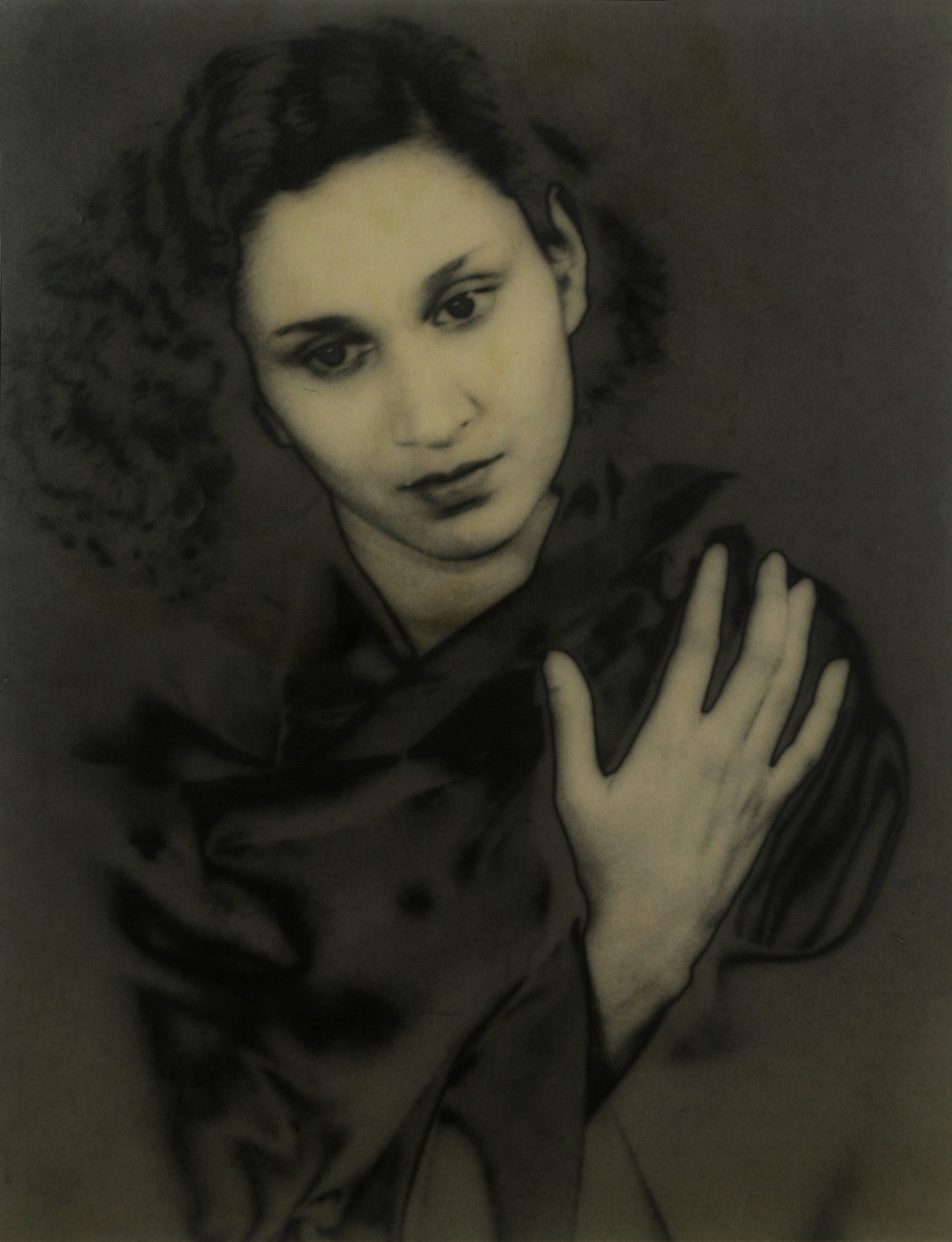
 

Robert Mapplethorpe (American, 1946-1989)
Ken Moody and Robert Sherman
1984
Gelatin silver print
© Robert Mapplethorpe Foundation


These images are good to see… but not really what I want to see.

I want to see some of the early work, and some of the S/M photographs. You never get to see these online. It’s almost as though the Robert Mapplethorpe Foundation is too scared to authorise the online publication of these works, for fear of – heaven forbid – letting people understand all the facets of Mapplethorpe’s work.

Its the origin story and the picturing of his sexual proclivities that are some of his most powerful work… and we never get to see them. Eros (denied).

Dr Marcus Bunyan


Many thankx to the Museum of Contemporary Art Kiasma for allowing me to publish the photographs in the posting. Please click on the photographs for a larger version of the image.


Robert Mapplethorpe @ Kiasma 13.3. – 13.9.2015


Robert Mapplethorpe (American, 1946-1989) 'Self-Portrait' 1980 from the exhibition 'Robert Mapplethorpe' at the Museum of Contemporary Art Kiasma, Helsinki, March - Sept, 2015


Robert Mapplethorpe (American, 1946-1989)
Self-Portrait
1980
Gelatin silver print
© Robert Mapplethorpe Foundation


Robert Mapplethorpe (American, 1946-1989) 'Leather Crotch' 1980


Robert Mapplethorpe (American, 1946-1989)
Leather Crotch
1980
Gelatin silver print
© Robert Mapplethorpe Foundation


The American photographer Robert Mapplethorpe (1946-1989) lived a life of passion in the New York underground and rock scenes in the 1970s and ’80s. That passion also made its way into his art.

Consisting of more than 250 works, the retrospective exhibition in the Museum of Contemporary Art Kiasma offers a broad overview of the key periods of Mapplethorpe’s career. In their aspiration for perfection, Mapplethorpe’s pictures blend beauty and eroticism with pain, pleasure and death. Mapplethorpe also photographed his celebrity friends such as Patti Smith, Andy Warhol and Richard Gere. Although solidly anchored in their time, his photographs are also universal and topical even today.

Arriving from Paris to Helsinki, the high-profile exhibition is a unique opportunity to learn about the art and life of one of the most important photographic artists of our time. The exhibition is curated by Jérôme Neutres from Paris with Director Pirkko Siitari and Chief Curator Marja Sakari from Kiasma.

This exhibition is organised by The Finnish National Gallery – Museum of Contemporary Art Kiasma and the Réunion des Musées Nationaux – Grand Palais, with the collaboration of the Robert Mapplethorpe Foundation New York.

Exhibition themes

Body sculpture

“If I had been born one hundred or two hundred years ago, I might have been a sculptor, but photography is a very quick way to see, to make sculpture.”

~ Robert Mapplethorpe


Mapplethorpe became interested in photographing sculpture during his first trip to Paris in the early 1970s. He also began taking pictures of people in poses that imitated classical sculptures. Lisa Lyon, the first World Women’s Bodybuilding Champion, was the subject in many of the pictures.

Body and geometry

Mapplethorpe prized order and purity of form in his art. He was also particular about the frames of his pictures, which he often designed himself. He had great respect for the long history of art. Some of his nude studies echo Leonardo da Vinci’s Vitruvian Man which shows an idealised human body inside a circle and a square

Still lifes and body details

“I am looking for perfection in form. I do that with portraits. I do it with cocks. I do it with flowers.”

~ Robert Mapplethorpe


Mapplethorpe’s still lifes and pictures of body parts play with stormy associations. They are distinctly corporeal and vitalistic, whether the subject is an exposed penis or an aubergine on a table. Mapplethorpe said he looked at all objects in precisely the same way. According to Patti Smith, “Robert infused objects, whether for art or life, with his creative impulse, his sacred sexual power. He transformed a ring of keys, a kitchen knife, or a simple wooden frame into art.”

Chapel and Colour bracket

“I was a Catholic boy, I went to church every Sunday. A church has a certain magic and mystery for a child.”

~ Robert Mapplethorpe


Mapplethorpe came from a Roman Catholic family, but his interest in the church was primarily aesthetic. He said he wanted his pictures to be viewed like altars. The figure of a crucified Christ appears in some of his works, as does the human skull, a traditional reminder of death. Instead of suffering, however, the images convey a sense of sinful pleasure. Mapplethorpe worked with colour film starting in the late 1970s, but did not routinely exhibit his colour photos until the end of the 1980s.

Mapplethorpe and women

“Lisa Lyon reminded me of Michelangelo’s subjects, because he did muscular women.”

~ Robert Mapplethorpe


Poet and musician Patti Smith was Mapplethorpe’s first and last model and muse. Mapplethorpe photographed covers for Smith’s albums and books of poems. Another important model was the body builder Lisa Lyon, who is the subject of Mapplethorpe’s book Lady: Lisa Lyon. Both women could be described as androgynous. Locating himself in the same intermediate space between femininity and masculinity, Mapplethorpe photographed himself in drag.

Portraits

New York and the Chelsea Hotel in particular were places where the American cultural intelligentsia used to gather in the 1970s. There Mapplethorpe met writers, musicians and artists such as William Burroughs, Iggy Pop and David Hockney, and enjoyed the attention lavished on him. He became the court photographer of certain cultural circles, his camera capturing friends, celebrities and famous figures in the art world.

Eros

“I don’t think anyone understands sexuality. It’s about an unknown, which is why it’s so exciting.”

~ Robert Mapplethorpe


Sadomasochism, S&M, was both sex and magic for Mapplethorpe. Like the French writer Jean Genet, he too wanted to elevate things into art that were not yet considered art. Mapplethorpe’s depiction of fetishes in his photographs was deliberately formal. He documented spontaneous acts only very infrequently. The sex he captured in his pictures was neither malicious nor repugnant. S&M is about desire and pleasure, and above all about trust.

Polaroids

“I’m trying to record the moment I’m living in and where I’m living, which happens to be in New York. These pictures could not have been done at any other time.”

~ Robert Mapplethorpe


Mapplethorpe got his first Polaroid camera in 1970 and fell in love with its simplicity: there were few adjustments to make and you could see the results instantly. Because the film was expensive, Mapplethorpe felt that every picture had to be perfect. Precision and economy became a habit that endured throughout his career. In 1975, he switched over to the more versatile Hasselblad 500.

Still moving

“We were like two children playing together, like the brother and sister in Cocteau’s ‘Enfants Terribles’.”

~ Patti Smith


Robert Mapplethorpe and Patti Smith began their creative careers together. Frequently they would not plan their projects in advance. The experimental short Still Moving had no script, and Smith improvised her movements and lines. The camera operator was Lisa Rinzler. “He wordlessly guided me. I was an oar in the water and his the steady hand,” Smith has said.

Robert Mapplethorpe – Portraits

New York was home to America’s cultural intelligentsia in the 1970s. Mapplethorpe was the court photographer of the cultural elite. His portraits feature his friends, celebrities and influential figures on the art scene.


Robert Mapplethorpe (American, 1946-1989) 'Self-Portrait' 1975


Robert Mapplethorpe (American, 1946-1989)
Self-Portrait
1975
Gelatin silver print
© Robert Mapplethorpe Foundation


Robert Mapplethorpe (American, 1946-1989) 'Patti Smith' 1979


Robert Mapplethorpe (American, 1946-1989)
Patti Smith
1979
Gelatin silver print
© Robert Mapplethorpe Foundation


Robert Mapplethorpe (American, 1946-1989) 'Poppy' 1988


Robert Mapplethorpe (American, 1946-1989)
Poppy
1988
Unique dye transfer
© Robert Mapplethorpe Foundation


Installation view of the exhibition 'Robert Mapplethorpe' at the Museum of Contemporary Art Kiasma, Helsinki

Installation view of the exhibition 'Robert Mapplethorpe' at the Museum of Contemporary Art Kiasma, Helsinki

Installation view of the exhibition 'Robert Mapplethorpe' at the Museum of Contemporary Art Kiasma, Helsinki

Installation view of the exhibition 'Robert Mapplethorpe' at the Museum of Contemporary Art Kiasma, Helsinki

Installation view of the exhibition 'Robert Mapplethorpe' at the Museum of Contemporary Art Kiasma, Helsinki


Installation view of the exhibition 'Robert Mapplethorpe' at the Museum of Contemporary Art Kiasma, Helsinki

Installation view of the exhibition 'Robert Mapplethorpe' at the Museum of Contemporary Art Kiasma, Helsinki

Installation view of the exhibition 'Robert Mapplethorpe' at the Museum of Contemporary Art Kiasma, Helsinki


Installation views of the exhibition Robert Mapplethorpe at the Museum of Contemporary Art Kiasma, Helsinki
Finnish National Gallery / Pirje Mykkänen


Who’s who?

~ Princesse Diane de Beauvau
French aristocrat, model and fashion muse

~ Bruno Bischofberger
Swiss gallerist and art dealer known for bringing American Pop Art to Europe, long-term associate of Andy Warhol

~ Louise Bourgeois
French-born sculptor known for her gigantic spider sculptures

~ Miep Brons
Dutch porn dealer

~ William Burroughs
Writer and primary figure of the Beat Generation

~ Alistair Butler
New York dancer

~ Patrice Calmettes
French photographer

~ Truman Capote
American author and journalist whose best known titles include Breakfast at Tiffany’s and In Cold Blood

~ Leo Castelli
American-Italian gallerist, influential promoter of contemporary art in New York

~ Katherine Cebrian
San Francisco socialite

~ Francesco Clemente
Italian-born contemporary artist

~ Ed and Melody
Mapplethorpe’s brother Edward and his girlfriend at the time, Melody, a friend of Mapplethorpe’s

~ Richard Gere
American actor, idolised at the time of this portrait following his performance in American Gigolo

~ Philip Glass and Robert Wilson
Glass is a contemporary composer, Wilson a director and playwright. At the time of this portrait, they had worked together on their opera Einstein on the Beach

~ Keith Haring
American Pop and graffiti artist

~ Deborah Harry
Singer and actress, best known as lead singer of Blondie

~ David Hockney and Henry Geldzahler
Hockney is a British artist and Pop Art pioneer. Belgian-born Geldzahler was a curator, critic and art historian

~ Grace Jones
Jamaican-born singer, producer, actress and model

~ Amanda Lear
French singer, performer, painter and author, friend of celebrities such as David Bowie, Salvador Dalí and Brian Jones

~ Annie Leibovitz
American photographer whose work featured on the cover Rolling Stone and Vanity Fair

~ Roy Lichtenstein
American painter, sculptor and leading Pop artist

~ Lisa and Robert
Mapplethorpe and his long-term muse, bodybuilder Lisa Lyon

~ John McKendry
Curator of prints and photographs at the Metropolitan Museum of Art and personal friend who first introduced Mapplethorpe to the MET’s fine art photography collection

~ Louise Nevelson
American sculptor

~ Yoko Ono
Japanese-born artist and musician

~ Philippe
French socialite

~ Iggy Pop
Singer, songwriter and actor known for his energetic stage presence as lead singer of The Stooges

~ Robert Rauschenberg
American artist who inspired later generations of artists including Andy Warhol and Roy Lichtenstein, regarded as a major figure in the transition from Abstract Expressionism to Pop Art

~ Isabella Rossellini
Italian-born actress, model, filmmaker, author, and philanthropist

~ Giorgio di Sant’Angelo
Italian-born fashion designer

~ Arnold Schwarzenegger
Budding actor and award-winning bodybuilder at the time of this portrait, he later achieved world renown as a Hollywood star and Governor of California

~ Cindy Sherman
American contemporary artist, known for photographs analysing women’s roles and place in society

~ Holly Solomon
A self-anointed ‘Pop princess’, Solomon was a prominent collector and subsequent dealer of contemporary art. She was famously immortalised by other artists such as Andy Warhol and Roy Lichtenstein

~ Susan Sontag
American writer and essayist

~ Tom of Finland
Finnish artist and illustrator. His drawings had a major influence on gay culture from the 1970s onwards. Mapplethorpe and Andy Warhol were among his admirers

~ Sam Wagstaff
Curator, collector, Mapplethorpe’s lifetime companion and artistic mentor

~ Andy Warhol
Pop Art pioneer and filmmaker, greatly admired by Mapplethorpe

~ Edmund White
American author, known for his work on gay themes


Robert Mapplethorpe (American, 1946-1989) 'Ajitto' 1981


Robert Mapplethorpe (American, 1946-1989)
Ajitto
1981
Gelatin silver print
© Robert Mapplethorpe Foundation


Robert Mapplethorpe (American, 1946-1989) 'Lisa Lyon' 1982


Robert Mapplethorpe (American, 1946-1989)
Lisa Lyon
1982
Gelatin silver print
© Robert Mapplethorpe Foundation


Robert Mapplethorpe (American, 1946-1989) 'Self-Portrait' 1988


Robert Mapplethorpe (American, 1946-1989)
Self-Portrait
1988
Gelatin silver print
© Robert Mapplethorpe Foundation


Museum of Contemporary Art Kiasma
Mannerheiminaukio 2, FIN-00100
Helsinki, Finland
Phone:+358 (0)294 500 501

Opening hours:
Tuesday – Friday 10 – 20.30
Saturday 10 – 18
Sunday 10 – 17
Monday closed

Museum of Contemporary Art Kiasma website

LIKE ART BLART ON FACEBOOK

Back to top