Before lockdown struck Melbourne I travelled up to Daylesford (an hour and a half from the city) and purchased a Hanimex carousel containing approximately 88 colour slides of nude women, from an antique centre for $80. Mounted in Kodak Ready-mounts, the slide film itself has no markings – no number and no name, completely blank. These could therefore be dupe (duplicate) slides, where the film has no brand.
I have spent hours digitally restoring these slides for they were in a poor state. You can see a detail from an unrestored slide below. Unfortunately the colour has gone but I felt the slides were so interesting, so beautiful, that they were worth preserving. What makes them rare is that most of the slides are Australian, set on the beach and in the bush. I have never seen anything like them in Australian photography before. This posting features the most Australian of the slides with background of surf, sand and sea, Australian gums and fauna.
There is nothing prudish or smutty about these photographs. Despite the professional? amateur? photographer being almost certainly male (and all the appellations that the male gaze brings with it), the women are joyful when displaying their bodies, unafraid and uninhibited in the posing of their bodies before the camera. Here “the enshrining of Woman as a blank screen upon which the ideas and desires of both artist and viewer are projected” is balanced by the identity, presence and vitality of the women themselves. They take possession of their image, not simply as passive participants in the act of representation, but as active, engaged, powerful human beings who have a vital role in their own portrayal.
This posing has historical links to the history and photography of naturism (naturism is a lifestyle of non-sexual nudity, and the cultural movement which advocates for and defends that lifestyle. Both may also be referred to as nudism) and vitalist1, movements which sprung up around the world before and after the First World War.2 Examples of magazines and pamphlets from 1921-1949 can be seen at the bottom of the posting including an Australian publication, Physique Culture Art Album, c. 1936-1940. As with early male physique magazines, early naturist magazines link the beauty of the physical form to the classical ideal; and being natural, in the sun, outdoors to health and vitality (“A Magazine for all interested in Physical Fitness, Hygiene, Diet, Sunbathing, and a Healthy Natural Life”).
Whether these photographs were for personal use, or for publication, remains unknown. Either way, the photographer has access to numerous models. In this posting there seem to be 6 separate photo sessions featuring different models – 1-9, 10-14, 15-19, 20-22, 23-32, and 33-37. Numbers 1-9 and 10-14 may be the same model but I am unsure of this.
What I am sure of is this: the photographer is not some drongo who does not know how to use a camera. He is wonderfully proficient with a camera, an artist in every sense of the word. I just look at the line of the body in No. 4 and 5 and note the light, the placement of the figure against the background and the position of the horizon line, the elongation of the female form, the sensuous curve of the body… similarly, the beauty, suppleness, lighting and placement of the body in No’s 23-27 is a delight. How he fills the pictorial frame with the horizontal body in No. 25 with the knee touching the edge of the frame on the right hand side, the feet and hands touching the sand, the head thrown back and cropped, the upper line of the body following the line of the dam behind, the undulating curve of the upper and lower body mimicking the curve of the hand, low depth of field and beautiful light, is superlative.
I have never had the opportunity to photograph the female form but in finding these colour slides, rescuing them from oblivion, studying them, imbibing them, the process has given me a greater insight into the vitality and beauty of the female form, a deeper understanding of the anima (originally used to describe ideas such as breath, soul, spirit or vital force, Jung began using the term in the early 1920s to describe the inner feminine side of men),3 and of mother / earth.
On 30 October 2021 I received a wonderful email from Miss Ulrike Muehlbachler in Austria. She gave me some valuable information with regard to these colour slides as below:
“All of them should be digitalised at the highest possible resolution as soon as possible. 1960’s colour slides now tend to chemical reactions – which destroys the images more and more through the years (this has been done!)
“The slides seem to be a mixture of models from different countries including the UK, as I can name a few. Also I’d say that although several of the models posed for Harrison Marks none of the shots are taken by him. They were originally published as sets under ‘Esquire Color Slides’ and were notorious for going red!
They were not taken at Ewhurst Manor [a legendary UK-filming location at 37 Furzehill Road, Borehamwood used for “glamour” photography, now sadly totally demolished], at least those I’ve seen taken in the gardens. I know the grounds of Ewhurst fairly well having studied numerous images of the place over the years. I can safely say there wasn’t a walled round pond there 🙂
I will need to look through the slides again, but I can see Sue Owen, Models named Robyn and Georgina and a few others I recognise.
These slides seem to turn up all over the place, so the distribution must have been pretty good even back in the 1960’s.
Russ”
Footnotes
1/ “Faced with ‘a queasy sickening feeling that all was not right’, by the fin-de-siècle many Modernists in America, Australia, Britain, Canada and Europe expanded the field of art into raw nature, ethnic communities and tribal cultures as vitalisers of energy that could be emotionally and creatively liberating. Following theories of Vitalism by Henri Bergson, Hans Driesch, Alois Riegl and Friedrich Nietzsche, ‘the vital state’ (‘l’élan vital’) became widely engaged for its conception of life as a constant process of metamorphosis, impelled by the free flow of energies able to generate what Bergson called ‘creative evolution’. Imbricated within Neo-Lamarckian ecological evolutionary theories, Vitalism was also embraced for being anti-rationalist and anti-mechanistic, particularly in its opposition to Thomas Huxley’s conception of plants and animals as machines, and its reconception of them as inspiring organisms within unspoiled nature, perpetually mutating into increasingly complex species and solidarist colonies following the Transformist concept of ‘life-force’.
Pitched against mechanistic productivity and repressive materialism, Vitalism spawned an expanding field of Modernist art in which artists embraced nature, intuition, instinct, spontaneity, chance, intense emotion, memory, unconscious states, uncanny vibrations, and a psychology of time. This pursuit was enhanced by the further expansion of art into Anthroposophy, Organicism, Supernaturalism, Magnetism, Eurhythmics, Freikorperkultur, Heliotherapy, Herbalism, Homeopathy, Naturopathy, Nudism, Theosophy and Vegetarianism, free dance plus regenerative new sports and physical cultures. The artists exploring this expanded field were doing so … within cultures as geopolitically widespread as Britain, China, France, Iceland, Oslo, Switzerland and the Soviet Union.”
Anonymous. “Vitalist Modernism,” on the Association for Art History website [Online] Cited 27/01/2021.
2/ Body culture
The terrible physical losses and psychological traumas of the First World War changed Australian society and prompted anxious concerns about the direction of the nation. For some this meant an inward-looking isolationism, a desire that Australian culture should develop independently and untouched by the ‘degenerate’ influences of Europe.
The search for rejuvenation frequently involved explorations of the capabilities and vulnerabilities of the human body. In the hands of artists, corporeal forms came to symbolise nationhood, most often expressed through references to the art of Classical Greece and mythological subjects. The evolution of a new Australian ‘type’ was also proposed in the 1930s – a white Australian drawn from British stock, but with an athletic and streamlined shape honed by time spent swimming and surfing on local beaches.
This art often has a distinctive quality to it, which in the light of history can sometimes make for disquieting viewing. With the terrible knowledge of how the Nazi Party in Germany subsequently used eugenics in its systematic slaughter of those with so-called ‘bad blood’, the Australian enthusiasm for ‘body culture’ can now seem problematic. Images of muscular nationalism soon lost their cache in Australia following the Second World War, tainted by undesirable fascistic overtones.
In the 1930s Max Dupain responded to Henri Bergson’s book Creative Evolution (1907) in which he considered creativity and intuition as central to the renewed development of society, and the artist as prime possessor of these powers. Vitalism, as this philosophy was termed, was believed to be expressed through polarised sexual energies. …
The invocation of the Classical body as a modern prototype was a powerful idea in the 1930s. The Graeco- Roman goddess Diana, the virgin patron goddess of the hunt, was popularly invoked as an ideal of female perfection, and represented with a slender and athletic physique.
Anonymous wall text from the exhibition Brave New World: Australia 1930s at the Ian Potter Centre: NGV Australia, Melbourne, July – October 2017
3/ Anima originated from Latin, and was originally used to describe ideas such as breath, soul, spirit or vital force. Jung began using the term in the early 1920s to describe the inner feminine side of men.
Anima: The inner self of an individual; the soul. In Jungian psychology, the unconscious or true inner self of an individual, as opposed to the persona, or outer aspect of the personality. In Jungian psychology, the feminine inner personality as present in the unconscious of the male.
Athletic Publications Ltd. (London) (Publisher) Through the Day. How workers can easily increase their health, efficiency, and happiness 1921
Vivre Integralement #103 15th October 1931 French Naturist Magazine
Health & Physical Culture Publishing Co. Ltd. (Sydney Australia) (Publisher) Physique Culture Art Album c. 1936-1940
Sun Bathing Review Vol. 7, No. 26 Summer 1939
Health & Efficiency Volume XI, No. 4 April 1941
Health & Efficiency Volume XI, No. 4 April 1941
The Naturist May 1943
The Naturist Vol. VI, No. 6 May 1943
Sun Bathing Review Vol. II, No. 43 Autumn 1943
Rosemary Andrée My Life Story 1945
British performer, actress, dancer and physical culture expert Rosemary Andrée. Andrée became known as Britain’s “Pocket Venus” and toured internationally in stage shows, modelled for Britain’s finest photographers, made home exercise movies for women and enjoyed great public appeal during the 1930’s and 1940’s.
Douglas Stewart Beauty and Naturism Paperback April 1947
Surrealism, solarisation, mobiles, photomontage, geometric repetition and simplification of form, directional lighting, distortion, female allusions, strong use of diagonals, romanticism, poetics. All the usual tropes of the photographic art of the day are present, but somehow the images never move me, or impinge lastingly on my consciousness.
Hausmann’s work sits at the intersection of New Vision (the development of photography as a medium of untold expressive power and as a primary vehicle of modern consciousness) and New Objectivity (a sharply focused, objective documentary quality; a movement in German art that arose during the 1920s as a reaction against expressionism) photographic movements. The interstices of freedom and wonder, which he referred to as ‘beauty without beauty’, both experimental and ‘classical’ at the same time.
I’m not convinced. “His images of plants, sea spray, changing light and materials, are images of disorder, stripped of all authoritarian vision.” Really? To me his work seems very authoritarian… very male, very objective but subjected to the photographers’ will. Triumph of the Will.
Many thankx to Jeu de Paume for allowing me to publish the photographs in the posting. Please click on the photographs for a larger version of the image.
To this day, Raoul Hausmann’s photography has not had a dedicated museum exhibition in France. As a photographer, Hausmann has long remained underrated and unheralded. However his key position in 20th century avant-garde photography has continually been re-evaluated and his importance is widely acknowledged these days.
We know Hausmann as the prominent artist of Dada Berlin, as the author of assemblages, collages, lautgedichte, etc, yet the vicissitudes of history caused the obliteration of his photography, an essential facet of his œuvre. From 1927 onwards Hausmann became an avid and restless photographer. His photographic practice quickly became a cornerstone of his multi-faceted reflections and activities, pushing him in a new direction which culminated in his forced departure from Ibiza in 1936.
Considering Hausmann’s clandestine crossing of the century, it is no surprise that his photographic œuvre was forgotten. Labelled a ‘degenerate’ artist by the Nazis, he hastily left Germany in 1933. As an exile, Hausmann suffered the dispersion, and sometimes the destruction, of his work. His photography was seldom displayed and survived unnoticed until the late seventies. It was long supposed to be lost, until an archive (now at the Berlinische Galerie) was almost miraculously discovered at his daughter’s home after her death.
1/ Raoul Hausmann was a central figure of the Berlin Dada movement, a pioneer of sound poetry, who spearheaded collage and photomontage. He was also a writer, editor, and experimenter across all genres. Franz Jung referred to him as a ‘cultural agitator of 1920s’ Berlin’. In the late 1930s, Hausmann was also a passionate, prolific, sensitive and lyrical photographer. Bringing together over 130 vintage prints, all produced by Hausmann himself, this exhibition presents a photographic oeuvre that has remained unrecognised and unheralded for too long
2/ This is the first time that Hausmann’s photographic work has been the subject of such an extensive retrospective in France. The exhibition opens at the Point du Jour in Cherbourg, before coming to the Jeu de Paume. ‘Raoul Hausmann. Vision in Action’ benefits from a number of exceptional loans, from institutions boasting collections of work by the artist, primarily the Musée départemental d’art contemporain de Rochechouart and the Berlinische Galerie; collections that continued to grow until relatively recently. Other first-rate public and private collections, both in France and Germany, have contributed to the exhibition, with some work being displayed for the first time
3/ In 1931, Hausmann considered himself a photographer. His practice was honed far from Berlin, in the dunes of the Baltic and the North Sea. An emotive photographer, capturing remarkable moments or sights on his numerous walks, he never sought the perfection of an overly immaculate image, seamlessly constructed and arranged, but rather the interstices of freedom and wonder, which he referred to as ‘beauty without beauty’. This sense of calm or tranquillity can be seen in the way his work has resisted and maintained its dignity, against the ravages of time
4/ Within the space of an intense decade – from 1927 until his forced departure in 1936, from the island of Ibiza, where he had sought refuge in 1933, shortly after the Nazis’ rise to power – Raoul Hausmann produced over a thousand prints, many of which were published or exhibited in their day, before taking up residence in the archives of memory. These images and their diffusion situated him in a specific milieu – Germany, Paris (where he spent time in 1935), and later in Czechoslovakia (the only retrospective devoted to the artist’s work during his lifetime was held in Prague, in 1937). Hausmann’s work incites the public to reflect upon a network and history of photography, inhabited by figures such as August Sander, Raoul Ubac, László Moholy-Nagy, etc
5/ At the crossroads of the New Vision and New Objectivity photographic movements, Raoul Hausmann’s work is constructed within a poetics of distance or difference with regard to normality. Both experimental and ‘classical’ at the same time, he liked nothing better than resolving and surpassing oppositions. His sublime sculptural and mineral nudes contrast with the monstrosity of the Nazi body. His images of plants, sea spray, changing light and materials, are images of disorder, stripped of all authoritarian vision. In all respects, this photography, produced using a bare minimum of equipment, serves a project of a heightened existence
6/ Hausmann reflected about the social and political uses of images, particularly in Ibiza, in his work on vernacular architecture, an inventory of buildings that aimed to invalidate the idea of ‘origin’ and ‘race’. This project around the notion of habitat, in the philosophical sense of the term, responds ultimately, like the ensemble of his work, to the maxim that underlines his oeuvre: ‘you alone should construct the limits of your universe’.
Raoul Hausmann (Austrian, 1886-1971) The Triangle (Vera Broïdo) (Alternate version) c. 1931
To this day, Raoul Hausmann’s photography has not had a dedicated museum exhibition in France. As a photographer, Hausmann has long remained underrated and unheralded. However his key position in 20th century avant-garde photography has continually been re-evaluated and his importance is widely acknowledged these days.
We know Hausmann as the prominent artist of Dada Berlin, as the author of assemblages, collages, lautgedichte, etc, yet the vicissitudes of history caused the obliteration of his photography, an essential facet of his oeuvre. From 1927 onwards Hausmann became an avid and restless photographer. His photographic practice quickly became a cornerstone of his multi-faceted reflections and activities, pushing him in a new direction which culminated in his forced departure from Ibiza in 1936.
Between 1927 and 1936, Hausmann engaged in a discussion about the nature and the role of photography with August Sander. He published a body of theoretical texts and was part of a group that included such notorious figures as Raoul Ubac, Man Ray, Elfriede Stegemeyer, and Lázló Moholy-Nagy. The latter once stated: ‘All that I know, I’ve learnt it from Raoul’.
Considering Hausmann’s clandestine crossing of the century, it is no surprise that his photographic oeuvre was forgotten. Labelled a ‘degenerate’ artist by the Nazis, he hastily left Germany in 1933. As an exile, Hausmann suffered the dispersion, and sometimes the destruction, of his work. His photography was seldom displayed and survived unnoticed until the late seventies. It was long supposed to be lost, until an archive (now at the Berlinische Galerie) was almost miraculously discovered at his daughter’s home after her death.
The French photographic archive of Hausmann’s work, kept mainly at the Musée de Rochechouart and opened in 1985, continued to grow up until 2010. This institutionalisation of his work has generated an on-going re-appraisal. Hausmann the photographer is astonishing. In contrast to the sarcastic and biting tone generally associated with his Dada period, his photographs are a means to pacification. They convey a sense of reconciliation, a serenity that did not prevail before. In the late twenties Hausmann felt more and more oppressed in Berlin. He took long vacations in small villages by the North Sea and the Baltic, villages described by his partner Vera Broïdo as ‘shelters’ and ‘hide-outs for artists’. There, he took photographs of the sand, the foam, the bogs, trees, naked bodies, curvy dunes, wheat, weeds, insignificant things that dazzled him. His attention also focused on humble objects, cheese graters, cane woven chairs, wicker baskets, which he transformed through the use of light and shadow. Hausmann calls these experimentations ‘melanography’. They strikingly exemplify his definition of what an image is: ‘the dynamics of a living process’.
Hausmann’s arrival in Ibiza in 1933, shortly after the Reichstag fire, opened a new perspective. Fascinated by the peasant houses built in the shape of white cubes, he began a photographic inventory of this ‘architecture without architects’. Photography became partly a study dedicated to vernacular architecture from an anthropological point of view. Hausmann also discussed notions such as ‘origin’ or ‘race’ that emerged in contemporary architectural circles. Fully integrated in the island’s life, he lived in a ‘state of dream’, as if outside time. Hausmann also pursued a project begun in Germany that revolved around two broad categories, portraits and the vegetational or organic forms. The outbreak of the Spanish Civil War, in which he briefly took part as a Republican (Ibiza being the first territory abandoned to the Francoists as early as 1936), marks the beginning of his wandering across Europe. During his exile, Hausmann no longer had the possibility of dedicating himself so passionately to photography.
August Sander (German, 1876-1964) Inventor and Dadaist (Raoul Hausmann) 1929, printed 1990 Silver gelatin print 258 x 193mm Tate and National Galleries of Scotland. Lent by Anthony d’Offay
Jeu de Paume 1, Place de la Concorde 75008 Paris métro Concorde Phone: 01 47 03 12 50
Glorious modernist photographs with avant-garde and surrealist overtones: the use of photomontage, double printing and solarisation is particularly effective.
The sensitive figure studies of males in classical pose carry an over current of barely suppressed desire evidencing a sexualised (post-colonial?) gaze falling on the exotic Other – even as Wendt was part of an emerging generation of artists documenting Sri Lanka’s culture and history from the inside.
More interesting than desire hiding through artistic ethnographic study are the landscapes, abstracts of coils of rope and the voluptuous female nudes. Stunning.
The media images were in such poor condition when I received them that I have spent a long time digitally cleaning and balancing them for your pleasure.
Dr Marcus Bunyan
Many thankx to Huis Marseille for allowing me to publish the photographs in the posting. Please click on the photographs for a larger version of the image.
“Lionel Wendt was the central figure of a cultural life torn between the death rattles of the Empire and a human appraisal of the untapped values of Ceylon.”
Pablo Neruda, Memoirs
“The proposition that confronted Wendt was that Sri Lanka had a way of life that was very old but which remained, in spite of poverty, squalor and apathy, a vital sense of life. He recognised that here man, living in traditional ways, had not become alienated from his environment… Evidence of his deep regard for Sri Lanka and its traditions are illustrated in the images he chose to capture with his camera, each being a tiny microcosm of a vast and magnificent tapestry. It was recognised by all those who knew him that Wendt had an endless capacity for work. He focussed on the country and the people with unerring judgement and relentless dedication, and in doing this, he stimulated a new consciousness among them and (just as pertinent) in some high places.”
Neville Weeraratne
“He never spoke much about his photography. I expect he wanted his images to speak for themselves and he never spoke of them or about himself. I suppose he was so critical of everybody else that he did not want to expose himself to the same treatment. He did not reveal himself. He was a very interior person. He showed no emotion though he expressed a great passion for things. Perhaps he was hypocritical.”
There is something special going on with regard to the oeuvre of Ceylonese photographer Lionel Wendt (1900-1944). After a period of relative obscurity, Wendt was rediscovered – or discovered, in fact – worldwide as a unique, individualistic photographer who availed himself of experimental techniques and modern compositions. Wendt’s choice of subjects was eclectic: from sensual and homo-erotic portraits to tropical images of Ceylon (now Sri Lanka), and from picturesque scenes to compositions for which he used modernist stylistic devices and experimental techniques. After Wendt’s premature death in 1944 his negatives were destroyed, but the work he left behind lives on. This consists of a collection of beautiful experimental prints, of which several are included in the renowned collections of such museums as Tate Modern in London and Rijksmuseum in Amsterdam. This year, Wendt’s work is being exhibited at Documenta 14 in Athens and, from 10 June till 3 September 2017, in a large-scale retrospective exhibit at Huis Marseille, which shines a spotlight on the fascinating work of this photographer in all its facets.
Who was Lionel Wendt?
Lionel Wendt was a concert pianist, author, patron of the arts, teacher and, above all, a first-class photographer. After having studied law and musical training as a concert pianist in Great Britain, Wendt returned to the city of his birth, Colombo in Ceylon, at the age of 24. It did not take long for him to dedicate himself fully to the arts after his return: piano, literature and the visual arts. It was particularly in photography that he found an ideal vehicle for expression. In 1934, he established the Photographic Society of Ceylon jointly with Bernard G. Thornley and P.J.C. Durrant, and started running Chitrafoto, the photographic studio of the Associated Newspapers of Ceylon and in which he also published a photographic column, in 1938. Wendt developed into a prominent avant-gardist – the ‘Oscar Wilde’ of the Ceylonese arts scene. His first solo exhibition took place in 1938 at the Camera Club in London, at the invitation of Ernst Leitz, the inventor and manufacturer of the Leica. Two years later, a solo exhibition followed in Colombo entitled Camera Work, probably in reference to Alfred Stieglitz’s avant-gardist photography magazine of the same name.
Tropical modernism, masterful prints
Initially, Wendt used a Rolleiflex for his photography, which he quickly replaced by a Leica. From approximately 1933 onwards, he started to print his film in his own darkroom, where he soon showed himself to be a master. He made refined bromide and gelatine silver prints with subtle shades of grey and gradations of black, which gave his nudes and landscapes a velvet-like quality. Wendt allowed himself to be inspired by the ‘straight photography’ of Paul Strand and Edward Weston and the surrealistic experiments of Man Ray, and experimented with techniques such as photogram, photomontage, double printing and solarisation.
Homosexuality, hiding in plain sight
Wendt’s work includes spectacular images of Ceylon: its landscapes, cultural heritage and local population, photographed during everyday activities or traditional rituals. However, his sensual homoerotic nudes are particularly astounding. In a time and at a place where homosexuality was not accepted, Wendt had his male subjects (men and boys) pose in the landscape or in his studio. Through the traditional Ceylonese loincloths worn by his subjects, which leave little to the imagination, and the academic poses he asked them to take, he was able to express his homosexuality under the guise of art and ethnography. He also created portraits of the members of the island’s avant-garde movement. Wendt played a significant role in the development of modernist painting on Ceylon; he acted as a patron of the arts and his house was a meeting place for the ’43 Group, the artistic movement that was a predecessor of Ceylonese modernism.
A dormant legacy reawakens
Following Wendt’s early death in 1944 his work sank into oblivion. In the course of time the hundreds of prints that comprise his legacy came into the possession of several collectors, galleries and museums. After having led a dormant existence for several decades, Wendt’s work was once again brought to the attention of the public in 1994.
Large-scale museum retrospective in the Netherlands
From 10 June through 3 September 2017, Huis Marseille is presenting the first museum solo exhibition of Lionel Wendt in the Netherlands, in collaboration with the Ton Peek Gallery (Utrecht) and Jhaveri Contemporary Gallery (London/Mumbai). Over 140 prints from various international private and museum collections have been brought together. Concurrent to the exhibition, the publishing house Fw:Books will be presenting the book Lionel Wendt. Ceylon featuring an overview of Wendt’s work (hardcover, 200 pages, design by Hans Gremmen). This is the first monograph since Lionel Wendt. A Centennial Tribute (2000), an extensive and revised version of the very first catalogue of Wendt’s oeuvre: Lionel Wendt’s Ceylon (1950).
Text from Huis Marseille
Installation views of the exhibition Lionel Wendt: Ceylon at Huis Marseille, Amsterdam
Johann Joachim Winckelmann (German, 1717-1768) Histoire de l’art de l’antiquité 1781 Leipzig: J. G. I. Brietkopf
Winckelmann was murdered in Trieste on June 8, 1768. The frontispiece to this French translation of the History presents an allegory of his death designed by his friend, the painter Adam Friedrich Oeser (1717-1799)
Johann Joachim Winckelmann (German, 1717-1768)
Johann Joachim Winckelmann (9 December 1717 – 8 June 1768) was a German art historian and archaeologist. He was a pioneering Hellenist who first articulated the difference between Greek, Greco-Roman and Roman art. “The prophet and founding hero of modern archaeology”, Winckelmann was one of the founders of scientific archaeology and first applied the categories of style on a large, systematic basis to the history of art. Many consider him the father of the discipline of art history. He was one of the first to separate Greek Art into periods, and time classifications. His would be the decisive influence on the rise of the Neoclassical movement during the late 18th century. His writings influenced not only a new science of archaeology and art history but Western painting, sculpture, literature and even philosophy. Winckelmann’s History of Ancient Art (1764) was one of the first books written in German to become a classic of European literature. His subsequent influence on Lessing, Herder, Goethe, Hölderlin, Heine, Nietzsche, George, and Spengler has been provocatively called “the Tyranny of Greece over Germany.”
Today, Humboldt University of Berlin’s Winckelmann Institute is dedicated to the study of classical archaeology. Winckelmann was homosexual, and open homoeroticism formed his writings on aesthetics. This was recognised by his contemporaries, such as Goethe.
These were the only press images I could get for this exhibition. I would have liked to have seen many more!
Dr Marcus Bunyan
Many thankx to the ONE Archives for allowing me to publish the photographs in the posting. Please click on the photographs for a larger version of the image.
Michelangelo Buonarroti (Italian, 1475-1564) Study of Satyr (The Last Judgement) 1540 Black chalk on paper 7.25 x 11.75 in. Collection of Mr. and Mrs. Mark Borghi
Zanele Muholi (South African, b. 1972) Caitlin and I 2009 C-print 17.125 x 23.75 (triptych) Zanele Muholi Courtesy of Yancey Richardson Gallery, New York
George Platt Lynes (American, 1907-1955) Nicholas Magallanes and Francisco Moncion in Balachines’s Orpheus II 1948 Gelatin silver print 8 x 10 inches Private Collection
Nicholas Magallanes (American born Mexico, 1922-1977)
Nicholas Magallanes (November 27, 1922 – May 2, 1977) was a principal dancer and charter member of the New York City Ballet. Along with Francisco Moncion, Maria Tallchief, and Tanaquil Le Clercq, Magallanes was among the core group of dancers with which George Balanchine and Lincoln Kirstein formed Ballet Society, the immediate predecessor of the New York City Ballet.
Magallanes embodied the Balanchinian archetype with the melancholy heroes of Serenade, La Valse, and La Sonnambula. He performed Orpheus, opposite Francisco Moncion as the Dark Angel and Tallchief as Eurydice. A set of photographs of the trio by George Platt Lynes suggests the drama of their interrelationships.
Edwin Townsend (American, 1877-1948) Tony Sansone c. 1950s Gelatin silver print 9.5 x 7.5 inches Collection of the Leslie-Lohman Museum of Gay and Lesbian Art, New York
Edwin F. Townsend (American, 1877-1948)
Born in Iowa in 1877, Edwin F. Townsend came to New York early in the 1900s. After the armistice, he took up professional photography, working with Lockeed Pictorial Co. In early autumn of 1921, he opened a studio on the upper west side of Manhattan. He established his credentials in the world of theatrical photography with a suite of portraits of opera singer / movie actress Geraldine Ferrar. He would continue as an active theatrical and celebrity photographer for the next two decades, excelling in dance photography.
In the mid-1920s, noting the success of fellow New Yorkers Edwin Bower Hesser and Alfred Cheney Johnston in supplementing studio income from portraiture with nudes (sold to “art magazines” and privately by mail order), Townsend began shooting male physique photographs. Among the Broadway photographers only Nickolas Muray then made the male nude an important component of his work. Bernarr Macfadden, the publisher and promoter of physical culture, and Ted Shawn, the modern dancer, in the 1920s elaborated a new aesthetics of the male body. Two poles of imagery came to the fore: a neoclassicism in which models posed in the attitudes of Greek statues, and a native Americanism in which models moved in dances enacting natural masculinity. Though Townsend (and Muray) had dealings with both Macfadden and Shawn, his own aesthetics tended toward the classical. Indeed, the produced the most famous set of physique photographs of the interwar period when he posed the model / actor Tony Sansone, whom he discovered in a David Belasco theatrical production, in a series of poses of Greek simplicity and dignity.
Townsend published two small books of photographic studies, dutifully airbrushed, of Sansone: Modern Classics (1932) and Rhythm (1935). For true connoisseurs, Townsend sold original prints, signed in red ink, of Sansone fully revealed. These images are among the most cherished and artistic icons of physique photography, establishing a standard of masculine beauty.
In 1933 Townsend moved his studio to midtown Manhattan. There he shot society portraiture, fashion layouts for department stores, and occasional theatrical and movie publicity work. The studio operated until the late 1950s.
David S. Shields/ALS. “Edwin F. Townsend,” on the Broadway Photographs website [Online] Cited 05/06/2021. Used under fair use conditions for the purposes of education and research
James Bidgood (American, 1933-2022) Pan 1965 Digital C-print 22 x 22 inches Courtesy of the artist and ClampArt, New York
James Bidgood (American, 1933-2022)
His artistic output has embraced a number of media and disciplines, including music, set and window design, and drag performance. In time, his interests led him to photography and film and it is for this work that he is most widely known. Highly recognisable, his photographs are distinguished by an aesthetic of high fantasy and camp. His work which was inspired by an early interest in Florenz Ziegfeld, Folies Bergère, and George Quaintance has, in turn, served as important inspiration for a slew of artists including Pierre et Gilles and David LaChapelle. …
Bidgood’s work is characterised by a heavy reliance on invention. His photographs feature elaborate sets built ground up from the materials of the theatre, fashion, design, and fine art. In a profile of the artist published in Aperture, Philip Gefter writes,
Necessity was the mother of invention for Bidgood, who created elaborate photographic tableaux in his small midtown Manhattan studio apartment. His first erotic series was an underwater epic called Water Colors, made in the early 1960s, in which he used a dancer from Club 82 named Jay Garvin as his subject. The underwater atmosphere is completely fabricated; the bottom of the ocean was created with silver lame spread across the floor of Bidgood’s apartment; he made the arch of a cave out of waxed paper, and fashioned red lame into the shape of lobster. He coated Garvin with mineral oil and pasted glitter and sequins to his skin so the silver fabric under photographic lights would reflect on his body like water. For weeks at a time, Bidgood would eat and sleep within the sets he constructed in his apartment. (Philip Gefter. “Off to the Camp,” in Aperture 191, Summer 2008)
Many contemporary themes are found even in the earliest of Bidgood’s work. Camp, identity, erotica, desire, marginality, and performance all figure heavily in his portraits of nude men. Bidgood’s complex references to the theatre and performance seem to presage Queer articulations of Performance. His techniques, working processes, and masterful use of illusionistic colour indicate both a mature understanding of his influences and goals and an important contrast to the art movements of the time the work was first created.
Organised by the Leslie-Lohman Museum of Gay and Lesbian Art and curated by scholar Jonathan David Katz, The Classical Nude and the Making of Queer History investigates how the visual iconography of Greco-Roman culture has acted as a recurring touchstone in the development of same-sex representation. Within the canon of western art history, images of the classical past have acted as a sensitive barometer for the shifting constructions of what we today call LGBT or queer culture. The classical past is queer culture’s central origin myth, and tracing how this tradition has been utilised by queer artists over time offers far more information about the cultural context that appropriates the classical than it does about that past itself.
Examining the classical nude across centuries of artistic production, this exhibition considers four major periods: Antiquity, the Renaissance, the nineteenth century, and the modern/contemporary period. Drawn almost exclusively from the collections of the Leslie-Lohman Museum of Gay and Lesbian Art in New York, the objects are diverse in medium and format. While all periods are represented, the majority of the works illustrate how artists in recent history have utilised classical iconography and themes to explore same-sex desire. It is in the recent past, as artists reimagined a classical legacy that had not accounted for diverse gender and racial perspectives, that we find queer culture’s relationship to the classical tradition at both its most complex and dynamic.
This presentation at the ONE Gallery is a condensed preview of a show to open at the Leslie-Lohman Museum in October 2014. Containing over ninety-five objects, the exhibition in New York will include works by Albrecht Dürer, Michelangelo, Jacopo Pontormo, Andrea Mantegna, F. Holland Day, Romaine Brooks, Claude Cahun, Herbert List, Jess, Paul Cadmus, and Pierre et Gilles, in addition to the works presented here, and will be accompanied by a scholarly exhibition catalogue.
Text from the ONE Archives website
Alonze James Hanagan (aka Lon of New York) (American, 1911-1999) Howard Hunter c. 1950s Gelatin silver print 13.25 x 7 inches Collection of the Leslie-Lohman Museum of Gay and Lesbian Art, New York
Jacopo Pontormo (Italian, 1494-1557) Study of a Male 1528-1530 Red chalk on paper 14 x 6 in. Collection of Mr. and Mrs. Mark Borghi
Jacopo Pontormo (Italian, 1494-1557)
Jacopo Carucci or Carrucci (May 24, 1494 – January 2, 1557), usually known as Jacopo (da) Pontormo or simply Pontormo, was an Italian Mannerist painter and portraitist from the Florentine School. His work represents a profound stylistic shift from the calm perspectival regularity that characterised the art of the Florentine Renaissance. He is famous for his use of twining poses, coupled with ambiguous perspective; his figures often seem to float in an uncertain environment, unhampered by the forces of gravity.
Albrecht Dürer (German, 1471-1528) The Men’s Bath c. 1498 Woodcut 14.438 x 11.125 in. New York Public Library
Artist unknown Replica of The Warren Cup Original c. mid-1st century AD Silver Unnumbered issue from edition of twelve Collection of the Leslie-Lohman Museum of Gay and Lesbian Art, New York. Image of the original courtesy of The British Museum
Jean-Léon Gérôme (French, 1824-1904) The Serpent Charmer 1894 Photogravure 7.75 x 11.75 in. Museum Purchase Collection of Leslie-Lohman Museum
Jean-Léon Gérôme (French, 1824-1904)
Jean-Léon Gérôme (11 May 1824 – 10 January 1904) was a French painter and sculptor in the style now known as academicism. His paintings were so widely reproduced that he was “arguably the world’s most famous living artist by 1880.” The range of his works includes historical paintings, Greek mythology, Orientalism, portraits, and other subjects. Gérôme is considered among the most important painters from the academic period and was, with Meissonier and Cabanel, one of “the three most successful artists of the Second Empire”.
He was also a teacher with a long list of students, including Mary Cassatt, Thomas Eakins, and Osman Hamdi Bey, among others.
Herbert List (German, 1903-1975) Beneath the Poseidon Temple 1937 Silver gelatin print 11.614 x 10.827 in. Herb Ritts Foundation Collection of William Zewadski
Jean Jacques Pradier (French, 1790-1852) Standing Sappho 1848-1851 Bronze 33.875 x 14.563 x 13 in. The Dahesh Museum of Art, New York
Florine Stettheimer (American, 1871-1944) Nude Study, Standing With Hands Clasped Late 1890s Oil on canvas mounted on board 30 x 18 in. Columbia University
Florine Stettheimer (American, 1871-1944)
Florine Stettheimer (August 19, 1871 – May 11, 1944) was an American modernist painter, feminist, theatrical designer, poet, and salonnière.
Stettheimer developed a feminine, theatrical painting style depicting her friends, family, and experiences in New York City. She made the first feminist nude self-portrait and paintings depicting controversies of race and sexuality. She and her sisters hosted a salon that attracted members of the avant-garde. In the mid-1930s, Stettheimer created the stage designs and costumes for Gertrude Stein and Virgil Thomson’s avant-garde opera, Four Saints in Three Acts. She is best known for her four monumental works illustrating what she considered New York City’s “Cathedrals”: Broadway, Wall Street, Fifth Avenue, and New York’s three major art museums.
During her lifetime, Stettheimer exhibited her paintings at more than 40 museum exhibitions and salons in New York and Paris. In 1938, when the Museum of Modern Art sent the first American art exhibition to Europe, Stettheimer and Georgia O’Keeffe were the only women whose work was included. Following her death in 1944, her friend Marcel Duchamp curated a retrospective exhibition of her work at the Museum of Modern Art in 1946. It was the museum’s first retrospective exhibition of work by a woman artist. After her death, Stettheimer’s paintings were donated to museums throughout the United States. In addition to her many paintings and costume and set designs, Stettheimer designed custom frames for her paintings and matching furniture, and wrote humorous, often biting poetry. A book of her poetry, Crystal Flowers, was published privately and posthumously by her sister Ettie Stettheimer in 1949.
Ruth Bernhard (American born Germany, 1905-2006) Draped Torso 1962 Selenium-toned silver gelatin print 12.75 x 8.25 in. Ruth Bernhard Estate Courtesy Peter Fetterman Gallery, Santa Monica, Calif.
Bruce LaBruce (Canadaian, b. 1964) with Nina Arsenault (Canadian, b. 1974) Tripartite Goddess I, II, III 2011 Archival photograph Signed on verso 1/10 18 x 28 in.
Austin Young (American, b. 1966) Dani Daniels, Los Angeles 2011 Archival inkjet print Edition 1/10
Austin Young (American, b. 1966)
Austin Young (born April 12, 1966) is an American photographer, film maker and new media artist currently based in Los Angeles, known for both celebrity portraits and an encyclopaedic documentation of sub and trans culture in New York City, Los Angeles and San Francisco. Young is also co-founder of Fallen Fruit, an art collective that uses fruit as a common denominator for public engagement and collaboration. Young’s photographs have been featured in major publications such as Interview, OK, and Flaunt and have been shown in solo exhibitions and projects at LACMA (Los Angeles), Machine Project (Los Angeles), Hammer Museum (Los Angeles), Berkeley Art Museum (Berkeley, California); as well as groups shows at Los Angeles Contemporary Exhibitions (Los Angeles) and Stephen Cohen Gallery (Los Angeles).
Wilhelm Von Gloeden (German, 1856-1931) Untitled (Three seated youths) c. 1900 Black and white photograph glued to board Foundation purchase Collection of Leslie-Lohman Museum
Wilhelm Von Gloeden (German, 1856-1931) Untitled 1895 Albumen silver print 9 x 6.75 inches Collection of Sinski/McLaughlin
Wilhelm Von Gloeden (German, 1856-1931)
Wilhelm Iwan Friederich August Freiherr von Gloeden (September 16, 1856 – February 16, 1931) was a German photographer who worked mainly in Italy. He is mostly known for his pastoral nude studies of Sicilian boys, which usually featured props such as wreaths or amphoras, suggesting a setting in the Greece or Italy of antiquity. From a modern standpoint, his work is commendable due to his controlled use of lighting as well as the often elegant poses of his models. His innovations include the use of photographic filters and special body makeup (a mixture of milk, olive oil, and glycerin) to disguise skin blemishes. …
Works
While today Gloeden is mainly known for his nudes, in his lifetime he was also famous for his landscape photography that helped popularize tourism to Italy. In addition, he documented damage from the 1908 Messina earthquake, which may explain why the locals mostly approved of his work.
The majority of Gloeden’s pictures were made before the First World War, in the years from 1890 to 1910. During the war, he had to leave Italy. After returning in 1918, he photographed very little but continued to make new prints from his voluminous archives. In total, he took over 3000 images (and possibly up to 7000), which after his death were left to one of his models, Pancrazio Buciunì (also spelled Bucini; his dates sometimes given as c. 1864 – c. 1951 but probably should be 1879-1963), known as Il Moro (or U Moru) for his North African looks. Il Moro had been Gloeden’s lover since the age of 14 when he had first joined his household. In 1933, some 1,000 glass negatives from Gloeden’s collection (inherited by Buciuni) and 2,000 prints were confiscated by Benito Mussolini’s Fascist police under the allegation that they constituted pornography, and were destroyed; another 1,000 negatives were destroyed in 1936, but Buciuni was tried and cleared at a court in Messina (1939-1941) of disseminating pornographic images. Most of the surviving pictures (negatives and prints) are now in the Fratelli Alinari photographic archive in Florence (which in 1999 bought 878 glass negatives and 956 vintage prints formerly belonging to Buciuni to add to its existing collection of 106 prints) and further prints (which fetch hundreds of pounds at auction) are in private collections or held by public institutions such as the Civico Archivo Fotographico in Milan.
Attitudes towards his work during his lifetime and later
Gloeden generally made several different kinds of photographs. The ones that garnered the most widespread attention in Europe and overseas were usually relatively chaste studies of peasants, shepherds, fisherman, etc., featured in clothing like togas or Sicilian traditional costume, and which generally downplayed their homoerotic implications. He also photographed landscapes and some studies were of, or included, women. His models were usually posed either at his house, among the local ancient ruins, or on Monte Ziretto (c. 600 metres), located two kilometres to the north of Taormina and famous in antiquity for its quarries of red marble. He wrote in 1898: “The Greek forms appealed to me, as did the bronze-hued descendants of the ancient Hellenes, and I attempted to resurrect the old, classic life in pictures…The models usually remained merry and cheerful, lightly clad and at ease in the open air, striding forward to the accompaniment of flutes and animated chatter. More than a few greatly enjoyed the work and anxiously awaited the moment when I would show them the finished picture.”
More explicit photos in which boys aged between about 10 and 20, and occasionally older men, were nude (sometimes with prominent genitalia) and which, because of eye contact or physical contact were more sexually suggestive, were traded “under the counter” and among close friends of the photographer, but “as far as is known, Gloeden’s archive contained neither pornographic nor erotically lascivious motifs”.
Friedrich O. Wolter (German, 1865-1931) Drei Grazien (Three Graces) Date unknown Photograph 5.5 x 3.5 inches Collection of the Leslie-Lohman Museum of Gay and Lesbian Art, New York
Del LaGrace Volcano (American, b. 1957) The Three Graces, Jasper, Suzie and Gill, London 1992 Digital C-print 30 x 23.5 inches Collection of the Leslie-Lohman Museum of Gay and Lesbian Art, New York
Del LaGrace Volcano (American, b. 1957)
Del LaGrace Volcano (born July 26th, 1957) is an American artist, performer, and activist from California. A formally trained photographer, Volcano’s work includes installation, performance and film and interrogates the performance of gender on several levels, especially the performance of masculinity and femininity. …
Volcano’s work complicates understandings of both femininity and masculinity by depicting lesbian masculinity. In “The Feminine Principle” Volcano takes queer femininities as a focus; including in this project is a portrait of Kate Bornstein. In “Lesbian Boyz and Other Inverts,” Volcano’s celebration of butch dykes, transsexual boys and other gender-queers. In the project, masculinity is shown as a tool of subversion.
Volcano’s recent photographs demonstrate how intersex bodies can offer an entirely new perspective on the body. The “normal” body in relation to Volcano’s photographs becomes queer, describing the bodies in their latest works as “sites of mutation, loss, and longing.” In these newer works, Volcano takes on the loss of their friend, Kathy Acker and the transformation of their lover Simo Maronati’s abled body into a disabled one. Here, Volcano illustrates the queerness of any body marked by illness or trauma. Their self-portrait “INTER*me” photograph series (formally the “Herm Body” series) is a raw rendition of the artist’s body using black and white Polaroid film, in conversation with their previous work it speaks to the construction of different age-selves and the technologies of gender in photography.
Volcano’s artist statement of September 2005 reads:
As a gender variant visual artist I access ‘technologies of gender’ in order to amplify rather than erase the hermaphroditic traces of my body. I name myself. A gender abolitionist. A part time gender terrorist and an intentional mutation My journey must be distinguished from the thousands of intersex individuals who have had their ‘ambiguous’ bodies mutilated and disfigured in a misguided attempt at “normalisation”. I believe in crossing the line, not just once, but as many times as it takes to build a bridge we can all walk across.
Volcano also explores themes of both sexual and gender fluidity throughout their work. Volcano often depicts the instability of gender identity, by pushing past the binary gender system, and frequently uses their queerness in their work to contest the idea of sexual identity as something that is permanently embodied. As shown in Volcano’s photography book, “Love Bites”, Volcano presents various images of women at sexual play, dressed “in costumes ranging from brides to gay leather men”. Volcano, in this way, seems to aim at defying conventional gender norms and feminist principles within their text. In “Teddy Boy David”, Volcano further pushes this agenda and toys with the idea of age dynamics and, mainly, youthfulness in terms of sexuality and sexual play.
Many thankx to the Museum for Photography for allowing me to publish the photographs in the posting. Please click on the photographs for a larger version of the image.
PLEASE NOTE: THIS POSTING CONTAINS ART PHOTOGRAPHS OF MALE AND FEMALE NUDITY – IF YOU DO NOT LIKE PLEASE DO NOT LOOK, FAIR WARNING HAS BEEN GIVEN
At the dawn of the last century, photographs of nudes could be found everywhere. The exhibition The Naked Truth and More Besides presents the astonishing diversity of photographic depictions of the disrobed human body that existed around this time. It was an age in which the foundations were laid for the development in the public domain of an extremely varied type of image, which, more than any other continues to inform the world in which we live today.
Most striking of all, the photographic nude appeared as a reproducible medium – on postcards, cigarette cards, posters, in magazines and in advertising, as inspiration for artists and an incentive for sportsmen, as instructional material, and as collector’s items. From the vast array of material, it is possible to identify several distinct groups that fall under such headings as: the mass produced, visual pleasures (arcadias, eroticism, and pornography), the body in the eye of science (ethnography, motion study photography, medicine), the cult of the body (reform movements – especially in German-speaking countries – naturism, and staged nudes from the world of sport and variety shows), and, of course, the nude in the artistic context (art academies and the Pictorialist tradition of fine-art prints). The most important characteristic of the image of naked people during this time is the inseparability of nude photographic production and reproduction. The trade or exchange in nude photographs was widespread across the whole of Europe. This is reflected in the exhibition, which not only features many treasures and rare finds from the Kunstbibliothek’s own Collection of Photography, but also includes important loans from several European institutions, ranging from the Bibliothèque nationale de France to the Police Museum of Lower Saxony.
The exhibition
A Commodity Market – The Machinery of the Nude
Since the invention of photography, the unclothed human body has been positioned – sitting, standing and reclining – in front of the camera. Large numbers of nude images, avidly pursued by censors, were in circulation as of the middle of the 19th century. By around 1900 nude photography had broken into the public sphere. Starting in 1880, photographs had become easier to produce and reproduce. They began to flood the market in various printed forms: alongside stereoviews, cartes de visite and single prints, nudes could now be found on postcards, trading cards, autograph cards, posters and in magazines, books and films. Nude photographs were promoted, ordered, sold and sent. They were published for a large audience under the guise of artistic or academic activity, and people’s viewing habits, their gaze on the naked body – their own or someone else’s – began to change. In this process it became clear that photography played a significant role in the marketing of the naked body, but also in people’s self-understanding. Today’s arbitrary use of scantily-clad models to advertise goods is but one phenomenon that continues what was emerging with the visual material of the turn of the 20th century.
“For Artistic Purposes Only” – Model Studies and Photographic Academies
Nude pictures were reaching the public as “photographs after nature.” In the process, the artistic content or the intended use of the photographs was always emphasised. If we were to judge by the quantity of materials said to be produced solely for artists, then the largest professional group around 1900 would have been composed of them. “For artistic purposes only” was the password to uncensored production of nude photography. For many artists, photographic depictions actually did replace calling in live models. Art academies created a reference collection with nude studies. In many cases, works of painting or sculpture can be directly traced back to a particular photograph. Taken in classrooms that tended toward sobriety, most of the poses were borrowed from the art-historical cannon. Countless Venus and Apollo figures, cherubs, Atlases, Horatii, Graces and boys in the classical style populate the portfolios of the period. A practice of child nudes developed in the slipstream of the photographic academies. Ostensibly, these were created to show the angelic innocence of children of all ages. Photographers also documented classes in studios and at academies. Thus we see photographs of entire student groups with their nude model, and there are also fine examples of the triad of artist, model and work.
(Visual) Yearnings – Ideals from Arcadia
The unclothed body was first and foremost an object of erotic associations, and they were rendered by photography in more or less subtle ways. While a large audience enjoyed the Arcadian idylls of Sicily without coming into a conflict with the law, there was likely an even larger public buying the goods “under the table” or only “per order,” potentially becoming guilty of immorality. Under Wilhelm II, male friendships were cherished as pillars of the system. Homosexuality, by contrast, was the subject of heated debate, its reception mixed. With this in mind, the vast array of potentially homoerotic photographs that were produced is revealing.
Wilhelm von Gloeden counts among the best-known practitioners of a kind of nude photography that gave voice to longings for an idyll that was generally Mediterranean or classical in nature. His photographs enjoyed tremendous commercial success around 1900. Numerous fellow photographers, most of them anonymous, began to photograph young and old satyrs, Ephebes, Apollos and shepherd boys and girls, staging the journey to Arcadia for the camera. Their images were published in such places as the first homoerotic magazine Der Eigene alongside poems, prose and essays. At the same time, these nude photographs were added to ethnographic collections (for example as Sicilian folklore), were discussed in the medical context and were used by (body) reformers to communicate an ideal.
Vividly Immoral – Censored and Pornographic Photography
Since the invention of photography, photographs have been produced that are erotic or pornographic in nature. Crude or more sophisticated fashions, fantasies, means of distribution and censorship changed depending on the period. Around 1900, censorship in Germany generally went hand in hand with the so-called Lex Heinze, a newly added paragraph that forbade public exhibition of material classified as immoral. When enforced, the censorship effort resulted in the impounding by police of thousands of images from individual distribution businesses and studios. But in the face of the new, ever-growing production of nude photographs, the aim of gaining the upper hand over the flood of images was destined to fail.
Material from private collections is rare today but it would have been found in a large number of ordinary households. Aficionados put together albums in which they showed their predilections using a combination of photographs, drawings or caricatures, and sometimes writing. Even the police kept an exemplary inventory of nude photography which they collected in albums. In Germany there remains only the album from the Police Museum of Lower Saxony, whose large format, elaborately stamped leather binding, and careful arrangement of the diverse material make it clear just how significant nude photography was to the guardians of the law, too.
“The photographic plate is the retina of scholars” – The Nude Body in Science
A great number of scientific fields made use of photography in their systematic mapping out of the visible world. The naked body was measured, compared and assessed. Norms were defined and aberrations shown. The new, photographically mediated consciousness of physical constitutions made itself felt in the way people saw themselves and their contemporaries. But the seeming objectivity of the medium also abetted discriminatory views. The photography of movement played a particular role in the photographic experiments that sought to describe and unravel the human body in all its aspects. Special devices were used to record the consecutive positions of motor activities. In addition to movement in everyday life and in sports, photographers also documented freely invented movement and movement resulting from disease. Eadweard Muybridge and Ottomar Anschütz together with Albert Londe count among the best-known representatives of the photographic anatomy study and the systematic recording of movement.
Using special equipment, photographers provided physicians with illustrations of diseases and physical ailments. Image material was gathered on a regular basis and used in medical research and teaching. The often highly suggestive visual language of the time is also reflected in scientific publications. Many of the diagnostic findings and display formats from around 1900 seem outdated today.
When photography became more compatible with travelling, ethnographers brought back to Europe a large number of photographs of the sometimes unclothed inhabitants of colonies they were visiting and exploring. And as the ethnographic nude became more pervasive, posing for the camera became more common. Postures and props were modelled on recognised artworks as well as ideas about foreign cultures that were prevalent in Europe. Photographic comparisons were designed to emphasise particular characteristics of ethnic groups or body types: here, technical tricks, such as using different lighting, backgrounds and poses, came into play. This kind of image material fuelled chauvinist and racist delusions, which became widely published.
“Naked People – a Cheerful Future” – Nude Photography and the Cult of the Body around 1900
At the turn of the century, questions about the body were quickly gaining in importance. Were corsets desirable? The photographs of corset marks on naked female bodies argue against them. What good was exercise? Photographs of trained naked bodies documented the benefits. What did a normal person look like, and what did the ideal body look like? With nude photography printed in numerous magazines and books, people began to develop an eye for these matters. With more and more images becoming available, people became more discerning when it came to their body versus foreign bodies. The body could be compared and evaluated. Ideals spread through powerful imagery and gained an increasing influence on individual body culture.
During the reform movement people, especially those in the German Empire, were drawn to the open air. They enjoyed so-called light baths, whose benefits were discussed at length and proven with photographs. An emerging nudism used photography to demonstrate a deliberately relaxed association with one another. Scantily clad or unclothed, stars soon had their pictures taken onstage, becoming famous when their images were used in advertising and turned into items of mass distribution. Their postcards and cartes de visite were precursors of the pin-up. Several of these images bring to mind hippies of the 1960s and ’70s. Yet, among the nudists of the turn of the century were also publishers such as Richard Ungewitter, whose racist theories, based in folk identity, lent decidedly ideological undertones to the nude images they used in their argumentation.
Passions of Art Photography – Pictorialist Nudes
Beginning in the 1890s many photographers sought to elevate their craft to the status of art with the aid of particular printing techniques and strategies of image creation. Nude photography, certainly a pleasurable pastime for such ambitious art photographers as the so-called Pictorialists, produced a wide variety of motifs. In the prestigious magazine Camera Work, Alfred Stieglitz published a vast number of such images, including works by Robert Demachy, Constant Puyo, Heinrich Kühn, Annie Brigman and Edward Steichen. Among the Pictorialist nudes are expressive mise-en-scenes, some of them self-portraits of the photographers, whose subject matter was by turns poetic and symbolic. Besides this work, there certainly are images that are conventionally pleasant or academic and that stand out from the common material mostly due to their high print quality. Their pictorial techniques serve an atmosphere of everything from playful coquetry to dramatic religiousness. As the clearly preferred pose of wrestlers was that of a poet or thinker, Auguste Rodin’s sculpture The Thinker can be seen as bringing together the aesthetics of sculpture, Pictorialism and athlete photography.
Press release from the Museum of Photography website
Emile Bayard (French, 1837-1891) Untitled From The Aesthetic Nude No. 34 1903
Emile Bayard (French, 1837-1891) Untitled From The Aesthetic Nude No. 34 1903
How many artfully-draped centaurs, bacchantes, and nymphs does it take to make a dirty magazine? Only one early 20th-century periodical has the answer: The Aesthetic Nude (Le Nu Esthétique)… Illustrated entirely with unclothed models enacting quasi-mythological imagery, the covers alone range from a rapturous Leda and the Swan to a centaur’s semi-consensual abduction of a nymph (above). Inside each issue appear even more views of studio models in increasingly far-fetched poses, all of which were ostensibly meant to supplant the live model in studio practice. It’s not clear that anyone ever copied these compositions in paint, but the effort that went into cutting out the photos in lively shapes, and the publication’s run of several years (c. 1902-06), suggests a market existed for it!
These ‘aesthetic nudes’ beg the question of what constituted nudity, as opposed to nakedness in the late 19th and early 20th century. Was it simply the academic and mythological guise that made these images acceptable, even collectible?
Text from the ARTicle, Art Institute of Chicago blog [Online] Cited 08/08/2013
Exhibition dates: 27th March – 9th September, 2012
Curator: Malcolm Daniel, Curator in Charge of the Department of Photography at the Metropolitan Museum of Art, New York
WARNING: this posting contains photographs of nudity. If you do not like please do not look.
Many thankx to the Metropolitan Museum of Art for allowing me to publish the photographs in the posting. Please click on the photographs for a larger version of the image.
Franck-François-Genès Chauvassaignes (French, 1831 – after 1900) Untitled [Female Nude in Studio] 1856-1859 Salted paper print from glass negative 19.1 x 15.2cm (7.5 x 6 in.) Metropolitan Museum of Art Purchase, The Horace W. Goldsmith Foundation Gift, through Joyce and Robert Menschel, 1998 Public domain
This corner of a painter’s atelier somewhere in France in the middle of the nineteenth century is scarcely tethered to time or place; it could as easily be a loft in New York today or, had photography existed four centuries earlier, a studio in the Italian Renaissance. What is surprising here is the absence of even the thinnest disguise – no swags of drapery, elaborate coiffure, or skeins of beads as are commonly found in the work of other purveyors of “studies for artists.” Here, the model is utterly naked. With her intelligent head and dirty feet, this young woman helped found the matter-of-fact modelling sorority joined a decade later by Édouard Manet’s Olympia.
Text from the Metropolitan Museum of Art website
Félix-Jacques-Antoine Moulin (French, 1800 – after 1875) Untitled [Two Standing Female Nudes] c. 1850 Daguerreotype Visible: 14.5 x 11.1cm (5 11/16 x 4 3/8 in.) Metropolitan Museum of Art The Rubel Collection, Purchase, Anonymous Gift and Lila Acheson Wallace Gift, 1997 Public domain
Although Moulin was sentenced in 1851 to a month in jail for producing images that, according to court papers, were “so obscene that even to pronounce the titles… would be to commit an indecency,” this daguerreotype seems more allied to art than to erotica. Instead of the boudoir props and provocative poses typical of hand-coloured pornographic daguerreotypes, Moulin depicted these two young women utterly at ease, as unselfconscious in their nudity as Botticelli’s Venus.
Text from the Metropolitan Museum of Art website
Unknown photographer (French) [Seated Female Nude] c. 1850 Daguerreotype 9.1 x 6.9cm (3 9/16 x 2 11/16 in.) Metropolitan Museum of Art Gilman Collection, Gift of The Howard Gilman Foundation, 2005 Public domain
This daguerreotype was surely intended to serve artistic purposes, but the odd twist of the body and the strange relationship of the three visible limbs seem to render it inappropriate for artistic emulation. Such tension between an artistic ideal and realistic means – between the classicism of an academic pose and the awkwardness of the camera’s rendering of human movement – seems emblematic of the dilemma faced by the nascent medium striving to be an art.
Text from the Metropolitan Museum of Art website
Julien Vallou de Villeneuve (French, 1795-1866) [Standing Female Nude] c. 1853 Salted paper print from paper negative 12 x 16cm (4 3/4 x 6 5/16 in.) Metropolitan Museum of Art Purchase, Lila Acheson Wallace Gift, 1993 Public domain
A student of the painter Jean François Millet (1814-1875) and a lithographer of scenes of daily life, costume, and erotica in the 1820s and 1830s, Vallou reportedly took up photography in the early 1840s. Because his early photographs have not been identified, it has been assumed that they depicted naked women, a subject for which it was to improper to acknowledge authorship.
Between 1851 and 1855, Vallou made a series of small-scale paper photographs of female nudes that he marketed (and legally registered) as models for artists. Vallou’s nudes have long been associated with those of Gustave Courbet (1819-1877), who is known to have used photographs in his painting process. Though no absolute one-to-one correspondence can be pointed to, there are some striking similarities in pose, and the heavy, soporific quality of Vallou’s models is very close to Courbet’s concept of the nude.
Text from the Metropolitan Muesum of Art website
Eugène Durieu (French, 1800-1874) Untitled [Seated Female Nude] 1853-1854 Albumen silver print from glass negative 6 13/16 × 4 11/16 in. (17.3 × 11.9cm) Metropolitan Museum of Art Gilman Collection, Purchase, Mr. and Mrs. Henry R. Kravis Gift, 2005 Public domain
Durieu was a lawyer and early advocate and practitioner of photography in France who, in 1853-1854, made a series of photographic studies of nude and costumed figures as models for artists. The French Romantic painter Eugène Delacroix helped him pose the figures and later praised the prints, from which he sketched, as “palpable demonstrations of the free design of nature.” While the painter saw the accurate transcription of reality as a virtue of photography, Durieu knew that a good photograph was not simply the result of the correct use of the medium but, more significantly, an expression of the photographer’s temperament and vision. In an important article he emphasised the interpretative nature of the complex manipulations in photography and explained that the photographer must previsualise his results so as to make a “picture,” not just a “copy.”
This photograph proves Durieu’s point: through the elegant contours of the drapery, the smooth modelling of the flesh, and the grace and restraint of the pose, the picture attains an artistic poise that combines Delacroix’s sensuality with Ingres’s classicism, and rivals both.
Text from the Metropolitan Museum of Art website
Charles Alphonse Marlé (French, 1821 – after 1867) Untitled [Standing Male Nude] c. 1855 Salted paper print from paper negative 25.7 x 17.6cm (10 1/8 x 6 15/16 in.) Metropolitan Museum of Art Purchase, Ezra Mack Gift and The Horace W. Goldsmith Foundation Gift through Joyce and Robert Menschel, 1991
Marlé’s photograph was probably intended as an aid for painters and sculptors. The jury-rigged arrangement of podium, books, and potted tree, as well as the painting held in the background by a studio assistant, may strike the modern viewer as an incongruous contrast to the heroic gesture of the model. Marlé and those who bought his photograph, however, would have been absorbed by the grand academic pose and likely would have thought the awkward accoutrements of little consequence.
Text from the Metropolitan Museum of Art website
Nadar (French, Paris 1820 – 1910 Paris) [Standing Female Nude] 1860-1861 20.2 x 13.3cm (7 15/16 x 5 1/4 in.) Metropolitan Museum of Art Purchase, The Horace W. Goldsmith Foundation Gift, through Joyce and Robert Menschel, 1991 Public Domain
Famed for his portraits of writers, artists, and left-wing politicians, Nadar is known to have photographed only three female nudes. This one was made at the behest of the painter Jean-Léon Gérôme to assist in the process of painting Phryné before the Areopagus, displayed at the Salon of 1861. Gérôme’s painting depicts the moment when the famous courtesan Phryné, on trial for impiety, is suddenly unveiled by her lawyer; persuaded by Phryné’s divine beauty, the jurors acquit her.
Like Phryné, who is said to have modelled for the ancient Greek painter Apelles and other artists of antiquity, Nadar’s model, Marie-Christine Leroux (1820-1863), was widely sought by artists of her time and was the basis for the character Musette in Henri Murger’s Scènes de la vie de bohème.
Text from the Metropolitan Museum of Art website
Depicting the human body has been among the greatest challenges, preoccupations, and supreme achievements of artists for centuries. The nude – even in generalised or idealised renderings – has triggered impassioned discussions about sin, sexuality, cultural identity, and canons of beauty, especially when the chosen medium is photography, with its inherent accuracy and specificity. Through September 9, 2012, Naked before the Camera, an exhibition of more than 60 photographs selected from the renowned holdings of The Metropolitan Museum of Art, surveys the history of this subject and explores some of the motivations and meanings that underlie photographers’ fascination with the nude.
“In every culture and across time, artists have been captivated by the human figure,” commented Thomas P. Campbell, Director of the Metropolitan. “In Naked before the Camera, we see how photographers have used their medium to explore this age-old subject and create compelling new images.”
The exhibition begins in the 19th century, when photographs often served artists as substitutes for live models. Such “studies for artists” were known to have been used by the French painter Gustave Courbet, whose Woman with a Parrot (1866), for instance, is strikingly similar to photographer Julien Vallou de Villeneuve’s Female Nude of 1853. Even when their stated purpose was to aid artists, however, the best of these 19th-century photographs of the nude were also intended as works of art in their own right. Two recently acquired photographs, made in the mid-1850s by an unknown French artist, are striking examples. Not only are they larger than all other photographic nudes from the time, they stand out due to an extraordinary surface pattern that interrupts the images and suggests a view through gossamer or a photograph printed on finely pleated silk rather than paper. The elegant Female Nude harkens back to an Eve or Venus and is vignetted by the camera lens as if seen through a peephole, while her male counterpart is shown in strict profile in a pose that recalls precedents from antiquity. Each figure draws from the past while being presented in a strikingly modern way, without any equivalent among other 19th-century studies for artists.
Not all photographers of the nude were motivated by artistic desire. The second section of Naked before the Camera includes photographs made for medical and forensic purposes, as ethnographic studies, as tools to analyse anatomy and movement, and – not surprisingly – as erotica. The lines between such categories were not always clearly drawn; some photographers called their images “studies for artists” merely to evade the censors, while viewers of the G. W. Wilson Studio’s Zulu Girls (1892-93) or Paul Wirz’s ethnographic photographs of scantily clad Indonesians from the 1910s and 1920s were undoubtedly titillated by the blending of exoticism and eroticism.
Beginning in the fertile period of modernist experimentation that followed on the heels of World War I, photographers such as Brassaï, Man Ray, Hans Bellmer, André Kertész, and Bill Brandt found in the human body a perfect vehicle for both visual play and psycho-sexual exploration. In Distortion #6 (1932) by André Kertész, a woman’s body is stretched and pulled in the reflections of a fun-house mirror – a figure from a Surrealist dream that stands in stark contrast to the images of perfect feminine beauty by earlier photographers.
In mid-20th-century America, photographers more often communicated an intimate connection with their subjects. Following the example of Alfred Stieglitz’s famed portraits of Georgia O’Keeffe, photographers such as Edward Weston, Harry Callahan, and Emmet Gowin made many nude studies of their wives. Callahan’s photograph of his wife and daughter, Eleanor and Barbara, Chicago (1954), for instance, gives the viewer access to a private, tender moment of intimacy.
In the wake of the sexual revolution of the 1960s and the AIDS crisis that began in the 1980s, artists began to think of the body as a politicised terrain and explored issues of identity, sexuality, and gender. Diane Arbus’s Retired man and his wife at home in a nudist camp one morning, N.J. (1963) and A naked man being a woman, N.Y.C. (1968), Larry Clark’s untitled image (1972-1973) from the series Teenage Lust, and Hannah Wilke’s Snatch Shot with Ray Gun (1978) are among the works featured in the concluding section of the exhibition.
Press release from the Metropolitan Museum of Art website
Unknown photographer (French) [Nude with Mirror] c. 1850 Daguerreotype Dimensions: visible: 7 x 5.7cm (2 3/4 x 2 1/4 in.) Metropolitan Museum of Art The Rubel Collection, Purchase, Lila Acheson Wallace Gift, 1997 Public domain
Julien Vallou de Villeneuve (French, 1795-1866) [Reclining Female Nude] c. 1853 Salted paper print from paper negative 11.8 x 16.0cm (4 5/8 x 6 5/16 in.) Metropolitan Museum of Art Purchase, Lila Acheson Wallace Gift, 1993 Public domain
A student of the painter Jean François Millet and a lithographer of scenes of daily life, costume, and erotica in the 1820s and 1830s, Vallou reportedly took up photography in the early 1840s, but his early photographs have not been identified. Perhaps they depicted naked women, a subject for which it was improper to acknowledge authorship.
Between 1851 and 1855, however, Vallou made a series of photographs of female nudes that he marketed (and legally registered) as models for artists. Vallou’s nudes have long been associated with those of Gustave Courbet, who is known to have used photographs in his painting process. Although no absolute one-to-one correspondence can be pointed to, the heavy soporific quality of Vallou’s models is very close to Courbet’s concept of the nude, and the reclining figure displayed here is strikingly similar in pose to the painter’s Woman with a Parrot (1866), on view in the galleries for nineteenth-century painting.
Text from the Metropolitan Museum of Art website
Gustave Le Gray (French, 1820-1884) Nu féminin allongé sur un canapé Récamier (Female nude lying on a Recamier sofa) c. 1856 Albumen silver print from glass negative 21.7 x 32.9cm (8 9/16 x 12 15/16 in.) Metropolitan Museum of Art Gilman Collection, Purchase, The Horace W. Goldsmith Foundation Gift, through Joyce and Robert Menschel, 2005 Public domain
The central figure in French photography of the 1850s, Le Gray was a master of many genres including landscape and seascape, architectural photography, and portraiture. Only four nude studies by Le Gray are known, however, each in a single example. In this striking image, the photographer departed from the usual academic treatment of the nude, such as he might have learned from his years in the painting studio of Paul Delaroche, in favor of a more psychologically charged spirit. The daybed’s velvet upholstery, the tassels on the pillow, and the heavy curtain fabric have a reassuring and familiar presence, but the serpentine locks of hair evoke Medusa and hint at strangulation, while the legs and feet cross and tense in the manner of a crucifixion. Withdrawn in sleep – or is it death? – the beautiful young woman reminds one of a drowning victim, an Ophelia freshly recovered from the Seine, a theme favoured by the painters and poets of Paris.
Text from the Metropolitan Museum of Art website
Unknown photographer (French) [Standing Female Nude] c. 1856 Salted paper print from collodion glass negative 43.4 x 28.3cm (17 1/16 x 11 1/8 in.) Metropolitan Museum of Art Purchase, Louis V. Bell, Harris Brisbane Dick, Fletcher, and Rogers Funds and Joseph Pulitzer Bequest; Edwynn Houk and Hans P. Kraus Jr., Alfred Stieglitz Society, Robert Mapplethorpe Foundation, Anonymous, Adam R. Rose and Peter R. McQuillan, Joseph M. Cohen, Susan and Thomas Dunn, Kurtz Family Foundation, W. Bruce and Delaney H. Lundberg, Christian Keesee Charitable Trust, and Robert A. Taub Gifts; and Funds from various donors, 2012 Public domain
The original impulse behind these boldly ambitious figure studies may have been to aid a painter or sculptor, but they are nonetheless without parallel in the early history of photography. Enlarged to the size of drawn académies – drawings of the live model that were a standard part of art instruction in France – their scale alone sets them apart from the more modest productions of Vallou de Villeneuve, Durieu, and other artists of the 1850s. More unusually, the images are interrupted by a surface pattern that gives the impression that the photographs are printed on finely pleated silk rather than paper – likely the result of a technical error. Instead of wiping clean his glass-plate negatives and starting over as virtually all other photographers would have done, this artist recognised that the pattern created a veil that, like time or memory, removed the images from their merely utilitarian purpose and elevated them from the mundane to the realm of art.
Just as the eye and mind may be pleasantly torn between bravura brushwork and the ostensible subject of a painting, there is a tension here between the beauty of the subject – the elegant female draped in gossamer; the strict profile and geometric setting of the male – and the visible traces of their creation, such as the flowing surface pattern and the strong vignetting of the female, which suggests a view spied through a peephole.
Text from the Metropolitan Museum of Art website
Unknown photographer (French) [Standing Male Nude] c. 1856 Salted paper print from collodion glass negative 43.4 x 28.4cm (17 1/16 x 11 3/16 in.) Metropolitan Museum of Art Purchase, Louis V. Bell, Harris Brisbane Dick, Fletcher, and Rogers Funds and Joseph Pulitzer Bequest; Edwynn Houk and Hans P. Kraus Jr., Alfred Stieglitz Society, Robert Mapplethorpe Foundation, Anonymous, Adam R. Rose and Peter R. McQuillan, Joseph M. Cohen, Susan and Thomas Dunn, Kurtz Family Foundation, W. Bruce and Delaney H. Lundberg, Christian Keesee Charitable Trust, and Robert A. Taub Gifts; and funds from various donors, 2012 Public domain
Oscar Gustav Rejlander (British born Sweden, 1813-1875) Ariadne 1857 Albumen silver print from glass negative Mount: 16 1/16 in. x 13 1/16 in. (40.8 x 33.2cm) Image: 8 1/4 x 6 1/2 in. (21 x 16.5cm); oval Metropolitan Museum of Art Gilman Collection, Purchase, The Horace W. Goldsmith Foundation Gift, through Joyce and Robert Menschel, 2005 Public domain
Working in a place – Victorian England – where any photographic nude was considered offensive because the process implied not only the “nastiness” of the artist and vendor, but also “the degradation of the person who serves as model on the occasion,” Rejlander sought to ally his work with that of noted painters. This nude study is one of a series based on figures in the work of Raphael, Titian, Correggio, Rubens, Murillo, and Gainsborough; the precedent here is Titian’s Venus and Adonis, and Rejlander’s intention was to show how the painter adhered to or strayed from the ways a real body can twist and turn. Critic A. H. Wall defended the propriety of Rejlander’s Studies from the Nude, saying, “Refined and ennobled by art, real beauty, palpable flesh and blood, speaks of nothing but its own inherent loveliness.”
Such references to painting did not always afford adequate protection, however. Writing of Rejlander’s famous Two Ways of Life, photographer and critic Thomas Sutton wrote, “There is no impropriety in exhibiting such works of art as Etty’s Bathers Surprised by a Swan or the Judgment of Paris but there is impropriety in allowing the public to see photographs of nude prostitutes, in flesh-and-blood truthfulness and minuteness of detail.”
Text from the Metropolitan Museum of Art website
Unknown photographer (French) [Female Nude with Mask] c. 1870 Albumen silver print from glass negative 26 x 19.1cm (10 1/4 x 7 1/2 in.) Metropolitan Museum of Art Gilman Collection, Gift of The Howard Gilman Foundation, 2005 Public domain
Even as she seems to part her tresses to expose her naked body, the model here masks her face in an effort to conceal her identity. While drawing, painting, and sculpture of the human figure commonly involve elements of transformation, idealisation, or the combination of features from various models, photography usually presents a recognisable image of its subject. It was not uncommon, therefore, for models who routinely posed nude for artists in other media to hide their faces when standing naked before the camera. For the viewer – not always an artist looking for help in figure drawing – the mask added an element of erotic frisson.
Text from the Metropolitan Museum of Art website
Louis Igout (French, 1837-1881)(Photographer) A. Calavas (French)(Editor) Plate from Album d’Études – Poses c. 1880 Albumen silver prints from glass negatives Metropolitan Museum of Art Purchase, The Horace W. Goldsmith Foundation Gift, through Joyce and Robert Menschel, 1993 Public domain
This album is an excellent example of the type of photography produced in the nineteenth century as an aid to artists in the study of contour, modelling, and proportion, and as a vocabulary of expression, gesture, and pose sanctioned by the art of antiquity and the Old Masters. Groupings representing Cain and Abel, the Drunken Silenus, Hercules and Antaeus, the Dying Gaul, the Cnidian Aphrodite, and others are recognisable among the photographs. Single prints showing sixteen small images, such as the page shown here, served as a type of stock catalogue, allowing clients to survey a broad range of possible poses and order larger prints of those which best served their needs.
Text from the Metropolitan Museum of Art website
Louis Igout (French, 1837-1881)(Photographer) A. Calavas (French)(Editor) Plate from Album d’Études – Poses (details) c. 1880 Albumen silver prints from glass negatives Metropolitan Museum of Art Purchase, The Horace W. Goldsmith Foundation Gift, through Joyce and Robert Menschel, 1993 Public domain
Thomas Eakins (American, Philadelphia, Pennsylvania 1844–1916 Philadelphia, Pennsylvania) [Thomas Eakins and John Laurie Wallace on a Beach] c. 1883 Platinum print 25.5 x 20.4cm (10 1/16 x 8 1/16 in.), irregular Metropolitan Museum of Art David Hunter McAlpin Fund, 1943 Public domain
The great American painter and photographer Thomas Eakins was devoted to the scientific study of the human form and committed to its truthful representation. While he and his students at the Pennsylvania Academy of the Fine Arts were surrounded by casts of classical sculpture, Eakins declared that he did not like “a long study of casts. … At best they are only imitations, and an imitation of imitations cannot have so much life as an imitation of life itself.” Photography provided an obvious solution.
This photograph, in which Eakins and a student affected the elegant contrapposto stances of classical sculpture, was probably taken during an excursion with students to Manasquan Inlet at Point Pleasant, New Jersey, during the summer of 1883. Valuing his photographs not only as studies for paintings but also for their own sake, Eakins carefully printed the best images on platinum paper. In this case, he went to the additional trouble of enlarging the original, horizontally formatted image and cropping it vertically to better contain the perfectly balanced figures.
Text from the Metropolitan Museum of Art website
Albert Londe (French, 1858-1917) Paul Marie Louis Pierre Richer (French, 1849-1933) [Male Musculature Study] c. 1890 Albumen silver print Image: 14.9 x 9.6cm (5 7/8 x 3 3/4 in.) Mount: 14.9 x 9.9cm (5 7/8 x 3 7/8 in.) Metropolitan Museum of Art Gift of Charles Isaacs and Carol Nigro, 2012
Author of a treatise on the importance of the camera in medical practice, Albert Londe declared, “the photographic plate is the scientist’s true retina.” In collaboration with a laboratory director and professor of anatomy at the École des Beaux-Arts, Londe found that photographs intended for physiological analysis could also serve artistic applications. Their careful portraits of athletes – whether taken with stop-action cameras specially designed by Londe or in static poses such as the example here – were used in scientific texts on musculature and became templates for illustrations to aid artists in rendering ideally proportioned figures.
Text from the Metropolitan Museum of Art website
Guglielmo Plüshow (Italian born Germany, 1852–1930) [Young Male Nude Seated on Leopard Skin] 1890s-1900s Albumen silver print from glass negative 22.2 x 16.2cm (8 3/4 x 6 3/8 in.) Metropolitan Museum of Art Museum Accession Creative Commons CC0 1.0 Universal Public Domain Dedication
Censors have long struggled to keep pace with evolving technology and expanding distribution networks of photographic erotica. In nineteenth-century France, government officials regularly seized thousands of photographs similar to the daguerreotype displayed here, which were deemed lewd.
Male nudity has frequently been subject to stricter control than pornography featuring women. The Arcadian photographs of Plüshow and his cousin and student Wilhelm von Gloeden were avidly collected in the late nineteenth century, but in the 1930s many of their prints and negatives, considered deviant by the Italian Fascist government, were destroyed. For much of the twentieth century, it was illegal in the United States to mail photographs that might be judged prurient, forcing photographers to mask genitalia and pubic hair with strategic props or with overpainting that could be easily removed by purchasers. Sale of erotic male physique magazines and bodybuilder pin-ups, ostensibly circulated to promote fitness, was legalised in a 1962 Supreme Court ruling, which concluded that “portrayals of the male nude cannot fairly be regarded as more objectionable than many portrayals of the female nude that society tolerates.”
Text from the Metropolitan Museum of Art website
Attributed to Alphonse Bertillon (French, 1853–1914) Assasination of C. Lecomte 711 Rue des Martyrs 1901-1908 From Album of Paris Crime Scenes Gelatin silver print Overall: 24.3 x 31cm (9 9/16 x 12 3/16in.) Page: 23 x 29cm (9 1/16 x 11 7/16 in.) Metropolitan Museum of Art Gilman Collection, Purchase, The Howard Gilman Foundation Gift, 2001 Public domain
Alphonse Bertillon, the chief of criminal identification for the Paris police department, developed the mug shot format and other photographic procedures used by police to register criminals. Although the images in this extraordinary album of forensic photographs were made by or under the direction of Bertillon, it was probably assembled by a private investigator or secretary who worked at the Paris prefecture. Photographs of the pale bodies of murder victims are assembled with views of the rooms where the murders took place, close-ups of objects that served as clues, and mug shots of criminals and suspects. Made as part of an archive rather than as art, these postmortem portraits, recorded in the deadpan style of a police report, nonetheless retain an unsettling potency.
Text from the Metropolitan Museum of Art website
Attributed to Alphonse Bertillon (French, 1853–1914) Untitled 1901-1908 From Album of Paris Crime Scenes Gelatin silver print Overall: 24.3 x 31cm (9 9/16 x 12 3/16in.) Page: 23 x 29cm (9 1/16 x 11 7/16 in.) Metropolitan Museum of Art Gilman Collection, Purchase, The Howard Gilman Foundation Gift, 2001 Public domain
Attributed to Alphonse Bertillon (French, 1853–1914) Untitled 1901-1908 From Album of Paris Crime Scenes Gelatin silver print Overall: 24.3 x 31cm (9 9/16 x 12 3/16in.) Page: 23 x 29cm (9 1/16 x 11 7/16 in.) Metropolitan Museum of Art Gilman Collection, Purchase, The Howard Gilman Foundation Gift, 2001 Public domain
Lady Ottoline Violet Anne Cavendish-Bentinck Morrell (British, 1873-1938) [Cavorting by the Pool at Garsington] c. 1916 Gelatin silver print 8.8 x 6.3cm (3 7/16 x 2 7/16 in.) Metropolitan Museum of Art Gilman Collection, Purchase, The Horace W. Goldsmith Foundation Gift, through Joyce and Robert Menschel, 2005 Creative Commons CC0 1.0 Universal Public Domain Dedication
Rebelling against the narrow values of upper-class Edwardian society, Lady Ottoline Morrell, an eccentric hostess to Bloomsbury, surrounded herself in London and on her estate at Garsington with a large circle of friends including Bertrand Russell, W. B. Yeats, D. H. Lawrence, T. S. Eliot, Virginia Woolf, Aldous Huxley, and E. M. Forster. These images of an improvised dance show Lady Ottoline’s ten-year-old daughter, Julian, and her slightly older companions embroiled in a naked whirl, pagan in its exuberance, that reflects the emancipated attitudes of the photographer’s circle.
Text from the Metropolitan Museum of Art website
Lady Ottoline Violet Anne Cavendish-Bentinck Morrell (British, 1873-1938) [Cavorting by the Pool at Garsington] c. 1916 Gelatin silver print 8.8 x 6.2cm (3 7/16 x 2 7/16 in.) Metropolitan Museum of Art Gilman Collection, Purchase, The Horace W. Goldsmith Foundation Gift, through Joyce and Robert Menschel, 2005 Creative Commons CC0 1.0 Universal Public Domain Dedication
In his early attempts to merge the realism of photography with the expressive effect of abstract art, Weston honed in on close-up details of his subjects. That the faces of his models were often cropped or averted served practical as well as aesthetic purposes, enabling the photographs to be read as figure studies rather than as individual portraits while also protecting the privacy of the friends and lovers who served as models.
One of the most radically abstract of Brassaï’s nudes, this image was published in 1933 in the inaugural issue of the avant-garde magazine Minotaure. With the figure’s head and legs cut off by the picture’s edges, the twisting, truncated torso seems to float in space like an apparition – an ambiguous, organic form with an uncanny resemblance to a phallus. This transformation of the female figure into a fetish object is a hallmark of Surrealism that reflects the important influence of Freud’s psychoanalytic theory on European art of the early twentieth century.
Brassaï made his name as a chronicler of the night, with images that ranged from reflections on wet cobblestones to the denizens of bars and brothels. Like so many of his photographs, Introductions at Suzy’s was not an impromptu scene caught by an undetected observer but rather a carefully constructed tableau meant to highlight the dynamic between buttoned-up bourgeois clients and Suzy’s bevy of prostitutes, naked but for their bracelets and high heels. The “client” was actually Brassaï’s friend and bodyguard; the “girls,” however, were not stand-ins.
A keen observer of Parisian nightlife in the 1930s, Brassaï was drawn to the visual conundrums and optical innuendos of everyday life. The play of reflections and absences in this image, made in a Paris brothel, suggests the materialization of subconscious impulses. Evoking Freud’s definition of desire as the sensation arising from a perceived absence of remembered pleasure, this blatantly sexual scene suggests but withholds a specific narrative.
Although Kertesz had long been interested in mirrors, reflections, and the idea of distorting the human figure, he did not seriously investigate their photographic possibilities until 1933, when the risqué French magazine Le Sourire commissioned him to make a series of figure studies. Using a funhouse mirror from a Parisian amusement park, Kertesz, who had never photographed nudes before, spent four weeks making about two hundred negatives.
Kertész accentuated the narrow ribcage and long waist of the ideal contemporary woman by photographing his model in a carnival mirror. If the top half of this beautiful nude resembles those Modigliani painted, the swell of the haunch recalls Mannerist nudes and their nineteenth-century revivals, especially Ingres’ grande odalisque.
Man Ray’s photograph of an arm is cropped so abstractly that it seems to metamorphose into other body parts – a knee, a calf, a thigh – or into some utterly unidentifiable yet heroic form. This image appeared on the cover of Formes Nues (1935), which also included the work of Brassaï, László Moholy-Nagy, Franz Roh, and George Platt Lynes, among others.
In the magazine’s introduction, Man Ray wrote, “were it not for the fact that photography permits me to seize and to possess the human body and face in more than a temporary manner, I should quickly have tired of this medium.”
Text from the Metropolitan Museum of Art website
Paul Outerbridge Jr. (American, New York 1896 – 1959 Laguna Beach, California) Nude with Mask and Hat c. 1936 Carbro print 43.3 x 30.0cm (17 1/16 x 11 13/16 in.) Metropolitan Museum of Art Warner Communications Inc. Purchase Fund, 1977
Outerbridge was a successful commercial photographer, but although he found such work stimulating, he also made photographs as a means of personal expression throughout his career. Photographing nude models in colour in the 1930s was challenging – not only in the difficulty of correctly capturing skin tones using complicated new processes, but also because finding a venue to publish or exhibit the work was unlikely. Although he began by posing his models in the manner of painted masterpieces, Outerbridge’s compositions became increasingly provocative in the late 1930s. The sexualised charge and commercial palette of works such as this were not in keeping with attitudes of the period and were not shown during the artist’s lifetime.
In his nightmarish tableaux of mutilated and reassembled dolls posed in domestic interiors, Bellmer grappled with the base condition of the human body and with the bodily fragment as fetish object. Mannequins and dolls – simultaneously familiar and strange – supplied the material for his primal expressions of terror and awe, which often evoked the innocent violence and latent sexuality of childhood games. Whether they are read as Freudian emblems of the uncanny or as ominous harbingers of Nazi atrocities, Bellmer’s images exemplify the Surrealist view of the female body as the source of simultaneous fascination and revulsion.
Charis Wilson, the model for this series, admitted to being shocked upon seeing Weston’s nudes for the first time, as she had previously known only the romantically retouched photographs of depilated bodies then popular. In studying Weston’s work she found, “I couldn’t get past the simple amazement at how real they were. Then I began to see the rhythmic patterns, the intensely perceived sculptural forms, the subtle modulations of tone, of which these small, perfect images were composed. And I began to appreciate the originality of the viewpoint that had selected just these transitory moments and made them fast against the current of time.”
By 1950, Penn was a well-known Vogue portrait and fashion photographer but had already made, privately, a major series of nudes – a personal but lesser-known body of work. During the week, he photographed models wearing fashionable clothes for the magazine, but weekends and evenings he made studies of female nudes. The women were full-bodied and the photographs unorthodox, recalling the form and spirit of archaic fertility idols.
Muses throughout his career, Callahan’s wife and daughter played, posed, and aged before his lens. With their attention to the physicality of light, however, Callahan’s photographs transcend mere family portraiture by calling attention to the simple beauty of life’s fleeting moments. “He just liked to take the pictures of me,” Eleanor recalled in her nineties. “In every pose. Rain or shine. And whatever I was doing. If I was doing the dishes or if I was half asleep. And he knew that I never, never said no. I was always there for him. Because I knew that Harry would only do the right thing.”
Eleanor Callahan died in February 2012 at the age of ninety-five.
Arbus’s interest in the tension between revelation and concealment comes into starkest focus in the portraits she made at Sunshine Park, a family nudist camp in New Jersey. While nudism might be considered the ultimate form of exposure, it often required a different kind of cover-up. As the artist remarked in an unpublished article written for Esquire magazine in 1966: “For many of these people, their presence here is the darkest secret of their lives, unsuspected by relatives, friends, and employers in the outside world, the disclosure of which might bring disgrace.”
Sexuality and mortality – which many would say are central preoccupations of humankind – are key to Morrisroe’s biography and art. The son of a drug-addicted mother, a teenage hustler, and a precocious punk queer, Morrisroe carried a bullet (shot by a disgruntled john) in his chest from the age of eighteen and consequently walked with a limp that added one more element to his outsider self-image. Sex and death were persistent themes in his work, with pronounced poignancy after his 1986 AIDS diagnosis. In this work, Morrisroe has taken a page from a gay S&M magazine, cut out the shapes of two naked men, and used the sheet as a negative to print a unique image in which the figures – literally absent – appear as dark silhouettes against a netherworld of sexual activity.
Text from the Metropolitan Museum of Art website
The Metropolitan Museum of Art 1000 Fifth Avenue at 82nd Street New York, New York 10028-0198 Phone: 212-535-7710



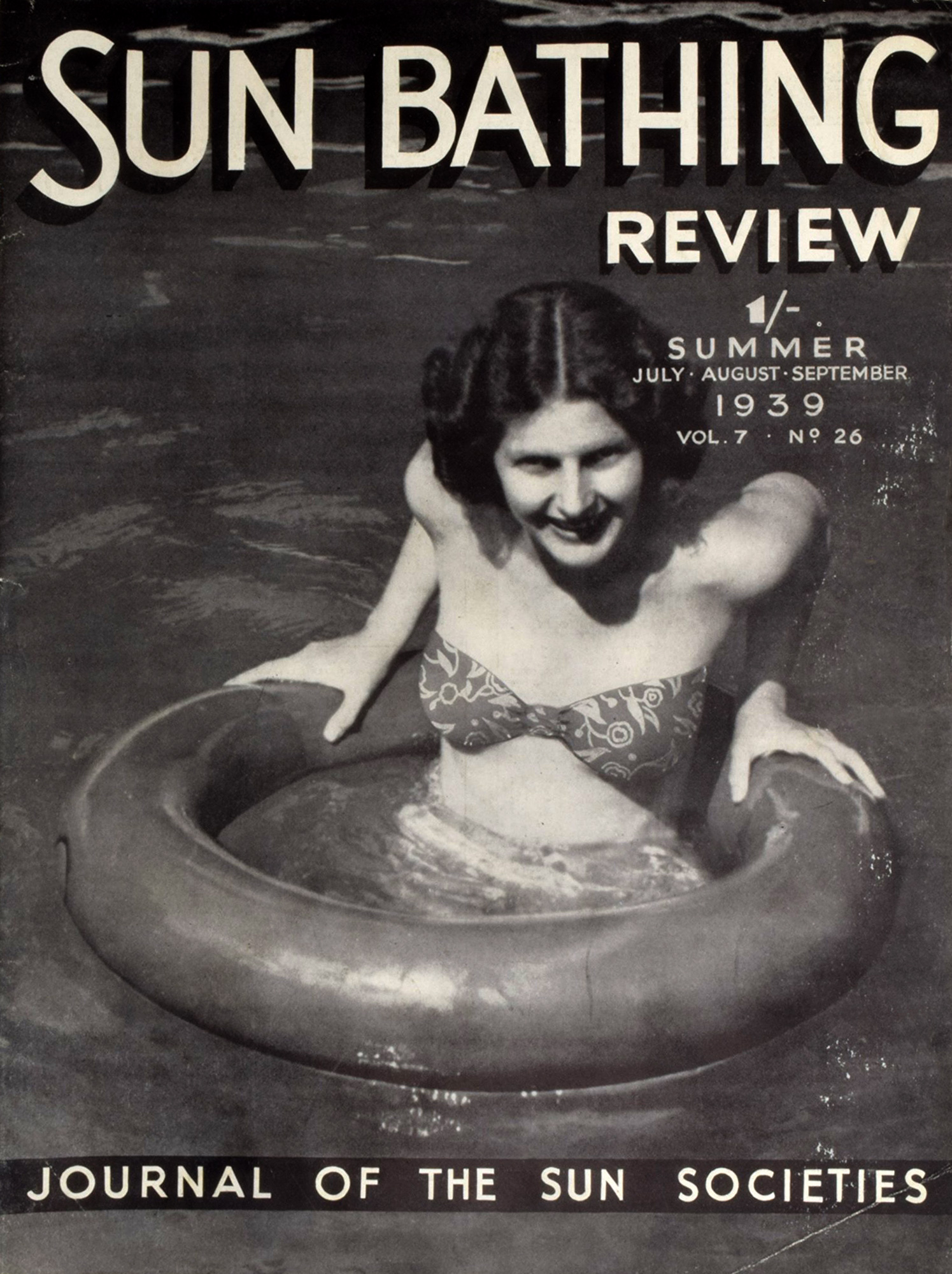
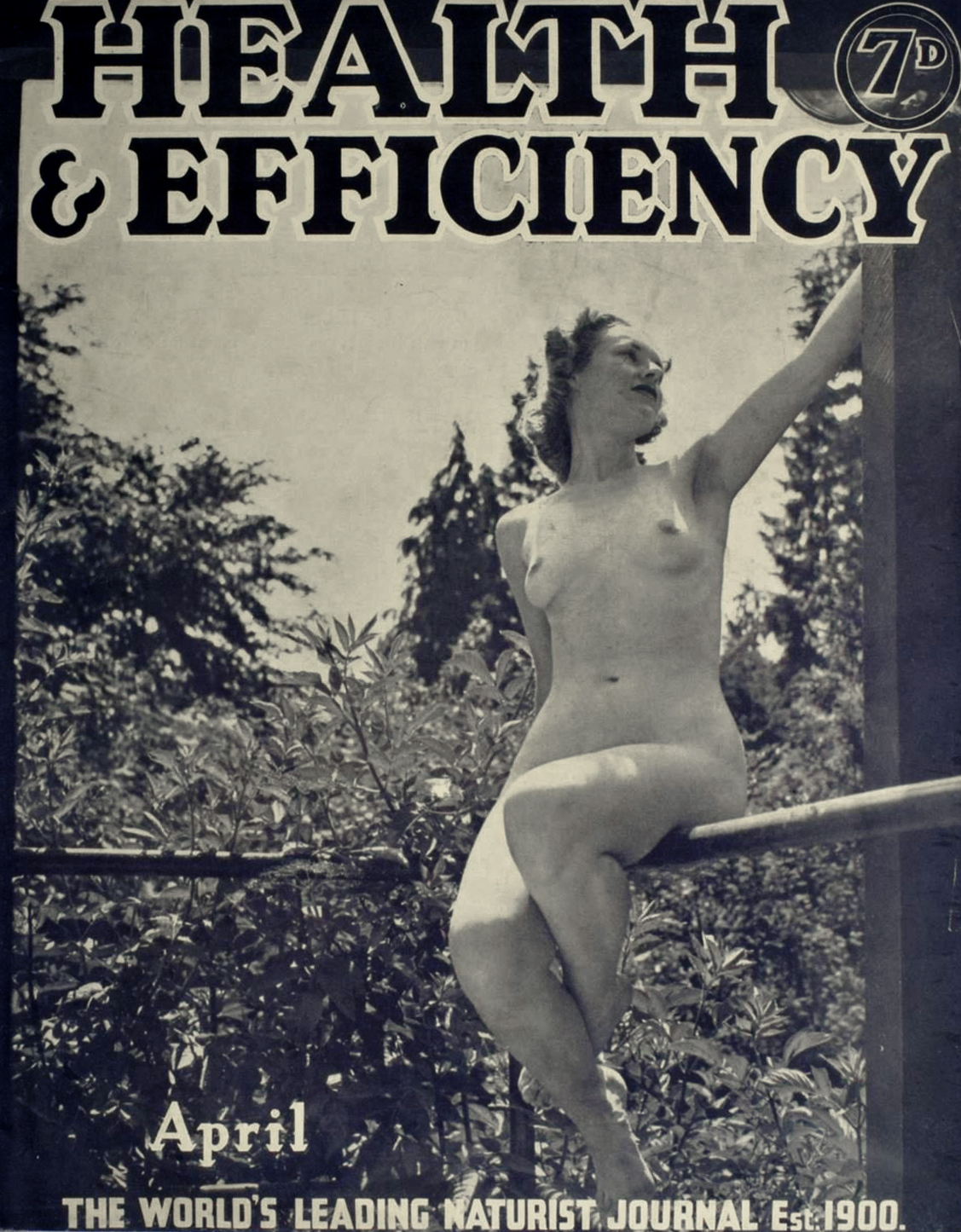


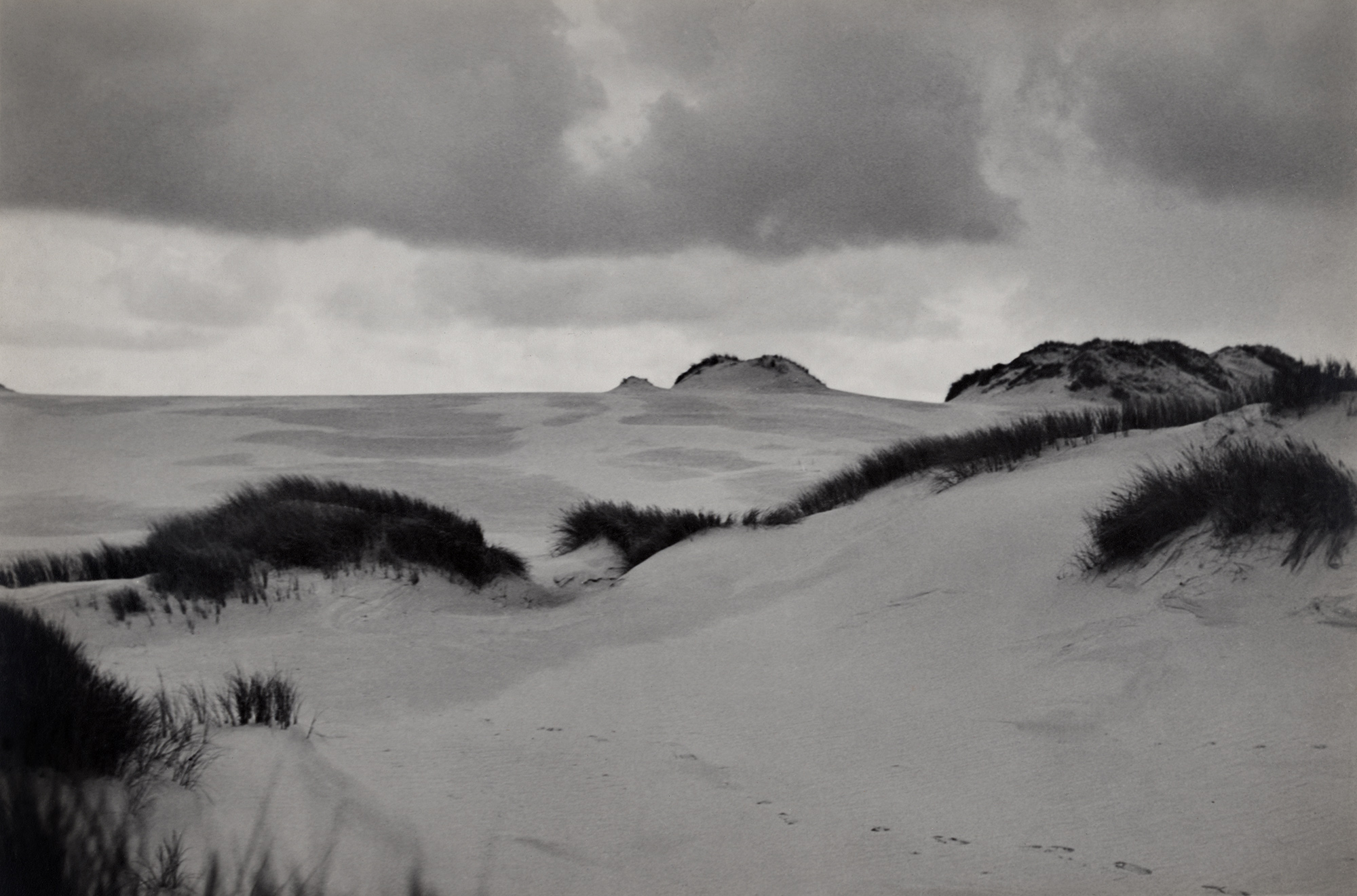
![Raoul Hausmann (Austrian, 1886-1971) 'Enfants de la Frise [Children of Friesland]' Between 1927 and 1933 from the exhibition 'Raoul Hausmann. Vision in Action' at Jeu de Paume, Paris, Feb - May, 2018](https://artblart.com/wp-content/uploads/2018/02/hausmann-6-web1.jpg "Raoul Hausmann (Austrian, 1886-1971) 'Enfants de la Frise [Children of Friesland]' Between 1927 and 1933 from the exhibition 'Raoul Hausmann. Vision in Action' at Jeu de Paume, Paris, Feb - May, 2018")
![Raoul Hausmann (Austrian, 1886-1971) 'Nu sur la plage [Nude on the beach]' Between 1927 and 1933](https://artblart.com/wp-content/uploads/2018/02/hausmann-18-web1.jpg "Raoul Hausmann (Austrian, 1886-1971) 'Nu sur la plage [Nude on the beach]' Between 1927 and 1933")
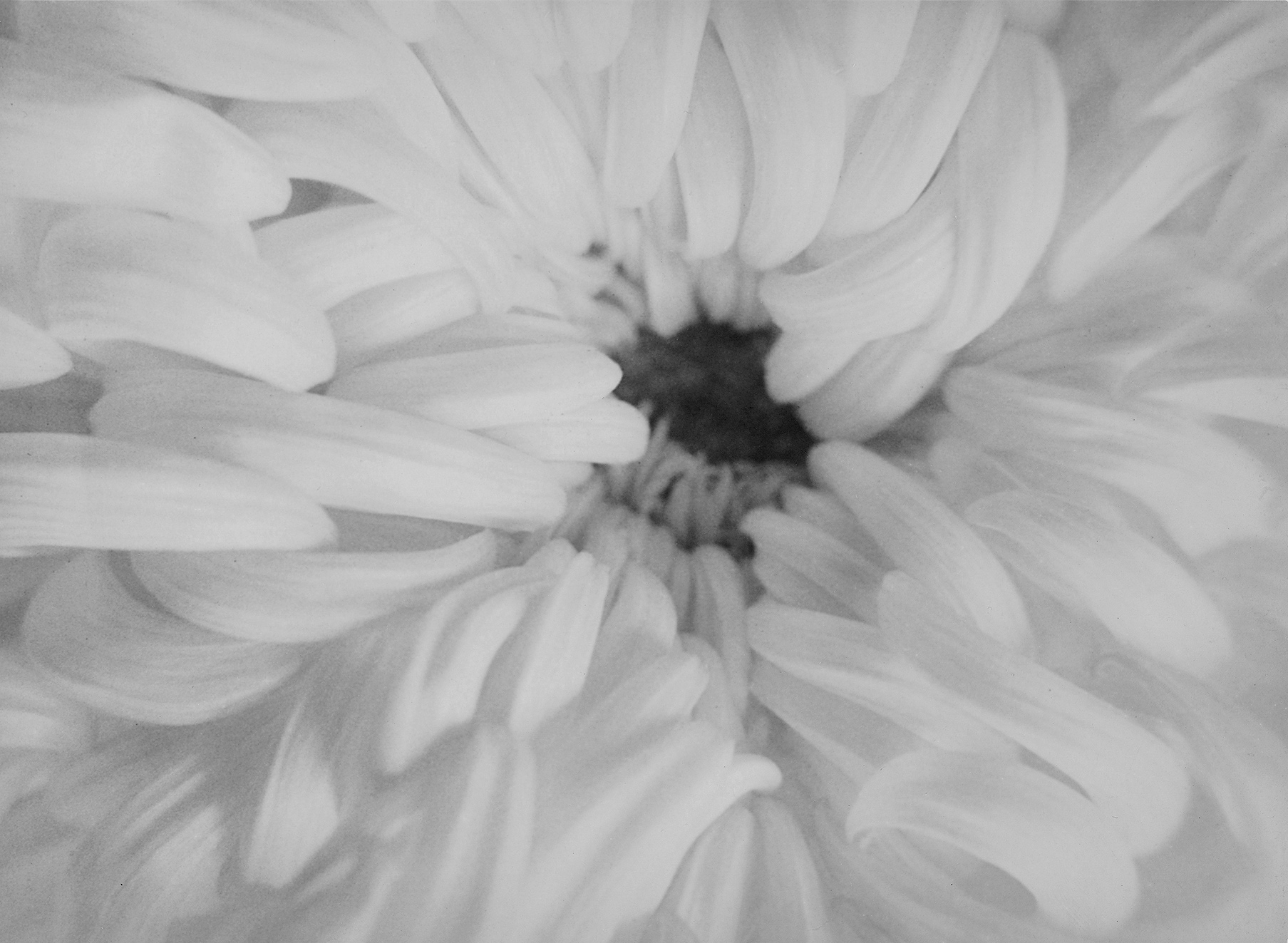
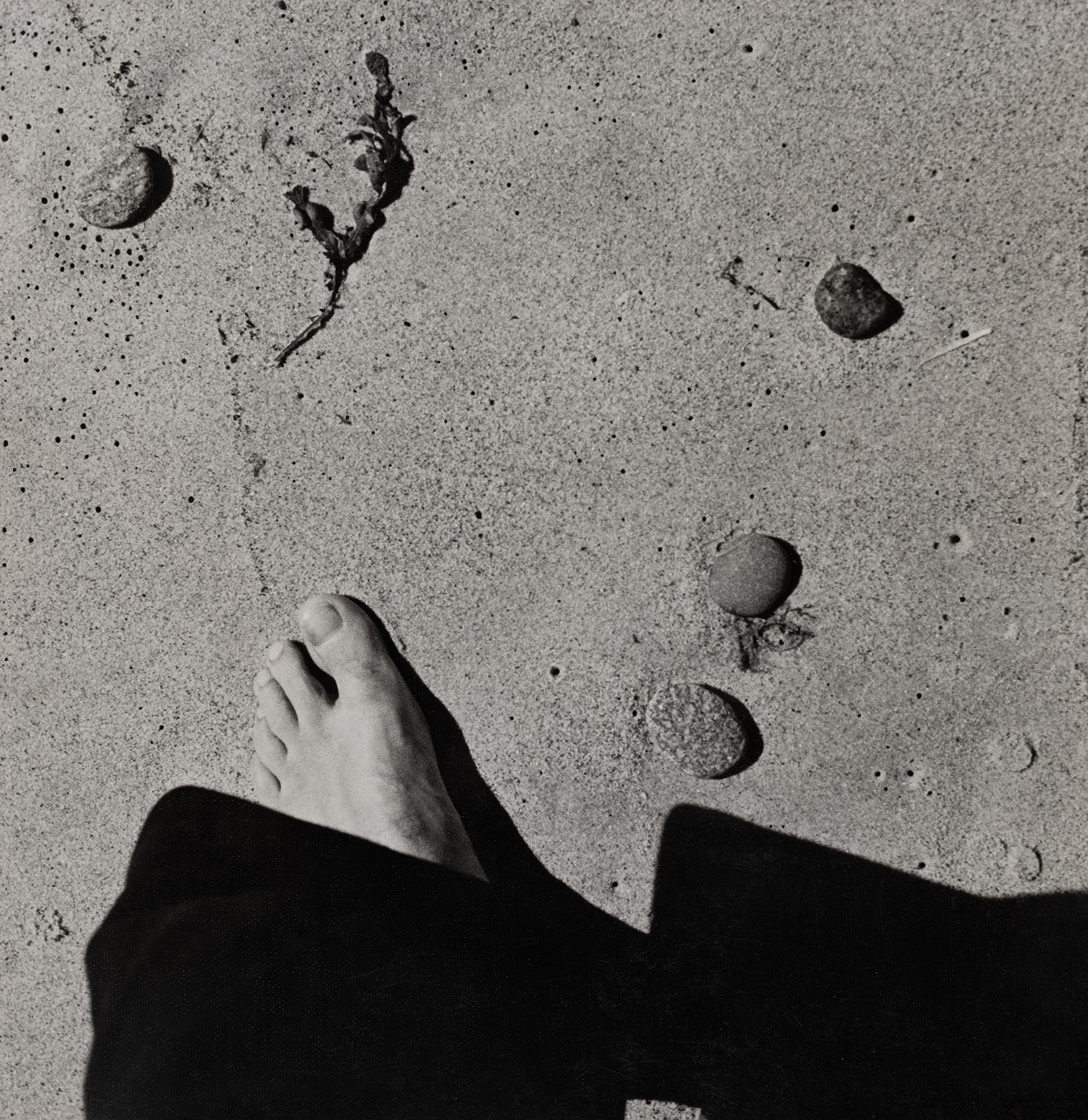

![Raoul Hausmann (Austrian, 1886-1971) 'Petite Fleur en Herbe [Small flower in grass]' 1932](https://artblart.com/wp-content/uploads/2018/02/hausmann-4-web.jpg "Raoul Hausmann (Austrian, 1886-1971) 'Petite Fleur en Herbe [Small flower in grass]' 1932")

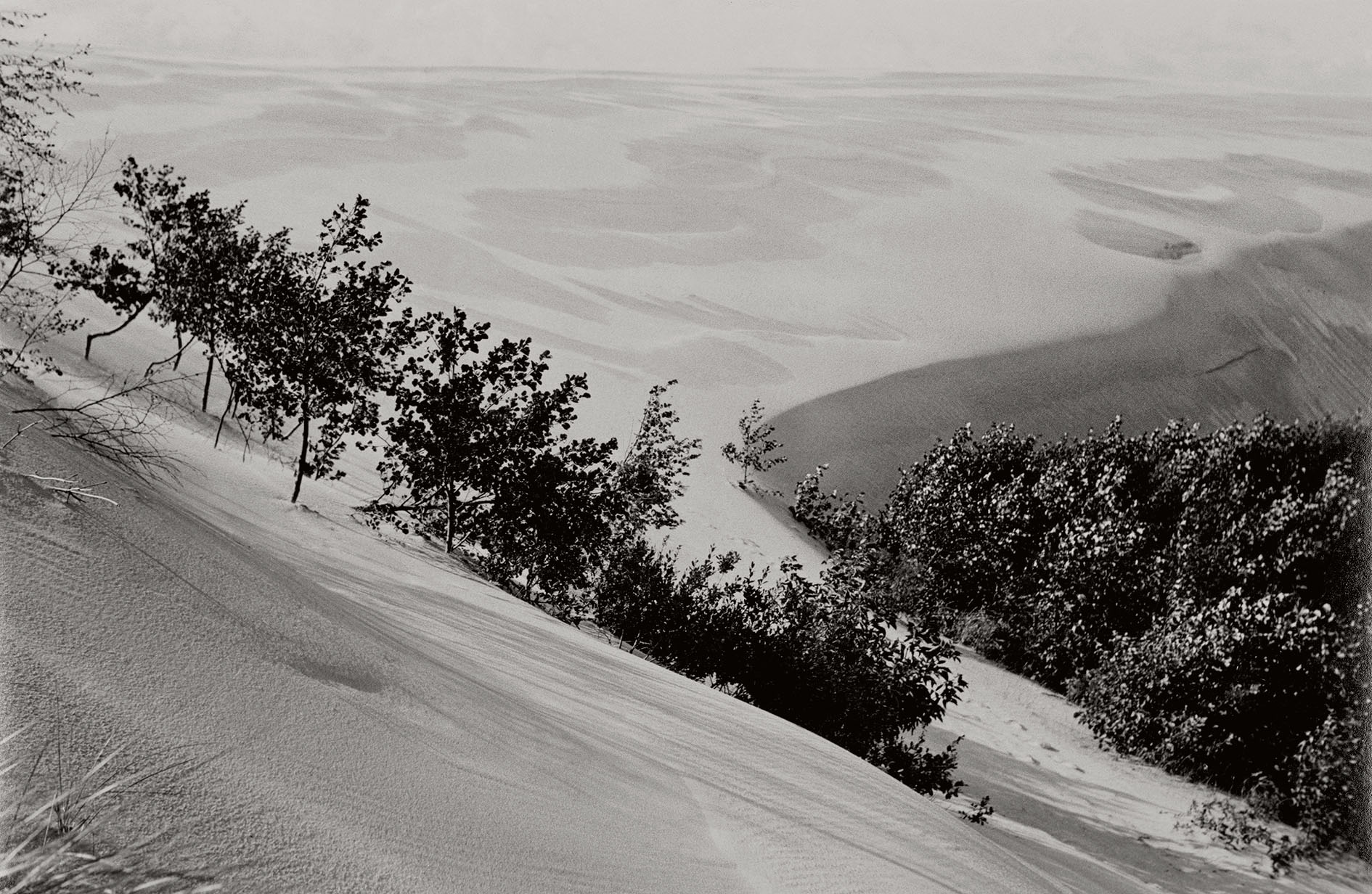
![Raoul Hausmann (Austrian, 1886-1971) 'Deux nus féminins allongés sur une plage [Two naked women lying on a beach]' c. 1931-1934](https://artblart.com/wp-content/uploads/2018/02/raoulhausman-20-web.jpg "Raoul Hausmann (Austrian, 1886-1971) 'Deux nus féminins allongés sur une plage [Two naked women lying on a beach]' c. 1931-1934")
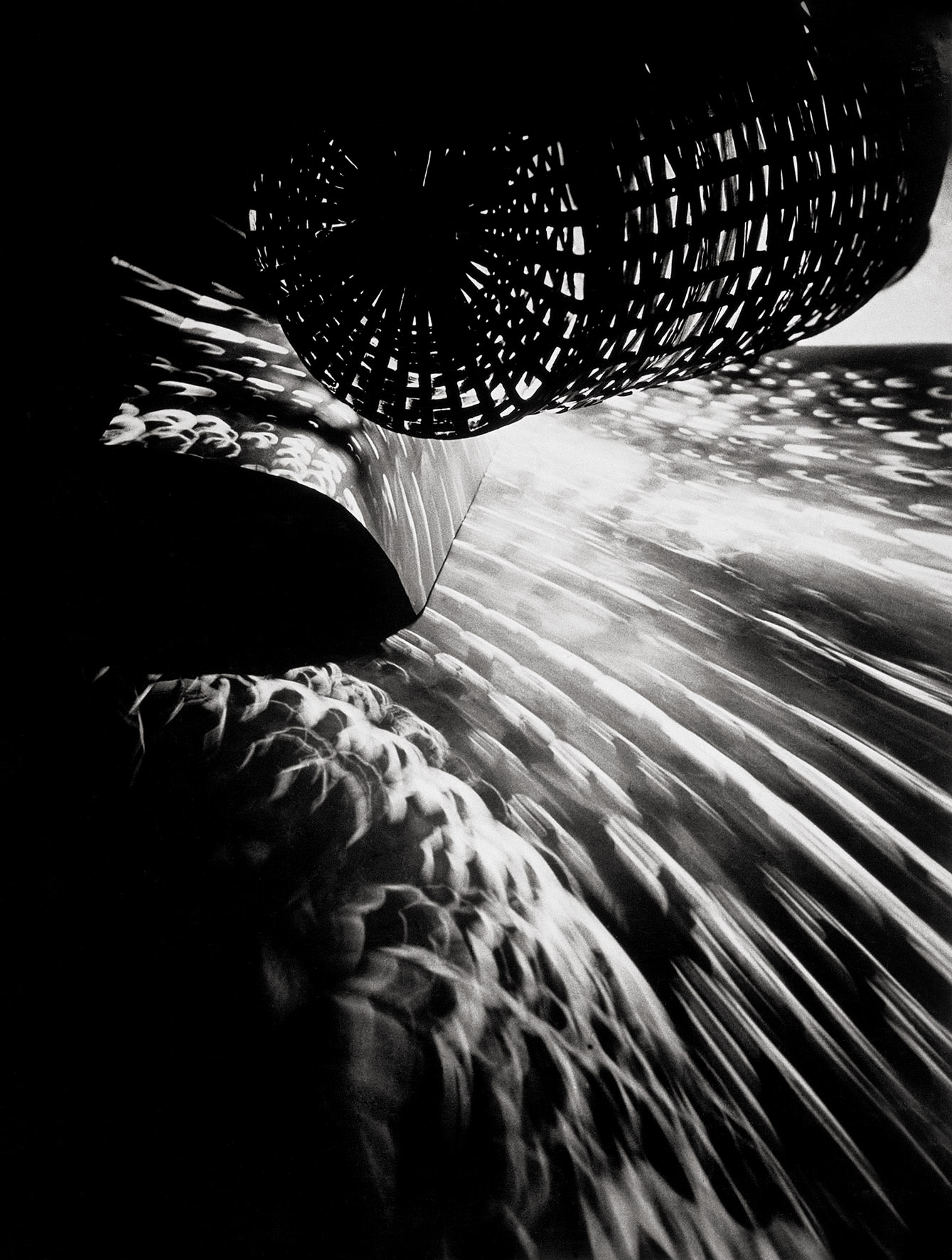


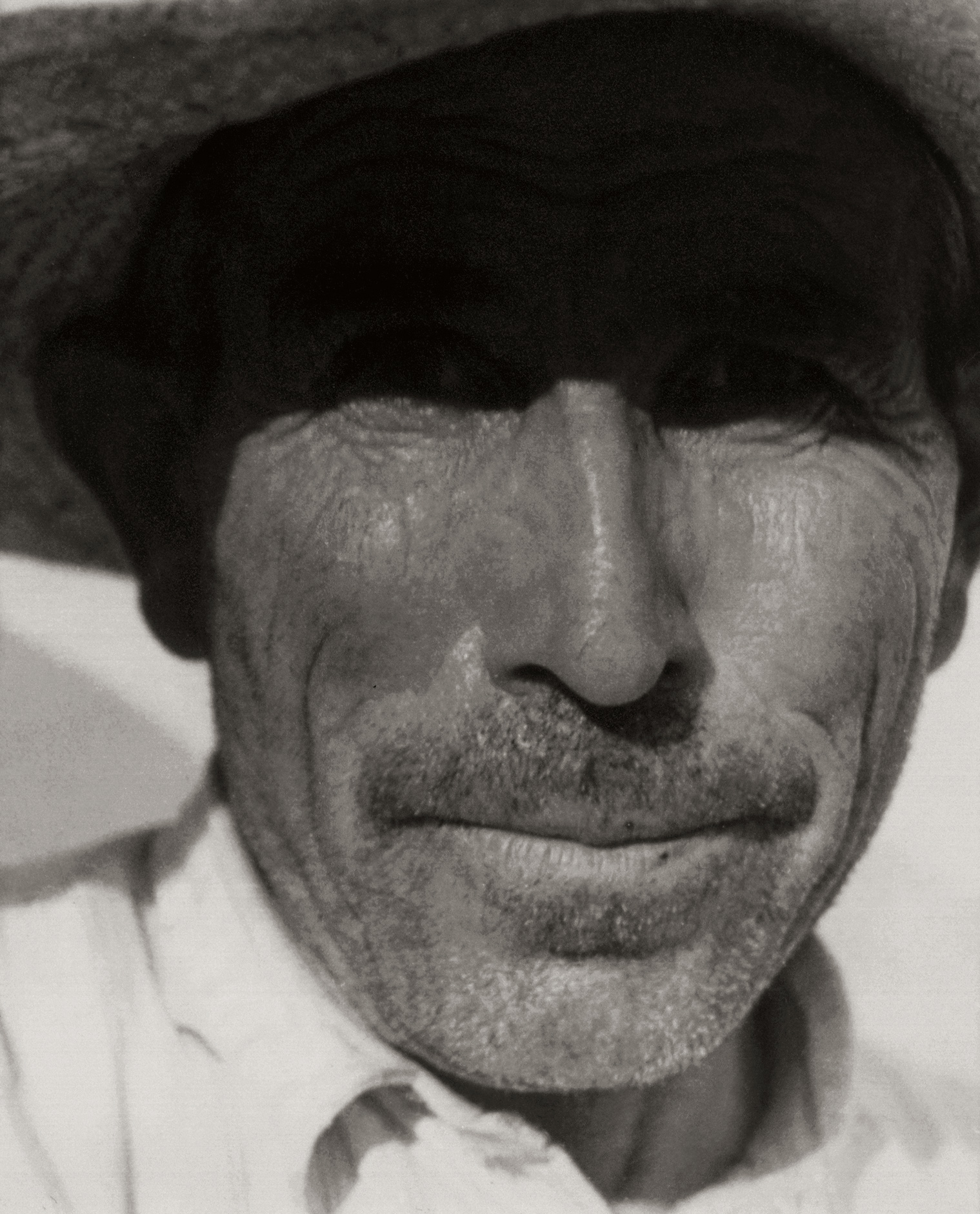

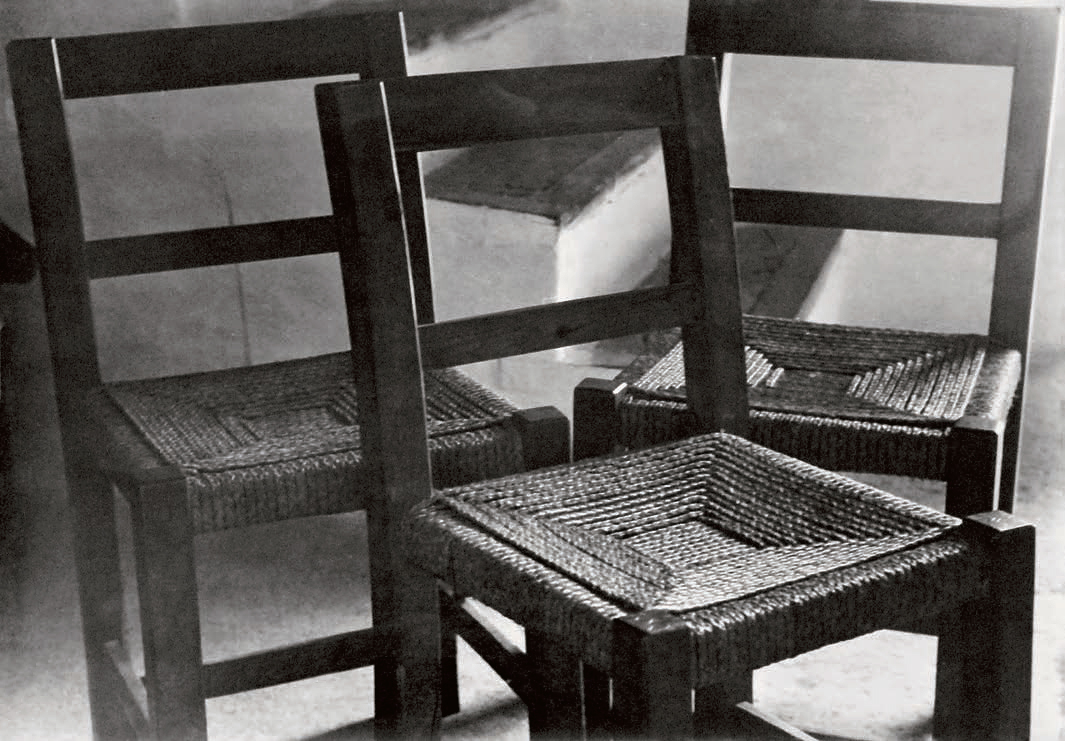

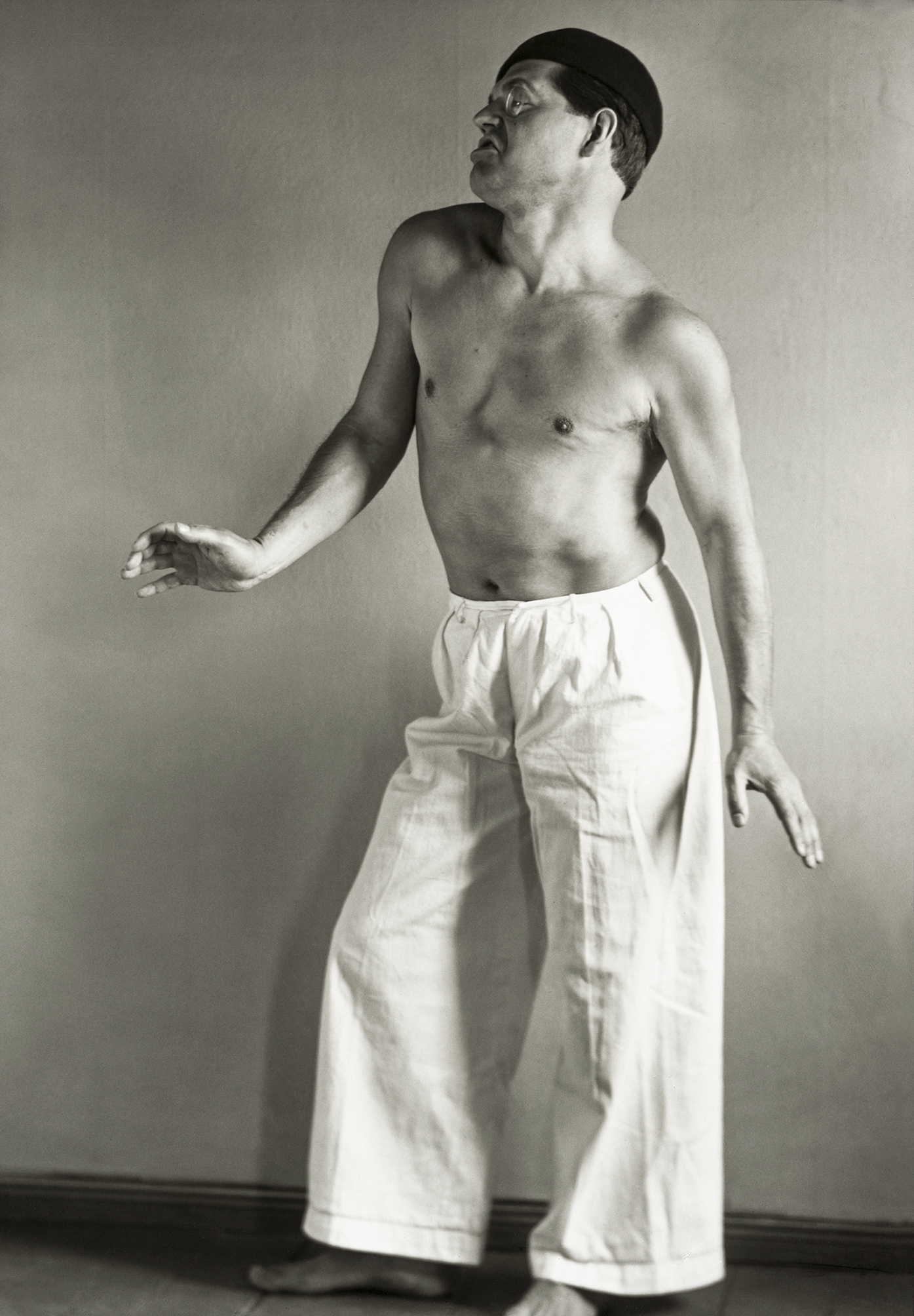


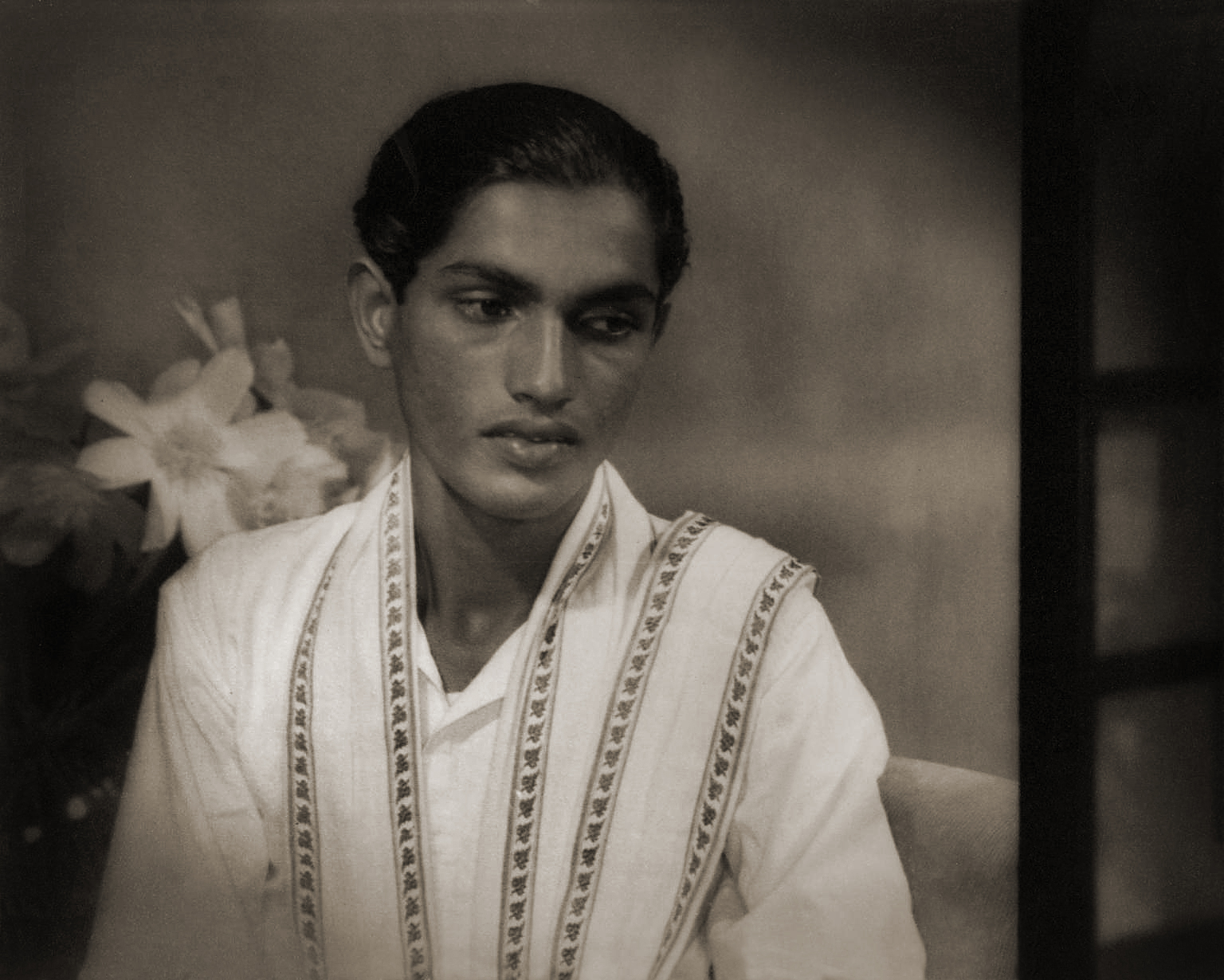


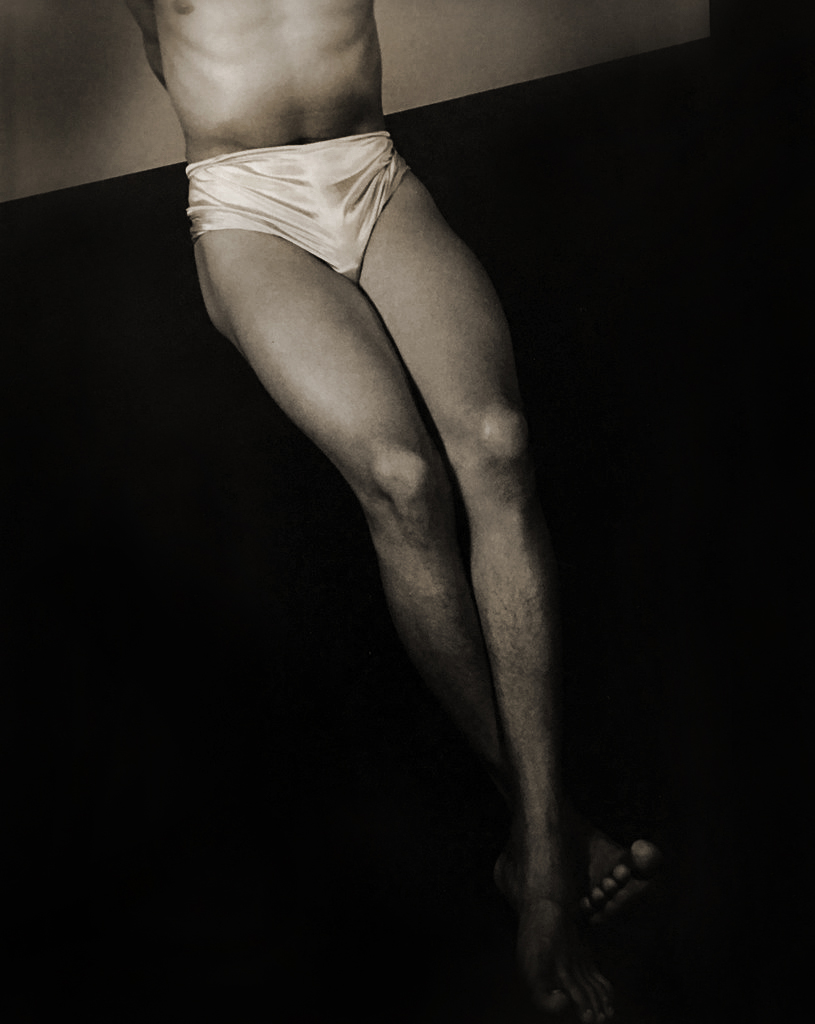


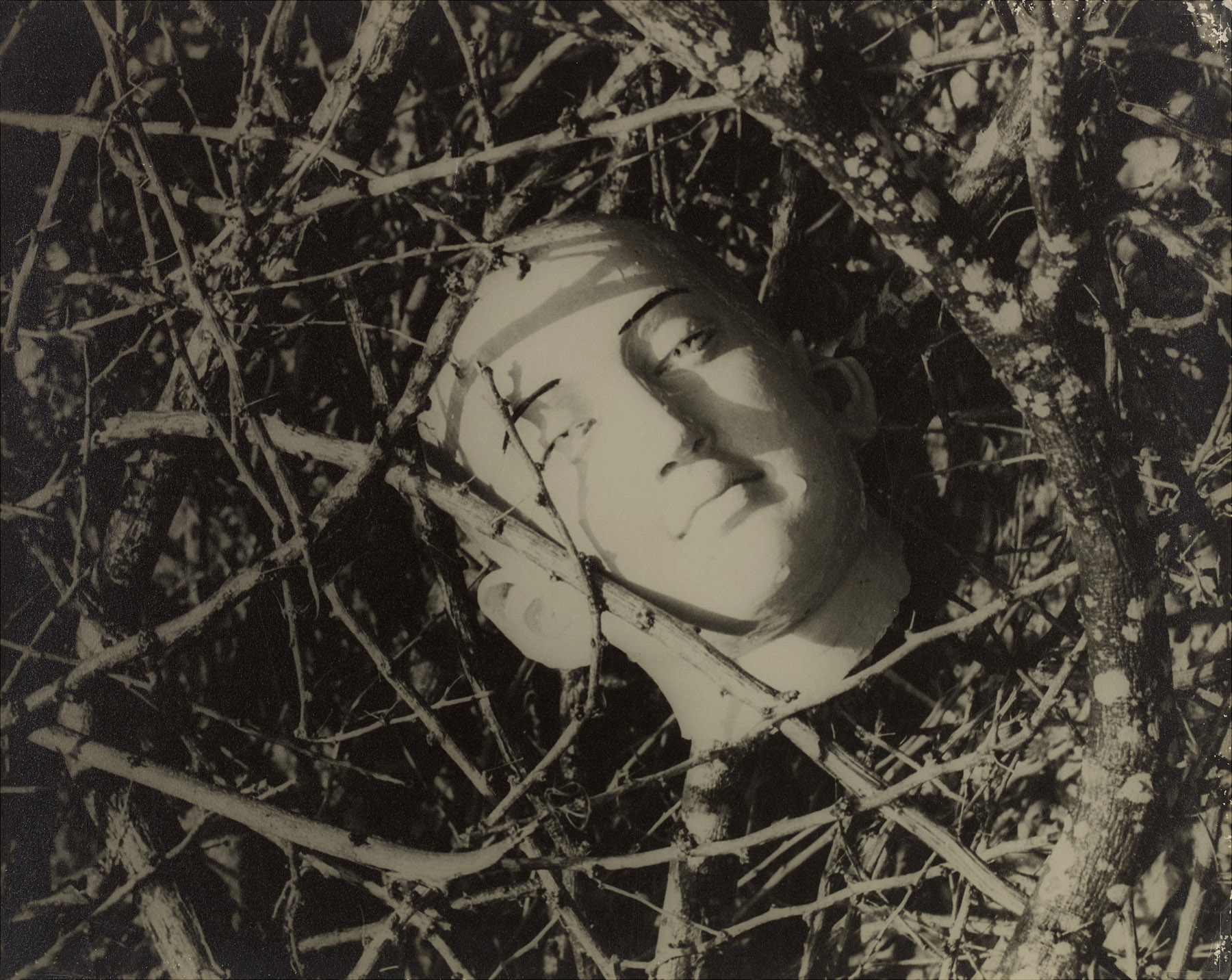
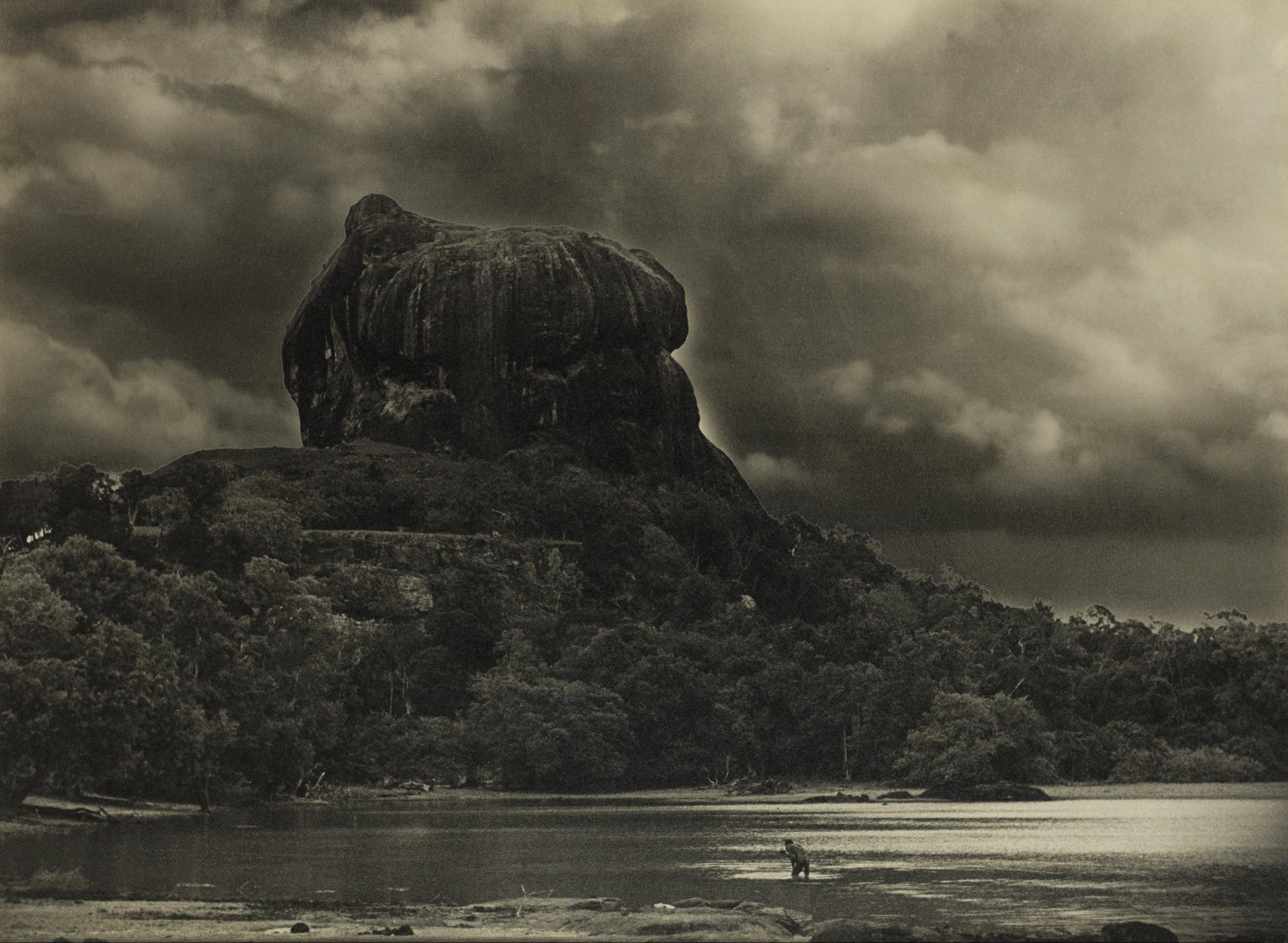
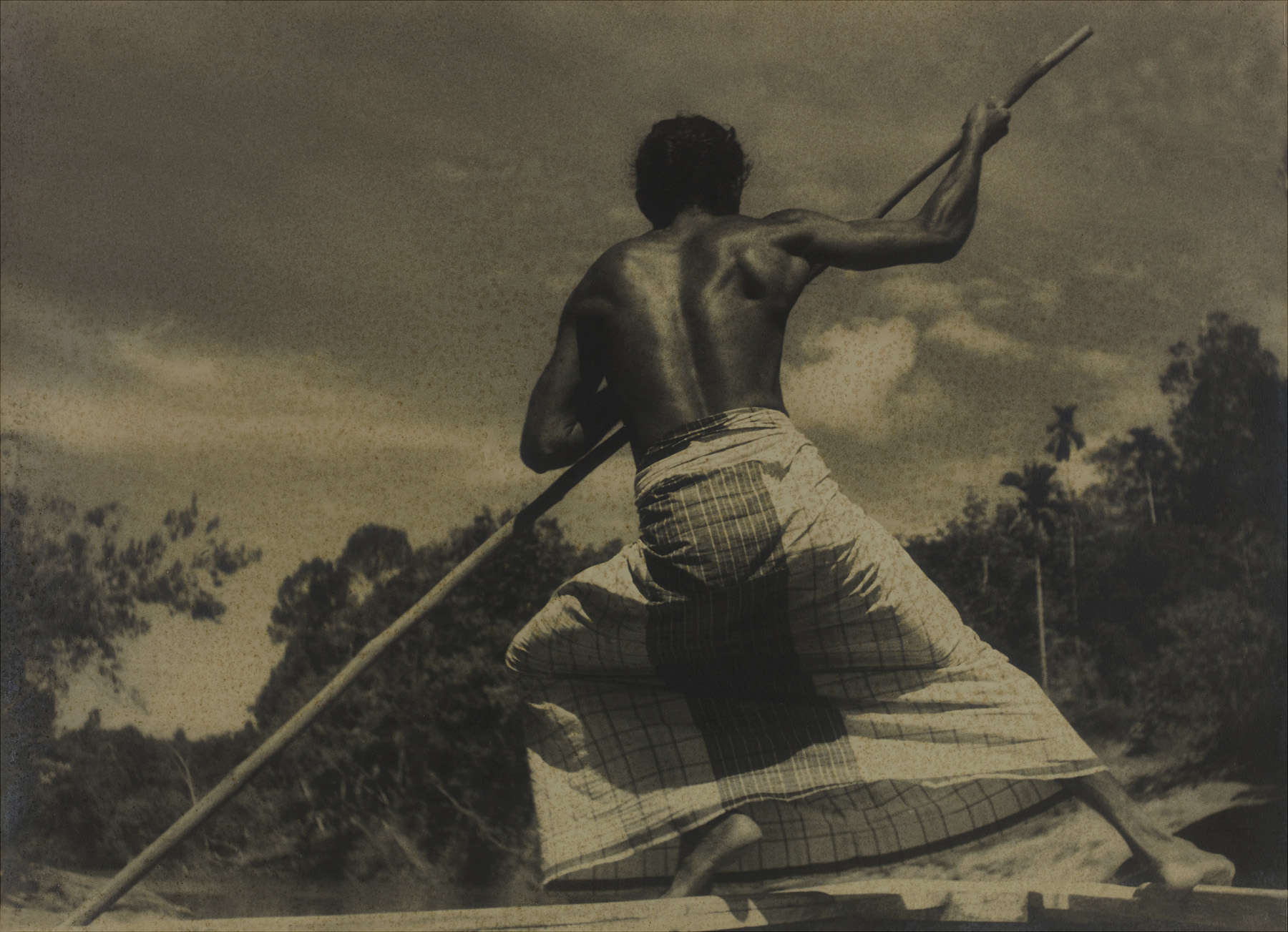

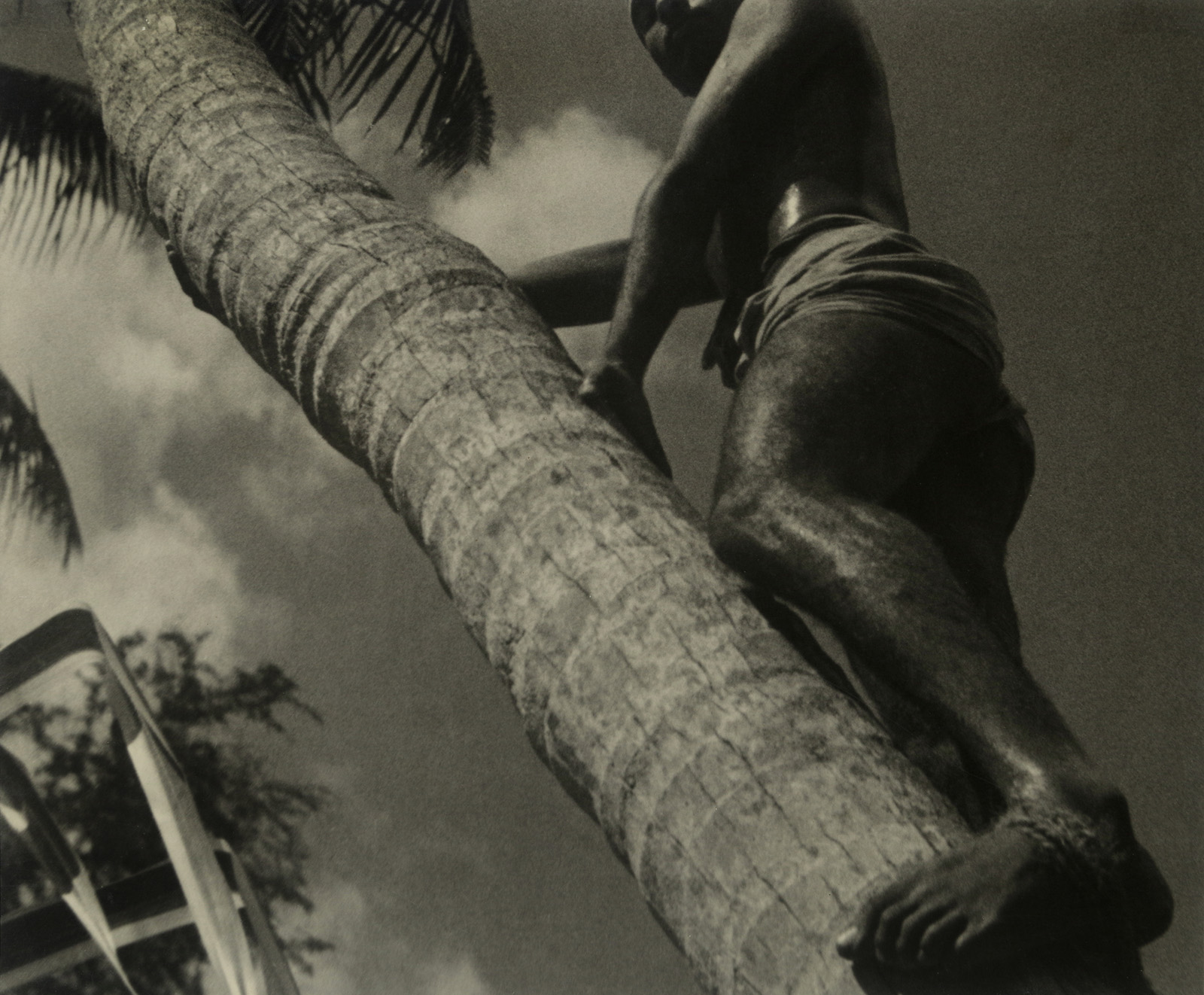


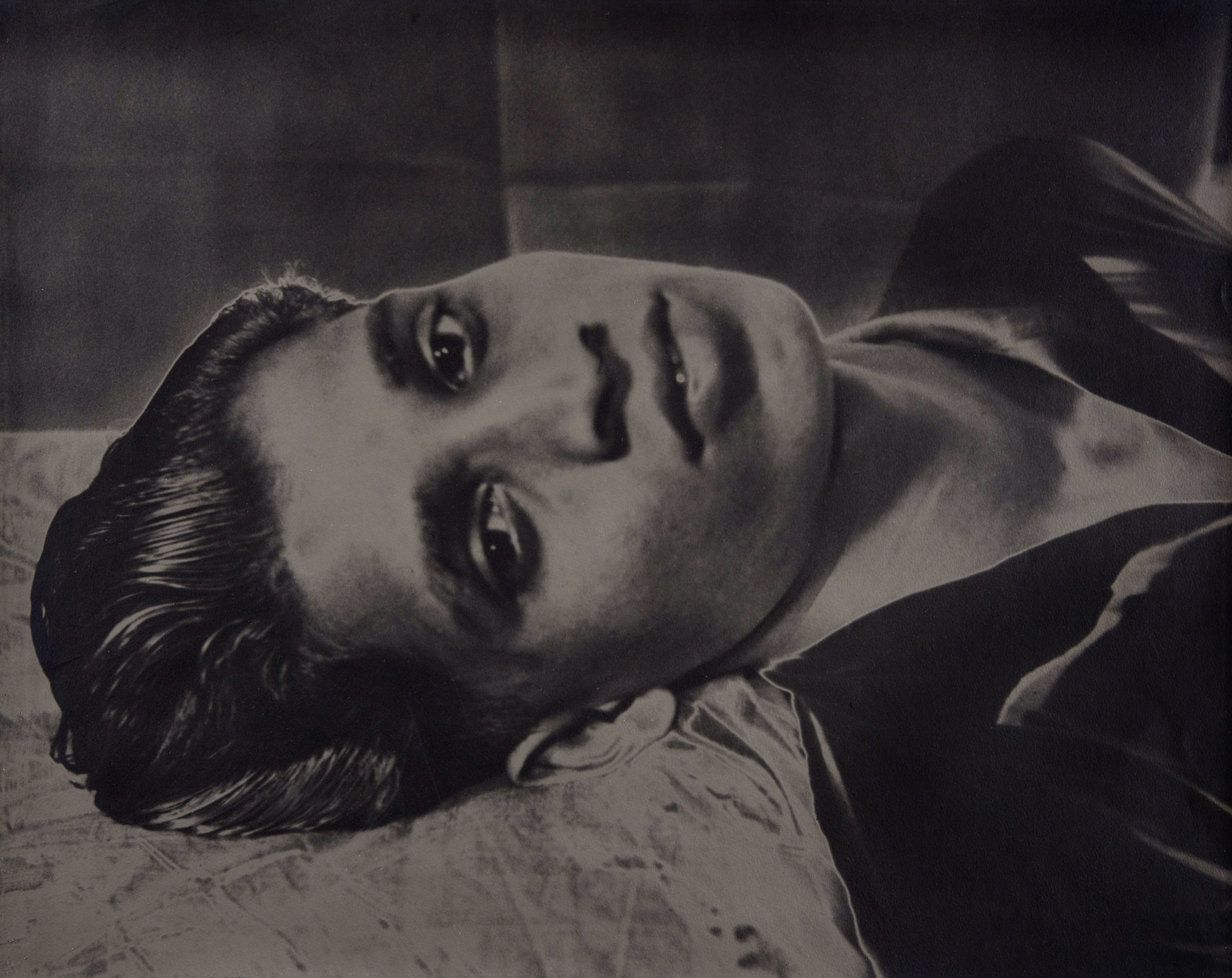
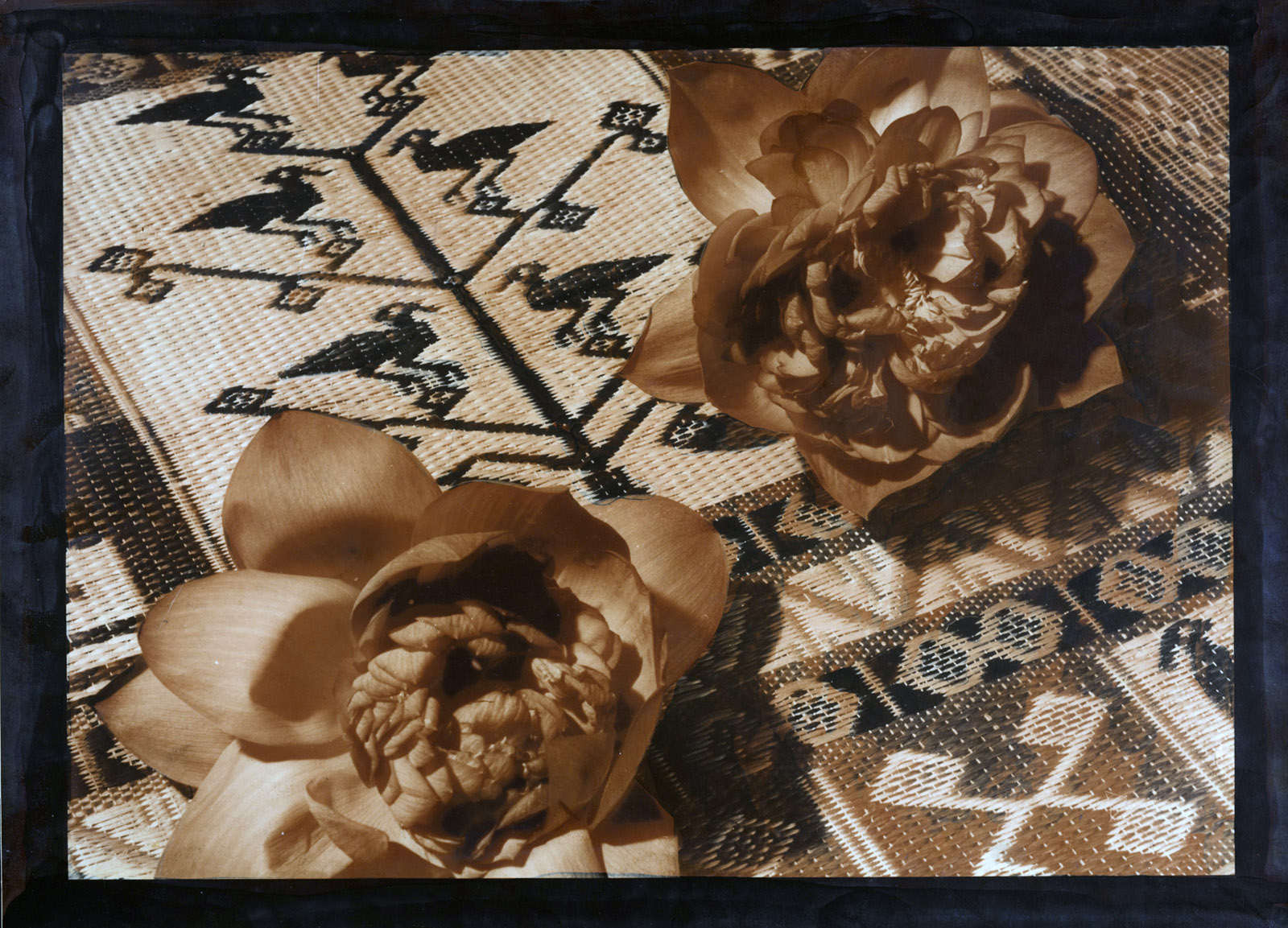
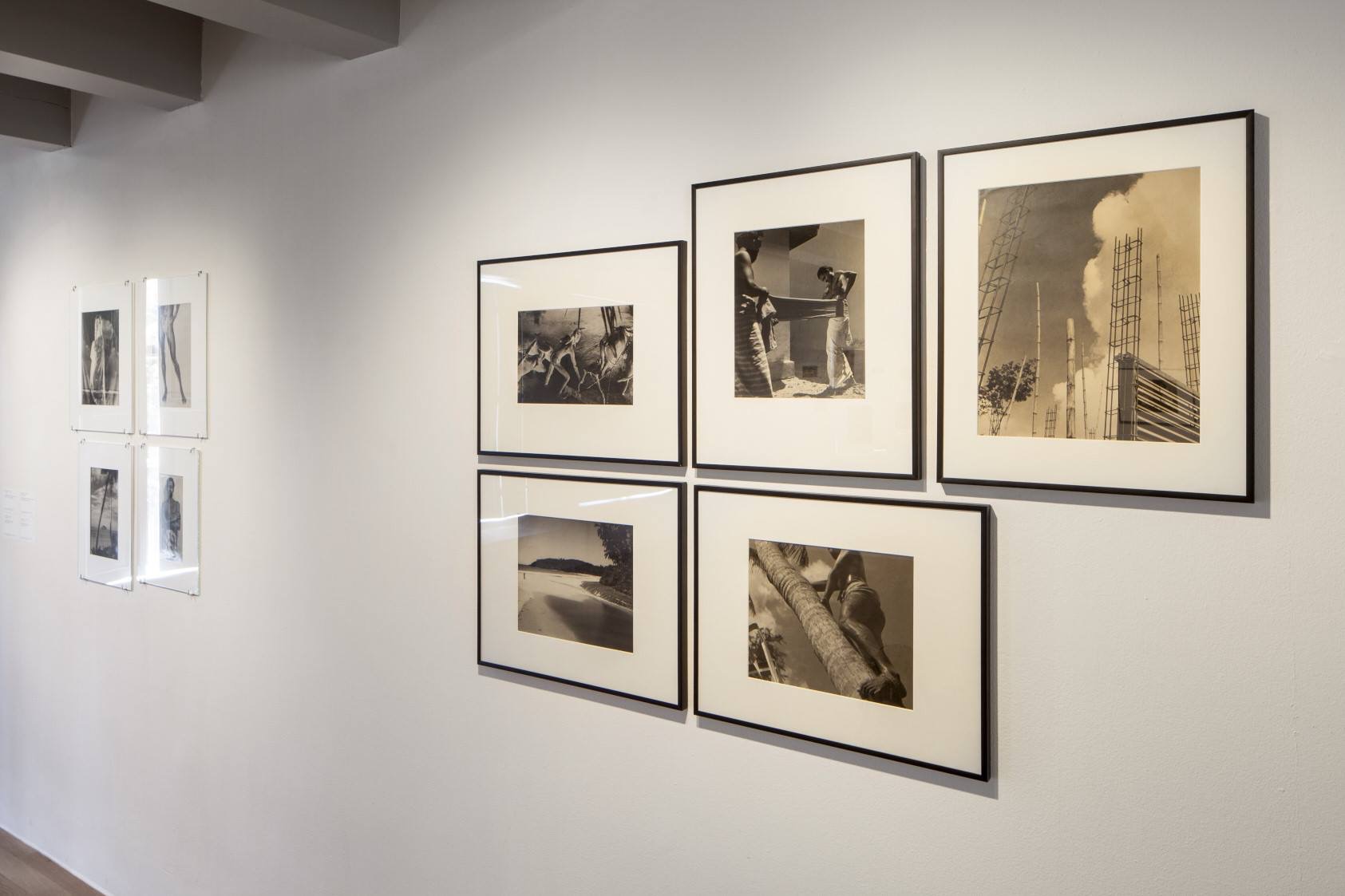
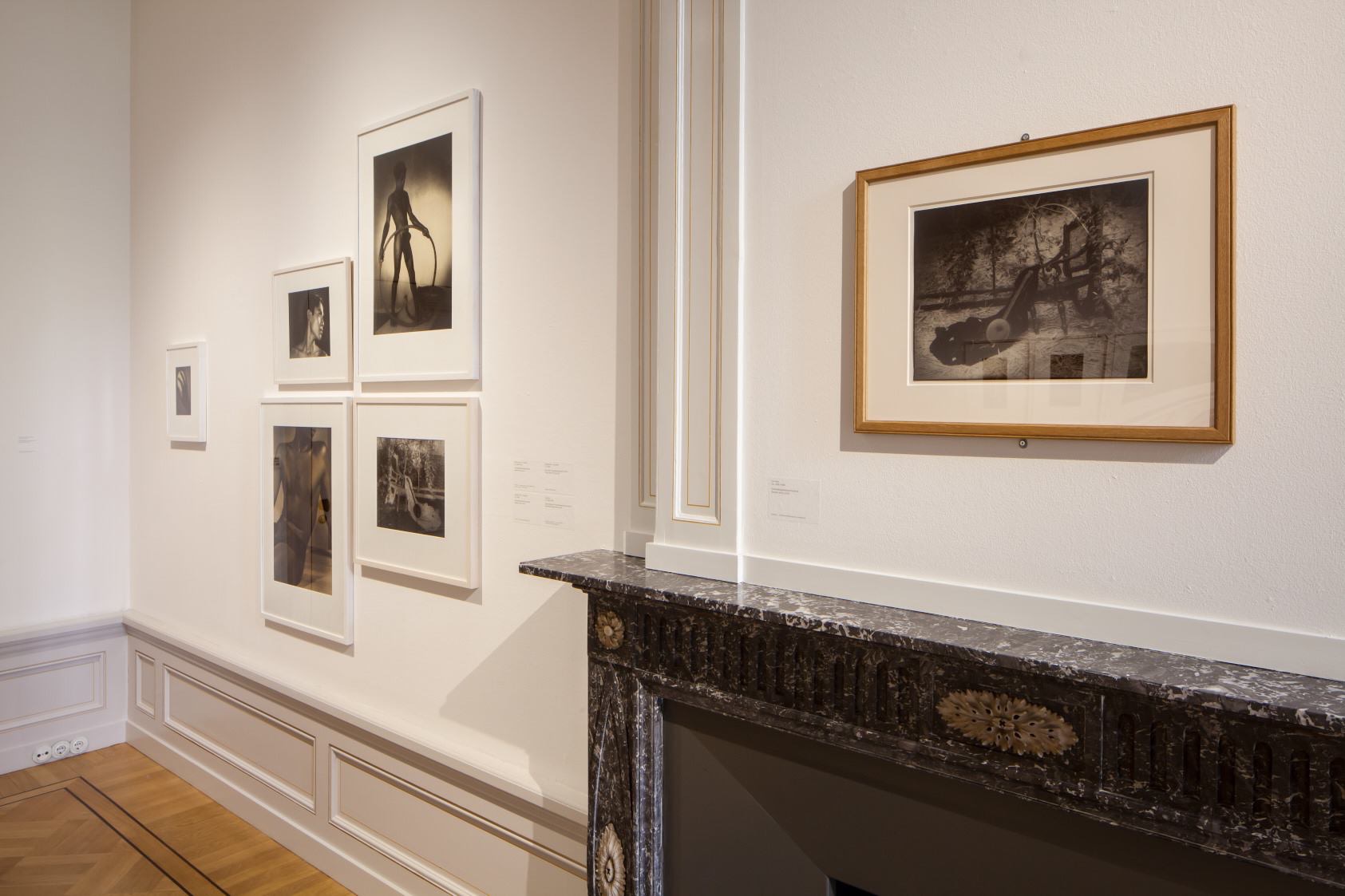
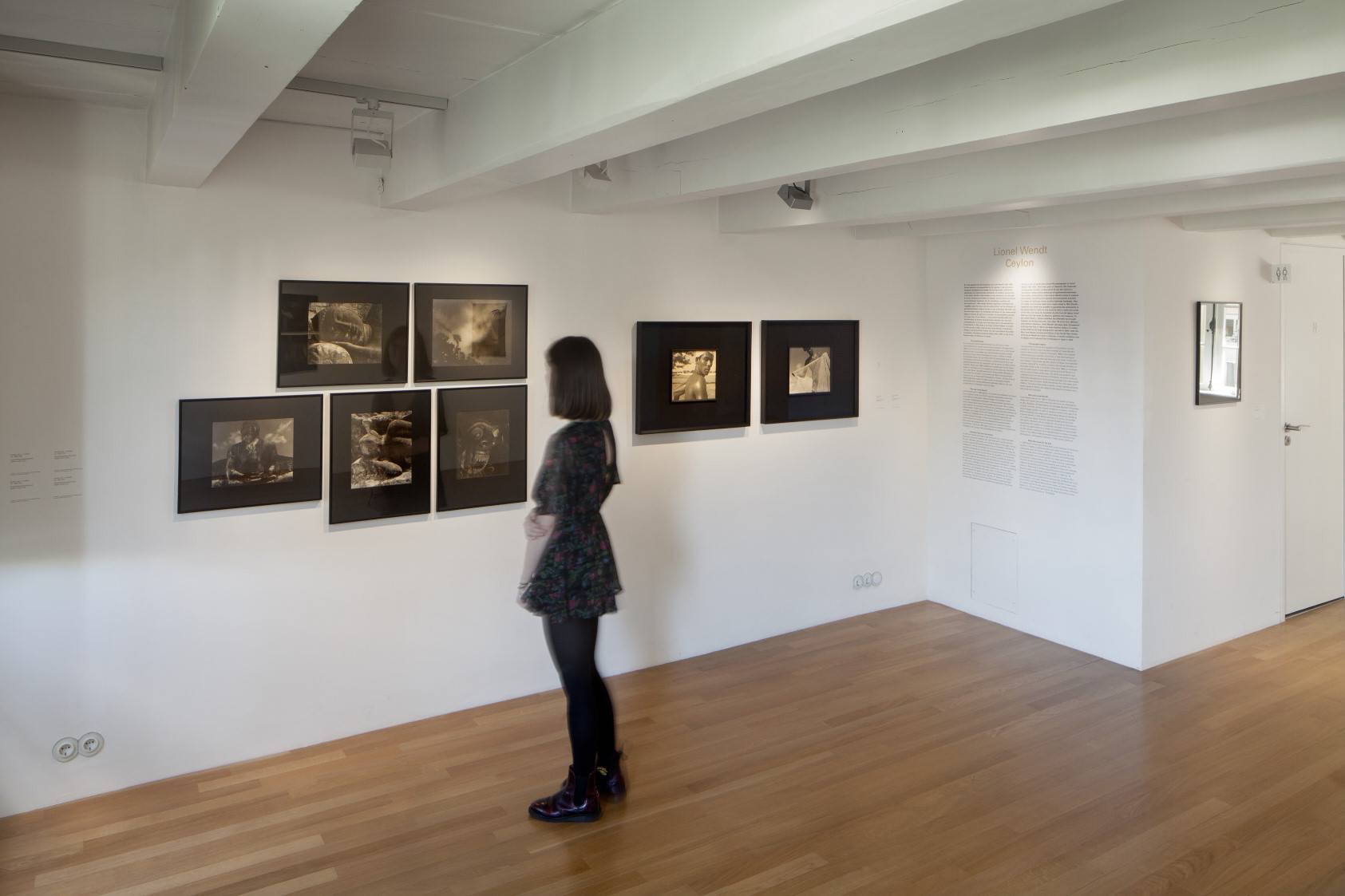


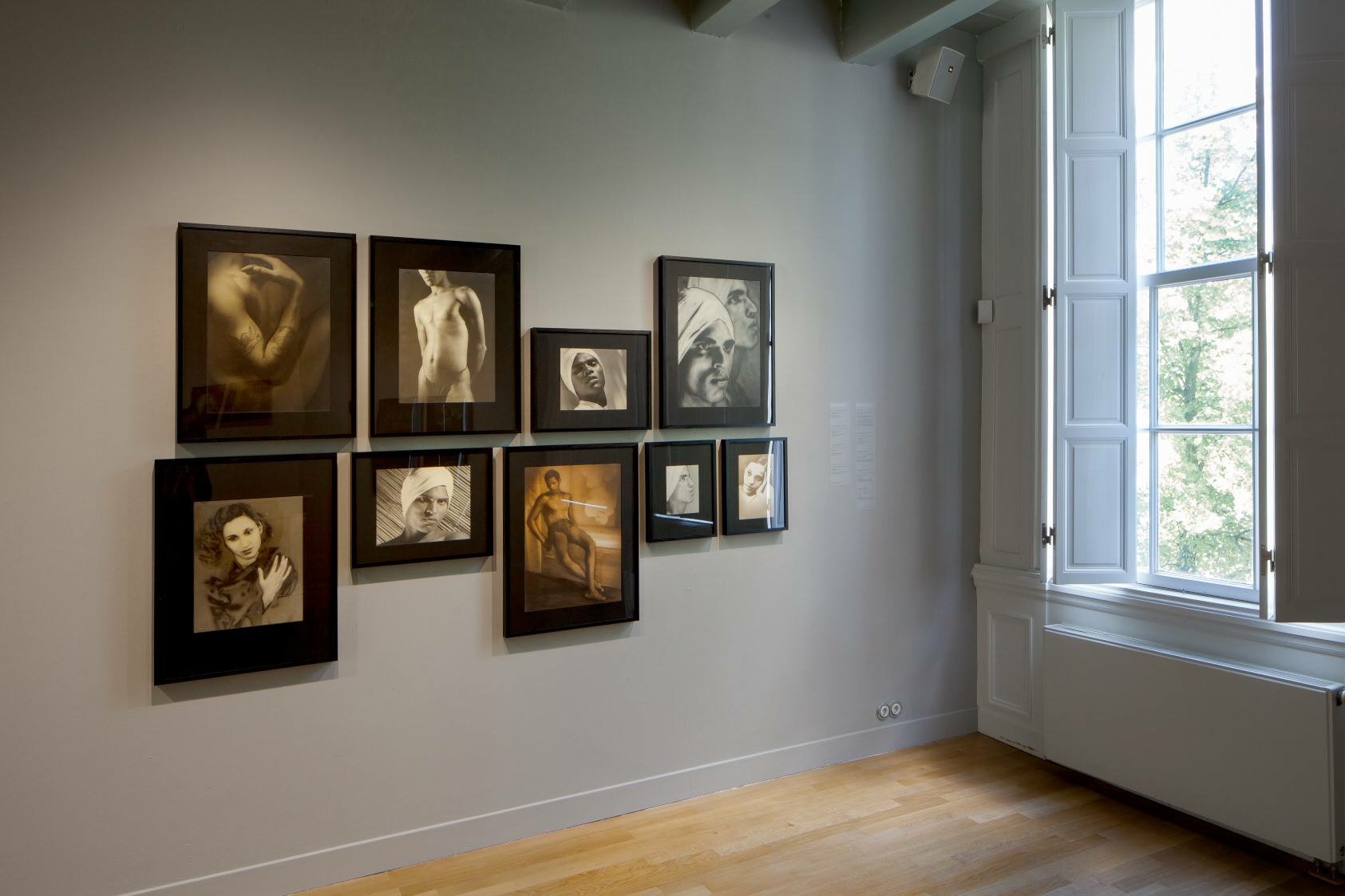


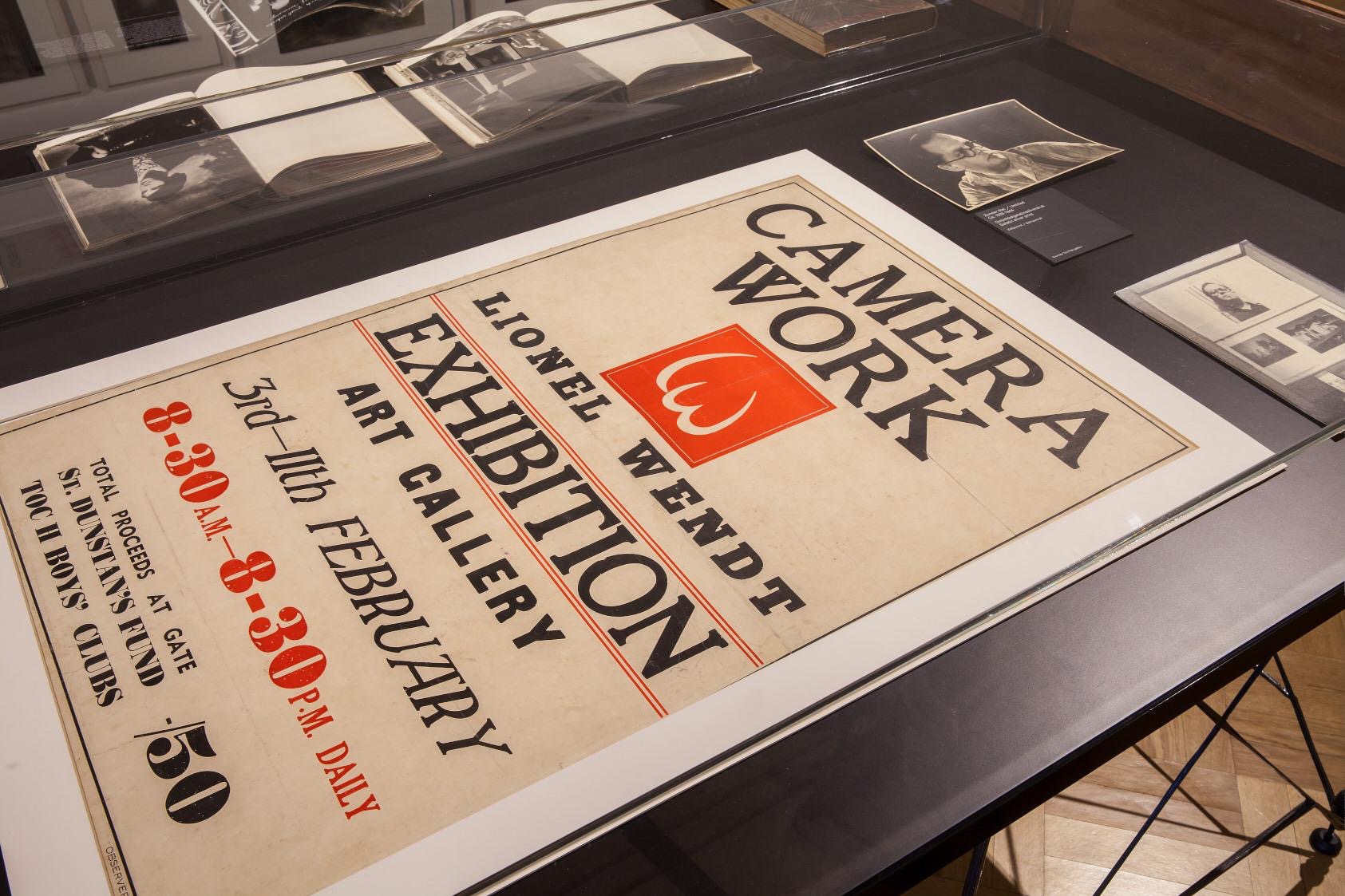


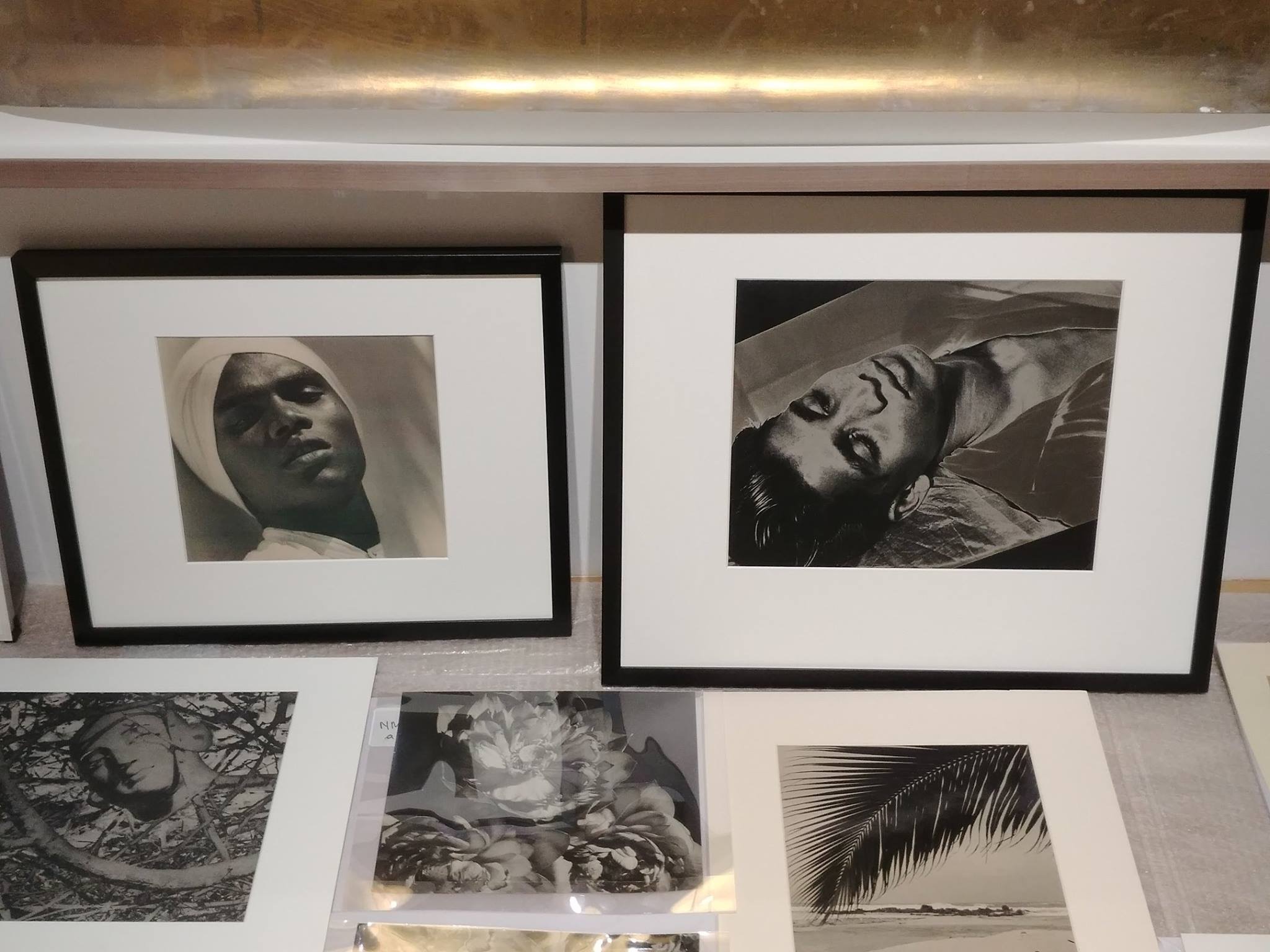
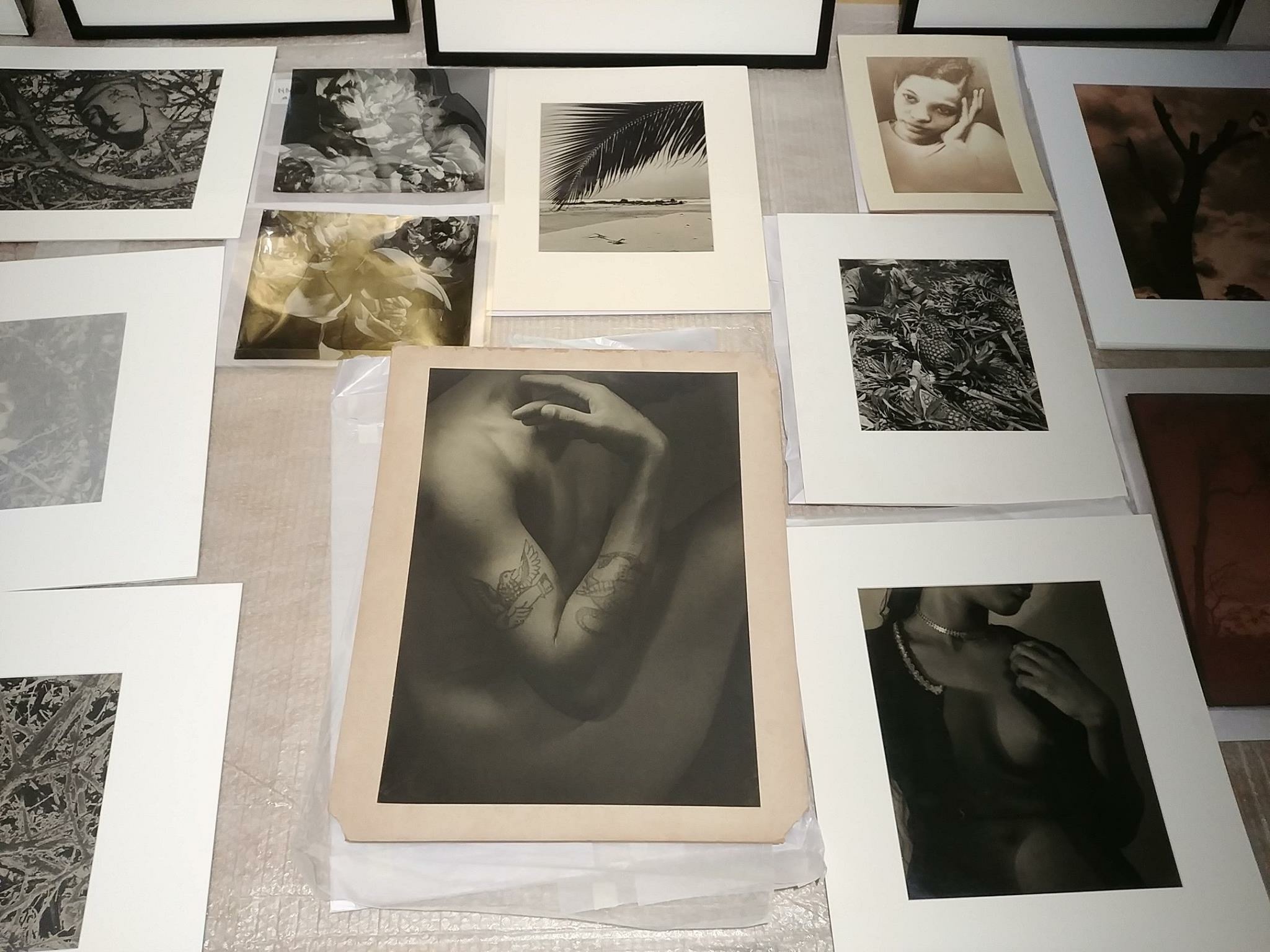


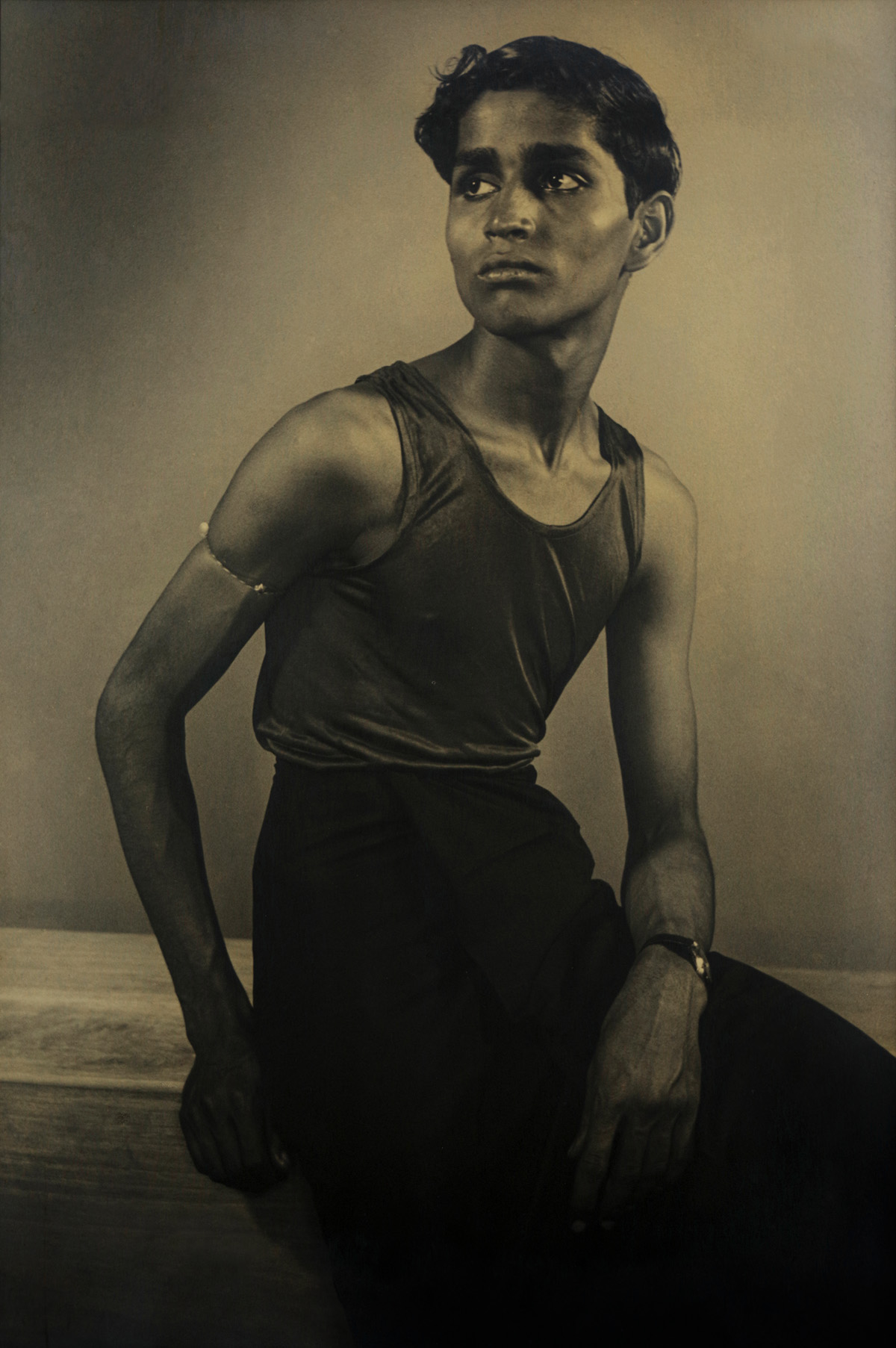
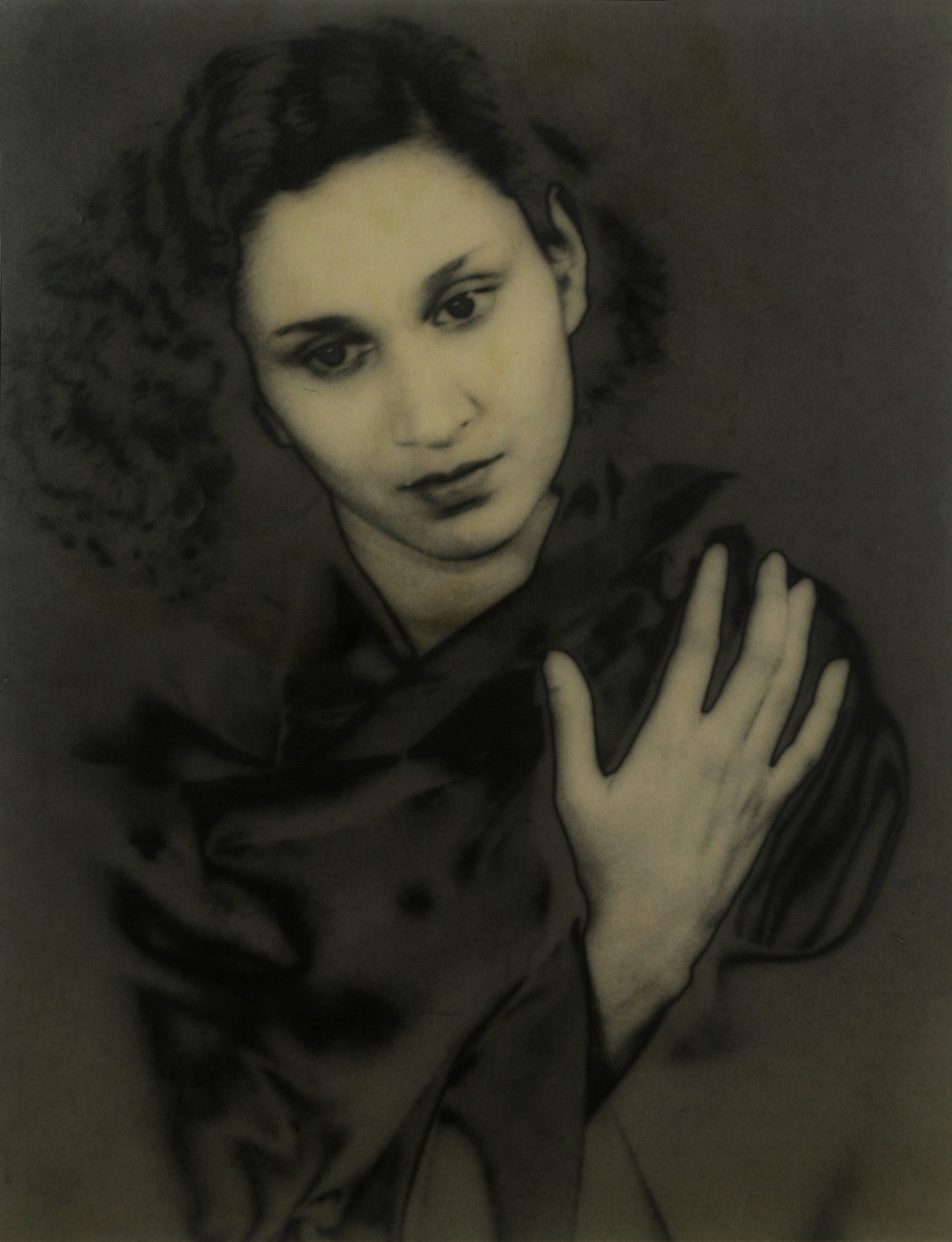
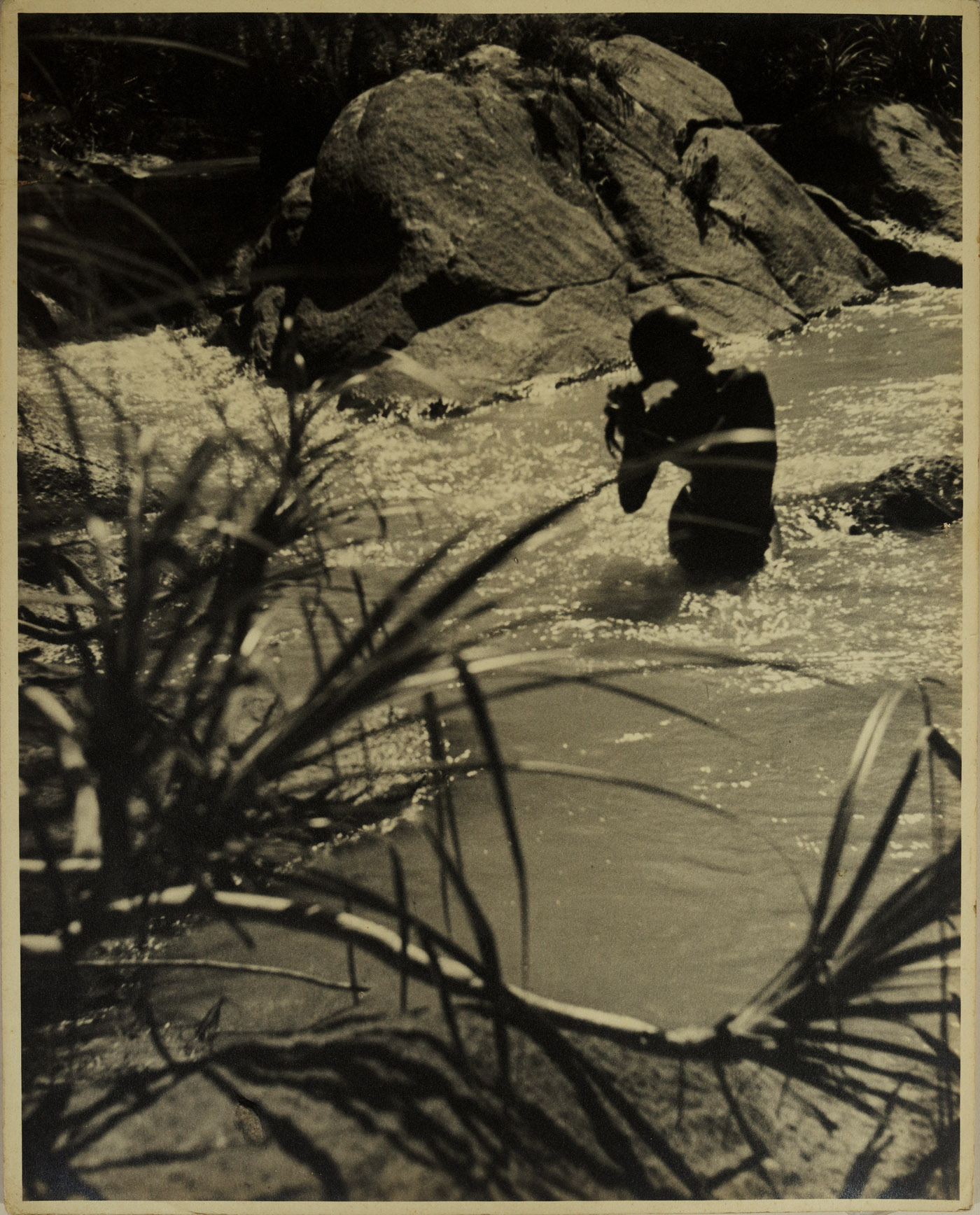
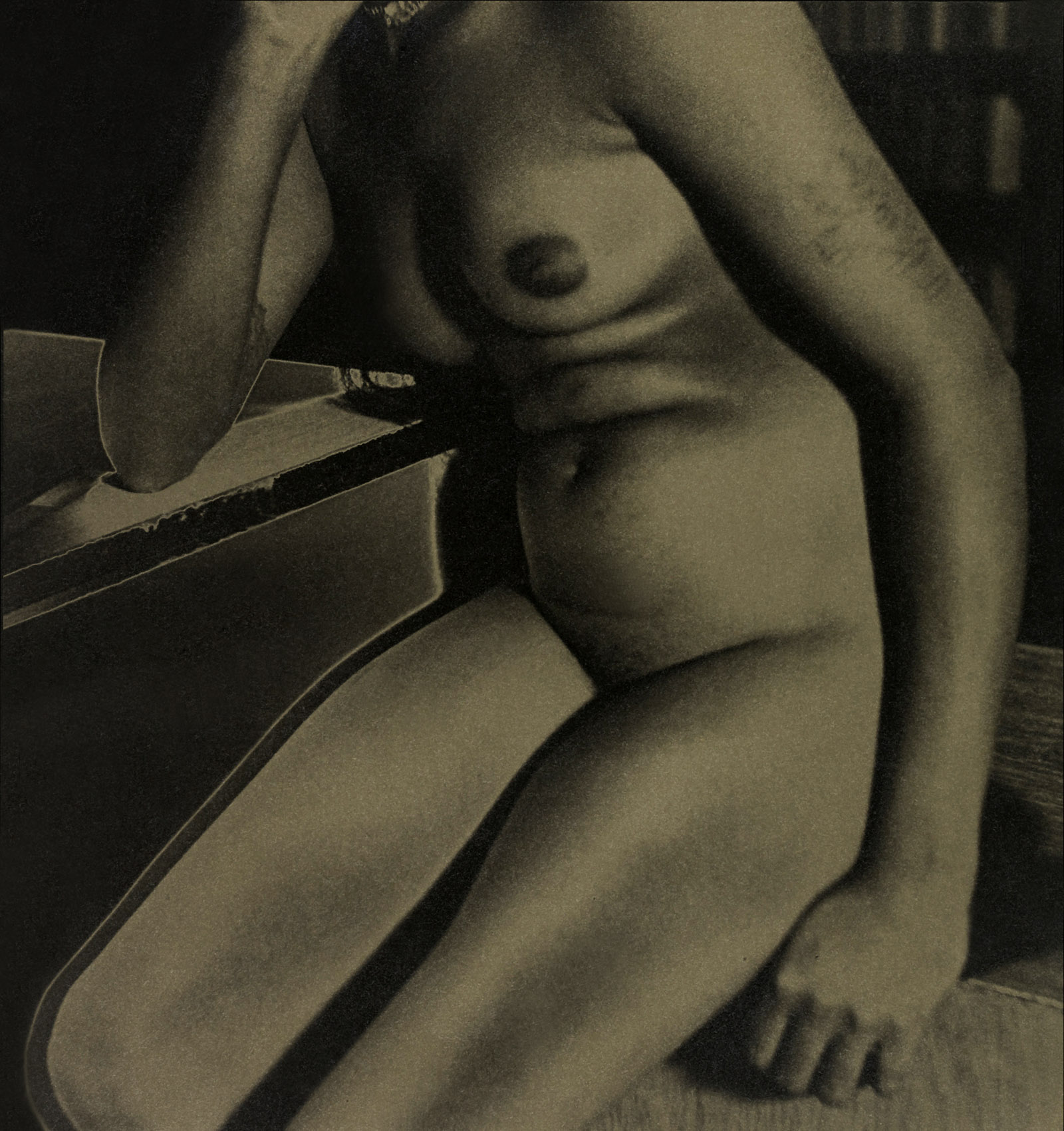


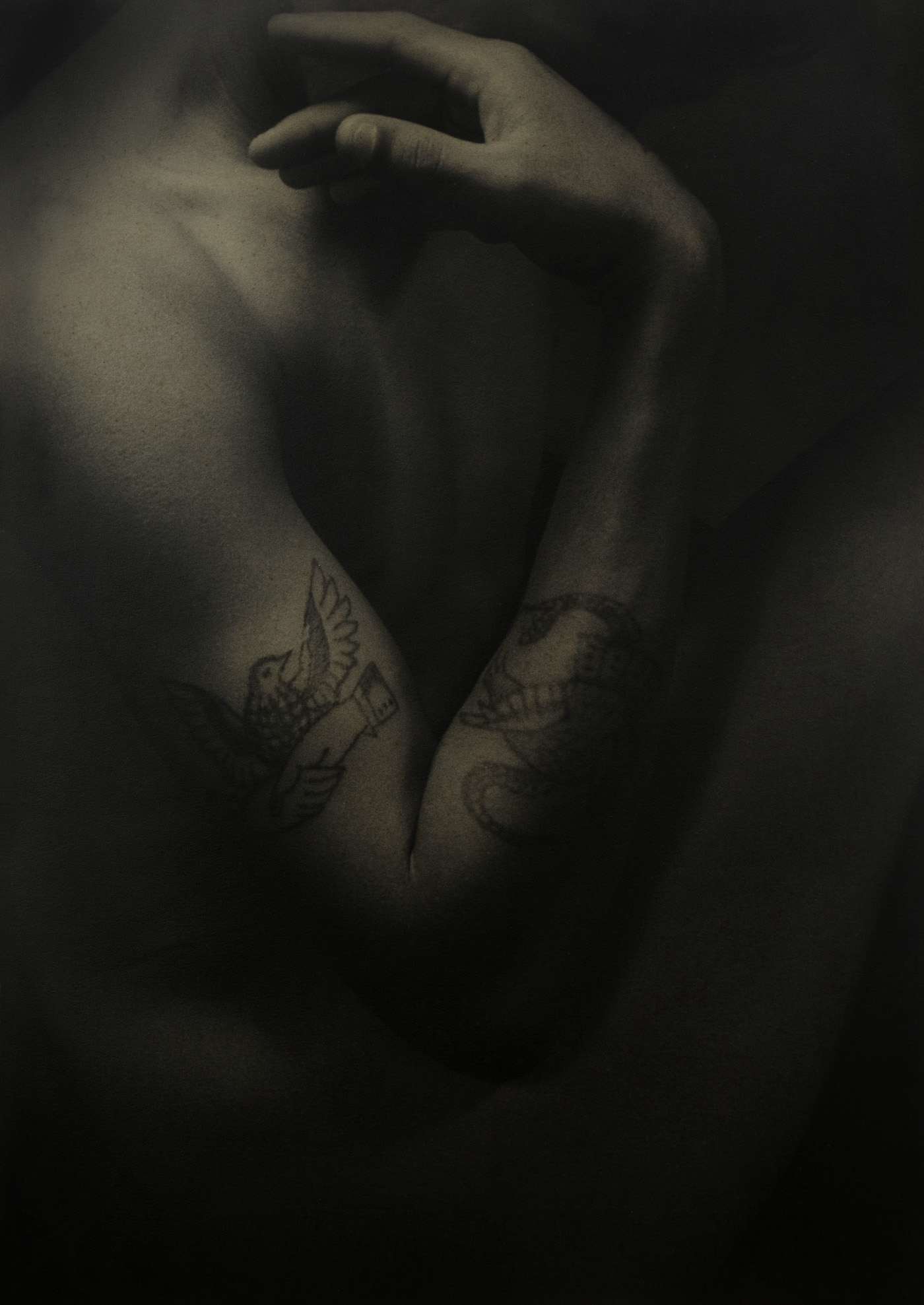
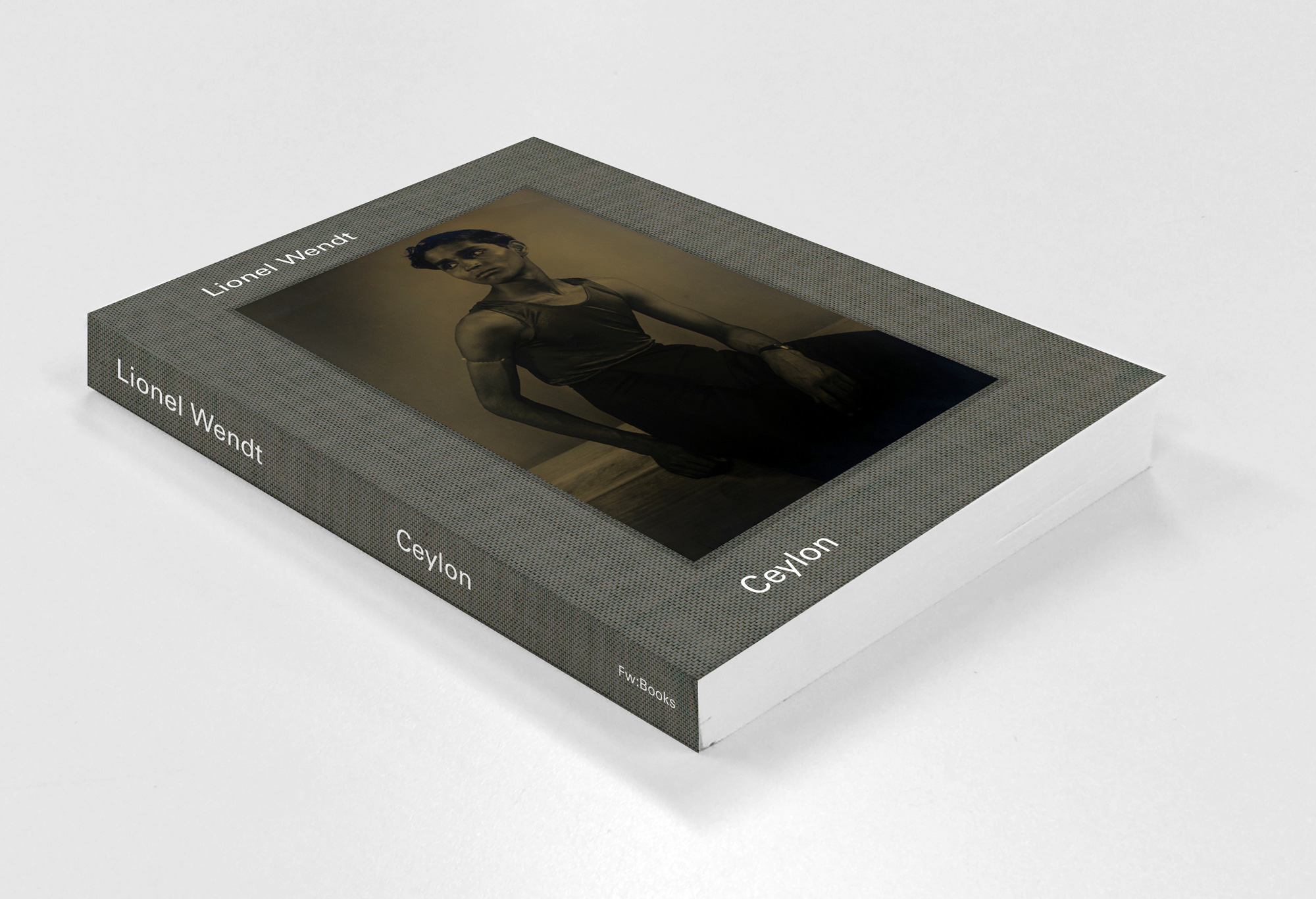


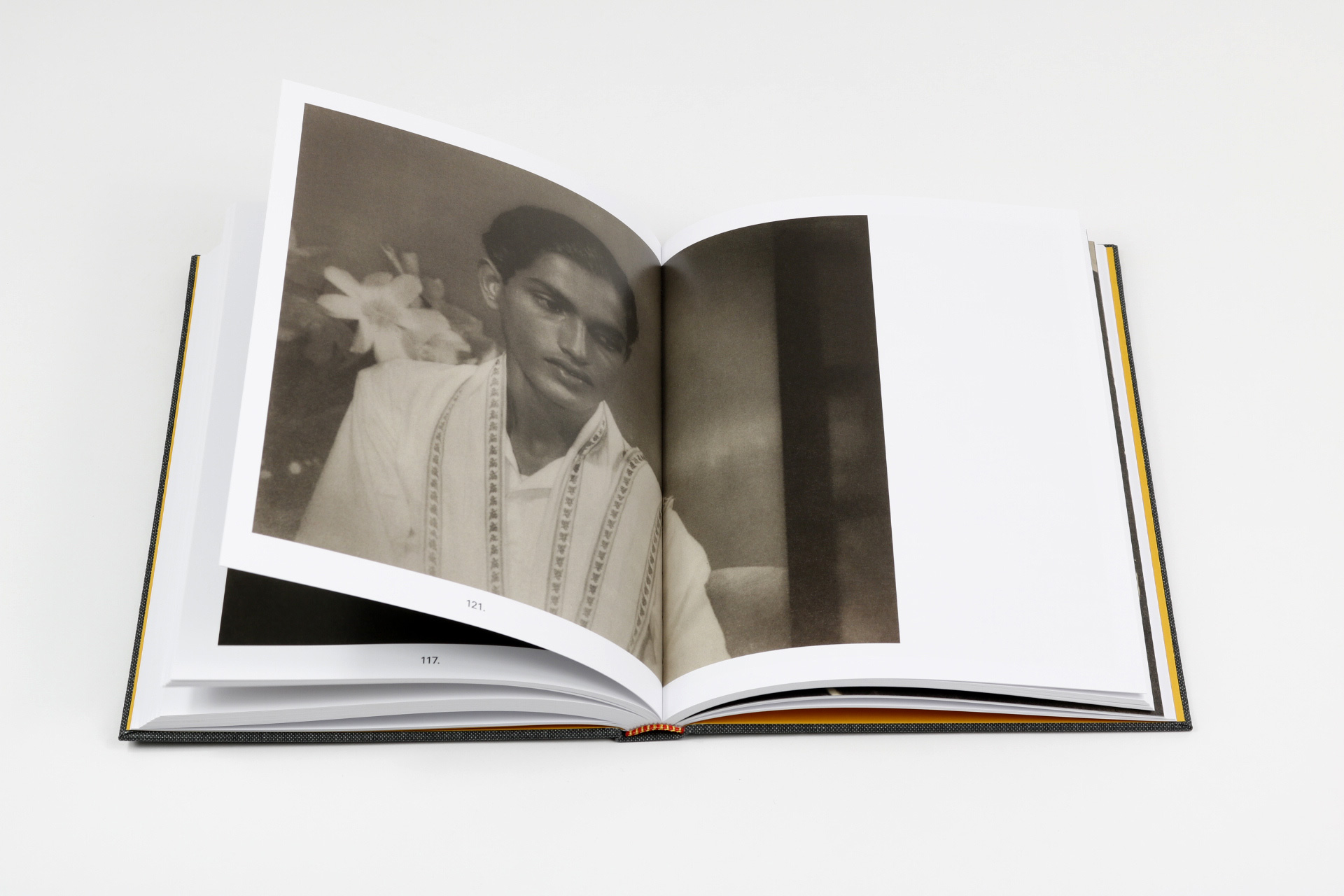
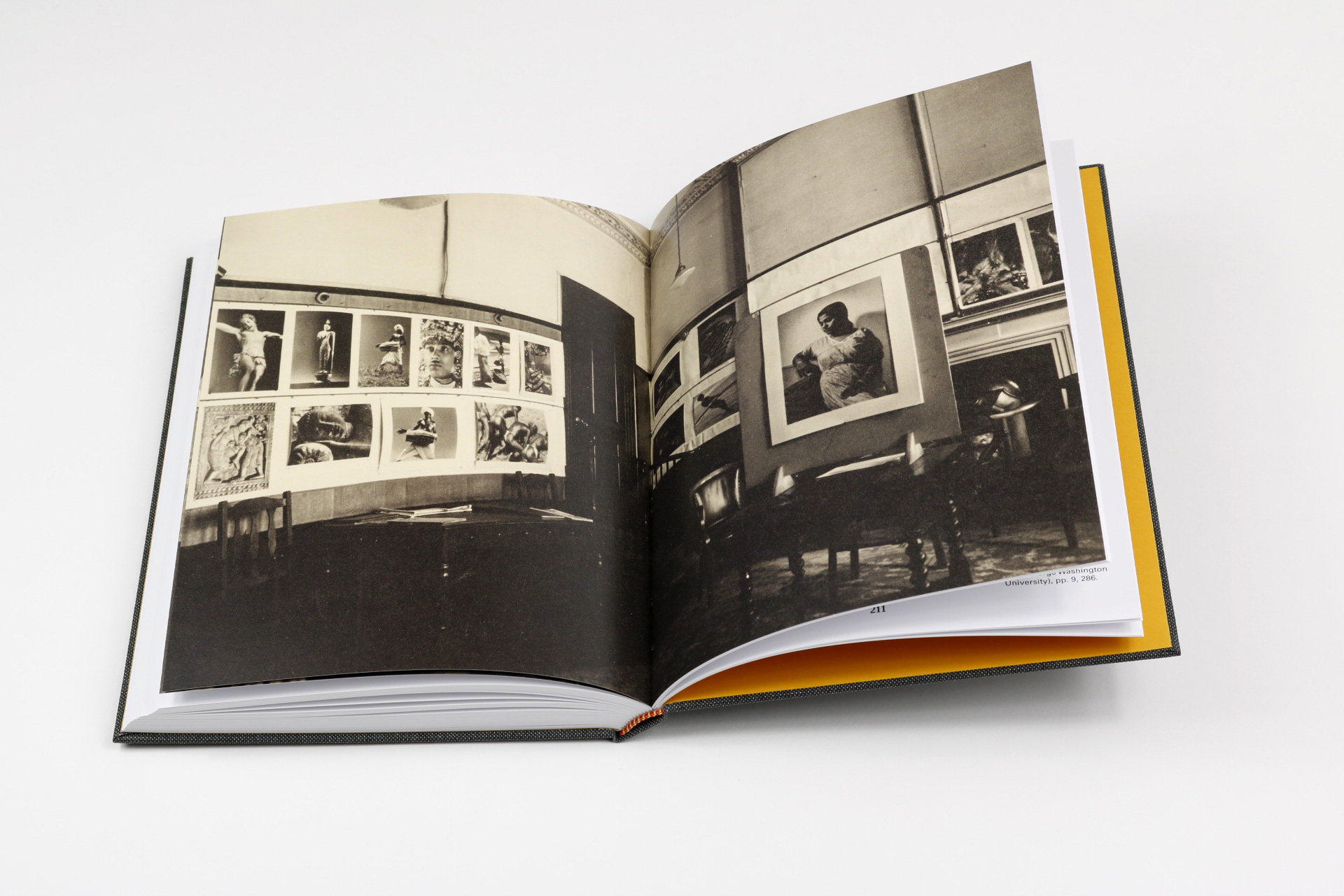


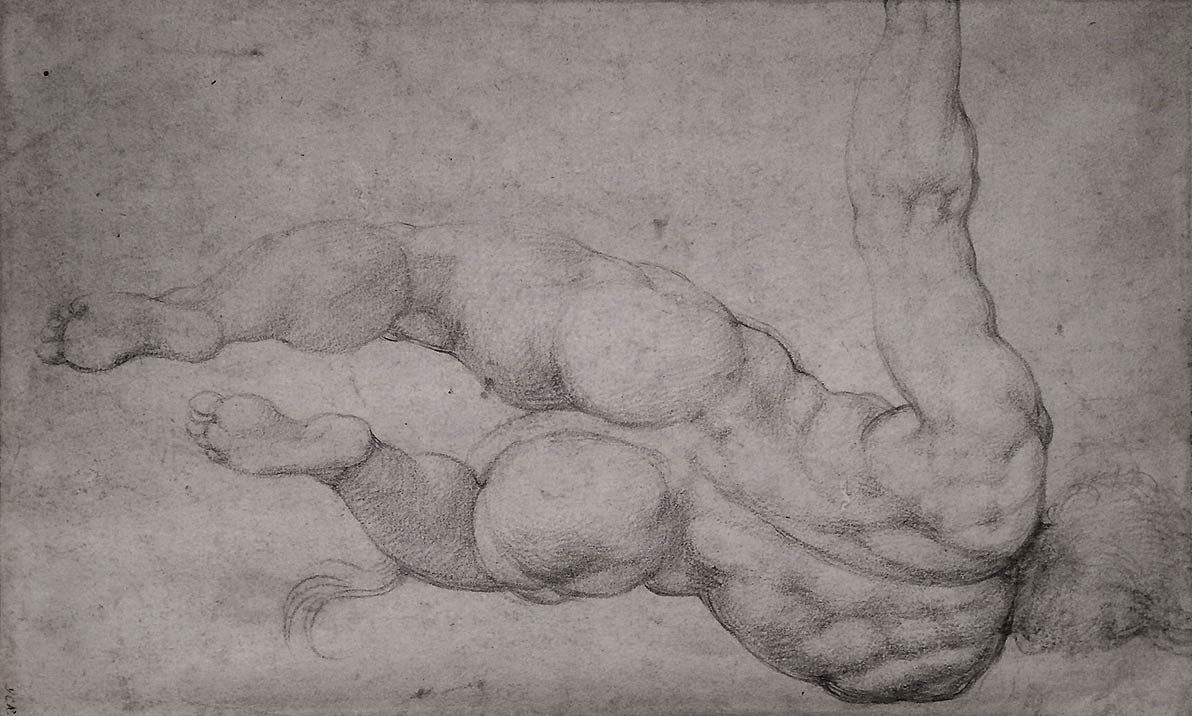
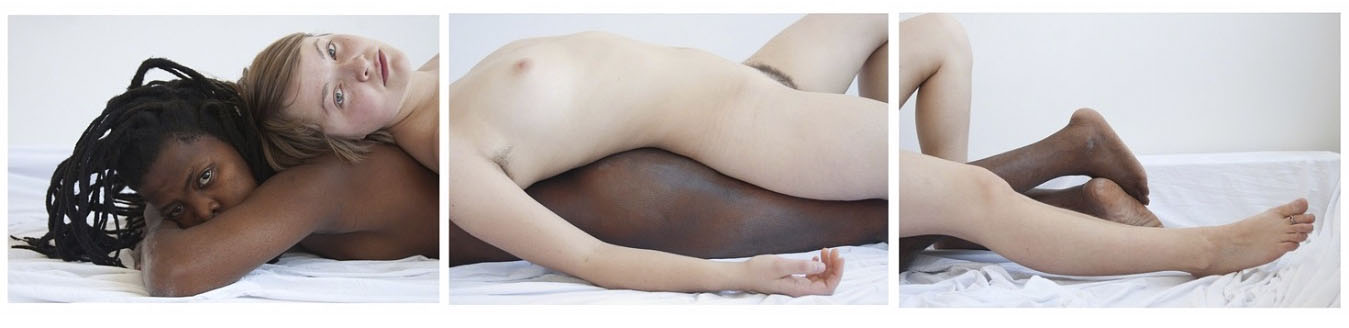


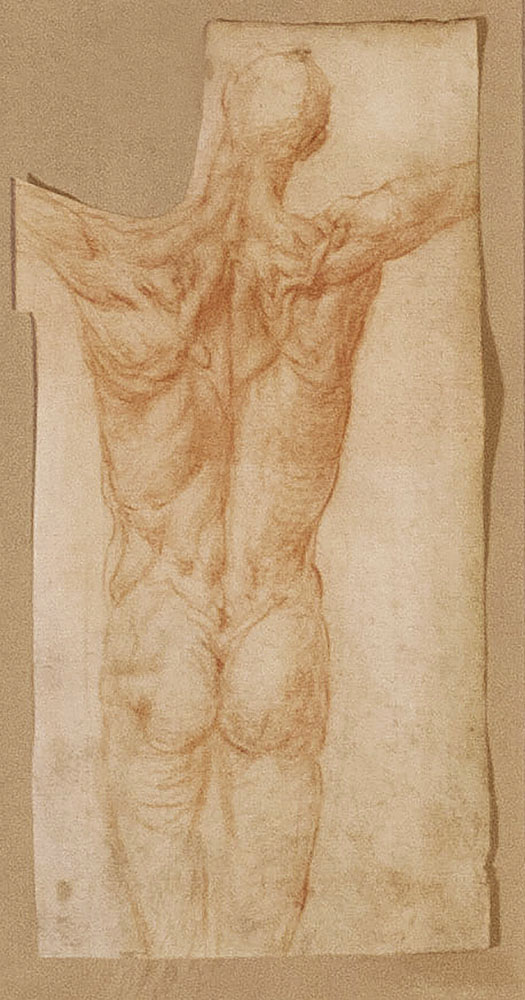
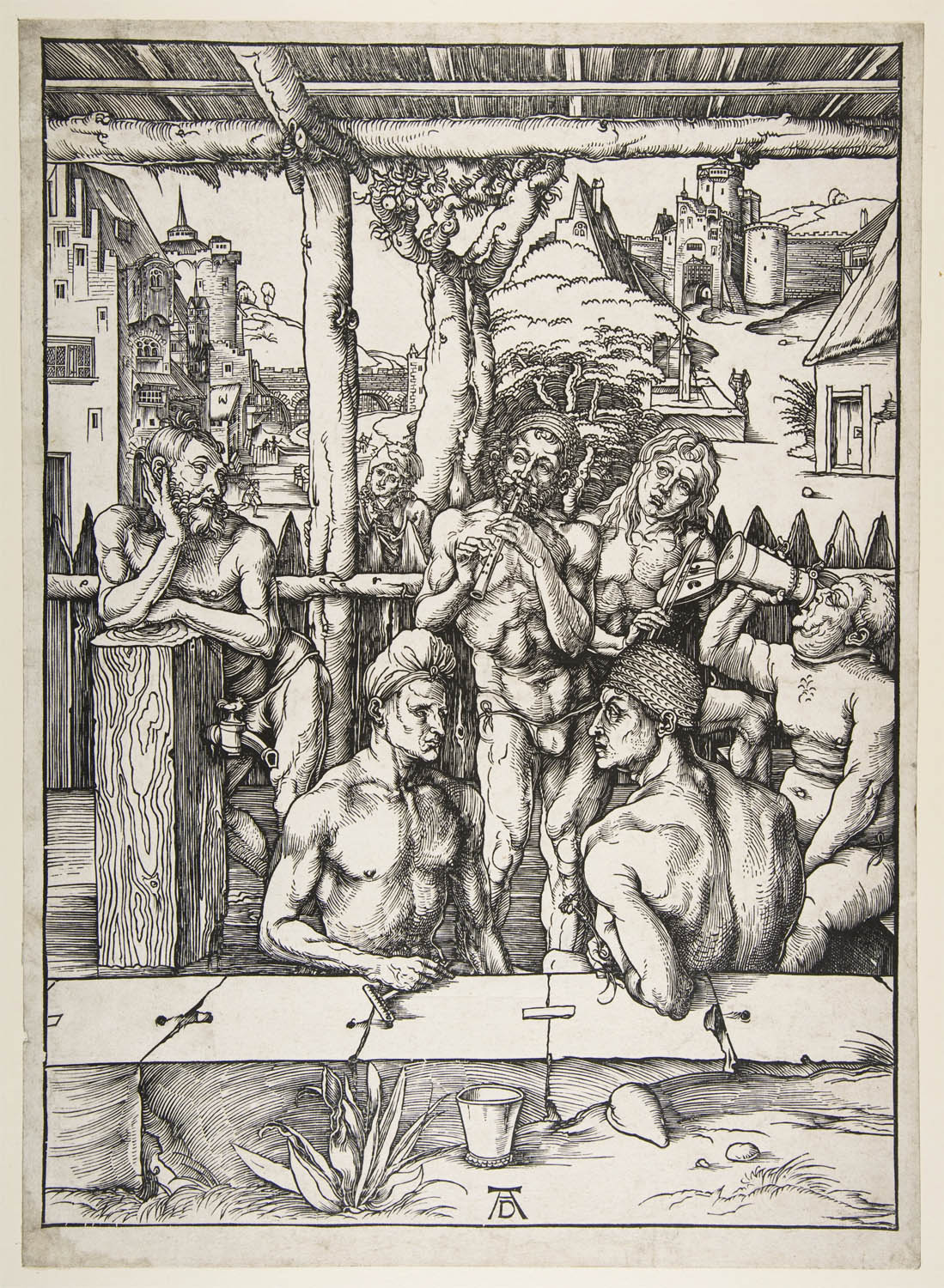

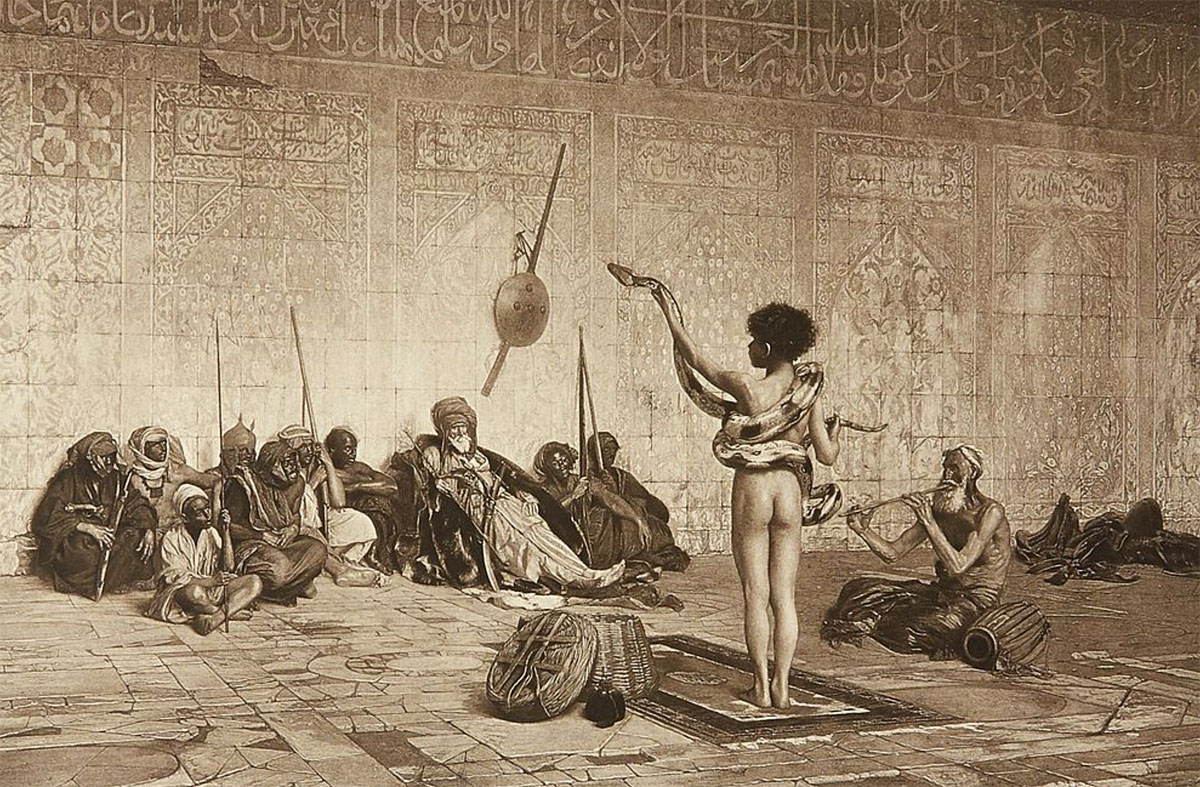
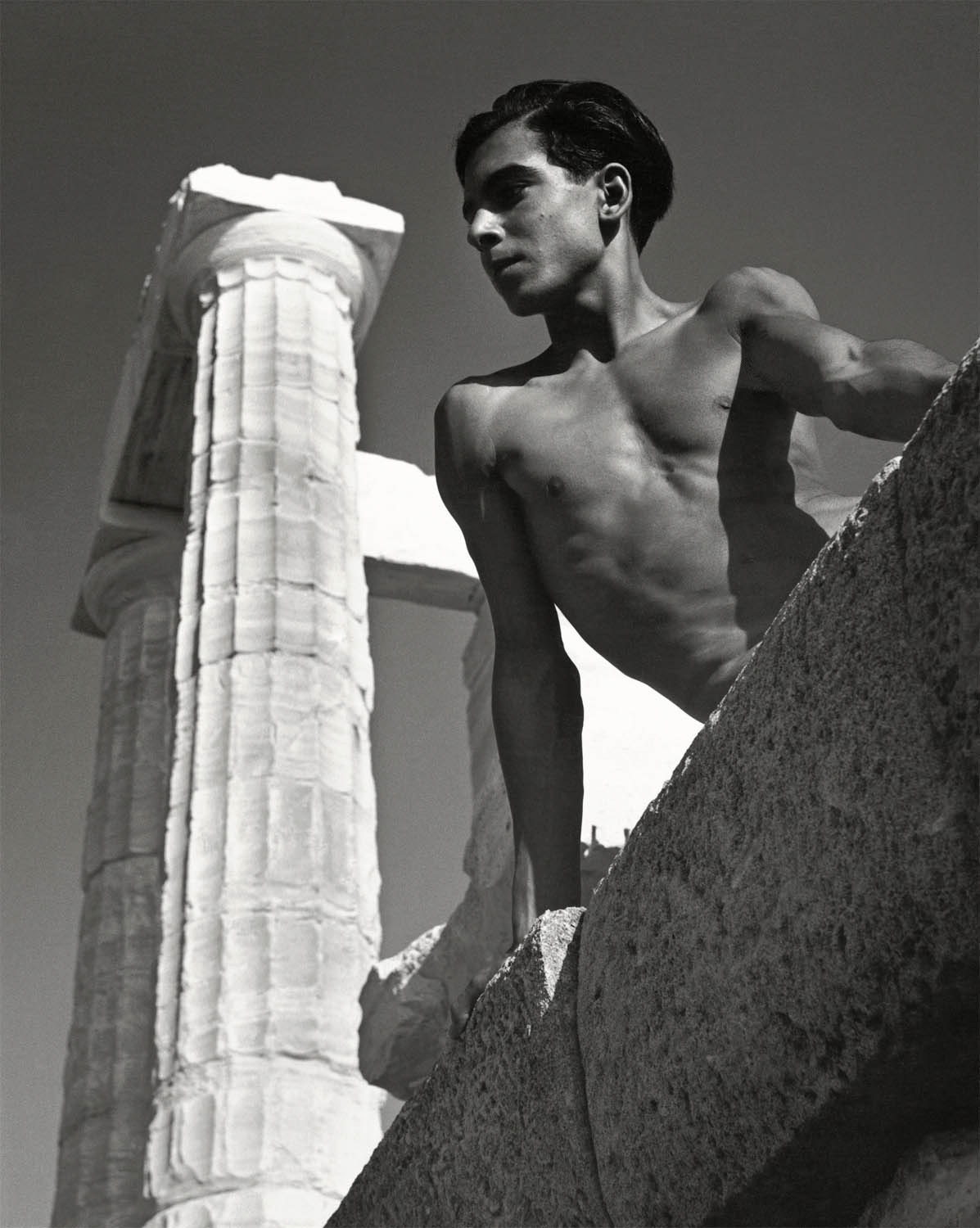
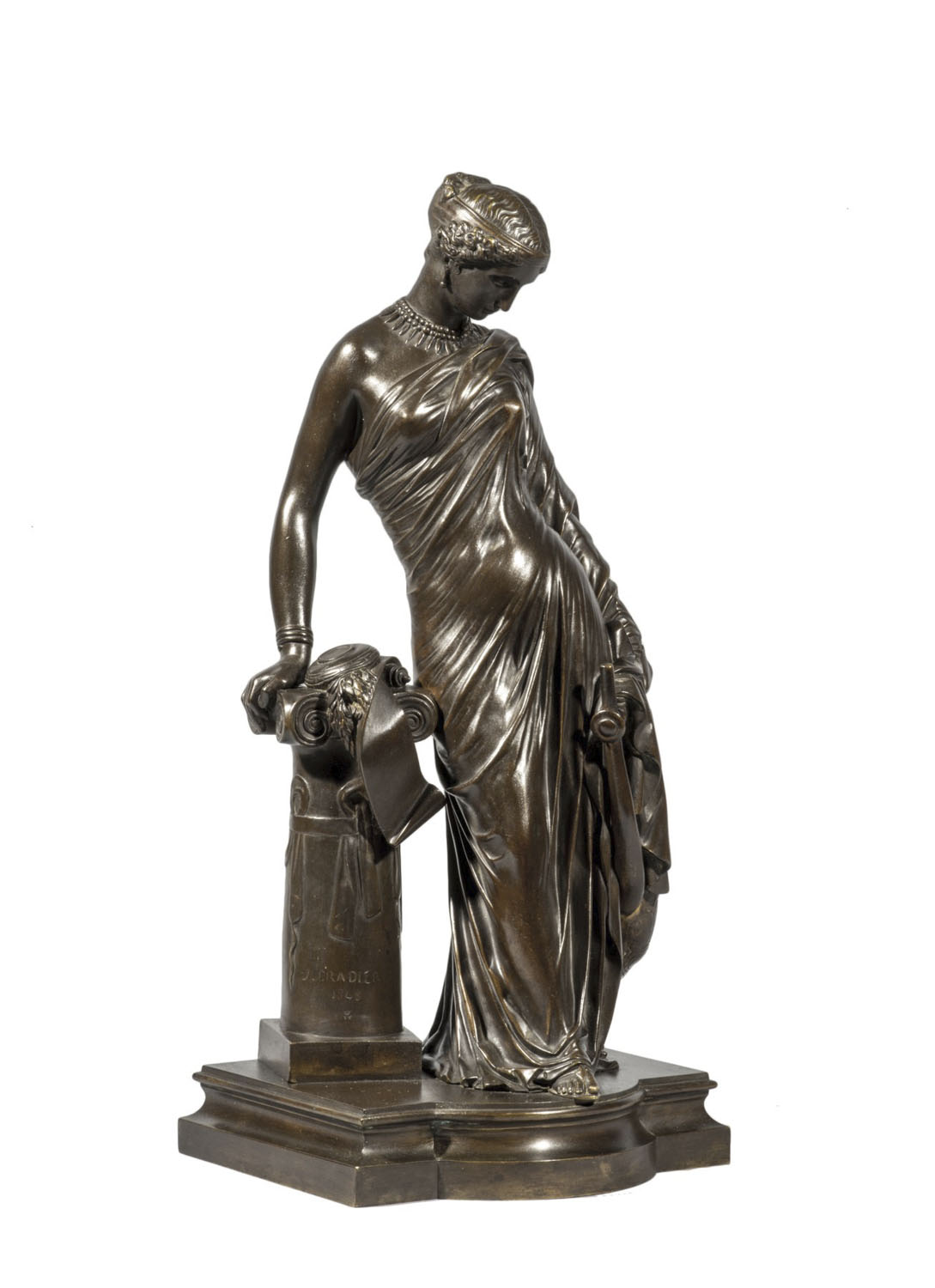
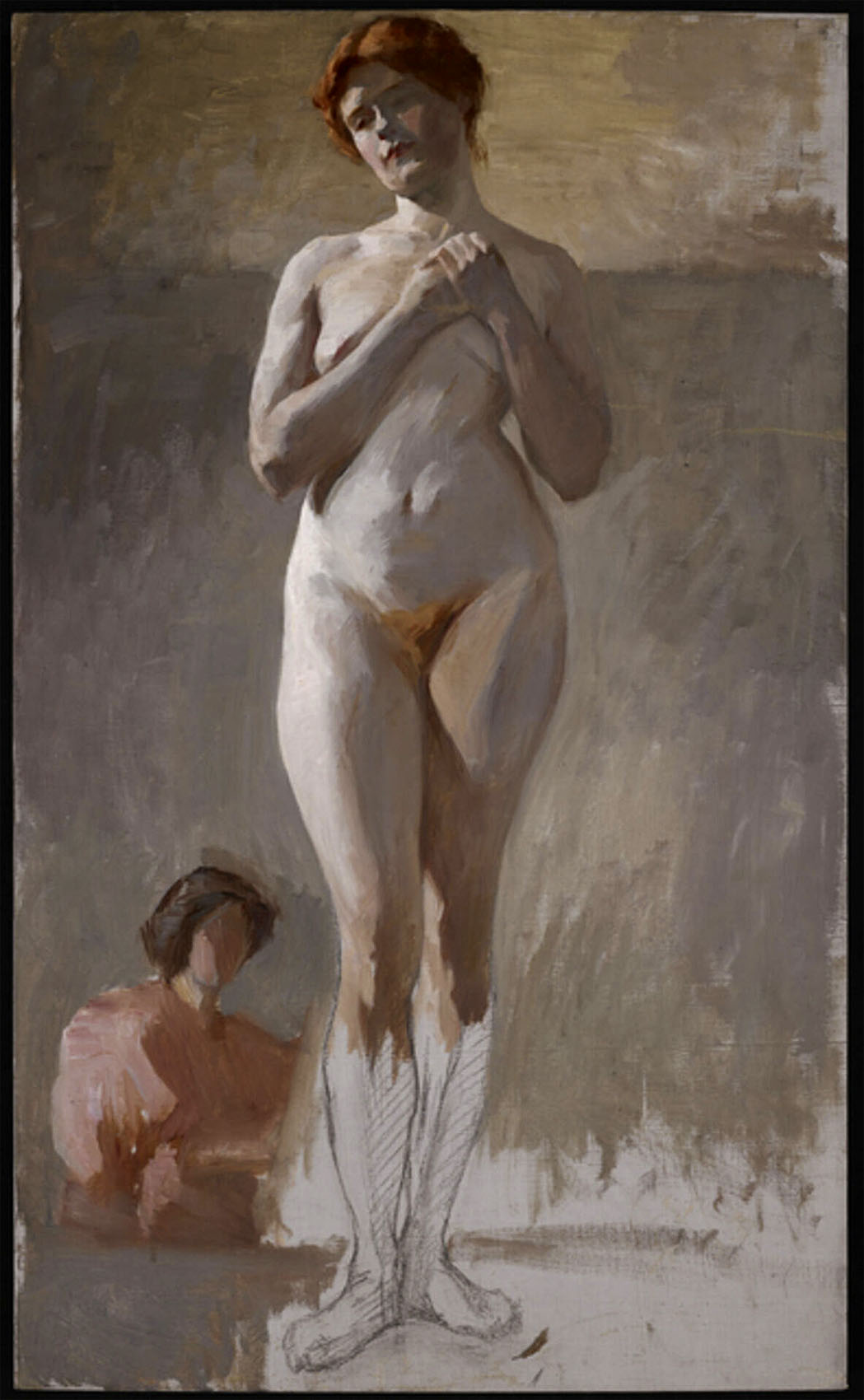
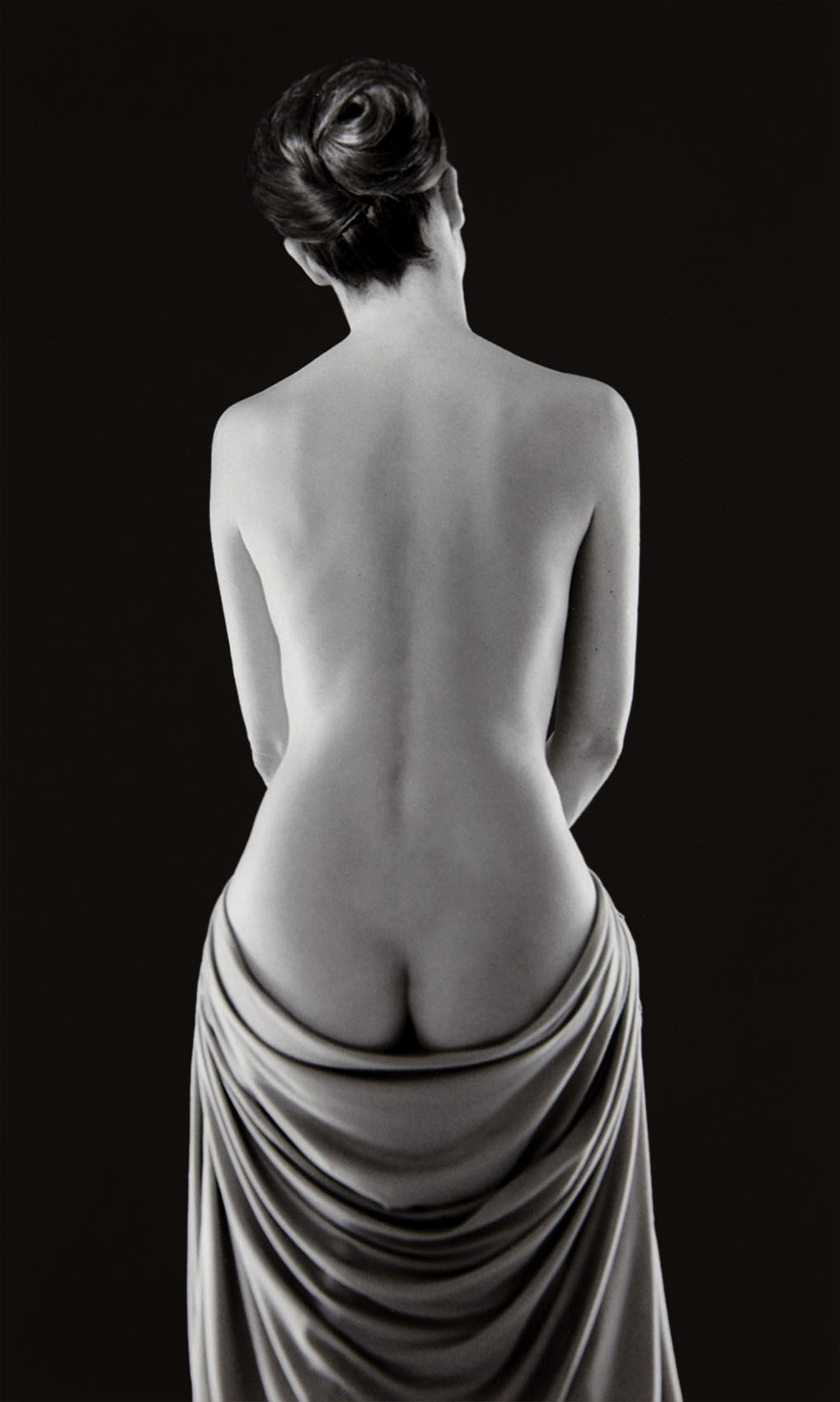

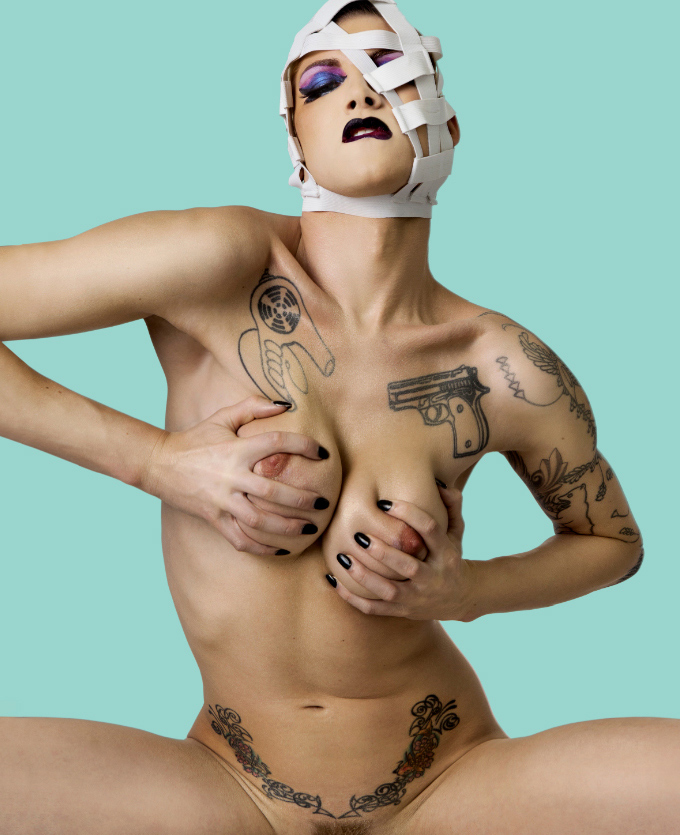
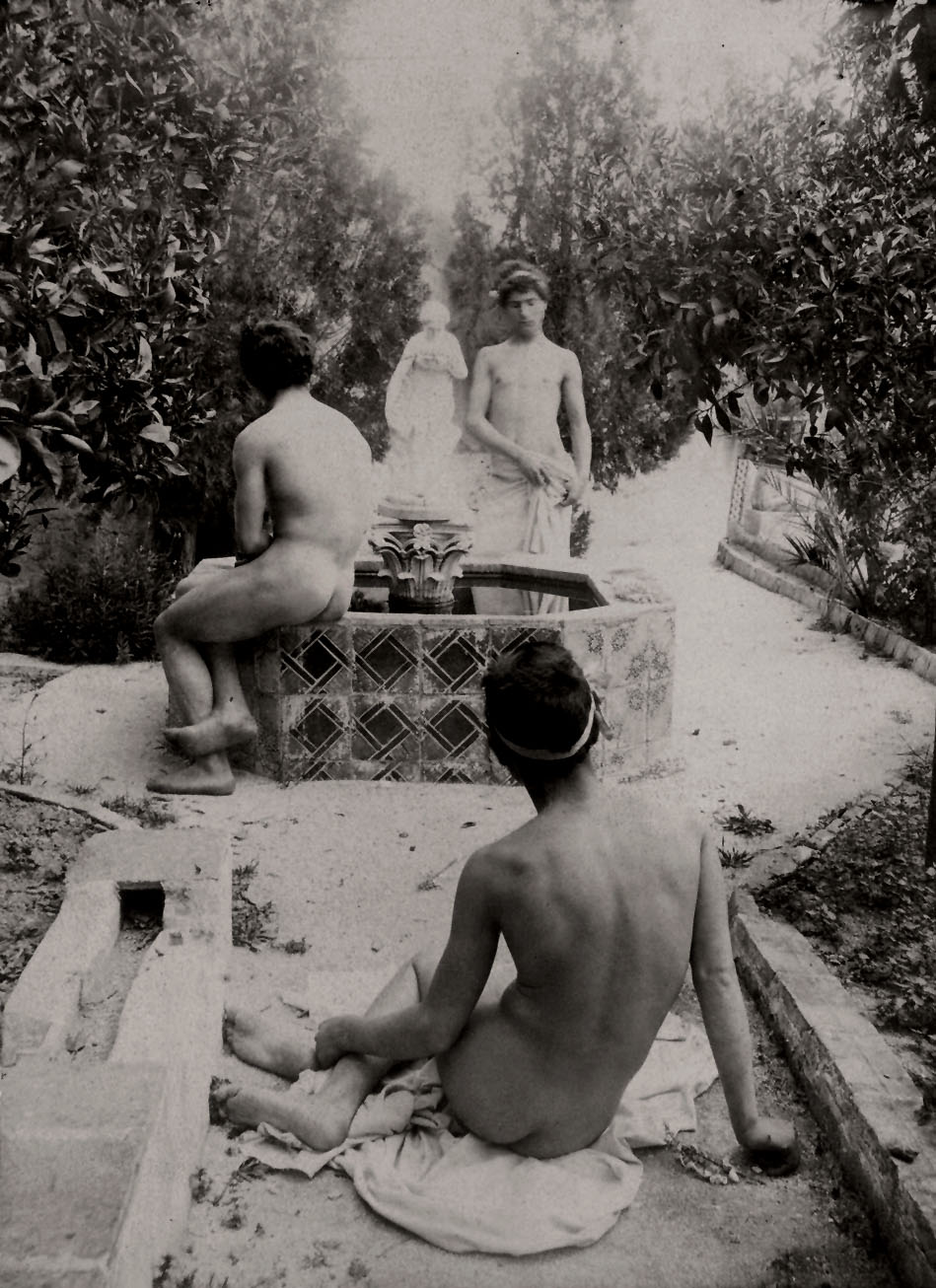


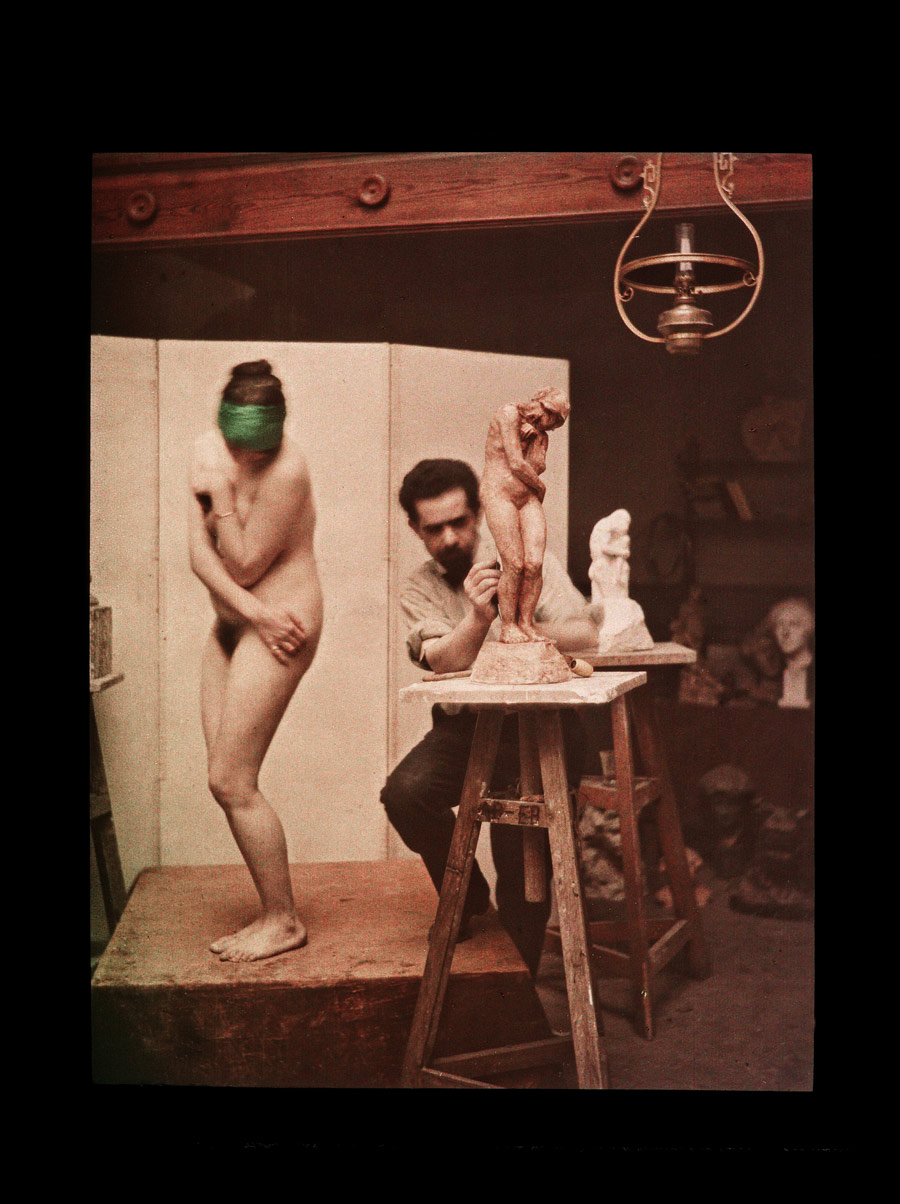
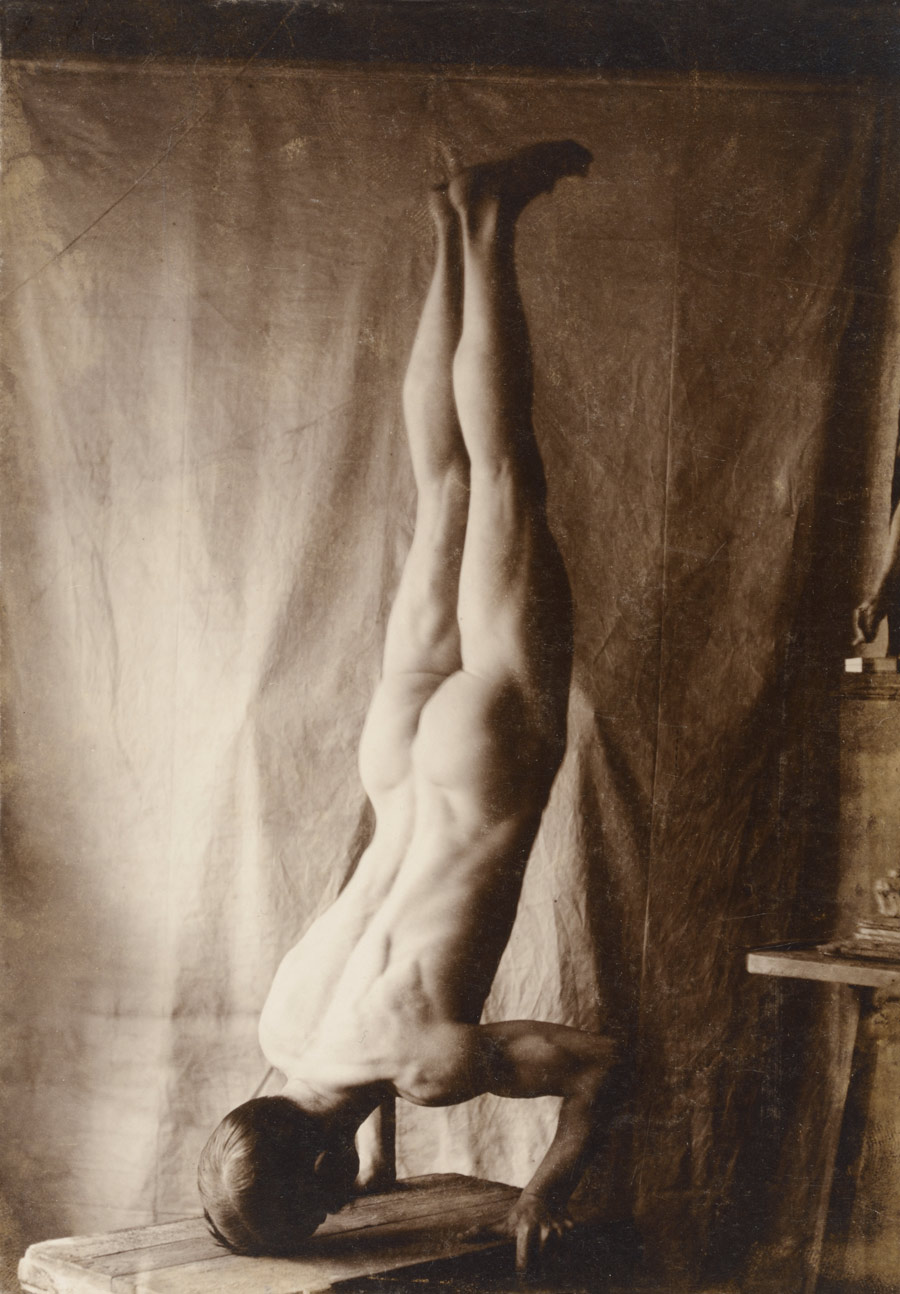
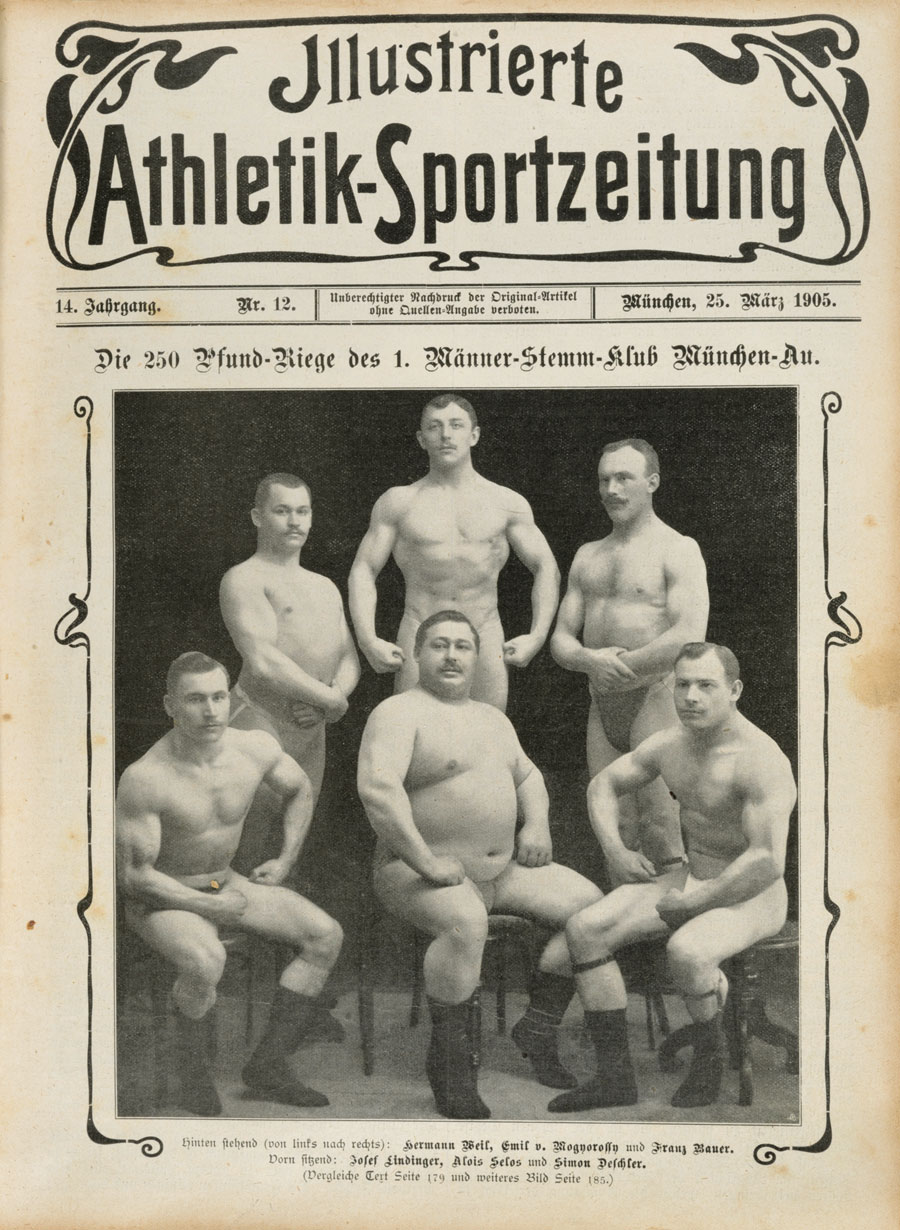
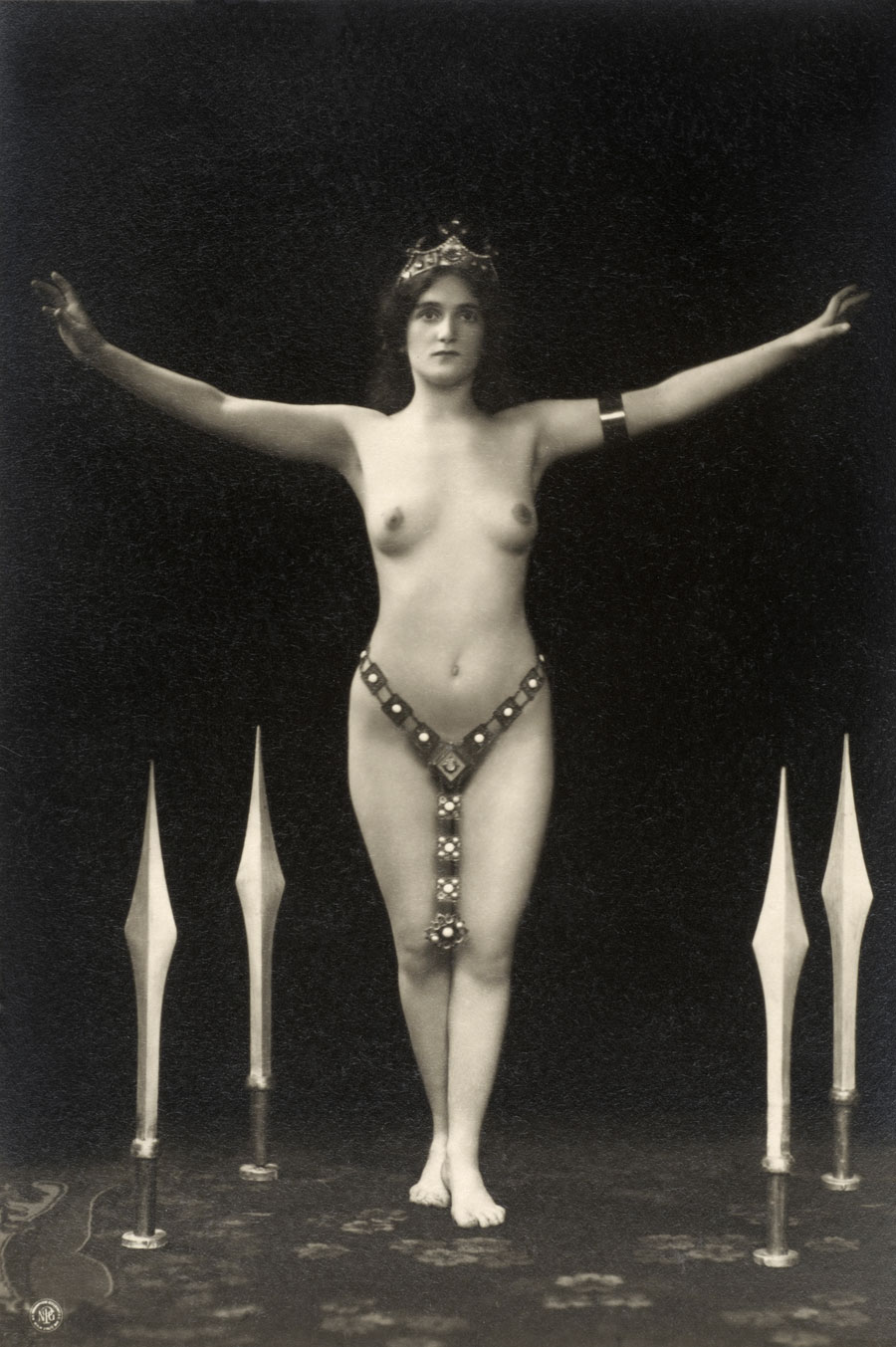
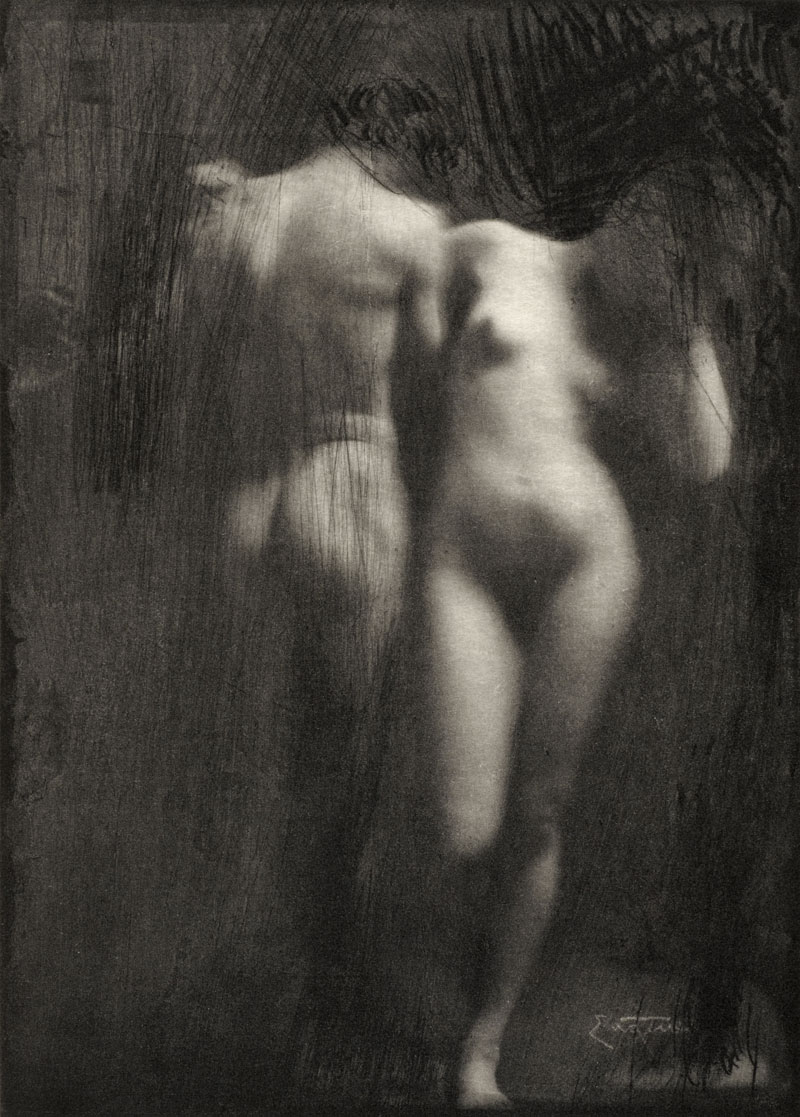
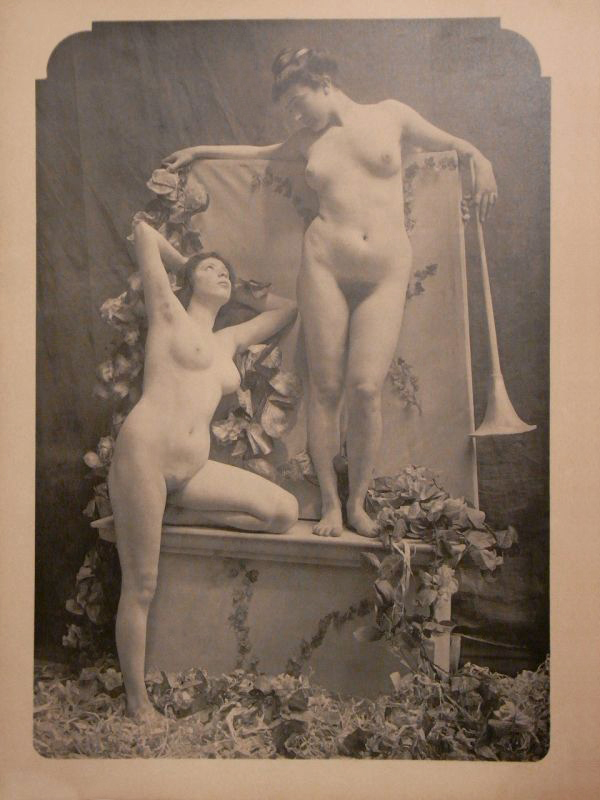
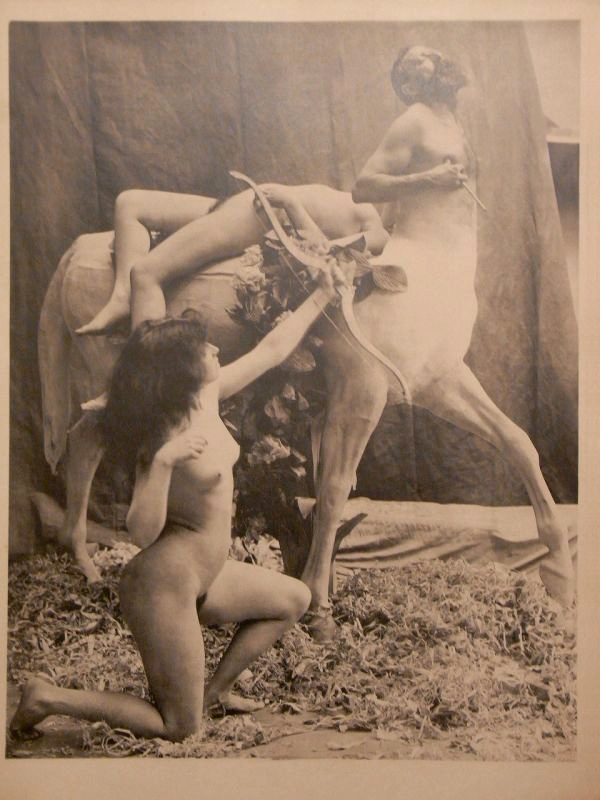
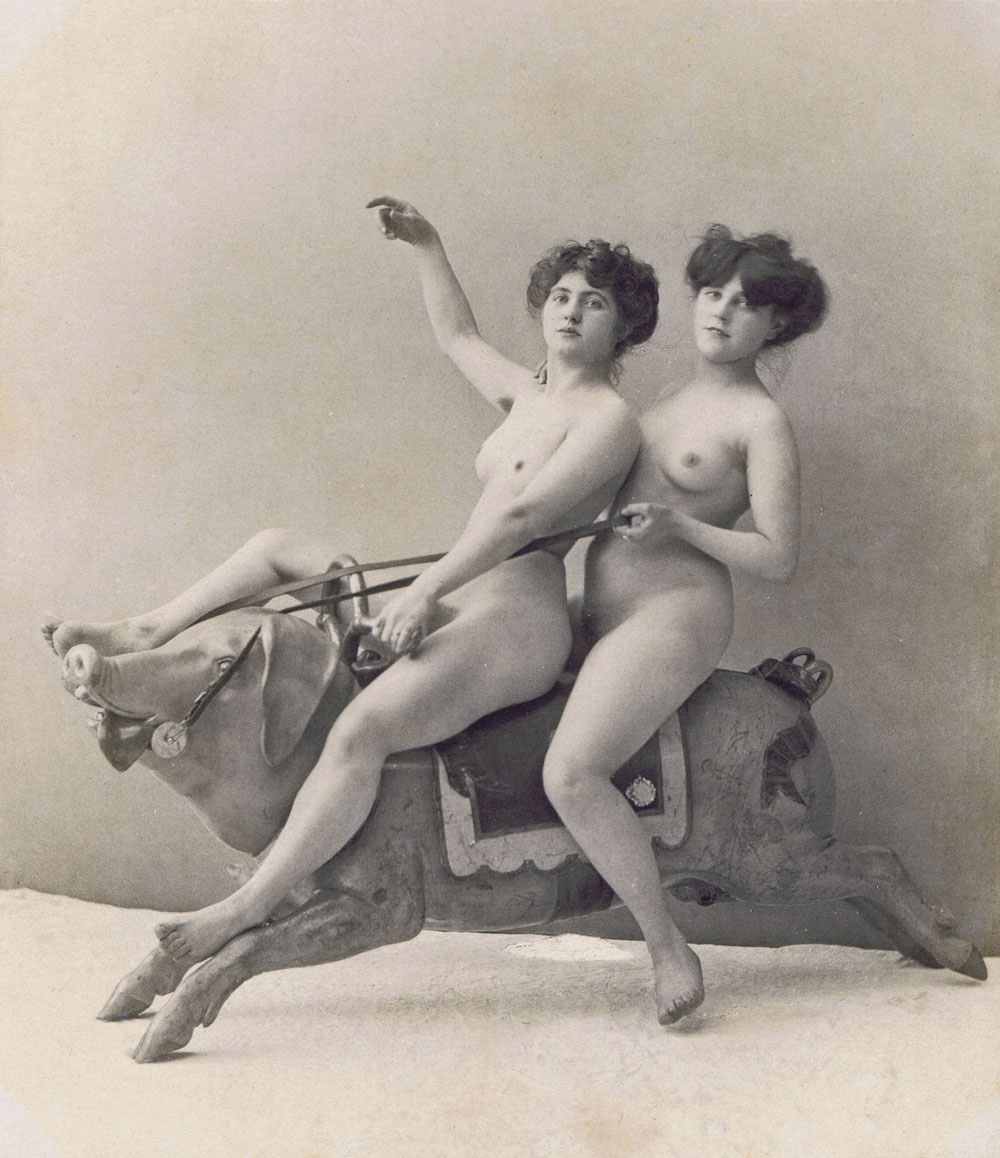
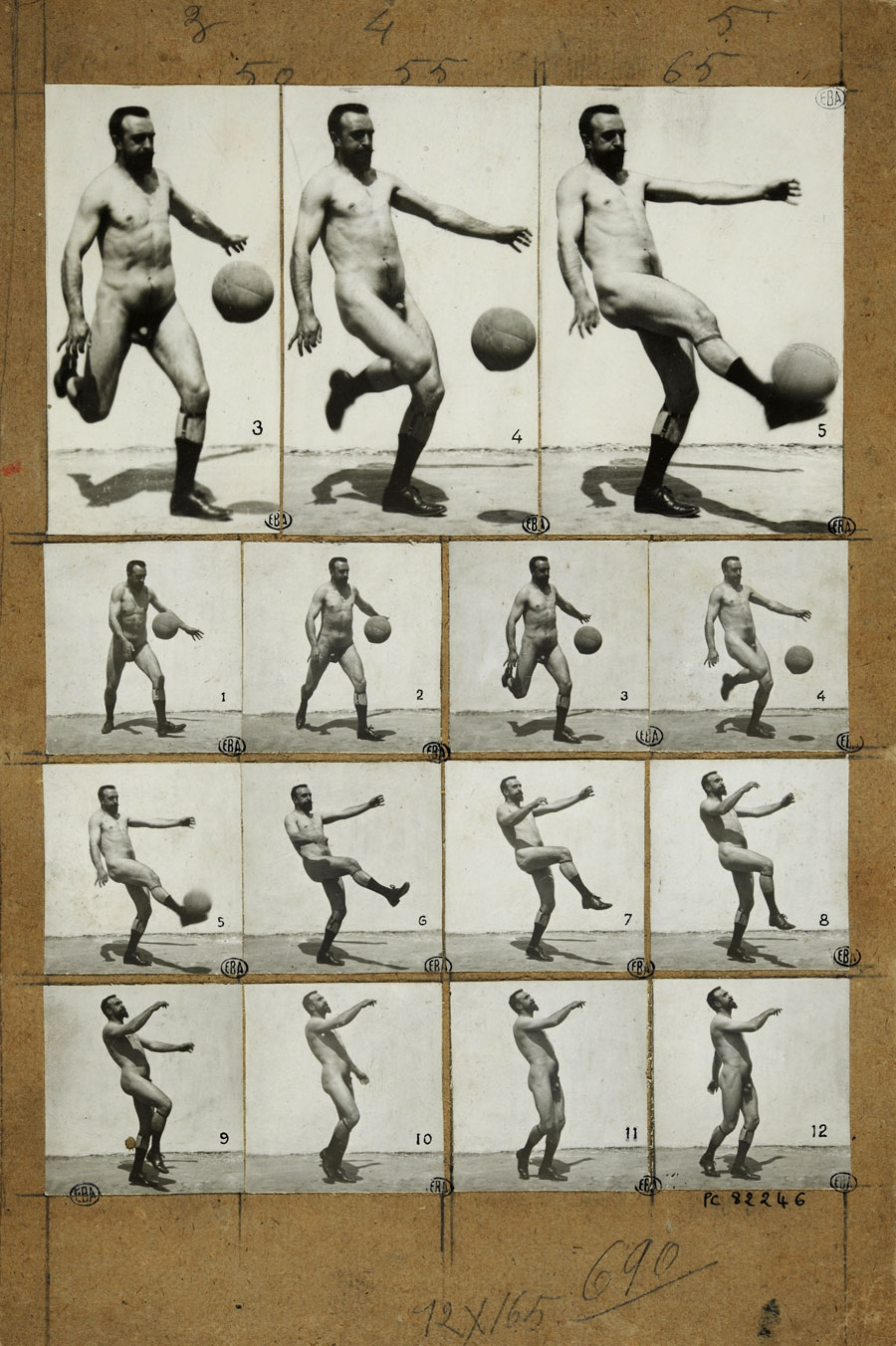
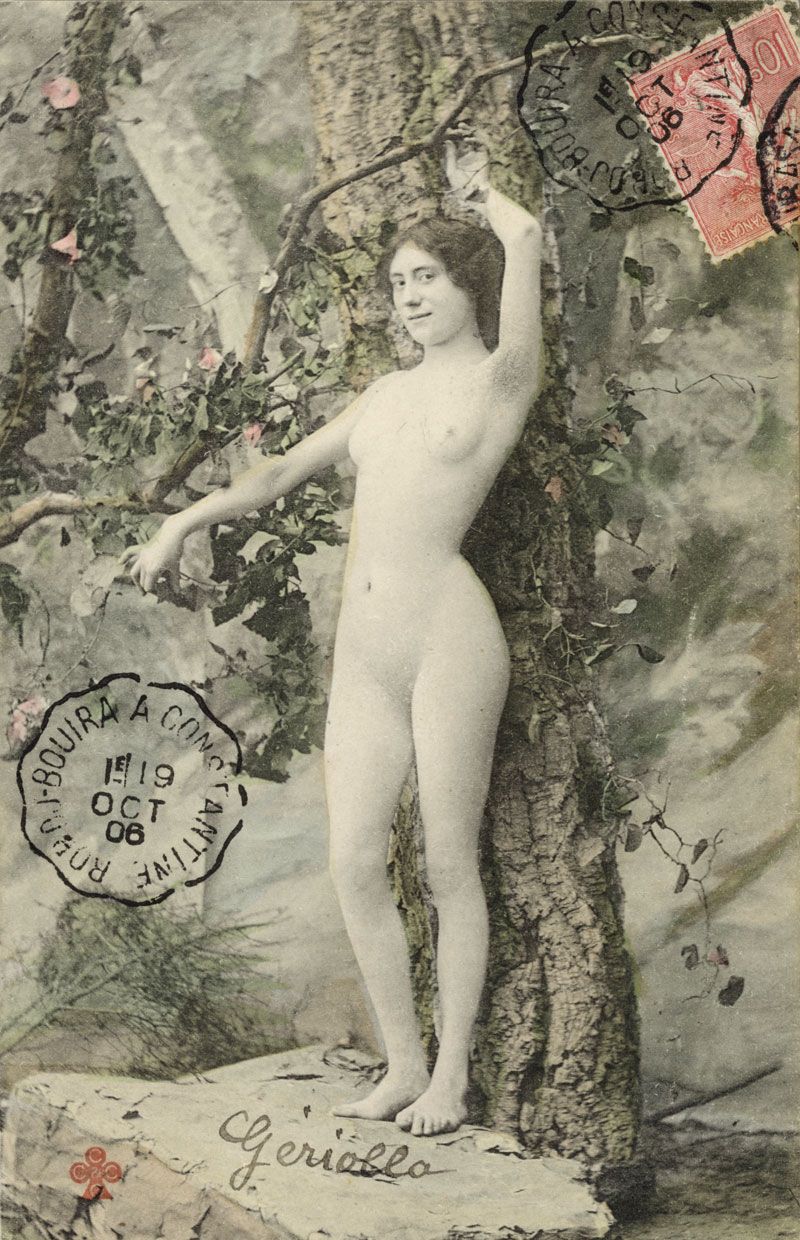
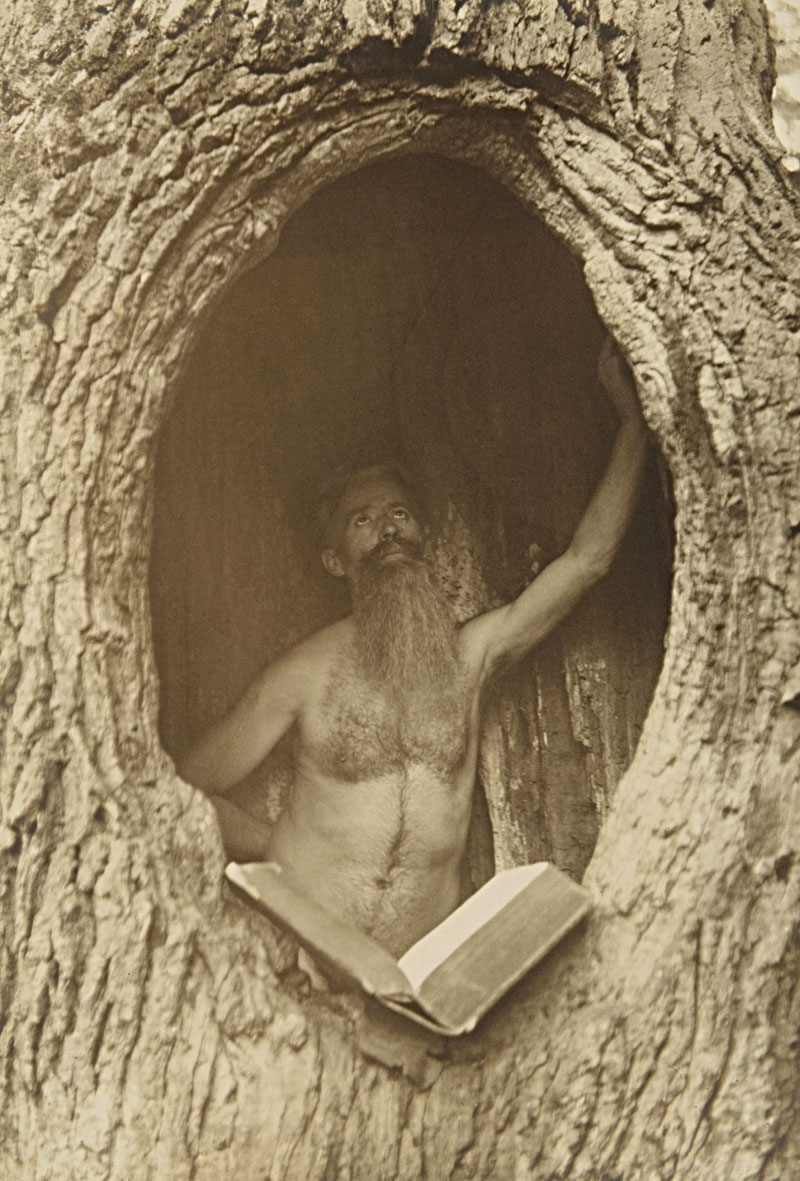
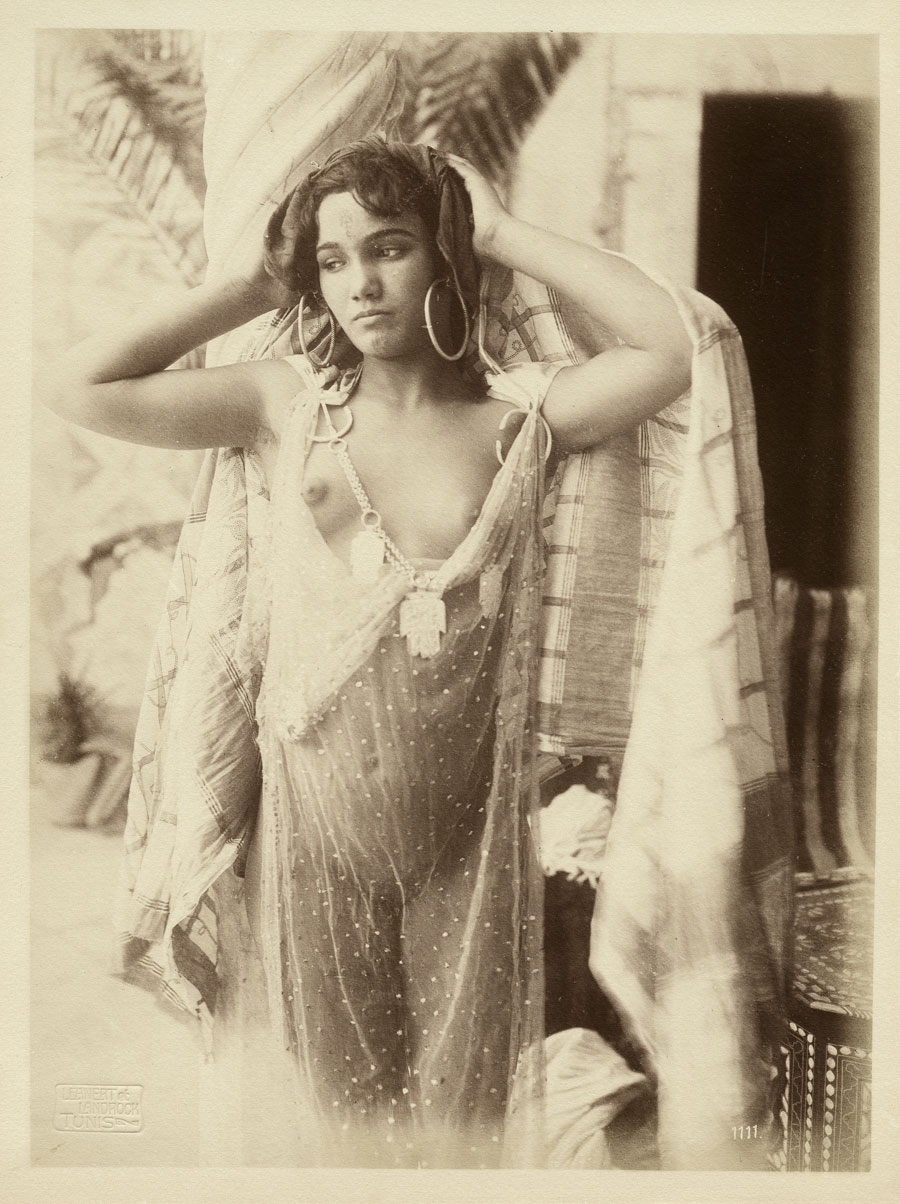
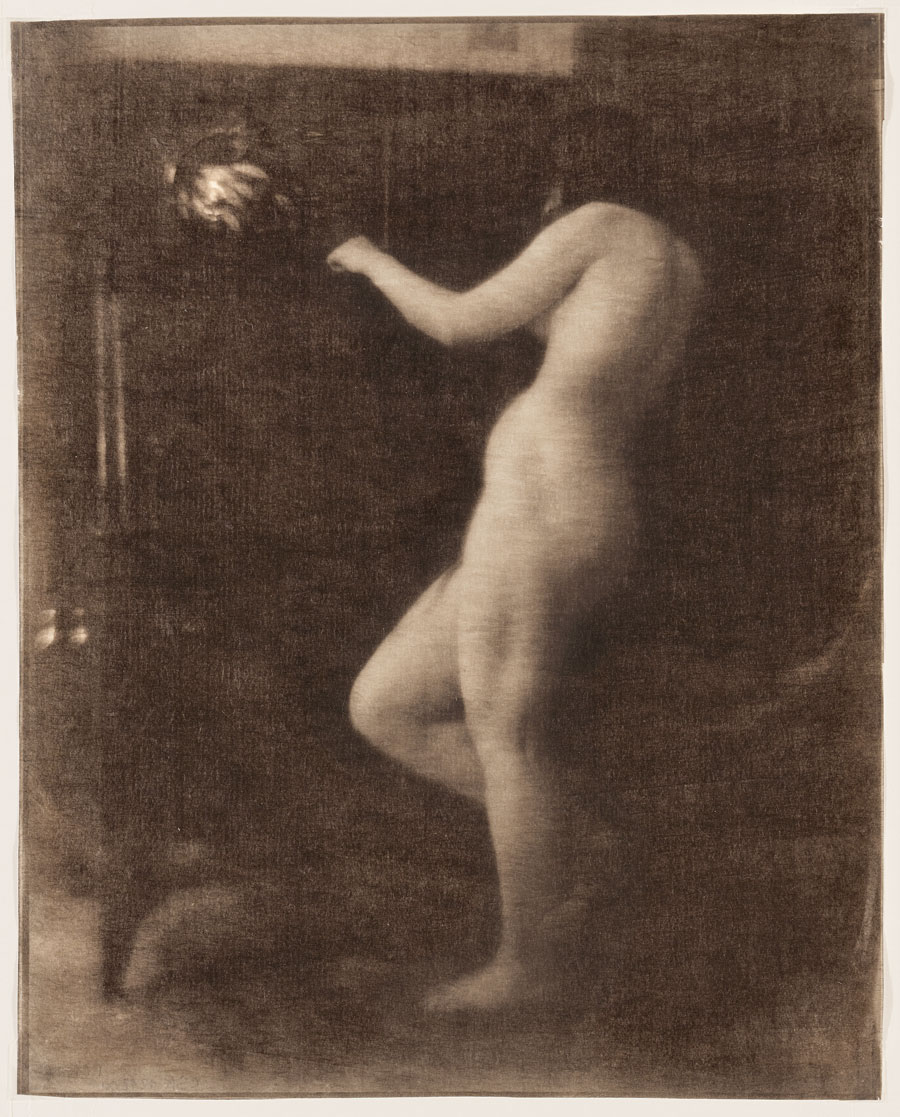
![Franck-François-Genès Chauvassaignes (French, 1831 - after 1900) 'Untitled [Female Nude in Studio]' 1856-1859 from the exhibition 'Naked Before the Camera' at the Metropolitan Museum of Art, New York, March - September, 2012](https://artblart.com/wp-content/uploads/2012/08/chauvassaignes_seated-nude-web.jpg "Franck-François-Genès Chauvassaignes (French, 1831 - after 1900) 'Untitled [Female Nude in Studio]' 1856-1859 from the exhibition 'Naked Before the Camera' at the Metropolitan Museum of Art, New York, March - September, 2012")
![Félix-Jacques-Antoine Moulin (French, 1800 - after 1875) 'Untitled [Two Standing Female Nudes]' c. 1850 from the exhibition 'Naked Before the Camera' at the Metropolitan Museum of Art, New York, March - September, 2012](https://artblart.com/wp-content/uploads/2012/08/moulin_two-nudes-standing-web.jpg "Félix-Jacques-Antoine Moulin (French, 1800 - after 1875) 'Untitled [Two Standing Female Nudes]' c. 1850 from the exhibition 'Naked Before the Camera' at the Metropolitan Museum of Art, New York, March - September, 2012")
![Unknown photographer (French) '[Seated Female Nude]' c. 1850](https://artblart.com/wp-content/uploads/2012/09/seated-female-nude.jpg "Unknown photographer (French) '[Seated Female Nude]' c. 1850")
![Julien Vallou de Villeneuve (French, 1795-1866) '[Standing Female Nude]' c. 1853](https://artblart.com/wp-content/uploads/2012/09/julien-vallou-de-villeneuve-standing-female-nude.jpg "Julien Vallou de Villeneuve (French, 1795-1866) '[Standing Female Nude]' c. 1853")
![Eugène Durieu (French, 1800-1874) 'Untitled [Seated Female Nude]' 1853-1854](https://artblart.com/wp-content/uploads/2012/08/durieu_nude_ph8976-web.jpg "Eugène Durieu (French, 1800-1874) 'Untitled [Seated Female Nude]' 1853-1854")
![Charles Alphonse Marlé (French, 1821 - after 1867) 'Untitled [Standing Male Nude]' c. 1855](https://artblart.com/wp-content/uploads/2012/08/marle_standing-male-nude-web.jpg "Charles Alphonse Marlé (French, 1821 - after 1867) 'Untitled [Standing Male Nude]' c. 1855")
![Nadar (French, Paris 1820 - 1910 Paris) '[Standing Female Nude]' 1860-1861](https://artblart.com/wp-content/uploads/2012/09/nadar-standing-female-nude.jpg "Nadar (French, Paris 1820 - 1910 Paris) '[Standing Female Nude]' 1860-1861")
![Unknown photographer (French) '[Nude with Mirror]' c. 1850](https://artblart.com/wp-content/uploads/2012/09/nude-with-mirror.jpg "Unknown photographer (French) '[Nude with Mirror]' c. 1850")
![Julien Vallou de Villeneuve (French, 1795-1866) '[Reclining Female Nude]' c. 1853](https://artblart.com/wp-content/uploads/2012/09/julien-vallou-de-villeneuve-reclining-female-nude.jpg "Julien Vallou de Villeneuve (French, 1795-1866) '[Reclining Female Nude]' c. 1853")

![Unknown photographer (French) '[Standing Female Nude]' c. 1856](https://artblart.com/wp-content/uploads/2012/09/standing-female-nude.jpg "Unknown photographer (French) '[Standing Female Nude]' c. 1856")
![Unknown photographer (French) '[Standing Male Nude]' c. 1856](https://artblart.com/wp-content/uploads/2012/09/standing-male-nude.jpg "Unknown photographer (French) '[Standing Male Nude]' c. 1856")
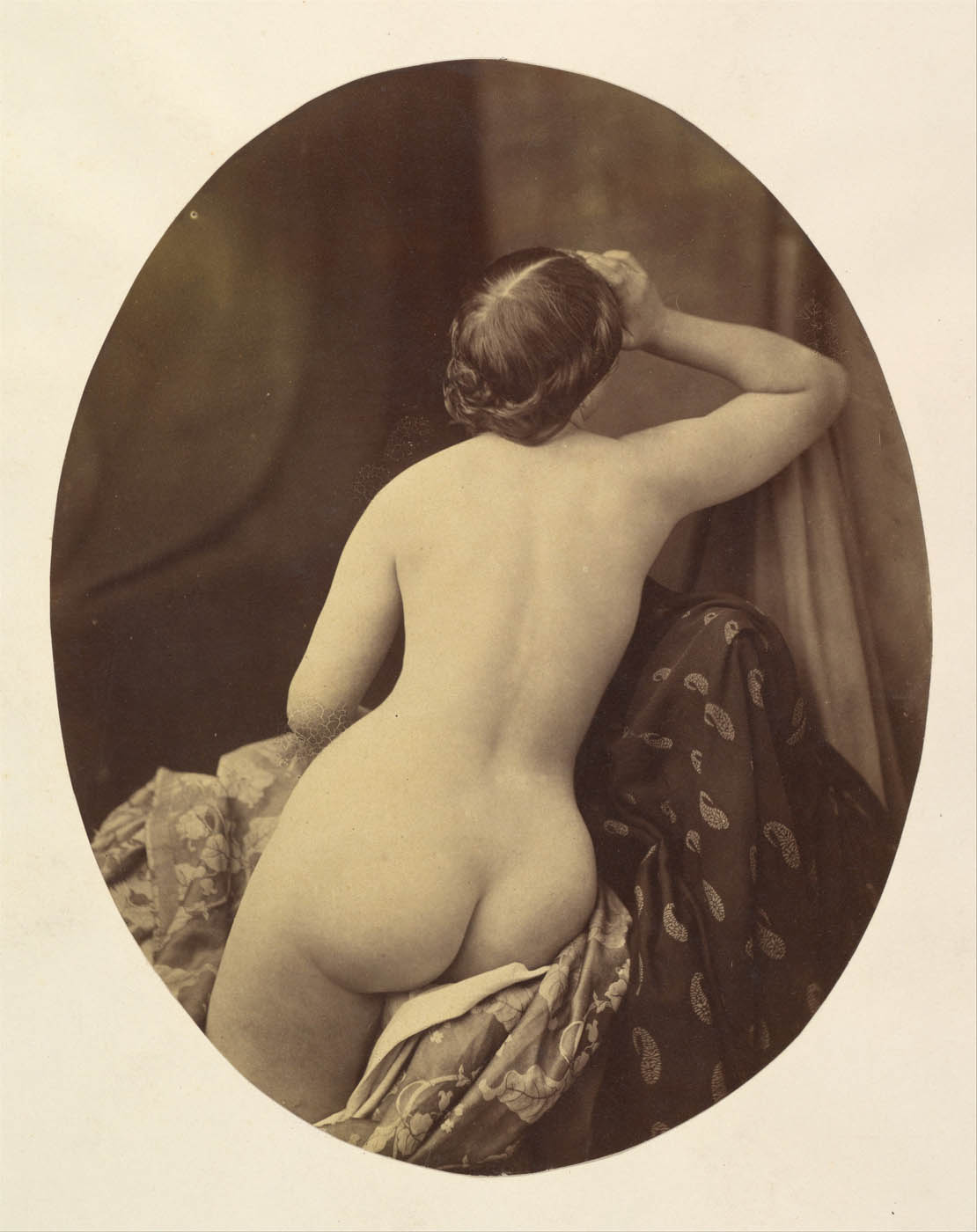
![Unknown photographer (French) '[Female Nude with Mask]' c. 1870](https://artblart.com/wp-content/uploads/2012/09/female-nude-with-mask.jpg "Unknown photographer (French) '[Female Nude with Mask]' c. 1870")
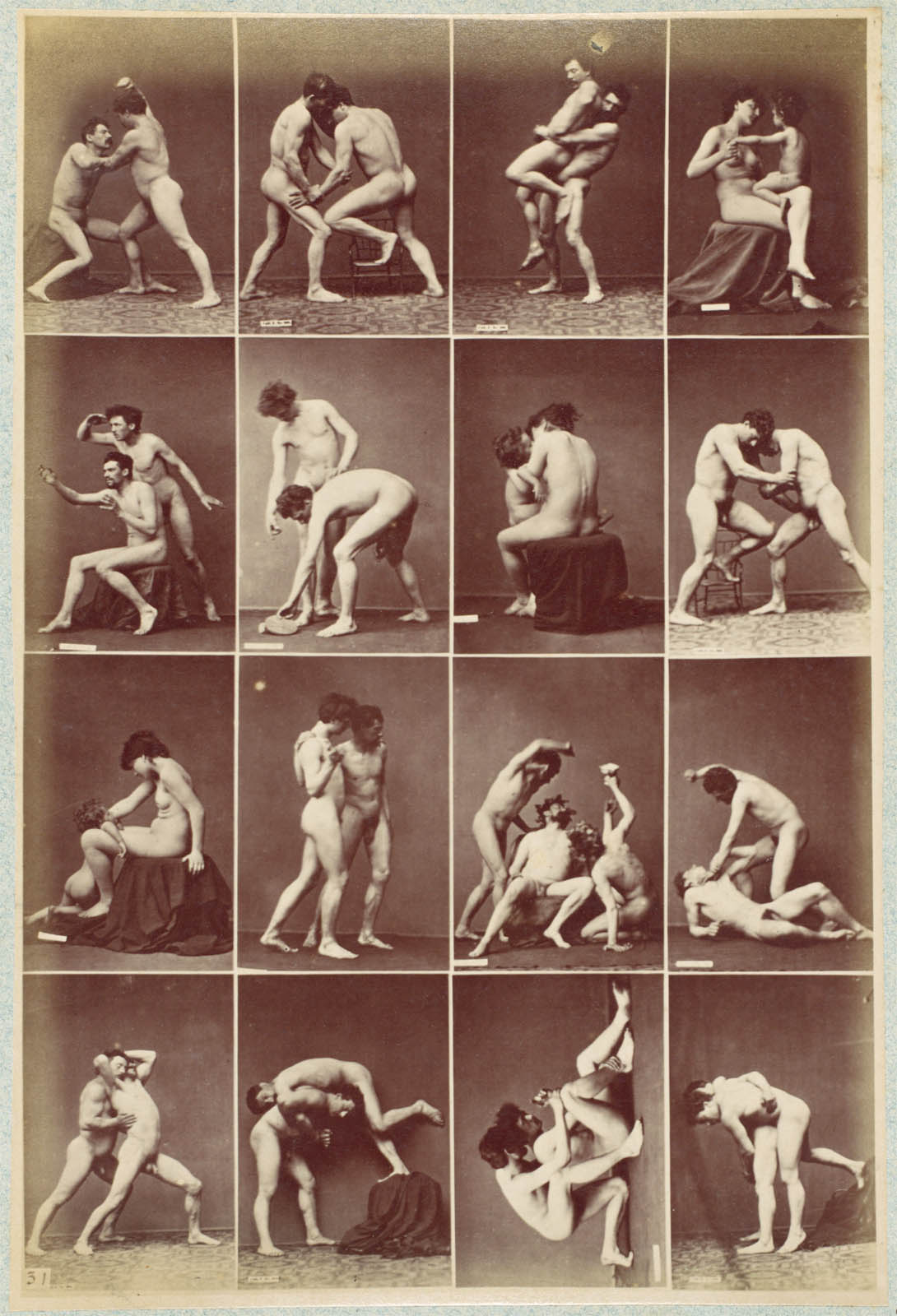
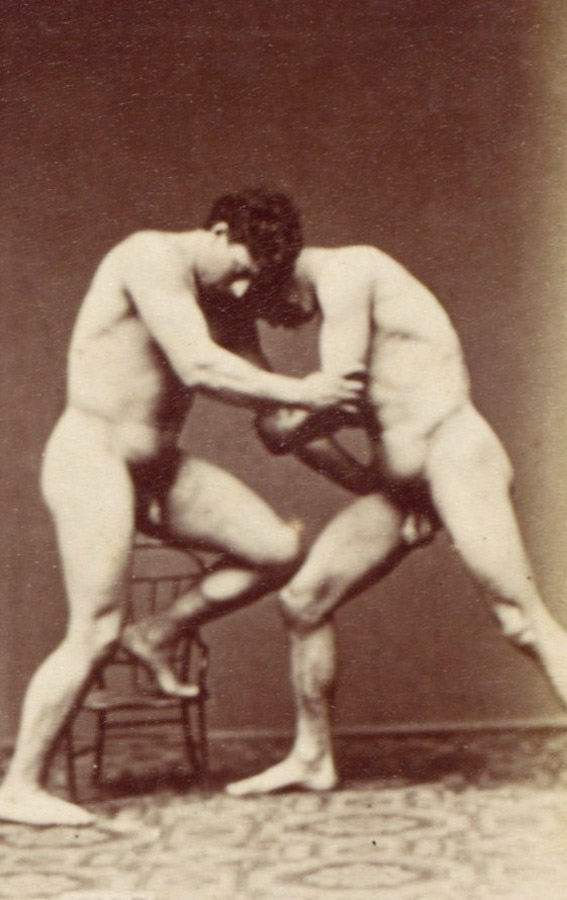
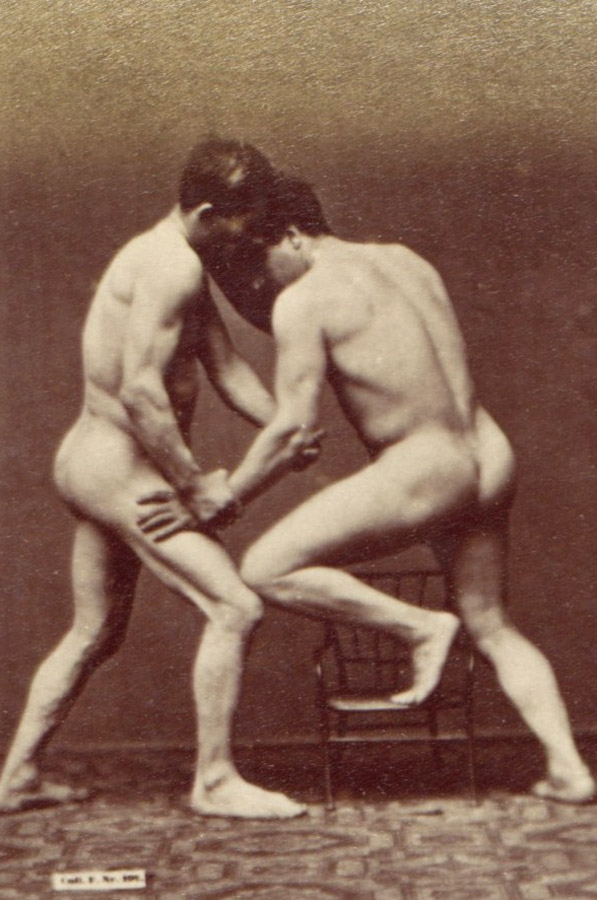
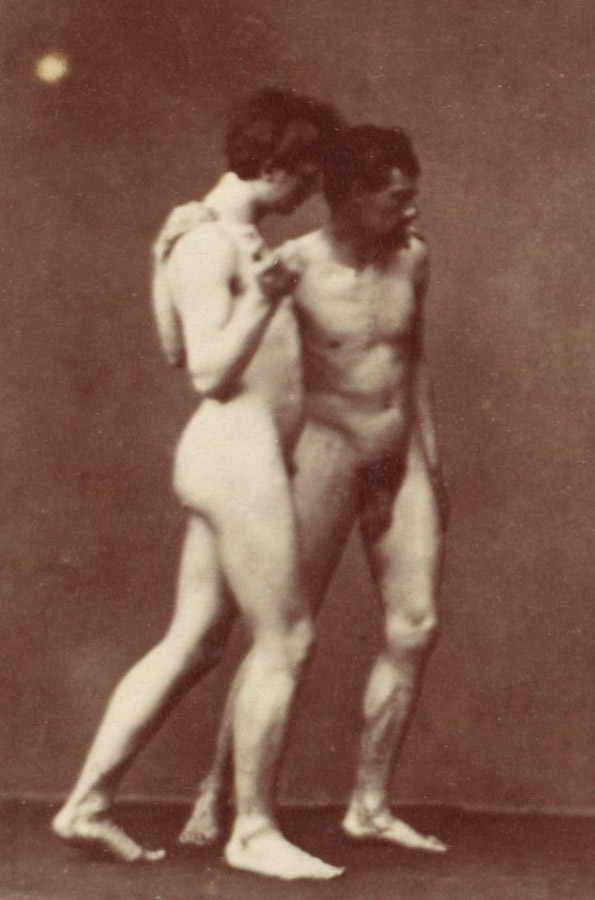
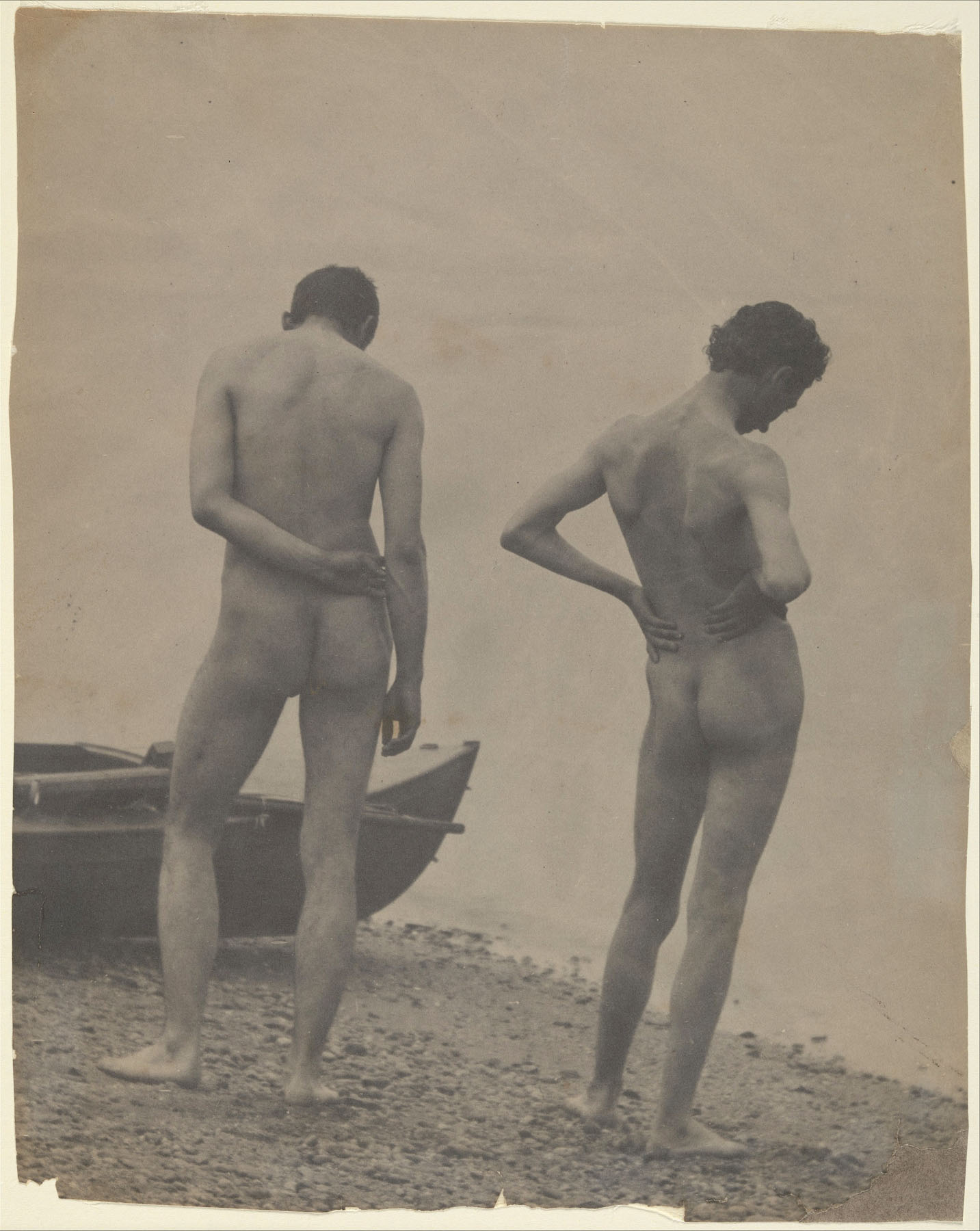
![Albert Londe (French, 1858-1917) Paul Marie Louis Pierre Richer (French, 1849-1933) '[Male Musculature Study]' c. 1890](https://artblart.com/wp-content/uploads/2012/09/male-study.jpg "Albert Londe (French, 1858-1917) Paul Marie Louis Pierre Richer (French, 1849-1933) '[Male Musculature Study]' c. 1890")
![Guglielmo Plüshow (Italian born Germany, 1852–1930) '[Young Male Nude Seated on Leopard Skin]' 1890s-1900s](https://artblart.com/wp-content/uploads/2012/09/plushow-young-male-nude-seated-on-leopard-skin.jpg "Guglielmo Plüshow (Italian born Germany, 1852–1930) '[Young Male Nude Seated on Leopard Skin]' 1890s-1900s")
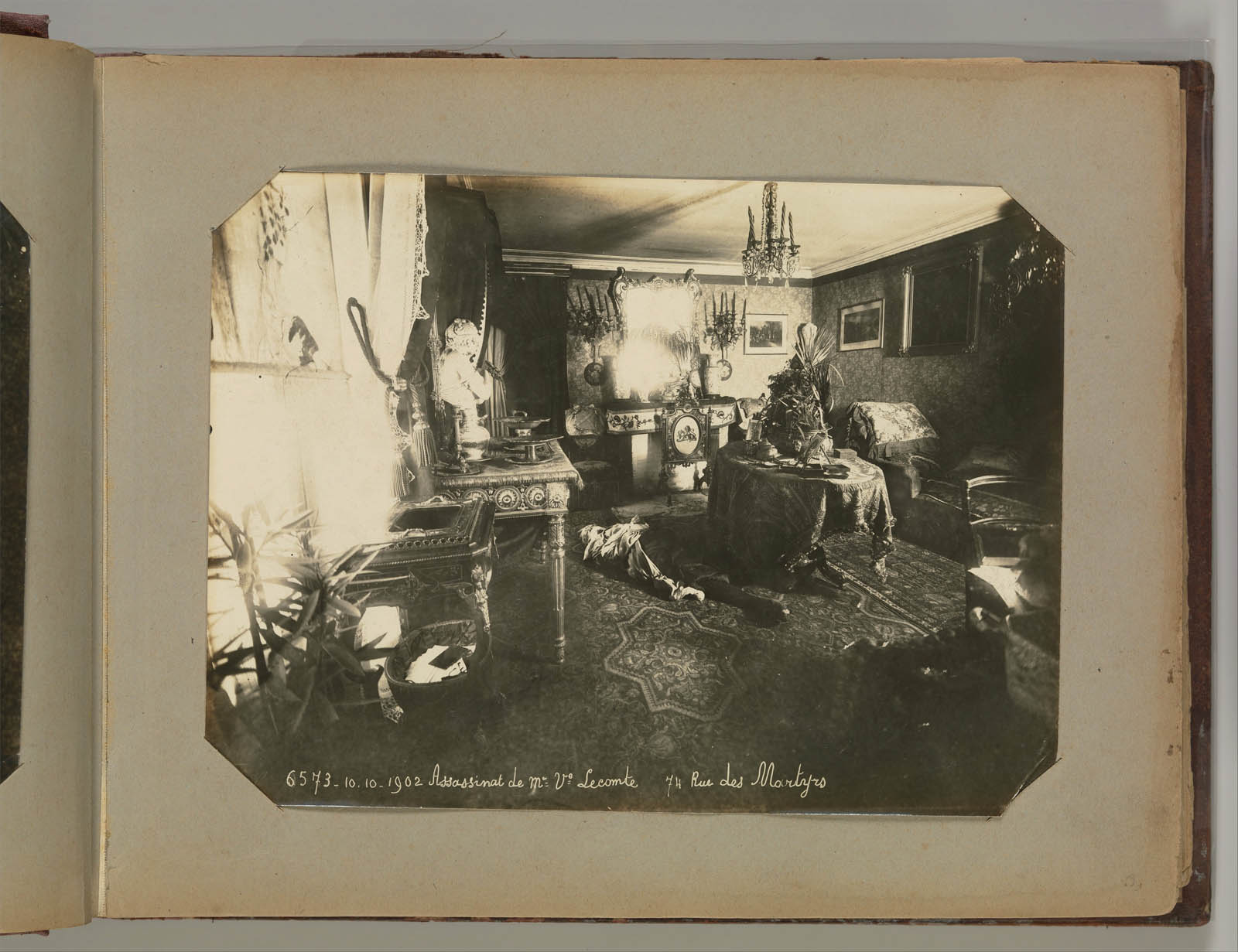
![Lady Ottoline Violet Anne Cavendish-Bentinck Morrell (British, 1873-1938) '[Cavorting by the Pool at Garsington]' c. 1916](https://artblart.com/wp-content/uploads/2012/09/cavendish-bentinck-morrell-cavorting-by-the-pool-at-garsington.jpg "Lady Ottoline Violet Anne Cavendish-Bentinck Morrell (British, 1873-1938) '[Cavorting by the Pool at Garsington]' c. 1916")
![Lady Ottoline Violet Anne Cavendish-Bentinck Morrell (British, 1873-1938) '[Cavorting by the Pool at Garsington]' c. 1916](https://artblart.com/wp-content/uploads/2012/09/cavendish-bentinck-morrell-cavorting-by-the-pool-at-garsington-a.jpg "Lady Ottoline Violet Anne Cavendish-Bentinck Morrell (British, 1873-1938) '[Cavorting by the Pool at Garsington]' c. 1916")
![Edward Weston (American, Highland Park, Illinois 1886 - 1958 Carmel, California) '[Nude]' 1925](https://artblart.com/wp-content/uploads/2012/09/weston-nude.jpg "Edward Weston (American, Highland Park, Illinois 1886 - 1958 Carmel, California) '[Nude]' 1925")
![George Platt Lynes (American, East Orange, New Jersey 1907–1955 New York) '[Male Nude]' 1930s](https://artblart.com/wp-content/uploads/2012/09/lynes-male-nude-1.jpg)
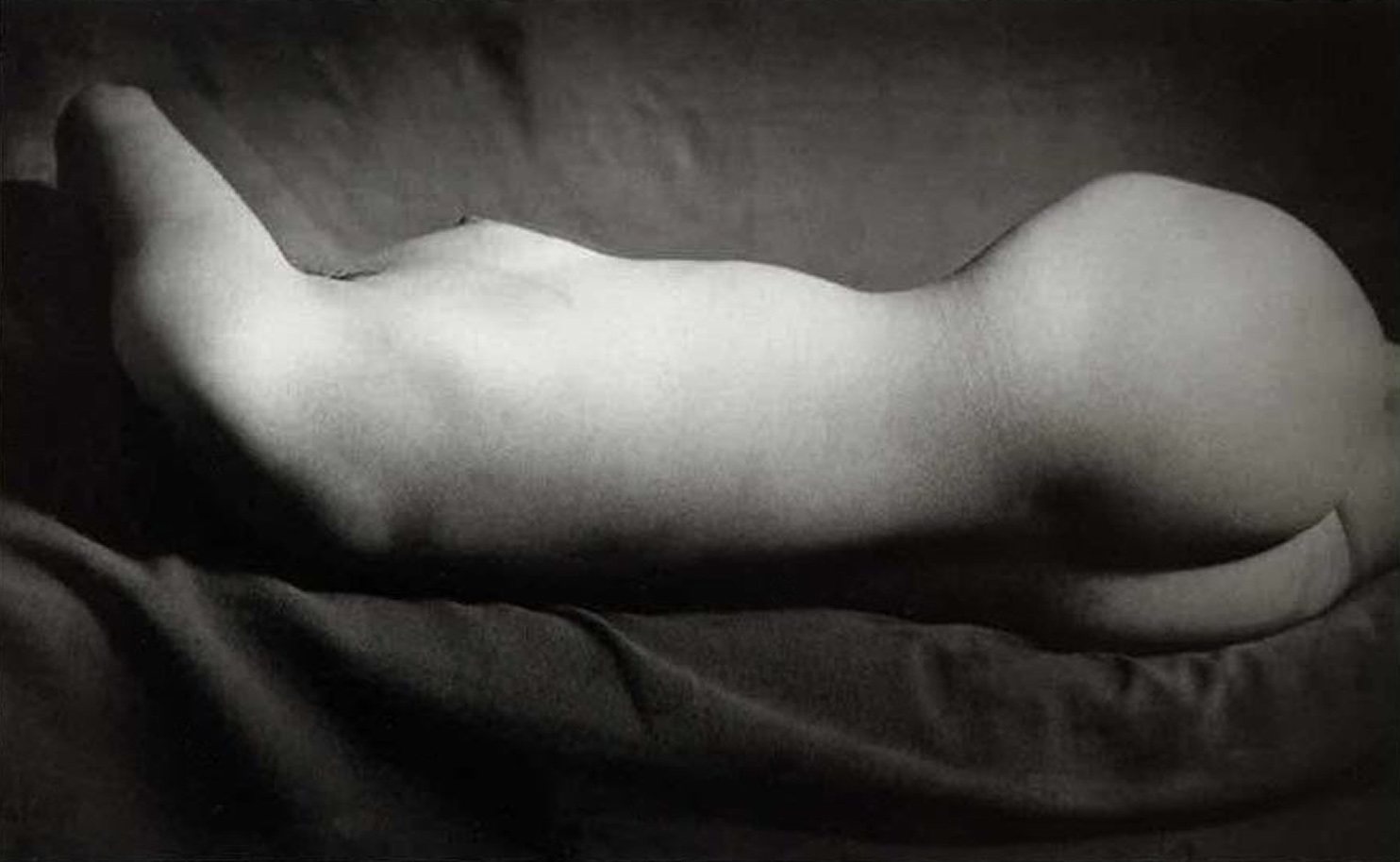
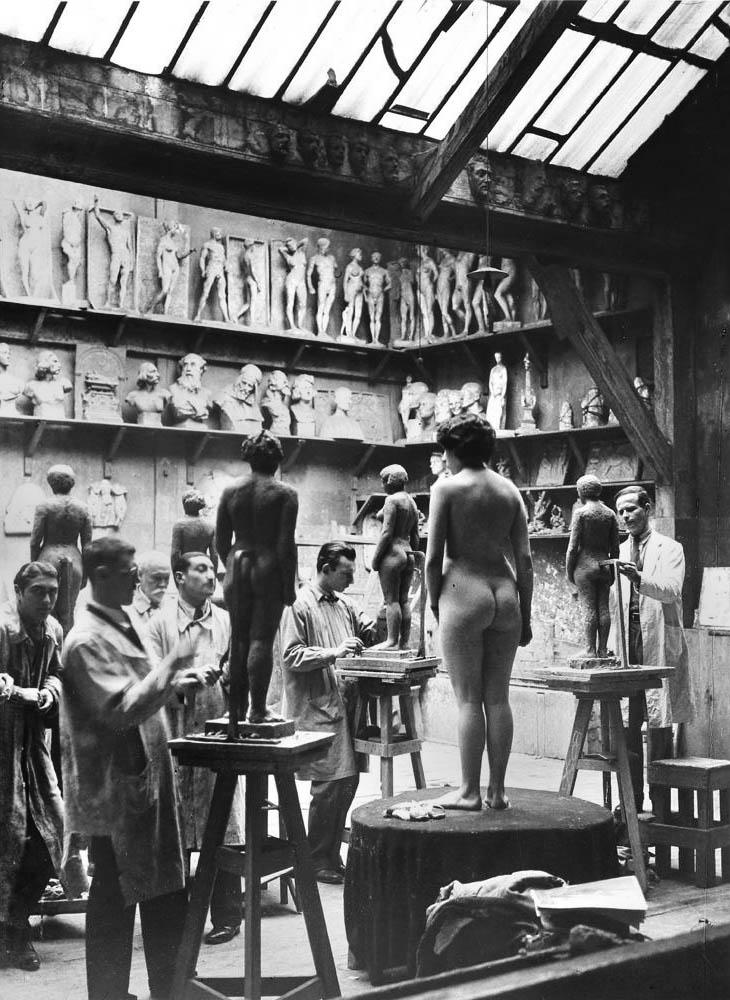
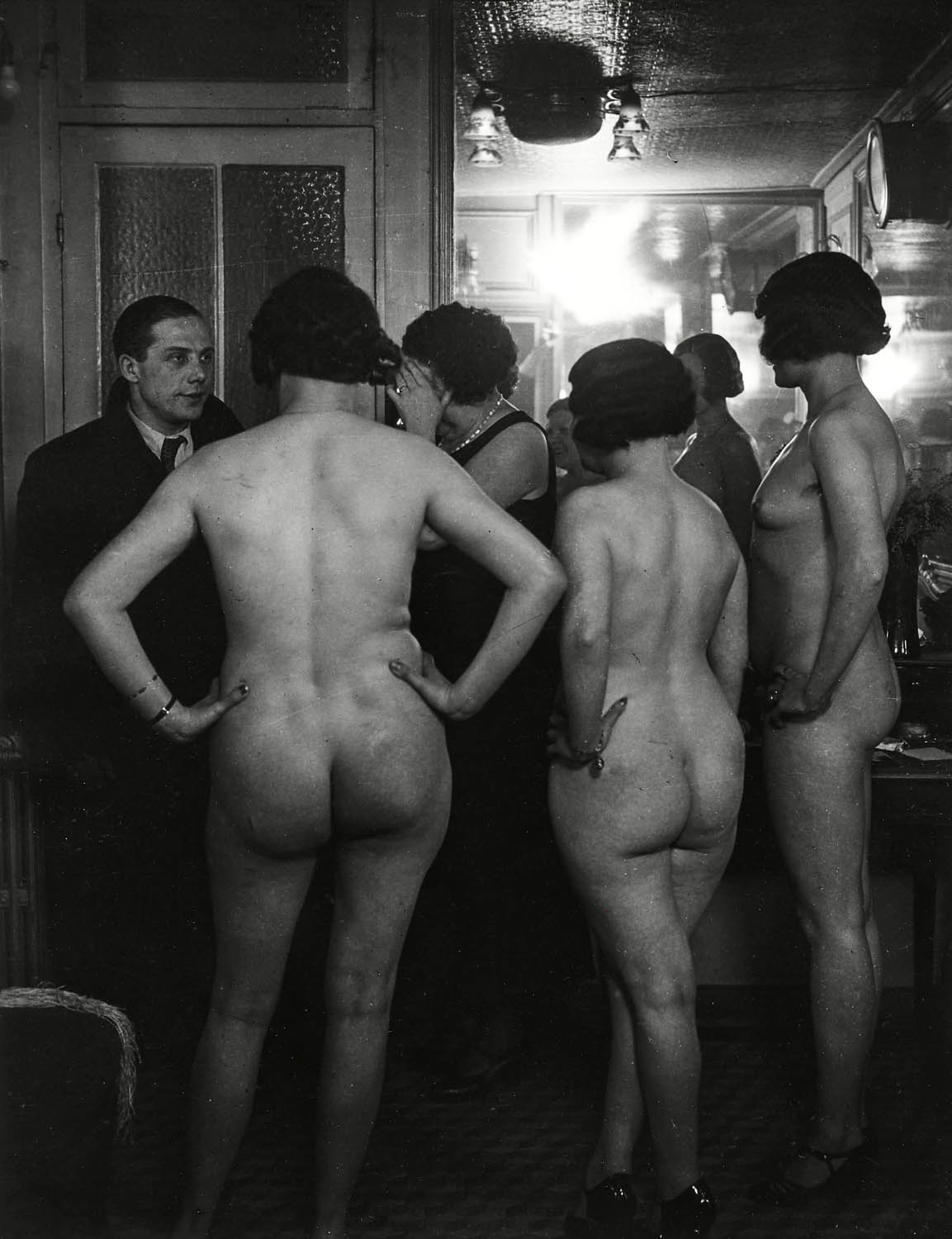


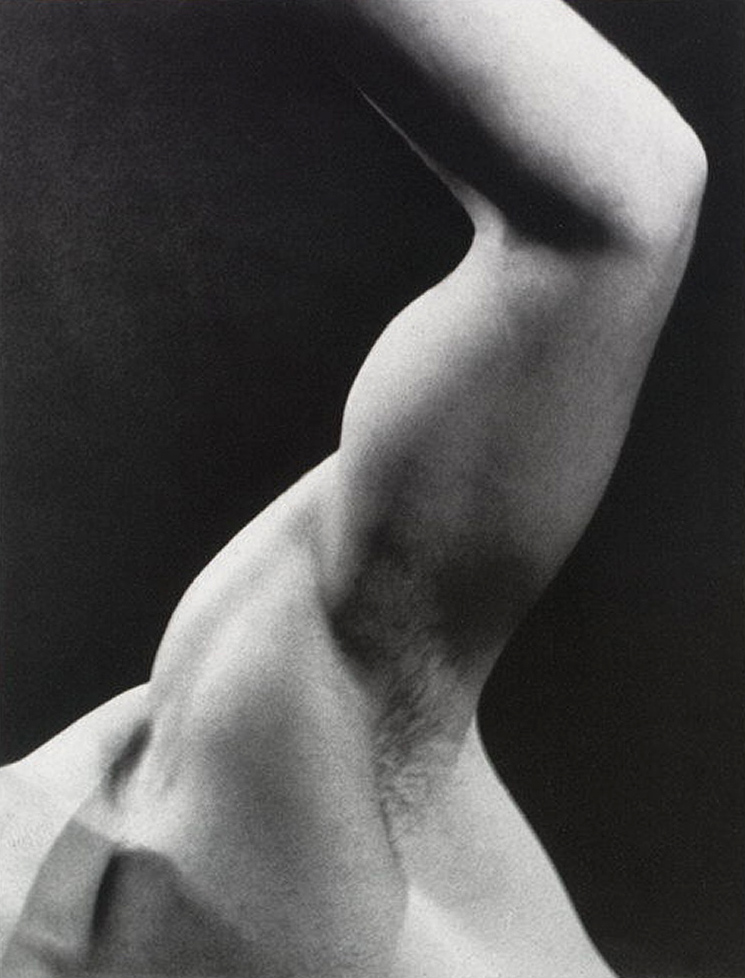


![Mark Morrisroe (American, 1959-1989) 'Untitled [Two Men in Silhouette]' c. 1987](https://artblart.com/wp-content/uploads/2012/08/16_morrisroe_untitled-web.jpg "Mark Morrisroe (American, 1959-1989) 'Untitled [Two Men in Silhouette]' c. 1987")
 Art Blart _ art and cultural memory archive
You must be logged in to post a comment.