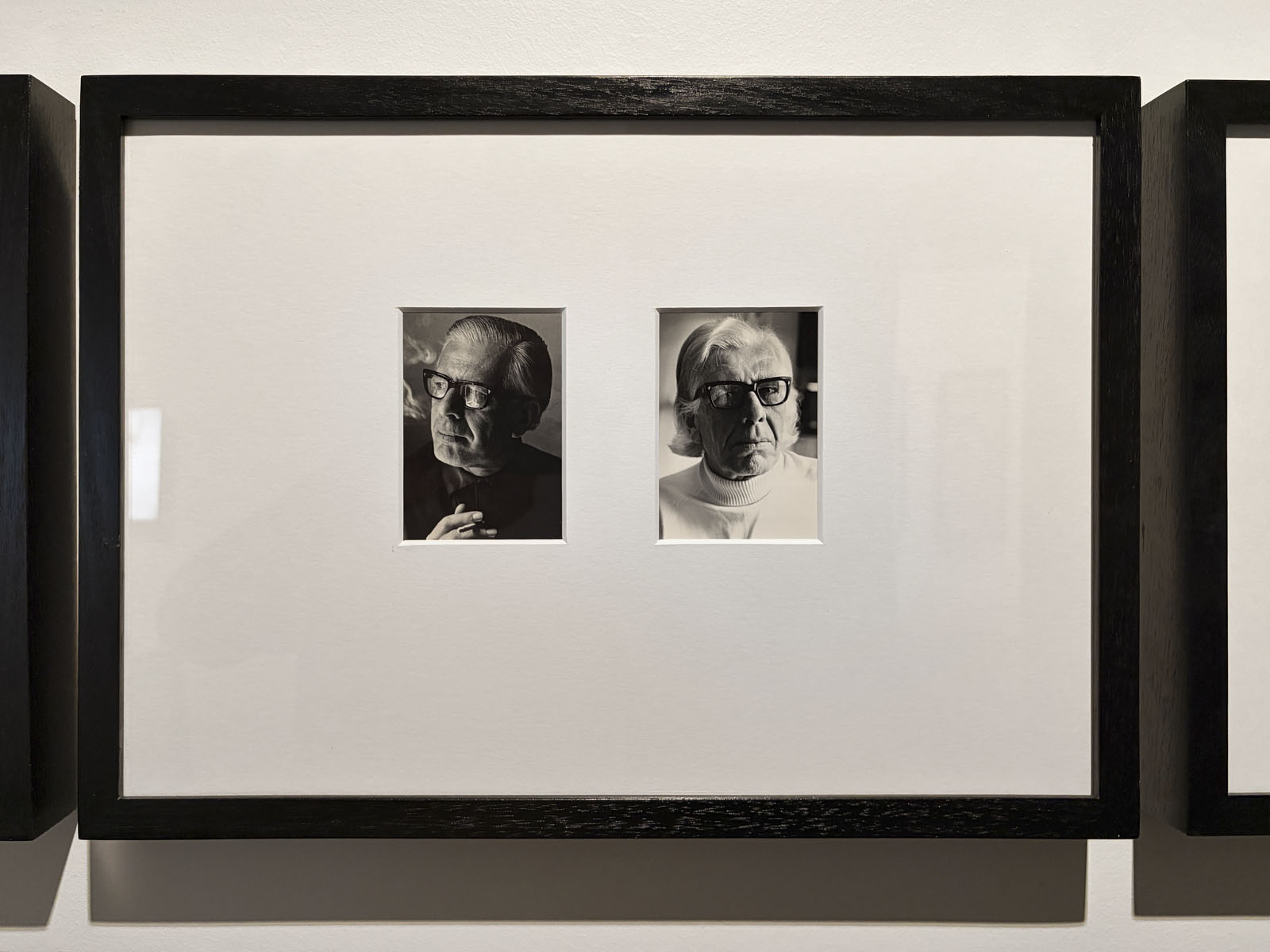
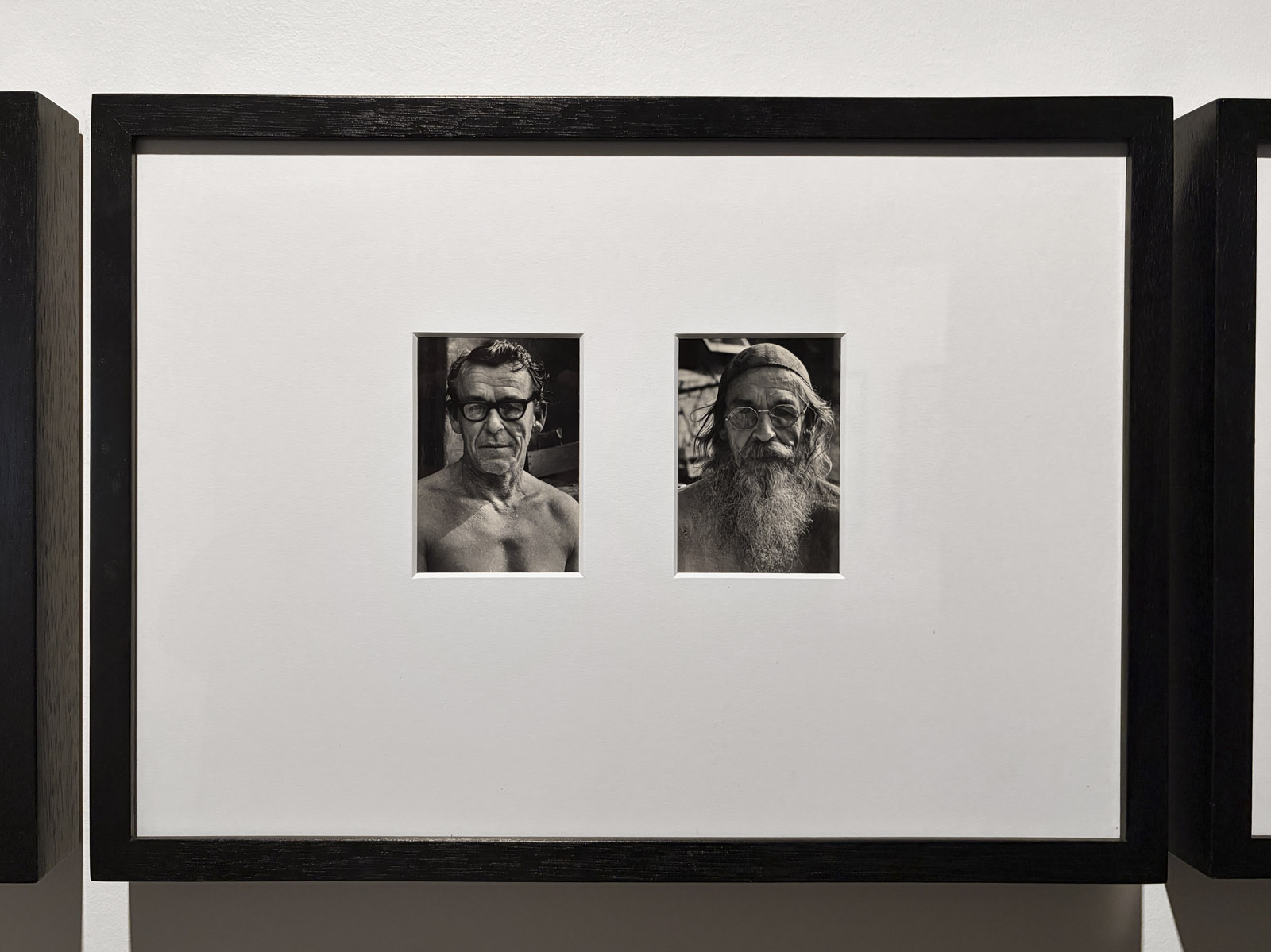
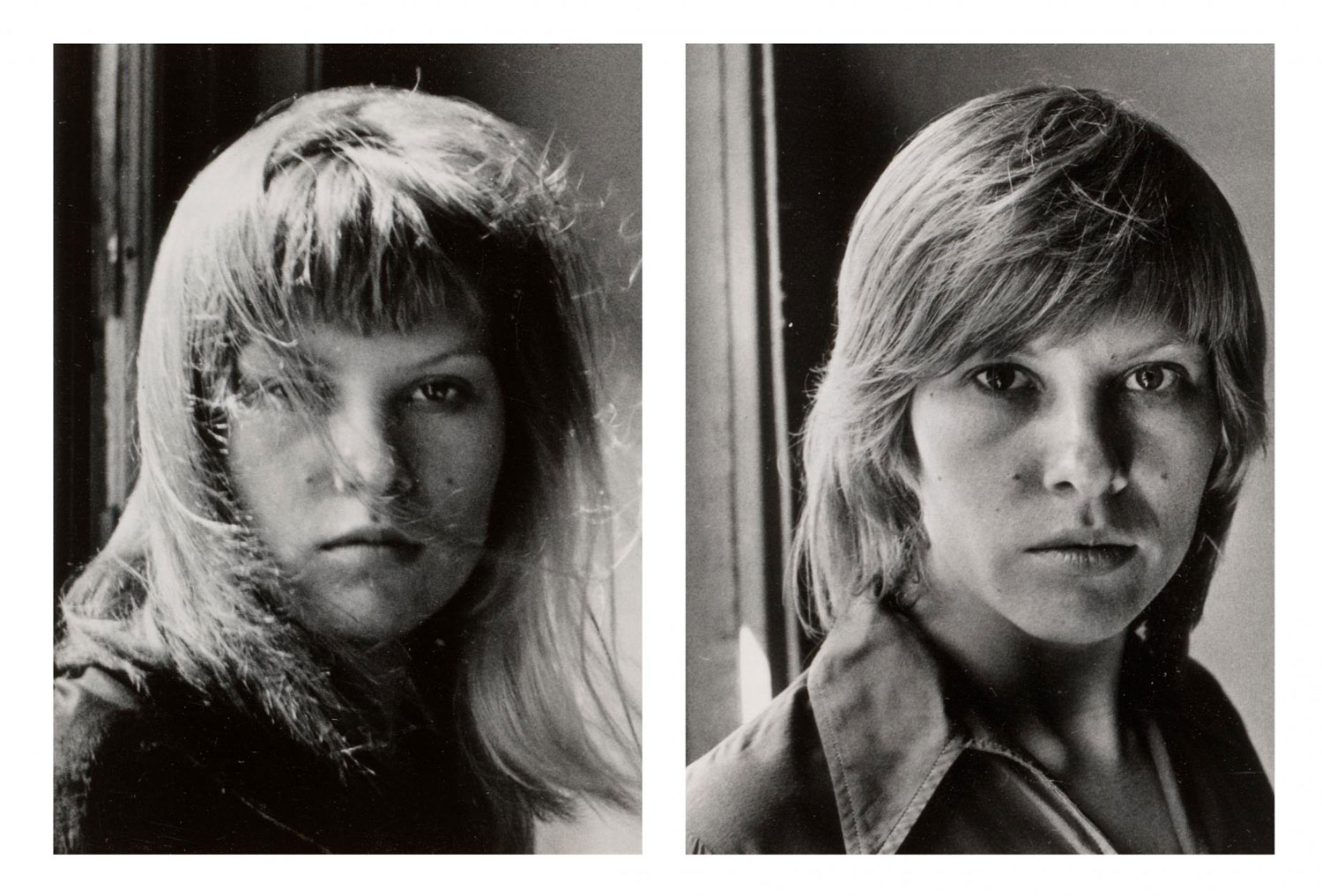
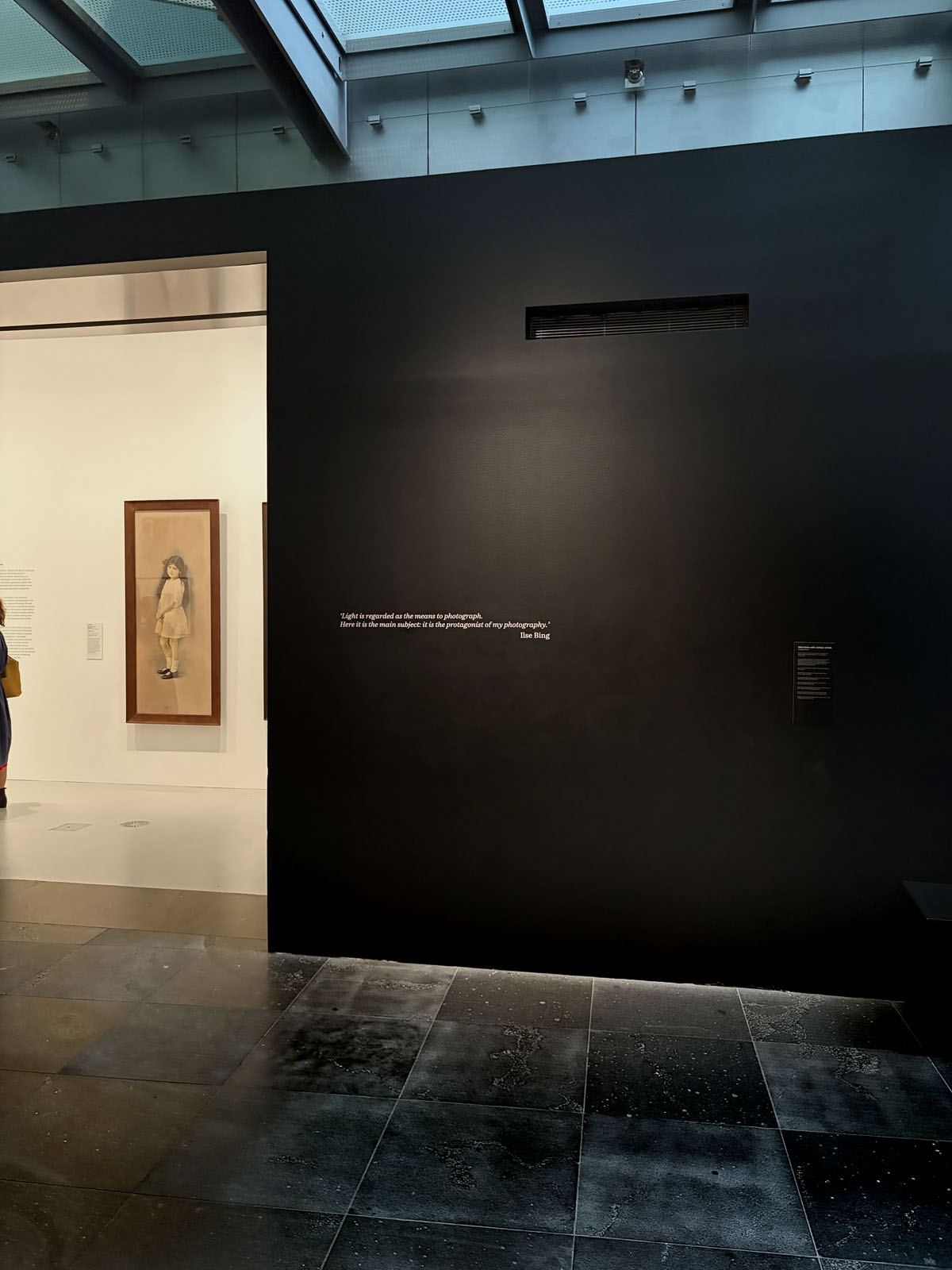
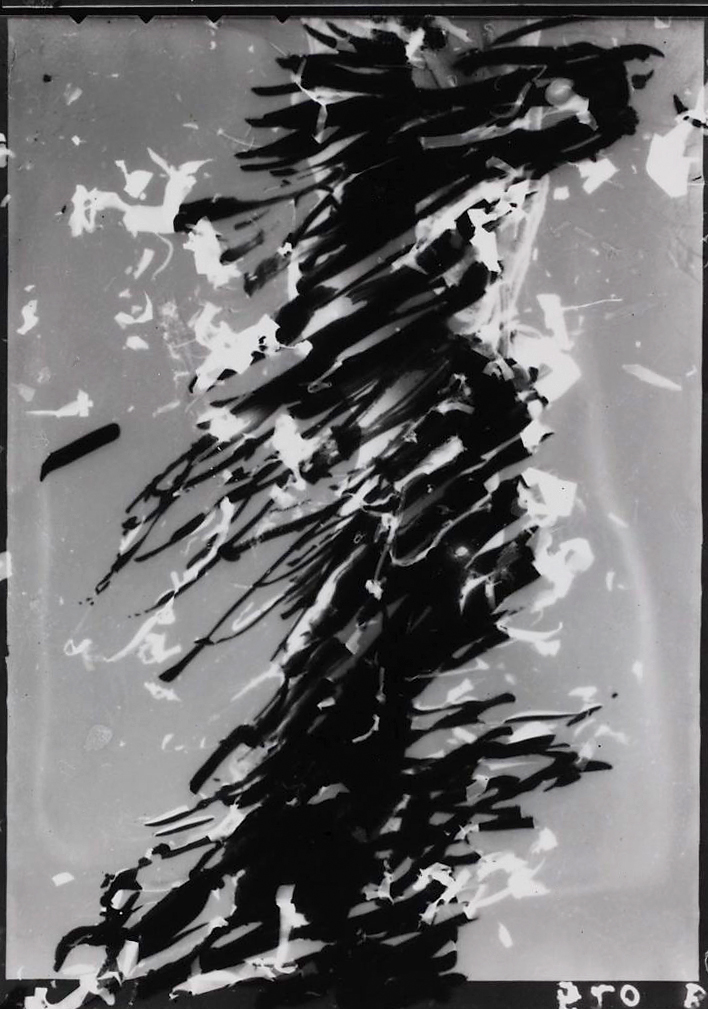
Exhibition: ‘Women Photographers 1900-1975: A Legacy of Light’ at NGV International, Melbourne, Part 2

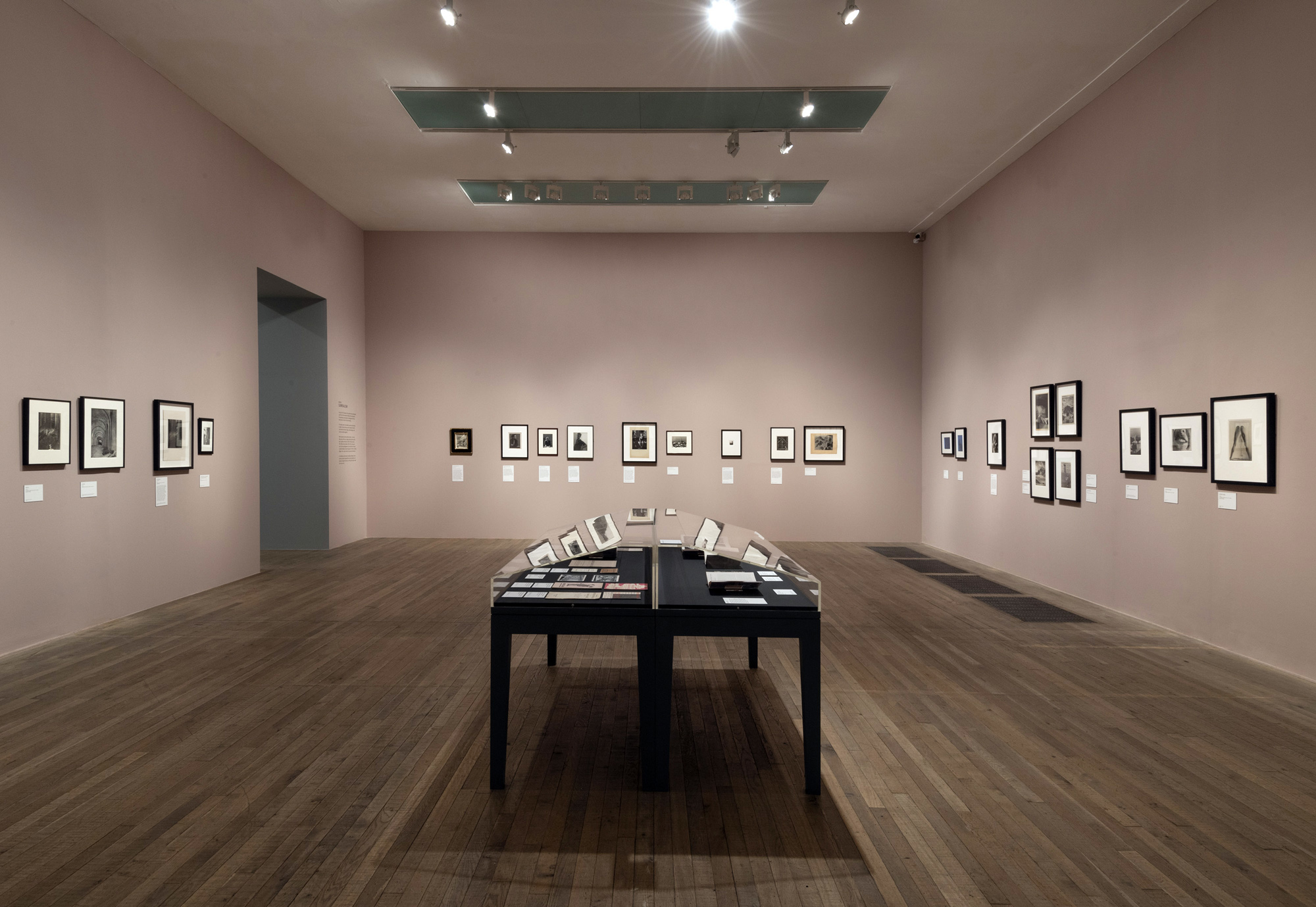
“Aesthetically (both pictorially and in exhibition design) there is a wonderful frisson to the grouping of the photographs in these darker, enclosed, tightly curated gallery spaces that is so intoxicating to the senses.” Dr Marcus Bunyan

Exhibition dates: 28th November, 2025 – 3rd May, 2026

Curator: Maggie Finch, Curator of Photography at the NGV
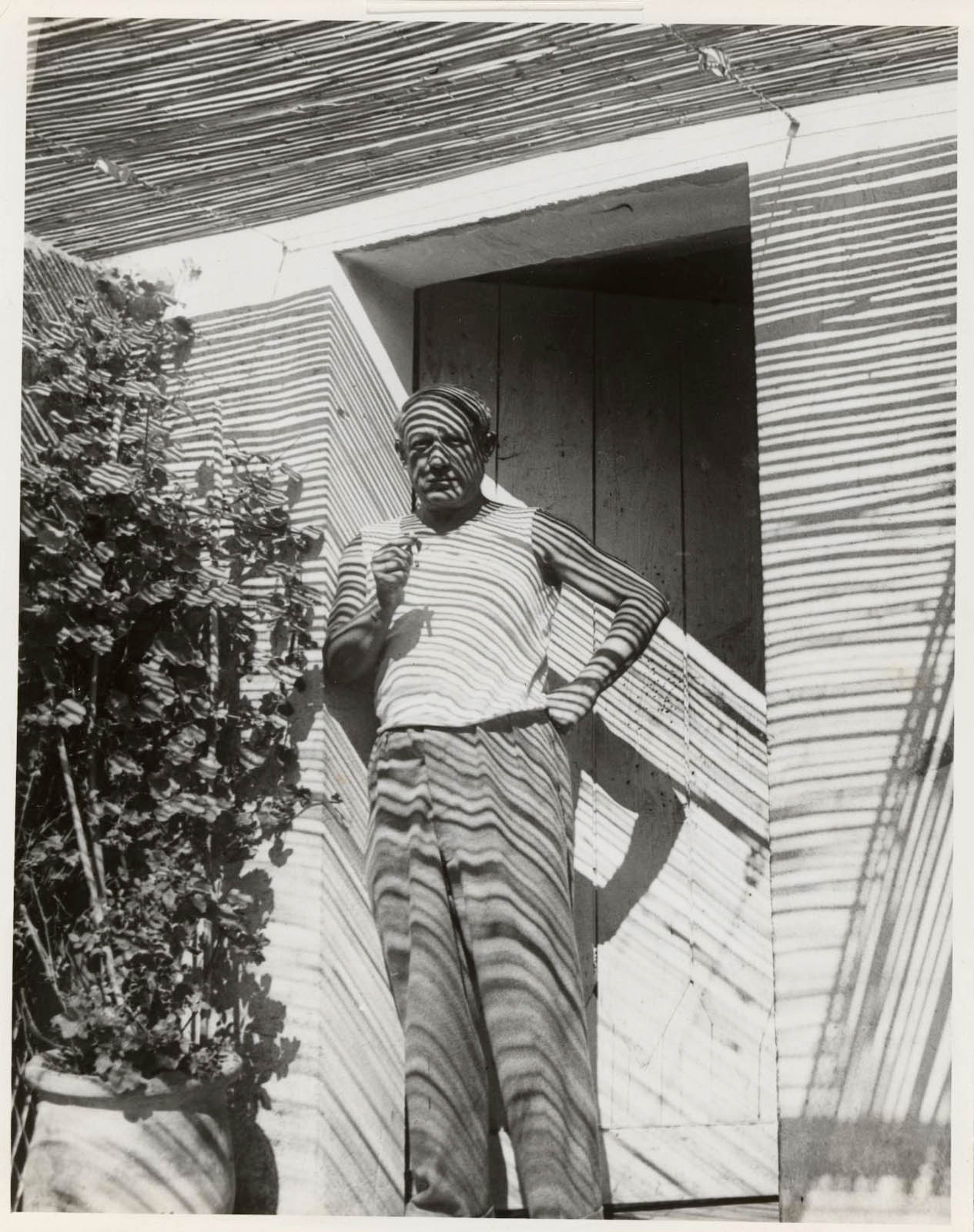
 

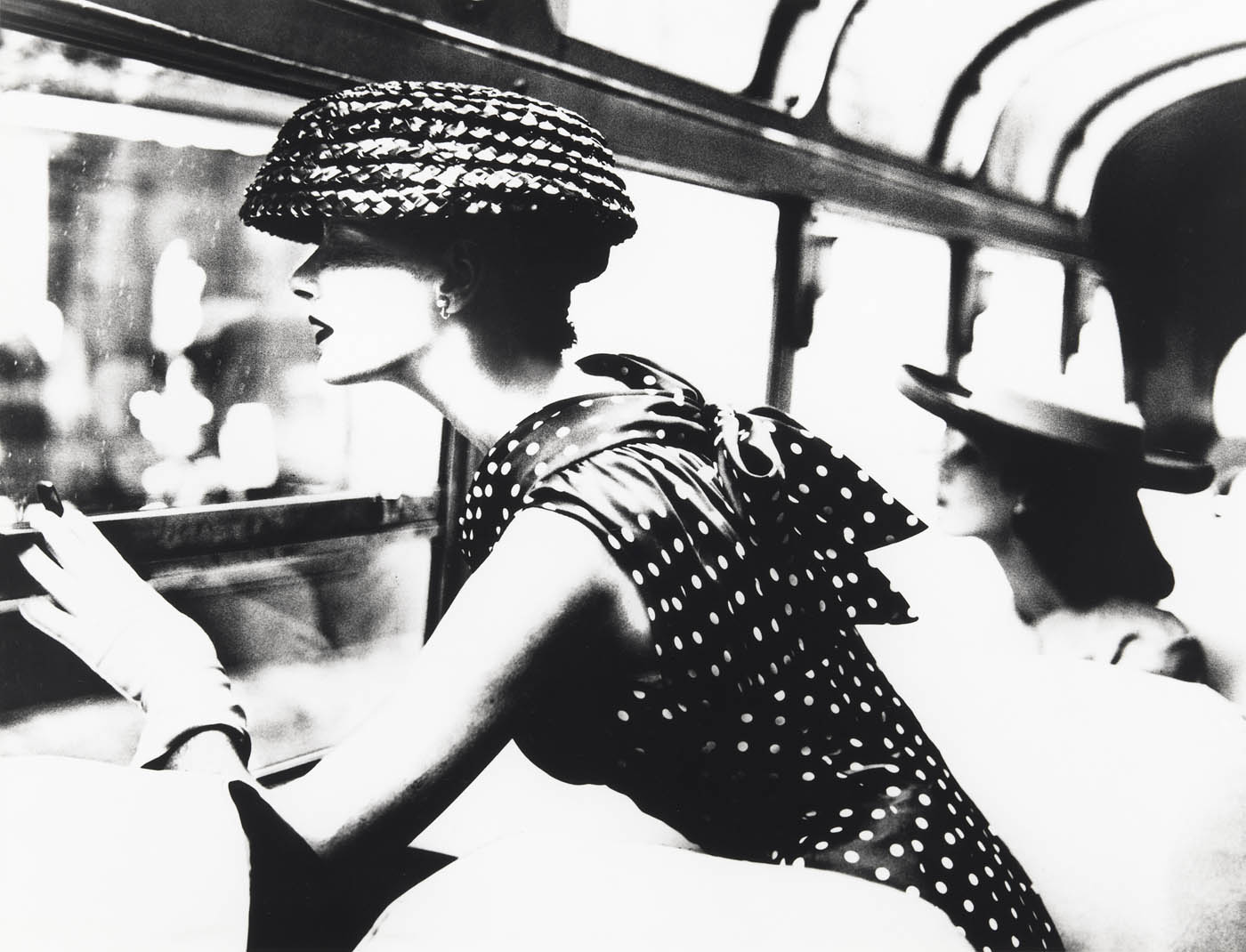
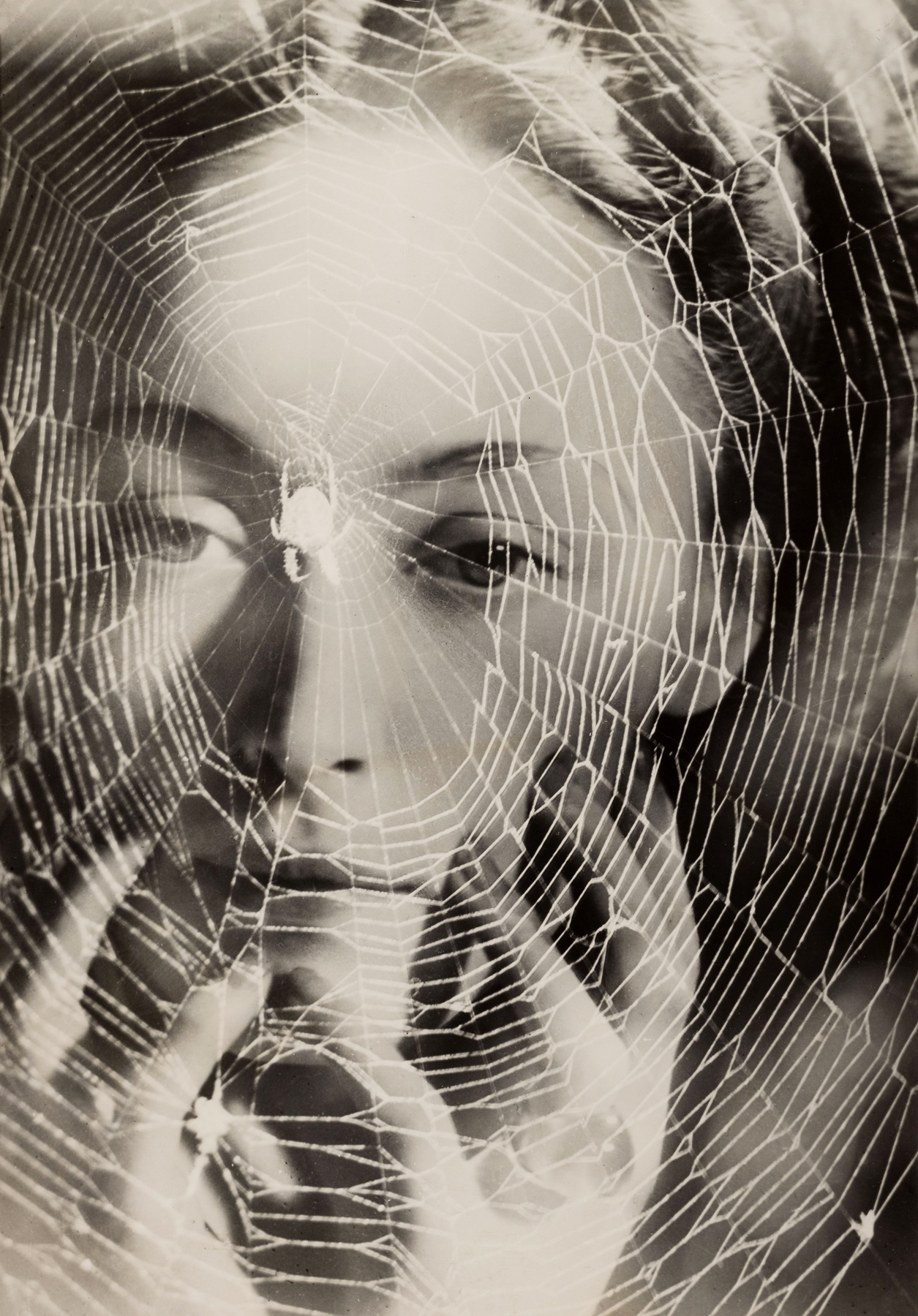
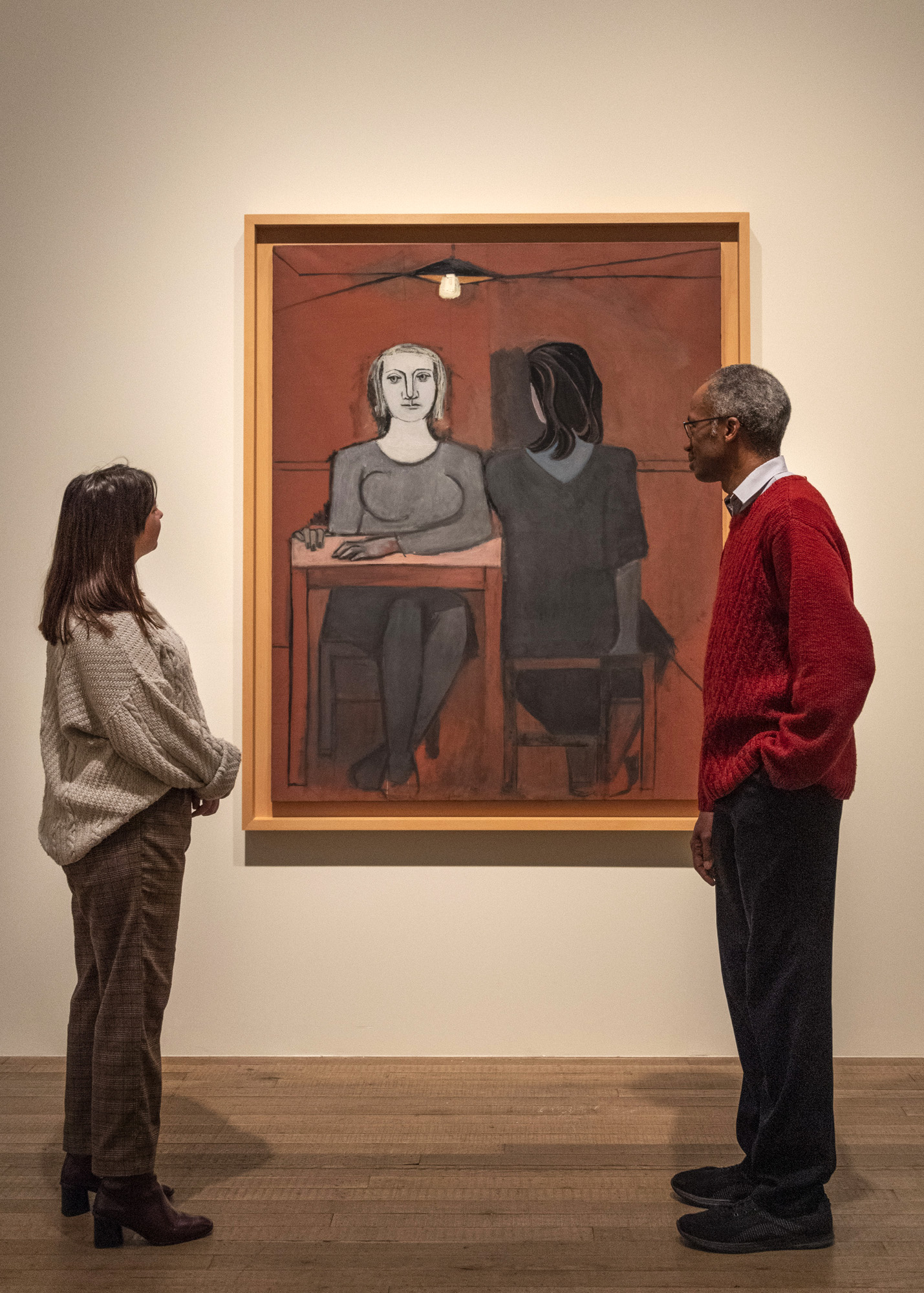
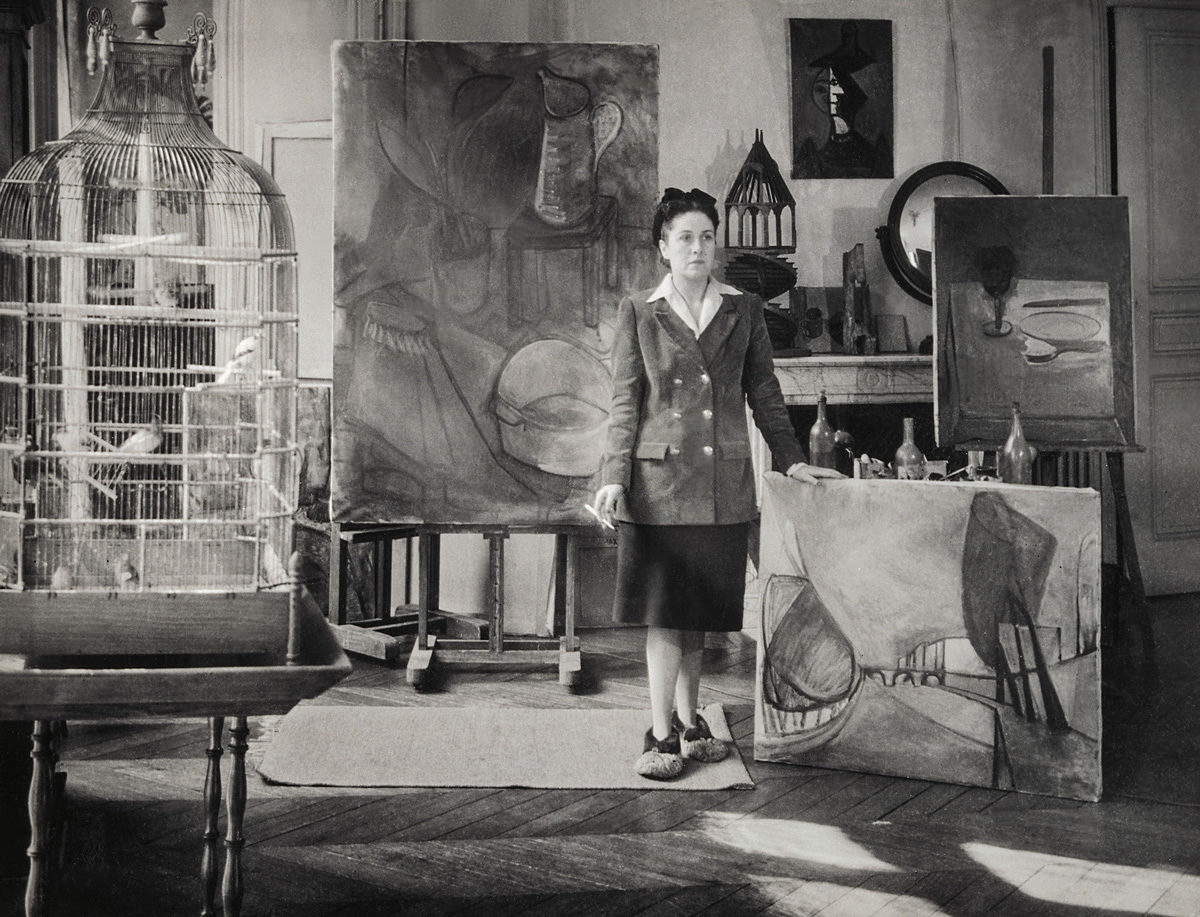
Dora Maar (French 1907-1997) 'Pablo Picasso standing under reed screening, Mougins, summer, 1937' (Pablo Picasso debout sous les cannisses, Mougins, été, 1937) 1937


Dora Maar (French 1907-1997)
Pablo Picasso standing under reed screening, Mougins, summer, 1937 (Pablo Picasso debout sous les cannisses, Mougins, été, 1937)
1937
Gelatin silver photograph
22.0 x 17.2cm (image)
23.1 x 18.2cm (sheet)
National Gallery of Victoria, Melbourne
Gift of Krystyna Campbell-Pretty AM and Family through the Australian Government’s Cultural Gifts Program, 2022
© Dora Maar. Licensed by Copyright Agency, Australia


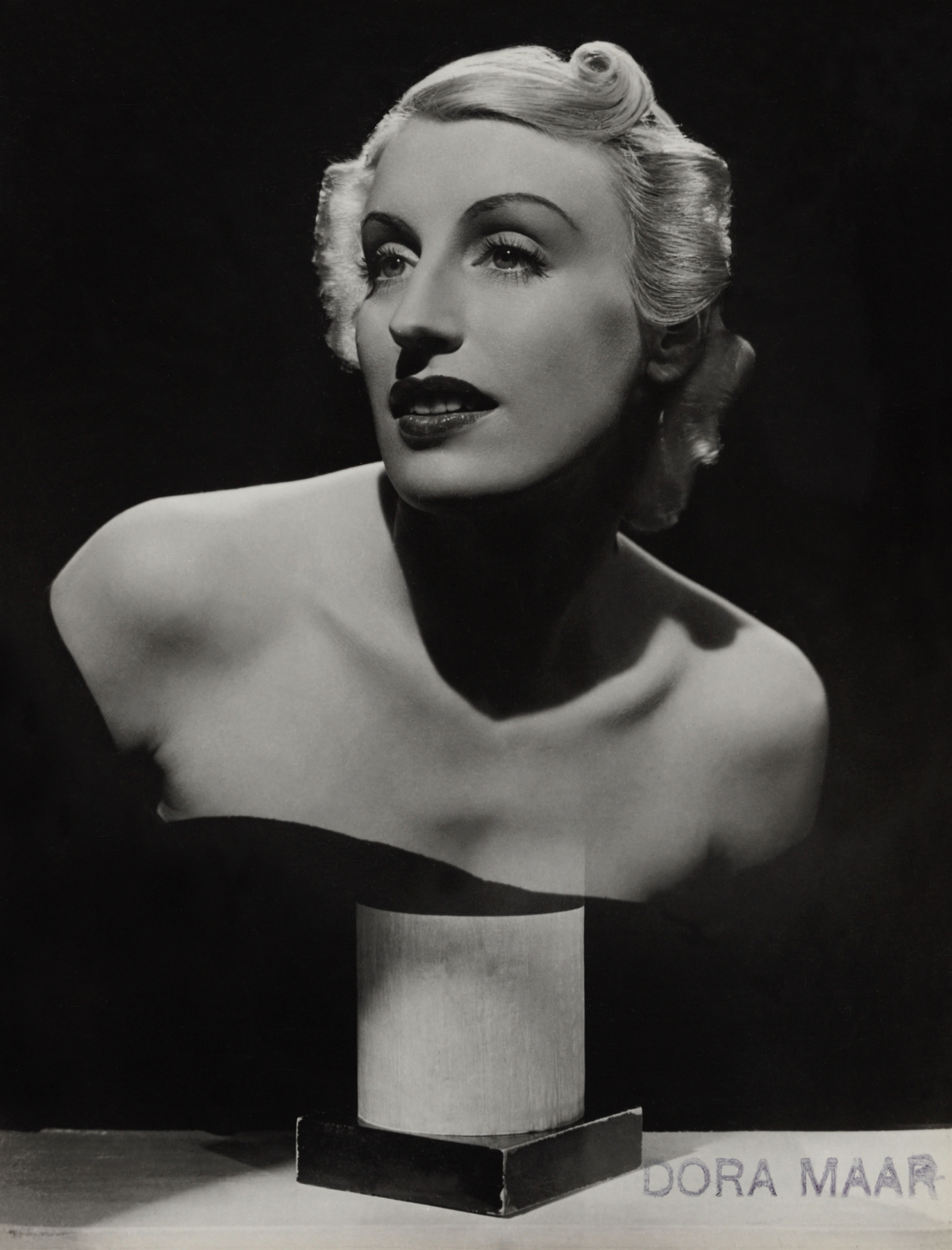
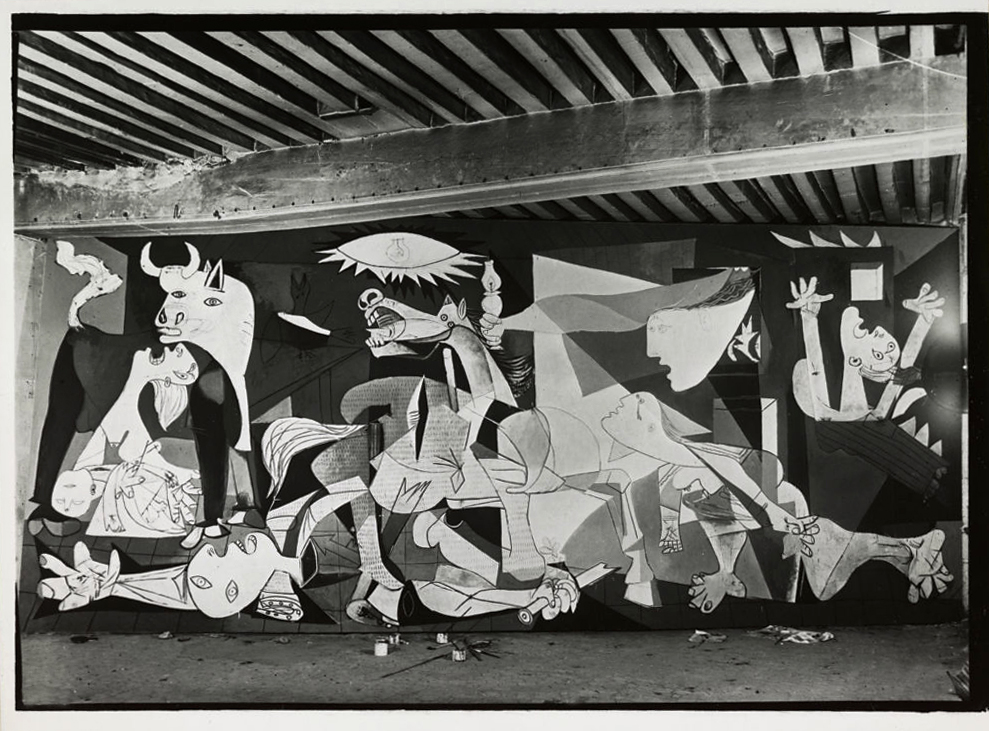
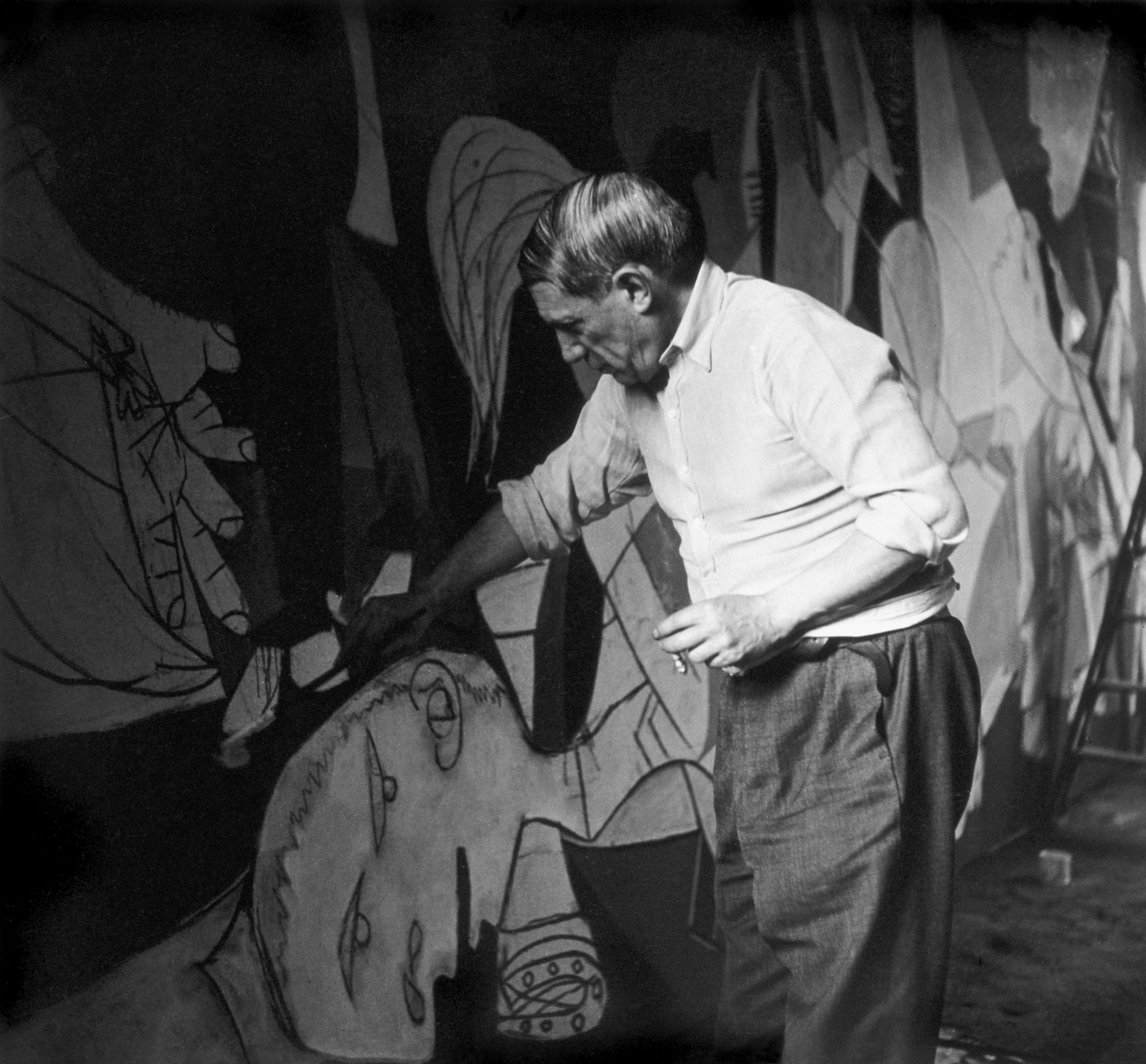
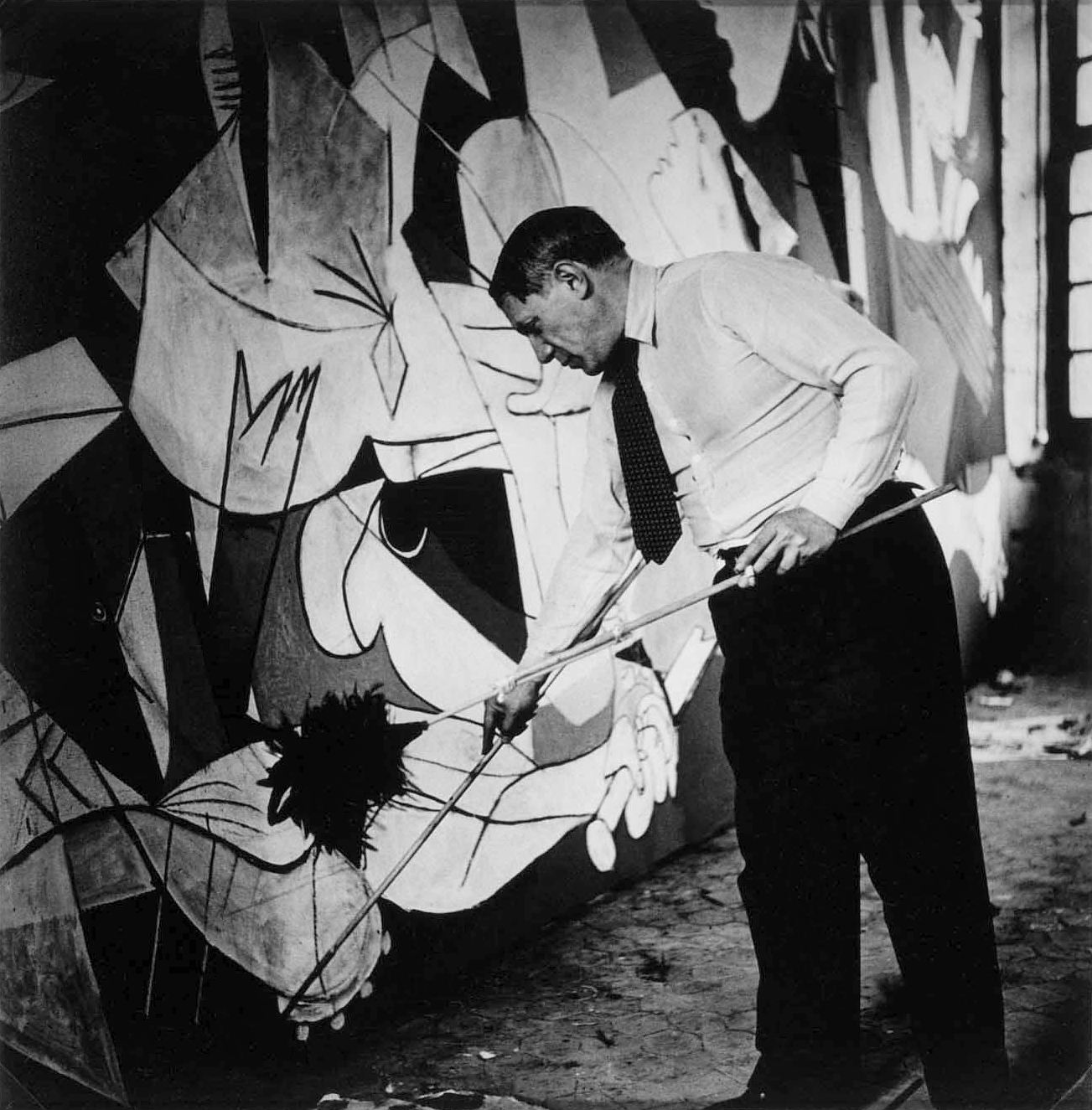
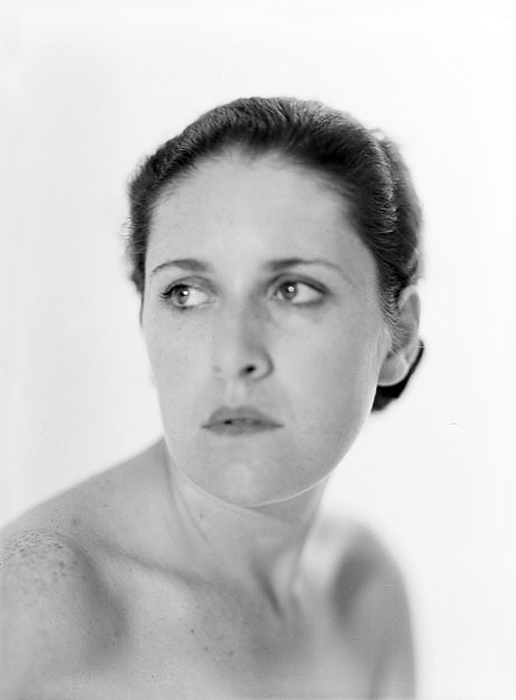
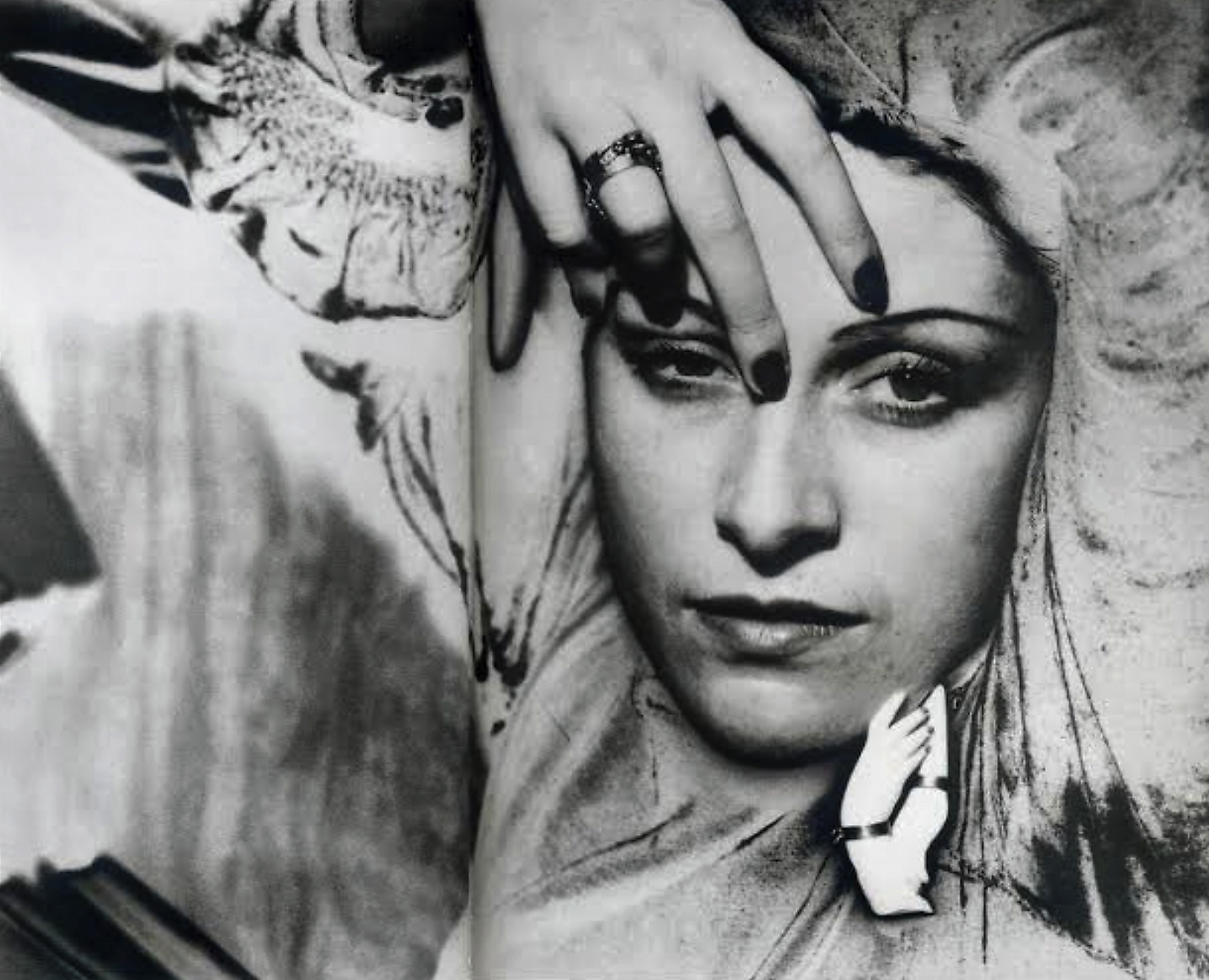
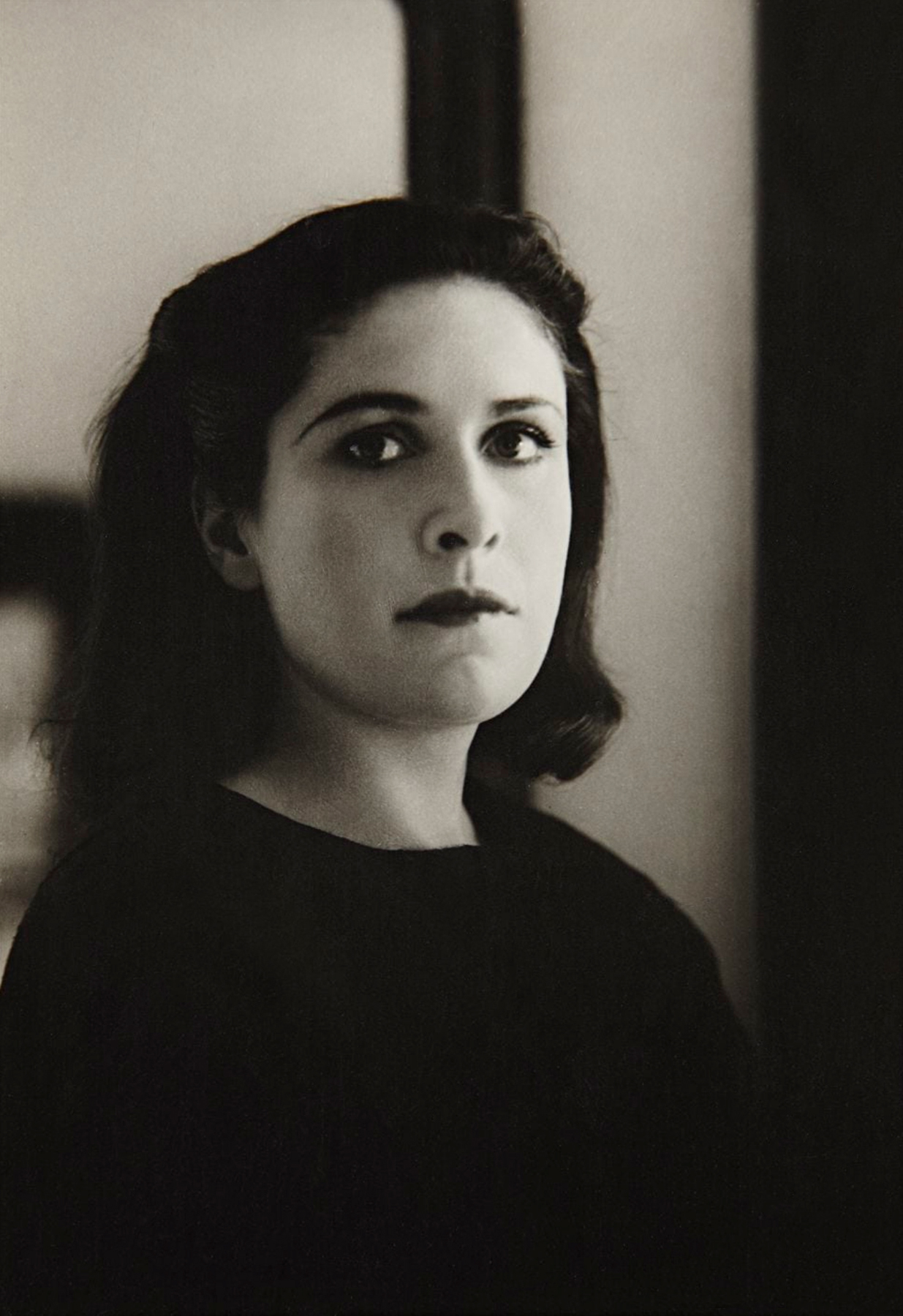
After being introduced to Pablo Picasso in 1935, Dora Maar became his lover, model and muse until their tumultuous liaison ended in 1943. During their time together, Maar famously documented the creation of the monumental painting Guernica in Picasso’s Paris studio. This portrait captures the artist at ease, bathed in an endlessly echoing lineation of shadows from the above reed screen. The portrait Maar took of Picasso a year later, displayed nearby, shows him seated outside, his eyes glinting with intensity. Both images were taken in Mougins, near Cannes, an area that Picasso returned to every summer.

Wall text from the exhibition


The interface of light

For much of its running length this exhibition of cinematic scope at the National Gallery of Victoria curated by the dependable Maggie Finch is a stimulating ride.

The early galleries in particular are a joy to behold, mixing as they do international and Australian female photographers mainly from the period between the two world wars. This placement of Australian photography in an international context (or vice versa) is something I have desired to see for a very long time in an Australian photographic exhibition. One informing the other. And it works so well!

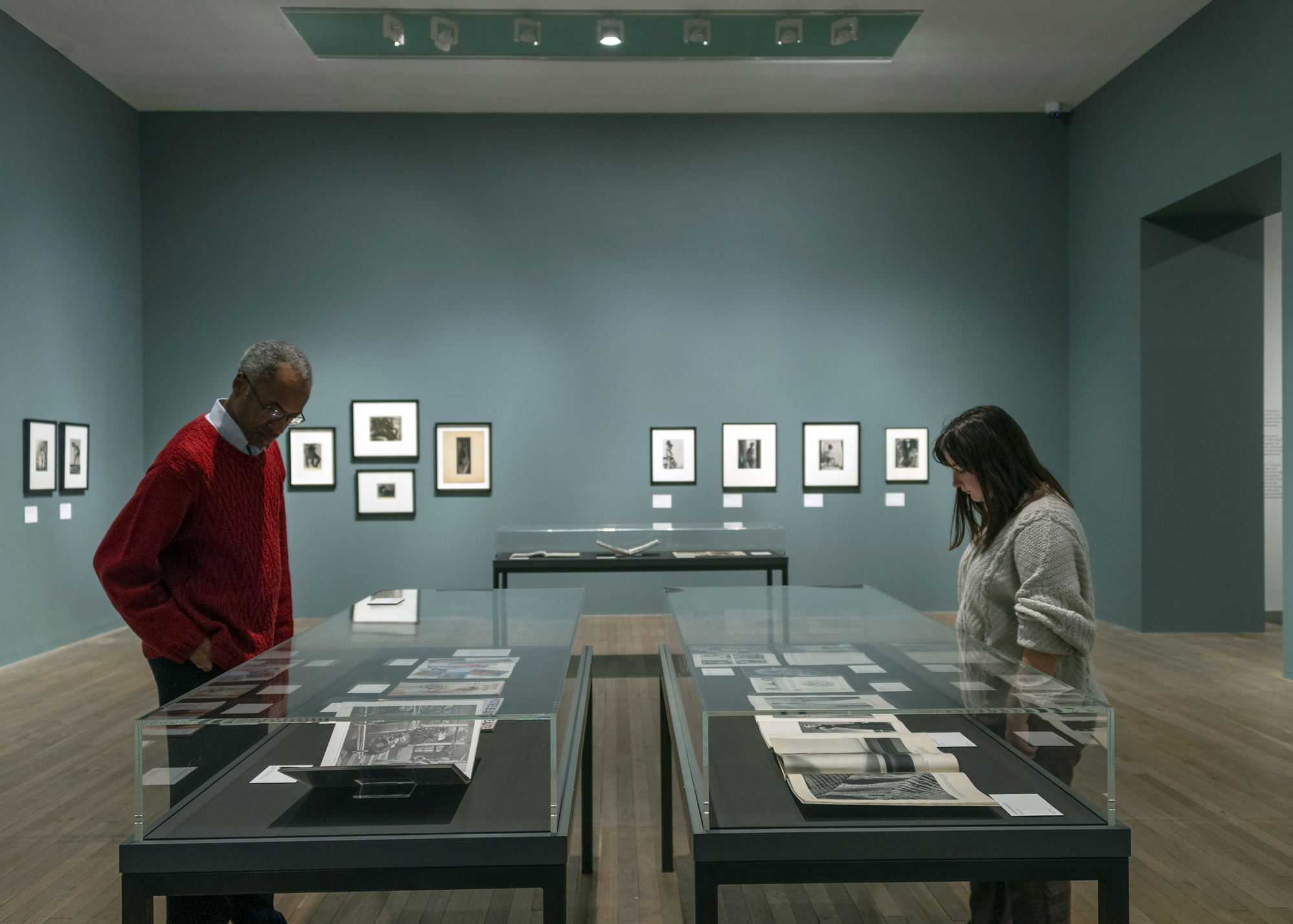
Aesthetically (both pictorially and in exhibition design) there is a wonderful frisson to the grouping of the photographs in these darker, enclosed, tightly curated gallery spaces that is so intoxicating to the senses. Ruth Hollick meets Madame d’Ora, Florence Henri meets Yamawaki Michiko, and Olive Cotton meets Dora Maar on the gallery walls, interwoven into an intertextual conversation on photography that spans identities, countries and continents. Perhaps not a legacy of light rather the interface of light, a shared connection, one nexus to another. I could have breathed in these photographs for hours!

That energy starts to dissipate as the gallery spaces open out in the second half of the exhibition, especially in the section ‘People and Place’ (see below). Poor Farm Security Administration prints of now famous photographs printed very flatly in the mid-1970s and purchased for the gallery in the same time period don’t help the cause – they need to be replaced in the collection with more appropriate prints of these images.

By the time of the final section, ‘New Ways Of Seeing: Portraits, Intimacy, Liberation’ (see below), the international representation has disappeared altogether and all the intoxicating energy has gone. In this section we find strong, eloquent and important Australian photographs from the period – conceptual, feminist, and on liberation – but it would have been great to have seen them paired with photographs from international photographers such as Cindy Sherman, Mary Ellen Mark, and Valie Export for example.

On reflection I can say that this is a strong exhibition from the NGV coherently and intelligently curated by Maggie Finch. It is fantastic to see that the gallery has been “splashing the cash” in recent years – supported by Krystyna Campbell-Pretty AM and the Bowness family – with over 170 new acquisitions for the photographic collection.

However for a public gallery, with most of the photographs already in the collection, to charge $25 entry price is really beyond the pale. I went twice to see the exhibition and $50 is a fair whack of money out of anyone’s budget.

Dr Marcus Bunyan


Many thankx to the NGV for allowing me to publish the media images in the posting. All installation photographs © Marcus Bunyan. Please click on the photographs for a larger version of the image. View Part 1 of the posting.
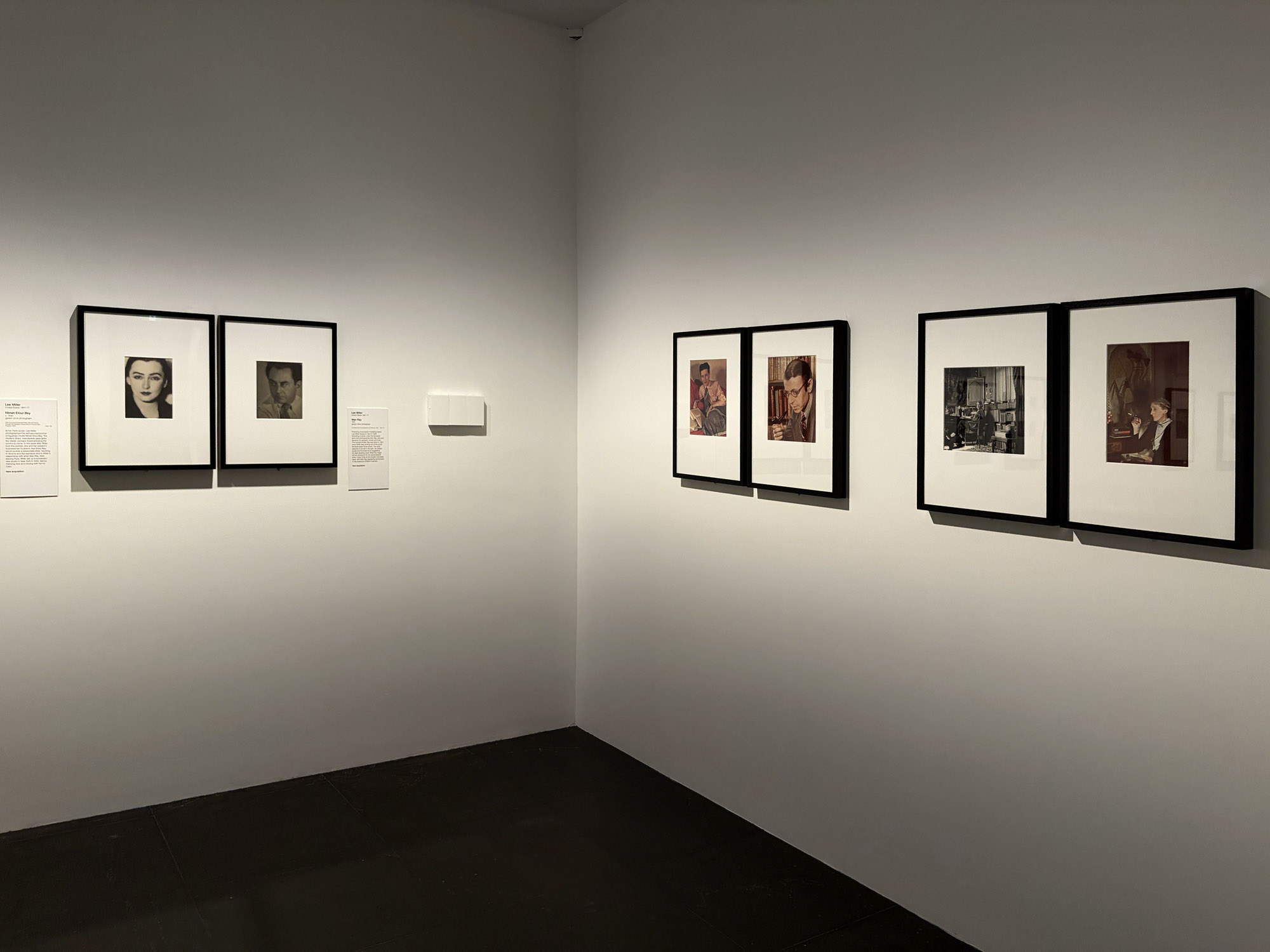


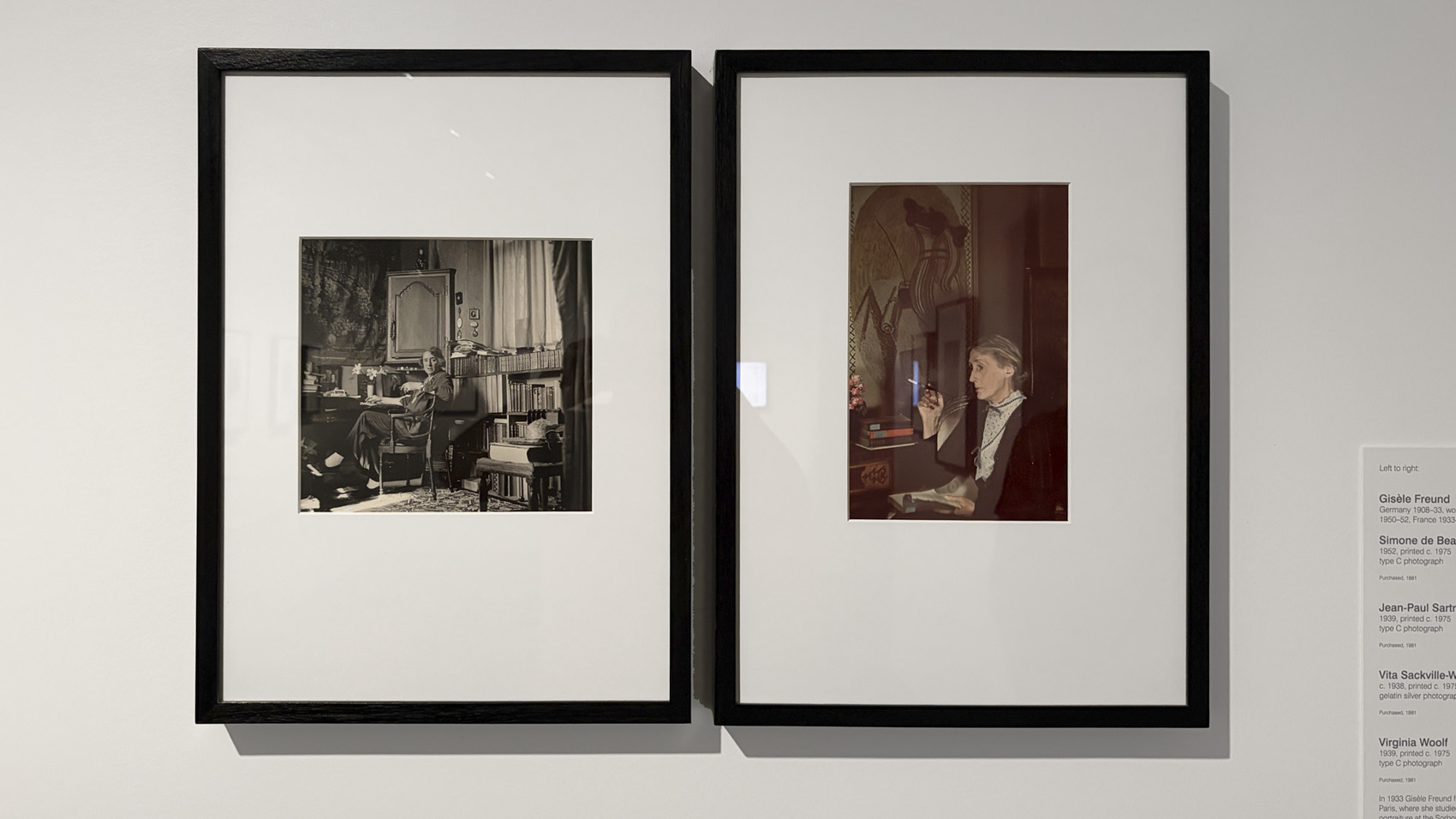
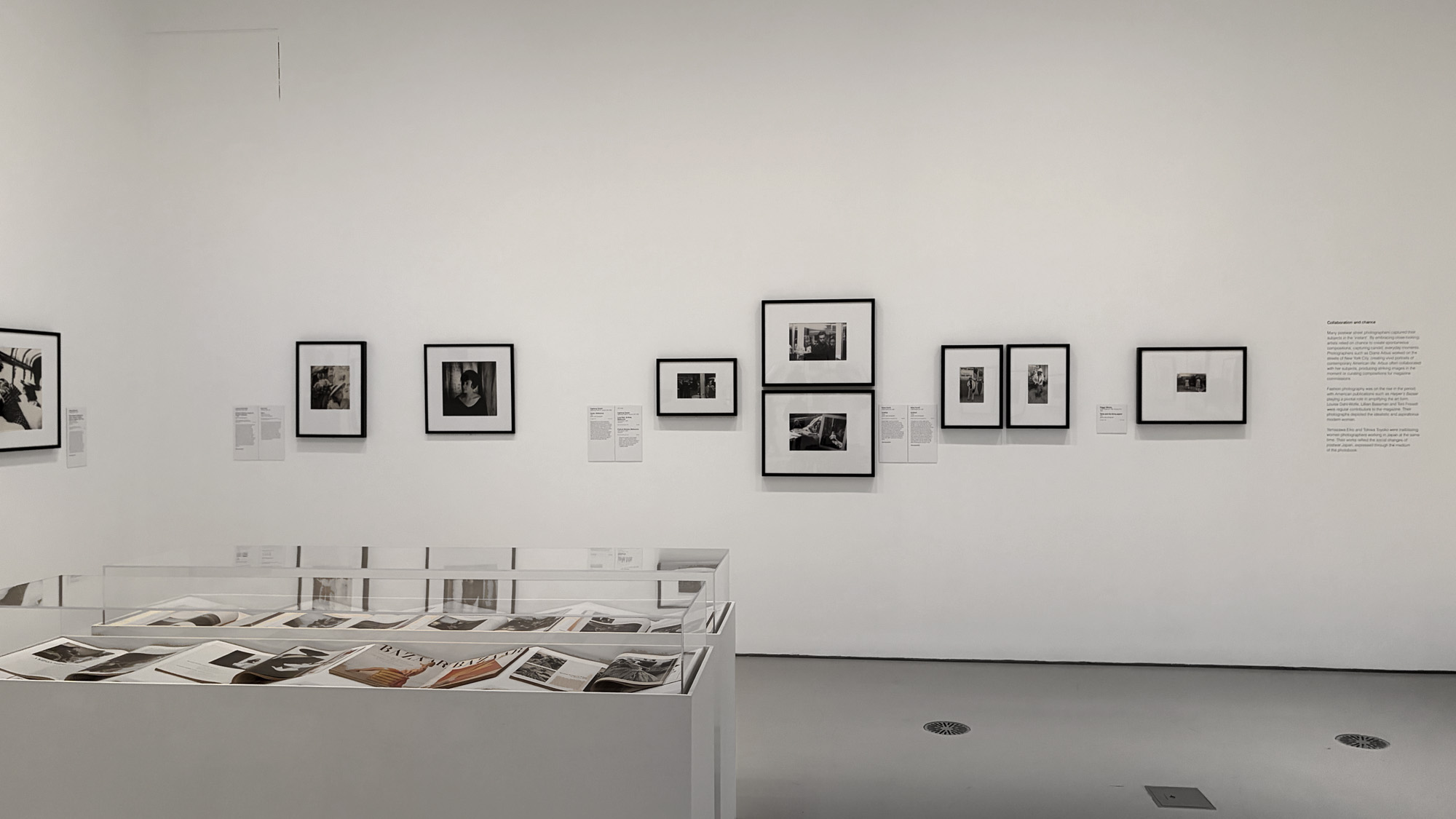
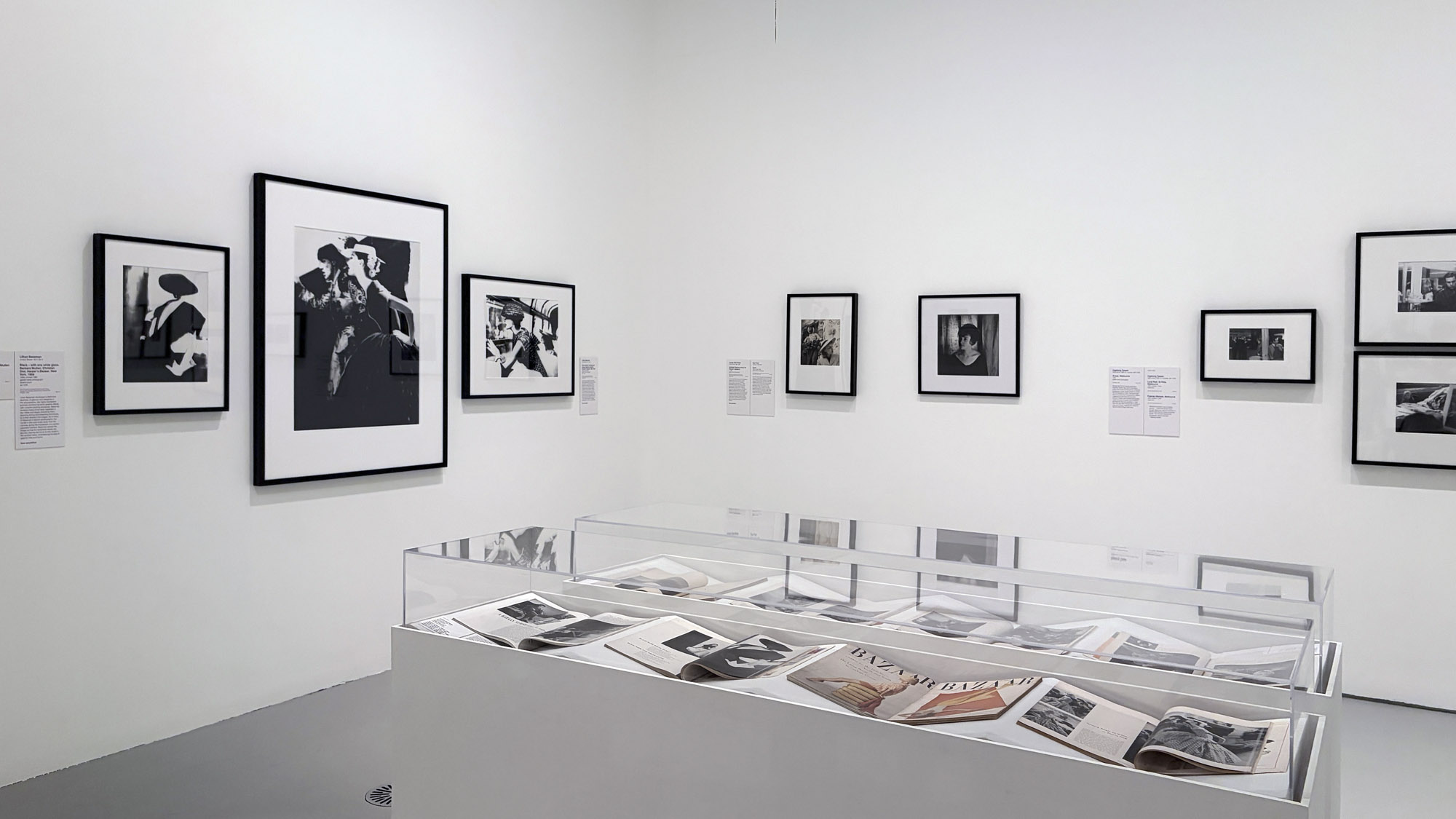
Installation view of the exhibition 'Women Photographers 1900-1975: A Legacy of Light' at NGV International, Melbourne, November 2025 - May 2026 showing from left to right, Lee Miller 'Nimet Eloui Bey' (c. 1930); Lee Miller 'Man Ray' (1931); Gisele Freund's 'Simone de Beauvoir '(1952 printed c. 1975), 'Jean-Paul Satre' (1939 printed c. 1975), 'Vita Sackville-West' (1938 printed c. 1975) and 'Virginia Woolfe' (1939 printed c. 1975)


Installation view of the exhibition Women Photographers 1900-1975: A Legacy of Light at NGV International, Melbourne, November 2025 – May 2026 showing from left to right, Lee Miller Nimet Eloui Bey (c. 1930, below); Lee Miller Man Ray (1931, below); Gisele Freund’s Simone de Beauvoir (1952 printed c. 1975, below), Jean-Paul Satre (1939 printed c. 1975, below), Vita Sackville-West (1938 printed c. 1975, below) and Virginia Woolfe (1939 printed c. 1975, below)
Photo: Marcus Bunyan


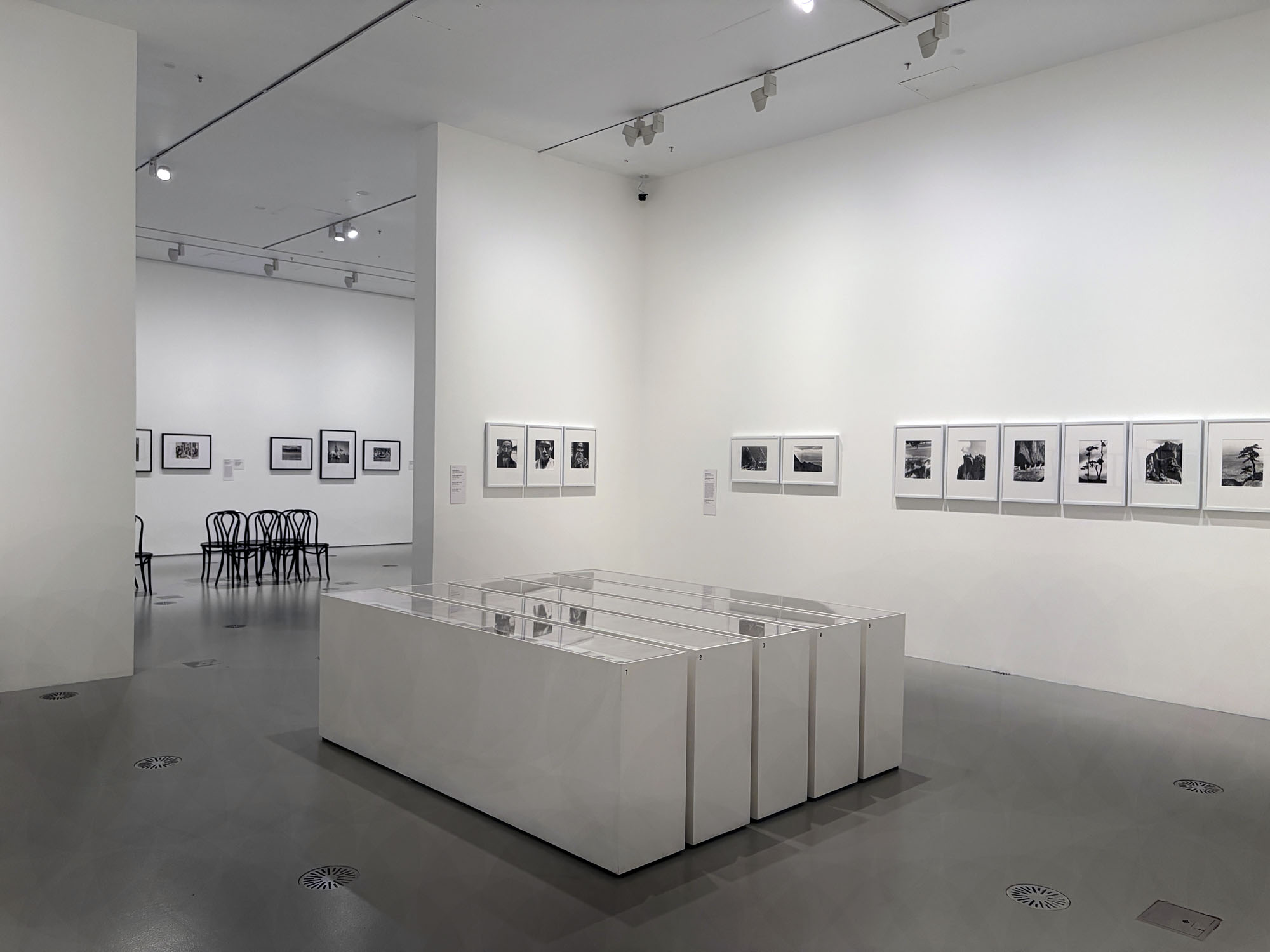
Women Photographers 1900-1975: A Legacy of Light celebrates the wide-ranging photographic practices of more than eighty women artists working between 1900 and 1975. Featuring prints, postcards, photobooks and magazines, the exhibition explores the role of photographers as image-makers, and the ways in which women artists create an image of themselves, of others, of the times – from images of the women’s suffrage movement at the turn of the twentieth century, through to the women’s liberation movement and beyond. From Melbourne to Tokyo, Paris to Buenos Aires, the exhibition showcases the works of trailblazing artists such as Berenice Abbott, Lola Álvarez Bravo, Claude Cahun and Marcel Moore, Imogen Cunningham, Mikki Ferrill, Sue Ford, Christine Godden, Ponch Hawkes, Annemarie Heinrich, Ruth Hollick, Florence Henri, Kati Horna, Germaine Krull, Tina Modotti, Lucia Moholy, Toyoko Tokiwa, Yamazawa Eiko and many more.

The exhibition reflects a recent collecting focus on celebrating the contributions of women artists of the early twentieth century in the NGV Photography Collection. Featuring portraiture, photojournalism, landscape photography, photomontage, experimental avant-garde imagery and more, Women Photographers 1900-1975: A Legacy of Light presents the diverse work of women photographers against the backdrop of significant social, political and cultural events.

Text from the NGV website
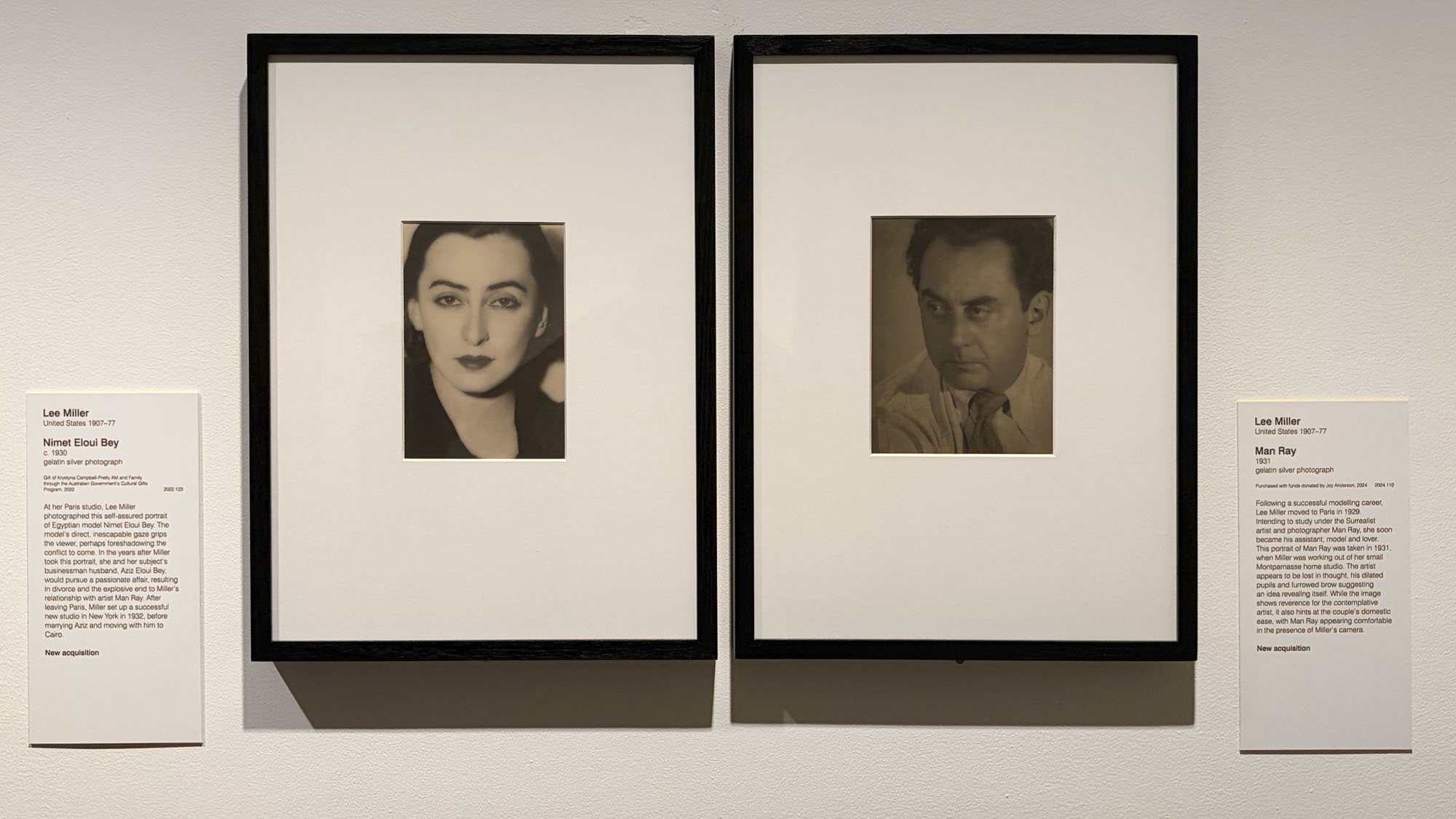
 

Installation view of the exhibition 'Women Photographers 1900-1975: A Legacy of Light' at NGV International, Melbourne, November 2025 - May 2026 showing from left to right, Lee Miller 'Nimet Eloui Bey' (c. 1930) and Lee Miller 'Man Ray' (1931)


Installation view of the exhibition Women Photographers 1900-1975: A Legacy of Light at NGV International, Melbourne, November 2025 – May 2026 showing from left to right, Lee Miller Nimet Eloui Bey (c. 1930, below) and Lee Miller Man Ray (1931, below)
Photo: Marcus Bunyan
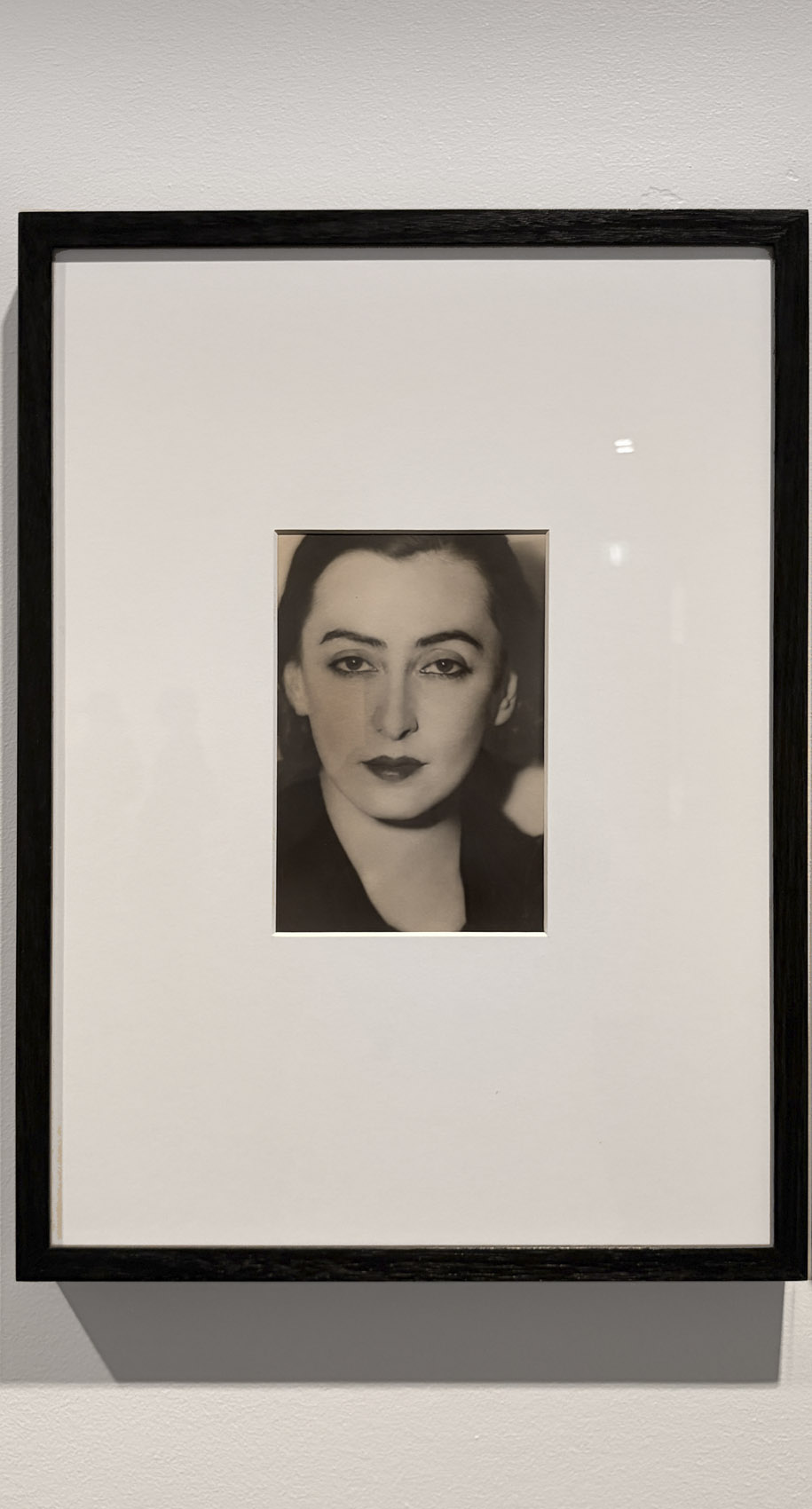
 

Lee Miller (American, 1907-1977) 'Nimet Eloui Bey' c. 1930 (installation view)


Lee Miller (American, 1907-1977)
Nimet Eloui Bey (installation view)
c. 1930
Gelatin silver photograph
23.0 x 15.8cm (image and sheet)
National Gallery of Victoria, Melbourne
Gift of Krystyna Campbell-Pretty AM and Family through the Australian Government’s Cultural Gifts Program, 2022
© Lee Miller Archives, England 2023


At her Paris studio, Lee Miller photographed this self-assured portrait of Egyptian model Nimet Eloui Bey. The model’s direct, inescapable gaze grips the viewer, perhaps foreshadowing the conflict to come. In the years after Miller took this portrait, she and her subject’s businessman husband, Aziz Eloui Bey, would pursue a passionate affair, resulting in divorce and the explosive end to Miller’s relationship with artist Man Ray. After leaving Paris, Miller set up a successful new studio in New York in 1932, before marrying Aziz and moving with him to Cairo.

Wall text from the exhibition
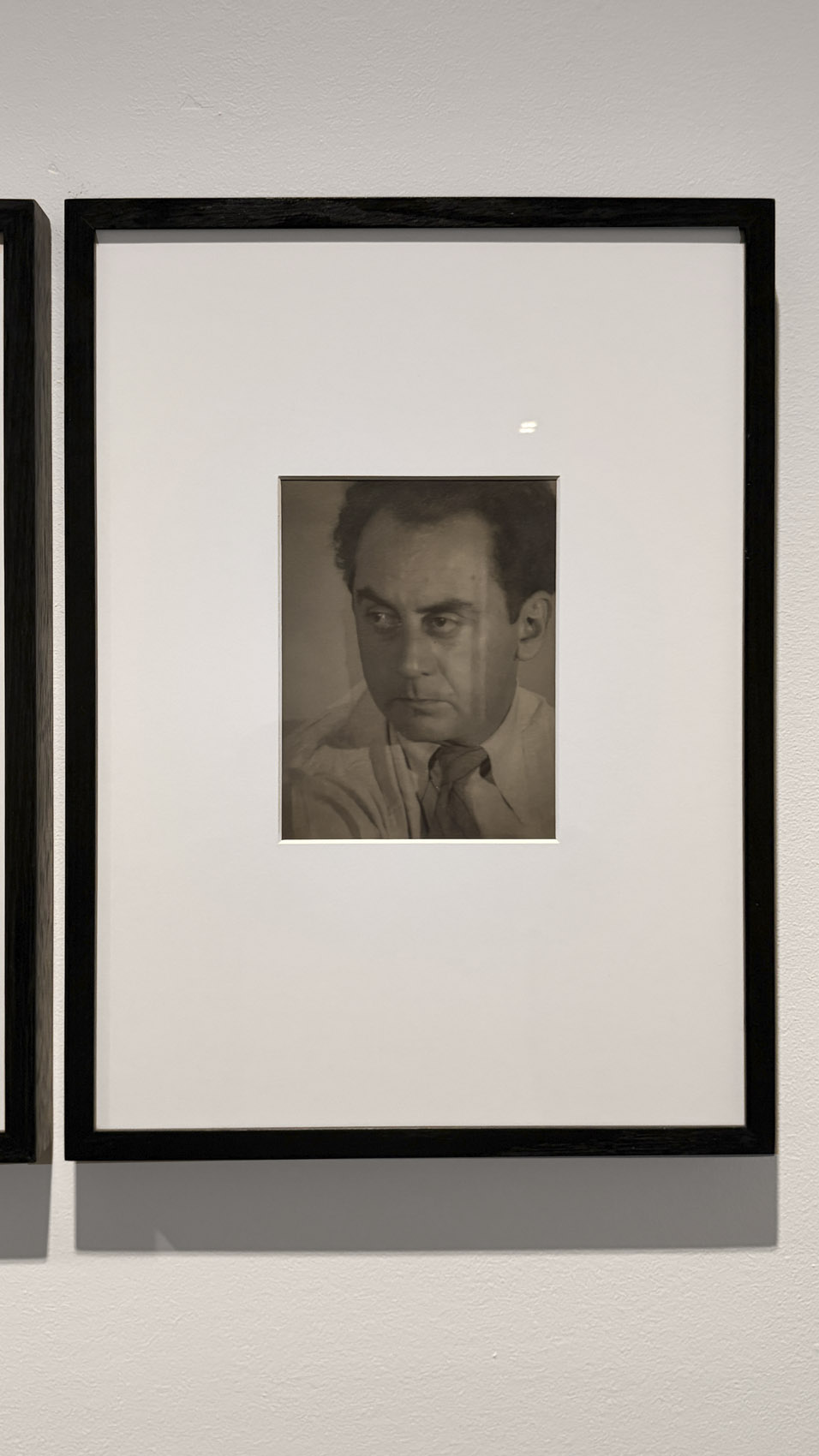
 

Lee Miller (American, 1907-1977) 'Man Ray' 1931 (installation view)


Lee Miller (American, 1907-1977)
Man Ray (installation view)
1931
Gelatin silver photograph
23.1 x 17.5cm (image and sheet)
National Gallery of Victoria, Melbourne
Purchased with funds donated by Joy And
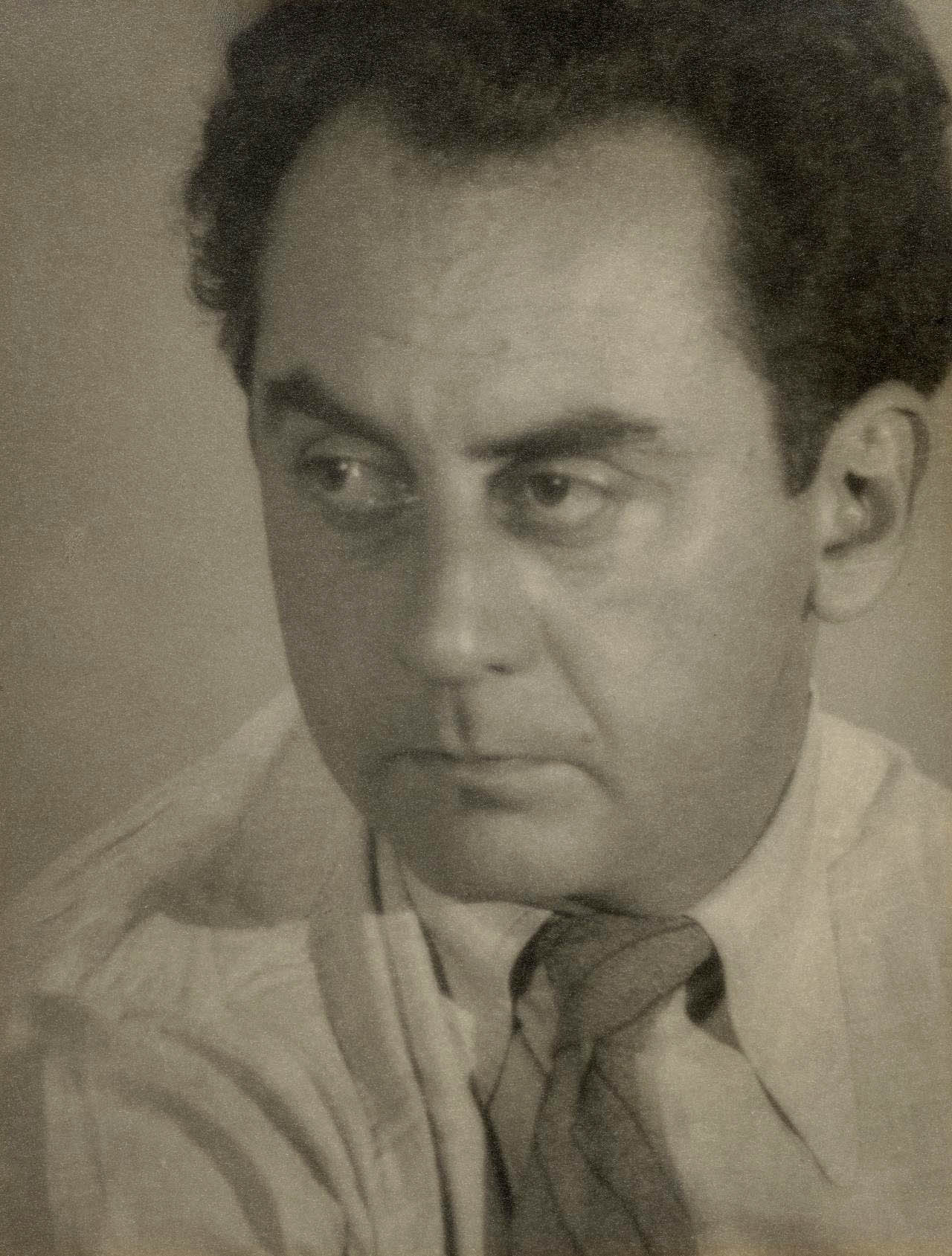
 

Lee Miller (American, 1890-1976) 'Man Ray' 1931


Lee Miller (American, 1890-1976)
Man Ray
1931
Gelatin silver photograph
23.1 x 17.5cm (image and sheet)
National Gallery of Victoria, Melbourne
Purchased with funds donated by Joy Anderson, 2024
© Lee Miller Archives, England 2023. All rights reserved


Following a successful modelling career, Lee Miller moved to Paris in 1929. Intending to study under the Surrealist artist and photographer Man Ray, she soon became his assistant, model and lover. This portrait of Man Ray was taken in 1931, when Miller was working out of her small Montparnasse home studio. The artist appears to be lost in thought, his dilated pupils and furrowed brow suggesting an idea revealing itself. While the image shows reverence for the contemplative artist, it also hints at the couple’s domestic ease, with Man Ray appearing comfortable in the presence of Miller’s camera.

Wall text from the exhibition
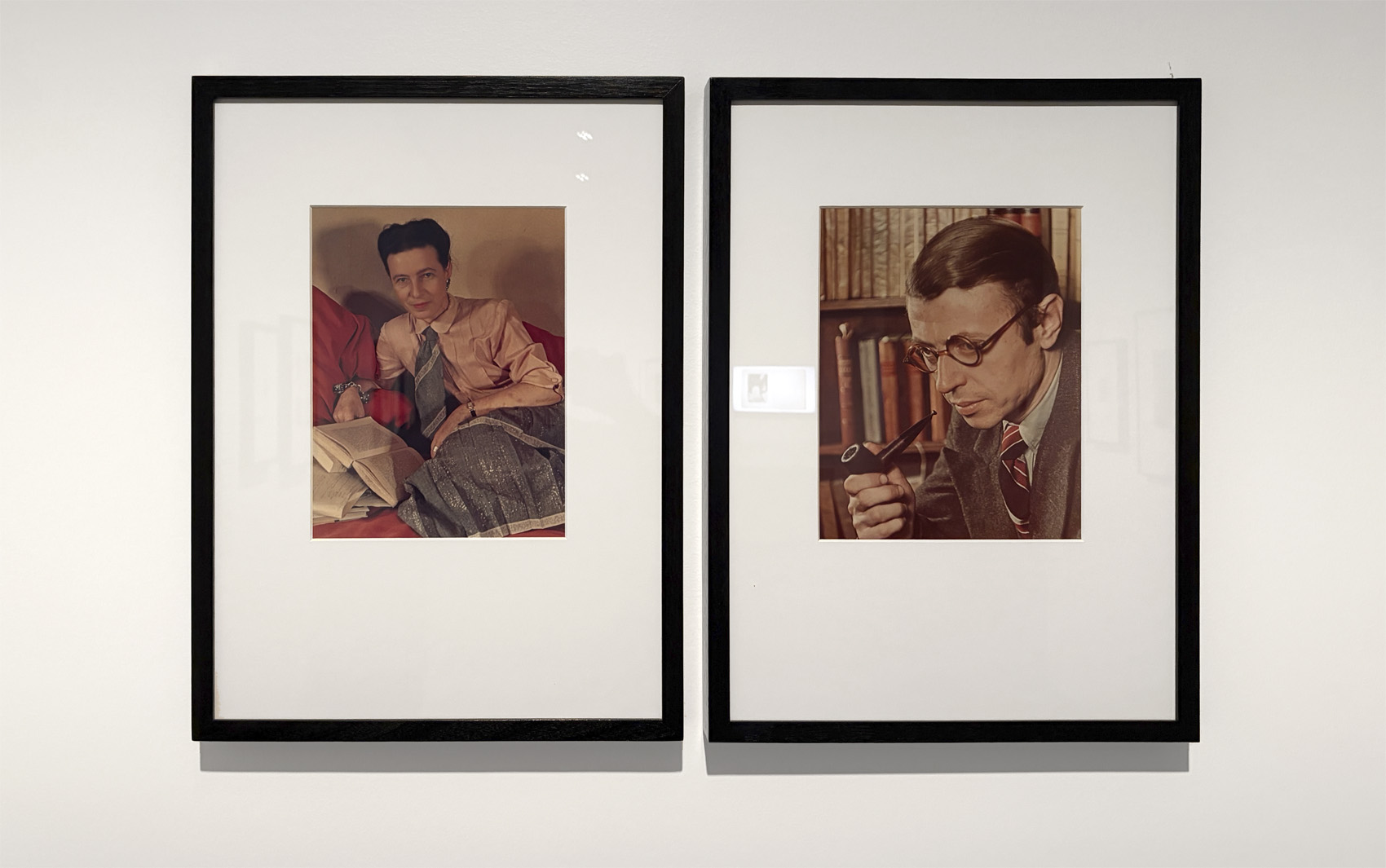
 

Installation view of the exhibition Women Photographers 1900-1975: A Legacy of Light at NGV International, Melbourne, November 2025 – May 2026 showing from left to right, Gisèle Freund's 'Simone de Beauvoir' (1952 printed c. 1975) and 'Jean-Paul Satre' (1939 printed c. 1975)


Installation view of the exhibition Women Photographers 1900-1975: A Legacy of Light at NGV International, Melbourne, November 2025 – May 2026 showing from left to right, Gisèle Freund’s Simone de Beauvoir (1952 printed c. 1975) and Jean-Paul Satre (1939 printed c. 1975)
Photo: Marcus Bunyan
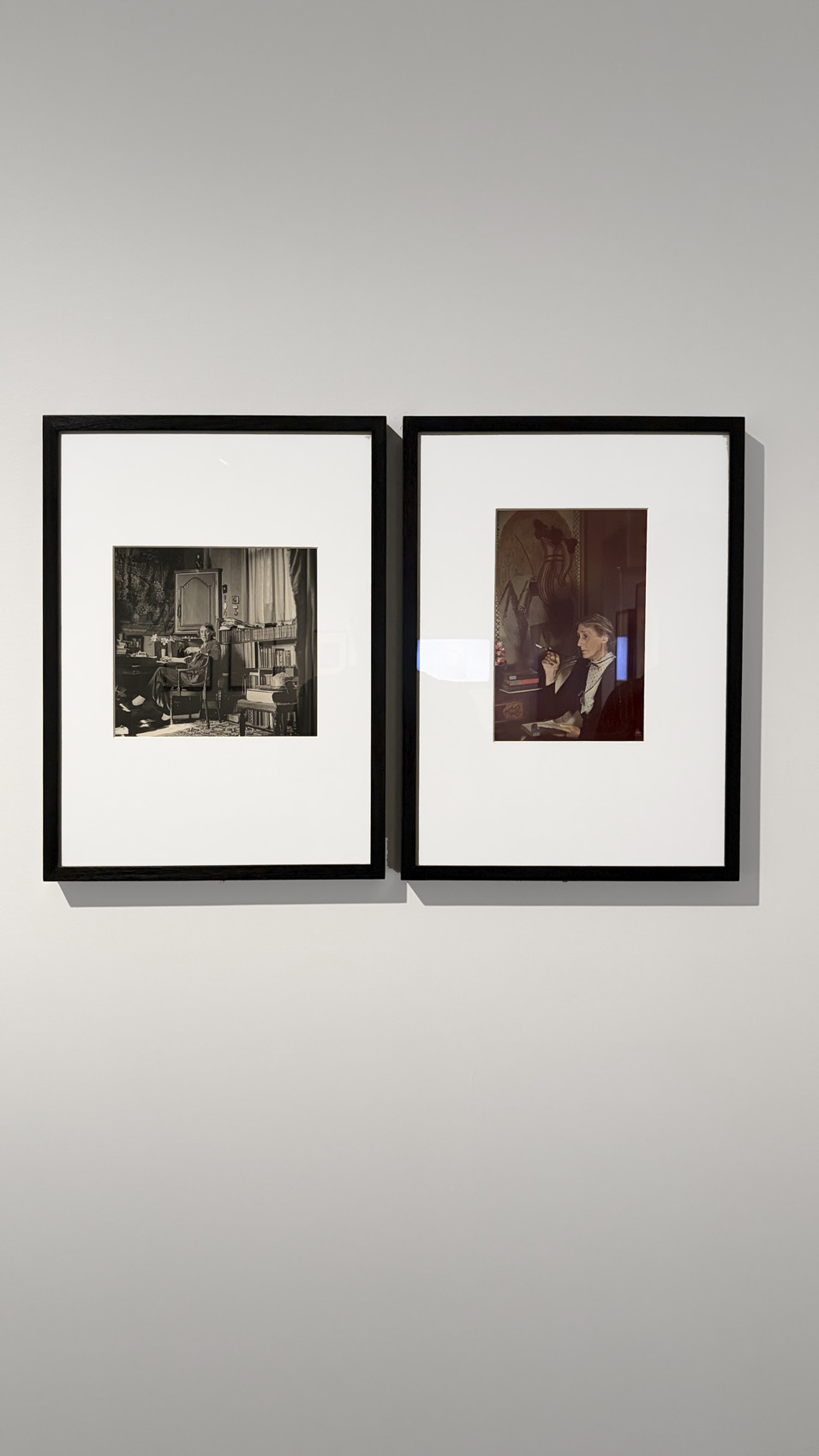
 

Installation view of the exhibition Women Photographers 1900-1975: A Legacy of Light at NGV International, Melbourne, November 2025 – May 2026 showing from left to right, Gisèle Freund's 'Vita Sackville-West' (1938 printed c. 1975) and 'Virginia Woolfe' (1939 printed c. 1975)


Installation view of the exhibition Women Photographers 1900-1975: A Legacy of Light at NGV International, Melbourne, November 2025 – May 2026 showing from left to right, Gisèle Freund’s Vita Sackville-West (1938 printed c. 1975) and Virginia Woolfe (1939 printed c. 1975)
Photos: Marcus Bunyan


In 1933 Gisèle Freund fled Frankfurt for Paris, where she studied photographic portraiture at the Sorbonne. Uniquely for the time, she used Kodachrome and Agfacolor positive film for her colour portraits of writers and artists in Paris – her portrait of James Joyce was selected as the first colour cover of Time magazine in 1939. That same year she photographed Virginia Woolf at her home in Tavistock Square, London. Freund later recalled of her encounter with Woolf, ‘frail, luminous, she was the very incarnation of her prose’.

Wall text from the exhibition


In Exchange: Social Milieu and Collaboration

The intertwined lives of avant-garde artists working in the interwar period often played out in works of art depicting friendship and love. Photographers captured these relationships, often revealing both the affection and the complex relations between themselves and their artistic collaborators, muses and subjects.

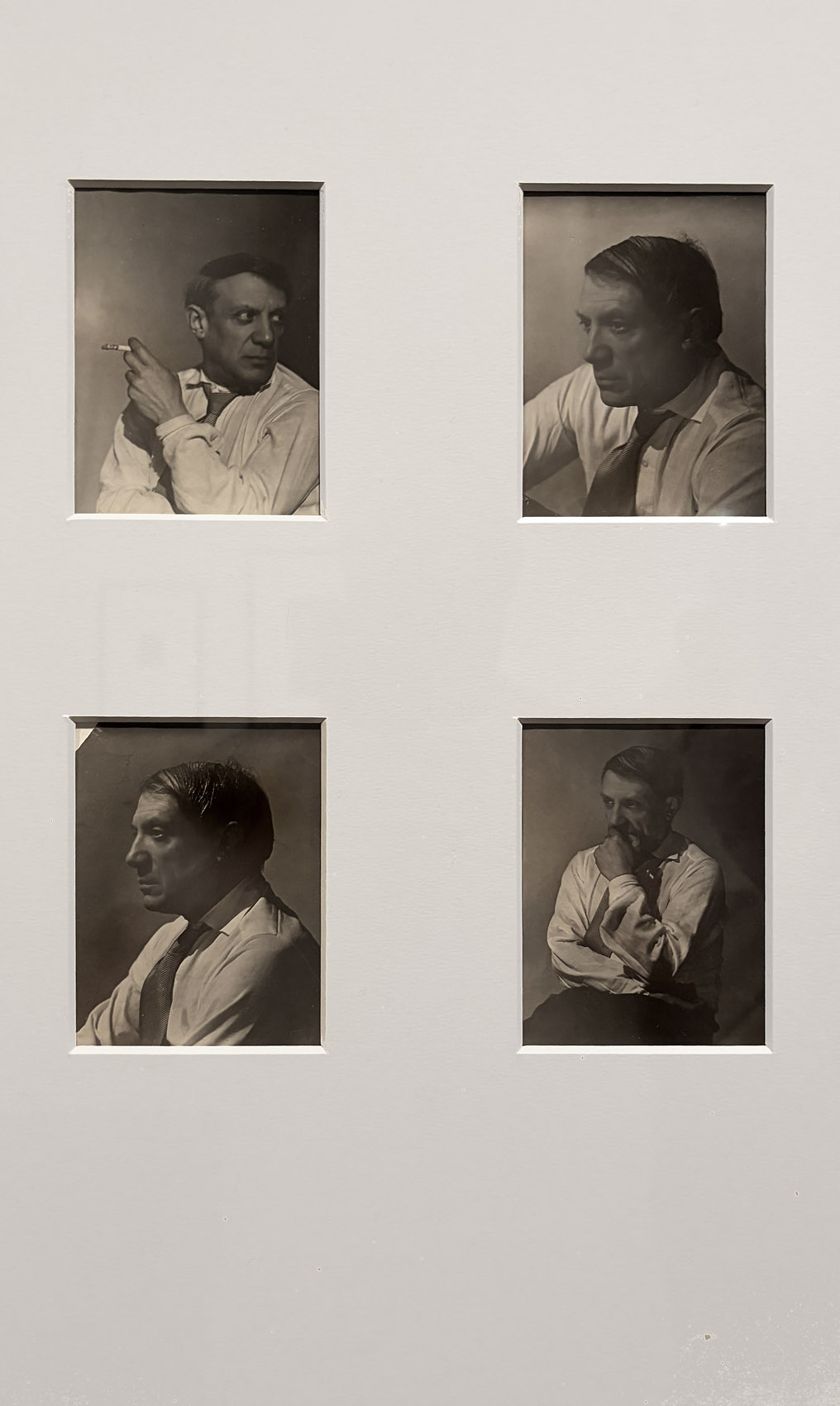
Paris in the interwar period was a hotbed for artistic exchange. Between 1935 and 1936, Dora Maar photographed her then partner Pablo Picasso in her Paris studio. She also created collaborative images with fellow Surrealists such as Léonor Fini, Jacqueline Lamba and André Breton. Lee Miller, also working in Paris during this period, photographed her lover and artistic partner Man Ray. Miller, in turn, was the subject of many of Man Ray’s own works.

In Mexico, Kati Horna frequently photographed her close friend, British-born painter and writer Leonora Carrington. Lola Álvarez Bravo’s image of the Spanish Surrealist artist Remedios Varo is another example of the playful and experimental collaborations between artists at the time. Such photographs demonstrate the mutual influence between women artists.
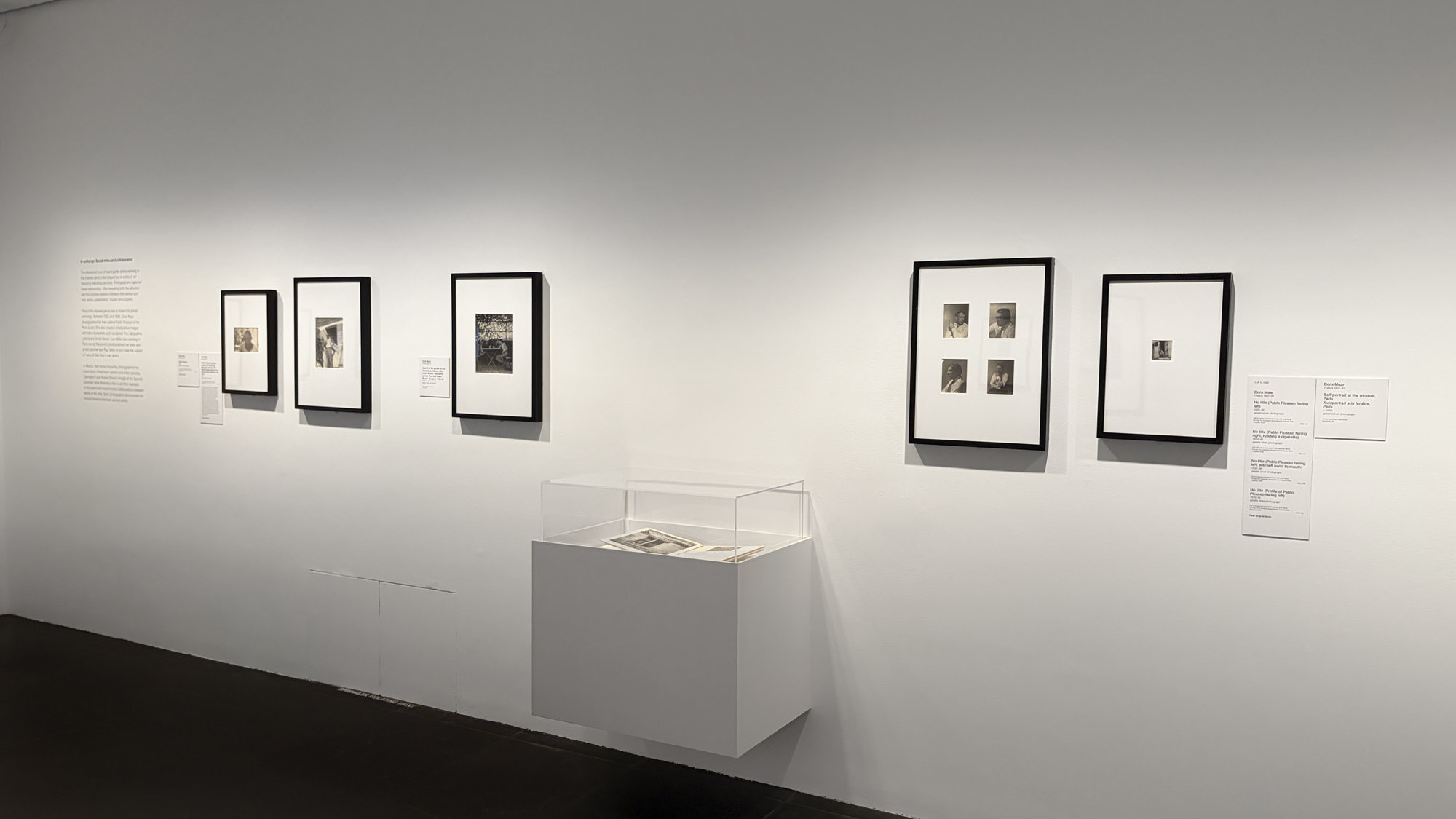
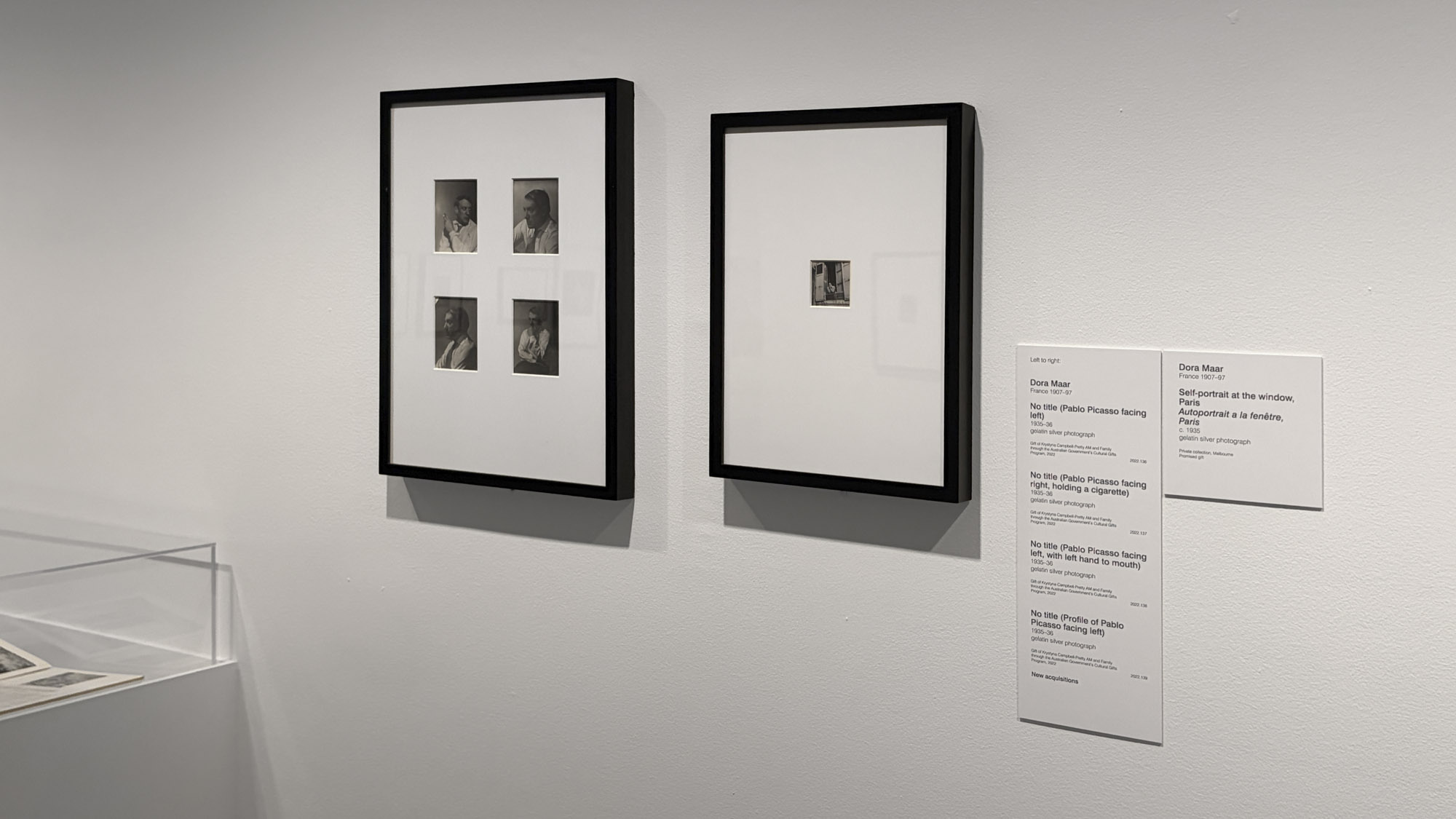
 

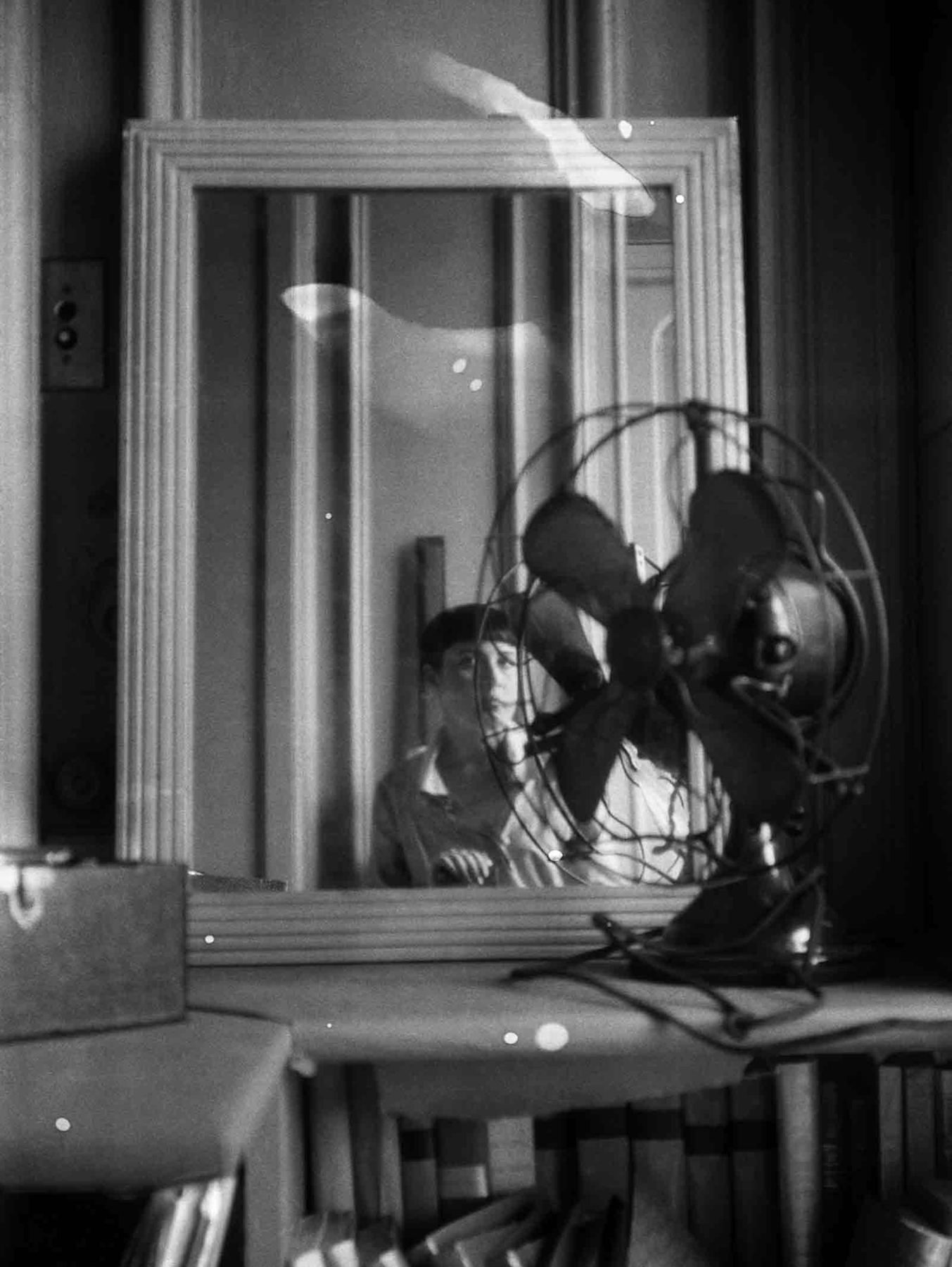
Installation view of the exhibition Women Photographers 1900-1975: A Legacy of Light at NGV International, Melbourne, November 2025 – May 2026 showing photographs by Dora Maar including at second right, photographs of Picasso (1935-1936) and at right, 'Self-portrait at the window' (c. 1935)


Installation view of the exhibition Women Photographers 1900-1975: A Legacy of Light at NGV International, Melbourne, November 2025 – May 2026 showing photographs by Dora Maar including at second right, photographs of Picasso (1935-1936, below) and at right, Self-portrait at the window (c. 1935, below)
Photos: Marcus Bunyan
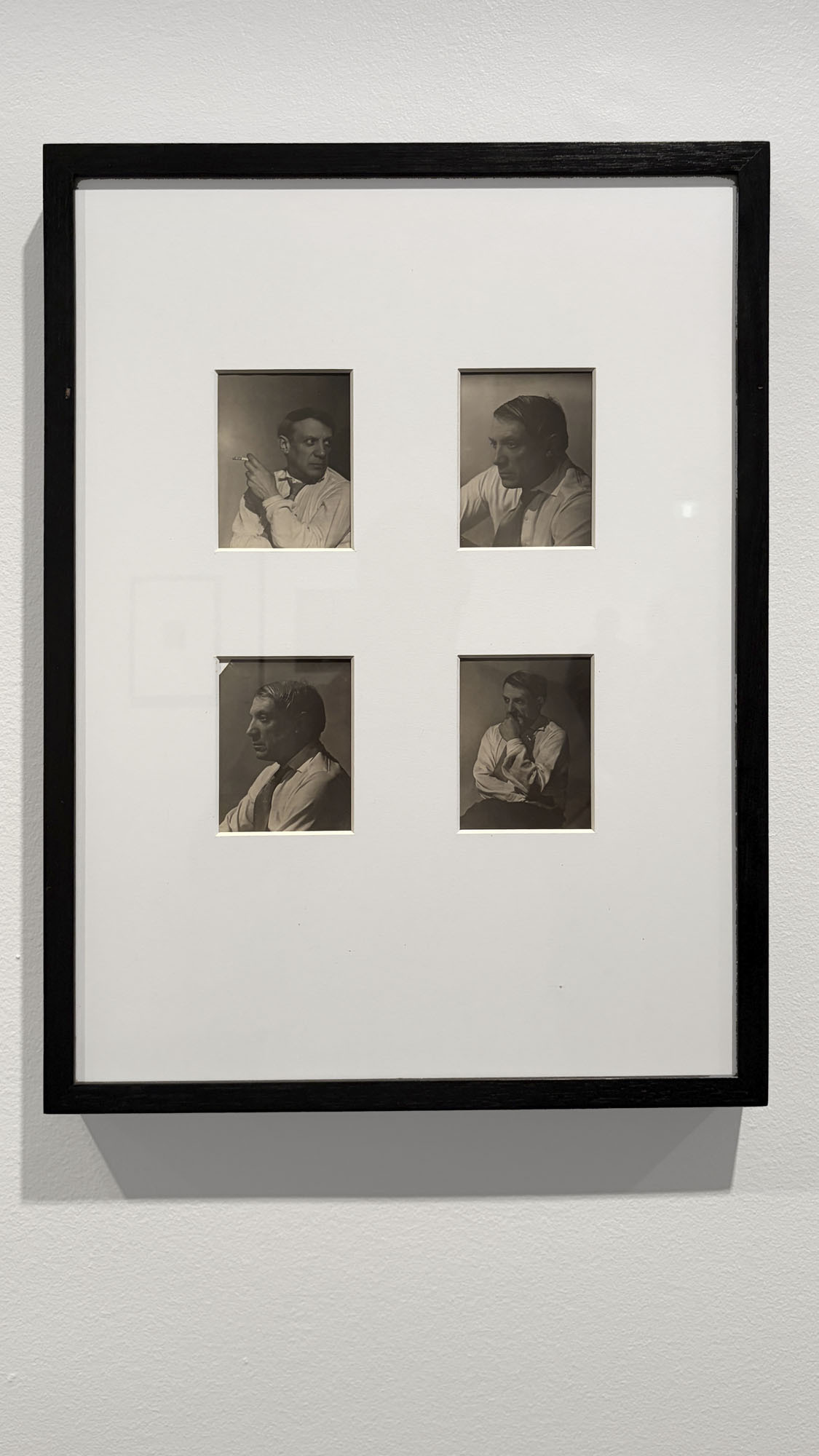
 

Installation view of the exhibition Women Photographers 1900-1975: A Legacy of Light at NGV International, Melbourne, November 2025 – May 2026 showing photographs by Dora Maar of Picasso (1935-1936)


(clockwise from bottom left)

Dora Maar (French, 1907-1997)
No title (Pablo Picasso facing left)
No title (Pablo Picasso facing right, holding a cigarette)
No title (Profile of Pablo Picasso facing left)
No title (Pablo Picasso facing left, with left hand to mouth) (installation view)
1935-1936
Gelatin silver photographs
National Gallery of Victoria, Melbourne
Gift of Krystyna Campbell-Pretty AM and Family through the Australian Government’s Cultural Gifts Program, 2022
Photos: Marcus Bunyan
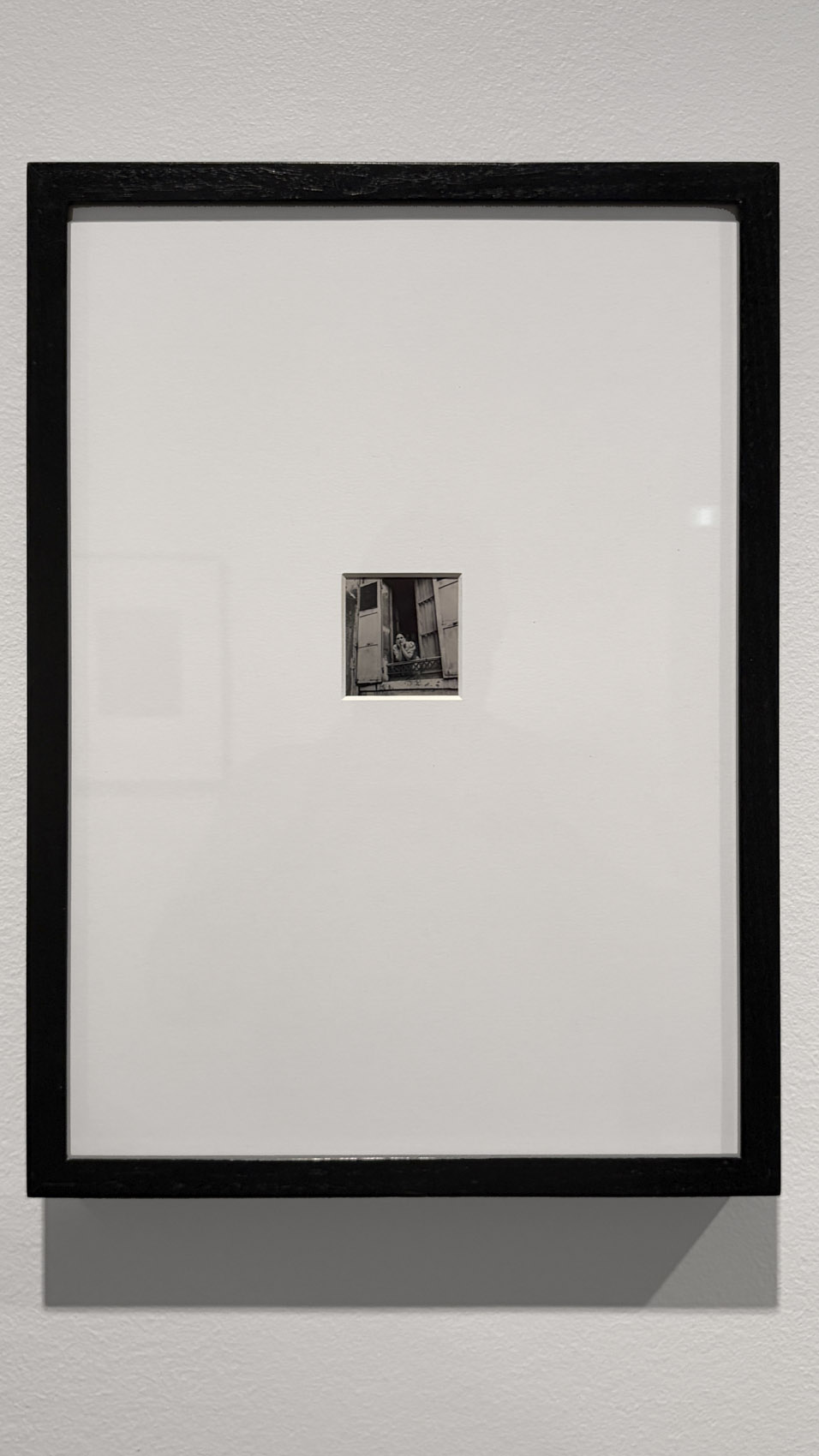
 

Dora Maar (French, 1907-1997) 'Self-portrait at the window' c. 1935 (installation view)


Dora Maar (French, 1907-1997)
Self-portrait at the window (installation view)
c. 1935
Gelatin silver print
Private collection, Melbourne
Promised gift
Photo: Marcus Bunyan
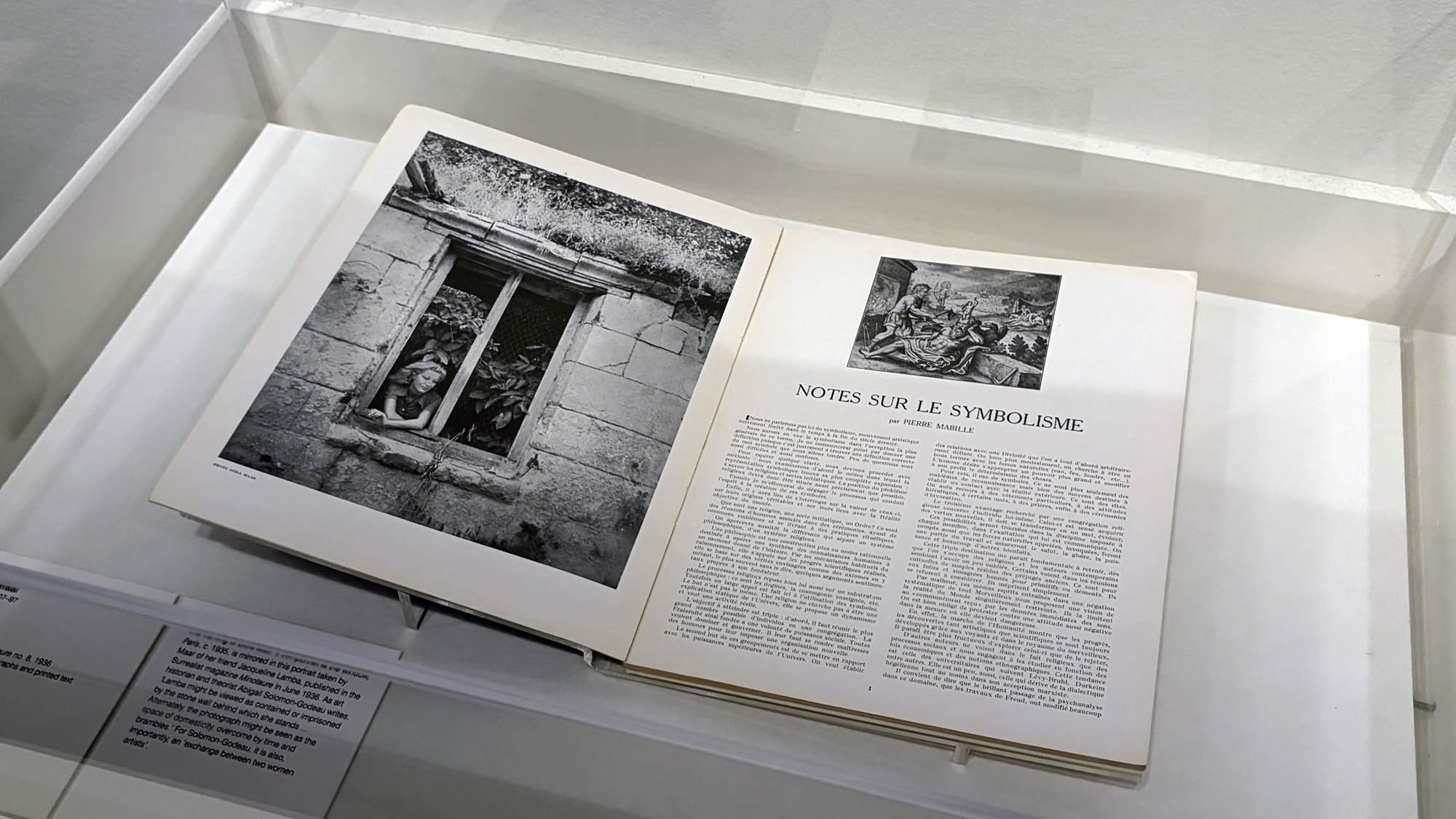
 

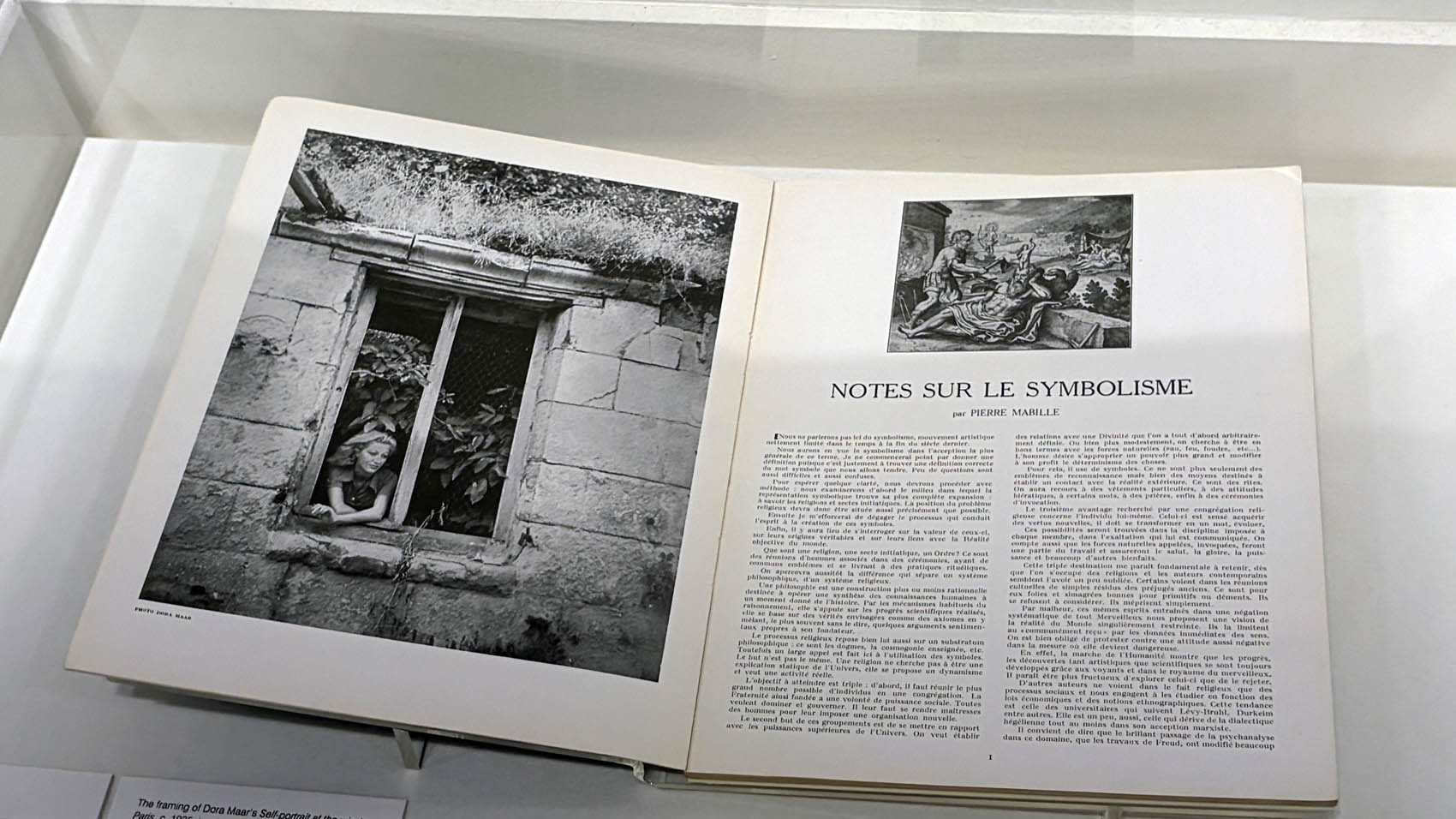
Dora Maar (French, 1907-1997) 'Dawn' 1935 Reproduced in 'Minotaure' No. 8, 1936 (installation view)


Dora Maar (French, 1907-1997)
Dawn (installation view)
1935
Reproduced in Minotaure No. 8, 1936
Magazine: offset lithographs and printed text
Shaw Research Library
Photos: Marcus Bunyan


The framing of Dora Maar’s Self-portrait at the window, Paris, c. 1935, is mired in this portrait taken by Maar of her friend Jacqueline Lamba, published in the Surrealist magazine Minotaure in June 1936. As art historian and theorist

Abigail Solomon-Godeau writes, ‘Lambda might be viewed as contained or imprisoned by the stone wall behind which she stands … Alternately, the photograph might be seen as the space of domesticity, overcome by time and brambles’. For Solomon-Godeau, it is also, importantly, an ‘exchange between two women artists’.

Vitrine text from the exhibition
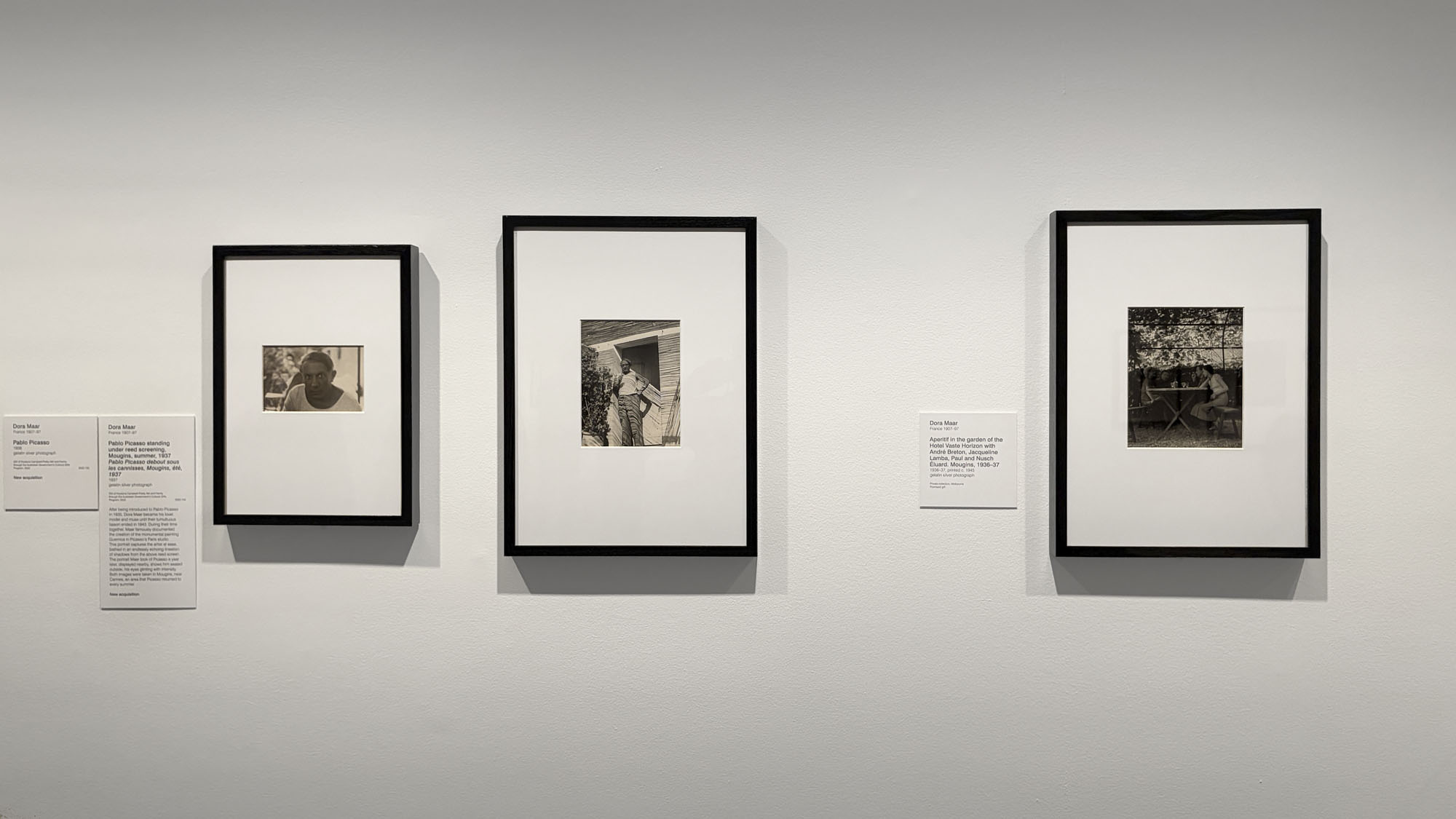
 

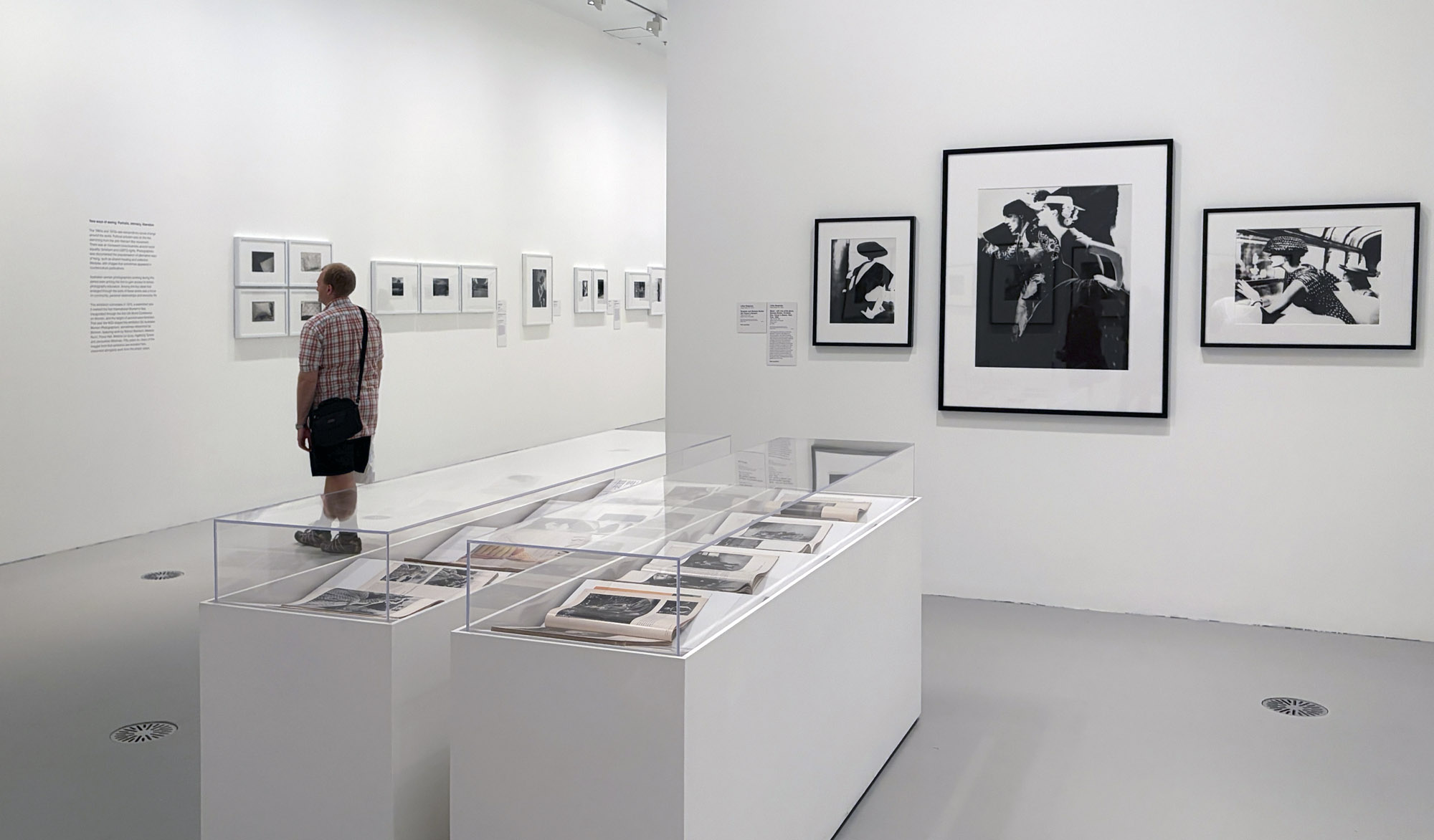
Installation view of the exhibition 'Women Photographers 1900-1975: A Legacy of Light' at NGV International, Melbourne, November 2025 – May 2026 showing from left to right, Dora Maar's 'Pablo Picasso' (1938); 'Pablo Picasso standing under reed screening. Mougins, summer, 1937' (1937) and 'Aperitif in the garden of the Hotel Vaste Horizon with Andre Breton, Jacqueline lamb, Paul and Nusch Eluard. Mougins, 1936-1937' (1936-1937)


Installation view of the exhibition Women Photographers 1900-1975: A Legacy of Light at NGV International, Melbourne, November 2025 – May 2026 showing from left to right, Dora Maar’s Pablo Picasso (1938, below); Pablo Picasso standing under reed screening. Mougins, summer, 1937 (1937, top of posting) and Aperitif in the garden of the Hotel Vaste Horizon with Andre Breton, Jacqueline lamb, Paul and Nusch Eluard. Mougins, 1936-1937 (1936-1937)
Photo: Marcus Bunyan
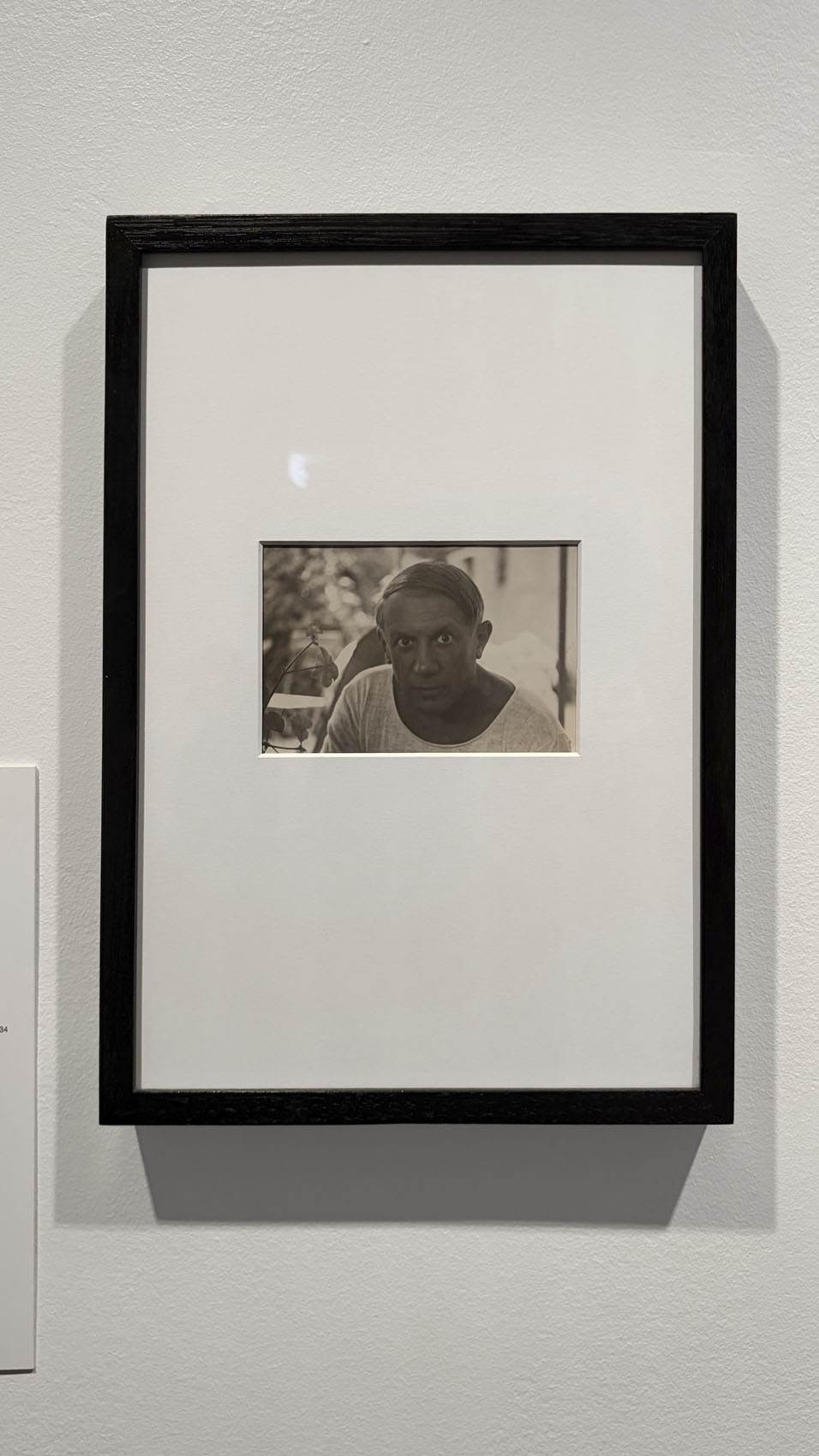
 

Dora Maar (French, 1907-1997) 'Pablo Picasso' 1938 (installation view)


Dora Maar (French, 1907-1997)
Pablo Picasso (installation view)
1938
Gelatin silver print
11.9 x 17.9cm (image and sheet)
National Gallery of Victoria, Melbourne
Gift of Krystyna Campbell-Pretty AM and Family through the Australian Government’s Cultural Gifts Program, 2022
Photo: Marcus Bunyan
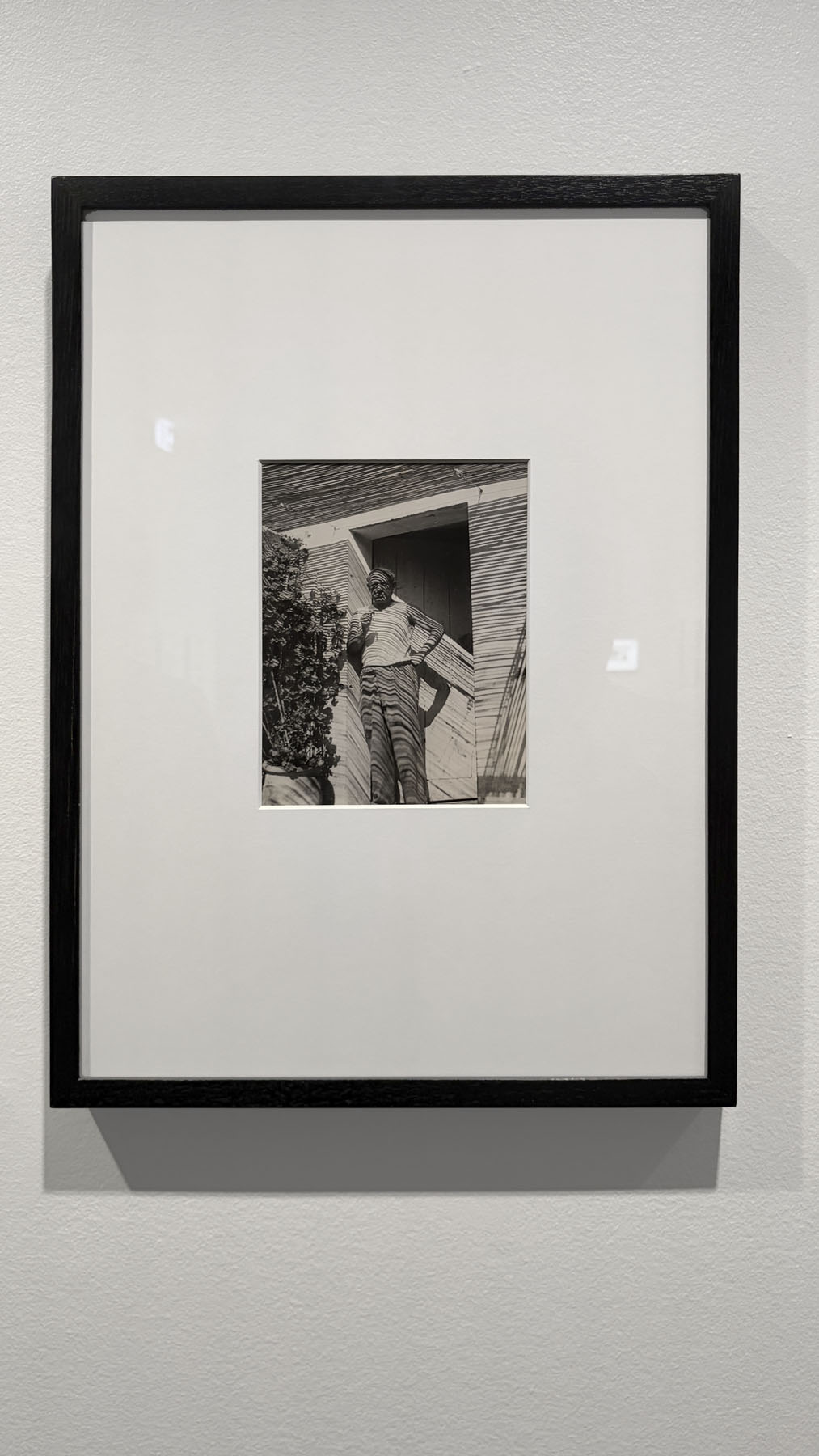
 

Dora Maar (French 1907-1997) 'Pablo Picasso standing under reed screening, Mougins, summer, 1937' (Pablo Picasso debout sous les cannisses, Mougins, été, 1937) 1937 (installation view)


Dora Maar (French, 1907-1997)
Pablo Picasso standing under reed screening, Mougins, summer, 1937 (Pablo Picasso debout sous les cannisses, Mougins, été, 1937) (installation view)
1937
22.0 x 17.2cm (image)
23.1 x 18.2cm (sheet)
National Gallery of Victoria, Melbourne
Gift of Krystyna Campbell-Pretty AM and Family through the Australian Government’s Cultural Gifts Program, 2022
Photo: Marcus Bunyan
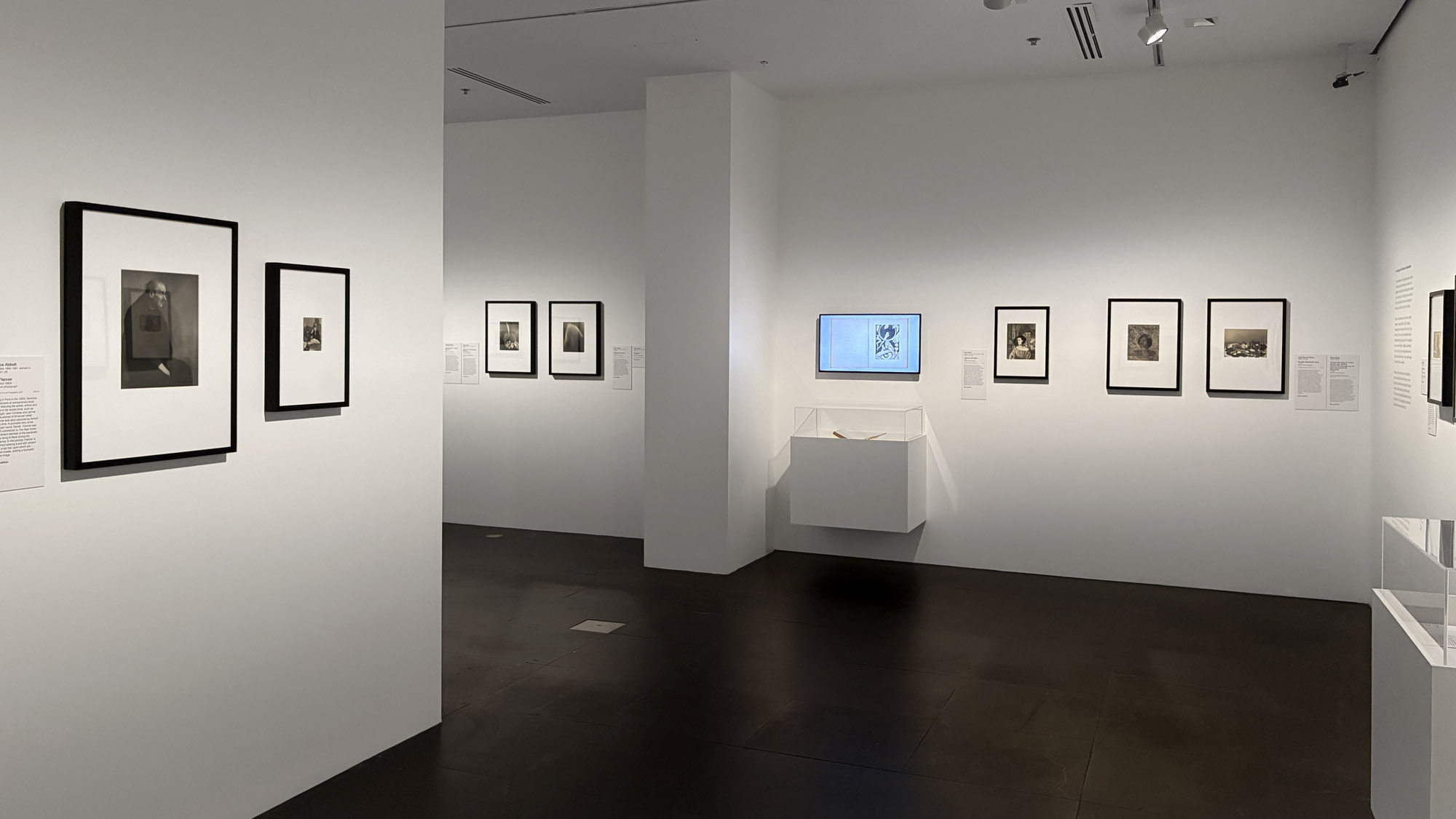
 

Installation view of the exhibition 'Women Photographers 1900-1975: A Legacy of Light' at NGV International, Melbourne, November 2025 – May 2026 showing at left, Berenice Abbott 'Eugène Atget' 1927


Installation view of the exhibition Women Photographers 1900-1975: A Legacy of Light at NGV International, Melbourne, November 2025 – May 2026 showing at left, Berenice Abbott Eugène Atget (1927, printed c. 1970-1978)
Photo: Marcus Bunyan


Berenice Abbott (American, 1898-1991) 'Janet Flanner' 1927


Berenice Abbott (American, 1898-1991)
Janet Flanner
1927
Gelatin silver photograph
Bowness Family Fund for Photography, 2024


While living in Paris in the 1920s, Berenice Abbott produced an extraordinary body of images featuring the artists, writers and performers in her social circle, such as Eugène Atget, Jean Cocteau and James Joyce. This portrait of American
writer Janet Flanner was also captured by Abbott during this time. A journalist who wrote under the pen name ‘Genêt’, Flanner was a long-term contributor to The New Yorker and a prominent member of the expatriate community living in Paris during the interwar period. In this portrait, Flanner is photographed wearing a suit with striped pants and a top hat, upon which are stacked two masks, adding a Surrealist edge to the image.

Wall text from the exhibition
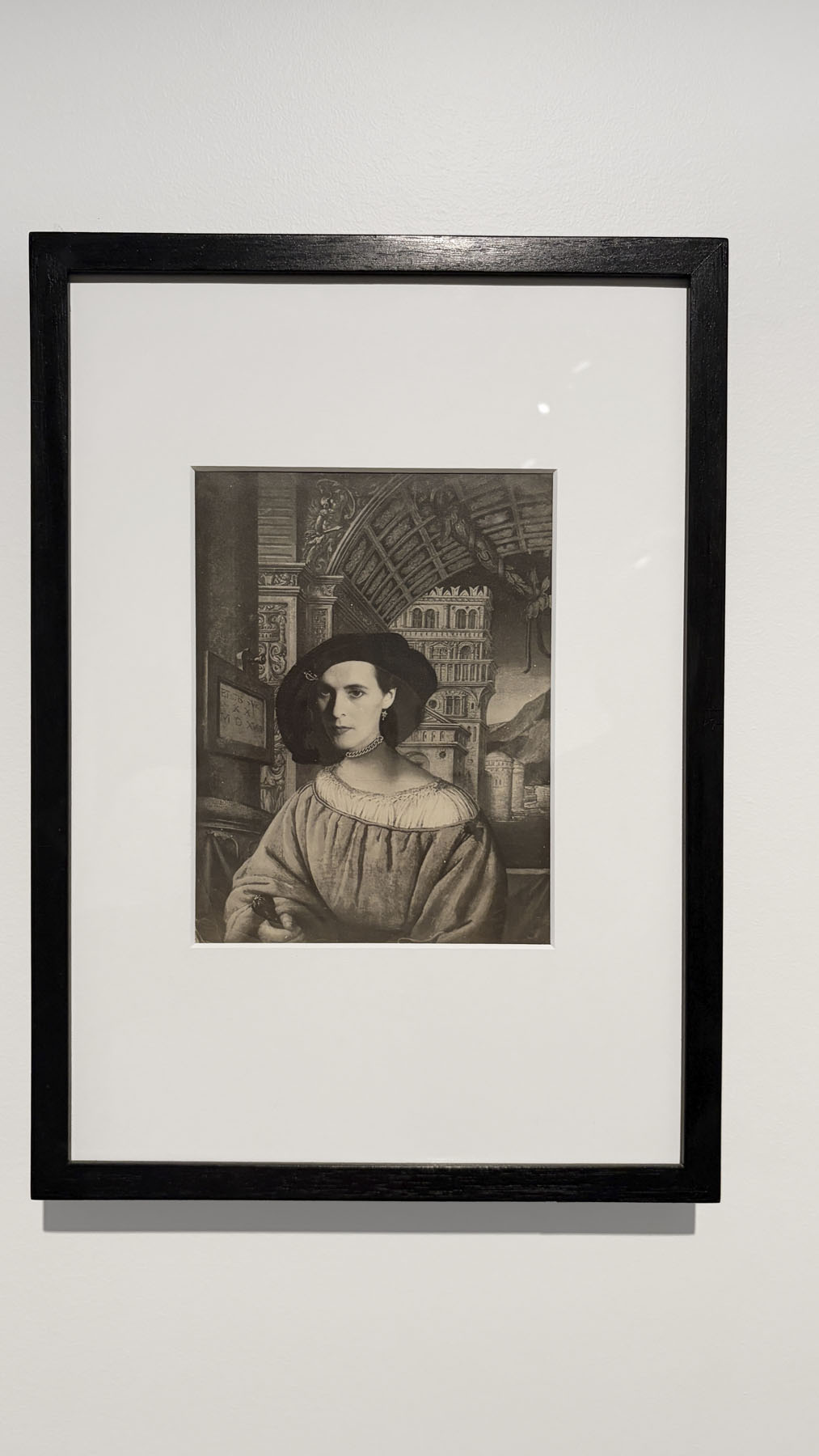
 

Kati Horna (Mexican born Hungary, 1912-2000) 'Leonora Carrington' 1957 (installation view)


Kati Horna (Mexican born Hungary, 1912-2000)
Leonora Carrington (installation view)
1957
Gelatin silver photograph
24.2 x 18.2cm (image)
25.3 x 20.2cm (sheet)
National Gallery of Victoria, Melbourne
Bowness Family Fund for Photography, 2024
Photo: Marcus Bunyan


Born to a Jewish family in Hungary, Kati Horna was forced to leave Europe following the rise of Nazism. She belonged to the circle of Surrealist expatriate artists in Mexico producing experimental images. In this photocollage, Horna has superimposed an image of British-born painter and writer Leonora Carrington – a close friend of hers – onto a reproduction of Hans Holbein the Younger’s 1518 painting Portrait of an unknown young man. Created on the occasion of Carrington’s birthday, the humorous merging of the photograph with the painted reproduction, coupled with the clash of genders and time periods, gives the scene a Surrealist tone.

Wall text from the exhibition
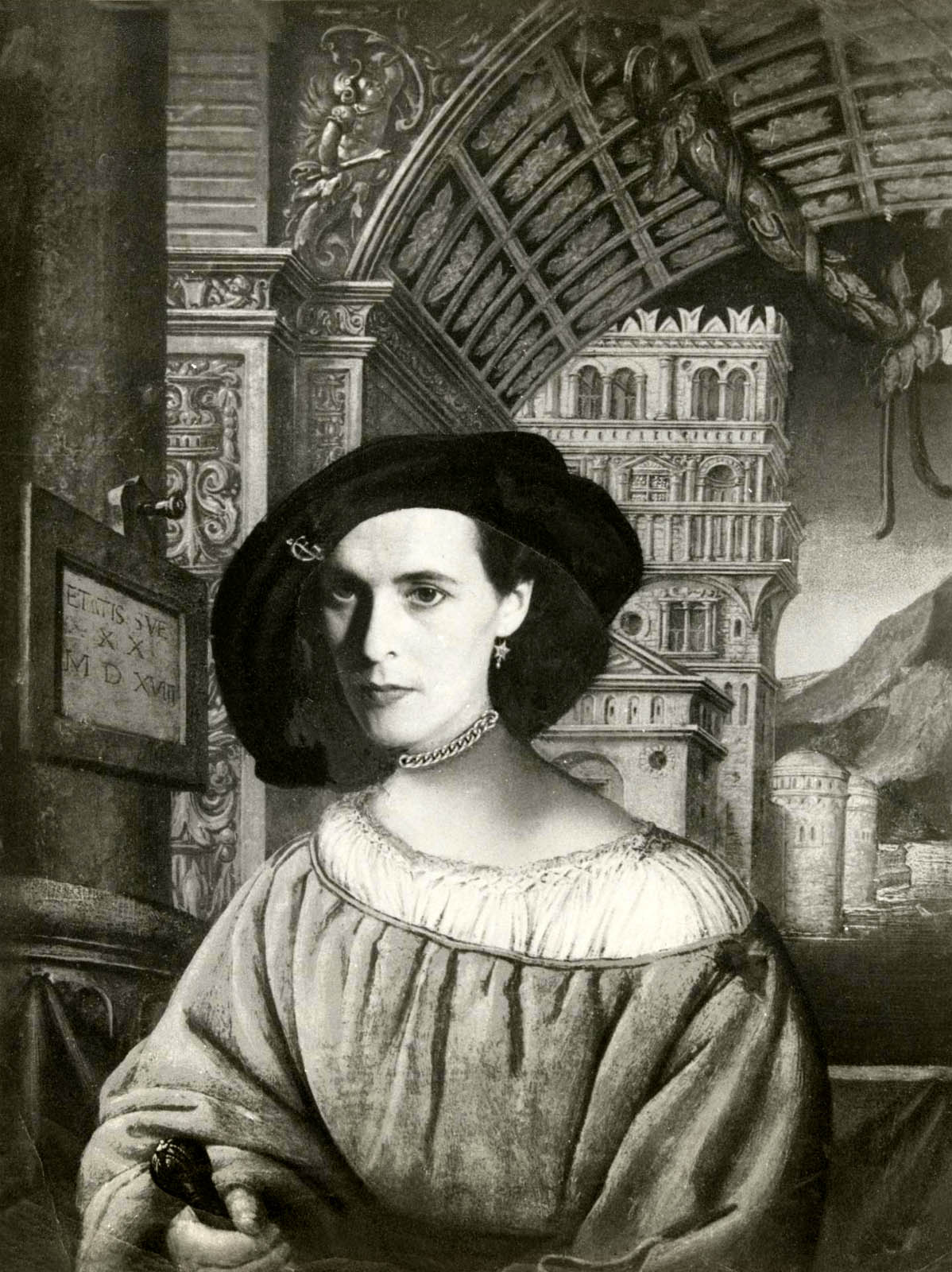
 

Kati Horna (Mexican born Hungary, 1912-2000) 'Leonora Carrington' 1957


Kati Horna (Mexican born Hungary, 1912-2000)
Leonora Carrington
1957
Gelatin silver photograph
24.2 x 18.2cm (image)
25.3 x 20.2cm (sheet)
National Gallery of Victoria, Melbourne
Bowness Family Fund for Photography, 2024
© Kati Horna, courtesy Michael Hoppen Gallery
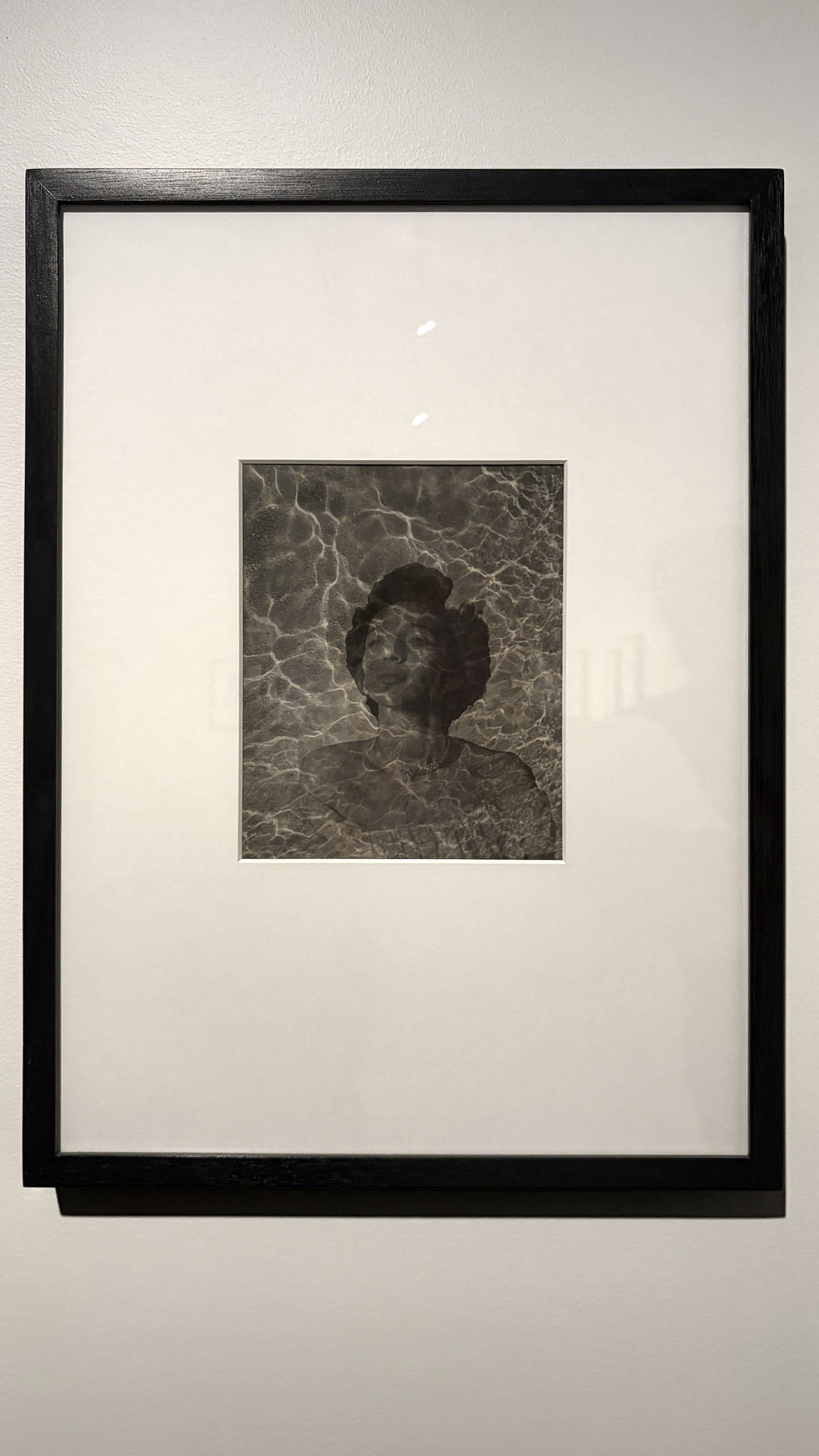
 

Lola Álvarez Bravo (Mexican, 1903-1993) 'No title (Remedios Varo)' c. 1950 (installation view)


Lola Álvarez Bravo (Mexican, 1903-1993)
No title (Remedios Varo) (installation view)
c. 1950
Gelatin silver photograph
23.4 x 18.9cm (image and sheet)
National Gallery of Victoria, Melbourne
Bowness Family Fund for Photography, 2024
Photo: Marcus Bunyan


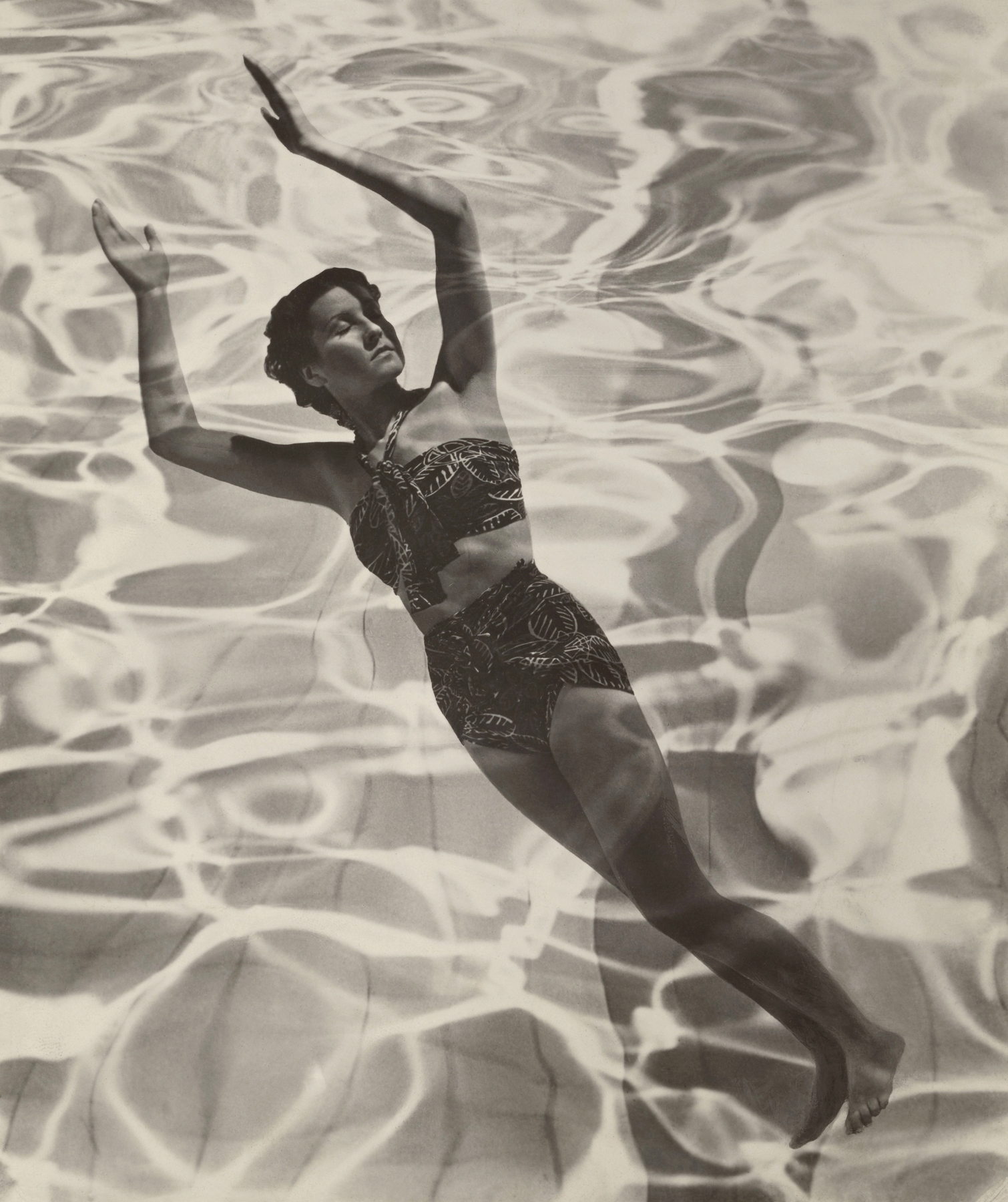
Lola Álvarez Bravo was one of the first artists to produce photomontages in Mexico. At the forefront of artistic experimentation, Álvarez Bravo created this image by layering multiple negatives. The subject is believed to be Remedios Varo, a Spanish Surrealist artist who arrived in Mexico in 1941. Alongside Álvarez Bravo, Kati Horna and Leonora Carrington, Varo was part of a community of expatriate artists and intellectuals active in Mexico during the mid twentieth century. Drawing inspiration from the Surrealist movement, Álvarez Bravo overlaid the portrait with an image of rippling water, creating a tranquil scene in which the subject appears to be floating.

Wall text from the exhibition


Unlike in many other countries, in Mexico artists had opportunities to work as long as they did not threaten the locals’ career prospects. Thus, many Spanish-speaking immigrants started teaching in universities, raising a new generation of Mexican creatives and academics. Apart from their jobs, the majority of Europeans did not interact closely with the locals, preferring to keep the company of their fellow refugees. The reason was not the rejection of local customs but the shared experience of war, tragedy, and dramatic flight across ravaged Europe.

The house of the artist Remedios Varo was the central meeting point for the whole community. Anyone in need could find company, shelter, and money raised by all group members. Varo hosted dinners and parties. She also sent party invitations to random addresses taken from a phone book.

Anastasiia Kirpalov. “The Mexican Escape of European Surrealists During World War II,” on The Collector website Oct 15, 2024 [Online] Cited 17/04/026. Used under fair use conditions for the purposes of education and research
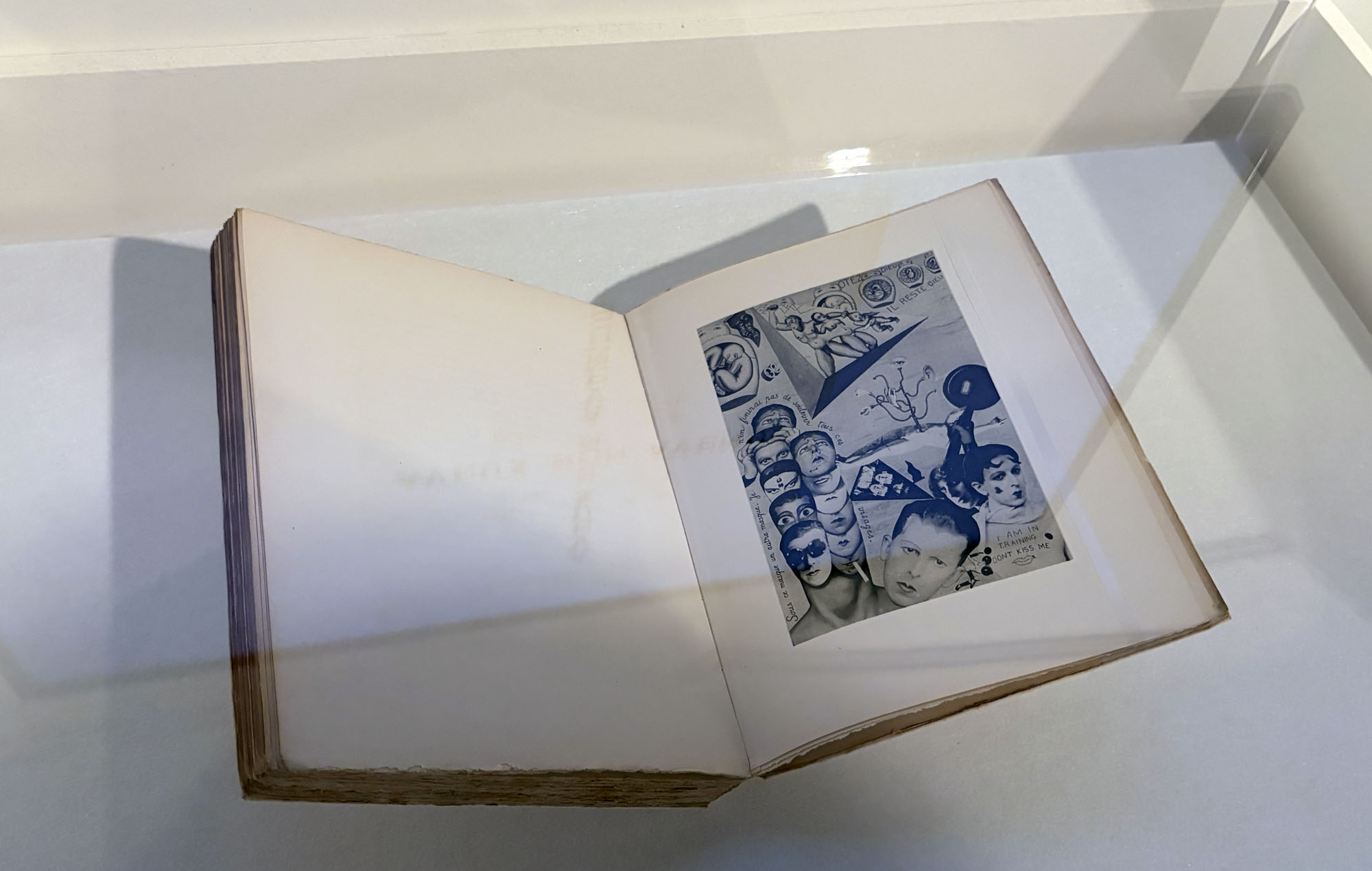
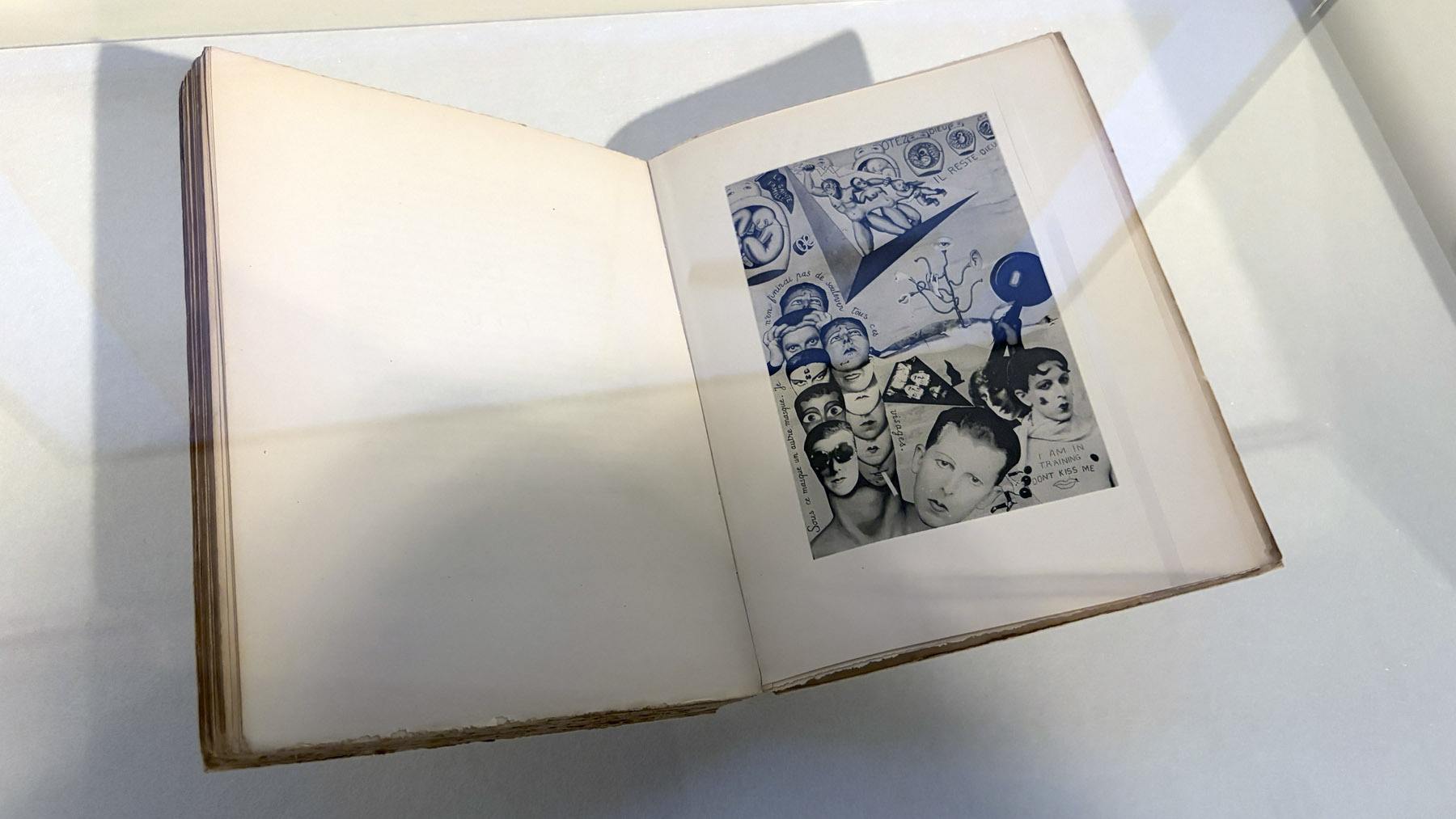
 

Claude Cahun (French, 1894-1854) and Marcel Moore (French, 1892-1872) 'Disavowals', or 'Cancelled Confessions' (Aveux non avenus) 1930 (installation view)


Claude Cahun (French, 1894-1854) and Marcel Moore (French, 1892-1872)
Disavowals, or Cancelled Confessions (Aveux non avenus) (installation views)
1930
Published by Éditions du Carrefour, Paris
Illustrated book: photogravure, letterpress text, 237 pages, 10 heliographs, paper cover, stitched binding
Shaw Research Library, acquired through the Friends of the Gallery library Endowment, 2017
Photos: Marcus Bunyan


Born Lucy Schwob, Claude Cahun was a celebrated French artist associated with the Surrealist movement. Aveux non avenus, loosely translated as Cancelled Confessions or Disavowals, is the second book Cajun created with her stepsister, lifelong partner and artistic collaborator, graphic artist Marcel Moore. This subversive semi-autobiographical work couples poems, recollections and aphorisms with dreamlike photomontages. The photomontages include many of Cahun’s performative self-portraits, images that challenge established notions of gender identity.

Vitrine text from the exhibition
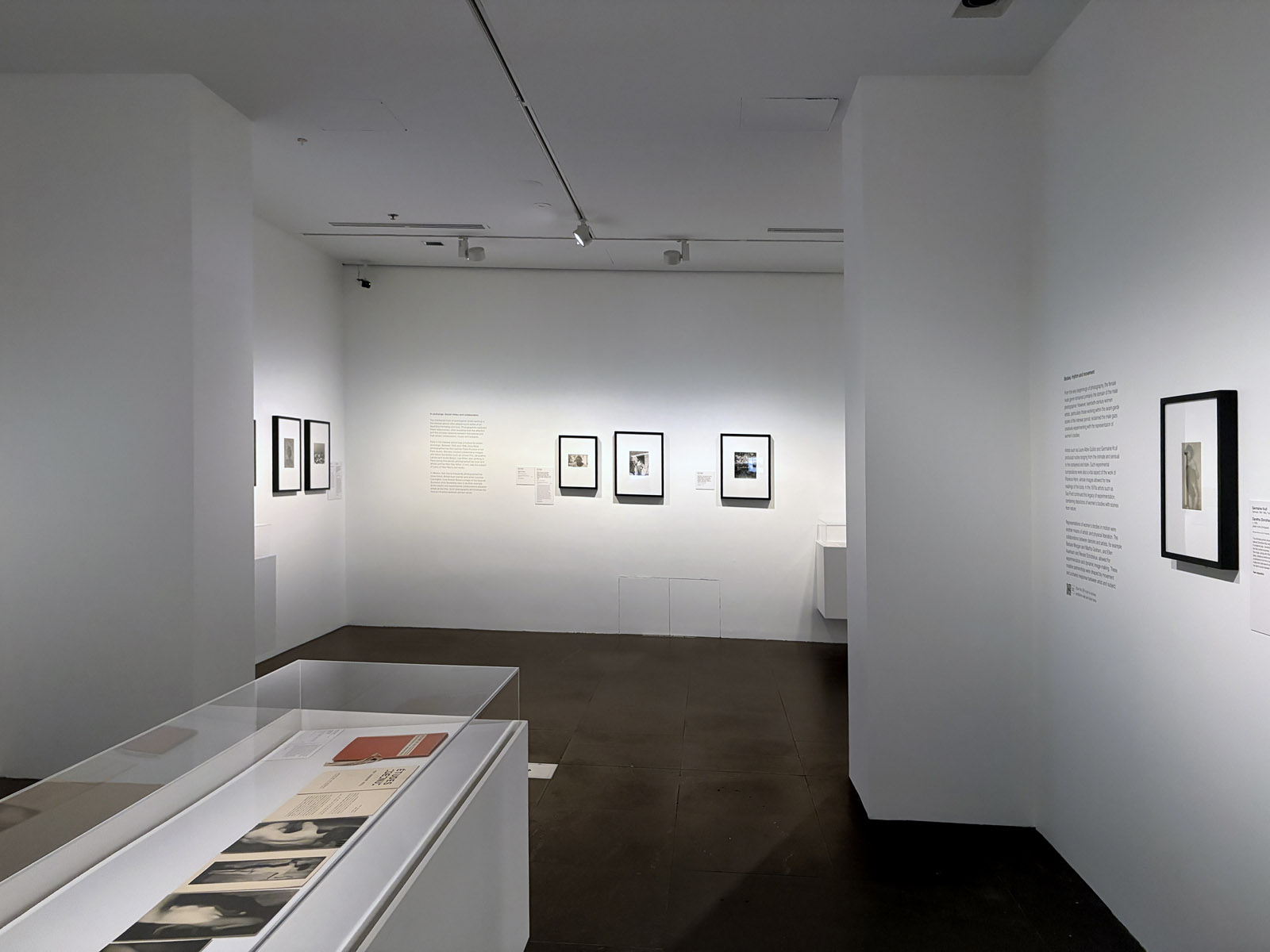
 

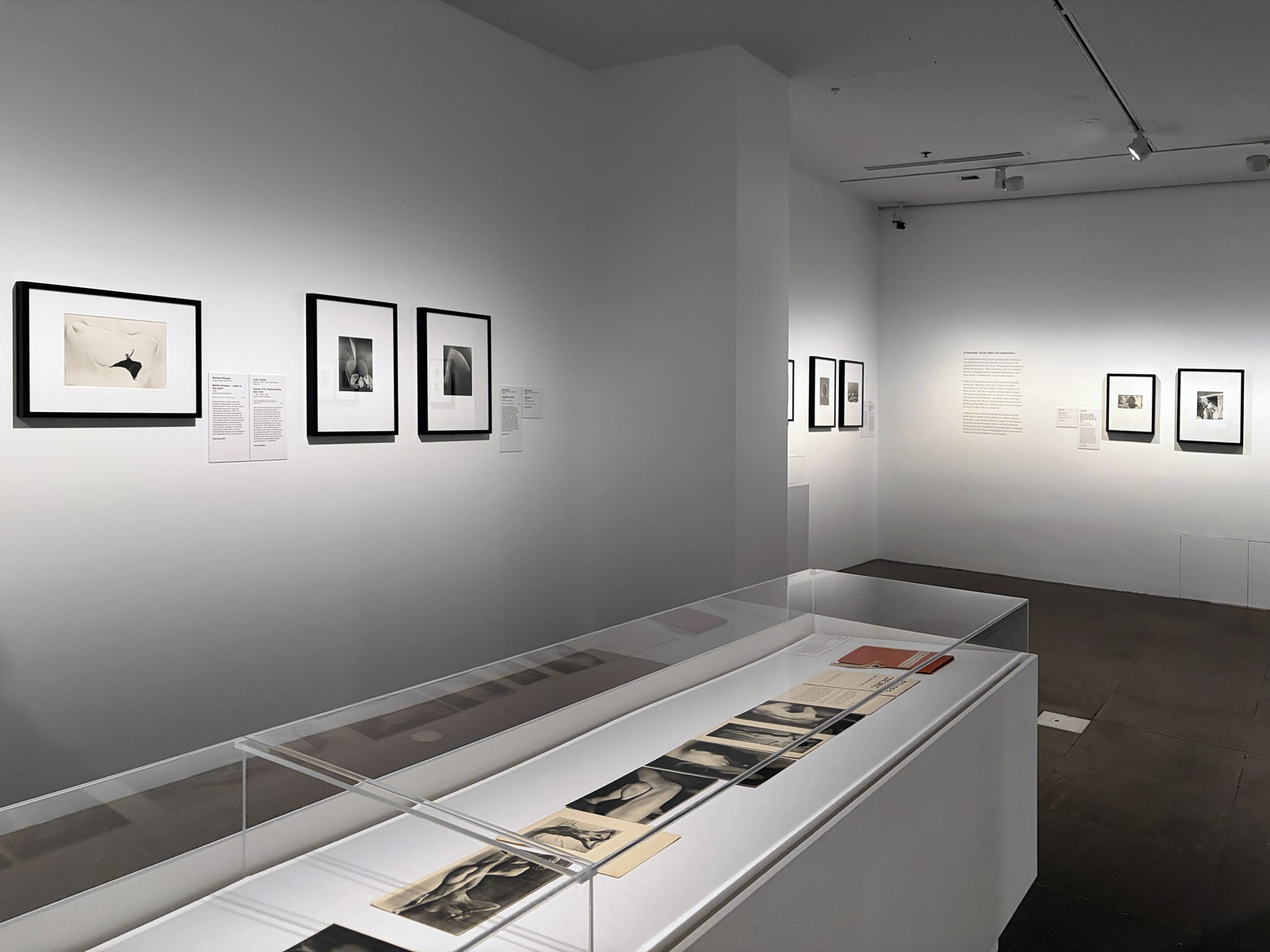
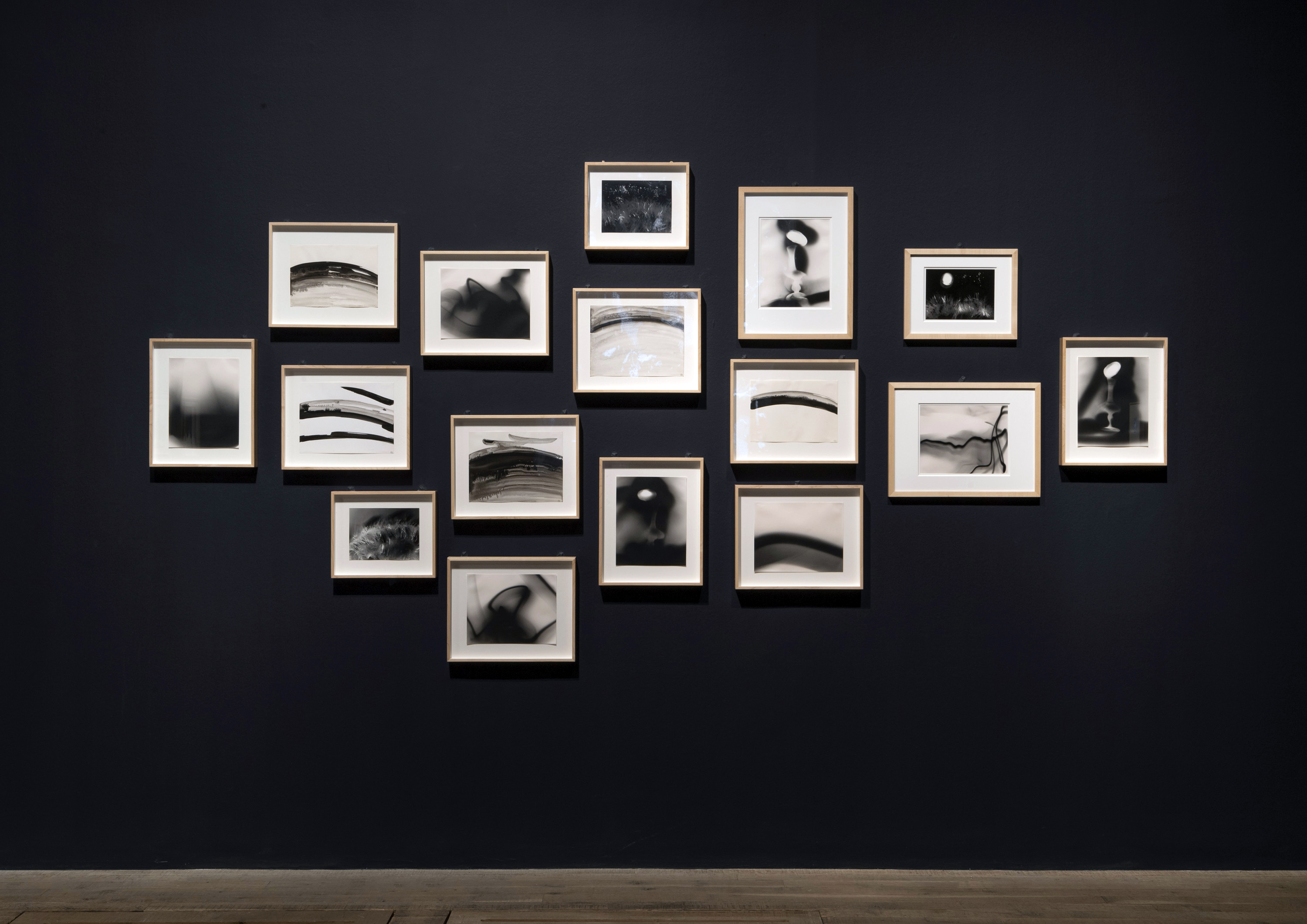
Installation view of the exhibition 'Women Photographers 1900-1975: A Legacy of Light at NGV' International, Melbourne, November 2025 – May 2026
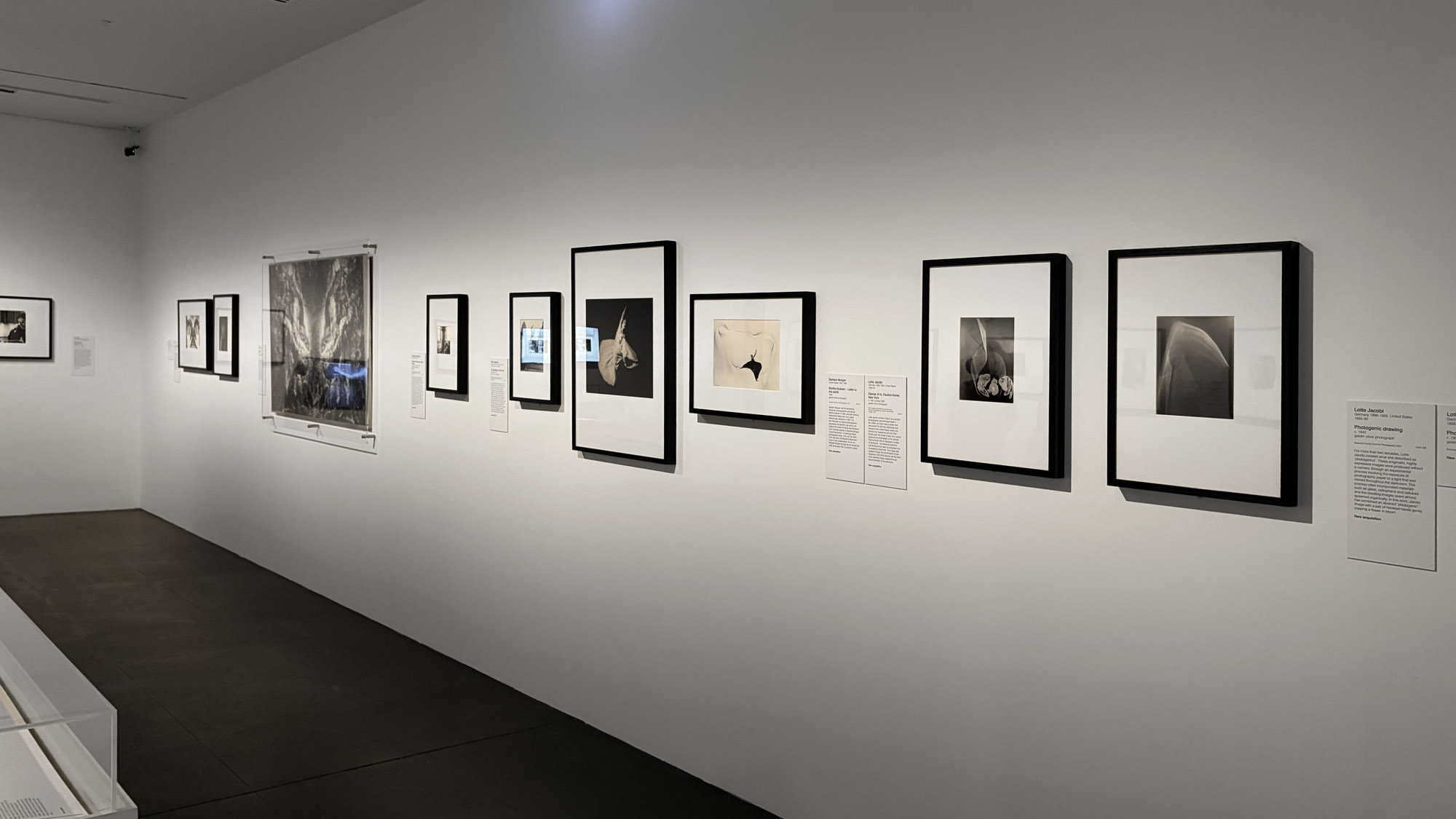
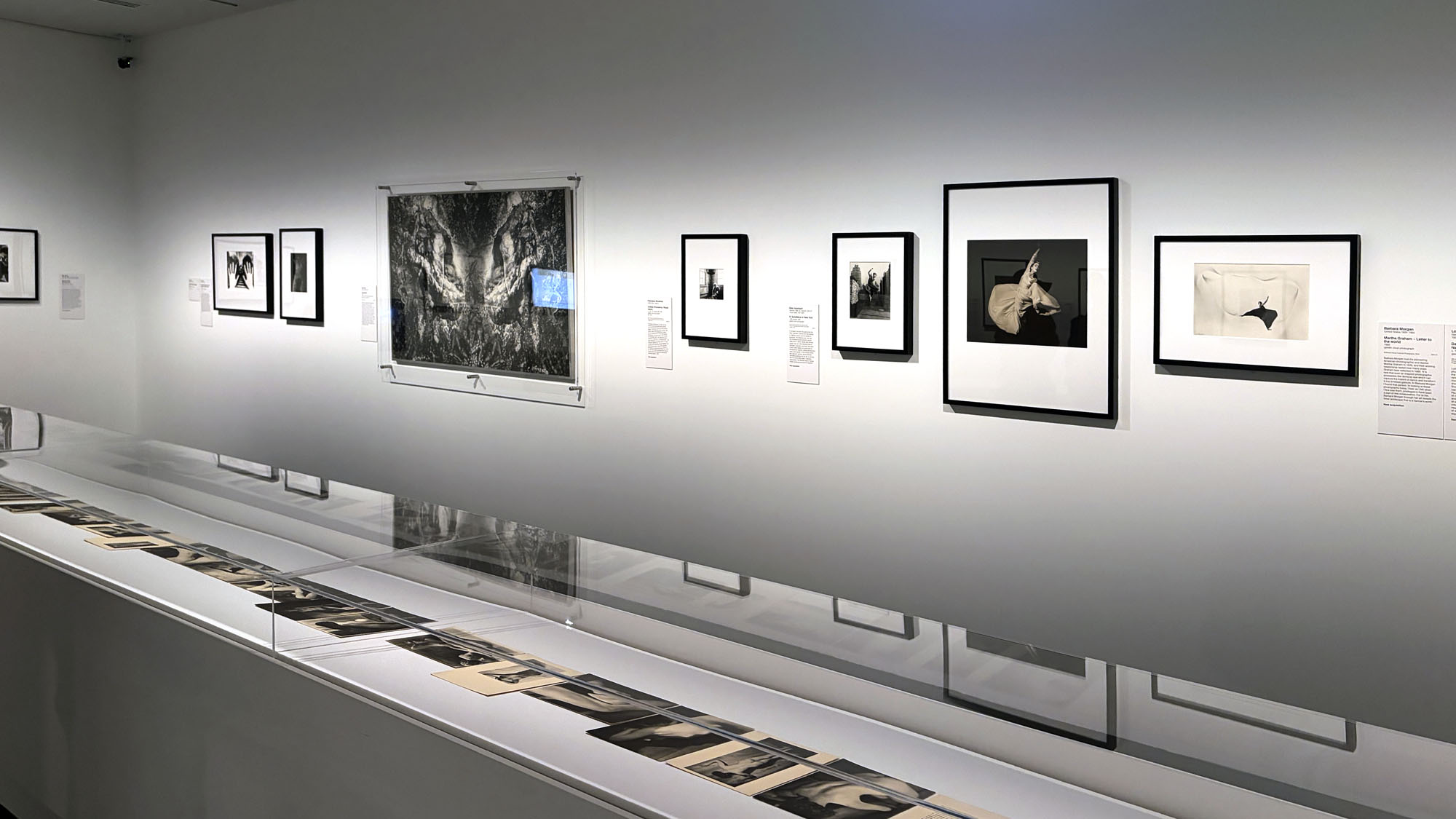
Installation view of the exhibition 'Women Photographers 1900-1975: A Legacy of Light at NGV' International, Melbourne, November 2025 – May 2026 showing from left to right in the bottom image, Francesca Woodman 'Untitled (Providence, Rhode Island)' (c. 1975-1978 printed after 1981); Ellen Auerbach R. 'Schottelius in New York' (1953 printed 1992); Barbara Morgan 'Martha Graham – Letter to the world' (1940); Lotti Jacobi 'Dancer #16, Pauline Koner, New York' (c. 1937, printed 1992); and two 'Photogenic drawing' (c. 1940 and c. 1950)


Installation views of the exhibition Women Photographers 1900-1975: A Legacy of Light at NGV International, Melbourne, November 2025 – May 2026 showing from left to right in the bottom image, Francesca Woodman Untitled (Providence, Rhode Island) (c. 1975-1978 printed after 1981, below); Ellen Auerbach R. Schottelius in New York (1953 printed 1992, below); Barbara Morgan Martha Graham – Letter to the world (1940, below); Lotti Jacobi Dancer #16, Pauline Koner, New York (c. 1937, printed 1992); and two Photogenic drawing (c. 1940 and c. 1950)
Photos: Marcus Bunyan


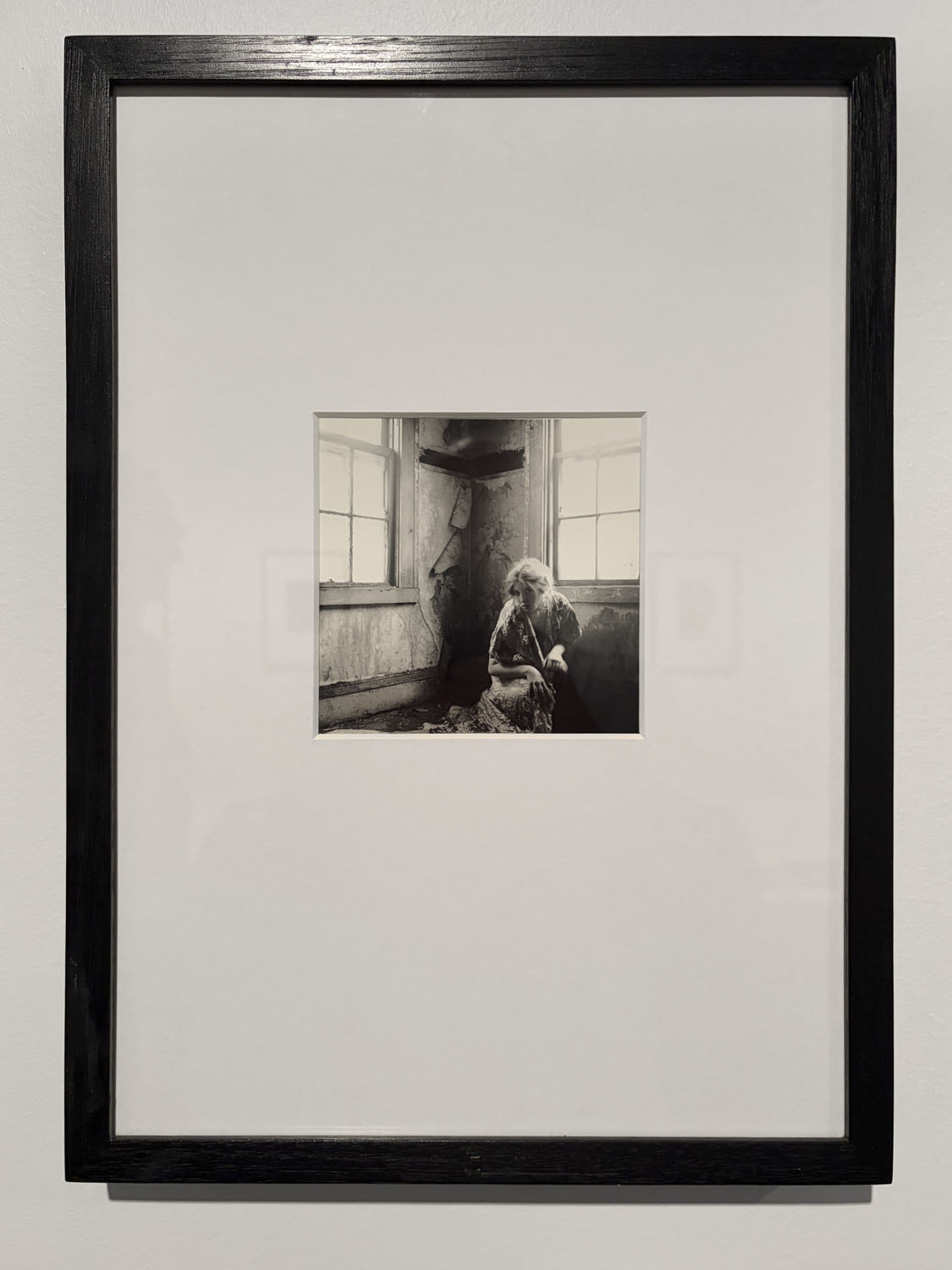
Francesca Woodman (American, 1958-1981) 'Untitled (Providence, Rhode Island)' (c. 1975-1978, printed after 1981) (installation view)


Francesca Woodman (American, 1958-1981)
Untitled (Providence, Rhode Island) (installation view)
c. 1975-1978, printed after 1981
Gelatin silver photograph
13.7 x 13.8cm (image)
25.3 x 20.3cm (sheet)
National Gallery of Victoria, Melbourne
Gift of Krystyna Campbell-Pretty AM and Family through the Australian Government’s Cultural Gifts Program, 2025
Photo: Marcus Bunyan


Francesca Woodman is known for her intimate black-and-white self-portraits and photographs featuring other women sitters. The bodies are often blurred, with faces hidden and appearing to blend into the background. In this self-portrait, Woodman crouches down in the corner of a decrepit room, her patterned gown somehow reflecting – or merging with – the floral wallpaper that peels down in rough remnants behind her. The photograph was created while Woodman was a student at the Rhode Island School of Design in Providence, where she studied from 1975 to 1978 and which produced the majority of her extant photographs following her untimely death in 1981.

Wall text from the exhibition


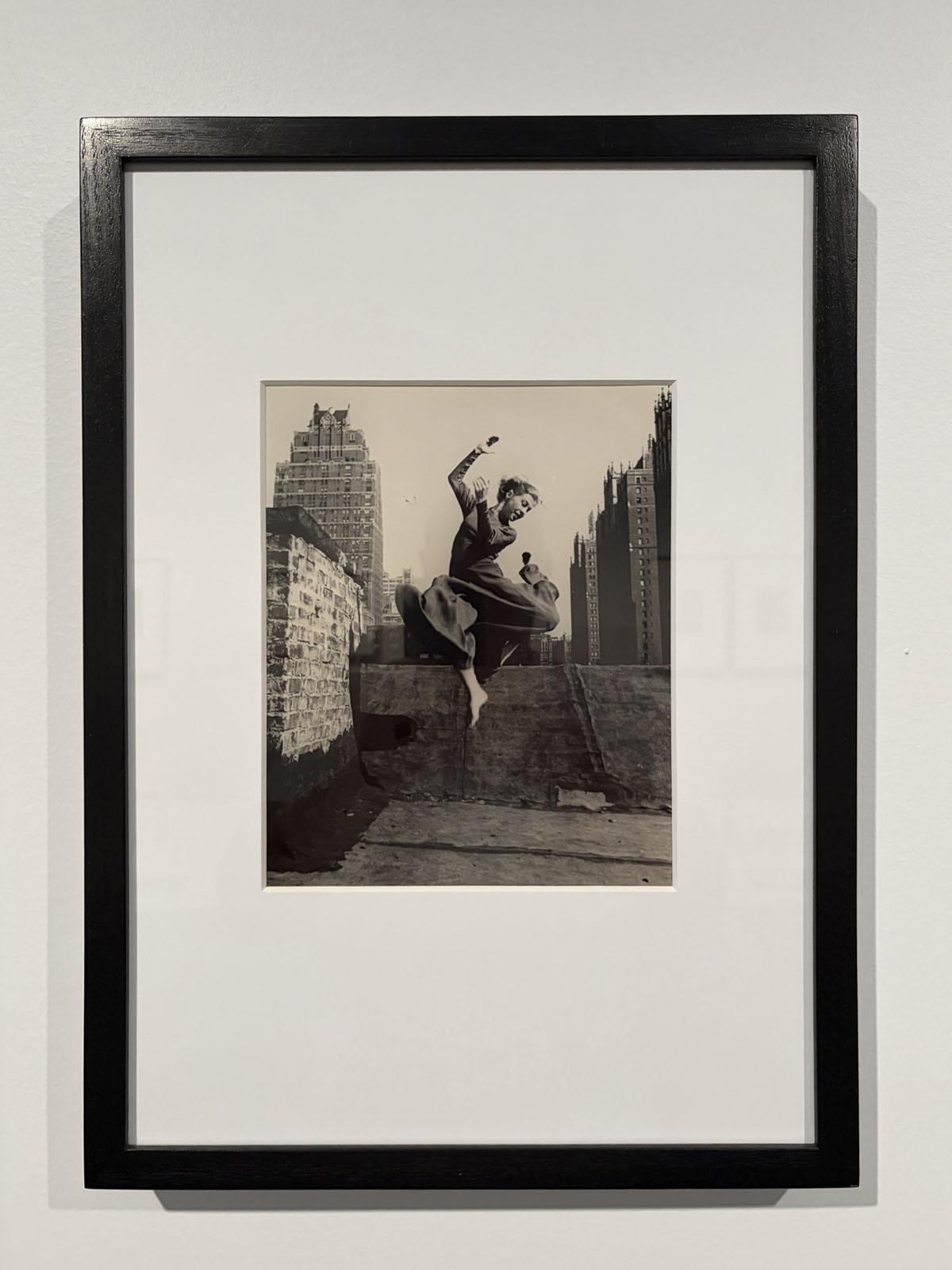
Ellen Auerbach (German 1906-2004) 'R. Schottelius in New York' 1953, printed 1992 (installation view)


Ellen Auerbach (German 1906-2004)
R. Schottelius in New York (installation view)
1953, printed 1992
Gelatin silver photograph
23.2 x 18.5cm (image)
25.0 x 27.5cm (sheet)
National Gallery of Victoria, Melbourne
Gift of Krystyna Campbell-Pretty AM and Family through the Australian Government’s Cultural Gifts Program, 2023
Photo: Marcus Bunyan


Ellen Auerbach (German 1906-2004) 'R. Schottelius in New York' 1953, printed 1992


Ellen Auerbach (German 1906-2004)
R. Schottelius in New York
1953, printed 1992
Gelatin silver photograph
23.2 x 18.5cm (image)
25.0 x 27.5cm (sheet)
National Gallery of Victoria, Melbourne
Gift of Krystyna Campbell-Pretty AM and Family through the Australian Government’s Cultural Gifts Program, 2023
© Ellen Auerbach. VG Bild-Kunst/Copyright Agency


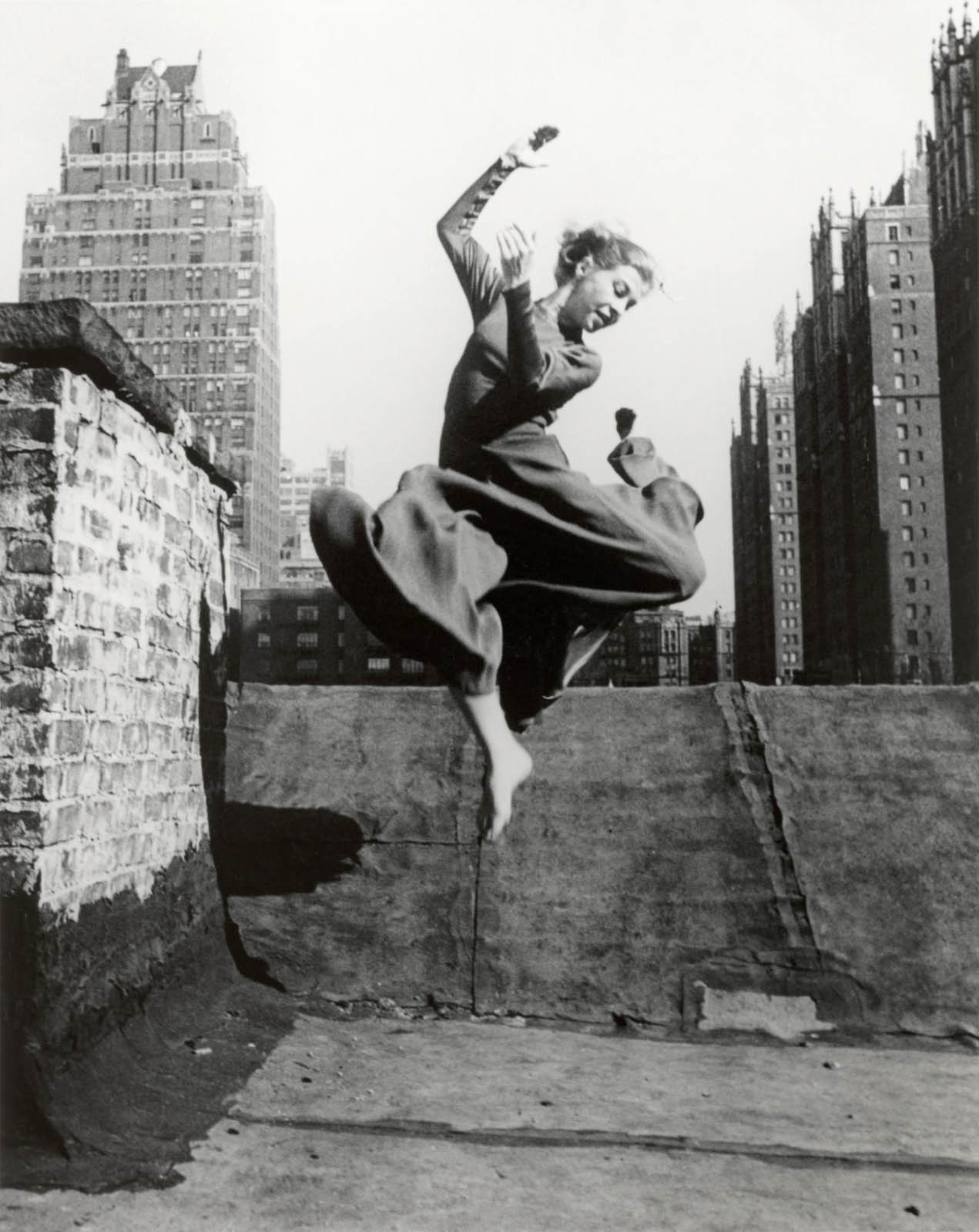
A constant innovator throughout her life, Ellen Auerbach received her first camera in 1928 as a tool to aid her studies in sculpture. The following year, she met her professional and romantic partner Grete Stern in Berlin, where they formed studio ringl+pit. After escaping fascist Germany, Auerbach eventually relocated to the United States and continued her photographic practice, settling among New York’s avant-garde. In this rooftop scene, she captures German dancer Renate Schottelius leaping into the air. In contrast with the surrounding static, imposing skyscrapers, the liberated body in joyous motion serves as a symbol for freedom.

Wall text from the exhibition


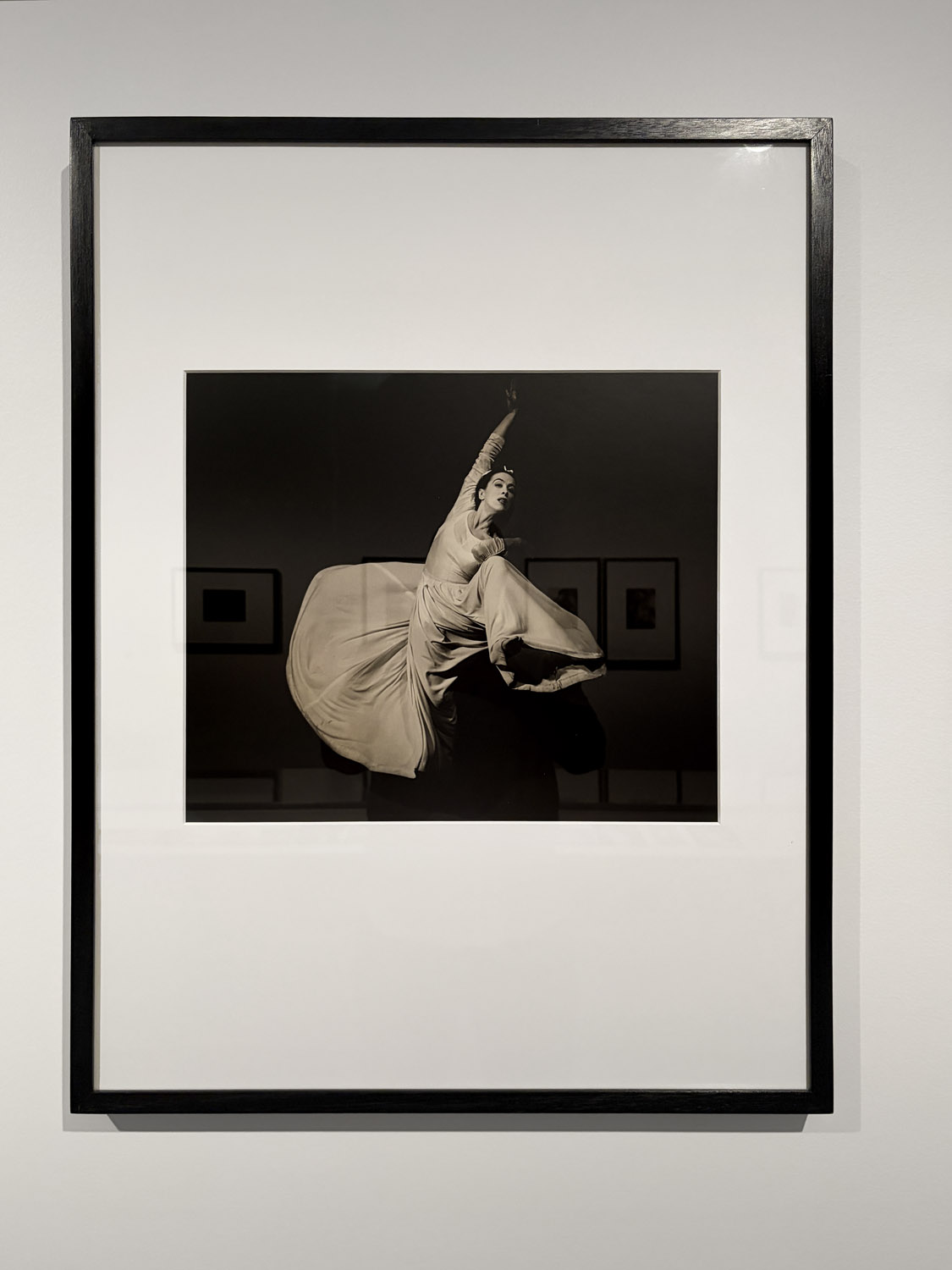
Barbara Morgan (American, 1900-1992) 'Martha Graham – Letter to the world' 1940 (installation view)


Barbara Morgan (American, 1900-1992)
Martha Graham – Letter to the world (installation view)
1940
Gelatin silver photograph
38.9 x 48.2cm (image and sheet)
National Gallery of Victoria, Melbourne
Bowness Family Fund for Photography, 2024
Photo: Marcus Bunyan


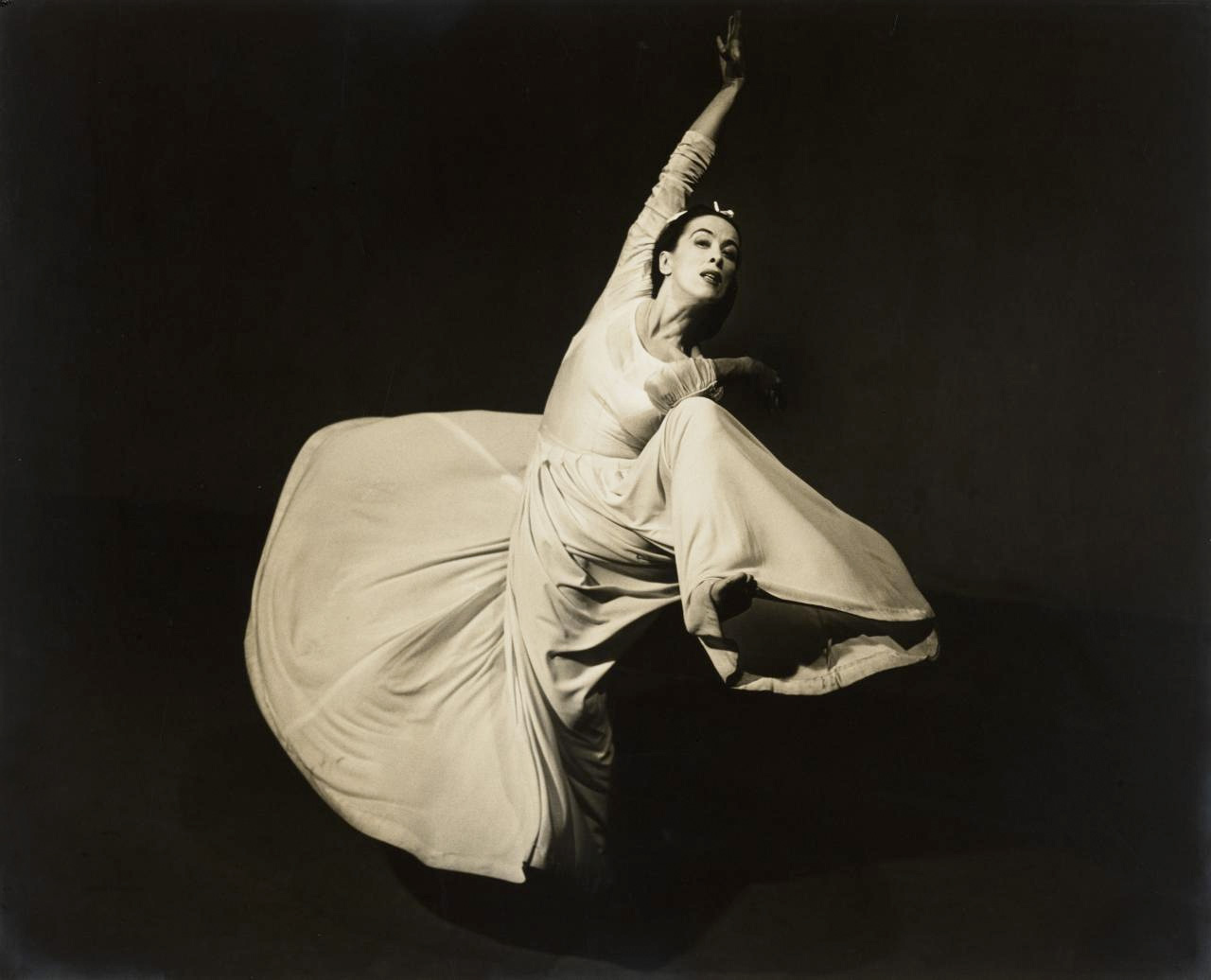
Barbara Morgan (American, 1900-1992) 'Martha Graham – Letter to the world' 1940


Barbara Morgan (American, 1900-1992)
Martha Graham – Letter to the world
1940
Gelatin silver photograph
38.9 x 48.2cm (image and sheet)
National Gallery of Victoria, Melbourne
Bowness Family Fund for Photography, 2024
© The Barbara Morgan Estate


Barbara Morgan met the pioneering American choreographer and dancer Martha Graham in 1935, and their working relationship lasted over six decades. Graham later reflected in 1980: “It is rare that even an inspired photographer possesses the demonic eye which can capture the instant of dance and transform it into timeless gesture. In Barbara Morgan I found that person. In looking at these photographs today, I feel, as I felt when I first saw them, privileged to have been a part of this collaboration. For to me, Barbara Morgan through her art reveals the inner landscape that is a dancer’s world.”

Wall text from the exhibition


Installation view of the exhibition 'Women Photographers 1900-1975: A Legacy of Light' at NGV International, Melbourne, November 2025 – May 2026


Installation view of the exhibition Women Photographers 1900-1975: A Legacy of Light at NGV International, Melbourne, November 2025 – May 2026
Photo: Marcus Bunyan


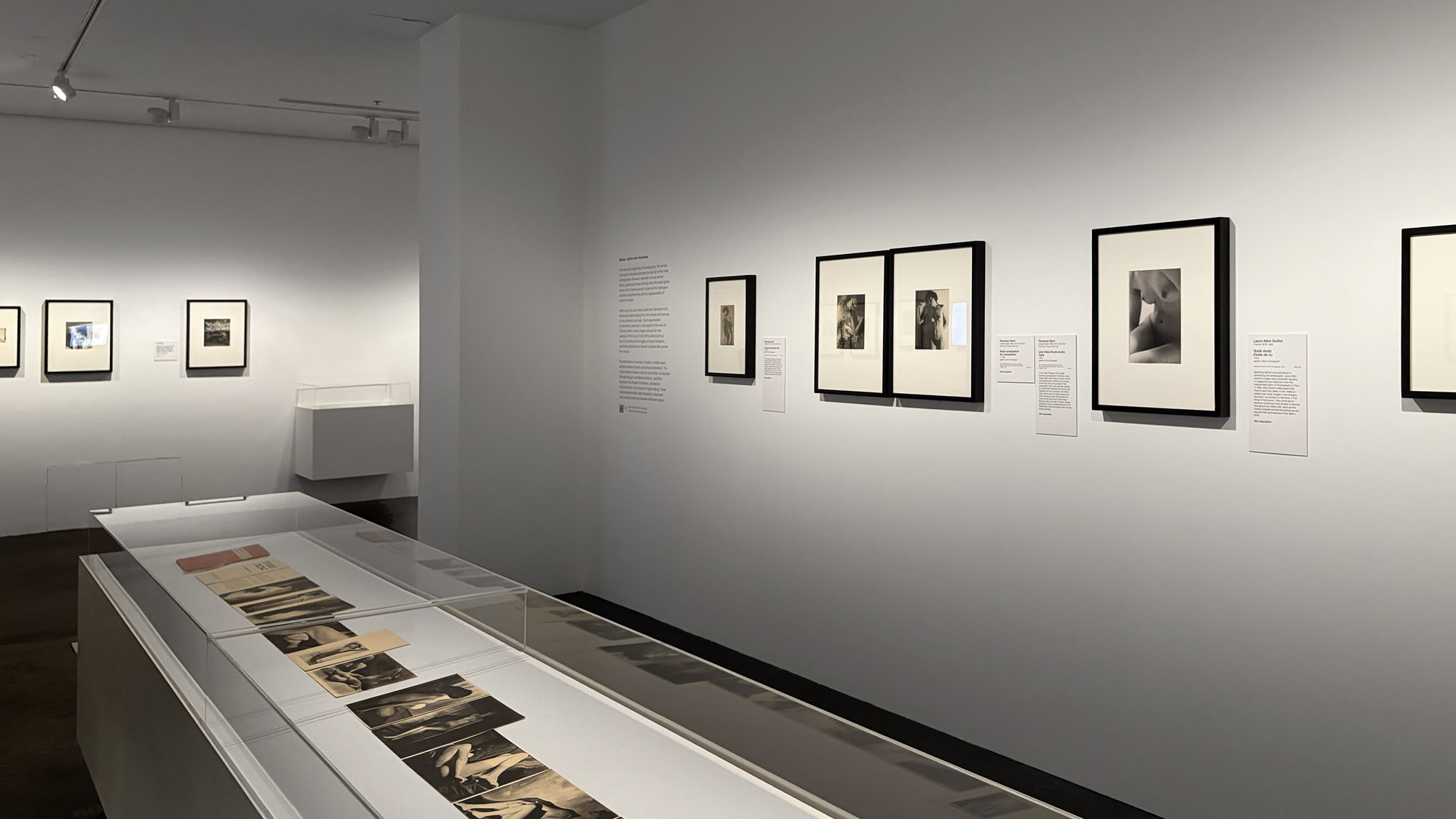
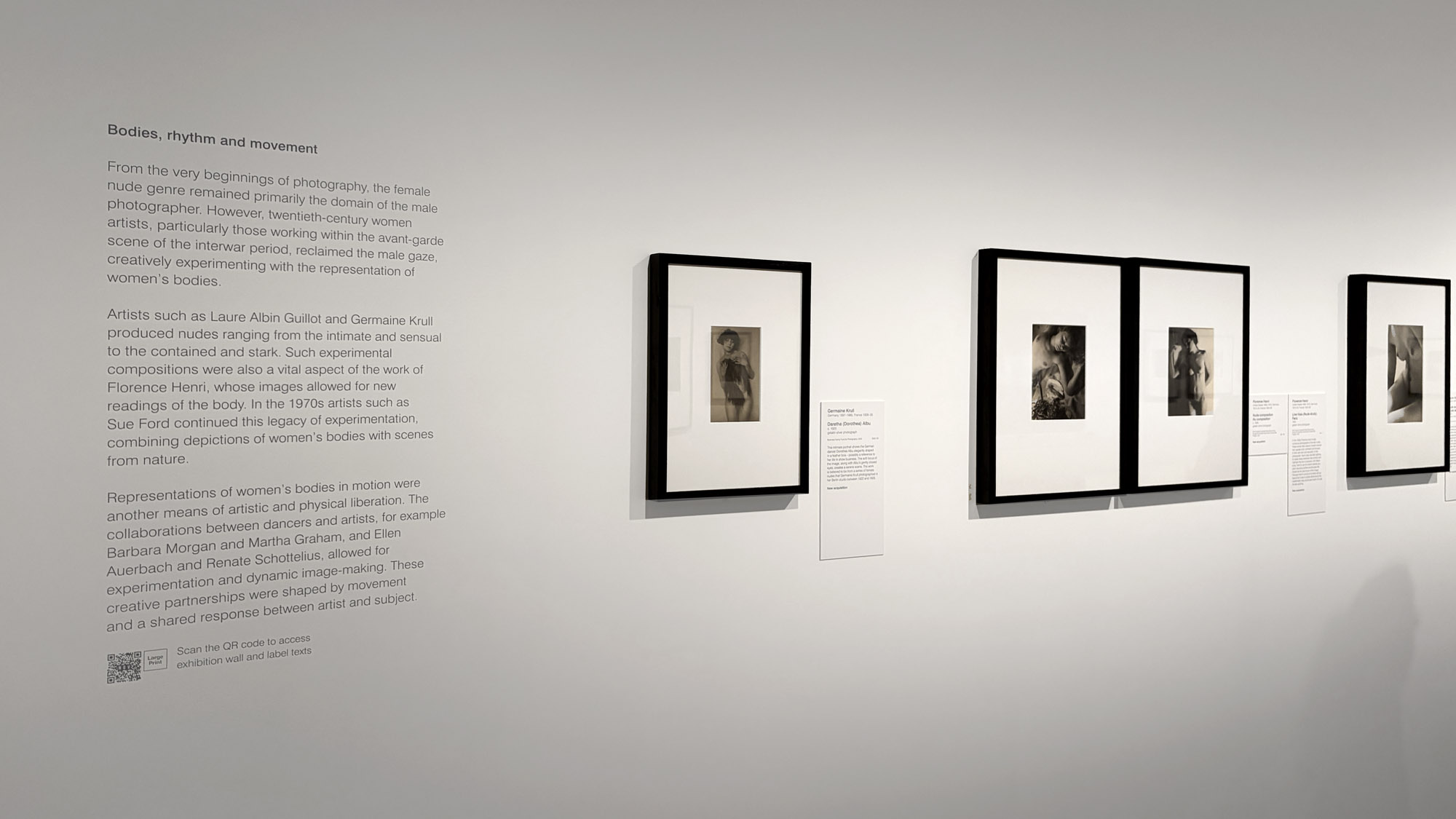
Bodies, Rhythm and Movement

From the very beginnings of photography, the female nude genre remained primarily the domain of the male photographer. However, twentieth-century women artists, particularly those working within the avant-garde scene of the interwar period, reclaimed the male gaze, creatively experimenting with the representation of women’s bodies.

Artists such as Laure Albin Guillot and Germaine Krull produced nudes ranging from the intimate and sensual to the contained and stark. Such experimental compositions were also a vital aspect of the work of Florence Henri, whose images allowed for new readings of the body. In the 1970s artists such as Sue Ford continued this legacy of experimentation, combining depictions of women’s bodies with scenes from nature.

Representations of women’s bodies in motion were another means of artistic and physical liberation. The collaborations between dancers and artists, for example Barbara Morgan and Martha Graham, and Ellen Auerbach and Renate Schottelius, allowed for experimentation and dynamic image-making. These creative partnerships were shaped by movement and a shared response between artist and subject.


Installation view of the exhibition 'Women Photographers 1900-1975: A Legacy of Light' at NGV International, Melbourne, November 2025 – May 2026 showing at left, Germaine Krull 'Daretha (Dorothea) Albu' (c. 1925)


Installation view of the exhibition Women Photographers 1900-1975: A Legacy of Light at NGV International, Melbourne, November 2025 – May 2026 showing at left, Germaine Krull Daretha (Dorothea) Albu (c. 1925, below)
Photo: Marcus Bunyan


Installation view of the exhibition 'Women Photographers 1900-1975: A Legacy of Light' at NGV International, Melbourne, November 2025 – May 2026


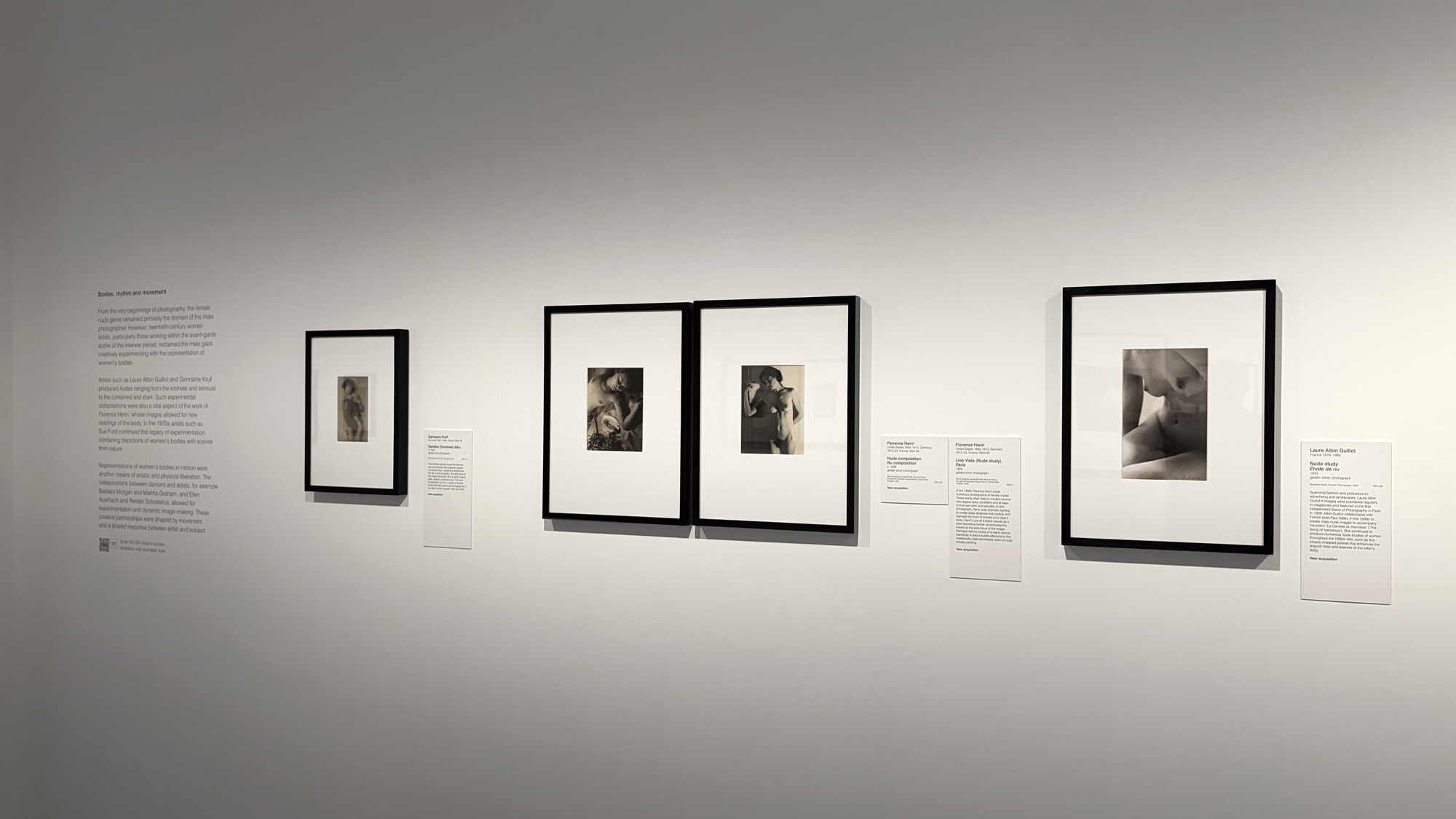
Installation view of the exhibition Women Photographers 1900-1975: A Legacy of Light at NGV International, Melbourne, November 2025 – May 2026 showing from left to right, Germaine Krull Daretha (Dorothea) Albu (c. 1925, below); Florence Henri Nude composition (c. 1930, below); Florence Henri Line Viala (Nude study), Paris (1934); and Laure Albin Guillot Nude Study (1943)
Photo: Marcus Bunyan


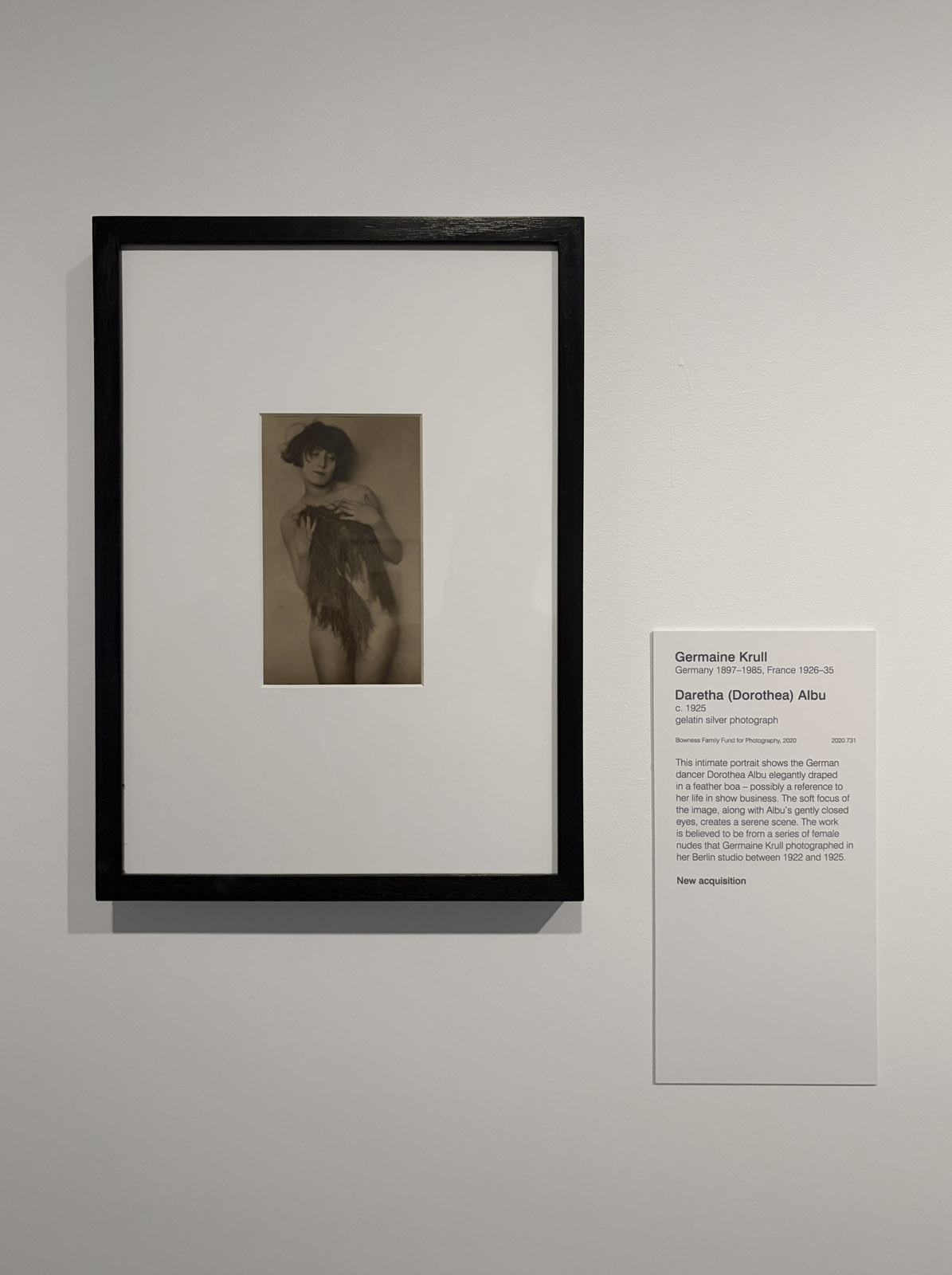
Germaine Krull (European, 1897-1985) 'Daretha (Dorothea) Albu' c. 1925 (installation view)


Germaine Krull (European, 1897-1985)
Daretha (Dorothea) Albu (installation view)
c. 1925
Gelatin silver photograph
19.7 x 11.7cm (image and sheet)
National Gallery of Victoria, Melbourne
Bowness Family Fund for Photography, 2020
Photo: Marcus Bunyan


This intimate portrait shows the German dancer Dorothea Albu elegantly draped in a feather boa – possibly a reference to her life in show business. The soft focus of the image, along with Albu’s gently closed eyes, creates a serene scene. The work is believed to be from a series of female nudes that Germaine Krull photographed in her Berlin studio between 1922 and 1925.

Wall text from the exhibition


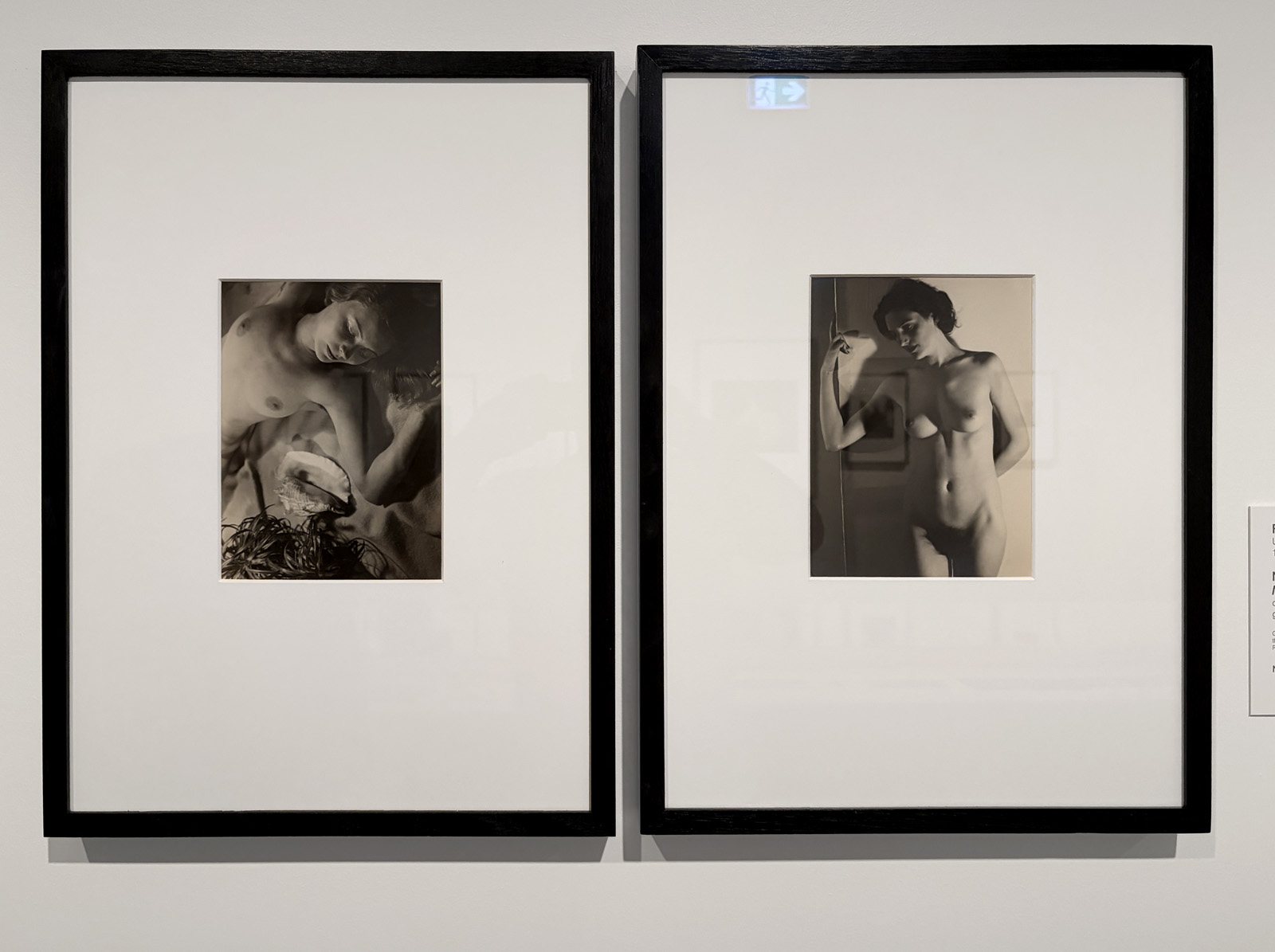
Installation view of the exhibition 'Women Photographers 1900-1975: A Legacy of Light' at NGV International, Melbourne, November 2025 – May 2026 showing from left to right, Florence Henri (European born USA, 1893-1982) 'Nude composition' (c. 1930) and Florence Henri (European born USA, 1893-1982) 'Line Viala (Nude study), Paris' (1934)


Installation view of the exhibition Women Photographers 1900-1975: A Legacy of Light at NGV International, Melbourne, November 2025 – May 2026 showing from left to right, Florence Henri Nude composition (c. 1930, below) and Florence Henri Line Viala (Nude study), Paris (1934, below)
Photo: Marcus Bunyan


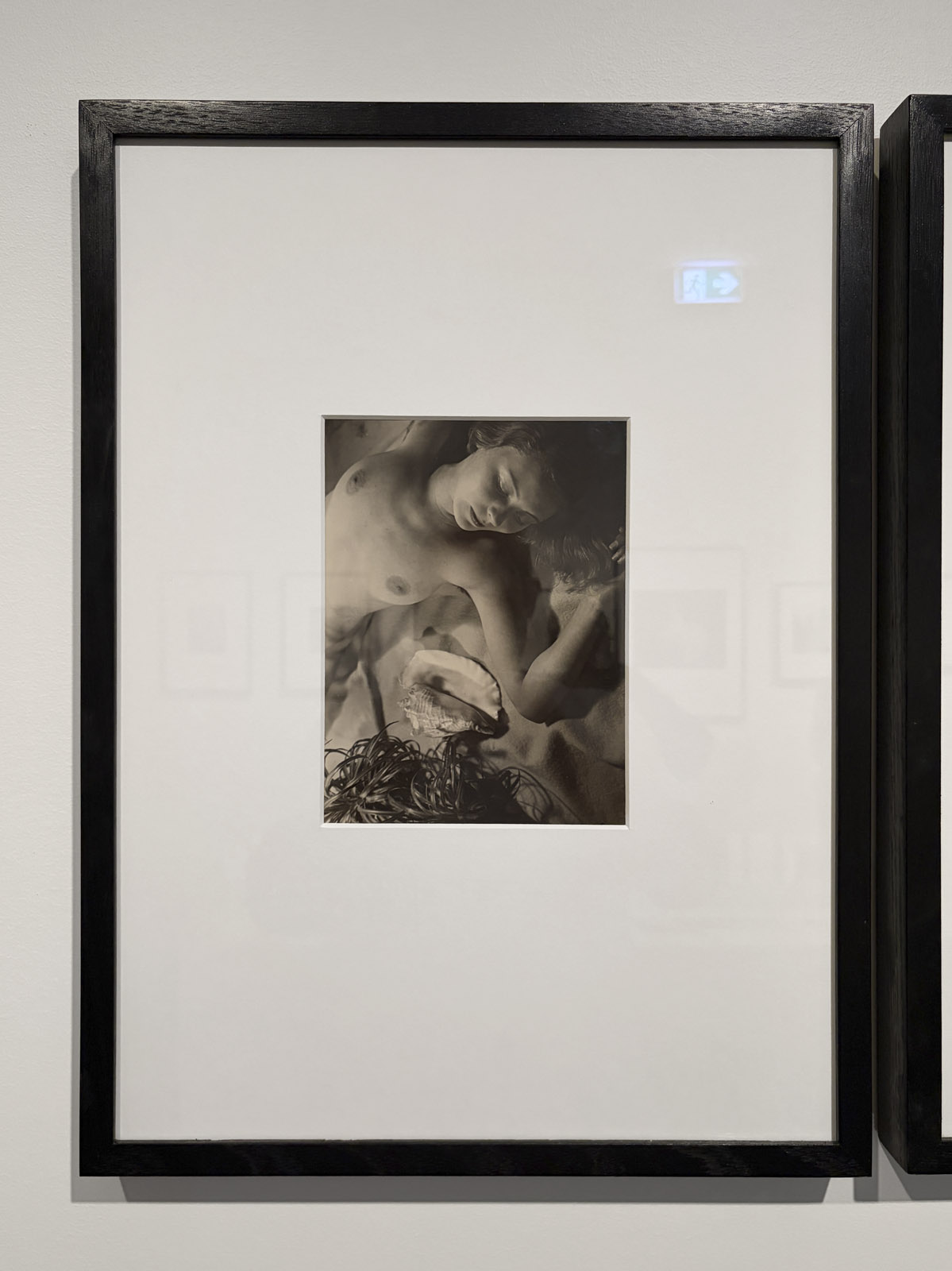
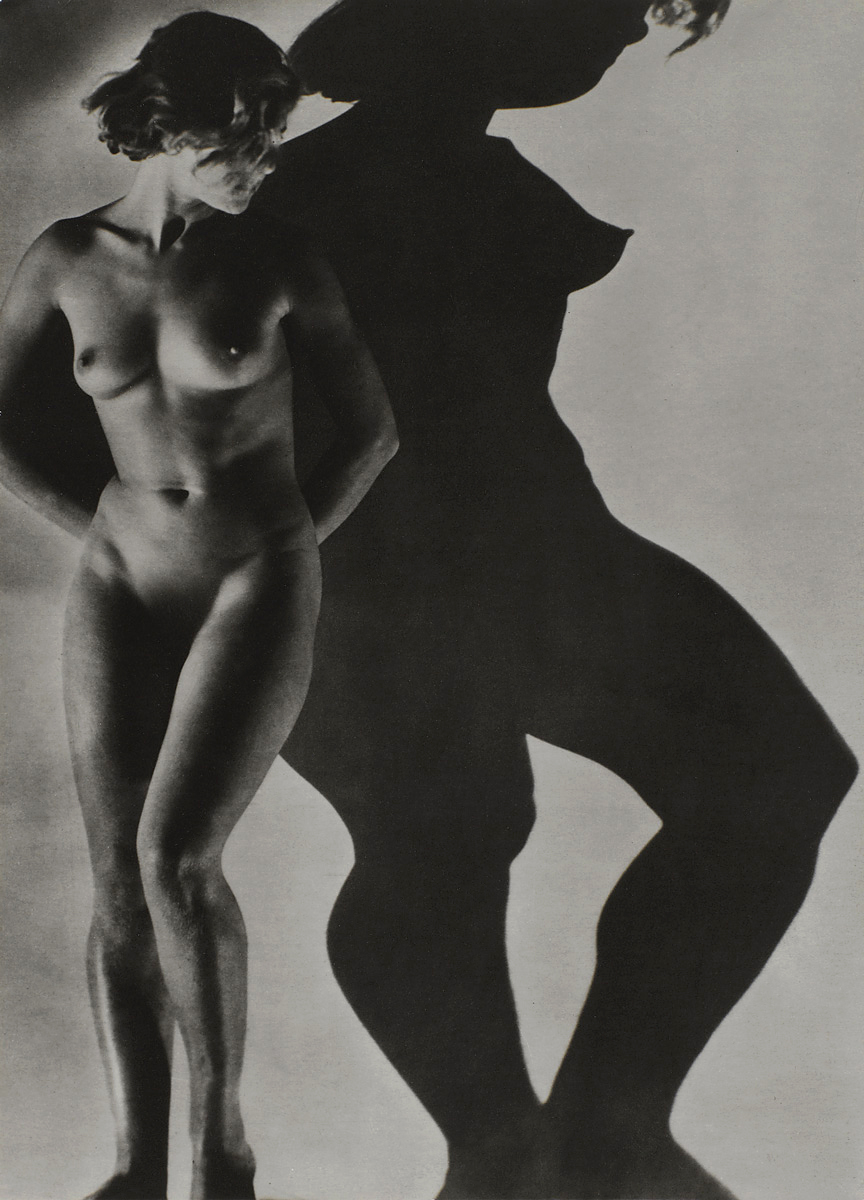
Florence Henri (European born USA, 1893-1982) 'Nude composition' (Nu composition) c. 1930 (installation view)


Florence Henri (European born USA, 1893-1982)
Nude composition (Nu composition) (installation view)
c. 1930
Gelatin silver photograph
22.9 x 17.0cm (image and sheet)
National Gallery of Victoria, Melbourne
Gift of Krystyna Campbell-Pretty AM and Family through the Australian Government’s Cultural Gifts Program, 2021
Photo: Marcus Bunyan


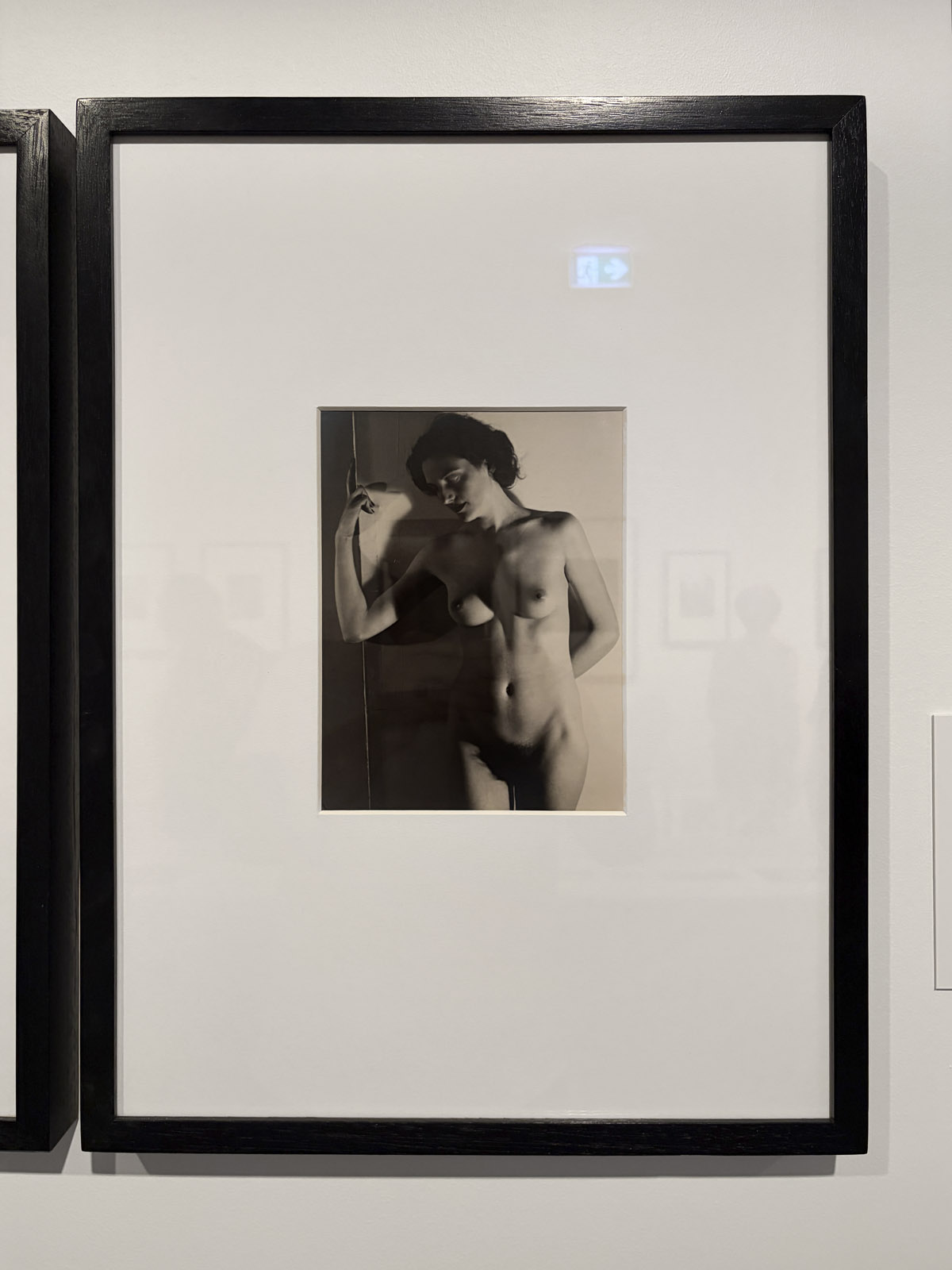
Florence Henri (European born USA, 1893-1982) 'Line Viala (Nude study), Paris' 1934 (installation view)


Florence Henri (European born USA, 1893-1982)
Line Viala (Nude study), Paris (installation view)
1934
Gelatin silver photograph
22.9 x 17.2cm (image and sheet)
National Gallery of Victoria, Melbourne
Gift of Krystyna Campbell-Pretty AM and Family through the Australian Government’s Cultural Gifts Program, 2023
Photo: Marcus Bunyan


In the 1930s Florence Henri made numerous photographs of female nudes. These works often feature modern women who appear bold, confident and at ease in their own skin and sexuality. In this photograph, Henri uses dramatic lighting to create deep shadows that contour and highlight the form of actress Line Viala’s body. Henri’s use of a blank canvas as a plain backdrop further accentuates the model as the sole focus of the image. Perhaps Henri’s choice of a blank canvas backdrop is also a subtle reference to the traditionally male-dominated realm of nude female painting.

Wall text from the exhibition


Florence Henri (European born USA, 1893-1982) 'Nude composition (Nu composition)' c. 1930


Florence Henri (European born USA, 1893-1982)
Nude composition (Nu composition)
c. 1930
Gelatin silver photograph
22.9 x 17.0cm (image and sheet)
National Gallery of Victoria, Melbourne
Gift of Krystyna Campbell-Pretty AM and Family through the Australian Government’s Cultural Gifts Program, 2021
© Florence Henri / Licensed by the Copyright Agency, Australia


Another vital aspect of her practice was her nude female compositions, such as Nude composition (Nu composition), 1930. Created in the year after establishing her studio in Paris, it employs her characteristically unique, elevated vantage point and raking lighting to disrupt a sense of visual order and perspective. Henri constructs a scene in which the upper half of a woman’s naked body (her chest, breasts, arms, head and hair) creates an asymmetrical focal point at the top of the photograph. Lying next to the woman, and, seemingly, the subject of her gaze, is a large shell, while plants at the base of the image echo the woman’s flowing hair. While appearing to be set on a bed of sand, on closer inspection the textured base is revealed as a coarse sheet.

The dreamlike image, confident and controlled, which merges the female body with the symbolic shell and forms from nature, creates a scene of sensuousness and self-empowerment that is erotic and modern. Henri’s nude compositions, along with those of peers working in France such as Dora Maar and Nora Dumas, claimed the female body as a subject of their own – a trend that emerged among a number of female photographers, in the interwar period.

Maggie Finch. “Florence Henri Nude composition (Nu composition),” on the NGV website 16 Mar 23 [Online] Cited 24/12/2025. Used under fair use condition for the purposes of education and research


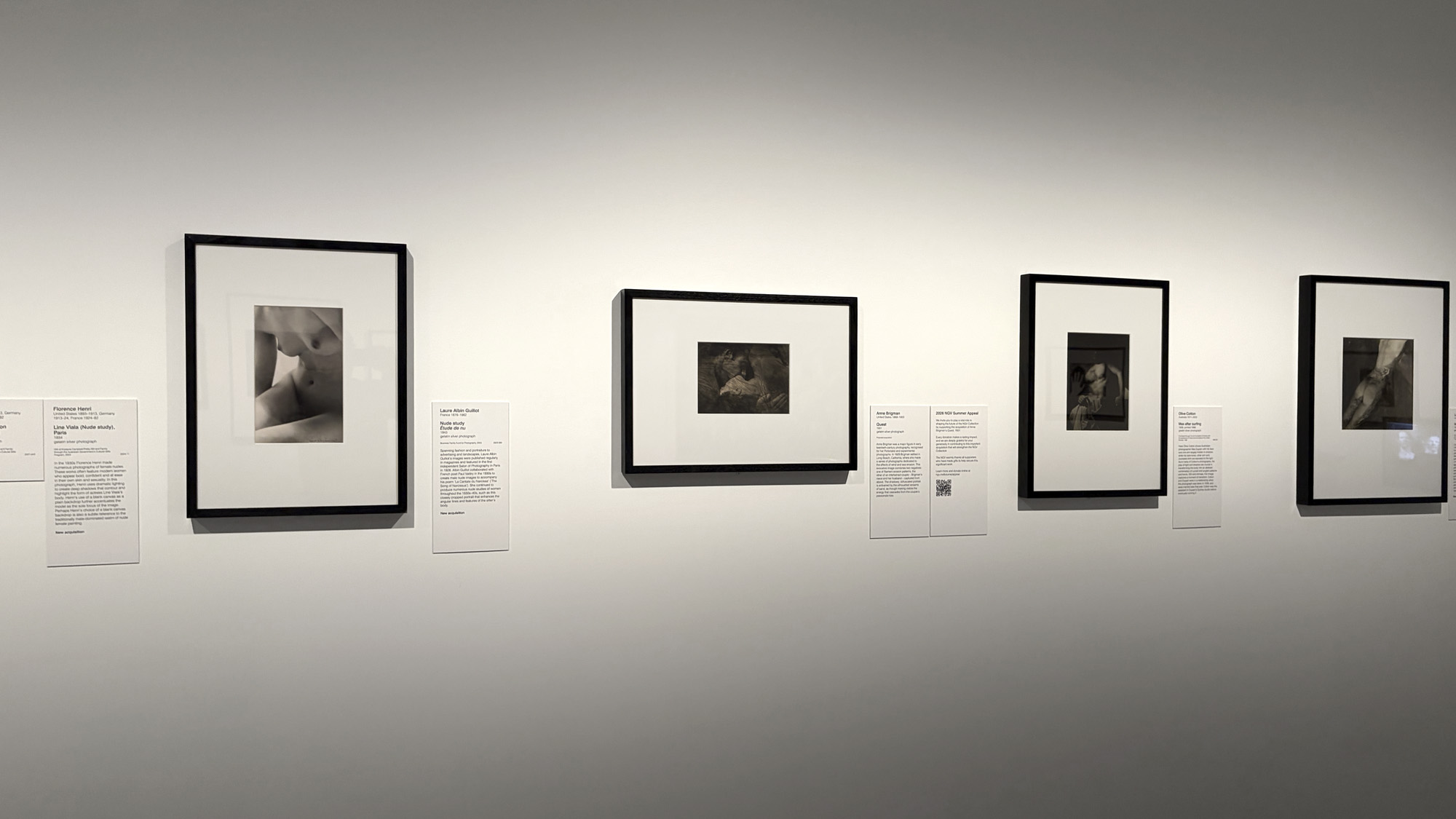
Laure Albin Guillot (French, 1879-1962) 'Nude study' (Étude de nu) 1943 (installation view)


Laure Albin Guillot (French, 1879-1962)
Nude study (Étude de nu) (installation view)
1943
Gelatin silver photograph
29.5 x 17.9cm (image)
29.5 x 23.1cm (sheet)
National Gallery of Victoria, Melbourne
Bowness Family Fund for Photography, 2023
Photo: Marcus Bunyan


Spanning fashion and portraiture to advertising and landscapes, Laure Albin Guillot’s images were published regularly in magazines and featured in the first independent Salon of Photography in Paris in 1928. Albin Guillot collaborated with French poet Paul Valéry in the 1930s to create male nude images to accompany his poem ‘La Cantate du Narcisse’ (‘The Song of Narcissus’). She continued to produce numerous nude studies of women throughout the 1930s–40s, such as this closely cropped portrait that enhances the angular lines and features of the sitter’s body.

Wall text from the exhibition


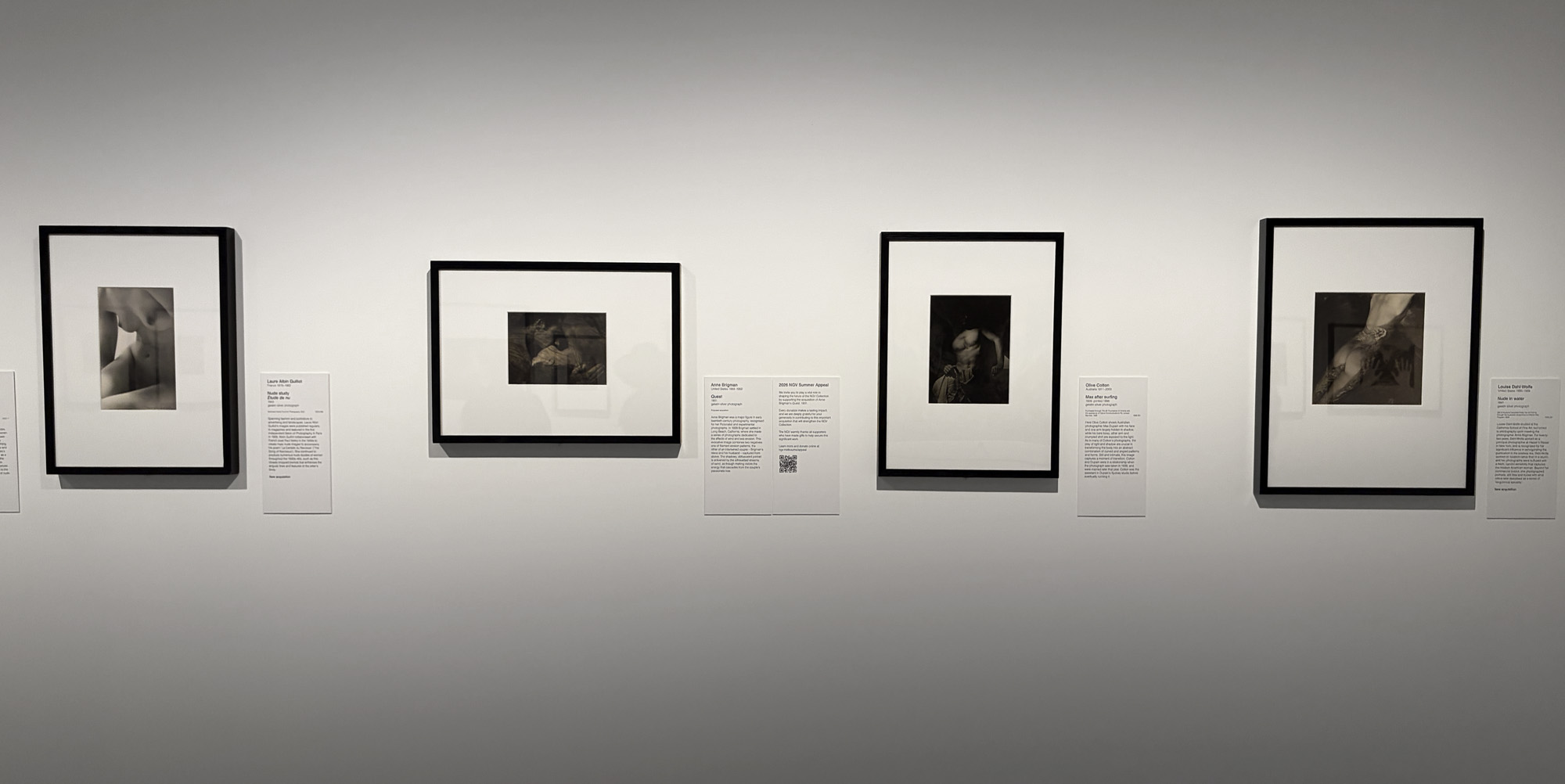
Installation view of the exhibition 'Women Photographers 1900-1975: A Legacy of Light' at NGV International, Melbourne, November 2025 – May 2026 showing from left to right, Laure Albin Guillot 'Nude study' (Étude de nu) (1943); Anne Brigman 'Quest' (1931); Olive Cotton 'Max after surfing' (1939 printed 1998); and Louise Dahl-Wolfe 'Nude in water' (1941)


Installation views of the exhibition Women Photographers 1900-1975: A Legacy of Light at NGV International, Melbourne, November 2025 – May 2026 showing from left to right, Laure Albin Guillot Nude study (Étude de nu) (1943, above); Anne Brigman Quest (1931); Olive Cotton Max after surfing (1939, printed 1998); and Louise Dahl-Wolfe Nude in water (1941)
Photos: Marcus Bunyan


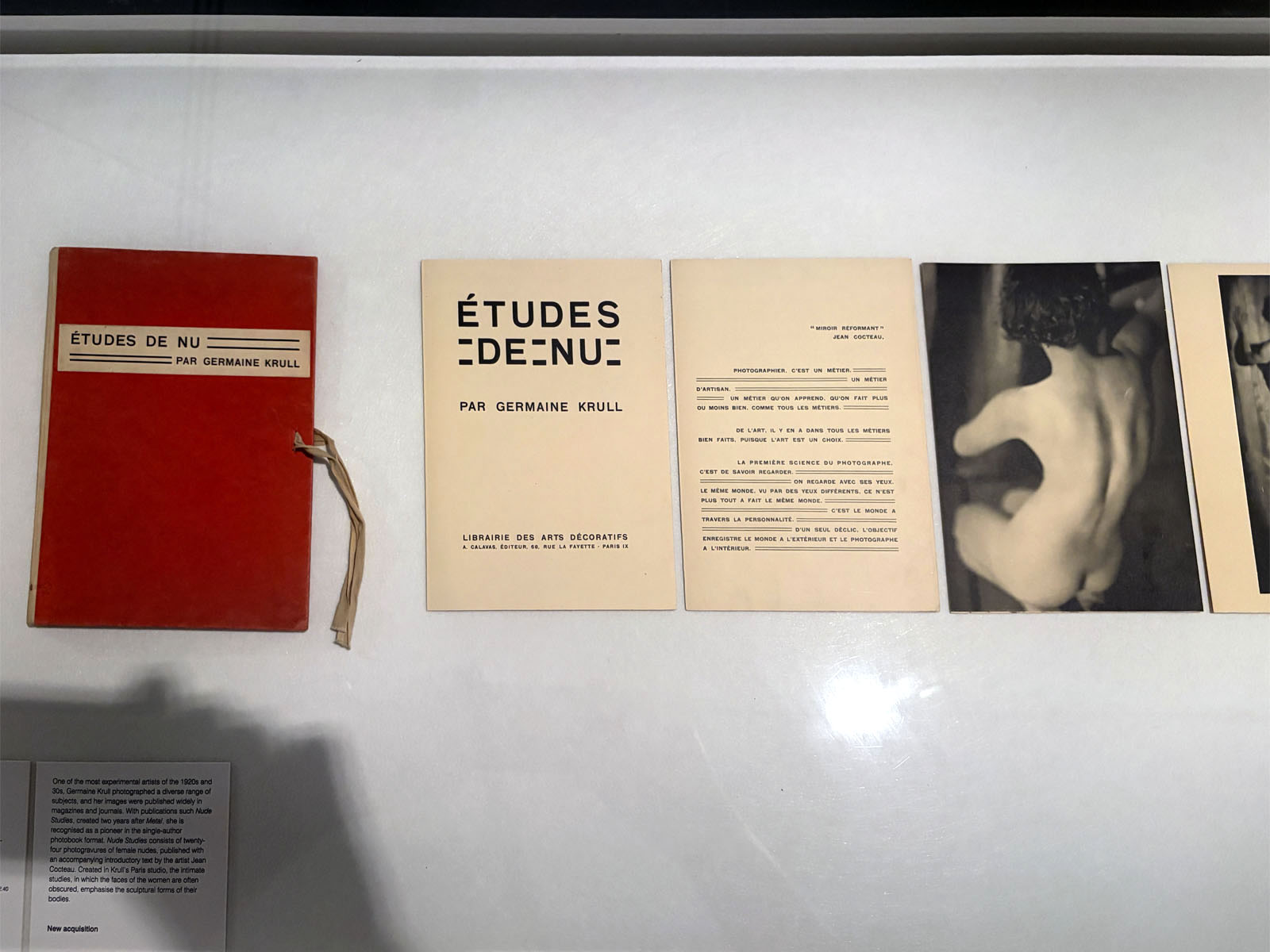
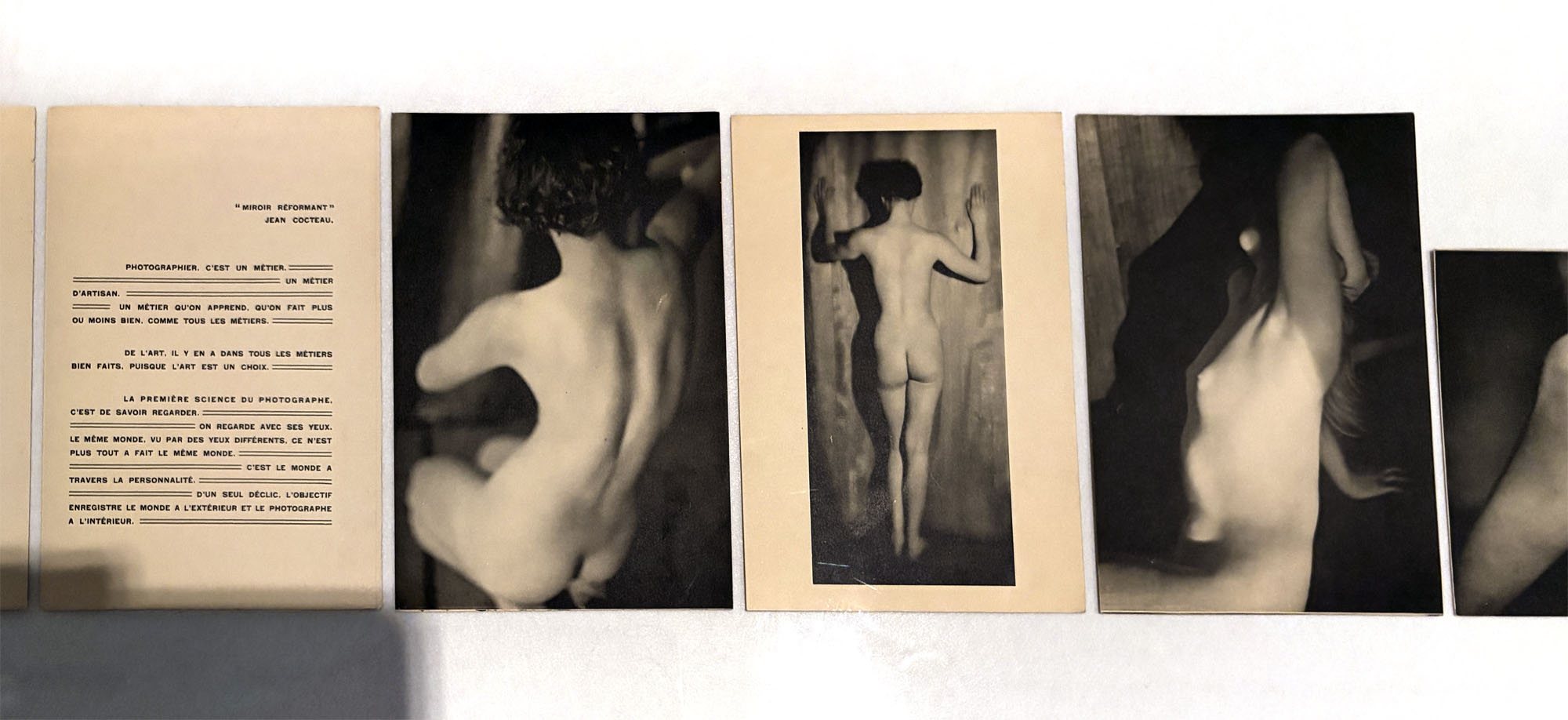
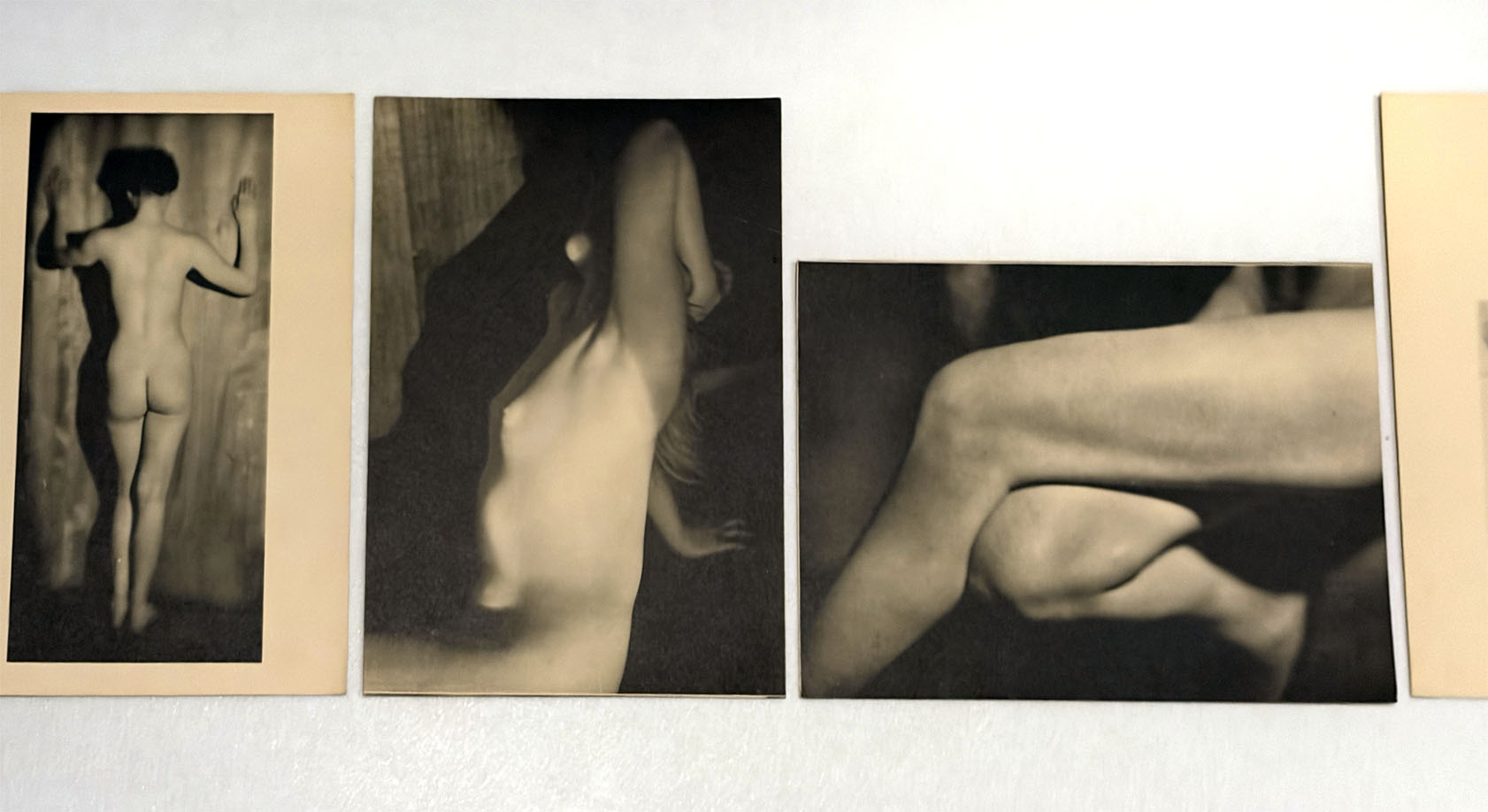
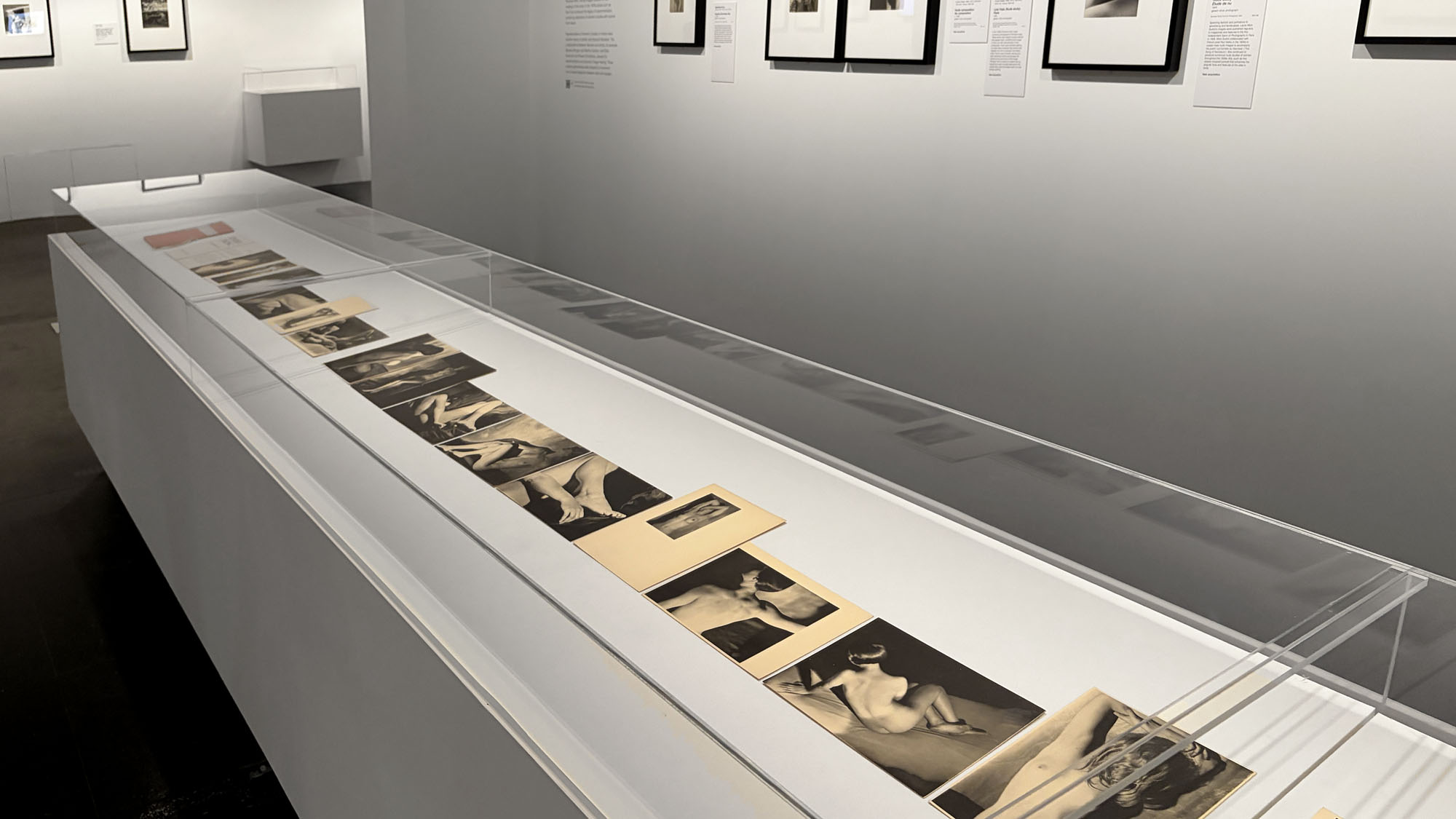
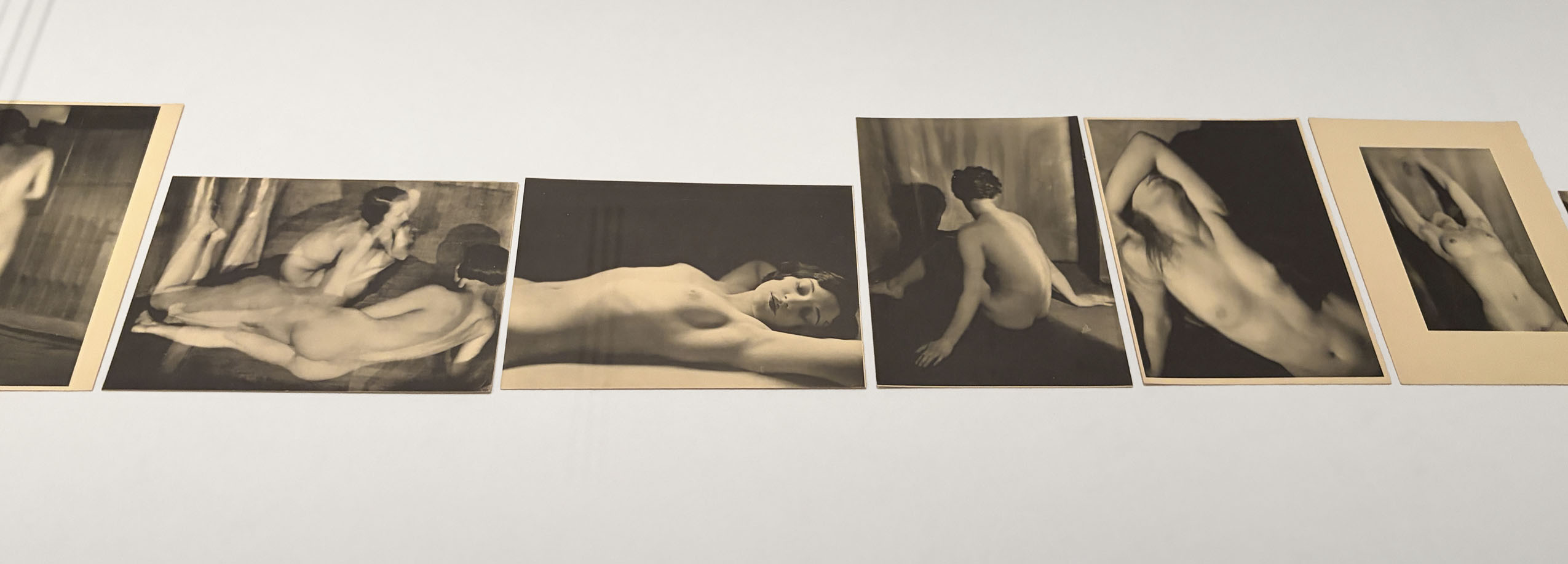
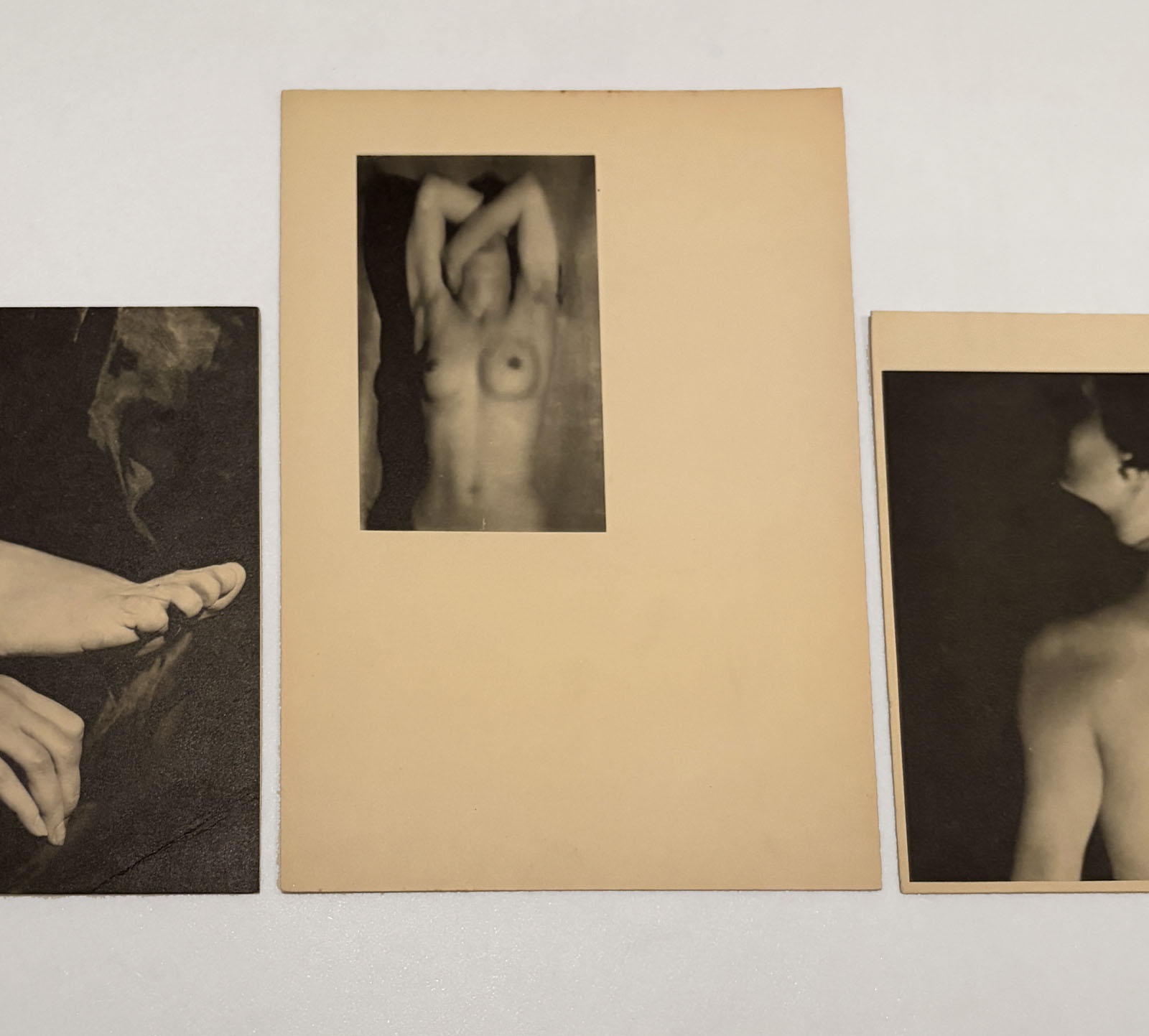
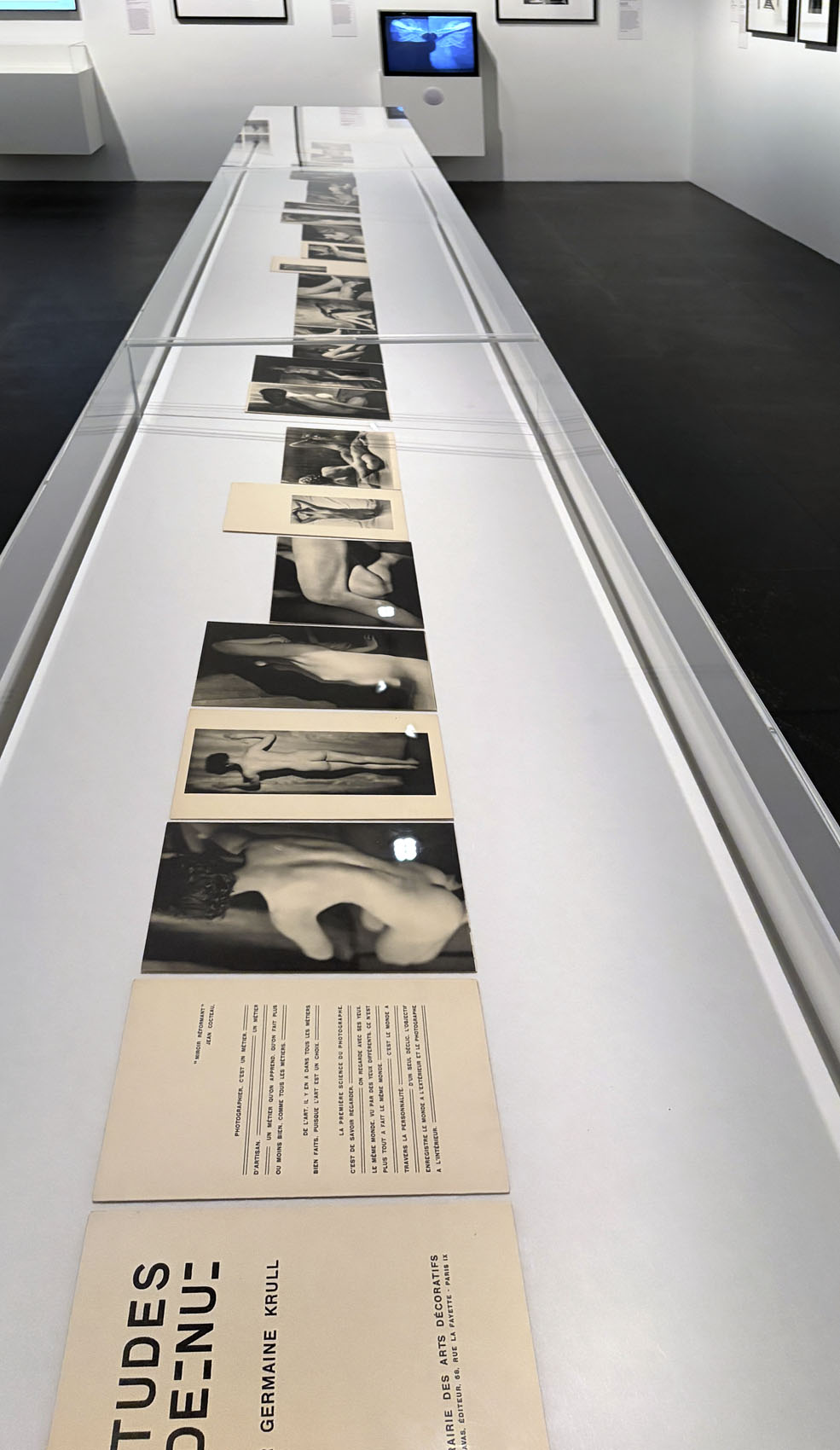
Installation view of the exhibition 'Women Photographers 1900-1975: A Legacy of Light' at NGV International, Melbourne, November 2025 – May 2026 showing Germaine Krull 'Nude studies (Études de nu)' (1930)


Installation views of the exhibition Women Photographers 1900-1975: A Legacy of Light at NGV International, Melbourne, November 2025 – May 2026 showing Germaine Krull Nude studies (Études de nu) (1930)
Photos: Marcus Bunyan


One of the most experimental artists of the 1920s and 30s, Germaine Krull photographed a diverse range of subjects, and her images were published widely in magazines and journals. With publications such Nude Studies, created two years after Metal, she is recognised as a pioneer in the single-author photobook format. Nude Studies consists of twenty-four photogravures of female nudes, published with an accompanying introductory text by the artist Jean Cocteau. Created in Krull’s Paris studio, the intimate studies, in which the faces of the women are often obscured, emphasise the sculptural forms of their bodies.

Wall text from the exhibition


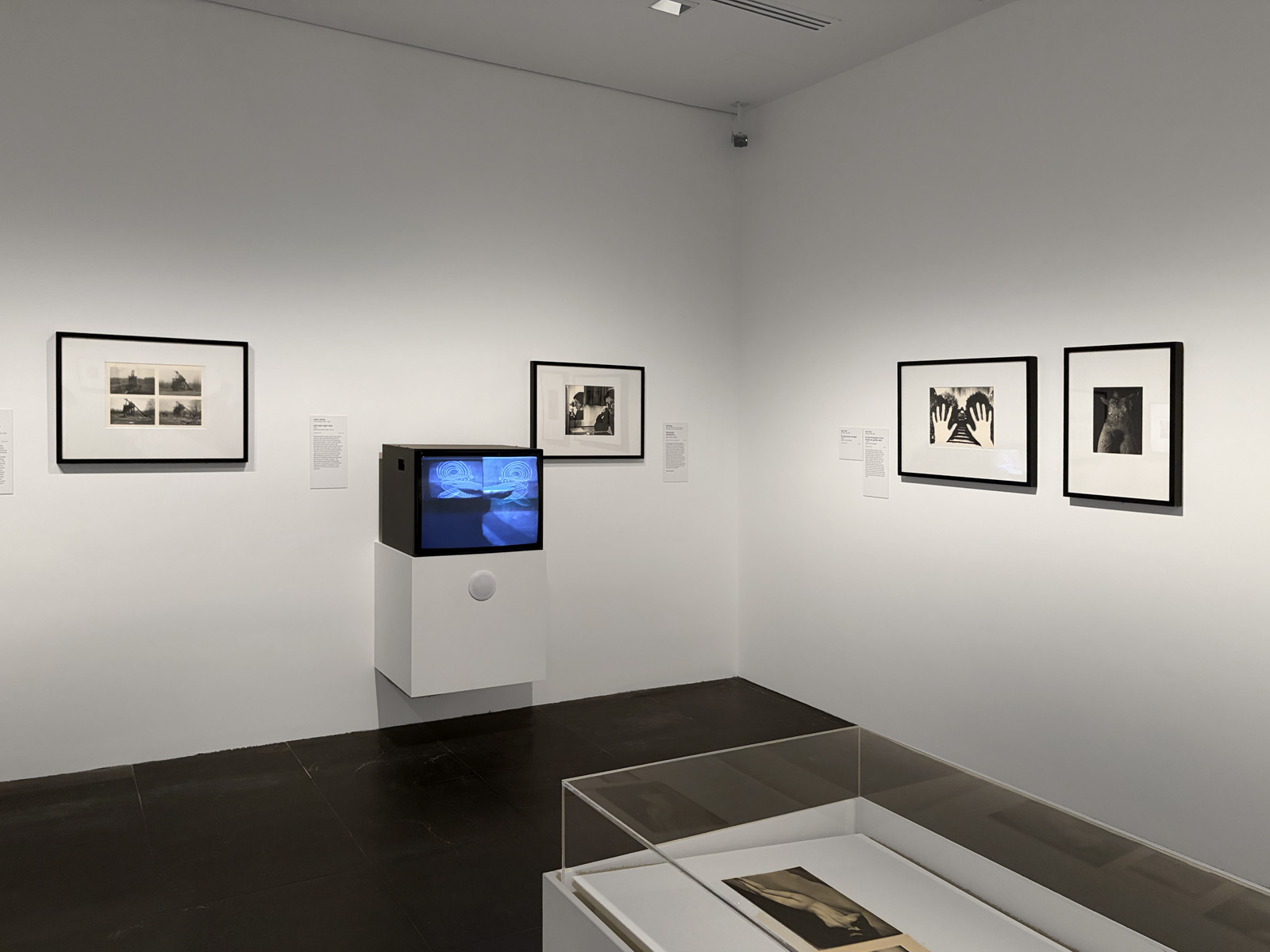
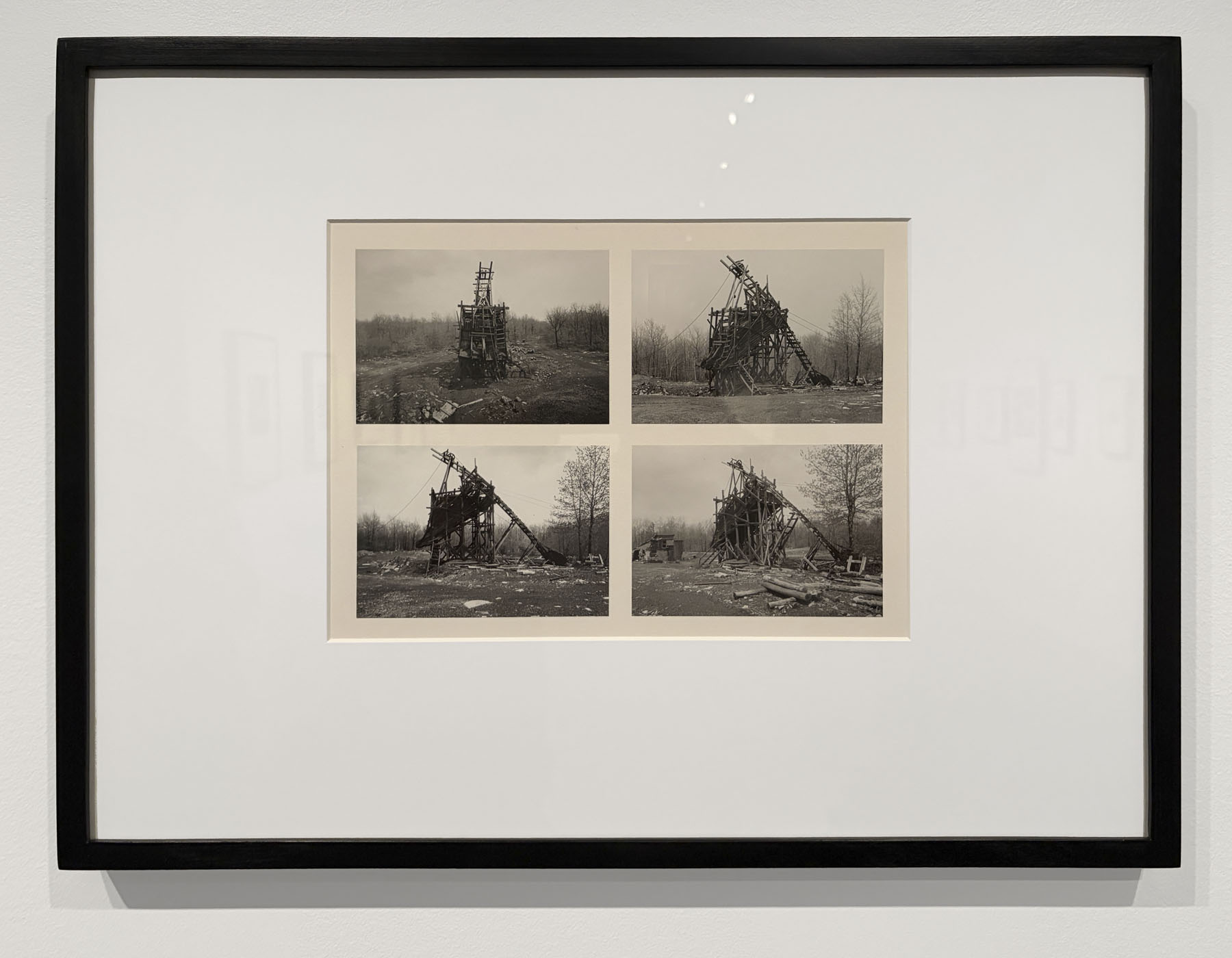
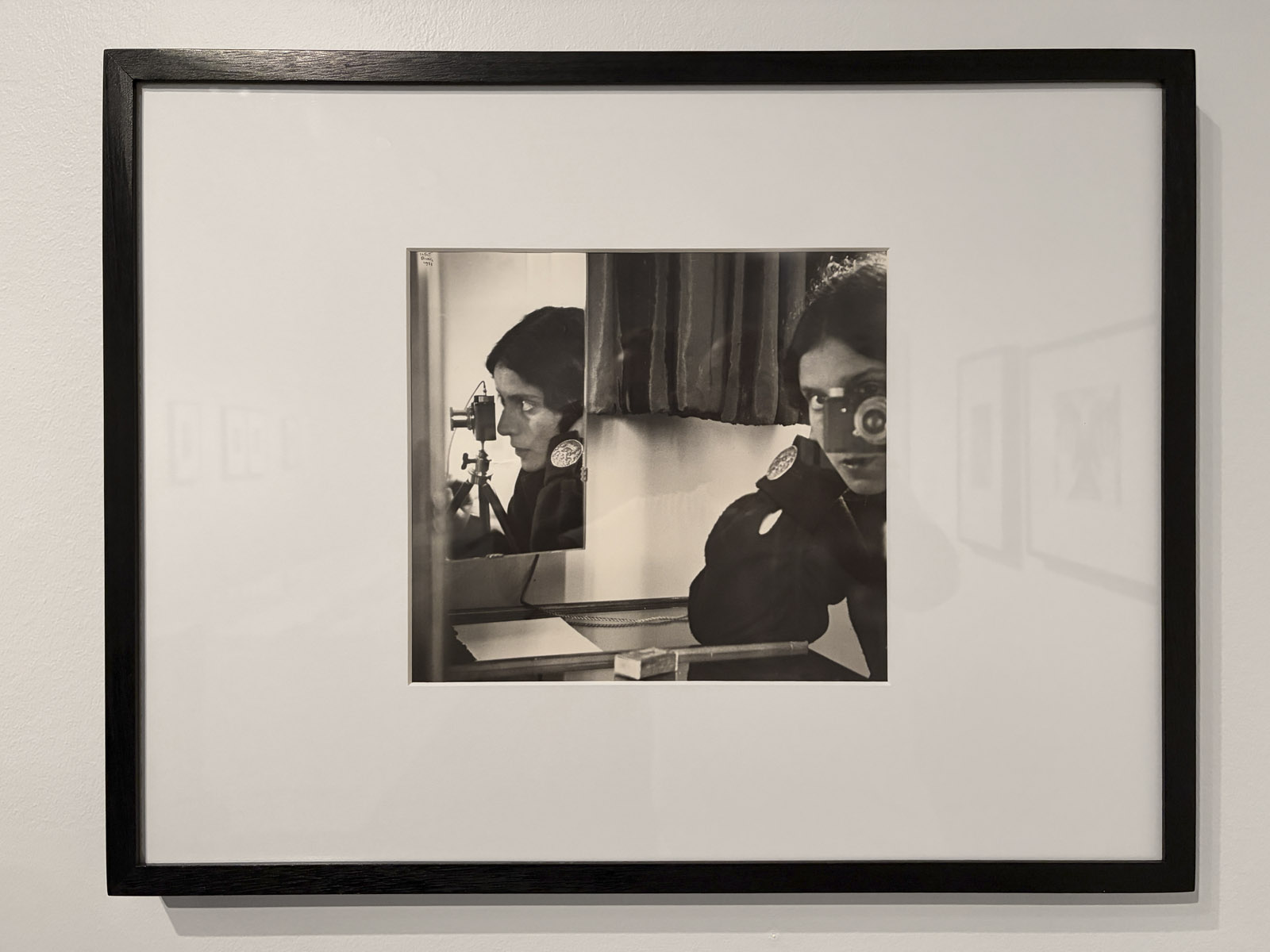
Installation view of the exhibition 'Women Photographers 1900-1975: A Legacy of Light' at NGV International, Melbourne, November 2025 – May 2026 showing from left to right, Bernd Becher and Hilla Becher 'Coal tipple, Goodspring, Pennsylvania' (1975); Ilse Bing 'Self-portrait' (1931 printed c. 1993); and two Sue Ford photographs, 'No title (Photogram of two hands and garden path)' (c. 1970, below) and 'No title (Nude montage)' (1960s)


Installation view of the exhibition Women Photographers 1900-1975: A Legacy of Light at NGV International, Melbourne, November 2025 – May 2026 showing from left to right, Bernd Becher and Hilla Becher Coal tipple, Goodspring, Pennsylvania (1975, below); Ilse Bing Self-portrait (1931 printed c. 1993, below); and two Sue Ford photographs, No title (Photogram of two hands and garden path) (c. 1970, below) and No title (Nude montage) (1960s)
Photo: Marcus Bunyan


Bernd Becher and Hilla Becher (German, 1931-2007/1934-2015) 'Coal tipple, Goodspring, Pennsylvania' 1975 (installation view)


Bernd Becher and Hilla Becher (German, 1931-2007/1934-2015)
Coal tipple, Goodspring, Pennsylvania (installation view)
1975
From the Artists and photographs folio 1975
Gelatin silver photographs
24.0 x 33.9cm (image and sheet)
40.7 x 49.6cm (support)
ed. 9/60
National Gallery of Victoria, Melbourne
Purchased, 1976
Photo: Marcus Bunyan


Bernd and Hilla Becher (German, 1931-2007 and 1934-2015) 'Coal tipple, Goodspring, Pennsylvania' 1975


Bernd Becher and Hilla Becher (German, 1931-2007/1934-2015)
Coal tipple, Goodspring, Pennsylvania
1975
From the Artists and photographs folio 1975
Gelatin silver photographs
24.0 x 33.9cm (image and sheet)
40.7 x 49.6cm (support)
ed. 9/60
National Gallery of Victoria, Melbourne
Purchased, 1976
© Estate Bernd & Hilla Becher, represented by Max Becher


In 1959 married artists Bernd and Hilla Becher started photographing industrial architecture, a practice that would continue for over four decades. While predominantly documenting structures throughout Germany’s Ruhr region, they occasionally worked overseas – this work was made on their first trip to the United States. The Bechers created a system for comparing structures: photographing them from a consistent angle, under virtually identical lighting conditions, printing images at the same size and often displaying them in grids. According to Hilla Becher, their archive allows for narratives to naturally emerge: “Structural patterns and their transformations … can be proved to exist in the case of such relatively exhaustive comparative series.”

Wall text from the exhibition


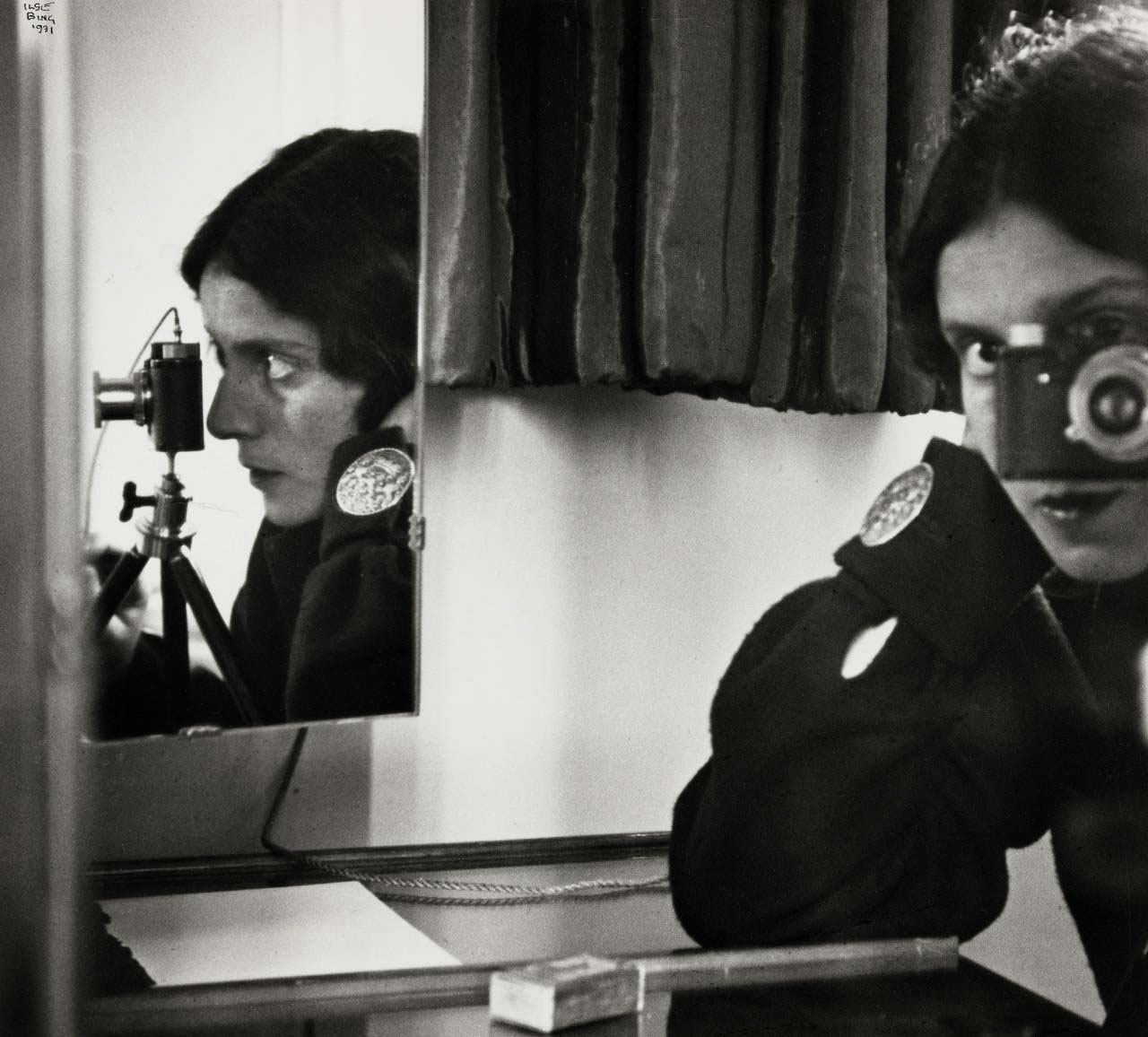
Ilse Bing (German, 1899-1998) 'Self-portrait (Autoportrait)' 1931, printed 1993 (installation view)


Ilse Bing (German, 1899-1998)
Self-portrait (Autoportrait) (installation view)
1931, printed 1993
Gelatin silver photograph
26.7 x 29.4cm (image)
27.9 x 35.3cm (sheet)
National Gallery of Victoria, Melbourne
Bowness Family Fund for Photography, 2023
Photo: Marcus Bunyan


Ilse Bing (German, 1899-1998) 'Self-portrait (Autoportrait)' 1931, printed 1993


Ilse Bing (German, 1899-1998)
Self-portrait (Autoportrait)
1931, printed 1993
Gelatin silver photograph
26.7 x 29.4cm (image)
27.9 x 35.3cm (sheet)
National Gallery of Victoria, Melbourne
Bowness Family Fund for Photography, 2023
© Ilse Bing Estate
Photo: National Gallery of Victoria, Melbourne


Ilse Bing began making photographs in the late 1920s, when she purchased one of the first 35 mm cameras produced by the German company Leica. She made use of the camera’s portability, capturing motion, dizzying angles and contrasts of light, shade and shadow – compositional elements that characterised the New Photography movement. Inspired by Florence Henri, Bing used her camera to disrupt the picture plane. In this famed self-portrait, Bing uses mirrors as a fracturing tool. The self-portrait shows Bing’s reflection holding a camera, accompanied by her side profile in another angled mirror. She controls the various gazes: her own, the viewer’s, the camera’s.

Wall text from the exhibition


Time and Mirrors

Photography has long been associated with mirrors and time – as a way of remembering, reflecting and retrieving information. As early as 1859, American writer Oliver Wendell Holmes Sr described photography, specifically the daguerreotype, as ‘the mirror with a memory’.

Many artists use the camera to explore identity through portraits and self-portraits. In Ilse Bing’s 1931 self-portrait, captured with her Leica camera, a mirror disrupts the image, disorienting the viewer. Four decades later, Joan Jonas extended this idea, using a video monitor as a mirror to explore reflection, perception and the self.

By the 1970s, repetition and seriality became central to photographic practice. Through sequences of images, artists such as Eve Sonneman, Sue Ford and Bernd and Hilla Becher explored how photography could record and interpret change – both immediate and long-term. Their images reveal the camera’s dual role as an objective instrument and a conceptual recorder of the world.


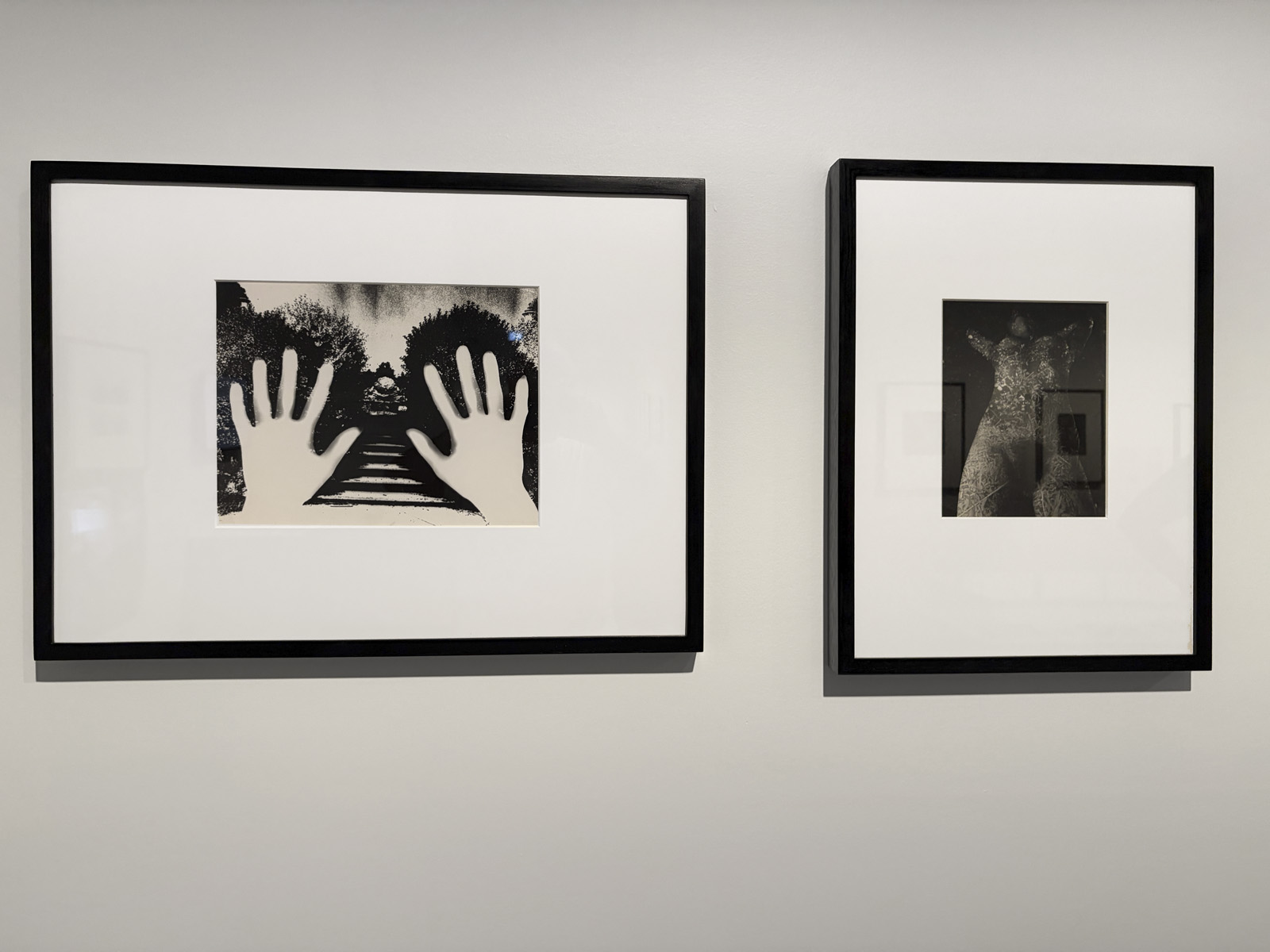
Installation view of the exhibition 'Women Photographers 1900-1975: A Legacy of Light' at NGV International, Melbourne, November 2025 – May 2026 showing from left to right, two Sue Ford photographs, 'No title (Photogram of two hands and garden path)' (c. 1970) and 'No title (Nude montage)' (1960s)


Installation view of the exhibition Women Photographers 1900-1975: A Legacy of Light at NGV International, Melbourne, November 2025 – May 2026 showing from left to right, two Sue Ford photographs, No title (Photogram of two hands and garden path) (c. 1970, below) and No title (Nude montage) (1960s, below)
Photo: Marcus Bunyan


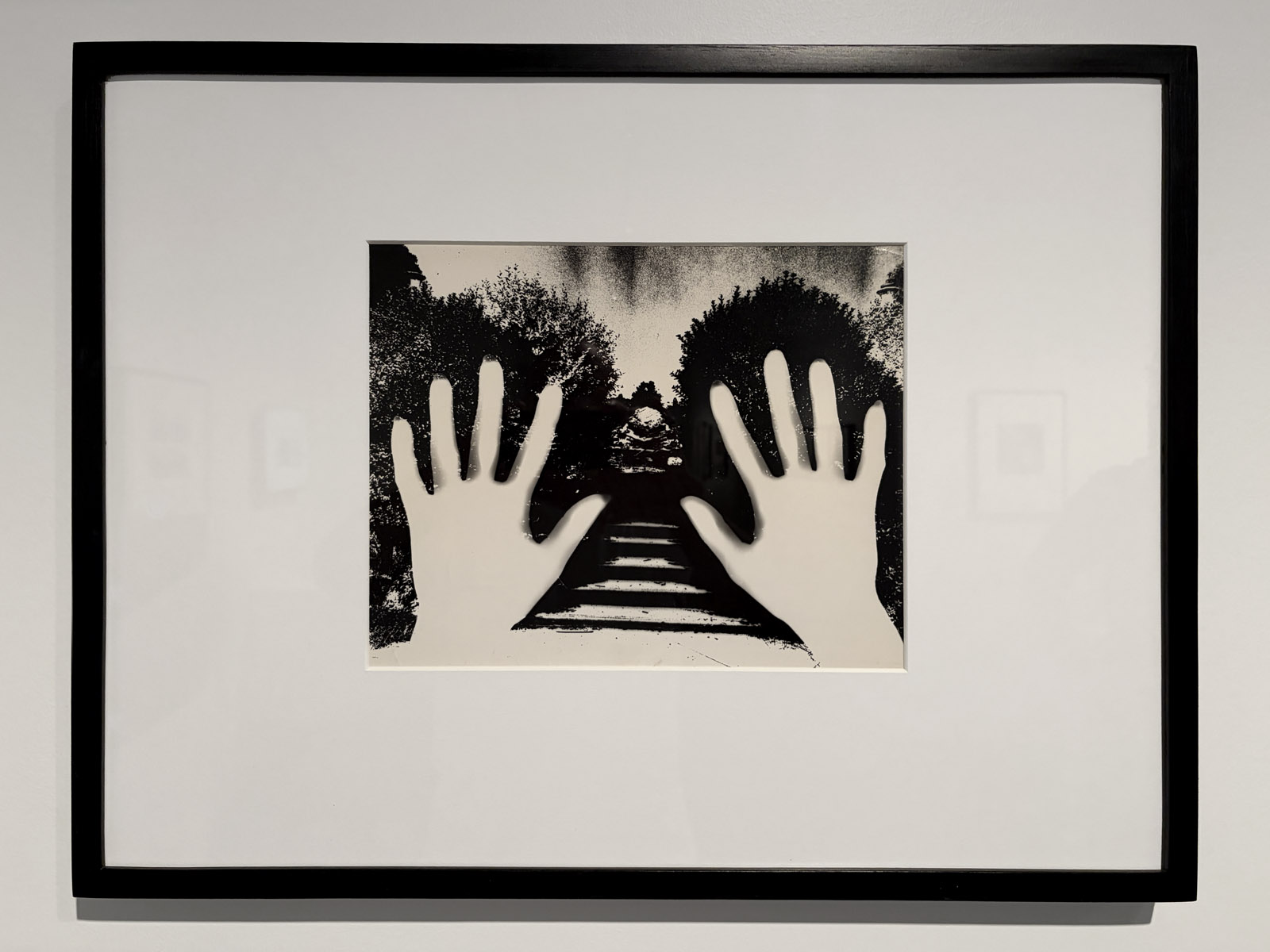
Sue Ford (Australian, 1943-2009) 'No title (Photogram of two hands and garden path)' c. 1970 (installation view)


Sue Ford (Australian, 1943-2009)
No title (Photogram of two hands and garden path) (installation view)
c. 1970
Gelatin silver photograph
27.6 x 34.7cm irreg. (image and sheet)
38.5 x 44.8cm (support)
National Gallery of Victoria, Melbourne
Gerstl Bequest, 2000
Photo: Marcus Bunyan


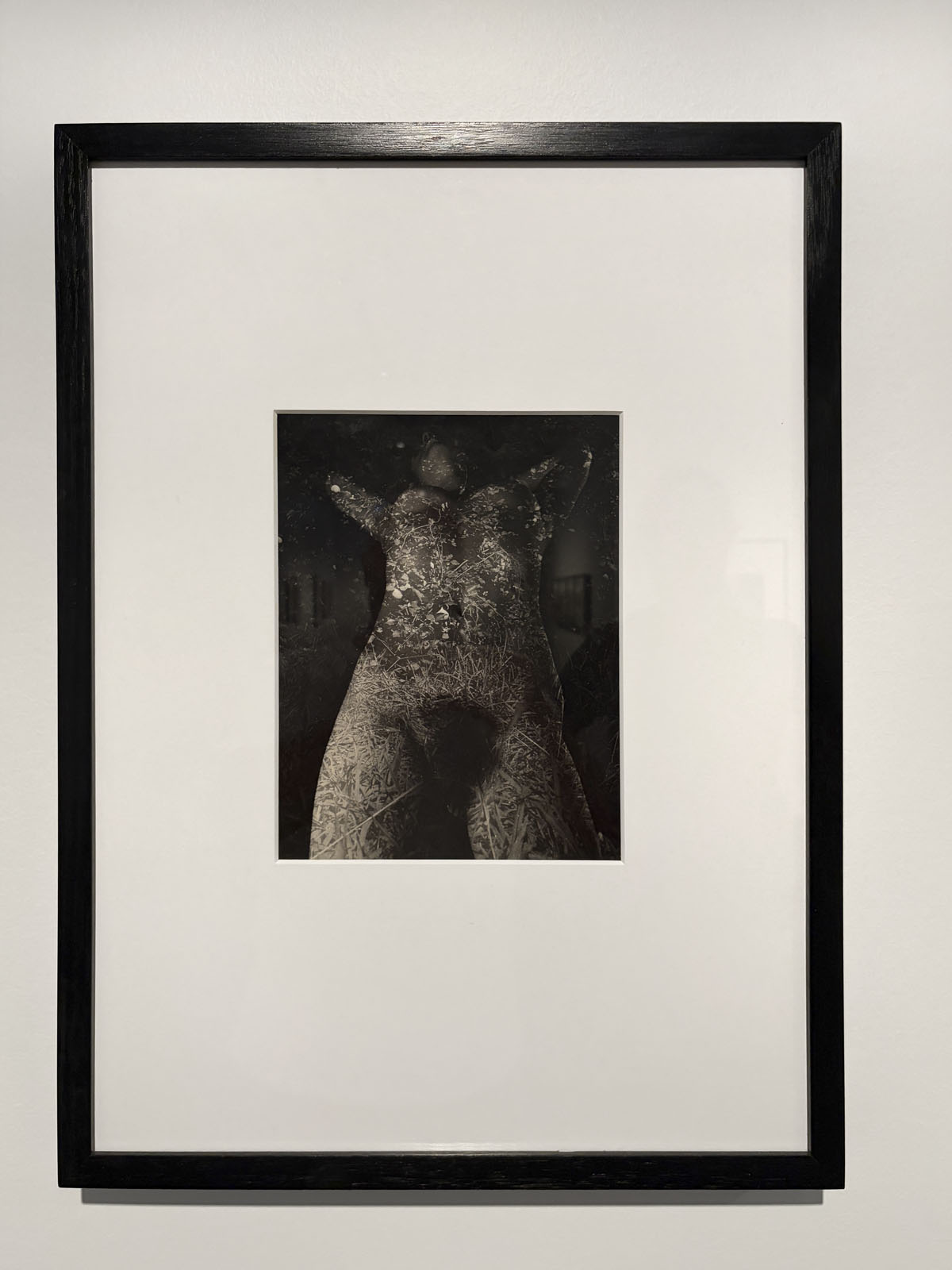
In the late 1960s and early 70s, Sue Ford created several bodies of highly experimental work. These works involved complex montages, photograms and layered negatives, revealing hours of darkroom experimentation in her Eltham studio in Melbourne’s north-east. Such experiments coincided with Ford’s burgeoning interest in left-wing politics, and her exposure via the media to world events such as the NASA moon landings and the Vietnam War. Ford incorporated imagery and ideas relating to these events, as well as her interest in environmentalism, into these abstracted, Surrealism-inspired works.

Wall text from the exhibition


Sue Ford (Australian, 1943-2009) 'No title (Nude montage)' 1960s (installation view)


Sue Ford (Australian, 1943-2009)
No title (Nude montage) (installation view)
1960s
Gelatin silver photograph
25.6 x 19.9cm (image and sheet)
National Gallery of Victoria, Melbourne
Gerstl Bequest, 2000
Photo: Marcus Bunyan


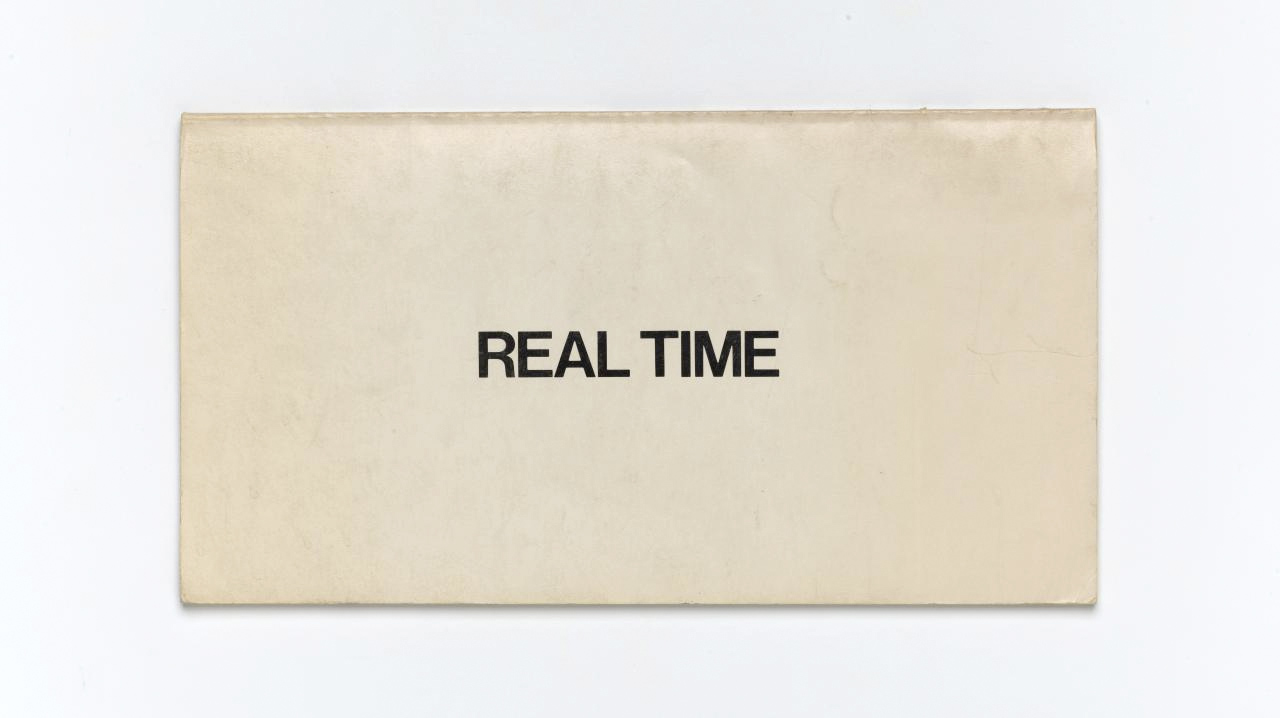
Eve Sonneman (American, b. 1946) 'Real time' 1968-1974, 1976 (published) (cover)
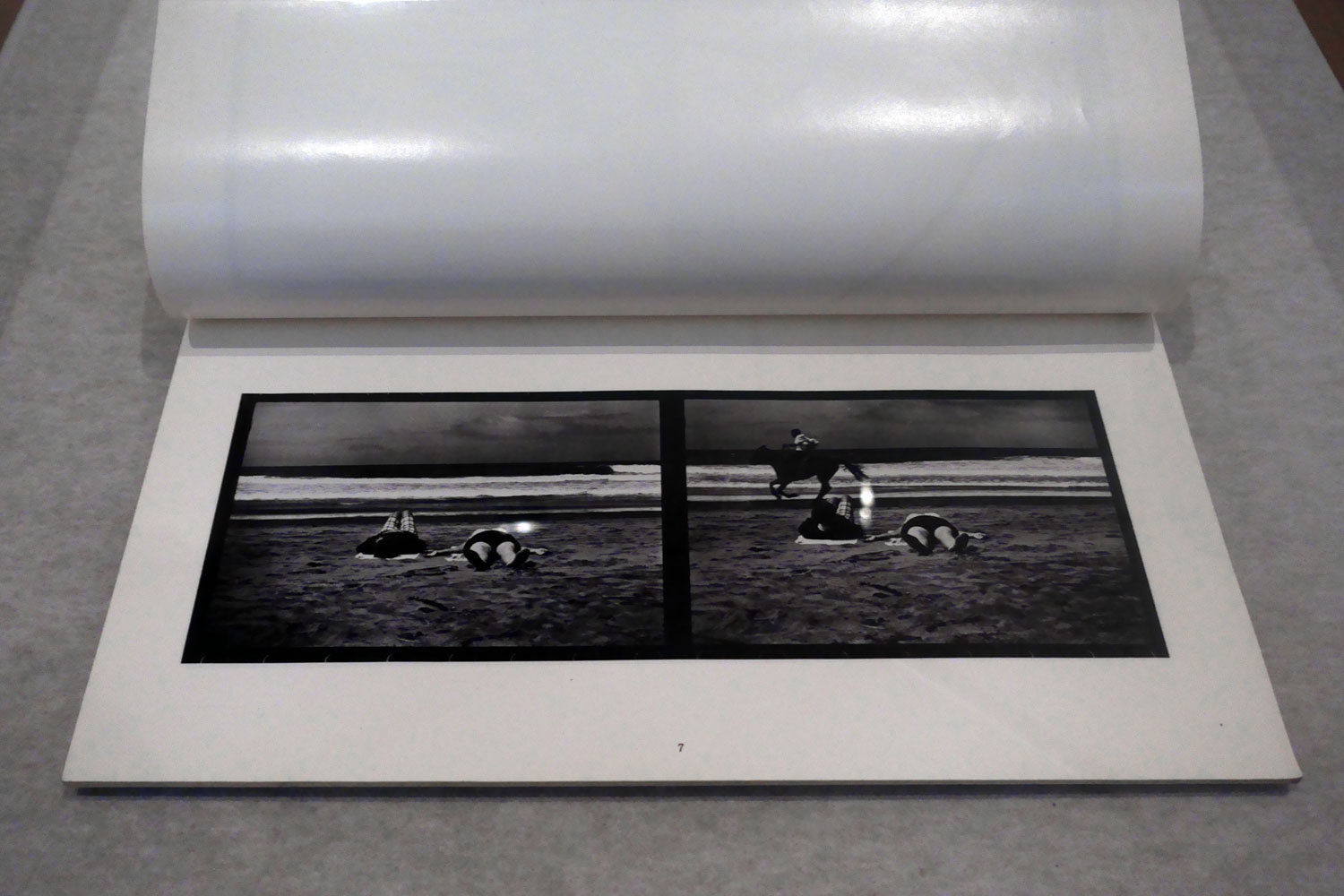
Eve Sonneman (American, b. 1946) 'Real time' 1968-1974 (installation view)


Eve Sonneman (American, b. 1946)
Real time (installation view bottom)
1968-1974, 1976 (published) (cover)
Artist’s book: photo-offset lithographs and printed text, 46 folios, printed paper cover, glued binding
20.5 x 38.0 x 0.8cm (closed)
1st edition
National Gallery of Victoria, Melbourne
Purchased, NGV Supporters of Photography, 2021
© Eve Sonneman


Real Time is composed of paired photographs taken seconds apart, separated by a black-line border. The ordered presentation allows the viewer to consider the relationship between the images, and the small changes and passing of time between them. Eve Sonneman first showed the photographs at the Museum of Modern Art in New York, before publishing them as a book. In 1976 she saw an
advertisement in Artforum from newly established press Printed Matter, which was seeking artists’ books to publish. “So I sent [my photographs] in and that work became my first published book, Real Time,” Sonneman recalled. “I was as thrilled as could be!”

Wall text from the exhibition


Sue Ford (Australian, 1943-2009) 'Ross, 1964; Ross, 1974' 1964-1974, printed 1974 (installation view)


Sue Ford (Australian, 1943-2009)
Ross, 1964; Ross, 1974 (installation view)
1964-1974, printed 1974
From the Time series (1962-1974)
Gelatin silver photograph
11.1 × 20.1cm
National Gallery of Victoria, Melbourne
Purchased with the assistance of the Visual Arts Board and the KODAK (Australasia) PTY LTD Fund, 1974
Photo: Marcus Bunyan


Sue Ford (Australian, 1943-2009) 'Jim, 1964; Jim, 1974' 1964-1974, printed 1974 (installation view)


Sue Ford (Australian, 1943-2009)
Jim, 1964; Jim, 1974 (installation view)
1964-1974, printed 1974
From the Time series (1962-1974)
Gelatin silver photograph
11.1 × 20.1cm
National Gallery of Victoria, Melbourne
Purchased with the assistance of the Visual Arts Board and the KODAK (Australasia) PTY LTD Fund, 1974
Photo: Marcus Bunyan


Sue Ford (Australian, 1943-2009) 'Annette 1962; Annette 1974' 1974 from the 'Time' series


Sue Ford (Australian, 1943-2009)
Annette, 1962; Annette, 1974
1962-1974, printed 1974
From the Time series (1962-1974)
Gelatin silver photograph
11.1 x 20.1cm
National Gallery of Victoria, Melbourne
Purchased with the assistance of the Visual Arts Board and the KODAK (Australasia) Pty Ltd Fund, 1974
© Courtesy of the artist


“For some time I have been thinking about the camera itself. Trying to explore its particular UNIQUENESS, coming to terms with the fact that I had been trying to ignore for some years, that the camera is actually a MACHINE. … In “Time Series” I tried to use the camera as objectively as possible. It was a time machine. For me it was an amazing experience. It wasn’t until I placed the photograph of the younger face beside the recent photograph that I could fully appreciate the change. The camera showed me with absolute clarity, something I could only just perceive with my naked eye.”

~ Sue Ford, Time Series: An Exhibition of Photographs, Melbourne, 1974

Wall text from the exhibition


Installation view of the exhibition 'Women Photographers 1900-1975: A Legacy of Light' at NGV International, Melbourne, November 2025 – May 2026
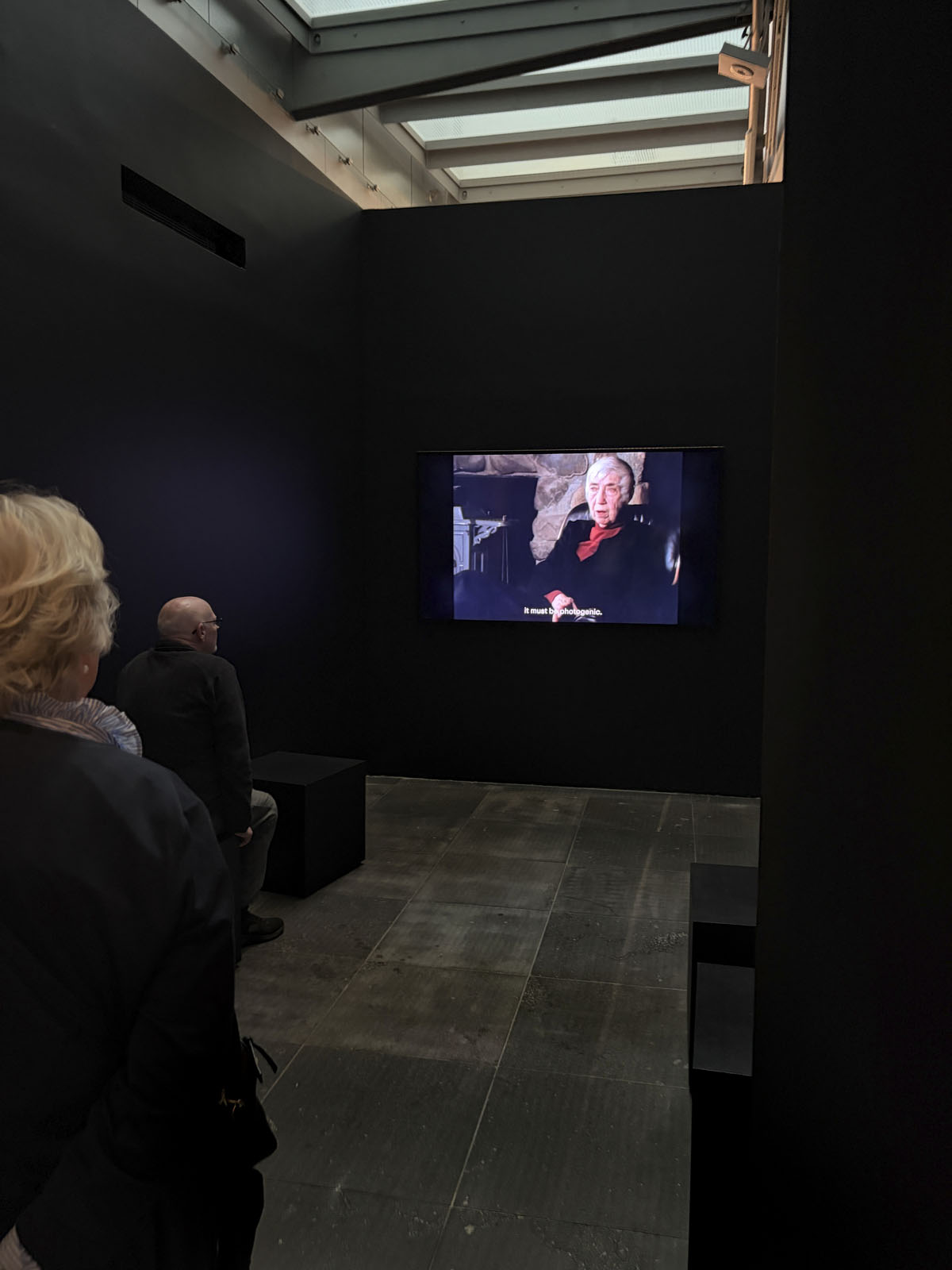
Installation view of the exhibition 'Women Photographers 1900-1975: A Legacy of Light' at NGV International, Melbourne, November 2025 – May 2026 showing a video of Imogen Cunningham


Installation views of the exhibition Women Photographers 1900-1975: A Legacy of Light at NGV International, Melbourne, November 2025 – May 2026 showing in the bottom image a video still of Imogen Cunningham
Photos: Marcus Bunyan


Installation view of the exhibition 'Women Photographers 1900-1975: A Legacy of Light' at NGV International, Melbourne, November 2025 – May 2026
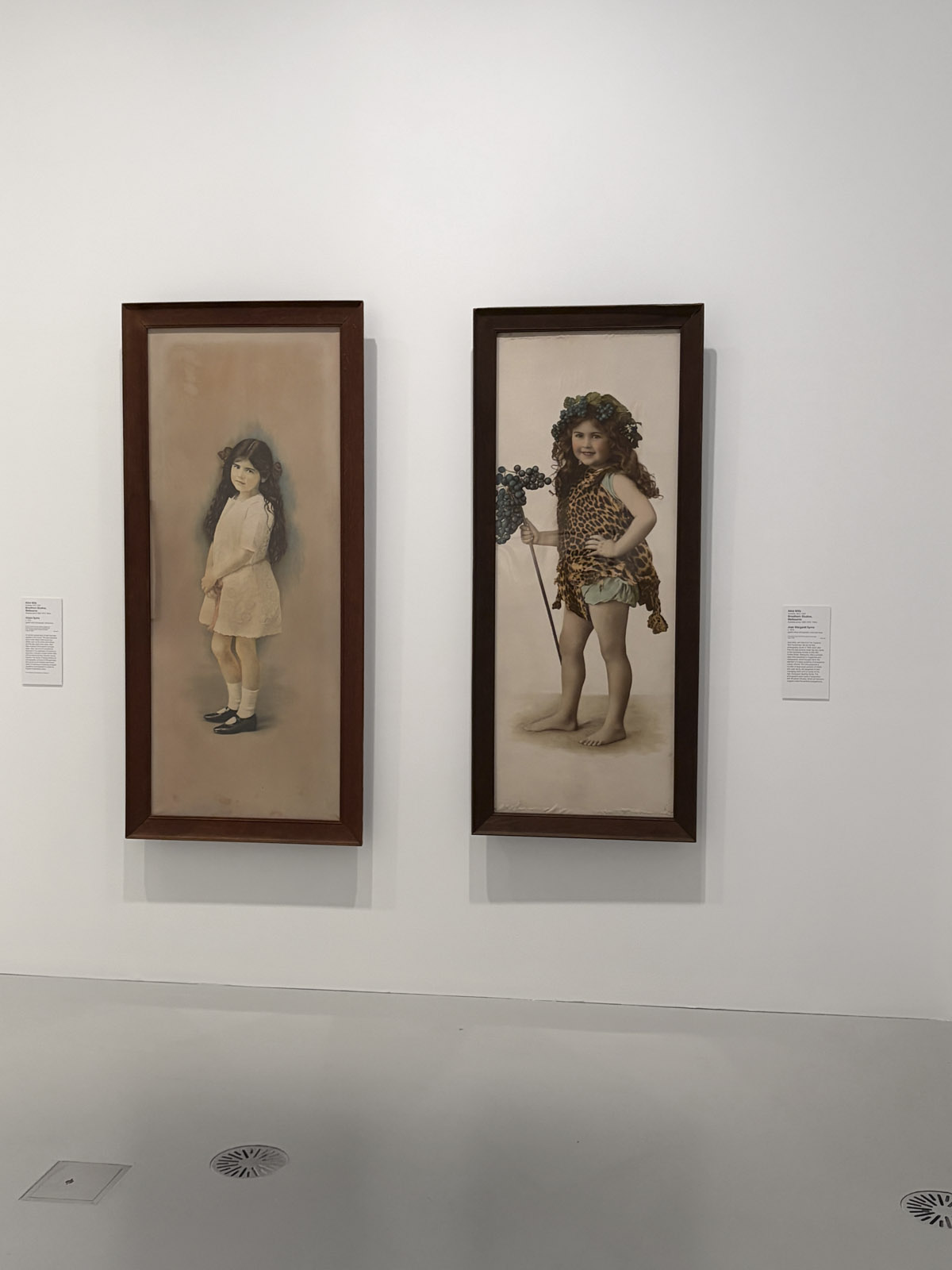
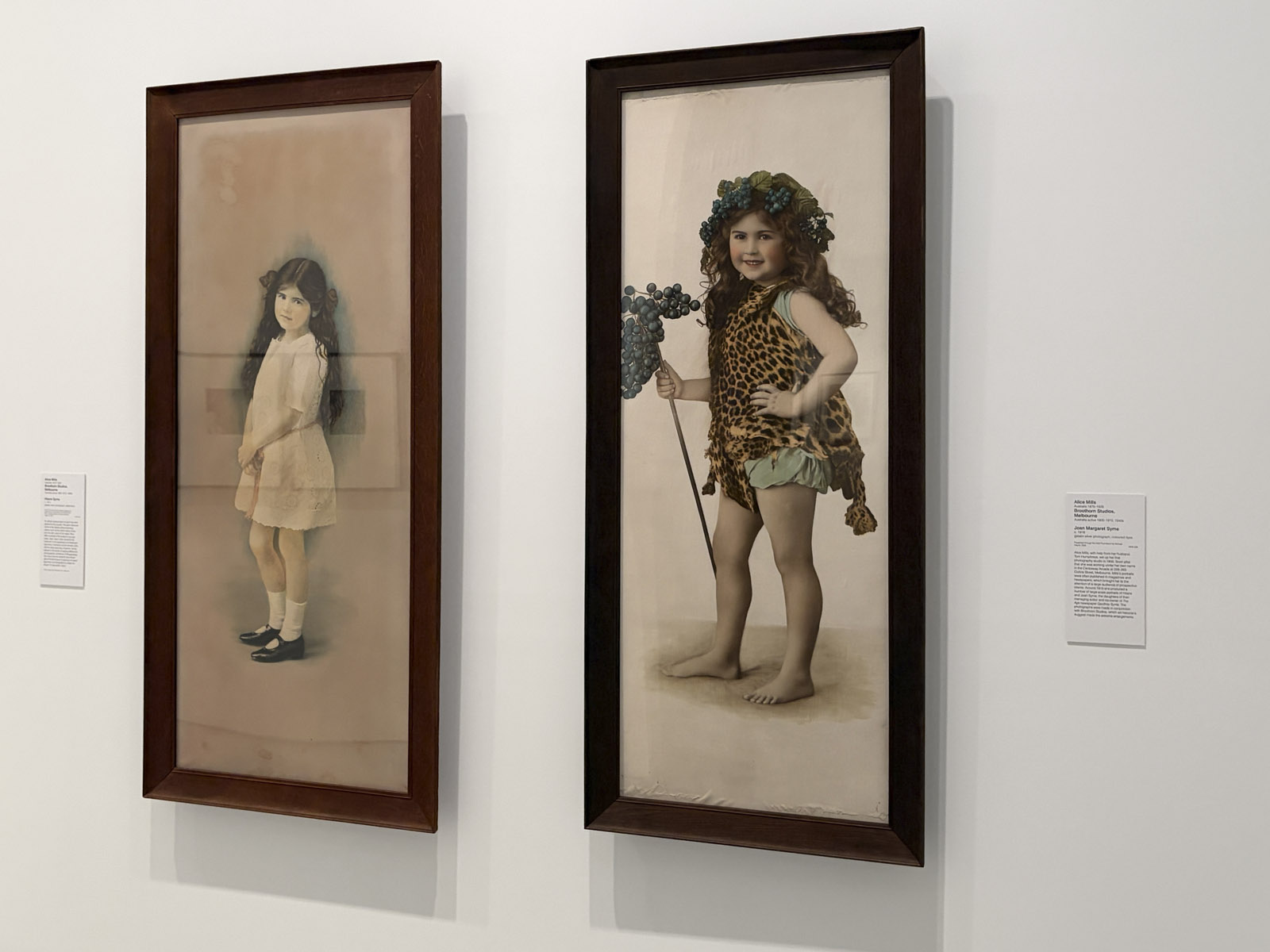
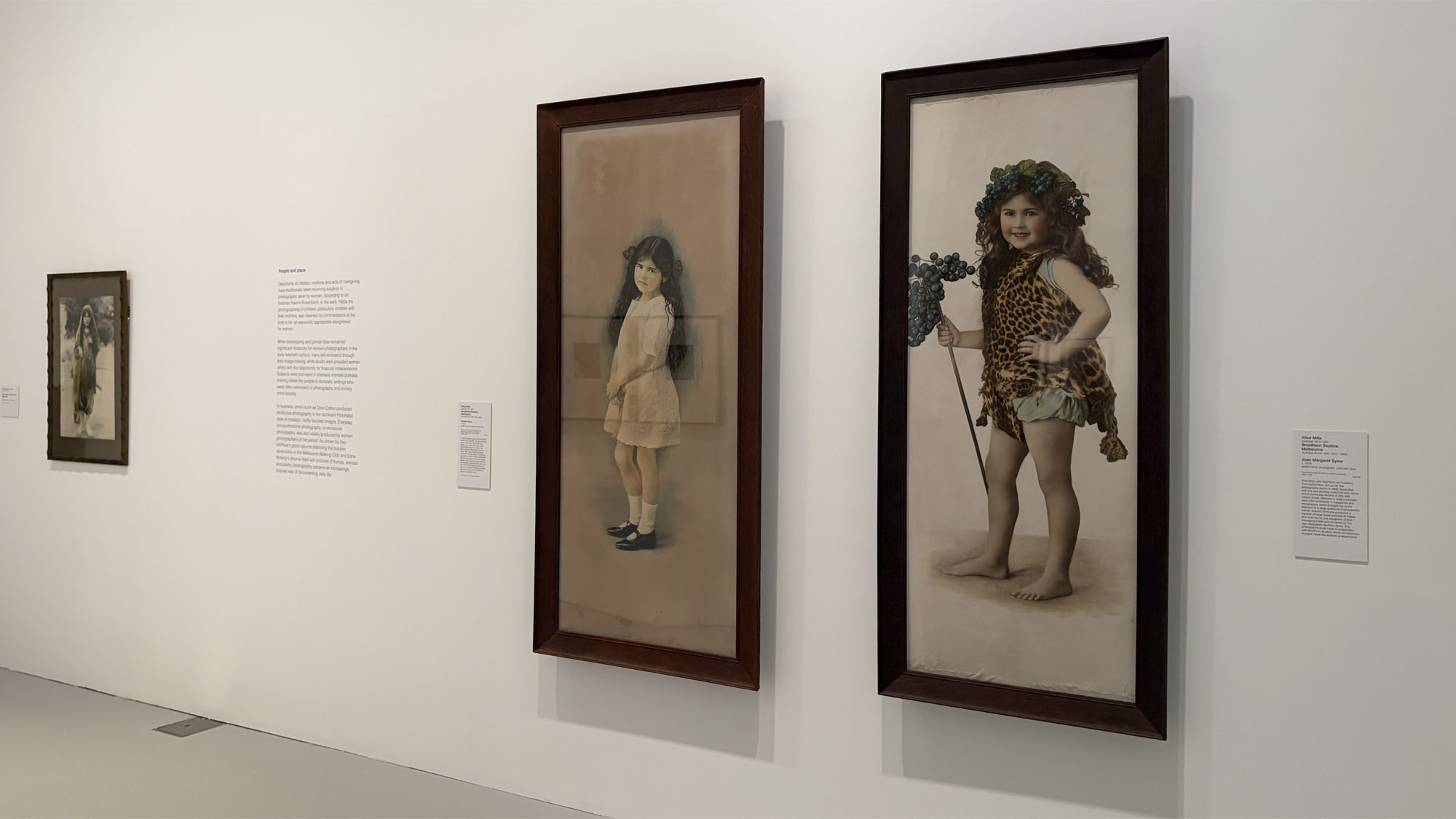
Installation view of the exhibition 'Women Photographers 1900-1975: A Legacy of Light' at NGV International, Melbourne, November 2025 – May 2026 showing from left to right three photographs by Alice Mills, 'Hilaire Syme dressed for the Kismit Ball' (1912-1915); 'Hilaire Syme' (c. 1910); and 'Joan Margaret Syme' (c. 1918)


Installation views of the exhibition Women Photographers 1900-1975: A Legacy of Light at NGV International, Melbourne, November 2025 – May 2026 showing in the bottom image from left to right three photographs by Alice Mills, Hilaire Syme dressed for the Kismit Ball (1912-1915, below); Hilaire Syme (c. 1910, below); and Joan Margaret Syme (c. 1918, below)
Photos: Marcus Bunyan


People and Place

Depictions of children, mothers and acts of caregiving have traditionally been recurring subjects in photographs taken by women. According to art historian Naomi Rosenblum, in the early 1900s the photographing of children, particularly children with their mothers, was deemed by commentators at the time to be ‘an especially appropriate assignment for women’.

While stereotyping and gender bias remained significant obstacles for women photographers in the early twentieth century, many still innovated through their image-making, while studio work provided women artists with the opportunity for financial independence. Subjects were portrayed in intensely intimate portraits, making visible the people in domestic settings who were often overlooked in photographs and society more broadly.

In Australia, artists such as Olive Cotton produced landscape photography in the dominant Pictorialist style of nostalgic, softly focused images. Everyday, non-professional photography, or vernacular photography, was also widely produced by women photographers of the period. As shown by Inez McPhee’s photo albums depicting the outdoor adventures of the Melbourne Walking Club and Edna Walling’s albums filled with pictures of friends, animals and plants, photography became an increasingly popular way of documenting daily life.


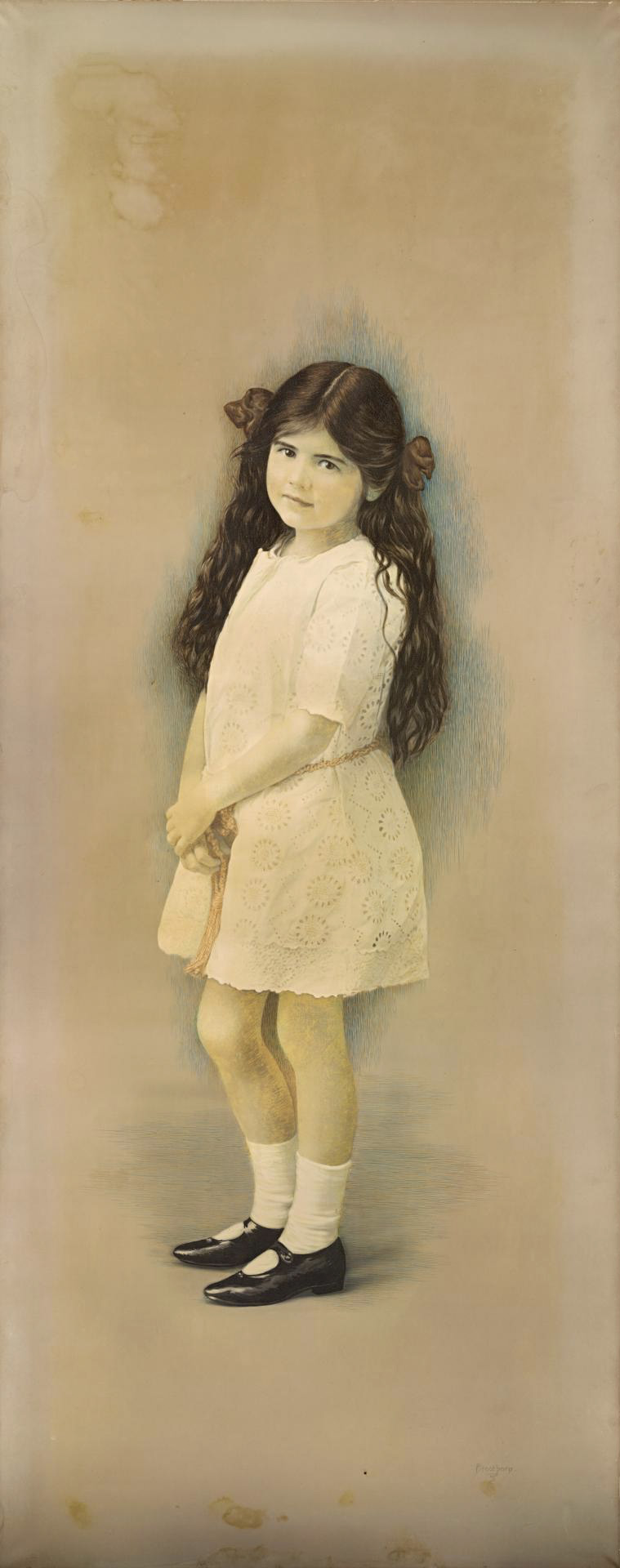
Alice Mills (attributed to) (Australian, 1870-1929) 'Hilaire Syme dressed for the Kismit Ball' 1912-1915


Alice Mills (attributed to) (Australian, 1870-1929)
Hilaire Syme dressed for the Kismit Ball
1912-1915
gelatin silver photograph, coloured dyes
70.5 x 43.3cm (image)
National Gallery of Victoria, Melbourne
Gift of Dr Veronica Condon, 2005
Public domain


Alice Mills (attributed to) (Australian, 1870-1929) Broothorn Studios, Melbourne 'Hilaire Syme' c. 1910


Alice Mills (attributed to) (Australian, 1870-1929)
Broothorn Studios, Melbourne
Hilaire Syme
c. 1910
Gelatin silver photograph, watercolour
185.5 x 74.4cm (image)
National Gallery of Victoria, Melbourne
Gift of Dr Veronica Condon, Geoffrey Haggard and Jennifer Smyth, descendants of Sir Geoffrey Syme K.B.E., Managing Editor of the Age newspaper (1908-1942), 2004


An almost opaque layer of paint has been applied to this portrait. The paint obscures some of the details while enhancing others, such as the child’s shiny shoes and the satin sash of her dress. Alice Mills’s portrait of the subject’s younger sister, Joan, has a more conventional treatment in the application of translucent pigments. It remains unclear whether Mills did the hand-colouring. However, having trained in the studio of leading Melbourne photographer Johnstone O’Shaughnessy, she would almost certainly have known about the technique of applying oil-based pigments to photographs to create the illusion of naturalistic colour.

Wall text from the exhibition


Alice Mills (attributed to) (Australian, 1870-1929) Broothorn Studios, Melbourne 'Joan Margaret Syme' c. 1918 (installation view)


Alice Mills (attributed to) (Australian, 1870-1929)
Broothorn Studios, Melbourne
Joan Margaret Syme (installation view)
c. 1918
Gelatin silver photograph, coloured dyes
243.85 x 91.45cm (approx)
National Gallery of Victoria, Melbourne
Presented through the NGV Foundation by Michael Hayne, 2005
Public domain
Photo: Marcus Bunyan


Alice Mills (attributed to) (Australian, 1870-1929) Broothorn Studios, Melbourne 'Joan Margaret Syme' c. 1918


Alice Mills (attributed to) (Australian, 1870-1929)
Broothorn Studios, Melbourne
Joan Margaret Syme
c. 1918
Gelatin silver photograph, coloured dyes
243.85 x 91.45cm (approx)
National Gallery of Victoria, Melbourne
Presented through the NGV Foundation by Michael Hayne, 2005
Public domain


Alice Mills, with help from her husband, Tom Humphreys, set up her first photography studio in 1900. Soon after that she was working under her own name in the Centreway Arcade at 259-263 Collins Street, Melbourne. Mills’s portraits were often published in magazines and newspapers, which brought her to the attention of a large audience of prospective clients. Around 1915 she produced a number of large-scale portraits of Hilaire and Joan Syme, the daughters of then managing editor and co-owner of The Age newspaper Geoffrey Syme. The photographs were made in conjunction with Broothorn Studios, which art historians suggest made the extreme enlargements.

Wall text from the exhibition


Installation view of the exhibition 'Women Photographers 1900-1975: A Legacy of Light' at NGV International, Melbourne, November 2025 - May 2026
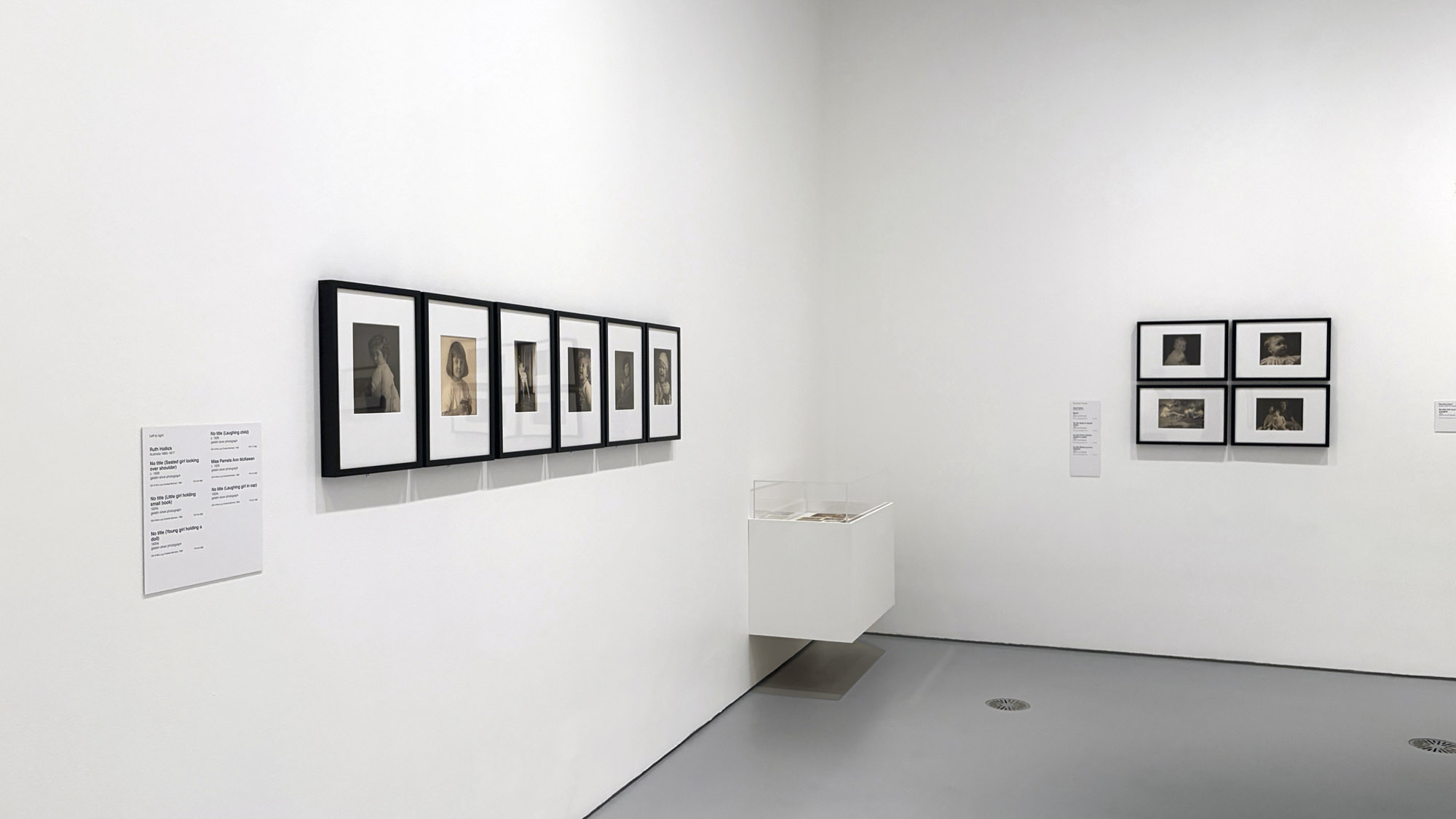
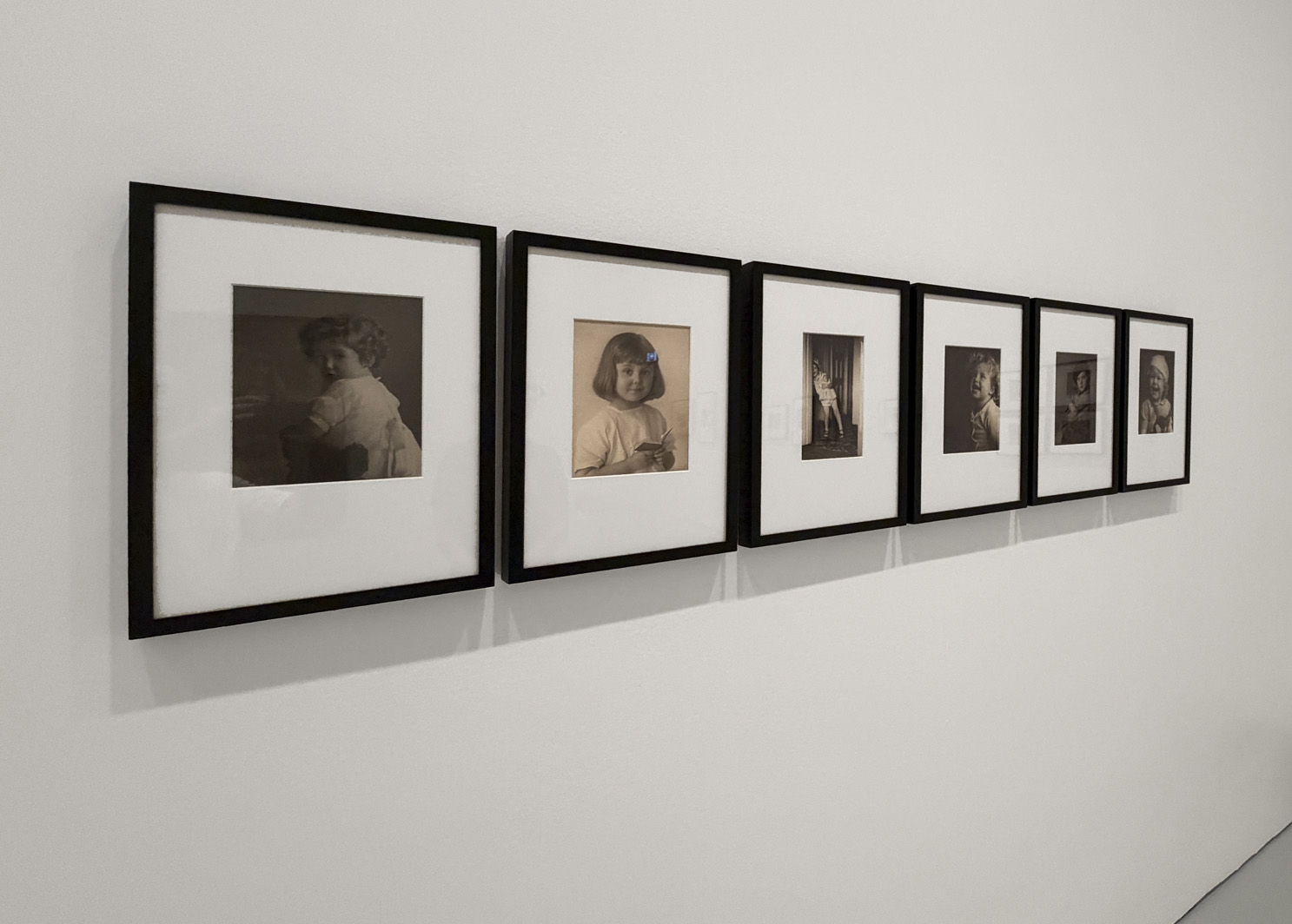
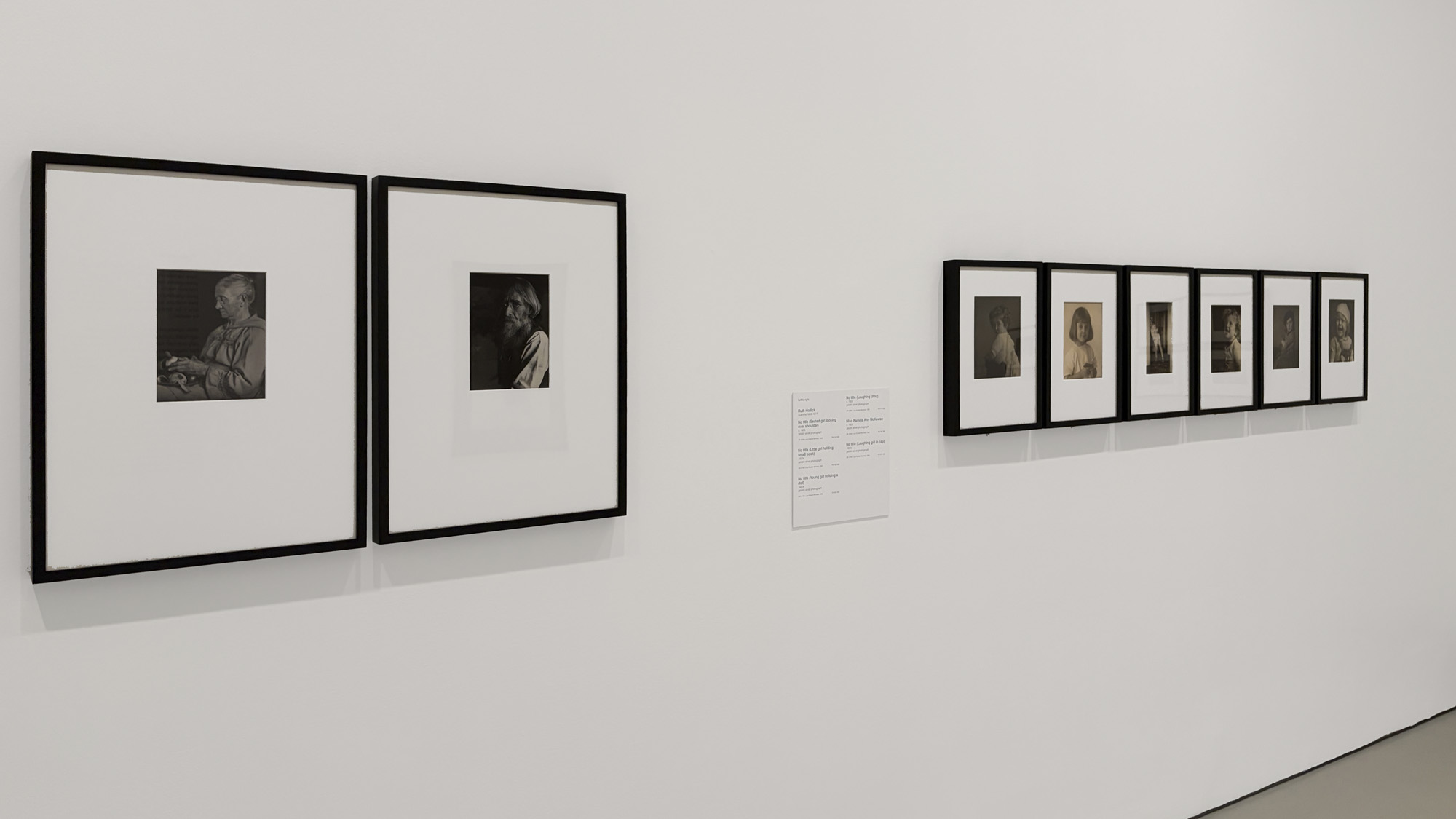
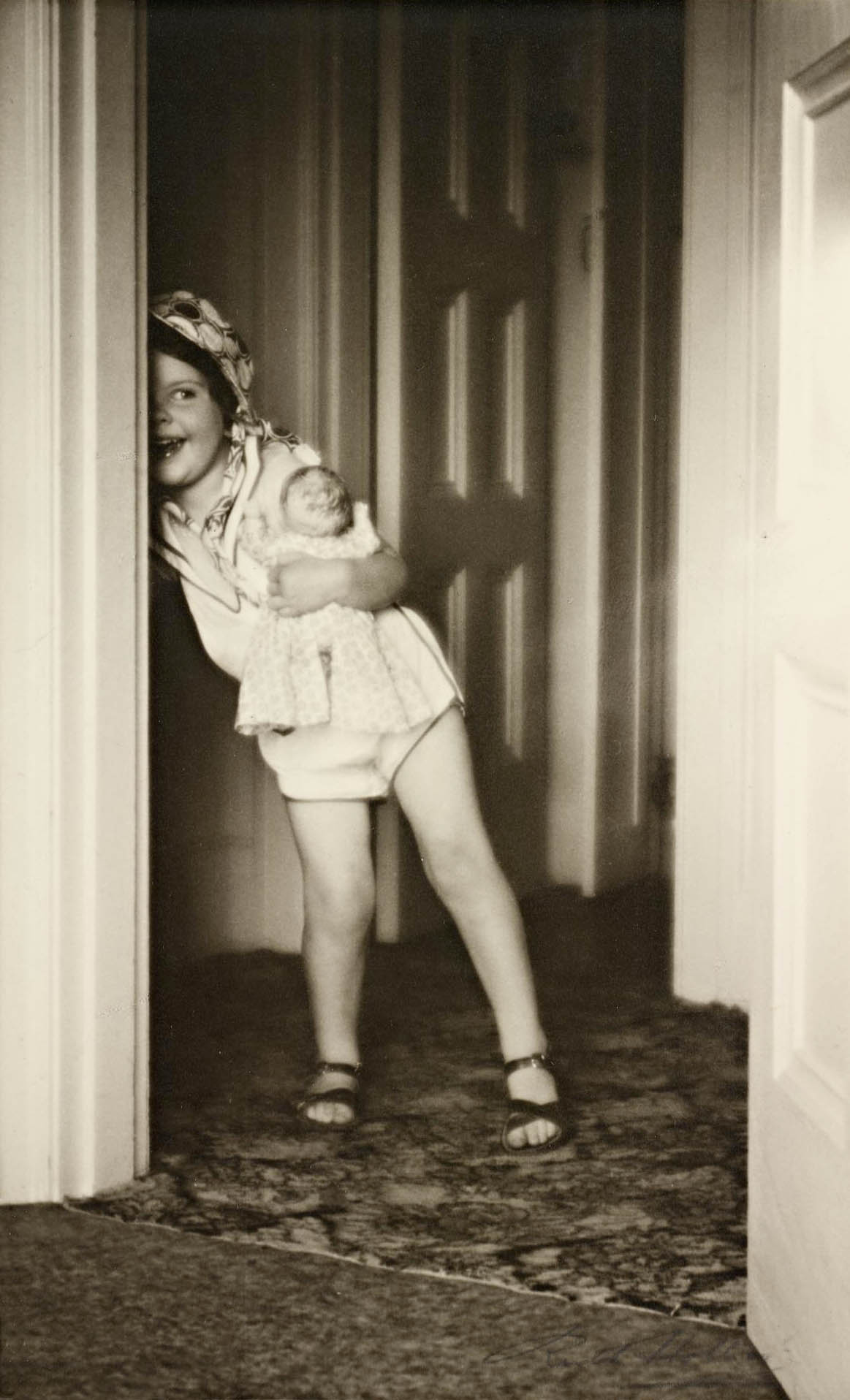
Installation view of the exhibition 'Women Photographers 1900-1975: A Legacy of Light' at NGV International, Melbourne, November 2025 - May 2026 showing from left to right in the bottom image two Imogen Cunningham photographs, 'My mother peeling apples' (1910, printed 1979) and 'My father' (1906, printed 1979) and six 1920s photographs by the Australian photographer Ruth Hollick (1883-1977): 'No title (Seated girl looking over shoulder)' (c. 1926); 'No title (Little girl holding small book)' (1920s); 'No title (Young girl holding a doll)' (1920s); 'No title (Laughing child)' (c. 1926); 'Miss Pamela Ann McKewan' (c. 1929); and 'No title (Laughing girl in cap)' (1920s)


Installation views of the exhibition Women Photographers 1900-1975: A Legacy of Light at NGV International, Melbourne, November 2025 – May 2026 showing from left to right in the bottom image two Imogen Cunningham photographs, My mother peeling apples (1910, printed 1979) and My father (1906, printed 1979) and six 1920s photographs by the Australian photographer Ruth Hollick (1883-1977): No title (Seated girl looking over shoulder) (c. 1926); No title (Little girl holding small book) (1920s); No title (Young girl holding a doll) (1920s); No title (Laughing child) (c. 1926); Miss Pamela Ann McKewan (c. 1929); and No title (Laughing girl in cap) (1920s)
Photos: Marcus Bunyan


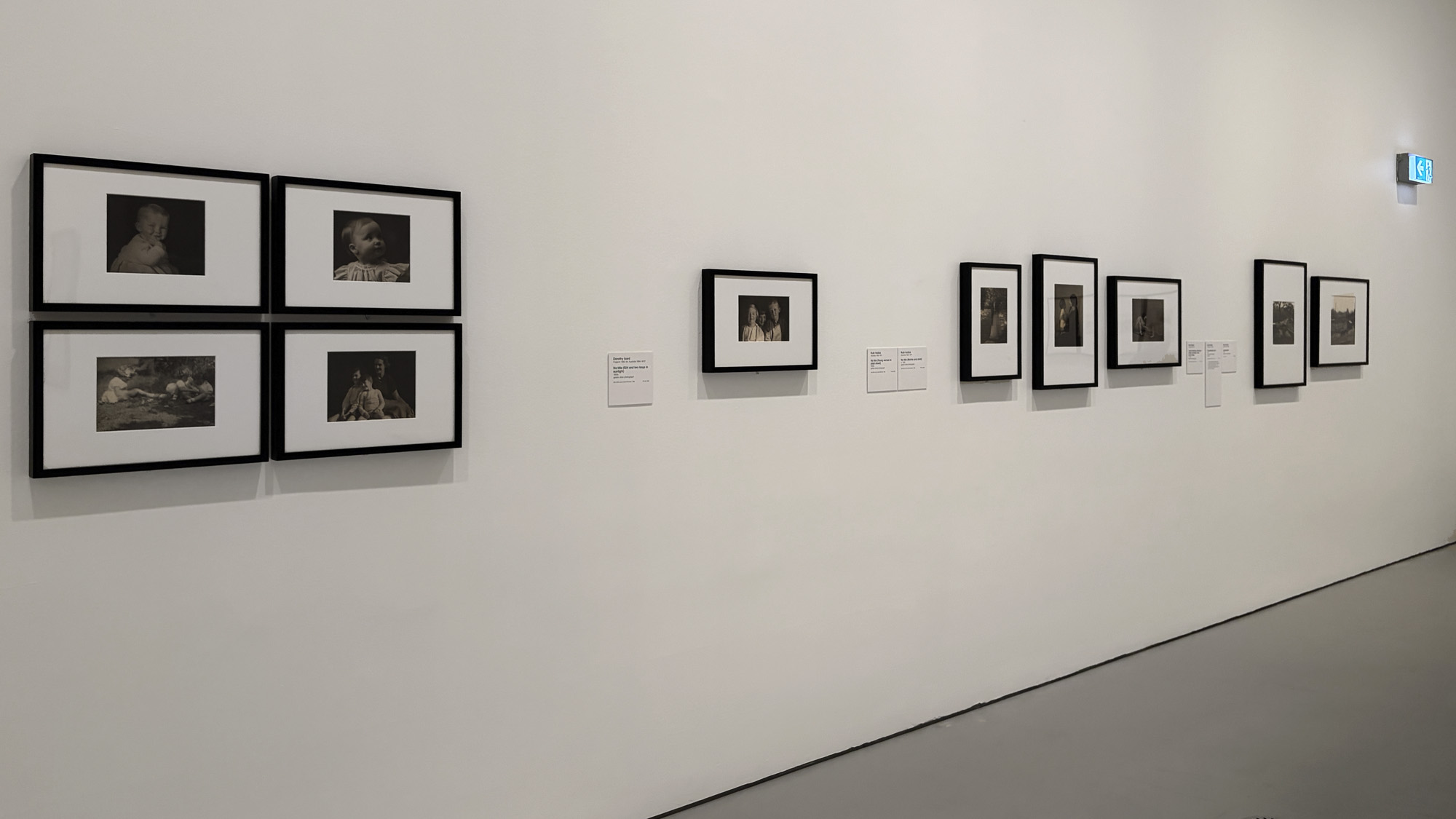
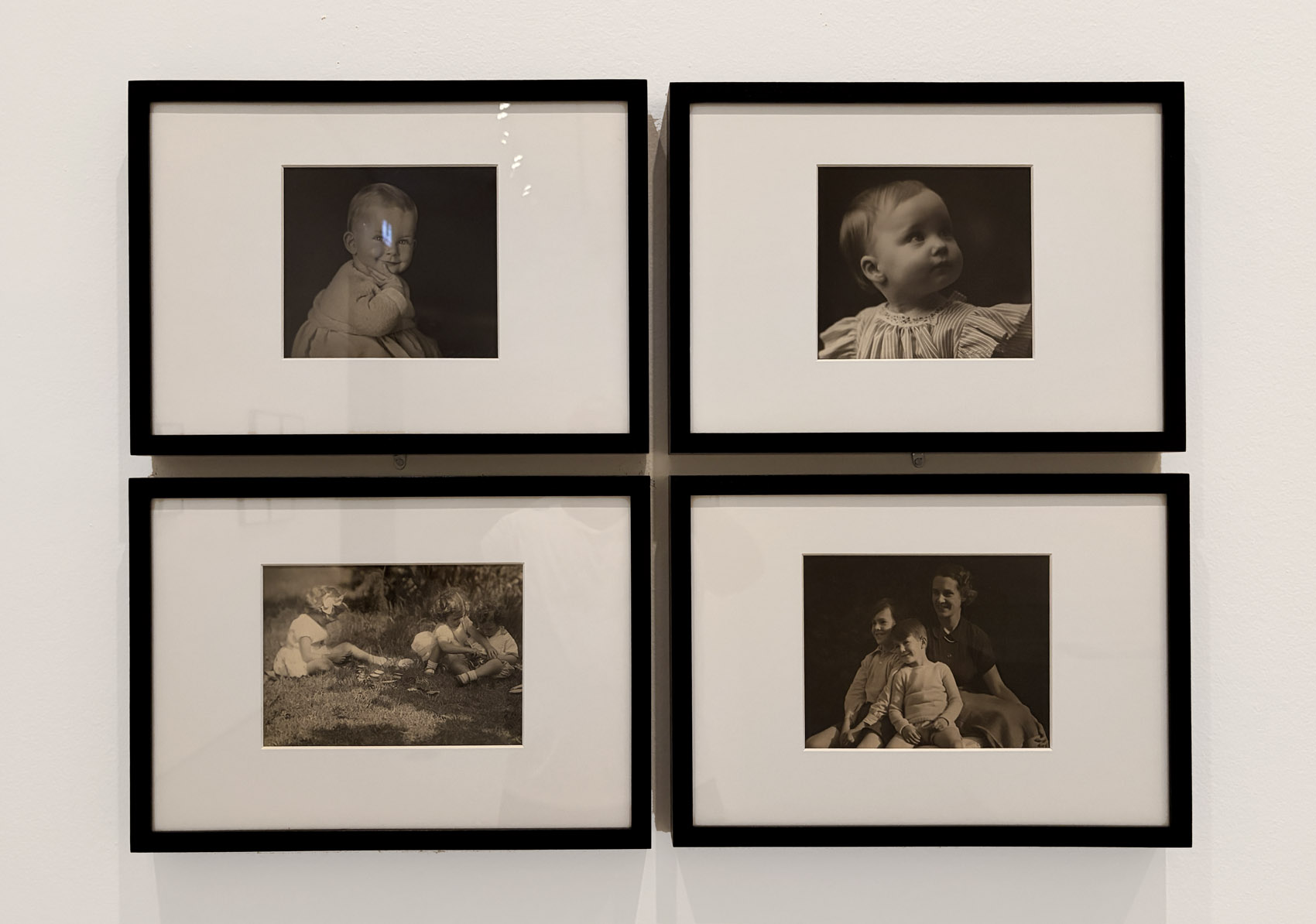
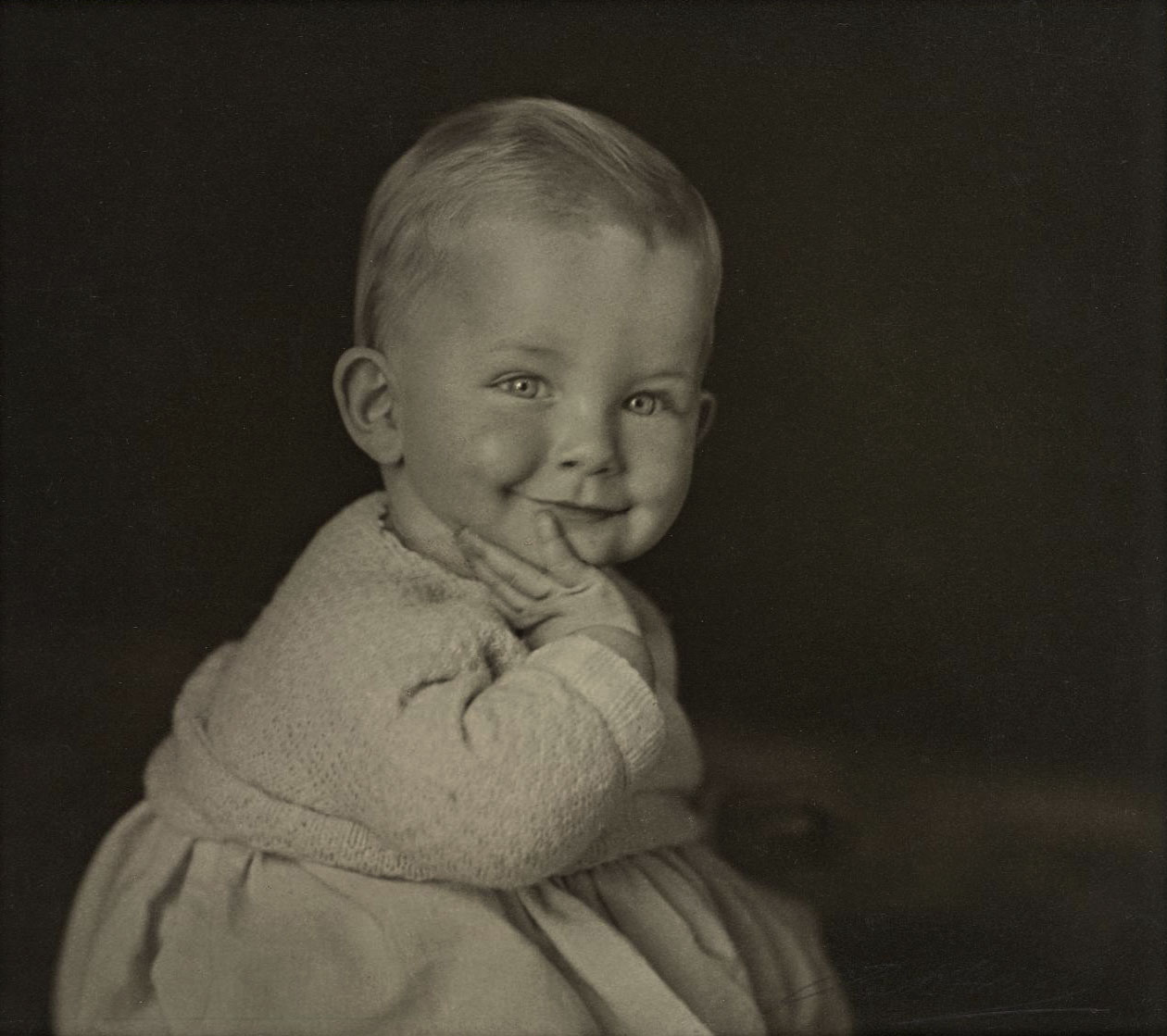
Installation view of the exhibition 'Women Photographers 1900-1975: A Legacy of Light' at NGV International, Melbourne, November 2025 - May 2026 showing  at left four photographs by Ruth Hollick: 'Bobby' (1927); 'No title (Baby in striped dress)' (1920s); 'No title (Three children seated on grass)' (1920s); and 'No title (Mother and two children)' (1920s)


Installation view of the exhibition Women Photographers 1900-1975: A Legacy of Light at NGV International, Melbourne, November 2025 – May 2026 showing at left four photographs by Ruth Hollick: Bobby (1927); No title (Baby in striped dress) (1920s); No title (Three children seated on grass) (1920s); and No title (Mother and two children) (1920s)
Photo: Marcus Bunyan


Installation view of the exhibition 'Women Photographers 1900-1975: A Legacy of Light' at NGV International, Melbourne, November 2025 - May 2026 showing four photographs by Ruth Hollick: 'Bobby' (1927); 'No title (Baby in striped dress)' (1920s); 'No title (Three children seated on grass)' (1920s); and 'No title (Mother and two children)' (1920s)


Installation view of the exhibition Women Photographers 1900-1975: A Legacy of Light at NGV International, Melbourne, November 2025 – May 2026 showing four photographs by Ruth Hollick: Bobby (1927); No title (Baby in striped dress) (1920s); No title (Three children seated on grass) (1920s); and No title (Mother and two children) (1920s)
Photo: Marcus Bunyan


Ruth Hollick (Australian, 1883-1977) 'Bobby' 1927


Ruth Hollick (Australian, 1883-1977)
Bobby
1927
Gelatin silver photograph
18.8 x 21.4cm (image)
National Gallery of Victoria, Melbourne
Gift of Mrs Lucy Crosbie Morrison, 1992
Public domain


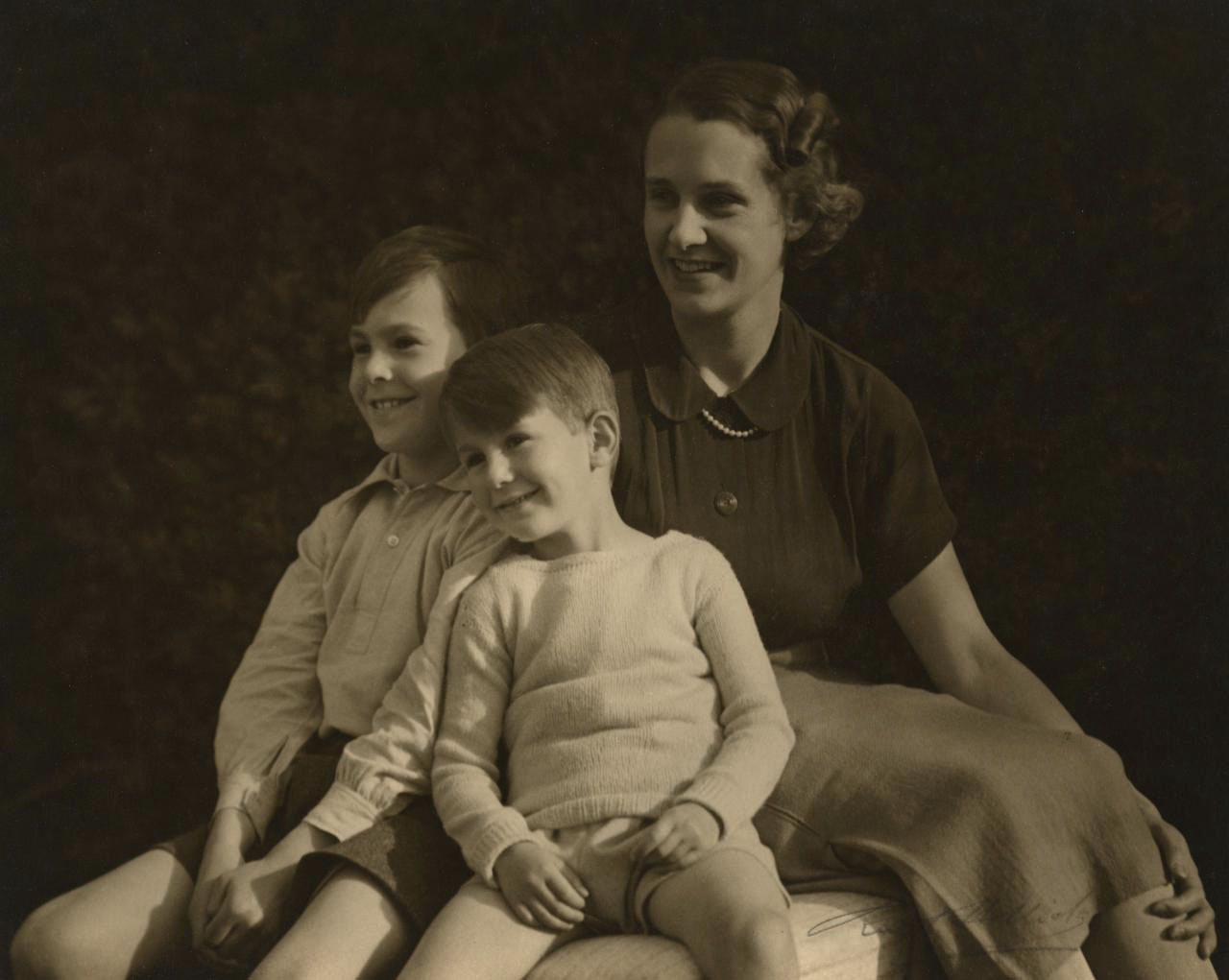
Ruth Hollick (Australian, 1883-1977) 'No title (Mother and two children)' 1920s


Ruth Hollick (Australian, 1883-1977)
No title (Mother and two children)
1920s
Gelatin silver photograph
19.0 x 23.9cm (image)
National Gallery of Victoria, Melbourne
Gift of Mrs Lucy Crosbie Morrison, 1992
Public domain


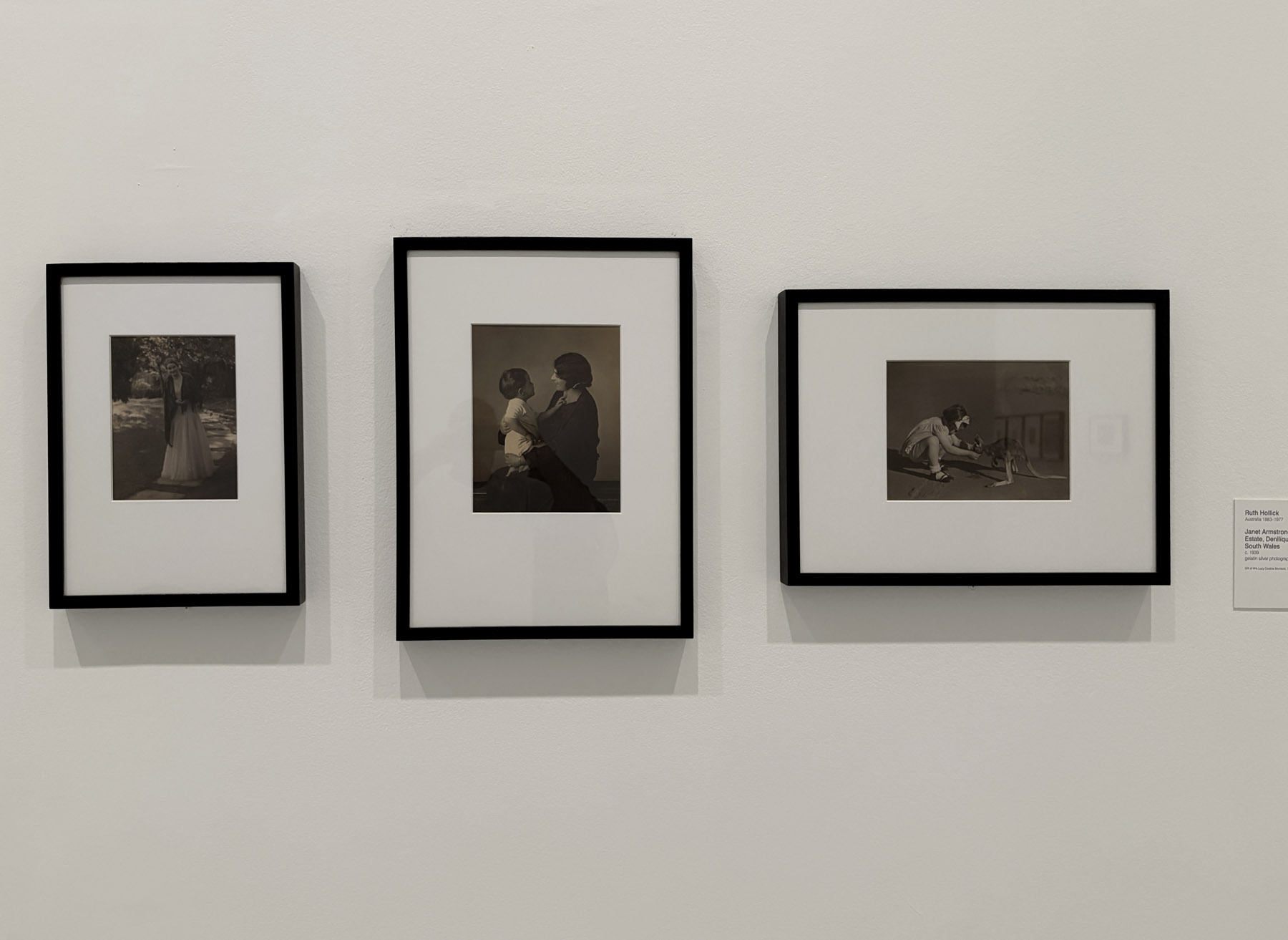
Installation view of the exhibition 'Women Photographers 1900-1975: A Legacy of Light' at NGV International, Melbourne, November 2025 - May 2026 showing from left to right three photographs by Ruth Hollick: 'No title (Young woman in plaid shawl)' (1920s); 'No title (Mother and child)' (c. 1926); and 'Janet Armstrong, Woodbury Estate, Deniliquin, New South Wales' (c. 1939) (installation view)


Installation view of the exhibition Women Photographers 1900-1975: A Legacy of Light at NGV International, Melbourne, November 2025 – May 2026 showing from left to right three photographs by Ruth Hollick: No title (Young woman in plaid shawl) (1920s); No title (Mother and child) (c. 1926); and Janet Armstrong, Woodbury Estate, Deniliquin, New South Wales (c. 1939)
Photo: Marcus Bunyan


Ruth Hollick (Australian, 1883-1977) 'No title (Young girl holding a doll)' 1920s


Ruth Hollick (Australian, 1883-1977)
No title (Young girl holding a doll)
1920s
Gelatin silver photograph
23.9 x 14.6cm (image)
National Gallery of Victoria, Melbourne
Gift of Mrs Lucy Crosbie Morrison, 1992


Installation view of the exhibition 'Women Photographers 1900-1975: A Legacy of Light' at NGV International, Melbourne, November 2025 - May 2026


Installation view of the exhibition Women Photographers 1900-1975: A Legacy of Light at NGV International, Melbourne, November 2025 – May 2026
Photo: Marcus Bunyan


Installation view of the exhibition 'Women Photographers 1900-1975: A Legacy of Light' at NGV International, Melbourne, November 2025 - May 2026
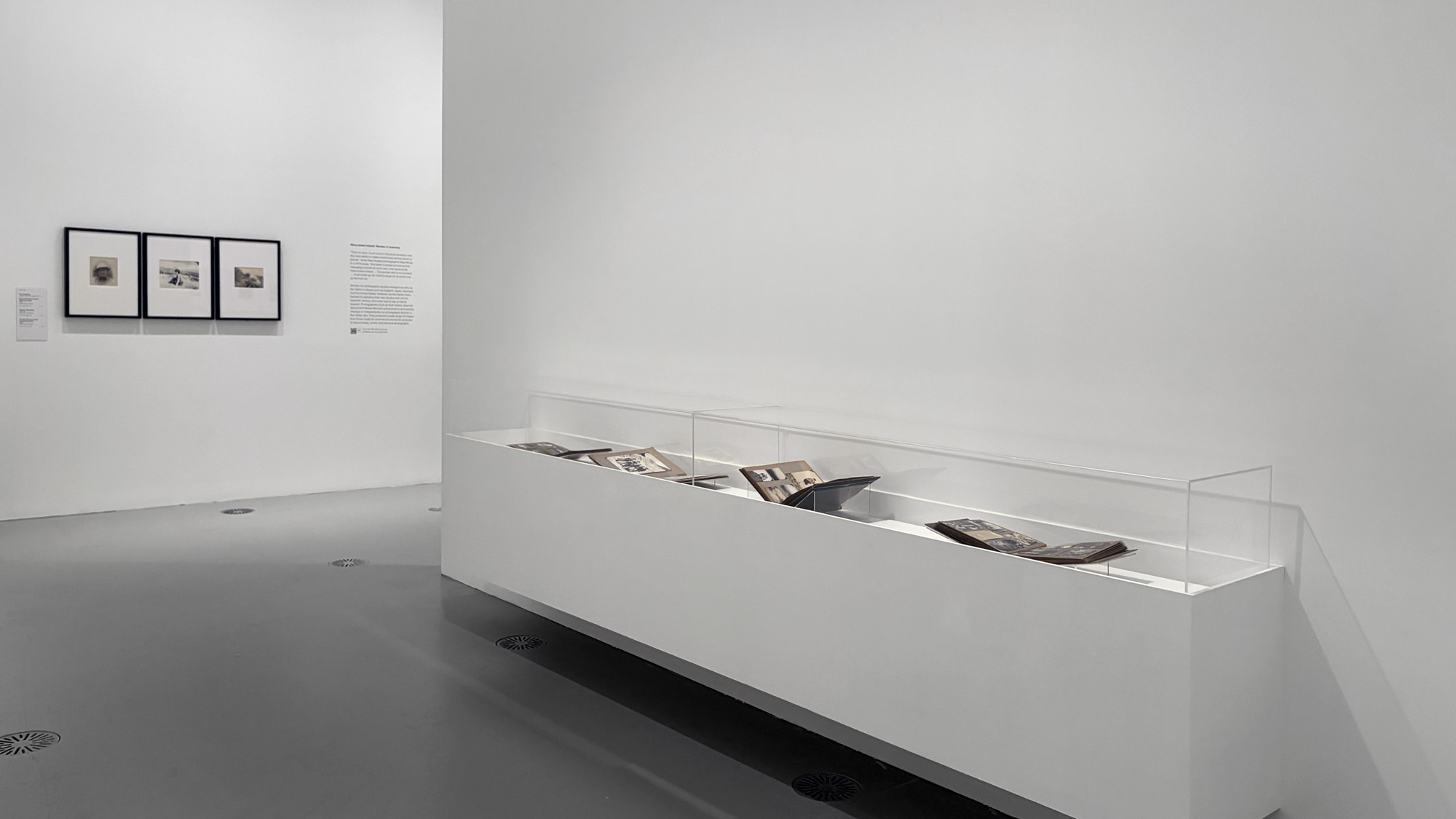
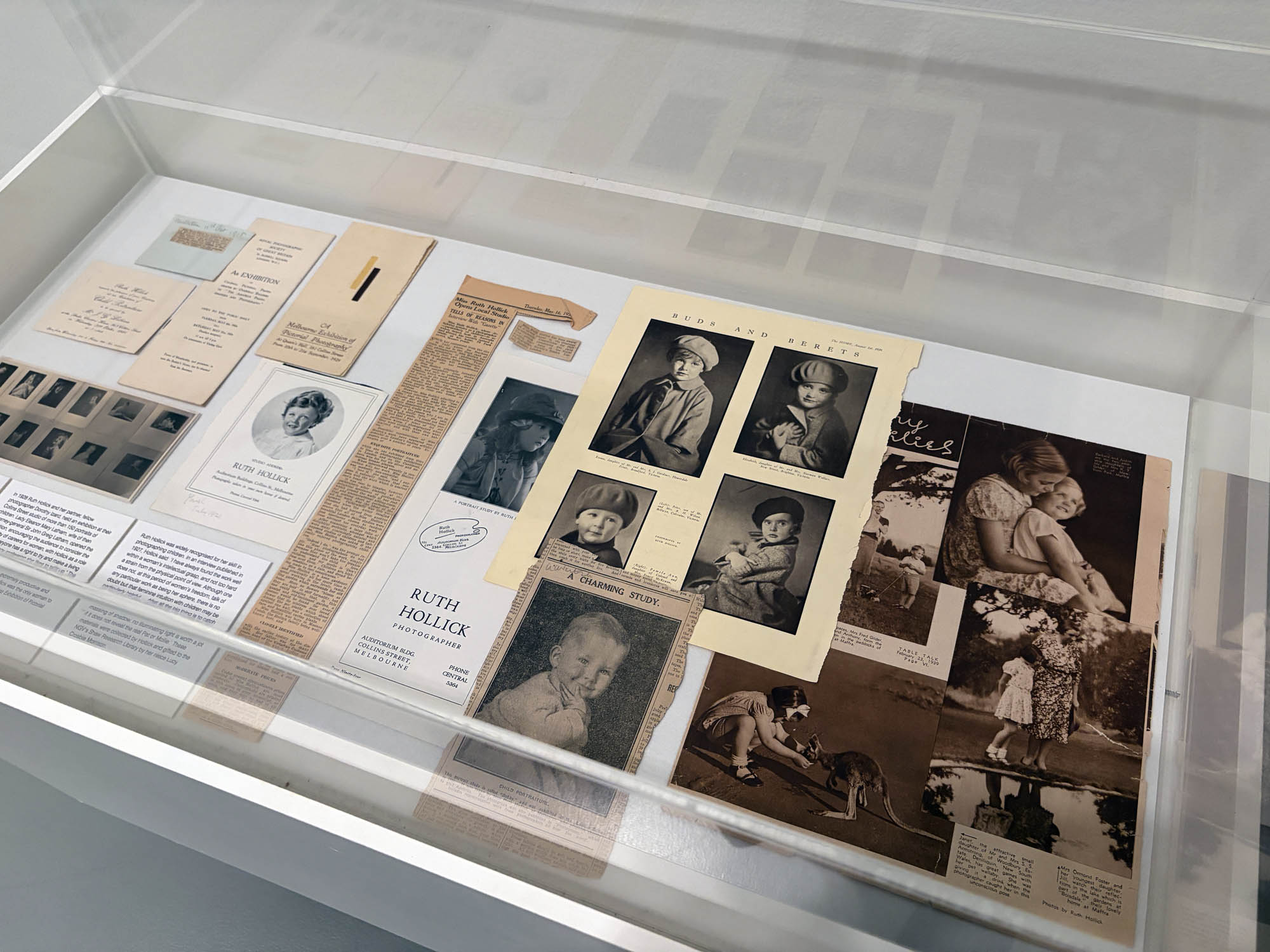
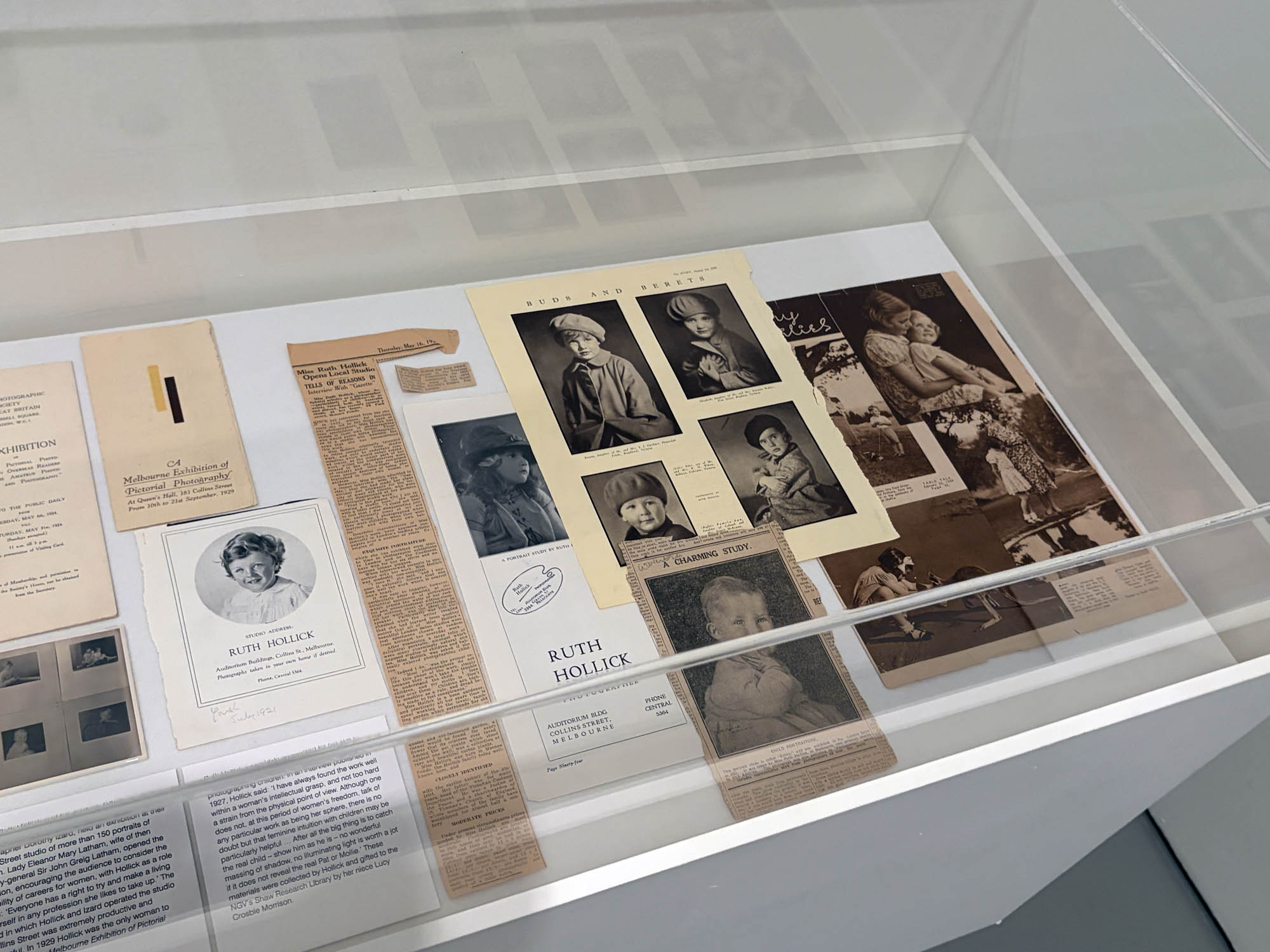
Installation view of the exhibition 'Women Photographers 1900-1975: A Legacy of Light' at NGV International, Melbourne, November 2025 - May 2026 showing clippings, press releases, brochures, reviews, invitations and other ephemeral material relating to Ruth Hollick and the Ruth Hollick studio


Installation views of the exhibition Women Photographers 1900-1975: A Legacy of Light at NGV International, Melbourne, November 2025 – May 2026 showing clippings, press releases, brochures, reviews, invitations and other ephemeral material relating to Ruth Hollick and the Ruth Hollick studio
Photos: Marcus Bunyan


In 1928 Ruth Hollick and her partner, fellow photographer Dorothy Izard, held an exhibition at their Collins Street studio of more than 150 portraits of children. Lady Eleanor Mary Latham, wife of then attorney-general Sir John Greig Latham, opened the exhibition, encouraging the audience to consider the possibility of career for women, with Hollick as a role model: ‘Everyone has a right to try and make a living for herself in any profession she likes to take up.’ The period in which Hollick and Izard operated the studio in Collins Street was extremely productive and successful. In 1929 Hollick was the only woman to participate in the Melbourne Exhibition of Pictorial Photography.

Ruth Hollick was widely recognised for her skill in photographing children. In an interview published in 1927, Hollick said: ‘I have always found the work well within a woman’s intellectual grasp, and not too hard a strain from the physical point of view. Although one does not, at this period of women’s freedom, talk of any particular work as being her sphere, there is no doubt but that feminine intuition with children may be particularly helpful … After all the big thing is to catch the real child – show him as he is – no wonderful massing of shadow, no illuminating light is worth a lot if it does not reveal the real Pat or Mollie.’ These materials were collected by Hollick and gifted to the NGV’s Shaw Research Library by her niece Lucy Crosbie Morrison.

Vitrine text from the exhibition


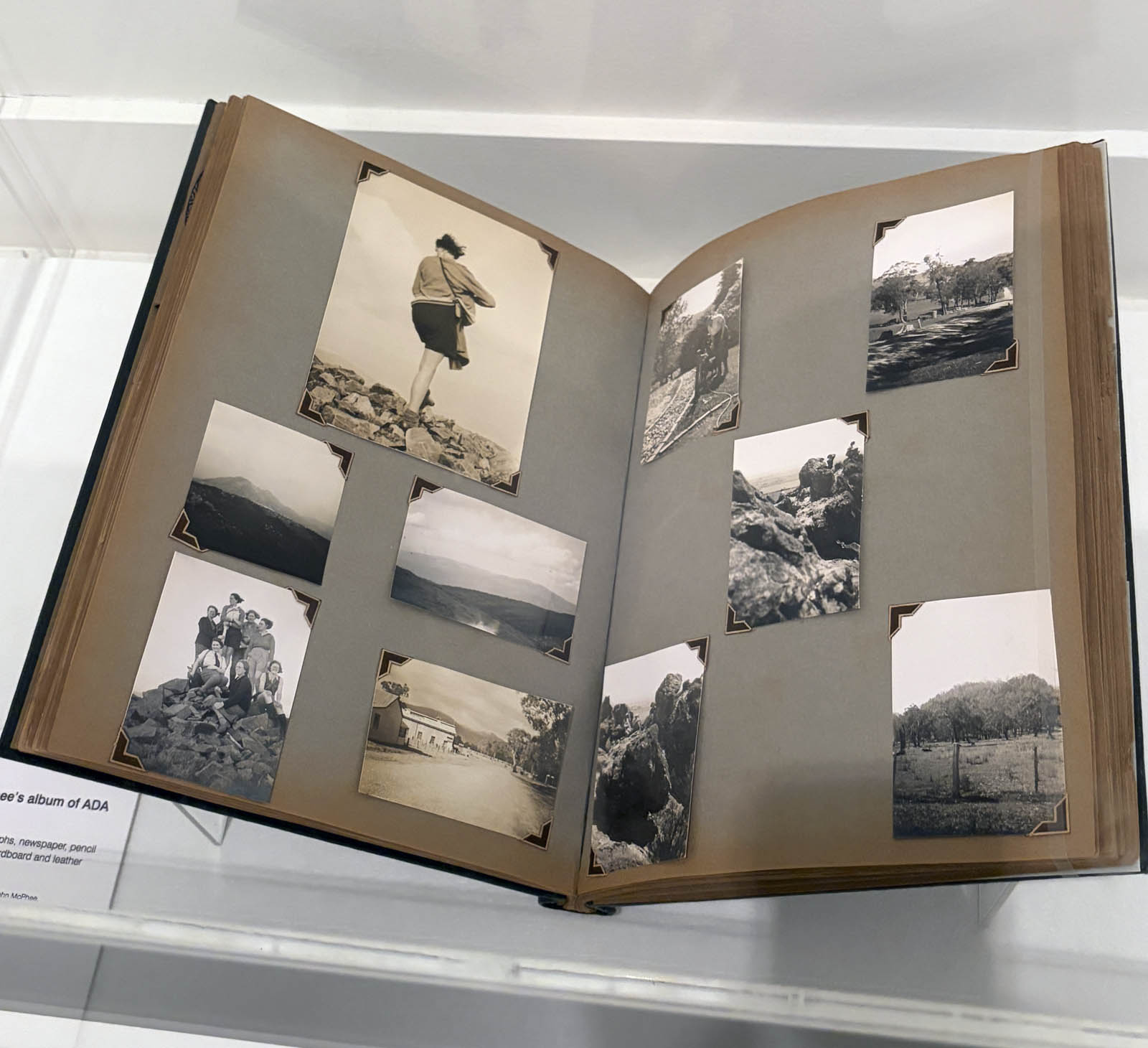
Inez McPhee (Australian, 1908-1999) 'No title (Inez McPhee's album of ADA river trip)' 1936 (installation view)


Inez McPhee (Australian, 1908-1999)
No title (Inez McPhee’s album of ADA river trip) (installation view)
1936
28.1 x 22.4cm (page)
28.5 x 23.0 x 3.1cm (closed)
28.5 x 46.0 x 1.5cm (open)
Album: gelatin silver photographs, newspaper, pencil and pen and ink, 62 pages, cardboard and leather cover, stitched binding
Presented through the NGV Foundation by John McPhee, Member and Ann Luck, 2004
Photo: Marcus Bunyan


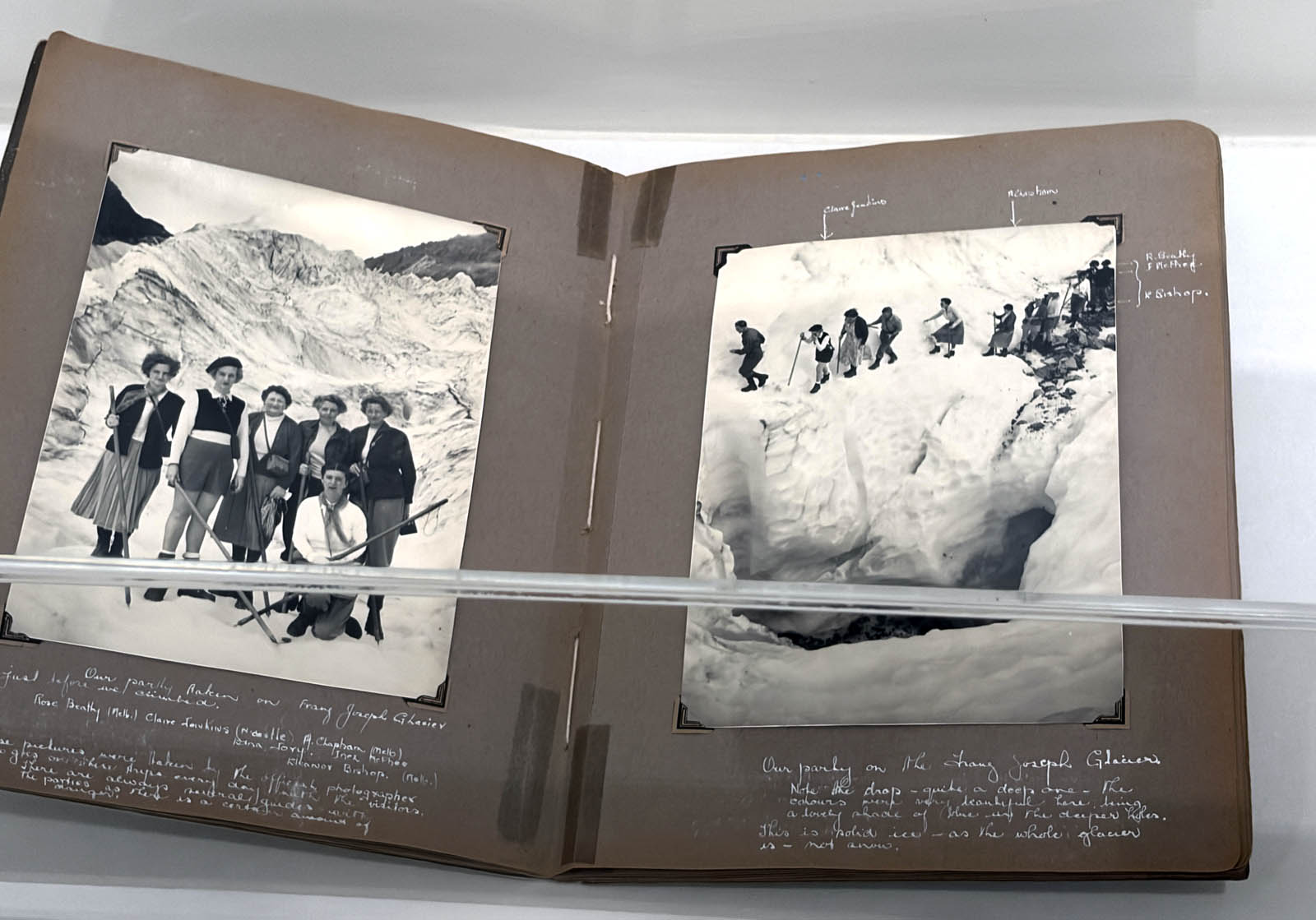
Inez McPhee (Australian, 1908-1999) 'No title (Inez McPhee's album of a trip to New Zealand)' 1953 (installation view)


Inez McPhee (Australian, 1908-1999)
No title (Inez McPhee’s album of a trip to New Zealand) (installation view)
1953
Album: gelatin silver photographs, collage, pencil, 40 pages, cardboard cover, stitched binding
31.0 x 24.1cm (page)
31.1 x 24.8 x 1.4cm (closed)
31.1 x 49.0 x 1.0cm (open)
Presented through the NGV Foundation by John McPhee, Member and Ann Luck, 2004
Photo: Marcus Bunyan


Inez McPhee was an active member of the Melbourne Women’s Walking Club, founded in 1922. McPhee took her camera on bushwalks with the group and, typical of amateur photographers of the period, compiled albums of the prints. Her albums are filled with images of women engaging in outdoor activities.

Vitrine text from the exhibition


Installation view of the exhibition 'Women Photographers 1900-1975: A Legacy of Light' at NGV International, Melbourne, November 2025 – May 2026


Installation view of the exhibition Women Photographers 1900-1975: A Legacy of Light at NGV International, Melbourne, November 2025 – May 2026 showing at left three photographs by Edna Walling: Doris Oak-Rhind, Edna’s Walling’s sister (1920s); Estelle Thompson (1950s-1960s); and No title (Young woman preparing picnic) (1940s)
Photo: Marcus Bunyan


Installation view of the exhibition Women Photographers 1900-1975: A Legacy of Light at NGV International, Melbourne, November 2025 – May 2026 showing at left to right, three photographs by Edna Walling (Australian born England, 1895-1973) 'Doris Oak-Rhind, Edna's Walling's sister' (1920s); 'Estelle Thompson' (1950s-1960s); and 'No title (Young woman preparing picnic)' (1940s)


Installation view of the exhibition Women Photographers 1900-1975: A Legacy of Light at NGV International, Melbourne, November 2025 – May 2026 showing at left to right, three photographs by Edna Walling (Australian born England, 1895-1973) Doris Oak-Rhind, Edna’s Walling’s sister (1920s); Estelle Thompson (1950s-1960s); and No title (Young woman preparing picnic) (1940s)
Photo: Marcus Bunyan


Edna Walling (Australian born England, 1895-1973) 'Estelle Thompson' 1950s-1960s (installation view)


Edna Walling (Australian born England, 1895-1973)
Estelle Thompson (installation view)
1950s-1960s
Gelatin silver photograph
25.4 x 20.6cm (image and sheet)
National Gallery of Victoria, Melbourne
Gift of Mrs Barbara Barnes, 1983
Photo: Marcus Bunyan


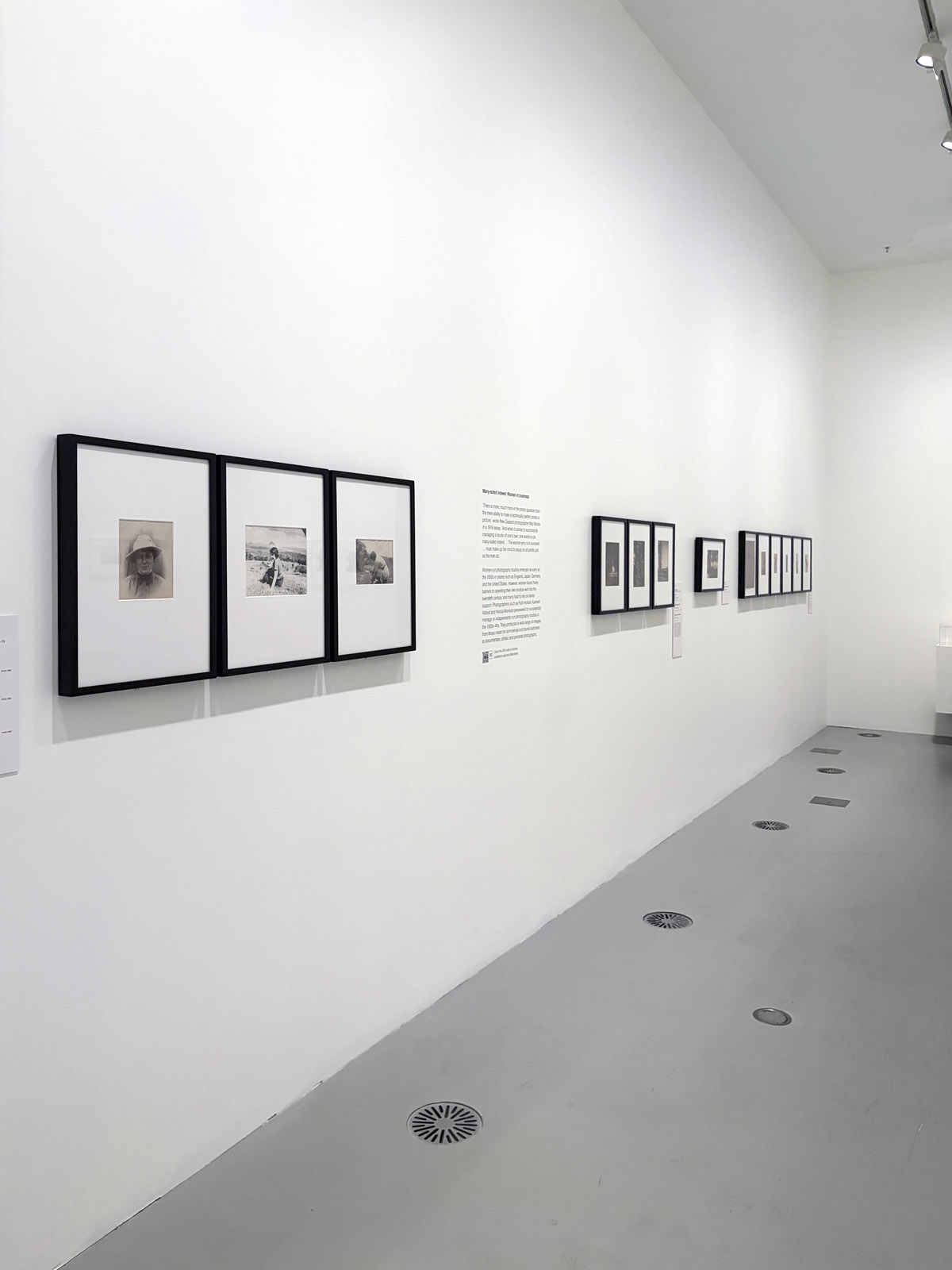
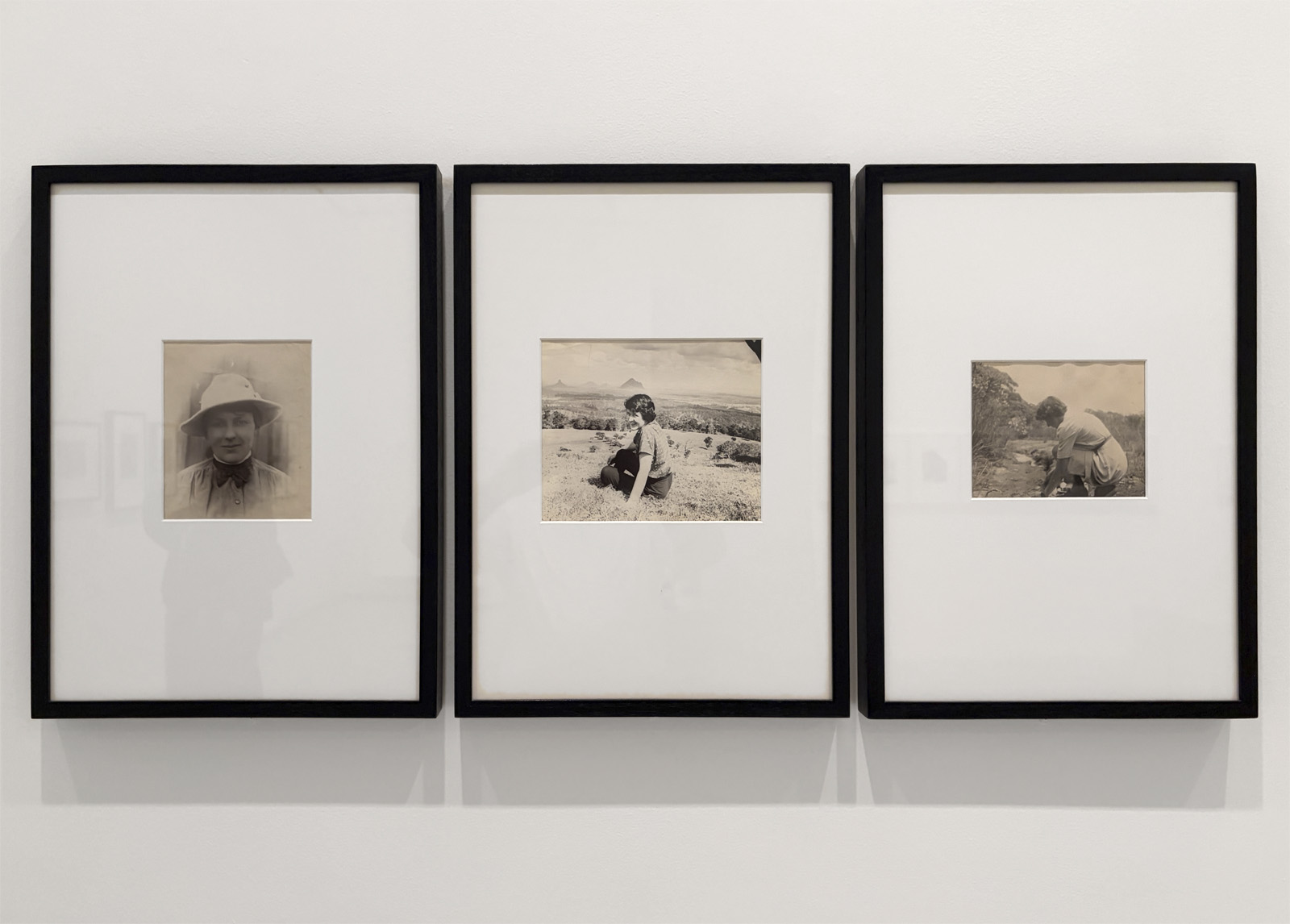
Many-sided Indeed: Women In Business

“There is more, much more in the photo question than the mere ability to make a technically perfect photo or picture,” wrote New Zealand photographer May Moore in a 1916 essay. “And when it comes to successfully managing a studio of one’s own, one wants to be many-sided indeed … The woman who is to succeed … must make up her mind to equip on all points just as the men do.”

Women-run photography studios emerged as early as the 1850s in places such as England, Japan, Germany and the United States. However, women faced many barriers to operating their own studios well into the twentieth century, and many had to rely on family support. Photographers such as Ruth Hollick, Karimeh Abbud and Hedda Morrison persevered to successfully manage or independently run photography studios in the 1920s-40s. They produced a wide range of images, from those made for commercial and tourist purposes to documentary, artistic and personal photographs.


Edna Walling (Australian born England, 1895-1973) 'No title (Album)' 1950s-1960s (installation view)


Edna Walling (Australian born England, 1895-1973)
No title (Album) (installation view)
1950s-1960s
Album: gelatin silver photographs, 48 pages, cardboard, leather and colour photo-lithograph cover, metal screw binding
24.6 x 32.0cm (page)
25.6 x 34.8 x 3.6cm (closed)
25.6 x 62.8cm (open)
National Gallery of Victoria, Melbourne
Gift of Mrs Barbara Barnes, 1983
Photo: Marcus Bunyan


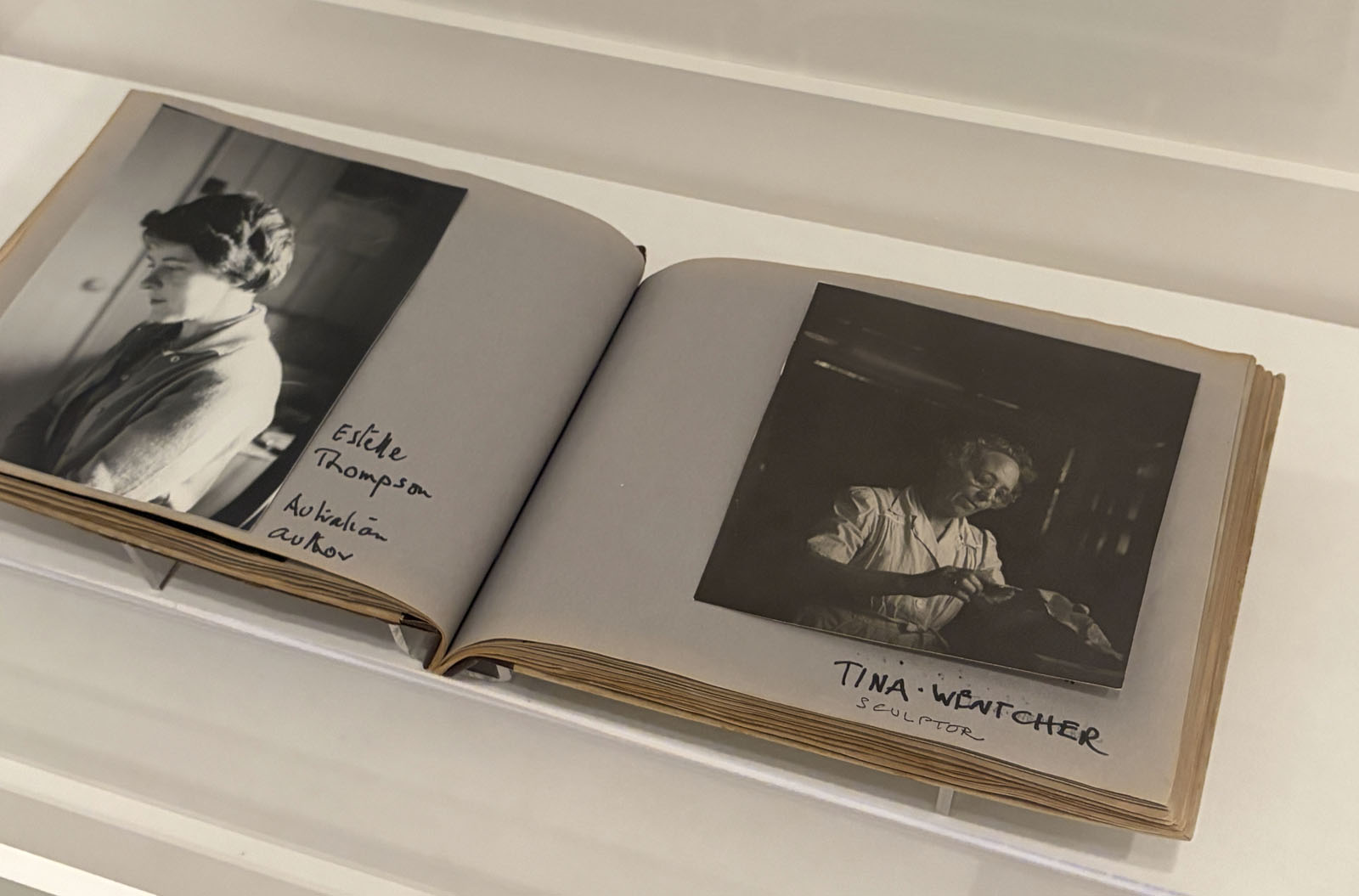
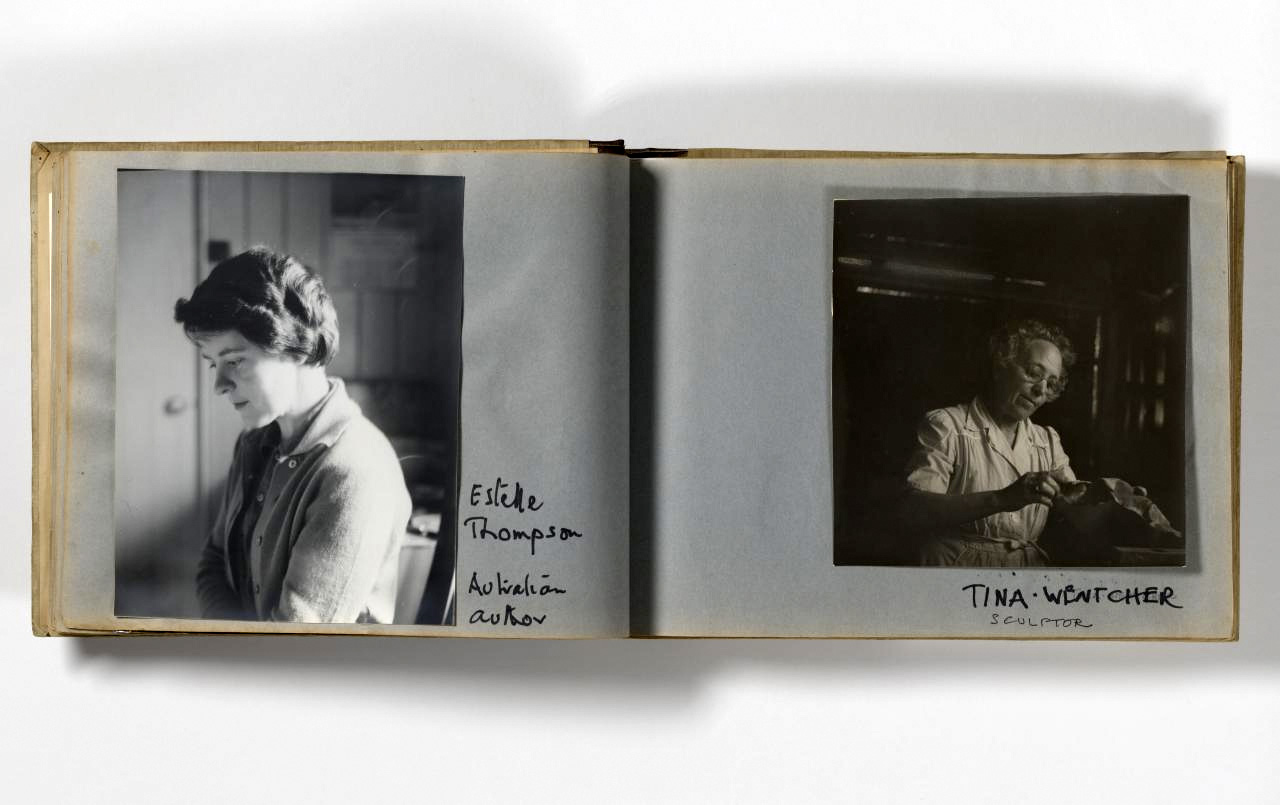
Landscape designer Edna Walling kept a personal photo album to capture the creative effervescence of the community at her property at Bickleigh Vale Village in Mooroolbark, Victoria. Nicknamed ‘Trouser Lane’, the property was designed by Walling to be a ‘community of connected gardens and cottages. Many people, including many women, shared in Walling’s unique vision for the space, visiting and residing at Trouser lane over the years. Walling’s album features, among others, images of writer Estelle Thompson, landscape designer Daphne Pearson, builder Esme Johnson, violinist Perry Hart and ballet dancers Harcourt Algernoff and Graham Smith. Also interspersed throughout the album are photographic flower studies.

Vitrine text from the exhibition


Edna Walling (Australian born United Kingdom, 1895-1973) 'No title' (Album) 1950s-1960s


Edna Walling (Australian born United Kingdom, 1895-1973)
No title (Album)
1950s-1960s
Album; gelatin silver photographs, 48 pages, cardboard, leather and colour photo-lithograph cover, metal screw binding
24.6 x 32.0cm (page)
25.6 x 34.8 x 3.6cm (closed)
25.6 x 62.8cm (open)
National Gallery of Victoria, Melbourne
Gift of Mrs Barbara Barnes, 1983


Installation view of the exhibition 'Women Photographers 1900-1975: A Legacy of Light' at NGV International, Melbourne, November 2025 - May 2026
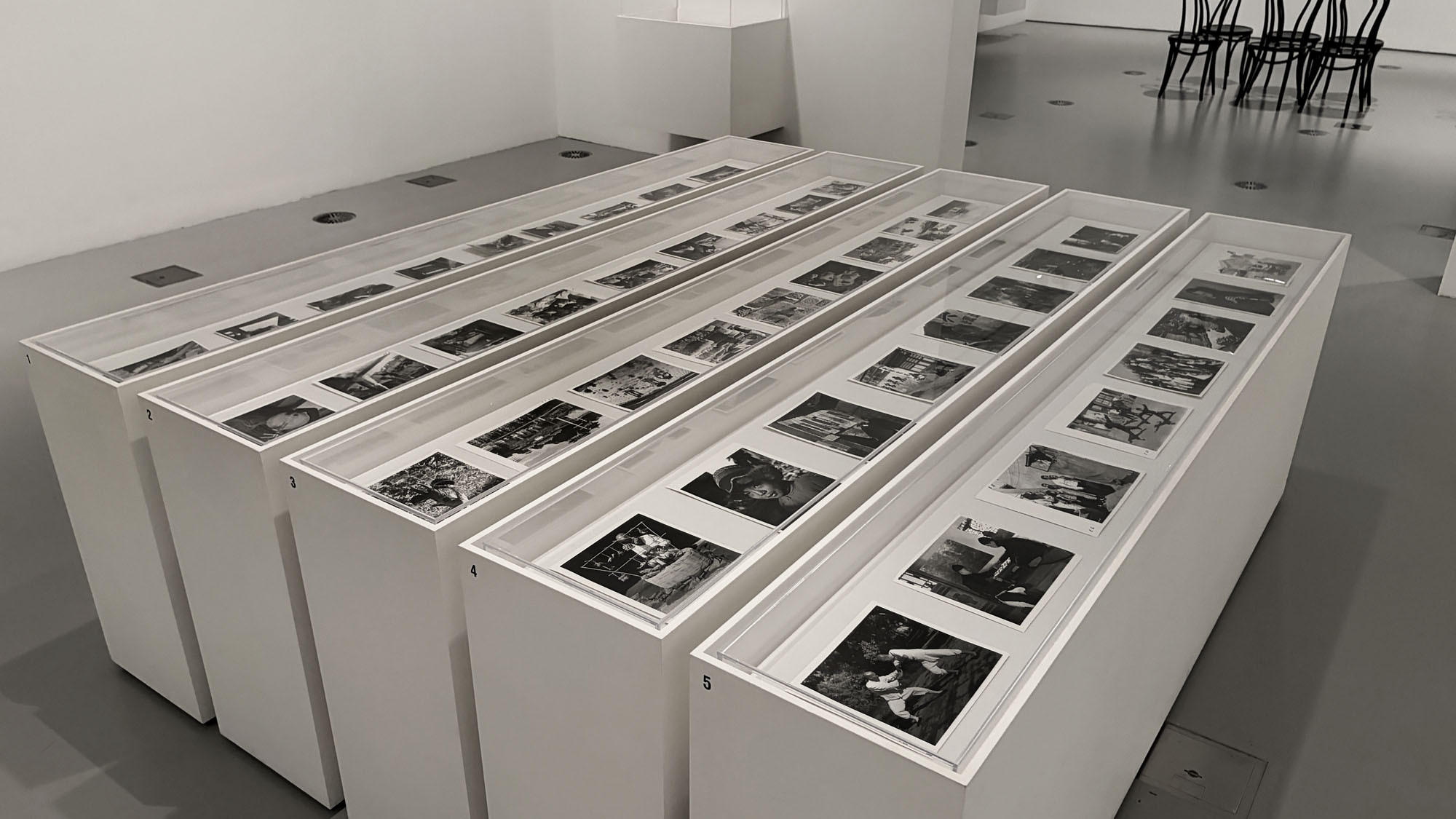
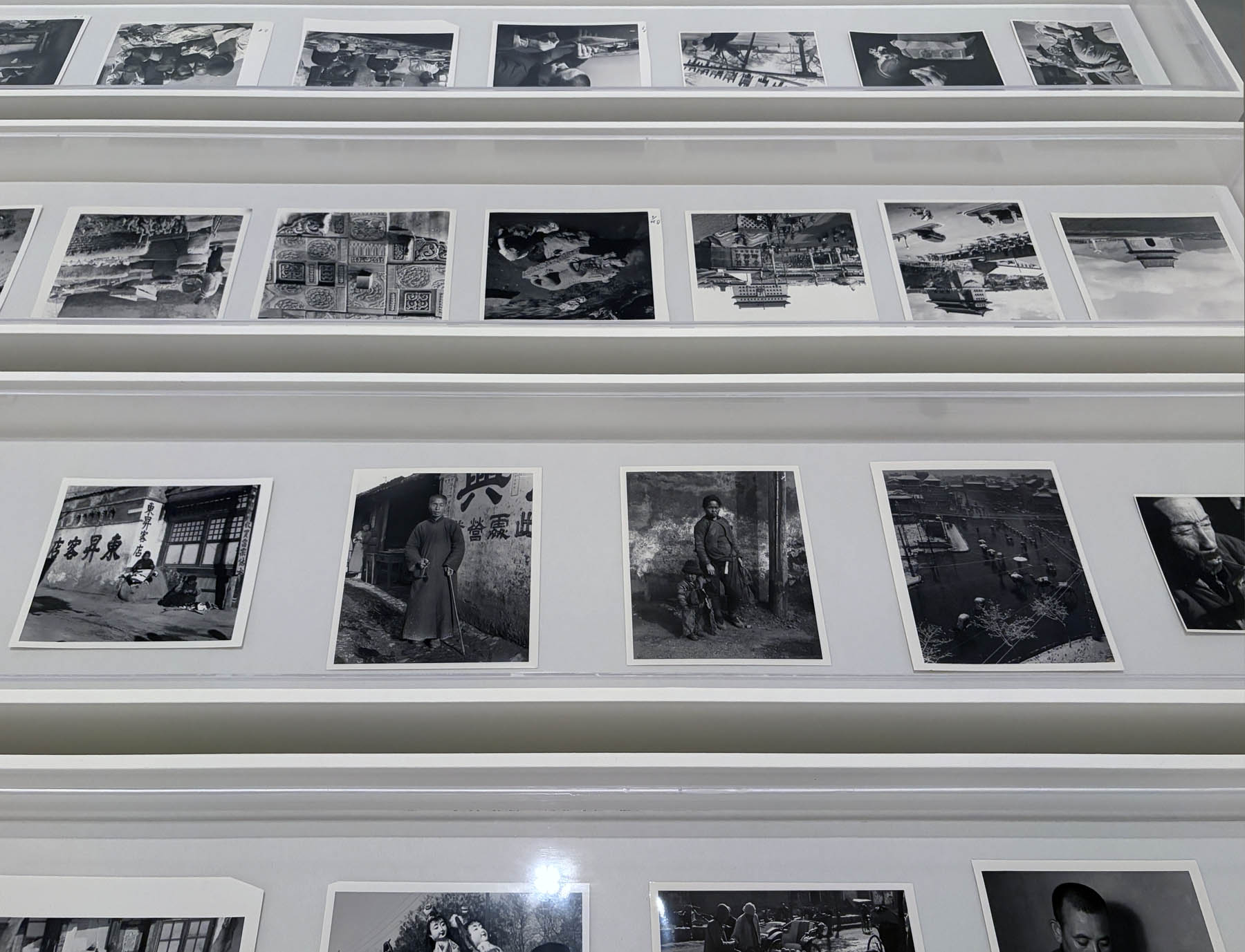
Installation view of the exhibition 'Women Photographers 1900-1975: A Legacy of Light' at NGV International, Melbourne, November 2025 - May 2026 showing in the display cases photographs by Hedda Morrison (Australian born Germany, 1908-1991)


Installation views of the exhibition Women Photographers 1900-1975: A Legacy of Light at NGV International, Melbourne, November 2025 – May 2026 showing in the display cases in the lower two images, photographs by Hedda Morrison (Australian born Germany, 1908-1991)
Photos: Marcus Bunyan


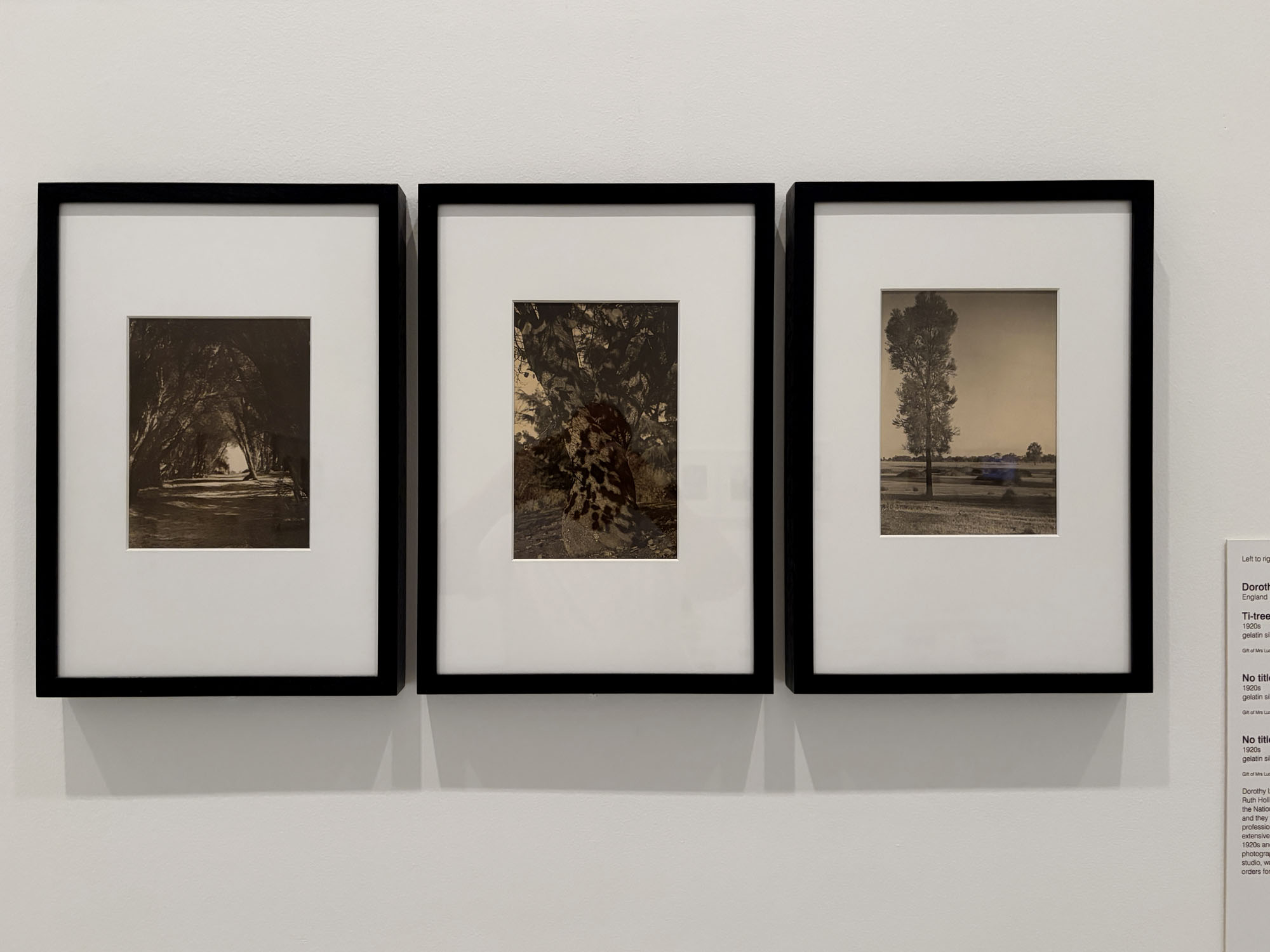
Installation view of the exhibition 'Women Photographers 1900-1975: A Legacy of Light' at NGV International, Melbourne, November 2025 - May 2026 showing three photographs by Dorothy Izard (Australian born England, 1882-1972): 'Ti-trees' (1920s); 'No title (Dappled tree)' (1920s); and 'No title (Tree in paddock)' (1920s)


Installation view of the exhibition Women Photographers 1900-1975: A Legacy of Light at NGV International, Melbourne, November 2025 – May 2026 showing three photographs by Dorothy Izard (Australian born England, 1882-1972): Ti-trees (1920s); No title (Dappled tree) (1920s); and No title (Tree in paddock) (1920s)
Photo: Marcus Bunyan


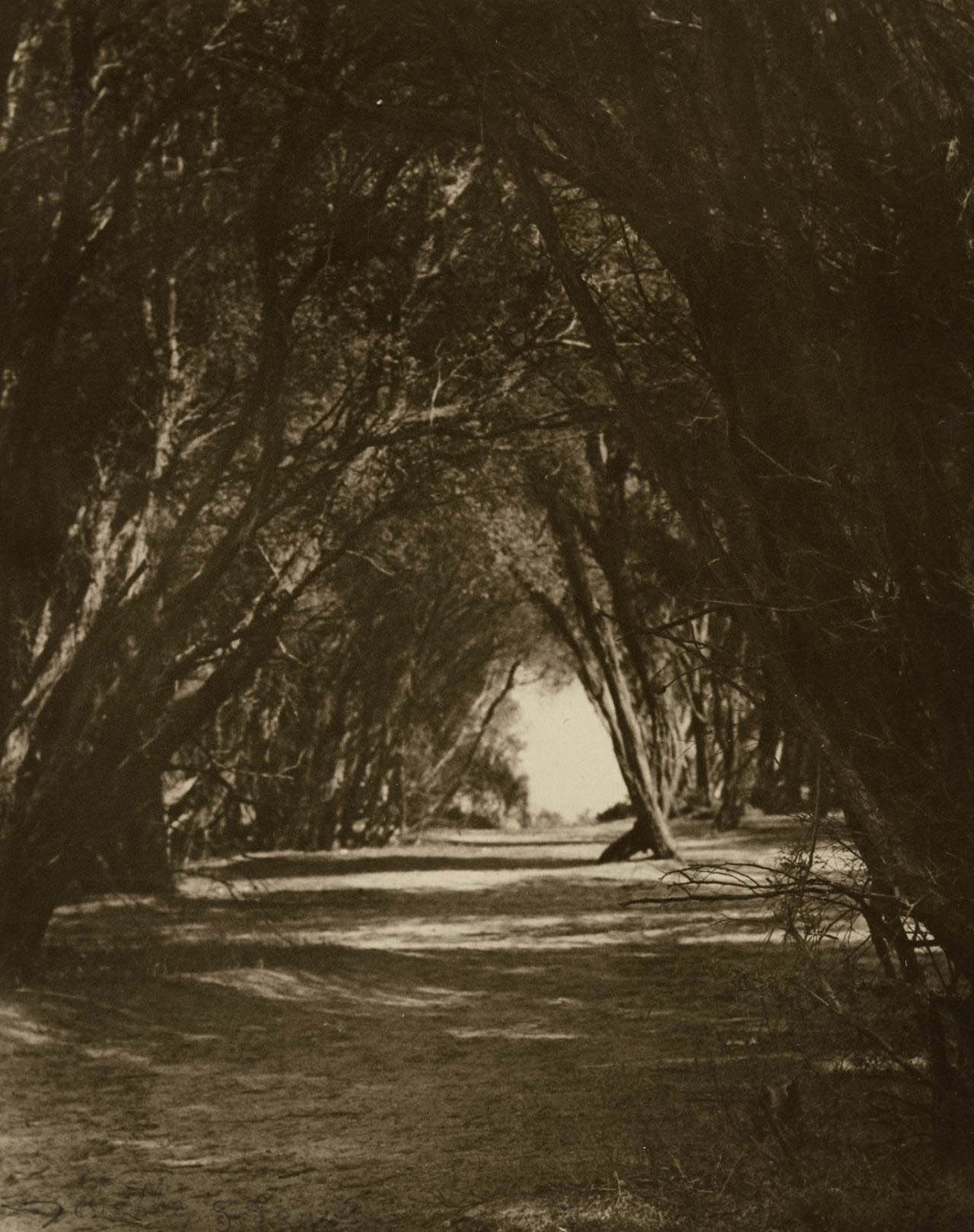
Dorothy Izard (Australian born England, 1882-1972) 'Ti-trees' 1920s


Dorothy Izard (Australian born England, 1882-1972)
Ti-trees
1920s
Gelatin silver photograph
22.8 × 18.4cm (image)
National Gallery of Victoria, Melbourne
Gift of Mrs Lucy Crosbie Morrison, 1992


Dorothy Izard met fellow photographer Ruth Hollick when they were students at the National Gallery of Victoria Art School, and they formed both a romantic and a professional partnership. They travelled extensively around regional Victoria in the 1920s and 1930s. Izard was a landscape photographer and, at Hollick’s home studio, was responsible for printing the orders for Hollick’s photographs.

Wall text from the exhibition


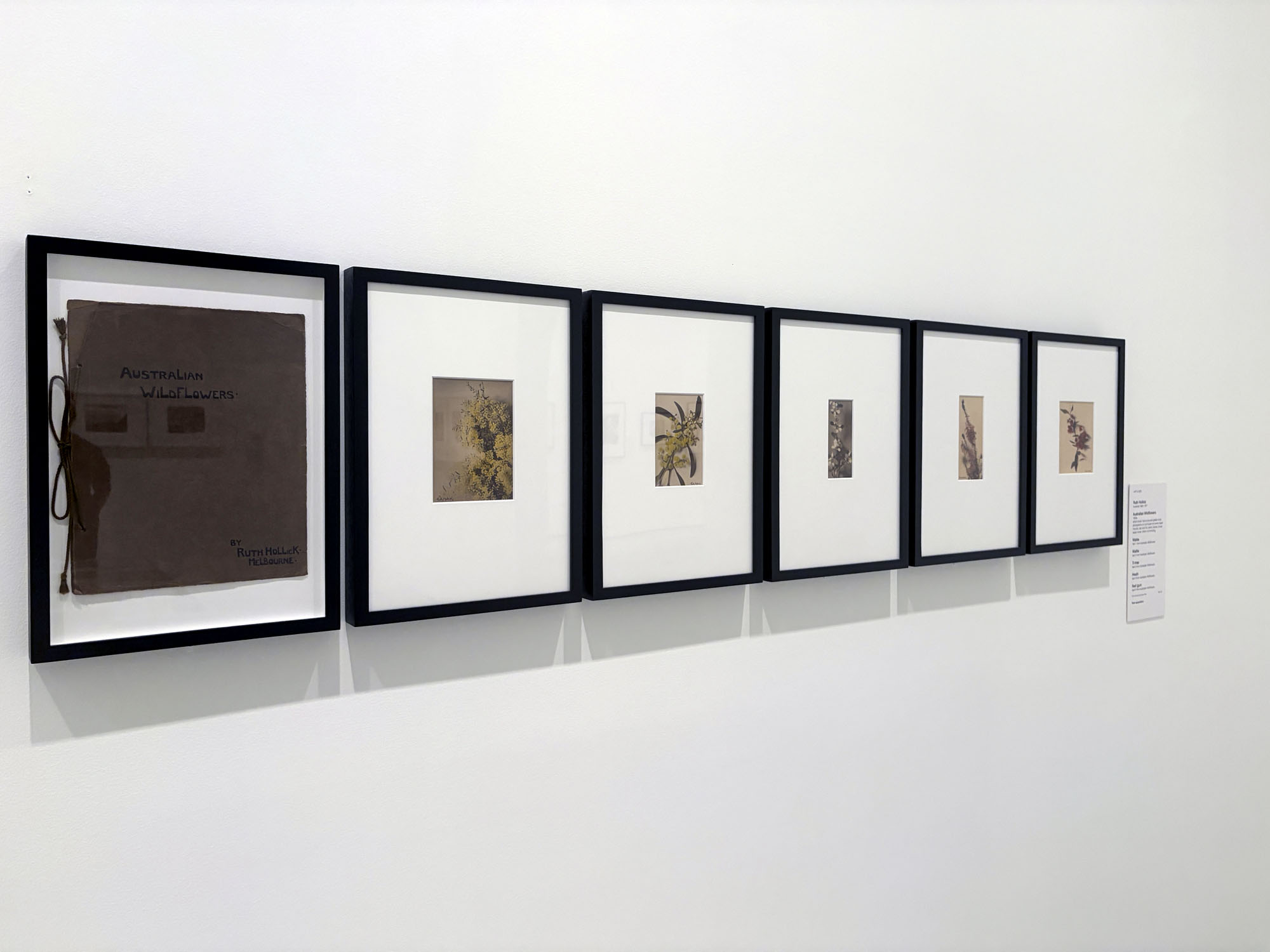
Installation view of the exhibition 'Women Photographers 1900-1975: A Legacy of Light' at NGV International, Melbourne, November 2025 - May 2026 showing  Ruth Hollick's artist book 'Australian flowers' (1950s)


Installation view of the exhibition Women Photographers 1900-1975: A Legacy of Light at NGV International, Melbourne, November 2025 – May 2026 showing Ruth Hollick’s artist book Australian flowers (1950s, below)
Photo: Marcus Bunyan


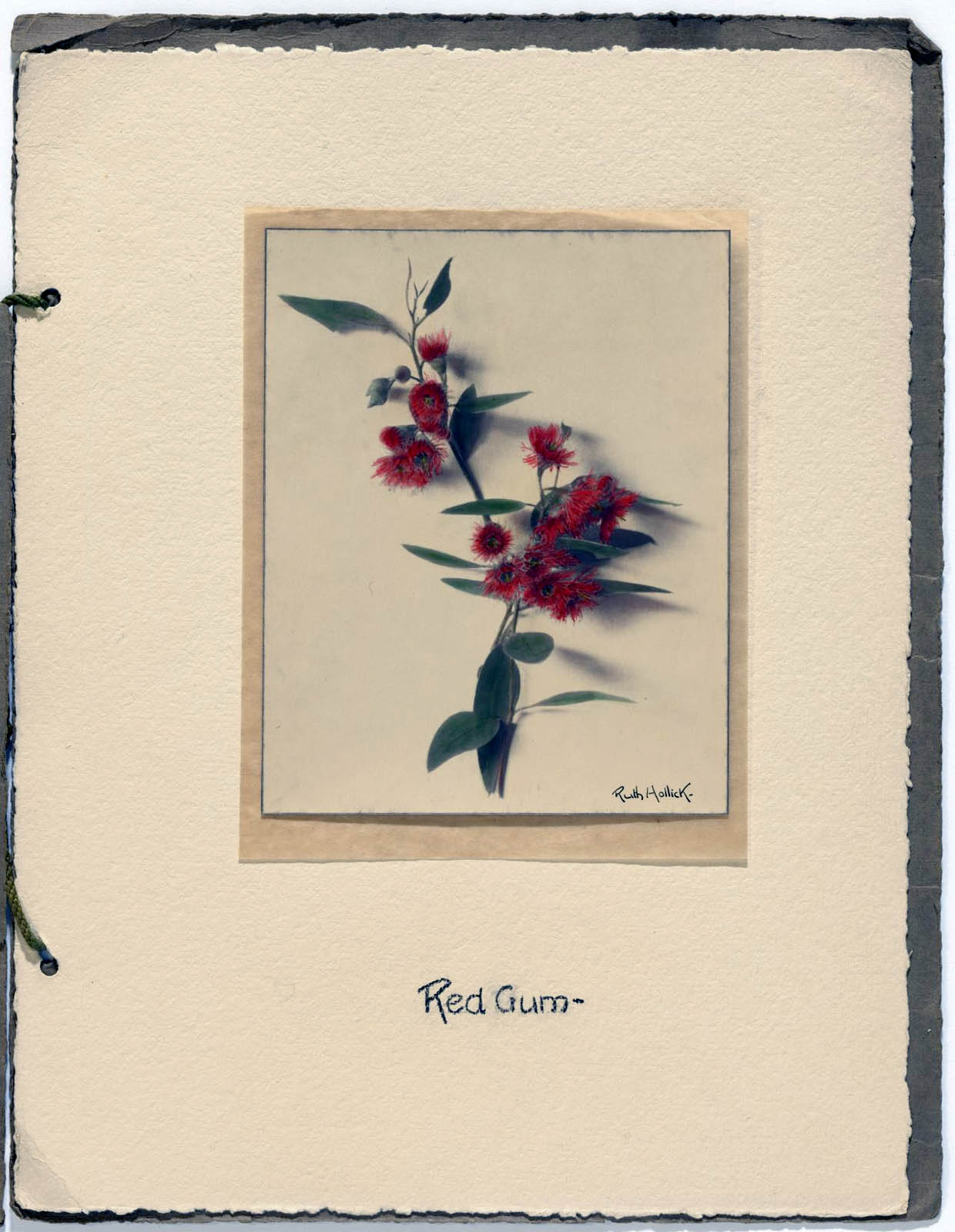
Ruth Hollick (Australian, 1883-1977) 'Australian wildflowers' 1950s


Ruth Hollick (Australian, 1883-1977)
Australian wildflowers
1950s
Artist’s book: hand-coloured gelatin silver photographs on buff paper on brown paper mounts, pen and ink, pencil, (other materials), [5] leaves, brown paper cover, cotton cord binding
33.2 x 25.5cm (page)
34.3 x 26.3 x 1.0cm irreg. (closed)
34.3 x 53.1 x 1.1cm irreg. (open)
National Gallery of Victoria, Melbourne
Gift of Pamela Jane Green, 2021
Public domain


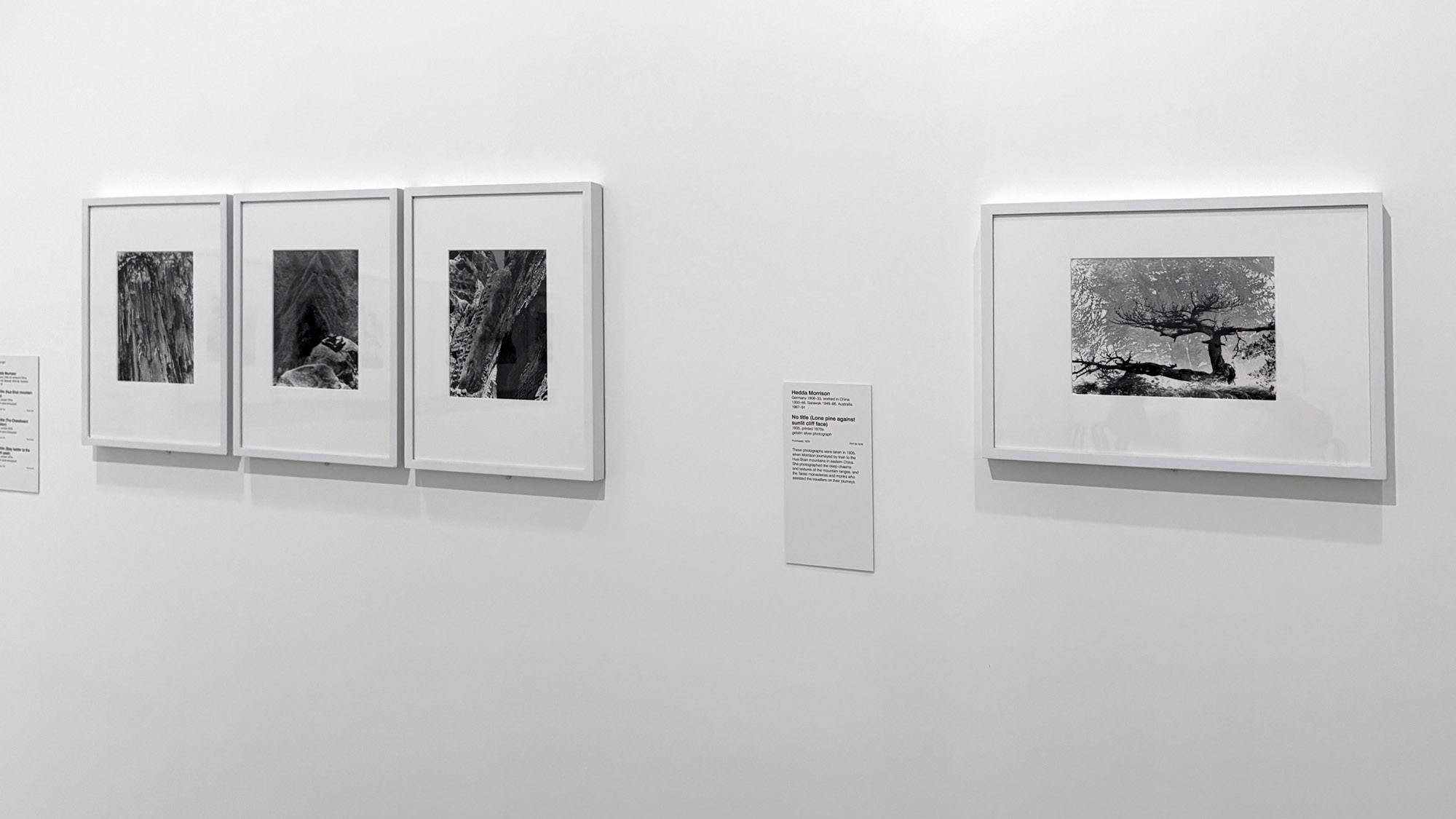
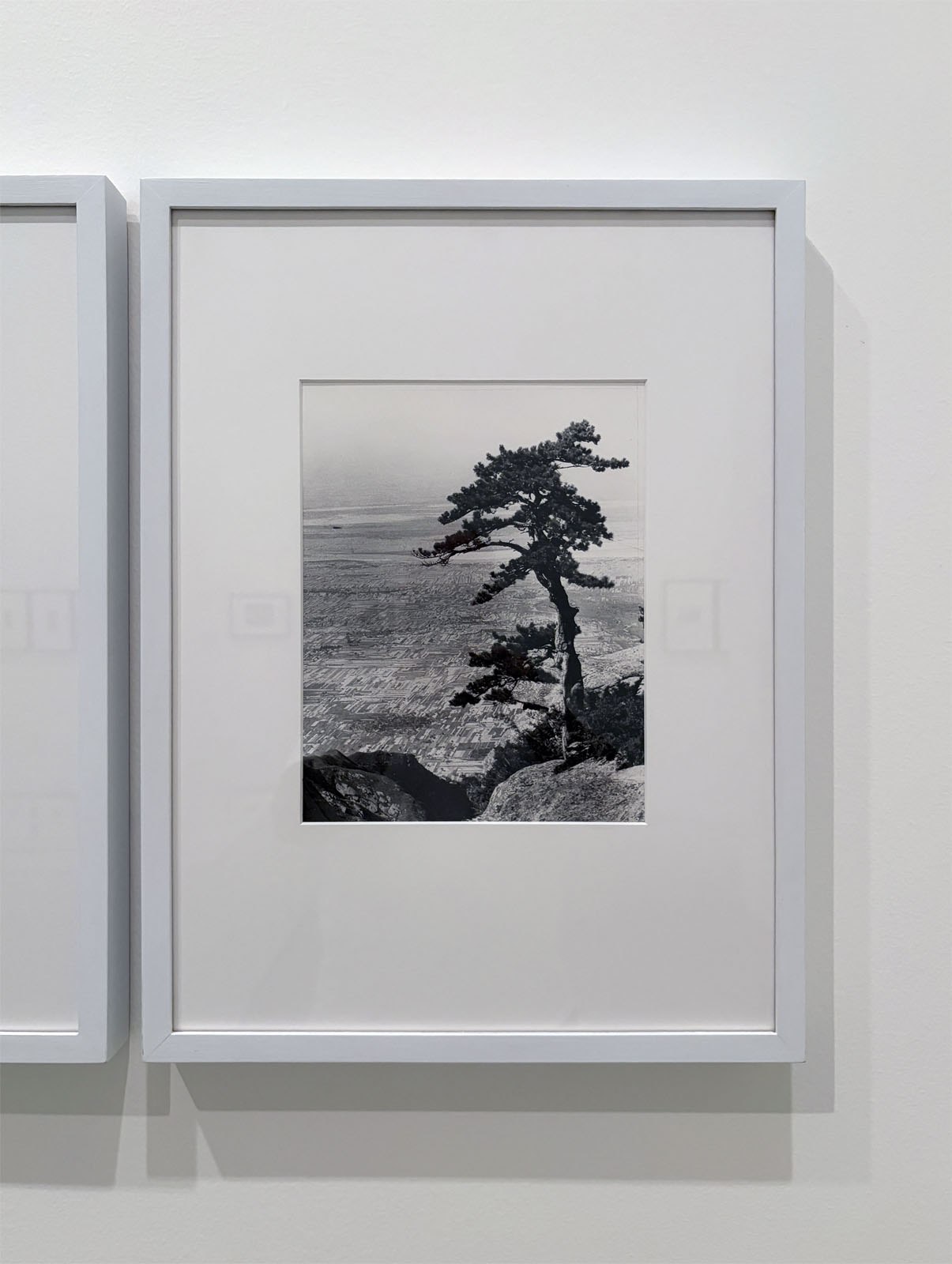
Installation view of the exhibition 'Women Photographers 1900-1975: A Legacy of Light' at NGV International, Melbourne, November 2025 - May 2026 showing from left to right, four photographs by Hedda Morrison (Australian born Germany, 1908-1991): 'No title (Hua Shan mountain face)' (1935, printed 1970s); 'No title (The Chessboard Pavilion)' (1935, printed 1970s); 'No title (Step ladder to the nothingness peak)' (1935, printed 1970s); and 'No title (Lone pine against sunlit cliff face)' (1935, printed 1970s)


Installation view of the exhibition Women Photographers 1900-1975: A Legacy of Light at NGV International, Melbourne, November 2025 – May 2026 showing from left to right, four photographs by Hedda Morrison (Australian born Germany, 1908-1991): No title (Hua Shan mountain face) (1935, printed 1970s); No title (The Chessboard Pavilion) (1935, printed 1970s); No title (Step ladder to the nothingness peak ) (1935, printed 1970s); and No title (Lone pine against sunlit cliff face) (1935 printed 1970s, below)
Photo: Marcus Bunyan


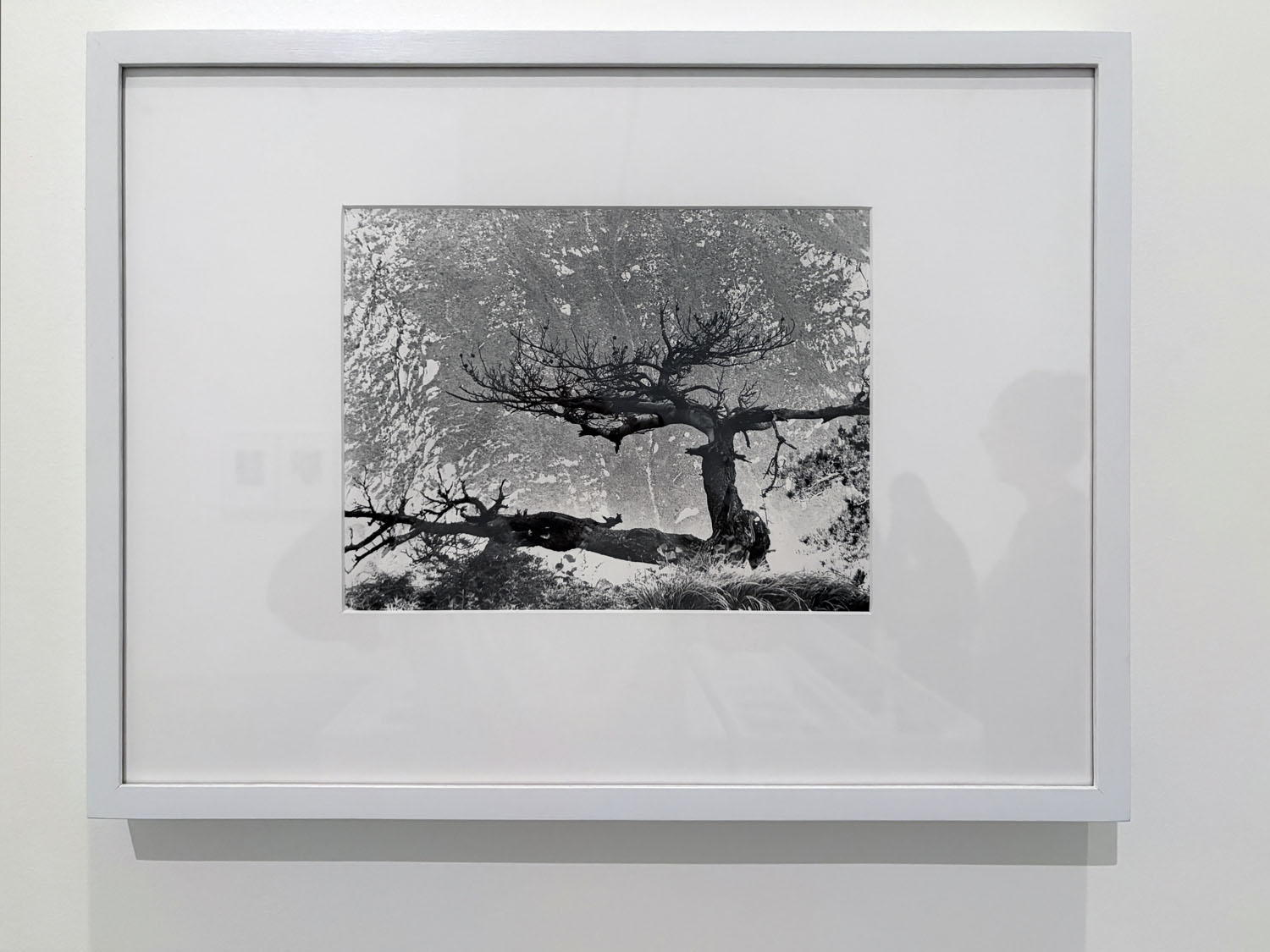
Hedda Morrison (Australian born Germany, 1908-1991) 'No title (Lone pine against sunlit cliff face)' 1935 (installation view)


Hedda Morrison (Australian born Germany, 1908-1991)
No title (Lone pine against sunlit cliff face) (installation view)
1935
Gelatin silver photograph
22.8 x 30.3cm (image)
National Gallery of Victoria, Melbourne
Purchased, 1976
Photo: Marcus Bunyan


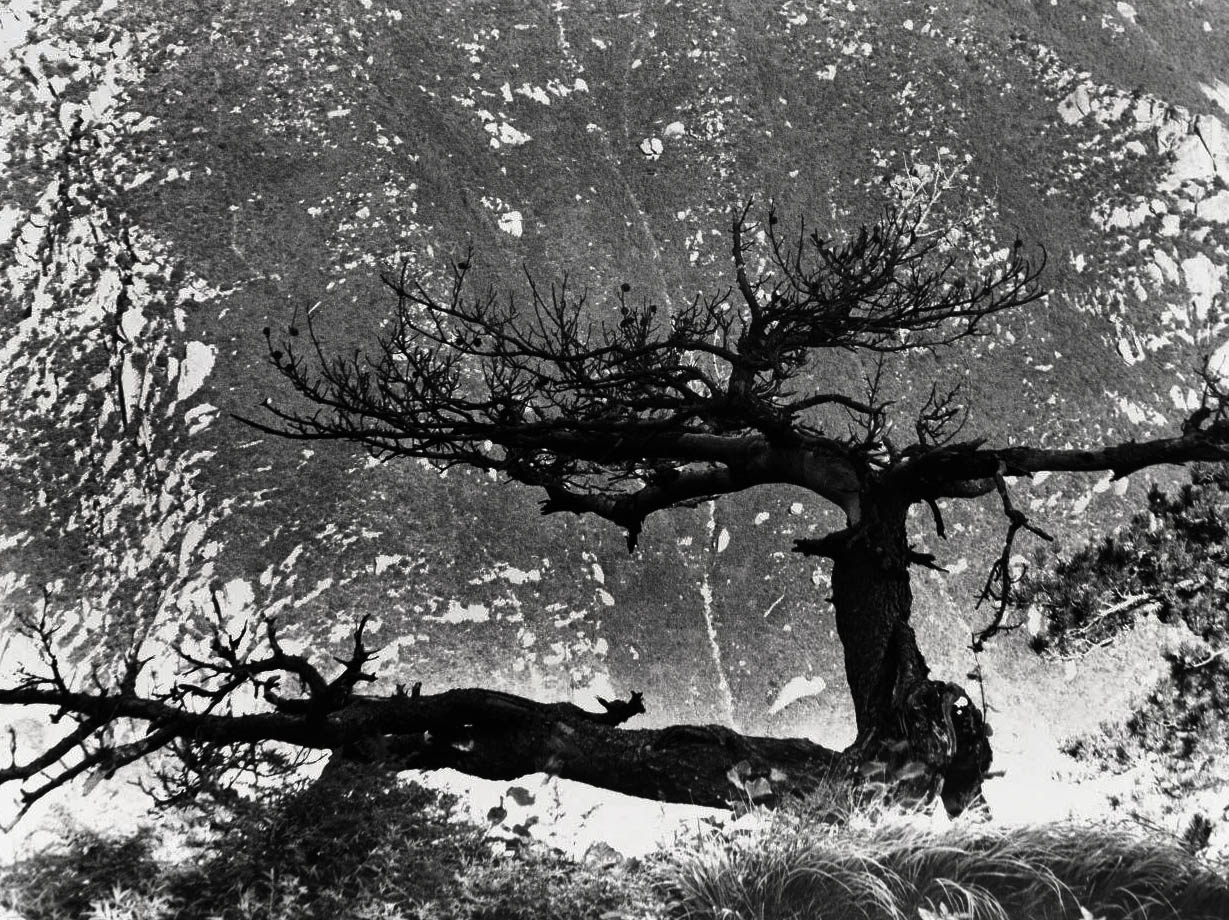
Hedda Morrison (German, 1908-1991) 'No title (Lone pine against sunlit cliff face)' 1935


Hedda Morrison (German, 1908-1991)
No title (Lone pine against sunlit cliff face)
1935
Gelatin silver photograph
22.8 x 30.3cm (image)
National Gallery of Victoria, Melbourne
Purchased, 1976
© Harvard-Yenching Library. Originals held by the Harvard-Yenching Library, Harvard University


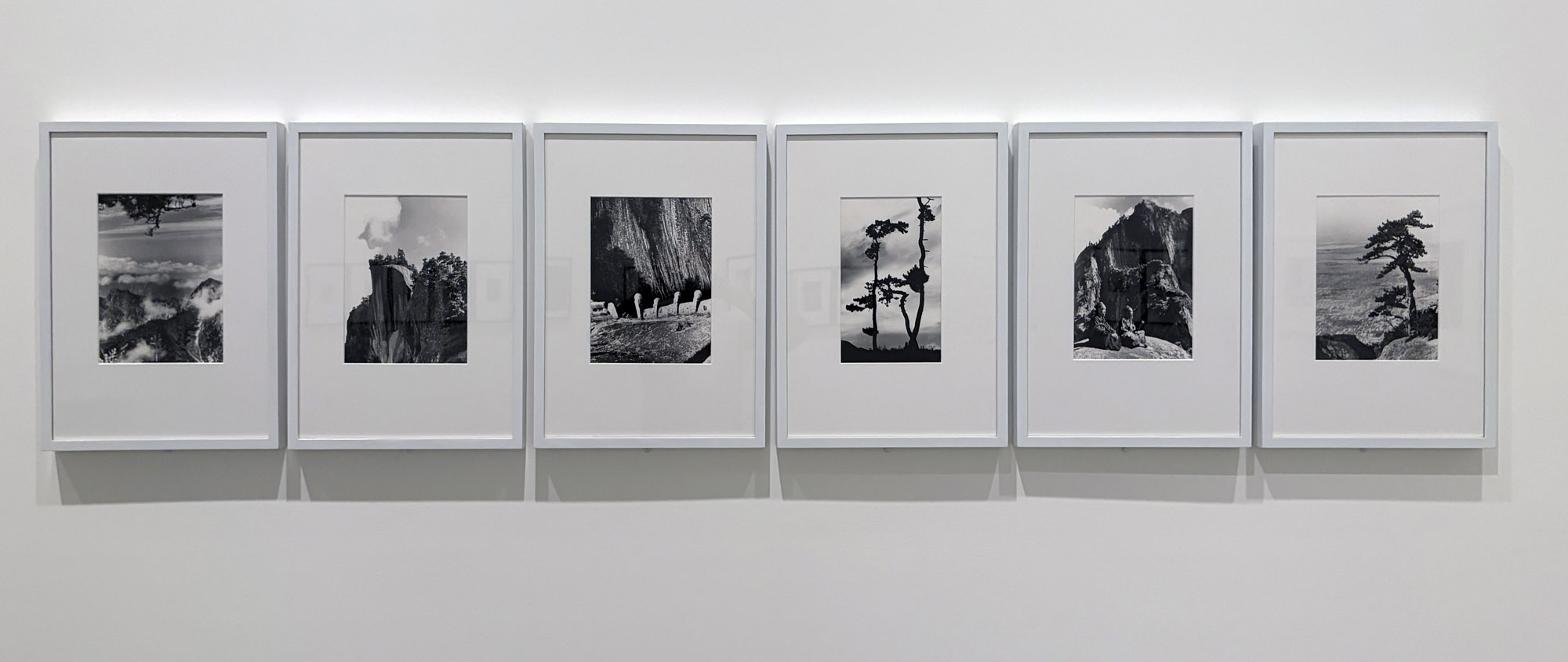
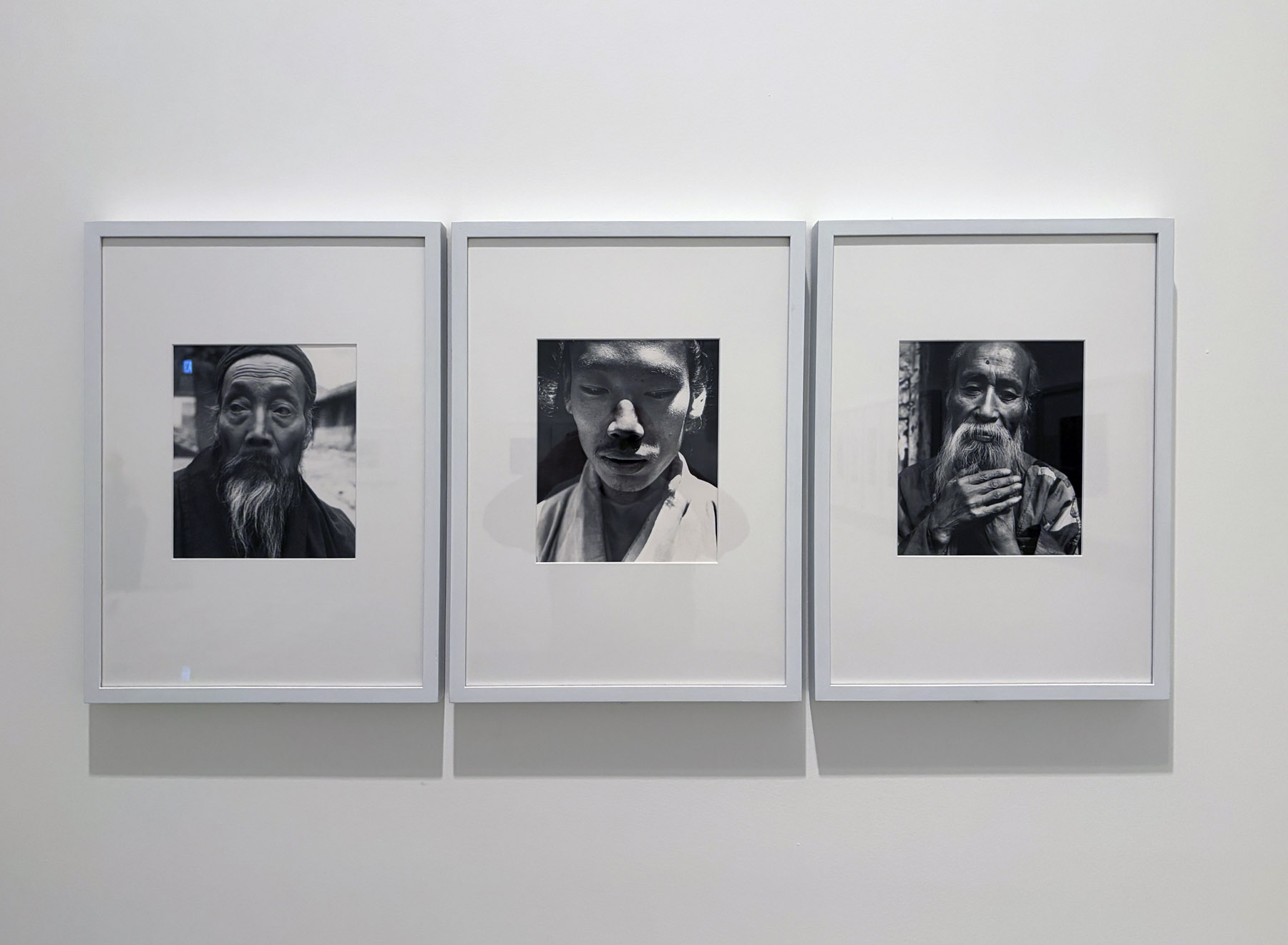
These photographs were taken in 1935, when Morrison journeyed by train to the Hua Shan mountains in eastern China. She photographed the deep chasms and textures of the mountain ranges, and the Taoist monasteries and monks who assisted the travellers on their journeys.

Wall text from the exhibition


Installation view of the exhibition 'Women Photographers 1900-1975: A Legacy of Light' at NGV International, Melbourne, November 2025 - May 2026 showing photographs by Hedda Morrison (Australian born Germany, 1908-1991)


Installation view of the exhibition Women Photographers 1900-1975: A Legacy of Light at NGV International, Melbourne, November 2025 – May 2026 showing photographs by Hedda Morrison (Australian born Germany, 1908-1991)
Photo: Marcus Bunyan


Installation view of the exhibition 'Women Photographers 1900-1975: A Legacy of Light' at NGV International, Melbourne, November 2025 - May 2026 showing from left to right, six photographs by Hedda Morrison: 'No title (Morning clouds)' (1935, printed 1970s); 'No title (Fairy palm cliff)' (1935, printed 1970s); 'No title (The stone balustrade)' (1935, printed 1970s); 'No title (Three gnarled pines)' (1935, printed 1970s); 'No title (Two Taoist priests below the fiery palm cliff)' (1935, printed 1970s); and 'No title (Pine tree above the Yellow River plain)' (1935, printed 1970s)


Installation view of the exhibition Women Photographers 1900-1975: A Legacy of Light at NGV International, Melbourne, November 2025 – May 2026 showing from left to right, six photographs by Hedda Morrison: No title (Morning clouds) (1935, printed 1970s); No title (Fairy palm cliff) (1935, printed 1970s); No title (The stone balustrade) (1935, printed 1970s); No title (Three gnarled pines) (1935, printed 1970s); No title (Two Taoist priests below the fiery palm cliff) (1935, printed 1970s); and No title (Pine tree above the Yellow River plain) (1935, printed 1970s)
Photo: Marcus Bunyan


Hedda Morrison (Australian born Germany, 1908-1991) 'No title (Pine tree above the Yellow River plain)' 1935, printed 1970s (installation view)


Hedda Morrison (Australian born Germany, 1908-1991)
No title (Pine tree above the Yellow River plain) (installation view)
1935, printed 1970s
Gelatin silver photograph
30.3 x 22.7cm (image)
National Gallery of Victoria, Melbourne
Purchased, 1976
Photo: Marcus Bunyan


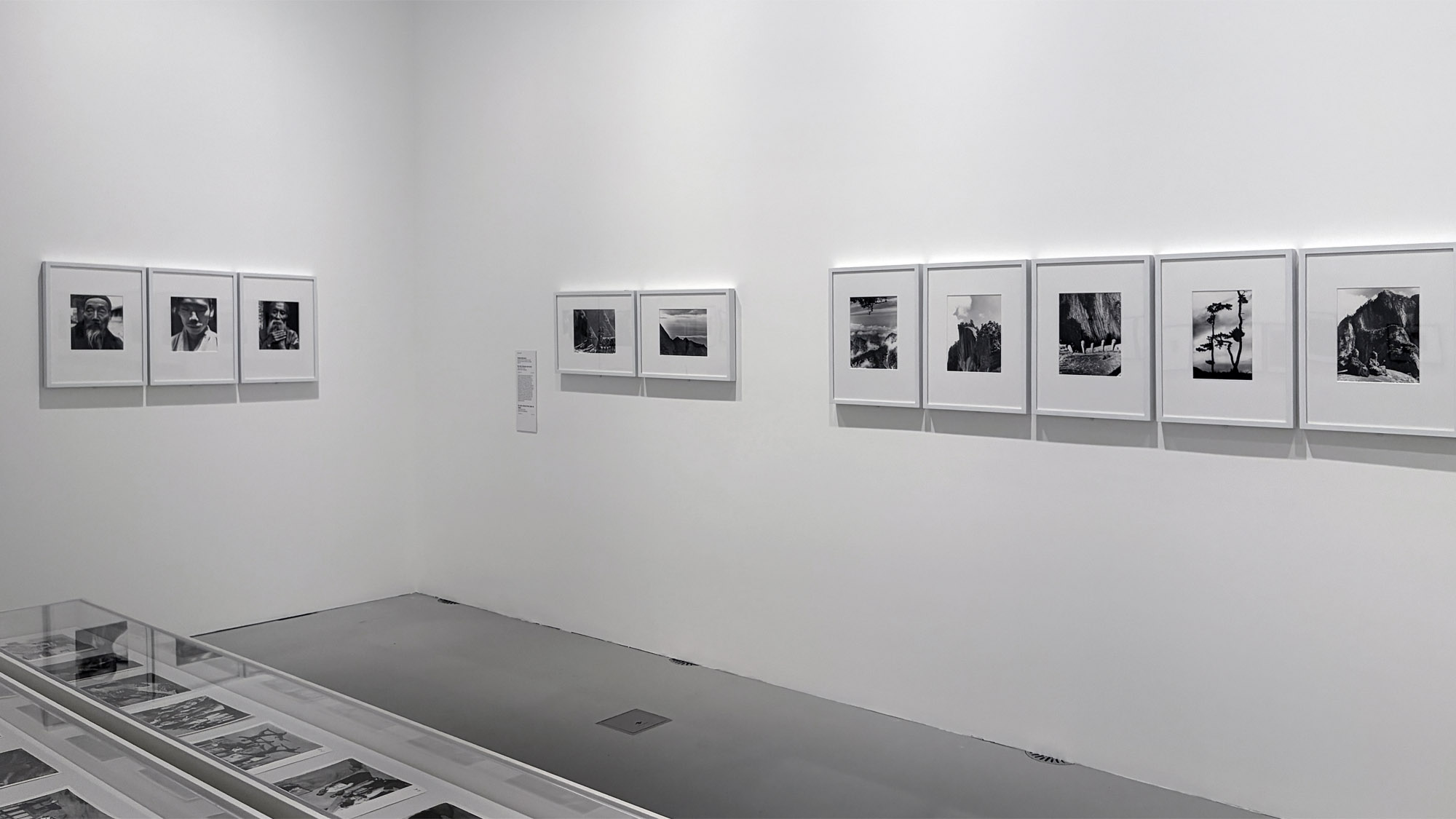
Installation view of the exhibition 'Women Photographers 1900-1975: A Legacy of Light' at NGV International, Melbourne, November 2025 – May 2026 showing from left to right, three photographs by Hedda Morrison: 'No title (Taoist priest)' (1935, printed 1970s); 'No title (Taoist novice)' (1935, printed 1970s); and 'No title (Taoist priest)' (1935, printed 1970s)


Installation view of the exhibition Women Photographers 1900-1975: A Legacy of Light at NGV International, Melbourne, November 2025 – May 2026 showing from left to right, three photographs by Hedda Morrison: No title (Taoist priest) (1935, printed 1970s); No title (Taoist novice) (1935, printed 1970s); and No title (Taoist priest) (1935, printed 1970s)
Photo: Marcus Bunyan


Installation view of the exhibition 'Women Photographers 1900-1975: A Legacy of Light' at NGV International, Melbourne, November 2025 - May 2026


Installation views of the exhibition Women Photographers 1900-1975: A Legacy of Light at NGV International, Melbourne, November 2025 – May 2026
Photos: Marcus Bunyan


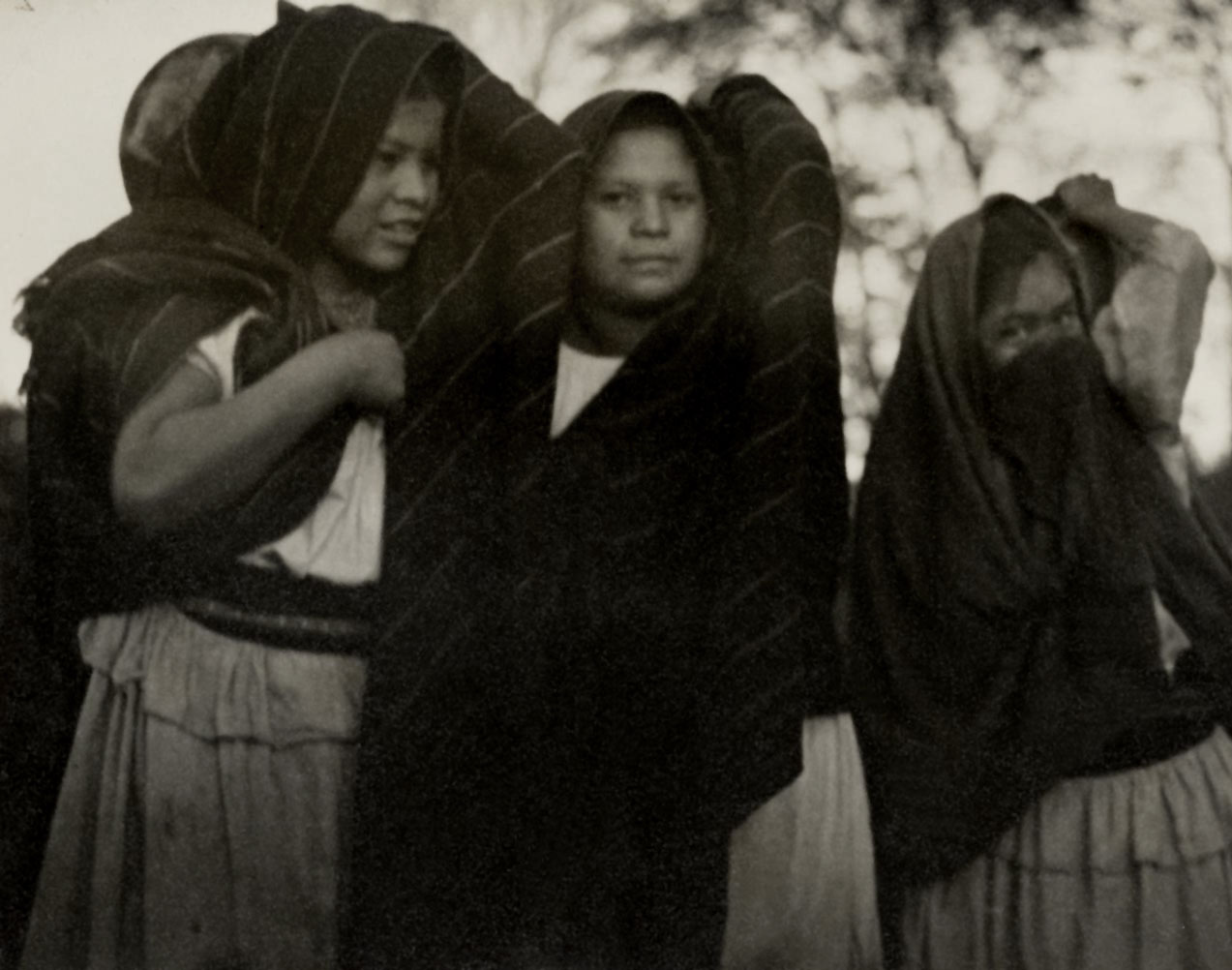
Tina Modotti (Italian, 1896-1942) 'Girls in shawls' 1924-1929


Tina Modotti (Italian, 1896-1942)
Girls in shawls
1924-1929
Gelatin silver photograph
13.2 x 16.9cm (image and sheet)
National Gallery of Victoria, Melbourne
Bowness Family Fund for Photography, 2024


Tina Modotti is known for her socially and politically charged photographs documenting Mexican working life. For Modotti, art, life and politics were inextricably linked. Her photographs show the artist’s commitment to documenting the lives of women and working people. This image is believed to be from a project exploring the popular arts of Mexico, specifically the
shawl-like rebozo, and exemplifies Modotti’s humanist style of documentary photography. It is one of the photographs anthropologist Frances Toor commissioned from Modotti and Edward Weston for the magazine Mexican Folkways, published between 1925 and 1937.

Wall text from the exhibition


Dora Maar (French 1907-1997) 'Vendors laughing behind their charcuterie stall, Barcelona' (Vendeuses et vendeur riant derrière leur étal de charcuterie, Barcelone) 1933


Dora Maar (French 1907-1997)
Vendors laughing behind their charcuterie stall, Barcelona (Vendeuses et vendeur riant derrière leur étal de charcuterie, Barcelone)
1933
Gelatin silver photograph
27.2 x 24.0cm (image)
30.3 x 24.0cm (sheet)
National Gallery of Victoria, Melbourne
Gift of Krystyna Campbell-Pretty AM and Family through the Australian Government’s Cultural Gifts Program, 2021
Public domain


In 1933 Dora Maar travelled to Spain, where she documented the extreme poverty of the country’s cities through people she met on the streets. Aligning with her left-wing politics and opposition to fascism, her photographs honour working-class citizens rather than buildings or monuments. Maar was fascinated by the characters she encountered in La Boqueria, the market in the heart of Barcelona. In this image, she captures a joyful moment as the women vendors playfully turn away from her, hiding their gaze, while a man smiles directly into Maar’s lens.

Wall text from the exhibition


The Document

The primary aim of social documentary photography is to draw attention to social issues, often to promote social or political change. This style of photography blossomed during the tumultuous period of the 1930s, when photographers were commissioned by the United States government to document the effects of the Great Depression. The increased popularity of illustrated mass media such as newspapers and magazines also allowed for the broad dissemination of social documentary images and texts.

The ability of social documentary photography to present a purely objective representation of people or places continues to be fertile ground for debate today.


Installation view of the exhibition 'Women Photographers 1900-1975: A Legacy of Light' at NGV International, Melbourne, November 2025 - May 2026 showing Farm Security Administration photographs by Dorothea Lange
Installation view of the exhibition 'Women Photographers 1900-1975: A Legacy of Light' at NGV International, Melbourne, November 2025 - May 2026


Installation views of the exhibition Women Photographers 1900-1975: A Legacy of Light at NGV International, Melbourne, November 2025 – May 2026 showing Farm Security Administration photographs by Dorothea Lange
Photos: Marcus Bunyan


Installation view of the exhibition 'Women Photographers 1900-1975: A Legacy of Light' at NGV International, Melbourne, November 2025 - May 2026 showing clockwise from bottom left, four photographs by Dorothea Lange: 'Drought-stricken farmers on the shady side of town street while their crops burn up in the fields, Sallisaw, Oklahoma' (1936 printed c. 1975); 'Drought refugees from Oklahoma, Blythe, California' (1936, printed c. 1975); 'Real Estate sign along highway, Riverside County, California' (1937, printed c. 1975); and 'Child living in Oklahoma City, Shacktown' (1936 printed c. 1975)


Installation view of the exhibition Women Photographers 1900-1975: A Legacy of Light at NGV International, Melbourne, November 2025 – May 2026 showing clockwise from bottom left, four photographs by Dorothea Lange: Drought-stricken farmers on the shady side of town street while their crops burn up in the fields, Sallisaw, Oklahoma (1936 printed c. 1975, below); Drought refugees from Oklahoma, Blythe, California (1936, printed c. 1975); Real Estate sign along highway, Riverside County, California (1937, printed c. 1975); and Child living in Oklahoma City, Shacktown (1936 printed c. 1975, below)
Photo: Marcus Bunyan


Dorothea Lange (American, 1895-1965) 'Drought-stricken farmers on the shady side of town street while their crops burn up in the fields, Sallisaw, Oklahoma' 1936, printed c. 1975


Dorothea Lange (American, 1895-1965)
Drought-stricken farmers on the shady side of town street while their crops burn up in the fields, Sallisaw, Oklahoma
1936, printed c. 1975
Gelatin silver photograph
26.4 x 25.4cm (image)
28.0 x 35.4cm (sheet)
National Gallery of Victoria, Melbourne
Purchased, 1975
Public domain


Dorothea Lange (American, 1895-1965) 'Child living in Oklahoma City, Shacktown' 1936, printed c. 1975


Dorothea Lange (American, 1895-1965)
Child living in Oklahoma City, Shacktown
1936, printed c. 1975
Gelatin silver photograph
26.9 x 25.5cm (image)
28.0 x 35.4cm (sheet)
National Gallery of Victoria, Melbourne
Purchased, 1975
Public domain


During the Great Depression, many migrants travelling in search of economic opportunity were forced to create temporary camps along roadsides. For Dorothea Lange, who photographed many such experiences over several years, images like this one were part of a greater project to spark public awareness of the difficulties people were facing. As Lange later said, ‘I had begun to talk to the people I photographed … In the migrant camps, there were always talkers. It gave us a chance to meet on common ground.’

Wall text from the exhibition


In Focus: Farm Security Administration Project

The Farm Security Administration (FSA) was established in 1937 as part of United States President Franklin D. Roosevelt’s New Deal economic reforms, which provided relief to farmers left impoverished by the hardships of the Great Depression. Led by Roy Stryker, the FSA’s photography program was to be one of the most influential social documentary projects ever developed. Many images were reproduced in newspapers and periodicals to show the harsh realities of life for those living in poverty, with the aim of encouraging public support for the government’s economic policies.

The program ran as part of several government agencies, including the Resettlement Administration (1935-37), then the Farm Security Administration (1937-42) and the Office of War Information (1942-44). Stryker hired a range of photographers for the project and, despite their being given comparable briefs, the unique eye of each photographer is apparent in the over 175,000 pictures produced by the project.

As well as forming a comprehensive pictorial record of American life from 1935 to 1944, the FSA photography program generated some of the most recognisable documentary photographs of the twentieth century, including images by women such as Dorothea Lange, Marion Post Wolcott and Marjory Collins.


Dorothea Lange (American, 1895-1965) 'Woman of the high plains, near Childress, Texas' 1938, printed c. 1975 (installation view)


Dorothea Lange (American, 1895-1965)
Woman of the high plains, near Childress, Texas (installation view)
1938, printed c. 1975
Gelatin silver photograph
49.4 x 39.3cm (image)
50.5 x 40.6cm (sheet)
National Gallery of Victoria, Melbourne
Purchased, 1975
Public domain


Dorothea Lange (American, 1895-1965) 'Woman of the High Plains, Texas Panhandle' June 1938, printed c. 1975


Dorothea Lange (American, 1895-1965)
Woman of the high plains, near Childress, Texas
1938, printed c. 1975
Gelatin silver photograph
49.4 x 39.3cm (image)
50.5 x 40.6cm (sheet)
National Gallery of Victoria, Melbourne
Purchased, 1975
Public domain


‘We’ve had no work since March. The worst thing we did was when we sold the car, but we had to sell it to eat, and now we can’t get away from here … This county’s a hard county. They won’t help bury you here. If you die, you’re dead, that’s all.’

~ The subject of this photograph, Nettie Featherston, to Dorothea Lange

Wall text from the exhibition


Dorothea Lange (United States 1895-1965) 'Towards Los Angeles, California' 1936, printed c. 1975


Dorothea Lange (American, 1895-1965)
Towards Los Angeles, California
1936, printed c. 1975
Gelatin silver photograph
39.6 x 39.1cm (image)
40.8 x 50.5cm (sheet)
National Gallery of Victoria, Melbourne
Purchased, 1975


During the Great Depression, the Great Plains of North America became known as the Dust Bowl. A severe drought turned the soil to dust, leading to the migration of thousands of small-scale farmers who could no longer work the land. Dorothea Lange made many road trips to document the plight of migrants heading west in search of work and opportunities. Many of Lange’s photographs, such as this one, show workers travelling in difficult conditions, on foot and by car. This photograph was also used as the basis for a scene in the 1939 film Of Mice and Men, based on John Steinbeck’s story of two migrant ranch workers.

Wall text from the exhibition


Installation view of the exhibition 'Women Photographers 1900-1975: A Legacy of Light' at NGV International, Melbourne, November 2025 - May 2026 showing from top to bottom, two photographs by Dorothea Lange: 'Plantation Overseer, Mississippi Delta, near Clarksdale, Mississippi' (1936, printed c. 1975) and 'Born a slave, resettled after the Civil War, Carrizo Springs, Texas' (1936, printed c. 1975)


Installation view of the exhibition Women Photographers 1900-1975: A Legacy of Light at NGV International, Melbourne, November 2025 – May 2026 showing from top to bottom, two photographs by Dorothea Lange: Plantation Overseer, Mississippi Delta, near Clarksdale, Mississippi (1936, printed c. 1975) and Born a slave, resettled after the Civil War, Carrizo Springs, Texas (1936 printed c. 1975, below)
Photo: Marcus Bunyan


Dorothea Lange (American, 1895-1965) 'Born a slave, resettled after the Civil War, Carrizo Springs, Texas' 1936, printed c. 1975


Dorothea Lange (American, 1895-1965)
Born a slave, resettled after the Civil War, Carrizo Springs, Texas
1936, printed c. 1975
Gelatin silver photograph
26.5 x 25.4cm (image)
28.0 x 35.4cm (sheet)
National Gallery of Victoria, Melbourne
Purchased, 1975
Public domain


Dorothea Lange witnessed racial segregation in the Southern states and often photographed individuals affected by the resulting social and economic inequalities. This work is also known by an alternate title: ‘Bob Lemmons, Carrizo Springs, Texas. Born a slave about 1850, south of San Antonio. Came to Carrizo Springs during the Civil War with white cattlemen seeking new range. In 1865, with his master was one of the first settlers. Knew Billy the Kid, King Fisher, and other noted bad men of the border.’

Wall text from the exhibition


Marion Post Wolcott (American, 1910-1990) 'Shenandoah Valley, Virginia' 1941, printed c. 1975 (installation view)


Marion Post Wolcott (American, 1910-1990)
Shenandoah Valley, Virginia (installation view)
1941, printed c. 1975
Gelatin silver photograph
25.6 x 34.1cm (image)
28.0 x 35.4cm (sheet)
National Gallery of Victoria, Melbourne
Purchased, 1975
Public domain
Photo: Marcus Bunyan


Marion Post Wolcott (American, 1910-1990) 'Shenandoah Valley, Virginia' 1941, printed c. 1975


Marion Post Wolcott (American, 1910-1990)
Shenandoah Valley, Virginia
1941, printed c. 1975
Gelatin silver photograph
25.6 x 34.1cm (image)
28.0 x 35.4cm (sheet)
National Gallery of Victoria, Melbourne
Purchased, 1975
Public domain


Marion Post Wolcott (American, 1910-1990) 'One of the judges at the horse races, Warrenton, Virginia' 1941, printed c. 1975 (installation view)


Marion Post Wolcott (American, 1910-1990)
One of the judges at the horse races, Warrenton, Virginia (installation view)
1941, printed c. 1975
Gelatin silver photograph
39.6 x 39.1cm (image)
40.8 x 50.5cm (sheet)
National Gallery of Victoria, Melbourne
Purchased, 1975
Public domain
Photo: Marcus Bunyan


Marion Post Wolcott (American, 1910-1990) 'Transportation for hep cats Louisville, Kentucky' 1940, printed c. 1975 (installation view)


Marion Post Wolcott (American, 1910-1990)
Transportation for hep cats Louisville, Kentucky (installation view)
1940, printed c. 1975
Gelatin silver photograph
25.7 x 34.1cm (image)
36.1 x 44.6cm (sheet)
National Gallery of Victoria, Melbourne
Purchased, 1975
Public domain
Photo: Marcus Bunyan


Marion Post Wolcott (American, 1910-1990) 'Transportation for hep cats Louisville, Kentucky' 1940, printed c. 1975


Marion Post Wolcott (American, 1910-1990)
Transportation for hep cats Louisville, Kentucky
1940, printed c. 1975
Gelatin silver photograph
25.7 x 34.1cm (image)
36.1 x 44.6cm (sheet)
National Gallery of Victoria, Melbourne
Purchased, 1975
Public domain


Installation view of the exhibition 'Women Photographers 1900-1975: A Legacy of Light' at NGV International, Melbourne, November 2025 - May 2026 showing from third left to right, three photographs by Marion Post Wolcott: 'Near Wadesboro, North Carolina' (1938, printed c. 1975); 'Baptismal service, Morehead, Kentucky' (1940, printed c. 1975); and 'Jitterbugging in a juke joint on Saturday night, Clarksdale, Mississippi' (1939, printed c. 1975)


Installation view of the exhibition Women Photographers 1900-1975: A Legacy of Light at NGV International, Melbourne, November 2025 – May 2026 showing from third left to right, three photographs by Marion Post Wolcott: Near Wadesboro, North Carolina (1938 printed c. 1975, below); Baptismal service, Morehead, Kentucky (1940 printed c. 1975, below); and Jitterbugging in a juke joint on Saturday night, Clarksdale, Mississippi (1939 printed c. 1975, below)
Photo: Marcus Bunyan


Marion Post Wolcott (American, 1910-1990) 'Near Wadesboro, North Carolina' 1938, printed c. 1975 (installation view)


Marion Post Wolcott (American, 1910-1990)
Near Wadesboro, North Carolina (installation view)
1938, printed c. 1975
Gelatin silver photograph
26.4 × 26.5cm (image)
28.0 × 35.3cm (sheet)
National Gallery of Victoria, Melbourne
Purchased, 1975
Public domain
Photo: Marcus Bunyan


The people in this photograph are the children of tenant farmers. The older child holds the hand of the younger, whose legs are bowed likely due to rickets, a medical condition caused by malnourishment. This is a vivid image that captures both the intimacy between children and the effects of environmental and economic devastation.

Wall text from the exhibition


Marion Post Wolcott (American, 1910-1990) 'Haircutting in front of plantation store after being paid off on Saturday, Mileston Plantation, Mississippi Delta' 1939, printed c. 1939 (installation view)


Marion Post Wolcott (American, 1910-1990)
Haircutting in front of plantation store after being paid off on Saturday, Mileston Plantation, Mississippi Delta (installation view)
1939, printed c. 1939
Gelatin silver photograph
27.0 x 34.6cm (image and sheet)
National Gallery of Victoria, Melbourne
Purchased, 1980
Photo: Marcus Bunyan


Marion Post Wolcott (American, 1910–1990) '[Haircutting in Front of General Store and Post Office on Marcella Plantation, Mileston, Mississippi]' 1939


Marion Post Wolcott (American, 1910-1990)
Haircutting in front of plantation store after being paid off on Saturday, Mileston Plantation, Mississippi Delta
1939, printed c. 1939
Gelatin silver photograph
27.0 x 34.6cm (image and sheet)
National Gallery of Victoria, Melbourne
Purchased, 1980


Marion Post Wolcott (American, 1910-1990) 'Baptismal service, Morehead, Kentucky' 1940, printed c. 1975


Marion Post Wolcott (American, 1910-1990)
Baptismal service, Morehead, Kentucky
1940, printed c. 1975
Gelatin silver photograph
36.3 X 49.3cm (image) 40.7 X 50.5cm (sheet)
National Gallery of Victoria, Melbourne
Purchased, 1975


Marion Post Wolcott (American, 1910-1990)
Jitterbugging in a juke joint on Saturday night, Clarksdale, Mississippi
1939, printed c. 1975
gelatin silver photograph
36.7 x 49.3cm (image) 40.7 x 50.5cm (sheet)
National Gallery of Victoria, Melbourne
Purchased, 1975


Marion Post Wolcott had a keen sense of social justice, having lived in Austria in the early 1930s, where she witnessed firsthand the rise of Nazism. On her return home to New York in 1933, she was determined to use her photography to raise awareness of social inequalities. While working for the Farm Security Administration (FSA) in the segregated American South, Wolcott witnessed the bleak economic situation endured by African Americans, which was exacerbated by the Great Depression. With an ‘open eye’, Wolcott captured both the positive effects of the FSA and the difficult realities of daily life. Her candid images of African American communities in the South – such as this joyful shot of people dancing – countered the dominant images of Black lives as they were commonly represented in mainstream media.

Wall text from the exhibition


Installation view of the exhibition 'Women Photographers 1900-1975: A Legacy of Light' at NGV International, Melbourne, November 2025 - May 2026 showing three photographs by Australian photographer Heather George


Installation view of the exhibition Women Photographers 1900-1975: A Legacy of Light at NGV International, Melbourne, November 2025 – May 2026 showing three photographs by Heather George (Australia, 1907-1983): Rawhide bed, Wave Hill Station (1952, printed 1978); Stockyards, Wave Hill Station, Northern Territory (1952, printed 1978); and Stockyards, stockmen in distance. Wave Hill Station, Northern Territory (1952, printed 1978)
Photo: Marcus Bunyan


Heather George (Australia, 1907-1983) 'Stockyards, Wave Hill Station, Northern Territory' 1952, printed 1978


Heather George (Australia, 1907-1983)
Stockyards, Wave Hill Station, Northern Territory
1952, printed 1978
From The Northern Territory series (1952)
Gelatin silver photograph
24.0 x 28.8cm (image)
National Gallery of Victoria, Melbourne
Purchased, 1980
Public domain


In the 1950s and 1960s Heather George worked as a freelance photographer and photojournalist. In 1952 Walkabout magazine published a series of photographs George made in the Northern Territory outback, including images of Wave Hill Station, a vast pastoral lease on the lands of the Gurindji people. Fourteen years later, it was to go down in history as the location of a turning point in the recognition of land rights for Australia’s First Nations peoples.

Wall text from the exhibition


Consuelo Kanaga (American, 1894-1978) 'She is a Tree of Life' 1950


Consuelo Kanaga (American, 1894-1978)
She is a tree of life to them
1950
Gelatin silver photograph
32.8 x 24.1cm (image and sheet)
National Gallery of Victoria, Melbourne
Bowness Family Fund for Photography, 2024
© Consuelo Kanaga


Consuelo Kanaga worked at the San Francisco Chronicle from 1915, later joining the California Camera Club, where she met photographers Imogen Cunningham, Dorothea Lange and Edward Weston. Kanaga’s image-making was informed by her involvement in liberal politics and the nascent civil rights
movement. In 1950 she stayed in an artists’ colony in Maitland, Florida, and documented the lives of Black field workers living there. This refined portrait of a mother with her children became well known around the world after its inclusion in the touring exhibition The Family of Man, curated by pioneering photographer Edward Steichen.

Wall text from the exhibition


Ruth Orkin (American, 1921-1985) 'American girl in Italy, Florence' 1951, printed 1980 (installation view)


Ruth Orkin (American, 1921-1985)
American girl in Italy, Florence (installation view)
1951, printed 1980
Gelatin silver photograph
30.2 x 46.9cm (image)
40.3 x 50.6cm (sheet)
National Gallery of Victoria, Melbourne
Gift of Krystyna Campbell-Pretty AM and Family through the Australian Government’s Cultural Gifts Program, 2022
Photo: Marcus Bunyan


In 1950 freelance photographer Ruth Orkin was included in the Young Photographers exhibition at the Museum of Modern Art, New York, and in 1951 Life magazine sent her on assignment to Israel. Before returning to America, she spent time in Italy, where she met a young American painter, Jinx Allen. The women collaborated on a series of photographs commissioned from Orkin by Cosmopolitan magazine for an article titled ‘Don’t Be Afraid to Travel Alone’. Standing in a Florence intersection, Orkin captured her friend as she manoeuvred through a crowd of men. The resulting image is reminiscent of a movie still – Orkin would go on to co-direct two feature films with her husband in the 1950s.

Wall text from the exhibition


Installation view of the exhibition 'Women Photographers 1900-1975: A Legacy of Light' at NGV International, Melbourne, November 2025 - May 2026 showing from left to right, Maggie Diaz '3AW mobile studio, Elwood Beach' (1960s printed 2014); Maggie Diaz 'Ladies at the bar, Tavern Club, Chicago' (1957, printed 2014); three photographs by Diane Arbus: 'Girl with a cigar in Washington Square Park, N.Y.C.' (1965, printed later); 'Blaze Starr in her living room, Baltimore, Md.' (1964, printed later); 'A Couple at a Dance, N.Y.C.' (1960, printed later); and Lisette Model 'Woman with veil, San Francisco' (1949, printed c. 1960)


Installation view of the exhibition Women Photographers 1900-1975: A Legacy of Light at NGV International, Melbourne, November 2025 – May 2026 showing from left to right, Maggie Diaz 3AW mobile studio, Elwood Beach (1960s printed 2014, below); Maggie Diaz Ladies at the bar, Tavern Club, Chicago (1957, printed 2014); three photographs by Diane Arbus: Girl with a cigar in Washington Square Park, N.Y.C. (1965, printed later); Blaze Starr in her living room, Baltimore, Md. (1964, printed later); A Couple at a Dance, N.Y.C. (1960, printed later); and Lisette Model Woman with veil, San Francisco (1949, printed c. 1960)
Photo: Marcus Bunyan


Maggie Diaz (American, 1925-2016, Australia 1961-2016) '3AW mobile studio, Elwood Beach' 1960s, printed 2014 (installation view)


Maggie Diaz (American, 1925-2016, Australia 1961-2016)
3AW mobile studio, Elwood Beach (installation view)
1960s, printed 2014
Pigment print
27.9 x 30.0cm (image)
48.2 x 33.0cm (sheet)
ed. 2/25
National Gallery of Victoria, Melbourne
Purchased, Victorian Foundation for Living Australian Artists, 2015
Photo: Marcus Bunyan


Maggie Diaz (American, 1925-2016, Australia 1961-2016) '3AW mobile studio, Elwood Beach' 1960s, printed 2014


Maggie Diaz (American, 1925-2016, Australia 1961-2016)
3AW mobile studio, Elwood Beach
1960s, printed 2014
Pigment print
27.9 x 30.0cm (image)
48.2 x 33.0cm (sheet)
ed. 2/25
National Gallery of Victoria, Melbourne
Purchased, Victorian Foundation for Living Australian Artists, 2015
© Maggie Diaz


Moving to Australia in 1961, American photographer Maggie Diaz established her Melbourne studio specialising in advertising, portraiture and social documentary photography. Among her commercial clients was the local radio station 3AW, which displayed her photographs in its new CBD studio. A 1964 article in Melbourne newspaper The Age described the headquarters, noting with apparent surprise that the commissioned photographs are ‘the work of a woman’.

Wall text from the exhibition


Installation view of the exhibition 'Women Photographers 1900-1975: A Legacy of Light' at NGV International, Melbourne, November 2025 - May 2026


Installation view of the exhibition Women Photographers 1900-1975: A Legacy of Light at NGV International, Melbourne, November 2025 – May 2026
Photo: Marcus Bunyan


BOTH: Mikki Ferrill (American, b. 1937) 'Untitled' 1970s (installation view)


BOTH

Mikki Ferrill (American, b. 1937)
Untitled (installation view)
1970s
Gelatin silver photograph
20.7 x 13.6cm (image)
25.5 x 20.2cm (sheet)
National Gallery of Victoria, Melbourne
Bowness Family Fund for Photography, 2024
Photo: Marcus Bunyan


Valeria ‘Mikki’ Ferrill is an African American photographer known for her documentation of the Black community in Chicago’s South Side during the 1960s and 70s. Ferrill studied advertising design and illustration at the School of the Art Institute of Chicago. She eventually became a photojournalist, joining a group of Black photographers from the area who shot for local periodicals and newspapers. Ferrill worked on assignments in Mexico in the late 1960s, returning to Chicago in 1970.

Throughout

Wall text from the exhibition


Collaboration and Change

Many postwar street photographers captured their subjects in the ‘instant’. By embracing close-looking, artists relied on chance to create spontaneous compositions, capturing candid, everyday moments. Photographers such as Diane Arbus worked on the streets of New York City, creating vivid portraits of contemporary American life. Arbus often collaborated with her subjects, producing striking images in the moment or curating compositions for magazine commissions.

Fashion photography was on the rise in the period, with American publications such as Harper’s Bazaar playing a pivotal role in amplifying the art form. Louise Dahl-Wolfe, Lillian Bassman and Toni Frissell were regular contributors to the magazine. Their photographs depicted the idealistic and aspirational modern woman.

Yamazawa Eiko and Tokiwa Toyoko were trailblazing women photographers working in Japan at the same time. Their works reflect the social changes of postwar Japan, expressed through the medium of the photobook.


Installation view of the exhibition 'Women Photographers 1900-1975: A Legacy of Light' at NGV International, Melbourne, November 2025 - May 2026
Installation view of the exhibition 'Women Photographers 1900-1975: A Legacy of Light' at NGV International, Melbourne, November 2025 - May 2026 showing at left, three photographs by the photographer Lillian Bassman (American, 1917-2012): 'Black - with one white glove, Barbara Mullen, Christian Dior, Harper's Bazaar, New York, 1958' (1958, printed (1994); 'Toreador and Barbara Mullen (for Harper's Bazaar)' (1950, printed 2006); and 'More fashion mileage per dress, Barbara Vaughn, Harper’s Bazaar, New York' (1956)


Installation views of the exhibition Women Photographers 1900-1975: A Legacy of Light at NGV International, Melbourne, November 2025 – May 2026 showing at left, three photographs by the photographer Lillian Bassman (American, 1917-2012): Black – with one white glove, Barbara Mullen, Christian Dior, Harper’s Bazaar, New York, 1958 (1958, printed (1994); Toreador and Barbara Mullen (for Harper’s Bazaar) (1950, printed 2006); and More fashion mileage per dress, Barbara Vaughn, Harper’s Bazaar, New York (1956, below)
Photos: Marcus Bunyan


Installation view of the exhibition 'Women Photographers 1900-1975: A Legacy of Light' at NGV International, Melbourne, November 2025 - May 2026 showing at right, three photographs by the photographer Lillian Bassman (American, 1917-2012): 'Black - with one white glove, Barbara Mullen, Christian Dior, Harper's Bazaar, New York, 1958' (1958, printed (1994); 'Toreador and Barbara Mullen (for Harper's Bazaar)' (1950, printed 2006); and 'More fashion mileage per dress, Barbara Vaughn, Harper's Bazaar, New York' (1956)


Installation view of the exhibition Women Photographers 1900-1975: A Legacy of Light at NGV International, Melbourne, November 2025 – May 2026 showing at right, three photographs by the photographer Lillian Bassman (American, 1917-2012): Black – with one white glove, Barbara Mullen, Christian Dior, Harper’s Bazaar, New York, 1958 (1958, printed (1994); Toreador and Barbara Mullen (for Harper’s Bazaar) (1950, printed 2006); and More fashion mileage per dress, Barbara Vaughn, Harper’s Bazaar, New York (1956, below)
Photo: Marcus Bunyan


Lillian Bassman (American, 1917-2012) 'More fashion mileage per dress, Barbara Vaughn, Harper's Bazaar, New York' 1956


Lillian Bassman (American, 1917-2012)
More fashion mileage per dress, Barbara Vaughn, Harper’s
Bazaar, New York

1956
gelatin silver photograph, ed. 13/25
43.1 x 60.9cm (image)
50.8 x 56.5cm (sheet)
Gift of Krystyna Campbell-Pretty AM and Family through
the Australian Government’s Cultural Gifts Program, 2023
© Estate of Lillian Bassman


Lillian Bassman began her career as a painting assistant at the Works Progress Administration, and studied fashion illustration and textile design at Pratt Institute in the late 1930s. In 1940 the famed art director of Harper’s Bazaar magazine, Alexey Brodovitch, offered her a scholarship to study under
him. This led to her role as art director of the magazine’s spinoff Junior Bazaar. There she worked with photographers such as Richard Avedon and Robert Frank, and in 1947 began working as a freelance photographer in fashion and advertising.

Wall text from the exhibition


New Ways Of Seeing: Portraits, Intimacy, Liberation

The 1960s and 1970s saw extraordinary social change around the world. Political activism was on the rise, stemming from the anti-Vietnam War movement. There was an increased consciousness around racial equality, feminism and LGBTQ rights. Photographers also documented the popularisation of alternative ways of living, such as shared housing and collective lifestyles, with images that sometimes appeared in counterculture publications.

Australian women photographers working during this period were among the first to gain access to tertiary photography education. Among the key ideas that emerged through the work of these artists was a focus on community, personal relationships and everyday life.

This exhibition culminates in 1975, a watershed year. It marked the first International Women’s Year, inaugurated through the first UN World Conference on Women, and the height of second-wave feminism. That year the NGV staged the exhibition Six Australian Women Photographers, sometimes referenced as Wimmin, featuring work by Marion Marrison, Melanie Nunn, Fiona Hall, Melanie Le Guay, Ingeborg Tyssen and Jacqueline Mitelman. Fifty years on, many of the images from that exhibition are included here, presented alongside work from the artists’ peers.

Text from the NGV website


Installation view of the exhibition 'Women Photographers 1900-1975: A Legacy of Light' at NGV International, Melbourne, November 2025 - May 2026


Installation view of the exhibition Women Photographers 1900-1975: A Legacy of Light at NGV International, Melbourne, November 2025 – May 2026
Photo: Marcus Bunyan


ALL: Christine Godden (Australian, b. 1947) 'Untitled' 1974 (installation view)


 ALL

Christine Godden (Australian, b. 1947)
Untitled (installation view)
1974
Gelatin silver photographs
National Gallery of Victoria, Melbourne
Purchased from Admission Funds, 1991
© Christine Godden
Photo: Marcus Bunyan


Christine Godden (Australian, b. 1947) 'Untitled' 1974


Christine Godden (Australian, b. 1947)
Untitled
1974
Gelatin silver photograph
15.2 x 22.5cm (image) 20.0 x 25.2cm (sheet)
National Gallery of Victoria, Melbourne
Purchased from Admission Funds, 1991
© Christine Godden


Installation view of the exhibition 'Women Photographers 1900-1975: A Legacy of Light' at NGV International, Melbourne, November 2025 - May 2026 showing at left, six photographs by Christine Godden (Australian, b. 1947) 'Untitled' 1973/1974


Installation view of the exhibition Women Photographers 1900-1975: A Legacy of Light at NGV International, Melbourne, November 2025 – May 2026 showing at left, six photographs by Christine Godden (Australian, b. 1947) Untitled 1973/1974 (below)
Photo: Marcus Bunyan


ALL: Christine Godden (Australian, b. 1947) 'Untitled' 1973/74, printed 1986 (installation view)


Christine Godden (Australian, b. 1947)
Untitled
1973, printed 1986
Untitled
1973, printed 1986
Untitled
1973, printed 1986
Untitled
1974
Untitled
1973, printed 1986
Untitled
1974
Purchased from Admission Funds, 1991
Photo: Marcus Bunyan


Installation view of the exhibition 'Women Photographers 1900-1975: A Legacy of Light' at NGV International, Melbourne, November 2025 - May 2026 showing at left, six photographs by Christine Godden (Australian, b. 1947) 'Untitled' 1973/1974; and four photographs by Marion Marrison (Australian, b. 1951) including at right 'No title (Lady)' (1973)


Installation view of the exhibition Women Photographers 1900-1975: A Legacy of Light at NGV International, Melbourne, November 2025 – May 2026 showing at left, six photographs by Christine Godden (Australian, b. 1947) Untitled 1973/1974 (above); and four photographs by Marion Marrison (Australian, b. 1951) including at right No title (Lady) (1973)
Photo: Marcus Bunyan


Installation view of the exhibition 'Women Photographers 1900-1975: A Legacy of Light' at NGV International, Melbourne, November 2025 - May 2026 showing at right, four photographs by Fiona Hall (Australian, b. 1953)


Installation view of the exhibition Women Photographers 1900-1975: A Legacy of Light at NGV International, Melbourne, November 2025 – May 2026 showing at right, four 1974 photographs by Fiona Hall (Australian, b. 1953)
Photo: Marcus Bunyan


Fiona Hall began focusing on photography in the mid 1970s, following her time as an assistant to British landscape photographer Fay Godwin. Taken with a large-format camera, Hall’s early photographs were influenced by late modernism and formalism, the study of art focusing on the visual aspects of a work. In this image, Hall plays with forms and lines, capturing the elements of the room as if they have been layered, and she positions herself so that her reflection appears as though it is hovering in space. Curator and art historian Helen Ennis writes that while we often expect self-portraiture to reveal the artist, Hall’s photograph seems to conceal her.

Wall text from the exhibition


Installation view of the exhibition 'Women Photographers 1900-1975: A Legacy of Light' at NGV International, Melbourne, November 2025 - May 2026 showing at right, four 1974 photographs by Fiona Hall (Australian, b. 1953); and at right, four photographs by Sue Ford (Australian, 1943-2009)


Installation view of the exhibition Women Photographers 1900-1975: A Legacy of Light at NGV International, Melbourne, November 2025 – May 2026 showing at right, four 1974 photographs by Fiona Hall (Australian, b. 1953); and at right, four photographs by Sue Ford (Australian, 1943-2009) (below)
Photo: Marcus Bunyan


Installation view of the exhibition 'Women Photographers 1900-1975: A Legacy of Light' at NGV International, Melbourne, November 2025 - May 2026 showing from left to right, Sue Ford 'Carmel and Trish' (1962, printed 1988) and Sue Ford 'Sue Pike' (1963, printed 1988)


Installation view of the exhibition Women Photographers 1900-1975: A Legacy of Light at NGV International, Melbourne, November 2025 – May 2026 showing from left to right, Sue Ford Carmel and Trish (1962, printed 1988) and Sue Ford Sue Pike (1963, printed 1988)
Photo: Marcus Bunyan


Carmel and Trish (1962, printed 1988) was taken early in Sue Ford’s artistic career, and features her friends Carmel and Trish posing in a paddock. Although Ford approached her photography seriously, her sense of humour comes through in this image, which has been described as both an experiment and a playful critique of photography. Throughout her career, Ford often turned the camera on herself, as well as on her family, friends and acquaintances, using the medium to explore social and political issues. Her work is aligned with the important wave of Australian feminist photographers active during the 1970s

Wall text from the exhibition


Installation view of the exhibition 'Women Photographers 1900-1975: A Legacy of Light' at NGV International, Melbourne, November 2025 - May 2026 showing pages from Carol Jerrems (Australian, 1949-1980) and Virginia Fraser ​(Australian, 1947-2021) 'A book about Australian Women' ​Melbourne, Outback Press, 1974​ (below)


Installation view of the exhibition Women Photographers 1900-1975: A Legacy of Light at NGV International, Melbourne, November 2025 – May 2026 showing pages from Carol Jerrems (Australian, 1949-1980) and Virginia Fraser ​(Australian, 1947-2021) A book about Australian Women ​Melbourne, Outback Press, 1974​ (below)
Photo: Marcus Bunyan


Carol Jerrems (Australian, 1949-1980) and Virginia Fraser ​(Australian, 1947-2021) 'A book about Australian Women' ​ Melbourne, Outback Press, 1974​


Carol Jerrems (Australian, 1949-1980) and Virginia Fraser ​(Australian, 1947-2021)
A book about Australian Women
Melbourne, Outback Press, 1974​
Shaw Research Library


This book features 131 photographs by the Melbourne-based photographer Carol Jerrems, interspersed with interviews and texts edited by Virginia Fraser. Published in 1974, the year before International Women’s Year, it captures a moment in time when many Australian women were deeply engaged in global feminist ideas. Described as a ‘collective portrait’, A Book About Australian Women has become an iconic reference in Australian feminist history. It highlights a diverse group of women involved in cultural life across Australia. Some of those featured include writer Anne Summers, painter Grace Cossington Smith, film director Jennie Boddington and the Wiradjuri tennis champion Evonne Goolagong Cawley.

Vitrine text from the exhibition
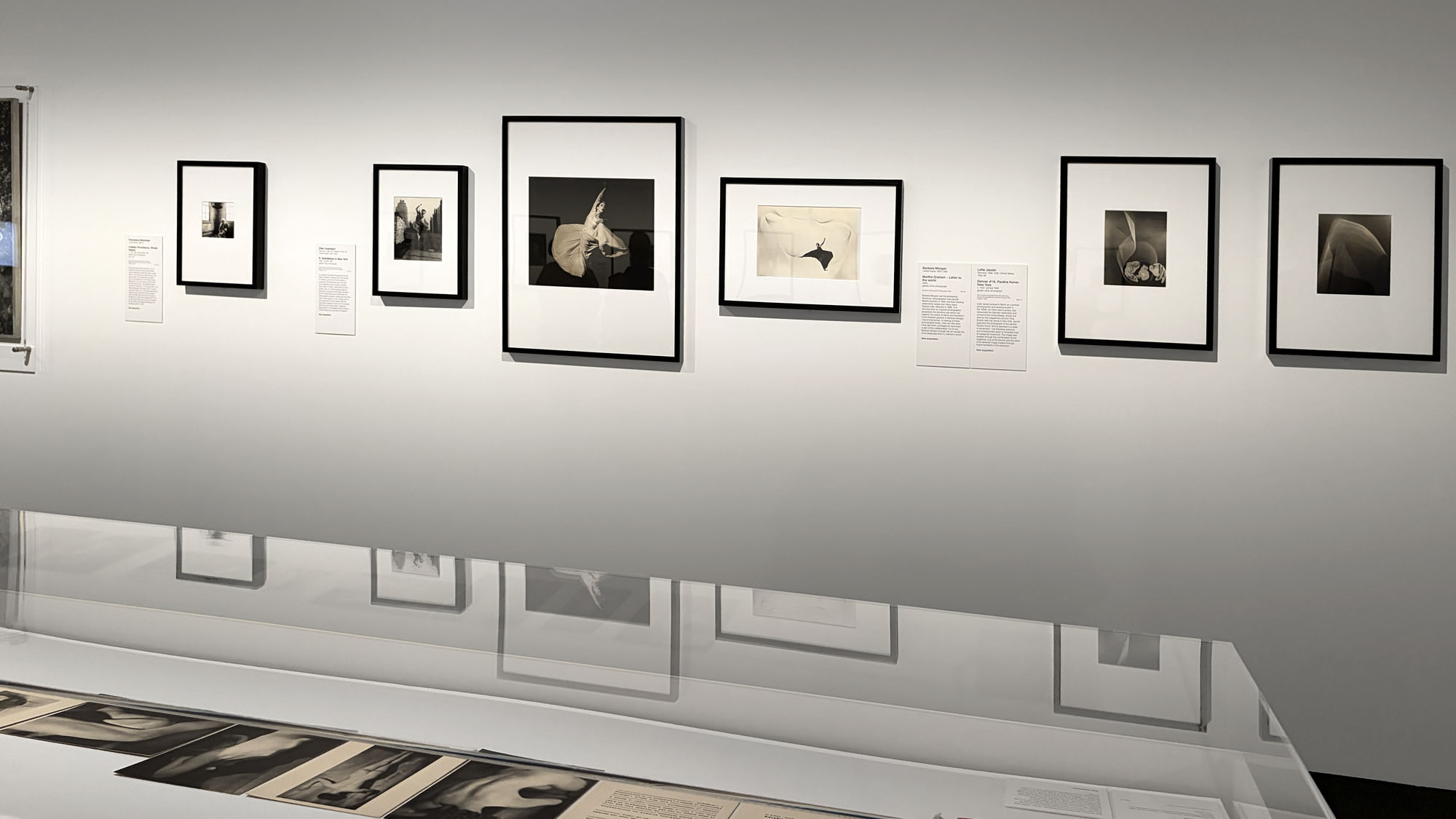
 

Carol Jerrems (Australian, 1949-1980) 'Kath Walker, Moongalba' 1974


Carol Jerrems (Australian, 1949-1980)
Kath Walker (Oodgeroo Noonuccal), Moongalba
1974
Gelatin silver photograph
16.3 x 24.2cm (image and sheet)
ed. 1/9
National Gallery of Victoria, Melbourne
Gift of Ms Ingeborg Tyssen, 2001
© Courtesy of Ken Jerrems & estate of Lance Jerrems


Carol Jerrems studied photography at Prahran College in Melbourne, winning several student awards before first exhibiting her work in the early 1970s. Jerrems collaborated with Australian artist Virginia Fraser on the 1974 publication A Book About Australian Women, a suite of portraits featuring a diverse range of subjects. This portrait was taken as part of that project, and an edition is included in the book. The work features Oodgeroo Noonuccal, previously known as Kath Walker, who was an Aboriginal rights activist, poet, WWII veteran, environmentalist and educator. Noonuccal is photographed with her pen poised at the learning centre she established on Minjerribah (North Stradbroke Island, Queensland) to teach visitors to the island about Aboriginal culture and Country.

Wall text from the exhibition


Installation view of the exhibition 'Women Photographers 1900-1975: A Legacy of Light' at NGV International, Melbourne, November 2025 - May 2026 showing from left to right, two photographs by Ponch Hawkes (Australian, b. 1946): 'No title (Helen at Falconer Street)' (c. 1975 printed 2018); and 'No title (In the backyard at Falconer Street)' (c. 1975 printed 2018)


Installation view of the exhibition Women Photographers 1900-1975: A Legacy of Light at NGV International, Melbourne, November 2025 – May 2026 showing from left to right, two photographs by Ponch Hawkes (Australian, b. 1946): No title (Helen at Falconer Street) (c. 1975 printed 2018); and No title (In the backyard at Falconer Street) (c. 1975 printed 2018)
Photo: Marcus Bunyan


Ponch Hawkes began to photograph while working as a journalist for the counterculture magazine The Digger in 1972. In 1973 she moved into a communal house in Melbourne with fellow Digger contributor Helen Garner. Together they produced stories for the broadsheet, documenting new ways of living emerging in inner-city Melbourne in the early 1970s.

Wall text from the exhibition


Installation view of the exhibition 'Women Photographers 1900-1975: A Legacy of Light' at NGV International, Melbourne, November 2025 - May 2026 showing at right, Ponch Hawkes 'No title (Summer night in the backyard at Falconer Street)' (c. 1975 printed 2018)


Installation view of the exhibition Women Photographers 1900-1975: A Legacy of Light at NGV International, Melbourne, November 2025 – May 2026 showing at right, Ponch Hawkes No title (Summer night in the backyard at Falconer Street) (c. 1975 printed 2018, below)
Photo: Marcus Bunyan


Ponch Hawkes (Australian, b. 1945) 'No title (Summer night in the backyard at Falconer Street)' c. 1975, printed 2018


Ponch Hawkes (Australian, b. 1945)
No title (Summer night in the backyard at Falconer Street)
c. 1975, printed 2018
Gelatin silver photograph
30.3 x 20.3cm (image)
38.3 x 27.9cm (sheet)
Purchased NGV Foundation, 2018
© Ponch Hawkes


Ponch Hawkes (Australian, b. 1945) 'No title (Women's Theatre Group, performing outdoors beneath a Women's Liberation banner in the City Square)' 1975, printed 2018


Ponch Hawkes (Australian, b. 1945)
No title (Women’s Theatre Group, performing outdoors beneath a Women’s Liberation banner in the City Square)
1975, printed 2018
Gelatin silver photograph
20.2 x 30.3cm (image)
28.0 x 38.2cm (sheet)
National Gallery of Victoria, Melbourne
Purchased NGV Foundation, 2018
© Ponch Hawkes, 2023


Installation view of the exhibition 'Women Photographers 1900-1975: A Legacy of Light' at NGV International, Melbourne, November 2025 - May 2026
Installation view of the exhibition 'Women Photographers 1900-1975: A Legacy of Light' at NGV International, Melbourne, November 2025 - May 2026 showing in the bottom image, top to bottom left to right, six photographs by Ponch Hawkes: 'No title (Women holding hands in front of graffiti, 'Lesbians are lovely')' (1973, printed 2018); 'No title (Graffiti)' (1975, printed 2018); 'No title (Women's Theatre Group, performing outdoors beneath a Women's Liberation banner in the City Square)' (1975, printed 2018); 'No title (Two women embracing, 'Glad to be gay')' (1973, printed 2018); 'No title (Fitzroy graffiti)' (1973, printed 2018); 'No title (Graffiti, 'Braddock… not mild, but sexist')' (1973, printed 2018)


Installation view of the exhibition Women Photographers 1900-1975: A Legacy of Light at NGV International, Melbourne, November 2025 – May 2026 showing in the bottom image, top to bottom left to right, six photographs by Ponch Hawkes: No title (Women holding hands in front of graffiti, ‘Lesbians are lovely’) (1973, printed 2018); No title (Graffiti) (1975, printed 2018); No title (Women’s Theatre Group, performing outdoors beneath a Women’s Liberation banner in the City Square) (1975, printed 2018); No title (Two women embracing, ‘Glad to be gay’) (1973, printed 2018); No title (Fitzroy graffiti) (1973, printed 2018); No title (Graffiti, ‘Braddock… not mild, but sexist’) (1973, printed 2018)
Photo: Marcus Bunyan


Ponch Hawkes captured powerful images of lesbian love and friendship during Melbourne’s early 1970s gay liberation movement. Hawkes worked for the counterculture magazine The Digger alongside Australian writer Helen Garner. The two often collaborated on projects, producing impassioned essays and imagery that platformed communities often excluded from mainstream media. The pride and solidarity shown in these images stand in stark contrast to the extreme discrimination queer people faced during the time.

Wall text from the exhibition


Installation view of the exhibition 'Women Photographers 1900-1975: A Legacy of Light' at NGV International, Melbourne, November 2025 - May 2026 showing at left, Ann Newmarch 'We must risk unlearning' (1975, below); and at second left, Ann Newmarch 'Two versions' (1975, below) with at right, photographs by Ponch Hawkes


Installation view of the exhibition Women Photographers 1900-1975: A Legacy of Light at NGV International, Melbourne, November 2025 – May 2026 showing at left, Ann Newmarch We must risk unlearning (1975, below) and at second left, Ann Newmarch Two versions (1975, below) with at right, photographs by Ponch Hawkes
Photo: Marcus Bunyan


Installation view of the exhibition 'Women Photographers 1900-1975: A Legacy of Light' at NGV International, Melbourne, November 2025 - May 2026 showing from left to right, Ann Newmarch 'We must risk unlearning' (1975) and Ann Newmarch 'Two versions' (1975)


Installation view of the exhibition Women Photographers 1900-1975: A Legacy of Light at NGV International, Melbourne, November 2025 – May 2026 showing from left to right, Ann Newmarch We must risk unlearning (1975) and Ann Newmarch Two versions (1975)
Photo: Marcus Bunyan


NGV International
180 St Kilda Rd, Melbourne

Opening hours:
Open daily, 10am – 5pm

National Gallery of Victoria website

LIKE ART BLART ON FACEBOOK

Back to top

Exhibition: ’31 Women. An Exhibition by Peggy Guggenheim’ at Fundación MAPFRE, Madrid

“What did it mean for these women artists, at what level was it a recognition of their undoubted skill as artists, when so many largely vanished without trace?” Dr Marcus Bunyan

Exhibition dates: 19th September, 2024 – 5th January, 2025

Curator: Patricia Mayayo

Artists: Djuna Barnes / Xenia Cage / Leonora Carrington / Leonor Fini / Suzy Frelinghuysen / Elsa von Freytag-Loringhoven / Meraud Guinness Guevara / Anne Harvey / Valentine Hugo / Buffie Johnson / Frida Kahlo / Jacqueline Lamba / Eyre de Lanux / Gypsy Rose Lee / Hazel McKinley / Aline Meyer Liebman / Louise Nevelson / Meret Oppenheim / Milena Pavlovic-Barilli / Barbara Poe-Levee Reis / Irene Rice Pereira / Kay Sage / Gretchen Schoeninger / Sonja Sekula / Esphyr Slobodkina / Hedda Sterne / Sophie Taeuber-Arp / Dorothea Tanning / Julia Thecla / Pegeen Vail Guggenheim / Maria Helena Vieira da Silva


Aline Meyer Liebman (American, 1879-1966) 'Gray Day (Sand Dunes)' c. 1929 from the exhibition '31 Women. An Exhibition by Peggy Guggenheim' at Fundación MAPFRE, Madrid, Sept 2024 - Jan 2025


Aline Meyer Liebman (American, 1879-1966)
Gray Day (Sand Dunes)
c. 1929
Gouache on board
35.5 x 48cm
The 31 Women Collection
© 2022-2024 JPS Artworks LLC


Short biography: Aline Meyer Liebman (1879-1966). Born in Los Angeles, Aline Meyer Liebman studied at the Art Students League in New York and received the support of Georgia O’Keeffe and Alfred Stieglitz. By the 1930s she had already become a consolidated artist and was the subject of a solo show at Walker Galleries in 1936. Meyer Liebman was also known for her work as a collector of art and photography. She acquired works by O’Keeffe, Stieglitz, Edward Weston, and Max Ernst, among others. Liebman kept a broad circle of relationships with key people in the New York art world, such as Peggy Guggenheim, who included her work Painted Dream (1935) in Exhibition by 31 Women. Other notable facets include her political and philanthropic work: aside from supporting President Roosevelt, she became a member of the New York League of Women Voters and designed a poster for the organization in 1944.


While it is fantastic to see this “recreation” (many of the original art works are unknown or missing and others have been substituted by the same artist in their place) of Peggy Guggenheim’s 1943 Exhibition by 31 Women “organised in her New York gallery ‘Art of This Century’, one of the first exhibitions in the United States to showcase works exclusively by European and American women,” I am conflicted by this exhibition. Conflicted, conflicted, conflicted.

Wealthy white women uses influence and money to promote women artists when no one else would, a patron reinforcing female participation introducing “well-established figures within the artistic landscape as well as emerging talent.” But I have a feeling that this group of female artists was part of an elite cohort – a privileged, internalist, internationalist, undoubtedly incestuous (in terms of knowing each other) clique of humans that knew the right people, especially through their connections with male artists.

As ever with the art world, it’s not what you know it’s who you know. Which artist has the ear of which curator; which artist is “fashionable” at the moment; and which artist is supported by which patron and gallery. It’s all about connections, and these women, whether emerging or established, had those connections. They were part of an educated elite that was at one and the same time, both exclusive and excluding (no Black American or Asian artists here… think of the times!)

And while the relationship between art and bourgeois life central to an earlier ideal of culture (the artist and their patron) has changed since the Second World War and the playing field has become much more egalitarian, my cynicism and socialism still rails at those with power and how they withhold their largesse. You only have to look at the photograph of Peggy Guggenheim in the entrance hall of her eighteenth century Venetian palace or the naming of so many galleries in art museums after wealthy patrons to understand what I mean.

What did it mean for these women artists, at what level was it a recognition of their undoubted skill as artists, when so many largely vanished without trace?

Dr Marcus Bunyan


Many thankx to Fundación MAPFRE for allowing me to publish the photographs in the posting. Please click on the photographs for a larger version of the image.


The idea of the artist as central member of a spiritual elite embodying an alternative to Philistine commercialism, or even pointing the way to humankind’s salvation, has powered a variety of movements as different as Aestheticism, Realism, Dada, De Stijl, and Russian Constructivism. This was the conception of culture that crystallized in the notion of the avant-garde, whose “function” – in Clement Greenberg’s classic formulation of 1939 – was “to find a path along which it would be possible to keep culture moving in the midst of ideological confusion and violence.”[1]

Greenberg’s text touchingly reveals the double sense of the idea of culture, as both redeeming force of the existing system and as a sort of critique by enactment of an alternative set of values. In this conception, the essence of art, incarnated in the avant-garde, is its alienation from the norms of bourgeois society (hence, in the case of modernist abstraction, its abandonment of going systems of representation). On the other hand, Greenberg acknowledged that “No culture can develop without a social basis, without a source of stable income” and even that “in the case of the avant-garde, this was provided by an elite among the ruling class of that society from which it assumed itself to be cut off, but to which it has always remained attached by an umbilical cord of gold. The paradox is real.”[2]

This paradox is nothing but the place of culture in capitalist society, in its most concentrated form. Given the distinctive social character of art objects, as handmade luxury goods in a world dominated by mechanized mass production, they offer both their producers and their consumers an experience outside the “everyday life” of the market. Expressive, in its very freedom from monetary considerations, of the power of money and of the access to free time made possible by money, art is a token and a perk of social distinction for those who own and even for those who merely appreciate it. The artist, as producer of this token, shares in the distinction, though (for the most part) not in the wealth that supports the social practice of art as a whole. It was the very separation of the world of cultural production from the norm of capitalist investment and production that made it potentially so valuable. By means of critique, culture cleanses modern society of the sin of commercialism, allowing its dominating classes to see themselves as worthy inheritors of the position of the aristocracy they displaced.

The picture I have sketched here, hardly a novel one, evidently owes a great deal to Pierre Bourdieu’s analysis of what he calls “the field of cultural production.” That analysis reveals in particular the close relation between, on the one hand, the social antagonism between the producers of culture and the upper-class consumers from whom they are separated by style of life and self-conception as well as degree of social power, and, on the other, the fact that “the cult of art and the artist… is one of the necessary components of the bourgeois ‘art of living,’ to which it brings a ‘supplément d’âme,’ its spiritualistic point of honor.”[3] This cultural system, evolved during the nineteenth century, survived until well into the twentieth. But the last twenty years have seen the acceleration of a process of change, whose origin is traceable to the end of the Second World War.[4] What changed was not the centrality of the “cult of art” to the bourgeois “art of living” but the felt antipathy between art and bourgeois life central to the earlier ideal of culture.


Paul Mattick. “After the Gold Rush,” on the American Society for Aesthetics website 2010 [Online] Cited 12/12/2024. Used under fair use conditions for the purposes of education and research
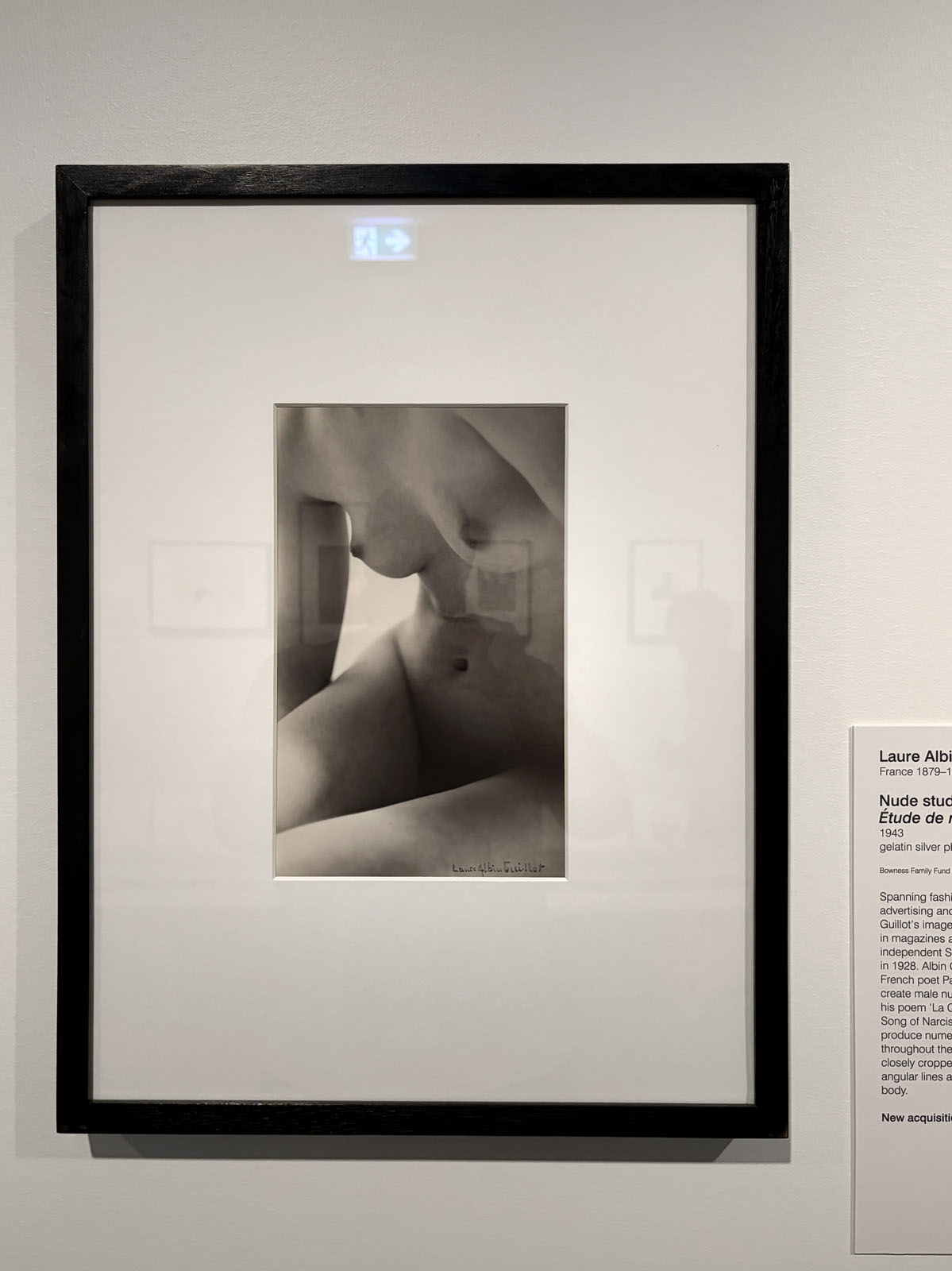

1/ C. Greenberg, “Avant-garde and Kitsch,” in idem, Art and Culture (Boston: Beacon Press, 1961), p. 5.
2/ Ibid., p. 8
3/ P. Bourdieu, The Field of Cultural Production (New York: Columbia University Press, 1993), p. 44.
4/ For an in-depth discussion, see Katy Siegel, Since ’45: American Art in the Age of Extremes (London: Reaktion, 2016)
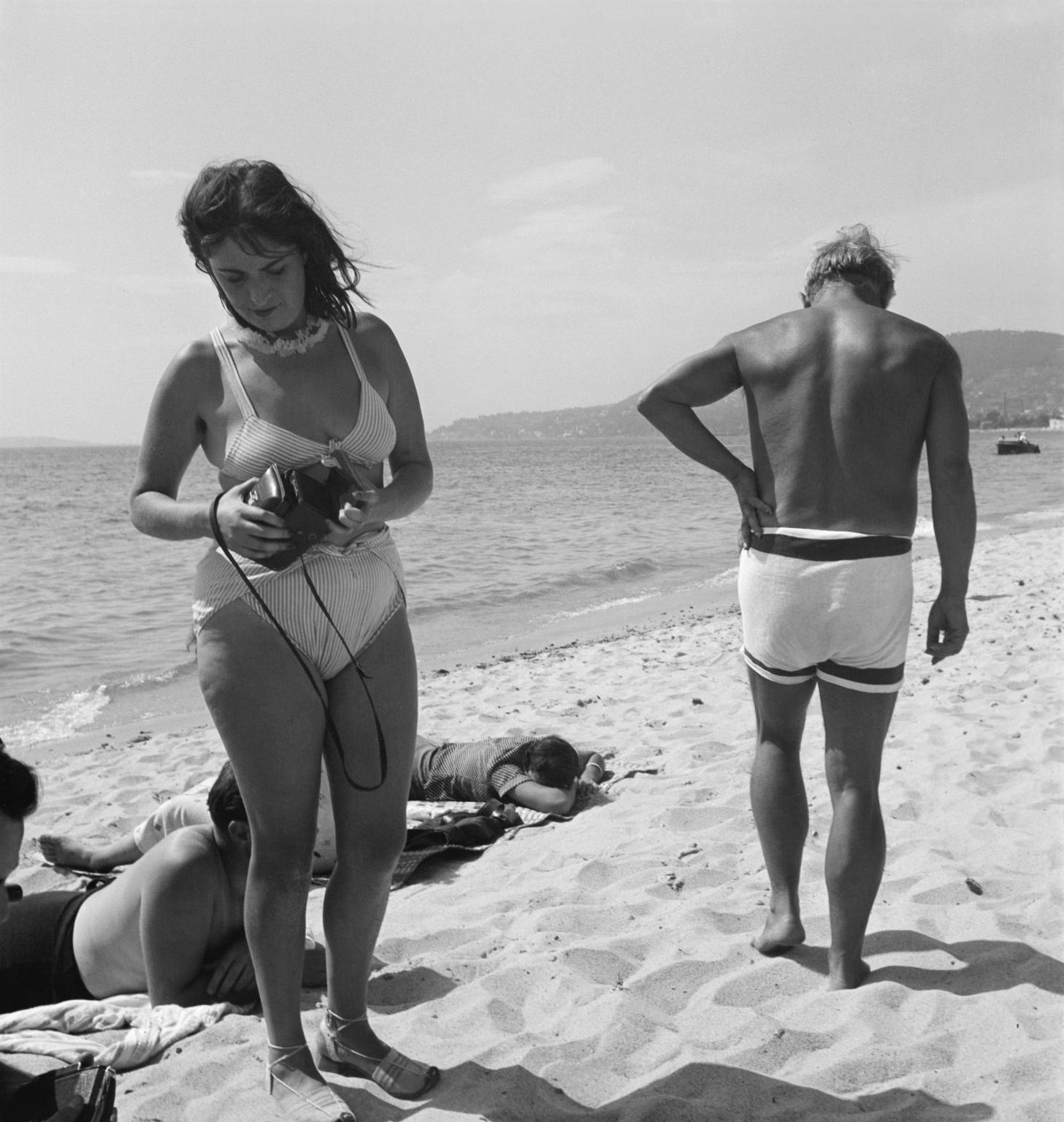


Installation view of the exhibition '31 Women. An Exhibition by Peggy Guggenheim' at Fundación MAPFRE showing at left, Milena Pavlovic-Barilli's 'Juno and Vulcan' (1936); at second left, Leonora Carrington's 'The Horses of Lord Candlestick' (1938); and at right, Buffie Johnson's 'The Middle Way / The Great Mother Rules the Sky (Astor Mural)' (1949-1959)


Installation view of the exhibition 31 Women. An Exhibition by Peggy Guggenheim at Fundación MAPFRE showing at left, Milena Pavlovic-Barilli’s Juno and Vulcan (1936, below); at second left, Leonora Carrington’s The Horses of Lord Candlestick (1938, below); and at right, Buffie Johnson’s The Middle Way / The Great Mother Rules the Sky (Astor Mural) (1949-1959, below)


In 1943, the renowned art collector Peggy Guggenheim organised in her New York gallery ‘Art of This Century’, one of the first exhibitions in the United States to showcase works exclusively by European and American women, titled Exhibition by 31 Women. The show was conceived by Guggenheim in collaboration with Marcel Duchamp, and the artists were selected by a jury whose members included André Breton, Max Ernst and Duchamp himself. Guggenheim, as the sole woman on the jury, was in a privileged position to provide a female perspective in the selection process.

These women, many of whom were associated with Surrealism or abstraction, maintained an ambiguous position within both trends. Often, they employed these styles to reformulate and challenge them, preserving their independence and shedding light on the patriarchal assumptions underlying these artistic movements.

31 Women. An Exhibition by Peggy Guggenheim presents a curated selection and reinterpretation of that initiative, including all the artists featured in the original show. With this exhibition, the Foundation aims not only to honor Peggy Guggenheim’s significant role as one of the foremost patrons and collectors of the 20th century, but also shift the narrative away from viewing these women primarily through their connections with male artists. Instead, it highlights the networks of collaboration, solidarity, and friendship they established among themselves.

Text from the Fundación MAPFRE website


Sonja Sekula (American, 1918-1963) 'Waiting for Foam' 1944 from the exhibition '31 Women. An Exhibition by Peggy Guggenheim' at Fundación MAPFRE, Madrid, Sept 2024 - Jan 2025


Sonja Sekula (American, 1918-1963)
Waiting for Foam
1944
Oil on canvas
40.3 x 49.8cm
The 31 Women Collection
© Estate of Sonja Sekula
© 2022-2024 JPS Artworks LLC


Short biography: Sonja Sekula (1918-1963). Born in Lucerne from a Hungarian father and a Swiss mother, Sonja Sekula emigrated to New York in 1936, where her father had moved their family business. In 1938 she attempted suicide for the first time and from that point onward began suffering from mental health issues. Through her well-connected family, Sekula was able to meet André Breton and other European Surrealists in the early 1940s. In mid-decade, she travelled to Mexico and came into contact with Frida Kahlo and Leonora Carrington. Later, she traversed the northeastern United States, discovering the imagery of Native American people. The primitivist symbols in her canvases are interwoven with decorative patterns, intense colours, and a juxtaposition of viewpoints. At the time, Sekula’s work was well received by critics, some suggesting that there was a hidden symbolism related to her homosexuality. Aside from including her painting Composition at Exhibition by 31 Women, Peggy Guggenheim dedicated a solo exhibition to Sekula’s work in 1946. Two years later Sonja Sekula joined the Betty Parsons Gallery, which would host five solo exhibitions between 1948 and 1957. In 1951, a day after the opening of her third exhibition, she suffered a nervous breakdown. The artist spent the following years coming in and out of mental health clinics in the United States and Switzerland. In 1963 she committed suicide in her Zurich studio.


Louise Nevelson (American, 1899-1988) 'Untitled' 1933 from the exhibition '31 Women. An Exhibition by Peggy Guggenheim' at Fundación MAPFRE, Madrid, Sept 2024 - Jan 2025


Louise Nevelson (American, 1899-1988)
Untitled
1933
Black painted terracotta
The 31 Women Collection
© Louise Nevelson, VEGAP, Madrid, 2024
© 2022-2024 JPS Artworks LLC


Short biography: Louise Nevelson (1899-1988). Born in Ukraine, Louise Nevelson emigrated to the United States with her family at the age of six. After studying in Germany under Hans Hofmann, she settled in New York, where she met Frida Kahlo and Diego Rivera. Nevelson collaborated on one of Rivera’s murals while receiving lessons from George Grosz and Chaim Gross. Her first terracotta works – painted in black and often subject to the application of a form of engraving – reveal the influence of Central American art that she had come to know through Kahlo and Rivera. Furthermore, Louise Nevelson participated in the association American Abstract Artists (AAA) and was often in the company of Frederick Kiesler and Peggy Guggenheim, who selected her work Column for Exhibition by 31 Women. In the 1950s she began to accumulate a large collection of wooden fragments, which would give rise to her most characteristic working method. First, she painted each piece black, white, or gold. Later, she piled and stored the fragments. Finally, she assembled the pieces in large abstract constructions. In 1956 she began to use milk cartons and wood to produce small embedded reliefs, combining them to create increasingly large ensembles. Her work received much critical acclaim after her participation in the Moon Garden Plus exhibition in New York, in 1958.


Highlight

Fundación MAPFRE presents 31 Women. An Exhibition by Peggy Guggenheim, featuring works by thirty-one artists who participated in Exhibition by 31 Women, a show organised in 1943 by Peggy Guggenheim at her Art of This Century gallery in New York. Most of these creators, who came from Europe and the United States, were linked to the Surrealist movement or to abstraction, and included both well-established figures within the artistic landscape as well as emerging talent.

The exhibition highlights Peggy Guggenheim’s important role as a patron, addressing the context in which the artists she became associated with at her New York gallery developed their work, as well as the networks of collaboration that were established between them.

KEYS

Art Also Belongs to Women

In her famous article of 1971, “Why Have There Been No Great Women Artists”, Linda Nochlin stated: “In the field of art history, the white Western male viewpoint, has been unconsciously accepted as the viewpoint of the art historian.” This text finally advocated the role played by many women who had been dismissed on the basis of their gender throughout the history of art and have only recently begun to occupy the place they deserve – along with writers, mathematicians, philosophers, etc. The artists featured in 31 Women. An Exhibition by Peggy Guggenheim, such as Frida Kahlo, Maria Helena Vieira da Silva, Valentine Hugo, and Dorothea Taning, could easily figure in Nochlin’s list, which included figures such as Artemisia Gentileschi, Angelica Kauffmann, Safo, Jane Austen, Virginia Woolf, Gertrude Stein, and Emily Dickinson.

Surrealism

Surrealism, a term coined by Guillaume Apollinaire in 1917, refers to the movement led by André Breton, who defined it as “Psychic automatism in its pure state, by which one proposes to express – verbally, by means of the written word, or in any other manner – the actual functioning of thought.” Rooted in Dadaism and Sigmund Freud’s theories of psychoanalysis, Surrealists expressed themselves through writing, photography, performance, painting, collage, and music. Although Surrealism in principle advocated gender equality and supported the work of women artists, in practice women were considered almost as objects, rather than creative subjects.

Peggy Guggenheim

Patron and art lover, Peggy Guggenheim (New York, 1898 – Padova, 1979) was one of the most important collectors and promoters of avant-garde art of the 20th century. The daughter of Benjamin Guggenheim and Florette Seligman, and niece of Solomon R. Guggenheim, founder of the Guggenheim Museum in New York, she decided to move to Europe in 1921. In Paris she established relationships with Marcel Duchamp, Constantin Brancusi, and Djuna Barnes, among others. Later, she settled in London, where she opened her first gallery in 1938. Under the name Guggenheim Jeune, the gallery featured works by Vasili Kandinsky and Yves Tanguy. Prior to the Nazi occupation of France, Guggenheim returned to Paris and acquired some of the most important works in her collection, which she managed to take with her when she fled to the United States.

In 1942, once she had settled in New York, Guggenheim opened the Art of This Century Gallery on West 57th street. Aside from displaying her own collection, the space became a platform for young artists, among which were the women who took part in Exhibition by 31 Women.

THE EXHIBITION

In 1943 the renowned collector Peggy Guggenheim organised one of the first exhibitions dedicated exclusively to the work of European and North American women artists at her New York gallery Art of This Century. Titled Exhibition by 31 Women, the show was conceived by Guggenheim in collaboration with Marcel Duchamp. The selection of artists was carried out by a jury whose members included André Breton, Max Ernst, and Duchamp himself. As the only woman in the jury, Guggenheim was able to contribute a female perspective to the process. In the press release, the gallerist herself presented the exhibition as a “testimony to the fact that the creative ability of women is by no means restricted to the decorative vein, as could be deduced from the history of art by women throughout the ages.” Her objective was to present the work of these creators as independent artists, distancing them from the traditional roles they had been given as muses or models.

The list of works published for the exhibition did not contain photographs, only titles, which were often quite unspecific, such as “still life” or “composition”. With the exception of a few cases, it is difficult to ascertain which works were on display at 31 Women.

31 Women. An Exhibition by Peggy Guggenheim presents a selection and a reinterpretation of The 31 Women Collection repository; a collection created by the North American producer and collector Jenna Segal in 2020, featuring works by the same artists who participated in the historic exhibition of 1943.

Through this exhibition, Fundación MAPFRE aims to disseminate the work and vision conceived by Peggy Guggenheim at her New York Gallery, further breaking with the narrative that has often valued the contributions of women artists in terms of their relationships with male artists, while focusing more specifically on the networks of collaboration, solidarity, and friendship that were established between them. Associated mostly with Surrealism or abstraction, these women used said languages in an effort to reformulate and question them, maintaining their independence and highlighting the patriarchal precepts such movements were based on.

All of the works on display – close to forty – belong to The 31 Women Collection. Likewise, the exhibition also features photographs, publications, and other pieces; contextualising and complementing the show’s approximation to the scene of North American women artists of the time. Along with the exceptional loan from The 31 Women Collection, the exhibition is also supported by the Vitra Design Museum, the Lafuente Archive, and the Museo Nacional Centro de Arte Reina Sofía Documentation Center.

The exhibition discourse is articulated in different sections, the first of which introduces the viewer to the work carried out by Peggy Guggenheim at her Art of This Century gallery, and in particular her support of women artists of the time. The following sections pose an approximation to some of the main thematic axes and strategies explored by the creators featured in Exhibition by 31 Women, who sought to assert their independence and avoid clichés associated with the label “female artist” that were commonplace in the world of art at the time.

Art of This Century

In 1942 Peggy Guggenheim opened the Art of This Century gallery on the top floor of a building on West 57th Street in New York. Determined to create a space that would generate expectation, she hired the Austrian architect Frederick Kiesler, who designed custom furniture – one piece being featured in this exhibition – and projected a groundbreaking exhibition device to stimulate interactions between viewers and artworks.

The space had a profound impact on the artistic scene through a program of solo exhibitions that Guggenheim dedicated to numerous artists who would later become some of the most renowned creators of their time. The gallery also became an essential meeting point for European and North American avant-gardes. Among the most important initiatives developed by Guggenheim at her gallery were her support and promotion of the work of women artists, not only through group exhibitions, such as Exhibition by 31 Women and later The Women (1945), but also through the solo shows dedicated to some of the participants in said exhibitions, such as Sonja Sekula or Irene Rice Pereira.

The “Self” as Art

The role played by self-representation in the work of these artists was fundamental in their claim for independence and in their efforts to assert their identity versus traditional art historiography, in which women – when mentioned – appeared as secondary figures relegated to the roles of muses, wives, or companions of their male counterparts. Furthermore, in order to construct identities that were different to those assigned to them and escape from the gender roles imposed by the patriarchal society of the time, they adopted a number of languages that included autobiographical components, costumes, performances, and self-portraiture. This can be observed in works such as Woman in Armor I, by Leonor Fini, or Untitled (Self-Portrait), by Dorothea Tanning, for example.

In their quest to escape from social expectations and gender roles, self-representation became one of the creative strategies most widely adopted by women artists in the first half of the 20th century. Through elaborate costumes and extravagant make-up, which they wore in their daily lives or during improvised performances, Elsa von Freytag-Loringhoven and Leonor Fini constructed alternate identities that allowed them to elude the rigid female behavioral models determined by bourgeois ideology. Likewise, Hedda Sterne, Dorothea Tanning, and Meret Oppenheim spoke of their interest in blurring the boundaries of conventionally constructed identities through doubling, masquerades, and the confusion of reality against its reflection, which can be observed in their self-portraits. Similarly, Gypsy Rose Lee reinvented the genre of striptease – traditionally linked to popular culture – by challenging the contemporary understanding of the pose and of female nudes.

Elsa von Freytag-Loringhoven, Gypsy Rose Lee, and Leonora Carrington completed their self-creation work with the writing of their autobiographies, which seamlessly combined reality and invention. Writing novels about themselves allowed these artists to reflect on aspects of their past that might have been considered lurid – for instance, becoming the victim of rape by a group of men in Madrid as Carrington recounted in Down Below – or imagining alternative narratives of their lives. In similar fashion, Leonor Fini frequently took photographs of herself posing in black feather wigs and other props through which she fabricated imaginary personalities. Both Elsa von Freytag-Loringhoven and Gypsy Rose Lee, who had worked as dancers and strippers in burlesque shows and as professional models in art schools, were very aware of the need to take control of their own image, subverting the passive role that muses and female models still played within the avant-garde.


Gypsy Rose Lee (American, 1911-1970) 'Gypsy Rose Lee images for Tru-Vue stereoscope film: Striptease Stereoview #1306 Burlesque' 1933 (detail)


Gypsy Rose Lee (American, 1911-1970)
Gypsy Rose Lee images for Tru-Vue stereoscope film: Striptease Stereoview #1306 Burlesque (detail)
1933
Vintage Tru-Vue 16 pictures in film (13 of Gypsy Rose Lee)
The 31 Women Collection


Gypsy Rose Lee began performing as a stripper in burlesque shows and went on to appear in Broadway theaters. Her stripteases were greatly successful, allowing her to transform the genre. The fact that she talked while striping was truly groundbreaking and enabled her to draw attention away from the mere act of stripping, while presenting herself as a modern and entertaining woman. Likewise, her enunciation was unlike street slang: she recited with an outlandish high-class accent and incorporated phrases in French.

Short biography: Gypsy Rose Lee (1911-1970). Born under the name Rose Luise Hovick into a working-class family that performed in vaudeville theaters in Seattle, Washington, Gypsy Rose Lee began to work as a stripper in burlesque shows at the age of sixteen and went on to perform at important Broadway theaters. Her acts were enormously popular at the time, granting the genre respect and transforming it into something beyond the act of stripping. She began to collect works of art in the 1940s. Among such purchases were works by Max Ernst. This opened the doors to meetings with Peggy Guggenheim, who at that time was married to the German painter and would host the encounters at her house. In Exhibition by 31 Women, she exhibited a collage titled Self-Portrait. In 1957 Gypsy Rose Lee published her autobiography, culminating the life-long self-promotion and self-invention work that drove her entire career.


Dorothea Tanning (American, 1910-2012) 'Untitled (Self-Portrait)' c. 1940


Dorothea Tanning (American, 1910-2012)
Untitled (Self-Portrait)
c. 1940
Watercolour, ink and crayon on paper
36.5 x 29.2cm
The 31 Women Collection
© The estate of Dorothea Tanning, VEGAP, Madrid, 2024
© 2022-2024 JPS Artworks LLC


In this self-portrait from the early 1940s, Dorothea Tanning experimented with the limits of reality and representation. In a style akin to fashion figurines that often appeared in women’s magazines of the time, the artist portrayed herself in a room full of empty canvases. Her naked legs are reflected onto a framed glass that is pointed at the viewer, creating an impossible interplay of mirrors and altering the relationship between reality and reflection; inside and out.

Short biography: Dorothea Tanning (1910-2012). Born in a small town in Illinois, where she lived a solitary childhood, Dorothea Tanning developed an interest in dreams and fantasy since she was a child. After visiting Fantastic Art, Dada, Surrealism (1936) at MoMA, she felt attracted to Surrealism and travelled to Paris three years later with the objective of coming into contact with said group. Although she was forced to cut her stay short due to the outbreak of the war, the paintings she created upon her return to New York are proof of her strong Surrealist bias. In 1942, following the advice of gallerist Julien Levy, Max Ernst visited her studio and selected the works Birthday and Children’s Game for Exhibition by 31 Women. The visit also signified the beginning of a relationship between Tanning and Ernst, who separated from Peggy Guggenheim and married the artist in 1946. From the 1930s to the late 90s Tanning developed a prolific career. Her paintings, ballet designs, soft sculptures, and literary works reflect some of her recurring obsessions: the subversion of the bourgeoise domestic space, metamorphosis, the power of imagination, the gothic novel, and non-conventional images of girls and feminine figures.


Elsa von Freytag-Loringhoven (German, 1874-1927) 'Forggtten Like This Parapluie Am I By You - Faithless Bernice!' 1923-1924


Elsa von Freytag-Loringhoven (German, 1874-1927)
Forggtten Like This Parapluie Am I By You – Faithless Bernice!
1923-1924
Gouache on foil
13 x 12cm
The 31 Women Collection
© 2022-2024 JPS Artworks LLC


The autobiographical component of this work has been linked to the closed umbrella, which lies uselessly at the center of the image and represents the loneliness felt by Elsa von Freytag-Loringhoven at a point when she had been abandoned by those who supported her both emotionally and financially. The treading foot that appears on the left of the composition symbolizes the passing of the years. The title of the work also expands on this notion, which is a direct interpellation to her friend and patron Berenice Abbott. On the other hand, the silhouette of the urinal alludes to the famous readymade by Marcel Duchamp, a work that a number of recent studies have attributed to Freytag-Loringhoven.

Short biography: Elsa von Freytag-Loringhoven (1874-1927). Born in Germany under the name Else Plötz, she became known as Else Endell, Else Greve, and finally Elsa von Freytag-Loringhoven through her numerous marriages over the course of several decades; evidence of her early interest in constructing herself as a character. At the age of eighteen she settled in Berlin, where she began to study art and worked as a variety artist and model. In 1913 she emigrated to New York and joined the Dadaist circle that gathered around the collectors Louise and Walter Arensberg. Elsa von Freytag’s work spanned several genres: poetry, autobiography, art, and artistic self-representation. Aside from producing sculptures with found elements, she used materials rescued from the streets and objects stolen from department stores to create costumes that she wore at Greenwich Village balls and during her walks through New York, combining them with striking make-up, extravagant hairdos, and other decorations. One of the objects she created with fragments from plumbing materials was on display at Exhibition by 31 Women. In 1923 she returned to Berlin and shortly after settled in Paris, where she scraped a living with the help of friends like Berenice Abbott and Djuna Barnes. She died under uncertain circumstances in 1927. Very few of her performances where documented and her work remained invisible to a great extent until the early 21st century. Some research suggests that she was the author of the famous readymade Fountain, considered one of Marcel Duchamp’s key works.


Strangely Familiar

In 1919 Freud coined the term unheimlich – which roughly translates into English as “ominous” or “uncanny”, and into French as “unsettling strangeness”. This aesthetic category, which is verging on beautiful, was adopted by the Surrealist movement and generally alludes to things that are familiar and attractive, but simultaneously produce a sense of unease and rejection. This is the underlying feeling in Gray Day (Sand Dunes), by Aline Meyer Liebman, or in the still lives by Meraud Guinness Guevara and Meret Oppenheim, which portray decontextualised familiar objects, provoking a sense of unease that is hard to explain. This sensation is accentuated in Spanish Customs by Dorothea Tanning and in Kay Sage’s The Fourteen Daggers, in which two mysterious figures covered in fabric seem to ascend a staircase to the sky.

Hence, Aline Meyer Liebman’s yellowish dunes are striking for their anthropomorphic forms, the Connecticut night sky appears as a fantastic explosion of flowers and stars in Jacqueline Lamba’s painting, and the viewer is unsettled by the incongruent characters and scenes that disrupt the peacefulness in Hazel McKinley and Pegeen Vail’s colourful landscapes. Furthermore, familiar objects seem to have lost their usual meaning in the puzzling dreamlike still lives by Meraud Guinness Guevara, Anne Harvey, Meret Oppenheim, and Gypsy Rose Lee, while Eyre de Lanux and Evelyn Wild’s rug designs combine primitivist and avant-garde elements that question the ideals of purity associated with modern domestic interiors. Kay Sage and Dorothea Tanning’s paintings are particularly unnerving as they transform the bourgeois house into a strange territory inhabited by ghostly figures and elongated shadows.


Dorothea Tanning (American, 1910-2012) 'Spanish Customs' 1943


Dorothea Tanning (American, 1910-2012)
Spanish Customs
1943
Oil on canvas
25.4 x 20.3cm
The 31 Women Collection
© The estate of Dorothéa Tanning, VEGAP, Madrid, 2024
© 2022-2024 JPS Artworks LLC


Meret Oppenheim (Swiss born Germany, 1913-1985) 'Souvenir of the Lunch in fur' 1936 / 1972


Meret Oppenheim (Swiss born Germany, 1913-1985)
Souvenir of the Lunch in fur
1936 / 1972
Fabric, paper, artificial fur and artificial flowers encased under glass
16.7 × 19.8cm
The 31 Women Collection
© Meret Oppenheim / VEGAP, Madrid, 2024
© 2022-2024 JPS Artworks LLC


Produced in 1972, this piece is a reinterpretation of one of Meret Oppenheim’s most renowned works, Déjeuner en Fourrure, which was on display for the first time in 1936 – the year it was produced – at an exhibition dedicated to Surrealist objects. The work garnered much recognition and was selected by Peggy Guggenheim for Exhibition by 31 Women. Dipleased by always seeing her name associated with this work, the artist wanted to make an ironic version of her infamous mug, recreating it with cheap materials: a perfect kitsch souvenir of the iconic work.

Short biography: Meret Oppenheim (1913-1985). Born in Berlin into a family of the liberal bourgeoisie, Meret Oppenheim studied at Rudolf Steiner’s school in Basel. Between 1932 and 1937 she spent much of her time in Paris, where she became close to the Surrealist movement. The photographs in which she posed for Man Ray and the enormous success of her objects – in particular Déjeuner en Fourrure [Breakfast with Furs] from 1936, acquired by MoMA and also on display at Exhibition by 31 Women – make her a Surrealist muse of sorts. Later, she expressed her irritation at seeing her name associated solely to that work and to Surrealism. In 1937 Oppenheim returned to Basel, where she battled depression and produced very little until 1954, when she resumed her artistic work with great impetus. Myths, dreams, literary sources, Jung’s psychoanalysis, gender roles, and social stereotyping were interwoven within her work, which also incorporated magical objects, poems, photographs, theatre costumes, and textile designs.


Jacqueline Lamba (French, 1910-1993) 'Roxbury, stars' 1946


Jacqueline Lamba (French, 1910-1993)
Roxbury, stars
1946
Oil on canvas
The 31 Women Collection
© Jacqueline Lamba, VEGAP, Madrid, 2024
© 2022-2024 JPS Artworks LLC


In the mid-1940s, Jacqueline Lamba and the North American Surrealist artist David Hare took a trip together through the western United States, where they came into contact with the cosmology and art of the indigenous peoples of North America. The typical brown colours of Amerindian fabrics dominate the palette of this canvas, in which Lamba portrayed the surroundings of her house in Roxbury and captured the unexpected reality that lies hidden behind a seemingly mundane landscape.

Short biography: Jacqueline Lamba (1910-1993). Born in France, Jacqueline Lamba spent her early years in Egypt, where her father – an engineer – passed away in a car accident in 1914. She returned to Paris with her mother and attended the École de l’Union Centrale des Arts Décoratifs. After the passing of her mother in 1927 Lamba survived with the meager wages she earned from her design work. Fascinated by André Breton’s Communicating Vessels, she began an intense and difficult romantic relationship with him. The couple married shortly after and had a daughter named Aube. Jacqueline Lamba always lamented being more recognised as Breton’s muse than for her collages, cadavre exquis, objects, and paintings, which would soon be on display at Surrealist exhibitions. In 1938 she travelled to Mexico with her husband. The couple was hosted by Diego Rivera and Frida Kahlo, whom she established a profound relationship with. Thanks to the patronage of Peggy Guggenheim, Lamba and Breton settled in New York in 1941 as they fled from the Nazis. Lamba exhibited her work at the inaugural show of the Art of This Century Gallery and participated in Exhibition by 31 Women. In 1944 she divorced Breton and began a relationship with David Hare. They settled in Connecticut in 1948 and had a son. Lamba lost interest in Surrealism and veered toward abstraction, focusing on the mythologies of indigenous populations from Mexico and the United Sates. In 1954, after separating from Hare, she returned to Paris and destroyed much of her prior work. She later confessed that she had first tried to please Breton and then Hare with her paintings, ensuring that she would only paint to please herself from that point onward. In 1967 the most comprehensive exhibition dedicated to her work in her lifetime was hosted at the Musée Picasso in Antibes.


Kay Sage (American, 1898-1963) 'The Fourteen Daggers' 1942


Kay Sage (American, 1898-1963)
The Fourteen Daggers
1942
Oil on canvas
40.6 × 33.3cm
The 31 Women Collection
© 2024 Estate of Kay Sage / VEGAP
© 2022-2024 JPS Artworks LLC


The conversion of domestic space into unusual territory reached its pinnacle in works such as this one. Sage imagined a bizarre interior space that opens up to a door behind which lies a staircase leading to the sky. The scene is inhabited by two ghostly figures covered in fabric that cast elongated shadows on the ground and accentuate the air of mystery. The motif of the open door reappears in Dorothea Tanning’s oil painting Spanish Customs, also on display in this room.

Short biography: Kay Sage (1898-1963). Born under the name Katherine Linn Sage into a wealth family from Albany, Kay Sage spent most of her childhood travelling through Europe with her mother, who had divorced her father in 1908. Although she never received a formal education, she went on to study at the Corcoran School of Art in Washington D. C. and at the British Academy in Rome, where she settled in 1920. Aside from coming into contact with the local artistic scene, Sage met Prince Ranieri di San Faustino, whom she married in 1925. During their ten years as a married couple, Sage dedicated little time to art. In 1937 she moved to Paris, where she came into contact with the members of the Surrealist group and began a romantic relationship with the painter Yves Tanguy, whom she married in 1941. With the outbreak of World War II, the couple migrated to Connecticut, where they would reside for the following years. During that period Sage developed her own style: uninhabited landscapes intersected by austere architectural forms, shadows, and floating fabrics that are simultaneously recognisable and enigmatic. Peggy Guggenheim selected her painting from 1942 At the Appointed Time – today preserved at the Newark Museum of Art – for Exhibition by 31 Women. In 1955 Tanguy died suddenly. This event led Sage into depression. Coupled with eyesight problems, she drifted away from painting. In the late 1950s she began to produce collages and write poetry. However, in January of 1963 Sage took her own life.


Bestiaries

Many of the artists featured in this exhibition – particularly those whose works are more closely linked with Surrealism – experimented with multiple personalities, which led them to identify themselves with animals that became their alter egos. As noted by Patricia Mayayo, curator of the show, “the animals embodied the search for other mythical or imaginary worlds where they could finally be free”. Hence, the female body is transformed into an eagle, a crow, or a deer in the works of Barbara Poe-Levee Reis, Milena Pavlovic-Barilli, Julia Thecla, and Frida Kahlo, while in Leonora Carrington’s The Horses of Lord Candlestick, the horse simultaneously embodies the dreaded paternal figure and the artist herself.

Women artists close to Surrealism granted particular importance to the representation of animals. Such is the case with works by Barbara Poe-Levee Reis and Milena Pavlovic-Barilli, in which animals often inhabited fictional landscapes or mythical worlds where women could imagine themselves freed from patriarchal norms. Likewise, in works by Julia Thecla, Frida Kahlo, and Leonor Fini, the depiction of women’s bodies being transformed into crows, deer, and cats refers to an alternate reality in which humans and animals are hybridized. Djuna Barnes imagined a collection of grotesque women with animal-like traits that challenged normative understandings of the feminine in an illustrated book of poems published in 1915. Valentine Hugo was inspired by the animals of the zodiac when designing costumes for a theatrical performance that took place at the Théâtre Champs-Elysées in Paris. Lastly, in Leonora Carrington’s painting, the horse appears as a more ambivalent figure that simultaneously embodies patriarchal authority and the liberation of women.

Since the 1930s, women had a growing presence in Surrealist initiatives. For example, in 1936 Leonor Fini, Valentine Hugo, Meret Oppenheim, and Sophie Taeuber-Arp participated in the exhibition Art, Dada, Surrealism hosted at MoMA. Six years later, Leonora Carrington and Kay Sage exhibited their work at First Papers of Surrealism, organised by André Breton and Marcel Duchamp in New York . Women also collaborated on the movement’s publications, either as authors or as illustrators; an example of which includes the series of eighteen drawings that Hugo produced in 1951 for Paul Éluard’s book of poems Le Phénix. Peggy Guggenheim’s work as a patron undoubtedly helped to reinforce female participation. Many of the artists included in the exhibition of 1943 had attended the meetings between North Americans and exiled Europeans organised by the collector at her house in New York. Some of the works on display at 31 Women were reproduced in the double issue of the Surrealist magazine VVV in 1943; an acknowledgement that most likely contributed to the show’s repercussion.


Valentine Hugo (French, 1887-1968) 'Fish. Costume project for the Théâtre des Champs-Elysées, Paris' 1950


Valentine Hugo (French, 1887-1968)
Fish. Costume project for the Théâtre des Champs-Elysées, Paris
1950
Pastel sobre papel negro
28.5 × 16cm
The 31 Women Collection
© Valentine Hugo, VEGAP, Madrid, 2024
© 2022-2024 JPS Artworks LLC


Short biography: Valentine Hugo (1887-1968). Born in Boulogne-sur-Mer under the name Valentine Gross, Valentine Hugo possessed a natural talent for drawing since her childhood. She studied at the École des Beaux-Arts in Paris, produced illustrations for fashion magazines, and frequently attended Diaghilev’s Ballets Russes. Inspired by the subject of dance, her drawings and paintings were on display at the Thèatre des Champs-Elysées in 1913. A friend of Erik Satie and Jean Cocteau, she also collaborated she also collaborated on thaeatrical sets and designs with Jean Hugo, her husband at the time. In 1926 she met André Breton – whom she would establish a short-lived romantic relationship with – and joined the circle of Surrealists. She participated in the exhibition Fantastic Art, Dada, Surrealism (MoMA, 1936), in the development of numerous cadavre exquis, and the illustration of Surrealist books. The influence of Surrealism can be perceived in her constructions, which are based on the unexpected encounter with objects and materials, as well as in the importance she grants to motifs such as dreams, night-time atmospheres, the marvelous, and ghostly apparitions. The drawing that was featured at Exhibition by 31 Women – which has since been lost – was poignantly titled Dream of 17/1/34. Hugo remained in France during the war, after which she focused on illustration, writing books of poems, and the production of theater costumes and sets.


Leonor Fini (Argentine-Italian, 1907-1996) 'Woman in Armor I' 1938


Leonor Fini (Argentine-Italian, 1907-1996)
Woman in Armor I
1938
Oil on canvas
37 x 27cm
The 31 Women Collection
© Leonor Fini, VEGAP, Madrid, 2024
© 2022-2024 JPS Artworks LLC


Short biography: Leonor Fini (1907-1996). Born in Argentina into a family marked by a dominant father, Leonor Fini fled with her mother to Trieste, Italy, when she was still a young girl. Fini taught herself art. At the age of seventeen she left the family home and moved to Milan and later to Paris, where her interest in the world of dreams and the unconscious led her to come into contact with the Surrealists. Although she was not officially part of the group, she participated in important Surrealist exhibitions such as Fantastic Art, Dada, Surrealism at MoMA in 1936. Hybrid figures such as the sphynx dominate her paintings, a motif she also explored through costumes and self-representation. The painting that was on display at Exhibition by 31 Women was in fact titled The Shepherdess of the Sphinxes. During the war she remained in Europe. Between 1944 and 1972, aside from continuing to paint, she focused intensely on the design of theatrical costumes and sets.


Milena Pavlovic-Barilli (Serbian, 1909-1945) 'Juno and Vulcan' 1936


Milena Pavlovic-Barilli (Serbian, 1909-1945)
Juno and Vulcan
1936
Oil on canvas
95.3 × 64.8cm
The 31 Women Collection
© 2022-2024 JPS Artworks LLC


The painting by Pavlovic draws from various sources: Mannerist art from the 16th century, Magical Realism, and Surrealism. It also incorporates motifs and mythical figures from classical antiquity, such as the Roman goddess Juno and her son Vulcan, protagonists of this canvas. The use of diluted colours, the impression that the characters are floating in space, and the apparently incongruent combination of a wide range of elements (the eagle, the piano, the wheel, the drapery, the bouquet of flowers, and the mirror) grant this painting a dreamlike and mysterious atmosphere.

Short biography: Milena Pavlovic-Barilli (1909-1945). Born in Serbia into a family with artistic inclinations, Milena Pavlovic-Barilli studied art in Munich between 1926 and 1928. There she was introduced to painting, fashion illustration, and drawing, creating an iconography based on stylised figures and wavy lines in which the influence of Art Nouveau is combined with echoes of orient. In 1931 she settled in Paris, where she came into contact with figures of Surrealism, such as André Breton, Jean Cocteau, and Paul Valéry. Regardless, her work drifted into a style that critics considered closer to Magical Realism. Everyday life was fused with fantasy in her paintings, while space was filled with enigmatic symbols: ancient columns that levitate, veiled faces of women, winged youths painted in pale hues, all of which grants her work a supernatural feel. She lived in New York between 1939 and 1945, where she focused on fashion illustration and costume and set designs for the theater. Her paintings, populated with elongated figures in architectural environments that seem rooted in the Renaissance, reflect her admiration for Mannerism. In 1940 she exhibited her work at the Julien Levy Gallery and established ties with the group of Surrealist immigrants. Her work Insomnia (1942) – which has since been lost – was on display at Exhibition by 31 Women. Her premature death in an accident in 1945 cut her career shot. In 1962 the Milena Pavlovic-Barilli Museum opened its doors at the house where she was born. The museum includes a broad selection of her paintings, drawings, letters, and personal objects.


Leonora Carrington (Mexican born United Kingdom, 1917-2011) 'The Horses of Lord Candlestick' 1938


Leonora Carrington (Mexican born United Kingdom, 1917-2011)
The Horses of Lord Candlestick
1938
Oil on canvas
35.5 ×46cm
The 31 Women Collection
© 2024 Estate of Leonora Carrington / VEGAP
© 2022-2024 JPS Artworks LLC


Short biography: Leonora Carrington (1917-2011). Born into a wealthy English family, Leonora Carrington was fascinated by fairy tales and fantasy literature since she was a young girl. She studied art in Florence, Paris, and London under the guidance of Amédée Ozenfant. Her first works recreate legendary worlds populated by hybrid animal species and powerful female figures. In 1936 she discovered Surrealism during a visit to the International Surrealist Exhibition. Two years later she settled in the south of France with Max Ernst – whom she had established a relationship with – in an old house that the couple transformed into a work of total art. Carrington began to publish her first books containing short stories. In 1940, after the outbreak of the war and the arrest of Max Ernst, she fled to Madrid, where she became the victim of rape and was subsequently admitted to a psychiatric hospital in Santander; she would recount this experience in her book Down Below. After managing to migrate to New York in 1941 she participated in a number of initiatives promoted by exiled Surrealists, such as the exhibition First Papers of Surrealism and the magazine VVV. Peggy Guggenheim included two of her works The Horses of Lord Candlestick (1938, above) and the Joy of Skating (1941, below) in Exhibition by 31 Women. In 1943 Carrington settled in Mexico, where she would live until her death. She integrated into the community of exiled artists along with Kati Horna, Remedios Varo, and Benjamin Péret. Her paintings re-elaborated old themes and she delved into new ones: fantasy literature, female divinities, alchemy, magic, and Mexican mythologies.


Leonora Carrington (Mexican born United Kingdom, 1917-2011) 'Joy of Skating' 1941


Leonora Carrington (Mexican born United Kingdom, 1917-2011)
Joy of Skating
1941
Oil on canvas
© 2024 Estate of Leonora Carrington / VEGAP


Djuna Barnes (American, 1892-1982) 'The Book of Repulsive Women, 4th image in the 1st edition' 1915


Djuna Barnes (American, 1892-1982)
The Book of Repulsive Women, 4th image in the 1st edition
1915
The 31 Women Collection


In the modern age of Taylorism and Fordism, women played a vital role in the functioning of the American system by efficiently arranging domestic life with a precision similar to that of the nation’s industry. In contrast with this mechanical monotony, Barnes imagined the “repulsive women” that appear in her poems and drawings as the antithesis of the model housewife. Some of these figures, such as the woman with donkey ears and animal-like features that can be observed in one of her illustrations, manage to question the very the boundaries of humanity.

Short biography: Djuna Barnes (1892-1982). Born in a colony of artists north of New York, Djuna Barnes studied art at the Pratt Institute and at the Art Students League. In 1915 she settled in the bohemian neighborhood of Greenwich Village, where she began her career as an artist and a writer. That same year she published The Book of Repulsive Women, a collection of poems that included her own illustrations, and began to work as a journalist. Best known for her experimental novel from 1936, Nightwood, Barnes cultivated all genres: narrative, poetry, theater, and journalism. In 1921 she moved to Paris, where she began a romantic relationship with the sculptor Thelma Wood and began to frequent the avant-garde circles of the Rive Gauche, establishing friendships with Gertrude Stein, Berenice Abbott, Natalie Clifford Barney, Elsa von Freytag-Loringhoven, and Peggy Guggenheim herself. With the outbreak of World War II, she moved back to New York, where her work Portrait of Alice was put on display at Exhibition by 31 Women. 


The Middle Way: Languages of Abstraction

Although many of the artists who participated in 31 Women fell within the sphere of influence of Surrealism, some of them were more inclined toward abstract languages. In the 1930s the North American art scene was dominated by social realism and regionalism. In an effort to promote abstraction, the association American Abstract Artists (AAA) was founded, an association which included members such as Suzy Frelinghuysen, Louise Nevelson, Irene Rice Pereira, and Esphyr Slobodkina. Abstraction began to progressively dominate the artistic landscape of North America and was configured in a way that highlighted the ideal of masculinity, whose epitome was Jackson Pollock. In the face of a discourse that hailed the language of expressionism as a reflection of the North American male, many of these artists opted to explore a “middle way” that could account for all of the possibilities afforded by abstraction. A great example of this can be found in The Middle Way / The Great Mother Rules the Sky (Astor Mural) by Buffie Johnson.

The association American Abstract Artists (AAA) was founded in 1936 with the objective of fostering the development of abstraction in the United States. It included members such as Suzy Frelinghuysen, Louise Nevelson, Irene Rice Pereira, and Esphyr Slobodkina. It is no coincidence that Slobodkina was one of the artists included by Ad Reinhardt in his vignette “How to Look at Modern Art in America” (1946), in which he traced the family tree of North American modern art. Other creators participated in key initiatives for the renovation of abstract practice in the United States, such as Gretchen Schoeninger, who attended the experimental art school New Bauhaus, founded by László Moholy-Nagy – a former professor at the historic German Bauhaus – in Chicago in 1947. Regardless, few artists who took part in 31 Women occupy an important place in the dominant narratives of North American abstract art. As Xenia Cage jokingly suggested in a collage produced from one of Jackson Pollock’s action paintings, perhaps the value of these artist’s works is compromised by the strong exaltation of masculinity, which at the time was characteristic of discourse. Buffie Johnson became aware of the marginalisation suffered by women in Abstract Expressionist circles early on. In the 1940s, determined to give value to female legacies, she undertook a research project on the imagery of the goddess mothers of antiquity, culminating in a book published in 1988.

The exhibition concludes with a relationship map detailing the connections established between the thirty-one artists who participated in the exhibition and Peggy Guggenheim. By highlighting the network of professional and personal links they constructed, the chart depicts the important role these artists played as agents in the art scene of the time beyond traditional conceptions of women artists as supporting characters.


Suzy Frelinghuysen (American, 1911-1988) 'Untitled (Brahms Abstract)' 1945


Suzy Frelinghuysen (American, 1911-1988)
Untitled (Brahms Abstract)
1945
Oil and collage on Masonite


Suzy Frelinghuysen was part of the group of artists known as The Park Avenue Cubists, who proposed a reinterpretation of European Cubist heritage from a North American perspective. In her works, Frelinghuysen combined the influence of Synthetic Cubism, which she expanded on through the use of blue, lavender, and rusty hues, with constant references to the world of music; a field in which the artist also excelled as an opera singer.

Short biography: Suzy Frelinghuysen (1911-1988). Born into a wealthy family from Newark, New Jersey, Suzy Frelinghuysen was part of the group of artists knowns as The Park Avenue Cubists, along with Albert Eugene Gallatin, Charles G. Shaw, and George L. K. Morris – whom she married in 1935 – who advocated for a reinterpretation of European Cubist heritage from a North American perspective. In 1937 Frelinghuysen joined the association American Abstract Artists (AAA), founded in an effort to promote the development of abstract art in the United States, whose members included Louise Nevelson, Irene Rice Pereira, and Esphyr Slobodkina. After the war she temporarily quit art to focus on music, becoming a renowned opera singer. In her work, which was included in important group shows such as Exhibition by 31 Women, the influence of Synthetic Cubism was combined with constant references to the world of music.


Esphyr Slobodkina (American born Russia, 1908-2002) 'Peacock Garden' 1938


Esphyr Slobodkina (American born Russia, 1908-2002)
Peacock Garden
1938
Oil on board


From the late 1930s, Slobodkina developed a style of her own based on the poetic combination of curved forms painted in lyrical hues. Along with the influence of Cubism and the technique of collage, the artist also demonstrated her interest in sewing and working with scraps, which she learned from her mother, a professional seamstress. One of the defining traits of her work was its interdisciplinary nature: aside from painting, Slobodkina created assemblages, produced murals, illustrated children’s books, and designed costumes and jewellery.

Short biography: Esphyr Slobodkina (1908-2002). Originally from Siberia, Esphyr Slobodkina moved to Manchuria with her family in order to escape from the Soviet Revolution. Since she was a child, she studied in the fields of art and music. In 1928 she moved to New York on her own, where she continued her studies at the National Academy of Design. From the late 1930s she developed her own style based on a combination of wavy forms in lyrical tones that, along with the influence of Cubism and collage, reflect her interest in the tradition of decorative arts from her native country. Her work stands out for its interdisciplinary nature: aside from painting, Slobodkina focused on assemblage, murals, the illustration of children’s books, and on jewelry and costume design. As one of the founders of the association American Abstract Artists (AAA), which she presided – also acting as treasurer and secretary – Slobodkina played an important role in the promotion of abstraction in the United States. Alfred H. Barr, director of MoMA, recommended her work to Peggy Guggenheim, who decided to include Memories (1942) – which has since been lost – in Exhibition by 31 Women.


Buffie Johnson (American, 1912-2006) 'The Middle Way / The Great Mother Rules the Sky (Astor Mural)' 1949-1959


Buffie Johnson (American, 1912-2006)
The Middle Way / The Great Mother Rules the Sky (Astor Mural)
1949-1959
Oil on canvas
124.5 × 152.4cm
The 31 Women Collection
© Estate of Buffie Johnson


Between 1949 and 1959, Buffie Johnson produced what is considered one of her most important works: a great mural intended to decorate the Astor Theater in New York. This project was a true challenge for all those who negated women’s ability to create large format paintings. Thanks to the recovery of the mural by part of the Women’s Caucus prior to the theater’s demolition in 1982, some fragments, such as the one on display in this exhibition, are today part of public and private collections.

Short biography: Buffie Johnson (1912-2006). Born in New York, Buffie Johnson studied art at the University of Los Angeles. She later spent two years in Paris, where she established a friendship with Sonia Delaunay and other painters of the Parisian avant-garde. After completing her studies at the Académie Julian, she settled in New York in 1939. Johnson began to frequent several artistic circles, such as Peggy Guggenheim’s, who invited her to participate in Exhibition by 31 Women with the painting Déjeuner sur mer (1942). Outraged by the response of a Time Magazine critic who refused to review the exhibition arguing that he had never heard of outstanding women creators, Johnson attempted to publish an article on women artists that was rejected by several art magazines. This experience entailed the first awakening of her feminist consciousness. During the 1950s her work pivoted toward Abstract Expressionism. In parallel to her artistic career, she received a grant to study the imagery of the goddess mothers of antiquity, a work she would publish in 1988. Johnson’s early interest in the matriarchal tradition, which would also be reflected in many of her paintings, was embraced by second wave feminism in the late 1960s; a movement the artist would be actively involved in.


Sophie Taeuber-Arp (Swiss, 1889-1943) and Jean (Hans) Arp (German-French, 1886-1966) 'Vertical-Horizontal Composition [Conceived by Sophie Taeuber-Arp and executed in relief by Jean Arp]' 1927-1928 / 1943-1956


Sophie Taeuber-Arp (Swiss, 1889-1943) and Jean (Hans) Arp (German-French, 1886-1966)
Vertical-Horizontal Composition [Conceived by Sophie Taeuber-Arp and executed in relief by Jean Arp]
1927-1928 / 1943-1956
Oil on wood relief mounted on pavatex
The 31 Women Collection
© Arp Jean / Hans Arp, VEGAP, Madrid, 2024
© 2022-2024 JPS Artworks LLC


Sophie Taeuber-Arp produced works that were marked by the dissolution of artistic hierarchies and were very much her own. She experimented with painting, dance, sculpture, tapestry design, and puppet making. Vertical-Horizontal Composition might be related to the designs that the artist produced for the Café Aubette in Strasbourg. Taeuber-Arp’s protagonism in this work of total art, conceived on the basis of a dialogue between different artistic disciplines, has nevertheless been overshadowed by Jean Arp and Theo Van Doesburg’s participation in the project.

Short biography: Sophie Taeuber-Arp (1889-1943). Born in the Alpine city of Davos, Sophie Taeuber-Arp studied in Munich and Hamburg, where she absorbed the ideals of artistic fusion from the Arts and Crafts movement. She moved to Zurich during the outbreak of World War I and became involved in the Dada movement along with her future husband Hans Arp. She taught arts and crafts at the Zurich School of Commerce – a job that would support the couple for the following years – while attending expressive dance classes under Rudolf von Laban. She developed a style of work very much of her own, marked by the dissolution of artistic hierarchies. Taeuber-Arp experimented with painting, dance, furniture design, tapestries, interior design, and the construction of puppets and assemblages. In 1929 she quit teaching and moved to a house on the outskirts of Paris with her husband. Like other creators linked to non-objective art, she reacted to the push of Surrealism by becoming involved in associations such as Cercle et Carré and Abstraction-Création. In 1941 the couple left Paris fleeing from the arrival of the Nazis. They stayed at Peggy Guggenheim’s house in Veyrier for a few days before heading to the south of France. They decided not to leave Europe and sought refuge in Zurich. In 1943 Taeuber-Arp died in Zurich due to accidental poisoning from a heater.


Catalogue

Along with the reproduction of works on display and other materials within the exhibition, the catalogue includes an essay by Patricia Mayayo, curator of the show and professor of Art History at the Universidad Autónoma in Madrid, and a text by Lekha Hileman Waitoller, curator at the Guggenheim Museum in Bilbao. The publication also includes a succinct biography of each artist and a relationship map depicting the connections between Peggy Guggenheim and the artists featured in Exhibition by 31 Women.


Meret Oppenheim (Swiss born Germany, 1913-1985) 'Untitled (Helene Mayer)' 1936


Meret Oppenheim (Swiss born Germany, 1913-1985)
Untitled (Helene Mayer)
1936
The 31 Women Collection


Helene Julie Mayer (1910-1953) was a German-born fencer who won the gold medal at the 1928 Olympics in Amsterdam, and the silver medal at the 1936 Olympics in Berlin. She competed for Nazi Germany in Berlin, despite having been forced to leave Germany in 1935 and resettle in the United States because she was of Jewish descent.


Hedda Sterne (American born Romania, 1910-2011) 'Self Portrait' 1936-1939


Hedda Sterne (American born Romania, 1910-2011)
Self Portrait
1936-1939
The 31 Women Collection


Short biography: Hedda Sterne (1910-2011). Born in Bucharest, Romania, under the name Hedwig Lindenberg, Hedda Sterne came into contact with her city’s Dada and Constructivist scenes from a young age. In 1928 she moved to Vienna and later to Paris, where she continued her studies attending the Académie de la Grande Chaumière and the studios of Fernand Léger and André Lhote. The following year she began to study philosophy and art history at the University of Bucharest. In 1932 she married her classmate Frederick Stern, whom she separated from a few years later. She came into contact with Parisian Surrealism through Romanian Surrealist Victor Brauner, which would greatly influence her early work. Thanks to recommendations by Brauner and Jean Arp, Peggy Guggenheim included several of Sterne’s collages in a group exhibition at her Guggenheim Jeune gallery in London. In 1941 she settled in New York, in an apartment close to Guggenheim’s mansion, who invited her to participate in her meetings of “exiled Surrealists” and included her work in Exhibition by 31 Women and The Women. Sterne also participated in important Surrealist exhibitions such as First Papers of Surrealism (1942). After the war she joined the Betty Parsons gallery, taking part in the circles of Abstract Expressionism. She was the only woman present in the famous image of the North American abstraction group “The Irascibles”, published in Life Magazine in 1951. Sterne would later express her discomfort in being more famous for her presence in said photograph than for her extensive career.


Peggy Guggenheim (1898-1979) in the entrance hall of her eighteenth century Venetian palace


Peggy Guggenheim (1898-1979) in the entrance hall of her eighteenth century Venetian palace. Hanging from the ceiling is a 1941 Alexander Calder mobile and behind her is a 1937 painting by Picasso titled On The Beach.
The 31 Women Collection
Photo: Keystone Features/Getty Images


Berenice Abbott (American, 1898-1991) 'Peggy Guggenheim' 1926


Berenice Abbott (American, 1898-1991)
Peggy Guggenheim
1926
Gelatin Silver Print
The 31 Women Collection
© 2024 Estate of Berenice Abbott


Berenice Abbott (American, 1898-1991) [attributed to] 'Peggy Guggenheim poses at her Art of This Century Gallery in New York, October 22, 1942'


Berenice Abbott (American, 1898-1991) [attributed to]
Peggy Guggenheim poses at her Art of This Century Gallery in New York, October 22, 1942
© AP Photo / Tom Fitzsimmons
© 2024 Estate of Berenice Abbott


Fundación MAPFRE
Recoletos Exhibition Hall
Paseo Recoletos 23, 28004 Madrid

Opening hours:
Mondays (except holidays): 2pm – 8pm
Tuesday to Saturday: 11am – 8pm
Sunday and holidays: 11am – 7pm

Fundación MAPFRE website

LIKE ART BLART ON FACEBOOK

Back to top

Exhibition: ‘Dora Maar’ at Tate Modern, London

Exhibition dates: 20th November 2019 – 15th March 2020

Curators: Dora Maar is curated by Karolina Ziebinska-Lewandowska, Curator, Centre Pompidou, Paris, Damarice Amao, Assistant Curator, Centre Pompidou, Paris and Amanda Maddox, Associate Curator, the J. Paul Getty Museum, Los Angeles with Emma Lewis, Assistant Curator, Tate Modern. The Tate Modern presentation is curated by Emma Lewis, Assistant Curator with Emma Jones, Curatorial Assistant, Tate Modern.


Dora Maar (French, 1907-1997) 'Untitled (Hand-Shell)' 1934 from the exhibition 'Dora Maar' at Tate Modern, London, November 2019 - March 2020


Dora Maar (French, 1907-1997)
Untitled (Hand-Shell)
1934
Gelatin silver print on paper
401 x 289 mm
Centre Pompidou, Musée national d’art moderne, Paris
Photo © Centre Pompidou, MNAM-CCI, Dist. RMN-Grand Palais
Image Centre Pompidou, MNAM-CCI © ADAGP, Paris and DACS, London 2019


What a creative woman. But yet another abused by the ego of a male, that of her lover, Picasso.

Beth Gersh-Nesic observes, “Was Dora Maar’s brilliant career cut short by the typical conflicts facing professional women in the 1930s, and even today? Or was she a victim of Picasso’s psychological abuse, which chipped away at her original confidence? Was she compromised to the point that she only wanted to please the man she loved? According to art historian John Richardson, Dora Maar sacrificed her gifts on the altar of her art god, her idol, Picasso. Based on the early Surrealist photographs we see in her retrospective, one can only wish she hadn’t taken up with Picasso, for it seems she might have achieved far more in her lifetime without him.”

What we can say is that Maar left behind a strong body of photographic work – from fashion and commercial, to restrained, classical formalism with surrealist inflections; from street photography to “the stuff of delirium and nightmare, [which] taps into the unconscious, internalised sublime”, her Portrait of Ubu (1936, below) reminding me strongly of William Blake’s painting The Ghost of a Flea (c. 1819). Ubu is “a ghastly being of indeterminate origin and melancholy aspect… [an idea] something like l’informe, the concept Maar’s lover Georges Bataille coined to describe his fellow-Surrealists’ admiration for all things larval and grotesquely about-to-be.” Ubu is a her dark notion of a street “urchin”.

Her warped photomontages are technical marvels. “”She captures the mysterious,” Caws wrote, “in a combination of the unresolved and the sharply angled. This frequently creates a sense of ambiguity, even menace.” Caws notes that Dora Maar responded to Louis Aragon’s invocation “for each person there is one image to find that will disturb the whole universe.” Maar’s images managed to “disturb and reveal” with a bit of the macabre mixed in.”

But her images are more than a bit of this and a bit of that. They possess a utilitarian feeling in the enunciation of their menace, which makes them all the more effective when impinging on our waking dreams. Susan Sontag notes, “Photographs are perhaps the most mysterious of all the objects that make up, and thicken, the environment we recognise as modern” (Sontag, On Photography, p. 2). Thicken is the critical word. Maar’s photographs thicken our atmospheric (and mental) miasma, prescient of our modern world full of dark passages: pitch black sewers, fatbergs, drone strikes, bush fire skies, virus, murder and mayhem. In the back of my head. My eyes. Roll, roll, roll. Skewered. Roasted.

Dr Marcus Bunyan


Many thankx to the Tate Britain for allowing me to publish the photographs in the posting. Please click on the photographs for a larger version of the image.


The most accomplished examples of Maar’s art are the photomontages of 1935 and 1936. There were already many vaults and arches in her Mont-Saint-Michel pictures; now she took the cloistral galleries of the Orangerie at Versailles, upended them so that they looked like sewers, and populated them with cryptic beings engaged in arcane rituals or dramas. In “The Simulator,” [below] a boy from one of her street photographs is bent backward at an obscene angle; Maar has retouched his eyes so that they roll back in his head toward us, like one of those thrashing hysterics photographed in the nineteenth century. In “29 Rue d’Astorg” (below) – of which Maar made several versions, black-and-white and hand-coloured – a human figure with a curtailed, avian head is seated beneath arches that have been subtly warped in the darkroom.


Brian Dillon. “The Voraciousness and Oddity of Dora Maar’s Pictures,” on The New Yorker website May 21, 2019 [Online] Cited 23/11/2019


During the 1930s, Dora Maar’s provocative photomontages became celebrated icons of surrealism.

Her eye for the unusual also translated to her commercial photography, including fashion and advertising, as well as to her social documentary projects. In Europe’s increasingly fraught political climate, Maar signed her name to numerous left-wing manifestos – a radical gesture for a woman at that time.

Her relationship with Pablo Picasso had a profound effect on both their careers. She documented the creation of his most political work, Guernica 1937. He painted her many times, including Weeping Woman 1937. Together they made a series of portraits combining experimental photographic and printmaking techniques.

In middle and later life Maar withdrew from photography. She concentrated on painting and found stimulation and solace in poetry, religion, and philosophy, returning to her darkroom only in her seventies.

This exhibition will explore the breadth of Maar’s long career in the context of work by her contemporaries.

Text from the Tate Modern website


Dora Maar (French, 1907-1997) 'Woman sitting in profile, the bust dressed in a blouse made of tattoo patterns drawn on the photograph' c. 1930 from the exhibition 'Dora Maar' at Tate Modern, London, November 2019 - March 2020


Dora Maar (French, 1907-1997)
Woman sitting in profile, the bust dressed in a blouse made of tattoo patterns drawn on the photograph
c. 1930
Gelatin silver print
Private Collection
© Estate of Dora Maar / DACS 2019, All Rights Reserved


Dora Maar (French, 1907-1997) 'Child with a Beret' c. 1932


Dora Maar (French, 1907-1997)
Child with a Beret
c. 1932
Gelatin silver print
Courtesy VEGAP / Museo Nacional Centro de Arte Reina Sofia


Dora Maar (French, 1907-1997) 'Barcelona, Saleswomen in the Butcher Shop' 1933


Dora Maar (French, 1907-1997)
Barcelona, Saleswomen in the Butcher Shop
1933
Silver Gelatin Print
48.7 x 38.8cm
Private Collection
© Adagp, Paris 2019
Photo: © Fotogasull


Dora Maar (French, 1907-1997) 'Blind Street Peddler, Barcelona' 1933


Dora Maar (French, 1907-1997)
Blind Street Peddler, Barcelona
1933
Gelatin silver print
Image: 39.3 x 29.3cm (15 1/2 x 11 9/16 in.)
Gift of David Raymond
The Cleveland Museum of Art
© 2013 Artists Rights Society (ARS), New York / ADAGP, Paris


Dora Maar (French, 1907-1997) 'Street Boy on the Corner of the rue de Genets' 1933


Dora Maar (French, 1907-1997)
Street Boy on the Corner of the rue de Genets
1933
Gelatin silver print
Harvard Art Museums/ Fogg Museum, Richard and Ronay Menschel Fund for the Acquisition of Photographs
© ADAGP, Paris and DACS, London 2019


Dora Maar (French, 1907-1997) 'Repent for the Kingdom of Heaven is at Hand' 1934


Dora Maar (French, 1907-1997)
Repent for the Kingdom of Heaven is at Hand
1934
Gelatin silver print
Sheet: 24.3 × 18cm (9 9/16 × 7 1/16 in.)
© Dora Maar Estate/Artists Rights Society (ARS), New York/ADAGP, Paris
Gift of David and Marcia Raymond


Dora Maar (French, 1907-1997) 'Stairwell and Plants in Kew Gardens' 1934


Dora Maar (French, 1907-1997)
Stairwell and Plants in Kew Gardens
1934
Gelatin silver print, ferrotyped
Image: 28 x 24cm (11 x 9 7/16 in.)
John L. Severance Fund
The Cleveland Museum of Art
© 2013 Artists Rights Society (ARS), New York / ADAGP, Paris


Dora Maar (French, 1907-1997) 'Pearly King collecting money for the Empire Day' 1935


Dora Maar (French, 1907-1997)
Pearly King collecting money for the Empire Day
1935
Gelatin silver print
Tate
© Estate of Dora Maar / DACS 2019, All Rights Reserved


Dora Maar (French, 1907-1997) 'Carousel at Night' 1931-1936


Dora Maar (French, 1907-1997)
Carousel at Night
1931-1936
Gelatin silver print, ferrotyped
Image: 25 x 19.8cm (9 13/16 x 7 13/16 in.)
John L. Severance Fund
The Cleveland Museum of Art
© 2013 Artists Rights Society (ARS), New York / ADAGP, Paris


Installation view of the exhibition 'Dora Maar' at Tate Modern, 2019

Installation view of the exhibition 'Dora Maar' at Tate Modern, 2019 showing the photographs 'Untitled (Nude)' 1930s (left) and 'Untitled (Nude)' c. 1938 (right)


Installation views of the exhibition Dora Maar at Tate Modern, 2019 showing, in the bottom image, the photographs Untitled (Nude) 1930s (left) and Untitled (Nude) c. 1938 (right)


Dora Maar (French, 1907-1997) 'Assia' 1934


Dora Maar (French, 1907-1997)
Assia
1934
Gelatin silver print
26.4 x 19.5cm


This autumn, Tate Modern presents the first UK retrospective of the work of Dora Maar (1907-1997) whose provocative photographs and photomontages became celebrated icons of surrealism. Featuring over 200 works from a career spanning more than six decades, this exhibition shows how Maar’s eye for the unusual also translated to her commercial commissions, social documentary photographs, and paintings – key aspects of her practice which have, until now, remained little known.

Born Henriette Théodora Markovitch, Dora Maar grew up between Argentina and Paris and studied decorative arts and painting before switching her focus to photography. In doing so, Maar became part of a generation of women who seized the new professional opportunities offered by advertising and the illustrated press. Tate Modern’s exhibition will open with the most important examples of these commissioned works. Around 1931, Maar set up a studio with film set designer Pierre Kéfer specialising in portraiture, fashion photography and advertising. Works such as Untitled (Les années vous guettent) c. 1935 – believed to be an advertising project for face cream that Maar made by overlaying two negatives – will reveal Maar’s innovative approach to constructing images through staging, photomontage and collage. Striking nude studies such as that of famed model Assia Granatouroff will also reveal how women photographers like Maar were beginning to infiltrate relatively taboo genres such as erotica and nude photography.

During the 1930s, Maar was active in left-wing revolutionary groups led by artists and intellectuals. Reflecting this, her street photography from this time shot in Barcelona, Paris and London captured the reality of life during Europe’s economic depression. Maar shared these politics with the surrealists, becoming one of the few photographers to be included in the movement’s exhibitions and publications. A major highlight of the show will be outstanding examples of this area of Maar’s practice, including Portrait d’Ubu 1936, an enigmatic image thought to be an armadillo foetus, and the renowned photomontages 29, rue d’Astorg c. 1936 and Le Simulateur 1935. Collages and publications by André Breton, Georges Hugnet, Paul and Nusch Eluard, and Jacqueline Lamba will place Maar’s work in context with that of her inner circle.

In the winter of 1935-1936 Maar met Pablo Picasso and their relationship of around eight years had a profound effect on both their careers. She documented the creation of his most political work Guernica 1937, offering unprecedented insight into his working process. He in turn immortalised her in the motif of the ‘weeping woman’. Together they made a series of portraits that combined experimental photographic and printmaking techniques, anticipating her energetic return to painting in 1936. Featuring rarely seen, privately-owned canvases such as La Conversation 1937 and La Cage 1943, and never-before exhibited negatives from the Dora Maar collection at the Musée National d’art Moderne, the exhibition will shed new light on the dynamic between these two artists during the turbulent wartime years.

After the Second World War, Maar began dividing her time between Paris and the South of France. During this period, she explored diverse subject matter and styles before focusing on gestural, abstract paintings of the landscape surrounding her home. Though these works were exhibited to acclaim in London and Paris into the 1950s, Maar gradually withdrew from artistic circles. As a result, the second half of her life became shrouded in mystery and speculation. The exhibition will reunite over 20 works from this little-known – yet remarkably prolific – period. Dora Maar concludes with a substantial group of camera-less photographs that she made in the 1980s when, four decades after all but abandoning the medium, Maar returned to her darkroom.

Dora Maar is curated by Karolina Ziebinska-Lewandowska, Curator, Centre Pompidou, Paris, Damarice Amao, Assistant Curator, Centre Pompidou, Paris and Amanda Maddox, Associate Curator, the J. Paul Getty Museum, Los Angeles with Emma Lewis, Assistant Curator, Tate Modern. The Tate Modern presentation is curated by Emma Lewis, Assistant Curator with Emma Jones, Curatorial Assistant, Tate Modern.

The exhibition will be accompanied by a fully-illustrated catalogue jointly published by Tate and the J. Paul Getty Museum and a programme of talks and events in the gallery.

Press release from Tate Britain [Online] Cited 16/11/2019


Installation view of the exhibition 'Dora Maar' at Tate Modern, 2019 showing at second left, 'Untitled (Study of Beauty)' (c. 1931)


Installation views of the exhibition Dora Maar at Tate Modern, 2019 showing at second left, Untitled (Study of Beauty) (c. 1931, below)


Dora Maar. 'Untitled (Study of Beauty)' c. 1931


Dora Maar (French, 1907-1997)
Untitled (Study of Beauty)
c. 1931
Gelatin silver print
© 2013 Artists Rights Society (ARS), New York / ADAGP, Paris


Dora Maar (French, 1907-1997) 'Untitled (Lee Miller)' c. 1933


Dora Maar (French, 1907-1997)
Untitled (Lee Miller) (multiple exposure)
c. 1933
Gelatin silver print


Dora Maar (French, 1907-1997) 'Untitled (Mannequin sitting in profile in dress and evening jacket)' c. 1932-1935


Dora Maar (French, 1907-1997)
Untitled (Mannequin sitting in profile in dress and evening jacket)
c. 1932-1935
Gelatin silver print enhanced with colours
29.9 x 23.8cm
Collection Centre Pompidou, Paris, Musée national d’art moderne, Centre de création industrielle
© ADAGP, Paris, 2019


Dora Maar (French, 1907-1997) 'Untitled (Fashion photograph Model star)' c. 1935


Dora Maar (French, 1907-1997)
Untitled (Fashion photograph Model star)
c. 1935
Gelatin silver print
300 x 200 mm
Collection Therond
© ADAGP, Paris and DACS, London 2019


Dora Maar (French, 1907-1997) 'Model in Swimsuit' 1936


Dora Maar (French, 1907-1997)
Model in Swimsuit
1936
Gelatin silver on paper
197 x 167 mm
The J. Paul Getty Museum, Los Angeles
© ADAGP, Paris and DACS, London 2019


Dora Maar (French, 1907-1997) 'Portrait of Lise Deharme, at home in front of her birdcage' 1936


Dora Maar (French, 1907-1997)
Portrait of Lise Deharme, chez elle devant sa cage a oiseaux
Portrait of Lise Deharme, at home in front of her birdcage 
1936
Gelatin silver print


Dora Maar (French, 1907-1997) 'Publicity Study, Pétrole Hahn' 1934-1935


Dora Maar (French, 1907-1997)
Publicity Study, Pétrole Hahn
1934-1935
Silver gelatin print on a flexible support in cellulose nitrate
17.6 x 24cm
Collection Centre Pompidou, Paris, Musée national d’art moderne Centre de création industrielle
© Adagp, Paris 2019
Photo: © Centre Pompidou, MNAM-CCI / Dist. RMN-GP


Associated with Pierre Kéfer from 1930 to 1934, she collaborated in 1931 on the photographic illustration of the art historian Germain Bazin’s book Le Mont Saint-Michel (1935). She then shared a studio with Brassaï, after which Emmanuel Sougez, the spokesman for the New Photography movement, became her mentor. Her work met the aesthetic criteria of the time: close-ups of flowers and objects, and photograms in the style of Man Ray. She also took portraits, original publicity shots, and fashion and erotic photographs. In 1934, while traveling alone in Spain, Paris and London, she shot a vast number of urban views (posters, shop windows, ordinary people). Both a passionate lover and committed intellectual, she became the mistress of the filmmaker Louis Chavance and of the writer Georges Bataille, whom she met in a left-wing activist group. She signed the Contre-Attaque manifesto and rubbed shoulders with the agitprop artistic group Octobre. A close friend of Jacqueline Lamba, who became Breton’s wife, she was fully involved in the surrealist group, of whose members she made many portraits. At the height of her creativity in 1935-1936, she composed strange and bold photomontages, the most famous being 29, rue d’Astorg and The Simulator (both below). Some of her compositions verge on eroticism, like the photomontage showing fingers crawling out of a shell and sensually digging into the sand (Untitled, 1933-1934, top). She also used her city photographs as backdrops for unsettling scenes: her Portrait of Ubu (1936, below) – in fact the picture of an armadillo foetus – conforms to the surrealists’ fascination for macabre and deformity.

Anne Reverseau. “Dora Maar,” from the Dictionnaire universel des créatrices on the Archives of Women Artists Research & Exhibitions website [Online] Cited 16/11/2019


Dora Maar (French, 1907-1997) 'Les yeux' c. 1932-1935


Dora Maar (French, 1907-1997)
Les yeux (The eyes)
c. 1932-1935
Silver print on flexible media
29.5 x 23.5cm
© Centre Pompidou, MNAM-CCI, Dist. RMN-Grand Palais
Image Centre Pompidou, MNAM-CCI, © ADAGP, Paris


Dora Maar (French, 1907-1997) 'Untitled' 1935


Dora Maar (French, 1907-1997)
Untitled
1935
Photomontage
232 x 150 mm
Musée National d’Art Moderne – Centre Pompidou (Paris, France)
© Estate of Dora Maar / DACS 2019, All Rights Reserved


When Maar began her career, the illustrated press was expanding quickly. This created a growing market for experimental photography. Maar embraced this opportunity, exploring the creative potential of staged images, darkroom experiments, collage and photomontage.

Most of Maar’s work had one thing in common: an uncanny atmosphere. Her connection to the surrealists led her to create fantastical images. This included using photomontage to bring together contrasting images and reflect the workings of the unconscious mind.

Unlike many other photomontage creators of this time, Maar did not use photographs taken from illustrated newspapers or magazines. Instead the images often came from her own work, including both street and landscape photography. This experimentation and obvious construction became a defining feature of Maar’s work.

Anonymous text from “Seven Things to Know: Dora Maar,” on the Tate website [Online] Cited 16/11/2019


Installation view of the exhibition 'Dora Maar' at Tate Modern, 2019 showing at second left, 'Arcade' (1934)


Installation view of the exhibition Dora Maar at Tate Modern, 2019 showing at second left, Arcade (1934, see below)


Dora Maar. 'Arcade' 1934


Dora Maar (French, 1907-1997)
Arcade
1934
Photomontage


Dora Maar (French, 1907-1997) 'Danger' 1936


Dora Maar (French, 1907-1997)
Danger
1936
Gelatin silver print


Dora Maar (French, 1907-1997) '29 rue d'Astorg' c. 1936


Dora Maar (French, 1907-1997)
29 rue d’Astorg
c. 1936
Photograph, hand-coloured gelatin silver print on paper
294 x 244 mm
Collection Centre Pompidou, Paris. Musée national d’art moderne Centre de création industrielle
Photo: © Centre Pompidou, MNAM-CCI / P. Migeat / Dist. RMN-GP
© ADAGP, Paris and DACS, London 2019


Dora Maar (French, 1907-1997) 'The Simulator' 1936


Dora Maar (French, 1907-1997)
The Simulator
1936
Silver gelatin print printed on a carton
27 x 22.2cm (excluding the margin)
Gift from Marguerite Arp-Hagenbach in 1973
Collection Centre Pompidou, Paris Musée national d’art moderne, Centre de création industrielle
© Adagp, Paris 2019
Photo: © Centre Pompidou, MNAM-CCI / P. Migeat / Dist. RMN-GP


Maar’s early photomontages look almost as modish and styled as her fashion work. From a shell resting on sand, a dummy hand protrudes, with delicate fingers and painted nails, just like Maar’s own (see top image). In a way, the image could be by one of many photographers of the period – Cecil Beaton, say, or Angus McBean – who politely surrealised their pictures, as if the artistic movement were merely a visual style. Except: there is something ominously self-involved about this hybrid thing. The shell and hand recall Bataille’s obsessions with crustaceans, mollusks, and orphaned or butchered body parts. The hand rhymes with similar ones in the photographs of Claude Cahun, where they sometimes have masturbatory implications. And what are we to make of the storm-lit, gothic sky that looms over this auto-curious object?

The most accomplished examples of Maar’s art are the photomontages of 1935 and 1936. There were already many vaults and arches in her Mont-Saint-Michel pictures; now she took the cloistral galleries of the Orangerie at Versailles, upended them so that they looked like sewers, and populated them with cryptic beings engaged in arcane rituals or dramas. In “The Simulator,” (above) a boy from one of her street photographs is bent backward at an obscene angle; Maar has retouched his eyes so that they roll back in his head toward us, like one of those thrashing hysterics photographed in the nineteenth century. In “29 Rue d’Astorg” (above) – of which Maar made several versions, black-and-white and hand-coloured – a human figure with a curtailed, avian head is seated beneath arches that have been subtly warped in the darkroom.

Brian Dillon. “The Voraciousness and Oddity of Dora Maar’s Pictures,” on The New Yorker website May 21, 2019 [Online] Cited 23/11/2019


Dora Maar also participated in the Surrealists’ group exhibitions, such as the one at Charles Ratton’s Gallery in 1936, wherein her Portrait of Ubu became the “icon of Surrealism,” according to her biographer Mary Ann Caws in her exceptional book Picasso’s Weeping Woman: The Life and Art of Dora Maar (2000). “She captures the mysterious,” Caws wrote, “in a combination of the unresolved and the sharply angled. This frequently creates a sense of ambiguity, even menace.” (p. 20) Caws notes that Dora Maar responded to Louis Aragon’s invocation “for each person there is one image to find that will disturb the whole universe.” Maar’s images managed to “disturb and reveal” with a bit of the macabre mixed in. (p. 71)

Beth Gersh-Nesic. “Picasso’s Weeping Woman as Artist Instead of Muse: Dora Maar’s Retrospective at Centre Pompidou,” on the Bonjour Paris website July 24, 2019 [Online] Cited 23/11/2019


Installation view of the exhibition 'Dora Maar' at Tate Modern, 2019 showing Maar's photographs 'Portrait of Ubu' (1936, left), 'Untitled (Hand-Shell)' (1934, top middle) and 'Danger' (1936, bottom right)


Installation view of the exhibition Dora Maar at Tate Modern, 2019 showing Maar’s photographs Portrait of Ubu (1936, left), Untitled (Hand-Shell) (1934, top middle) and Danger (1936, bottom right) Photo: Tate (Andrew Dunkley)


Dora Maar (French, 1907-1997) 'Portrait of Ubu' 1936


Dora Maar (French, 1907-1997)
Portrait of Ubu
1936
Silver gelatin print
24 x 18cm
Collection Centre Pompidou, Paris, Musée national d’art moderne, Centre de création industrielle
© Adagp, Paris
Photo: © Centre Pompidou, MNAM-CCI / P. Migeat / Dist. RMN-GP


In 1936, at the summit of her celebrity as a photographic artist, Dora Maar showed her picture “Portrait of Ubu” in the International Surrealist Exhibition, at the New Burlington Galleries, London. Named after a scatological, ur-Surrealist play by Alfred Jarry, from 1896, the black-and-white photograph shows a ghastly being of indeterminate origin and melancholy aspect. Maar would never say what the clawed, scaly creature was, nor where she had come across it. Her Ubu has elements of Jarry’s porcine, louse-like original, and, with its doleful eye and drooping ears, it also resembles an ass or an elephant. Scholars generally agree that the monster is in fact an armadillo foetus, preserved in a specimen jar. It is also an idea: something like l’informe, the concept Maar’s lover Georges Bataille coined to describe his fellow-Surrealists’ admiration for all things larval and grotesquely about-to-be.

Brian Dillon. “The Voraciousness and Oddity of Dora Maar’s Pictures,” on The New Yorker website May 21, 2019 [Online] Cited 23/11/2019


Installation view of the exhibition 'Dora Maar' at Tate Modern, 2019 showing her series of portrait photomontages from the mid-1930s


Installation view of the exhibition Dora Maar at Tate Modern, 2019 showing her series of portrait photomontages from the mid-1930s (see below)


Dora Maar (French, 1907-1997) 'Double Portrait with Hat' c. 1936-1937


Dora Maar (French, 1907-1997)
Double Portrait with Hat
c. 1936-37
Gelatin silver print, montage with handwork on negative
Image: 29.8 x 23.8cm (11 3/4 x 9 3/8 in.)
Gift of David Raymond
The Cleveland Museum of Art
© Artists Rights Society (ARS), New York / ADAGP, Paris


To produce this complex image, Maar sandwiched together two negatives of the same model, one frontal and one profile, scavenged from a magazine assignment on springtime hats, and painted the background and hat (or decomposing halo?) onto the negative. Softening the emulsion, she scraped and lifted it off, techniques that involve destruction and suggest disintegration. The face evokes Picasso’s depictions of female faces, especially his 1938 paintings of weeping women for which Maar was the model. Although the divided face is not Maar’s, it is tempting to interpret it as a reflection of her emotional state at the time, torn between her career and independence and Picasso’s demands and potent personality. frontal and one profile, scavenged from a magazine assignment on springtime hats, and painted the background and hat (or decomposing halo?) onto the negative. Softening the emulsion, she scraped and lifted it off, techniques that involve destruction and suggest disintegration. The face evokes Picasso’s depictions of female faces, especially his 1938 paintings of weeping women for which Maar was the model. Although the divided face is not Maar’s, it is tempting to interpret it as a reflection of her emotional state at the time, torn between her career and independence and Picasso’s demands and potent personality.

Text from The Cleveland Museum of Art website [Online] Cited 16/11/2019


Dora Maar (French, 1907-1997) 'Profile portrait with glasses and hat' 1930-1935


Dora Maar (French, 1907-1997)
Profile portrait with glasses and hat
1930-1935
Gelatin silver print
© Dora Maar Estate/Artists Rights Society (ARS), New York/ADAGP, Paris


Dora Maar (French, 1907-1997) 'Man looking inside a sidewalk inspection door, London' c. 1935


Dora Maar (French, 1907-1997)
Man looking inside a sidewalk inspection door, London
c. 1935
Gelatin silver print
Collection of Michael Mattis and Judith Hochberg, New York
Courtesy art2art Circulating Exhibitions
© Estate of Dora Maar / DACS 2019, All Rights Reserved​


Maar became involved with the surrealists from 1933 and was one of the few artists – and even fewer women – to be included in the surrealists’ exhibitions. She became close to the group because of their shared left-wing politics at a time of social and civil unrest in France.

Maar’s photography and photomontages explore surrealist themes such as eroticism, sleep, the unconscious and the relationship between art and reality. Cropped frames, dramatic angles, unexpected juxtapositions and extreme close-ups are used to create surreal images. Contrasting with the idea of a photograph as a factual record, Maar’s scenes disorientate the viewer and create new worlds altogether.

Anonymous text from “Seven Things to Know: Dora Maar,” on the Tate website [Online] Cited 16/11/2019


Installation view of the exhibition 'Dora Maar' at Tate Modern, 2019 showing Maar's photographs 'Portrait of Nusch Éluard' (1935, left) and 'Les années vous guettent' (The Years are Waiting for You) (1932, right)


Installation view of the exhibition Dora Maar at Tate Modern, 2019 showing Maar’s photographs Portrait of Nusch Éluard (1935, left) and Les années vous guettent (The Years are Waiting for You) (1932, right)


Dora Maar (French, 1907-1997) 'Portrait of Nusch Éluard' 1935


Dora Maar (French, 1907-1997)
Portrait of Nusch Éluard
1935
Gelatin silver print


Dora Maar (French, 1907-1997) 'Les années vous guettent' (The Years are Waiting for You) 1932


Dora Maar (French, 1907-1997)
Les années vous guettent (The Years are Waiting for You)
1932
Gelatin silver print
© Dora Maar Estate/Artists Rights Society (ARS), New York/ADAGP, Paris


Dora Maar (French, 1907-1997) 'Untitled' c. 1940


Dora Maar (French, 1907-1997)
Untitled
c. 1940
Gelatin silver print


Eileen Agar (1899-1991) 'Photograph of Dora Maar and Pablo Picasso on the beach' September 1937


Eileen Agar (British-Argentinian, 1899-1991)
Photograph of Dora Maar and Pablo Picasso on the beach
September 1937
Gelatin silver print
68 x 60 mm
Taken in Juan-les-pins, France
Tate Archive
Presented to Tate Archive by Eileen Agar in 1989 and transferred from the photograph collection in 2012


Eileen Agar (1899-1991) 'Photograph of Dora Maar, Nusch Éluard, Pablo Picasso and Paul Éluard on the beach' September 1937


Eileen Agar (British-Argentinian, 1899-1991)
Photograph of Dora Maar, Nusch Éluard, Pablo Picasso and Paul Éluard on the beach
September 1937
Gelatin silver print
66 x 66 mm
Taken in Juan-les-pins, France
Tate Archive
Presented to Tate Archive by Eileen Agar in 1989 and transferred from the photograph collection in 2012


Dora Maar (French, 1907-1997) 'Portrait of Picasso, Paris, studio 29, rue d'Astorg' Winter, 1935


Dora Maar (French, 1907-1997)
Portrait of Picasso, Paris, studio 29, rue d’Astorg
Winter, 1935
Silver gelatin negative on flexible support in cellulose nitrate
12 x 9cm
Collection Centre Pompidou, Paris Musée national d’art moderne Centre de création industrielle
© Adagp, Paris 2019
Photo: © Centre Pompidou, MNAM-CCI / Dist. RMN-GP


Dora Maar (French, 1907-1997) 'Portrait of Pablo Picasso' 1936


Dora Maar (French, 1907-1997)
Portrait of Pablo Picasso
1936
Pastel on paper
57.5 x 45cm
Private collection, Yann Panier
Courtesy Galerie Brame and Lorenceau
© Adagp, Paris 2019
© The Museum of Fine Arts, Houston


Pablo Picasso (Spanish, 1881-1973) 'Portrait of Dora Maar' 1937


Pablo Picasso (Spanish, 1881-1973)
Portrait of Dora Maar
1937
Musée National Picasso-­Paris
Copyright RMN-Grand Palais, Mathieu Rabeau and Succession Picasso, 2018


Dora Maar (French, 1907-1997) 'Guernica' May-June, 1937


Dora Maar (French, 1907-1997)
Guernica
May-June, 1937
Gelatin silver print
Musée National Picasso-­Paris
Copyright RMN-Grand Palais, Mathieu Rabeau and Succession Picasso, 2018


Dora Maar. 'Picasso working on "Guernica"' 1937


Dora Maar (French, 1907-1997)
Picasso working on “Guernica”
1937
Gelatin silver print
Courtesy VEGAP / Museo Nacional Centro de Arte Reina Sofia


Dora Maar. 'Picasso working on "Guernica"' 1937


Dora Maar (French, 1907-1997)
Picasso working on “Guernica”
1937
Gelatin silver print
Courtesy VEGAP / Museo Nacional Centro de Arte Reina Sofia


Installation view of the exhibition 'Dora Maar' at Tate Modern, 2019 showing Maar's painting 'The Conversation' 1937


Installation view of the exhibition Dora Maar at Tate Modern, 2019 showing Maar’s painting The Conversation 1937
Photo: Tate (Andrew Dunkley)


Dora Maar (French, 1907-1997) 'The Conversation' 1937


Dora Maar (French, 1907-1997)
The Conversation
1937
Oil on canvas
162 x 130cm
Fundación Almine y Bernard Ruiz-Picasso para el Arte, Madrid
© FABA © ADAGP, Paris and DACS, London 2019
Photo: Marc Domage


“I must dwell apart in the desert,” the artist and surrealist photographer Dora Maar once said. “I want to create an aura of mystery about my work. People must long to see it.

“I’m still too famous as Picasso’s mistress to be accepted as a painter.”

These words form part of a conversation recorded by Maar’s friend, the art writer James Lord, in his memoir “Picasso and Dora.” During the exchange, the French artist also explains how she rationalised the work of her later years, given that she rarely exhibited and was not in demand. …

With its deliberate focus on their art, the exhibition doesn’t address certain troubling questions about the pair’s unequal personal relationship. In her memoirs, Picasso’s later lover, Françoise Gilot, recounted the brutal bullying to which the artist subjected Maar. Picasso once described the time that Maar and a previous lover, Marie-Thérèse Walter, came to blows in his studio as one of his “choicest memories.”

It’s a subject Maar didn’t shy away from in her art, painting herself alongside Walter in “The Conversation,” one of the works on show at the Tate Modern. Maar is depicted facing away while Walter looks directly at the viewer.

During the aforementioned exchange with James Lord, Maar told the writer that Picasso’s portraits of her were “lies.” But the struggle for recognition she went on to describe is more insightful – that she had to survive in the “desert” to be celebrated on her own terms.

Max Ramsay. “Dora Maar is no longer Picasso’s ‘Weeping Woman’,” on the CNN website 20th November 2019 [Online] Cited 23/11/2019


Pablo Picasso (Spanish, 1881-1973) 'Dora Maar seated' 1938


Pablo Picasso (Spanish, 1881-1973)
Dora Maar seated
1938
Ink, gouache and oil paint on paper on canvas
Support: 689 x 625 mm
Frame: 925 x 685 x 120 mm
Tate
Purchased 1960


In late 1935 or early 1936, Maar met Pablo Picasso. They became lovers soon afterwards. She was at the height of her career, while he was emerging from what he described as ‘the worst time of my life’. He had not sculpted or painted for months.

Their relationship had a huge affect on both their careers. Maar documented the creation of Picasso’s most political work, Guernica 1937, encouraged his political awareness and educated him in photography. Specifically, Maar taught Picasso the cliché verre technique – a complex method combining photography and printmaking.

Picasso painted Maar in numerous portraits, including Weeping Woman 1937. However, Maar explained that she felt this wasn’t a portrait of her. Instead it was a metaphor for the tragedy of the Spanish people. Picasso also encouraged Maar to return to painting. The flattened features and bold outlines of the cubist-style portraits Maar made at this time suggest Picasso’s influence. By 1940 her passport listed her profession as ‘photographer-painter’.

Anonymous text from “Seven Things to Know: Dora Maar,” on the Tate website [Online] Cited 16/11/2019


Installation view of the exhibition 'Dora Maar' at Tate Modern, 2019 showing portraits of the artist by numerous artists


Installation view of the exhibition Dora Maar at Tate Modern, 2019 showing portraits of the artist by numerous artists, some of which you can see below


Dora Maar (French, 1907-1997) 'Self-portrait with Fan' 1930


Dora Maar (French, 1907-1997)
Self-portrait with Fan
1930
Gelatin silver print


Emmanuel Sougez (French, 1889-1972) 'Dora Maar' Paris, 1934


Emmanuel Sougez (French, 1889-1972)
Dora Maar
Paris, 1934
Gelatin silver print


Dora Maar considered the French commercial photographer Emmanuel Sougez (1889-1972) her mentor. Her first commission was a book on Mont-Saint-Michel written by art critic Germain Bazin. She collaborated with the stage-set designer Pierre Kéfer in 1931. From that experience they formed a business partnership, set up at first in his parents’ garden in Neuilly and then moving to their own studio at 9 rue Campagne-Première, lent by the Polish photographer Harry Ossip Meerson (1910-1991), younger brother of the cinema art director Lazare Meerson (1900-1938), who had worked with Kéber at Film Albatros studio in the mid-1920s. Harry Meerson also lent out his darkroom to the Hungarian photographer Brassai (Gyula Halász, 1899-1984), who became Dora Maar’s close friend. Her contact with Brassai brought her into the Surrealist circle.

The Kéfer-Dora Maar studio produced glamorous, innovative images for advertising and portraits, becoming part of the booming industry of commercial photography in glossy magazines. It was a fertile context for Dora Maar’s imagination. Her perspective on the modern women of the 1930s produced models oozing with elegant sensuality. Cool, natural, sometimes athletic, sometimes aristocratic, the Kéfer-Dora Maar female gave off a whiff of eroticise insouciance that emanated from Dora’s own disposition. This conceptualisation of contemporary beauty fed the appetite for luxury and leisure time activities, despite the Great Depression. It was a fantasy for some, a reality for others. During this period of working intensely with Pierre Kéfer, Dora had affairs with the filmmaker Louis Chavance (c. 1932-1933) and the erotically transgressive writer Georges Bataille (late 1933-1934). The Kéfer-Dora Maar studio closed in 1934.

Beth Gersh-Nesic. “Picasso’s Weeping Woman as Artist Instead of Muse: Dora Maar’s Retrospective at Centre Pompidou,” on the Bonjour Paris website July 24, 2019 [Online] Cited 23/11/2019


Man Ray (American, 1890-1976) 'Portrait of Dora Maar' 1936


Man Ray (American, 1890-1976)
Portrait of Dora Maar
1936
Gelatin silver print


Rogi André (née Rosa Klein) 'Dora Maar, Paris' 1941


Rogi André (née Rosa Klein) (French born Hungary, 1900-1970)
Dora Maar, Paris
1941
Gelatin silver print
6 1/2 x 4 1/2 in. (16.5 x 11.4cm)


Brassaï (French-Hungarian, 1899-1984) 'Dora Maar in her workshop rue de Savoie' 1943


Brassaï (French-Hungarian, 1899-1984)
Dora Maar dans son atelier rue de Savoie (Dora Maar in her workshop rue de Savoie)
1943
Gelatin silver print
© Adagp, Paris 2019 / Estate Brassaï – RMN-Grand Palais


Izis (Israel Bidermanas) (Lithuanian-Jewish, 1911-1980) 'Dora Maar' 1946


Izis (Israel Bidermanas) (Lithuanian-Jewish, 1911-1980)
Dora Maar
1946
Gelatin silver print


Izis (Israel Bidermanas) (Lithuanian-Jewish, 1911-1980)

Israëlis Bidermanas (17 January 1911 in Marijampolė – 16 May 1980 in Paris), who worked under the name of Izis, was a Lithuanian-Jewish photographer who worked in France and is best known for his photographs of French circuses and of Paris.

Upon the liberation of France at the end of World War II, Izis had a series of portraits of maquisards (rural resistance fighters who operated mainly in southern France) published to considerable acclaim. He returned to Paris where he became friends with French poet Jacques Prévert and other artists. Izis became a major figure in the mid-century French movement of humanist photography – also exemplified by Brassaï, Cartier-Bresson, Doisneau, Sabine Weiss and Ronis – with “work that often displayed a wistfully poetic image of the city and its people.”

For his first book, Paris des rêves (Paris of Dreams), Izis asked writers and poets to contribute short texts to accompany his photographs, many of which showed Parisians and others apparently asleep or daydreaming. The book, which Izis designed, was a success. Izis joined Paris Match in 1950 and remained with it for twenty years, during which time he could choose his assignments.

Text from the Wikipedia website


Irving Penn (American, 1917-2009) 'Dora Maar' France 1948


Irving Penn (American, 1917-2009)
Dora Maar
France 1948
Gelatin silver print


Dora Maar (French, 1907-1997) 'Still life' 1941


Dora Maar (French, 1907-1997)
Still life
1941
Oil on canvas
© Adagp, Paris, 2019
Photo: © Centre Pompidou, MNAM-CCI / P. Migeat / Dist. RMN-GP


Dora Maar (French, 1907-1997) 'Still Life with Jar and Cup' 1945


Dora Maar (French, 1907-1997)
Still Life with Jar and Cup
1945
Oil on canvas
45.5 x 50cm
Private Collection
© Adagp, Paris, 2019
Photo: © Centre Pompidou, MNAM-CCI / P. Migeat / Dist. RMN-GP


Dora Maar (French, 1907-1997) 'Landscape in Lubéron' 1950's


Dora Maar (French, 1907-1997)
Landscape in Lubéron
1950’s
Private collection of Nancy B. Negley
© Adagp © Brice Toul


Although the late works are not as significant contributions to the history of art as her Surrealist photomontages, they inform our knowledge of this Parisian artist’s accomplishments in general and beg the question: Was Dora Maar’s brilliant career cut short by the typical conflicts facing professional women in the 1930s, and even today? Or was she a victim of Picasso’s psychological abuse, which chipped away at her original confidence? Was she compromised to the point that she only wanted to please the man she loved? According to art historian John Richardson, Dora Maar sacrificed her gifts on the altar of her art god, her idol, Picasso. Based on the early Surrealist photographs we see in her retrospective, one can only wish she hadn’t taken up with Picasso, for it seems she might have achieved far more in her lifetime without him.

Beth Gersh-Nesic. “Picasso’s Weeping Woman as Artist Instead of Muse: Dora Maar’s Retrospective at Centre Pompidou,” on the Bonjour Paris website July 24, 2019 [Online] Cited 23/11/2019


Installation view of the exhibition 'Dora Maar' at Tate Modern, 2019 showing Maar's paintings and photograms from the 1950s-1980s


Installation view of the exhibition Dora Maar at Tate Modern, 2019 showing Maar’s paintings and photograms from the 1950s-1980s (see below)


Dora Maar (French, 1907-1997) 'Untitled' c. 1957


Dora Maar (French, 1907-1997)
Untitled
c. 1957
Watercolour
© Adagp, Paris 2019
Photo: © Centre Pompidou


Dora Maar (French, 1907-1997) 'Untitled' 1980s


Dora Maar (French, 1907-1997)
Untitled
1980s
Gelatin silver print
23.5 × 17.4cm (9 1/4 × 6 7/8 in.)
© Dora Maar Estate/Artists Rights Society (ARS), New York/ADAGP, Paris

Abstract photogram


The 1940s brought a series of traumas. Maar’s father left Paris for Argentina, her mother and best friend Nusch Eluard both died suddenly, her relationship with Picasso ended, and friends went into exile. The difficulty of this time is reflected in some of her work from this period.

Maar was included in many group and solo exhibitions in the 1940s and 1950s. In the mid-1940s she began to spend more time in rural surroundings of Ménerbes in the south of France. Here she regained her confidence as a painter and developed her own style of abstract landscapes. Exhibited across Europe, this work received very positive reviews.

In the 1980s, Maar returned to photography. However, she was no longer interested in photographing life on the street. Instead, Maar was interested in what she could create in the darkroom and experimented with hundreds of photograms (camera-less photographs).

Dora Maar died on July 16, 1997, at 89 years old. Throughout her life she created a vast and varied range of work, much of which was only discovered after her death.

Anonymous text from “Seven Things to Know: Dora Maar,” on the Tate website [Online] Cited 16/11/2019


Dora Maar (French, 1907-1997) 'Untitled' c. 1980


Dora Maar (French, 1907-1997)
Untitled
c. 1980
Gelatin silver print
23.5 × 30cm (9 1/4 × 11 13/16 in.)
© Dora Maar Estate/Artists Rights Society (ARS), New York/ADAGP, Paris


Dora Maar (French, 1907-1997) 'Untitled' 1980s


Dora Maar (French, 1907-1997)
Untitled
1980s
Silver gelatin print
9 x 6cm
Collection Centre Pompidou, Paris. Musée national d’art moderne Centre de création industrielle
© Adagp, Paris
Photo: © Centre Pompidou, MNAM-CCI / P. Migeat / Dist. RMN-GP


Dora Maar (French, 1907-1997) 'Untitled' c. 1980


Dora Maar (French, 1907-1997)
Untitled
c. 1980
Silver gelatin print
9 x 6cm
Collection Centre Pompidou, Paris. Musée national d’art moderne Centre de création industrielle
© Adagp, Paris
Photo: © Centre Pompidou, MNAM-CCI / P. Migeat / Dist. RMN-GP


Tate Modern
Bankside
London SE1 9TG
United Kingdom

Opening hours:
Daily 10.00 – 18.00

Tate Modern website

LIKE ART BLART ON FACEBOOK

Back to top