
Exhibition dates: 26th February – 24th May, 2026
Curator: David Campany

Walker Evans (American, 1903-1975)
West Virginia Living Room
1935
Private Collection, San Francisco
© Walker Evans Archive, The Metropolitan Museum of Art
Take photos worth taking
In the medium of photography the work of the American photographer Walker Evans (1903-1975) is rightly exalted, subject to the highest praise. “His work directly inspired photographers like Robert Frank, Helen Levitt, Diane Arbus, Lee Friedlander, and Bernd and Hilla Becher.” Some of the most important photographers of the 20th century.
In the near 18 year history of Art Blart his importance can be gauged by the number of exhibition postings he has accumulated over the journey, this being the 8th posting on the artist, joining a select few at the top of the tree: Julia Margaret Cameron, August Sander, Robert Frank, William Eggleston, Robert Mapplethorpe and Andy Warhol.
I have written extensively on Evans’s work in previous postings links to which can be found below. Suffice to say that, through awareness, his personal journey of conscious choice and deliberate self-creation has led to his photographs entering the American vernacular – through a direct pointing to a photographic reality that reflects the time in which they were taken. Which transcend the time in which they were taken.
Evans took photographs worth taking – unadorned, clearly seen, focused, descriptive photographs (of ordinary things) of the utmost beauty and honesty. He was a passionate photographer. You can feel that passion in his images. Today with a world full of AI images, fragmentation, and conceptual hoo-hah, it might do us all well to ponder the stare of this great artist so that we, in our own way, can die knowing something.
To transform your own destiny into awareness!
“When I first looked at Walker Evans’ photographs, I thought of something Malraux wrote: ‘To transform destiny into awareness.’ One is embarrassed to want so much for oneself. But, how else are you going to justify your failure and your effort?” ~ Robert Frank
Dr Marcus Bunyan
~ Photographs: ‘Walker Evans – Subway portraits’ 1938-41, January 2021
~ Exhibition: ‘Walker Evans’ at the San Francisco Museum of Modern Art (SFMOMA), September 2017 – February 2018
~ Exhibition: ‘Walker Evans’ at the Centre Pompidou, Paris, April – August 2017
~ Exhibition: ‘Walker Evans. A Life’s Work’ at Martin-Gropius-Bau Berlin, July – November 2014
~ Exhibition: ‘Walker Evans American Photographs’ at The Museum of Modern Art (MoMA), New York, July 2013 – March 2014
~ Exhibition: ‘Walker Evans’ retrospective at Fotomuseum Winterthur, Zurich, May – August 2009
~ Exhibition: ‘Walker Evans and the Picture Postcard’ at The Metropolitan Museum of Art, New York, February – May 2009
Many thankx to Fundación Mapfre for allowing me to publish the photographs in the posting. Please click on the photographs for a larger version of the image.
“I was a passionate photographer and, for a time, I carried a certain feeling of guilt. I thought photography was replacing something else: writing. I wanted to write. But I felt deeply committed to everything that could come out of a camera, and I became a compulsive photographer. I was responding to a genuine impulse.”
“Stare. It is the way to educate the eye, and something more. Stare, pry, listen, eavesdrop. Die knowing something. You are not here long.”
Walker Evans
“Walker Evans is serious and smart and purposeful. He is trying to show you very clearly what he is seeing. It is very unadorned, as if nobody had taken the photograph. He conveys what is in front of him as clearly as possible.”
Interview with Chris Killip about his exhibition Work at Museo Nacional Centro de Arte Renia Sofia, October 2013 [Online] Cited 11/02/2021
”Good clothes and good conversation, wit and erudition, originality and inventiveness, the charms of smart and pretty women – Walker took pleasure in being alive… He photographed objects as if they were people and people as if they were souls. All the while, he never forgot Blind Joe Death. The annihilations of the First War, the extinctions of the epidemic that followed it, the pyres and the pits – these he never forgot. The still silence of his images was, to the very last, transcendental, and always he remembered the skull beneath the skin.”
Michael Levy. Walker Evans: Last Photographs & Life Stories. New York: Blast Books, 2022
![Walker Evans (American, 1903-1975) '[Shadow Self-portrait, Juan-les-Pins, France]' 1927 from the exhibition 'Walker Evans. Now and Then' at Fundación Mapfre, Barcelona, February - May, 2026](https://artblart.com/wp-content/uploads/2026/03/walker-evans-shadow-self-portrait-juan-les-pins-france.jpg "Walker Evans (American, 1903-1975) '[Shadow Self-portrait, Juan-les-Pins, France]' 1927 from the exhibition 'Walker Evans. Now and Then' at Fundación Mapfre, Barcelona, February - May, 2026")
Walker Evans (American, 1903-1975)
[Shadow Self-portrait, Juan-les-Pins, France]
1927
Vintage gelatin silver print
Private Collection, San Francisco
© Walker Evans Archive, The Metropolitan Museum of Art
Walker Evans. Now and Then offers a renewed look at the career of one of the most influential photographers of the twentieth century. In a broad anthology bringing together images made over more than fifty years, the exhibition invites viewers to rediscover the direct, restrained, and analytical gaze with which Evans documented everyday life in the United States. Far from the theatrical, the artist championed precise and honest photography, always attentive to the cultural and social context.
The exhibition is structured around several essential threads of his work: his interest in the signs of the city (shop signs, storefronts, billboards, etc.), through which Evans captured a compelling reflection of the collective identity of his era; anonymous individuals (pedestrians, subway riders, workers), whom he portrayed with a spontaneity that blends formal precision and deep respect for his subjects; and his fascination with modest environments and small towns, where he found an authenticity that large cities tended to obscure. Alongside these major axes of his oeuvre, the exhibition also presents his late experiments with the Polaroid camera, which reveal a more intimate shift without losing the clarity of his vision.
Text from the Fundación Mapfre website
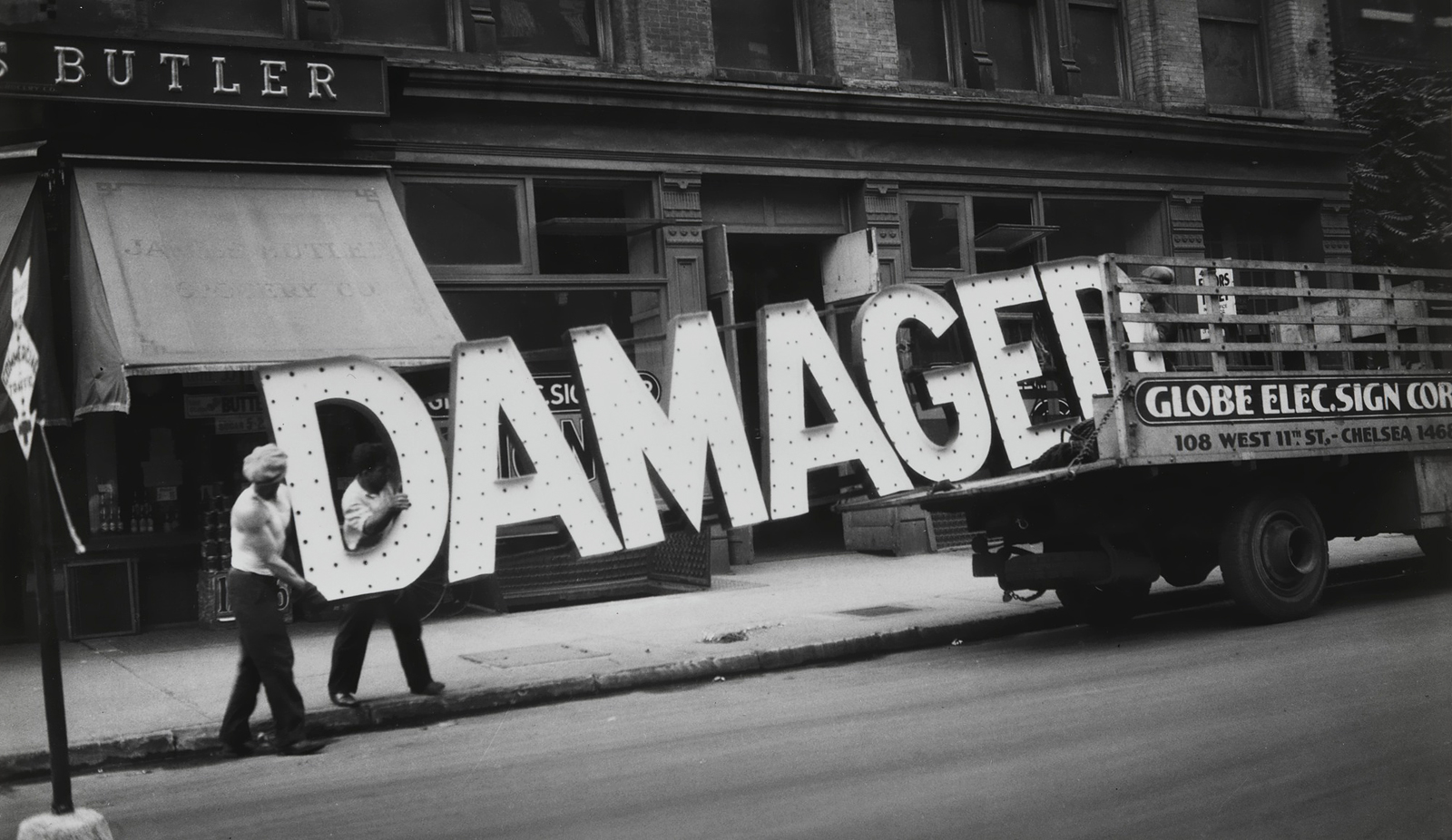
Walker Evans (American, 1903-1975)
Truck and Sign
1928-1930
Vintage gelatin silver print
Private Collection, San Francisco
© Walker Evans Archive, The Metropolitan Museum of Art

Walker Evans (American, 1903-1975)
42nd Street
1929
Vintage gelatin silver print
Private Collection, San Francisco
© Walker Evans Archive, The Metropolitan Museum of Art
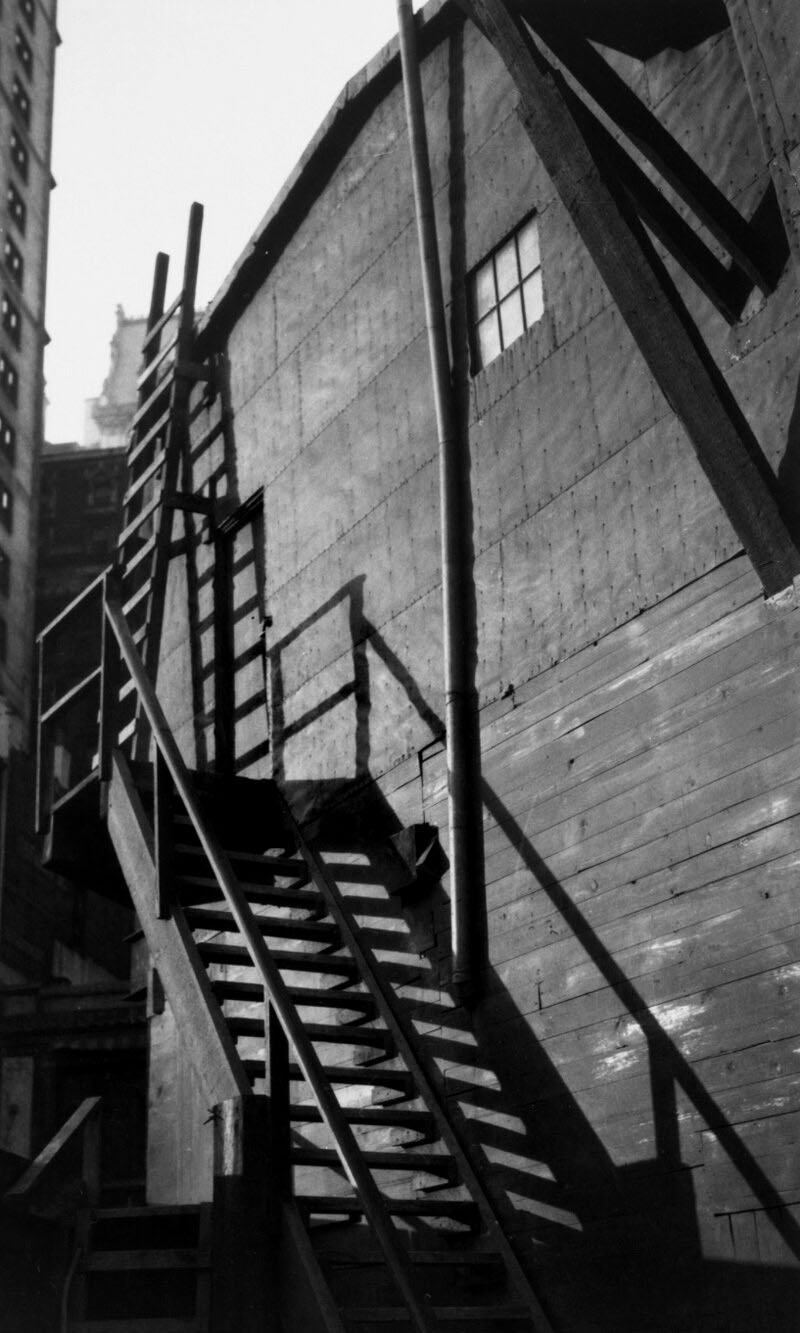
Walker Evans (American, 1903-1975)
New York City
1928-1929
Gelatin silver print
Private Collection, San Francisco
© Walker Evans Archive, The Metropolitan Museum of Art
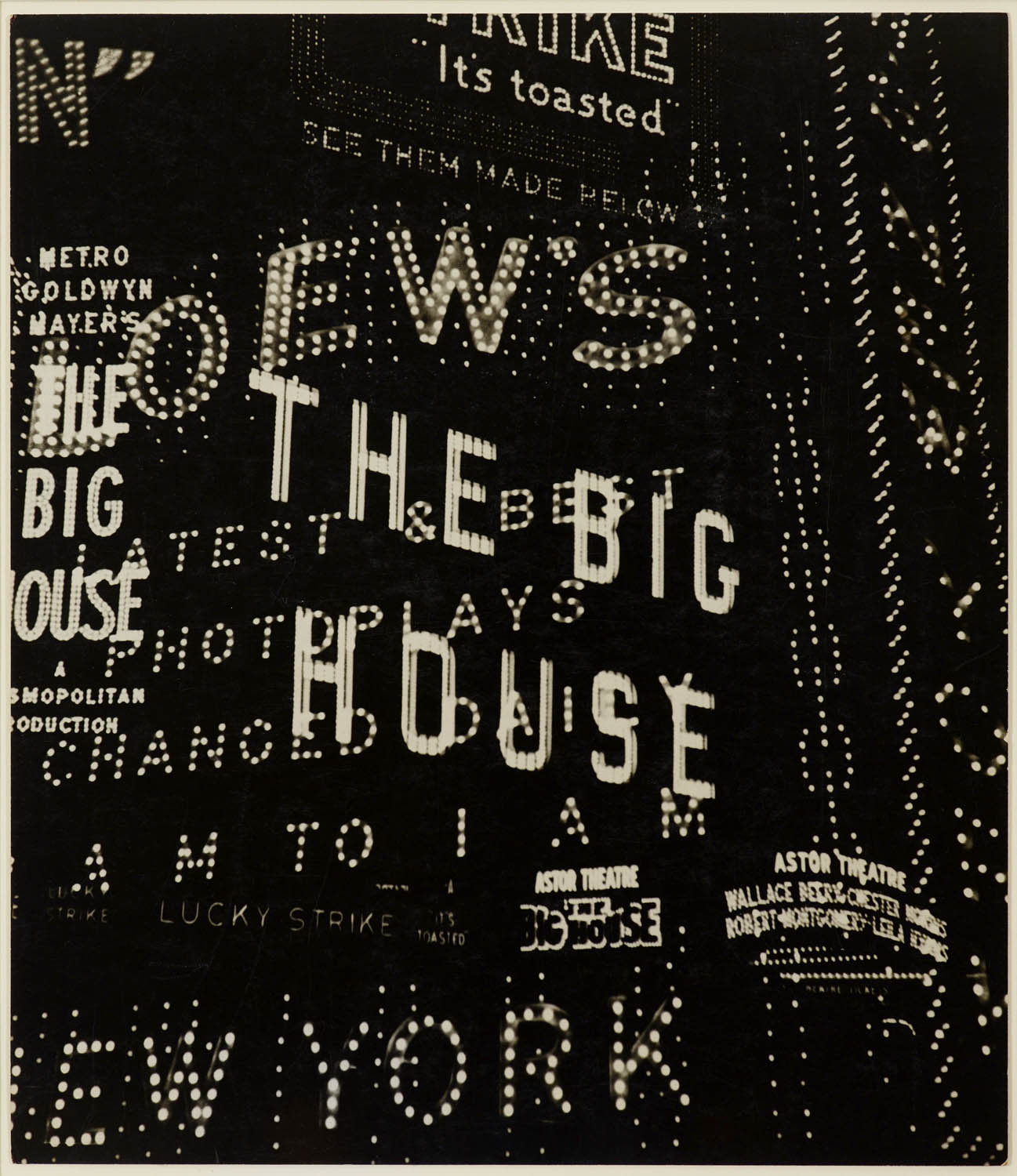
Walker Evans (American, 1903-1975)
Broadway
1930
Vintage gelatin silver print
Private Collection, San Francisco
© Walker Evans Archive, The Metropolitan Museum of Art
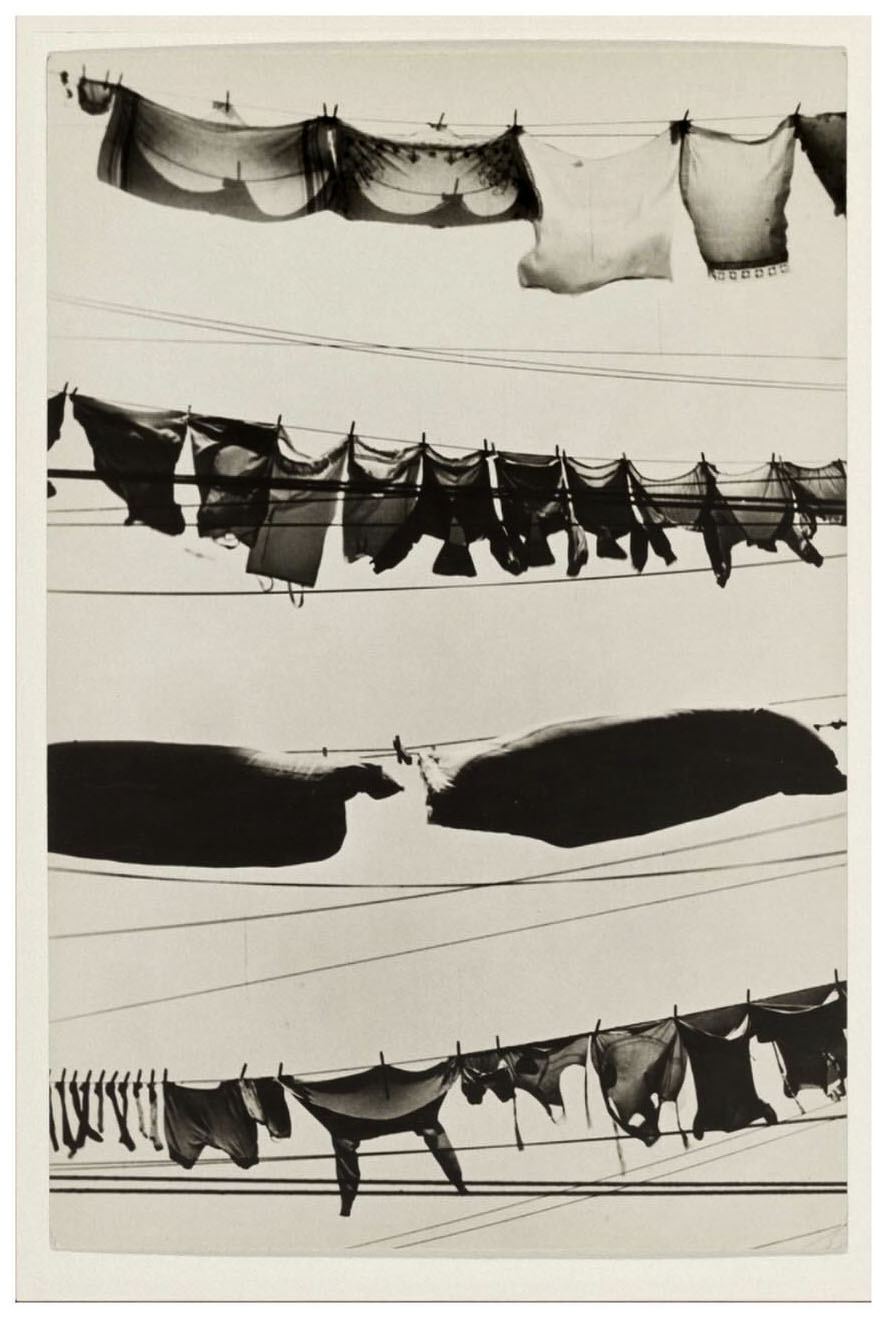
Walker Evans (American, 1903-1975)
Washday, New York City
1930
Vintage gelatin silver print
Private Collection, San Francisco
© Walker Evans Archive, The Metropolitan Museum of Art
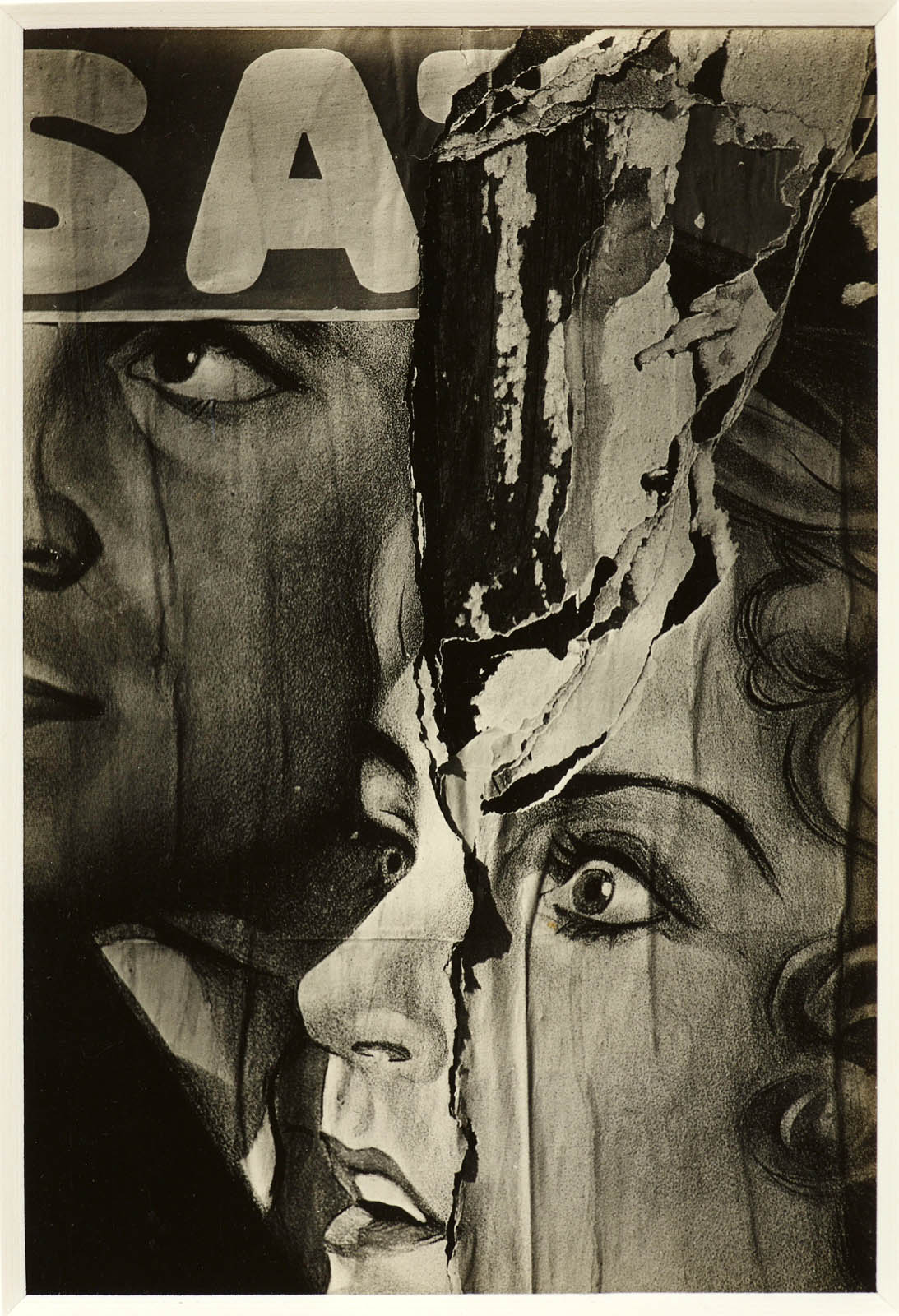
Walker Evans (American, 1903-1975)
Torn Movie Poster (Truro, Massachusetts)
1931
Vintage gelatin silver print
Private Collection, San Francisco
© Walker Evans Archive, The Metropolitan Museum of Art
The photographer Walker Evans (St. Louis, Missouri, 1903 – New Haven, Connecticut, 1975) is an essential figure of modern photography and one of the great visual chroniclers of the United States during the twentieth‑century. His images, seemingly simple yet profoundly complex, lucidly portray everyday life, urban landscapes, and the anonymous faces of a country in transformation. Rooted in the documentary style, Evans combined a direct, austere gaze with an inexhaustible curiosity for the signs of popular culture, which led him to define an era even as he questioned it.
Walker Evans began his work in photography in the 1920s, after a stay in Paris; and over the course of his extensive career, which spanned more than fifty years, he produced some of the most recognized photographs in the medium. He explored a wide range of subjects, from street snapshots taken surreptitiously to meticulous and precise architectural studies, although his best‑known photographs remain those he made in the American South beginning in the 1930s. Evans also embraced new artistic and technical developments, and toward the end of his life he explored the possibilities offered by the Polaroid camera. What unified his entire body of work was a deep interest in and affection for the appearance and essence of everyday life in a society increasingly obsessed with the new and the immediate.
Evans remains, even today, one of the most important and influential photographers of the twentieth century. With a style that is both simple and analytical, his deeply careful way of photographing, resulting in elegant compositions that are free of rigidity, has attracted countless followers. In addition to being an extraordinary photographer, Evans was also an editor, writer, and designer, and he took great care in how his work reached the public through magazines, books, and exhibitions, personally involving himself in the process.
In 2009 Fundación Mapfre launched its photography program with a retrospective dedicated to Walker Evans. Seventeen years later, the institution is pleased to present a new exhibition curated by David Campany, creative director of the International Center of Photography in New York. The show offers an extensive review of his work and of his lasting influence on generations of artists. It brings together key photographs and projects spanning his entire career – from his self‑portraits of the 1920s to his Polaroid experiments in the 1970s – alongside books and publications that reflect his inexhaustible capacity for observation. Through these works, the exhibition reveals a creator who not only documented the world around him, but also invited viewers to question the role of photography.
Key Themes
Signs of the city
Walker Evans stood out for deliberately and systematically incorporating all kinds of urban signage into his photographs – from sophisticated commercial signs to handmade notices, billboards, and shop windows – unlike other photographers of his generation, who often excluded them in pursuit of a supposed aesthetic purity. Evans believed these signs were reflections of society and its values; in this sense, his work resonates with artistic movements such as Pop Art and Postmodernism. His images of signs not only explore the relationship between word and image, but also question the role of photography as art, document, and commercial tool, underscoring the need for dialogue between photography and popular culture.
Anonymous people, anonymous places
Walker Evans showed no interest in portraying celebrities; on the contrary, he was always drawn to the anonymous individuals he encountered on the street or in the subway. He created portraits with a lightweight camera, privileging the spontaneity of isolated figures, crowds, beach scenes, or laborers at work. In this way, the simplicity of what he believed photography should be was reflected in the subjects he chose: a detached, direct, and unadorned kind of photography with carefully composed images that were nonetheless profoundly lyrical.
Tradition and the urban
One of Walker Evans’s core convictions was that the true character of any society was revealed more clearly in small towns than in large cities, which tended to blur individual particularities and traits. This emphasis on the popular and the vernacular set against the standardisation produced by major industries in big cities and metropolitan centers lies at the heart of American culture. Some of Evans’s finest and most celebrated photographs emerged from this belief, resulting in images of small‑town train stations and railcars, wooden buildings, traditional grocery stores and gas stations, as well as quintessential objects such as old pliers, rocking chairs, and fire hydrants.
Walker Evans information and keys from Fundación Mapfre

Walker Evans (American, 1903-1975)
Main Street, Saratoga Springs, New York
1931
Private Collection, San Francisco
© Walker Evans Archive, The Metropolitan Museum of Art
Sometimes a great photograph is a gift of time and space. Main Street, Saratoga Springs, New York, was taken from the United States Hotel in Saratoga Springs, New York, in 1931. Had Evans asked for a room with a picture perfect view? Or did the view only look perfect in Evans’s picture taken on that day, at the moment? The scene has something of the proportioned urban vistas he would have seen on his European trip in 1926. There is something Parisian here.
Recent rain has presented a dreamy shimmer. The light is coming from the clearing weather in the distance. The slick road looks almost like a canal and blends into the sky. In neat rows the shiny automobiles are all black. The filigree of tree branches doodles across the frame.
Although this is one of Evans’s best known and cherished images, the vision of pictorial and social harmony is unusual. No screeching billboards or shop signs. No tension on the street. Sometimes the modern world does offer a rare moment of equanimity.
David Campany from the exhibition catalogue
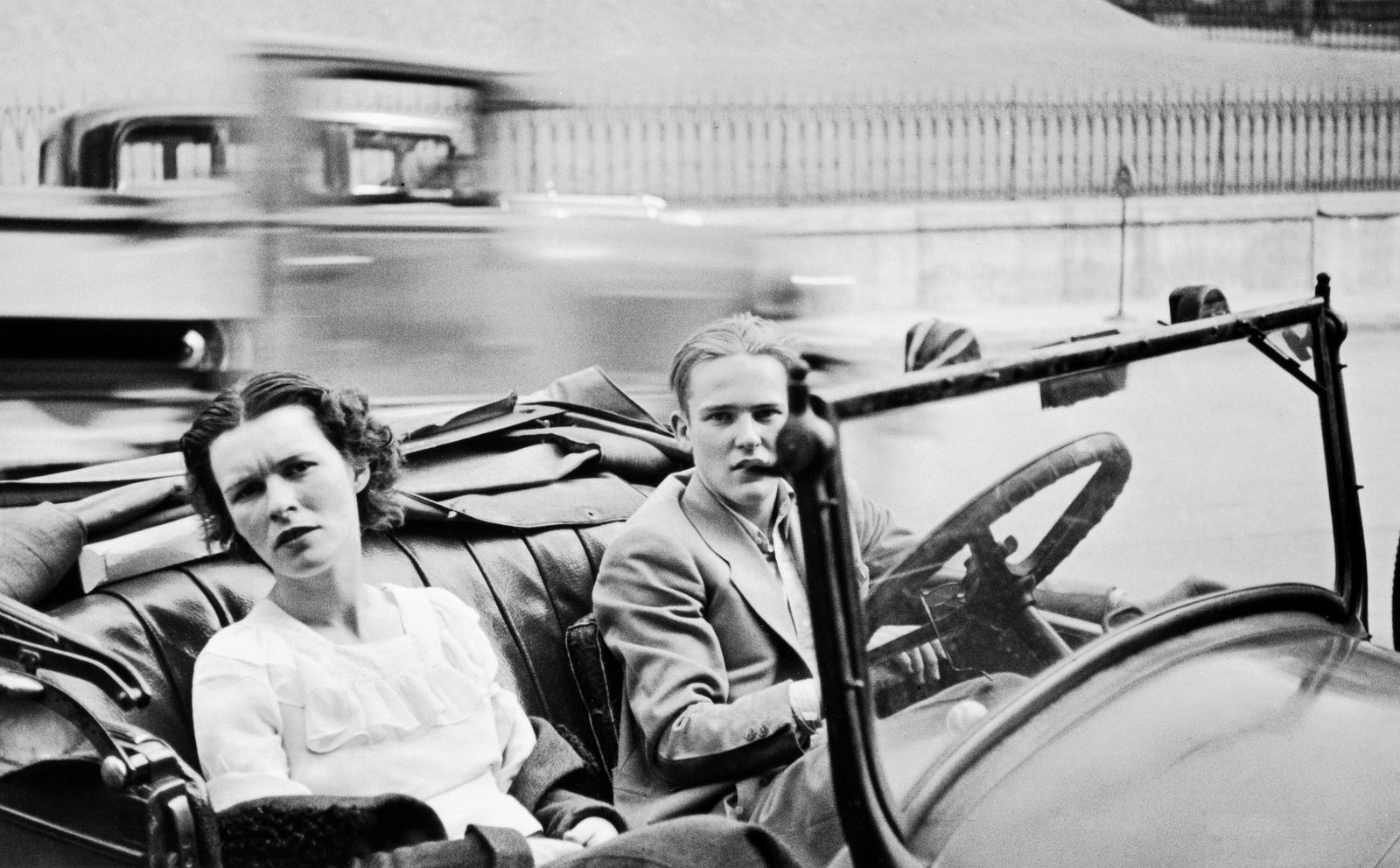
Walker Evans (American, 1903-1975)
Parked Car, Small Town Main Street
1932
Gelatin silver print
Private Collection, San Francisco
© Walker Evans Archive, The Metropolitan Museum of Art
The town of Ossining, where Walker Evans lived for a short time, lies up the Hudson River from Manhattan. He made many photographs there. His views of its hillside communities and single building were shot with a large format camera, but he also made a number of snapshots on the street with a 35 mm Leica. He was experimenting, figuring out what could be done with such lightweight and versatile equipment. It was around this time that Henri Cartier-Bresson began to work with a Leica in Europe. Evans took two photographs of this couple in their parked car. In the other exposure the woman is smelling, but Evans preferred the more wary expression he caught here (the stern gaze of women recurs in his work). This photograph was included in his book American Photographs and because a source of inspiration for younger photographers such as Robert Frank and Garry Winogrand.
David Campany from the exhibition catalogue
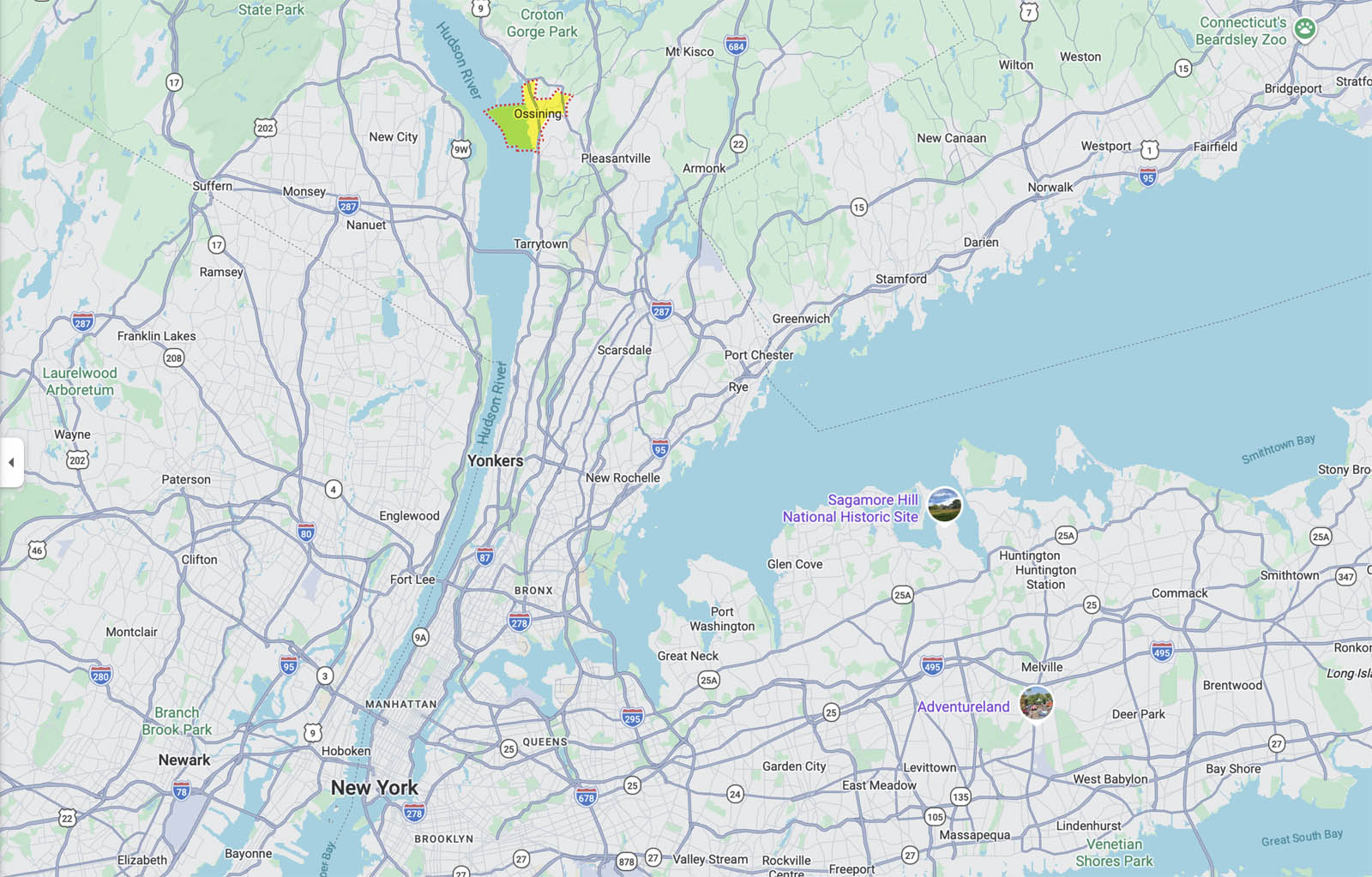
Map showing Ossining in relation to New York

Walker Evans (American, 1903-1975)
Balcony Spectators
1933
Gelatin silver print
Private Collection, San Francisco
© Walker Evans Archive, The Metropolitan Museum of Art
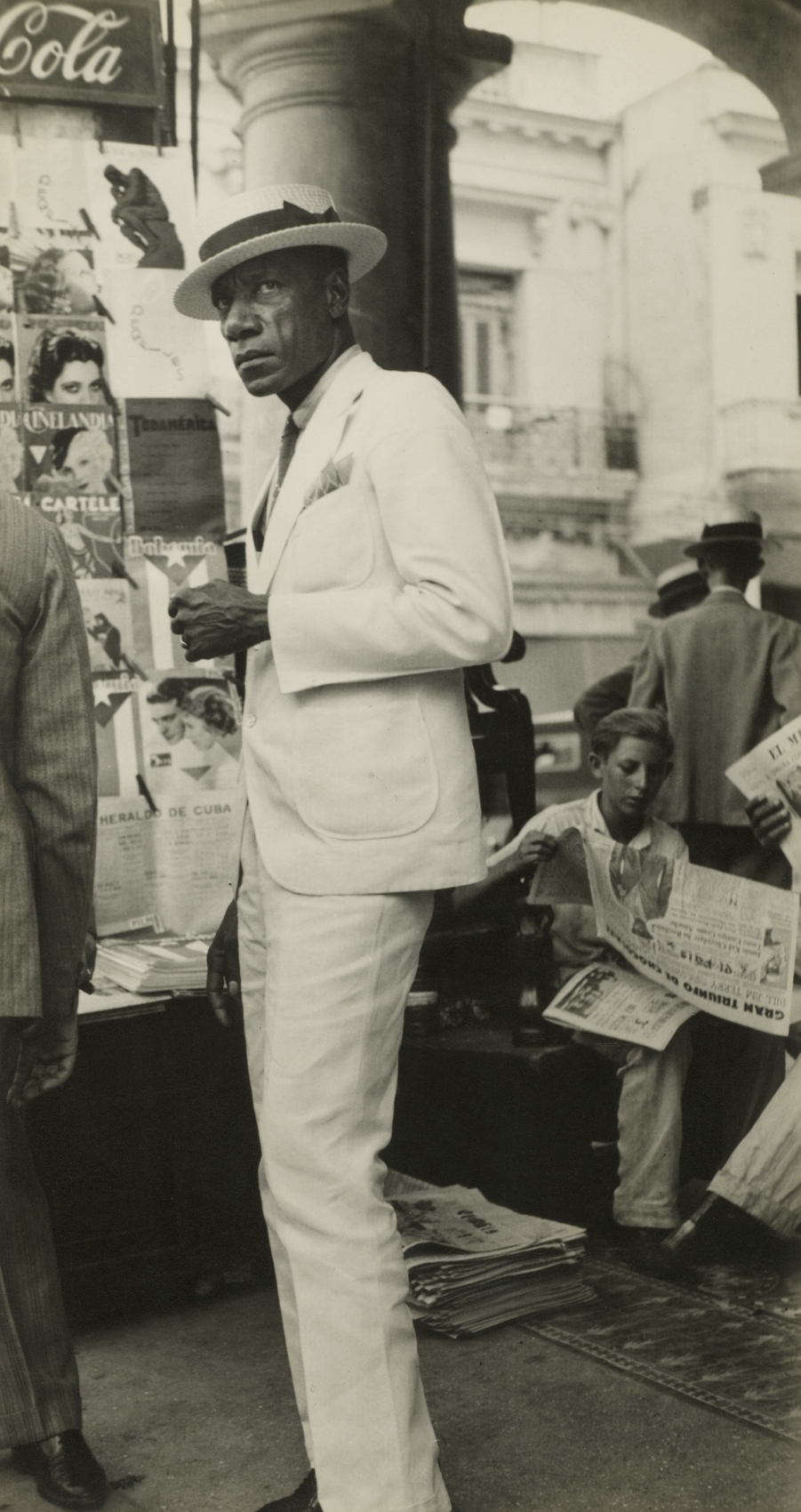
Walker Evans (American, 1903-1975)
Citizen in Downtown Havana
1933
Gelatin silver print
Private Collection, San Francisco
© Walker Evans Archive, The Metropolitan Museum of Art
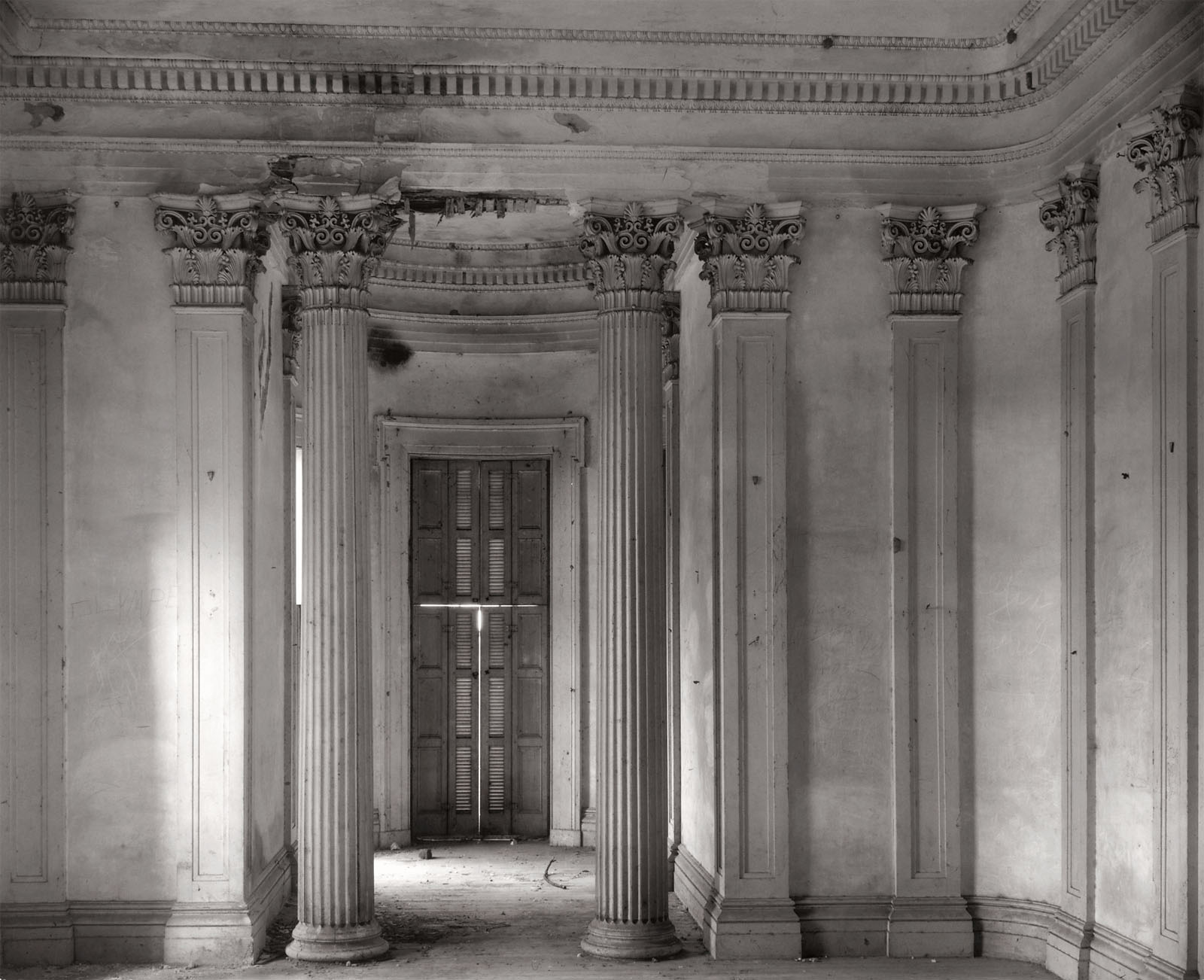
Walker Evans (American, 1903-1975)
Breakfast Room, Belle Grove Plantation, White Chapel, Lousiana
1935
Copy on baryta paper with gelatin and silver emulsion
Collection Fundación MAPFRE
© Walker Evans Archive, The Metropolitan Museum of Art
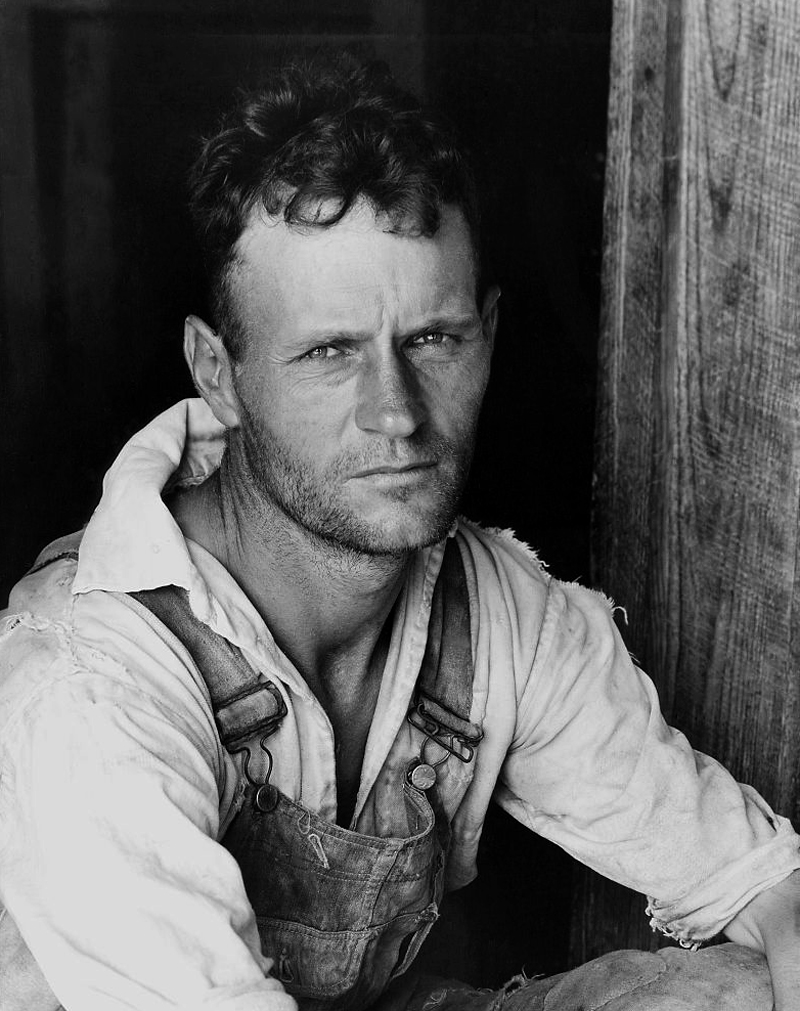
Walker Evans (American, 1903-1975)
Floyde Burroughs, a cotton sharecropper, Hale County, Alabama
1936
Gelatin silver print
Private Collection, San Francisco
© Walker Evans Archive, The Metropolitan Museum of Art

Walker Evans (American, 1903-1975)
Alabama Tenant Farmer wife (Allie Mae Burroughs, Hale County, Alabama)
1936
Vintage gelatin silver print
Private Collection, San Francisco
© Walker Evans Archive, The Metropolitan Museum of Art
Of all the celebrated photographers of the last century, the one who remains the most relevant today, and the one with the widest influence, is Walker Evans (St. Louis, Missouri 1903 – New Haven, Connecticut, 1975). His images, made in what he called the “documentary style”, are among the best known in the history of the medium. Direct and generous, analytical yet lyrical, carefully composed but unforced, his ways of photographing left the door open for countless others.
For a while, Evans’ reputation rested on the photographs he had made in the southern parts of the USA in the 1930s, but his achievement was wider than that. He worked with every camera format and photographed many subjects in different ways, from surreptitious street shots, to meticulous and exacting studies of architecture. He embraced new artistic and technical developments, and at the end of his life he explored what could be done with a Polaroid camera. What united it all was a deep interest in, and affection for, the look and feel of everyday life. In a culture increasingly obsessed with the new, Evans cherished things that were standing the test of time, be it a face or the facade of a warehouse.
Evans was also concerned with the ways photographic meaning is related to context, text, and relations between images, whether on the gallery wall, or on the pages of books and magazines. To be in control of one’s photographs means being in control how they are presented and circulated in the world. So, as well as being a remarkable image-maker, Evans was also an editor, writer and designer, shaping the way his work met its public. In this exhibition we see the range of Evans’ themes and approaches, and his understated resistance to the excesses and shallowness of so much American culture becomes clear.
A Young Modernist
Walker Evans spent most of 1926 in Paris, studying at the Sorbonne but struggling to become a writer. Charles Baudelaire and Gustave Flaubert were his models, while he paid attention to contemporaries such as James Joyce and Blaise Cendrars. He made a handful photographs with a pocket camera, notably a series of self-portraits.
Returning to New York, Evans began to take photography seriously. He knew the city photographs of Ralph Steiner, Charles Sheeler, and especially Paul Strand. Their bold compositions presented Manhattan as a quintessentially modern metropolis. Evans was also aware of the ‘New Vision’ in European photography, with its enthusiastic embrace of modernist form, especially in architecture. He published a portfolio in the journal Architectural Record, and supplied three photographs from around the Brooklyn Bridge for a deluxe publication of Hart Crane’s epic poem The Bridge (1930).
The economic crash of October 1929 and the ensuing cultural turmoil sharpened the creative and political minds of all the ambitious artists of Evans’ generation. He soon stepped back from the celebration of the city to look hard at the lives of those who inhabited it.
A Past Without Nostalgia: Nineteenth Century Architecture
In 1931 Evans was commissioned by Lincoln Kirstein, a wealthy friend and supporter of the arts, to photograph Victorian houses in and around Boston. Two years later, the pictures were presented in the architecture room of the recently established Museum of Modern Art, New York. While Evans was credited, the context and display clearly put the emphasis on the architecture rather than Evans’ authorship. Nevertheless, in the press release for the exhibition, Kirstein noted:
Walker Evans’ photographs are perfect. They have been taken during the last four years and form the beginning of a photographic history of American domestic building during its most fantastic, imaginative, and impermanent period. Many of the houses, neglected and despised, have disappeared in the short period since these photographs were made. Evans worked in bright sunlight, forcing the details into utmost clarity. The focus was so sharpened that some of the houses seem to exist in an airless atmosphere such as Edward Hopper suggests in his painting of similar subjects. These houses were photographed in New England and New York.
Cultural artefacts endangered by contemporary tastes were already a key subject matter for Evans, one he would return to at various points.
Signs of Images, Images of Signs
Slick commercial signs, hand-made vernacular signs, street wayfinding signs, billboards, posters and shop fronts: if anything defines the time and place of an urban situation it is signage. While most photographers of Evans’ generation avoided or limited its presence in their images (searching for some kind of ‘purity’), he embraced it whole-heartedly. His fascination with signage, and his conviction that it has much to say about a society and its values, chimed with everything from the Pop Art that emerged at the end of the 1950s to the postmodern arts of quotation and appropriation that were emerging just as Evans was reaching the end of his life in 1975.
Evans’ photographs of signs seem highly reflexive, bringing photography itself into question as a medium of representation, while blurring the distinction between word and image. Photography may be a fine art, but it is also a means to make functional documents, and a vital tool of commerce. Whatever its aesthetic ambitions, Evans understood that serious photography would have to contend with its place in common culture.
Cuba
In 1933 Evans was on commission to photograph Havana and its environs for Carleton Beals’ book The Crime of Cuba. Beals was a journalist committed to exposing the corruption of Gerardo Machado’s brutal rule and America’s complicity with it. Cuba had gained independence back in 1902 but America reserved the right to interfere in its affairs, overseeing its finances and foreign relations.
Evans was not politically naïve. His street shots are a counterpoint to Beals’ high rhetoric of abstract political force and faceless conspiracy. And yet, his wary self-consciousness makes his pictures of people difficult to assess. His Cuba work continues to challenge critics and historians. Should we read it as the snaps of a curious tourist with a great eye for composition and social detail? Or might they register the slight tremors, the “mood on the street” of a tense society watching its back? Evans rarely presented his Cuban pictures after their moment had passed.
Anonymous & Incognito
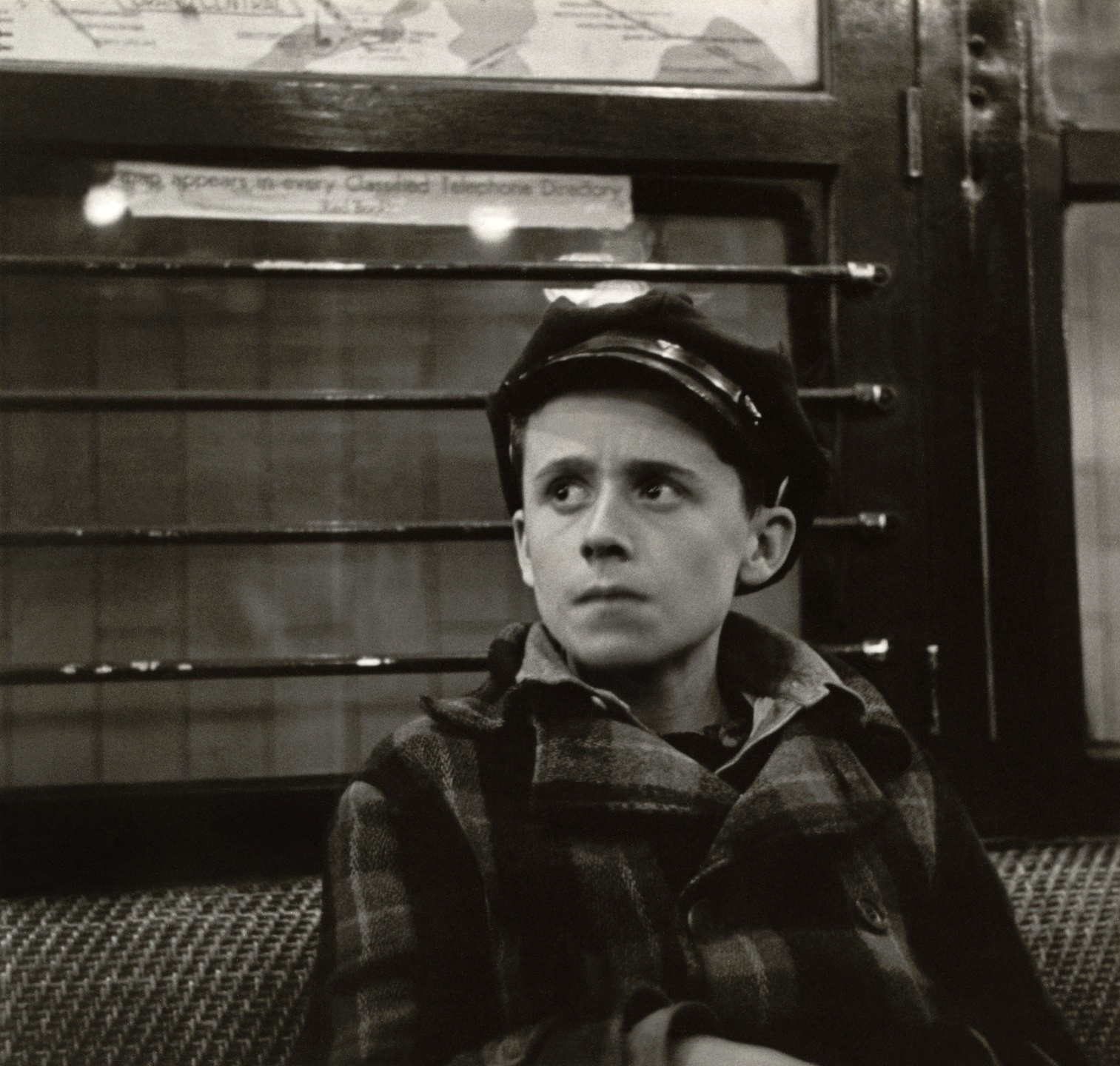
Evans came into photography just as anonymity was becoming a touchstone of the modern era. Laborers on production lines. Isolated figures in the street. The crowd through which a wanderer might move unnoticed, or subject to the suspicious gaze of others. His early street portraits had much in common with those made by Eugène Atget in France and August Sander in Germany in the 1920s. Lightweight cameras soon made more candid portraits possible and Evans began to experiment, making serial photographs of New York subway passengers, and people on streets in various cities.
Evans worked through a period marked by increasing surveillance, and increasing presence of photography and photographers in daily life. It made him wary of the idea that people could be judged quickly by their appearance. His texts for ‘Labor Anonymous’ (Fortune, October 1946), and ‘The Unposed Portrait’ (Harper’s Bazaar, March 1962) push the reader to think again about the limits of photography.
Car Culture
In 1903 (the year Walker Evans was born) there were 4,000 cars in America. By 1930 there were 26.7 million: one for every 4.5 people. The transformation was breathless. Roadsides were redefined by billboards, gas stations, and motels. Towns and cities were designed or adapted for car use.
Evans enjoyed driving, and much of his photography beyond New York required a car. However, the rapid changes that cars were bringing to the appearance and the functioning of society left him feeling ambivalent. In the mass media at least, cars were the embodiment of optimism and mobility. Waste and despoilment were kept out of site, on the stage wings of progress. Evans’ view of rusting cars in a field (Joe’s Auto Graveyard, 1936) is a glimpse behind the scenes. This theme stayed with him for life. In 1962 he published a photo-essay in Fortune titled ‘The Auto Junkyard’, and in the 1970s, he also made many Polaroid photographs of cars and trucks rusting in fields.
Three Tenant Farmer Families
In the summer of 1936, the writer James Agee was commissioned to make a report on cotton farm tenancy in the American south. He chose Evans as his photographer. They committed to the project with great energy but while at work they barely overlapped. Evans recalled: “We lived with [the three families] for three weeks, as I remember it. We told them exactly what we were doing, and we worked intensely and separately. I didn’t see Agee. He was working all day interviewing and taking notes, and I was photographing.”
When Agee’s text was ten times longer than planned, Fortune dropped the project leaving him and Evans to pursue it as a book. Evans assembled a discrete sequence of thirty-one photos that would be set apart from the text, with no captions. Such radical separation of word and image stood against the tide of more conventional documentary practices. The resulting book, Let us now Praise Famous Men, finally appeared in 1941. Evans’ sequence shows him perfecting a way of seeing that was stoic and inscrutable, associative yet anti narrative, with images that eventually became some of the most famous of the era, and of his career.
Chicago
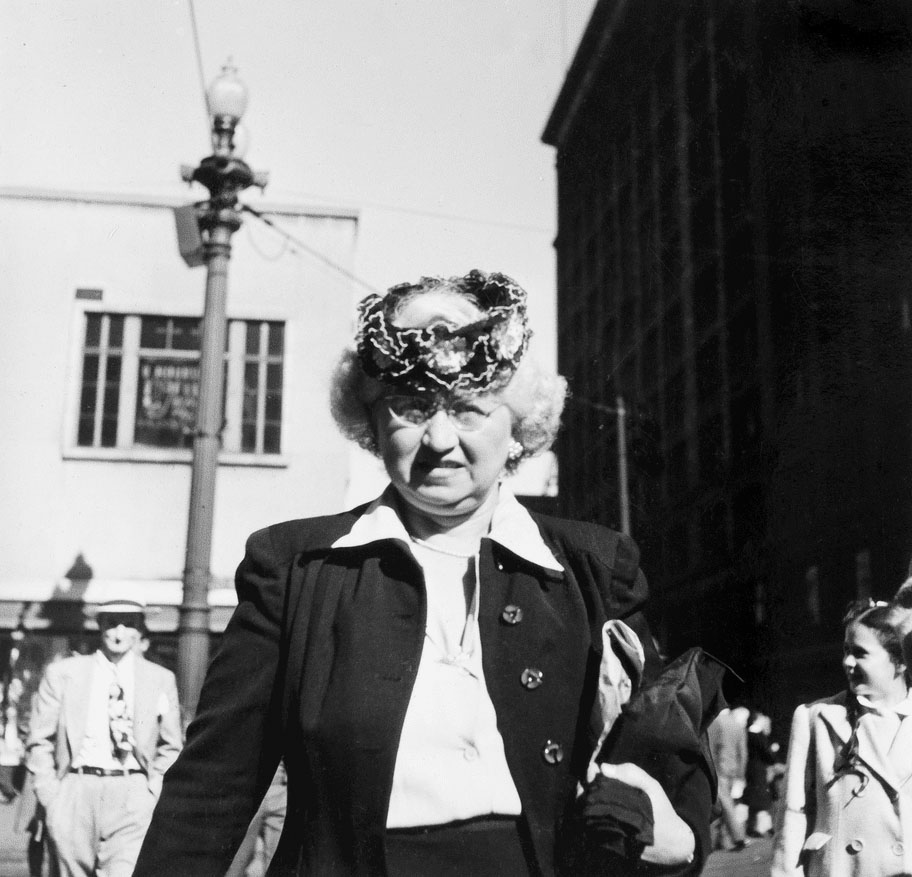
In late 1946, Evans opened a major solo exhibition at the Art Institute of Chicago. In February 1947, Fortune published his ambitious photo-essay ‘Chicago: a camera exploration’. Across ten pages he avoided the city’s “prized and remarkable postcard colossi” to show “sights that meet a leisured and untethered eye,” as he put it in his text for the piece. The layout looked celebratory but its tone was not: “Chicago decays as it does everything else
– spectacularly and speedily.” The fourth spread is the most remarkable, showing citizens at the corner of State and Randolph Streets. These are post-war consumers, Caucasian, Asian and African-American. Evans places himself directly in their path. Trapped anxiously in bright sunlight the faces hint at the unrest beneath middle-class decorum.
Beyond street portraits, Evans made a comprehensive study of Chicago’s remarkably mixed architecture, allowing him to resume his ongoing interest in buildings as a kind of indirect portrait of a society. The Chicago photo-essay for Fortune was by far his most significant magazine work to date, giving him the confidence to develop and refine what he wanted to do with the printed page in the coming years.
Small Towns & Neighbourhoods
Although Evans’ photography began in New York and he made a substantial photographic portrait of Chicago, he remained convinced that it was the smaller towns that offered a more accurate sense of the nation. The major cities of the USA are always exceptional, and tend to think of themselves as such. Evans concerned himself with the typical, and with the pragmatic ways small towns work and grow. Away from intense modern progress, artefacts of the past persist until they no longer function, rather than being replaced for the sake of it. Some of Evans’ most loved and complex photographs came out of this commitment to typical places.
Message from the Interior
Evans’ deep interest in rooms was long-lasting, and it suited his slow and careful pace of observation. With no people present, an interior scene can become a portrait of an individual, a family, or a community. Moreover, the way a camera records will allow everything that is present to become significant, as in a still life composition. Details of décor. Treasured objects. Casual objects. Furniture. Fabrics. Even the atmosphere of a room can be communicated.
African Sculpture: an Art of Documentation
In 1935 the Museum of Modern Art, New York, commissioned Evans to document nearly five hundred sculptures gathered for an exhibition of African art. In the museum itself each object was shot separately (with a few objects documented in pairs) in long exposure, during which lights were sometimes moved around to produce an all-over, hyper-factual clarity. Prints were made for extensive teaching folios, and a travelling exhibition. The catalogue for MoMA’s exhibition African Negro Art (in which Evans is not credited) was a serious attempt to look at the origin and complexity of these objects beyond the crude reductions and exoticism of the attitudes of European surrealists and modernist artists of the time. Although it was a free-standing commission, we can view this work in the context of Evans’ earlier commission from the Museum of Modern Art to photograph Victorian architecture, as well commissions to document folk art at New York’s Downtown Gallery, and Diego Rivera’s political murals for the Workers’ School of New York.
Vernacular Designs, Common Objects
Evans took the forces of modernity and modernisation – economic, political, social, aesthetic – as a subject matter to be considered carefully. These forces could be sensed most acutely through objects that had somehow survived the onslaught of modernisation or were about to succumb to it. Even the titles of Evans’ Fortune magazine photo-essays signalled his suspicion of the new: ‘The Wreckers’, ‘These Dark Satanic Mills’, ‘Downtown: A Last Look Backward’, ‘Before they Disappear’, ‘The Last of Railroad Steam’, ‘The Auto-Junkyard’.
Nevertheless, it would be hasty to dismiss this as nostalgia, or a sentimental looking back in the knowledge that the juggernaut of progress could not be stopped. In 1956 Evans observed: “[N]ostalgia has become debased to mean a kind of syrup savoured by self-pitying people conjuring better days, funny hats and an innocence nobody ever had.” In a caption for a series of photographs of antique store window displays he declared: “Nostalgia I disdain: pray keep me forever separated from an atmosphere of moist elderly eyes just about to spill over at the sight of grandmother’s tea set. Design just a little dated will interest any artist. Design current is always terrible. Anyone who has tried to find a good contemporary lamp or clock will know what I mean.”
Exhibition texts from Fundación Mapfre
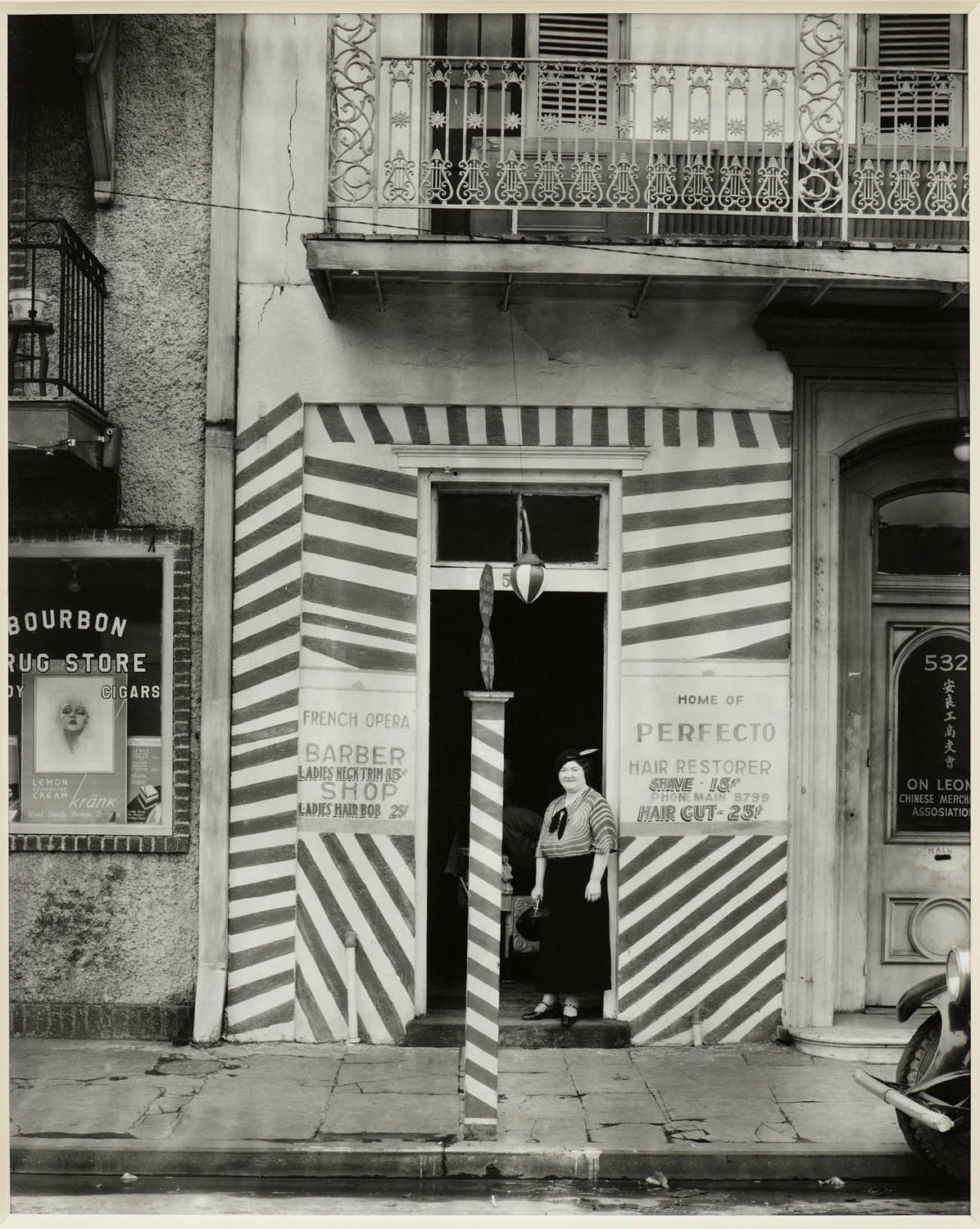
Walker Evans (American, 1903-1975)
Sidewalk and Shopfront, New Orleans
1935
Gelatin silver print
Private Collection, San Francisco
© Walker Evans Archive, The Metropolitan Museum of Art

Walker Evans (American, 1903-1975)
Penny Picture Display, Savannah
1936
Vintage gelatin silver print
Private Collection, San Francisco
© Walker Evans Archive, The Metropolitan Museum of Art
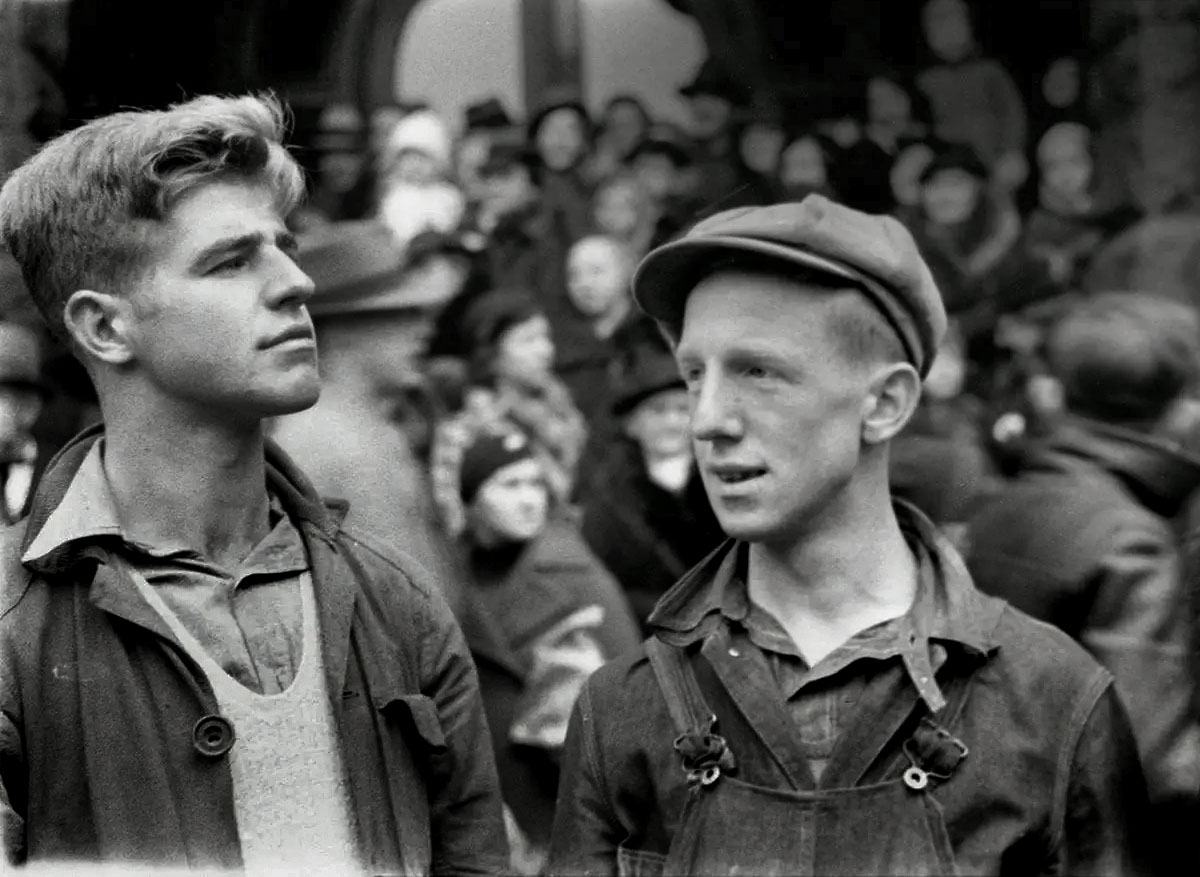
Walker Evans (American, 1903-1975)
Faces, Pennsilvanya Town
1936
Vintage gelatin silver print
Private Collection, San Francisco
© Walker Evans Archive, The Metropolitan Museum of Art
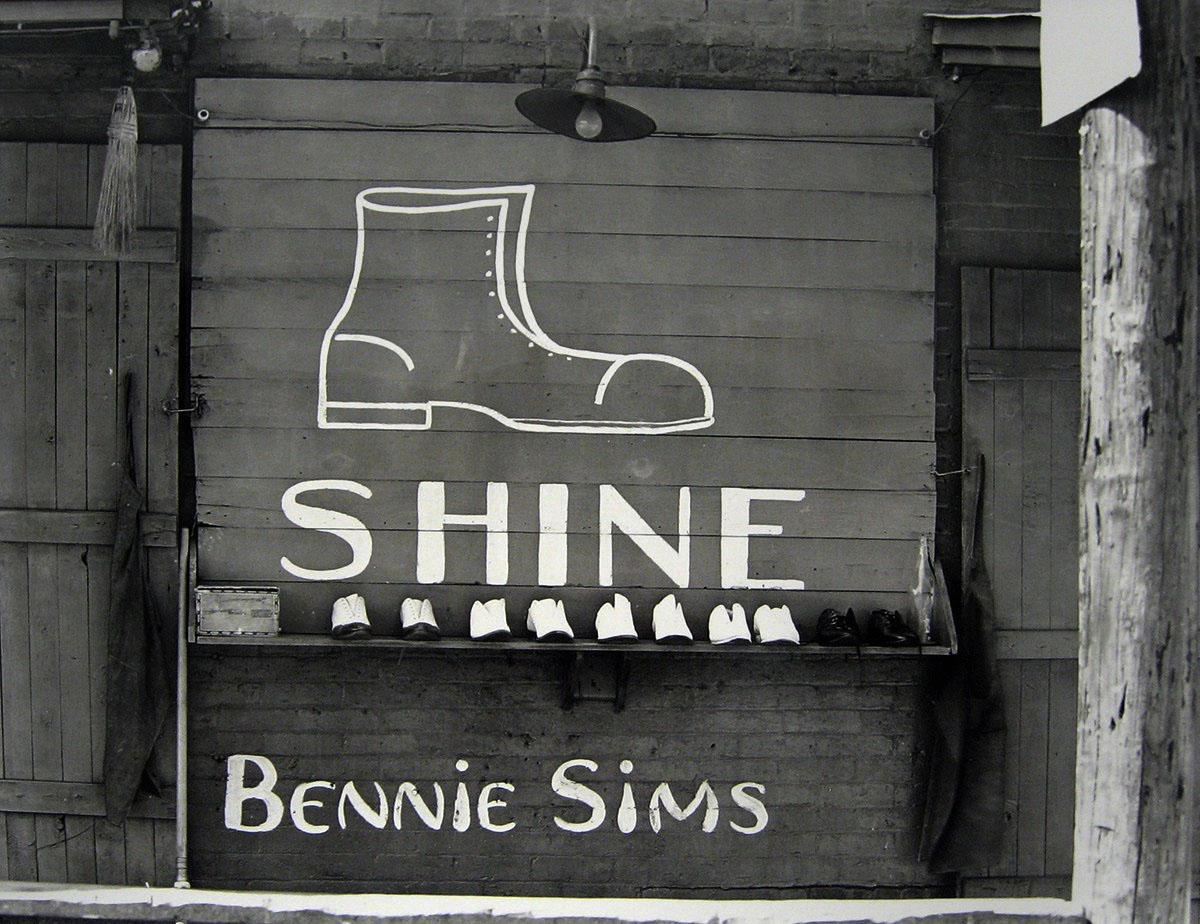
Walker Evans (American, 1903-1975)
Shoeshine Stand Detail in Southern Town
1936
Vintage gelatin silver print
Private Collection, San Francisco
© Walker Evans Archive, The Metropolitan Museum of Art
![Walker Evans (American, 1903-1975)
'[Subway Passengers, New York]' 1938](https://artblart.com/wp-content/uploads/2016/02/3428-018-web.jpg "Walker Evans (American, 1903-1975) '[Subway Passengers, New York]' 1938")
Walker Evans (American, 1903-1975)
[Subway Passengers, New York]
1938
Vintage gelatin silver print
Private Collection, San Francisco
© Walker Evans Archive, The Metropolitan Museum of Art
Walker Evans (American, 1903-1975)
Subway portrait
1938-1941
Vintage gelatin silver print
Private Collection, San Francisco
© Walker Evans Archive, The Metropolitan Museum of Art
Walker Evans magazine articles
Walker Evans, ‘Before They Disappear’, Fortune, March 1957
The familiar insignia of the freight cars are like old ditties beating in the back of our heads. Once we knew them all by heart, they were with us like the weather, like the backs of books we collected, and like the streets we walked in.
Brought into focus by selection, you almost expect these brave and naïve emblems to emit the very sound of railroading – the iron whines, the Steely screechers, and the attenuated nocturnal moans of steam transportation.
They don’t quite do that. But they are worth examining, not only for the commemorative thoughts they carry, but because they are going to disappear from the US landscape one day you have only to notice the new, exceedingly distinguished lettering of the New Haven’s car sides, or the redesigned Boston & Maine signature, to see that the fell hand of the contemporary commercial designer is lurking near, T-square poised.
When we can no longer catch sight of the great Chinese red and black double tadpole of the Northern Pacific, or the simple old cross of the Santa Fe, then will a whole world of cherished association have been destroyed. Impiety could go no further.
Walker Evans, ‘The Auto Junkyard’, Fortune, April 1962
The nadir of landscape scenery is the great American auto-junk scrap pile. With the effect of some evil prank, these obscene perversities leer out of the countryside almost anywhere, often in the middle of idyllic rural spots … Pictorially speaking, the result is chaos abstracted, and this has considerable curious interest in itself. There is a secret imp in almost every civilized man that bids him delight in the surprises and in the mockery in the forms of destruction. At times, nothing could be gayer than the complete collapse of our fanciest contrivances. Scenes like these are rich in tragicomic suggestions of the fall of man from his high ride.
Walker Evans, ‘The U.S. Depot’‚ Fortune, February 1953
He who travels by rail over the lesser lines of the USA clangs and shunts straight into his own childhood. Most of the smalltown railroad stations up and down the country are now about fifty years old. Looked at collectively they seem more and more toylike – as model railroad toys grow more and more like the real thing. With only a slight effort of the imagination, these encrusted little buildings turn into miniature stage sets, and the people in them correctly costumed dolls. You feel an old affection for the way a station agent throws the block-signal lever there in his coal-heated office. And what in that green-paper note handed up on its looped stick to the engineer as the 3:52 breaks to a stop? Does it say “Train five Engine eight four nine six delayed at Millerton hot journal box,” or does it say “Tell Jeanie I’ll get pork chops?”
Walker Evans, ‘Beauties of the Common Tool’, Fortune, July 1955
Among the low-priced, factory-produced goods, none is so appealing to the senses as the ordinary hand tool. Hence, a hardware store is a kind of offbeat museum show for the man who responds to good, clear “undesigned” forms. The Swedish steel pliers pictured above, with their somehow swanlike flow, and the objects on the following pages, in all their tough simplicity, illustrate this. Aside from their functions – though they are exclusively wedded to function – each of these tools lures the eye to follow its curves and angles, and invites the hand to test its balance.
Who would sully the lines of the tin-cutting shears on page 105 with a single added bend or whorl? Or clothe in any way the fine naked impression of heft and bite in the crescent wrench on page 107? To be sure, some design-happy manufacturers have tampered with certain tool classics; the beautiful plumb bob, which used to come naively and solemnly shaped like a child’s top, now looks suspiciously like a toy space ship, and is no longer brassy. But not much can be done to spoil a crate opener, that nobly ferocious statement in black steel as may be seen on page 104. In fact, almost all the basic small tools stand, aesthetically speaking, for elegance, candour and purity.
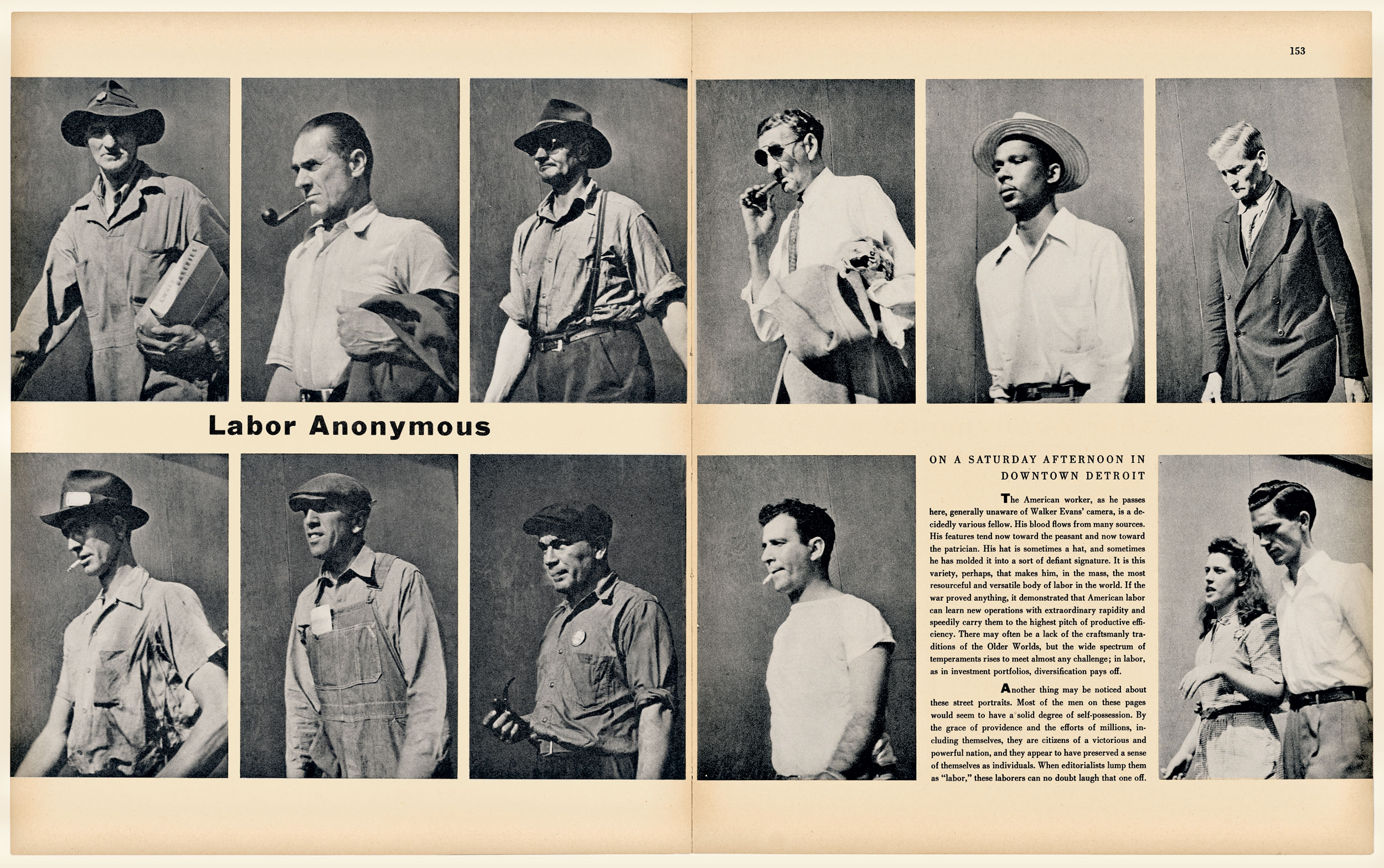
Walker Evans (American, 1903-1975)
“Labor Anonymous,” ‘Fortune’ 34, no. 5, November 1946
1946
Offset lithography
Private Collection, San Francisco
© Walker Evans Archive, The Metropolitan Museum of Art, New York
Labor Anonymous is a 1946 photo series by Walker Evans, commissioned by Fortune magazine, documenting 50+ candid, close-up street portraits of Detroit workers. Capturing diverse, unposed facial expressions and postures, the project created a “physiognomy of a nation,” exploring modern anonymity and the dignity of laborers.
Shot on assignment for Fortune magazine in 1946, this Walker Evans photograph of an unknown Detroit office worker is reproduced from Labor Anonymous, just out from D.A.P. Publishing and Walther König. “When I knew him, Evans was beset by troubles of all kinds,” Jerry L Thompson writes, “money troubles, tax troubles, marriage troubles (he divorced a second time in 1972), health troubles, advancing age, declining strength: the full catastrophe that flesh is heir to. As he approached 70, most onlookers would have taken him (even by the standards of that time) to be at least a decade older. Yet every time he walked out to start his day he was ready to be an artist. Every day had some work in it – for Evans, work meant being an artist – and the work got done even if every practical concern – what ordinary people call work – fell by the wayside.”
Text from the Artbook website
Walker Evans (American, 1903-1975)
Corner of State and Randolph Streets, Chicago
1946
Gelatin silver print
Private Collection, San Francisco
© Walker Evans Archive, The Metropolitan Museum of Art, New York
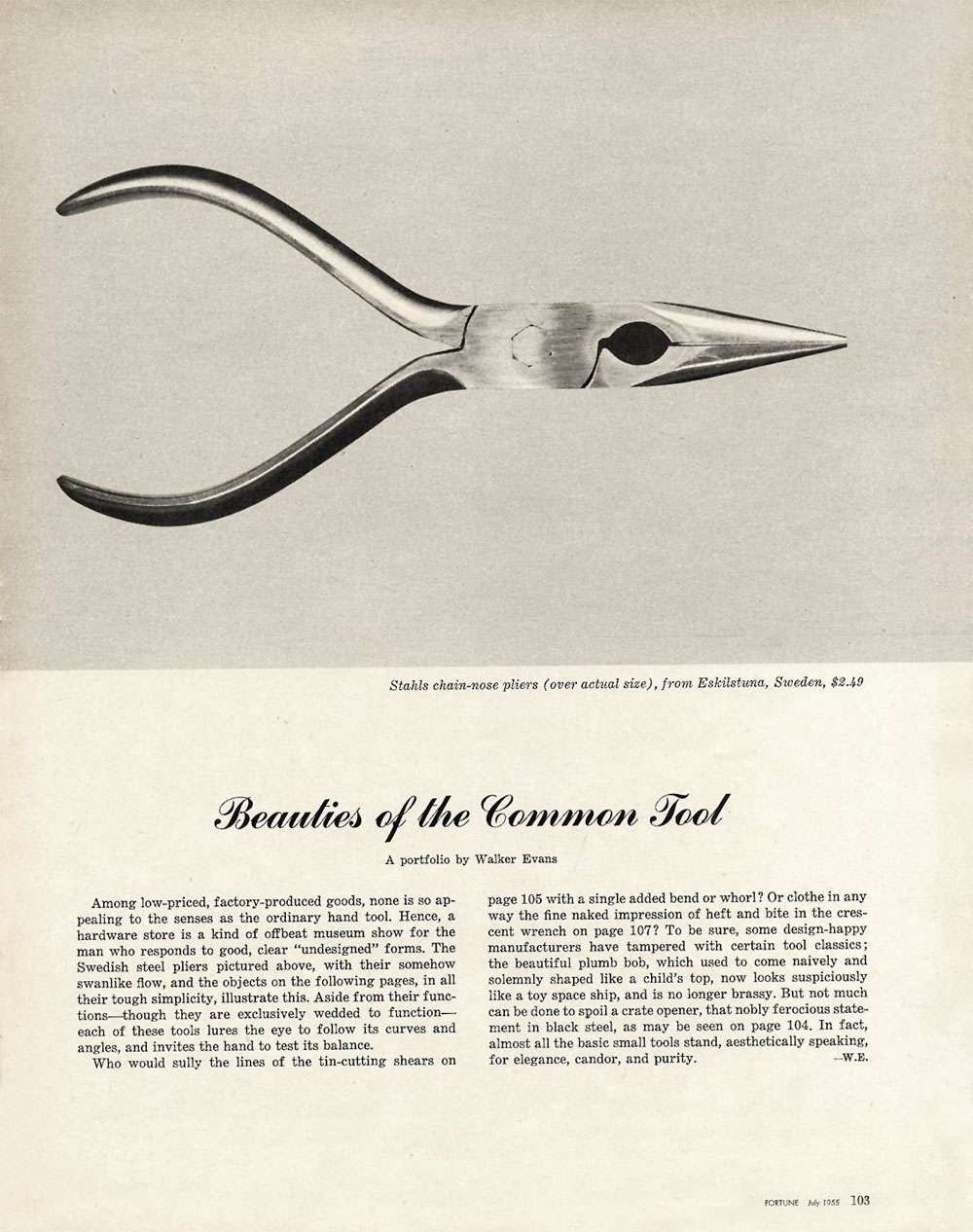
Opening page from Walker Evans’ 1955 Fortune magazine photo essay ‘Beauties of the Common Tool’, July 1, 1955
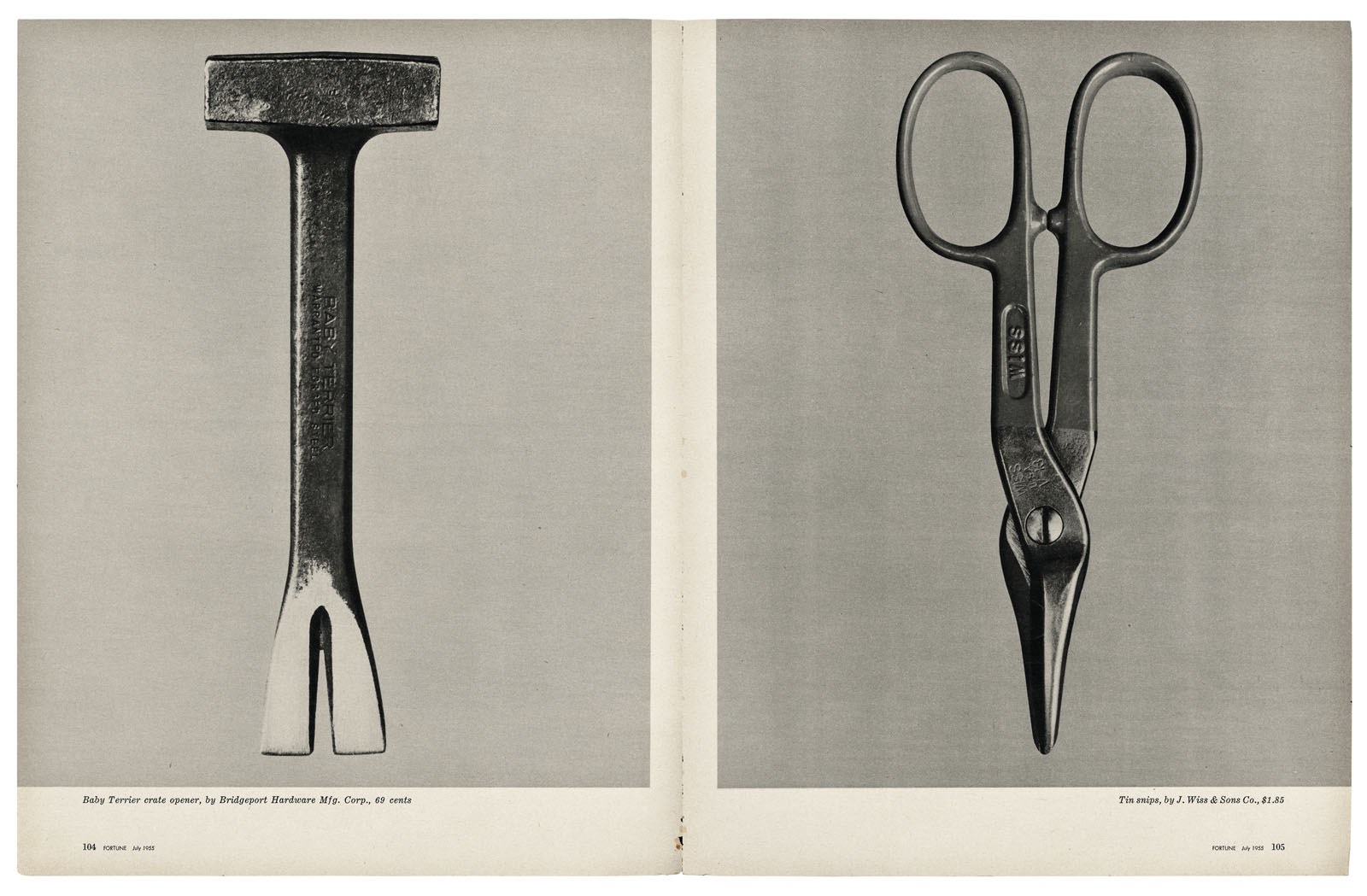
Pages from Walker Evans’ 1955 Fortune magazine photo essay ‘Beauties of the Common Tool’, July 1, 1955

Walker Evans (American, 1903-1975)
Chain-nose Pliers
1955
gelatin silver print
Private Collection, San Francisco
© Walker Evans Archive, The Metropolitan Museum of Art
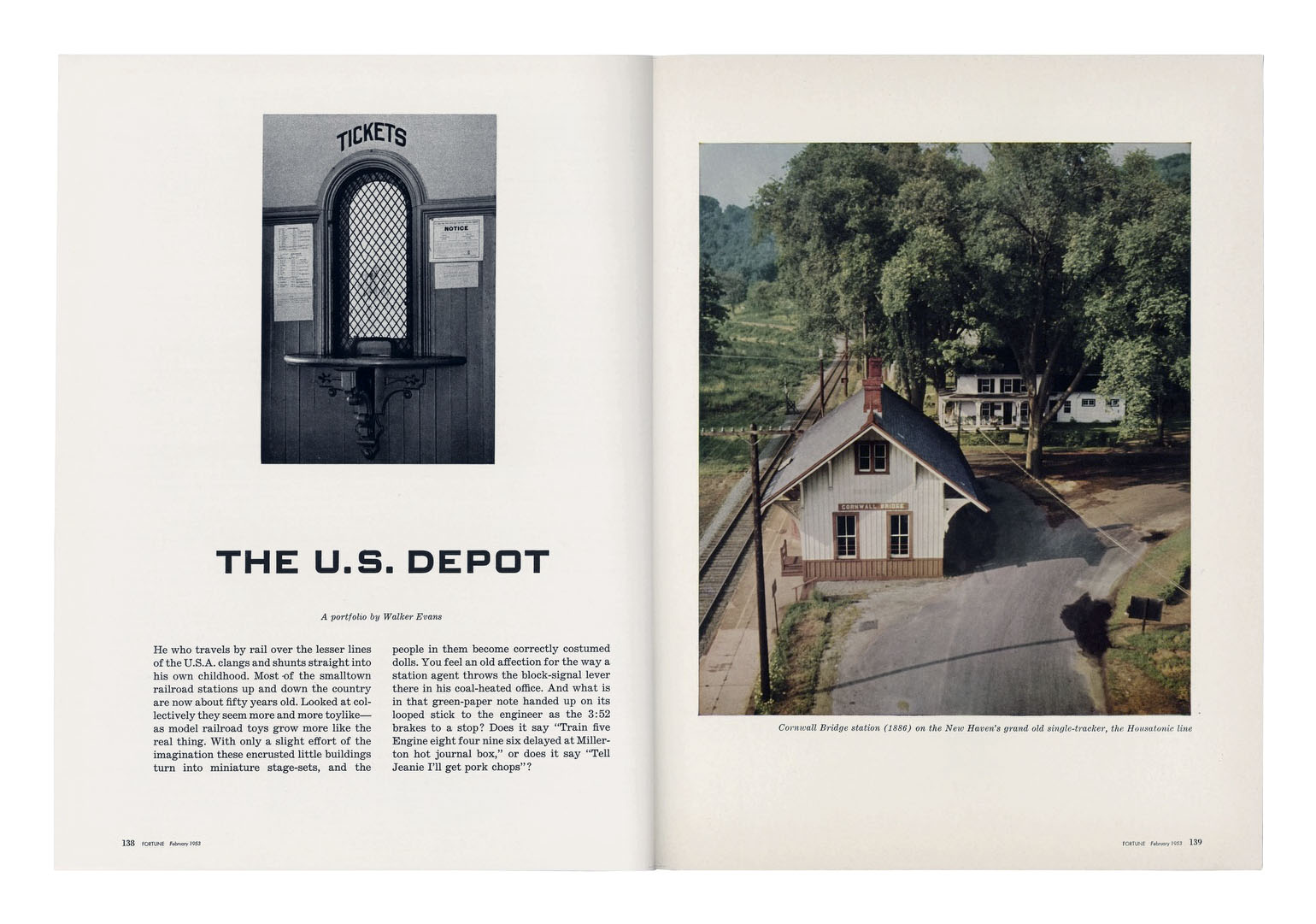
Opening spread of Walker Evans’ 1953 Fortune magazine photo essay ‘The US Depot’, on small railroad stations. Photos, text and layout by Evans
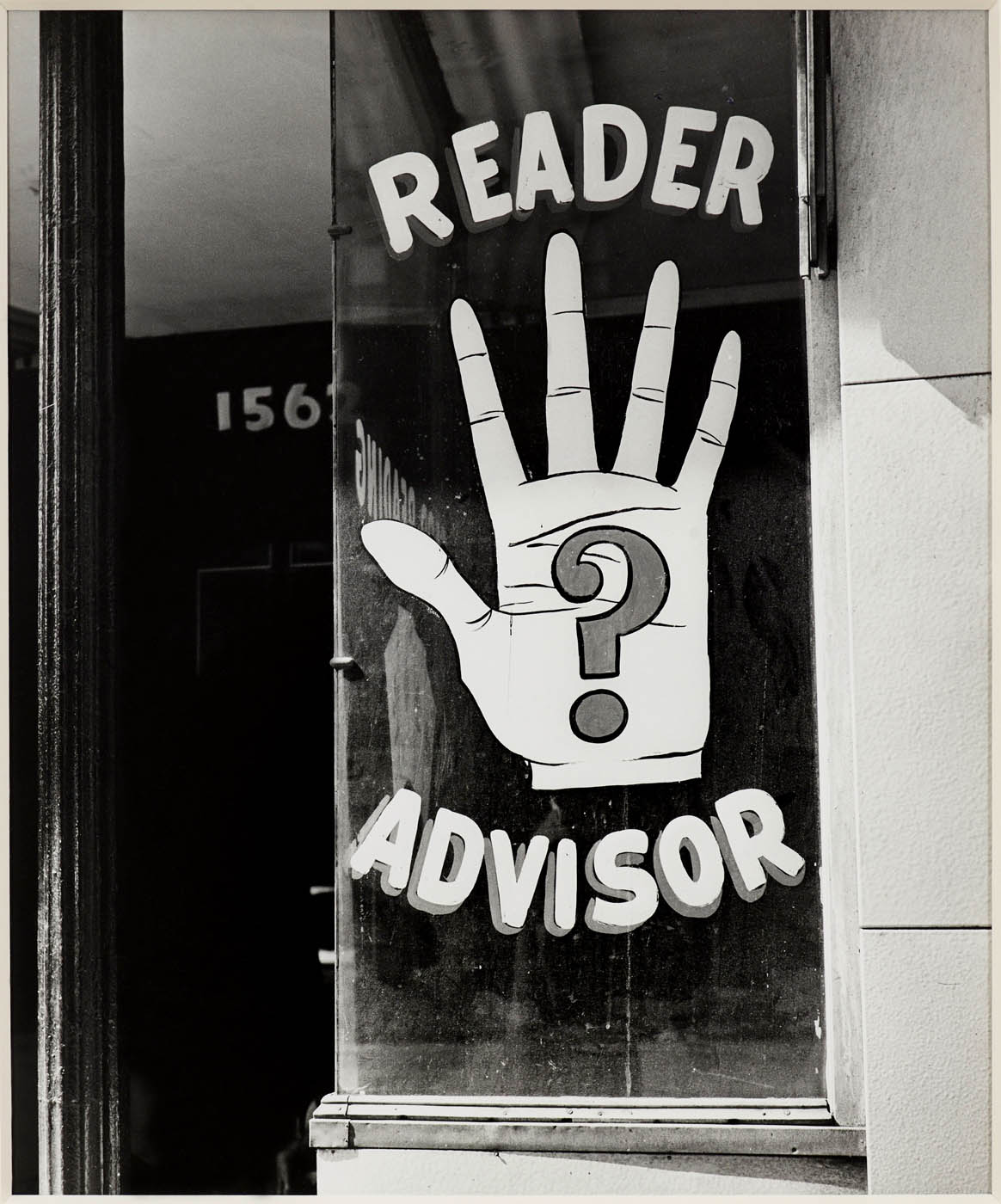
Walker Evans (American, 1903-1975)
Gypsy Shopfront, 1562 Third Avenue
1962
Vintage gelatin silver print
Private Collection, San Francisco
© Walker Evans Archive, The Metropolitan Museum of Art
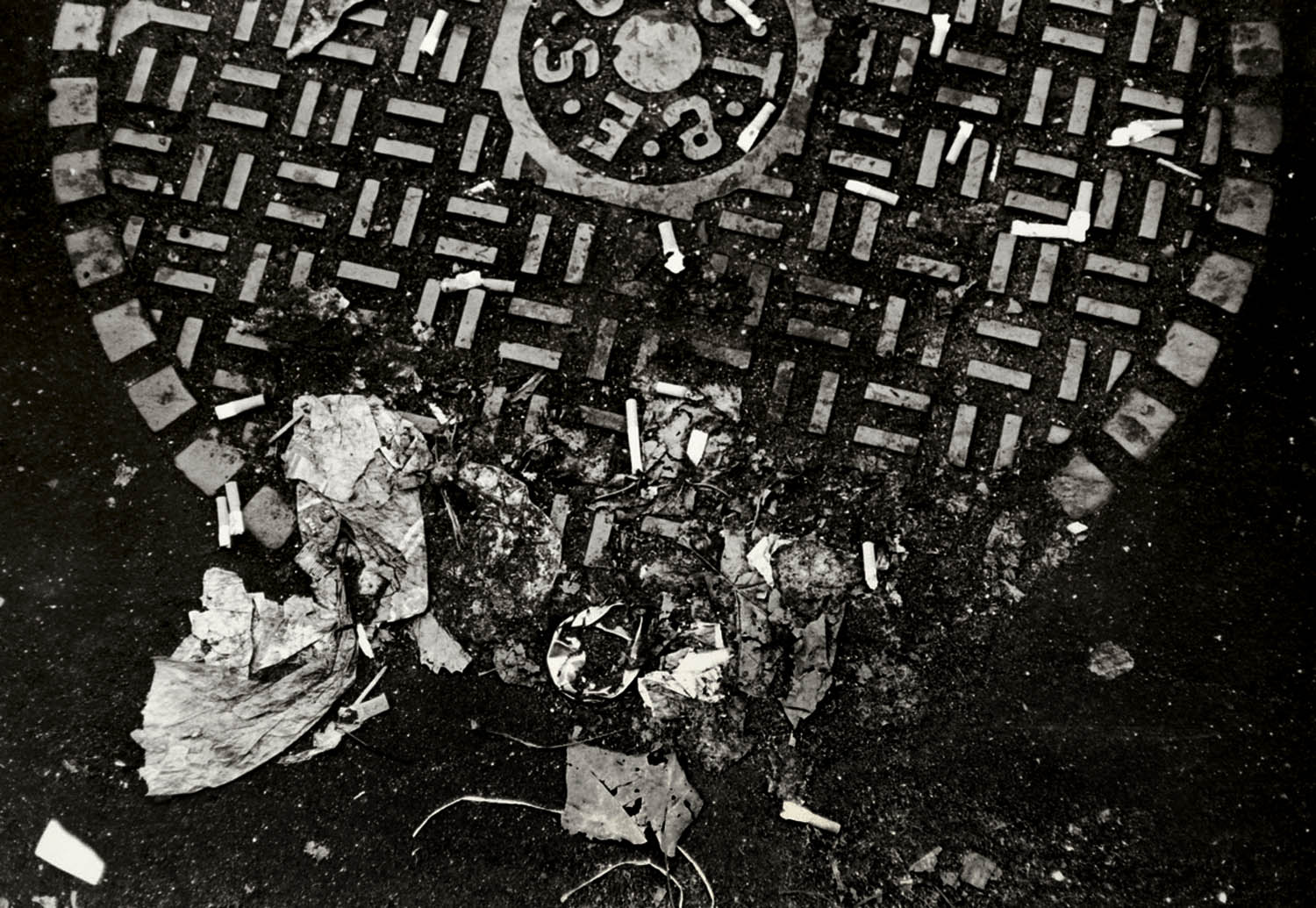
Walker Evans (American, 1903-1975)
Street Debris, New York City
1968
Gelatin silver print
© Walker Evans Archive, The Metropolitan Museum of Art, New York
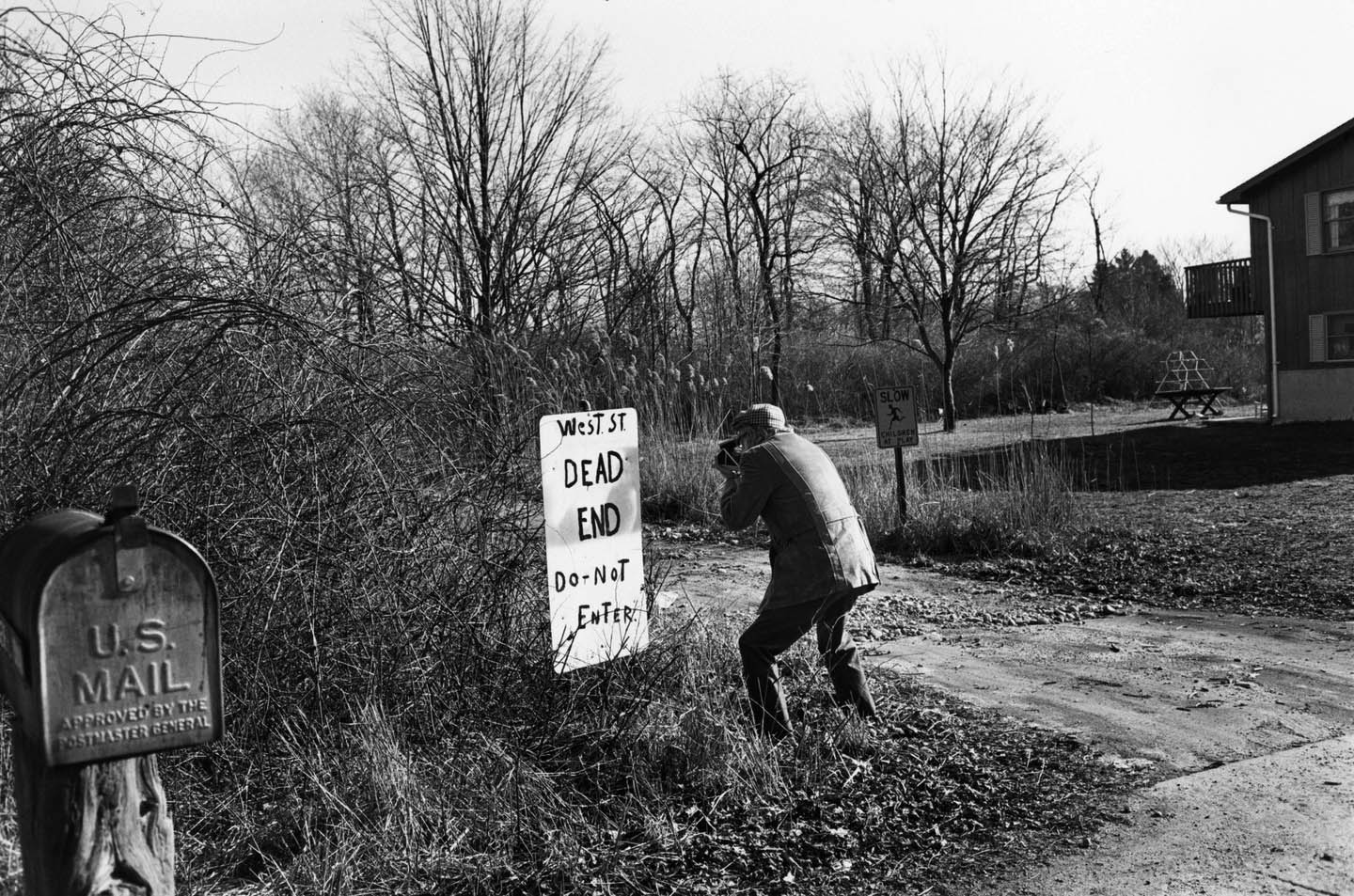
Lee Friedlander (American, b. 1934)
Old Saybrook, Connecticut
1974
Gelatin silver print
Lee Friedlander photographing Walker Evans using his Polaroid SX-70 camera
![Walker Evans (American, 1903-1975) '[Boarded-up House, Stonington, Connecticut]' 1974](https://artblart.com/wp-content/uploads/2026/03/walker-evans-boarded-up-house-stonington-connecticut.jpg "Walker Evans (American, 1903-1975) '[Boarded-up House, Stonington, Connecticut]' 1974")
Walker Evans (American, 1903-1975)
[Boarded-up House, Stonington, Connecticut]
1974
Polaroid SX-70
Private Collection, San Francisco
© Walker Evans Archive, The Metropolitan Museum of Art
Evans was in poor health when he began to work with the Polaroid SX-70 in 1973; he was attracted to the camera’s small, elegant design and the instant color prints it generated that required no tedious lab or darkroom work. Like the developing Polaroid print itself, with its miraculous and immediate image, Evans came to life and worked feverishly with the new camera. At the age of seventy, he returned to many of his lifelong themes, including vernacular architecture, domestic interiors, portraiture, and roadside signage.
Text from The Metropolitan Museum of Art website
KBr Fundación MAPFRE
Av. del Litoral, 30 08005 Barcelona
Phone: +34 932 723 180
Opening hours:
Tuesdays – Sundays (and public holidays) 11am – 8pm


![Ilse Bing (German, 1899-1998) '[Rue de Valois, Paris]' 1932](https://artblart.com/wp-content/uploads/2020/11/ilse-bing-rue-de-valois-paris-1932.jpg "Ilse Bing (German, 1899-1998) '[Rue de Valois, Paris]' 1932")

![Dora Maar (French, 1907-1997) '[Woman and Child in Window, Barcelona]' 1932-1934](https://artblart.com/wp-content/uploads/2020/11/dora-maar-woman-and-child-in-window-barcelona.jpg "Dora Maar (French, 1907-1997) '[Woman and Child in Window, Barcelona]' 1932-1934")


 Art Blart _ art and cultural memory archive
You must be logged in to post a comment.