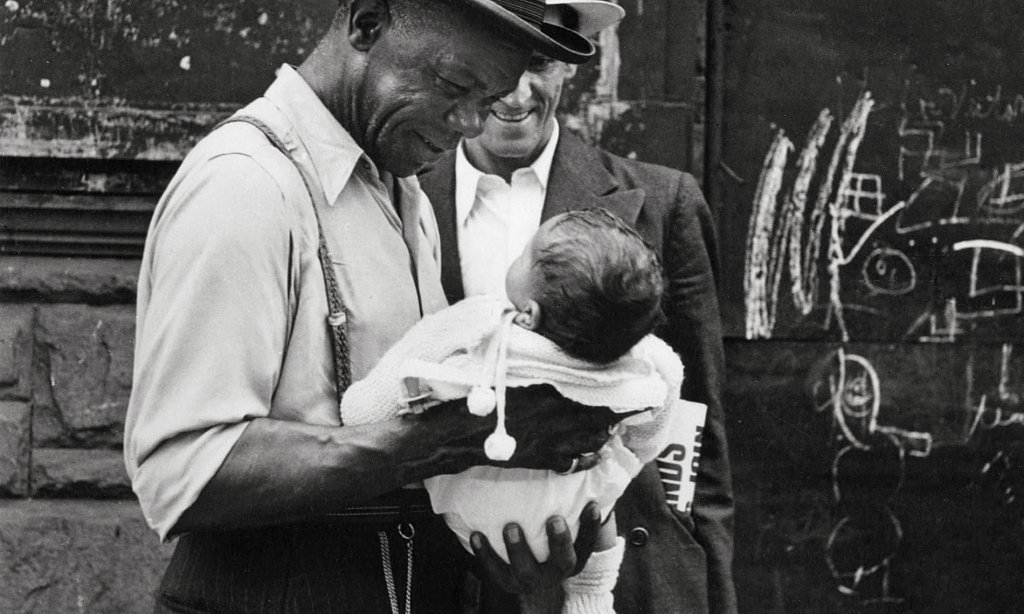
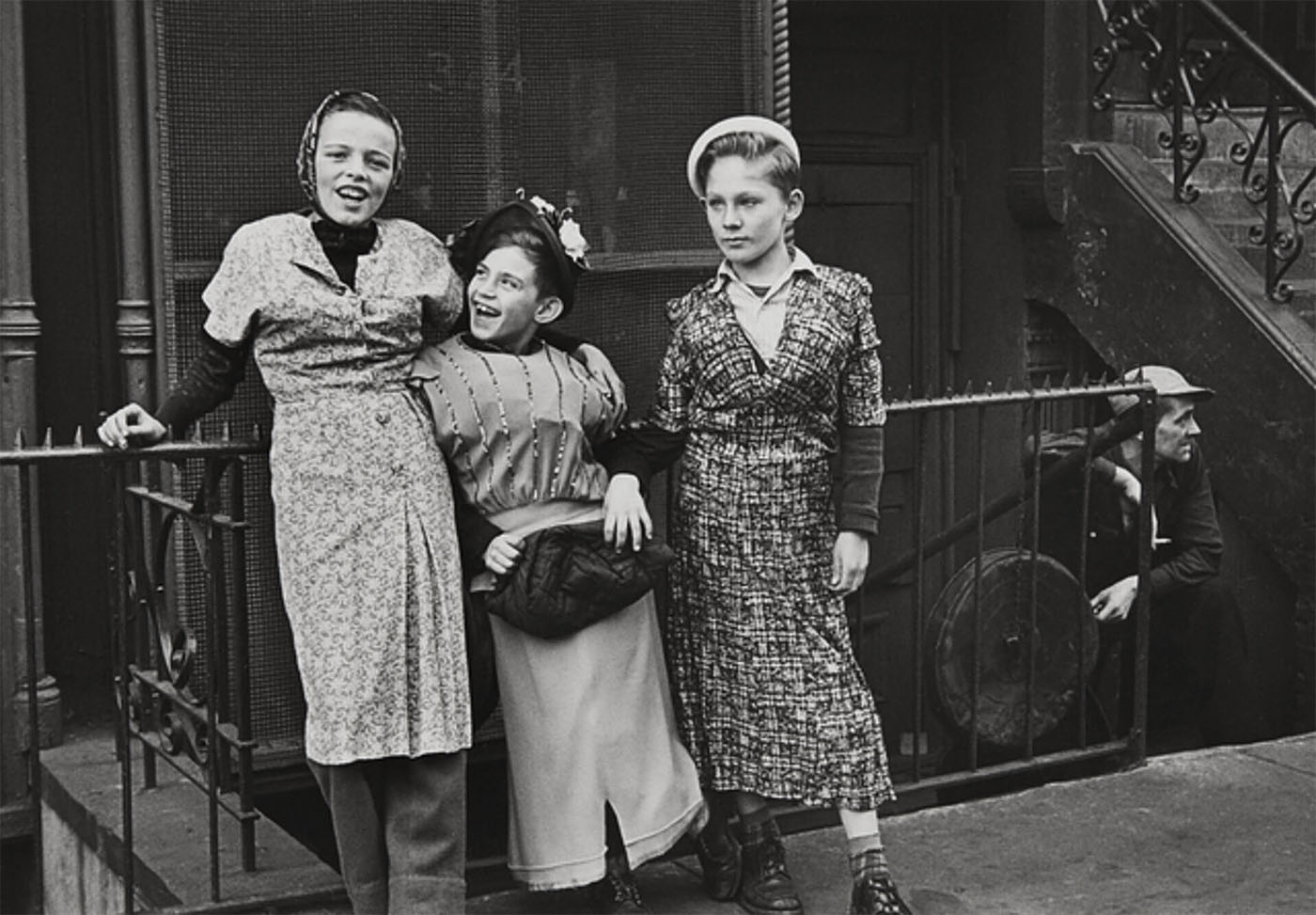
Exhibition: ‘Helen Levitt’ at Fundación MAPFRE, Madrid

Exhibition dates: 19th February – 17th May, 2026

Curator: Joshua Chuang
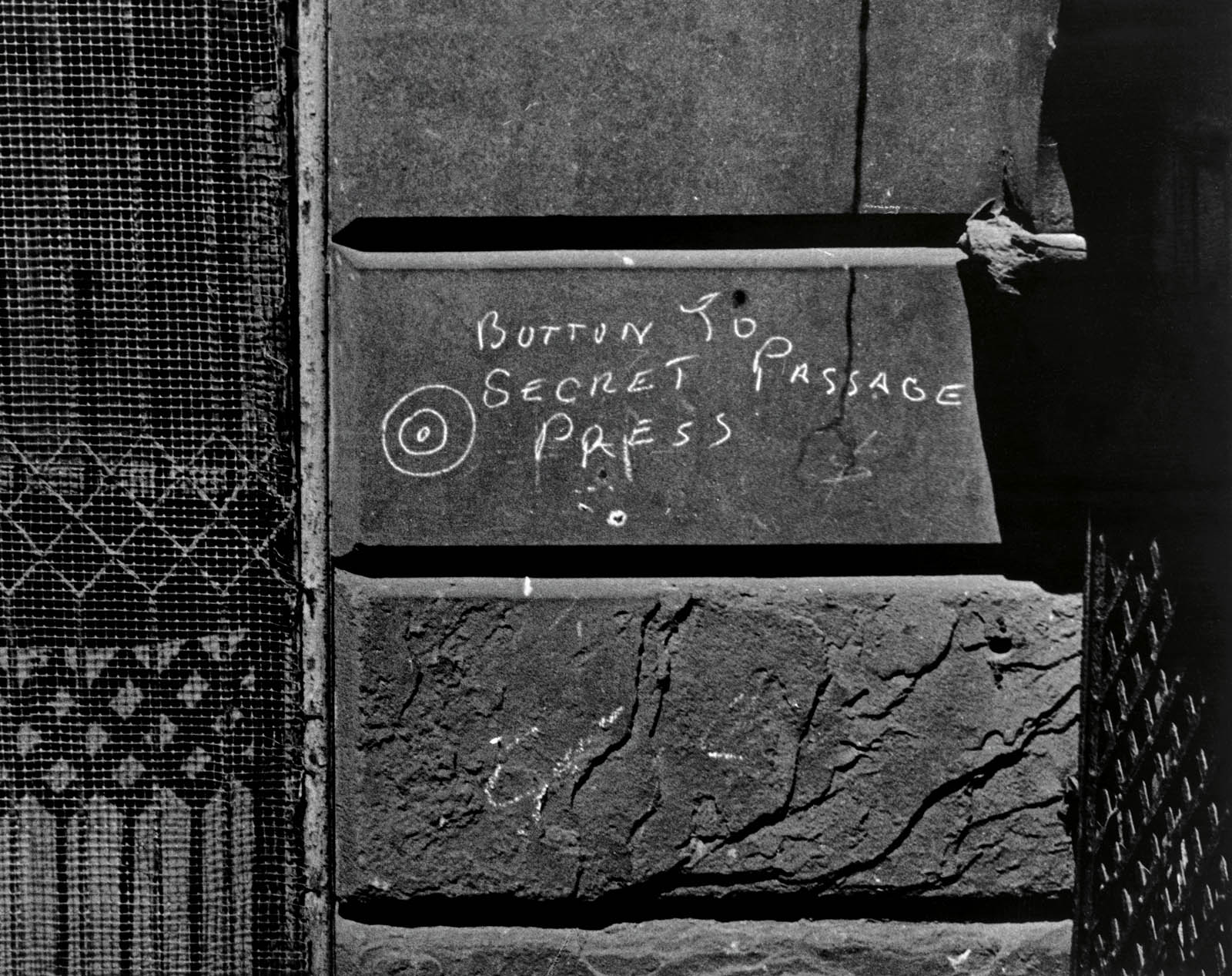
 

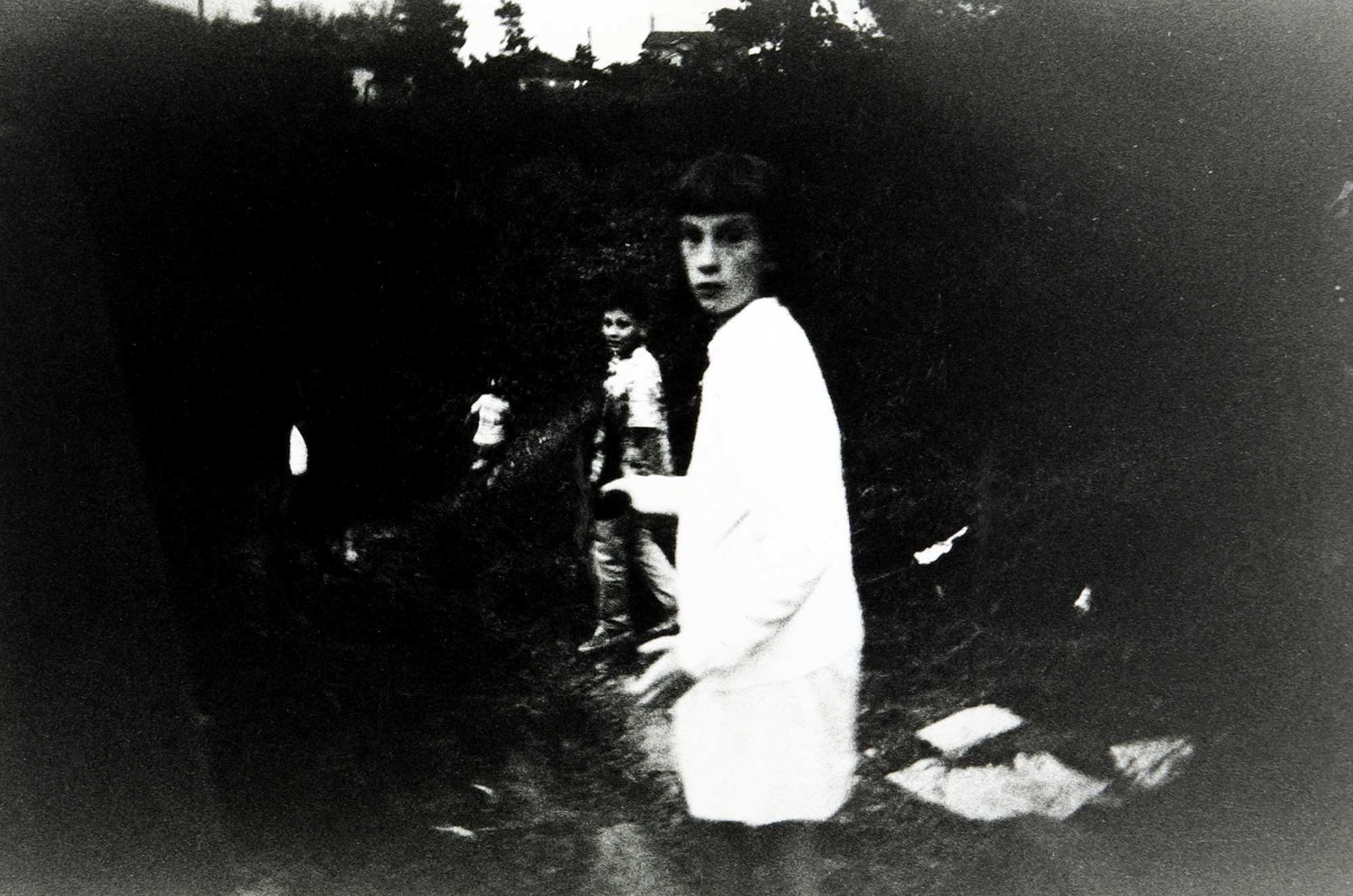
Helen Levitt (American, 1913-2009) 'New York' c. 1938


Helen Levitt (American, 1913-2009)
New York
c. 1938
Gelatin silver print


If there is one photographer in the history of the medium that captures the spirit of childhood, the spirit of a single city, and the spirit of life – then that photographer is the incomparable and beloved American photographer Helen Levitt (American, 1913-2009).

I have posted on this exhibition before when it was displayed at Fundación MAPFRE, Barcelona but I have now added many more photographs to the exhibition posting. Despite emails to the gallery I have been unable to secure any installation photographs of the exhibition.

It’s worth quoting from my text “Levittation” from the earlier posting on this exhibition for indubitably it holds true:

“In her photographs there is an (in)direct engagement with the people that surrounded her (in her early works “she often hid her camera under her coat to capture candid, unnoticed moments on the streets”), an exchange of energy from the photographer to the subject and back through the camera onto the film… evidencing a generosity of spirit on the part of the artist towards her subjects. Here there is no pressing the camera into the face of the victim a la Garry Winogrand to evince a reaction, but a genuine sense of compassion and empathy towards the people who live in the great city of New York. …

As with any great art, the artist that produced it (even as she is ambitious) seems to be without ego. She lets the picture and the emotions tell the story without the shadow of the artist getting in the way (unlike much contemporary art and photography). For the work of art to have value in itself.

Thus, her photographs speak to us directly, or not at all.”1

Dr Marcus Bunyan


1/ Marcus Bunyan. “Levittation,” on the Art Blart website, November 28, 2025 [Online] Cited 17/04/2026


Many thankx to Fundación MAPFRE, Madrid for allowing me to publish the photographs in the posting. Please click on the photographs for a larger version of the image.


“Helen Levitt was one of the first women to stand out in the world of photography, especially in the field of urban photojournalism. She always avoided imposing an explicit narrative on her images and preferred not to comment on them, letting them speak for themselves. The commitment to this discretion, far from diminishing the value of her work, is precisely one of the keys that make it so fascinating and unique.”


Carles Toribio. “Helen Levitt: the poetry of the streets in images at the KBr of the Fundación MAPFRE,” on the Bonart website 22/09/25 [Online] Cited 17/04/2026
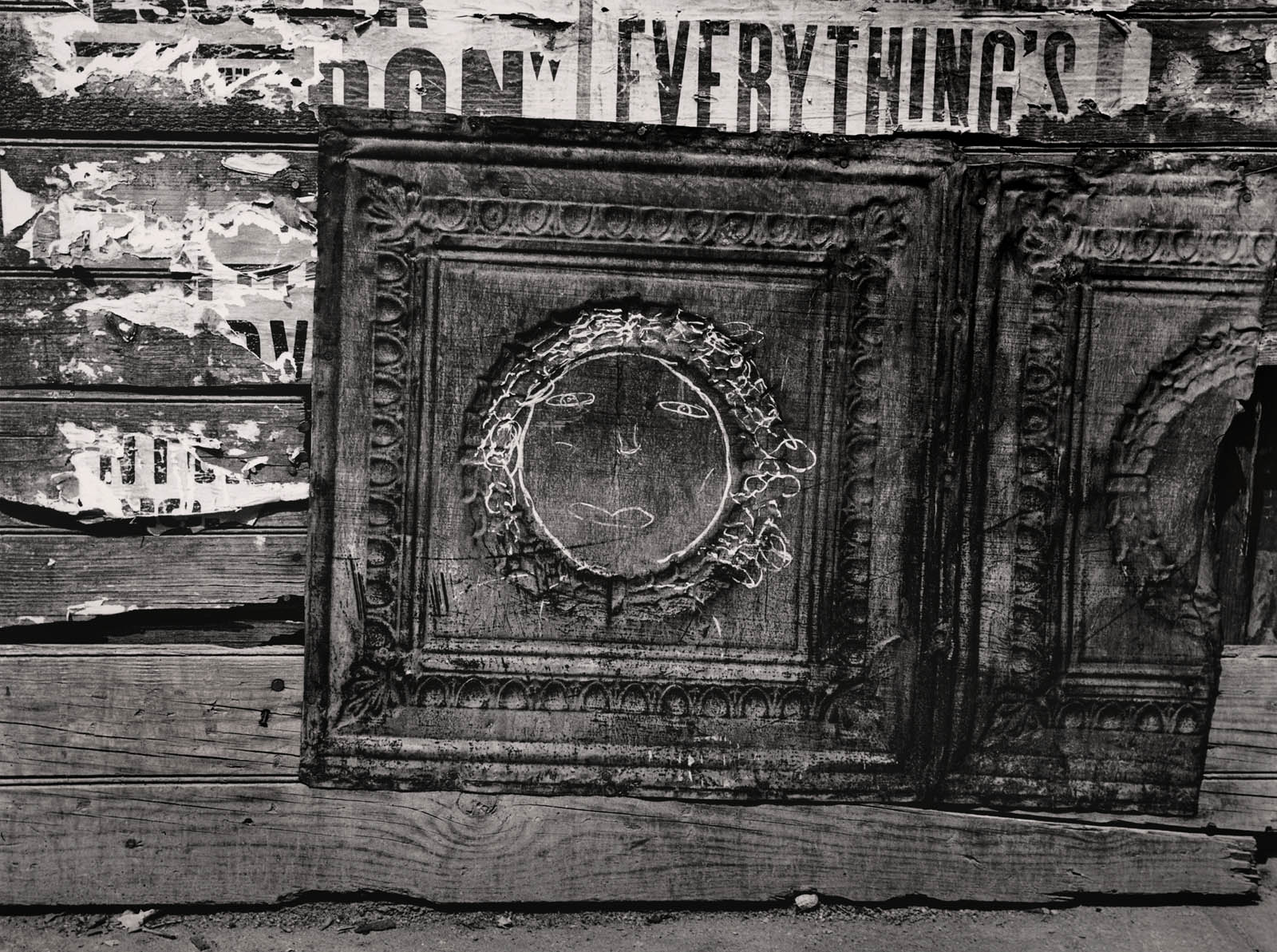


Helen Levitt (American, 1913-2009) 'New York' c. 1939


Helen Levitt (American, 1913-2009)
New York
c. 1939
Gelatin silver print


Helen Levitt (American, 1913-2009) 'New York' c. 1938


Helen Levitt (American, 1913-2009)
New York
c. 1938
Gelatin silver print
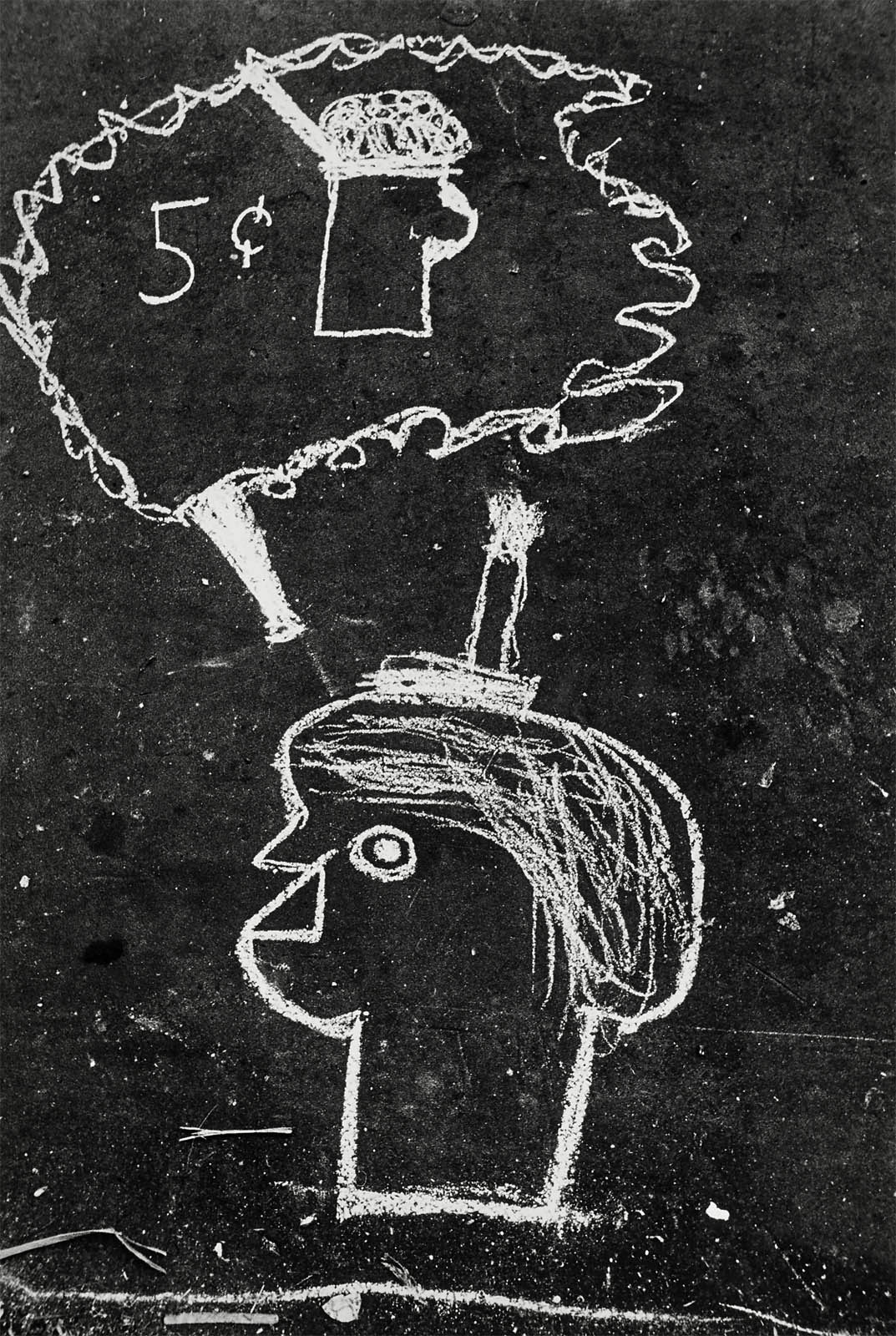
 

Helen Levitt (American, 1913-2009) 'New York City' c. 1940


Helen Levitt (American, 1913-2009)
New York City
c. 1940
Gelatin silver print


Helen Levitt (American, 1913-2009) 'Kid in Tree with Mask, New York' c. 1938


Helen Levitt (American, 1913-2009)
New York
c. 1938
Gelatin silver print
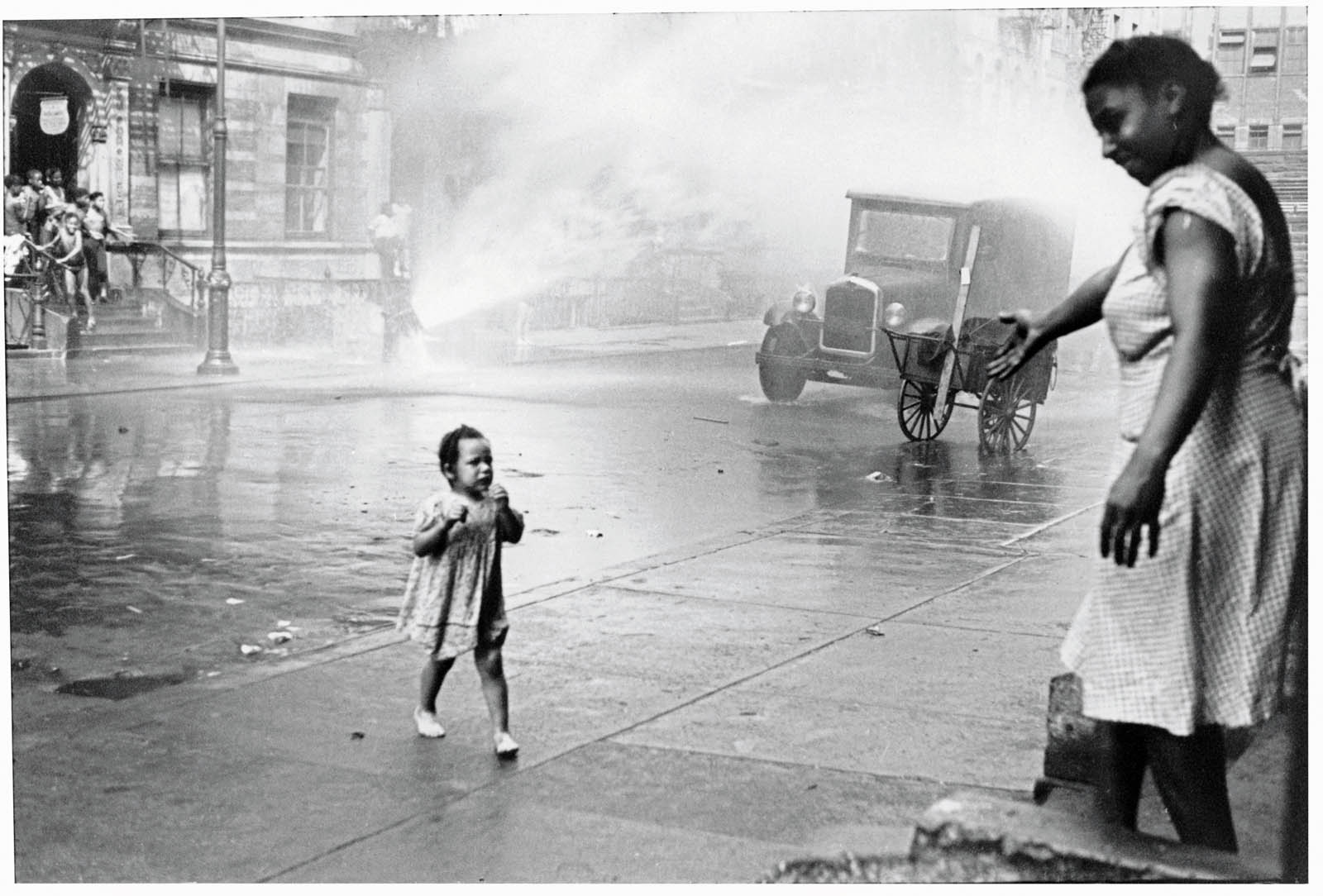
 

Helen Levitt (American, 1913-2009) 'New York' c. 1939


Helen Levitt (American, 1913-2009)
New York
c. 1939
Gelatin silver print
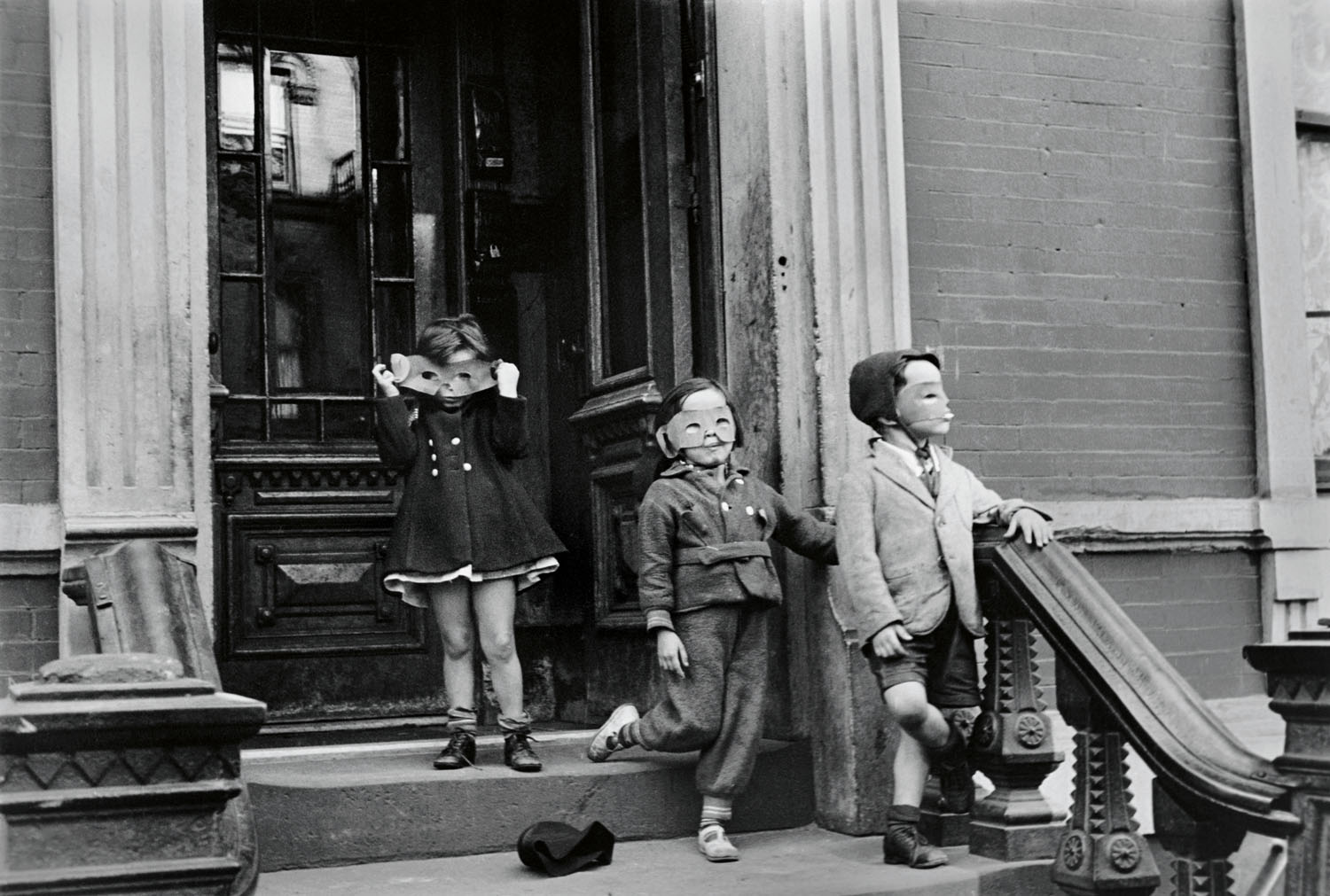
 

Helen Levitt (American, 1913-2009) 'New York' c. 1939


Helen Levitt (American, 1913-2009)
New York
c. 1939
Gelatin silver print
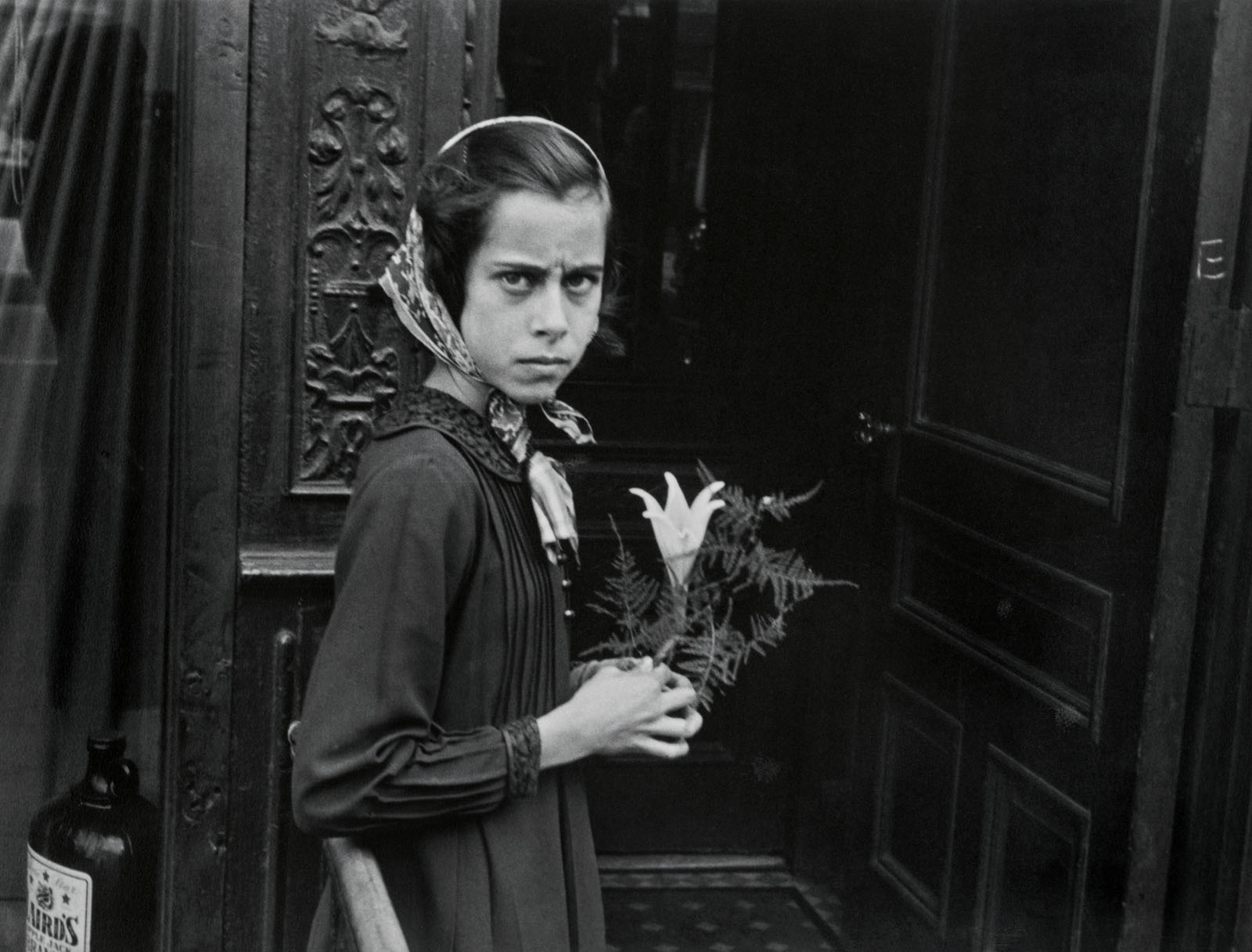
 

Helen Levitt (American, 1913-2009) 'New York' c. 1939


Helen Levitt (American, 1913-2009)
New York
c. 1939
Gelatin silver print


Helen Levitt (American, 1913-2009) began photographing the streets of New York, her hometown, in the late 1930s, focusing mainly on poor neighbourhoods such as Spanish Harlem or the Lower East Side, where the street is the main stage of daily life. Her camera was directed primarily toward children and their street games. These childhood scenes are the central theme of a body of work that captivates us with its ability to transform everyday situations into images that convey all that life can hold of emotion, mystery, or humour and that, although lacking an explicit narrative, manage to establish an immediate connection with the viewer. Levitt’s work soon received the recognition it deserved, and as early as 1943 the Museum of Modern Art in New York organised her first solo exhibition (Photographs of Children).

In later years, she became deeply interested in film and colour photography. Regarding the former, in 1948 she collaborated on the documentary The Quiet One and co-directed In the Street, another documentary about the streets of Spanish Harlem. Both titles would be highly influential in the subsequent evolution of documentary cinema, inspiring artists such as Jonas Mekas and Andy Warhol. On the other hand, after receiving a Guggenheim Fellowship in 1959 to explore chromatic techniques, she began experimenting with colour photography, a medium in which she would also develop pioneering work.

A socially committed artist, Levitt was one of the first women to forge a professional career in photography. This exhibition is the first to be organised based on the entirety of her work and archives, which have only recently been made available for public consultation.

Text from the Fundación MAPFRE website


Helen Levitt (American, 1913-2009) began photographing the streets of New York City, her hometown, in the late 1930s, focusing primarily on poor neighbourhoods like Spanish Harlem and the Lower East Side, where the street plays a central role as the stage for daily life. She documented intimate and fleeting moments of human connection, becoming a key figure in 20th-century photography.

Her training began as an apprentice in a Bronx studio, and in 1934 she acquired her first camera. Shortly after, she joined the New York Film and Photo League, where she met Henri Cartier-Bresson, whose influence was decisive in Levitt’s decision to pursue photography independently.

Between 1938 and 1942, she captured some of her most iconic images, documenting everyday life in working-class neighbourhoods of New York with a spontaneous, empathetic, and unpretentious eye. Her approach, focused especially on childhood and the fleeting moments of urban life, broke with the traditional canons of photojournalism and opened new avenues for photography as a means of poetic and social expression.

In 1943, MoMA dedicated her first solo exhibition to her, solidifying her place in art history.

Although her name is associated with “street photography,” since it was precisely the streets of her hometown that provided the context for her images, throughout her career she ventured into film and visited other countries, such as Mexico.

Levitt also explored colour photography and film, pioneering both fields. She co-directed the documentary In the Street and received a Guggenheim Fellowship in 1959 to research new colour techniques. Although a 1970 robbery resulted in the loss of much of her colour work, she resumed her photography, and MoMA screened her slides in 1974. During the following decades, she continued to photograph intermittently, returning to black and white and exploring new settings such as the New York subway. Her work, marked by ambiguity and restrained emotion, has been recognised for its ability to capture fleeting moments of human connection in complex urban environments.

The exhibition, curated by Joshua Chuang, offers a comprehensive overview of Levitt’s career through nine sections and some 220 photographs. It includes previously unseen works, as well as pieces taken in Mexico in 1941 and a significant portion of her colour work, which she began in the 1950s. In addition, her film In the Street, directed by Levitt herself along with Janice Loeb and James Agee, is presented, along with a screening of colour slides taken by the artist.

Press release from Fundación MAPFRE
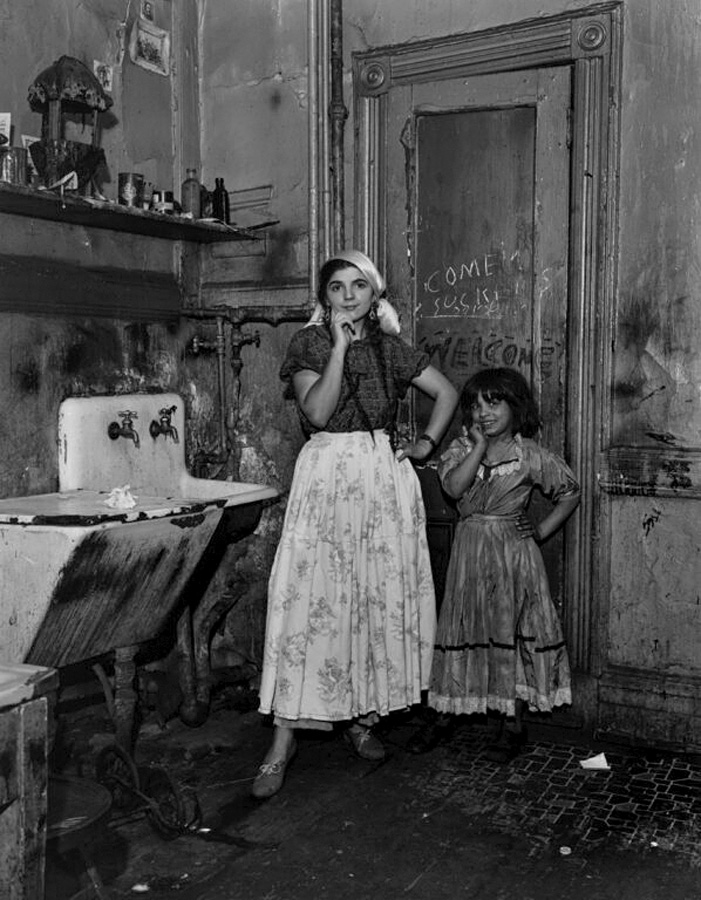
 

Helen Levitt (American, 1913-2009) 'New York' c. 1939


Helen Levitt (American, 1913-2009)
New York
c. 1939
Gelatin silver print
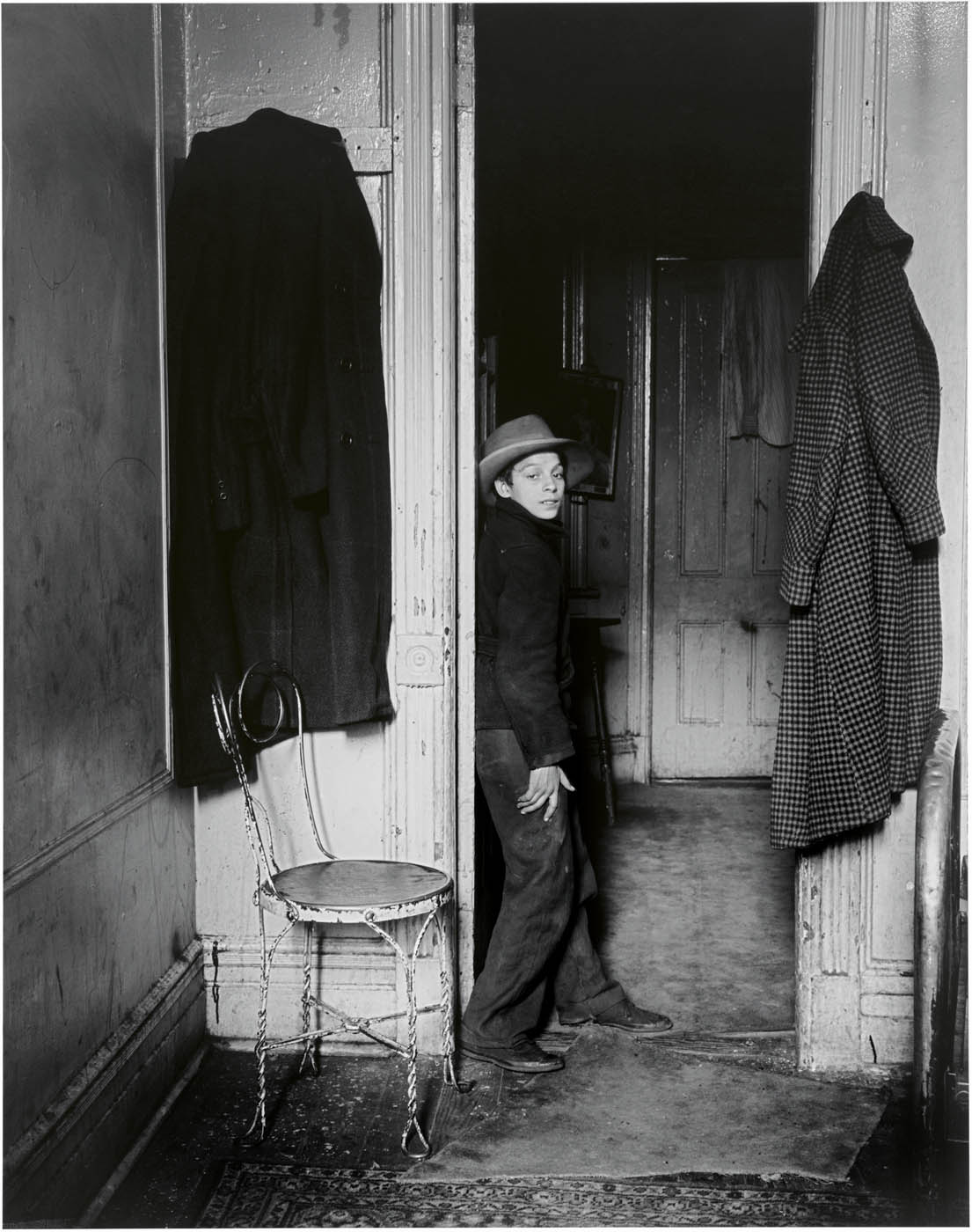
 

Helen Levitt (American, 1913-2009) 'New York' c. 1939


Helen Levitt (American, 1913-2009)
Gypsy Boy, Harlem, New York
c. 1939
Gelatin silver print
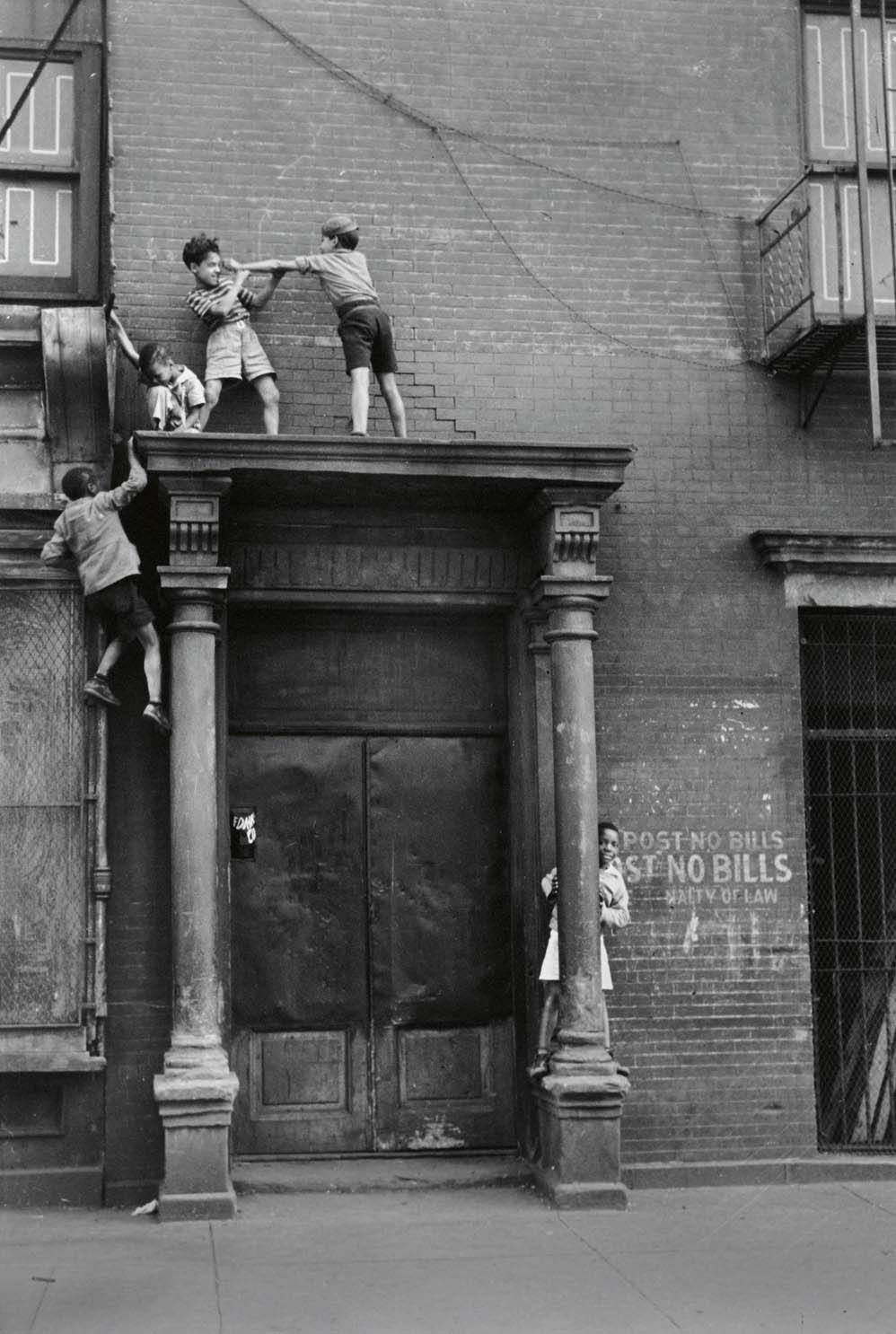
 

Helen Levitt (American, 1913-2009) 'New York' c. 1939


Helen Levitt (American, 1913-2009)
New York
c. 1939
Gelatin silver print
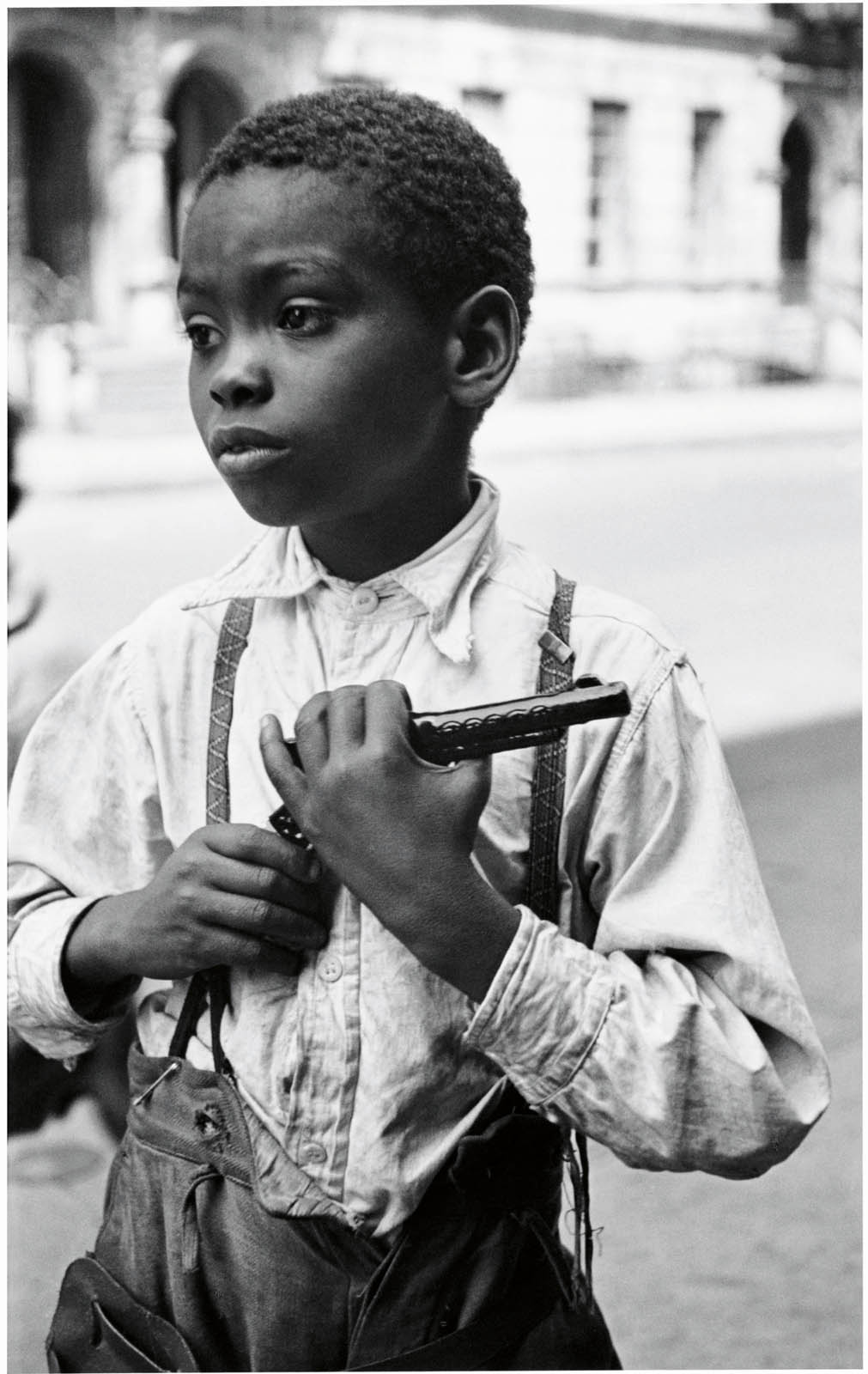
 

Helen Levitt (American, 1913-2009) 'New York' c. 1939


Helen Levitt (American, 1913-2009)
New York
c. 1939
Gelatin silver print
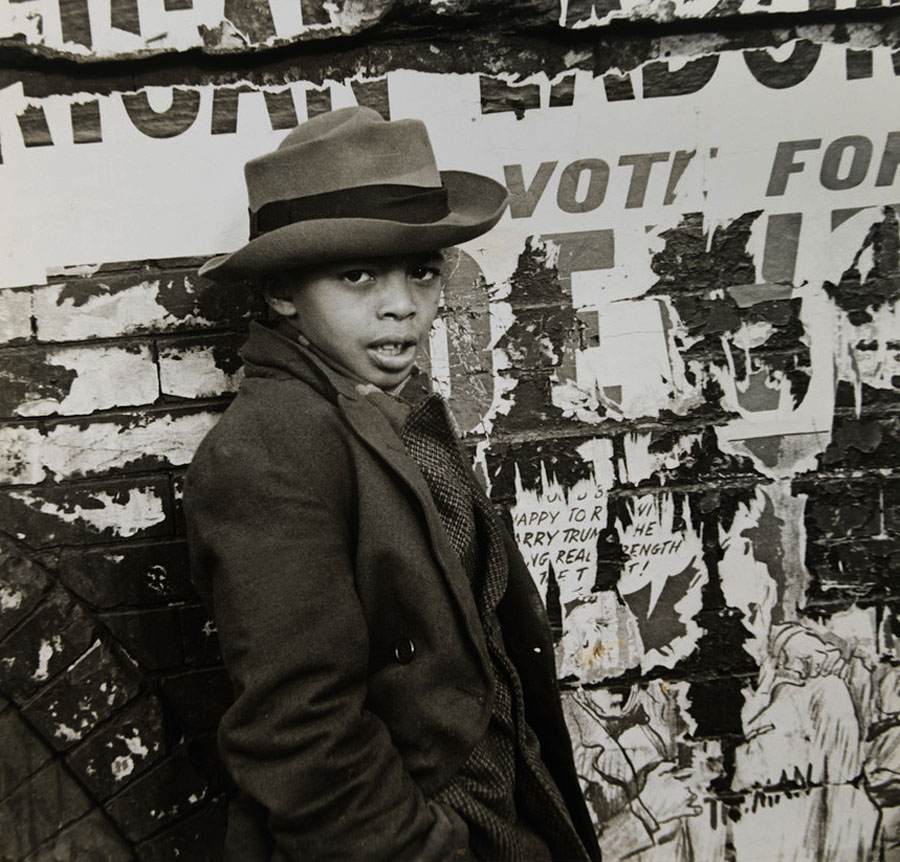
 

Helen Levitt (American, 1913-2009) 'New York' 1939


Helen Levitt (American, 1913-2009)
New York
1939
Gelatin silver print


Information

Dedicated full-time to her artistic activities, the photographer Helen Levitt (New York, 1913-2009) did not begin to gain public recognition until relatively late in life. Although her name has always been associated with “street photography,” as it was precisely the streets of her native city that provided the context for the production of her images, throughout her career Levitt made forays into film, visited other countries such as Mexico, and also focused on colour photography. Her images, almost invariably ambiguous and mysterious although not necessarily at first glance, are also characterised by their spontaneity, warmth and sensitivity. The movements and gestures of the figures captured by her lens and the communication between them transcend that inclination to “photograph children” which many critics pointed out after her first exhibition at the MoMA in 1943, entitled Helen Levitt: Photographs of Children.

Levitt’s work as a whole goes far beyond the latter aspect, revealing her acceptance of the pleasures, terrors and complexity of existence at all ages, traits often overlooked by the viewer when immersed in the harsh reality of the urban landscape.

The exhibition, the first to be devoted to the artist on the basis of the entirety of her work and archives, which have only recently become available for study, offers a broad overview of Levitt’s career through nine sections and around 220 photographs. It includes previously unexhibited images, as well as work produced in Mexico in 1941 and a large proportion of the artist’s work in colour, which she explored from the 1950s onward. It also features her film In the Street, directed by Levitt in collaboration with Janice Loeb and James Agee, and a projection of her colour slides.

Born in Brooklyn to a Russian-Jewish family, Helen Levitt dropped out of high school early and began her photography training in a Bronx studio. Influenced by Henri Cartier-Bresson, she pursued independent photography, capturing everyday life in New York neighbourhoods between 1938 and 1942. Her first solo exhibition was at the MoMA in 1943. She also experimented with film, making In the Street, and with colour photography, which gained her a Guggenheim Fellowship in 1959. Levitt continued to work intermittently, exploring new settings such as the subway and rural areas. Her creative output is recognised for its ability to capture moments of human connection in complex urban environments.

Key themes

Enigmatic photographs

Helen Levitt’s images possess a mysterious quality that transforms them into true visual enigmas. Her unique and highly perceptive gaze turns everyday scenes into compositions that are hard to define, creating an immediate connection with the viewer even when there is no clear narrative to explain them.

A pioneer with her own voice

Helen Levitt was one of the first women to make her way in the world of photography, especially in the field of street photography. She always avoided constructing an explicit narrative in her images and preferred not to talk about them. Far from diminishing its value, that decision is one of the key traits that make her work so interesting. Despite this characteristic of reserve, Levitt’s photographs connect with the viewer through the universal emotions they convey.

Text from Fundación MAPFRE
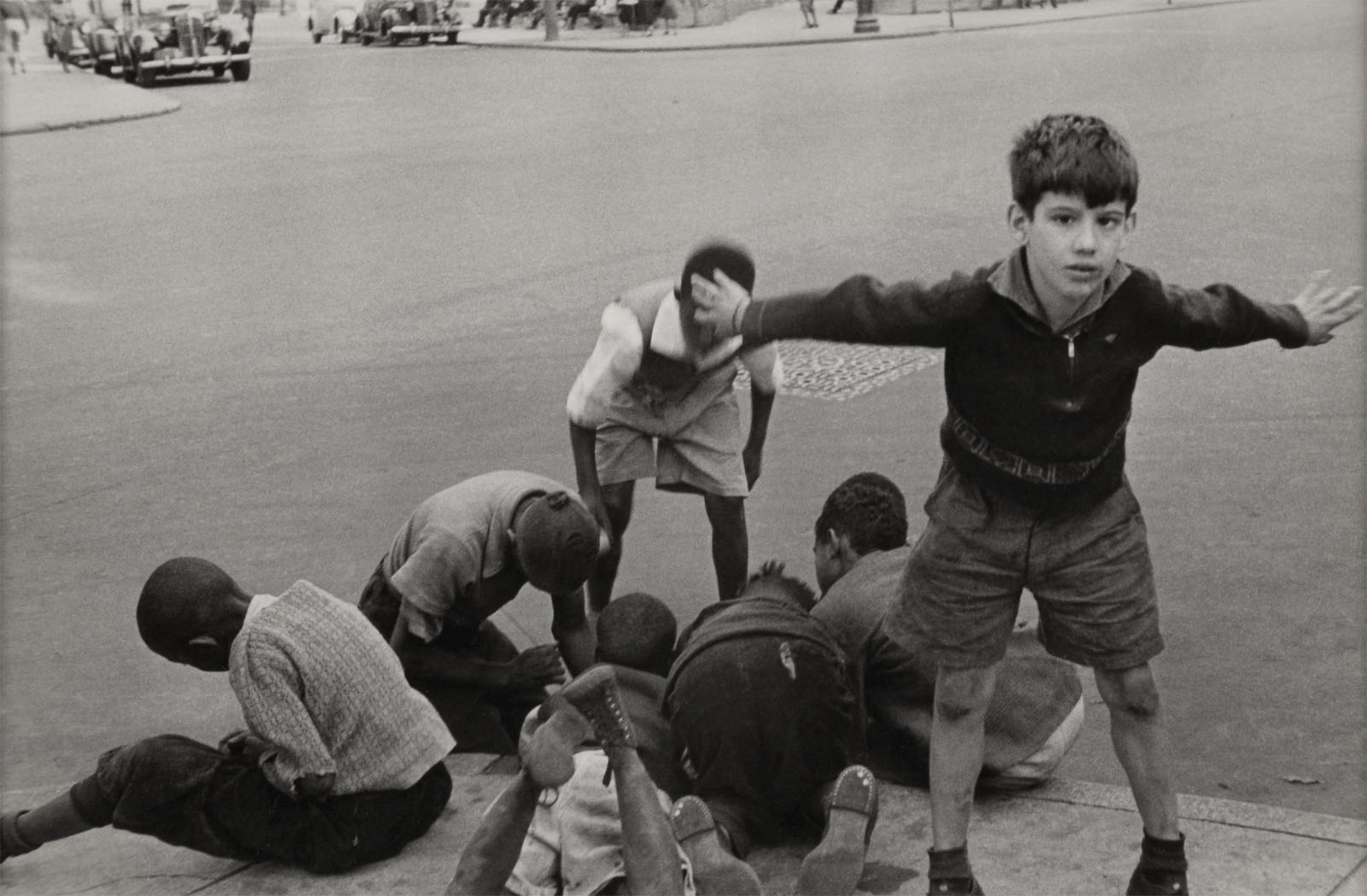
 

Helen Levitt (American, 1913-2009) 'New York' 1940


Helen Levitt (American, 1913-2009)
New York
1940
Gelatin silver print
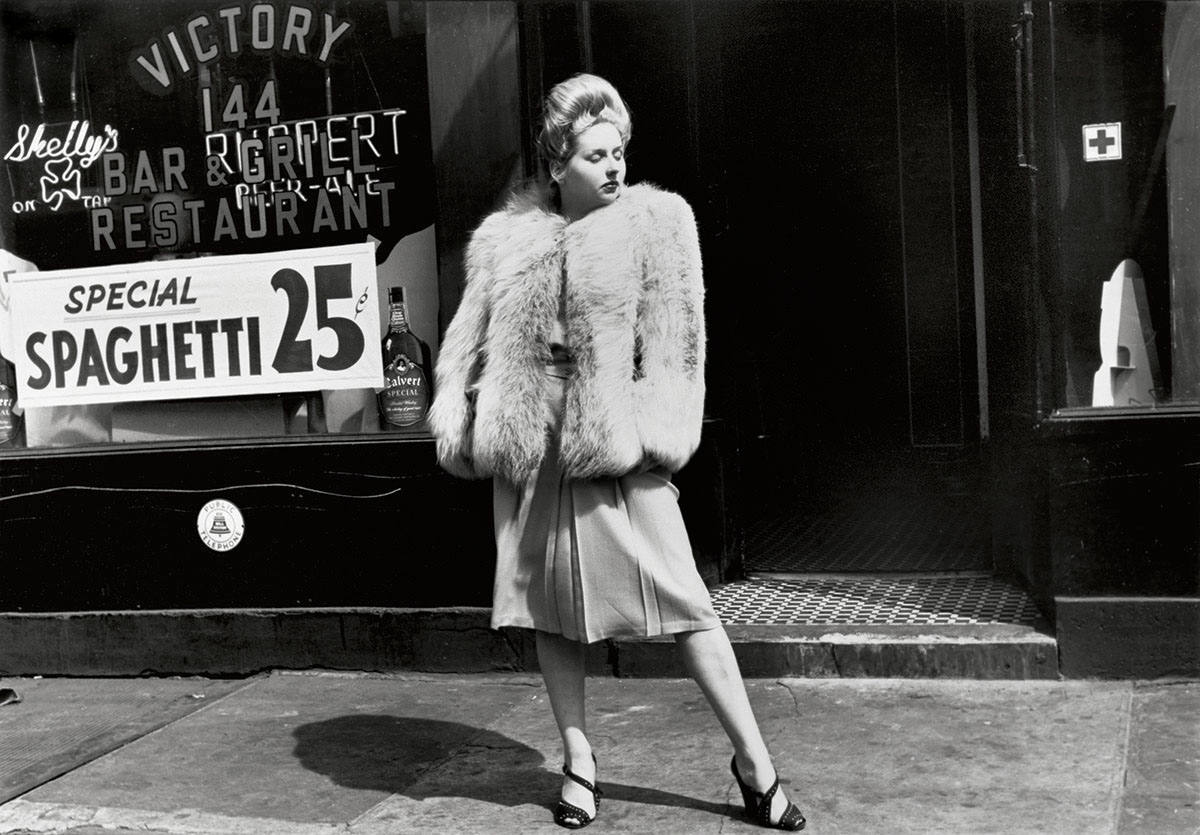
 

Helen Levitt (American, 1913-2009) 'New York' c. 1940


Helen Levitt (American, 1913-2009)
New York
c. 1940
Gelatin silver print
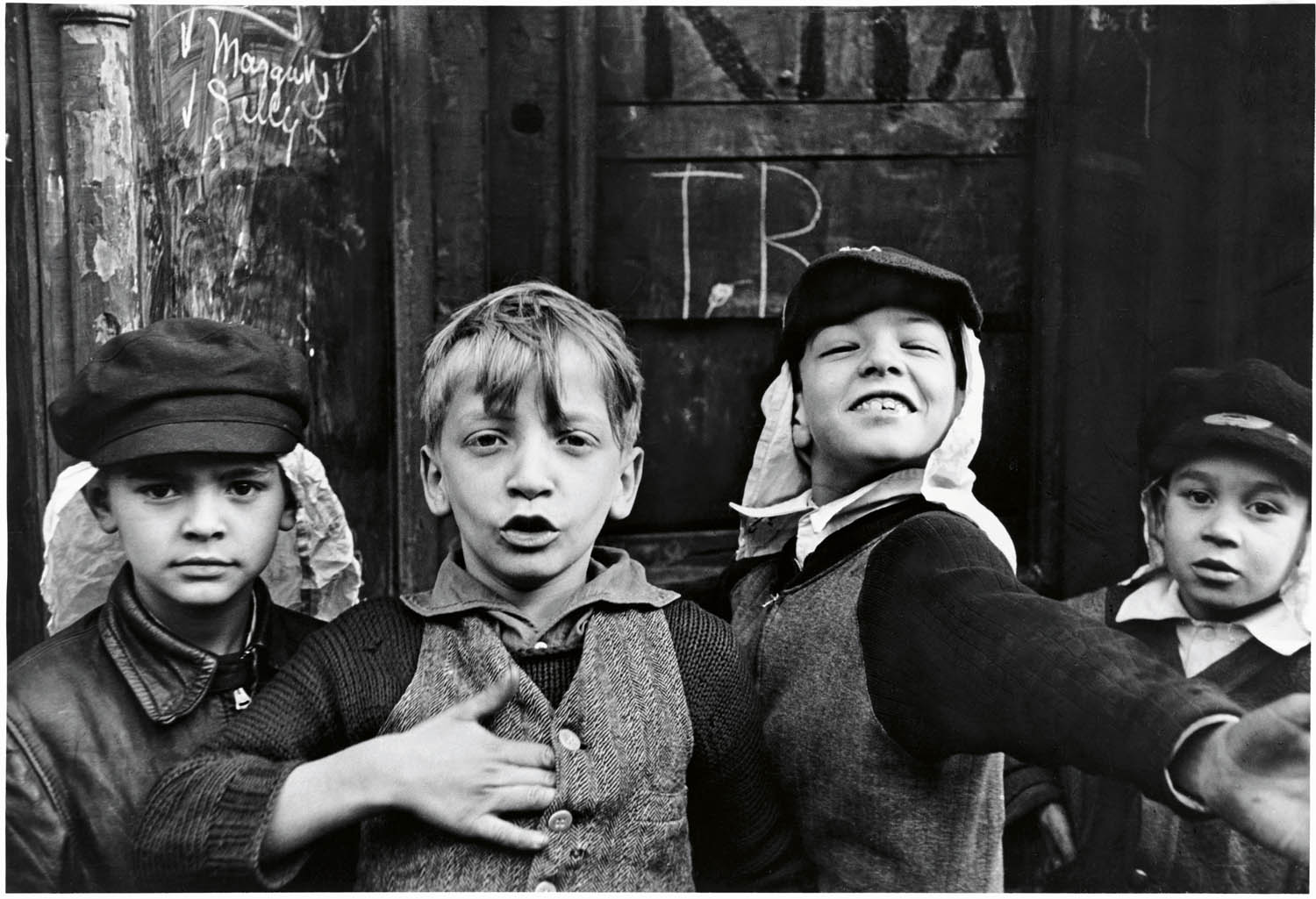
 

Helen Levitt (American, 1913-2009) 'New York' c. 1940


Helen Levitt (American, 1913-2009)
New York
c. 1940
Gelatin silver print
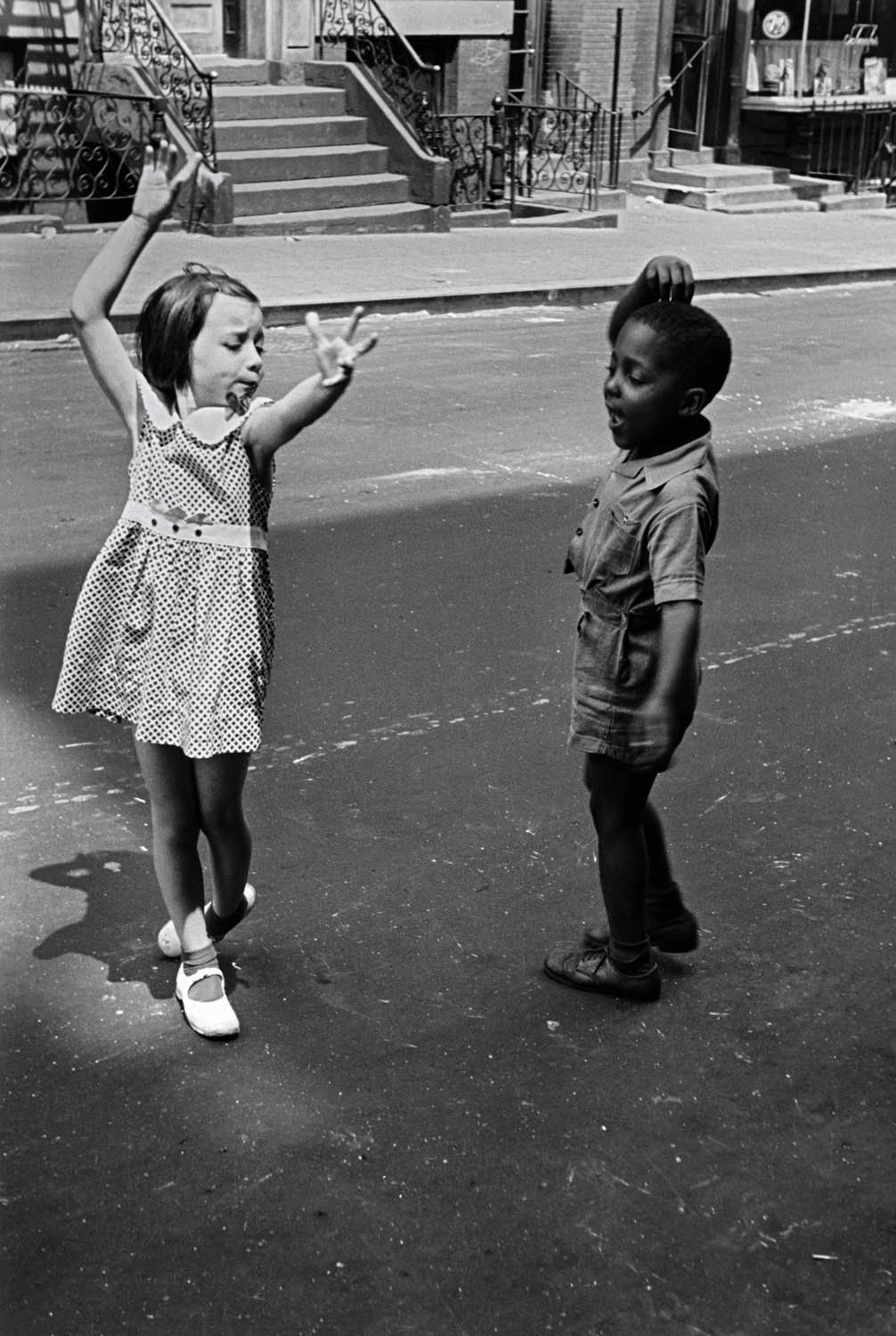
 

Helen Levitt (American, 1913-2009) 'New York' c. 1940


Helen Levitt (American, 1913-2009)
New York
c. 1940
Gelatin silver print
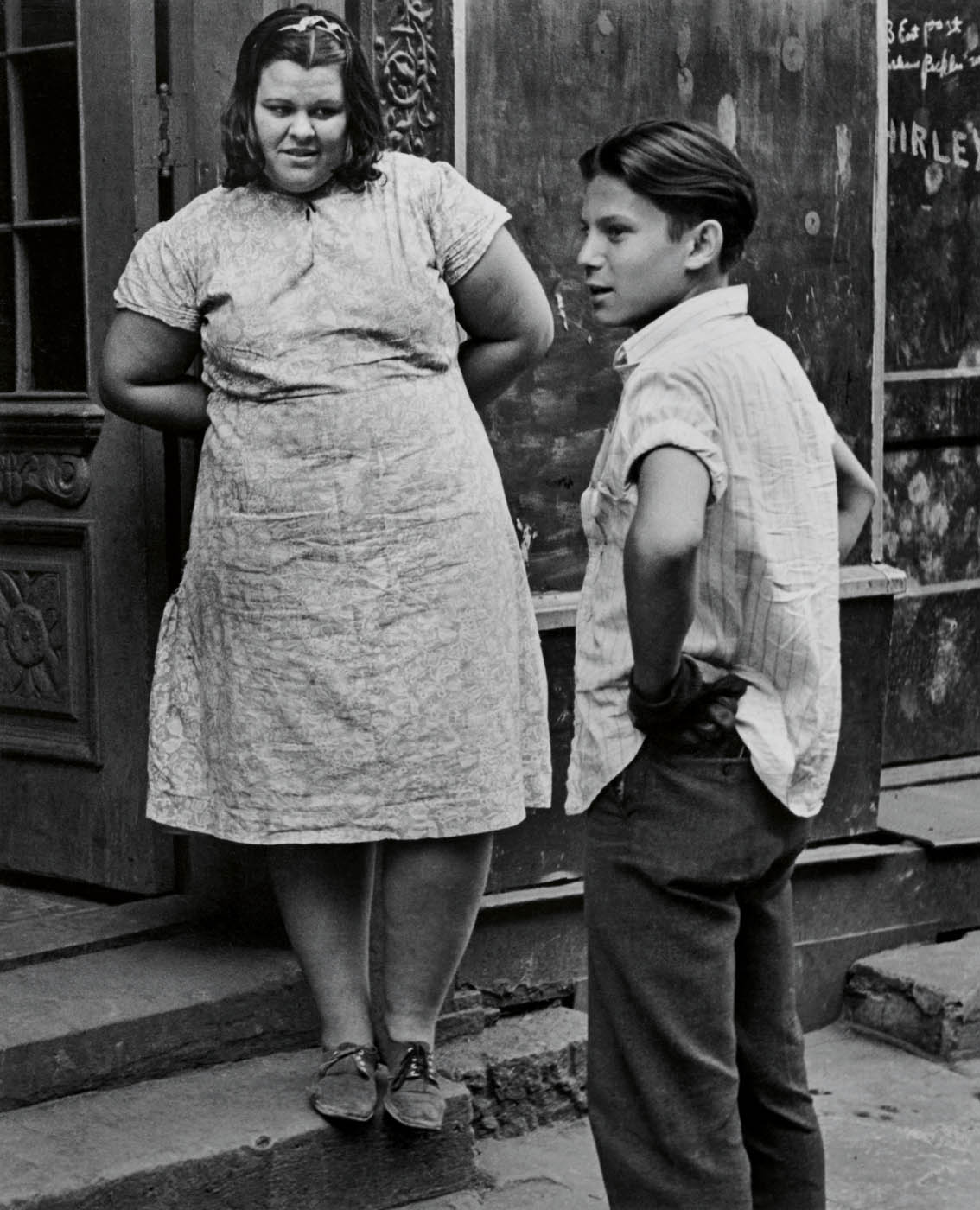
 

Helen Levitt (American, 1913-2009) 'New York' c. 1940


Helen Levitt (American, 1913-2009)
New York
c. 1940
Gelatin silver print
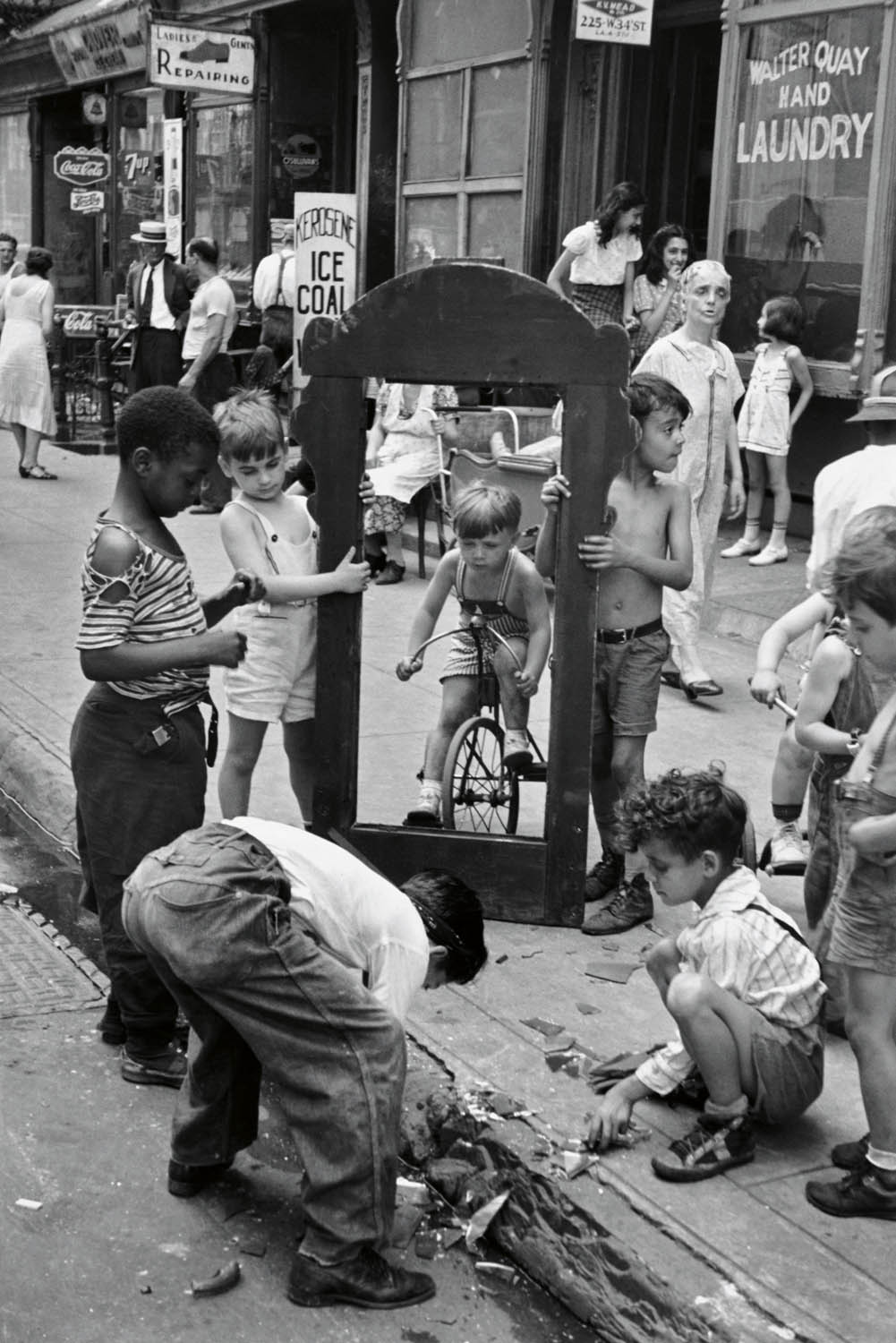
 

Helen Levitt (American, 1913-2009) 'New York' c. 1940


Helen Levitt (American, 1913-2009)
New York
c. 1940
Gelatin silver print


Born and raised in Brooklyn, New York, Helen Levitt (American, 1913-2009) became a photographer in the mid-1930s after meeting Henri Cartier-Bresson and seeing his radical new pictures made with a discreet, handheld camera. By the end of the decade, she had developed a unique sensibility, one informed by Surrealism and a love of avant-garde cinema but focused on the interactions of ordinary people in the streets, sidewalks, stoops, and vacant lots of her native city.

Grounded in gritty realism but brimming with subversive humor, mischief, and pathos, Levitt’s pictures are open-ended and enigmatic, concealing as much as they reveal. Her uncanny photographs of urban children and their games brought Levitt early renown even as she remained attentive to the quiet gestures and movements of a broader swath of humanity observed with her 35mm Leica, especially in Spanish Harlem, where the activity of everyday life often spilled out of doors.

Following a months long foray in Mexico City, Levitt began to work in filmmaking, leading to a long hiatus in her photographic activity. In 1959, advances in the sensitivity colour film spurred her to take to the streets again with her Leica. She continued to photograph in colour throughout the 1970s, reverting to black-and-white film for a series of pictures taken in the New York City subway. Levitt continued to photograph intermittently until the early 1990s, when she became known as the “unofficial poet laureate” of New York and her oeuvre universally acknowledged as one of the most timeless and affecting in the history of the medium.

Joshua Chuang
Comisario / Curator
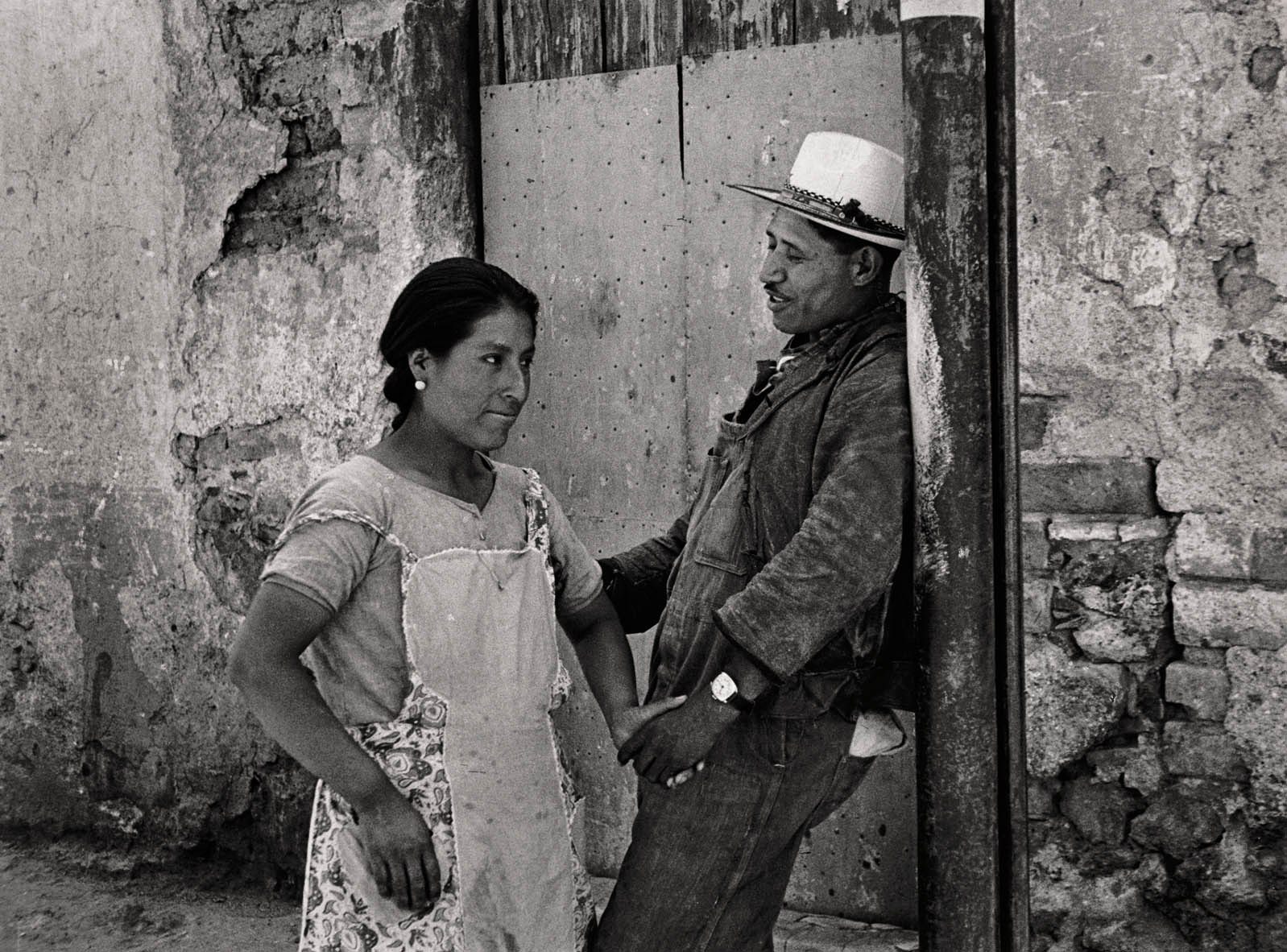
 

Helen Levitt (American, 1913-2009) 'Mexico City' 1941


Helen Levitt (American, 1913-2009)
Mexico City
1941
Gelatin silver print
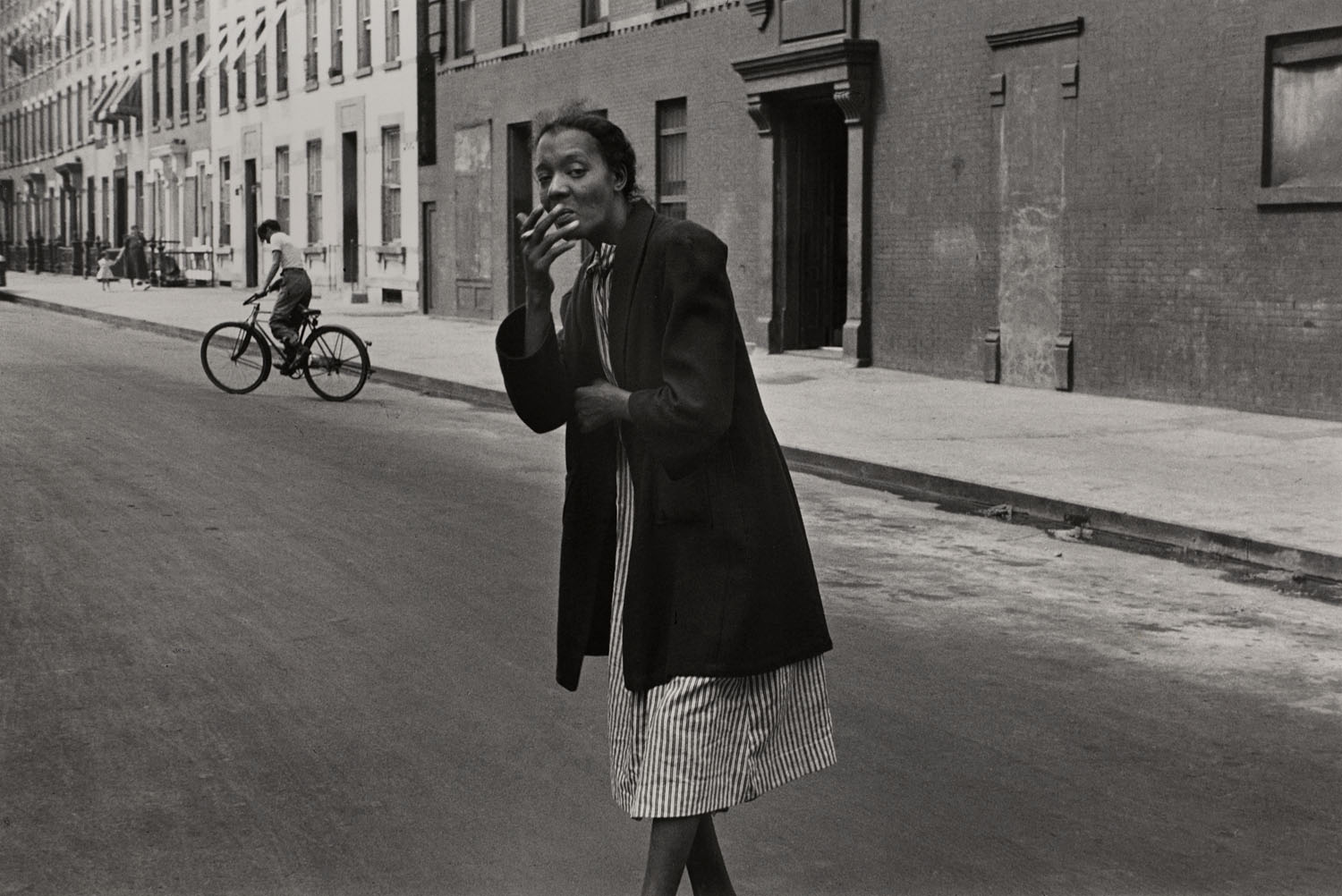
 

Helen Levitt (American, 1913-2009) 'New York' c. 1942


Helen Levitt (American, 1913-2009)
New York
c. 1942
Gelatin silver print
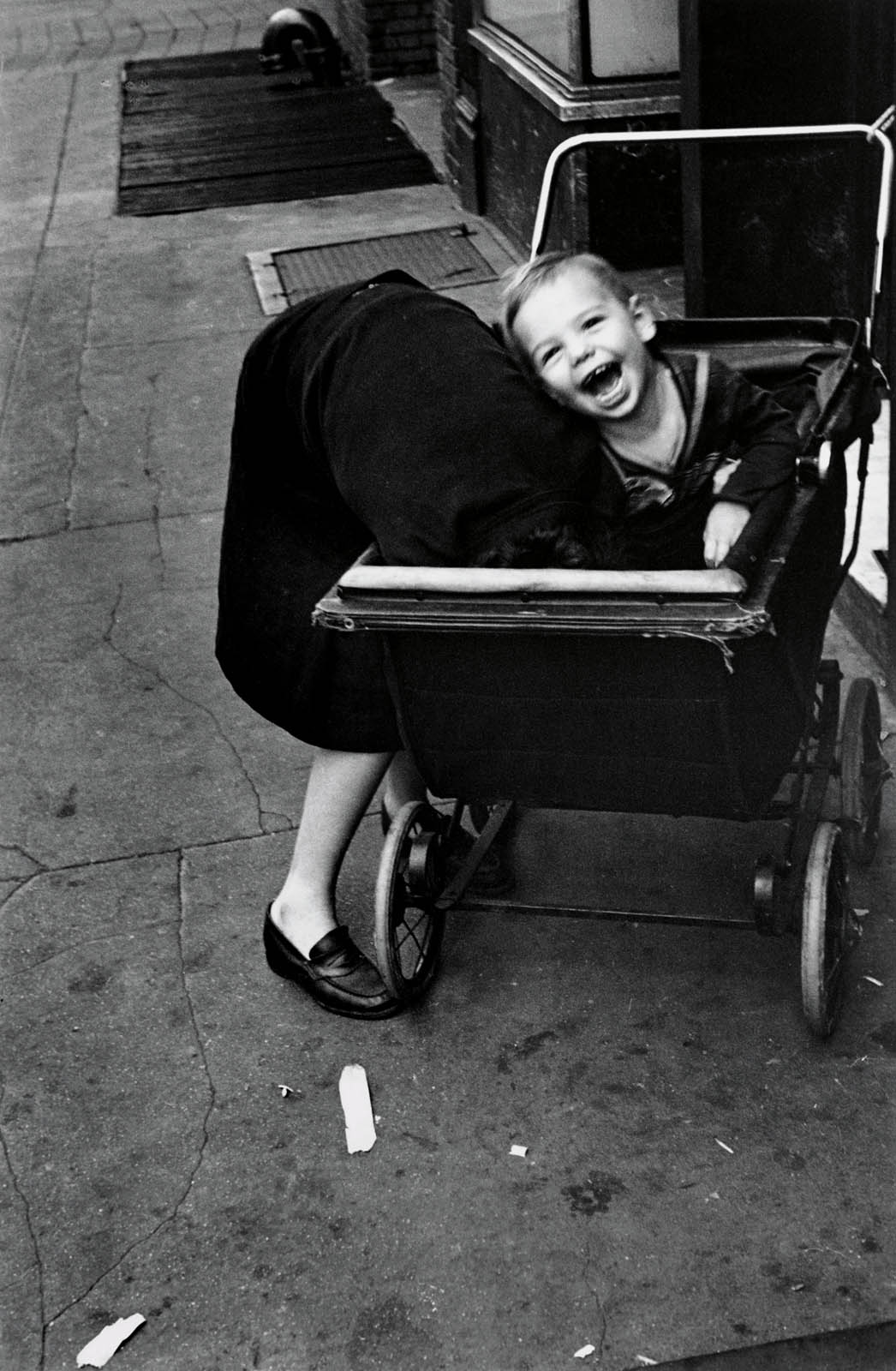
 

Helen Levitt (American, 1913-2009) 'New York' c. 1942


Helen Levitt (American, 1913-2009)
New York
c. 1942
Gelatin silver print
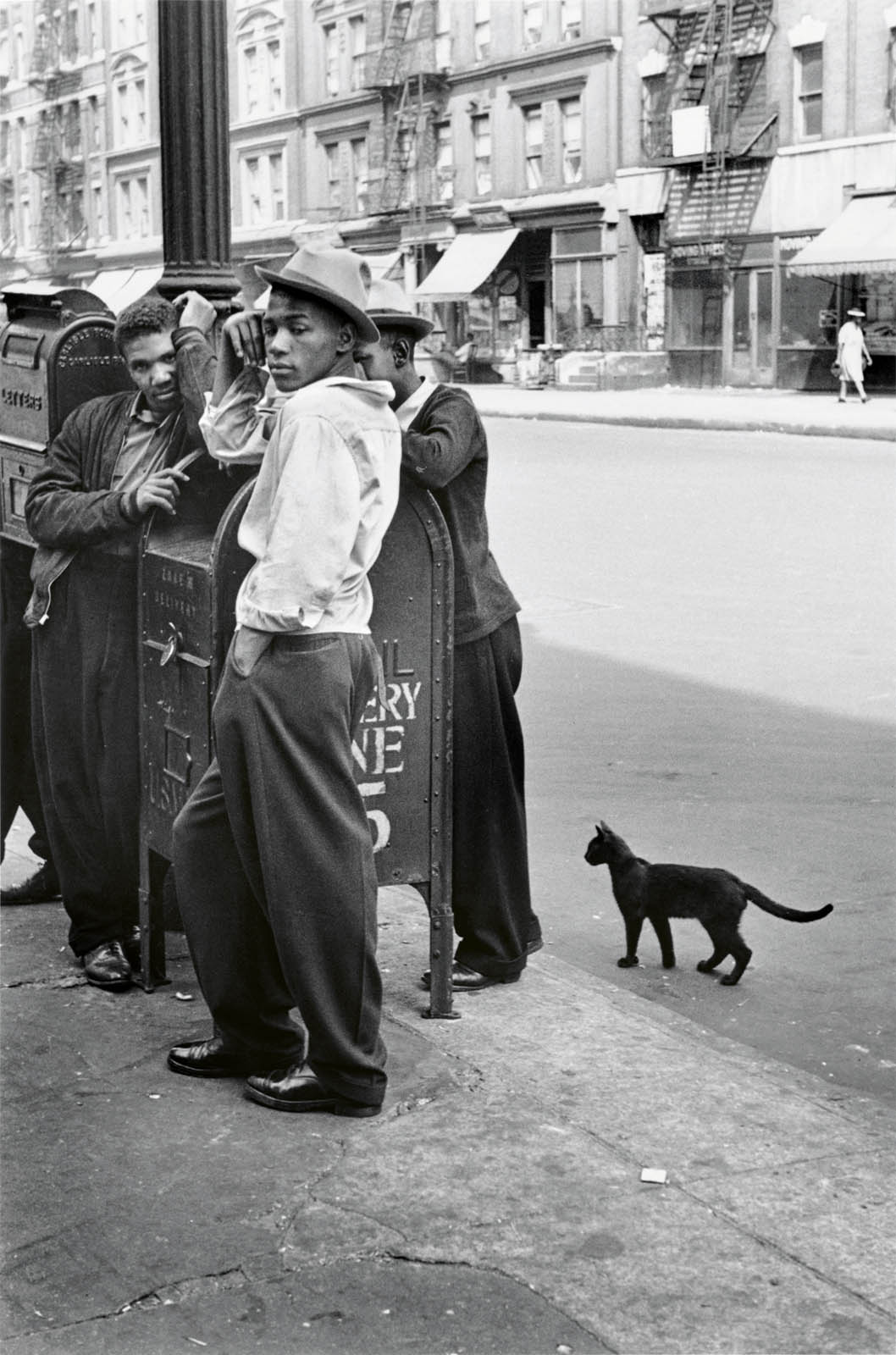
 

Helen Levitt (American, 1913-2009) 'New York' c. 1945


Helen Levitt (American, 1913-2009)
New York
c. 1945
Gelatin silver print
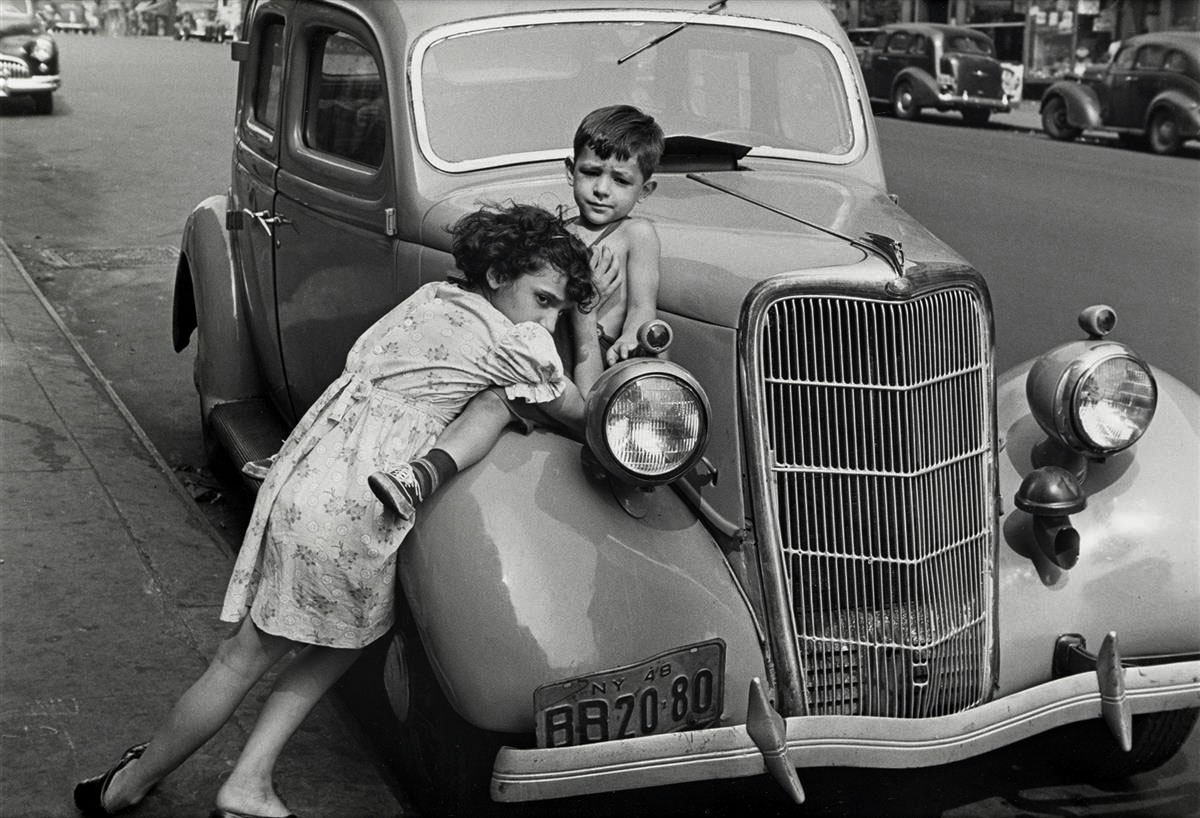
 

Helen Levitt (American, 1913-2009) 'New York' 1948


Helen Levitt (American, 1913-2009)
New York
1948
Gelatin silver print


In the Street, 1948 – A Film by Helen Levitt, ft. New Musical Score by Ben Model | From the Vault – The Metropolitan Museum of Art

Filmed in East Harlem just after the end of World War II, “In the Street” is a dynamic, tender, and often humorous portrait of life in New York City: children dance and play in alleyways, shopkeepers sweep the sidewalks, onlookers watch from their windows. This captivating film presents the bustling theater of city life, where “every human is a poet, a masker, a warrior, a dancer.” Directed by the renowned photographer Helen Levitt, in collaboration with Janice Loeb and James Agee, and featuring a new musical score written and performed by Ben Model.

Text from the YouTube website


Early Work / Graffiti / Gypsies

Only a few examples survive from Levitt’s first year using a Leica camera. Amid the backdrop of the Great Depression, her pictures of lone figures hunched over or lying on the ground appear documentary in their impulse, while other depictions of people in urban surroundings are notably more ambivalent in their view.

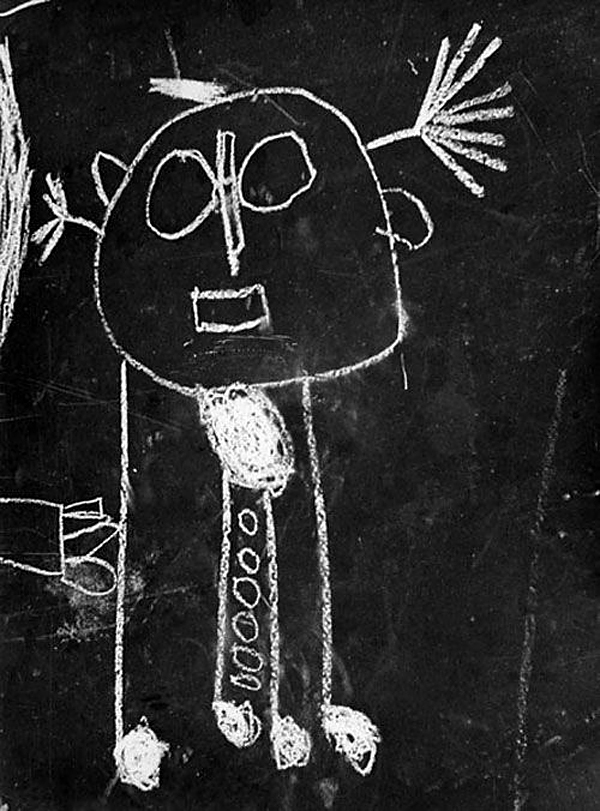
In 1937, while employed by the Federal Art Project to teach at a public school in East (Spanish) Harlem, Levitt noticed the many chalk drawings and messages illicitly scrawled by children on streets and buildings on her way to work, and began to document them in all their variety, innocence, and vulgarity. She sometimes also portrayed the artists themselves posing next to their ephemeral interventions.

Around 1938, on the advice of Walker Evans, Levitt began to use a right-angle viewfinder, a device that allowed her to face one direction while pointing her camera in another. This was particularly effective in recording the uninhibited interactions of the “gypsy” families prevalent in Spanish Harlem and Yorkville. Drawn to their way of life, she also borrowed Evans’s 4 x 5-inch view camera and tripod to make portraits of “gypsy” children in their homes.

1938-1940 / Mexico City / A Way of Seeing

By 1940 Levitt had established her terrain, subject, and approach. In a rare statement, she later described her intent “to seize upon and record those apparently accidental disarrangements that nevertheless and in seeming contradiction provide a more intense apperception of reality.” Uninterested in portraying New York City as a bustling metropolis, Levitt instead saw it as an environment whose “size and varied character constantly forces into the open material for my camera.” The working class, immigrant neighbourhoods she frequented – where adults chatted on stoops, mothers and children leaned out of windows, and children were left to their own devices – proved to be an especially fertile ground for her work.

In 1941, again inspired by Cartier-Bresson’s example, Levitt, a reluctant traveller, went to Mexico City with a friend to photograph there. Initially struggling with the challenge of working in new environment, she was eventually able to find her artistic footing, producing a body of work that at once acknowledged rawer social realities while locating a subtle lyricism unique to the city and its people. It would be her only trip abroad.

Upon her return to New York City, Levitt picked up where she left off, picking up on more sober themes of melancholy, alienation, and what she referred to as “the deep repressions of the unyoung.” After having photographed for a decade, Levitt collaborated with her friend, the writer and critic James Agee, to edit and sequence a book of her New York photographs. Envisioning the project as an urban counterpart to Let Us Now Praise Famous Men, his 1941 collaboration with Walker Evans, Agee wrote an extensive essay to accompany Levitt’s pictures that heralded their lyric qualities, the sum of which presented “unified view of the world, an insistent but irrefutable manifesto.” After a series of setbacks, the book, eventually given the title A Way of Seeing, was not published until nearly two decades later in 1965.

Color / Metro / Anys 1980

In 1959, Levitt was granted a Guggenheim fellowship to experiment with “the latest techniques in colour photography.” Her Leica loaded with colour slide film, she walked some of the same streets she had frequented in the 30s and 40s, newly attentive to the chromatic character of her compositions. After the bulk of her slides were stolen by a burglar in 1970, Levitt redoubled her efforts, photographing throughout the decade with renewed zeal, developing an intuitive system of colour that was at once transporting and transparent. In 1974, a continuous projection of forty of Levitt’s slides were featured at MoMA in New York, after which she began to realise select images as dye transfer prints.

Around the same time, Levitt also decided to revisit the subterranean theater of New York City subway as a site to make pictures, having served as a decoy for Walker Evans’s subway project work more than three decades earlier. With her subjects largely stationary in train cars and platforms, Levitt attended to the nuances of expression and gesture, recording quiet dramas amid unflattering light and cramped quarters.

From the 1980s onwards, Levitt continued to photograph, but only intermittently, working mainly in black and white, both in the city and outside it.

Text from Fundación MAPFRE
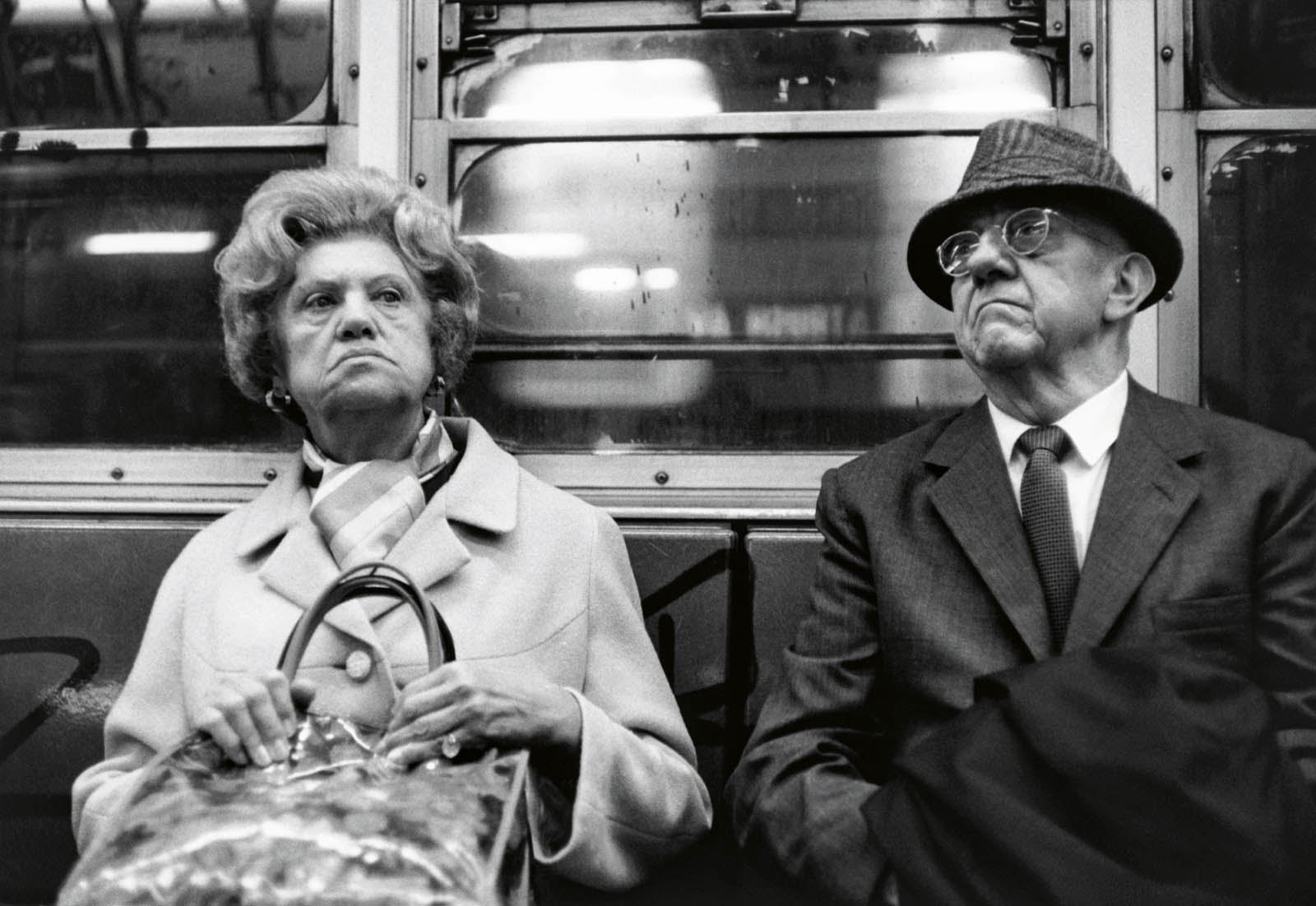
 

Helen Levitt (American, 1913-2009) 'New York' 1975


Helen Levitt (American, 1913-2009)
New York
1975
Gelatin silver print
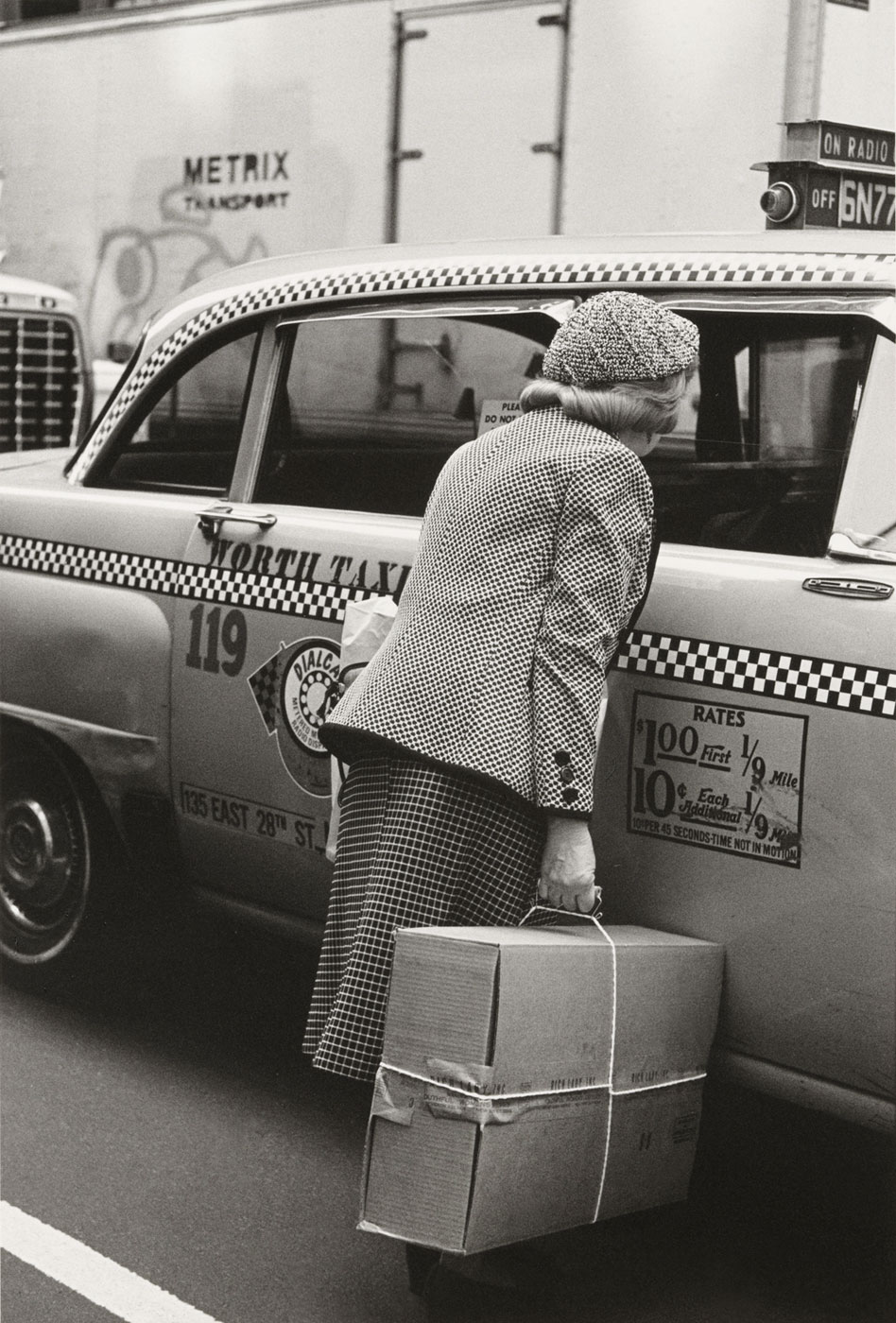
 

Helen Levitt (American, 1913-2009) 'New York (Woman and taxi)' 1982


Helen Levitt (American, 1913-2009)
New York (Woman and taxi)
1982
Gelatin silver print
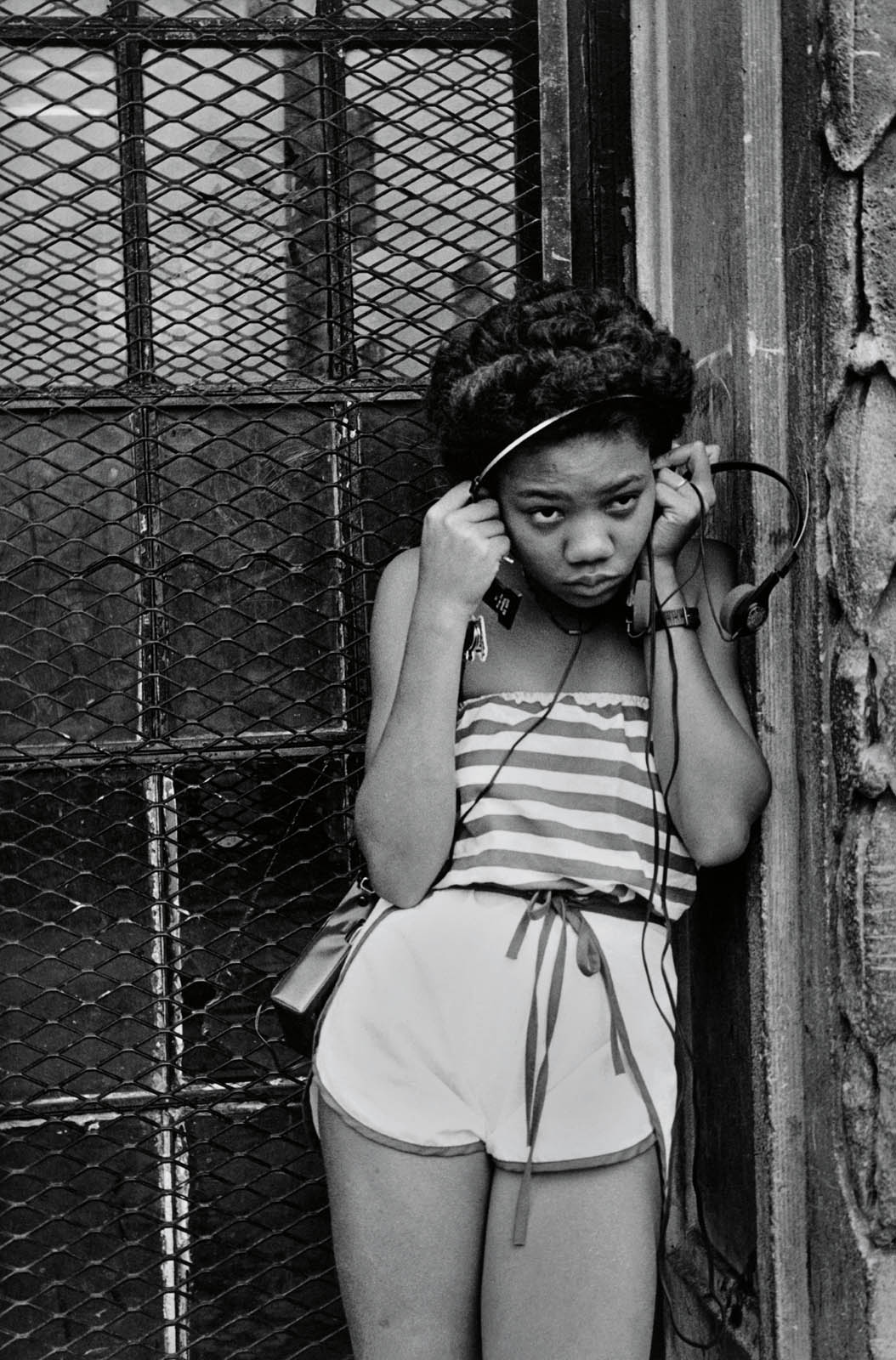
 

Helen Levitt (American, 1913-2009) 'New York' Nd


Helen Levitt (American, 1913-2009)
New York
Nd
Gelatin silver print
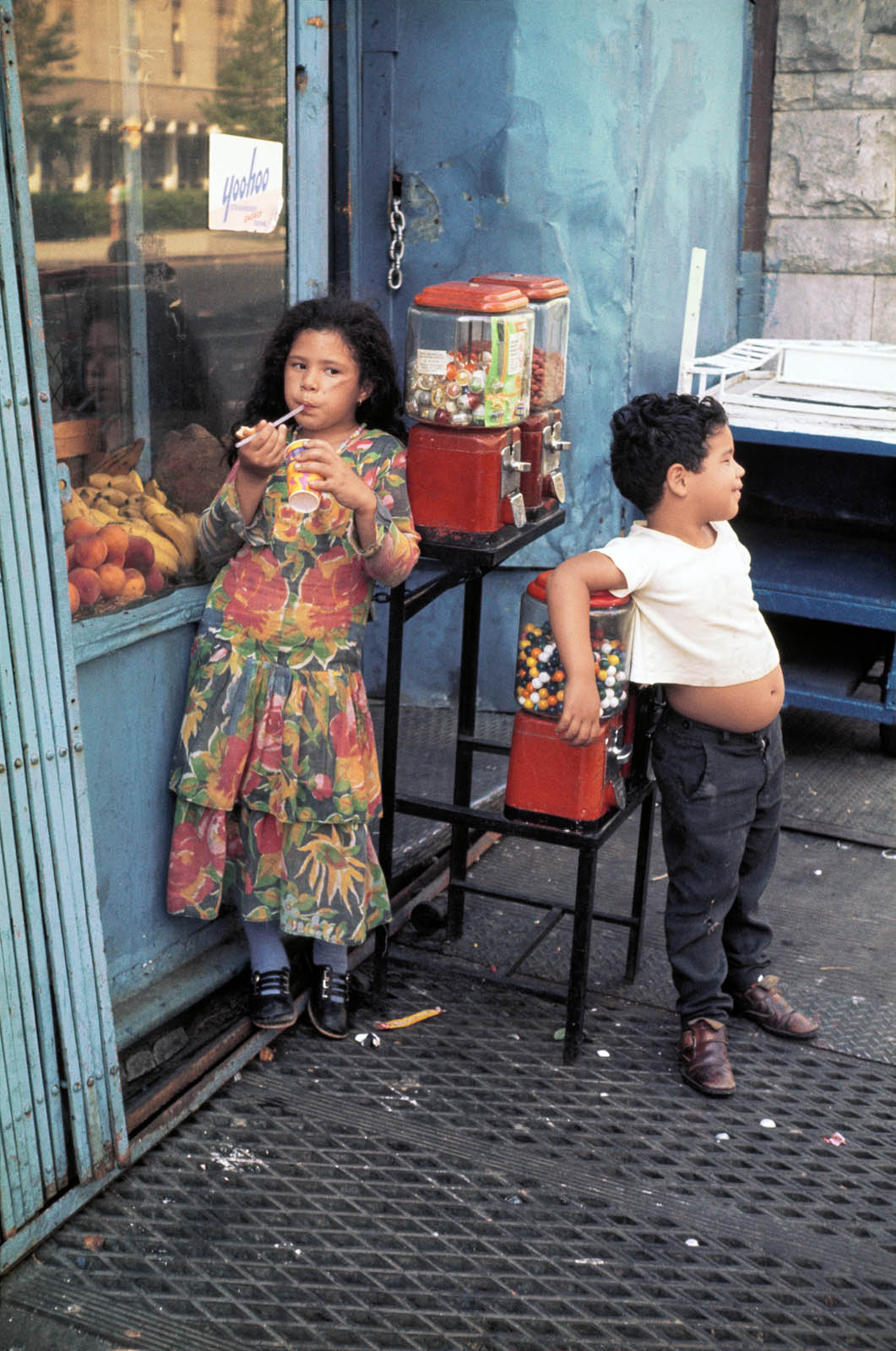
 

Helen Levitt (American, 1913-2009) 'New York' 1971


Helen Levitt (American, 1913-2009)
New York
1971
Dye transfer print
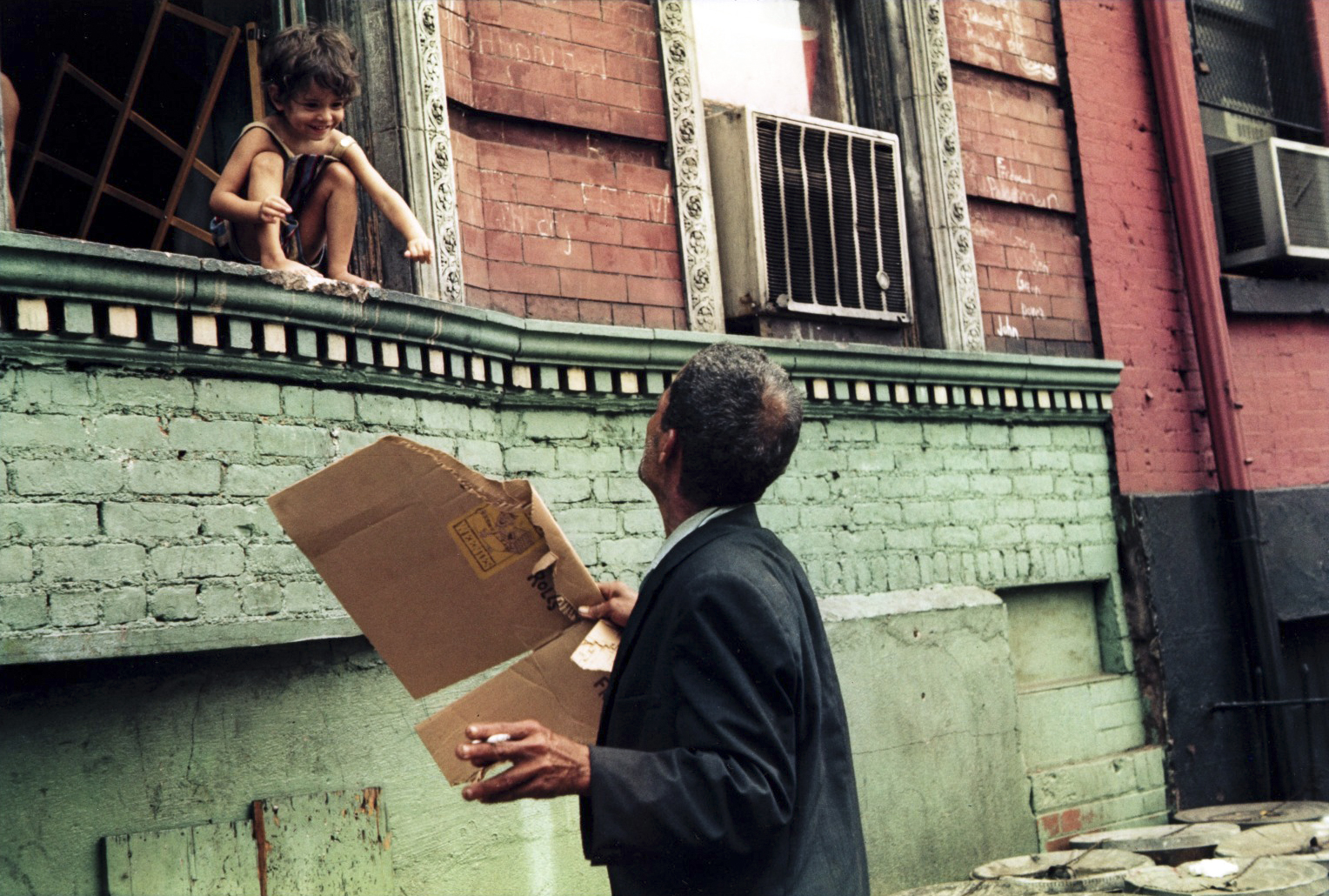
 

Helen Levitt (American, 1913-2009) 'New York' 1972


Helen Levitt (American, 1913-2009)
New York
1972
Dye transfer print
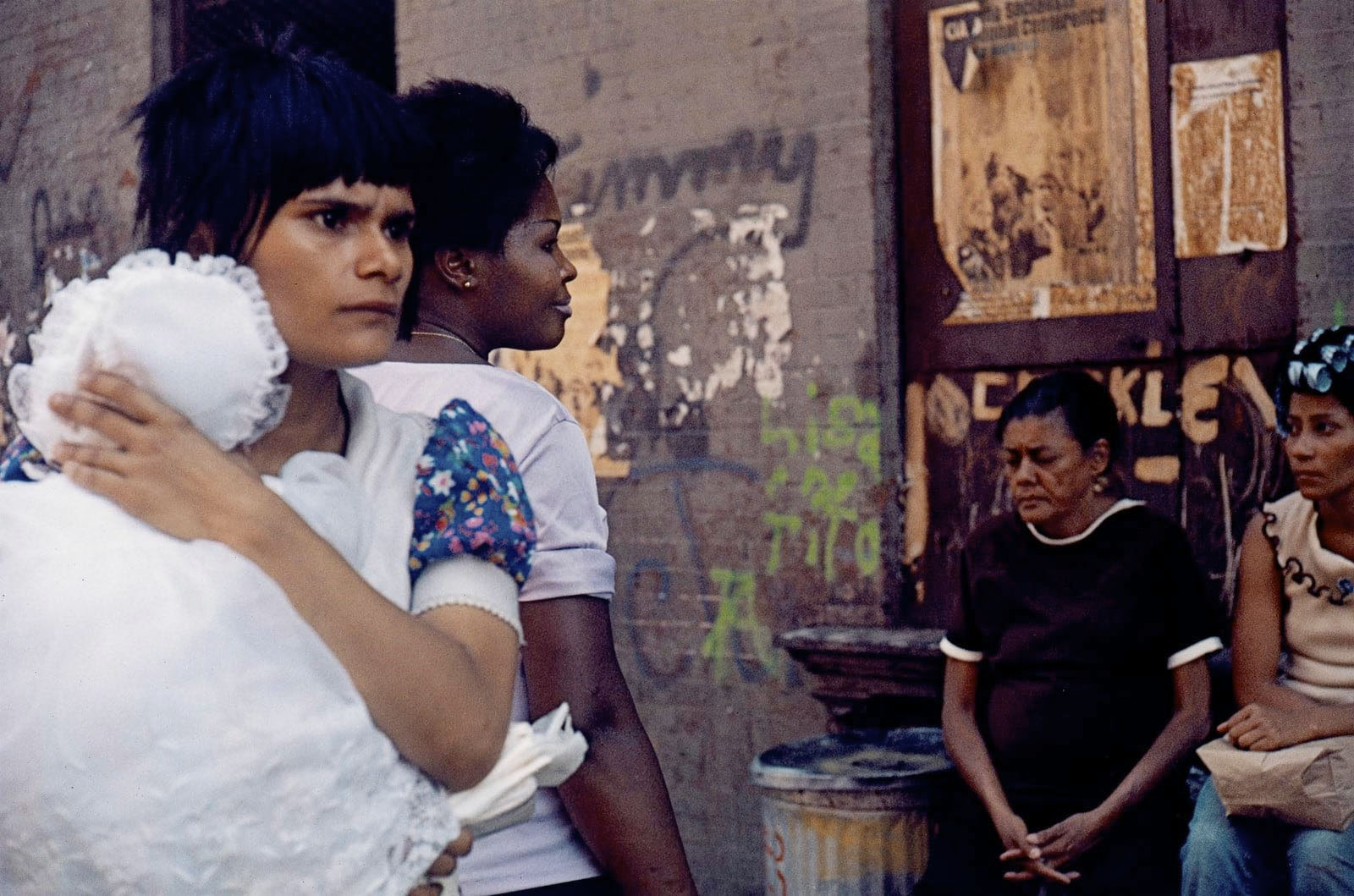
 

Helen Levitt (American, 1913-2009) 'New York' 1974 dye-transfer print


Helen Levitt (American, 1913-2009)
New York
1974
Dye transfer print


Helen Levitt (American, 1913-2009) 'Cat next to red car, New York' 1973


Helen Levitt (American, 1913-2009)
Cat next to red car, New York
1973
Type C print
18 x 12 inches
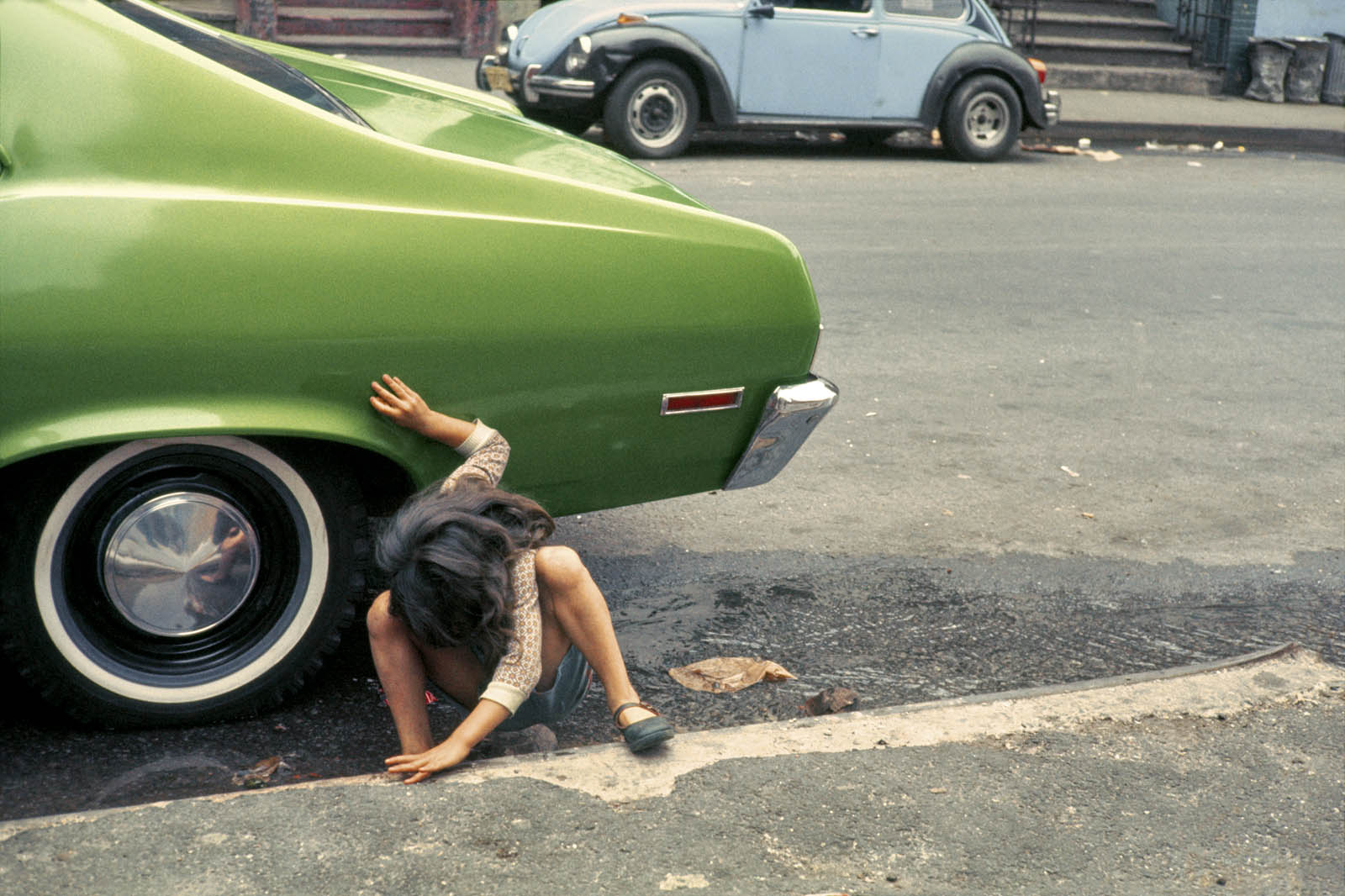
 

Helen Levitt (American, 1913-2009) 'New York' 1976


Helen Levitt (American, 1913-2009)
New York
1976
Dye transfer print
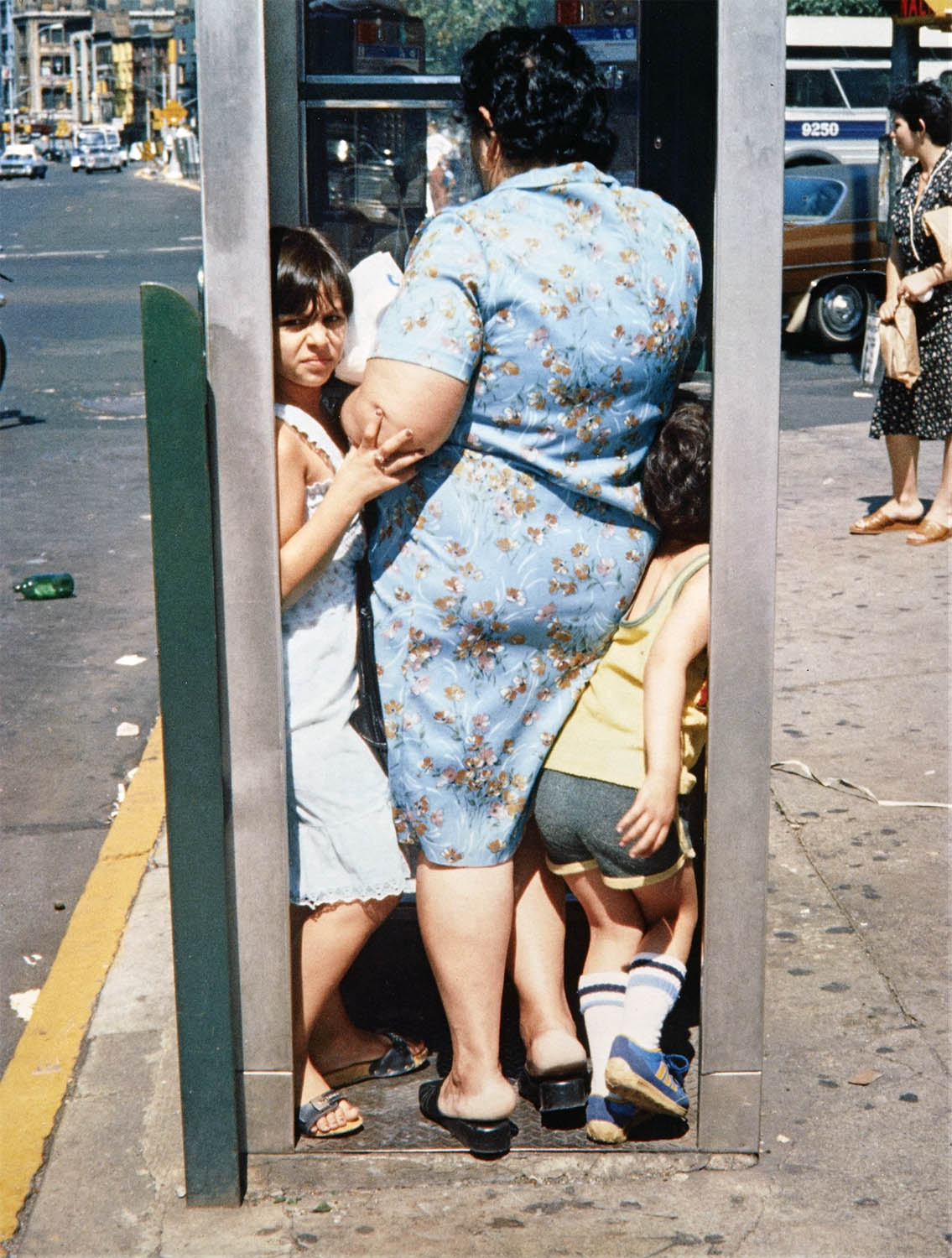
 

Helen Levitt (American, 1913-2009) 'New York City (phone booth)' 1988 Dye-transfer print


Helen Levitt (American, 1913-2009)
New York City (phone booth)
1988
Dye transfer print


Fundación MAPFRE
Recoletos Exhibition Hall
Paseo Recoletos 23, 28004 Madrid
Phone: +34 91 581 61 00

Opening hours:
Mondays (except holidays): 2pm – 8pm
Tuesday to Saturday: 11am – 8pm
Sunday and holidays: 11am – 7pm

Fundación MAPFRE website

LIKE ART BLART ON FACEBOOK

Back to top

Exhibition: ‘I-Photo. Japanese Photography 1960-1970 from the Collection’ at Museum der Moderne Salzburg

Exhibition dates: 21st April – 8th July, 2018

Curator: Christiane Kuhlmann, Curator Photography and Media Art; with Andrea Lehner-Hagwood, Curatorial Assistant, Museum der Moderne Salzburg

Works by Nobuyoshi Araki, Masahisa Fukase, Takashi Hanabusa, Jun Jumoji, Daidõ Moriyama, Masaaki Nakagawa, Bishin Jumonji, Shunji Õkura, Issei Suda, Akihide Tamura, Shin Yanagisawa, Yoshihiro Tatsuki


Daidō Moriyama (Japanese, b. 1938) 'Lips from a Poster' 1975 from the exhibition 'I-Photo. Japanese Photography 1960-1970 from the Collection' at Museum der Moderne Salzburg, April - July, 2018


Daidō Moriyama (Japanese, b. 1938)
Lips from a Poster
1975
Gelatin silver print on Baryte paper
Museum der Moderne Salzburg
© Daidō Moriyama


Much as I love the grittiness and stark contrast of Japanese photography of the 1960-70s – its reaction against the pro-American optimism of The Family of Man exhibition that went to Tokyo in the 1950s, its rejection of journalistic illustration, its I-reality that is not a objective record but a personal story, “a poem composed in photography”, its spirit of ennui, a state of dissatisfaction with the status quo – there is also another, less edifying side to Japanese photography of this period.

Basically, it’s a male view of the world, any world, any reality, but always with the “I” at the front of it, the world of the male ego. A world where women are objectified, bound and gagged in pretty gruesome “erotic” sex scenes (not in this posting, but you can Google them online). No matter that the photographer had permission, these photographs are about male power and the male gaze. Nothing more, nothing less. A world where cameras pry on people having anonymous sex in the park in the dark. Let’s call it what it is, it’s misogynistic and voyeuristic.

The obverse of a concern for the sitter, or the landscape, or the object, can be observed (did you see what I did there… obverse / observe), in that there is a concern with the minutiae of life in extremis, rather than an empathy for it. Maybe that is the Japanese culture. Perhaps this microscopic analysis comes about because of the fast pace of their life, their mixture of state, religion, culture and capitalism, their violent history and the submissive place of women within that society (The traditional role of women in Japan has been defined as “three submissions”: young women submit to their fathers; married women submit to their husbands, and elderly women submit to their sons ~ Wikipedia)

There is something I cannot put my finger on about the power of the photograph to capture a dominance over women, the landscape, people, protests – a suppressed violence against the self?

I’m just thinking out loud here…

Dr Marcus Bunyan


Many thankx to the Museum der Moderne Salzburg for allowing me to publish the photographs in the posting. Please click on the photographs for a larger version of the image.


The collections of the Museum der Moderne Salzburg include an outstanding and sizeable ensemble of Japanese photographs from the 1960s and 1970s. These works will be on view for the first time in many years in a series of exhibitions. The opening presentation is dedicated to the depiction of humans and perceptions of postwar Japanese society in transformation. A future second exhibition will focus on images of city and countryside.

In the history of Japanese photography, the idea of the “I-photo” is a kind of photographic adaptation of the literary convention of first-person narrative. The photographic image is conceived and employed as a medium articulating the photographer’s self as well as an instrument with which to scrutinise reality. A pioneer of postwar photography, Masahisa Fukase in the late 1960s created photographic series mixing documentary and fictional elements. His central motifs and models were his wife Yoko and their family. Nobuyoshi Araki, the best-known, most prolific, and probably also most provocative Japanese photography artist, launched his career as a fashion and advertising photographer in 1963. The collection contains highly personal photographic notes by him and his wife Yoko, who died early. Fukase, Araki, and the other Japanese “I-photographers” such as Issei Suda, Shin Yanagisawa, and Daidõ Moriyama regard the “I-photo” as a blend of truth and falsification that can elicit an emotional response and disconcert. The aesthetic of the pictures is characterised by hard black-and-white contrasts and lacerated abstract structures. It signals the artists’ rejection of the tradition of classical art photography while also probing the potentials of the medium itself. The Japanese photography scene is highly controversial; the spectrum of themes ranges from erotic depictions of bodies to political statements.


Exhibition view of 'I-Photo. Japanese Photography 1960-1970 from the Collection' showing at centre, Moriyama's 'Lips from a Poster' (1975)


Daidō Moriyama (Japanese, b. 1938)
Untitled (l. a. r.)
c. 1970
Lips from a Poster
1975
3 gelatin silver prints on Baryte paper
Museum der Moderne Salzburg

Exhibition view of I-Photo. Japanese Photography 1960-1970 from the Collection
© Museum der Moderne Salzburg
Photo: Rainer Iglar


Exhibition view of 'I-Photo. Japanese Photography 1960-1970 from the Collection' showing at right, Moriyama's 'Stray Dog, Misawa' (1971)


Daidō Moriyama (Japanese, b. 1938)
Stray Dog, Misawa (installation view at right)
1971
From the series Hunter
Untitled
c. 1970
9 gelatin silver prints on Baryte paper
Museum der Moderne Salzburg

Exhibition view of I-Photo. Japanese Photography 1960-1970 from the Collection
© Museum der Moderne Salzburg
Photo: Rainer Iglar


Daidō Moriyama (Japanese, b. 1938) 'Stray Dog, Misawa' 1971 from the exhibition 'I-Photo. Japanese Photography 1960-1970 from the Collection' at Museum der Moderne Salzburg, April - July, 2018


Daidō Moriyama (Japanese, b. 1938)
Stray Dog, Misawa
1971
From the series Hunter
Gelatin silver print on Baryte paper
Museum der Moderne Salzburg
© Daidō Moriyama


Daidō Moriyama (Japanese, b. 1938) 'National Highway 1 AT Dawn 1, Asahi-cho, Kuwana City, Mie Prefecture' 1968 from the exhibition 'I-Photo. Japanese Photography 1960-1970 from the Collection' at Museum der Moderne Salzburg, April - July, 2018


Daidō Moriyama (Japanese, b. 1938)
National Highway 1 AT Dawn 1, Asahi-cho, Kuwana City, Mie Prefecture
1968
Gelatin silver print on Baryte paper
6.50 x 9.72 in. (16.5 x 24.7cm)
Museum der Moderne Salzburg
© Daidō Moriyama


Daidō Moriyama (Japanese, b. 1938)

Daidō Moriyama is one of Japan’s leading contemporary photographers. He studied design and photography in Kōbe before moving to Tokyo in 1961 and deciding to focus entirely on photography. After a stint as Eikō Hosoe’s assistant, he went into business for himself as a photographer in 1964.

Like the art critic Kōji Taki and the photographers Yutaka Takanashi, Shōmei Tōmatsu, and Takuma Nakahira, Moriyama was a member of the group around the influential magazine Provoke (1968-1969). Although no more than three issues appeared in print, its importance in the history of the medium in Japan can hardly be overstated. The Provoke Manifesto declared that photography was capable of registering what could not be expressed in words. The visual style of the photographs Provoke would run was to be are-bure-boke, Japanese for “grainy, blurry, and out of focus” – a specification that still aptly describes Moriyama’s photographs; the same style is evident in his work for magazines such as Camera Mainichi, Asahi Journal, and Asahi Camera.

Moriyama’s inexhaustible signature theme is the city of Tokyo, but he has also worked elsewhere. In an interview, he once said: “For me cities are enormous bodies of people’s desire.” He still prowls the streets day after day, taking pictures of appealing or striking sights, never peering into his small compact camera’s viewfinder. Shots of traffic, of pedestrians and shop windows, of posters and details such as lips, eyes, or plants are recurrent motifs. Hard black-and-white contrasts lend his prints a strangely alien and otherworldly allure, but the depictions always remain anecdotal, as though from a dream. Moriyama’s photobooks may accordingly be read as photonovels of a sort. Japan A Photo Theater (1968) was the first book in this vein he published; his oeuvre has now grown to several hundred photobooks.

The Photographic Society of Japan, whose purpose is to promote photography in Japan, elected him its photographer of the year in 1983. In 2012, he received the Infinity Award for Lifetime Achievement of the International Center of Photography, New York, which honours outstanding accomplishments in photography and visual art.


Exhibition view of I-Photo. Japanese Photography 1960-1970 from the Collection showing Masahisa Fukase's 'Untitled' (1971) from the series 'Yoko'


Masahisa Fukase (Japanese, 1934-2012)
Untitled
1971
From the series Yoko
9 gelatin silver prints on Baryte paper (Vintage prints)
Museum der Moderne Salzburg

Exhibition view of I-Photo. Japanese Photography 1960-1970 from the Collection
© Museum der Moderne Salzburg
Photo: Rainer Iglar


Masahisa Fukase (Japanese, 1934-2012) 'Untitled' 1961-1970


Masahisa Fukase (Japanese, 1934-2012)
Untitled
1961-1970
From the series Yoko
Gelatin silver print on Baryte paper
Museum der Moderne Salzburg
© Masahisa Fukase, Courtesy Michael Hoppen Gallery London


Masahisa Fukase (Japanese, 1934-2012)

Masahisa Fukase completed a PhD at the Institute of Photography at Nihon University, Tokyo, in 1956. He worked as a photographer for advertising agencies and various publishing houses until 1968 and then as a freelance photographer until his death in 2012. His work was included in the 1974 group exhibition New Japanese Photography at the Museum of Modern Art, New York, followed by numerous solo and group shows all over the world. In 1976, he received the annual Ina Nobuo Award, which has been given out by the Nikon Salon in Tokyo since 1976. At the 1992 Higashikawa International Photo Festival, his exhibition Karasu (Ravens) earned him a Higashikawa Photography Award in the Special Award category.

In the 1960s, his photography is largely focused on his own life and that of his wife Yoko. She stars in pictures that show her in all sorts of situations in life, private as well as public. Fukase captures Yoko as his bride, in the nude, during sex, or as a tourist in the street. He is also interested in the passage of time and ageing in general. After separating from Yoko, Fukase started photographing ravens as symbols of loneliness and loss. The photobook Karasu (Ravens) became one of the most coveted works of its kind in postwar Japan; it was first reprinted just last year.


Exhibition view of 'I-Photo. Japanese Photography 1960-1970 from the Collection' showing Bishin Jumonji's 'Untitled' (1971)


Bishin Jumonji (Japanese, b. 1947)
Untitled
1971
3 gelatin silver prints on Baryte paper
Museum der Moderne Salzburg

Exhibition view of I-Photo. Japanese Photography 1960-1970 from the Collection
© Museum der Moderne Salzburg
Photo: Rainer Iglar


Bishin Jumonji (Japanese, b. 1947) 'Untitled' 1971


Bishin Jumonji (Japanese, b. 1947)
Untitled
1971
Gelatin silver print on Baryte paper
Museum der Moderne Salzburg
© Bishin Jumonji


Bishin Jumonji (Japanese, b. 1947) 'Untitled' 1971


Bishin Jumonji (Japanese, b. 1947)
Untitled
1971
Gelatin silver print on Baryte paper
Museum der Moderne Salzburg
© Bishin Jumonji


Bishin Jumonji (Japanese, b. 1947)

After studying at the Tokyo College of Photography, Bishin Jumonji became an assistant to the photographer Kishin Shinoyama, who had risen to renown with publications about Kabuki theater, erotic depictions in photography magazines, and work in unusual book formats such as flipbooks. Since 1971, Jumonji has worked both freelance and as an advertising photographer. This was also when he began to take pictures for the series on view, Untitled. Shot around Tokyo, the works portray families, day-trippers, a quartet of rock musicians, dancers, or bodybuilders – in short, representatives of modern Japan. The details are chosen so that the heads and faces do not appear in the prints. This underscores the subjective quality of photography as such while also conveying the anonymity of life in the megalopolis.

Otto Breicha had seen the series as early as 1974, when it was featured in New Japanese Photography, a group exhibition John Szarkowski organised at the MoMA in New York. Breicha decided to include it in Neue Fotografie aus Japan, the follow-up show he mounted in Graz in 1977.

In 1990, Jumonji receives the Domon Ken Award, one of the most important Japanese photography prizes. The work of the honourees is showcased at the Ginza Nikon Salon, Tokyo, and the Domon Ken Museum of Photography, Sakata, the first museum in Japan dedicated to photography. Some of Jumonji’s pictures are published in international magazines including the German newsweekly Stern.


Exhibition view of 'I-Photo. Japanese Photography 1960-1970 from the Collection' showing Akihide Tamura's 'Yokohama', 1966 at left; and 'Yokosuka', 1969 at right, from the series 'Base'


Akihide Tamura (Japanese, b. 1947)
Yokohama, 1966 (l.)
Yokosuka, 1969 (r.)
7 gelatin silver prints on Baryte paper
From the series Base
Museum der Moderne Salzburg

Exhibition view of I-Photo. Japanese Photography 1960-1970 from the Collection
© Museum der Moderne Salzburg
Photo: Rainer Iglar


Akihide Tamura (Japanese, b. 1947) 'Yokohama' 1966


Akihide Tamura (Japanese, b. 1947)
Yokohama
1966
From the series Base
Gelatin silver print on Baryte paper
Museum der Moderne Salzburg
© Akihide Tamura


Akihide Tamura (Japanese, b. 1947)

Akihide Tamura studied at the Tokyo College of Photography and got his degree in 1967. Even before he graduated, the academy’s director, the photography critic Shigemori Koen, recognised his unusual approach. In 1974, the MoMA in New York featured Tamura’s House series in its group exhibition New Japanese Photography and acquired it for the museum’s collection. Taken over the course of a year – from July to July – the pictures show houses in abandoned landscapes. The alternation of day and night and the cycle of the seasons play a prominent part in the series.

Tamura’s life was defined by the wrenching changes Japan underwent after World War II. His work is an astute photographic record of these metamorphoses. For the series Base (1966-1970), he captured landscapes, people, and combat aircraft and other military planes at several American bases south of Tokyo. In retrospect, he wrote: “When I was a photography student, I knew that the military base existed in a territory that had been created due to the tensions between the United States and the Soviet Union and the possibility of a nuclear war. I was shaken by the incredibly beautiful and yet insane fighter jets before my eyes. The contradiction between my fear that the world would vanish in an instant if someone were to push the nuclear button and the exotic and eerie spell the military base cast over me left me perpetually torn.”

The works on view are part of the major cycle Erehwon – the title is the word “nowhere” read backwards – that Tamura worked on between 1967 and 1973. The series combines combat aircraft taking off and hurtling off into the sky, their engines a pair of glowing eyes, with ghostly portraits of children that gradually fade into the dark. The composition reflects the photographer’s mindset, a hard-to-pin-down blend of admiration and fear.


Diverse and controversial, sometimes mysterious and often at odds with stereotypical ideas about Japan: there is much to discover in Japanese photography from the 1960s and 1970s. The Museum der Moderne Salzburg now presents its extensive and singular collection in a two-part exhibition series.

For the first time in many years, the Museum der Moderne Salzburg puts its collection of c. 600 original prints of Japanese photography from the 1960s and 1970s, which was purchased in the museum’s early years, on display. The series of two shows begins with IPhoto. Japanese Photography 1960-1970 from the Collection, which presents works that focus on the depiction of the human being and the changes in postwar Japanese society.

“In this exhibition, my vigorous efforts to undertake a thorough review of our collections are bearing fruit, and so I am especially pleased that we are able to present our holdings of Japanese photography – a sizeable ensemble of outstanding works – which have not been seen by the public in a long time. The show also spotlights a chapter in the history of the museum, which started collecting and conserving photography early on. Otto Breicha, the museum’s first director, personally traveled to Japan to meet many of the artists and select works for the projected exhibition,” Sabine Breitwieser, Director of the Museum der Moderne Salzburg, observes. Curator of Photography and Media Art Christiane Kuhlmann emphasises that “this effort to champion Japanese culture and acquire Japanese art for the nascent collection constitutes a pioneering achievement.” “At the time, the primary media in which Japanese photographers presented their pictures were photobooks and magazines,” Kuhlmann notes, “so that vintage prints in the quality and form at our disposal are now hard or impossible to come by. Breicha’s initiative to build a centre for contemporary photography in Austria was in part motivated by his experiences in Japan.”

In the early 1960s, Japan enters a period of fast-paced economic growth, becoming a leading technology manufacturer. A quarter-century after the end of the war and the nuclear bombs over Hiroshima and Nagasaki, Japan hosts Expo’70, the first world’s fair to be held in an Asian country. Tokyo grows into an enormous megalopolis; construction on an international airport that will connect it to the entire world begins in 1971. These developments mark the definite end of the island nation’s decades-long isolation from the West, bringing rapid changes that affect Japanese society as well. In the 1960s, millions of Japanese citizens rally to protest against educational and land reforms and the security treaty with the former enemy, the United States of America. The Japanese photography scene devises a new and dynamic visual language that reflects the country’s more expansive self-image. Distinctive features include the reflection on perception, the quest for novel ways to express the self, and a revised definition of the photographic medium. Hard black-and-white contrasts and lacerated abstract structures are characteristic of the aesthetic of these pictures.

The idea of the “I-photo” is an adaptation of the term “I-novel,” which designates a genre of first-person narrative fiction in Japanese literature. Conceiving of themselves as authors, the photographers understand the “Iphoto” as the instrument of an exploration of reality. Japan’s photography scene is often highly controversial, with themes ranging from erotic depictions of bodies to political statements. Western observers are bound to find some pictures enigmatic and unsettling; they run counter to how Japan is generally imagined abroad. Yet it was Western art institutions that, in the 1970s, first included Japanese contemporary photography in their programming. Neue Fotografie aus Japan (New Photography from Japan) was the title of the first exhibition in Europe that Otto Breicha mounted in Graz in 1977; with I-Photo. Japanese Photography 1960-1970 from the Collection, the Museum der Moderne Salzburg brings back the exhibits from that historic show, though with different emphases. The presentation includes works by the photographers associated with the magazine Provoke (1968-1969) in which reality seems to be dismantled into its constituent elements, as well as by artists such as Nobuyoshi Araki and Masahisa Fukase who pursued their own highly individual creative agendas. Also on display are pictures by the members of the Kompora group, who sought to render a lucid and accurate portrait of everyday life in a clinical visual idiom.

Press release from Museum der Moderne Salzburg


Exhibition view of 'I-Photo. Japanese Photography 1960-1970 from the Collection'


Exhibition view of I-Photo. Japanese Photography 1960-1970 from the Collection
© Museum der Moderne Salzburg
Photo: Rainer Iglar


Exhibition view of 'I-Photo. Japanese Photography 1960-1970 from the Collection' showing Yoshihiro Tatsuki's 'Untitled' c. 1970


Yoshihiro Tatsuki (Japanese, b. 1937)
Untitled
c. 1970
3 gelatin silver prints on Baryte paper
Museum der Moderne Salzburg

Exhibition view of I-Photo. Japanese Photography 1960-1970 from the Collection
© Museum der Moderne Salzburg
Photo: Rainer Iglar


Yoshihiro Tatsuki (Japanese, b. 1937) 'Untitled' c. 1970


Yoshihiro Tatsuki (Japanese, b. 1937)
Untitled
c. 1970
Gelatin silver print on Baryte paper
Museum der Moderne Salzburg
© Yoshihiro Tatsuki


Yoshihiro Tatsuki (Japanese, b. 1937)

Yoshihiro Tatsuki was born in 1937 in Tokushima, where his family had long run an established portrait studio. He studied at the Tokyo College of Photography (today’s Tokyo Polytechnic University) and graduated in 1958. Initially joining the advertising agency Adcenter in Tokyo as a photographer, Tatsuki went freelance in 1969, working for clients in the advertising, fashion, and publishing industries. In 1965, his series Just Friends and Fallen Angels, which had appeared in the photography magazine Camera Mainichi, earned him the emerging photographer’s award of the association of Japanese photography critics. The works garnered wide attention in Japan. Among his best-known creations are GIRL, EVES, Private Mariko Kaga, Aoi Toki, My America, and Portrait of Family.

Tatsuki has long focused on nude photography, combining traditional Japanese compositional templates with the characteristic poses of Western models. It is hard to tell whether he wants to debunk or cater to the – primarily Western – fantasy of the Geisha as concubine.


Exhibition view of 'I-Photo. Japanese Photography 1960-1970 from the Collection' showing Nobuyoshi Araki's 'Untitled' (1971) from the series 'Sentimental Journey'


Nobuyoshi Araki (Japanese, b. 1940)
Untitled
1971
From the series Sentimental Journey
7 gelatin silver prints on Baryte paper
Museum der Moderne Salzburg

Exhibition view of I-Photo. Japanese Photography 1960-1970 from the Collection
© Museum der Moderne Salzburg
Photo: Rainer Iglar


Nobuyoshi Araki (Japanese, b. 1940) 'Untitled' 1971


Nobuyoshi Araki (Japanese, b. 1940)
Untitled
1971
From the series Sentimental Journey
Gelatin silver print on Baryte paper
Museum der Moderne Salzburg
© Nobuyoshi Araki


Nobuyoshi Araki (Japanese, b. 1940) 'Yoko, my Love' Nd


Nobuyoshi Araki (Japanese, b. 1940)
Yoko, my Love
Nd
Gelatin silver print on Baryte paper (Vintage print)
Museum der Moderne Salzburg
© Nobuyoshi Araki


Nobuyoshi Araki (Japanese, b. 1940)

Nobuyoshi Araki studied photography and film studies at Chiba University from 1959 until 1963. After completing his degree, he joined an advertising agency; in the spare time left by his work as a commercial photographer, he started developing his own photographic ideas.

1970, the artist declared, would be “The First Year of Araki.” Increasingly dissatisfied with the status quo that prevailed in established photography, he launched a variety of creative experiments. The popular photography that dominated the market in Japan at the time, he thought, traded in illusions and dishonesty, and so he proposed to change the situation and create a new kind of photography that would reveal the true face of a society undergoing rapid change.

In 1971, he was married to Yoko. His documentation of their honeymoon was published as the small photobook Sentimental Journey. The travelogue – several pictures from it are in the Museum der Moderne Salzburg’s collection – opens with a portrait of Yoko on the train. The title and this picture are a reference to Doris Day’s 1945 worldwide hit. The series continues with shots of places, sights, and, again and again, pictures of Yoko, in the street, nude, or having sex. As Araki sees it, the book is a new form of reportage about life. Taking photographs and living, to his mind, are synonymous. In a statement accompanying Sentimental Journey, he writes: “The I-novel comes closer to photography.” The title of our exhibition, I-Photo, alludes to this Japanese literary genre, in which the author’s experiences, rendered in as much realistic detail as possible, form the material out of which a fictional story is wrought.

In 1992, Camera Austria, Graz, hosted Araki’s first solo exhibition in Europe. He is famous for his widely debated photographs of erotic bondage, but also for his photobooks, which now number almost six hundred.


Exhibition view of 'I-Photo. Japanese Photography 1960-1970 from the Collection' featuring the work of Nobuyoshi Araki


Exhibition view of I-Photo. Japanese Photography 1960-1970 from the Collection featuring the work of Nobuyoshi Araki
© Museum der Moderne Salzburg
Photo: Rainer Iglar


Exhibition view of 'I-Photo. Japanese Photography 1960-1970 from the Collection'


Exhibition view of I-Photo. Japanese Photography 1960-1970 from the Collection
© Museum der Moderne Salzburg
Photo: Rainer Iglar


Takashi Hanabusa (Japanese, b. 1949) 'Untitled' Nd


Takashi Hanabusa (Japanese, b. 1949)
Untitled
Nd
Gelatin silver print on Baryte paper
Museum der Moderne Salzburg
© Takashi Hanabusa


Takashi Hanabusa (Japanese, b. 1949)

Takashi (Lyu) Hanabusa was born in Osaka in 1949. After graduating from the Kuwasawa Design School, Tokyo, he joined the staff of the publishing house that produced the magazine Nippon Camera. In 1971, he became an assistant to the photographer Yutaka Takanashi, whose well-known series Tôshi-e (Towards the City) surveyed Tokyo as the Japanese began to embrace modern metropolitan life.

Hanabusa’s works build on this influence, documenting the city as a mysterious place defined by jarring contrasts between tradition and modernity, high tech and nature. His photographs are marked by deliberately ambiguous particulars, as when faces are obscured by shadows. The shots are framed so as to render bodies in fragments or bring out details in classic Japanese fabric patterns that European beholders cannot place.

Hanabusa has been a freelance photographer and member of the Japan Professional Photographers Society since 1973.


Masaaki Nakagawa (Japanese, 1943-2005) 'Selfportrait, Against Wall of My Home' Nd


Masaaki Nakagawa (Japanese, 1943-2005)
Selfportrait, Against Wall of My Home
Nd
Gelatin silver print on Baryte paper
Museum der Moderne Salzburg
© Masaaki Nakagawa


Masaaki Nakagawa (Japanese, 1943-2005)

Masaaki Nakagawa completed his studies of Japanese literature at Kōnan University, Kōbe, in 1966. He then worked for various advertising agencies and created fashion shots and reportages for magazines. From 1969 until his death in 2005, he was a freelance photographer in Tokyo and taught at the Kuwasawa Design School.

Otto Breicha described Nakagawa as a storyteller and compared him to the American photographer Duane Michals, whose notion that “things are queer” seems to inform his Japanese colleague’s work as well. Created in series, Nakagawa’s sequences of pictures, rather than aiming for an obvious punch line, appear to move in circles. In the series Self-Portrait against Wall of My Home, the photographer’s shadow looms on the wall, as do things the title identifies as his possessions. Yet the pictures remain vague, almost ghostly, and it is not clear what the focus is on. In this respect, Nakagawa joins the ranks of those conceptual photographers who employ photography as a tool of pictorial analysis, scrutinising the medium’s intrinsic technical-visual potential.

Masaaki Nakagawa was one of the photographers who assisted Otto Breicha during his research in Japan in preparation for the exhibition Neue Fotografie aus Japan.


Issei Suda (Japanese, 1940-2019) 'Untitled' 1975-1976


Issei Suda (Japanese, 1940-2019)
Untitled
1975-1976
From the series Fûshi Kaden
Gelatin silver print on Baryte paper
Museum der Moderne Salzburg
© Issei Suda


Issei Suda (Japanese, 1940-2019)

Issei Suda was trained at the Tokyo College of Photography, from which he graduated in 1962. From 1967 until 1970, he worked as a stage photographer for the avant-garde theater ensemble Tenjō Sajiki, which was led by the writer and filmmaker Shūji Terayama.

In the late 1960s, Suda and others opposed to the style championed by the magazine Provoke founded the group Kompora. The label is a typical Japanese compound, a contraction of the English terms “contemporary” and “photography.” The group’s key point of reference was Contemporary Photographers: Toward a Social Landscape, an exhibition held at the George Eastman House in Rochester, N.Y., in 1966. Their goal was to create lucid and accurate portrayals of everyday life in a clinical visual idiom. Despite the aspiration to cool objectivity, however, some of their pictures strike Western beholders as no less enigmatic and unsettling.

That is certainly the impression one gets from the works we present, a selection from the series Fûshi Kaden (1975-1976), which was published as a photobook – Suda’s first – by Asahi Sonorama in 1978. The series proposes a visual discourse on tradition and modernity. The enormous tension between Japan’s hyper-modern cities and the deep-rooted traditions lingering in rural areas is a theme that preoccupies Suda throughout his life. For Fûshi Kaden, he crisscrossed the country; many pictures were taken at the traditional festivals known as matsuri. The title is difficult to translate. It is a tribute to a theoretical disquisition on Nō theater penned in the early fifteenth century by one of its leading practitioners, the grand master Zeami Motokiyo. Sketching his vision of the beauty and style of drama, the author compares it to a flower that has not yet fully blossomed. But he also examines questions of inward perception and outward expression in theatrical performance. Issei Suda translates this vision into his mode of photography. The figures in his pictures sometimes seem to be involved in some kind of stage action and yet utterly unaware of it, as though only the photographer knew the director’s script.

Suda was a professor at the Osaka University of Arts and received the Domon Ken Award in 1997.


Shin Yanagisawa (Japanese, 1936-2008) 'Untitled' 1972


Shin Yanagisawa (Japanese, 1936-2008)
Untitled
1972
From the series In the Street, Toyama
Gelatin silver print on Baryte paper
Museum der Moderne Salzburg
© Estate of Shin Yanagisawa


Shin Yanagisawa (Japanese, 1936-2008)

Shin Yanagisawa, who was born in Tokyo in 1936, was a member of the eminent generation of Japanese photographers who, in the 1960s and 1970s, saw contemporary life in their country with fresh eyes, discovering themes for photography that still inform how we imagine Japan between tradition and modernity. Yanagisawa studied at the Tokyo College of Photography in Shibuya and then worked as a freelance photographer.

He was interested in the changing face of the landscape and the raw reality of nature as well as the many facets of life in the big city. The series Traces of the City (1965-1970) reflects the worldview of an entire generation; as early as 1979, it was the subject of a solo presentation in Tokyo. Yanagisawa also contributed work to numerous group shows, including the famous 15 Photographers Exhibition at the Tokyo National Museum of Modern Art (1974), which featured work by Daidō Moriyama und Yutaka Takanashi as well.

The shots we present are a selection from the series In the Street (1972) and show a group of dancers and performers in costumes that would seem to fit in seamlessly with our vision of traditional Japanese culture. Upon closer inspection, however, dissonant notes creep in, especially when individuals turn to face the camera directly or a flashlight illuminates the situation. They reveal Yanagisawa’s presence as the photographer or, more properly, author of the picture. He has abandoned the position of the uninvolved observer, and although he is not visible in the picture as such, he becomes an active participant in the action before the camera. This approach may be regarded as characteristic of the principle of I-photography.

After concluding his active career as a photographer, Shin Yanagisawa wrote about various aspects of photography.


Shunji Ōkura (Japanese, 1936-2015) 'Untitled' Nd


Shunji Ōkura (Japanese, 1936-2015)
Untitled
Nd
Gelatin silver print on Baryte paper
Museum der Moderne Salzburg
© Shunji Ōkura


Shunji Ōkura (Japanese, 1936-2015)

A grandson of the Japanese painter Kawai Gyokudō, Shunji Ōkura graduated from Dokkyo High School, Tokyo, in 1956. In 1958, he became an assistant to the photographer Akira Satō while also starting out as a freelance photographer, creating fashion shots for the magazines Fukuso, Wakai Josei, and So-en. Numerous photographs appeared in periodicals such as Camera Mainici, Hanashin No Tokushu, and Sunday Mainichi.

In the photographs in the Museum der Moderne Salzburg’s collection, Ōkura devotes himself to a classic subject of photography: the children’s portrait. These are situation-bound snapshots taken a playground; no posing was involved. It is interesting to note how the photographer embraces the way children see the world. Some parts of the scene are invisible in the low-angle shots or obscured by other objects, while Ōkura’s portraits suggest profound empathy; we feel we get a sense of these children’s fears and anxieties.


Museum der Moderne Salzburg
Mönchsberg 32
5020 Salzburg
Phone: +43 662 842220

Opening hours:
Tuesday – Sunday: 10am – 6pm
Wednesday: 10am – 8pm
Monday: closed

Museum der Moderne Salzburg website

LIKE ART BLART ON FACEBOOK

Back to top

Exhibition: ‘Helen Levitt: A Memorial Tribute’ at the Laurence Miller Gallery, New York

Exhibition dates: 9th May – 26th June, 2009


Helen Levitt (American, 1913-2009) 'New York, NY' 1945 from the exhibition 'Helen Levitt: A Memorial Tribute' at the Laurence Miller Gallery, New York, May - June, 2009


Helen Levitt (American, 1913-2009)
New York, NY
1945
Gelatin silver print


Further to my earlier posting about the passing of renowned New York photographer Helen Levitt comes this wonderful exhibition at the Laurence Miller Gallery in New York. How I wish I was in that city to see it – what a joy!

Below are a selection of 1940’s black and white photographs from the exhibition.

Dr Marcus Bunyan


Many thankx to Laurence Miller Gallery for allowing me to publish the photographs in the posting. Please click on the photographs for a larger version of the image.


Helen Levitt (American, 1913-2009) 'Kids Dancing, New York' c. 1940 from the exhibition 'Helen Levitt: A Memorial Tribute' at the Laurence Miller Gallery, New York, May - June, 2009


Helen Levitt (American, 1913-2009)
Kids Dancing, New York
c. 1940
Gelatin silver print


Helen Levitt (American, 1913-2009) 'Kids graffiti, New York' c. 1938


Helen Levitt (American, 1913-2009)
Kids graffiti, New York
c. 1938
Gelatin silver print


Laurence Miller Gallery will present a memorial tribute to Helen Levitt from May 9 – June 26, 2009. Helen Levitt passed away in her Greenwich Village home on March 29, at the age of 95. Ironically, or perhaps fittingly, a show of her work entitled Passages, which Helen had approved, was already in the works, and her death caused a momentary pause in how to proceed. It was decided that Helen would not have wanted her passing to intrude upon best laid plans. Hence, guided by her spirit, we celebrate her legacy with this exhibition, her twelfth at Laurence Miller Gallery.

Helen Levitt: A Memorial Tribute will present a series of passages, in both colour and black-and-white, from her extraordinary 70-year career. Featured will be her pictures of animals, which were among her earliest as well as last pictures taken; a little-known series of portraits taken on the subway using Walker Evans’ camera; children’s street drawings; elderly folks in conversation; and children at play, the photographs for which she is most well-known. Helen Levitt’s classic and rarely seen silent film, In the Street, from 1948, will be shown as well.

One of the tribute’s highlights will be a selection of never-before-exhibited “first proofs.” These early documents of her working methods are often unique. Some are vintage, others were printed as late as the 1970’s, but all were printed by Helen in her bathroom that doubled as the darkroom. Often they are variants of iconic images, and often they are sequences of several shots taken at the same time. They all reveal the photographer’s “dance” as she observes boys climbing up a tree, a large family gathering on the front stoop, two men seated beside a curious cat, or four boys peering into a pool hall. In combination with the film In the Street, the early sequences reinforce her reputation as a cinematographer, and are genuine and valuable records of the working methods of a canny and poetic photographer.”

Text from the Laurence Miller Gallery website [Online] Cited 12/05/2009. No longer available online


In the Street
1948
Directed and edited by Helen Levitt
Cinematography by NYC photographers James Agee, Helen Levitt, Janice Loeb
Re-edited version rereleased by Levitt in 1952 with musical score by Arthur Kleiner
16mm film photographed in Harlem


Helen Levitt (American, 1913-2009) 'New York' c. 1942


Helen Levitt (American, 1913-2009)
New York
c. 1942
Gelatin silver print


Helen Levitt (American, 1913-2009) 'Three Girls Playing Dress Up, New York' c. 1940


Helen Levitt (American, 1913-2009)
Three Girls Playing Dress Up, New York
c. 1940
Gelatin silver print


Helen Levitt (1913-2009) short biography

Helen Levitt’s playful and poetic photographs, made over the course of sixty years on the streets of New York City, have delighted generations of photographers, students, collectors, curators, and lovers of art in general. The New York Times described her as: “a major photographer of the 20th century who caught fleeting moments of surpassing lyricism, mystery and quiet drama on the streets of her native New York”. Throughout her long career, Helen Levitt’s photographs have consistently reflected her poetic vision, humour, and inventiveness as much as they have honestly portrayed her subjects – men, women, and children acting out a daily drama on the sidewalks and stoops of New York City’s tenements.

She shot and edited the film In the Street with Janice Loeb and James Agee, providing a moving portrait of her still photography. Levitt’s first major museum exhibition was at the Museum of Modern Art in 1943, and a second solo show, of colour work only, was held there in 1974. Major retrospectives of her work have been held at several museums: first in 1991, jointly at the San Francisco Museum of Modern Art and the Metropolitan Museum of Art in New York; in 1997 at the International Center for Photography in New York; and in 2001 at the Centre National la Photographie in Paris.

In 2007 “Helen Levitt: Un Art de l’accident poetique” opened at the Fondation Henri Cartier-Bresson in Paris; in 2008, the Sprengel Museum, Hannover, Germany chose Ms. Levitt as the recipient for the Spectrum International Photography Prize which was accompanied by a major retrospective; and FOAM Museum Amsterdam, mounted another major retrospective in October, 2008. She was a 2008 recipient of the Francis Greenburger award for excellence in the arts.

Text from the Laurence Miller Gallery website [Online] Cited 29/01/2019


Helen Levitt (American, 1913-2009) 'New York [Children with Soap Bubbles, New York City]' c. 1940


Helen Levitt (American, 1913-2009)
New York [Children with Soap Bubbles, New York City]
c. 1940
Gelatin silver print


Helen Levitt (American, 1913-2009) 'New York' c. 1940


Helen Levitt (American, 1913-2009)
New York
c. 1940
Gelatin silver print


Helen Levitt (American, 1913-2009) 'Kid in Tree with Mask, New York' c. 1942


Helen Levitt (American, 1913-2009)
Kid in Tree with Mask, New York
c. 1942
Gelatin silver print


Laurence Miller Gallery

Laurence Miller Gallery is now operating as a private dealer and consultant with no physical exhibition space.

Laurence Miller Gallery website

LIKE ART BLART ON FACEBOOK

Back to top