Exhibition: ‘They Used To Call Us Guest Workers’ at Museum für Kunst und Gewerbe Hamburg

Exhibition dates: 31st October, 2025 – 17th May, 2026

Curator: Unknown
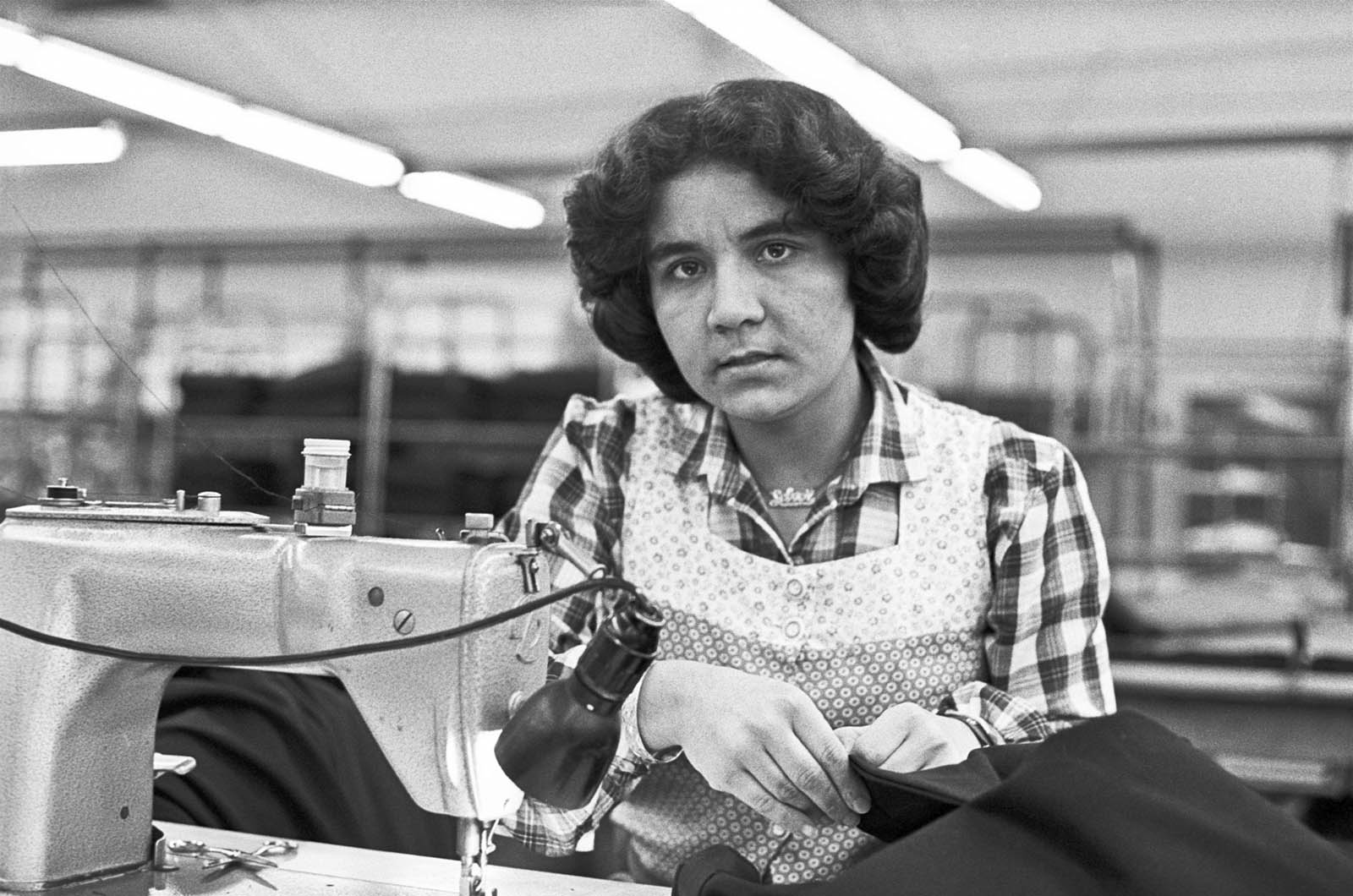
 

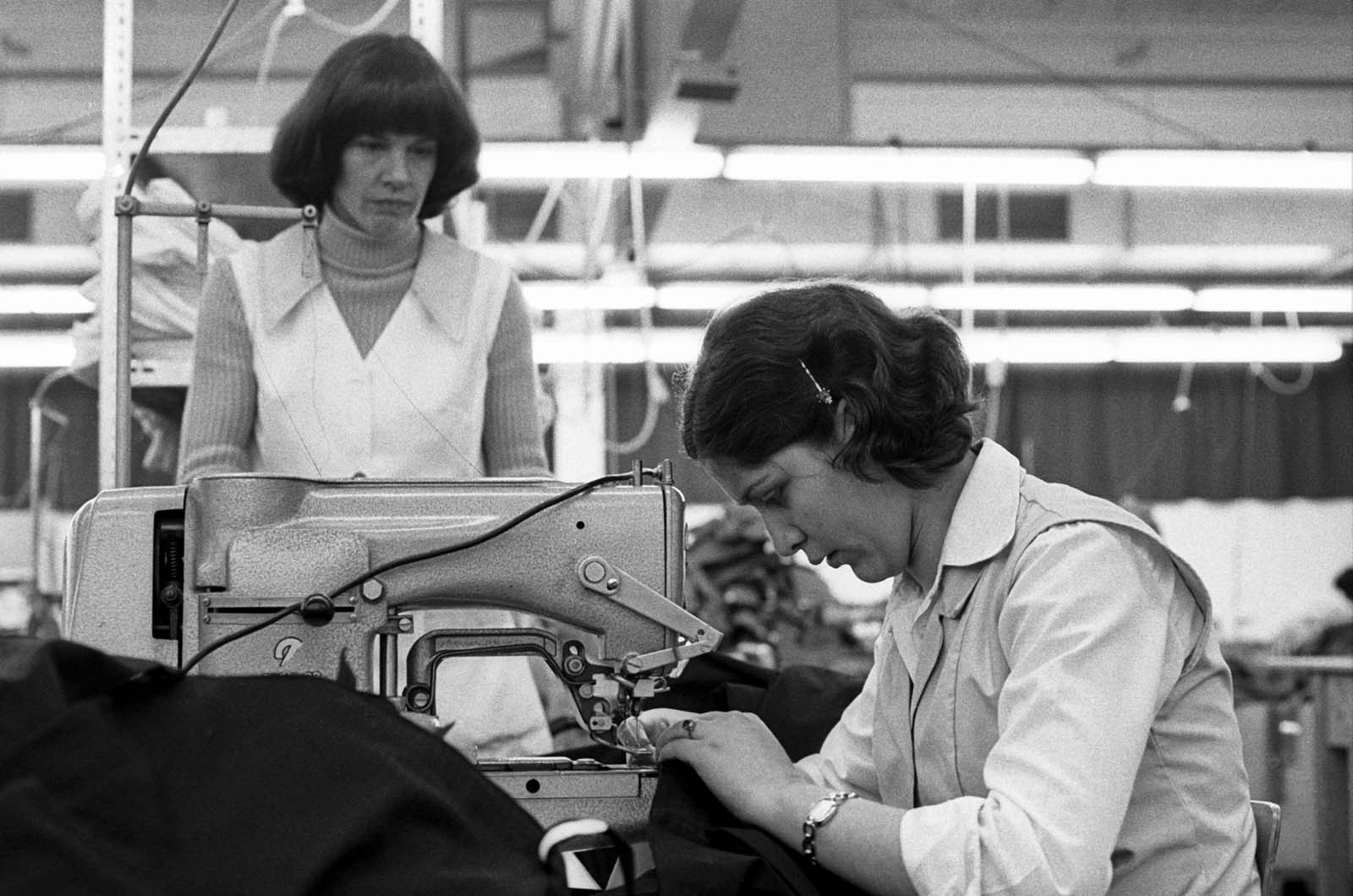
Muhlis Kenter (Turkish, b. 1952) 'Seamstress in textile factory' Alsdorf near Aachen, 1980


Muhlis Kenter (Turkish, b. 1952)
Seamstress in textile factory
Alsdorf near Aachen, 1980
Gelatin silver print
H. 30.4 x W. 40.5cm
© Muhlis Kenter


In the 1970s and 1980s, Bremen professor Muhlis Kenter photographed Turkish workers, then known as guest workers.


Only a little text tonight as I’m battling chronic depression and the little grey cells are not firing on all cylinders.

Absence, longing, loneliness, hard work, isolation, family, home.

Social inequality, sexism, racism and life in exile.

As noted by Annabelle Steffes-Halmer in her article “Migrants’ stories for a new home” (2021) on another exhibition on the same theme, In Situ: Photo Stories on Migration (Museum Ludwig, June – October 2021), photographs of this type are “a story of emancipation. [They] tell tales of people who came to a foreign country, which they discovered for themselves and which ultimately became their home. It is not only a (photo) history of migration, but also the history of Germany.”

Have a great Easter everyone.

Dr Marcus Bunyan


Many thankx to the Museum für Kunst und Gewerbe Hamburg for allowing me to publish the photographs in the posting. Please click on the photographs for a larger version of the image.


Muhlis Kenter (Turkish, b. 1952) 'Textile factory Workers' Alsdorf near Aachen, 1980 from the exhibition 'They Used To Call Us Guest Workers' at Museum für Kunst und Gewerbe Hamburg, October 2025 - May 2026


Muhlis Kenter (Turkish, b. 1952)
Textile factory Workers
Alsdorf near Aachen, 1980
Gelatin silver print
H. 30.4 x W. 40.5cm
© Muhlis Kenter
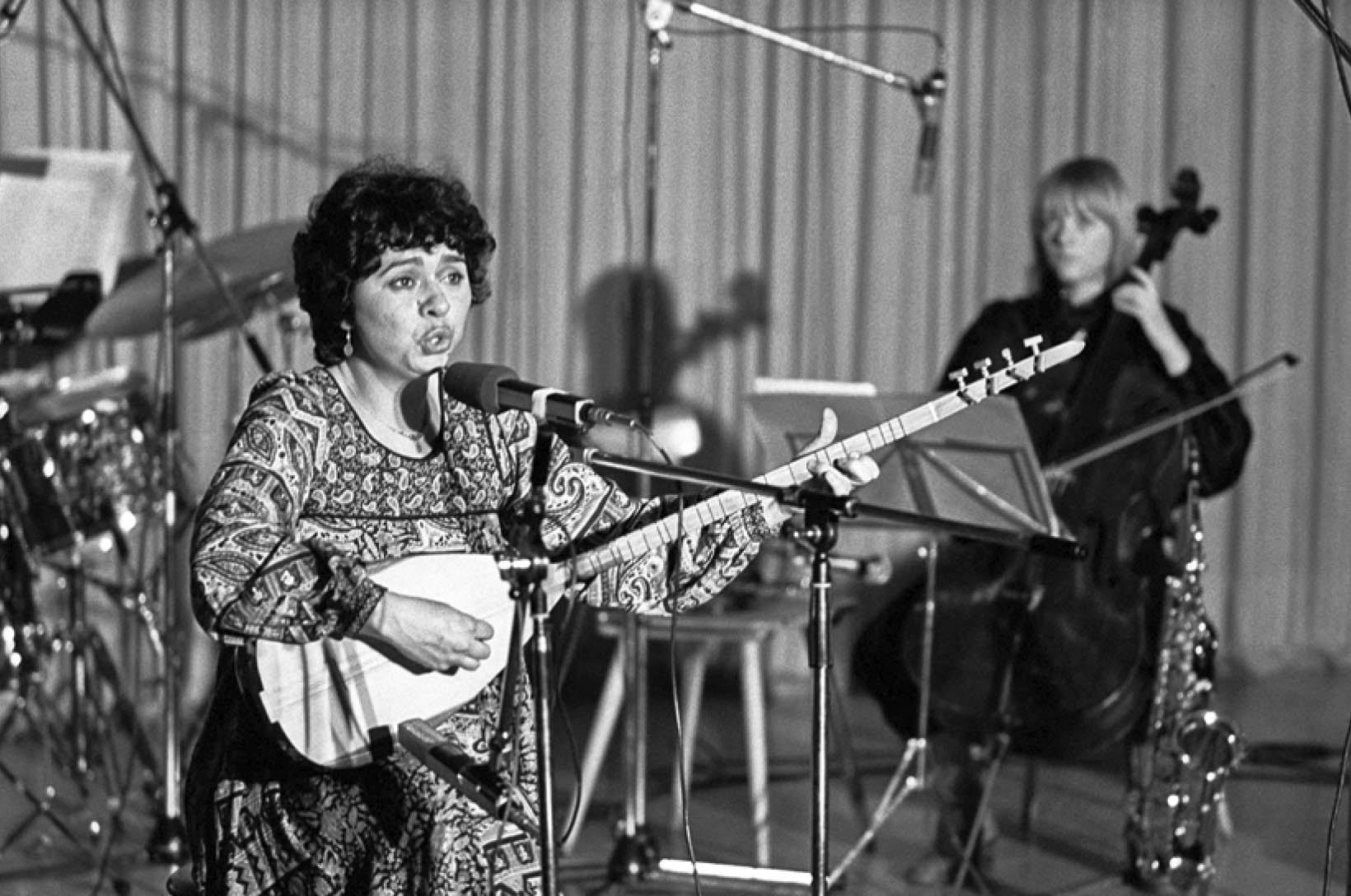
 

Muhlis Kenter (Turkish, b. 1952) 'Concert situation' Nd from the exhibition 'They Used To Call Us Guest Workers' at Museum für Kunst und Gewerbe Hamburg, October 2025 - May 2026


Muhlis Kenter (Turkish, b. 1952)
Concert situation
Nd
Gelatin silver print
H. 30.4 x W. 40.5cm
© Muhlis Kenter
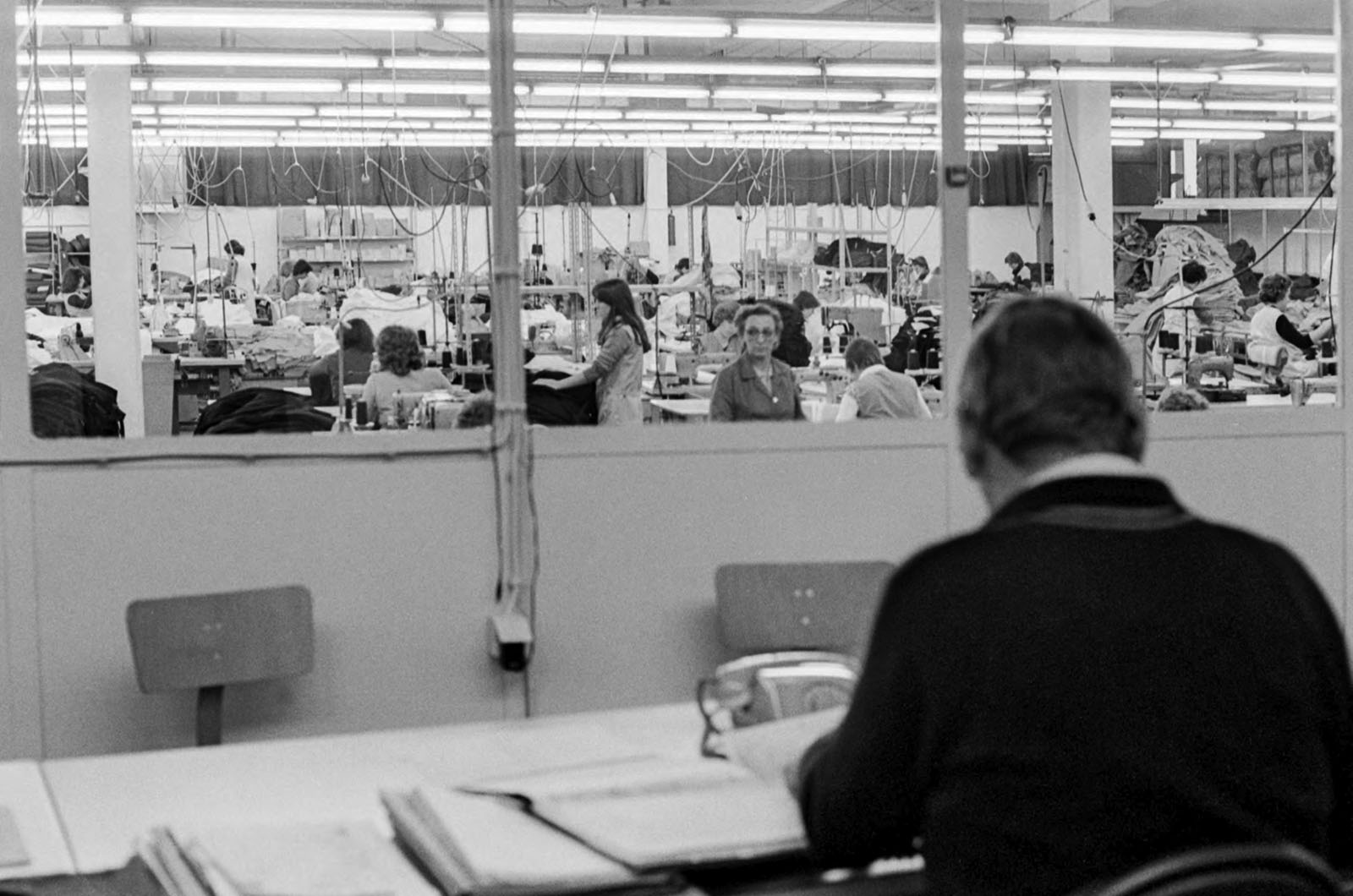
 

Muhlis Kenter (Turkish, b. 1952) 'Sewing company 'Mertes & Söhne'. Sewing company for workwear. The operations manager supervises the entire production process' Alsdorf, 1979


Muhlis Kenter (Turkish, b. 1952)
Sewing company ‘Mertes & Söhne’. Sewing company for workwear. The operations manager supervises the entire production process
Alsdorf, 1979
Gelatin silver print
H. 30.4 x W. 40.5cm
© Muhlis Kenter
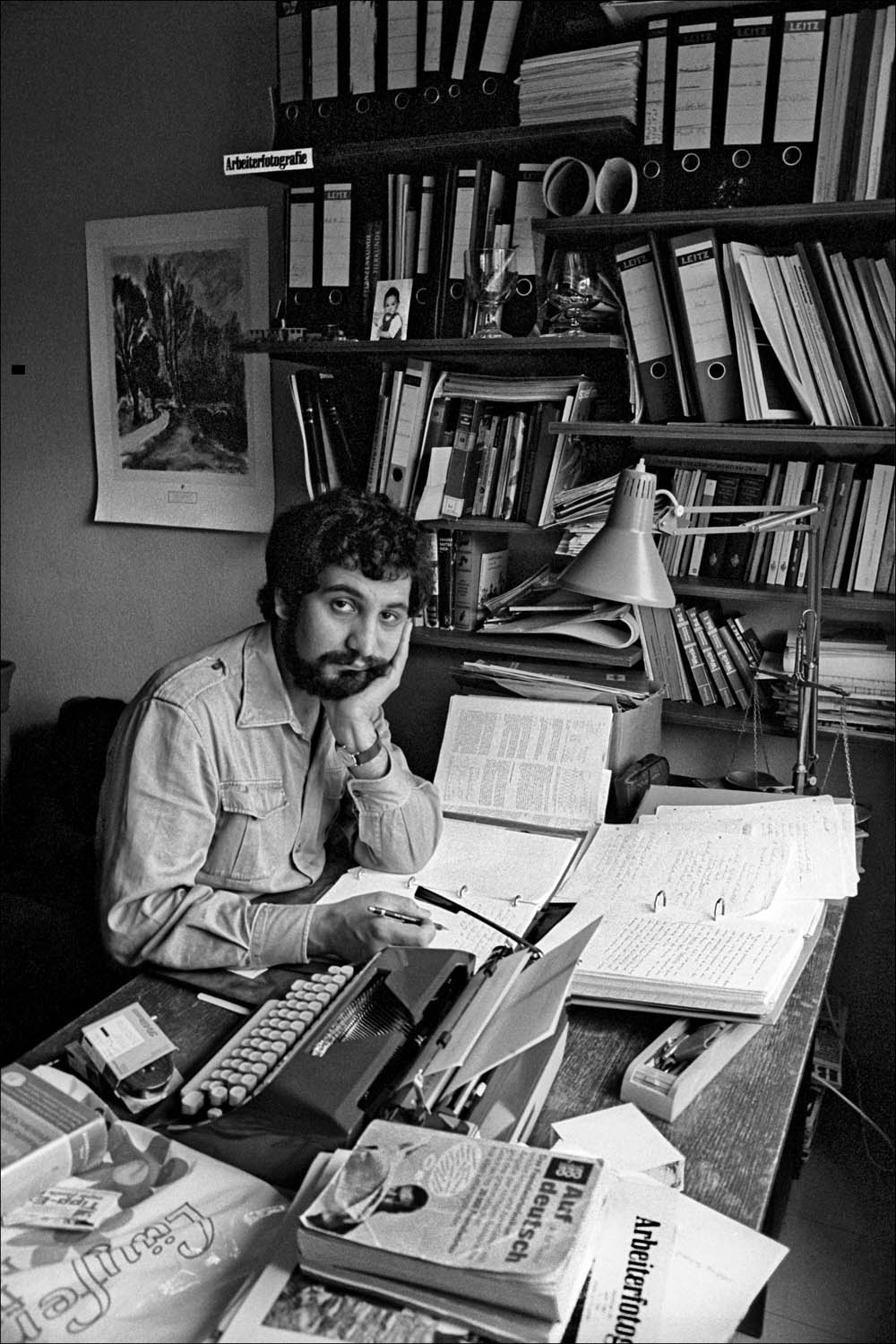
 

Christa Kenter (German) 'Portrait of Muhlis Kenter' Aachen, 1981


Christa Kenter (German)
Portrait of Muhlis Kenter
Aachen, 1981
© Muhlis Kenter


“They Used To Call Us Guest Workers”: Extending the Photography and the New Media Collection 

The Museum für Kunst und Gewerbe Hamburg (MK&G) is expanding its collection with key works by the photographers Muhlis Kenter, Nuri MusluoÄŸlu, Asimina Paradissa and Mehmet Ünal. After coming to Germany from Turkey and Greece in the 1960s and 70s, the four documented life, work and their political engagement there from a migrant perspective. The exhibition “They Used to Call Us Guest Workers” presents around 80 photographs and collages that depict the everyday lives of people with and without a migration background in the Federal Republic of Germany while addressing the themes of social inequality, sexism, racism and life in exile. Viewers have the opportunity to discover here an often-overlooked perspective on socio-political issues that are still highly topical today.

With a shared interest in society and politics, each of the four amateur photographers developed a unique approach and yet they all took up the tradition of the workers’ photography movement. Like its historical role model in the interwar period, this movement was dedicated to the battle against class barriers and social inequality. The aim was for workers to pick up a camera themselves to raise awareness of the realities of their lives and help shape the public debate with their images.

Workers’ Photography

John Heartfield and his contributions to the illustrated magazine “Arbeiter-Illustrierte-Zeitung” (AIZ) in the 1930s were an important source of inspiration for the workers’ photography movement. Founded in Hamburg in 1973, the magazine “Arbeiterfotografie” saw itself as a successor to the AIZ. The main figures in the workers’ photography movement all engaged with developments in society and politics but each developed a different approach. Their common goal was to use their cameras in the battle against social inequality. Workers were encouraged to pick up a camera in order to raise their own awareness for the realities of their lives and enable them to intervene in the public debate. 

Between 1975 and 1990, the theme of migration played a central role in workers’ photography. The reports provide an in-depth look at those living in exile, at living and working conditions and women’s work, and at the peace movement and unequal educational opportunities for immigrants. The articles in the magazine were often published anonymously. The images were supplied by the 30 or so local working groups, who often took the photos together. 

Muhlis Kenter

Bremen-based amateur photographer Muhlis Kenter (b. 1952 in Istanbul, Turkey) depicts work and everyday life in Germany. He documents Turkish workers in mining, the metal industry and a textile factory, and accompanies educational projects for Turkish children and young people with a migration background. In his expressive portraits, Kenter spotlights personal stories. His photographs spotlight people navigating between the sense of being foreign in an unfamiliar country and finding their place in Germany. But Muhlis Kenter also observes German society with his camera, focusing on pigeon breeding, fishing and gardening, which he sees as typical German hobbies.

Muhlis Kenter provides behind-the-scenes glimpses of factory work. He for example photographed workers of Turkish origin in a textile factory where people from different backgrounds work side by side in production. The photos were taken as part of a photo story for the magazine “Arbeiterfotografie”. Kenter often focuses on individuals and personal histories, resulting in expressive portraits. For his reportages, he creates complex compositions that highlight in an arresting way the interplay between people and technology at the companies he visits. In one series, he turned the tables, looking not at the lives of immigrants of Turkish origin but rather at “white German” society and what he regards as typical hobbies: pigeon breeding, fishing and gardening.

Muhlis Kenter was born in 1952 in Istanbul, Turkey. In 1972 he took up mechanical engineering studies in Aachen, where he joined a “workers’ photography” group. Alongside his studies, he acted as a support teacher for Turkish-speaking classes. Kenter later worked as a professor of mechanical engineering at the City University of Applied Sciences in Bremen, and he continues to avidly pursue photography. 

Nuri MusluoÄŸlu

Nuri MusluoÄŸlu (b. 1951 in Istanbul, Turkey) photographs public life. The images he produced between 1975 and 1988 show mainly demonstrations, peace marches, strikes and protest actions, especially those taking place in his hometown of Heilbronn. Supplemented by footage of sporting events, street festivals and celebrations, as well as photos of his own family, a dense panorama emerges of German-Turkish coexistence as a collective experience. MusluoÄŸlu’s photos document particularly vividly the protest culture during the years in question – including the peace movement and European Peace Marches, the trade union struggles and the anti-nuclear movements, and the resistance of Turks living in Germany against the military dictatorship in Turkey. He also lifts the veil on xenophobia in public spaces and the living conditions in asylum shelters.

Nuri MusluoÄŸlu is a photographer and political activist. His camera accompanies him to demonstrations, such as the strike for a 35-hour week and protests by the peace movement, or the blockade of the US missile base in Mutlangen in 1983. He not only captures protest posters and scenes but also documents moments of solidarity – such as workers with and without a migration background dancing. MusluoÄŸlu’s photographs chronicle political struggles as well as everyday moments in German-Turkish life, such as family celebrations and trips home. He examines in detail protest posters that touch on migration issues and in another image shows a worker of Turkish origin playing the saz. 

Born in Istanbul in 1951, MusluoÄŸlu came to Germany in 1965, trained as a toolmaker, and later became a social worker for the “Arbeiterwohlfahrt” (Workers’ Welfare Association). He is active in trade unions (IG Metall, ver.di) and the peace movement. Since 1985, his photos have appeared under a pseudonym in the weekly newspaper “Türkiye Postası”, which is aimed at workers and people seeking political protection. 

Asimina Paradissa

Asimina Paradissa (b. 1945 in Vrastama, Greece) occupies a special position in amateur photography as one of the few migrant women behind a camera. She documented her own life in Germany from 1968 onwards, showing everyday life in a hostel for unmarried female workers in Wilhelmshaven as well as scenes of factory work captured from the workers’ point of view. Paradissa’s many self-portraits deal with questions of self-image and what it feels like to live in a certain place. Although her photographs are private, they are at the same time significant testimonies to contemporary history: By giving the women portrayed names and voices, they draw attention to the stories of female migrants and thus add a rare female perspective to the way in which we view migrant labour.

Asimina Paradissa gazes directly out at us from her pictures. Perched on her bicycle, she laughs openly into the camera, while in another picture she looks us earnestly in the eye as she sits on her bunk bed in a dormitory for unwed workers run by the Olympia typewriter works and caringly embraces her friend Evangelia Manolakaki. Even though others usually press the shutter, these images can still be described as self-portraits. Starting in 1966, Paradissa took photos on a regular basis as a way of reassuring herself about her new life in Germany. Among the “guest workers” who came to West Germany in the 1960s, one in three were women who lead lives largely hidden from the public eye. Paradissa is one of the few women of this generation to document her self-determined life in Germany with her camera. Her pictures are at once private remembrances and documents of the times. 

Asimina Paradissa was born in 1945 in Vrastama, Greece. She came to Wilhelmshaven with her brother in 1966 as part of the recruitment agreements concluded between West Germany and Greece, among other countries. In 1972 she settled in Wuppertal. Alongside her job, she began to make photography and write poetry. 

Mehmet Ünal

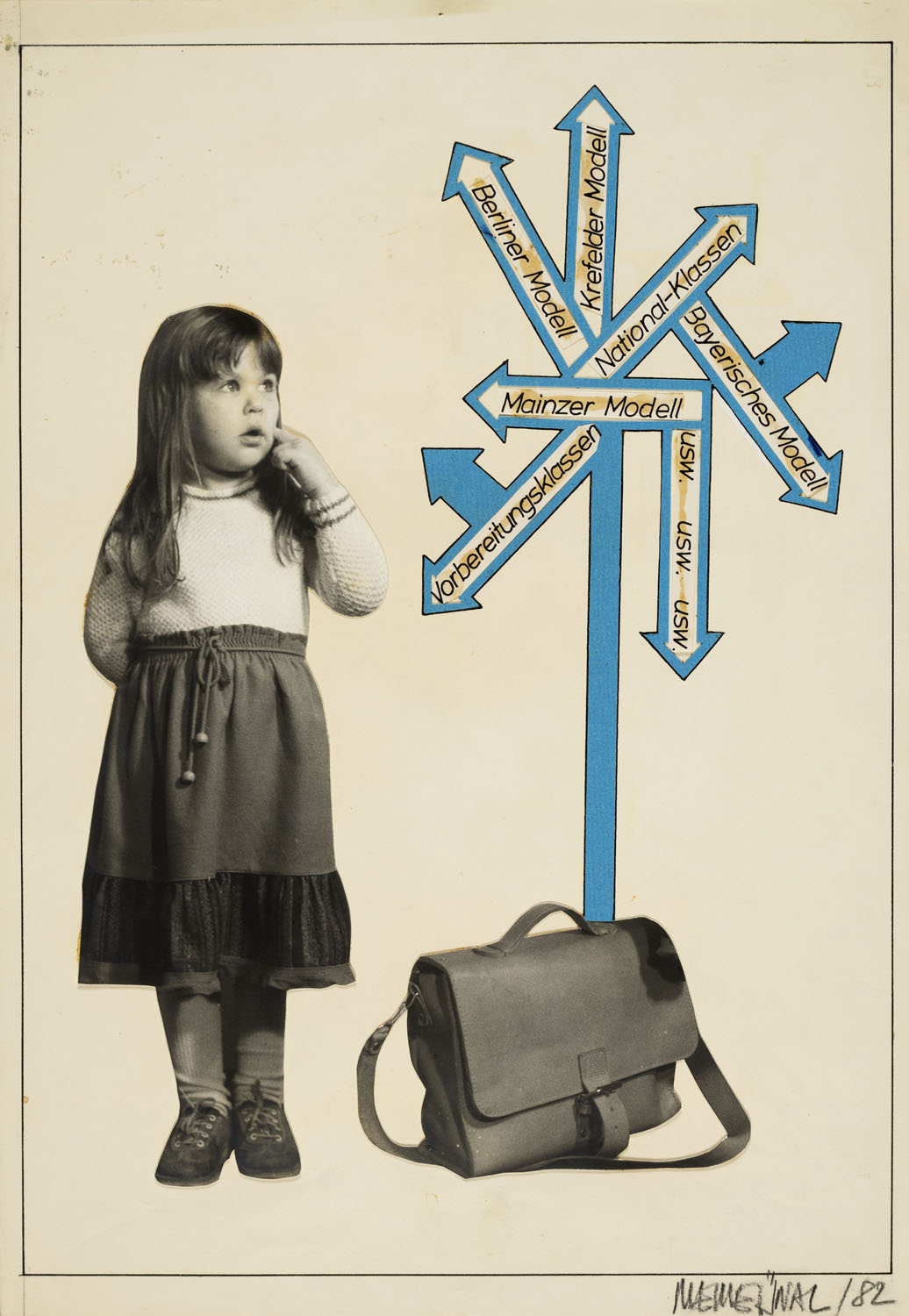
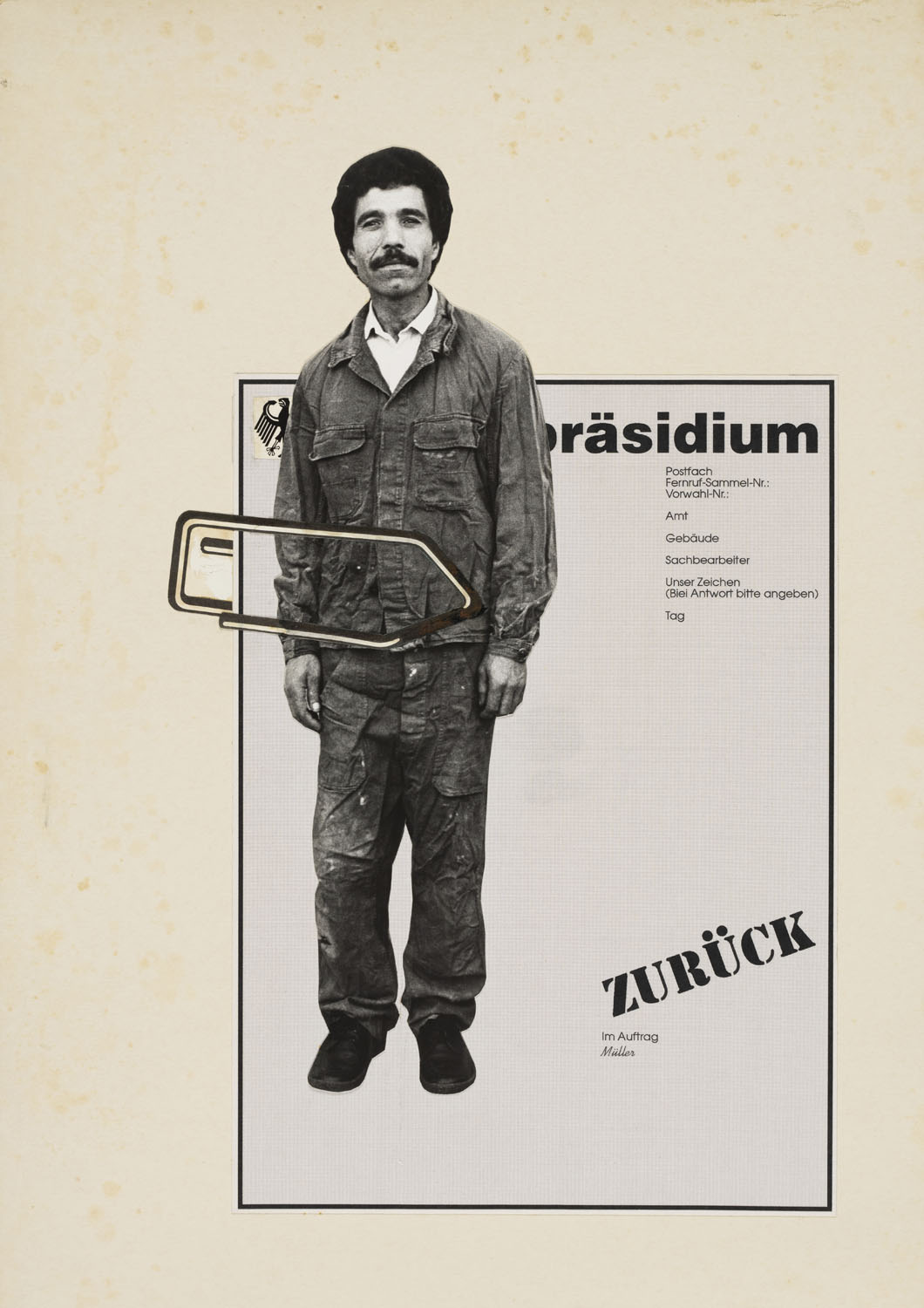
Mehmet Ünal’s (b. 1951 in Çanakkale, Turkey) photographic practice includes political image-text collages that emerge from actions and protests. In addition to individual images and series, he also produces posters that incorporate writing and found objects – often from public authorities and agencies – and thus comment on the particular experiences of migrants when dealing with bureaucracy. With their thematic acuity and compositional density, these posters are independent artworks that relentlessly expose exclusion and marginalisation.

Mehmat Ünal’s collages combine written, photographic and found objects from the world of German bureaucracy that reflect experiences of racism. Ünal expresses himself through satire and exaggeration; for example, he created a fake Deutsche Bahn advertising campaign offering a “foreigner’s pass” promoting the return transport of people to Turkey. He compares the application for a work permit to a “TÜV certificate for humans”. In his text-image combinations (circa 1982), Ünal criticizes Germany’s official policies towards immigrants and the degrading treatment of those who were once invited to the country as “guests”. After the recruitment of foreign workers was discontinued in the wake of the economic crisis of the early 1980s, Ünal observed a growing atmosphere of hostility towards those regarded as “foreigners”. The first arson attack on a refugee shelter took place in 1980 in Hamburg-Billbrook. Works that Ünal produced against the backdrop of political street protests were published in the magazine “Arbeiterfotografie” in 1984. In several collages, he draws on the legacy of John Heartfield, whose political montages in the mid-1920s brought him recognition as the founder of this genre. 

Mehmet Ünal was born in Çanakkale, Turkey, in 1951. In 1976, he moved to Mannheim, where the former actor works as a photographer and journalist.

Text from the Museum für Kunst und Gewerbe Hamburg (MK&G)
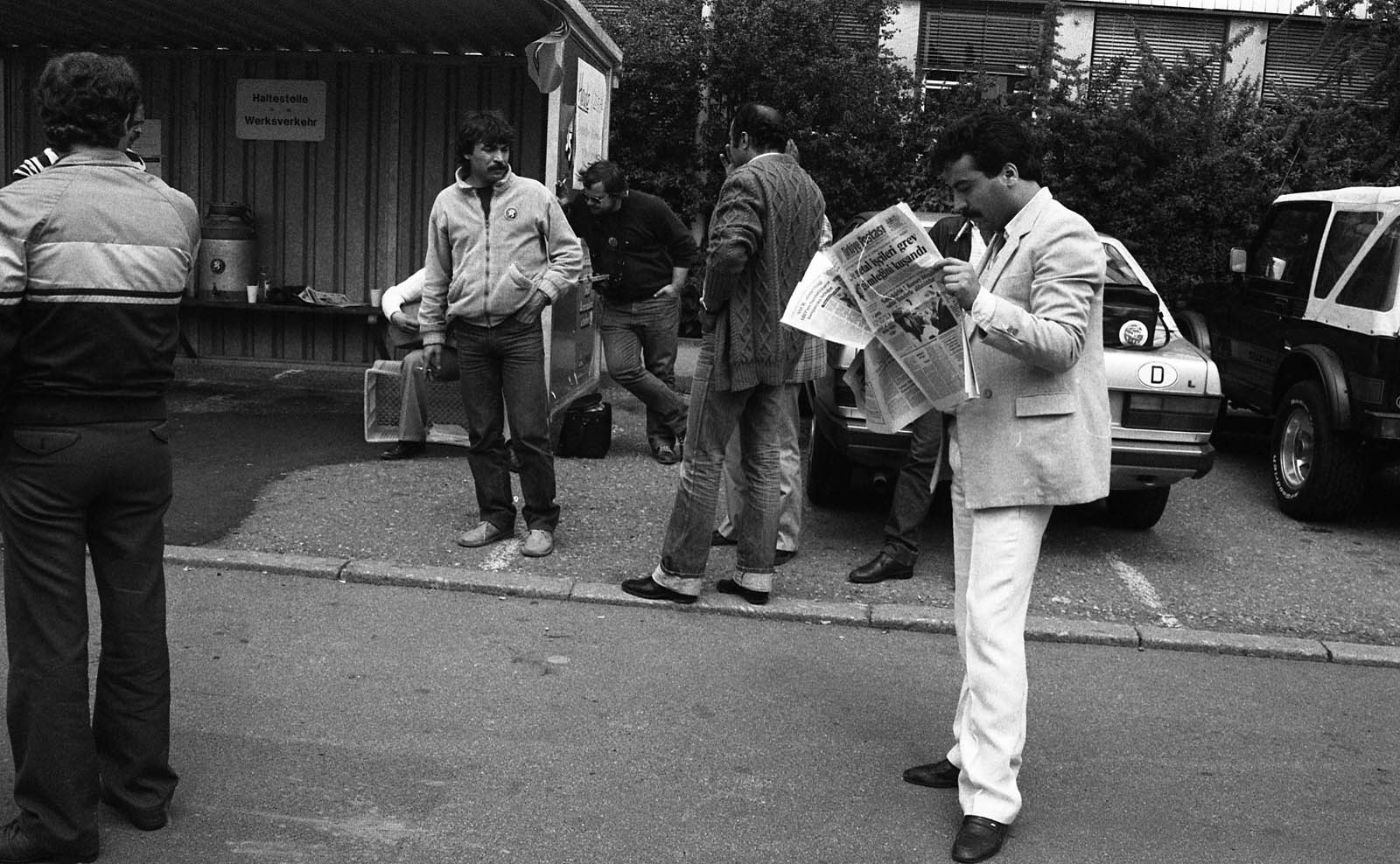
 

Nuri Musluoğlu (Turkish, b. 1951) 'Workers from Kolbenschmidt with the magazine 'Türkiye Postası' during a strike' Neckarsulm, 1984


Nuri MusluoÄŸlu (Turkish, b. 1951)
Workers from Kolbenschmidt with the magazine Türkiye Postası during a strike
Neckarsulm, 1984
Gelatin silver print
H. 25.6 x W. 38.6cm
© Nuri Musluoğlu
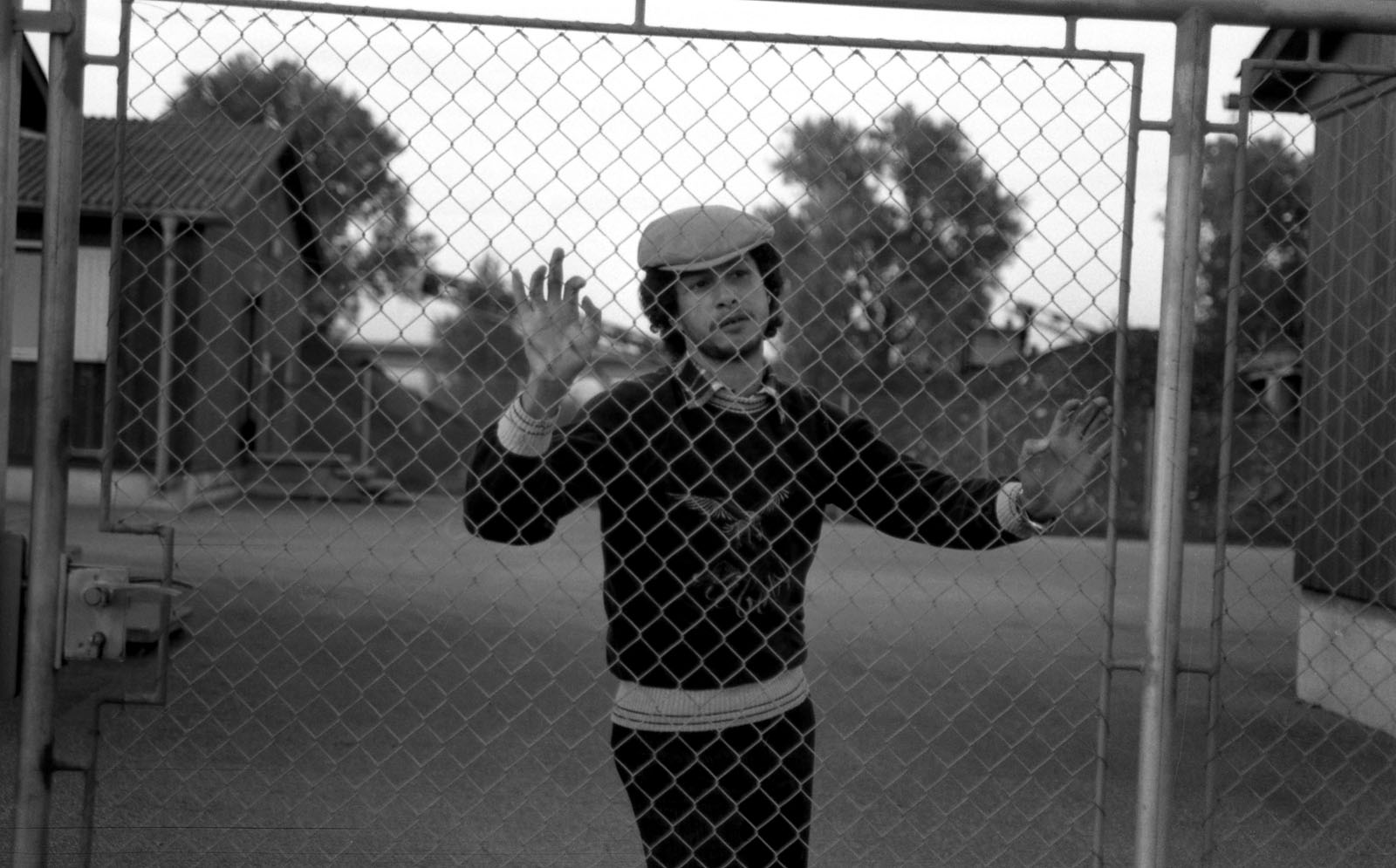
 

Nuri MusluoÄŸlu (Turkish, b. 1951) 'Residential home for asylum seekers' Nd


Nuri MusluoÄŸlu (Turkish, b. 1951)
Residential home for asylum seekers
Nd
Gelatin silver print
H. 25.6 x W. 38.6cm
© Nuri Musluoğlu
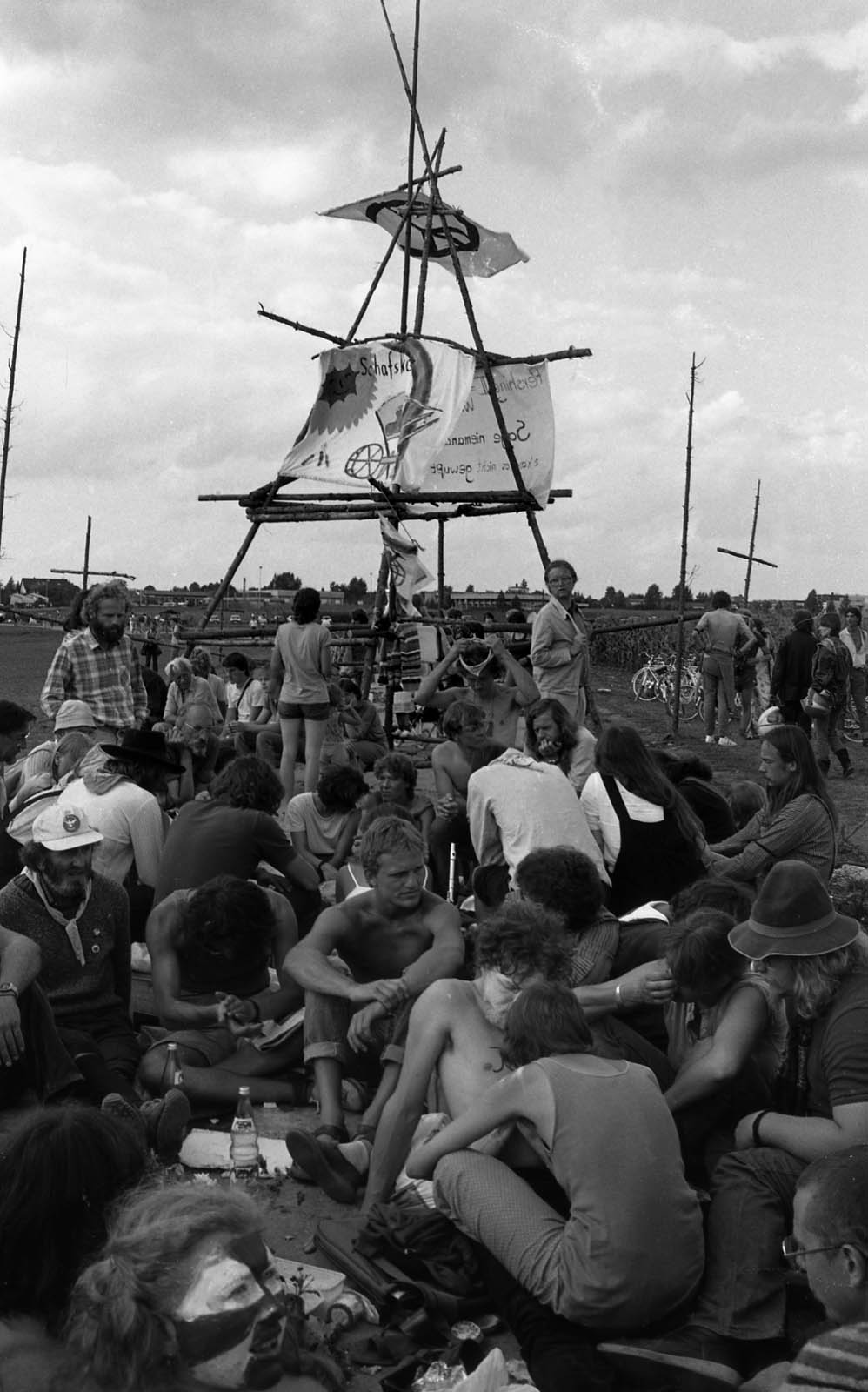
 

Nuri MusluoÄŸlu (Turkish, b. 1951) 'Sit-in, Peace movement' Mutlanger Heide, 1983


Nuri MusluoÄŸlu (Turkish, b. 1951)
Sit-in, Peace movement
Mutlanger Heide, 1983
Gelatin silver print
H. 25.6 x W. 38.6cm
© Nuri Musluoğlu
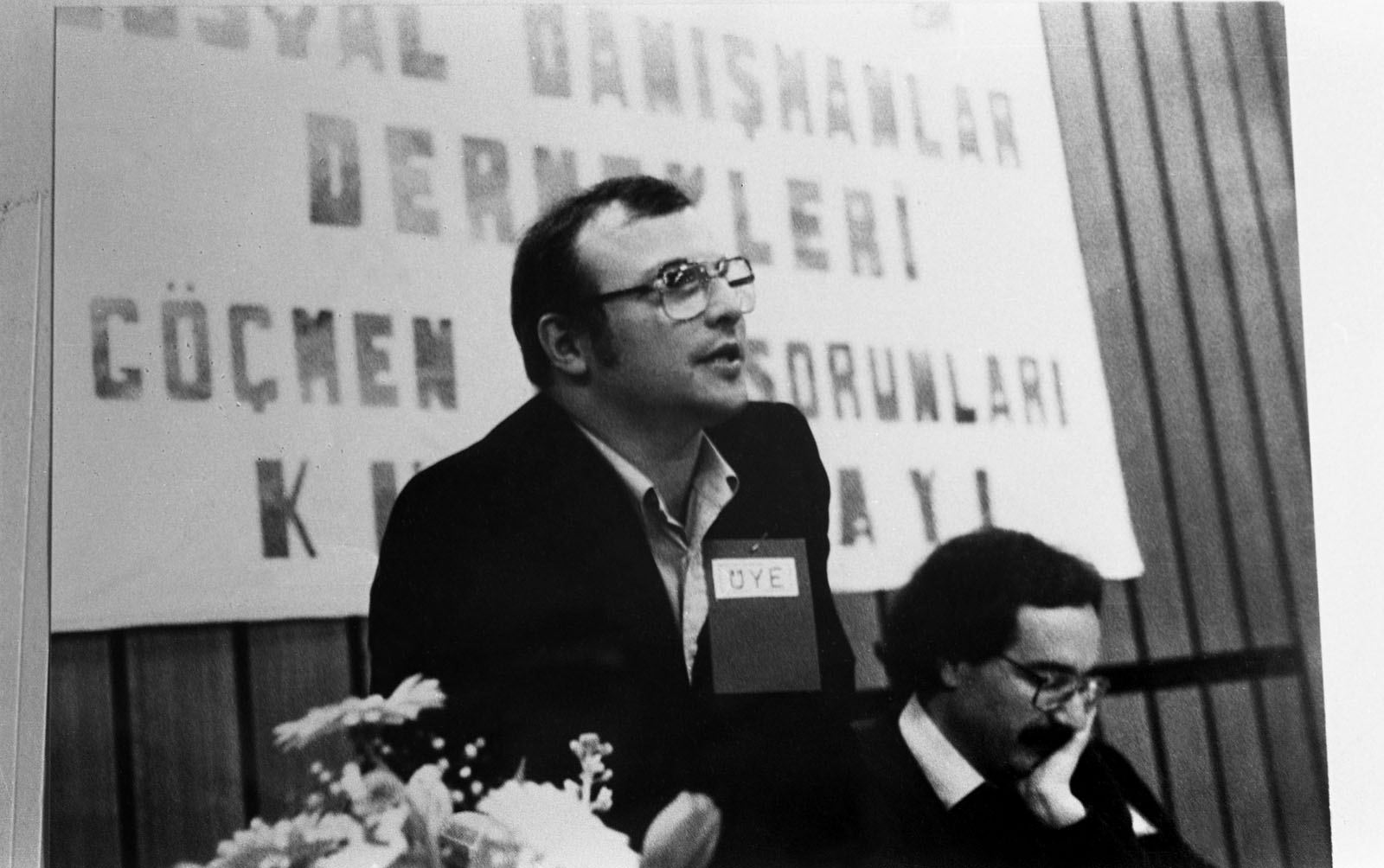
 

Nuri MusluoÄŸlu (Turkish, b. 1951) 'Portrait' 1981


Nuri MusluoÄŸlu (Turkish, b. 1951)
Portrait
1981
© Nuri Musluoğlu


Unknown photographer (Colleague of Asimina Paradissa with her camera) 'Asimina Paradissa and Evangelia Manolakaki at the women's dormitory of Olympia' Wilhelmshaven, 1969


Unknown photographer (Colleague of Asimina Paradissa with her camera)
Asimina Paradissa and Evangelia Manolakaki at the women’s dormitory of Olympia
Wilhelmshaven, 1969
Gelatin silver print
H. 10.5 x W. 7.5cm
© Asimina Paradissa
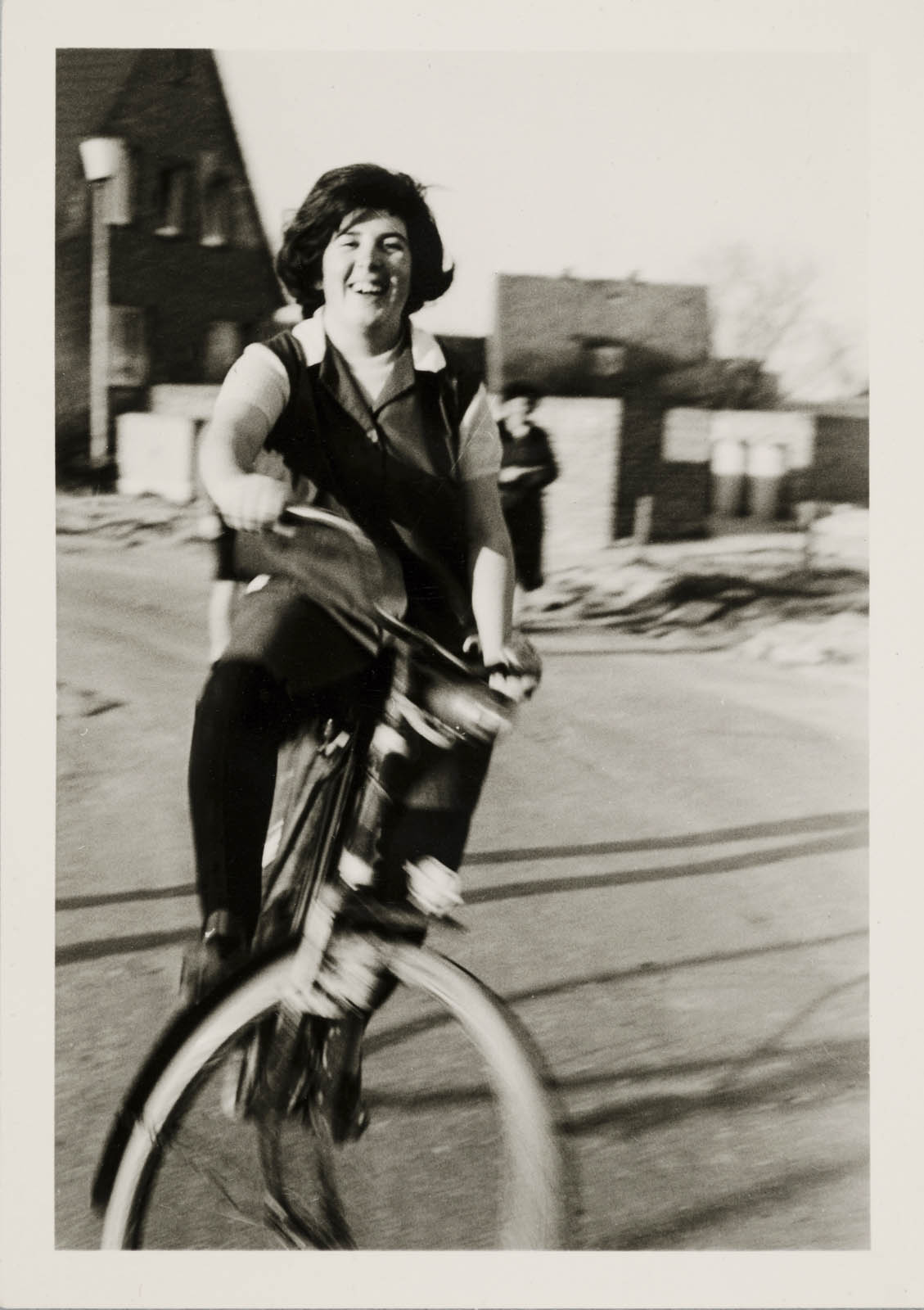
 

Unknown photographer (Colleague of Asimina Paradissa with her camera) 'Asimina Paradissa on the Bike' Wilhelmshaven, 1966/1967


Unknown photographer (Colleague of Asimina Paradissa with her camera)
Asimina Paradissa on the Bike
Wilhelmshaven, 1966/1967
Gelatin silver print
H. 10.8 x W. 7.8cm
© Asimina Paradissa
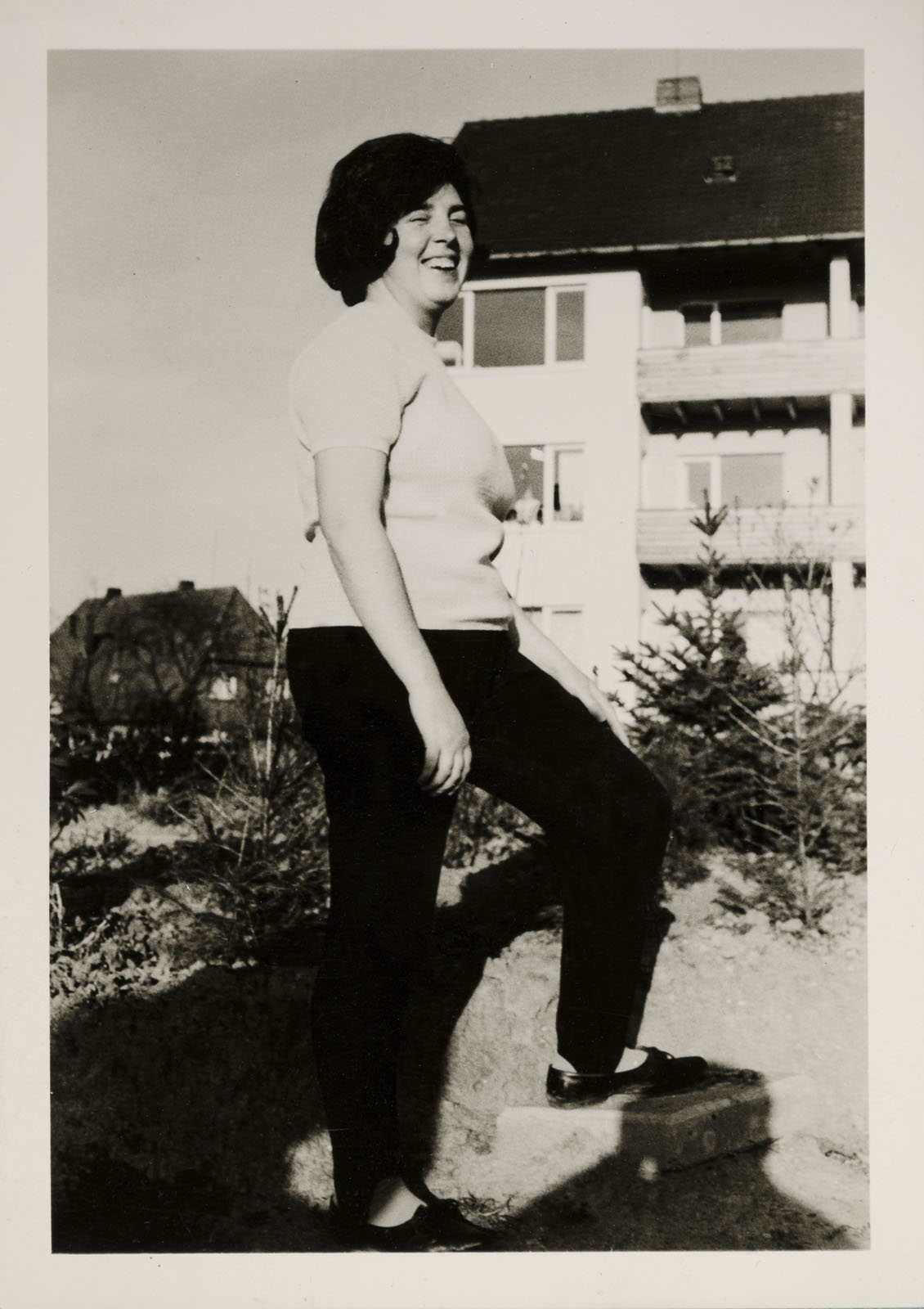
 

Unknown photographer (Colleague of Asimina Paradissa with her camera) 'Asimina Paradissa at the women's dormitory of Olympia' Wilhelmshaven, 1969


Unknown photographer (Colleague of Asimina Paradissa with her camera)
Asimina Paradissa at the women’s dormitory of Olympia
Wilhelmshaven, 1969
Gelatin silver print
H. 10.8 x W. 7.7cm
© Asimina Paradissa


Asimina Paradissa was 20 years old when she moved to Wilhelmshaven in northern Germany. In the photo, the Greek woman poses in front of the dormitory at the Olympia company. Back then, she took pictures of weddings, parties and visits to the zoo for her colleagues and friends. The 76-year-old is still a passionate photographer.
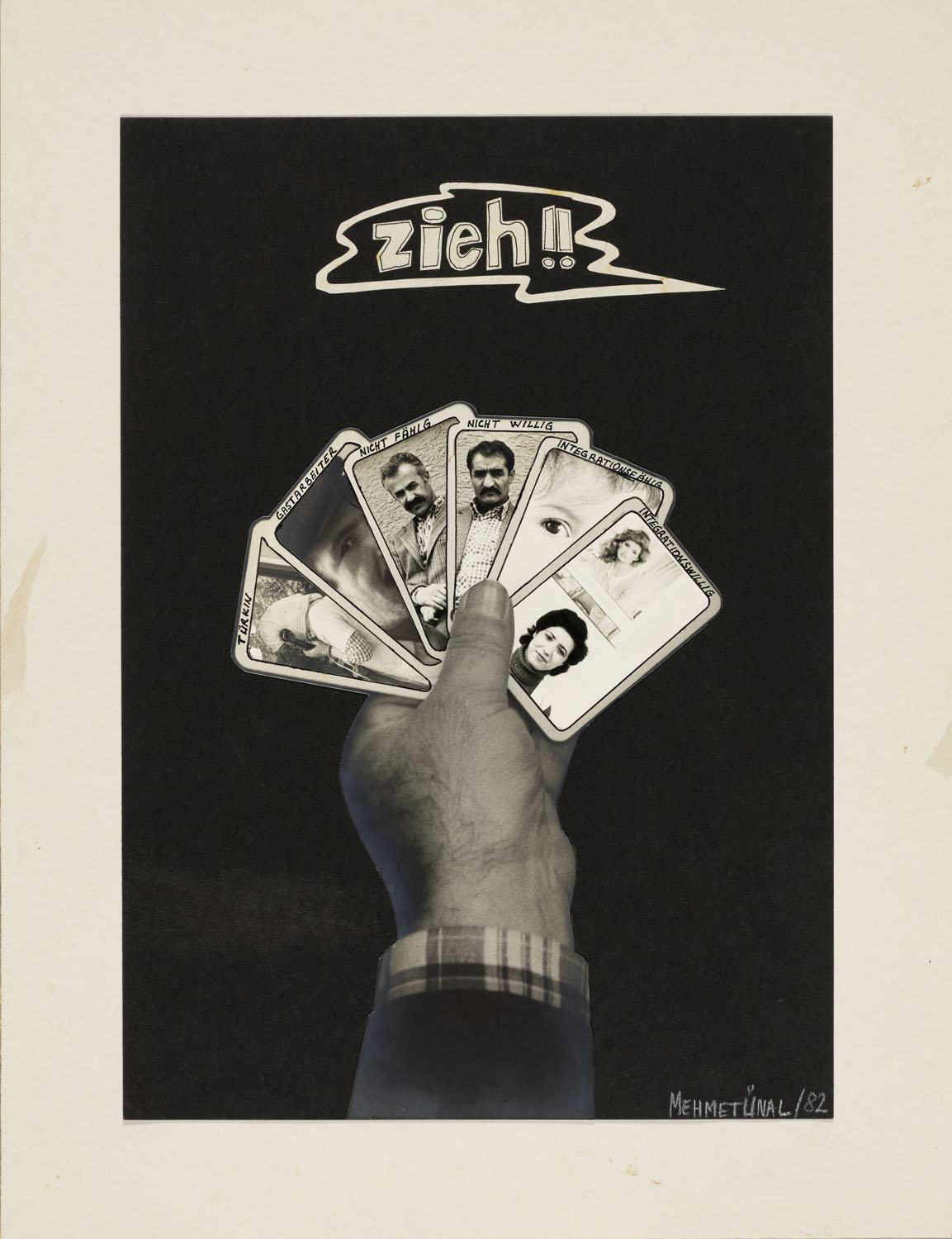
 

Mehmet Ünal (Turkish, b. 1951) 'Untitled' Mainz, 1982


Mehmet Ünal (Turkish, b. 1951)
Untitled
Mainz, 1982
Photo collage
H. 45 x W. 29.8cm
© Mehmet Ünal


Zieh!! = Pull!!
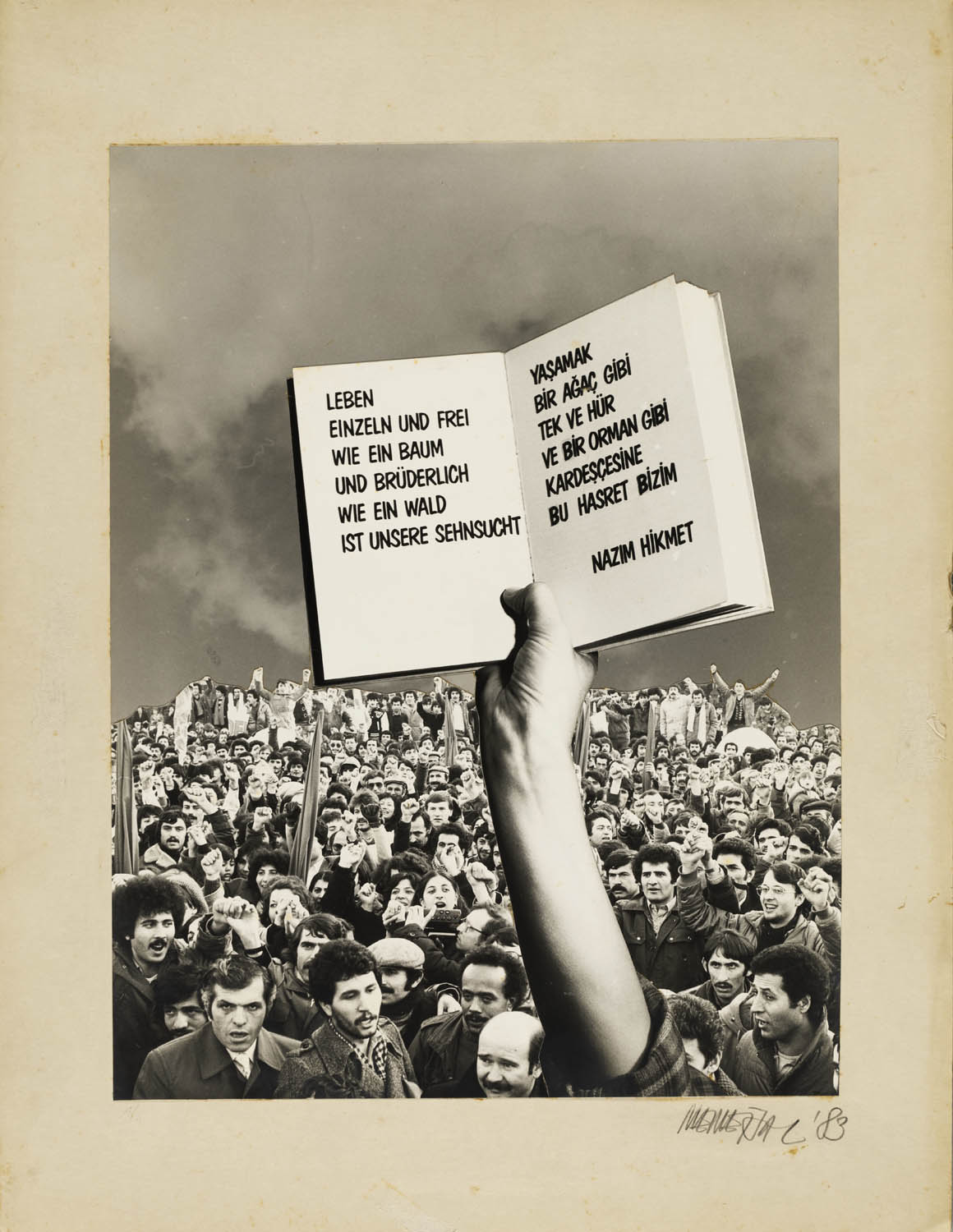
 

Mehmet Ünal (Turkish, b. 1951) 'Untitled (Homage to Nâzım Hikmet)' Mainz, 1982–1986


Mehmet Ünal (Turkish, b. 1951)
Untitled (Homage to Nâzım Hikmet)
Mainz, 1982-1986
Photo collage
H. 42 x W. 29.7cm
© Mehmet Ünal


life
alone and free
like a tree
and brotherly
like a forest
is our longing


Mehmed Nâzım Ran (17 January 1902 – 3 June 1963), commonly known as Nâzım Hikmet, was a Turkish poet, playwright, novelist, screenwriter, director, and memoirist. He was acclaimed for the “lyrical flow of his statements”. Described as a “romantic communist” and a “romantic revolutionary”, he was repeatedly arrested for his political beliefs and spent much of his adult life in prison or in exile. His poetry has been translated into more than 50 languages.
 

Mehmet Ünal (Turkish, b. 1951) 'Untitled' Mainz, 1982


Mehmet Ünal (Turkish, b. 1951)
Untitled
Mainz, 1982
Photo collage
H. 45 x W. 31.1cm
© Mehmet Ünal
 

Mehmet Ünal (Turkish, b. 1951) 'Untitled' Mainz, 1983


Mehmet Ünal (Turkish, b. 1951)
Untitled
Mainz, 1983
Photo collage
H. 46,1 x W. 35cm
© Mehmet Ünal
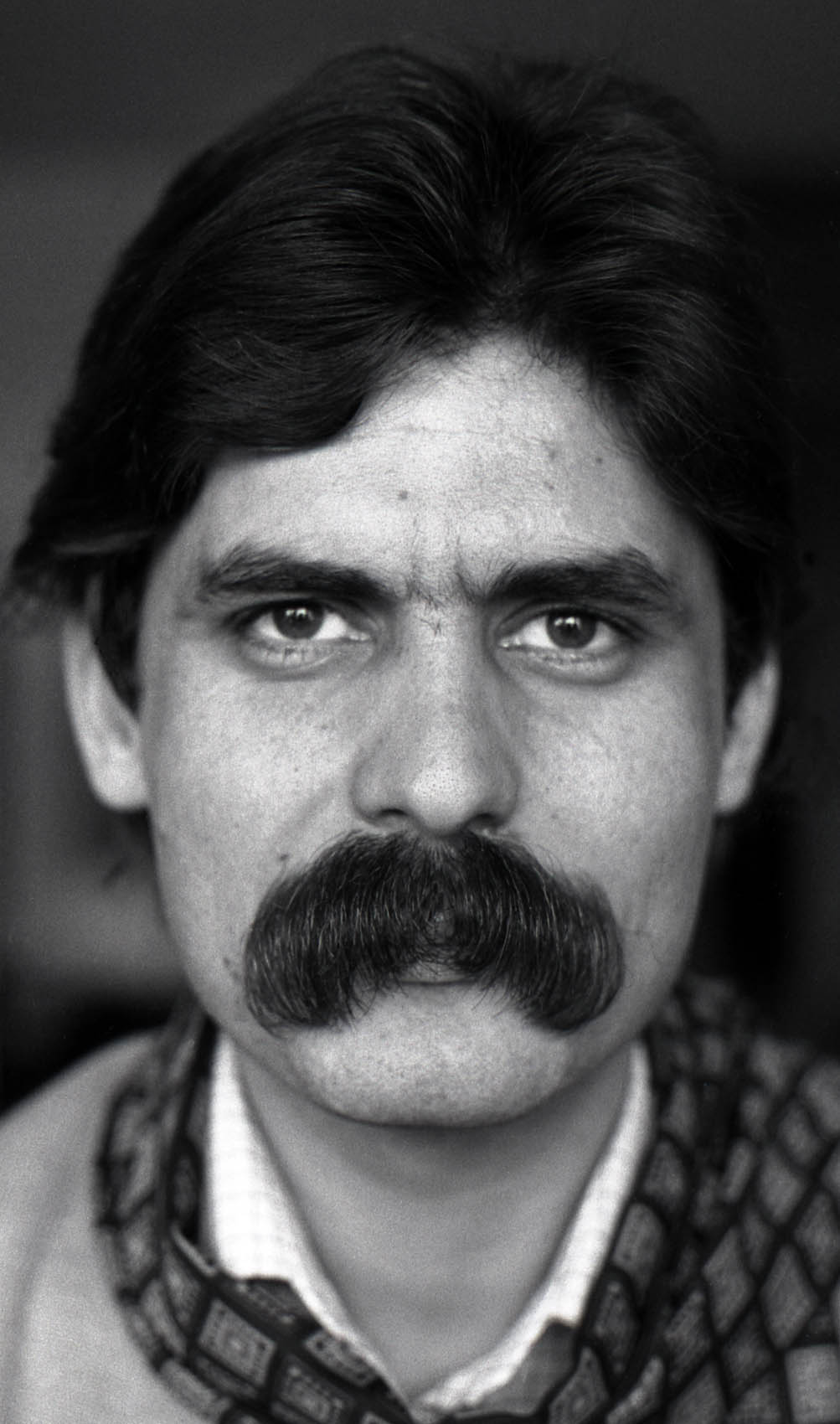
 

Mehmet Ünal (Turkish, b. 1951) 'Self-portrait' c. 1980


Mehmet Ünal (Turkish, b. 1951)
Self-portrait
c. 1980
© Mehmet Ünal


Museum für Kunst und Gewerbe Hamburg
Steintorplatz, 20099 Hamburg

Opening hours:
Tuesday – Sunday 10am – 6pm
Thursday 10am – 9pm
Closed Mondays
Museum für Kunst und Gewerbe Hamburg website

LIKE ART BLART ON FACEBOOK

Back to top

European photographic research tour exhibition: ‘Ara Güler: Two Archives, One Selection: Tracing Ara Güler’s Footsteps in Istanbul’ at the Istanbul Museum of Modern Art

Exhibition dates: 29th May – 17th November, 2019
Visited August 2019 posted November 2019


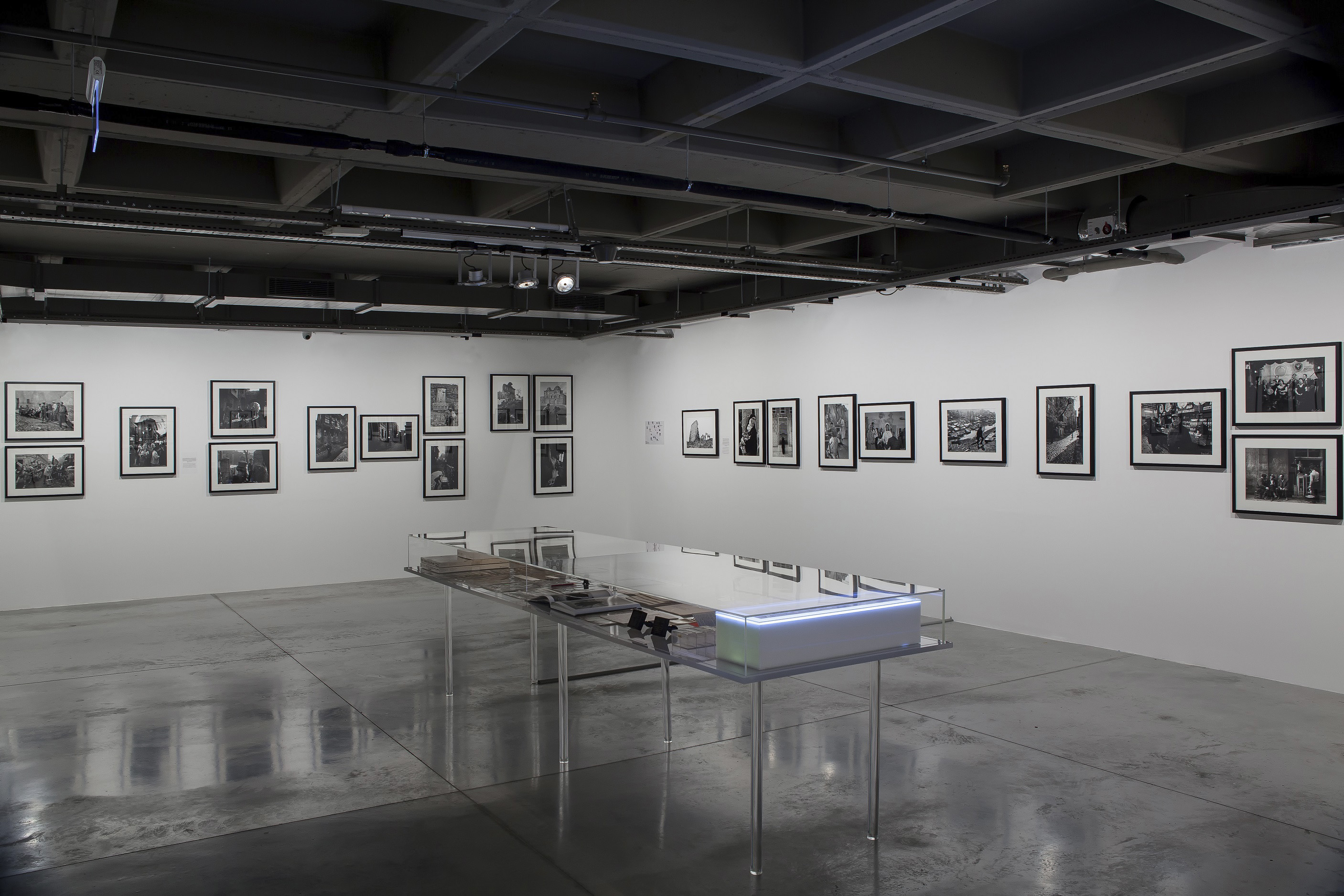
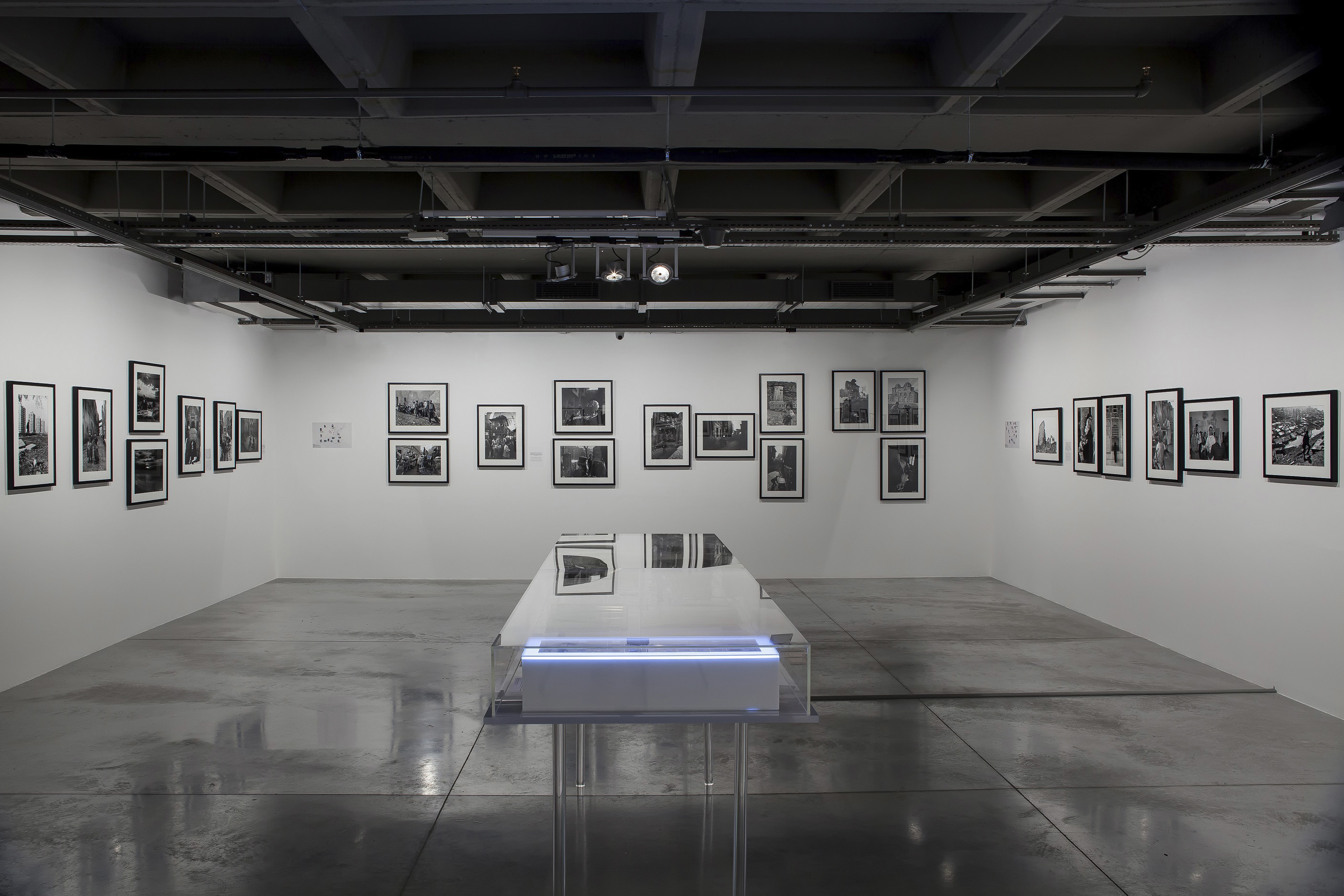
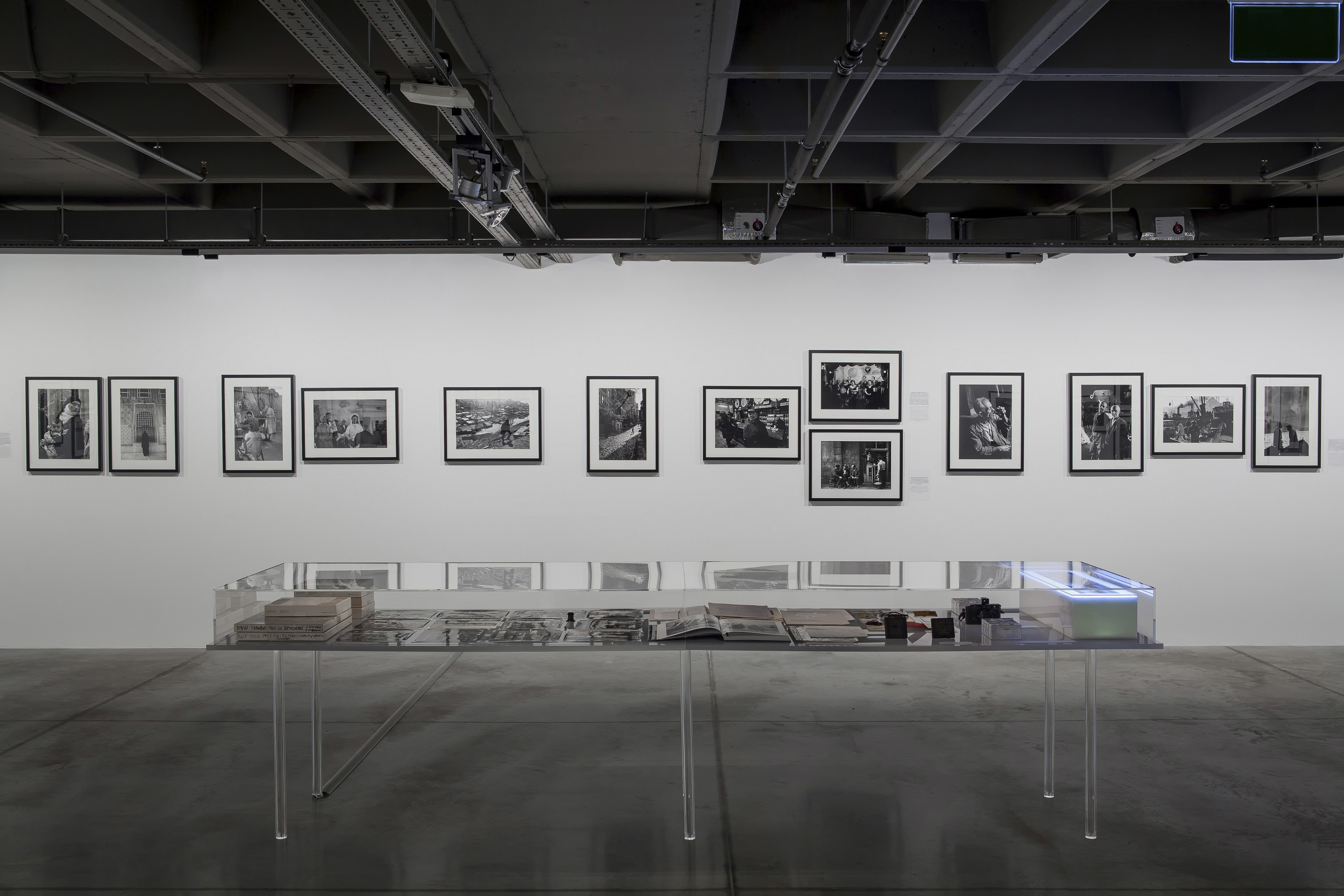
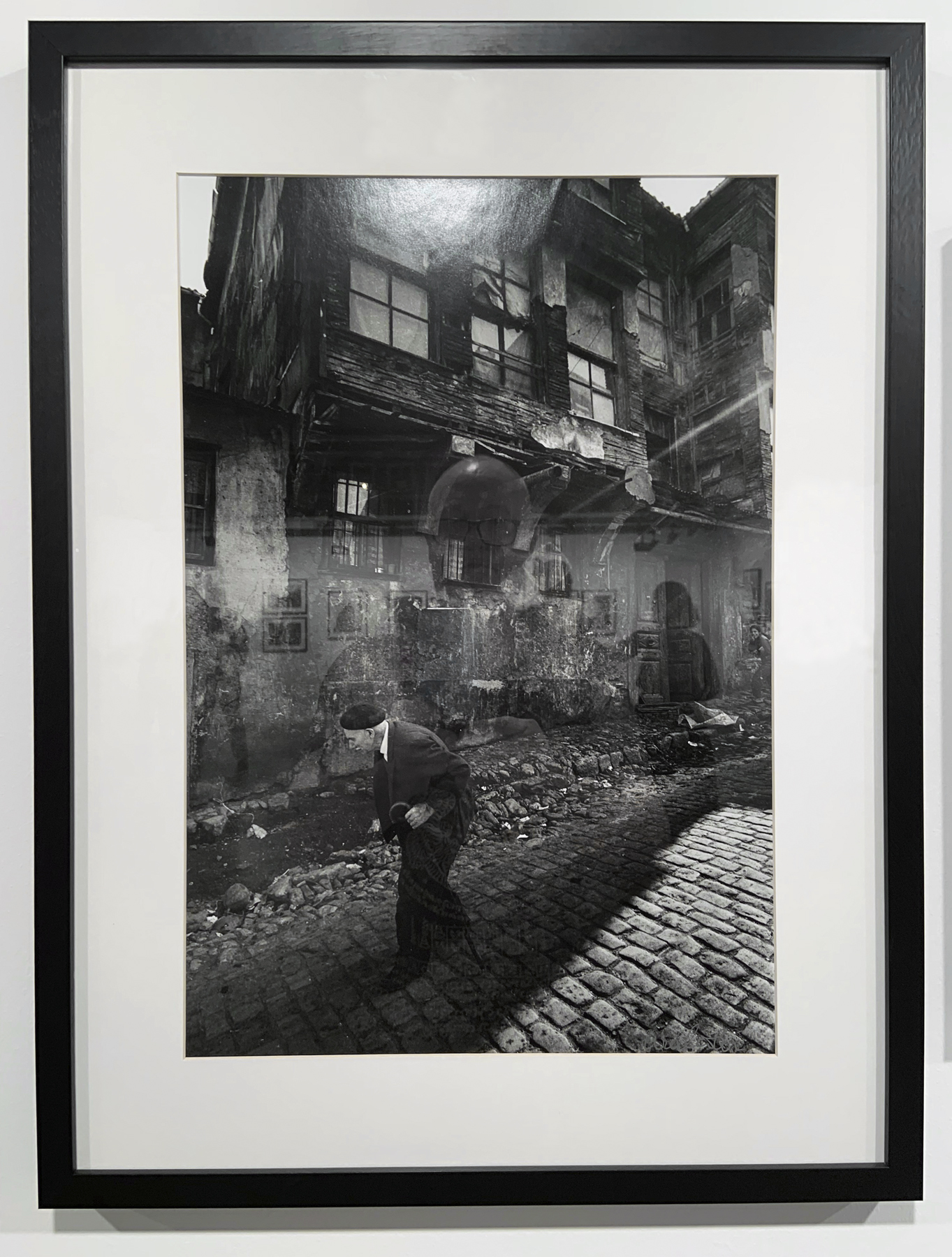
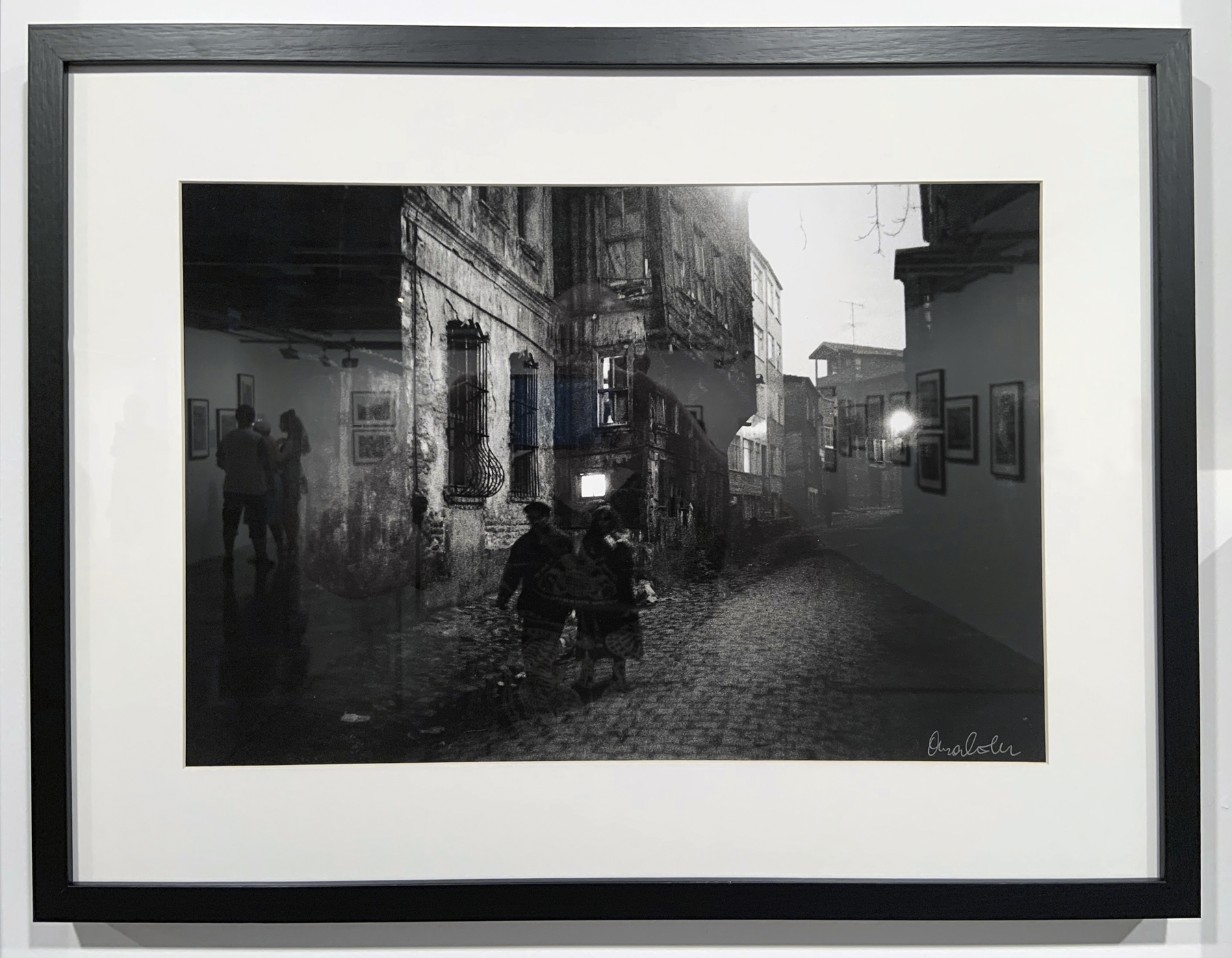
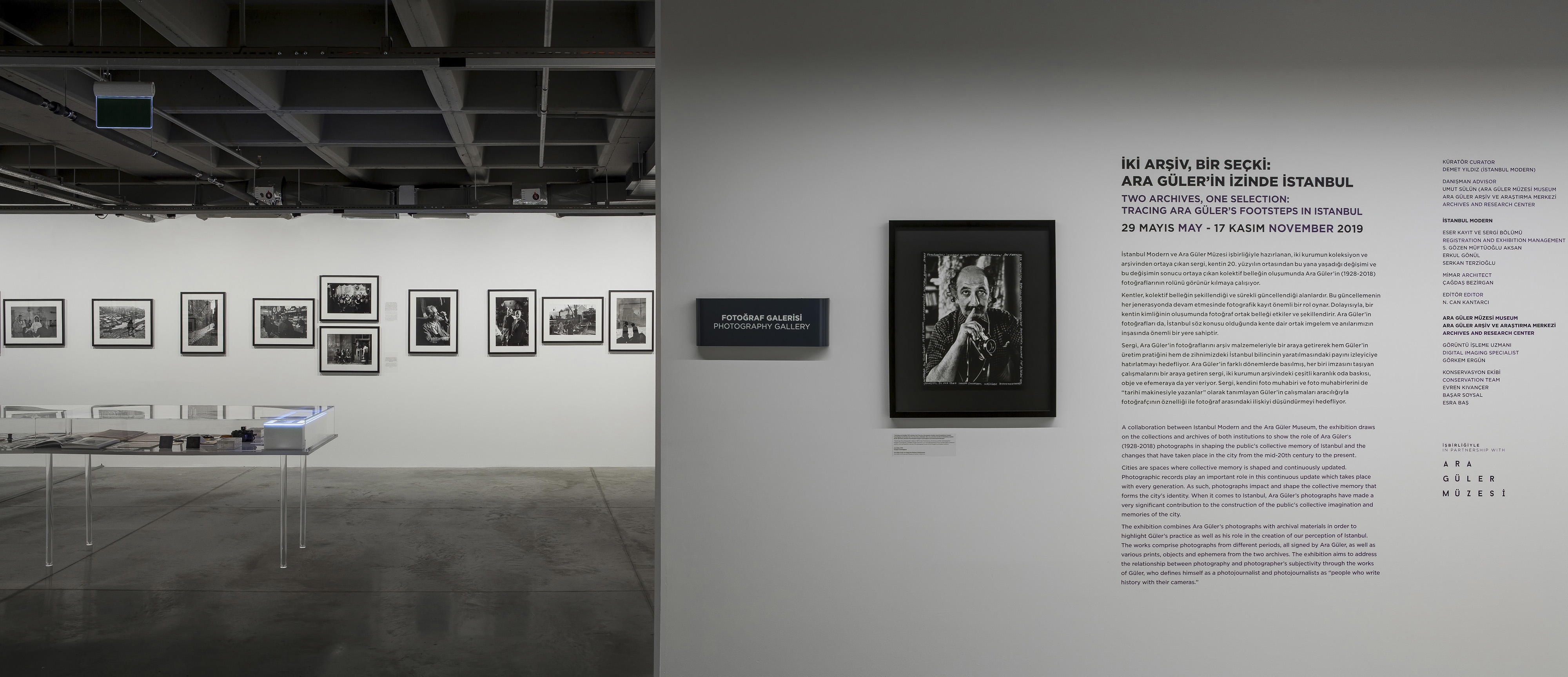
Installation view of the exhibition 'Ara Güler: Two Archives, One Selection: Tracing Ara Güler's Footsteps in Istanbul' at the Istanbul Museum of Modern Art


Installation view of the exhibition Ara Güler: Two Archives, One Selection: Tracing Ara Güler’s Footsteps in Istanbul at the Istanbul Museum of Modern Art
Photo: Istanbul Museum of Modern Art


“A moment of experience”

This is the first of my catch up postings on exhibitions and art I saw during my European art and photographic research tour.

I know very little about the history of Turkish photography, and knew nothing of the work of “The eye of Istanbul”, Ara Güler, before I saw this exhibition.

Visually, Güler’s images are atmospheric renditions of people and place, grounding the representation of a city in the people who live and work there. They share a mainly male gaze, a patriarchal perspective on the treasured secrets of Istanbul, for this perspective is how the culture at that time (and possibly now?) was structured.

Güler’s visual histories of rare and subtle perception, “make visible the unseen, the unknown, and the forgotten.”1 They implicate “the urban discourse as a system in which culture enlists the medium (of photography) for representational tasks – nation building, identity construction, city scapes2,” highlighting photography’s ineradicable role for interpretation in the construction of knowledge and memory.3

As the press release states, Güler’s photographs have made a very significant contribution to the formation of the public’s collective imagination and memories of the city, but these memories of the city can only ever be reflections of concepts of identity that have developed across the social spectrum from within the self, within the culture, and within the political arena. One informs the other.

Güler’s cityscapes can only be a partial representation of what a city was and what it was moving to become. Paraprashing Eyelet Carmi when she talks of Sally Mann’s landscape photographs of the Deep South of America, we might say that the urban landscape, the photograph shows us, is never a neutral space. It is always historically constructed, politically used and emotionally complex.4 It is where national history is mediated by and intertwines with patriarchal assumptions, emotions, memories and personal experiences of everyday life. The personal is national and vice versa, for “the notion of home and place (national and personal alike) is inevitably unfixed, unstable and partial.”5

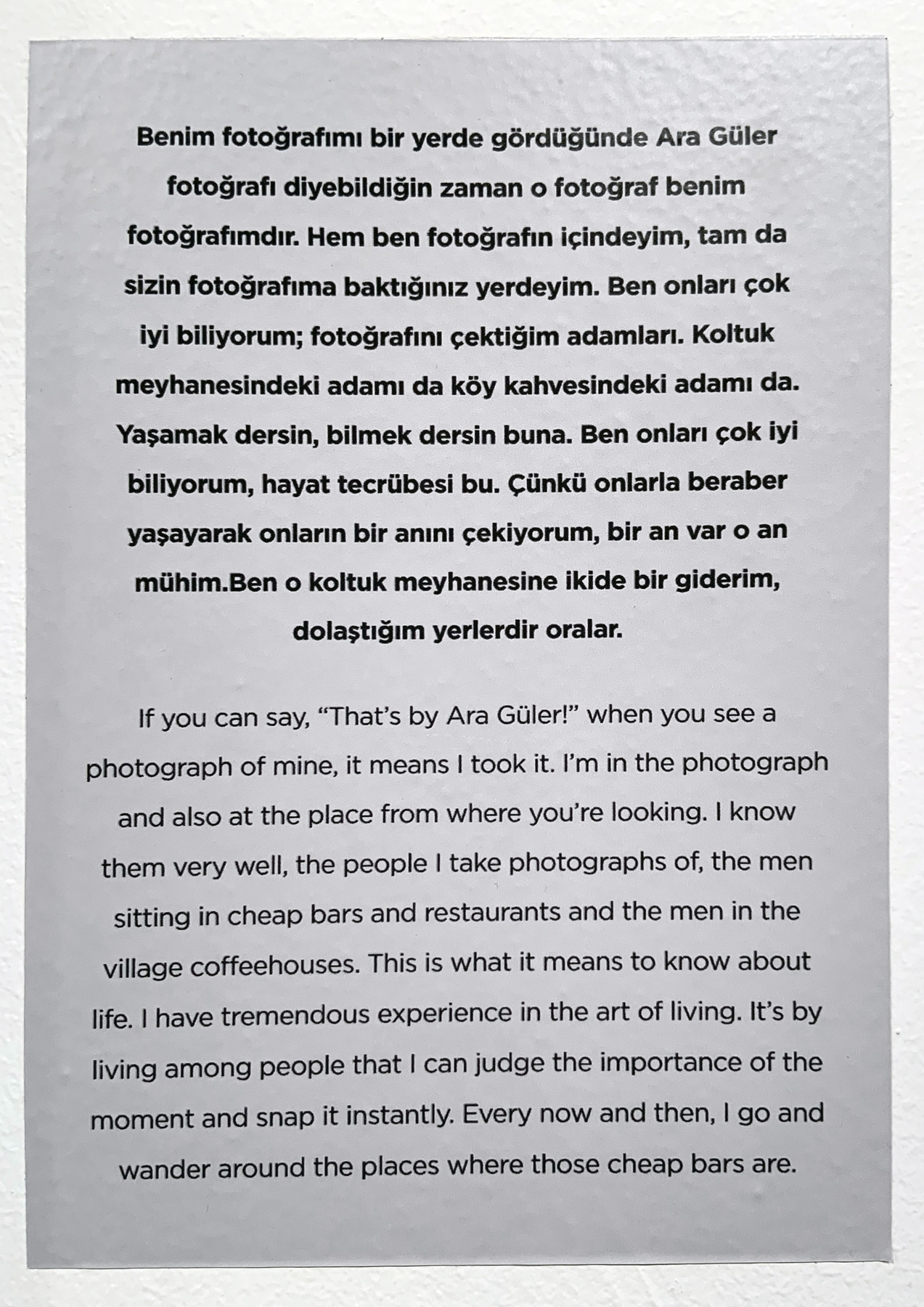
In an erudite and instructive piece of writing by Zeynep UÄŸur, “After Ara Güler: Capturing the Feeling of Loss in Modernizing Istanbul”, an extract of which is presented below, UÄŸur expertly places Güler’s photographs in the era of their composition, filling in the cultural background that surrounds their creation… depictions of the urban poor and their small routines – smoking, having a cup of tea, coffee, or an alcoholic drink – mainly men in their coffee shops and old fashioned bars, enacting traditions that have not changed for centuries, swept up in the modernisation of the city. “An emotional relation is established between people and the space they inhabit by enacting the space in the body and the body in the public sphere, hence humanising the city and spatially contextualising the people. As Jacques Lecoq announces in his pedagogy of movement in theater, only the body engaged in the work can feel, and thus reflect the evidence of the space. Güler’s urban poor portrayed in their work express the social reality with their bodies.”6

Where I disagree with UÄŸur is in her proposal that that these men, who are “waiting” instead of actively circulating or producing, proffer “a sense of disbelonging, being removed from the context, being out of place, a sense of invisibility, immobility and arbitrariness.”7 In other words, a sense of alienation from the existence and surroundings in which they find themselves (alienation of the individual in modernity is a trope that goes back to the beginnings of Romanticism). UÄŸur proposes that Güler’s photographs possess hüzün, “a feeling of melancholia, nostalgia and loss in a multilayered city where multiple spatialities and temporalities are superposed. Guler’s photography reflects this singularity of Istanbul, its vibe and the ambiance experienced when wandering in the city.”8

This idea of a singularity is a very modernist way of perceiving the world. In this singular world a unified self can be easily alienated from itself (through concepts such as social alienation, the alienated body (Sartre), the phenomenologists’ ‘body for others’, the objectified body, the social body), and objectified by the gaze and discourse of others.9 “… Marx expresses his conceptualization of the state of alienation as a loss of sensuous fulfilment, poorly replaced by a pride of possession, and a lack of self-consciousness and hence actualization of one’s own real desires and abilities.”10 Leading to the feelings of melancholia, nostalgia and loss allegedly seen in the work of Ara Güler.

Postmodernism on the other hand sees no decentering of the self from the centre to the periphery for there is no centre, no periphery, only fragmentation. Fredric Jameson wrote that, “in the postmodern world, the subject is not alienated but fragmented. He explained that the notion of alienation presumes a centralized, unitary self who could become lost to himself or herself. But if, as a postmodernist sees it, the self is decentred and multiple, the concept of alienation breaks down. All that is left is an anxiety of identity.”11 Through the fragmentation of the subject the “existential model of “authenticity” and “inauthenticity” is thus challenged.”12 When there is no centre, no periphery – where one cannot move to the centre because there is no unified centre – there can be no unified self and therefore no alienation or, alien nation. There is no unified self, no appeal to nostalgia and melancholy, for the people in the photographs just are: and this is my point here, Güler was a visual archivist who documented life as it exists, not how we now look back on those times through the misty eyes of loss.

All we are left with, then, is the fact that Güler’s photographs are “a moment of experience” which document change not loss. His photographs document people and places that are not being lost (for that proposes a unified perspective), but images which picture an anxiety (and presence) in their radical potential, in their political context, which is both then and now – the receiver (the subject) and the viewer recognising the categories of perception and appreciation as it applies to him or her.13 An experience, existence and anxiety that is both then and now. As Garry Winogrand has observed, “The photograph isn’t what was photographed. It’s something else. It’s a new fact.” Time after time, again and again.

Dr Marcus Bunyan

Word count: 1,040


Many thankx to the Istanbul Museum of Modern Art for allowing me to publish the photographs in the posting. Please click on the photographs for a larger version of the image. All iPhone images © Marcus Bunyan and the Istanbul Museum of Modern Art.


1/ Marianne Fulton, Eyes of Time: Photojournalism in America, Boston: Little, Brown, 1988, p. 107

2/ -scape. a combining form extracted from landscape, with the meaning “an extensive view, scenery,” or “a picture or representation” of such a view, as specified by the initial element: cityscape; moonscape

3/ Alison Winter, Memory: Fragments of a Modern History. Chicago and London: University of Chicago Press, 2012, p. 5

4/ Ayelet Carmi, “Sally Mann’s American vision of the land,” in Journal of Art Historiography Number 17 December 2017, p. 25

5/ Ibid., p. 13

6/ Zeynep UÄŸur, “After Ara Güler: Capturing the Feeling of Loss in Modernizing Istanbul,” on the Ajam Media Collective website 26 November 2018 [Online] Cited 22/10/2019

7/ Ibid.,

8/ Ibid.,

9/ Jean-Paul Sartre, Being and Nothingness. London: Methuen, 1969, pp. 339-351

10/ Harry Brod, “Pornography and the Alienation of Male Sexuality,” in Kimmel, Michael and Messner, Michael. Men’s Lives. Boston: Allyn and Bacon, 1989, p. 397

11/ Sherry Turkle, Life on The Screen: Identity in the Age of the Internet. New York: Simon and Schuster, 1995, p. 49

12/ Katarzyna Marciniak, “Introduction,” in Fredric Jameson. Postmodernism, or the Cultural Logic of late Capitalism. Duke University Press, 1991

13/ Pierre Bourdieu, Distinction: A Social Critique of the Judgement of Taste. (trans. Richard Nice). London: Routledge and Kegan Paul, 1986, p. 207


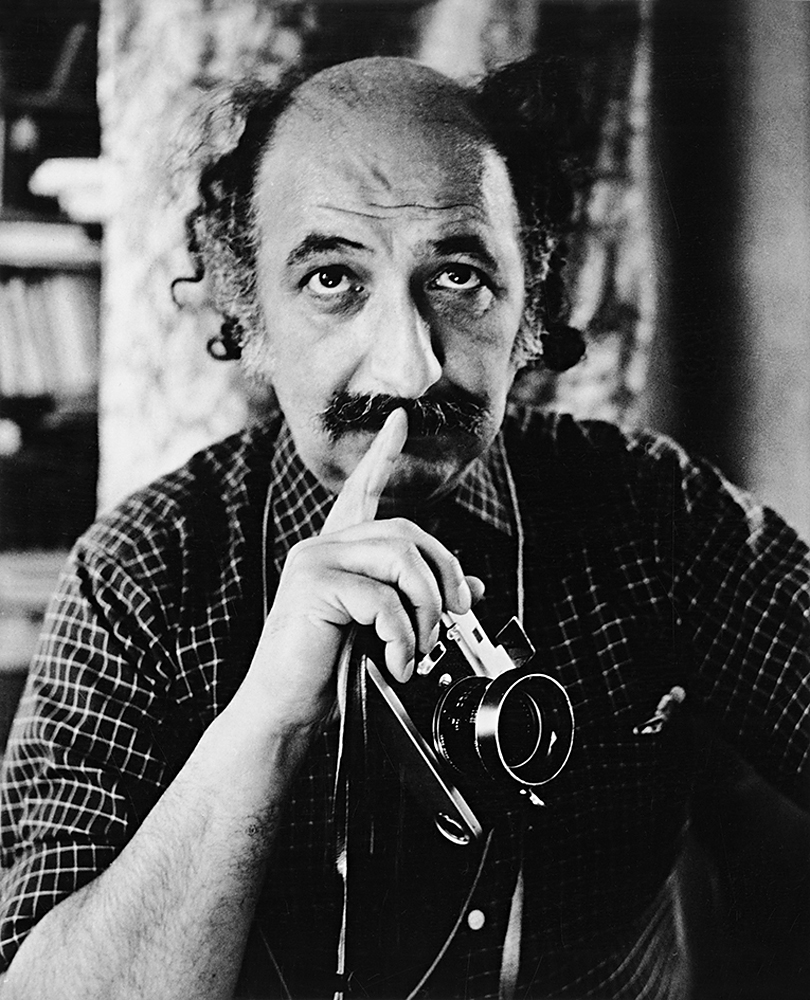
‘I believe that photography is a form of magic by which a moment of experience is seized for transmission to future generations,’ Güler once said when asked to explain his art


Anonymous photographer. 'Ara Güler' Nd


Anonymous photographer
Ara Güler
Nd
Gelatin silver print
Photo: Istanbul Museum of Modern Art


Installation view of the exhibition 'Ara Güler: Two Archives, One Selection: Tracing Ara Güler's Footsteps in Istanbul' at the Istanbul Museum of Modern Art

Installation view of the exhibition 'Ara Güler: Two Archives, One Selection: Tracing Ara Güler's Footsteps in Istanbul' at the Istanbul Museum of Modern Art

Installation view of the exhibition 'Ara Güler: Two Archives, One Selection: Tracing Ara Güler's Footsteps in Istanbul' at the Istanbul Museum of Modern Art


Installation views of the exhibition Ara Güler: Two Archives, One Selection: Tracing Ara Güler’s Footsteps in Istanbul at the Istanbul Museum of Modern Art
Photos: Istanbul Museum of Modern Art


Installation view of the exhibition 'Ara Güler: Two Archives, One Selection: Tracing Ara Güler's Footsteps in Istanbul' at the Istanbul Museum of Modern Art

Installation view of the exhibition 'Ara Güler: Two Archives, One Selection: Tracing Ara Güler's Footsteps in Istanbul' at the Istanbul Museum of Modern Art

Installation view of the exhibition 'Ara Güler: Two Archives, One Selection: Tracing Ara Güler's Footsteps in Istanbul' at the Istanbul Museum of Modern Art

Installation view of the exhibition 'Ara Güler: Two Archives, One Selection: Tracing Ara Güler's Footsteps in Istanbul' at the Istanbul Museum of Modern Art


Installation views of the exhibition Ara Güler: Two Archives, One Selection: Tracing Ara Güler’s Footsteps in Istanbul at the Istanbul Museum of Modern Art
Photos: Marcus Bunyan


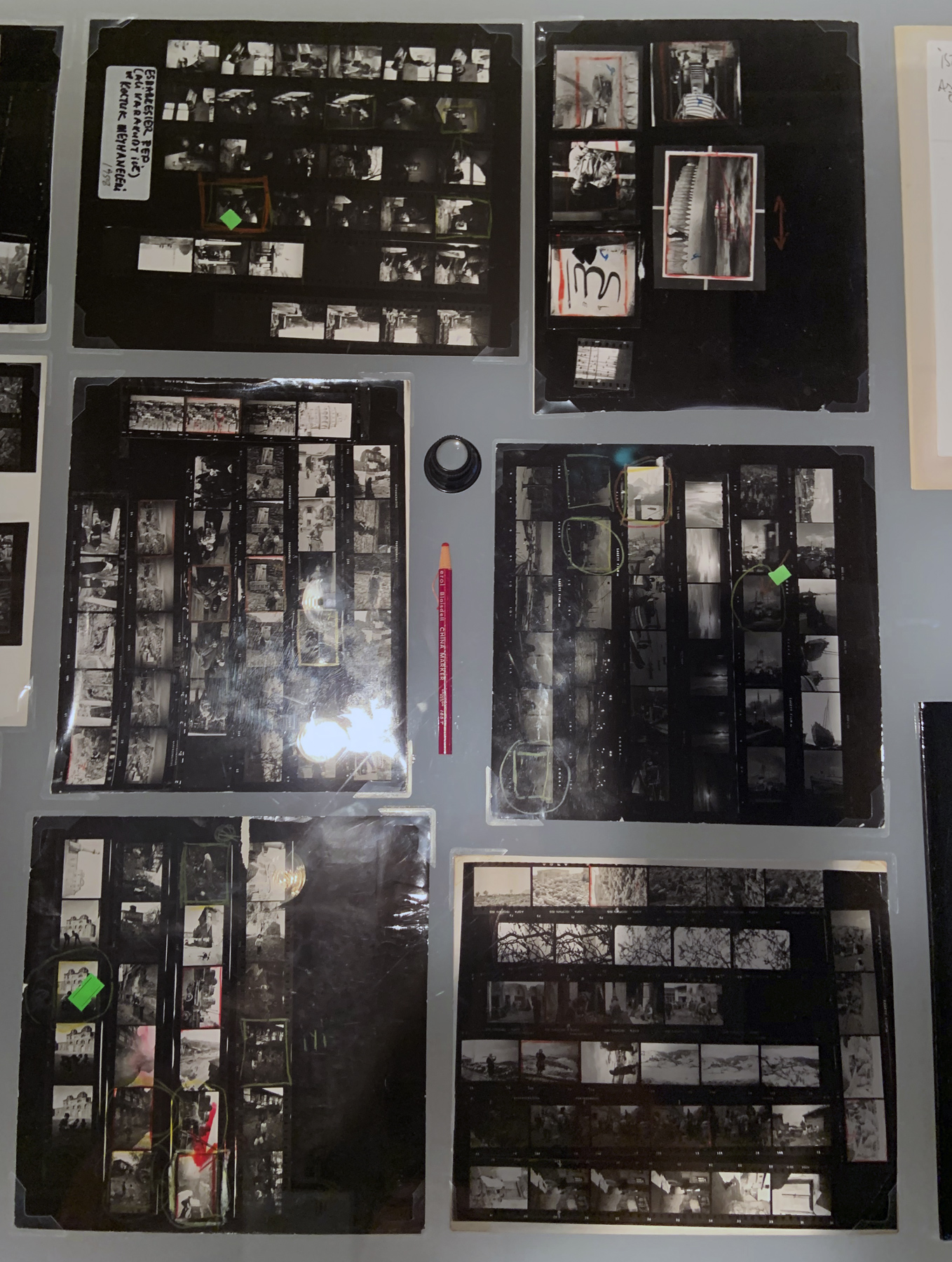
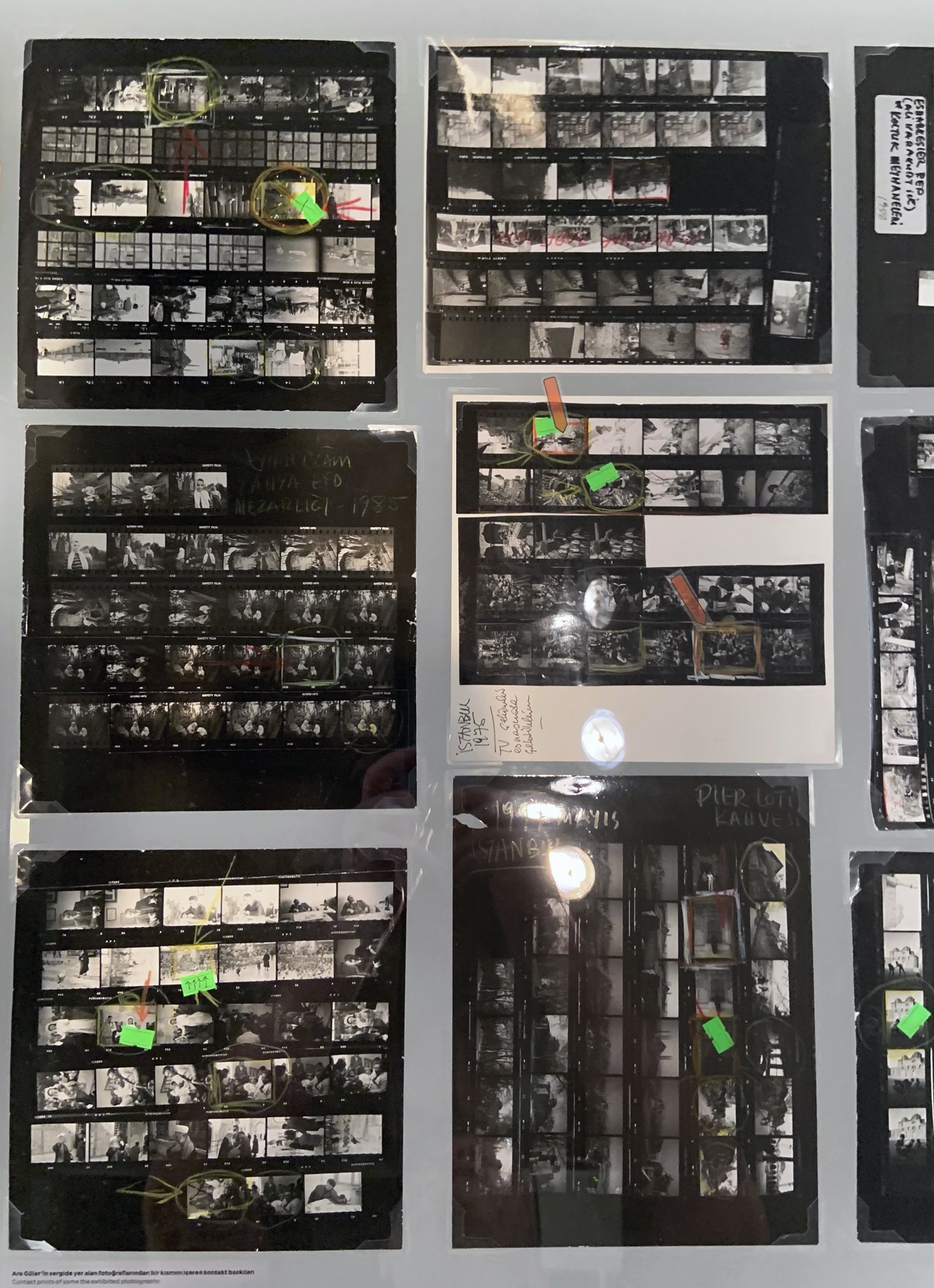
Istanbul Modern, in collaboration with the Ara Güler Museum, presents an exhibition of works by Ara Güler, “the man who writes history with his camera.” Titled “Two Archives, One Selection: Tracing Ara Güler’s Footsteps in Istanbul” the exhibition follows the changes that have taken place in the city since the 1950s, and is open to public between May 29 – November 17, 2019.

A collaboration between Istanbul Modern and the Ara Güler Museum, the exhibition draws on the archives of both institutions to portray the changes that have taken place in the city from the mid-20th century to the present.

It also shows the influential role of Ara Güler’s photographs in the development of the public’s collective memory of Istanbul following these changes.

All signed by him

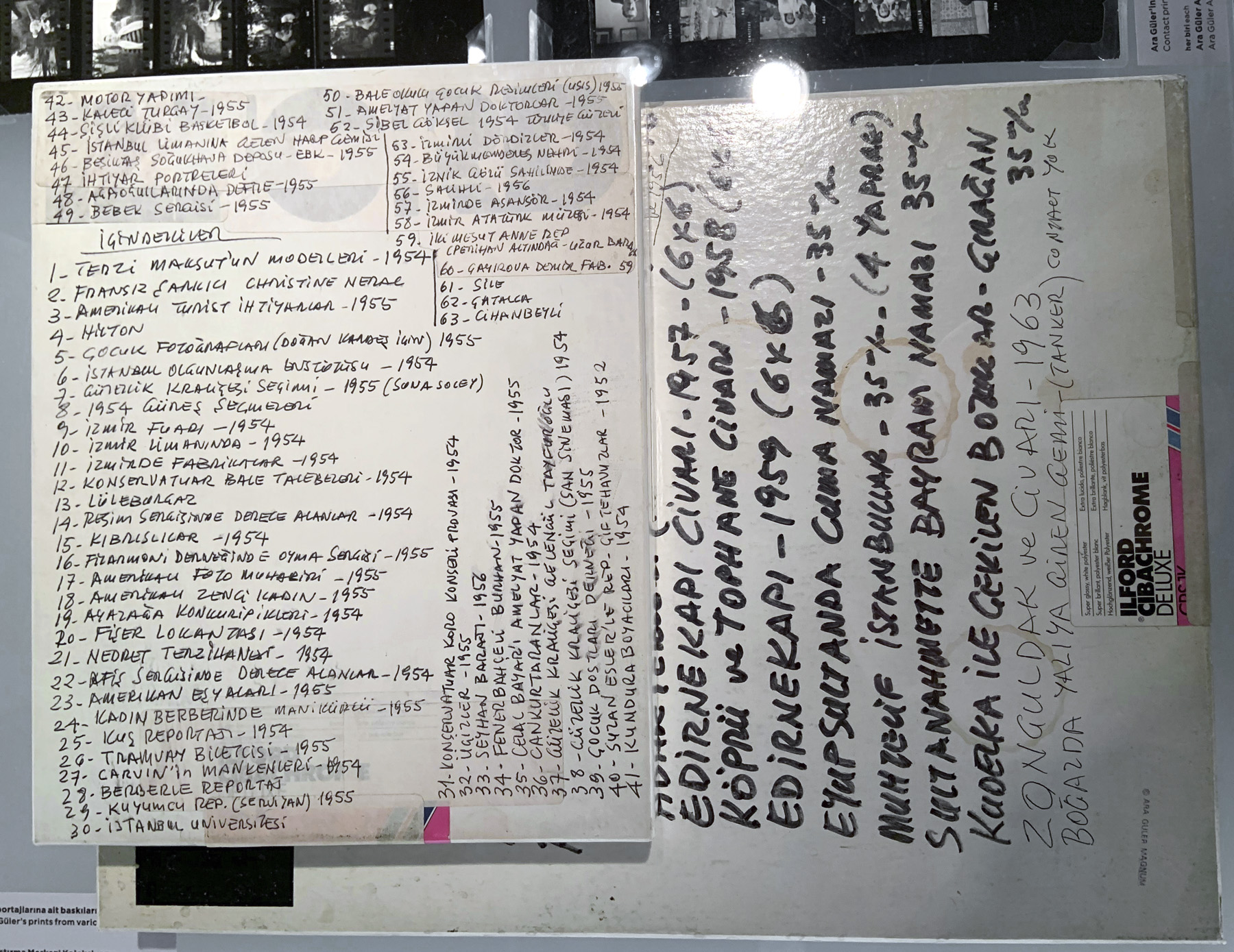
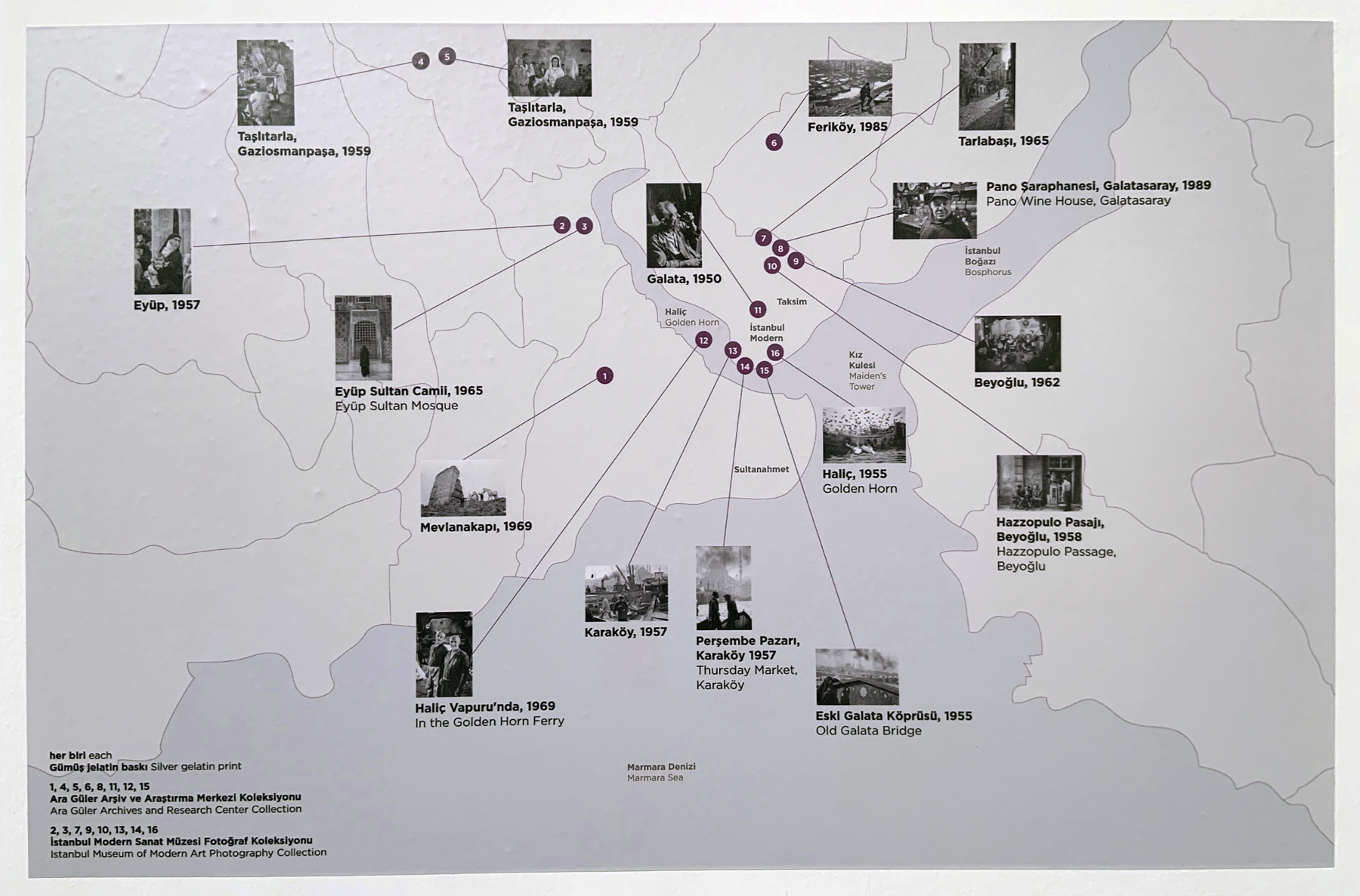
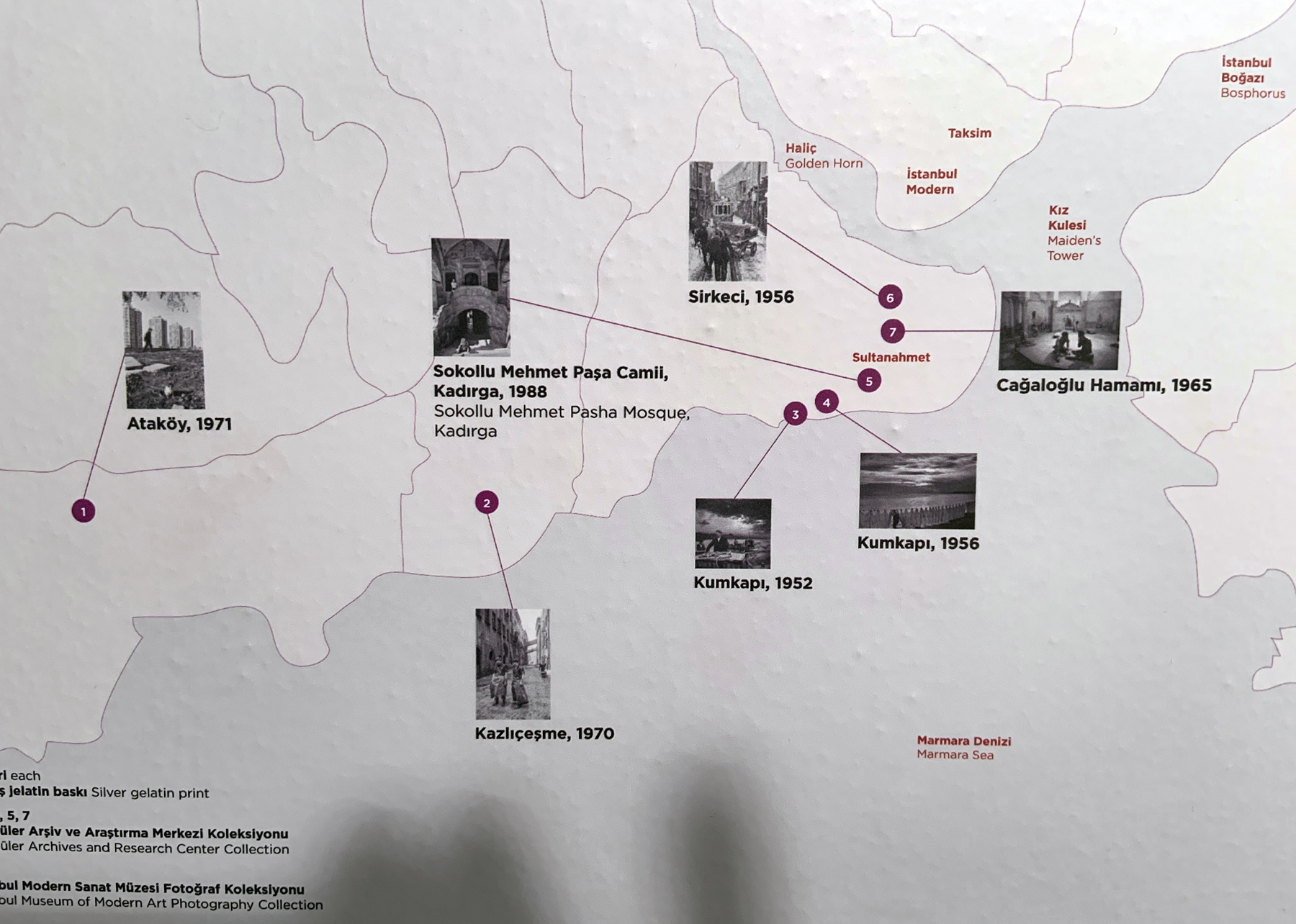
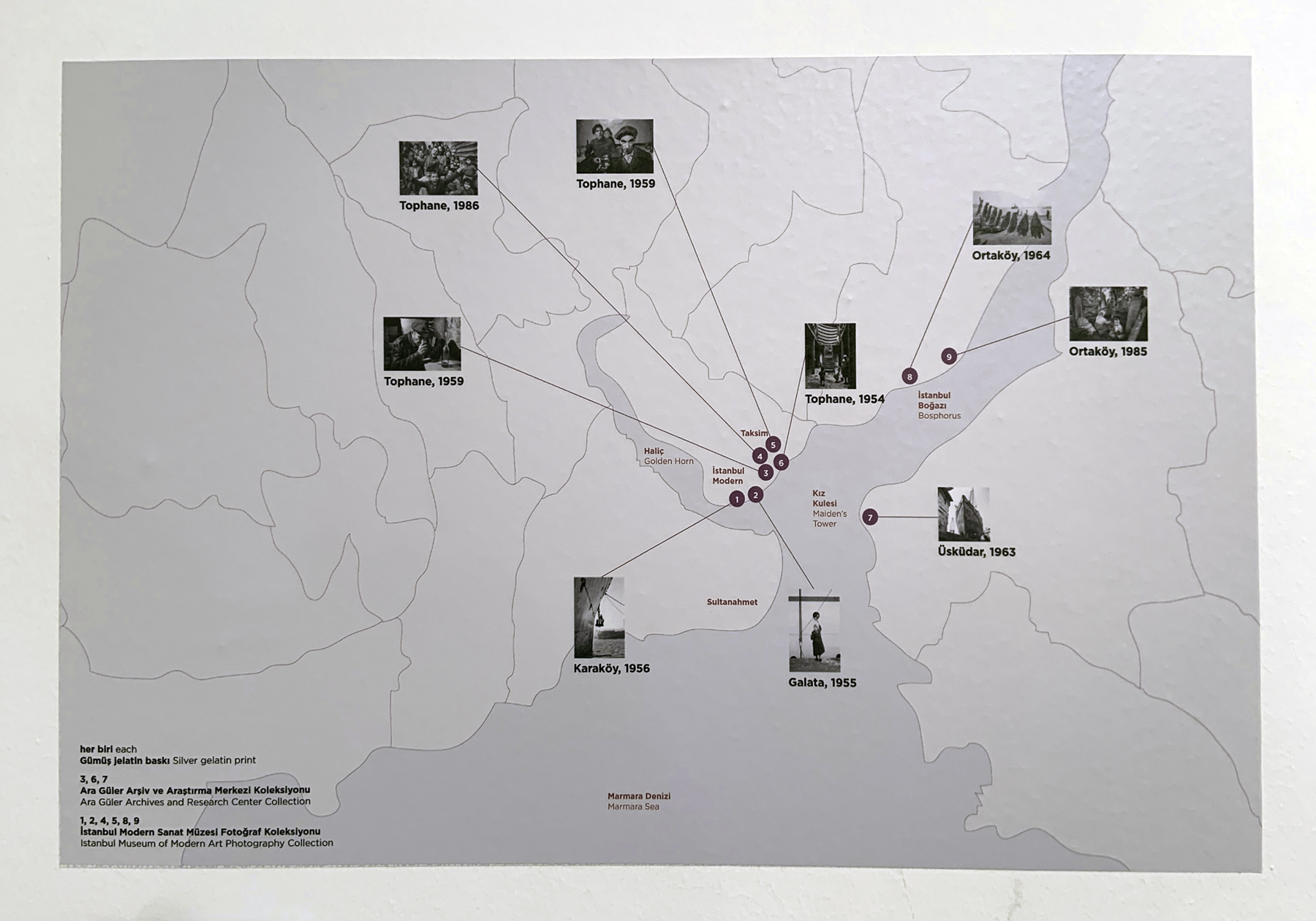
The exhibition brings together photographs from different periods that were signed by him, as well as various dark room prints, objects and ephemera from the archives of the Istanbul Modern Photography Collection and the Ara Güler Museum, and maps that situate the works in different neighbourhoods and angles. As a whole, the exhibition aims to address the relationship between photography and a photographer’s subjectivity through the works of Güler, who defines himself as a photojournalist and photojournalists as “people who write history with their cameras.”

When it comes to Istanbul, Ara Güler’s photographs have made a very significant contribution to the formation of the public’s collective imagination and memories of the city. The exhibition combines Ara Güler’s photographs, which invite viewers to look at them again and again, with archival materials in order to highlight Güler’s practice as well as his role in the creation of our perception of Istanbul.

Curated by Demet Yıldız, Photography Department Manager at the Istanbul Museum of Modern Art, with Umut Sülün, Manager of the Ara Güler Museum and Research Center, acting as consultant, the exhibition can be visited until November 17. Throughout the duration of the exhibition, there will be talks and various programs that focus on the city and collective memory.

About Ara Güler

As a youth he was greatly influenced by the cinema, and while in high school he worked at film studios in every branch of the industry. In 1951 Güler graduated from the Getronagan Armenian High School and began training in theatre and acting under Muhsin Ertugrul, aspiring to be either a director or a scriptwriter. At that time, some of his stories were published in literary magazines and Armenian newspapers. He continued his education in the Faculty of Economics at Istanbul University. However, on deciding to become a photojournalist, he left the university and completed his military service.

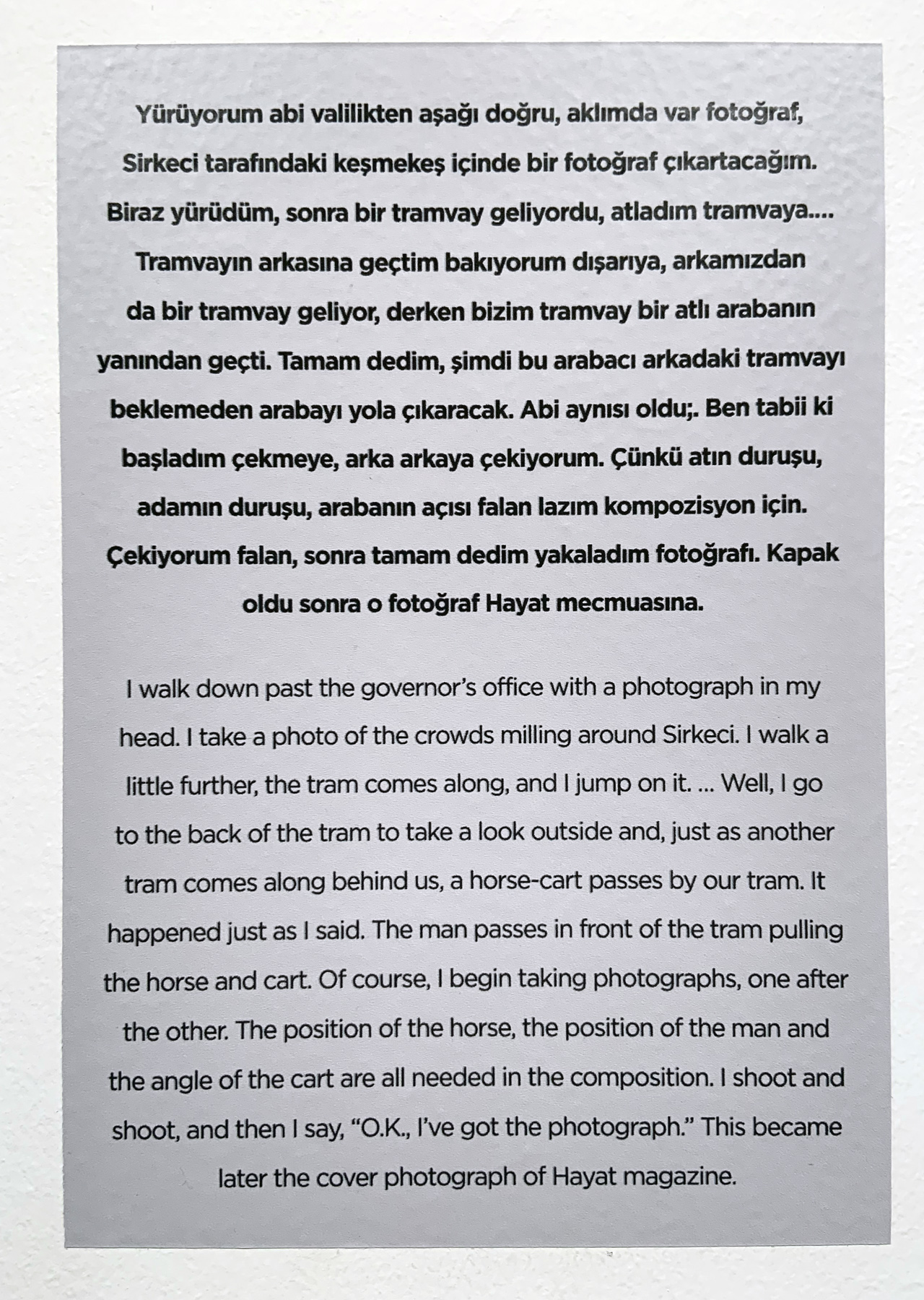
He began his journalism career with the newspaper Yeni İstanbul in 1950. He became a photojournalist for Time Life in 1956, and for Paris Match and Stern in 1958. Around the same time, the Magnum Agency started distributing his photographs internationally. One of his first features was on the ruins of Noah’s Ark, and more than one hundred of those photographs were distributed by Magnum. Also during these years he reported on Mount Nemrut, introducing it to the world. Another of his important features was on the rediscovery of the forgotten city of Aphrodisias, through which it likewise was revealed to the world.

From 1956 until 1961 Güler headed the photography section of Hayat magazine. In the 1961 edition of the British Journal of Photography Year Book, he was named one of the seven best photographers in the world. That same year he was accepted as a member of the ASMP (American Society of Media Photographers) and was its only Turkish member. In 1962 he received the Master of Leica award in Germany and was the subject of a special issue of the journal Camera, then the most important photography publication in the world. His works were exhibited at the “Man and His World” show in Canada in 1967; and at the Photokina Fair in Cologne in 1968. He took the photographs for Lord Kinross’s book about Hagia Sophia, published in 1971.

His photograph was on the cover of the English, French, and German editions of the book Picasso: Métamorphose et Unité, published by Skira on the occasion of Picasso’s ninetieth birthday. In 1974 Güler was invited to the United States, where he photographed many famous personalities; the images were later exhibited under the title Creative Americans in many cities around the world. Also in 1974 he made a documentary film called End of a Hero about the scrapping of the battle cruiser Yavuz. His photographs on art and art history were used in articles in Time-Life, Horizon, and Newsweek, and published around the world by Skira. Starting in 1989 Güler joined the project A Day in the Life of… and collaborated with some the world’s most famous photographers in Indonesia, Malaysia, and Brunei.

In 1992 his photographs of the great architect Mimar Sinan’s works, which he had been working on for many years, were published under the title Sinan, Architect of Süleyman the Magnificent in France by Editions Arthaud, and in the United States and the UK by Thames & Hudson. In the same year his book Living in Turkey was published by Thames & Hudson in the United States and the UK, in Singapore by Archipelago under the title Turkish Style, and as Demeures Ottomanes de Turquie by Albin Michel in France.

In 2002, France decorated Güler with the Legion d’Honneur Officier des Arts et des Lettres, and in 2009 he received La Médaille de la Ville Paris from the city of Paris. He was awarded honorary doctorates by Yıldız Technical University in 2004, Mimar Sinan Fine Art University in 2013, and BoÄŸaziçi University in 2014; the Presidential Culture and Arts Grand Award in 2005; the Award for Service to Culture and the Arts of the Ministry of Culture and Tourism in 2008; and the Outstanding Service Award of the Grand National Assembly of Turkey in 2009. Also in 2009 he received a lifetime achievement award from the Lucie Foundation in the United States.

Hundreds of exhibitions all over the world have featured Güler’s work, and his images have been published in dozens of books. Güler interviewed and photographed numerous celebrities, from Bertrand Russell and Winston Churchill to Arnold Toynbee, Pablo Picasso, and Salvador Dalí. As an outcome of the partnership created between Güler and DoÄŸuÅŸ Group, two art institutions, Ara Güler Museum and Ara Güler Archives and Research Center, have opened their doors to visitors in Istanbul.

Ara Güler passed away on October 17, 2018, at the age of ninety.

Text from the Istanbul Modern Photography Gallery website


Installation view of the exhibition 'Ara Güler: Two Archives, One Selection: Tracing Ara Güler's Footsteps in Istanbul' at the Istanbul Museum of Modern Art


Installation view of the exhibition Ara Güler: Two Archives, One Selection: Tracing Ara Güler’s Footsteps in Istanbul at the Istanbul Museum of Modern Art
Photo: Marcus Bunyan


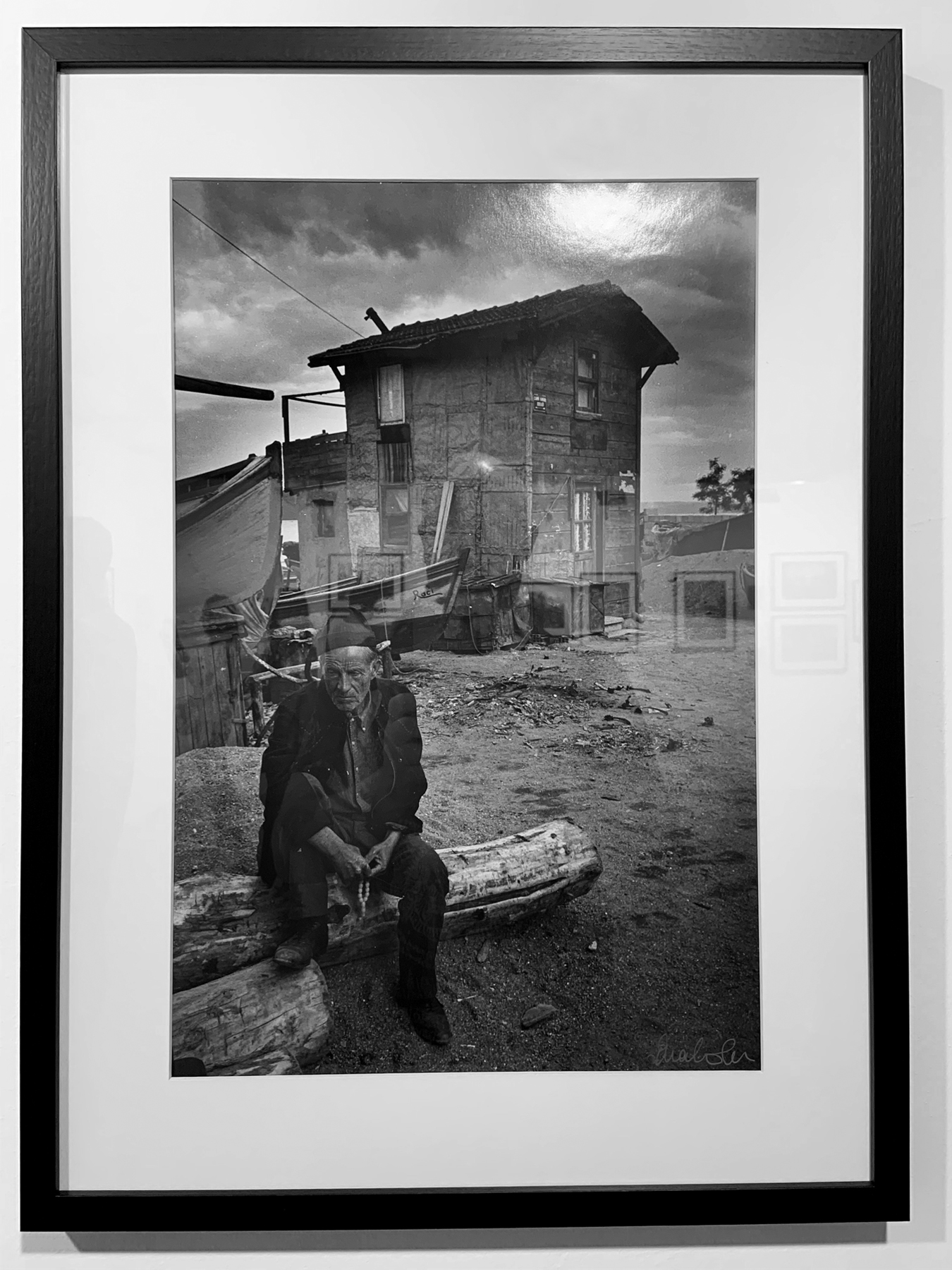
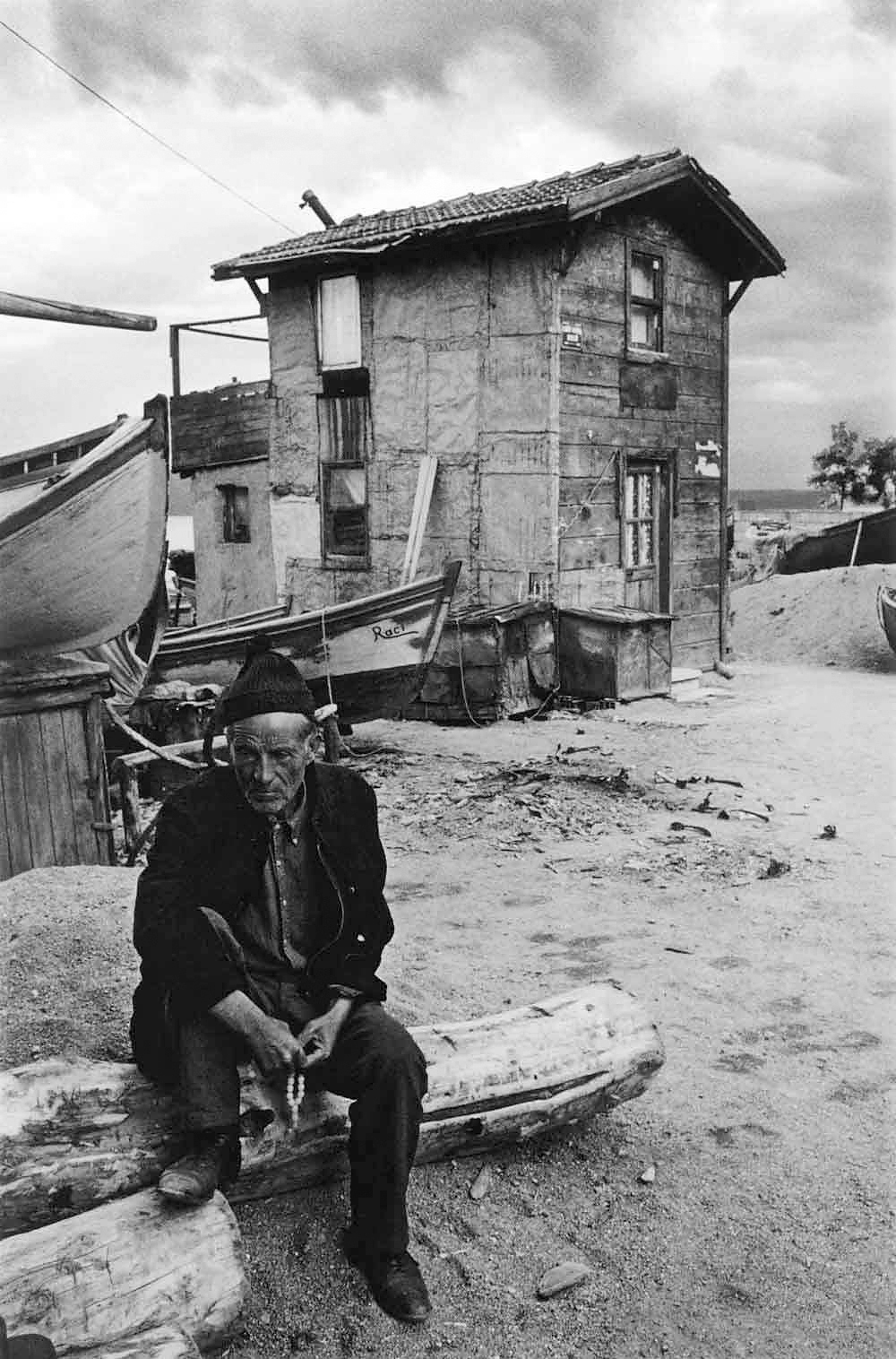
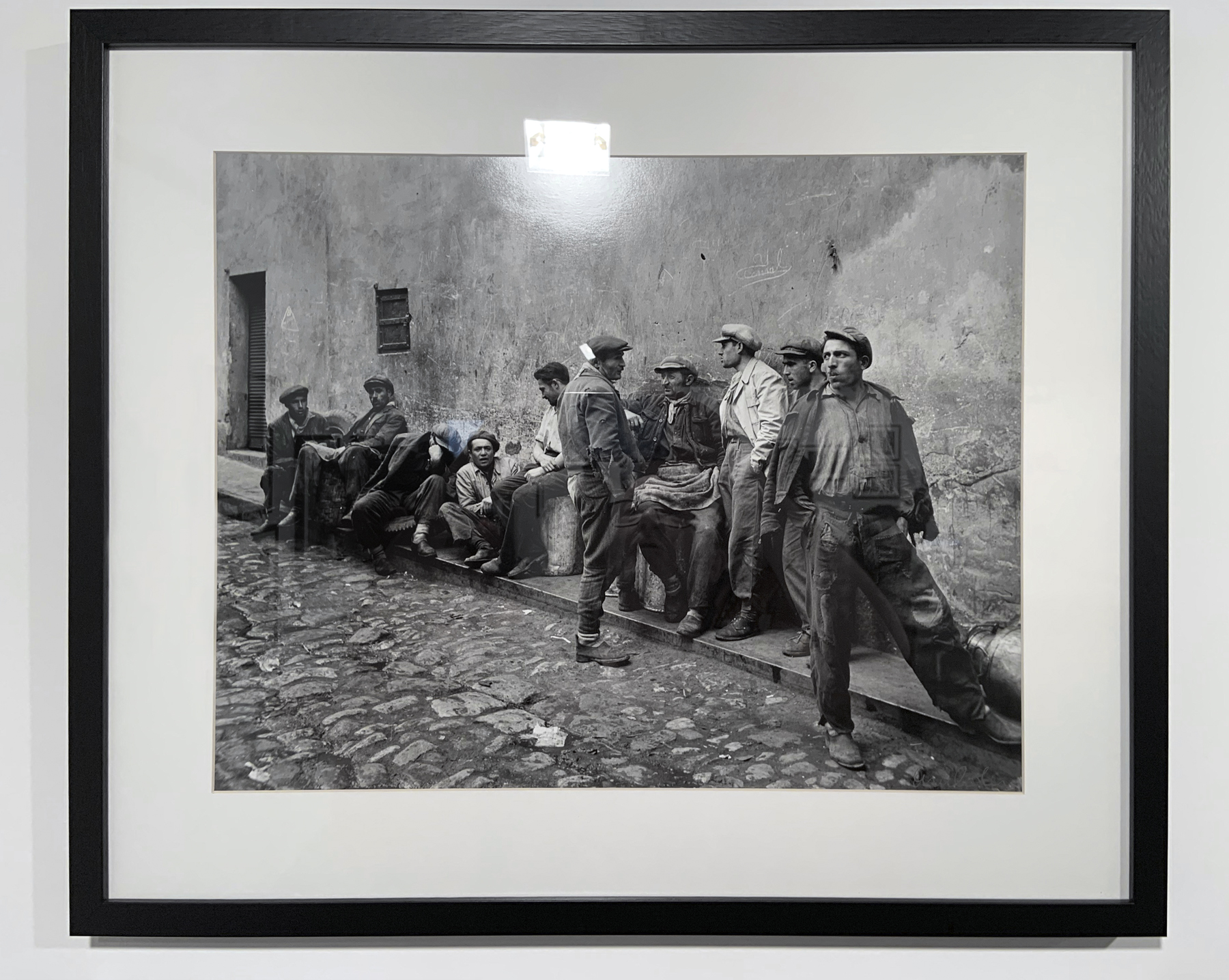
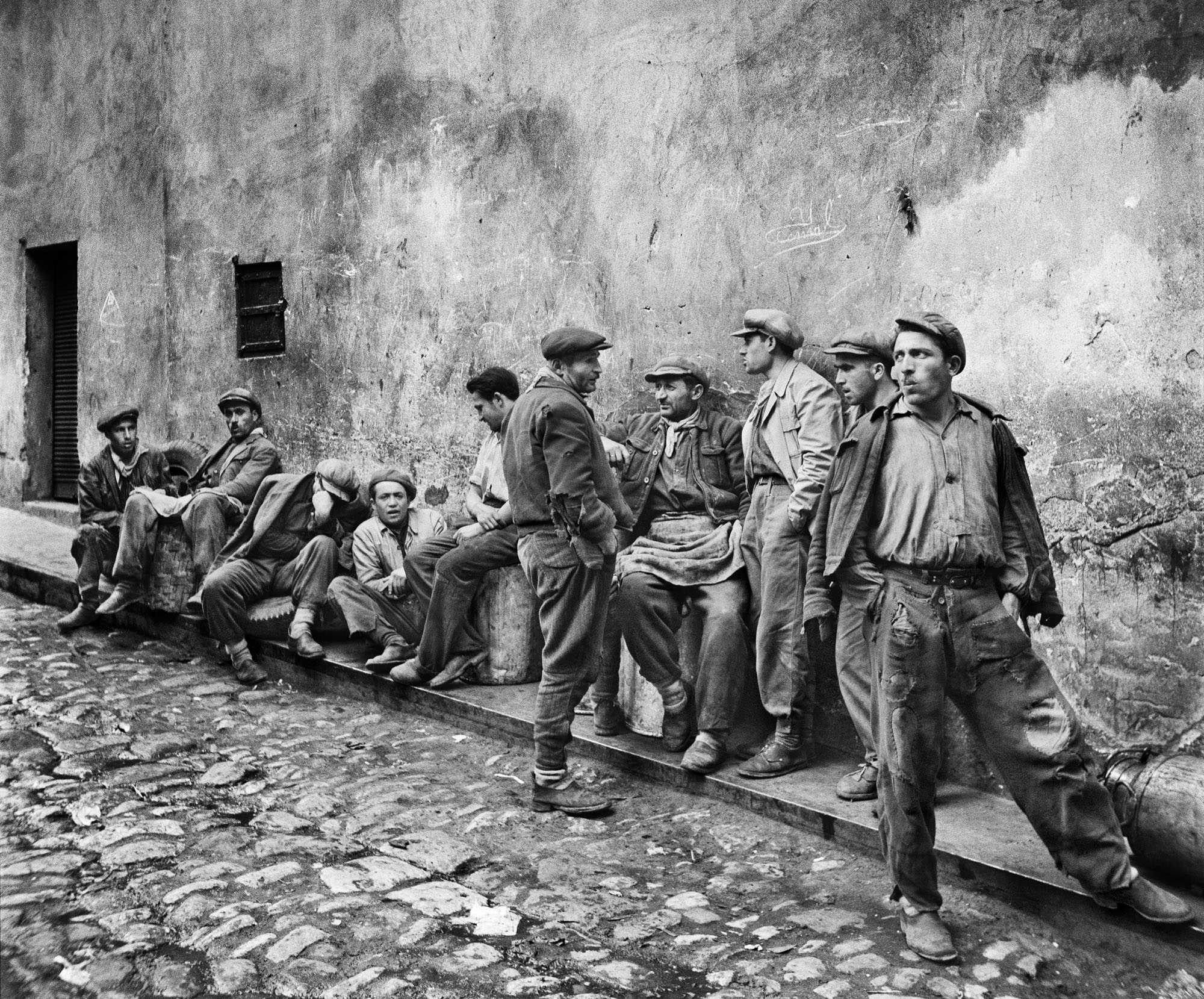
Ara Güler (Turkish, 1928-2018) 'Taşlıtarla, Gaziosmanpaşa' 1959


Ara Güler (Turkish, 1928-2018)
Taşlıtarla, Gaziosmanpaşa
1959
Gelatin silver print
Ara Güler Archive and Research Center Collection
Photo: Istanbul Museum of Modern Art


Ara Güler (Turkish, 1928-2018) 'Feriköy' (installation view) 1985


Ara Güler (Turkish, 1928-2018)
Feriköy (installation view)
1985
Gelatin silver print
Ara Güler Archive and Research Center Collection
Photo: Marcus Bunyan


Ara Güler (Turkish, 1928-2018) 'Galata' 1950 (installation view)


Ara Güler (Turkish, 1928-2018)
Galata (installation view)
1950
Gelatin silver print
Ara Güler Archive and Research Center Collection
Photo: Marcus Bunyan


Ara Güler (Turkish, 1928-2018) 'Hallç, Vapuru'nda [In the Golden Horn Ferry]' 1969 (installation view)


Ara Güler (Turkish, 1928-2018)
Hallç, Vapuru’nda (In the Golden Horn Ferry) (installation view)
1969
Gelatin silver print
Ara Güler Archive and Research Center Collection
Photo: Marcus Bunyan


Wall text from the exhibition 'Ara Güler: Two Archives, One Selection: Tracing Ara Güler's Footsteps in Istanbul' at the Istanbul Museum of Modern Art


Wall text from the exhibition Ara Güler: Two Archives, One Selection: Tracing Ara Güler’s Footsteps in Istanbul at the Istanbul Museum of Modern Art
Photo: Marcus Bunyan


Ara Güler (Turkish, 1928-2018) 'Persembe Pazan, Karaköy [Thursday Market, Karaköy]' 1957 (installation view)


Ara Güler (Turkish, 1928-2018)
Persembe Pazan, Karaköy (Thursday Market, Karaköy) (installation view)
1957
Gelatin silver print
Istanbul Museum of Modern Art Photography Collection
Photo: Marcus Bunyan


Ara Güler (Turkish, 1928-2018) 'Persembe Pazan, Karaköy [Thursday Market, Karaköy]' 1957


Ara Güler (Turkish, 1928-2018)
Persembe Pazan, Karaköy (Thursday Market, Karaköy)
1957
Gelatin silver print
Istanbul Museum of Modern Art Photography Collection
Photo: Istanbul Museum of Modern Art


Wall text from the exhibition 'Ara Güler: Two Archives, One Selection: Tracing Ara Güler's Footsteps in Istanbul' at the Istanbul Museum of Modern Art


Wall text from the exhibition Ara Güler: Two Archives, One Selection: Tracing Ara Güler’s Footsteps in Istanbul at the Istanbul Museum of Modern Art
Photo: Marcus Bunyan


Ara Güler (Turkish, 1928-2018) 'Hazzopulo Pasajl, Beyoglu [Hazzopulo Passage, Beyoglu]' 1958 (installation view)


Ara Güler (Turkish, 1928-2018)
Hazzopulo Pasajl, Beyoglu (Hazzopulo Passage, Beyoglu) (installation view)
1958
Gelatin silver print
Istanbul Museum of Modern Art Photography Collection
Photo: Marcus Bunyan


Ara Güler (Turkish, 1928-2018) 'Hazzopulo Pasajl, Beyoglu [Hazzopulo Passage, Beyoglu]' 1958


Ara Güler (Turkish, 1928-2018)
Hazzopulo Pasajl, Beyoglu (Hazzopulo Passage, Beyoglu)
1958
Gelatin silver print
Istanbul Museum of Modern Art Photography Collection
Photo: Istanbul Museum of Modern Art


Ara Güler (Turkish, 1928-2018) 'Eyüp Sultan Camii [Eyüp Sultan Mosque]' 1965 (installation view)


Ara Güler (Turkish, 1928-2018)
Eyüp Sultan Camii (Eyüp Sultan Mosque) (installation view)
1965
Gelatin silver print
Istanbul Museum of Modern Art Photography Collection
Photo: Marcus Bunyan


Ara Güler (Turkish, 1928-2018) 'Eyüp Sultan Camii [Eyüp Sultan Mosque]' 1965


Ara Güler (Turkish, 1928-2018)
Eyüp Sultan Camii (Eyüp Sultan Mosque)
1965
Gelatin silver print
Istanbul Museum of Modern Art Photography Collection
Photo: Istanbul Museum of Modern Art


Ara Güler (Turkish, 1928-2018) 'Tarlabaşi' 1965 (installation view)


Ara Güler (Turkish, 1928-2018)
TarlabaÅŸi (installation view)
1965
Gelatin silver print
Istanbul Museum of Modern Art Photography Collection
Photo: Marcus Bunyan


Installation view of the exhibition 'Ara Güler: Two Archives, One Selection: Tracing Ara Güler's Footsteps in Istanbul' at the Istanbul Museum of Modern Art


Installation view of the exhibition Ara Güler: Two Archives, One Selection: Tracing Ara Güler’s Footsteps in Istanbul at the Istanbul Museum of Modern Art
Photo: Marcus Bunyan


Wall text from the exhibition 'Ara Güler: Two Archives, One Selection: Tracing Ara Güler's Footsteps in Istanbul' at the Istanbul Museum of Modern Art


Wall text from the exhibition Ara Güler: Two Archives, One Selection: Tracing Ara Güler’s Footsteps in Istanbul at the Istanbul Museum of Modern Art
Photo: Marcus Bunyan


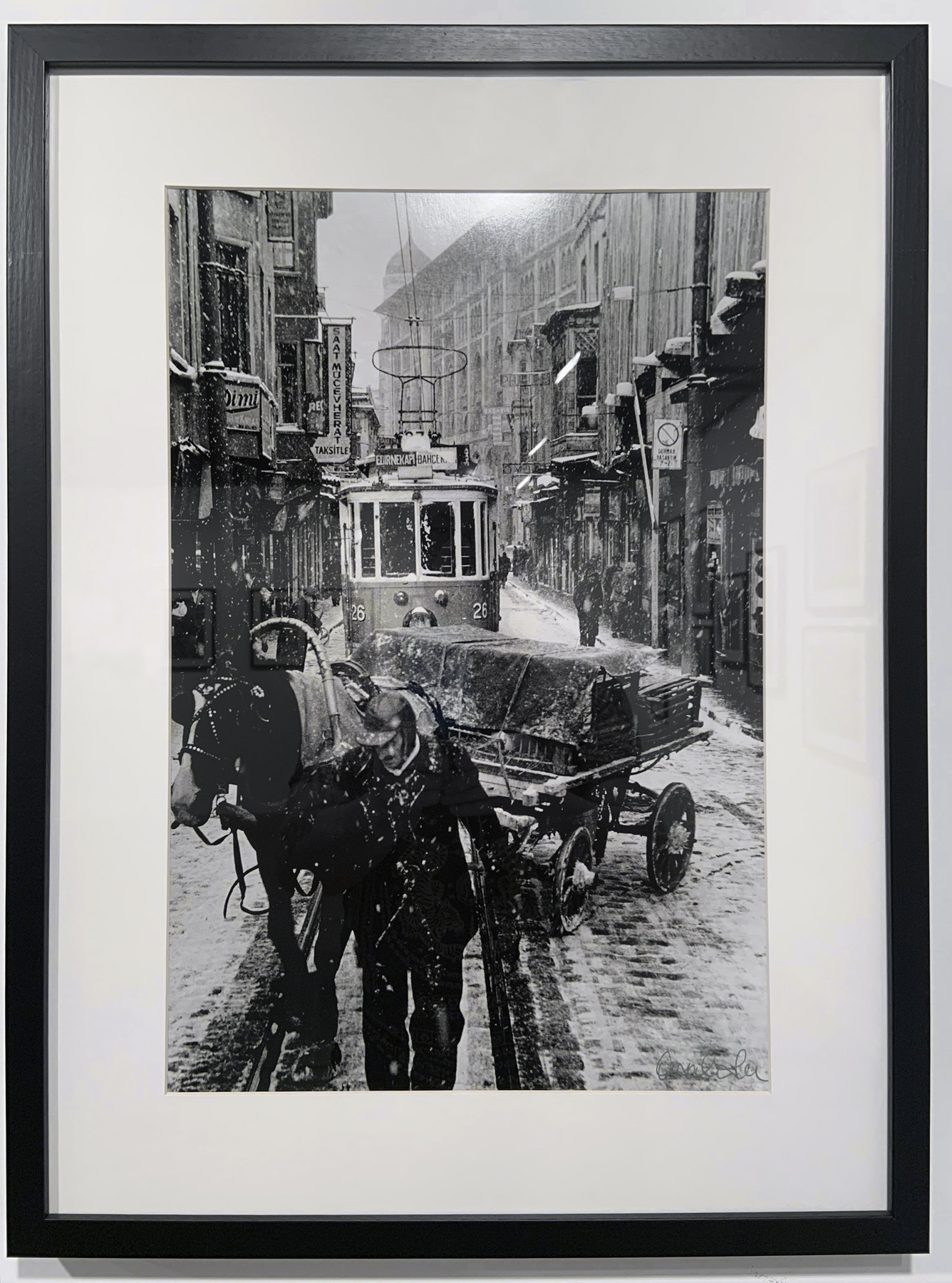
Ara Güler (Turkish, 1928-2018) 'Sirkeci' 1956 (installation view)


Ara Güler (Turkish, 1928-2018)
Sirkeci (installation view)
1956
Gelatin silver print
Istanbul Museum of Modern Art Photography Collection
Photo: Marcus Bunyan


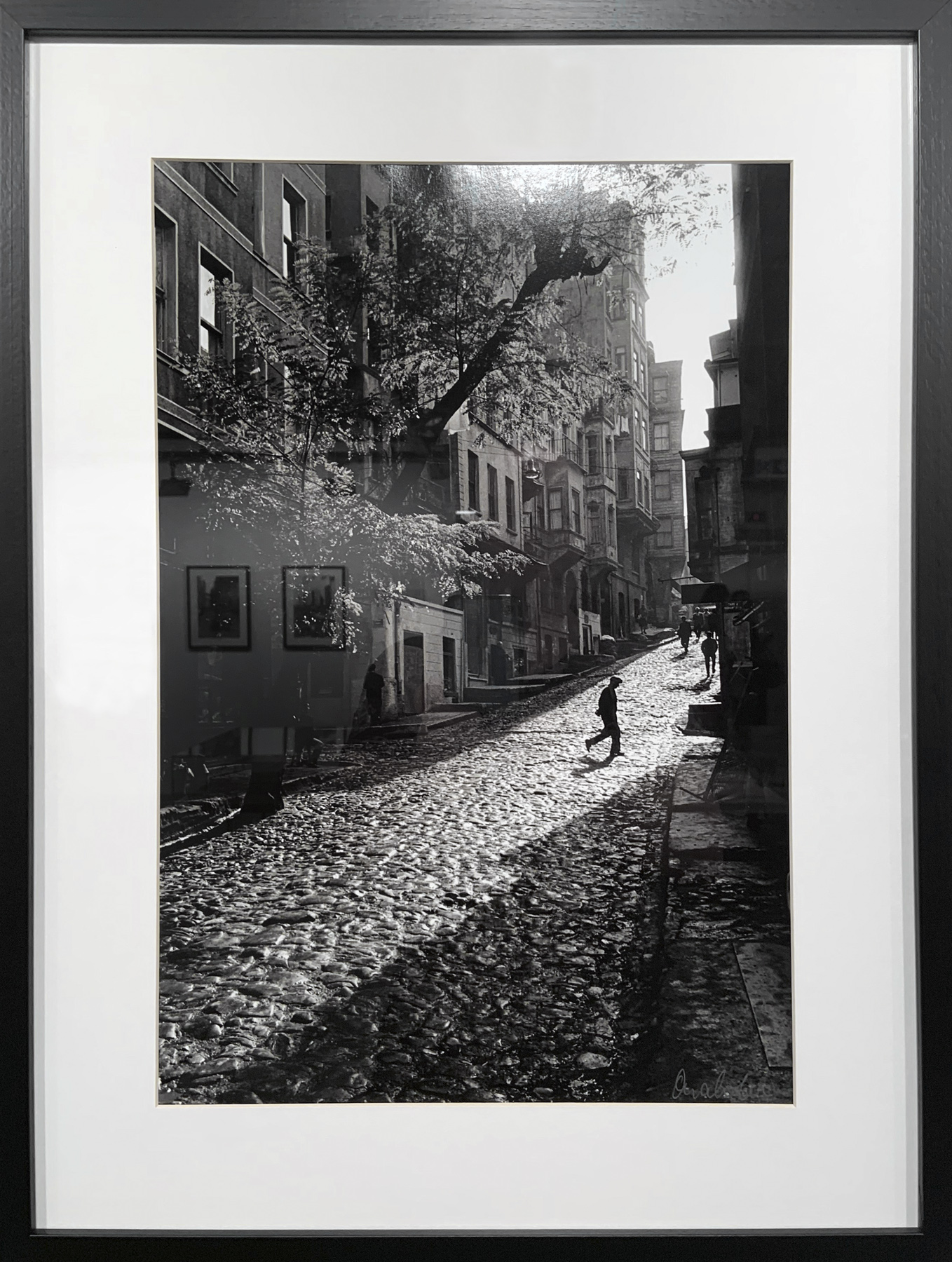
Ara Güler (Turkish, 1928-2018) 'Sirkeci' 1956


Ara Güler (Turkish, 1928-2018)
Sirkeci
1956
Gelatin silver print
Istanbul Museum of Modern Art Photography Collection
Photo: Istanbul Museum of Modern Art Photography


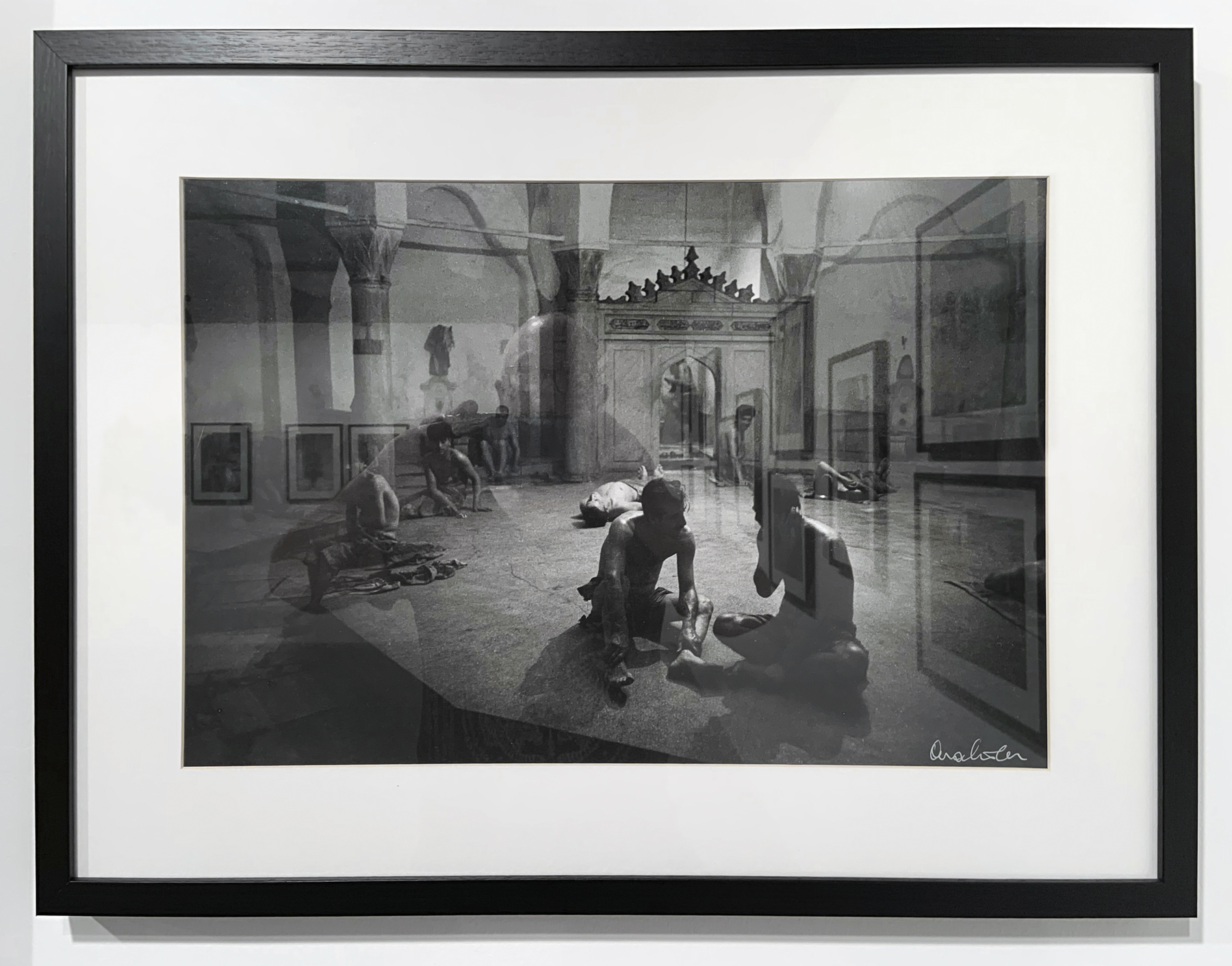
Ara Güler (Turkish, 1928-2018) 'Cagaloglu Hamami' 1965 (installation view)


Ara Güler (Turkish, 1928-2018)
Cagaloglu Hamami (installation view)
1965
Gelatin silver print
Ara Güler Archive and Research Center Collection
Photo: Marcus Bunyan


Ara Güler (Turkish, 1928-2018) 'Sokollu Mehmet Paşa Camii, Kadirga [Sokollu Mehmet Pasha Mosque, Kadirga]' 1988 (installation view)


Ara Güler (Turkish, 1928-2018)
Sokollu Mehmet PaÅŸa Camii, Kadirga (Sokollu Mehmet Pasha Mosque, Kadirga) (installation view)
1988
Gelatin silver print
Ara Güler Archive and Research Center Collection
Photo: Marcus Bunyan


Installation view of the exhibition 'Ara Güler: Two Archives, One Selection: Tracing Ara Güler's Footsteps in Istanbul' at the Istanbul Museum of Modern Art


Installation view of the exhibition Ara Güler: Two Archives, One Selection: Tracing Ara Güler’s Footsteps in Istanbul at the Istanbul Museum of Modern Art
Photo: Marcus Bunyan


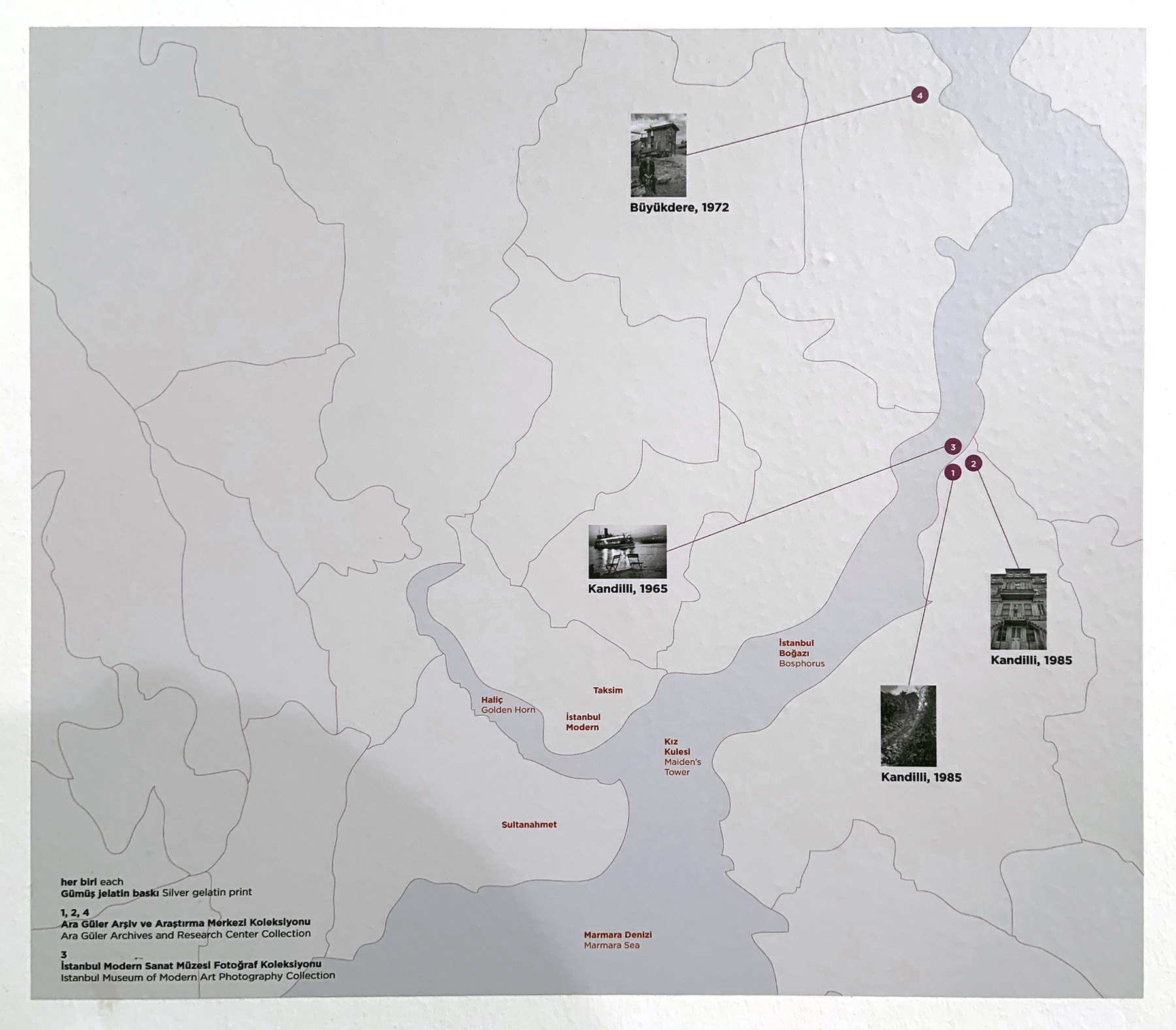
Ara Güler (Turkish, 1928-2018) 'Kandilli [A Bosphorus passenger boat leaving the European shores of Istanbul for the Asian shore]' 1965


Ara Güler (Turkish, 1928-2018)
Kandilli (A Bosphorus passenger boat leaving the European shores of Istanbul for the Asian shore)
1965
Gelatin silver print
Istanbul Museum of Modern Art Photography Collection
Photo: Istanbul Museum of Modern Art Photography


Ara Güler (Turkish, 1928-2018) 'Büyükdere' 1972 (installation view)


Ara Güler (Turkish, 1928-2018)
Büyükdere (installation view)
1972
Gelatin silver print
Ara Güler Archive and Research Center Collection
Photo: Marcus Bunyan


Ara Güler (Turkish, 1928-2018) 'Büyükdere' 1972


Ara Güler (Turkish, 1928-2018)
Büyükdere (installation view)
1972
Gelatin silver print
Ara Güler Archive and Research Center Collection
Photo: Istanbul Museum of Modern Art Photography


Ara Güler (Turkish, 1928-2018) 'Kandilli' 1985 (installation view)


Ara Güler (Turkish, 1928-2018)
Kandilli (installation view)
1985
Gelatin silver print
Ara Güler Archive and Research Center Collection
Photo: Marcus Bunyan


Installation view of the exhibition 'Ara Güler: Two Archives, One Selection: Tracing Ara Güler's Footsteps in Istanbul' at the Istanbul Museum of Modern Art


Installation view of the exhibition Ara Güler: Two Archives, One Selection: Tracing Ara Güler’s Footsteps in Istanbul at the Istanbul Museum of Modern Art
Photo: Marcus Bunyan


Ara Güler (Turkish, 1928-2018) 'Kapaliçarsi [The Grand Bazaar]' 1972 (installation view)


Ara Güler (Turkish, 1928-2018)
Kapaliçarsi (The Grand Bazaar) (installation view)
1972
Gelatin silver print
Photo: Marcus Bunyan


Ara Güler (Turkish, 1928-2018) 'Eminönü' 1954 (installation view)


Ara Güler (Turkish, 1928-2018)
Eminönü (installation view)
1954
Gelatin silver print
Istanbul Museum of Modern Art Photography Collection
Photo: Marcus Bunyan


Ara Güler (Turkish, 1928-2018) 'Eminönü' 1954


Ara Güler (Turkish, 1928-2018)
Eminönü
1954
Gelatin silver print
Istanbul Museum of Modern Art Photography Collection
Photo: Istanbul Museum of Modern Art


Ara Güler (Turkish, 1928-2018) 'Sehzadebaşı' 1958


Ara Güler (Turkish, 1928-2018)
Sehzadebaşı
1958
Gelatin silver print
Ara Güler Archive and Research Center Collection
Photo: Istanbul Museum of Modern Art


Ara Güler (Turkish, 1928-2018) 'Tahtakale' 1966 (installation view)


Ara Güler (Turkish, 1928-2018)
Tahtakale (installation view)
1966
Gelatin silver print
Photo: Marcus Bunyan


Ara Güler (Turkish, 1928-2018) 'Zeyrek' 1974 (installation view)


Ara Güler (Turkish, 1928-2018)
Zeyrek (installation view)
1974
Gelatin silver print
Photo: Marcus Bunyan


Ara Güler (Turkish, 1928-2018) 'Zeyrek' 1960 (installation view)


Ara Güler (Turkish, 1928-2018)
Zeyrek (installation view)
1960
Gelatin silver print
Photo: Marcus Bunyan


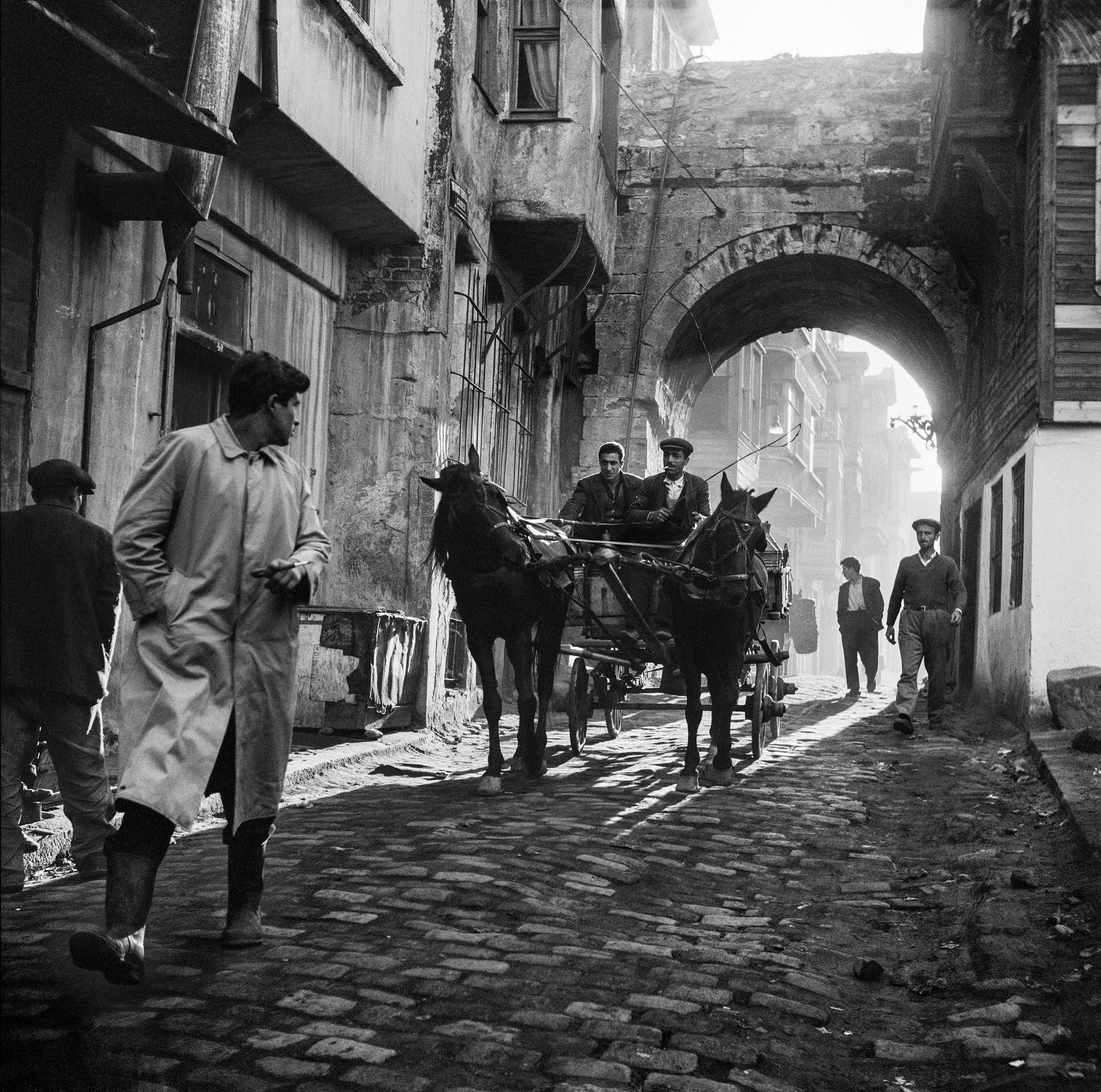
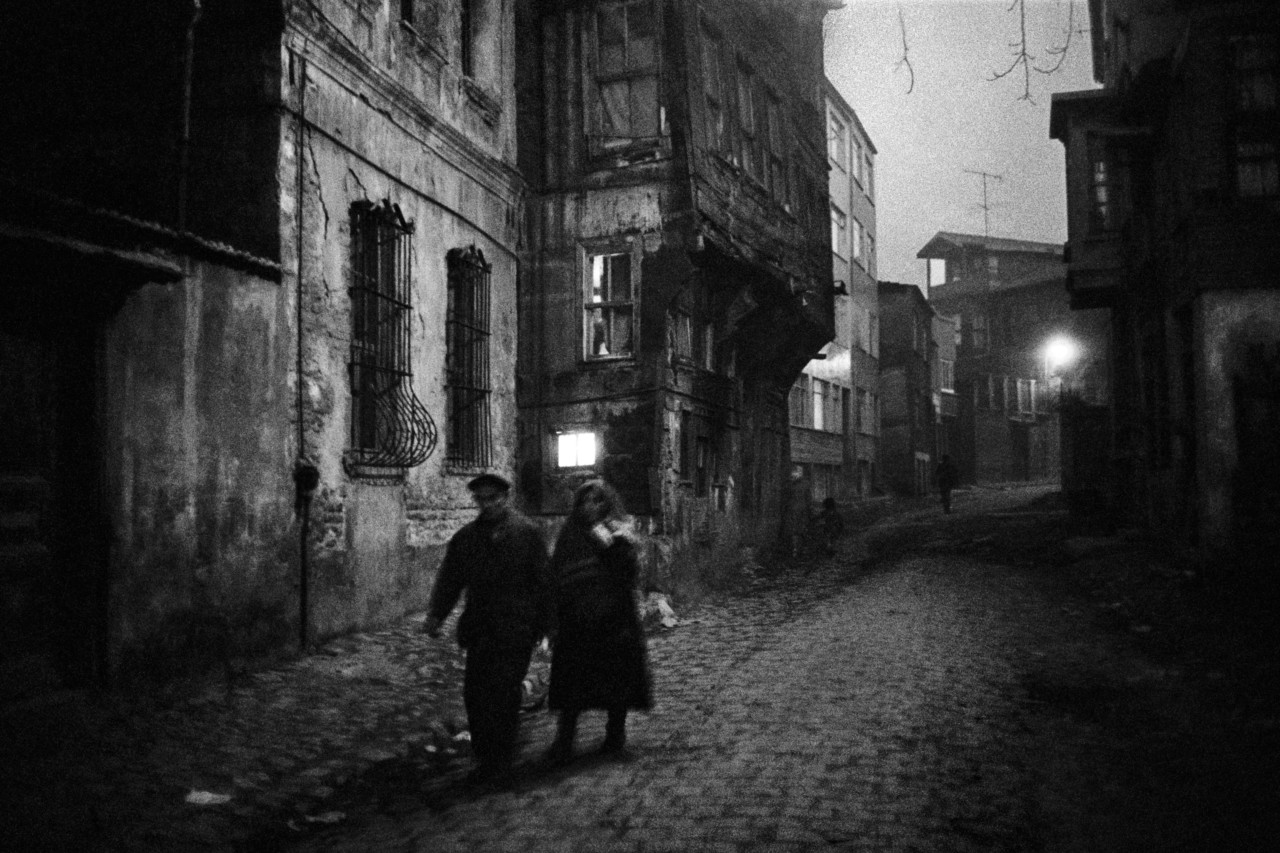
Ara Güler (Turkish, 1928-2018) 'Nightfall in the district of Zeyrek, Istanbul' 1960


Ara Güler (Turkish, 1928-2018)
Nightfall in the district of Zeyrek, Istanbul
1960
Gelatin silver print


Wall text from the exhibition 'Ara Güler: Two Archives, One Selection: Tracing Ara Güler's Footsteps in Istanbul' at the Istanbul Museum of Modern Art


Wall text from the exhibition Ara Güler: Two Archives, One Selection: Tracing Ara Güler’s Footsteps in Istanbul at the Istanbul Museum of Modern Art
Photo: Marcus Bunyan


Installation view of the exhibition 'Ara Güler: Two Archives, One Selection: Tracing Ara Güler's Footsteps in Istanbul' at the Istanbul Museum of Modern Art


Installation view of the exhibition Ara Güler: Two Archives, One Selection: Tracing Ara Güler’s Footsteps in Istanbul at the Istanbul Museum of Modern Art
Photo: Marcus Bunyan


Ara Güler (Turkish, 1928-2018) 'Tophane' 1954 (installation view)


Ara Güler (Turkish, 1928-2018)
Tophane (installation view)
1959
Gelatin silver print
Istanbul Museum of Modern Art Photography Collection
Photo: Marcus Bunyan


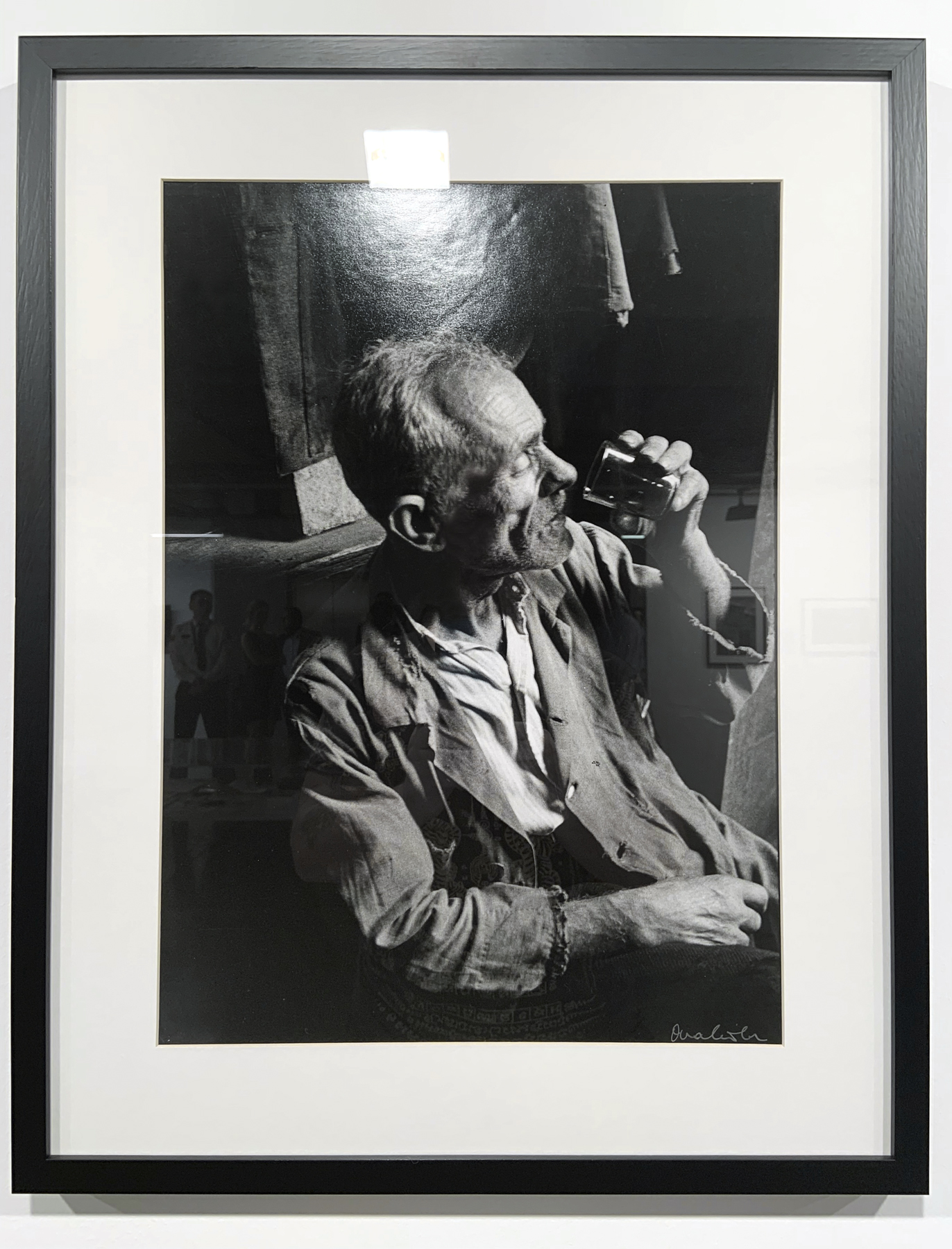
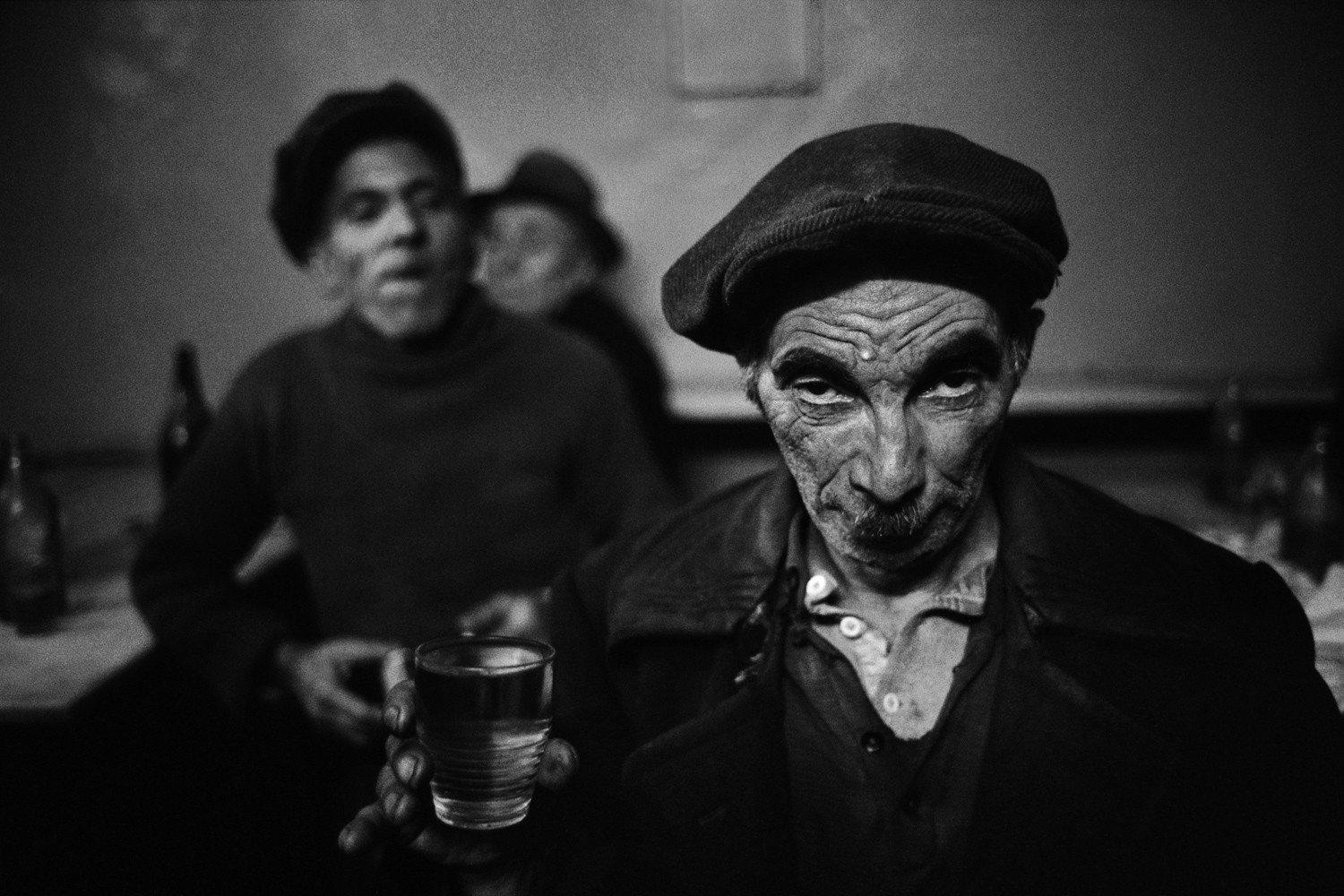
Ara Güler (Turkish, 1928-2018) 'A drunk man at a bar in Tophane' 1959


Ara Güler (Turkish, 1928-2018)
A drunk man at a bar in Tophane
1959
Gelatin silver print
Istanbul Museum of Modern Art Photography Collection


Ara Güler (Turkish, 1928-2018) 'Tophane' 1954 (installation view)


Ara Güler (Turkish, 1928-2018)
Tophane (Atrium of a house) (installation view)
1954
Gelatin silver print
Ara Güler Archive and Research Center Collection
Photo: Marcus Bunyan


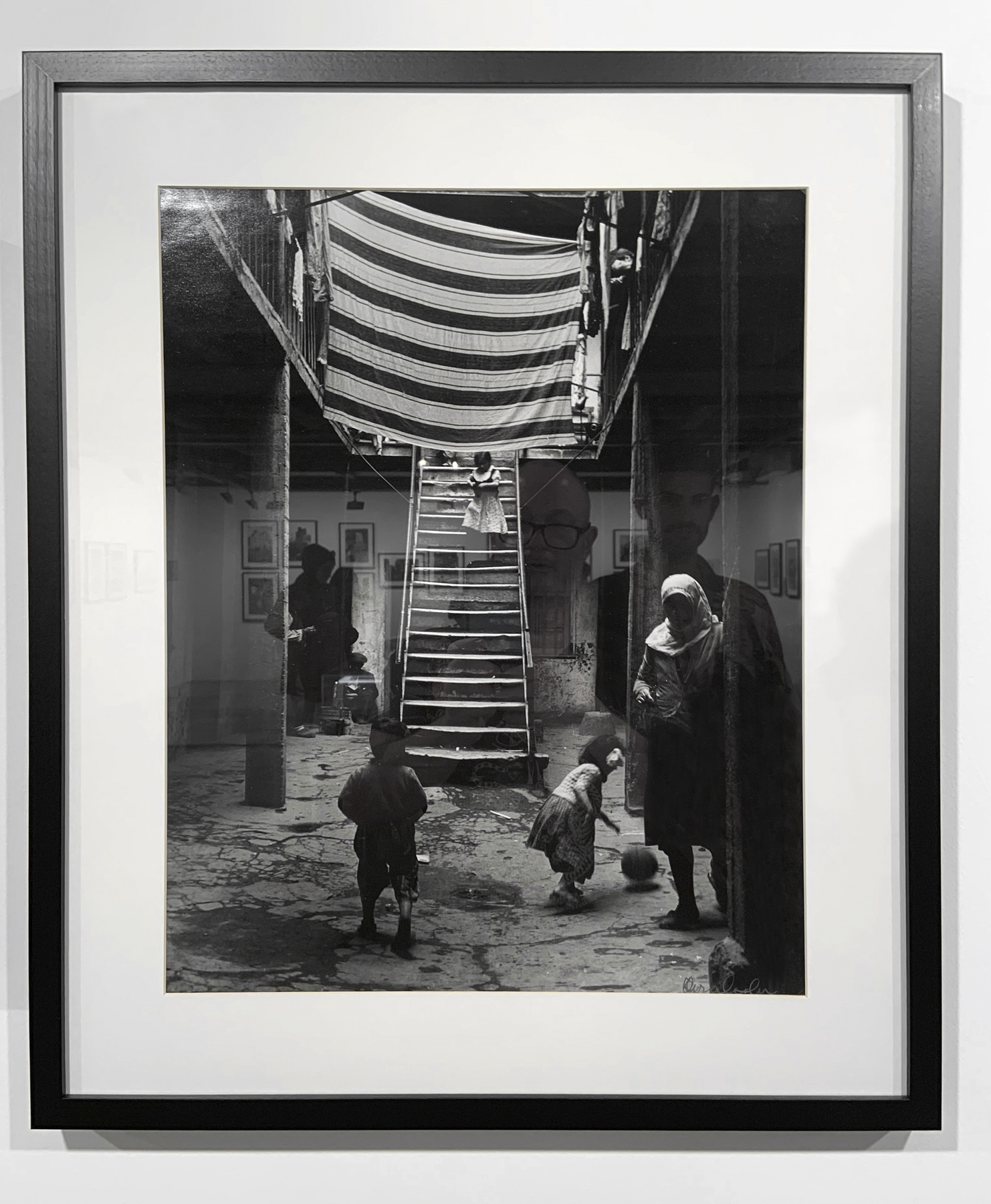
Ara Güler (Turkish, 1928-2018) 'Tophane [Atrium of a house]' 1954


Ara Güler (Turkish, 1928-2018)
Tophane (Atrium of a house)
1954
Gelatin silver print
Ara Güler Archive and Research Center Collection


Ara Güler (Turkish, 1928-2018) 'Galata' 1955 (installation view)


Ara Güler (Turkish, 1928-2018)
Galata (installation view)
1955
Gelatin silver print
Istanbul Museum of Modern Art Photography Collection
Photo: Marcus Bunyan


Extract from “After Ara Güler: Capturing the Feeling of Loss in Modernizing Istanbul”

Our focus is Güler’s portrayal of Istanbul in black and white in 1950s and 1960s, where Istanbul appears as a metropole “in progress”, or under construction. As described by the sociologist Nilüfer Göle, in the context of non-Western countries modernisation, involves a cultural shift, a process of changing habitus, aesthetic norms, values, and lifestyles in the public sphere. The economic development of the country goes along with this social and cultural transformation. In 1950s and 60s Turkey, the construction of highways and railways connected the national periphery to the centre. Istanbul received a mass wave of migration and expanded with slums during this improvised, unplanned urbanisation process. The city became the scene where centre and periphery, modern and traditional lifestyles encountered, confronted, and transformed one another and found ways to coexist. Urban poverty became an issue with this contrast becoming more and more visible in the city. …

Güler starts from the micro level, photographing people in their small routines: working, smoking, having a cup of tea, coffee, or an alcoholic drink. These people can be defined as the urban poor, not synchronised with the rapid urban growth and the modern ideal of progress. They are portrayed in the public sphere rather than in the intimacy of their private sphere. Their eyes, facial expressions, hands, and postures incarnates their poverty, highlighting modes of being that contrast sharply with the Westernising public sphere they have entered. An emotional relation is established between people and the space they inhabit by enacting the space in the body and the body in the public sphere, hence humanising the city and spatially contextualising the people. As Jacques Lecoq announces in his pedagogy of movement in theatre, only the body engaged in the work can feel, and thus reflect the evidence of the space. Güler’s urban poor portrayed in their work express the social reality with their bodies. …

People are also photographed in coffee shops and old fashioned bars where they socialise. Coffee shops have a particular significance in Istanbul’s urban culture, as they emerged as alternative public spheres to mosques in the 16th century. Coffee houses became popular by offering a venue for social occasions including leisure and political dialogue between men in the Ottoman world, thus creating a public culture, as noted by the historian Cemal Kafadar. As gender-mixed modern coffee houses gained popularity, traditional kahvehane became considered places of unproductive time pass activity. These alternative spaces, in turn, become a shelter for men alienated from the emerging modern public sphere and lifestyles. Güler’s men in coffee houses are “waiting”, as the opposite of circulating or producing that increasingly characterised the fast rhythm of the modern city.

In the absence of plans in the present and for the deferred future, a temporal slowing manifests itself. Hence, it points out to a suspension referring to the interruption of social ties, the feeling of being cut-off, a sense of disbelonging, being removed from the context, being out of place, a sense of invisibility, immobility and arbitrariness. These traits resonate with people waiting in the photographs, who seem slightly erased, detached from the space and time surrounding them. Güler’s choice of décor, the Ottoman ruins, emphasises this detachment by fixing our regard on the remains of the past embodied in the present and the obsolete corners of the city, not “illuminated” yet by the city lights.

Perhaps this is the very reason why Güler’s Istanbul appears as the visual reflection of the Nobel winning author Orhan Pamuk’s description of the grayscale Istanbul, marked by the feeling of hüzün. Comparable to Baudelaire’s description of Paris Spleenhüzün is a feeling of melancholia, nostalgia and loss in a multilayered city where multiple spatialities and temporalities are superposed. Guler’s photography reflects this singularity of Istanbul, its vibe and the ambiance experienced when wandering in the city. Given that urban heritage is never patrimonialised and the events of the imperial and republican past haven’t been confronted, they haunt city’s present. …

Ara Güler might be referred as a Proustian in search of lost time, however his madeleine would be persons; the urban poor in the streets of Istanbul. His quest to seize what is being lost is not an interior process of romanticisation, but comes from the external world. He always insisted that he is not an artist who proposes an interpretation of reality, but a visual archivist who documents life as it exists. In his photographs, it is the people who craft the urban sphere by sitting, waiting, settling, investing, appropriating it. Güler composes the cityscape of Istanbul by parting from the margins to join the center, the core of the city. This composition identifies the singularity of Istanbul, hüzün, a feeling of loss of firm ground, a loss of an emotional root, which opens up a wide range of emotions and experiences.

Zeynep UÄŸur. “After Ara Güler: Capturing the Feeling of Loss in Modernizing Istanbul,” on the Ajam Media Collective website 26 November 2018 [Online] Cited 22/10/2019. Reproduced with the kind permission of the author.

Zeynep UÄŸur Academia website


Wall text from the exhibition 'Ara Güler: Two Archives, One Selection: Tracing Ara Güler's Footsteps in Istanbul' at the Istanbul Museum of Modern Art


Wall text from the exhibition Ara Güler: Two Archives, One Selection: Tracing Ara Güler’s Footsteps in Istanbul at the Istanbul Museum of Modern Art
Photo: Marcus Bunyan


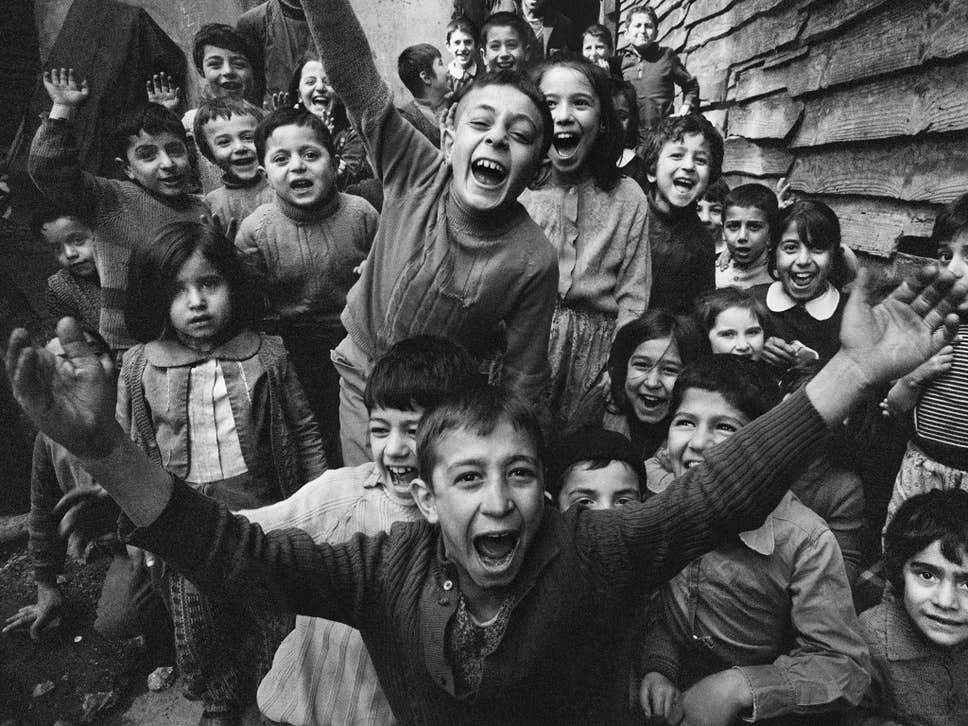
Ara Güler (Turkish, 1928-2018) 'Children playing in Tophane, Istanbul' 1986


Ara Güler (Turkish, 1928-2018)
Children playing in Tophane, Istanbul
1986
Gelatin silver print
Istanbul Museum of Modern Art Photography Collection


Istanbul Museum of Modern Art
Asmalımescit Mahallesi, Meşrutiyet Caddesi, No: 99, Beyoğlu, 34430 İstanbul

Opening hours:
Tuesday, Wednesday, Thursday, Saturday: 10.00 am – 6.00 pm
Friday: 10.00am – 8.00pm
Sunday: 11.00am – 6.00pm
Monday: Closed

Istanbul Museum of Modern Art website

LIKE ART BLACK ON FACEBOOK

Back to top