Exhibition: ‘They Used To Call Us Guest Workers’ at Museum für Kunst und Gewerbe Hamburg

Exhibition dates: 31st October, 2025 – 17th May, 2026

Curator: Unknown
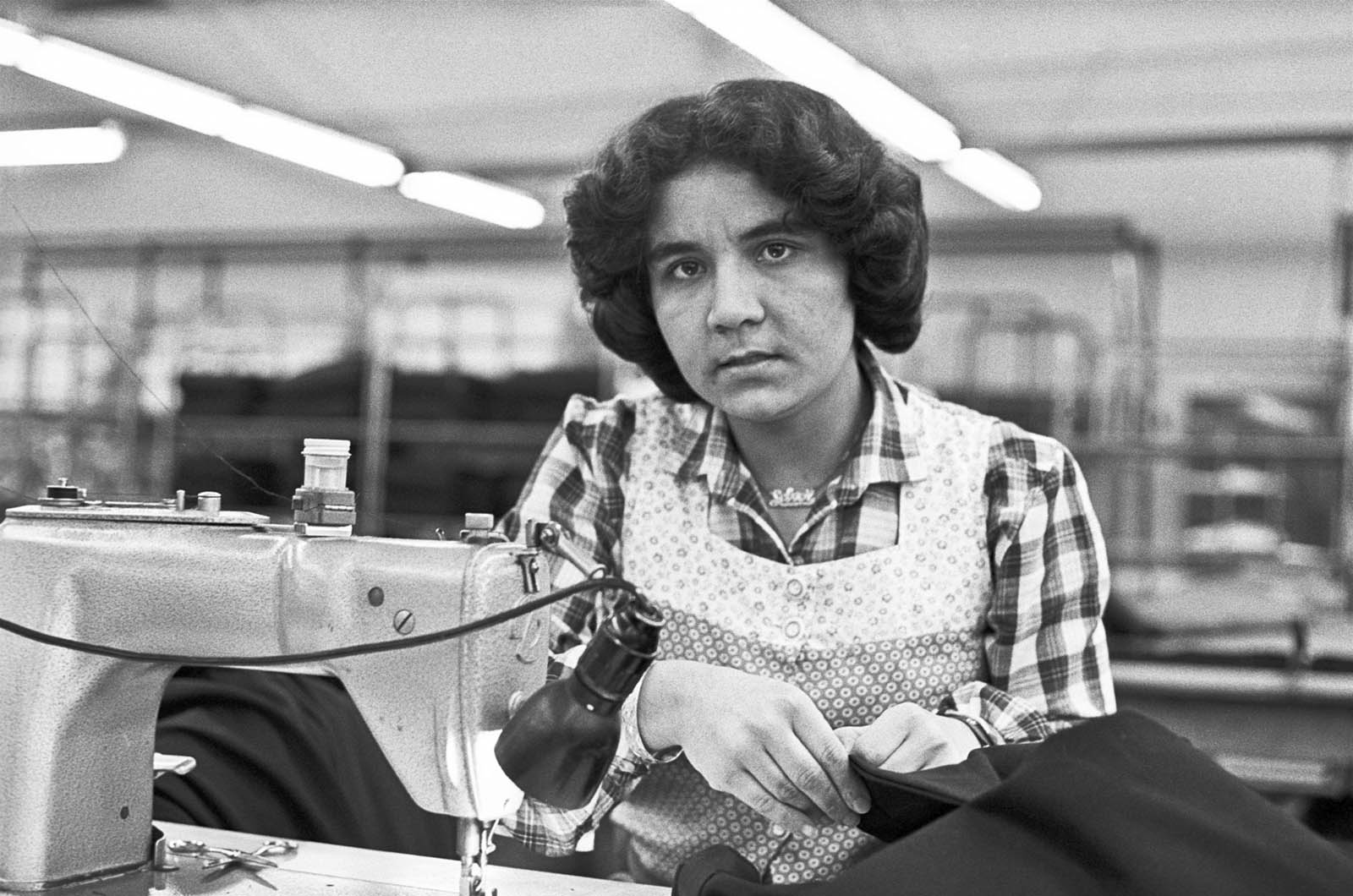
 

Muhlis Kenter (Turkish, b. 1952) 'Seamstress in textile factory' Alsdorf near Aachen, 1980


Muhlis Kenter (Turkish, b. 1952)
Seamstress in textile factory
Alsdorf near Aachen, 1980
Gelatin silver print
H. 30.4 x W. 40.5cm
© Muhlis Kenter


In the 1970s and 1980s, Bremen professor Muhlis Kenter photographed Turkish workers, then known as guest workers.


Only a little text tonight as I’m battling chronic depression and the little grey cells are not firing on all cylinders.

Absence, longing, loneliness, hard work, isolation, family, home.

Social inequality, sexism, racism and life in exile.

As noted by Annabelle Steffes-Halmer in her article “Migrants’ stories for a new home” (2021) on another exhibition on the same theme, In Situ: Photo Stories on Migration (Museum Ludwig, June – October 2021), photographs of this type are “a story of emancipation. [They] tell tales of people who came to a foreign country, which they discovered for themselves and which ultimately became their home. It is not only a (photo) history of migration, but also the history of Germany.”

Have a great Easter everyone.

Dr Marcus Bunyan


Many thankx to the Museum für Kunst und Gewerbe Hamburg for allowing me to publish the photographs in the posting. Please click on the photographs for a larger version of the image.
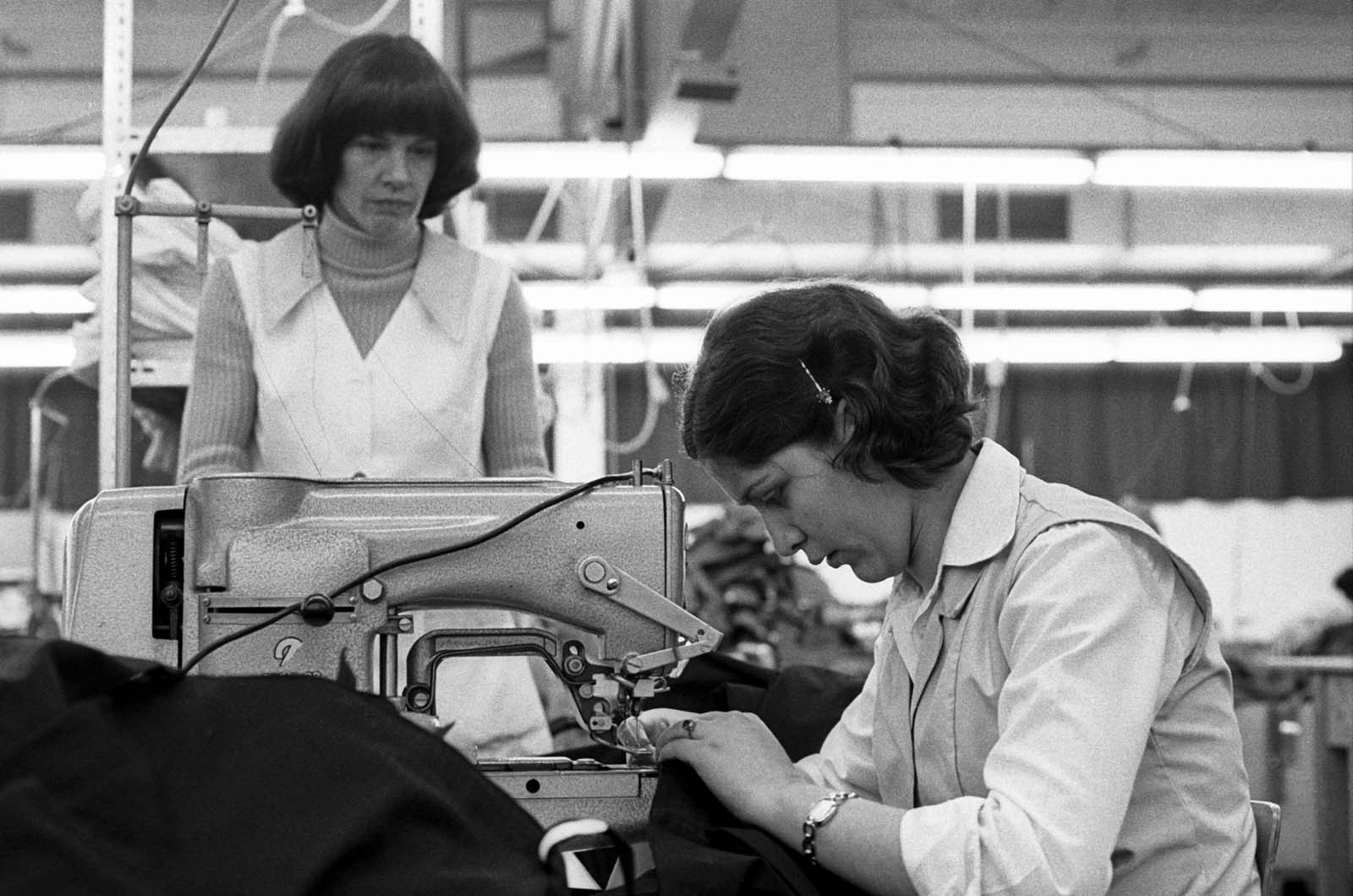


Muhlis Kenter (Turkish, b. 1952) 'Textile factory Workers' Alsdorf near Aachen, 1980 from the exhibition 'They Used To Call Us Guest Workers' at Museum für Kunst und Gewerbe Hamburg, October 2025 - May 2026


Muhlis Kenter (Turkish, b. 1952)
Textile factory Workers
Alsdorf near Aachen, 1980
Gelatin silver print
H. 30.4 x W. 40.5cm
© Muhlis Kenter
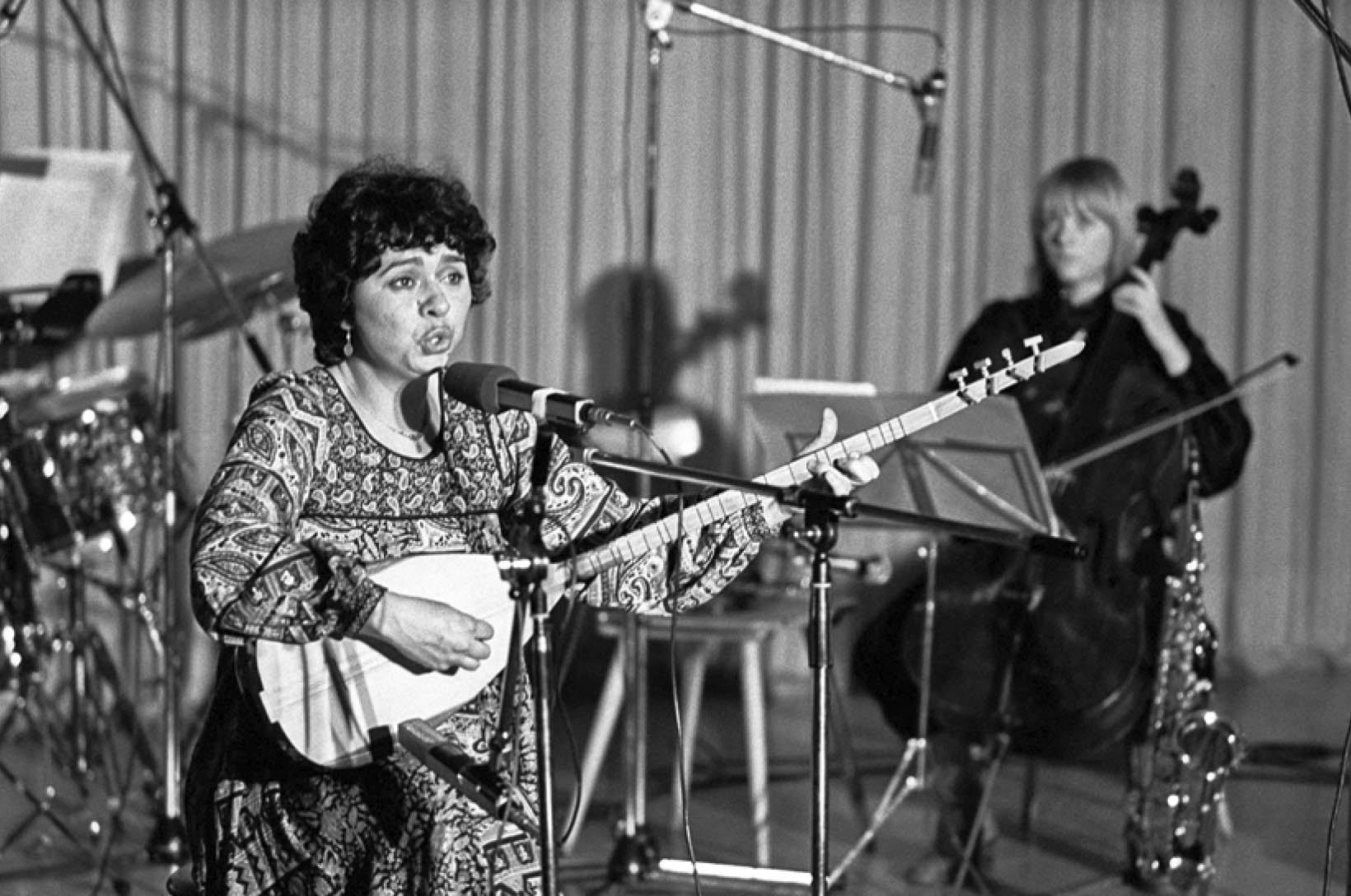
 

Muhlis Kenter (Turkish, b. 1952) 'Concert situation' Nd from the exhibition 'They Used To Call Us Guest Workers' at Museum für Kunst und Gewerbe Hamburg, October 2025 - May 2026


Muhlis Kenter (Turkish, b. 1952)
Concert situation
Nd
Gelatin silver print
H. 30.4 x W. 40.5cm
© Muhlis Kenter
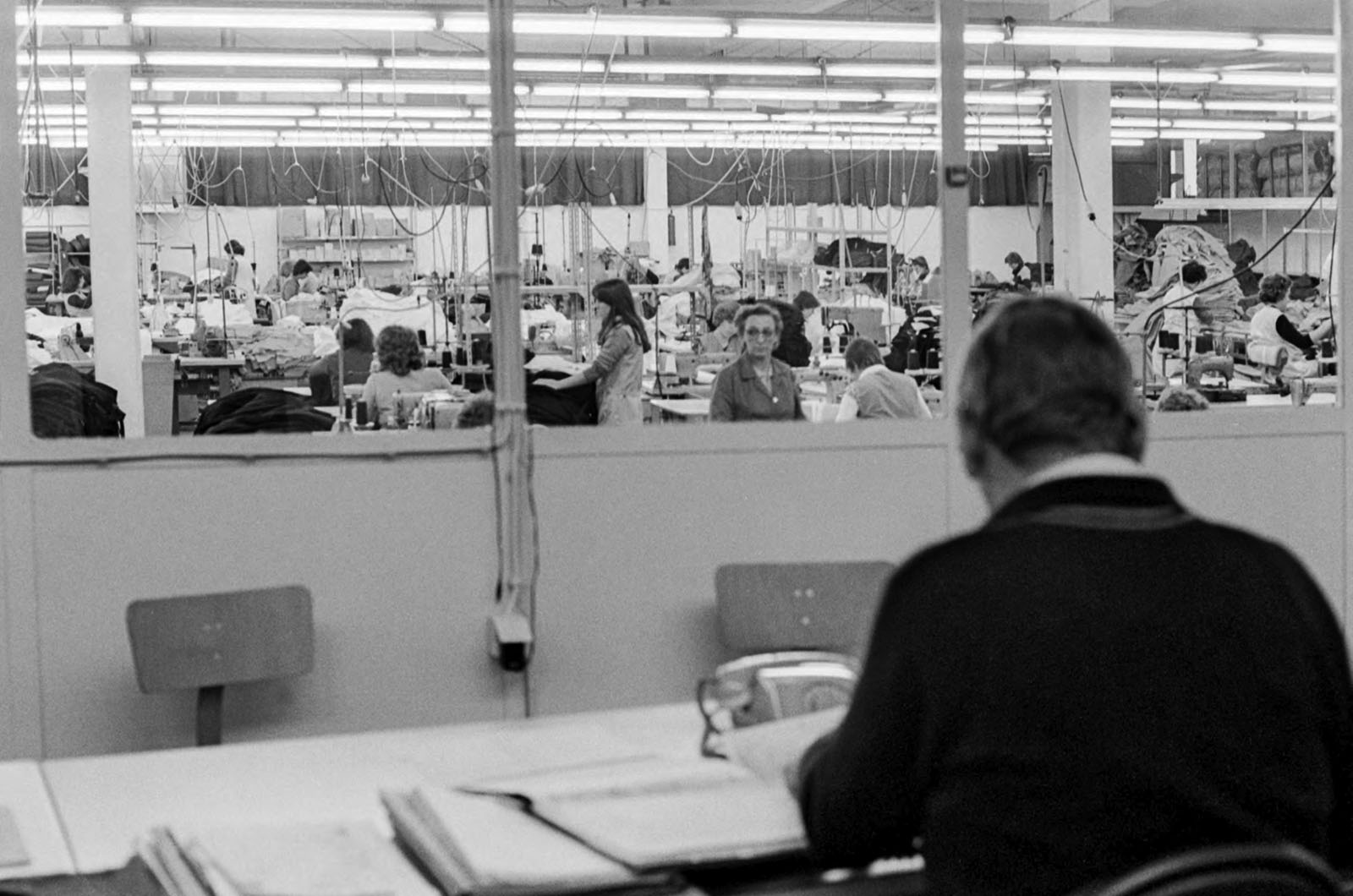
 

Muhlis Kenter (Turkish, b. 1952) 'Sewing company 'Mertes & Söhne'. Sewing company for workwear. The operations manager supervises the entire production process' Alsdorf, 1979


Muhlis Kenter (Turkish, b. 1952)
Sewing company ‘Mertes & Söhne’. Sewing company for workwear. The operations manager supervises the entire production process
Alsdorf, 1979
Gelatin silver print
H. 30.4 x W. 40.5cm
© Muhlis Kenter
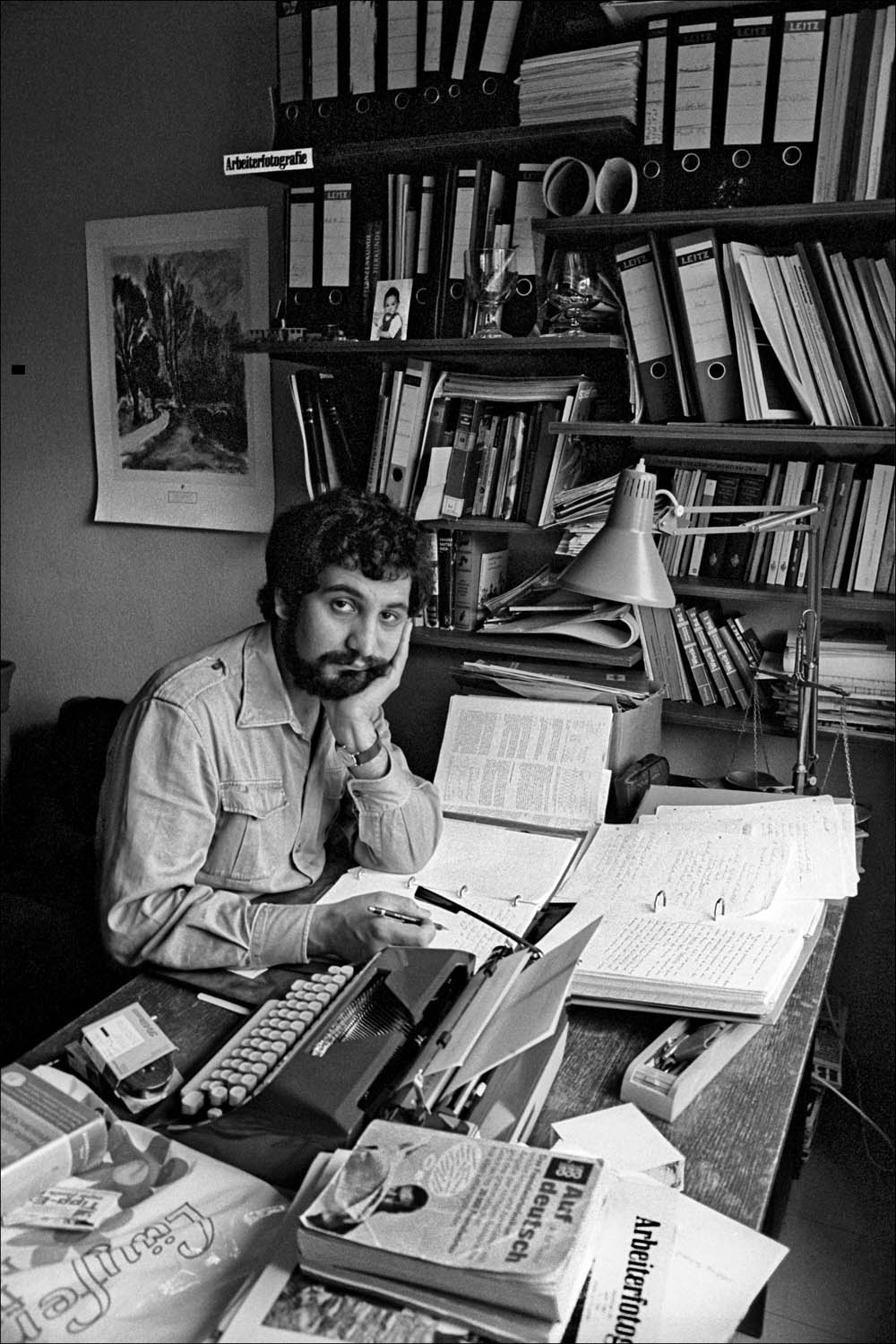
 

Christa Kenter (German) 'Portrait of Muhlis Kenter' Aachen, 1981


Christa Kenter (German)
Portrait of Muhlis Kenter
Aachen, 1981
© Muhlis Kenter


“They Used To Call Us Guest Workers”: Extending the Photography and the New Media Collection 

The Museum für Kunst und Gewerbe Hamburg (MK&G) is expanding its collection with key works by the photographers Muhlis Kenter, Nuri MusluoÄŸlu, Asimina Paradissa and Mehmet Ünal. After coming to Germany from Turkey and Greece in the 1960s and 70s, the four documented life, work and their political engagement there from a migrant perspective. The exhibition “They Used to Call Us Guest Workers” presents around 80 photographs and collages that depict the everyday lives of people with and without a migration background in the Federal Republic of Germany while addressing the themes of social inequality, sexism, racism and life in exile. Viewers have the opportunity to discover here an often-overlooked perspective on socio-political issues that are still highly topical today.

With a shared interest in society and politics, each of the four amateur photographers developed a unique approach and yet they all took up the tradition of the workers’ photography movement. Like its historical role model in the interwar period, this movement was dedicated to the battle against class barriers and social inequality. The aim was for workers to pick up a camera themselves to raise awareness of the realities of their lives and help shape the public debate with their images.

Workers’ Photography

John Heartfield and his contributions to the illustrated magazine “Arbeiter-Illustrierte-Zeitung” (AIZ) in the 1930s were an important source of inspiration for the workers’ photography movement. Founded in Hamburg in 1973, the magazine “Arbeiterfotografie” saw itself as a successor to the AIZ. The main figures in the workers’ photography movement all engaged with developments in society and politics but each developed a different approach. Their common goal was to use their cameras in the battle against social inequality. Workers were encouraged to pick up a camera in order to raise their own awareness for the realities of their lives and enable them to intervene in the public debate. 

Between 1975 and 1990, the theme of migration played a central role in workers’ photography. The reports provide an in-depth look at those living in exile, at living and working conditions and women’s work, and at the peace movement and unequal educational opportunities for immigrants. The articles in the magazine were often published anonymously. The images were supplied by the 30 or so local working groups, who often took the photos together. 

Muhlis Kenter

Bremen-based amateur photographer Muhlis Kenter (b. 1952 in Istanbul, Turkey) depicts work and everyday life in Germany. He documents Turkish workers in mining, the metal industry and a textile factory, and accompanies educational projects for Turkish children and young people with a migration background. In his expressive portraits, Kenter spotlights personal stories. His photographs spotlight people navigating between the sense of being foreign in an unfamiliar country and finding their place in Germany. But Muhlis Kenter also observes German society with his camera, focusing on pigeon breeding, fishing and gardening, which he sees as typical German hobbies.

Muhlis Kenter provides behind-the-scenes glimpses of factory work. He for example photographed workers of Turkish origin in a textile factory where people from different backgrounds work side by side in production. The photos were taken as part of a photo story for the magazine “Arbeiterfotografie”. Kenter often focuses on individuals and personal histories, resulting in expressive portraits. For his reportages, he creates complex compositions that highlight in an arresting way the interplay between people and technology at the companies he visits. In one series, he turned the tables, looking not at the lives of immigrants of Turkish origin but rather at “white German” society and what he regards as typical hobbies: pigeon breeding, fishing and gardening.

Muhlis Kenter was born in 1952 in Istanbul, Turkey. In 1972 he took up mechanical engineering studies in Aachen, where he joined a “workers’ photography” group. Alongside his studies, he acted as a support teacher for Turkish-speaking classes. Kenter later worked as a professor of mechanical engineering at the City University of Applied Sciences in Bremen, and he continues to avidly pursue photography. 

Nuri MusluoÄŸlu

Nuri MusluoÄŸlu (b. 1951 in Istanbul, Turkey) photographs public life. The images he produced between 1975 and 1988 show mainly demonstrations, peace marches, strikes and protest actions, especially those taking place in his hometown of Heilbronn. Supplemented by footage of sporting events, street festivals and celebrations, as well as photos of his own family, a dense panorama emerges of German-Turkish coexistence as a collective experience. MusluoÄŸlu’s photos document particularly vividly the protest culture during the years in question – including the peace movement and European Peace Marches, the trade union struggles and the anti-nuclear movements, and the resistance of Turks living in Germany against the military dictatorship in Turkey. He also lifts the veil on xenophobia in public spaces and the living conditions in asylum shelters.

Nuri MusluoÄŸlu is a photographer and political activist. His camera accompanies him to demonstrations, such as the strike for a 35-hour week and protests by the peace movement, or the blockade of the US missile base in Mutlangen in 1983. He not only captures protest posters and scenes but also documents moments of solidarity – such as workers with and without a migration background dancing. MusluoÄŸlu’s photographs chronicle political struggles as well as everyday moments in German-Turkish life, such as family celebrations and trips home. He examines in detail protest posters that touch on migration issues and in another image shows a worker of Turkish origin playing the saz. 

Born in Istanbul in 1951, MusluoÄŸlu came to Germany in 1965, trained as a toolmaker, and later became a social worker for the “Arbeiterwohlfahrt” (Workers’ Welfare Association). He is active in trade unions (IG Metall, ver.di) and the peace movement. Since 1985, his photos have appeared under a pseudonym in the weekly newspaper “Türkiye Postası”, which is aimed at workers and people seeking political protection. 

Asimina Paradissa

Asimina Paradissa (b. 1945 in Vrastama, Greece) occupies a special position in amateur photography as one of the few migrant women behind a camera. She documented her own life in Germany from 1968 onwards, showing everyday life in a hostel for unmarried female workers in Wilhelmshaven as well as scenes of factory work captured from the workers’ point of view. Paradissa’s many self-portraits deal with questions of self-image and what it feels like to live in a certain place. Although her photographs are private, they are at the same time significant testimonies to contemporary history: By giving the women portrayed names and voices, they draw attention to the stories of female migrants and thus add a rare female perspective to the way in which we view migrant labour.

Asimina Paradissa gazes directly out at us from her pictures. Perched on her bicycle, she laughs openly into the camera, while in another picture she looks us earnestly in the eye as she sits on her bunk bed in a dormitory for unwed workers run by the Olympia typewriter works and caringly embraces her friend Evangelia Manolakaki. Even though others usually press the shutter, these images can still be described as self-portraits. Starting in 1966, Paradissa took photos on a regular basis as a way of reassuring herself about her new life in Germany. Among the “guest workers” who came to West Germany in the 1960s, one in three were women who lead lives largely hidden from the public eye. Paradissa is one of the few women of this generation to document her self-determined life in Germany with her camera. Her pictures are at once private remembrances and documents of the times. 

Asimina Paradissa was born in 1945 in Vrastama, Greece. She came to Wilhelmshaven with her brother in 1966 as part of the recruitment agreements concluded between West Germany and Greece, among other countries. In 1972 she settled in Wuppertal. Alongside her job, she began to make photography and write poetry. 

Mehmet Ünal

Mehmet Ünal’s (b. 1951 in Çanakkale, Turkey) photographic practice includes political image-text collages that emerge from actions and protests. In addition to individual images and series, he also produces posters that incorporate writing and found objects – often from public authorities and agencies – and thus comment on the particular experiences of migrants when dealing with bureaucracy. With their thematic acuity and compositional density, these posters are independent artworks that relentlessly expose exclusion and marginalisation.

Mehmat Ünal’s collages combine written, photographic and found objects from the world of German bureaucracy that reflect experiences of racism. Ünal expresses himself through satire and exaggeration; for example, he created a fake Deutsche Bahn advertising campaign offering a “foreigner’s pass” promoting the return transport of people to Turkey. He compares the application for a work permit to a “TÜV certificate for humans”. In his text-image combinations (circa 1982), Ünal criticizes Germany’s official policies towards immigrants and the degrading treatment of those who were once invited to the country as “guests”. After the recruitment of foreign workers was discontinued in the wake of the economic crisis of the early 1980s, Ünal observed a growing atmosphere of hostility towards those regarded as “foreigners”. The first arson attack on a refugee shelter took place in 1980 in Hamburg-Billbrook. Works that Ünal produced against the backdrop of political street protests were published in the magazine “Arbeiterfotografie” in 1984. In several collages, he draws on the legacy of John Heartfield, whose political montages in the mid-1920s brought him recognition as the founder of this genre. 

Mehmet Ünal was born in Çanakkale, Turkey, in 1951. In 1976, he moved to Mannheim, where the former actor works as a photographer and journalist.

Text from the Museum für Kunst und Gewerbe Hamburg (MK&G)
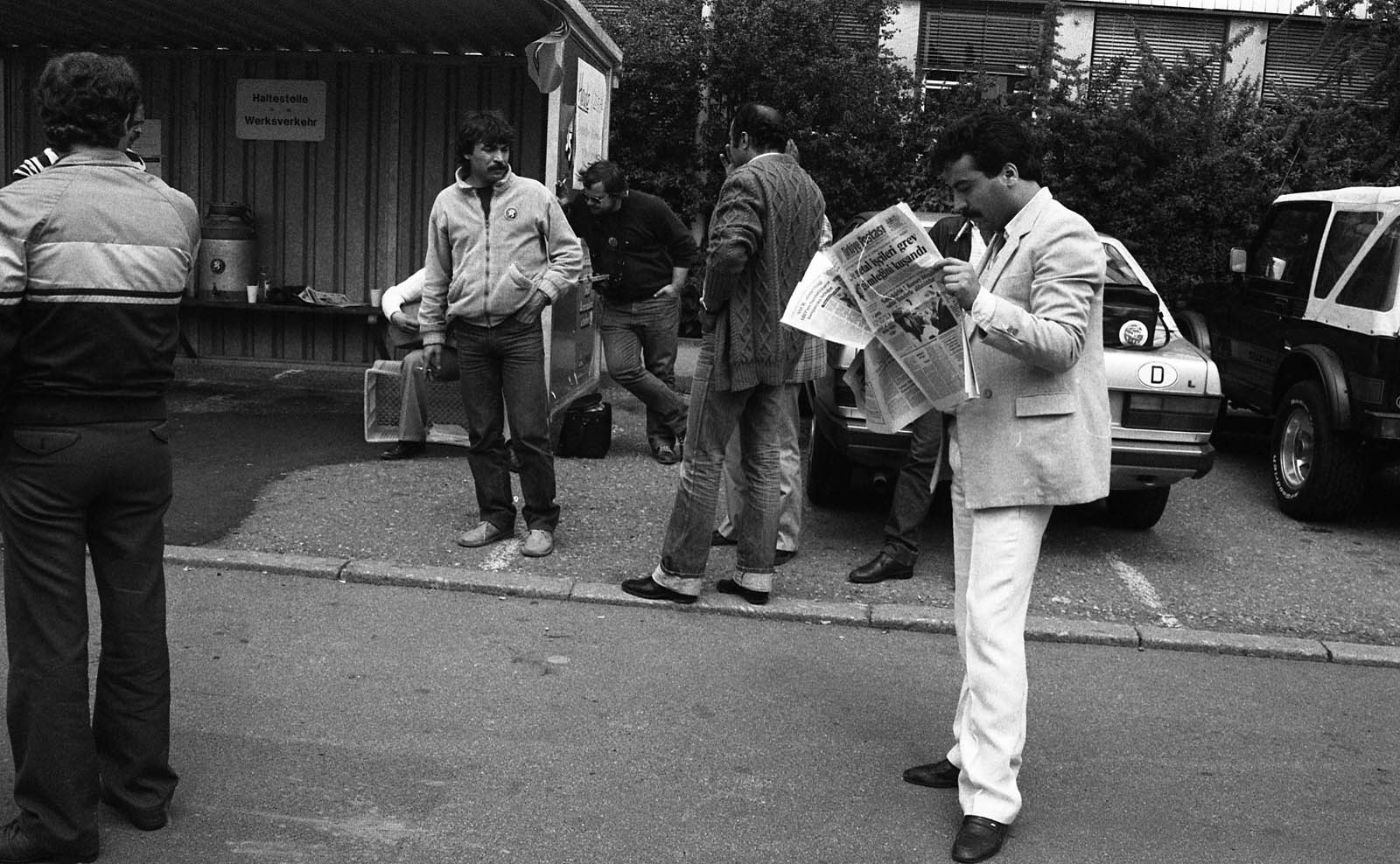
 

Nuri Musluoğlu (Turkish, b. 1951) 'Workers from Kolbenschmidt with the magazine 'Türkiye Postası' during a strike' Neckarsulm, 1984


Nuri MusluoÄŸlu (Turkish, b. 1951)
Workers from Kolbenschmidt with the magazine Türkiye Postası during a strike
Neckarsulm, 1984
Gelatin silver print
H. 25.6 x W. 38.6cm
© Nuri Musluoğlu
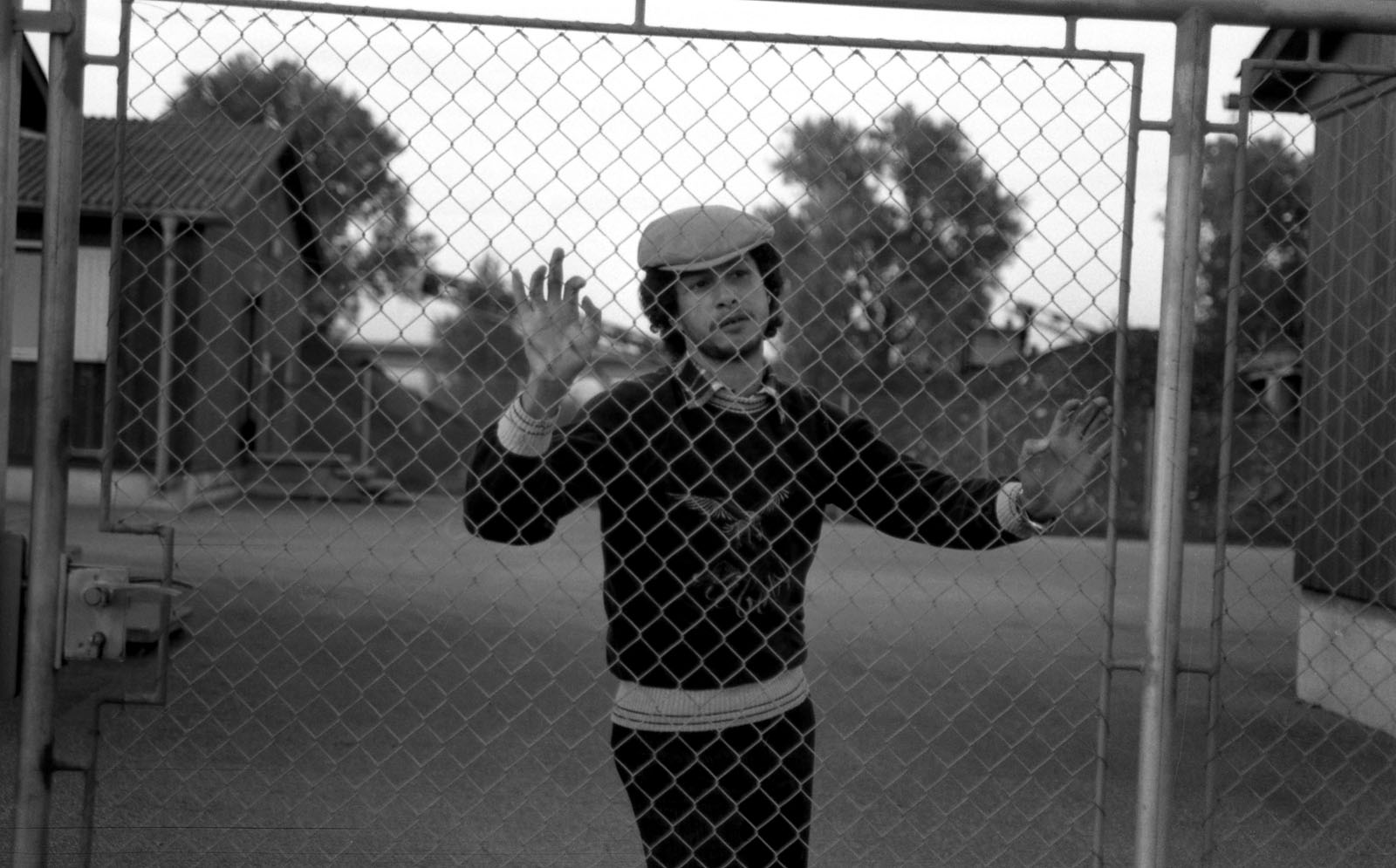
 

Nuri MusluoÄŸlu (Turkish, b. 1951) 'Residential home for asylum seekers' Nd


Nuri MusluoÄŸlu (Turkish, b. 1951)
Residential home for asylum seekers
Nd
Gelatin silver print
H. 25.6 x W. 38.6cm
© Nuri Musluoğlu
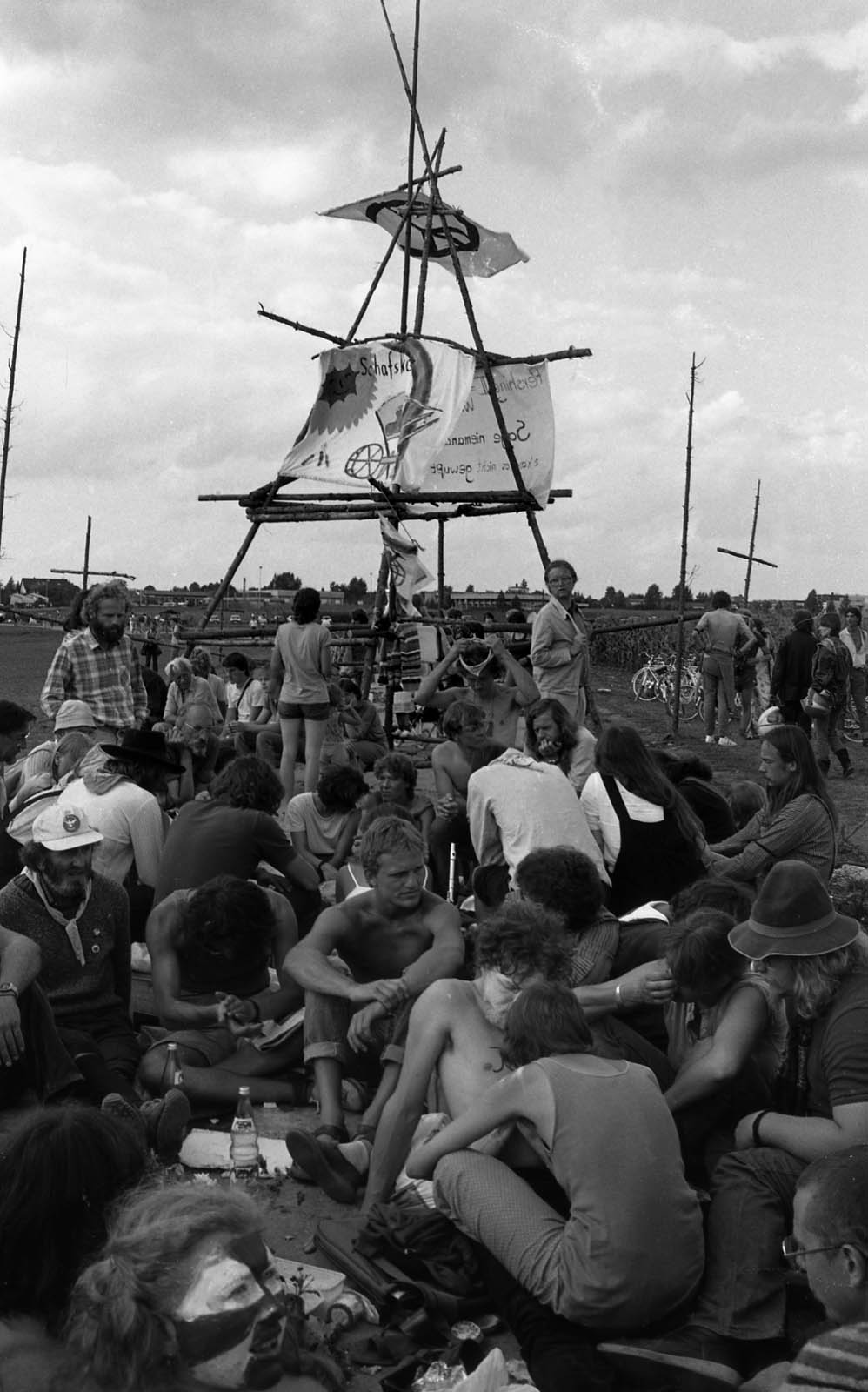
 

Nuri MusluoÄŸlu (Turkish, b. 1951) 'Sit-in, Peace movement' Mutlanger Heide, 1983


Nuri MusluoÄŸlu (Turkish, b. 1951)
Sit-in, Peace movement
Mutlanger Heide, 1983
Gelatin silver print
H. 25.6 x W. 38.6cm
© Nuri Musluoğlu
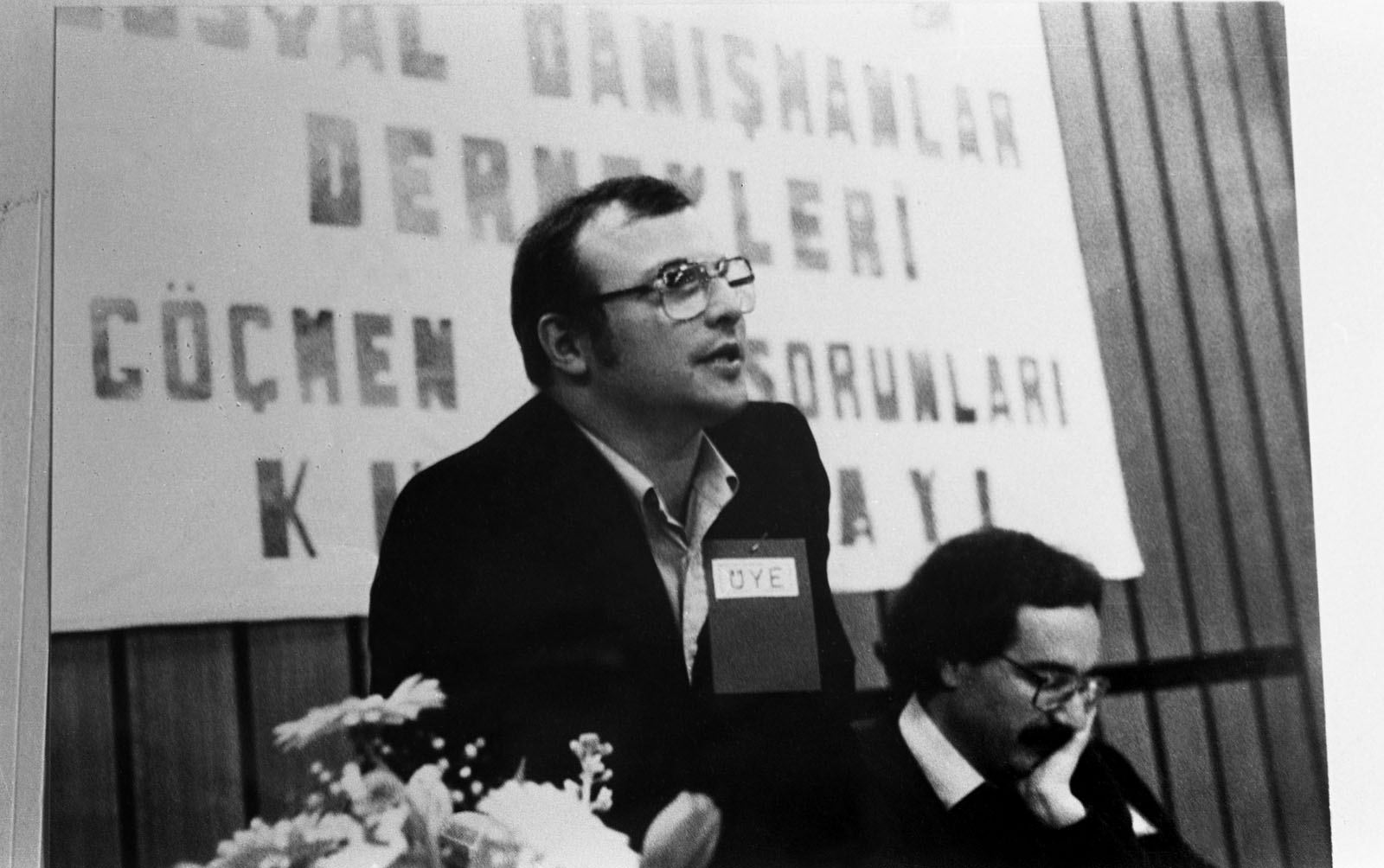
 

Nuri MusluoÄŸlu (Turkish, b. 1951) 'Portrait' 1981


Nuri MusluoÄŸlu (Turkish, b. 1951)
Portrait
1981
© Nuri Musluoğlu


Unknown photographer (Colleague of Asimina Paradissa with her camera) 'Asimina Paradissa and Evangelia Manolakaki at the women's dormitory of Olympia' Wilhelmshaven, 1969


Unknown photographer (Colleague of Asimina Paradissa with her camera)
Asimina Paradissa and Evangelia Manolakaki at the women’s dormitory of Olympia
Wilhelmshaven, 1969
Gelatin silver print
H. 10.5 x W. 7.5cm
© Asimina Paradissa
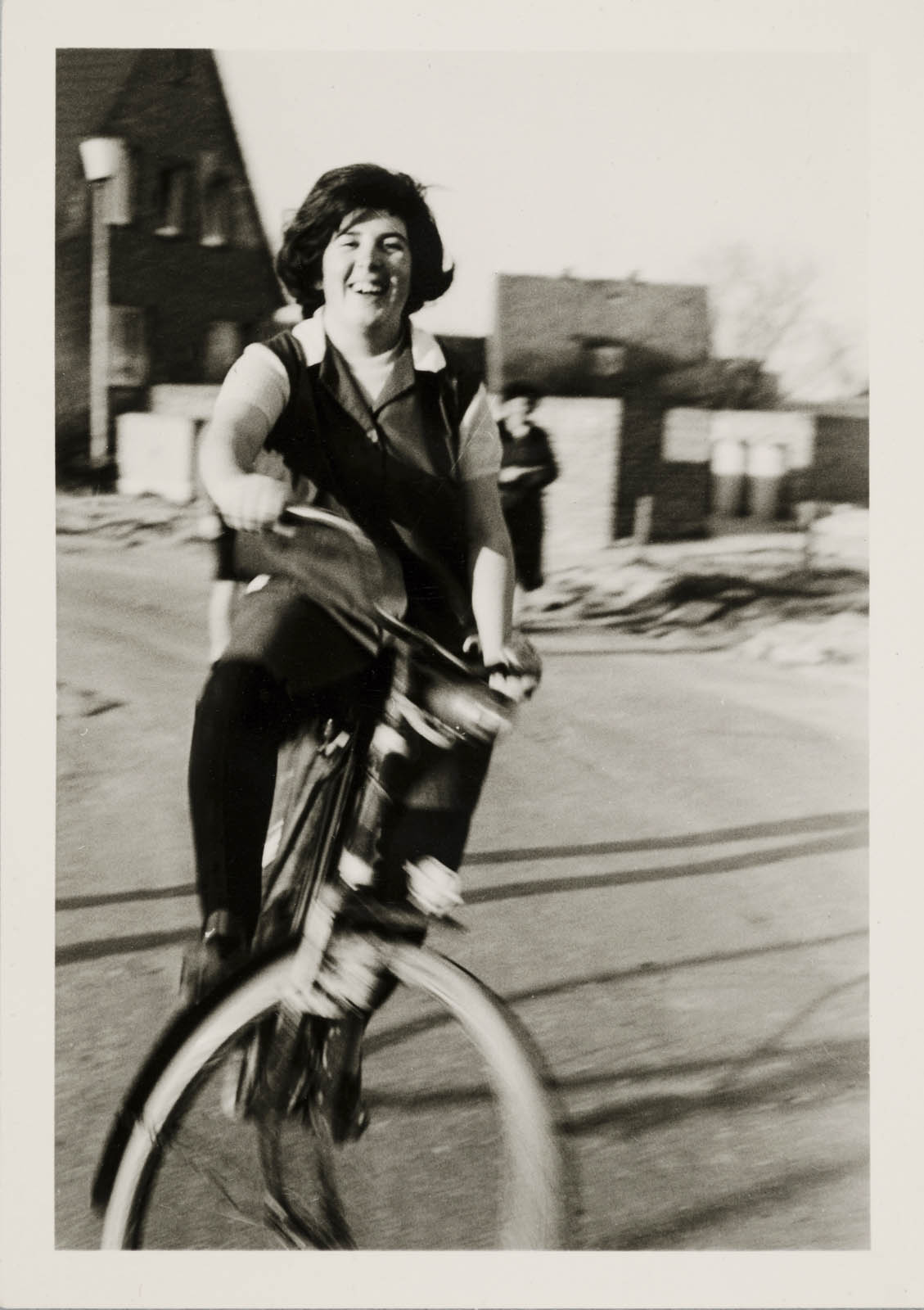
 

Unknown photographer (Colleague of Asimina Paradissa with her camera) 'Asimina Paradissa on the Bike' Wilhelmshaven, 1966/1967


Unknown photographer (Colleague of Asimina Paradissa with her camera)
Asimina Paradissa on the Bike
Wilhelmshaven, 1966/1967
Gelatin silver print
H. 10.8 x W. 7.8cm
© Asimina Paradissa
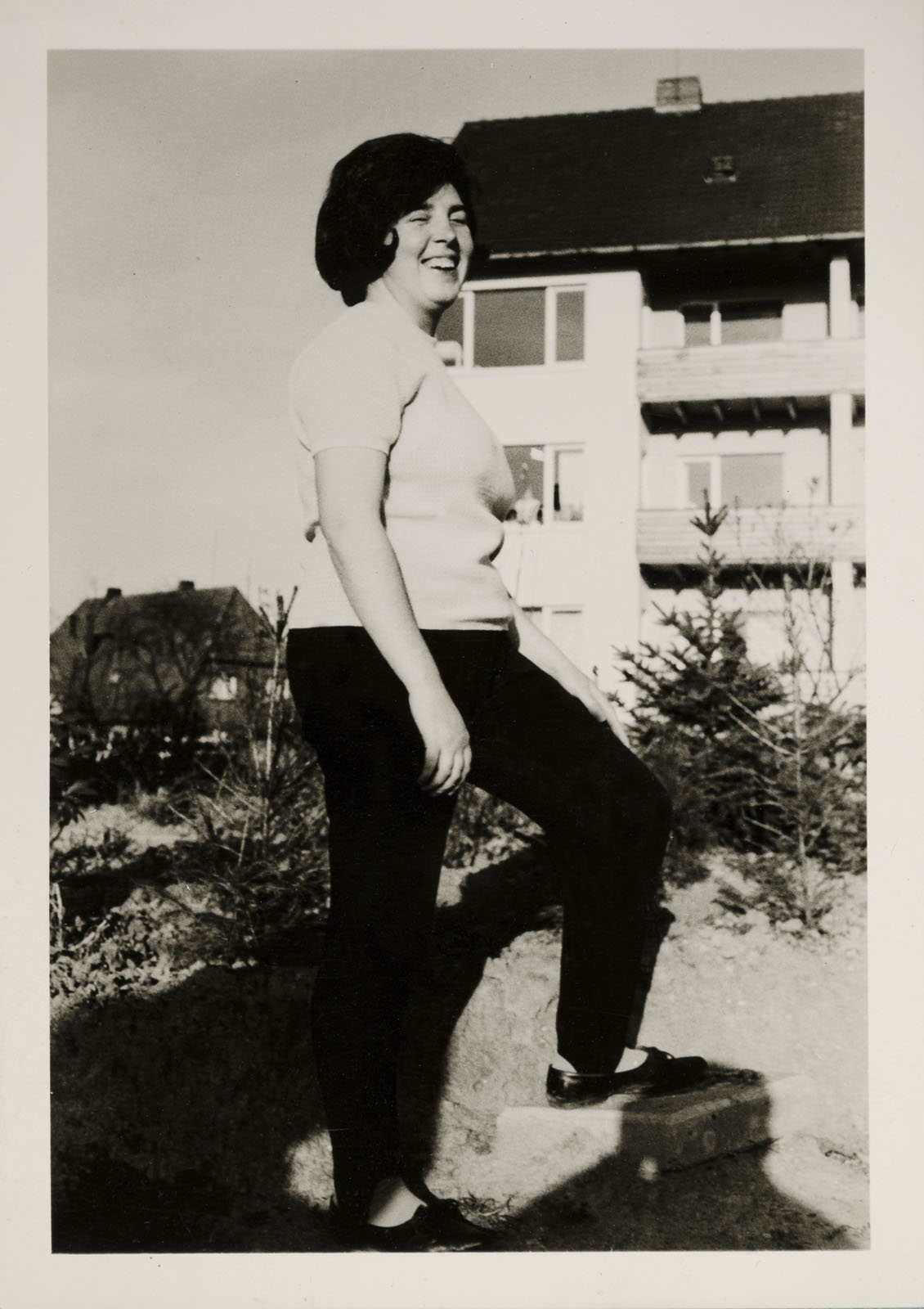
 

Unknown photographer (Colleague of Asimina Paradissa with her camera) 'Asimina Paradissa at the women's dormitory of Olympia' Wilhelmshaven, 1969


Unknown photographer (Colleague of Asimina Paradissa with her camera)
Asimina Paradissa at the women’s dormitory of Olympia
Wilhelmshaven, 1969
Gelatin silver print
H. 10.8 x W. 7.7cm
© Asimina Paradissa


Asimina Paradissa was 20 years old when she moved to Wilhelmshaven in northern Germany. In the photo, the Greek woman poses in front of the dormitory at the Olympia company. Back then, she took pictures of weddings, parties and visits to the zoo for her colleagues and friends. The 76-year-old is still a passionate photographer.
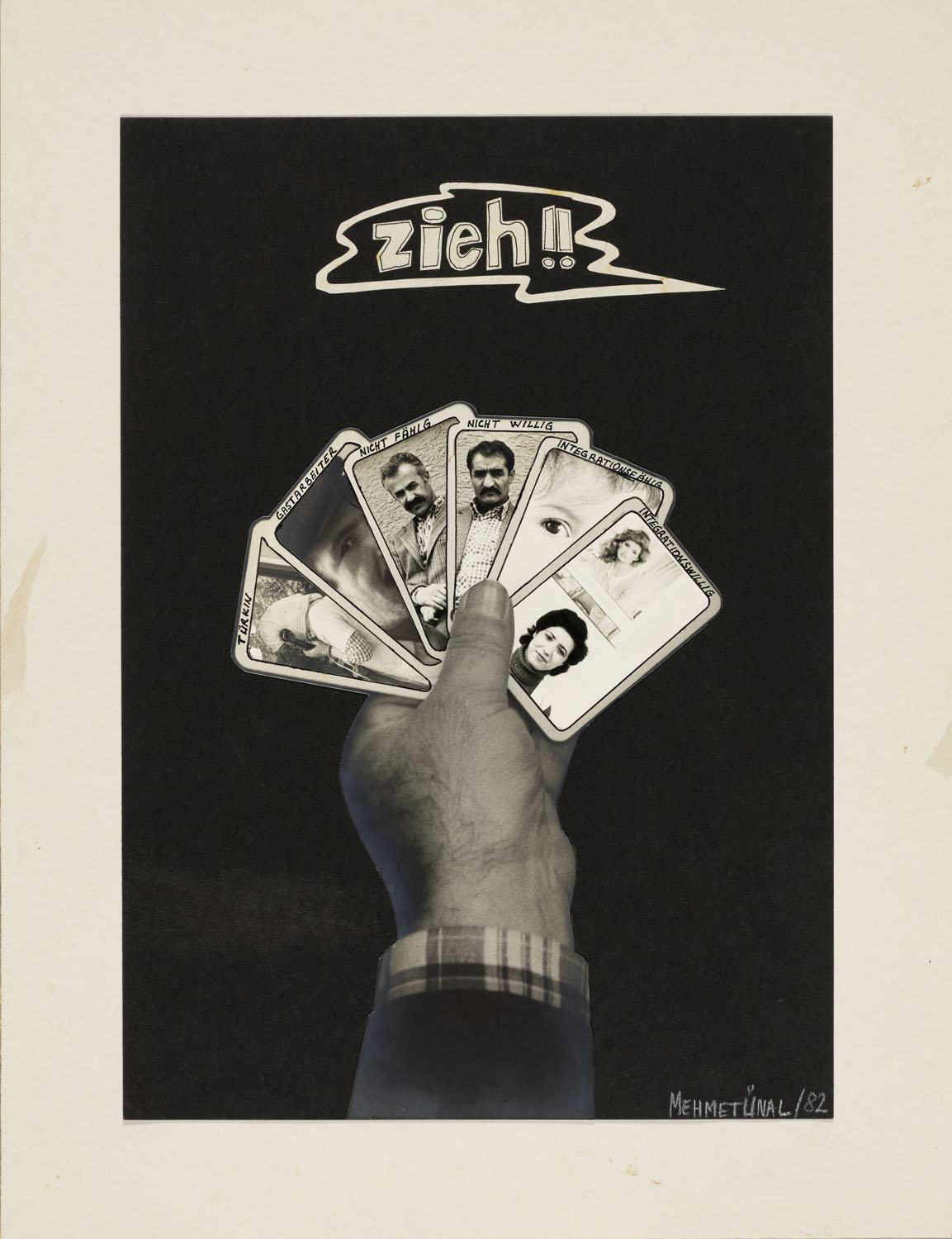
 

Mehmet Ünal (Turkish, b. 1951) 'Untitled' Mainz, 1982


Mehmet Ünal (Turkish, b. 1951)
Untitled
Mainz, 1982
Photo collage
H. 45 x W. 29.8cm
© Mehmet Ünal


Zieh!! = Pull!!
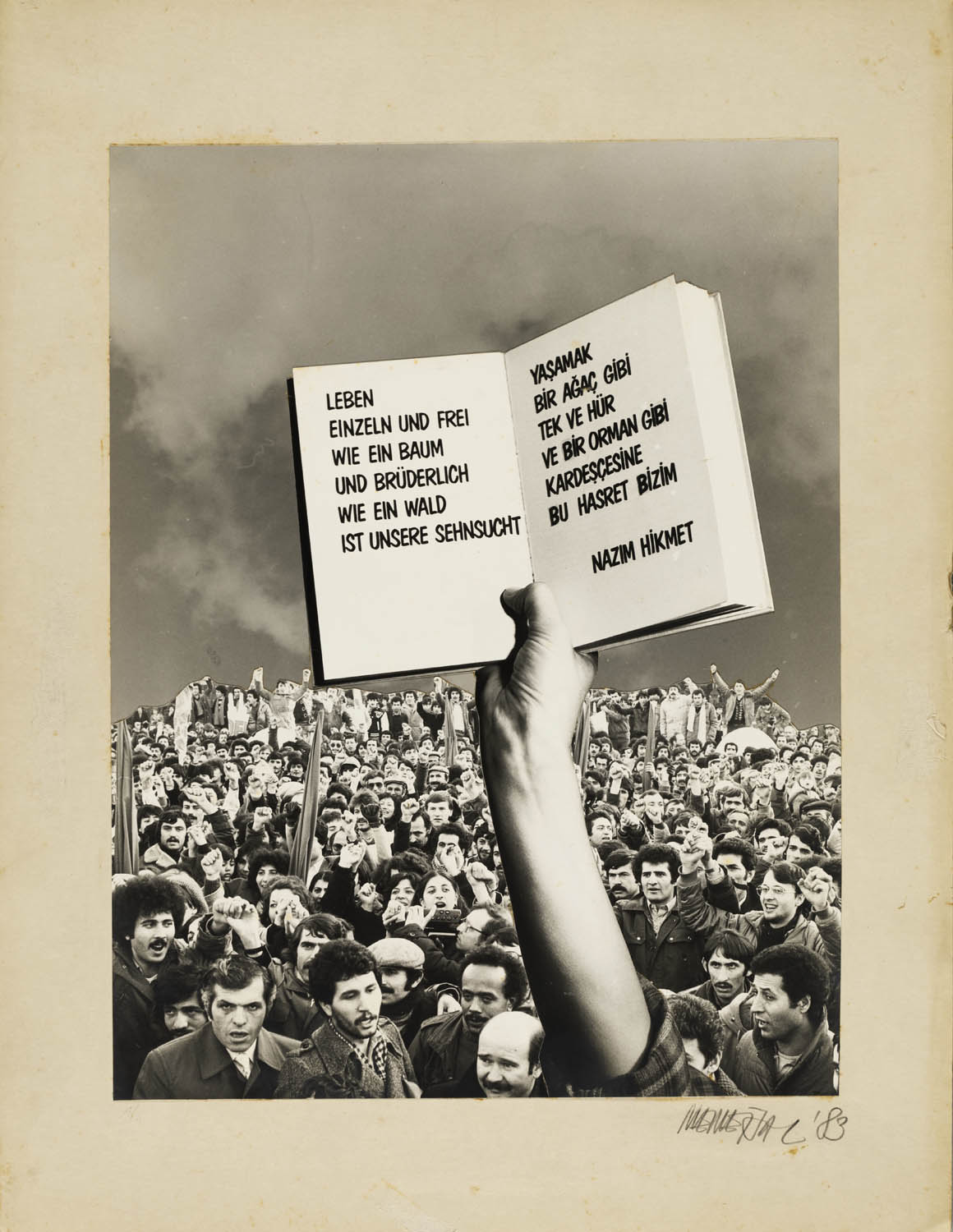
 

Mehmet Ünal (Turkish, b. 1951) 'Untitled (Homage to Nâzım Hikmet)' Mainz, 1982–1986


Mehmet Ünal (Turkish, b. 1951)
Untitled (Homage to Nâzım Hikmet)
Mainz, 1982-1986
Photo collage
H. 42 x W. 29.7cm
© Mehmet Ünal


life
alone and free
like a tree
and brotherly
like a forest
is our longing


Mehmed Nâzım Ran (17 January 1902 – 3 June 1963), commonly known as Nâzım Hikmet, was a Turkish poet, playwright, novelist, screenwriter, director, and memoirist. He was acclaimed for the “lyrical flow of his statements”. Described as a “romantic communist” and a “romantic revolutionary”, he was repeatedly arrested for his political beliefs and spent much of his adult life in prison or in exile. His poetry has been translated into more than 50 languages.
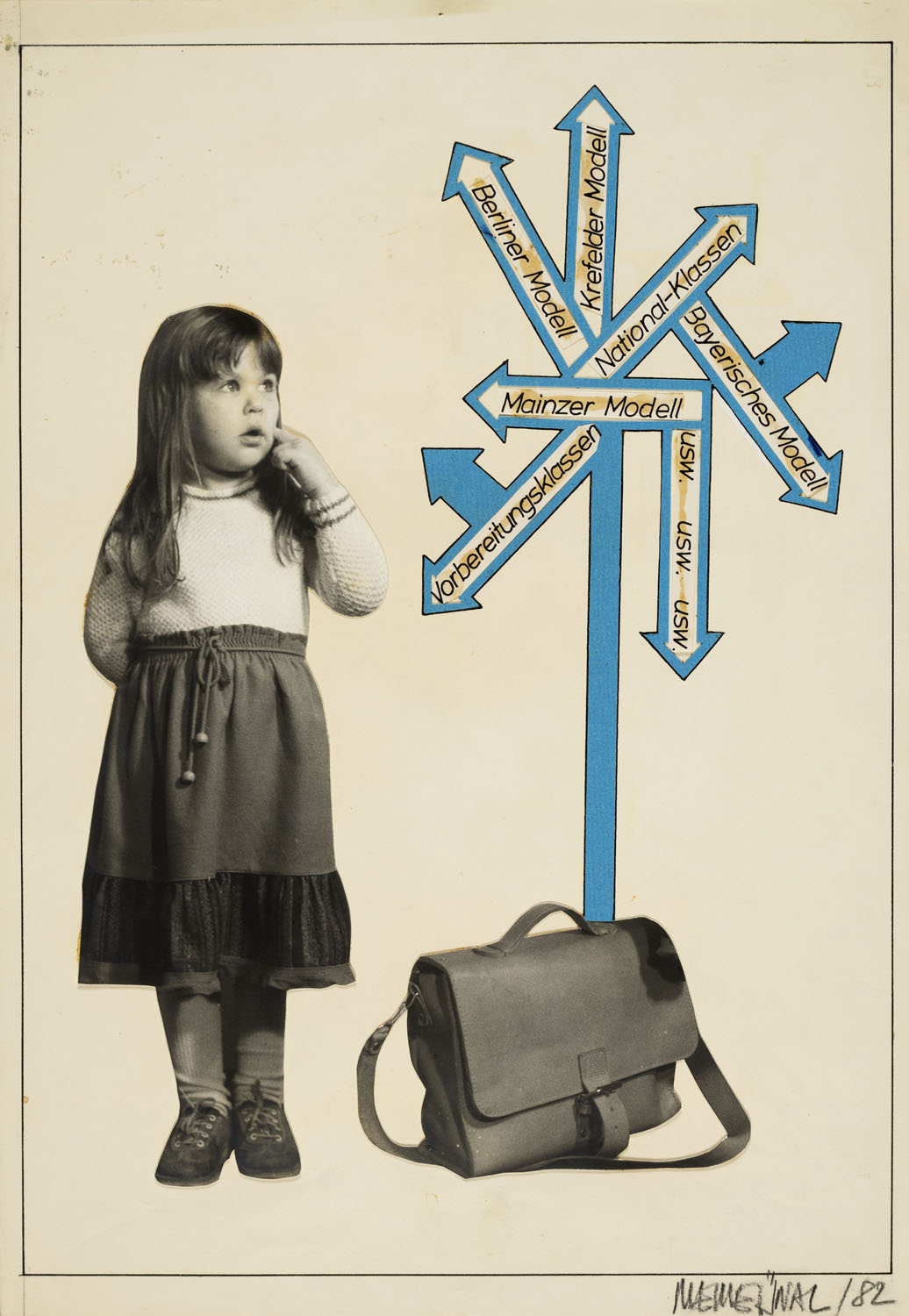
 

Mehmet Ünal (Turkish, b. 1951) 'Untitled' Mainz, 1982


Mehmet Ünal (Turkish, b. 1951)
Untitled
Mainz, 1982
Photo collage
H. 45 x W. 31.1cm
© Mehmet Ünal
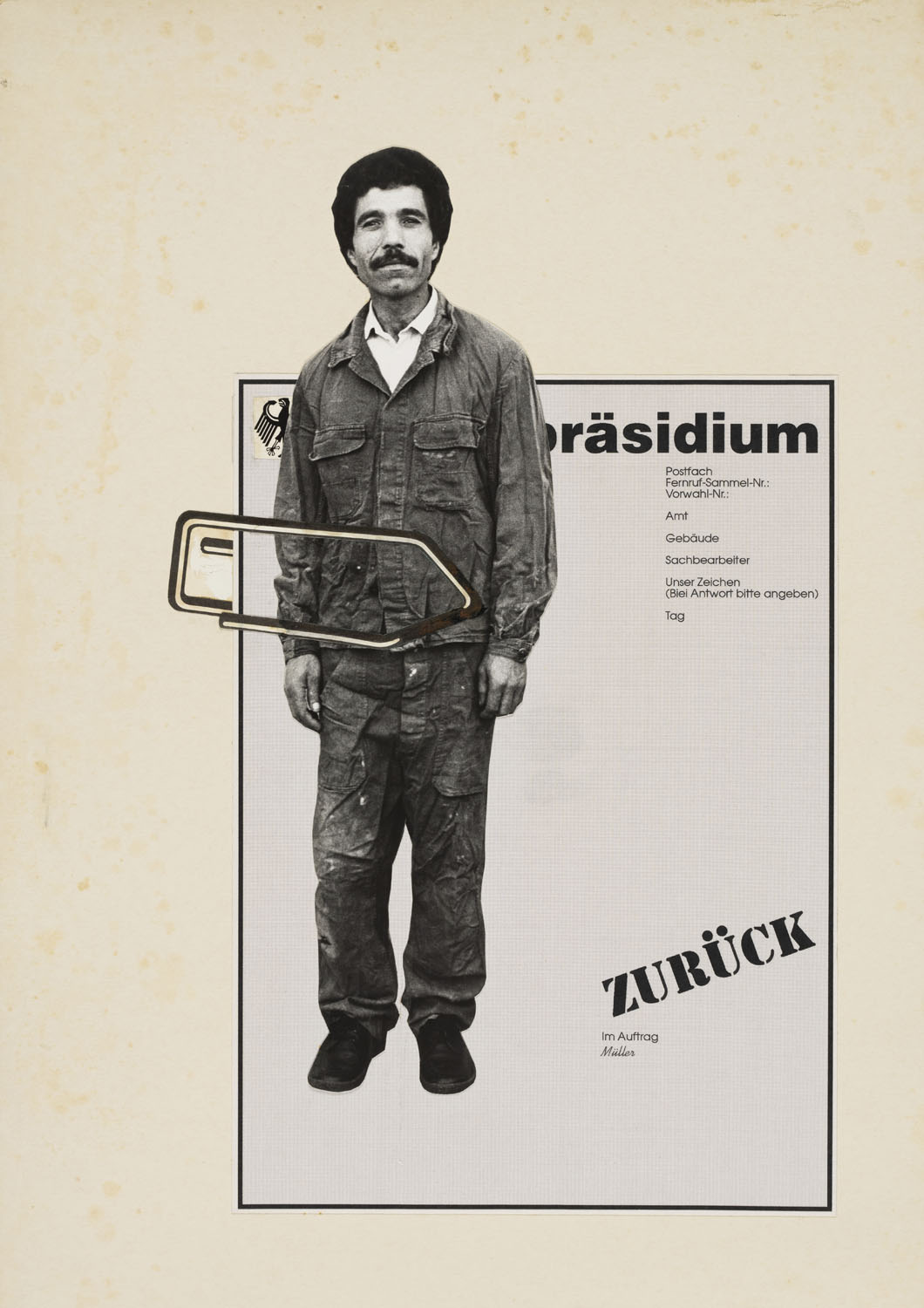
 

Mehmet Ünal (Turkish, b. 1951) 'Untitled' Mainz, 1983


Mehmet Ünal (Turkish, b. 1951)
Untitled
Mainz, 1983
Photo collage
H. 46,1 x W. 35cm
© Mehmet Ünal
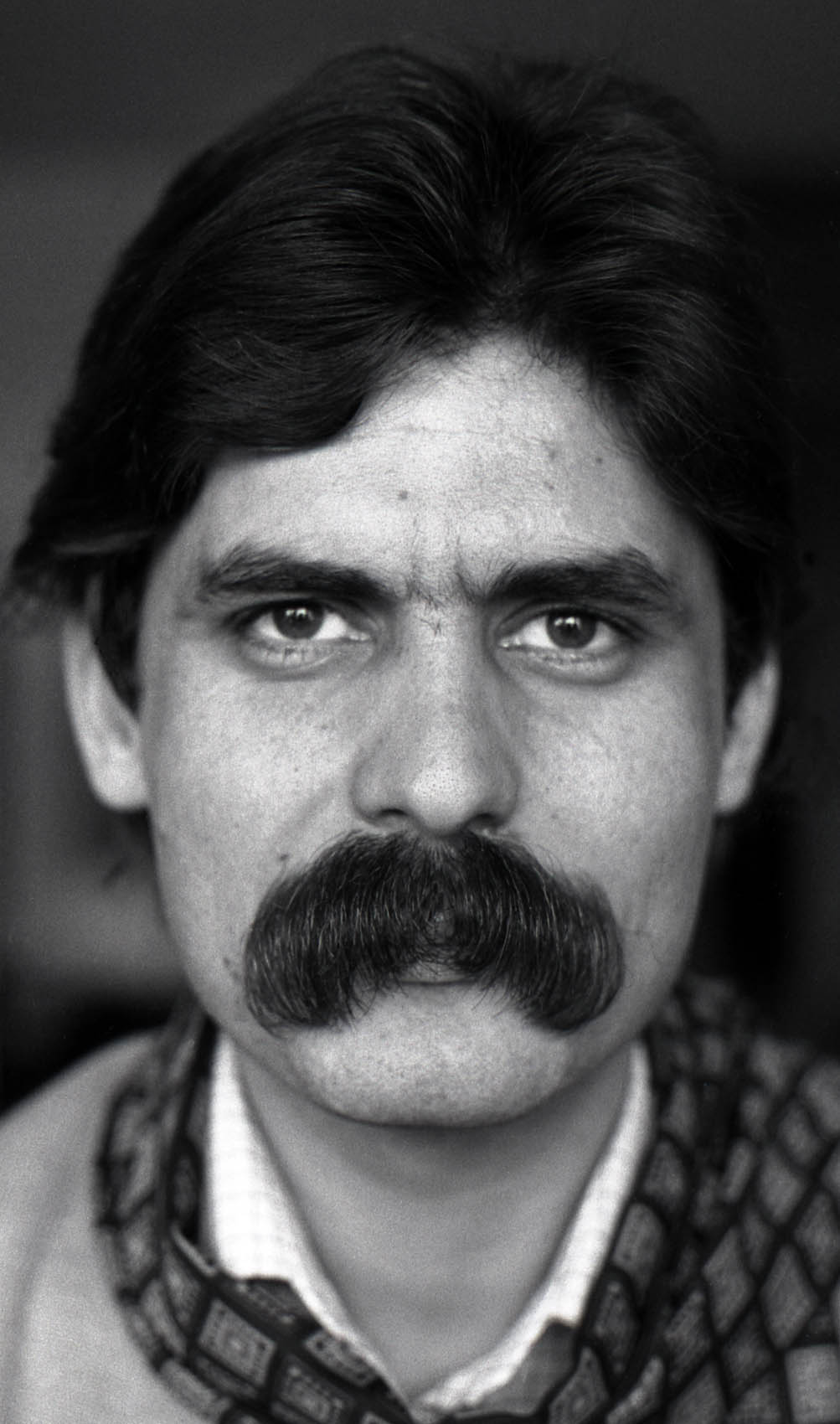
 

Mehmet Ünal (Turkish, b. 1951) 'Self-portrait' c. 1980


Mehmet Ünal (Turkish, b. 1951)
Self-portrait
c. 1980
© Mehmet Ünal


Museum für Kunst und Gewerbe Hamburg
Steintorplatz, 20099 Hamburg

Opening hours:
Tuesday – Sunday 10am – 6pm
Thursday 10am – 9pm
Closed Mondays
Museum für Kunst und Gewerbe Hamburg website

LIKE ART BLART ON FACEBOOK

Back to top

Exhibition: ‘Dorothea Lange: Politics of Seeing’ at the Barbican Art Gallery, London

Exhibition dates: 22nd June – 2nd September, 2018


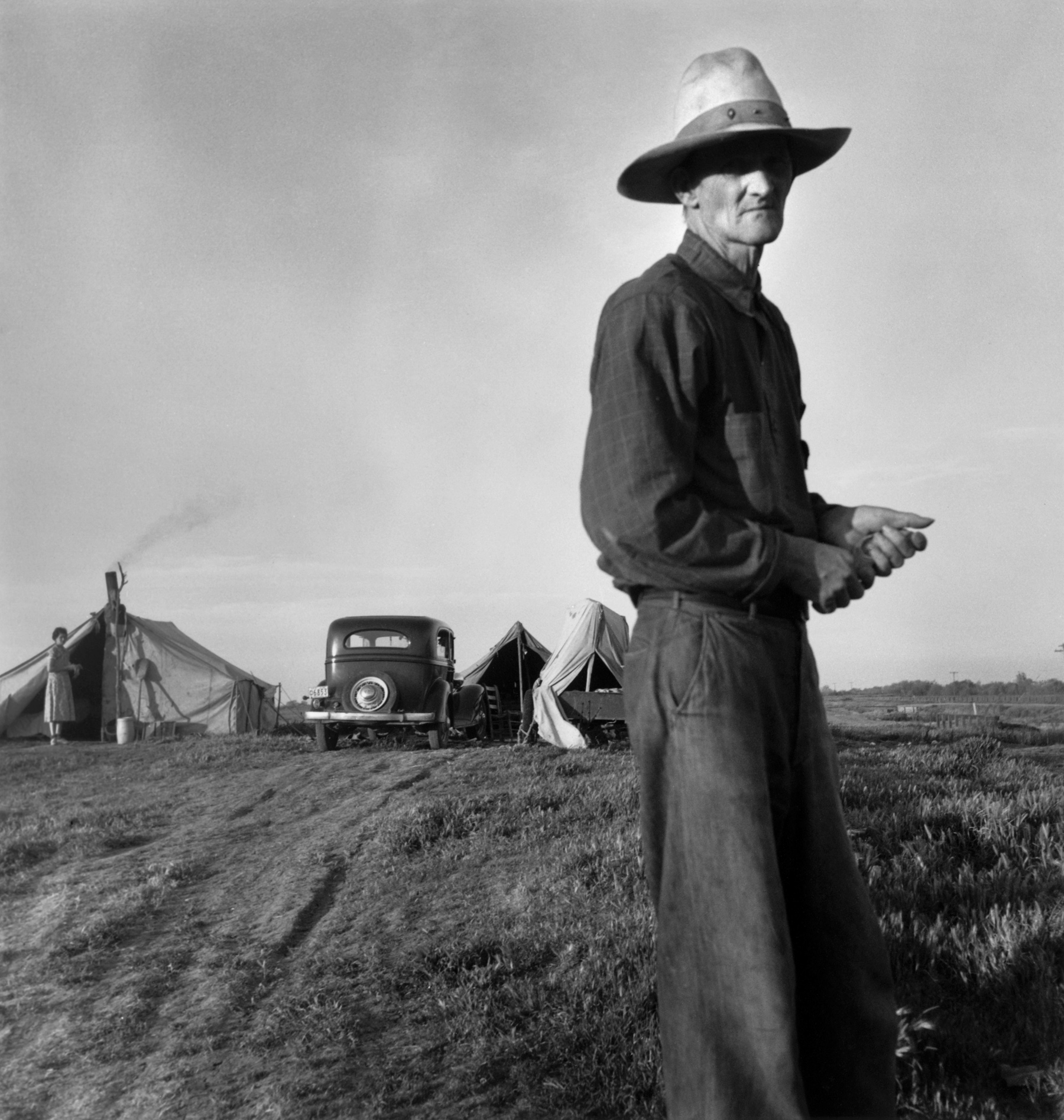
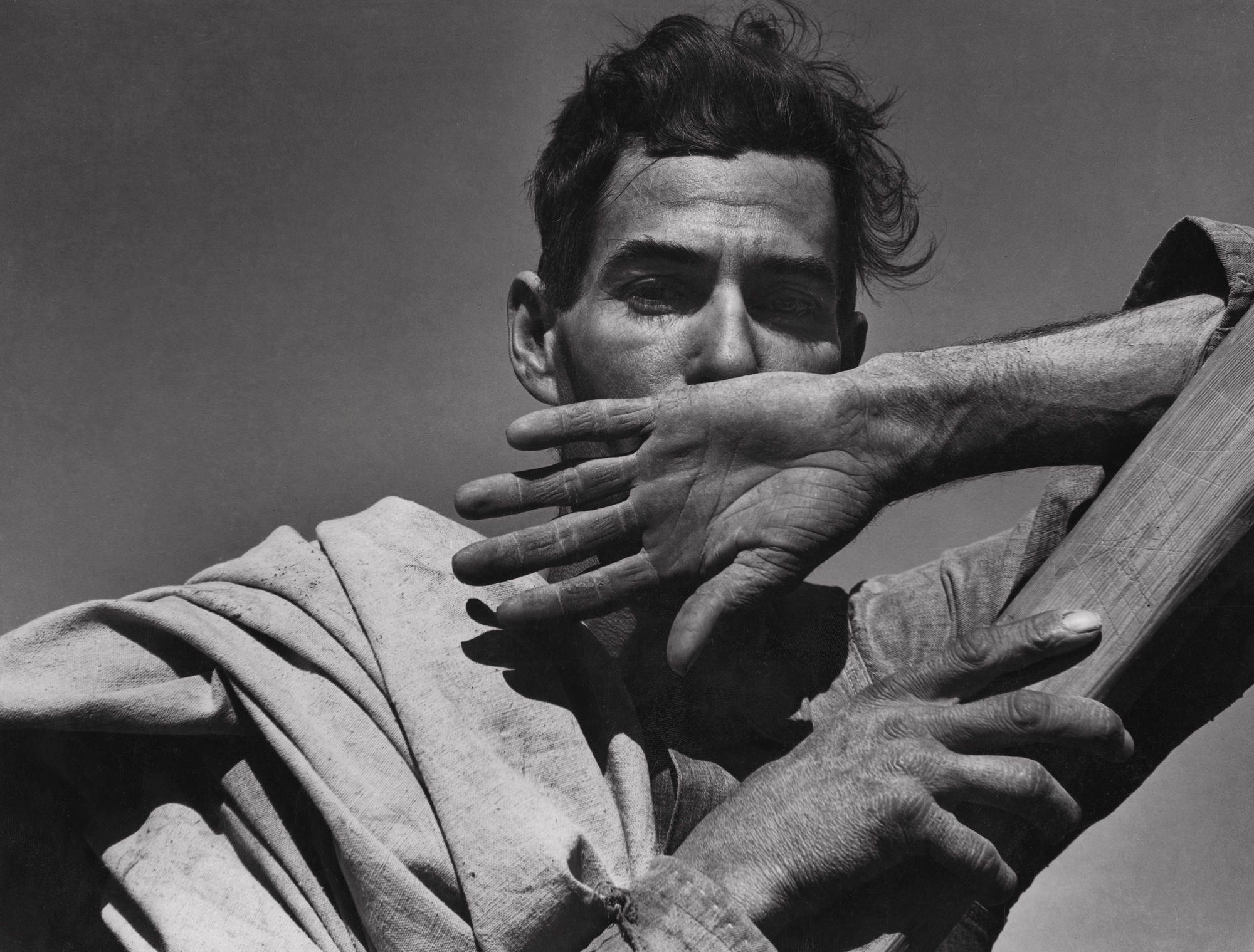
Dorothea Lange (American, 1895-1965) 'Migratory Cotton Picker, Eloy, Arizona' 1940 from the exhibition 'Dorothea Lange: Politics of Seeing' at the Barbican Art Gallery, London, June - Sept, 2018


Dorothea Lange (American, 1895-1965)
Migratory Cotton Picker, Eloy, Arizona
1940
Silver gelatin print
© The Dorothea Lange Collection, the Oakland Museum of California


Damaged, desperate and displaced

I am writing this short text on a laptop in Thailand which keeps jumping lines and misspelling words. The experience is almost as disorienting as the photographs of Dorothea Lange, with their anguished angles and portraits of despair. Her humanist, modernist pictures capture the harsh era of The Great Depression and the 1930s in America, allowing a contemporary audience to imagine what it must have been like to walk along blistering roads with five children, not knowing where your next meal or drink of water is coming from.

Like Lewis Hine and Jacob Riis from an earlier era, Lange’s photographs are about the politics of seeing. They are about human beings in distress and how photography can raise awareness of social injustice and disenfranchisement in the name of cultural change.

Dr Marcus Bunyan

#dorothealange @barbicancentre


Many thankx to the Barbican Art Gallery for allowing me to publish the photographs in the posting. Please click on the photographs for a larger version of the image.


Dorothea Lange (American, 1895-1965) 'Migrant Mother, Nipomo, California' 1936 from the exhibition 'Dorothea Lange: Politics of Seeing' at the Barbican Art Gallery, London, June - Sept, 2018


Dorothea Lange (American, 1895-1965)
Migrant Mother, Nipomo, California
1936
Silver gelatin print
© The Dorothea Lange Collection, the Oakland Museum of California


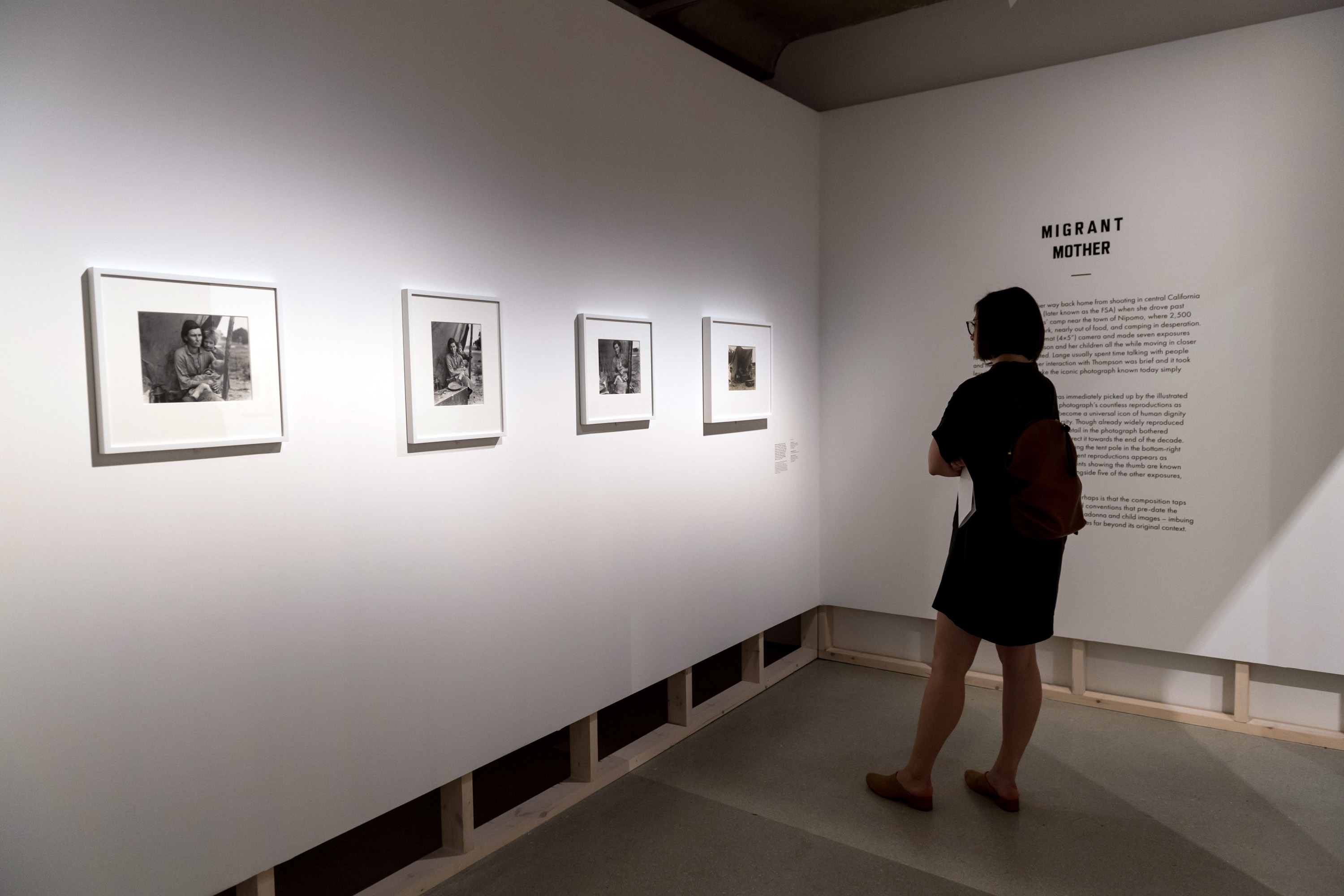
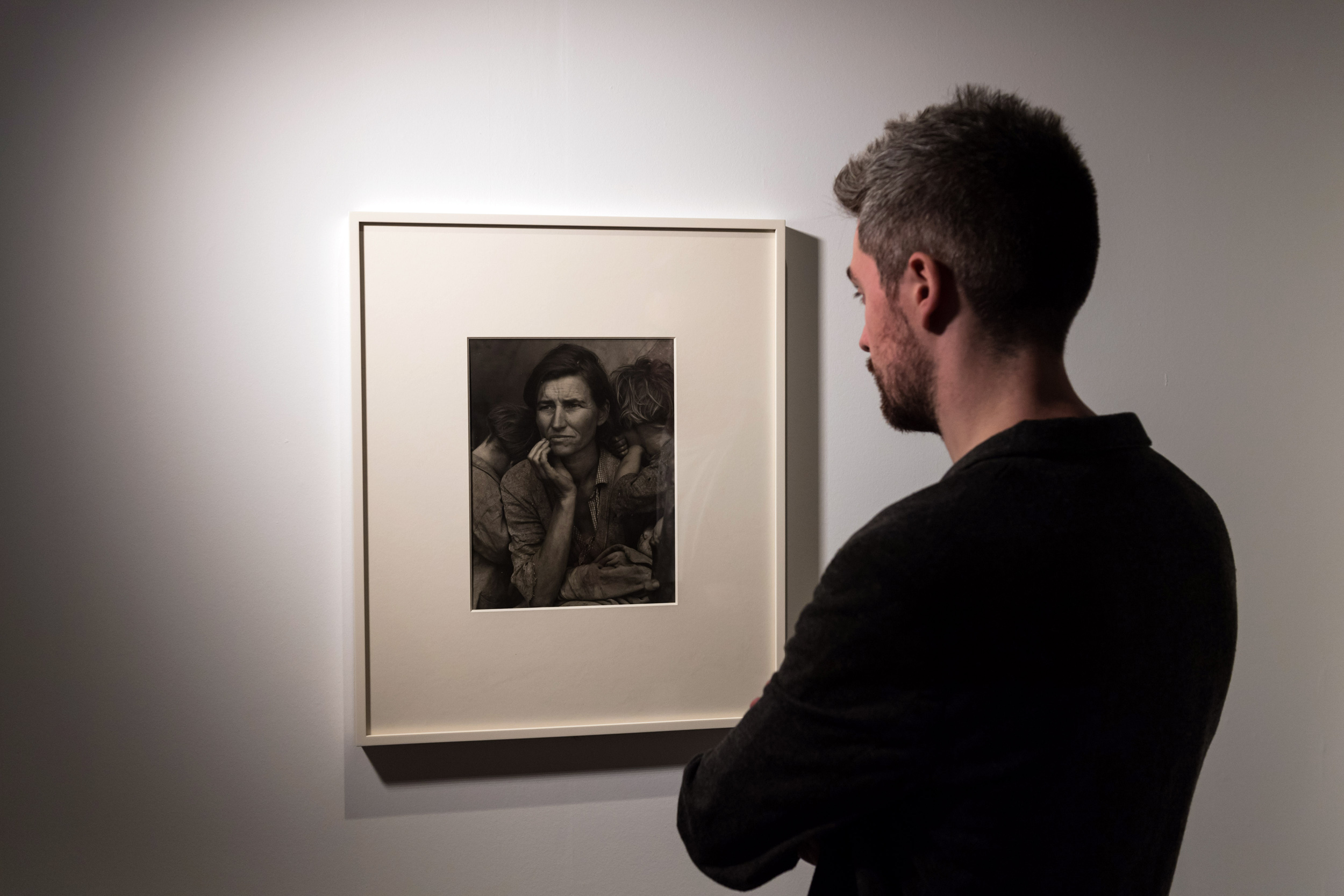
Dorothea Lange took this photograph in 1936, while employed by the U.S. government’s Farm Security Administration (FSA) program, formed during the Great Depression to raise awareness of and provide aid to impoverished farmers. In Nipomo, California, Lange came across Florence Owens Thompson and her children in a camp filled with field workers whose livelihoods were devastated by the failure of the pea crops. Recalling her encounter with Thompson years later, she said, “I saw and approached the hungry and desperate mother, as if drawn by a magnet. I do not remember how I explained my presence or my camera to her, but I do remember she asked me no questions. I made five exposures, working closer and closer from the same direction.”1 One photograph from that shoot, now known as Migrant Mother, was widely circulated to magazines and newspapers and became a symbol of the plight of migrant farm workers during the Great Depression.

As Lange described Thompson’s situation, “She and her children had been living on frozen vegetables from the field and wild birds the children caught. The pea crop had frozen; there was no work. Yet they could not move on, for she had just sold the tires from the car to buy food.”2 However, Thompson later contested Lange’s account. When a reporter interviewed her in the 1970s, she insisted that she and Lange did not speak to each other, nor did she sell the tires of her car. Thompson said that Lange had either confused her for another farmer or embellished what she had understood of her situation in order to make a better story.

Anonymous text. “Migrant Mother, Nipomo, California,” on the MoMA Learning website Nd [Online] Cited 16/02/2022

1/ Dorothea Lange, “The Assignment I’ll Never Forget,” Popular Photography 46 (February, 1960). Reprinted in Photography, Essays and Images, ed. Beaumont Newhall (New York: The Museum of Modern Art), p. 262-265

2/ Dorothea Lange, paraphrased in Karin Becker Ohm, Dorothea Lange and the Documentary Tradition (Baton Rouge, LA: Louisiana State University Press, 1980), p. 79


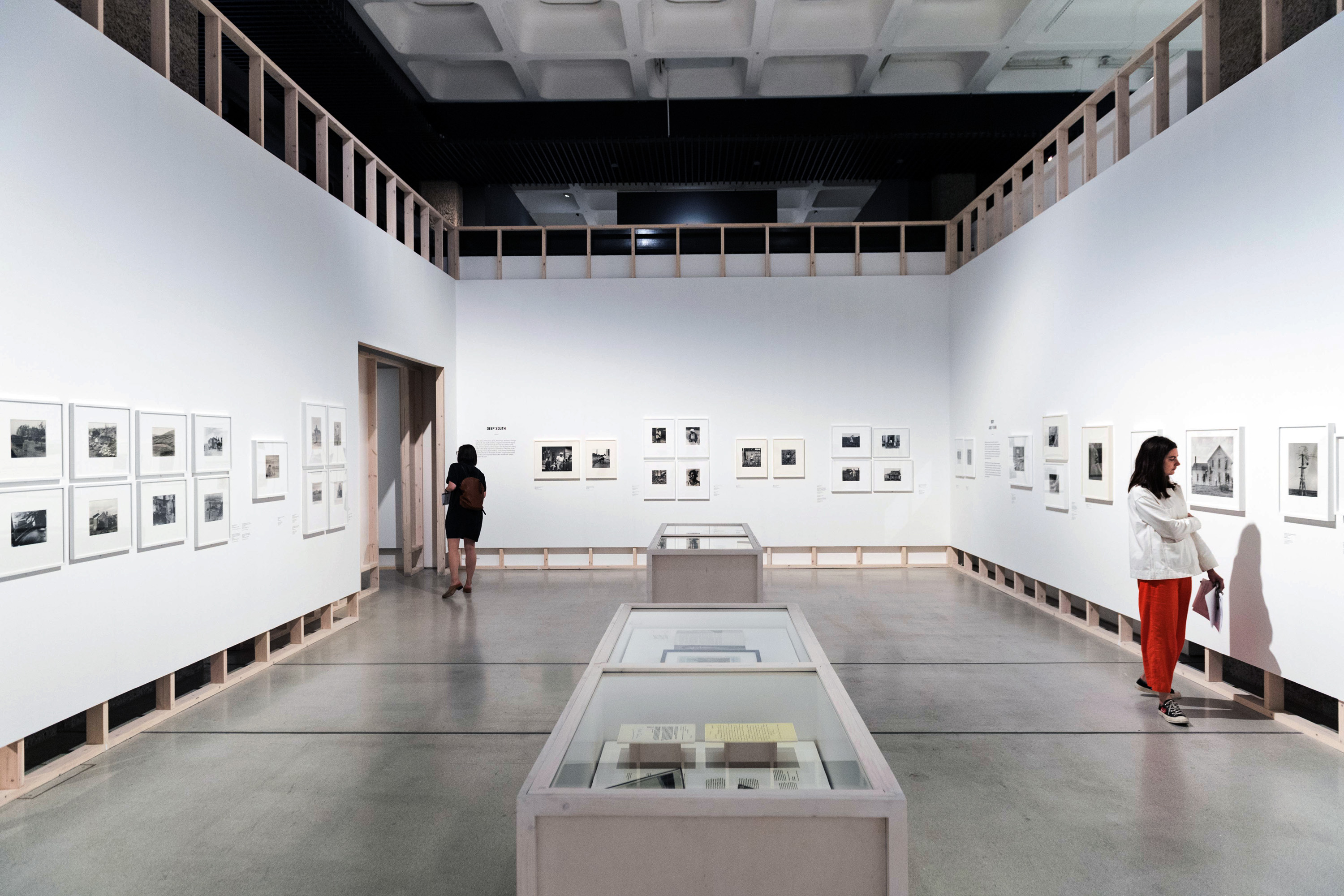
Installation view of the exhibition ‘Dorothea Lange: Politics of Seeing’ at the Barbican Art Gallery, London

Installation view of the exhibition ‘Dorothea Lange: Politics of Seeing’ at the Barbican Art Gallery, London showing Dorothea Lange's photograph 'Migrant Mother, Nipomo, California' 1936


Installation views of the exhibition Dorothea Lange: Politics of Seeing at the Barbican Art Gallery, London showing Dorothea Lange’s photograph Migrant Mother, Nipomo, California 1936
Photos: Ian Gavan/Getty Images for Barbican Art Gallery


“I saw and approached the hungry and desperate mother, as if drawn by a magnet. I do not remember how I explained my presence or my camera to her, but I do remember she asked me no questions. I made five exposures, working closer and closer from the same direction. I did not ask her name or her history. She told me her age, that she was thirty-two. She said that they had been living on frozen vegetables from the surrounding fields, and birds that the children killed. She had just sold the tires from her car to buy food. There she sat in that lean- to tent with her children huddled around her, and seemed to know that my pictures might help her, and so she helped me. There was a sort of equality about it.” (From: Popular Photography, Feb. 1960).

The images were made using a Graflex camera. The original negatives are 4 x 5″ film. It is not possible to determine on the basis of the negative numbers (which were assigned later at the Resettlement Administration) the order in which the photographs were taken.

Hanna Soltys, Reference Librarian, Prints & Photographs Division. “Dorothea Lange’s “Migrant Mother” Photographs in the Farm Security Administration Collection” Photographs in the Farm Security Administration Collection,” on The Library of Congress website 1998 February 19, 2019 [Online] Cited 16/02/2022


Florence Owens Thompson: The Story of the “Migrant Mother” 2014

Thompson’s identity was discovered in the late 1970s; in 1978, acting on a tip, Modesto Bee reporter Emmett Corrigan located Thompson at her mobile home in Space 24 of the Modesto Mobile Village and recognised her from the 40-year-old photograph.[10] A letter Thompson wrote was published in The Modesto Bee and the Associated Press distributed a story headlined “Woman Fighting Mad Over Famous Depression Photo.” Florence was quoted as saying “I wish she [Lange] hadn’t taken my picture. I can’t get a penny out of it, she didn’t ask my name. She said she wouldn’t sell the pictures, she said she’d send me a copy. She never did.”

Lange was funded by the federal government when she took the picture, so the image was in the public domain and Lange never directly received any royalties. However, the picture did help make Lange a celebrity and earned her “respect from her colleagues.”

In a 2008 interview with CNN, Thompson’s daughter Katherine McIntosh recalled how her mother was a “very strong lady”, and “the backbone of our family”, she said: “We never had a lot, but she always made sure we had something. She didn’t eat sometimes, but she made sure us children ate. That’s one thing she did do.”

Anonymous text. “Florence Owens Thompson,” on the WikiVisually website Nd [Online] Cited 05/08/2018. No longer available online


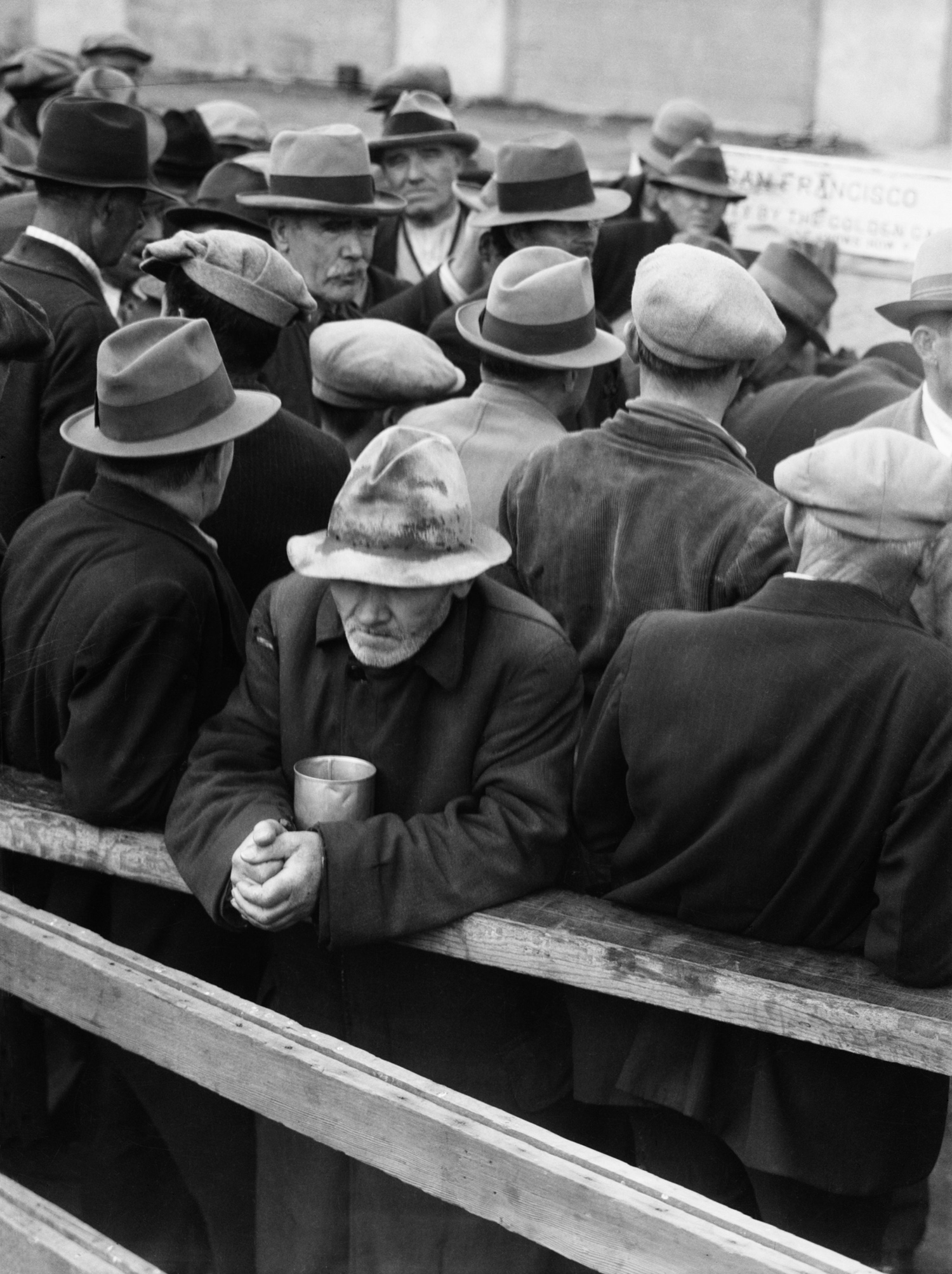
Dorothea Lange (American, 1895-1965) 'White Angel Breadline, San Francisco' 1933


Dorothea Lange (American, 1895-1965)
White Angel Breadline, San Francisco
1933
Silver gelatin print
© The Dorothea Lange Collection, the Oakland Museum of California


“There are moments such as these when time stands still and all you do is hold your breath and hope it will wait for you. And you just hope you will have enough time to get it organised in a fraction of a second on that tiny piece of sensitive film. Sometimes you have an inner sense that you have encompassed the thing generally. You know then that you are not taking anything away from anyone: their privacy, their dignity, their wholeness.” ~ Dorothea Lange 1963

Davis K F 1995, The photographs of Dorothea Lange, Hallmark Cards Inc, Missouri p. 20.


White angel breadline, San Francisco is Lange’s first major image that encapsulates both her sense of compassion and ability to structure a photograph according to modernist principles. The diagonals of the fence posts and the massing of hats do not reduce this work to the purely formal – the figure in the front middle of the image acts as a lightening rod for our emotional engagement.

© Art Gallery of New South Wales Photography Collection Handbook, 2007


“I had made some photographs of the state [of] people, in an area of San Francisco which revealed how deep the depression was. It was at that time beginning to cut very deep. This is a long process. It doesn’t happen overnight. Life, for people, begins to crumble on the edges; they don’t realise it…”


Dorothea Lange, interview, 1964


There was a real “White Angel” behind the breadline that served the needy men photographed by Dorothea Lange. She was a widow named Lois Jordan. Mrs. Jordan, who gave herself the name White Angel, established a soup kitchen during the Great Depression to feed those who were unemployed and destitute. Relying solely on donations, she managed to supply meals to more than one million men over a three-year period.

Jordan’s soup kitchen occupied a junk-filled lot in San Francisco located on the Embarcadero near Filbert Street. This area was known as the White Angel Jungle. The Jungle was not far from Lange’s studio. As she began to change direction from portrait to documentary photography, Lange focused her lens on the poignant scenes just beyond her window. White Angel Breadline is the result of her first day’s work to document Depression-era San Francisco. Decades later, Lange recalled: “[White Angel Breadline] is my most famed photograph. I made that on the first day I ever went out in an area where people said, ‘Oh, don’t go there.’ It was the first day that I ever made a photograph on the street.”

Anonymous text. “Dorothea Lange + White Angel Breadline: Meet the master artist through one of her most important works,” on The Kennedy Centre website Nd [Online] Cited 16/02/2022


Dorothea Lange’s Documentary Photographs

Hear Dorothea Lange discuss her photographs and the difficulty of leading a visual life.

Dorothea Lange’s stirring images of migrant farmers and the unemployed have become universally recognised symbols of the Great Depression. Later photographs documenting the internment of Japanese Americans and her travels throughout the world extended her body of work. Watch the video to hear Lange discuss how she began her documentary projects for the Farm Security Administration, and learn how she felt about some of her assignments and subjects.


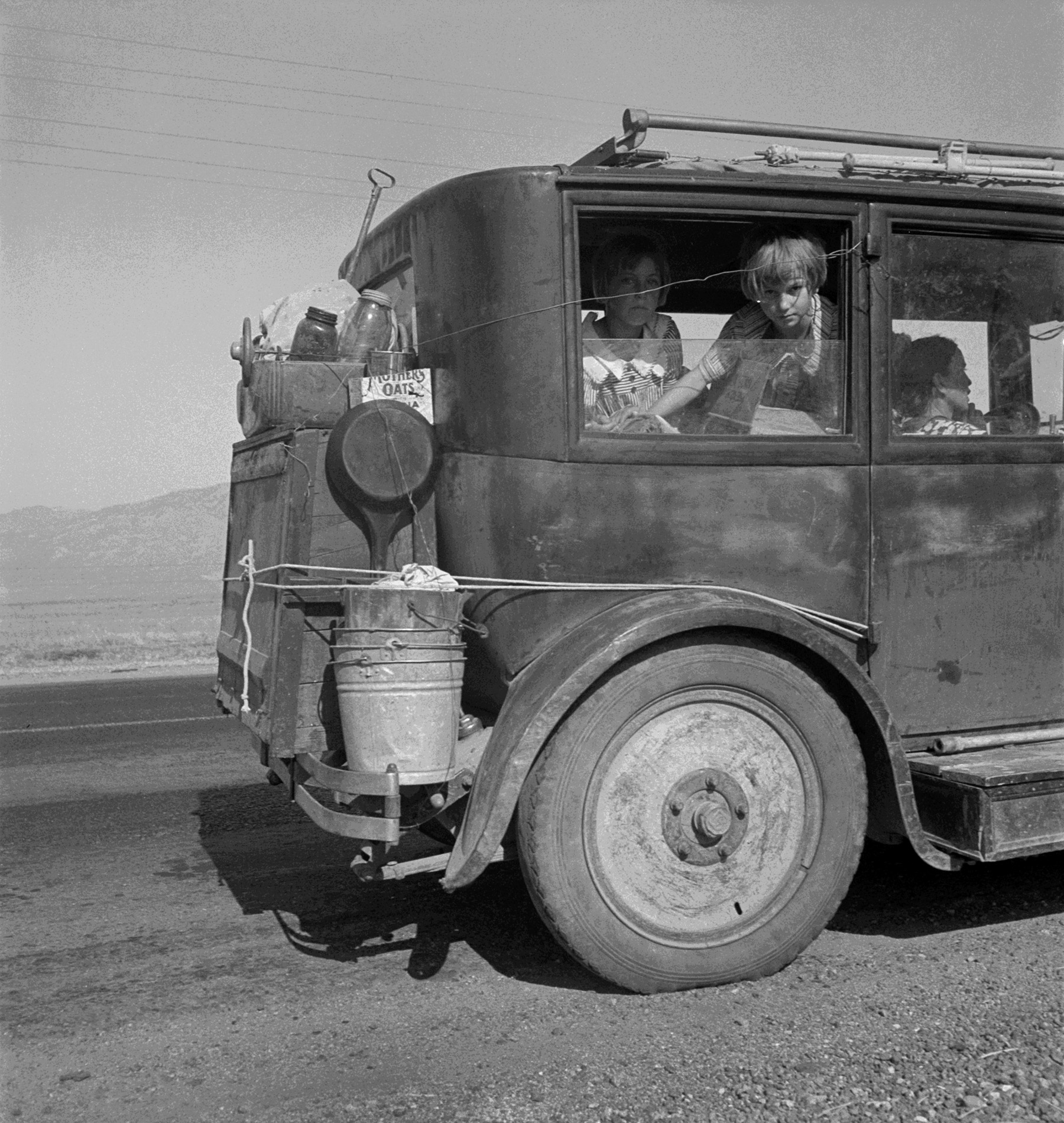
Dorothea Lange (American, 1895-1965) 'Drought Refugees' c. 1935


Dorothea Lange (American, 1895-1965)
Drought Refugees
c. 1935
Silver gelatin print
© The Dorothea Lange Collection, the Oakland Museum of California


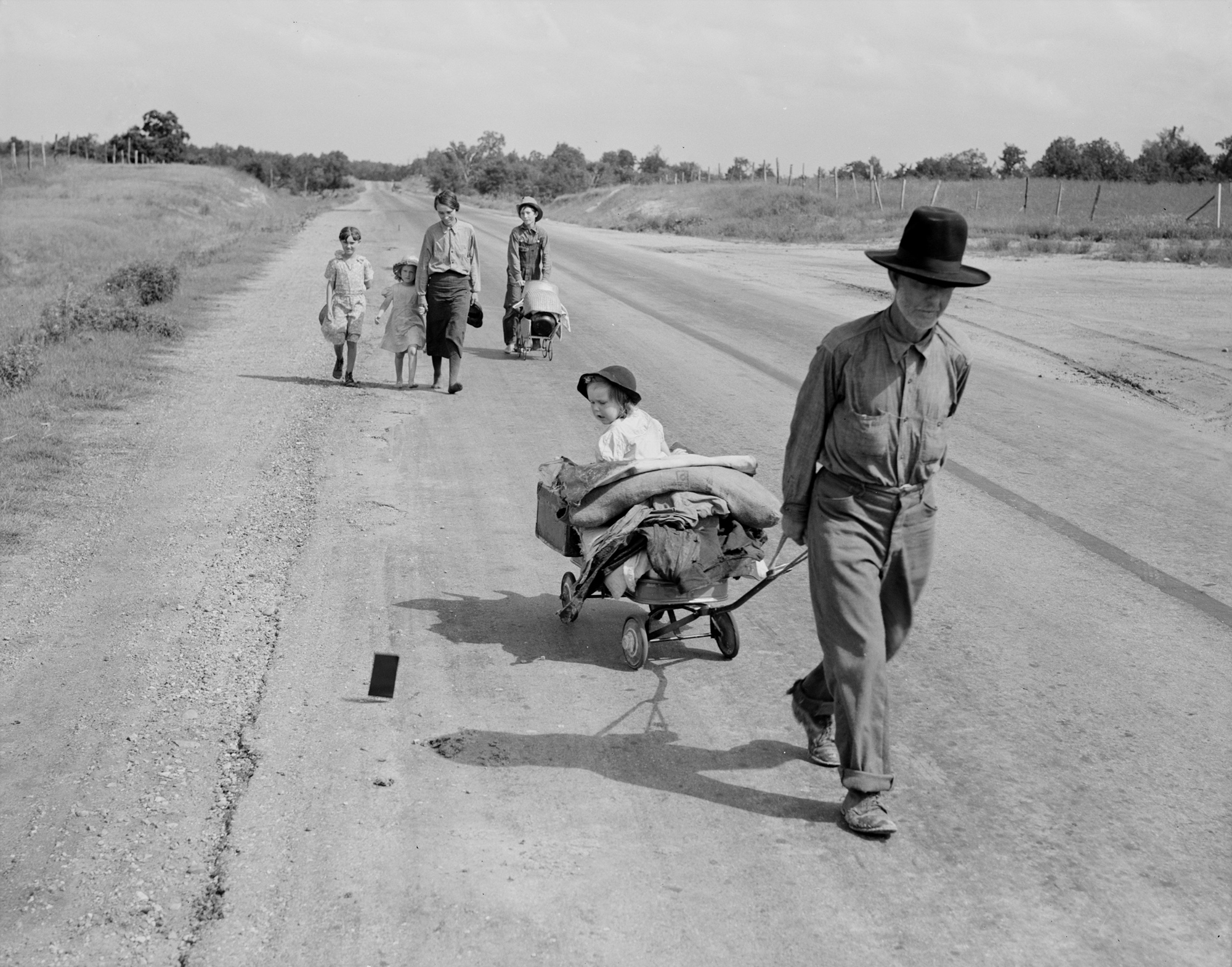
Dorothea Lange (American, 1895-1965) 'Family walking on highway - five children. Started from Idabel, Oklahoma, bound for Krebs, Oklahoma' June 1938


Dorothea Lange (American, 1895-1965)
Family walking on highway – five children. Started from Idabel, Oklahoma, bound for Krebs, Oklahoma
June 1938
Silver gelatin print
Library of Congress


Dorothea Lange (American, 1895-1965) 'Cars on the Road' August 1936


Dorothea Lange (American, 1895-1965)
Cars on the Road
August 1936
Silver gelatin print
Library of Congress


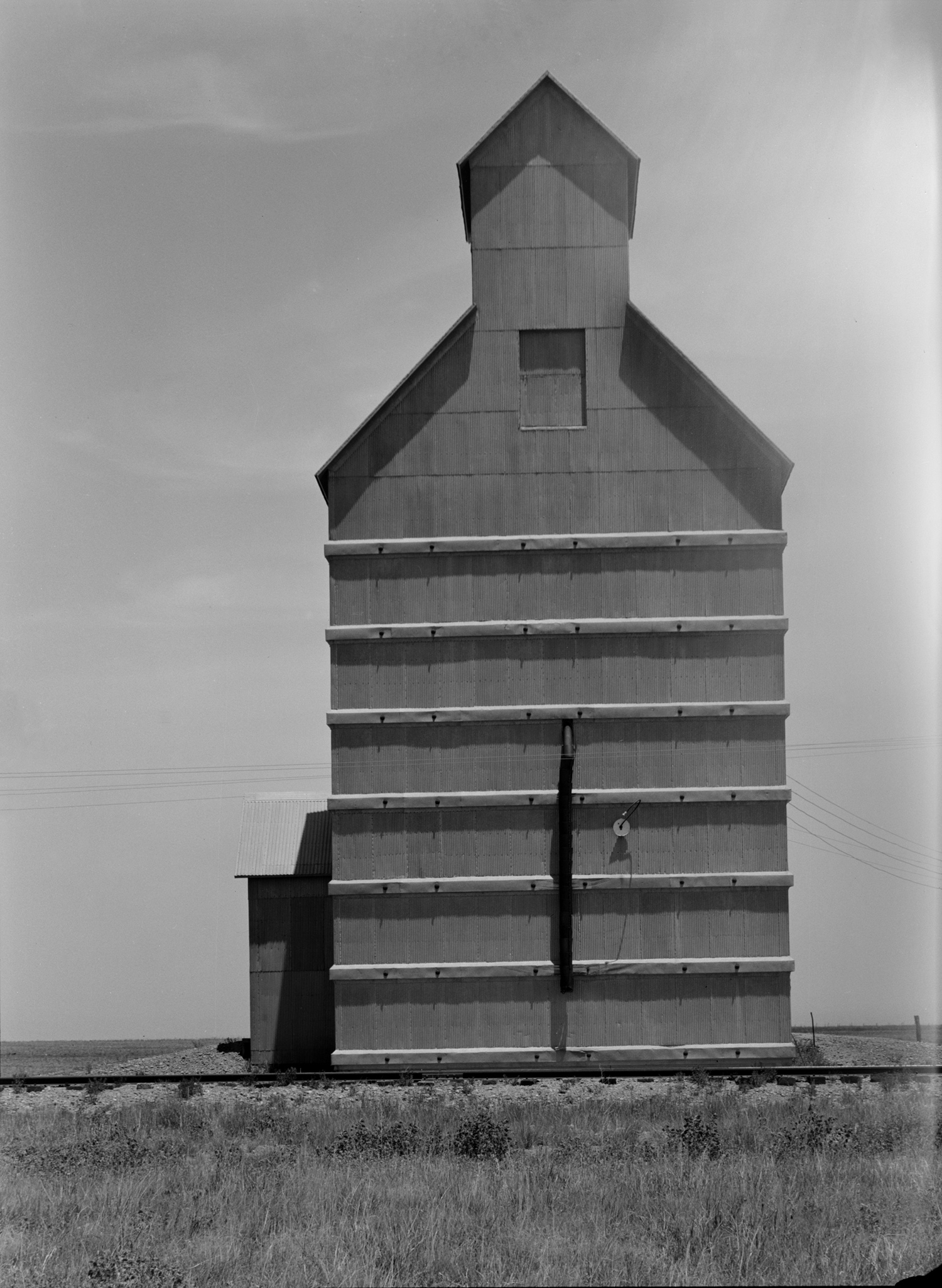
Dorothea Lange (American, 1895-1965) 'Dust Bowl, Grain Elevator, Everett, Texas' June 1938


Dorothea Lange (American, 1895-1965)
Dust Bowl, Grain Elevator, Everett, Texas
June 1938
Silver gelatin print
Library of Congress


This summer, Barbican Art Gallery stages the first ever UK retrospective of one of the most influential female photographers of the 20th century, the American documentary photographer Dorothea Lange (1895-1965). A formidable woman of unparalleled vigour and resilience, the exhibition charts Lange’s outstanding photographic vision from her early studio portraits of San Francisco’s bourgeoisie to her celebrated Farm Security Administration work (1935-1939) that captured the devastating impact of the Great Depression on the American population. Rarely seen photographs of the internment of Japanese-Americans during the Second World War are also presented as well as the later collaborations with fellow photographers Ansel Adams and Pirkle Jones documenting the changing face of the social and physical landscape of 1950s America. Opening 22 June at Barbican Art Gallery, Dorothea Lange: Politics of Seeing is part of the Barbican’s 2018 season, The Art of Change, which explores how the arts respond to, reflect and potentially effect change in the social and political landscape.

Dorothea Lange: Politics of Seeing encompasses over 300 objects from vintage prints and original book publications to ephemera, field notes, letters, and documentary film. Largely chronological, the exhibition presents eight series in Lange’s oeuvre spanning from 1919 to 1957.

Jane Alison, Head of Visual Arts, Barbican, said: “This is an incredible opportunity for our visitors to see the first UK survey of the work of such a significant photographer. Dorothea Lange is undoubtedly one of the great photographers of the twentieth century and the issues raised through her work have powerful resonance with issues we’re facing in society today. Staged alongside contemporary photographer Vanessa Winship as part of The Art of Change, these two shows are unmissable.”

Opening the exhibition are Lange’s little known early portrait photographs taken during her time running a successful portrait studio in San Francisco between 1919 and 1935. Lange was at the heart of San Francisco’s creative community and her studio became a centre in which bohemian and artistic friends gathered after hours, including Edward Weston, Anne Brigman, Alma Lavenson, Imogen Cunningham, and Willard van Dyke. Works from this period include intimate portraits of wealthy West Coast families as well as of Lange’s inner circle, counting amongst others photographer Roi Partridge and painter Maynard Dixon, Lange’s first husband and father of her two sons.

The Great Depression in the early 1930s heralded a shift in her photographic language as she felt increasingly compelled to document the changes visible on the streets of San Francisco. Taking her camera out of the studio, she captured street demonstrations, unemployed workers, and breadline queues. These early explorations of her social documentary work are also on display.

The exhibition charts Lange’s work with the newly established historical division of the Farm Security Administration (FSA), the government agency tasked with the promotion of Roosevelt’s New Deal programme. Alongside Lange, the FSA employed a number of photographers, including Walker Evans, Ben Shahn and Arthur Rothstein, to document living conditions across America during the Great Depression: from urban poverty in San Francisco to tenant farmers driven off the land by dust storms and mechanisation in the states of Oklahoma, Arkansas and Texas; the plight of homeless families on the road in search of better livelihoods in the West; and the tragic conditions of migrant workers and camps across California. Lange used her camera as a political tool to critique themes of injustice, inequality, migration and displacement, and to effect government relief.

Highlights in this section are, among others, a series on sharecroppers in the Deep South that exposes relations of race and power, and the iconic Migrant Mother, a photograph which has become a symbol of the Great Depression, alongside images of vernacular architecture and landscapes, motifs often overlooked within Lange’s oeuvre. Vintage prints in the exhibition are complemented by the display of original publications from the 1930s to foreground the widespread use of Lange’s FSA photographs and her influence on authors including John Steinbeck, whose ground-breaking novel The Grapes of Wrath was informed by Lange’s photographs. Travelling for many months at a time and working in the field, she collaborated extensively with her second husband Paul Schuster Taylor, a prominent social economist and expert in farm labour with whom she published the seminal photo book An American Exodus: A Record of Human Erosion in 1939, also on display in the exhibition.

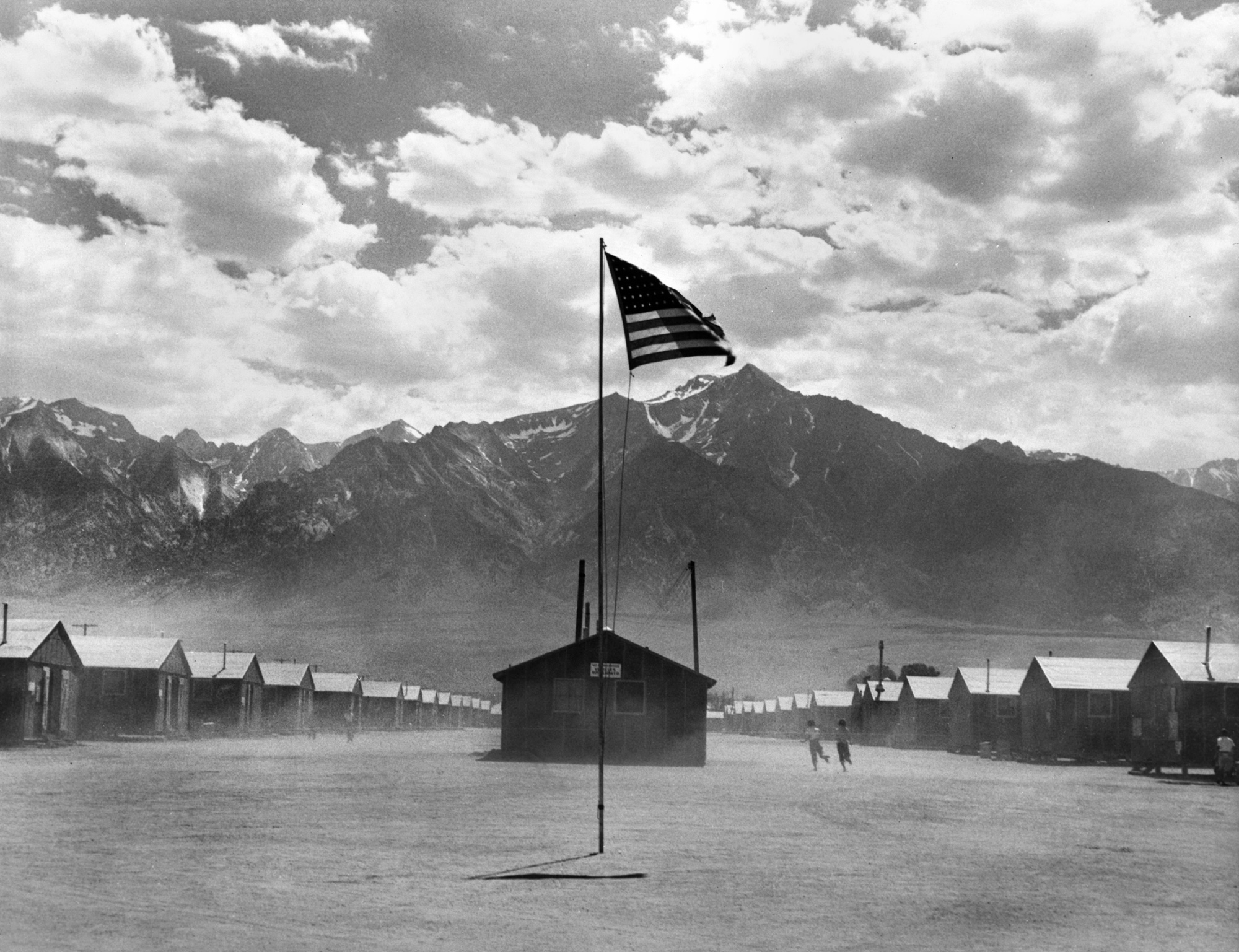
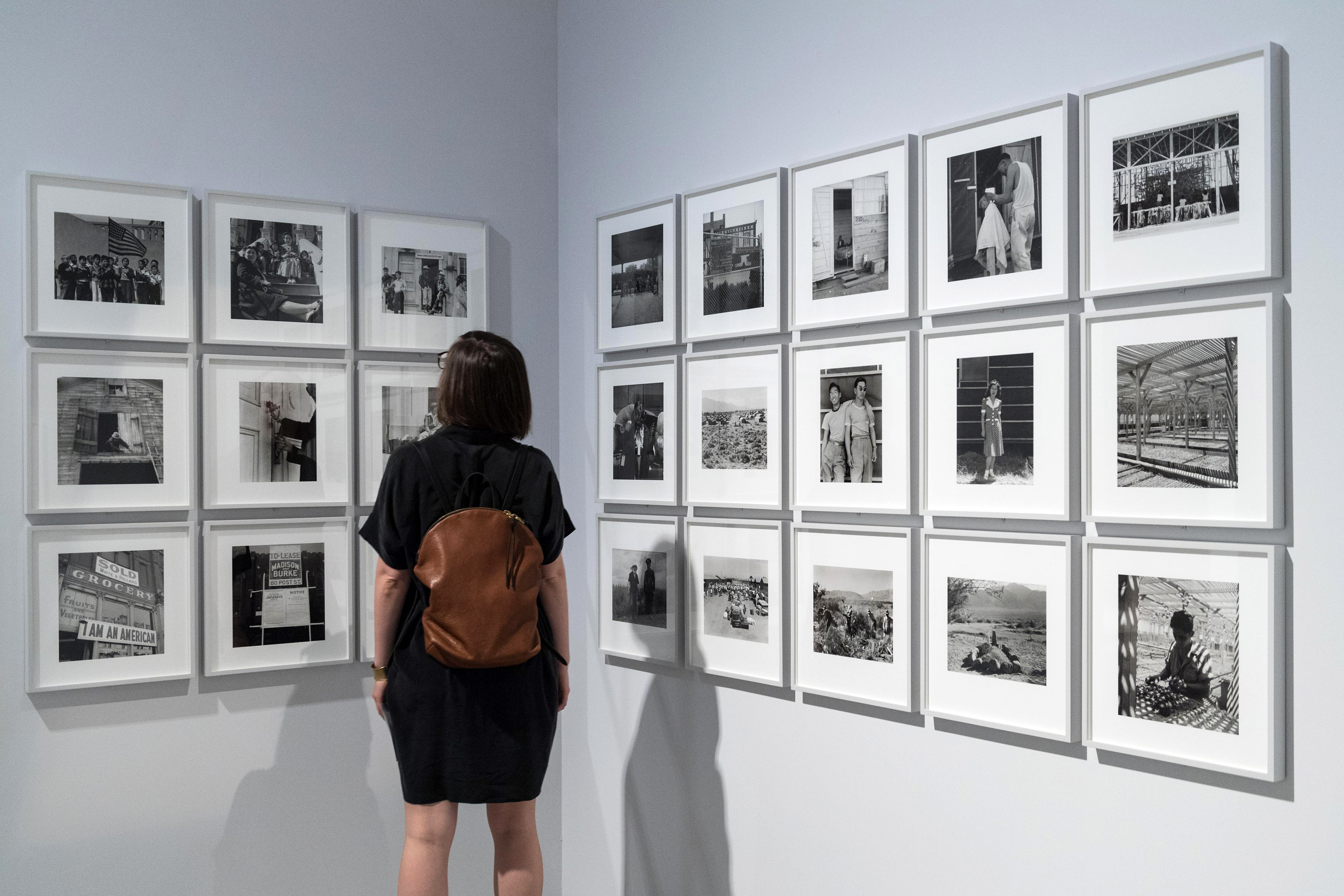
The exhibition continues with rarely seen photographs of the internment of more than 100,000 American citizens of Japanese descent that Lange produced on commission for the War Relocation Authority following the Japanese attack on the American naval base at Pearl Harbor in 1941. Lange’s critical perspective of this little discussed chapter in US history however meant that her photographs remained unpublished during the war and stored at the National Archives in Washington. It is the first time that this series will be shown comprehensively outside of the US and Canada.

Following her documentation of the Japanese American internment, Lange produced a photographic series of the wartime shipyards of Richmond, California with friend and fellow photographer Ansel Adams (1902-1984). Lange and Adams documented the war effort in the shipyards for Fortune magazine in 1944, recording the explosive increase in population numbers and the endlessly changing shifts of shipyard workers. Capturing the mass recruitment of workers, Lange turned her camera on both female and black workers, for the first time part of the workforce, and their defiance of sexist and racist attitudes.

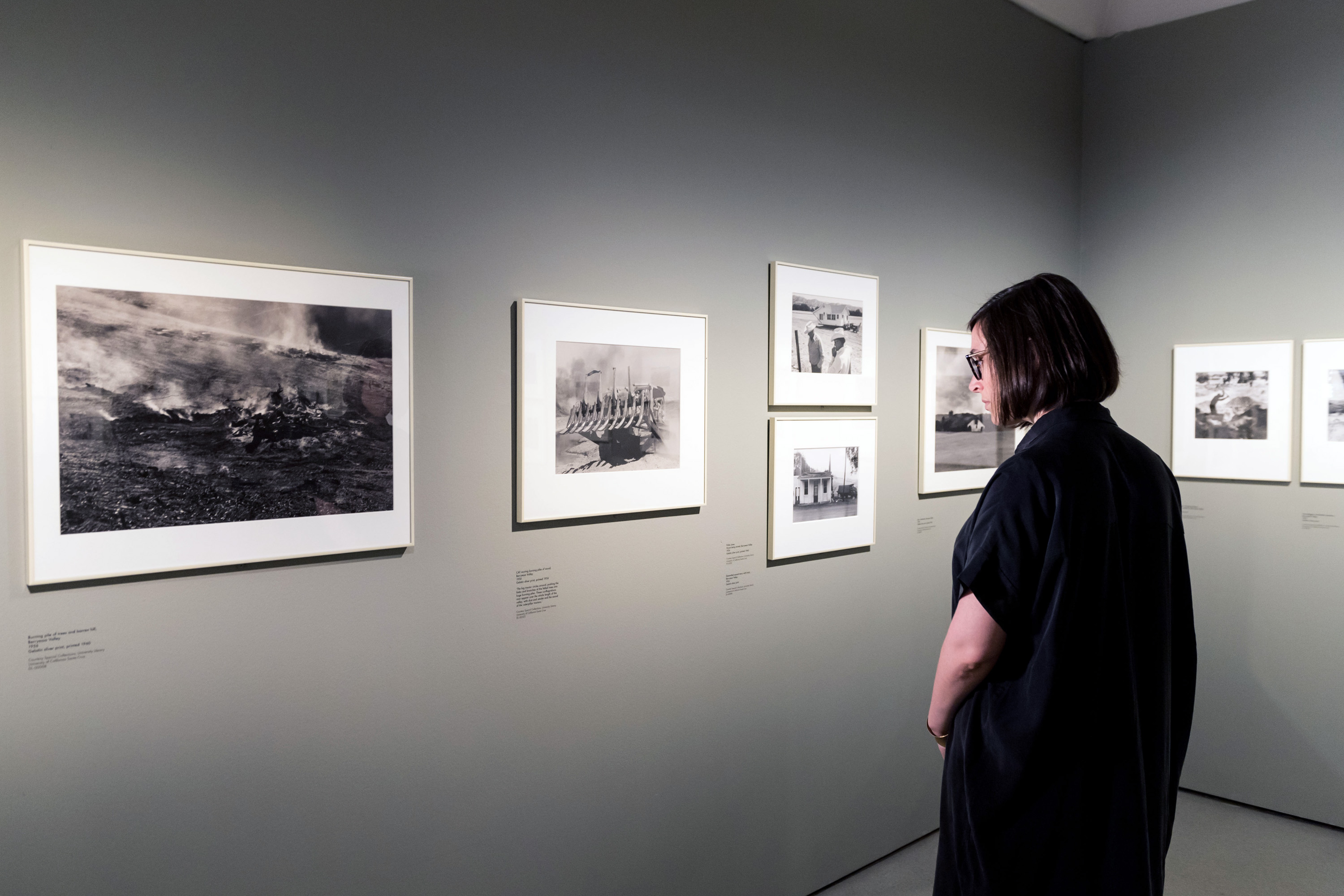
The exhibition features several of Lange’s post-war series, when she photographed extensively in California. Her series Public Defender (1955-1957) explores the US legal defence system for the poor and disadvantaged through the work of a public defender at the Alameda County Courthouse in Oakland. Death of a Valley (1956-1957), made in collaboration with photographer Pirkle Jones, documents the disappearance of the small rural town of Monticello in California’s Berryessa Valley as a consequence of the damming of the Putah Creek. Capturing the destruction of a landscape and traditional way of life, the photographs testify to Lange’s environmentalist politics and have not been displayed or published since the 1960s.

The exhibition concludes with Lange’s series of Ireland (1954), the first made outside the US. Spending six weeks in County Clare in western Ireland, Lange captured the experience of life in and around the farming town of Ennis in stark and evocative photographs that symbolise Lange’s attraction to the traditional life of rural communities.

An activist, feminist and environmentalist, Lange used her camera as a political tool to critique themes of injustice, inequality, migration and displacement that bear great resonance with today’s world, a prime example of which is her most iconic image the Migrant Mother (1936). Working in urban and rural contexts across America and beyond, she focused her lens on human suffering and hardship to create compassionate and piercing portraits of people as well as place in the hope to forge social and political reform – from the plight of sharecroppers in the Deep South to Dust Bowl refugees trekking along the highways of California in search of better livelihoods.

Dorothea Lange: Politics of Seeing is organised by the Oakland Museum of California. The European presentation has been produced in collaboration with Barbican Art Gallery, London and Jeu de Paume, Paris.

Press release from the Barbican Art Gallery


Installation view of the exhibition ‘Dorothea Lange: Politics of Seeing’ at the Barbican Art Gallery, London

Installation view of the exhibition ‘Dorothea Lange: Politics of Seeing’ at the Barbican Art Gallery, London


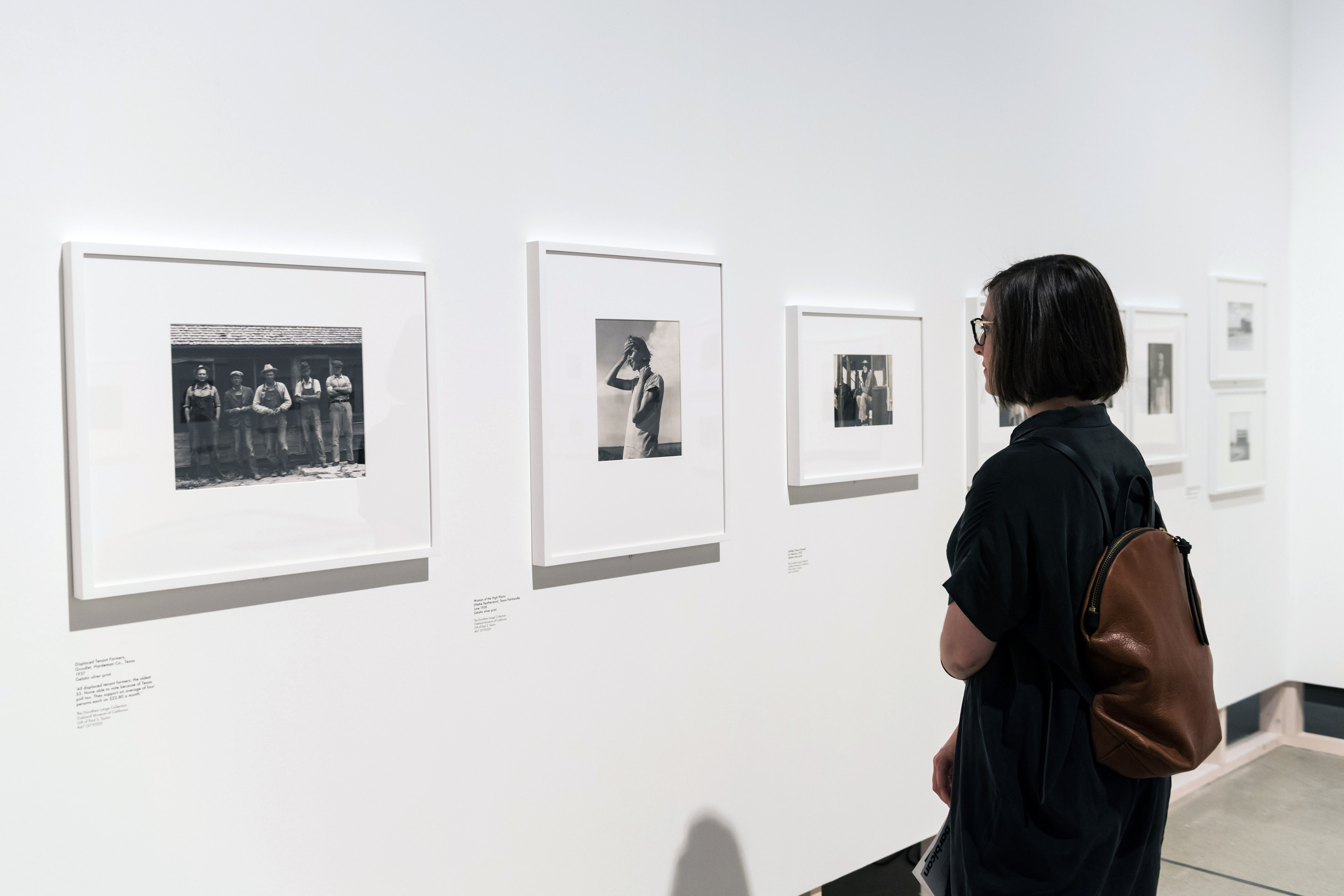
Installation views of the exhibition Dorothea Lange: Politics of Seeing at the Barbican Art Gallery, London showing in the bottom image at left, Lange’s Displaced Tennant Farmers, Goodlet, Hardeman Co., Texas 1937. ‘All displaced tenant farmers, the oldest 33. None able to vote because of Texas poll tax. They support an average of four persons each on $22.80 a month’; and at second left, Woman of the High Plains, Texas Panhandle June 1938 (below)
Photos: Ian Gavan/Getty Images for Barbican Art Gallery


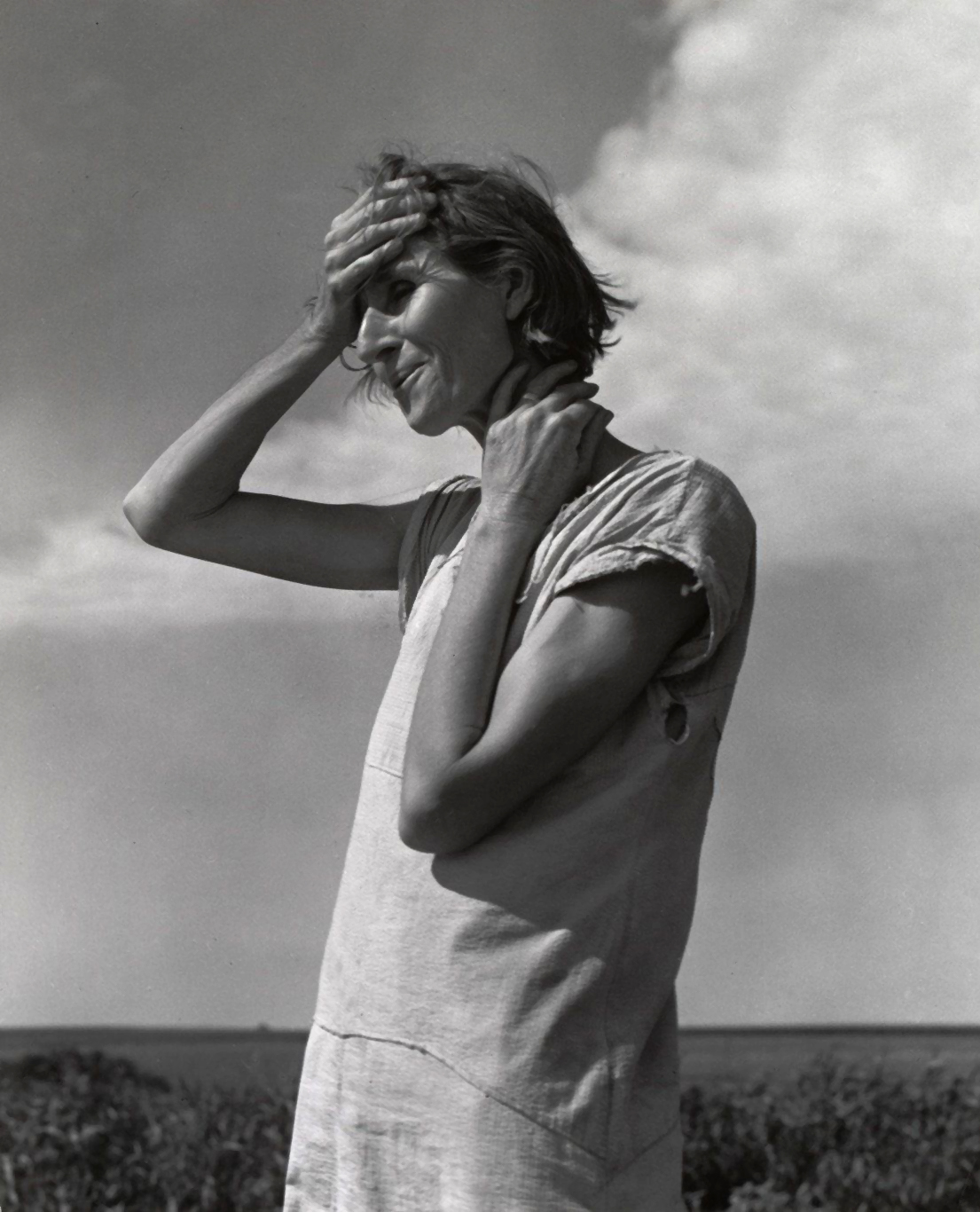
Dorothea Lange (American, 1895-1965) 'Woman of the High Plains, Texas Panhandle' June 1938


Dorothea Lange (American, 1895-1965)
Woman of the High Plains, Texas Panhandle
June 1938
Silver gelatin print
© The Dorothea Lange Collection, the Oakland Museum of California
Gift of Paul S. Taylor


Installation view of the exhibition ‘Dorothea Lange: Politics of Seeing’ at the Barbican Art Gallery, London


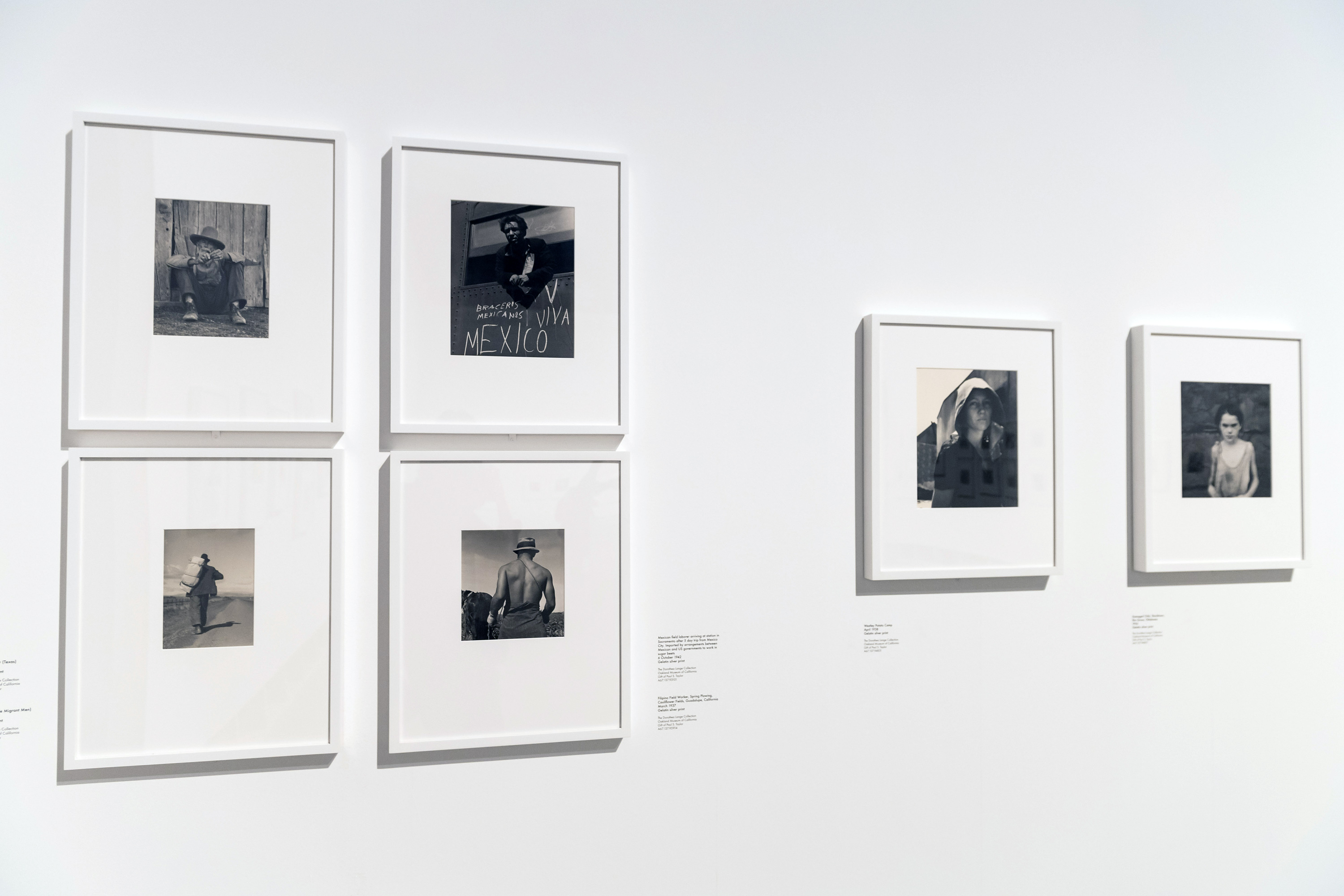
Installation view of the exhibition Dorothea Lange: Politics of Seeing at the Barbican Art Gallery, London showing at second left top, Lange’s Mexican field labourer at station in Sacramento after 5 day trip from Mexico City. Imported by arrangements between Mexican and US governments to work in sugar beets. 6 October 1942; at second left bottom, Filipino Field Worker, Spring Plowing, Cauliflower Fields, Guadalupe, California. March 1937 (below); and at right, Damaged Child, Shacktown, Elm Grove, Oklahoma. 1936 (below)
Photos: Ian Gavan/Getty Images for Barbican Art Gallery


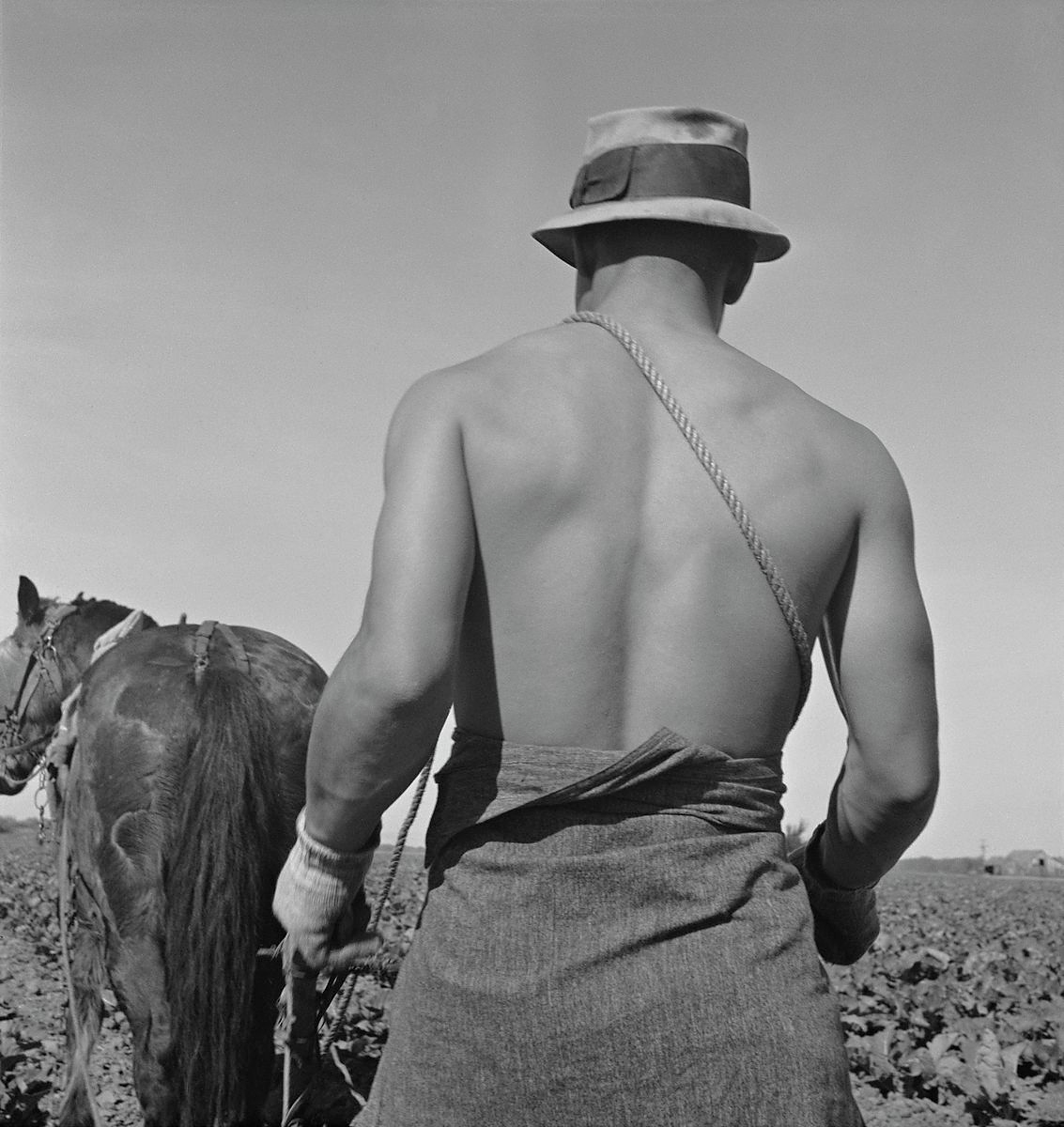
Dorothea Lange (American, 1895-1965) 'Filipino Field Worker, Spring Plowing, Cauliflower Fields, Guadalupe, California' March 1937


Dorothea Lange (American, 1895-1965)
Filipino Field Worker, Spring Plowing, Cauliflower Fields, Guadalupe, California
March 1937
Silver gelatin print
© The Dorothea Lange Collection, the Oakland Museum of California
Gift of Paul S. Taylor


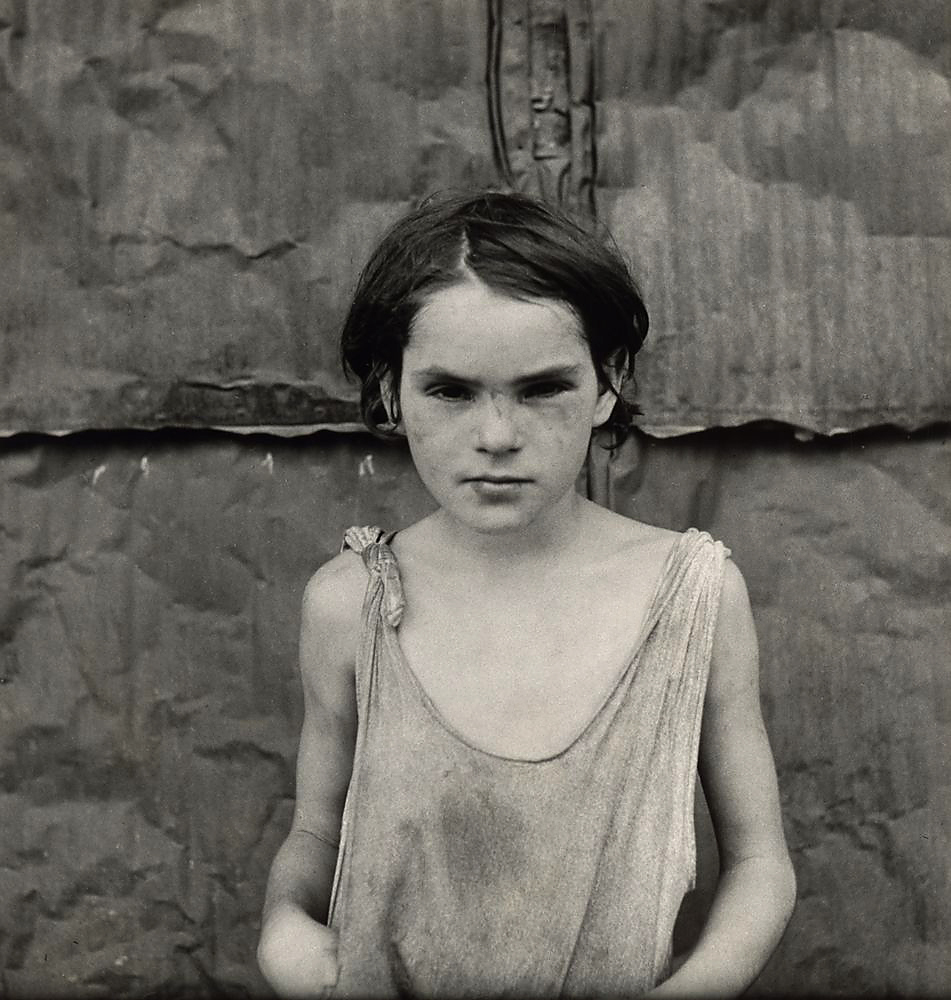
Dorothea Lange (American, 1895-1965) 'Damaged Child, Shacktown, Elm Grove, Oklahoma' 1936


Dorothea Lange (American, 1895-1965)
Damaged Child, Shacktown, Elm Grove, Oklahoma
1936
© The Dorothea Lange Collection, Oakland Museum of California, City of Oakland
Gift of Paul S. Taylor


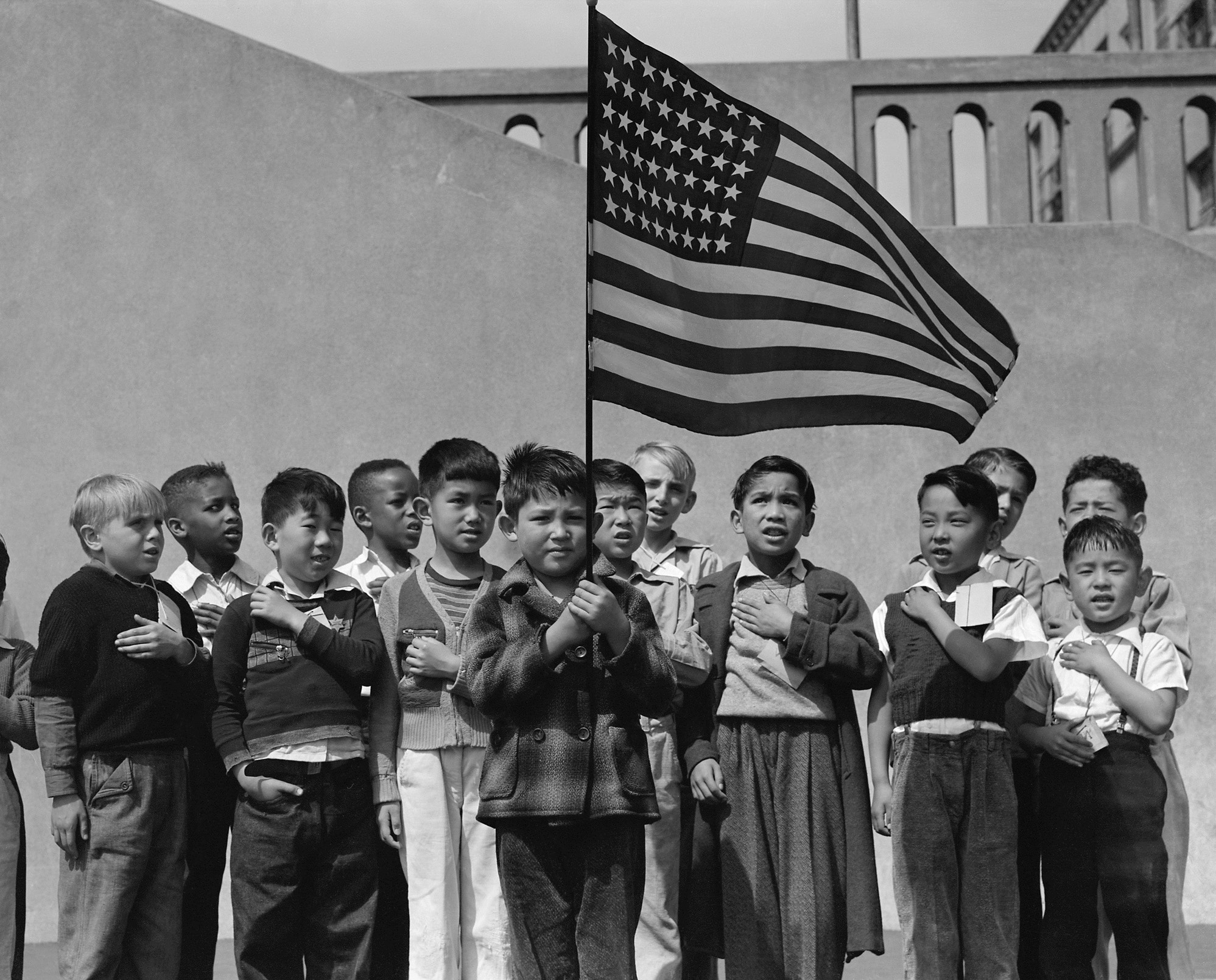
Dorothea Lange (American, 1895-1965) 'San Francisco, California. Flag of allegiance pledge at Raphael Weill Public School, Geary and Buchanan Streets' 1942


Dorothea Lange (American, 1895-1965)
San Francisco, California. Flag of allegiance pledge at Raphael Weill Public School, Geary and Buchanan Streets. Children in families of Japanese ancestry were evacuated with their parents and will be housed for the duration in War Relocation Authority centers where facilities will be provided for them to continue their education
1942
Silver gelatin print
Courtesy National Archives, photo no. 210-G-C122


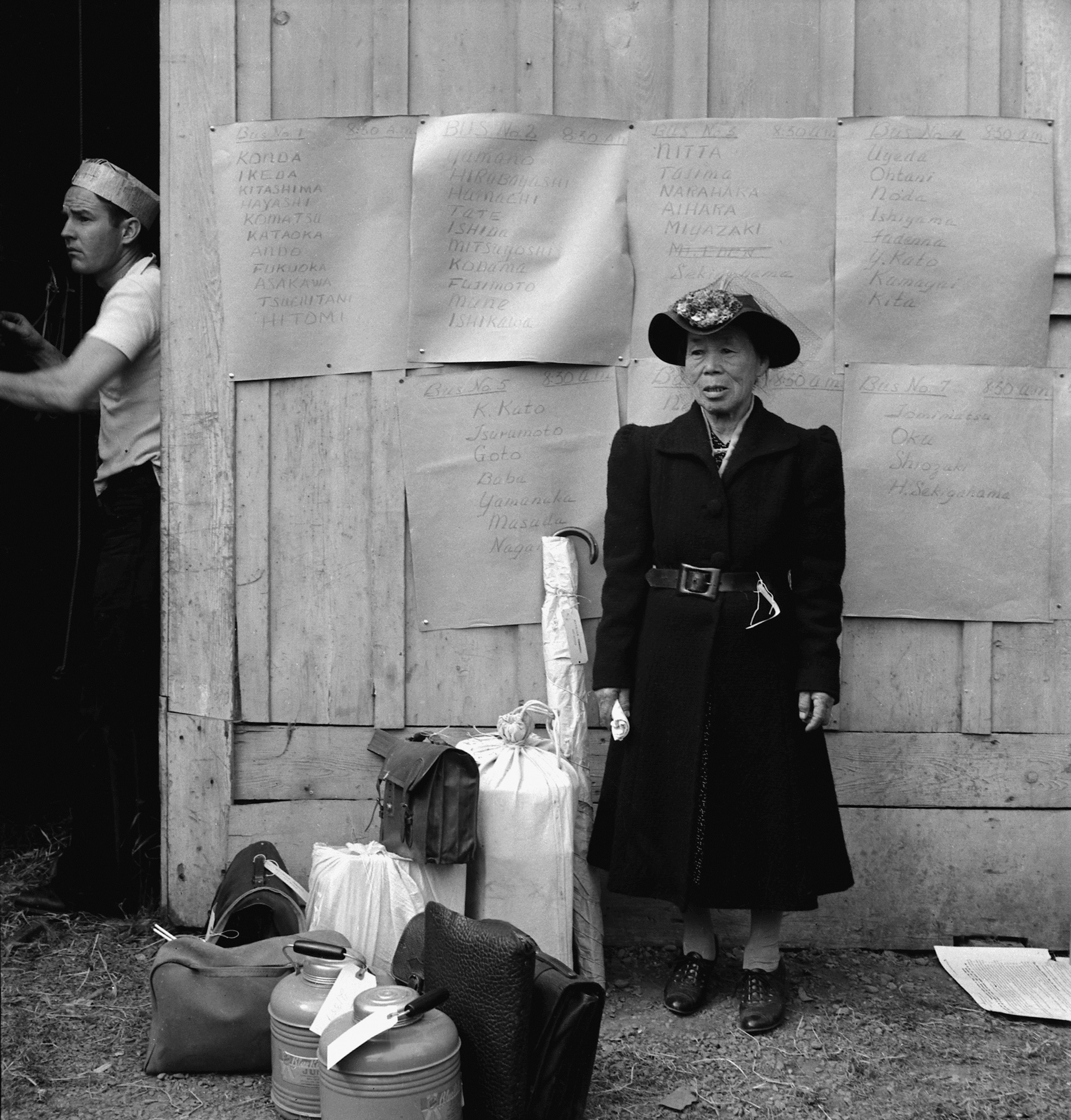
Dorothea Lange (American, 1895-1965) 'Centerville, California. This evacuee stands by her baggage as she waits for evacuation bus' 1942


Dorothea Lange (American, 1895-1965)
Centerville, California. This evacuee stands by her baggage as she waits for evacuation bus. Evacuees of Japanese ancestry will be housed in War Relocation Authority centers for the duration
1942
Silver gelatin print
Courtesy National Archives, photo no. 210-G-C241


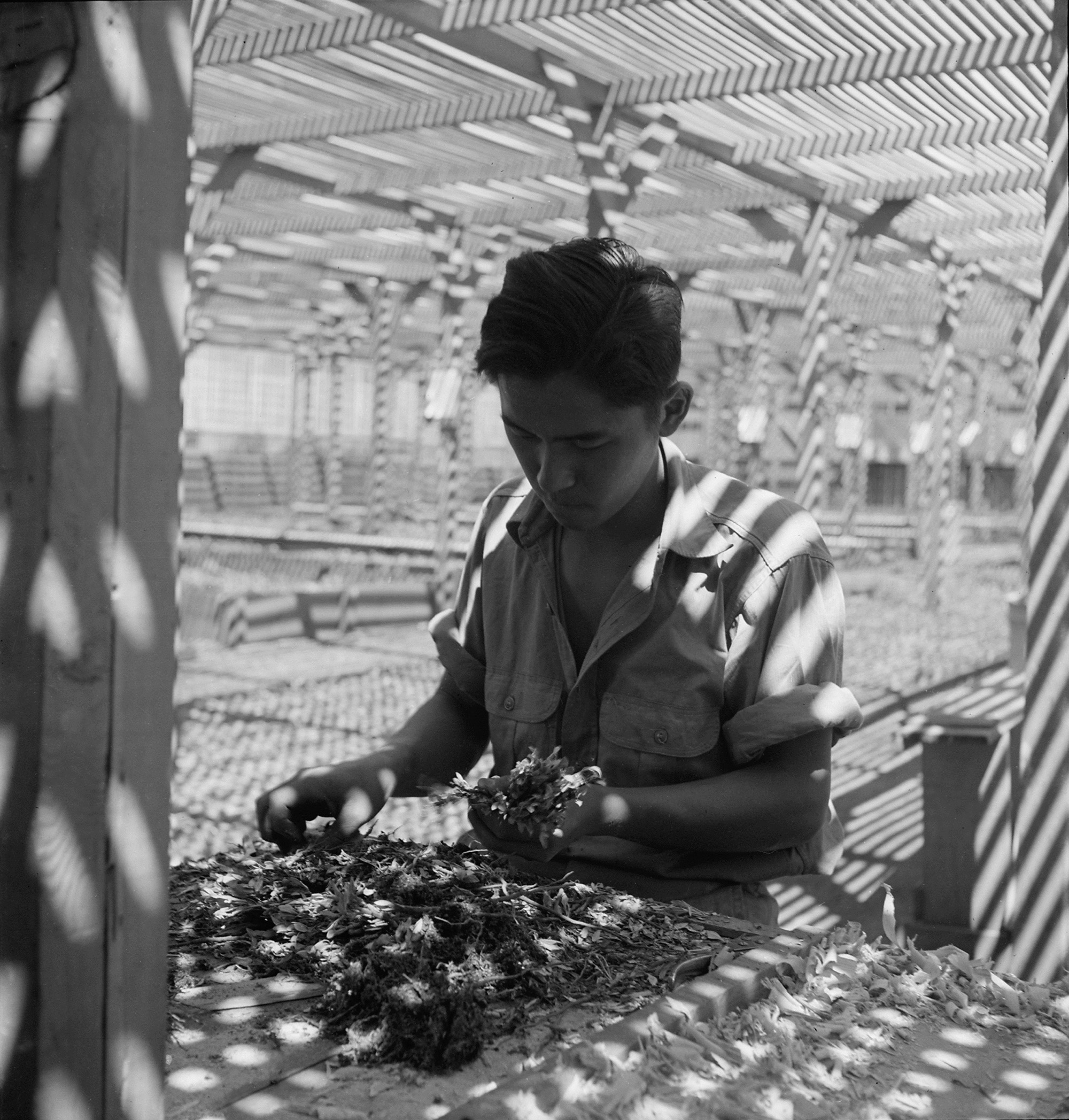
Dorothea Lange (American, 1895-1965) 'Manzanar Relocation Center, Manzanar, California. An evacuee is shown in the lath house sorting seedlings for transplanting' 1942


Dorothea Lange (American, 1895-1965)
Manzanar Relocation Center, Manzanar, California. An evacuee is shown in the lath house sorting seedlings for transplanting. These plants are year-old seedlings from the Salinas Experiment Station
1942
Silver gelatin print
Courtesy National Archives, photo no. 210-GC737


Dorothea Lange (American, 1895-1965) 'Manzanar Relocation Center' 1942


Dorothea Lange (American, 1895-1965)
Manzanar Relocation Center, Manzanar, California
July 3, 1942
Silver gelatin print
© The Dorothea Lange Collection, the Oakland Museum of California


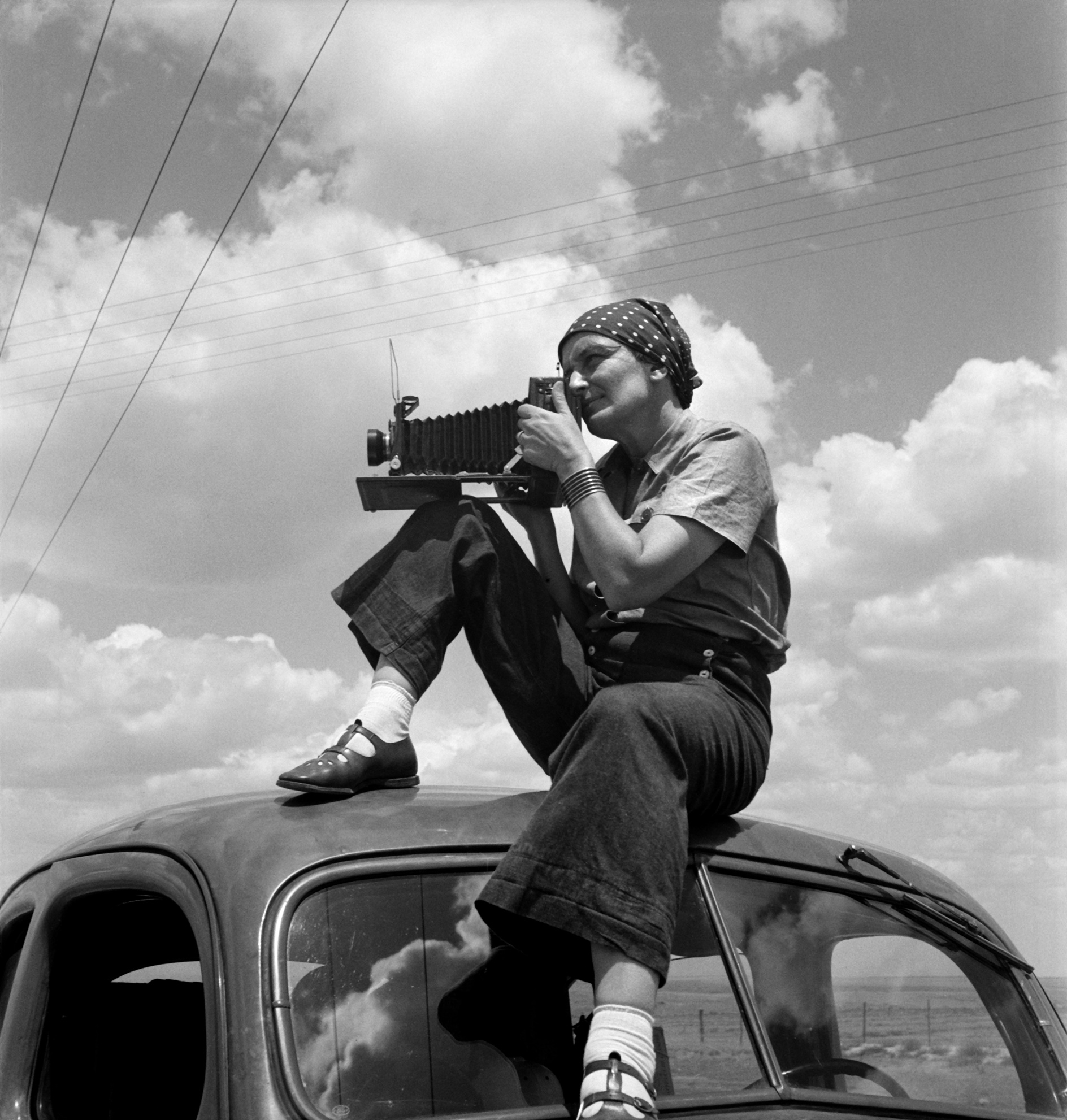
Paul S. Taylor (American, 1895-1984) 'Dorothea Lange in Texas on the Plains' c. 1935


Paul S. Taylor (American, 1895-1984)
Dorothea Lange in Texas on the Plains
c. 1935
Silver gelatin print
© The Dorothea Lange Collection, the Oakland Museum of California


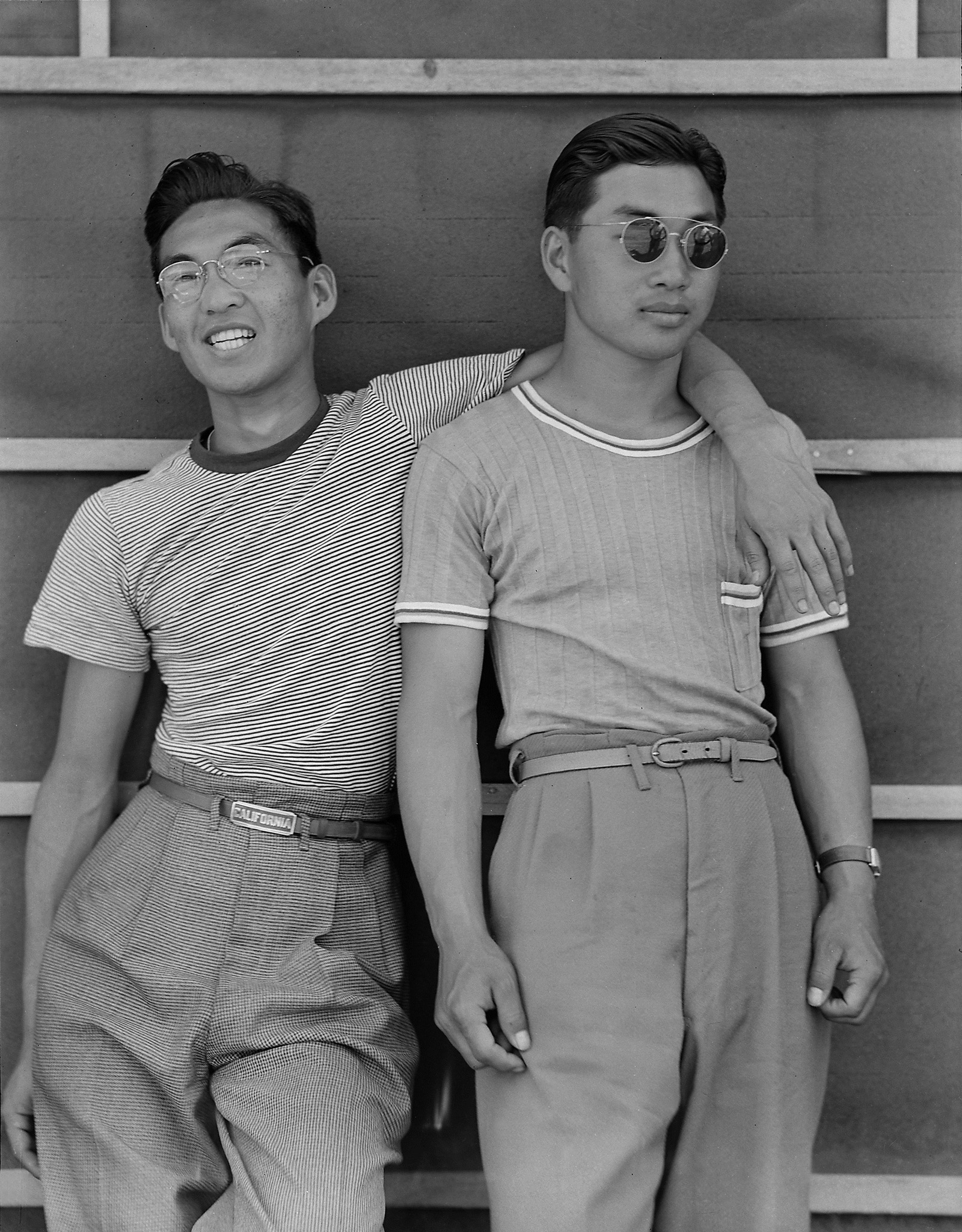
Dorothea Lange (American, 1895-1965) 'Sacramento, California. College students of Japanese ancestry' 1942


Dorothea Lange (American, 1895-1965)
Sacramento, California. College students of Japanese ancestry who have been evacuated from Sacramento to the Assembly Center
1942
Silver gelatin print
Courtesy National Archives, photo no. 210-GC471


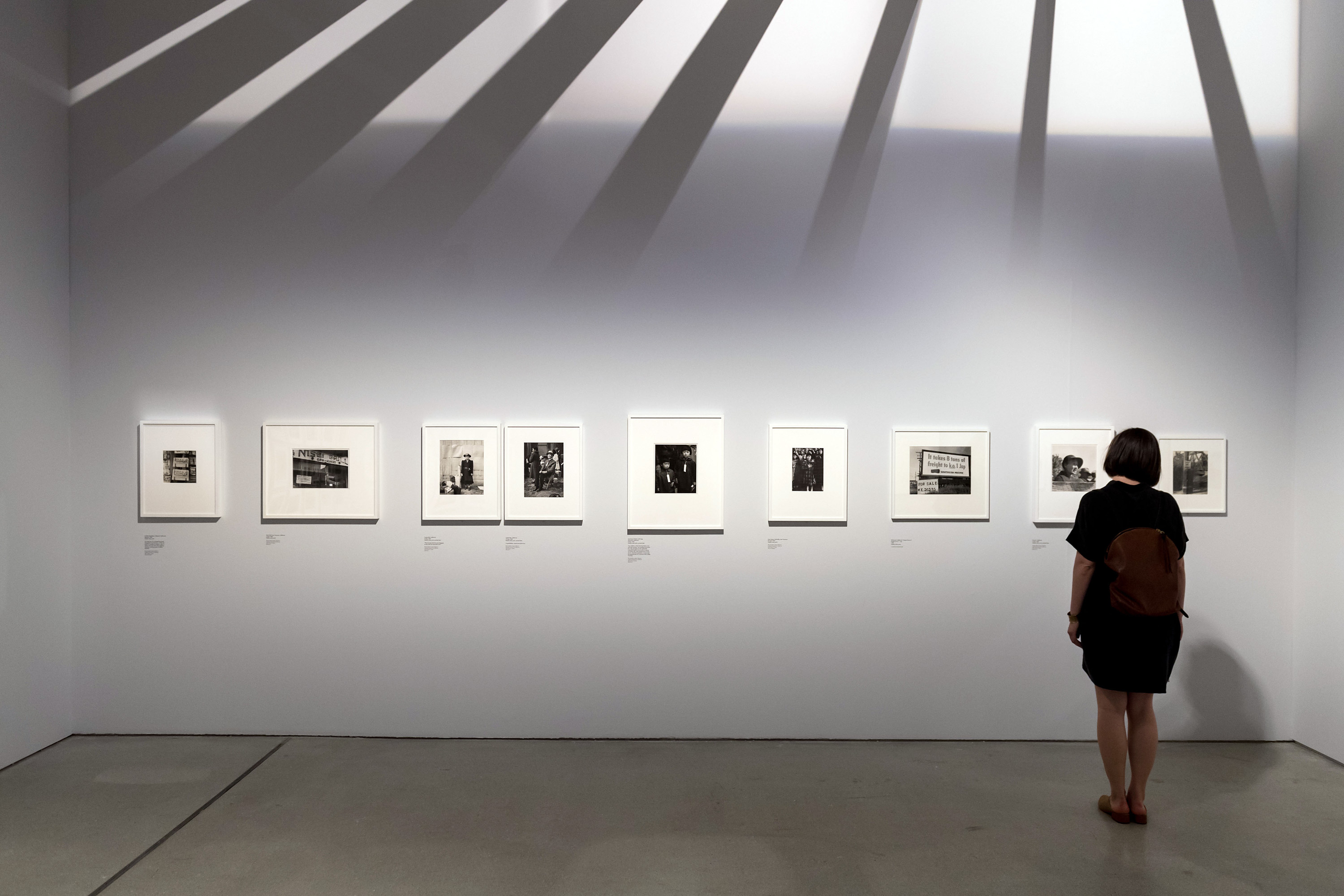
Installation view of the exhibition ‘Dorothea Lange: Politics of Seeing’ at the Barbican Art Gallery, London

Installation view of the exhibition ‘Dorothea Lange: Politics of Seeing’ at the Barbican Art Gallery, London


Installation views of the exhibition Dorothea Lange: Politics of Seeing at the Barbican Art Gallery, London showing in the bottom image, Lange’s photographs of Japanese Americans
Photos: Ian Gavan/Getty Images for Barbican Art Gallery


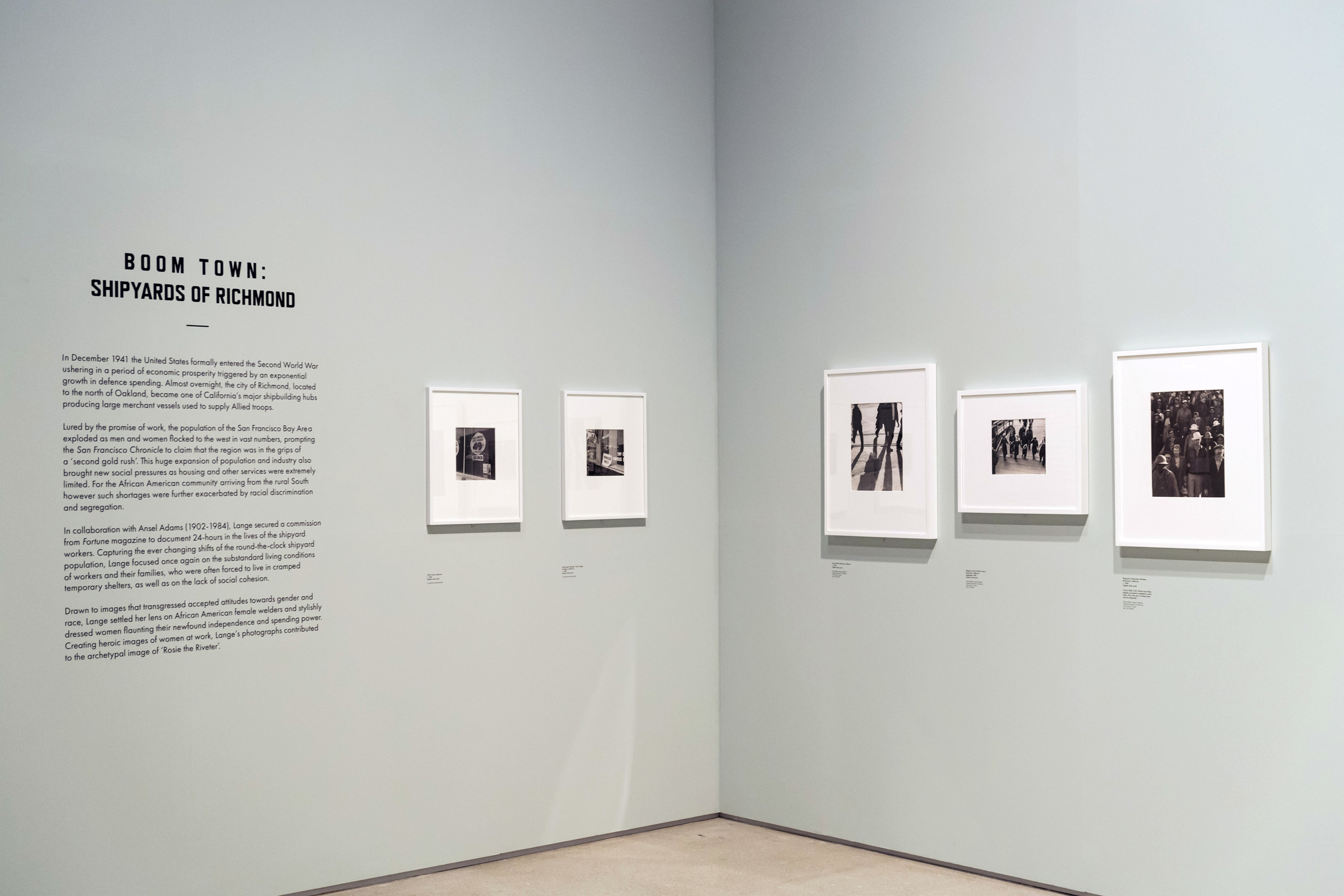
Installation view of the exhibition ‘Dorothea Lange: Politics of Seeing’ at the Barbican Art Gallery, London


Installation view of the exhibition Dorothea Lange: Politics of Seeing at the Barbican Art Gallery, London showing Lange’s ‘Shipyards of Richmond’ photographs
Photos: Ian Gavan/Getty Images for Barbican Art Gallery


Boom Town: Shipyards of Richmond

In December 1941 the United States entered the Second World War ushering in a period of economic prosperity triggered by an exponential growth in defence spending. Almost overnight, the city of Richmond, located to the north of Oakland, became one of California’s major shipbuilding hubs producing large merchant vessels used to supply Allied troops.

Lured by the promised of work, the population of the San Francisco Bay Area exploded as men and women flocked to the west in vast numbers, prompting the San Francisco Chronicle to claim that the region was in the grips of a ‘second gold rush’. This huge expansion of population and industry also brought new social pressures as housing and other services were extremely limited. For African American community arriving from the rural South however such shortages were further exacerbated by racial discrimination and segregation.

In collaboration with Ansel Adams (1902-1984), Lange secured a commission from Fortune magazine to document 24-hours in the lives of the shipyard workers. Capturing the ever changing shifts of the round-the-clock shipyard population, Lange focused once again on the substandard living conditions of workers and their families, who were often forced to live in cramped temporary shelters, as well as on the lack of social cohesion.

Drawn to images that transgressed accepted attitudes towards gender and race, Lange settled her lens on African American female welders and stylishly dressed women flaunting their newfound independence and spending power. Creating heroic images of women at work, Lange’s photographs contributed to the archetypal image of ‘Rosie the Riveter’.

Wall text from the exhibition


Installation view of the exhibition ‘Dorothea Lange: Politics of Seeing’ at the Barbican Art Gallery, London

Installation view of the exhibition ‘Dorothea Lange: Politics of Seeing’ at the Barbican Art Gallery, London


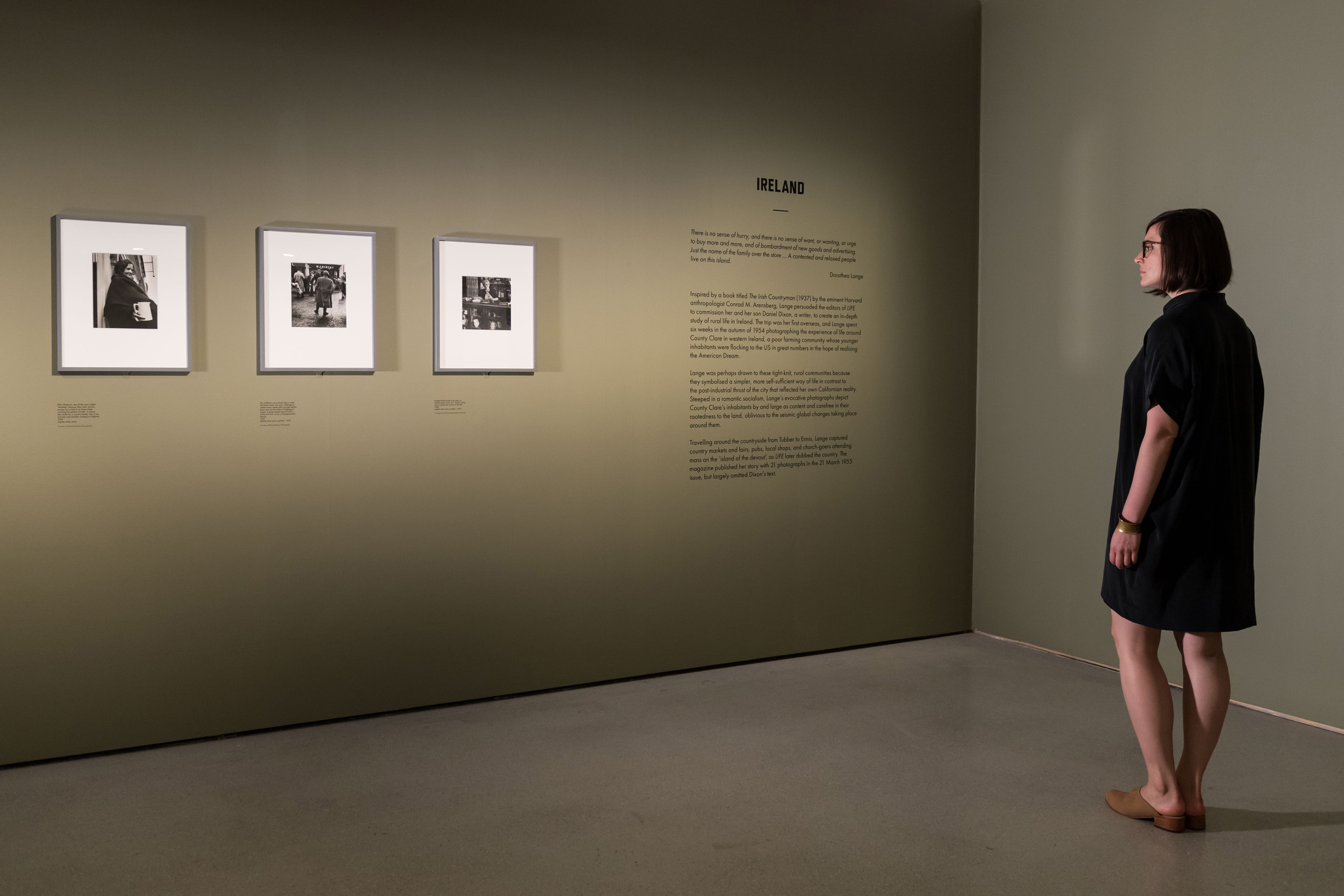
Installation views of the exhibition Dorothea Lange: Politics of Seeing at the Barbican Art Gallery, London showing in the bottom image, Lange’s ‘Ireland’ photographs
Photos: Ian Gavan/Getty Images for Barbican Art Gallery


“There is no sense of hurry, and there is no sense of want, or wanting, or urge to buy more and more, and of bombardment of new goods and advertising. Just the name of the family over the store … A contented and relaxed people live on this island.


Dorothea Lange


Ireland

Inspired by a book titled The Irish Countryman (1937) the the eminent anthropologist Conrad M. Arensberg, Lange persuaded the editors of LIFE to commission her and her son Daniel Dixon, a writer, to create an in-depth study of rural life in Ireland. The trip was her first overseas, and Lange spent six weeks in the autumn of 1954 photographing the experience of life around County Clare in western Ireland, a poor farming community whose younger inhabitants were flocking to the US in great numbers in the hope of realising the American Dream.

Lange was perhaps drawn to these tight-knit, rural communities because they symbolised a simpler, more self-sufficient way of life in contrast to the post-industrial thrust of the city that reflected her own Californian reality. Steeped in a romantic socialism, Lange’s evocative photographs depict County Clare’s inhabitants by and large as content and carefree in their rootedness to the land, oblivious to the seismic global changes taking place around them.

Travelling around the countryside from Tubber to Ennis, Lange captured country markets and fairs, pubs, local shops, and church-goers attending mass on the ‘island of the devout’, as LIFE later dubbed the country. The magazine published her story with 21 photographs in the 21 March 1955 issue, but largely omitted Dixon’s text.

Wall text from the exhibition


Barbican Art Gallery
Barbican Centre
Silk Street, London, EC2Y 8DS

Opening hours:
Sat – Wed 10am – 6pm (last entry 5pm)
Thu – Fri 10am – 8pm (last entry 7pm)
Bank Holidays 12 – 6pm (last entry 5pm)
Barbican Art Gallery website

LIKE ART BLART ON FACEBOOK

Back to top

Exhibition: ‘Doug Aitken’ at Regen Projects, Los Angeles

Exhibition dates: 12th September – 17th October, 2009


Many thankx to Regen Projects for allowing me to publish the art work in the posting. Please click on the photographs for a larger version of the image.


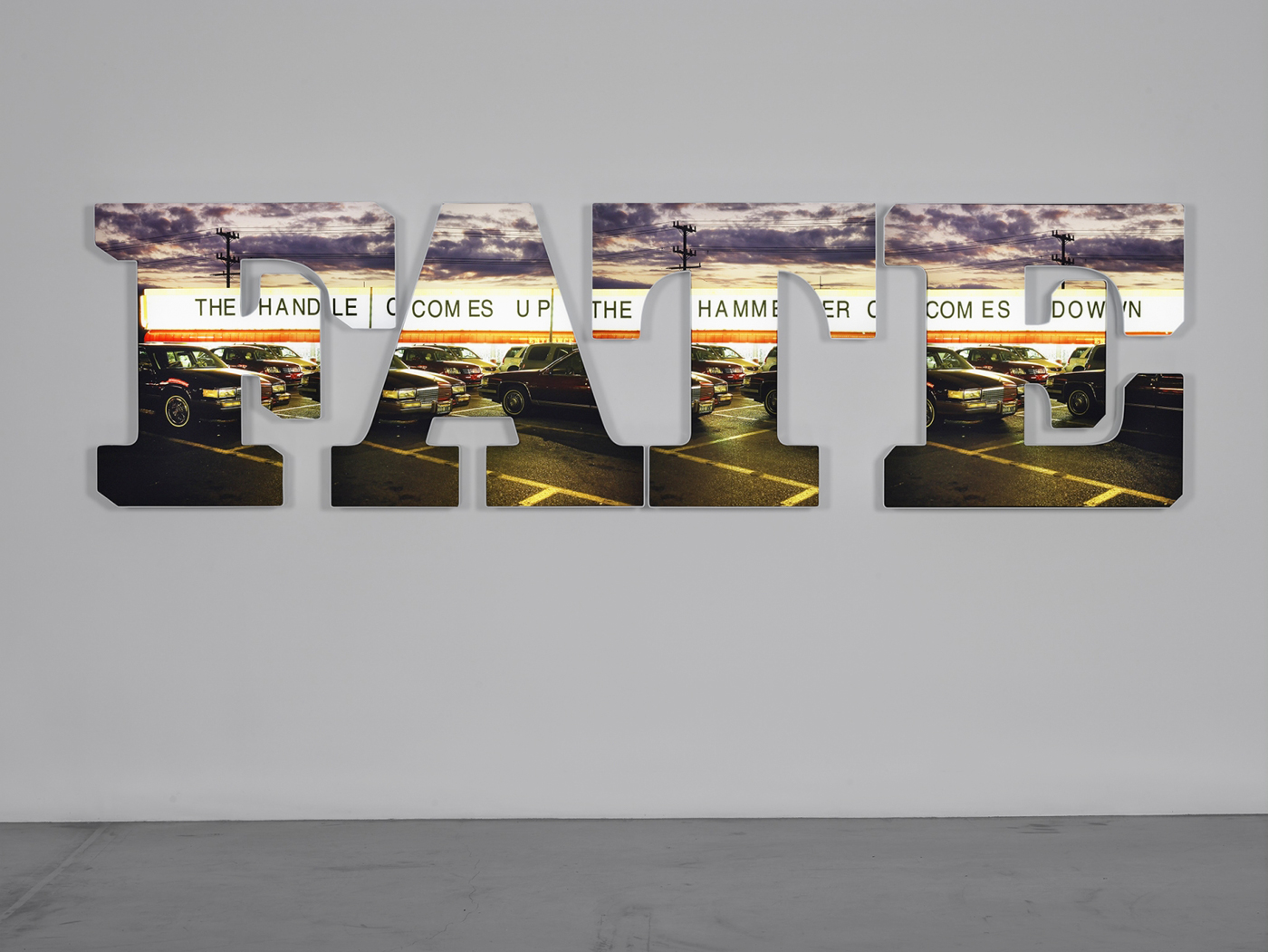
Doug Aitken (American, b. 1968) 'The handle comes up, the hammer comes down' 2009 from the exhibition 'Doug Aitken' at Regen Projects, Los Angeles, Sept - Oct, 2009


Doug Aitken (American, b. 1968)
The handle comes up, the hammer comes down
2009
LED lit lightbox


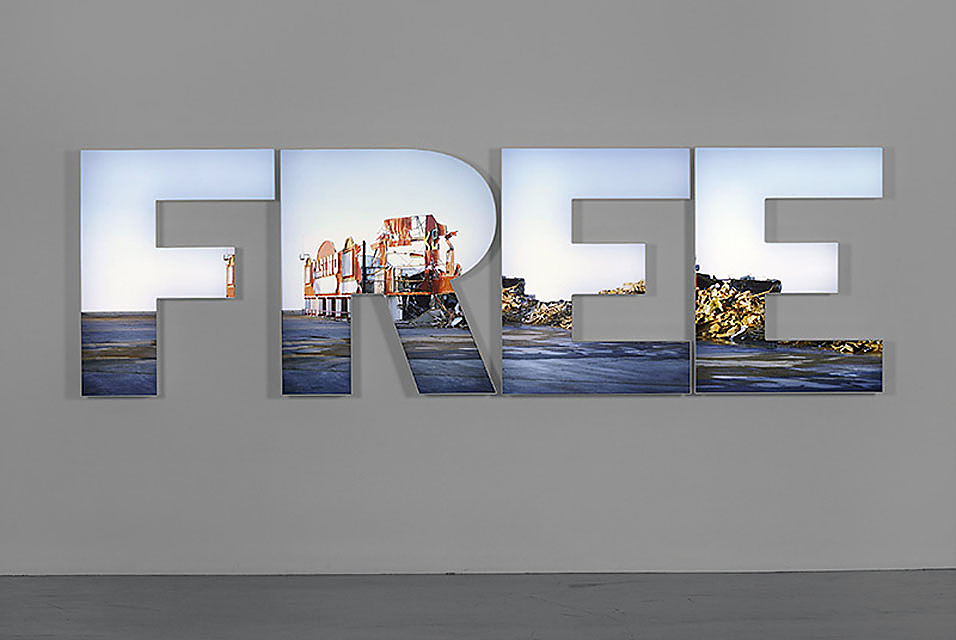
Doug Aitken (American, b. 1968) 'Free' 2009 from the exhibition 'Doug Aitken' at Regen Projects, Los Angeles, Sept - Oct, 2009


Doug Aitken (American, b. 1968)
Free
2009
LED lit lightbox


Doug Aitken (American, b. 1968) 'Start Swimming' 2006 from the exhibition 'Doug Aitken' at Regen Projects, Los Angeles, Sept - Oct, 2009


Doug Aitken (American, b. 1968)
Start Swimming
LED lit lightbox
2006


Doug Aitken (American, b. 1968) 'Start Swimming' 2006


Doug Aitken (American, b. 1968)
Start Swimming
LED lit lightbox
2006


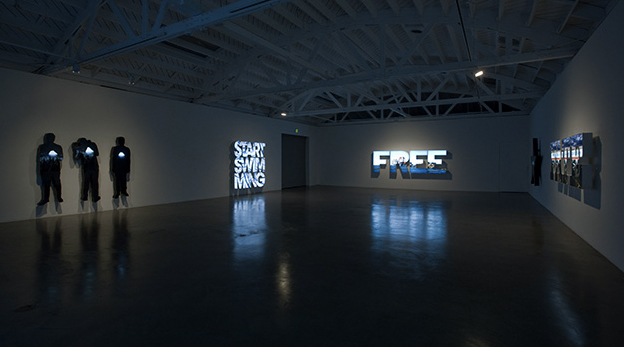
Installation view of ;Doug Aitken; at Regen Projects, Los Angeles


Installation view of Doug Aitken at Regen Projects, Los Angeles


Regen Projects is pleased to announce an exhibition of new works by Los Angeles artist Doug Aitken. This exhibition will present a series of new text-based light boxes and will feature the west coast debut of the film migration. Aitken explores the themes of temporality, space, memory, movement, and landscape in his work. History and themes of both the past and present are interwoven and reconfigured. His work deconstructs the connection between idea and iconography allowing each to reinvent itself.

Doug Aitken’s new light boxes combine image and text in a collision that creates a rupture in which alternate connections are presented. The work frontier depicts a destroyed property on the water’s edge, redefining expectations of what a frontier may hold. The images within some of the light boxes are a photographic collage that references Aitken’s photographic oeuvre and aesthetic. Experimenting with font, borrowed images, and his own photographs, the light boxes will be presented in the darkened gallery, glowing and playing off of one another. The disjunction of word, image, and light in these works also moves toward a cinematic whole, creating panoramic landscapes through text.

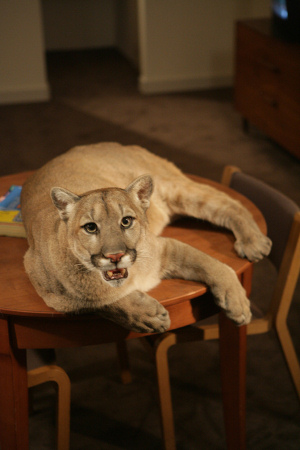
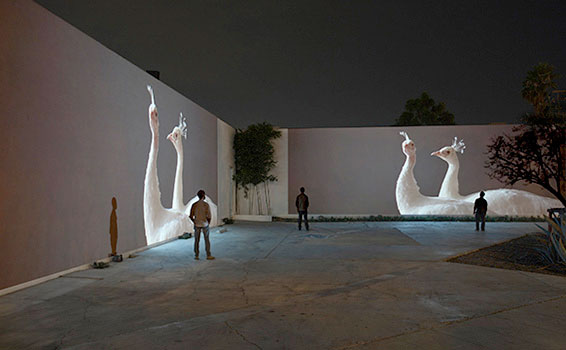
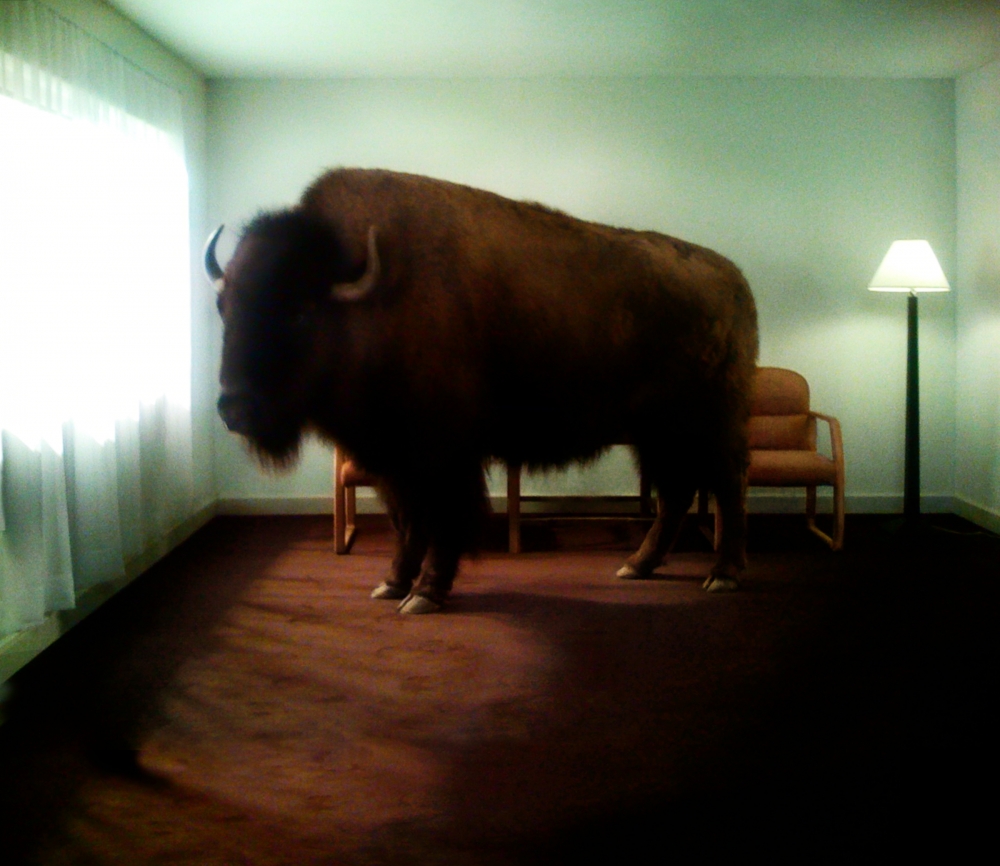
Presented alongside the light boxes will be Aitken’s first large scale public installation in Los Angeles, migration. The film, the first instalment in a three-part trilogy entitled empire, debuted at the 2008 Carnegie International. This hallucinatory epic depicts the movements of migratory animals as they pass through vacant and deserted hotel and motel rooms, delineating a nomadic passage across America from east to west. Fittingly making its first appearance on the west coast, this large-scale cinematic installation will be presented to the public on Santa Monica Boulevard projected onto the courtyard of Regen Projects II; visible only at night from sunset to sunrise. In addition to the nighttime public presentation, migration will also be exhibited at the 633 North Almont Drive space on an indoor billboard accompanied by its original score.

Settlers who met the untamed wilderness to forge new ways of life defined westward expansion. Aitken’s migratory landscape in migration is the opposite; it is a landscape completely devoid of human presence. His non-linear narrative presents a series of different sequences in which the animals and their actions are unique while the rooms and their components are indistinguishable. Hotels such as these offer a sense of both security and isolation and while some animals adapt to these surroundings, others seem conspicuously strange. Rarely do we get to examine these creatures so closely. Their movements and presence make the viewer acutely aware of scale, calling into question various relationships; the most apparent of which is the relationship of the natural and the man-made. In this encounter between the urban and the indigenous the viewer gets a sense of both displacement and habituation. As one critic describes:

“One by one, at different hotels, the animals behave as they behave, sniffing the air, twitching their noses to orient themselves in the desolate human habitat. Imbued with Aitken’s usual intimations of planetary solitude, his sense of spatial dislocation, and gorgeous formalised perception, these images … have the quality not so much of a nonlinear narrative as of a mirage.” (Kim Levin, Artnews, January 2009, p. 110.)


Aitken’s work has been exhibited extensively at museums and galleries worldwide, including his 2007 exhibition “sleepwalkers,” a large-scale outdoor installation at the Museum of Modern Art, New York. He has had numerous solo exhibitions including shows at the Serpentine Gallery, the Kunstmuseum Wolfsberg, the Kunsthaus Bregenz and the Kunsthalle Zurich. Aitken was awarded the international prize at the Venice Biennale in 1999 and was included in the 2000 Whitney Biennial.

Text from the Regen Projects website [Online] Cited 01/11/2009. No longer available online


Doug Aitken (American, b. 1968) Still from 'Migration' 2008

Doug Aitken (American, b. 1968) Still from 'Migration' 2008

Doug Aitken (American, b. 1968) Still from 'Migration' 2008

Doug Aitken (American, b. 1968) Still from 'Migration' 2008

Doug Aitken (American, b. 1968) Still from 'Migration' 2008

Doug Aitken (American, b. 1968) Still from 'Migration' 2008


Doug Aitken (American, b. 1968)
Stills from Migration
2008
Single video projection with billboard (steel and PVC projection screen)


In Migration, peacocks, deer, and beaver are filmed occupying motel rooms in vignettes that strike a poignant, provocative chord: talk about unexpected guests. Nevertheless, the work isn’t funny; it’s too frank in its beauty, too finely and respectfully wrought to be a joke.

Aitken’s animals are frequently shot in close perspective, which enhances their beauty in a way that is mesmerising. We’re not looking through them as much as we’re looking alongside them, ingesting the utter foreignness of their environs. As evening falls, we see an owl, an already otherworldly creature whose glowing eyes appear extraterrestrial, blinking at us from its perch on a king-size bed. Against the singsong of chirping birds, the camera pans away from the stationary owl as the room fills with thousands of downy feathers. Light is a powerful character in the film, whether gently filtered through sheer curtains or spilling onto carpeted hallways. Rather than highlighting imperfections or ugliness, the light is salvic, evincing a limbo that’s illuminating and warming. In one way or another, all of Aitken’s animals are drawn to light, whether toward a blinking lamp, the refracted surface of a swimming pool, or even the glow of an opened refrigerator door.

Extract from


Regen Projects
6750 Santa Monica Boulevard
Los Angeles, CA 90038
Phone: (310) 276 5424

Gallery hours:
Tuesday – Saturday 10am – 5pm

Regen Projects website

LIKE ART BLART ON FACEBOOK

Back to thttps://artblart.com/2009/10/04/exhibition-doug-aitken-at-regen-projects-los-angeles/op