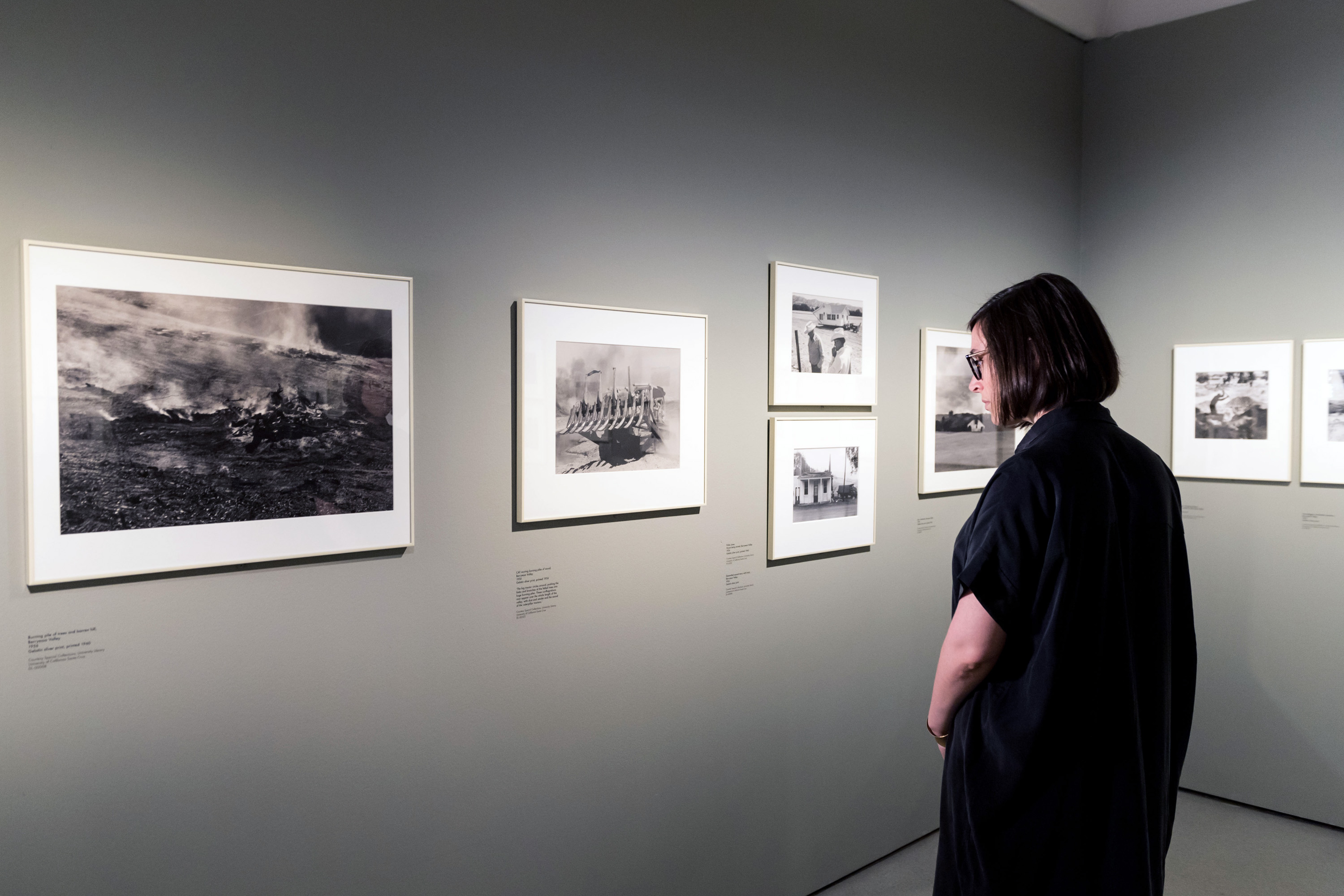
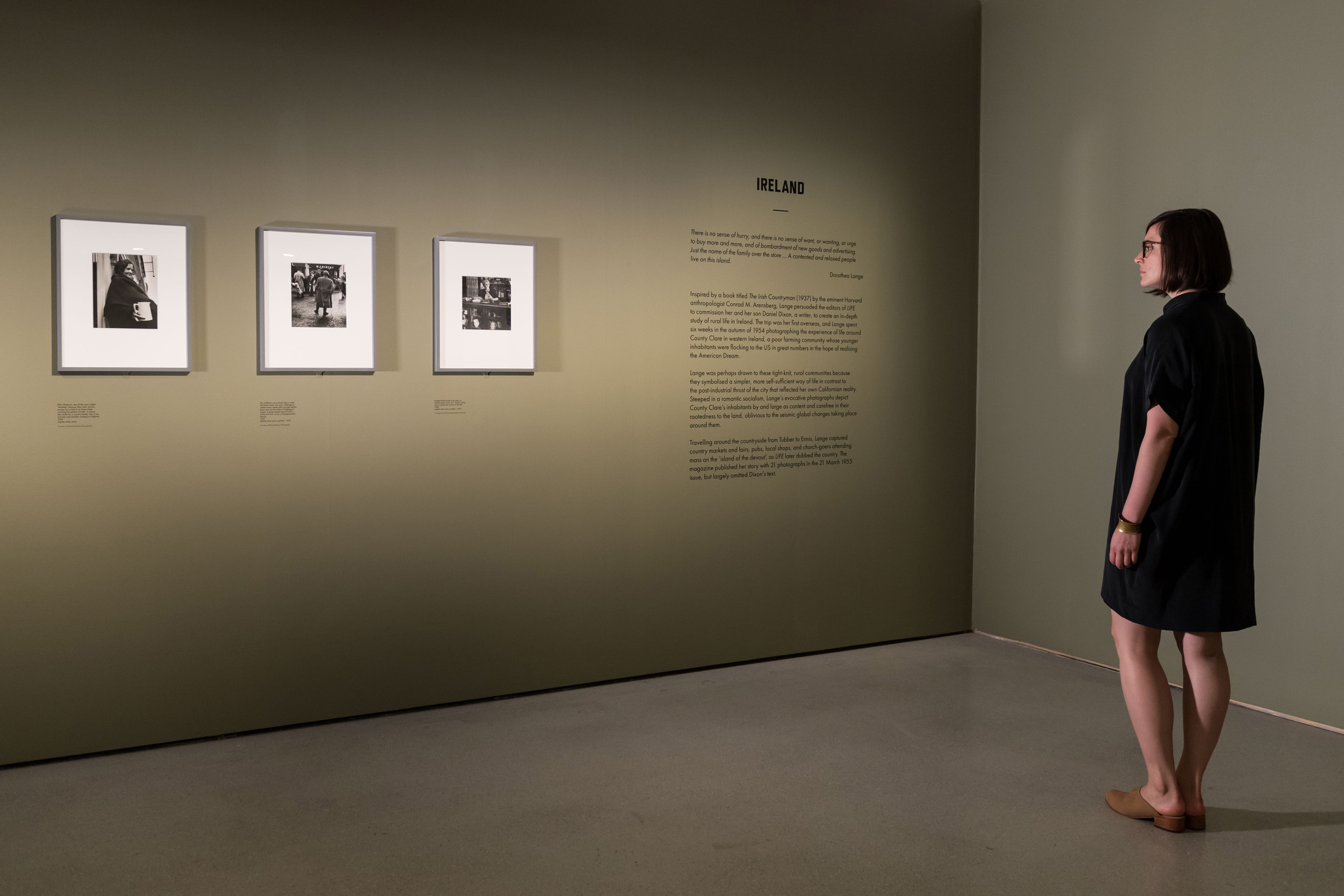
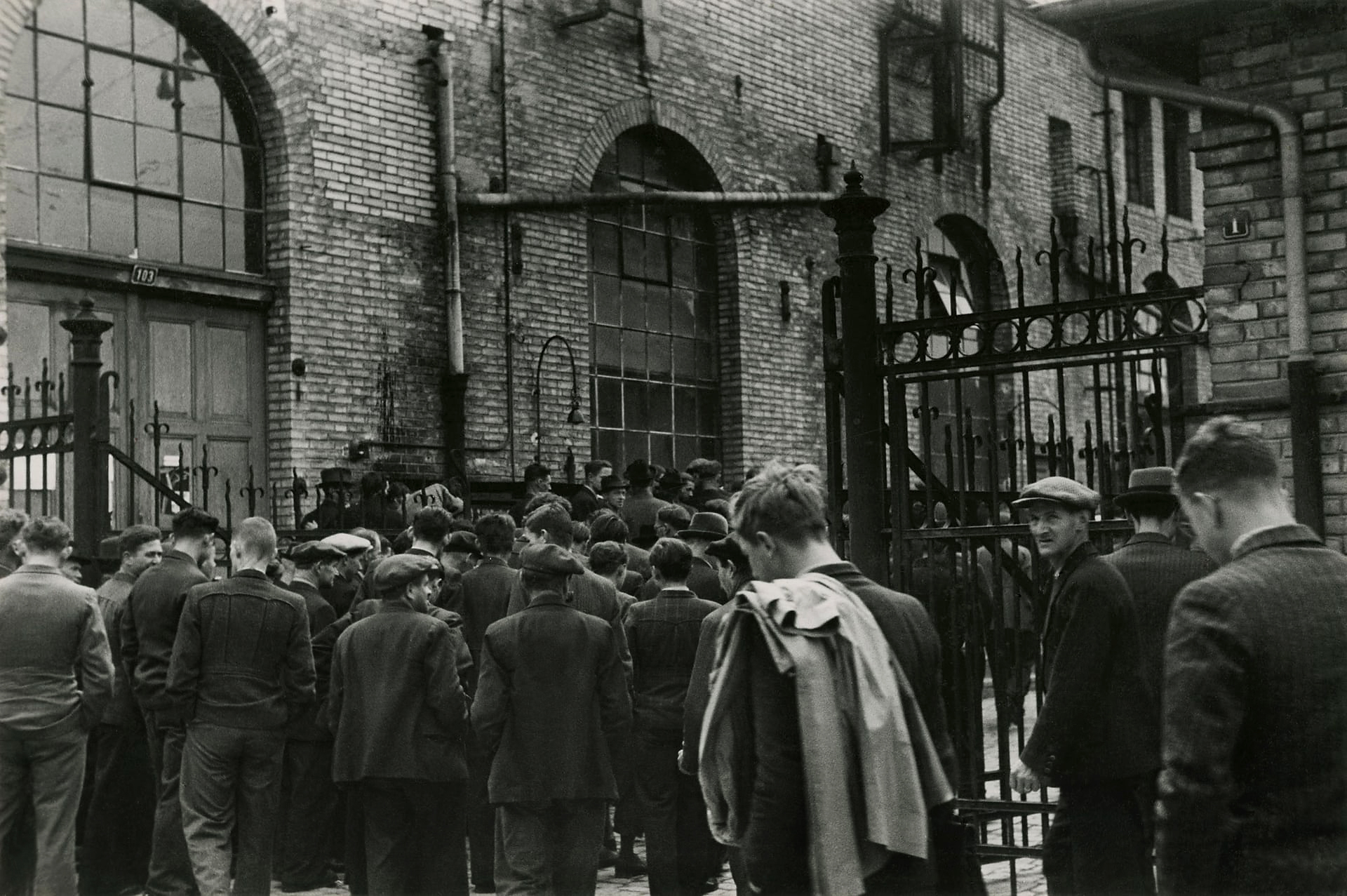
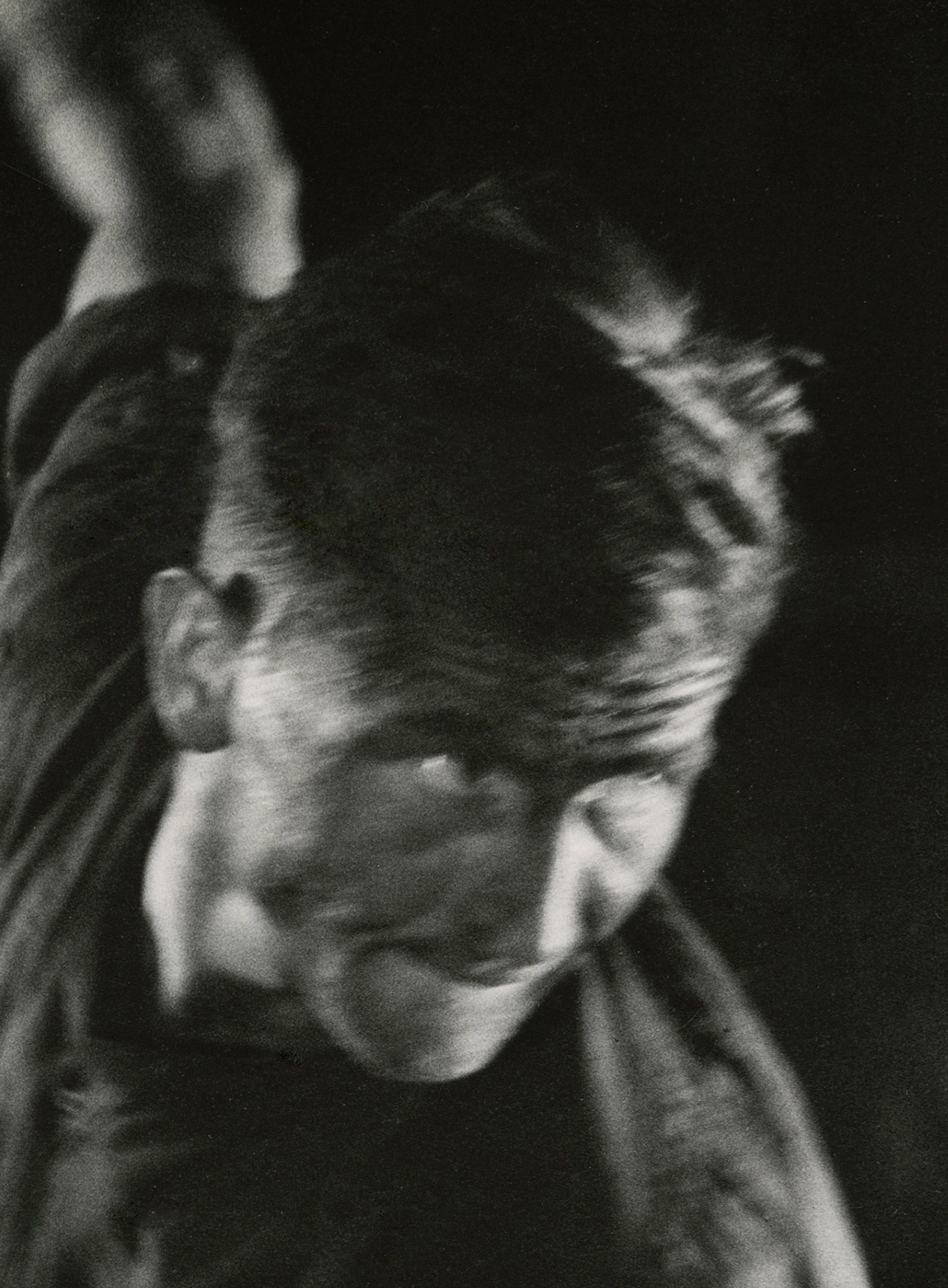
Exhibition: ‘In Focus: Expressions’ at the J. Paul Getty Museum, Getty Center, Los Angeles

Exhibition dates: 22nd May – 7th October, 2018


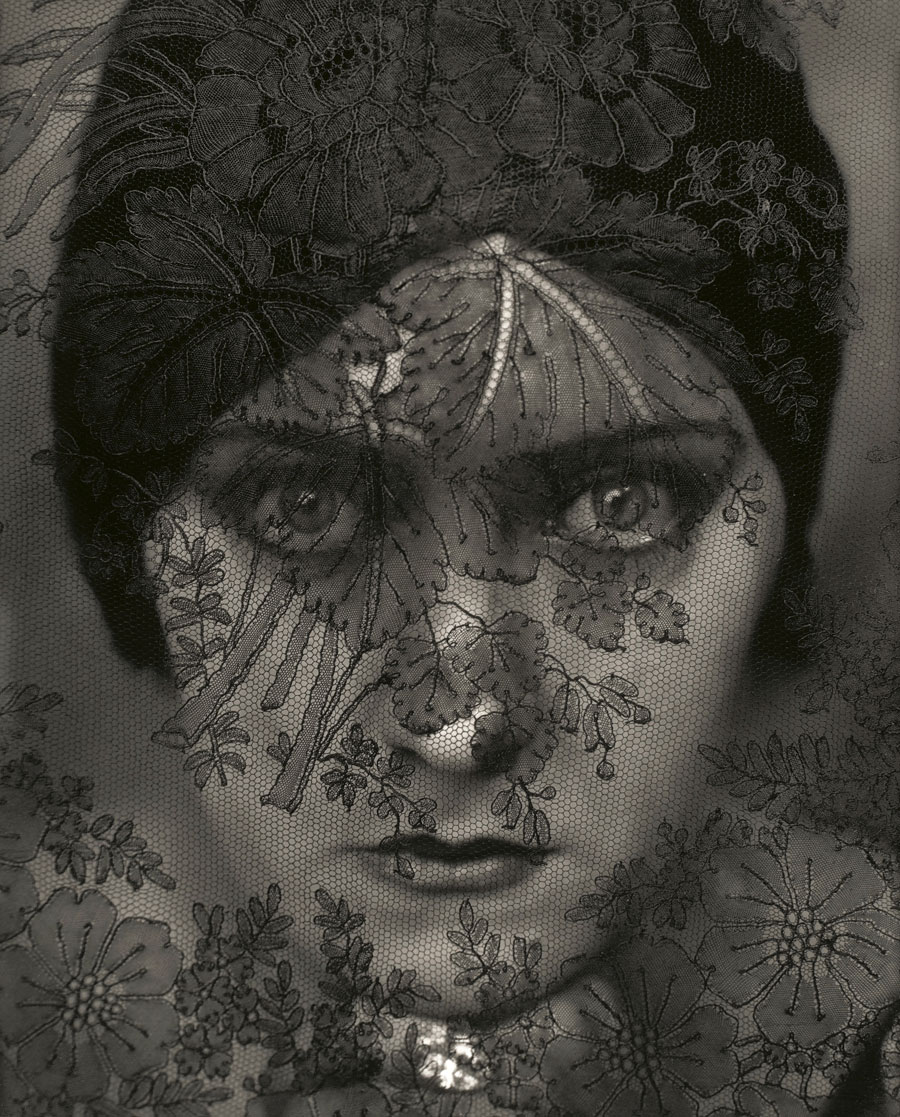
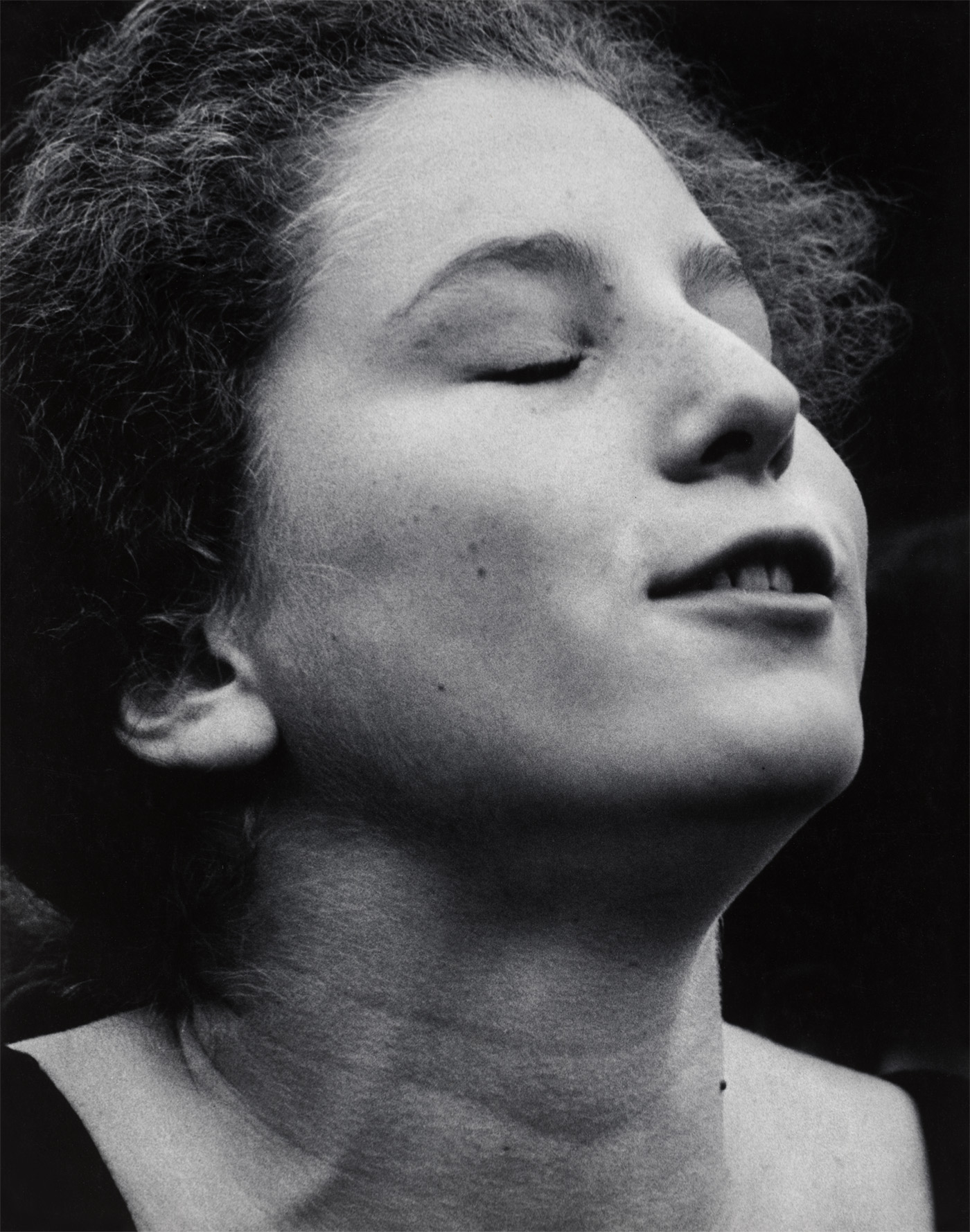
Erich Salomon (German, 1886-1944) '[Portrait of Madame Vacarescu, Romanian Author and Deputy to the League of Nations, Geneva]' 1928 from the exhibition 'In Focus: Expressions' at the J. Paul Getty Museum, Getty Center, Los Angeles, May - Oct, 2018


Erich Salomon (German, 1886-1944)
(Portrait of Madame Vacarescu, Romanian Author and Deputy to the League of Nations, Geneva)
1928
Gelatin silver print
29.7 × 39.7cm (11 11/16 × 15 5/8 in.)
The J. Paul Getty Museum, Los Angeles


In 1928, pioneering photojournalist, Erich Salomon photographed global leaders and delegates to a conference at the League for the German picture magazine Berliner Illustrirte Zeitung. In a typically frank image, Salomon has shown Vacarescu with her head thrown back passionately pleading before the international assembly.

Elena Văcărescu or Hélène Vacaresco (September 21, 1864 in Bucharest – February 17, 1947 in Paris) was a Romanian-French aristocrat writer, twice a laureate of the Académie française. Văcărescu was the Substitute Delegate to the League of Nations from 1922 to 1924. She was a permanent delegate from 1925 to 1926. She was again a Substitute Delegate to the League of Nations from 1926 to 1938. She was the only woman to serve with the rank of ambassador (permanent delegate) in the history of the League of Nations.

Text from the Wikipedia website


From a distance…

For such an engaging subject, this presentation looks to be a bit of a lucky dip / ho hum / filler exhibition. You can’t make a definitive judgement from a few media images but looking at the exhibition checklist gives you a good idea of the overall organisation of the exhibition and its content. Even the press release seems unsure of itself, littered as it is with words like posits, probes, perhaps (3 times) and problematic.

Elements such as physiognomy are briefly mentioned (with no mention of its link to eugenics), as is the idea of the mask – but again no mention of how the pose is an affective mask, nor how the mask is linked to the carnivalesque. Or how photographs portray us as we would like to be seen (the ideal self) rather than the real self, and how this incongruence forms part of the formation of our identity as human beings.

The investigation could have been so deep in so many areas (for example the representation of women, children and others in a patriarchal social system through facial expression; the self-portrait as an expression of inner being; the photograph as evidence of the mirror stage of identity formation; and the photographs of “hysterical” women of the Pitié-Salpêtrière Hospital, Paris; and on and on…) but in 45 works, I think not. The subject deserved, even cried out for (as facial expressions go), a fuller, more in depth investigation.

For more reading please see my 2014 text Facile, Facies, Facticity which comments on the state of contemporary portrait photography and offers a possible way forward: a description of the states of the body and the air of the face through a subtle and constant art of the recovering of surfaces.

Dr Marcus Bunyan


Many thanks to the J. Paul Getty Museum for allowing me to publish the photographs in the posting. Please click on the photographs for a larger version of the image.


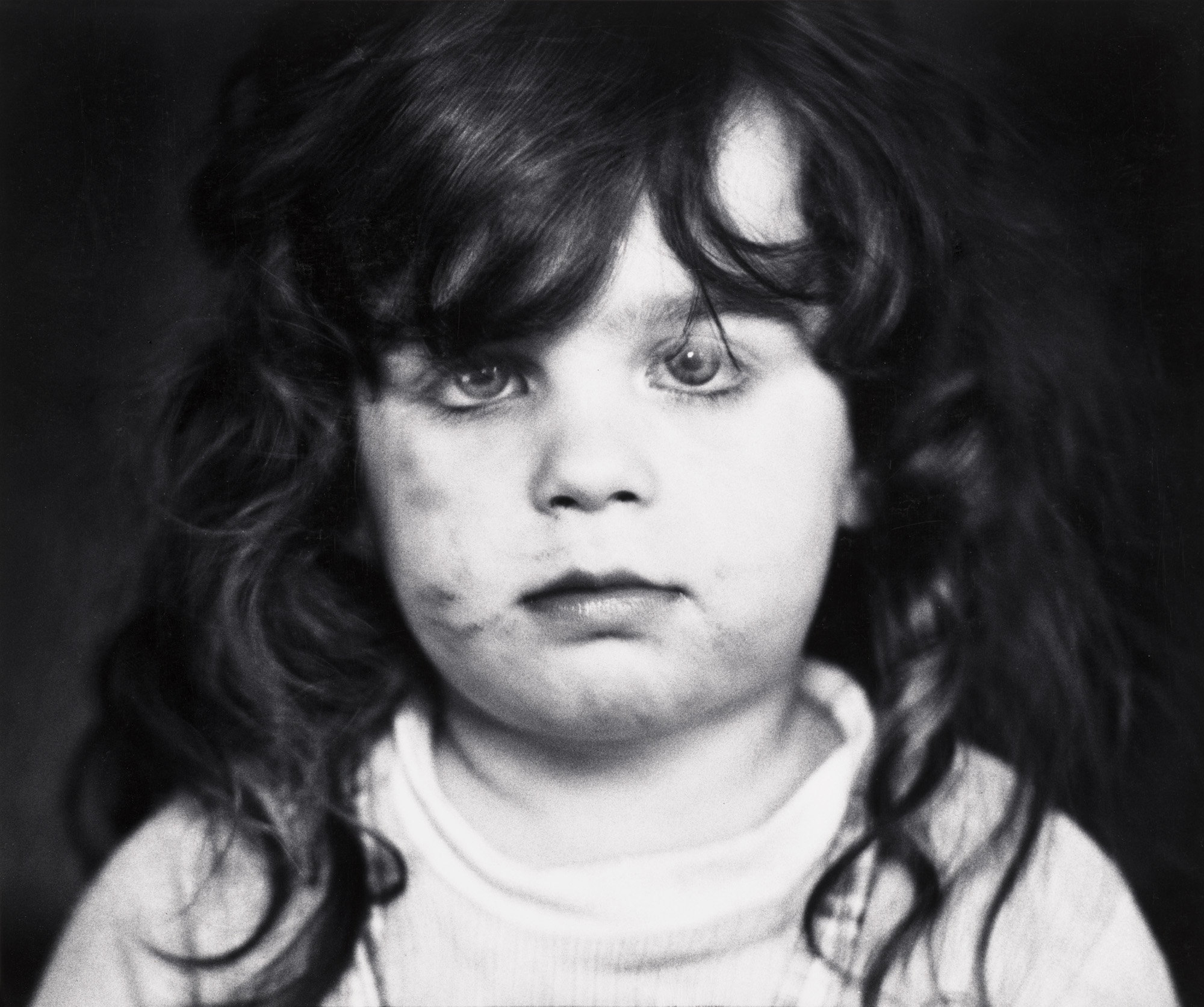
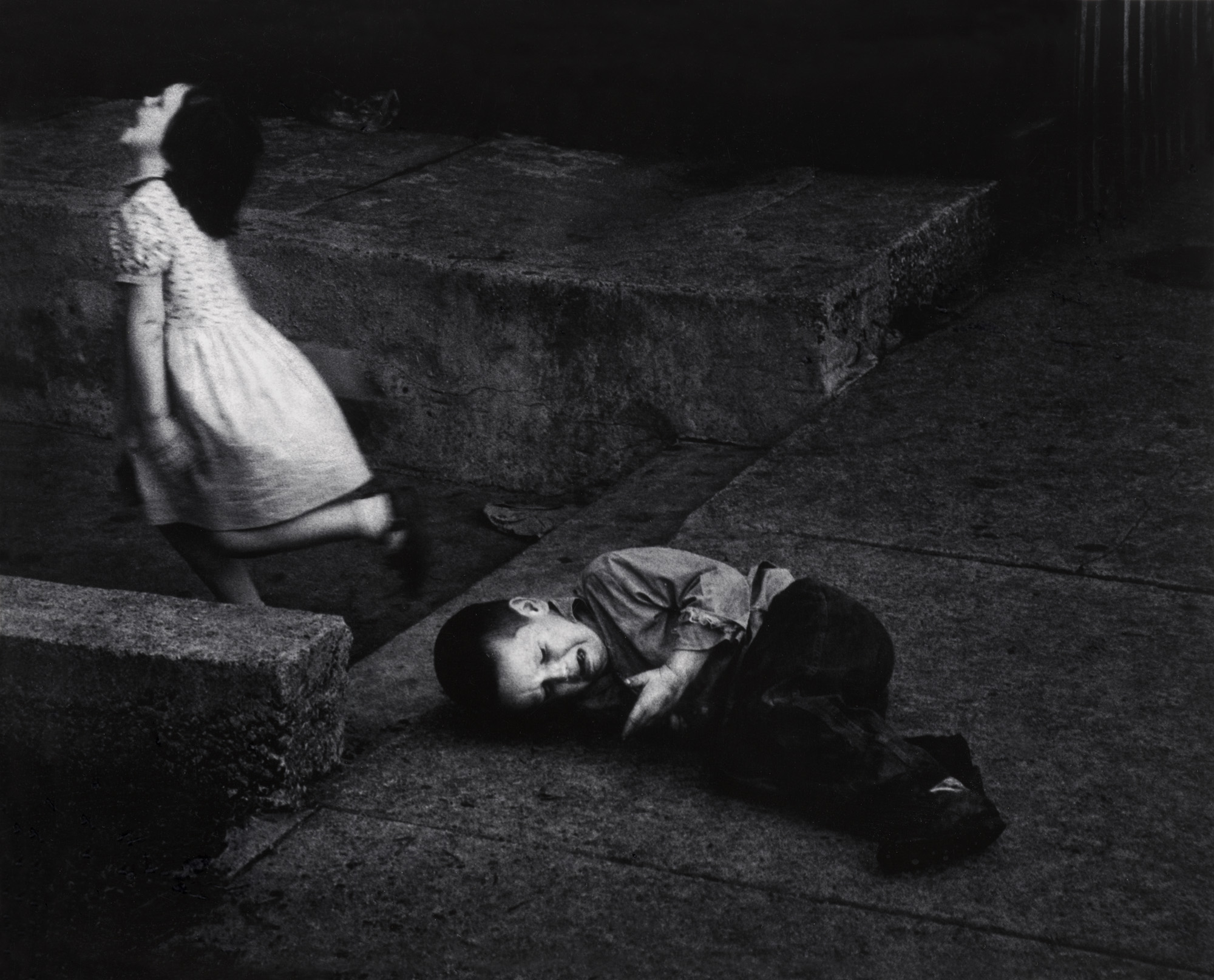
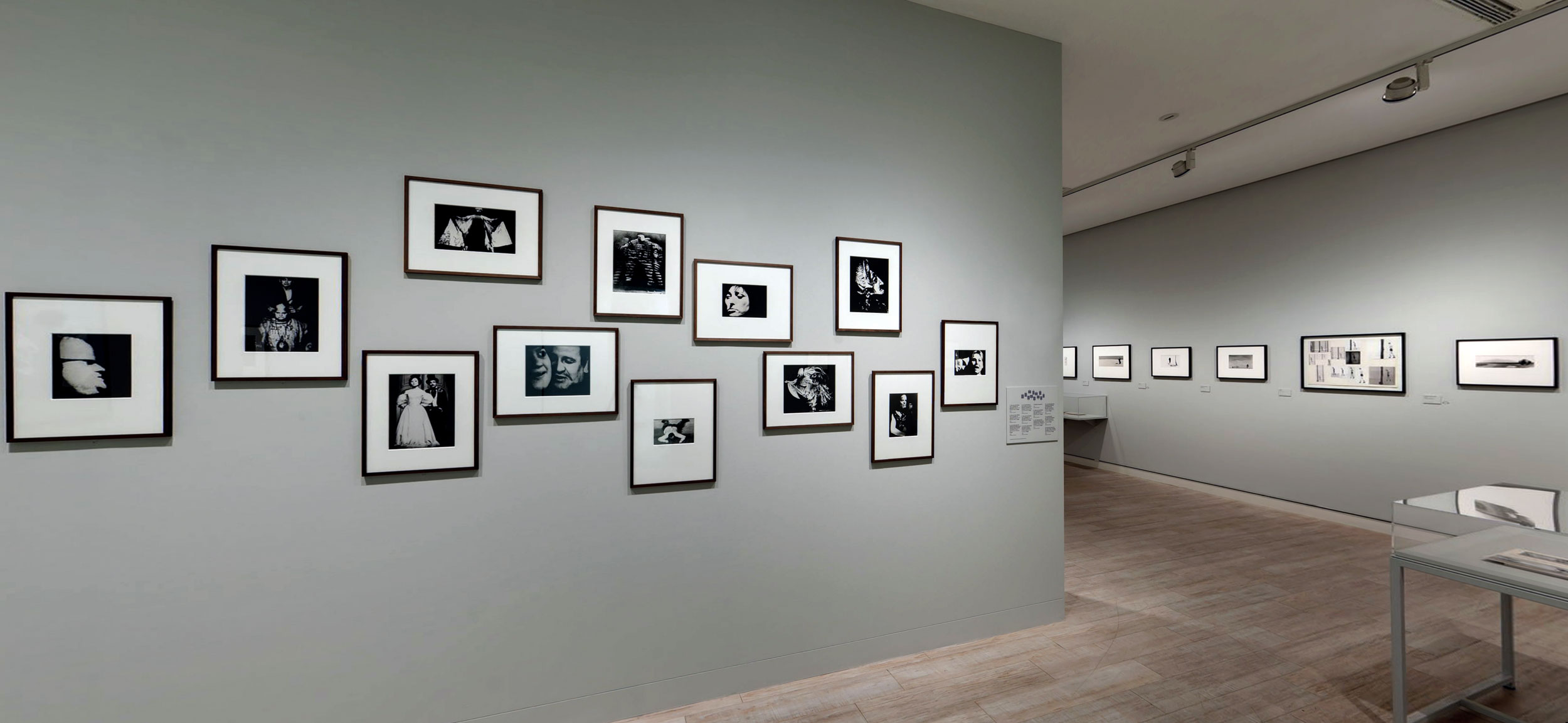
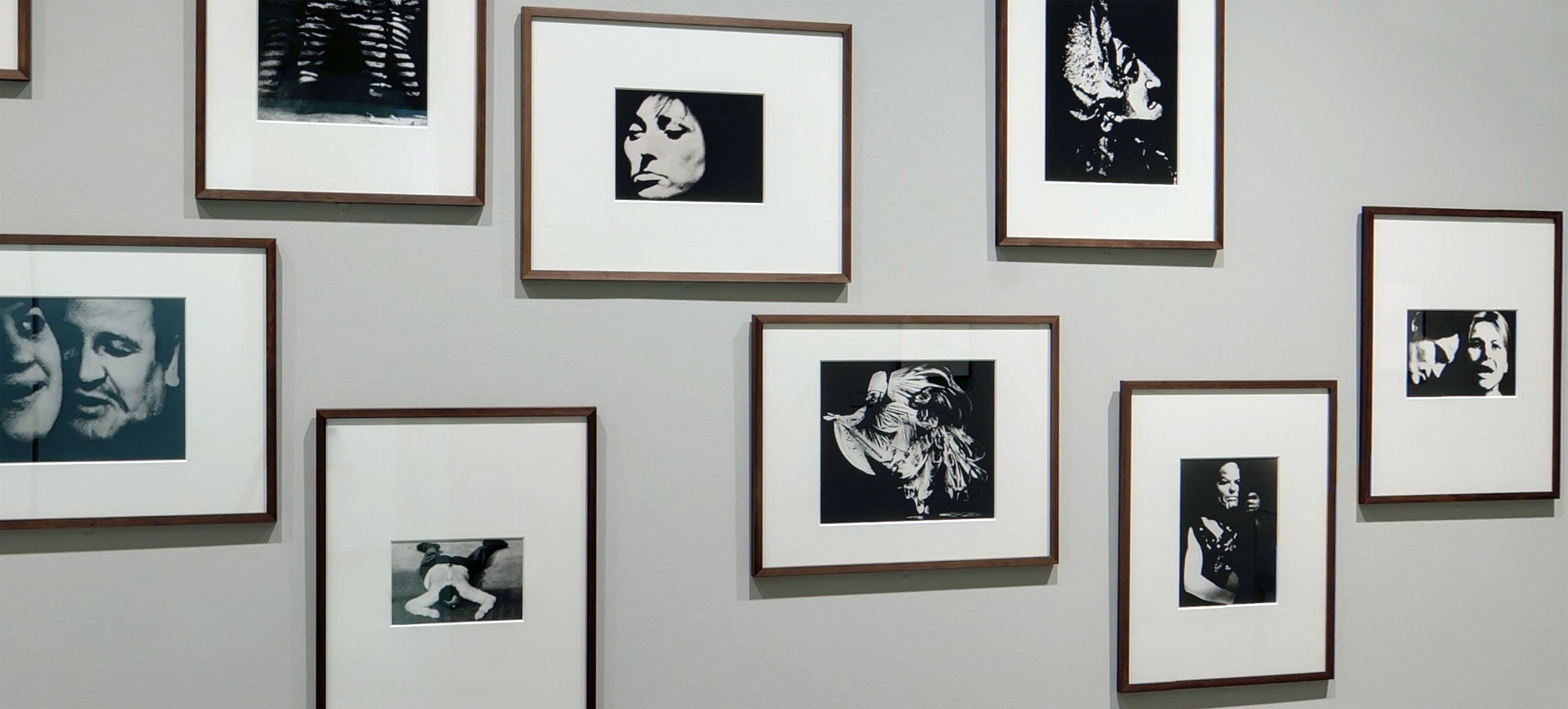
The human face has been the subject of fascination for photographers since the medium’s inception. This exhibition includes posed portraits, physiognomic studies, anonymous snapshots, and unsuspecting countenances caught by the camera’s eye, offering a close-up look at the range of human stories that facial expressions – and photographs – can tell.
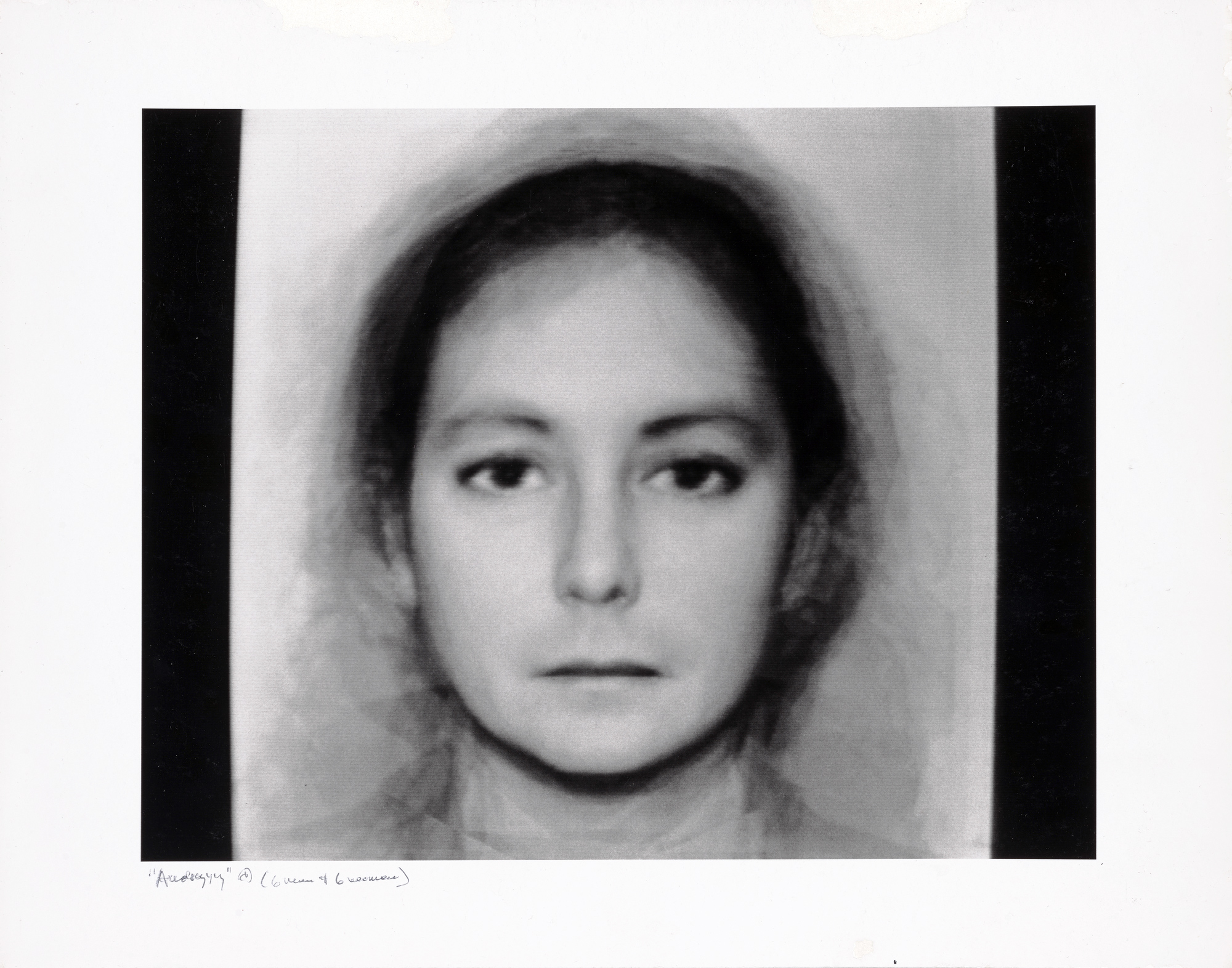
 

Nancy Burson (American, born 1948) 'Androgyny' 1982 from the exhibition 'In Focus: Expressions' at the J. Paul Getty Museum, Getty Center, Los Angeles, May - Oct, 2018


Nancy Burson (American, b. 1948)
Androgyny
1982
Gelatin silver print
21.6 × 27.7cm (8 1/2 × 10 7/8 in.)
© Nancy Burson
The J. Paul Getty Museum, Los Angeles


Composite image of portraits of six men and six women
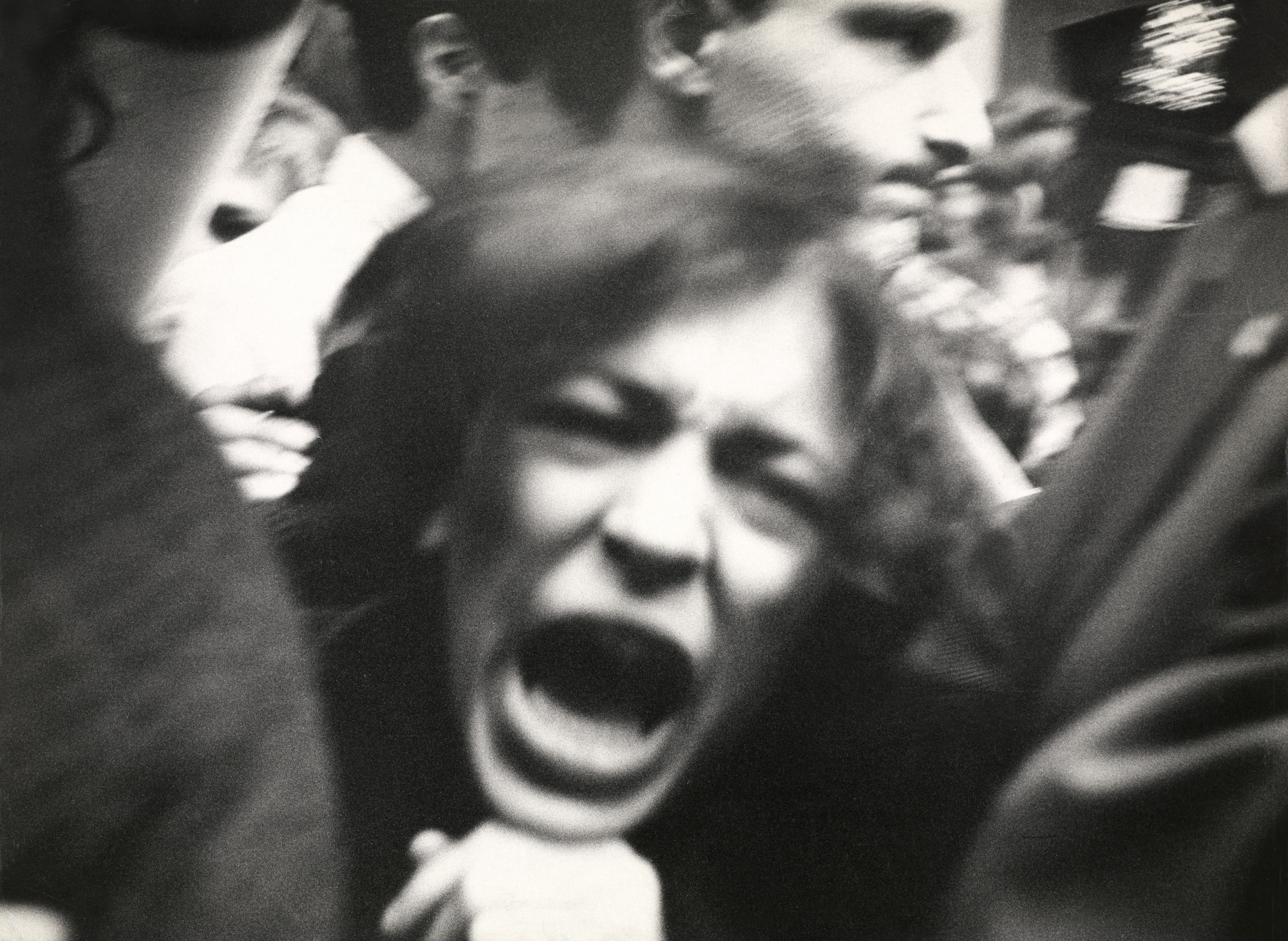
 

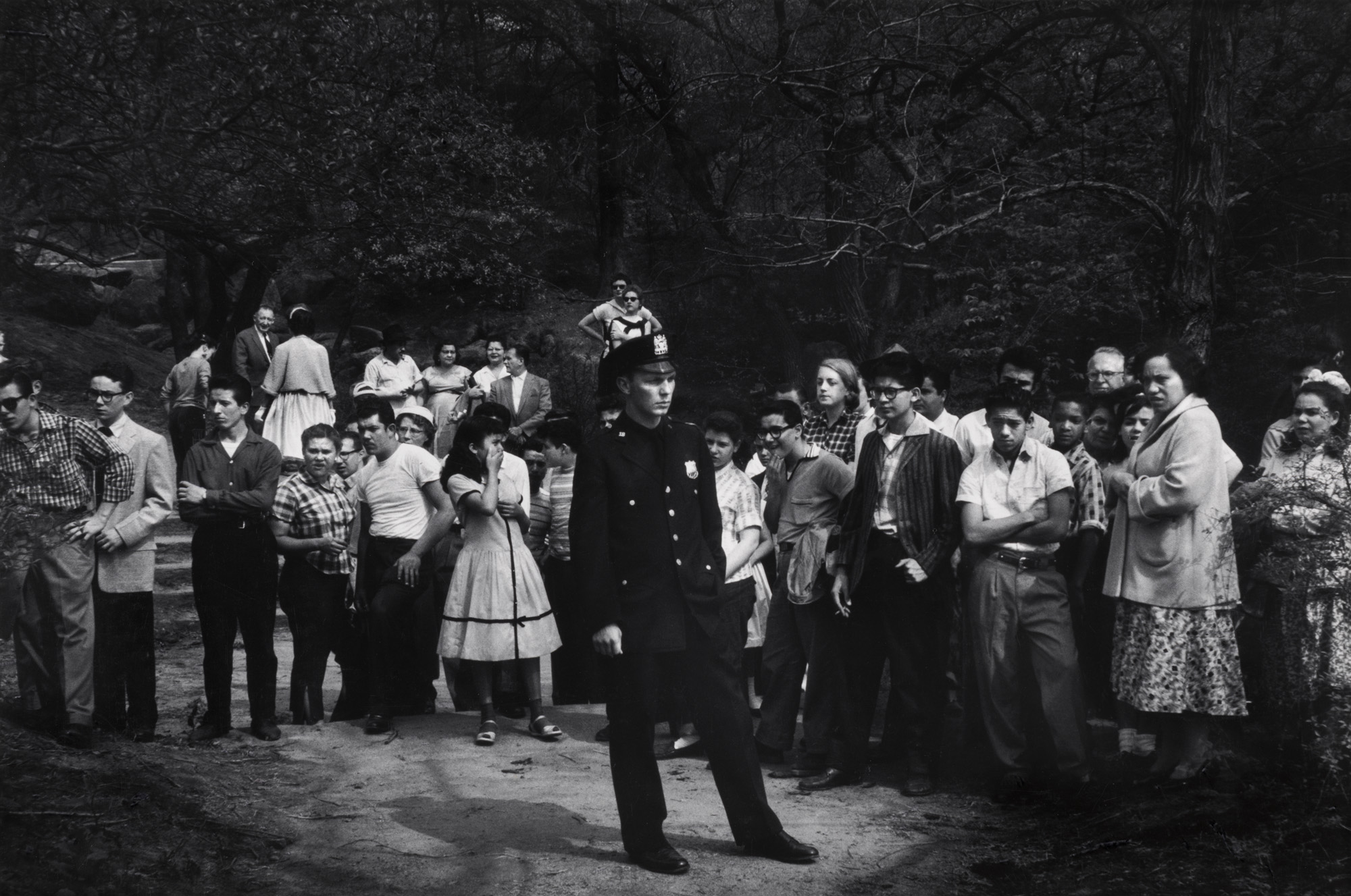
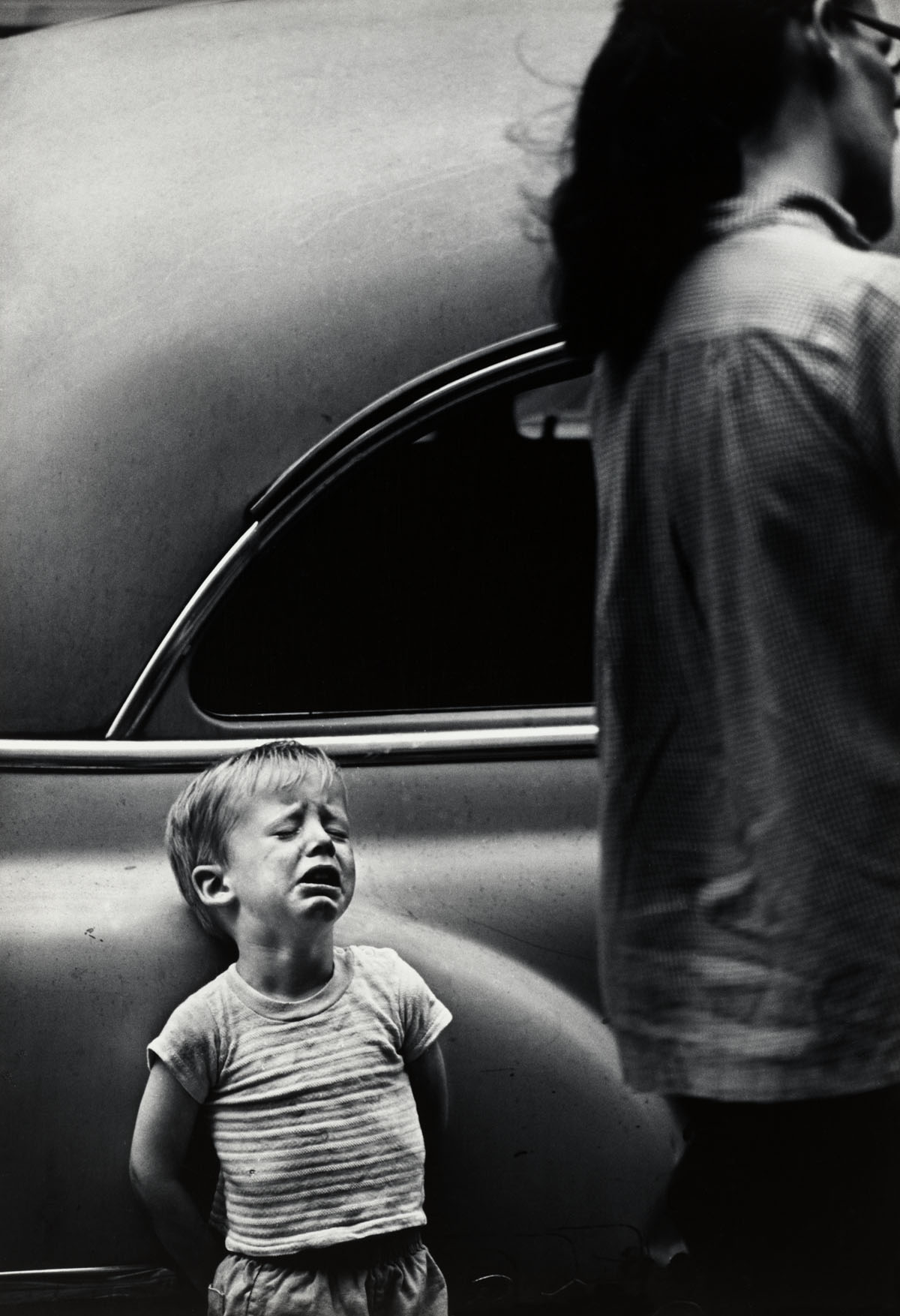
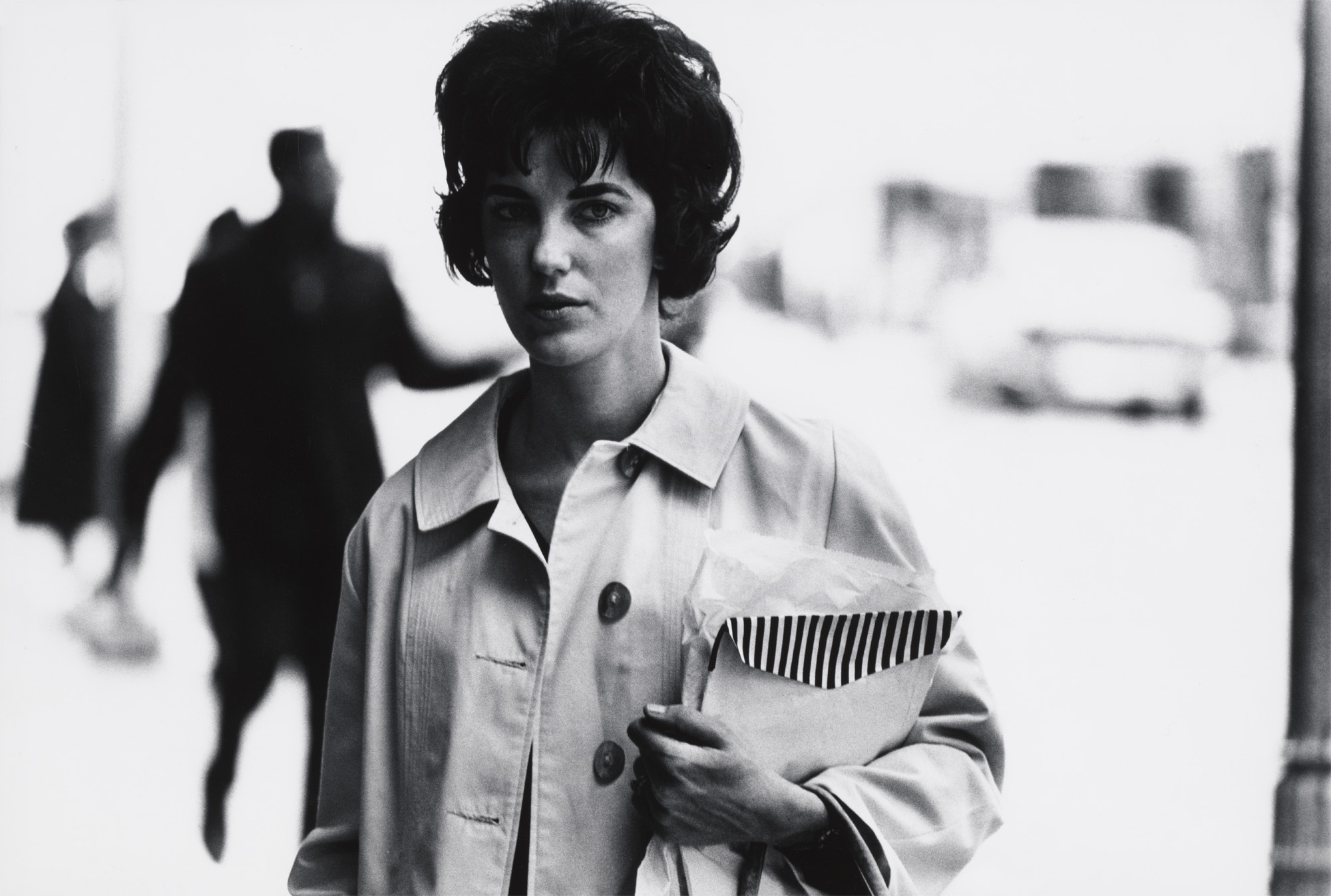
Leonard Freed (American, 1929-2006) 'Demonstration, New York City' 1963


Leonard Freed (American, 1929-2006)
Demonstration, New York City
1963
Gelatin silver print
25.9 × 35.4cm (10 3/16 × 13 15/16 in.)
© Leonard Freed / Magnum Photos, Inc.
The J. Paul Getty Museum, Los Angeles
Gift of Brigitte and Elke Susannah Freed
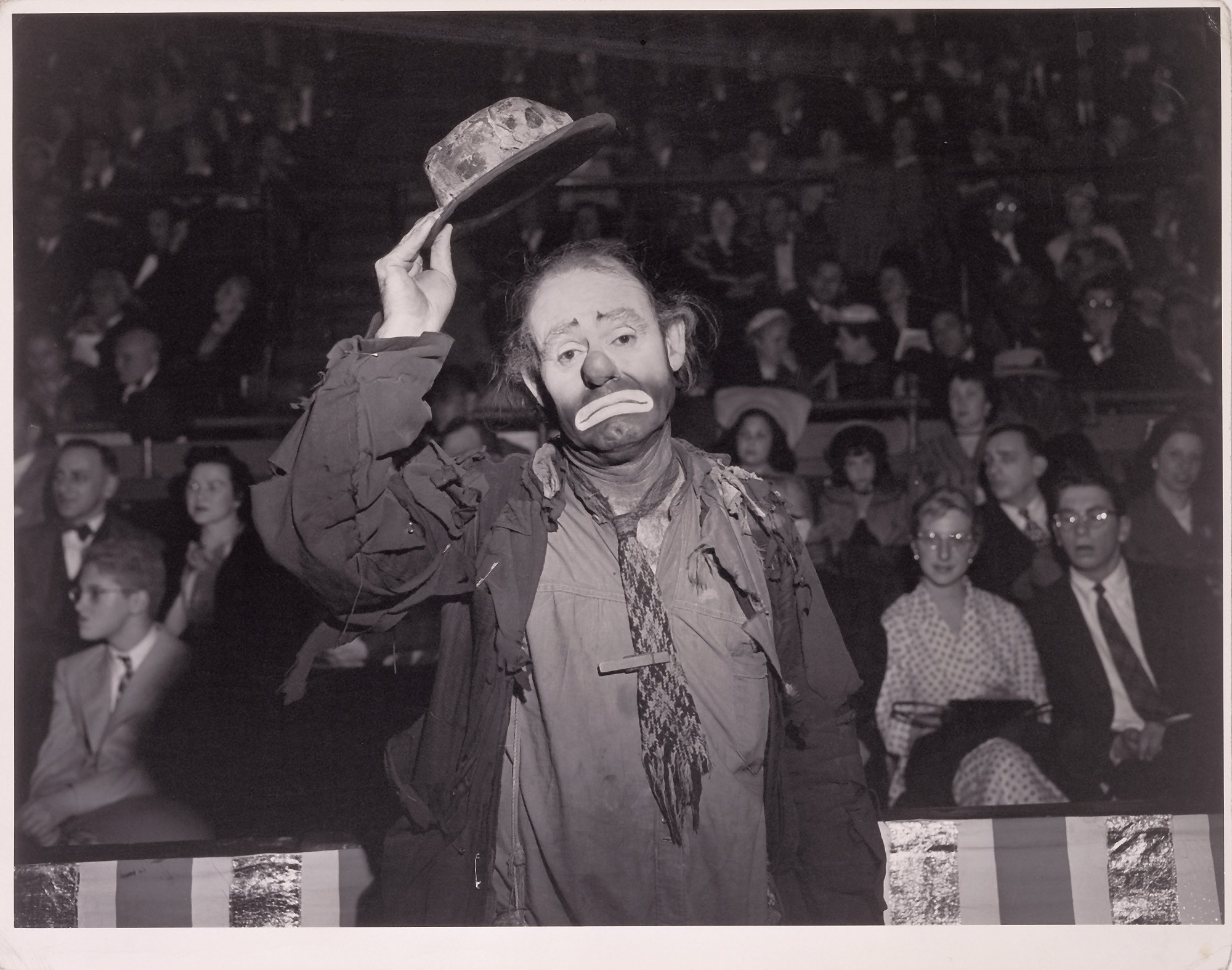
 

Weegee (Arthur Fellig) (American, born Austria, 1899-1968) 'Emmett Kelly, Ringling Brothers and Barnum & Bailey Circus' Negative May 1943; print about 1950


Weegee (Arthur Fellig) (American born Austria, 1899-1968)
Emmett Kelly, Ringling Brothers and Barnum & Bailey Circus
Negative May 1943; print about 1950
Gelatin silver print
26 × 34.4cm (10 1/4 × 13 9/16 in.)
© International Center of Photography
The J. Paul Getty Museum, Los Angeles


Emmett Kelly (American, 1898-1979)

Emmett Leo Kelly (December 9, 1898 – March 28, 1979) was an American circus performer, who created the memorable clown figure “Weary Willie”, based on the hobos of the Depression era.

Kelly began his career as a trapeze artist. By 1923, Emmett Kelly was working his trapeze act with John Robinson’s circus when he met and married Eva Moore, another circus trapeze artist. They later performed together as the “Aerial Kellys” with Emmett still performing occasionally as a whiteface clown.

He started working as a clown full-time in 1931, and it was only after years of attempting to persuade the management that he was able to switch from a white face clown to the hobo clown that he had sketched ten years earlier while working as a cartoonist.

“Weary Willie” was a tragic figure: a clown, who could usually be seen sweeping up the circus rings after the other performers. He tried but failed to sweep up the pool of light of a spotlight. His routine was revolutionary at the time: traditionally, clowns wore white face and performed slapstick stunts intended to make people laugh. Kelly did perform stunts too – one of his most famous acts was trying to crack a peanut with a sledgehammer – but as a tramp, he also appealed to the sympathy of his audience.

From 1942-1956 Kelly performed with the Ringling Brothers and Barnum & Bailey Circus, where he was a major attraction, though he took the 1956 season off to perform as the mascot for the Brooklyn Dodgers baseball team. He also landed a number of Broadway and film roles, including appearing as himself in his “Willie” persona in Cecil B. DeMille’s The Greatest Show on Earth (1952). He also appeared in the Bertram Mills Circus.

Text from the Wikipedia website


Hill & Adamson (Scottish, active 1843-1848) 'Mrs Grace Ramsay and four unknown women' 1843


Hill & Adamson (David Octavius Hill, Scottish 1802-1870 and Robert Adamson, Scottish 1821-1848) (Scottish, active 1843-1848)
Mrs Grace Ramsay and four unknown women
1843
Salter paper print from Calotype negative
15.2 x 20.3cm (6 x 8 in.)
The J. Paul Getty Museum, Los Angeles
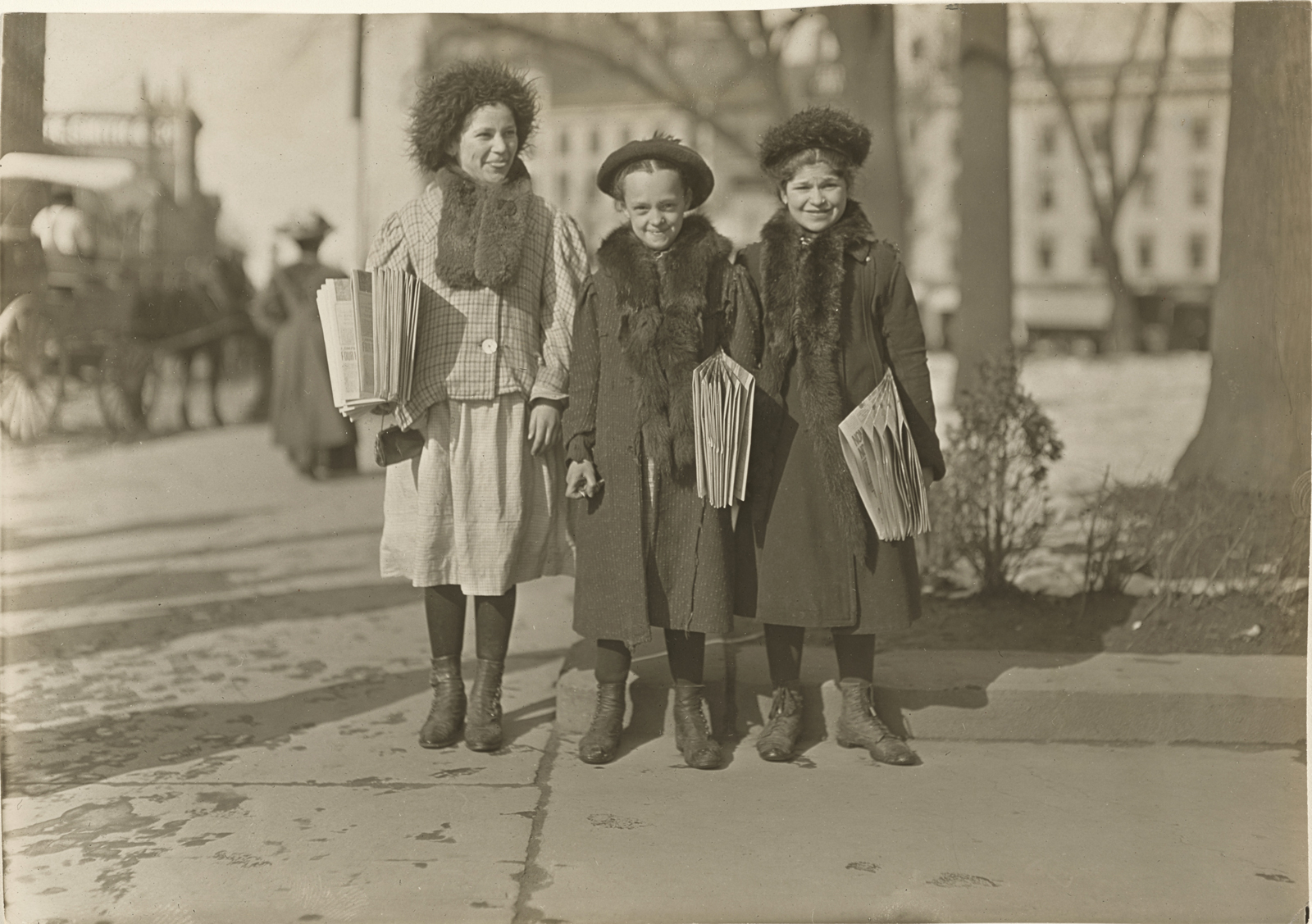
 

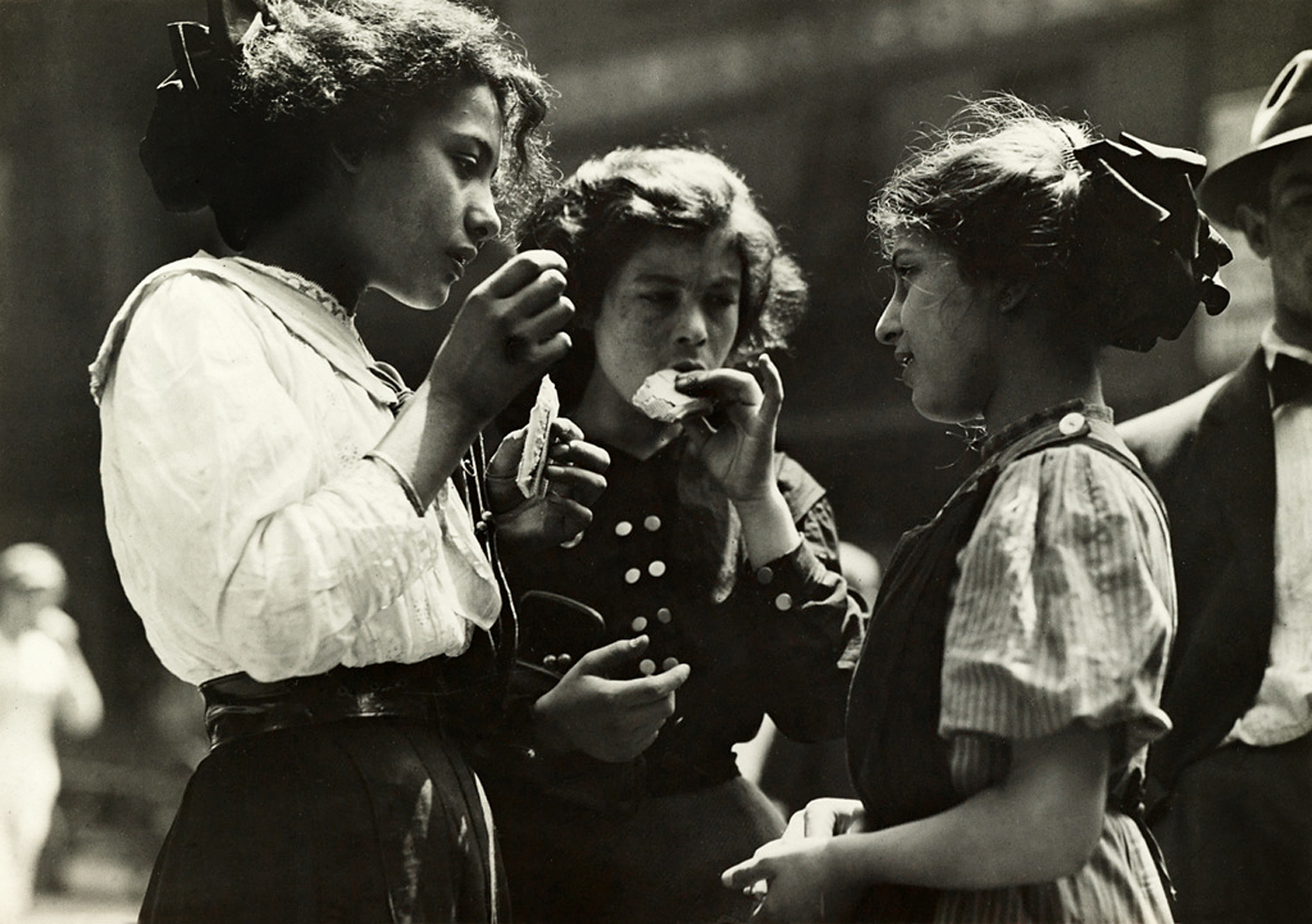
Lewis W. Hine (American, 1874-1940) 'Connecticut Newsgirls' c. 1912-1913


Lewis W. Hine (American, 1874-1940)
Connecticut Newsgirls
c. 1912-1913
Gelatin silver print
11.8 × 16.8cm (4 11/16 × 6 5/8 in.)
The J. Paul Getty Museum, Los Angeles


Nadar [Gaspard Félix Tournachon] (French, 1820-1910) '[Mme Ernestine Nadar]' 1880-1883


Nadar (Gaspard Félix Tournachon) (French, 1820-1910)
(Mme Ernestine Nadar)
1880-1883
Albumen silver print
Image (irregular): 8.7 × 21cm (3 7/16 × 8 1/4 in.)
The J. Paul Getty Museum, Los Angeles


Nadar [Gaspard Félix Tournachon] (French, 1820-1910) '[Mme Ernestine Nadar]' 1880-1883 (detail)


Nadar (Gaspard Félix Tournachon) (French, 1820-1910)
(Mme Ernestine Nadar)
(detail)
1880-1883
Albumen silver print
Image (irregular): 8.7 × 21cm (3 7/16 × 8 1/4 in.)
The J. Paul Getty Museum, Los Angeles


Julia Margaret Cameron (British, 1815-1879) 'Ophelia' Negative 1875; print, 1900


Julia Margaret Cameron (British born India, 1815-1879)
Ophelia
Negative 1875; print, 1900
Carbon print
35.2 x 27.6cm (13 7/8 x 19 7/8 in.)
The J. Paul Getty Museum, Los Angeles
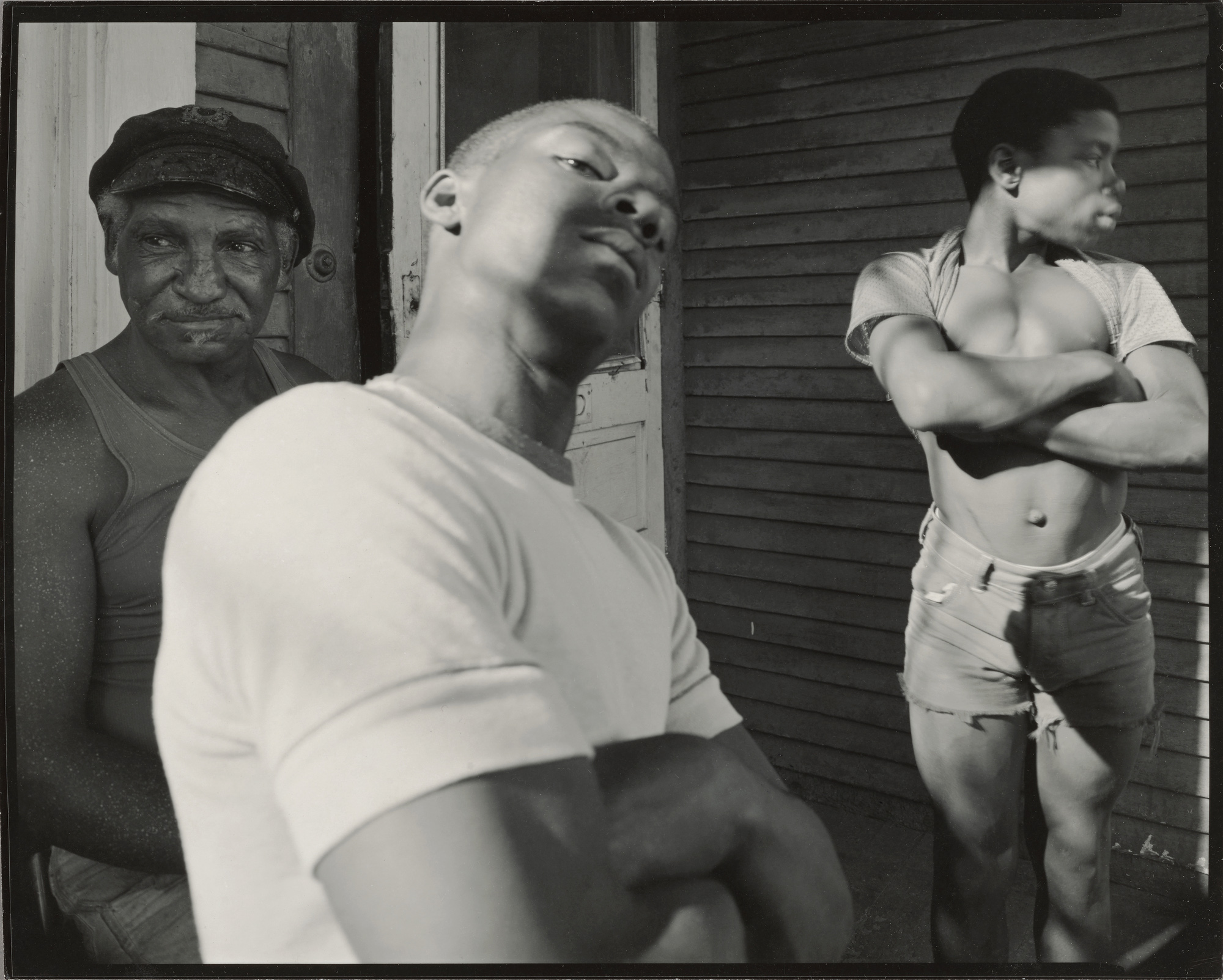
 

Nicholas Nixon (American, b. 1947) 'W. Canfield Ave., Detroit' 1982


Nicholas Nixon (American, b. 1947)
W. Canfield Ave., Detroit
1982
Gelatin silver print
Image (irregular): 19.7 × 24.6cm (7 3/4 × 9 11/16 in.)
© Nicholas Nixon
The J. Paul Getty Museum, Los Angeles
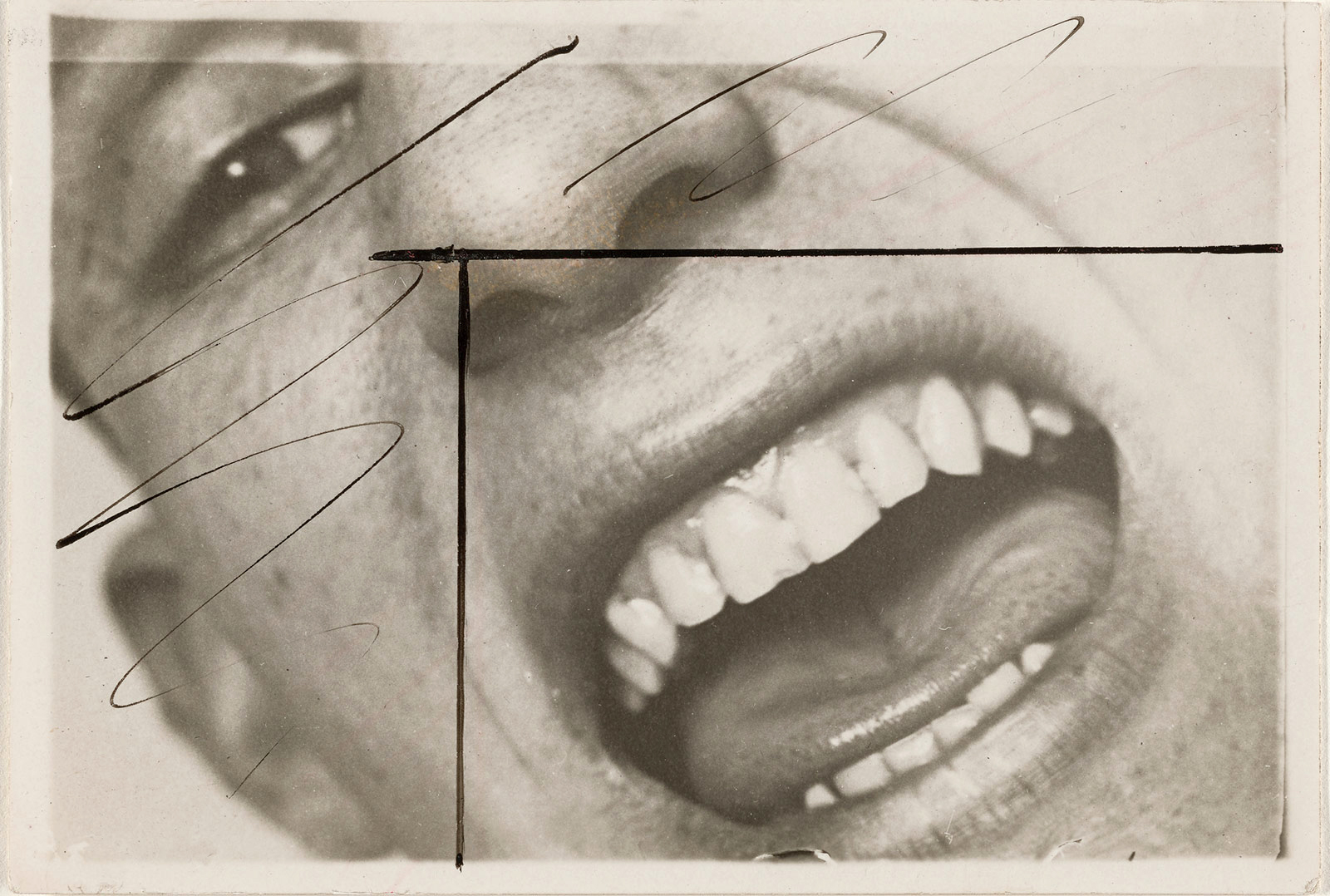
 

Unknown maker (German) 'Close-up of Open Mouth of Male Student' c. 1927


Unknown maker (German)
Close-up of Open Mouth of Male Student
c. 1927
Gelatin silver print
5.7 x 8.4cm (2 1/4 x 3 5/16 in.)
The J. Paul Getty Museum, Los Angeles
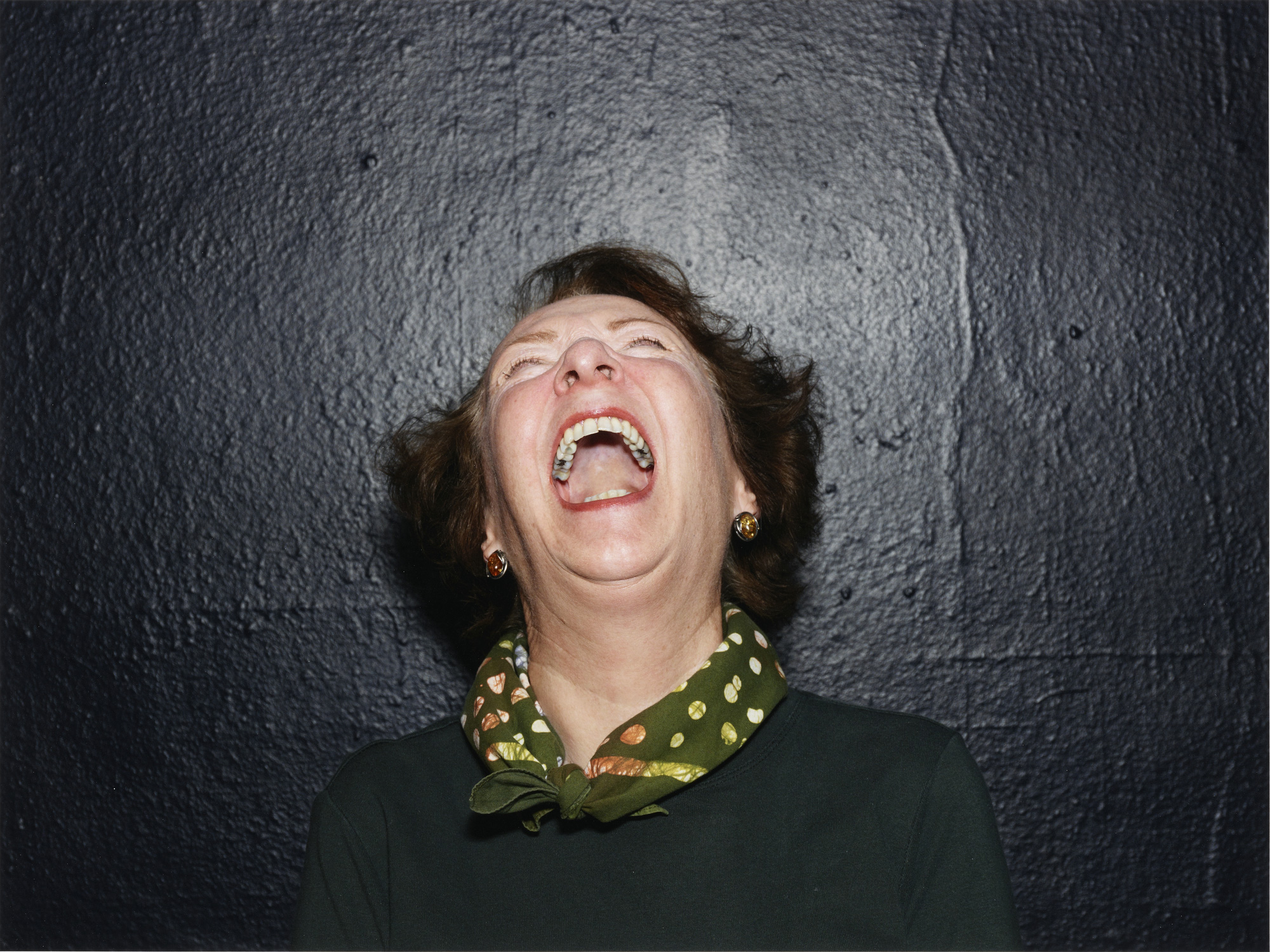
 

Alec Soth (American, b. 1969) 'Mary, Milwaukee, WI' 2014


Alec Soth (American, b. 1969)
Mary, Milwaukee, WI
2014
Inkjet print
40.1 × 53.5cm (15 13/16 × 21 1/16 in.)
© Alec Soth/Magnum Photos
The J. Paul Getty Museum, Los Angeles
Gift of Richard Lovett
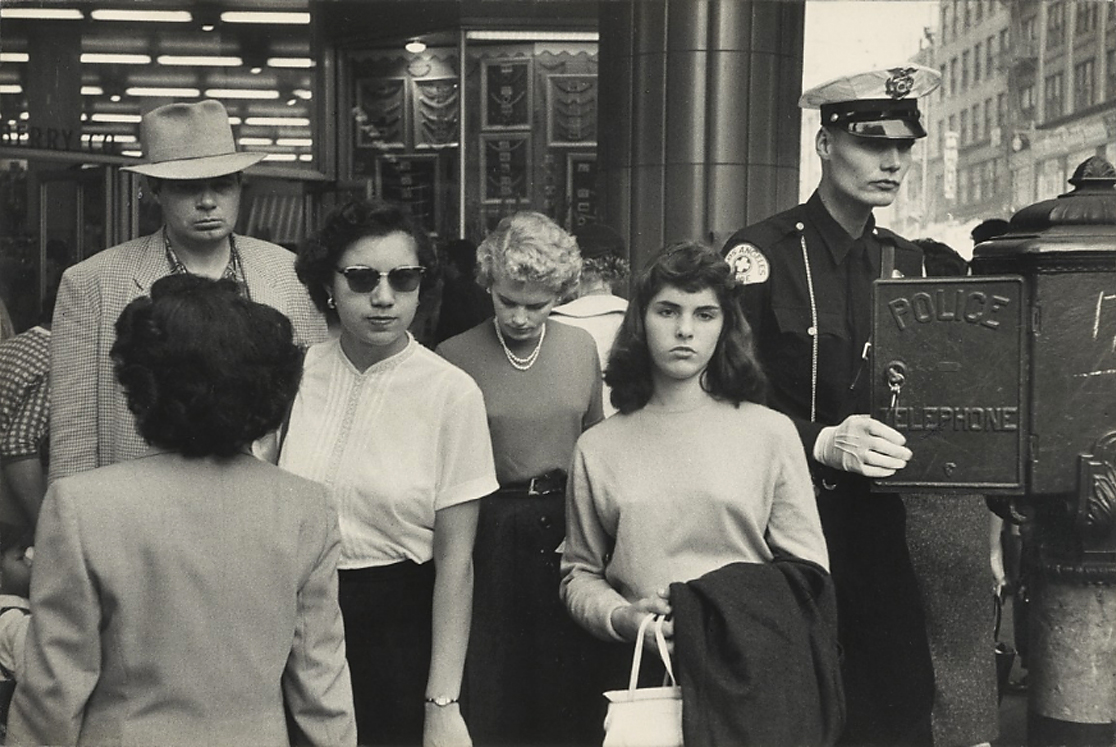
 

Garry Winogrand (American, 1928-1984) 'Los Angeles' January 1960


Garry Winogrand (American, 1928-1984)
Los Angeles
January 1960
Gelatin silver print
22.6 × 33.9cm (8 7/8 × 13 3/8 in.)
© 1984 The Estate of Garry Winogrand
The J. Paul Getty Museum, Los Angeles


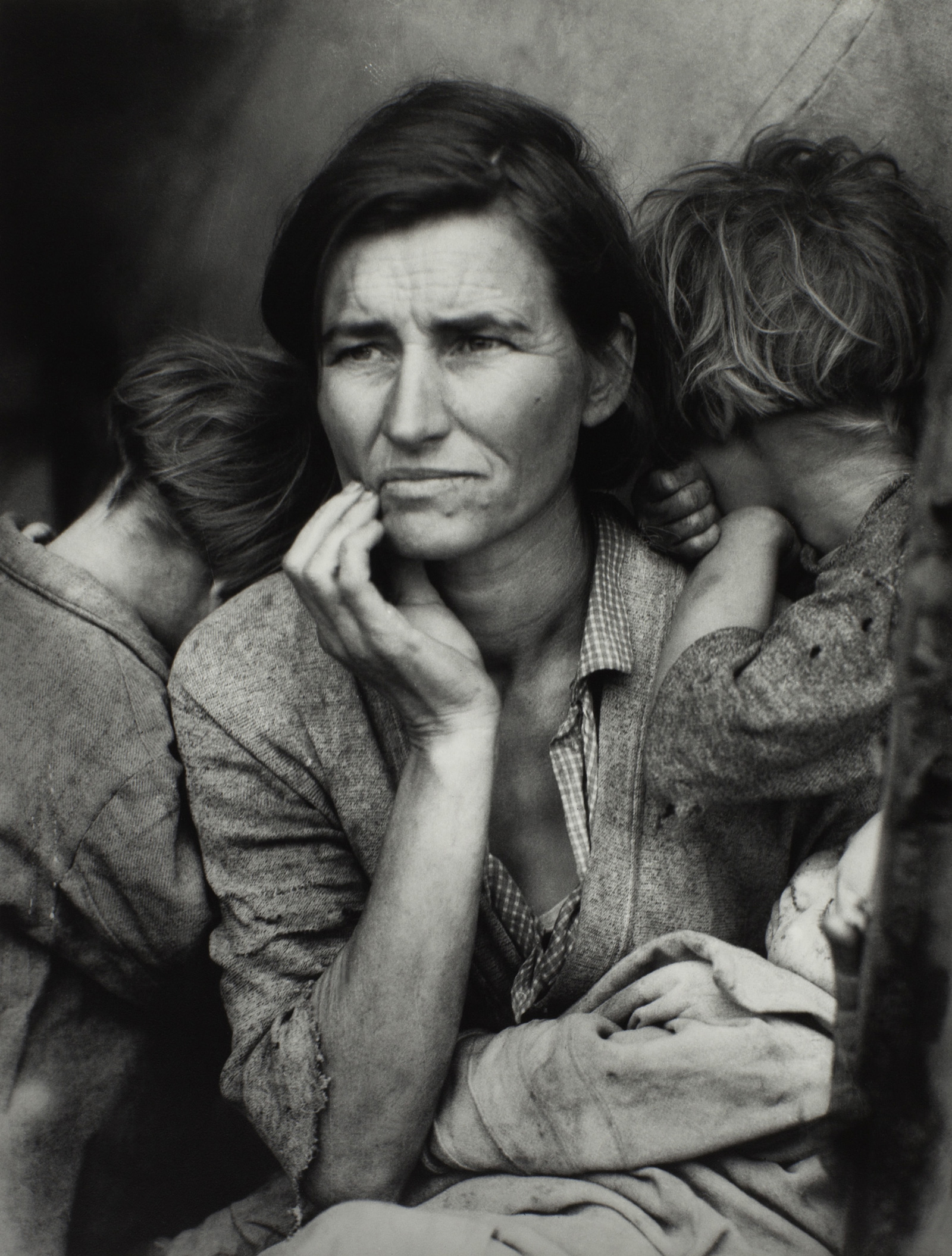
From Leonardo da Vinci’s Mona Lisa, to Edvard Munch’s The Scream, to Dorothea Lange’s Migrant Mother, the human face has been a crucial, if often enigmatic, element of portraiture. Featuring 45 works drawn from the Museum’s permanent collection, In Focus: Expressions, on view May 22 to October 7, 2018 at the J. Paul Getty Museum, addresses the enduring fascination with the human face and the range of countenances that photographers have captured from the birth of the medium to the present day.

The exhibition begins with the most universal and ubiquitous expression: the smile. Although today it is taken for granted that we should smile when posing for the camera, smiling was not the standard photographic expression until the 1880s with the availability of faster film and hand-held cameras. Smiling subjects began to appear more frequently as the advertising industry also reinforced the image of happy customers to an ever-widening audience who would purchase the products of a growing industrial economy. The smile became “the face of the brand,” gracing magazines, billboards, and today, digital and social platforms.

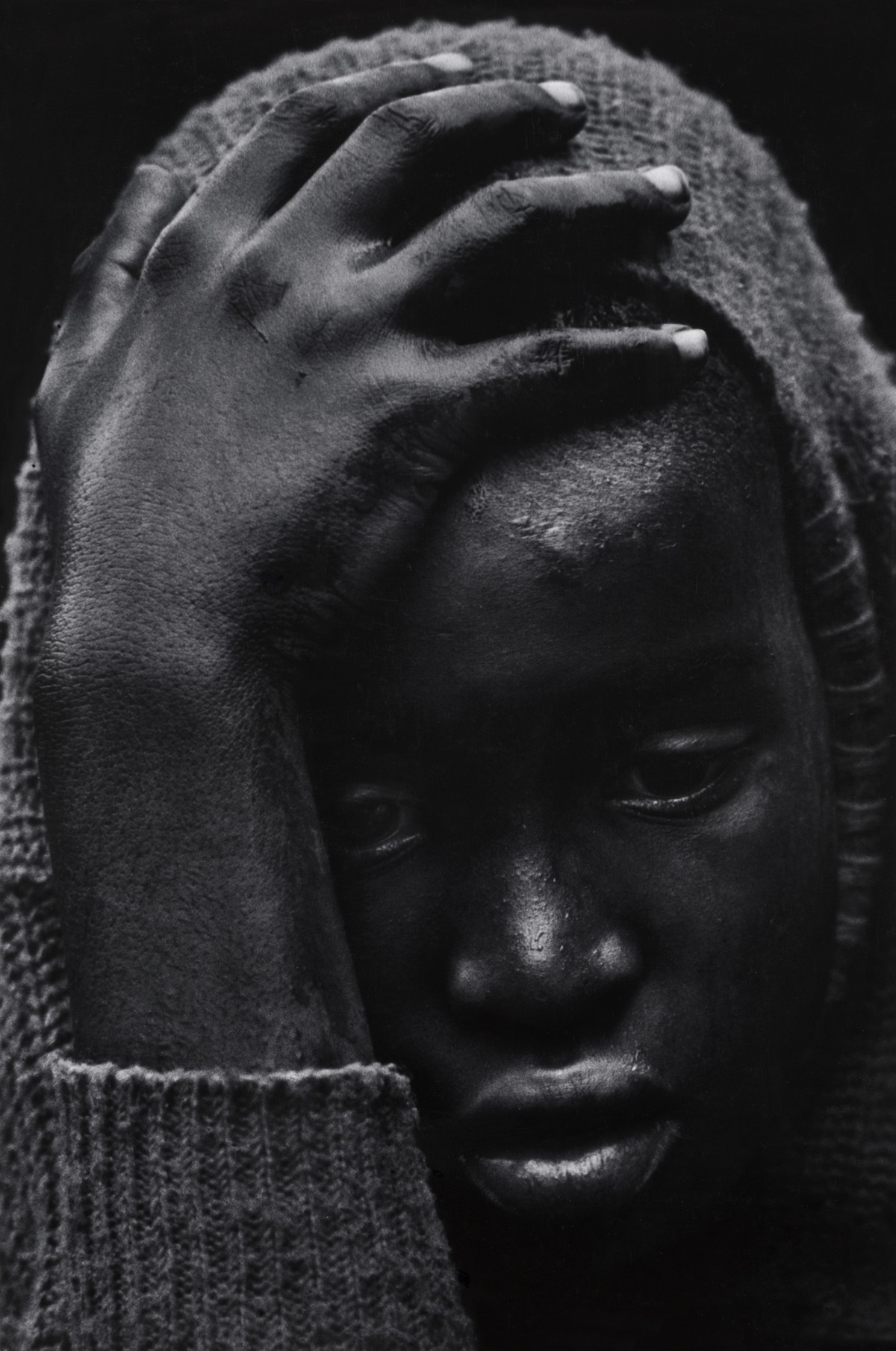
As is evident in the exhibition, the smile comes in all variations – the genuine, the smirk, the polite, the ironic – expressing a full spectrum of emotions that include benevolence, sarcasm, joy, malice, and sometimes even an intersection of two or more of these. In Milton Rogovin’s (American, 1909-2011) Storefront Churches, Buffalo (1958-1961), the expression of the preacher does not immediately register as a smile because the camera has captured a moment where his features – the opened mouth, exposed teeth, and raised face – could represent a number of activities: he could be in the middle of a song, preaching, or immersed in prayer. His corporeal gestures convey the message of his spirit, imbuing the black-and-white photograph with emotional colour. Like the other works included in this exhibition, this image posits the notion that facial expressions can elicit a myriad of sentiments and denote a range of inner emotions that transcend the capacity of words.

In Focus: Expressions also probes the role of the camera in capturing un-posed moments and expressions that would otherwise go unnoticed. In Alec Soth’s (American, born 1969) Mary, Milwaukee, WI (2014), a fleeting expression of laughter is materialised in such a way – head leaning back, mouth open – that could perhaps be misconstrued as a scream. The photograph provides a frank moment, one that confronts the viewer with its candidness and calls to mind today’s proliferation and brevity of memes, a contemporary, Internet-sustained visual phenomena in which images are deliberately parodied and altered at the same rate as they are spread.

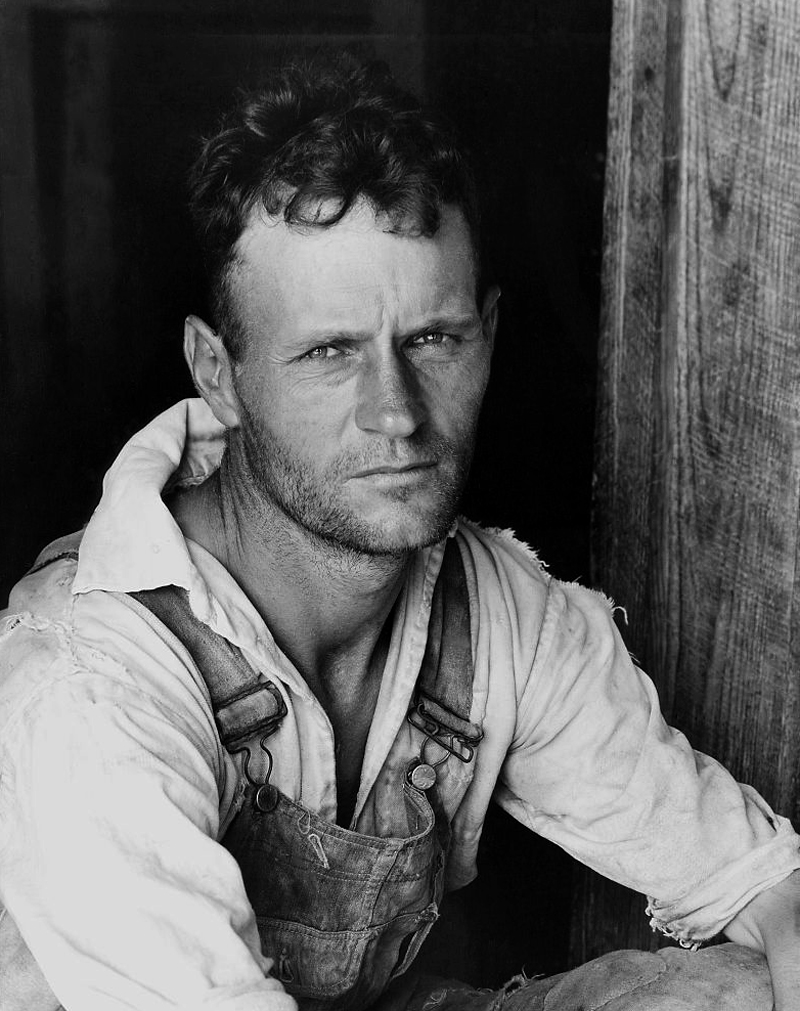
Perhaps equally radical as the introduction of candid photography is the problematic association of photography with facial expression and its adoption of physiognomy, a concept that was introduced in the 19th century. Physiognomy, the study of the link between the face and human psyche, resulted in the belief that different types of people could be classified by their visage. The exhibition includes some of the earliest uses of photography to record facial expression, as in Duchenne de Boulogne’s (French, 1806-1875) Figure 44: The Muscle of Sadness (negative, 1850s). This also resonates in the 20th-century photographs by Walker Evans (American, 1903-1975) of Allie Mae Burroughs, Hale County Alabama (negative 1936) in that the subject’s expression could be deemed as suggestive of the current state of her mind. In this frame (in others she is viewed as smiling) she stares intently at the camera slightly biting her lip, perhaps alluding to uncertainty of what is to come for her and her family.

The subject of facial expression is also resonant with current developments in facial recognition technology. Nancy Burson (American, born 1948) created works such as Androgyny (6 Men + 6 Women) (1982), in which portraits of six men and six women were morphed together to convey the work’s title. Experimental and illustrative of the medium’s technological advancement, Burson’s photograph is pertinent to several features of today’s social media platforms, including the example in which a phone’s front camera scans a user’s face and facial filters are applied upon detection. Today, mobile phones and social media applications even support portrait mode options, offering an apprehension of the human face and highlighting its countenances with exceptional quality.

In addition to photography’s engagement with human expression, In Focus: Expressions examines the literal and figurative concept of the mask. Contrary to a candid photograph, the mask is the face we choose to present to the world. Weegee’s (Arthur Fellig’s) (American, born Austria, 1899-1968) Emmett Kelly, Ringling Brothers and Barnum & Bailey Circus (about 1950) demonstrates this concept, projecting the character of a sad clown in place of his real identity as Emmett Kelly.

The mask also suggests guises, obscurity, and the freedom to pick and create a separate identity. W. Canfield Ave., Detroit (1982) by Nicholas Nixon (American, born 1947) demonstrates this redirection. Aware that he is being photographed, the subject seizes the opportunity to create a hardened expression that conveys him as distant, challenging, and fortified, highlighted by the opposing sentiments of the men who flank him. In return, the audience could be led to believe that this devised pose is a façade behind which a concealed and genuine identity exists.

Press release from the J. Paul Getty Museum
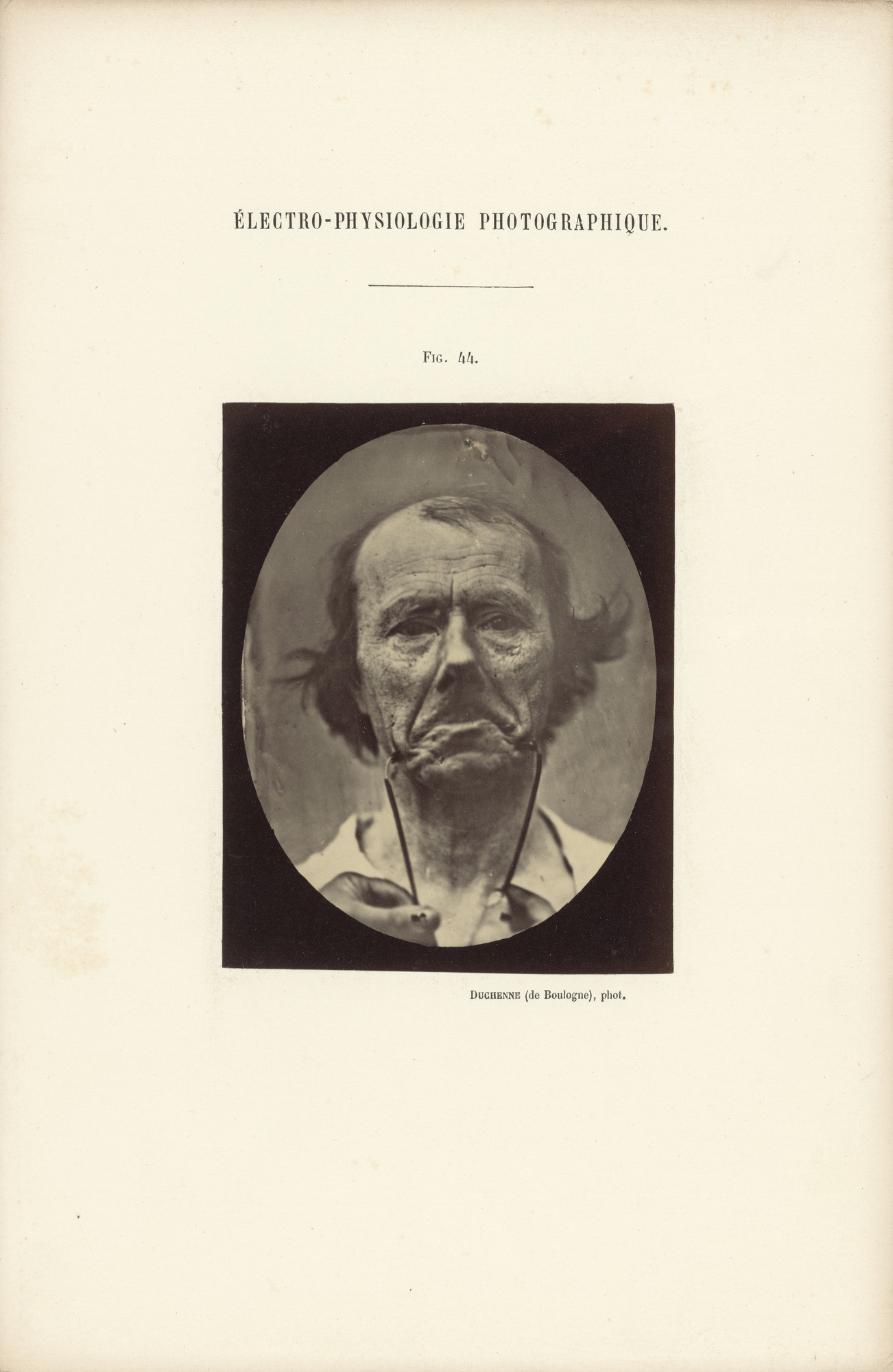
 

Guillaume-Benjamin Duchenne (French, 1806-1875) 'Figure 44, The Muscle of Sadness' Negative 1854-1856; print 1876


Guillaume-Benjamin Duchenne (French, 1806-1875)
Figure 44, The Muscle of Sadness
Negative 1854-1856; print 1876
From the book Mecanisme de la Physionomie Humaine ou Analyse Electro-Physiologique de l’Expression des Passions
Albumen silver print
11 x 9cm
The J. Paul Getty Museum, Los Angeles


Duchenne de Boulogne (French, 1806-1875)

Guillaume-Benjamin-Amand Duchenne (de Boulogne) (September 17, 1806 in Boulogne-sur-Mer – September 15, 1875 in Paris) was a French neurologist who revived Galvani’s research and greatly advanced the science of electrophysiology. The era of modern neurology developed from Duchenne’s understanding of neural pathways and his diagnostic innovations including deep tissue biopsy, nerve conduction tests (NCS), and clinical photography. This extraordinary range of activities (mostly in the Salpêtrière) was achieved against the background of a troubled personal life and a generally indifferent medical and scientific establishment.

Neurology did not exist in France before Duchenne and although many medical historians regard Jean-Martin Charcot as the father of the discipline, Charcot owed much to Duchenne, often acknowledging him as “mon maître en neurologie” (my teacher in neurology). … Duchenne’s monograph, the Mécanisme de la physionomie humaine – also illustrated prominently by his photographs – was the first study on the physiology of emotion and was highly influential on Darwin’s work on human evolution and emotional expression.

In 1835, Duchenne began experimenting with therapeutic “électropuncture” (a technique recently invented by François Magendie and Jean-Baptiste Sarlandière by which electric shock was administered beneath the skin with sharp electrodes to stimulate the muscles). After a brief and unhappy second marriage, Duchenne returned to Paris in 1842 in order to continue his medical research. Here, he did not achieve a senior hospital appointment, but supported himself with a small private medical practice, while daily visiting a number of teaching hospitals, including the Salpêtrière psychiatric centre. He developed a non-invasive technique of muscle stimulation that used faradic shock on the surface of the skin, which he called “électrisation localisée” and he published these experiments in his work, On Localized Electrization and its Application to Pathology and Therapy, first published in 1855. A pictorial supplement to the second edition, Album of Pathological Photographs (Album de Photographies Pathologiques) was published in 1862. A few months later, the first edition of his now much-discussed work, The Mechanism of Human Physiognomy, was published. Were it not for this small, but remarkable, work, his next publication, the result of nearly 20 years of study, Duchenne’s Physiology of Movements, his most important contribution to medical science, might well have gone unnoticed.

The Mechanism of Human Facial Expression

Influenced by the fashionable beliefs of physiognomy of the 19th century, Duchenne wanted to determine how the muscles in the human face produce facial expressions which he believed to be directly linked to the soul of man. He is known, in particular, for the way he triggered muscular contractions with electrical probes, recording the resulting distorted and often grotesque expressions with the recently invented camera. He published his findings in 1862, together with extraordinary photographs of the induced expressions, in the book Mecanisme de la physionomie Humaine (The Mechanism of Human Facial Expression, also known as The Mechanism of Human Physiognomy).

Duchenne believed that the human face was a kind of map, the features of which could be codified into universal taxonomies of mental states; he was convinced that the expressions of the human face were a gateway to the soul of man. Unlike Lavater and other physiognomists of the era, Duchenne was skeptical of the face’s ability to express moral character; rather he was convinced that it was through a reading of the expressions alone (known as pathognomy) which could reveal an “accurate rendering of the soul’s emotions”. He believed that he could observe and capture an “idealized naturalism” in a similar (and even improved) way to that observed in Greek art. It is these notions that he sought conclusively and scientifically to chart by his experiments and photography and it led to the publishing of The Mechanism of Human Physiognomy in 1862 (also entitled, The Electro-Physiological Analysis of the Expression of the Passions, Applicable to the Practice of the Plastic Arts. in French: Mécanisme de la physionomie humaine, ou Analyse électro-physiologique de l’expression des passions applicable à la pratique des arts plastiques), now generally rendered as The Mechanism of Human Facial Expression. The work compromises a volume of text divided into three parts:

1/ General Considerations,
2/ A Scientific Section, and
3/ An Aesthetic Section.

These sections were accompanied by an atlas of photographic plates. …

Duchenne defines the fundamental expressive gestures of the human face and associates each with a specific facial muscle or muscle group. He identifies thirteen primary emotions the expression of which is controlled by one or two muscles. He also isolates the precise contractions that result in each expression and separates them into two categories: partial and combined. To stimulate the facial muscles and capture these “idealized” expressions of his patients, Duchenne applied faradic shock through electrified metal probes pressed upon the surface of the various muscles of the face.

Duchenne was convinced that the “truth” of his pathognomic experiments could only be effectively rendered by photography, the subject’s expressions being too fleeting to be drawn or painted. “Only photography,” he writes, “as truthful as a mirror, could attain such desirable perfection.” He worked with a talented, young photographer, Adrien Tournachon, (the brother of Felix Nadar), and also taught himself the art in order to document his experiments. From an art-historical point of view, the Mechanism of Human Physiognomy was the first publication on the expression of human emotions to be illustrated with actual photographs. Photography had only recently been invented, and there was a widespread belief that this was a medium that could capture the “truth” of any situation in a way that other mediums were unable to do.

Duchenne used six living models in the scientific section, all but one of whom were his patients. His primary model, however, was an “old toothless man, with a thin face, whose features, without being absolutely ugly, approached ordinary triviality.” Through his experiments, Duchenne sought to capture the very “conditions that aesthetically constitute beauty.” He reiterated this in the aesthetic section of the book where he spoke of his desire to portray the “conditions of beauty: beauty of form associated with the exactness of the facial expression, pose and gesture.” Duchenne referred to these facial expressions as the “gymnastics of the soul”. He replied to criticisms of his use of the old man by arguing that “every face could become spiritually beautiful through the accurate rendering of his or her emotions”, and furthermore said that because the patient was suffering from an anesthetic condition of the face, he could experiment upon the muscles of his face without causing him pain.

Text from the Wikipedia website
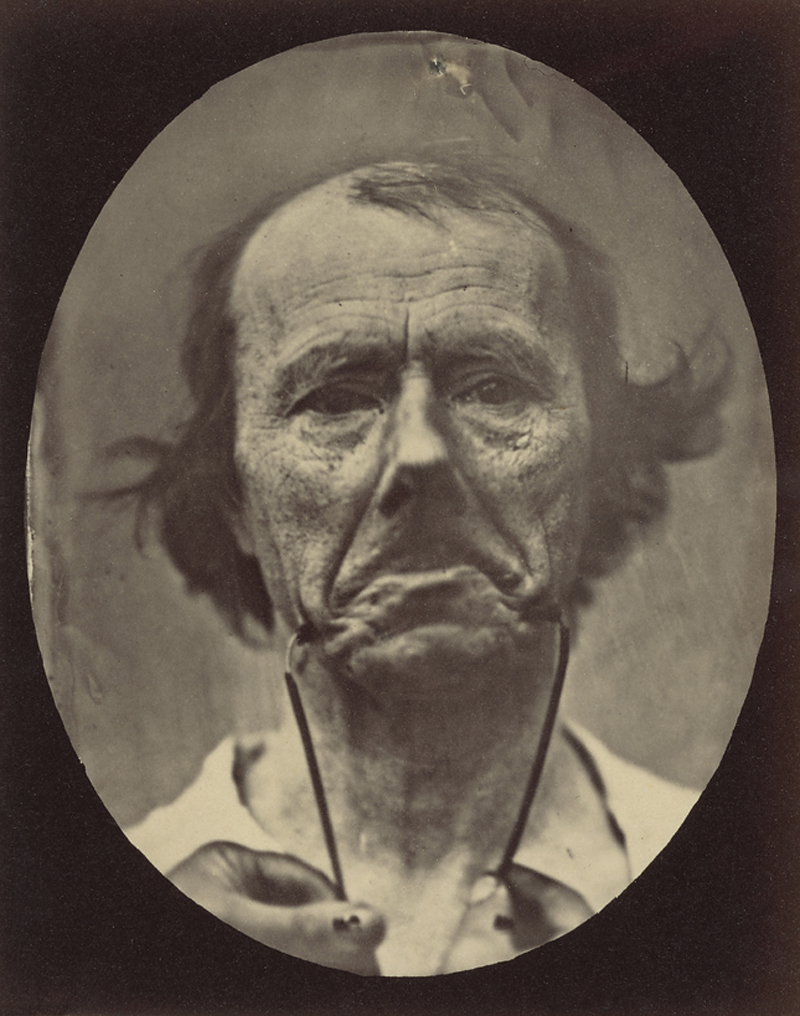
 

Guillaume-Benjamin Duchenne (French, 1806-1875) 'Figure 44, The Muscle of Sadness' Negative 1854-1856; print 1876 (detail)


Guillaume-Benjamin Duchenne (French, 1806-1875)
Figure 44, The Muscle of Sadness (detail)
Negative 1854-1856; print 1876
From the book Mecanisme de la Physionomie Humaine ou Analyse Electro-Physiologique de l’Expression des Passions
Albumen silver print
11 x 9cm
The J. Paul Getty Museum, Los Angeles


Duchenne and his patient, an “old toothless man, with a thin face, whose features, without being absolutely ugly, approached ordinary triviality.” Duchenne faradize’s the mimetic muscles of “The Old Man.” The farad (symbol: F) is the SI derived unit of electrical capacitance, the ability of a body to store an electrical charge. It is named after the English physicist Michael Faraday
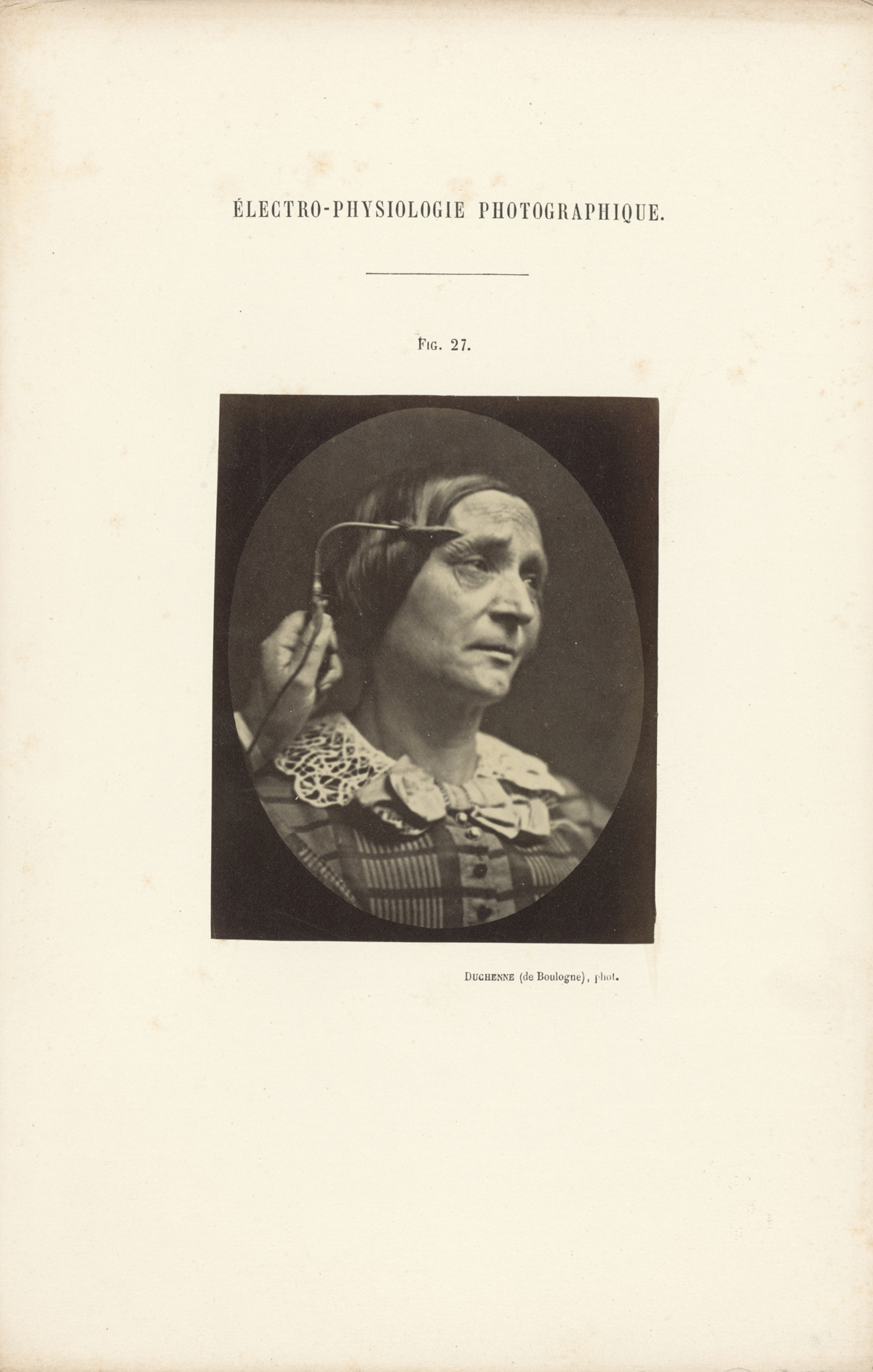
 

Guillaume-Benjamin Duchenne (French, 1806-1875) 'Figure 27, The Muscle of Pain' Negative 1854-1856; print 1876


Guillaume-Benjamin Duchenne (French, 1806-1875)
Figure 27, The Muscle of Pain
Negative 1854-1856; print 1876
From the book Mecanisme de la Physionomie Humaine ou Analyse Electro-Physiologique de l’Expression des Passions
Albumen silver print
11 x 9cm
The J. Paul Getty Museum, Los Angeles
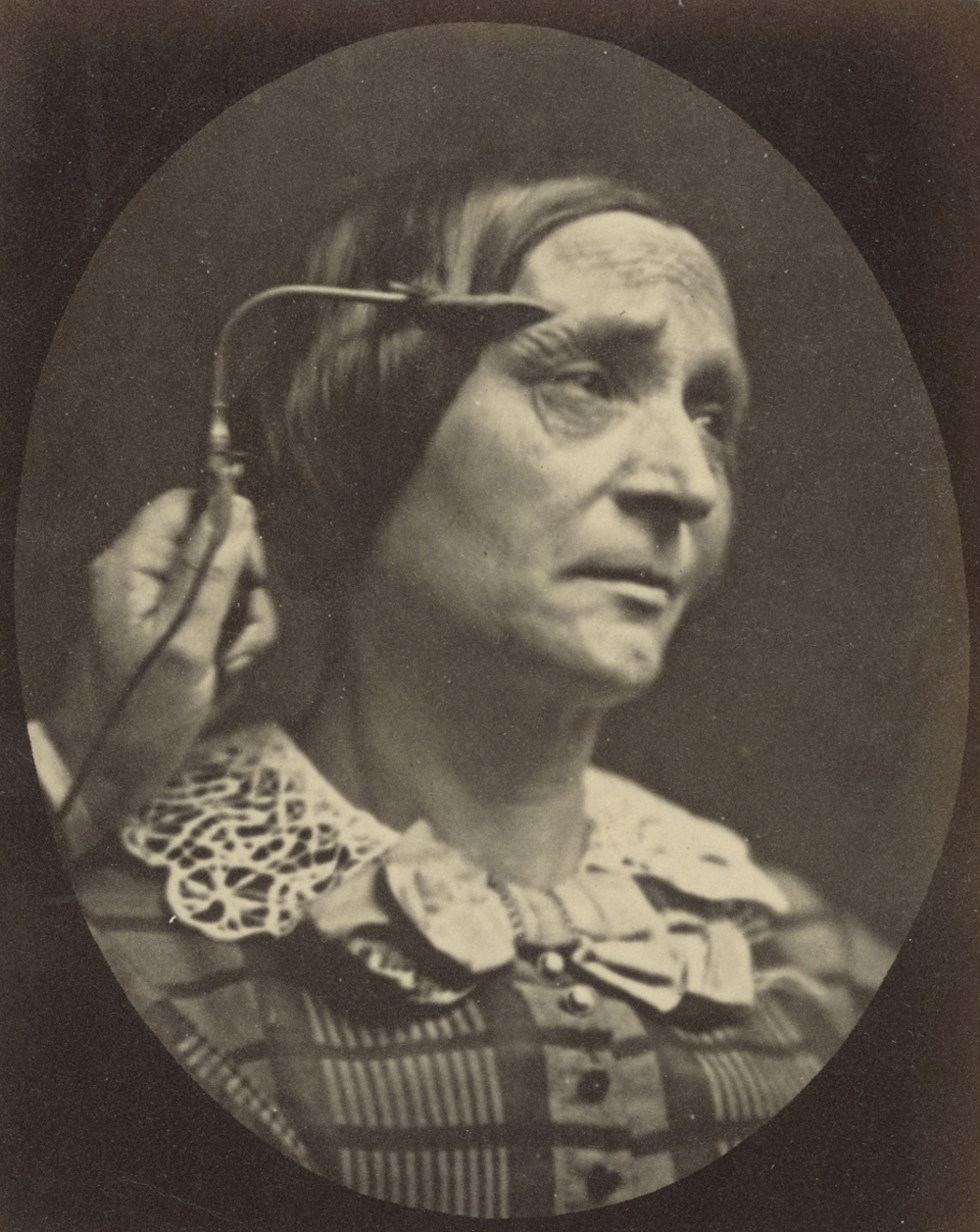
 

Guillaume-Benjamin Duchenne (French, 1806-1875) 'Figure 27, The Muscle of Pain' Negative 1854-1856; print 1876 (detail)


Guillaume-Benjamin Duchenne (French, 1806-1875)
Figure 27, The Muscle of Pain (detail)
Negative 1854-1856; print 1876
From the book Mecanisme de la Physionomie Humaine ou Analyse Electro-Physiologique de l’Expression des Passions
Albumen silver print
11 x 9cm
The J. Paul Getty Museum, Los Angeles
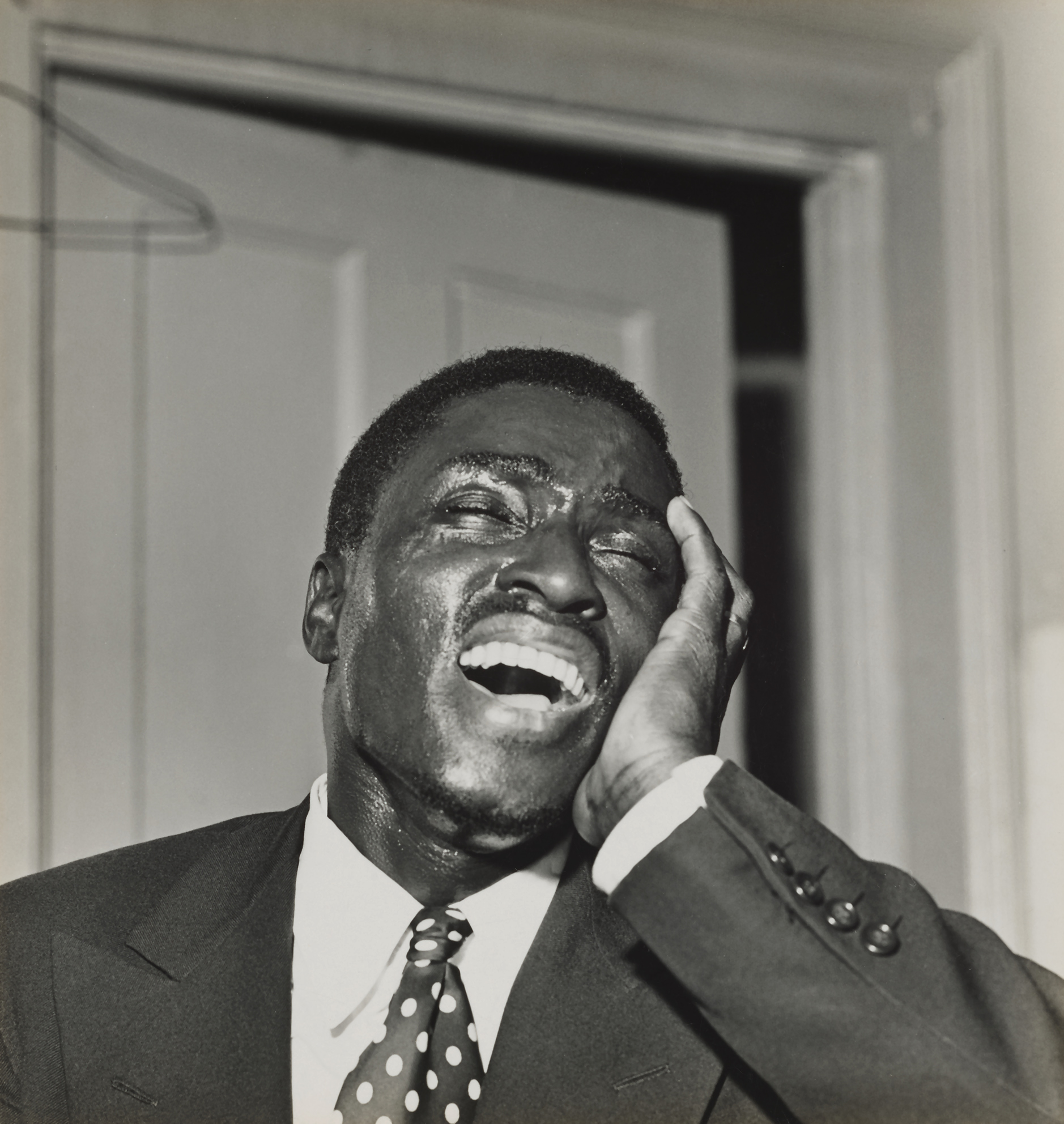
 

Milton Rogovin (American, 1909-2011) 'Storefront Churches, Buffalo, preacher head in hand, eyes closed' 1958-1961


Milton Rogovin (American, 1909-2011)
Storefront Churches, Buffalo, preacher head in hand, eyes closed
1958-1961
Gelatin silver print
11 × 10.5cm (4 5/16 × 4 1/8 in.)
The J. Paul Getty Museum, Los Angeles
Gift of Dr. John V. and Laura M. Knaus
© Milton Rogovin
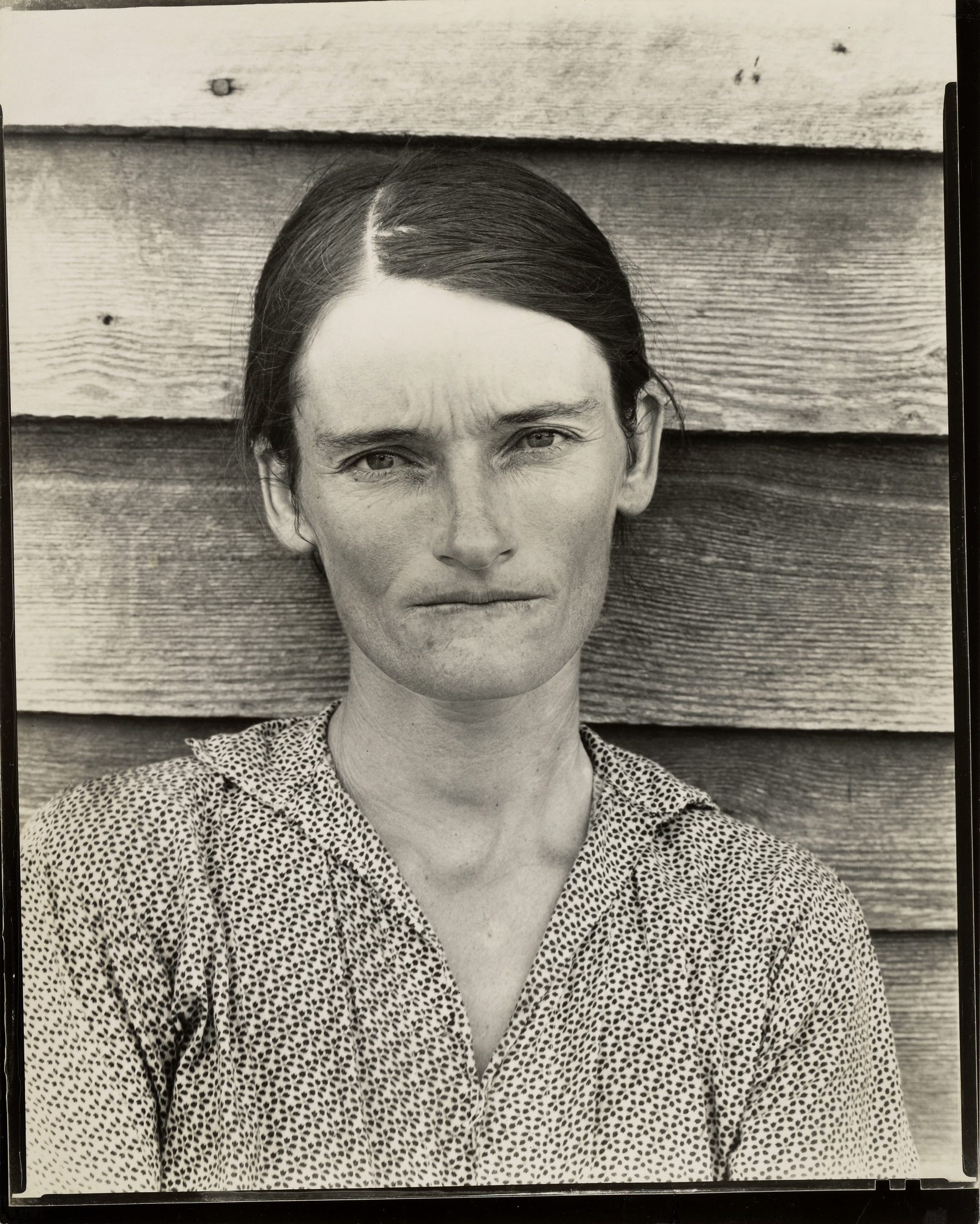
 

Walker Evans (American, 1903-1975) 'Allie Mae Burroughs, Hale County, Alabama' Negative 1936; print 1950s


Walker Evans (American, 1903-1975)
Allie Mae Burroughs, Hale County, Alabama
Negative 1936; print 1950s
Gelatin silver print
24.3 × 19.2cm (9 9/16 × 7 9/16 in.)
The J. Paul Getty Museum, Los Angeles
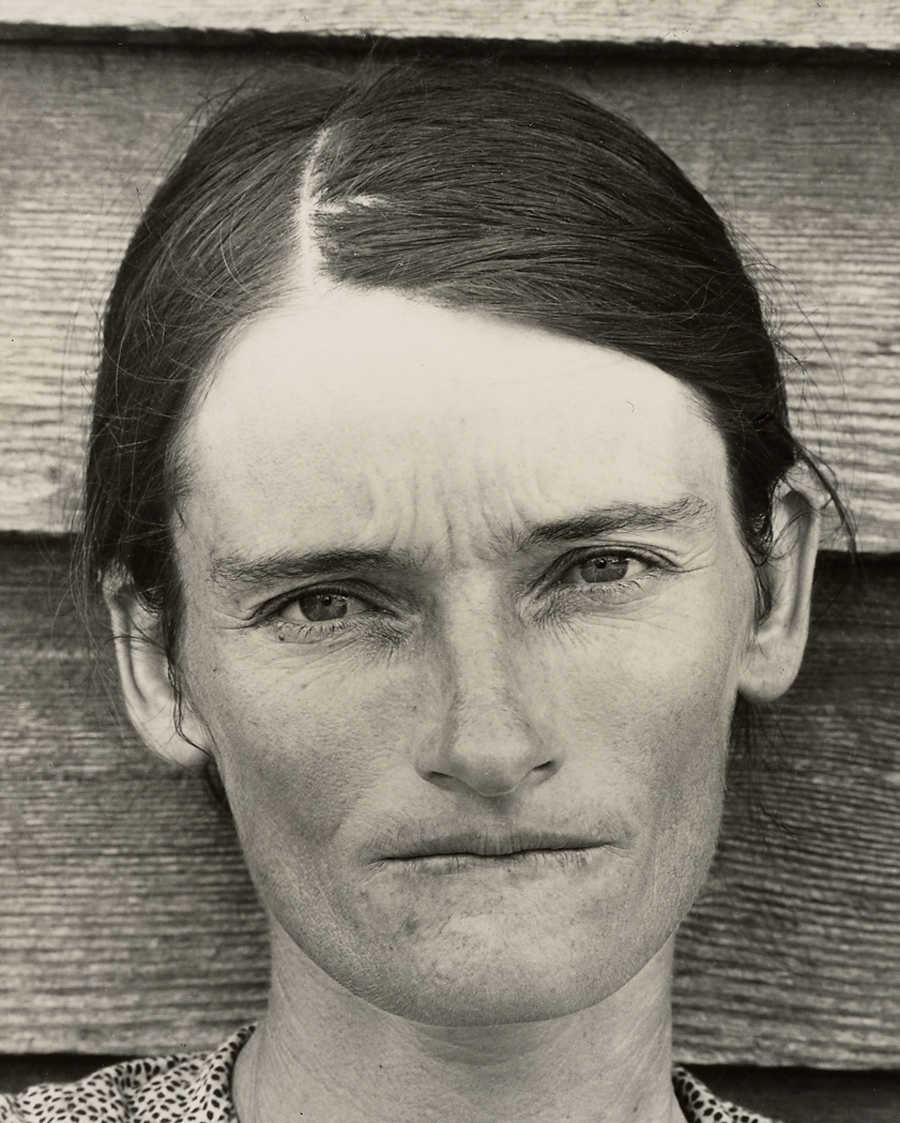
 

Walker Evans (American, 1903-1975) 'Allie Mae Burroughs, Hale County, Alabama' Negative 1936; print 1950s (detail)


Walker Evans (American, 1903-1975)
Allie Mae Burroughs, Hale County, Alabama (detail)
Negative 1936; print 1950s
Gelatin silver print
24.3 × 19.2cm (9 9/16 × 7 9/16 in.)
The J. Paul Getty Museum, Los Angeles


Depression-era photography

In 1935, Evans spent two months at first on a fixed-term photographic campaign for the Resettlement Administration (RA) in West Virginia and Pennsylvania. From October on, he continued to do photographic work for the RA and later the Farm Security Administration (FSA), primarily in the Southern United States.

In the summer of 1936, while on leave from the FSA, he and writer James Agee were sent by Fortune magazine on assignment to Hale County, Alabama, for a story the magazine subsequently opted not to run. In 1941, Evans’s photographs and Agee’s text detailing the duo’s stay with three white tenant families in southern Alabama during the Great Depression were published as the groundbreaking book Let Us Now Praise Famous Men. Its detailed account of three farming families paints a deeply moving portrait of rural poverty. The critic Janet Malcolm notes that as in the earlier Beals’ book there was a contradiction between a kind of anguished dissonance in Agee’s prose and the quiet, magisterial beauty of Evans’s photographs of sharecroppers.

The three families headed by Bud Fields, Floyd Burroughs and Frank Tingle, lived in the Hale County town of Akron, Alabama, and the owners of the land on which the families worked told them that Evans and Agee were “Soviet agents,” although Allie Mae Burroughs, Floyd’s wife, recalled during later interviews her discounting that information. Evans’s photographs of the families made them icons of Depression-Era misery and poverty. In September 2005, Fortune revisited Hale County and the descendants of the three families for its 75th anniversary issue. Charles Burroughs, who was four years old when Evans and Agee visited the family, was “still angry” at them for not even sending the family a copy of the book; the son of Floyd Burroughs was also reportedly angry because the family was “cast in a light that they couldn’t do any better, that they were doomed, ignorant.”

Text from the Wikipedia website


Lisette Model (American born Austria, 1901-1983) '[War Rally]' 1942


Lisette Model (American born Austria, 1901-1983)
(War Rally)
1942
Gelatin silver print
34.4 × 27.6cm (13 9/16 × 10 7/8 in.)
© Estate of Lisette Model
Courtesy Baudoin Lebon/Keitelman
The J. Paul Getty Museum, Los Angeles
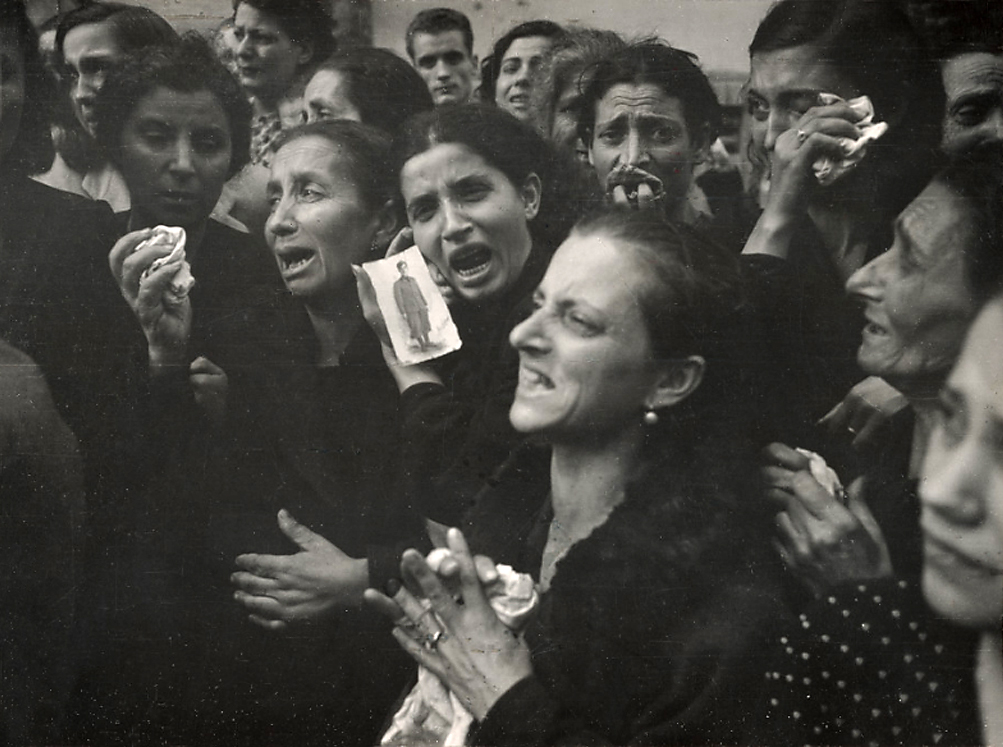
 

Robert Capa (American born Hungary, 1913-1954) 'Second World War, Naples' October 2, 1943


Robert Capa (American born Hungary, 1913-1954)
Second World War, Naples
October 2, 1943
Gelatin silver print
17.6 × 23.8cm (6 15/16 × 9 3/8 in.)
© International Center of Photography / Magnum Photos
The J. Paul Getty Museum, Los Angeles


View of a group of woman with pained expressions on their faces with several holding handkerchiefs and one holding a card photograph of a young man.


Unknown maker (American) '[Smiling Man]' 1860


Unknown maker (American)
(Smiling Man)
1860
Ambrotype
8.9 x 6.5cm
The J. Paul Getty Museum, Los Angeles


Baron Adolf de Meyer (American born France, 1868-1946) '[Ruth St. Denis]' c. 1918


Baron Adolf de Meyer (American born France, 1868-1946)
(Ruth St. Denis)
c. 1918
Platinum print
23.3 × 18.7cm (9 3/16 × 7 3/8 in.)
The J. Paul Getty Museum, Los Angeles


Woodbury & Page (British, active 1857-1908) '[Javanese woman seated with legs crossed, basket at side]' c. 1870


Woodbury & Page (British, active 1857-1908)
(Javanese woman seated with legs crossed, basket at side)
c. 1870
Albumen silver print
8.9 × 6cm (3 1/2 × 2 3/8 in.)
The J. Paul Getty Museum, Los Angeles


Photography in Australia, the Far East, Java and London

In 1851 Woodbury, who had already become a professional photographer, went to Australia and soon found work in the engineering department of the Melbourne waterworks. He photographed the construction of ducts and other waterworks as well as various buildings in Melbourne. He received a medal for his photography in 1854.

At some point in the mid-1850s Woodbury met expatriate British photographer James Page. In 1857 the two left Melbourne and moved to Batavia (now Jakarta), Dutch East Indies, arriving 18 May 1857, and established the partnership of Woodbury & Page that same year.

During most of 1858 Woodbury & Page photographed in Central and East Java, producing large views of the ruined temples near Surakarta, amongst other subjects, before 1 September of that year. After their tour of Java, by 8 December 1858 Woodbury and Page had returned to Batavia.

In 1859 Woodbury returned to England to arrange a regular supplier of photographic materials for his photographic studio and he contracted the London firm Negretti and Zambra to market Woodbury & Page photographs in England.

Woodbury returned to Java in 1860 and during most of that year travelled with Page through Central and West Java along with Walter’s brother, Henry James Woodbury (born 1836 – died 1873), who had arrived in Batavia in April 1859.

On 18 March 1861 Woodbury & Page moved to new premises, also in Batavia, and the studio was renamed Photographisch Atelier van Walter Woodbury, also known as Atelier Woodbury. The firm sold portraits, views of Java, stereographs, cameras, lenses, photographic chemicals and other photographic supplies. These premises continued to be used until 1908, when the firm was dissolved.

In his career Woodbury produced topographic, ethnographic and especially portrait photographs. He photographed in Australia, Java, Sumatra, Borneo and London. Although individual photographers were rarely identified on Woodbury & Page photographs, between 1861 and 1862 Walter B. Woodbury occasionally stamped the mounts of his photographs: “Photographed by Walter Woodbury, Java.”

Text from the Wikipedia website
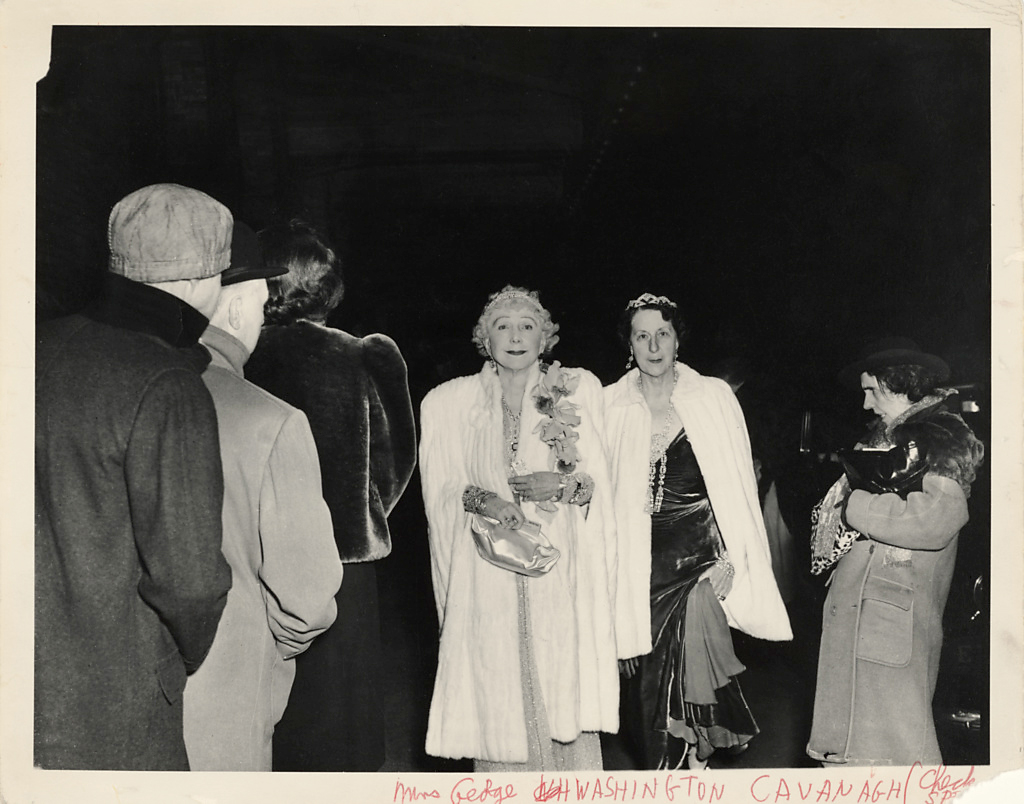
 

Weegee (Arthur Fellig) (American, 1899-1968) 'The Critic' November 1943


Weegee (Arthur Fellig) (American, 1899-1968)
The Critic
November 1943
Gelatin silver print
25.7 x 32.9cm (10 1/8 x 12 15/16 in.)
The J. Paul Getty Museum, Los Angeles


“I go around wearing rose-colored glasses. In other words, we have beauty. We have ugliness. Everybody likes beauty. But there is an ugliness…” ~ Weegee, in a July 11, 1945 interview for WEAF radio, New York City

While Weegee’s work appeared in many American newspapers and magazines, his methods would sometimes be considered ethically questionable by today’s journalistic standards. In this image, a drunk woman confronts two High Society women who are attending the opera. Mrs. George Washington Kavanaugh and Lady Decies appear nonplussed to be in close proximity to the disheveled woman. Weegee’s flash illuminates their fur wraps and tiaras, drawing them into the foreground. The drunk woman emerges from the shadows on the right side, her mouth tense and open as if she were saying something, hair tousled, her face considerably less sharp than those of her rich counterparts.

The Critic is the second name Weegee gave this photograph. He originally called it, The Fashionable People. In an interview, Weegee’s assistant, Louie Liotta later revealed that the picture was entirely set up. Weegee had asked Liotta to bring a regular from a bar in the Bowery section of Manhattan to the season’s opening of the Metropolitan Opera. Liotta complied. After getting the woman drunk, they positioned her near the red carpet, where Weegee readied his camera to capture the moment seen here.

Anonymous text. “The Critic,” on the J. Paul Getty Museum website [Online] Cited 24/02/2022
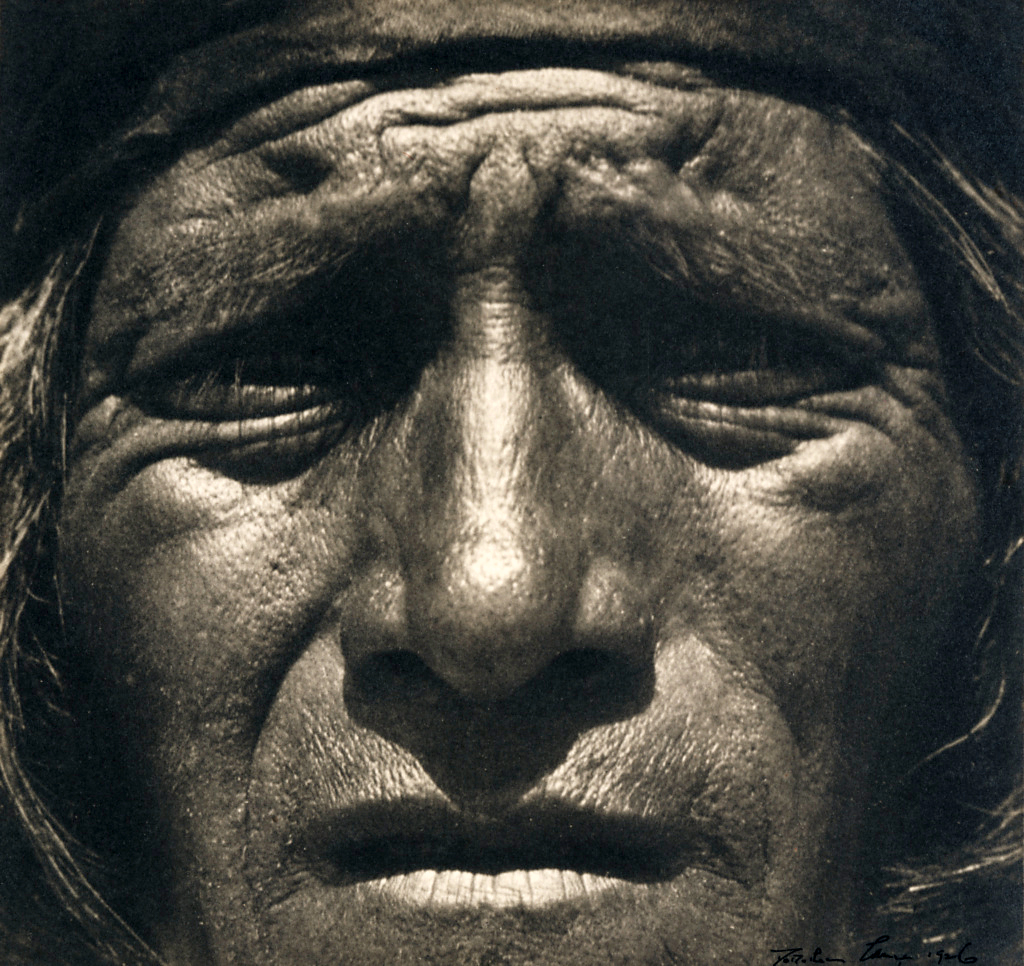
 

Dorothea Lange (United States, 1895-1965) 'Hopi Indian, New Mexico' Negative, c. 1923; print, 1926


Dorothea Lange (American, 1895-1965)
Hopi Indian, New Mexico
Negative, c. 1923; print, 1926
Gelatin silver print
18.4 x 19.7cm (7 1/4 x 7 3/4 in.)
The J. Paul Getty Museum, Los Angeles
© Oakland Museum of California, the City of Oakland


Dorothea Lange made this portrait study not as a social document but rather as a Pictorialist experiment in light and shadow, transforming a character-filled face into an art-for-art’s-sake abstraction. This image bridges the two distinct phases of Lange’s work: her early, soft-focus portraiture and her better-known documentary work of the 1930s.

Text from the J. Paul Getty Museum website
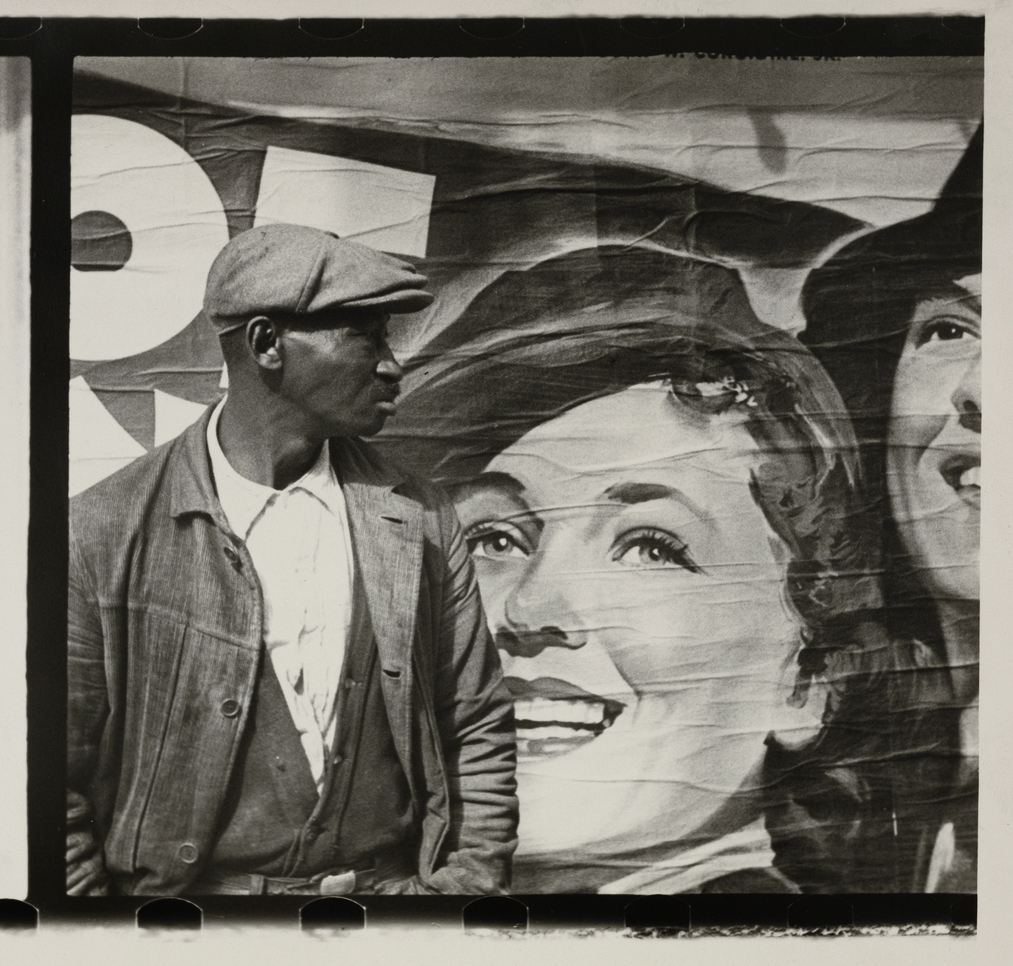
 

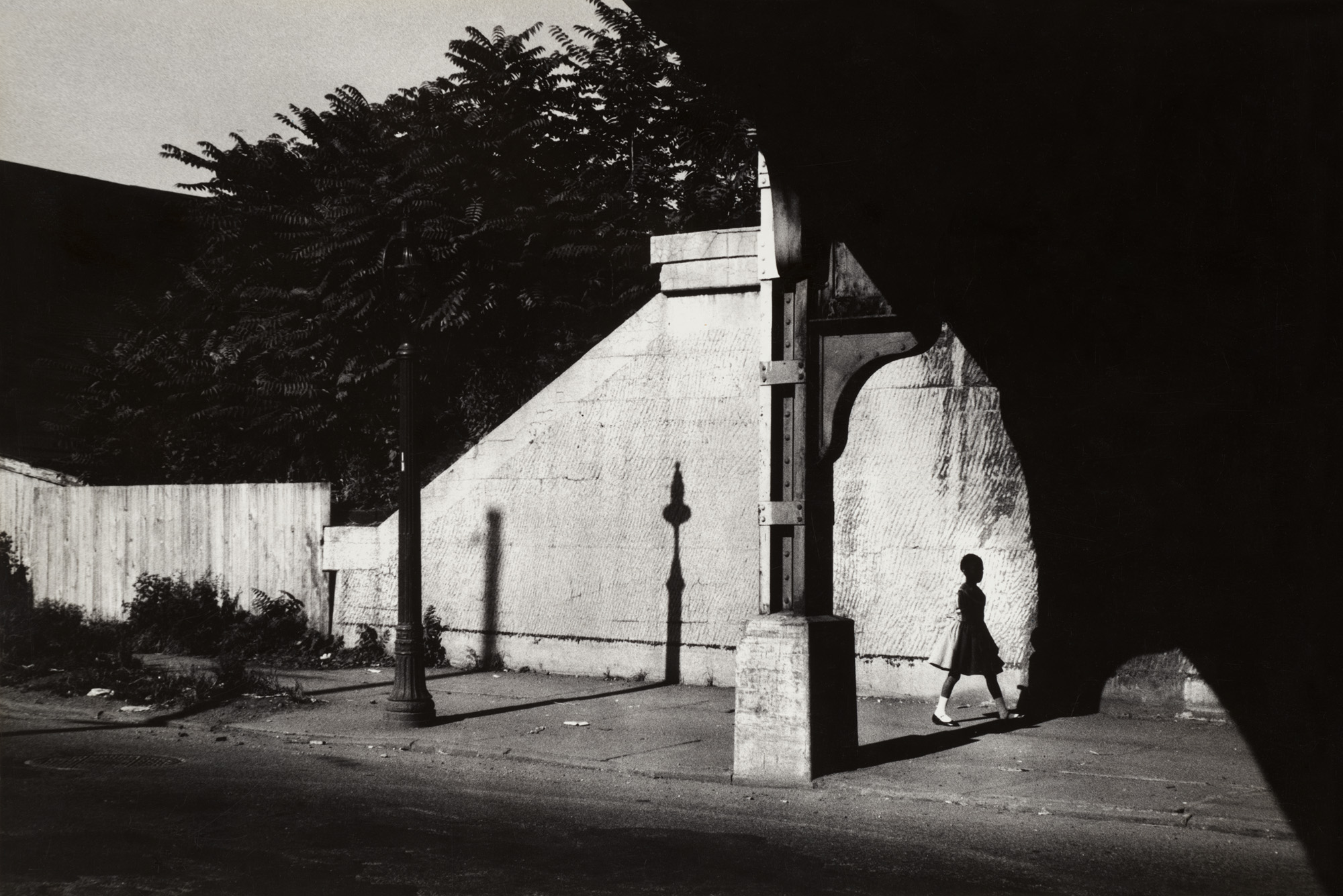
Walker Evans (American, 1903-1975) 'Street Scene, New Orleans' 1936


Walker Evans (American, 1903-1975)
Street Scene, New Orleans
1936
Gelatin silver print
15.6 x 16.8cm (1 1/8 x 6 5/8 in.)
The J. Paul Getty Museum, Los Angeles
© Walker Evans Archive, The Metropolitan Museum of Art
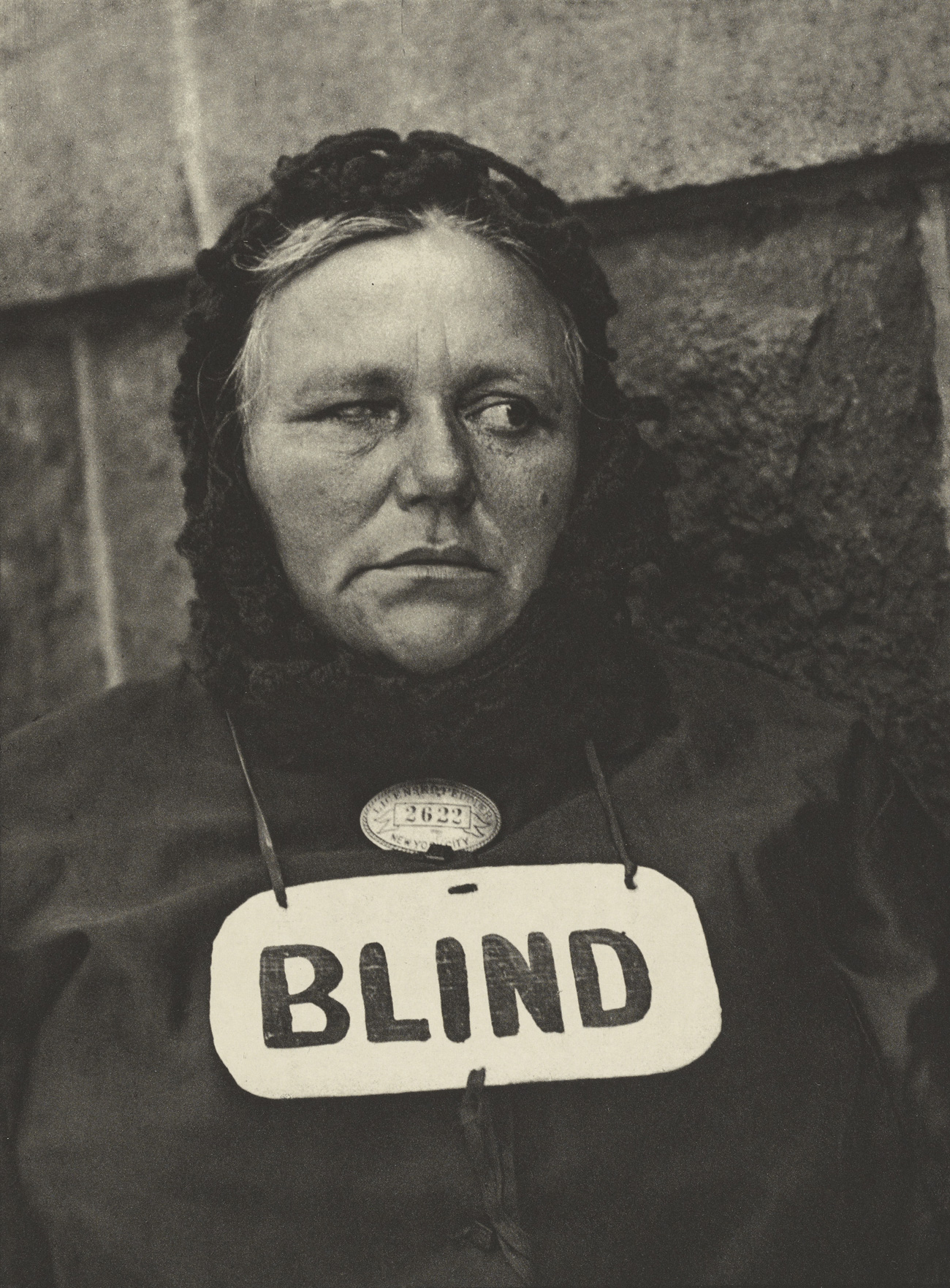
 

Paul Strand (American, 1890 - 1976) 'Photograph - New York' Negative 1916; print June 1917


Paul Strand (American, 1890-1976)
Photograph – New York
Negative 1916; print June 1917
Photogravure
22.4 × 16.7cm (8 13/16 × 6 9/16 in.)
The J. Paul Getty Museum, Los Angeles


“I remember coming across Paul Strand’s ‘Blind Woman’ when I was very young, and that really bowled me over … It’s a very powerful picture. I saw it in the New York Public Library file of Camera Work, and I remember going out of there over stimulated: That’s the stuff, that’s the thing to do. It charged me up.” ~ Walker Evans

The impact of seeing this striking image for the first time is evident in Walker Evans’s vivid recollection. At the time, most photographers were choosing “pretty” subjects and creating fanciful atmospheric effects in the style of the Impressionists. Paul Strand’s unconventional subject and direct approach challenged assumptions about the medium.

At once depicting misery and endurance, struggle and degradation, Strand’s portrait of a blind woman sets up a complex confrontation. “The whole concept of blindness,” as one historian has noted, “is aimed like a weapon at those whose privilege of sight permits them to experience the picture. …”

Anonymous text. “New York [Blind Woman],” on the J. Paul Getty Museum website [Online] Cited 24/02/2022
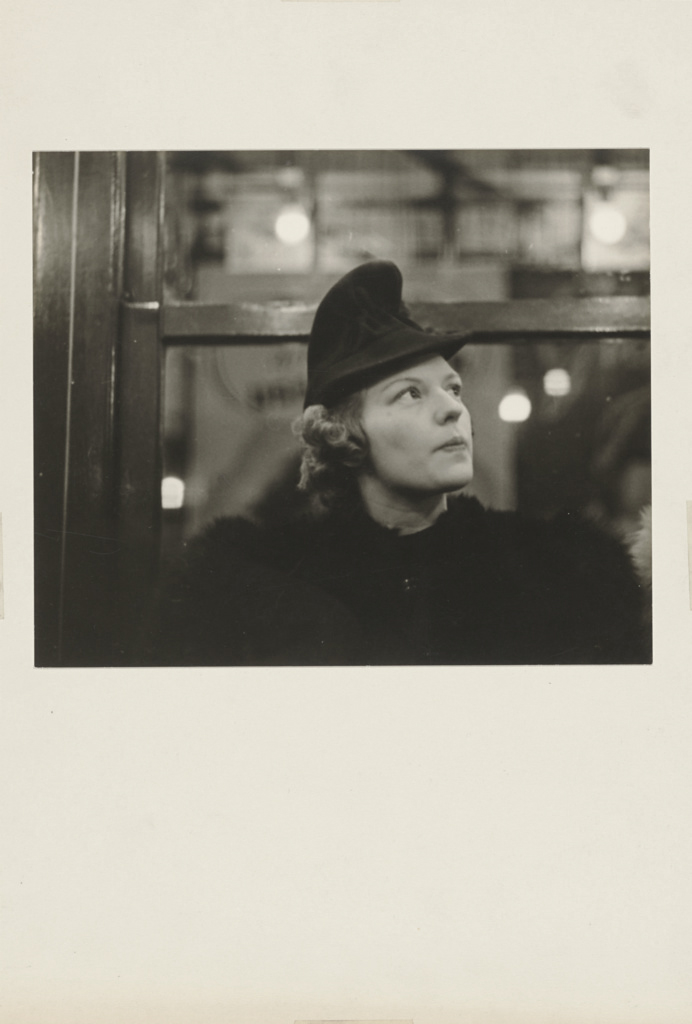
 

Walker Evans (American, 1903-1975) 'Subway Portrait' 1938-1941


Walker Evans (American, 1903-1975)
Subway Portrait
1938-1941
Gelatin silver print
13.2 x 16cm (5 3/16 x 6 5/16 in.)
The J. Paul Getty Museum, Los Angeles
© Walker Evans Archive, The Metropolitan Museum of Art


Camille Silvy (French, 1834-1910) '[Madame Camille Silvy]' c. 1863


Camille Silvy (French, 1834-1910)
(Madame Camille Silvy)
c. 1863
Albumen silver print
8.9 × 6cm (3 1/2 × 2 3/8 in.)
Gift in memory of Madame Camille Silvy born Alice Monnier from the Monnier Family
The J. Paul Getty Museum, Los Angeles


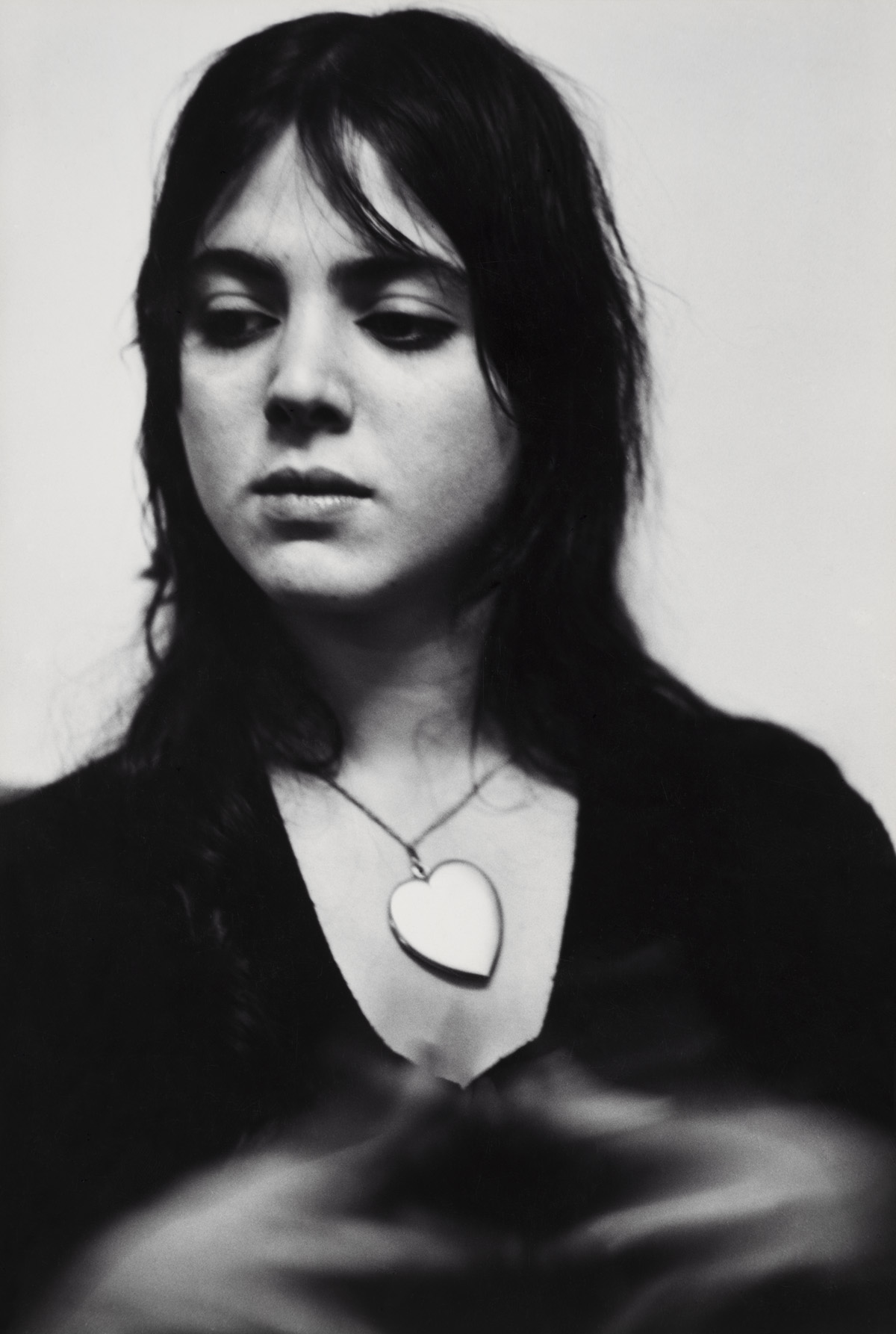
Mikiko Hara (Japanese, b. 1967) '[Untitled (Making a Void)]' Negative 2001; print about 2007


Mikiko Hara (Japanese, b. 1967)
Untitled (Making a Void)
Negative 2001; print about 2007
Chromogenic print
© Mikiko Hara
The J. Paul Getty Museum, Los Angeles
Purchased with funds provided by the Photographs Council
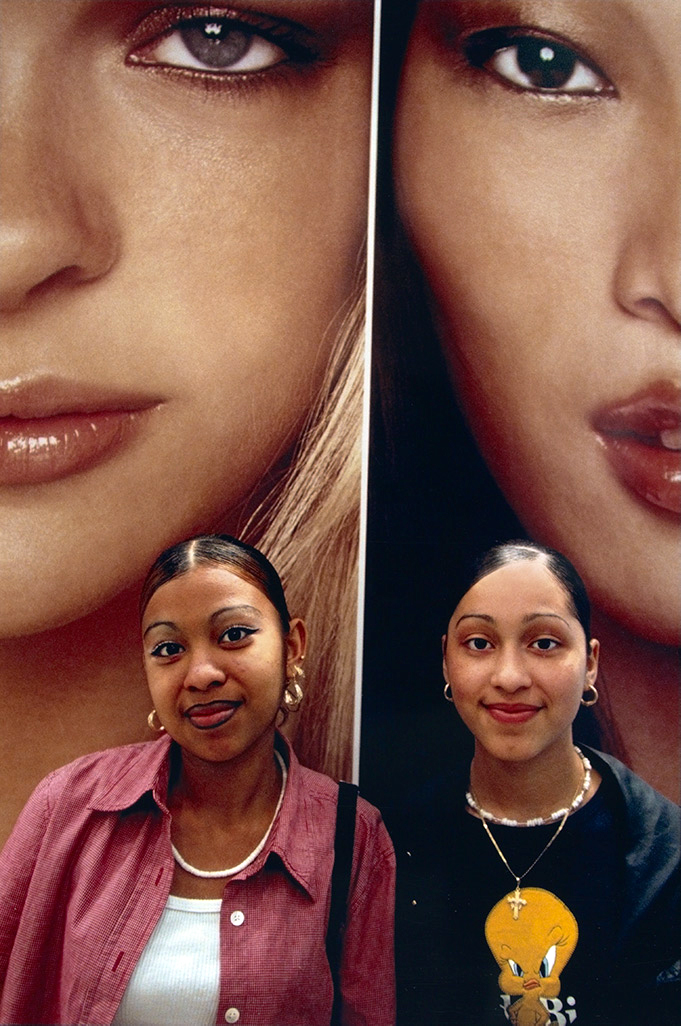
 

Lauren Greenfield (American, b. 1966) 'Sisters Violeta, 21, and Massiel, 15, at the Limited in a mall, San Francisco, California' Negative 1999; print 2008


Lauren Greenfield (American, b. 1966)
Sisters Violeta, 21, and Massiel, 15, at the Limited in a mall, San Francisco, California
Negative 1999; print 2008
48.9 × 32.5cm (19 1/4 × 12 13/16 in.)
© Lauren Greenfield/INSTITUTE
The J. Paul Getty Museum, Los Angeles
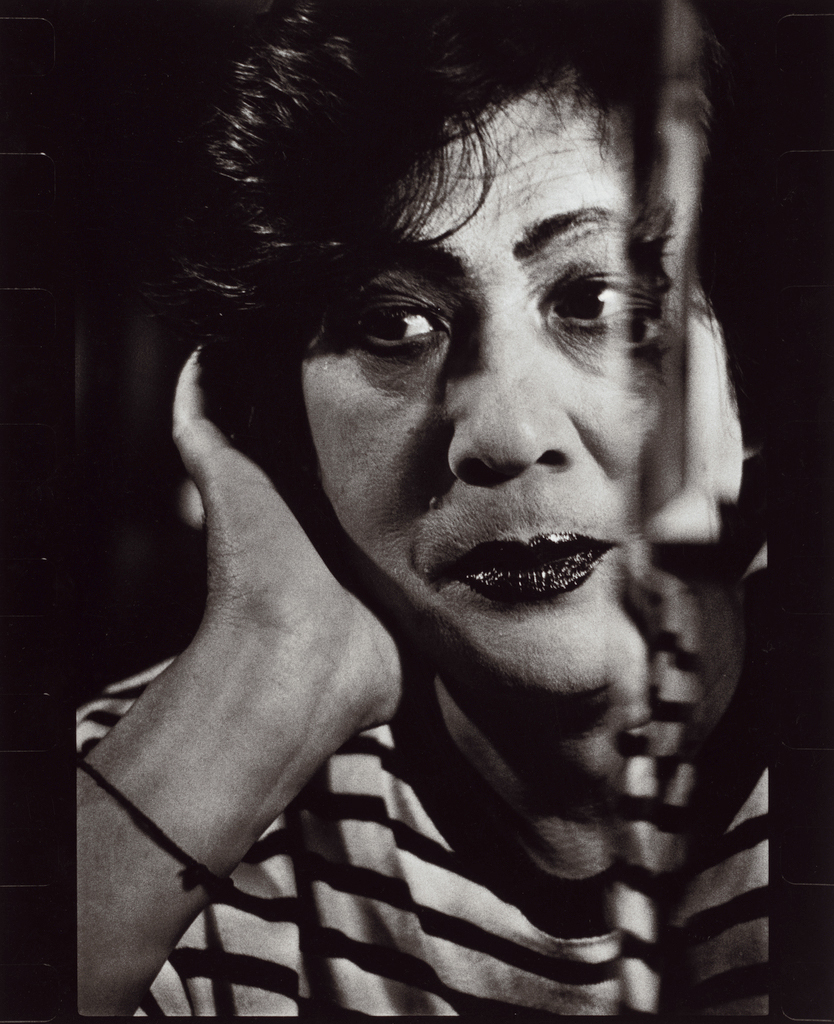
 

Daido Moriyama (Japanese, b. 1938) 'Self-portrait' 1997


Daido Moriyama (Japanese, b. 1938)
Self-portrait
1997
Gelatin silver print
13.2 x 16cm (5 3/16 x 6 5/16 in.)
The J. Paul Getty Museum, Los Angeles
Purchase with funds provided by the Photographs Council
© Daido Moriyama


The J. Paul Getty Museum
1200 Getty Center Drive
Los Angeles, California 90049

Opening hours:
Daily 10am – 5.30pm

The J. Paul Getty Museum website

LIKE ART BLACK ON FACEBOOK

Back to top

Photographs: “Climbing into immortality” on the work of Lewis W. Hine (1874-1940)

September 2018


Lewis Hine (American, 1874-1940) 'Jewel and Harold Walker, 6 and 5 years old, pick 20 to 25 pounds of cotton a day' 1916


Lewis Hine (American, 1874-1940)
Jewel and Harold Walker, 6 and 5 years old, pick 20 to 25 pounds of cotton a day. Father said: “I promised em a little wagon if they’d pick steady, and now they have half a bagful in just a little while.”
Oct. 1916. Comanche County (Geronimo), Oklahoma
Gelatin silver print


Climbing into immortality

In this posting we have a small selection of digitally cleaned images from one of the most influential photographers of the 20th century, Lewis Hine.

Over roughly 30 years Hine, a trained sociologist, used his camera as an educational tool for social reform. He built an incredible body of work focusing mainly on photographs of the poor and underprivileged which captured the lives of immigrants, labourers and child workers in the early 1900’s. After an assignment photographing the building of the Empire State Building in 1930-1931 work dropped off.

“By the late 1930’s he was just about out of work. Roy Stryker, head of the Farm Security Administration, thought he was difficult and past his prime and would not hire him. Assignments were scarce. In Hine’s last couple of years he was so broke that he lost his house, stopped photographing and applied for welfare. He died as destitute as anyone who ever sat for his lens.”1


What a fate for one of the greatest photographers the world have ever known. To add insult to injury, “After his death, the Museum of Modern Art was offered his pictures but did not want them; George Eastman House in Rochester did.”1 More fool MoMa, for in Hine we have the quintessential social documentary modernist photographer, way ahead of his time, taking photographs of child labourers in the first decade of the 20th century. When you think that acknowledged pioneer of modernist photography, Alfred Stieglitz, was still taking Pictorialist photographs such as Excavating, New York (1911), The Ferry Boat (1910) and publishing The Terminal (1892) in Camera Work 36 in 1911… you begin to understand how revolutionary Hine’s stark, perfectly balanced, (sometimes flash) photographs really are, both in terms of their form and their function, that is, the advancement of social change.

In four words we might say: his work is faultless.

Hine’s work emerges out of the American romantic movement with its links to transcendentalism, literary realism and social reform, a movement which included the likes of essayist, lecturer, philosopher, and poet Ralph Waldo Emerson and poet and humanist Walt Whitman. “A core belief of transcendentalism is in the inherent goodness of people and nature, and the belief that society and its institutions have corrupted the purity of the individual, and they have faith that people are at their best when truly “self-reliant” and independent,”2 while “literary realism attempts to represent familiar things as they are. Realist authors chose to depict everyday and banal activities and experiences, instead of using a romanticised or similarly stylised presentation.”3

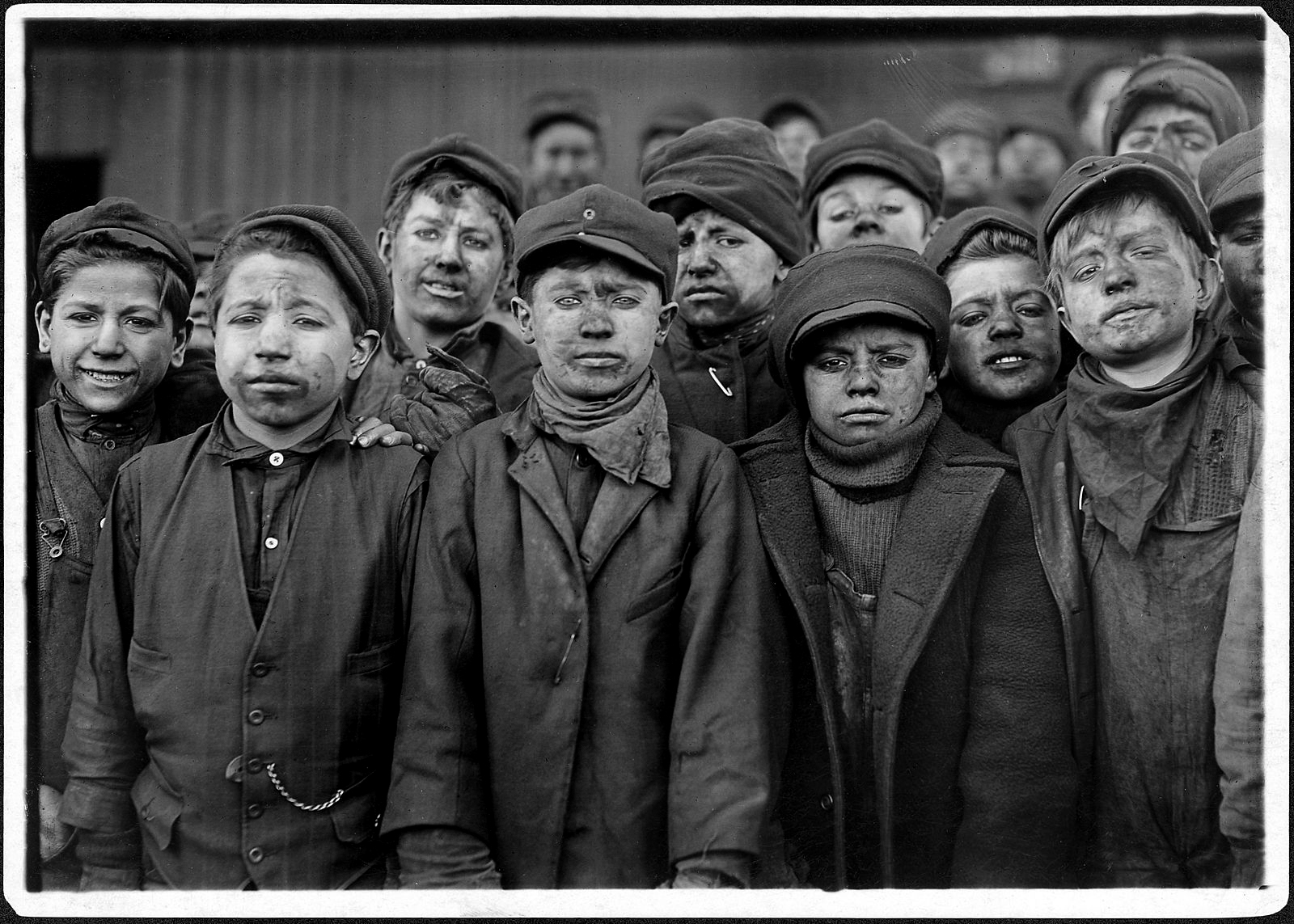
Hine pictures people and children just as they are, and believes in their innate goodness (as opposed to the hidden power of the body corporate, of industry and the machine). He incorporates both transcendentalism and realism in his works, in an attempt “to represent subject matter truthfully, without artificiality and avoiding artistic conventions…”3 Hine gets down to the subject level of his children. There is no looking down on these people, he gets down to their level, he photographs them as human beings at the level of their incarceration. Whether it be large groups of Breaker Boys or groups of four he photographs at their height, imbuing these portraits with pathos and poignancy. To look into Hine’s photographs is to see into the soul of these human beings, to feel their distress and hurt.

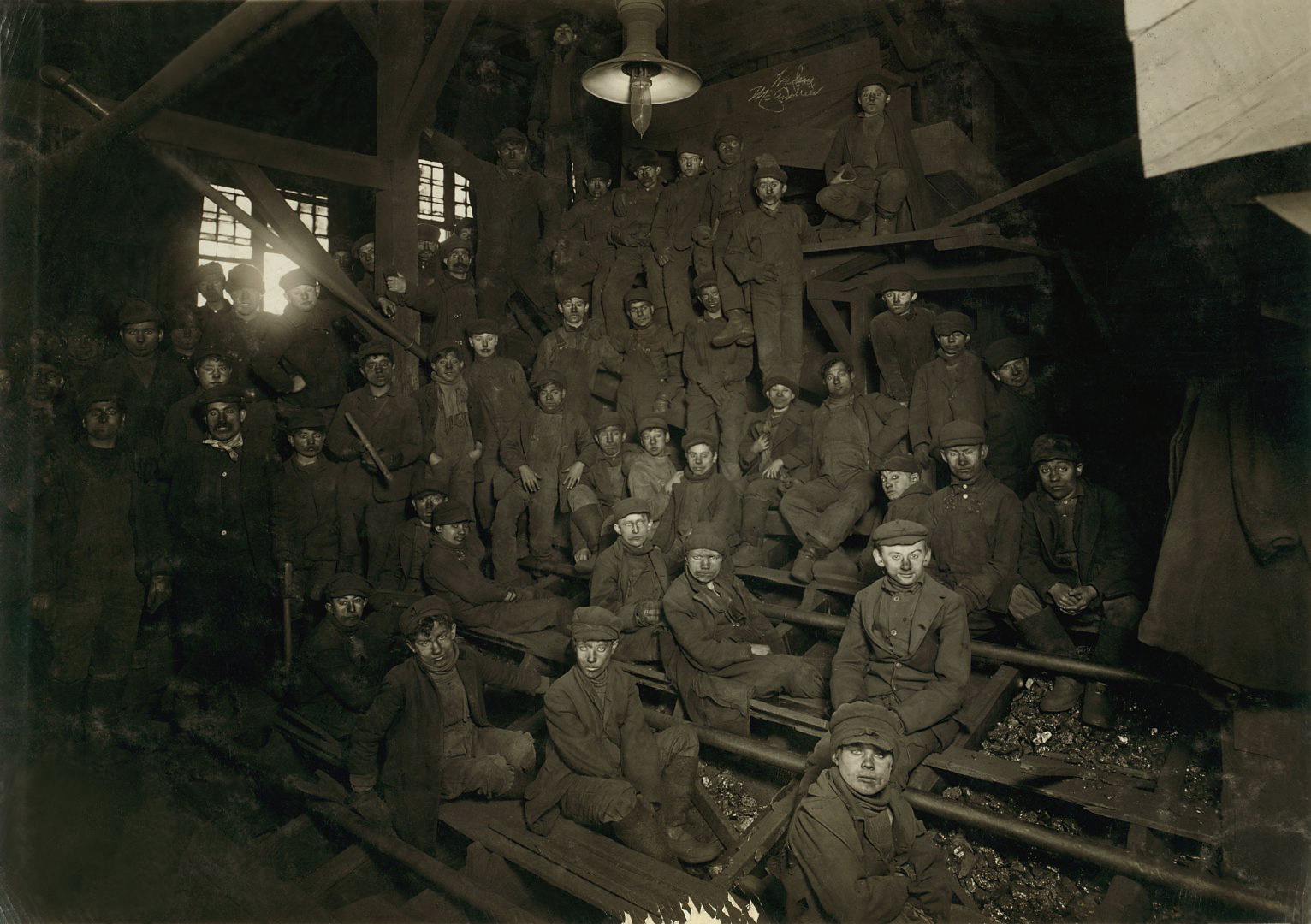
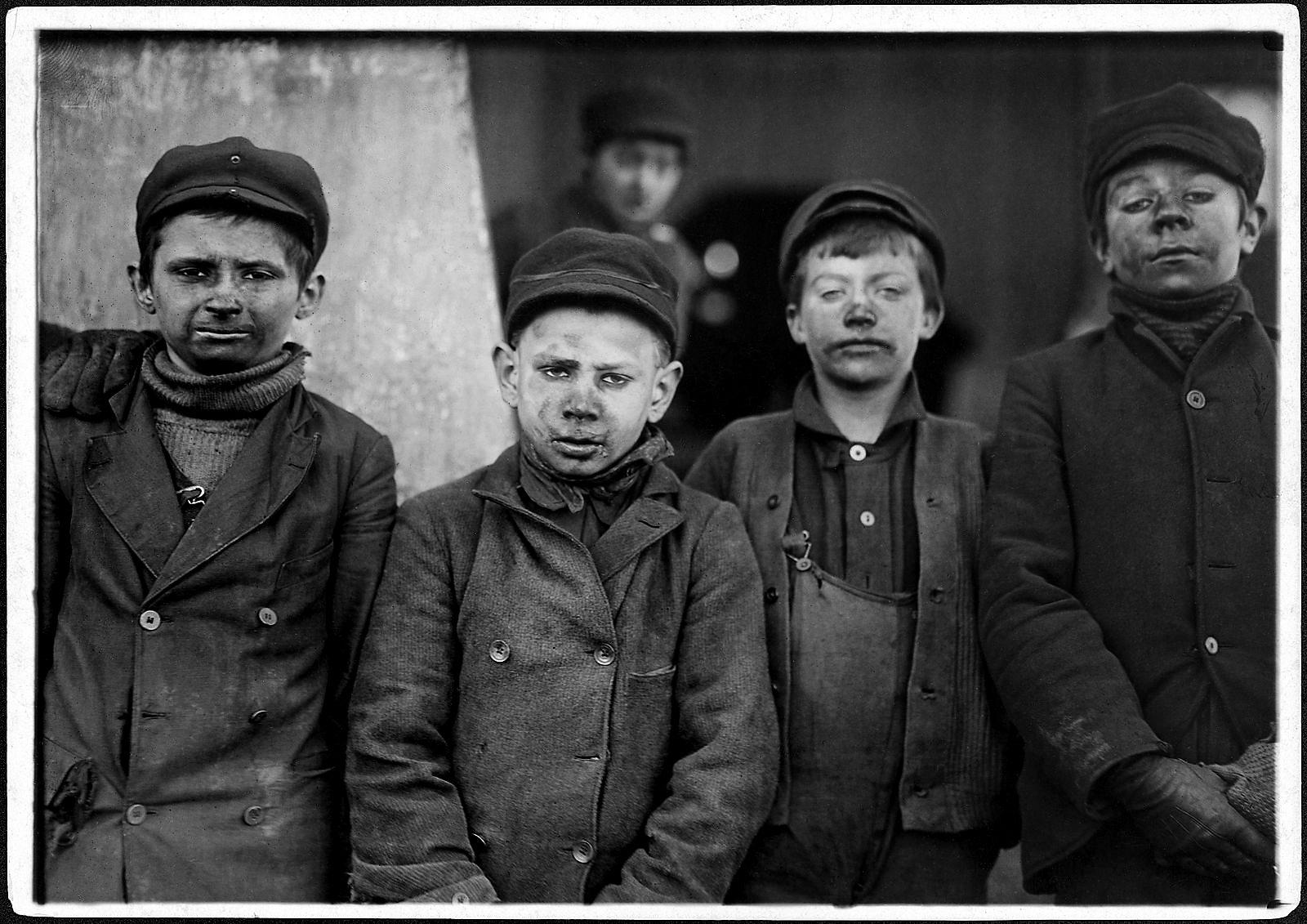
Covered in coal dust the boys rarely smile, and many die in industrial accidents or from Black lung. The image Breaker #9, Hughestown Borough Pa. Coal Co. One of these is James Leonard, another is Stanley Rasmus. Pittston, Pa. (below) subconsciously reminds me of that famous image by Henry Bowers of Scott and his party standing at the South Pole, the party knowing that Roald Amundsen had beaten them to the pole, and that now they had the long, arduous trip back to the Terra Nova pulling heavy sleds. There is a resignation on their faces of their lot, much as Hine’s children stare grimly into the camera knowing that after the photograph has been taken, it will be more of the same. Again and again…

But here in these photographs their spirit is also unbowed. It is almost as though Hine is picturing the relationship between the soul and the surrounding world. They live for eternity in these images which become, as Alexander Nemerov in “Soulmaker: The Times of Lewis Hine” on the Monovisions website (31 May 2016) observes, “A kind of capsule containing the full flow of all we will ever be, and have been. To most, that capsule is almost always invisible, but not to Lewis Hine.” He sees clearly the plight of his people and has left us with photographs which record that plight, photographs which are poignant and profound. They transcend the time in which they were taken and are as relevant today as when they were taken, for we are all still children.

When I think about what photographs represent the first decade of the 20th century, it is Hine’s photographs, amongst others, to which I turn. Personal, objective but sensitive and transcendent, they engage us on an emotional level, human being to human being. These are personal stories – “She had regrets about not getting the education she had desired. She only got as far as the sixth grade. At that point, she started working full time. But she wanted an education, and really valued it, and it was a priority for her that we got a good education – whatever it took to send us to college” – embedded amongst the vast corporations of industry and the might of the machine, the black maw of the industrial revolution. It has taken many years for Hine’s art to ascend to iconic status, a gradual climb into immortality that the destitute condition at the time of his death would have seemingly precluded.

I then think of what photographs represent the first decade of the 21st century and the main event is, of course, the photographs from 9/11. In a century, the personal stories have been subsumed by a universal, industrial ego – the numbers of the dead, the faceless numbers; the velocity of the planes and their thrusting trajectory; the monolithic, corporate, phallic towers with their hidden workers; the war of territory, consumption, oil, power and religion that consumes the world; and the instantaneous “nature” of the transmission of images around the world, where everybody is a photographer, everything is “shot” from as many angles as possible (hoping that one version is the truth? fake news…), where everything is a spectacle to be recorded. There is no slow burn of recognition of the power of individual images, no gradual climb into immortality of the work of artists such as Lewis Hine. You are either dead, or you’re not.

Dr Marcus Bunyan

Word count: 1,121


1/ Vicki Goldberg. “The New Season/Photography Critic’s Choice; A Career That Moved From Man to Machine,” on The New York Times website Sept 13, 1998 [Online] Cited 10/09/2018

2/ Anonymous. “Transcendentalism,” on the Wikipedia website [Online] Cited 10/09/2018

3/ Anonymous. “Literary realism,” on the Wikipedia website [Oline] Cited 10/09/2018


Please click on the photographs for a larger version of the image.


I Sit and Look Out

I SIT and look out upon all the sorrows of the world, and upon all oppression and shame;
I hear secret convulsive sobs from young men at anguish with themselves, remorseful after deeds done;
I see in low life the mother misused by her children, dying, neglected, gaunt, desperate;
I see the wife misused by her husband – I see the treacherous seducer of young women;
I mark the ranklings of jealousy and unrequited love attempted to be hid – I see these sights on the earth;
I see the workings of battle, pestilence, tyranny – I see martyrs and prisoners;
I observe a famine at sea – I observe the sailors casting lots who shall be kill’d to preserve the lives of the rest;
I observe the slights and degradations cast by arrogant persons upon laborers, the poor, and upon negroes, and the like;
All these – all the meanness and agony without end I sitting look out upon,
See, hear, and am silent.


Walt Whitman. “I Sit and Look Out,” from Leaves of Grass 1892


“What is so amazing about photographs like this one is the particular poignancy of the moment… Two people are encountering one another in this happenstance way, yet the moment is deeply meaningful in how he manages to imagine a subject’s soul. The moment becomes almost metaphysical. A kind of capsule containing the full flow of all we will ever be, and have been. To most, that capsule is almost always invisible, but not to Lewis Hine.”


Alexander Nemerov quoted in “Soulmaker: The Times of Lewis Hine” on the Monovisions website 31 May 2016 [Online] Cited 21/02/2022


In the 1930s Hine took on small freelance projects but worried his images had fallen out of fashion. His reputation for difficulty, too, scared off potential employers. One former boss praised his talent but noted he was a “true artist type” who “requires some ‘waiting upon’.” Hine applied multiple times for a Farm Security Administration project documenting the impact of the Great Depression, but the head of the project felt he was too uncompromising. When Hine died in 1940, he was destitute and his home was in foreclosure. The photographer who had made a career of capturing the devastation and majesty of American labor couldn’t find work.


Extract from Susie Allen. “Bodies of work: Lewis Hine, EX 1904, captured the changing face of American labor,” in The University of Chicago Magazine – Spring/17 [Online] Cited 21/02/2022


Lewis Hine (American, 1874-1940) 'Noon hour in the Ewen Breaker, Pennsylvania Coal Co.' Jan. 1911


Lewis Hine (American, 1874-1940)
Noon hour in the Ewen Breaker, Pennsylvania Coal Co., South Pittston, Pennsylvania
January 1911
Gelatin silver print
Library of Congress


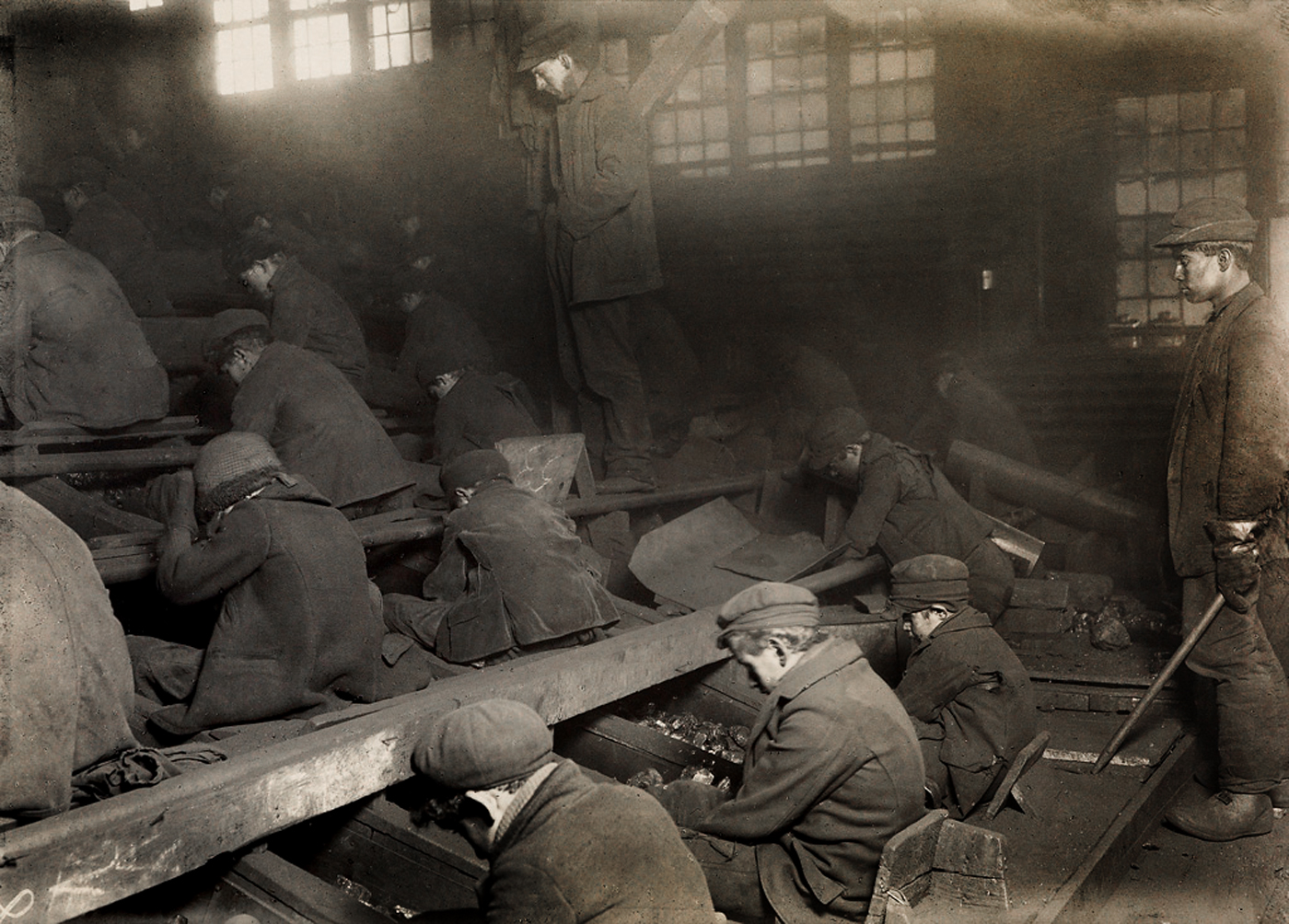
Lewis Hine (American, 1874-1940) 'Pennsylvania coal breakers' 1911

Lewis Hine (American, 1874-1940) 'Pennsylvania coal breakers' 1911


Lewis Hine (American, 1874-1940)
View of the Ewen Breaker of the Pa. Coal Co. The dust was so dense at times as to obscure the view. This dust penetrated the utmost recesses of the boy’s lungs. A kind of slave-driver sometimes stands over the boys, prodding or kicking them into obedience. S. Pittston, Pa.
10 January 1911
Gelatin silver print
U.S. National Archives


Lewis Hine (American, 1874-1940) 'Group of Breaker Boys in #9 Breaker, Hughestown Borough, Pennsylvania Coal Co. Smallest boy is Angelo Ross' Jan. 1911


Lewis Hine (American, 1874-1940)
Group of Breaker Boys in #9 Breaker, Hughestown Borough, Pennsylvania Coal Co. Smallest boy is Angelo Ross, Pittston, Pennsylvania
January 1911
Gelatin silver print
Library of Congress


Lewis Hine (American, 1874-1940) 'Breaker boys working in Ewen Breaker. S. Pittston, Pa.' January 1911


Lewis Hine (American, 1874-1940)
Breaker boys working in Ewen Breaker. S. Pittston, Pa.
January 1911
Gelatin silver print
U.S. National Archives


Lewis Hine (American, 1874-1940) 'Breaker boys working in Ewen Breaker. S. Pittston, Pa.' January 1911


Lewis Hine (American, 1874-1940)
Breaker boys working in Ewen Breaker. S. Pittston, Pa.
January 1911
Gelatin silver print
U.S. National Archives


Lewis Hine (American, 1874-1940) 'Breaker #9, Hughestown Borough Pa. Coal Co. One of these is James Leonard, another is Stanley Rasmus. Pittston, Pa.' 16 January 1911


Lewis Hine (American, 1874-1940)
Breaker #9, Hughestown Borough Pa. Coal Co. One of these is James Leonard, another is Stanley Rasmus. Pittston, Pa.
16 January 1911
Gelatin silver print
U.S. National Archives


Lewis Hine (American, 1874-1940) 'Breaker boys. Smallest is Angelo Ross. Hughestown Borough Coal Co. Pittston, Pa.' 16 January 1911


Lewis Hine (American, 1874-1940)
Breaker boys. Smallest is Angelo Ross. Hughestown Borough Coal Co. Pittston, Pa.
16 January 1911
Gelatin silver print
U.S. National Archives


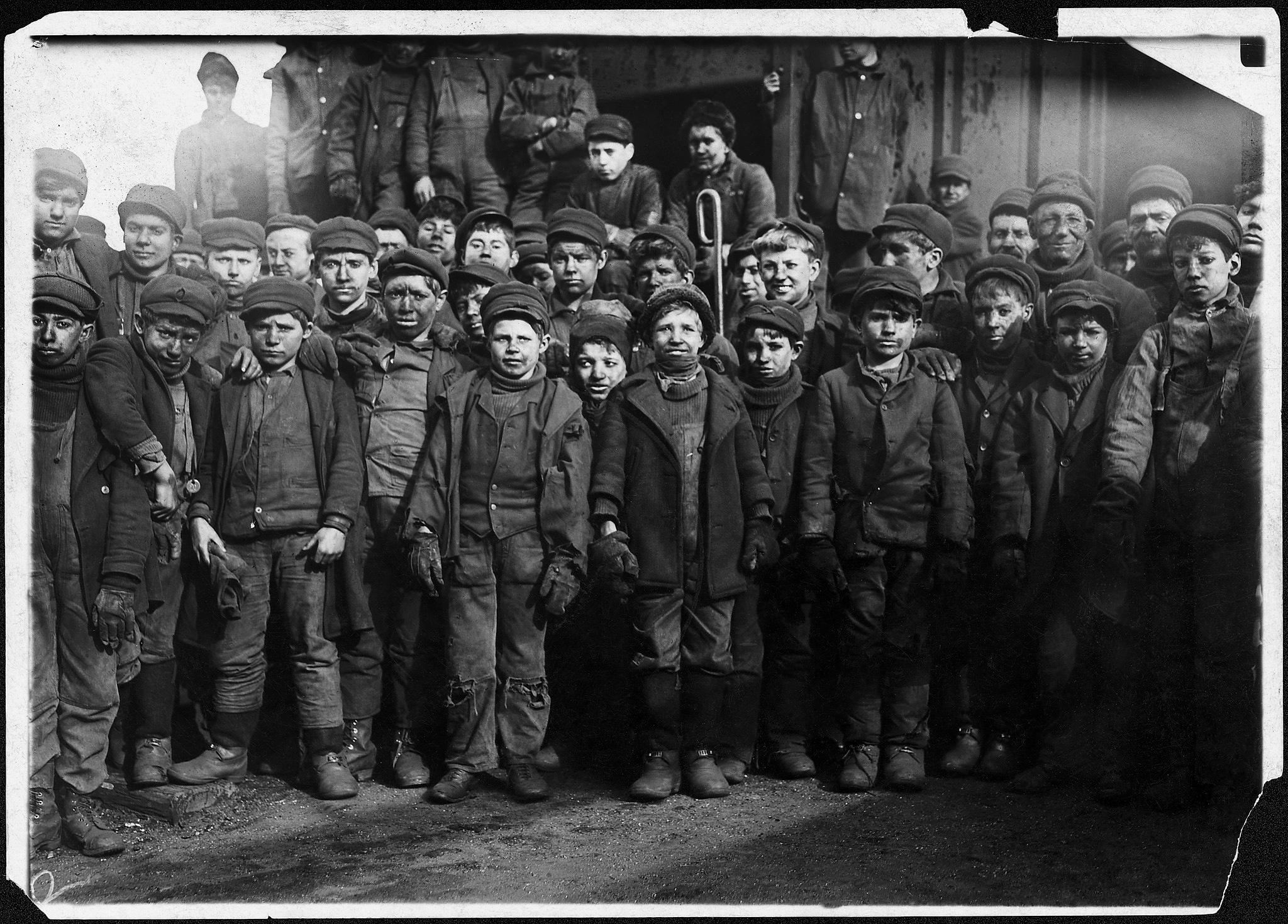
Lewis Hine (American, 1874-1940) 'Group of breaker boys. Smallest is Sam Belloma. Pittston, Pa.' 16 January 1911


Lewis Hine (American, 1874-1940)
Group of breaker boys. Smallest is Sam Belloma. Pittston, Pa.
16 January 1911
Gelatin silver print
U.S. National Archives


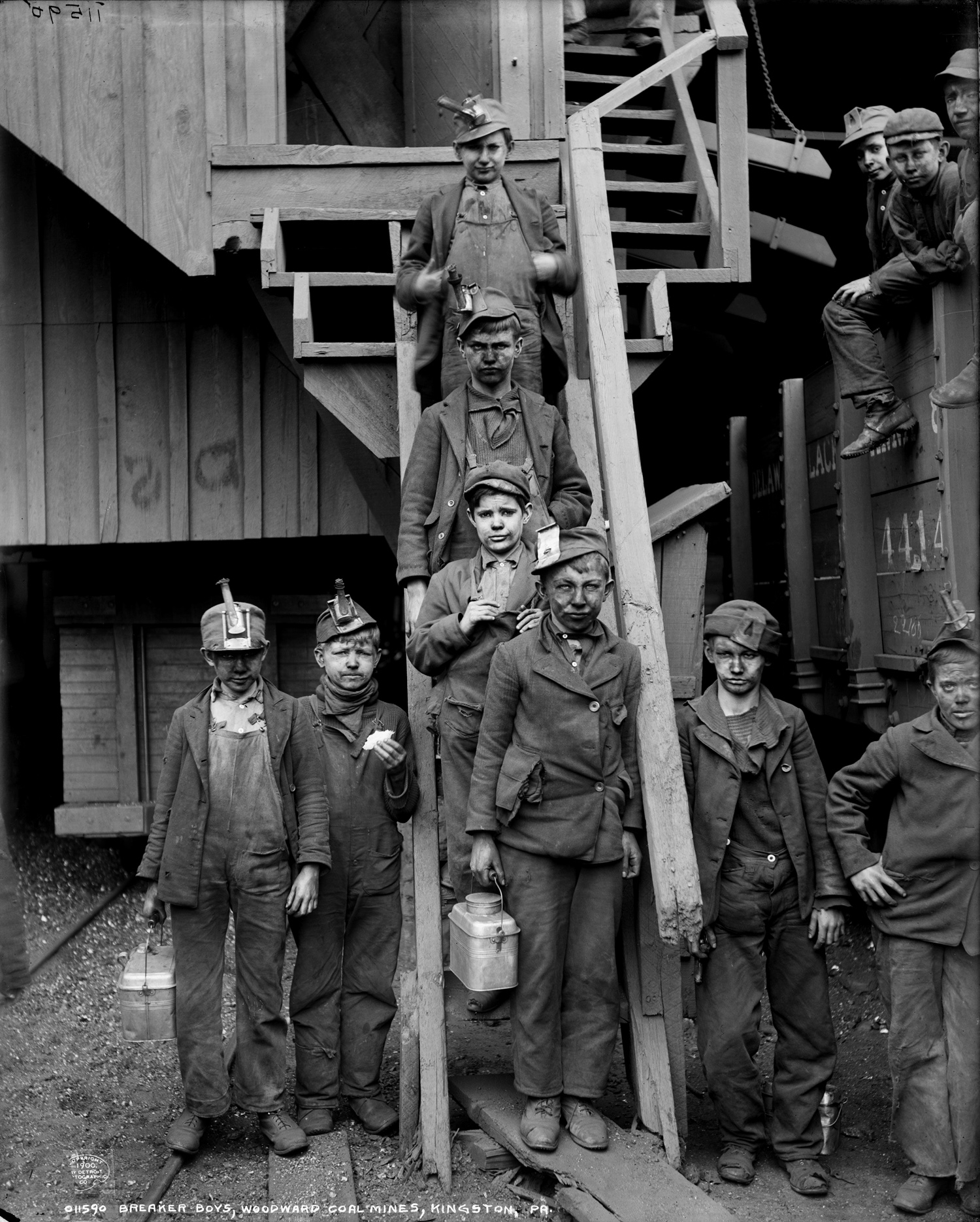
Lewis Hine (American, 1874-1940) 'Breaker boys of the Woodward Coal Mines, Kingston, Pa.' c. 1911


Lewis Hine (American, 1874-1940)
Breaker boys of the Woodward Coal Mines, Kingston, Pa.
c. 1911
Gelatin silver print


Breaker boy

breaker boy was a coal-mining worker in the United States and United Kingdom whose job was to separate impurities from coal by hand in a coal breaker. Although breaker boys were primarily children, elderly coal miners who could no longer work in the mines because of age, disease, or accident were also sometimes employed as breaker boys. The use of breaker boys began in the mid-1860s. Although public disapproval of the employment of children as breaker boys existed by the mid-1880s, the practice did not end until the 1920s. …

Use of breaker boys

Until about 1900, nearly all coal breaking facilities in the United States were labour-intensive. The removal of impurities was done by hand, usually by breaker boys between the ages of eight and 12 years old. The use of breaker boys began around 1866. For 10 hours a day, six days a week, breaker boys would sit on wooden seats, perched over the chutes and conveyor belts, picking slate and other impurities out of the coal. Breaker boys working on top of chutes or conveyor belts would stop the coal by pushing their boots into the stream of fuel flowing beneath them, briefly pick out the impurities, and then let the coal pass on to the next breaker boy for further processing. Others would divert coal into a horizontal chute at which they sat, then pick the coal clean before allowing the fuel to flow into “clean” coal bins.

The work performed by breaker boys was hazardous. Breaker boys were forced to work without gloves so that they could better handle the slick coal. The slate, however, was sharp, and breaker boys would often leave work with their fingers cut and bleeding. Breaker boys sometimes also had their fingers amputated by the rapidly moving conveyor belts. Others lost feet, hands, arms, and legs as they moved among the machinery and became caught under conveyor belts or in gears. Many were crushed to death, their bodies retrieved from the gears of the machinery by supervisors only at the end of the working day. Others were caught in the rush of coal, and crushed to death or smothered. Dry coal would kick up so much dust that breaker boys sometimes wore lamps on their heads to see, and asthma and black lung disease were common. Coal was often washed to remove impurities, which created sulfuric acid. The acid burned the hands of the breaker boys.

Public condemnation

Public condemnation of the use of breaker boys was so widespread that in 1885 Pennsylvania enacted a law forbidding the employment of anyone under the age of 12 from working in a coal breaker, but the law was poorly enforced; many employers forged proof-of-age documentation, and many families forged birth certificates or other documents so their children could support the family. Estimates of the number of breaker boys at work in the anthracite coal fields of Pennsylvania vary widely, and official statistics are generally considered by historians to undercount the numbers significantly. One estimate had 20,000 breaker boys working in the state in 1880, 18,000 working in 1900, 13,133 working in 1902, and 24,000 working in 1907. Technological innovations in the 1890s and 1900s (such as mechanical and water separators designed to remove impurities from coal) dramatically lowered the need for breaker boys, but adoption of the new technology was slow.

By the 1910s, the use of breaker boys was dropping because of improvements in technology, stricter child labor laws, and the enactment of compulsory education laws. The practice of employing children in coal breakers largely ended by 1920 because of the efforts of the National Child Labor Committee, sociologist and photographer Lewis Hine, and the National Consumers League, all of whom educated the public about the practice and succeeded in obtaining passage of national child labor laws.

Text from the Wikipedia website


Black lung (Coalworker’s pneumoconiosis)

Coal workers’ pneumoconiosis (CWP), also known as black lung disease or black lung, is caused by long-term exposure to coal dust. It is common in coal miners and others who work with coal. It is similar to both silicosis from inhaling silica dust and to the long-term effects of tobacco smoking. Inhaled coal dust progressively builds up in the lungs and cannot be removed by the body; this leads to inflammation, fibrosis, and in worse cases, necrosis.

Coal workers’ pneumoconiosis, severe state, develops after the initial, milder form of the disease known as anthracosis (anthrac – coal, carbon). This is often asymptomatic and is found to at least some extent in all urban dwellers due to air pollution. Prolonged exposure to large amounts of coal dust can result in more serious forms of the disease, simple coal workers’ pneumoconiosis and complicated coal workers’ pneumoconiosis (or progressive massive fibrosis, or PMF). More commonly, workers exposed to coal dust develop industrial bronchitis, clinically defined as chronic bronchitis (i.e. productive cough for 3 months per year for at least 2 years) associated with workplace dust exposure. The incidence of industrial bronchitis varies with age, job, exposure, and smoking. In nonsmokers (who are less prone to develop bronchitis than smokers), studies of coal miners have shown a 16% to 17% incidence of industrial bronchitis. …

History

Black lung is actually a set of conditions and until the 1950s its dangers were not well understood. The prevailing view was that silicosis was very serious but it was solely caused by silica and not coal dust. The miners’ union, the United Mine Workers of America, realised that rapid mechanisation meant drills that produced much more dust, but under John L. Lewis they decided not to raise the black lung issue because it might impede the mechanisation that was producing higher productivity and higher wages. Union priorities were to maintain the viability of the long-fought-for welfare and retirement fund, which would be sustained by higher outputs of coal. After the death of Lewis, the union dropped its opposition to calling black lung a disease and realised the financial advantages of a fund for its disabled members.

Epidemiology

In 2013 CWP resulted in 25,000 deaths down from 29,000 deaths in 1990. Between 1970-1974, prevalence of CWP among US coal miners who had worked over 25 years was 32%; the same group saw a prevalence of 9% in 2005-2006. In Australia, CWP was considered to be eliminated in the 1970s due to strict hazard control measures. However, there has been a resurgence of CWP in Australia, with the first new cases being detected in May 2015.

Text from the Wikipedia website


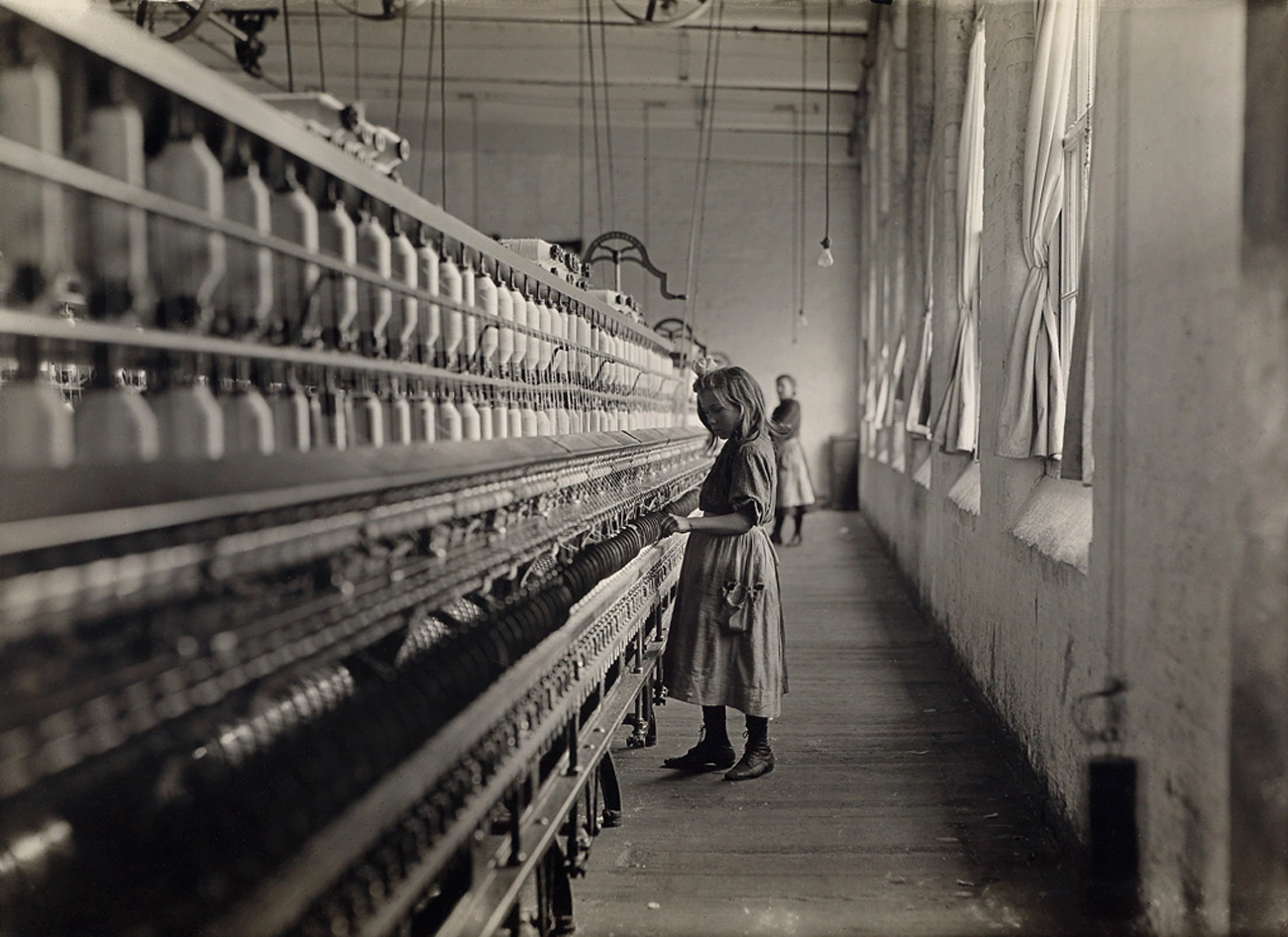
Lewis Hine (American, 1874-1940) 'Sadie Pfeifer' 1908


Lewis Hine (American, 1874-1940)
Sadie Pfeifer, 48 inches high, has worked half a year. One of the many small children at work in Lancaster Cotton Mills
November 1908. Lancaster, South Carolina
Gelatin silver print
Library of Congress


Lewis Hine (American, 1874-1940) 'Cora Lee Griffin, spinner in cotton mill, 12 years old, Whitnel, North Carolina' 1908


Lewis Hine (American, 1874-1940)
Cora Lee Griffin, spinner in cotton mill, 12 years old, Whitnel, North Carolina
1908
Gelatin silver print


“One of the spinners in Whitnel Cotton Mfg. Co. N.C. She was 51 inches high. Had been in mill 1 year. Some at night. Runs 4 sides, 48 cents a day. When asked how old, she hesitated, then said “I don’t remember.” Then confidentially, “I’m not old enough to work, but I do just the same.” Out of 50 employees, ten children about her size.” ~ Hine’s original caption

“She had regrets about not getting the education she had desired. She only got as far as the sixth grade. At that point, she started working full time. But she wanted an education, and really valued it, and it was a priority for her that we got a good education – whatever it took to send us to college.” ~ Daughter of Cora Lee Griffin


Lewis Hine (American, 1874-1940) 'Noon hour in East Side factory district' 1912


Lewis Hine (American, 1874-1940)
Noon hour in East Side factory district
1912
Gelatin silver print


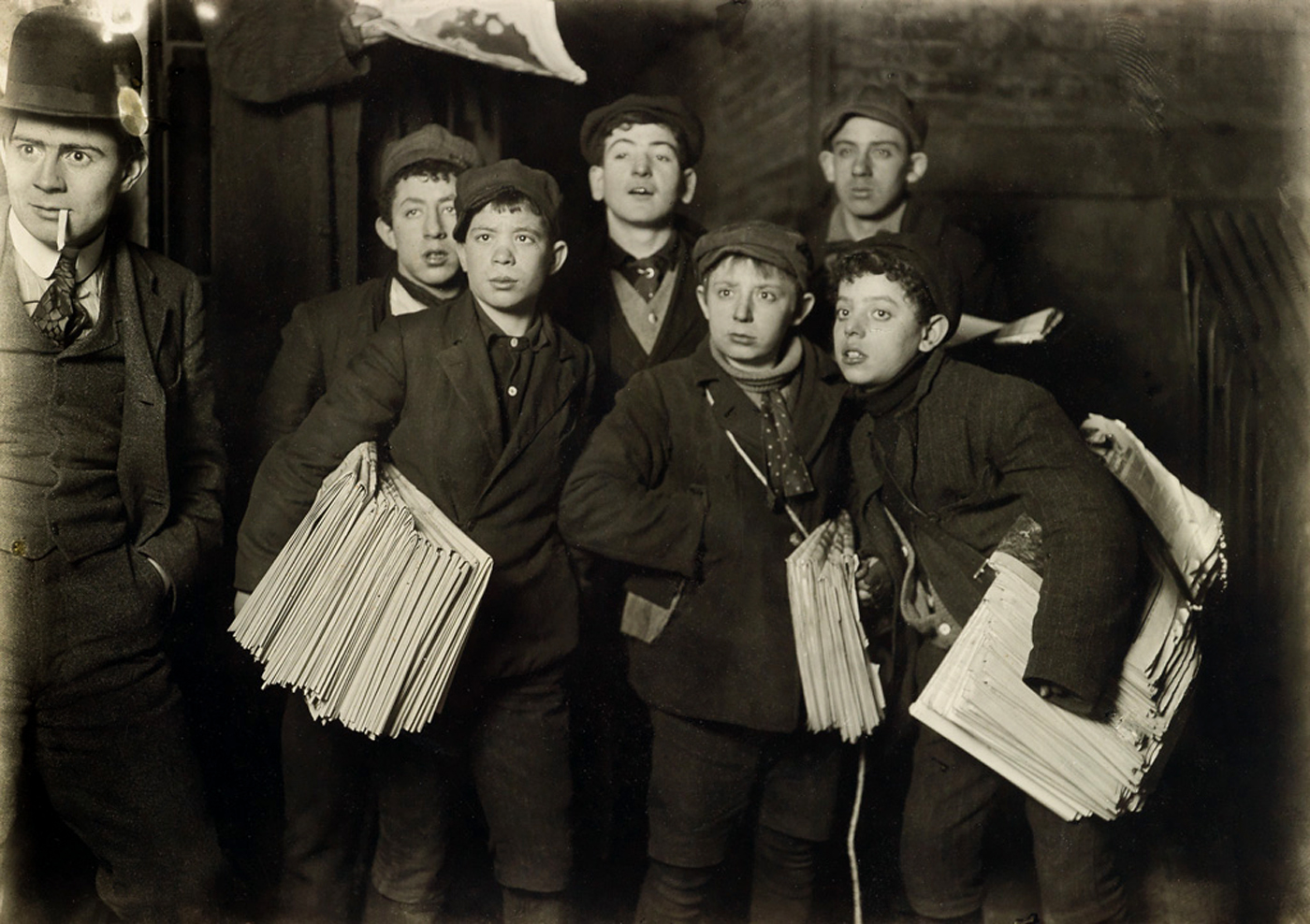
Lewis Hine (American, 1874-1940) 'Newsies, New York' 1906


Lewis Hine (American, 1874-1940)
Newsies, New York
1906
Gelatin silver print


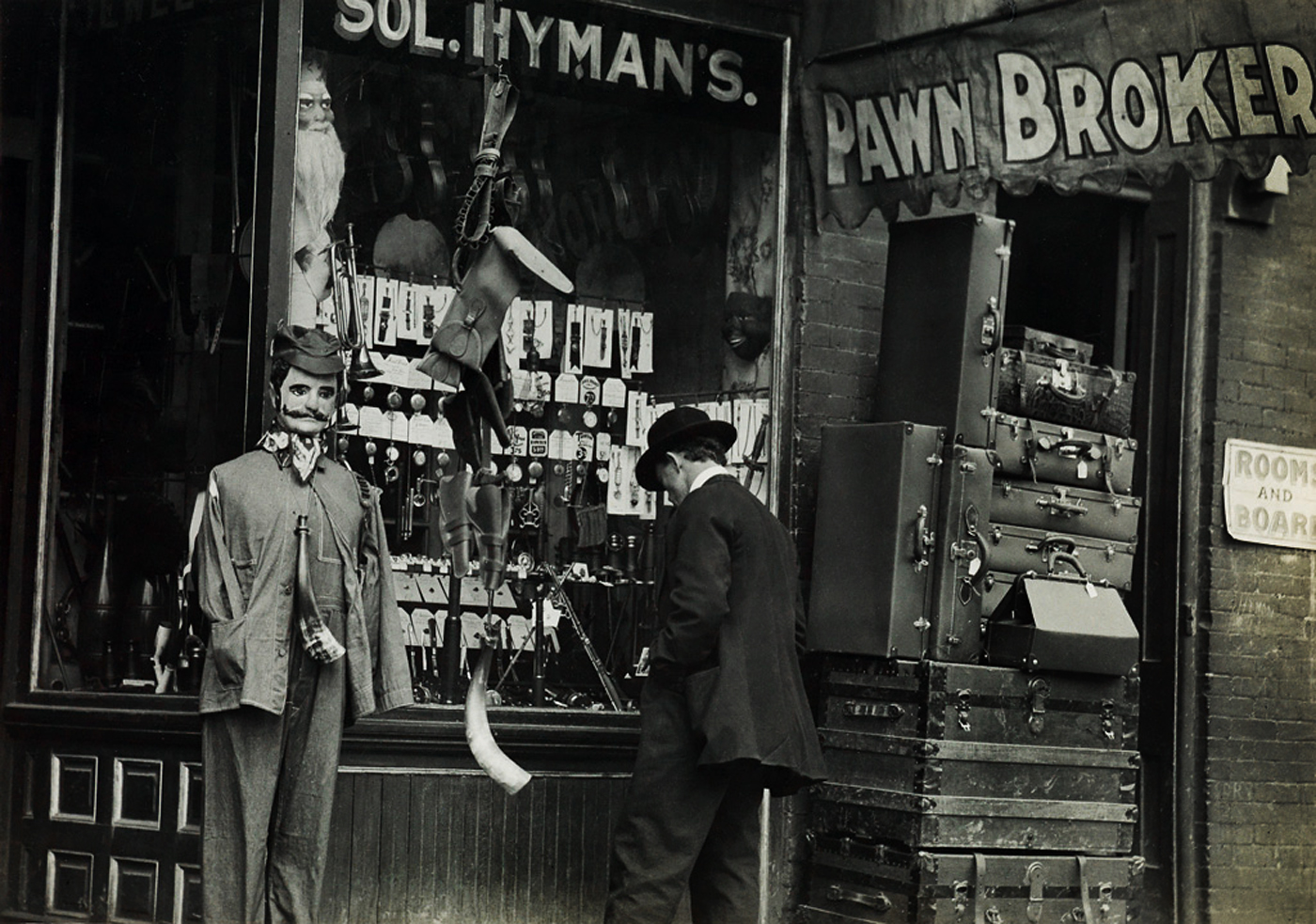
Lewis Hine (American, 1874-1940) 'Nashville' 1912


Lewis Hine (American, 1874-1940)
Nashville
1912
Gelatin silver print


Lewis Hine (American, 1874-1940) 'Tenement family, Chicago' 1910


Lewis Hine (American, 1874-1940)
Tenement family, Chicago
1910
Gelatin silver print


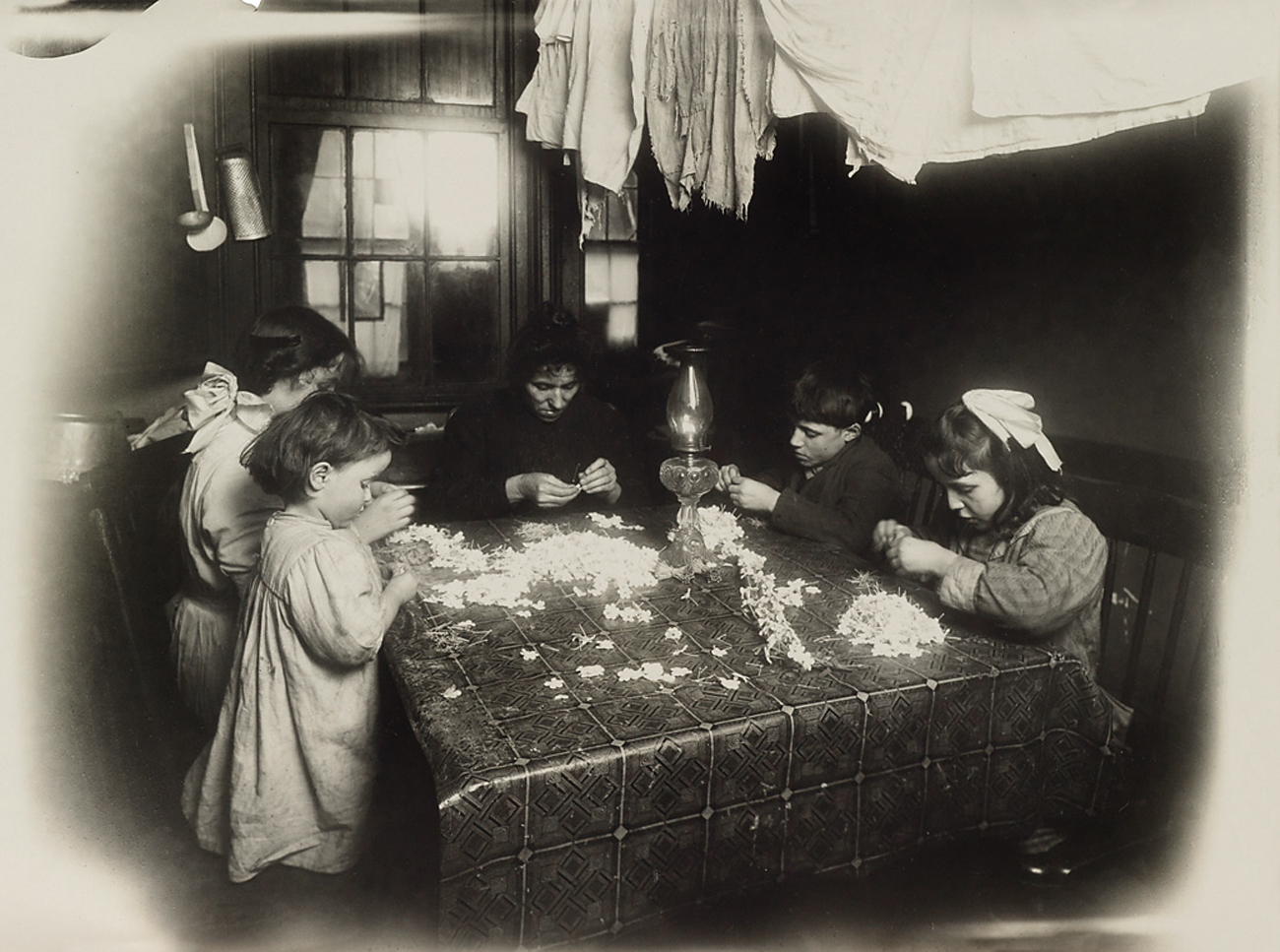
Lewis Hine (American, 1874-1940) 'Artificial flowers, New York City' 1912


Lewis Hine (American, 1874-1940)
Artificial flowers, New York City
1912
Gelatin silver print


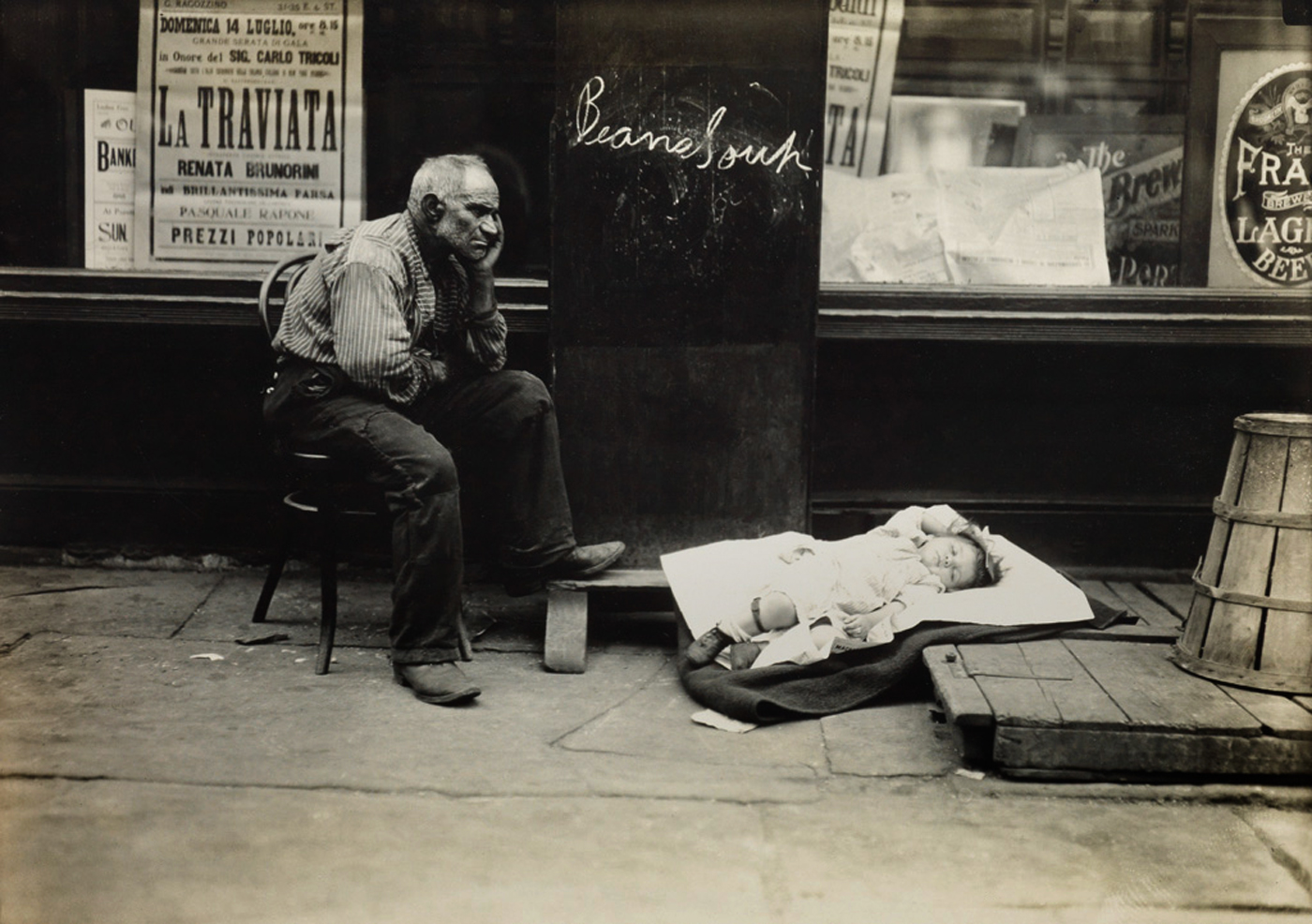
Lewis Hine (American, 1874-1940) 'Hot day on East Side, New York' c. 1908


Lewis Hine (American, 1874-1940)
Hot day on East Side, New York
c. 1908
Gelatin silver print


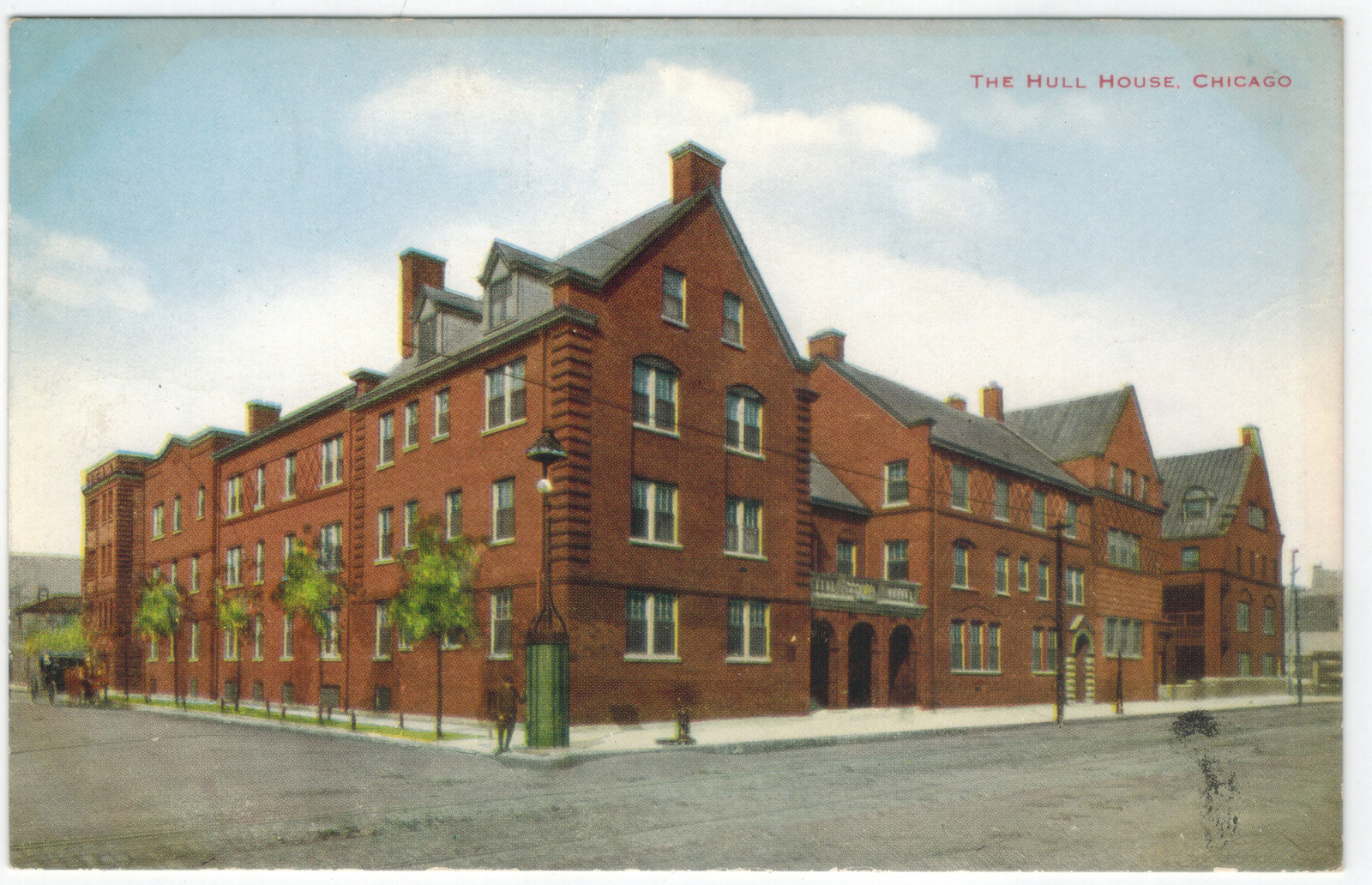
Lewis Hine (American, 1874-1940) 'Hull house beneficiary' 1910


Lewis Hine (American, 1874-1940)
Hull house beneficiary
1910
Gelatin silver print


Hull House was a settlement house in the United States that was co-founded in 1889 by Jane Addams and Ellen Gates Starr. Located on the Near West Side of Chicago, Illinois, Hull House (named after the original house’s first owner Charles Jerald Hull) opened to recently arrived European immigrants. By 1911, Hull House had grown to 13 buildings. In 1912 the Hull House complex was completed with the addition of a summer camp, the Bowen Country Club. With its innovative social, educational, and artistic programs, Hull House became the standard bearer for the movement that had grown, by 1920, to almost 500 settlement houses nationally…

Most of the Hull House buildings were demolished for the construction of the University of Illinois-Circle Campus in the mid-1960s. The Hull mansion and several subsequent acquisitions were continuously renovated to accommodate the changing demands of the association. The original building and one additional building (which has been moved 200 yards (182.9 m)) survive today.

Text from the Wikipedia website


V.O. Hammon Publishing Co. (publisher) 'The Hull House, Chicago' Early 20th century


V.O. Hammon Publishing Co. (publisher)
The Hull House, Chicago
Early 20th century
Postcard


Lewis Hine (American, 1874-1940) 'Italian steel-worker' 1909


Lewis Hine (American, 1874-1940)
Italian steel-worker
1909
Gelatin silver print


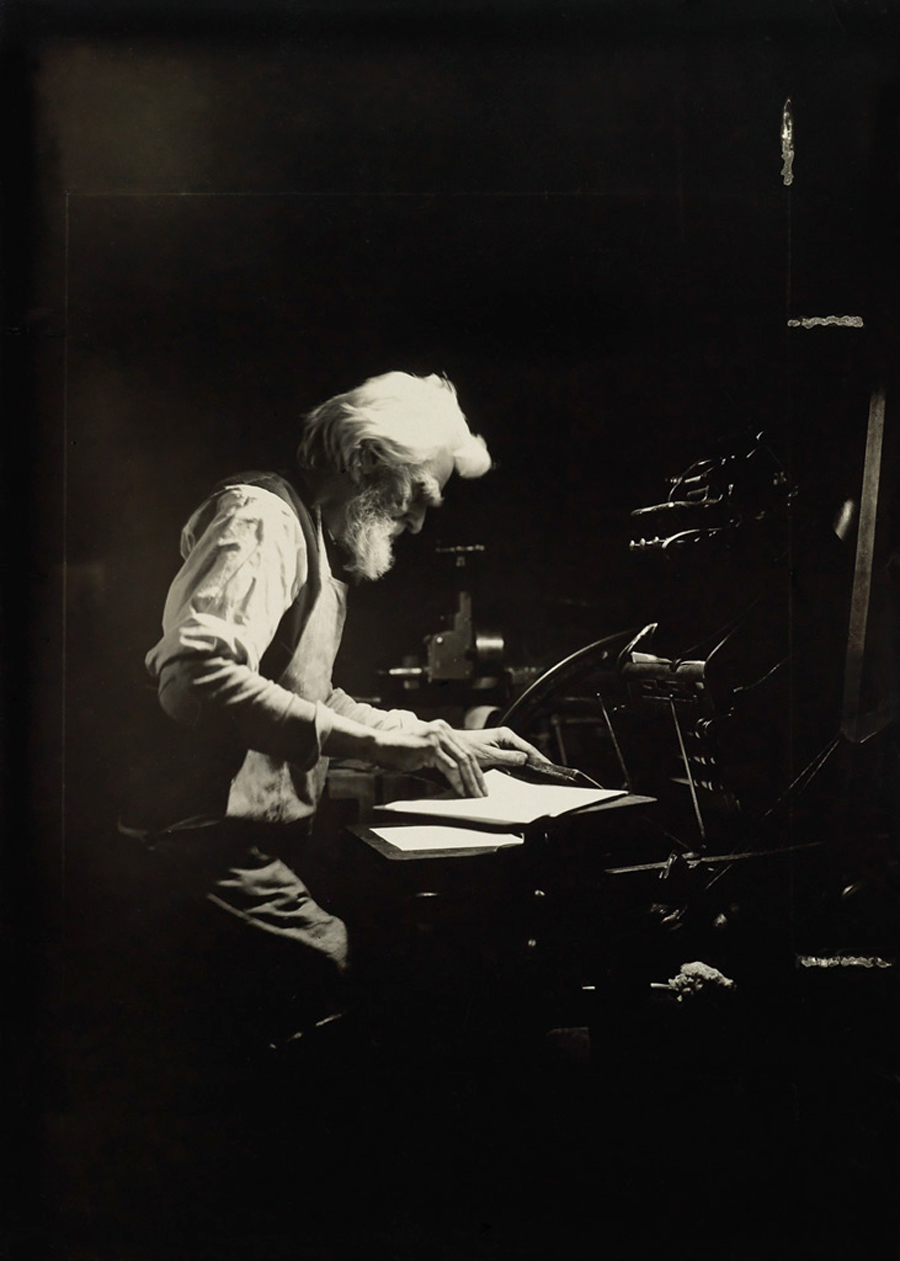
Lewis Hine (American, 1874-1940) 'Printer Ethical Culture School' 1905


Lewis Hine (American, 1874-1940)
Printer Ethical Culture School
1905
Gelatin silver print


Ellis Island

Ellis Island, in Upper New York Bay, was the gateway for over 12 million immigrants to the U.S. as the United States’ busiest immigrant inspection station for over 60 years from 1892 until 1954. Ellis Island was opened January 1, 1892. The island was greatly expanded with land reclamation between 1892 and 1934. Before that, the much smaller original island was the site of Fort Gibson and later a naval magazine. The island was made part of the Statue of Liberty National Monument in 1965 and has hosted a museum of immigration since 1990.

Immigrant inspection station

In the 35 years before Ellis Island opened, more than eight million immigrants arriving in New York City had been processed by officials at Castle Garden Immigration Depot in Lower Manhattan, just across the bay. The federal government assumed control of immigration on April 18, 1890, and Congress appropriated $75,000 to construct America’s first federal immigration station on Ellis Island. Artesian wells were dug, and fill material was hauled in from incoming ships’ ballast and from construction of New York City’s subway tunnels, which doubled the size of Ellis Island to over six acres. While the building was under construction, the Barge Office nearby at the Battery was used for immigrant processing…

The present main structure was designed in French Renaissance Revival style and built of red brick with limestone trim. After it opened on December 17, 1900, the facilities proved barely able to handle the flood of immigrants that arrived in the years before World War I. In 1913, writer Louis Adamic came to America from Slovenia, then part of the Austro-Hungarian Empire, and described the night he and many other immigrants slept on bunk beds in a huge hall. Lacking a warm blanket, the young man “shivered, sleepless, all night, listening to snores” and dreams “in perhaps a dozen different languages”. The facility was so large that the dining room could seat 1,000 people. It is reported the island’s first immigrant to be processed through was a teenager named Annie Moore from County Cork in Ireland.

After its opening, Ellis Island was again expanded, and additional structures were built. By the time it closed on November 12, 1954, 12 million immigrants had been processed by the U.S. Bureau of Immigration. It is estimated that 10.5 million immigrants departed for points across the United States from the Central Railroad of New Jersey Terminal, just across a narrow strait. Others would have used one of the other terminals along the North River (Hudson River) at that time. At first, the majority of immigrants arriving through the station were Northern and Western Europeans (Germany, France, Switzerland, Belgium, The Netherlands, Great Britain, and the Scandinavian countries). Eventually, these groups of peoples slowed in the rates that they were coming in, and immigrants came in from Southern and Eastern Europe, including Jews. Many reasons these immigrants came to the United States included escaping political and economic oppression, as well as persecution, destitution, and violence. Other groups of peoples being processed through the station were Poles, Hungarians, Czechs, Serbs, Slovaks, Greeks, Syrians, Turks, and Armenians.

Primary inspection

Between 1905 and 1914, an average of one million immigrants per year arrived in the United States. Immigration officials reviewed about 5,000 immigrants per day during peak times at Ellis Island. Two-thirds of those individuals emigrated from eastern, southern and central Europe. The peak year for immigration at Ellis Island was 1907, with 1,004,756 immigrants processed. The all-time daily high occurred on April 17, 1907, when 11,747 immigrants arrived. After the Immigration Act of 1924 was passed, which greatly restricted immigration and allowed processing at overseas embassies, the only immigrants to pass through the station were those who had problems with their immigration paperwork, displaced persons, and war refugees. Today, over 100 million Americans – about one-third to 40% of the population of the United States – can trace their ancestry to immigrants who arrived in America at Ellis Island before dispersing to points all over the country.

Generally, those immigrants who were approved spent from two to five hours at Ellis Island. Arrivals were asked 29 questions including name, occupation, and the amount of money carried. It was important to the American government the new arrivals could support themselves and have money to get started. The average the government wanted the immigrants to have was between 18 and 25 dollars ($600 in 2015 adjusted for inflation). Those with visible health problems or diseases were sent home or held in the island’s hospital facilities for long periods of time. More than 3,000 would-be immigrants died on Ellis Island while being held in the hospital facilities. Some unskilled workers were rejected because they were considered “likely to become a public charge.” About 2% were denied admission to the U.S. and sent back to their countries of origin for reasons such as having a chronic contagious disease, criminal background, or insanity. Ellis Island was sometimes known as “The Island of Tears” or “Heartbreak Island” because of those 2% who were not admitted after the long transatlantic voyage. The Kissing Post is a wooden column outside the Registry Room, where new arrivals were greeted by their relatives and friends, typically with tears, hugs, and kisses.

Text from the Wikipedia website


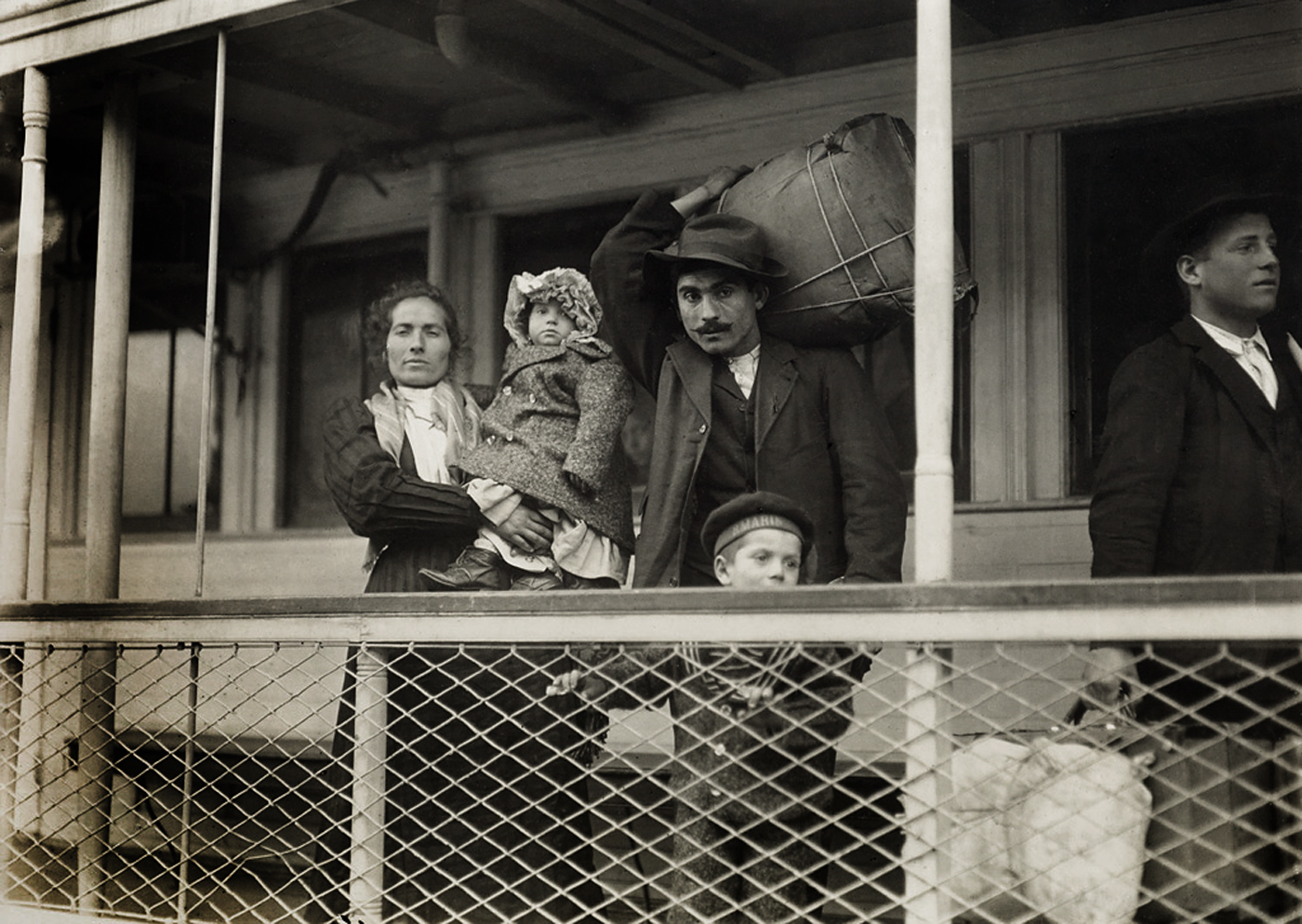
Lewis Hine (American, 1874-1940) 'Italian family on the ferry boat' 1905


Lewis Hine (American, 1874-1940)
Italian family on the ferry boat
1905
Gelatin silver print


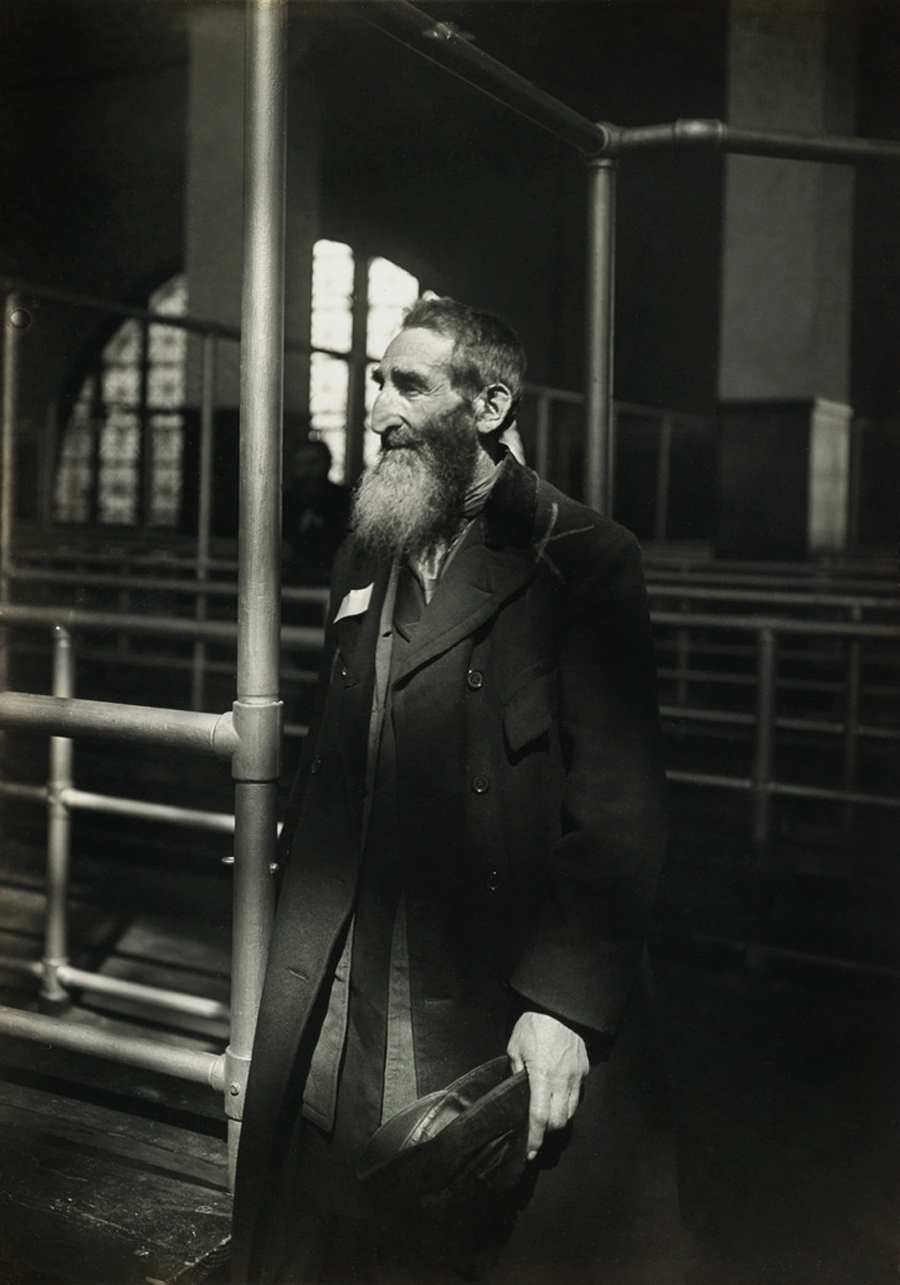
Lewis Hine (American, 1874-1940) 'Patriarch at Ellis Island' 1905


Lewis Hine (American, 1874-1940)
Patriarch at Ellis Island
1905
Gelatin silver print


Lewis Hine (American, 1874-1940) 'Russian family at Ellis Island' 1905


Lewis Hine (American, 1874-1940)
Russian family at Ellis Island
1905
Gelatin silver print


Lewis Hine (American, 1874-1940) 'Italian family in the baggage room' 1905


Lewis Hine (American, 1874-1940)
Italian family in the baggage room
1905
Gelatin silver print


Lewis Hine (American, 1874-1940) 'Italian family in the baggage room' 1905 'Slavic immigrant at Ellis Island' 1907


Lewis Hine (American, 1874-1940)
Slavic immigrant at Ellis Island
1907
Gelatin silver print


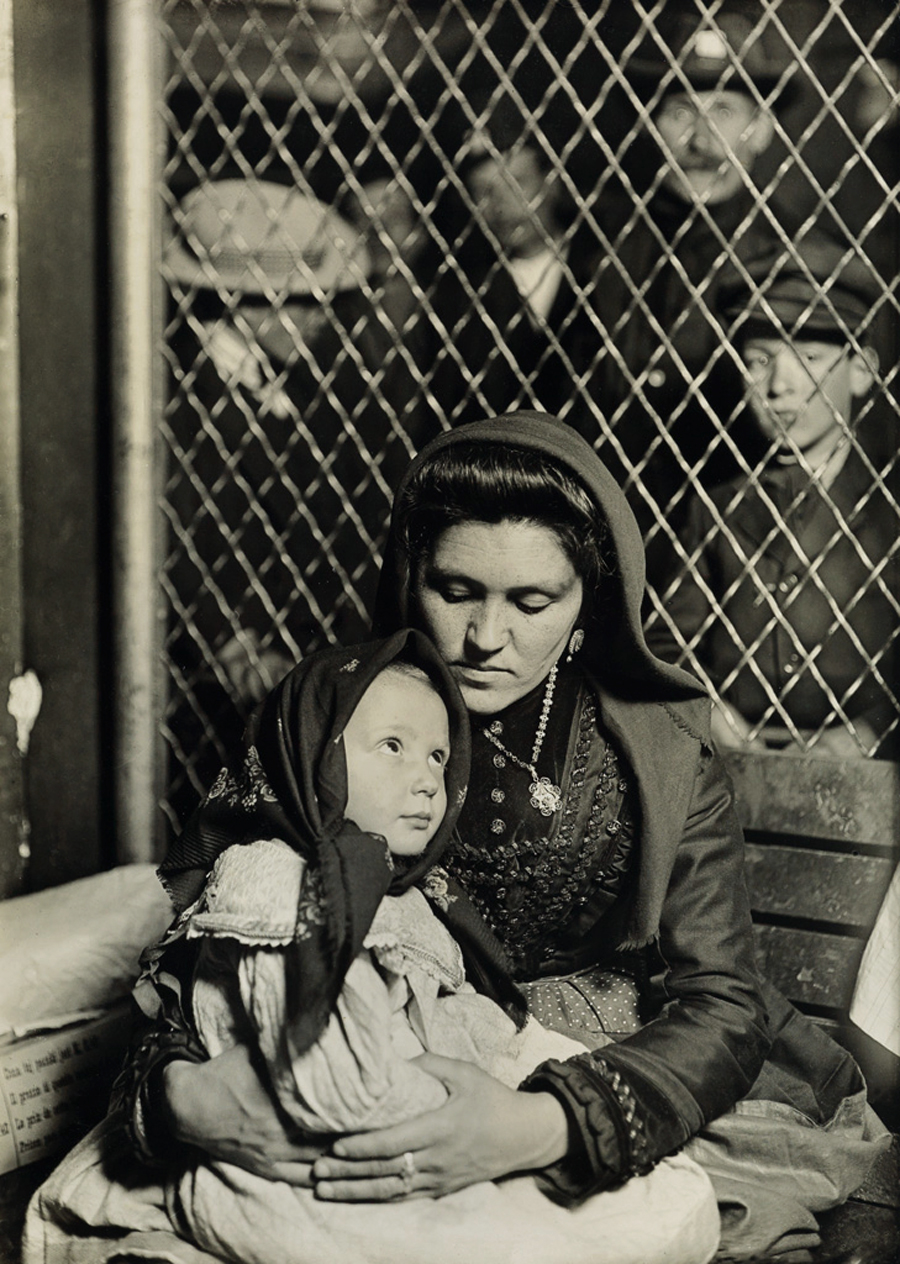
Lewis Hine (American, 1874-1940) 'Mother and child Ellis Island' c. 1907


Lewis Hine (American, 1874-1940)
Mother and child Ellis Island
c. 1907
Gelatin silver print


Lewis Hine (American, 1874-1940) 'Climbing into America' 1908


Lewis Hine (American, 1874-1940)
Climbing into America
1908
Gelatin silver print


Lewis Hine (American, 1874-1940)

Documentary photography

In 1907, Hine became the staff photographer of the Russell Sage Foundation; he photographed life in the steel-making districts and people of Pittsburgh, Pennsylvania, for the influential sociological study called The Pittsburgh Survey.

In 1908 Hine became the photographer for the National Child Labor Committee (NCLC), leaving his teaching position. Over the next decade, Hine documented child labor, with focus on the use of child labor in the Carolina Piedmont, to aid the NCLC’s lobbying efforts to end the practice. In 1913, he documented child labourers among cotton mill workers with a series of Francis Galton’s composite portraits.

Hine’s work for the NCLC was often dangerous. As a photographer, he was frequently threatened with violence or even death by factory police and foremen. At the time, the immorality of child labor was meant to be hidden from the public. Photography was not only prohibited but also posed a serious threat to the industry. To gain entry to the mills, mines and factories, Hine was forced to assume many guises. At times he was a fire inspector, postcard vendor, bible salesman, or even an industrial photographer making a record of factory machinery.

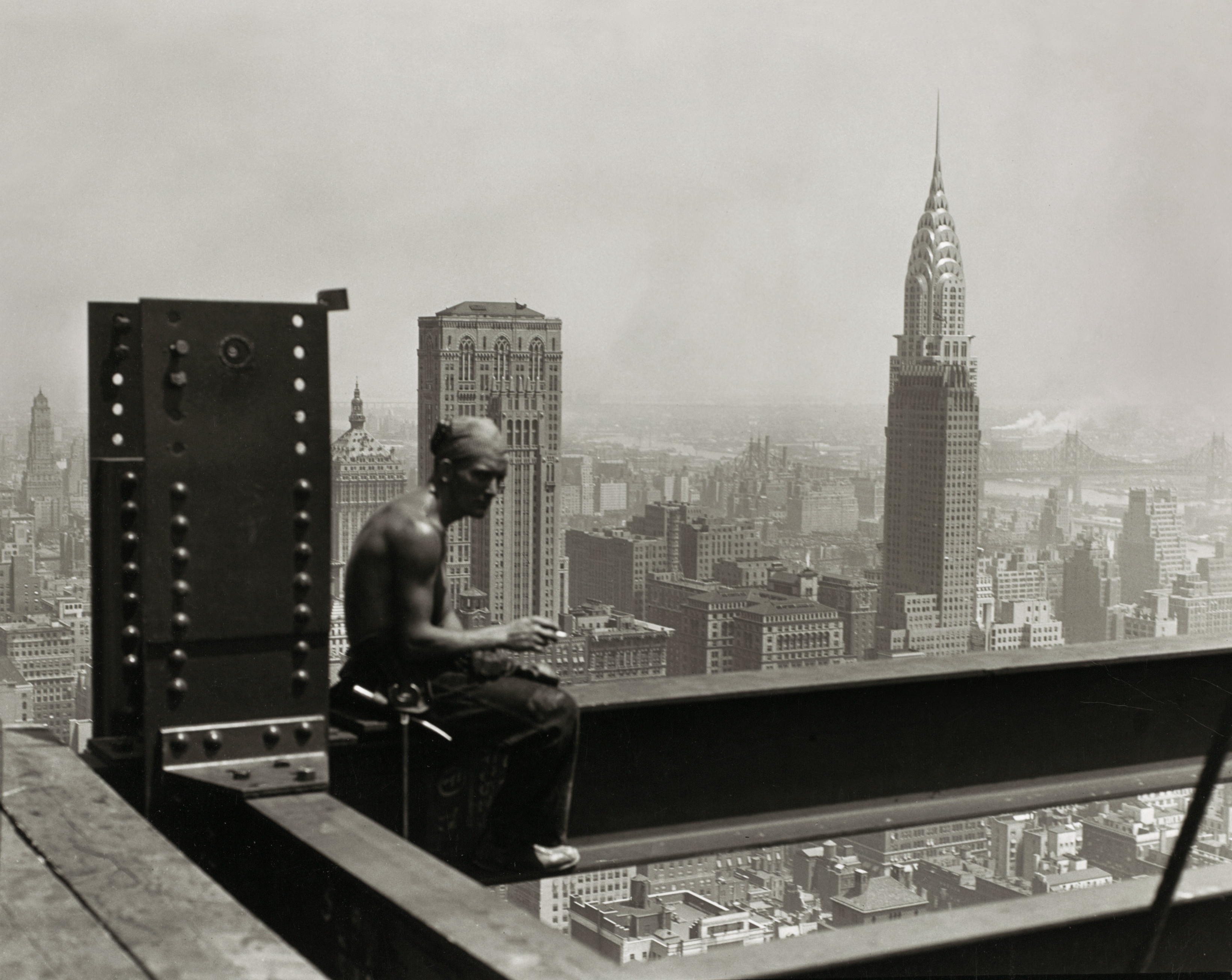
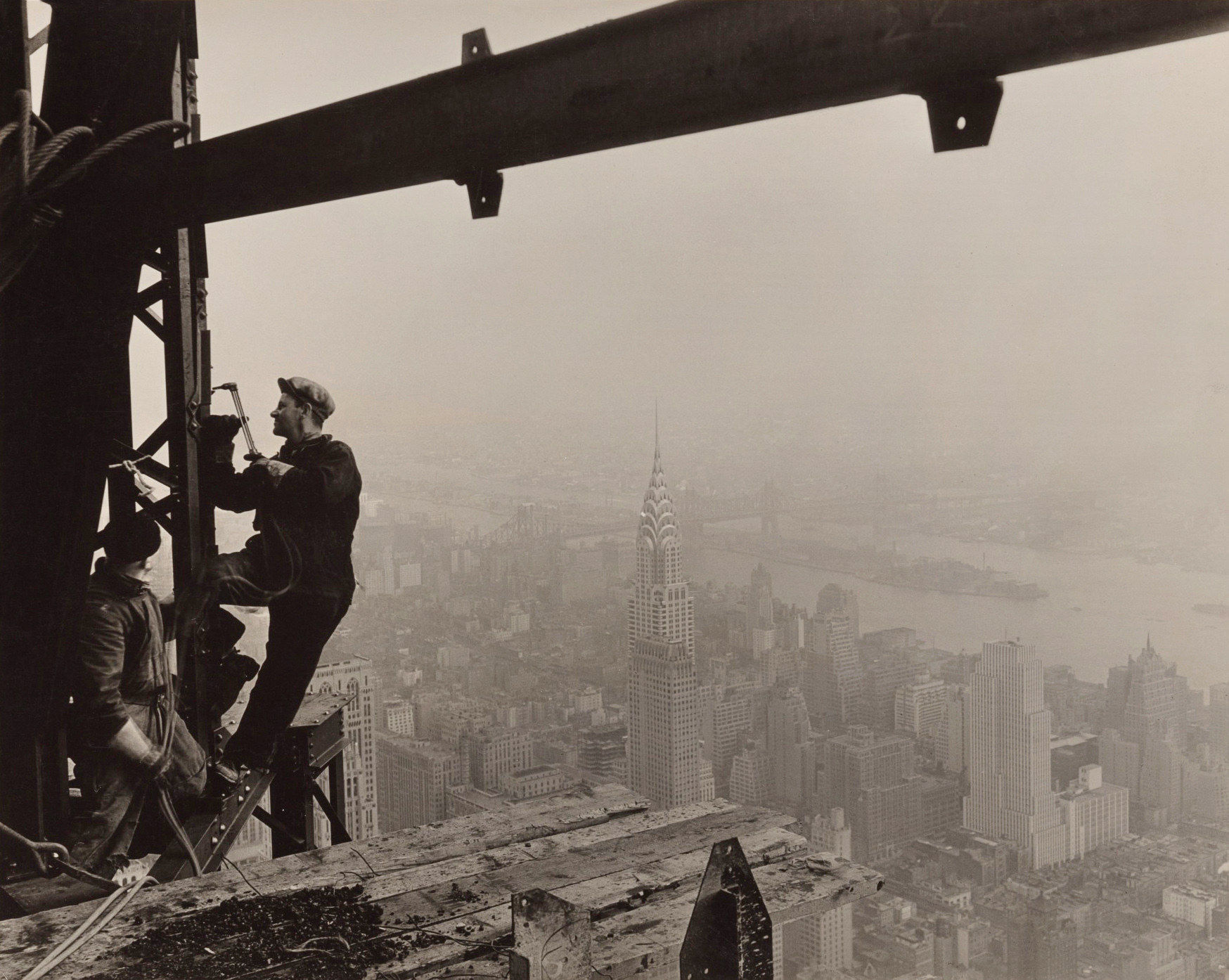
During and after World War I, he photographed American Red Cross relief work in Europe. In the 1920s and early 1930s, Hine made a series of “work portraits,” which emphasised the human contribution to modern industry. In 1930, Hine was commissioned to document the construction of the Empire State Building. He photographed the workers in precarious positions while they secured the steel framework of the structure, taking many of the same risks that the workers endured. In order to obtain the best vantage points, Hine was swung out in a specially-designed basket 1,000 ft above Fifth Avenue.

During the Great Depression Hine again worked for the Red Cross, photographing drought relief in the American South, and for the Tennessee Valley Authority (TVA), documenting life in the mountains of eastern Tennessee. He also served as chief photographer for the Works Progress Administration’s National Research Project, which studied changes in industry and their effect on employment. Hine was also a faculty member of the Ethical Culture Fieldston School.

Later life

In 1936, Hine was selected as the photographer for the National Research Project of the Works Projects Administration, but his work there was not completed.

The last years of his life were filled with professional struggles by loss of government and corporate patronage. Few people were interested in his work, past or present, and Hine lost his house and applied for welfare. He died on November 3, 1940 at Dobbs Ferry Hospital in Dobbs Ferry, New York, after an operation. He was 66 years old.

Text from the Wikipedia website


Lewis W. Hine (American, 1874-1940) 'Worker on platform' 1930-1931


Lewis Hine (American, 1874-1940)
Worker on platform
1930-1931
Gelatin silver print


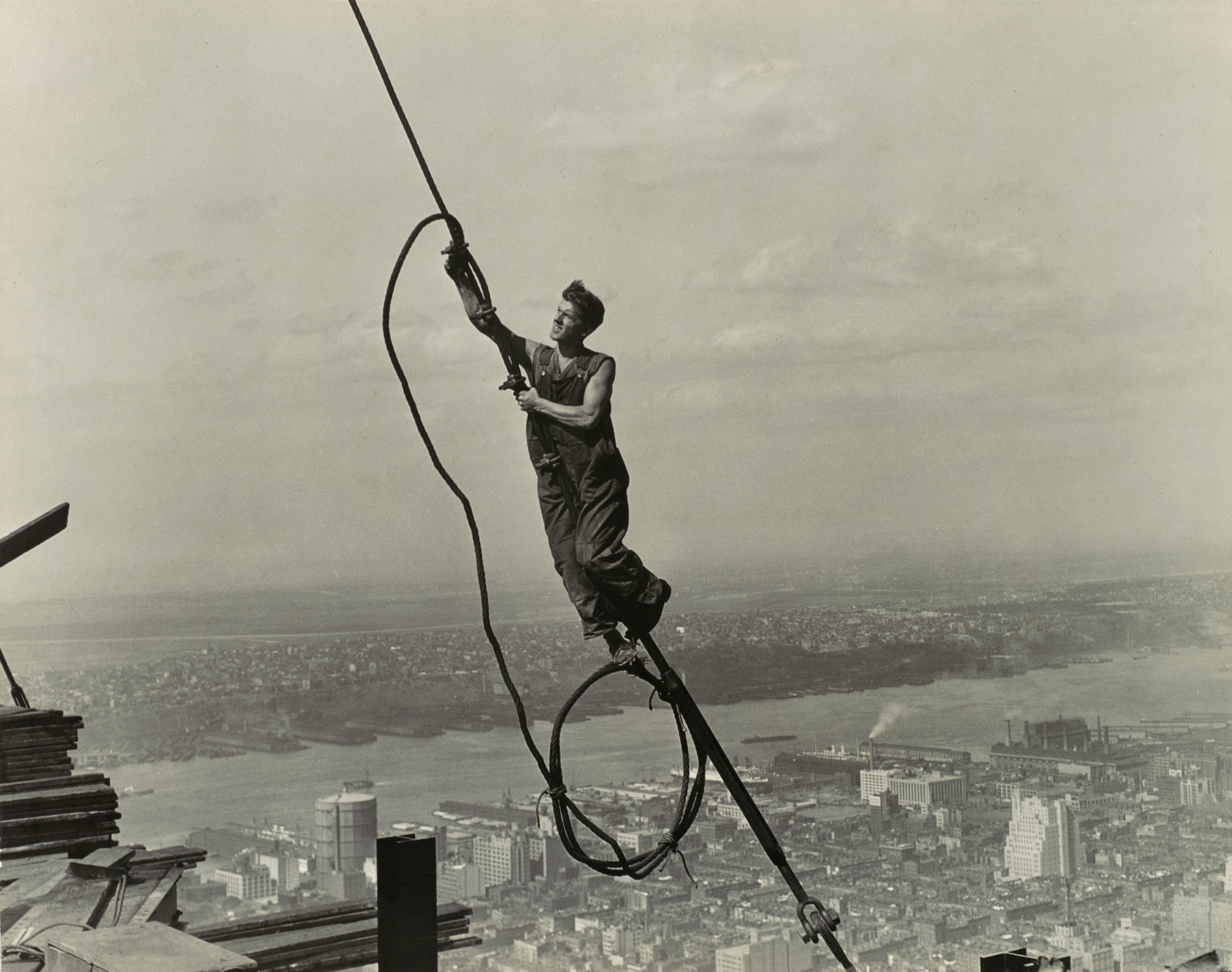
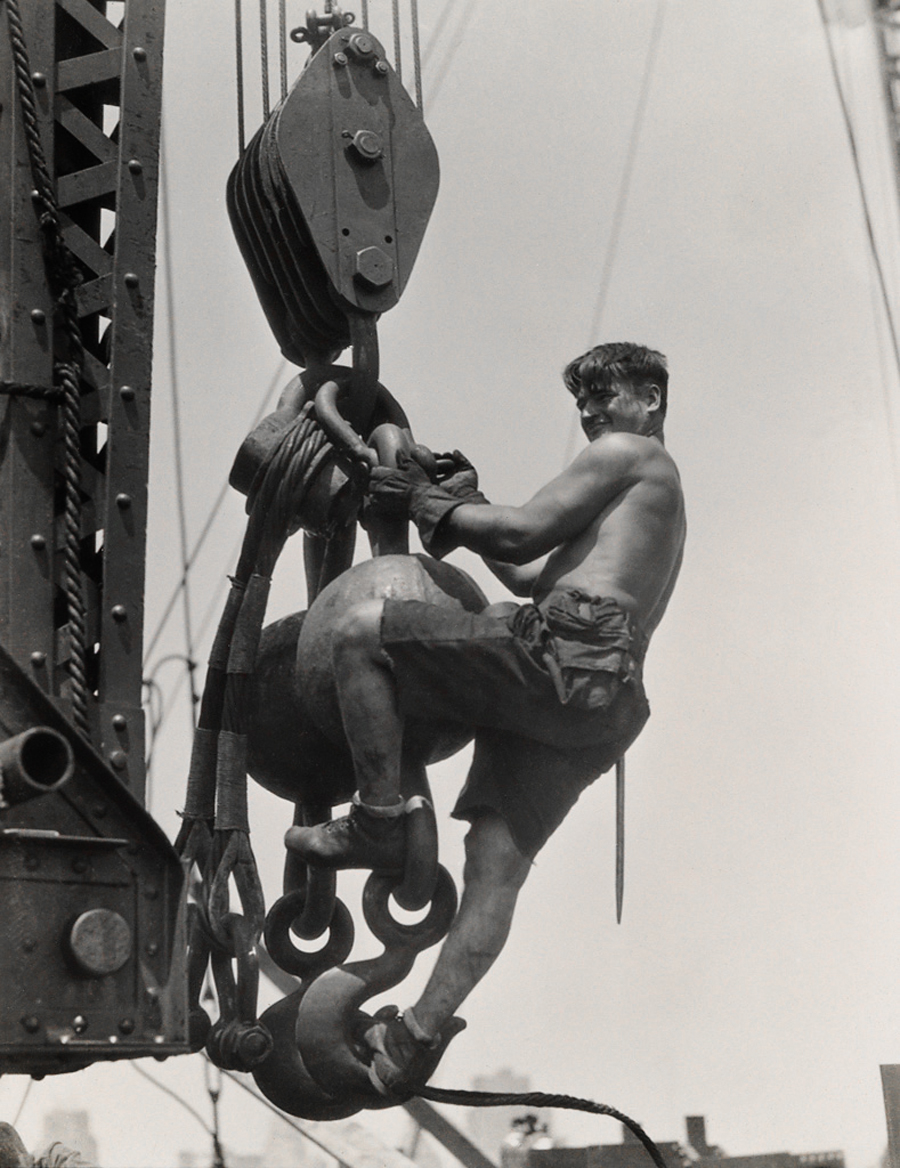
Lewis Hine (American, 1874-1940) 'Icarus, Empire State Building' 1930-1931


Lewis Hine (American, 1874-1940)
Icarus, Empire State Building
1930-1931
Gelatin silver print


Of the many photographs Hine took of the Empire State Building, this one became the popular favourite. Suspended in graceful sangfroid, the steelworker symbolises daring technical innovation of the sort Daedalus embodied in Greek legend. While Daedulus flew the middle course between sea and sky safely, his son Icarus flew too close to the sun and perished. The optimism of this image suggests that it was not Icarus’s folly but his youth and his ability to fly that prompted Hine’s title.

Text from The Met website


Lewis Hine (American, 1874-1940) 'Empire State Building' 1930-1931


Lewis Hine (American, 1874-1940)
Empire State Building
1930-1931
Gelatin silver print


Lewis Hine (American, 1874-1940) 'Empire State Building' 1930-1931


Lewis Hine (American, 1874-1940)
Empire State Building
1930-1931
Gelatin silver print


Lewis Hine (American, 1874-1940) 'Empire State Building' 1930-1931


Lewis Hine (American, 1874-1940)
Girders and Workers, Empire State Building
1930-1931
Gelatin silver print


Same man second left as in the image below.


Lewis Hine (American, 1874-1940) 'Laborer on connector' 1930-1931


Lewis Hine (American, 1874-1940)
Laborer on connector
1930-1931
Gelatin silver print


Lewis Hine (American, 1874-1940) 'Workers on girder' 1930-1931


Lewis Hine (American, 1874-1940)
Workers on girder
1930-1931
Gelatin silver print


Lewis Hine (American, 1874-1940) 'Derrick and workers on girder' 1930-1931


Lewis Hine (American, 1874-1940)
Derrick and workers on girder
1930-1931
Gelatin silver print


Lewis Hine (American, 1874-1940) 'Silhouetted crane hook' 1930-1931


Lewis Hine (American, 1874-1940)
Silhouetted crane hook
1930-1931
Gelatin silver print


Empire State Building

The Empire State Building is a 102-story Art Deco skyscraper in Midtown Manhattan, New York City. Designed by Shreve, Lamb & Harmon and completed in 1931, the building has a roof height of 1,250 feet (380 m) and stands a total of 1,454 feet (443.2 m) tall, including its antenna. Its name is derived from “Empire State”, the nickname of New York. As of 2017 the building is the 5th-tallest completed skyscraper in the United States and the 28th-tallest in the world. It is also the 6th-tallest freestanding structure in the Americas.

The site of the Empire State Building, located on the west side of Fifth Avenue between West 33rd and 34th Streets, was originally part of an early 18th century farm. In the late 1820s, it came into the possession of the prominent Astor family, with John Jacob Astor’s descendants building the Waldorf-Astoria Hotel on the site in the 1890s. By the 1920s, the family had sold the outdated hotel and the site indirectly ended up under the ownership of Empire State Inc., a business venture that included businessman John J. Raskob and former New York governor Al Smith. The original design of the Empire State Building was for a 50-story office building. However, after fifteen revisions, the final design was for a 86-story 1,250-foot building, with an airship mast on top. This ensured it would be the world’s tallest building, beating the Chrysler Building and 40 Wall Street, two other Manhattan skyscrapers under construction at the time that were also vying for that distinction. …

The project involved more than 3,500 workers at its peak, including 3,439 on a single day, August 14, 1930. Many of the workers were Irish and Italian immigrants, with a sizeable minority of Mohawk ironworkers from the Kahnawake reserve near Montreal. According to official accounts, five workers died during the construction, although the New York Daily News gave reports of 14 deaths and a headline in the socialist magazine The New Masses spread unfounded rumours of up to 42 deaths. The Empire State Building cost $40,948,900 to build, including demolition of the Waldorf-Astoria (equivalent to $533,628,800 in 2016). This was lower than the $60 million budgeted for construction.

Lewis Hine captured many photographs of the construction, documenting not only the work itself but also providing insight into the daily life of workers in that era. Hine’s images were used extensively by the media to publish daily press releases. According to the writer Jim Rasenberger, Hine “climbed out onto the steel with the ironworkers and dangled from a derrick cable hundreds of feet above the city to capture, as no one ever had before (or has since), the dizzy work of building skyscrapers”. In Rasenberger’s words, Hine turned what might have been an assignment of “corporate flak” into “exhilarating art”. These images were later organised into their own collection. Onlookers were enraptured by the sheer height at which the steelworkers operated. New York magazine wrote of the steelworkers: “Like little spiders they toiled, spinning a fabric of steel against the sky”.

Text from the Wikipedia website


Anonymous photographer. 'Untitled (Lewis Hine with camera)' c. 1900-1910s


Anonymous photographer
Untitled (Lewis Hine with camera)
c. 1900-1910s
Gelatin silver print


LILKE ART BLART ON FACEBOOK

Back to top

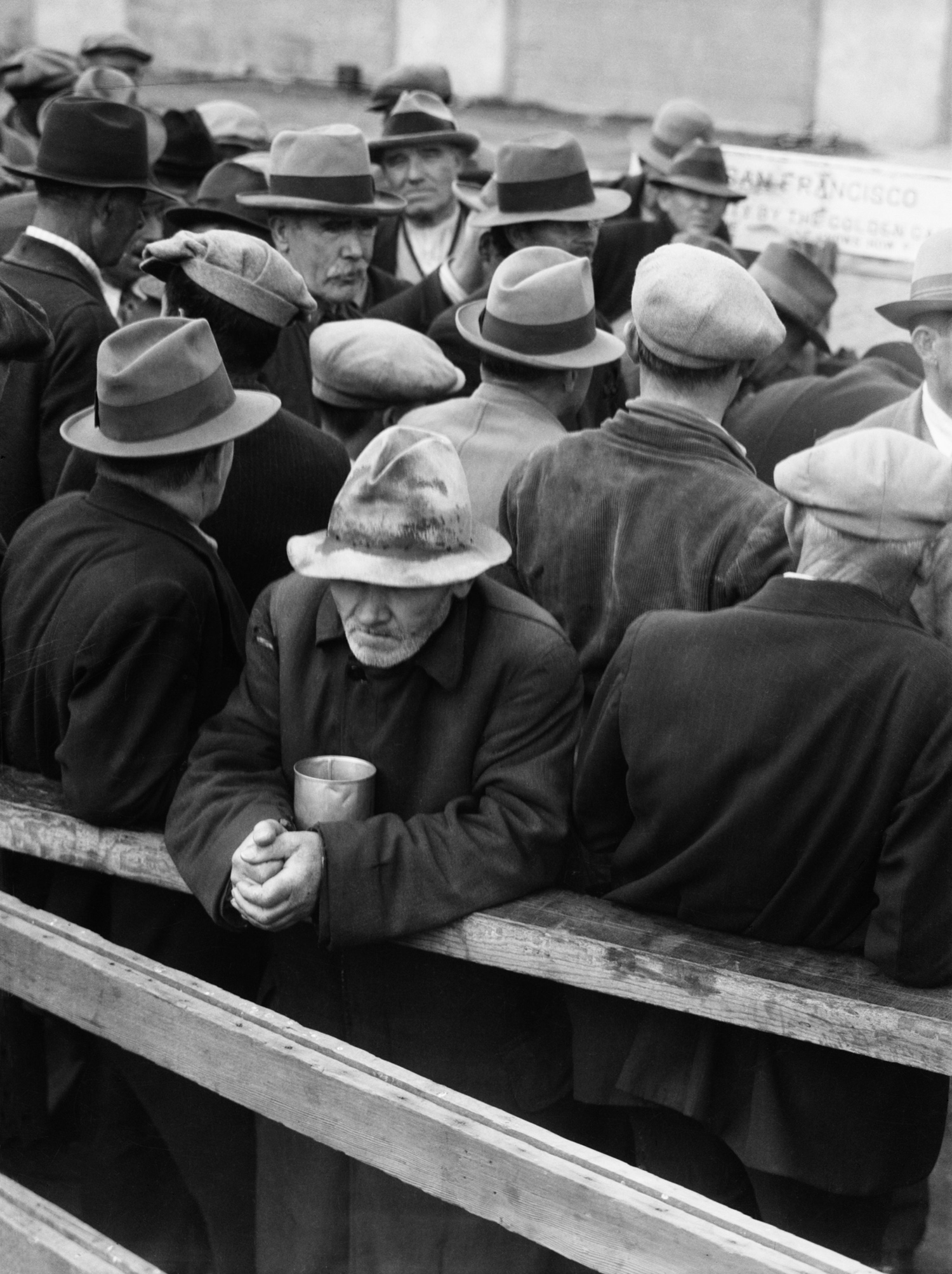
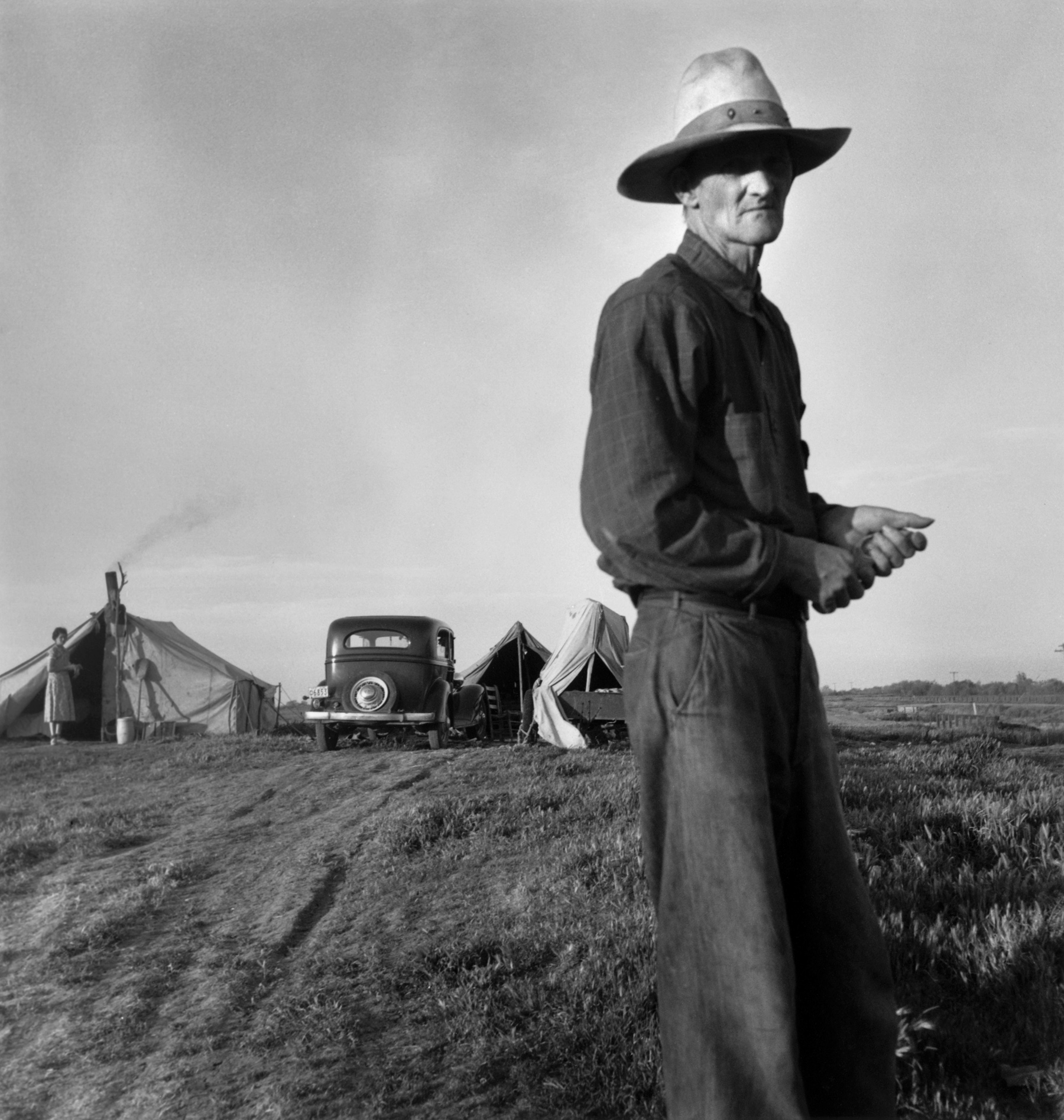
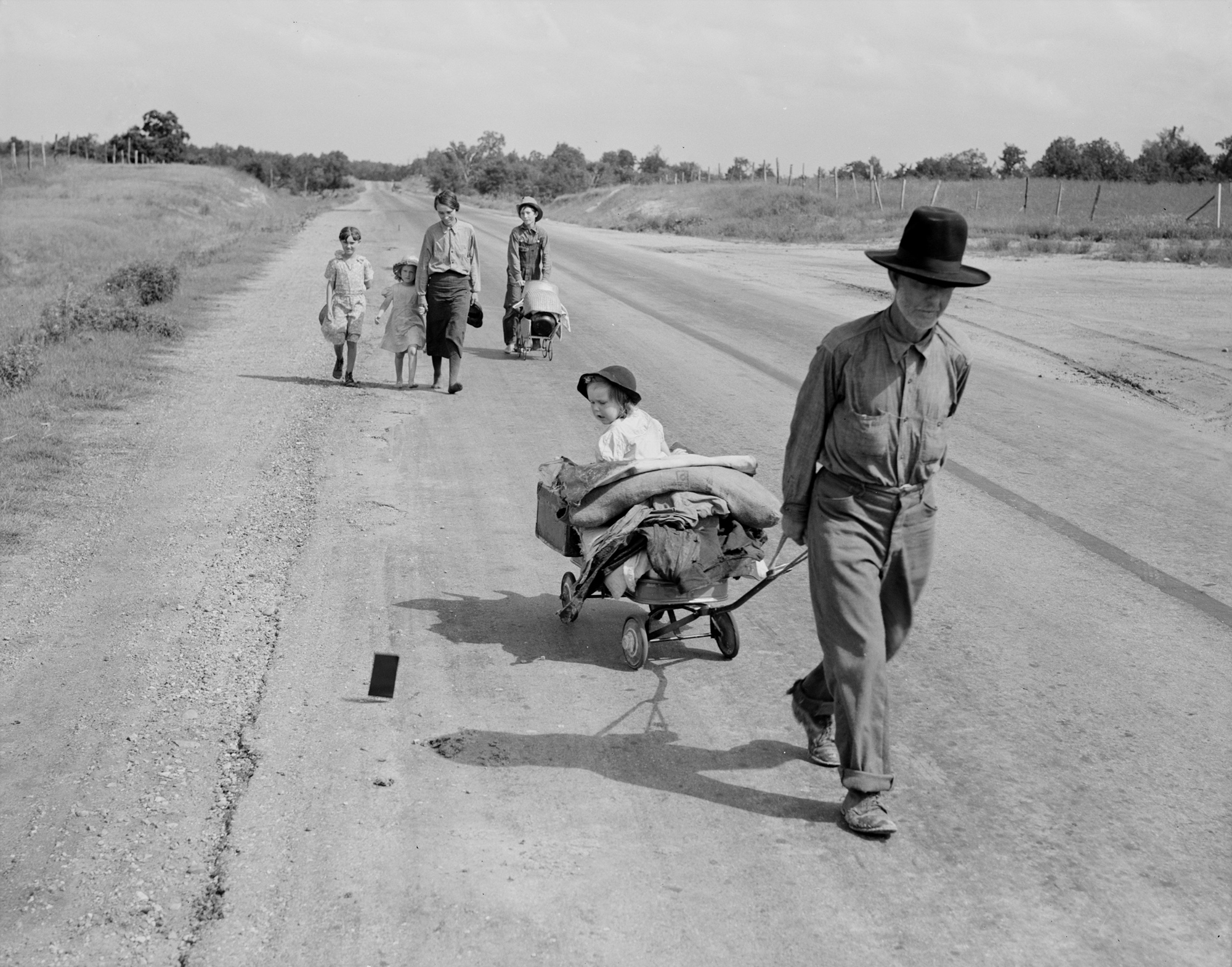
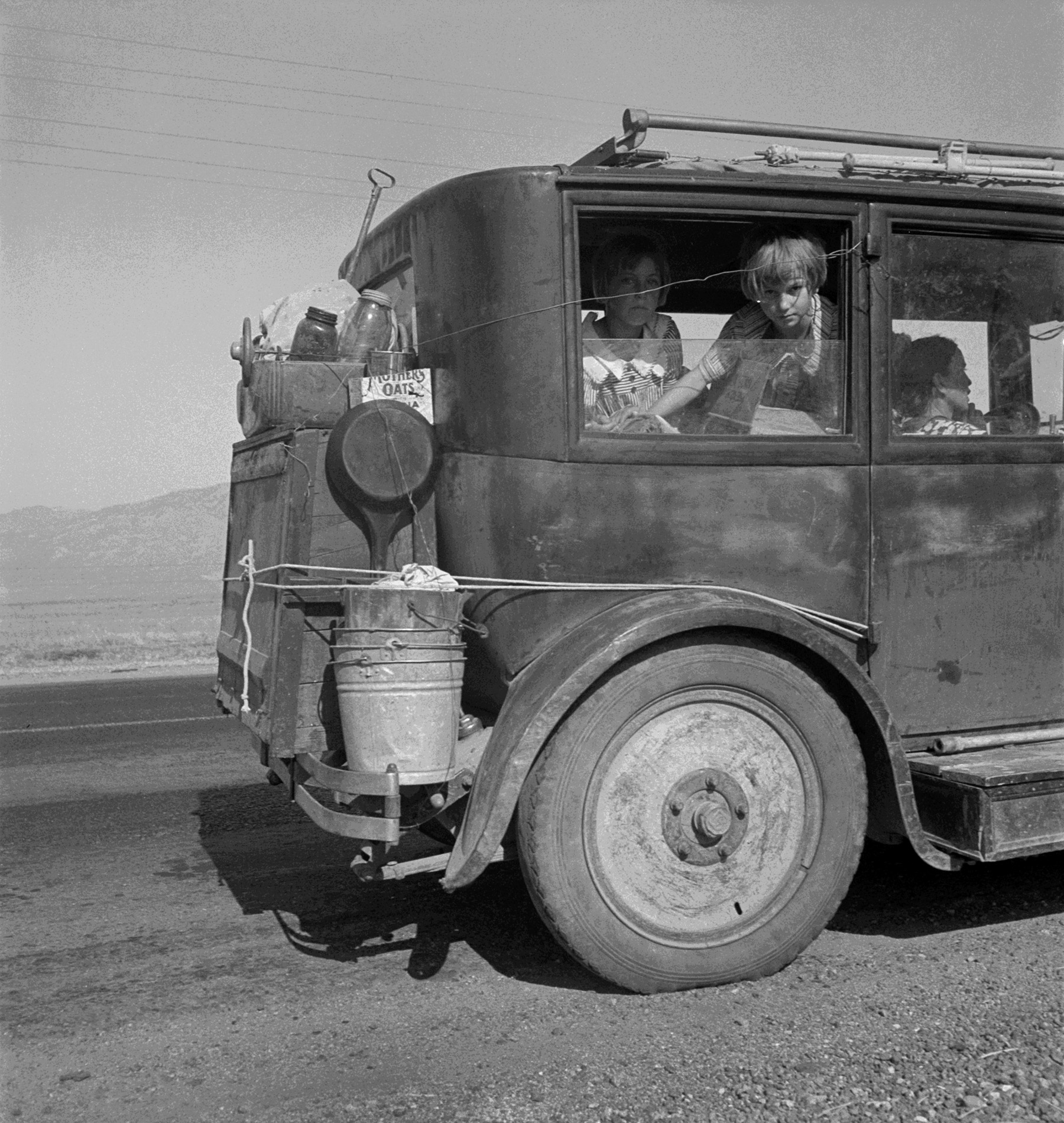
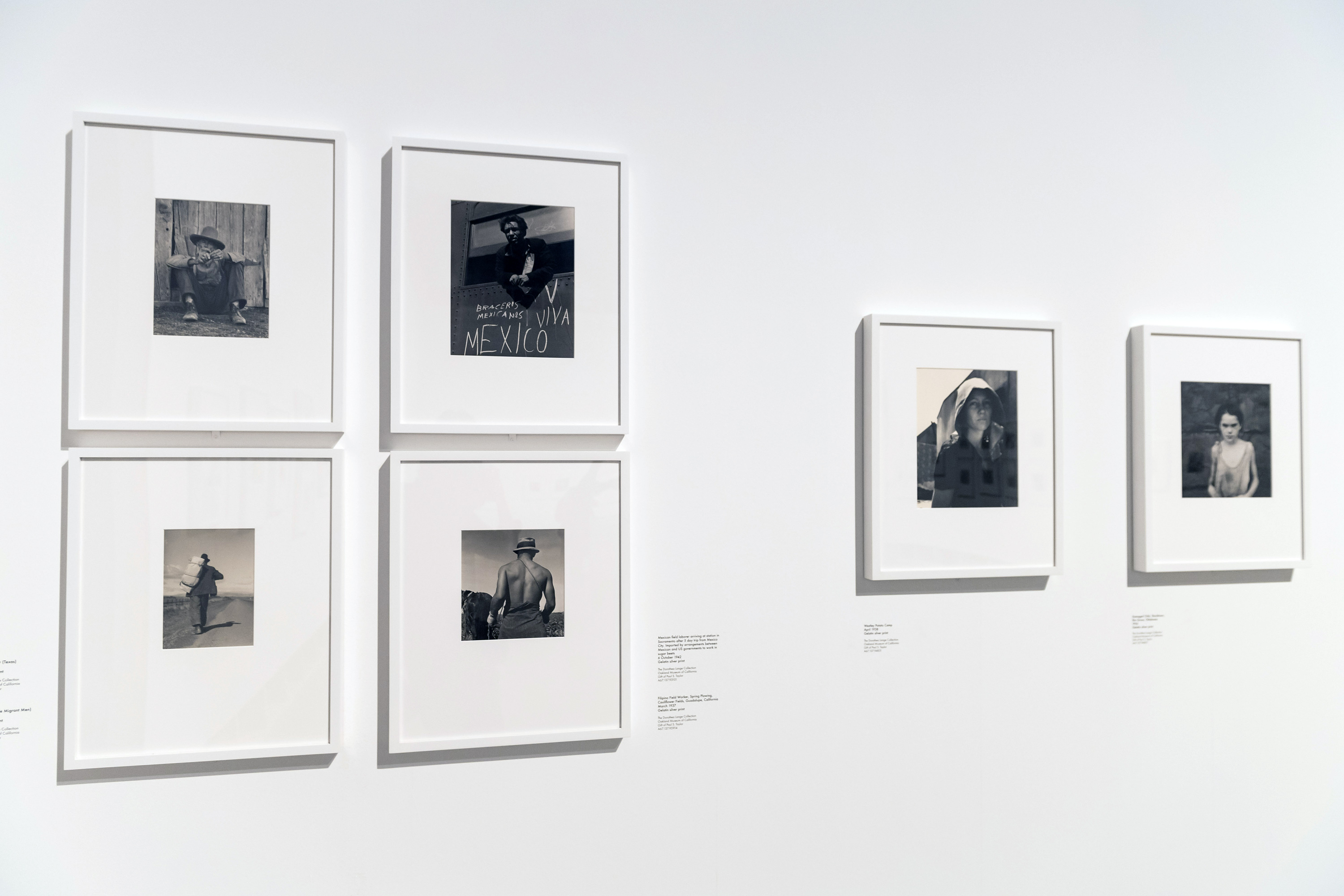
Exhibition: ‘Dorothea Lange: Politics of Seeing’ at the Barbican Art Gallery, London

Exhibition dates: 22nd June – 2nd September, 2018


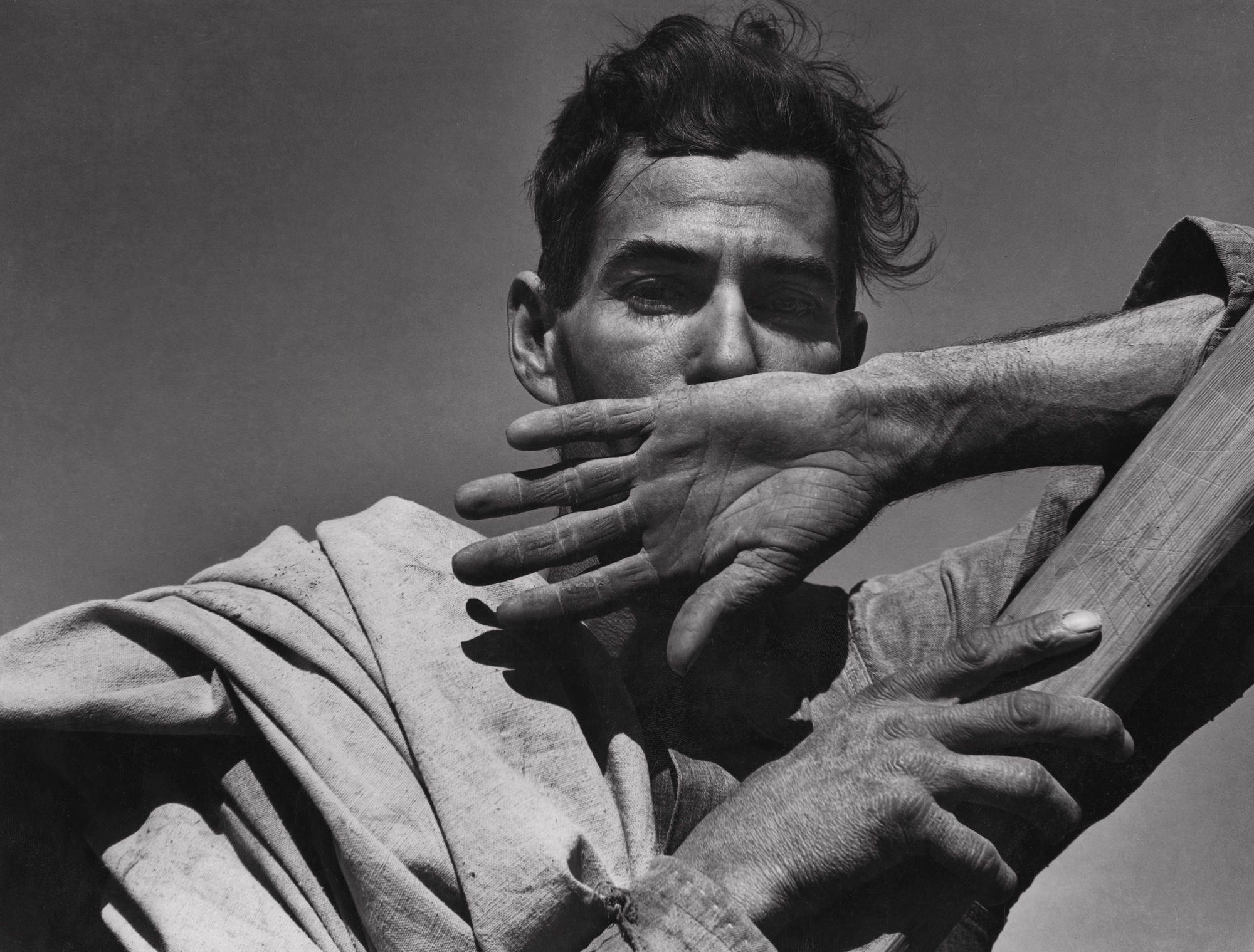
Dorothea Lange (American, 1895-1965) 'Migratory Cotton Picker, Eloy, Arizona' 1940 from the exhibition 'Dorothea Lange: Politics of Seeing' at the Barbican Art Gallery, London, June - Sept, 2018


Dorothea Lange (American, 1895-1965)
Migratory Cotton Picker, Eloy, Arizona
1940
Silver gelatin print
© The Dorothea Lange Collection, the Oakland Museum of California


Damaged, desperate and displaced

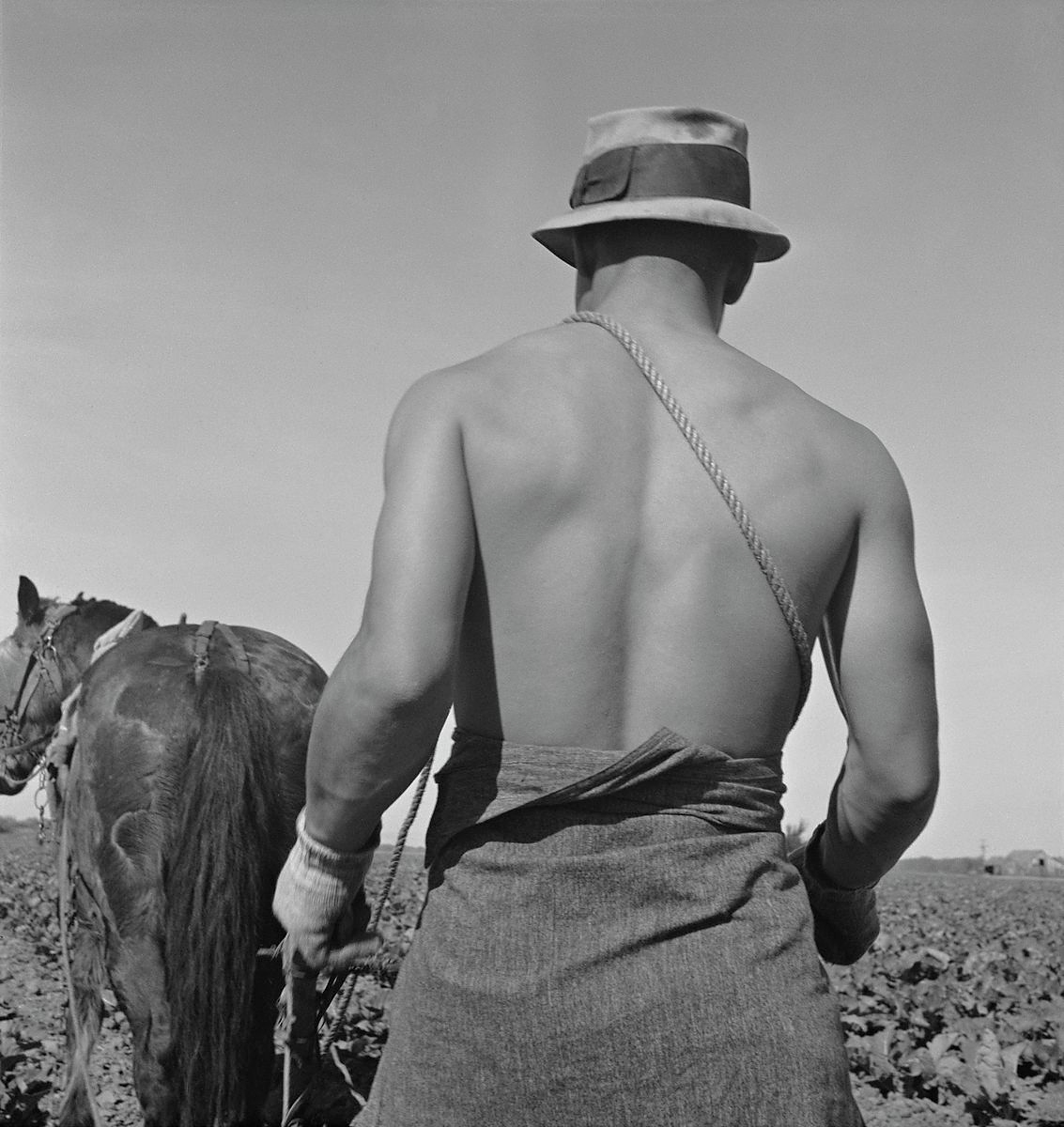
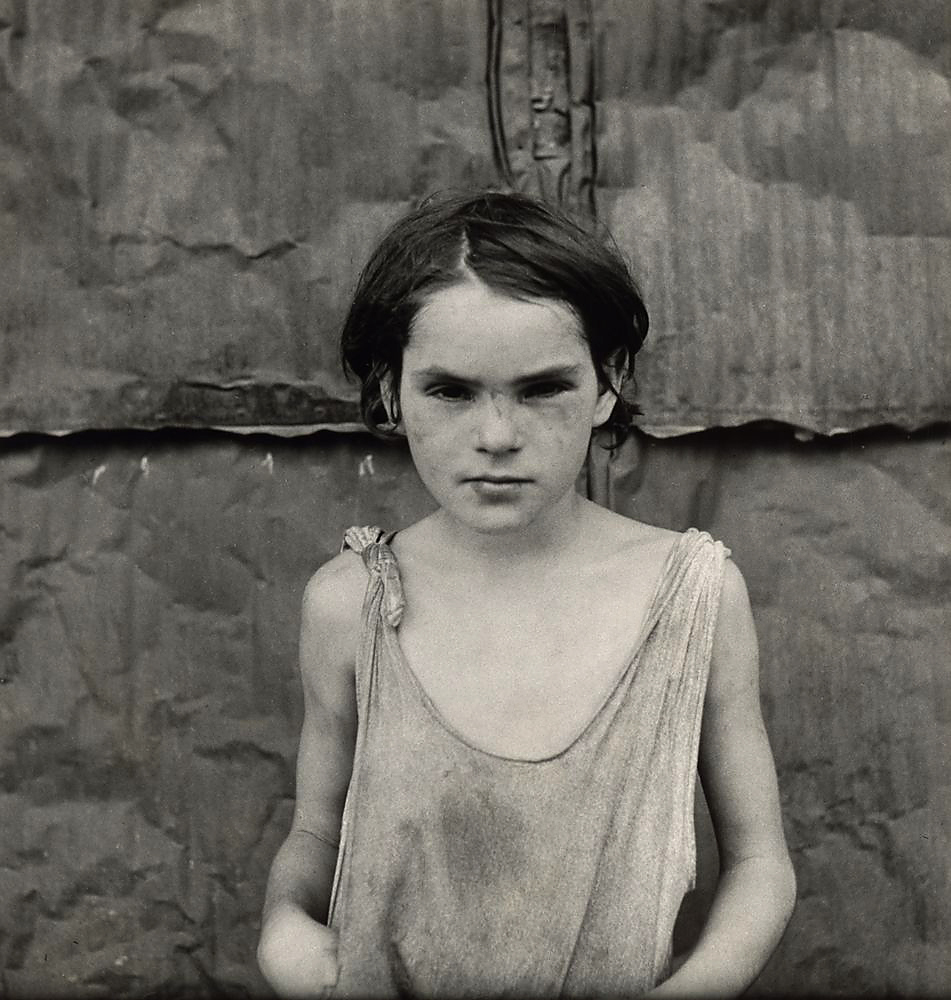
I am writing this short text on a laptop in Thailand which keeps jumping lines and misspelling words. The experience is almost as disorienting as the photographs of Dorothea Lange, with their anguished angles and portraits of despair. Her humanist, modernist pictures capture the harsh era of The Great Depression and the 1930s in America, allowing a contemporary audience to imagine what it must have been like to walk along blistering roads with five children, not knowing where your next meal or drink of water is coming from.

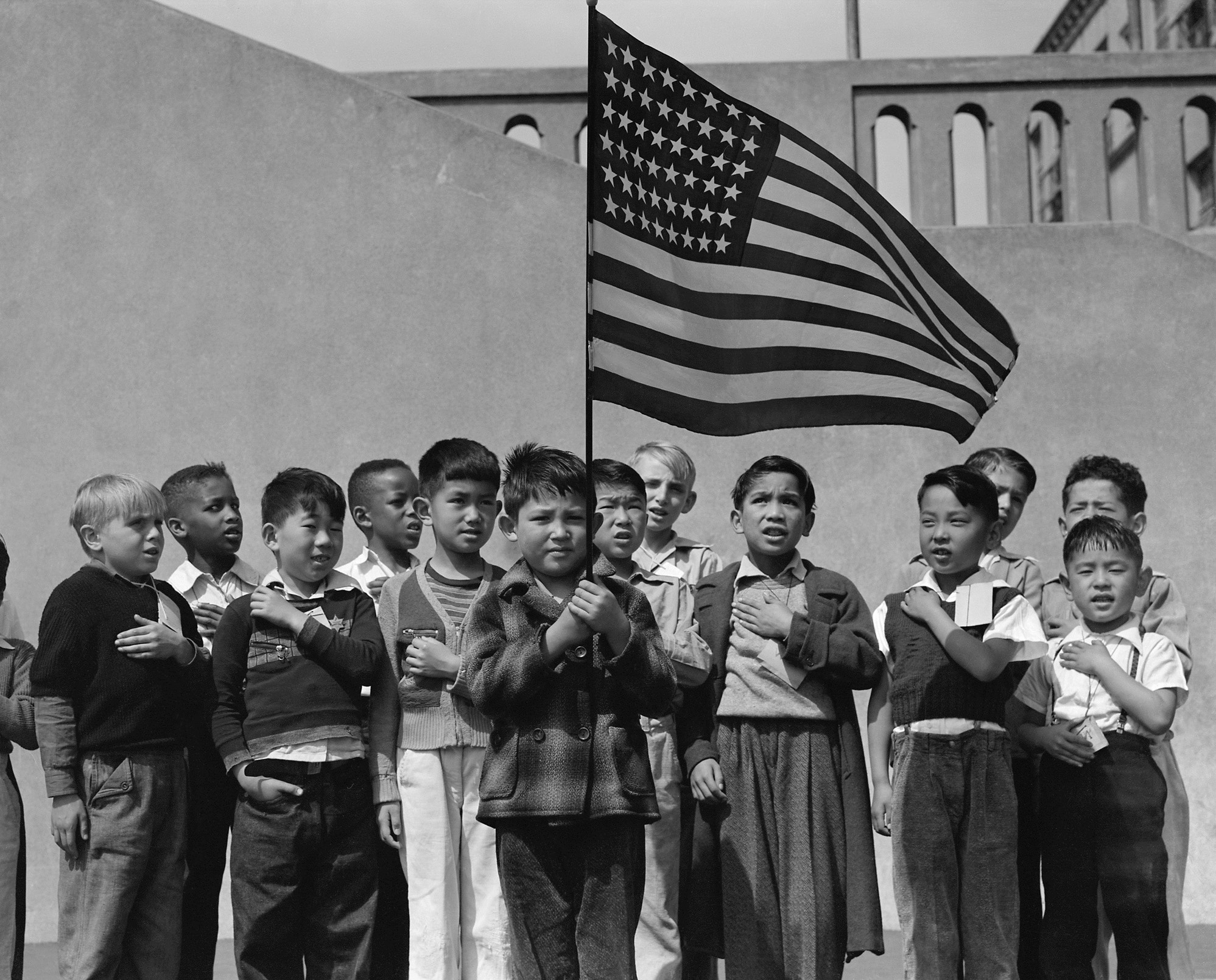
Like Lewis Hine and Jacob Riis from an earlier era, Lange’s photographs are about the politics of seeing. They are about human beings in distress and how photography can raise awareness of social injustice and disenfranchisement in the name of cultural change.

Dr Marcus Bunyan

#dorothealange @barbicancentre


Many thankx to the Barbican Art Gallery for allowing me to publish the photographs in the posting. Please click on the photographs for a larger version of the image.


Dorothea Lange (American, 1895-1965) 'Migrant Mother, Nipomo, California' 1936 from the exhibition 'Dorothea Lange: Politics of Seeing' at the Barbican Art Gallery, London, June - Sept, 2018


Dorothea Lange (American, 1895-1965)
Migrant Mother, Nipomo, California
1936
Silver gelatin print
© The Dorothea Lange Collection, the Oakland Museum of California


Dorothea Lange took this photograph in 1936, while employed by the U.S. government’s Farm Security Administration (FSA) program, formed during the Great Depression to raise awareness of and provide aid to impoverished farmers. In Nipomo, California, Lange came across Florence Owens Thompson and her children in a camp filled with field workers whose livelihoods were devastated by the failure of the pea crops. Recalling her encounter with Thompson years later, she said, “I saw and approached the hungry and desperate mother, as if drawn by a magnet. I do not remember how I explained my presence or my camera to her, but I do remember she asked me no questions. I made five exposures, working closer and closer from the same direction.”1 One photograph from that shoot, now known as Migrant Mother, was widely circulated to magazines and newspapers and became a symbol of the plight of migrant farm workers during the Great Depression.

As Lange described Thompson’s situation, “She and her children had been living on frozen vegetables from the field and wild birds the children caught. The pea crop had frozen; there was no work. Yet they could not move on, for she had just sold the tires from the car to buy food.”2 However, Thompson later contested Lange’s account. When a reporter interviewed her in the 1970s, she insisted that she and Lange did not speak to each other, nor did she sell the tires of her car. Thompson said that Lange had either confused her for another farmer or embellished what she had understood of her situation in order to make a better story.

Anonymous text. “Migrant Mother, Nipomo, California,” on the MoMA Learning website Nd [Online] Cited 16/02/2022

1/ Dorothea Lange, “The Assignment I’ll Never Forget,” Popular Photography 46 (February, 1960). Reprinted in Photography, Essays and Images, ed. Beaumont Newhall (New York: The Museum of Modern Art), p. 262-265

2/ Dorothea Lange, paraphrased in Karin Becker Ohm, Dorothea Lange and the Documentary Tradition (Baton Rouge, LA: Louisiana State University Press, 1980), p. 79


Installation view of the exhibition ‘Dorothea Lange: Politics of Seeing’ at the Barbican Art Gallery, London

Installation view of the exhibition ‘Dorothea Lange: Politics of Seeing’ at the Barbican Art Gallery, London showing Dorothea Lange's photograph 'Migrant Mother, Nipomo, California' 1936


Installation views of the exhibition Dorothea Lange: Politics of Seeing at the Barbican Art Gallery, London showing Dorothea Lange’s photograph Migrant Mother, Nipomo, California 1936
Photos: Ian Gavan/Getty Images for Barbican Art Gallery


“I saw and approached the hungry and desperate mother, as if drawn by a magnet. I do not remember how I explained my presence or my camera to her, but I do remember she asked me no questions. I made five exposures, working closer and closer from the same direction. I did not ask her name or her history. She told me her age, that she was thirty-two. She said that they had been living on frozen vegetables from the surrounding fields, and birds that the children killed. She had just sold the tires from her car to buy food. There she sat in that lean- to tent with her children huddled around her, and seemed to know that my pictures might help her, and so she helped me. There was a sort of equality about it.” (From: Popular Photography, Feb. 1960).

The images were made using a Graflex camera. The original negatives are 4 x 5″ film. It is not possible to determine on the basis of the negative numbers (which were assigned later at the Resettlement Administration) the order in which the photographs were taken.

Hanna Soltys, Reference Librarian, Prints & Photographs Division. “Dorothea Lange’s “Migrant Mother” Photographs in the Farm Security Administration Collection” Photographs in the Farm Security Administration Collection,” on The Library of Congress website 1998 February 19, 2019 [Online] Cited 16/02/2022


Florence Owens Thompson: The Story of the “Migrant Mother” 2014

Thompson’s identity was discovered in the late 1970s; in 1978, acting on a tip, Modesto Bee reporter Emmett Corrigan located Thompson at her mobile home in Space 24 of the Modesto Mobile Village and recognised her from the 40-year-old photograph.[10] A letter Thompson wrote was published in The Modesto Bee and the Associated Press distributed a story headlined “Woman Fighting Mad Over Famous Depression Photo.” Florence was quoted as saying “I wish she [Lange] hadn’t taken my picture. I can’t get a penny out of it, she didn’t ask my name. She said she wouldn’t sell the pictures, she said she’d send me a copy. She never did.”

Lange was funded by the federal government when she took the picture, so the image was in the public domain and Lange never directly received any royalties. However, the picture did help make Lange a celebrity and earned her “respect from her colleagues.”

In a 2008 interview with CNN, Thompson’s daughter Katherine McIntosh recalled how her mother was a “very strong lady”, and “the backbone of our family”, she said: “We never had a lot, but she always made sure we had something. She didn’t eat sometimes, but she made sure us children ate. That’s one thing she did do.”

Anonymous text. “Florence Owens Thompson,” on the WikiVisually website Nd [Online] Cited 05/08/2018. No longer available online


Dorothea Lange (American, 1895-1965) 'White Angel Breadline, San Francisco' 1933


Dorothea Lange (American, 1895-1965)
White Angel Breadline, San Francisco
1933
Silver gelatin print
© The Dorothea Lange Collection, the Oakland Museum of California


“There are moments such as these when time stands still and all you do is hold your breath and hope it will wait for you. And you just hope you will have enough time to get it organised in a fraction of a second on that tiny piece of sensitive film. Sometimes you have an inner sense that you have encompassed the thing generally. You know then that you are not taking anything away from anyone: their privacy, their dignity, their wholeness.” ~ Dorothea Lange 1963

Davis K F 1995, The photographs of Dorothea Lange, Hallmark Cards Inc, Missouri p. 20.


White angel breadline, San Francisco is Lange’s first major image that encapsulates both her sense of compassion and ability to structure a photograph according to modernist principles. The diagonals of the fence posts and the massing of hats do not reduce this work to the purely formal – the figure in the front middle of the image acts as a lightening rod for our emotional engagement.

© Art Gallery of New South Wales Photography Collection Handbook, 2007


“I had made some photographs of the state [of] people, in an area of San Francisco which revealed how deep the depression was. It was at that time beginning to cut very deep. This is a long process. It doesn’t happen overnight. Life, for people, begins to crumble on the edges; they don’t realise it…”


Dorothea Lange, interview, 1964


There was a real “White Angel” behind the breadline that served the needy men photographed by Dorothea Lange. She was a widow named Lois Jordan. Mrs. Jordan, who gave herself the name White Angel, established a soup kitchen during the Great Depression to feed those who were unemployed and destitute. Relying solely on donations, she managed to supply meals to more than one million men over a three-year period.

Jordan’s soup kitchen occupied a junk-filled lot in San Francisco located on the Embarcadero near Filbert Street. This area was known as the White Angel Jungle. The Jungle was not far from Lange’s studio. As she began to change direction from portrait to documentary photography, Lange focused her lens on the poignant scenes just beyond her window. White Angel Breadline is the result of her first day’s work to document Depression-era San Francisco. Decades later, Lange recalled: “[White Angel Breadline] is my most famed photograph. I made that on the first day I ever went out in an area where people said, ‘Oh, don’t go there.’ It was the first day that I ever made a photograph on the street.”

Anonymous text. “Dorothea Lange + White Angel Breadline: Meet the master artist through one of her most important works,” on The Kennedy Centre website Nd [Online] Cited 16/02/2022


Dorothea Lange’s Documentary Photographs

Hear Dorothea Lange discuss her photographs and the difficulty of leading a visual life.

Dorothea Lange’s stirring images of migrant farmers and the unemployed have become universally recognised symbols of the Great Depression. Later photographs documenting the internment of Japanese Americans and her travels throughout the world extended her body of work. Watch the video to hear Lange discuss how she began her documentary projects for the Farm Security Administration, and learn how she felt about some of her assignments and subjects.


Dorothea Lange (American, 1895-1965) 'Drought Refugees' c. 1935


Dorothea Lange (American, 1895-1965)
Drought Refugees
c. 1935
Silver gelatin print
© The Dorothea Lange Collection, the Oakland Museum of California


Dorothea Lange (American, 1895-1965) 'Family walking on highway - five children. Started from Idabel, Oklahoma, bound for Krebs, Oklahoma' June 1938


Dorothea Lange (American, 1895-1965)
Family walking on highway – five children. Started from Idabel, Oklahoma, bound for Krebs, Oklahoma
June 1938
Silver gelatin print
Library of Congress


Dorothea Lange (American, 1895-1965) 'Cars on the Road' August 1936


Dorothea Lange (American, 1895-1965)
Cars on the Road
August 1936
Silver gelatin print
Library of Congress


Dorothea Lange (American, 1895-1965) 'Dust Bowl, Grain Elevator, Everett, Texas' June 1938


Dorothea Lange (American, 1895-1965)
Dust Bowl, Grain Elevator, Everett, Texas
June 1938
Silver gelatin print
Library of Congress


This summer, Barbican Art Gallery stages the first ever UK retrospective of one of the most influential female photographers of the 20th century, the American documentary photographer Dorothea Lange (1895-1965). A formidable woman of unparalleled vigour and resilience, the exhibition charts Lange’s outstanding photographic vision from her early studio portraits of San Francisco’s bourgeoisie to her celebrated Farm Security Administration work (1935-1939) that captured the devastating impact of the Great Depression on the American population. Rarely seen photographs of the internment of Japanese-Americans during the Second World War are also presented as well as the later collaborations with fellow photographers Ansel Adams and Pirkle Jones documenting the changing face of the social and physical landscape of 1950s America. Opening 22 June at Barbican Art Gallery, Dorothea Lange: Politics of Seeing is part of the Barbican’s 2018 season, The Art of Change, which explores how the arts respond to, reflect and potentially effect change in the social and political landscape.

Dorothea Lange: Politics of Seeing encompasses over 300 objects from vintage prints and original book publications to ephemera, field notes, letters, and documentary film. Largely chronological, the exhibition presents eight series in Lange’s oeuvre spanning from 1919 to 1957.

Jane Alison, Head of Visual Arts, Barbican, said: “This is an incredible opportunity for our visitors to see the first UK survey of the work of such a significant photographer. Dorothea Lange is undoubtedly one of the great photographers of the twentieth century and the issues raised through her work have powerful resonance with issues we’re facing in society today. Staged alongside contemporary photographer Vanessa Winship as part of The Art of Change, these two shows are unmissable.”

Opening the exhibition are Lange’s little known early portrait photographs taken during her time running a successful portrait studio in San Francisco between 1919 and 1935. Lange was at the heart of San Francisco’s creative community and her studio became a centre in which bohemian and artistic friends gathered after hours, including Edward Weston, Anne Brigman, Alma Lavenson, Imogen Cunningham, and Willard van Dyke. Works from this period include intimate portraits of wealthy West Coast families as well as of Lange’s inner circle, counting amongst others photographer Roi Partridge and painter Maynard Dixon, Lange’s first husband and father of her two sons.

The Great Depression in the early 1930s heralded a shift in her photographic language as she felt increasingly compelled to document the changes visible on the streets of San Francisco. Taking her camera out of the studio, she captured street demonstrations, unemployed workers, and breadline queues. These early explorations of her social documentary work are also on display.

The exhibition charts Lange’s work with the newly established historical division of the Farm Security Administration (FSA), the government agency tasked with the promotion of Roosevelt’s New Deal programme. Alongside Lange, the FSA employed a number of photographers, including Walker Evans, Ben Shahn and Arthur Rothstein, to document living conditions across America during the Great Depression: from urban poverty in San Francisco to tenant farmers driven off the land by dust storms and mechanisation in the states of Oklahoma, Arkansas and Texas; the plight of homeless families on the road in search of better livelihoods in the West; and the tragic conditions of migrant workers and camps across California. Lange used her camera as a political tool to critique themes of injustice, inequality, migration and displacement, and to effect government relief.

Highlights in this section are, among others, a series on sharecroppers in the Deep South that exposes relations of race and power, and the iconic Migrant Mother, a photograph which has become a symbol of the Great Depression, alongside images of vernacular architecture and landscapes, motifs often overlooked within Lange’s oeuvre. Vintage prints in the exhibition are complemented by the display of original publications from the 1930s to foreground the widespread use of Lange’s FSA photographs and her influence on authors including John Steinbeck, whose ground-breaking novel The Grapes of Wrath was informed by Lange’s photographs. Travelling for many months at a time and working in the field, she collaborated extensively with her second husband Paul Schuster Taylor, a prominent social economist and expert in farm labour with whom she published the seminal photo book An American Exodus: A Record of Human Erosion in 1939, also on display in the exhibition.

The exhibition continues with rarely seen photographs of the internment of more than 100,000 American citizens of Japanese descent that Lange produced on commission for the War Relocation Authority following the Japanese attack on the American naval base at Pearl Harbor in 1941. Lange’s critical perspective of this little discussed chapter in US history however meant that her photographs remained unpublished during the war and stored at the National Archives in Washington. It is the first time that this series will be shown comprehensively outside of the US and Canada.

Following her documentation of the Japanese American internment, Lange produced a photographic series of the wartime shipyards of Richmond, California with friend and fellow photographer Ansel Adams (1902-1984). Lange and Adams documented the war effort in the shipyards for Fortune magazine in 1944, recording the explosive increase in population numbers and the endlessly changing shifts of shipyard workers. Capturing the mass recruitment of workers, Lange turned her camera on both female and black workers, for the first time part of the workforce, and their defiance of sexist and racist attitudes.

The exhibition features several of Lange’s post-war series, when she photographed extensively in California. Her series Public Defender (1955-1957) explores the US legal defence system for the poor and disadvantaged through the work of a public defender at the Alameda County Courthouse in Oakland. Death of a Valley (1956-1957), made in collaboration with photographer Pirkle Jones, documents the disappearance of the small rural town of Monticello in California’s Berryessa Valley as a consequence of the damming of the Putah Creek. Capturing the destruction of a landscape and traditional way of life, the photographs testify to Lange’s environmentalist politics and have not been displayed or published since the 1960s.

The exhibition concludes with Lange’s series of Ireland (1954), the first made outside the US. Spending six weeks in County Clare in western Ireland, Lange captured the experience of life in and around the farming town of Ennis in stark and evocative photographs that symbolise Lange’s attraction to the traditional life of rural communities.

An activist, feminist and environmentalist, Lange used her camera as a political tool to critique themes of injustice, inequality, migration and displacement that bear great resonance with today’s world, a prime example of which is her most iconic image the Migrant Mother (1936). Working in urban and rural contexts across America and beyond, she focused her lens on human suffering and hardship to create compassionate and piercing portraits of people as well as place in the hope to forge social and political reform – from the plight of sharecroppers in the Deep South to Dust Bowl refugees trekking along the highways of California in search of better livelihoods.

Dorothea Lange: Politics of Seeing is organised by the Oakland Museum of California. The European presentation has been produced in collaboration with Barbican Art Gallery, London and Jeu de Paume, Paris.

Press release from the Barbican Art Gallery


Installation view of the exhibition ‘Dorothea Lange: Politics of Seeing’ at the Barbican Art Gallery, London

Installation view of the exhibition ‘Dorothea Lange: Politics of Seeing’ at the Barbican Art Gallery, London


Installation views of the exhibition Dorothea Lange: Politics of Seeing at the Barbican Art Gallery, London showing in the bottom image at left, Lange’s Displaced Tennant Farmers, Goodlet, Hardeman Co., Texas 1937. ‘All displaced tenant farmers, the oldest 33. None able to vote because of Texas poll tax. They support an average of four persons each on $22.80 a month’; and at second left, Woman of the High Plains, Texas Panhandle June 1938 (below)
Photos: Ian Gavan/Getty Images for Barbican Art Gallery


Dorothea Lange (American, 1895-1965) 'Woman of the High Plains, Texas Panhandle' June 1938


Dorothea Lange (American, 1895-1965)
Woman of the High Plains, Texas Panhandle
June 1938
Silver gelatin print
© The Dorothea Lange Collection, the Oakland Museum of California
Gift of Paul S. Taylor


Installation view of the exhibition ‘Dorothea Lange: Politics of Seeing’ at the Barbican Art Gallery, London


Installation view of the exhibition Dorothea Lange: Politics of Seeing at the Barbican Art Gallery, London showing at second left top, Lange’s Mexican field labourer at station in Sacramento after 5 day trip from Mexico City. Imported by arrangements between Mexican and US governments to work in sugar beets. 6 October 1942; at second left bottom, Filipino Field Worker, Spring Plowing, Cauliflower Fields, Guadalupe, California. March 1937 (below); and at right, Damaged Child, Shacktown, Elm Grove, Oklahoma. 1936 (below)
Photos: Ian Gavan/Getty Images for Barbican Art Gallery


Dorothea Lange (American, 1895-1965) 'Filipino Field Worker, Spring Plowing, Cauliflower Fields, Guadalupe, California' March 1937


Dorothea Lange (American, 1895-1965)
Filipino Field Worker, Spring Plowing, Cauliflower Fields, Guadalupe, California
March 1937
Silver gelatin print
© The Dorothea Lange Collection, the Oakland Museum of California
Gift of Paul S. Taylor


Dorothea Lange (American, 1895-1965) 'Damaged Child, Shacktown, Elm Grove, Oklahoma' 1936


Dorothea Lange (American, 1895-1965)
Damaged Child, Shacktown, Elm Grove, Oklahoma
1936
© The Dorothea Lange Collection, Oakland Museum of California, City of Oakland
Gift of Paul S. Taylor


Dorothea Lange (American, 1895-1965) 'San Francisco, California. Flag of allegiance pledge at Raphael Weill Public School, Geary and Buchanan Streets' 1942


Dorothea Lange (American, 1895-1965)
San Francisco, California. Flag of allegiance pledge at Raphael Weill Public School, Geary and Buchanan Streets. Children in families of Japanese ancestry were evacuated with their parents and will be housed for the duration in War Relocation Authority centers where facilities will be provided for them to continue their education
1942
Silver gelatin print
Courtesy National Archives, photo no. 210-G-C122


Dorothea Lange (American, 1895-1965) 'Centerville, California. This evacuee stands by her baggage as she waits for evacuation bus' 1942


Dorothea Lange (American, 1895-1965)
Centerville, California. This evacuee stands by her baggage as she waits for evacuation bus. Evacuees of Japanese ancestry will be housed in War Relocation Authority centers for the duration
1942
Silver gelatin print
Courtesy National Archives, photo no. 210-G-C241


Dorothea Lange (American, 1895-1965) 'Manzanar Relocation Center, Manzanar, California. An evacuee is shown in the lath house sorting seedlings for transplanting' 1942


Dorothea Lange (American, 1895-1965)
Manzanar Relocation Center, Manzanar, California. An evacuee is shown in the lath house sorting seedlings for transplanting. These plants are year-old seedlings from the Salinas Experiment Station
1942
Silver gelatin print
Courtesy National Archives, photo no. 210-GC737


Dorothea Lange (American, 1895-1965) 'Manzanar Relocation Center' 1942


Dorothea Lange (American, 1895-1965)
Manzanar Relocation Center, Manzanar, California
July 3, 1942
Silver gelatin print
© The Dorothea Lange Collection, the Oakland Museum of California


Paul S. Taylor (American, 1895-1984) 'Dorothea Lange in Texas on the Plains' c. 1935


Paul S. Taylor (American, 1895-1984)
Dorothea Lange in Texas on the Plains
c. 1935
Silver gelatin print
© The Dorothea Lange Collection, the Oakland Museum of California


Dorothea Lange (American, 1895-1965) 'Sacramento, California. College students of Japanese ancestry' 1942


Dorothea Lange (American, 1895-1965)
Sacramento, California. College students of Japanese ancestry who have been evacuated from Sacramento to the Assembly Center
1942
Silver gelatin print
Courtesy National Archives, photo no. 210-GC471


Installation view of the exhibition ‘Dorothea Lange: Politics of Seeing’ at the Barbican Art Gallery, London

Installation view of the exhibition ‘Dorothea Lange: Politics of Seeing’ at the Barbican Art Gallery, London


Installation views of the exhibition Dorothea Lange: Politics of Seeing at the Barbican Art Gallery, London showing in the bottom image, Lange’s photographs of Japanese Americans
Photos: Ian Gavan/Getty Images for Barbican Art Gallery


Installation view of the exhibition ‘Dorothea Lange: Politics of Seeing’ at the Barbican Art Gallery, London


Installation view of the exhibition Dorothea Lange: Politics of Seeing at the Barbican Art Gallery, London showing Lange’s ‘Shipyards of Richmond’ photographs
Photos: Ian Gavan/Getty Images for Barbican Art Gallery


Boom Town: Shipyards of Richmond

In December 1941 the United States entered the Second World War ushering in a period of economic prosperity triggered by an exponential growth in defence spending. Almost overnight, the city of Richmond, located to the north of Oakland, became one of California’s major shipbuilding hubs producing large merchant vessels used to supply Allied troops.

Lured by the promised of work, the population of the San Francisco Bay Area exploded as men and women flocked to the west in vast numbers, prompting the San Francisco Chronicle to claim that the region was in the grips of a ‘second gold rush’. This huge expansion of population and industry also brought new social pressures as housing and other services were extremely limited. For African American community arriving from the rural South however such shortages were further exacerbated by racial discrimination and segregation.

In collaboration with Ansel Adams (1902-1984), Lange secured a commission from Fortune magazine to document 24-hours in the lives of the shipyard workers. Capturing the ever changing shifts of the round-the-clock shipyard population, Lange focused once again on the substandard living conditions of workers and their families, who were often forced to live in cramped temporary shelters, as well as on the lack of social cohesion.

Drawn to images that transgressed accepted attitudes towards gender and race, Lange settled her lens on African American female welders and stylishly dressed women flaunting their newfound independence and spending power. Creating heroic images of women at work, Lange’s photographs contributed to the archetypal image of ‘Rosie the Riveter’.

Wall text from the exhibition


Installation view of the exhibition ‘Dorothea Lange: Politics of Seeing’ at the Barbican Art Gallery, London

Installation view of the exhibition ‘Dorothea Lange: Politics of Seeing’ at the Barbican Art Gallery, London


Installation views of the exhibition Dorothea Lange: Politics of Seeing at the Barbican Art Gallery, London showing in the bottom image, Lange’s ‘Ireland’ photographs
Photos: Ian Gavan/Getty Images for Barbican Art Gallery


“There is no sense of hurry, and there is no sense of want, or wanting, or urge to buy more and more, and of bombardment of new goods and advertising. Just the name of the family over the store … A contented and relaxed people live on this island.


Dorothea Lange


Ireland

Inspired by a book titled The Irish Countryman (1937) the the eminent anthropologist Conrad M. Arensberg, Lange persuaded the editors of LIFE to commission her and her son Daniel Dixon, a writer, to create an in-depth study of rural life in Ireland. The trip was her first overseas, and Lange spent six weeks in the autumn of 1954 photographing the experience of life around County Clare in western Ireland, a poor farming community whose younger inhabitants were flocking to the US in great numbers in the hope of realising the American Dream.

Lange was perhaps drawn to these tight-knit, rural communities because they symbolised a simpler, more self-sufficient way of life in contrast to the post-industrial thrust of the city that reflected her own Californian reality. Steeped in a romantic socialism, Lange’s evocative photographs depict County Clare’s inhabitants by and large as content and carefree in their rootedness to the land, oblivious to the seismic global changes taking place around them.

Travelling around the countryside from Tubber to Ennis, Lange captured country markets and fairs, pubs, local shops, and church-goers attending mass on the ‘island of the devout’, as LIFE later dubbed the country. The magazine published her story with 21 photographs in the 21 March 1955 issue, but largely omitted Dixon’s text.

Wall text from the exhibition


Barbican Art Gallery
Barbican Centre
Silk Street, London, EC2Y 8DS

Opening hours:
Sat – Wed 10am – 6pm (last entry 5pm)
Thu – Fri 10am – 8pm (last entry 7pm)
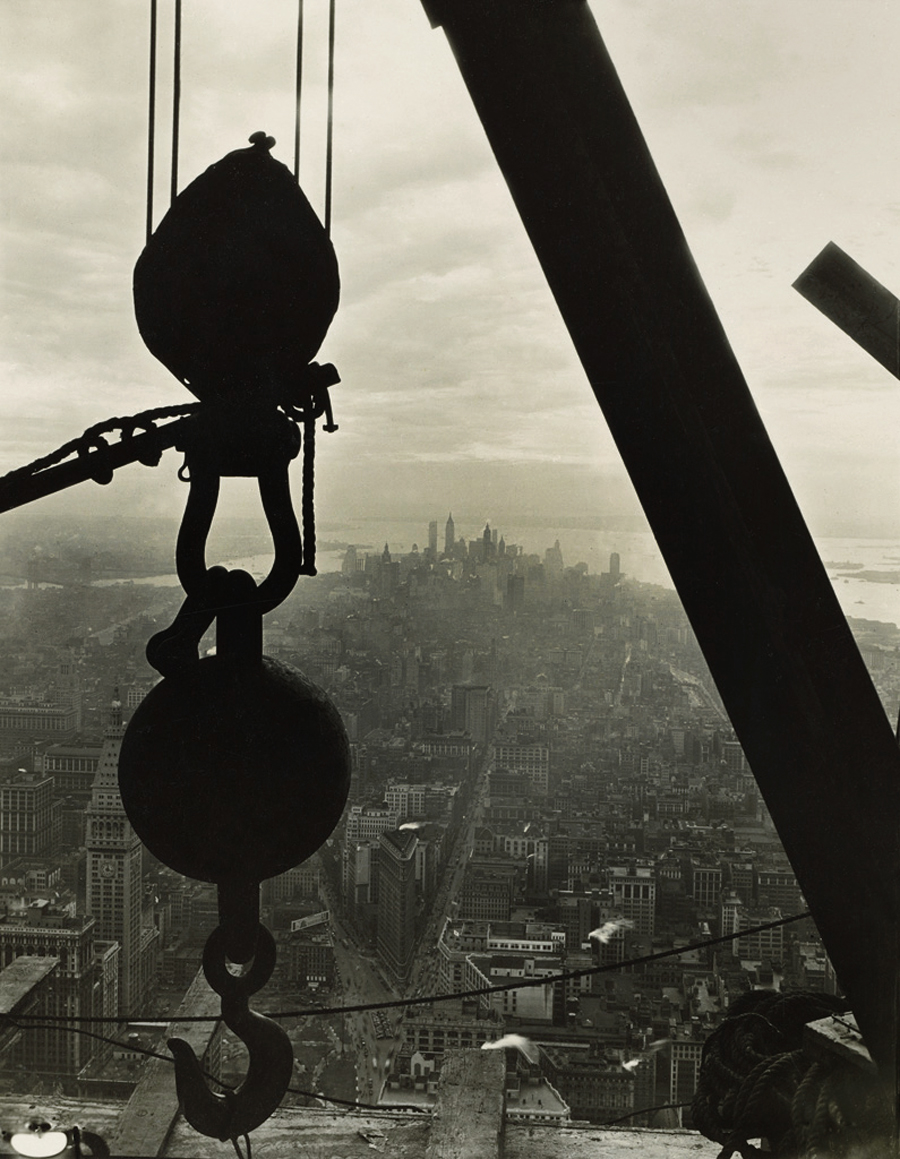
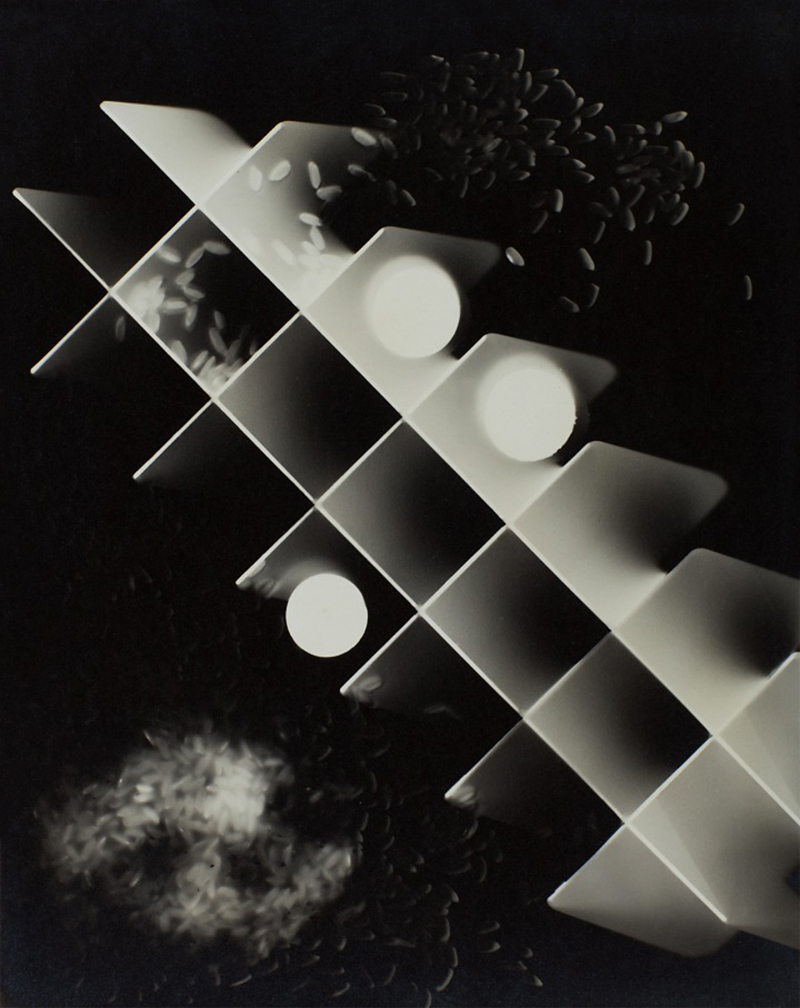
Bank Holidays 12 – 6pm (last entry 5pm)
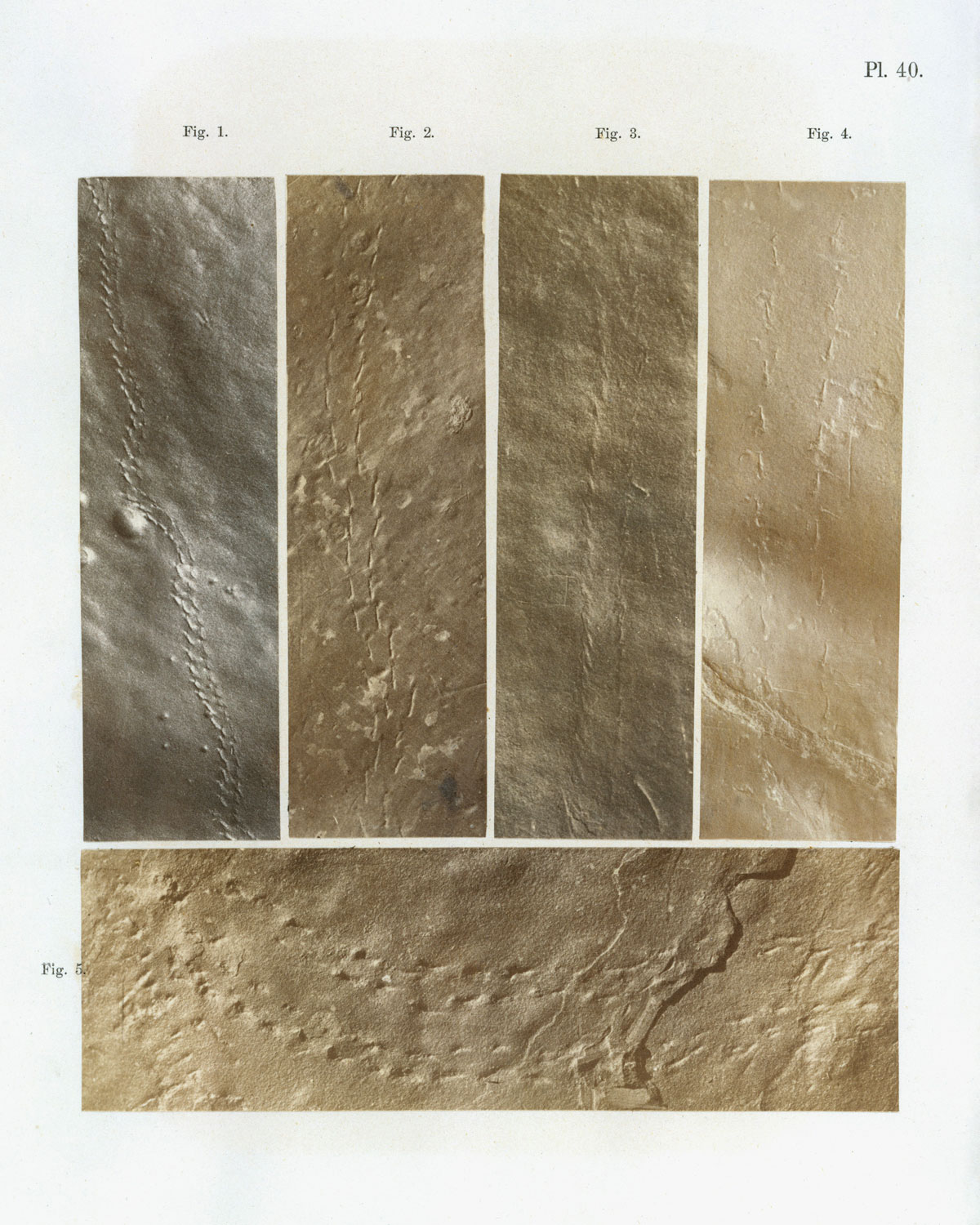
Barbican Art Gallery website

LIKE ART BLART ON FACEBOOK

Back to top

Exhibition: ‘Jakob Tuggener – Machine time’ at Fotostiftung Schweiz, Winterthur, Zurich

Exhibition dates: 21st October, 2017 – 28th January, 2018

Curator: Martin Gasser


Jakob Tuggener (Swiss, 1904-1988) 'Fabrik' (book cover) 1943


Jakob Tuggener (Swiss, 1904-1988)
Fabrik (Factory) (book cover)
1943
Rotapfel Verlag, Erlenbach-Zurich


Rare magician, strange alchemist, tells stories through visuals

I am indebted to James McArdle’s blog posting “Work” on his excellent On This Date In Photography website for alerting me to this exhibition, and for reminding me of the work of this outstanding artist, Jakob Tuggener.

The short version: Jakob Tuggener was a draftsman before he became an artist, studying poster design, typography, photography and film. “In 1943, in the middle of the Second World War, Tuggerer’s book Fabrik (Factory) appeared. At first glance, the series of 72 photographs without a text contained therein seems to depict a kind of history of industrialisation – from the rural textile industry to mechanical engineering and high-voltage electrical engineering to modern power plant construction in the mountains. An in-depth reading, however, shows that Tuggener’s film-associative series of photographs simultaneously points to the destructive potential of unrestrained technological progress, as a result of which he sees the then raging World War, and for which the Swiss arms industry produced unlimited weapons. Tuggener was ahead of his time with the book conceived according to the laws of silent film.” (Press release)

Fabrik, subtitled Ein Bildepos der Technik (“Epic of the technological image” or “A picture of technology”) pictures the world of work and industry, and “is considered a milestone in the history of the photo book.” It uses expressive visuals (actions, appearances and behaviours; movements, gestures and details – Tuggener loves the detail) to tell a subjective story, that of the relationship between human and machine. While the book was well ahead of its time, and influenced the early work of that famous Swiss photographer Robert Frank, it did not emerge out of a vacuum and is perhaps not as revolutionary as some people think. Nothing ever appears out of thin air.

“German photographer Paul Wolff, often working in collaboration with Alfred Tritschler, produced a number of exceptional photo books through the 1920s and ’30s, at a time when Constructivism and the Bauhaus influenced many with visions “of an industrialized and socialized society” that placed Germany at “the forefront of European photography” (Martin Parr and Gerry Badger. The Photobook: A History Volume I, Phaidon Press, 2005, p. 86). Arbeit! (1937) is particularly noted for its architectural framing and lighting of massive machinery, its striking portraits of factory workers, and is frequently aligned with works such as Lewis Hine’s Men at Work (1932) and Albert Renger-Patzsch’s Eisen und Stahl (Iron and Steel) (1931).” (Anonymous. “Arbeit!,” on the Bauman Rare Books website [Online] Cited 03/02/2022)

François Kollar’s project La France travail (Working France) (1931-1934), E. O. Hoppé’s Deutsche Arbeit (1930), Heinrich Hauser’s Schwarzes Revier (Black Area) (1930) and Germaine Krull’s Metal (1928) all address the profound social and economic tensions that preceded the Second World War, through an avant-garde photography in the style of “New Vision” and “New Objectivity” – that is, through objective photographs that question common rules of composition, avoiding the more obvious ways subjects would have been photographed at the time. Obscure angles and perspectives abound in these striking photobooks, making their clinical, objective fervour “the great persuaders” of the 1930s and 40s, Modernist and propaganda books of their time.

What made Tuggener so different was the uncompromising subjectiveness of his work, “photographing the two worlds, privilege and labour.” His direct, strong images of factories and high society use wonderful form, light, and shadow to convey their message, never loosing sight of the human dimension, for they shift “our angle from the boss’ POV [point of view] to those unable to get any respite or distance from the situation,” that of the workers. They are a piece of time and human history, which gets closer to the lived reality of the factory floor, than much of the work of his predecessors. Tuggener portrays the mundanity of the “operational sequence” (la chaîne opératoire) of the machine, where the human becomes the oil used to grease the cogs of the ever-demanding “mechanical monsters.” (See Evan Calder Williams’ “Rattling Devils” quotations below)

Tuggener then adds to this new way of seeing which recorded the multiplicity of his points of view – “a modern new style of photography showing not just how things looked, but how it felt to be there” – through the sequencing of the images, which can be seen in the wonderfully combined double pages of the Fabrik book layouts below. Take for example, the photograph that is on the dust jacket, a portrait of a middle-aged worker with a grave look on his face that says, “why the hell are you taking my photograph, why don’t you just f… off.” In the book, Tuggener pairs this image with a whistle letting off steam, a metaphor for the man’s state of being. Tuggener creates these most alien worlds from the inside out, worlds which are grounded in actual lived experience – the little screws lying in the palm of a blackened hand; Navy Cut cigarettes amongst steel artefacts; man being consumed by machine; man being dwarfed by machine; man as machine (the girl paired opposite the counting machine); the Frankenstein scenario of the laboratory (man as monster, machine as man); the intense, feverish eyes of the worker in Heater on electric furnace (the machine human as the devil); and the surrealism of a small doll among the serried ranks of mass destruction, facing the opposition, the opposing lined face of an older worker. This is the stuff of alchemy, the place where art challenges life.

“As Arnold Burgaurer cogently states in his introduction, Tuggener is a jack-of-all-trades: he exhibits, ‘the sharp eye of the hunter, the dreamy eye of the painter; he can be a realist, a formalist, romantic, theatrical, surreal.’ Tuggener’s moves effortlessly between large-format lucidity and grainy, blurred impressionism, in a book that is a decade ahead of its time.” (Martin Parr and Gerry Badger. The Photobook: A History Volume I, Phaidon Press, 2005, p. 144.)

James McCardle observes that, “the meaning of Fabrik is left to the viewer to discover between its pictures, its glimpses of an overwhelming industrial whole; it is essentially filmic on a cryptic film-noir level, a revelation to Frank.” Tuggener’s influence on the early work of Robert Frank can be seen in a sequence from the book Portfolio: 40 Photos 1941/1946 by Robert Frank that was republished by Steidl in 2009 (see below). “Like Tuggener, Frank tackles the task of seemingly incongruous subject matter and finds a harmony through edit and assembly. Again and again throughout this portfolio, Frank is not just trying to show his prowess in making images but in pairing them. They define conflicts in life.” Pace Tuggener. At Frank’s suggestion, Tuggener’s work appeared in both Edward Steichen’s Post-War European Photography and in The Museum of Modern Art’s seminal exhibition, The Family of Man, the latter an essentially humanist exhibition which took the form of a photo essay celebrating the universal aspects of the human experience.

McCardle goes onto suggest that Fabrik, as a photo book, was a model for Frank’s Les Américains: The Americans published fifteen years later in Paris by Delpire, 1958. On this point, we disagree. While his early work as seen in Portfolio: 40 Photos 1941/1946 may have been heavily influenced by Tuggener’s photo book, by the time Frank came to compose Les Américains (for that is what The Americans is, a composition) his point of view had changed, as had that of his camera. While The Americans has many formal elements that can be seen in the construction of the photographs, they also have an element of jazz that would have been inconceivable to Tuggener at that time. Grainy film, strange angles, lighting flare, street lights, night time photography, jukeboxes and American flags portray the American dream not so much from the vantage point of a knowing insider (as Tuggener was) but as a visitor from another planet. Not so much alienating world (man as machine) as alien world, picturing something that has never been recognised before. These are two different models of being. While both are photo books and both pair images together in sequences, Frank had moved on to another point of view, that of an “invalid” outsider, and his photo book has a completely different nature to that of Tuggener’s Fabrik.

Dr Marcus Bunyan

Word count: 1,366


Many thankx to Fotostiftung Schweiz for allowing me to publish some of the photographs in the posting. Please click on the photographs for a larger version of the image.


For Jakob Tuggener, whose works can be seen within the context of social documentary photography, the individual and the industrial boom of the 19th and 20th centuries were central themes. His often somber, black and white photographs seem to confront this new world with a sense of fear as well as admiration. Will technology help relieve us of physically hard labour or replace us altogether? Tuggener owes his renown to his photo book Fabrik (Factory) that was published in 1943. With an aesthetic approach that was unique for his time, Tuggener explores in his photographic essay the relationship between humans and the perceived threat as well as progress of technology. The labourers depicted are grave, their faces worn marked by deep folds, while a factory building in the background stands strong, enveloped in a vaporous cloud. This “Pictorial Epic of Technology,” as Tuggener himself described it, is today considered a milestone in the history of photography books.


Jakob Tuggener (Swiss, 1904-1988) Page layout from the book 'Fabrik' 1943

Jakob Tuggener (1904-1988) Page layout from the book Fabrik 1943


Jakob Tuggener (Swiss, 1904-1988) 'Steam whistle, Steckborn artificial silk factory' 1938 from the exhibition Exhibition: 'Jakob Tuggener – Machine time' at Fotostiftung Schweiz, Winterthur, Zurich, Oct 2017 - Jan 2018


Jakob Tuggener (Swiss, 1904-1988)
Steam whistle, Steckborn artificial silk factory
1938
Silver gelatin print
© Jakob Tuggener-Stiftung


Selection from the book 'Portfolio: 40 Photos 1941/1946' by Robert Frank


Selection from the book Portfolio: 40 Photos 1941/1946 by Robert Frank (Steidl, 2009)


The ‘weightless’ and the ‘grounded’ are two opposing themes that Frank repeatedly uses to move us through this sequence. Three radio transistors in a product shot float into the sky while a music conductor, his band and a church steeple succumb to gravity on the facing page. Even in this image Frank shifts focus to the sky and beyond – the weightless. When he photographs rural life, the farmers heft whole pigs into the air and another carries a huge bale of freshly cut grain which seems featherlight but for the woman trailing behind with hands ready to assist.

Considering this work was made while fascism was on the move through Europe, external politics is felt through metaphor. A painted portrait of men in uniform among a display of pots and pans for sale faces a brightly polished cog from a machine – its teeth sharp and precise. In another pairing, demonstrators waving flags in the streets of Zurich face a street sign covered with snow and frost, a Swiss flag blows in the background. in yet another of a crowd of spectators face the illuminated march of a piece of machinery – its illusory shadow filling in the ranks. These pairings feel under the influence of Jakob Tuggener, whose work Frank certainly knew. Like Tuggener, Frank tackles the task of seemingly incongruous subject matter and finds a harmony through edit and assembly.

Again and again throughout this portfolio, Frank is not just trying to show his prowess in making images but in pairing them. They define conflicts in life. One boy struggles to climb a rope while a ski jumper is frozen in flight. Fisherman bask in sunlight while two pedestrians are caught in blinding snowfall.

Text from the SB4 Photography and Books website December 14, 2009


Jakob Tuggener (Swiss, 1904-1988) 'Autoritratto, Zurigo [Self-portrait, Zurich]' 1927 from the exhibition Exhibition: 'Jakob Tuggener – Machine time' at Fotostiftung Schweiz, Winterthur, Zurich, Oct 2017 - Jan 2018


Jakob Tuggener (Swiss, 1904-1988)
Autoritratto, Zurigo (Self-portrait, Zurich)
1927
Silver gelatin print
© Jakob Tuggener-Stiftung


Jakob Tuggener (Swiss, 1904-1988) 'Budenzauber (Charm of the Attic Room) Jakob Tuggener with friends' 1935


Jakob Tuggener (Swiss, 1904-1988)
Budenzauber (Charm of the Attic Room) Jakob Tuggener with friends
1935
Silver gelatin print
© Jakob Tuggener-Stiftung


Jakob Tuggener (Swiss, 1904-1988) 'Plant entrance, Oerlikon Machine Factory' 1934


Jakob Tuggener (Swiss, 1904-1988)
Plant entrance, Oerlikon Machine Factory
1934
Silver gelatin print
© Jakob Tuggener-Stiftung


Jakob Tuggener (Swiss, 1904-1988) 'Work in the boiler' 1935


Jakob Tuggener (Swiss, 1904-1988)
Work in the boiler
1935
Silver gelatin print
© Jakob Tuggener-Stiftung


Jakob Tuggener (Swiss, 1904-1988) 'Running girl in the Maschinenfabrik Oerlikon' 1934


Jakob Tuggener (Swiss, 1904-1988)
Running girl in the Maschinenfabrik Oerlikon
1934
Silver gelatin print
© Jakob Tuggener-Stiftung


Jakob Tuggener (Swiss, 1904-1988) 'Façade, Oerlikon Machine Factory' 1936


Jakob Tuggener (Swiss, 1904-1988)
Façade, Oerlikon Machine Factory
1936
Silver gelatin print
© Jakob Tuggener-Stiftung


Jakob Tuggener (Swiss, 1904-1988) Page layout from the book 'Fabrik' 1943

Jakob Tuggener (1904-1988) Page layout from the book Fabrik 1943


Jakob Tuggener (Swiss, 1904-1988) 'Nell'ufficio della fonderia, fabbrica di costruzioni meccaniche Oerlikon' [In the foundry office, Oerlikon mechanical engineering factory] 1937


Jakob Tuggener (Swiss, 1904-1988)
Nell’ufficio della fonderia, fabbrica di costruzioni meccaniche Oerlikon (In the foundry office, Oerlikon mechanical engineering factory)
1937
From Fabrik 1933-1953
Silver gelatin print
© Jakob Tuggener-Stiftung


“Above all, the contrast between the brilliantly lit ballroom and the dark factory hall influenced the perception of his artistic oeuvre,” [curator] Martin Gasser explains. “Tuggener also positioned himself between these two extremes when he stated: ‘Silk and machines, that’s Tuggener’. In reality, he loved both: the wasteful luxury and the dirty work, the enchanting women and the sweaty labourers. For him, they were both of equal value and he resisted being categorised as a social critic who pitted one world against the other. On the contrary, these contrasts belonged to his conception of life and he relished experiencing the extremes – and the shades of tones in between – to the most intense degree.”


“Jakob Tuggener’s ‘Fabrik’, published in Zurich in 1943, is a milestone in the history of the photography book. Its 72 images, in the expressionist aesthetic of a silent movie, impart a skeptical view of technological progress: at the time the Swiss military industry was producing weapons for World War II. Tuggener, who was born in 1904, had an uncompromisingly critical view of the military-industrial complex that did not suit his era. His images of rural life and high-society parties had been easy to sell, but ‘Fabrik’ found no publisher. And when the book did come out, it was not a commercial success. Copies were sold at a loss and some are believed to have been pulped. Now this seminal work, which has since become a sought-after classic, is being reissued with a contemporary afterword. In his lifetime, Tuggener’s work appeared – at Robert Frank’s suggestion – in Edward Steichen’s ‘Post-War European Photography’ and in The Museum of Modern Art’s seminal exhibition, ‘The Family of Man’, in whose catalogue it remains in print. Tuggener’s death in 1988 left an immense catalogue of his life’s work, much of which has yet to be shown: more than 60 maquettes, thousands of photographs, drawings, watercolours, oil paintings and silent films.”


Book description on Amazon. The book has been republished by Steidl in January, 2012.


Jakob Tuggener (Swiss, 1904-1988) 'Tornos Machine-tool Factory, Moutier' 1942


Jakob Tuggener (Swiss, 1904-1988)
Tornos Machine-tool Factory, Moutier
1942
Silver gelatin print
© Jakob Tuggener-Stiftung


Jakob Tuggener (Swiss, 1904-1988) 'Navy Cut, Ateliers de construction mécanique Oerlikon (MFO)' [Navy Cut, Machine Shops Oerlikon (MFO)] 1940


Jakob Tuggener (Swiss, 1904-1988)
Navy Cut, Ateliers de construction mécanique Oerlikon (MFO) [Navy Cut, Machine Shops Oerlikon (MFO)]
1940
Silver gelatin print
© Jakob Tuggener-Stiftung


Jakob Tuggener (Swiss, 1904-1988) 'Pressure pipe, Vernayaz' 1938


Jakob Tuggener (Swiss, 1904-1988)
Pressure pipe, Vernayaz
1938
Silver gelatin print
© Jakob Tuggener-Stiftung


Jakob Tuggener (Swiss, 1904-1988) 'Grande Dixence power station' 1942


Jakob Tuggener (Swiss, 1904-1988)
Grande Dixence power station
1942
Silver gelatin print
© Jakob Tuggener Foundation


Jakob Tuggener (Swiss, 1904-1988) 'Laboratorio di ricerca, fabbrica di costruzioni meccaniche Oerlikon' [Research laboratory, Oerlikon mechanical engineering factory] 1941


Jakob Tuggener (Swiss, 1904-1988)
Laboratorio di ricerca, fabbrica di costruzioni meccaniche Oerlikon (Research laboratory, Oerlikon mechanical engineering factory)
1941
From Fabrik 1933-1953
Silver gelatin print
© Jakob Tuggener-Stiftung


Jakob Tuggener (Swiss, 1904-1988) 'Heater on electric furnace' 1943 (detail)


Jakob Tuggener (Swiss, 1904-1988)
Heater on electric furnace (detail)
1943
Silver gelatin print
© Jakob Tuggener-Stiftung


Jakob Tuggener (Swiss, 1904-1988) 'Heater on electric furnace' 1943


Jakob Tuggener (Swiss, 1904-1988)
Heater on electric furnace
1943
Silver gelatin print
© Jakob Tuggener-Stiftung


Jakob Tuggener (Swiss, 1904-1988) 'Worker, Maschinenfabrik Oerlikon' 1940s


Jakob Tuggener (Swiss, 1904-1988)
Worker, Maschinenfabrik Oerlikon
1940s
Silver gelatin print
© Jakob Tuggener Foundation


Jakob Tuggener (Swiss, 1904-1988) '"Amore", Maschinenfabrik Oerlikon' 1940s


Jakob Tuggener (Swiss, 1904-1988)
“Amore”, Maschinenfabrik Oerlikon
1940s
Silver gelatin print
© Jakob Tuggener Foundation


Jakob Tuggener (Swiss, 1904-1988) 'Weaving mill, Glattfelden' 1940s


Jakob Tuggener (Swiss, 1904-1988)
Weaving mill, Glattfelden
1940s
Silver gelatin print
© Jakob Tuggener Foundation


Jakob Tuggener (Swiss, 1904-1988) 'Lathe, Maschinenfabrik Oerlikon' 1949


Jakob Tuggener (Swiss, 1904-1988)
Lathe, Maschinenfabrik Oerlikon
1949
Silver gelatin print
© Jakob Tuggener-Stiftung


Jakob Tuggener (Swiss, 1904-1988) 'Lathe, Maschinenfabrik Oerlikon' 1949 (detail)


Jakob Tuggener (Swiss, 1904-1988)
Lathe, Maschinenfabrik Oerlikon (detail)
1949
Silver gelatin print
© Jakob Tuggener-Stiftung


Jakob Tuggener (Swiss, 1904-1988) 'Jacob Tuggener at the popular pavillion Montpellier manufactures an epic of industrial photographs of workers' portraits' Montpellier magazine 1943


Jakob Tuggener (Swiss, 1904-1988)
Jacob Tuggener at the popular pavillion Montpellier manufactures an epic of industrial photographs of workers’ portraits
Montpellier magazine
1943
© Jakob Tuggener-Stiftung


Jakob Tuggener (Swiss, 1904-1988) 'Forgeron dans une fabrique de wagons de Schlieren' [Blacksmith in a Schlieren wagon factory] 1949


Jakob Tuggener (Swiss, 1904-1988)
Forgeron dans une fabrique de wagons de Schlieren [Blacksmith in a Schlieren wagon factory]
1949
Silver gelatin print
© Jakob Tuggener-Stiftung


Jakob Tuggener (Swiss, 1904-1988) 'Untitled (Arms of work)' c. 1947


Jakob Tuggener (Swiss, 1904-1988)
Untitled (Arms of work)
c. 1947
Silver gelatin print
© Jakob Tuggener-Stiftung


Jakob Tuggener (1904-1988) is one of the exceptional phenomena of Swiss photography. His personal and expressive recordings of glittering celebrations of better society are legendary, and his 1943 book Fabrik (Factory) is considered a milestone in the history of the photo book. At the centre of the exhibition “Machine time” are photographs and films from the world of work and industry. They not only reflect the technical development from the textile industry in the Zurich Oberland to power plant construction in the Alps, but also testify to Tuggener’s lifelong fascination with all sorts of machines: from looms to smelting furnaces and turbines to locomotives, steamers and racing cars. He loved her noise, her dynamic movements and her unruly power, and he artistically transposed them. At the same time, he observed the men and women who keep up the motor of progress with their work – not without hinting that one day machines might dominate people.

Machine time

Jakob Tuggener knew the world of factories like no other photographer of his time, having completed an apprenticeship as a draftsman at Maag Zahnräder AG in Zurich and then worked in their design department. Through the photographer Gustav Maag he was also introduced to the technique of photography. However, as a result of the economic crisis in the late 1920s, he was dismissed, after which he fulfilled his childhood dream of becoming an artist by studying at the Reimannschule in Berlin. For almost a year he dealt intensively with poster design, typography and film and let himself be carried away with his camera by the dynamics of the big city.

After returning to Switzerland in 1932, he began working as a freelancer for the Maschinenfabrik Oerlikon (MFO), especially for their house newspaper with the programmatic title Der Gleichrichter (The Rectifier). Although the company already employed its own photographer, he was entrusted with the task of developing a kind of photographic interior view of the company. This was intended to bridge the gap between workers and office workers on the one hand and management on the other. By the end of the 1930s, in addition to multi-part reports from the production halls, as well as portraits of “members of the MFO family”, one-sided, album-like series of unnoticed scenes from everyday factory life appeared. From 1937 Tuggener also created a series of 16mm short films – always black and white, silent, and representing the tension between fiction and documentation. This includes, for example, the drama about death and transience (Die Seemühle (The Sea mill), 1944), which was influenced by surrealism and staged by Tuggener with amateur actors in a vacant factory on the shores of Lake Zurich. or the cinematic exploration of the subject of man and machine (Die Maschinenzeit (The Machine Time), 1938-1970). This ties in with the earlier book maquette of the same name and transforms it into a moving, immediately perceptible, but also fleeting vision of the Tuggenean machine age.

In 1943, in the middle of the Second World War, Tuggerer’s book Fabrik (Factory) appeared. At first glance, the series of 72 photographs without a text contained therein seems to depict a kind of history of industrialisation – from the rural textile industry to mechanical engineering and high-voltage electrical engineering to modern power plant construction in the mountains. An in-depth reading, however, shows that Tuggener’s film-associative series of photographs simultaneously points to the destructive potential of unrestrained technological progress, as a result of which he sees the then raging World War, and for which the Swiss arms industry produced unlimited weapons. Tuggener was ahead of his time with the book conceived according to the laws of silent film.1 Neither his uncompromisingly subjective photography nor his critical attitude matched the threatening situation in which Switzerland was called to unity and strength under the slogan “Spiritual Defense”.

Although the book was not commercially successful, Tuggener’s Fabrik was a great artistic success and continued to explore the issues of work and industry. He produced two more book maquettes: Schwarzes Eisen (Black Iron) (1950) and Die Maschinenzeit (The Machine Time) (1952). They can be understood as a kind of continuation of the published book, which the journalist Arnold Burgauer described as a “glowing and sparkling factual and accountable report of the world of the machine, of its development, its possibilities and limitations.” In the mid-1950s, on the threshold of the computer age, Tuggener’s classic “machine time” came to an end. On the one hand, the mechanical processes that had so fascinated Tuggener evaded his eyes. On the other hand, he could not or did not want to make friends with the idea that one day even a human heart could be replaced by a machine.

Portrayer of opposites

As early as 1930 in Berlin, Tuggener had begun to take pictures of the then famous Reimannschule balls. He was fascinated by the tingling erotic atmosphere of these occasions, and he found photography in sparsely lit rooms a great challenge. Back in Zurich, he immediately plunged into local nightlife to surrender to the splendour and luxury of mask, artist and New Year’s balls. Again and again he let himself be abducted by elegant ladies with their silk dresses, their necklines, bare back or shoulders in a glittering fairytale world, whose mysterious facets he sought to fathom with his Leica. Although Tuggener’s ball recordings were only perceived by a small insider audience for a long time, many quickly saw him as a “masterful portrayer of our world of stark contrasts,” a world torn between a brightly lit ballroom and gloomy factory hall. Tuggener also positioned himself between these extremes when he stated, “Silk and machines, that’s Tuggener.” Because he loved both the lavish luxury and the dirty work, the jewelled women and the sweaty men. He felt that he was equal and resisted being classified as a social critic.

In whatever world he moved, Jakob Tuggener did it with the elegance of a grand seigneur [a man whose rank or position allows him to command others]. He was an eye man with a casual, loving look for the inconspicuous, the superficial incident; not just a sensitive picture-poet, but the “photographische Dichter römisch I,” as he used to call himself self-confidently. Critic Max Eichenberger wrote of the Fabrik photographs: “Tuggener is able to make factory photographs that reveal not only a painter, but also a poet, and a rare magician and strange alchemist – lead, albeit modestly turned into gold.”

The exhibition Jakob Tuggener – Maschinenzeit includes vintage and later prints from the early 1930s to the late 1950s, which for the most part come from the photographers estate. In an adjoining room the exhibition will also feature a selection of his 16mm short films from the years 1937-1970, which revolve around the topic of “man and machine” in various ways. These films were newly digitised specifically for the exhibition (in collaboration with Lichtspiel / Cinematheque Bern).

Press release from Fotostiftung Schweiz


1/ The story in silent film is best told through visuals (such as actions, appearances and behaviours). Focus on movements and gestures, and borrow from dance and mime. Large, exaggerated motions translate well to silent films, but balance these also with subtlety (ie. a raised eyebrow, a quivering lip – especially when paired with a close-up shot).
Karlanna Lewis. “8 Tips for Making Silent Movies,” on the Raindance website June 1, 2014 [Online] Cited 03/02/2022


Jakob Tuggener (Swiss, 1904-1988) Page layout from the book 'Fabrik' 1943

Jakob Tuggener (Swiss, 1904-1988) Page layout from the book 'Fabrik' 1943

Jakob Tuggener (Swiss, 1904-1988) Page layout from the book 'Fabrik' 1943

Jakob Tuggener (Swiss, 1904-1988) Page layout from the book 'Fabrik' 1943

Jakob Tuggener (Swiss, 1904-1988) Page layout from the book 'Fabrik' 1943

Jakob Tuggener (Swiss, 1904-1988) Page layout from the book 'Fabrik' 1943

Jakob Tuggener (Swiss, 1904-1988) Page layout from the book 'Fabrik' 1943

Jakob Tuggener (Swiss, 1904-1988) Page layout from the book 'Fabrik' 1943

Jakob Tuggener (Swiss, 1904-1988) Page layout from the book 'Fabrik' 1943

Jakob Tuggener (Swiss, 1904-1988) Page layout from the book 'Fabrik' 1943

Jakob Tuggener (Swiss, 1904-1988) Page layout from the book 'Fabrik' 1943

Jakob Tuggener (Swiss, 1904-1988) Page layout from the book 'Fabrik' 1943

Jakob Tuggener (Swiss, 1904-1988) Page layout from the book 'Fabrik' 1943

Jakob Tuggener (Swiss, 1904-1988) Page layout from the book 'Fabrik' 1943

Jakob Tuggener (Swiss, 1904-1988) Page layout from the book 'Fabrik' 1943

Jakob Tuggener (1904-1988) Page layouts from the book Fabrik 1943


Extracts from Shard Cinema by Evan Calder Williams London: Repeater Books, 2017

“All gestures are perhaps inhuman, because they enact that hinge with the world, forging a bridge and buffer that can’t be navigated by words or by actions that feel like purely one’s own. In Vilém Flusser’s definition, a gesture is “a movement of the body or of a tool connected to the body for which there is no satisfactory causal explanation” – that is, it can’t be explained on its own isolated terms.26 The factory will massively extend this tendency, because the “explanation” lies not in the literal circuit of production but in the social abstraction of value driving the entire process yet nowhere immediately visible. We might frame the difficulty of this imagining with the concept of “operational sequence” (la chaîne opératoire), posed by French archaeologist André Leroi-Gourhan, which designates a “succession of mental operations and technical gestures, in order to satisfy a need (immediate or not), according to a preexisting project.”25

26. Vilém Flusser, Gestures (Minneapolis: University of Minnesota Press, 2014), p. 2.
27. Catherine Perlès, Les Industries Lithiques Taillées de Franchthi, Argolide: Presentation Generate et Industries Paleolithiques (Terre Haute: Indiana University Press, 1987), p. 23.


“Which is to say: we build factories. And in those factories, the process of the exteriorization of memory and muscle becomes almost total, as “the hand no longer intervenes except to feed or to stop” what Leroi-Gourhan, like Larcom, will call “mechanical monsters,” “machines without a nervous system of their own, constantly requiring the assistance of a human partner.”30 But along with engendering the panic of becoming caregiver to the inanimate, this also poses the problem of animation in an unprecedented way. Because if a “technical gesture is the producer of forms, deriving them from inert nature and preparing them for animation,” the factory constitutes us in a different network of the animated and animating.31 It’s a network that can be seen in those writings of factory workers, with their distinct sense of not just preparing those materials but becoming the pivot that eases, smooths, and guides the links of an operational sequence. In particular, a worker functions as the point of compression and transformation between tremendous motive force and products made whose regularity must be assured. The human becomes the regulator of this process, the assurance of an abstract standardization.”

30 André Leroi-Gourhan, Gesture and Speech, trans. Anna Bostock Berger (Cambridge, MA: MIT Press, 1993), p. 246
31. Ibid., p. 313


“… what I’m sketching here in this passage through scattered materials of the century prior to filmed moving images is something simpler, a small corrective to insist that by the time cinema was becoming a medium that seemed to offer a novel form of mechanical time, motion, and vision, one that historians and theorists will fixate on as the unique province and promise of film, many of its viewers had themselves already been enacting and struggling against that form for decades, day in, day out. The point is to place the human operator back in the frame, to ask after those who tended the machine before it was available as a spectacle, and to listen to how they understood what they were tangled in the midst of. But this is neither a humanist gesture of assuring the centrality of the person in the mesh that holds them nor a historical rejoinder to the forgetting and active dismissal of many of these personal accounts. Rather, it’s an effort to show how only with the operator’s experience made central can we see the real historical destruction of such illusions of centrality and, in their place, the novel construction of the human as tender and mender of a flailing inhuman net, the pivot who forms the connective tissue that enacts the lethal animation around her. In short, to see how the real subsumption of labor to capital is not only a systemic or periodizing concept that marks the historical transformation of discrete activities in accordance with the abstractions of value. It also is the granular description of a lived and bitterly contested process by which those abstractions get corporally and mechanically made and unmade, one which we can understand differently if we shift our angle from the boss’ POV to those unable to get any respite or distance from the situation.”

Excerpt from Evan Calder Williams. “Rattling Devils,” on the Viewpoint Magazine website July 13, 2017 [Online] Cited 29/12/2017


Jakob Tuggener (Swiss, 1904-1988) 'Ballo ungherese, Grand Hotel Dolder, Zurigo, 1935' [Hungarian dance, Grand Hotel Dolder, Zurich, 1935] 1935


Jakob Tuggener (Swiss, 1904-1988)
Ballo ungherese, Grand Hotel Dolder, Zurigo, 1935 (Hungarian dance, Grand Hotel Dolder, Zurich, 1935)
1935
From the series Nuits de bal, 1934-1950
Silver gelatin print
© Jakob Tuggener-Stiftung


Jakob Tuggener (Swiss, 1904-1988) 'Ballo ungherese, Grand Hotel Dolder, Zurigo, 1935' [Hungarian dance, Grand Hotel Dolder, Zurich, 1935] 1935


Jakob Tuggener (Swiss, 1904-1988)
Ballo ungherese, Grand Hotel Dolder, Zurigo, 1935 (Hungarian dance, Grand Hotel Dolder, Zurich, 1935)
1935
From the series Nuits de bal, 1934-1950
Silver gelatin print
© Jakob Tuggener-Stiftung


Jakob Tuggener (Swiss, 1904-1988) 'Hotel Belvédère, Davos, 1944' 1944


Jakob Tuggener (Swiss, 1904-1988)
Hotel Belvédère, Davos, 1944
1944
From the series Nuits de bal, 1934-1950
Silver gelatin print
© Jakob Tuggener-Stiftung


Jakob Tuggener (Swiss, 1904-1988) 'Carlton hotel, St. Moritz' Nd


Jakob Tuggener (Swiss, 1904-1988)
Carlton hotel, St. Moritz
Nd
From the series Nuits de bal, 1934-1950
Silver gelatin print
© Jakob Tuggener-Stiftung


Jakob Tuggener (Swiss, 1904-1988) 'Palace hotel, St. Moritz' 1948-1949


Jakob Tuggener (Swiss, 1904-1988)
Palace Hotel, St. Moritz, San Silvestro
1948-49
From the series Nuits de bal, 1934-1950
Silver gelatin print
© Jakob Tuggener-Stiftung


Jakob Tuggener (Swiss, 1904-1988) 'Ballo Acs, Grand Hotel Dolder, Zurigo, 1948' 1948


Jakob Tuggener (Swiss, 1904-1988)
Ballo Acs,Grand Hotel Dolder, Zurigo, 1948
1948
From the series Nuits de bal, 1934-1950
Silver gelatin print
© Jakob Tuggener-Stiftung


Jakob Tuggener (Swiss, 1904-1988) 'Ball Nights' 1934-1950


Jakob Tuggener (Swiss, 1904-1988)
Ball Nights
From the series Nuits de bal, 1934-1950
Silver gelatin print
© Jakob Tuggener-Stiftung


Fotostiftung Schweiz
Grüzenstrasse 45
CH-8400 Winterthur (Zürich)
Phone: +41 52 234 10 30

Opening hours:
Tuesday – Saturday 11am – 6pm
Wednesday 11am – 8pm
Closed on Mondays

Fotostiftung Schweiz website

LIKE ART BLART ON FACEBOOK

Back to top

Exhibition: ‘The Radical Eye: Modernist Photography from the Sir Elton John Collection’ at Tate Modern, London

Exhibition dates: 10th November, 2016 – 7th May, 2017

Curators: Shoair Mavlian with Simon Baker and Newell Harbin, Director of The Sir Elton John Photography Collection


Paul Strand (American, 1890-1976) 'Wall Street, New York' 1915 from the exhibition 'The Radical Eye: Modernist Photography from the Sir Elton John Collection' at Tate Modern, London, Nov 2016 - May 2017


Paul Strand (American, 1890-1976)
Wall Street, New York
1915
Silver gelatin print
The Sir Elton John Photographic Collection


Many thankx to Tate Modern for allowing me to publish the photographs in the posting. Please click on the photographs for a larger version of the image.

“This is a once-in-a-lifetime chance to see one of the world’s greatest private collections of photography, drawn from the classic modernist period of the 1920s-50s. An incredible group of Man Ray portraits are exhibited together for the first time, having been brought together by Sir Elton John over the past twenty-five years, including portraits of Matisse, Picasso, and Breton. With over 70 artists and nearly 150 rare vintage prints on show from seminal figures including Brassai, Imogen Cunningham, André Kertész, Dorothea Lange, Tina Modotti, and Aleksandr Rodchenko, this is a chance to take a peek inside Elton John’s home and delight in seeing such masterpieces of photography.”

Text from the Tate Modern website


Edward Weston (American, 1886-1958) 'White Door, Hornitos, California' 1940 from the exhibition 'The Radical Eye: Modernist Photography from the Sir Elton John Collection' at Tate Modern, London, Nov 2016 - May 2017


Edward Weston (American, 1886-1958)
White Door, Hornitos, California
1940
Silver gelatin print
The Sir Elton John Photographic Collection


Tate Modern presents a major new exhibition, The Radical Eye: Modernist Photography from the Sir Elton John Collection, drawn from one of the world’s greatest private collections of photography. This unrivalled selection of classic modernist images from the 1920s to the 1950s features almost 200 works from more than 60 artists, including seminal figures such as Berenice Abbott, André Kertész, Man Ray, Alexandr Rodchenko and Edward Steichen among many others. The exhibition consists entirely of rare vintage prints, all created by the artists themselves, offering a unique opportunity to see remarkable works up close. The quality and depth of the collection allows the exhibition to tell the story of modernist photography in this way for the first time in the UK. It also marks the beginning of a long term relationship between Tate and The Sir Elton John Collection, as part of which Sir Elton and David Furnish have agreed to give important works to the nation.

The Radical Eye introduces a crucial moment in the history of photography – an exciting rupture often referred to as the ‘coming of age’ of the medium, when artists used photography as a tool through which they could redefine and transform visions of the modern world. Technological advancements gave artists the freedom to experiment and test the limits of the medium and present the world through a new, distinctly modern visual language. This exhibition reveals how the timeless genres of the portrait, nude and still life were reimagined through the camera during this period, also exploring photography’s unique ability to capture street life and architecture from a new perspective.

Featuring portraits of great cultural figures of the 20th century, including Georgia O’Keeffe by Alfred Stieglitz, Edward Weston by Tina Modotti, Jean Cocteau by Berenice Abbott and Igor Stravinsky by Edward Weston, the exhibition gives insight into the relationships and inner circles of the avant-garde. An incredible group of Man Ray portraits are exhibited together for the first time, having been brought together by Sir Elton John over the past twenty-five years, depicting key surrealist figures such as Andre Breton and Max Ernst alongside artists including Henri Matisse, Pablo Picasso and Dora Maar. Ground-breaking experimentation both in the darkroom and on the surface of the print, such as Herbert Bayer’s photomontage and Maurice Tabard’s solarisation, examine how artists pushed the accepted conventions of portraiture.

As life underwent rapid changes in the 20th century, photography offered a new means to communicate and represent the world. Alexandr Rodchenko, László Moholy-Nagy and Margaret Bourke-White employed the ‘worm’s eye’ and ‘bird’s eye’ views to create new perspectives of the modern metropolis – techniques associated with constructivism and the Bauhaus. The move towards abstraction is also explored, from isolated architectural elements to camera-less photography such as Man Ray’s rayographs and Harry Callahan’s light abstractions.

A dedicated section of the exhibition looks at the new approaches that emerged in capturing the human form, highlighted in rare masterpieces such as André Kertész’s Underwater Swimmer, Hungary 1917, while Imogen Cunningham’s Magnolia Blossom, Tower of Jewels 1925 and Tina Modotti’s Bandelier, Corn and Sickle 1927 feature in a large presentation dedicated to the Still Life. The important role of documentary photography as a tool of mass communication is demonstrated in Dorothea Lange’s Migrant Mother 1936 and Walker Evans’ Floyde Burroughs, Hale County, Alabama 1936, from the Farm Security Administration project.

The Radical Eye: Modernist Photography from the Sir Elton John Collection is at Tate Modern from 10 November 2016 until 7 May 2017. It is curated by Shoair Mavlian with Simon Baker and Newell Harbin, Director of The Sir Elton John Photography Collection. The exhibition is accompanied by an exclusive audio tour of the exhibition featuring commentary from Sir Elton John, and a major new catalogue from Tate Publishing including an interview with Sir Elton John by Jane Jackson.

Press release from Tate Modern


Max Dupain (Australian, 1911-1992) 'Sunbaker' 1937


Max Dupain (Australian, 1911-1992)
Sunbaker
1937
Silver gelatin print
The Sir Elton John Photographic Collection


“We possess an extraordinary instrument for reproduction. But photography is much more than that. Today it is … bringing something entirely new into the world.”


László Moholy-Nagy, 1932


Artists in the modernist period explored what the camera could do that the human eye alone could not, and how this could be harnessed to present a new modern perspective on the world. Artist and theorist László Moholy-Nagy proclaimed that photography could radically change not just what, but how we see. He called this the ‘new vision’. Rather than emulating other art forms, photography began to embrace qualities unique to itself, from its ability to reproduce the world in sharp detail to its capacity to create new realities through the manipulation of light, chemicals and paper.

This re-evaluation of photography coincided with a period of upheaval. War, revolution and economic depression led to mass movements of people and great social change. The idea of the avant-garde took hold and dada and surrealism emerged, challenging both the art and social norms that had come before. At the same time, new art schools such as the Bauhaus in Germany and Vkhutemas in Russia fostered the role of the professional artist and challenged divisions between art and design.

The Radical Eye is arranged thematically and charts a changing emphasis from the subject of an image to the visual qualities of the photograph itself, irrespective of what it represents. The many vintage prints in this exhibition – made soon after the photographs were taken – give a rare insight into the artists’ processes and creative decisions, and foreground the photograph as a physical object. All works are shown in the frames in which they are displayed in the home of Sir Elton John and David Furnish.

Together, the works in this exhibition show how photography pushed the boundaries of the possible, changing the world through the ways in which it was seen and understood. ‘Knowledge of photography is just as important as that of the alphabet. The illiterates of the future will be ignorant of the use of camera and pen alike,’ wrote Moholy-Nagy in 1927, foreseeing the cultural dominance of the photographic image. This extraordinary period still impacts how we, the photo-literate future, read and create images today.


Alfred Stieglitz (American, 1864-1946) 'Georgia O'Keeffe' 1922


Alfred Stieglitz (American, 1864-1946)
Georgia O’Keeffe
1922
Silver gelatin print
The Sir Elton John Photographic Collection


“They collect themselves. Carefully, as if tying a cravat, they compose their features. Insolent, serious and conscious of their looks they turn around to face the world.”

From ‘Men before the Mirror’, published alongside portraits by Man Ray, 1934


Portraits

Modernist portraiture harnessed photography’s capacity to render an accurate likeness in clear, sharp focus and detail. But at the same time, artists and sitters pushed the conventions of portraiture with innovations in pose, composition and cropping.

Many of the portraits in this room are of artists, writers and musicians, giving a cross section of key cultural players of the time. Issues of control and collaboration arise particularly when the subject is an artist, raising the question of who is responsible for conveying the sitter’s persona. The modernist period also saw a boom of the illustrated press. Magazines reproduced photographic portraits of well-known figures which were instrumental in shaping their public images.


Man Ray (American, 1890-1976) 'Nusch Éluard' 1928


Man Ray (American, 1890-1976)
Nusch Éluard
1928
Silver gelatin print
The Sir Elton John Photography Collection
Photograph: Man Ray Trust/ADAGP, Paris and DACS, London 2016


Nusch Éluard (born Maria Benz; June 21, 1906 – November 28, 1946) was a French performer, model and surrealist artist…

Nusch arrived in France as a stage performer, variously described as a small-time actress, a traveling acrobat, and a “hypnotist’s stooge”. She met Paul Éluard in 1930 working as a model, married him in 1934, produced surrealist photomontage and other work, and is the subject of “Facile,” a collection of Éluard’s poetry published as a photogravure book, illustrated with Man Ray’s nude photographs of her.

She was also the subject of several cubist portraits and sketches by Pablo Picasso in the late 1930s, and is said to have had an affair with him. Nusch worked for the French Resistance during the Nazi occupation of France during World War II. She died in 1946 in Paris, collapsing in the street due to a massive stroke.

Text from the Wikipedia website


Edward Steichen (American 1879-1973, emigrated to United States 1881, worked in France 1906-23) 'Actress Gloria Swanson' 1924


Edward Steichen (American 1879-1973, emigrated to United States 1881, worked in France 1906-1923)
Actress Gloria Swanson
1924
Silver gelatin print
The Sir Elton John Photography Collection
© 1924 Condé Nast Publications


Adolph de Meyer (European / American, 1868-1946) 'For Elizabeth Arden (The Wax Head)' 1931


Adolph de Meyer (European / American, 1868-1946)
For Elizabeth Arden (The Wax Head)
1931
Silver gelatin print
The Sir Elton John Photography Collection


Edward Weston (American, 1886-1958) 'Igor Stravinsky' 1935


Edward Weston (American, 1886-1958)
Igor Stravinsky
1935
Silver gelatin print
© 1981 Center for Creative Photography


George Platt Lynes (American, 1907-1955) 'A Forgotten Model' c. 1937


George Platt Lynes (American, 1907-1955)
A Forgotten Model
c. 1937
Silver gelatin print
The Sir Elton John Photography Collection


Man Ray (American, 1890-1976) 'Juliet and Margaret Nieman in Papier-Mâché Masks' c. 1945


Man Ray (American, 1890-1976)
Juliet and Margaret Nieman in Papier-Mâché Masks
c. 1945
Gelatin silver print
The Sir Elton John Photography Collection
Photograph: © Man Ray Trust/ADAGP, Paris and DACS, London 2016


Irving Penn (American, 1917-2009) 'Salvador Dali in New York' 1947


Irving Penn (American, 1917-2009)
Salvador Dali in New York
1947
Silver gelatin print
The Sir Elton John Photography Collection
Photograph: The Irving Penn Foundation


“The enemy of photography is convention, the fixed rules ‘how to do’. The salvation of photography comes from the experiment.”


László Moholy-Nagy, c. 1940


Experiments

This was not a period of discovery but of rediscovery. Artists were rewriting the preceding century’s rules of photographic technique, harnessing ‘mistakes’ such as distortions and double exposures, or physically manipulating the printed image, cutting, marking and recombining photographs. These interventions could occur at any point in the process, from taking the image to the final print.

Used in portraiture, such experiments allowed for more psychologically charged representations. However, the transformative power of a particular technique often becomes much more important than the particular subject of the image. Above all, the rich creative possibilities of the photographic process come to the fore. While artists were seriously investigating the medium, the results are often surprising and playful.


Herbert Bayer (American born Austria, 1900-1985) 'Self-Portrait' 1932


Herbert Bayer (American born Austria, 1900-1985)
Self-Portrait
1932
Silver gelatin print
The Sir Elton John Photographic Collection
© DACS 2016


Otto Umbehr (German, 1902-1980) "Katz" – Cat 1927


Otto Umbehr (German, 1902-1980)
“Katz” – Cat
1927
Silver gelatin print
The Sir Elton John Photographic Collection
© Phyllis Umbehr/Galerie Kicken Berlin/DACS 2016


Josef Breitenbach (German, 1896-1984) 'Patricia, New York' c. 1942


Josef Breitenbach (German, 1896-1984)
Patricia, New York
c. 1942
Silver gelatin print
The Sir Elton John Photography Collection
Photograph: Josef and Yaye Breitenbach Charitable Foundation, Courtesy Gitterman Gallery


“The camera should be used for a recording of life, for rendering the very substance and quintessence of the thing itself, whether it be polished steel or palpitating flesh.”


Edward Weston, 1924


Bodies

Experimental approaches to shooting, cropping and framing could transform the human body into something unfamiliar. Photographers started to focus on individual parts of the body, their unconventional crops drawing attention to shape and form, accentuating curves and angles. Fragmented limbs and flesh were depersonalised and could be treated like a landscape or still life, dissolving distinctions between different genres. Thanks to faster shutter speeds and new celluloid roll film, photographers could also freeze the body in motion outside of the studio for the first time, capturing dancers and swimmers with a clarity impossible for the naked eye.


André Kertész (Hungarian, 1894-1985) 'Underwater Swimmer, Esztergom, Hungary, 30 June 1917' 1917


André Kertész (Hungarian, 1894-1985)
Underwater Swimmer, Esztergom, Hungary, 30 June 1917
1917
The Sir Elton John Photography Collection
© Estate of André Kertész/Higher Pictures


Rudolph Koppitz (Austrian, 1884-1936) 'Movement Study' 1925


Rudolph Koppitz (Austrian, 1884-1936)
Movement Study
1925
Gelatin silver print
The Sir Elton John Photography Collection
Photograph: ADAGP, Paris and DACS London 2016


Man Ray (American, 1890-1976) 'Noire et Blanche' 1926


Man Ray (American, 1890-1976)
Noire et Blanche
1926
Silver gelatin print
The Sir Elton John Photography Collection
Photograph: Man Ray Trust/ADAGP, Paris and DACS, London 2016


Man Ray (American, 1890-1976) 'Glass Tears (Les Larmes)' 1932


Man Ray (American, 1890-1976)
Glass Tears (Les Larmes)
1932
Gelatin silver print on paper
229 x 298 mm
Collection Elton John
© Man Ray Trust/ADAGP, Paris and DACS, London 2016


Edward Weston (American, 1886-1958) 'Nude' 1936


Edward Weston (American, 1886-1958)
Nude
1936
Silver gelatin print
The Sir Elton John Photography Collection
Photograph: 1981 Center for Creative Photography, Arizona Board of Regents


Man Ray (American, 1890-1976) 'Dora Maar' 1936


Man Ray (American, 1890-1976)
Dora Maar
1936
Silver gelatin print
The Sir Elton John Photography Collection
Photograph: Man Ray Trust/ADAGP, Paris and DACS, London 2016


Nino Migliori (Italian, b. 1926) 'Il Tuffatore' (The Diver) 1951


Nino Migliori (Italian, b. 1926)
Il Tuffatore (The Diver)
1951
Silver gelatin print
The Sir Elton John Photography Collection


“The documentary photographer is trying to speak to you in terms of everyone’s experience.”


Dorothea Lange, 1934


Documents

During the 1930s, photographers refined the formula for what we now know as social documentary. To compel the public to look at less palatable aspects of contemporary society they married creative manipulation with an appeal to viewers’ trust in the photograph as an objective visual record. This combination proved itself uniquely capable of eliciting empathy but is fraught with artistic and ethical complexity. These works highlight the vexed position of documentary photographs: historical evidence, instruments of propaganda and, latterly, works of art.

The development of new technology – particularly the portable camera and roll film – allowed photographers to capture spontaneous moments unfolding in the everyday world. Taking viewers into neighbourhoods where they might never set foot, street photography and documentary opened up new perspectives socially as much as visually.


Dorothea Lange (American, 1895-1965) 'Migrant Mother' 1936


Dorothea Lange (American, 1895-1965)
Migrant Mother
1936
Silver gelatin print
The Sir Elton John Photographic Collection


Walker Evans (American, 1903-1975) 'Floyde Burroughs, a cotton sharecropper, Hale County, Alabama' 1936


Walker Evans (American, 1903-1975)
Floyde Burroughs, a cotton sharecropper, Hale County, Alabama
1936
Silver gelatin print
The Sir Elton John Photography Collection


Dorothea Lange (American, 1895-1965) 'A young girl living in a shack town near Oklahoma City, Oklahoma' 1936


Dorothea Lange (American, 1895-1965)
A young girl living in a shack town near Oklahoma City, Oklahoma
1936
Silver gelatin print
The Sir Elton John Photography Collection


Walker Evans (American, 1903-1975) 'Christ or Chaos?' 1946


Walker Evans (American, 1903-1975)
Christ or Chaos?
1946
Gelatin silver print
The Sir Elton John Photography Collection
Photograph: Walker Evans Archives, The Metropolitan Museum of Art


“Contradictions of perspective. Contrasts of light. Contrasts of form. Points of view impossible to achieve in drawing and painting.”


Aleksandr Rodchenko, 1920s


Objects, Perspectives, Abstractions

The subjects and approaches of modernist photography vary widely, but are united by a fascination with the medium itself. Every image asks what photography is capable of and how it can be pushed further. This final room brings together three interlinked approaches. It shows the still life genre reimagined by photographers who used the technical capabilities of the camera to reveal the beauty of everyday things. Objects captured at unconventional angles or extreme close-up become strange, even unrecognisable.

A similar effect of defamiliarisation was accomplished by taking photographs from radically new perspectives, positioning a camera at the point of view of the ‘worm’s eye’ or ‘bird’s eye’. This created extreme foreshortening that transformed photographs from descriptive images of things into energetic compositions hovering between abstraction and representation.

Abstraction pushes against photography’s innate ability to record objectively. Radical techniques such as cameraless image-making simplified the medium to the point of capturing the play of light on photosensitive paper. By stripping it back to its most basic components, artists celebrated photography, not as a tool for reproduction, but as a creative medium capable of producing new imagery.


Alexander Rodchenko (Russian, 1891-1956) 'Shukov Tower' 1920


Alexander Rodchenko (Russian, 1891-1956)
Shukov Tower
1920
Silver gelatin print
The Sir Elton John Photographic Collection
© A. Rodchenko & V. Stepanova Archive, DACS, RAO 2016


Edward Steichen (American, 1879-1973) 'A Bee on a Sunflower' c. 1920


Edward Steichen (American, 1879-1973)
A Bee on a Sunflower
c. 1920
Gelatin silver print
The Sir Elton John Photography Collection


Man Ray (American, 1890-1976) "Rayograph" 1923


Man Ray (American, 1890-1976)
“Rayograph”
1923
Silver gelatin print
The Sir Elton John Photography Collection
Photograph: Man Ray Trust/ADAGP, Paris and DACS, London 2016


André Kertész (Hungarian, 1894-1985) 'Mondrian's Glasses and Pipe' 1926


André Kertész (Hungarian, 1894-1985)
Mondrian’s Glasses and Pipe
1926
Gelatin silver print
The Sir Elton John Photography Collection
© Estate of André Kertész/Higher Pictures


Tina Modotti (Italian American, 1896-1942) 'Bandelier, Corn and Sickle' 1927


Tina Modotti (Italian American, 1896-1942)
Bandelier, Corn and Sickle
1927
Silver gelatin print
The Sir Elton John Photographic Collection


Werner Mantz. 'Staircase Ursuliner Lyzeum Cologne 1928'


Werner Mantz (German, 1901-1983)
Staircase Ursuliner Lyzeum Cologne 1928
1928
Silver gelatin print
The Sir Elton John Photography Collection


Margaret Bourke-White (American, 1904-1971) 'George Washington Bridge' 1933


Margaret Bourke-White (American, 1904-1971)
George Washington Bridge
1933
Silver gelatin print
The Sir Elton John Photography Collection


László Moholy-Nagy (Hungarian, 1895-1946) 'View from the Berlin tower' 1928


László Moholy-Nagy (Hungarian, 1895-1946)
View from the Berlin tower
1928
Silver gelatin print
The Sir Elton John Photographic Collection


Margaret de Patta (American, 1903-1964) 'Ice Cube Tray with Marbles and Rice' 1939


Margaret de Patta (American, 1903-1964)
Ice Cube Tray with Marbles and Rice
1939
The Sir Elton John Photographic Collection
© Estate of Margaret de Patta


Tate Modern
Bankside
London SE1 9TG
United Kingdom

Opening hours:
Sunday – Thursday 10.00 – 18.00
Friday – Saturday 10.00 – 22.00

Tate Modern website

LIKE ART BLART ON FACEBOOK

Back to top

Exhibition: ‘Life and Labor: The Photographs of Milton Rogovin’ at the San Jose Museum of Art, San Jose, CA

Exhibition dates: 18th August, 2016 – 19th March, 2017

Curator: Marja van der Loo, curatorial assistant at SJMA


Milton Rogovin (American, 1909-2011) 'Untitled' from the series 'Lower West Side, Buffalo' 1973 from the exhibition 'Life and Labor: The Photographs of Milton Rogovin' at the San Jose Museum of Art, San Jose, CA, Aug 2016 - March 2017


Milton Rogovin (American, 1909-2011)
Untitled from the series Lower West Side, Buffalo
1973
Gelatin silver print
8 x 10 inches
Gift of Mr and Mrs Jon Vein


I will be limiting my postings to one every 5 days because I am resting my injured hands.

From the lineage of Jacob Riis and Lewis Hine, Walker Evans and Margaret Bourke-White merges the work of Milton Rogovin, an artist who I had never heard of before. It is a blessing in my life that I do now. His gift to us, his job of seeing, was to document the lives of blue collar workers, working class neighbourhoods and multi-ethnic communities.

“Rogovin shed light on important social issues of the time: the plight of miners; the decline of the once-robust steel industry in upstate New York; the everyday struggles of the poor and working class in Buffalo, New York, where he lived. He spent more than three decades creating naturalistic portraits of the working class in the Lower West Side of Buffalo, photographing people in their homes, at work, and on the street.” He produced, “compelling narratives of the people he photographed. He believed deeply in photography’s ability to be an agent of social change.” Yes!

He was a social-documentary photographer and proud of it.

His powerful, classical portraits, often grouped in diptychs and triptychs, expound narrative in a single image and over time. They compress time intimately… and by that I mean the viewer is engaged in a conversation with the subject, where we can imagine that we live those lives AS THEY DO (transcending time), the lives of what Rogovin called “the forgotten ones.” He makes their countenance, their physicality, the hardships they endure, and their narrative, directly and intimately compelling. We are made to feel their plight (unlike so much contemporary photography) in the now and the forever. For these photographs are as relevant, if not more so, now as then.

The world needs artists like Rogovin, gifted and attentive image makers who possess a social conscience. Image makers who live, and picture, their egalitarian ideals. Respect.

Dr Marcus Bunyan


Definition of egalitarianism
1: a belief in human equality especially with respect to social, political, and economic affairs.
2: a social philosophy advocating the removal of inequalities among people.


Many thankx to the San Jose Museum of Art for allowing me to publish the photographs in the posting. Please click on the photographs for a larger version of the image.


“The rich ones have their own photographers.”


Milton Rogovin


Milton Rogovin (American, 1909-2011) 'Untitled' from the series 'Lower West Side, Buffalo, Felix & Wife' 1974 from the exhibition 'Life and Labor: The Photographs of Milton Rogovin' at the San Jose Museum of Art, San Jose, CA, Aug 2016 - March 2017


Milton Rogovin (American, 1909-2011)
Untitled from the series Lower West Side, Buffalo, Felix & Wife
1974
Gelatin silver print
8 x 10 inches
Gift of Mr and Mrs Jon Vein


Milton Rogovin (American, 1909-2011) 'Untitled' from the series 'Lower West Side, Buffalo, Felix & Wife' 1985


Milton Rogovin (American, 1909-2011)
Untitled from the series Lower West Side, Buffalo, Felix & Wife
1985
Gelatin silver print
8 x 10 inches
Gift of Mr and Mrs Jon Vein


Milton Rogovin (American, 1909-2011) 'Untitled' from the series 'Lower West Side, Buffalo, Felix & Wife' 1992


Milton Rogovin (American, 1909-2011)
Untitled from the series Lower West Side, Buffalo, Felix & Wife
1992
Gelatin silver print
8 x 10 inches
Gift of Mr and Mrs Jon Vein


In the early 1970s, Milton Rogovin set out to document the neighbourhood near his house. He made a series of portraits of working-class people in Buffalo’s Lower West Side. Then he returned to photograph the same people in the early 1980s and again in the 1990s. The result is this remarkable and moving portrait of time and place in America. Here are fifty of an acclaimed photographer’s engaging Triptychs – a visual chronicle of change, ageing, endurance, and finally survival. As Robert Coles writes in his foreword, “These photographs constitute a major contribution to the American documentary tradition. They represent the insistence of one careful, gifted, attentive photographer upon seeing through, as it were, his self-assigned job of seeing.” Here we see working people who, like most Americans, find partners, have children and grandchildren, sometimes separate, and sometimes die early. Some age considerably in the ten years between photographs, others almost not at all. Some lose children, change partners and houses, and some visibly change lifestyles. What remains constant is the passing of time and its effects upon his subjects, so evident in Rogovin’s work. These are among the themes observed and discussed in Stephen Jay Gould’s illuminating introduction.

Text from the Amazon website


Milton Rogovin (American, 1909-2011) 'Untitled' from the series 'Lower West Side, Buffalo' 1972


Milton Rogovin (American, 1909-2011)
Untitled from the series Lower West Side, Buffalo
1972
Gelatin silver print on paper
10 x 8 inches
Gift of Mr and Mrs William Braunstein


Milton Rogovin (American, 1909-2011) 'Untitled' from the series 'Lower West Side, Buffalo' 1973


Milton Rogovin (American, 1909-2011)
Untitled from the series Lower West Side, Buffalo
1973
Gelatin silver print on paper
10 x 8 inches
Gift of Mr and Mrs William Braunstein


Milton Rogovin (American, 1909-2011) 'Untitled' from the series 'Lower West Side, Buffalo' 1992


Milton Rogovin (American, 1909-2011)
Untitled from the series Lower West Side, Buffalo
1992
Gelatin silver print on paper
10 x 8 inches
Gift of Mr and Mrs William Braunstein


Milton Rogovin (1909-2011) was proud to call himself a “social-documentary photographer.” For more than four decades, he photographed those whom he referred to as “the forgotten ones.” He was working as an optometrist in Manhattan in the early 1930s when he became increasingly involved in leftist causes. Distressed by the rampant social upheaval and widespread poverty caused by the Great Depression, Rogovin attended night classes sponsored by the New York Workers School and became an advocate for social equity. He read the Communist Party newspaper The Daily Worker and was introduced to the social-documentary photographs of Jacob Riis and Lewis Hine. In 1957, he was called before the House Un-American Activities Committee, whose hearings had led to the blacklisting and public persecution of many artists. A year later, he devoted himself full-time to photography: his art became the vehicle for his egalitarian ideals.

Drawn entirely from the permanent collection of the San Jose Museum of Art, this exhibition presents thirty-eight photographs from three series: “Lower West Side, Buffalo” (1972-1984), “Working People” (1976-1987), and “Family of Miners” (1988-1989). Rogovin shed light on important social issues of the time: the plight of miners; the decline of the once-robust steel industry in upstate New York; the everyday struggles of the poor and working class in Buffalo, New York, where he lived. He spent more than three decades creating naturalistic portraits of the working class in the Lower West Side of Buffalo, photographing people in their homes, at work, and on the street. He later photographed in places such as Appalachian towns in Alabama, Kentucky, and West Virginia; Isla Negra, Chile; and later in China, Cuba, Czechoslovakia, France, Germany, Greece, Mexico, Scotland, Spain, and Zimbabwe. He photographed miners in many of these places and created the series “Family of Miners.”

Life and Labor marks the public debut of these photographs, which were gifted to the Museum’s collection in 2011. Rogovin often grouped his pictures into diptychs and triptychs to produce compelling narratives of the people he photographed. He believed deeply in photography’s ability to be an agent of social change. In addition to their aesthetic value, Rogovin’s photographs serve as important records of the changing working class neighbourhoods and multi-ethnic communities he documented over the course of many decades, until well into his 90s. Rogovin’s powerful and provocative portraits raise questions that remain equally prescient today, amid current concerns over employment and income gaps.

“Rogovin believed deeply in photography’s ability to be an agent of social change,” said Marja van der Loo, curatorial assistant at SJMA and curator of the exhibition. “In addition to their aesthetic value, his photographs represent his egalitarian ideals and serve as important records of the changing neighbourhoods and communities he documented over the course of many decades.”

Press release from the San Jose Museum of Art


Milton Rogovin (American, 1909-2011) 'Untitled' from the series 'Working People: Ford' 1977-1978


Milton Rogovin (American, 1909-2011)
Untitled from the series Working People: Ford
1977-1978
Gelatin silver print on paper
10 × 8 inches
Gift of Dr Philip Greider


Milton Rogovin (American, 1909-2011) 'Untitled' from the series 'Working People: Shenango' 1978-1981


Milton Rogovin (American, 1909-2011)
Untitled from the series Working People: Shenango
1978-1981
8 x 10 inches
Gelatin silver print on paper
Gift of Dr Philip Greider


Milton Rogovin (American, 1909-2011) 'Untitled' from the series 'Working People: Shenango' 1978-1981


Milton Rogovin (American, 1909-2011)
Untitled from the series Working People: Shenango
1978-1981
8 x 10 inches
Gelatin silver print on paper
Gift of Mr and Mrs Jon Vein


Milton Rogovin (American, 1909-2011) 'Untitled' from the series 'Working People: Shenango' 1978-1981


Milton Rogovin (American, 1909-2011)
Untitled from the series Working People: Shenango
1978-1981
8 x 10 inches
Gelatin silver print on paper
Gift of Mr and Mrs Jon Vein


Milton Rogovin (American, 1909-2011) 'Untitled' from the series 'Family of Miners: Cuba' 1989


Milton Rogovin (American, 1909-2011)
Untitled from the series Family of Miners: Cuba
1989
Gelatin silver print
8 x 10 inches
Gift of Mr and Mrs Jon Vein


Milton Rogovin (American, 1909-2011) 'Untitled' from the series 'Family of Miners: Cuba' 1989


Milton Rogovin (American, 1909-2011)
Untitled from the series Family of Miners: Cuba
1989
Gelatin silver print
8 x 10 inches
Gift of Mr and Mrs Jon Vein


Milton Rogovin (American, 1909-2011) 'Untitled' from the series 'Family of Miners: Mexico' 1988


Milton Rogovin (American, 1909-2011)
Untitled from the series Family of Miners: Mexico
1988
Gelatin silver print on paper
10 × 8 inches
Gift of Mr and Mrs William Braunstein


Milton Rogovin (American, 1909-2011) 'Untitled' from the series 'Working People: Amherst Foundry' 1979


Milton Rogovin (American, 1909-2011)
Untitled from the series Working People: Amherst Foundry
1979
Gelatin silver print
8 x 10 inches
Gift of Mr and Mrs Jon Vein


Milton Rogovin (American, 1909-2011) 'Untitled' from the series 'Working People: Amherst Foundry' 1979


Milton Rogovin (American, 1909-2011)
Untitled from the series Working People: Amherst Foundry
1979
Gelatin silver print
8 x 10 inches
Gift of Mr and Mrs Jon Vein


Milton Rogovin (American, 1909-2011) 'Untitled' from the series 'Working People: Atlas, Jose' 1976


Milton Rogovin (American, 1909-2011)
Untitled from the series Working People: Atlas, Jose
1976
Gelatin silver print on paper
10 × 8 inches
Gift of Mr. and Mrs. Jon Vein


Milton Rogovin (American, 1909-2011) 'Untitled' from the series 'Working People: Atlas, Jose' 1978-1979


Milton Rogovin (American, 1909-2011)
Untitled from the series Working People: Atlas, Jose
1978-1979
Gelatin silver print on paper
10 × 8 inches
Gift of Mr and Mrs Jon Vein


Milton Rogovin (American, 1909-2011) 'Untitled' from the series 'Working People: Atlas, Jose' 1978-1979


Milton Rogovin (American, 1909-2011)
Untitled from the series Working People: Atlas, Jose
1978-1979
Gelatin silver print on paper
10 × 8 inches
Gift of Mr and Mrs Jon Vein


Milton Rogovin (American, 1909-2011) 'Untitled' from the series 'Working People: Atlas Steel, Frank Andrzewski' 1978-1979


Milton Rogovin (American, 1909-2011)
Untitled from the series Working People: Atlas Steel, Frank Andrzewski
1978-1979
Gelatin silver print on paper
10 x 8 inches
Gift of Dr Philip Greider


Milton Rogovin (American, 1909-2011) 'Untitled' from the series 'Working People: Atlas Steel, Frank Andrzewski' 1978-1979


Milton Rogovin (American, 1909-2011)
Untitled from the series Working People: Atlas Steel, Frank Andrzewski
1978-1979
Gelatin silver print on paper
10 x 8 inches
Gift of Dr Philip Greider


Milton Rogovin (American, 1909-2011) 'Untitled' from the series 'Working People: Atlas Steel, Frank Andrzewski' 1978-1979


Milton Rogovin (American, 1909-2011)
Untitled from the series Working People: Atlas Steel, Frank Andrzewski
1978-1979
Gelatin silver print on paper
10 x 8 inches
Gift of Dr Philip Greider


Milton Rogovin (American, 1909-2011) 'Untitled' from the series 'Working People, Chevy' 1977-1978


Milton Rogovin (American, 1909-2011)
Untitled from the series Working People, Chevy
1977-1978
Gelatin silver print on paper
10 x 8 inches
Gift of Mr and Mrs William Braunstein


Milton Rogovin (American, 1909-2011) 'Untitled' from the series 'Working People, Chevy' 1977-1978


Milton Rogovin (American, 1909-2011)
Untitled from the series Working People, Chevy
1977-1978
Gelatin silver print on paper
10 x 8 inches
Gift of Mr and Mrs William Braunstein


San Jose Museum of Art
110 South Market Street
San Jose, CA 95113

Opening hours:
Thursday: 4 – 9pm
Friday: 11am – 9pm
Saturday – Sunday: 11am – 6pm
Closed Monday – Wednesday

San Jose Museum of Art website

LIKE ART BLART ON FACEBOOK

Back to top

Exhibition: ‘Multitude, Solitude: The Photographs of Dave Heath’ at The Nelson-Atkins Museum of Art, Kansas City

Exhibition dates: 19th November, 2016 – 19th March, 2017

Curator: Keith F. Davis, Senior Curator, Photograph


Dave Heath (Canadian born United States, 1931-2016) 'Carl Dean Kipper, Korea' 1953-1954 from the exhibition 'Multitude, Solitude: The Photographs of Dave Heath' at The Nelson-Atkins Museum of Art, Kansas City, Nov 2016 - March 2017


Dave Heath (Canadian born United States, 1931-2016)
Carl Dean Kipper, Korea
1953-1954
Gelatin silver print
6 3/4 x 9 3/4 inches
The Nelson-Atkins Museum of Art, Kansas City, Missouri
Gift of Hallmark Cards, Inc.


Triumph of the spirit

Abandoned by both parents at age 4, he grew up in foster homes and an orphanage in Philadelphia.

High contrast images – burnt in backgrounds and then bleached back faces.

Raw, loneliness, love, sadness, homesick, Christ figure (Carl Dean Kipper) bringing out emotion.

Establishment of relationships contrasted with isolation and loneliness.

Sense of inner self – faces and forms. Sensitivity. Unpretentious.

A deeply humane approach to being witness to the human condition.

The condition of becoming.

Dr Marcus Bunyan


Many thankx to the The Nelson-Atkins Museum of Art for allowing me to publish the photographs in the posting. Please click on the photographs for a larger version of the image.


Heath has always, and instinctively, understood the power of sympathetic vision. His photographs of people are infused with a special emotional directness and power. They reflect a fundamental, and almost tactile, need to connect.


Keith F. Davis, Senior Curator, Photography at The Nelson-Atkins Museum of Art


Dave Heath, (Canadian born United States, 1931-2016) 'Central Park, New York City' 1957 from the exhibition 'Multitude, Solitude: The Photographs of Dave Heath' at The Nelson-Atkins Museum of Art, Kansas City, Nov 2016 - March 2017


Dave Heath (Canadian born United States, 1931-2016)
Central Park, New York City
1957
Gelatin silver print
6 3/8 x 9 1/2 inches
The Nelson-Atkins Museum of Art, Kansas City, Missouri
Gift of the Hall Family Foundation


Dave Heath, (Canadian born United States, 1931-2016) 'Rochester, New York' 1958 from the exhibition 'Multitude, Solitude: The Photographs of Dave Heath' at The Nelson-Atkins Museum of Art, Kansas City, Nov 2016 - March 2017


Dave Heath (Canadian born United States, 1931-2016)
Rochester, New York
1958
Gelatin silver print
6 1/2 x 9 3/4 inches
The Nelson-Atkins Museum of Art, Kansas City, Missouri
Gift of Hallmark Cards, Inc.


Dave Heath (Canadian born United States, 1931-2016) 'Washington Square, New York City' 1958


Dave Heath (Canadian born United States, 1931-2016)
Washington Square, New York City
1958
Gelatin silver print
12 1/2 x 8 3/8 inches
The Nelson-Atkins Museum of Art, Kansas City, Missouri
Gift of Hallmark Cards, Inc.


Dave Heath, (Canadian born United States, 1931-2016) 'Seven Arts Coffee Gallery, New York City' 1958


Dave Heath (Canadian born United States, 1931-2016)
Seven Arts Coffee Gallery, New York City
1958
Gelatin silver print
9 3/4 x 6 5/8 inches
The Nelson-Atkins Museum of Art, Kansas City, Missouri
Gift of Hallmark Cards, Inc.


Dave Heath, (Canadian born United States, 1931-2016) 'New York City' c. 1960


Dave Heath (Canadian born United States, 1931-2016)
New York City
c. 1960
Gelatin silver print
9 1/4 x 7 3/8 inches
The Nelson-Atkins Museum of Art, Kansas City, Missouri
Gift of the Hall Family Foundation


Dave Heath, (Canadian born United States, 1931-2016) 'New York City' 1962


Dave Heath (Canadian born United States, 1931-2016)
New York City
1962
Gelatin silver print
11 1/16 x 8 1/2 inches
The Nelson-Atkins Museum of Art, Kansas City, Missouri
Gift of the Hall Family Foundation


Dave Heath, (Canadian born United States, 1931-2016) 'Erin Freed, New York City' 1963


Dave Heath (Canadian born United States, 1931-2016)
Erin Freed, New York City
1963
Gelatin silver print
7 1/4 x 8 3/4 inches
The Nelson-Atkins Museum of Art, Kansas City, Missouri
Gift of the Hall Family Foundation


A major exhibition showcasing the work of Dave Heath, one of the most original photographers of the last half of the 20th century, opened at The Nelson-Atkins Museum of Art in Kansas City on Nov. 19. Multitude, Solitude: The Photographs of Dave Heath is curated by Keith F. Davis, Senior Curator, Photography, who wrote a widely acclaimed catalogue of the same title to accompany the exhibition. The Nelson-Atkins has the largest holding of Heath’s work in the United States, and the exhibition was entirely assembled from the museum’s collection. A smaller version of the show opened at the Philadelphia Museum of Art in September 2015 to critical praise.

“Dave Heath has had one of the most important careers in modern photography,” said Julián Zugazagoitia, Menefee D. and Mary Louise Blackwell CEO and Director of the Nelson-Atkins. “With little formal training, he applied his determination and curiosity to learning about photography and the history of art. And we see the result in this exhibition: the flowering of one of the greatest talents of his generation.”

The exhibition spans the full breadth of Heath’s creative career, from the late 1940s into the 21st-century. It begins with his earliest pictures, his first book prototypes, his first audio-visual artistic work (“Beyond the Gates of Eden,” 1969), and concludes with his colour street pictures of 2001-2007. The exhibition centres on Heath’s 1965 photo-book A Dialogue with Solitude, a sequence of 82 photographs widely considered his defining achievement.

Heath’s photographs are a powerful expression of his emotional life, his concern for interpersonal contact and communion. Abandoned by both parents at age 4, he grew up in foster homes and an orphanage in Philadelphia. This experience shaped his creative vision, an expression of a profound sense of pain, loneliness, alienation, longing, joy, and hope. Guided by an entirely personal expressive need, Heath used the camera to understand himself and the society around him.

“Heath has always, and instinctively, understood the power of sympathetic vision,” said Davis. “His photographs of people are infused with a special emotional directness and power. They reflect a fundamental, and almost tactile, need to connect.”

Heath’s interest in photography was sparked in 1947, when he saw Ralph Crane’s photo-essay “Bad Boy’s Story”, about an alienated boy in an orphanage, in Life magazine. He identified with Crane’s subject and grasped the power of the photograph to transcend simple reportage. Largely self-taught, Heath studied for a year at the Philadelphia College of Art before working for a commercial photo studio in Chicago. He came to national attention after his move to New York City in 1957. He was awarded a Guggenheim Fellowship in 1963 and his work was included in major exhibits at the Museum of Modern Art, the Art Institute of Chicago, and elsewhere. He taught from 1965 to 1996, with 36 of those years spent at Ryerson University, Toronto, Ontario.

Heath died on his 85th birthday, June 27, 2016, knowing that his work had reached wider audiences and recognised for his individual and powerful voice.

Press release from The Nelson-Atkins Museum of Art


Dave Heath (Canadian born United States, 1931-2016) 'Vengeful Sister, Chicago' 1956


Dave Heath (Canadian born United States, 1931-2016)
Vengeful Sister, Chicago
1956
Gelatin silver print
7 3/16 x 8 7/8 inches
The Nelson-Atkins Museum of Art, Kansas City, Missouri
Gift of the Hall Family Foundation


Dave Heath, (Canadian born United States, 1931-2016) 'Chicago' 1956


Dave Heath (Canadian born United States, 1931-2016)
Chicago
1956
Gelatin silver print
12 1/2 x 8 1/2 inches
The Nelson-Atkins Museum of Art, Kansas City, Missouri
Gift of the Hall Family Foundation


Dave Heath, (Canadian born United States, 1931-2016) 'Greenwich Village, New York City' 1957


Dave Heath, (Canadian born United States, 1931-2016)
Greenwich Village, New York City
1957
Gelatin silver print
12 1/2 x 9 1/2 inches
The Nelson-Atkins Museum of Art, Kansas City, Missouri
Gift of the Hall Family Foundation


Dave Heath, (Canadian born United States, 1931-2016) 'Santa Barbara, California' 1964


Dave Heath, (Canadian, born United States, 1931-2016)
Santa Barbara, California
1964
Gelatin silver print
5 x 7 9/16 inches
The Nelson-Atkins Museum of Art, Kansas City, Missouri
Gift of the Hall Family Foundation


Dave Heath, (Canadian born United States, 1931-2016) 'Berkeley, California' 1964


Dave Heath, (Canadian born United States, 1931-2016)
Berkeley, California
1964
Gelatin silver print
4 5/8 x 6 13/16 inches
The Nelson-Atkins Museum of Art, Kansas City, Missouri
Gift of Elizabeth and Jeffrey Klotz and family


Dave Heath, (Canadian born United States, 1931-2016) 'Kansas City, Kansas' 1967


Dave Heath, (Canadian born United States, 1931-2016)
Kansas City, Kansas
1967
Gelatin silver print
7 3/8 x 10 3/4 inches
The Nelson-Atkins Museum of Art, Kansas City, Missouri
Gift of the Hall Family Foundation


Dave Heath, (Canadian born United States, 1931-2016) 'New York City' September 19, 2004


Dave Heath, (Canadian born United States, 1931-2016)
New York City
September 19, 2004 (printed January 25, 2008)
Inkjet print
11 7/8 × 18 1/16 inches
Gift of the Hall Family Foundation


Dave Heath, (Canadian born United States, 1931-2016) 'New York City' October 5, 2005


Dave Heath, (Canadian born United States, 1931-2016)
New York City
October 5, 2005 (printed January 25, 2008)
Inkjet print
11 7/8 × 18 1/16 inches
Gift of the Hall Family Foundation


Dave Heath, (Canadian born United States, 1931-2016) 'Toronto' October 20, 2007


Dave Heath, (Canadian born United States, 1931-2016)
Toronto
October 20, 2007
Inkjet print (printed December 18, 2007)
11 7/8 × 18 1/16 inches
Gift of the Hall Family Foundation


The Nelson-Atkins Museum of Art
4525 Oak Street
Kansas City, MO 64111

Opening hours:
Thursday – Monday 10am – 5pm
Closed Tuesdays and Wednesdays

The Nelson-Atkins Museum of Art website

LIKE ART BLART ON FACEBOOK

Back to top

Exhibition: ‘Sight Reading: Photography and the Legible World’ at the Morgan Library & Museum, New York

Exhibition dates: 19th February – 30th May, 2016

Co-curators: Joel Smith, the Morgan’s Richard L. Menschel Curator and Department Head of Photography, and Lisa Hostetler, Curator in Charge of Photography at the Eastman Museum


Timothy H. O'Sullivan (American born Ireland, 1840-1882) 'Historic Spanish Record of the Conquest, South Side of Inscription Rock' 1873 from the exhibition 'Sight Reading: Photography and the Legible World' at the Morgan Library & Museum, New York, Feb - May, 2016


Timothy H. O’Sullivan (American born Ireland, 1840-1882)
Historic Spanish Record of the Conquest, South Side of Inscription Rock
1873
From the album Geographical Explorations and Surveys West of the 100th Meridian
Albumen silver print
George Eastman Museum, purchase


In 1873 O’Sullivan joined Lieutenant George Wheeler’s Geographic Survey in New Mexico and Arizona. At El Morro, a sandstone promontory covered with ancient petroglyphs and historic-era inscriptions, the photographer singled out this handsomely lettered sentence to record and measure. It states: By this place passed Ensign Don Joseph de Payba Basconzelos, in the year in which he held the Council of the Kingdom at his expense, on the 18th of February, in the year 1726. Nearby, the rock record now bears another inscription that reads T. H. O’Sullivan.


This looks to be a fascinating exhibition. I wish I could see it.

While Sight Reading cuts across conventional historical and geographic divisions, with the exhibition being organised into nine “conversations” among diverse sets of works, we must always remember that these “themes” are not exclusory to each other. Photographs do cross nominally defined boundaries and themes (as defined by history and curators) so that they can become truly subversive works of art.

Photographs can form spaces called heterotopia, “a form of concept in human geography elaborated by philosopher Michel Foucault, to describe places and spaces that function in non-hegemonic conditions. These are spaces of otherness, which are neither here nor there, that are simultaneously physical and mental, such as the space of a phone call or the moment when you see yourself in the mirror… Foucault uses the term “heterotopia” (French: hétérotopie) to describe spaces that have more layers of meaning or relationships to other places than immediately meet the eye.”1

In photographs, there is always more than meets the eye. There is the association of the photograph to multiple places and spaces (the histories of that place and space); the imagination of the viewer and the memories they bring to any encounter with a photograph, which may change from time to time, from look to look, from viewing to viewing; and the transcendence of the photograph as it brings past time to present time as an intimation of future time. Past, present and future spacetime are conflated in the act of just looking, just being. Positioning this “‘annihilation of time and space’ as a particular moment in a dynamic cycle of rupture and recuperation enables a deliberate focus on the process of transition.”2 And that transition, Doreen Massey argues, ignores often-invisible contingencies that define spaces those relations that have an effect upon a space but are not visible within it.3

Photographs, then, form what Deleuze and Guattari call assemblages4, where the assemblage is “the processes by which various configurations of linked components function in an intersection with each other, a process that can be both productive and disruptive. Any such process involves a territorialization; there is a double movement where something accumulates meanings (re-territorialization), but does so co-extensively with a de-territorialization where the same thing is disinvested of meanings. The organization of a territory is characterized by such a double movement … An assemblage is an extension of this process, and can be thought of as constituted by an intensification of these processes around a particular site through a multiplicity of intersections of such territorializations.”5 In other words, when looking at a photograph by William Henry Fox Talbot or Timothy H. O’Sullivan today, the meaning and interpretation of the photograph could be completely different to the reading of this photograph in the era it was taken. The photograph is a site of both de-territorialization and re-territorialization – it both gains and looses meaning at one and the same time, depending on who is looking at it, from what time and from what point of view.

Photographs propose that there are many heterotopias in the world, many transitions and intersections, many meanings lost and found, not only as spaces with several places of/for the affirmation of difference, but also as a means of escape from authoritarianism and repression. We must remember these ideas as we looking at the photographs in this exhibition.

Dr Marcus Bunyan


Footnotes

1/ Heterotopia (space) on the Wikipedia website [Online] Cited 27/05/2016.

2/ McQuire, Scott. The Media City. London: Sage Publications, 2008, p. 14.

3/ Massey, Doreen. Space, Place and Gender. Cambridge: Polity Press, 1994, p. 5 in Wood, Aylish. “Fresh Kill: Information technologies as sites of resistance,” in Munt, Sally (ed.,). Technospaces: Inside the New Media. London: Continuum, 2001, pp. 163-164.

4/ Deleuze, Gilles and Guattari, Felix. A Thousand Plateaus: Capitalism and Schizophrenia. Minneapolisand London: University of Minneapolis Press, 1987.

5/ Wood, Aylish. “Fresh Kill: Information technologies as sites of resistance,” in Munt, Sally (ed.,). Technospaces: Inside the New Media. London: Continuum, 2001, p.166


Many thankx to the Morgan Library & Museum for allowing me to publish the text and photographs in the posting. Please click on the photographs for a larger version of the image.


'Sight Reading: Photography and the Legible World' exhibition sections


Sight Reading: Photography and the Legible World exhibition sections


As its name declares, photography is a means of writing with light. Photographs both show and tell, and they speak an extraordinary range of dialects.

Beginning February 19 the Morgan Library & Museum explores the history of the medium as a lucid, literate – but not always literal – tool of persuasion in a new exhibition, Sight Reading: Photography and the Legible World. A collaboration with the George Eastman Museum of Film and Photography, the show features more than eighty works from the 1840s to the present and reveals the many ways the camera can transmit not only the outward appearance of its subject but also narratives, arguments, and ideas. The show is on view through May 30.

Over the past 175 years, photography has been adopted by, and adapted to, countless fields of endeavour, from art to zoology and from fashion to warfare. Sight Reading features a broad range of material – pioneering x-rays and aerial views, artefacts of early photojournalism, and recent examples of conceptual art – organised into groupings that accentuate the variety and suppleness of photography as a procedure. In 1936, artist László Moholy-Nagy (1895-1946) defined “the  illiterate of the future” as someone “ignorant of the use of the camera as well as the pen.” The JPEG and the “Send” button were decades away, but Moholy-Nagy was not the first observer to argue that photography belonged to the arts of commentary and persuasion. As the modes and motives of camera imagery have multiplied, viewers have continually learned new ways to read the information, and assess the argument, embodied in a photograph.

“Traditional narratives can be found throughout the Morgan’s collections, especially in its literary holdings,” said Colin B. Bailey, director of the Morgan. “Sight Reading encourages us to use a critical eye to read and discover the stories that unfold through the camera lens and photography, a distinctly modern, visual language. We are thrilled to collaborate with the Eastman Museum, and together unravel a rich narrative, which exemplifies photography’s deep involvement in the stories of modern art, science, and the printed page.”

The exhibition

Sight Reading cuts across conventional historical and geographic divisions. Featuring work by William Henry Fox Talbot (1800-1877), Eadweard Muybridge (1830-1904), John Heartfield (1891-1968), Lewis Hine (1874-1940), Harold Edgerton (1903-1990), John Baldessari (1931-2020), Sophie Calle (b. 1953), and Bernd and Hilla Becher (1931-2007; 1934-2015), among many others, the exhibition is organised into nine “conversations” among diverse sets of works.

I. The Camera Takes Stock

Photography’s practical functions include recording inventory, capturing data imperceptible to the human eye, and documenting historical events. In the first photographically illustrated publication, The Pencil of Nature (1845), William Henry Fox Talbot used his image Articles of China to demonstrate that “the whole cabinet of a … collector … might be depicted on paper in little more time than it would take him to make a written inventory describing it in the usual way.” Should the photographed collection suffer damage or theft, Talbot speculated, “the mute testimony of the picture … would certainly be evidence of a novel kind” before the law.

A century later, Harold Edgerton, an electrical engineer at the Massachusetts Institute of Technology, used the pulsing light of a stroboscope to record states of matter too fleeting for the naked eye. Gun Toss, an undated image of a spinning pistol, is not a multiple exposure: the camera shutter opened and closed just once. But during that fraction of a second, seven bright flashes of light committed to film a seven-episode history of the gun’s trajectory through space.


William Henry Fox Talbot (British, 1800-1877) 'Articles of China' c. 1843, printed c. 1845 from the exhibition 'Sight Reading: Photography and the Legible World' at the Morgan Library & Museum, New York, Feb - May, 2016


William Henry Fox Talbot (British, 1800-1877)
Articles of China
c. 1843, printed c. 1845
Salted paper print from calotype negative
Collection of Richard and Ronay Menschel


In The Pencil of Nature (1845), the first photographically illustrated publication, Talbot used Articles of China to demonstrate that “the whole cabinet of a … collector … might be depicted on paper in little more time than it would take him to make a written inventory describing it in the usual way.” Should the collection suffer damage or theft, Talbot added, “the mute testimony of the picture … would certainly be evidence of a novel kind” before the law.


Harold Edgerton (American, 1903-1990) 'Gun Toss' 1936-1950


Harold Edgerton (American, 1903-1990)
Gun Toss
1936-1950
Gelatin silver print
Collection of Richard and Ronay Menschel


Edgerton, an electrical engineer, used the rapidly pulsing light of a stroboscope to record states of matter too fleeting to be perceived by the naked eye. This image of a spinning pistol is not a multiple exposure: the camera shutter opened and closed just once. But during that fraction of a second, seven bright flashes of light committed to film a seven-episode history of the gun’s trajectory through space.


John Pfahl (American, 1939-2020) 'Wave Theory I–V, Puna Coast, Hawaii, March 1978' 1978


John Pfahl (American, 1939-2020)
Wave Theory I-V, Puna Coast, Hawaii, March 1978
1978
From the series Altered Landscapes
Chromogenic development (Ektacolor) process prints, 1993
George Eastman Museum, purchase


In this sequence, Pfahl twisted the conventions of photographic narrative into a perceptual puzzle. The numbered views appear to chronicle a single event: a wave breaking on the shore. Close inspection, however, reveals that the numeric caption in each scene is made of string laid on the rock in the foreground. The exposures, then, must have been made over a span of at least several minutes, not seconds – and in what order, one cannot say.


II. Crafting A Message

The camera is widely understood to be “truthful,” but what photographs “say” is a product of many procedures that follow the moment of exposure, including page layout, captioning, and cropping of the image. During World War I, military personnel learned to interpret the strange, abstract looking images of enemy territory made from airplanes. Their specialised training fundamentally altered the nature of wartime reconnaissance, even as the unusual perspective unique to aerial photography introduced a new dialect into the expanding corpus of modern visual language. An Example of an Annotated Photograph with Local Names of Trenches Inserted (1916), on view in the exhibition, shows that the tools of ground strategy soon included artificial bunkers and trenches, designed purely to fool eyes in the sky.

In László Moholy-Nagy’s photocollages of the late 1920s, figures cut out of the plates in mass market magazines appear in new configurations to convey messages of the artist’s devising. Images such as Massenpsychose (Mass Psychosis) (1927) propose a new kind of visual literacy for the machine age. To contemporary eyes, Moholy’s collages seem to foreshadow cut-and-paste strategies that would later characterise the visual culture of cyberspace.


László Moholy-Nagy (American born Hungary, 1895-1946) 'Massenpsychose' (Mass Psychosis) 1927


László Moholy-Nagy (American born Hungary, 1895-1946)
Massenpsychose (Mass Psychosis)
1927
Collage, pencil, and ink
George Eastman Museum, Purchased with funds provided by Eastman Kodak Company


To make his photocollages of the late 1920s, Moholy-Nagy cut figures out of photographs and photomechanical reproductions and arranged them into new configurations that convey messages of his own devising. By extracting the images from their original context and placing them into relationships defined by drawn shapes and volumes, he suggested a new visual literacy for the modern world. In this world – one in which images course through mass culture at a psychotic pace – a two-dimensional anatomical drawing acquires sufficient volume to cast a man’s shadow and a circle of bathing beauties cues up for a pool sharp. To contemporary eyes, the language of Moholy-Nagy’s photo collages seems to foreshadow strategies common to the visual culture of cyberspace.


Unidentified maker. 'An Example of an Annotated Photograph with Local Names of Trenches Inserted' c. 1916


Unidentified maker
An Example of an Annotated Photograph with Local Names of Trenches Inserted
c. 1916
Gelatin silver print
George Eastman Museum


During World War I, aerial photography progressed from a promising technological experiment to a crucial strategic operation. As advances in optics and engineering improved the capabilities of cameras and aircraft, military personnel learned to identify topographic features and man-made structures in the images recorded from above. Such training fundamentally altered the significance and practice of wartime reconnaissance. At the same time, the unusual perspective unique to aerial photography introduced a new dialect into the expanding corpus of modern visual language.


PhotoMetric Corporation, 1942-1974 'PhotoMetric Tailoring' c. 1942-1948


PhotoMetric Corporation, 1942-1974
PhotoMetric Tailoring
c. 1942-1948
Gelatin silver prints
George Eastman Museum


In an effort to streamline the field of custom tailoring, textile entrepreneur Henry Booth devised a method for obtaining measurements by photographing customers with a special camera and angled mirrors. The system was said to be foolproof, making it possible for any sales clerk to operate it. The resulting slides were sent to the manufacturer along with the customer’s order. A tailor translated the images into physical measurements using a geometric calculator, and the company mailed the finished garment to the customer.


III. Photographs in Sequence

Photography’s debut in the late 1830s happened to coincide with the birth of the modern comic strip. Ultimately the narrative photo sequence would lead to the innovations that gave rise to cinema, another form of storytelling altogether. Exact contemporaries of one another, Eadweard J. Muybridge in the United States and Étienne-Jules Marey (1830-1904) in France both employed cameras to dissect human movement. Muybridge used a bank of cameras positioned to record a subject as it moved, tripping wires attached to the shutters. The result was a sequence of “stop-action” photographs that isolated gestures not otherwise visible in real time. Beginning in 1882, Marey pursued motion studies with a markedly different approach. In the works for which he is best known, he exposed one photographic plate multiple times at fixed intervals, recording the arc of movement in a single image.


Étienne Jules Marey (French, 1830-1904) 'Chronophotographic study of man pole vaulting' c. 1890


Étienne Jules Marey (French, 1830-1904)
Chronophotographic study of man pole vaulting
c. 1890
Albumen silver print
George Eastman Museum, Exchange with Narodni Technical Museum


Exact contemporaries, Muybridge and Marey (the former in the United States, the latter in France) both employed cameras to dissect human movement. Muybridge used a bank of cameras positioned and timed to record a subject as it moved, tripping wires attached to the shutters. The result was a sequence of “stop-action” photographs that isolated gestures not otherwise visible in real time. Beginning in 1882, Marey took a markedly different approach. In the works for which he is best known – such as the image of the man pole-vaulting – he exposed a single photographic plate multiple times at fixed intervals, recording the arc of movement in a single image. In Marey’s chronophotograph of a man on a horse, the action reads from bottom to top. The convention of arranging sequential photographic images from left to right and top to bottom, on the model of written elements on a page, was not yet firmly established.


William N. Jennings (American, b. England, 1860-1946) 'Notebook pages with photographs of lightning' c. 1887


William N. Jennings (American, b. England, 1860-1946)
Notebook pages with photographs of lightning
c. 1887
Gelatin silver prints mounted onto bound notepad paper
George Eastman Museum, Gift of 3M Foundation; Ex-collection of Louis Walton Sipley


With his first successful photograph of a lightning bolt on 2 September 1882, Jennings dispelled the then widely held belief – especially among those in the graphic arts – that lightning traveled toward the earth in a regular zigzag pattern. Instead, his images revealed that lightning not only assumed an astonishing variety of forms but that it never took the shape that had come to define it in art.


Bernd Becher (German, 1931-2007) Hilla Becher (German, 1934-2015) 'Industriebauten' 1968

Bernd Becher (German, 1931-2007) Hilla Becher (German, 1934-2015) 'Industriebauten' 1968


Bernd Becher (German, 1931-2007)
Hilla Becher (German, 1934-2015)
Industriebauten
1968
Gelatin silver prints in presentation box
George Eastman Museum, Purchase


The photographs in this portfolio were made only a few years into what would become the Bechers’ decades-long project of systematically documenting industrial architecture in Europe and the United States. The straightforward and rigidly consistent style of their work facilitates side-by-side comparison, revealing the singularity of structures that are typically understood to be generic.


IV. The Legible Object

Some photographs speak for themselves; others function as the amplifier for objects that can literally be read through the image. In her series Sorted Books, American artist Nina Katchadourian (b. 1968) composes statements by combining the titles of books drawn from the shelves of libraries and collections. Indian History for Young Folks, 2012, shows three books from the turn of the twentieth century that she found in the Delaware Art Museum’s M.G. Sawyer Collection of Decorative Bindings. The viewer’s eye silently provides punctuation: “Indian history for young folks: Our village; your national parks.” Though at first glance it appears merely to arrange words into legible order, Katchadourian’s oblique statement – half verbal, half visual – would be incomplete if divorced from the physical apparatus of the books themselves.


David Octavius Hill (Scottish, 1802-1870) Robert Adamson (Scottish, 1821-1848) 'The Artist and the Gravedigger (Denistoun Monument, Greyfriars Churchyard, Edinburgh)' c. 1845


David Octavius Hill (Scottish, 1802-1870)
Robert Adamson (Scottish, 1821-1848)
The Artist and the Gravedigger (Denistoun Monument, Greyfriars Churchyard, Edinburgh)
c. 1845
Salted paper print from calotype negative
George Eastman Museum, Gift of Alvin Langdon Coburn


Hill, his two nieces, and an unidentified man pose for the camera at the tomb of Robert Denistoun, a seventeenth-century Scottish ambassador. Contemplative poses helped the sitters hold still during the long exposure, even while turning them into sculptural extensions of the monument. Hill puts pen to paper, perhaps playing the part of a graveyard poet pondering mortality. Above him, the monument’s Latin inscription begins: “Behold, the world possesses nothing permanent!”


Robert Cumming (American, 1943-2021) 'Submarine cross-section; feature film, "Gray Lady Down" - Stage #12, March 14, 1977' 1977


Robert Cumming (American, 1943-2021)
Submarine cross-section; feature film, “Gray Lady Down” – Stage #12, March 14, 1977
1977
Inkjet print
George Eastman Museum, Gift of Nash Editions


In the Studio Still Lifes he photographed on the backlots of Universal Studios, Cumming sought to portray the mechanisms behind cinema vision “in their real as opposed to their screen contexts.” Admiring yet subversive, his documents use strategies native to the still camera – distance, point of view, and clear-eyed testimony – to translate Hollywood’s familiar illusions into worksites where “marble is plywood, stone is rubber, … rooms seldom have ceilings, and when the sun shines indoors, it casts a dozen shadows.”


Nina Katchadourian (American, b. 1968) 'Indian History for Young Folks' 2012


Nina Katchadourian (American, b. 1968)
Indian History for Young Folks
2012
From Once Upon a Time in Delaware / In Quest of the Perfect Book
Chromogenic print
The Morgan Library Museum, Purchase, Photography Collectors Committee


In her ongoing series Sorted Books, Katchadourian composes statements by combining the titles of books from a given library – in this case, the M. G. Sawyer Collection of Decorative Bindings at the Delaware Art Museum. Though her compositions are driven by the need to arrange words in a legible order, Katchadourian’s oblique jokes, poems, and koans would be incomplete if divorced from the cultural information conveyed by the physical books themselves.


V. The Photograph Decodes Nature

As early as 1840, one year after photography’s invention was announced, scientists sought to deploy it in their analysis of the physical world. Combining the camera with the microscope, microphotographs recorded biological minutiae, leading to discoveries that would have been difficult, if not impossible, to obtain by observing subjects in real time. Similarly, the development of X-ray technology in 1895 allowed scientists to see and understand living anatomy to an unprecedented degree. Such innovations not only expanded the boundaries of the visible world but also introduced graphic concepts that would have a profound impact on visual culture. In other ways, too, nature has been transformed in human understanding through the interpretive filter of the lens, as seen in Sight Reading in the telescopic moon views of astronomers Maurice Loewy (1833-1907) and Pierre Henri Puiseux (1855-1928) and in the spellbinding aerial abstractions of William Garnett (1916-2006).


William Garnett (American, 1916-2006) 'Animal Tracks on Dry Lake' 1955


William Garnett (American, 1916-2006)
Animal Tracks on Dry Lake
1955
Gelatin silver print
The Morgan Library & Museum, Purchased on the Charina Endowment Fund


After making films for the U.S. Signal Corps during World War II, Garnett used GI-Bill funding to earn a pilot’s license. By the early 1950s, he had the field of artistic aerial landscape virtually to himself. This print, showing the ephemeral traces of wildlife movement on a dry lake bed, appeared in Diogenes with a Camera IV (1956), one in a series of exhibitions at the Museum of Modern Art that highlighted the great variety of ways in which artists used photography to invent new forms of visual truth.


William Henry Jackson (American, 1843-1942) '"Tea Pot" Rock' 1870


William Henry Jackson (American, 1843-1942)
“Tea Pot” Rock
1870
Albumen silver print
George Eastman Museum, Purchase


Jackson made this photograph as a member of the survey team formed by Ferdinand V. Hayden to explore and document the territory now known as Yellowstone National Park. Hayden’s primary goal was to gather information about the area’s geological history, and Jackson’s photographs record with precision and clarity the accumulated layers of sediment that allow this natural landmark to be fit into a geological chronology. The human figure standing at the left of the composition provides information about the size of the rock, demonstrating that photographers have long recognised the difficulty of making accurate inferences about scale based on photographic images.


Dr. Josef Maria Eder (Austrian, 1855-1944) Eduard Valenta (Austrian, 1857-1937) 'Zwei Goldfische und ein Seefisch (Christiceps argentatus)' 1896


Dr Josef Maria Eder (Austrian, 1855-1944)
Eduard Valenta (Austrian, 1857-1937)
Zwei Goldfische und ein Seefisch (Christiceps argentatus)
Two goldfish and a sea fish (Christiceps argentatus)
1896
From the book Versuche über Photographie mittelst der Röntgen’schen Strahlen (Experiments on photography using X-rays)
Photogravure
George Eastman Museum, Gift of Eastman Kodak Company; Ex-collection of Josef Maria Eder


As early as 1840 – a year after photography’s invention was announced – scientists sought to deploy it in their analysis of the physical world. Combining the camera with the microscope, microphotographs recorded biological minutiae, leading to discoveries that would have been difficult, if not impossible, to obtain by observing subjects in real time. Similarly, the development of x-ray technology in 1895 allowed doctors to study living anatomy to an unprecedented degree. Such innovations not only expanded the boundaries of the visible world but also introduced graphic concepts that would have a profound impact on visual culture.


Dr James Deane (American, 1801-1858) 'Ichnographs from the Sandstone of Connecticut River' 1861


Dr James Deane (American, 1801-1858)
Ichnographs from the Sandstone of Connecticut River
1861
Book illustrated with 22 salted paper prints and 37 lithographs
George Eastman Museum, Gift of Alden Scott Boyer


These photographs, which depict traces of fossils discovered in a sandstone quarry, illustrate a book written by Massachusetts surgeon James Deane, who was the author of texts on medicine as well as natural history. Published posthumously using his notes and photographs as a guide, the volume is an early demonstration of photography’s potential as a tool of scientific investigation.


VI. The Photograph Decodes Culture

The photograph not only changed but to a great extent invented the modern notion of celebrity. Modern-age celebrities live apart from the general public, but their faces are more familiar than those of the neighbours next door. Since the mid-nineteenth century, viewers have come to “know” the famous through accumulated photographic sightings, which come in formats and contexts that vary as much as real-life encounters do. In four images that would have communicated instantly to their intended viewers in 1966, Jean-Pierre Ducatez (b. 1970) portrayed the Beatles through closeups of their mouths alone. The graphic shorthand employed by Jonathan Lewis in his series The Pixles is of a more recent variety, but he, too, relies on the visual familiarity conferred by tremendous celebrity. Each print in the series reproduces the iconic art of a Beatles album cover at life size (12 x 12 inches) but extremely low resolution (12 x 12 pixels). Like celebrities themselves, perhaps, the images look more familiar to the eye at a distance than close-up.


Unidentified maker. 'U. S. Grant' c. 1862


Unidentified maker
U. S. Grant
c. 1862
Albumen silver print
George Eastman Museum, Purchase


Timothy H. O'Sullivan (American born Ireland, 1840-1882) 'A Council of War at Massaponax Church, Va. 21st May, 1864. Gens. Grant and Meade, Asst. Sec. of War Dana, and Their Staff Officers' 1864


Timothy H. O’Sullivan (American born Ireland, 1840-1882)
A Council of War at Massaponax Church, Va. 21st May, 1864. Gens. Grant and Meade, Asst. Sec. of War Dana, and Their Staff Officers
1864
From the series Photographic Incidents of the War
Albumen silver print stereograph
George Eastman Museum, Gift of Albert Morton Turner


Modern celebrities live apart from the general public, yet their faces are more familiar than those of the neighbors next door. Since the mid-nineteenth century, viewers have come to “know” the famous through accumulated photographic sightings, which come in formats and contexts that vary as much as real-life encounters do. First as a Union hero in the American Civil War and later as president, Ulysses S. Grant (1822-1885) lived in the public imagination through news images, popular stereographs, campaign buttons, and ultimately the (photo-based) face on the $50 bill. Grant was even a subject for Francois Willème’s patented process for generating a sculpted likeness out of photographs made in the round – an early forerunner to the technology of 3-D printing.


Jonathan Lewis (British, b. 1970) 'Abbey Road' 2003


Jonathan Lewis (British, b. 1970)
Abbey Road
2003
From The Pixles
Inkjet print
George Eastman Museum, By exchange with the artist


Jonathan Lewis (British, b. 1970) 'Please Please Me' 2003


Jonathan Lewis (British, b. 1970)
Please Please Me
2003
From The Pixles
Inkjet print
George Eastman Museum, By exchange with the artist


Jonathan Lewis (British, b. 1970) 'Rubber Soul' 2003


Jonathan Lewis (British, b. 1970)
Rubber Soul
2003
From The Pixles
Inkjet print
George Eastman Museum, By exchange with the artist


Synecdoche is a poetic device in which a part stands in for the whole. (In the phrase “three sails set forth,” sails mean ships.) In four images that would have communicated instantly to their intended viewers in 1966, Ducatez portrayed the Beatles solely through close-ups of their mouths. The graphic shorthand Lewis employs in his series The Pixles is of a more recent variety, though he, too, relies on the visual familiarity conferred by tremendous celebrity. Each print in the series reproduces a Beatles album cover at life size (12 x 12 inches) but extremely low resolution (12 x 12 pixels).


VII. Meaning is on the Surface

Photographs are not just windows onto the world but pieces of paper, which can themselves be inscribed or otherwise altered in ways that enrich or amend their meaning. The group portrait Joint Meeting of the Railway Surgeons Association, Claypool Hotel, Indianapolis (1920) is contact printed, meaning that the negative was the same size as the print. After the portrait sitting, the photographer appears to have presented the developed film to the sixty-four sitters for signing during the three days they were assembled for their convention. The result is a document that unites two conventional signifiers of character: facial features and the autograph.


Gravelle Studio, Indianapolis (American, active 1920) 'Joint Meeting of the Railway Surgeons Association, Claypool Hotel, Indianapolis' 1920


Gravelle Studio, Indianapolis (American, active 1920)
Joint Meeting of the Railway Surgeons Association, Claypool Hotel, Indianapolis
1920
Gelatin silver print
The Morgan Library & Museum, Purchased as the gift of Peter J. Cohen


Panoramic group portraits such as this are made using a banquet camera, which admits light through a narrow vertical slit while rotating on its tripod. This image was contact printed, meaning the negative was the same size as the print. The photographer appears to have presented the developed film to the sixty-four sitters for signing during the three days they were assembled. The result is a document that unites two conventional signifiers of character: facial features and the autograph.


Keith Smith (American, b. 1938) 'Book 151' 1989


Keith Smith (American, b. 1938)
Book 151
1989
Bound book of gelatin silver prints, thread, and leather
Collection of Richard and Ronay Menschel


This unique object unites the arts of photography, quilting, and bookmaking. The composite image on each right-hand page appears to be made of prints cut apart and sewn together. In fact, Smith began by printing patchwork-inspired photomontages in the darkroom. He then stitched along many of the borders where abutting images meet, creating the illusion of a photographic crazy quilt.


VIII. Photography and the Page

News of the world took on a newly visual character in the 1880s, when the technology of the halftone screen made it practical, at last, to render photographs in ink on the printed page.

Among the earliest examples of photojournalism is Paul Nadar’s (1820-1910) “photographic interview” with Georges Ernest Boulanger, a once-powerful French politician. The article’s introduction explains that the photographs were printed alongside the text in order to provide evidence of the encounter and to illustrate Boulanger’s dynamic body language during the conversation.


Stephen Henry Horgan (American, 1854-1941) 'Shanty Town' April 1880


Stephen Henry Horgan (American, 1854-1941)
Shanty Town
April 1880
Photomechanical printing plate A Scene in Shantytown, New York, c. 1928
Lithograph
George Eastman Museum, Gift of 3M Foundation; Ex-collection of Louis Walton Sipley


Paul Nadar (French, 1856-1939) 'Interview with Georges Ernest Jean Marie Boulanger' 1889


Paul Nadar (French, 1856-1939)
Interview with Georges Ernest Jean Marie Boulanger
1889
Le Figaro, 23 November 1889
Photomechanical reproduction
George Eastman Museum, gift of Eastman Kodak Company; ex-collection Gabriel Cromer


Among the earliest examples of photojournalism is Nadar’s “photographic interview” with Georges Ernest Boulanger, a once-powerful French politician who had fallen out of public favour by the time this was published. The article’s introduction explains that the photographs were printed alongside the text in order to provide evidence of the encounter and to illustrate Boulanger’s body language during the conversation.


Lewis W. Hine (American, 1874-1940) 'Italian Family Looking for Lost Baggage, Ellis Island' 1905


Lewis W. Hine (American, 1874-1940)
Italian Family Looking for Lost Baggage, Ellis Island
1905
Ellis Island Group, 1905
Gelatin silver print
George Eastman Museum, Gift of Photo League Lewis Hine Memorial Committee


In an effort to counter American xenophobia in the early years of the twentieth century, Hine photographed immigrants as they arrived at Ellis Island, composing his images to stir sympathy and understanding among viewers. He understood the importance of disseminating his photographs and actively sought to publish them in newspapers, magazines, and pamphlets. The white outline in the photograph on the right instructs the designer and printer where to crop the image for a photomontage featuring figures from multiple portraits.


Claude Cahun (French, 1894-1954) 'La Poupée' (Puppet) 1936


Claude Cahun (French, 1894-1954)
La Poupée (Puppet)
1936
Gelatin silver print
Collection of Richard and Ronay Menschel


John Heartfield (German, 1891-1968) 'Hurrah, die Butter ist alle!' (Hooray, the Butter Is Finished!) 1935


John Heartfield (German, 1891-1968)
Hurrah, die Butter ist alle! (Hooray, the Butter Is Finished!)
1935
Rotogravure
George Eastman Museum, purchase


This is one of 237 photomontages that Heartfield created between 1930 and 1938 for the antifascist magazine Arbeiter-Illustrierte-Zeitung (Worker’s Pictorial Newspaper). It is a parody of the “Guns Before Butter” speech in which Hermann G.ring exhorted German citizens to sacrifice necessities in order to aid the nation’s rearmament. The text reads: “Iron ore has always made an empire strong; butter and lard have at most made a people fat.” Heartfield combined details from several photographs to conjure the image of a German family feasting on tools, machine parts, and a bicycle in a swastika-laden dining room, complete with a portrait of Hitler, a framed phrase from a popular Franco-Prussian war-era song, and a throw pillow bearing the likeness of recently deceased president Paul von Hindenburg.


Unidentified maker. 'Certificate of Marriage between Daniel W. Gibbs and Matilda B. Pierce' c. 1874


Unidentified maker
Certificate of Marriage between Daniel W. Gibbs and Matilda B. Pierce
c. 1874
Tintypes in prepared paper mount
George Eastman Museum, Purchase


Graphic cousins to one other, these wedding certificates are equipped with precut windows for photographs of the bride, groom, and officiant. The portraits, in partnership with the printed and inscribed text on the forms, contribute both to the documentary specificity of the certificates and to their value as sentimental souvenirs.


IX. Empire of Signs

The plethora of signs, symbols, and visual noise endemic to cities has attracted photographers since the medium’s invention. Their records of advertisers’ strident demands for attention, shopkeepers’ alluring displays, and the often dizzying architectural density of metropolitan life chronicle sights that are subject to change without notice. The photographer’s perspective on contemporary social life – whether it is anecdotal, as in John Thompson’s (1837-1921) Street Advertising from Street Life in London (1877), or haunting, as in Eugène Atget’s (1857-1927) Impasse des Bourdonnais (c. 1908) – is embedded in each image.


John Thomson (Scottish, 1837-1921) 'Street Advertising' 1877


John Thomson (Scottish, 1837-1921)
Street Advertising
1877
From Street Life in London, 1877
Woodburytype
George Eastman Museum, Gift of Alden Scott Boyer


Eugène Atget (French, 1857-1927) 'Impasse des Bourdonnais' c. 1908


Eugène Atget (French, 1857-1927)
Impasse des Bourdonnais
c. 1908
Albumen silver print
George Eastman Museum, Purchase


Margaret Bourke-White (American, 1904-1971) 'At the Time of the Louisville Flood' 1937


Margaret Bourke-White (American, 1904-1971)
At the Time of the Louisville Flood
1937
Gelatin silver print
George Eastman Museum


The plethora of signs, symbols, and visual noise endemic to cities has attracted photographers since the medium’s invention. Their records of advertisers’ strident demands for attention, shopkeepers’ alluring displays, and the often dizzying architectural density of metropolitan life chronicle sights that are subject to change without notice. The photographer’s perspective on contemporary social life – whether it is ironic, as in Margaret Bourke-White’s image of a line of flood victims before a billboard advertising middle-class prosperity, or bemused, as in Ferenc Berko’s photograph of columns of oversized artificial teeth on the street – is embedded in each image.


Ferenc Berko (American born Hungary, 1916-2000) 'Rawalpindi, India' 1946


Ferenc Berko (American born Hungary, 1916-2000)
Rawalpindi, India
1946
Gelatin silver print
George Eastman House, Gift of Katharine Kuh


Aaron Siskind (American, 1903-1991) 'New York 6' 1951


Aaron Siskind (American, 1903-1991)
New York 6
1951
Gelatin silver print
The Morgan Library & Museum, Gift of Richard and Ronay Menschel


Alex Webb (American, b. 1952) 'India' 1981


Alex Webb (American, b. 1952)
India
1981
Chromogenic development print
George Eastman Museum, Purchased with funds from Charina Foundation


The Morgan Library & Museum
225 Madison Avenue, at 36th Street
New York, NY 10016-3405
Phone: (212) 685-0008

Opening hours:
Tuesday – Thursday, Saturday – Sunday: 10.30am – 5pm
Friday: 10.30am – 7pm
Closed Mondays

The Morgan Library & Museum website

LIKE ART BLART ON FACEBOOK

Back to top

Exhibition: ‘1932: Rare Photographs by George Grosz’ at the Akim Monet Side by Side Gallery, Berlin

Exhibition dates: 15th January – 19th March, 2016


George Grosz (German, 1893-1959) 'Zeitvertreib an Bord der "New York" / Pastime on board the "New York"' New York, 1932 from the exhibition '1932: Rare Photographs by George Grosz' at the Akim Monet Side by Side Gallery, Berlin, Jan - March, 2016


George Grosz (German, 1893-1959)
Zeitvertreib an Bord der “New York”
Pastime on board the “New York”
New York, 1932
© George Grosz Estate


While the photographs of the bridge, rigging and pastimes aboard the twin-screw turbine steamer New York are the most avant-garde and successful (in terms of composition, light and pictorial space) in this posting, it is very interesting to observe how a German immigrant artist viewed New York through the lens of a Leica camera upon his arrival.

These photographs could be seen as typical tourist snapshots but there is a certain vivacity (don’t you just love that word, vivacity – viva/city) and angular disposition about them that raises them above the status of snapshots. Grosz captures the spatial abstractness, intensity and excitement of the metropolis in displaced beats and accents – the sense of the buildings closing in looking uptown on 42nd street, or the flashing of bodies frozen in perpetual motion.

These images are precursors to the work of other great immigrant photographers who made the journey to America – the Hungarian André Kertész in 1936 and, later, the Swiss Robert Frank in 1947. Even though these latter photographers have a completely different style to Grosz, all three artists cast their dispassionate eye over American culture. They view it from the standpoint of an outsider, reinterpreting what they see from a different point of view.

Dr Marcus Bunyan

Please note: I have added the postcard of the steamer SS New York, the photograph of the boxer Max Schmeling and the paintings by George Grosz to give some social, historical and artistic context to the photographs in the exhibition. These works are NOT included in the exhibition.


Many thankx to the Akim Monet Side by Side Gallery for allowing me to publish the photographs in the posting. Please click on the photographs for a larger version of the image.


“After his emigration to the USA in 1933, Grosz “sharply rejected [his] previous work, and caricature in general.” In place of his earlier corrosive vision of the city, he now painted conventional nudes and many landscape watercolours. More acerbic works, such as Cain, or Hitler in Hell (1944), were the exception. In his autobiography, he wrote: “A great deal that had become frozen within me in Germany melted here in America and I rediscovered my old yearning for painting. I carefully and deliberately destroyed a part of my past.” Although a softening of his style had been apparent since the late 1920s, Grosz’s work assumed a more sentimental tone in America, a change generally seen as a decline.”

Text from the Wikipedia website


George Grosz (German, 1893-1959) 'Sendemast und Takelage der "New York" / Transmitter and rigging of the "New York"' New York, 1932 from the exhibition '1932: Rare Photographs by George Grosz' at the Akim Monet Side by Side Gallery, Berlin, Jan - March, 2016


George Grosz (German, 1893-1959)
Sendemast und Takelage der “New York”
Transmitter and rigging of the “New York”
New York, 1932
© George Grosz Estate


Akim Monet Side by Side Gallery presents a selection of 60 photographs by George Grosz taken in 1932 in partnership with Ralph Jentsch, director of the George Grosz Estate.

George Grosz is well known for his painting and drawing. The DADA MARSHAL, the moralist and angry observer, whose obsessive eye misses nothing and whose cutting, razor-sharp line, records the dangers and problems of his time like no other.

Lesser known is George Grosz the photographer, who in 1932, during his first voyage to America, took camera in hand and in just a few days shot almost 200 multi-layered photos. Right before his departure for America to accept a teaching position, George Grosz bought his first camera in Berlin especially for this trip. With it he started to take photographs during the Atlantic crossing on a ship tellingly called the New York. He chose specific subject matter with a clear emphasis on angles. Behind the viewfinder of the objective camera, finding the right crop became for him a fascinating, creative moment.

His photography profoundly changed after his arrival. In New York, instead of structured stills, his photography was dominated by dynamic movement. In rapid shots taken from moving double-decker buses or in sequences of moving subjects, George Grosz captured the restless metropolis that fascinated him, as if he wanted to imitate cinema with these syncopated images. Chance and detail take the place of balanced composition. The whole, pulsating life of New York is seen through the eyes of the artist.

Text after: Jentsch, Ralph, George Grosz. Eye of the Artist, Photographs New York 1932, Weingarten, 2002.

Press release from the Akim Monet Side by Side Gallery


George Grosz (German, 1893-1959) 'Die Brücke der "New York" / The bridge of the "New York"' New York, 1932


George Grosz (German, 1893-1959)
Die Brücke der “New York”
The bridge of the “New York”
New York, 1932
© George Grosz Estate


Anonymous photographer. Knackstedt & Co (publisher) 'SS New York' Nd postcard

Anonymous photographer. Knackstedt & Co (publisher) 'SS New York' Nd postcard verso


Anonymous photographer
Knackstedt & Co (publisher)
SS New York (front and verso)
After 1926
Postcard


The Twin-Screw Turbine Steamer “New York”

Measurement: 21,500 tons gross • Length 633 ft. • Beam 79 ft. • Depth 56 ft. 5
Builders: Messrs. Blohm 6- Voss, of Hamburg (1926/27)

New York, the city after which the Hamburg-America Line (HAPAG) steamer “New York” was christened by the Lady Mayoress of the American metropolis on the occasion of her being launched in Hamburg on October 20, 1926. USA service, 1941 transferred to Deutsche Amerika Line, 1945 bombed at Kiel and capsized.


George Grosz (German, 1893-1959) 'Lower Manhattan' c. 1934


George Grosz (German, 1893-1959)
Lower Manhattan
c. 1934
Oil on cardboard
18 x 24 (45.7 x 61cm)
Gift of Dalzell Hatfield


George Grosz (German, 1893-1959) 'Im Doppeldeckerbus auf der 5th Avenue, Höhe 48th Street, mit der Collegiate Church of St. Nicholas rechts' (Aboard a double-decker on 5th Avenue at 48th street, with on the right the Collegiate Church of St. Nicholas) New York, 1932


George Grosz (German, 1893-1959)
Im Doppeldeckerbus auf der 5th Avenue, Höhe 48th Street, mit der Collegiate Church of St. Nicholas rechts
Aboard a double-decker on 5th Avenue at 48th street, with on the right the Collegiate Church of St. Nicholas
New York, 1932
© George Grosz Estate


George Grosz (German, 1893-1959) 'Im Doppeldeckerbus Downtown 5th Avenue, mit Blick Uptown auf die 42th Street' (Aboard a double-decker downtown on 5th Avenue looking uptown on 42nd street 1932), New York, 1932


George Grosz (German, 1893-1959)
Im Doppeldeckerbus Downtown 5th Avenue, mit Blick Uptown auf die 42th Street
Aboard a double-decker downtown on 5th Avenue looking uptown on 42nd street
New York, 1932
© George Grosz Estate


George Grosz (German, 1893-1959) 'Herald Square' New York, 1932


George Grosz (German, 1893-1959)
Herald Square
New York, 1932
© George Grosz Estate


George Grosz (German, 1893-1959) 'Street Scene' 1925


George Grosz (German, 1893-1959)
Street Scene
1925
Oil on canvas
81.3 × 61.3cm


George Grosz (German, 1893-1959) 'Eingang zur Subway Station 5th Avenue am Flat Iron Building' (Entrance of the Subway Station at 5th Avenue and the Flat Iron Building) New York, 1932


George Grosz (German, 1893-1959)
Eingang zur Subway Station 5th Avenue am Flat Iron Building
Entrance of the Subway Station at 5th Avenue and the Flat Iron Building
New York, 1932
© George Grosz Estate


George Grosz (German, 1893-1959) 'Max Schmeling beim Schauboxen in Kingston, 5. Juni 1932' (Max Schmeling at a boxing exhibition game in Kingston, 5th of June 1932) New York, 1932


George Grosz (German, 1893-1959)
Max Schmeling beim Schauboxen in Kingston, 5. Juni 1932
Max Schmeling at a boxing exhibition game in Kingston, 5th of June 1932
New York, 1932
© George Grosz Estate


The Greatest Boxing Fights of All Time – Max Schmeling vs Mickey Walker in 1932


Unknown photographer. 'Max Schmeling' 1929


Unknown photographer
Max Schmeling (German, 1905-2005)
“The Black Uhlan”
Heavyweight Champion
1930-1932


Maximillian Adolph Otto Siegfried “Max” Schmeling (September 28, 1905 – February 2, 2005) was a German boxer who was heavyweight champion of the world between 1930 and 1932. His two fights with Joe Louis in 1936 and 1938 were worldwide cultural events because of their national associations.

Starting his professional career in 1924, Schmeling came to the United States in 1928 and, after a ninth-round technical knockout of Johnny Risko, became a sensation. He became the first to win the heavyweight championship (at that time vacant) by disqualification in 1930, after opponent Jack Sharkey knocked him down with a low blow in the fourth round. Max retained his crown successfully in 1931 by a TKO victory over Young Stribling. A rematch in 1932 with Sharkey saw the American gaining the title from Schmeling by a controversial fifteen-round split decision. In 1933, Schmeling lost to Max Baer by a tenth-round TKO. The loss left people believing that Schmeling was past his prime. Meanwhile, Adolf Hitler and the Nazi Party took over control in Germany, and Schmeling came to be viewed as a ‘Nazi puppet.’

In 1936, Schmeling knocked out American rising star Joe Louis, placing him as the number one contender for Jim Braddock’s title, but Louis got the fight and knocked Braddock out to win the championship in 1937. Schmeling finally got a chance to regain his title in 1938, but Louis knocked him out in one round. During World War II, Schmeling served with the German Air Force (Luftwaffe) as an elite paratrooper (Fallschirmjäger). After the war, Schmeling mounted a comeback, but retired permanently in 1948.

After retiring from boxing, Schmeling worked for The Coca-Cola Company. Schmeling became friends with Louis, and their friendship lasted until the latter’s death in 1981. Schmeling died in 2005 aged 99, a sporting icon in his native Germany. Long after the Second World War, it was revealed that Schmeling had risked his own life to save the lives of two Jewish children in 1938.

Text from the Wikipedia website


George Grosz (German, 1893-1959) 'Sonntag in Manhattan / Sunday in Manhattan' New York, 1932


George Grosz (German, 1893-1959)
Sonntag in Manhattan
Sunday in Manhattan
New York, 1932
© George Grosz Estate


George Grosz (German, 1893-1959) 'New York street scene' Nd


George Grosz (German, 1893-1959)
New York street scene
c. 1930s
Watercolour


George Grosz (German, 1893-1959) 'Madison Avenue' New York, 1932


George Grosz (German, 1893-1959)
Madison Avenue
New York, 1932
© George Grosz Estate


Akim Monet Side by Side Gallery

This gallery has now closed but there is an archive website.

Akim Monet Side by Side Gallery website

LIKE ART BLART ON FACEBOOK

Back to top

Exhibition: ‘Josef Koudelka: Uncertain Nationality’ at Fundación MAPFRE, Madrid

Exhibition dates: 10th September – 28th November, 2015

The exhibition is organised by the Art Institute of Chicago and the J. Paul Getty Museum in association with Fundación MAPFRE

Curator: Matthew Witkovsky, Richard and Ellen Sandor Chair and Curator Department of Photography of the Art Institute of Chicago


Entrance view of the exhibition 'Josef Koudelka: Uncertain Nationality' at Fundación MAPFRE, Madrid


Entrance view of the exhibition Josef Koudelka: Uncertain Nationality at Fundación MAPFRE, Madrid


Without reminding yourself every so often, you actually forget just what a master of photography Josef Koudelka is.

Looking at the installation photographs, without knowing the names of the individual images, is instructive. Notice how graphically strong his organisation of the picture plane is. Usually one or two, three at the most, strong vertical or horizontal elements – dark on dark, light on dark; man and hovercraft; figures on pavement; women, tree and building; assemblages of objects and light.

I believe all of his work links back to his sense of the theatre of memory, whether it be the landscapes and sceneries of the outdoors taken in Prague, and on trips to Slovakia, Poland and Italy or the psychological interior of the mind of his theatre characters as he portrays them through photography. From the mystery and exoticism of the Gypsies series, to the recording of history, time and conflict of the Invasion photographs (witness the Hand and wristwatch). From the metaphysical symbols of isolation (lost animals, lonely figures, scattered objects and displaced Gypsies) in Exiles, which is the core of the Koudelka vital experience, to the destruction of ancient archaeological sites and depictions of places that have been mined, swept away or marked by the scars of industrialisation, devastated by wars and altered by time in his panoramic format photographs.

These theatres of the divine, theatres of the mind are ‘Theatres of Memory’ in which the 16th century Italian philosopher Guilio Camillo asks the question: How is the motion of the memory connected with the motion of history? How is the personal political?

Koudleka’s probing of this question is present in every one of his images. Through his inquiry “he maintains a total unity through the photographer’s vision.” The artist forms mental and physical images of the things he wants to remember, that he wants us to remember, using theatrical spaces… and his subjective thoughts bind us, closely, to collective memories.

“History… is a nightmare from which I am trying to awake.”

~ James Joyce, Ulysses


Dr Marcus Bunyan


Many thankx to Fundación MAPFRE for allowing me to publish the photographs in the posting. Please click on the photographs for a larger version of the image.


Installation view of the exhibition 'Josef Koudelka: Uncertain Nationality' at Fundación MAPFRE, Madrid


Installation view of the exhibition Josef Koudelka: Uncertain Nationality at Fundación MAPFRE, Madrid


FUNDACIÓN MAPFRE presents the most complete retrospective exhibit up to this day dedicated to the Czech photographer of French nationality Josef Koudelka (b. 1938), member for the past forty years of Magnum Photos agency.

Engineer by profession, Koudelka became committed to the photographic medium in the middle of the sixties and became one of the most influential authors of his generation. Halfway between the artistic and documentary, Josef Koudelka is now a living legend. He has received prestigious awards in recognition of his work, among others, the Grand Prix National de la Photographie (1989), the Grand prix Cartier-Bresson (1991), and the International Award in Photography of the Hasselblad Foundation (1992).

This exhibition goes through his entire trajectory that covers more than five decades of work. The extensive selection with more than 150 works reflects his first experimental projects produced at the end of the fifties and during the sixties, as well as his historic series Gypsies, Invasion and Exiles and reaching the great panoramic landscapes produced in the last years. In addition the exhibition includes important documental material, the majority unpublished – layouts, pamphlets, magazines of the period among others –, that allows us to delve into the work as well as the creative process of this author.

The title of the exhibition is Uncertain Nationality, which describes the sense of not belonging to a place, a sense of disorientation so present in his work since his exile from Czechoslovakia after the invasion of Prague, and his permanent interest in territories in conflict.

Press release from Fundación MAPFRE


Installation view of the exhibition 'Josef Koudelka: Uncertain Nationality' at Fundación MAPFRE, Madrid

Installation view of the exhibition 'Josef Koudelka: Uncertain Nationality' at Fundación MAPFRE, Madrid


Installation views of the exhibition Josef Koudelka: Uncertain Nationality at Fundación MAPFRE, Madrid


Introduction

In the mid-1950s, when a new youth culture characterised by an open mindset was beginning to emerge in Czechoslovakia following the death of the Soviet leader Joseph Stalin and after two decades of brutal repression, Josef Koudelka (born in Czechoslovakia in 1938 and nationalised French) left his village in Moravia and moved to the capital, Prague. An aeronautical engineer by training, Koudelka became very actively involved in photography in the mid-1960s, contributing to the creative renaissance that took place in his native country.

Koudelka not only immortalised these years with his camera but also embodied them. He spent lengthy periods in gypsy encampments in Slovakia, he compulsively photographed actors during play rehearsals, and he mingled with demonstrators and soldiers in August 1968 in order to capture the invasion of Prague by the Soviet troops. When Koudelka went into exile shortly afterward she acquired the official status of “nationality doubtful”, becoming a stateless person as he was unable to produce documentation proving that he was born in Czechoslovakia. He refused to be intimidated by this situation, however, and continued to travel and take photographs, allowing gypsy communities and traditional and religious festivals to decide his destinations.

Koudelka settled in Paris in the 1980s and after the fall of Communism returned to Prague in 1990 where he now has a second home. Nonetheless, he continues to be a traveller, committed over the past twenty-five years to the creation of panoramic photographs that depict landscapes around the world which have been altered and often devastated by the hand of man.

This exhibition encompasses Josef Koudelka’s entire career, spanning more than five decades of work. The comprehensive selection of images on display includes his first experimental projects of the 1950s and 1960s and his historic series Gypsies, Invasion and Exiles, concluding with the great panoramic landscapes of recent years. In addition, visitors will see important documentary material, most of it previously unpublished and including layouts, leaflets and magazines of the period which contribute to a deeper understanding of this artist’s work and creative process.


Installation view of the Theatre section of the exhibition 'Josef Koudelka: Uncertain Nationality' at Fundación MAPFRE, Madrid

Installation view of the Theatre section of the exhibition 'Josef Koudelka: Uncertain Nationality' at Fundación MAPFRE, Madrid

Installation view of the Theatre section of the exhibition 'Josef Koudelka: Uncertain Nationality' at Fundación MAPFRE, Madrid


Installation view of the Theatre section of the exhibition Josef Koudelka: Uncertain Nationality at Fundación MAPFRE, Madrid


Early years + theatre

Early years and Experiments

Josef Koudelka was immersed in the ambiance of liberalization that occurred in Czechoslovakia after the death of Josef Stalin in 1953 who had subjected the country to a brutal repression for two decades. Koudelka began to photograph professionally in 1958 and create a series of landscapes and sceneries of the outdoors taken in Prague, and on trips to Slovakia, Poland and Italy. Right away, the camera accompanied him on all of his trips, which would herald his impulse to work as an independent photographer and nomad for more than forty years.

Koudelka dates his first serious photographic activity to 1958. Between that date and 1962 he produced a body of work which encompassed landscapes and outdoor views taken in Prague and during trips to Slovakia, Poland and Italy. Travel and its associated discoveries were a permanent stimulus to his creativity as a photographer. During these early years Koudelka assiduously studied the possibilities of giving form to the photographic image before and after the actual shot was taken. Initially, he inclined to manipulation subsequent to exposure, such as cropping and the use of experimental techniques in the dark room.

The Theatre

In the 1960s Koudelka worked free-lance for the most important Czech theatrical companies, Divadloza Branou (Theatre behind the Door) and Divadlona Zábradlí (Theatre on the Balustrade). As such, he evolved a new way of photographing that involved the repetition and prior visualisation of the image. Working rapidly and close to the actors on the stage while they were rehearsing, Koudelka constantly moved around them until he had the desired image in his mind. The harsh, exaggerated theatrical lighting proved difficult to photograph, obliging him to force the development of his films with low exposures. Ultimately, a detail that interested him in an image might only occupy a small part of the negative and thus required significant blowing-up and laborious manipulation during the developing process in order to obtain a legible copy. Koudelka’s images of theatrical performances were used for promotional purposes and often appeared on the front cover and in the pages of the magazine Divadlo (Theatre).

Text from the Fundación MAPFRE Josef Koudelka website [Online] Cited 22/11/2021. No longer available online


Josef Koudelka (Czech-French, b. 1938) 'An Hour of Love by Josef Topol, Divadlo za branou [Theater behind the Door], Prague' 1968 from the exhibition 'Josef Koudelka: Uncertain Nationality' at Fundación MAPFRE, Madrid, Sept - Nov, 2015


Josef Koudelka (Czech-French, b. 1938)
An Hour of Lov
e by Josef Topol, Divadlo za branou [Theater behind the Door], Prague
1968
© Josef Koudelka/Magnum Photos


Josef Koudelka (Czech-French, b. 1938) 'Theatre on the Balustrade, King Ubu (by playwright Alfred Jarry), Prague' 1964 from the exhibition 'Josef Koudelka: Uncertain Nationality' at Fundación MAPFRE, Madrid, Sept - Nov, 2015


Josef Koudelka (Czech-French, b. 1938)
Theatre on the Balustrade, King Ubu (by playwright Alfred Jarry), Prague
1964
© Josef Koudelka/Magnum Photos


Josef Koudelka (Czech-French, b. 1938) 'Alfred Jarry's Uburoi, Divadlo na zábradlí, Prague' 1964


Josef Koudelka (Czech-French, b. 1938)
Alfred Jarry’s Uburoi, Divadlo na zábradlí, Prague
1964
Gelatin silver, early print
© Josef Koudelka / Magnum Photos


Josef Koudelka (Czech-French, b. 1938) 'Czechoslovakia' 1960


Josef Koudelka (Czech-French, b. 1938)
Czechoslovakia
1960
Gelatin silver, early print
The Art Institute of Chicago, gift of the artist
© Josef Koudelka / Magnum Photos


Installation view of the Gypsies section of the exhibition 'Josef Koudelka: Uncertain Nationality' at Fundación MAPFRE, Madrid

Installation view of the Gypsies section of the exhibition 'Josef Koudelka: Uncertain Nationality' at Fundación MAPFRE, Madrid

Installation view of the Gypsies section of the exhibition 'Josef Koudelka: Uncertain Nationality' at Fundación MAPFRE, Madrid


Installation views of the Gypsies section of the exhibition Josef Koudelka: Uncertain Nationality at Fundación MAPFRE, Madrid


Gypsies

In 1961 Koudelka started to take photographs in villages and gypsy encampments. He initially continued with his habitual employment as an engineer but this photographic endeavour soon became a project that would define his artistic career and give rise to the series Gypsies. He returned again and again to around eighty different places in Slovakia and the Czech regions of Moravia and Bohemia (now part of the Czech Republic), principally between 1963 and 1970, taking thousands of photographs from which he selected various hundreds and finally a few dozen that he most preferred, entitling them with the name of the place where they were taken. The varied compositions – interiors, individual and group portraits, and landscapes – allow the subjects space to be themselves while maintaining a total unity through the photographer’s vision. These works also constitute views onto a world which seemed very exotic at that time, even for other Czechs and Slovaks, but which was nonetheless quite self-sufficient and as universally accessible as ancient myths.

The first exhibition of this series, held in the lobby of the Divadloza Branou (Theatre behind the Door) in Prague in March 1967, only included twenty-seven photographs. The twenty-two prints that have survived from that event are included in the present exhibition, mounted on their original panels and displayed as a group, as they were almost fifty years ago.

Text from the Fundación MAPFRE Josef Koudelka website [Online] Cited 22/11/2021. No longer available online


Josef Koudelka (Czech-French, b. 1938) 'Bohemia' 1966


Josef Koudelka (Czech-French, b. 1938)
Bohemia
1966
Gelatin silver, print 1967
The Art Institute of Chicago, gift of the artist
© Josef Koudelka / Magnum Photos


Josef Koudelka (Czech-French, b. 1938) 'Moravia (Strážnice)' 1966


Josef Koudelka (Czech-French, b. 1938)
Moravia (Strážnice)
1966
Gelatin silver, print 1967
Art Institute of Chicago, gift of the artist
© Josef Koudelka / Magnum Photos


Josef Koudelka (Czech-French, b. 1938) 'Slovakia' 1963


Josef Koudelka (Czech-French, b. 1938)
Slovakia
1963
Gelatin silver, print 1967
The Art Institute of Chicago, promised gift of the artist
© Josef Koudelka / Magnum Photos


Josef Koudelka (Czech-French, b. 1938) 'Romania' 1968


Josef Koudelka (Czech-French, b. 1938)
Romania
1968
Gelatin silver, print 1980s
The Art Institute of Chicago, promised gift of Robin and Sandy Stuart
© Josef Koudelka / Magnum Photos


Josef Koudelka (Czech-French, b. 1938) 'Slovakia' 1963


Josef Koudelka (Czech-French, b. 1938)
Slovakia
1963
Gelatin silver, print 1967
The Art Institute of Chicago, Amanda TaubVeazie Endowment and Photography Gala Fund
© Josef Koudelka / Magnum Photos


Installation view of the Invasion section of the exhibition 'Josef Koudelka: Uncertain Nationality' at Fundación MAPFRE, Madrid


Installation view of the Invasion section of the exhibition Josef Koudelka: Uncertain Nationality at Fundación MAPFRE, Madrid


Invasion

In August 1968, shortly after returning to Czechoslovakia after a trip to Rumania where he had gone to photograph gypsy encampments, Koudelka woke up early one morning to discover that the Warsaw Pact forces led by the Soviet Union had invaded Prague. He immediately loaded his Exakta Varex camera with East German film and went out onto the street, tirelessly photograph the devastating occupation between 21 and 27 August. Koudelka climbed on tanks, encountered soldiers armed with machine guns (as did the demonstrators alongside him), and photographed the innumerable slogans and posters which appeared every day on the city’s walls and were then removed by the invading forces every evening. Koudelka penetrated into the heart of the resistance. A new era was dawning and his photographs became a powerful reminder of how that change first began.

His images became a document of the conflict and symbol of the spirit of the resistance movement. The rolls of film that he used to photograph the Prague struggle ended up in Western Europe illegally and the Koudelka images appeared in newspapers and magazines around the world. Koudelka spent that winter editing his photographs, selecting just a handful from among thousands of images. Finally, the negatives were smuggled out to the United States and with the help of the Magnum Photos agency were distributed to magazines and newspapers around the world on the occasion of the first anniversary of the invasion in 1969. Prior to 1984, when they were publicly exhibited for the first time in London with Koudelka’s name attached to them, these images were published anonymously and only attributed to “P.P”, standing for “Prague Photographer”, in order to avoid possible reprisals against Koudelka and his family.

Text from the Fundación MAPFRE Josef Koudelka website [Online] Cited 22/11/2021. No longer available online


Josef Koudelka (Czech-French, b. 1938) '(Czech citizen on sidewalk, wearing jacket with target)' 1968


Josef Koudelka (Czech-French, b. 1938)
(Czech citizen on sidewalk, wearing jacket with target)
1968
Gelatin silver print, early print
© Josef Koudelka / Magnum Photos


Josef Koudelka (Czech-French, b. 1938) '(Czech citizen on tank)' 1968


Josef Koudelka (Czech-French, b. 1938)
(Czech citizen on tank)
1968
Gelatin silver print, early print
The Art Institute of Chicago, promised gift of a private collector
© Josef Koudelka / Magnum Photos


Josef Koudelka (Czech-French, b. 1938) 'Hand and wristwatch' 1968


Josef Koudelka (Czech-French, b. 1938)
Hand and wristwatch
1968
Invasion by Warsaw Pact troops. Prague, Czechoslovakia, August 1968
Gelatin silver, print 1990
© Josef Koudelka / Magnum Photos


Josef Koudelka (Czech-French, b. 1938) 'At the Czechoslovak Radio building, Vinohradská Avenue' 1968


Josef Koudelka (Czech-French, b. 1938)
At the Czechoslovak Radio building, Vinohradská Avenue
1968
Invasion by Warsaw Pact troops. Prague, Czechoslovakia, August 1968
Gelatin silver print, early print
© Josef Koudelka / Magnum Photos


Josef Koudelka (Czech-French, b. 1938) '(Two Czech citizens with flag)' 1968


Josef Koudelka (Czech-French, b. 1938)
(Two Czech citizens with flag)
1968
Invasion by Warsaw Pact troops. Near the Radio Headquarters. Prague, Czechoslovakia, August 1968
Gelatin silver print, early print
© Josef Koudelka / Magnum Photos


Installation view of the Exiles section of the exhibition 'Josef Koudelka: Uncertain Nationality' at Fundación MAPFRE, Madrid

Installation view of the Exiles section of the exhibition 'Josef Koudelka: Uncertain Nationality' at Fundación MAPFRE, Madrid

Installation view of the Exiles section of the exhibition 'Josef Koudelka: Uncertain Nationality' at Fundación MAPFRE, Madrid


Installation views of the Exiles section of the exhibition Josef Koudelka: Uncertain Nationality at Fundación MAPFRE, Madrid


Exiles

In 1970 Koudelka left Czechoslovakia for Great Britain, where he lived until he moved to France in 1980, obtaining French citizenship in 1987. During his years of exile he worked tirelessly, travelling during the spring and summer in order to photograph traditional festivals and gypsy events in various countries in Western Europe, principally the UK, Ireland, Italy and Spain, then retiring to his darkroom in the winter. During this period of his life Koudelka made numerous friends on his travels and through his association with Magnum Photos. He remained totally independent, however, refusing to rent an apartment or accept commissions in order to retain control of his artistic output and to be in complete charge of his agenda. His enigmatic photographs of these years evoke his own feelings of isolation through images of animals running free, lone figures, abandoned objects and displaced gypsies, although his work presents these feelings of solitude and distance in very broad terms.

Josef Koudelka left Czechoslovakia in 1970 and petitioned to exile to the United Kingdom. While he was in exile, he continued to work throughout Europe on those routes marked by Gypsy religious festivals and folklore that are held annually. The alienation that he felt for not belonging to a nation is reflected in his Exiles work that shows symbols of isolation (lost animals, lonely figures, scattered objects and displaced Gypsies) which is the core of the Koudelka vital experience. Unclear nationality refers to the legal status that appears in the author’s travel documents each time he returned to the United Kingdom, his home base during the first decade of exile, since he did not have a Czechoslovakian passport and could not prove his birthplace.

The subjects in the series Exiles are not limited to a specific group or period, and while they are based on Koudelka’s own everyday experiences during his stateless period, they are more metaphysical than physical. Here autobiography and reportage maintain a relationship of productive tension.

Text from the Fundación MAPFRE Josef Koudelka website [Online] Cited 22/11/2021. No longer available online


Josef Koudelka (Czech-French, b. 1938) 'France' 1976


Josef Koudelka (Czech-French, b. 1938)
Still Life (Newspaper), France
1976
Gelatin silver, early print
© Josef Koudelka / Magnum Photos


Josef Koudelka (Czech-French, b. 1938) 'Parc de Sceaux, Hauts-de-Seine, France' 1987


Josef Koudelka (Czech-French, b. 1938)
Parc de Sceaux, Hauts-de-Seine, France
1987
Gelatin silver, early print
© Josef Koudelka / Magnum Photos


Josef Koudelka (Czech-French, b. 1938) 'Czechoslovakia' 1968


Josef Koudelka (Czech-French, b. 1938)
Czechoslovakia
1968
Gelatin silver, early print
© Josef Koudelka / Magnum Photos


Josef Koudelka (Czech-French, b. 1938) 'Ireland' 1972


Josef Koudelka (Czech-French, b. 1938)
Ireland
1972
Gelatin silver, early print
© Josef Koudelka / Magnum Photos


Installation view of the Panoramas section of the exhibition 'Josef Koudelka: Uncertain Nationality' at Fundación MAPFRE, Madrid

Installation view of the Panoramas section of the exhibition 'Josef Koudelka: Uncertain Nationality' at Fundación MAPFRE, Madrid


Installation views of the Panoramas section of the exhibition Josef Koudelka: Uncertain Nationality at Fundación MAPFRE, Madrid


Panoramas

Since 1986 Koudelka has been taking photographs with panoramic cameras. His first project, commissioned by the Mission Photographique Transmanche, depicted the landscape of northern France affected by the construction of the Channel Tunnel. Since then he has used the broad panoramic format to depict places that have been mined, swept away or marked by the scars of industrialisation, devastated by wars and altered by time. The artist’s most recent panoramic photographs show important remains of past civilisations discovered on archaeological sites in twenty countries, particularly those bordering the Mediterranean.

Since 1986, Koudelka was using a panoramic camera. He uses this expanded format to show territories devastated by conflicts or altered with the passage of time. These images are the core of his impressive foldout publications such as Black Triangle or Chaos that shows scenery on the edge of ruins.

In 2007 Koudelka was invited along with eleven other photographers to take part in a project to explore the complex situation in Israel and Palestine. Despite his initial doubts, he accepted on the condition that he should be allowed to work as he wished and that he could focus on the wall in the West Bank and the area surrounding it on both sides. Having “grown up in Czechoslovakia, behind a wall”, Koudelka immediately pinpointed this barrier, with its physical, environmental and metaphorical connotations, as the subject that most interested him. This extensive system of concrete walls and barbed-wire fences allowed him to take full advantage of the broad panoramic format that he had been using since the 1980s, while the subject also gave him the opportunity to focus on the region’s landscape.

More recently, Josef Koudelka used this format to document the border of the West Bank and the territories that surround it such as the Negev desert or the Golan Heights. This work, Wall, urges the spectator to see the desolation of vast scenery dominated by walls, barbed-wire fences, access roads and borders. In the exhibition, there is a selection of copies from this work together with the book published in 2014. The panoramics are impressive objects that are between 1.2 and 1.8 m long. In these panoramics we perceive a scenery created by the man that tells his story, as well as the transformations that he has suffered due to human pillage, meaning: through his photographs we see man as creator and destroyer of the world.

Between 1991 and 2015, Josef Koudelka visited twenty countries bordering the Mediterranean, stopping at over two hundred Greek and Roman archaeological sites to create his series Archaeology. This was an unprecedented exploration which has not yet been completed – Koudelka keeps visiting archaeological sites in Greece, Turkey, Tunisia, Algeria, Syria, Jordan, Egypt, Lebanon and other Mediterranean countries – searching not for the documents of the sites, but for the most perfect images of their existence.


Josef Koudelka (Czech-French, b. 1938) 'France (Nord Pas-de-Calais)' From the series 'Chaos', 1989


Josef Koudelka (Czech-French, b. 1938)
France (Nord Pas-de-Calais)
From the series Chaos, 1989
Inkjet, print 2013
© Josef Koudelka / Magnum Photos


Josef Koudelka (Czech-French, b. 1938) 'Lebanon (Beirut)' From the series 'Chaos', 1991


Josef Koudelka (Czech-French, b. 1938)
Lebanon (Beirut)
From the series Chaos, 1991
Gelatin silver, print 1999
© Josef Koudelka / Magnum Photos


Josef Koudelka (Czech-French, b. 1938) 'Jordan (Amman)' from the series 'Archaeology', 2012


Josef Koudelka (Czech-French, b. 1938)
Jordan (Amman)
from the series Archaeology, 2012
Inkjet print, 2013
© Josef Koudelka / Magnum Photos


Josef Koudelka (Czech-French, b. 1938) 'Israel-Palestine (Al 'Eizariya [Bethany])' From the series 'Wall', 2010


Josef Koudelka (Czech-French, b. 1938)
Israel-Palestine (Al ‘Eizariya [Bethany])
From the series Wall, 2010
Inkjet, print 2014
© Josef Koudelka / Magnum Photos


Fundación MAPFRE – Instituto de Cultura
Paseo de Recoletos, 23
28004 Madrid, Spain
Phone: +34 915 81 61 00

Opening hours:
Mondays (except holidays): 2 pm – 8 pm
Tuesday to Saturday: 11 am – 8 pm
Sunday and holidays: 11 am – 7 pm

Fundación MAPFRE website

LIKE ART BLART ON FACEBOOK

Back to top