It is a pleasure to able to post more of the tough, no nonsense photographs of Ray. K. Metzker. Atlantic City (1966, below) is an absolute beauty – from the shards of light raining down at exaggerated speed on the right hand wall, to the colour of the body, the colouration of the sole of the uplifted foot matching that of the bathers, the out flung arm, the single ray of light hitting the top of the head, to the march into endless darkness at left of image. Imagine actually seeing that image and then capturing it on film…
My personal favourite in the posting are the two photographs by Aaron Siskind. His monumental series, Pleasures and Terrors of Levitation, are photographs of divers leaping through the air captured from below to emphasise the abstract quality of their twisting shapes by isolating them against the sky:
“Highly formal, yet concerned with their subject as well as the idea they communicate, The Pleasures and Terrors of Levitation photographs depict the dark shapes of divers suspended mid-leap against a blank white sky. Shot with a hand-held twin-lens reflex camera at the edge of Lake Michigan in Chicago, the balance and conflict suggested by the series’ title is evident in the divers’ sublime contortions.” (Anonymous. “Aaron Siskind,” on the Museum of Contemporary Photography website 17/02/2013. No longer available online)
Such a simple idea, so well executed, the photographs become a single frame of Muybridge’s motion studies where the audience can imagine the rest of the sequence without seeing. Balance and conflict are in equilibrium and the pleasure and terror of jumping from the top board at the local swimming pool is caught in stasis, crystallised in a sublime field of existence under the gaze of the viewer.
Dr Marcus Bunyan
Many thankx to the J. Paul Getty Museum for allowing me to publish the photographs in the posting. Please click on the photographs for a larger version of the image.
Metzker’s work is part of a revered tradition that emerged from the experimental approach of Chicago’s Institute of Design (ID), where he received his graduate degree in 1959. Inspired by instructors Harry Callahan and Aaron Siskind, Metzker fashioned an entirely personal synthesis of formal elegance, technical precision, and optical innovation. His composite works hold an important status in the history of creative photography: at the time of their making, they were unprecedented in ambition and perceptual complexity.
Metzker’s devotion to photographic seeing as a process of discovery is also deeply humanistic in its illumination of isolation and vulnerability. This exhibition offers a comprehensive overview of Metzker’s five-decade career, while also providing examples of work by instructors and fellow students at the Institute of Design in Chicago, where Metzker studied from 1956 to 1959. Learn more about Metzker’s diverse forays into photography as well as the ID and its profound influence.
Ray K. Metzker (American, 1931-2014) is one of the most dedicated and influential American photographers of the last half century. His photographs strike a distinctive balance between formal brilliance, optical innovation, and a deep human regard for the objective world. The Photographs of Ray K. Metzker and the Institute of Design, on view at the Getty Center September 25, 2012 – February 24, 2013, offers a comprehensive overview of Metzker’s five-decade career, while also providing examples of work by instructors and fellow students at the Institute of Design in Chicago, where Metzker studied from 1956 to 1959.
Organised in collaboration with Keith F. Davis, senior curator of photography at The Nelson-Atkins Museum of Art in Kansas City, Missouri, the exhibition is curated by Virginia Heckert, curator of photographs, and Arpad Kovacs, assistant curator of photographs, at the J. Paul Getty Museum. The exhibition features nearly 200 photographs, including approximately 80 from the holdings of The Nelson-Atkins Museum.
Ray K. Metzker
Dynamically composed, Metzker’s luminous black-and-white photographs feature subjects ranging from urban cityscapes to nature, all demonstrating the inventive potential of the photographic process. While a student at the ID, Metzker was mentored by renowned photographers Harry Callahan and Aaron Siskind. His curiosity led to experiments with high contrast, selective focus, and multiple images.
Metzker’s thesis project for the ID, a study of Chicago’s business district, or Loop, displayed many of these techniques. One image, a multiple exposure of commuters ascending a sun-bathed staircase, prefigures the novel Composites that he began to make in 1964. Whether documenting everyday life in an urban environment or exploring the natural landscapes, Metzker’s photographs often incorporate elements of abstraction. A longtime resident of Philadelphia, Metzker taught at the Philadelphia College of Art for many years. His frequent focus on Philadelphia and other cityscapes has yielded iconic images of automobiles, commuters, streets, sidewalks, and architectural facades.
“Metzker’s love of the photographic process has produced a rich body of work that suggests a vulnerability underlying the human condition,” explains Virginia Heckert, curator of photographs at the J. Paul Getty Museum. “With highlights and shadows pushed to extremes and multiple frames combined in innovative ways, his photographs create a graceful choreography of human interaction against urban settings.”
Metzker titles and groups his images based on their location or technique. The exhibition features Metzker’s most significant bodies of work, including Chicago (1956-59), Europe (1960-61), Early Philadelphia (1961-64), Double Frames and Couplets (1964-1969), Composites (1964-1984), Sand Creatures (1968-1977), Pictus Interruptus (1971-1980), City Whispers (1980-1983), Landscapes (1985-1996), and Late Philadelphia (1996-2009).
From the New Bauhaus to the Institute of Design
Revered for an energetic atmosphere of experimentation, the ID opened in the fall of 1937 under the name of the New Bauhaus. With the avant-garde artist and educator László Moholy-Nagy at the helm, the school was modelled after the German Bauhaus (1919-1933), which integrated principles of craft and technology into the study of art, architecture, and design. Photography quickly became an integral component of the curriculum.
Moholy-Nagy’s death in 1946 marked a pivotal moment in the school’s history. That year also saw the introduction of a new four-year photography program and the arrival of Harry Callahan, who was instrumental in hiring Aaron Siskind in 1951. The two became a formidable teaching duo and together created a graduate program that encouraged prolonged investigation of a single idea.
Callahan and Siskind served as Ray Metzker’s mentors during his graduate studies at the ID from 1956-59. Other key photography instructors at the ID included György Kepes, Nathan Lerner, Henry Holmes Smith, Arthur Siegel, Edmund Teske, Art Sinsabaugh, and Frederick Sommer. A selection from Metzker’s thesis project, along with those of fellow students Kenneth Josephson, Joseph Sterling, Joseph Jachna, and Charles Swedlund, was included in a 1961 issue of Aperture magazine devoted to the IDs graduate program in photography. Now a part of the Illinois Institute of Technology, the ID continues to educate students with the same innovative teaching philosophy that was a hallmark of the original Bauhaus.
Harry Callahan and Aaron Siskind
In 1946, the year of Moholy-Nagy’s death, the ID introduced a new four-year photography program and welcomed instructor Harry Callahan. Callahan was instrumental in hiring Aaron Siskind in 1951, and together they became a formidable teaching duo. Their work will be featured in two galleries within the exhibition, with a focus on photographs they created while at the ID.
Harry Callahan’s work benefitted greatly from the attitude of experimentation that was a hallmark of the ID, and his time at the school marked a particularly productive period in his own career. Architectural details, views of nature and intimate photographs of his wife, Eleanor and daughter, Barbara became subjects that defined his career. A central tenet of his teaching was to return to previously explored subjects, an approach that he himself practiced, as did Metzker.
Influenced by the Abstract Expressionist painters he befriended in the 1940s, Aaron Siskind’s work features abstracted textures and patterns excerpted from the real world. Often calligraphic in form, the urban facades, graffiti, stains, and debris he photographed capitalise on the flatness of the picture plane. In Pleasures and Terrors of Levitation, his studies of male divers against a blank sky experiments with the figure-ground relationship.
“Callahan and Siskind had vastly different visual styles and interests in subject matter” said Arpad Kovacs, assistant curator of photographs at the J. Paul Getty Museum. “However, both emphasised the expressive possibilities of the medium rather than the mechanics of producing a photograph. It was this shared interest in constantly challenging their students that came to define their influential presence at the ID.”
Also featured in the exhibition is work by a number of founding ID photography instructors and those who taught in the years Metzker attended the school, including György Kepes, Nathan Lerner, Henry Holmes Smith, Arthur Siegel, Edmund Teske, Art Sinsabaugh, and Frederick Sommer. Another gallery is dedicated to the work of ID students Kenneth Josephson, Joseph Sterling, Joseph Jachna, and Charles Swedlund, all of whom, together with Metzker, were featured in a 1961 issue of Aperture magazine that extolled the virtues of the ID’s photography program.”
Press release from the J. Paul Getty Museum website
Curator: Billy Miller in cooperation with the Bob Mizer Foundation
** Warning this posting contains male nudity **
Bob Mizer (American, 1922-1992) Rick Gordon, rooftop studio, Los Angeles 1972 Vintage color transparency Cibachrome print 10.5 x 10.5 inches Edition of 5 Printed in 2012
There are some appealing but relatively tame photographs from one of the doyens of male physique photography from the 1950s-1970s in this posting. More interesting to me are the photographs that never get published or shown in a gallery. While visiting The Kinsey Institute in Bloomington, Indiana as part of my PhD research Pressing the Flesh: Sex, Body Image and the Gay Male in 2001 I made a list of all the physique photographers present in their collection, as well as annotated notes on the photographs of Baron von Gloeden, George Platt Lynes, male homosexual catalogue photographs, male homosexual photographs and male2male sex photographs. Unfortunately almost nothing of this amazing collection of photographs at The Kinsey has ever been published, mainly I suspect due to the prudish nature of American society.
The physique photographers include artists such as Russ Warner, Al Urban, Lon of New York (who began their careers in the late 1930’s), Bob Mizer (started Athletic Model Guild (AMG) in 1945 and later, on his own, Physique Pictorial), Charles Renslow (started Kris studio in 1954), Bruce of Los Angeles, Douglas: Detroit, Dick Falcon, Melan, Karl Eller and Physique Culture and Early Homosexual Magazines.
Bob Mizer set up AMG in 1945 to photograph male bodybuilders and it is now the oldest male model photography studio in the United States of America. All models in the photographs that I studied were well built, smooth, toned. Lots of outdoor shots! Models are usually quite young (18-22 approx.) Tiny waists and v shaped. For example Image No. 51820. 3 studio portraits of one smooth boy featuring twisted back, arms and torso to great effect. Total V shape. Lots of erotic wrestling photographs from AMG as well.
Although not showing nudes in publications such as Physique Pictorial, private photographs by Bob Mizer heavily feature nudity. Wide use made of projected backdrops – abstracts, leaves, mountains, ships, classical Roman ruins. 4″ x 5″ prints are much better than the 8″ x 10″ enlargements. The Annotations on back of both size images tell of the models jobs and sexual orientation and what they will or will not do sexually if known. It is interesting to note that these annotations are usually the only thing that places the physical bodies in a social context. The studio shots really have no context while the outdoor shots have slightly more context. The annotations helps define the social and sexual structures within which the models circulated.
What surprised me the most in The Kinsey Institute collection were the black and white and colour photographs of the beefcake models with erect penis and having full on male2male sex out in the open. These photographs are never seen, never published or exhibited but these prurient texts provide an important touchstone when trying to understand the more sexually and aesthetically passive work. It is a pity that the viewer cannot make an informed decision on the development of an artist’s oeuvre without im/morality raising its ugly head.
PLEASE SEE THE NOTES FROM MY RESEARCH AT THE KINSEY INSTITUTE BELOW IN THE POSTING.
Dr Marcus Bunyan
Many thankx to Invisible Exports for allowing me to publish the photographs in the posting.
Bob Mizer (American, 1922-1992) John Benninghoff 1991 Vintage color transparency Cibachrome print 7 x 10.5 inches Edition of 5 Printed 2012
Bob Mizer (American, 1922-1992) Unknown, Los Angeles 1972 Vintage color transparency Cibachrome print 10.5 x 10.5 inches Edition of 5 Printed in 2012
Bob Mizer (American, 1922-1992) Production still from “Boy Factory” 1969 Vintage large-format black and white negative Silver gelatin print 16 x 20 inches Edition of 3 Printed in 2012
Most widely known as a photographer-filmmaker, independent publisher, and midcentury iconoclast, Bob Mizer (1922-1992) was an erotic auteur and a lyrical chronicler of the pre-Stonewall demimonde. In his meticulously staged idiosyncratic private work, Mizer revealed himself as a conscientious artist of intimacy and depth, a visionary stylist of the male-on-male gaze as it was refracted through a culture suffused with masculine iconography, which yet stymied and redirected the vectors of desire. The objects and photographs here show Mizer to be the progenitor of a new kind of devotional work that honours the kaleidoscopic typology of desire in the final stages of the underground era, while approaching it simultaneously as an improvised and mesmerising ethnography.
Mizer founded the Athletic Model Guild studio in 1945 when American censorship laws permitted women, but not men, to be photographed partially nude, so long as the result was “artistic” in nature. In 1947 he was wrongly accused of having sex with a minor and subsequently served a year-long prison sentence at a desert work camp in Saugus, California. But his career was catapulted into infamy in 1954 when he was convicted of the unlawful distribution of obscene material through the US mail. The material in question was a series of black and white photographs, taken by Mizer, of young bodybuilders wearing what were known as posing straps – a precursor to the G-string.
Upon his release from prison, he continued working undeterred, founding the groundbreaking magazine Physique Pictorial in 1951, which also debuted the work of artists such as Tom of Finland, Quaintance and many others. Models included future Andy Warhol superstar Joe Dallesandro, actors Glenn Corbett, Alan Ladd, Susan Hayward, Victor Mature, and actor-politician Arnold Schwarzenegger.
Throughout his long career he produced a dizzying array of intimate and idiosyncratic imagery, some flattened of explicit content but bathed nevertheless in an unmistakable erotic glow – tributes to the varieties of desire. Although Mizer’s studio was successful, his influence on artists ranging from David Hockney (who moved from England to California in part to seek out Mizer), Robert Mapplethorpe, Francis Bacon, Jack Smith, Andy Warhol and many others is only now beginning to be more widely appreciated.
The works collected in Bob Mizer: ARTIFACTS include a rare selection of staged tableux, images of California subcultures and an intimate collection of objects from various private sessions – preserved by Mizer along with photographs, films, videos and an ever-expanding catalog of props which over time evolved into a haphazard private museum and a natural history of American desire.
Press release from the Invisible-Exports website
Bob Mizer (American, 1922-1992) Jim Carroll, Los Angeles c. 1951 Vintage large-format black and white negative Silver gelatin print 10.5 x 8.4 inches Edition of 5 Printed in 2012
Bob Mizer (American, 1922-1992) Bill Holland, Los Angeles c. 1951 Vintage large-format black and white negative Silver gelatin print 10.5 x 8.4 inches Edition of 5 Printed in 2012
Bob Mizer (American, 1922-1992) Beau Rouge, Los Angeles c. 1954 Vintage large-format black and white negative Silver gelatin print 10.5 x 8.4 inches Edition of 5 Printed in 2012
Research at the Kinsey Institute, Bloomington, Indiana
16/08/1999 – 19/08/1999
This research was undertaken as part of my Phd research Pressing the Flesh: Sex, Body Image and the Gay Male at RMIT University, Melbourne.
~ Male homosexual catalogue photographs from the Collection at The Kinsey Institute
~ George Platt Lynes photographs from the Collection at The Kinsey Institute
~ M2M sex photographs from the Collection at The Kinsey Institute
~ Notes on physique culture photographs and magazines from the Collection at The Kinsey Institute
~ Baron von Gloeden photographs from the Collection at The Kinsey Institute
Male homosexual catalogue photographs from the Collection at The Kinsey Institute
Image No. 543-280. Frontier Club, San Diego, California.
**Mr. America – Plus** Frontier #11. Catalogues and ads, December 1967
Image No. 543-281. Frontier Club, San Diego, California.
**Mr. America – Plus** Frontier #5. Catalogues and ads, December 1967
Proof sheet photographs cut up and taped down onto card and the rephotographed. #11 features a solo young man, naked except boots and hat, posing with whip. #5 features natural boys in shorts, shirts, wrestling, one punching the other’s stomach, holding each other just wearing underwear. Really cute, natural bodies and photographs. Some posing by photographer. Lighting obviously just by table lamps or lights, very amateur, but all the more intriguing and interesting for that.
Image No. 2667-9. Anonymous. Nd Acquired 1951
Image No. 2669 is a duplicate of No. 2667. 8″ x 10″ sheet of proofs 6 side by 6 high, each proof oblong in shape. Originally folded in four and now flattened out.
2 men, possibly 3 (hard to tell from small proofs), in the country by a river/pond, diving, fishing, posing, lifting weights, rocks, rowing boats together, archery, playing tennis, wrestling, running. Sunbaking side by side, one back down, the other stomach down on a rock by the river, great bodies – some of the most beautiful physique photographs, if not THE best in the whole collection. Need to have negatives made and printed! 2 men have great bodies, smooth, built, and great poses and rapport with each other. Strong sunlight. They have painted on posing pouches, so originally they must have been nude photographs. American. Social setting and context is interesting – theirs or a friends country property? (tennis courts, lake, etc., …) enabled the privacy needed to photograph them like this, so from a moneyed social class.
Image No. 2864. 12 models on a 3″ wide x 4″ high page.
Image No. 2865. 4 models on a 2″ wide x 4″ high page.
Rare physique photographs of nude men with erections. Some are shot using double flash or lights in a house (skirting board visible). A couple on an unmade bed and others in a studio setting with nothing behind. Most models are smiling! Same photographer in both proof sheets as curtain behind bed features in both sheets. Also numbered sequentially 1-12 for first sheet, 13-16 for second sheet.
George Platt Lynes photographs from the Collection at The Kinsey Institute
It is interesting to note that most of the photographs list the names of the models used but I am unable to print them here due to an agreement between GPL and Dr. Kinsey as to their secrecy. Also most of the photographs have annotations in code on the back of them giving details of age, sexual proclivities of models and what they are prepared to do and where they were found. This information gives a vital social context to GPL’s nude photographs of men and positions them within the moral and ethical framework of the era in which they were made. I hope that one day this information, along with the names of the models, can be made available to the public to give them a greater insight into the development of GPL’s personal aesthetic as well as the development of the visible erotic desire of the male body by and for other men during the 1940s-1950s.
Untitled Nude. 1944
Photograph of a well built older (about 25?) nude man reclining on a bench with a high back. Lit by one spot on body forming heavy shadows with the backdrop lit to form outline of body against it. Head is tilted back so face not visible, left arm flung out. man is smooth, toned and quite hunky. Hairy legs with one knee in air. This is a very passive pose and the genitalia are hidden in deep shadow as though afraid to be revealed. Despair/sex/anonymity?
See Kinsey Institute and Crump, James. George Platt Lynes: Photographs From the Kinsey Institute. Boston: Bulfinch Press, 1993, Plate 16.
Some earlier nudes especially portrait of Reginald Beane, 1938, have a very Man Ray quality too them. See Kinsey Institute and Crump, James. George Platt Lynes: Photographs From the Kinsey Institute. Boston: Bulfinch Press, 1993, Plate 47.
Untitled Nude. 1953
Black man lying on a white mattress in a horizontal position, the top of mattress showing creases in the sheet covering it. Photographed from slightly higher than the prone body, horizontal print. This photograph is an exercise in tonal scale and lighting / textures. Beautiful light on body. The image is divided into different planes and spaces.
See Kinsey Institute and Crump, James. George Platt Lynes: Photographs From the Kinsey Institute. Boston: Bulfinch Press, 1993, Plate 57.
Male Nude Hanging. 1940
Close up of fuller length photograph of 1940 Crucifixion showing agony on face, shaved armpits(!) and pubes, legs, ropes cutting into wrists. Beautiful cool brown / grey tonality to print. Lighting is from two sides as can be seen by the shadows formed on the body and the backdrop. Quite a feminine image I feel, with the heavy eyebrows, very smooth ephebe body and the lean of the torso. Print is more tonal than the reproduction in the book.
See Kinsey Institute and Crump, James. George Platt Lynes: Photographs From the Kinsey Institute. Boston: Bulfinch Press, 1993, Plate 75.
Untitled Nude. 1955
Tanned older (25?) nude man with hanging big cut dick standing in front of graffiti wall. Head back and eyes closed, not engaging with the camera. Tan line of shorts very visible. Beautiful smooth body, and lovely skin tones in print.
Untitled Nude. 1952
This photograph has much more life than the reproduction in the book. Every hair on his chest GLOWS. The grey of the print is more intense and the print darker overall. The arm of the left hand side of the print is not so blown out and the hands have more of a feeling of suspension to them.
See Kinsey Institute and Crump, James. George Platt Lynes: Photographs From the Kinsey Institute. Boston: Bulfinch Press, 1993, Plate 41.
Male Nude. 1951
Paper negative? Smooth, young man lying on his back, breathing in, thin waist, arm behind head, looking straight into camera. Backdrop lit by two spots to outline body. Horizontal print with lots of negative space above body. Those eyes really get you and the tufts of pubic hair really stand out in the original photograph. Outline shape is amazing and the reproduction does not do it justice. Real presence. One of the most moving prints yet. It is a privilege to see it!
See Kinsey Institute and Crump, James. George Platt Lynes: Photographs From the Kinsey Institute. Boston: Bulfinch Press, 1993, Plate 72.
Untitled Nude. 1954
Young man on left hand side of photograph wearing necklace, ring on right hand, tattoo of rose on right forearm, rocker haircut, looking down and away from camera. Darker figure. Another smooth, youthful male form behind opaque screen has hand reaching for first figure, touching him with left hand. Lighter figure with tattoo on left hand bicep. Print is mid to light grey in its tonality. Very homoerotic.
Untitled Nude. 1952
Beautiful photograph of a nude young male sitting on a work bench table in a derelict building, 2 windows behind him to either side. His body is very smooth and he has a cut dick. His arms are out behind him on table to support his body which is leaning back. One leg is hanging over edge of table whilst the front leg is raised with knee in the air with the foot resting on the edge of the work bench. The background is lit from the left and the figure is lit from behind and above – great lighting.
Strong use of chiaroscuro and opposite way lighting in later photographs. There are several photographs of men in unmade beds, genitalia showing or face down showing butts off.
Untitled Nude. 1946
One such photograph shows 2 boys lying in single unmade beds next too each other. The second young man is way out of focus in the background. These are not studio shots any of these. They are much more personal. In this photograph the erect, stiff, nodular end post of the bed is like a metaphor for an erect penis, the opposite side of flaccid one of the young man on the bed nearest the camera. The young man has his one hand on his stomach and the other behind his head, eyes closed, as though he is asleep. Flash or strong lights? Definitely flash.
Untitled Nude. 1953
Same backdrop but different pose from Plate 61 in Kinsey Institute and Crump, James. George Platt Lynes: Photographs From the Kinsey Institute. Boston: Bulfinch Press, 1993. Here one of the men has his hand under his chin, arm resting on folded knee, looking down at prone body which is face down beside him. Young man face down has cute butt with tan line. Beautiful tonal print, especially skin tones.
Beautifully toned photograph of a young man kneeling on a mattress with feet hanging over its edge. Backdrop is lit to give outline and form to shoulders / head and fade into darkness above. His balls hang down between his legs and you can see every hair on them. Young man has a cute butt. Photograph is very erotic, very suggestive of anal penetration, and very about form as well.
Strong image always quoted as an example of GPL’s more direct way of photographing the male nude in the last years of his life. Male is solid, imposing, lit from above, heavy set, powerful, massive. Eyes are almost totally in shadow. Later photos have more chiaroscuro possibly, more use of contrasting light (especially down lit or up lit figures) but are they more direct? Yes. Models look straight into camera.
See Plate 59 in Ellenzweig, Allen. The Homoerotic Photograph. New York: Columbia University Press, 1992, p. 103.
Really strong image of older man sitting on edge of bench, cropped mid thigh and under mouth. Image shows hairy chest, arms, legs, cut dick and great definition of abdominals. Tan line visible, skin tones in print are just above mid grey. Really good shadows on stomach, under pecs. Lit from above, softbox?
Whole series of studio shots of male butt and arsehole in different positions. Quite explicit. Some close-up, others full body shots with legs in the air. Not his best work but interesting for its era. Very sexually anal or anally sexual! As in GPL’s work, very about form as well. In one photograph a guy spreads his cheeks while bending over from the waist, in another photograph he spreads his cheeks while standing slightly bent forward.
These are the most explicit of GPL’s images in the collection that I saw, though perhaps not the most successful or interesting photographically. 8″ x 10″ contact print.
See Kinsey Institute and Crump, James. George Platt Lynes: Photographs From the Kinsey Institute. Boston: Bulfinch Press, 1993, Plate 78 for an image from this series.
It is interesting to note that George Platt Lynes photographed his own erect penis as early as 1929, although this photograph is not present in The Kinsey Institute Collection and belongs to The Collection of Anatole Pohorilenko (See Crump, James. “Iconography of Desire: George Platt Lynes and Gay Male Visual Culture in Postwar New York,” in Kinsey Institute and Crump, James. George Platt Lynes: Photographs From the Kinsey Institute. Boston: Bulfinch Press, 1993, p.151, Footnote 19).
I also did not see the photograph titled “Erection, c. 1952,” (See Figure 29 on page 255 of the Hard copy of the Project notes; Crump, James. “Iconography of Desire: George Platt Lynes and Gay Male Visual Culture in Postwar New York,” in Kinsey Institute and Crump, James. George Platt Lynes: Photographs From the Kinsey Institute. Boston: Bulfinch Press, 1993, p.153), while at The Kinsey Institute which illustrates this article. This is the most sexually explicit photograph of GPL’s that I have ever seen but there is no accreditation listed for this photograph in a book which is subtitled ‘Photographs From The Kinsey Institute’. Is this photograph part of The Kinsey Collection and if it is, why didn’t I see it when I was researching there?
Image No. 457. Untitled Nude. 1955
Man on an unmade bed staring into camera. Tattoo of ‘Chuck’ on upper left arm bicep / shoulder. Older man with tan line and cute butt. Behind is a dark, dark background of a bedroom with a Venetian blind over a window, plant just visible in front of it, bookcase in back right of photo, down light from table lamp highlighting books on side table. Printed down background to make it darker? Man stares straight into camera with a penetrating gaze – presence, engagement, defiance! After sex? Before sex? with GPL? Photograph is blurred so slow shutter speed and tungsten lighting. The white highlights of sheet nearest camera are almost blown out by lighting. Very personal and beautiful photograph placing the male body in bedroom available for sex with another male.
See Plate 50 in Ellenzweig, Allen. The Homoerotic Photograph. New York: Columbia University Press, 1992, p. 93.
Two young men stretched out, intertwined legs and arms, very sensual pose. Horizontal print. Lots of darker negative space above the bodies. Backdrop lit to highlight body outline – usual GPL trademark.
2 smooth young men, ephebes, about 19 years old, one cut off at the waist, leaning backwards and resting on others stomach. Both have blond hair and the young man at front has his right hand resting on his chest, eyes closed. Rear figure has his head turned away from the camera.
See Plate 52 in Ellenzweig, Allen. The Homoerotic Photograph. New York: Columbia University Press, 1992, p. 95.
One of the best images in the collection. Very evangelical and homoerotic at the same time.
Image No. 483. ‘Charles ‘Tex’ Smutney, Charles ‘Buddy’ Stanley and Bradbury Ball’. 1941. Acquired GPL 10/05/1950
Studio shot of 3 smooth, nude young men in various positions on an unmade mattress bed sitting on GPL’s studio floor. All three young men are intertwined with a white sheet covering some of the bodies and faces. Dark chair in background has clothes lying on it. Lit from above left. Skin tones in print are just above mid grey. According to Leddick, David. Naked Men: Pioneering Male Nudes 1935-1955. New York: Universe Publishing, 1997, p. 21, the names of the models are as above and come from a series of 30 photographs of three boys undressing and lying on a bed together. Image No. 483 and 484 come from the same series as the reproduced photograph.
Image No. 484. ‘Charles ‘Tex’ Smutney, Charles ‘Buddy’ Stanley and Bradbury Ball’. 1941. Acquired GPL 10/05/1950
Different pose from above. No genitalia visible. No touching each other. Darker print than above. Beautiful tone of print.
M2M sex photographs from the Collection at The Kinsey Institute
Image No. 54106-7. M. Koch – O. Reith. ‘Der Act’. Acquired 1946
Early (1880-1910?) male nude photographs used as models for other artists. 2 older males together supporting the pediment of a Roman column, themselves taking the place of the column. In Image No. 54107 they have their arms around each other. Just natural male bodies, smooth, moustaches, uncut.
VERY RARE location shot of male nudes at baths(?) White nude male laying down, with black man doing handstand on his shins, back to the viewer. In the background is another nude black man, partially visible. Hanging up on pegs behind him are 5 singlets and 1 pair of underwear. Small photograph 2” wide by 4” high. Significant in that the photograph appears to be at the baths, shows interracial nudity and M/M contact.
One of the most significant photographs in the whole collection in my opinion. The sexologists of the era did not collect photographs of gay men and their bodies in social contexts, preferring instead to concentrate on photographs of M/M bodies engaged in sexual acts or physique photographs taken in the studio which generally do not have any context in relationship to the outside world. I know they did not have much of a choice in the material offered to them but surely there must have been photographs of gay men in the park, at the beach lying next too each other. In contemporary research we would embed such photographs within broader situational contexts and theoretical analyses.
Image No. 543-280. Frontier Club, San Diego, California.
**Mr. America – Plus** Frontier #11. Catalogues and ads, December 1967
Image No. 543-281. Frontier Club, San Diego, California.
**Mr. America – Plus** Frontier #5. Catalogues and ads, December 1967
Proof sheet photographs cut up and taped down onto card and the rephotographed. #11 features a solo young man, naked except boots and hat, posing with whip. #5 features natural boys in shorts, shirts, wrestling, one punching the other’s stomach, holding each other just wearing underwear. Really cute, natural bodies and photographs. Some posing by photographer. Lighting obviously just by table lamps or lights, very amateur, but all the more intriguing and interesting for that.
Small photograph 2″ wide x 3″ high. Interior. Male nude with hips thrust to one side, right leg splayed outwards, smooth, uncut, holding cane in left hand and top hat on his head at a rakish angle with right hand. Backdrop probably a Japanese fabric of bamboo canes. Very effeminate photograph of a young nude man in a bedroom possible (?) – very personal.
Image No. 55202. Anonymous. Nd Acquired Chicago Police Dept., 05/1961
Nude man in gaiters (1920s-1940s?), uncut, watch on left hand, drinking from small silver cup which hides mouth. Right hand holds half smoked cigarette. Body has no shape about it at all – really strange. In the background is a standard lamp, skirting board and striped wallpaper. Flash or lamp lit. Personal / private photograph.
Image No. 55203. Anonymous. Nd Acquired Chicago Police Dept., 05/1961
Young man, nude, uncut, flattened against interior wall covered with Arabic scene of horses, men and tigers above skirting board and wooden floor. Possibly 1930s. He has a tattoo on right forearm and the most amazing tan line from wearing shorts and singlet. His body has no shape to it at all, he has thin arms and is about 20-22 years old. Really unusual to see such a tan line, possibly from a bathing suit. With the background, I would say it positions this man socially in the upper classes and is interesting for its social contextualisation of the male body.
Image No. 55259. Anonymous. Nd Acquired Chicago 1940
Photograph one and a half inches square of male nude approx. 25-28 years old, smoking a cigarette, in slip on shoes, standing in front of what looks like army tents with trestle tables inside them. Body is natural, no real shape, smooth, man is smiling.
Male nude with dark hair, three quarters side profile standing in lounge room. Very Diane Arbus. Table lamp with big shade and 2 tiered side table. Vinyl chair behind. Print on wall is nearly completely hidden, curtain to top right hand side with wood grain wall as well. Beautiful man, serene, calm, relaxed in his own body – ONE OF THE BEST PHOTOGRAPHS. Flash was used as heavy shadow of man outline falls on the wall behind. Body is smooth, hunky but not a bodybuilder. Cut dick. Hands by side. Nice face, smiling, looking at camera.
Really like this photograph as the man is comfortable in showing off his body in front of the camera yet not really posing or puffing himself up. He and his body are aware but relaxed and just so.
Small photograph 2″ wide x 3″ high of young nude man sitting in car facing out of the open passenger side door with his trousers down below his knees. Left hand is resting on knee and the right hand is pinned against the seat by the weight of his own body. Uncut dick. Curly dark hair, eyes closed. Car has stick shift left hand drive (American) probably early 1950s. Body is smooth, boyish and young man is about 17-19 years old.
Just before or after sex? Intimacy? Photograph positions the body in an era and specific situation. Was he about to be sucked off? Was he being forced into pulling his pants down and being photographed? I don’t think so from the closed eyes and position of the body within the car. Lover is the photographer?
Photograph approx. 7″ wide by 5″ high. Smooth young man, about 18, eyes closed, wavy hair, leaning back on one hand on sandy beach. Right hand leg rests on lower of 2 wooden steps. Right hand rests on knee of right leg. Cut dick. Smiling. Lake in background with 3 sailing boats on it, one with sail up and 2 people in it. Pair of shoes sits on second step.
Beautiful photograph – intimacy, again possibly a lover has taken this photo, and it has some context to it – shoreline and people sailing boats in the background, steps leading to holiday shack? Young man is beautiful, happy and at ease in his surroundings, his company and in his own body.
Image No. 54768-54779. Anonymous. Nd Figure Set 41. 1960s(?)
All photographs 3″ wide x 4″ high. 2 nude men, about 25-30 years old, in bedroom, mirror on front of wardrobe, flowers in vase on dressing table, bed, flower patterned wallpaper, window behind dressing table. One man is hairy and cut, the other smooth and uncut. They are using a measuring tape (in inches) to measure each others necks, arms, chests, waists and calves in this series of photographs. Both men are smiling at each other and at other people off camera and are totally unaffected by the cameras presence in one respect whilst posing for it in another. Flash used. In some of the photographs the smooth man has his hand on the others head (for balance?) No, probably lovers.
Great series of photographs, very natural using built bodies in a bedroom setting (their own?), measuring and showing off the results of their bodybuilding. The images are quite a laugh and they are obviously comfortable and having a good time too! Much less formal than the usual physique photograph and show an intimacy between the two models, plus a context for that intimacy, the bedroom.
Image No. 41601. Anonymous. 1935+-. Acquired 1948
Annotation: Swedish boy named Gustav(?) Young man in trousers, white shirt, hair parted down middle, holds a Gladstone bag. He is smiling. House in background with women pulling kid along which is blurred in middle distance. Slim, natural body especially arms.
Image No. 41602. Anonymous. 1935+-. Acquired 1948
Annotation: Took him to baths in Germany. Same young man as above now in a one piece bathing suit, hair wet, slicked back. SLIM, beautiful boy. He is sitting on sand. People lying on beach in background including another boy who is out of focus.
Image No. 41602. Anonymous. 1935+-. Acquired 1948
Annotation: Met in Navarin Masquerade, 1932. Same young man lying on towel on beach, Gladstone bag behind him. Very smooth young man, very Horst P. Horst model. Wearing a one piece bathing suit pulled down to his waist.
Good set of 3 photographs because it shows this young gay man in a variety of different settings posing for the photographer who he obviously knows from the annotations. Relaxed in his body and his surroundings. Perhaps they are on holiday together?
Image No. 41607/41610. Anonymous. c. 1946. San Francisco. Acquired 1958
4 guys in various uniforms, table in front of them filled with alcohol. Hands on each others crutches. Second photograph has friends with Navy coats on coming in door. Like stills from a film?
Image No. 41612. ‘Ray Baker’. c. 1946. Acquired 1950
Annotation: Donny 16-17 years. Bob 25 years. Donny seated, nude, socks on, reading a bit of paper. Bob, standing, hand on Donny’s inner thigh, bent over reading bit of paper as well. Donny is very slim ephebe, beautiful, smooth. Bob is older, hairy chest. Look like a married couple. Very good image.
Image No. 41614. Set of CK. 1950s. Acquired 1953
2 young men nude in shower, back shot with bums.
Image No. 41615. Set of CK. 1950s
Acquired 1953. Same young men, frontal shots in shower, very smooth, not built bodies.
2 men sitting on a couch, naked , one with arms crossed looking into camera, smiling, tapestry on wall behind. Older men – 30s? Not young men which is unusual in these muscular mesomorphic photographs. They sit side by side, feet touching, knees touching. Everyday bodies. Good for its openness and body-images.
Image No. 44228. Anonymous. 1935+. Acquired 1947
Beautiful image. 2 slim young men, one seated, one standing by a pond.
Image No. 44263. Anonymous. 1940s?
Good photograph of 2 older men, hairy, naked, with their arms around each other. No erections. Smiling at camera.
Image No. 44426. Anonymous. n.d. 1950s?
2 young men in bathing trunks, standing, hugging each other on a beach, sea behind. Very good photograph.
Image No. 44526/44532. Anonymous. n.d. 1960s?
2 nude young men, one with arm around others shoulder with the guy on left looking warily at the camera. Natural bodies. Small 2″ square print. Image No. 44532 has them seated, laughing and is a much better photograph, less self conscious.
Notes on physique culture photographs and magazines from the Collection at The Kinsey Institute
This section includes my research notes on the physique culture photographs held in the collection at the Kinsey Institute by the photographers listed below. It also includes a description of early homosexual magazines held by the Kinsey Institute.
1/ Bruce of Los Angeles: Project notes pages 343-345
2/ Detroit: Douglas: Project notes page 346
3/ Dick Falcon: Project notes pages 346-347
4/ Melan: Project notes page 347
5/ Bob Mizer/AMG: Project notes page 348
6/ Karl Eller: Project notes pages 348-349
7/ Anonymous: Project notes page 349
8/ Al Urban: Project notes page 350
9/ Bob Mizer/Physique Pictorial: Project notes pages 350-352
10/ Physique culture & early homosexual magazines: Project notes pages 353-354
1. Bruce of Los Angeles
Image No. 52001. Bruce of Los Angeles. 1942-1950. Acquired 1950
Grey backdrop. Young man, nude, about 19, with curly wavy blond hair leaning back with arms behind back. Smooth, toned body with tattoo of owl. Good dick sticking straight out with big fat erection. Young man is looking into camera. Diffused (soft box?) lighting. Doesn’t hide his face to hide his identity – quite open towards camera.
Image No. 52002. Bruce of Los Angeles. 1942-1950. Acquired 1950
Same young man/backdrop. Radio and curtain to right. Carpet floor. Interior of house so shoot not done in the studio. Dressed in sailors uniform with white cap on. Big hands, crossed and clasping each in front of him. Slight shadow on backdrop.
Image No. 52003. Bruce of Los Angeles. 1942-1950. Acquired 1950
Same young man/backdrop, nude, reading a newspaper while being sucked off by an older man dressed in white shirt with cufflinks, stripped trousers, black socks. Young man wears only socks and lace up shoes, watch on left arm, bracelet on right arm. Must be tungsten lighting because boys upper body is slightly blurred.
Image No. 52004. Bruce of Los Angeles. 1942-1950. Acquired 1950
Same young man, backdrop. Frontal pose, with hands behind back. Limp, cut dick. Staring straight into camera. Tattoo of hearts and word ‘mom’ visible of left bicep. Wearing black socks and shoes.
Unusual in that this series shows erections and sexual activity within a specific context and environment (the home) and between an older and younger man.
Also unusual is that these photographs are by a physique photographer, obviously not for publication but for private consumption. These are the only photographs that I found during research at The Kinsey Institute that were explicitly sexual in nature taken by a physique photographer.
Image No. 52005. Bruce of Los Angeles. Acquired 1966
Young man, dark hair, wearing white posing pouch leaning against tree, one arm behind him holding tree, other raised behind his head. Long grass around. Good arms, chest, stomach development. Must have been nearly midday as the shadow of his head is cast onto neck and upper chest. Eyes are closed and looking down, leaving body open for inspection / adoration without challenge of return gaze. Matt surface to print.
Image No. 52006. Bruce of Los Angeles. Acquired 1950
Annotation: Tom Matthews, 24 years old. Older man, dark hair. Big pecs, arms, tanned, hairy arms and chest, looking down and away from camera. Nude, limp cut dick. Sitting on a pedestal which is on a raffia mat. Metal chain wrapped around both wrists which are crossed. Lighting seems to be from 2 sources – high right and mid-left. Unusual in that this physique photograph shows an older, hairy man who is nude.
Image No. 52010. Bruce of Los Angeles. 1948
Numbered 7-12. 6 small (1.5” wide by 2” high) photographs of older (22-25?) muscleman posing outside near a stream with mountains in the background. Mounted on one piece of card. He wears white posing pouch and has BIG arms, chest, back. Real bodybuilder. Tattoo on right bicep.
Image No. 52011. Bruce of Los Angeles. 1948
Numbered 13-16. Same guy as above now posing with an older blond well built man in 3 photographs mounted on one piece of card. Both posing in bathing trunks using fencing swords as props! Both very big men, arms, chest, lats, etc. …
Image No. 52012. Bruce of Los Angeles. 1948
Numbered 17-20. Blond man from above series posing alone but still with fencing sword. Again 3 photographs mounted on one piece of card. Same location used for all 3 series. I think these photographs dispelled the myth that I had built up that all of Bruce of Los Angeles photography was studio based.
Image No. 52017-20. Bruce of Los Angeles. 1950
Annotation: Lewis Tan, 21 years old and Tom Matthews, 24 years old. Taken outdoors, full sunlight / shadow, mountains in background. Wrestling photographs using same raffia mat used in Image No. 52006. Quite erotic. Posed but usually only arms grasping each other. Not full body contact. Developed bodies, masculine, biceps straining, wearing posing pouches.
Image No. 52021-23. Bruce of Los Angeles. 1950?
Annotation: Bert Elliot (stud), 20 years old and Hector De Hoyos, 19 years old. Wrestling, beautiful action shots taken in sand dunes. Both are cute, have dark hair, smooth, tanned bodies and are wearing posing pouches. 8″ x 10″ prints. More full body to body contact in these photographs.
Image No. 52029. Bruce of Los Angeles. 1950
Annotation: Bulldog Football Team. All Married. 3 naked men with dark hair drying themselves after a shower. Bench with cigar a towel on foreground. Location shot using flash. Naturally hairy bigger bodies. Good photograph a la Diane Arbus mould.
Image No. 52062. Bruce of Los Angeles. 1950
Annotation: Dick Fowler 17 years old. Nude, slim body, dark hair with cut dick standing on a beach in front of a water fountain. Typical ephebe. Pylons in background. Strange photograph.
2. Douglas: Detroit
Image No. 52068. Douglas photographer. Detroit. 1946
Annotation: Guy, age 28, Persian descent, Ht 5’10”, Wt 165, skilled factory operator. Hair over whole chest and abdomen shaved off. Posing in nude with trees in background. Triumphant pose with clenched fists.
Interesting to note that body hair has been shaved off before photo shoot. Douglas seems to have photographed a lot of Polish models from the images with annotations that I have seen. His photographs seem to hark back to the more stylised 1930s era.
3. Dick Falcon
Image No. 52202. Models of Dick Falcon. Columbus, Ohio. NYC 1949
2 blond (one slightly darker than the other) haired young men with smooth bodies, washboard abs, limp cut dicks. One young man is standing in water, one sitting on a log. 8″ x 10″ print.
Image No. 52206. Models of Dick Falcon. Columbus, Ohio. NYC 1949
Same young men as in Image No. 52202. Looking away from camera, smooth, washboard abs, limp cut dicks standing in front of a fallen tree. Holding hands – not fully clasped hands but just resting there. Very sensitive photograph. They feel like lovers to me. Small photograph approx. 3″ wide x 4″ high. Very contrasty image. What definition the right hand boy has!! Long and lanky, slim and not big, really toned ephebe.
Image No. 52218. Models of Dick Falcon. Columbus, Ohio. NYC 1949
Same young men as in Image No. 52202-6. Lighter blond haired young man is balanced on one shoulder of other young man.
Image No. 52229. Models of Dick Falcon. Columbus, Ohio. NYC 1949
Same young men as in Image No. 52202-6. Lighter blond haired young man balanced on other man who is on all fours. Blond young man smiling with one arm raised in the air, looking at camera. Other boy looking away. Natural bodies, outdoors.
Strange set of photographs reminds me of later Diane Arbus photographs of nudist camp. Most of this photographers studio work harks back to a more stylised classical romantic tradition.
Proof sheet of young man at waterfall wearing black posing pouch. One of the best bodies I’ve ever seen photographs of. Tall, beautiful face, abs for days, chest not that big, good arms. Great poses outdoors, sensitive – like to see enlargements! One lying on a rock in a crucifix position. One where he is sitting on edge of rock with feet in water – WOW! Not massively big but what a body and the small size of the images makes them all the more intriguing.
5″ x 7″ print off proof sheet above that I said was the most beautiful body that I’d ever seen! Bad print, bottom half of print loosing its tonality, fogging out. Still a magnificent body, really long legs, amazing stomach. By a waterfall, arms outstretched, cut dick. My attribution.
5. Bob Mizer / Athletic Model Guild
Bob Mizer set up AMG in 1945 to photograph male bodybuilders and it is now the oldest male model photography studio in the United States of America. All models in the photographs that I studied were well built, smooth, toned. Lots of outdoor shots! Models are usually quite young (18-22 approx.) Tiny waists and v shaped. For example Image No. 51820. 3 studio portraits of one smooth boy featuring twisted back, arms and torso to great effect. Total v shape. Lots of erotic wrestling photographs from AMG as well.
6. Karl Eller
Image No. 51844. Karl Eller. 1949
Annotation: Ex-German. Unusual shot of male lying on stomach in sunlight/shadow with flowers in hair. Small photograph 5″ wide x 3″ high. Screen behind. Quite sensitive. More an art photograph that just a physique study?
Image No. 51846. Karl Eller. 1949
Same young man, standing, back/side on, head turned so looking into camera. Private reflection/moments. Maybe the photographers lover? Flowers in hair reminder of Fred Holland Day’s Dionysian photographs of ephebes.
Image No. 51848. Karl Eller. 1949
Same young man looking to left, fontal nude. 2 screens behind, one covered with flowered wallpaper (dark), the other with a leaf design wallpaper (light).
Image No. 51850. Karl Eller. 1949
Same young man in a reverie. Much more intimate than usual physique photography.
Image No. 51852. Karl Eller. 1949
Same young man in same positioning as Image No. 51848 but hand to mouth in a pensive mood.
Image No. 51853. Karl Eller. 1949
Same young man by an open window, nude, uncut dick, sunlight falling on chest, flowers in hair. Head turned away from sun so in shadow. Looking down and not into camera. Must be about 18-20 years old.
This series is using the romantic ideal of the young ephebe. It is much more intimate than the usual physique photography images and I wonder what it is doing in this section of the archive?
Present in The Kinsey Institute collection were a lot more nude photographs than were published. Really, most physique photographers used stock standard poses across the board. An exception to this rule was one of the most interesting series of photographs in the collection. It was taken by anonymous photographer and is described below.
7. Anonymous
Image No. 51901-20. Anonymous. n.d. Donated by RES. Acquired 1952-1953
Fantastic series of studio photographs of several different bodies – some are built bodies and some are not. Black background, beautiful skin tones.
Difference: Close up of different body parts. Butts, chests, arms, cut off heads, arms/legs, just sections … in anticipation of Robert Mapplethorpe’s deconstruction of the body in his nudes. Did he see some of these? Interesting thought! Very art shots of buttocks, torsos. Very tonal like Edward Weston’s nudes or Steiglitz in some of his nudes of Georgia O’Keefe. Image No. 51912 shows close up of veins in arms and hair in armpit. 8″ x 10″ prints.
WOW! for the whole series.
8. Al Urban
Much more studio set shots than outdoors. Use of black background or white background. Mainly nudes in The Kinsey Institute collection. There is an occasional black nude (Image No. 53145 from 1949). Most prints are 8″ x 10″ but some, like Image No. 53145, are 3″ x 7″ approx.
Image No. 53247-8. Al Urban. 04/01/1949
Two dark haired young men, 17 and 18, posing nude, both cut. Both have all over tans, arms on hips, looking at each other, laughing kinda – both bodies ‘ripped’ and toned like you wouldn’t believe! Arms, pecs, 8 pak washboard stomachs, skinny legs. Not big built like a muscular mesomorph or bodybuilder but young men, toned and cut. Amazing definition.
9. Bob Mizer / Physique Pictorial
Image No. 52505-9. Bob Mizer. 1954
Annotation: Used by DA to show intent to exh pvt RCT. Both 4″ x 5″ contacts and 8″ x 10″ enlargements. Series of 12 photographs confiscated by police and used in the 1954 court case by the District Attorney to show intent to exhibit partially erect. What happened in court case? Obviously the charge of exhibiting partially erect did not stick but Mizer lost then won on the obscenity of the male rump: “Not long after the first issues of Physique Pictorial began appearing on the newsstands, the magazine drew the published comment of the columnist Paul Coates of the now defunct L.A. Mirror. Vice officers raided the AMG studio and a case was taken to court which Mizer lost. But the decision of an Appellate Court overturned the earlier ruling and declared that “the male rump is not necessarily obscene.””
Siebernand, P. The Beginnings of Gay Cinema in Los Angeles: The Industry and The Audience. Ann Harbor, Michigan: Xerox Microfilms International, 1975, pp. 44-45.
Although not showing nudes in publications such as Physique Pictorial, private photographs by Bob Mizer heavily feature nudity. Wide use made of projected backdrops – abstracts, leaves, mountains, ships, classical Roman ruins. 4″ x 5″ prints are much better than 8″ x 10″ enlargements. Annotations on back of both size images tell of models jobs and sexual orientation and what they will or will not do sexually if known. Interesting in that these annotations are usually the only thing that places the physical bodies in a social context. Studio shots really have no context. Outdoor shots have slightly more. Commentary helps define social and sexual structures of models.
Image No. 52514. Bob Mizer. 1948
Annotation: Charles Brant, 20 years old. Tried suicide because wife refused to take him back. 4″ x 5″ contact. Tiled floor (dark), white drapes both sides. Dark fabric backdrop. Ephebe body, smooth, looking right and up and out of frame. Hands held palm upwards and curled fingers, elbows slightly out from sides. Like he’d just cut his arms, or pleading. Did the photographer pose this in an imitation of an attempted suicide? Strong shadow behind – tungsten or flash? Disturbing photograph.
Image No. 52740. Bob Mizer. 07/01/1952
Great photograph of 3 bodybuilders at a contest. Left hand man seated looking off camera. Middle figure seated looking at figure behind both of them walking out of frame carrying huge trophy. Figure behind smirking at his prize!! To the right and back of photograph is a throne which is really symbolic. 4″ x 5″ contact.
Beautiful. One of the few less posed and more fluid photographs in the collection, shot on location.
Image No. 523-8. Bob Mizer. 28/10/1951
Later photographs such as this have more overt homosexual overtones. Backdrop of projected Italian style waterfront (steps, canvas umbrellas). 2 smooth men, one older, one younger, posing pouches, one held down by the other wearing a sailors cap. Pinned by wrists. Younger man underneath has head turned towards camera, eyes closed in a submissive attitude, very passive. Man on top looking down at his face. Has power over him.
Image No. 523-9. Bob Mizer. 28/10/1951
Same men, looking at each other, smiling, sitting side by side. Young man underneath in last photo has his arm around his “buddy,” both wearing sailors hats. At least 2-3 or possibly 4 lighting sources in this shot because of the shadows at different angles – strong and fill lighting.
Image No. 523-10. Bob Mizer. 28/10/1951
Younger man underneath now face down being hog-tied with the other guy kneeling on his back but upright, showing off his body, over him whilst using rope to tie him up. Good tonality to print, probably 4″ x 5″ contact? Older guy much bigger than younger guy.
Image No. 523-139. Bob Mizer. 27/09/1951
Image of bodybuilder in white trunks looking down about too lift weights. Guy crouched down over weights on tiled floor. Huge negative black space around him.
Image No. 523-140. Bob Mizer. 28/10/1951
Muscular mesomorph. Big legs, arms, chest, smile, everything!! Posing in black trunks with arms in S shape, fists clenched. Big negative black space around him.
Like the idea of using this large expanse of negative space above models in my own work. Some of his nude and posing pouch models have dirty feet. Walking around outside or on dirty studio floors.
Image No. 523-431. Bob Mizer. 28/10/1951
Two young men with dark hair in posing pouches walking along a train track, one on each rail, holding hands/supporting each other across the tracks. Tanned, built, abs, lats, lovers? Mountains and hills in the background.
10. Physique Culture and Early Homosexual Magazines
A.Tomorrow’s Man. Irving Johnson Health, 1952.
B.Body Beautiful. Montreal: Weider Publishing, 1955.
The first issue is really crude. Headings are hand done and filled in like kids graffiti. Typed content is on A4 pages. Hand drawings also. Only the cover uses magazine paper and it has a photograph printed on it. Cost 15c. The second issue is in a smaller format but is printed all on magazine paper and properly printed. Much more professional. Later editions are back to A4 size.
E.Vim – for Vigorous Living. Vol. 1, No. 1. Chicago: Victory Printing and Publishing Co., May 1954.
Homosexual magazine. Pictures of lithe, nude young men, articles, cartoons, social comment. “What is Obscenity?” “Discovery: Can a Young Man in a Small Country Town Find Happiness in the Great Big City?” “Is Punishment the Answer? Is There an Effective Way to Eliminate Homosexuality?” “The Public is Watching.”
2nd Edition. Quotation: “The beginning of wisdom is the realization that there are other points of view than my own. Understanding those points of view is the next step. The final test of wisdom is understanding why those points of view are held.”
G.Der Neue Ring. No.1. Hamburg/Amsterdam: Gerhard Presha, November 1957.
Homosexual magazine. Small 5″ wide x 9″ high ‘art’ magazine including nude posing.
I.Der Kries. No.1. Zurich: No Publisher, January, 1952.
Homosexual magazine. Typical photographs of the era in this magazine. No frontal nudity even up to the later 1965 editions. Lithe young men, drawings and articles, including one on the Kinsey Report in the first edition (pp. 6-7).
Some of the photographs in Der Kries of young European men are similar to German naturist movement photographs (Oct, Nov, Dec 1949 – Cat. No. 52423, May, June 1949 – Cat. No. 52452 showing 5 nude boys outdoors throwing medicine ball in the air with their arms upraised).
Also some photographs are similar to von Gloeden’s Italian peasants (July 1952 – Cat. No. 52424, August 1960 – Cat. No. 52425, all 4 photographs in May, Oct 1956 – Cat. No. 52426). The 1949 photographs are possibly taken from earlier German magazines anyway? Discus, javelin, archer and shot putter images. Mainly nudes. George Platt Lynes contributed to the magazine under the pseudonym Roberto Rolf.
Baron von Gloeden photographs from the Collection at The Kinsey Institute
Young peasant boys, all with uncut dicks, pose (unpretentiously some of them) for the camera. Innocence lost to the Baron, to the camera? Most models ages range from 11-18 years old. There are a couple o f portraits of older men with moustaches in the collection. Usually his photographs are full length portraits against walls using steps, props (swords, tiger skins, fish, hats, togas, flowers, vases). He doesn’t rely on classical props as much as I thought he would – just the form of the body with perhaps a ribbon in the hair, for example. Some are incredibly beautiful photographs and have a distinct presence. Catalogue No.’s 79 and 80 are two particularly good photographs I think. Relatively long exposures can be seen in the movement of dogs and trees in prints.
Catalogue No. 18. #9744. Nd
One of my favourites is not a full length composition but a seated boy cropped mid thigh, legs and body turned slightly to the right, staring straight into the camera. The body within the frame takes up a much greater space within the image than in the other photographs. The young mans hair is amazing.
Catalogue No. 129. ANG #60. Nd
2 nude young men, 14 years old, in country landscape, grasses, mountains in far distance. Both have uncut dicks, one is lighter skinned, the other darker. Lighter skinned one has an arm around the other boy. Darker skinned boy is holding lighter skinned boys other hand and affectionately looking at him What an intimate photograph!! What was he thinking! The darker skinned lad looking at the other boy. Catalogue No. 165 is a cropped version of the above print.
Catalogue No. 167. Nd
Magnificent. 2 naked young men reclining on a tiger skins in a courtyard surrounded by flowering plants. Both have rough hands and feet. In bottom left of print you can see the shadow of photographer and camera(?) This has been retouched to try and remove this.
The 100 or so von Gloeden’s are stunning, mainly 8″ x 10″ prints – contact prints?
Bob Mizer (American, 1922-1992) Unknown, Handstand, Santa Monica 1945 Vintage large-format black and white negative Silver gelatin print 10.5 x 8.4 inches Edition of 5 Printed in 2012
Bob Mizer (American, 1922-1992) Unknown Woman Lifting, Santa Monica c. 1951 Vintage large-format black and white negative Silver gelatin print 10.5 x 8.4 inches Edition of 5 Printed in 2012
Bob Mizer (American, 1922-1992) Unknown Woman, Los Angeles c. 1951 Vintage large-format black and white negatives Silver gelatin print 10.5 x 8.4 inches Edition of 5 Printed in 2012
Bob Mizer (American, 1922-1992) Unknown on Platform, Santa Monica c. 1945 Vintage large-format black and white negative Silver gelatin print 10.5 x 8.4 inches Edition of 5 Printed in 2012
Co-curators: Jan Howard, curator of prints, drawings, and photographs at Museum of Art Rhode Island School of Design, and Deborah Bright, photography professor and chair of the Fine Art Department at Pratt Institute
Unknown artist (American) Providence Panorama from Grosvenor or Bannigan Building c. 1900 Six cyanotype prints RISD Museum Mary B. Jackson Fund
I hope you enjoy this HUGE posting. There are some rare photographs and little known artists. I have kept the photographs in the sections of the exhibition as explained by the accompanying wall text. Three essays from the catalogue investigating history, landscape and photography can be found as pdfs below, essential reading for anyone interested in the subject (especially the first two essays):
Many thankx to the Museum of Art Rhode Island School of Design for allowing me to publish the text and most of the photographs in the posting (the others I researched myself). Please click on the photographs for a larger version of the image.
“An understanding of landscape theory therefore suggests that not every photograph of land is a landscape, and not every landscape necessarily features the land. The standard definition points to places – places in the world, or places seen in pictures – which take on the quality of a thing. But “landscape” is probably better understood as that set of expectations and beliefs – about both the environment and the conventions of its representation – that we project upon the world. These conventions and expectations are subject to historical change and are culturally specific…”
Douglas Nickel. ‘Photography, Perception, and the Landscape’ 2012 in ‘America in View: Landscape Photography 1865 to Now’ catalogue, p. 26
“Once continental expansion had reached its limits, however, and no existential threats to white settlement remained, American landscape images began to reflect a new criticality – at turns romantic and realistic – that persists to this day. Indeed, for the last century, landscape photography has consistently mirrored Americans’ anxieties about nature, or rather its imminent loss, whether due to industrialisation, pollution, population growth, real estate profiteering, or bioengineering. Alternately portraying nature as a balm for the alienated modern soul or a dystopian fait accompli, modern and postmodern photographic landscapes mark a progressively disquieting understanding of humanity’s relationship to the natural universe.”
Deborah Bright. Photographing Nature, Seeing Ourselves 2012 in America in View: Landscape Photography 1865 to Now catalogue, p. 32
William Henry Jackson (American, 1843-1942) Gardiners River Hot Springs, Diana’s Baths 1871 From U.S. Geological Survey of the Territories Albumen print RISD Museum Jesse Metcalf Fund
In this photograph William Henry Jackson captures the painter Thomas Moran, who was also part of the 1871 survey team. Shot from slightly below and at a distance, the photograph emphasises the textures of the mineral deposits in the foreground, while Moran’s figure seems dwarfed by the rock formations around him. Jackson often included figures in his photographs to impart a sense of scale. This inclusion of a single figure also heightens the impression that the photograph has captured a moment of discovery, the first contact between intrepid explorers and an uncharted land.
Carleton E. Watkins (American, 1829-1916) Cape Horn, Columbia River 1867 Helen M. Danforth Acquisition Fund. Museum of Art Rhode Island School of Design, Providence
Cape Horn, Columbia River exemplifies not only the fine detail characteristic of Carleton Watkins’s images, but also his close attention to pictorial structure. Unlike many of the photographers represented in this gallery, Watkins worked independently of industrial concerns or government sponsorship. To make images that would appeal to an audience more familiar with traditional art forms, Watkins borrowed long-established conventions of landscape paintings, in particular carefully modulated lighting effects and harmonious compositions. Like the painters he emulated, Watkins depicts the West as a romantic wilderness and place of spiritual refuge.
William H. Bell (American, 1830-1910) Perched Rock, Rocker Creek, Arizona 1872 From the album Explorations and Surveys West of the 100th Meridian Albumen print Jesse Metcalf Fund. Museum of Art Rhode Island School of Design, Providence
Surveying the Field
At the end of the American Civil War photographers turned their lenses toward both the wild territories of the West and scenic tourist destinations in the newly established national parks. Although these images are now commonly exhibited in art museums, they were not originally considered art objects, nor were the photographers who made them considered artists. Instead, many of the photographers represented here were hired to document the projects of governmental agencies and the progress of federal survey expeditions to the western territories. Others produced images for the growing tourist market or recorded the construction of tracks through the country’s interior for railroad companies. The majority of these images were published in governmental reports and presentation albums.
The albumen prints produced in America through the 1880s were made from glass-plate negatives created by the laborious process of coating glass plates the size of the prints with a thick photosensitive solution called collodion. These plates had to be prepared on-site, exposed, and developed before the collodion dried, so photographers traveled with portable darkrooms. The prints were made later in a studio by placing paper coated with albumen (solution suspended in egg whites) under a glass-plate negative and exposing the paper to sunlight. By contact printing on this glossy surface, the image was recorded in minute detail.
Timothy O’Sullivan (American born Ireland, 1840-1882) Water Rhyolites, Near Logan Springs, Nevada 1871 From the album Explorations and Surveys West of the 100th Meridian Albumen print RISD Museum Jesse Metcalf Fund
Timothy O’Sullivan and William H. Bell, official photographers on survey expeditions through Nevada and Arizona from 1871 to 1873, disavowed the traditional conventions of landscape painting in favour of unadorned observation. Spare and anti-picturesque, O’Sullivan’s radical views – depicting the western territories as foreign-looking, even hostile – accorded perfectly with the interests of those invested in seeing these empty territories studied, secured, and settled. One scholar has postulated that O’Sullivan’s photographs were intentionally crafted to look like products of technology – optically precise, printed on glossy albumen papers – a look that stood for industrial progress within a milieu that valued the machine-made over the handmade. In Perched Rock, Rocker Creek, Arizona and Rock Carved by Drifting Sand, Below Fortification Rock, Arizona, the two photographers treat unusual rock formations like specimens, isolating them from the surrounding landscape to be examined and measured.
Luminous Realms
Kodak’s introduction of the handheld camera in 1888 made photography an affordable and popular leisure-time amusement, creating a generation of amateur photographers seemingly overnight. At the same time, photographers with artistic ambitions feared that the mechanical, point-and-shoot approach of the new “button pressers” would jeopardise the medium’s elevation to the status of high art. In response, this group of artists – who called themselves Pictorialists – emphasised the photographer’s expertise and embraced labor-intensive processes to create expressive and impressionistic images. Many favoured platinum prints because of their wide range of tones, soft contrast, and matte surface – qualities of more traditional artistic media such as drawings and etchings. The Pictorialists’ landscape photographs are especially evocative. Rather than capturing a particular place and time, they transformed the landscape into a backdrop for human emotions and actions through visual effects and the inclusion of figures.
Clarence H. White (American, 1871-1925) Morning 1905 From Camera Work, No. 23, July 1908 Photogravure RISD Museum Walter H. Kimball Fund
Laura Gilpin (American, 1891-1979) Footprints in the Sand 1931 Platinum print RISD Museum Museum purchase with funds from the National Endowment for the Arts
Laura Gilpin portrays the Colorado sand dunes in the soft-focus style of the Pictorialists, but the reductive forms of her composition are strikingly modern. The sinuous lines of the wind-sculpted dunes are echoed in the subtle patterning of the figure’s footprints. His presence not only provides a sense of scale, but suggests that the human impact on the landscape can be small, fleeting, and beautiful.
Abstracting Nature
In the 1920s, photographers began to question whether Pictorialism was the style best suited to win acceptance for photography as a fine art. On the east coast, Alfred Stieglitz, who had formerly championed Pictorialism, became its most vocal critic. In northern California, a group of photographers who would come to call themselves Group f/64 developed a new style. Opposing the soft focus, painterly approach, the f/64 photographers embraced a hard-edged, sharp-focus machine aesthetic. Optical reality was transformed into surface pattern, rhythm, tone, and line in prints precisely detailed on glossy, gelatin silver papers. Indeed, f/64 refers to the smallest aperture on their large-format cameras, which resulted in sharp focus from foreground to background.
This period revitalised landscape photography, with many photographers looking to views of nature as a place to escape from the problems of urban life. These photographers captured instants of intensified vision that only the camera offered, creating the photograph mentally before it was realised physically. Whether majestic views of dramatic natural features or abstracted details of quiet settings, these images expressed metaphysical, ethical, or personal reflections on humankind’s relationship to nature.
This photograph depicts the iconic tourist destination of Yosemite as sublime and untouched. By removing any evidence of human impact, Ansel Adams allows us to escape (at least temporarily) from the intrusions of culture. High contrast adds visual drama to an already majestic view, capturing the textures of the rock wall and the light filtering through the blowing snow. Throughout his life, Adams embraced the notion that nature could provide the harried, urbanised citizen of the modern age with a place of spiritual refuge. A long-time member of the Sierra Club, he was a devoted and vocal advocate for wilderness conservation and his photographs were crucial to the conservation effort.
Arthur Rothstein (American, 1915-1985) Father and Sons Walking in the Face of a Dust Storm, Cimarron County, Oklahoma 1936 Gelatin silver print RISD Museum Gift of Mr. and Mrs. Gilman Angier
In 1936 Arthur Rothstein traveled to the Oklahoma panhandle, the area of the country most affected by drought, wind, and erosion. In his image (above) he captured one of the few families in the area that had not yet abandoned their farm. His portrayal of the farmer and his sons fighting to make their way home through the elements can be read as a larger statement about the struggle between man and nature. Rothstein’s dark, low contrast print further conveys the oppressive atmosphere of the dust storm.
Aaron Siskind (American, 1903-1991) Martha’s Vineyard, 114B 1954 Gift of Mr. Robert B. Menschel. Courtesy Aaron Siskind Foundation Museum of Art Rhode Island School of Design, Providence
In Martha’s Vineyard 114B, Aaron Siskind focuses on two small rocks nestled in a stone wall. As Siskind explained, he “began to feel the importance of how these rocks hovered over each other, touched each other, pushed against each other.” He likened this contiguity to family relationships, especially that between mother and child. He believed that the pair of rocks pictured in the photograph would – consciously or not – evoke emotions in the viewer, and that these emotions were both deep-seated and universal. In his depiction of the landscape, he found metaphors for what he called “human drama.”
Frederick Sommer (American, 1905-1999) Arizona Landscape 1943 Gelatin silver print Promised gift from the collection of Marc Harrison
Frederick Sommer’s photographs of the Arizona desert, made between about 1939 and 1945, omit the horizon line to create an overall field of pattern where scale and orientation are confounded. The vast space of the desert is pulled to the surface of the image, making the work less a landscape and more an independent construction. Sommer intently considered much of his work before executing it. He might study an area of the desert for days before deciding how to take the picture and then spend weeks in the darkroom perfecting the print.
Walker Evans (American, 1903-1975) View of Easton, Pennsylvania 1936 From the portfolio American Photographs II Gelatin silver print RISD Museum Gift of James Dow
By compressing distance and flattening perspective, Walker Evans collapses the two cityscapes of Easton, Pennsylvania, and Phillipsburg, New Jersey, into one plane. Evans’s aesthetically neutral style seems to depict the world without the intervention of the photographer’s point of view. At the same time, he forces the details of every building and smokestack to the surface of the image, making the plight of the cities and their inhabitants – the Depression had crippled the shipping and manufacturing industries that were the lifeblood of both towns – impossible to ignore.
Jack Warren Welpott (American, 1923-2007) White Sands 1977 Gelatin silver print RISD Museum Gift of Aaron Siskind
Joe Deal (American, 1947-2010) (RISD Provost 1999–2005, Faculty 2005-2009) Indio, California 1978 From The Fault Zone 1981 Portfolio of 19 gold-toned gelatin silver prints RISD Museum Museum Purchase: Georgianna Sayles Aldrich Fund and Gift of James D. and Diane D. Burke
Joe Deal (American, 1947-2010) (RISD Provost 1999–2005, Faculty 2005-2009) Santa Barbara, California 1978 From The Fault Zone 1981 Portfolio of 19 gold-toned gelatin silver prints RISD Museum Museum Purchase: Georgianna Sayles Aldrich Fund and Gift of James D. and Diane D. Burke
Inspired by conceptual art, Joe Deal generally developed his work in series, choosing a particular location and adhering to a strict visual formula. As in The Fault Zone, his landscapes were typically square in format, viewed from above, lacking a horizon, and empty of people. Edges and divisions in nature and the landscape fascinated him, and the fault lines in California, though invisible on the surface, in many ways define that landscape. Using maps from the Los Angeles County engineering office that indicated where the fault lines were apt to be, Deal looked for sites that would metaphorically suggest volatility. The first image in the series is the only one that was actually taken on the San Andreas Fault; all others symbolically represent the fault lines with torn or disrupted terrain.
Topographic Developments
By the time the landmark exhibition New Topographics: Photographs of a Man-Altered Landscape opened in 1975, the accelerating degradation of the environment had become an inescapable reality. Inverting the Ansel Adams principle of exclusion, the exhibit voiced the belief that the landscape could no longer be portrayed as a refuge from the ills of industrial life: any consideration of the modern environment had to include both wilderness areas and the vacant lot next door.
The New Topographics photographers captured recently constructed tract homes, industrial parks, and highway culture with medium and large format cameras. As aesthetically neutral as real estate snapshots, the photographs showed the facts without offering their opinions about the rapid development they recorded. Seemingly stripped of expressivity, their photographs have the appearance of objective or “topographic” renderings rather than subjective impressions. In emphasising the landscape of the American West and experimenting with anti-Romantic landscape imagery, these photographers looked back to the works of 19th-century survey photographers and to Walker Evans’s documentary style.
In Nevada, Lewis Baltz alternates unbuilt views with home construction, trailer parks, and roads in a documentation of a rapidly changing landscape in the desert valleys surrounding Reno, an area he once described as “landscape-as-real-estate.” Baltz, like Joe Deal and Harold Jones, whose works are on view in this gallery, developed projects as portfolios, believing that a single photograph cannot capture a complete portrait of a place. In Baltz’s series, a multifaceted, occasionally contradictory image of Nevada emerges through the accumulation of photographs.
Barrow scratched through his landscape negatives, calling attention to the materiality of the medium itself and the fact that regardless of how much information is given, reality remains an accumulation of belief, knowledge, and one’s own experience.
Harold Jones moved to Tucson sight unseen in 1974. The Tucson Portfolio documents his first years living in, exploring, and adapting to this unfamiliar landscape. In an accompanying text he relates his initial impressions of the Southwest, a landscape he had only seen in Westerns and “in the background of Roadrunner cartoons.” It was, he writes, “white bright and oven hot. Driving through the spiney leafless plants of the desert gave me the impression of being on an ocean floor – except someone had removed the water. A primordial landscape in a sea of light. Shocking and enchanting, at the same time.”
Frank Gohlke (American, b. 1942) Near Crowley, Texas 1978 Gelatin silver print RISD Museum Gift from the Collection of Joe Deal and Betsy Ruppa
Lee Friedlander (American, b. 1934) Atlantic City, New Jersey 1971 Gelatin silver print RISD Museum Museum purchase with funds from the National Endowment for the Arts
Garry Winogrand (American, 1928-1984) Utah 1964 From the portfolio Garry Winogrand, 1978 Gelatin silver print Gelatin silver prints RISD Museum Gift of Frederick J. Myerson
In the 1960s nature was apt to be viewed from a car window or in a rear-view mirror rather than from a hilltop. The large-format magisterial views of Ansel Adams and Edward Weston were replaced by a 35mm “grab-shot” style that captured the flux and contradictions of modern life with a fresh immediacy. Photographers were among the restless peripatetics crisscrossing the continent on new interstates and side roads, retrieving evidence of the “Americas” they found. The grainy, gritty aesthetic matched the sensations and energy of this environment.
America in View: Landscape Photography 1865 to Now accompanies a major exhibition of that title tracing a history of photographs of the American landscape primarily through the collection of the RISD Museum. The show takes a broad look at the ever-evolving definition of American landscape photography – from seemingly pristine views of nature captured with 19th-century view cameras to images of the decaying contemporary urban streets composed from Google Street View. The RISD Museum’s collection of American landscape photography begins at the end of the Civil War in 1865, when photographers traveled west with government survey teams and railroad companies to record the country’s extraordinary natural features and resources. Ever since, the landscape has remained a compelling subject for photographers who have revealed through their images our nation’s ambition and failings, beauty and degradation, politics and personal stories.
The Museum of Art Rhode Island School of Design announces its major fall exhibition, America in View: Landscape Photography 1865 to Now, a broad panorama of our country’s topographies and correlating narratives that reveals a nation’s ambitions and failings, beauty and loss, politics and personal stories through about 150 photographs spanning nearly 150 years. “The landscape has inspired and challenged artists since the earliest days of our nation,” says Museum Director John W. Smith. “The remarkable works in this exhibition not only capture photography’s evolving relationship with the landscape but also trace the larger narrative of America itself.”
From the earliest images in the show, it is clear how purpose guided style. Carlton Watkins’ 1860s painterly and atmospheric views of the sublime landscape portray the wilderness as a place of spiritual renewal and a refuge from urban problems. In contrast, Timothy O’Sullivan, employed for the government’s geological surveys in the 1870s, made purposefully spare and anti-picturesque images that seemingly provide proof of empty territories needing to be studied, secured, and settled.
In her essay for America in View‘s accompanying catalogue, photographer Deborah Bright, chair of the Fine Art Department at Pratt Institute, suggests that some of the historical shifts in environmental consciousness seen in the photographs “illuminate how the works also reflect changing conceptions of landscapes as bearers of cultural meaning.” Ansel Adams, whose mid-20th-century views of nature’s majesty and vastness represent many people’s ideals of American landscape photography, omitted human impact on the land. Widely used by the Sierra Club, his stunning images of untouched wilderness encouraged conservation in the face of an increasingly industrial society.
By the 1970s, artists including the late RISD provost and photography professor Joe Deal saw that the environment entailed both wilderness and the vacant lot next door. Their “New Topographics” imagery depicts recently constructed tract homes, industrial parks, and highway culture – inverting Adams’ exclusion. “‘Landscape’ is probably better understood as that set of expectations and beliefs… we project upon the world,” explains Brown University art historian Douglas Nickel, in the catalogue. “Not every photograph of land is a landscape, and not every landscape necessarily features the land.”
The past 20 years reveal a return to romantic views of the landscape, even in its degraded state, often including figures to create narratives. Justine Kurland’s landscape under an overpass shows a stunning place of fantasy and escape. RISD alumnus Justin Kimball explores fantasies of finding wilderness in public parks – where instead we find others seeking the same.
Press release from the RISD website
Barbara Bosworth (American, b. 1953) Niagara Falls 1986 Gelatin silver print Private collection
Emmet Gowin (American, b. 1941) (RISD MFA 1967) Old Hanford City Sites and the Columbia River, Hanford Nuclear Reservation near Richland, Washington 1986 Toned gelatin silver prints Promised gift of Dr. and Mrs. William G. Tsiaras
Emmet Gowin (American, b. 1941) (RISD MFA 1967) Alluvial Fan, Natural Drainage near Yuma Proving Ground and the California Arizona Border 1988 Toned gelatin silver prints Promised gift of Dr. and Mrs. William G. Tsiaras
Emmet Gowin (American, b. 1941) (RISD MFA 1967) Aeration Pond, Toxic Water Treatment Facility, Pine Bluff, Arkansas 1989 Toned gelatin silver print RISD Museum Mary B. Jackson Fund
Emmet Gowin’s carefully constructed prints of strip mining sites, nuclear testing fields, large-scale agriculture, and other scars in the natural landscape seductively draw us in to examine what these lushly patterned and toned images represent. Predating Google Earth, these photographs are shot from the air and provide information about the environment that questions our role as stewards of the planet. A master darkroom printer, Gowin makes images come alive through hand-toning. Each print is transformed from grayscale into hues ranging from warm highlights to cool shadows, emphasising the illusion of three-dimensionality.
Terry Evans (American, b. 1944) Terraced Plowing with a Grass Waterway 1991 From the series Inhabited Prairie Gelatin silver print RISD Museum Gift of Jan Howard and Dennis Teepe in honour of Joe Deal
Neither the striking abstract design of the terraced field nor the effectiveness of this type of farming are what interests Terry Evans. She is drawn to the specific place and how the marks on the land, as she has said, “contain contradictions and mysteries that raise questions about how we live on the prairie. All of these places are beautiful to me, perhaps because all land, like the human body, is beautiful.”
Justine Kurland (American, b. 1969) Smoke Bombs 2000 From the series Runaway Girls Colour chromogenic print RISD Museum Mary B. Jackson Fund
The neglected space under a New Jersey highway overpass was an ideal spot for three girls to act out Justine Kurland’s fictive story about fugitive teenagers. The figurative grouping recalls pastoral scenes in historical paintings so that the danger of the girls’ pursuit in this dicey no-man’s land is temporarily suspended in the hazy romantic fantasy of escape. The strong light streaming across the scene and the overall beauty of the composition suggests a desire to pursue the sublime even in the most degraded landscapes.
Justin Kimball (American, b. 1961) Deep Hole, New Hampshire 2002 From the series Where We Find Ourselves Gift of the artist in honour of Joe Deal Museum of Art Rhode Island School of Design, Providence
Deep Hole, New Hampshire captures light filtering through the trees as a dozen young men and women distribute themselves among rocky outcroppings, poised for adventure in the water below. The composition recalls the quiet drama of Thomas Eakins’s 19th-century painting of nude swimmers. This reference drew Kimball to the picture as it played out in front of him, along with the palpable sense of elation in the youths’ encounter with the landscape, no matter the deteriorating state of the site due to its heavy use. Kimball’s series Where We Find Ourselves explores the fantasy of finding wilderness in state and national parks, where we only find other people looking for it, too.
Current representations of the American landscape reveal a continually fraught relationship with the environment. Recent landscape photography reflects its history while constructing new notions of what such an image can be. Some artists continue to see the landscape as a place of refuge or spirituality. Others focus on its more disturbing psychological impact, even haunted with battle scars. Some pick up from the 1970s New Topographics approach with a more pointed investigation of environmentalism, documenting and questioning the impact of industry and development on the natural world. Still others have found that with the introduction of the figure the landscape can act as a stage, albeit one charged with political and social resonance.
Notable shifts have also been driven by new processes and techniques. The photographs of the last several decades are predominantly in colour and are much larger than their precedents. While many artists working today use digital technology, their motive is rarely to alter or fabricate imagery but instead to have easier and better control over how these larger images are presented. Surprisingly, many of today’s photographers are using large format cameras very similar to those of the 19th century to create negatives or digital files capable of being enlarged to the scale of contemporary work.
Steven B. Smith (American, b. 1963) (RISD Faculty 1996-present) Coolers, Ivins, Utah 2007 From the series Irrational Exuberance Colour inkjet print RISD Museum Gift of Heather Smith in honour of Joe Deal
Steven Smith’s subject matter follows in the tradition of the 1970s New Topographic artists. What differentiates Smith’s view of a recently suburbanised desert from his predecessors is the humour with which he captures the extravagant building in this arid place. In this image, from the aptly titled series Irrational Exuberance, fluorescent-coloured coolers, like the red rocks, become part of the landscape, even creating their own waterfall.
Joe Deal often found his picture at the border between the built and unbuilt landscape. The driveway makes for a convenient spot to fly a kite, surrounded as it is here with a bit of open space remaining in a new development. In the distance to the right the residential growth that will soon cover this piece of land is visible through the atmospheric smog. In the distance to the left are still untouched hills. The inclusion of people – evidence of a rapidly exploding community near the intersection of the Pomona and Orange freeways – marks a shift in Deal’s photography to embracing the landscape as a site for narrative.
Uta Barth (German, b. 1958) Field #14 1996 Colour chromogenic print RISD Museum Gift of the Buddy Taub Foundation, Jill and Dennis Roach, Directors
Uta Barth radically softens the camera’s focus to remove all signs of historical specificity and to saturate a flat industrial-looking non-place with a dream-like atmosphere. As such she creates a generic landscape as viewed through a heavily fogged window, with an uncanny sense that is deeply familiar.
Henry Wessel (American, b. 1942) Night Walk, Los Angeles, No. 28 1995 From the series Night Walk: LA Gelatin silver print RISD Museum Gift of Mark Pollack
Millee Tibbs (American, b. 1976) (RISD MFA 2007) Self-Portrait in the Fog 2009 From the portfolio Self Portraits Colour inkjet print RISD Museum Gift of the artist in honour of Joe Deal
Robert Frank (Swiss, 1924-2019) U.S. 285, New Mexico 1955 Silver gelatin photograph
Installation views of America in View: Landscape Photography 1865 to Now at the Museum of Art Rhode Island School of Design, Providence
Museum of Art Rhode Island School of Design (RISD) 224 Benefit Street, Providence, RI 02903 Phone: 401 454-6500
You can’t get much better than this to start a posting: Baltz, Friedlander, Winogrand, Nixon, Baldessari, Adams, Eggleston and Shore. I recall seeing my first vintage Stephen Shore at the American Dreams exhibition at the Bendigo Art Gallery last year. What a revelation. At the time I said,
“Two Stephen Shore chromogenic colour prints from 1976 where the colours are still true and have not faded. This was incredible – seeing vintage prints from one of the early masters of colour photography; noticing that they are not full of contrast like a lot of today’s colour photographs – more like a subtle Panavision or Technicolor film from the early 1960s. Rich, subtle, beautiful hues.”
You can get an idea of those colours in the image posted here. Like an early Panavision or Technicolor feature film.
Perhaps there is something to this analogue photography that digital will never be able to capture, let alone reproduce…
Dr Marcus Bunyan
Many thankx to Pinakothek der Moderne for allowing me to publish the photographs in the posting. Please click on the photographs for a larger version of the image.
American photography forms an extensive and simultaneously top-quality focal point in the collection, of which a selected overview is now being exhibited for the first time. The main interest of young photographers, who have been examining changes in political, social and ecological aspects of everyday American life since the late 1960s, has been the American social landscape. They have developed new pictorial styles that define stylistic devices perceived as genuinely American while at the same time being internationally recognised. Whereas Lee Friedlander, Garry Winogrand, Robert Adams, Lewis Baltz and Larry Clark, who are now considered classical modern photographers, have remained true to black-and-white photography, William Eggleston and Stephen Shore in particular have established colour photography as an artistically independent form of expression. The exhibition brings together around 100 works that, thanks to the Siemens Photography Collection and through acquisitions, bequests and donations, are now part of the museum’s holdings. True stories covers a spectrum from the street photography of the late 1960s to New Topographics and pictures by the New York photographer Zoe Leonard, taken just a few years ago.
“A new generation of photographers has directed the documentary approach toward more personal ends. Their work betrays a sympathy for the imperfection and frailties of society. Their aim has been not to reform life but to know it.” With the exhibition New Documents in spring 1967, John Szarkowski, the influential curator of photography at the Museum of Modern Art in New York, rang in a new era in American photography. Those photographers represented, including Lee Friedlander and Garry Winogrand in addition to Diane Arbus, stood for a change in attitude within documentary photography that was conditioned exclusively by the subjective viewpoint of an individual’s reality. The object of photographic interest lay in the American social landscape and its conditions. It was less concerned with the natural landscape and its increasingly cultural reshaping than with the urban or urbanised space and how people move within it. In so doing, the New Documentarians rejected any obviously explanatory impetus, turning instead to the everyday and commonplace.
The exhibition New Topographics: Photographs of a Man-Altered Landscape that was staged in the mid 1970s at the International Museum of Photography in Rochester, represented a countermovement to this subjective form of expression. Their protagonists, including Robert Adams, Lewis Baltz, Nicholas Nixon and Stephen Shore, also pleaded for a documentary approach and were influenced by figures such as Walker Evans und Robert Frank, but considered themselves rooted in the tradition of 19th-century topographical photography in particular. The prime initiator of this working method, that was expressly not governed by style, is the Los Angeles-based artist Ed Ruscha. Their central aim is a distanced and seemingly analytical depicition, free of judgement; their topic, the landscape altered by mankind. It is the image of the American West in particular, so much conditioned by myths and dreams but long since brought back to reality as a result of commercial and ecological exploitation, that is visible in their works.
The decisive quantum leap to establishing the position of colour photography was made by the Southerner William Eggleston in his exhibition in 1976, also held at the Museum of Modern Art in New York, and the publication of the William Eggleston’s Guide. The harsh public criticism of his pictures was not to do with his use of colour but the fact that Eggleston photographed things and everyday situations – on the spur of the moment and in a seemingly careless manner – that, until then, had not been considered worthy of being photographed turning them into exquisite prints using the expensive and complicated dye-transfer process. In Eggleston’s cosmos of images that is strongly influenced by motifs and the light of the Mississippi Delta, colour constitutes the picture. The “rush of colour” championed by this exhibition led to the comprehensive implementation of colour photography in the field of artistic photography in the years that followed, starting in the USA and then in Europe – and especially in Germany.
An artistic attitude became established at the end of the 1970s that, with recourse to existing picture material from art, film, advertising and the mass media, formulated new pictorial concepts and, in the same breath, opened up traditional artistic and art-historical categories such as authorship, originality, uniqueness, intellectual property and authenticity to discussion. Appropriation Art owes its decisive influences to the artist John Baldessari, who lives and teaches in California. One of its most famous representatives is Richard Prince, who became famous in particular as a result of his artistic adaptation of advertising images. Concept art in the 1960s and ’70s similarly makes use of photography, both as part of an artistic practice using the most varied of materials and as a unique medium for documenting campaigns, happenings and performances. As works by Dan Graham and Zoe Leonard clearly show, the previously precisely delineated boundaries between photography that alludes to its own intrinsically, media-related history and the use of photography as an artistic strategy, have become more fluid.
Press release from the Pinakothek der Moderne website
Shore was a consummate New York City boy who dropped out of high school when he was 17 and instead spent his time watching and making films and photographing Andy Warhol and his compatriots at his studio, the Factory. But a 1969 trip to Amarillo, Texas, to visit the family of his friend Michael Marsh set him on a new path, spurring a decade of road trips exploring the United States. His itineraries usually included Amarillo, and its people and buildings appear throughout his photographs from the time. “I loved Amarillo, not just what it looked like but the way people hung out – the pace of the life, the car culture, the barbecue joints,” he said. This stark, frontal portrait of the Sunset drive-in conveys the withering Texas heat that has peeled the facade’s paint, as well as a sense of forlornness and neglect that proved prescient when the drive-in closed two years later.
Anonymous text taken from the Carter Handbook (2023) on the American Carter Museum of American Art website Nd [Online] Cited 12/09/2012. Used under fair use conditions for the purposes of education and research
“[Photography is] the BEYOND visualisation of a world, the transcendence of time and space that leads, in great photographs, to a recognition of the discontinuous nature of life but in the end, to its ultimate persistence.” Dr Marcus Bunyan
Exhibition dates: 3rd April – 26th August, 2012
Curator: Paul Martineau, Associate Curator of Photographs at the J. Paul Getty Museum
“To get from the tangible to the intangible (which mature artists in any medium claim as part of their task) a paradox of some kind has frequently been helpful. For the photographer to free himself of the tyranny of the visual facts upon which he is utterly dependent, a paradox is the only possible tool. And the talisman paradox for unique photography is to work “the mirror with a memory” as if it were a mirage, and the camera is a metamorphosing machine, and the photograph as if it were a metaphor… Once freed of the tyranny of surfaces and textures, substance and form [the photographer] can use the same to pursue poetic truth.”
Minor White quoted in Beaumont Hewhall (ed.,). The History of Photography. Boston: Little, Brown, and Co., 1982, p. 281
“Carol Jerrems and I taught at the same secondary school in the 1970’s. In a classroom that was unused at that time, I remember having my portrait taken by her. She held her Pentax to her eye. Carols’ portraits all seemed to have been made where the posing of her subjects was balanced by an incisive naturalness (for want of a better description). As a challenge to myself I tried to look “natural”, but kept in my consciousness that I was having my portrait taken. Minutes passed and neither she nor her camera moved at all.
Then the idea slipped from my mind for just a moment, and I was straightaway bought back by the sound of the shutter. What had changed in my face? – probably nothing, or 1 mm of muscle movement. Had she seen it through the shutter? Or something else – I don’t know.”
Australian artist Ian Lobb on being photographed by the late Carol Jerrems
There is always something that you can’t quite put your finger on in an outstanding portrait, some ineffable other that takes the portrait into another space entirely. I still haven’t worked it out but my thoughts are this: forget about the pose of the person. It would seem to me to be both a self conscious awareness by the sitter of the camera and yet at the same time a knowing transcendence of the visibility of the camera itself. In great portrait photography it is as though the conversation between the photographer and the person being photographed elides the camera entirely.
Minor White, in his three great mantras, the Three Canons, observes:
Be still with yourself Until the object of your attention Affirms your presence
Let the Subject generate its own Composition
When the image mirrors the man And the man mirrors the subject Something might take over
Freed from the tyranny of the visual facts something else emerges.
Celebrities know only too well how to “work” the camera but the most profound portraits, even of celebrities, are in those moments when the photographer sees something else in the person being photographed, some unrecognised other that emerges from the shadows – a look, a twist of the head, the poignancy of the mouth, the vibrancy of the dancer Josephine Baker, the sturdiness of the gaze of Walt Whitman with hands in pockets, the presence of the hands (no, not the gaze!) of Picasso. I remember taking a black and white portrait of my partner Paul holding a wooden finial like a baby among some trees, a most beautiful, revealing photograph. He couldn’t bear to look at it, for it stripped him naked before the lens and showed a side of himself that he had never seen before: vulnerable, youthful, beautiful.
Why do great portrait photographers make so many great portraits? Why can’t this skill be shared or taught? Why can’t Herb Ritts (for example) make a portrait that goes beyond a caricature? Why is it that what can be taught is so banal that it has no value?
In photography, maybe we edit out what is expected and then it seems that photography does something that goes beyond language; it goes beyond function that can be described as a part of speech, metonym or metaphor. When this something else takes over I think it is truly “unrecognised” in the best portraits (and landscape / urban photographs) – and it is fantastic and wonderful.
This is my understanding, then, of perception and vision – [which is] the ability to see this certain something in the mind (previsualisation) before seeing it through the viewfinder (or not, for example standing beside the camera not looking through it) – to then be able to reveal it in the physicality of the print. It is a liminal moment in time and space.
I believe this is the reality of photography itself in its absolute essential form – and here I am deliberately forgetting about post-photography, post-modernism, modernism, pictorialism, ism, ism – getting down to why I really like photography:
the BEYOND visualisation of a world, the transcendence of time and space that leads, in great photographs, to a recognition of the discontinuous nature of life but in the end, to its ultimate persistence.
This is as close as I have got so far…
Dr Marcus Bunyan August 2012
Many thankx to the J. Paul Getty Museum for allowing me to publish the photographs in the posting. Please click on the photograph for a larger version of the image.
Mariana Cook (American, b. 1955) Barack and Michelle Obama, Chicago May 26, 1996 Selenium-toned gelatin silver print The J. Paul Getty Museum, Los Angeles
Edward Weston (American, 1889-1958) Igor Stravinsky 1935 Gelatin silver print The J. Paul Getty Museum, Los Angeles
Coy Watson Jr. (American, 1912-2009) Joe Louis – “The Brown Bomber”, Los Angeles, February 1935 1935 Gelatin silver print The J. Paul Getty Museum, Los Angeles
Portraits of Renown surveys some of the visual strategies used by photographers to picture famous individuals from the 1840s to the year 2000. “This exhibition offers a brief visual history of famous people in photographs, drawn entirely from the Museum’s rich holdings in this genre,” says Paul Martineau, curator of the exhibition and associate curator of photographs at the J. Paul Getty Museum. “It also provides a broad historical context for the work in the concurrent exhibition Herb Ritts: L.A. Style, which includes a selection of Ritts’s best celebrity portraits.”
Photography’s remarkable propensity to shape identities has made it the leading vehicle for representing the famous. Soon after photography was invented in the 1830s, it was used to capture the likenesses and accomplishments of great men and women, gradually supplanting other forms of commemoration. In the twentieth century, the proliferation of photography and the transformative power of fame have helped to accelerate the desire for photographs of celebrities in magazines, newspapers, advertisements, and on the Internet. The exhibition is arranged chronologically to help make visible some of the overarching technical and stylistic developments in photography from the first decade of its invention to the end of the twentieth century.
A wide range of historical figures are portrayed in Portraits of Renown. A photograph by Alexander Gardner of President Lincoln documents his visit to the battlefield of Antietam during the Civil War. Captured by Nadar, a portrait of Alexander Dumas, best known for his novels The Count of Monte Cristo and The Three Musketeers, shows the author with an energetic expression, illustrating the lively personality that made his writing so popular. Baron Adolf De Meyer’s portrait of Josephine Baker, an American performer who became an international sensation at the Folies Bergère in Paris, showcases her comedic charm, a trait that proved central to her popularity as a performer. An iconic portrait of the silent screen actress, Gloria Swanson, created by Edward Steichen for Vanity Fair reveals both the intensity of its sitter and the skill of the artist. A picture of Pablo Picasso by his friend Man Ray portrays the master of Cubism with a penetrating gaze.
Yves St. Laurent, Andy Warhol, and Grace Jones are among the contemporary figures included in the exhibition. Fashion designer Yves St. Laurent was photographed by Marie Cosindas using instant color film by Polaroid. The photograph, made the year his first boutique in New York opened, graced the walls of the store for ten years. A Cosindas portrait of Andy Warhol shows the artist wearing dark sunglasses, which partially conceal his face. Warhol, who was fascinated by celebrity, delighted in posing public personalities like Grace Jones for his camera.
Press release from the J. Paul Getty Museum website
Berenice Abbott (American, 1898-1991) James Joyce 1928 Gelatin silver print The J. Paul Getty Museum, Los Angeles
Baron Adolf De Meyer (American born France, 1868-1946) Portrait of Josephine Baker 1925 Collotype print 39.1 x 39.7cm The J. Paul Getty Museum, Los Angeles
In 1925 Josephine Baker, an American dancer from Saint Louis, Missouri, made her debut on the Paris stage in La Revue nègre (The Black Review) at the Théâtre des Champs-Elysées, wearing nothing more than a skirt of feathers and performing her danse sauvage (savage dance). She was an immediate sensation in Jazz-Age France, which celebrated her perceived exoticism, quite the opposite of the reception she had received dancing in American choruses. American expatriate novelist Ernest Hemingway called Baker “the most sensational woman anybody ever saw – or ever will.”
Baron Adolf de Meyer, a society and fashion photographer, took this playful portrait in the year of Baker’s debut. Given the highly sexual nature of her stage persona, this portrait is charming and almost innocent; Baker’s personality is suggested by her face rather than her famous body.
Text from the J. Paul Getty website
Edward Steichen (American, 1879-1973) John Barrymore as Hamlet 1922 Gelatin silver print The J. Paul Getty Museum, Los Angeles
Alfred Stieglitz (American, 1964-1946) Georgia O’Keeffe: A Portrait 1918 Gelatin silver print The J. Paul Getty Museum, Los Angeles
Arnold Genthe (American born Germany, 1869-1942) Anna Pavlowa About 1915 Gelatin silver print 33.5 x 25.2cm (13 3/16 x 9 15/16 in.) The J. Paul Getty Museum, Los Angeles
The Russian ballerina Anna Pavlowa (or Pavlova) so greatly admired Arnold Genthe’s work that she made the unusual decision to visit his studio, rather than have him come to her rehearsals. The resulting portrait of the prolific dancer, leaping in mid-air, is the only photograph to capture Pavlowa in free movement. Genthe regarded this print as one of the best dance photographs he ever made.
Text from the J. Paul Getty website
Alvin Langdon Coburn (British born United States, 1882-1966) Mark Twain (Samuel Langhorne Clemens) Negative December 21, 1908; print 1913 Photogravure 20.6 x 14.8cm (8 1/8 x 5 13/16 in.) The J. Paul Getty Museum, Los Angeles
Alfred Stieglitz (American, 1864-1946) [Self-Portrait] Negative 1907; print 1930 Gelatin silver print 24.8 x 18.4cm (9 3/4 x 7 1/4 in.) The J. Paul Getty Museum, Los Angeles
Edward Steichen (American, 1879-1973) Rodin – Le Penseur (The Thinker) 1902 Gelatin-carbon print The J. Paul Getty Museum, Los Angeles
Sarah Choate Sears (American, 1858-1935) [Julia Ward Howe] About 1890 Platinum print 23.5 x 18.6cm (9 1/4 x 7 5/16 in.) The J. Paul Getty Museum, Los Angeles
Julia Ward Howe (May 27, 1819 – October 17, 1910) was an American poet and author, known for writing “The Battle Hymn of the Republic” and the original 1870 pacifist Mother’s Day Proclamation. She was also an advocate for abolitionism and a social activist, particularly for women’s suffrage.
Sarah Choate Sears (American, 1858-1935) John Singer Sargent About 1890 Gelatin silver print The J. Paul Getty Museum, Los Angeles
Although John Singer Sargent was the most famous American portrait painter of his time, he apparently did not like to be photographed. The few photographs that exist show him at work, as he is here, sketching and puffing on a cigar. His friend Sarah Choate Sears, herself a painter of some note, drew many of her sitters for photographs from the same aristocratic milieu as Sargent did for his paintings.
Text from the J. Paul Getty website
Nadar (Gaspard Félix Tournachon) (French, 1820-1910) [Sarah Bernhardt as the Empress Theodora in Sardou’s “Theodora”] Negative 1884; print and mount about 1889 Albumen silver print 14.6 x 10.5 cm (5 3/4 x 4 1/8 in.) The J. Paul Getty Museum, Los Angeles
J. Wood (American, active New York, New York 1870s-1880s) L.P. Federmeyer 1879 Albumen silver print 14.8 x 10 cm (5 13/16 x 3 15/16 in.) The J. Paul Getty Museum, Los Angeles
Julia Margaret Cameron (British born India, 1815-1879) Ellen Terry at Age Sixteen Negative 1864; print about 1875 Carbon print 24.1cm (9 1/2 in.) The J. Paul Getty Museum, Los Angeles
This image of Ellen Terry (1847-1928) is one of the few known photographs of a female celebrity by Julia Margaret Cameron. Terry, the popular child actress of the British stage, was sixteen years old when Cameron made this image. This photograph was most likely taken just after she married the eccentric painter, George Frederick Watts (1817-1904), who was thirty years her senior. They spent their honeymoon in the village of Freshwater on the Isle of Wight where Cameron resided.
Cameron’s portrait echoes Watt’s study of Terry titled Choosing (1864, National Portrait Gallery, London). As in the painting, Terry is shown in profile with her eyes closed, an ethereal beauty in a melancholic dream state. In this guise, Terry embodies the Pre-Raphaelite ideal of womanhood rather than appearing as the wild boisterous teenager she was known to be. The round (“tondo”) format of this photograph was popular among Pre-Raphaelite artists.
Cameron titled another print of this image Sadness (see 84.XZ.186.52), which may suggest the realisation of a mismatched marriage. Terry’s anxiety is plainly evident – she leans against an interior wall and tugs nervously at her necklace. The lighting is notably subdued, leaving her face shadowed in doubt. In The Story of My Life (1909), Terry recalls how demanding Watts was, calling upon her to sit for hours as a model and giving her strict orders not to speak in front of distinguished guests in his studio.
This particular version was printed eleven years after Cameron first made the portrait. In order to distribute this image commercially, the Autotype Company of London rephotographed the original negative after the damage had been repaired. The company then made new prints using the durable, non-fading carbon print process. Thus, this version is in reverse compared to Sadness. Terry’s enduring popularity is displayed by the numerous photographs taken of her over the years. Along with the two portraits by Cameron, the Getty owns three more of Terry by other photographers.
Charles DeForest Fredricks (American, 1823-1894) [Mlle Pepita] 1863 Albumen silver print 9 x 5.4cm (3 9/16 x 2 1/8 in.) The J. Paul Getty Museum, Los Angeles
André Adolphe-Eugène Disdéri (French, 1819-1889) [Rosa Bonheur] 1861-1864 Albumen silver print 8.4 x 5.2cm (3 5/16 x 2 1/16 in.) The J. Paul Getty Museum, Los Angeles
Rosa Bonheur, born Marie-Rosalie Bonheur (16 March 1822 – 25 May 1899), was a French artist, mostly a painter of animals (animalière) but also a sculptor, in a realist style. Her best-known paintings are Ploughing in the Nivernais, first exhibited at the Paris Salon of 1848, and now at the Musée d’Orsay in Paris, and The Horse Fair (in French: Le marché aux chevaux), which was exhibited at the Salon of 1853 (finished in 1855) and is now in the Metropolitan Museum of Art, in New York City. Bonheur was widely considered to be the most famous female painter of the nineteenth century.
Mathew B. Brady (American, about 1823-1896) Walt Whitman About 1870 Albumen silver print 14.6 x 10.3cm The J. Paul Getty Museum, Los Angeles
Mathew B. Brady (American, about 1823-1896) Robert E. Lee 1865 Albumen silver print The J. Paul Getty Museum, Los Angeles
John Robert Parsons (British, about 1826-1909) [Portrait of Jane Morris (Mrs. William Morris)] Negative July 1865; print after 1900 Gelatin silver print 22.9 × 19.2cm (9 × 7 9/16 in.) The J. Paul Getty Museum, Los Angeles
Nadar (Gaspard Félix Tournachon) (French, 1820-1910) George Sand (Amandine-Aurore-Lucile Dupin) About 1865 Albumen silver print The J. Paul Getty Museum, Los Angeles
Amandine-Aurore-Lucile Dudevant, née Dupin, took the pseudonym George Sand in 1832. She was a successful Romantic novelist and a close friend of Nadar, and during the 1860s he photographed her frequently. Her writing was celebrated for its frequent depiction of working-class or peasant heroes. She was also a woman as renowned for her romantic liaisons as her writing; here she allowed Nadar to photograph her, devoid of coquettish charms but nevertheless a commanding presence.
This portrait is a riot of textural surfaces. The sumptuous satin of Sand’s gown and silken texture of her hair have a rich tactile presence. Her shimmering skirt melts into the velvet-draped support on which she leans, creating a visual triangle with the careful centre part of her wavy hair. The portrait details the exquisite laces, beads, and buttons of her gown, but her face, the apex of the triangle, is out of focus. Sand was apparently unable to remain perfectly still throughout the exposure, and the slight blurring of her facial features erases the unforgiving details that the years had drawn upon her.
Text from the J. Paul Getty website
Alexander Gardner (American born Scotland, 1821-1882) President Lincoln, United States Headquarters, Army of the Potomac, near Antietam, October 4, 1862 1862 Albumen silver print 21.9 x 19.7cm (8 5/8 x 7 3/4 in.) The J. Paul Getty Museum, Los Angeles
Twenty-six thousand soldiers were killed or wounded in the Battle of Antietam on September 17, 1862, after which Confederate General Robert E. Lee was forced to retreat to Virginia. Just two weeks after the victory, President and Commander-in-Chief Abraham Lincoln conferred with General McClernand and Allan Pinkerton, Chief of the nascent Secret Service, who had organised espionage missions behind Confederate lines.
Lincoln stands tall, front and centre in his stovepipe hat, his erect and commanding posture emphasised by the tent pole that seems to be an extension of his spine. The other men stand slightly apart in deference to their leader, in postures of allegiance with their hands covering their hearts. The reclining figure of the man at left and the shirt hanging from the tree are a reminder that, although this is a formally posed picture, Lincoln’s presence did not halt the camp’s activity, and no attempts were made to isolate him from the ordinary circumstances surrounding the continuing military conflict.
Text from the J. Paul Getty website
Alexander Gardner (American born Scotland, 1821-1882) President Lincoln, United States Headquarters, Army of the Potomac, near Antietam, October 4, 1862 (detail) 1862 Albumen silver print 21.9 x 19.7cm (8 5/8 x 7 3/4 in.) The J. Paul Getty Museum, Los Angeles
Pierre Louis Pierson (French, 1822-1913) Napoleon III and the Prince Imperial about 1859 Albumen silver print from a wet collodion glass negative 21 x 16cm (8 1/4 x 6 5/16 in.) The J. Paul Getty Museum, Los Angeles
The Prince Imperial, son of Napoleon III, sits strapped securely into a seat on his horse’s back, a model subject for the camera. An attendant at the left steadies the horse so that the little prince remains picture-perfect in the centre of the backdrop erected for the photograph. The horse stands upon a rug that serves as a formalising element, making the scene appear more regal. The Emperor Napoleon III himself stands off to the right in perfect profile, supervising the scene with his dog and forming a framing mirror-image of the horse and attendant on the other side.
Pierre-Louis Pierson placed his camera far enough back from the Prince to capture the entire scene and all the players, but this was not the version sold as a popular carte-de-visite. The carte-de-visite image was cropped so that only the Prince upon his horse was visible.
Text from the J. Paul Getty website
Nadar (Gaspard Félix Tournachon) (French, 1820-1910) Alexander Dumas [père] (1802-1870) / Alexandre Dumas 1855 Salted paper print Image (rounded corners): 23.5 x 18.7cm (9 1/4 x 7 3/8 in.) The J. Paul Getty Museum, Los Angeles Public domain
The writer Alexander Dumas was Nadar’s boyhood idol. Nadar’s father had published Dumas’s first novel and play, and a portrait of Dumas hung in young Nadar’s room. The son of a French revolutionary general and a black mother, Dumas arrived in Paris from the provinces in 1823, poor and barely educated. Working as a clerk, he educated himself in French history and began to write. In 1829 he met with his first success; with credits including The Three Musketeers and The Count of Monte Cristo, published in 1844 and 1845, respectively, his fame and popularity were assured.
Nadar was the first photographer to use photography to enhance the sitter’s reputation. Given Dumas’s popularity, this mounted edition print, signed and dedicated by him, was likely intended for sale.
Dumas is represented as a lively, vibrant man. The self-restraint of his crossed hands, resting on a chair that disappears into the shadows, seems like an attempt to contain an undercurrent of boundless energy that threatened to ruin the necessary stillness of the pose and appears to have found an outlet through Dumas’s hair. Around the time of this sitting, the prolific Dumas and Nadar were planning to collaborate on a theatrical spectacle, which was ultimately never staged.
Text from the J. Paul Getty website
Unknown maker (American) Portrait of Edgar Allan Poe 1849 Daguerreotype The J. Paul Getty Museum, Los Angeles Public domain
“A noticeable man clad in black, the fashion of the times, close-buttoned, erect, forward looking, something separate in his bearing … a beautifully poetic face.”
~ Basil L. Gildersleeve to Mary E. Phillips, 1915 (his childhood recollection of Poe)
Many of Edgar Allan Poe’s contemporaries described him as he appears in this portrait: a darkly handsome and intelligent man who possessed an unorthodox personality. Despite being acknowledged as one of America’s greatest writers of poetry and short stories, Poe’s life remains shrouded in mystery, with conflicting accounts about poverty, alcoholism, drug use, and the circumstances of his death in 1849. Like his life, Poe’s poems and short stories are infused with a sense of tragedy and mystery. Among his best-known works are: The Raven, Annabel Lee, and The Fall of the House of Usher.
This daguerreotype was made several months before Poe’s death at age 40. After his wife died two years earlier in 1847, Poe turned to two women for support and companionship. He met Annie Richmond at a poetry lecture that he gave when visiting Lowell, Massachusetts. Although she was married, they developed a deep, mutual affection. Richmond is thought to have arranged and paid for this portrait sitting. Poe is so forcibly portrayed that historians have described his appearance as disheveled, brooding, exhausted, haunted, and melancholic.
For reasons that are not entirely clear, relatively few daguerreotypes of notable poets, novelists, or painters have survived from the 1840s, and some of the best we have are by unknown makers. The art of the daguerreotype was one in which the sitter’s face usually took priority over the maker’s name, and many daguerreotypists failed to sign their works. This is the case with the Getty’s portrait of Poe.
Charles Richard Meade (American, 1826-1858) Portrait of Louis-Jacques-Mandé Daguerre 1848 Daguerreotype, hand-coloured The J. Paul Getty Museum, Los Angeles Public domain
By New Year’s Day of 1840 – little more than one year after William Henry Fox Talbot had first displayed his photogenic drawings in London and just four to five months after the first daguerreotypes had been exhibited in Paris at the Palais d’Orsay in conjunction with a series of public demonstrations of the process – Daguerre’s instruction manual had been translated into at least four languages and printed in at least twenty-one editions. In this way, his well-kept secret formula and list of materials quickly spread to the Americas and to provincial locations all over Europe. Photography became a gold rush-like phenomenon, with as much fiction attached to it as fact.
Nowhere was the daguerreotype more enthusiastically accepted than in the United States. Charles R. Meade was the proprietor of a prominent New York photographic portrait studio. He made a pilgrimage to France in 1848 to meet the founder of his profession and while there became one of the very few people to use the daguerreotype process to photograph the inventor himself.
A daguerreotype was (and is) created by coating a highly polished silver plated sheet of copper with light sensitive chemicals such as chloride of iodine. The plate is then exposed to light in the back of a camera obscura. When first removed from the camera, the image is not immediately visible. The plate must be exposed to mercury vapours to “bring out” the image. The image is then “fixed” (or “made permanent on the plate”) by washing it in a bath of hyposulfite of soda. Finally it is washed in distilled water. Each daguerreotype is a unique image; multiple prints cannot be made from the metal plate.
Curators: Andrew Perchuk (deputy director) and Rani Singh (senior research associate), with Glenn Phillips (principal project specialist and consulting curator) and Catherine Taft (curatorial associate)
List of artists represented: Peter Alexander, John Altoon, Chuck Arnoldi, John Baldessari, Larry Bell, Billy Al Bengston, Karl Benjamin, Ed Bereal, Tony Berlant, Wallace Berman, Marjorie Cameron, Cameron, Vija Celmins, Judy Chicago, Mary Corse, Ronald Davis, Richard Diebenkorn, Laddie John Dill, Melvin Edwards, Frederick Eversley, Lorser Feitelson, Llyn Foulkes, Sam Francis, Joe Goode, Robert Graham, Frederick Hammersley, George Herms, David Hockney, Stephan von Huene, Craig Kauffman, Edward Kienholz, Helen Lundeberg, John Mason, Allan McCollum, John McLaughlin, Ron Miyashiro, Ed Moses, Lee Mullican, Bruce Nauman, Helen Pashgian, Ken Price, Noah Purifoy, Ed Ruscha, Betye Saar, Henry Takemoto, DeWain Valentine, Gordon Wagner, Norman Zammitt.
Ed Ruscha (American, b. 1937) Standard Station, Amarillo, Texas 1963 Oil on Canvas Hood Museum of Art, Dartmouth College, Hanover, New Hampshire Gift of James Meeker, Class of 1958, in memory of Lee English, Class of 1958, scholar, poet, athlete and friend to all
What a bumper posting – so much to enjoy and something for everyone!
Dr Marcus Bunyan
Many thankx to Martin-Gropuis-Bau for allowing me to publish the artwork in the posting. Please click on the photographs for a larger version of the image.
Karl Benjamin (American, 1925-2012) Stage II 1959 Oil on canvas 50 x 70 inches; 127 x 177.8cm
Karl Stanley Benjamin (December 29, 1925 – July 26, 2012) was an American painter of vibrant geometric abstractions, who rose to fame in 1959 as one of four Los Angeles-based Abstract Classicists and subsequently produced a critically acclaimed body of work that explores a vast array of colour relationships. Working quietly at his home in Claremont, California, he developed a rich vocabulary of colours and hard-edge shapes in masterful compositions of tightly balanced repose or high-spirited energy. At once intuitive and systematic, the artist was, in the words of critic Christopher Knight, “a colorist of great wit and inventiveness.”
Judy Chicago (American, b. 1939) Car Hood 1964 Sprayed acrylic and lacquer on car hood 109 x 125 x 11cm
Betye Saar (African-American, b. 1926) The Phrenologer’s Window 1966 Assemblage of two panel wood frame with print and collage Private Collection; courtesy of Michael Rosenfeld Gallery, LLC, New York, NY
Lee Mullican (American, 1919-1998) Untitled (Venice) 1967 Oil on canvas
Ronald Davis (American, b. 1937) Vector 1968 Polyester Resin and Fiberglass 60 1/2 x 132 inches (shaped) Tate Gallery, London
Ronald “Ron” Davis (born 1937) is an American painter whose work is associated with geometric abstraction, abstract illusionism, lyrical abstraction, hard-edge painting, shaped canvas painting, color field painting, and 3D computer graphics. He is a veteran of nearly seventy solo exhibitions and hundreds of group exhibitions.
Wallace Berman (American, 1926-1976) Semina Cover with Wife (Photograph of Shirley Berman) 1959 Halftone reproduction on cardstock Getty Research Institute, Los Angeles, CA
The exhibition project Pacific Standard Time – Art in Los Angeles, 1950-1980 traces the development of the Los Angeles art scene during the post-war period, when the city on the Pacific hosted an impressively varied and versatile art scene, thus proving that it was more than Hollywood and a sprawling metropolis in the land of sunshine and palm trees. Pacific Standard Time features such internationally esteemed artists as John Baldessari, David Hockney, Edward Kienholz or Ed Ruscha as well as protagonists that are yet to be discovered like the abstract painters Helen Lundeberg and Karl Benjamin, the ceramicists Ken Price and John Mason, and sculptors such as De Wain Valentine.
The mega show – over 60 institutions and galleries in Los Angeles were involved – is taking the two main core exhibitions of the Getty Museum and the Getty Research Institute to Europe. The sole European venue is the Martin-Gropius-Bau in Berlin. The section of the exhibition that was to be seen in Los Angeles’ Getty Museum under the title of Crosscurrents in L.A. – Painting and Sculpture, 1950-1970, presents painting and sculpture. In the second part that was to be seen in Los Angeles under the title of Greetings from L.A. – Artists and Publics, 1950-1980, posters, artists’ catalogues, postcards, invitation cards and other memorabilia are shown which offer a deeper insight into the networks of the Los Angeles art scene at that time. For Berlin the show has been supplemented to include photographs by Julius Shulman, whose architectural shots defined the image of the Californian lifestyle in the 1950s. His incomparable sensibility and intuitive feel for composition and the ‘critical moment’ established him as a master of his craft.
Part One: Crosscurrents
The first part of the Berlin show brings together more than 70 works by over 50 artists and traces the rise of the Southern Californian art scene between 1945 and 1980. The list of names reads like a Who’s Who of today’s internationally esteemed artists, as people like John Baldessari, David Hockney, Edward Kienholz, Bruce Nauman or Ed Ruscha began their careers here.
The entrée into Pacific Standard Time begins with British artist David Hockney’s iconic painting A Bigger Splash from the year 1967. It is one of the key pictures of the exhibition and stands for the hedonistic life under palm trees with permanent sunshine and never-ending parties.
The exhibition is structured both chronologically and thematically, comprising six sections that reflect the entire spectrum of the art trends that sprang up simultaneously in Los Angeles. Abstract works – ceramic sculptures and paintings of bleak clarity – are to be seen in the first section. The second section shows assemblage sculptures and collages by artists like George Herms, Wallace Berman and Ed Bereal, who paved the way for this artistic approach in the 1950s, and their successors, including many African-American artists. The third section documents the rise of Los Angeles to become an important art centre, while the fourth shows paintings by internationally recognised Los Angeles artists as Richard Diebenkorn, David Hockney and Ed Ruscha. It becomes clear that Southern California was one of the leading centres for large-format pop art and abstract painting in the 1960s. The fifth section examines how, at a time when painting was growing in significance on the Atlantic Coast of the USA, artists on the West Coast were beginning to extend their notions of traditional painting and sculpture, with perceptual phenomena and the material processes of artistic production coming to the fore. Here we find works that have arisen out of a collision between art and technology, such as a sculpture by De Wain Valentine, who uses industrial materials like polyester casting resin, or a canvas by Mary Corse, into which the smallest, high-grade reflecting glass microspheres have been worked. We are also introduced to a group of artists whose works show traces of their creation, such as those of Joe Goode, Allan McCollum, Ed Moses and Peter Alexander.
Berlin is supplementing the Getty exhibition by devoting a special room to the early international perception of art in Los Angeles. It will feature the works Berlin Red by Sam Francis, a 8 x 12 metre painting that was commissioned by Berlin’s Neue Nationalgalerie in 1969, and Volksempfängers (People’s Wireless) by Edward Kienholz. As a DAAD scholar Kienholz often lived in Berlin from 1973 on.
Another distinctive feature of the exhibition are the various room installations, including Stuck Red and Stuck Blue by James Turrell and Four Corner Piece by Bruce Nauman. In 1966 Turrell began working on his Light Room installations. In the work displayed in the Martin-Gropius-Bau that he designed in 1970, he uses light to dissolve the borders of spatial structures and transform them. In his Four Corner Piece from 1971 Bruce Nauman creates a particular spatial experience through the interplay of physical information vs. visual information.
Part Two: Greetings from L. A.
In the second part of the exhibition, elaborated by the Getty Research Institute, the Martin-Gropius-Bau shows over 200 objects – photographs, artists’ catalogues, books, posters, postcards, invitations, letters and artworks, of which many are on public view for the first time. We are given a sense of how Californian artists, through the involvement of a wide audience, brought art into contact with the general public. We also see how intensely the international networks linking groups of artists functioned.
Greetings from L.A. begins with Making the Scene and describes the gallery scene in Los Angeles from the 1950s to the 1970s. We are introduced to art dealers and collectors of the kind who congregated at La Cienega Boulevard – Rolf Nelson, Riko Mizuno and Betty Asher. On this gallery-lined boulevard, which crosses the Sunset Boulevard immortalised by Ed Ruscha, the reputation of Los Angeles as a city of modern and contemporary art was made.
Public Disturbances, the second section of the show, is devoted to three important exhibitions which drew fierce criticism and even led to arrests. Wallace Berman’s 1957 exhibition in the Ferus Gallery was closed down by the police. Violent controversies were triggered by the War Babies exhibition (1961) in the Huysman Gallery. There were also strong differences of opinion between the Los Angeles County Museum of Art (LACMA) and the Los Angeles County Board of Supervisors over the inclusion of Kienholz’s installation Back Seat Dodge ’38 (1964) in his grand retrospective of 1966.
The Private Assembly section of the exhibition focuses on the works created by Wallace Berman, George Herms, Charles Brittin and their circle in the 1950s and 1960s. The intimacy of these objects is explained not only by the unmistakable traces of artistic authorship they bear, but also by the fact that they were only accessible to a select, non-public audience. Mainly active outside the commercial gallery scene, this group of assemblage artists concentrated their energies on private artworks, which they handed over personally or sent by mail as a token of friendship.
The fourth section, Mass Media, introduces artists who selected the mass media as a model for their own art. Ed Ruscha, Allen Ruppersberg and Chris Burden occupied themselves with popular culture and mass production as alternative means of production and distribution. They used impersonal forms, such as those of objects or advertising materials commercially produced and sold as consumer goods. By avoiding conventional exhibition rooms, these artists reached a new public. They often exhibited anonymously, thus making the identity of artist and work secondary.
Art School as Audience, the fifth section of the exhibition, sheds light on the important role of art schools in the development of contemporary art forms. They served as the static pole, because in them artists constituted the audience of other fellow artists. The California Institute of the Arts, commonly known as CalArts, and its predecessor, the Chouinard Art Institute, were key venues for important groups of artists, as can be seen from the works of such students as Ed Ruscha and Joe Goode, and such teachers as John Baldessari, Miriam Schapiro and Judy Chicago. Other important forums were the new art faculties that came into existence at the universities and other higher education facilities in Los Angeles County. At the campuses of Irvine or San Diego in particular there was a stimulating audience for the experiments of such artists as Martha Rosler, Barbara Smith and Eleanor Antin.
The last section, The Art of Protest, examines how social and political developments mobilised artists to display their works in the street. In the 1960s Los Angeles became the scene of the first protests led by artists against the Vietnam War. This gave rise in 1966 to the construction of a Peace Tower at the corner of La Cienega and Sunset Boulevards. In the following decade it was feminism that moved many artists to become social activists, as can be seen from the work of Suzanne Lacy and Leslie Labowitz-Starus In Mourning and in Rage 1977, a highly esteemed protest performed on the steps of City Hall.
Greetings from L.A. offers a new look at art in Southern California by showing how the artists of this region changed the conventional relations between art and public and developed alternatives for a public role of art and its place in society.
The exhibition affords glimpses into some recently acquired archives, like those of Betty Asher, Hal Glicksman, George Herms, Wolfgang Stoerchle, High Performance magazine, the galleries of Rolf Nelson, Mizuno and Jan Baum as well as of the papers of Charles Brittin and Edmund Teske. These are supplemented by material from archives not normally associated with Southern California, such as the papers of the critics Irving Sandler, Barbara Rose and Lawrence Alloway of New York; of Marcia Tucker, the founder and curator of New York’s New Museum of Contemporary Art; and of the Kasmin Gallery, London.
Part Three: Julius Shulman
The last part of the Berlin exhibition shows over 50 photographs by Julius Shulman – the most important American photographer of architecture in the post-war period. For more than thirty years he photographed Modernist houses – built by Richard Neutra, Frank Lloyd Wright, or Frank Gehry – thus making many of them into architectural icons. The exhibition shows some of his key works.
More photographs from this fabulous retrospective, different images from the two previous postings. Further images from the retrospective can be found in these postings when the exhibition appeared at the Denver Art Museum (DAM), September 2011 – Jan 2012 and the Vancouver Art Gallery, September 2010 – January 2011.
Dr Marcus Bunyan
Many thankx to the Los Angeles County Museum of Art (LACMA) for allowing me to publish the photographs in the posting. Please click on the photographs for a larger version of the image.
“Over the years I have come to believe… that we live in several landscapes at once, among them the landscape of hope, and that though we must usually focus on what is characteristic of the immediate and troubled present, it is rash to say that other geographies are unimportant or even finally separate.”
Robert Adams
“Southern California was, by the reports of those who lived there at the turn of the century, beautiful; there were live oaks on the hills, orchards across the valleys, and ornamental cypress, palms, and eucalyptus lining the roads. Even now we can almost extrapolate an Eden from what has lasted – from the architecture of old eucalyptus trunks, for example, and from the astringent perfume of the trees’ flowers as it blends with the sweetness of orange blossoms.
What citrus remain today, however, are mostly abandoned, scheduled for removal, and large eucalyptus have often been vandalized, like the hundreds west of Fontana that have been struck head high with shotgun fire. Whether those trees that stand are reassuring is a question for a lifetime. All that is clear is the perfection of what we were given, the unworthiness of our response, and the certainty, in view of our current deprivation, that we are judged.”
Robert Adams 1986
The Los Angeles County Museum of Art (LACMA) presents Robert Adams: The Place We Live, A Retrospective Selection of Photographs, an exhibition that showcases the artistic legacy of American photographer Robert Adams (b. 1937) and his longstanding engagement with the contemporary Western landscape. Featuring nearly three hundred photographs and a key selection of the artist’s publications, the retrospective weaves together four decades of Adams’s work into an epic narrative of American experience in the late twentieth and early twenty first centuries. Adams’s work reflects his dedication to describing the changing Western landscape – the growth of its built environment and the lives of its inhabitants – contemplating the presence of trees, the open plains, the Pacific Ocean, and the deforestation of the Pacific Northwest. At LACMA, the exhibition highlights Adams’s extraordinary portrayal of the terrain of the Los Angeles region.
“It is hard to envision the American West without the extraordinary achievements of Robert Adams. Adams conveys the often sharp luminosity and inky shadows of western geography like no other. Yet it is in his reckoning with man’s fraught presence that Adams’s spare and terribly beautiful photographs continue to challenge us,” said Edward Robinson, associate curator of the Wallis Annenberg Photography Department, who organised LACMA’s presentation.
Exhibition overview
With nearly three hundred gelatin silver prints, the exhibition features the photographer’s major projects, from early pictures of quiet buildings and monuments erected by settlers of his native Colorado, to his most recent images of oceans and migratory birds in the Pacific Northwest. Accompanying the photographs in the exhibition are texts drawn from
Adams’s own published writings that total more than forty books to date. The reach of Adams’s work has been felt equally through his publications, which are an indispensable element of the artist’s creative practice. A selection of these books will be displayed; copies will also be available in a reading area and digitally on iPads in the exhibition, enabling visitors to experience Adams’s masterly use of the photographic book as a poetic medium in its own right.
While Anthony Friedkin has documented subjects as diverse as the marginalised gay community of San Francisco, convicts at Folsom Prison, and brothels in New York, it is the Southern California coastline that has remained a recurrent theme throughout his forty-five-year career. The Los Angeles native took up photography about the same time he learned to surf. His images of waves deftly communicate the primordial power and elusive mysteries that he ascribes to the ocean. This photograph of surfer Rick Dano on an early morning drive up the coast conveys a mood of quiet, anticipatory harmony.
Text from Pacific Standard Time at the Getty
I have never particularly liked Los Angeles as a city. There seems to be something unappealing about the place, some energy lurking just beneath the surface that you can’t quite put your finger on. Maybe it is the comparison with the vivacious San Francisco just up the coast, the awful public transport or, more spookily, the lack of people on the street. People never walk anywhere in LA, it’s a car town. When I did walk on the street I felt vulnerable and surveyed with suspicion by people in cars, like a rabbit caught in the headlights.
These photographs confirm this feeling. Unlike the visual acoustics of the architectural photographs of Julius Shulman (photographs that mythologised this urban metropolis and then exported that idealised presence and Californian mid-century design to the rest of the world) these photographs have an unbelievably desolatory nature to them. They seem to be joyless and sorrowful, devoid of warmth, comfort, or hope – as though the human and the city were separated, as if we are separated from a loved one.
The row after row of tinderbox houses, the ubiquitous cars, the sense of emptiness, hopelessness and menace (see Gary Winogrand Los Angeles 1964, below – if looks could kill this would be it, the bandaged broken nose just perfect for the photograph) all paint a picture of despair. Even the supposedly quiet, anticipatory harmony of the photograph of surfer Rick Dano by Anthony Friedkin (1978, below top) is, to me, full of unresolved tension. The mist in the background hanging over the rocks, blocking out the view, the filthy hands and the bandaged little finger of the right hand, the downcast eyes, the impossibly long cigarette handing from his lips and most importantly the empty distance between the figure and the safety of the automobile. The tension in that distance and the downcast eyes says nothing to me of harmony but of isolation, sadness and regret.
Los Angeles is not my favourite city but it is a fascinating place none the less, as these photographs attest.
Dr Marcus Bunyan
Many thankx to the J. Paul Getty Museum for allowing me to publish the photographs in the posting. Please click on the photographs for a larger version of the image.
Hernandez started photographing what he refers to as “automotive landscapes” in 1977, using a 35mm camera until he realised that a large-format camera loaded with 5 x 7-inch negative film would provide the detail he desired. Taken from a slightly elevated vantage point, Hernandez’s image of an immobilised truck and its lone mechanic in front of a repair shop presents a sobering view of Los Angeles’s car-dominant culture.
This image of a couple seated in a parked convertible in front of a nightclub on Sunset Boulevard simultaneously captures the glamour and seediness associated with Hollywood. Evoking a 1940s or ’50s film noir crime drama, a seeming tough guy and femme fatale continue their heated conversation, apparently oblivious to the traffic around them – and to the photographer observing them. A native of New York City, Winogrand studied painting at Columbia University and photography at the New School for Social Research before doing freelance commercial work. He photographed incessantly, using a 35mm camera to create wide-angled or tilted shots that are densely composed and layered with meaning. More than 2,500 rolls of film remained undeveloped at the time of his death in 1984.
Text from Pacific Standard Time at the Getty
As part of the region-wide Pacific Standard Time: Art in L.A., 1945-1980 initiative, The J. Paul Getty Museum presents In Focus: Los Angeles, 1945-1980, an exhibition of photographs from the permanent collection made by artists whose time in Los Angeles inspired them to create memorable images of the city, on view at the Getty Center from December 20, 2011 – May 6, 2012.
This exhibition features both iconic and relatively unknown work by artists whose careers are defined by their association with Los Angeles, who may have lived in the city for a few influential years, or who might have visited only briefly,” said Virginia Heckert, curator, Department of Photographs, the J. Paul Getty Museum, and curator of the exhibition.
The photographs are loosely grouped around the themes of experimentation, street photography, architectural depictions, and the film and entertainment industry. Works featured in the exhibition are from artists such as Jo Ann Callis, Robert Cumming, Joe Deal, Judy Fiskin, Anthony Friedkin, Robert Heinecken, Anthony Hernandez, Man Ray, Edmund Teske, William Wegman, Garry Winogrand, and Max Yavno. Two of the works in the exhibition by Anthony Hernandez and Henry Wessel Jr. were acquired with funds from the Getty Museum Photographs Council. Drawn from the Museum’s permanent collection, including several recent acquisitions inspired by the Pacific Standard Time initiative, the exhibition offers visitors the opportunity to familiarise themselves with a broad range of approaches to the city of Los Angeles as a subject and to the photographic medium itself.
One of the most well-known works in the exhibition is Garry Winogrand’s photograph of two women walking towards the landmark theme building designed by Charles Luckman and William Pereira that has come to symbolise both Los Angeles International Airport and mid-century modern architecture in popular culture. Though a quintessential New Yorker, Winogrand made some of his most memorable photographs in Los Angeles, where he chose to settle in the final years of his life. Also included in the exhibition is Diane Arbus’ dreamily lit photograph of Sleeping Beauty Castle at Disneyland park in Anaheim. Although technically not located in either the city or the county of Los Angeles, Disneyland – and Arbus’ photograph – continues to capture the notion of entertainment and fantasy that has come to be so intrinsically associated with the city.
Other photographers in the In Focus: Los Angeles exhibition who produced the majority of their most creative work in the city include Edmund Teske, with his experimentation in the darkroom and his complex double solarisation process; Robert Heinecken, with images that are equally complex but often incorporate existing printed materials, such as negatives; Anthony Hernandez, whose portraits of Angelenos on the street emphasise the isolation of the individual in an urban environment; and Anthony Friedkin, who combines his passions for surfing and the Southland beaches in his photographs. The inclusion of three photographs from Judy Fiskin’s earliest photographic series, Stucco (1973-1976), provided the impetus for a monographic presentation of the artist’s complete photographic work by Getty Publications. Entitled Some Aesthetic Decisions: The Photographs of Judy Fiskin and featuring an introductory essay by curator Virginia Heckert, the book will be published concurrently with this exhibition.
Press release from the J. Paul Getty Museum website
The reduced scale and regular spacing of shapes lend a toy-like quality to Garnett’s suite of prints depicting construction phases of tract housing in the Los Angeles County suburb of Lakewood. The deep shadows, overall patterning, and dramatic diagonals that slice through each composition introduce a sophisticated sense of design and abstraction. After studying photography at Art Center College of Design and military service during World War II, William Garnett learned to fly so that he could photograph his subjects from his Cessna 170-B airplane. Although he was hired by developers to document the construction of 17,500 affordable single-family residences in Lakewood, the majority of his aerial photographs depict the beauty of America’s landscape.
After working for ten years as a commercial photographer, Sydney native Grant Mudford received funding from the Australia Council for the Arts, enabling him to travel throughout the United States to pursue personal work. Mudford’s love of architecture – particularly the vernacular, often anonymous structures of urban America – is evident in the photographs he produced. His head-on depictions of the façades of simple commercial buildings are enlivened by signage, the play of light and shade, the placement of doors and windows, or, as in this image, the rich variety of textures.
Joe Deal rose to prominence in the mid-1970s when work he made as a graduate student at the University of New Mexico was included in the exhibition New Topographics: Photographs of a Man-Altered Landscape (1975). From 1976 to 1989, he taught photography at the University of California, Riverside, where he was instrumental in establishing a photography program and developing the university-affiliated California Museum of Photography. His photographs of Diamond Bar feature backyards of this primarily residential suburb located at the junction of the Pomona and Orange freeways in eastern Los Angeles County. Deal’s implementation of a slightly elevated perspective that eliminates the horizon line and provides a view into neighbouring yards effectively conveys the close quarters of life in a master-planned community.
“It is immediately apparent that no city has ever been produced by such an extraordinary mixture of geography, climate, economics, demography, mechanics and culture; nor is it likely that an even remotely similar mixture will ever occur again.” ~ Reyner Banham, Los Angeles: The Architecture of Four Ecologies, 1971
This exhibition features photographs – made between 1945 and 1980 – from the Museum’s collection that represent diverse responses to the city of Los Angeles as a subject and to photography as a medium for documentary and creative expression. It is loosely grouped around the themes of experimental photography, vernacular architecture, car culture, and fantasy and the film industry.
Both iconic and relatively unknown works are included. One of the best known is Garry Winogrand’s image of two women walking towards the Theme Building at L.A. International Airport (see image above). Though a quintessential New Yorker, Winogrand settled in Los Angeles near the end of his life.
Experimental Photography
With its reclining figure set against a patterned background, Robert Heineken’s image recalls the odalisques of French painter Henri Matisse (see image above). To Heineken, however, traditional subjects and techniques were of little interest. He created this camera-less photograph by using a page torn from a magazine as the negative. This allowed light to pass through and merge depictions on both sides of the page into a single image with reversed tones.
In 1963, Heineken founded the photography program at the University of California, Los Angeles. He forged new directions in photography, utilising strategies of manipulation and appropriation to address themes of consumer culture and sexual politics.
Vernacular Architecture
Judy Fiskin’s propensity to backlight her subjects makes it difficult to read the details in the modest examples of vernacular architecture found in Westside neighbourhoods of Los Angeles that she photographed for her Stucco series. Viewers may be inclined to squint against the harsh light of Southern California that Fiskin makes so palpable. Nevertheless, the small scale of her images, contained by the black edges of the negative, encourages close viewing.
After completing graduate studies in art history at UCLA, Fiskin joined the faculty of the California Institute of Arts in 1977.
Car Culture
A native of Los Angeles, following two years of study at East Los Angeles College and two years of service in the U.S. Army, Anthony Hernandez took up photography in earnest around 1970.
For this image, Hernandez preset his 35mm camera so that objects within a specific range would be in focus. Then, while walking the streets of downtown Los Angeles, he swung the camera to his eye for a fraction of a second to capture fellow pedestrians as well as the ambient mood of a city more typically experienced from the driver’s seat (see image below).
Fantasy and the Film Industry
Los Angeles native Anthony Friedkin took up photography about the same time he learned to surf, and was already an accomplished photographer by age 16. He then studied at Art Center College of Design and the University of California, Los Angeles.
Friedkin began working as a still photographer for motion pictures in 1975. His depiction of row after row of film cans might be viewed as a historical document of a medium that has been replaced by new technology (see image below).
Following two years of study at East Los Angeles College and two years of service in the U.S. Army, Anthony Hernandez took up photography in earnest around 1970. For this image, he preset his 35mm camera so that objects within a specific range would be in focus. Then, while walking the streets of downtown Los Angeles, he swung the camera to his eye for a fraction of a second to capture fellow pedestrians as well as the ambient mood of a city more typically experienced from the driver’s seat. A native of Los Angeles, Hernandez has continued to photograph the city, addressing issues of community, shelter, and survival in his work.
Anthony Friedkin began taking photographs at a young age and had already published his work by the time he was 16. He nonetheless found it important to study photography seriously and did so at Art Center College of Design and the University of California, Los Angeles. Employment as a still photographer for motion pictures beginning in 1975 undoubtedly prepared him to create a portfolio of images of Universal Studios a few years later. His depiction of row after row of film cans might be viewed as a historical document of a medium that has been replaced by new technology. Friedkin’s continued commitment to shooting black-and-white film that he develops and prints in his own darkroom has become increasingly rare.
After completing his undergraduate degree in design at the University of California, Los Angeles, Darryl Curran entered the school’s newly established photography program, studying with Robert Heinecken, who is positioned toward the center of this image in a black turtleneck. The repeated printing of two frames is typical of Curran’s approach to the photographic medium and the ease with which he employs techniques and strategies derived from his background in printmaking and design. Another form of “mirroring” occurs in the placement of a Heineken beer bottle opposite Heinecken the artist. Curran founded the Department of Photography at California State University, Fullerton, where he taught from 1967 to 2001.
Henry Wessel began taking photographs while majoring in psychology at Pennsylvania State University in the mid-1960s. Travel throughout the United States in subsequent years led him to direct his gaze increasingly to details of human interaction with the natural and man-made environment. Wessel’s move to the West Coast in the early 1970s inspired him to incorporate light and climate into his work. His inclusion in the seminal exhibition New Topographics: Photographs of a Man-Altered Landscape, organised in 1975 by the George Eastman House in Rochester, New York, solidified his reputation as a keen observer of the American topography. In this image, electrical and telephone lines tether a row of modest residences to a single utility pole.
Text from Pacific Standard Time at the Getty
The J. Paul Getty Museum 1200 Getty Center Drive Los Angeles, California 90049
Dimensions: 9’9″ (H) x 28’3” x 19’2” (D) (297 cm x 862 cm x 584 cm)
Media:
3 1/2 hp DC motors with motor controllers
1,100 custom-manufactured die-cast cars
13 HO-scale train sets with controllers and tracks
Steel, aluminium, shielded copper wire, copper sheet, brass, various plastics, assorted woods and manufactured wood products, Legos, Lincoln Logs, Dado Cubes, glass, ceramic and natural stone tiles, acrylic and oil-based paints, rubber, sundry adhesives
Poetic, historic, amazing, fantastic, incredible, indescribable (the words of an eight year old, comment on the website). Great video as well. Take your ear plugs!
Dr Marcus Bunyan
Many thankx to LACMA for allowing me to publish the video and the photographs in the posting. Please click on the photographs for a larger version of the image.
Created by artist Chris Burden, Metropolis II(2010) is a complex, large-scale kinetic sculpture modelled after a fast-paced modern city. The armature of the piece is constructed of steel beams, forming an eclectic grid interwoven with an elaborate system of eighteen roadways, including a six-lane freeway, train tracks, and hundreds of buildings. 1,100 miniature toy cars speed through the city at 240 scale miles per hour on the specially designed plastic roadways. Every hour, the equivalent of approximately 100,000 cars circulates through the sculpture. “The noise, the continuous flow of the trains, and the speeding toy cars, produces in the viewer the stress of living in a dynamic, active and bustling 21st Century city.”
Situated in the centre of the grid are three electrically powered conveyor belts, each studded with magnets at regular intervals. The magnets on the conveyor belt and those on the toy cars attract, enabling the cars to travel to the top of the sculpture without physical contact between the belt and cars. At the top, the cars are released one at a time and race down the roadways, weaving in and out of the structure, simulating rapid traffic and congestion.
Metropolis II is on long-term loan to LACMA, thanks to the generosity of LACMA Trustee Nicolas Berggruen. Beginning January 14, 2012, the work will be on view on the first floor of the Broad Contemporary Art Museum (BCAM) and run on weekends during the scheduled times below.
~ The cars are attached by a small magnet to the conveyor belt that brings them to the crest ~ The only motorisation of the cars is the conveyor belt to the top ~ Once the cars cross over the crest and head downward, their entire movement is by gravity ~ They travel at a scale speed of 240 mph, plus or minus ~ The tracks they take are Teflon coated to reduce friction ~ The tracks are beveled at 7 degrees to give added torque for speed when they come through corners and curves
Operator Alison Walker watches miniature cars move along the roads in Chris Burden’s latest kinetic sculpture, Metropolis II, at the Los Angeles County Museum of Art (LACMA) in Los Angeles, Wednesday, Jan. 11, 2012. The sculpture does more than just imitate life. The colorful display of roads, cars, trains and buildings is art imitating what the artist foresees life being like in five or 10 years.
Los Angeles County Museum of Art (LACMA) 5905 Wilshire Boulevard (at Fairfax Avenue) Los Angeles, CA, 90036 Phone: 323 857-6000
Another photographer whose work was largely unknown to me. His work can be seen to reference Pictorialism, Eugene Atget, Constructivism and Modernism, the latter in the last three photographs of the Bauhaus buildings at night which are just beautiful! The capture of form, light (emanating from windows) and atmosphere is very pleasing.
Dr Marcus Bunyan
P.S. Don’t be confused when looking at the photographs in the posting. Note the difference in the work of Lynonel and his two sons Andreas and Theodore (nicknamed Lux).
Many thankx to the J. Paul Getty Museum for allowing me to publish the photographs in the posting. Please click on the photographs for a larger version of the image.
Werner Zimmermann (German, 1906-1975) In Der Werkstatt [In The Workshop]
About 1929
Gelatin silver print
7.9 × 11cm (3 1/8 × 4 5/16 in.)
The J. Paul Getty Museum, Los Angeles
Widely recognised as a painter, printmaker, and draftsman who taught at the Bauhaus, Lyonel Feininger (American, 1871-1956) turned to photography later in his career as a tool for visual exploration. Drawn mostly from the collections at Harvard University in Cambridge, Massachusetts, Lyonel Feininger: Photographs, 1928-1939 at the J. Paul Getty Museum, Getty Center, October 25, 2011 – March 11, 2012, presents for the first time Feininger’s unknown body of photographic work. The exhibition is accompanied by a selection of photographs by other Bauhaus masters and students from the Getty Museum’s permanent collection. The Getty is the first U.S. venue to present the exhibition, which will have been on view at the Kupferstichkabinett, Staatliche Museen zu Berlin from February 26 – May 15, 2011 and the Staatliche Graphische Sammlung, Pinakothek der Moderne in Munich from June 2 – July 17, 2011. Following the Getty installation, the exhibition will be shown at the Harvard Art Museums from March 30 – June 2, 2012. At the Getty, the exhibition will run concurrently with Narrative Interventions in Photography.
“We are delighted to be the first U.S. venue to present this important exhibition organised by the Harvard Art Museums / Busch-Reisinger Museum,” says Virginia Heckert, curator of photographs at the J. Paul Getty Museum and curator of the Getty’s installation. “The presentation at the Getty provides a unique opportunity to consider Lyonel Feininger’s achievement in photography, juxtaposed with experimental works in photography at the Bauhaus from our collection.”
Lyonel Feininger Photographs
When Lyonel Feininger (1871-1956) took up the camera in 1928, the American painter was among the most prominent artists in Germany and had been on the faculty of the Bauhaus school of art, architecture, and design since it was established by Walter Gropius in 1919. For the next decade, he used the camera to explore transparency, reflection, night imagery, and the effects of light and shadow. Despite his early skepticism about this “mechanical” medium, Feininger was inspired by the enthusiasm of his sons Andreas and Theodore (nicknamed Lux), who had installed a darkroom in the basement of their house, as well as by the innovative work of fellow Bauhaus master, László Moholy-Nagy.
Although Lyonel Feininger would eventually explore many of the experimental techniques promoted by Moholy-Nagy and practiced by others at the school, he remained isolated and out of step with the rest of the Bauhaus. Working alone and often at night, he created expressive, introspective, otherworldly images that have little in common with the playful student photography more typically associated with the school. Using a Voigtländer Bergheil camera (on display in the exhibition), frequently with a tripod, he photographed the neighbourhood around the Bauhaus campus and masters’ houses, and the Dessau railway station, occasionally reversing the tonalities to create negative images.
Lyonel Feininger: Photographs, 1928-1939 also includes the artist’s photographs from his travels in 1929-1931 to Halle, Paris, and Brittany, where he investigated architectural form and urban decay in photographs and works in other media. In Halle, while working on a painting commission for the city, Feininger recorded architectural sites in works such as Halle Market with the Church of St. Mary and the Red Tower (1929-1930), and experimented with multiple exposures in photographs such as Untitled (Street Scene, Double Exposure, Halle) (1929-1930), a hallucinatory image that merges two views of pedestrians and moving vehicles.
Since 1892 Feininger had spent parts of the summer on the Baltic coast, where the sea and dunes, along with the harbours, rustic farmhouses, and medieval towns, became some of his most powerful sources of inspiration. During the summers Feininger also took time off from painting, focusing instead on producing sketches outdoors or making charcoal drawings and watercolours on the veranda of the house he rented. Included in the exhibition are photographs Feininger created in Deep an der Rega (in present-day Poland) between 1929 and 1935 which record the unique character of the locale, the people, and the artistic and leisure activities he pursued.
In the months after the Nazis closed the Bauhaus, and prior to Feininger’s departure from Dessau in March 1933, he made a series of unsettling photographs featuring mannequins in shop windows such as Drunk with Beauty (1932). Feininger’s images emphasise not only the eerily lifelike and strangely seductive quality of the mannequins, but also the disorienting, dreamlike effect created by reflections on the glass.
In 1937 Feininger permanently settled in New York City after a nearly 50-year absence, and photography served as an important means of reacquainting himself with the city in which he had lived until the age of sixteen. The off-kilter bird’s eye view he made from his eleventh-floor apartment of the Second Avenue elevated train tracks, Untitled (Second Avenue El from Window of 235 East 22nd Street, New York) (1939), is a dizzying photograph of an American subject in the style of European avant-garde photography, and mirrors the artist’s own precarious and disorienting position between two worlds, and between past and present.
The Bauhaus
Walter Gropius, director of the Bauhaus from 1919 to 1928, changed the face of art education with his philosophy of integrating art, craft, and technology with everyday life at the Bauhaus. When Gropius’s newly designed building in Dessau was completed in December 1926, its innovative structure did more than house the various components of the school; it became an integral aspect of life at the Bauhaus and a stage for its myriad activities, from studies and leisurely pursuits to theatrical performances. From the beginning, the camera recorded the architecture as the most convincing statement of Gropius’ philosophy as well as the fervour with which the students embraced it. The photographs in this complementary section of the exhibition also examine the various ways photography played a role at the Bauhaus, even before it became part of the curriculum.
In addition to the collaborative environment encouraged in workshops, students found opportunities to bond during their leisure time, whether in a band that played improvisational music or on excursions to nearby beaches, parks, and country fairs. One of the most active recorders of life at the Bauhaus was Lyonel Feininger’s youngest son, T. Lux, who was also a member of the jazz band.
Masters and students alike at the Bauhaus took up the camera as a tool with which to record not only the architecture and daily life of the Bauhaus, but also one another. Although photography was not part of the original curriculum, it found active advocates in the figures of László Moholy-Nagy and his wife Lucia Moholy. With his innovative approach and her technical expertise, the Moholy-Nagys provided inspiration for others to use the camera as a means of both documentation and creative expression. The resulting photographs, which included techniques such as camera-less photographs (photograms), multiple exposures, photomontage and collages (“photo-plastics”), and the combination of text and image (“typo-photo”), contributed to Neues Sehen, or the “new vision,” that characterised photography in Germany between the two world wars.
It was not until 1929 that photography was added to the Bauhaus curriculum by Hannes Meyer, the new director following Gropius’s departure. A part of the advertising department, the newly established workshop was led by Walter Peterhans, who included technical exercises as well as assignments in the genres of portraiture, still life, advertisement, and photojournalism in the three-year course of study.”
Press release from the J.Paul Getty Museum website
Lyonel Feininger took up the camera at the age of 58 in fall 1928. Despite his early skepticism about this “mechanical” medium, the painter was inspired by the enthusiasm of his sons Andreas and Theodore (nicknamed Lux), as well as by the innovative work of László Moholy-Nagy, a fellow master at the Bauhaus in Dessau, Germany.
Photography remained a private endeavour for Feininger. He never exhibited his prints, publishing just a handful during his lifetime and sharing them only with family and a few friends.
Bauhaus Experiments in Photography
Although Feininger explored many of the experimental photographic techniques being practiced at the Bauhaus, he remained isolated and out of step with the rest of the school. Working alone and often at night, he created expressive, introspective, otherworldly images that have little in common with the playful student photography more typically associated with the school.
Using a Voigtländer Bergheil camera (on display in the exhibition), frequently with a tripod, he photographed the neighbourhood around the masters’ houses, the Bauhaus campus, and the Dessau railway station, experimenting with night imagery, reversed tonalities, and severe weather conditions.
Halle, 1929-1931
In 1929 Feininger created numerous photographic sketches to prepare for a series of paintings he was commissioned to make of the city of Halle, Germany.
A photograph of Halle included in the exhibition, Untitled (Bölbergasse, Halle), was the basis for one of these paintings, which is now lost. It was perhaps the most inventive and photographic of the Halle series, transforming a view of an unremarkable street into a dramatic, almost abstract composition through tight framing and an unusual perspective. The painting is visible in a 1931 photograph of the artist’s studio also included in the exhibition
Feininger also made many photographs of his Halle studio and the paintings he produced there. While many are purely documentary, others are sophisticated compositions that explore formal relationships between a particular painting and the space in which it was created, such as the one shown at right.
Feininger would never again use photography so extensively in connection with his paintings as he did in conjunction with the Halle series.
France, 1931
After completing his painting commission in Halle, Feininger spent several weeks in June and July of 1931 in France. In Paris and in the village of Bourron, he created images with his Voigtländer Bergheil camera as well as with his newly acquired Leica (also on display in the exhibition), in which he used 35 mm film for the first time. He also sketched and photographed Brittany on a bicycle tour with his son Lux, capturing views of the architecture and seaside.
In Paris, primed by his recent experience of photographing historic buildings in the streets of Halle, Feininger was drawn to architectural views and urban scenes. On returning from a day trip, he wrote to his wife Julia: “I wandered on foot through the city, flâné! Armed with both cameras, I made photographs… From ‘Boul-Miche’ I crisscrossed through the Quartier Mouffetard… through all possible old narrow and fabulous lanes and I hope that I snapped some very, very good things. Luckily the ‘Leica’ functioned flawlessly” (June 16, 1931, Feininger Papers, Houghton Library).
The Baltic Coast, 1929-1935
Beginning in 1892 Lyonel Feininger spent parts of his summers on the Baltic coast, where the sea and dunes, along with the harbours, rustic farmhouses, and medieval towns, became some of his most powerful sources of inspiration.
Every summer between 1929 and 1935, he used the camera to document family trips to Deep an der Rega (in present-day Poland), where the beach became a playground for his three athletic sons, Andreas, Laurence, and Lux. Feininger looked forward to his time in Deep and the restorative, transformative effect it always had on him.
Shop Windows, 1932-1933
From September 1932, when the National Socialist majority of the Dessau city council voted to close the Bauhaus, through March 1933, when he and his family left for Berlin, Feininger made a series of unsettling photographs that feature mannequins in shop windows. Feininger’s images emphasise not only the eerily lifelike and strangely seductive quality of the mannequins but also the disorienting, dreamlike effect created by reflections on the glass.
In the work shown here, the reflection seems to transport the languid central figure – “drunk with beauty” and oblivious to the camera – beyond the confines of the glass.
Germany to America, 1933 to 1939
Feininger came under increasing scrutiny by the National Socialists, who had stepped up their campaign against the avant-garde after rising to power in January 1933. He produced few paintings during this oppressive period, but continued to photograph regularly in spite of having little access to darkroom facilities. In 1937 he and his wife moved to the United States, renting an apartment in Manhattan – marking his permanent return to New York after an absence of nearly 50 years.
In the years that followed, photography remained an important part of Feininger’s life, though few prints exist from his time in America.
The exhibition Lyonel Feininger: Photographs, 1928-1939 features a complementary selection of over 90 photographs from the Getty Museum’s permanent collection made at the Bauhaus.
The Bauhaus was founded in 1919 in Weimar, Germany, by the architect Walter Gropius. Students entered specialised workshops after completing a preliminary course that introduced them to materials, form, space, colour, and composition. Lyonel Feininger was one of the first masters appointed by Gropius.
The school moved to Dessau in 1925 and to Berlin in 1932, closing under pressure from the National Socialists in 1933.
The Bauhaus Building as Stage
Walter Gropius’s building in Dessau became an integral aspect of life at the Bauhaus. The camera recorded the architecture as the most convincing statement of Gropius’s philosophy of uniting art, design, and technology with everyday life, and captured the fervor with which the students embraced this philosophy.
Tight framing, dramatic use of light and shadow, and unusual angles from above and below underscored the dynamism generated by the program. The campus’s architecture was often incorporated into rehearsals and performances by the school’s theater workshop.
Masters and Students
Bauhaus masters and students alike took up the camera as a tool for documentation and creative expression.
Photography served as a medium to record student life at the Bauhaus. In addition to the collaborative environment encouraged in classes and workshops, students found opportunities to bond during their leisure time, whether in a band that played improvisational music, in excursions to nearby beaches, parks, and fairs, or at Saturday-night costume parties.
One of the most active recorders of life at the Bauhaus was Lyonel Feininger’s youngest son Theodore, nicknamed Lux, a student who also became a member of the jazz band.
László Moholy-Nagy
At the Bauhaus, photography found active advocates in the figures of László Moholy-Nagy and his wife Lucia Moholy. Hired in 1923 to head the metal workshop and teach the preliminary course, Moholy-Nagy promoted photography as a form of visual literacy and encouraged experimental techniques of what he called a “new vision,” which included dramatic camera angles, multiple exposures, negative printing, collage and photomontage (fotoplastik), the combination of text and image (typofoto), and cameraless photography (the photogram, made by placing objects on photosensitised paper).
Moholy-Nagy did not differentiate between commercial assignments and personally motivated projects; he used the same strategies in both sectors of his practice.
Walter Peterhans
A photography workshop was established at the Bauhaus in 1929, led by Walter Peterhans, a professional photographer and the son of the director of camera lens manufacturer Zeiss Ikon A.G. The three-year course of study included technical exercises as well as assignments in portraiture, still life, advertisement, and photojournalism.
In his own work, Peterhans created haunting still lifes and portraits that are at once straightforward and evocative. Titles such as Portrait of the Beloved, Good Friday Magic, and Dead Hare lend surrealistic overtones to the meticulous arrangements of richly textured, disparate objects that he photographed from above, resulting in ambiguous spatial relationships.
Irene Bayer-Hecht (American, 1898-1991) Untitled [Students on the Shore of the Elbe River, near Dessau (Georg Muche, Hinnerk Scheper, Herbert Bayer, Unknown, Unknown, Marcel Breuer, László Moholy Nagy, Unknown, Xanti Schawinsky)]
1925
Gelatin silver print Image: 7.5 x 5.4cm (2 15/16 x 2 1/8 in)
The J. Paul Getty Museum, Los Angeles
The J. Paul Getty Museum
1200 Getty Center Drive
Los Angeles, California 90049

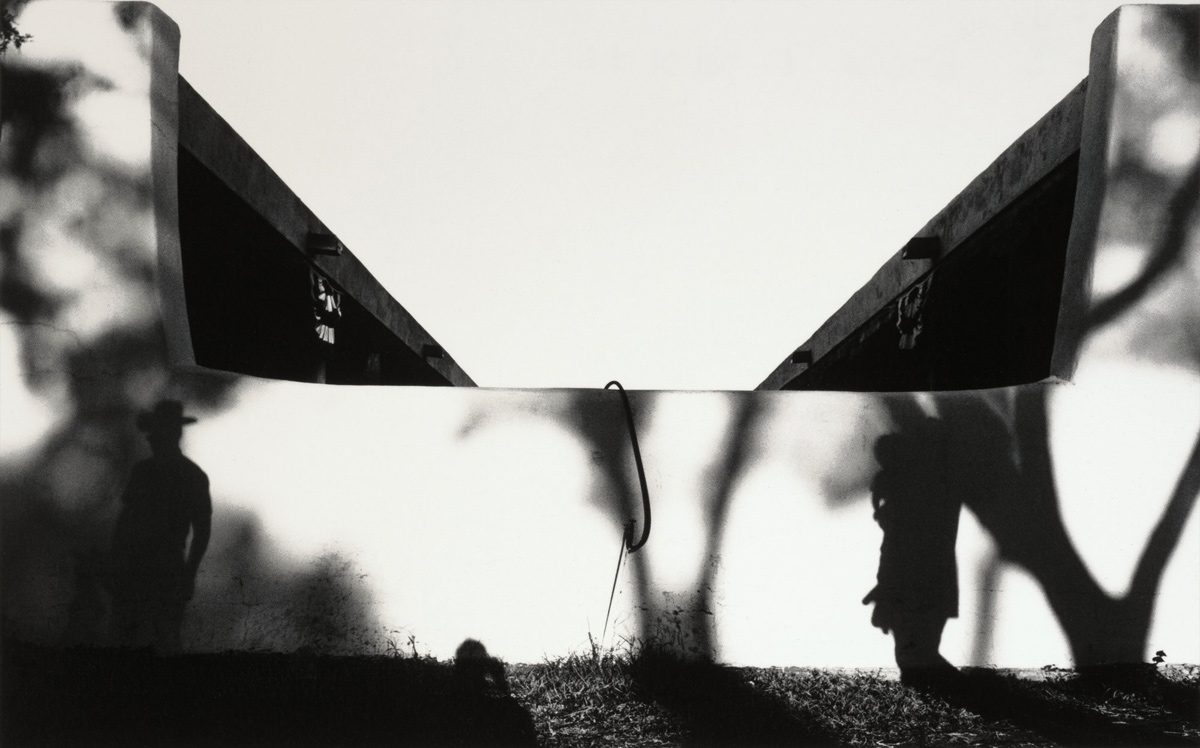
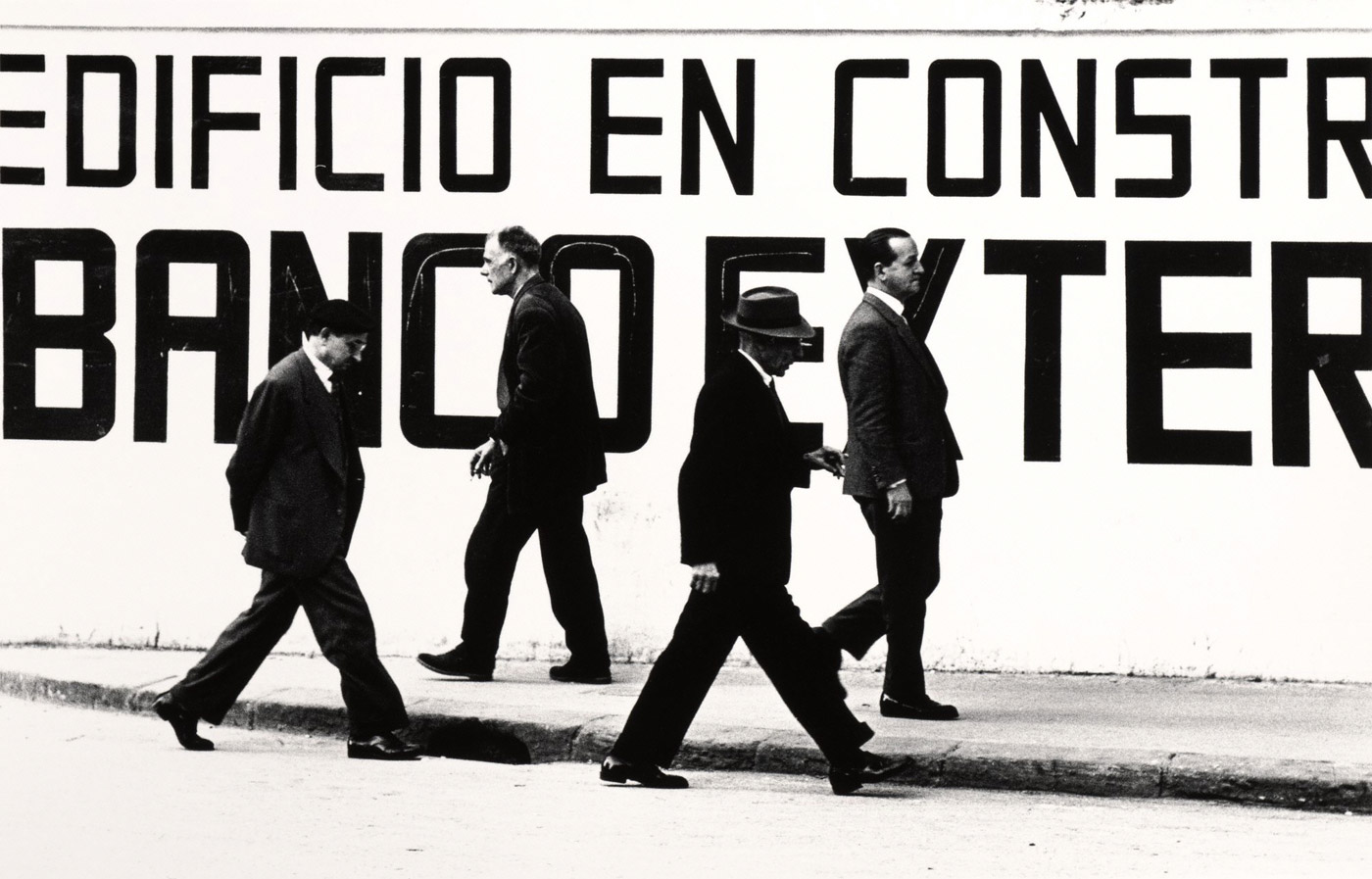
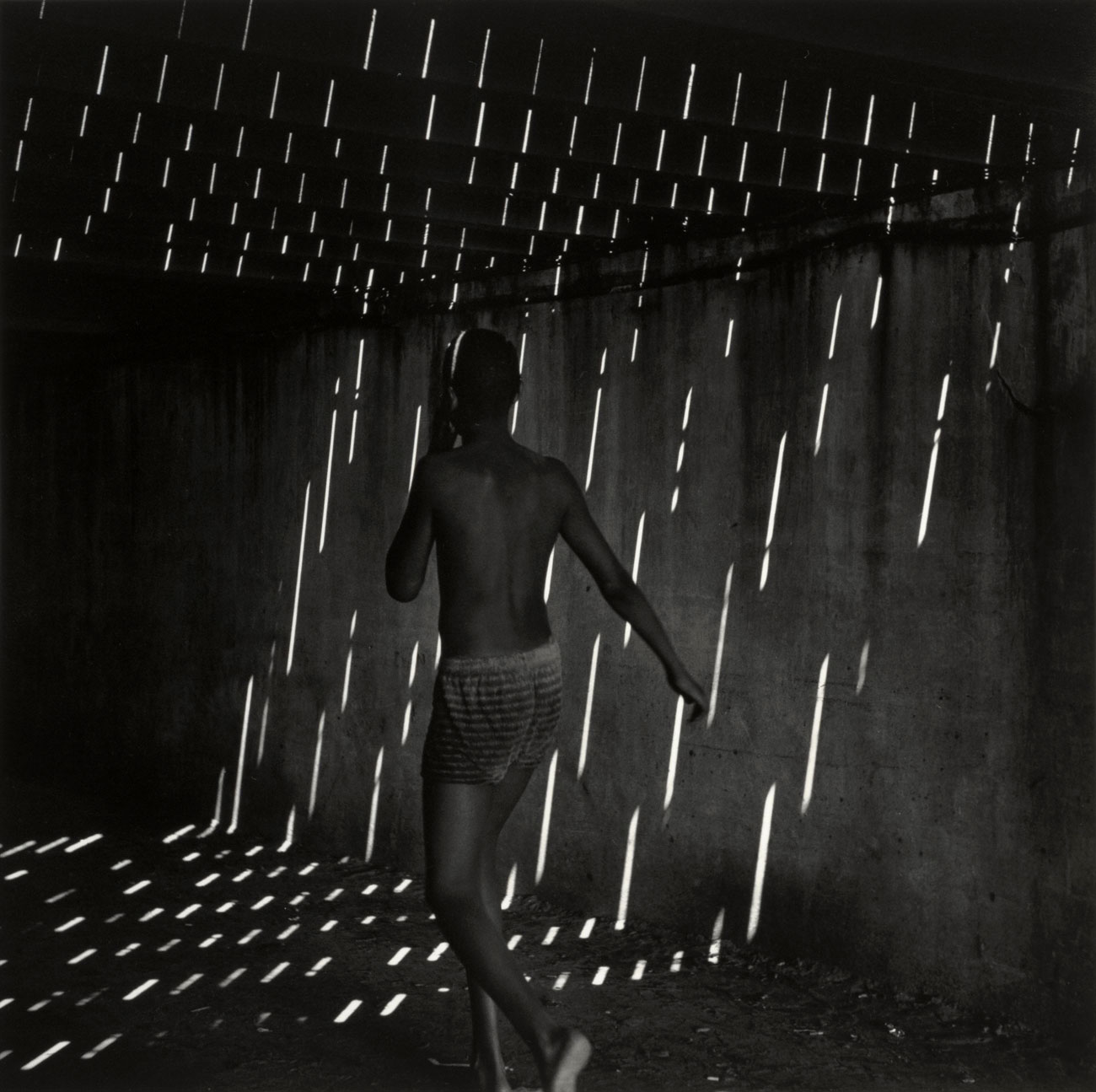
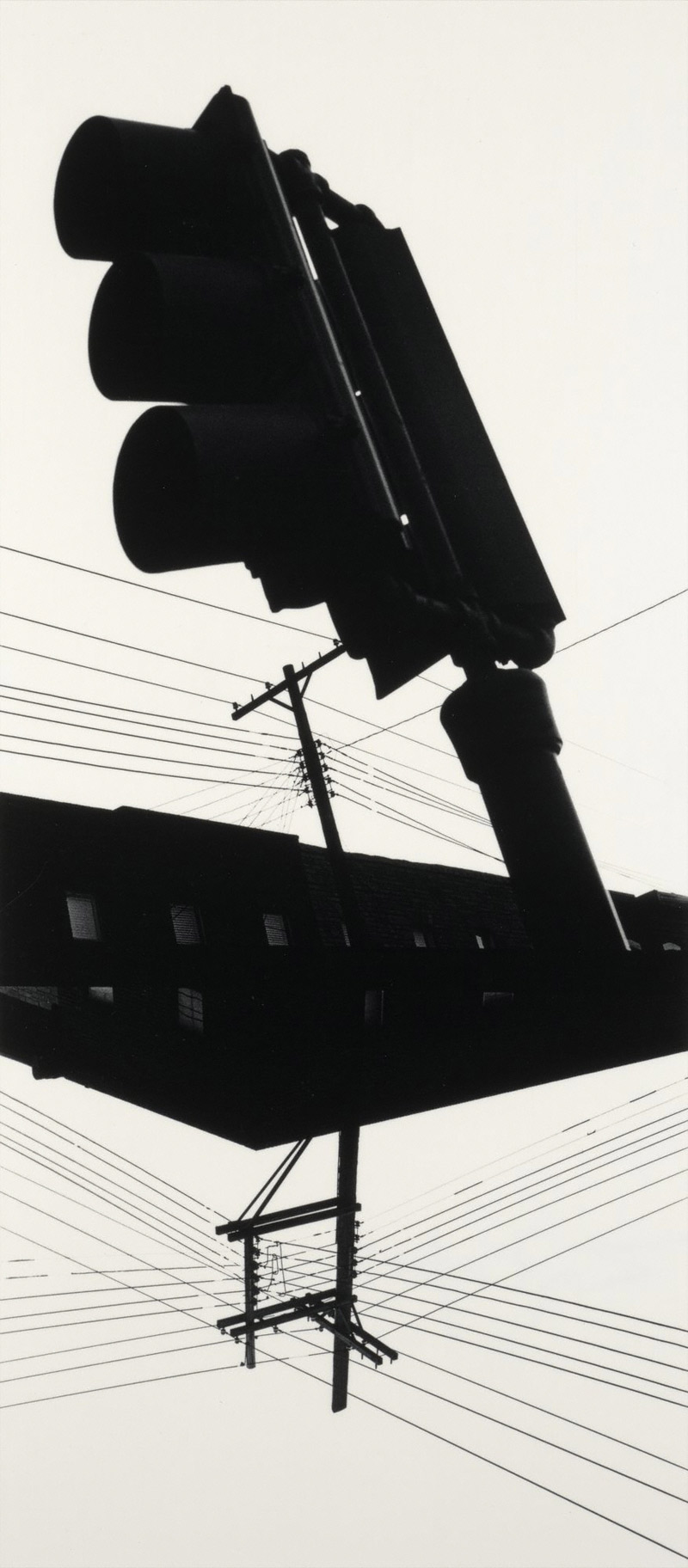
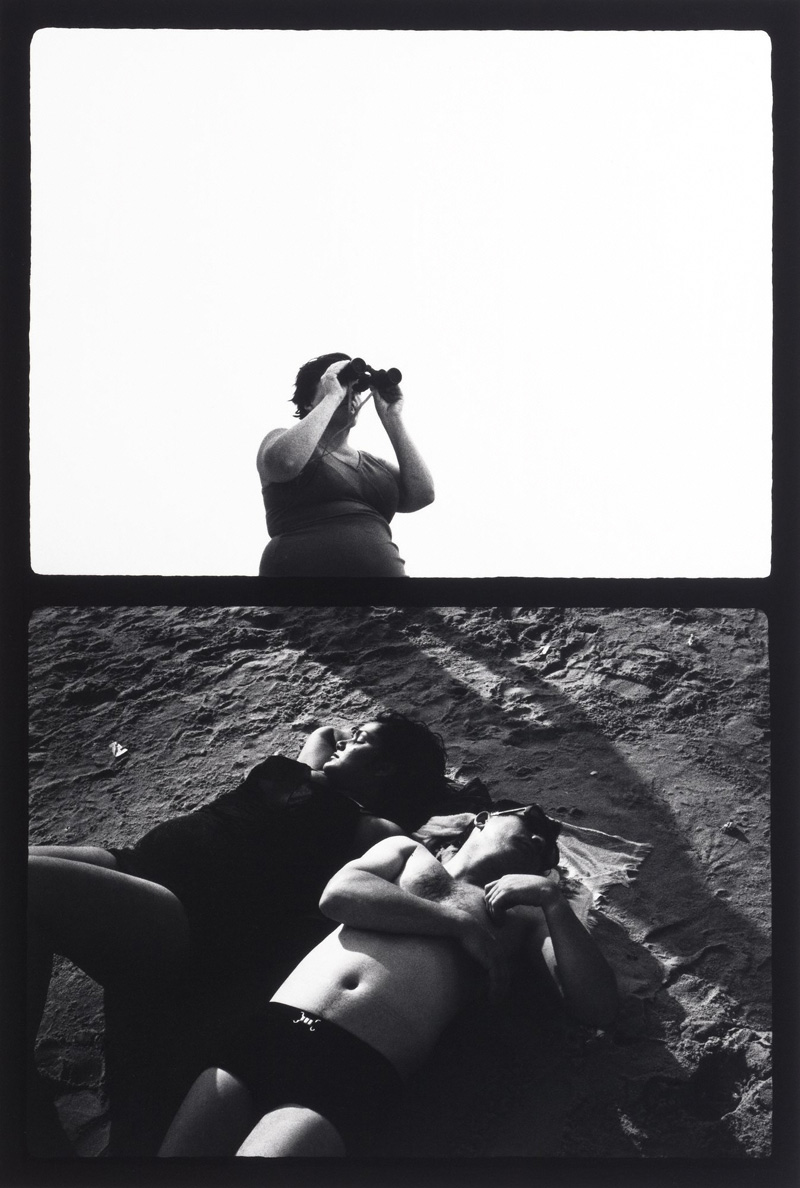
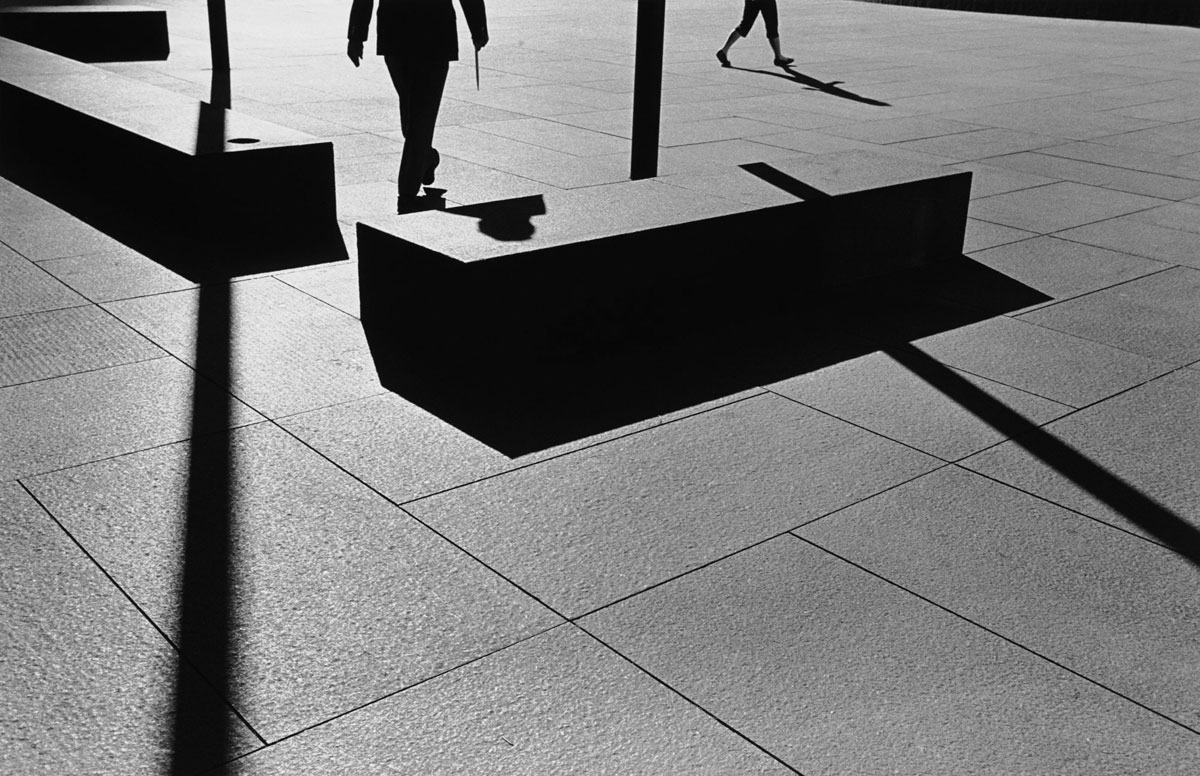
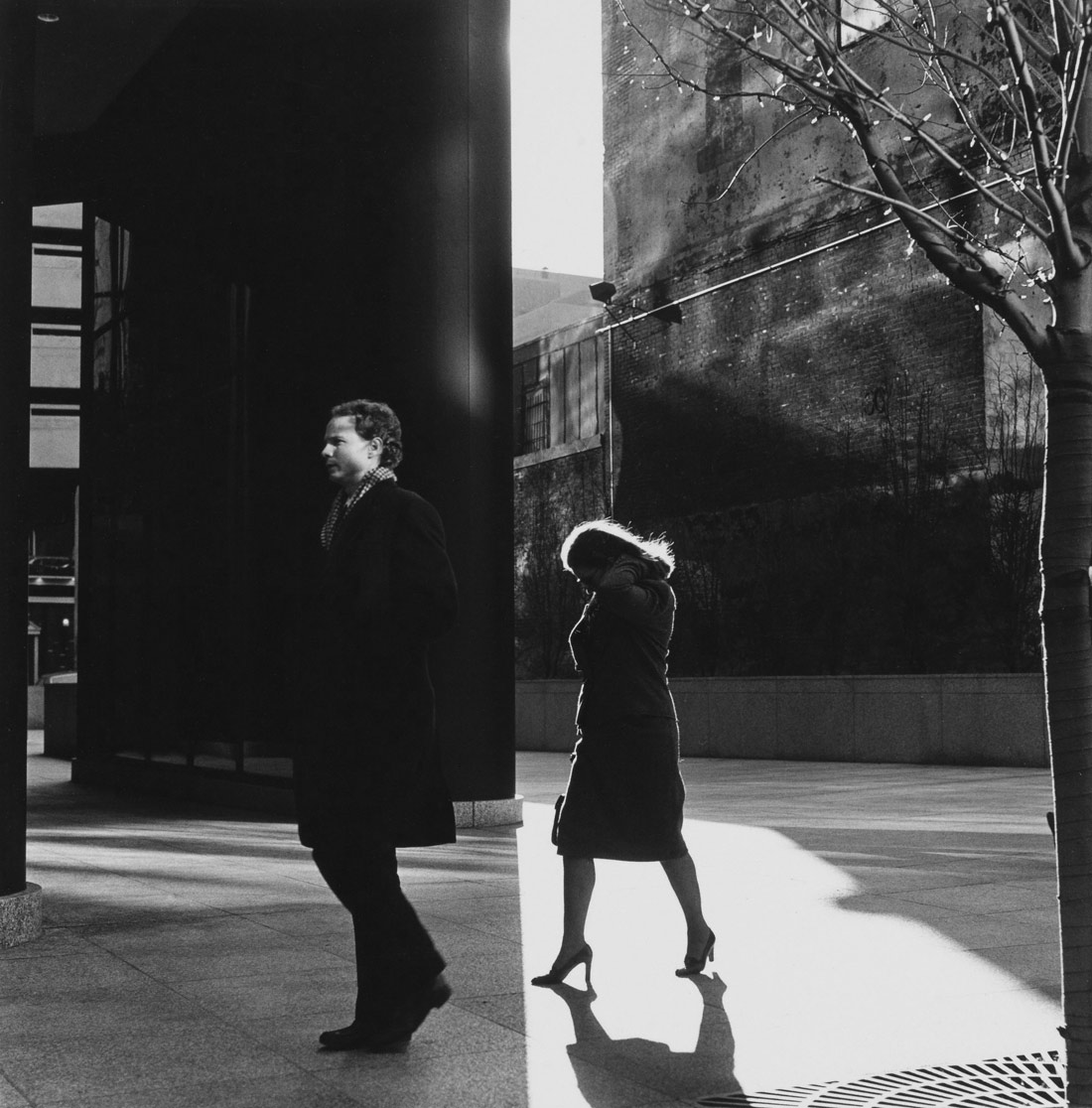
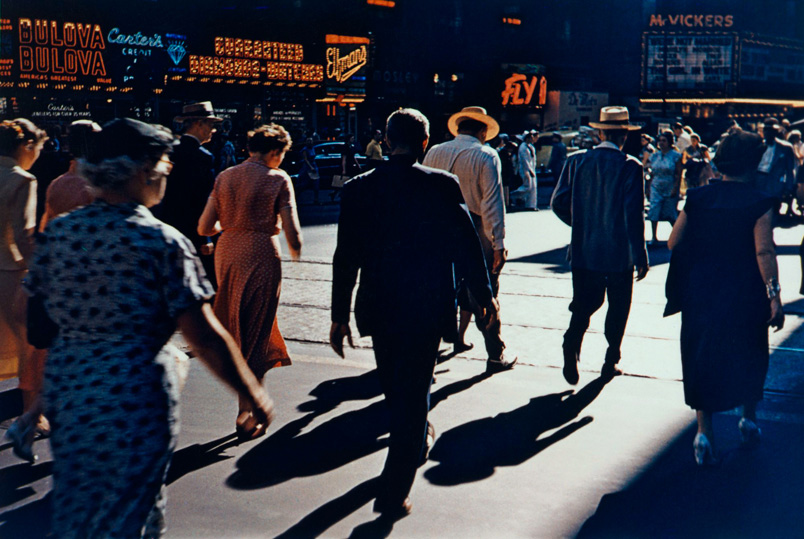

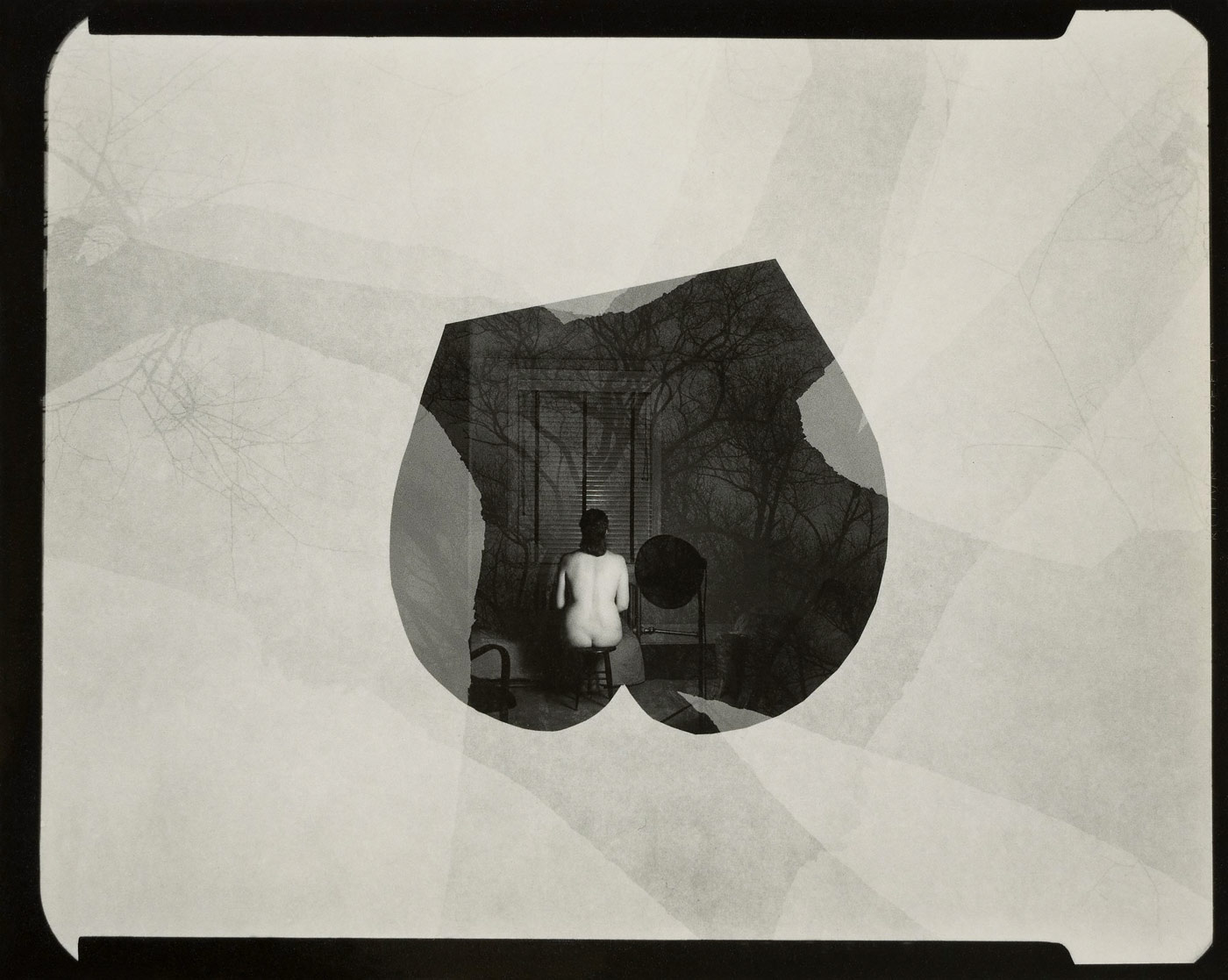
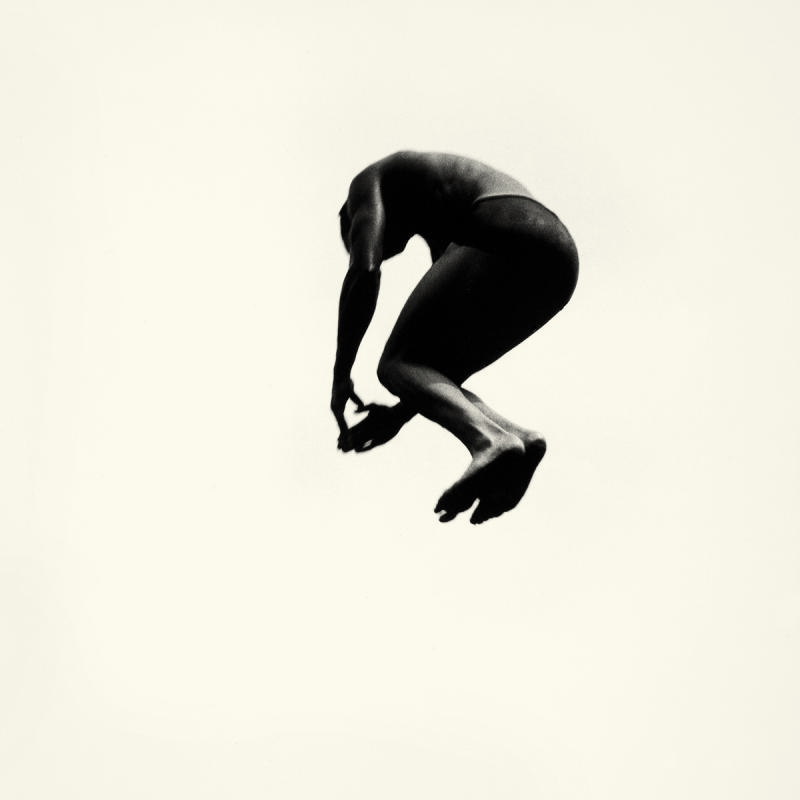
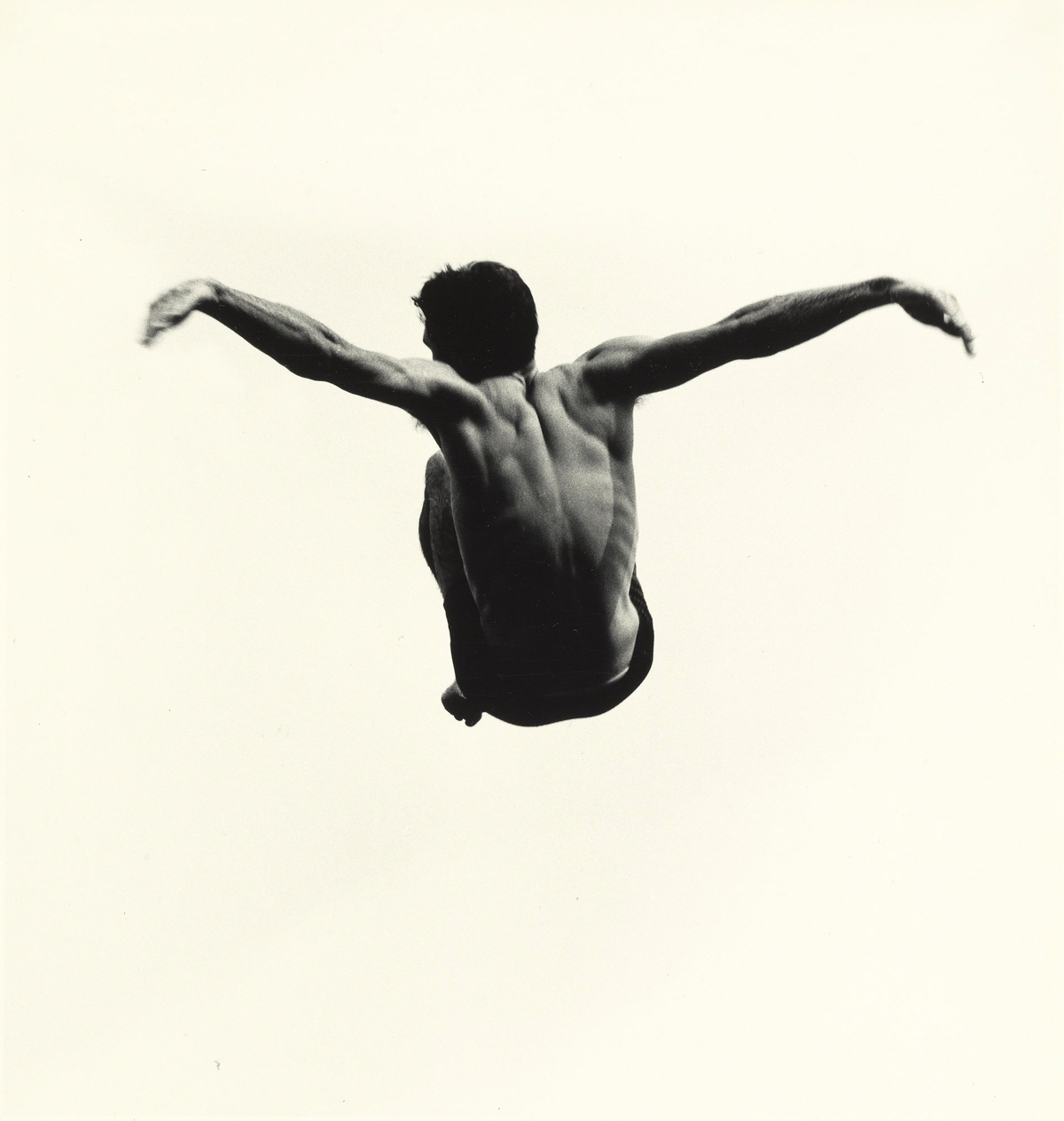

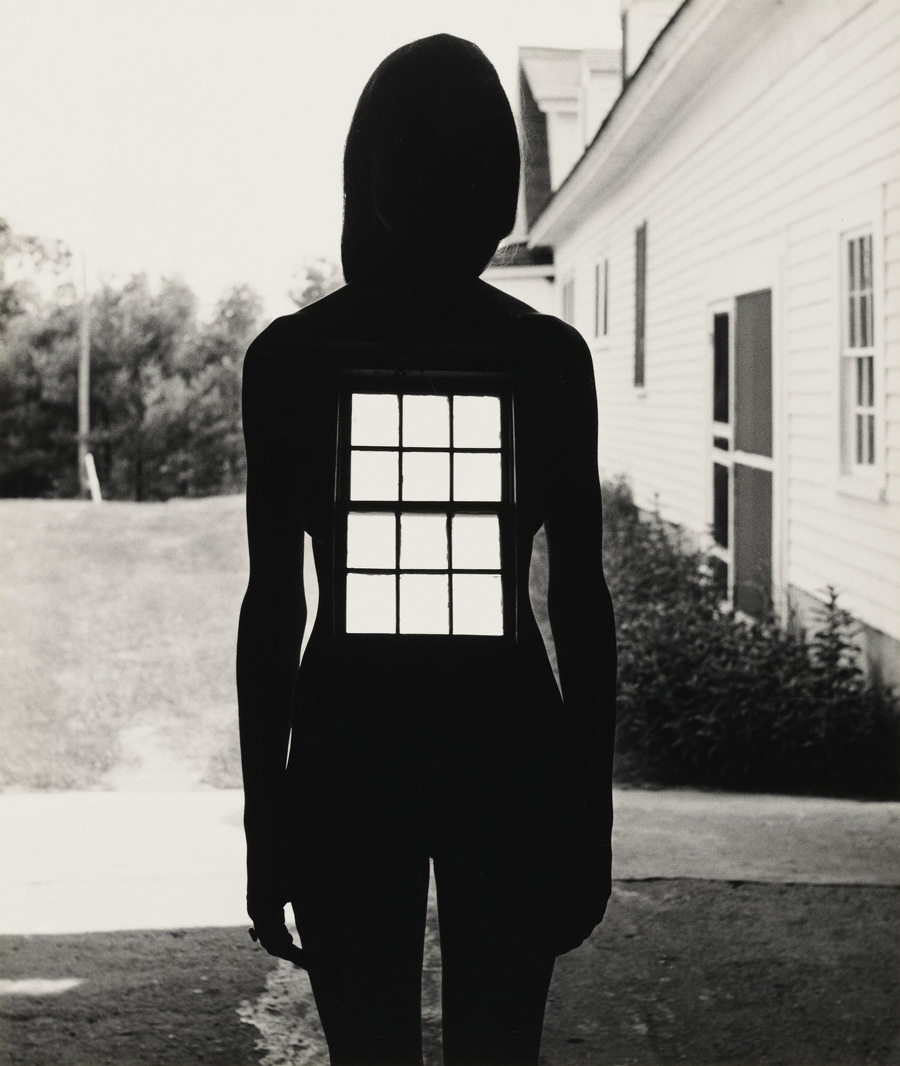


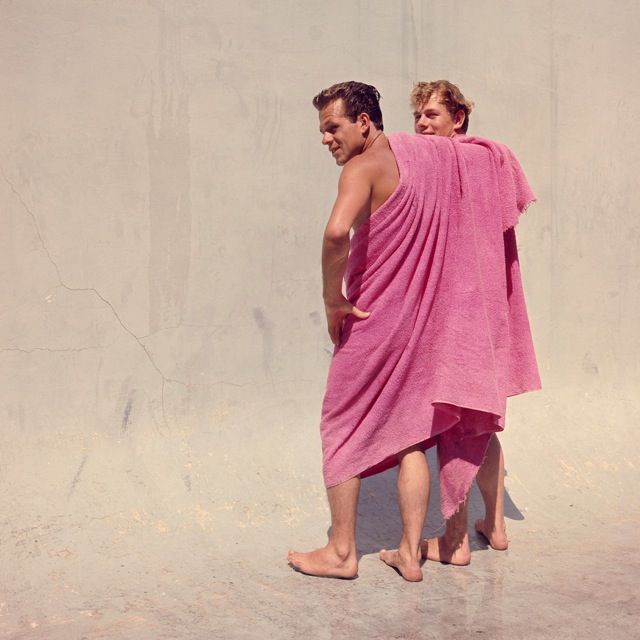

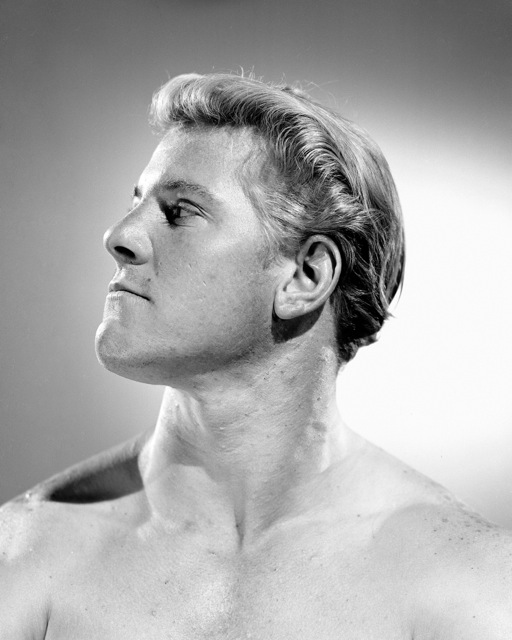



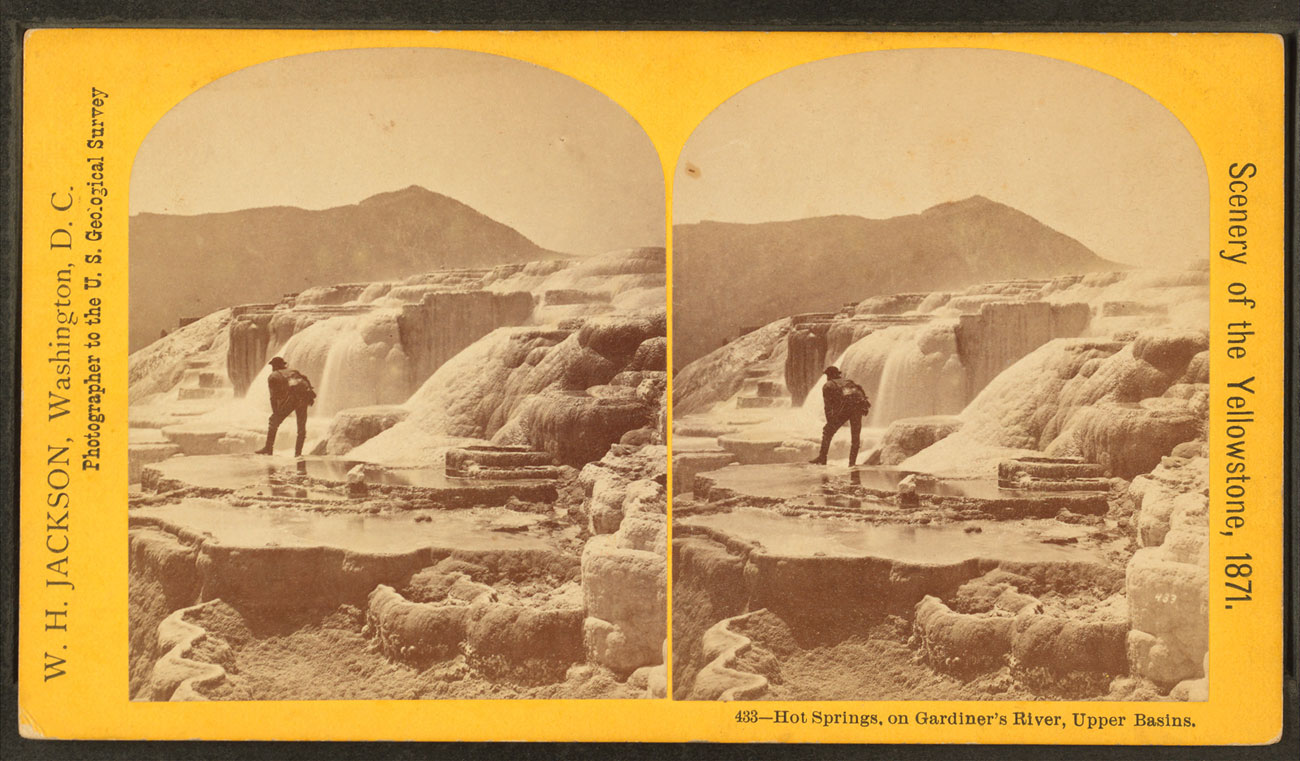
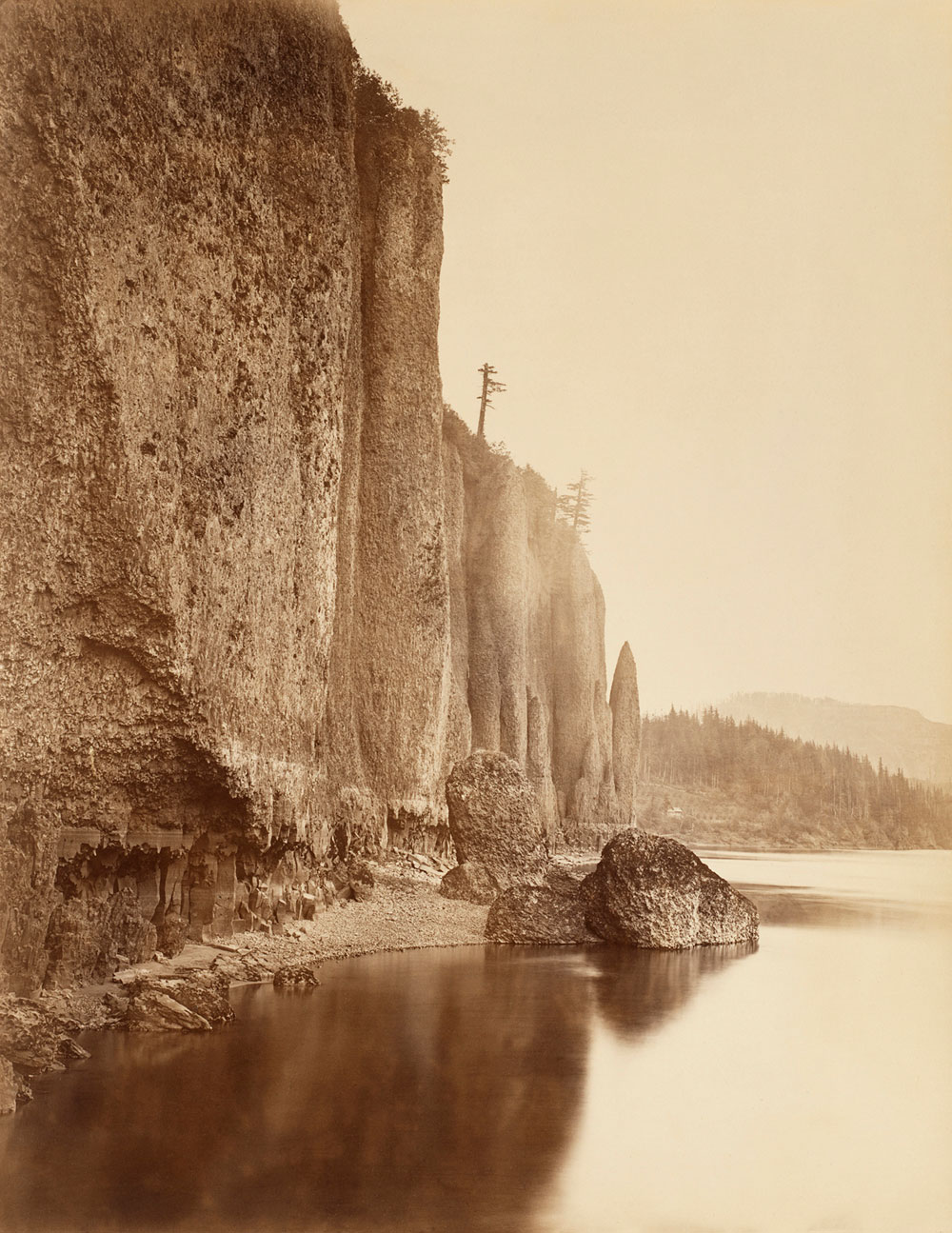


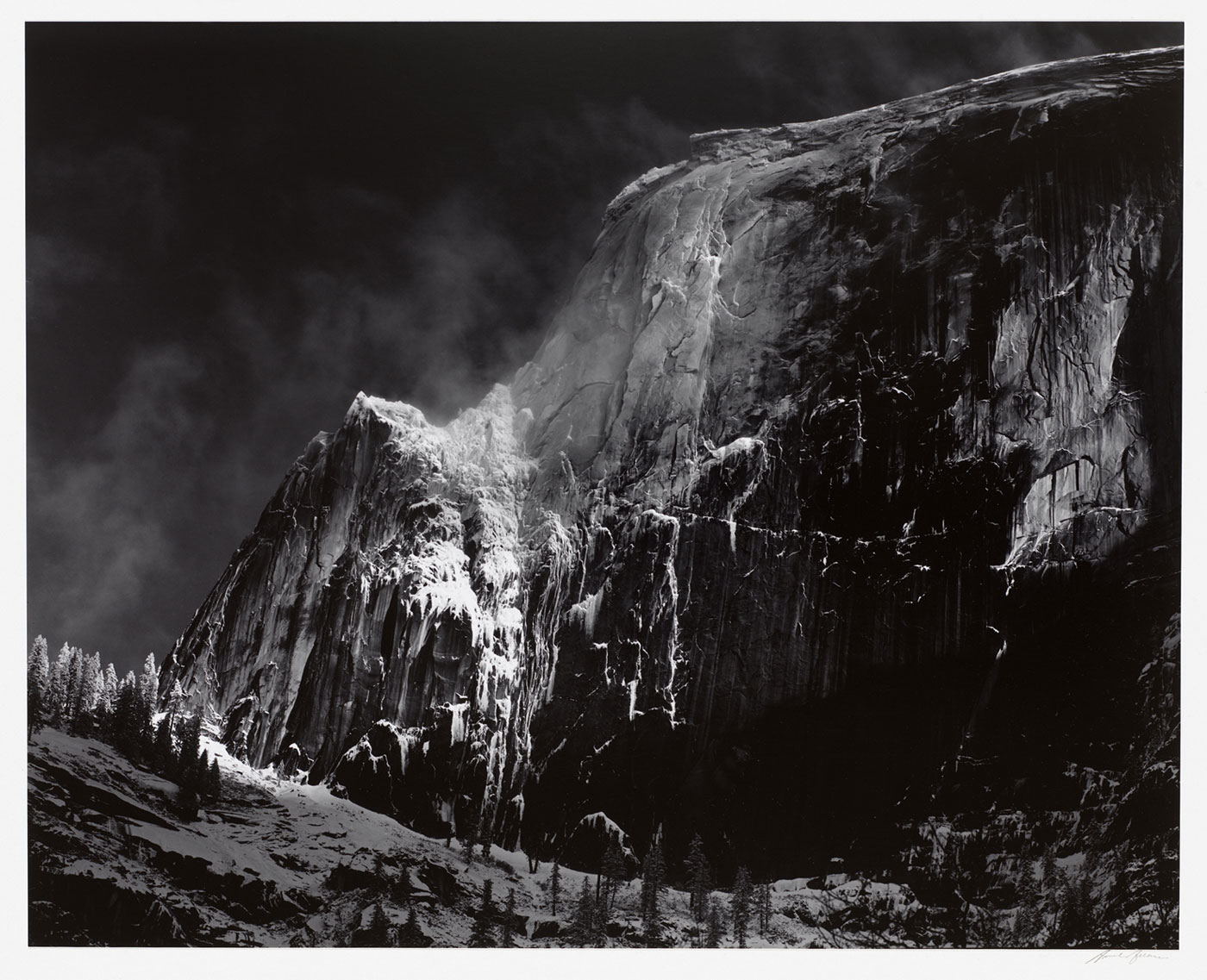
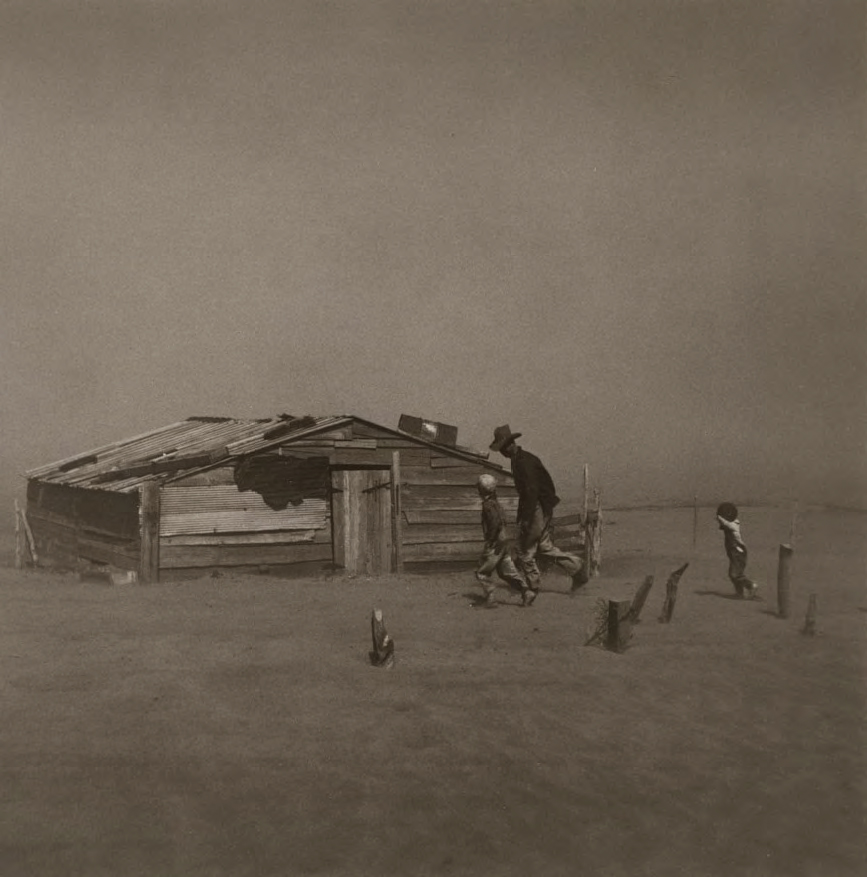
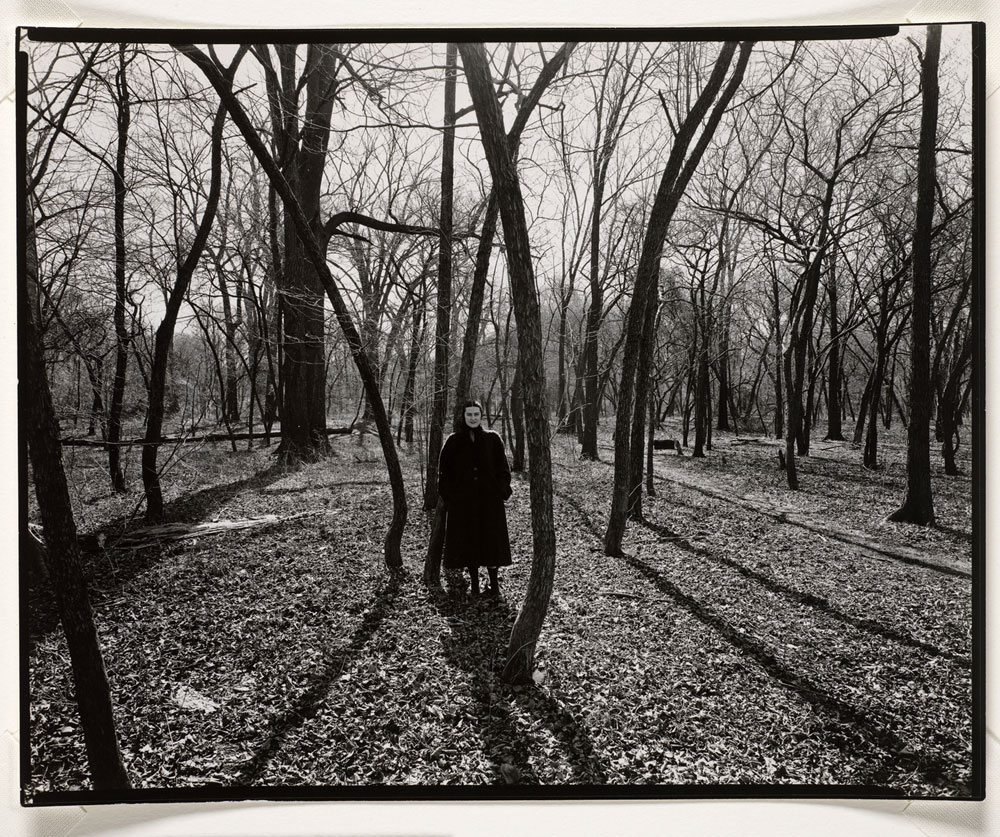
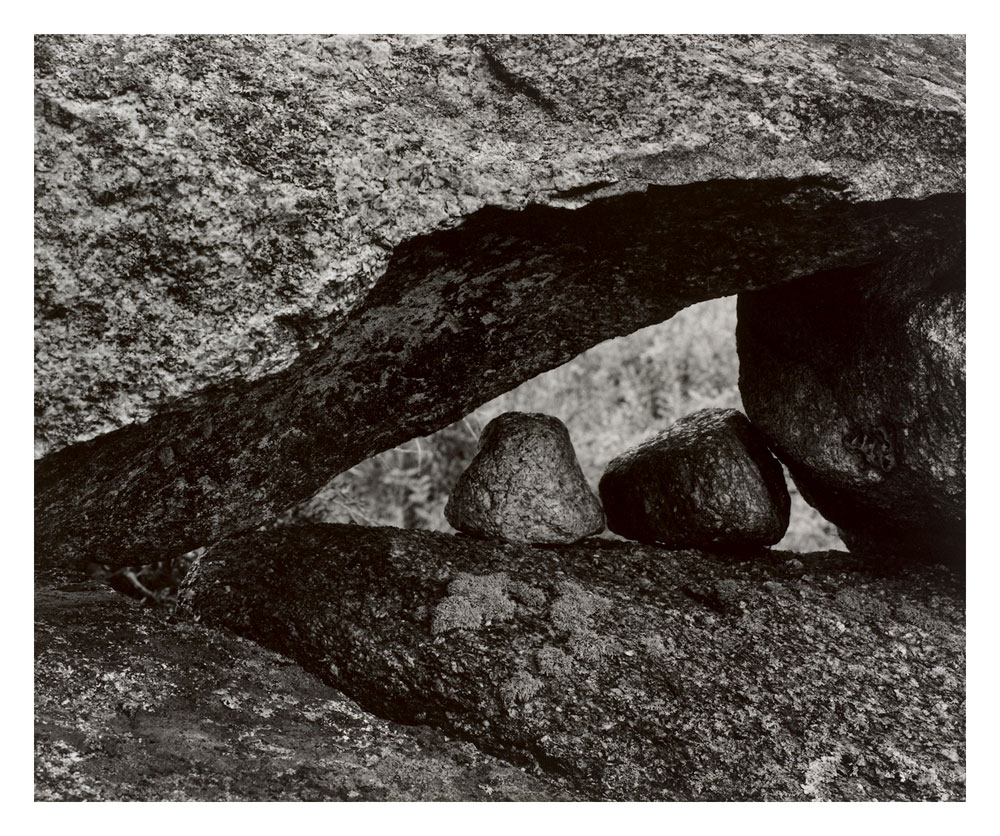
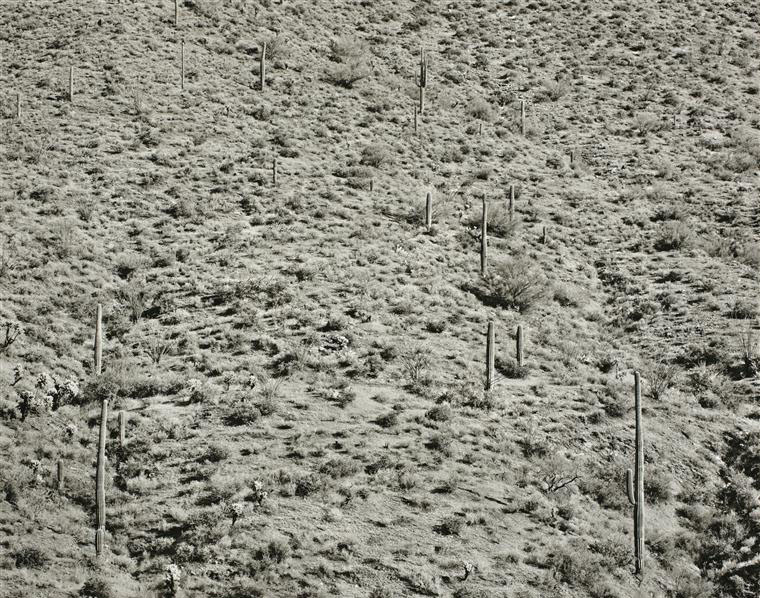
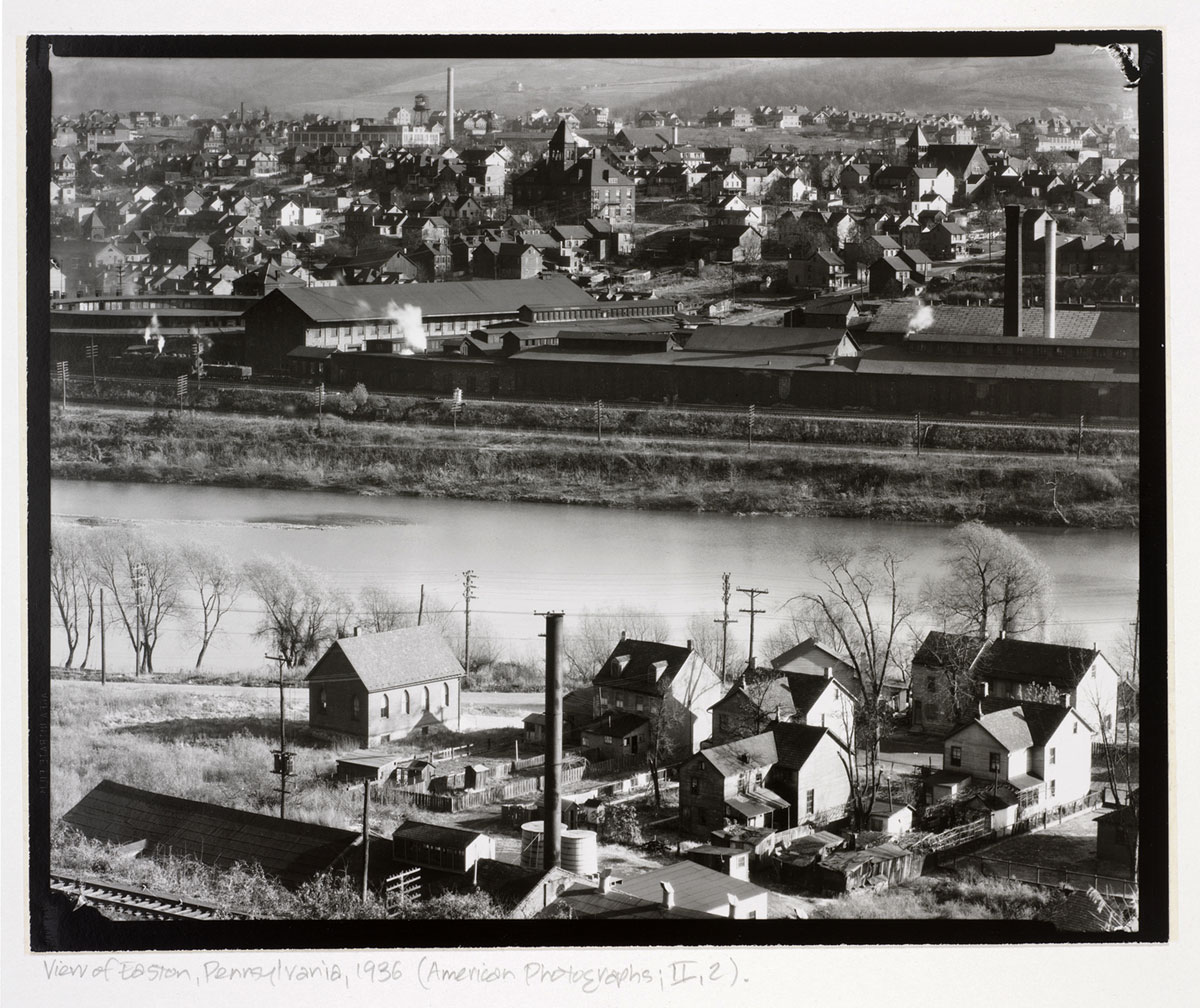
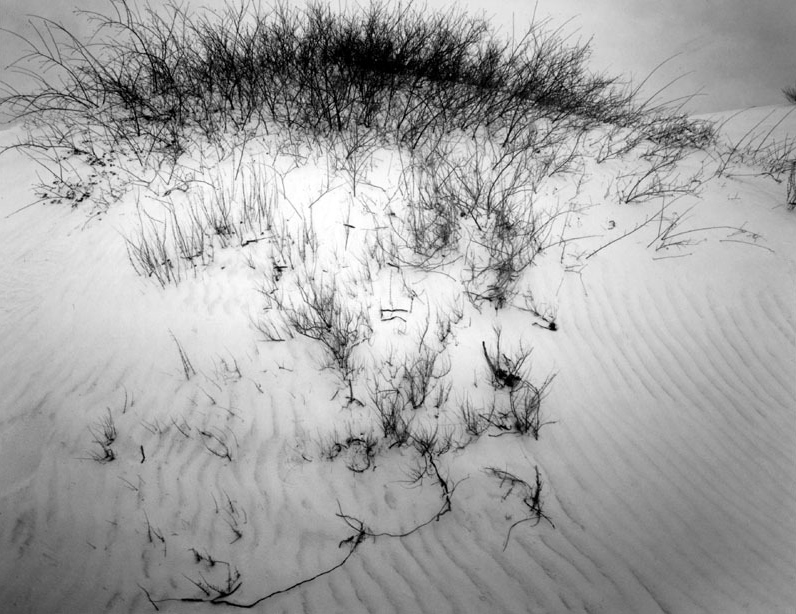
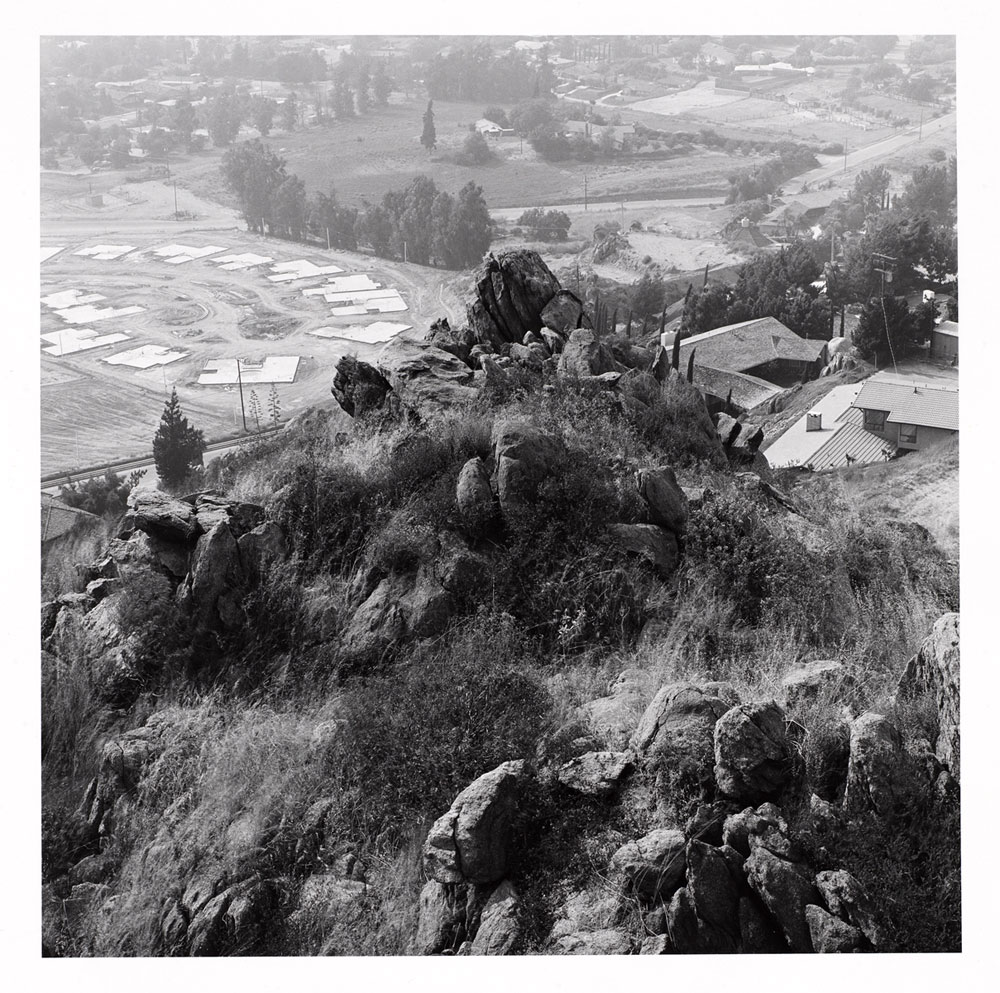

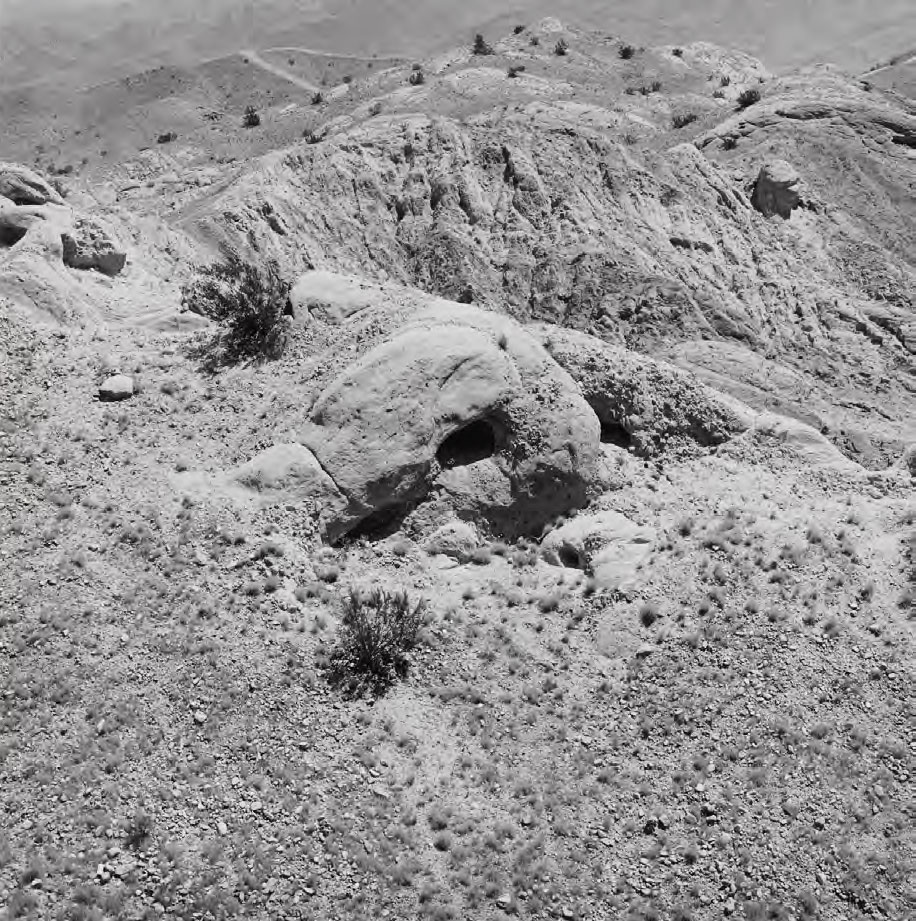


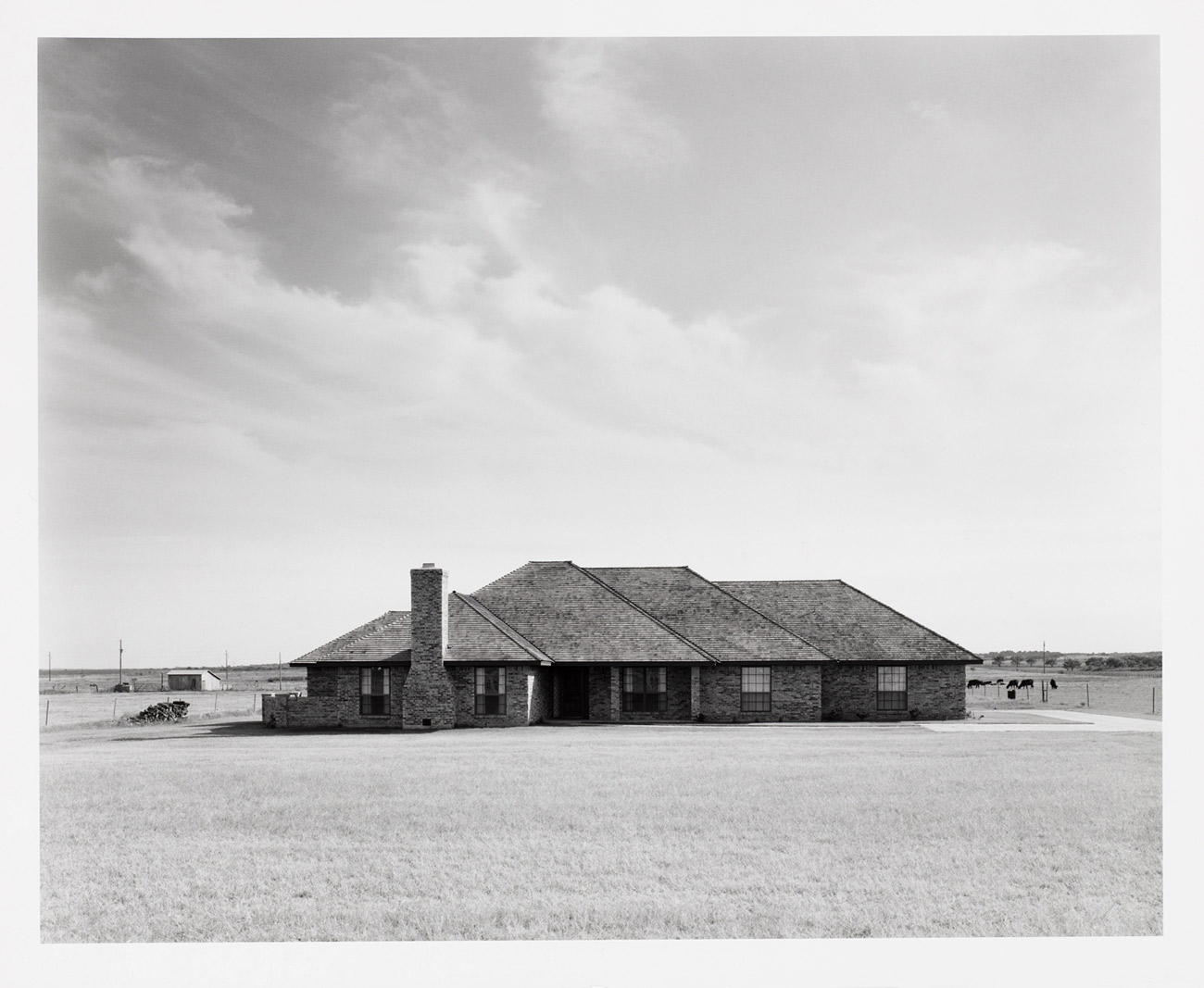


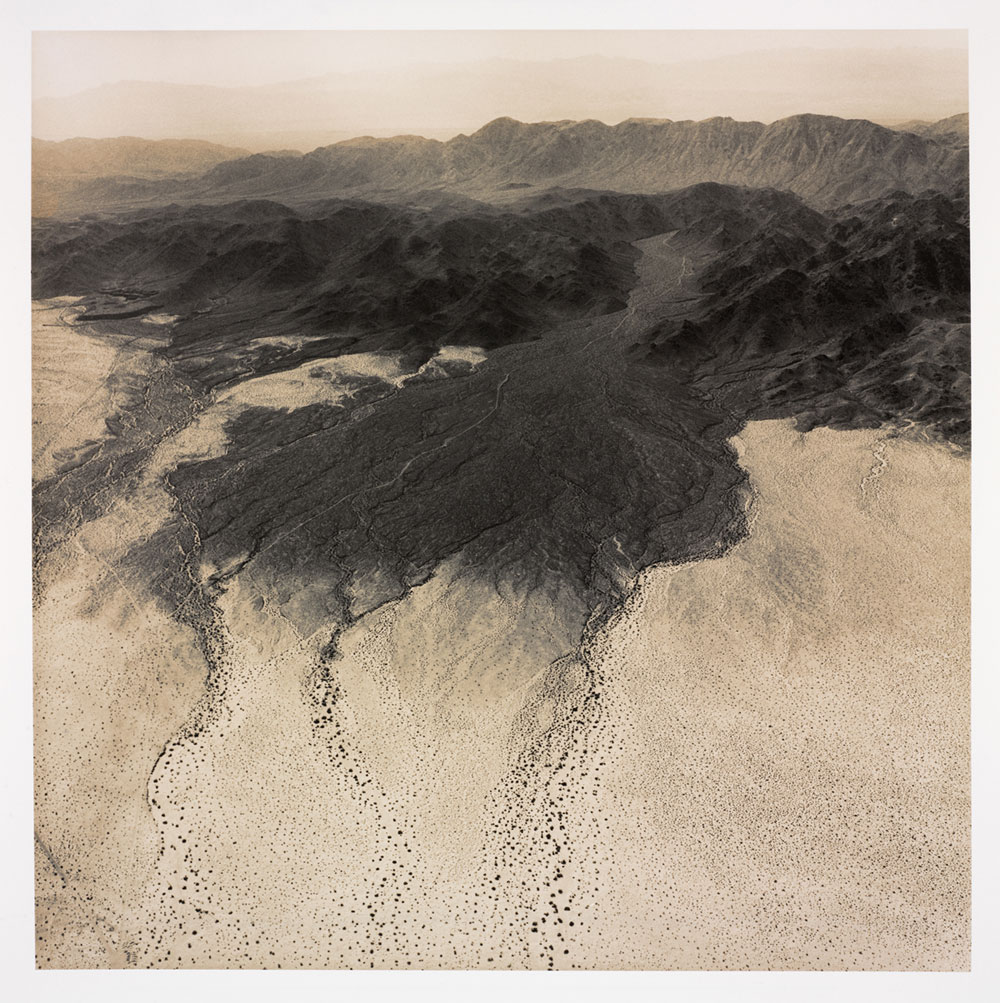

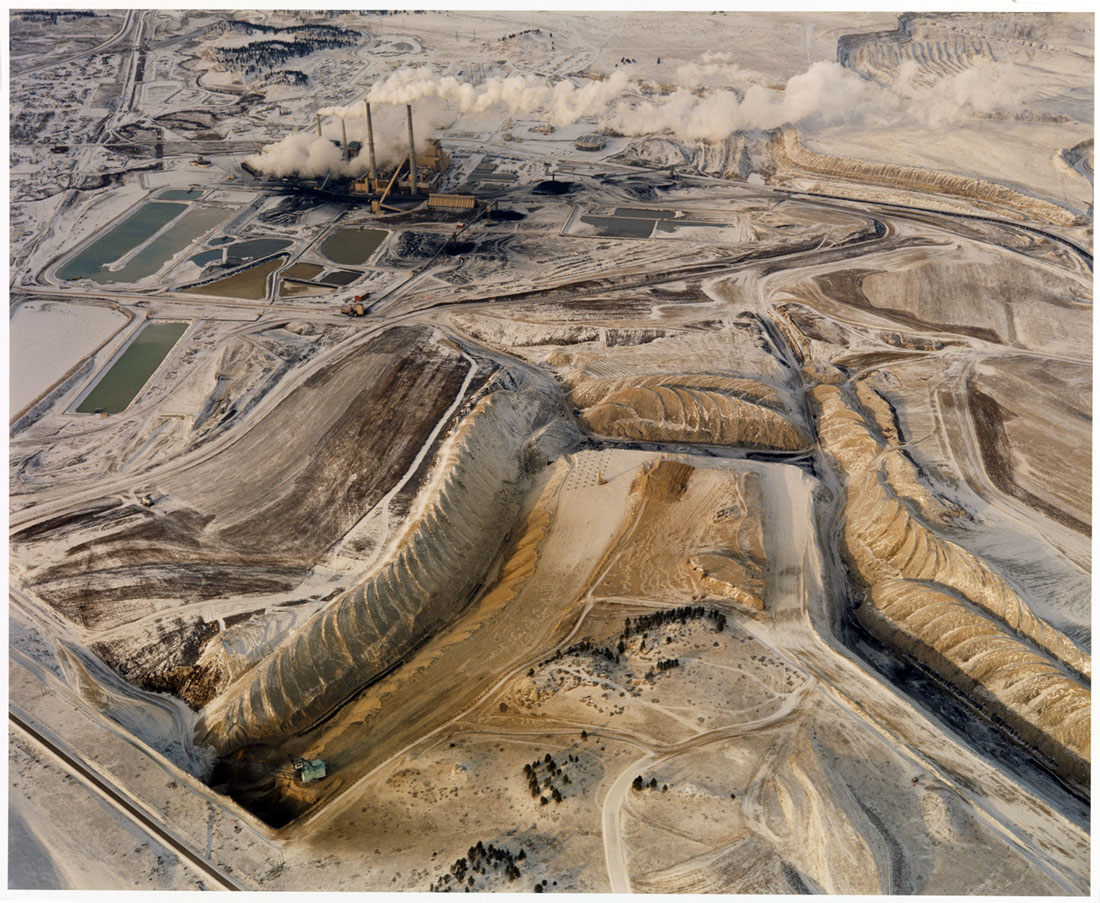
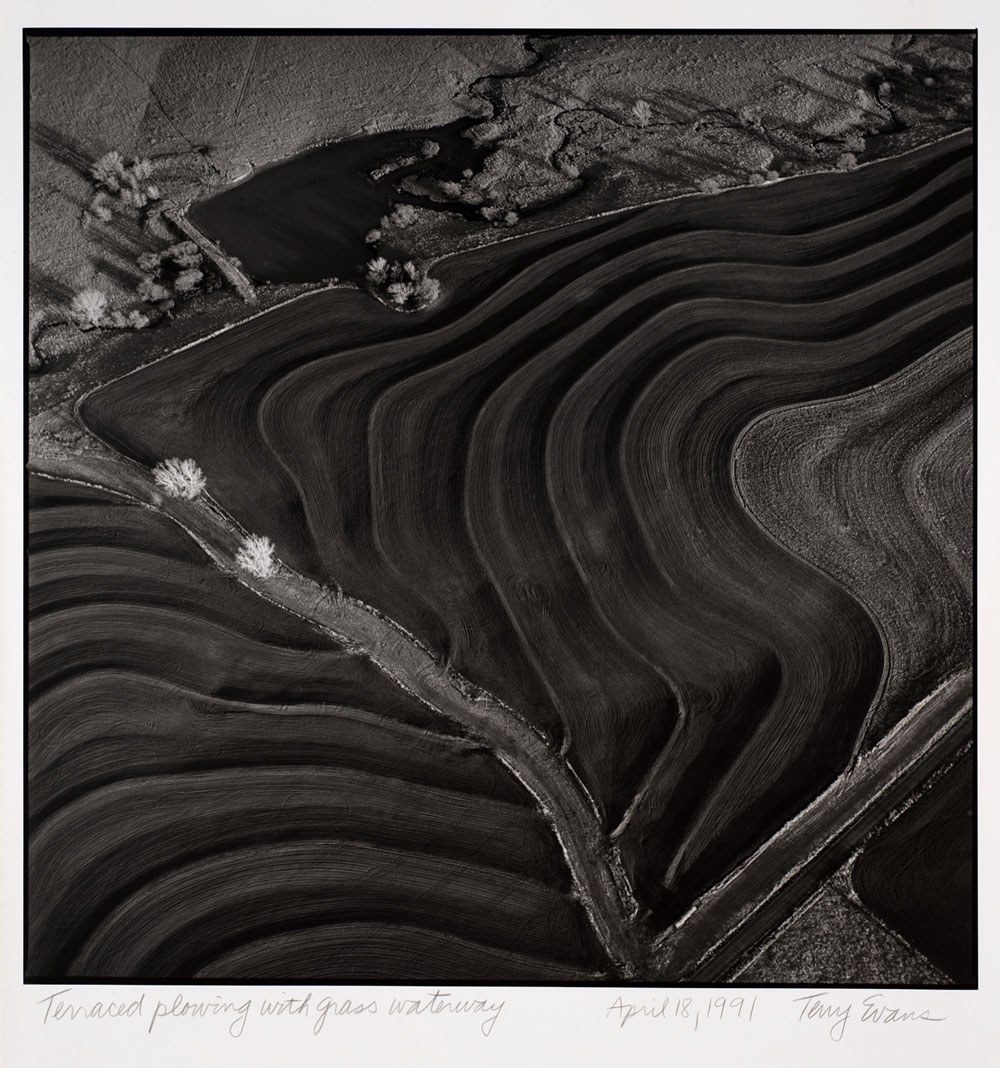
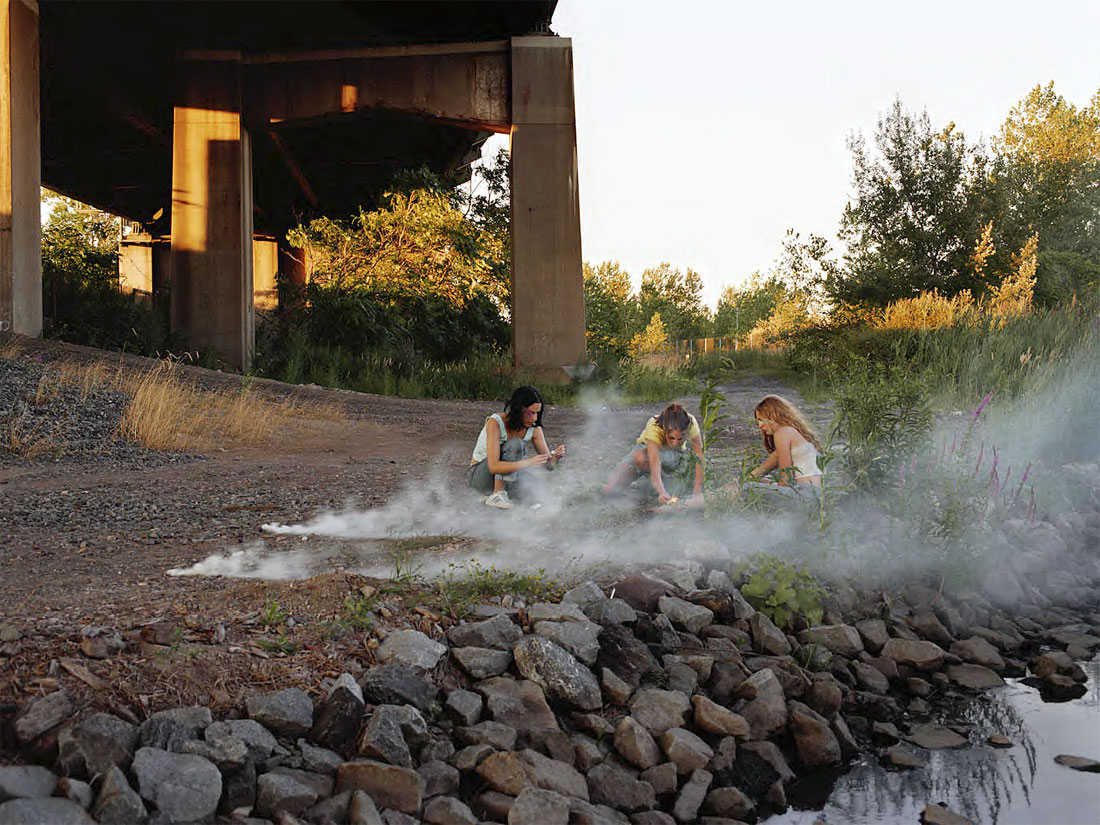

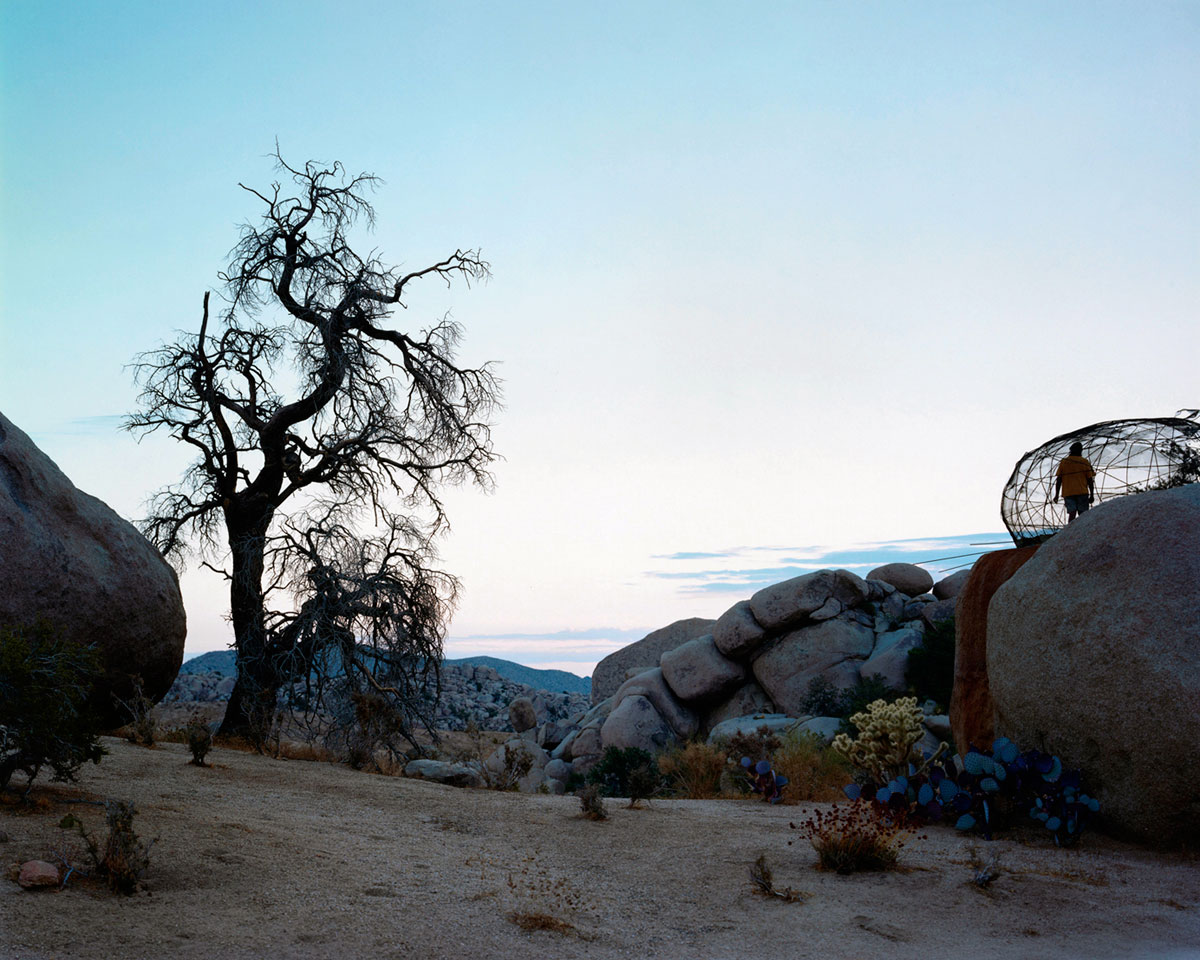
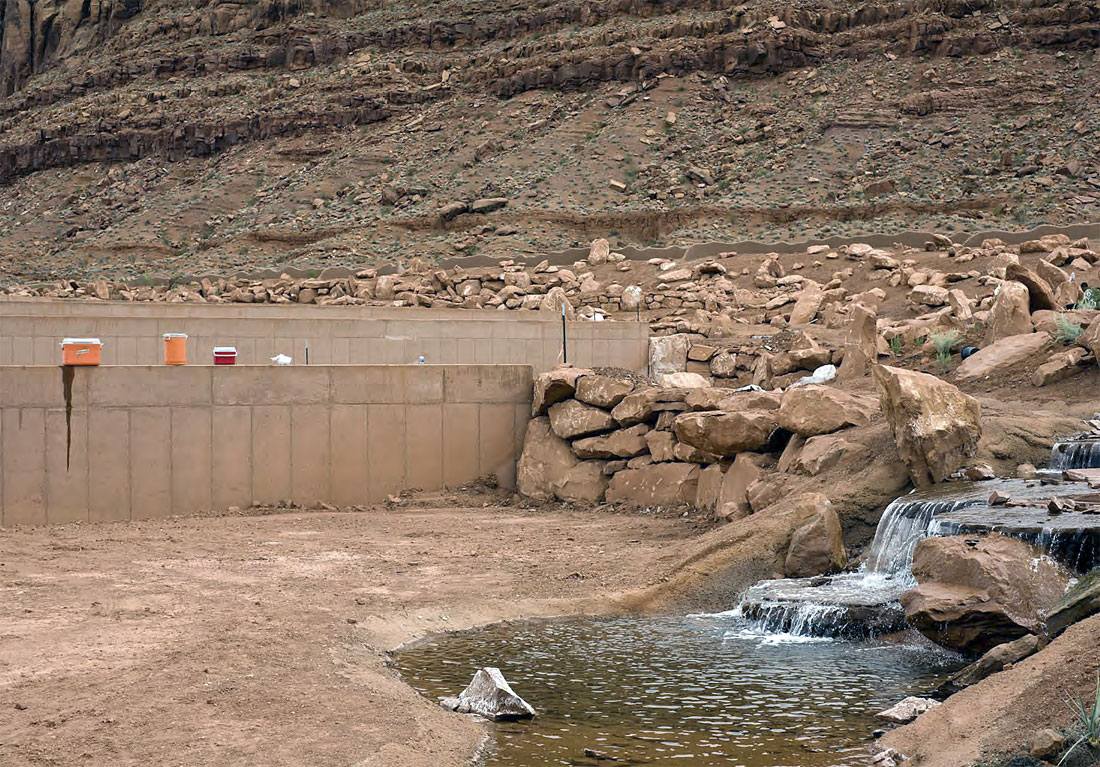
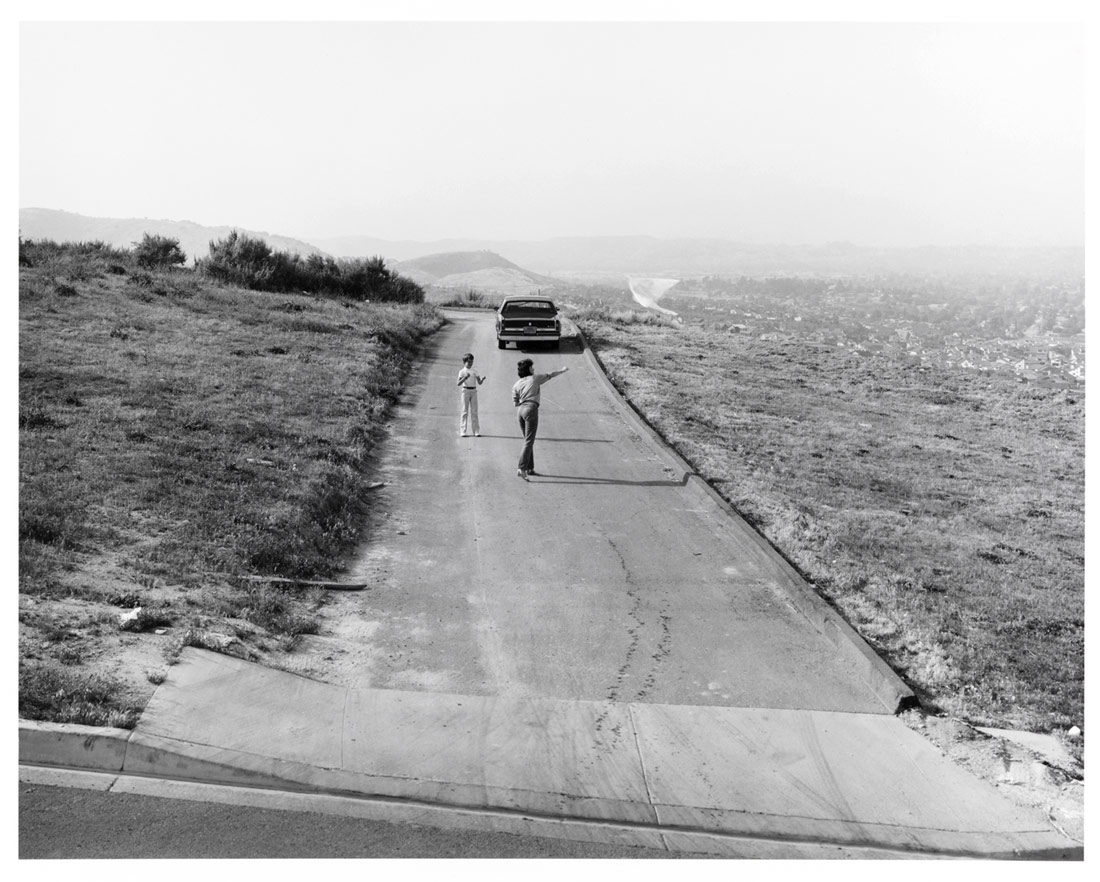

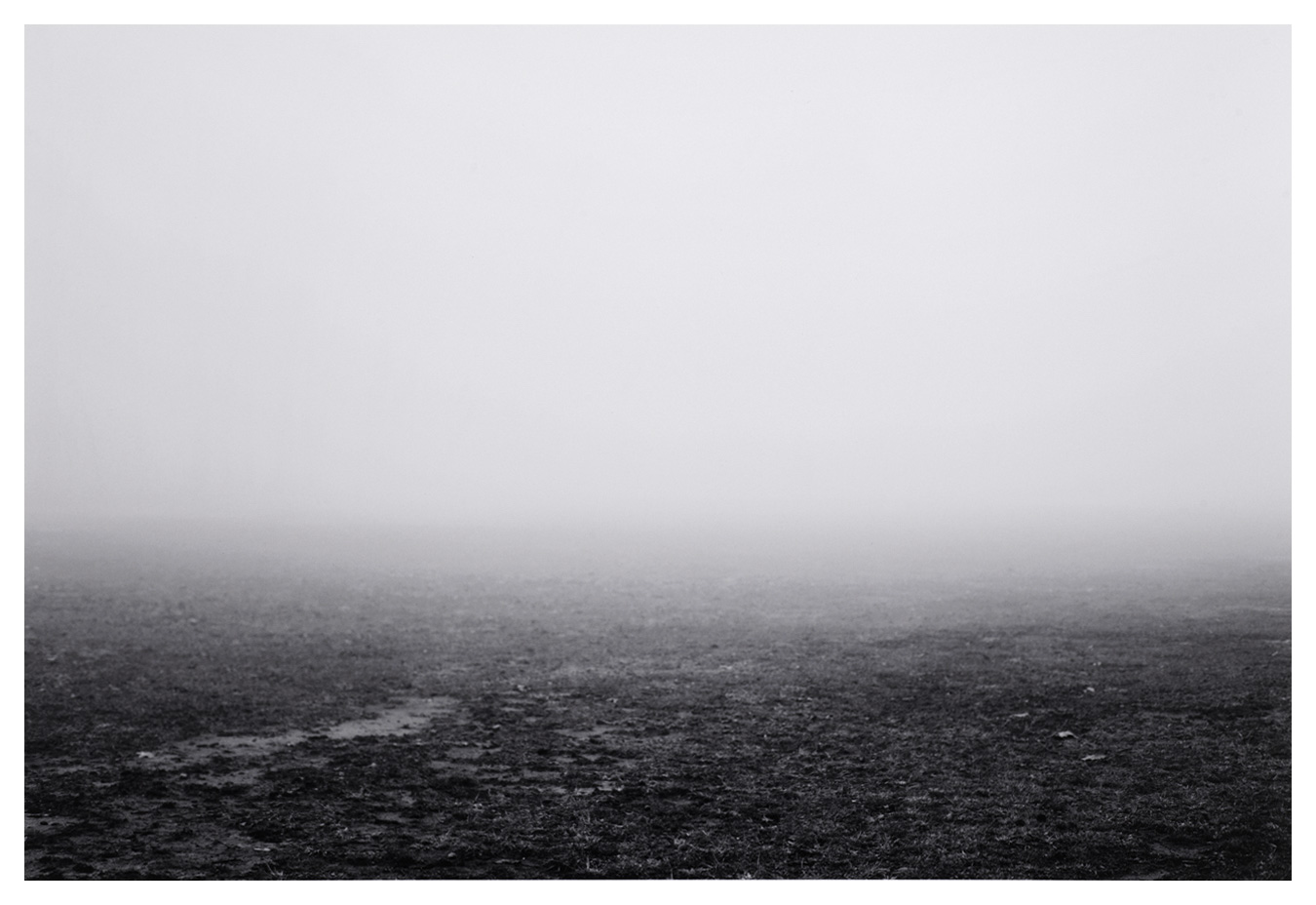
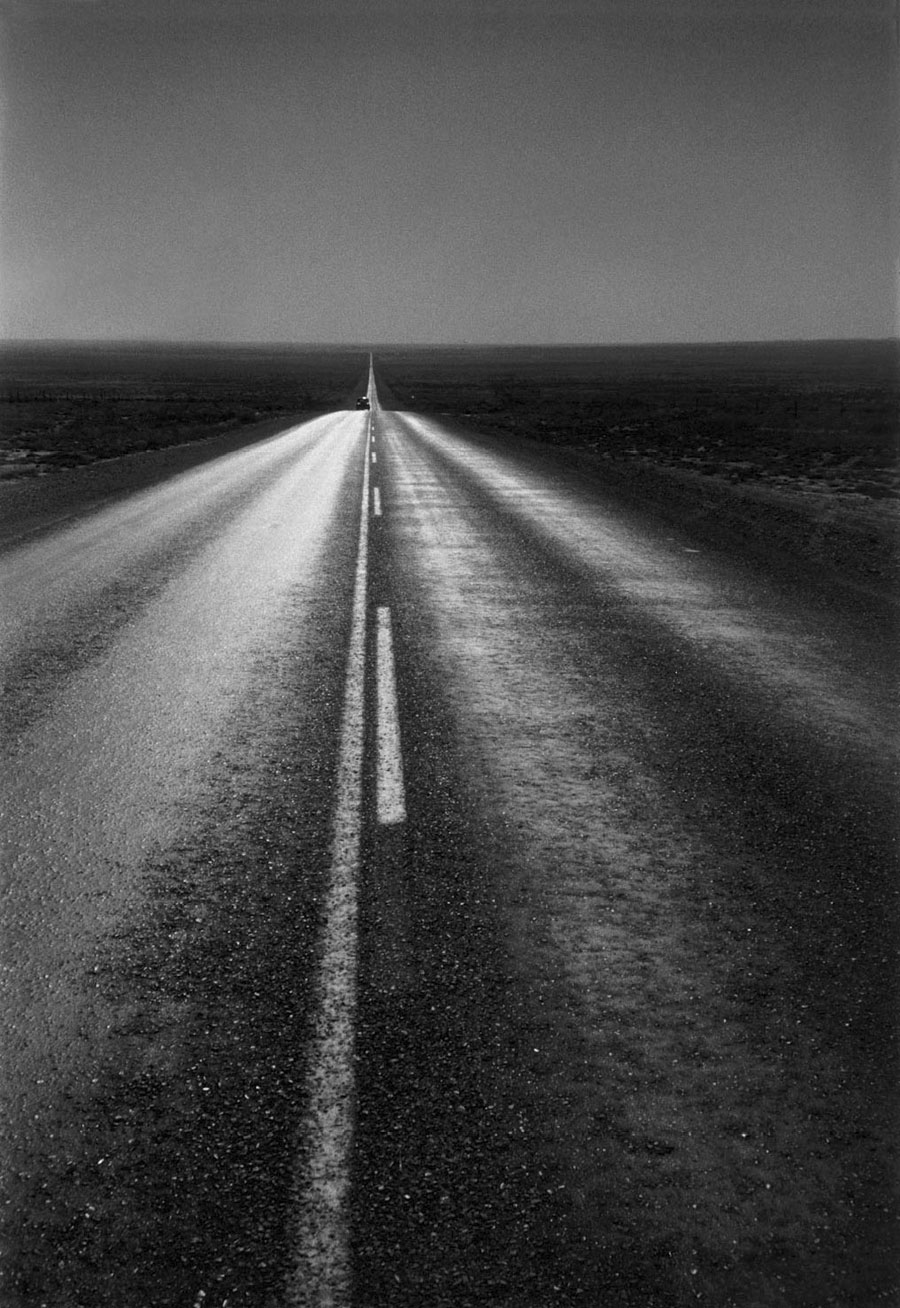
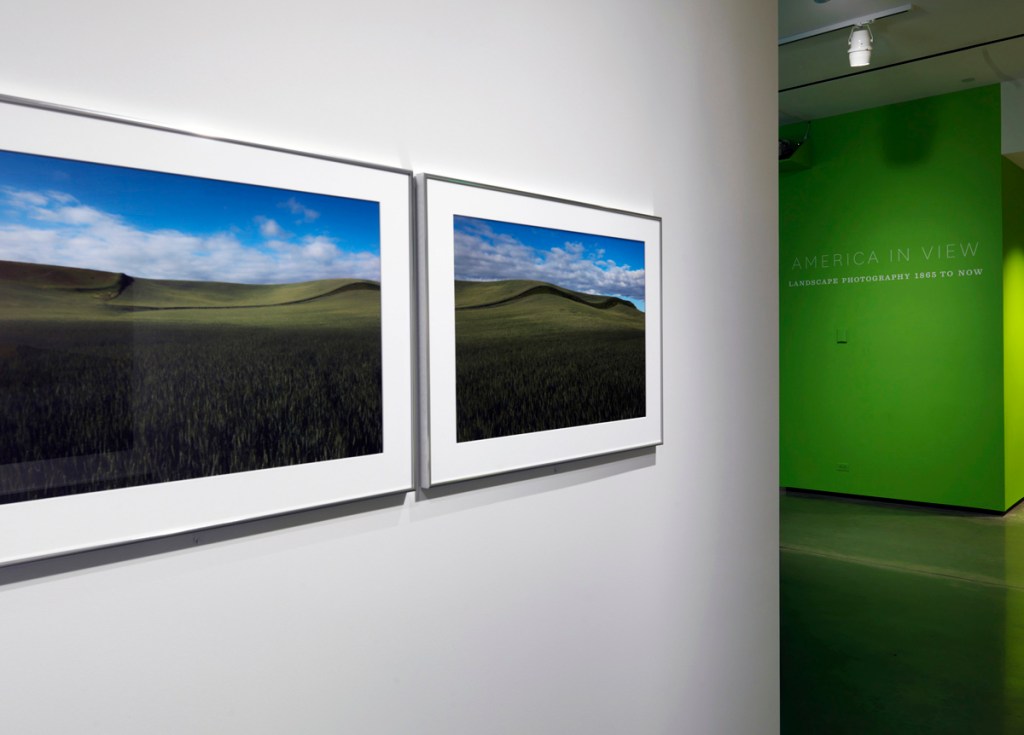
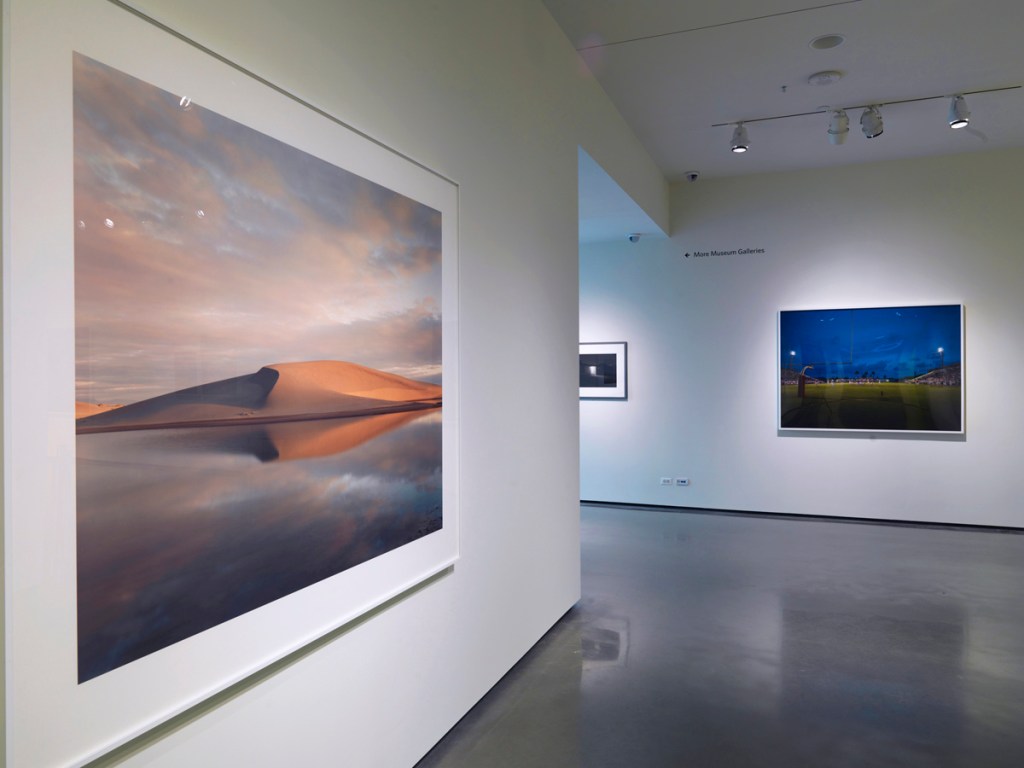
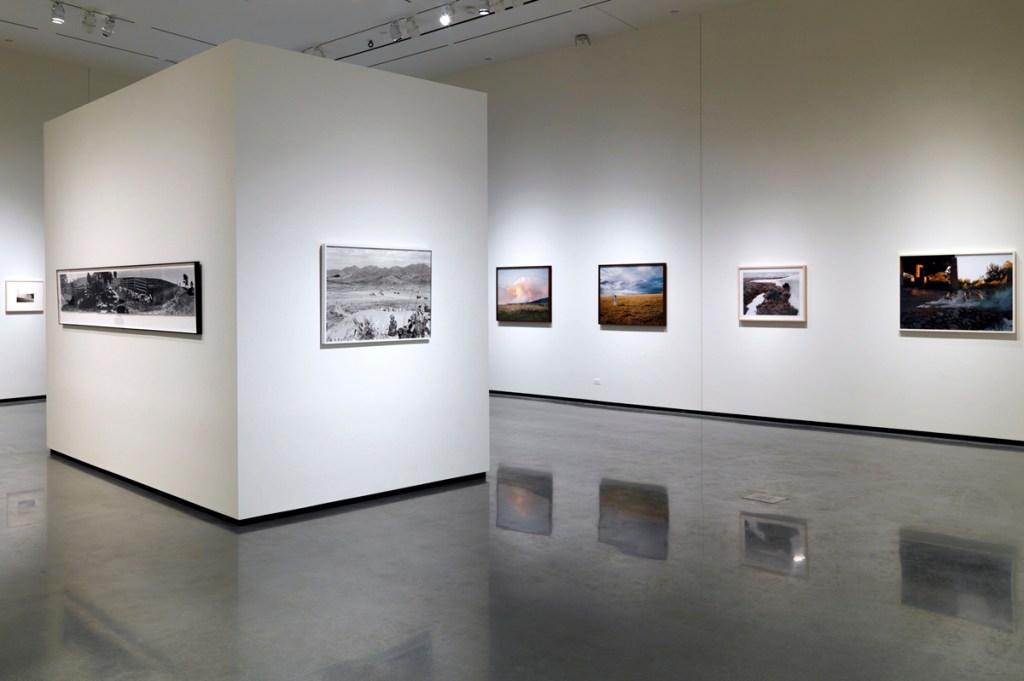
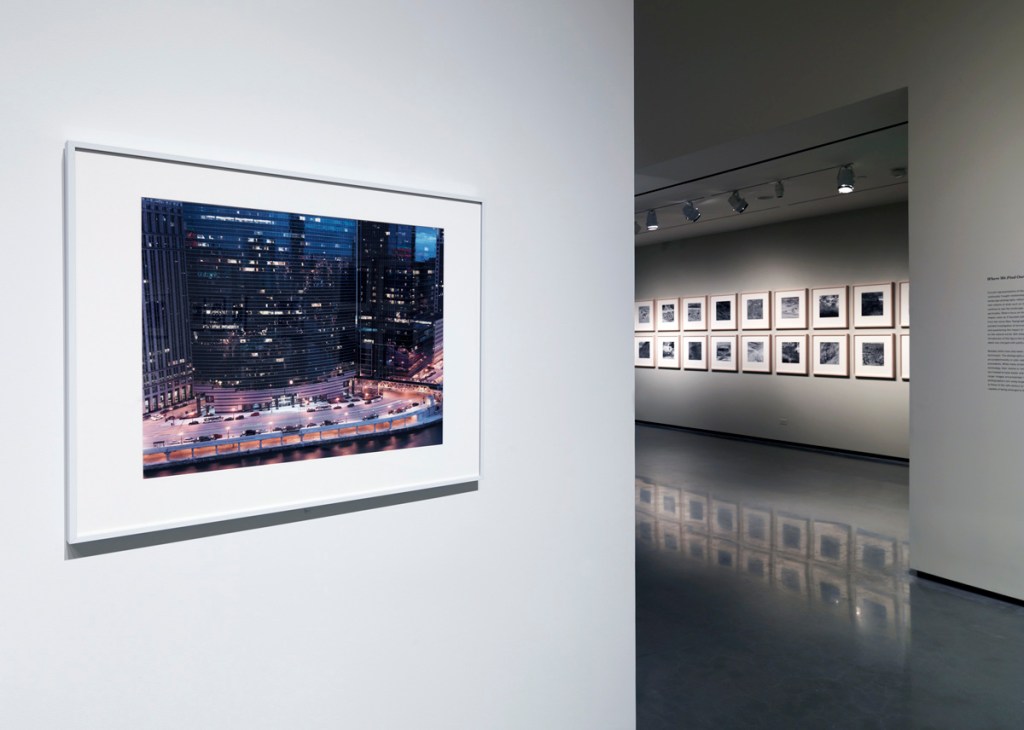
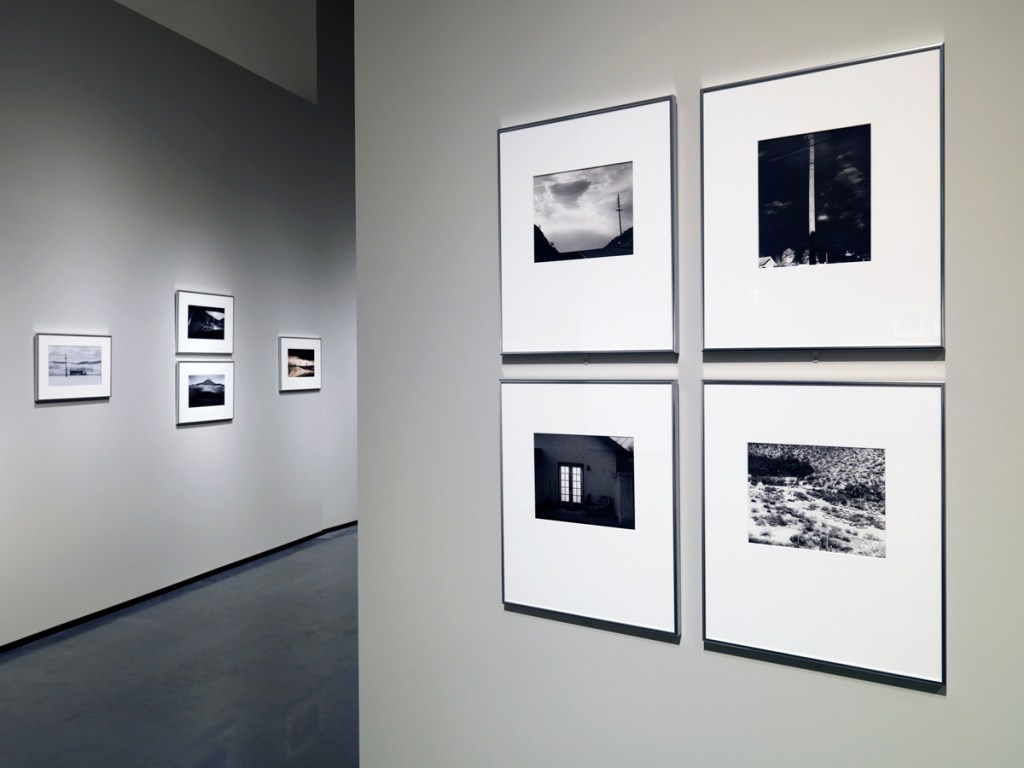
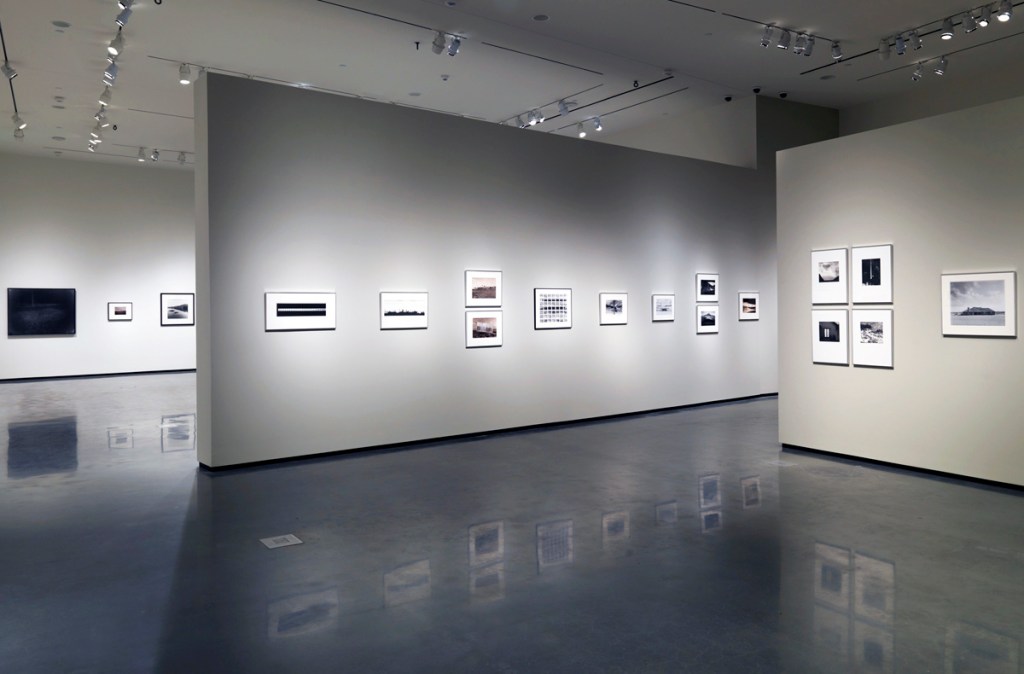
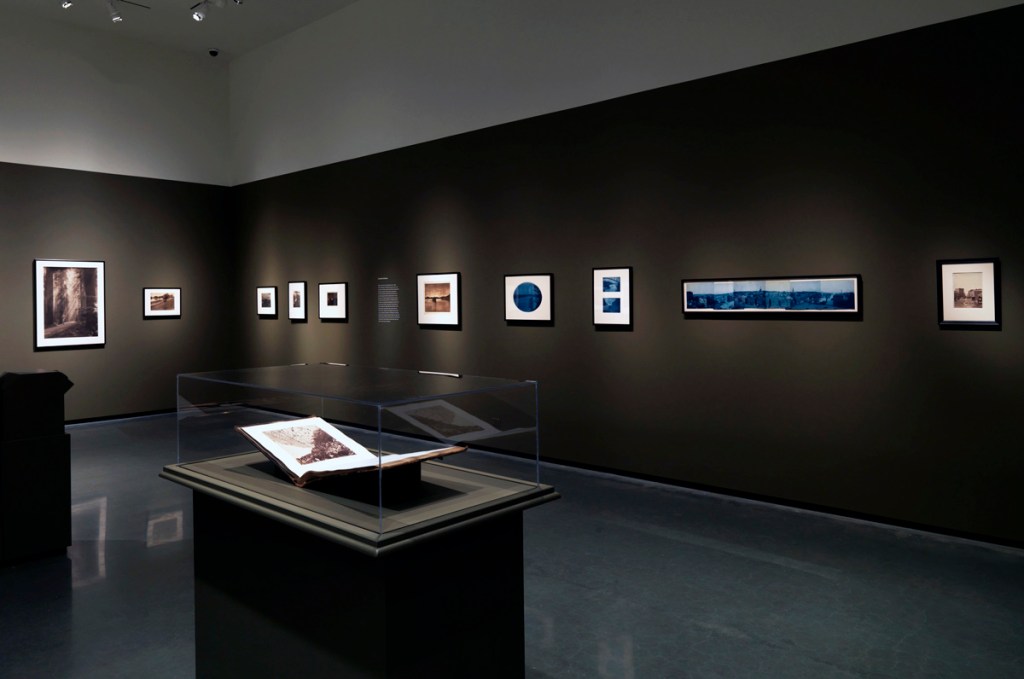

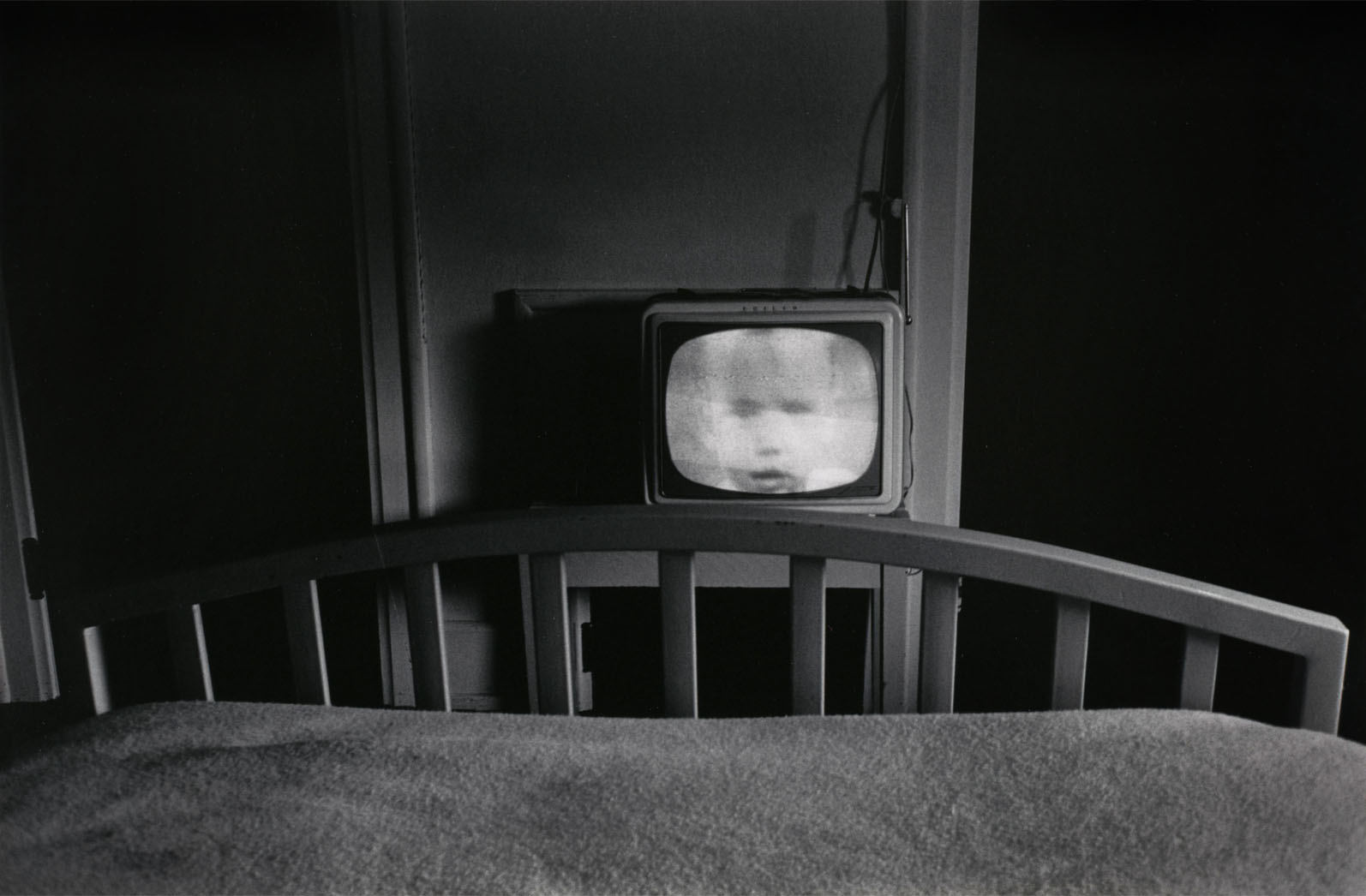

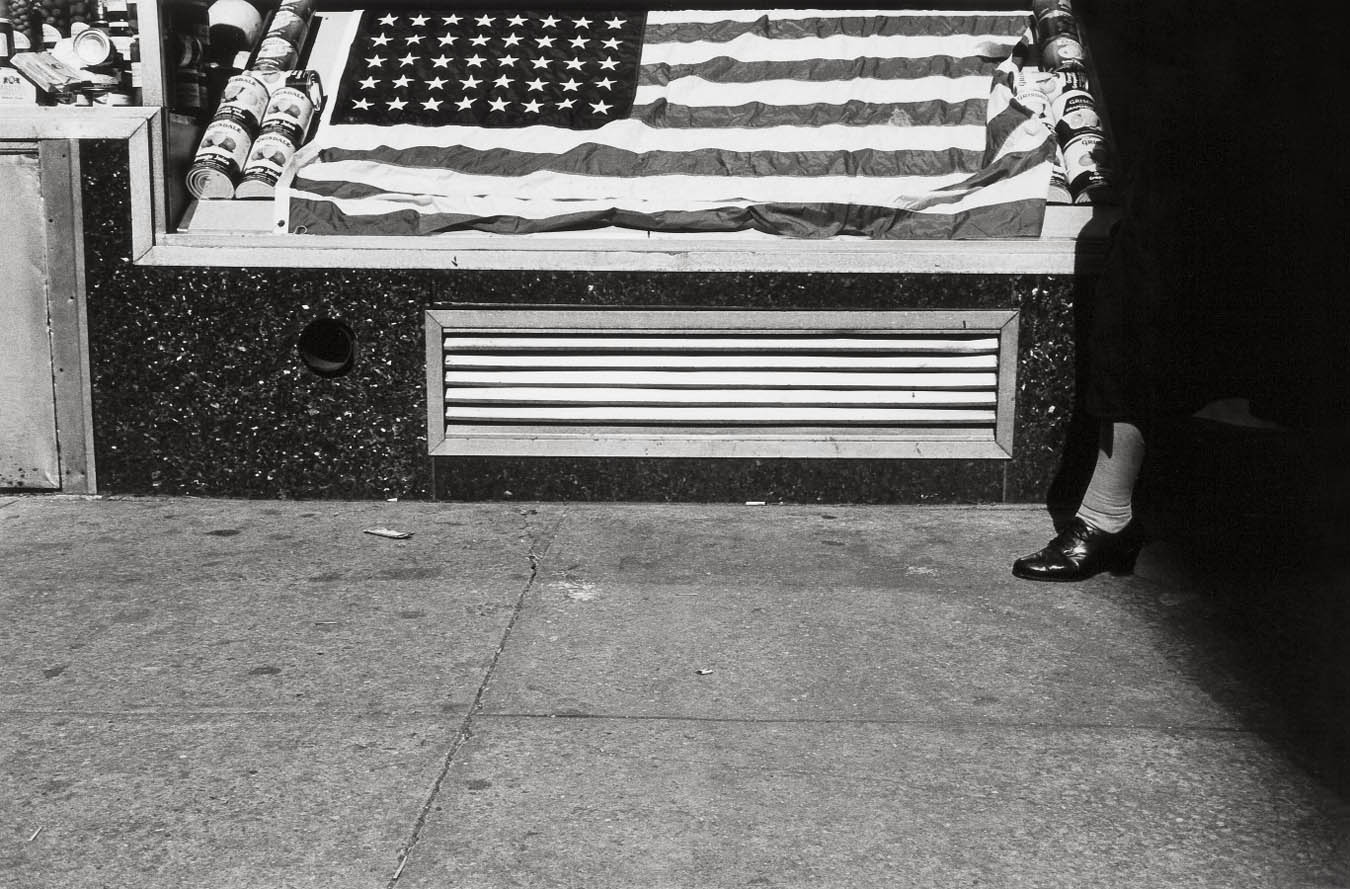


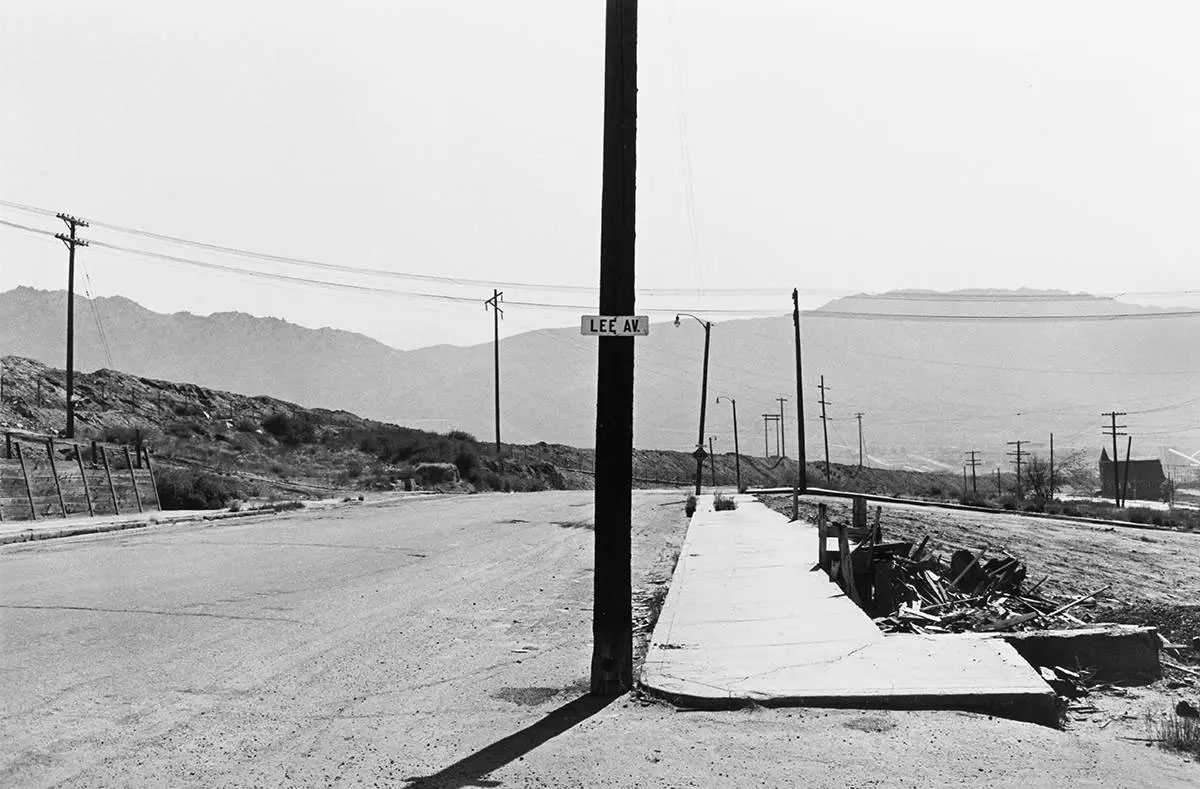


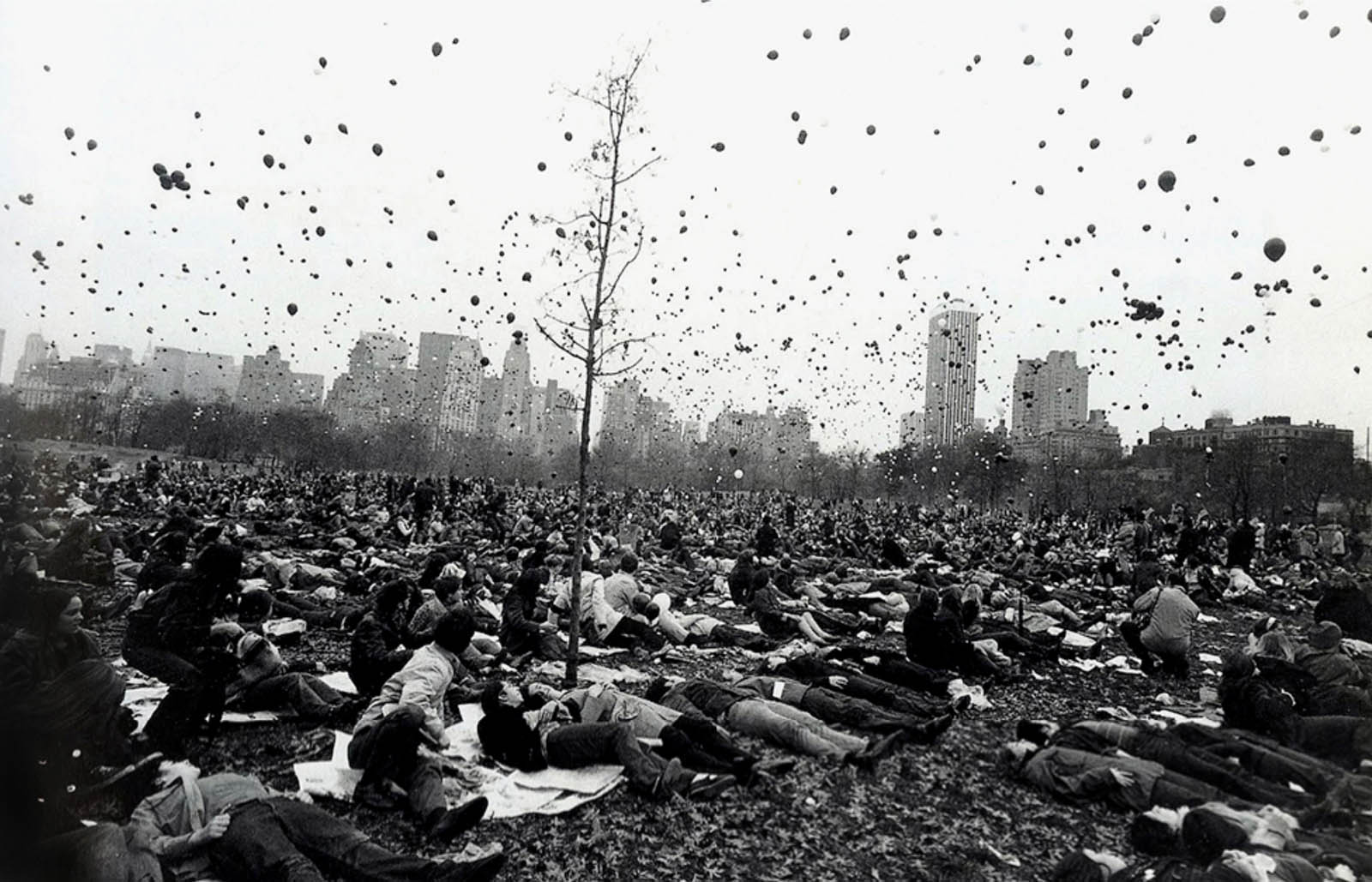

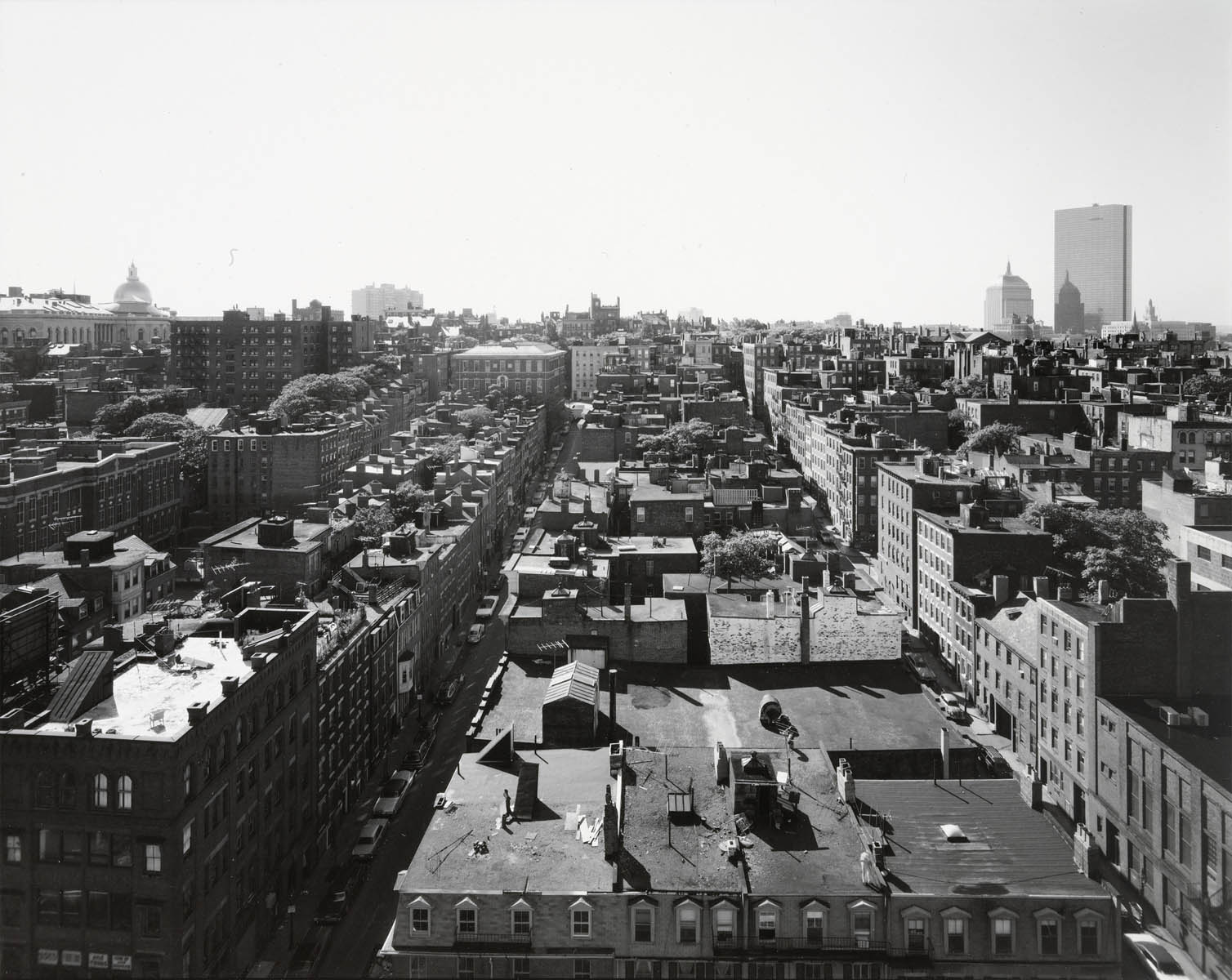

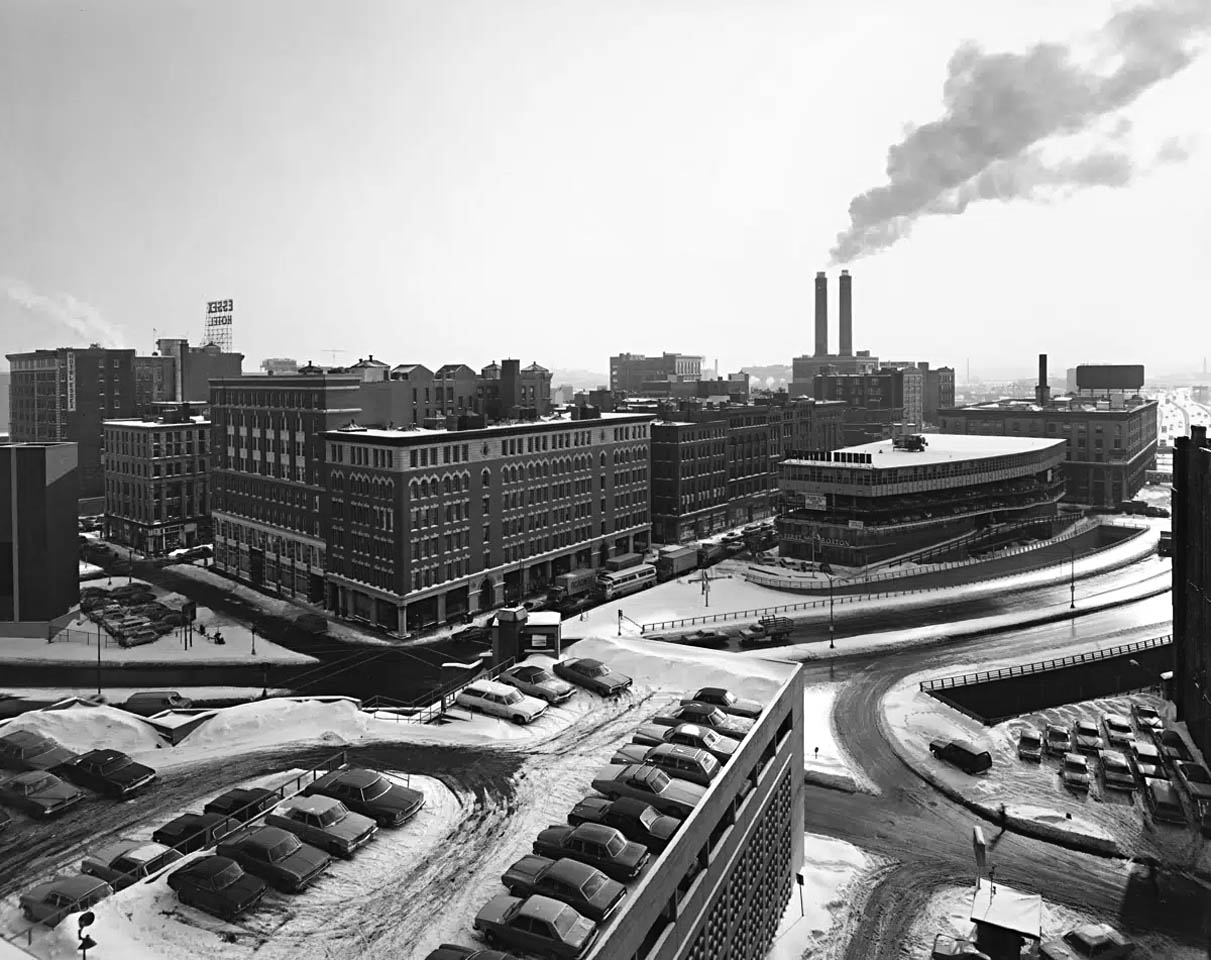
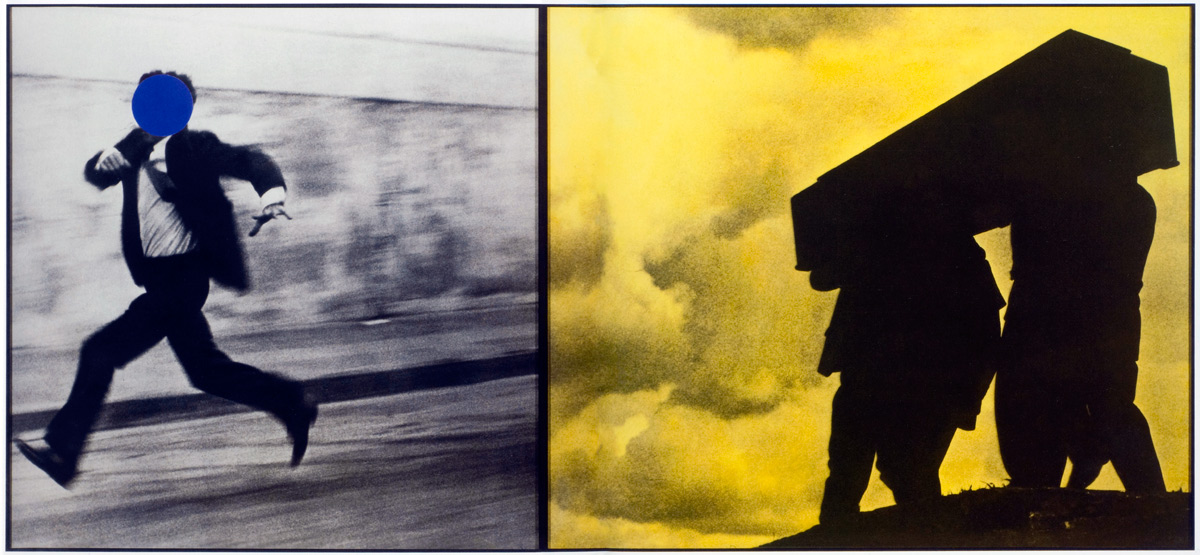
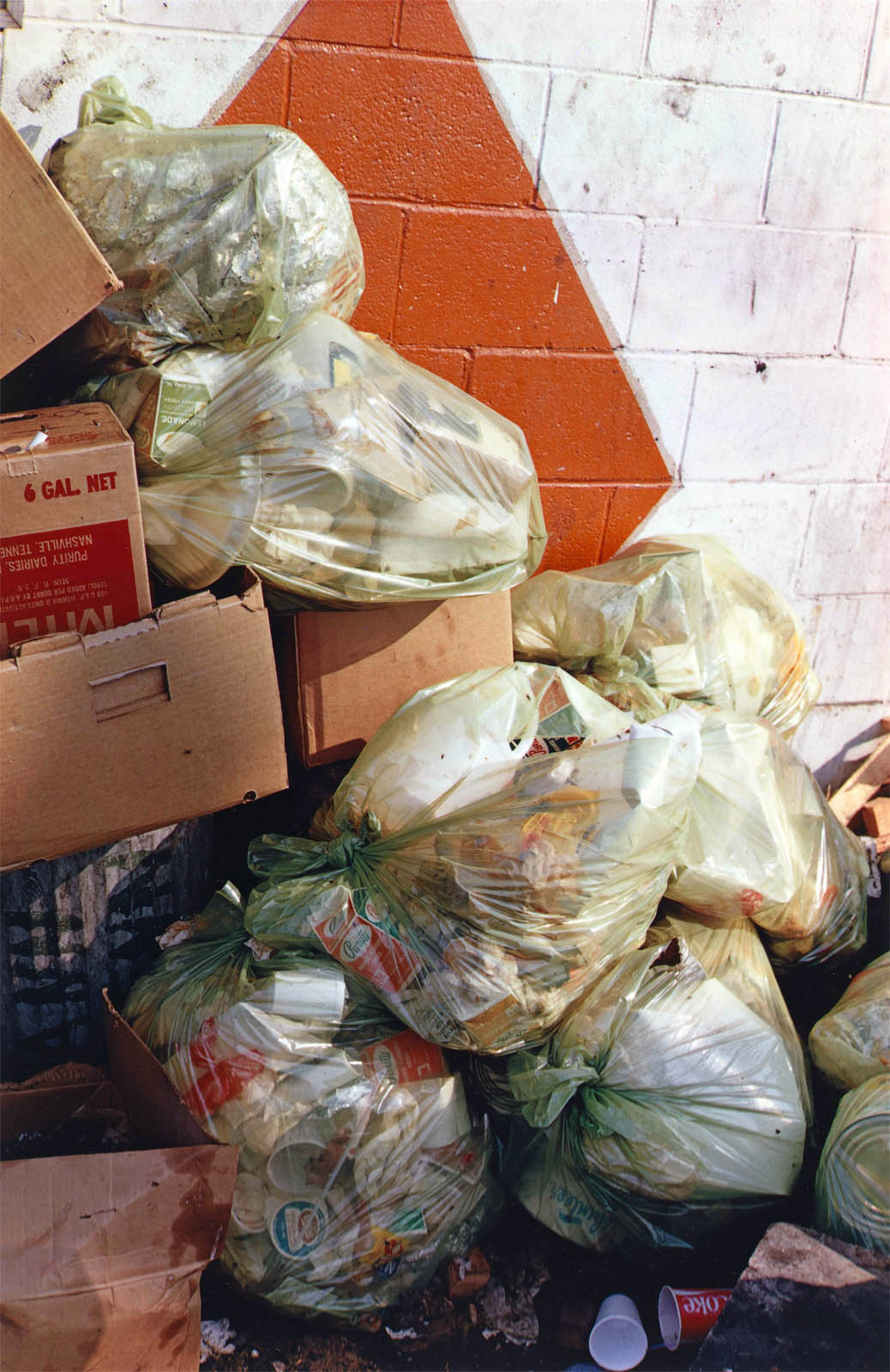

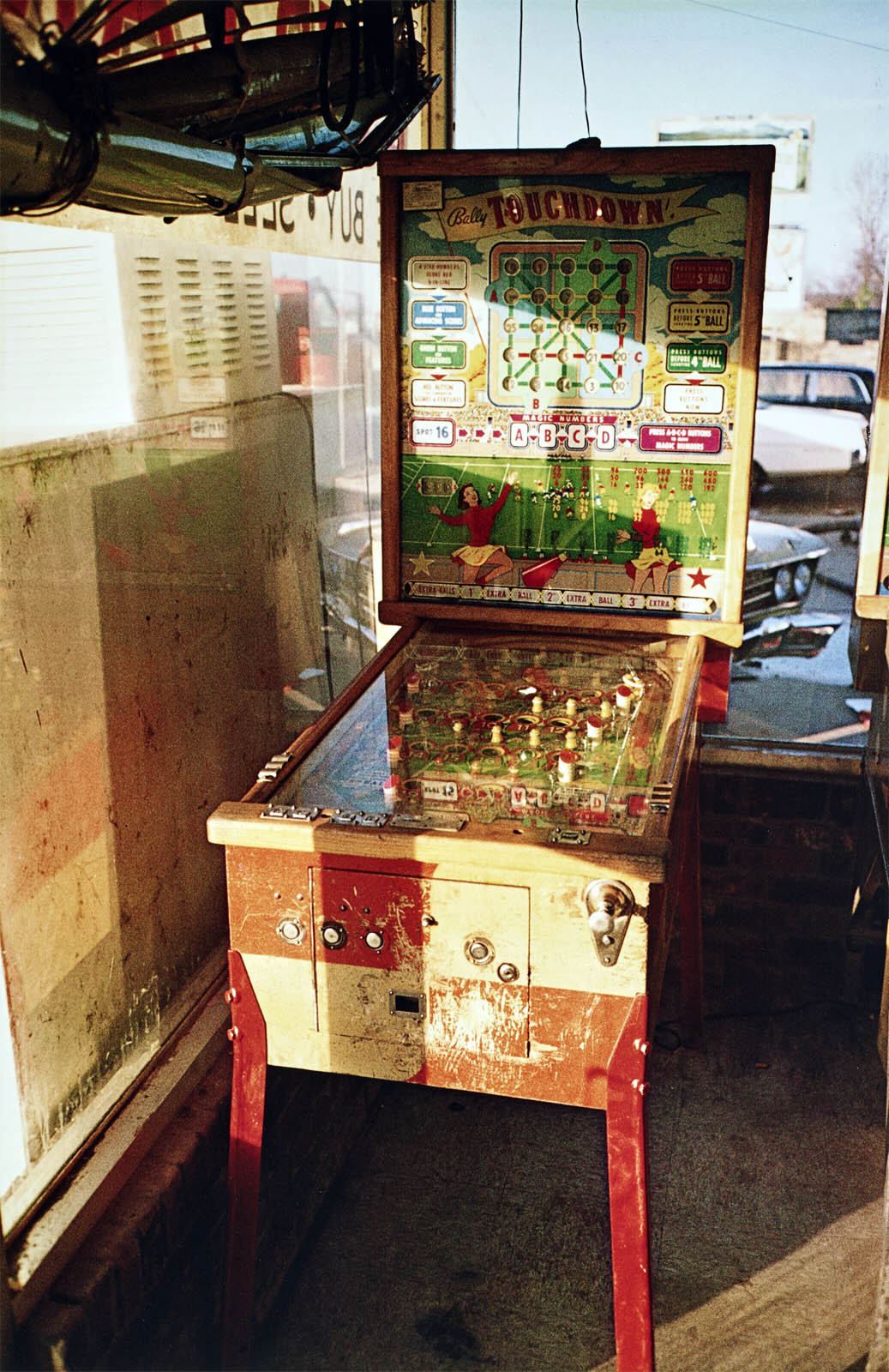


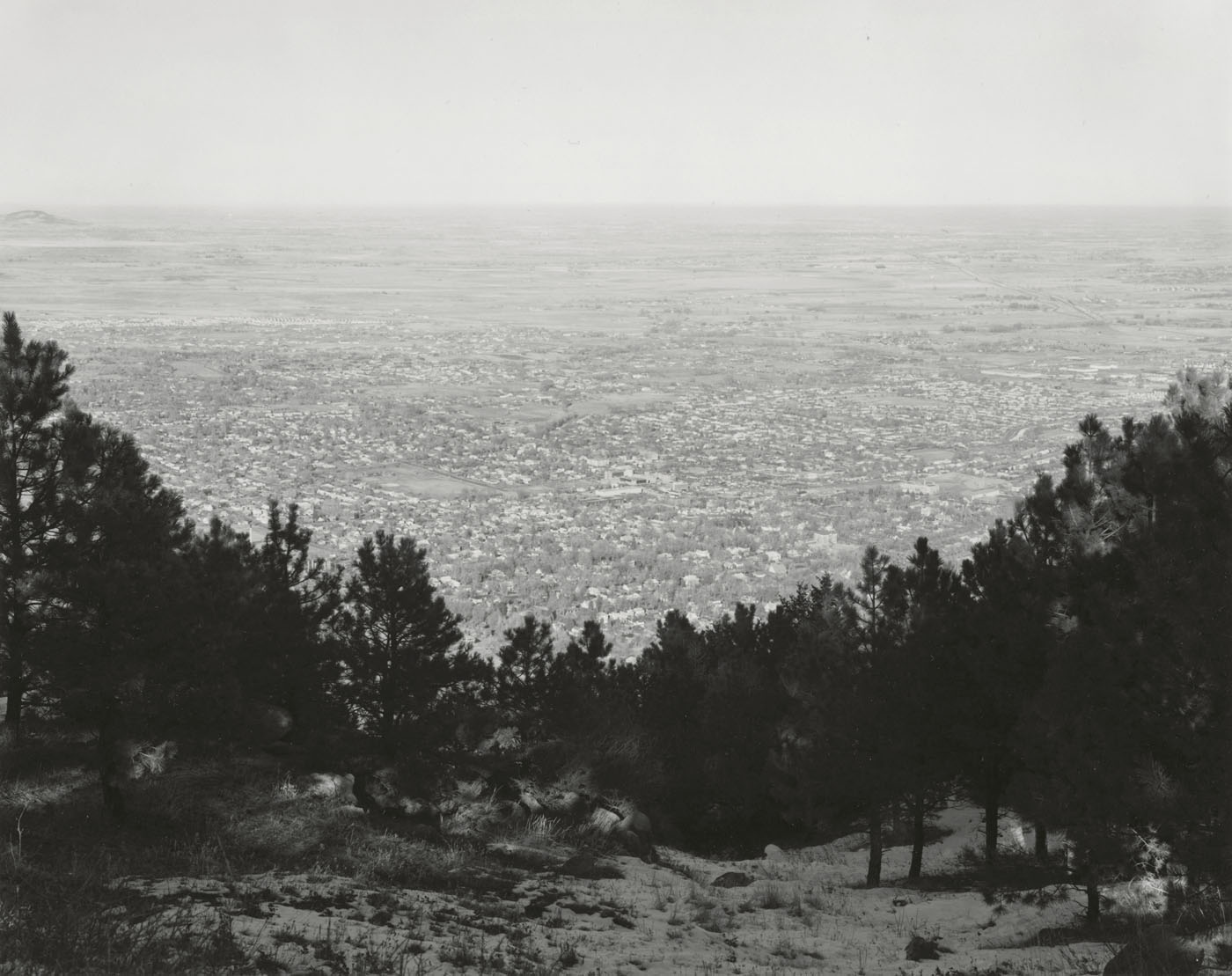
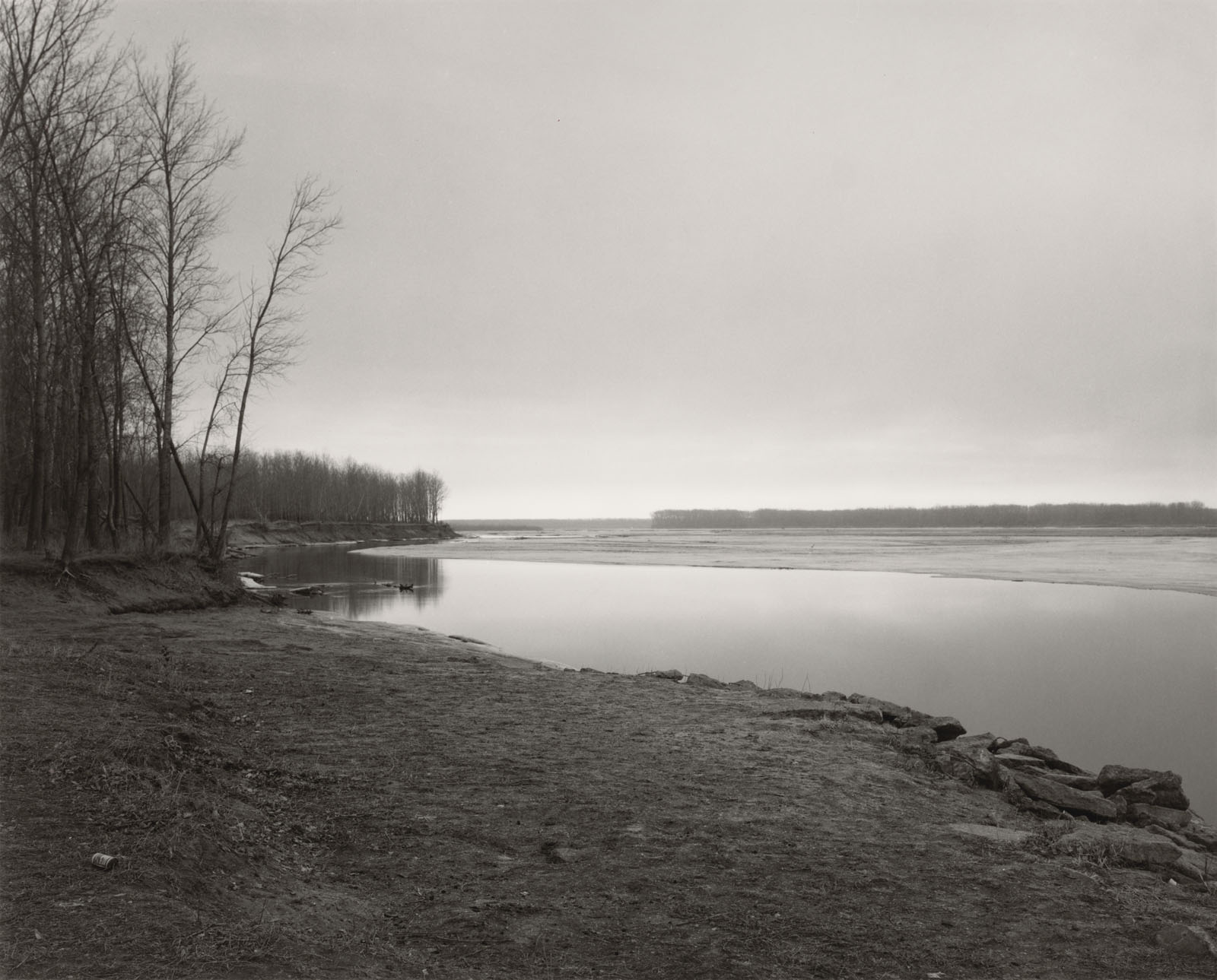
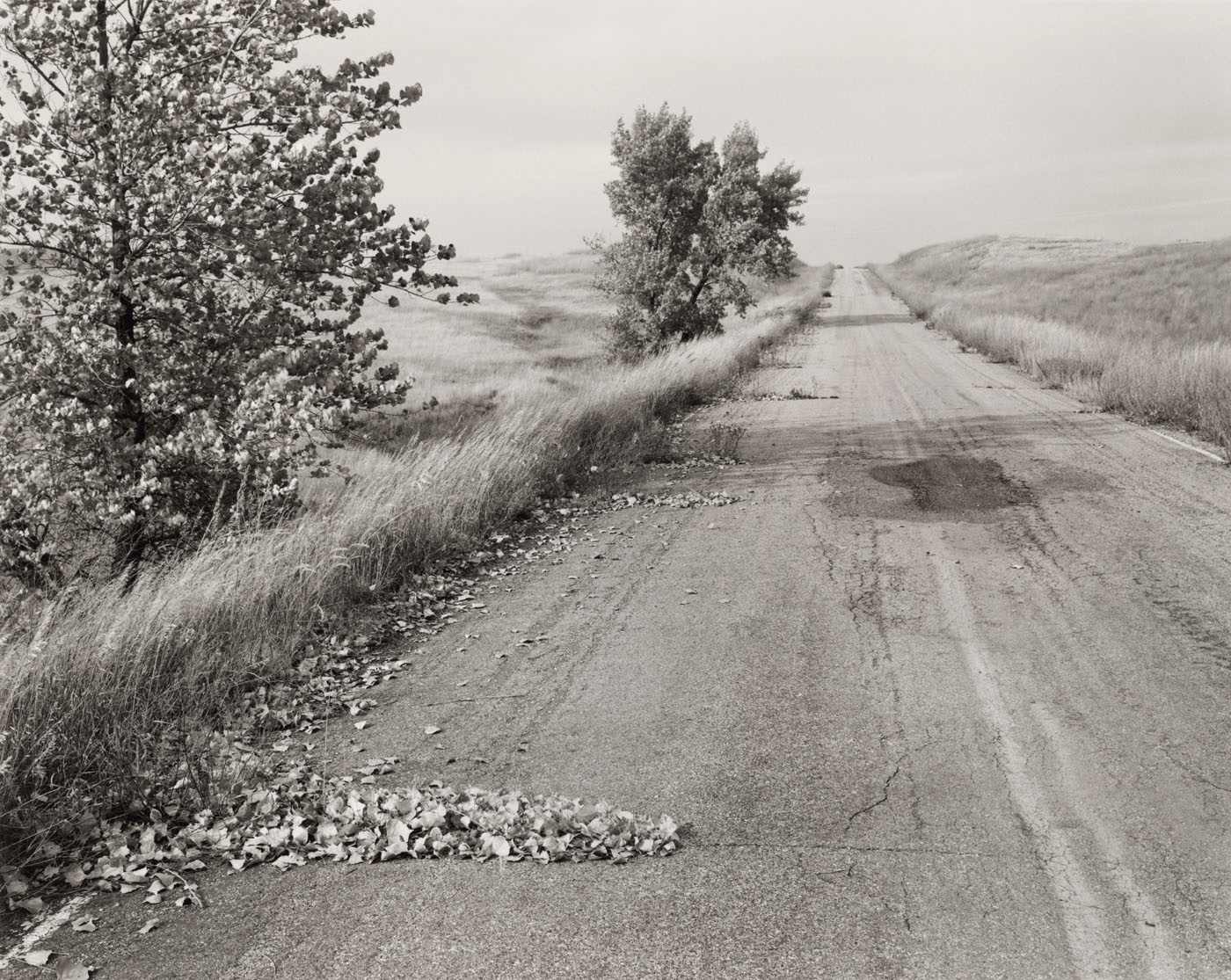
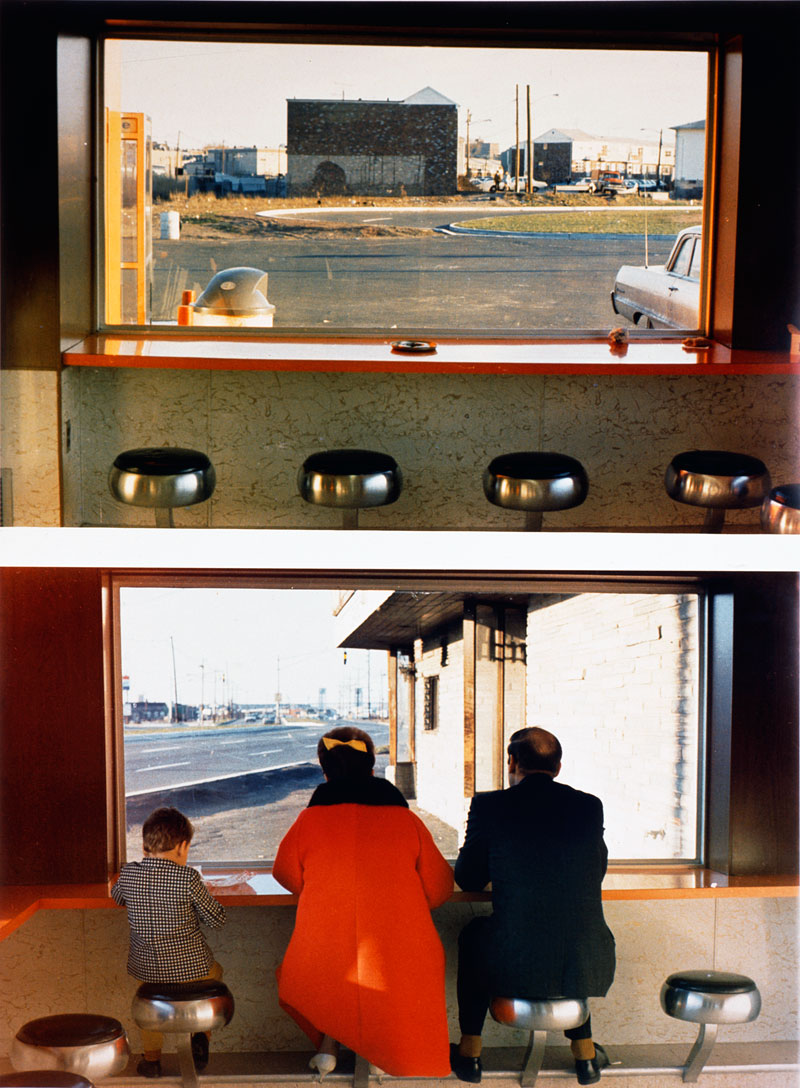
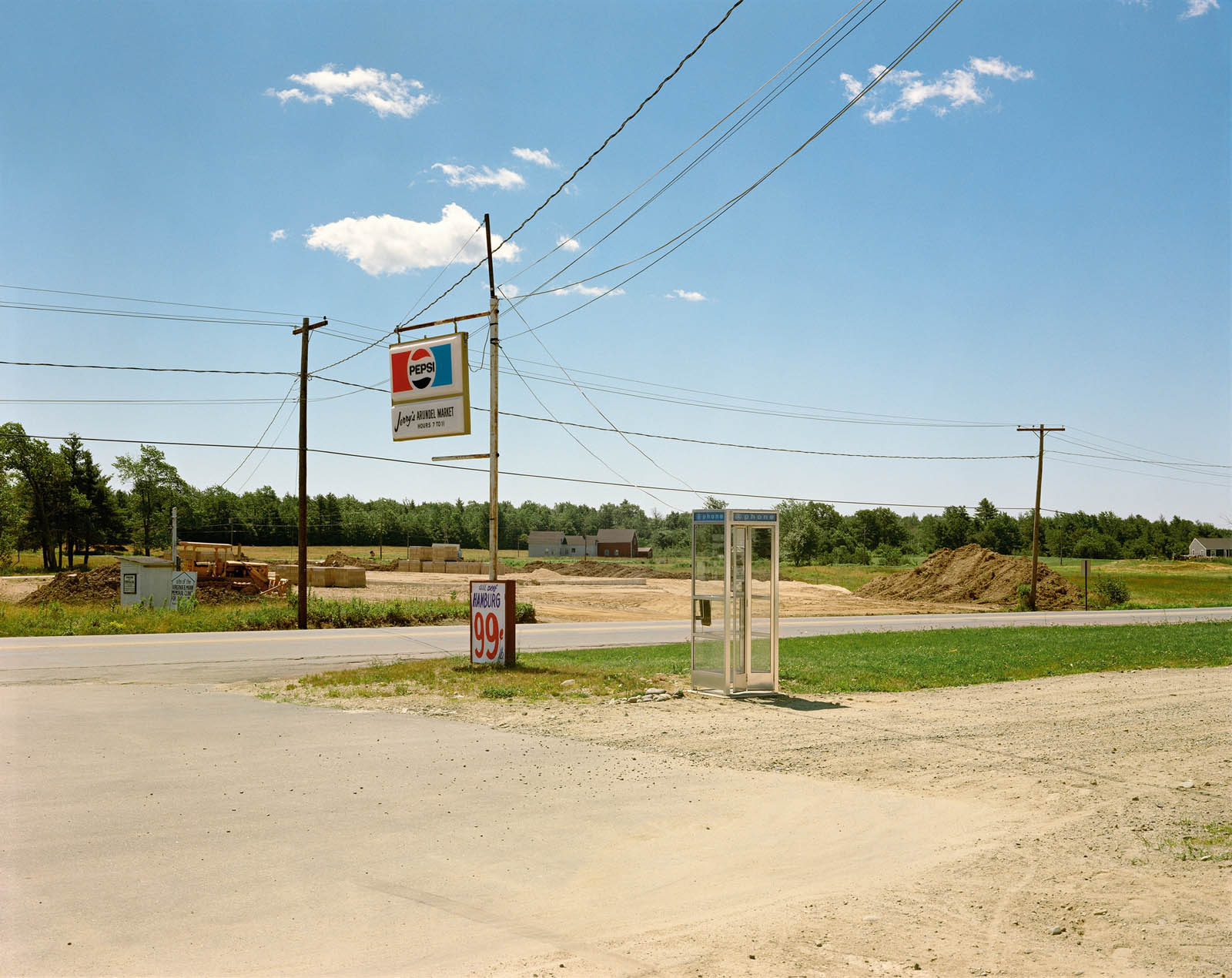

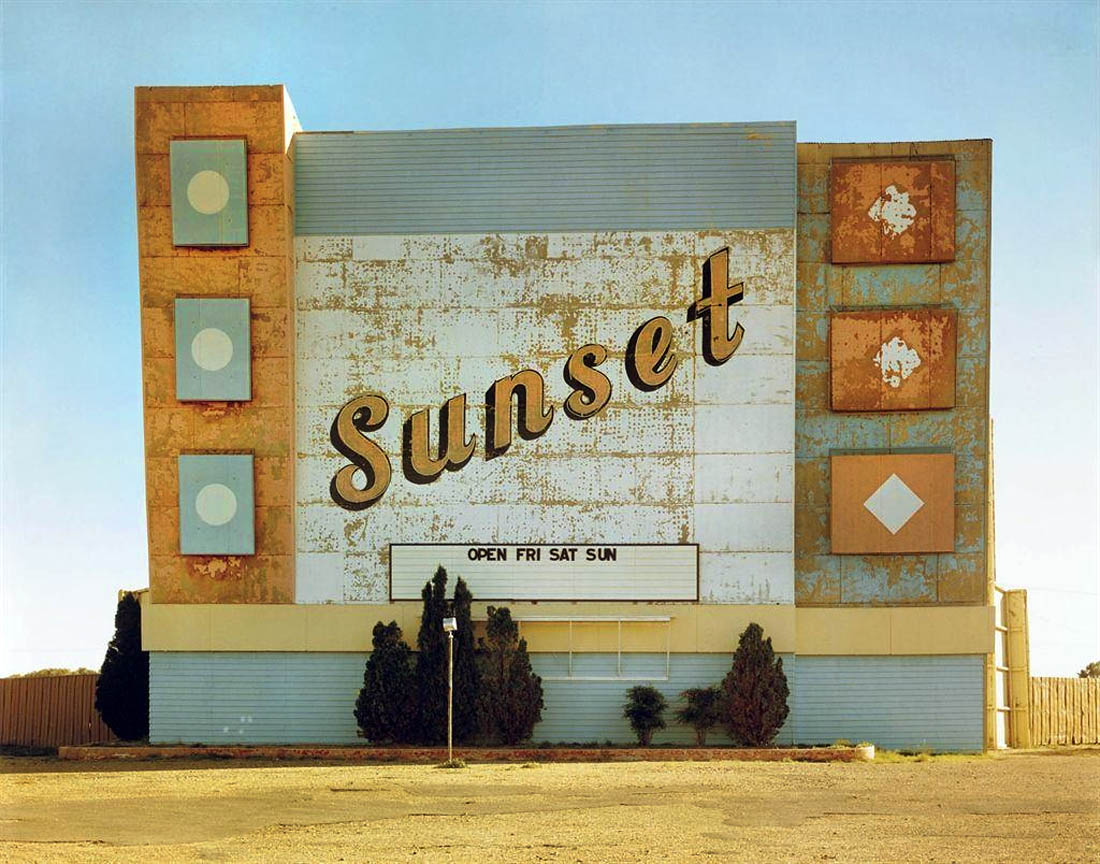

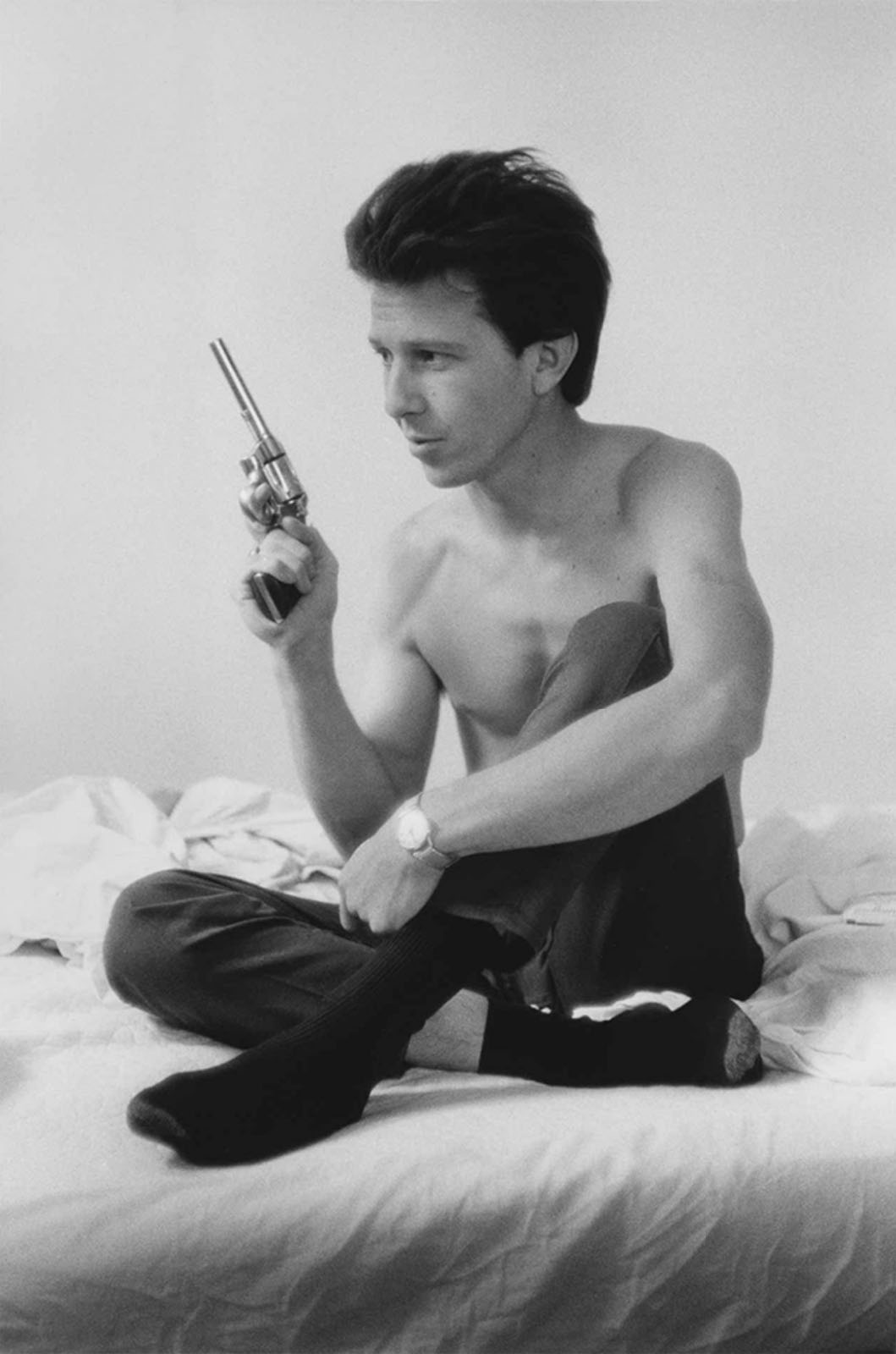

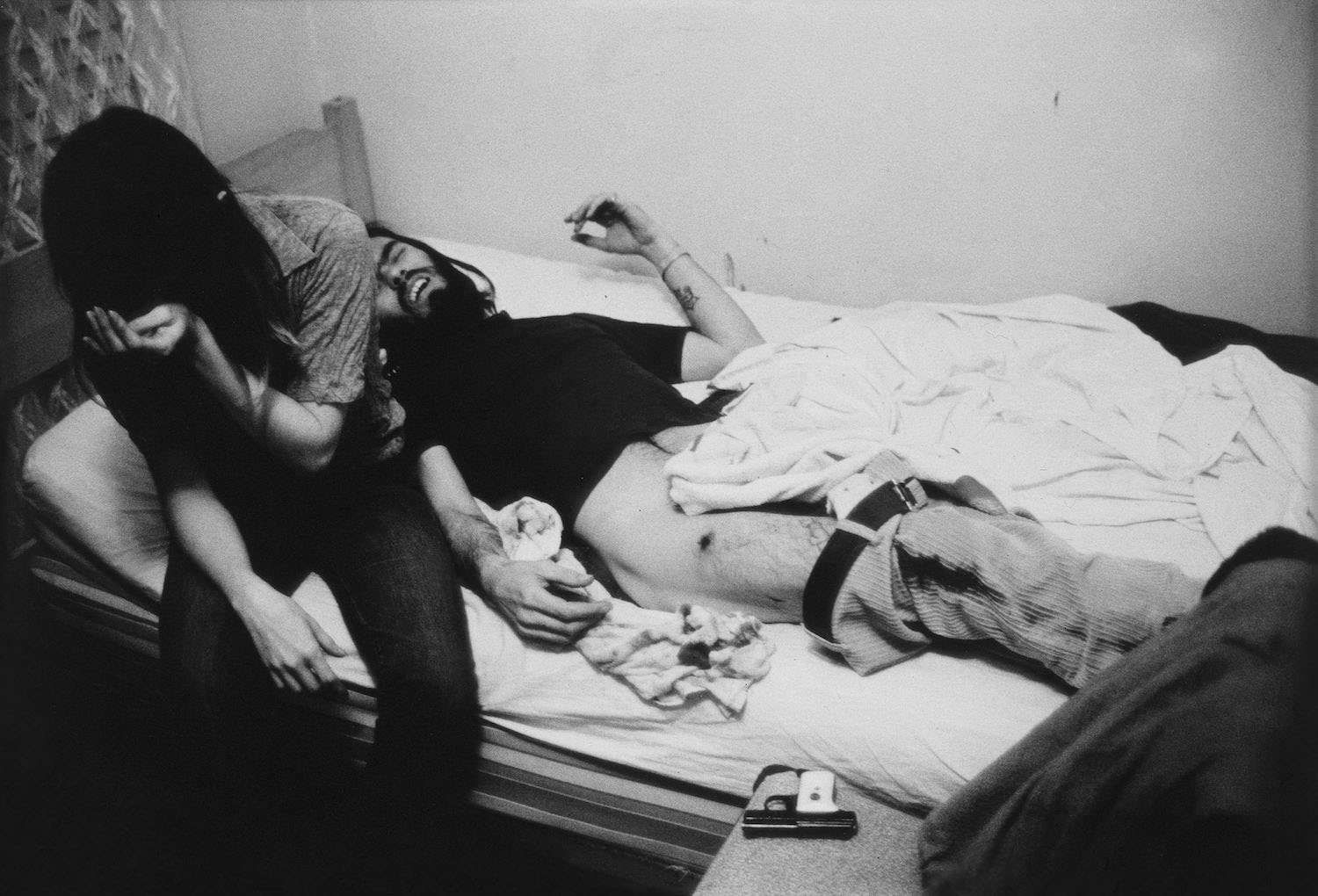


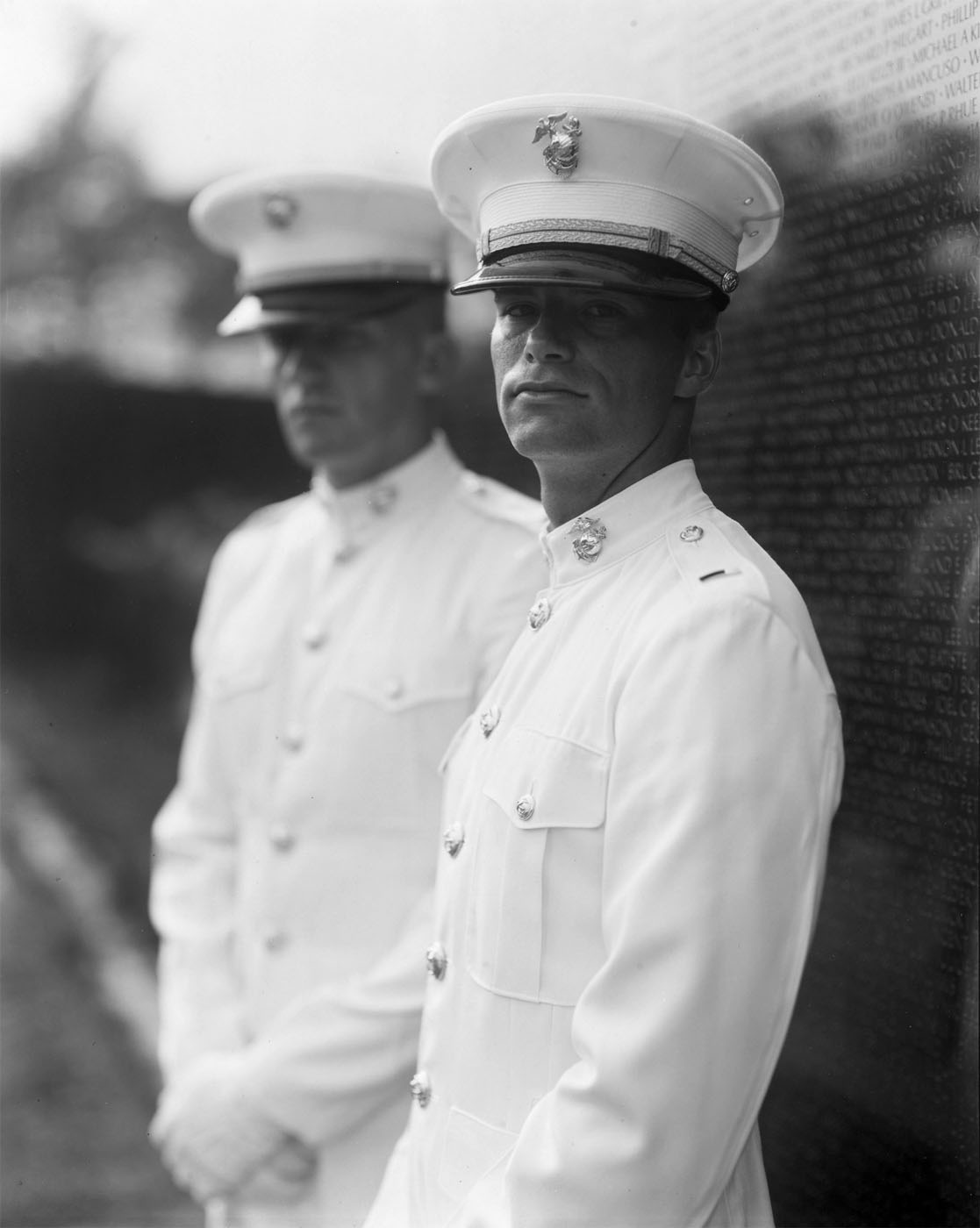
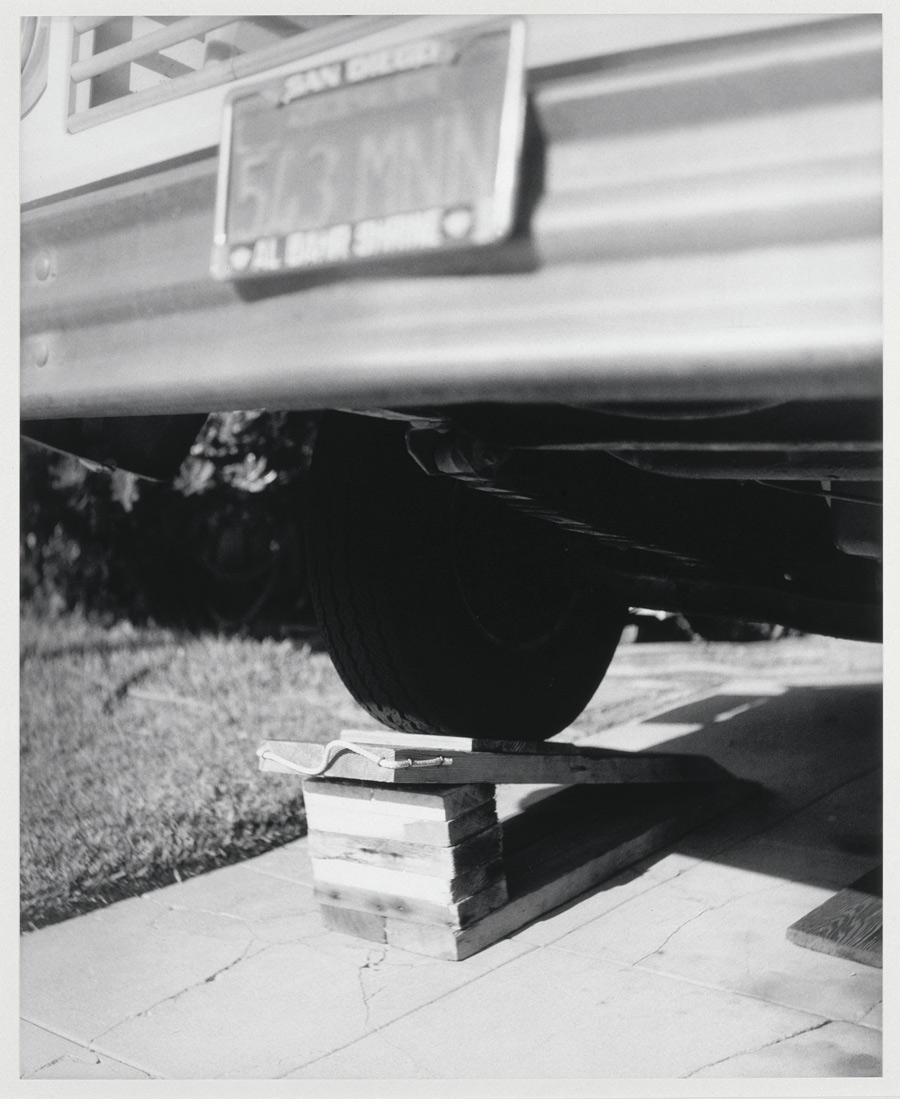
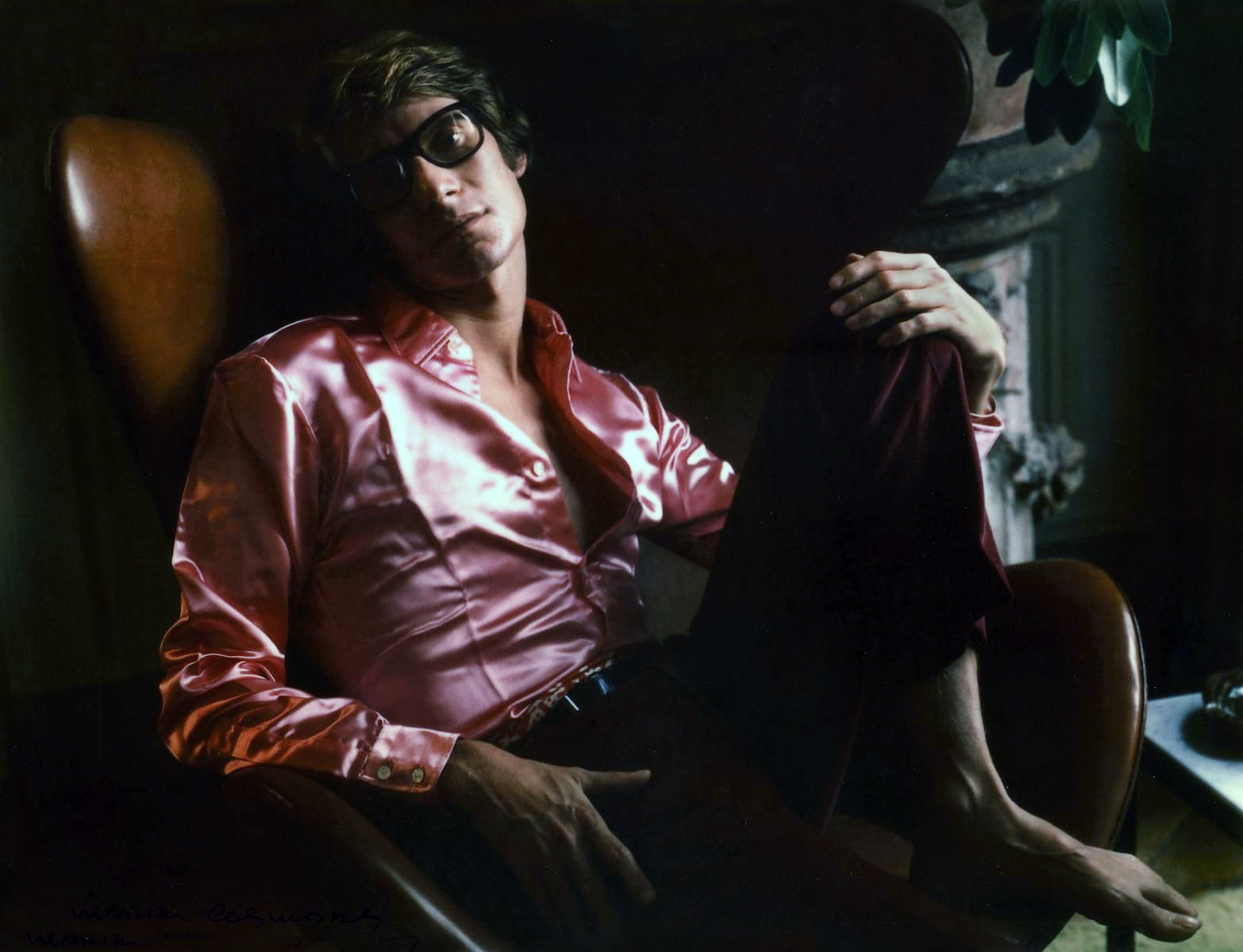


![Alfred Stieglitz (American, 1864-1946) '[Self-Portrait]' Negative 1907; print 1930](https://artblart.com/wp-content/uploads/2012/08/stieglitz-self-portrait-1907.jpg "Alfred Stieglitz (American, 1864-1946) '[Self-Portrait]' Negative 1907; print 1930")
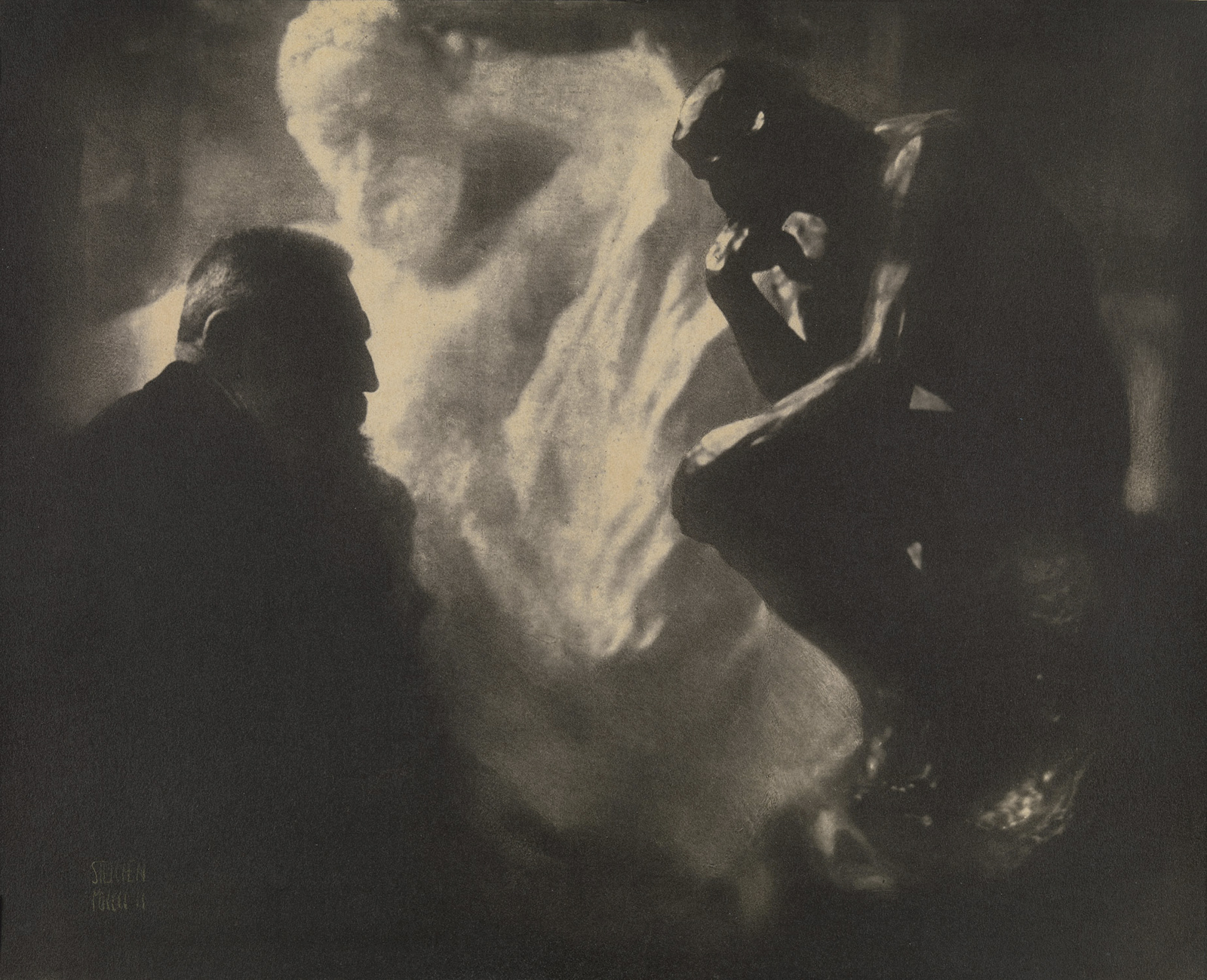
![Sarah Choate Sears (American, 1858-1935) '[Julia Ward Howe]' about 1890](https://artblart.com/wp-content/uploads/2012/08/sears-julia-ward-howe.jpg "Sarah Choate Sears (American, 1858-1935) '[Julia Ward Howe]' about 1890")

![Nadar [Gaspard Félix Tournachon] (French, 1820-1910) '[Sarah Bernhardt as the Empress Theodora in Sardou's "Theodora"]' Negative 1884; print and mount about 1889](https://artblart.com/wp-content/uploads/2012/08/nadar-sarah-bernhardt.jpg "Nadar [Gaspard Félix Tournachon] (French, 1820-1910) '[Sarah Bernhardt as the Empress Theodora in Sardou's \"Theodora\"]' Negative 1884; print and mount about 1889")

![Charles DeForest Fredricks (American, 1823-1894) '[Mlle Pepita]' 1863](https://artblart.com/wp-content/uploads/2012/08/fredricks-mlle-pepita.jpg "Charles DeForest Fredricks (American, 1823-1894) '[Mlle Pepita]' 1863")
![André Adolphe-Eugène Disdéri (French, 1819-1889) '[Rosa Bonheur]' 1861-1864](https://artblart.com/wp-content/uploads/2012/08/disdecc81ri-rosa-bonheur.jpg "André Adolphe-Eugène Disdéri (French, 1819-1889) '[Rosa Bonheur]' 1861-1864")


![John Robert Parsons (British, about 1826-1909) '[Portrait of Jane Morris (Mrs. William Morris)]' Negative July 1865; print after 1900](https://artblart.com/wp-content/uploads/2012/08/parsons-portrait-of-jane-morris.jpg "John Robert Parsons (British, about 1826-1909) '[Portrait of Jane Morris (Mrs. William Morris)]' Negative July 1865; print after 1900")
![Nadar [Gaspard Félix Tournachon] (French, 1820-1910) 'George Sand (Amandine-Aurore-Lucile Dupin), Writer' c. 1865](https://artblart.com/wp-content/uploads/2016/10/realideal5-web.jpg "Nadar [Gaspard Félix Tournachon] (French, 1820-1910) 'George Sand (Amandine-Aurore-Lucile Dupin), Writer' c. 1865")


![Nadar [Gaspard Félix Tournachon] (French, 1820-1910) 'Alexander Dumas [père] (1802-1870) / Alexandre Dumas' 1855](https://artblart.com/wp-content/uploads/2012/08/nadar_alexander_dumas.jpg "Nadar [Gaspard Félix Tournachon] (French, 1820-1910) 'Alexander Dumas [père] (1802-1870) / Alexandre Dumas' 1855")


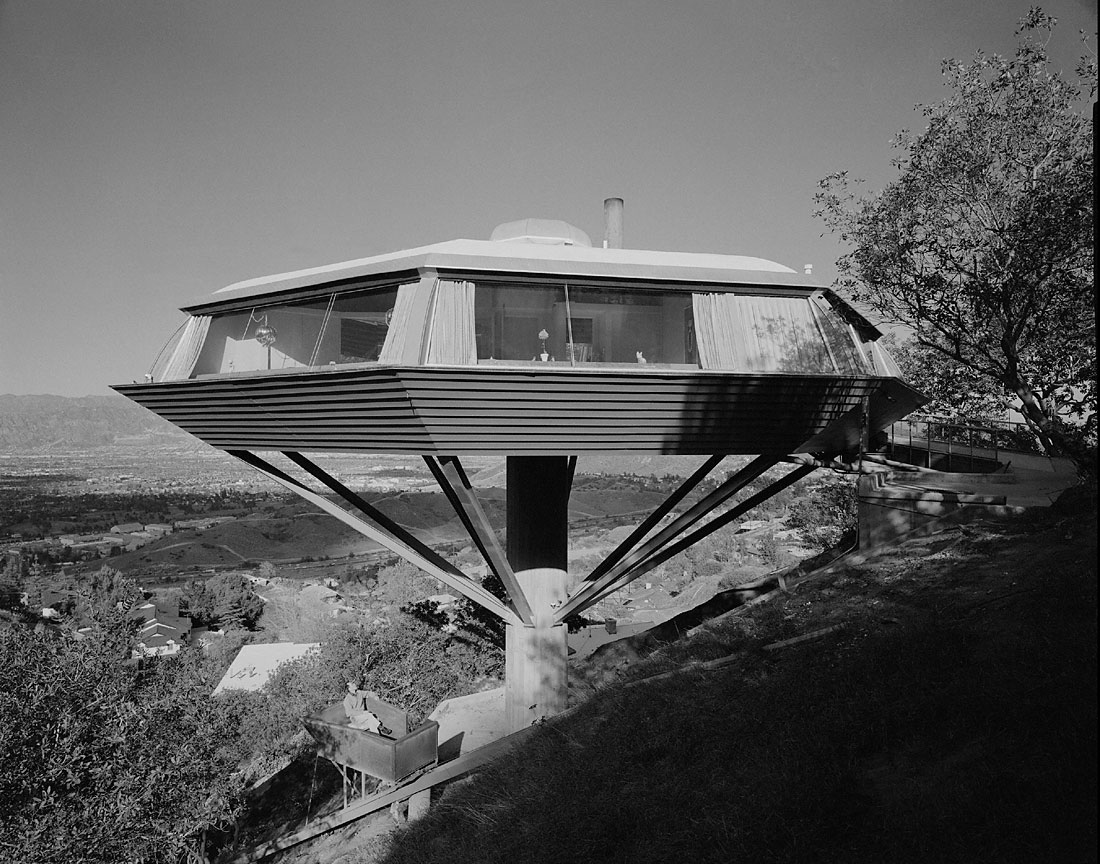
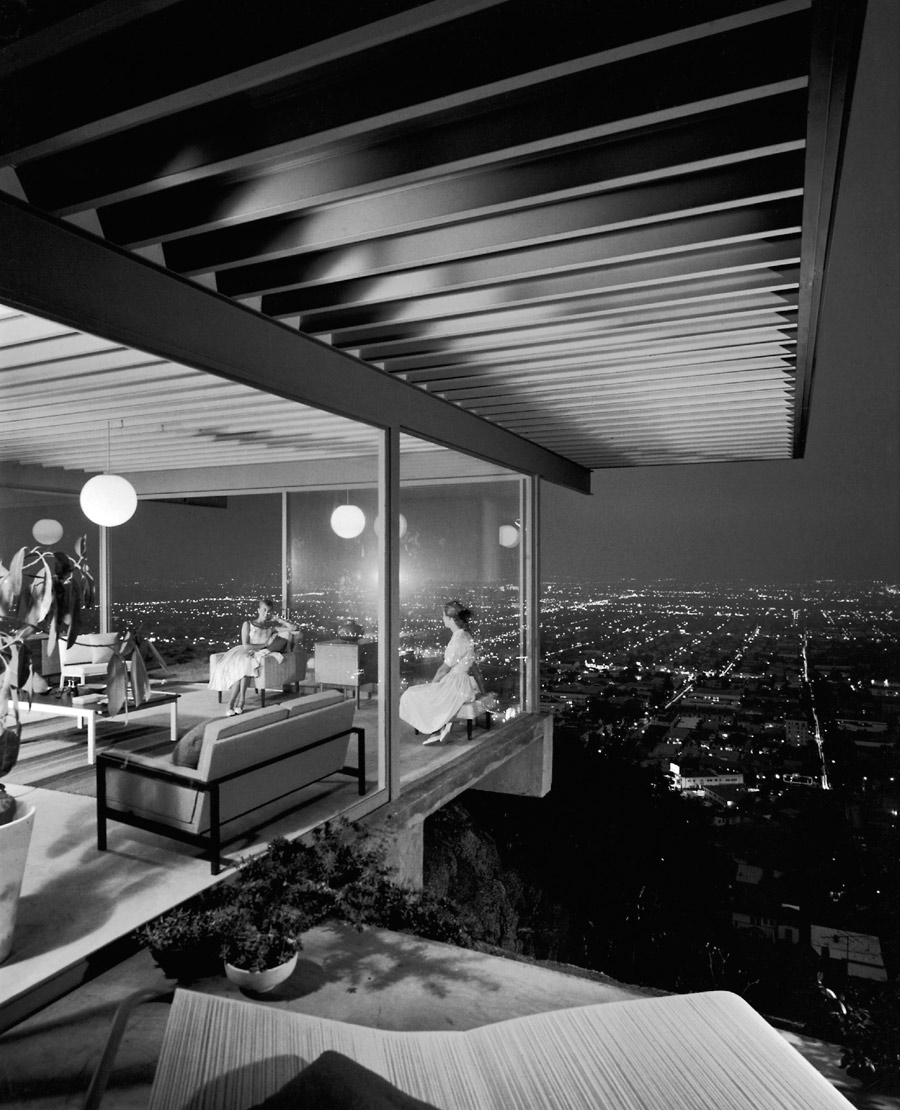




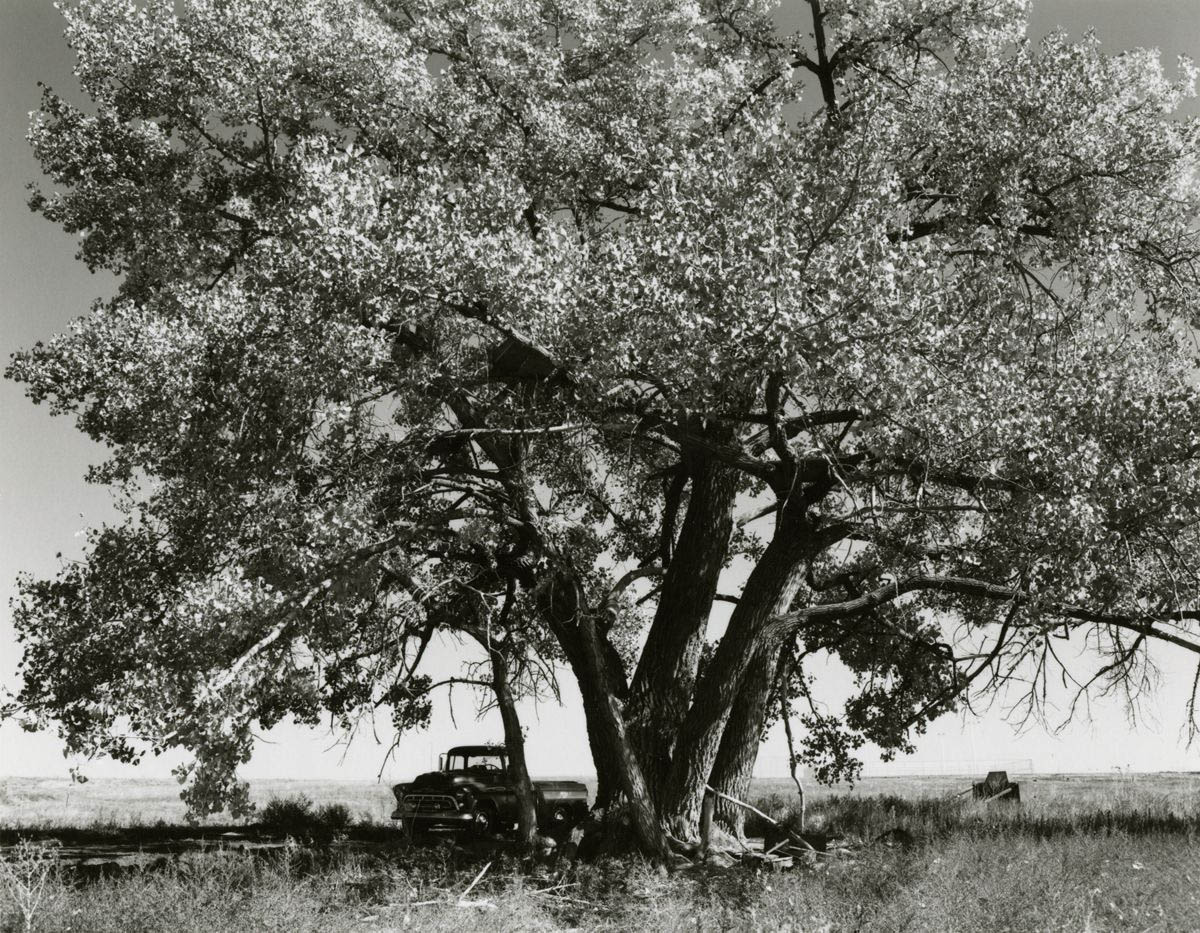

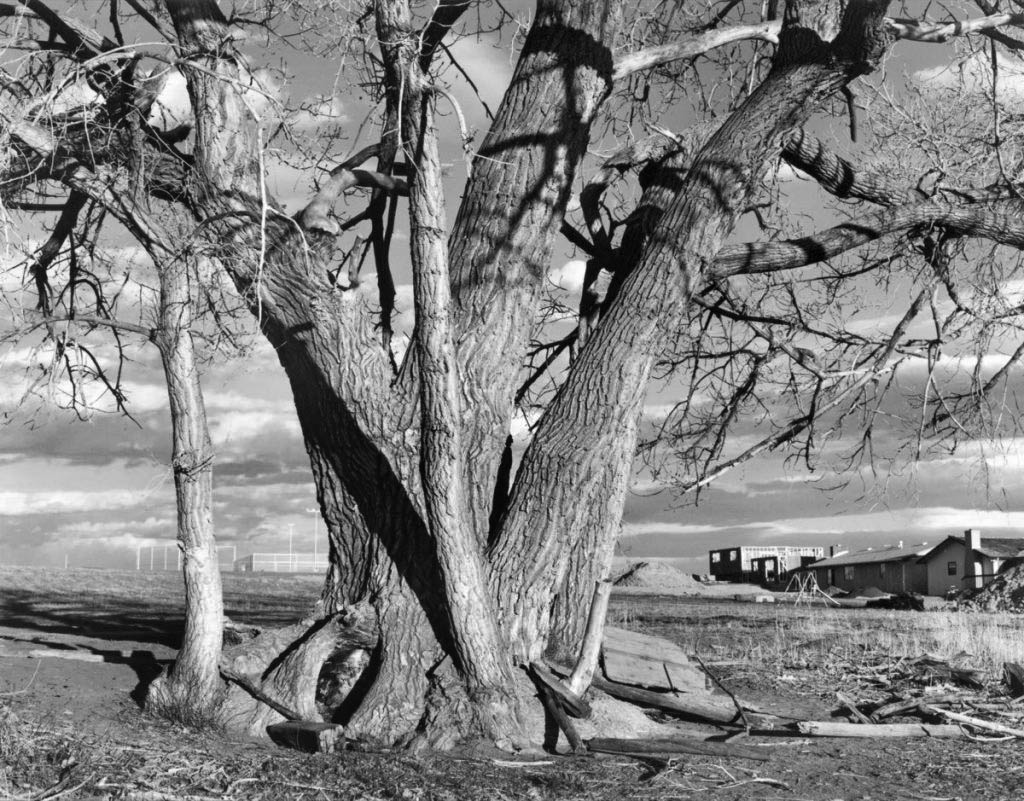
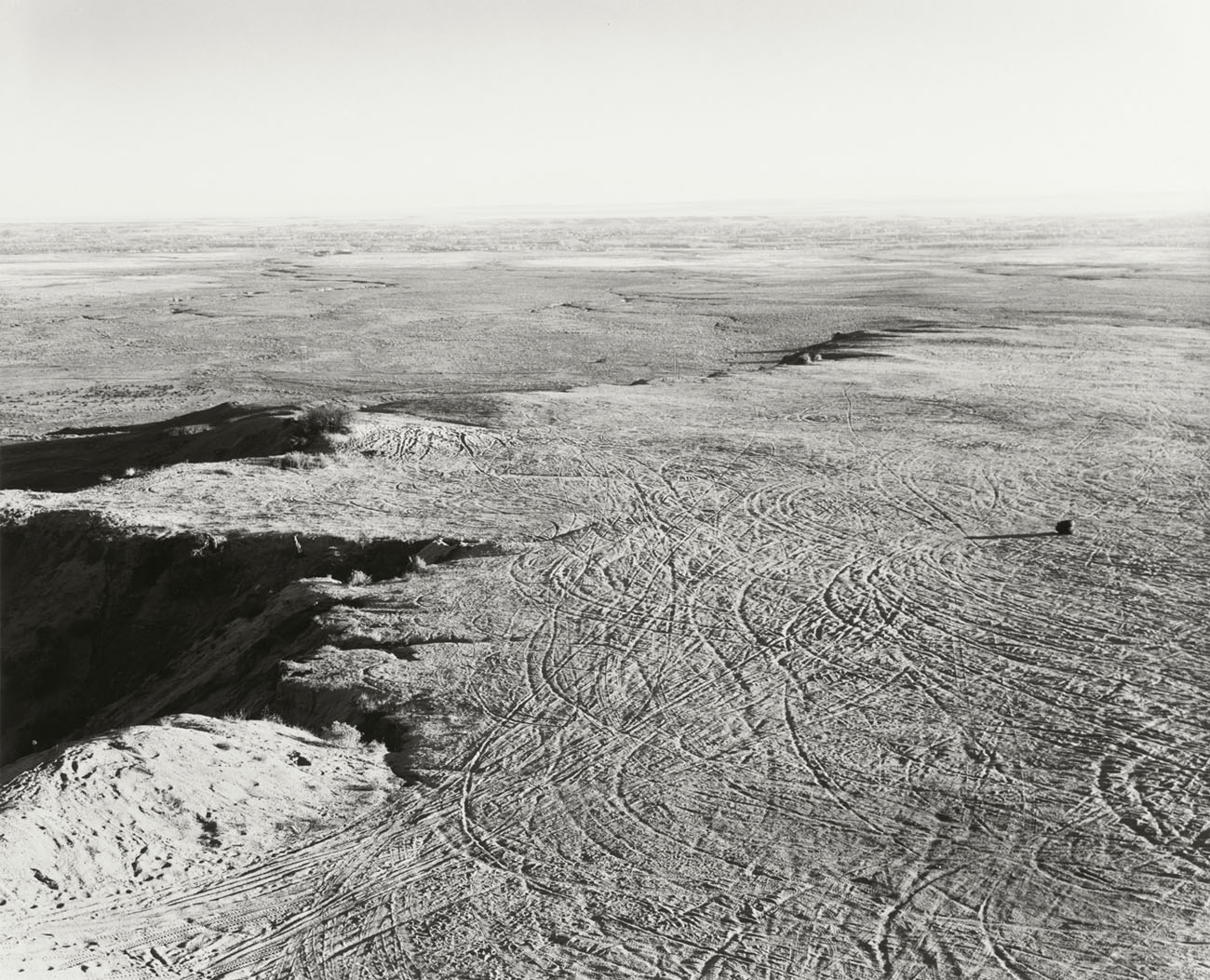
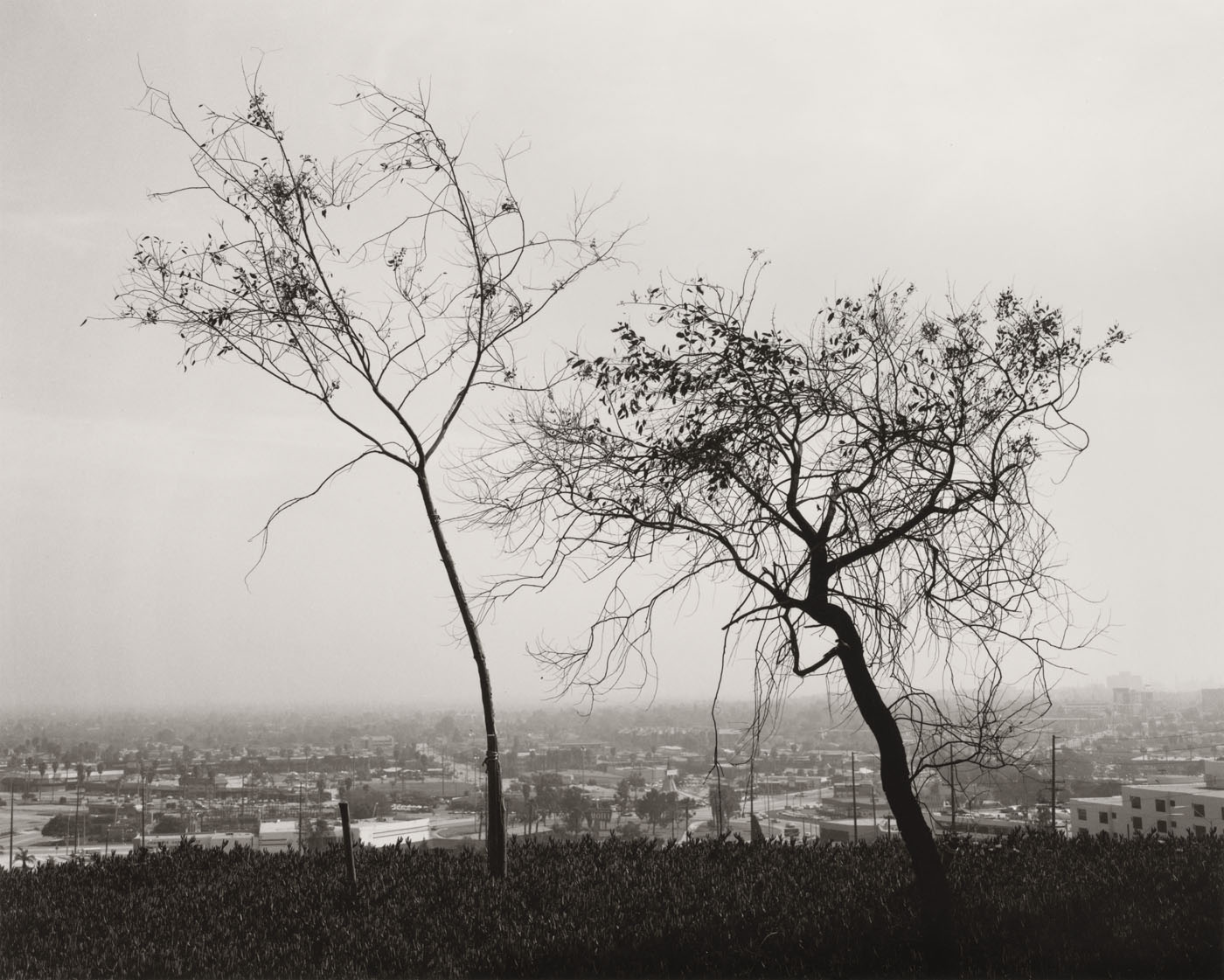
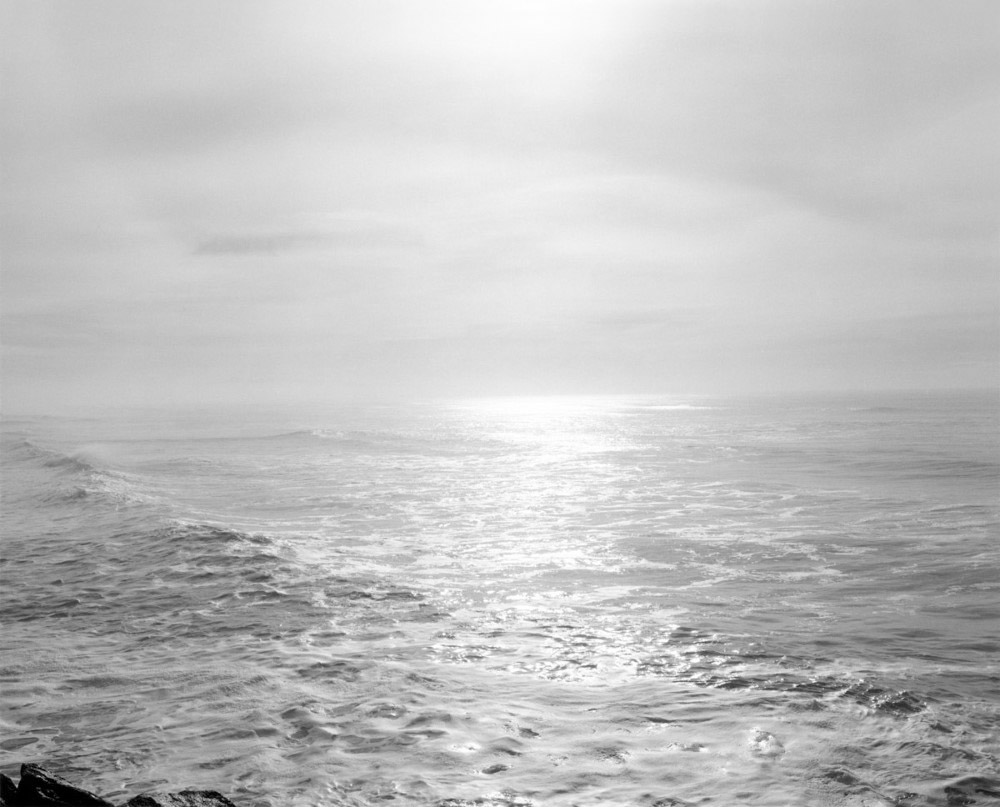
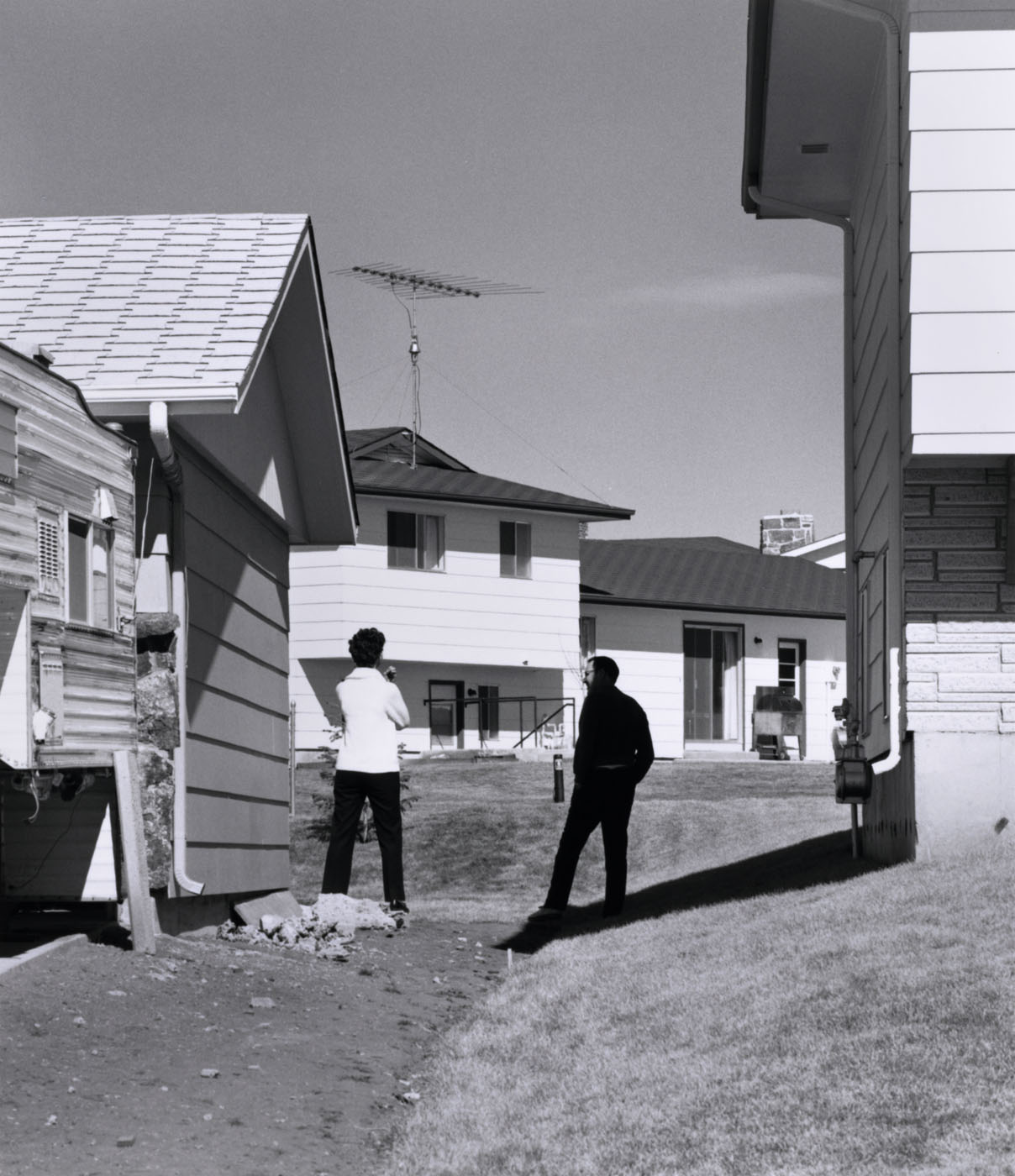

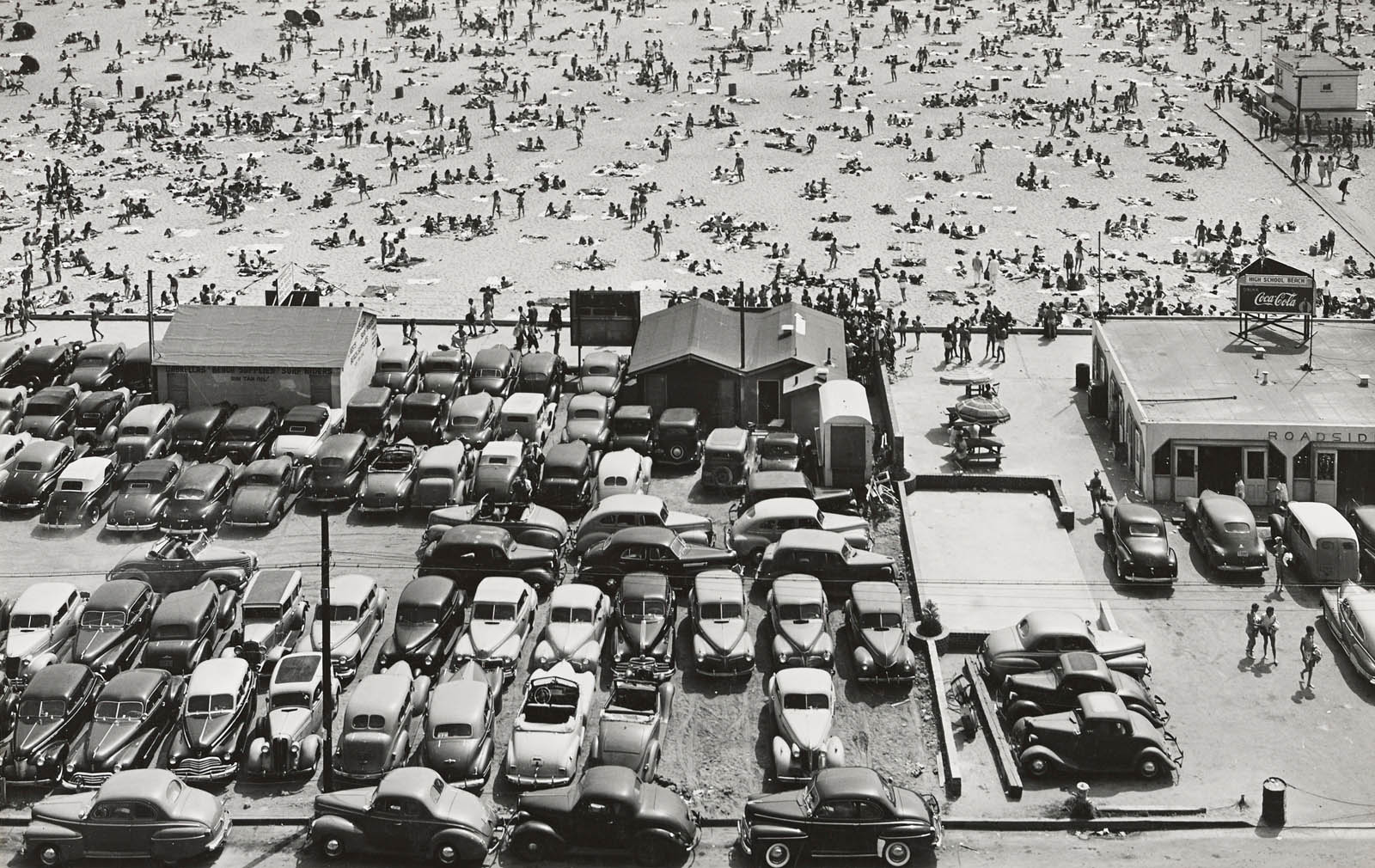
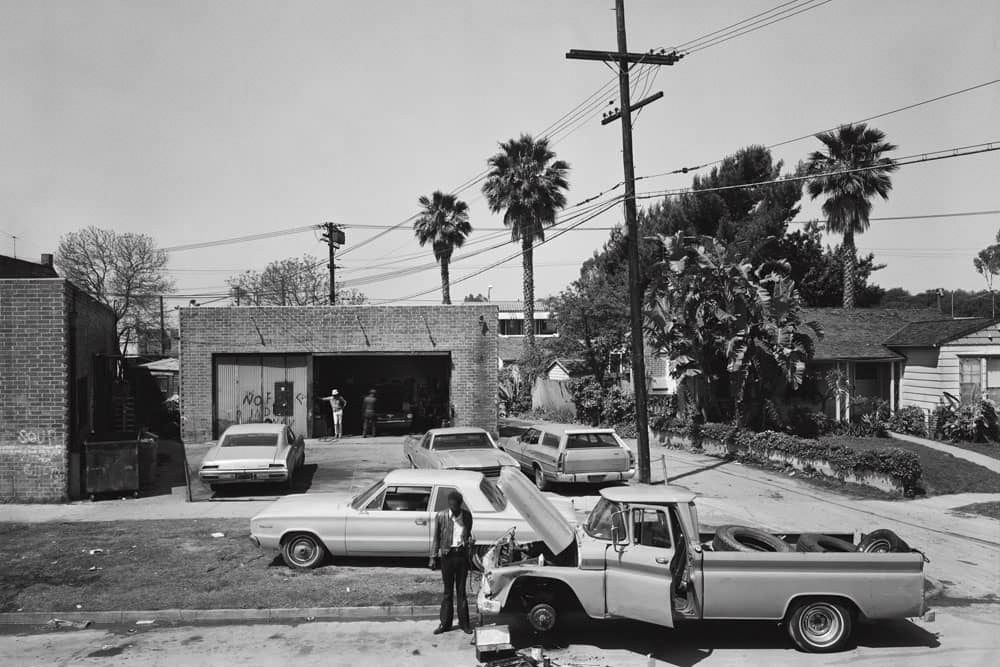

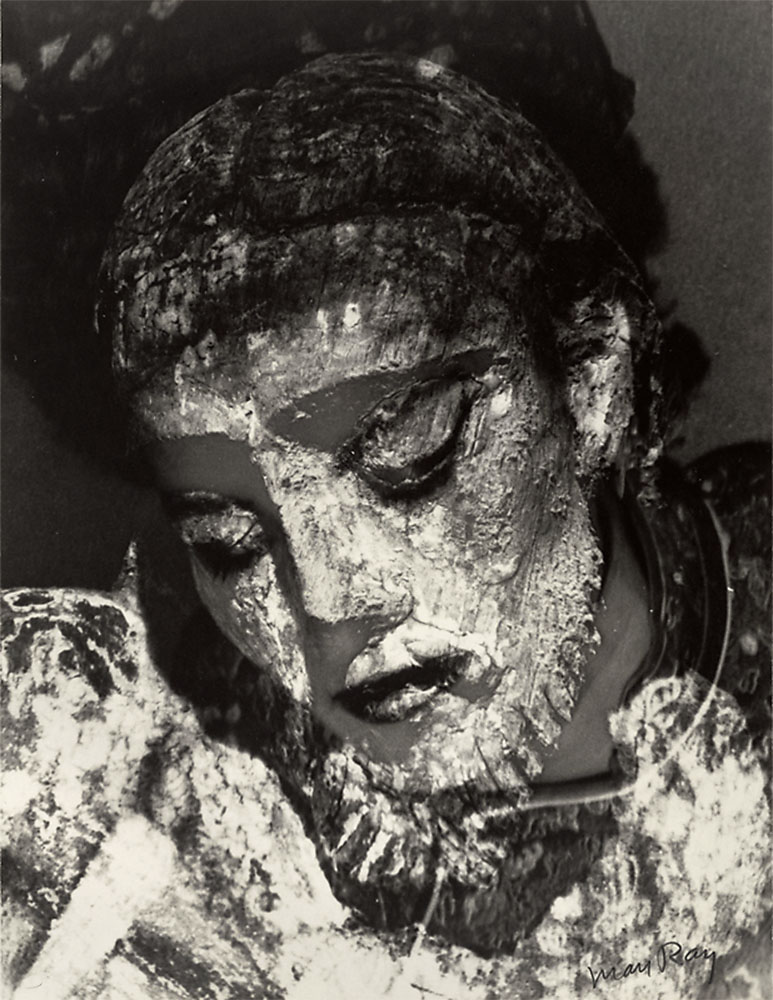
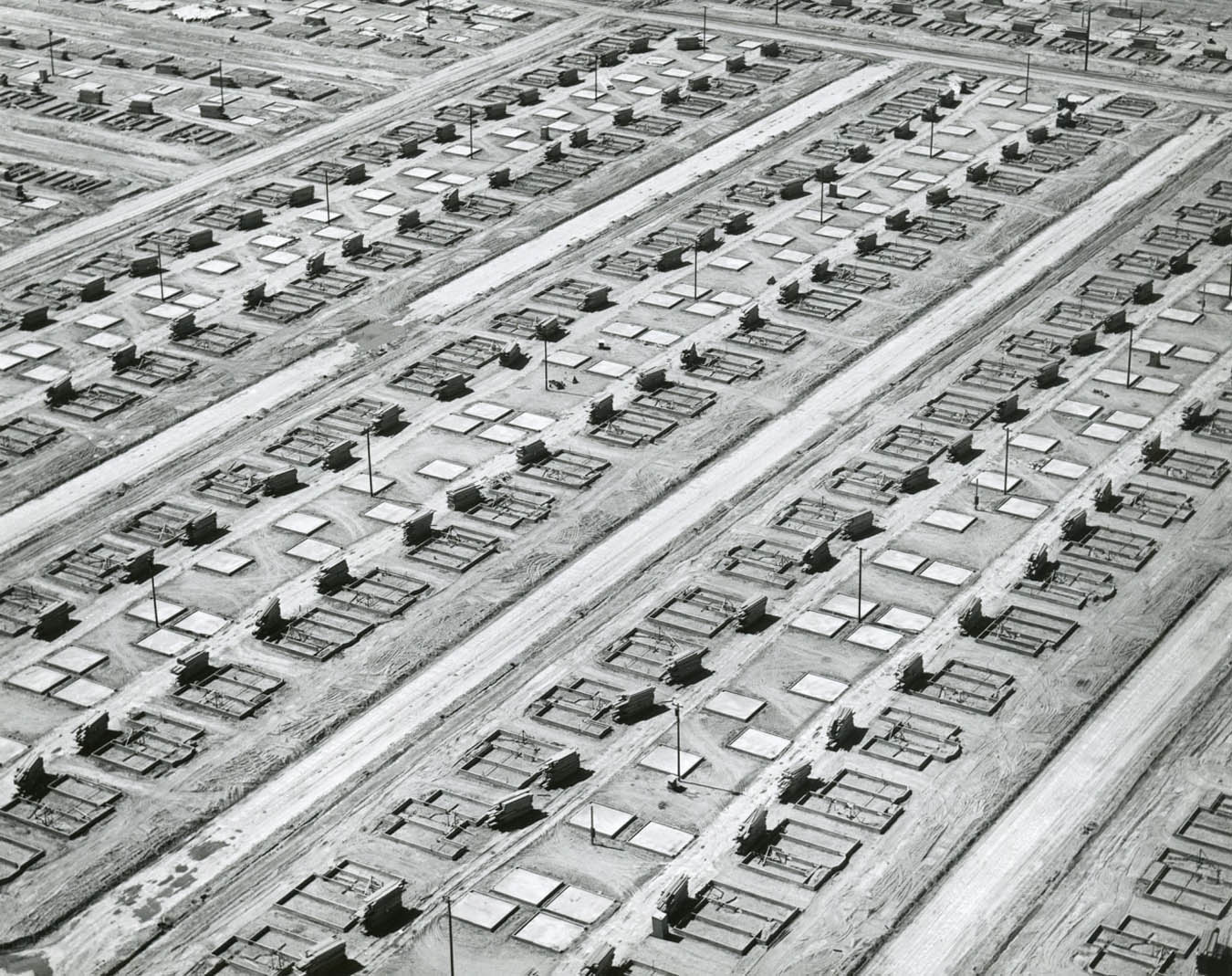
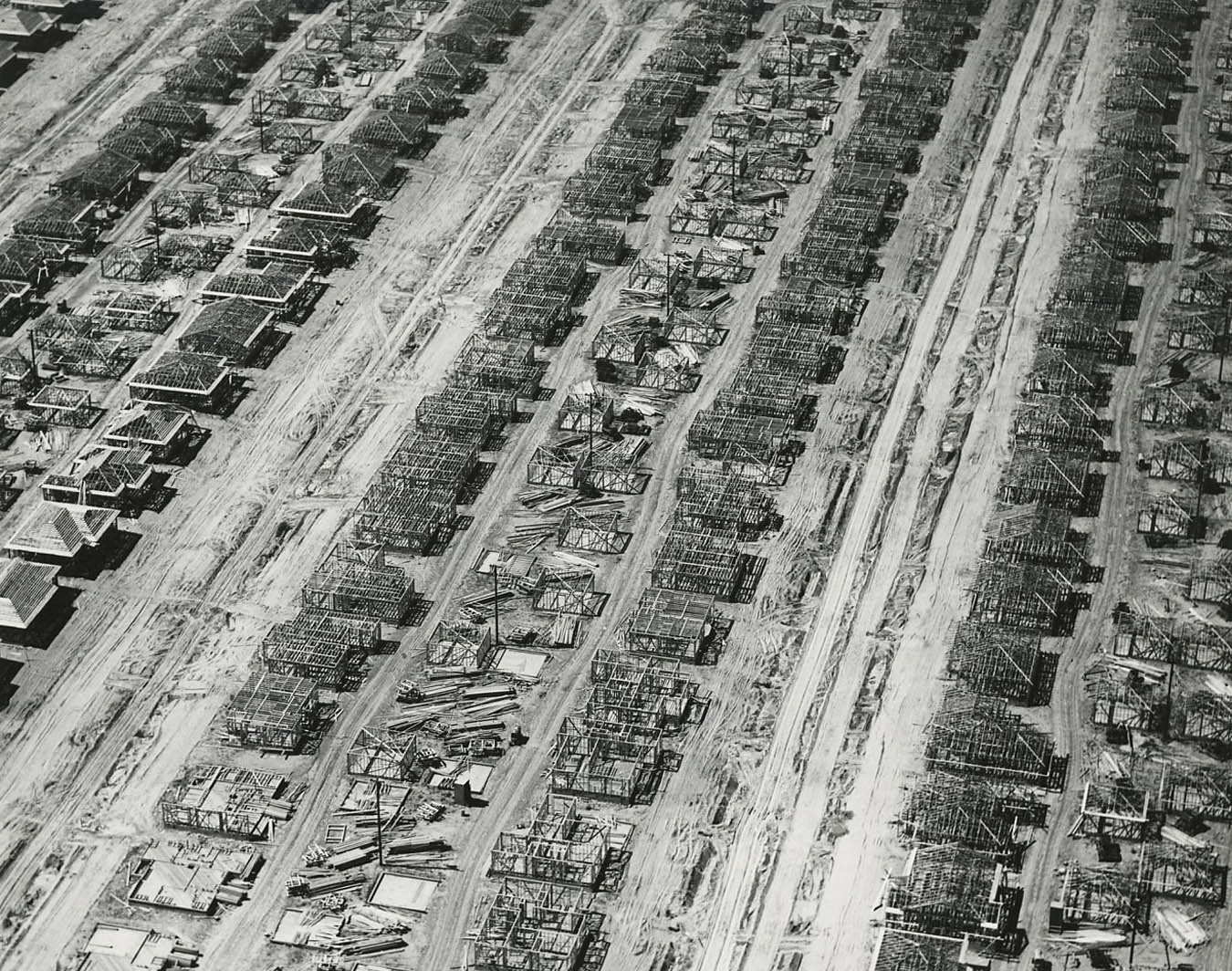
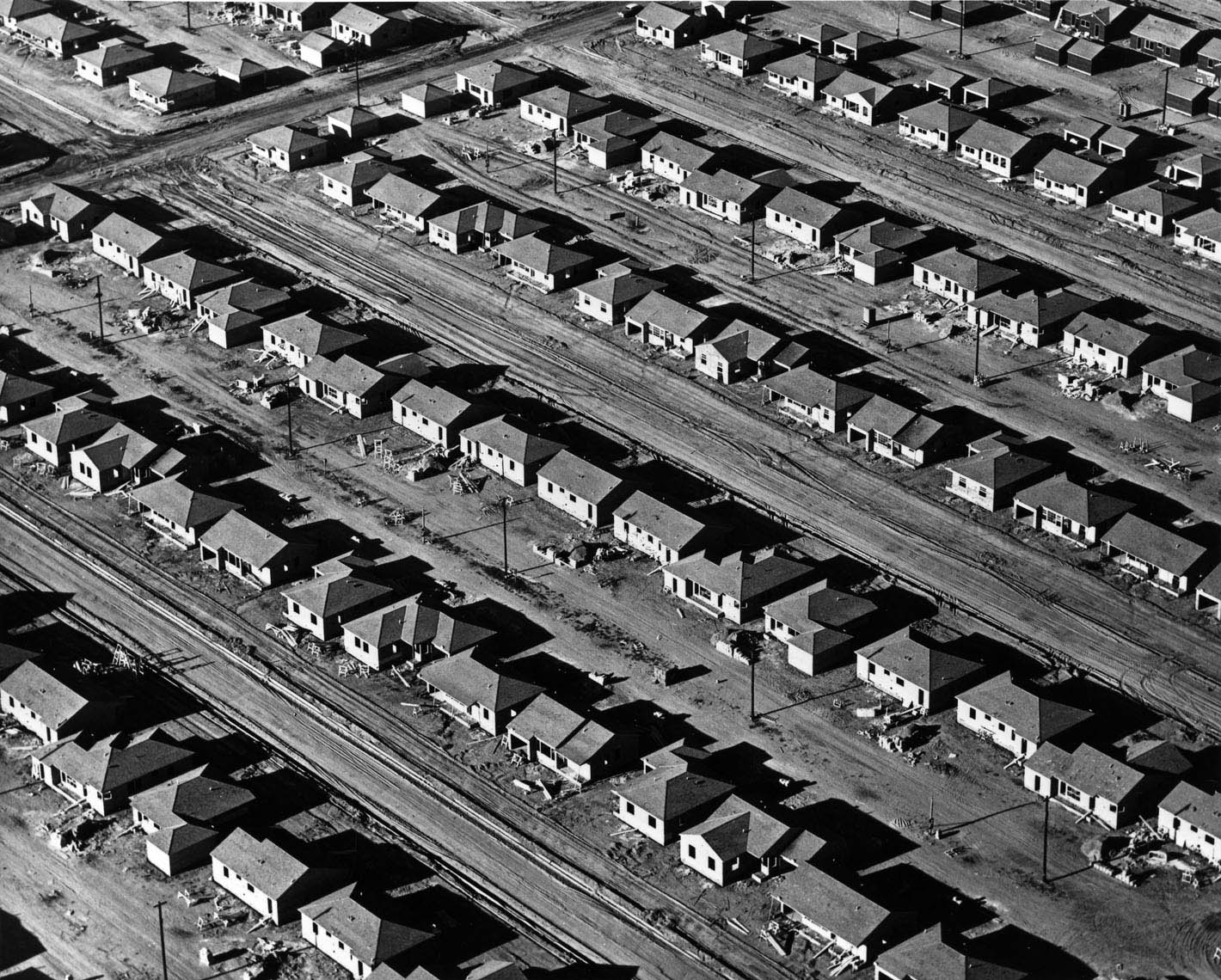
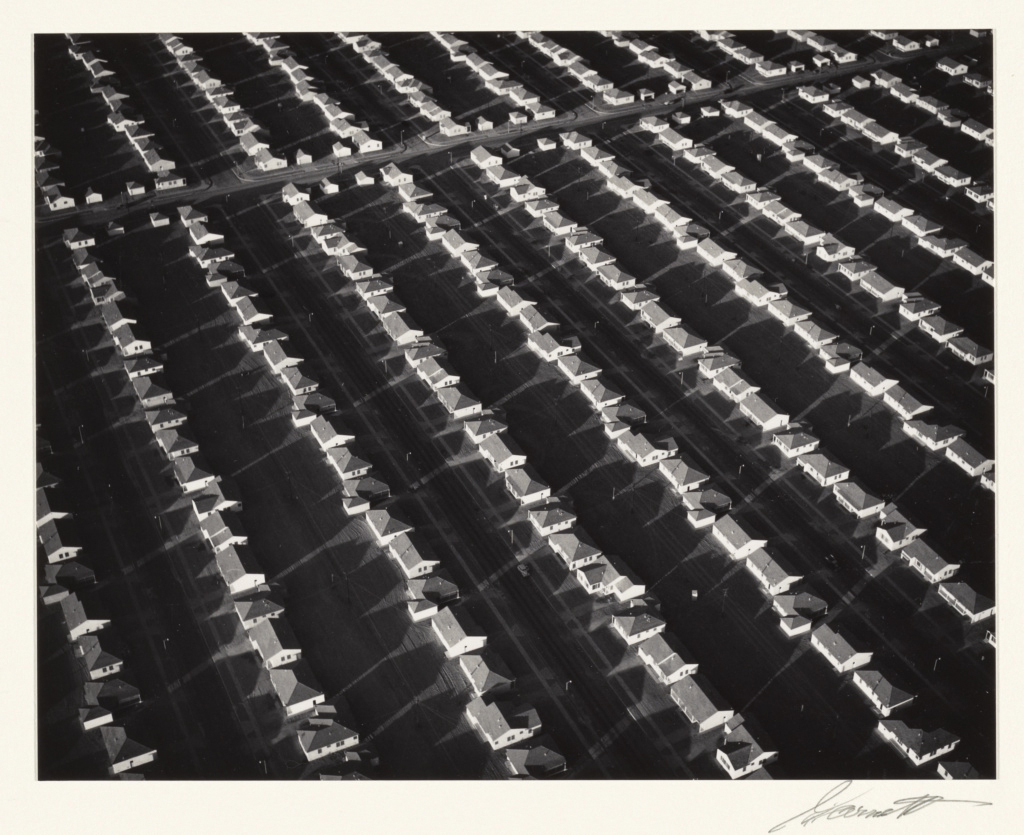
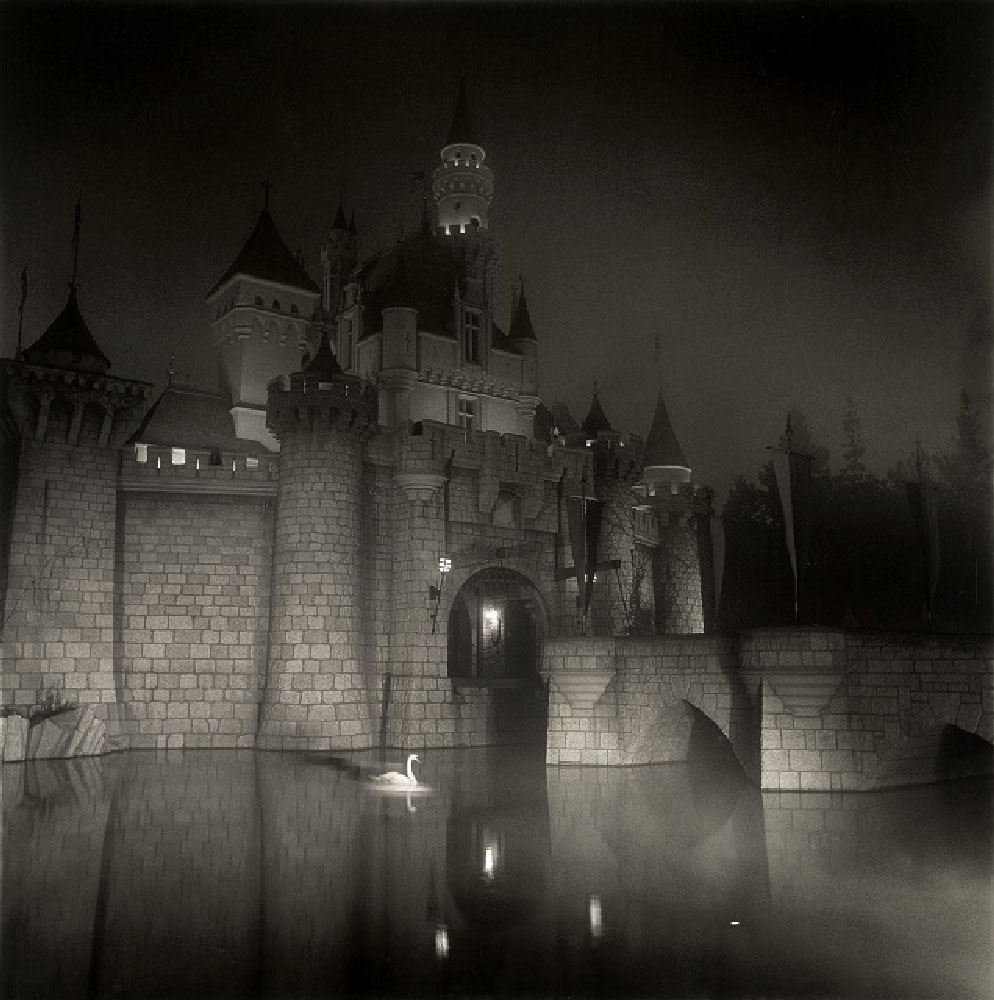
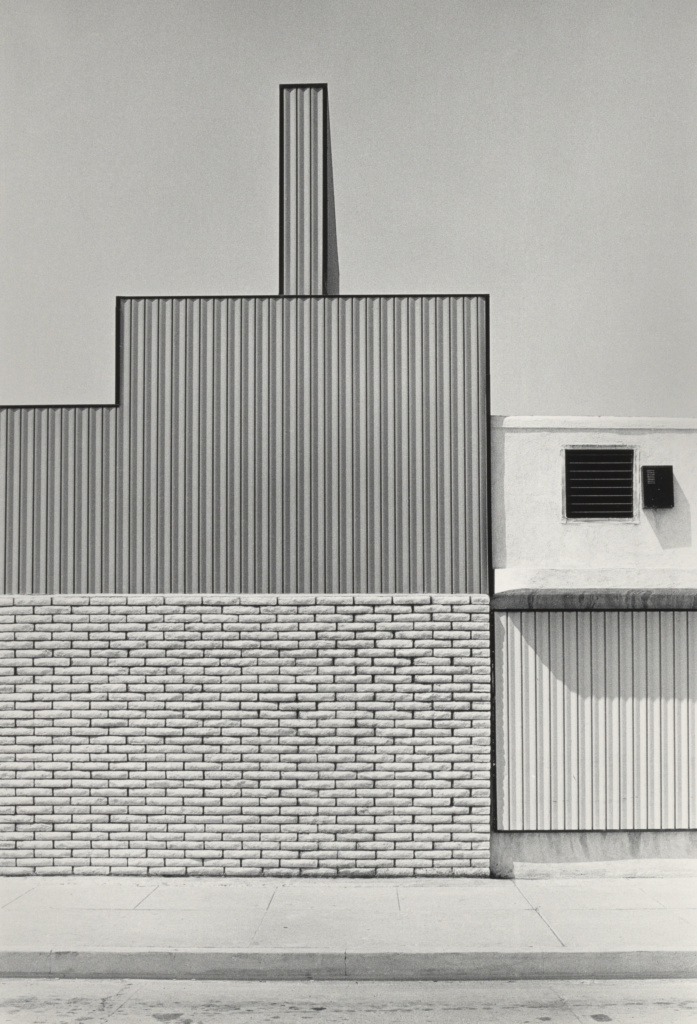

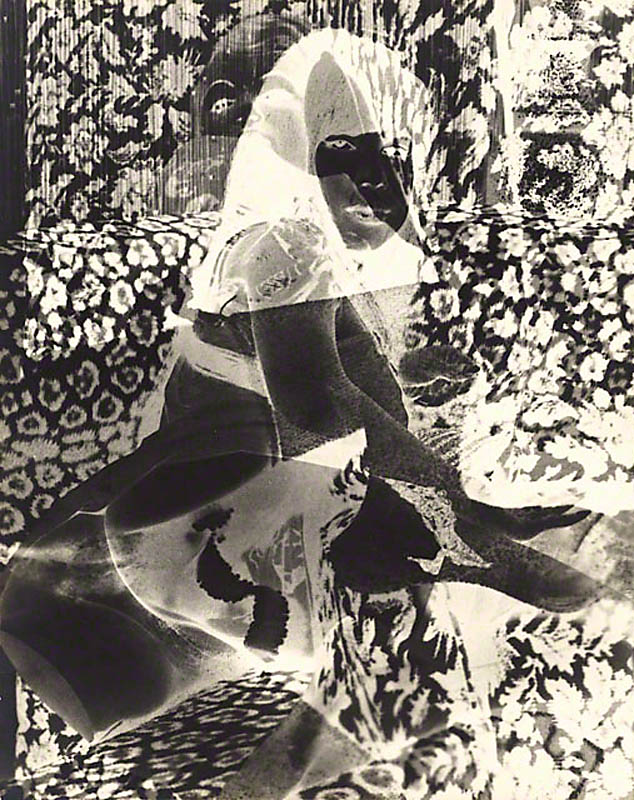
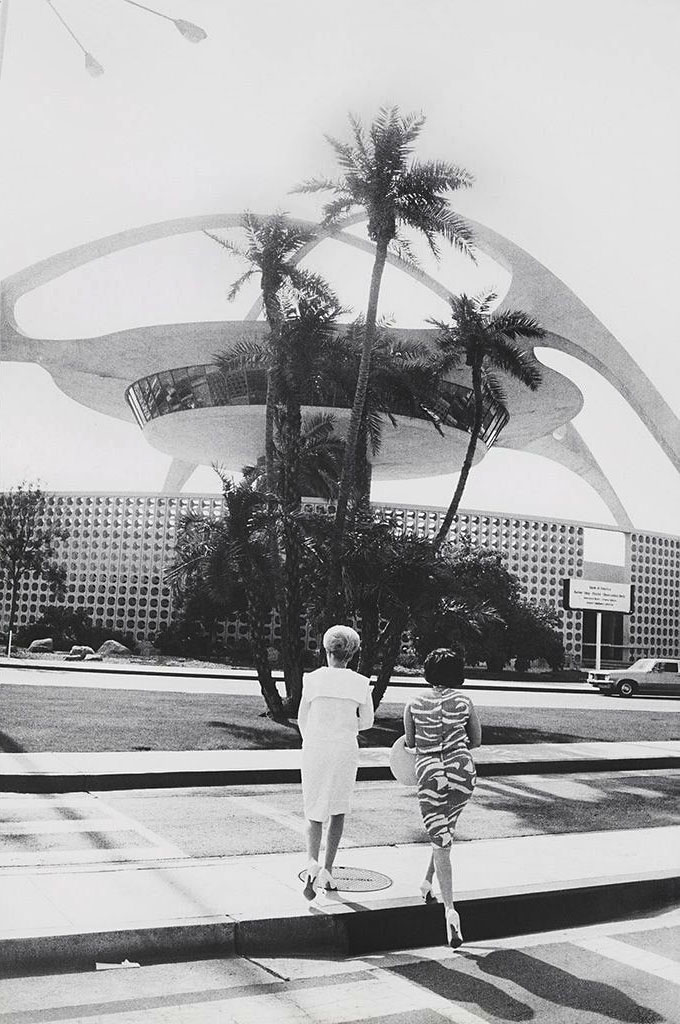
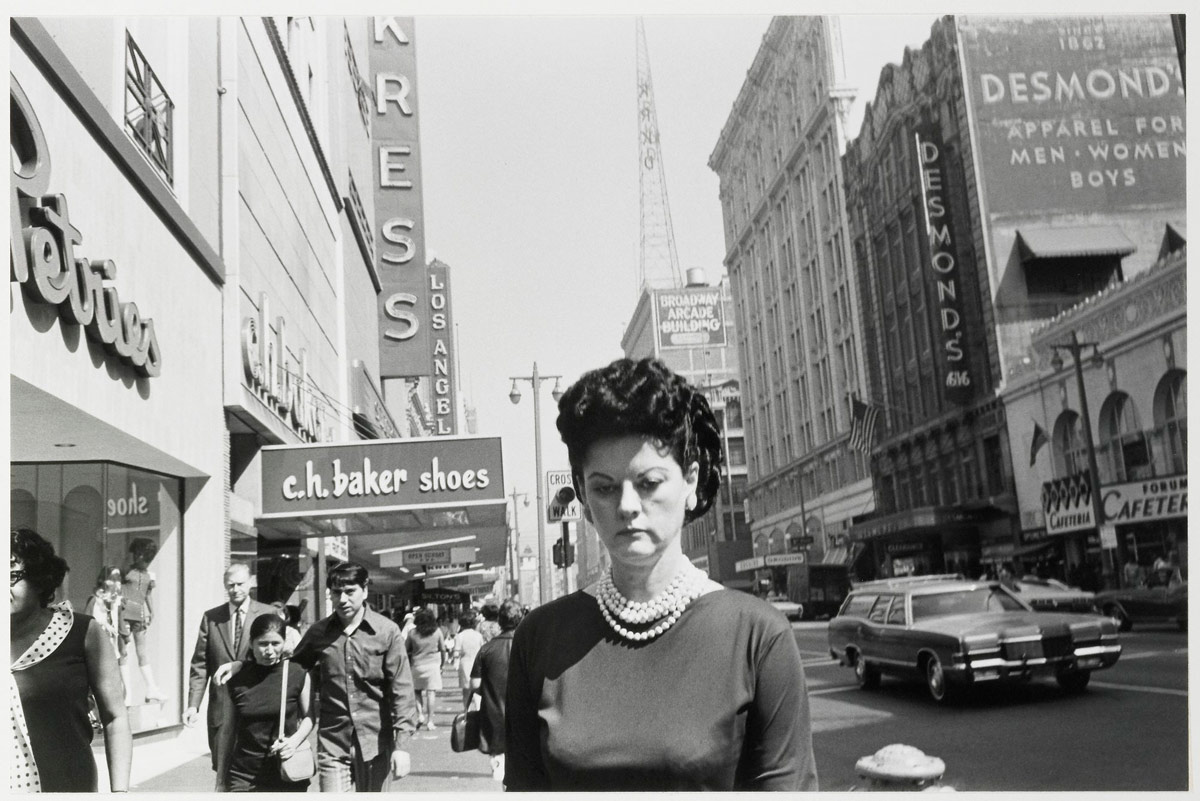


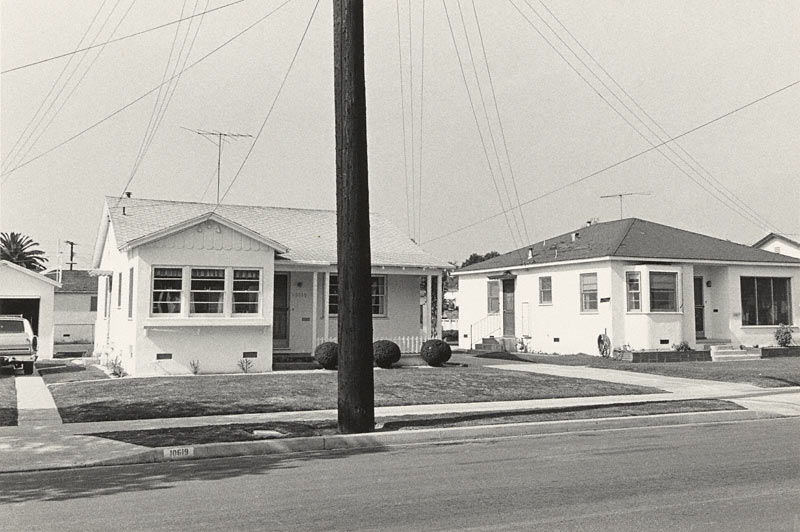
 x 19’2” (D) (297 cm x 862 cm x 584 cm)
![Lyonel Feininger (American, 1871-1956) 'Untitled [Street Scene, Double Exposure, Halle]' 1929-1930](https://artblart.com/wp-content/uploads/2012/02/street-scene-double-exposure-halle-1929-1930.jpg "Lyonel Feininger (American, 1871-1956) 'Untitled [Street Scene, Double Exposure, Halle]' 1929-1930")
![Lucia Moholy (British born Czechoslovakia, 1894-1989) 'Untitled [Southern View of Newly Completed Bauhaus, Dessau]' 1926](https://artblart.com/wp-content/uploads/2012/03/lucia-moholy-southern-view-of-newly-completed-bauhaus.jpg "Lucia Moholy (British born Czechoslovakia, 1894-1989) 'Untitled [Southern View of Newly Completed Bauhaus, Dessau]' 1926")
![Lyonel Feininger (American, 1871-1956) 'Untitled [Train Station, Dessau]' 1928-1929](https://artblart.com/wp-content/uploads/2012/02/gm_326238ex1.jpg "Lyonel Feininger (American, 1871-1956) 'Untitled [Train Station, Dessau]' 1928-1929")

![Lyonel Feininger (American, 1871-1956) 'Untitled [Night View of Trees and Street Lamp, Burgkühnauer Allee, Dessau]' 1928](https://artblart.com/wp-content/uploads/2012/02/night-view-of-trees-and-streetlamp-burgkc3bchnauer-allee-dessau-1928.jpg "Lyonel Feininger (American, 1871-1956) 'Untitled [Night View of Trees and Street Lamp, Burgkühnauer Allee, Dessau]' 1928")


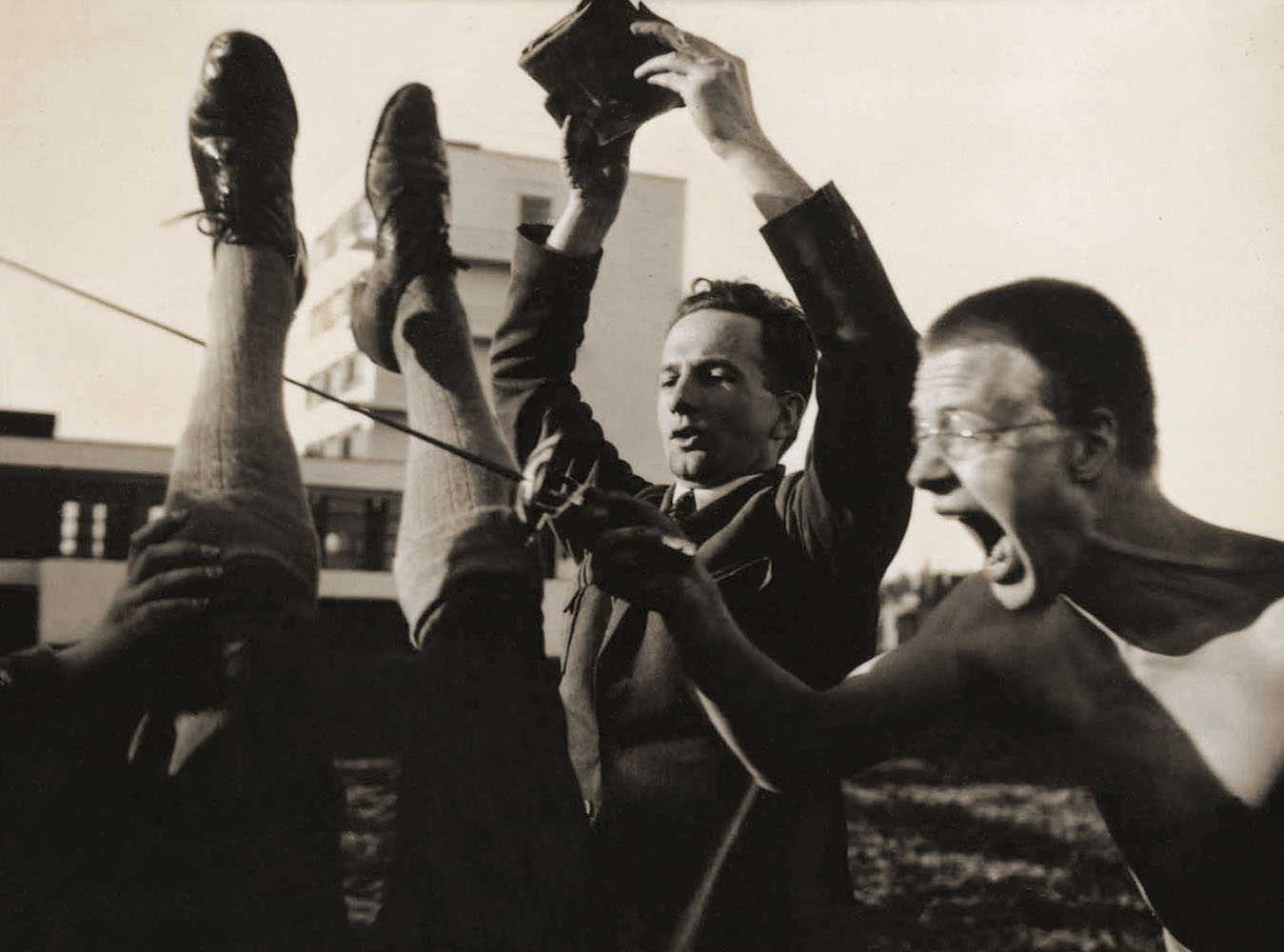
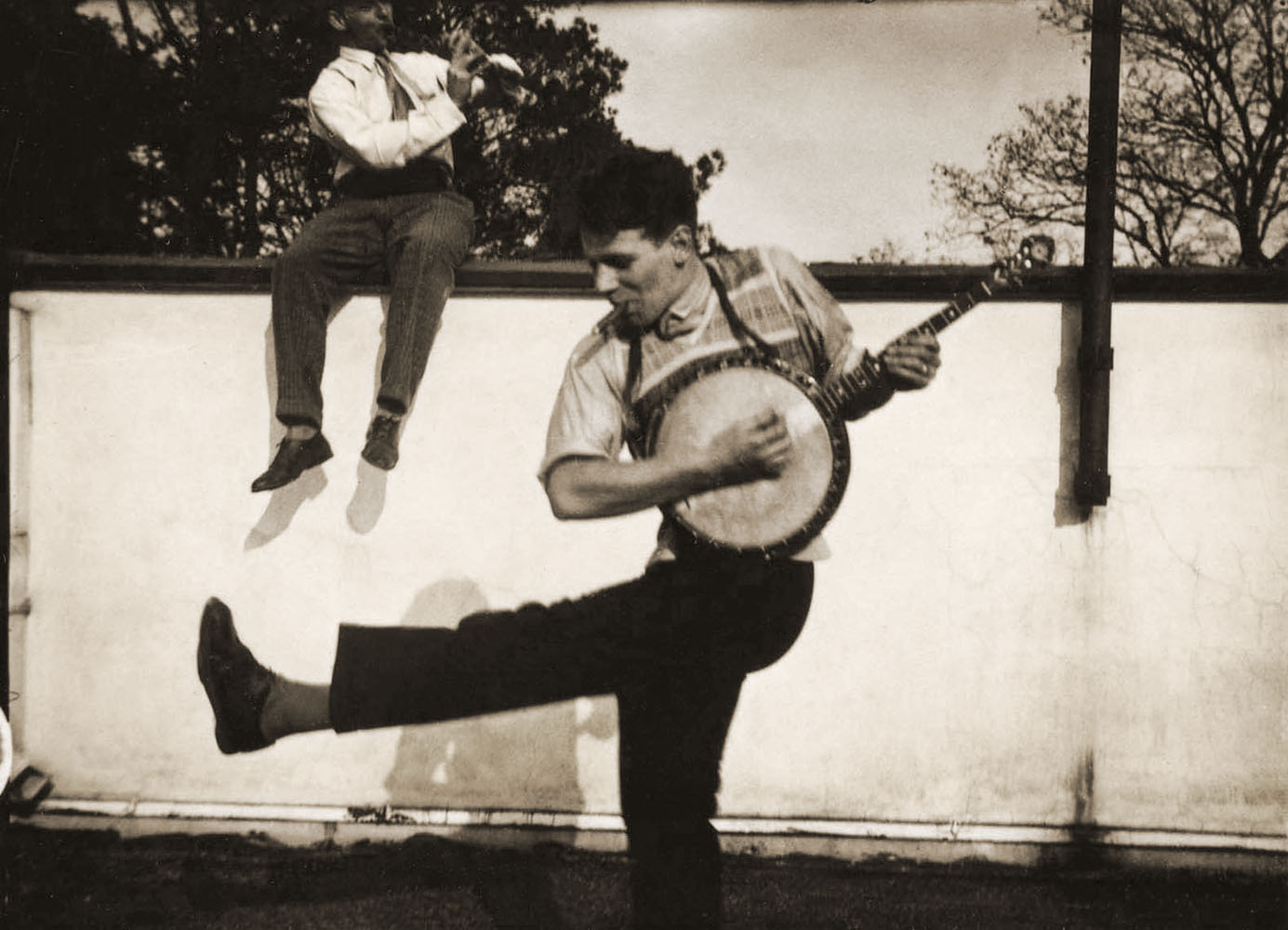
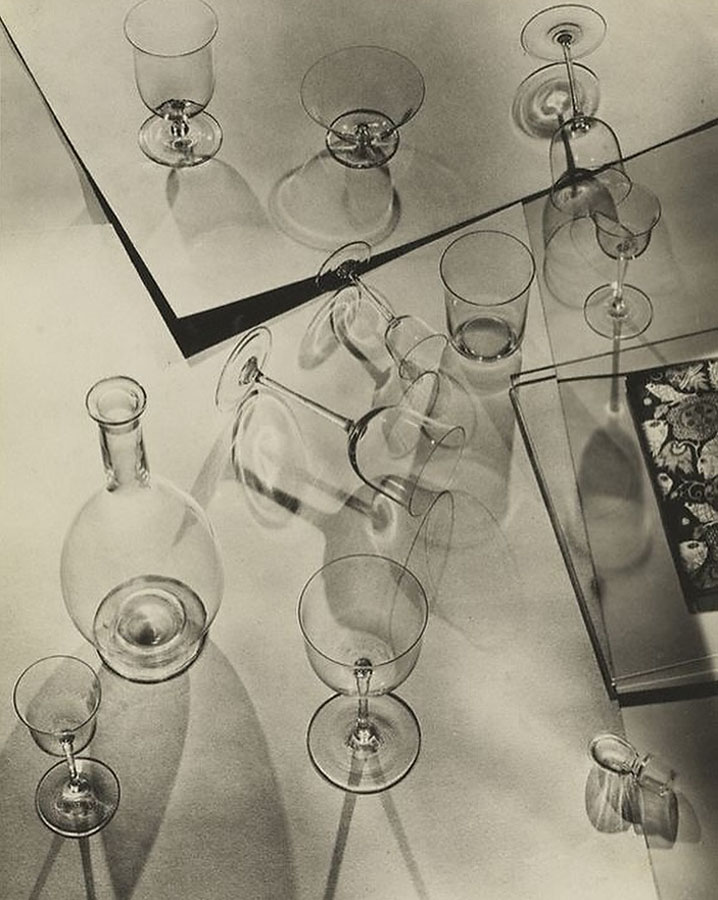

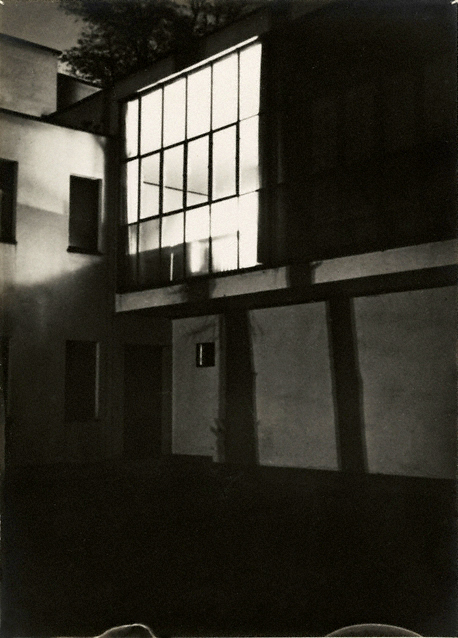

![Irene Bayer-Hecht (American, 1898-1991) 'Untitled [Students on the Shore of the Elbe River, near Dessau]' 1925](https://artblart.com/wp-content/uploads/2012/03/irene-bayer-bauhacc88usler-am-strand-der-elbe-bei-dessau-web.jpg "Irene Bayer-Hecht (American, 1898-1991) 'Untitled [Students on the Shore of the Elbe River, near Dessau]' 1925")


You must be logged in to post a comment.