Exhibition: ‘At War with the Obvious: Photographs by William Eggleston’ at The Metropolitan Museum of Art, New York

Exhibition dates: 26th February – 28th July 2013

PLEASE NOTE: THIS POSTING CONTAINS AN ART PHOTOGRAPH OF MALE NUDITY – IF YOU DO NOT LIKE PLEASE DO NOT LOOK, FAIR WARNING HAS BEEN GIVEN


William Eggleston (American, b. 1939) 'Untitled' 1971


William Eggleston (American, b. 1939)
Untitled
1971
Dye-transfer print
31.1 x 47.7cm (12 1/4 x 18 3/4 in.)
The Metropolitan Museum of Art
Purchase, Louis V. Bell, Harris Brisbane Dick, Fletcher, and Rogers Funds and Joseph Pulitzer Bequest; Elizabeth S. and Robert J. Fisher, Jennifer and Philip Maritz, and Charlotte A. and William E. Ford Gifts; The Horace W. Goldsmith Foundation Fund, through Joyce and Robert Menschel, 2012
© Eggleston Artistic Trust


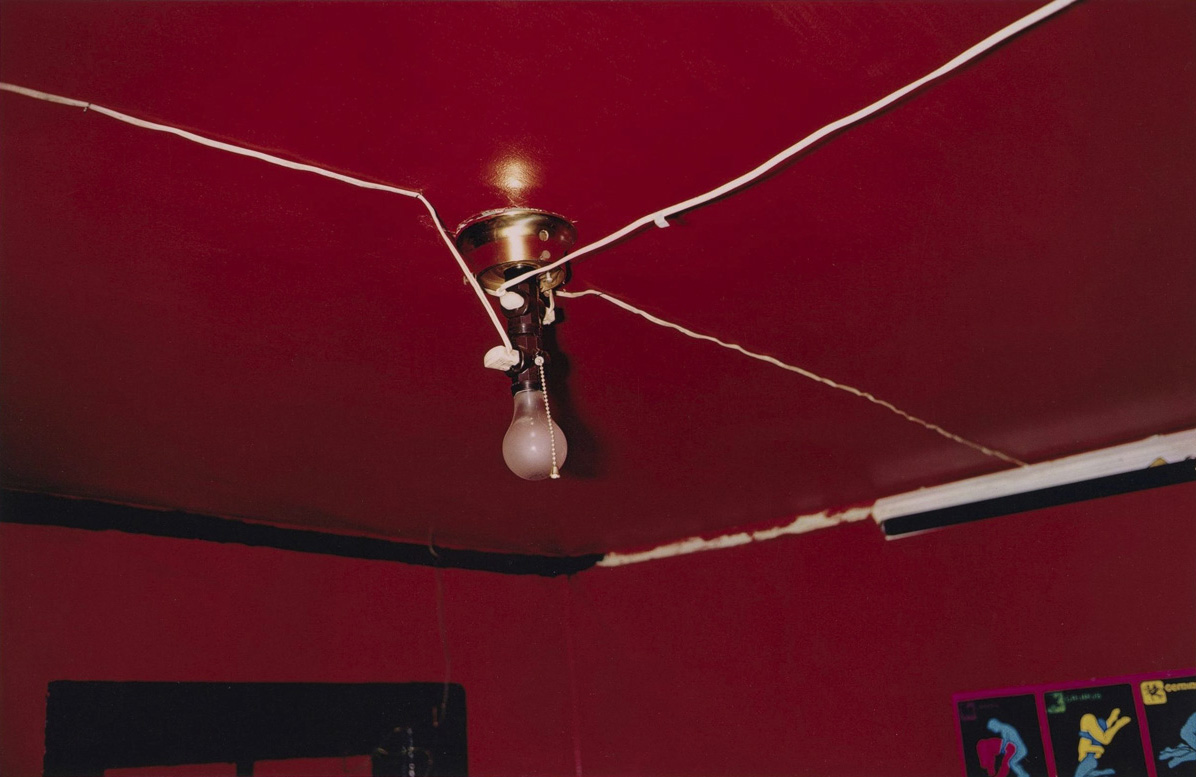
Eggleston photographs the obvious with such candour and vigour that simple things become something more: almost interior statements of his mind evidenced in the physicality of the photograph. He may be at war with the obvious, but these are complex thoughts told in simple, eloquent ways. They are only obvious if you know how to look for them.

The peaches thrown on the roof, the rusted speculum of ‘Wonder Bread’, the turned up shoes; the use of foreshortening, the low positioning of the camera (looking up or across at ground level), the formalism of colour, the light.

Eggleston understands the essence of each scene he photographs perfectly. The child’s eye-level view of the tricycle emphasising its gigantism will always be a favourite, as will the abstract expressionist colour field of Untitled (Greenwood, Mississippi) (1980, below). As with any virtuoso artist, Eggleston controls the tonality and mood of compositions beautifully: a case in point is Untitled (Memphis) (c. 1972, below) which will always remind me of a piece of Mozart piano music. It took me a while when I was growing up to like Mozart (as a concert pianist I loved the romantics such as Chopin and Debussy), but when you finally understand all the nuances contained in his music, when you finally grow to love him, you are just so full of admiration for his achievement.

Dr Marcus Bunyan


Many thankx to The Metropolitan Museum of Art for allowing me to publish the photographs in the posting. Please click on the photographs for a larger version of the image.


William Eggleston (American, b. 1939) 'Untitled (Mississippi)' c. 1970


William Eggleston (American, b. 1939)
Untitled (Mississippi)
c. 1970
Dye-transfer print
25.1 x 38.3cm (9 7/8 x 15 1/16 in)
The Metropolitan Museum of Art
Purchase, Louis V. Bell, Harris Brisbane Dick, Fletcher, and Rogers Funds and Joseph Pulitzer Bequest, and Jennifer and Philip Maritz Gift, 2012
© Eggleston Artistic Trust


William Eggleston (American, b. 1939) 'Untitled' (the artist's uncle, Adyn Schuyler Senior, with assistant Jasper Staples, in Cassidy Bayou, Sumner, Mississippi) 1969-70


William Eggleston (American, b. 1939)
Untitled (Sumner, Mississippi, Cassidy Bayou in Background)
1971 (printed 1999)
Dye-transfer print
36.8 x 55.5cm (14 1/2 x 21 7/8 in.)
The Metropolitan Museum of Art
Purchase, Louis V. Bell, Harris Brisbane Dick, Fletcher, and Rogers Funds and Joseph Pulitzer Bequest, and Elizabeth S. and Robert J. Fisher Gift, 2012
© Eggleston Artistic Trust


William Eggleston (American, b. 1939) 'Untitled, from the portfolio 14 Pictures' 1974


William Eggleston (American, b. 1939)
Untitled, from the portfolio 14 Pictures
1974
Dye-transfer print
33.1 x 48.5cm (13 1/16 x 19 1/8 in.)
The Metropolitan Museum of Art
Purchase, Louis V. Bell, Harris Brisbane Dick, Fletcher, and Rogers Funds and Joseph Pulitzer Bequest; Elizabeth S. and Robert J. Fisher, Jennifer and Philip Maritz, and Charlotte A. and William E. Ford Gifts; The Horace W. Goldsmith Foundation Fund, through Joyce and Robert Menschel, 2012
© Eggleston Artistic Trust


William Eggleston (American, b. 1939) 'Untitled (Louisiana)' 1980 (printed 1999)


William Eggleston (American, b. 1939)
Untitled (Louisiana)
1980 (printed 1999)
Dye-transfer print
30.2 x 45.3cm (11 7/8 x 17 13/16 in.)
The Metropolitan Museum of Art
Purchase, Louis V. Bell, Harris Brisbane Dick, Fletcher, and Rogers Funds and Joseph Pulitzer Bequest, Twentieth-Century Photography Fund, and Elizabeth S. and Robert J. Fisher Gift, 2012
© Eggleston Artistic Trust


William Eggleston (American, b. 1939) 'Untitled' 1974


William Eggleston (American, b. 1939)
Untitled
1974
Dye-transfer print
33.1 x 48.5cm (13 1/16 x 19 1/8 in.)
The Metropolitan Museum of Art
Purchase, Louis V. Bell, Harris Brisbane Dick, Fletcher, and Rogers Funds and Joseph Pulitzer Bequest, and Jennifer and Philip Maritz Gift, 2012
© Eggleston Artistic Trust


William Eggleston (American, b. 1939) 'Untitled (Greenwood, Mississippi)' 1980


William Eggleston (American, b. 1939)
Untitled (Greenwood, Mississippi)
1980
Dye-transfer print
29.6 x 45.5cm (11 5/8 x 17 15/16 in.)
The Metropolitan Museum of Art
Purchase, Louis V. Bell, Harris Brisbane Dick, Fletcher, and Rogers Funds and Joseph Pulitzer Bequest, and Jennifer and Philip Maritz Gift, 2012
© Eggleston Artistic Trust


The American photographer William Eggleston (born 1939) emerged in the early 1960s as a pioneer of modern colour photography. Now, 50 years later, he is arguably its greatest exemplar. At War with the Obvious: Photographs by William Eggleston at The Metropolitan Museum of Art presents the work of this idiosyncratic artist, whose influences are drawn from disparate if surprisingly complementary sources – from Walker Evans and Henri Cartier-Bresson in photography to Bach and late Baroque music. Many of Eggleston’s most recognised photographs are lush studies of the social and physical landscape found in the Mississippi delta region that is his home. From this base, the artist explores the awesome and, at times, the raw visual poetics of the American vernacular.

The exhibition celebrates the fall 2012 acquisition of 36 dye transfer prints by Eggleston that dramatically expanded the Metropolitan Museum’s collection of this major American artist’s work. It added the entire suite of Eggleston’s remarkable first portfolio of colour photographs, 14 Pictures (1974), 15 superb prints from his landmark book, William Eggleston’s Guide (1976), and seven other key photographs that span his career.

Eggleston wrote that he was “at war with the obvious,” a statement well-represented in works such as Untitled [Peaches!] (1970) – a roadside snapshot of rocks and half-eaten fruit thrown atop a sunlit corrugated tin roof capped with a sign announcing “PEACHES!” The exhibition features a number of the artist’s signature images, including Untitled [Greenwood, Mississippi] (1980), a study that takes full advantage of the chromatic intensity of the dye-transfer colour process that, until Eggleston appropriated it in the 1960s, had been used primarily by commercial photographers for advertising product photography; and Untitled [Memphis] (1970), an iconic study of a child’s tricycle seen from below. It was the cover image of the artist’s seminal book William Eggleston’s Guide, which accompanied his landmark show at the Museum of Modern Art in 1976.

As much as Eggleston was influenced by various sources, he, too, has proved influential. His inventive photographs of commonplace subjects now endure as touchstones for generations of artists, musicians, and filmmakers from Nan Goldin to David Byrne, the Coen brothers, and David Lynch.

Press release from The Metropolitan Museum of Art


William Eggleston (American, b. 1939) 'Untitled (Memphis)' 1970


William Eggleston (American, b. 1939)
Untitled (Memphis)
1970
Dye-transfer print
30.7 x 43.8cm (12 1/16 x 17 1/4 in.)
The Metropolitan Museum of Art
Purchase, Louis V. Bell, Harris Brisbane Dick, Fletcher, and Rogers Funds and Joseph Pulitzer Bequest; Louis V. Bell Fund; Elizabeth S. and Robert J. Fisher, Jennifer and Philip Maritz, and Charlotte A. and William E. Ford Gifts, 2012
© Eggleston Artistic Trust


William Eggleston (American, b. 1939) 'Untitled' 1974


William Eggleston (American, b. 1939)
Untitled
1974
Dye-transfer print
33.1 x 48.5cm (13 1/16 x 19 1/8 in.)
The Metropolitan Museum of Art
Purchase, Louis V. Bell, Harris Brisbane Dick, Fletcher, and Rogers Funds and Joseph Pulitzer Bequest, and Jennifer and Philip Maritz Gift, 2012
© Eggleston Artistic Trust


William Eggleston (American, b. 1939) 'Untitled' 1974


William Eggleston (American, b. 1939)
Untitled
1974
Dye-transfer print
33.1 x 48.5cm (13 1/16 x 19 1/8 in.)
The Metropolitan Museum of Art
Purchase, Louis V. Bell, Harris Brisbane Dick, Fletcher, and Rogers Funds and Joseph Pulitzer Bequest, and Jennifer and Philip Maritz Gift, 2012
© Eggleston Artistic Trust


William Eggleston (American, b. 1939) 'Untitled' 1974


William Eggleston (American, b. 1939)
Untitled
1974
Dye-transfer print
33.1 x 48.5cm (13 1/16 x 19 1/8 in.)
The Metropolitan Museum of Art
Purchase, Louis V. Bell, Harris Brisbane Dick, Fletcher, and Rogers Funds and Joseph Pulitzer Bequest, and Jennifer and Philip Maritz Gift, 2012
© Eggleston Artistic Trust


William Eggleston (American, b. 1939) 'Untitled' 1974


William Eggleston (American, b. 1939)
Untitled
1974
Dye-transfer print
33.1 x 48.5cm (13 1/16 x 19 1/8 in.)
The Metropolitan Museum of Art
Purchase, Louis V. Bell, Harris Brisbane Dick, Fletcher, and Rogers Funds and Joseph Pulitzer Bequest, and Jennifer and Philip Maritz Gift, 2012
© Eggleston Artistic Trust


William Eggleston (American, b. 1939) 'Untitled' 1983


William Eggleston (American, b. 1939)
Untitled
1983
Dye-transfer print
37 x 56cm (14 9/16 x 22 1/16 in.)
The Metropolitan Museum of Art
Purchase, Louis V. Bell, Harris Brisbane Dick, Fletcher, and Rogers Funds and Joseph Pulitzer Bequest, and Jennifer and Philip Maritz Gift, 2012
© Eggleston Artistic Trust


William Eggleston (American, b. 1939) 'Untitled' c. 1972 (printed 1986)


William Eggleston (American, b. 1939)
Untitled
c. 1972 (printed 1986)
Dye-transfer print
28.8 x 43.4cm (11 5/16 x 17 1/16 in.)
The Metropolitan Museum of Art
Purchase, Louis V. Bell, Harris Brisbane Dick, Fletcher, and Rogers Funds and Joseph Pulitzer Bequest, and Jennifer and Philip Maritz Gift, 2012
© Eggleston Artistic Trust


William Eggleston (American, b. 1939) 'Untitled' 1984


William Eggleston (American, b. 1939)
Untitled
1984
Dye-transfer print
55.9 x 37.1cm (22 x 14 5/8 in.)
The Metropolitan Museum of Art
Purchase, Louis V. Bell, Harris Brisbane Dick, Fletcher, and Rogers Funds and Joseph Pulitzer Bequest, and Jennifer and Philip Maritz Gift, 2012
© Eggleston Artistic Trust


William Eggleston (American, b. 1939) 'Untitled (Greenwood, Mississippi)' 1970 (printed 1999)


William Eggleston (American, b. 1939)
Untitled (Greenwood, Mississippi)
1970 (printed 1999)
Dye-transfer print
55 x 37.1cm (21 5/8 x 14 5/8 in.)
The Metropolitan Museum of Art
Purchase, Louis V. Bell, Harris Brisbane Dick, Fletcher, and Rogers Funds and Joseph Pulitzer Bequest, and Jennifer and Philip Maritz Gift, 2012
© Eggleston Artistic Trust


William Eggleston (American, b. 1939) 'Untitled (Memphis)' c. 1972


William Eggleston (American, b. 1939)
Untitled (Memphis)
c. 1972
Dye-transfer print
46 x 31cm (18 1/8 x 12 3/16 in.)
The Metropolitan Museum of Art
Purchase, Louis V. Bell, Harris Brisbane Dick, Fletcher, and Rogers Funds and Joseph Pulitzer Bequest; Louis V. Bell Fund; Elizabeth S. and Robert J. Fisher, Jennifer and Philip Maritz, and Charlotte A. and William E. Ford Gifts, 2012
© Eggleston Artistic Trust


William Eggleston (American, b. 1939) 'Untitled (Near Jackson, Mississippi)' c. 1970 (printed 2002)


William Eggleston (American, b. 1939)
Untitled (Near Jackson, Mississippi)
c. 1970 (printed 2002)
Dye-transfer print
60.3 x 48.9cm (23 3/4 x 19 1/4 in.)
The Metropolitan Museum of Art
Purchase, Louis V. Bell, Harris Brisbane Dick, Fletcher, and Rogers Funds and Joseph Pulitzer Bequest; Louis V. Bell Fund; Elizabeth S. and Robert J. Fisher, Jennifer and Philip Maritz, and Charlotte A. and William E. Ford Gifts, 2012
© Eggleston Artistic Trust


William Eggleston (American, b. 1939) 'Untitled (Memphis)' 1971 (printed 1999)


William Eggleston (American, b. 1939)
Untitled (Memphis)
1971 (printed 1999)
Dye-transfer print
55.4 x 36.8cm (21 13/16 x 14 1/2 in.)
The Metropolitan Museum of Art (2012.283)
Purchase, Louis V. Bell, Harris Brisbane Dick, Fletcher, and Rogers Funds and Joseph Pulitzer Bequest, Twentieth-Century Photography Fund, and Elizabeth S. and Robert J. Fisher Gift, 2012
© Eggleston Artistic Trust


The Metropolitan Museum of Art
1000 Fifth Avenue at 82nd Street
New York, New York 10028-0198
Phone: 212-535-7710

Opening hours:
Sunday – Tuesday and Thursday: 10am – 5pm
Friday and Saturday: 10am – 9pm
Closed Wednesday

The Metropolitan Museum of Art website

LIKE ART BLART ON FACEBOOK

Back to top

Exhibition: ‘Garry Winogrand’ at the San Francisco Museum of Modern Art (SFMOMA)

Exhibition dates: 9th March – 2nd June 2013


Garry Winogrand (American, 1928-1984) 'Utah (Wyoming)' 1964


Garry Winogrand (American, 1928-1984)
Utah (Wyoming)
1964
Silver gelatin photograph
© The Estate of Garry Winogrand


“Every photograph is a battle of form versus content.”


Garry Winogrand


Playing God with his film

Form and content. Form and content.

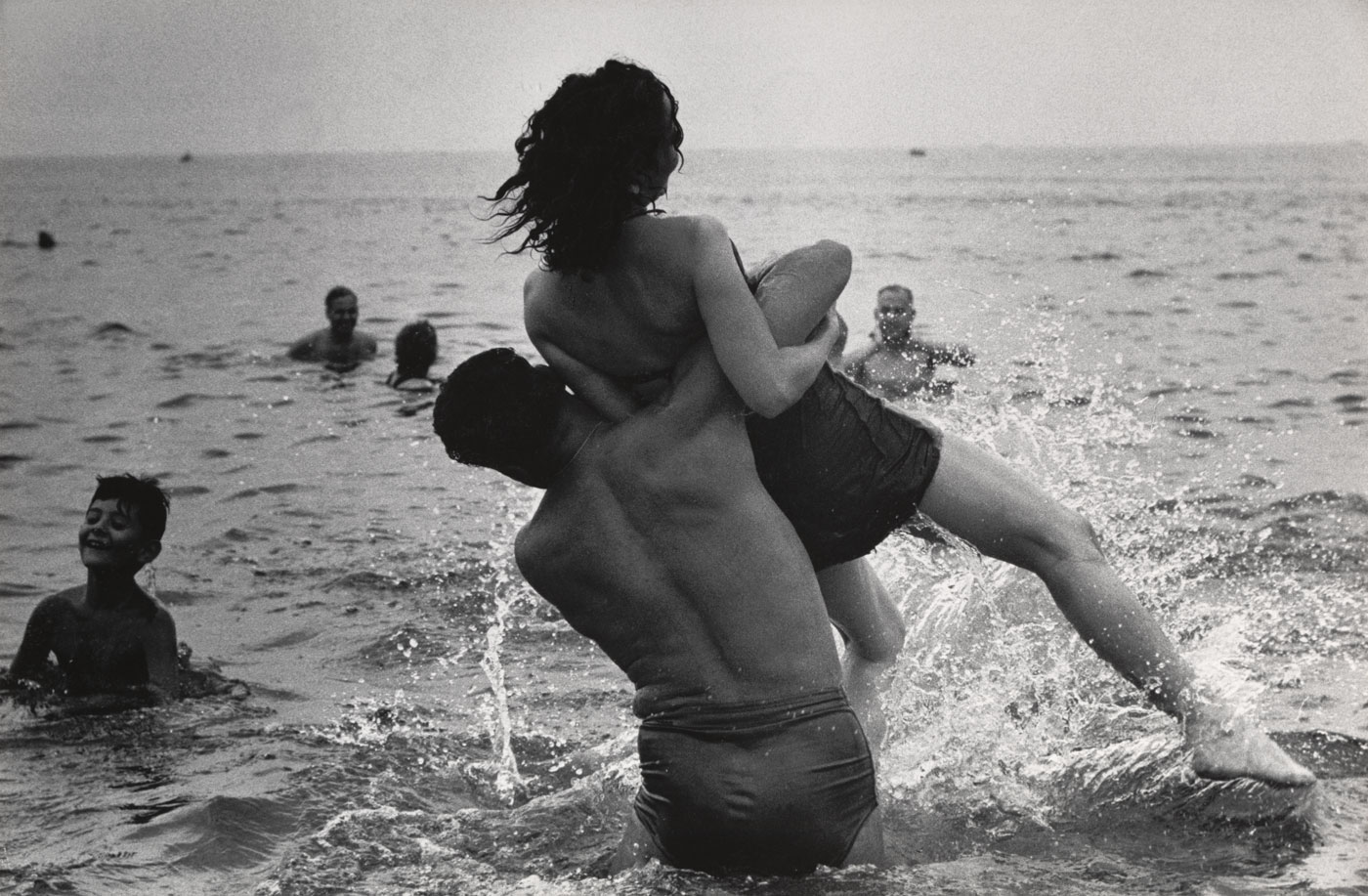
I don’t like the work of Garry Winogrand. Never have, never will. I think his work is overrated and and somewhat trite. That should stir up all the Winophiles who think that he is one of the best street photographers in the history of the medium!

At best his form is average – technical aspects adequate; composition is pretty basic including dull use of tension points within the picture frame; and framing very bland, tilted angles not withstanding. His content is nothing special either, mainly frontal shots of people walking towards him or voyeuristic shots while mingled in crowds, or a mixture of both. As he himself says, “I don’t have anything to say in any picture. My only interest in photography is to see what something looks like as a photograph.” By letting the medium describe the world around him. And therein lies part of the problem.

Winogrand just looks – and you can’t fault someone for just looking. It’s just a not very interesting looking.

If I really look at Winogrand’s work I can see that he just states what he saw in shot after shot after shot, indiscriminately. Personally, I find there is a real cynicism in his work. The photographs “describe” his own state of mind – as much as he denies that he (or his state of mind) has anything to do with the act of describing the world through photography. You see, it’s all about how the camera sees the world and not how he sees it. Hence, Winogrand hardly embraces his feelings towards the world and if he does, it is only in a half-hearted manner. For example, he goes a certain way towards the dark (as in the photographs Utah (Wyoming), 1964 above, and Los Angeles, 1964, below) and then stops. The other part of the problem is this: what you can also fault is all the hyperbole that is laid over the top of his work by curators and museums – because on close examination the work really doesn’t justify it. It’s actually not that good.

Winogrand states and summarises but doesn’t solve. He just keeps adding to the list occasionally, under duress, ordering it (photographs of women in the book Women are Beautiful, 1975):

“During his Austin years he was preparing two books, Public Relations and Women are Beautiful. Given his method of printing every image on the contact sheet for the selection process, and given his proclivity for the physical act of shooting, no wonder he wasn’t out on the street as much as he’d like. Yes he had to print, select and publish some prints to survive unless he wanted to teach the rest of his life. I don’t believe he wanted to do that. Had there been a way, I believe he would died a blissful death had he been on the streets clicking away and either letting the exposed film rot or letting someone else process and print them, and arrange the books and shows and collect the money. That’s how much he loved the physical act of shooting.

He felt at home out there, looking for the next image to expose. He was also the boss out there, playing God with his film and deciding where to frame that next battle between form and content, then the next and the next.”1


Playing God with his film…

In some ways Winogrand reminds me of both the king and the court jester. King because he could frame the battle between form and content ad infinitum and jester because he was the fool, standing in front of people, laughing, smiling, obsequious, running hither and yon to get every shot, any shot. See the video below to understand what I mean. Unlike the photographs in Robert Frank’s The Americans, his is not a poetic understanding of the world for the difference between Robert Frank and Garry Winogrand is that the former’s photographs are undeniably poetic while the latter’s are prosaic aphorisms about the world. In Winogrand’s “describing” the social landscape he photographed is reduced to lists of things: “the dislocation of urban life, the rise of the suburb with its growing alienation, the skepticism of youth, and the collusion of the press and the powerful,” rarely pursued by any obvious means and certainly not through poetic evocation.

I think that Winogrand struggled with the question – do I add to the list or do I order the list? Obviously he chose the former, for if there is no order in life there can be no order in the archive. Hence we are left with the “Unfinished” Late Work, an archive of 250,000 images that have remained virtually unknown. A boon for researchers and curators wishing to position Winogrand’s legacy “revealing for the first time the full sweep of his career… creating a vivid portrait of the artist.”

Even when the artist could not be bothered (so why should we bother).
Even when the images were never seen or acknowledged.
The artist streetwise in his omnipotent isolation.

Dr Marcus Bunyan


1/ Garza, O. C. Class Time with Garry Winogrand. 2007, p. 19 [Online] Cited 26/05/2013
www.ocgarzaphotography.com/documents/ClassTimewithGarryWinograndfinal2.pdf


“Great photography is always on the edge of failure.”

“I photograph to see what the world looks like in photographs.”

“I like to think of photographing as a two-way act of respect. Respect for the medium, by letting it do what it does best, describe. And respect for the subject, by describing as it is. A photograph must be responsible to both.”

“I don’t have anything to say in any picture. My only interest in photography is to see what something looks like as a photograph. I have no preconceptions.”


Garry Winogrand


“We quickly learned Winogrand’s technique – he walked slowly or stood in the middle of pedestrian traffic as people went by. He shot prolifically. I watched him walk a short block and shoot an entire roll without breaking stride. As he reloaded, I asked him if he felt bad about missing pictures when he reloaded. “No,” he replied, “there are no pictures when I reload.” He was constantly looking around, and often would see a situation on the other side of a busy intersection. Ignoring traffic, he would run across the street to get the picture.”


Mason Resnick


“Form and content are two keys which make a memorable street photograph. Consider “form” as the composition, framing, and technical aspects of a photograph. Consider “content” as what is actually happening in the photograph (whether it be an old couple holding hands, a boy holding two bottles of wine, or a man looking through a peep-hole)… Garry Winogrand shot with a 28mm lens for most of his life [using a Leica M4 35mm and Tri-X film pushed to 1200 ASA], which meant that for the majority of his shots he had to be quite close to his subjects (and in front of them). Therefore Winogrand wasn’t Henri Cartier-Bresson (trying to be invisible) but was actively a part of the action and immersed in the crowds. He would be very obviously taking photographs in the streets and would stick out like a sore thumb.”


Eric Kim


Garry Winogrand – Part 1 


Garry Winogrand – Fotograf


Garry Winogrand – The Man In The Crowd


Garry Winogrand (American, 1928-1984) 'Albuquerque' 1957


Garry Winogrand (American, 1928-1984)
Albuquerque
1957
Gelatin silver print
Collection SFMOMA, gift of Dr. Paul Getz
© The Estate of Garry Winogrand, courtesy Fraenkel Gallery, San Francisco


Garry Winogrand (American, 1928-1984) 'Park Avenue, New York' 1959


Garry Winogrand (American, 1928-1984)
Park Avenue, New York
1959
Gelatin silver print
© The Estate of Garry Winogrand, courtesy Fraenkel Gallery, San Francisco


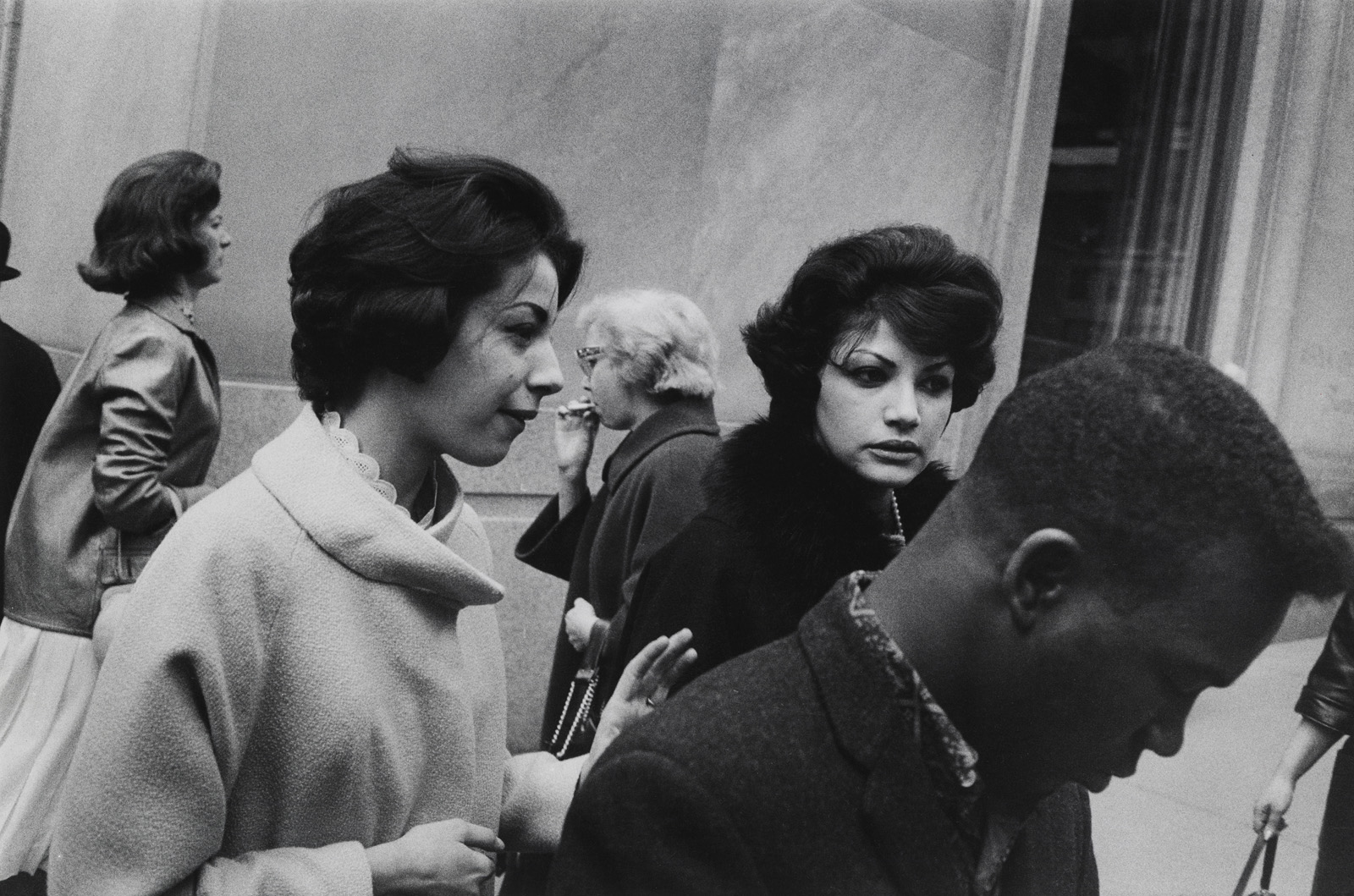
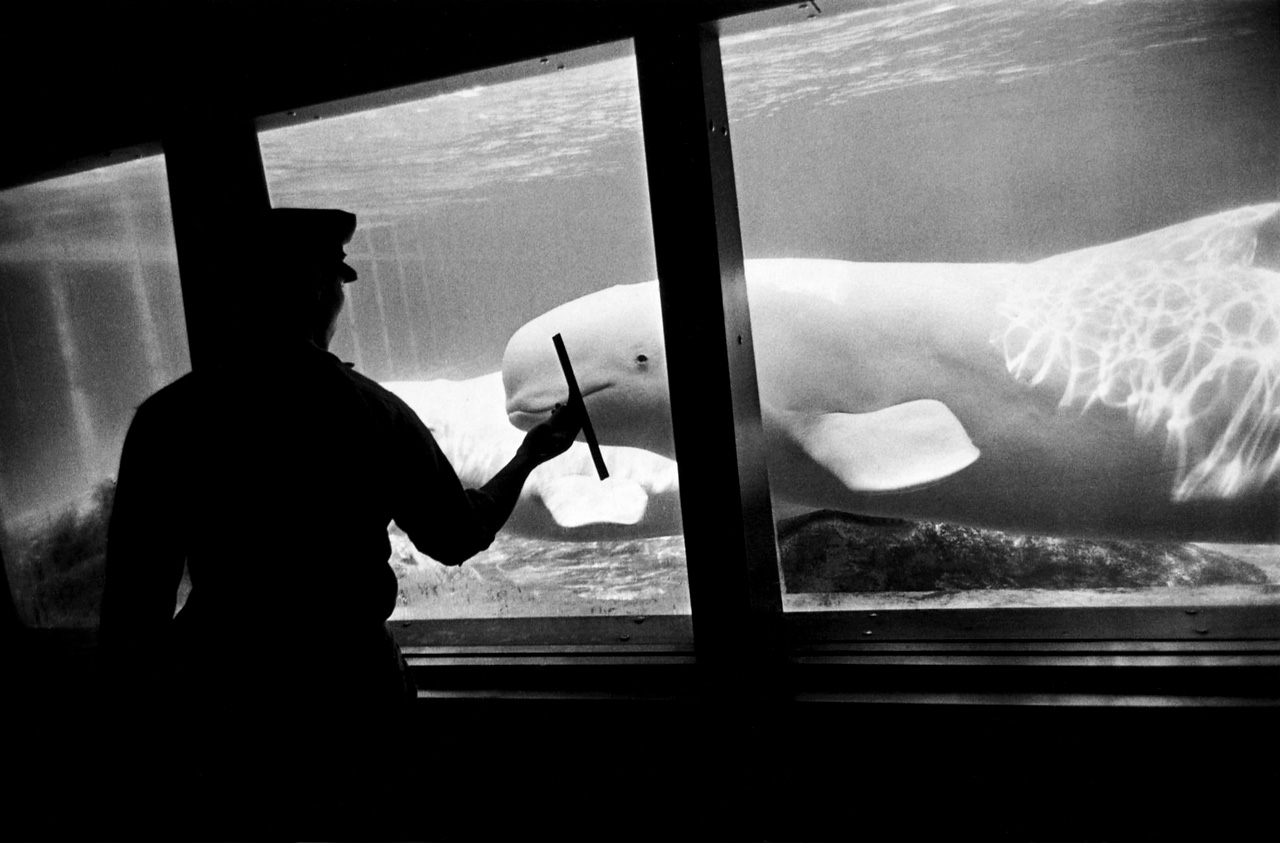
Garry Winogrand (American, 1928-1984) 'Central Park Zoo, New York' 1967


Garry Winogrand (American, 1928-1984)
Central Park Zoo, New York
1967
Gelatin silver print
© The Estate of Garry Winogrand, courtesy Fraenkel Gallery, San Francisco


Since Winogrand took this photograph of a white woman and a Black man, each holding a chimpanzee dressed in children’s clothing, many critics have noted the picture’s deliberate ambiguity – not only about the circumstances of how these figures came to be here, but also about the way Winogrand chose to frame them with his camera, cutting out most of the surrounding context.

During the 1960s, Winogrand became increasingly reluctant to speak about the “meaning” of his photographs, preferring to focus on their form and technique, in spite of their excessive narrative potential. Perhaps this was a reaction against his photojournalistic and advertising work, which was often illustrative. Winogrand would cite Susan Sontag’s influential essay “Against Interpretation” (1964), which deplored the growing impulse at the time to reduce works of art to their content in order to make them mean something. She argued, like Winogrand, in favor of the pleasure and poetry of seeing.

Anonymous. “Central Park Zoo-New York, New York,” on the Brooklyn Museum website Nd [Online] Cited 14/07/2024


Garry Winogrand (American, 1928-1984) 'Fort Worth, Texas' 1974


Garry Winogrand (American, 1928-1984)
Fort Worth, Texas
1974
Gelatin silver print
Collection SFMOMA, Accessions Committee Fund: gift of Doris and Donald Fisher and Marion E. Greene
© The Estate of Garry Winogrand, courtesy Fraenkel Gallery, San Francisco


Garry Winogrand (American, 1928-1984) 'Fort Worth, Texas' 1975


Garry Winogrand (American, 1928-1984)
Fort Worth, Texas
1975
Gelatin silver print
Collection SFMOMA, gift of Dr. Paul Getz
© The Estate of Garry Winogrand, courtesy Fraenkel Gallery, San Francisco


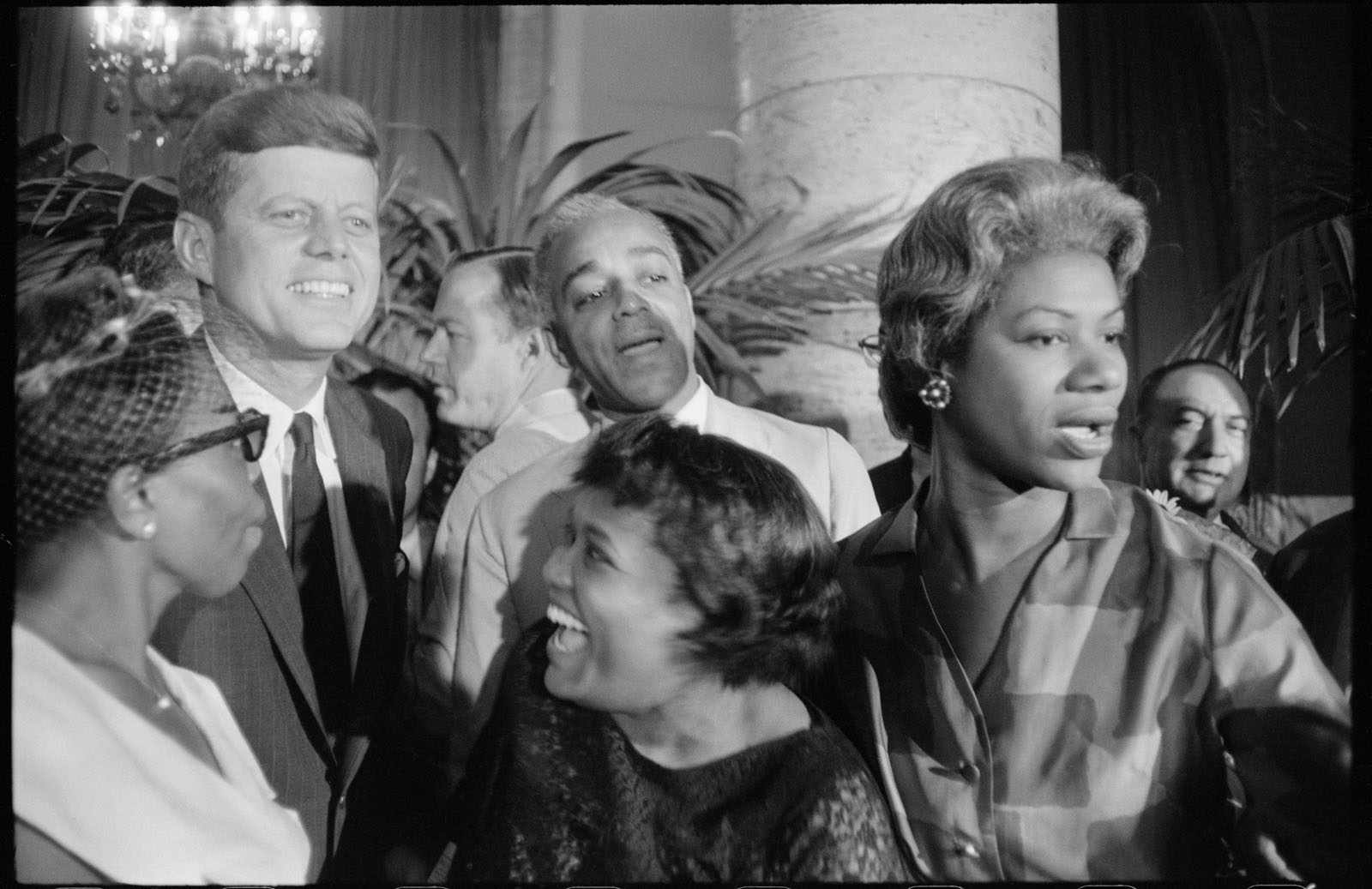
Garry Winogrand (American, 1928-1984) 'John F. Kennedy, Democratic National Convention, Los Angeles' 1960


Garry Winogrand (American, 1928-1984)
John F. Kennedy, Democratic National Convention, Los Angeles
1960
Posthumous digital reproduction from original negative
Garry Winogrand Archive, Center for Creative Photography, University of Arizona
© The Estate of Garry Winogrand, courtesy Fraenkel Gallery, San Francisco


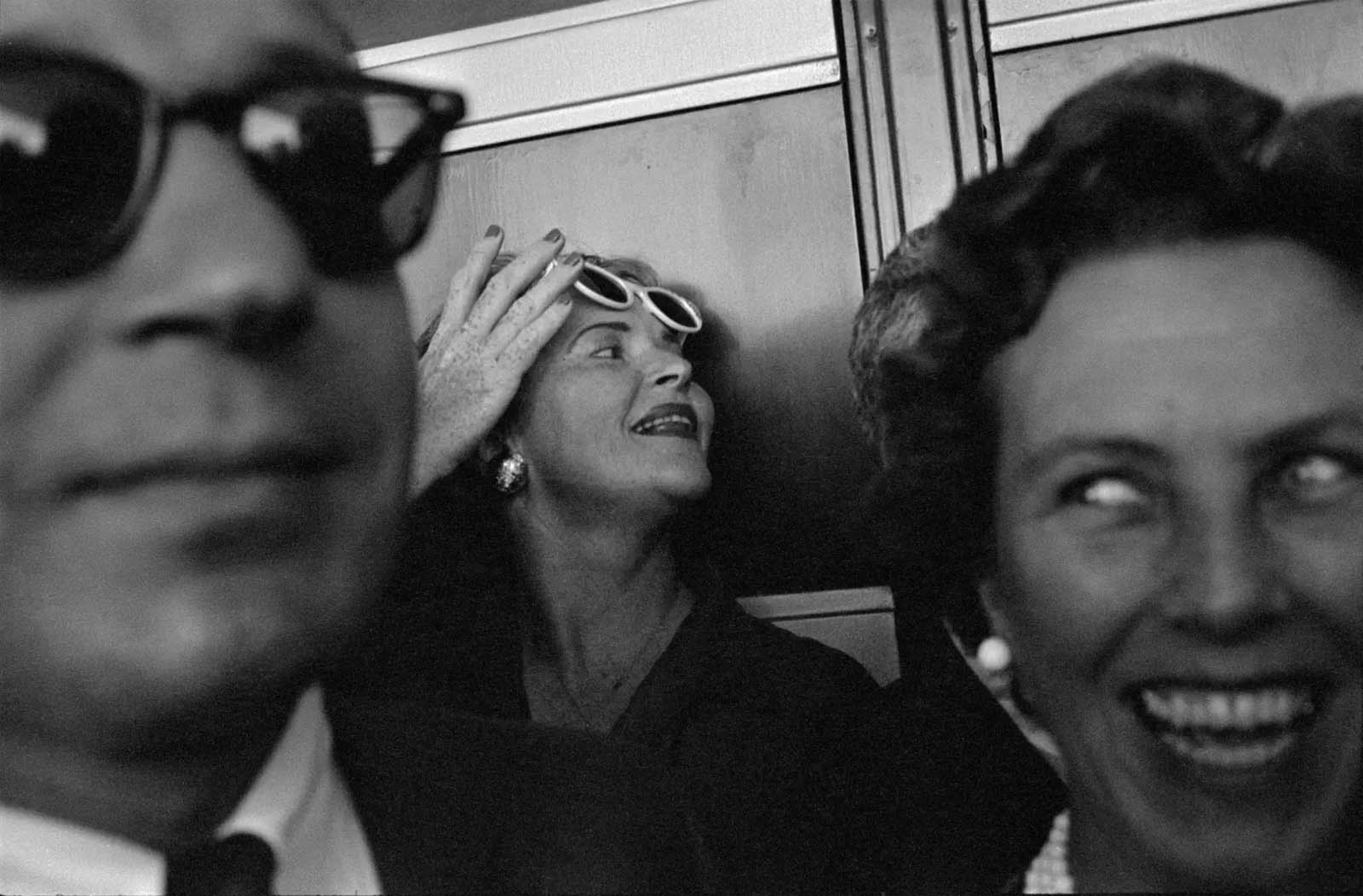
Garry Winogrand (American, 1928-1984) 'Democratic National Convention, Los Angeles' 1960


Garry Winogrand (American, 1928-1984)
Democratic National Convention, Los Angeles
1960
Silver gelatin photograph
© The Estate of Garry Winogrand


Garry Winogrand (American, 1928-1984) 'New York' c. 1960


Garry Winogrand (American, 1928-1984)
New York
c. 1960
Gelatin silver print
Garry Winogrand Archive, Center for Creative Photography, University of Arizona
© The Estate of Garry Winogrand, courtesy Fraenkel Gallery, San Francisco


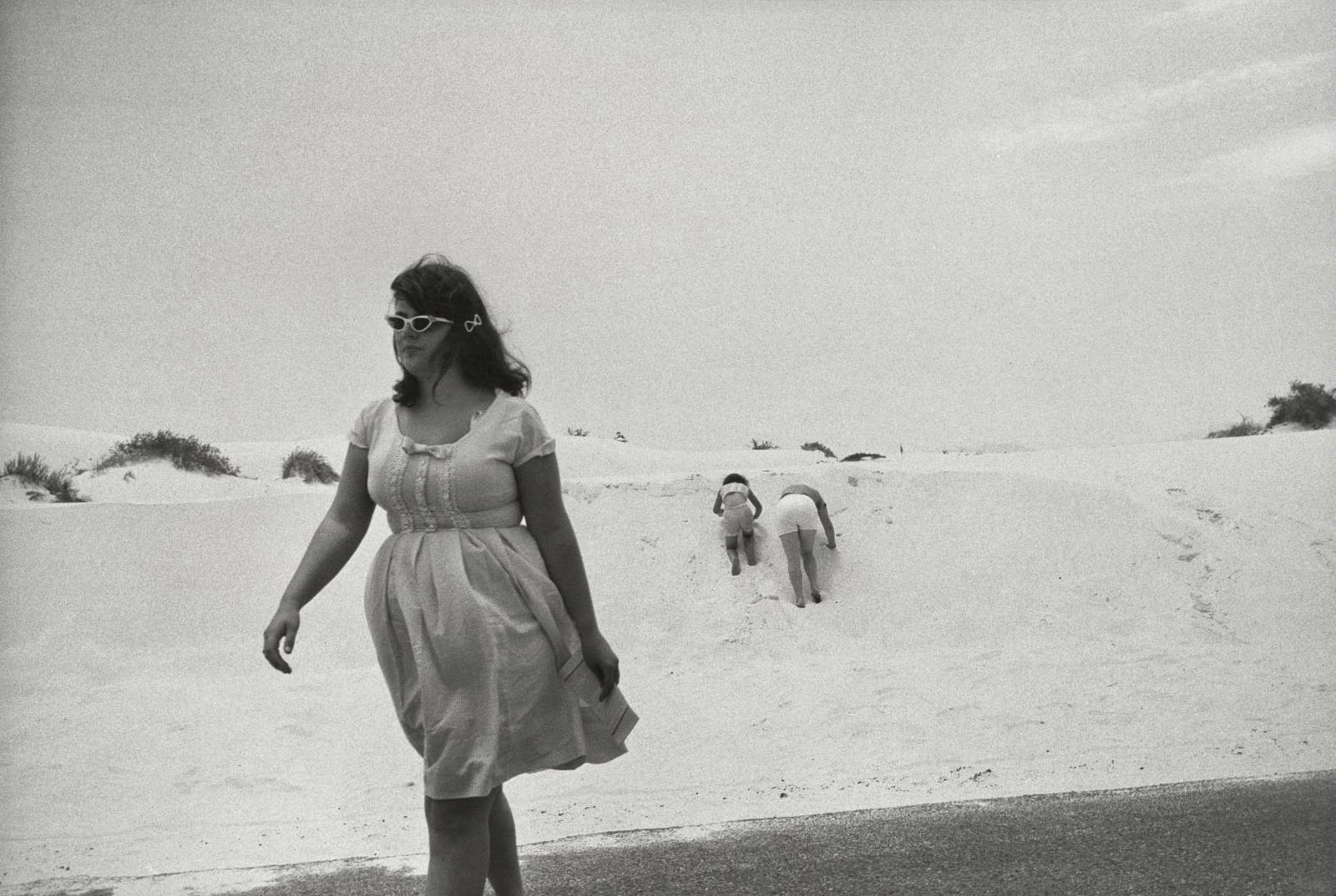
Garry Winogrand (American, 1928-1984) 'White Sands National Monument, New Mexico' 1964


Garry Winogrand (American, 1928-1984)
White Sands National Monument, New Mexico
1964
Gelatin silver print
© The Estate of Garry Winogrand, courtesy Fraenkel Gallery, San Francisco


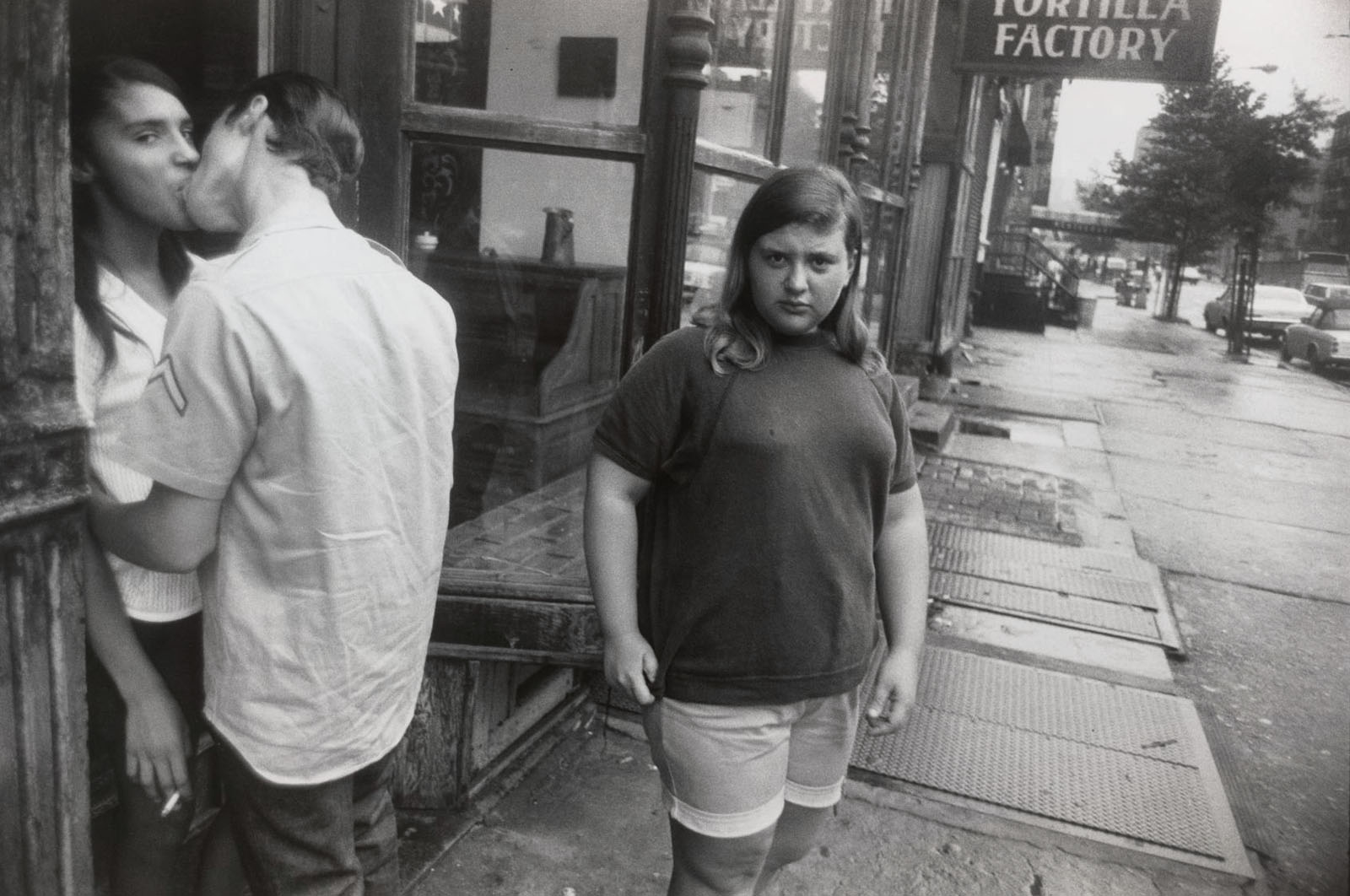
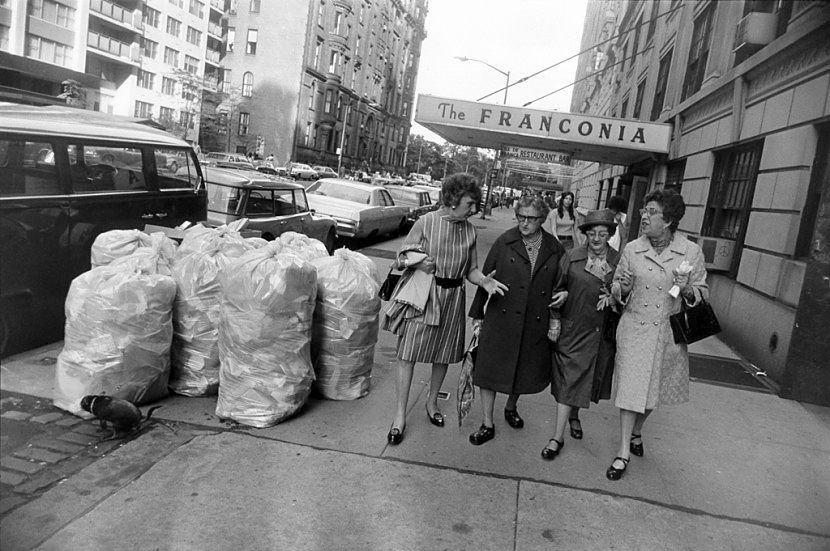
Garry Winogrand (American, 1928-1984) 'New York' 1969


Garry Winogrand (American, 1928-1984)
New York
1969
Gelatin silver print
© The Estate of Garry Winogrand, courtesy Fraenkel Gallery, San Francisco


Garry Winogrand (American, 1928-1984) 'Elliot Richardson Press Conference, Austin, Texas' 1973


Garry Winogrand (American, 1928-1984)
Elliot Richardson Press Conference, Austin, Texas
1973
Silver gelatin photograph
© The Estate of Garry Winogrand


Elliot Lee Richardson (July 20, 1920 – December 31, 1999) was an American lawyer and politician who was a member of the cabinet of Presidents Richard Nixon and Gerald Ford. As U.S. Attorney General, he was a prominent figure in the Watergate Scandal, and resigned rather than obey President Nixon’s order to fire special prosecutor Archibald Cox.

Text from Wikipedia website


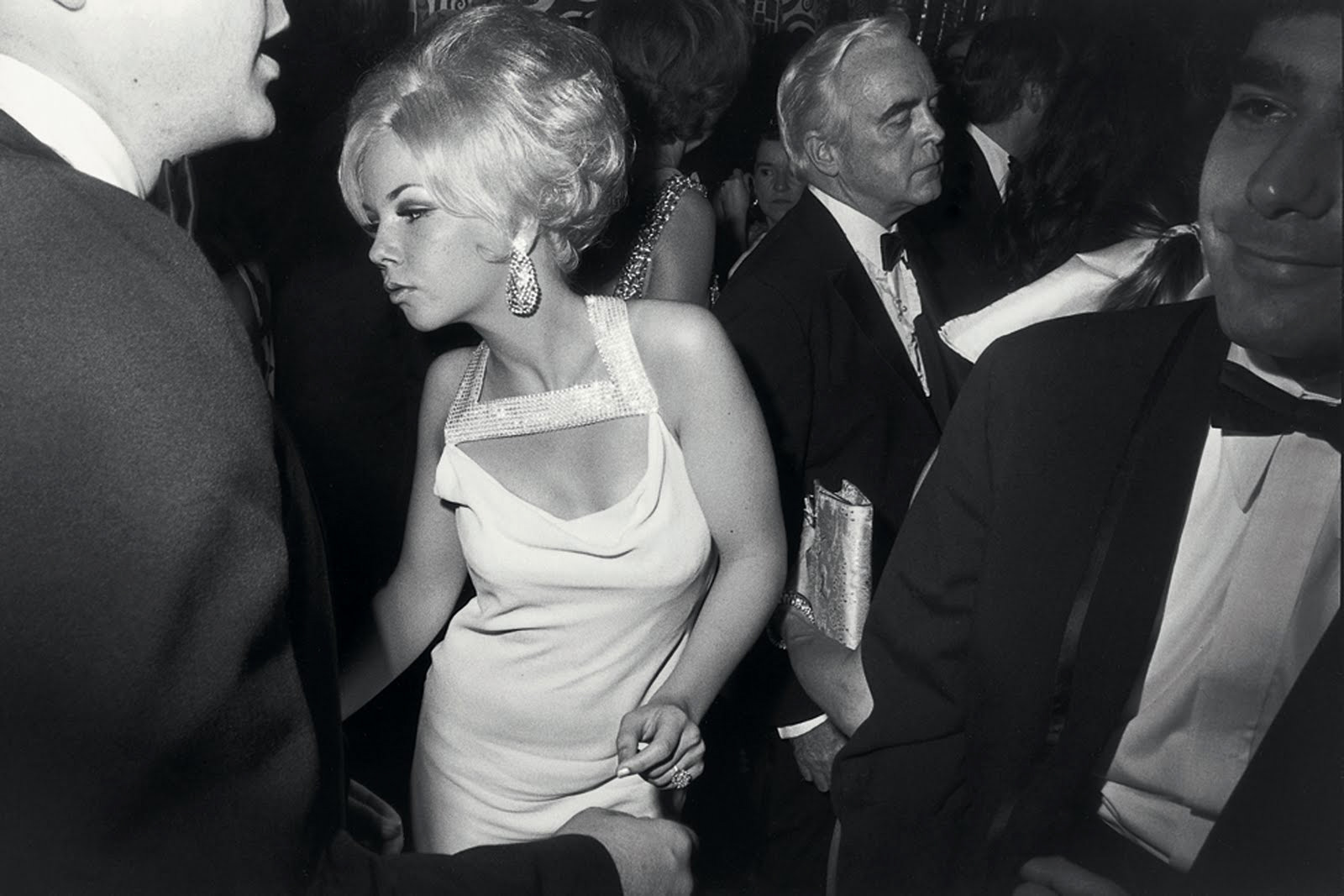
Garry Winogrand (American, 1928-1984) 'Centennial Ball, Metropolitan Museum, New York' 1969


Garry Winogrand (American, 1928-1984)
Centennial Ball, Metropolitan Museum, New York
1969
Silver gelatin photograph
© The Estate of Garry Winogrand


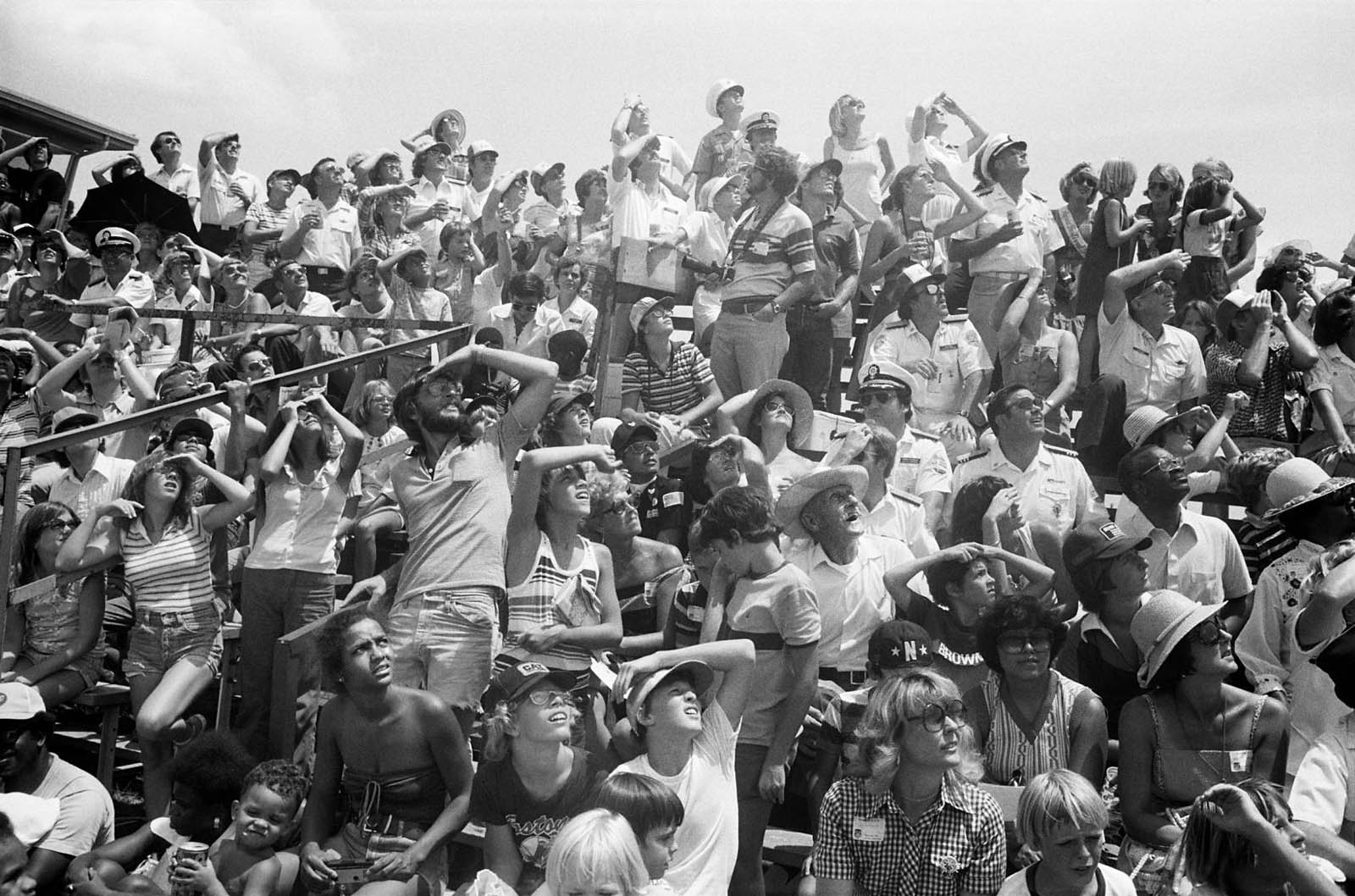
Garry Winogrand (American, 1928-1984) 'Point Mugu Naval Air-Station, California' 1979


Garry Winogrand (American, 1928-1984)
Point Mugu Naval Air-Station, California
1979
Silver gelatin photograph
© The Estate of Garry Winogrand


Garry Winogrand (American, 1928-1984) 'Untitled' 1970


Garry Winogrand (American, 1928-1984)
Untitled
1970
Silver gelatin photograph
© The Estate of Garry Winogrand


Garry Winogrand (American, 1928-1984) 'Venice Beach, Los Angeles' 1979


Garry Winogrand (American, 1928-1984)
Venice Beach, Los Angeles
1979
Silver gelatin photograph
© The Estate of Garry Winogrand


The first retrospective in 25 years of work by artist Garry Winogrand (1928-1984) – the renowned photographer of New York City and of American life from the 1950s through the early 1980s – will debut at the San Francisco Museum of Modern Art (SFMOMA) from March 9 through June 2, 2013. Jointly organised by SFMOMA and the National Gallery of Art, Washington, D.C., Garry Winogrand brings together the artist’s most iconic images with newly printed photographs from his largely unexamined archive of late work, offering a rigorous overview of Winogrand’s complete working life and revealing for the first time the full sweep of his career. More than 300 photographs in the exhibition and more than 400 in the accompanying catalogue will create a vivid portrait of the artist – a chronicler of postwar America on a par with such figures as Norman Mailer and Robert Rauschenberg who unflinchingly captured America’s wrenching swings between optimism and upheaval in the decades following World War II.

While Winogrand is widely considered one of the greatest photographers of the 20th century, his overall body of work and influence on the field remains incompletely explored. He was enormously prolific but largely postponed the editing and printing of his work. Dying suddenly at the age of 56, he left behind approximately 6,500 rolls of film (some 250,000 images) that he had never seen, as well as proof sheets from his earlier years that he had marked but never printed. Roughly half of the photographs in the exhibition have never been exhibited or published until now; over 100 have never before been printed.

“There exists in photography no other body of work of comparable size or quality that is so editorially unresolved,” says Rubinfien, who was among the youngest of Winogrand’s circle of friends in the 1970s. “This exhibition represents the first effort to comprehensively examine Winogrand’s unfinished work. It also aims to turn the presentation of his work away from topical editing and toward a freer organisation that is faithful to his art’s essential spirit, thus enabling a new understanding of his oeuvre, even for those who think they know him.”

The exhibition is divided into three parts, each covering a broad variety of subjects found in Winogrand’s art. “Down from the Bronx” presents photographs taken for the most part in New York from his start in 1950 until 1971; “A Student of America” looks at work made in the same period during journeys outside New York; and “Boom and Bust” addresses Winogrand’s late period – from when he moved away from New York in 1971 until his death in 1984 – with photographs from Texas and Southern California, as well as Chicago, Washington, Miami, and other locations. This third section also includes a small number of photographs Winogrand made on trips back to Manhattan, which express a sense of desolation unprecedented in his earlier work.

Winogrand was known as great talker with a flamboyant, forceful personality, and what he said accompanying his slide shows and lectures was often imaginative and very funny. A number of videos edited for presentation in the exhibition will allow visitors to experience the living Winogrand as audiences have rarely been able to do for 30-odd years. A short selection from Winogrand’s experimental 8mm footage taken in the late 1960s will also be on view.

After premiering at SFMOMA in spring 2013 Garry Winogrand will travel to the National Gallery of Art, Washington, D.C. (March 2 through June 8, 2014); The Metropolitan Museum of Art, New York (June 27 through September 21, 2014); the Jeu de Paume, Paris (October 14, 2014 through January 25, 2015); and the Fundacion MAPFRE, Madrid (March 3 through May 10, 2015).

An Epic Chronicler of Postwar America

Born in the Bronx, Winogrand did much of his best-known work in Manhattan during the 1960s, and in both the content of his photographs and his artistic style he became one of the principal voices of that eruptive decade – so much so that influential Museum of Modern Art curator John Szarkowski anointed him “the central photographer of his generation.”

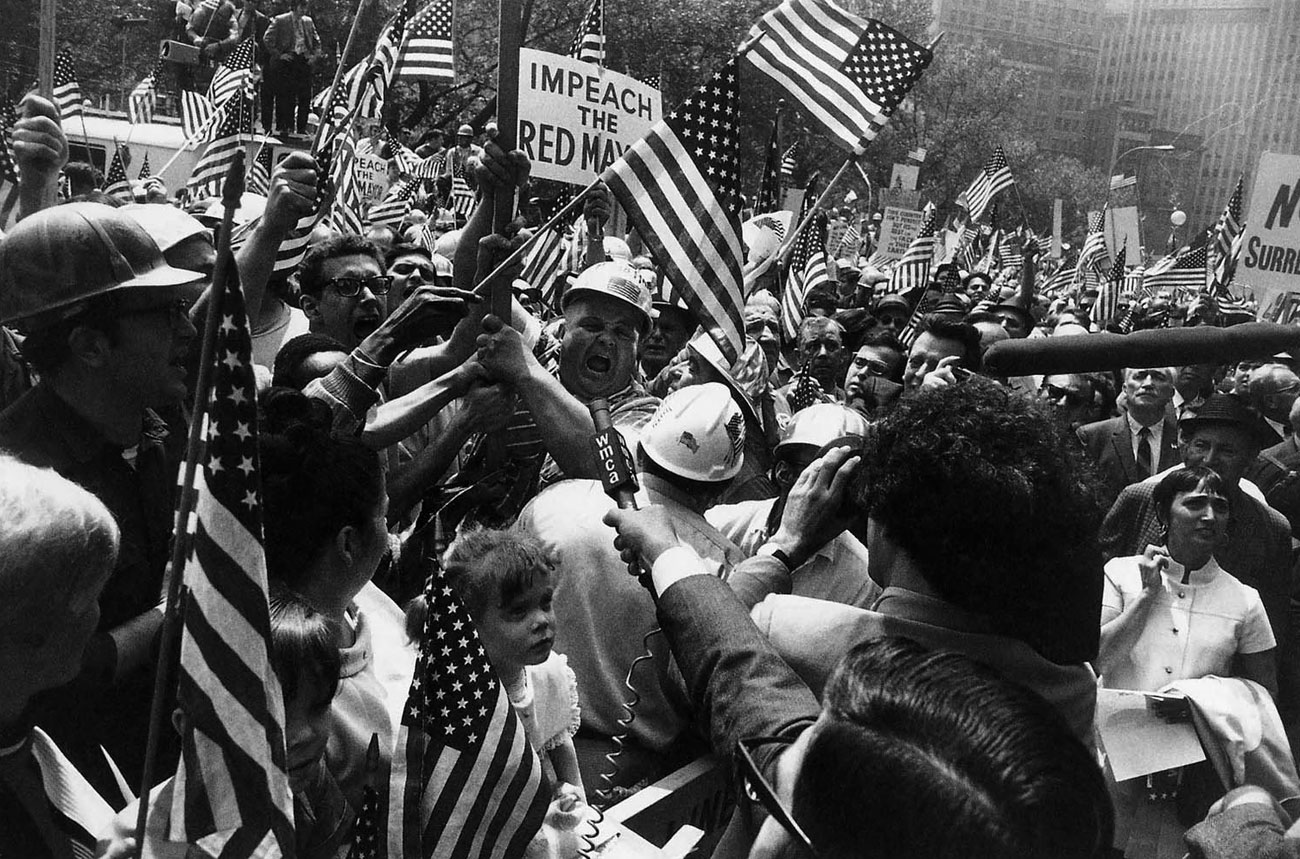
Known primarily as a street photographer, Winogrand, who is often associated with famed contemporaries Diane Arbus and Lee Friedlander, photographed with dazzling energy and incessant appetite, exposing some 20,000 rolls of film in his short lifetime. He photographed business moguls, everyday women on the street, famous actors and athletes, hippies, rodeos, politicians, soldiers, animals in zoos, car culture, airports, and antiwar demonstrators and the construction workers who beat them bloody in view of the unmoved police. Daily life in postwar America – rich with new possibility and yet equally anxious, threatening to spin out of control – seemed to unfold for him in a continuous stream.

Yet if Winogrand was one of New York City’s prime photographers, he was also an avid traveller who roamed widely around the United States, bringing exquisite work out of locations that included Los Angeles, San Francisco, Ohio, Dallas, Houston, Chicago, Colorado, and the open country of the Southwest. “You could say that I am a student of photography,” he said, “and I am; but really I’m a student of America.” Winogrand’s expansive visual catalogue of the nation’s evolving social scene has led to comparisons to Walt Whitman, who also unspooled the world in endless lists of people, places, and things.

Winogrand’s pictures often bulge with twenty or thirty figures, and are fascinating both for their dramatic foregrounds and the sub-events at their edges. Even when crowded with people or at their most lighthearted – he was fond of visual puns and was drawn to the absurd – his pictures can convey a feeling of human isolation, hinting at something darker beneath the veneer of the American dream. Early on, some critics considered his pictures formally “shapeless” and “random,” but admirers and critics later found a unique poetry in his tilted horizons and his love of the haphazard.

“Winogrand was an artistic descendant of Walker Evans and Robert Frank, but differed sharply from them,” says Rubinfien. “He admired Frank’s The Americans, but felt the work missed the main story of its time, which in his mind was the emergence of suburban prosperity and isolation. The hope and buoyancy of middle-class life in postwar America is half of the emotional heart of Winogrand’s work. The other half is a sense of undoing. The tension between these qualities gives his work its distinct character.”

After serving in the military as a weather forecaster, Winogrand first began working as a photographer while studying painting on the G.I. Bill at Columbia University (1948-1951). During that time, he also studied briefly with Alexey Brodovitch at the New School for Social Research. While pursuing his personal work, he began supplying commercial photographs to a number of general-interest magazines such as Life, Look, Sports Illustrated, Collier’s, and Pageant, which were then at the height of their power and reach. His career was further shaped by the decline of those magazines and the rise of a new culture of photography centred in the art world.

“Winogrand worked at a moment when the boundaries between journalistic and artistic photography were less certain than they had ever been, yet it was also a time when the most advanced photographers were consciously abandoning journalistic values,” says Greenough. “The social landscape he photographed – the dislocation of urban life, the rise of the suburb with its growing alienation, the skepticism of youth, and the collusion of the press and the powerful – was of concern to many Americans. Yet Winogrand rarely pursued an obvious means to explicate these ideas, preferring poetic evocation over intelligible journalism.”

Winogrand went on to exhibit widely at prominent museums and achieved renown in his lifetime. Yet despite this recognition, he is perhaps the most inadequately understood of all his contemporaries.

“Unfinished” Late Work Thoroughly Investigated for the First Time

The act of taking pictures was far more fulfilling to Winogrand than making prints or editing for books and exhibitions – he often allowed others to perform these tasks for him. Near the end of his life, he spoke of reviewing and reediting all of his photographs, but never had a chance to oversee the shaping of his legacy, or even to review much of the output of his later years. Because of his working methods and his lack of interest in developing his film toward the end of his life, he left behind more than 2,500 rolls of exposed but undeveloped film, an additional 4,100 rolls that he had processed but never seen – an estimated total of 250,000 images that have remained virtually unknown.

Furthermore, Winogrand published just five modest books during his lifetime – The Animals (1969), Women Are Beautiful (1975), Garry Winogrand (1976), Public Relations (1977), and Stock Photographs (1980) – that represent only a fraction of his work and are mainly confined to narrow topical frames that don’t suggest the full scope of his importance.

“One reason that Winogrand is only now receiving the full retrospective treatment already devoted to peers of his era, including Diane Arbus, Lee Friedlander, and Robert Frank, is that any truly comprehensive consideration of his life’s work requires contending with the practical and ethical issues surrounding the vast archive he left behind,” says O’Toole. “In the absence of explicit instructions from him regarding how he wanted his work to be handled after he was gone, its posthumous treatment has been the subject of ongoing debate and raises provocative questions about the creative process and its relationship to issues specific to the medium.”

“Some argue that what was left behind should be left alone, and that no one should intrude upon the intentions of an artist,” adds Rubinfien. “But the quantity of Winogrand’s output, the incompleteness with which he reviewed it, and the suddenness of his death create a special case in which the true scope of an eminent photographer’s work cannot be known without the intervention of an editor.”

Now housed at the Center for Creative Photography of the University of Arizona, Tucson, Winogrand’s “unfinished” work was initially organized in the years just after his death by several colleagues and friends in preparation for the artist’s first major museum retrospective, held at the Museum of Modern Art, New York (MoMA) in 1988. Exhibition curator John Szarkowski felt the quality of Winogrand’s work had significantly deteriorated in the last 15 years of his life, and included only a small group of pictures from the mysterious late work in MoMA exhibition.

Nearly 30 years have elapsed since the last attempt to grapple with the complete arc of Winogrand’s career. Benefiting from new curatorial research undertaken for this project, the current exhibition will provide a long-awaited reevaluation of his accomplishments. As one of the first museums to recognise photography as a legitimate art form, SFMOMA has collaborated with the National Gallery of Art – who, like SFMOMA, is known for its photography scholarship – in a multi-year endeavour to spearhead the presentation of this important exhibition and publication.”

Press release from the SFMOMA website


Garry Winogrand (American, 1928-1984) 'New York' 1961


Garry Winogrand (American, 1928-1984)
New York
1961
Silver gelatin photograph
© The Estate of Garry Winogrand


Garry Winogrand (American, 1928-1984) 'New York' 1963


Garry Winogrand (American, 1928-1984)
New York
1963
Silver gelatin photograph
© The Estate of Garry Winogrand


Garry Winogrand (American, 1928-1984) 'San Marcos, Texas' 1964


Garry Winogrand (American, 1928-1984)
San Marcos, Texas
1964
Silver gelatin photograph
© The Estate of Garry Winogrand


Garry Winogrand (American, 1928-1984) 'Coney Island, New York' c. 1952


Garry Winogrand (American, 1928-1984)
Coney Island, New York
c. 1952
Gelatin silver print
Collection The Museum of Modern Art, New York, purchase and gift of Barbara Schwartz in memory of Eugene M. Schwartz
© The Estate of Garry Winogrand, courtesy Fraenkel Gallery, San Francisco; digital image
© The Museum of Modern Art/ Licensed by SCALA / Art Resource, NY


Garry Winogrand (American, 1928-1984) 'Fort Worth, Texas' 1974-77


Garry Winogrand (American, 1928-1984)
Fort Worth, Texas
1974-1977
Gelatin silver print
Garry Winogrand Archive, Center for Creative Photography, University of Arizona
© The Estate of Garry Winogrand, courtesy Fraenkel Gallery, San Francisco


Garry Winogrand (American, 1928-1984) 'John F. Kennedy International Airport, New York' 1968


Garry Winogrand (American, 1928-1984)
John F. Kennedy International Airport, New York
1968
Silver gelatin photograph
© The Estate of Garry Winogrand


Garry Winogrand (American, 1928-1984) 'New York' 1950


Garry Winogrand (American, 1928-1984)
New York
1950
Gelatin silver print
Collection SFMOMA, fractional and promised gift of Carla Emil and Rich Silverstein
© The Estate of Garry Winogrand, courtesy Fraenkel Gallery, San Francisco


Garry Winogrand (American, 1928-1984) 'New York' c. 1962


Garry Winogrand (American, 1928-1984)
New York
c. 1962
Gelatin silver print
Garry Winogrand Archive, Center for Creative Photography, University of Arizona
© The Estate of Garry Winogrand, courtesy Fraenkel Gallery, San Francisco


Garry Winogrand (American, 1928-1984) 'Venice Beach, Los Angeles' 1980-1983


Garry Winogrand (American, 1928-1984)
Venice Beach, Los Angeles
1980-1983
Gelatin silver print
Garry Winogrand Archive, Center for Creative Photography, University of Arizona
© The Estate of Garry Winogrand, courtesy Fraenkel Gallery, San Francisco


Garry Winogrand (American, 1928-1984) 'Grand Central Station' 1968


Garry Winogrand (American, 1928-1984)
Grand Central Station
1968
Silver gelatin photograph
© The Estate of Garry Winogrand


Garry Winogrand (American, 1928-1984) 'Los Angeles' 1964


Garry Winogrand (American, 1928-1984)
Los Angeles
1964
Silver gelatin photograph
© The Estate of Garry Winogrand


Garry Winogrand (American, 1928-1984) 'New York' 1968


Garry Winogrand (American, 1928-1984)
New York
1968
Silver gelatin photograph
© The Estate of Garry Winogrand


Garry Winogrand (American, 1928-1984) 'New York' c. 1969


Garry Winogrand (American, 1928-1984)
New York
c. 1969
Silver gelatin photograph
© The Estate of Garry Winogrand


San Francisco Museum of Modern Art
151 Third Street
San Francisco, CA 94103

Opening hours:
Monday – Tuesday: 10am – 5pm
Wednesday: Closed
Thursday: 12 – 8pm
Friday – Sunday: 10am – 5pm

San Francisco Museum of Modern Art website

LIKE ART BLART ON FACEBOOK

Back to top

Exhibition: ‘Concrete – Photography and Architecture’ at Fotomuseum Winterthur, Zurich

Exhibition dates: 2nd March – 20th May 2013


Anonymous photographer.
 'Hardstrasse with Hardbrücke in construction' 1972


Anonymous photographer
Hardstrasse with Hardbrücke in construction
1972
Gelatin silver print
8.8 x 12.6cm
Baugeschichtliches Archiv der Stadt Zürich


When creating this archive, so much of my time is spent cleaning up clearly inadequate media images, an example of which can be seen below. I have become very adept at this process and my thoughts are this: would you want to be the artist whose work is displayed to the public in a remarkably decomposed manner, one not up to a standard of any artist who cares about their prints and reputation? I certainly would not. It is a wonder to me that museums and galleries spend thousands of dollars staging exhibitions and producing costly catalogues and yet cannot spend a tiny proportion of time, money and care on their media images to promote artist and said exhibition. I had to spend a lot of time on over half of these images to bring them up to presentable standard.

Having said that, there are some cracking photographs in this posting. The Sugimoto is sublime, Walker Evans so muscular, Lucien Hervé a masterpiece of light and texture, and Moriz Nähr a symphony of light and tone, to name but a few. I hope you enjoy all the effort it takes to bring these images to you.

Dr Marcus Bunyan


Many thankx to the Fotomuseum Winterthur, Zurich for allowing me to publish the photographs in the posting. Please click on the photographs for a larger version of the image.


Michael Wesely (German, b. 1963)
 'Canadian Embassy, Leipziger Platz, Berlin (5.2.2003 – 28.4.2005)' 
C-print


Michael Wesely (German, b. 1963)
Canadian Embassy, Leipziger Platz, Berlin (5.2.2003 – 28.4.2005)

C-print
125 x 175cm
Galerie Fahnemann, Berlin
© Michael Wesely/Courtesy Galerie Fahnemann


Michael Wesely (born 1963 in Munich) is a German art photographer who is best known for his photos of cities, buildings, landscapes, and still lives of flowers taken with a special ultra-long exposure technique. …

Wesely’s works deal with the subject of time and the change that takes place over time. Due to the extremely long exposure and the special bulb he uses, those elements that move the least dominate his images, while those moving will later be seen as transparent figures or the outlines of newly erect buildings overlapping. The pictures “reveal the passage of time by showing the changing skyline, the skeletons of cranes. the rise of new buildings, and the disappearance of others. Beams of sunlight, the residue of the ever-changing positions (tithe earth and sun, are also evident, like a palimpsest of seasons”. Everything that ever happened on the scene during exposure (during weeks, months, or even up to two or three years) will be seen in one single picture. Wesely’s photographs have been described as a metaphor on the change of Berlin after 1989 because “at once strikingly energetic and ghostly and uninhabited. This formal paradox aptly describes Berlin, which had only been unified for ten years at the time the images were taken. In that way, the photographs offer a larger commentary on time’s passage.”

Text from the Wikipedia website


William Henry Fox Talbot (English, 1800-1877) 'The Bridge of Sighs, St. John’s College, 
Cambridge' 1845


William Henry Fox Talbot (English, 1800-1877)
The Bridge of Sighs, St. John’s College, 
Cambridge
1845
Salt print from calotype negative
16.4 x 20.6cm
Museum Folkwang Essen


Charles Marville (French, 1813-1879) '24, Rue Bièvre, Paris' 1865-1869


Charles Marville (French, 1813-1879)
24, Rue Bièvre, Paris
1865-1869
Albumin print
27.4 x 36.6cm
Collection Thomas Walther


Lucien Hervé (Hungarian, 1910-2007) 'Le Corbusier: Façade of the Secretariat Building, Chandigarh, 1961' 1961


Lucien Hervé (Hungarian, 1910-2007)
Le Corbusier: Façade of the Secretariat Building, Chandigarh, 1961
1961
Gelatin silver print
25.5 x 25.4cm
Canadian Centre for Architecture, Montréal
© Estate Lucien Hervé


Lucien Hervé is considered to be one of the great architectural photographers of the 20th century. He collaborated with Le Corbusier from 1949 until the architect’s death in 1965, developing a great rapport. Le Corbusier even once pronounced Hervé to have ‘the soul of an architect.’ In 1949, Hervé travelled from Paris to Marseille to see Le Corbusier’s recently designed housing complex, Unité d’Habitation. Awed by the groundbreaking modern design, Hervé took 650 photographs of it in a single day and it was from then onwards they worked closely with one another.

Through light and shadow, he defined the dialogue between substance and form. By delineating a strong contrast between the light and shadows in his subject as well as placing emphasis on building details, Hervé was able to communicate the depth of a room, the surface of a wall, or the strength of a building’s framework.

Born 1910 in Hungary, Hervé (born László Elkán) moved to Paris at the age of 19 and earned French citizenship in 1938. During World War II, he was captured by the Germans, escaped and became a member of the French Resistance under the name of Lucien Hervé, which he kept thereafter. After the war he left politics behind to write for art journals. It was one of his editors, in fact, who suggested he visit Unité d’Habitation. Hervé began experimenting with photography, over or underexposing images and often severely cropping them to attain unusual compositions following the work of avant-garde artists such as Piet Mondrian, László Moholy-Nagy, and Alexander Rodchenko.

Text from the Michael Hoppen Gallery website


F. C. Gundlach (German, 1926-2021) '"Op Art" bathing suit by Sinz, Vouliagmeni/Greece' 1966


F. C. Gundlach (German, 1926-2021)
“Op Art” bathing suit by Sinz, Vouliagmeni/Greece
1966
Gelatin silver print
50 x 50cm
F.C. Gundlach, Hamburg
© F.C. Gundlach


Laurence Bonvin (Swiss, b. 1967)
 'Blikkiesdorp, Cape Town, South Africa' 2009


Laurence Bonvin (Swiss, b. 1967)
Blikkiesdorp, Cape Town, South Africa
2009
Inkjet print
40 x 50cm
Courtesy the artist
© Laurence Bonvin


Laurence Bonvin (born 1967 in Sierre) is a Swiss photographer and director living between Berlin, Valais and Lisbon. Her documentary approach has for many years focused on the phenomena of transformation in urban and natural environments.


Architectures and cities are both volumes and images alike. We experience them directly, physically and sensually, as well as through pictures. Pictures speak a language of their own. They offer a discourse that is quite unlike the physical experience of architecture. They transform volume into surface; distil matter into forms and signs – rarely, if ever, leaving it as it is. That is probably why so many architects try to get involved in determining the image of their buildings. Concrete – Photography and Architecture seeks to approach the singular and complex relationship between architecture and photography in light-hearted, narrative and dialectical ways. The exhibition explores issues of history and ideology, as well as the specifics of form and material, in the photographic image.

The visual appeal of destroyed or dilapidated buildings is also addressed, as are their powerful demonstrations of power and exclusivity, fragility and beauty. To what extent does photography influence not only the way architecture is perceived, but also the way it is designed? How does an image bring architecture to life, and at what point does it become uncanny? How do settlements develop into cities? Or, in sociological terms: how do work and life interconnect differently in, say, Zurich and Winterthur, as opposed to, say, Calcutta? And how do skyscrapers and living spaces translate into the flat, two-dimensional world of photography?

Concrete – Photography and Architecture is not, however, chronologically arranged. Instead, it is based on compelling positions, counterpositions and thematic fields that connect various concrete, fundamental and historical aspects. Alongside everyday buildings and prestigious architecture, structured by horizontal and vertical axes, alongside homes and houses, utopian fantasies, design and reality, an important aspect of the exhibition is the compelling appeal of architectural decay due to the passage of time, through both natural and deliberate destruction. It is almost as though photography were providing a moral reminder even such magnificence and presence, whether hewn in stone or cast in concrete, has its weaknesses too.

Architecture has always been an important platform for the frequently heated discussion of ideas and views, zeitgeist and weltanschauung, everyday life and aesthetics. Architecture is the bold materialisation of private and public visions, functionality and avant-garde art alike. It is, as Slavoj Žižek puts it, ideology in stone. Photography and architecture both play an undisputed role in our everyday lives. They confront us on a daily basis, often without our even noticing, and they influence how we think, act and live in subliminal and lasting ways. Concrete – Photography and Architecture provides visual answers to the question of what it is that makes up the intimate yet complex relationship between architecture and photography, architect and photographer.

The exhibition presents more than 400 photographs and groups of works from the 19th, 20th and 21st centuries, including William Henry Fox Talbot, Domenico Bresolin and Charles Marville as well as Germaine Krull, Lucia Moholy and Julius Shulman, and spanning an arc to contemporary works by Georg Aerni, Iwan Baan, Luisa Lambri and Hiroshi Sugimoto. Projects such as the long-term observations of Schlieren photography or Wolfgang Scheppe’s Migropolis show how the art of photography is playing an increasingly important role as an instrument of research and knowledge. The exhibition is accompanied by a lavishly illustrated book published by Scheidegger & Spiess, with some 300 colour and black-and-white pictures, essays by Jochen Becker, Johannes Binotto, Verena Huber Nievergelt, Michael Jakob, Nicoletta Leonardi, Lorenzo Rocha, Caspar Schärer, Aveek Sen and Urs Stahel as well as a conversation with Annette Gigon, Meret Ernst and Armin Linke.

Press release from the Fotomuseum Winterthur website


Guido Guidi. '#1176 01 29 1997 3:30PM Looking Southeast' From 'Carlo Scarpa's Tomba Brion' 
1997


Guido Guidi (Italian, b. 1941)
#1176 01 29 1997 3:30PM Looking Southeast
From Carlo Scarpa’s Tomba Brion
1997
C print
19.5 x 24.6cm
Courtesy the artist
© Guido Guidi


Guido Guidi (born January 1, 1941) is an Italian photographer. His work, spanning over more than 40 years, has focused in particular on rural and suburban geographies in Italy and Europe. He photographs places that are normally overlooked. His published works include In Between Cities, Guardando a Est, A New Map of Italy and Veramente.

Guidi began experimenting in the late 1960s with pseudo-documentary images that interrogated photography’s objectivity. Influenced by neorealist film and conceptual art, in the 1970s he began investigating Italy’s man-altered landscape. Working in marginal and decayed spaces with an 8×10 large format camera, he creates dense sequences intended as meditations on the meaning of landscape, photography, and seeing. Later he investigated the life and death of modernist architecture, with projects on Scarpa, van der Rohe, and Le Corbusier. Photography for Guidi is something autobiographical. It is synonymous with inhabiting, and the camera is the instrument that allows him to observe, appropriate and collect what lies beyond his doorstep.

“Guidi was a leading voice in the resurgence of Italian photography of the 1970s and 1980s”. “Since then, working mostly in colour with a large-format camera, he has patiently returned to the same places – his native Romagna and the area around Venice – documenting the shift from a rural to a post-industrial landscape.”

Text from the Wikipedia website


Tobias Zielony (German, b. 1973)
 'Le Vele di Scampia' 2009


Tobias Zielony (German, b. 1973)
Le Vele di Scampia
2009
Blu Ray photoanimation
8.57 min
Courtesy Koch Oberhuber Wolff, Berlin
© Tobias Zielony/ KOW


Hiroshi Sugimoto (Japanese, b. 1948) 'Seagram Building, New York City' 1997


Hiroshi Sugimoto (Japanese, b. 1948)
Seagram Building, New York City
1997
Gelatin silver print
58.4 x 47cm
Canadian Centre for Architecture, Montreal
© Hiroshi Sugimoto/Courtesy of Gallery Koyanagi Tokyo


Aage Strüwing (Danish, 1913-1989) 'Arne Jacobsen: Rødovre Town Hall' 1955


Aage Strüwing (Danish, 1913-1989)
Arne Jacobsen: Rødovre Town Hall
1955
Gelatin silver print
23.7 x 17cm
EPFL Archives de la construction moderne, Lausanne
© Estate Strüwing


Moriz Nähr (Austrian, 1859-1945) 
'Stiegenhaus im Haus Stonborough-Wittgenstein' 1928 (composite cleaned)


Moriz Nähr (Austrian, 1859-1945)

Stiegenhaus im Haus Stonborough-Wittgenstein [Staircase in the house Stonborough-Wittgenstein] (composite cleaned)
1928


Moriz Nähr (Austrian, 1859-1945) '
Stiegenhaus im Haus Stonborough-Wittgenstein' 1928


Moriz Nähr (Austrian, 1859-1945)

Stiegenhaus im Haus Stonborough-Wittgenstein (Staircase in the house Stonborough-Wittgenstein)
1928
Silbergelatine Abzug
13.8 x 8.9cm
Albertina, Wien
© Estate Moriz Nähr


Moriz Nähr (1859-1945) is one of the most important innovators of photography in “Vienna around 1900”. His photographic oeuvre is mentioned today in the same breath as that of the famous Parisian photographer Eugène Atget. Nähr enjoyed a life-long artist’s friendship with Gustav Klimt and was connected with the artist through a special network of eminent personalities from the arts, culture and philosophy. Numerous portrait photographs of Klimt emphatically document the two artists’ bond. Klimt was also inspired by Nähr’s photographic motifs, as illustrated by the conformities in the photographer’s pictures and Klimt’s painting Beech Forest I created in 1902. The legends surrounding Moriz Nähr are based on the one hand on his close ties with Gustav Klimt and the Vienna Secession and on the other hand on his connections with the family of Ludwig Wittgenstein and the imperial Habsburg family, especially with the heir to the throne Archduke Franz Ferdinand, who appointed him court photographer in 1908. Owing to his work as a freelance photographer as well as to his various commissions, he has left behind a multi-faceted oeuvre comprising not only landscape-, architecture-, and portrait photography but also street photography (Scenes from the Naschmarkt, 1918) as well as photographs documenting exhibitions (Vienna Secession).

Anonymous. “Moriz Nähr: Photographer of Viennese Modernism,” on the Leopold Museum website 2018 [Online] Cited 14/07/2024


Haus Wittgenstein, also known as the Stonborough House and the Wittgenstein House) is a house in the modernist style designed and built on the Kundmanngasse, Vienna, by the Austrian architect Paul Engelmannand the Austrian philosopher Ludwig Wittgenstein.

In November 1925, Wittgenstein’s sister Margaret Stonborough-Wittgenstein commissioned Engelmann to design and build a large townhouse. Margaret also invited her brother to help with the design in part to distract him from an incident that had happened while he had been a primary school teacher: he had hit a boy for getting an answer wrong and the boy had collapsed. The architect was Paul Engelmann, someone Wittgenstein had come to know while training to be an Artillery Officer in Olmutz. Engelmann designed a spare modernist house after the style of Adolf Loos: three rectangular blocks. Wittgenstein showed a great interest in the project and in Engelmann’s plans and poured himself into the project for over two years. He focused on the windows, doors, door knobs, and radiators, demanding that every detail be exactly as he specified, to the point where everyone involved in the project was exhausted. One of the architects, Jacques Groag, wrote in a letter: “I come home very depressed with a headache after a day of the worst quarrels, disputes, vexations, and this happens often. Mostly between me and Wittgenstein.” When the house was nearly finished he had a ceiling raised 30mm so the room had the exact proportions he wanted.

Waugh writes that Margaret eventually refused to pay for the changes Wittgenstein kept demanding, so he bought himself a lottery ticket in the hope of paying for things that way. It took him a year to design the door handles, and another to design the radiators. Each window was covered by a metal screen that weighed 150 kg, moved by a pulley Wittgenstein designed. Bernhard Leitner, author of The Architecture of Ludwig Wittgenstein, said of it that there is barely anything comparable in the history of interior design: “It is as ingenious as it is expensive. A metal curtain that could be lowered into the floor.”

The house was finished by December 1928, and the family gathered there that Christmas to celebrate its completion. Describing the work, Ludwig’s eldest sister, Hermine, wrote: “Even though I admired the house very much, I always knew that I neither wanted to, nor could, live in it myself. It seemed indeed to be much more a dwelling for the gods than for a small mortal like me”. Paul Wittgenstein, Ludwig’s brother, disliked it, and when Margaret’s nephew came to sell it, he reportedly did so on the grounds that she had never liked it either. Wittgenstein himself found the house too austere, saying it had good manners, but no primordial life or health. He nevertheless seemed committed to the idea of becoming an architect: the Vienna City Directory listed him as “Dr Ludwig Wittgenstein, occupation: architect” between 1933 and 1938.

After World War II, the house became a barracks and stables for Russian soldiers. It was owned by Thomas Stonborough, son of Margaret until 1968 when it was sold to a developer for demolition. For two years after this the house was under threat of demolition. The Vienna Landmark Commission saved it – after a campaign by Bernhard Leitner – and made it a national monument in 1971, and since 1975 it has housed the cultural department of the Bulgarian Embassy.

Text from the Wikipedia website


Lala Aufsberg (German, 1907-1976) 'Cathedral of Light' c. 1937


Lala Aufsberg (German, 1907-1976)
Cathedral of Light
c. 1937
Gelatin silver print
24 x 18cm
Town Archive Nuremberg
© Photo Marburg


Lala Aufsberg (actually, Ida Louise Aufsberg, born 26 February 1907 in Sonthofen, May 18, 1976) was a well-known art photographer. After attending primary school and six years of school for Higher daughters in Immenstadt she began training for the 1932 photo dealer in Oberstdorf. After completion of the training Lala Aufsberg moved to Nuremberg, where she worked in the photographers’ studios of Seitz and Rosemary. In 1931 she joined the photo club of friends of photography in Nuremberg.

From April 1938 Lala Aufsberg attended the State School of Applied Arts and Crafts in Weimar, Department Lichtbildnerei at Walter Hege. In July 1938, she passed the exam for the master photographer’s craft, and in the same year returned to Sonthofen and opened a photographic studio. In the years 1937 and 1938 she documented the Nazi Party rallies in Nuremberg (see above photograph). She received her first artistic job in the years 1941-1942, in which she photographed the murals in churches and monasteries in Carinthia and Styria. Owned by the University of Marburg “German documentation center for art history” – Bildarchiv Foto Marburg (listed in UNESCO Archives Portal) acquired 1976/1977 and 1996, the Lala-Aufsberg archive with about 46,000 art history, black and white negatives in sizes 6 x 6 and 9 x 12 and 103,000 photos.


Walker Evans (American, 1903-1975) 
'Chrysler Building under construction, New York' 1929


Walker Evans (American, 1903-1975)

Chrysler Building under construction, New York
1929
Gelatin silver print
16.8 x 8.3cm
Canadian Centre for Architecture, Montréal
© Walker Evans Archive, The Metropolitan Museum of Art


Fotomuseum Winterthur
Grüzenstrasse 44 + 45
CH-8400
Winterthur (Zürich)

Opening hours:
Tuesday to Sunday 11am – 6pm
Wednesday 11am – 8pm
Closed on Mondays

Fotomuseum Winterthur website

LIKE ART BLART ON FACEBOOK

Back to top

Exhibition: ‘Picturing New York: Photographs from the Museum of Modern Art’ at the Art Gallery of Western Australia (AGWA), Perth

Exhibition dates: 26th January – 12th May 2013


Berenice Abbott (American, 1898-1991) 'Fifth Avenue, nos. 4, 6, 8, Manhattan' March 20, 1936


Berenice Abbott (American, 1898-1991)
Fifth Avenue, nos. 4, 6, 8, Manhattan
March 20, 1936
Gelatin silver print
15 x 19 1/4″ (38.1 x 48.9cm)
The Museum of Modern Art, New York
Thomas Walther Collection
© 2012 Berenice Abbott/Commerce Graphics


A second tranche of images from this touring exhibition of photographs from the MoMA collection, presented at the Art Gallery of Western Australia in Perth. My personal favourites in this posting are the tonal Abbott, mean streets Gedney, luminous Groover and the intimate Burckhardt. There are two photographers I don’t know at all (Gedney and Burckhardt) and one who is very underrated: Peter Hujar.

Dr Marcus Bunyan


Many thankx to the AGWA for allowing me to publish the photographs in the posting. Please click on the photographs for a larger version of the image.


William Gedney (American, 1924-1989) 'Brooklyn' 1966


William Gedney (American, 1924-1989)
Brooklyn
1966
Gelatin silver print
7 9/16 x 11 5/16″ (19.3 x 28.8cm)
The Museum of Modern Art, New York
Gift of the Duke University Rare Book, Manuscript, and Special Collections Library
© 2012 Estate of William Gedney


William Gale Gedney (October 29, 1932 – June 23, 1989) was an American photographer. It wasn’t until after his death that his work gained momentum and his work is now widely recognised… William Gedney died of AIDS in 1989, aged 56, in New York City and is buried in Greenville, New York, a few short miles from his childhood home. He left his photographs and writings to his lifelong friend Lee Friedlander.

Text from the Wikpedia website

See more photographs by William Gedney on the Duke Libraries website and on The Selvedge Yard website


Jan Groover (American, 1943-2012) 'Untitled' 1981


Jan Groover (American, 1943-2012)
Untitled
1981
Platinum/palladium print
7 5/8 x 9 1/2″ (19.4 x 24.2cm)
The Museum of Modern Art, New York
Gift of Howard Stein
© 2012 Jan Groover


“Depicting the iconic New York that captivates the world’s imagination and the idiosyncratic details that define New Yorkers’ sense of home, this exhibition from MoMA’s extraordinary photography collection celebrates the city in all its vitality, ambition and beauty. Made by approximately 90 artists responding to the city as well as professionals on assignment, including Henri Cartier-Bresson, Walker Evans, Lewis Hine, Helen Levitt, Cindy Sherman, Alfred Stieglitz, and Weegee, over 150 works reveal the deeply symbiotic relationship between photography and the ‘city that never sleeps’ – New York. Both an exploration of the life of the city and a documentation of photography’s evolution throughout the twentieth century, Picturing New York celebrates the great and continuing tradition of capturing the grit and glamour of one of the world’s greatest urban centres.

Artists include Berenice Abbott, Diane Arbus, Henri Cartier-Bresson, Walker Evans, Lee Friedlander, Nan Goldin, Helen Levitt, Cindy Sherman, Alfred Stieglitz, Paul Strand, Weegee, and Garry Winogrand, among many others.”

Text from the AGWA website


Lisette Model (American born Austria, 1901-1983) 'Times Square' 1940


Lisette Model (American born Austria, 1901-1983)
Times Square
1940
Gelatin silver print
15 9/16 x 19 9/16″ (39.6 x 49.7cm)
The Museum of Modern Art, New York
Gift of the photographer
© 2012 Estate of Lisette Model, courtesy Baudoin Lebon Gallery, Paris and Keitelman Gallery, Brussels


Garry Winogrand (American, 1928-1984) 'New York City' 1968


Garry Winogrand (American, 1928-1984)
New York City
1968
Gelatin silver print
8 7/8 x 13 3/16″ (22.5 x 33.5cm)
The Museum of Modern Art, New York
Purchase and gift of Barbara Schwartz in memory of Eugene M. Schwartz
© The Estate of Garry Winogrand, courtesy Fraenkel Gallery


Henri Cartier-Bresson (French, 1908-2004) 'Near the Hall of Records, New York' 1947


Henri Cartier-Bresson (French, 1908-2004)
Near the Hall of Records, New York
1947
Gelatin silver print
15 5/16 x 22 13/16″ (38.9 x 57.9cm)
The Museum of Modern Art, New York
Gift of the photographer
© 2012 Henri Cartier-Bresson/Magnum, courtesy Foundation HCB, Paris


Rudy Burckhardt (American born Switzerland, 1914-1999) 'A View From Brooklyn I' 1954


Rudy Burckhardt (American born Switzerland, 1914-1999)
A View From Brooklyn I
1954
Gelatin silver print
10 5/16 x 9 3/16″ (26.2 x 23.4cm)
The Museum of Modern Art, New York
Gift of CameraWorks, Inc. and Purchase
© 2012 Rudy Burckhardt / Artists Rights Society (ARS), New York


Rudy Burckhardt (1914, Basel – 1999) was a Swiss-American filmmaker, and photographer, known for his photographs of hand-painted billboards which began to dominate the American landscape in the nineteen-forties and fifties.

Burckhardt discovered photography as a medical student in London. He left medicine to pursue photography in the 1930s. He immigrated to New York City in 1935. Between 1934 and 1939, he traveled to Paris, New York and Haiti making photographs mostly of city streets and experimenting with short 16mm films. While stationed in Trinidad in the Signal Corps from 1941-1944, he filmed the island’s residents. In 1947, he joined the Photo League in New York City. Burckhardt married painter Yvonne Jacquette whom he collaborated with throughout their 40 year marriage. He taught filmmaking and painting at the University of Pennsylvania from 1967 to 1975.

On his 85th birthday, Burckhardt committed suicide by drowning in the lake on his property.

Text from the Wikipedia website


Rudy Burckhardt and Edwin Denby
The Climate of New York
1980


Trailer for Rudy Burckhardt Films from Tibor de Nagy Gallery on Vimeo.


Lee Friedlander (American, b. 1934) 'New York City' 1980


Lee Friedlander (American, b. 1934)
New York City
1980
Gelatin silver print
18 5/8 x 12 3/8″ (47.3 x 31.5cm)
The Museum of Modern Art, New York
The Family of Man Fund
© 2012 Lee Friedlander


Underwood and Underwood (American, active 1880-1934) 'Above Fifth Avenue, Looking North' 1905


Underwood and Underwood (American, active 1880-1934)
Above Fifth Avenue, Looking North
1905
Gelatin silver print
9 1/2 x 7 5/16″ (24.2 x 18.6cm)
The Museum of Modern Art, New York
The New York Times Collection


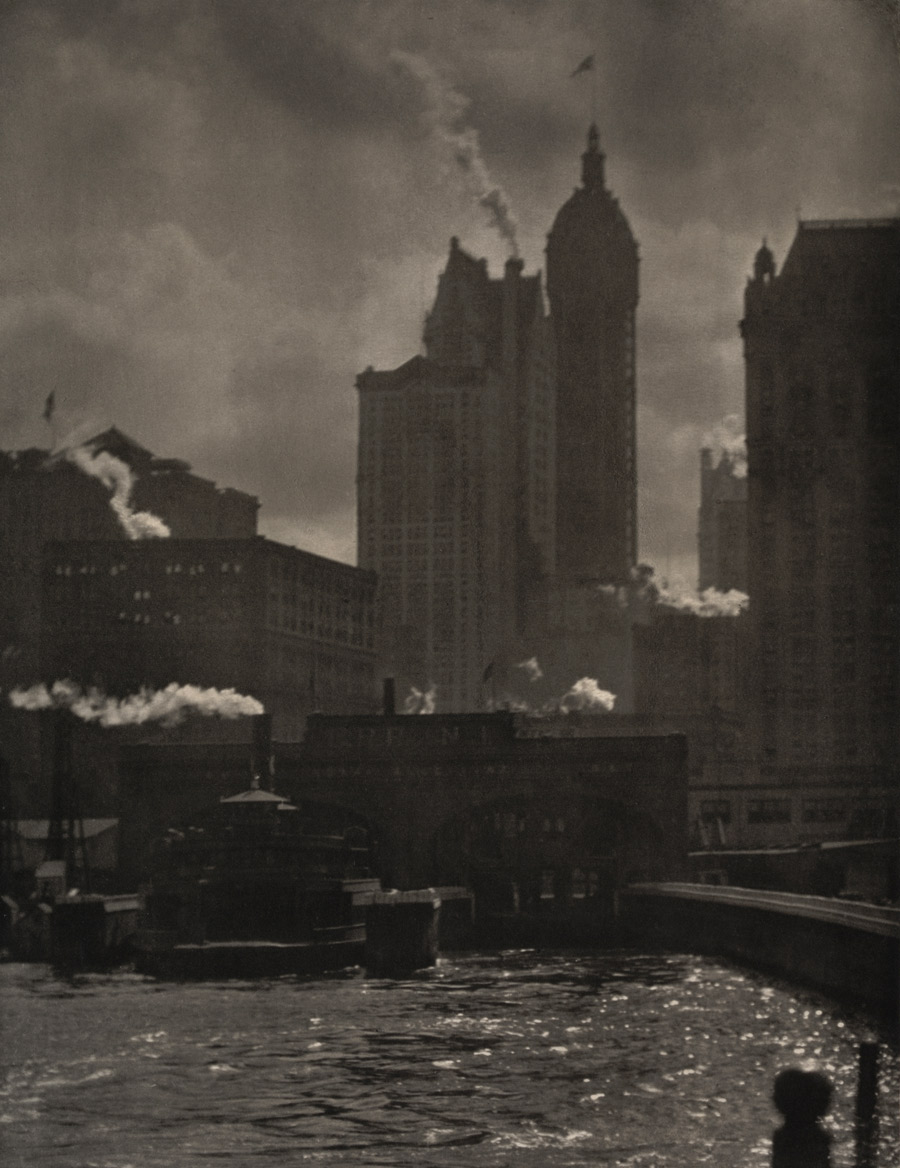
Alfred Stieglitz (American, 1864-1946) 'City of Ambition' 1910


Alfred Stieglitz (American, 1864-1946)
City of Ambition
1910
Photogravure
13 3/8 x 10 1/4″ (34 x 26.1cm)
The Museum of Modern Art, New York
© 2012 Estate of Alfred Stieglitz / Artists Rights Society (ARS), New York


Peter Hujar (American, 1934-1987) 'New York Series #22' 1976


Peter Hujar (American, 1934-1987)
New York Series #22
1976
Gelatin silver print
14 5/8 x 14 3/4″ (37.1 x 37.4cm)
The Museum of Modern Art, New York
Gift of the Estate of Peter Hujar and James Danziger Gallery, New York
© 2012 Peter Hujar Archive


Peter Hujar (October 11, 1934 – November 26, 1987) was an American photographer known for his black and white portraits. Born in Trenton, New Jersey, United States. Hujar later moved to Manhattan to work in the magazine, advertising, and fashion industries. His subjects also consisted of farm animals and nudes. His most famous photograph is Candy Darling on Her Deathbed which was later used by the group Antony and the Johnsons as cover for their album I Am a Bird Now. The one-time lover, friend and mentor of artist David Wojnarowicz, Hujar died of AIDS complications on November 26, 1987, aged 53.

See the more photographs on the Peter Hujar Archive website


Fairchild Aerial Surveys, Inc. 'The Mount Everest of Manhattan: The Silvered Peak of the Chrysler Building' 1930


Fairchild Aerial Surveys, Inc.
The Mount Everest of Manhattan: The Silvered Peak of the Chrysler Building
1930
Gelatin silver print
8 3/4 x 6 13/16″ (22.3 x 17.3cm)
The Museum of Modern Art, New York
The New York Times Collection


Walker Evans (American, 1903-1975) 'Girl in Fulton Street, New York 1929' 1929


Walker Evans (American, 1903-1975)
Girl in Fulton Street, New York 1929
1929
Gelatin silver print
7 1/2 x 4 5/8″ (19.1 x 11.7cm)
The Museum of Modern Art, New York
Gift of the photographer


Lewis W. Hine (American, 1874–1940) 'Italian Family Looking for Lost Baggage, Ellis Island, New York' 1905


Lewis W. Hine (American, 1874-1940)
Italian Family Looking for Lost Baggage, Ellis Island, New York
1905
Gelatin silver print
5 9/16 x 4 5/16″ (14.1 x 10.9cm)
The Museum of Modern Art, New York


Art Gallery of Western Australia
Perth Cultural Centre, James Street Mall, Perth

Opening hours:
Wednesday – Monday 10am – 5pm
Closed Tuesdays

AGWA website

LIKE ART BLART ON FACEBOOK

Back to top

Exhibition: ‘America in View: Landscape Photography 1865 to Now’ at the Museum of Art Rhode Island School of Design, Providence

Exhibition dates: 21st September 2012 – 13th January 2013

 

Unknown artist (American). 'Providence Panorama from Grosvenor or Bannigan Building' c. 1900


Unknown artist (American)
Providence Panorama from Grosvenor or Bannigan Building
c. 1900
Six cyanotype prints
RISD Museum: Mary B. Jackson Fund


I hope you enjoy this HUGE posting. There are some rare photographs and little known artists. I have kept the photographs in the sections of the exhibition as explained by the accompanying wall text. Three essays from the catalogue investigating history, landscape and photography can be found as pdfs below, essential reading for anyone interested in the subject (especially the first two essays):

Douglas Nickel. Photography, Perception, and the Landscape 2012 (645kb pdf)
Deborah Bright. Photographing Nature, Seeing Ourselves 2012 (2Mb pdf)
Jan Howard. Landscape as Stage 2012 (775kb pdf)

Dr Marcus Bunyan


Many thankx to  the Museum of Art Rhode Island School of Design for allowing me to publish the text and most of the photographs in the posting (the others I researched myself). Please click on the photographs for a larger version of the image.


“An understanding of landscape theory therefore suggests that not every photograph of land is a landscape, and not every landscape necessarily features the land. The standard definition points to places – places in the world, or places seen in pictures – which take on the quality of a thing. But “landscape” is probably better understood as that set of expectations and beliefs – about both the environment and the conventions of its representation – that we project upon the world. These conventions and expectations are subject to historical change and are culturally specific…”


Douglas Nickel. ‘Photography, Perception, and the Landscape’ 2012 in ‘America in View: Landscape Photography 1865 to Now’ catalogue, p. 26


“Once continental expansion had reached its limits, however, and no existential threats to white settlement remained, American landscape images began to reflect a new criticality – at turns romantic and realistic – that persists to this day. Indeed, for the last century, landscape photography has consistently mirrored Americans’ anxieties about nature, or rather its imminent loss, whether due to industrialisation, pollution, population growth, real estate profiteering, or bioengineering. Alternately portraying nature as a balm for the alienated modern soul or a dystopian fait accompli, modern and postmodern photographic landscapes mark a progressively disquieting understanding of humanity’s relationship to the natural universe.”


Deborah Bright. Photographing Nature, Seeing Ourselves 2012 in America in View: Landscape Photography 1865 to Now catalogue, p. 32
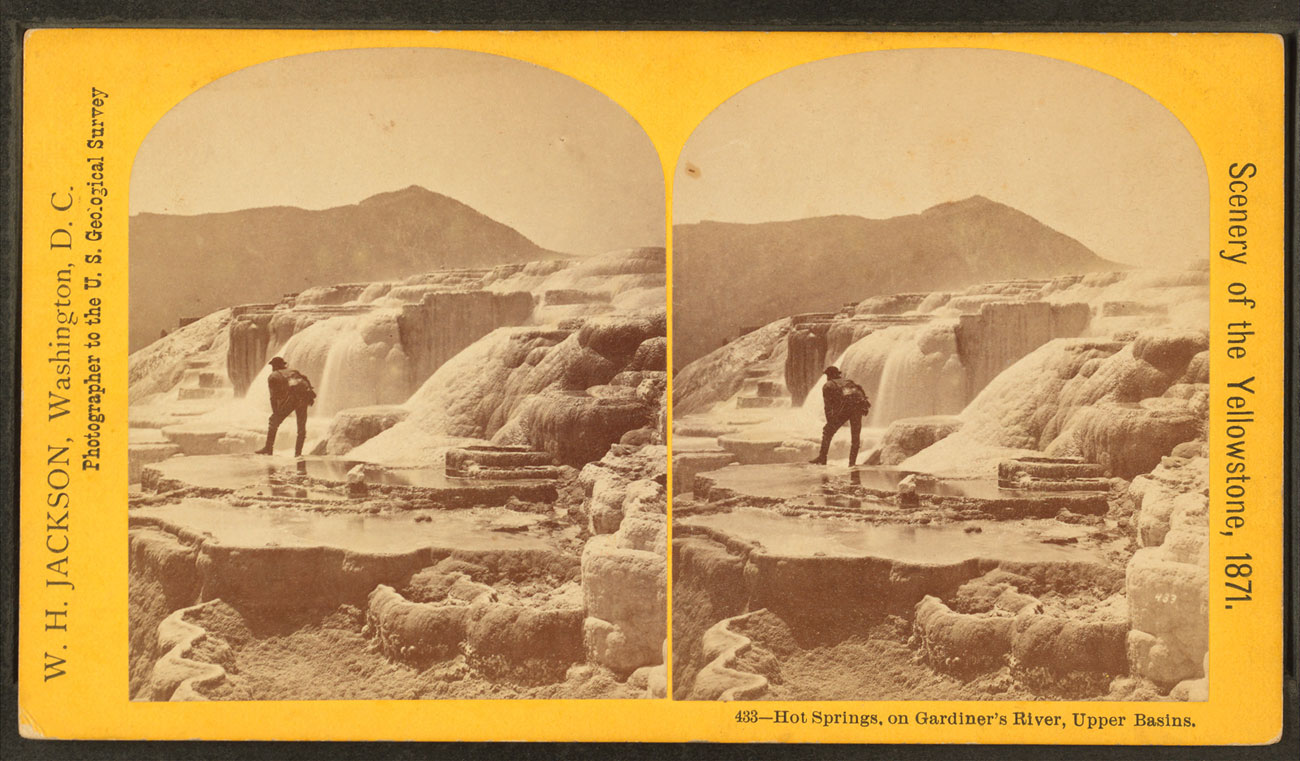


William Henry Jackson (American, 1843-1942) 'Gardiners River Hot Springs, Diana's Baths' 1871


William Henry Jackson (American, 1843-1942)
Gardiners River Hot Springs, Diana’s Baths
1871
From U.S. Geological Survey of the Territories
Albumen print
RISD Museum: Jesse Metcalf Fund


In this photograph William Henry Jackson captures the painter Thomas Moran, who was also part of the 1871 survey team. Shot from slightly below and at a distance, the photograph emphasises the textures of the mineral deposits in the foreground, while Moran’s figure seems dwarfed by the rock formations around him. Jackson often included figures in his photographs to impart a sense of scale. This inclusion of a single figure also heightens the impression that the photograph has captured a moment of discovery, the first contact between intrepid explorers and an uncharted land.
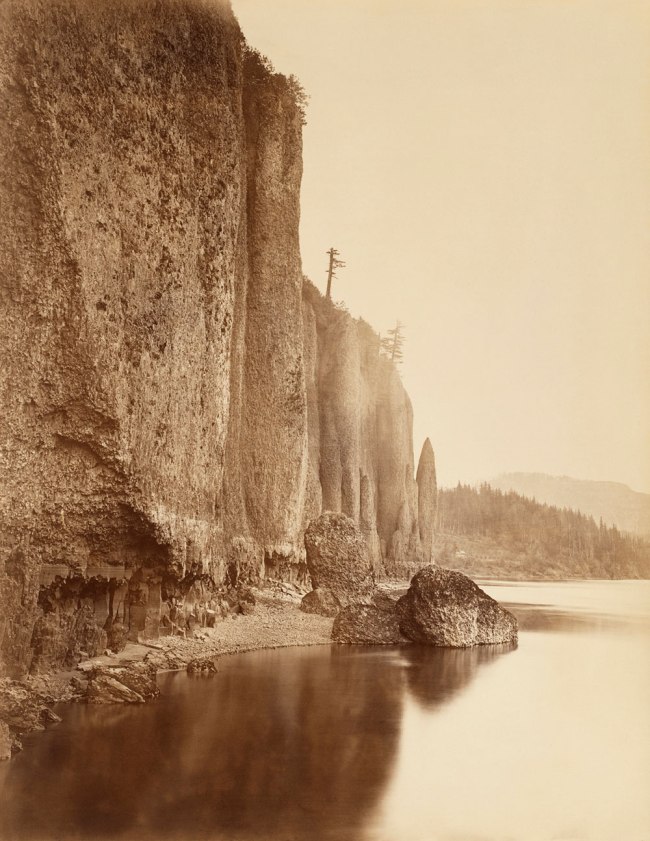
 

Carleton E. Watkins (American, 1829-1916) 'Cape Horn, Columbia River' 1867


Carleton E. Watkins (American, 1829-1916)
Cape Horn, Columbia River
1867
Helen M. Danforth Acquisition Fund.
Museum of Art Rhode Island School of Design, Providence


Cape Horn, Columbia River exemplifies not only the fine detail characteristic of Carleton Watkins’s images, but also his close attention to pictorial structure. Unlike many of the photographers represented in this gallery, Watkins worked independently of industrial concerns or government sponsorship. To make images that would appeal to an audience more familiar with traditional art forms, Watkins borrowed long-established conventions of landscape paintings, in particular carefully modulated lighting effects and harmonious compositions. Like the painters he emulated, Watkins depicts the West as a romantic wilderness and place of spiritual refuge.
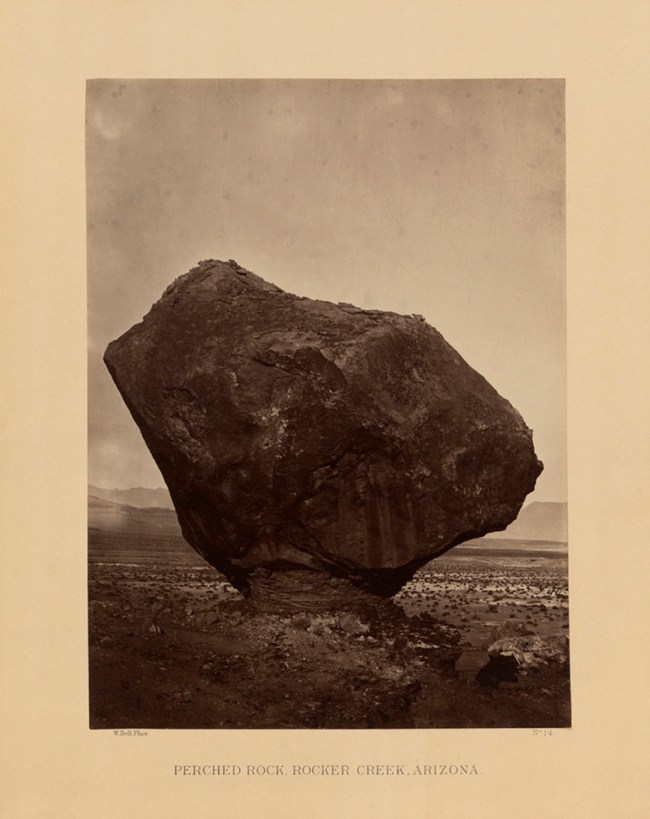
 

William H. Bell (American, 1830-1910) 'Perched Rock, Rocker Creek, Arizona' 1872


William H. Bell (American, 1830-1910)
Perched Rock, Rocker Creek, Arizona
1872
From the album Explorations and Surveys West of the 100th Meridian
Albumen print
Jesse Metcalf Fund. Museum of Art Rhode Island School of Design, Providence


Surveying the Field

At the end of the American Civil War photographers turned their lenses toward both the wild territories of the West and scenic tourist destinations in the newly established national parks. Although these images are now commonly exhibited in art museums, they were not originally considered art objects, nor were the photographers who made them considered artists. Instead, many of the photographers represented here were hired to document the projects of governmental agencies and the progress of federal survey expeditions to the western territories. Others produced images for the growing tourist market or recorded the construction of tracks through the country’s interior for railroad companies. The majority of these images were published in governmental reports and presentation albums.

The albumen prints produced in America through the 1880s were made from glass-plate negatives created by the laborious process of coating glass plates the size of the prints with a thick photosensitive solution called collodion. These plates had to be prepared on-site, exposed, and developed before the collodion dried, so photographers traveled with portable darkrooms. The prints were made later in a studio by placing paper coated with albumen (solution suspended in egg whites) under a glass-plate negative and exposing the paper to sunlight. By contact printing on this glossy surface, the image was recorded in minute detail.


Timothy O'Sullivan (American born Ireland, 1840-1882) 'Water Rhyolites, Near Logan Springs, Nevada' 1871


Timothy O’Sullivan (American born Ireland, 1840-1882)
Water Rhyolites, Near Logan Springs, Nevada
1871
From the album Explorations and Surveys West of the 100th Meridian
Albumen print
RISD Museum: Jesse Metcalf Fund


Timothy O’Sullivan and William H. Bell, official photographers on survey expeditions through Nevada and Arizona from 1871 to 1873, disavowed the traditional conventions of landscape painting in favour of unadorned observation. Spare and anti-picturesque, O’Sullivan’s radical views – depicting the western territories as foreign-looking, even hostile – accorded perfectly with the interests of those invested in seeing these empty territories studied, secured, and settled. One scholar has postulated that O’Sullivan’s photographs were intentionally crafted to look like products of technology – optically precise, printed on glossy albumen papers – a look that stood for industrial progress within a milieu that valued the machine-made over the handmade. In Perched Rock, Rocker Creek, Arizona and Rock Carved by Drifting Sand, Below Fortification Rock, Arizona, the two photographers treat unusual rock formations like specimens, isolating them from the surrounding landscape to be examined and measured.


Luminous Realms

Kodak’s introduction of the handheld camera in 1888 made photography an affordable and popular leisure-time amusement, creating a generation of amateur photographers seemingly overnight. At the same time, photographers with artistic ambitions feared that the mechanical, point-and-shoot approach of the new “button pressers” would jeopardise the medium’s elevation to the status of high art. In response, this group of artists – who called themselves Pictorialists – emphasised the photographer’s expertise and embraced labor-intensive processes to create expressive and impressionistic images. Many favoured platinum prints because of their wide range of tones, soft contrast, and matte surface – qualities of more traditional artistic media such as drawings and etchings. The Pictorialists’ landscape photographs are especially evocative. Rather than capturing a particular place and time, they transformed the landscape into a backdrop for human emotions and actions through visual effects and the inclusion of figures.


Clarence H. White (American, 1871-1925) 'Morning' 1905


Clarence H. White (American, 1871-1925)
Morning
1905
From Camera Work, No. 23, July 1908
Photogravure
RISD Museum: Walter H. Kimball Fund
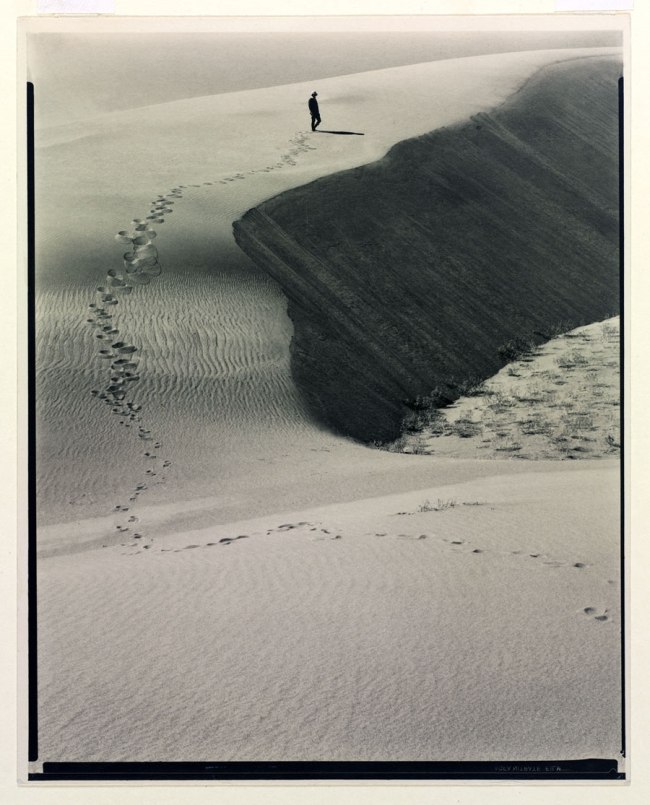
 

Laura Gilpin (American, 1891-1979) 'Footprints in the Sand' 1931


Laura Gilpin (American, 1891-1979)
Footprints in the Sand
1931
Platinum print
RISD Museum: Museum purchase with funds from the National Endowment for the Arts


Laura Gilpin portrays the Colorado sand dunes in the soft-focus style of the Pictorialists, but the reductive forms of her composition are strikingly modern. The sinuous lines of the wind-sculpted dunes are echoed in the subtle patterning of the figure’s footprints. His presence not only provides a sense of scale, but suggests that the human impact on the landscape can be small, fleeting, and beautiful.


Abstracting Nature

In the 1920s, photographers began to question whether Pictorialism was the style best suited to win acceptance for photography as a fine art. On the east coast, Alfred Stieglitz, who had formerly championed Pictorialism, became its most vocal critic. In northern California, a group of photographers who would come to call themselves Group f/64 developed a new style. Opposing the soft focus, painterly approach, the f/64 photographers embraced a hard-edged, sharp-focus machine aesthetic. Optical reality was transformed into surface pattern, rhythm, tone, and line in prints precisely detailed on glossy, gelatin silver papers. Indeed, f/64 refers to the smallest aperture on their large-format cameras, which resulted in sharp focus from foreground to background.

This period revitalised landscape photography, with many photographers looking to views of nature as a place to escape from the problems of urban life. These photographers captured instants of intensified vision that only the camera offered, creating the photograph mentally before it was realised physically. Whether majestic views of dramatic natural features or abstracted details of quiet settings, these images expressed metaphysical, ethical, or personal reflections on humankind’s relationship to nature.
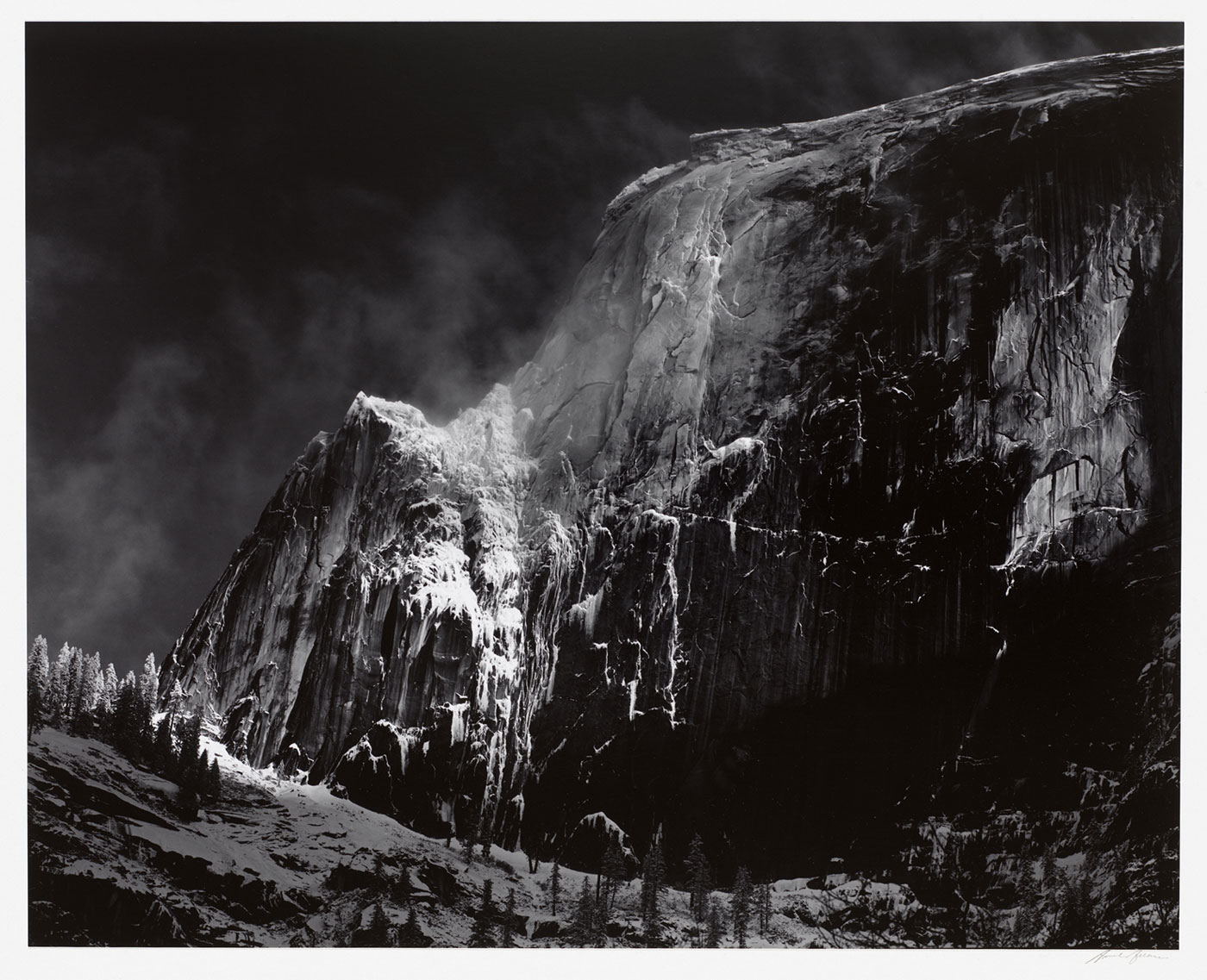
 

Ansel Adams (American, 1902-1984) 'Half Dome, Blowing Snow, Yosemite National Park, California' c. 1955


Ansel Adams (American, 1902-1984)
Half Dome, Blowing Snow, Yosemite National Park, California
ca. 1955 (printed 1970s)
Museum purchase with funds from the National Endowment for the Arts
© 2012 The Ansel Adams Publishing Rights Trust. Museum of Art Rhode Island School of Design, Providence


This photograph depicts the iconic tourist destination of Yosemite as sublime and untouched. By removing any evidence of human impact, Ansel Adams allows us to escape (at least temporarily) from the intrusions of culture. High contrast adds visual drama to an already majestic view, capturing the textures of the rock wall and the light filtering through the blowing snow. Throughout his life, Adams embraced the notion that nature could provide the harried, urbanised citizen of the modern age with a place of spiritual refuge. A long-time member of the Sierra Club, he was a devoted and vocal advocate for wilderness conservation and his photographs were crucial to the conservation effort.
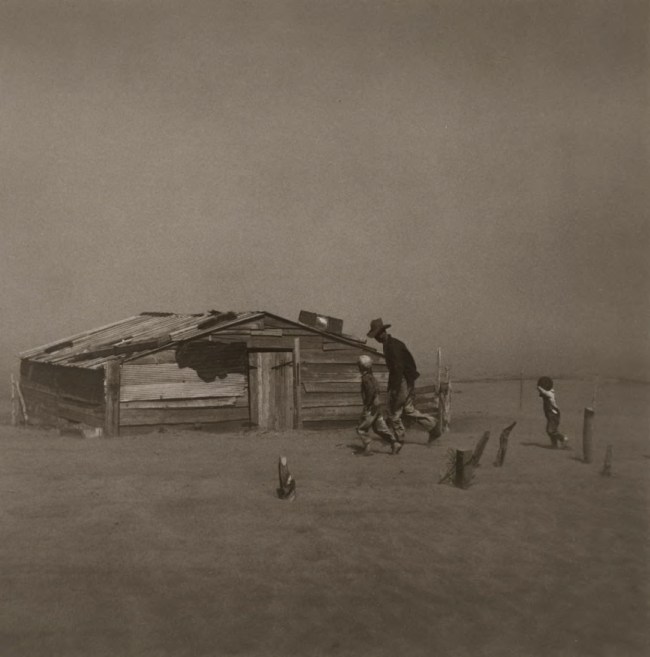
 

Arthur Rothstein (American, 1915-1985) 'Father and Sons Walking in the Face of a Dust Storm, Cimarron County, Oklahoma' 1936


Arthur Rothstein (American, 1915-1985)
Father and Sons Walking in the Face of a Dust Storm, Cimarron County, Oklahoma
1936
Gelatin silver print
RISD Museum: Gift of Mr. and Mrs. Gilman Angier


In 1936 Arthur Rothstein traveled to the Oklahoma panhandle, the area of the country most affected by drought, wind, and erosion. In his image (above) he captured one of the few families in the area that had not yet abandoned their farm. His portrayal of the farmer and his sons fighting to make their way home through the elements can be read as a larger statement about the struggle between man and nature. Rothstein’s dark, low contrast print further conveys the oppressive atmosphere of the dust storm.
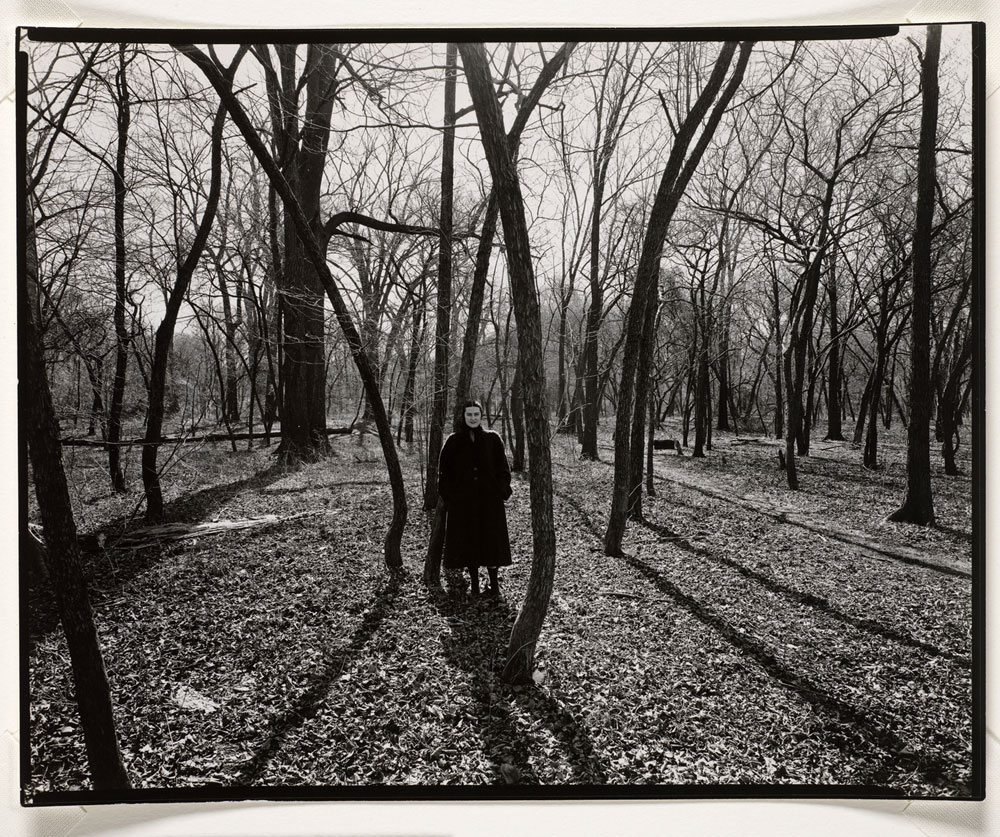
 

Harry Callahan (American, 1912-1999) 'Eleanor, Chicago' c. 1952


Harry Callahan (American, 1912-1999)
Eleanor, Chicago
c. 1952
Gift from Harry Callahan ca. 1953 Wayne Miller
© The Estate of Harry Callahan, courtesy Pace/MacGill Gallery, New York. Museum of Art Rhode Island School of Design, Providence
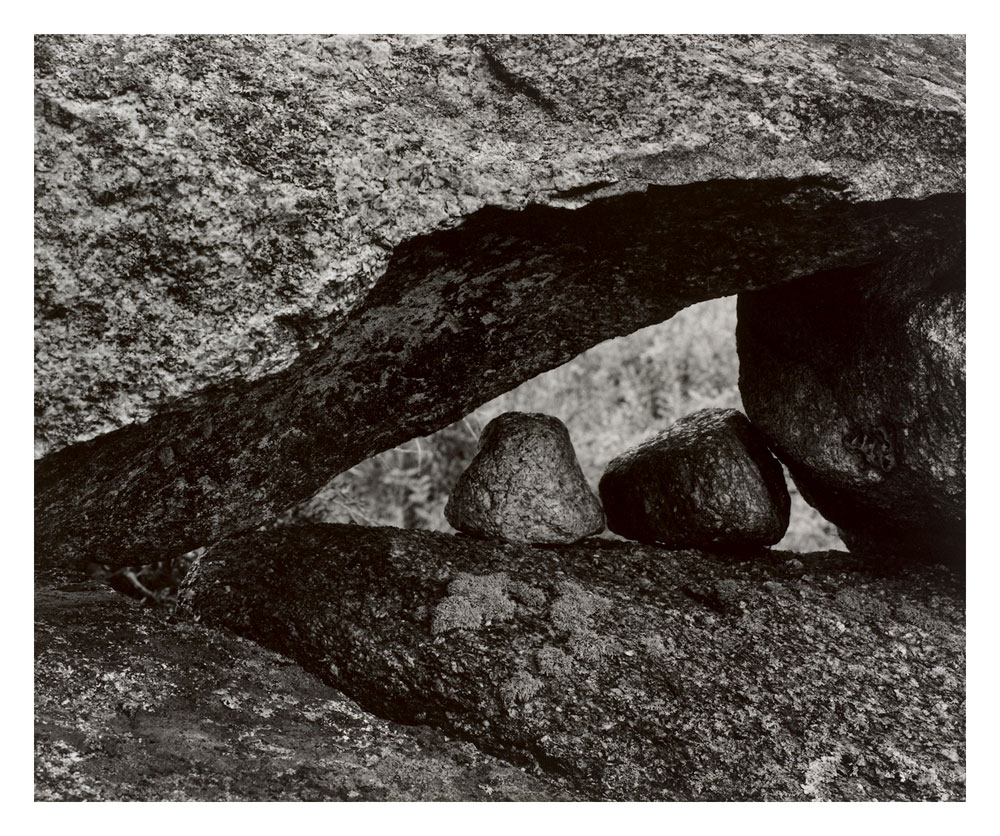
 

Aaron Siskind (American, 1903-1991) 'Martha’s Vineyard, 114B' 1954


Aaron Siskind (American, 1903-1991)
Martha’s Vineyard, 114B
1954
Gift of Mr. Robert B. Menschel. Courtesy Aaron Siskind Foundation
Museum of Art Rhode Island School of Design, Providence


In Martha’s Vineyard 114B, Aaron Siskind focuses on two small rocks nestled in a stone wall. As Siskind explained, he “began to feel the importance of how these rocks hovered over each other, touched each other, pushed against each other.” He likened this contiguity to family relationships, especially that between mother and child. He believed that the pair of rocks pictured in the photograph would – consciously or not – evoke emotions in the viewer, and that these emotions were both deep-seated and universal. In his depiction of the landscape, he found metaphors for what he called “human drama.”
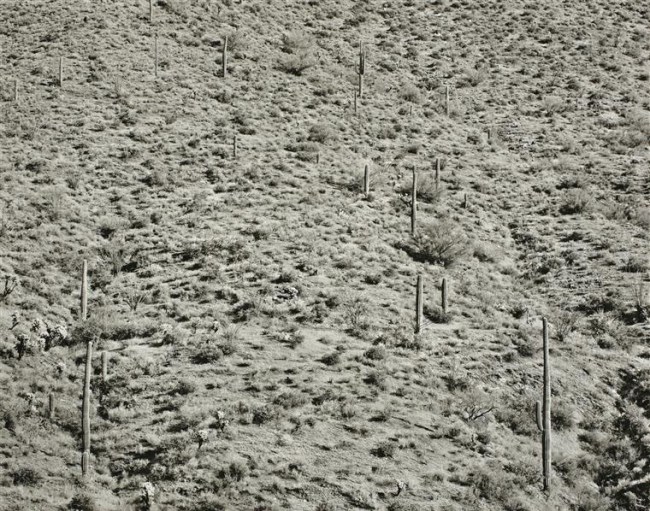
 

Frederick Sommer (American, 1905-1999) 'Arizona Landscape' 1943


Frederick Sommer (American, 1905-1999)
Arizona Landscape
1943
Gelatin silver print
Promised gift from the collection of Marc Harrison


Frederick Sommer’s photographs of the Arizona desert, made between about 1939 and 1945, omit the horizon line to create an overall field of pattern where scale and orientation are confounded. The vast space of the desert is pulled to the surface of the image, making the work less a landscape and more an independent construction. Sommer intently considered much of his work before executing it. He might study an area of the desert for days before deciding how to take the picture and then spend weeks in the darkroom perfecting the print.
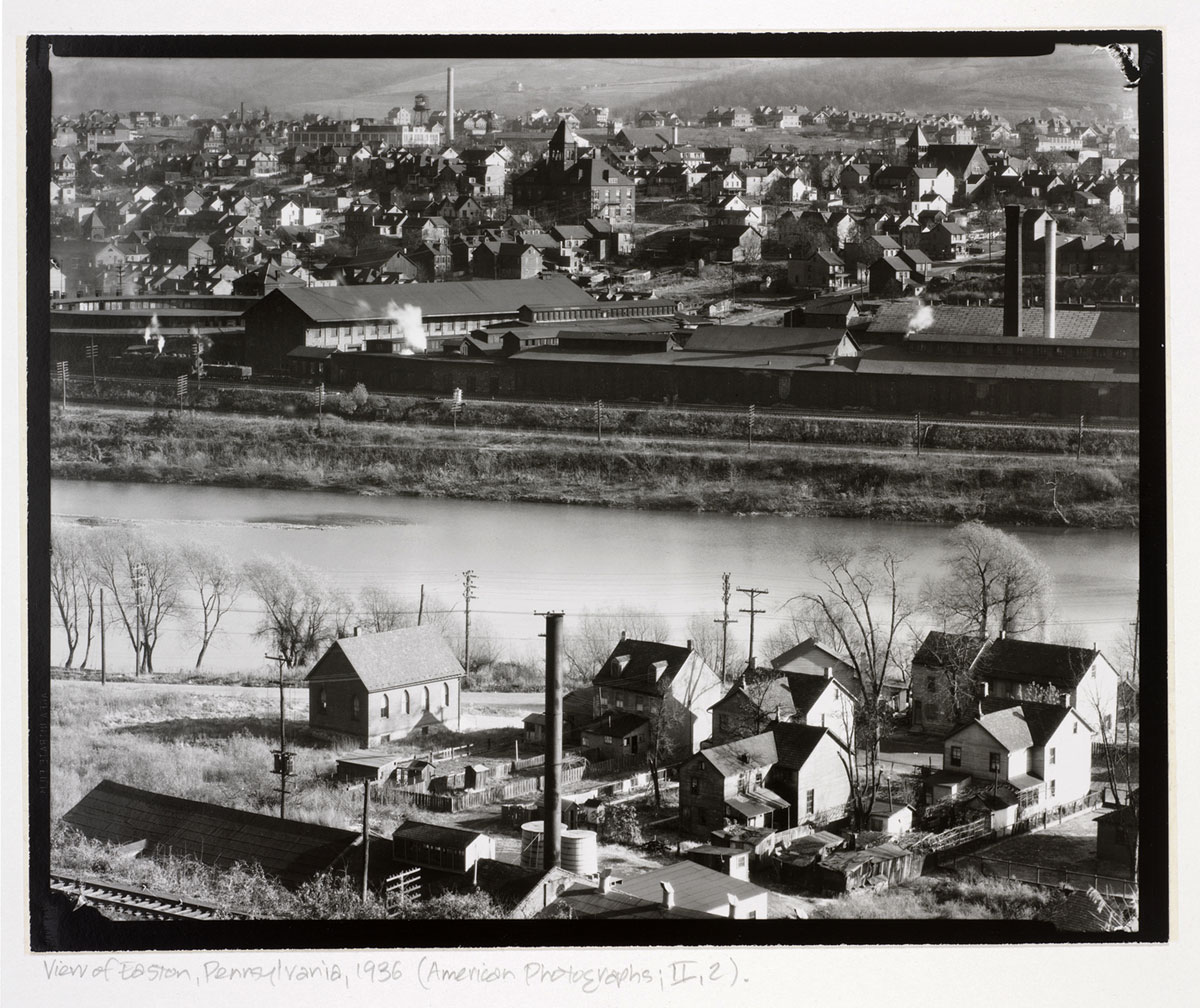
 

Walker Evans (American, 1903-1975) 'View of Easton, Pennsylvania' 1936


Walker Evans (American, 1903-1975)
View of Easton, Pennsylvania
1936
From the portfolio American Photographs II
Gelatin silver print
RISD Museum: Gift of James Dow


By compressing distance and flattening perspective, Walker Evans collapses the two cityscapes of Easton, Pennsylvania, and Phillipsburg, New Jersey, into one plane. Evans’s aesthetically neutral style seems to depict the world without the intervention of the photographer’s point of view. At the same time, he forces the details of every building and smokestack to the surface of the image, making the plight of the cities and their inhabitants – the Depression had crippled the shipping and manufacturing industries that were the lifeblood of both towns – impossible to ignore.
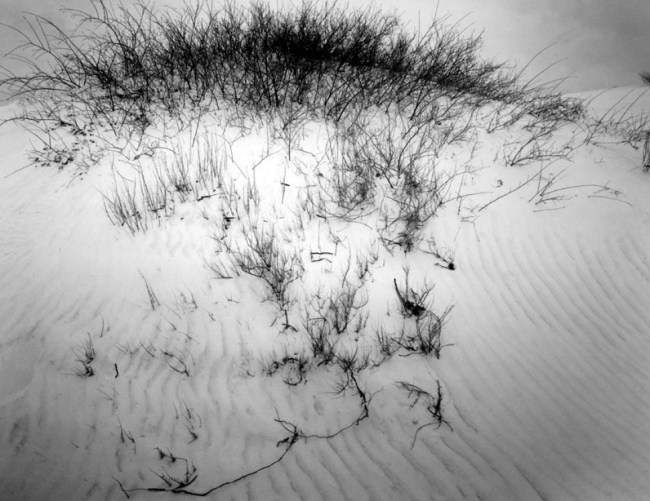
 

Jack Warren Welpott (American, 1923-2007) 'White Sands' 1977


Jack Warren Welpott (American, 1923-2007)
White Sands
1977
Gelatin silver print
RISD Museum: Gift of Aaron Siskind
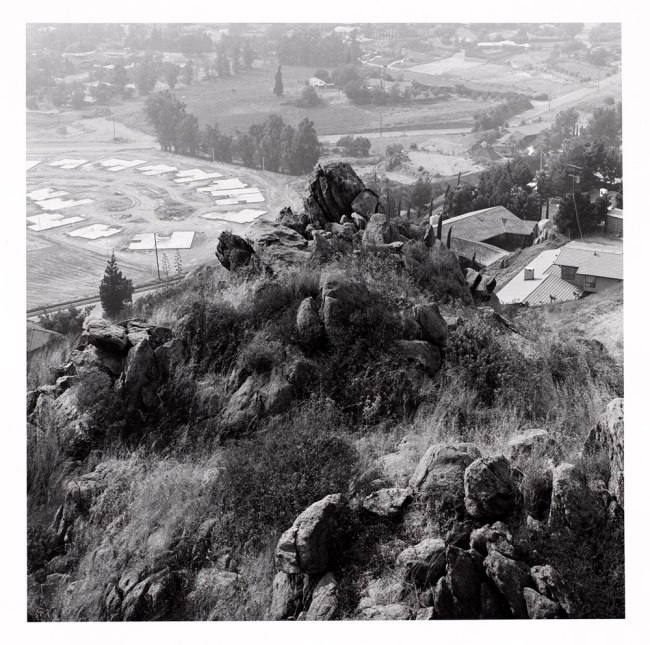
 

Joe Deal (American, 1947-2010) 'Colton, California' 1978


Joe Deal (American, 1947-2010) (RISD Provost 1999-2005, Faculty 2005-2009)
Colton, California
1978
From the portfolio The Fault Zone 1981
Portfolio of 19 gold-toned gelatin silver prints
Museum Purchase: Georgianna Sayles Aldrich Fund and Gift of James D. and Diane D. Burke
© The Estate of Joe Deal, courtesy Robert Mann Gallery. Museum of Art Rhode Island School of Design, Providence
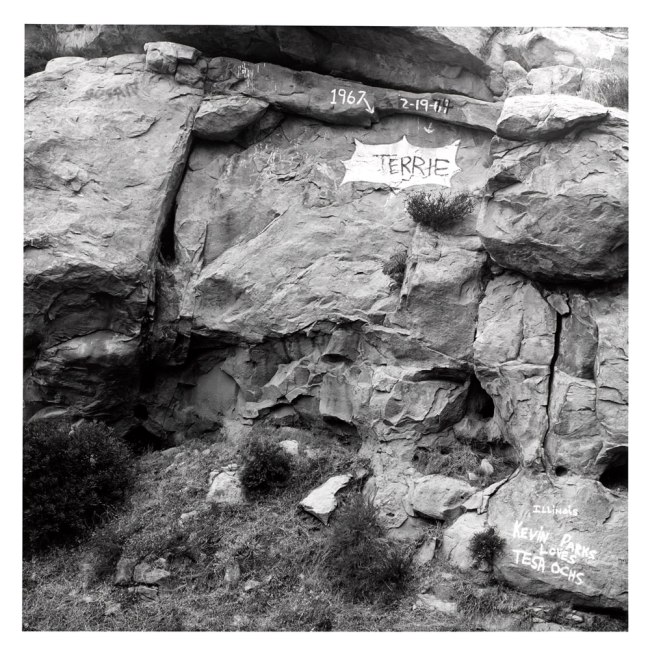
 

Joe Deal (American, 1947-2010) 'Chatsworth, California' 1980


Joe Deal (American, 1947-2010) (RISD Provost 1999-2005, Faculty 2005-2009)
Chatsworth, California
1980
From the portfolio The Fault Zone 1981
Portfolio of 19 gold-toned gelatin silver prints
Museum Purchase: Georgianna Sayles Aldrich Fund and Gift of James D. and Diane D. Burke
© The Estate of Joe Deal, courtesy Robert Mann Gallery. Museum of Art Rhode Island School of Design, Providence


Joe Deal (American, 1947-2010) 'Indio, California' 1978


Joe Deal (American, 1947-2010) (RISD Provost 1999–2005, Faculty 2005-2009)
Indio, California
1978
From The Fault Zone 1981
Portfolio of 19 gold-toned gelatin silver prints
RISD Museum: Museum Purchase: Georgianna Sayles Aldrich Fund and Gift of James D. and Diane D. Burke


Joe Deal (American, 1947-2010) 'Santa Barbara, California' 1978


Joe Deal (American, 1947-2010) (RISD Provost 1999–2005, Faculty 2005-2009)
Santa Barbara, California
1978
From The Fault Zone 1981
Portfolio of 19 gold-toned gelatin silver prints
RISD Museum: Museum Purchase: Georgianna Sayles Aldrich Fund and Gift of James D. and Diane D. Burke


Inspired by conceptual art, Joe Deal generally developed his work in series, choosing a particular location and adhering to a strict visual formula. As in The Fault Zone, his landscapes were typically square in format, viewed from above, lacking a horizon, and empty of people. Edges and divisions in nature and the landscape fascinated him, and the fault lines in California, though invisible on the surface, in many ways define that landscape. Using maps from the Los Angeles County engineering office that indicated where the fault lines were apt to be, Deal looked for sites that would metaphorically suggest volatility. The first image in the series is the only one that was actually taken on the San Andreas Fault; all others symbolically represent the fault lines with torn or disrupted terrain.


Topographic Developments

By the time the landmark exhibition New Topographics: Photographs of a Man-Altered Landscape opened in 1975, the accelerating degradation of the environment had become an inescapable reality. Inverting the Ansel Adams principle of exclusion, the exhibit voiced the belief that the landscape could no longer be portrayed as a refuge from the ills of industrial life: any consideration of the modern environment had to include both wilderness areas and the vacant lot next door.

The New Topographics photographers captured recently constructed tract homes, industrial parks, and highway culture with medium and large format cameras. As aesthetically neutral as real estate snapshots, the photographs showed the facts without offering their opinions about the rapid development they recorded. Seemingly stripped of expressivity, their photographs have the appearance of objective or “topographic” renderings rather than subjective impressions. In emphasising the landscape of the American West and experimenting with anti-Romantic landscape imagery, these photographers looked back to the works of 19th-century survey photographers and to Walker Evans’s documentary style.


Lewis Baltz (American, 1945-2014) 'Model Home, Shadow Mountain' 1977


Lewis Baltz (American, 1945-2014)
Model Home, Shadow Mountain
1977
From the portfolio Nevada
Gift from the Collection of Joe Deal and Betsy Ruppa
© Lewis Baltz. Museum of Art Rhode Island School of Design, Providence


In Nevada, Lewis Baltz alternates unbuilt views with home construction, trailer parks, and roads in a documentation of a rapidly changing landscape in the desert valleys surrounding Reno, an area he once described as “landscape-as-real-estate.” Baltz, like Joe Deal and Harold Jones, whose works are on view in this gallery, developed projects as portfolios, believing that a single photograph cannot capture a complete portrait of a place. In Baltz’s series, a multifaceted, occasionally contradictory image of Nevada emerges through the accumulation of photographs.


Thomas Barrow (American, b. 1938) 'f/t/s Cancellations (Brown) - Field Star' 1975


Thomas Barrow (American, b. 1938)
f/t/s Cancellations (Brown) – Field Star
1975
Gelatin silver print
Gift from the Collection of Joel Deal and Betsy Ruppa
© Thomas Barrow. Museum of Art Rhode Island School of Design, Providence


Barrow scratched through his landscape negatives, calling attention to the materiality of the medium itself and the fact that regardless of how much information is given, reality remains an accumulation of belief, knowledge, and one’s own experience.


Harold Henry Jones (American, b. 1940) 'With Emmet' 1978


Harold Henry Jones (American, b. 1940)
With Emmet
1978
From the portfolio Tucson
Gelatin silver print
Gift of the artist in honour of Joe Deal
© 1986 Harold Jones. Museum of Art Rhode Island School of Design, Providence


Harold Jones moved to Tucson sight unseen in 1974. The Tucson Portfolio documents his first years living in, exploring, and adapting to this unfamiliar landscape. In an accompanying text he relates his initial impressions of the Southwest, a landscape he had only seen in Westerns and “in the background of Roadrunner cartoons.” It was, he writes, “white bright and oven hot. Driving through the spiney leafless plants of the desert gave me the impression of being on an ocean floor – except someone had removed the water. A primordial landscape in a sea of light. Shocking and enchanting, at the same time.”
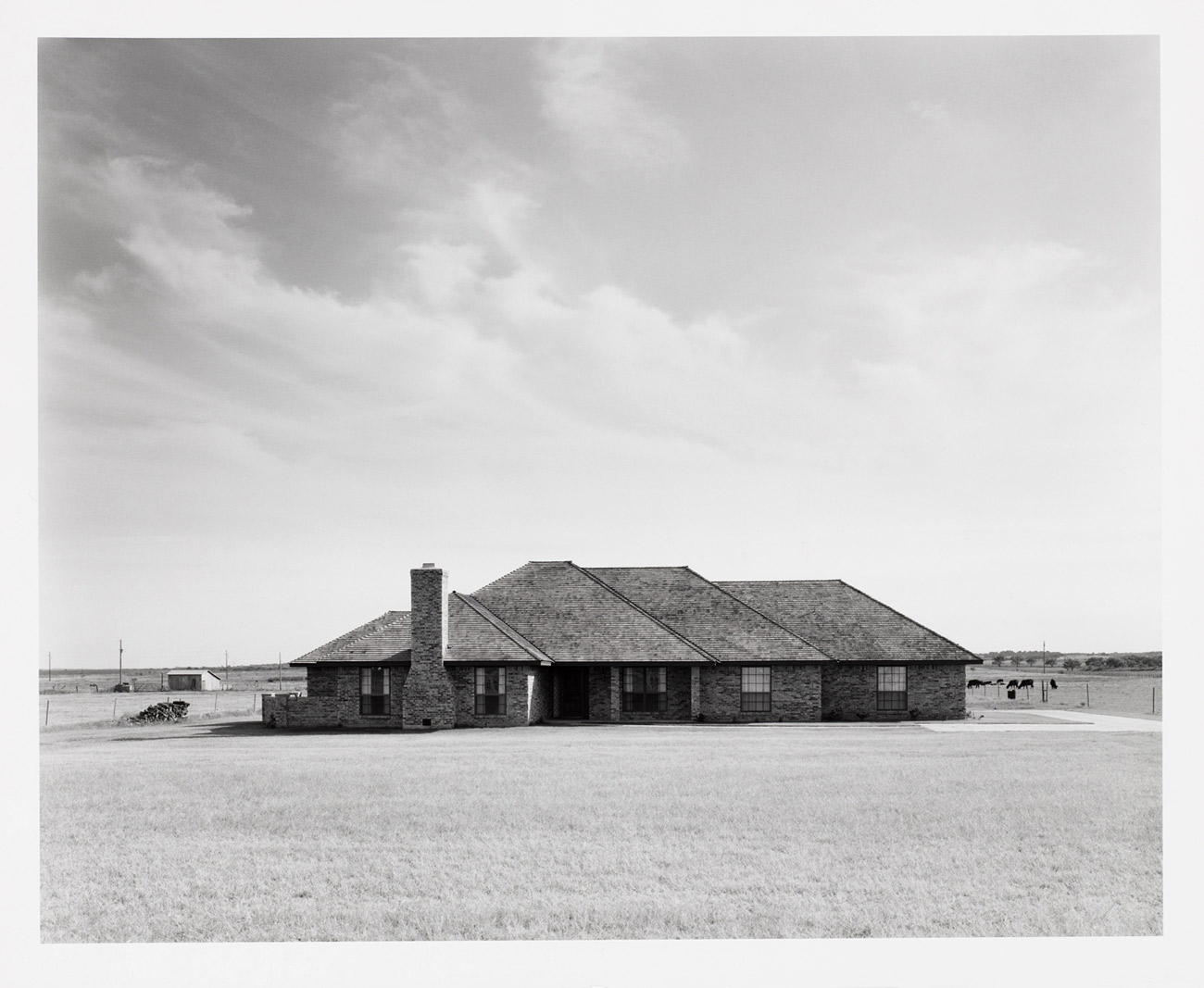
 

Frank Gohlke (American, b. 1942) 'Near Crowley, Texas' 1978


Frank Gohlke (American, b. 1942)
Near Crowley, Texas
1978
Gelatin silver print
RISD Museum: Gift from the Collection of Joe Deal and Betsy Ruppa


Lee Friedlander (American, b. 1934) 'Atlantic City, New Jersey' 1971


Lee Friedlander (American, b. 1934)
Atlantic City, New Jersey
1971
Gelatin silver print
RISD Museum: Museum purchase with funds from the National Endowment for the Arts


Garry Winogrand (American, 1928-1984) 'Utah' 1964


Garry Winogrand (American, 1928-1984)
Utah
1964
From the portfolio Garry Winogrand, 1978
Gelatin silver print
Gelatin silver prints RISD Museum: Gift of Frederick J. Myerson


In the 1960s nature was apt to be viewed from a car window or in a rear-view mirror rather than from a hilltop. The large-format magisterial views of Ansel Adams and Edward Weston were replaced by a 35mm “grab-shot” style that captured the flux and contradictions of modern life with a fresh immediacy. Photographers were among the restless peripatetics crisscrossing the continent on new interstates and side roads, retrieving evidence of the “Americas” they found. The grainy, gritty aesthetic matched the sensations and energy of this environment.


America in View: Landscape Photography 1865 to Now accompanies a major exhibition of that title tracing a history of photographs of the American landscape primarily through the collection of the RISD Museum. The show takes a broad look at the ever-evolving definition of American landscape photography – from seemingly pristine views of nature captured with 19th-century view cameras to images of the decaying contemporary urban streets composed from Google Street View. The RISD Museum’s collection of American landscape photography begins at the end of the Civil War in 1865, when photographers traveled west with government survey teams and railroad companies to record the country’s extraordinary natural features and resources. Ever since, the landscape has remained a compelling subject for photographers who have revealed through their images our nation’s ambition and failings, beauty and degradation, politics and personal stories.

The Museum of Art Rhode Island School of Design announces its major fall exhibition, America in View: Landscape Photography 1865 to Now, a broad panorama of our country’s topographies and correlating narratives that reveals a nation’s ambitions and failings, beauty and loss, politics and personal stories through about 150 photographs spanning nearly 150 years. “The landscape has inspired and challenged artists since the earliest days of our nation,” says Museum Director John W. Smith. “The remarkable works in this exhibition not only capture photography’s evolving relationship with the landscape but also trace the larger narrative of America itself.”

From the earliest images in the show, it is clear how purpose guided style. Carlton Watkins’ 1860s painterly and atmospheric views of the sublime landscape portray the wilderness as a place of spiritual renewal and a refuge from urban problems. In contrast, Timothy O’Sullivan, employed for the government’s geological surveys in the 1870s, made purposefully spare and anti-picturesque images that seemingly provide proof of empty territories needing to be studied, secured, and settled.

In her essay for America in View’s accompanying catalogue, photographer Deborah Bright, chair of the Fine Art Department at Pratt Institute, suggests that some of the historical shifts in environmental consciousness seen in the photographs “illuminate how the works also reflect changing conceptions of landscapes as bearers of cultural meaning.” Ansel Adams, whose mid-20th-century views of nature’s majesty and vastness represent many people’s ideals of American landscape photography, omitted human impact on the land. Widely used by the Sierra Club, his stunning images of untouched wilderness encouraged conservation in the face of an increasingly industrial society.

By the 1970s, artists including the late RISD provost and photography professor Joe Deal saw that the environment entailed both wilderness and the vacant lot next door. Their “New Topographics” imagery depicts recently constructed tract homes, industrial parks, and highway culture – inverting Adams’ exclusion. “‘Landscape’ is probably better understood as that set of expectations and beliefs… we project upon the world,” explains Brown University art historian Douglas Nickel, in the catalogue. “Not every photograph of land is a landscape, and not every landscape necessarily features the land.”

The past 20 years reveal a return to romantic views of the landscape, even in its degraded state, often including figures to create narratives. Justine Kurland’s landscape under an overpass shows a stunning place of fantasy and escape. RISD alumnus Justin Kimball explores fantasies of finding wilderness in public parks – where instead we find others seeking the same.

Press release from the RISD website


Barbara Bosworth (American, b. 1953) 'Niagara Falls' 1986


Barbara Bosworth (American, b. 1953)
Niagara Falls
1986
Gelatin silver print
Private collection
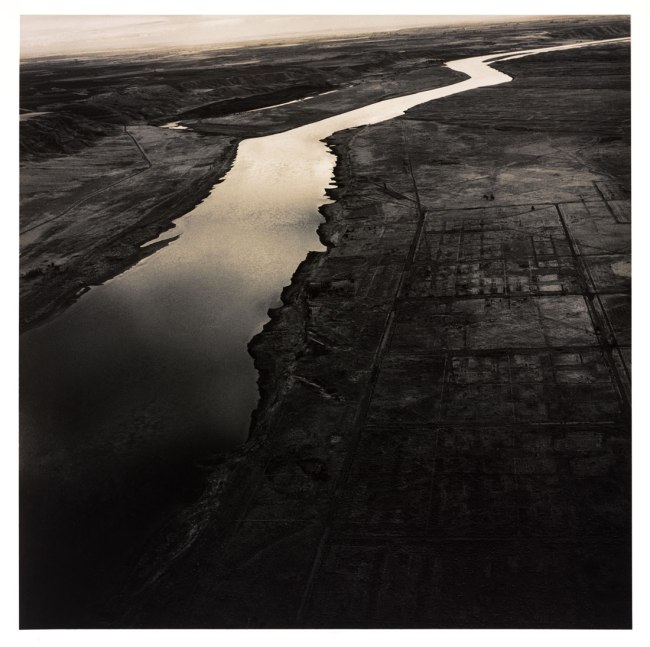
 

Emmet Gowin (American, b. 1941) (RISD MFA 1967) 'Old Hanford City Sites and the Columbia River, Hanford Nuclear Reservation near Richland, Washington' 1986


Emmet Gowin (American, b. 1941) (RISD MFA 1967)
Old Hanford City Sites and the Columbia River, Hanford Nuclear Reservation near Richland, Washington
1986
Toned gelatin silver prints
Promised gift of Dr. and Mrs. William G. Tsiaras
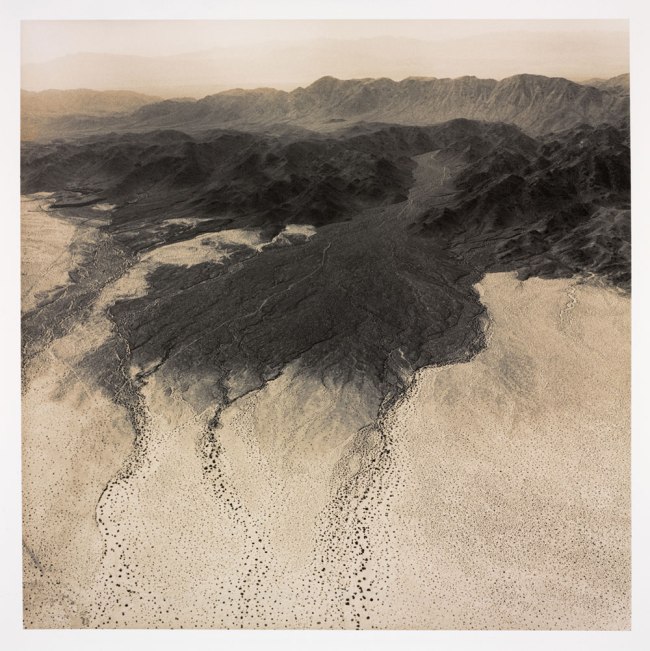
 

Emmet Gowin (American, b. 1941) 'Alluvial Fan, Natural Drainage near Yuma Proving Ground and the California Arizona Border' 1988


Emmet Gowin (American, b. 1941) (RISD MFA 1967)
Alluvial Fan, Natural Drainage near Yuma Proving Ground and the California Arizona Border
1988
Toned gelatin silver prints
Promised gift of Dr. and Mrs. William G. Tsiaras
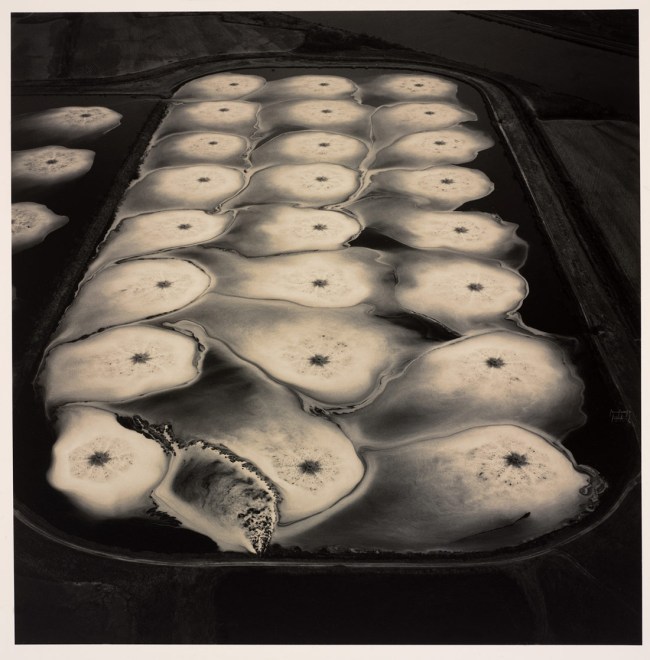
 

Emmet Gowin (American, b. 1941) 'Aeration Pond, Toxic Water Treatment Facility, Pine Bluff, Arkansas' 1989


Emmet Gowin (American, b. 1941) (RISD MFA 1967)
Aeration Pond, Toxic Water Treatment Facility, Pine Bluff, Arkansas
1989
Toned gelatin silver print
RISD Museum: Mary B. Jackson Fund


Emmet Gowin’s carefully constructed prints of strip mining sites, nuclear testing fields, large-scale agriculture, and other scars in the natural landscape seductively draw us in to examine what these lushly patterned and toned images represent. Predating Google Earth, these photographs are shot from the air and provide information about the environment that questions our role as stewards of the planet. A master darkroom printer, Gowin makes images come alive through hand-toning. Each print is transformed from grayscale into hues ranging from warm highlights to cool shadows, emphasising the illusion of three-dimensionality.
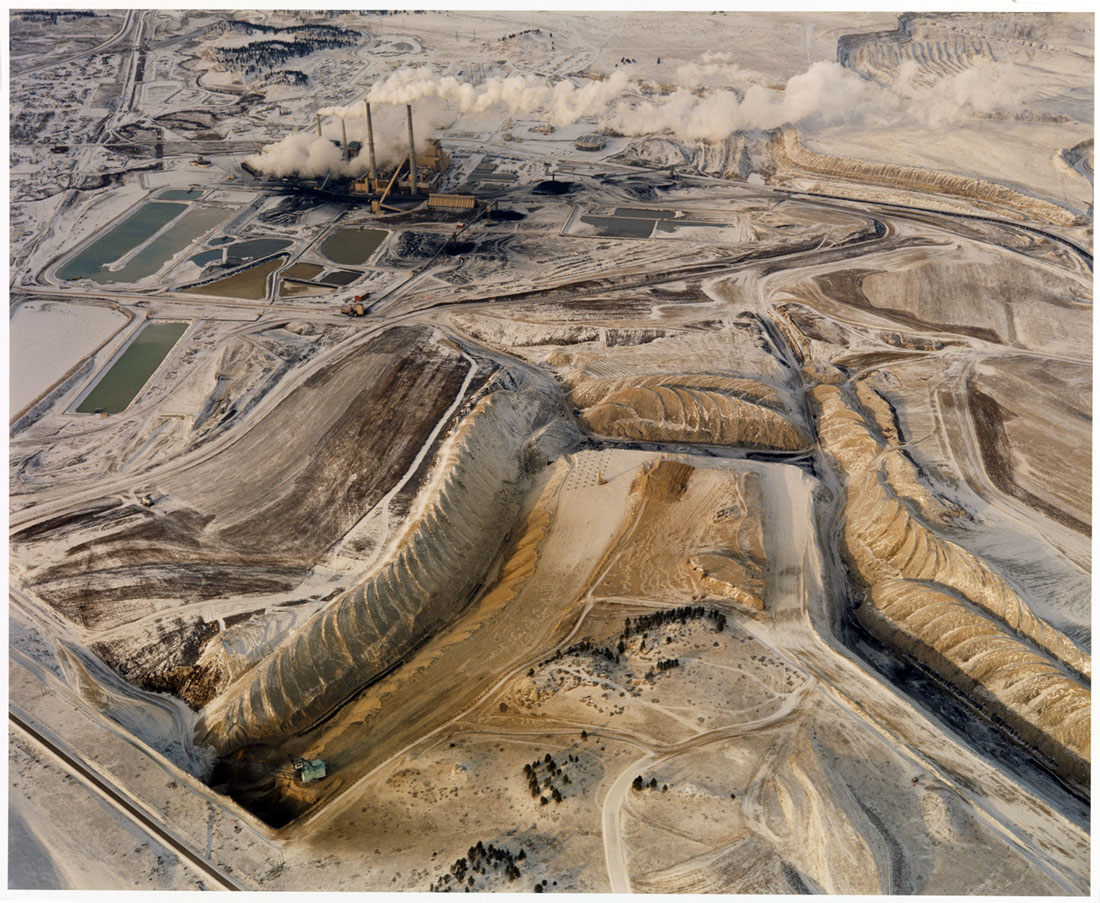
 

David T. Hanson (American, b. 1948) 'Coal Strip Mine, Power Plant and Waste Ponds' 1984


David T. Hanson (American, b. 1948)
Coal Strip Mine, Power Plant and Waste Ponds
1984
Museum Purchase: Gift of the Artist’s Development Fund of the Rhode Island Foundation
© 1984 David T. Hanson, from the book Colstrip, Montana by David T. Hanson (Taverner Press, 2010). Museum of Art Rhode Island School of Design, Providence


Terry Evans (American, b. 1944) 'Terraced Plowing with a Grass Waterway' 1991


Terry Evans (American, b. 1944)
Terraced Plowing with a Grass Waterway
1991
From the series Inhabited Prairie
Gelatin silver print
RISD Museum: Gift of Jan Howard and Dennis Teepe in honour of Joe Deal


Neither the striking abstract design of the terraced field nor the effectiveness of this type of farming are what interests Terry Evans. She is drawn to the specific place and how the marks on the land, as she has said, “contain contradictions and mysteries that raise questions about how we live on the prairie. All of these places are beautiful to me, perhaps because all land, like the human body, is beautiful.”
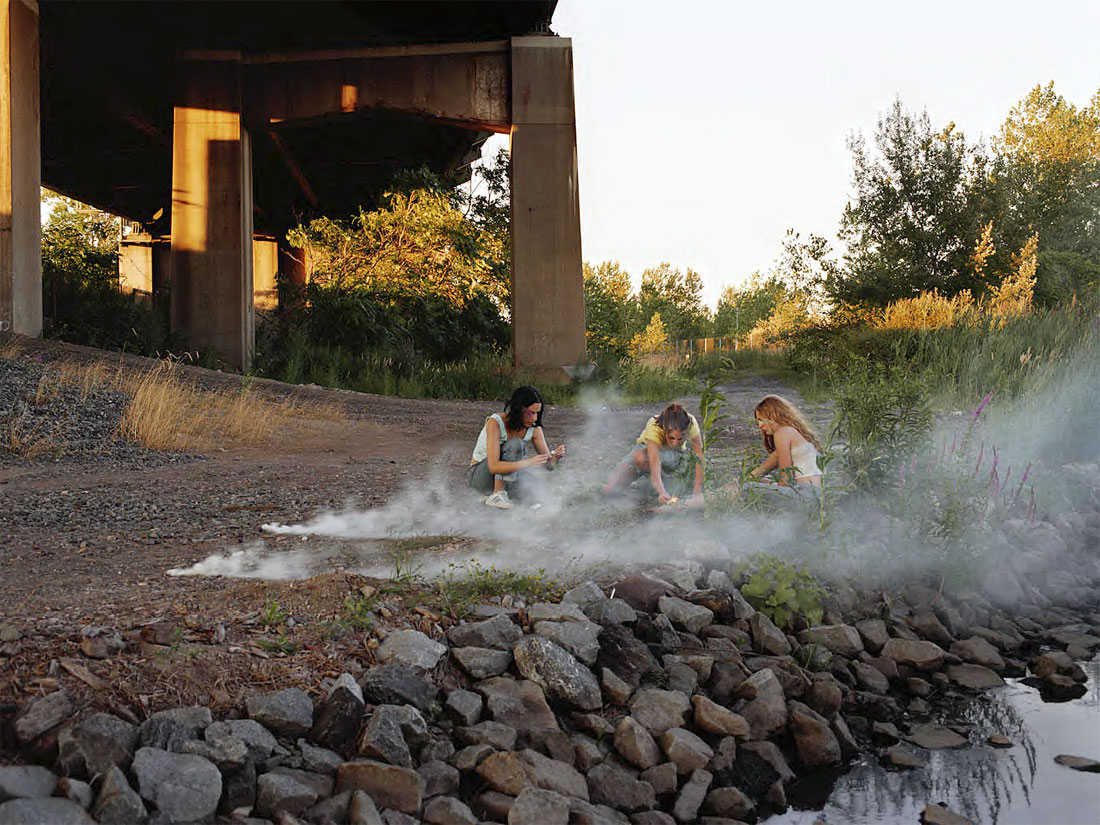
 

Justine Kurland (American, b. 1969) 'Smoke Bombs' 2000


Justine Kurland (American, b. 1969)
Smoke Bombs
2000
From the series Runaway Girls
Colour chromogenic print
RISD Museum: Mary B. Jackson Fund


The neglected space under a New Jersey highway overpass was an ideal spot for three girls to act out Justine Kurland’s fictive story about fugitive teenagers. The figurative grouping recalls pastoral scenes in historical paintings so that the danger of the girls’ pursuit in this dicey no-man’s land is temporarily suspended in the hazy romantic fantasy of escape. The strong light streaming across the scene and the overall beauty of the composition suggests a desire to pursue the sublime even in the most degraded landscapes.


Justin Kimball (American, b. 1961) 'Deep Hole, New Hampshire' 2002


Justin Kimball (American, b. 1961)
Deep Hole, New Hampshire
2002
From the series Where We Find Ourselves
Gift of the artist in honour of Joe Deal
Museum of Art Rhode Island School of Design, Providence


Deep Hole, New Hampshire captures light filtering through the trees as a dozen young men and women distribute themselves among rocky outcroppings, poised for adventure in the water below. The composition recalls the quiet drama of Thomas Eakins’s 19th-century painting of nude swimmers. This reference drew Kimball to the picture as it played out in front of him, along with the palpable sense of elation in the youths’ encounter with the landscape, no matter the deteriorating state of the site due to its heavy use. Kimball’s series Where We Find Ourselves explores the fantasy of finding wilderness in state and national parks, where we only find other people looking for it, too.
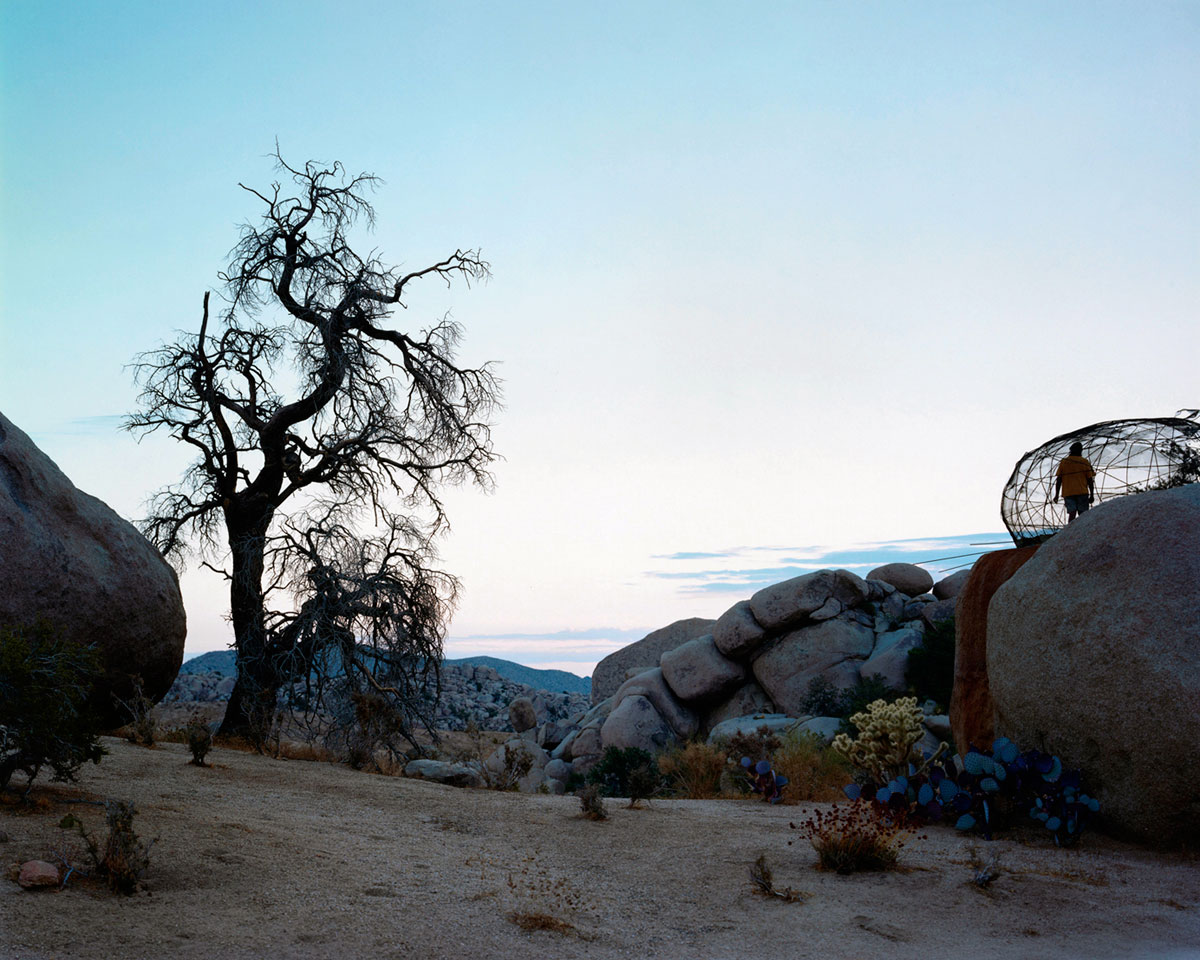
 

Alec Soth (American, b. 1969) '2008_08zl0031' 2008


Alec Soth (American, b. 1969)
2008_08zl0031
2008
Mary Ann Lippitt Acquisition Fund
© Alec Soth
Museum of Art Rhode Island School of Design, Providence


Where We Find Ourselves

Current representations of the American landscape reveal a continually fraught relationship with the environment. Recent landscape photography reflects its history while constructing new notions of what such an image can be. Some artists continue to see the landscape as a place of refuge or spirituality. Others focus on its more disturbing psychological impact, even haunted with battle scars. Some pick up from the 1970s New Topographics approach with a more pointed investigation of environmentalism, documenting and questioning the impact of industry and development on the natural world. Still others have found that with the introduction of the figure the landscape can act as a stage, albeit one charged with political and social resonance.

Notable shifts have also been driven by new processes and techniques. The photographs of the last several decades are predominantly in colour and are much larger than their precedents. While many artists working today use digital technology, their motive is rarely to alter or fabricate imagery but instead to have easier and better control over how these larger images are presented. Surprisingly, many of today’s photographers are using large format cameras very similar to those of the 19th century to create negatives or digital files capable of being enlarged to the scale of contemporary work.
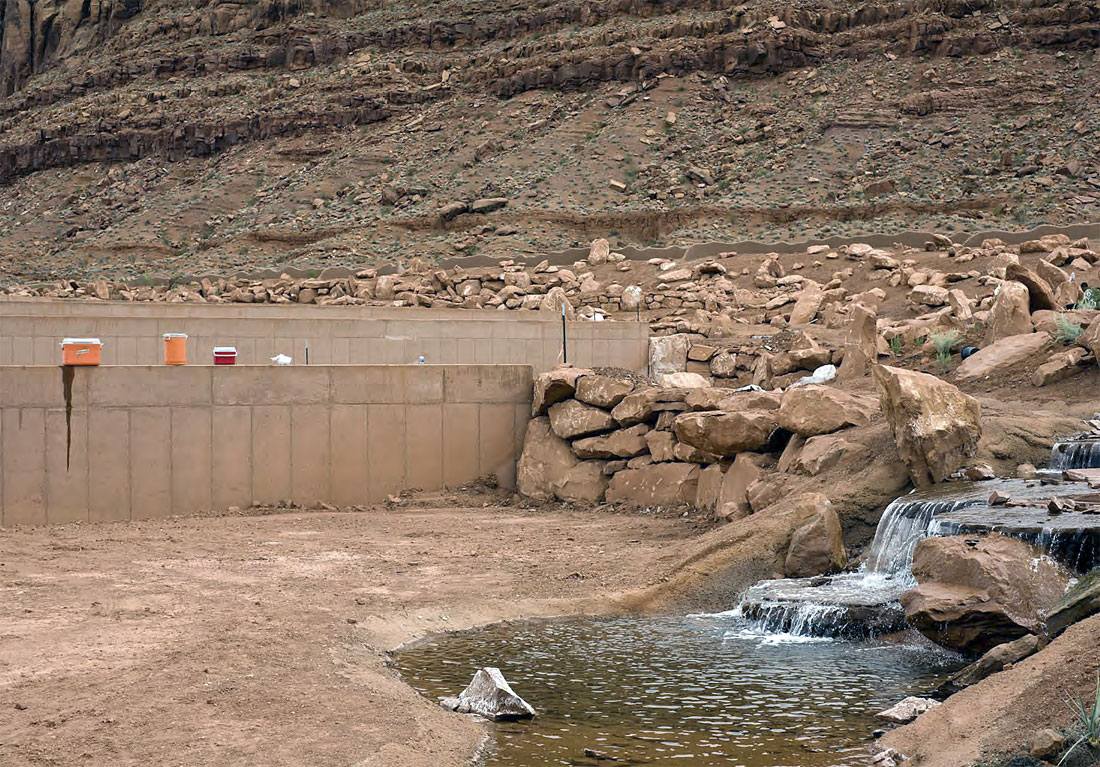
 

Steven B. Smith (American, b. 1963) 'Coolers, Ivins, Utah' 2007


Steven B. Smith (American, b. 1963) (RISD Faculty 1996-present)
Coolers, Ivins, Utah
2007
From the series Irrational Exuberance
Colour inkjet print
RISD Museum: Gift of Heather Smith in honour of Joe Deal


Steven Smith’s subject matter follows in the tradition of the 1970s New Topographic artists. What differentiates Smith’s view of a recently suburbanised desert from his predecessors is the humour with which he captures the extravagant building in this arid place. In this image, from the aptly titled series Irrational Exuberance, fluorescent-coloured coolers, like the red rocks, become part of the landscape, even creating their own waterfall.
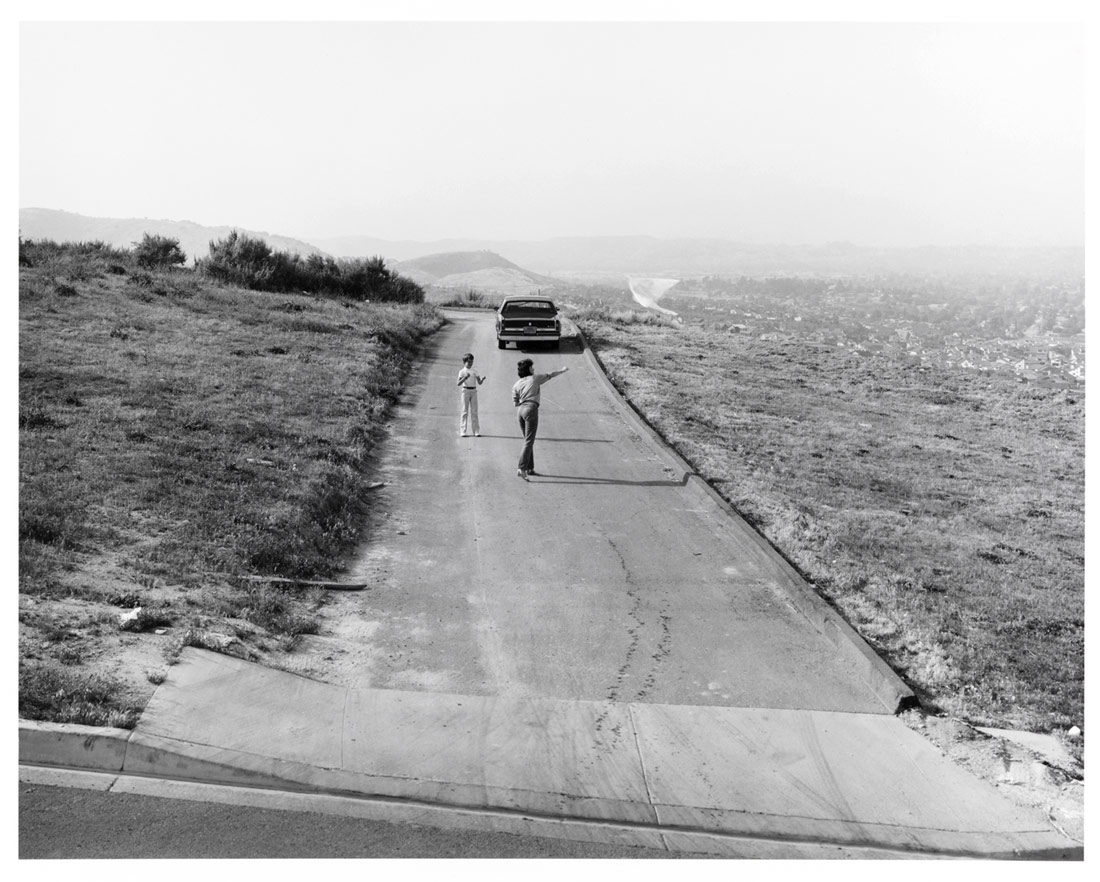
 

Joe Deal (American, 1947-2010) 'Kite, Chino Hills, California' 1984


Joe Deal (American, 1947-2010) (RISD Provost 1999-2005, Faculty 2005-2009)
Kite, Chino Hills, California
1984
From the portfolio Subdividing the Inland Basin
Gift of the artist
© The Estate of Joe Deal, courtesy Robert Mann Gallery. Museum of Art Rhode Island School of Design, Providence


Joe Deal often found his picture at the border between the built and unbuilt landscape. The driveway makes for a convenient spot to fly a kite, surrounded as it is here with a bit of open space remaining in a new development. In the distance to the right the residential growth that will soon cover this piece of land is visible through the atmospheric smog. In the distance to the left are still untouched hills. The inclusion of people – evidence of a rapidly exploding community near the intersection of the Pomona and Orange freeways – marks a shift in Deal’s photography to embracing the landscape as a site for narrative.
 

Uta Barth (German, b. 1958) 'Field #14' 1996


Uta Barth (German, b. 1958)
Field #14
1996
Colour chromogenic print
RISD Museum: Gift of the Buddy Taub Foundation, Jill and Dennis Roach, Directors


Uta Barth radically softens the camera’s focus to remove all signs of historical specificity and to saturate a flat industrial-looking non-place with a dream-like atmosphere. As such she creates a generic landscape as viewed through a heavily fogged window, with an uncanny sense that is deeply familiar.


Henry Wessel (American, b. 1942) 'Night Walk, Los Angeles, No. 28' 1995


Henry Wessel (American, b. 1942)
Night Walk, Los Angeles, No. 28
1995
From the series Night Walk: LA
Gelatin silver print
RISD Museum: Gift of Mark Pollack
 

Millee Tibbs (American, b. 1976) 'Self-Portrait in the Fog' 2009


Millee Tibbs (American, b. 1976) (RISD MFA 2007)
Self-Portrait in the Fog
2009
From the portfolio Self Portraits
Colour inkjet print
RISD Museum: Gift of the artist in honour of Joe Deal
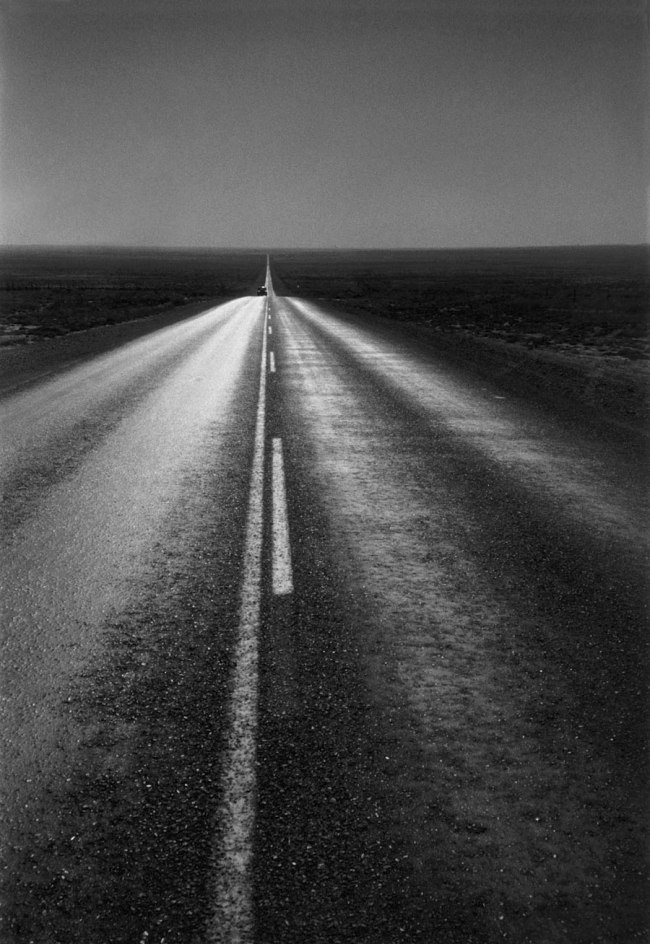
 

Robert Frank (Swiss, 1924-2019) 'U.S. 285, New Mexico' 1955


Robert Frank (Swiss, 1924-2019)
U.S. 285, New Mexico
1955
Silver gelatin photograph


This slideshow requires JavaScript.


Installation views of America in View: Landscape Photography 1865 to Now at the Museum of Art Rhode Island School of Design, Providence


Museum of Art Rhode Island School of Design (RISD)
224 Benefit Street, Providence, RI 02903
Phone: 401 454-6500

Opening hours:
Tuesdays Wednesdays, Saturdays, Sundays 10am – 5pm
Thursdays – Fridays 12 – 7pm
Closed Mondays

Museum of Art Rhode Island School of Design (RISD) website

LIKE ART BLART ON FACEBOOK

Back to top

Exhibitions: ‘Howard Greenberg, Collection’ and ‘Freaks, The Monstrous Parade: Photographs from Enrico Praloran Collection’ at the Musée de l’Elysée, Lausanne

Exhibition dates: both 21st September 2012 – 6th January 2013


Dorothea Lange (American, 1895-1965) 'Migratory Cotton Picker' Eloy, Arizona 1940


Dorothea Lange (American, 1895-1965)
Migratory Cotton Picker
Eloy, Arizona, 1940
Gelatin silver print
© Library of Congress
Courtesy of Howard Greenberg Collection


This is a meta-post where I have brought together photographs from the second exhibition Freaks, The Monstrous Parade: Photographs from Enrico Praloran Collection and all the good quality images of Todd Browning’s cult film Freaks (1932) that were available online, since the museum only provided me with three media images (the first three) on a fascinating subject. By reflection, the photographs from Freaks have a strange correlation to the photographs that appear in the Howard Greenberg, Collection.

There is an interesting discussion by Amanda Ann Klein on her blog (see link below) about her students reaction to the film that she taught as part of her Trash Cinema class. She observes that, “Freaks preaches acceptance and… the belief that we are all “God’s children.” And yet, the film was intended to “out horror” Frankenstein through its fantastic display of disabled bodies…” but that her students did not see it as an exploitation film, in fact they approved of the revenge taken by the freaks on Cleopatra and Hercules at the end of the film, even though this seemed to replicate the very imagery Browning denounced earlier in the film. Klein insightfully notes that “it did prove to be an interesting example of how a film’s reception can change dramatically over time.”

The content of a work of art is never fixed by the author as the context and meaning of the work is never fixed by the viewer. As David Smail notes the truth changes according to, among other things, developments in our values and understandings. There can be many truths depending on our line-of-sight and point-of-view but a subjective non-final truth has to be actively struggled for:

“Where objective knowing is passive, subjective knowing is active – rather than giving allegiance to a set of methodological rules which are designed to deliver up truth through some kind of automatic process [in this case the image], the subjective knower takes a personal risk in entering into the meaning of the phenomena to be known … Those who have some time for the validity of subjective experience but intellectual qualms about any kind of ‘truth’ which is not ‘objective’, are apt to solve their problem by appealing to some kind of relativity. For example, it might be felt that we all have our own versions of the truth about which we must tolerantly agree to differ. While in some ways this kind of approach represents an advance on the brute domination of ‘objective truth’, it in fact undercuts and betrays the reality of the world given to our subjectivity. Subjective truth has to be actively struggled for: we need the courage to differ until we can agree. Though the truth is not just a matter of personal perspective, neither is it fixed and certain, objectively ‘out there’ and independent of human knowing. ‘The truth’ changes according to, among other things, developments and alterations in our values and understandings … the ‘non-finality’ of truth is not to be confused with a simple relativity of ‘truths’.”

Smail, David. Illusion and Reality: The Meaning of Anxiety. London: J.M. Dent & Sons, 1984, pp.152-153.

Dr Marcus Bunyan


Many thankx to the Musée de l’Elysée, Lausanne for allowing me to publish some of the photographs in the posting. Please click on the photographs for a larger version of the image.


Henri Cartier-Bresson (French, 1908-2004) 'Madrid' 1933


Henri Cartier-Bresson (French, 1908-2004)
Madrid
1933
Gelatin silver print
© Henri Cartier-Bresson/Magnum Photos
Courtesy of Fondation HCB and Howard Greenberg Collection


Henri Cartier-Bresson (French, 1908-2004) 'Children in Seville' 1933


Henri Cartier-Bresson (French, 1908-2004)
Seville
1933
Gelatin silver print
© Henri Cartier-Bresson/Magnum Photos
Courtesy of Fondation HCB and Howard Greenberg Collection


Berenice Abbott (American, 1898-1991) 'Greyhound Bus Terminal, 33rd and 34th Streets between Seventh and Eighth Avenues, Manhattan' 1936


Berenice Abbott (American, 1898-1991)
Greyhound Bus Terminal, 33rd and 34th Streets between Seventh and Eighth Avenues, Manhattan
1936
Gelatin silver print
Courtesy of Howard Greenberg Collection


Ruth Orkin (American, 1921-1985) 'American Girl in Italy' 1951


Ruth Orkin (American, 1921-1985)
American Girl in Italy
1951
Gelatin silver print
© Ruth Orkin
Courtesy of Howard Greenberg Collection


Edward Weston (American, 1886–1958) 'Nahui Olin' 1923


Edward Weston (American, 1886–1958)
Nahui Olin
1923
Platinum print
Courtesy of Howard Greenberg Collection


Edward Steichen (American born Luxembourg, 1879–1973) 'Gloria Swanson' 1924


Edward Steichen (American born Luxembourg, 1879–1973)
Gloria Swanson
1924
Gelatin silver print
Courtesy of Howard Greenberg Collection


Lewis W. Hine (American, 1874-1940) 'Powerhouse Mechanic' 1924


Lewis W. Hine (American, 1874–1940)
Powerhouse Mechanic
1924
Gelatin silver print
Courtesy of Howard Greenberg Collection


André Kertész (American born Hungary, 1894-1985) 'Chez Mondrian' 1926


André Kertész (American born in Hungary, 1894-1985)
Chez Mondrian
1926
Gelatin silver print on carte postale
The Howard Greenberg Collection


Manuel Álvarez Bravo (Mexican, 1902-2002) 'The Daughter of the Dancers' (La hija de los danzantes) 1933


Manuel Alvarez Bravo (Mexican, 1902–2002)
The Daughter of the Dancers
1933
Gelatin silver print
Courtesy of Howard Greenberg Collection


Walker Evans (American, 1903-1975) 'Negro Church, South Carolina' 1936


Walker Evans (American, 1903-1975)
Negro Church, South Carolina
1936
Gelatin silver print
© Library of Congress
Courtesy of Howard Greenberg Collection


Dorothea Lange (American, 1895-1965) 'Migrant Mother, Nipomo, California' 1936


Dorothea Lange (American, 1895-1965)
Migrant Mother, Nipomo, California
1936
Gelatin silver print
© Library of Congress
Courtesy of Howard Greenberg Collection


Consuelo Kanaga (American, 1894-1978) 'Young Girl in Profile' 1948


Consuelo Kanaga (American, 1894-1978)
Young Girl in Profile
1948
Gelatin silver print
Courtesy of Howard Greenberg Collection


Leon Levinstein (American, 1910-1988) 'Fifth Avenue' c. 1959


Leon Levinstein (American, 1910-1988)
Fifth Avenue
c. 1959
© Howard Greenberg Gallery
Courtesy of Howard Greenberg Collection


The Musée de l’Elysée presents different approaches to collecting photography by means of these original exhibitions.

Howard Greenberg, Collection

Howard Greenberg has been a gallery owner for over thirty years and is considered today one of the pillars of the New York photography scene. While his position as a dealer is well established, little was known of his passion for collecting, presently revealed to the public for the first time. The primary reason to explain why it took so long to discover this collection is because building such a collection demands time. Only in time can the maturity of a collection be measured; the time necessary to smooth trends, confirm the rarity of a print, and in the end, validate the pertinence of a vision. In an era of immediacy, when new collectors exhibit unachieved projects or create their own foundation, great original collections are rare. Howard Greenberg’s is certainly one of the few still to be discovered.

The quality of a collection does not rely on the sole accumulation of master pieces but can best be assessed through a dialectical movement: a collection is the collector’s oeuvre, a set of images operating a transformation in the perception not only of the photographs, but also of photography. This renewed perception is two-fold in the Greenberg collection; through the surprising combination of two approaches, the experimental practice of photography that questions the medium as such, bringing it to the limits of abstraction on one hand, and on the other, a documentary practice, carried out through its recording function of the real. This apparently irreconcilable duality takes on a particular signification in the Greenberg collection, an investigation of the possibilities offered by photography, a quest for photography itself, questioning what it is.

Howard Greenberg and his collection have largely contributed to the writing of a chapter of history. While contributing to the recognition of long neglected figures of the New York post-war photography scene, filling a gap, as gallery owner, Howard Greenberg, the collector, ensured the preservation of a coherent body by building over that period a unique collection of major photographs.

This collection of over 500 photographs was patiently built over the last thirty years and stands out for the high quality of its prints. A set of some 120 works are exhibited for the first time at the Musée de l’Elysée, revealing different aspects of Howard Greenberg’s interests, from the modernist aesthetics of the 20s and 30s, with works by Edward Steichen, Edward Weston or the Czech School, to contemporary photographers such as Minor White, Harry Callahan and Robert Frank. Humanist photography is particularly well represented, including among others, Lewis Hine and Henri Cartier-Bresson. An important section is dedicated to the Farm Security Administration’s photographers, such as Walker Evans or Dorothea Lange, witnesses to the Great Depression years of the 30s. Above all, the collection demonstrates the great influence of New York in the history of 20th century photography with the images of Berenice Abbott, Weegee, Leon Levinstein or Lee Friedlander conveying its architecture and urban lifestyle. Commending its work and prominent position, and wishing to make his private collection available to a large audience, Howard Greenberg selected the Musée de l’Elysée to host his collection.

The Musée de l’Elysée and the Fondation Henri Cartier-Bresson jointly produce this exhibition which, after Lausanne, will subsequently be presented in Paris.

Press release from the Musée de l’Elysée website


Freaks, The Monstrous Parade: Photographs from Enrico Praloran Collection

American director Tod Browning (1880-1962) has a particular attraction for the uncanny. Freaks, his cult movie shot in 1932, is inspired by a short story written by Clarence Aaron “Tod” Robbins. Set in a circus, the performers are disabled actors. The movie caused a scandal when it was released and Freaks was soon censored, reedited, shortened, sometimes removed from theatres, and in cases banned in some countries. Not until the 60s, when it was presented at the Cannes Festival, was the movie acclaimed to the point of becoming a reference for artists such as Diane Arbus or David Lynch.

The Musée de l’Elysée presents a selection of some fifty vintage black and white silver prints, gathered by Enrico Praloran, a collector based in Zurich. This unique set is the opportunity for an encounter with the movie’s strange protagonists, Johny Eck, the Half Boy, Daisy and Violet Hilton, the Siamese sisters, Martha Morris, the “Armless Marvel”, or the Bearded Lady and the Human Skeleton. They all are artists for real, coming from the Barnum Circus.

The plot is transcribed in images through stills from the movie’s major scenes, completed by set or shooting photographs, taking us behind the scenes, including on the footsteps of Tod Browning himself.

Press release from the Musée de l’Elysée website


Tod Browning (director) 'Freaks' 1932 Still photograph Courtesy of Praloran Collection, Zurich


Tod Browning (director)
Freaks (Cleopatra followed by the freaks)
1932
Still photograph
1932
Courtesy of Praloran Collection, Zurich


Tod Browning (director) 'Freaks' 1932 Still photograph Courtesy of Praloran Collection, Zurich


Tod Browning (director)
Freaks (Johnny Eck)
1932
Still photograph
Courtesy of Praloran Collection, Zurich


Tod Browning (director) 'Freaks' 1932 Still photograph Courtesy of Praloran Collection, Zurich


Tod Browning (director)
Freaks
1932
Still photograph
Courtesy of Praloran Collection, Zurich


Freaks centres on an enchanting performer, Cleopatra, who entices a “midget,” named Hans, into falling in love with her. They were called midgets then, now they are referred to as little people. The “midget” is in fact engaged to another woman who is incidentally, also a “midget,” named Freida. Cleopatra was at first only trying to fool around with Hans and get money from him occasionally. She soon realised that Hans had inherited quite a large amount of money. She devises a plan to marry Hans and later poison him to inherit the money. Arguably, the most famous scene in Freaks is Hans and Cleo’s wedding reception. The “freaks” reluctantly decide to accept her despite her “normality” and chant the notoriously disturbing yet hilarious quote, “We accept you, one of us! Gooble Gobble!” Afterwards, Hans then becomes very ill by Cleo’s hand. He soon figures out her plan and the freaks become offended. They knew she could not be one of them. The film ends with a horrific and disturbing chase in the rain where the “freaks” follow her slowly and Cleo screams for her life. Her and her lover, the “muscle man,” are caught and not killed, but worse. They become freaks themselves. They are mutilated, castrated, and deformed until they are the subject of a freak show. They became one of the “freaks” they hated so much…

One of the most gut-wrenching things about this films is the fact that every “freak” in the film was a real person with the same deformity their characters had. This gives the story a profound sense of reality, making the betrayal of Hans by Cleo all the more tragic. The film was extremely controversial when released and hated by audiences. The scenes where Cleo and the muscle man were mutilated had to be cut from the film in order to be shown in theatres. That footage has since been lost. In a viewing of the film, a sudden jump takes place after the freaks catch Cleo. The audience feels cheated. We have waited so long to see Cleo get her punishment. Part of that dissatisfaction adds to the mystique of this bizarre trip. The film was forgotten about until the mid 1970s where it was rediscovered as a counterculture cult film. A counterculture film runs counter to the the norm of society. Freaks is a great example of fame by taboos and controversy. It explores themes of humanity that are still relatively unexplored today.

Text from the Cult Films and Cultural Significance website December 6, 2011 [Online] Cited 14/09/2020


Freaks is a tale of love and vengeance in a traveling circus…

In her essay “Intolerable Ambiguity: Freaks as/at the Limit,” Elizabeth Grosz attempts to unpack our fascination with freak shows. She concludes that the individuals most frequently showcased in these spectacles, including Siamese twins, hermaphrodites, “pinheads” (microcephalics), midgets, and bearded ladies “imperil the very definitions we rely on to classify humans, identities and sexes – our most fundamental categories of self-definition and boundaries dividing self from otherness” (57). In other words, while we comfort ourselves by breaking down the world into neat binary oppositions, such as Male/Female, Self/Other, Human/Animal, Child/Adult, “freaks” blur the boundaries between these reassuring oppositions. She concludes, “The freak confirms the viewer as bounded, belonging to a ‘proper’ social category. The viewer’s horror lies in the recognition that this monstrous being is at the heart of his or her identity, for it is all that must be ejected or abjected from self-image to make the bounded, category-obeying self possible” (65). We need the freak to confirm our own static, bounded identities. And yet, I think there is a certain terror that we may not be as bounded as we think. If the hermaphrodite can transcend traditional gender categories, then perhaps our own genders are more fluid. For many that is a truly horrifying thought.

For example, in one of the film’s earliest scenes we witness the “pinheads” Schlitze, Elvira and Jenny Lee dancing and playing in the forest. From a distance they look like innocent, happy children. But as the camera approaches, it is clear that they are neither children, nor are they quite adults either. Thus it is the ambiguity here, rather than the disability itself, which is momentarily disturbing…

Grosz also mentions that “Any discussion of freaks brings back into focus a topic that has had a largely underground existence in contemporary cultural and intellectual life, partly because it is considered below the refined sensibilities of ‘good taste’ and ‘personal politeness’ in a civilised and politically correct milieu” (55).

Amanda Ann Klein. “Teaching Todd Browning’s FREAKS,” on the Judgemental Observer blog, September 13, 2009 update September 1, 2014 [Online] Cited 14/09/2020


~ Grosz, Elizabeth. “Intolerable Ambiguity: Freaks as/at the Limit,” in Rosemarie Garland Thomson (ed.). Freakery: Cultural Spectacles of the Extraordinary Body. New York: New York University Press, 1996, pp. 55-68

~ Hawkins, Joan. “‘One of Us’: Tod Browning’s Freaks,” in Rosemarie Garland Thomson (ed.). Freakery: Cultural Spectacles of the Extraordinary Body. New York: New York University Press, 1996, pp. 265-276

~ Norden, Martin F. The Cinema of Isolation: A History of Physical Disability in the Movies. New Brunswick: Rutgers University Press, 1994


Tod Browning (director) 'Freaks (Cleopatra and freaks)' 1932 (still photograph)


Tod Browning (director)
Freaks (Cleopatra and freaks)
1932
Still photograph


Tod Browning (director) 'Publicity photo for Freaks, featuring much of the cast with director, Tod Browning' 1932


Tod Browning (director)
Publicity photo for Freaks, featuring much of the cast with director, Tod Browning
1932
Still photograph


Tod Browning (director) 'Freaks (with Siamese Twins Daisy and Violet Hilton)' 1932 (still photograph)


Tod Browning (director)
Freaks (with Siamese Twins Daisy and Violet Hilton)
1932
Still photograph


Tod Browning (director) 'Freaks' 1932 (still photograph)


Tod Browning (director)
Freaks
1932
Still photograph


Tod Browning (director) 'Freaks (shooting the wedding banquet)' 1932 (still photograph)


Tod Browning (director)
Freaks (shooting the wedding banquet)
1932
Still photograph


Tod Browning (director) 'Freaks (with Cleopatra and Hans at the wedding banquet)' 1932 (still photograph)


Tod Browning (director)
Freaks (with Cleopatra and Hans at the wedding banquet)
1932
Still photograph


Tod Browning (director) 'Freaks (Olga Baclanova as Cleopatra after her transformation into chicken woman)' 1932 (still photograph)


Tod Browning (director)
Freaks (Olga Baclanova as Cleopatra after her transformation into chicken woman)
1932
Still photograph


Theatrical poster for 'Freaks' 1932


Theatrical poster for Freaks
1932


God’s Children

In this scene from Freaks (1932, Tod Browning), we meet several of the film’s characters.


The Freaks Revenge

In this scene from Freaks (1932, Tod Browning), the freaks take their revenge on Hercules and Cleopatra.


The Musée de l’Elysée 
18, avenue de l’Elysée
CH – 1014 Lausanne
Phone: + 41 21 316 99 11

Opening hours:
Wednesday – Monday 10am – 6pm
Closed Tuesdays

The Musée de l’Elysée website

LIKE ART BLART ON FACEBOOK

Back to top

Exhibition: ‘Edouard Baldus and the Modern Landscape. Important Salt Prints of Paris from the 1850s’ at James Hyman Gallery, London

Exhibition dates: 12th October – 9th November 2012


Edouard Baldus (French, 1813-1889) 'Vue generale de Paris pont neuf' c. 1855


Edouard Baldus (French, 1813-1889)
Vue generale de Paris pont neuf
c. 1855
Salt print mounted on card
33.6 x 43.9cm (13.20 x 17.25 ins)
Negative: Lower left inscribed in negative: no 82 Mount: Lower right beneath negative: stamped E. Baldus Lower left bottom: Vue generales des Paris pont neuf


A beautiful, complimentary post to the last one on the exhibition Eugène Atget: Old ParisIt is interesting to compare the styles of the two photographers and the change in photography that takes place between the 1850s and the 1890s. Baldus’ photographs are eloquent in their grandeur and frontality, tonality and texture. Atget’s photographs on the other hand are slightly claustrophobic in their intensity, the camera obliquely placed to capture old buildings, narrow cobbled streets and distant vanishing points. Both, in their own way, are very modern photographers. Baldus’ legacy, as Dr James Hyman correctly notes, was his influence on his German compatriots such as the Bechers, Thomas Struth and, to a lesser extent, Andreas Gursky. His rigorous frontality (the photographing of the thing itself) gives his photographs the simplicity of diagrams and emphasises their topographical state, while their density of detail offers encyclopaedic richness. This straightforward “objective” point of view was most notably used by Bernd and Hilla Becher in contemporary photography. Atget’s photographs, on the other hand, aroused an immediate interest “among the Surrealists because of the composition, ghosting, reflections, and its very mundanity.”

Conversely, it is the subjective signature of both artists that make their work truly great – not the mundanity, not the topographic objectivity but their intimate vision of this city, Paris. As I noted in an earlier posting on the Bechers,

“These are subjective images for all their objective desire. The paradox is the more a photographer strives for objectivity, the more ego drops away, the more the work becomes their own: subjective, beautiful, emotive… What makes great photographers, such as Eugène Atget, Walker Evans, August Sander and the Bechers, is the idiosyncratic “nature” of their vision: how Atget places his large view camera – at that particular height and angle to the subject – leaves an indelible feeling that only he could have made that image, to reveal the magic of that space in a photograph. It is their personal, unique thumbprint, recognisable in an instant.”

The same can be said of Baldus and these magnificent, ethereal photographs.

Dr Marcus Bunyan


Many thankx to James Hyman Gallery for allowing me to publish the photographs in the posting. Please click on the photographs for a larger version of the image.


Edouard Baldus (French, 1813-1889) 'Le Nouveau Louvre' c. 1857


Edouard Baldus (French, 1813-1889)
Le Nouveau Louvre
c. 1857
Salt print mounted on card
31.6 x 44.3cm (12.42 x 17.41 ins)
Le Nouveau Louvre series: 1855-1857 Negative: Lower left inscribed in negative: no 107 Mount: Lower right beneath negative: stamped E. Baldus Lower left bottom: Le Nouveau Louvre


Mid-nineteenth century Paris was a city in the midst of modernisation, and as such, was ripe for documentation of its changing landscape. Counted as one of the premier photographers of his day, Edouard Baldus captured the aesthetic of the Second Empire’s ideology in his monumental views of both old and new Parisian landmarks. In 1855, Baldus received his largest commission, to document the construction of the Musee du Louvre. This rich salt print is a survey of the project as it nears almost full completion. Baldus produced over two thousand images of each part of the new Louvre, from large pavilions to small decorative statue. This photograph, however, takes a step back from the individual pieces of the lengthy project, and allows the viewer to appreciate the endeavour as a whole.


Edouard Baldus (French, 1813-1889) 'Le Pantheon' 1853


Edouard Baldus (French, 1813-1889)
Le Pantheon
1853
Salt print mounted on card
33.8 x 43.5cm (13.28 x 17.10 ins)
Negative: Lower left inscribed in negative: Le Pantheon Lower right inscribed in negative: Baldus Mount: Lower right beneath negative: stamped E. Baldus Lower left bottom: Le Pantheon


Due to the strength of his architectural imagery and work with the Mission Heliographique, Baldus would go on to gain the support of a government commission, Les Villes de France Photographies, which focused on the landmarks of Paris in particular, such as the Pantheon. Similar in style to the frontal views of the Louvre pavilions, this image is a precursor to that project, and also includes Saint Etienne du Mont in its background. The Pantheon is one of Paris’ best-known landmarks, and was originally built as a church dedicated to Saint Genevieve. Looking out over the whole of the city, it is now a mausoleum that houses the remains of distinguished French citizens.


Edouard Baldus (French, 1813-1889) 'Arc de Caroussel' c. 1853


Edouard Baldus (French, 1813-1889)
Arc de Caroussel
c. 1853
Salt print mounted on card
34.1 x 44.3 cms (13.40 x 17.41 ins)
Negative: Lower left inscribed in negative: signature of E.Baldus Lower right inscribed in negative: no.81 Mount: Lower right beneath negative: stamped E.Baldus Lower left bottom: Arc de Caroussel
Mount: 43.9 x 61 cms
Image: 34.1 x 44.3 cms


One of Baldus’ greatest projects was to provide a photographic inventory of the New Louvre and adjoing Tuilleries. A number of these works are of particular interest, expecially those of the Tuilleries Palace, which would be burnt down in 1870-1871. All that remains today is the central triumphal arch, the Caroussel, which is depicted here, still with the palace visible in the background. Built between 1806 and 1808, the Arc de Caroussel is a monument commemorating Napolean’s military victories, with Peace riding a triumphal chariot atop the central archway. Two guards flank the sides of the arch, each atop their own horse, which not only provide for a sense of scale, but, being slightly blurred, also hint at the length of Baldus’ exposure. This enhances the effects of the delicately carved sculptures that adorn the archway, presented here with a clarity that defined the standard Baldus set with his architectural images.


James Hyman is proud to present a loan exhibition of one of the greatest photographers of the nineteenth century, Edouard Baldus. Remarkably, this is the first major exhibition of Edouard Baldus ever to be staged in London. Baldus was famed for his monumental photographs of the buildings of Paris at a time of massive transition under Napoleon III, Baron Haussman and Viollet Le Duc, as well as the depiction of the contemporary landscape of France. Acclaimed as the greatest architectural photographer of the nineteenth century, Baldus’s prints were some of the largest photographs in existence and pioneered an aesthetic of presenting modernity and the modern city that would have a profound influence on later photographers from the Bechers to John Davies.

Baldus was one of the great calotypists of the 1850s, producing works of an unprecedented range and scale. He moved to Paris in 1838 to study painting alongside other future photographers such as Le Gray, Le Secq, and Negre. He frequently retouched his paper negatives, adding pencil and ink, to add clouds or clarify details, then printing his own large-scale negatives. He was also adept at stitching several negatives together to re-create architectural views, most famously in his views of the cloisters of Saint Trophime.

Famed especially for his depiction of architecture, Baldus not only documented the modernisation of Paris but also travelled widely through France recording modernity and new construction – including new railways and aqueducts, as well as the building of the new Louvre. In 1851 the Commission des Monuments Historiques cited Baldus as one of the five best architectural photographers and he was commissioned to record the monuments of France for what became known as the Mission heliographic. His beginnings in photography are not well documented before his participation in the Mission heliographique, although it is known that he took photographs of Montmajour in 1849.

In 1852 he began Villes de France photographies to which the minister of Beaux-Arts subscribed until 1860. In 1854 he travelled with his student Petiot-Groffier in Auvergne and in 1855 the Baron James de Rothschild commissioned him to photograph the new Northern train line from Paris to Boulogne as a gift, in the form of a commemorative album, for Queen Victoria before her visit to the Exposition Universelle. Later, in his commission to document the reconstruction of the Louvre, Baldus took more than two thousand views in a period of three years. His last big commission was from 1861-1863 documenting the Paris-Lyon-Mediterranean train line illustrating seventy views of the train’s track. After this, Baldus tried to provide more commercial alternatives to his large-format works, creating smaller prints and heliogravures of his earlier work. Unfortunately, the effort was unsuccessful and Baldus passed away in bankruptcy and relative obscurity.

Press release from the James Hyman website


Edouard Baldus (French, 1813-1889) 'Pavillon Colbert, Nouveau Louvre, Paris' c.1855


Edouard Baldus (French, 1813-1889)
Pavillon Colbert, Nouveau Louvre, Paris
c. 1855
Salt print mounted on card
43.2 x 34.1cm (16.98 x 13.40 ins)
Stamped ‘E. Baldus’ on the lower right of the mount and titled lower left ‘Pavillon Colbert Nouveau Louvre’


Of the many photographs Baldus took of the Louvre during the period 1855-1857, it is his large-format photographs of the main pavilions that best demonstrate the stretch of his artistic achievements. Commissioned by the French government once again, Baldus was charged with documenting every aspect of the new Palace’s construction, which was to be the Second Empire’s largest building project. Consequently, over the course of two years, it also evolved into the largest photographic commission to date, and Baldus took over two thousand photographs ranging in subject matter from individual statuary to the grand frontal views of each completed pavilion, such as this example of the Pavillon Colbert.

This particular photograph is an astounding example of the precision and clarity wet plate negatives afforded Baldus in capturing the texture of New Louvre’s stonework. Each part of the façade, from the temple relief statuary to the columns flanking the entryway, is bathed in a bright light that emphasises the three-dimensionality of the new pavilion. The sense of crisp stonework evident in this image is only heightened by the blurred tree in the bottom left corner, as well as the trace of a ghostly figure in the foreground – a horse and cart that paused long enough to be captured, just barely, in Baldus’ long exposure.

The subject of this picture brings to bear the importance of the symbolism of the architecture of the Nouveau Louvre for the reign of Napoleon III. The relief and figures on the façade of the Pavillon Colbert highlight France’s greatest realms of achievement, from the conquering of nature through to industry. The upmost relief represents Earth and Water, while the figures to either side personify Science and Industry. Baldus has also ensured that a human figure on the right-hand side of the central entrance has stood still long enough to provide the viewer with a sense of the imposing scale of the statuary, as well as the entire façade. The result is a striking image that is sharper than any contemporary enlargement, exemplary of Baldus’ ability to isolate and capture architecture while giving a slight hint to the life that continued to move around it.


Edouard Baldus (French, 1813-1889) 'Pavillon de la Bibliotheque, Rue de Rivoli, Paris' c. 1855


Edouard Baldus (French, 1813-1889)
Pavillon de la Bibliotheque, Rue de Rivoli, Paris
c. 1855
Salt print mounted on card
43.2 x 34.3cm (16.98 x 13.48 ins)
Inscribed ‘no 103’ in the negative, lower left. Stamped E. Baldus on the lower right of the mount and titled lower left ‘Nouveau Louvre Rue Rivoli’


Edouard Baldus (French, 1813-1889) 'Pavillon Richelieu, Nouveau Louvre, Paris' c. 1855


Edouard Baldus (French, 1813-1889)
Pavillon Richelieu, Nouveau Louvre, Paris
c. 1855
Salt print mounted on card
45 x 34.5cm (17.69 x 13.56 ins)
Inscribed ‘no 79’ in the negative, lower left and signed in the negative lower right ‘E. Baldus’ Stamped E. Baldus on the lower right of the mount and titled lower left ‘Pavillon Richelieu Nouveau Louvre’


An image that the Metropolitan Museum of Art describes as “among the most spectacular of all Baldus photographs,” it is clear that Baldus took full advantage of the opportunity to use larger equipment, which was necessary to capture his tremendous subject. The technical advantages afforded by glass plate negatives allowed him to create equally large contact prints without joining separate negatives, as was his practice with many of his earlier images. Here, the resulting photograph depicts the Pavillon Richelieu in a striking range of tonality, from the crisp texture of the street to the glowing reflection of the pavilion’s new tiled roof.


Edouard Baldus (French, 1813-1889) 'Pavillon Sully, Nouveau Louvre, Paris' c. 1857


Edouard Baldus (French, 1813-1889)
Pavillon Sully, Nouveau Louvre, Paris
c. 1857
Salt print mounted on card
44.5 x 34.5cm (17.49 x 13.56 ins)
Inscribed ‘no 92’ in the negative, lower left. Stamped E. Baldus on the lower right of the mount and titled lower left ‘Pavillon Sully Nouveau Louvre’


Baldus returned to this particular pavilion numerous times, his earliest images of the structure produced while he was photographing for the Mission Heliographique. The Pavillon Sully was originally built during the Classical Period of Louis XIV in 1625, and served as a model for the Second Empire additions. One of the grandest of all the completed facades, the Pavillon Sully acquired many sculptural additions during the reconstruction, but the central clock from which the pavilion derived its original name (Pavillon de l’Horloge) remained central.

Taking an elevated view, Baldus depicted the Pavillon Sully with exemplary precision that is sharper than any contemporary enlargement. The result is one of the most imposing images of the Nouveau Louvre pavilions, giving the entire façade a commanding sense of presence as it rises above trees in the foreground, which are just blurred enough to reveal Baldus’ long exposure.


Dr James Hyman text


Edouard Baldus (French, 1813-1889) 'Saint Etienne du Mont, Paris' c. 1858


Edouard Baldus (French, 1813-1889)
Saint Etienne du Mont, Paris
c. 1858
Salt print mounted on card
44.1 x 34.2cm (17.33 x 13.44 ins)
Stamped E Baldus on the lower right of the mount and titled lower left ‘St Etienne du Mont’
Mount: 61 x 43.9 cms
Image: 44.1 x 34.2 cms


Edouard Baldus (French, 1813-1889) 'Notre Dame, Facade Principale, Paris' 1857


Edouard Baldus (French, 1813-1889)
Notre Dame, Facade Principale, Paris
1857
Salt print mounted on card
44.5 x 34.2cm (17.49 x 13.44 ins)
Inscribed ‘no 34’ in the negative, lower right. Stamped E. Baldus on the lower right of the mount and titled lower left ‘Notre Dame Facade Principal’
Dimensions Mount: 61 x 44 cms Image: 44.5 x 34.2 cms


This iconic image of Notre Dame embodies the direct and frontal style that came to define Baldus’ architectural images. Here, he has captured the majesty of one of Paris’ most notable landmarks by elevating his vantage point and placing the viewer at eye level with its magnificent rose window. This print is a carefully executed example of the type of balance and symmetry Baldus aimed to capture while working on this commission.


James Hyman Gallery
16 Savile Row
London W1S 3PL
Telephone 020 7494 3857

Opening hours:
By appointment

James Hyman Gallery website

LIKE ART BLART ON FACEBOOK

Back to top

Exhibition: ‘Eugène Atget: Old Paris’ at the Art Gallery of New South Wales, Sydney

Exhibition dates: 24th August – 4th November 2012


Eugène Atget (French, 1857-1927) 'Fireplace, Hôtel Matignon, former Austrian embassy, 57 rue de Varenne, 7th arrodissement' 1905


Eugène Atget (French, 1857-1927)
Fireplace, Hôtel Matignon, former Austrian embassy, 57 rue de Varenne, 7th arrodissement
1905
Albumen photograph
© Musée Carnavalet, Paris / Roger-Viollet / TopFoto


“… I have assembled photographic glass negatives… in all the old streets of Old Paris, artistic documents showing the beautiful civil architecture from the 16th to the 19th century. The old mansions, historic or interesting houses, beautiful façades, lovely doors, beautiful panelling, door knockers, old fountains, stylish staircases (wrought iron and wood) and interiors of all the churches in Paris… This enormous documentary and artistic collection is now finished. I can say that I possess the whole of Old Paris.”


Eugène Atget 1920


“The first time I saw photographs by Eugène Atget was in 1925 in the studio of Man Ray in Paris. Their impact was immediate and tremendous. There was a sudden flash of recognition – the shock of realism unadorned. The subjects were not sensational, but nevertheless shocking in their very familiarity. The real world, seen with wonderment and surprise, was mirrored in each print.”


Berenice Abbott 1964


Spaces That Matter…

[In revelatio, in revelation] the photographers trained eye is perhaps more of a hindrance than may at first be thought. The photographer may struggle with, “a sense of intense inevitability, insofar as this kind of image seems to be one that the photographer ‘could not not photograph’.”9 Awareness may become a double bind for the photographer. It may force the photographer to photograph because he can do nothing else, because he is aware of the presence of ‘punctum’ within a space, even an empty ‘poetic space’, but this awareness may then blind him, may ossify the condition of revealing through his directed gaze, unless he is very attentive and drops, as Harding says, “memory and imagination and desire, and just take what’s given.”10 The object, as Baudrillard notes,”isolates itself and creates a sense of emptiness … and then it irradiates this emptiness,”11 but this irradiation of emptiness does require an awareness of it in order to stabilise the transgressive fluctuations of the ecstasy of photography (which are necessarily fluid), through the making of an image that, as Baudrillard notes, “may well retrieve and immobilise subjective and objective punctum from their ‘thunderous surroundings’.”12 Knowledge of awareness is a key to this immobilisation and image making. The philosopher Krishnamurti has interesting things to say about this process, and I think it is worth quoting him extensively here:

“Now with that same attention I’m going to see that when you flatter me, or insult me, there is no image, because I’m tremendously attentive … I listen because the mind wants to find out if it is creating an image out of every word, out of every contact. I’m tremendously awake, therefore I find in myself a person who is inattentive, asleep, dull, who makes images and gets hurt – not an intelligent man. Have you understood it at least verbally? Now apply it. Then you are sensitive to every occasion, it brings its own right action. And if anybody says something to you, you are tremendously attentive, not to any prejudices, but you are attentive to your conditioning. Therefore you have established a relationship with him, which is entirely different from his relationship with you. Because if he is prejudiced, you are not; if he is unaware, you are aware. Therefore you will never create an image about him. You see the difference?”13


Now apply this attention to the awareness of the photographer. If he does not create images that are prejudice, could this not stop a photographer ‘not not’ photographing because he sees spaces with clarity, not as acts of performativity, spaces of ritualised production overlaid with memory, imagination, desire, and nostalgia?

Here an examination of the work of two photographers is instructive. The first, the early 20th century Parisian photographer Eugène Atget, brings to his empty street and parkscapes visions that elude the senses, visions that slip between dreaming and waking, between conscious and subconscious realms. These are not utopian spaces, not felicitous spaces that may be grasped and defined with the nostalgic fixity of spaces we love,14 but spaces of love that cannot be enclosed because Atget made no image of them.

I believe Atget moved his photographs onto a different spatio-temporal plane by not being aware of making images, aware-less-ness, dropping away the appendages of image making (technique, reality, artifice, reportage) by instinctively placing the camera where he wanted it, thus creating a unique artistic language. His images become a blend of the space of intimacy and world-space as he strains toward, “communion with the universe, in a word, space, the invisible space that man can live in nevertheless, and which surrounds him with countless presences.”15 These are not just ‘localised poetics’16 nor a memento of the absent, but the pre-essence of an intimate world space re-inscribed through the vision (the transgressive glance not the steadfast gaze) of the photographer. Atget is not just absent or present, here or there,17 but neither here nor there. His images reverberate (retentir), in Minkowski’s sense of the word, with an essence of life that flows onward in terms of time and space independent of their causality.18”

Dr Marcus Bunyan

Excerpt from the paper Spaces That Matter: Awareness and Entropia in the Imaging of Place (2002). Read the full paper…


Endnotes

9/ Barthes, Roland. Camera Lucida. (trans. Richard Howard). New York: Hill and Wang, 1981, p. 47, quoted in Zurbrugg, Nicholas. “‘Apocalyptic’? ‘Negative’? ‘Pessimistic’?: Baudrillard, Virilio, and techno-culture,” in Koop, Stuart (ed.,). Photography Post Photography. Melbourne: Centre for Contemporary Photography, 1995, p. 79.

10/ See Endnote 2. I believe that this form of attentiveness to present experience is not the same as Featherstone’s fragmentation of time into affect-charged experiences of the presentness of the world in postmodern culture. “Postmodern everyday culture is … a culture of stylistic diversity and heterogeneity (comprising different parts or qualities), of an overload of imagery and simulations which lead to a loss of the referent or sense of reality. The subsequent fragmentation of time into a series of presents through a lack of capacity to chain signs and images into narrative sequences leads to a schizophrenic emphasis on vivid, immediate, isolated, affect-charged experiences of the presentness of the world – of intensities.”
Featherstone, Mike. Consumer Culture and Postmodernism. London: Sage Publications, 1991, p. 124.

11/ Baudrillard, Jean. The Transparency of Evil. (trans. James Benedict). London: Verso, 1993, quoted in Zurbrugg, Nicholas. “‘Apocalyptic’? ‘Negative’? ‘Pessimistic’?: Baudrillard, Virilio, and techno-culture,” in Koop, Stuart (ed.,). Photography Post Photography. Melbourne: Centre for Contemporary Photography, 1995, p. 80.

12/ Baudrillard, Jean. The Art of Disappearance. (trans. Nicholas Zurbrugg). Brisbane: Institute of Modern Art, 1994, p.9, quoted in Zurbrugg, Nicholas. “‘Apocalyptic’? ‘Negative’? ‘Pessimistic’?: Baudrillard, Virilio, and techno-culture,” in Koop, Stuart (ed.,). Photography Post Photography. Melbourne: Centre for Contemporary Photography, 1995, p. 83.

13/ Krishnamurti. Beginnings of Learning. Harmondsworth: Penguin Books, 1978, pp. 130-131.

14/ Bachelard, Gaston. The Poetics of Space. (trans Maria Jolas). Boston: Beacon Press, 1994, p. xxxv.

15/ Ibid., p. 203.

16/ Palmer, Daniel. “Between Place and Non-Place: The Poetics of Empty Space,” in Palmer, Daniel (ed.,). Photofile Issue 62 (‘Fresh’). Sydney: Australian Centre for Photography, April 2001, p. 47.

17/ Bachelard, Gaston. The Poetics of Space. (trans Maria Jolas). Boston: Beacon Press, 1994, p. 212.

18/ See the editor’s note by Gilson, Etienne (ed.,) in Bachelard, Gaston. The Poetics of Space. (trans Maria Jolas). Boston: Beacon Press, 1994, p. xvi.


Many thankx to the Art Gallery of New South Wales for allowing me to publish the photographs in this posting. Please click on the photographs for a larger version of the image.


Eugene Atget: Old Paris

Lose yourself in the beauty of old Paris with over 200 rare and original prints from the founder of documentary photography.

His bellows camera, glass plates and printing technique may link him to earlier 19th-century photography, but the vision of Eugène Atget (1857-1927) was an astonishingly modern one.

The best of Atget’s work is revealed through his images of the streets of Old Paris. In a time of rapid transformation, Atget captured the buildings, gardens, old shops and streets that had not been touched by Baron Haussmann’s 19th-century modernisation program. We are shown a city remote from the clichés of the Belle Époque, a genuine glimpse into the past of this iconic metropolis.

Considered the founder of documentary photography, Atget and his enigmatic images inspired numerous artists including Brassaï, the Surrealists, Walker Evans and Berenice Abbott, as well as Man Ray, who collected some of the photographs included in the exhibition.


Eugène Atget (French, 1857-1927) 'Street vendor, place Saint-Médard, 5th arrondissement' September 1898


Eugène Atget (French, 1857-1927)
Street vendor, place Saint-Médard, 5th arrondissement
September 1898
Albumen photograph
© Musée Carnavalet, Paris / Roger-Viollet / TopFoto


Eugène Atget (French, 1857-1927) 'Street vendor selling shellfish' 1903


Eugène Atget (French, 1857-1927)
Street vendor selling shellfish
1903
Albumen print


Eugène Atget (French, 1857-1927) "'Spring', by the sculptor François Barois, jardin des Tuileries, 1st arrondissement" 1907


Eugène Atget (French, 1857-1927)
‘Spring’, by the sculptor François Barois, jardin des Tuileries, 1st arrondissement
1907
Albumen photograph
© Musée Carnavalet, Paris / Roger-Viollet / TopFoto


Eugène Atget (French, 1857-1927) 'Cabaret au Tambour, 62 quai de la Tournelle, 5th arrodissement' 1908


Eugène Atget (French, 1857-1927)
Cabaret au Tambour, 62 quai de la Tournelle, 5th arrodissement
1908
Albumen photograph
© Musée Carnavalet, Paris / Roger-Viollet / TopFoto


Eugène Atget (French, 1857-1927) 'Cour, 28 rue Bonaparte dépendant de l'abbaye de Saint-Germain, Editeur Ernest Leroux, 6ème arrondissement, Paris' 1910


Eugène Atget (French, 1857-1927)
Cour, 28 rue Bonaparte dépendant de l’abbaye de Saint-Germain, Editeur Ernest Leroux, 6ème arrondissement, Paris
1910
Albumen photograph
Musée Carnavalet, Histoire de Paris


Eugène Atget (French, 1857-1927) 'Cabaret de l'Enfer, Boulevard de Clichy, Paris' c. 1910


Eugène Atget (French, 1857-1927)
Cabaret de l’Enfer, Boulevard de Clichy, Paris
c. 1910
Albumen photograph


Eugène Atget (French, 1857-1927) 'Boulevard de Strasbourg' 1912


Eugène Atget (French, 1857-1927)
Boulevard de Strasbourg
1912
Albumen photograph
George Eastman House, International Museum of Photography and Film, Rochester


Eugène Atget (French, 1857-1927) 'Boutique Coiffeur, Boulevard de Strasbourg' 1912


Eugène Atget (French, 1857-1927)
Boutique Coiffeur, Boulevard de Strasbourg
1912
Albumen photograph


Eugène Atget (French, 1857-1927) 'Courtyard, 7 Rue de Valence, 5th arr.' June 1922


Eugène Atget (French, 1857-1927)
Courtyard, 7 Rue de Valence, 5th arr.
June 1922
Albumen photograph


Eugène Atget (French, Libourne 1857-1927 Paris) 'Quai d’Anjou, 6h du matin' 1924


Eugène Atget (French, 1857-1927)
Quai d’Anjou, 6h du matin
1924
Albumen photograph


Eugène Atget (French, 1857-1927) 'Rue du Figuier' 1924


Eugène Atget (French, 1857-1927)
Rue du Figuier
1924
Albumen photograph


Eugène Atget (French, 1857-1927) 'Un coin, rue de Seine' 1924


Eugène Atget (French, 1857-1927)
Un coin, rue de Seine
1924
Albumen photograph


Eugène Atget (French, 1857-1927) 'Le Dôme, boulevard Montparnasse' June 1925


Eugène Atget (French, 1857-1927)
Le Dôme, boulevard Montparnasse
June 1925
Albumen photograph


Eugène Atget (French, 1857-1927) 'Coin de la rue Valette et Pantheon, 5e arrondissement, matinee de mars' 1925


Eugène Atget (French, 1857-1927)
Coin de la rue Valette et Pantheon, 5e arrondissement, matinee de mars
1925, printed 1978
Albumen photograph


The first comprehensive exhibition in Australia of Eugène Atget’s (1857-1927) work will showcase over 200 photographs primarily from the more than 4000 strong collection of Musée Carnavalet, Paris with the important inclusion of Atget’s work, as compiled by Man Ray, from the collection of George Eastman House, Rochester, USA.

Atget was considered a commercial photographer who sold what he called ‘documents for artists’, ie. photographs of landscapes, close-up shots, genre scenes and other details that painters could use as reference. As soon as Atget turned his attention to photographing the streets of Paris, his work attracted the attention of leading institutions such as Musée Carnavalet and the Bibliothèque Nationale which became his principal clients. It is in these photographs of Paris that we find the best of Atget, the artist who shows us a city remote from the clichés of the Belle Époque. Atget’s images of ‘old Paris’ depict areas that had not been touched by Baron Haussmann’s 19th century modernisation program of the city. We see empty streets and buildings, details that usually pass unnoticed, all presented as rigorous, original compositions that offer a mysterious group portrait of the city.

The exhibition is organised into 11 sections that correspond to the thematic groupings used by Atget himself. They are: small trades, Parisian types and shops 1898-1922; the streets of Paris 1898-1913; ornaments 1900-1921; interiors 1901-1910; vehicles 1903-1910; gardens 1898-1914; the Seine 1900-1923; the streets of Paris 1921-1924; and outside the city centre 1899-1913.

The equipment and techniques deployed by Atget link him to 19th-century photography. He had an 18 x 24cm wooden, bellows camera which was heavy and had to be supported on a tripod. The use of glass plates allowed Atget to capture every tiny detail with great precision. Also traditional was his printing method, usually on albumen paper made light-sensitive with silver nitrate, exposed under natural light and subsequently gold-tinted. Atget’s vision of photography was, however, an astonishingly modern one. The photographs selected by Man Ray, who met Atget in the 1920s, indicate the immediate interest that the work aroused among the Surrealists because of the composition, ghosting, reflections, and its very mundanity. The first to appreciate his talents and importance as an artist were the photographer Berenice Abbott and Man Ray himself, both of whom lobbied to preserve Atget’s photographs.

As a result, he inspired artists and photographers such as Brassaï, the Surrealists, Walker Evans and Bernd & Hilla Becher amongst many others, and he can also be considered a starting-point for 20th-century documentary photography.

Press release from the AGNSW website


Eugène Atget (French, 1857-1927) 'Rue Hautefeuille, 6th arrondissement' 1898


Eugène Atget (French, 1857-1927)
Rue Hautefeuille, 6th arrondissement
1898
Albumen photograph
© Musée Carnavalet, Paris / Roger-Viollet / TopFoto


Eugène Atget (French, 1857-1927) 'Shop sign, au Rémouleur' 1899


Eugène Atget (French, 1857-1927)
Shop sign, au Rémouleur on the corner of the rue des Nonnains-d’Hyères and rue de l’Hôtel-de-Ville, 4th arrondissement
July 1899
Albumen photograph
© Musée Carnavalet, Paris / Roger-Viollet / TopFoto


Eugène Atget (French, 1857-1927) 'The former Collège de Chanac, 12 rue de Bièvre, 5th arrondissement' 1900


Eugène Atget (French, 1857-1927)
The former Collège de Chanac, 12 rue de Bièvre, 5th arrondissement
August 1900
Albumen photograph
© Musée Carnavalet, Paris / Roger-Viollet / TopFoto


Eugène Atget (French, 1857-1927) 'Porte d'Asnieres – cité Trébert' 1913


Eugène Atget (French, 1857-1927)
Porte d’Asnieres – cité Trébert
1913
Albumen print
21.7 x 18.0cm (trimmed)
Collection of George Eastman House, International Museum of Photography and Film, Rochester


Eugène Atget (French, 1857-1927) 'Rue de l'Hôtel de Ville' 1921


Eugène Atget (French, 1857-1927)
Rue de l’Hôtel de Ville
1921
Gelatin silver photograph
22.8 x 17.7cm
Collection Art Gallery of New South Wales


Eugène Atget (French, 1857-1927) 'Rue de l'Hôtel de Ville' 1921 (detail)


Eugène Atget (French, 1857-1927)
Rue de l’Hôtel de Ville (detail)
1921
Gelatin silver photograph
22.8 x 17.7cm
Collection Art Gallery of New South Wales


Art Gallery of New South Wales
Art Gallery Road, The Domain
Sydney NSW 2000, Australia

Opening hours:
Open every day 10am – 5pm
except Christmas Day and Good Friday

Art Gallery of New South Wales website

LIKE ART BLART ON FACEBOOK

Back to top

Review: ‘Gregory Crewdson: In A Lonely Place’ at the Centre for Contemporary Photography (CCP), Fitzroy, Melbourne

Exhibition dates: 28th September – 11th November 2012


Installation photograph of the series 'Beneath the Roses' (2003-2008) from the exhibition 'Gregory Crewdson: In A Lonely Place' at the Centre for Contemporary Photography (CCP), Fitzroy, Melbourne

Installation photograph of the series 'Beneath the Roses' (2003-2008) from the exhibition 'Gregory Crewdson: In A Lonely Place' at the Centre for Contemporary Photography (CCP), Fitzroy, Melbourne


Installation photographs of the series Beneath the Roses (2003-2008) from the exhibition Gregory Crewdson: In A Lonely Place at the Centre for Contemporary Photography (CCP), Fitzroy, Melbourne
Photos: Dr Marcus Bunyan


Downfall of a dream: (n)framing the enigma in Gregory Crewdson’s Beneath the Roses

After the excoriating diatribe by Robert Nelson in The Age newspaper (“Unreal stills, unmoving images” Wednesday October 17 2012) I hope this piece of writing will offer greater insight into the work of this internationally renowned artist. With some reservations, I like Crewsdon’s work, I like it a lot – as do the crowds of people flocking to the Centre for Contemporary Photography, Fitzroy to see the exhibition. Never have I seen so many people at the CCP looking at contemporary photography before and that can only be a good thing.

Let’s get the basics out of the way first. The early series Fireflies are small silver gelatin photographs that capture “the tiny insects’ transient moments of light as they illuminate the summer night.” These are minor works that fail to transcend the ephemeral nature of photography, fail to light the imagination of the viewer when looking at these scenes of dusky desire and discontinuous lives. The series of beautiful photographs titled Sanctuary (2010) evidence the “ruin of the legendary Cinecittà studios, which was founded by Mussolini in the 1930s and is associated with the great Italian film director Federico Fellini.” Wonderful photographs of doorways, temples, dilapidated stage sets with excellent use of soft miasmic light creating an atmosphere of de/generation (as though a half-remembered version of Rome had passed down through the generations) interfaced with contemporary Rome as backdrop. The digital prints show no strong specular highlights, no deep blacks but a series of transmutable grey and mid tones that add to the overall feeling of romantic ruin. It is a pity that these photographs are not printed as silver gelatin photographs, for they would have had much more depth of feeling than they presently possess. They just feel a little “thin” to me to sustain the weight of atmosphere required of them.
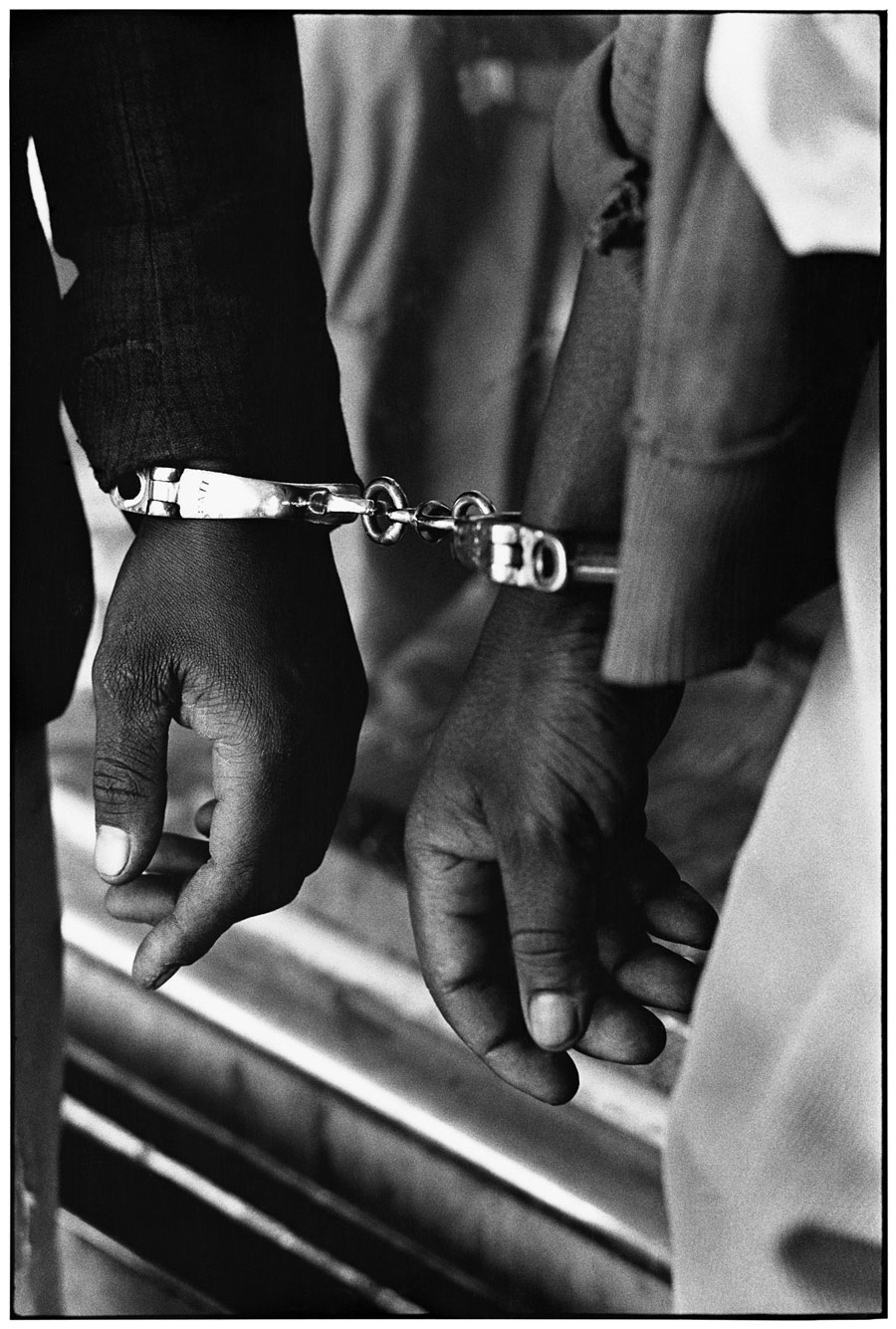
But it is the series Beneath the Roses (2003-2008) that has made Crewdson truly famous. Shot using a large format camera, Crewdson makes large-scale photographs of elaborate and meticulously staged tableaux, which have been described as “micro-epics” that probe the dark corners of the psyche. Working in the manner of a film director, he leads a production crew, which includes a director of photography, special effects and lighting teams, casting director and actors. He typically makes several exposures that he later digitally combines to produce the final image. Photographs in the series of “brief encounters” include external dioramas (shot in a down at heel Western Massachusetts town), where Crewdson shuts down streets and lights the whole scene; to interior dialogues where houses are built on sound stages and the artist can control every detail of the production. Influences on these works include, but are not limited to:

David Lynch (Blue Velvet, Twin Peaks), Alfred Hitchcock (Vertigo), Steven Spielberg (Close Encounters), the paintings of Edward Hopper, Diane Arbus (the detritus of her photographic interiors), film noir, psychoanalysis, American suburbia, the American dream, the photographs of Walker Evans, Cindy Sherman and surrealism. Concepts that you could link to the work include loneliness, alienation, apathy, resignation, mystery, contemplation and confusion, identity, desire, memory and imagination.


Now to the nuts and bolts of the matter.

Another major influence that I will add is that of the great Italian director Federico Fellini (La Dolce Vita – The Sweet Life) who shot most of that film on the sets at Cinecittà studios in Rome. It is perhaps no coincidence that Crewdson, on his first overseas film shoot, shot the series Sanctuary at the very same location. Crewdson’s photographs in the series Beneath the Roses are an American form of  “The Sweet Life.” In 1961, the New York Times film critic Bosley Crowther praised Fellini’s “brilliantly graphic estimation of a whole swath of society in sad decay and, eventually, a withering commentary on the tragedy of the over-civilized… Fellini is nothing if not fertile, fierce and urbane in calculating the social scene around him and packing it onto the screen. He has an uncanny eye for finding the offbeat and grotesque incident, the gross and bizarre occurrence that exposes a glaring irony. He has, too, a splendid sense of balance and a deliciously sardonic wit that not only guided his cameras but also affected the writing of the script. In sum, it is an awesome picture, licentious in content but moral and vastly sophisticated in its attitude and what it says.”1 The same could equally be said of the Crewdson and his masterpieces in Beneath the Roses. Crewdson is in love with Fellini’s gesture – of the uplifting of the characters and their simultaneous descent into “sweet” hedonism, debauchery and decadence using the metaphor of downfall (downfall links each scene in La Dolce Vita, that of a “downward spiral that Marcello sets in motion when descending the first of several staircases (including ladders) that open and close each major episode.”)2 Crewdson’s “spectacular apocalypses of social enervation”3 mimic Fellini’s gestural flourishes becoming Crewdson’s theme of America’s downfall, America as a moral wasteland. Crewdson’s is “an aesthetic of disparity” that builds up a cumulative impression on the viewer that finds resolution in an “overpowering sense of the disparity between what life has been or could be, and what it actually is.”4
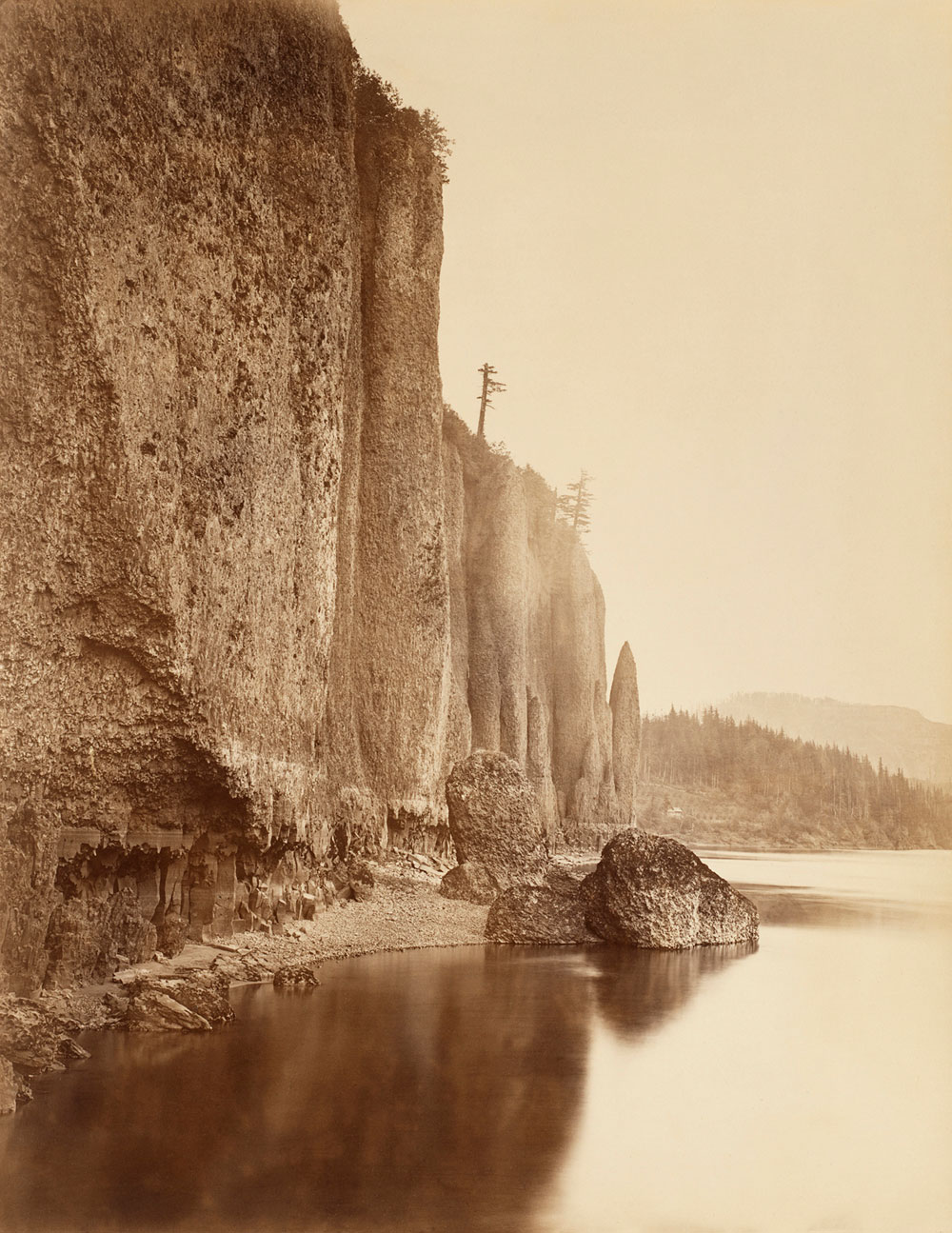
Crewdson’s cinematic encounters are vast and pin sharp when seen in the flesh. No reproduction on the web can do their physical presence justice; it is the details that delight in these productions. You have to get up close and personal with the work. His dystopic landscapes are not narratives as such, not stills taken from a movie (for that implies an ongoing story) but open-ended constructions that allow the viewer to imagine the story for themselves. They do not so much evoke a narrative as invite the viewer to create one for themselves – they are an “invitation” to a narrative, one that explores the anxiety of the (American) imagination, an invitation to empathise with the dramas at play within contemporary environments. For me, Crewdson’s extra ordinary photographs are a form of enigma (a puzzling or inexplicable occurrence or situation), the picture as master puzzle (where all the pieces fit perfectly together in stillness) that contains a riddle or hidden meaning. Clues to this reading can be found in one of the photographs from the series (Blue Period, see detail image, below) where Crewdson deliberately leaves the door of a bedside cupboard open to reveal a “Perfect PICTURE PUZZLE” box inside. The viewer has to really look into the image and understand the significance of this artefact.

Another reading that I have formulated is of the transience of space and time within Crewdson’s series. In the disquieting, anonymous townscapes people look out from their porches (or the verandas are lit and empty), they abandon their cars or walk down desolate streets hardly ever looking directly out at the viewer. The photographs become sites of mystery and wonder hardly anchored (still precisely anchored?) in time and space. This disparity is emphasised in the interior dialogues. The viewer (exterior) looks at a framed doorway or window (exterior) looking into an scene (interior) where the walls are usually covered with floral wallpaper (interior / exterior) upon which hangs a framed image of a Monet-like landscape (exterior) (see detail image, above). Exterior, exterior, interior, interior / exterior, exterior. The trees of the landscape invade the home but are framed; exterior/framed, interior/mind. There is something mysterious going on here, some reflection of an inner state of mind.

In his visual mosaics Crewdson engages our relationship with time and space to challenge the trace of experience. His tableaux act as a kind of threshold or hinge of experience – between interior and exterior, viewer and photograph. His photographs are a form of monism in which two forces (interior / exterior) try to absorb each other but ultimately lead to a state of equilibrium. It is through this “play” that the context of the photographs and their relationship to each other and the viewer are “framed.” This device emphasises the aesthetic as much as information and encourages the viewer to think about the relationship between the body, the world of which it is part and the dream-reason of time.5 This intertextual (n)framing (n meaning unspecified number in mathematics) encourages the viewer to explore the inbetween spaces in the non-narrative / meta-narrative,”and by leaps (intuitive leaps, poetic leaps, leaps of faith)”6 encourage escapism in the imagination of the viewer. It is up to us as viewers to seek the multiple, disparate significances of what is concealed in each photograph as “felt knowledge” (Walter Benjamin), recalling to mind the sensory data placed before our eyes, something that can be experienced but cannot be explained by man: “the single moment of the present amidst the transience of life and searching for some kind of eternal truth.”7

Finally, in a more adverse reading of the photographs from the series Beneath the Roses, I must acknowledge the physically (not mentally) static nature of the images where every detail of the mise-en-scène is fully articulated and locked down: from the perfect trickle of blood running from the woman’s vagina in Blue Period, to the reflections in mirrors, the detritus of living scattered on the bedroom floor, the dirty telephone, packed suitcases and keys in locks to the desolate looks of the participants that never engage with the viewer. Despite allusions of despair, in their efficacy (their static and certain world order), there is no real chthonic madness here, no real messiness of the capture of death, murder and the wastage of human life (famine, AIDS, cancer or the blood running over the pavement in one of Weegee’s murder scenes for example). This is Fellini’s gross and bizarre LITE. Americurbana “is being addressed with the same reserve and elegance that ensures that the institution – artistic, political, what you will – is upheld and never threatened. It is pre-eminently legible, it elicits guilt but not so much as to cause offence.”8 I must also acknowledge the male-orientated viewpoint of the photographs, where men are seated, clothed, lazy or absent and all too often women are doing the washing or cooking, are naked and vulnerable. In their portrayal of (usually) half dressed or naked females the photographs evidence a particularly male view of the world, one that his little empathy or understanding of how a female actually lives in the world. For me this portrait of the feminine simply does not work. The male photographer maintains control (and power) by remaining resolutely (in)visible.

Overall this is a outstanding exhibition that thoroughly deserves that accolades it is receiving. Sitting in the gallery space for an hour and a half and soaking up the atmosphere of these magnificent works has been for me one of the art experiences of 2012. Make sure that you do not miss these mesmerising prophecies.

Dr Marcus Bunyan


1/ Crowther’s review first published in The New York Times, April 20, 1961. In Fava and Vigano, 105 quoted in Anon. “La Dolce Vita,” on Wikipedia Footnote 30 [Online] Cited 20/10/2012. en.wikipedia.org/wiki/La_Dolce_Vita

2/ Anon. “La Dolce Vita,” on Wikipedia Footnote 30 [Online] Cited 20/10/2012. en.wikipedia.org/wiki/La_Dolce_Vita

3/ Sultanik, Aaron. Film, a Modern Art. Cranbury, N.J: Cornwall Books, 1986, p. 408

4/ Richardson, Robert. “Waste Lands: The Breakdown of Order,” in Bondanella (ed.), Federico Fellini: Essays in Criticism, p. 111 quoted in Anon. “La Dolce Vita,” on Wikipedia Footnote 30 [Online] Cited 20/10/2012. en.wikipedia.org/wiki/La_Dolce_Vita

5/ Bacon, Julie Louise. “Liquid Archive: On Ambivalence,” in Liquid Archive. Melbourne: Monash University Museum of Art (MUMA), 2012, p. 119

6/ Kirshenblatt-Gimblett, Barbara. “The Museum – A Refuge for Utopian Thought,” in Rüsen, Jörn; Fehr Michael, and Ramsbrock, Annelie (eds.). Die Unruhe der Kultur: Potentiale des Utopischen. Velbrück Wissenschaft, 2004. In German.

7/ Kataoka, Mami commenting on the work of Allan Kaprow. “Transient Encounters,” in Broadsheet: Criticism, Theory, Art Vol 41.3, September 2012, p. 174

8/ Geczy, Adam. “A dish served lukewarm,” in Broadsheet: Criticism, Theory, Art Vol 41.3, September 2012, p. 177

Many thankx to the artist, Gagosian Gallery and the Centre for Contemporary Photography for allowing me to publish the photographs in the posting. Special thankx to Director of the CCP Naomi Cass and Ms. James McKee from Gagosian Gallery for facilitating the availability of the media images. Please click on the photographs for a larger version of the image.

All photographs © Gregory Crewdson. Courtesy Gagosian Gallery.

Installation and detail photographs © Dr Marcus Bunyan


Gregory Crewdson (American, b. 1962) 'Untitled (Blue Period)' 2003-2005


Gregory Crewdson (American, b. 1962)
Untitled (Blue Period)
2003-2005
© Gregory Crewdson. Courtesy Gagosian Gallery


Gregory Crewdson (American, b. 1962) 'Untitled (Blue Period)' 2003-2005 (detail)

Gregory Crewdson (American, b. 1962) 'Untitled (Blue Period)' 2003-2005 (detail)

Gregory Crewdson (American, b. 1962) 'Untitled (Blue Period)' 2003-2005 (detail)


Details from Gregory Crewdson’s Untitled (Blue Period) (2003-2005, above) from the series Beneath the Roses (2003-2008)
Photos: Dr Marcus Bunyan


“The American middle-class nightmare: nothing is clean, orderly, idyllic, or romantic. In his perfectly staged, hyperrealistic tableaux, photographer Gregory Crewdson reveals the claustrophobic limbo and abyss of spiritual repression that is the typical suburb. Here, hushed-up violence, alienation, isolation, and emptiness are nothing new or unfamiliar, but rather part of the everyday neighbourhood experience.”

Gregory Crewdson, In a Lonely Place, Abrams Publishing, New York, 2011


“I have always been fascinated by the poetic condition of twilight. By its transformative quality. Its power of turning the ordinary into something magical and otherworldly. My wish is for the narrative in the pictures to work within that circumstance. It is that sense of in-between-ness that interests me.”


Gregory Crewdson


Gregory Crewdson (American, b. 1962) 'Untitled (Maple Street)' 2003-2005


Gregory Crewdson (American, b. 1962)
Untitled (Maple Street)
2003-2005
© Gregory Crewdson. Courtesy Gagosian Gallery


Gregory Crewdson (American, b. 1962) 'Untitled (Shane)' 2006


Gregory Crewdson (American, b. 1962)
Untitled (Shane)
2006
© Gregory Crewdson. Courtesy Gagosian Gallery


Gregory Crewdson (American, b. 1962) 'Untitled (Brief Encounter)' 2006


Gregory Crewdson (American, b. 1962)
Untitled (Brief Encounter)
2006
© Gregory Crewdson. Courtesy Gagosian Gallery


Gregory Crewdson (American, b. 1962) 'Untitled (Railway Children)' 2003-2005


Gregory Crewdson (American, b. 1962)
Untitled (Railway Children)
2003-05
© Gregory Crewdson. Courtesy Gagosian Gallery


In a Lonely Place presents selections from three major series by Gregory Crewdson, Fireflies (1996), Beneath the Roses (2003-2008), Sanctuary (2010) and, presented for the first time, the video Field Notes (2009). The exhibition title comes from Nicholas Ray’s 1950s film noir of the same name, one of many films that inspired Crewdson. In a Lonely Place is evocative of an underlying mood-a quiet feeling of alienation and loneliness that links the three series selected by curators Estelle Af Malmborg, Jens Erdman Rasmussen and Felix Hoffmann. In a Lonely Place presents the first comprehensive exhibition of Crewdson’s work in Australia.

In Beneath the Roses, anonymous townscapes, forest clearings and broad, desolate streets are revealed as sites of mystery and wonder; similarly, ostensibly banal interiors become the staging grounds for strange human scenarios. Crewdson’s scenes are tangibly atmospheric: visually alluring and often deeply disquieting. Never anchored precisely in time or place, these and the other narratives of Beneath the Roses are located in the dystopic landscape of the anxious American imagination. Crewdson explores the American psyche and the dramas at play within quotidian environments.

In his most recent series, Sanctuary (2010), Crewdson has taken a new direction, shooting for the first time outside the US. During a trip to Rome, he visited the legendary Cinecittà studios, which was founded by Mussolini in the 1930s and is associated with the great Italian film director Federico Fellini. Crewdson discovered fragments of a past glory, with occasional unexpected views of the surrounding contemporary Roman suburbia. Cinecittà is a lonely place deserted by the film crews who once used the site to recreate settings of ancient Rome, medieval Italy and nineteenth-century New York.

In the intimate photographs of Fireflies, Crewdson portrays the mating ritual of fireflies at dusk, capturing the tiny insects’ transient moments of light as they illuminate the summer night. Unlike the theatrical scale of the Beneath the Roses and Sanctuary series, Fireflies is a quiet meditation on the nature of light and desire, as the images reflect not only upon the fleeting movements of the insects in their intricate mating ritual, but upon the notion of photography itself, in capturing a single ephemeral moment.

Gregory Crewdson received a BA from the State University of New York, Purchase, New York in 1985 and an MFA in Photography from Yale School of Art, Yale University, New Haven, Connecticut in 1988. He has exhibited widely in the United States and Europe. He is Associate Professor and Director of Graduate Studies in Photography at the Yale School of Art, Yale University. Gregory Crewdson is represented by Gagosian Gallery and White Cube Gallery.

Press release from the Gagosian Gallery website


Installation photograph of the series 'Sanctuary' (2010) from the exhibition 'Gregory Crewdson: In A Lonely Place' at the Centre for Contemporary Photography (CCP), Fitzroy, Melbourne

Installation photograph of the series 'Sanctuary' (2010) from the exhibition 'Gregory Crewdson: In A Lonely Place' at the Centre for Contemporary Photography (CCP), Fitzroy, Melbourne


Installation photographs of the series Sanctuary (2010) from the exhibition Gregory Crewdson: In A Lonely Place at the Centre for Contemporary Photography (CCP), Fitzroy, Melbourne
Photos: Dr Marcus Bunyan


Gregory Crewdson (American, b. 1962) 'Untitled (1)' 2009


Gregory Crewdson (American, b. 1962)
Untitled (1)
2009
© Gregory Crewdson. Courtesy Gagosian Gallery


Gregory Crewdson (American, b. 1962) 'Untitled (17)' 2009


Gregory Crewdson (American, b. 1962)
Untitled (17)
2009
© Gregory Crewdson. Courtesy Gagosian Gallery


Gregory Crewdson (American, b. 1962) 'Untitled (8)' 2009


Gregory Crewdson (American, b. 1962)
Untitled (8)
2009
© Gregory Crewdson. Courtesy Gagosian Gallery


Gregory Crewdson (American, b. 1962) 'Untitled (2)' 2009


Gregory Crewdson (American, b. 1962)
Untitled (2)
2009
© Gregory Crewdson. Courtesy Gagosian Gallery


Gregory Crewdson (American, b. 1962) 'Untitled' 1996


Gregory Crewdson (American, b. 1962)
Untitled
1996
© Gregory Crewdson. Courtesy Gagosian Gallery


Gregory Crewdson – Close Up – Ovation

In this Ovation TV original special, acclaimed photographers Albert Maysles, Sylvia Plachy, Andrew Moore and Timothy Greenfield-Sanders discuss the impact their work has on their lives and on culture as a whole.

Gregory Crewdson is an American photographer who is best known for elaborately staged, surreal scenes of American homes and neighborhoods.

In this interview, acclaimed photographer, Gregory Crewdson shares with us insight into his techniques.


Centre for Contemporary Photography

No permanent exhibition space at the moment

Gagosian Gallery website

Centre for Contemporary Photography website

LIKE ART BLART ON FACEBOOK

Back to top