Erich Salomon (German, 1886-1944) (Portrait of Madame Vacarescu, Romanian Author and Deputy to the League of Nations, Geneva) 1928 Gelatin silver print 29.7 × 39.7cm (11 11/16 × 15 5/8 in.) The J. Paul Getty Museum, Los Angeles
In 1928, pioneering photojournalist, Erich Salomon photographed global leaders and delegates to a conference at the League for the German picture magazine Berliner Illustrirte Zeitung. In a typically frank image, Salomon has shown Vacarescu with her head thrown back passionately pleading before the international assembly.
Elena Văcărescu or Hélène Vacaresco (September 21, 1864 in Bucharest – February 17, 1947 in Paris) was a Romanian-French aristocrat writer, twice a laureate of the Académie française. Văcărescu was the Substitute Delegate to the League of Nations from 1922 to 1924. She was a permanent delegate from 1925 to 1926. She was again a Substitute Delegate to the League of Nations from 1926 to 1938. She was the only woman to serve with the rank of ambassador (permanent delegate) in the history of the League of Nations.
For such an engaging subject, this presentation looks to be a bit of a lucky dip / ho hum / filler exhibition. You can’t make a definitive judgement from a few media images but looking at the exhibition checklist gives you a good idea of the overall organisation of the exhibition and its content. Even the press release seems unsure of itself, littered as it is with words like posits, probes, perhaps (3 times) and problematic.
Elements such as physiognomy are briefly mentioned (with no mention of its link to eugenics), as is the idea of the mask – but again no mention of how the pose is an affective mask, nor how the mask is linked to the carnivalesque. Or how photographs portray us as we would like to be seen (the ideal self) rather than the real self, and how this incongruence forms part of the formation of our identity as human beings.
The investigation could have been so deep in so many areas (for example the representation of women, children and others in a patriarchal social system through facial expression; the self-portrait as an expression of inner being; the photograph as evidence of the mirror stage of identity formation; and the photographs of “hysterical” women of the Pitié-Salpêtrière Hospital, Paris; and on and on…) but in 45 works, I think not. The subject deserved, even cried out for (as facial expressions go), a fuller, more in depth investigation.
For more reading please see my 2014 text Facile, Facies, Facticity which comments on the state of contemporary portrait photography and offers a possible way forward: a description of the states of the body and the air of the face through a subtle and constant art of the recovering of surfaces.
Dr Marcus Bunyan
Many thanks to the J. Paul Getty Museum for allowing me to publish the photographs in the posting. Please click on the photographs for a larger version of the image.
The human face has been the subject of fascination for photographers since the medium’s inception. This exhibition includes posed portraits, physiognomic studies, anonymous snapshots, and unsuspecting countenances caught by the camera’s eye, offering a close-up look at the range of human stories that facial expressions – and photographs – can tell.
Emmett Leo Kelly (December 9, 1898 – March 28, 1979) was an American circus performer, who created the memorable clown figure “Weary Willie”, based on the hobos of the Depression era.
Kelly began his career as a trapeze artist. By 1923, Emmett Kelly was working his trapeze act with John Robinson’s circus when he met and married Eva Moore, another circus trapeze artist. They later performed together as the “Aerial Kellys” with Emmett still performing occasionally as a whiteface clown.
He started working as a clown full-time in 1931, and it was only after years of attempting to persuade the management that he was able to switch from a white face clown to the hobo clown that he had sketched ten years earlier while working as a cartoonist.
“Weary Willie” was a tragic figure: a clown, who could usually be seen sweeping up the circus rings after the other performers. He tried but failed to sweep up the pool of light of a spotlight. His routine was revolutionary at the time: traditionally, clowns wore white face and performed slapstick stunts intended to make people laugh. Kelly did perform stunts too – one of his most famous acts was trying to crack a peanut with a sledgehammer – but as a tramp, he also appealed to the sympathy of his audience.
From 1942-1956 Kelly performed with the Ringling Brothers and Barnum & Bailey Circus, where he was a major attraction, though he took the 1956 season off to perform as the mascot for the Brooklyn Dodgers baseball team. He also landed a number of Broadway and film roles, including appearing as himself in his “Willie” persona in Cecil B. DeMille’s The Greatest Show on Earth (1952). He also appeared in the Bertram Mills Circus.
Hill & Adamson (David Octavius Hill, Scottish 1802-1870 and Robert Adamson, Scottish 1821-1848) (Scottish, active 1843-1848) Mrs Grace Ramsay and four unknown women 1843 Salter paper print from Calotype negative 15.2 x 20.3cm (6 x 8 in.) The J. Paul Getty Museum, Los Angeles
Lewis W. Hine (American, 1874-1940) Connecticut Newsgirls c. 1912-1913 Gelatin silver print 11.8 × 16.8cm (4 11/16 × 6 5/8 in.) The J. Paul Getty Museum, Los Angeles
Nadar (Gaspard Félix Tournachon) (French, 1820-1910) (Mme Ernestine Nadar) 1880-1883 Albumen silver print Image (irregular): 8.7 × 21cm (3 7/16 × 8 1/4 in.) The J. Paul Getty Museum, Los Angeles
Nadar (Gaspard Félix Tournachon) (French, 1820-1910) (Mme Ernestine Nadar) (detail) 1880-1883 Albumen silver print Image (irregular): 8.7 × 21cm (3 7/16 × 8 1/4 in.) The J. Paul Getty Museum, Los Angeles
Julia Margaret Cameron (British born India, 1815-1879) Ophelia Negative 1875; print, 1900 Carbon print 35.2 x 27.6cm (13 7/8 x 19 7/8 in.) The J. Paul Getty Museum, Los Angeles
Unknown maker (German) Close-up of Open Mouth of Male Student c. 1927 Gelatin silver print 5.7 x 8.4cm (2 1/4 x 3 5/16 in.) The J. Paul Getty Museum, Los Angeles
From Leonardo da Vinci’s Mona Lisa, to Edvard Munch’s The Scream, to Dorothea Lange’s Migrant Mother, the human face has been a crucial, if often enigmatic, element of portraiture. Featuring 45 works drawn from the Museum’s permanent collection, In Focus: Expressions, on view May 22 to October 7, 2018 at the J. Paul Getty Museum, addresses the enduring fascination with the human face and the range of countenances that photographers have captured from the birth of the medium to the present day.
The exhibition begins with the most universal and ubiquitous expression: the smile. Although today it is taken for granted that we should smile when posing for the camera, smiling was not the standard photographic expression until the 1880s with the availability of faster film and hand-held cameras. Smiling subjects began to appear more frequently as the advertising industry also reinforced the image of happy customers to an ever-widening audience who would purchase the products of a growing industrial economy. The smile became “the face of the brand,” gracing magazines, billboards, and today, digital and social platforms.
As is evident in the exhibition, the smile comes in all variations – the genuine, the smirk, the polite, the ironic – expressing a full spectrum of emotions that include benevolence, sarcasm, joy, malice, and sometimes even an intersection of two or more of these. In Milton Rogovin’s (American, 1909-2011) Storefront Churches, Buffalo (1958-1961), the expression of the preacher does not immediately register as a smile because the camera has captured a moment where his features – the opened mouth, exposed teeth, and raised face – could represent a number of activities: he could be in the middle of a song, preaching, or immersed in prayer. His corporeal gestures convey the message of his spirit, imbuing the black-and-white photograph with emotional colour. Like the other works included in this exhibition, this image posits the notion that facial expressions can elicit a myriad of sentiments and denote a range of inner emotions that transcend the capacity of words.
In Focus: Expressions also probes the role of the camera in capturing un-posed moments and expressions that would otherwise go unnoticed. In Alec Soth’s (American, born 1969) Mary, Milwaukee, WI (2014), a fleeting expression of laughter is materialised in such a way – head leaning back, mouth open – that could perhaps be misconstrued as a scream. The photograph provides a frank moment, one that confronts the viewer with its candidness and calls to mind today’s proliferation and brevity of memes, a contemporary, Internet-sustained visual phenomena in which images are deliberately parodied and altered at the same rate as they are spread.
Perhaps equally radical as the introduction of candid photography is the problematic association of photography with facial expression and its adoption of physiognomy, a concept that was introduced in the 19th century. Physiognomy, the study of the link between the face and human psyche, resulted in the belief that different types of people could be classified by their visage. The exhibition includes some of the earliest uses of photography to record facial expression, as in Duchenne de Boulogne’s (French, 1806-1875) Figure 44: The Muscle of Sadness (negative, 1850s). This also resonates in the 20th-century photographs by Walker Evans (American, 1903-1975) of Allie Mae Burroughs, Hale County Alabama (negative 1936) in that the subject’s expression could be deemed as suggestive of the current state of her mind. In this frame (in others she is viewed as smiling) she stares intently at the camera slightly biting her lip, perhaps alluding to uncertainty of what is to come for her and her family.
The subject of facial expression is also resonant with current developments in facial recognition technology. Nancy Burson (American, born 1948) created works such as Androgyny (6 Men + 6 Women) (1982), in which portraits of six men and six women were morphed together to convey the work’s title. Experimental and illustrative of the medium’s technological advancement, Burson’s photograph is pertinent to several features of today’s social media platforms, including the example in which a phone’s front camera scans a user’s face and facial filters are applied upon detection. Today, mobile phones and social media applications even support portrait mode options, offering an apprehension of the human face and highlighting its countenances with exceptional quality.
In addition to photography’s engagement with human expression, In Focus: Expressions examines the literal and figurative concept of the mask. Contrary to a candid photograph, the mask is the face we choose to present to the world. Weegee’s (Arthur Fellig’s) (American, born Austria, 1899-1968) Emmett Kelly, Ringling Brothers and Barnum & Bailey Circus (about 1950) demonstrates this concept, projecting the character of a sad clown in place of his real identity as Emmett Kelly.
The mask also suggests guises, obscurity, and the freedom to pick and create a separate identity. W. Canfield Ave., Detroit (1982) by Nicholas Nixon (American, born 1947) demonstrates this redirection. Aware that he is being photographed, the subject seizes the opportunity to create a hardened expression that conveys him as distant, challenging, and fortified, highlighted by the opposing sentiments of the men who flank him. In return, the audience could be led to believe that this devised pose is a façade behind which a concealed and genuine identity exists.
Press release from the J. Paul Getty Museum
Guillaume-Benjamin Duchenne (French, 1806-1875) Figure 44, The Muscle of Sadness Negative 1854-1856; print 1876 From the book Mecanisme de la Physionomie Humaine ou Analyse Electro-Physiologique de l’Expression des Passions Albumen silver print 11 x 9cm The J. Paul Getty Museum, Los Angeles
Duchenne de Boulogne (French, 1806-1875)
Guillaume-Benjamin-Amand Duchenne (de Boulogne) (September 17, 1806 in Boulogne-sur-Mer – September 15, 1875 in Paris) was a French neurologist who revived Galvani’s research and greatly advanced the science of electrophysiology. The era of modern neurology developed from Duchenne’s understanding of neural pathways and his diagnostic innovations including deep tissue biopsy, nerve conduction tests (NCS), and clinical photography. This extraordinary range of activities (mostly in the Salpêtrière) was achieved against the background of a troubled personal life and a generally indifferent medical and scientific establishment.
Neurology did not exist in France before Duchenne and although many medical historians regard Jean-Martin Charcot as the father of the discipline, Charcot owed much to Duchenne, often acknowledging him as “mon maître en neurologie” (my teacher in neurology). … Duchenne’s monograph, the Mécanisme de la physionomie humaine – also illustrated prominently by his photographs – was the first study on the physiology of emotion and was highly influential on Darwin’s work on human evolution and emotional expression.
In 1835, Duchenne began experimenting with therapeutic “électropuncture” (a technique recently invented by François Magendie and Jean-Baptiste Sarlandière by which electric shock was administered beneath the skin with sharp electrodes to stimulate the muscles). After a brief and unhappy second marriage, Duchenne returned to Paris in 1842 in order to continue his medical research. Here, he did not achieve a senior hospital appointment, but supported himself with a small private medical practice, while daily visiting a number of teaching hospitals, including the Salpêtrière psychiatric centre. He developed a non-invasive technique of muscle stimulation that used faradic shock on the surface of the skin, which he called “électrisation localisée” and he published these experiments in his work, On Localized Electrization and its Application to Pathology and Therapy, first published in 1855. A pictorial supplement to the second edition, Album of Pathological Photographs (Album de Photographies Pathologiques) was published in 1862. A few months later, the first edition of his now much-discussed work, The Mechanism of Human Physiognomy, was published. Were it not for this small, but remarkable, work, his next publication, the result of nearly 20 years of study, Duchenne’s Physiology of Movements, his most important contribution to medical science, might well have gone unnoticed.
The Mechanism of Human Facial Expression
Influenced by the fashionable beliefs of physiognomy of the 19th century, Duchenne wanted to determine how the muscles in the human face produce facial expressions which he believed to be directly linked to the soul of man. He is known, in particular, for the way he triggered muscular contractions with electrical probes, recording the resulting distorted and often grotesque expressions with the recently invented camera. He published his findings in 1862, together with extraordinary photographs of the induced expressions, in the book Mecanisme de la physionomie Humaine (The Mechanism of Human Facial Expression, also known as The Mechanism of Human Physiognomy).
Duchenne believed that the human face was a kind of map, the features of which could be codified into universal taxonomies of mental states; he was convinced that the expressions of the human face were a gateway to the soul of man. Unlike Lavater and other physiognomists of the era, Duchenne was skeptical of the face’s ability to express moral character; rather he was convinced that it was through a reading of the expressions alone (known as pathognomy) which could reveal an “accurate rendering of the soul’s emotions”. He believed that he could observe and capture an “idealized naturalism” in a similar (and even improved) way to that observed in Greek art. It is these notions that he sought conclusively and scientifically to chart by his experiments and photography and it led to the publishing of The Mechanism of Human Physiognomy in 1862 (also entitled, The Electro-Physiological Analysis of the Expression of the Passions, Applicable to the Practice of the Plastic Arts. in French: Mécanisme de la physionomie humaine, ou Analyse électro-physiologique de l’expression des passions applicable à la pratique des arts plastiques), now generally rendered as The Mechanism of Human Facial Expression. The work compromises a volume of text divided into three parts:
1/ General Considerations, 2/ A Scientific Section, and 3/ An Aesthetic Section.
These sections were accompanied by an atlas of photographic plates. …
Duchenne defines the fundamental expressive gestures of the human face and associates each with a specific facial muscle or muscle group. He identifies thirteen primary emotions the expression of which is controlled by one or two muscles. He also isolates the precise contractions that result in each expression and separates them into two categories: partial and combined. To stimulate the facial muscles and capture these “idealized” expressions of his patients, Duchenne applied faradic shock through electrified metal probes pressed upon the surface of the various muscles of the face.
Duchenne was convinced that the “truth” of his pathognomic experiments could only be effectively rendered by photography, the subject’s expressions being too fleeting to be drawn or painted. “Only photography,” he writes, “as truthful as a mirror, could attain such desirable perfection.” He worked with a talented, young photographer, Adrien Tournachon, (the brother of Felix Nadar), and also taught himself the art in order to document his experiments. From an art-historical point of view, the Mechanism of Human Physiognomy was the first publication on the expression of human emotions to be illustrated with actual photographs. Photography had only recently been invented, and there was a widespread belief that this was a medium that could capture the “truth” of any situation in a way that other mediums were unable to do.
Duchenne used six living models in the scientific section, all but one of whom were his patients. His primary model, however, was an “old toothless man, with a thin face, whose features, without being absolutely ugly, approached ordinary triviality.” Through his experiments, Duchenne sought to capture the very “conditions that aesthetically constitute beauty.” He reiterated this in the aesthetic section of the book where he spoke of his desire to portray the “conditions of beauty: beauty of form associated with the exactness of the facial expression, pose and gesture.” Duchenne referred to these facial expressions as the “gymnastics of the soul”. He replied to criticisms of his use of the old man by arguing that “every face could become spiritually beautiful through the accurate rendering of his or her emotions”, and furthermore said that because the patient was suffering from an anesthetic condition of the face, he could experiment upon the muscles of his face without causing him pain.
Guillaume-Benjamin Duchenne (French, 1806-1875) Figure 44, The Muscle of Sadness (detail) Negative 1854-1856; print 1876 From the book Mecanisme de la Physionomie Humaine ou Analyse Electro-Physiologique de l’Expression des Passions Albumen silver print 11 x 9cm The J. Paul Getty Museum, Los Angeles
Duchenne and his patient, an “old toothless man, with a thin face, whose features, without being absolutely ugly, approached ordinary triviality.” Duchenne faradize’s the mimetic muscles of “The Old Man.” The farad (symbol: F) is the SI derived unit of electrical capacitance, the ability of a body to store an electrical charge. It is named after the English physicist Michael Faraday
Guillaume-Benjamin Duchenne (French, 1806-1875) Figure 27, The Muscle of Pain Negative 1854-1856; print 1876 From the book Mecanisme de la Physionomie Humaine ou Analyse Electro-Physiologique de l’Expression des Passions Albumen silver print 11 x 9cm The J. Paul Getty Museum, Los Angeles
Guillaume-Benjamin Duchenne (French, 1806-1875) Figure 27, The Muscle of Pain (detail) Negative 1854-1856; print 1876 From the book Mecanisme de la Physionomie Humaine ou Analyse Electro-Physiologique de l’Expression des Passions Albumen silver print 11 x 9cm The J. Paul Getty Museum, Los Angeles
Walker Evans (American, 1903-1975) Allie Mae Burroughs, Hale County, Alabama Negative 1936; print 1950s Gelatin silver print 24.3 × 19.2cm (9 9/16 × 7 9/16 in.) The J. Paul Getty Museum, Los Angeles
Walker Evans (American, 1903-1975) Allie Mae Burroughs, Hale County, Alabama (detail) Negative 1936; print 1950s Gelatin silver print 24.3 × 19.2cm (9 9/16 × 7 9/16 in.) The J. Paul Getty Museum, Los Angeles
Depression-era photography
In 1935, Evans spent two months at first on a fixed-term photographic campaign for the Resettlement Administration (RA) in West Virginia and Pennsylvania. From October on, he continued to do photographic work for the RA and later the Farm Security Administration (FSA), primarily in the Southern United States.
In the summer of 1936, while on leave from the FSA, he and writer James Agee were sent by Fortune magazine on assignment to Hale County, Alabama, for a story the magazine subsequently opted not to run. In 1941, Evans’s photographs and Agee’s text detailing the duo’s stay with three white tenant families in southern Alabama during the Great Depression were published as the groundbreaking book Let Us Now Praise Famous Men. Its detailed account of three farming families paints a deeply moving portrait of rural poverty. The critic Janet Malcolm notes that as in the earlier Beals’ book there was a contradiction between a kind of anguished dissonance in Agee’s prose and the quiet, magisterial beauty of Evans’s photographs of sharecroppers.
The three families headed by Bud Fields, Floyd Burroughs and Frank Tingle, lived in the Hale County town of Akron, Alabama, and the owners of the land on which the families worked told them that Evans and Agee were “Soviet agents,” although Allie Mae Burroughs, Floyd’s wife, recalled during later interviews her discounting that information. Evans’s photographs of the families made them icons of Depression-Era misery and poverty. In September 2005, Fortune revisited Hale County and the descendants of the three families for its 75th anniversary issue. Charles Burroughs, who was four years old when Evans and Agee visited the family, was “still angry” at them for not even sending the family a copy of the book; the son of Floyd Burroughs was also reportedly angry because the family was “cast in a light that they couldn’t do any better, that they were doomed, ignorant.”
View of a group of woman with pained expressions on their faces with several holding handkerchiefs and one holding a card photograph of a young man.
Unknown maker (American) (Smiling Man) 1860 Ambrotype 8.9 x 6.5cm The J. Paul Getty Museum, Los Angeles
Baron Adolf de Meyer (American born France, 1868-1946) (Ruth St. Denis) c. 1918 Platinum print 23.3 × 18.7cm (9 3/16 × 7 3/8 in.) The J. Paul Getty Museum, Los Angeles
Woodbury & Page (British, active 1857-1908) (Javanese woman seated with legs crossed, basket at side) c. 1870 Albumen silver print 8.9 × 6cm (3 1/2 × 2 3/8 in.) The J. Paul Getty Museum, Los Angeles
Photography in Australia, the Far East, Java and London
In 1851 Woodbury, who had already become a professional photographer, went to Australia and soon found work in the engineering department of the Melbourne waterworks. He photographed the construction of ducts and other waterworks as well as various buildings in Melbourne. He received a medal for his photography in 1854.
At some point in the mid-1850s Woodbury met expatriate British photographer James Page. In 1857 the two left Melbourne and moved to Batavia (now Jakarta), Dutch East Indies, arriving 18 May 1857, and established the partnership of Woodbury & Page that same year.
During most of 1858 Woodbury & Page photographed in Central and East Java, producing large views of the ruined temples near Surakarta, amongst other subjects, before 1 September of that year. After their tour of Java, by 8 December 1858 Woodbury and Page had returned to Batavia.
In 1859 Woodbury returned to England to arrange a regular supplier of photographic materials for his photographic studio and he contracted the London firm Negretti and Zambra to market Woodbury & Page photographs in England.
Woodbury returned to Java in 1860 and during most of that year travelled with Page through Central and West Java along with Walter’s brother, Henry James Woodbury (born 1836 – died 1873), who had arrived in Batavia in April 1859.
On 18 March 1861 Woodbury & Page moved to new premises, also in Batavia, and the studio was renamed Photographisch Atelier van Walter Woodbury, also known as Atelier Woodbury. The firm sold portraits, views of Java, stereographs, cameras, lenses, photographic chemicals and other photographic supplies. These premises continued to be used until 1908, when the firm was dissolved.
In his career Woodbury produced topographic, ethnographic and especially portrait photographs. He photographed in Australia, Java, Sumatra, Borneo and London. Although individual photographers were rarely identified on Woodbury & Page photographs, between 1861 and 1862 Walter B. Woodbury occasionally stamped the mounts of his photographs: “Photographed by Walter Woodbury, Java.”
Weegee (Arthur Fellig) (American, 1899-1968) The Critic November 1943 Gelatin silver print 25.7 x 32.9cm (10 1/8 x 12 15/16 in.) The J. Paul Getty Museum, Los Angeles
“I go around wearing rose-colored glasses. In other words, we have beauty. We have ugliness. Everybody likes beauty. But there is an ugliness…” ~ Weegee, in a July 11, 1945 interview for WEAF radio, New York City
While Weegee’s work appeared in many American newspapers and magazines, his methods would sometimes be considered ethically questionable by today’s journalistic standards. In this image, a drunk woman confronts two High Society women who are attending the opera. Mrs. George Washington Kavanaugh and Lady Decies appear nonplussed to be in close proximity to the disheveled woman. Weegee’s flash illuminates their fur wraps and tiaras, drawing them into the foreground. The drunk woman emerges from the shadows on the right side, her mouth tense and open as if she were saying something, hair tousled, her face considerably less sharp than those of her rich counterparts.
The Critic is the second name Weegee gave this photograph. He originally called it, The Fashionable People. In an interview, Weegee’s assistant, Louie Liotta later revealed that the picture was entirely set up. Weegee had asked Liotta to bring a regular from a bar in the Bowery section of Manhattan to the season’s opening of the Metropolitan Opera. Liotta complied. After getting the woman drunk, they positioned her near the red carpet, where Weegee readied his camera to capture the moment seen here.
Anonymous text. “The Critic,” on the J. Paul Getty Museum website [Online] Cited 24/02/2022
Dorothea Lange made this portrait study not as a social document but rather as a Pictorialist experiment in light and shadow, transforming a character-filled face into an art-for-art’s-sake abstraction. This image bridges the two distinct phases of Lange’s work: her early, soft-focus portraiture and her better-known documentary work of the 1930s.
Paul Strand (American, 1890-1976) Photograph – New York Negative 1916; print June 1917 Photogravure 22.4 × 16.7cm (8 13/16 × 6 9/16 in.) The J. Paul Getty Museum, Los Angeles
“I remember coming across Paul Strand’s ‘Blind Woman’ when I was very young, and that really bowled me over … It’s a very powerful picture. I saw it in the New York Public Library file of Camera Work, and I remember going out of there over stimulated: That’s the stuff, that’s the thing to do. It charged me up.” ~ Walker Evans
The impact of seeing this striking image for the first time is evident in Walker Evans’s vivid recollection. At the time, most photographers were choosing “pretty” subjects and creating fanciful atmospheric effects in the style of the Impressionists. Paul Strand’s unconventional subject and direct approach challenged assumptions about the medium.
At once depicting misery and endurance, struggle and degradation, Strand’s portrait of a blind woman sets up a complex confrontation. “The whole concept of blindness,” as one historian has noted, “is aimed like a weapon at those whose privilege of sight permits them to experience the picture. …”
Anonymous text. “New York [Blind Woman],” on the J. Paul Getty Museum website [Online] Cited 24/02/2022
Camille Silvy (French, 1834-1910) (Madame Camille Silvy) c. 1863 Albumen silver print 8.9 × 6cm (3 1/2 × 2 3/8 in.) Gift in memory of Madame Camille Silvy born Alice Monnier from the Monnier Family The J. Paul Getty Museum, Los Angeles
If I had to nominate one photographer who is my favourite of all time, it would be Diane Arbus. There is just something about her photographs that impinge on my consciousness, my love of difference in human beings, their subversiveness and diversity. She pictures it all, some with irony, some with love, some with outright contempt, but always with interest. In photographs of dwarfs you don’t get the majesty and beauty that Susan Sontag desired, you get something else instead: the closeness of intention and effect – this is who this person was at that particular moment represented in a photograph, the essence of their being at that particular time.
Arbus was fascinated by the relationships between the psychological and the physical, probing her subjects with the camera to elicit a physical response. Her sensory, emotional, intellectual and aesthetic intelligence creates a single experience in relation to subject, stimulating her to respond to the world in her own unique way. While Arbus may well have hated aspects of American culture – “Its hypocrisy, this ‘happy happy’ story after the war, the consumerism, the racism, she feels deeply about that,” as Anne O’Hehir, curator of the National Gallery of Australia’s American Portraits observes – she photographed everything that makes us human in profound and powerful photographs. To me, her subjects were not ‘caught off guard’ nor did they unintentionally reveal aspects of themselves – they revealed themselves to Arbus just as they are, because she gained their trust, she had empathy for who they were… an empathy that probably flowed both ways, enhanced by the subjects sense of Arbus’ own personal travails.
It is unfortunate then, that this exhibition at Heide Museum of Modern Art is such a disappointment. This has nothing to do with the wonderful installation by the Heide curatorial team in the beautiful gallery spaces, but in the prints themselves and the artists that accompany Arbus’ work. Let’s look at the prints first.
According to the article “Diane Arbus: Iconic photographs on show together for first time at National Gallery of Australia” by Louise Maher on the ABC News website in June 2016, “The collection is one of the largest public holdings of her work outside New York and, according to NGA curator of photography Anne O’Hehir, one of the most impressive in the world. “The gallery was buying a huge amount of work in 1980 and ’81 leading up to the opening of the gallery in 1982,” Ms O’Hehir said. “We were offered in two lots these extraordinary photographs – they were the first release of prints from the Arbus estate and they were expensive at the time.”
These vintage prints are by the hand of Arbus, not later printings by other people, and as such should be as close a rendition to what Arbus intended the work to look like as can be found. The exhibition text notes that, “All the same, she was very clear about how she wanted her images to look; she worked hard to achieve a particular quality in her prints, which have a distinct feel and appearance that are quite different from other photographs of the 1960s … She reminds us consistently through a number of careful and deliberate strategies that we are looking at a photograph that has been made by a particular person.”
Through these strategies Arbus sought to differentiate her prints from the West Coast Ansel Adams Zone system of printing which was prevalent at the time. The Zone System would have been the antithesis of what Arbus wanted from her photographs. Every popular magazine at that time would have had Zone System stuff… so Arbus didn’t dare align herself with that school. But truth be told, if these prints are the best that she could do as a printer, then they are not very good. As can be seen from the installation photographs in this posting (not the media photographs), some of the prints are so dark as to be beyond comparison to the clarity of the prints that were later produced by her daughter Doon Arbus for the Arbus estate and for reproduction in books.
You only have to look at the installation photograph of Xmas tree in a living room in Levittown, L.I. 1963 (above) and another reproduction of this image to see how dark the National Gallery of Australia’s prints are. If you take time to actually look at the photographs one of the prints, Identical twins, Roselle, N.J., 1966 (1966, below) was barely in focus under the enlarger when developed, and several others have not been fixed properly. They may have been first release, but how far down the release were they? We don’t know whether these were the top shelf prints, or tenth in the stack. I know from personal experience that I have a numbering system from one to ten. You sell the best print and so number two then becomes number one, and so on.
The poorness of these prints again becomes a sign of intention. The print is the final, luminous rendition of a photographers previsualisation, the ultimate expression of their creativity. This is how I want to show you the world, through this photograph. It is the end point of a long process. I believe strongly that Arbus wanted to show things as clearly as possible, as clearly as the best possible use that photography could provide. She is like a razor the way she cuts through. But in these particular final renditions, she lets herself down. And the people who bought these photographs, should have realised what poor prints they were.
Turning to the artists that accompany the work of Arbus… was it really necessary to surround such a powerful artist’s work with such noise? While it is always a delight to see the work of Mary Ellen Mark, William Eggleston, Milton Rogovin, Lee Friedlander, Garry Winogrand, Lisette Model, Walker Evans, Weegee and William Klein, to try and embed the work of Arbus within a photographic milieu, within a cacophony of imagery that stretches from the 1930s to the 1980s, simply does not work. While Arbus emerges out of the concerns of her era, she is such a powerful presence and force that simply no one compares. She is so different from the organised Evans and or the macabre Weegee, more closely aligned to Model, and certainly by no stretch of the imagination does she influence Eggleston, Friedlander, Winogrand or Rogovin in any significant way… so that these artists works just become filler for this exhibition. If the intention was to situate Arbus’ work in the chronological “flow” of photography then the concept falls between intention and effect. While no artist’s work appears without regard to historical precedent, their work is simply their own and needs its own space to breathe.
What would have been more interesting would have been to position Arbus’ work within an Australian context. Now there’s an idea, since we live in Australia!
Here we go: exhibit Arbus’ prints with 15 prints by Carol Jerrems (Vale Street, Mark and Flappers), 15 prints of the early work of Polixeni Papapetrou (drag queens, Elvis fans, circus performers and wrestlers) and 15 prints of the work of Sue Ford. Four strong women who deal with issues of gender and identity in a forthright manner – not a cacophony of noise (9 artists, 6 of them men) to accompany the work of a genius. Analyse the influence of Arbus on this generation of Australian photographers. Pretty simple. Clean, concise, accessible, relevant to Australia audiences. Then intention would have possibly met effect.
There are highlights to be had within this exhibition, two in particular.
It was a pleasure to see the work of Milton Rogovin. I have always admired his work, and the small, intimate prints from his Lower West Side series (1973-2002) did not disappoint. While Arbus’ portraits are powerful visualisations, front and centre, Rogovin’s working class families are just… present. His social documentary photographs of working class families are almost reticent in their rendition. “His classical portraits, often grouped in diptychs and triptychs, expound narrative in a single image and over time. They compress time intimately… and by that I mean the viewer is engaged in a conversation with the subject, where we can imagine that we live those lives as they do (transcending time), the lives of what Rogovin called “the forgotten ones.” He makes their countenance, their physicality, the hardships they endure, and their narrative, directly and intimately compelling. We are made to feel their plight in the now and the forever. For these photographs are as relevant, if not more so, now as then.”
The other highlight is to see three Arbus photographs that I have never seen before: Old black woman with gnarled hand; Large black family in small shack; and Addie Taylor in her shack, Beaufort, South Carolina (all 1968, installation views below), all three taken with flash. These works were a revelation for their observational intimacy and evocation of a dark place in the existence of the poorest of human beings. The gnarled hand of the old woman lying in a filthy bed with cardboard walls is particularly distressing to say the least. To compare these photographs with Walker Evans’ flash photograph Hudson Street boarding house detail, New York (1931, below) and his naturally aspirated Bedroom, shrimp fisherman’s house, Biloxi, Mississippi (1945, below) in their pristine emptiness is instructive. This ideation, together with Arbus’ photographs relationship to the work of her sometime teacher Lisette Model (particularly her Lower East Side photographs (1939-1942); Albert-Alberta, Hubert’s 42nd St Flea Circus, New York (c. 1945) and Woman with Veil, San Francisco (1949) all below) are the zenith of this exhibition, where the intention of embedding Arbus’ photographs in the history of the medium comes best to fruition, in effect.
Finally, I must say a big thank you to Heide Museum of Modern Art for allowing me to come out to the gallery to take the installation photographs. Many thanks indeed.
Dr Marcus Bunyan
Many thankx to Heide Museum of Modern Art for allowing me to publish some of the photographs in the posting. Please click on some of the photographs for a larger version of the image.
“People who met Arbus often said she was incredibly seductive. Immensely curious, she was softly spoken and her ability to connect with and gain the trust of people was legendary. She talked about “the gap between intention and effect”, explaining “it really is totally fantastic that we look like this and you sometimes see that very clearly in a photograph. Something is ironic in the world and it has to do with the fact that what you intend never comes out like you intend it.””
Diane Arbus quoted in Kerrie O’Brien (curator of the National Gallery of Australia’s Diane Arbus: American Portraits)“Intimate, dark and compelling: the photographs of Diane Arbus,” on The Sydney Morning Herald website March 14, 2018 [Online] Cited 16/02/2022
“The people in an Arbus photograph are never trivialised; they have certainly a larger-than-life intensity that few other photographers can achieve. While they seem like figures from fairy tales or myth, they are also invested with powerful agency.”
Gillian Wearing quoted in Kerrie O’Brien (curator of the National Gallery of Australia’s Diane Arbus: American Portraits)“Intimate, dark and compelling: the photographs of Diane Arbus,” on The Sydney Morning Herald website March 14, 2018 [Online] Cited 16/02/2022
“When you’re awake enough to question your purpose and ask how to connect to it, you’re being prodded by the power of intention. The very act of questioning why you’re here is an indication that your thoughts are nudging you to reconnect to the field of intention. What’s the source of your thoughts about your purpose? Why do you want to feel purposeful? Why is a sense of purpose considered the highest attribute of a fully functioning person? The source of thought is an infinite reservoir of energy and intelligence.
In a sense, thoughts about your purpose are really your purpose trying to reconnect to you. This infinite reservoir of loving, kind, creative, abundant energy grew out of the originating intelligence, and is stimulating you to express this universal mind in your own unique way.”
Heide is delighted to host the National Gallery of Australia’s touring exhibition, Diane Arbus: American Portraits.
The photographs of Diane Arbus (1923-1971) are among the most widely recognised in the history of photography. Her images stand as powerful allegories of post-war America, and once seen are rarely forgotten. Works such as Identical twins, Roselle, N.J., 1967 and Child with toy hand grenade, in Central Park, New York City have been described as two of ‘the most celebrated images in the history of the medium’.
Featuring 35 of Arbus’s most iconic and confrontational images from 1961-1971, this exhibition examines the last decade of Arbus’s life,the period in which her style is in full flight. Her work has polarised viewers who question whether she exploited or empowered her subjects, who were often drawn from society’s margins. ‘The National Gallery of Australia is privileged to hold such an extraordinary collection of work by a photographer of Arbus’s significance,’ said Anne O’Hehir, curator. ‘This collection covers Arbus’s best-known pictures, and also includes images which are rarely seen. This exhibition is a testament to the power of Arbus’s extraordinary vision.’
Arbus’s photographs are exhibited alongside a selection of works by other leading American photographers whose work influenced Arbus, was shown alongside hers in the ’60s, or has been influenced by her. These include famous images by Lisette Model, Walker Evans and Weegee, her contemporaries William Klein, Garry Winogrand, Lee Friedlander and Milton Rogovin as well as a slightly younger generation, work by Mary Ellen Mark and William Eggleston.
Heide Director and CEO Dr Natasha Cica said: ‘Heide is delighted to present this exhibition of the renowned photographer Diane Arbus. Her uncompromising view challenged existing photography conventions in a surprising and enchanting way.’
William Klein (American, 1928-2022) Christmas shoppers, near Macy’s, New York 1954 Gelatin silver photograph
Klein sandwiched his relatively short photographic career, working as a fashion photographer for Vogue, between being a painter and a filmmaker. Self-taught, he experimented with flash, wide-angle lenses, blurring, abstraction and accidents, and produced grainy, high contrast prints. He is deliberately at the other end of the spectrum from the invisible, disinterested photographer. Klein deliberately got really close to his subjects, in their faces, and caught them reacting to being photographed on the street. ‘To be visible, intervene and show it’ was his mantra.
Diane Arbus (American, 1923-1971) Boy with a straw hat waiting to march in a pro-war parade, N.Y.C., 1967 1967 Gelatin silver photograph National Gallery of Australia, Canberra Purchased 1980
Diane Arbus (American, 1923-1971) Woman with a beehive hairdo 1965 Gelatin silver photograph
Diane Arbus (American, 1923-1971) Girl in a watch cap, N.Y.C. 1965 1965 Gelatin silver photograph
Diane Arbus (American, 1923-1971) Child with toy hand grenade, in Central Park, New York City 1962 1962 Gelatin silver photograph National Gallery of Australia, Canberra Purchased 1980
The photographs of Diane Arbus (1923-1971) are powerful allegories of postwar America. Once seen they are rarely forgotten. Contemporary audiences found the way that Arbus approached the genre of portraiture confronting and her work continues to polarise opinion. The images raise difficult, uncomfortable questions concerning the intent of the photographer.
Arbus had a huge curiosity about the society around her; her favourite thing was ‘to go where I’ve never been’. As she was a photographer, this manifested as an obsessive exploration into what it means to photograph and be photographed, and what can happen at that moment of exchange – something elusive and a little bit magical. Whether Arbus is an empathetic champion of the outsider, or an exploitative voyeur, is something that each viewer alone must decide.
The National Gallery of Australia’s collection of Arbus photographs is among the most impressive in the world. The NGA is extremely fortunate to have bought 36 rare, vintage prints in 1980 and 1981, from the earliest releases of prints from the Arbus Estate. These works are from the last decade of the artist’s life, the period in which her recognisable style is in full flight and she was in total control of her medium.
These rare prints are shown alongside photographs by others who also sought to redefine the tradition of portraiture, and whose vision of America is also both challenging and moving. The work of these photographers relates to Arbus in a variety of ways: they are influencers, contemporaries or heirs to aspects of her worldview. Like Arbus, they are keen, singular observers of their worlds, transforming the sometimes banal and ugly into images of unexpected beauty.
An uncompromising view of the world
Diane Arbus was born Diane Nemerov, the daughter of wealthy Jewish New Yorkers; her father ran Russek’s, a department store on Fifth Avenue selling furs and women’s clothing. Growing up in an apartment in a towering building on Central Park West, her world was highly protected, one in which she never felt adversity. This was something Arbus resented both at the time and later; it seemed to her to be an unreal experience of the world. At 18 she married her childhood sweetheart, Allan Arbus, and for a decade from the mid 1940s, they ran a successful photography studio doing fashion shots for leading picture magazines.
In 1956 Arbus ceased working with Allan in the studio and began instead to explore subjects of her own choice. She was, apart from the occasional class, essentially self-taught and as she struck out on her own, she undertook a detailed study of the work of other photographers. Compelled to confront that which had been off-limits in her own privileged childhood, she looked to other photographers who had confronted the world head-on, including Weegee, William Klein, Walker Evans and Lisette Model. They recorded, each in their own way, their surroundings with an at-times frightening candour. In their images, Arbus found an uncompromising view of the world, stripped of sentimentality.
Weegee
Weegee turns the banal and seedy underbelly of New York city streets after hours into moments of great psychological drama. A freelance news photographer, he supplied images to the popular press but was also well regarded in art circles. The Museum of Modern Art collected his work and exhibited it in 1943. Arbus owned a number of Weegee’s books and greatly admired his Runyonesque view of the world. She closely studied aspects of his working method as she formulated her own, especially his use of flash. His ‘wild dynamics’ made everyone else ‘look like an academician’, she wrote.
William Klein
Returning to New York in 1954 from his émigré life in Paris, Klein was at once taken aback by what he perceived to be a society pursuing purely materialistic goals, but also excited by the energy he found on the streets. Self-taught, he experimented with flash, wide-angle lenses, blurring and close-ups, abstraction and accidents, and produced grainy, high contrast prints. Klein’s 1956 book, Life is Good & Good for You in New York: Trance Witness Revels, a copy of which Arbus owned, gave impetus to the emerging genre of street photography through his harsh, uncompromising vision of the city. His work was met, particularly in the United States, with misunderstanding and hostility.
Walker Evans
The writer James Agee travelled to Alabama in America’s South in 1936 to research an article on the plight of tenant farmers for Fortune magazine. He chose photographer Walker Evans to accompany him. The article did not eventuate but a book did, Let us now praise famous men. Both men were unnerved by what they saw: Agee wrote of ‘the nakedness, disadvantage and humiliation of … an undefended and appallingly damaged group of human beings’. And yet in the face of this, Evans made images of insistent frontality and careful symmetrical framing; devoid of cliché or pretention, and suggesting an impartiality. This gave the images a great authenticity and power.
Evans’ oeuvre is essentially concerned with how photography represents the world. His significance in the development of twentieth-century photography was reappraised during the 1960s, largely through the largesse of John Szarkowski, the head of the Museum of Modern Art’s photography department at the time. Szarkowski argued that the foundations for many of the key aesthetic and formal tendencies of 1960s photography rested in Evans’ work. The catalogue that accompanied his 1938 exhibition American photographs, in particular, had a huge impact on the new generation of photographers, and on Arbus in particular. She met Evans in 1961 and visited him regularly at his New York home throughout the decade. He wrote in support of her 1963 Guggenheim Grant application.
Lisette Model
Lisette Model’s satirical portraits of the rich on the French Riviera and the photographs she made in the 1940s of the Lower East Side’s poor and marginalised bear out the fact that she took her own advice: ‘Don’t shoot ’till the subject hits you in the pit of your stomach’. By the 1950s she had largely turned to teaching and her influence on Arbus, who took a number of her classes at the New School in 1956 and again in 1957-1958, was profound. Model encouraged Arbus to pursue her own distinctive voice. Model recalled, ‘One day I said to her, and I think this was very crucial, “originality means coming from the source…” And from then on, Diane was sitting there and – I’ve never in my life seen anybody – not listening to me but suddenly listening to herself through what was said.’
The gap between intention and effect
Prior to 1962 Arbus worked primarily with a 35mm Nikon camera. Her images at this time were often about gesture, with grainy images and subjects frequently shown in movement. In 1962 Arbus switched to a 2 ¼ inch medium-format, twin-lens Rolleiflex (later a Mamiyaflex), which she used with a flash and which when printed full-frame, gave the photographs a square format. The pictures she took with these cameras are deceptively, deliberately simple. Compositionally they are often masterful with repetitions of shapes and minutely observed, subtly presented details. Despite the confronting subject matter, her images have a classical stillness, an insistent frontality that she borrowed from classic documentary photography. To this Arbus adds a very deliberate use of the snap-shot aesthetic, with slightly tilted picture planes and people caught unawares, to signal the authenticity of her connection with the subject.
Arbus developed a working method and style that offered what amounts to a critique of the photographic portrait. There is a palpable tension in the way she presents her subjects, a complicity in the image-making process which rubs up against the fact that her subjects seem caught off-guard, unintentionally revealing aspects of themselves. Arbus identified this as ‘the gap between intention and effect’, explaining that ‘it really is totally fantastic that we look like this and you sometimes see that very clearly in a photograph. Something is ironic in the world and it has to do with the fact that what you intend never comes out like you intend it’. Arbus’s ability to connect with and gain the trust of people is legendary. Fellow photographer Joel Meyerowitz felt that she was ‘an emissary from the world of feeling. She cared about these people. They felt that and gave her their secret’.
The aristocrats
As a student at the alternative Fieldston Ethical Culture School in the Bronx, Arbus developed a fascination with myths, ritual and public spectacle. This preoccupation remained steadfast throughout her life. For example, in 1963 she was awarded a prestigious Guggenheim Fellowship to document ‘American rites, manners and customs’. Arbus had an almost insatiable curiosity and fascination with the world and she sought to make photographs that addressed fundamental aspects of our humanity in the broadest terms. It was the photographer Lisette Model, with whom she studied in the late 1950s, who made her realise that, in a seemingly contradictory way, the more specific a photograph of something was, the more general its message became.
To this extent, it is notable that Arbus’s photographs rarely address the issues of the day in any overt and obvious way. While there are exceptions – for example, her work for magazines from the sixties, including portraits of celebrities and documentary work examining the plight of the poor in South Carolina – for the most part Arbus used the camera as a licence to enter the specifics of other people’s lives.
She was particularly drawn to marginalised people, who for whatever reason had fallen out of a conventional place in society and were forced (those born into disability) or chose (the nudists, for example) to construct their own identity. To find them, she frequented sideshow alleys and Hubert’s Freak Museum at Broadway and 42nd Street, joined nudist camps in New Jersey and Pennsylvania, and visited seedy hotels; she also found them in public spaces, in streets and parks where social rules were often arbitrarily imposed and discarded.
Arbus’s subjects are often seen to play with society’s roles and restrictions. She classified these people as ‘aristocrats’, having achieved a certain freedom from social constraints, and they made her feel a mix of shame and awe.
The prints
Arbus stated that, for her, ‘the subject of the picture is more important than the picture’. There is no doubt that the emotional authenticity of what she photographed was of upmost importance. In keeping with this, she often undersold her skill as a photographer; she often complained of technical difficulties, and others frequently observed that she seemed weighed down by her equipment. In downplaying her relationship to the technical aspects of her work, Arbus sought to emphasise instead her rapport with her subjects. All the same, she was very clear about how she wanted her images to look; she worked hard to achieve a particular quality in her prints, which have a distinct feel and appearance that are quite different from other photographs of the 1960s.
From the mid 1960s, Arbus worked hard to emphasise the photographic-ness of her pictures. She modified the negative tray on her Omega ‘D’ enlarger, which produced the distinctive black border around her images; later again, she used strips of cardboard down the sides of the negatives to blur the edges of her images. Both of these techniques meant that each of her prints is slightly, wonderfully unique. And there is often, as in the cases of Woman with a beehive hairdo and Girl in a watch cap, both made in 1965, damage (tears and marks) on the negative that Arbus has made no effort to minimise or disguise. Close viewing of the collection of photographs held at the NGA reveal ghostly traces of the hand of Arbus. She reminds us consistently through a number of careful and deliberate strategies that we are looking at a photograph that has been made by a particular person.
To know life
Arbus was not alone in photographing the social landscape of America in the 1960s. Others, including Garry Winogrand, Lee Friedlander and Milton Rogovin, similarly took to the country’s streets. Rogovin’s life work was to photograph people from poor minority groups, much of his work being made in Buffalo, New York, where he himself lived. Like Arbus, he often knew and befriended his subjects, returning to photograph them over many years, collaborating with them to create images of great dignity and integrity.
Like Arbus, Winogrand and Friedlander were included in the landmark 1967 exhibition New documents, curated by John Szarkowski for the Museum of Modern Art, New York. This was the only major showing of Arbus’s work during her lifetime. While acknowledging that each of the artists in the exhibition had their own distinct styles, Szarkowski characterised them as part of a generation that used the documentary tradition ‘to more personal ends.’ As he wrote: ‘Their aim has been not to reform life, but to know it. Their work betrays a sympathy – almost an affection – for the imperfections and frailties of society’.
An essential aspect of their innovation was the way they positioned photography and the acts of taking and viewing a photograph as an essential aspect of the work. Their photographs were not intended simply as windows to the world. As Winogrand noted when asked how he felt about missing photographs while he reloaded his camera, ‘there are no photographs while I’m reloading’. Winogrand, Friedlander and Arbus were fascinated by how the real was translated into the language of photography, and how the experience of the photograph involves a fascinating, multilayered three-way interaction between the photographer, the subject and the viewer.
Garry Winogrand
Winogrand restlessly prowled the same streets of New York as Arbus in the 1960s, working stealthily, capturing people without their knowledge. His viewpoint, one he asks the viewer to join, is unashamedly, unapologetically voyeuristic. He used a Leica M4 with a wide-angle lens and tipped the picture plane, giving his compositions a particular feel. Traumatised by the fraught political tensions of the cold war period, anxiety found its way into the imagery – lending his work an edge that makes for a compelling reading of an alienated and fearful society in the throes of change. His city is a site of unexpected confrontations and strange, witty juxtapositions. Fellow photographer Joel Meyerowitz remarked that Winogrand ‘set a tempo on the street so strong that it was impossible not to follow it. It was like jazz. You just had to get in the same groove’.
Lee Friedlander
Friedlander’s images are invariably about looking and this includes turning the camera on himself. He often intrudes into his hastily grabbed, ironic studies of the city, through reflection or shadow or a pair of shoes. Thus, the viewer of his photographs is constantly reminded that this is an image of the world that is made by someone, in this case, the photographer Lee Friedlander. The works are laconic, witty and intensely personal: and certainly the self-portraits are rarely flattering. Coming at the end of a decade in which a particular, new brand of art photographer had begun to achieve celebrity status, through the efforts of curators like John Szarkowski at the Museum of Modern Art, Friedlander’s self-portraits can also be seen as a shrewd send-up of fame.
Milton Rogovin
Originally trained as an optometrist, Rogovin began his career as a social documentary photographer in 1958, recording gospel services held in ‘store-front’ churches in the African-American neighbourhood of Buffalo, New York. Profoundly influenced as a young man by the impact of the Great Depression, Rogovin reflected that, ‘I could no longer be indifferent to the problems of the people, especially the poor, the forgotten ones’. He worked in collaboration with his subjects, who were always allowed to determine how they should be photographed. His photographs focus on family life, the celebrations and events that bind a community together, and the particulars of an individual’s existence.
The Arbus legacy
Arbus occupies an important place in the development of American photography. Her work has indelibly influenced the way that the documentary tradition has continued to evolve over the last 50 years, with many of the leading contemporary photographers, such as William Eggleston and Mary Ellen Mark, continuing to rethink the tradition, looking back to Arbus just as she looked back to her predecessors. Although it has often infuriated, and continues to do so, those who take issue with the way Arbus photographed the world, her impact on audiences and photographers alike is incontestable.
William Eggleston
While Arbus used the snap-shot aesthetic in her work to increase its aura of authenticity and immediacy, when Eggleston employed the same technique in colour without the abstraction and artistic mediation of black-and-white, contemporary audiences reacted with confusion. Careful observation of the images though reveals a masterful eye, and a sophisticated understanding of the way photography transforms the world. Eggleston’s images are at once monumental and mundane, ordinary and strange, prosaic and poetic. The result is luminous, breathtaking and perfectly banal.
Mary Ellen Mark
The photojournalist Mary Ellen Mark built a career photographing those on the fringes of society, seeking out those who she felt displayed what she described as attitude and often working on projects over many years, slowly earning trust. Her commitment was to give the people she photographed a unique voice, an individuality. Commenting on a body of work, Mark spoke of her desire to let her subjects ‘make contact with the outside world by letting them reach out and present themselves. I didn’t want to use them. I wanted them to use me’.
Mark spent months photographing the New York bar scene at night. This work formed the basis of her first one person exhibition, at the Photographers’ Gallery in London. She reflected at the time, ‘I would like to have the means to travel the whole country and show what America is through its bars. Millions of people who do not want or can not stay at home. The majority of clients are loners, which is why it is extremely difficult to work in these places. I had to make myself accepted’.
Anonymous text from the National Gallery of Australia website [Online] Cited 01/06/2018. No longer available online
Lisette Model (Austrian, 1901-1983) Coney Island Bather, New York [Baigneuse, Coney Island] c. 1939-1941 Silver gelatin print National Gallery of Australia, Canberra
Lisette Model (Austrian, 1901-1983) Woman with Veil, San Francisco 1949 Silver gelatin print National Gallery of Australia, Canberra Purchased 1978
Lisette Model (Austrian, 1901-1983) Lower East Side, New York 1942 Gelatin silver photograph 49.2 h x 39.5 w cm National Gallery of Australia, Canberra Purchased 1978
Lisette Model (Austrian, 1901-1983) Lower East Side, New York 1939-1942 Gelatin silver photograph 48.9 h x 38.9 w cm National Gallery of Australia, Canberra Purchased 1978
Lisette Model (Austrian, 1901-1983) Fashion show, Hotel Pierre, New York City 1940-1946 Gelatin silver photograph 40.0 h x 49.6 w cm National Gallery of Australia, Canberra Purchased 1978
Lisette Model (Austrian, 1901-1983) Cafe Metropole, New York City c. 1946 Gelatin silver photograph 49.5 h x 40.0 w cm National Gallery of Australia, Canberra Purchased 1978
While training as a musician in Vienna, Lisette Model studied under the avant-garde composer Arnold Schoenberg, who introduced her to the Expressionist painters of the early 20th century. Influenced by European modernist philosophy and aesthetics, Model abandoned music in Paris in 1933, taking up painting and then photography. She gained initial renown for a series of photographs of men and women lounging in deck chairs along the Promenade des Anglais in the south of France. In 1938, she relocated to New York with her husband (the artist Evsa Model), where she took photographs of exuberant characters on the streets of New York – catching reflections of individuals in store windows and images of feet in motion and holidaymakers around Coney Island. Model taught at the New School where one of her most famous students was Diane Arbus, and was published by Harper’s Bazaar and other magazines.
Anonymous text. “Lisette Model,” on the Artsy website [Online] Cited 16/02/2022. No longer available online
Lisette Model (Austrian, 1901-1983) Albert-Alberta, Hubert’s 42nd St Flea Circus, New York [Albert/Alberta] c. 1945 Gelatin silver photograph 49.5 h x 39.7 w cm National Gallery of Australia, Canberra Purchased 1981
Mary Ellen Mark (American, 1940-2015) Untitled from The bar series 1977 Gelatin silver photograph National Gallery of Australia, Canberra Purchased 1980
William Eggleston (American, b. 1939) Huntsville, Alabama c. 1971 Dye transfer colour photograph 46.6 h x 32.4 w cm National Gallery of Australia, Canberra Purchased 1980
William Eggleston (American, b. 1939) Memphis c. 1970 printed 1980 Dye transfer colour photograph 30.2 h x 44.2 w cm National Gallery of Australia, Canberra Purchased 1980
William Eggleston (American, b. 1939) Greenwood, Mississippi [“The Red Ceiling”] 1973, printed 1979 Dye transfer colour photograph 29.5 h x 45.4 w cm National Gallery of Australia, Canberra Purchased 1980
With its intense red, Eggleston’s picture of the spare room in a friend’s home is one of the most iconic of all colour photographs. Often called The red room, this photograph was intended to be shocking: Eggleston described the effect of the colour as like ‘red blood that is wet on the wall’. But the radicalness of the picture is not just in its juicy (and impossible to reproduce) redness; it is also found in the strange view it provides of a domestic interior, one that Eggleston has described as a ‘fly’s eye view’.
Garry Winogrand (American, 1928-1984) No title [Centennial Ball, Metropolitan Museum, New York] 1969 Gelatin silver photograph 27.2 h x 42.0 w cm National Gallery of Australia, Canberra Purchased 1980
Garry Winogrand (American, 1928-1984) New York City, New York. From “Garry Winogrand” 1970 Gelatin silver photograph 21.6 h x 32.6 w cm National Gallery of Australia, Canberra Purchased 1978
Winogrand was asked how he felt about missing photographs while he reloaded his camera. He replied ‘There are no photographs while I’m reloading’: There is no possibility in the Winograndian world view of regarding the camera as a window onto the world; it becomes a mirror reflecting back the photographer’s concerns. Winogrand was fascinated by how the real was translated into the photographic. In the end this fascination became an obsession from which he could not escape or find solace – or meaning. At the time of his death there were a third of a million exposures that he had never looked at including 2,500 undeveloped rolls of film.
Lee Friedlander (American, b. 1934) Rt. 9w, N.Y. 1969 Gelatin silver photograph 18.8 h x 28.2 w cm National Gallery of Australia, Canberra Purchased 1981
Lee Friedlander (American, b. 1934) Mount Rushmore 1969 Gelatin silver photograph 18.8 h x 28.0 w cm National Gallery of Australia, Canberra Purchased 1981
“I always wanted to be a photographer. I was fascinated with the materials. But I never dreamed I would be having this much fun. I imagined something much less elusive, much more mundane.”
~ Lee Friedlander
Friedlander is known for his complex, layered images, exploring the way that the urban landscape fragments our vision. Throughout his career he has found endless fascination in photographing reflections in windows – merging what lies behind the glass with what is reflected in it – out of which he has created juxtapositions which are witty and insightful. He often inserts himself into the image, either overtly or more frequently as a shadow or partially concealed form – part of his face, for instance, hidden behind the camera.
In the 1960s he moved away from a recognisably documentary style toward one in which the subject is more elusive, reflecting a society which had itself become more fragmented and complex. By cropping and cutting up city and natural landscapes he changes our perception of them. In creating compositions that are dynamic, unexpected and often confusing, Friedlander asks us to look freshly at our everyday environments.
Walker Evans (American, 1903-1975) Hudson Street boarding house detail, New York 1931 Gelatin silver photograph 15.7 h x 20.6 w cm National Gallery of Australia, Canberra Purchased 1980
Walker Evans (American, 1903-1975) Bedroom, shrimp fisherman’s house, Biloxi, Mississippi 1945 Gelatin silver photograph 23.4 h x 18.3 w cm National Gallery of Australia, Canberra Purchased 1980
Walker Evans (American, 1903-1975) Tenant Farmer’s Wife, Alabama [Allie Mae Burroughs, wife of a cotton sharecropper, Hale County, Alabama] 1936 Gelatin silver photograph 23.6 h x 18.0 w cm National Gallery of Australia, Canberra Purchased 1978
“Written with her trademark flair and force, Sontag’s book [On Photography] inaugurated a wave of criticism, much of it influenced by Foucaultian theory, that underscored the instrumentality and implicit violence of photography, its ability to police and regulate it subjects, especially those lacking social and political power: the poor, presumed “deviants” or “criminals,” and workers. As Sontag herself acknowledged, however, photography is not only a predatory means of taking possession, but also a mode of conferring value; it can potentially be put to counter-hegemonic uses, used to see and frame in ways that affirm and legitimate, rather than strictly contain and control, the presence of culturally disenfranchised persons.”
“The power of his art stems from the particular manner in which Rogovin transforms traditional portrait photography and documentary practice, opening up potentially instrumentalist, one-sided visual forms to dynamics of reciprocity and mutuality…”
“Rogovin’s photography thus balances the documentary desire to grasp and present, to “capture” an image of the”Other,” with a commitment to holding back in order to allow his subjects space to shape the photographic process. His practice is a form of”approach,” to borrow a term from Carol Shloss, that resists even as it engages. We might call this an aesthetic of “making space”: a photographic method that creates room for subjects to actively participate in the production of their own images rather than stand as passive objects before a colonizing gaze.”
“The fact that Rogovin’s work at once invokes and questions the camera’s capacity to classify – to embed individuals in a larger archive – echoes his challenge to documentary business as usual. Certainly, Rogovin’s images of working people perform a classic documentary task: to lend public visibility to those who have been overlooked and exploited, to give aggrieved people the social recognition they are otherwise denied in our society. However, his images do not enforce the power and prerogatives of middle-class reformers or governmental institutions, as did so much early twentieth-century documentary photography, which, as Maren Stange has argued, tended to reassure “a 11 liberal middle-class that social oversight was both its duty and its right.” By refusing to provide pity-inducing images of working people that present them as weak and vulnerable, Rogovin’s photographs undercut the sense of privilege viewers often feel when looking at pictures of what Jacob Riis called “the other half.””
Exhibition dates: 19th November, 2017 – 28th May, 2018
Stephen Shore is organised by Quentin Bajac, The Joel and Anne Ehrenkranz Chief Curator of Photography, with Kristen Gaylord, Beaumont and Nancy Newhall Curatorial Fellow, Department of Photography, MoMA.
1970s colour photography is the key period in the work of Stephen Shore. These classical, formal colour photographs capture “mundane aspects of American popular culture in straightforward, unglamorous images.” They are what made him famous. They are, historically, conceptually and emotionally, his most effective means of communication as an artist.
American Surfaces and Uncommon Places made Shore “one of the most prominent figures of the American New Color movement,” showing colour just as colour.
I know that is a strange thing to say, but Shore was showing the world in a different light… and he was using an aesthetic based on the straight forward use of colour. Colour is just there, part of the form of the image. Of course there are insightful subjective judgements about what to photograph in American surburbia, but this subjectivity and the use of colour within it is subsumed into the song that Shore was composing. It all comes back to music. Here’s a Mozart tune, this is his aesthetic, for eternity.
I remember seeing two vintage Stephen Shore chromogenic colour prints from 1976 where the colours were still true and had not faded in the exhibition American Dreams: 20th century photography from George Eastman House at Bendigo Art Gallery. This was incredible experience – seeing vintage prints from one of the masters of colour photography; noticing that they are not full of contrast like a lot of today’s colour photographs – more like a subtle Panavision or Technicolor film from the early 1960s. Rich, subtle, beautiful hues with the photograph containing this amazing presence, projected through the construction of the image and the physicality of the print.
Shore has a fantastic eye and his colour photographs are beautifully resolved. The subjectivity is not pushed, because his song was in tune, and he just sang it. Like his contemporaries, Wiliam Eggleston, Richard Misrach and Joel Meyerwitz, there are some artists who just know how to play the tune.
Dr Marcus Bunyan
Many thankx to MoMA for allowing me to publish the photographs in posting. Please click on the photographs for a larger version of the image.
Stephen Shore encompasses the entirety of the artist’s work of the last five decades, during which he has conducted a continual, restless interrogation of image making, from the gelatin silver prints he made as a teenager to his current engagement with digital platforms. One of the most significant photographers of our time, Stephen Shore (American, b. 1947) has often been considered alongside other artists who rose to prominence in the 1970s by capturing the mundane aspects of American popular culture in straightforward, unglamorous images. But Shore has worked with many forms of photography, switching from cheap automatic cameras to large-format cameras in the 1970s, pioneering the use of colour before returning to black and white in the 1990s, and in the 2000s taking up the opportunities of digital photography, digital printing, and social media.
The artist’s first survey in New York to include his entire career, this exhibition will both allow for a fuller understanding of Shore’s work, and demonstrate his singular vision – defined by an interest in daily life, a taste for serial and often systematic approaches, a strong intellectual underpinning, a restrained style, sly humour, and visual casualness – and uncompromising pursuit of photography’s possibilities.
Stephen Shore | MoMA LIVE
Join us for a conversation with MoMA Chief Curator of Photography Quentin Bajac and artist Stephen Shore on the opening of the exhibition, “Stephen Shore,” moderated by MoMA Senior Deputy Director of Curatorial Affairs, Peter Reed.
One of the most significant photographers of our time, Stephen Shore has often been considered alongside other artists who rose to prominence in the 1970s by capturing the mundane aspects of American popular culture in straightforward, unglamorous images. But Shore has worked with many forms of photography, and this exhibition encompasses the entirety of the artist’s work of the last five decades, during which he has conducted a continual, restless interrogation of image making, from the gelatin silver prints he made as a teenager to his current engagement with digital platforms.
The Museum of Modern Art presents the most comprehensive exhibition ever organised of photographer Stephen Shore’s work, on view from November 19, 2017, until May 28, 2018. The exhibition tracks the artist’s work chronologically, from the gelatin silver prints he made as a teenager to his current work with digital platforms. Stephen Shore establishes the artist’s full oeuvre in the context of his time – from his days at Andy Warhol’s Factory through the rise of American colour photography and the transition to large-scale digital photography – and argues for his singular vision and uncompromising pursuit of photography’s possibilities. The exhibition will include hundreds of photographic works along with additional materials including books, ephemera, and objects. Stephen Shore is organised by Quentin Bajac, The Joel and Anne Ehrenkranz Chief Curator of Photography, with Kristen Gaylord, Beaumont and Nancy Newhall Curatorial Fellow, Department of Photography, MoMA.
Born in 1947, Shore spearheaded the New Color Photography movement in the United States in the 1970s, and became a major catalyst in the renewal of documentary photography in the late 1990s, both in the US and Europe, blending the tradition of American photographers such as Walker Evans with influences from various artistic movements, including Pop, Conceptualism, and even Photo-Realism. Shore’s images seem to achieve perfect neutrality, in both subject matter and approach. His approach cannot be reduced to a style but is best summed up with a few principles from which he has seldom deviated: the search for maximum clarity, the absence of retouching and reframing, and respect for natural light. Above all, he exercises discipline, limiting his shots as much as possible – one shot of a subject, and very little editing afterward.
Shore started developing negatives from his parents when he was only six, received his first camera when he was nine, and sold prints to Edward Steichen, then director of MoMA’s Department of Photography, at the age of 14. In the early 1960s Shore became interested in film, both narrative and experimental, and he showed his short film Elevator in 1965 at the Film-Makers’ Cinematheque, where he first met Andy Warhol. That spring, he dropped out of high school and started photographing at Warhol’s studio, The Factory, initially on an almost daily basis, then more sporadically, until 1967. Elevator has been restored by conservators and will be screened in the exhibition for the first time since the 1960s.
In 1969, Shore used serial black-and-white projects to deconstruct the medium and rebuild it on a more detached, intellectual foundation. In these works, many shot in Amarillo, Texas, with his friend Michael Marsh as his main model, Shore was striving to free himself from certain photographic conventions: the concept of photography as the art of creating isolated and “significant” images, and the related cult of the “decisive moment”; perfect framing; and the expressive subjectivity of the photographer. The principle of multiplicity prevails in Shore’s work of that period – series, suites, and sequences that resist all narrative temptation. In their attempt to eliminate subjectivity, these series are related to a number of Conceptual photographic works by other artists of the same period.
In November 1971 Shore curated an exhibition called All the Meat You Can Eat at the 98 Greene Street Loft. Embracing a century of photography, the show was composed largely of found images collected by Shore and two friends, Weston Naef, then a curator at The Metropolitan Museum of Art, and Michael Marsh. It also included images by Shore, such as shots taken with a Mick-a-Matic camera and colour photos that would serve as the basis for the postcards in his series Greetings from Amarillo, “Tall in Texas.”Stephen Shore will include a reconstructed version of this display, using material from Shore’s archives – some that was originally in the exhibition and some that has been selected by Shore for this installation.
In the early 1970s Shore turned to colour photography, a format that at that time was still largely overlooked by art photographers. In March 1972, he started taking snapshots of his daily life, embarking in June and July of the same year on a road trip to the southern US. For two months he photographed his everyday life in an almost systematic way – unremarkable buildings, main streets, highway intersections, hotel rooms, television screens, people’s faces, toilet seats, unmade beds, a variety of ornamental details, plates of food, shop windows, inscriptions, and commercial signs. In September and October 1972, images from the series were shown at Light Gallery in New York under the title American Surfaces. The MoMA display of this work echoes that initial presentation, in which the small Kodacolor prints were attached directly to the wall, unframed, in a grid of three rows.
Begun in 1973 and completed almost 10 years later, Shore’s next project, Uncommon Places, inhabits the same world and deals with the same themes as American Surfaces. Yet because of Shore’s move from a handheld 35mm camera to a large-format one, Uncommon Places features fewer details and close-ups and a more detached approach. Appearing in the context of accelerated change in the national landscape, especially in areas of suburban sprawl, it betrays a more contemplative reading of individual images. Before being published as a book in 1982, the series was exhibited both in the US and abroad, especially in Germany, making Shore one of the most prominent figures of the American New Color movement. Though he is best known for his large-format work of this period, Shore was at the same time experimenting with other photographic formats. The exhibition will include a selection of stereo images he made in 1974 that were never published, and have not been exhibited since 1975.
While working on what would become Uncommon Places, Shore began to accept photographic commissions, not only for editorial work but also for institutions and companies. If some of these commissions seem quite distant from Uncommon Places, most of them still show some affinity with the series in their attention to architecture and exploration of “Americanness.” He took photographs focusing on contemporary vernacular architecture that the architects Robert Venturi and Denise Scott Brown used in their 1976 exhibition Signs of Life: Symbols in the American City. This exhibition will feature some of the original, gridded transparencies from Signs of Life that incorporate images by Shore and other photographers, not seen since 1976. Finally, some commissions he did for magazines alternate between urban landscapes, portraits, and architectural details in a direct extension of Uncommon Places. Shore would include a number of commissioned photographs in his personal body of work, showing how porous the borders were between the two groups of images, and Stephen Shore will include examples both of the photographs in context in books and periodicals, and of others that were not subsequently published.
Starting in the late 1970s, Shore gradually abandoned urban and suburban areas and turned to the natural landscape, a subject he would concentrate on almost exclusively during the next decade. These included the landscapes of Montana (1982-1983), where he settled with his wife in 1980, Texas (1983-1988), and the Hudson Valley (1984-1986), where he moved in 1982, but also more international locations: the Highlands of Scotland (1988); Yucatán, in Mexico (1990); and finally the Po Valley, with a series in Luzzara, Italy (1993). This period corresponds also to a reduced public visibility of his photographic work, marked by fewer exhibitions, publications, and commissions.
In the early 2000s Shore began experimenting with digital tools and technologies that had only recently become available. Between 2003 and 2010, he made dozens of print-on-demand books, which were each printed in limited editions of 20 copies, making them similar to artist’s books. But the ease of production, speed of execution, democratic nature of the technique used, and modesty of the finished product are in direct line with the snapshots of American Surfaces and the immediacy of Polaroid images. In the choice of subjects and approaches, the series of books seems both literally and figuratively to be a mini-version of Shore’s entire oeuvre, blending and reworking the themes that have always been important to him – an exhaustive exploration of a particular subject or place, a penchant for the vernacular, an interest in sequence, a tendency toward autobiography, a search for a kind of immediacy, and a dry sense of humour – while still retaining its autonomy and specificity. A few years later he created Winslow, Arizona in a single day in 2013. The precise temporal duration of the series – one day from sunrise to sunset – links it to some of Shore’s print-on-demand books, but it takes on a new performance-based dimension. Over 180 of the pictures Shore took that day were presented, unedited and in the order in which they were shot, in a slide show, projected on a drive-in screen in Barstow, California, a few days after he took them.
In 1996 and 1997 Shore, who had always been fascinated by archaeology, undertook photographic projects around excavation sites in Israel and Italy, shooting solely in black and white. Within the archaeological remains of these vanished cities, Shore was especially interested in the human dimension, both domestic and secular, seen in bones, pottery, and vestiges of dwellings and shops. Then, between September of 2009 and the spring of 2011, Shore returned to the region five times, photographing throughout the entire territory from north to south, or From Galilee to the Negev, as he titled the book he published of a selection of his photographs in Israel and the West Bank. As indicated by the title and structure of the book, with chapters organised geographically, the project was guided by a topographical exploration. It mixes various temporalities – which are echoed by the diversity of the images – bringing together the “short term” of people and events with and the “long term” of the landscape and planet.
The photographs Shore took in Ukraine in the summer of 2012 and the fall of 2013 have as their subject the country’s Jewish community, specifically survivors of the Holocaust who are assisted today by the Survivor Mitzvah Project. Following three years of photographing primarily in Israel, the series provided Shore with the opportunity to continue working with subjects related to his Jewish roots. In a break from his norm, Shore structured the Ukraine series around the human figure. Survivors in Ukraine, the book of photographs he published in 2015, provides accounts of 22 survivors, all more than 80 years old, through a wide range of images: close-ups, busts, and full-length portraits; fragmentary portraits of hands, arms, and legs; views of dwellings and interiors; and still-life details of meals, belongings, and memorials to departed family members.
In the summer of 2014 Shore decided to devote most of his photographic activity to Instagram, where he posts images almost every day. While he continues to take on commissions, the bulk of his personal production over the past three years has been through the social networking app; he considers this output his current “work.” With Instagram Shore has reestablished a rapid, instantaneous practice, one that requires him to be on constant alert. It also presents a new, dual aesthetic challenge for Shore in the square format and the small size of the image. These constraints encourage a simplification of the picture, making it more a “notation” than a constructed image. Tablets will be stationed within a gallery of the exhibition, allowing viewers to scroll through Shore’s Instagram feed, which will feature new images as Shore continues to post them.
I have posted on this exhibition before, when it was at the Centre Pompidou in Paris, but this iteration at SFMOMA is the exclusive United States venue for the Walker Evans retrospective exhibition – and the new posting contains fresh media images not available previously.
I can never get enough of Walker Evans. This perspicacious artist had a ready understanding of the contexts and conditions of the subject matter he was photographing. His photographs seem easy, unpretentious, and allow his sometimes “generally unaware” subjects (subway riders, labor workers) to speak for themselves. Does it matter that he was an outsider, rearranging furniture in workers homes while they were out in the fields: not at all. Photography has always falsified truth since the beginning of the medium and, in any case, there is never a singular truth but many truths told from many perspectives, many different points of view. For example, who is to say that the story of America proposed by Robert Frank in The Americans, from the point of view of an outsider, is any less valuable than that of Helen Levitt’s view of the streets of New York? For different reasons, both are as valuable as each other.
Evans’ photographs for the Farm Security Administration (FSA) documenting the effects of the Great Depression on American life are iconic because they are cracking good photographs, not because he was an insider or outsider. He was paid to document, to enquire, and that is what he did, by getting the best shot he could. It is fascinating to compare Floyd and Lucille Burroughs, Hale County, Alabama (1936, below) with Alabama Tenant Farmer Floyd Bourroughs (1936, below). In the first photograph the strong diagonal element of the composition is reinforced by the parallel placement of the three feet, the ‘Z’ shape of Lucille Burroughs leg then leading into her upright body, which is complemented by the two vertical door jams, Floyd’s head silhouetted by the darkness beyond. There is something pensive about the clasping of his hands, and something wistful and sad, an energy emanating from the eyes. If you look at the close up of his face, you can see that it is “soft” and out of focus, either because he moved and/or the low depth of field. Notice that the left door jam is also out of focus, that it is just the hands of both Floyd and Lucille and her face that are in focus. Does this low depth of field and lack of focus bother Evans? Not one bit, for he knows when he has captured something magical.
A few second later, he moves closer to Floyd Burroughs. You can almost hear him saying to Floyd, “Stop, don’t move a thing, I’m just going to move the camera closer.” And in the second photograph you notice the same wood grain to the right of Floyd as in the first photograph, but this time the head is tilted slightly more, the pensive look replaced by a steely gaze directed straight into the camera, the reflection of the photographer and the world beyond captured on the surface of the eye. Walker Evans is the master of recognising the extra/ordinary. “The street was an inexhaustible source of poetic finds,” describes Chéroux. In his creation of visual portfolios of everyday life, his “notions of realism, of the spectator’s role, and of the poetic resonance of ordinary subjects,” help Evans created a mythology of American life: a clear vision of the present as the past, walking into the future.
With the contemporary decline of small towns and blue collar communities across the globe Evans’ concerns, for the place of ordinary people and objects in the world, are all the more relevant today. As the text from the Metropolitan Museum observes, it is the individuals and social institutions that are the sites and relics that constitute the tangible expressions of American desires, despairs, and traditions. And not just of American people, of all people… for it is community that binds us together.
Dr Marcus Bunyan
Many thankx to the San Francisco Museum of Modern Art for allowing me to publish the text and photographs in the posting. Please click on the photographs for a larger version of the image.
Walker Evans is one of the most influential artists of the twentieth century. His elegant, crystal-clear photographs and articulate publications have inspired several generations of artists, from Helen Levitt and Robert Frank to Diane Arbus, Lee Friedlander, and Bernd and Hilla Becher. The progenitor of the documentary tradition in American photography, Evans had the extraordinary ability to see the present as if it were already the past, and to translate that knowledge and historically inflected vision into an enduring art. His principal subject was the vernacular – the indigenous expressions of a people found in roadside stands, cheap cafés, advertisements, simple bedrooms, and small-town main streets. For fifty years, from the late 1920s to the early 1970s, Evans recorded the American scene with the nuance of a poet and the precision of a surgeon, creating an encyclopaedic visual catalogue of modern America in the making. …
Most of Evans’ early photographs reveal the influence of European modernism, specifically its formalism and emphasis on dynamic graphic structures. But he gradually moved away from this highly aestheticised style to develop his own evocative but more reticent notions of realism, of the spectator’s role, and of the poetic resonance of ordinary subjects. …
In September 1938, the Museum of Modern Art opened American Photographs, a retrospective of Evans’ first decade of photography. The museum simultaneously published American Photographs – still for many artists the benchmark against which all photographic monographs are judged. The book begins with a portrait of American society through its individuals – cotton farmers, Appalachian miners, war veterans – and social institutions – fast food, barber shops, car culture. It closes with a survey of factory towns, hand-painted signs, country churches, and simple houses – the sites and relics that constitute the tangible expressions of American desires, despairs, and traditions.
Between 1938 and 1941, Evans produced a remarkable series of portraits in the New York City subway. They remained unpublished for twenty-five years, until 1966, when Houghton Mifflin released Many Are Called, a book of eighty-nine photographs, with an introduction by James Agee written in 1940. With a 35mm Contax camera strapped to his chest, its lens peeking out between two buttons of his winter coat, Evans was able to photograph his fellow passengers surreptitiously, and at close range. Although the setting was public, he found that his subjects, unposed and lost in their own thoughts, displayed a constantly shifting medley of moods and expressions – by turns curious, bored, amused, despondent, dreamy, and dyspeptic. “The guard is down and the mask is off,” he remarked. “Even more than in lone bedrooms (where there are mirrors), people’s faces are in naked repose down in the subway.”
Extract from Department of Photographs. “Walker Evans (1903-1975),” in Heilbrunn Timeline of Art History. New York: The Metropolitan Museum of Art, 2000 on the Metropolitan Museum of Art website October 2004 [Online] Cited 08/02/2022
“These are not photographs like those of Walker Evans who in James Agee’s account in Let Us Now Praise Famous Men tookhis pictures of the bare floors and iron bedsteads of the American mid-western sharecroppers while they were out tending their failing crops, and who even, as the evidence of his negatives proves, rearranged the furniture for a ‘better shot’. The best shot that Heilig could take was one that showed things as they were and as they should not be. …
To call these ‘socially-conscious documentary’ photographs is to acknowledge the class from which the photographer [Heilig] comes, not to see them as the result of a benign visit by a more privileged individual [Evans], however well-intentioned.”
Extract from James McCardle. “Weapon,” on the On This Day In Photography website [Online] Cited 29/01/2018
Exhibition Displays Over 400 Photographs, Paintings, Graphic Ephemera and Objects from the Artist’s Personal Collection
The San Francisco Museum of Modern Art (SFMOMA) will be the exclusive United States venue for the retrospective exhibition Walker Evans, on view September 30, 2017, through February 4, 2018. As one of the preeminent photographers of the 20th century, Walker Evans’ 50-year body of work documents and distills the essence of life in America, leaving a legacy that continues to influence generations of contemporary photographers and artists. The exhibition will encompass all galleries in the museum’s Pritzker Center for Photography, the largest space dedicated to the exhibition, study and interpretation of photography at any art museum in the United States.
“Conceived as a complete retrospective of Evans’ work, this exhibition highlights the photographer’s fascination with American popular culture, or vernacular,” explains Clément Chéroux, senior curator of photography at SFMOMA. “Evans was intrigued by the vernacular as both a subject and a method. By elevating it to the rank of art, he created a unique body of work celebrating the beauty of everyday life.”
Using examples from Evans’ most notable photographs – including iconic images from his work for the Farm Security Administration (FSA) documenting the effects of the Great Depression on American life; early visits to Cuba; street photography and portraits made on the New York City subway; layouts and portfolios from his more than 20-year collaboration with Fortune magazine and 1970s Polaroids – Walker Evans explores Evans’ passionate search for the fundamental characteristics of American vernacular culture: the familiar, quotidian street language and symbols through which a society tells its own story. Decidedly popular and more linked to the masses than the cultural elite, vernacular culture is perceived as the antithesis of fine art.
While many previous exhibitions of Evans’ work have drawn from single collections, Walker Evans will feature over 300 vintage prints from the 1920s to the 1970s on loan from the important collections at major museums including the Metropolitan Museum of Art, the Getty Museum, the Museum of Modern Art, the Art Institute of Chicago, the National Gallery of Art, Washington, D.C., the National Gallery of Canada, the Musée du Quai Branly and SFMOMA’s own collection, as well as prints from private collections from around the world. More than 100 additional objects and documents, including examples of the artist’s paintings; items providing visual inspiration sourced from Evans’ personal collections of postcards, graphic arts, enamelled plates, cut images and signage; as well as his personal scrapbooks and ephemera will be on display. The exhibition is curated by the museum’s new senior curator of photography, Clément Chéroux, who joined SFMOMA in 2017 from the Musée National d’Art Moderne of the Centre Pompidou, Paris, organiser of the exhibition.
While most exhibitions devoted to Walker Evans are presented chronologically, Walker Evans‘ presentation is thematic. The show begins with an introductory gallery displaying Evans’ early modernist work whose style he quickly rejected in favour of focusing on the visual portfolio of everyday life. The exhibition then examines Evans’ captivation with the vernacular in two thematic contexts. The first half of the exhibition will focus on many of the subjects that preoccupied Evans throughout his career, including text-based images such as signage, shop windows, roadside stands, billboards and other examples of typography. Iconic images of the Great Depression, workers and stevedores, street photography made surreptitiously on New York City’s subways and avenues and classic documentary images of life in America complete this section. By presenting this work thematically, the exhibition links work separated by time and place and highlights Evans’ preoccupation with certain subjects and recurrent themes. The objects that moved him were ordinary, mass-produced and intended for everyday use. The same applied to the people he photographed – the ordinary human faces of office workers, labourers and people on the street.
“The street was an inexhaustible source of poetic finds,” describes Chéroux.
The second half of the exhibition explores Evans’ fascination with the methodology of vernacular photography, or styles of applied photography that are considered useful, domestic and popular. Examples include architecture, catalog and postcard photography as well as studio portraiture, and the exhibition juxtaposes this work with key source materials from the artist’s personal collections of 10,000 postcards, hand-painted signage and graphic ephemera (tickets, flyers, logos and brochures). Here Evans elevates vernacular photography to art, despite his disinclination to create fine art photographs. Rounding out this section are three of Evans’ paintings using vernacular architecture as inspiration. The exhibition concludes with Evans’ look at photography itself, with a gallery of photographs that unite Evans’ use of the vernacular as both a subject and a method.
About Walker Evans
Born in St. Louis, Walker Evans (1903-1975) was educated at East Coast boarding schools, Williams College, the Sorbonne and College de France before landing in New York in the late 1920s. Surrounded by an influential circle of artists, poets and writers, it was there that he gradually redirected his passion for writing into a career as a photographer, publishing his first photograph in the short-lived avant-garde magazine Alhambra. The first significant exhibition of his work was in 1938, when the Museum of Modern Art, New York presented Walker Evans: American Photographs, the first major solo exhibition at the museum devoted to a photographer.
In the 50 years that followed, Evans produced some of the most iconic images of his time, contributing immensely to the visibility of American culture in the 20th century and the documentary tradition in American photography. Evans’ best known photographs arose from his work for the Farm Security Administration (FSA), in which he documented the hardships and poverty of Depression-era America using a large-format, 8 x 10-inch camera. These photographs, along with his photojournalism projects from the 1940s and 1950s, his iconic visual cataloguing of the common American and his definition of the “documentary style,” have served as a monumental influence to generations of photographers and artists.
Exhibition dates: 30th September – 12th November, 2017
Curators: Naomi Cass and Pippa Milne
Living artists include: Laurence Aberhart, Brook Andrew, Rushdi Anwar, Warwick Baker, Paul Batt, Robert Billington, Christian Boltanski, Pat Brassington, Jane Brown, Daniel Bushaway, Sophie Calle, Murray Cammick, Christian Capurro, Steve Carr, Mohini Chandra, Miriam Charlie, Maree Clarke, Michael Cook, Bill Culbert, Christopher Day, Luc Delahaye, Ian Dodd, William Eggleston, Joyce Evans, Cherine Fahd, Fiona Foley, Juno Gemes, Simryn Gill, John Gollings, Helen Grace, Janina Green, Andy Guérif, Siri Hayes, Andrew Hazewinkel, Lisa Hilli, Eliza Hutchison, Therese Keogh, Leah King-Smith, Katrin Koenning, O Philip Korczynski, Mac Lawrence, Kirsten Lyttle, Jack Mannix, Jesse Marlow, Georgie Mattingley, Tracey Moffatt, Daido Moriyama, Harry Nankin, Jan Nelson, Phuong Ngo.
Historic photographers: Hippolyte Bayard (French, 1801-1887), Charles Bayliss (Australian born England, 1850-1897), Bernd and Hilla Becher (German; Bernd Becher 1931-2007, Hilla Becher 1934-2015), Lisa Bellear (Australian / Goernpil, 1962-2006), James E. Bray (Australian, 1832-1891), Jeff Carter (Australian, 1928-2010), Harold Cazneaux (Australian, 1878-1953), Olive Cotton (Australian, 1911-2003), Peter Dombrovskis (Australian, 1995-1996), Max Dupain (Australian, 1911-1992), Joyce Evans (Australian, 1929-2019), Walker Evans (American, 1903-1975), Sue Ford (Australian, 1943-2009), Marti Friedlander (New Zealand born Britain, 1928-2016), Kate Gollings (Australian, 1943-2017), André Kertész (Hungarian, 1894-1985), J. W. Lindt (Australian born Germany, 1845-1926), W. H. Moffitt (Australian, 1888-1948), David Moore (Australian, 1927-2003), Michael Riley (Australian / Wiradjuri/Kamilaroi, 1960-2004), Robert Rooney (Australian, 1937-2017), Joe Rosenthal (American, 1911-2006), Mark Strizic (Australian, 1928 -2012), Ingeborg Tyssen (Australian, 1945-2002), Aby Warburg (German, 1866-1929), Charles Woolley (Australian, 1834-1922).
(1) J W Lindt (Australian, 1845-1926) Body of Joe Byrne, member of the Kelly Gang, hung up for photography, Benalla 1880 Courtesy State Library Victoria, Pictures Collection
Thought to be the first press photograph in Australia, this shows Joe Byrne, a member of the Kelly Gang, strung up for documentation days after his death, which followed the siege at Glenrowan. Byrne is displayed for an unknown photographer and the painter Julian Ashton who is standing to the left with possibly a sketchbook under his arm. Lindt’s photograph captures not only the spectacle of Byrne’s body but the contingent of documentarians who arrived from Melbourne to record and widely disseminate the event for public edification.
Double take
I was a curatorial interlocutor for this exhibition so it was very interesting to see this exhibition in the flesh.
An unorthodox flow of images is a strong exhibition, splendidly brought to fruition by curators Naomi Cass and Pippa Milne at the Centre for Contemporary Photography (CCP), Melbourne. To be able to bring so many themes, images, ideas and people together through a network of enabling, and a network of images, is an impressive achievement.
The exhibition explores the notion of connectivity between images in our media saturated world – across context, time and space. “With a nod to networked image viewing behaviour and image sharing – in one long line – the flow also impersonates the form of a sentence.” While the viewer makes their own flows through the works on view, they must interpret the interpolation of images (much like a remark interjected in a conversation) in order to understand their underlying patterns of connection. Like Deleuze and Guattari’s horizontal rhizome theory1 – where the viewer is offered a new way of seeing: that of infinite plateaus, nomadic thought and multiple choices – here the relationship between the photograph and its beholder as a confrontation between self and other, and the dynamic relation between time, subjectivity, memory and loss is investigated … with the viewer becoming an intermediary in an endless flow of non-hierarchical images/consciousness.
In this throng of dialects, the exhibition meanders through different “sections” which are undefined in terms of their beginning and end. The starting point for this flow is the public demonstration of trauma for the edification of society (the photographs of the aftermath of the siege of Ned Kelly and his gang at Glenrowan), notably what is thought to be the first press photograph in Australia, J W Lindt’s Body of Joe Byrne, member of the Kelly Gang, hung up for photography, Benalla (1880, above), and the flow then gathers its associations through concepts such as studio work, the gaze, disruption, truth, performance and traces, to name just a few. The exhibition ceaselessly establishes connections between semiotic chains, organisations of power and contextual circumstances, moving forward and backwards in time and space, jumping across the gallery walls, linking any point to any point if the beholder so desires. In this sense (that of an expanded way of thinking laterally to create a democracy of sight and understanding), the exhibition succeeds in fostering connections, offering multiple entryways into the flow of images that proposes a new cultural norm.
For Deleuze and Guattari these assemblages (of images in this case), “… are the processes by which various configurations of linked components function in an intersection with each other, a process that can be both productive and disruptive. Any such process involves a territorialization; there is a double movement where something accumulates meanings (re-territorialization), but does so co-extensively with a de-territorialization where the same thing is disinvested of meanings.”2 Now here’s the rub (or the trade-off if you like) of this exhibition, for everything in life is a trade-off: the accumulation of new meaning that such a flow of images creates is balanced by what has been lost. Both an accumulation and disinvestment of meaning.
I have a feeling that in such a flow of images the emotion and presence of the subject has been lost, subsumed into a networked, hypermedia flow where, “images become more and more layered until they are architectural in design, until their relationship to the context from which they have grown cannot be talked about through the simple models offered by referentiality, or by attributions of cause and effect.”3 The linear perspective developed during the Renaissance and its attendant evidence of truth / objective reality (the logic of immediacy) is disrupted. It is no longer about being there, about the desire for presence, but about a logic of hypermediacy that privileges fragmentation, process, and performance. Of course, immediacy / hypermediacy are part of a whole and are not exclusionary to each other. But here contemporary art, and in particular contemporary photography, keeps coming back to the surface, redefining conceptual and aesthetic spaces.
This is where I was plainly unmoved by the whole exhibition. Conceptually and intellectually the exhibition is very strong but sequentially and, more importantly, emotionally – the flow of images failed to engage me. The dissociative association proposed – like a dissociative identity disorder – ultimately becomes a form of ill/literation, in which the images seem drained of their passion, a degenerative illness in which all images loose their presence and power. In a media saturated world what does it mean to pluck these images from a variable spatio-temporal dimensionality and sequence them together and hope they give meaning to each other? Ultimately, it’s a mental exercise of identity organisation that is pure construct.
Further, this (re)iteration is a repetition that is supposed to bring you successively closer to the solution of a problem: what is the relevance of the stream of image consciousness in contemporary society? What happens to the referentiality and presence of the individual image?
With this in mind, let us return to the first image in the flow of images, J W Lindt’s Body of Joe Byrne, member of the Kelly Gang, hung up for photography, Benalla (1880, above). Here Byrne is displayed for an unknown photographer and the painter Julian Ashton who is standing to the left with possibly a sketchbook under his arm. Amongst other things, the image is by a photographer taking a photograph of another photographer taking a photograph of the body of Joe Byrne. Immediately, the triangular relationship of camera / subject / viewer (cause and effect) is disrupted with the addition of the second photographer. There is a doubling of space and time within this one image, as we imagine the image the photographer in the photograph would have taken. And then we can see two variations of that internal photograph: Photographer unknown Joe Byrne’s Body, Benalla Gaol, 29 June 1880 (below) and William J. Burman’s Joe Byrne’s Body, Benalla Gaol, 29 June 1880 (1880, below) which 1/ appears to solve who the “photographer unknown” is (unless Burman purchase the rights to use another’s photographers’ negatives); and 2/ is a more tightly framed image than the first iteration. If you look at the top of the head in the second image the hair goes over the metal hinge of the door behind… so the photographer (the same one) has moved closer and dropped the height of the camera, so that the camera looks up more, at the body.
Other details fascinate. The ring on the left finger of Joe Byrne; his stripped shirt; the rope under his arms used to help support his weight; the rope disappearing out of picture to help string him up; and questions such as, how did they get his left hand to stay in that position? This is also, “an image of an audience as much as a portrait of the deceased … Members of the public are also documented; children, men – trackers perhaps, bearing witness to the public display of retribution that was intended to restore social order.” To the left we have what is presumably the photographers’ coat hung on a tree; a man wiping his nose with his thumb; and Aboriginal man; and a boy looking at the camera. Through his silhouette the Aboriginal man can probably be identified as Tracker Johnny, one of five trackers who helped track Ned Kelly, and we can see a portrait of him in an albumen photograph held by the Queensland Police Museum (1880, below). A picture of the ‘Other’, both outsiders, the outlaw and the Aboriginal, detailing the social order. The blurred image of the boy looking at the camera shows the length of the time exposure for the glass plate, but it is his “Janus-faced” visage that I am fascinated with… as he both looks forwards and backwards in time. Whilst most images within An unorthodox flow of images are conceptually grounded, they also evidence only one direct meaning in relationship to themselves within that network, “each one connected to those on either side,” – from point to point to point. Conversely, in this image the interpretation is open-ended, WITHIN THE ONE IMAGE. It is a network all of its own. I also remember, emotionally, the other images of the burnt out Glenrowan Inn, the place where the rails were taken up (I was there!), the bodies in the coffins, the preparation for the photograph of the Kelly Gang Armour laid out in a muddy field for documentation, and the burnt to a cinder, charred remains rescued from the ashes of the Glenrowan Inn laid out on a piece of wood. There is a physicality to these photographs, and an emotional charge, that no other photograph in this exhibition matches. I think, then, not of Joe Bryne’s lifeless body and its/the photographs morbidity, but of him as a younger man – standing legs crossed, one hand on hip, the other resting on the surface of a table, imagining his touch on that table in reality – a son, an outlaw, a living being.
I wish the curators had been braver. I wish that they had given these images more chance to breathe. I wish they had cut the number of images and sequenced them so that the space between them (what Minor White calls ice/fire, that frisson of space between two images that adds to their juxtaposed meaning) provided opportunity for a more emotional engagement with what was being presented. Yes, this is a strong exhibition but it could have been so much more powerful if the flow had not just meandered through the sentence, but cried out, and declaimed, and was quiet. Where was the punctum? Where was the life blood of the party, if only disappearing in a contiguous flow of images.
Dr Marcus Bunyan
Word count: 1,642
Footnotes
1/ Deleuze, Gilles and Guattari, Felix. A Thousand Plateaus: Capitalism and Schizophrenia. Minneapolis and London: University of Minneapolis Press, 1987
2/ Wood, Aylish. “Fresh Kill: Information technologies as sites of resistance,” in Munt, Sally (ed.,). Technospaces: Inside the New Media. London: Continuum, 2001, p. 166
3/ Burnett, Ron. Cultures of Vision: Images, Media, & the Imaginary. Bloomington: Indiana University Press, 1995, pp. 137-138.
Many thankx to the CCP for allowing me to publish the photographs in the posting. Please click on the photographs for a larger version of the image. The numbers in brackets refer to the number of the image in the field guide. The text is taken from the field guide to the exhibition [Online] Cited 01/11/2017. No longer available online.
J W Lindt (Australian, 1845-1926) Body of Joe Byrne, member of the Kelly Gang, hung up for photography, Benalla (details) 1880 Courtesy State Library Victoria, Pictures Collection
An unorthodox flow of images commences with what is known as the first press photograph in Australia and unfurls through historic, press, portraiture, popular and art photography, some in their intended material form and others as reproductions. An unbroken thread connects this line of still and moving images, each tied to those on either side through visual, conceptual, temporal, material or circumstantial links.
This is a proposition about photography now. Relationships between images are sometimes real, and sometimes promiscuous. Unorthodox brings new contexts to existing artworks whilst celebrating the materiality of real photographs, in real time and critically, honouring the shared democratic experience of the public gallery space.
This image appears to the one of the images taken by the photographer in J. W. Lindt’s Body of Joe Byrne, member of the Kelly Gang, hung up for photography, Benalla 1880(above)
William J. Burman (Australian born England, 1814-1890) Joe Byrne’s Body, Benalla Gaol, 29 June 1880 1880 At 209 Bourke Street, East Melbourne 1878-1888 Albumen carte de visite 6.5 × 10.5cm
This image appears to the one of the images taken by the photographer in J. W. Lindt’s Body of Joe Byrne, member of the Kelly Gang, hung up for photography, Benalla 1880.
Unknown photographer Untitled [Portrait of Tracker Johnny from Maryborough District one of five trackers who helped track Ned Kelly] (detail, not in exhibition) c. 1880 Albumen photograph Queensland Police Museum Non-commercial – Share Alike (cc)
“As objects of contemplation, images of the atrocious can answer to several different needs. To steel oneself against weakness. To make oneself more numb. To acknowledge the existence of the incorrigible.”
~ Susan Sontag, Regarding the Pain of Others (2003)
In her comments on a related photograph by Bray, Helen Ennis writes, “What you see pictured, presumably as part of the official documentation are the thoroughly blackened remains of either Dan Kelly or Steve Hart… Relatives raked what remained of the bodies… from the ashes of the Glenrowan Inn. These were then photographed before family members took them home on horseback and buried them. … [These photographs] also underscore the brutality and barbarism of the post-mortem photographs – the violence physically enacted on the body in the first instance and then visually in terms of the photographic representation.”
Helen Ennis. “Portraiture in extremis” in Photogenic Essays / Photography / CCP 2000-2004, Daniel Palmer (ed.), 2005, CCP, pp. 23-39, p. 34
W. E. (William Edward) Barnes (Australian, 1841-1916) Steve Hart (1859-1880) (not in exhibition) c. 1878 Albumen carte de visite State Library of Victoria
(9) Piero della Francesca (Italian, 1415-1492) Flagellation of Christ 1455-1460 Oil and tempera on wood, reproduced as digital print on wallpaper 58.4 × 81.5 cm, reproduced at 20 × 30 cm
The meaning of della Francesca’s Flagellation and exact identity of the three foreground figures in fifteenth century dress, is widely contested. In the context of this flow of images, the painting represents the pubic display of suffering as punishment, for the edification of society. In both J.W. Lindt’s documentary photograph and the possibly allegorical Flagellation, the broken body of Joe Byrne and that of Christ are isolated from other figures and subject of conversation and debate by gathered figures. Other formal similarities include framing of the tableau into shallow and deep space the organising role of architecture in signifying the key subject.
(10) Joosep Martinson Police Hostage Situation Developing at the Lindt Café in Sydney 2014 Digital print on wallpaper 20 × 30cm
The scene outside the Lindt Cafe siege, caught by the photojournalist in a moment of public trauma. This bears formal resemblance to J.W. Lindt’s photograph of Joe Byrne, and even further back to Piero della Francesca.
(13) Tracey Moffatt (Australian, b. 1960) I made a camera 2003 photolithograph 38 × 43cm, edition 201 of 750 Private collection
Returning to J.W. Lindt’s photograph in particular the hooded central figure photographing Joe Byrne – Tracey Moffatt’s picturing of children role-playing calls to mind the colonial photographer’s anthropological gesture.
(14) Siri Hayes (Australian, b. 1977) In the far reaches of the familiar 2011 C-type print 88 × 70 cm, exhibition print Courtesy the artist
The photographer’s hood is the photographer.
(15) Janina Green (Australian born Germany, b. 1944) Self Portrait 1996 Digital version of a hand-coloured work in early Photoshop 44 × 60cm Courtesy the artist and M.33, Melbourne
(16) Georgie Mattingly Portrait IV (After Arthroplasty) 2016 Hand-tinted silver gelatin print 36 × 26cm Unique hand print Courtesy the artist
The photographer’s hood has become a meat-worker’s protective gear, tenderly hand-coloured. [And spattered with blood ~ Marcus]
(17) Lisa Hilli (Makurategete Vunatarai (clan) Gunantuna / Tolai People, Papua New Guinea) In a Bind 2015 Pigment print on cotton rag 76 × 51.5cm Courtesy the artist
‘The woven material that hoods the artist’s identity is a reference to collected Pacific artefacts, which are usually of a practical nature. Magimagi is a plaited coconut fibre used for reinforcing architectural structures and body adornment within the Pacific. Here it emphasises the artist’s feeling of being bound by derogatory Western and anthropological labels used by museums and the erasure of Pacific bodies and narratives within public displays of Pacific materiality.’ ~ Lisa Hilli 2017, in an email to the curator
In an era of ‘tumbling’ images, An unorthodox flow of images presents visual culture in a novel way: commencing with Australia’s first press photograph, 150 images unfurl in flowing, a-historical sequences throughout the gallery. Each work is connected to the one before through formal, conceptual or material links.
An unorthodox flow of images draws upon the photographic image in its many forms, from significant historical photographs by major Australian artists, such as J.W. Lindt, Olive Cotton and Max Dupain, through to contemporary international and Australian artists, such as Tracey Moffatt, Michael Parekowhai, Christian Boltanski and Daido Moriyama. This exhibition brings early career artists into the flow, including Georgie Mattingley, Jack Mannix and James Tylor.
Celebrating the breadth of photographic technologies from analogue through to digital, including hand made prints, a hand-held stereoscope, early use of Photoshop, iPhone videos and holography, An unorthodox flow of images propels the viewer through a novel encounter with technology, art, and the act of looking. Rather than a definitive narrative, this exhibition is a proposition about relationships between images: sometimes real and sometimes promiscuous, and is inevitably open to alternative readings. Contemporary culture necessitates quick, networked visual literacy. So viewers are invited to make their own readings of this unorthodox flow.
Akin to how images are experienced in our personal lives and perhaps to how artists are influenced by the multiverse of photography, this extraordinary gathering also includes spirited incursions from other kinds of images – rare prints of grizzly 19th century photojournalism abuts contemporary video first shared on Instagram, and surrealist French cinema nestles in with Australian image-makers.
This exhibition aims to bring new contexts to existing artworks to highlight networked image-viewing behaviour, whilst honouring the materiality of real photographs, in real time and critically, honouring the shared democratic experience of the public gallery space. An unorthodox flow of images is presented as part of the 2017 Melbourne Festival.
Press release from the CCP
(30)Siri Hayes (Australian, b. 1977) Plein air explorers 2008 C-type print 108 × 135cm, edition 4 of 6 Collection of Jason Smith
An artist’s studio in the landscape.
(31) Robyn Stacey (Australian, b. 1952) Wendy and Brett Whiteley’s Library 2016 From the series Dark Wonder C-type print 110 × 159cm, edition of 5 + 3 artist proofs Courtesy the artist and Jan Manton Gallery, Brisbane
The landscape brought into the studio by a camera obscura. Robyn Stacey captures the perfect moment of light and clarity, in this instance, also turning the egg-object into an orb of light.
(37) Pat Brassington (Australian, b. 1942) Vedette 2015 Pigment print 75 × 60cm, edition of 8, Courtesy the artist and ARC ONE Gallery, Melbourne and Bett Gallery, Hobart
Two orbs, a positive and a negative space.
(38) Anne Noble (New Zealand, b. 1954) Ruby’s Room 10 1998-2004 Courtesy the artist and Two Rooms Gallery Auckland
(43) Leah King-Smith (Australian / Bigambul, b. 1957) Untitled #3 1991 From the series Patterns of connection C-type print 102 × 102cm, edition 6 of 25 Private collection
‘I was seeing the old photographs as both sacred family documents on one hand, and testaments of the early brutal days of white settlement on the other. I was thus wrestling with anger, resentment, powerlessness and guilt while at the same time encountering a sense of deep connectedness, of belonging and power in working with images of my fellow Indigenous human beings.’ ~ L King-Smith, White apron, black hands, Brisbane City Hall Gallery, 1994, p. 7. In this series, the artist superimposes the colonial portrait onto images of the subject’s own landscape, returning the dispossessed to country.
Unorthodox: a field guide
We could have started anywhere. Perhaps every image ever made connects with another image in some way. But, we have begun with what is known as the first press photograph in Australia – a grisly depiction of Kelly Gang member Joe Byrne, strung up some days after his execution, for a group of onlookers, including a group of documentarians who came in by train to record the event: a painter and several photographers. This is an image of an audience as much as a portrait of the deceased. A hooded photographer bends to his tripod, and a painter waits in line. Perhaps a seminal moment between competing technologies of record, magnificently captured by colonial photographer, J. W. Lindt (1845-1926): this is as decisive a moment as current technology permitted. Members of the public are also documented; children, men – trackers perhaps, bearing witness to the public display of retribution that was intended to restore social order.
From here, Unorthodox draws a thread of images together, each one connected to those on either side, whether through visual, conceptual, temporal, material or circumstantial ties, or by something even more diffuse and smoky – some images just conjure others, without a concrete reason for their bond. Spanning the entire gallery space, nearly 150 images unfurl with links that move through historic, press, portraiture, popular and art photography.
You are invited to wander through CCPs nautilus galleries, and make what you will of this flow because unlike a chain of custody, there is no singular narrative or forensic link: you are invited to explore not just connections between works but to see individual works in a new light.
At the core of this exhibition is an attempt to lay bare the way that images inform and seep into everyday life, underpinning the way that we see, interpret and understand the world. With a nod to networked image viewing behaviour and image sharing – in one long line – the flow also impersonates the form of a sentence.
The act of looking. Looking is a process, informed by context – where and when we see something, and what surrounds it. Here, images are unbuckled from their original context, indeed there are no museum labels on the wall. But this is often the way when viewing images on the internet, or reproduced in books, referenced in ads, reenacted in fashion shoots, or reinterpreted by artists. The notion of reproductions within photography is slippery, made more so by the rapid circulation of images whereby we sometimes only know certain originals through their reproductions. In this exhibition, sometimes we have the original images, at others we proffer ‘reproductions’, setting out a swathe of contemporary and historical approaches to the craft of photography and video, unhampered by traditional constraints of what we can or cannot show within a non-collecting contemporary art space.
This exhibition moves through a number of notional chapters, for example visual connections can be made between orbs made by soap bubbles (no. 32, 34) and moons (no. 33); eyes (no. 40, 41, 42), gaping mouths (no. 37), the balletic body in space (no. 45); and light from orbs (no. 44, 46) and then moonlight on the ocean (no. 47), which tumbles into salty connections, with photographs exposed by the light of the moon through seawater (no. 48) connecting to an image of salt mines (no. 50), and on to salt prints (no. 51).
We have been influenced by observing how audiences view exhibitions, traversing the space, seemingly drawing connections, making their own flows through works on view. In spite of its indexicality to the world, photography is particularly open to multiple readings due to its reproducibility and its vulnerability to manipulation. A key to this permeability is the intention of the photographer, which can become opaque over time. For example, installation artist Christian Boltanski’s found photograph (no. 137) has been taken out of its time and context so as to mean something quite different from what the photographer intended.
Importantly, due to their multiple readings, many works could be equally effective if placed in other sections of the exhibition. For example, of the many places to position Leah King-Smith’s Untitled #3 (no. 43), we have elected to locate it amongst compositions that include orbs. However, it is also a staged work; a constructed or collaged photograph; it embodies an Indigenous artist returning the colonial gaze and, due to the age of her source photograph, it represents a deceased person. And, in her own words King-Smith is responding to the trauma of settlement. ‘I was thus wrestling with anger, resentment, powerlessness… while at the same time encountering a sense of deep connectedness, of belonging and power in working with images of my fellow Indigenous human beings.’
A curious process indeed, we have been open to many repositories of images while gathering this flow – from our work with artists at CCP; to childhood memories of images and personal encounters with photography and video; to our trawling of the Internet and books; as well as conversations with writers, artists and collectors. From these stores, we have also considered which works were available in their material form, as opposed to reproductions on wallpaper, postcards and record covers. While we exhibit a broad timespan and multiple technologies, our primary desire as a contemporary art space is to create new contexts for the exhibition of contemporary photography and video.
Unorthodox is a proposition about relationships between images: sometimes real and sometimes promiscuous, and is inevitably open to alternative readings. It brings new contexts to existing artworks whilst celebrating the materiality of real photographs, in real time and critically, honouring the shared democratic experience of the public gallery space.
Naomi Cass and Pippa Milne
(62) Brook Andrew (Australian, b. 1970) I Split Your Gaze 1997, printed 2005 Silver gelatin print 160 × 127cm Private collection Courtesy the artist and Tolarno Galleries, Melbourne; Roslyn Oxley9 Gallery, Sydney; and Galerie Nathalie Obadia, Paris and Brussels
(63) Brassaï (French, 1899-1984) Young couple wearing a two-in-one suit at Bal De La Montagne Saint-Genevieve c. 1931 Gelatin silver print Reproduced as digital print on wallpaper 23.2 × 15.9cm, reproduced at 24.5 × 19cm
(64) William Yang (Australian, b. 1943) Alter Ego 2000 from the series Self Portraits Inkjet print, edition 2 of 30 68 × 88cm Courtesy the artist
(65) Sue Ford (Australian, 1943-2009) Lyn and Carol 1961 Silver gelatin print, edition 3 of 5 44 × 38cm Courtesy Sue Ford Archive
(76) Harold Cazneaux (Australian, 1878-1953) Spirit of Endurance 1937 Silver gelatin print 16.8 × 20.4cm Private collection
In the following two works, a critical change of title by the artist reveals what, alone, the eye cannot see. This photograph had already achieved iconic status as a symbol of the noble Australian landscape when, following the loss of his son who died aged 21 at Tobruk in 1941, Cazneaux flipped the negative and presented the image under the new title Spirit of Endurance. The tree is now classified on the National Trust of South Australia’s Register of Significant Trees.
(77) Jeff Carter (Australian, 1928-2010) The Eunuch, Marree, South Australia 1964 Silver gelatin print 37.5 × 27.2cm Private collection
Changing a title can dramatically alter the meaning of an image. This work has had several titles:
Morning Break 1964; Dreaming in the sun at Marree, outside the towns single store 1966; At times there is not too much to do except just sit in the sun… 1968; ‘Pompey’ a well known resident of Marree; and finally The Eunuch, Marree, South Australia 2000
Under early titles, the photograph appeared to be a simple portrait of “Pompey”, a local Aboriginal man in Marree who worked at the town’s bakery. The final title draws viewers’ attention away from what might have seemed to be the man’s relaxed approach to life, and towards the violence enacted on Aboriginal communities in castrating young boys.
(82) Photographer undisclosed Persons Of Interest – ASIO surveillance images 1949 -1980 ‘Frank Hardy under awning Caption: Author Frank Hardy shelters under an awning, in the doorway of the Building Workers Industrial Union, 535 George St, Sydney, August 1955’ C-type prints 22 × 29cm each Private collection
The Australian Security and Intelligence Organisation (ASIO) employed photographers to spy on Australian citizens. The photographs which were annotated to indicate persons of interest, were retained by ASIO along with other forms of material gathered through espionage.
(85) Luc Delahaye (French, b. 1962) L’Autre (detail) 1999 Book published by Phaidon Press, London 17 × 22cm Private collection
In the footsteps of Walker Evans’ classic candid series, Rapid Transit 1956
(94) David Moore (Australian, 1927-2003) Migrants arriving in Sydney 1966 Silver gelatin print 35.7 × 47cm Private collection
In 2015, Judy Annear said of this famous photograph: “It’s great to consider that it’s not actually what it seems.” Years after the photo was published, it emerged that four of the passengers in it were not migrants but Sydneysiders returning home from holiday.
(95) Joe Rosenthal (American, 1911-2006) Raising the Flag on Iwo Jima 1945 Digital print on wallpaper, reproduced at 20 × 25cm
While not present at the the raising of the first flag over Iwo Jima, Rosenthal witnessed the raising of the replacement flag. Some maintain that this Pulitzer Prize winning photograph was staged, while others hold that it depicts the replacement of the first flag with a larger one.
(103) Charles Kerry (Australian, 1857-1928) Aboriginal Chief c. 1901-1907 Carte de visite 13.7 × 8.5 cm Private collection
No name or details are recorded of this sitter from Barron River, QLD. He was a member of the touring Wild West Aboriginal troupe, which staged corroborees, weapon skills and tableaux of notorious encounters between armed Native Police and unarmed local communities.
(104) Brook Andrew (Australian, b. 1970) Sexy and Dangerous 1996 Computer-generated colour transparency on transparent synthetic polymer resin, included here as postcard of artwork original 146.0 × 95.6cm, included here at 15.3 × 10.5cm The artist is represented by Tolarno Galleries, Melbourne; Roslyn Oxley9 Gallery, Sydney; and Galerie Nathalie Obadia, Paris and Brussels
(116) William Eggleston (American, b. 1939) Untitled (glass on plane) 1965-1974 C-type print 41 × 56cm Private collection
(117) Bill Culbert (New Zealand, b. 1935) Small glass pouring Light, France 1997 Silver gelatin print, edition of 25 40.5 × 40.5cm Courtesy the artist and Roslyn Oxley9 Gallery, Sydney and Hopkinson Mossman Gallery, Auckland
(118) Olive Cotton (Australian, 1911-2003) Teacup Ballet 1935 Silver gelatin print 35.5 × 28cm Courtesy Tony Lee
(119) David Moore (Australian, 1927-2003) Sisters of Charity 1956 Silver gelatin print 40.5 × 27.1cm Private collection
(123) Max Dupain (Australian, 1911-1992) Backyard, Forster, New South Wales 1940 Silver gelatin print 44 × 39cm Private collection
(138) Joyce Evans (Australian, 1929-2019) Budapest Festival 1949 Inkjet print 7.6 × 7.6cm Courtesy the artist
(145) Jeff Wall (Canadian, b. 1946) A sudden gust of wind (after Hokusai) 1993 Transparency on lightbox, included here as postcard of artwork 250 × 397 × 34cm, included here at 15.3 × 10.5cm Artist is represented by Marian Goodman Gallery; Gagosian; and White Cube Gallery
(147) Masayoshi Sukita (Japanese, b. 1938) David Bowie – Heroes 1977 Record cover 31 × 31cm
Sukita: In gesture and gaze, Sukita’s photograph for David Bowie’s 1977 cover harks back 60 years to Weimar Republic artist, Erich Heckel’s 1917 painting, Roquairol, which is in Bowie’s art collection.
(148) Francis Alÿs (Belgian based Mexico, b. 1959) Railings (Fitzroy square) London, 2004 4.03 min. Francis Alÿs website
We posit Fitzroy Square at this point; in honour of your journey through this unorthodox flow of images.
Exhibition dates: 30th September – 12th November, 2017
Curators: Naomi Cass and Pippa Milne
Living artists include: Laurence Aberhart, Brook Andrew, Rushdi Anwar, Warwick Baker, Paul Batt, Robert Billington, Christian Boltanski, Pat Brassington, Jane Brown, Daniel Bushaway, Sophie Calle, Murray Cammick, Christian Capurro, Steve Carr, Mohini Chandra, Miriam Charlie, Maree Clarke, Michael Cook, Bill Culbert, Christopher Day, Luc Delahaye, Ian Dodd, William Eggleston, Cherine Fahd, Fiona Foley, Juno Gemes, Simryn Gill, John Gollings, Helen Grace, Janina Green, Andy Guérif, Siri Hayes, Andrew Hazewinkel, Lisa Hilli, Eliza Hutchison, Therese Keogh, Leah King-Smith, Katrin Koenning, O Philip Korczynski, Mac Lawrence, Kirsten Lyttle, Jack Mannix, Jesse Marlow, Georgie Mattingley, Tracey Moffatt, Daido Moriyama, Harry Nankin, Jan Nelson, Phuong Ngo.
Historic photographers: Hippolyte Bayard (French, 1801-1887), Charles Bayliss (Australian born England, 1850-1897), Bernd and Hilla Becher (German; Bernd Becher 1931-2007, Hilla Becher 1934-2015), Lisa Bellear (Australian / Goernpil, 1962-2006), James E. Bray (Australian, 1832-1891), Jeff Carter (Australian, 1928-2010), Harold Cazneaux (Australian, 1878-1953), Olive Cotton (Australian, 1911-2003), Peter Dombrovskis (Australian, 1995-1996), Max Dupain (Australian, 1911-1992), Joyce Evans (Australian, 1929-2019), Walker Evans (American, 1903-1975), Sue Ford (Australian, 1943-2009), Marti Friedlander (New Zealand born Britain, 1928-2016), Kate Gollings (Australian, 1943-2017), André Kertész (Hungarian, 1894-1985), J. W. Lindt (Australian born Germany, 1845-1926), W. H. Moffitt (Australian, 1888-1948), David Moore (Australian, 1927-2003), Michael Riley (Australian / Wiradjuri/Kamilaroi, 1960-2004), Robert Rooney (Australian, 1937-2017), Joe Rosenthal (American, 1911-2006), Mark Strizic (Australian, 1928 -2012), Ingeborg Tyssen (Australian, 1945-2002), Aby Warburg (German, 1866-1929), Charles Woolley (Australian, 1834-1922).
Installation photographs of the exhibition
The installation photographs (some of the 148 images in the exhibition) proceed in spatial order, in the flow that they appear in the gallery spaces. The numbers in brackets refer to the number of the image in the field guide. The text is taken from the field guide to the exhibition (Online cited 01/11/2017. No longer available online).
An unorthodox flow of images commences with what is known as the first press photograph in Australia and unfurls through historic, press, portraiture, popular and art photography, some in their intended material form and others as reproductions. An unbroken thread connects this line of still and moving images, each tied to those on either side through visual, conceptual, temporal, material or circumstantial links.
This is a proposition about photography now. Relationships between images are sometimes real, and sometimes promiscuous. Unorthodox brings new contexts to existing artworks whilst celebrating the materiality of real photographs, in real time and critically, honouring the shared democratic experience of the public gallery space.
Text from the CCP website
Installation view of the exhibition An Unorthodox Flow of Images at the CCP, Melbourne with at right, wallpaper of J. W. Lindt’s Body of Joe Byrne, member of the Kelly Gang, hung up for photography, Benalla 1880, to open the exhibition Photo: Marcus Bunyan
(1) J W Lindt (Australian, 1845-1926) Body of Joe Byrne, member of the Kelly Gang, hung up for photography, Benalla 1880 Courtesy State Library Victoria, Pictures Collection
J W Lindt: Thought to be the first press photograph in Australia, this shows Joe Byrne, a member of the Kelly Gang, strung up for documentation days after his death, which followed the siege at Glenrowan. Byrne is displayed for an unknown photographer and the painter Julian Ashton who is standing to the left with possibly a sketchbook under his arm. Lindt’s photograph captures not only the spectacle of Byrne’s body but the contingent of documentarians who arrived from Melbourne to record and widely disseminate the event for public edification.
J. E. Bray: “As objects of contemplation, images of the atrocious can answer to several different needs. To steel oneself against weakness. To make oneself more numb. To acknowledge the existence of the incorrigible.”
~ Susan Sontag, Regarding the Pain of Others (2003)
Installation view of the exhibition An Unorthodox Flow of Images at the CCP, Melbourne showing (7) J. E. Bray’s Untitled [“McDonnell’s Tavern opposite Railway Station, remains of Dan Kelly and Hart in coffins”] 1880 cabinet card (right) and (8) a photograph by an unknown photographer Hunters of Ned Kelly 1880 (left) Photo: Marcus Bunyan
Installation views of the exhibition An Unorthodox Flow of Images at the CCP, Melbourne showing (13) Tracey Moffatt’s I Made a Camera 2003 Photos: Marcus Bunyan
Moffatt: Returning to J.W. Lindt’s photograph – in particular the hooded central figure photographing Joe Byrne – Tracey Moffatt’s picturing of children role-playing calls to mind the colonial photographer’s anthropological gesture.
Installation view of the exhibition An Unorthodox Flow of Images at the CCP, Melbourne showing (14) Siri Hayes’ In the far reaches of the familiar 2011 (right) and (15) Janina Green’s Self Portrait 1996 (left) Photo: Marcus Bunyan
Installation view of the exhibition An Unorthodox Flow of Images at the CCP, Melbourne showing (15) Janina Green’s Self Portrait 1996 Photo: Marcus Bunyan
Green: Although celebrated for her hand coloured prints, this is in fact made with the second version of Photoshop.
Installation view of the exhibition An Unorthodox Flow of Images at the CCP, Melbourne showing (16) Georgie Mattingley’s Portrait IV (After Arthroplasty) 2016 (right) and (17) Lisa Hilli’s In a Bind 2015 (middle) Photo: Marcus Bunyan
Mattingley: The photographer’s hood has become a meat-worker’s protective gear, tenderly hand-coloured.
Hilli: ‘The woven material that hoods the artist’s identity is a reference to collected Pacific artefacts, which are usually of a practical nature. Magimagi is a plaited coconut fibre used for reinforcing architectural structures and body adornment within the Pacific. Here it emphasises the artist’s feeling of being bound by derogatory Western and anthropological labels used by museums and the erasure of Pacific bodies and narratives within public displays of Pacific materiality.’ ~ Lisa Hilli 2017, in an email to the curator
Installation view of the exhibition An Unorthodox Flow of Images at the CCP, Melbourne showing (18) Fiona Pardington’s Saul 1986 (right), (19) Fiona MacDonald’s 12 Artists 1987 (postcard, middle), and (20) Jack Mannix’s Still Life, Footscray 2013 (left) Photo: Marcus Bunyan
Pardington: A portrait of Joe Makea in his beekeeper’s helmet.
MacDonald: A vintage Victorian Centre for Photography (VCP) postcard, prior to its change of name to CCP.
Mannix: A vanitas is a still life artwork which includes various symbolic objects designed to remind the viewer of their mortality and of the worthlessness of worldly goods and pleasures.
Installation view of the exhibition An Unorthodox Flow of Images at the CCP, Melbourne showing (27) Wolfgang Sievers’ The writer Jean Campbell, in her flat in East Melbourne 1950 (right); (26) André Kertész’s Chez Mondrian, Paris 1926 (middle top); (28) Gisèle Freund’s Vita Sackville-West 1938 (middle bottom); and (29) Anne Zahalka’s Home #3 (mirror) 1998 (left) Photo: Marcus Bunyan
Sievers: Wolfgang’s inscription on the back of this particular print reads: The writer Jean Campbell in her near-eastern flat with her portrait by Lina Bryans.
Kertész: A studio is site for the artist’s gathering of images.
Freund: Vita Sackville-West’s writing studio was in an Elizabethan tower at Sissinghurst in Kent, overlooking her famous white garden. It remains, exactly as she left it.
Zahalka: The boundary between home and studio is often blurred when an artist has a small child.
Installation views of the exhibition An Unorthodox Flow of Images at the CCP, Melbourne showing in the bottom image (30) Siri Hayes’ Plein air explorers 2008 Photos: Marcus Bunyan
Hayes: An artist’s studio in the landscape.
Installation view of the exhibition An Unorthodox Flow of Images at the CCP, Melbourne showing (31) Robyn Stacey’s Wendy and Brett Whiteley’s Library from the series Dark Wonder 2016 Photo: Marcus Bunyan
Stacey: The landscape brought into the studio by a camera obscura. Robyn Stacey captures the perfect moment of light and clarity, in this instance, also turning the egg-object into an orb of light.
Installation view of the exhibition An Unorthodox Flow of Images at the CCP, Melbourne showing (33) NASA Images’ A lunar disc as seen from the Apollo 15 spacecraft 1971 (top); (34) Steve Carr’s Smoke Bubble No. 30 2010 (right); and (35) National Geographic Vol. 174, No. 6, December 1988 (left) Photo: Marcus Bunyan
Carr: Smoke filled soap orb, reminiscent of a planet.
National Geographic: The subtitle to this special 1988 issue of National Geographic, which has a holographic front and back cover is: “As We Begin Our Second Century, the Geographic Asks: Can Man Save this Fragile Earth?”
Installation view of the exhibition An Unorthodox Flow of Images at the CCP, Melbourne showing (39) Jesse Marlow’s Santa 2002 Photo: Marcus Bunyan
Installation view of the exhibition An Unorthodox Flow of Images at the CCP, Melbourne showing (44) Susan Fereday’s Köln 2016 Photo: Marcus Bunyan
Installation view of the exhibition An Unorthodox Flow of Images at the CCP, Melbourne showing (49) W. H. Moffitt’s Beach Scene, Collard #3 c. 1944 Photo: Marcus Bunyan
W. H. Moffitt: The bromoil process was invented in 1907 by Englishman C. Wellbourne Piper. A bromoil print is simply a black and white photograph printed on a suitable photographic paper from which the silver image is removed and lithography inks applied.
Installation view of the exhibition An Unorthodox Flow of Images at the CCP, Melbourne showing (51) Sarah Brown’s Quietly 2017 (right); (52) Robert Billington’s Narrabeen Baths 1994 (middle bottom); and (53) Trent Parke’s Untitled #92 1999-2000 (middle top) Photo: Marcus Bunyan
Brown: The salted paper technique was created in the mid-1830s by Henry Fox Talbot. He made what he called “sensitive paper for “photogenic drawing” by wetting a sheet of writing paper with a weak solution of ordinary table salt, blotting and drying it, then brushing one side with a strong solution of silver nitrate.
Installation view of the exhibition An Unorthodox Flow of Images at the CCP, Melbourne showing (55) Charles Bayliss’ Ngarrindjeri people, Chowilla Station, Lower Murray River, South Australia 1886 (right) and (56) Anne Noble’s Antarctic diorama, Polaria Centre, Tromso, Norway 2005 (left) Photos: Marcus Bunyan
Bayliss: Water looks like glass in this colonial photograph where the subjects perform for Bayliss. “Bayliss here re-creates a ‘native fishing scene’ tableau, reminiscent of a museum diorama.”
Noble: Water is glass in this diorama; photographed as if it were from nature.
Installation view of the exhibition An Unorthodox Flow of Images at the CCP, Melbourne showing (55) Charles Bayliss’ Ngarrindjeri people, Chowilla Station, Lower Murray River, South Australia 1886 Photo: Marcus Bunyan
Installation view of the exhibition An Unorthodox Flow of Images at the CCP, Melbourne showing (58) Andrew Hazewinkel’s Staring together at the stars, #1 2013 (right); (59) Ian Dodd’s Wet Hair 1974 (second right); (60) Juno Gemes’ One with the Land 1978 (middle); (61) David Rosetzky’s Milo 2017 (upper left); and (62) Brook Andrew’s I Split Your Gaze 1997 (left) Photo: Marcus Bunyan
Gemes: The subtitle to this photograph in some collections reads: ‘waiting for the sacred fish the Dunya and Wanra to come in, Mornington Island, Queensland’.
Installation views of the exhibition An Unorthodox Flow of Images at the CCP, Melbourne showing at centre right in the bottom image (64) William Yang’s Alter Ego 2000 and at right, Brook Andrew’s I Split Your Gaze 1997 Photos: Marcus Bunyan
Brook Andrew (Australian, b. 1970) I Split Your Gaze 1997 Gelatin silver print
Installation view of the exhibition An Unorthodox Flow of Images at the CCP, Melbourne showing (65) Sue Ford’s Lyn and Carol 1961 (right) Photo: Marcus Bunyan
Sue Ford (Australian, 1943-2009) Lyn and Carol 1961 Gelatin silver print
Installation view of the exhibition An Unorthodox Flow of Images at the CCP, Melbourne showing (67) a stereoscope by an unknown photographer titled Affection c. 1882 Photo: Marcus Bunyan
Kilburn Brothers, Littleton, N. H. (publisher): In the stereoscope, the double image combines to create the illusion of three-dimensional space. Compelled to make meaning from disrupted information, the brain merges two slightly different images into a seemingly single three-dimensional image.
Installation view of the exhibition An Unorthodox Flow of Images at the CCP, Melbourne showing (68) a photograph by an unknown photographer (Courret Hermanos Fotografía – Eugenio Courret 1841 – c. 1900) titled Lima Tapadas c. 1887 Photo: Marcus Bunyan
Installation view of the exhibition An Unorthodox Flow of Images at the CCP, Melbourne showing (76) Harold Cazneaux’s Spirit of Endurance 1937 Photo: Marcus Bunyan
Cazneaux: In the following two works, a critical change of title by the artist reveals what, alone, the eye cannot see. This photograph had already achieved iconic status as a symbol of the noble Australian landscape when, following the loss of his son who died aged 21 at Tobruk in 1941, Cazneaux flipped the negative and presented the image under the new title Spirit of Endurance. The tree is now classified on the National Trust of South Australia’s Register of Significant Trees.
Harold Cazneaux (Australian born New Zealand, 1878-1953) Spirit of endurance 1937 Gelatin silver print
Installation view of the exhibition An Unorthodox Flow of Images at the CCP, Melbourne showing (77) Jeff Carter’s The Eunuch, Marree, South Australia 1964 (NB. note reflections in the image from the gallery) Photo: Marcus Bunyan
Carter: Changing a title can dramatically alter the meaning of an image. This work has had several titles:
Morning Break 1964; Dreaming in the sun at Marree, outside the towns single store 1966; At times there is not too much to do except just sit in the sun… 1968; ‘Pompey’ a well known resident of Marree; and finally The Eunuch, Marree, South Australia 2000
Under early titles, the photograph appeared to be a simple portrait of “Pompey”, a local Aboriginal man in Marree who worked at the town’s bakery. The final title draws viewers’ attention away from what might have seemed to be the man’s relaxed approach to life, and towards the violence enacted on Aboriginal communities in castrating young boys.
Jeff Carter (Australian 1928-2010) Morning Break, Marnee SA 1964 Silver gelatin print
Installation view of the exhibition An Unorthodox Flow of Images at the CCP, Melbourne showing (78) Lisa Bellear’s The Black GST Protest at Camp Sovereignty 2006 Photo: Marcus Bunyan
Bellear (Minjungbul/Goernpil/Noonuccal/Kanak): Is the demonstrator leading the policeman? Is the policeman arresting this demonstrator? Or is this tenderness between two men? This is a photograph of a photograph. As was her practice, Lisa Bellear always gave the original to her subject.
Installation views of the exhibition An Unorthodox Flow of Images at the CCP, Melbourne showing (82) photographer undisclosed ASIO surveillance images 1949-1980 Photos: Marcus Bunyan
ASIO: The Australian Security and Intelligence Organisation (ASIO) employed photographers to spy on Australian citizens. The photographs which were annotated to indicate persons of interest, were retained by ASIO along with other forms of material gathered through espionage.
Installation view of the exhibition An Unorthodox Flow of Images at the CCP, Melbourne showing (83) O. Philip Korczynski’s Unwanted Witness and Run 1980s Photo: Marcus Bunyan
Installation views of the exhibition An Unorthodox Flow of Images at the CCP, Melbourne showing (85) pages from Luc Delahaye’s book L’Autre 1999 Photos: Marcus Bunyan
Delahaye: In the footsteps of Walker Evans’ classic candid series, Rapid Transit 1956.
Installation view of the exhibition An Unorthodox Flow of Images at the CCP, Melbourne showing (88) Tracey Lamb’s Surveillance Image #3 2015 Photo: Marcus Bunyan
Installation view of the exhibition An Unorthodox Flow of Images at the CCP, Melbourne showing (89) Walker Evans’ Family Snapshots on Farmhouse Wall 1936 (right) with (91) Photographer unknown Lee family portrait before the funeral c. 1920 (top left); and (92) Photographer unknown Lee family portrait with portrait of dead father added c. 1920 (bottom left) Photo: Marcus Bunyan
Evans: During his celebrated work for the Farm Security Administration documenting the effects of the Great Depression, Walker Evans secretly removed these photographs from the home of his subject, and seemingly hurriedly pinned them to the exterior wall of the house, and photographed them without permission.
Installation view of the exhibition An Unorthodox Flow of Images at the CCP, Melbourne showing (90) photographer unknown In memoriam album 1991 Photo: Marcus Bunyan
Memoriam: Double exposure enables the impossible in this personal memorial album.
Installation view of the exhibition An Unorthodox Flow of Images at the CCP, Melbourne showing (91) Photographer unknown Lee family portrait before the funeral c. 1920 (top) and (92) photographer unknown Lee family portrait with portrait of dead father added c. 1920 (bottom) Photo: Marcus Bunyan
Funeral: When the family photographer arrived at the Lee home – the day of grandfather’s funeral – he asked them to pose with smiles so that, in the absence of a family portrait, he could create a composite portrait, which was given to the family some days later.
Installation view of the exhibition An Unorthodox Flow of Images at the CCP, Melbourne showing (93) Kate Gollings’ Lee family portrait 1986 (right) and (94) David Moore’s Migrants arriving in Sydney 1966 (left) Photo: Marcus Bunyan
Gollings: A studio portrait of the Lee family, some 60 years following the previous two photographs. The young man is now grandfather. Still the photographer continues to craft the family, in this case through positioning the subjects, in ways which may or may not reflect actual family relationships.
Moore: In 2015, Judy Annear said of this famous photograph: “It’s great to consider that it’s not actually what it seems.” Years after the photo was published, it emerged that four of the passengers in it were not migrants but Sydneysiders returning home from holiday.
Installation view of the exhibition An Unorthodox Flow of Images at the CCP, Melbourne showing (98) Hippolyte Bayard’s Self-portrait as a Drowned Man 1840 (right); (99) J. W. Lindt’s Untitled (Seated Aboriginal man holding Boomerangs) c. 1874 (top middle); (100) J. W. Lindt’s Untitled (Aboriginal man with Snake) c. 1875 (bottom middle); and (101) Charles Woolley’s Truccanini, last female Aborigine of Tasmania with shell necklace 1886 (left) Photo: Marcus Bunyan
Bayard: With its telling title, this staged image is the first instance of intentional photographic fakery, made in protest by Bayard because he felt aggrieved that his role in the invention of photography was unrecognised.
Lindt: For white colonialists, photography became “a vehicle for recording new and exotic lands and informing the ‘unexotic’ Europe of the strange landscape, flora, fauna, and people. In the case of the postcard print fashion from around 1900; to entice tourists to cruise to [exotic] places … Ultimately and blatantly however, photography became another tool of colonialism, to label, control, dehumanise and disempower their subjects who could only reply in defiant gaze at the lens controlled by someone else.” ~ Djon Mundine from Fiona Foley: River of Corn, exh. cat. University of South Florida Contemporary Art Museum, Tampa, USA, 2001
Installation view of the exhibition An Unorthodox Flow of Images at the CCP, Melbourne showing (101) Charles Woolley’s Truccanini, last female Aborigine of Tasmania with shell necklace 1886 (right); (102) Christian Thompson’s (Bidjara) Untitled (self portrait) Image No 1 from Emotional Striptease 2003 (middle); (103) Charles Kerry’s Aboriginal Chief c. 1901-1907 (top left); and (104) Brook Andrew’s Sexy and Dangerous 1996 (bottom left) Photo: Marcus Bunyan
Thompson: Contemporary Indigenous artists return the colonial photographer’s gaze. “For Indigenous people the camera’s central role has been in transforming but really stereotyping our cultures.” In more recent times, “Indigenous people have moved behind the camera, firstly replacing the documenter, then creatively reinterpreting their photographic history.” ~ Djon Mundine from Fiona Foley: River of Corn, exh. cat. University of South Florida Contemporary Art Museum, Tampa, USA, 2001
Kerry: No name or details are recorded of this sitter from Barron River, QLD. He was a member of the touring Wild West Aboriginal troupe, which staged corroborees, weapon skills and tableaux of notorious encounters between armed Native Police and unarmed local communities.
Installation view of the exhibition An Unorthodox Flow of Images at the CCP, Melbourne showing (105) Fiona Foley’s (Badtjala) Wild Times Call 2 2001 (right); (106) Murray Cammick’s Bob Marley p owhiri, White Heron Hotel, April 1979 1979 (second right); and (107) Kirsten Lyttle’s (Waikato, Tainui A Whiro, Ngāti Tahinga) Twilled Work 2013 (middle left) Photo: Marcus Bunyan
Foley: Referencing Hollywood’s representation of the Wild West, Fiona Foley stands with Seminole Indians.
Lyttle: This is woven using the Maori raranga (plaiting) technique for making kete whakario (decorated baskets). According to Mick Pendergrast, the pattern is not named, but attributed to Te Hikapuhi, (Ngati Pikiao), late 19th Century. ~ Pendergrast, M (1984), Raranga Whakairo, Coromandel Press, NZ, pattern 19.
Installation view of the exhibition An Unorthodox Flow of Images at the CCP, Melbourne showing (107) Kirsten Lyttle’s (Waikato, Tainui A Whiro, Ngāti Tahinga) Twilled Work 2013 (right) and (108) Michael Riley’s (Wiradjuri/Kamilaroi) Maria 1985 (left) Photo: Marcus Bunyan
Installation view of the exhibition An Unorthodox Flow of Images at the CCP, Melbourne showing (109) Maree Clarke’s (Mutti Mutti, Yorta Yorta, BoonWurrung) Nan’s House (detail of installation) 2017 (right); (110) photographer unknown Writer, Andre Malraux poses in his house of the Boulogne near Paris working at his book Le Musee Imaginaire or Imaginary Museum 2nd volume 1953 (middle top); and (111) Clare Rae’s Law Library 2016 (bottom left) Photo: Marcus Bunyan
Clarke: This work is currently on display at the National Gallery of Australia, Canberra, as a hologram of the artist’s grandmother’s house, as remembered by the artist.
Unknown: ‘The imaginary museum’ or ‘the museum without walls’ (as it is often translated) is a collection reflecting Andre Malraux’s eurocentric conception of art history.
Installation view of the exhibition An Unorthodox Flow of Images at the CCP, Melbourne showing (117) Bill Culbert’s Small glass pouring Light, France 1997 (right) and (119) David Moore’s Sisters of Charity 1956 (left) Photo: Marcus Bunyan
David Moore (Australian, 1927-2003) Sisters of Charity 1956 Gelatin silver print
Installation view of the exhibition An Unorthodox Flow of Images at the CCP, Melbourne showing (119) David Moore’s Sisters of Charity 1956 (bottom right); (118) Olive Cotton’s Teacup Ballet c. 1935 (top right); and (120) Bernd and Hilla Becher’s Kies-und Schotterwerke (Gravel Plants) 2006 (left) Photo: Marcus Bunyan
Installation view of the exhibition An Unorthodox Flow of Images at the CCP, Melbourne showing (120) Bernd and Hilla Becher’s Kies-und Schotterwerke (Gravel Plants) 2006 Photo: Marcus Bunyan
Installation view of the exhibition An Unorthodox Flow of Images at the CCP, Melbourne showing (120) Bernd and Hilla Becher’s Kies-und Schotterwerke (Gravel Plants) 2006 (right) and (121) Robert Rooney’s Garments: 3 December – 19 March 1973 1973 (left) Photo: Marcus Bunyan
Installation view of the exhibition An Unorthodox Flow of Images at the CCP, Melbourne showing (122) Helen Grace’s Time and motion study #1 ‘Women seem to adapt to repetitive-type tasks…’ 1980, printed 2011 (detail) Photo: Marcus Bunyan
Installation view of the exhibition An Unorthodox Flow of Images at the CCP, Melbourne showing (122) Helen Grace’s Time and motion study #1 ‘Women seem to adapt to repetitive-type tasks…’ 1980, printed 2011 (detail, right) and (123) Max Dupain’s Backyard, Forster 1940 (left) Photo: Marcus Bunyan
Max Dupain (Australian, 1911-1992) Backyard, Forster, New South Wales 1940 Gelatin silver print
Installation view of the exhibition An Unorthodox Flow of Images at the CCP, Melbourne showing (123) Max Dupain’s Backyard Forster 1940 (right) and (124) Marie Shannon’s Pussy 2016 (left) Photo: Marcus Bunyan
Shannon: Also a trace of the cat.
Installation view of the exhibition An Unorthodox Flow of Images at the CCP, Melbourne showing (127) Mac Lawrence’s Five raised fingers 2016 Photo: Marcus Bunyan
Lawrence: Watery trace.
Installation view of the exhibition An Unorthodox Flow of Images at the CCP, Melbourne showing (136) Simon Terrill’s Arsenal vs Fenerbahce 2009
Terrill: The long exposure leaves only a trace of the football crowd, that has disappeared for the day.
Installation view of the exhibition An Unorthodox Flow of Images at the CCP, Melbourne showing (137) Christian Boltanski’s L’ecole de la Große Hamburger Straße, Berlin 1938 1993 Photo: Marcus Bunyan
Boltanski: Photography records the passing or death of a particular moment. This is a photograph of a Jewish School in Berlin in 1938.
Installation view of the exhibition An Unorthodox Flow of Images at the CCP, Melbourne showing (138) Joyce Evans’ Budapest Festival 1949 (top) and (139) photographer unknown Nina Dumbadze, Honoured Master of Sports of the USSR, world champion in discus throwing from the series Women of the Soviet Georgia c. 1953 (bottom) Photo: Marcus Bunyan
Installation view of the exhibition An Unorthodox Flow of Images at the CCP, Melbourne showing (139) photographer unknown Nina Dumbadze, Honoured Master of Sports of the USSR, world champion in discus throwing from the series Women of the Soviet Georgia c. 1953 Photo: Marcus Bunyan
Installation view of the exhibition An Unorthodox Flow of Images at the CCP, Melbourne showing (141) Harry Burrell’s Thylacine or Tasmanian Tiger, cover image for The Australian Magazine 1958, September, Vol 12, No 11 1958 Photo: Marcus Bunyan
Burrell: Published in this museum journal, there is now some contention as to whether Burrell’s series of photographs of the extinct thylacine were made from life, or staged using a taxidermied animal.
Installation view of the exhibition An Unorthodox Flow of Images at the CCP, Melbourne showing (148) Francis Alÿs’ Fitzroy Square 2004 (video stills) Photos: Marcus Bunyan
(148) Francis Alÿs Railings (Fitzroy square) London, 2004 4.03 min. Francis Alÿs website
We posit Fitzroy Square at this point; in honour of your journey through this unorthodox flow of images.
“Evans’ art of an alternate order, his vision of a terrain of becoming is so particular, so different it has entered the lexicon of America culture.’ Dr Marcus Bunyan
I’ve never liked the term ‘”vernacular” photography’ because, for me, every time someone presses the shutter of the camera they have a purpose: to capture a scene, however accidental or incidental. That context may lie outside recognised networks of production and legitimation but it does not lie outside performance and ritual. As Catherine Lumby observes, what the promiscuous flow of the contemporary image culture opens up, “is an expanded and abstracted terrain of becoming… whereby images exceed, incorporate or reverse the values that are presumed to reside within them in a patriarchal social order.”1 Pace Evans.
His art of an alternate order, his vision of a terrain of becoming is so particular, so different it has entered the lexicon of America culture.
Dr Marcus Bunyan
1/ Lumby, Catharine. “Nothing Personal: Sex, Gender and Identity in The Media Age,” in Matthews, Jill (ed.,). Sex in Public: Australian Sexual Cultures. St. Leonards: Allen and Unwin, 1997, pp. 14-15.
Walker Evans: “The passionate quest to identify the fundamental features of American vernacular culture… the term “vernacular” designates those popular or informal forms of expression used by ordinary people for everyday purposes – essentially meaning all that falls outside art, outside the recognised networks of production and legitimation, and which in the US thus serves to define a specifically American culture. It is all the little details of the everyday environment that make for “Americanness”: wooden roadside shacks, the way a shopkeeper lays out his wares in the window, the silhouette of the Ford Model T, the pseudo-cursive typography of Coca-Cola signs. It is a crucial notion for the understanding of American culture.”
Text from press release
Many thankx to the Centre Pompidou for allowing me to publish the artwork in the posting. Please click on the art work for a larger version of the image.
Walker Evans (1903-1975) was one of the most important of twentieth-century American photographers. His photographs of the Depression years of the 1930s, his assignments for Fortune magazine in the 1940s and 1950s, and his “documentary style” influenced generations of photographers and artists. His attention to everyday details and the commonplace urban scene did much to define the visual image of 20th-century American culture. Some of his photographs have become iconic.
Conceived as a retrospective of Evans’s work as a whole, the Centre Pompidou exhibition presents three hundred vintage prints in a novel and revelatory thematic organisation. It highlights the photographer’s recurrent concern with roadside buildings, window displays, signs, typography and faces, offering an opportunity to grasp what no doubt lies at the heart of Walker Evans’ work: the passionate quest to identify the fundamental features of American vernacular culture. In an interview of 1971, he explained the attraction as follows: “You don’t want your work to spring from art; you want it to commence from life, and that’s in the street now. I’m no longer comfortable in a museum. I don’t want to go to them, don’t want to be ‘taught’ anything, don’t want to see ‘accomplished’ art. I’m interested in what’s called vernacular. For example, finished, I mean educated, architecture doesn’t interest me, but I love to find American vernacular”.
In the English-speaking countries, and in America more notably, the term “vernacular” designates those popular or informal forms of expression used by ordinary people for everyday purposes – essentially meaning all that falls outside art, outside the recognised networks of production and legitimation, and which in the US thus serves to define a specifically American culture. It is all the little details of the everyday environment that make for “Americanness”: wooden roadside shacks, the way a shopkeeper lays out his wares in the window, the silhouette of the Ford Model T, the pseudo-cursive typography of Coca-Cola signs. It is a crucial notion for the understanding of American culture. It is to be found in the literature as early as the 19th century, but it is only in the late 1920s that it is first deployed in a systematic study of architecture. Its importance in American art would be theorised in the 1940s, by John Atlee Kouwenhoven, a professor of English with a particular interest in American studies who was close to Walker Evans himself.
After an introductory section that looks at Evans’s modernist beginnings, the exhibition introduces the subjects that would fascinate him throughout his career: the typography of signs, the composition of window displays, the frontages of little roadside businesses, and so on. It then goes on to show how Evans himself adopted the methods or visual forms of vernacular photography in becoming, for the time of an assignment, an architectural photographer, a catalogue photographer, an ambulant portrait photographer, while all the time explicitly maintaining the standpoint of an artist.
This exhibition is the first major museum retrospective of Evans’s work in France. Unprecedented in its ambition, it retraces the whole of his career, from his earliest photographs in the 1920s to the Polaroids of the 1970s, through more than 300 vintage prints drawn from the most important American institutions (among them the Metropolitan Museum and the Museum of Modern Art, New York, the J. Paul Getty Museum, Los Angeles, the Art Institute of Chicago, and the National Gallery of Art, Washington D.C.) and also more than a dozen private collections. It also features a hundred or so other exhibits drawn from the post cards, enamel signs, print images and other graphic ephemera that Evans collected his whole life long.
“You don’t want your work to spring from art; you want it to commence from life, and that’s in the street now. I’m no longer comfortable in a museum. I don’t want to go to them, don’t want to be ‘taught’ anything, don’t want to see ‘accomplished’ art. I’m interested in what’s called vernacular.”
Walker Evans, interviewed by Leslie Katz (1971)
Through more than 400 photographs and documents, this retrospective of the work of Walker Evans (1903-1975) explores the American photographer’s fascination with his country’s vernacular culture. Evans was one of the most important of twentieth-century American photographers. His photographs of the Depression years of the 1930s, his “documentary style” and his interest in American popular culture influenced generations of photographers and artists. Bringing together the best examples of his work, drawn from the most important private and public collections, the exhibition also accords a large place to the artefacts that Evans himself collected throughout his life, to offer a fresh approach to the work of one of the most significant figures in the history of photography.
Study of his images – from the very first photographs of the 1920s to the Polaroids of his last years – reveals a fascination with the utilitarian, the domestic and the local. This interest in popular forms and practices emerged very early, when he started to collect postcards as a teenager. More than ten thousand items he had gathered by the time of his death are now held by the Metropolitan Museum, New York. Other everyday objects from his personal collection – enamel signs, handbills and adverts – are exhibited here.
Walker Evans’s attraction to the vernacular finds expression, above all, in his choice of subjects: Victorian architecture, roadside buildings, shopfronts, cinema posters, placards, signs, etc. His pictures also feature the faces and bodies of ordinary people, whether victims of the Depression or anonymous passers-by. Something else “typically American” was the underside of progress. During the 1930s in particular, the American landscape was strewn with ruin and waste. Evans kept an eye on them ever after. Industrial waste, building debris, automobile carcases, wooden houses in ruins, Louisiana mansions fallen in the world, antiques, garbage, faded interiors, bare patches in exterior render: these were the other face of America. Just as much as the towering skyscraper or the gleaming motor car, all this was an element of the modern. This concern with decline and obsolescence gave the photographer a critical edge and reveals a profound fascination with the mechanisms of overproduction and consumption characteristic of the age.
Evans didn’t just collect the forms of the vernacular, he also borrowed its methods. In many of his images, he adopts the codes of applied photography: the shots in series, the frontality, the apparent objectivity. Waiting, camera in hand on the corner of the street or in the subway, he accumulated portraits of city-dwellers by the dozen, releasing his shutter with the mechanical regularity of a photo booth. Working like a post-card photographer or architectural photographer, Evans built up, in surprisingly systematic fashion, a catalogue of churches, doors, monuments and small-town main streets. Sculptures, wrought-iron chairs, household tools: all seem to have been selected for their unique qualities as objects. The repetitivity, the apparent objectivity and the absence of emphasis in these images are typical of commercial photographs produced to order. In 1935, the Museum of Modern Art, New York, asked Evans to photograph the six hundred sculptures of the exhibition of “African Negro Art”. The method he adopted was that of the catalogue photographer, rigorously avoiding dramatic effects by eliminating shadow; tightly framed and set against a neutral background, the pieces find a new elegance. The photographer would often have recourse to this regime in the years that followed, notably for a portfolio entitled “Beauties of the Common Tool”, published in Fortune magazine in July 1955. This adoption of the forms and procedures of non-artistic photography even as Evans laid claim to art prefigures – some decades in advance! – the practices of the conceptual artists of the 1960s.
Clément Chéroux Julie Jones in Code Couleur, No. 28, May – August 2017, pp. 14-17
Exhibition dates: 10th November, 2016 – 7th May, 2017
Curators: Shoair Mavlian with Simon Baker and Newell Harbin, Director of The Sir Elton John Photography Collection
Paul Strand (American, 1890-1976) Wall Street, New York 1915 Silver gelatin print The Sir Elton John Photographic Collection
Many thankx to Tate Modern for allowing me to publish the photographs in the posting. Please click on the photographs for a larger version of the image.
“This is a once-in-a-lifetime chance to see one of the world’s greatest private collections of photography, drawn from the classic modernist period of the 1920s-50s. An incredible group of Man Ray portraits are exhibited together for the first time, having been brought together by Sir Elton John over the past twenty-five years, including portraits of Matisse, Picasso, and Breton. With over 70 artists and nearly 150 rare vintage prints on show from seminal figures including Brassai, Imogen Cunningham, André Kertész, Dorothea Lange, Tina Modotti, and Aleksandr Rodchenko, this is a chance to take a peek inside Elton John’s home and delight in seeing such masterpieces of photography.”
Text from the Tate Modern website
Edward Weston (American, 1886-1958) White Door, Hornitos, California 1940 Silver gelatin print The Sir Elton John Photographic Collection
Tate Modern presents a major new exhibition, The Radical Eye: Modernist Photography from the Sir Elton John Collection, drawn from one of the world’s greatest private collections of photography. This unrivalled selection of classic modernist images from the 1920s to the 1950s features almost 200 works from more than 60 artists, including seminal figures such as Berenice Abbott, André Kertész, Man Ray, Alexandr Rodchenko and Edward Steichen among many others. The exhibition consists entirely of rare vintage prints, all created by the artists themselves, offering a unique opportunity to see remarkable works up close. The quality and depth of the collection allows the exhibition to tell the story of modernist photography in this way for the first time in the UK. It also marks the beginning of a long term relationship between Tate and The Sir Elton John Collection, as part of which Sir Elton and David Furnish have agreed to give important works to the nation.
The Radical Eye introduces a crucial moment in the history of photography – an exciting rupture often referred to as the ‘coming of age’ of the medium, when artists used photography as a tool through which they could redefine and transform visions of the modern world. Technological advancements gave artists the freedom to experiment and test the limits of the medium and present the world through a new, distinctly modern visual language. This exhibition reveals how the timeless genres of the portrait, nude and still life were reimagined through the camera during this period, also exploring photography’s unique ability to capture street life and architecture from a new perspective.
Featuring portraits of great cultural figures of the 20th century, including Georgia O’Keeffe by Alfred Stieglitz, Edward Weston by Tina Modotti, Jean Cocteau by Berenice Abbott and Igor Stravinsky by Edward Weston, the exhibition gives insight into the relationships and inner circles of the avant-garde. An incredible group of Man Ray portraits are exhibited together for the first time, having been brought together by Sir Elton John over the past twenty-five years, depicting key surrealist figures such as Andre Breton and Max Ernst alongside artists including Henri Matisse, Pablo Picasso and Dora Maar. Ground-breaking experimentation both in the darkroom and on the surface of the print, such as Herbert Bayer’s photomontage and Maurice Tabard’s solarisation, examine how artists pushed the accepted conventions of portraiture.
As life underwent rapid changes in the 20th century, photography offered a new means to communicate and represent the world. Alexandr Rodchenko, László Moholy-Nagy and Margaret Bourke-White employed the ‘worm’s eye’ and ‘bird’s eye’ views to create new perspectives of the modern metropolis – techniques associated with constructivism and the Bauhaus. The move towards abstraction is also explored, from isolated architectural elements to camera-less photography such as Man Ray’s rayographs and Harry Callahan’s light abstractions.
A dedicated section of the exhibition looks at the new approaches that emerged in capturing the human form, highlighted in rare masterpieces such as André Kertész’s Underwater Swimmer, Hungary 1917, while Imogen Cunningham’s Magnolia Blossom, Tower of Jewels 1925 and Tina Modotti’s Bandelier, Corn and Sickle 1927 feature in a large presentation dedicated to the Still Life. The important role of documentary photography as a tool of mass communication is demonstrated in Dorothea Lange’s Migrant Mother 1936 and Walker Evans’ Floyde Burroughs, Hale County, Alabama 1936, from the Farm Security Administration project.
The Radical Eye: Modernist Photography from the Sir Elton John Collection is at Tate Modern from 10 November 2016 until 7 May 2017. It is curated by Shoair Mavlian with Simon Baker and Newell Harbin, Director of The Sir Elton John Photography Collection. The exhibition is accompanied by an exclusive audio tour of the exhibition featuring commentary from Sir Elton John, and a major new catalogue from Tate Publishing including an interview with Sir Elton John by Jane Jackson.
Press release from Tate Modern
Max Dupain (Australian, 1911-1992) Sunbaker 1937 Silver gelatin print The Sir Elton John Photographic Collection
“We possess an extraordinary instrument for reproduction. But photography is much more than that. Today it is … bringing something entirely new into the world.”
László Moholy-Nagy, 1932
Artists in the modernist period explored what the camera could do that the human eye alone could not, and how this could be harnessed to present a new modern perspective on the world. Artist and theorist László Moholy-Nagy proclaimed that photography could radically change not just what, but how we see. He called this the ‘new vision’. Rather than emulating other art forms, photography began to embrace qualities unique to itself, from its ability to reproduce the world in sharp detail to its capacity to create new realities through the manipulation of light, chemicals and paper.
This re-evaluation of photography coincided with a period of upheaval. War, revolution and economic depression led to mass movements of people and great social change. The idea of the avant-garde took hold and dada and surrealism emerged, challenging both the art and social norms that had come before. At the same time, new art schools such as the Bauhaus in Germany and Vkhutemas in Russia fostered the role of the professional artist and challenged divisions between art and design.
The Radical Eye is arranged thematically and charts a changing emphasis from the subject of an image to the visual qualities of the photograph itself, irrespective of what it represents. The many vintage prints in this exhibition – made soon after the photographs were taken – give a rare insight into the artists’ processes and creative decisions, and foreground the photograph as a physical object. All works are shown in the frames in which they are displayed in the home of Sir Elton John and David Furnish.
Together, the works in this exhibition show how photography pushed the boundaries of the possible, changing the world through the ways in which it was seen and understood. ‘Knowledge of photography is just as important as that of the alphabet. The illiterates of the future will be ignorant of the use of camera and pen alike,’ wrote Moholy-Nagy in 1927, foreseeing the cultural dominance of the photographic image. This extraordinary period still impacts how we, the photo-literate future, read and create images today.
Alfred Stieglitz (American, 1864-1946) Georgia O’Keeffe 1922 Silver gelatin print The Sir Elton John Photographic Collection
“They collect themselves. Carefully, as if tying a cravat, they compose their features. Insolent, serious and conscious of their looks they turn around to face the world.”
From ‘Men before the Mirror’, published alongside portraits by Man Ray, 1934
Portraits
Modernist portraiture harnessed photography’s capacity to render an accurate likeness in clear, sharp focus and detail. But at the same time, artists and sitters pushed the conventions of portraiture with innovations in pose, composition and cropping.
Many of the portraits in this room are of artists, writers and musicians, giving a cross section of key cultural players of the time. Issues of control and collaboration arise particularly when the subject is an artist, raising the question of who is responsible for conveying the sitter’s persona. The modernist period also saw a boom of the illustrated press. Magazines reproduced photographic portraits of well-known figures which were instrumental in shaping their public images.
Man Ray (American, 1890-1976) Nusch Éluard 1928 Silver gelatin print The Sir Elton John Photography Collection Photograph: Man Ray Trust/ADAGP, Paris and DACS, London 2016
Nusch Éluard (born Maria Benz; June 21, 1906 – November 28, 1946) was a French performer, model and surrealist artist…
Nusch arrived in France as a stage performer, variously described as a small-time actress, a traveling acrobat, and a “hypnotist’s stooge”. She met Paul Éluard in 1930 working as a model, married him in 1934, produced surrealist photomontage and other work, and is the subject of “Facile,” a collection of Éluard’s poetry published as a photogravure book, illustrated with Man Ray’s nude photographs of her.
She was also the subject of several cubist portraits and sketches by Pablo Picasso in the late 1930s, and is said to have had an affair with him. Nusch worked for the French Resistance during the Nazi occupation of France during World War II. She died in 1946 in Paris, collapsing in the street due to a massive stroke.
Adolph de Meyer (European / American, 1868-1946) For Elizabeth Arden (The Wax Head) 1931 Silver gelatin print The Sir Elton John Photography Collection
Irving Penn (American, 1917-2009) Salvador Dali in New York 1947 Silver gelatin print The Sir Elton John Photography Collection Photograph: The Irving Penn Foundation
“The enemy of photography is convention, the fixed rules ‘how to do’. The salvation of photography comes from the experiment.”
László Moholy-Nagy, c. 1940
Experiments
This was not a period of discovery but of rediscovery. Artists were rewriting the preceding century’s rules of photographic technique, harnessing ‘mistakes’ such as distortions and double exposures, or physically manipulating the printed image, cutting, marking and recombining photographs. These interventions could occur at any point in the process, from taking the image to the final print.
Used in portraiture, such experiments allowed for more psychologically charged representations. However, the transformative power of a particular technique often becomes much more important than the particular subject of the image. Above all, the rich creative possibilities of the photographic process come to the fore. While artists were seriously investigating the medium, the results are often surprising and playful.
Josef Breitenbach (German, 1896-1984) Patricia, New York c. 1942 Silver gelatin print The Sir Elton John Photography Collection Photograph: Josef and Yaye Breitenbach Charitable Foundation, Courtesy Gitterman Gallery
“The camera should be used for a recording of life, for rendering the very substance and quintessence of the thing itself, whether it be polished steel or palpitating flesh.”
Edward Weston, 1924
Bodies
Experimental approaches to shooting, cropping and framing could transform the human body into something unfamiliar. Photographers started to focus on individual parts of the body, their unconventional crops drawing attention to shape and form, accentuating curves and angles. Fragmented limbs and flesh were depersonalised and could be treated like a landscape or still life, dissolving distinctions between different genres. Thanks to faster shutter speeds and new celluloid roll film, photographers could also freeze the body in motion outside of the studio for the first time, capturing dancers and swimmers with a clarity impossible for the naked eye.
Rudolph Koppitz (Austrian, 1884-1936) Movement Study 1925 Gelatin silver print The Sir Elton John Photography Collection Photograph: ADAGP, Paris and DACS London 2016
Man Ray (American, 1890-1976) Noire et Blanche 1926 Silver gelatin print The Sir Elton John Photography Collection Photograph: Man Ray Trust/ADAGP, Paris and DACS, London 2016
Edward Weston (American, 1886-1958) Nude 1936 Silver gelatin print The Sir Elton John Photography Collection Photograph: 1981 Center for Creative Photography, Arizona Board of Regents
Man Ray (American, 1890-1976) Dora Maar 1936 Silver gelatin print The Sir Elton John Photography Collection Photograph: Man Ray Trust/ADAGP, Paris and DACS, London 2016
Nino Migliori (Italian, b. 1926) Il Tuffatore (The Diver) 1951 Silver gelatin print The Sir Elton John Photography Collection
“The documentary photographer is trying to speak to you in terms of everyone’s experience.”
Dorothea Lange, 1934
Documents
During the 1930s, photographers refined the formula for what we now know as social documentary. To compel the public to look at less palatable aspects of contemporary society they married creative manipulation with an appeal to viewers’ trust in the photograph as an objective visual record. This combination proved itself uniquely capable of eliciting empathy but is fraught with artistic and ethical complexity. These works highlight the vexed position of documentary photographs: historical evidence, instruments of propaganda and, latterly, works of art.
The development of new technology – particularly the portable camera and roll film – allowed photographers to capture spontaneous moments unfolding in the everyday world. Taking viewers into neighbourhoods where they might never set foot, street photography and documentary opened up new perspectives socially as much as visually.
Dorothea Lange (American, 1895-1965) Migrant Mother 1936 Silver gelatin print The Sir Elton John Photographic Collection
Walker Evans (American, 1903-1975) Floyde Burroughs, a cotton sharecropper, Hale County, Alabama 1936 Silver gelatin print The Sir Elton John Photography Collection
Dorothea Lange (American, 1895-1965) A young girl living in a shack town near Oklahoma City, Oklahoma 1936 Silver gelatin print The Sir Elton John Photography Collection
Walker Evans (American, 1903-1975) Christ or Chaos? 1946 Gelatin silver print The Sir Elton John Photography Collection Photograph: Walker Evans Archives, The Metropolitan Museum of Art
“Contradictions of perspective. Contrasts of light. Contrasts of form. Points of view impossible to achieve in drawing and painting.”
Aleksandr Rodchenko, 1920s
Objects, Perspectives, Abstractions
The subjects and approaches of modernist photography vary widely, but are united by a fascination with the medium itself. Every image asks what photography is capable of and how it can be pushed further. This final room brings together three interlinked approaches. It shows the still life genre reimagined by photographers who used the technical capabilities of the camera to reveal the beauty of everyday things. Objects captured at unconventional angles or extreme close-up become strange, even unrecognisable.
A similar effect of defamiliarisation was accomplished by taking photographs from radically new perspectives, positioning a camera at the point of view of the ‘worm’s eye’ or ‘bird’s eye’. This created extreme foreshortening that transformed photographs from descriptive images of things into energetic compositions hovering between abstraction and representation.
Abstraction pushes against photography’s innate ability to record objectively. Radical techniques such as cameraless image-making simplified the medium to the point of capturing the play of light on photosensitive paper. By stripping it back to its most basic components, artists celebrated photography, not as a tool for reproduction, but as a creative medium capable of producing new imagery.
Edward Steichen (American, 1879-1973) A Bee on a Sunflower c. 1920 Gelatin silver print The Sir Elton John Photography Collection
Man Ray (American, 1890-1976) “Rayograph” 1923 Silver gelatin print The Sir Elton John Photography Collection Photograph: Man Ray Trust/ADAGP, Paris and DACS, London 2016
Exhibition dates: 10th September – 28th October, 2016
George Tice (American, b. 1938) Jimmy’s Bar and Grill and Conmar Zipper Company, Newark, NJ, 1973 1973 Silver gelatin print
An American iconography
George Tice is a master photographer and an exceptional artist. Using a large format 8 x 10 camera this craftsman has created a “deeply-penetrating” photographic record of the American urban landscape, mainly based around the city of New Jersey where he has lived for most of his life.
Tice’s ongoing epic visual poem is at its strongest in his early period, from 1973-74. While his later 1990s work is qualified by simplified imagery and semiotic statements (for example Dorn’s Photoshop, Red Bank, NJ, 1999 and Lakewood Manor Motel, Lakewood, NJ, 1998, below) it is this early work that produces “attentive and quotidian descriptions of the everyday structures and places that define the American cultural landscape.” There seems to be a greater personal investment in these earlier images. Tice’s recognition of subject matter that mere mortals pass by is translated into beautiful, serene, tonal and dare I say, sensual images, that belie the complexity of their previsualisation. You only have to look at two images, Houses and Water Towers, Moorestown, NJ, 1973 and Hudson’s Fish Market, Atlantic City, NJ, 1973 (below) to understand that these photographs are visually complex, slightly surreal, affectionate images of places he personally knows so well. They possess a totally different feeling from the conceptual photography of the German school of Bernd and Hilla Becher. As Sanford Schwartz in The New York Times, on December 3, 1972 noted: “Tice’s pictures… show a remarkable blend of intimacy, affection and clear-sightedness.”
The almost tragic, objective renditions of a post-industrial landscape evidence a poetic intensity that has deep roots in the history of photography. Vivien Raynor, writing in The New York Times, said, “Finding precedents for Mr. Tice’s photography is easier than defining the personal qualities that make it so special. As others have remarked, his tranquil towns, usually deserted, could sometimes be those of Walker Evans updated; his industrial views are not unrelated to Charles Sheeler’s, and, for good measure, the stillness and silence of his compositions link him to Atget, the first great urban reporter.” Tice builds upon the lineage of other great artists but then, as any good artist should, he forges his own path, not reliant on the signature of others. As he himself observes, “… if you learn to see what photography is through one person’s eyes you become fixed in that one way of seeing.”
When I first started taking photographs in 1990, my heroes were Atget, Strand, Evans and Minor White. Looking at art, and looking at photographers, trained my eye. But as an artist, looking at the world is the most valuable education that you can have, for eventually you have to forge your own style, not copy someone else … and the signature that you create becomes your own. You know it’s a Mapplethorpe, just as you know it’s an Evans, or a Tice. Each piece of handwriting is unique. Nobody can teach that and it only comes with time and experience. As Paul Strand said, it takes 10 years to become an artist, 10 years to learn your craft, 10 years to drop ego away and find your own style. This is what the work of George Tice speaks to. He approaches the world with a clear mind, focused on a objective narrative that flips! exposing us (like his film), to a subjective, visceral charm all of his own making.
Dr Marcus Bunyan
Many thankx to the Joseph Bellows Gallery for allowing me to publish the photographs in the posting. Please click on the photographs for a larger version of the image.
“As I progressed further with my project, it became obvious that it was really unimportant where I chose to photograph. The particular place simply provided an excuse to produce work… you can only see what you are ready to see – what mirrors your mind at that particular time.”
“Documenting the place is principally what I do. The bulk of my photographs are of New Jersey. It may have been a subject series, like ice or aquatic plants, that could have been anywhere, but it was done in New Jersey. Most of my pictures are about place. I would say the Urban Landscape work is what is most distinctive about me.”
George Tice
George Tice (American, b. 1938) Houses and Water Towers, Moorestown, NJ, 1973 1973 Silver gelatin print
George Tice (American, b. 1938) Hudson’s Fish Market, Atlantic City, NJ, 1973 1973 Silver gelatin print
George Tice (American, b. 1938) Dorn’s Photoshop, Red Bank, NJ, 1999 1999 Silver gelatin print
George Tice (American, b. 1938) Lexington Avenue, Passaic, NJ, 1973 1973 Silver gelatin print
George Tice (American, b. 1938) Palace Funhouse, Asbury Park, 1995 1995 Silver gelatin print
George Tice (American, b. 1938) Railroad Bridge, High Bridge, NJ, 1974 1974 Silver gelatin print
George Tice (American, b. 1938) Route #440 Overpass, Perth Amboy, 1973 1973 Silver gelatin print
Joseph Bellows Gallery is pleased to announce an exhibition of photographs by one of the medium’s master photographers, George Tice. George Tice: Urban Landscapes will open with a book signing and reception with the artist on Saturday September, 10th from 6-8pm. The exhibition will continue through October 28th, 2016.
The exhibition will present a remarkable selection of forty exceptionally rare vintage 8 x 10 inch gelatin silver contact prints from the early period (1973-1974), of Tice’s ongoing epic visual poem of his native state of New Jersey. These unique vintage prints will be punctuated with larger photographs of some of artist’s most revered and significant images, as well as selections of more recent work from his extended New Jersey portrait.
Renowned for their attentive and quotidian descriptions of the everyday structures and places that define the American cultural landscape, Tice’s exquisitely printed photographs catalog a rich and layered journey that is both personal and universal. In the photographs that comprise Urban Landscapes, Tice defines a sense of America within a tradition rooted in the work of other American masters, namely Edward Hopper and Walker Evans. Tice’s photographs of New Jersey in the early to mid 1970’s describe a particular time and place; however, as the artist states, “It takes the passage of time before an image of a commonplace subject can be assessed. The great difficulty of what I attempt is seeing beyond the moment; the everydayness of life gets in the way of the eternal.” Now, with decades past, Tice’s observations have become even more poignant depictions, everlasting a specific era and landscape, as the artist intended.
As well as being one of the 20th Century’s most prominent photographers, Tice is revered as a master printer, having printed limited-edition portfolios of some of his favourite photographers, among them Edward Steichen, Edward Weston and Frederick H. Evans, as well as other important photographers including Francis Bruguiere, Ralph Steiner and Lewis Hine.
Press release from the Joseph Bellows Gallery
George Tice (American, b. 1938) Tenement Rooftops, Hoboken, NJ, 1974 1974 Silver gelatin print
George Tice (American, b. 1938) Steve’s Diner, Route 130, North Brunswick, 1974 1974 Silver gelatin print
George Tice (American, b. 1938) Ideal Diner, Perth Amboy, NJ, 1980 1980 Silver gelatin print
George Tice (American, b. 1938) White Castle, Route #1, Rahway, NJ, 1973 1973 Silver gelatin print
George Tice (American, b. 1938) Strand Theater, Keyport, NJ, 1973 1973 Silver gelatin print
George Tice (American, b. 1938) Industrial Landscape, Kearny, NJ, 1973 1973 Silver gelatin print
George Tice in conversation with Paul Caponigro
JPC You had said, “After a time you don’t want to have any photographic influences. It’s okay to be influenced by writers, poets, people in other fields but not okay by other photographers.”
GT You don’t want to be like anyone else. Like all those people who were influenced by Ansel Adams. I don’t think any of them will do better than he did.
JPC Not until they find their own voice. It’s impossible to successfully imitate someone else’s voice.
GT Right. And the natural landscape of the west, that’s not going to be better in the future, as the population increases and much of the wilderness gets erased. Timothy O’Sullivan probably had a better chance at it than Ansel Adams did. But you don’t want anyone to be too great an influence, like an apprenticeship. If I was to begin photography, study it, I wouldn’t want one teacher. I think one teacher is too great an influence. I’d rather have an education based on workshops. You draw some knowledge through every one of them. But if you learn to see what photography is through one person’s eyes you become fixed in that one way of seeing.
George Tice Conversations on the John Paul Caponigro “Illuminating Creativity” web page 07/01/1997 [Online] Cited 09/10/2016
George Tice (American, b. 1938) Jahos Brothers Clothing Store, Trenton, NJ, 1973 1973 Silver gelatin print
George Tice (American, b. 1938) Minnie’s Go-Go, Route 130, Merchantville, 1975 1975 Silver gelatin print
George Tice (American, b. 1938) Lakewood Manor Motel, Lakewood, NJ, 1998 1998 Silver gelatin print
George Tice (American, b. 1938) Esso Station and Tenement House, Hoboken, NJ, 1972 1972 Silver gelatin print
George Tice (American, b. 1938) Telephone Booth, 3 am, Railway, NJ, 1974 1974 Silver gelatin print
Joseph Bellows Gallery 7661 Girrard Avenue La Jolla, California Phone: 858 456 5620
Opening hours: Tuesday – Saturday 11am – 5pm and by appointment
Curators: Jeff L. Rosenheim (Curator in Charge of the Department of Photographs), with Doug Eklund (Curator and a key organiser) and Mia Fineman (Associate Curator), with Beth Saunders (Curatorial Assistant)
Unknown photographer (American) [Jeff Briggs, Robert Sims, Otis Hall, and Peter Pamphlet; Full-Length Mugshot from the Chicago Police Department] 1936 Gelatin silver prints Image: 5 15/16 × 9 1/8 in. (15.1 × 23.1cm) Sheet: 6 1/8 × 9 5/16 in. (15.6 × 23.6cm) Twentieth-Century Photography Fund, 2014
One wrong does not a life make
A very large posting on a fascinating subject, for an exhibition that examines “the numerous ways that photography has influenced that favourite human activity, speculating about crimes and the people who commit them.” As the press release notes, “Since the earliest days of the medium, photographs have been used for criminal investigation and evidence gathering, to record crime scenes, to identify suspects and abet their capture, and to report events to the public. This exhibition explores the multifaceted intersections between photography and crime…”
And all this history displayed in just two gallery spaces!
What the press release fails to note is that it is often the people in power (the police, judiciary, and even the photographer) who name and shame those whose likenesses are captured by the camera. In other words, the people in these photographs are already labelled – deviant, lifter, wife poisoner, forger, sneak thief; cracksman, pickpocket, burglar, highwayman; murderer, counterfeiter, abortionist – before their photograph is ever taken. They have already been dressed for the part.
This verdict is further reinforced when images, such as those by Weggee, appear in newspapers and, using Walker Evans phrase, the “Ladies and gentlemen of the jury” confirm what has been fed to them. As noted in the text in the posting about the photographs of Samuel G. Szabó, “Would the serious young man in the overcoat and silk top hat appear roguish without the caption “John McNauth alias Keely alias little hucks / Pick Pocket” below his portrait?” I think not (which is what the viewer does when confronted with the veracity of the photograph and the text supplied by those in a position of power)…
What strikes me about the “mugshot” photographs of Samuel G. Szabó and Alphonse Bertillon is the ordinariness of the people he captured – tailor, printer, accountant, photographer, seamstress – and how they have forever been labelled “anarchists”. Nothing is known of the rest of their lives and a search on the internet reveals nothing about them, except those people indelibly printed onto the fabric of history: Ravachol, murderer and anarchist who was bent on improving the conditions of the poor (no name or age under his photograph); and Félix Fénéon – head and eyes directed away from the camera whereas most others stare straight into the camera (upon direction) – all haughty superiority, as though the process of being photographed as an “anarchist” was beneath the witty critique (no name or age under his photograph as well). Only by this is it recorded that they are morally suspicious and this is done at the behest of the authorities. Whatever else they did in their life counts as if for nothing.
What also strikes me about the “en situ” photographs of the habitats of the murdered victims and the places where they were found, is again the mundanity of the interiors and places of execution. In the photographs that document the Assassination of Monsieur V. Lecomte, 74 Rue des Martyrs, 1902 we note the ephemera of human existence – the photographs standing on three-tiered wooden shelves, the open box on the table, the body on the floor – photographed from both directions, once with the camera pointing towards the windows, the other from 180 degrees, with the camera pointing into the room. And then we notice the mantlepiece photographed from another direction, with the open box on the table. And the bound and gagged man on the floor is still on the floor out of frame. And then another place of murder, that of the ending of a life, marked out in Bertillon’s photograph “Place where the corpse was found” by two pieces of wood laying on the ground and two pieces of wood propped at 45 degrees against the wall. As though this is all that is left of the existence of Mademoiselle Mercier along a street (Rue de l’Yvette) that still exists in Paris to this day … a photograph of pieces of wood and an empty space. Pace HEAD by Weggee.
It’s all about the stories, or the lack of them, that these photographs tell/sell. Weggee’s photographs of a sixteen-year old child killer, Frank Pape, are brutal in their exposure of this adolescent man. The way the horizontal negative has been cropped over and over again, to gain best effect, best value for the tabloid dollar, gives an idea of the pejorative pronunciation of guilt upon this individual before trial. What happened to Frank Pape? I’ve been digging, trying to find out… but nothing. Did he live, was he executed? What led him to that point and what happened to the rest of his life? This is the great unknown after the click of the shutter, the key in the lock, the silence of history. Here I am not advocating for the celebrity of the criminal, as in Richard Avedon’s photographs of the murderer Dick Hickock, but an acknowledgement that one wrong does not a life make.
But then again, for the victim, in shootings like that of Sen. Robert F. Kennedy – the pain of the photograph and the look in his eyes says it all. Here he is a victim, twice over (the victim of the assassin and the camera), and is to remain a victim for eternity, as long as people look at this photograph. This is such a sad and painful photograph. I remember the day it happened. I was ten years old at the time, and it’s one of those events that you will always remember the rest of you life, where you were, who you were with – like the moon landings or 9/11. I was in a car outside a small shop and the news came on the radio. Robert F. Kennedy had been shot – first aural, then visual on the black and white tv that night, then textual in the newspapers and then visual again with this photograph. The pain of the loss of those heady days of hope lessen not.
Today we live in a police state where surveillance and recognition are everything, where those in power seek to control and regulate ever more the freedom of the people, and the people are lost to anonymity and time.
Dr Marcus Bunyan
Word count: 1,046
Many thankx to the Metropolitan Museum of Art for allowing me to publish the photographs in the posting. Please click on the photographs for a larger version of the image.
“Crime Stories: Photography and Foul Play,” an exhibit currently on display at the Metropolitan Museum of Art, proposes to examine the numerous ways that photography has influenced that favorite human activity, speculating about crimes and the people who commit them. This would be an ambitious undertaking for a ten-room show; this one is limited to only two. The result is something of a hodgepodge, hemmed in by a vague set of constraints. The bulk of the photos were taken in the United States between the mid-nineteenth and mid-twentieth centuries, none after the seventies, and all are in black and white, as if to emphasize their historical remove from our own filtered times. But the aesthetic and ethical questions the exhibit raises – about the American attraction to criminal glamour, and our queasy, not always critical fascination with looking at violence – are the right ones to ask during the current vogue for “true crime,” that funny phrase we use for stories told in public about terrible things others suffer privately.
Since the earliest days of the medium, photographs have been used for criminal investigation and evidence gathering, to record crime scenes, to identify suspects and abet their capture, and to report events to the public. This exhibition explores the multifaceted intersections between photography and crime, from 19th-century “rogues’ galleries” to work by contemporary artists inspired by criminal transgression. The installation will feature some 70 works, drawn entirely from The Met collection, ranging from the 1850s to the present.
Among the highlights of the installation is Alexander Gardner’s documentation of the events following the assassination of President Lincoln, as well as rare forensic photographs by Alphonse Bertillon, the French criminologist who created the system of criminal identification that gave rise to the modern mug shot. Also on display is a vivid selection of vintage news photographs related to cases both obscure and notorious, such as a study of John Dillinger’s feet in a Chicago morgue in 1934; Jack Ruby shooting Lee Harvey Oswald in 1963; and Patty Hearst captured by bank surveillance cameras in 1974. In addition to exploring photography’s evidentiary uses, the exhibition will feature work by artists who have drawn inspiration from the criminal underworld, including Richard Avedon, Larry Clark, Walker Evans, John Gutmann, Andy Warhol, and Weegee.
This press photo of John Dillinger, the celebrity gangster from Chicago shot down at age 31, morbidly embodies the twentieth-century’s obsession with fame and hunger for physical contact with media personae. As the Depression era’s most successful bank robber, Dillinger had become a folk hero for his brash, cocky manner and disregard for authority. This unflinching view of Dillinger laid out on a slab in the Chicago morgue not only bares the facts but ironically recalls Mantegna’s The Lamentation Over the Dead Christ (c. 1490).
John Dillinger & “Baby Face” Nelson Hunted by FBI
Unknown photographer (American) [Jeff Briggs, Robert Sims, Otis Hall, and Peter Pamphlet; Full-Length Mugshot from the Chicago Police Department] 1936 Gelatin silver prints Image: 5 15/16 × 9 1/8 in. (15.1 × 23.1cm) Sheet: 6 1/8 × 9 5/16 in. (15.6 × 23.6cm) Twentieth-Century Photography Fund, 2014
The Chicago Police Department likely made these discarded file photographs when arrested suspects entered the precinct for booking. Each is accompanied by a typewritten caption recording the subjects’ names, vital statistics, and, in some cases, the crimes for which they were arrested (carrying concealed weapons, assault and robbery at gunpoint). With their subjects lined up theatrically against a dark velvet curtain, the images vividly evoke an era and milieu familiar to fans of film noir and hard-boiled detective fiction of the 1930s and 1940s.
A similar defiant dignity is evident in two booking photographs taken by the Chicago Police Department, part of a series made between 1936 and 1946. In the first, four black men in suits line up in front of what seems to be a theatre curtain. In the second, they strike the same pose, now in longer coats and with hats, as if auditioning for different parts in the same play. One of the men smiles affably, a flash of personality in a process meant to cloak it. The others look out evenly, returning the camera’s gaze and reminding whoever is behind the shutter that they, too, have the power to see.
“Ladies and gentlemen of the jury,” Evans called his unwitting subjects. In this example, a smirking, vaguely menacing young man is engrossed in his copy of the Daily News. PAL TELLS HOW GUNGIRL KILLS, reads the headline. An obese woman, obviously not an acquaintance, sits miserably beside him.
During the winter months between 1938 and 1941, Evans strapped a camera to his midsection, cloaked it with his overcoat, and snaked a cable release down his suit sleeve to photograph New York City subway passengers unawares. In his book of these unposed portraits, Many Are Called (1966), the artist referred to his quarry as “the ladies and gentlemen of the jury.” What he was after stylistically, though, was more in keeping with the criminal mug shot: frontal and without emotional inflection. In this photograph, the tabloid headline “PAL TELLS HOW GUNGIRL KILLED” across the newspaper nods to Evans’s interest in vernacular source material.
Inspired by the incisive realism of Honoré Daumier’s Third-Class Carriage, Walker Evans sought to avoid the vanity, sentimentality, and artifice of conventional studio portraiture. The subway series, he later said, was “my idea of what a portrait ought to be: anonymous and documentary and a straightforward picture of mankind.”
Walker Evans’ candid photos of 1930s subway passengers are early conceptual art | Art, Explained
“I think it is one of the first conceptual art projects that I’m aware of.”
Art, Explained invites 100 curators from across the Museum to talk about 100 works of art that changed the way they see the world.
In April 1960 Avedon traveled to Garden City, Kansas, to photograph the individuals connected with the savage murder of the four-member Clutter family in their remote farmhouse. He came at the request of his friend Truman Capote, who was there gathering material for his groundbreaking true-crime novel In Cold Blood (1966). Working with a handheld Rolleiflex camera, Avedon made this striking photograph of one of the killers, Richard “Dick” Hickcock, while he was in jail awaiting trial. The mug shot-like portrait captures Hickock’s sullen, lopsided face with mesmerising clarity, as if searching for physiognomic clues to his criminal pathology.
“One of the show’s most striking pictures is a Richard Avedon portrait of Dick Hickock, one of the two murderers immortalized in Truman Capote’s true-crime touchstone “In Cold Blood.” Hickock and Perry Smith, both ex-convicts out on parole, had set out to rob the home of Herbert Clutter, a farmer in Holcomb, Kansas; when they didn’t find the safe they’d been looking for, they killed Clutter, his wife, and his two children. Looking at Hickock’s mug shot, Capote writes, the wife of the case’s investigator is reminded “of a bobcat she’d once seen caught in a trap, and of how, though she’d wanted to release it, the cat’s eyes, radiant with pain and hatred, had drained her of pity and filled her with terror.” Here, Hickock gets the soft-focus celebrity treatment, the line between notoriety and fame as blurred as ever. Hickock, according to Capote, had always been self-conscious about his long, lopsided face. His nose juts out at a Picasso angle, and while his right eye meets Avedon’s lens straight on, his smaller left one seems to look inward. The result is a double portrait, part persona, part awkward, vulnerable self, both haunted by Capote’s own verbal portrait of Hickock’s victims, the Clutter family, at their funeral: “The head of each was completely encased in cotton, a swollen cocoon twice the size of an ordinary blown-up balloon, and the cotton, because it had been sprayed with a glossy substance, twinkled like Christmas-tree snow.”
“Richard Avedon is represented by his 1960 portrait of Dick Hickock, the Kansas murderer who was one of the subjects of Truman Capote’s In Cold Blood. In his typical style, Avedon presents a large-scale investigation of Hickock’s face: the black greased pompadour combed just so, the slightly fleshy nose, the disturbingly engaging eyes, all of it ever so slightly skewed by the impression of Hickock’s inscrutable lopsided grievance. (Hickock had suffered a brain injury in an automobile accident when he was nineteen.) As with Gardner’s 1865 portrait of Lewis Powell (who was also executed by hanging for his crime), you sense how seriously Hickock takes being photographed, his wish to give something of himself, to influence, if not control, the emanations of his image and how he is being portrayed.”
Michael Greenberg. “Caught in the Act,” on The New York Review of Books website, April 7, 2016 [Online] Cited 22/06/2016
Robert H. Jackson (American, born 1934) FATAL BULLET HITS OSWALD. Jack Ruby fires bullet point blank into the body of Lee Harvey Oswald at Dallas Police Station. Oswald grimaces in agony November 24, 1963 Gelatin silver print Image: 16.8 x 19.5 cm (6 5/8 x 7 11/16 in.) Sheet: 20.5 x 20.1 cm (8 1/16 x 7 15/16 in.) Twentieth-Century Photography Fund, 2011
Before today’s fast-paced twenty-four hour news cycle, an eager American public followed the development of criminal investigations through the grey tones of press photographs. News outlets used a wire service to send images via in-house or portable transmitters, converting black-and-white tones into electrical pulses that were instantaneously received and printed using the same technology. Mundane courtroom proceedings, such as arraignments and evidence display, became newsworthy through the immediacy of reportage. Every small detail was devoured by a public impatient for news about notorious bank robbers and murderers – some of whom, like John Dillinger, were elevated to the status of folk heroes. In other instances, such as the assassinations of Robert F. Kennedy and Lee Harvey Oswald, newspapers and television brought the drama and intensity of firsthand observation into people’s homes.
Boris Yaro (American, 1938-2020) LOS ANGELES. KENNEDY MOMENTS AFTER SHOOTING. Sen. Robert F. Kennedy Lies Gravely Wounded on the floor at the Ambassador Hotel in Los Angeles shortly after midnight today, moments after he was shot during a celebration of his victory in yesterday’s California primary election June 5, 1968 Gelatin silver print 17.2 x 21.1cm (6 3/4 x 8 5/16 in.) Twentieth-Century Photography Fund, 2010
June 5, 1968: “Presidential candidate Robert F. Kennedy lies on the floor at the Ambassador Hotel in Los Angeles moments after he was shot in the head. He had just finished his victory speech upon winning the California primary. Times photographer Boris Yaro was standing 3 feet from Kennedy when the shooting began. “The gunman started firing at point-blank range. Sen. Kennedy didn’t have a chance,” Yaro recounted in a June 6, 1968, story for The Times. The Democratic senator, 42, was alive for more than 24 hours and was declared dead on the morning of June 6. The shooter was later identified as Sirhan B. Sirhan, who was found guilty of Kennedy’s assassination on April 17, 1969. His motives remain a mystery and controversy to this day.”
1964 Pulitzer Prize, Photography, Robert Jackson, Dallas Times Herald November 22, 1963
Andy Warhol (American, Pittsburgh, Pennsylvania 1928 – 1987 New York) Electric Chair 1971 Printer: Silkprint Kettner, Zurich Publisher: Bruno Bischofberger Portfolio of ten screenprints 35 1/2 x 48 inches (90.2 x 121.9cm) Gift of Robert Meltzer, 1972
Assassination of Monsieur V. Lecomte, 74 Rue des Martyrs, 1902 (and detail)
Assassination of Monsieur V. Lecomte, 74 Rue des Martyrs, 1902 (and detail)
Assassination of Monsieur V. Lecomte, 74 Rue des Martyrs, 1902 (and detail)
Assassination of Monsieur V. Lecomte, 74 Rue des Martyrs, 1902 (and detail)
Murder of Madame Veuve Bol, Projection on a Vertical Plane (and detail)
1st November 1902. Assassination of Mademoiselle Mercier, Rue de l’Yvette á Bouvry la Reine. Photograph of the corpse.
Place where the corpse was found (and detail)
House of the victim (and detail)
Attributed to Alphonse Bertillon (French, 1853-1914) [Album of Paris Crime Scenes] 1901-1908 Gelatin silver prints Overall: 24.3 x 31cm (9 9/16 x 12 3/16in.) Page: 23 x 29cm (9 1/16 x 11 7/16 in.) Gilman Collection, Purchase, The Howard Gilman Foundation Gift, 2001
Alphonse Bertillon, the chief of criminal identification for the Paris police department, developed the mug shot format and other photographic procedures used by police to register criminals. Although the images in this extraordinary album of forensic photographs were made by or under the direction of Bertillon, it was probably assembled by a private investigator or secretary who worked at the Paris prefecture. Photographs of the pale bodies of murder victims are assembled with views of the rooms where the murders took place, close-ups of objects that served as clues, and mug shots of criminals and suspects. Made as part of an archive rather than as art, these postmortem portraits, recorded in the deadpan style of a police report, nonetheless retain an unsettling potency.
Samuel G. Szabó (Hungarian, active America c. 1854-1861) Rogues, a Study of Characters c. 1860 Salted paper prints from glass negatives From 8.8 x 6.6cm (3 7/16 x 2 5/8 in.) to 11.5 x 8.8cm (4 1/2 x 3 7/16 in.) Gilman Collection, Purchase, Ann Tenenbaum and Thomas H. Lee Gift, 2005 The Metropolitan Museum of Art
Lifter, wife poisoner, forger, sneak thief; cracksman, pickpocket, burglar, highwayman; murderer, counterfeiter, abortionist – each found a place in this gallery of rogues. Photography was first put to service for the identification and apprehension of criminals in the late 1850s. In New York, for example, 450 photographs of known criminals could be viewed by the public in a real rogues’ gallery at police headquarters, the portraits arranged by category, such as “Leading pickpockets, who work one, two, or three together, and are mostly English.”
Little is known of Samuel G. Szabó, his methods or his intentions. He appears to have left his native Hungary in the early or mid-1850s by necessity, but the reason for his exile remains a mystery.
In the United States Szabó moved frequently. Between May 1857 and his return to Europe in July 1861 he traveled to New Orleans, Cincinnati, Chicago, Saint Louis, Philadelphia, and New York, settling for a brief period in Baltimore, where he was listed in the city directory as a daguerreotypist. His whereabouts when he made this album are unknown. One may speculate that Szabó made these portraits while working for, or with the cooperation of, the police, and some of the 218 prints in the album appear to be copy prints made from other photographic portraits.
But this is more than a collection of mug shots; it is a study of characters by a “photogr[aphic] artist,” as Szabó signed the title page of this album. Just as Mathew Brady believed that portraits of America’s great men and women held clues to the nobility of their character and could serve as moral and political exemplars to those who contemplated them, others attempted to discern in photographs such as Szabó’s physical characteristics of the criminal psyche. Yet, as in Hugh Diamond’s portraits of the insane (no. 30), the reading of individual portraits is not always self-evident. Would the serious young man in the overcoat and silk top hat appear roguish without the caption “John McNauth alias Keely alias little hucks / Pick Pocket” below his portrait?
Eyebrows, eyelids, globes, orbits, wrinkles
Alphonse Bertillon (French, 1853-1914) Tableau synoptic des traits physionomiques: pour servir a l’étude du “portrait parlé” (and details) c. 1909 Gelatin silver print 39.4 x 29.5cm (15 1/2 x 11 5/8 in.) The Metropolitan Museum of Art, New York Twentieth-Century Photography Fund, 2009
Nineteenth-century police headquarters were host to disorganised “rogues’ galleries” swollen with photographic portraits of criminals, which turned even the simplest of searches into a Sisyphean labor. As a response, police clerk Alphonse Bertillon introduced a rigorous system of classification, or signalment, to help organise archives, a process that included not only quantitative anthropometric measurements of the head, body, and extremities but also qualitative descriptions of the face. Photography’s potential for exactitude made it a crucial tool for Bertillon’s system, and his portrait parlé – the basis for today’s mugshot – posited a powerful analogy between a photographic likeness and the ink fingerprint.
Akin to a cheat-sheet for police clerks, this composite photograph illustrates how the mugshot could yield a series of classifications, dividing the male criminal’s face into discrete units of information. Such points of identification include the precise differentiation between left ear and right, the angle of inclination of the chin, and the pattern of the folds on the brow. Although intended merely as a filing aide, this image of the human face in all its striations of repetition and difference renders surveillance as a terrifying manifestation of the modern sublime.
“Bertillon’s other major legacy in the field of forensics was his invention of the mug shot. In the mid-nineteenth century, criminal photography focussed on identifying types of offenders; the exhibit’s earliest images are from an album of “rogues,” taken around 1860 in the United States by the photographer Samuel G. Szabó, who sought to distinguish the physiognomy of a counterfeiter from that of a “sneak thief,” a burglar, and a pickpocket. (Whatever revealing differences Szabó may have discerned, his subjects all look mad as hell to be stuck in his perp pictures.) Bertillon countered this hypothetical typology with empirical method, taking “anthropometric” measurements – determining the length of a convict’s middle finger, for example – as well as making elaborate verbal descriptions of a subject’s physical aspect, covering everything from his wrinkles to his eyelids, and two standardised photographs of his face, one from the front, one in profile.”
Alphonse Bertillon (French, 1853-1914) Véret. 0ctave-Jean. 19 ans, né à Paris XXe. Photographe. Anarchiste. 2/3/94 1894 Albumen silver print from glass negative 10.5 x 7 x 0.5cm (4 1/8 x 2 3/4 x 3/16 in.) Gilman Collection, Museum Purchase, 2005
Alphonse Bertillon (French, 1853-1914) Beaulieu. Henri, Félix, Camille. 23 ans, né le 30/11/70 à Paris Ve. Comptable. Anarchiste. 23/5/94 1894 Albumen silver print from glass negative 10.5 x 7 x 0.5cm (4 1/8 x 2 3/4 x 3/16 in.) Gilman Collection, Museum Purchase, 2005
Alphonse Bertillon (French, 1853-1914) Soubrier. Annette (femme Chericotti). 28 ans, né Paris Ille. Coutiére. Anarchiste. 25/3/94 1894 Albumen silver print from glass negative 10.5 x 7 x 0.5cm (4 1/8 x 2 3/4 x 3/16 in.) Gilman Collection, Museum Purchase, 2005
Alphonse Bertillon (French, 1853-1914) Schulé. Armand. 21 ans, né le 28/2/73 Choisy-le-Roi. Comptable. Anarchiste. 2/7/94 1894 Albumen silver print from glass negative 10.5 x 7 x 0.5cm (4 1/8 x 2 3/4 x 3/16 in.) Gilman Collection, Museum Purchase, 2005
Alphonse Bertillon (French, 1853-1914) Roobin. Joseph. 40 ans, né Bourgneuf (Loire-Inférieure). Terrassier. Anarchiste. 2/3/94 1894 Albumen silver print from glass negative 10.5 x 7 x 0.5cm (4 1/8 x 2 3/4 x 3/16 in.) Gilman Collection, Museum Purchase, 2005
Alphonse Bertillon (French, 1853-1914) Robillard. Guillaume, Joseph. 24 ans, né le 17/11/68 Vaucresson. Fondeur en cuivre. Anarchiste. 2/7/94 1894 Albumen silver print from glass negative 10.5 x 7 x 0.5cm (4 1/8 x 2 3/4 x 3/16 in.) Gilman Collection, Museum Purchase, 2005
Alphonse Bertillon (French, 1853-1914) Ravachol. François Claudius Kœnigstein. 33 ans, né St-Chamond (Loire). Condamné le 27/4/92 1892 Albumen silver print from glass negative 10.5 x 7 x 0.5 cm (4 1/8 x 2 3/4 x 3/16 in.) Gilman Collection, Museum Purchase, 2005
Condemned 27/04/1892
François Claudius Koenigstein, known as Ravachol (1859-1892), was a French anarchist. He was born on 14 October 1859, at Saint-Chamond, Loire and died guillotined on 11 July 1892, at Montbrison.
François Koenigstein was born in Saint-Chamond, Loire as the eldest child of a Dutch father (Jean Adam Koenigstein) and a French mother (Marie Ravachol). As an adult, he adopted his mother’s maiden name as his surname, following years of struggle after his father abandoned the family when François was only 8 years old. From that time on he had to support his mother, sister, and brother; he also looked after his nephew. He eventually found work as a dyer’s assistant, a job which he later lost. He was very poor throughout his life. For additional income he played accordion at society balls on Sundays at Saint-Étienne.
Ravachol became politically active. He joined the anarchists as well as groups organising to improve working conditions. Labor unrest resulted in fierce reprisals by police. On 1 May 1891, at Fourmies, a workers demonstration took place for the eight-hour day; confrontations with the police followed. The Police opened fire on the crowd, resulting in nine deaths amongst the demonstrators. The same day, at Clichy, serious incidents erupted in a procession in which anarchists were taking part. Three men were arrested and taken to the commissariat of police. There they were interrogated (and brutalised with beatings, resulting in injuries). A trial (the Clichy Affair (fr)) ensued, in which two of the three anarchists were sentenced to prison terms (despite their abuse in jail.
In addition to these events, authorities kept up repression of the communards, which had continued from the time of the insurrection of the Paris Commune of 1871. Ravachol was aroused to take action in 1892 against members of the judiciary. He placed bombs in the living quarters of the Advocate General, Léon Bulot (executive of the Public Ministry), and Edmond Benoît, the councillor who had presided over the Assises Court during the Clichy Affair.
An informant told of his actions, and Ravachol was arrested on 30 March 1892 for his bombings at the Restaurant Véry. The day before the trial, anarchists bombed the restaurant where the informant worked. Ravachol was tried at the Assises Court of Seine on 26 April. He was convicted and condemned to prison for life. On 23 June, Ravachol was condemned to death in a second trial at the Assises Court of Loire for three murders. His participation in two of them is disputed (he confessed only to the murder of the hermit of Montbrison, claiming it was due to his own poverty). On 11 July 1892, Ravachol was publicly guillotined.
Cover page of “Le Petit Journal” illustrating the arrest of French anarchist and assassin Ravachol (1859-1892) Bibliothèque nationale de France
Alphonse Bertillon (French, 1853-1914) Rampin. Pierre. 3/7/94 1894 Albumen silver print from glass negative 10.5 x 7 x 0.5cm (4 1/8 x 2 3/4 x 3/16 in.) Gilman Collection, Museum Purchase, 2005
Alphonse Bertillon (French, 1853-1914) Peticolin. Henri. 23 ans, né le 8/6/71 Goersdorf (Bas-Rhin). Vernisseur. Anarchiste. 2/7/94 1894 Albumen silver print from glass negative 10.5 x 7 x 0.5cm (4 1/8 x 2 3/4 x 3/16 in.) Gilman Collection, Museum Purchase, 2005
Varnisher. Anarchist.
Alphonse Bertillon (French, 1853-1914) Olguéni Gustave. 24 ans, né à Sala (Suède) le 24-5-69. Artiste-peintre. Anarchiste. 14-3-94 1894 Albumen silver print from glass negative 10.5 x 7 x 0.5cm (4 1/8 x 2 3/4 x 3/16 in.) Gilman Collection, Museum Purchase, 2005
Olguéni Gustave. 24 years old, born in Sala (Sweden) on 24-5-69. Painter. Anarchist. 14-3-94
Alphonse Bertillon (French, 1853-1914) Adnet. Clotilde. 19 ans, née en décembre 74 à Argentant (Orne). Brodeuse. Anarchiste. Fichée le 7/1/94 1894 Albumen silver print from glass negative 10.5 x 7 x 0.5cm (4 1/8 x 2 3/4 x 3/16 in.) Gilman Collection, Museum Purchase, 2005
Embroiderer. Anarchist.
Alphonse Bertillon (French, 1853-1914) Nic. Celestin. 20 ans, né Conflans-St-Honorine (Seine & Oise). Emballeur. 26/2/94 1894 Albumen silver print from glass negative 10.5 x 7 x 0.5cm (4 1/8 x 2 3/4 x 3/16 in.) Gilman Collection, Museum Purchase, 2005
Alphonse Bertillon (French, 1853-1914) Mocquet. Georges, Gustave. 17 ans, né le 17/5/76 Paris IXe. Tapissier. Anarchiste. 6/1/94 1894 Albumen silver print from glass negative 10.5 x 7 x 0.5cm (4 1/8 x 2 3/4 x 3/16 in.) Gilman Collection, Museum Purchase, 2005
Alphonse Bertillon (French, 1853-1914) Feneon. Felix. Clerk of the Galerie Berheim Jeune 1894-1895 Albumen silver print from glass negative 10.5 x 7 x 0.5cm (4 1/8 x 2 3/4 x 3/16 in.) Gilman Collection, Museum Purchase, 2005
Félix Fénéon (22 June 1861, Turin, Italy – 29 February 1944, Châtenay-Malabry) was a Parisian anarchist and art critic during the late 19th century. He coined the term “Neo-Impressionism” in 1886 to identify a group of artists led by Georges Seurat, and ardently promoted them.
Felix Fénéon was a prominent literary stylist, art critic, and anarchist born in Turin, Italy in 1861.He was later raised in Burgundy, presumably because his father was a travelling salesman. After placing first in the competitive exams for jobs, Fénéon moved to Paris to work for the War Office where he achieved the rank of chief clerk.During his time in the war office he edited many works, including those of Rimbaud and Lautréamont, as well as helped to advance the fledgling pointillist movement under Georges Seurat.He was also a regular at Mallarmé’s salons on Tuesday evenings as well as active in anarchist circles.
Fénéon, ironically, worked 13 years at the War Office while remaining heavily active in supporting anarchist circles and movements.In March 1892 French police talked about Fénéon as an ‘active Anarchist’, and they had him shadowed.In 1894 Fénéon was arrested on suspicion of conspiracy because of an anarchist bombing of the Foyot restaurant, a popular haunt of politicians.He was also suspected of connection with the assassination of the French President, Sadi Carnot, by an Italian anarchist.He and twenty-nine others were arrested under charges of conspiracy in what became known as the “Trial of Thirty”. Fénéon was acquitted with many of the original thirty.However, the trial was a high point in publicity for Fénéon, normally behind the scenes, as he championed his wit to the amusement of the jury. Of the courtroom scene, Julian Barnes writes, “When the presiding judge put it to him that he had been spotted talking to a known anarchist behind a gas lamp, he replied coolly: Can you tell me, Monsieur le Président, which side of a gas lamp is its behind?”
After the trial, Fénéon became even more elusive. In 1890, the Neo-Impressionist Paul Signac asked to produce a portrait of the lauded critic. Fénéon refused several times before agreeing, on the condition that Signac produced a full face effigy. Signac naturally refused, painting instead a famous profile of Fénéon with his characteristic goatee, a picture that largely became a symbol of the movement, spawning many variations. Fénéon, though displeased, hung the picture on his wall until Signac’s death 45 years later. Aside from Novels in Three Lines that first appeared as clippings in the Parisian Le Matins in 1906 and later as a collection, only because his mistress Camille Pateel had collected them in an album, Fénéon published only a 43-page monograph in Les Impressionists (1886). When asked to produce Les Nouvelles en Trois Lignes as a collection, Fénéon famously replied with an angry “I aspire only to silence”.As Luc Sante points out, Fénéon, one might say, is invisibly famous, having affected so much without being recognisable to many.
Alphonse Bertillon (French, 1853-1914) Dupuis. Augustin. 53 ans, né le 24/6/41 Dourdan (Seine & Oise). Charron, forgeron. Anarchiste. 3/7/94 1894 Albumen silver print from glass negative 10.5 x 7 x 0.5cm (4 1/8 x 2 3/4 x 3/16 in.) Gilman Collection, Museum Purchase, 2005
Wheelwright, blacksmith. Anarchist.
Alphonse Bertillon (French, 1853-1914) Charrié. Cyprien. 26 ans, né le 7/10/67 Paris XVIlle. Imprimeur. Anarchiste 2/7/94 1894 Albumen silver print from glass negative 10.5 x 7 x 0.5cm (4 1/8 x 2 3/4 x 3/16 in.) Gilman Collection, Museum Purchase, 2005
Alphonse Bertillon (French, 1853-1914) Bellemans. Eugène (ou Michel). 23 ans, né à Gand (Belgique). Tailleur d’habits. Anarchiste. 9/3/94 1894 Albumen silver print from glass negative 10.5 x 7 x 0.5cm (4 1/8 x 2 3/4 x 3/16 in.) Gilman Collection, Museum Purchase, 2005
Born into a distinguished family of scientists and statisticians, Bertillon began his career as a clerk in the Identification Bureau of the Paris Prefecture of Police in 1879. Tasked with maintaining reliable police records of offenders, he developed the first modern system of criminal identification. The system, which became known as Bertillonage, had three components: anthropometric measurement, precise verbal description of the prisoner’s physical characteristics, and standardised photographs of the face.
In the early 1890s Paris was subject to a wave of bombings and assassination attempts carried out by anarchist proponents of “propaganda of the deed.” One of Bertillon’s greatest successes came in March 1892, when his system of criminal identification led to the arrest of an anarchist bomber and career criminal who went by the name Ravachol. The publicity surrounding the case earned Bertillon the Legion of Honor and encouraged police departments around the world to adopt his anthropometric system.
Unknown photographer (American) [Broadside for the Capture of John Wilkes Booth, John Surratt, and David Herold] Artist: Alexander Gardner (American, Glasgow, Scotland 1821 – 1882 Washington, D.C.) Photography Studio: Silsbee, Case & Company (American, active Boston) Photography Studio: Unknown April 20, 1865 Ink on paper with three albumen silver prints from glass negatives Sheet: 60.5 x 31.3cm (23 13/16 x 12 5/16 in.) Each photograph: 8.6 x 5.4cm (3 3/8 x 2 1/8 in.) Gilman Collection, Purchase, The Horace W. Goldsmith Foundation Gift, through Joyce and Robert Menschel, 2005
On the night of April 14, 1865, just five days after Lee’s surrender to Grant at Appomattox, John Wilkes Booth shot Lincoln at the Ford Theatre in Washington, D.C. Within twenty-four hours, Secret Service director Colonel Lafayette Baker had already acquired photographs of Booth and two of his accomplices. Booth’s photograph was secured by a standard police search of the actor’s room at the National Hotel; a photograph of John Surratt, a suspect in the plot to kill Secretary of State William Seward, was obtained from his mother, Mary (soon to be indicted as a fellow conspirator), and David Herold’s photograph was found in a search of his mother’s carte-de-visite album. The three photographs were taken to Alexander Gardner’s studio for immediate reproduction. This bill was issued on April 20, the first such broadside in America illustrated with photographs tipped onto the sheet.
The descriptions of the alleged conspirators combined with their photographic portraits proved invaluable to the militia. Six days after the poster was released Booth and Herold were recognised by a division of the 16th New York Cavalry. The commanding officer, Lieutenant Edward Doherty, demanded their unconditional surrender when he cornered the two men in a barn near Port Royal, Virginia. Herold complied; Booth refused. Two Secret Service detectives accompanying the cavalry, then set fire to the barn. Booth was shot as he attempted to escape; he died three hours later. After a military trial Herold was hanged on July 7 at the Old Arsenal Prison in Washington, D.C.
Surratt escaped to England via Canada, eventually settling in Rome. Two years later a former schoolmate from Maryland recognised Surratt, then a member of the Papal Guard, and he was returned to Washington to stand trial. In September 1868 the charges against him were nol-prossed after the trial ended in a hung jury. Surratt retired to Maryland, worked as a clerk, and lived until 1916.
Alexander Gardner (American, Glasgow, Scotland 1821 – 1882 Washington, D.C.) Lewis Powell [alias Lewis Payne] April 27, 1865 Albumen silver print from glass negative 22.4 × 17.4cm (8 13/16 × 6 7/8 in.) Gilman Collection, Purchase, The Horace W. Goldsmith Foundation Gift, through Joyce and Robert Menschel, 2005
Alexander Gardner’s 1865 portrait of Lewis Powell, a conspirator with John Wilkes Booth. At roughly the same time that John Wilkes Booth shot President Lincoln, Lewis Paine attempted unsuccessfully to murder Secretary of State William Seward. The son of a Baptist minister from Alabama, Paine (alias Wood, alias Hall, alias Powell) was one of at least five conspirators who planned with Booth the simultaneous assassinations of Lincoln, Vice President Andrew Johnson, and Seward. A tall, powerful man, Paine broke into the secretary’s house, struck his son Frederick with the butt of his jammed pistol, brutally stabbed the bedridden politician, and then escaped after stabbing Seward’s other son, Augustus.
Four days later, Paine was caught in a sophisticated police dragnet and arrested at the H Street boarding house of fellow conspirator Mary Surratt. Detained aboard two iron-clad monitors docked together on the Potomac, Paine and seven other presumed conspirators were photographed by Alexander Gardner on April 27. Gardner made full-length, profile, and full-face portraits of each of the men, presaging the pictorial formula later adopted by law-enforcement photographers. Of the ten known photographs of Paine, six show him against a canvas awning on the monitor’s deck, the others against the dented gun turret. In this portrait, Paine, towering more than a head above the deck officer, appears menacingly free of handcuffs. He was twenty years old.
Alexander Gardner (American, Glasgow, Scotland 1821 – 1882 Washington, D.C.) Execution of the Conspirators July 7, 1865 Albumen silver print from glass negative 16.8 x 24.2cm (6 5/8 x 9 1/2 in.) Gilman Collection, Purchase, The Horace W. Goldsmith Foundation Gift, through Joyce and Robert Menschel, 2005
Alexander Gardner’s intimate involvement in the events following President Lincoln’s assassination would have challenged even the most experienced twentieth-century photojournalist. In just short of four months, Gardner documented in hundreds of portraits and views one of the most complex national news stories in American history. The U.S. Secret Service provided Gardner unlimited access to individuals and places unavailable to any other photographer. Free to retain all but one of his negatives-a portrait of Booth’s corpse-Gardner attempted to sell carte-de-visite and large-format prints of the whole picture story. America, still wounded from the four-year war, was less than interested.
The photographs of the execution of Mary Surratt, Lewis Paine, David Herold, and George Atzerodt on July 7, 1865, were, however, highly sought after by early collectors of Civil War ephemera beginning in the 1880s. This photograph shows the final preparations on the scaffolding in the yard of the Old Arsenal Prison. The day was extremely hot and a parasol shades Mary Surratt, seated at the far left of the stage. (She would become the first woman in America to be hanged.) Two soldiers stationed beneath the stage grasp the narrow beams that hold up the gallows trapdoors. The soldier on the left would later admit he had just vomited, from heat and tension. Only one noose is visible, slightly to the left of Surratt; the other three nooses moved during the exposure and are registered by the camera only as faint blurs. Members of the clergy crowd the stage and provide final counsel to the conspirators. A private audience of invited guests stands at the lower left. Minutes after Gardner’s exposure, the conspirators were tied and blindfolded and the order was given to knock out the support beams.
Unknown photographer (American) Policeman Posing with Four “Collared” Thugs c. 1875 Tintype Image: 4 5/8 × 3 9/16 in. (11.7 × 9cm), visible Plate: 5 7/16 × 4 1/16 in. (13.8 × 10.3cm), approx. Gift of Stanley B. Burns, MD and The Burns Archive, in honour of Elizabeth A. Burns, 2016
This rare narrative tintype of a policeman posing with four criminals handcuffed to one another may be viewed as an occupational portrait of sorts. The officer’s police cap and gleaming badge indicate his profession, while his pose and central placement emphasise his authority.
Unknown photographer (American) [Five Members of the Wild Bunch] c. 1892 Tintype Image: 8.4 x 6.2cm (3 5/16 x 2 7/16 in.) Gilman Collection, Gift of The Howard Gilman Foundation, 2005
The Wild Bunch was the largest and most notorious band of outlaws in the American West. Led by two gunmen better known by their aliases, Butch Cassidy (Robert LeRoy Parker) and Kid Curry (Harvey Logan), the Wild Bunch was an informal trust of thieves and rustlers that preyed upon stagecoaches, small banks, and especially railroads from the late 1880s to the first decade of the twentieth century.
This crudely constructed tintype portrait of five members of the gang dressed in bowler hats and city clothes shows, clockwise, from the top left, Kid Curry, Bill McCarty, Bill (Tod) Carver, Ben Kilpatrick, and Tom O’Day. Without their six shooters and cowboy hats the outlaws appear quite civilised and could easily be mistaken for the sheriffs and Pinkerton agents who pursued them in a “Wild West” already much tamed by the probable date of this photograph. Gone was the open range – instead, homesteads and farms dotted the landscape and barbed-wire fences frustrated the cattleman’s drive to market. Gone too was the anonymity associated with distance, as the camera and the telegraph conspired to identify criminals. Bank and train robbery were still lucrative, but the outlaw’s chances for escape gradually shifted in favour of the sheriff’s chances for arrest and conviction.
By 1903 the Wild Bunch had disbanded. A few members of the gang followed Butch Cassidy to South America, while the majority remained in the West, trying to avoid capture. McCarty was shot dead in 1893, in a street in Delta, Colorado, after a bank robbery; Carver died in prison; Kilpatrick was killed during a train robbery in 1912; Tom O’Day was captured by a Casper, Wyoming, sheriff in 1903; and Kid Curry died either by his own hand in Parachute, Colorado, in 1904, or, as legend has it, lived until he was killed by a wild mule in South America in 1909. The photograph comes from the collection of Camillus S. Fly, a pioneer photographer in Tombstone, Arizona, in the 1880s and sheriff of Cochise County in the 1890s.
In spite of the universal ban on cameras in American death chambers, news editors have long recognised the public’s hunger for eyewitness images of high-profile executions. In January 1928 Tom Howard made tabloid history when he photographed, using a miniature camera strapped to his ankle, the electrocution of the convicted murderer Ruth Snyder at Sing Sing prison in Ossining, New York. The sensational picture ran under banner headlines on the front page of the New York Daily News two days in a row.
“In 1925, Snyder, a housewife from Queens Village, Queens, New York City, began an affair with Henry Judd Gray, a married corset salesman. She then began to plan the murder of her husband, enlisting the help of her new lover, though he appeared to be very reluctant. Her distaste for her husband apparently began when he insisted on hanging a picture of his late fiancée, Jessie Guishard, on the wall of their first home, and named his boat after her. Guishard, whom Albert described to Ruth as “the finest woman I have ever met”, had been dead for 10 years.
Ruth Snyder first persuaded her husband to purchase insurance, with the assistance of an insurance agent (who was subsequently fired and sent to prison for forgery) “signed” a $48,000 life insurance policy that paid extra (“double indemnity”) if an unexpected act of violence killed the victim. According to Henry Judd Gray, Ruth had made at least seven attempts to kill her husband, all of which he survived. On March 20, 1927, the couple garrotted Albert Snyder and stuffed his nose full of chloroform-soaked rags, then staged his death as part of a burglary.Detectives at the scene noted that the burglar left little evidence of breaking into the house; moreover, that the behaviour of Mrs. Snyder was inconsistent with her story of a terrorised wife witnessing her husband being killed.
Then the police found the property Ruth claimed had been stolen. It was still in the house, but hidden. A breakthrough came when a detective found a paper with the letters “J.G.” on it (it was a memento Albert Snyder had kept from former love Jessie Guishard), and asked Ruth about it. A flustered Ruth’s mind immediately turned to her lover, whose initials were also “J.G.,” and she asked the detective what Gray had to do with this. It was the first time Gray had been mentioned, and the police were instantly suspicious. Gray was found upstate, in Syracuse. He claimed he had been there all night, but eventually it turned out a friend of his had created an alibi, setting up Gray’s room at a hotel. Gray proved far more forthcoming than Ruth about his actions. He was caught and returned to Jamaica, Queens and charged along with Ruth Snyder.Dorothy Parker told Oscar Levant that Gray tried to escape the police by taking a taxi from Long Island to Manhattan, New York, which Levant noted was “quite a long trip.” According to Parker, in order “not to attract attention, he gave the driver a ten-cent tip.” …
Snyder became the first woman executed in Sing Sing since 1899. She went to the electric chair only moments before her former lover. Her execution (by “State Electrician” Robert G. Elliott) was caught on film, by a photograph of her as the electricity was running through her body, with the aid of a miniature plate camera custom-strapped to the ankle of Tom Howard, a Chicago Tribune photographer working in cooperation with the Tribune-owned New York Daily News. Howard’s camera was owned for a while by inventor Miller Reese Hutchison,then later became part of the collections of the Smithsonian’s National Museum of American History.”
Unknown photographer (French) Publisher: Le Petit Parisien (French, active 1876–1944) Marius Bourotte 1929 Gelatin silver print with applied colour 11.6 x 16.2cm (4 9/16 x 6 3/8 in.) Purchase, The Horace W. Goldsmith Foundation Gift, through Joyce and Robert Menschel, 1996
These photographs of thieves and assassins were heavily retouched with ink and gouache to facilitate their reproduction in illustrated newspapers and magazines. Although they were not conceived as typological studies, the cropping and retouching deliberately intensified their sinister aspect, producing caricatures of criminality that satisfied the sensationalism of the picture press.
Unknown photographer (American) [Automobile Murder Scene] c. 1935 Gelatin silver print 24.3 x 20.1cm (9 9/16 x 7 15/16 in.) Twentieth-Century Photography Fund, 2008
This picture is a master class in the aesthetics of the crime photograph. As the writer Luc Sante has noted, photography stops time, while crime photography shows the stopped time of an individual life cut short. The anonymous cameraman (whose shadow can be seen in the image) may have worked for the police but was more likely a newspaper photographer. His editors must have considered this an absolute bull’s-eye combination of titillation, voyeurism, and fig-leaf moralising that lets readers have their cake and eat it too. Most importantly, the stopped time of the crime photograph imparts a heightened significance to all the details within the frame, which could either be clues or random accident.
It is hard to decide which of the several mysteries contained in this macabre photograph is the most bizarre: the murder to which the title alludes, the headless bodies standing flat-footedly around a bodyless head, the “scriptboy” who enters at upper left, how the police photographer can be both rooted to the spot and levitating above it, why he wears his hat as he works, or where Weegee is standing.
Trained as a painter, Gutmann fled Germany for America in 1933. In need of money, the artist began photographing across the country as a foreign correspondent for the tremendously popular picture magazines of his homeland, which had an insatiable appetite for all things American. What began as an assignment in exile – travelling from New York, Chicago, and Detroit to New Orleans and San Francisco – became a remarkable lifelong career in a new medium and country.
One of the earliest and most inventive practitioners of street photography, Gutmann was one of the great poets and chroniclers of a particularly American kind of city life – the endless supply of characters and spontaneous dramas set against a backdrop of skyscrapers, signs, and graffiti.
Weegee Tells How
Arthur Fellig, better known as Weegee, was a New York city freelance news photographer from the 1930s to the 1950s. Here he talks about his career and gives advice to those wanting to become news photographers.
Working as a freelance press photographer in New York City during the mid-1930s and 1940s, Weegee achieved notoriety through sensational photographs of a crime-ridden metropolis. Although his nickname derived from an earlier job as a “squeegee boy” drying photographic prints in a professional darkroom, through brazen self-styling he designated himself a human Ouija board, who always seemed to know where the next big scoop would be. In fact, he lived across the street from police headquarters and used a department-issued radio. Here, Weegee distills the genre of the crime scene photograph into a minimalist trace: the camera’s flashbulb illuminates a hastily drawn chalk outline bearing the stark label “HEAD.”
PHOTOGRAPH NOT IN EXHIBITION. Taken prior to the famous image by Weggee below.
The first of these 8 by 10s (above), although not without its pleasures (the sad ambivalence registered on Pape’s face; the awkward delicacy with which he toys with his cap; the encroaching elbow at right announcing the crowdedness of the photographic field here), is utterly banal. It is “photojournalism” as generally understood, an ostensibly uncomplicated document relating the newsworthy event, its composition dictated only by the informational concern of Pape’s bittersweet apprehension in the wake of the false accusation of the victim’s older brother.
Weegee (Arthur Fellig) (American born Ukraine (Austria), Złoczów (Zolochiv) 1899 – 1968 New York) Frank Pape, Arrested for Homicide 1944 Gelatin silver print 33.6 x 26.4cm (13 1/4 x 10 3/8 in.) Anonymous Gift, 2005
“For Weegee… a photographic print was usually nothing more than a by-product. Weegee’s prints served as the matrices from which halftone and gravure printing plates were made (by others) for reproduction in magazines, books, and newspapers. Weegee intended these mass-produced multiples, and not the photographic prints themselves, to be the final forms of his imagery… He did not expect or intend his work to be experienced in the form of photographic prints.”
A. D. Coleman, “Weegee as Printmaker: An Anomaly in the Marketplace,” in Tarnished Silver: After the Photo Boom. New York: Midmarch, 1996, p. 28. (Emphasis added.) quoted in Jason E. Hill.
The subject of this photograph, a sixteen-year-old boy, confessed to tying up and strangling four-year-old William Drach in the Bronx on October 29, 1944, allegedly mimicking what he had seen in a movie. Here, Weegee adapts the traditional tropes of portraiture, in which the sitter’s hands and facial features are of the utmost importance, to present a caged criminal still armed with his weapons. Exploiting the cramped quarters of the police van, Weegee frames the boy’s placid face within the crisscross of the chain-linked fence. The boy’s hands – the presumed tools of his crime – are eerily dismembered from his body.
“On November 9, 1944, the American photographer Weegee made three exposures of Frank Pape, moments after the sixteen year old was arraigned on homicide charges for the accidental strangling death of a four-year-old neighbor and as he was escorted into a police wagon outside the Manhattan Police Headquarters, on Centre Market Place, en route to the 161st Street courthouse in the Bronx.1 Of these, the third expo- sure, which pictures the young Pape through the luminously articulated mesh of that police wagon’s grated rear window and is the basis for Frank Pape, Arrested for Homicide, November 10, 1944 in the Thomas Walther Collection, now stands among the photographer’s best-known and most widely collected and reproduced works.”
1/ On October 29, 1944, four-year-old Billy Drach was found by his father and eight-year-old brother, Bobby, bound and gagged in the basement of the apartment building where the family lived. Initially Bobby confessed that he had tied Billy up while playing “commando,” and the police ruled the death accidental. The Drach family, however, pressed for further investigation, which ultimately led to the confession of Pape, who lived nearby. Pape said that he had wanted to mimic a scene from a movie he had just seen, had found Billy drawing with chalk on the street, and had asked him, “Want to play tie-up?” As the tabloid story that accompanied the publication of Weegee’s photograph recounts (see fig. 9), Pape claimed he panicked when Billy began to struggle, and he left the younger boy bound with rope in the basement, with a handkerchief in his mouth and a burlap sack over his head. See “Neighbor Boy Admits Tying Bobby Drach,” PM, November 10, 1944, p. 15.
This print, made by Sid Kaplan in 1983, shows the entire view of Weegee’s original negative for the third exposure he took of Frank Pape in November 1944. Coloured frames indicate the cropping of prints, now in various collections, derived from the negative: Sid Kaplan’s portfolio of Weegee’s prints, International Center of Photography, New York (red); Frank Pape, Arrested for Homicide, J. Paul Getty Museum, Los Angeles (blue); Sixteen-Year-Old Boy Who Strangled a Four-Year-Old Child to Death, Museum of Fine Arts, Boston (dark green); Frank Pape, Arrested for Homicide, November 10, 1944, National Gallery of Art, Washington, D.C. (brown); Frank Pape, Arrested for Homicide, November 10, 1944, The Museum of Modern Art, New York (orange); Frank Pape, Arrested for Strangling Boy to Death, New York, International Center of Photography (yellow); the image as it was first published in PM (white); the image as it appeared in Weegee’s 1945 book, Naked City (light green).
William Klein (American, 1928-2022) Gun 1, New York 1954, printed 1986 Gelatin silver print 45.4 x 33.3cm (17 7/8 x 13 1/8 in.) Gift of the artist, in honor of his mother, Mrs. Helen Klein, 1987
Upon his return home in the late 1940s after eight years abroad in the army, Klein found his native New York City familiar but strange. Commissioned by Vogue to create a photographic book about the city, Klein recorded its vibrancy and grittiness, producing an uncompromising portrait that the magazine ultimately rejected. He subsequently took his photographs to Paris and published them under the title Life is Good & Good for You in New York. For this photograph, Klein asked two boys on Upper Broadway to pose. One pointed a gun at the camera, his face erupting with rage, mimicking the stereotypical poses of criminals in our image-saturated society.
United Press International (American) Person in Photograph: Patricia Hearst (American, b. 1954) SAN FRANCISCO. Fugitive newspaper heiress Patricia Hearst and three other members of the Symbionese Liberation Army (SLA) were reported captured in the Mission District here 9/18, bringing to an end one of the most bizarre criminal cases in U.S. History. In this photo released by the FBI 4/15/74, a girl resembling Miss Hearst is shown with a weapon in hand during a robbery of the Hibernia Bank 1974 Gelatin silver print 22.4 x 17.5cm (8 13/16 x 6 7/8 in.) Gift of Alan L. Paris, 2011
The newspaper heiress Patricia Hearst in a 1974 shot from a bank surveillance camera.
The kidnapping of newspaper heiress Patty Hearst by the Symbionese Liberation Army (SLA) was one of the most sensational news stories of the twentieth century. As part of its mission to dismantle the U.S. government and its capitalist values, the SLA abducted Hearst, an act that catapulted the terrorist group onto an international stage. A few months later, the SLA released tapes of Hearst declaring that she had joined their crusade, and within weeks she was photographed participating in a San Francisco bank robbery. The bank’s surveillance camera captured the photographs, vividly demonstrating the power of the medium to render a dramatic image of an event, even without a person behind the lens.
A child of Eisenhower’s strait laced and conformist 1950s America, Clark saw the camera as a way to “turn back the years” and photograph a younger crowd doing the kinds of things he either did or wanted to have done when he himself was a teenager – shooting drugs, shacking up with prostitutes, and committing all manner of crimes. Because of the nature of who and what he was photographing, almost all of Clark’s work from this period would become memorial in nature. This double portrait makes manifest the dangerous allure that is often attached to portrayals of criminality.
United Press International (American) [Bank Robber Aiming at Security Camera, Cleveland, Ohio] March 8, 1975 Gelatin silver print Image: 6 7/8 × 4 13/16 in. (17.4 × 12.2cm) Sheet: 7 1/2 × 5 7/8 in. (19.1 × 15cm) Twentieth-Century Photography Fund, 2015
This startling photograph captures a robber firing his pistol at a bank camera to prevent it from recording his identity. Although he and his accomplices absconded with $11,600 in the heist, the gunman was too slow for the ever-watchful eye of the security camera, which caught his face right before the shot rang out, enabling authorities to identify their suspect.
The Metropolitan Museum of Art 1000 Fifth Avenue at 82nd Street New York, New York 10028-0198 Phone: 212-535-7710
Opening hours: Sunday – Tuesday and Thursday: 10am – 5pm Friday and Saturday: 10am – 9pm Closed Wednesday

![Erich Salomon (German, 1886-1944) '[Portrait of Madame Vacarescu, Romanian Author and Deputy to the League of Nations, Geneva]' 1928 from the exhibition 'In Focus: Expressions' at the J. Paul Getty Museum, Getty Center, Los Angeles, May - Oct, 2018](https://artblart.com/wp-content/uploads/2018/06/in-focus-expressions-1-web.jpg "Erich Salomon (German, 1886-1944) '[Portrait of Madame Vacarescu, Romanian Author and Deputy to the League of Nations, Geneva]' 1928 from the exhibition 'In Focus: Expressions' at the J. Paul Getty Museum, Getty Center, Los Angeles, May - Oct, 2018")
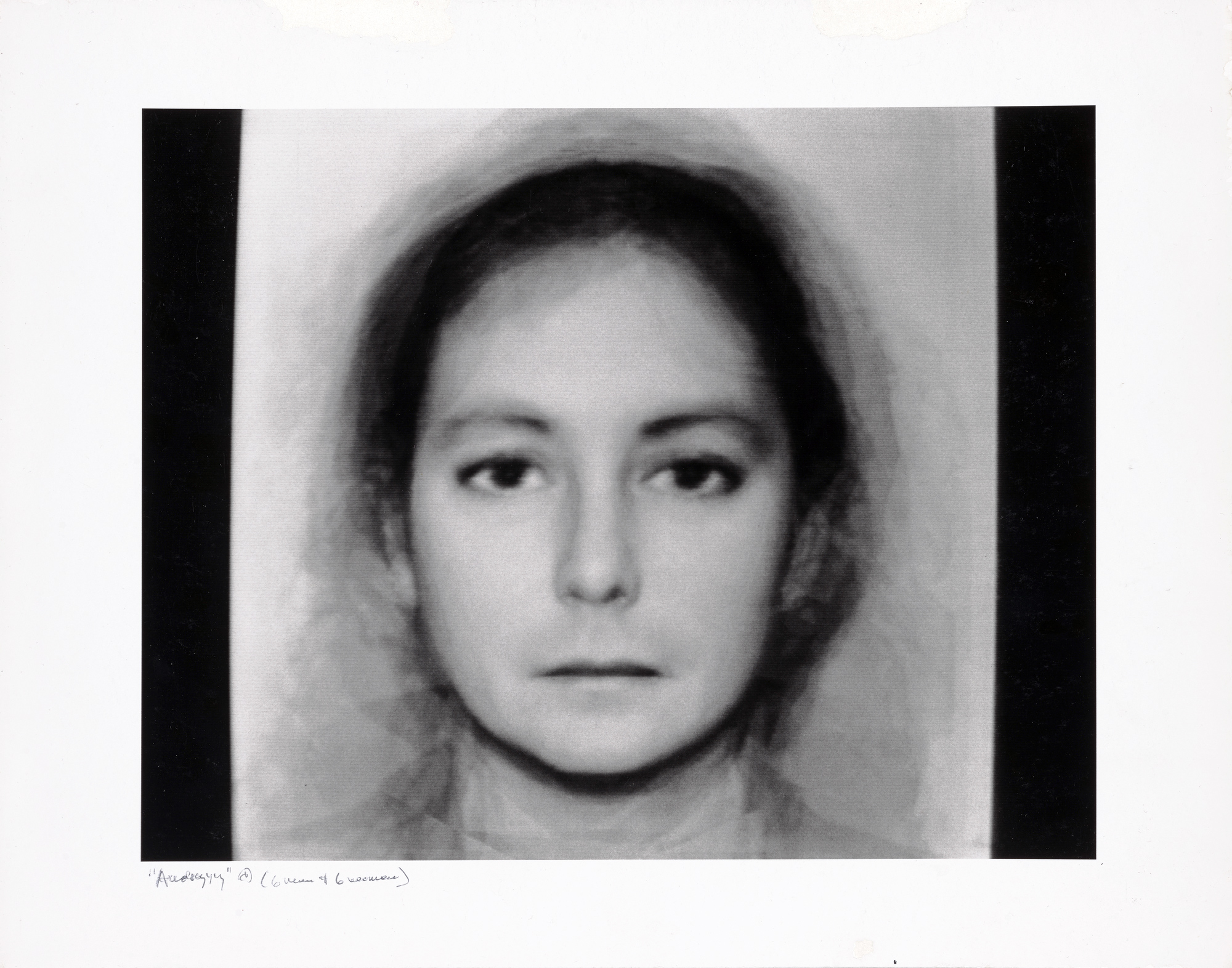
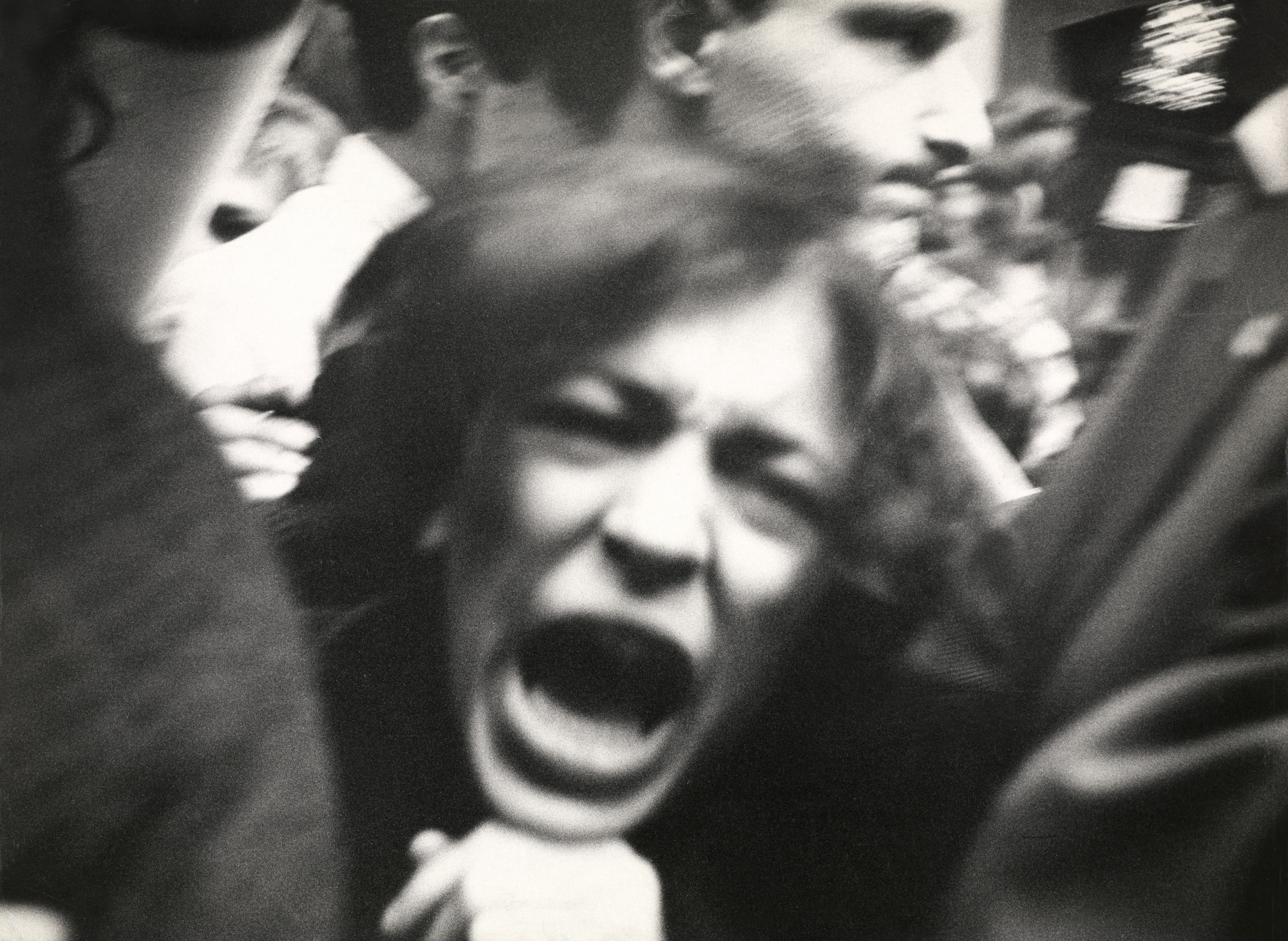
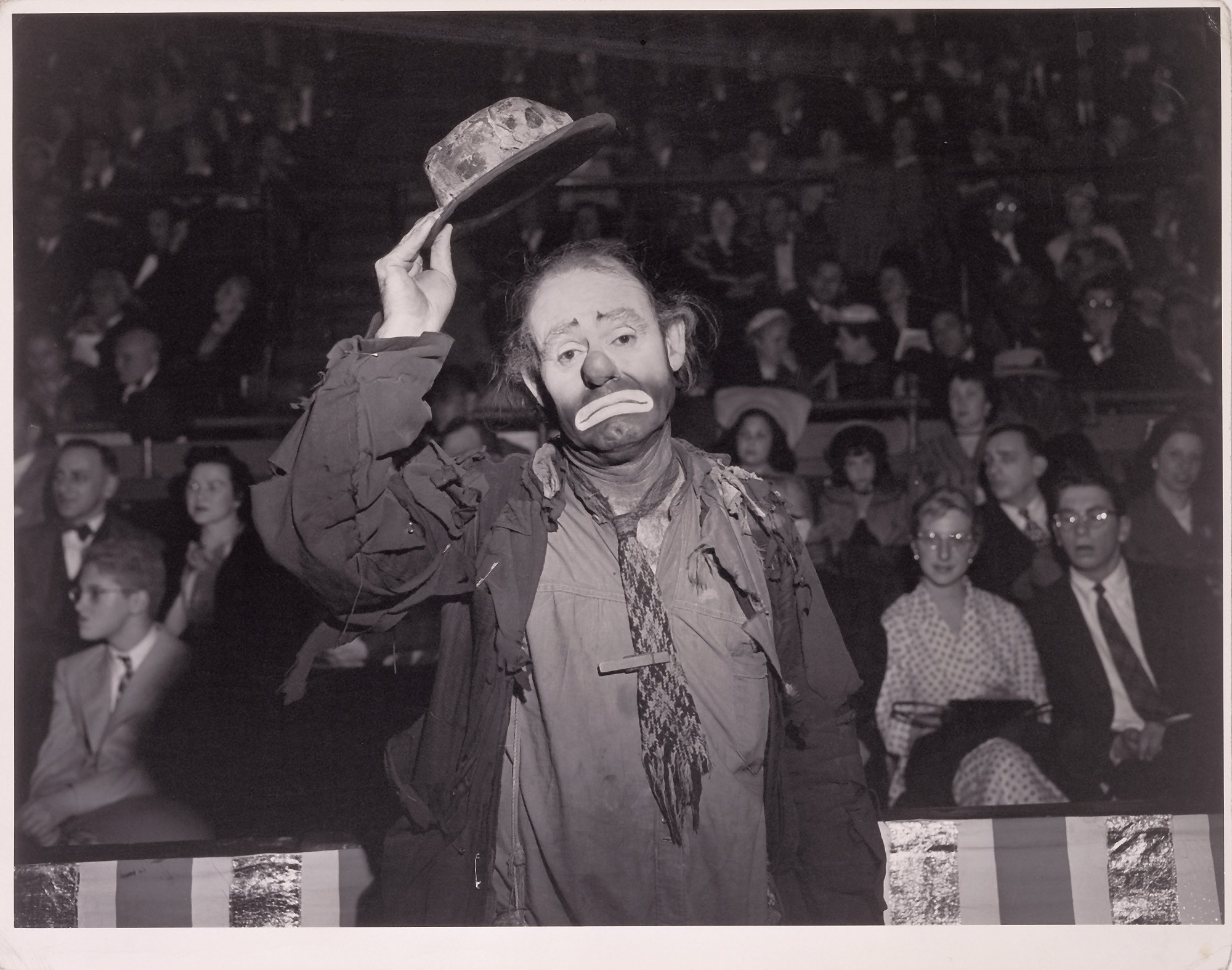

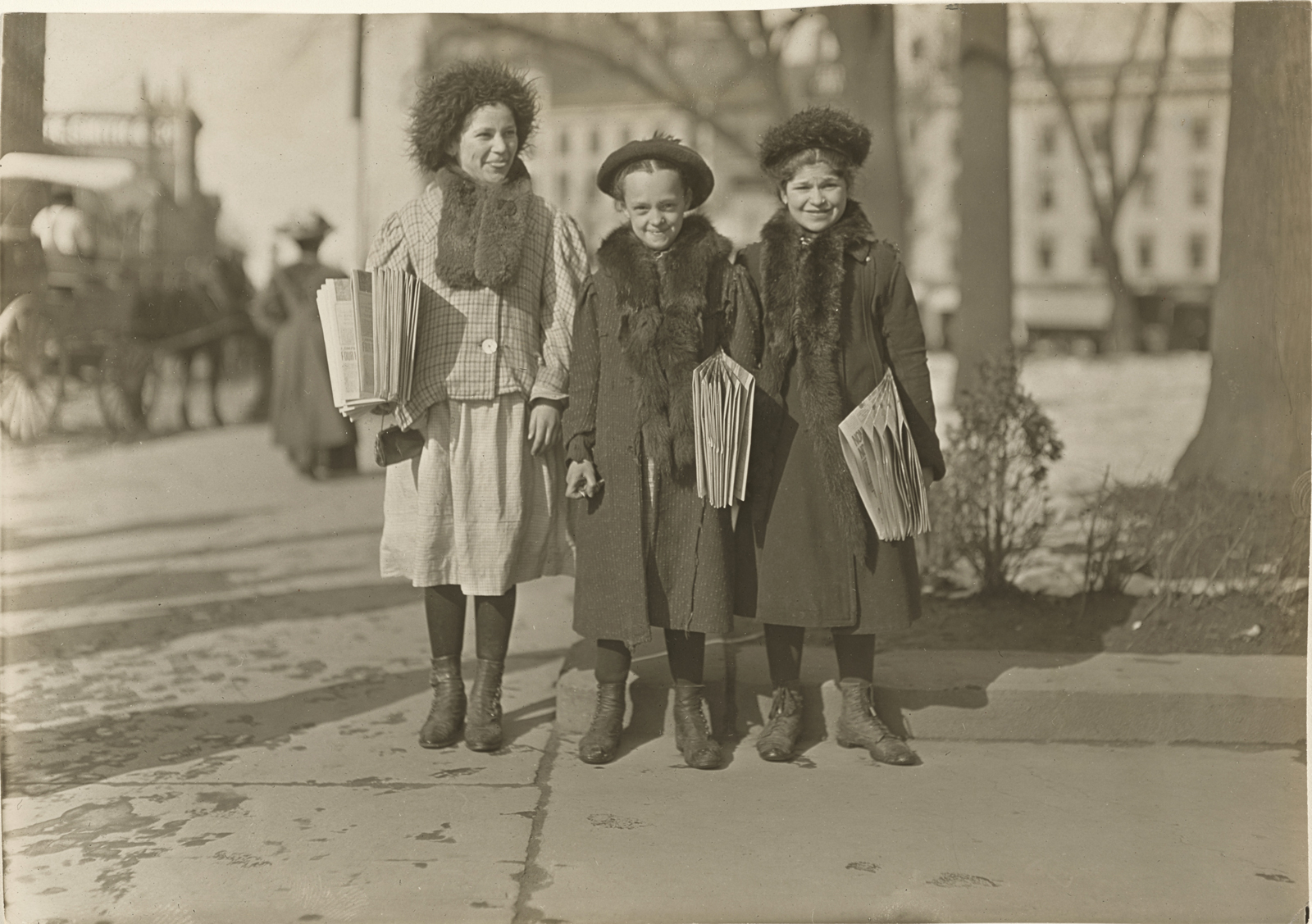
![Nadar [Gaspard Félix Tournachon] (French, 1820-1910) '[Mme Ernestine Nadar]' 1880-1883](https://artblart.com/wp-content/uploads/2018/06/in-focus-expressions-4-web.jpg "Nadar [Gaspard Félix Tournachon] (French, 1820-1910) '[Mme Ernestine Nadar]' 1880-1883")
![Nadar [Gaspard Félix Tournachon] (French, 1820-1910) '[Mme Ernestine Nadar]' 1880-1883 (detail)](https://artblart.com/wp-content/uploads/2018/06/in-focus-expressions-4-detail.jpg "Nadar [Gaspard Félix Tournachon] (French, 1820-1910) '[Mme Ernestine Nadar]' 1880-1883 (detail)")

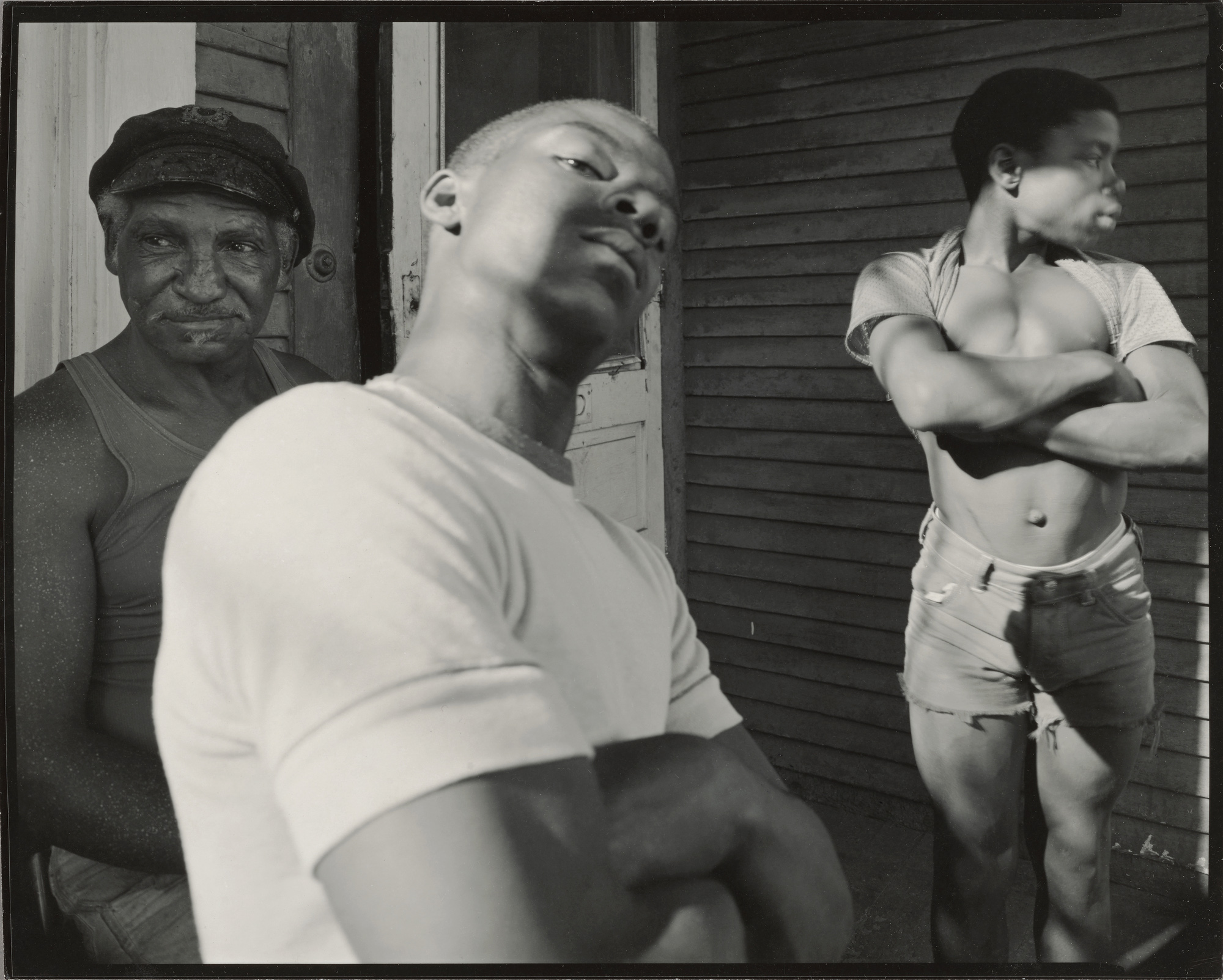
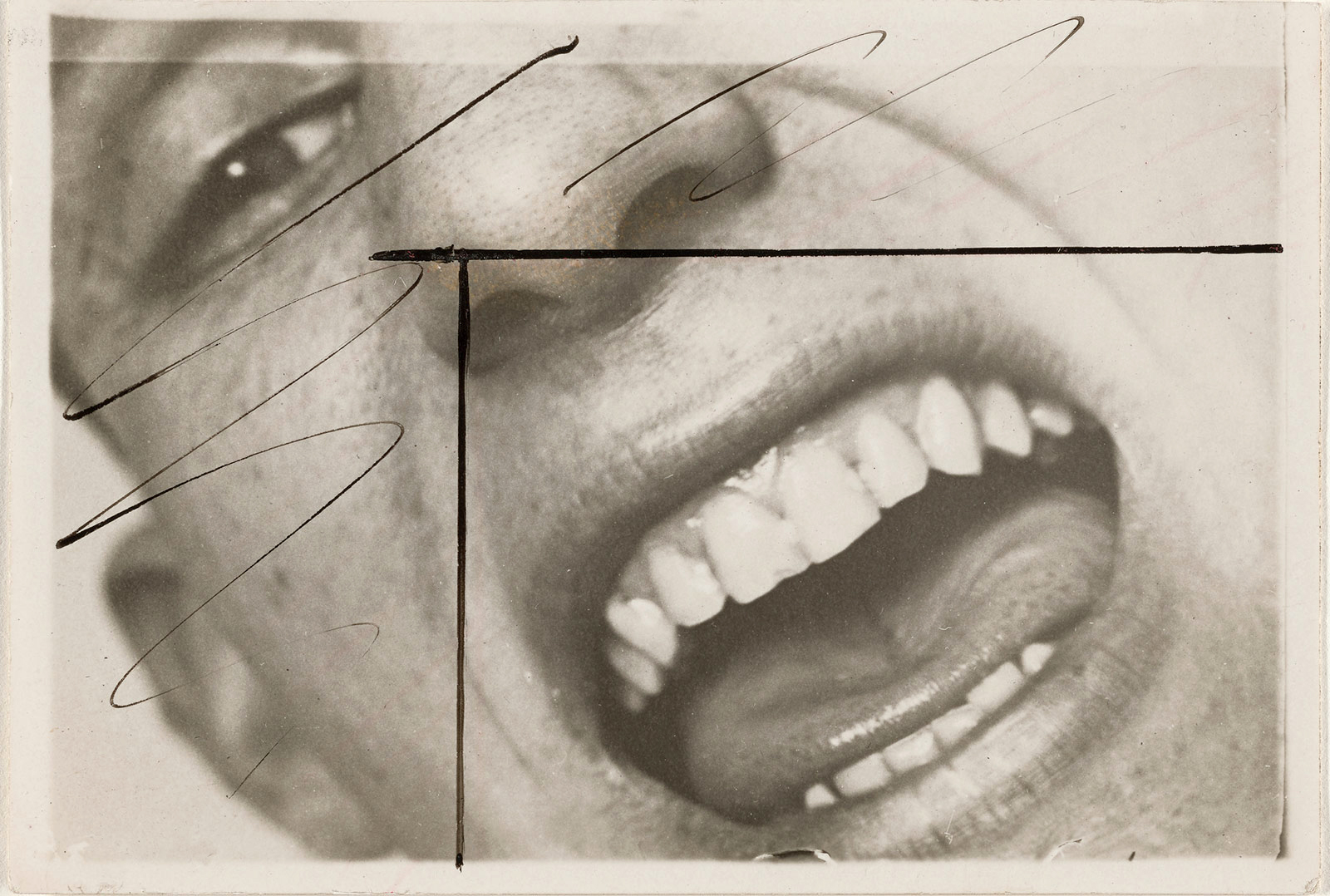
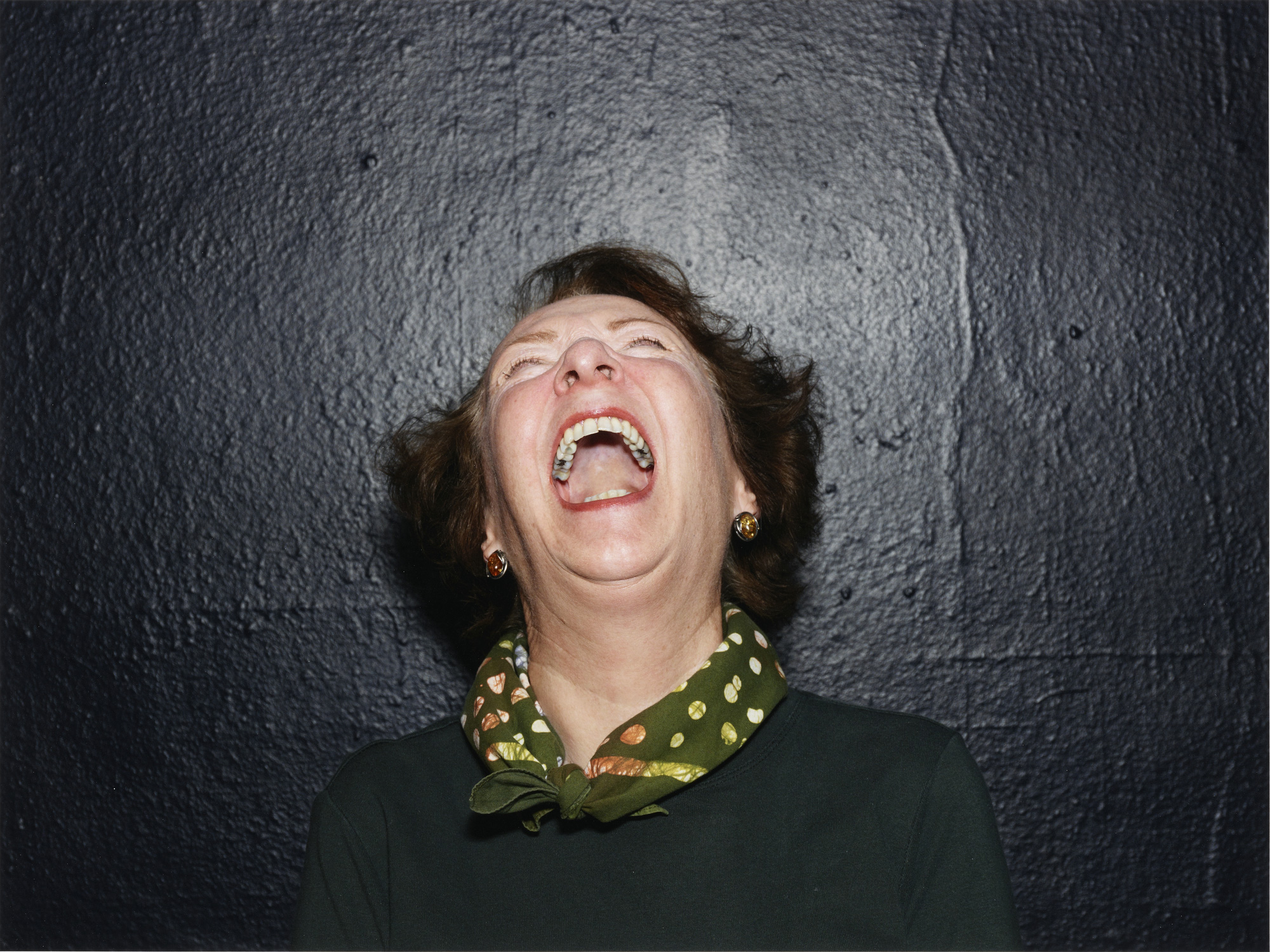
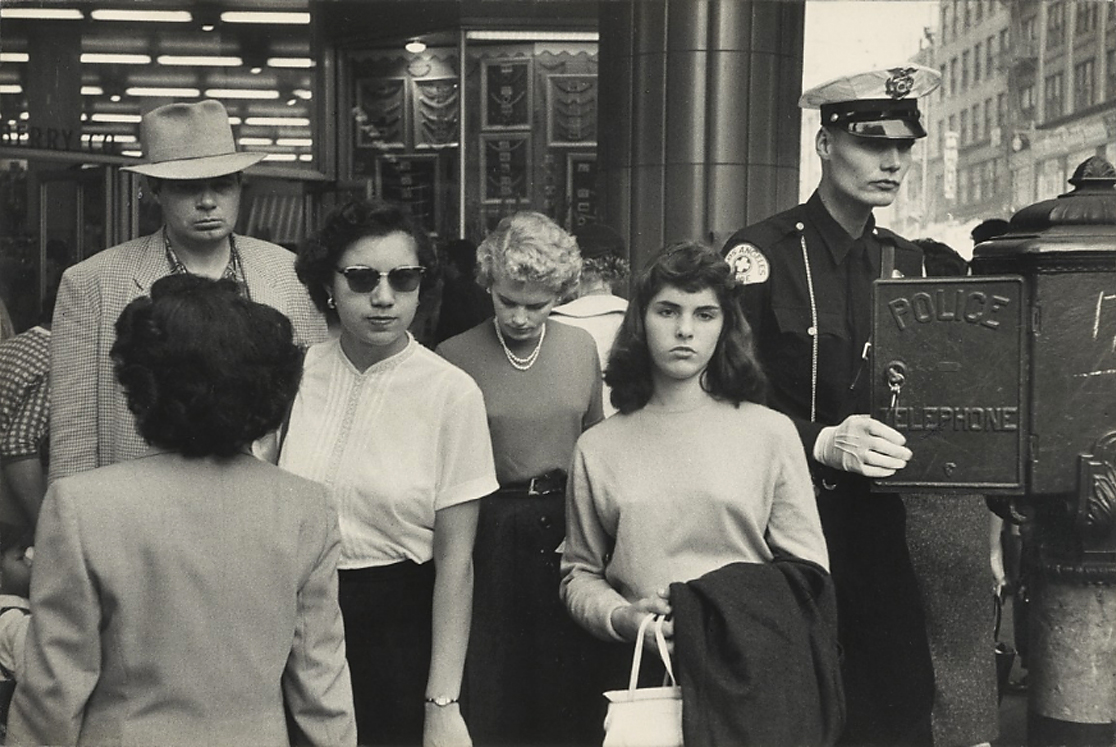
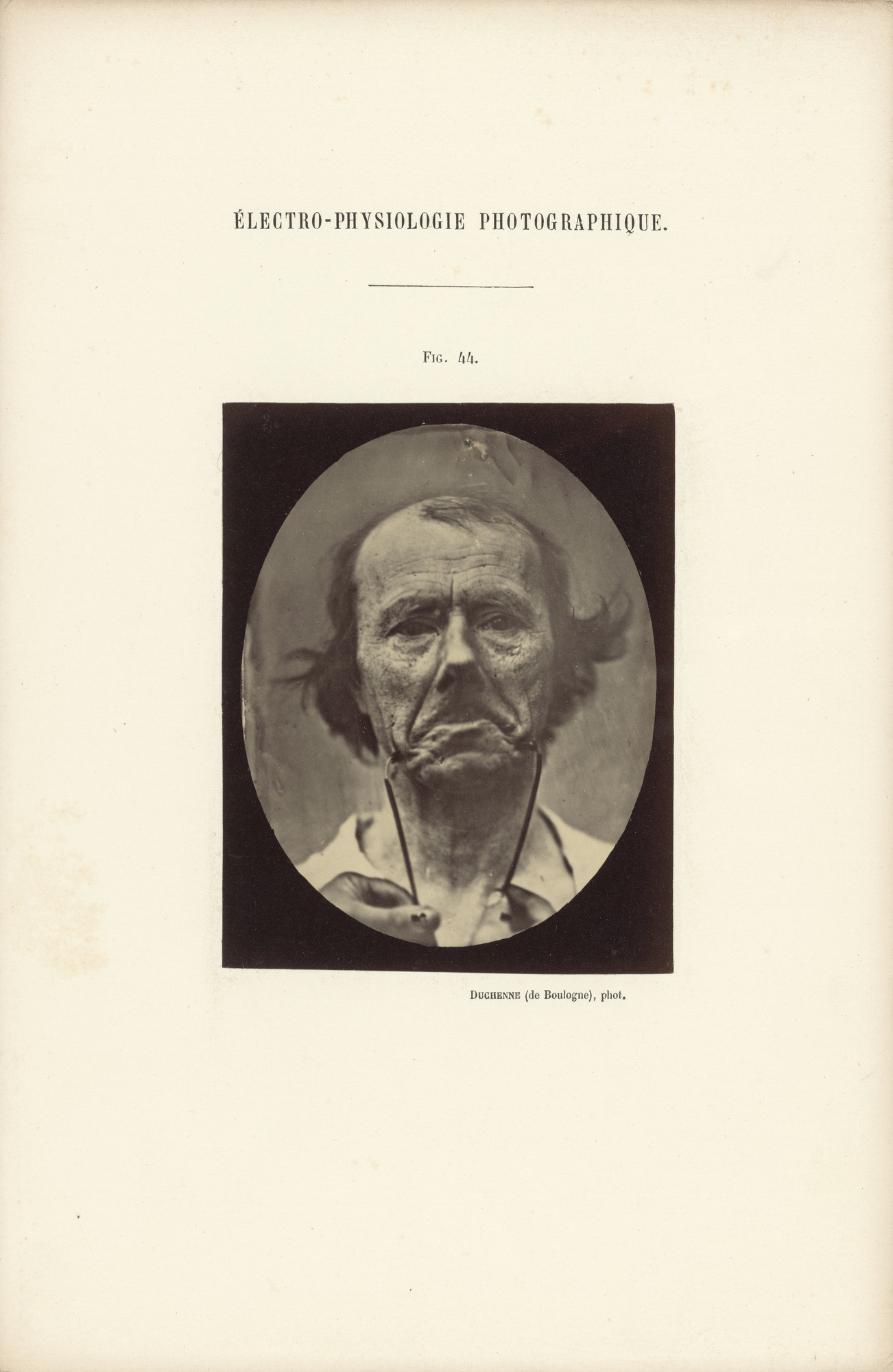
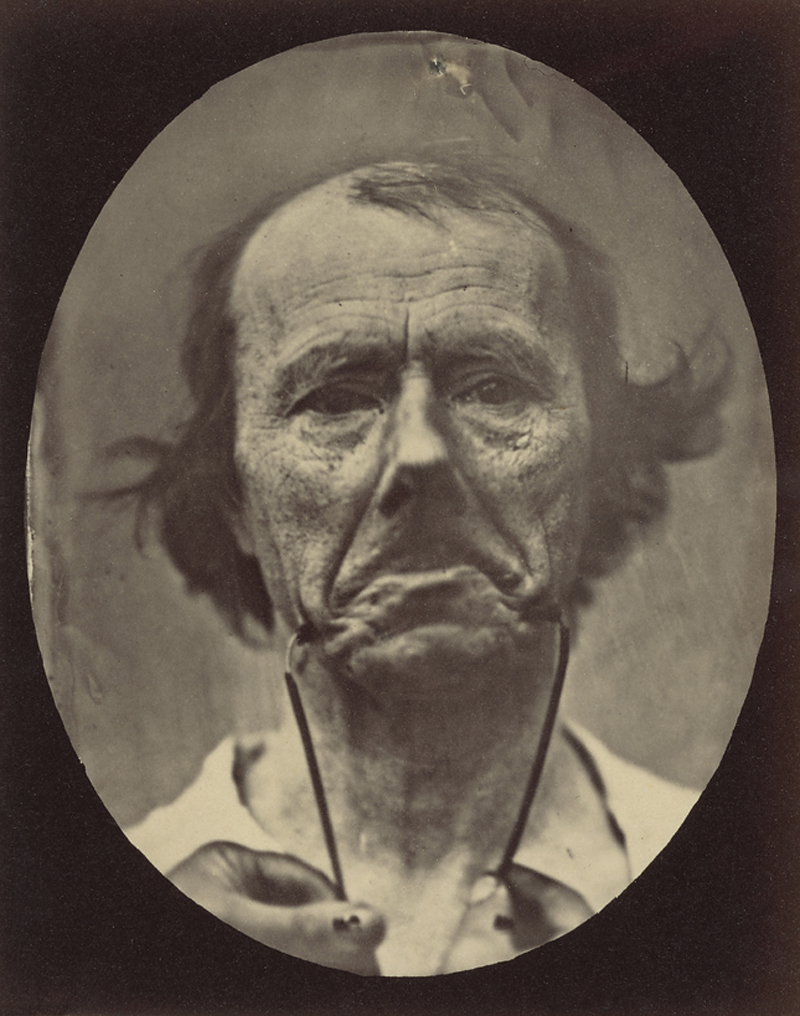
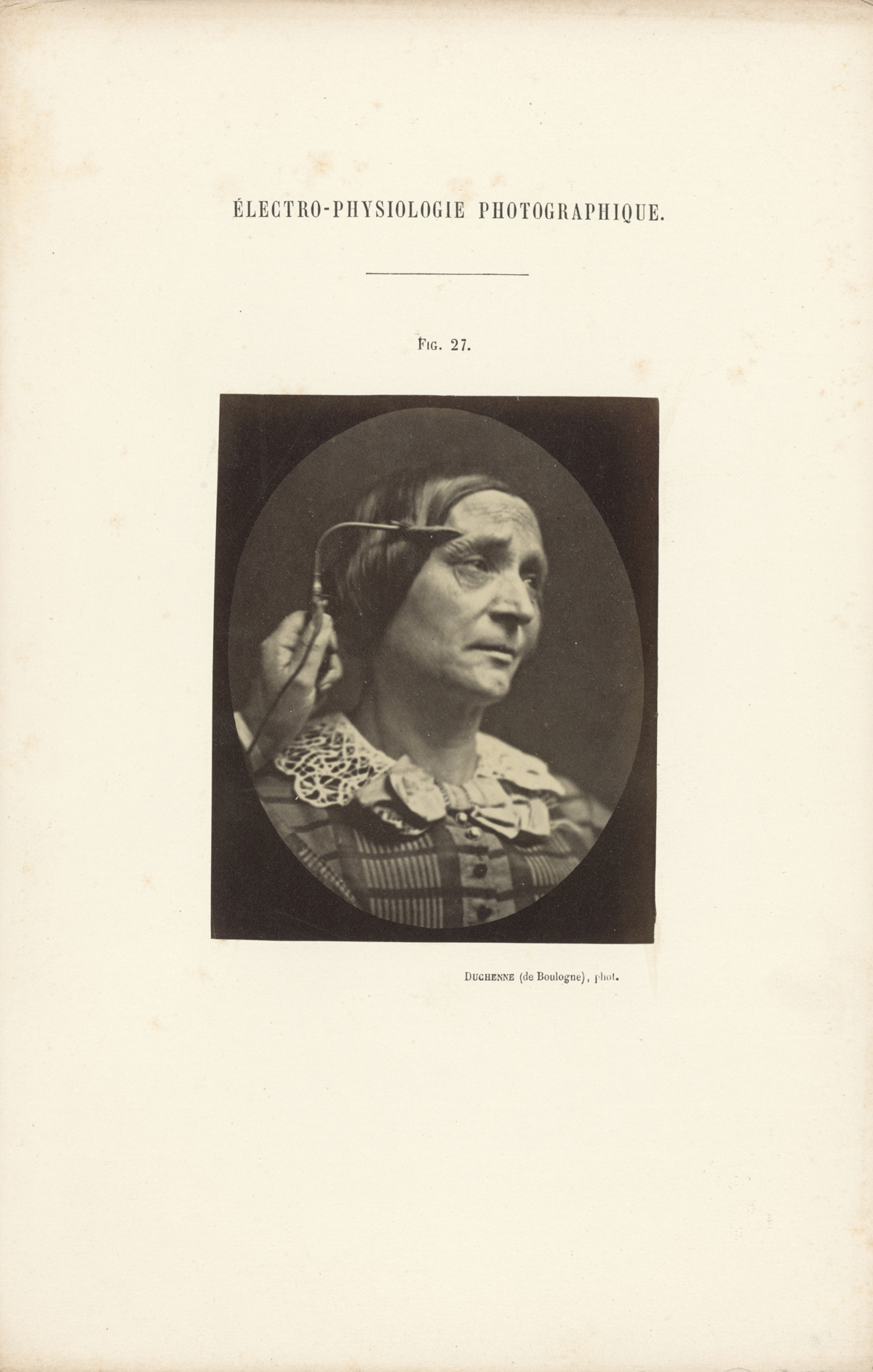
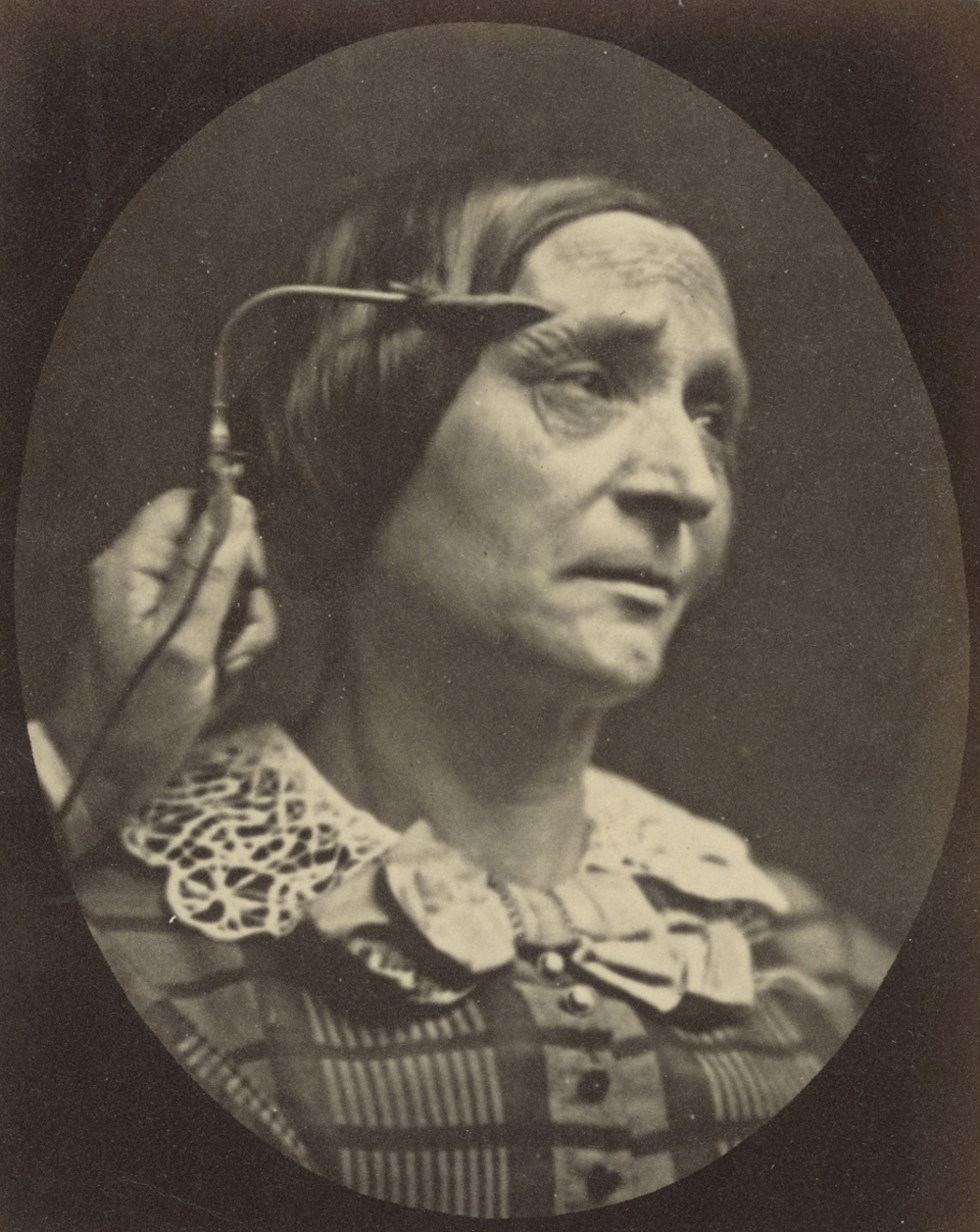
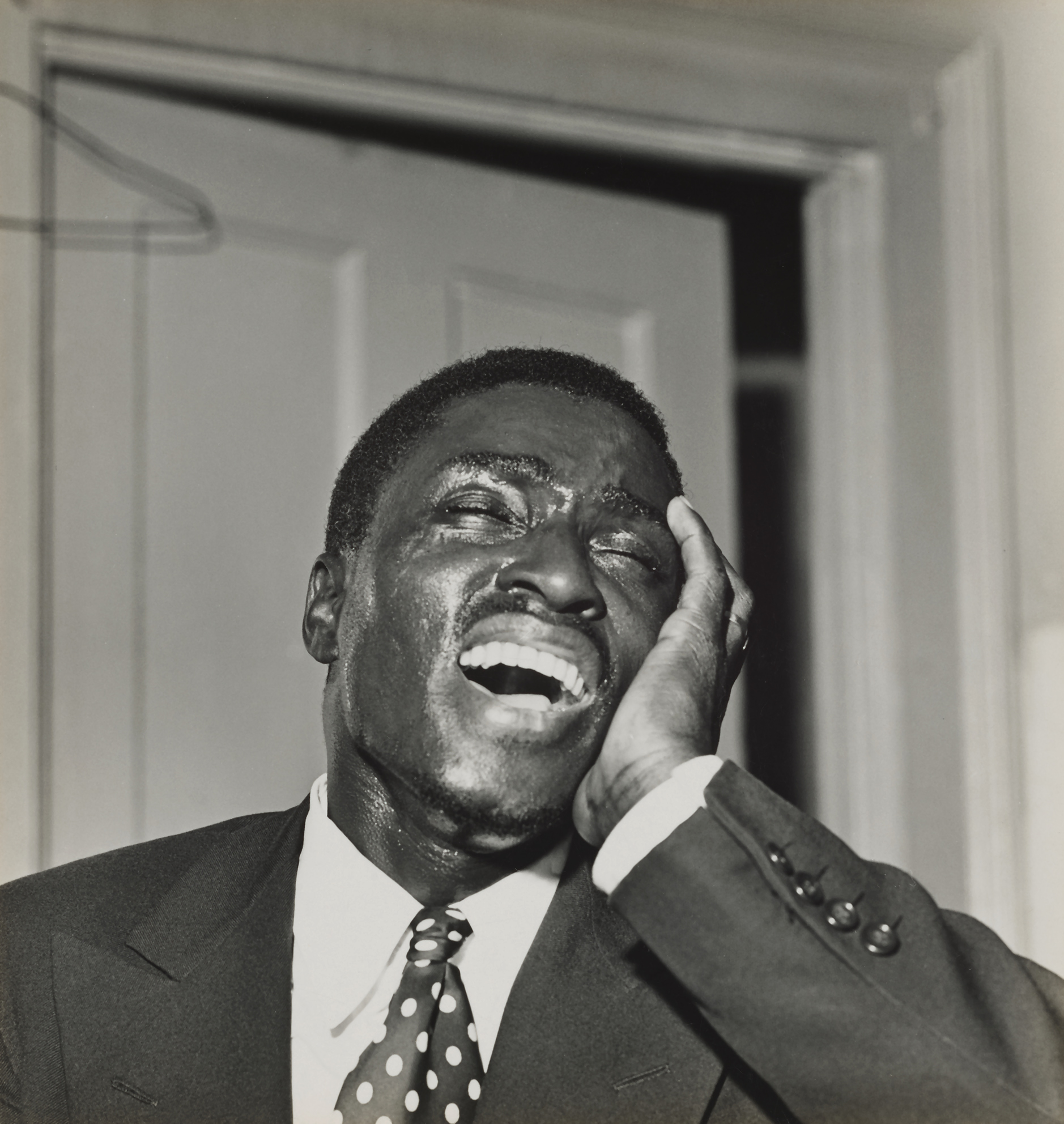
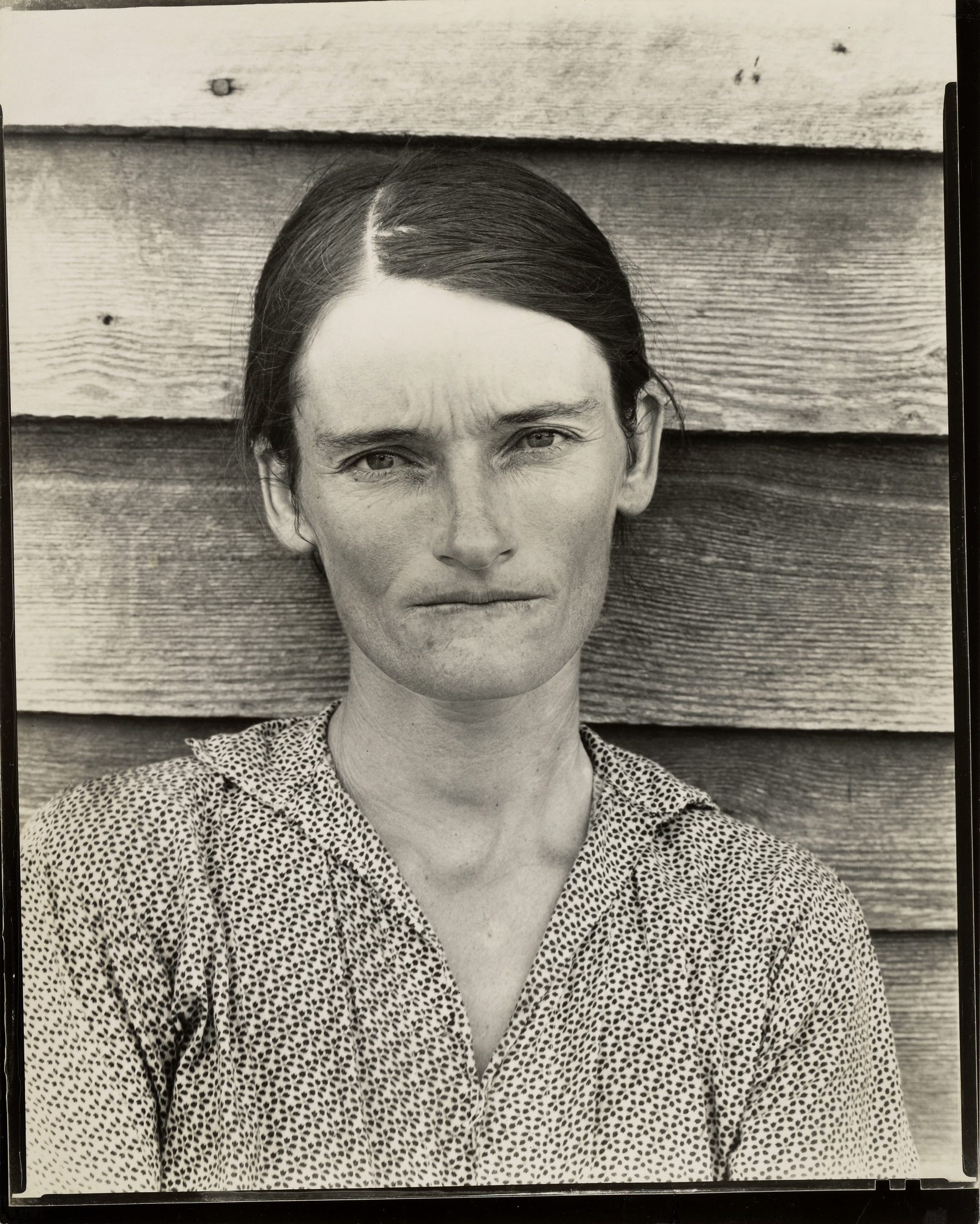
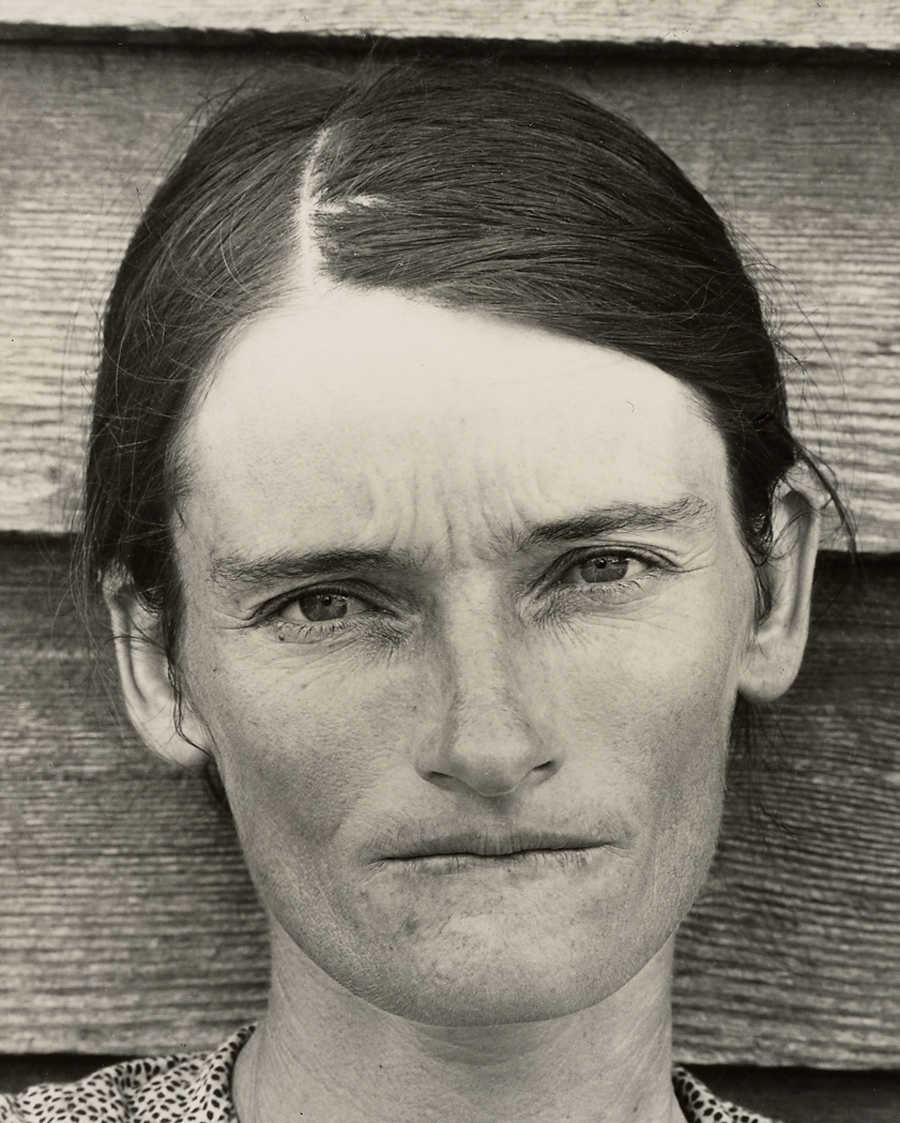
![Lisette Model (American born Austria, 1901-1983) '[War Rally]' 1942](https://artblart.com/wp-content/uploads/2018/06/in-focus-expressions-2-web.jpg "Lisette Model (American born Austria, 1901-1983) '[War Rally]' 1942")
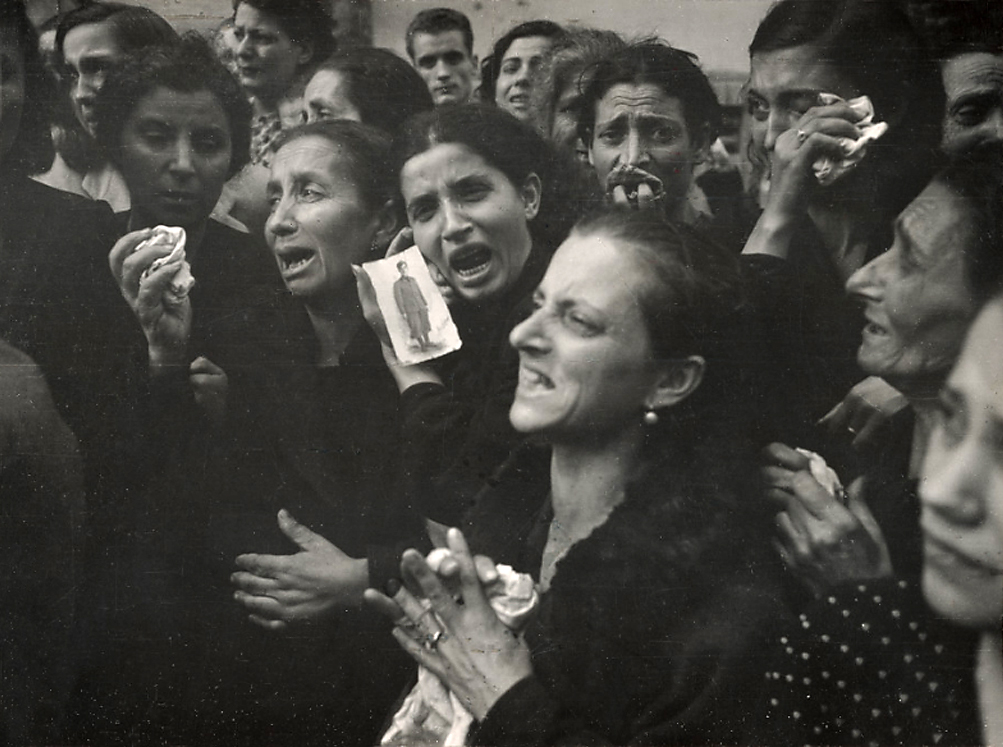
![Unknown maker (American) '[Smiling Man]' 1860](https://artblart.com/wp-content/uploads/2018/06/unknown-maker-smiling-man-1860-web.jpg "Unknown maker (American) '[Smiling Man]' 1860")
![Baron Adolf de Meyer (American born France, 1868-1946) '[Ruth St. Denis]' c. 1918](https://artblart.com/wp-content/uploads/2018/06/baron-adolf-de-meyer-ruth-st-denis-c-1918-web.jpg "Baron Adolf de Meyer (American born France, 1868-1946) '[Ruth St. Denis]' c. 1918")
![Woodbury & Page (British, active 1857-1908) '[Javanese woman seated with legs crossed, basket at side]' c. 1870](https://artblart.com/wp-content/uploads/2018/06/woodbury-and-page-javanese-woman-web.jpg "Woodbury & Page (British, active 1857-1908) '[Javanese woman seated with legs crossed, basket at side]' c. 1870")
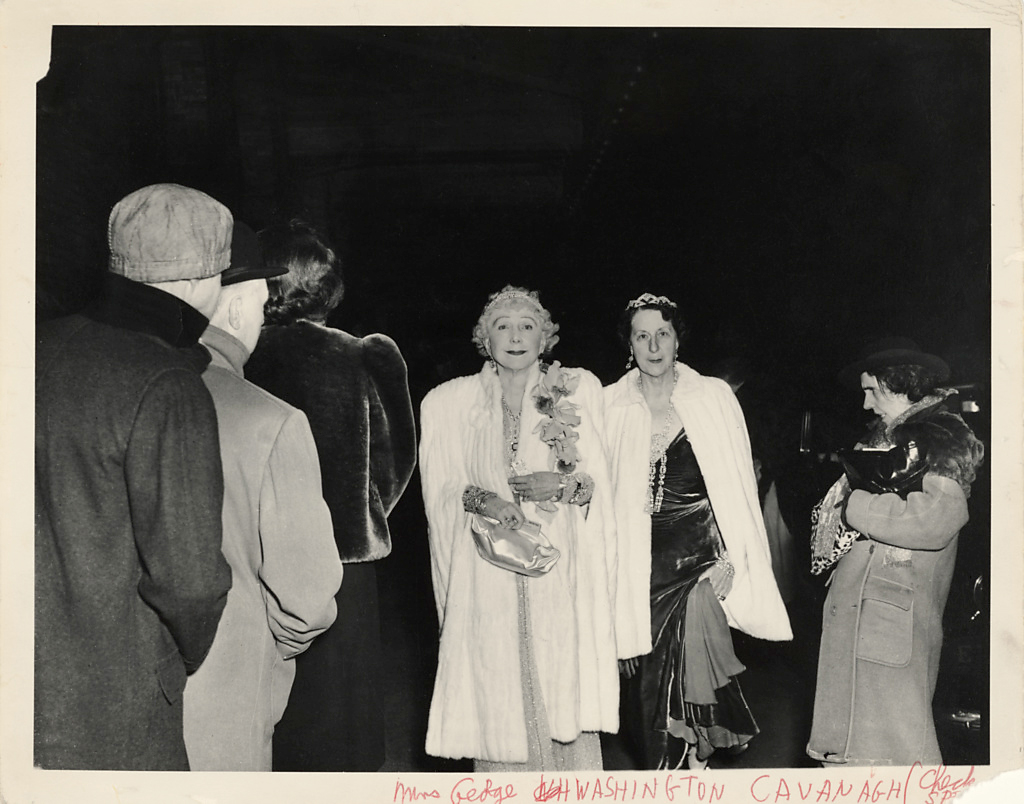
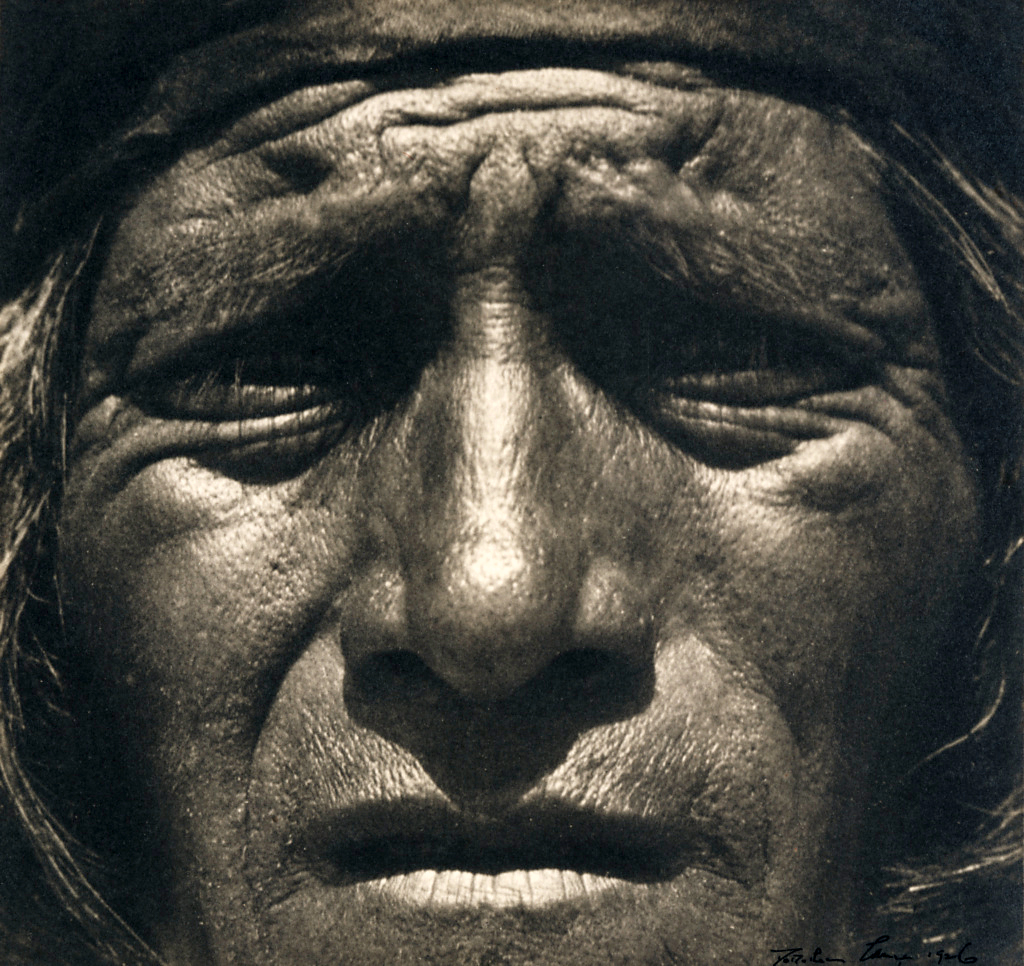
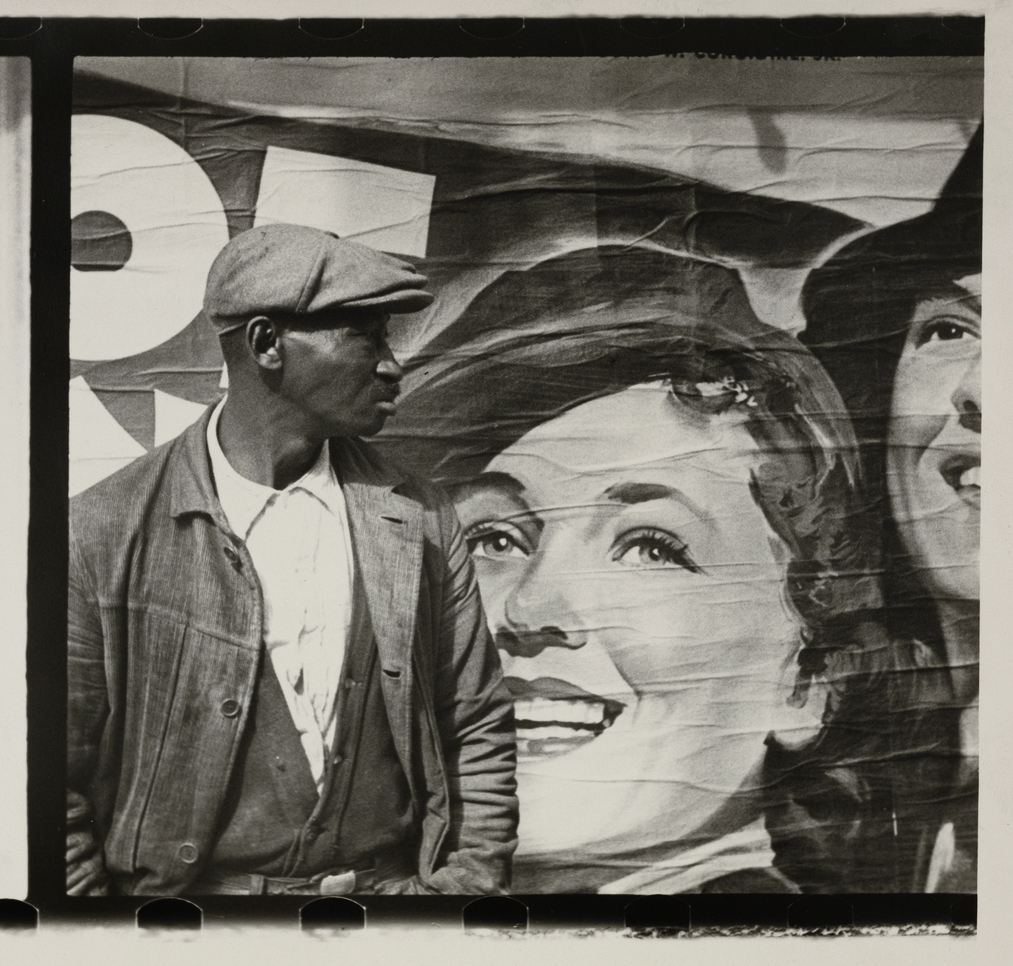
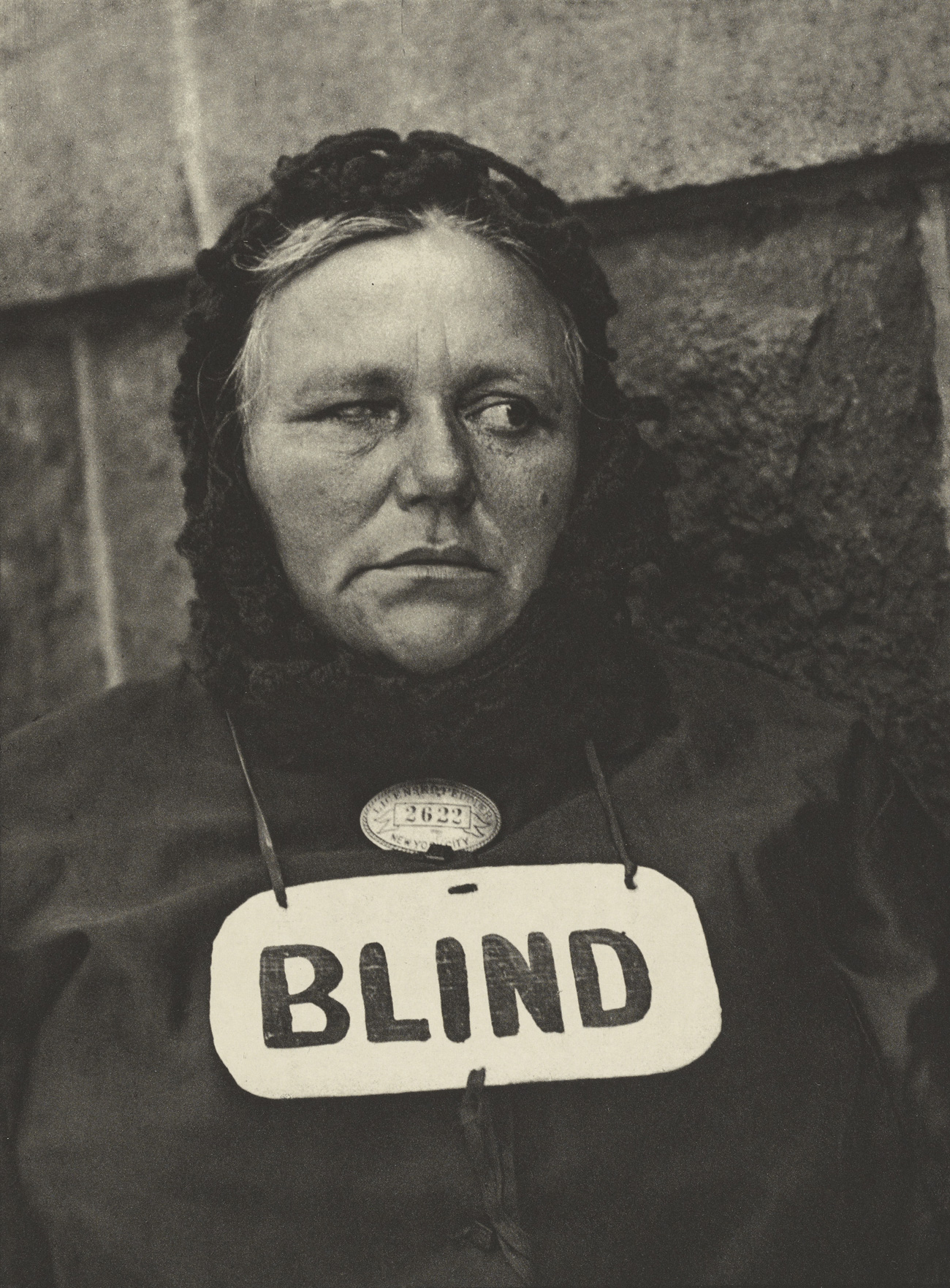
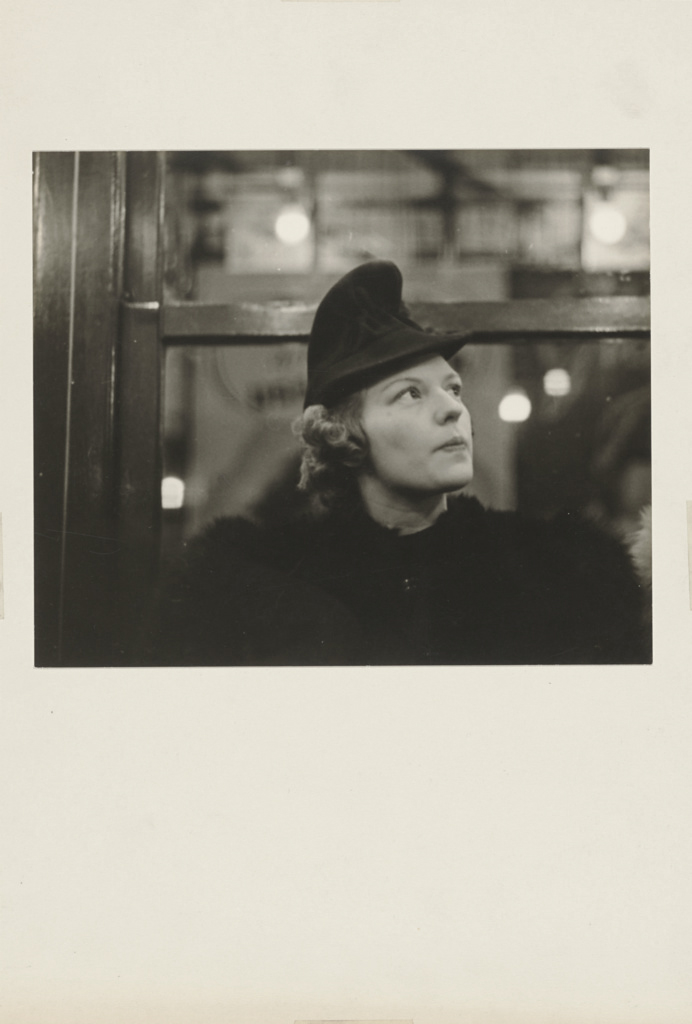
![Camille Silvy (French, 1834-1910) '[Madame Camille Silvy]' c. 1863](https://artblart.com/wp-content/uploads/2018/06/camille-silvy-web.jpg "Camille Silvy (French, 1834-1910) '[Madame Camille Silvy]' c. 1863")
![Mikiko Hara (Japanese, b. 1967) '[Untitled (Making a Void)]' Negative 2001; print about 2007](https://artblart.com/wp-content/uploads/2018/06/mikiko-hara-untitled-web.jpg "Mikiko Hara (Japanese, b. 1967) '[Untitled (Making a Void)]' Negative 2001; print about 2007")
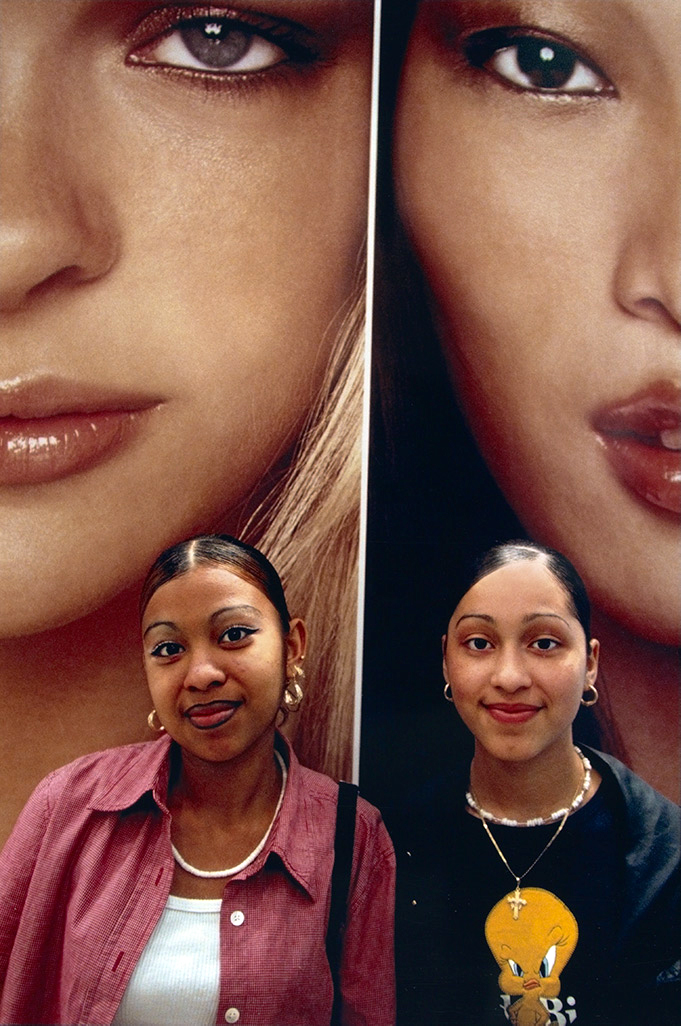
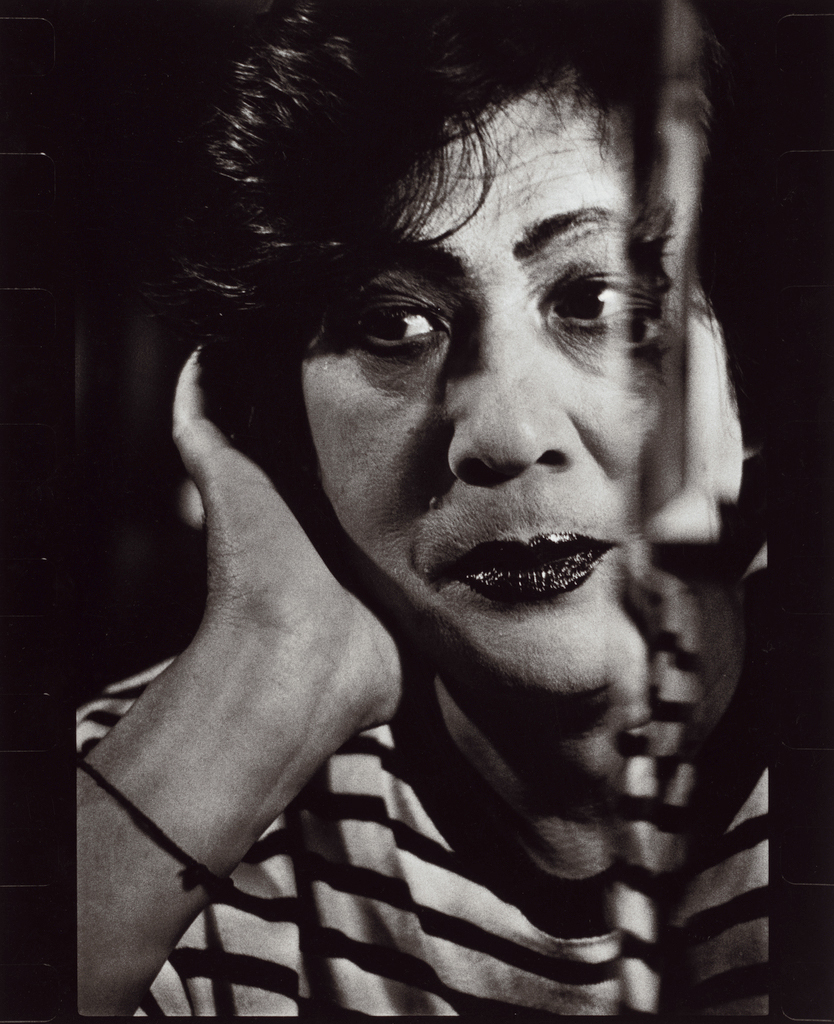

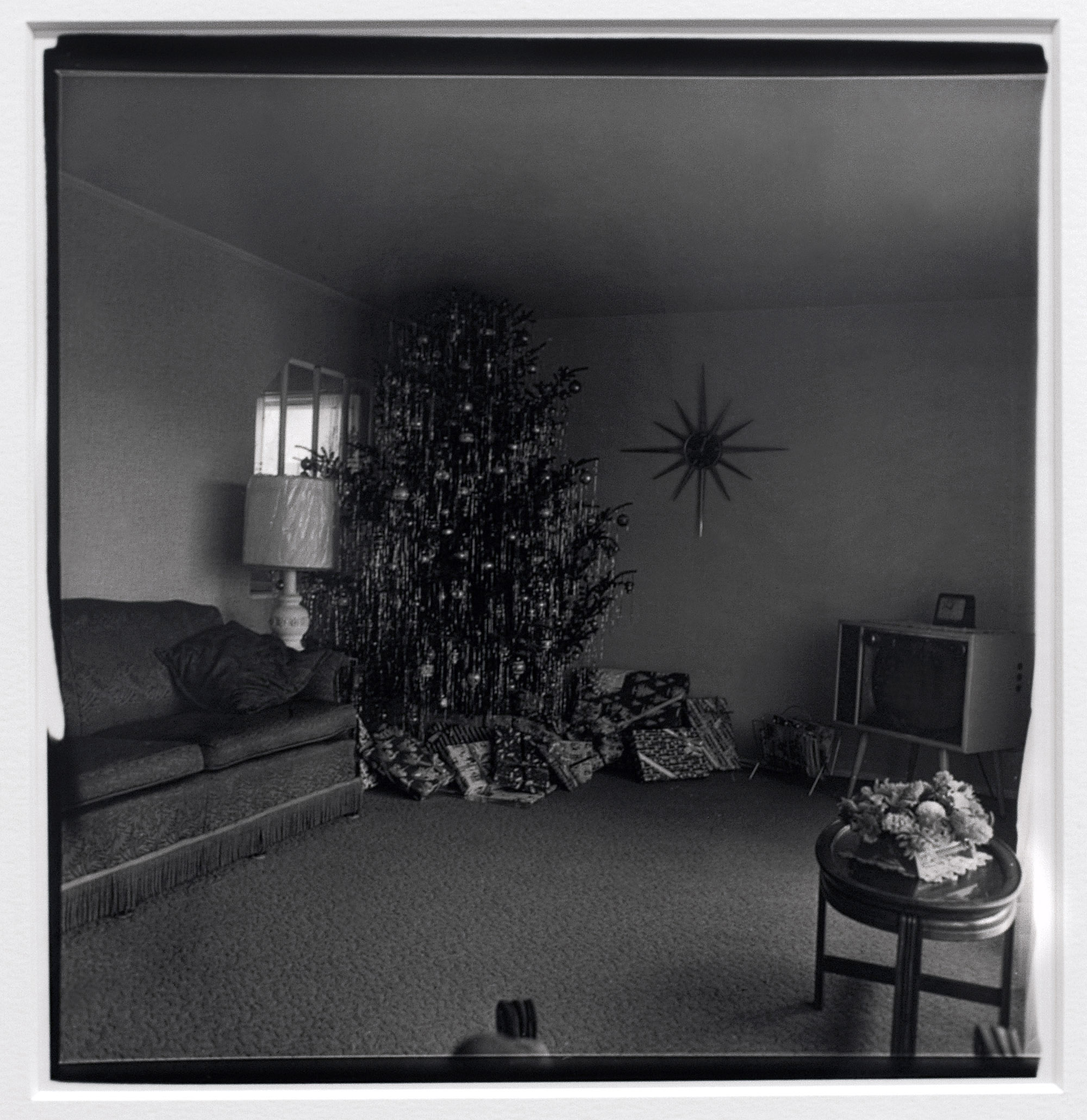


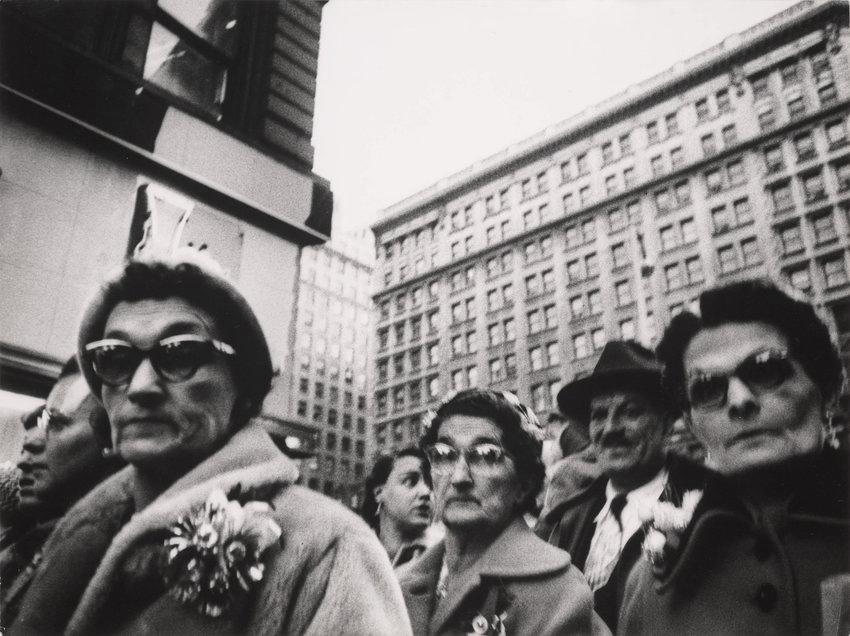

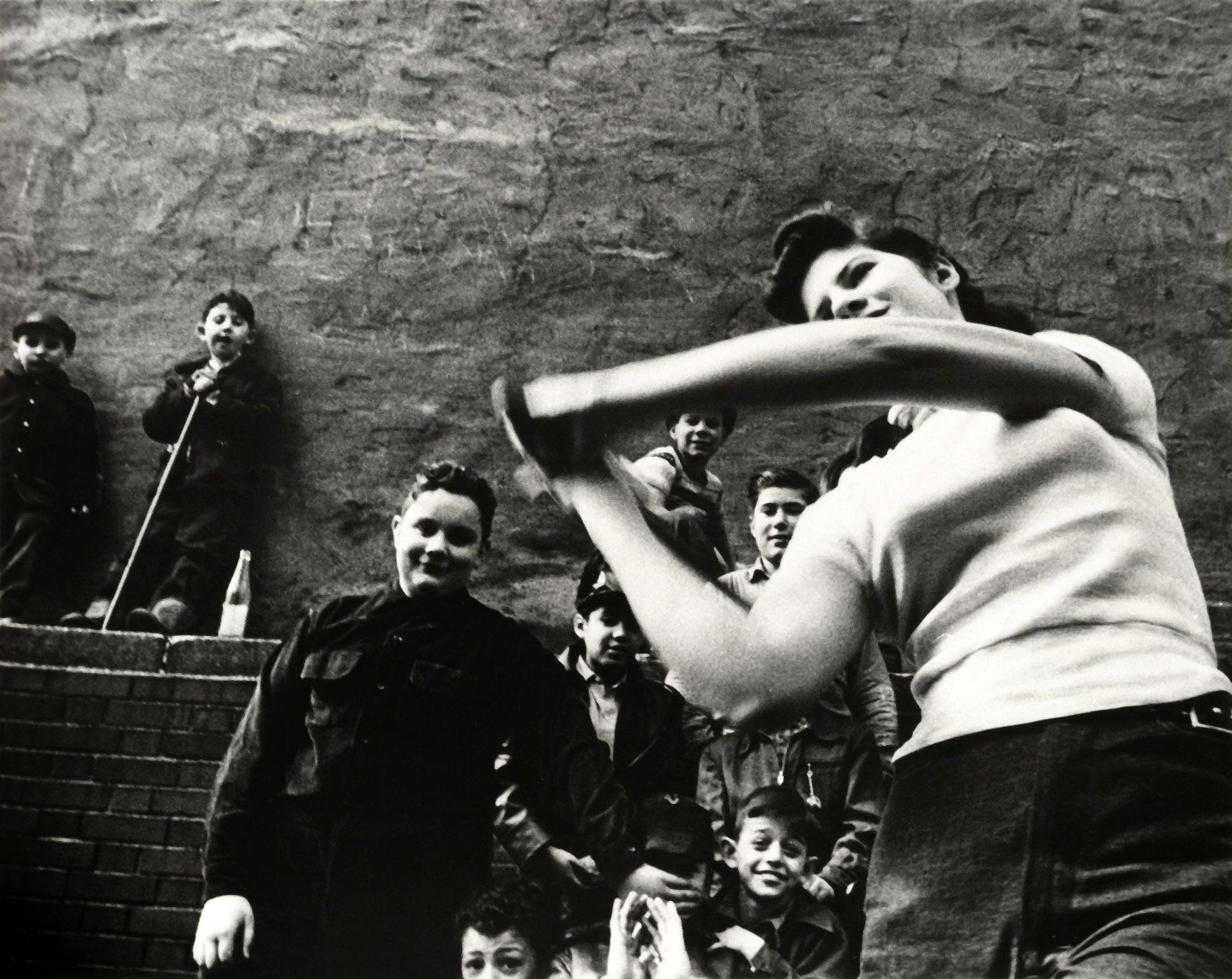

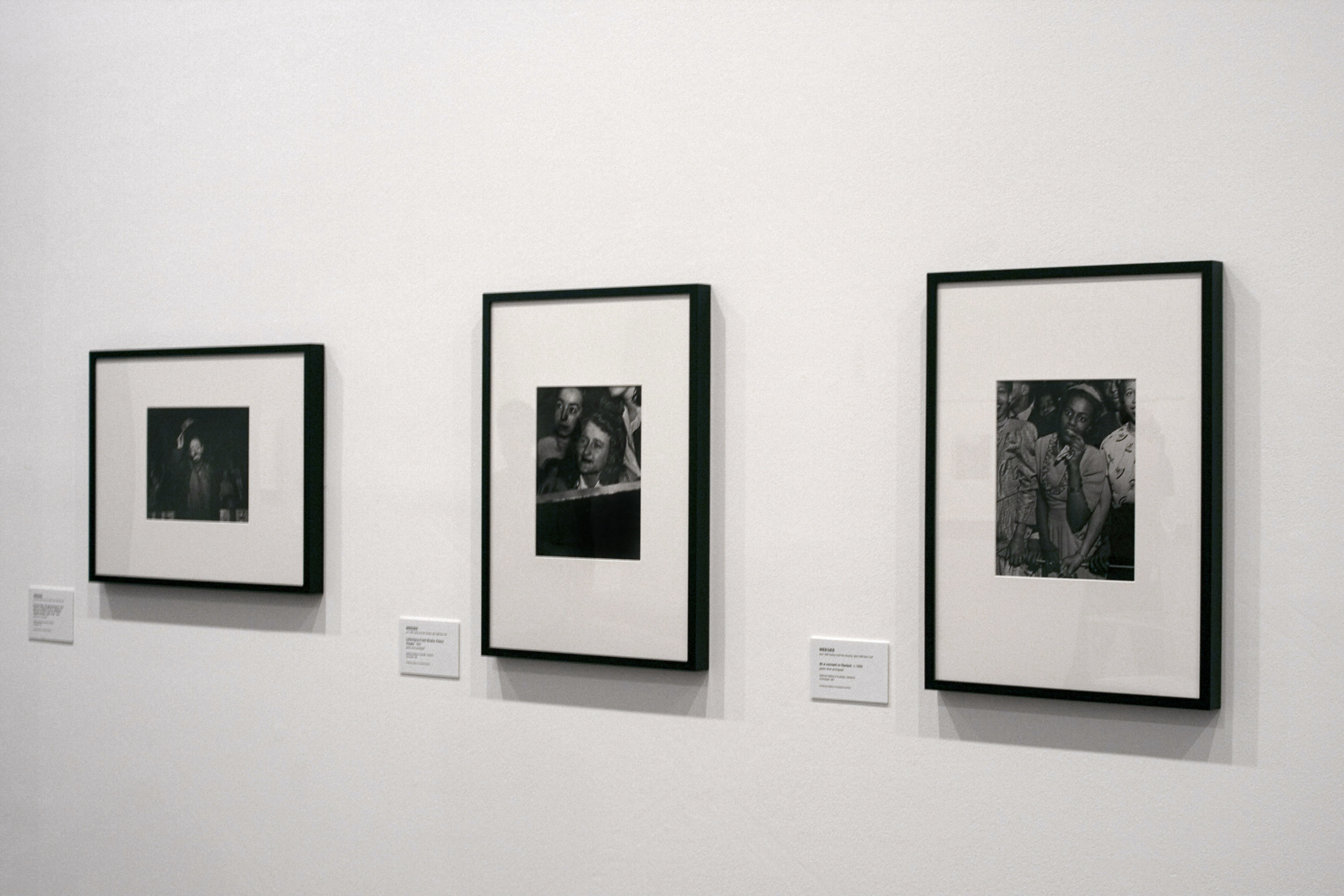

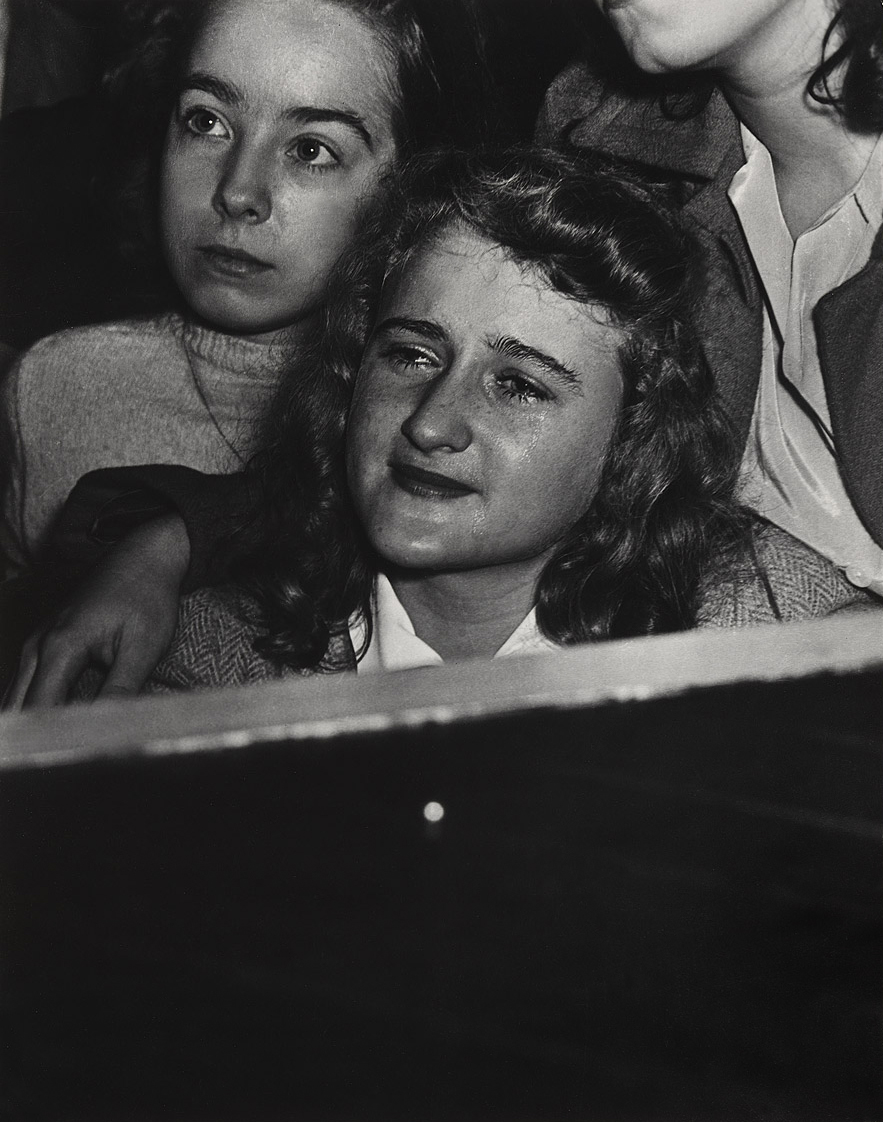


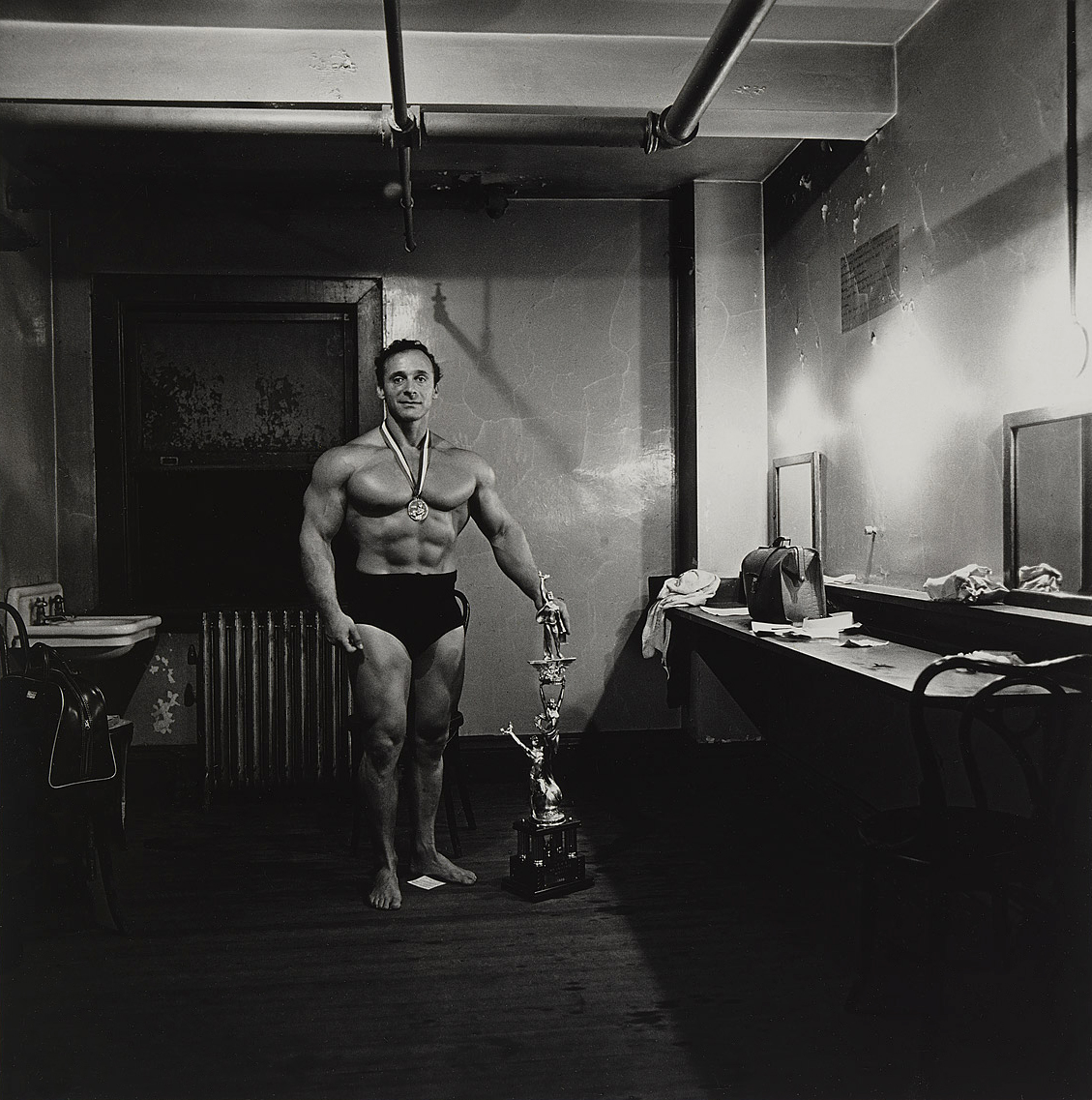
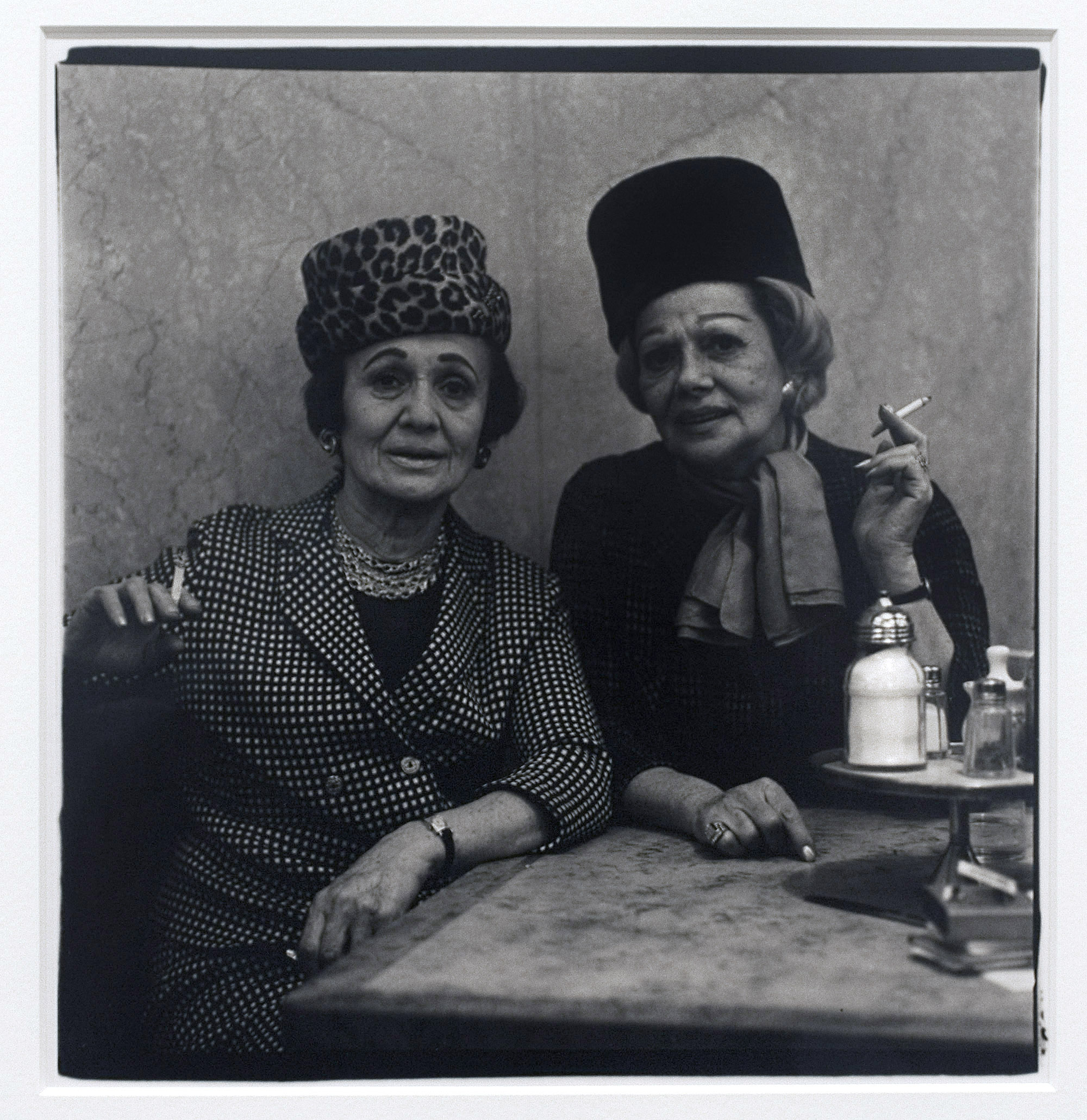


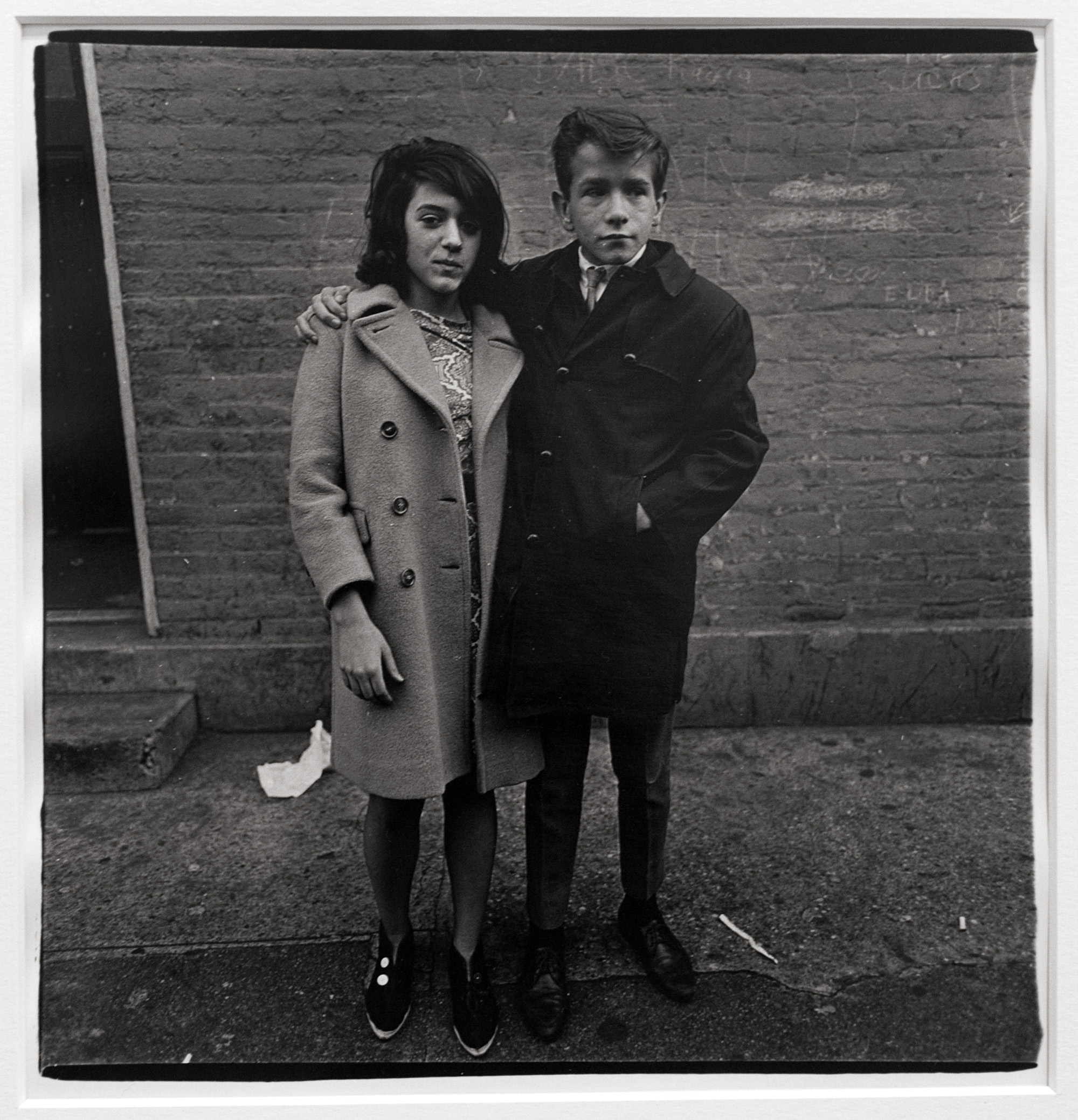


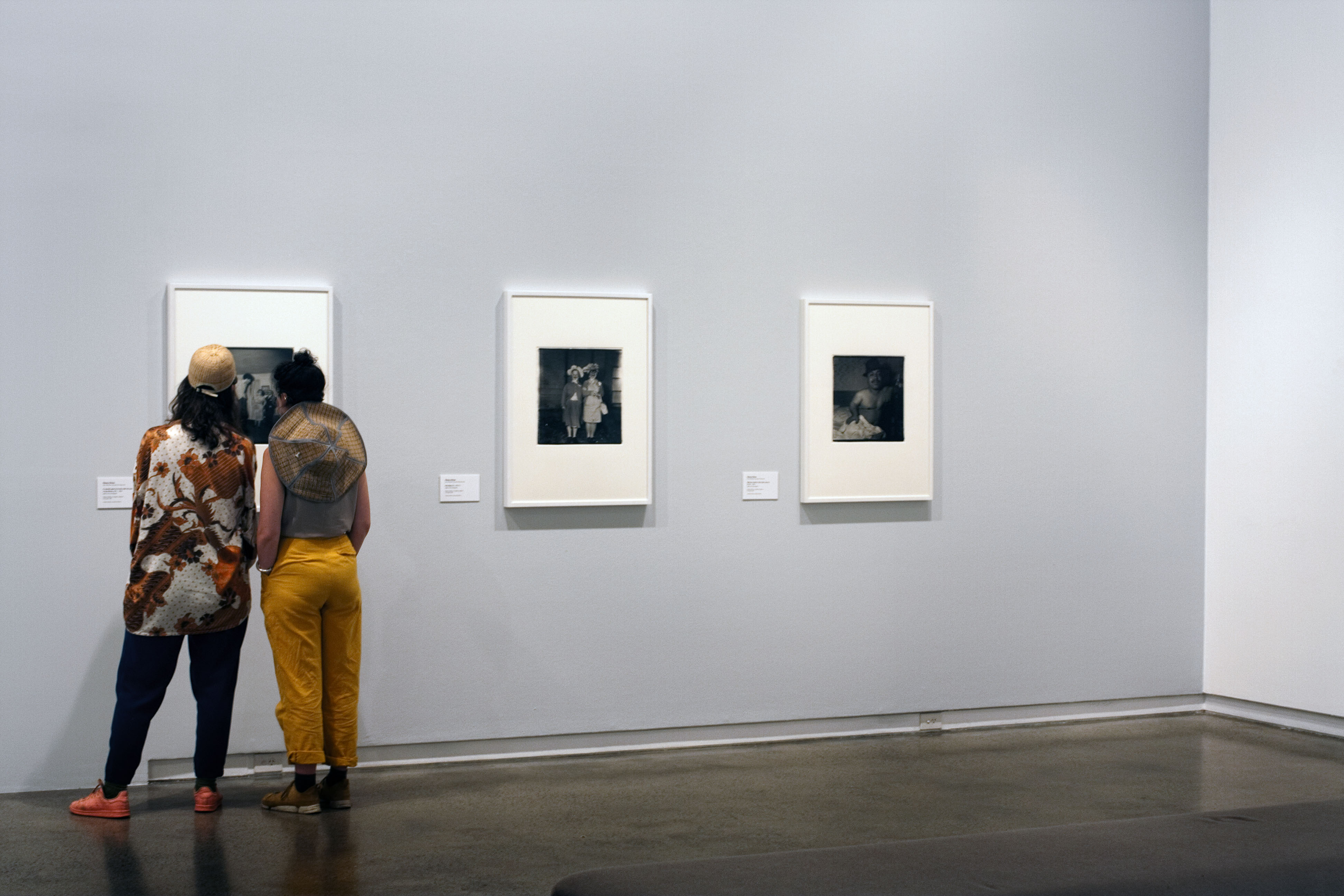

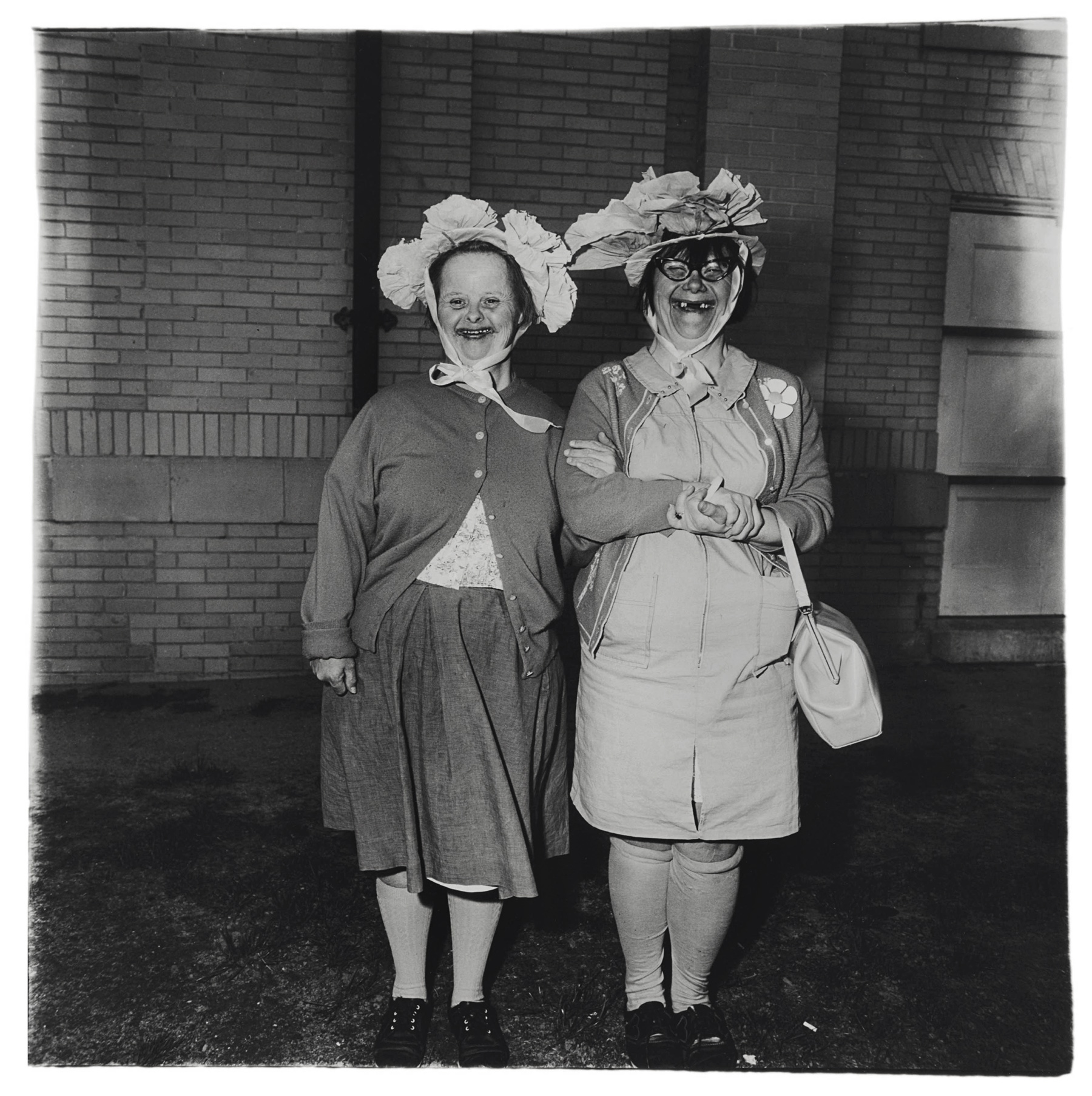


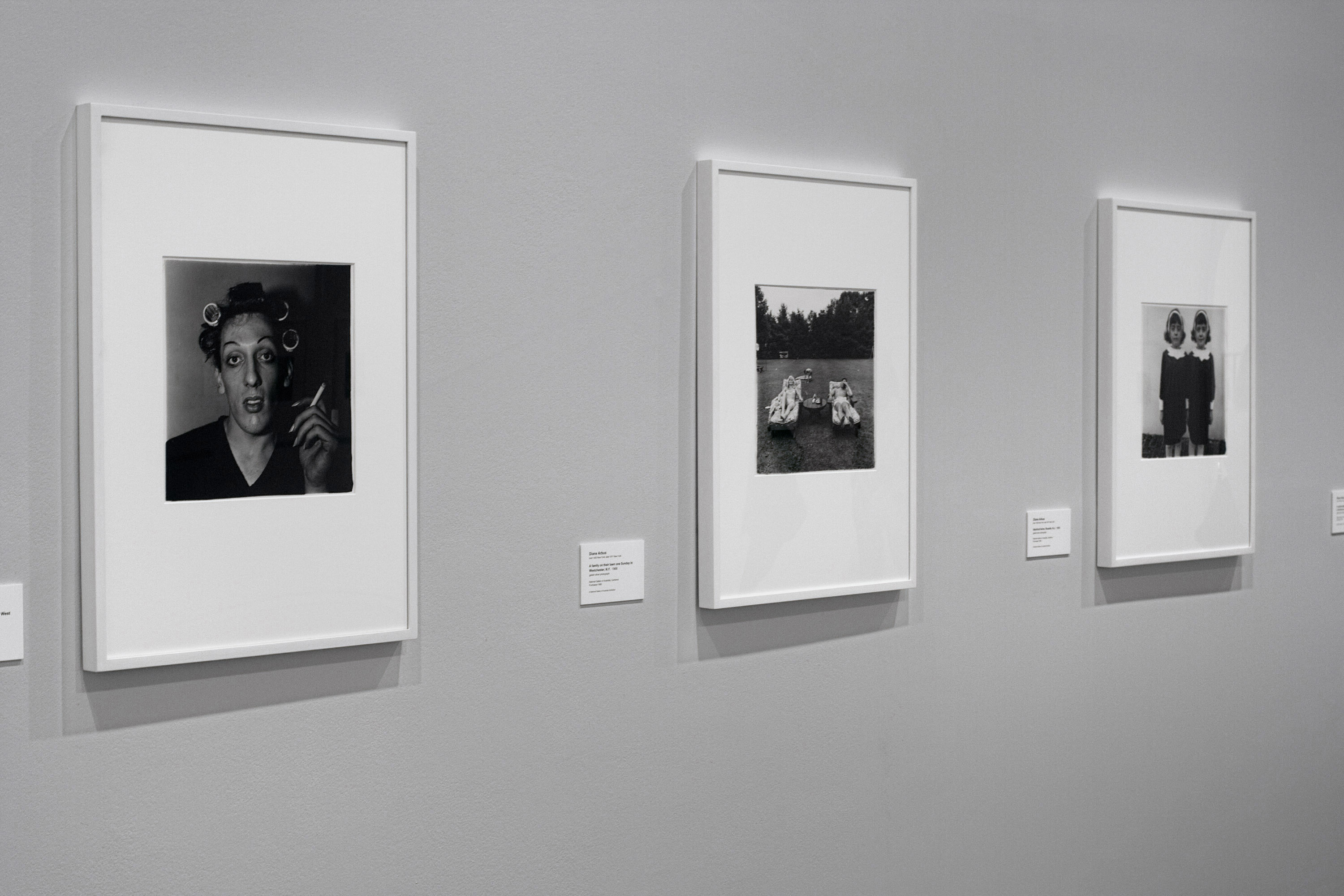

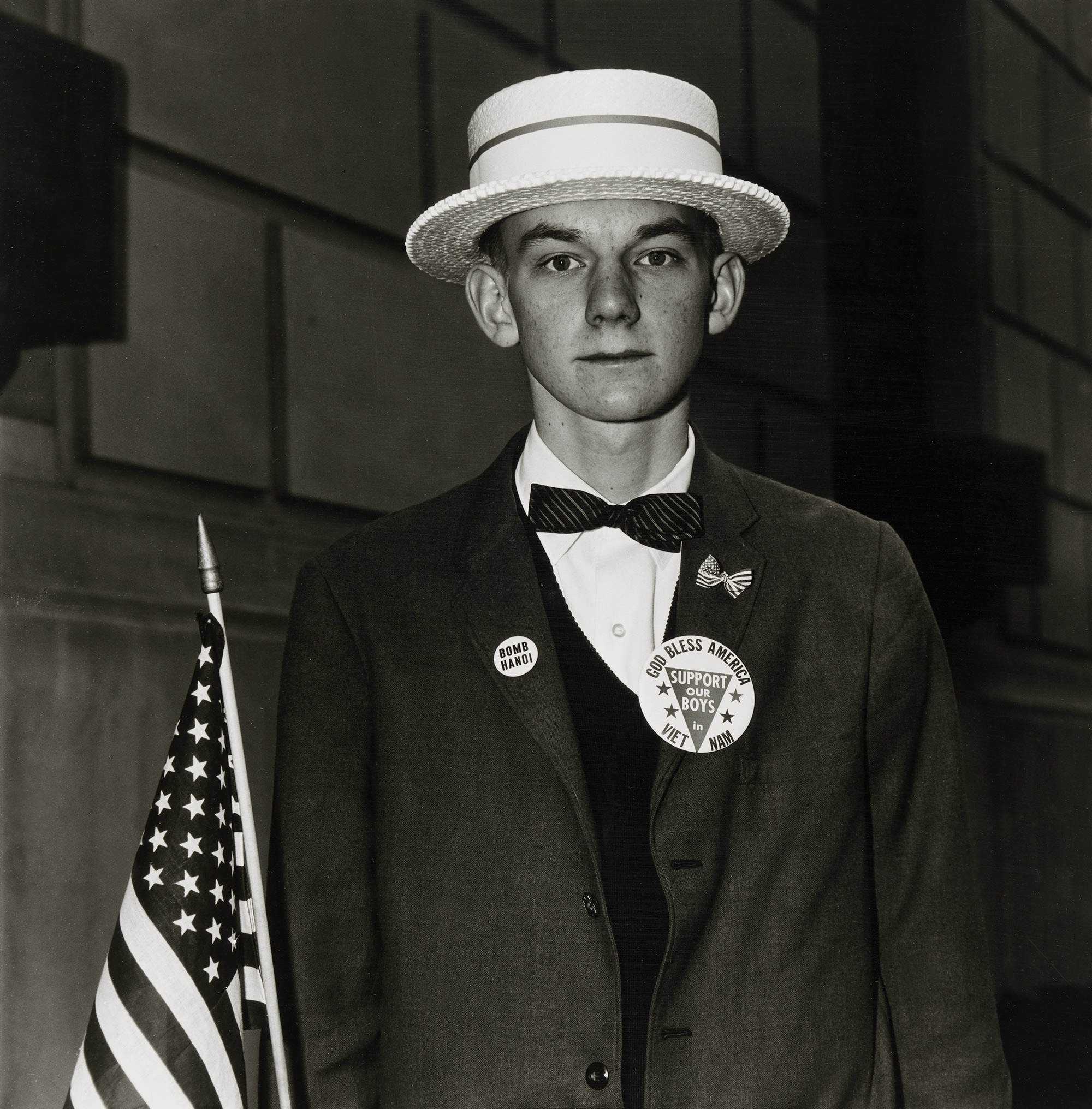

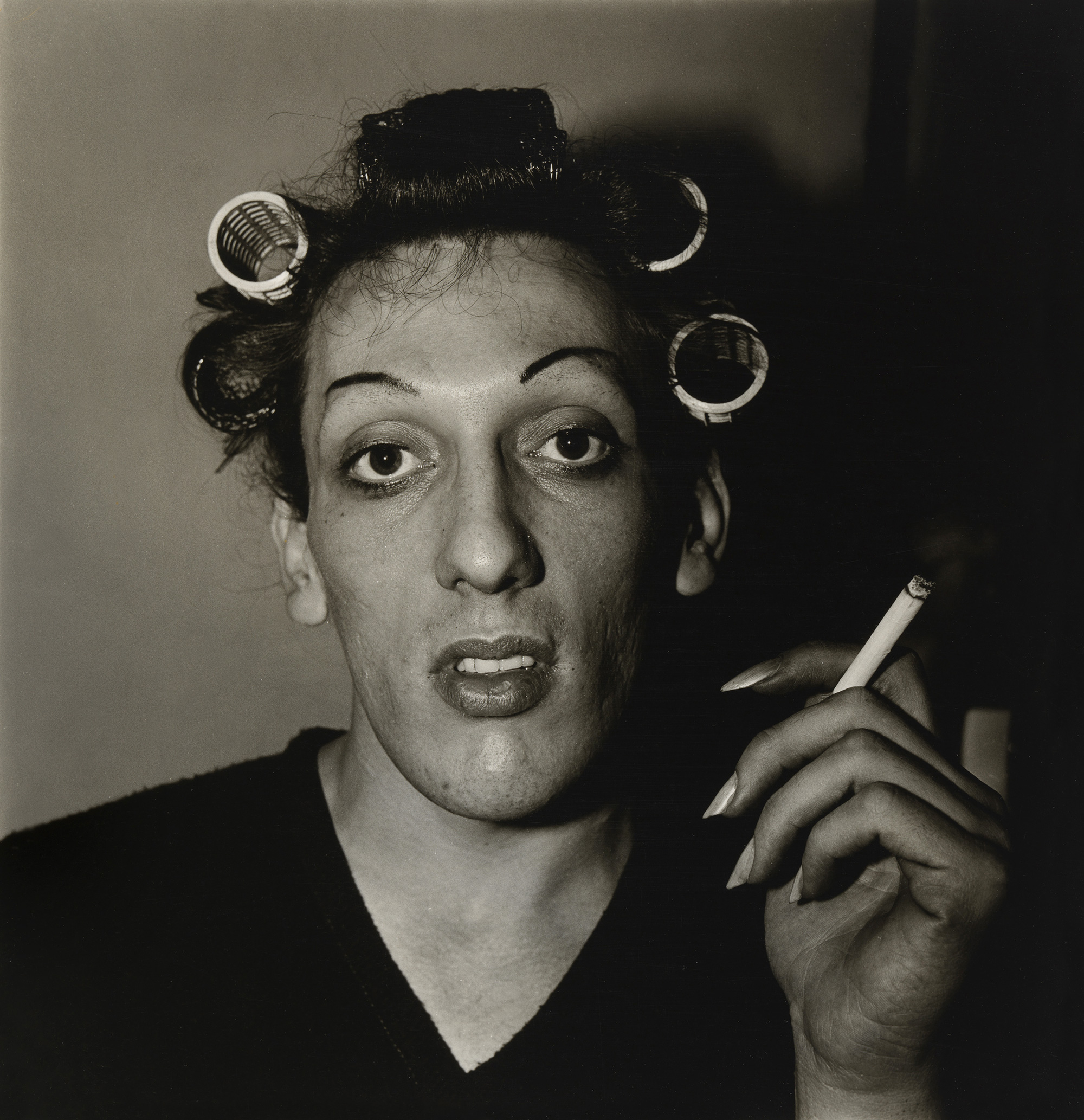

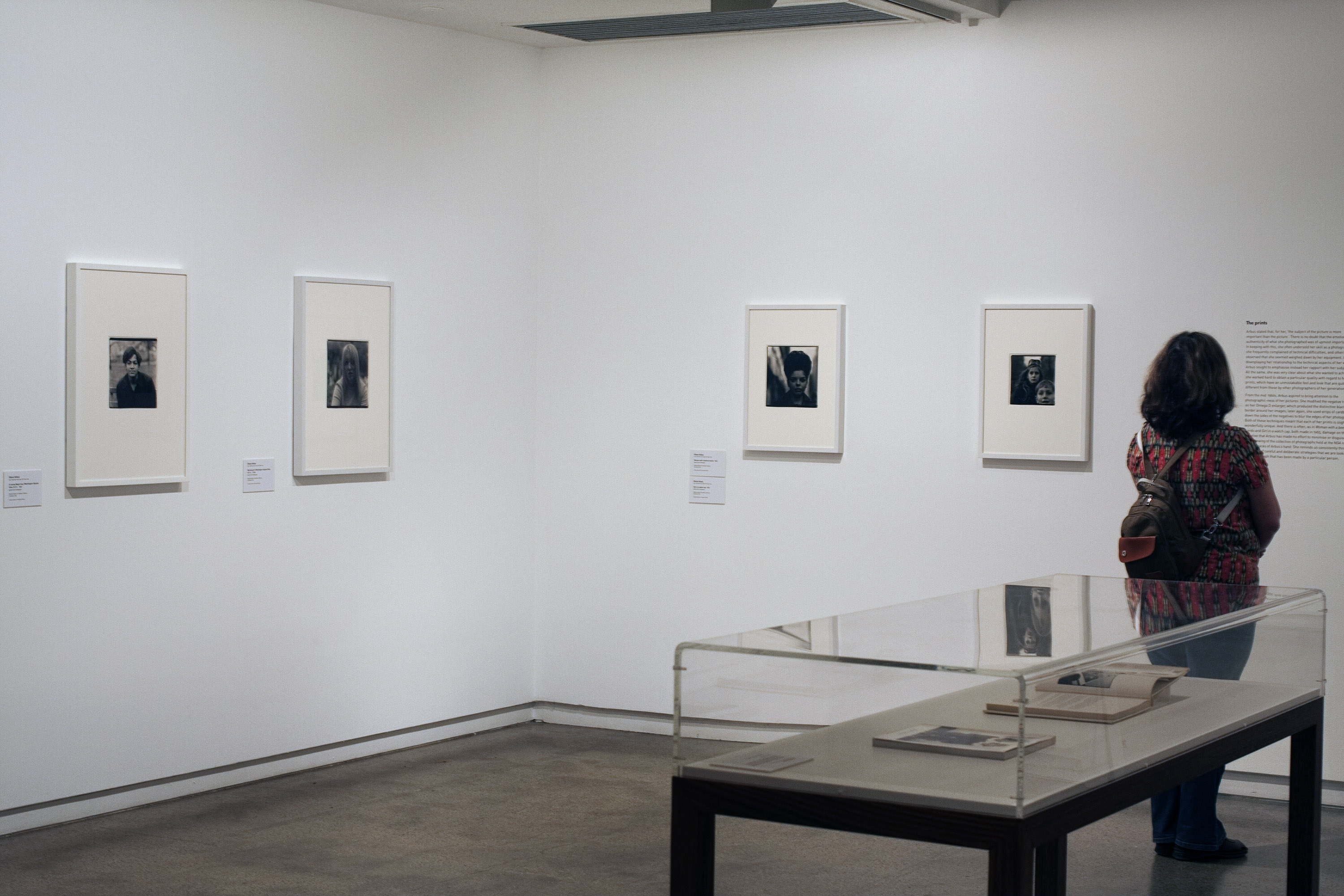


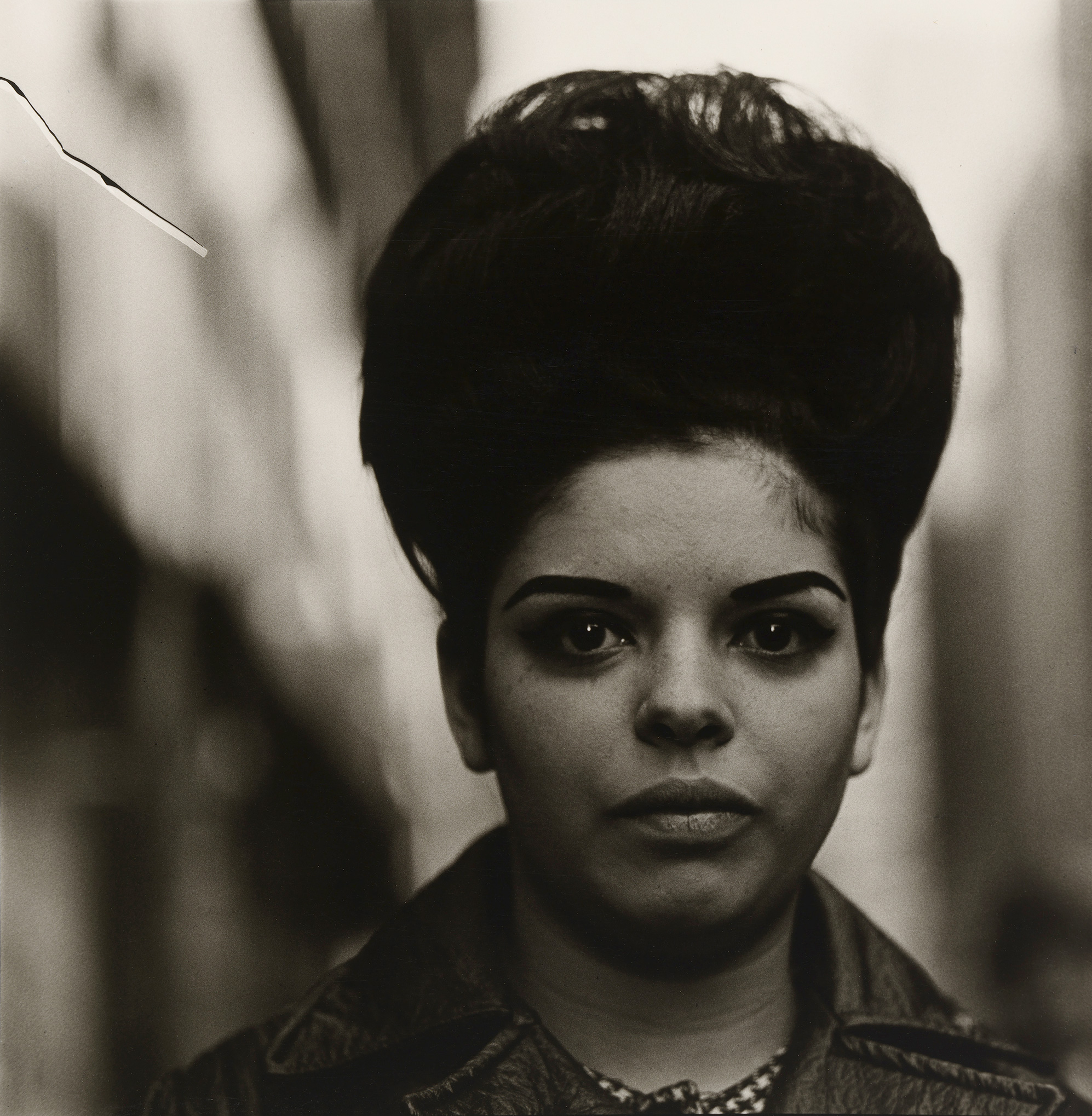
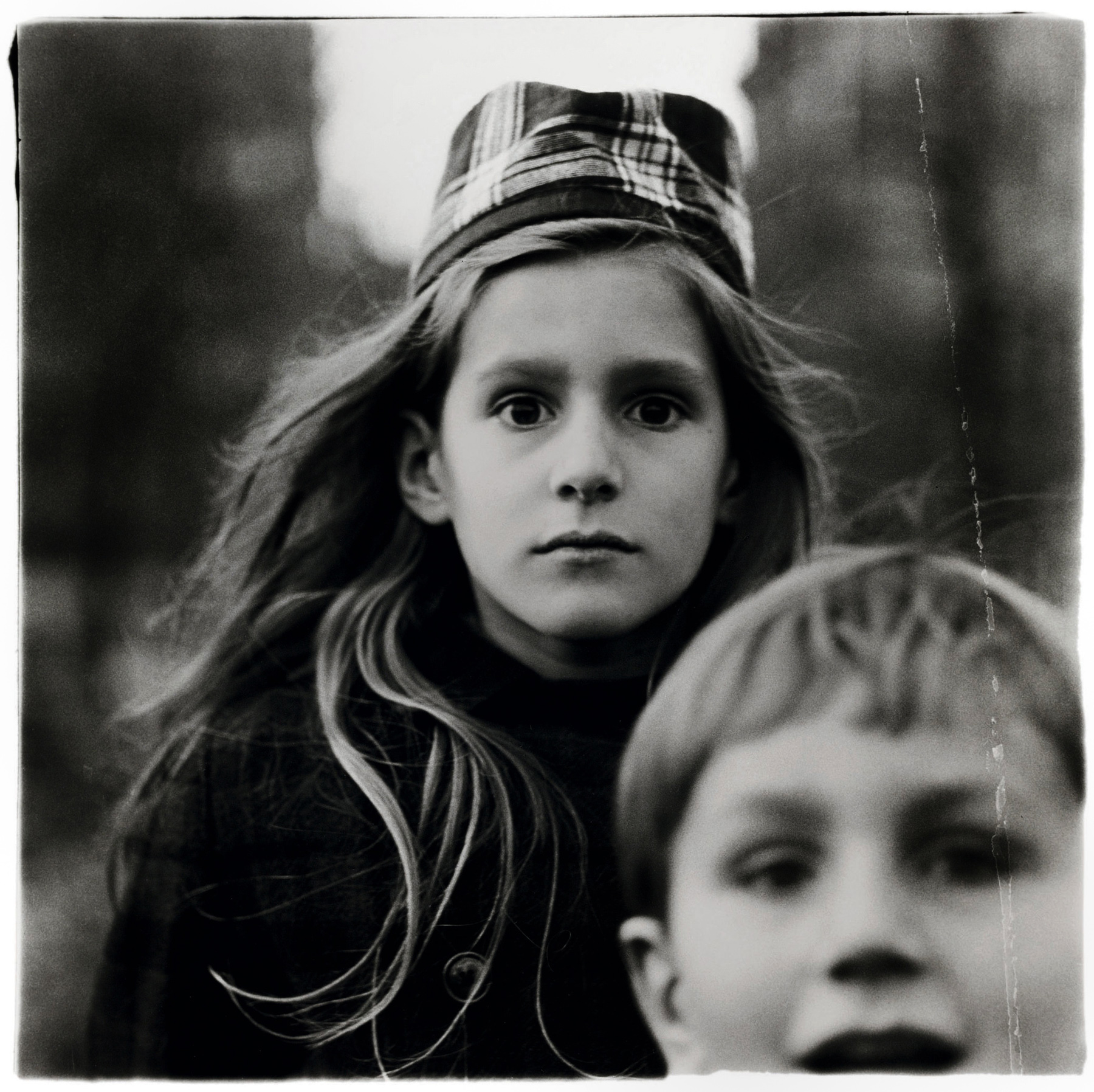
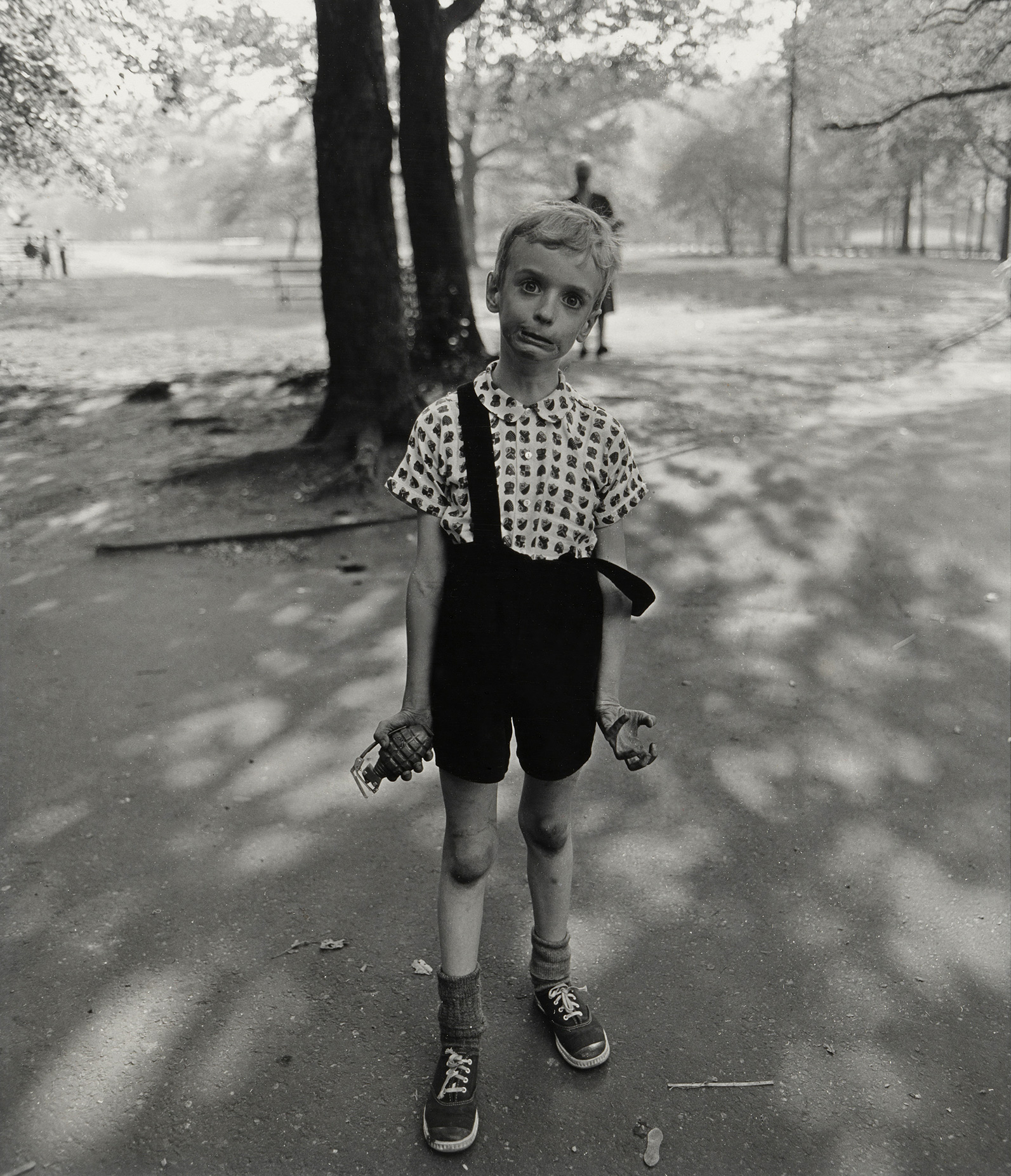

![Diane Arbus (American, 1923-1971) 'Large black family in small shack [Robert Evans and his family, 1968]' 1968 (installation view)](https://artblart.com/wp-content/uploads/2018/05/installation-af.jpg "Diane Arbus (American, 1923-1971) 'Large black family in small shack [Robert Evans and his family, 1968]' 1968 (installation view)")
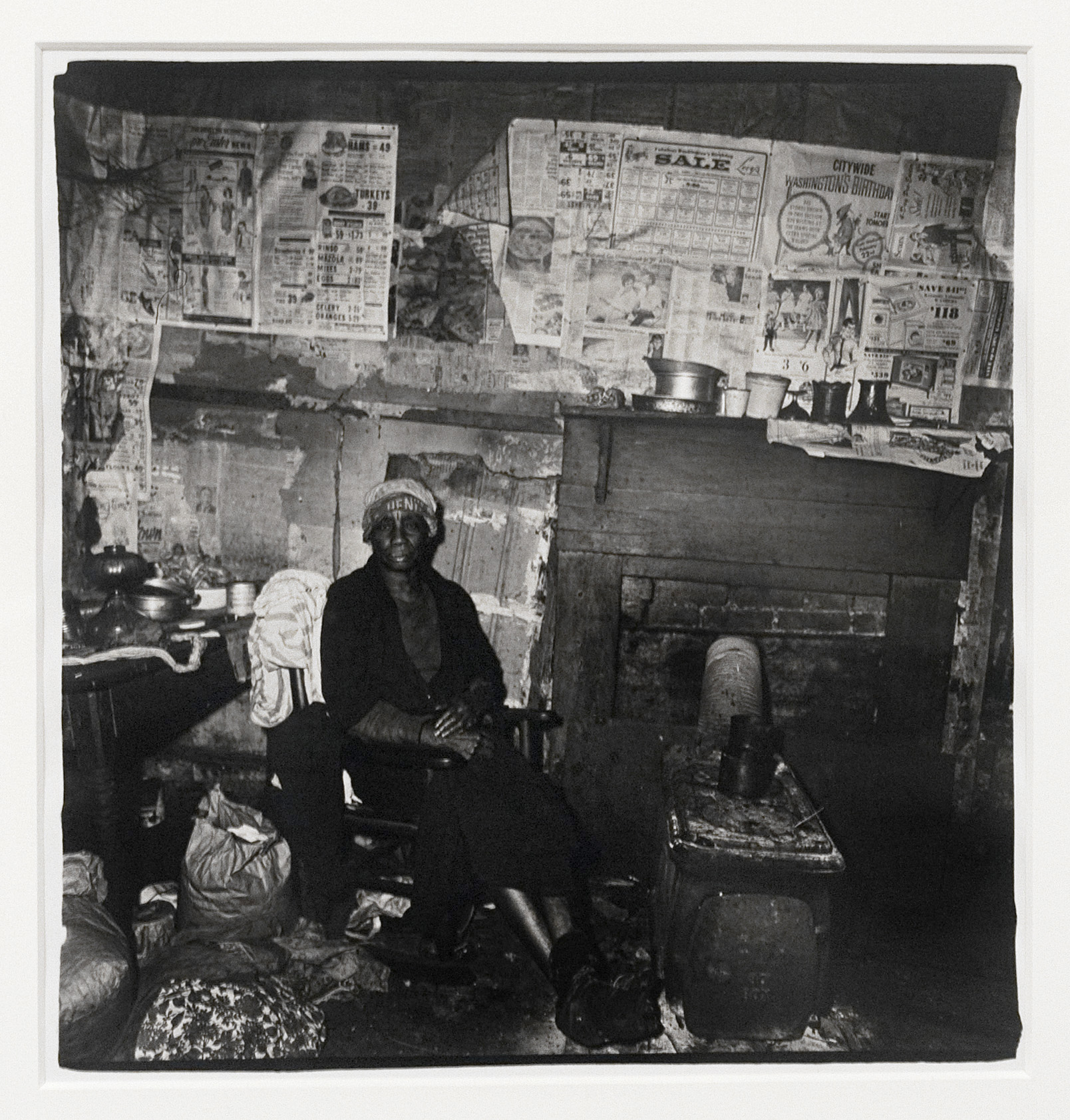
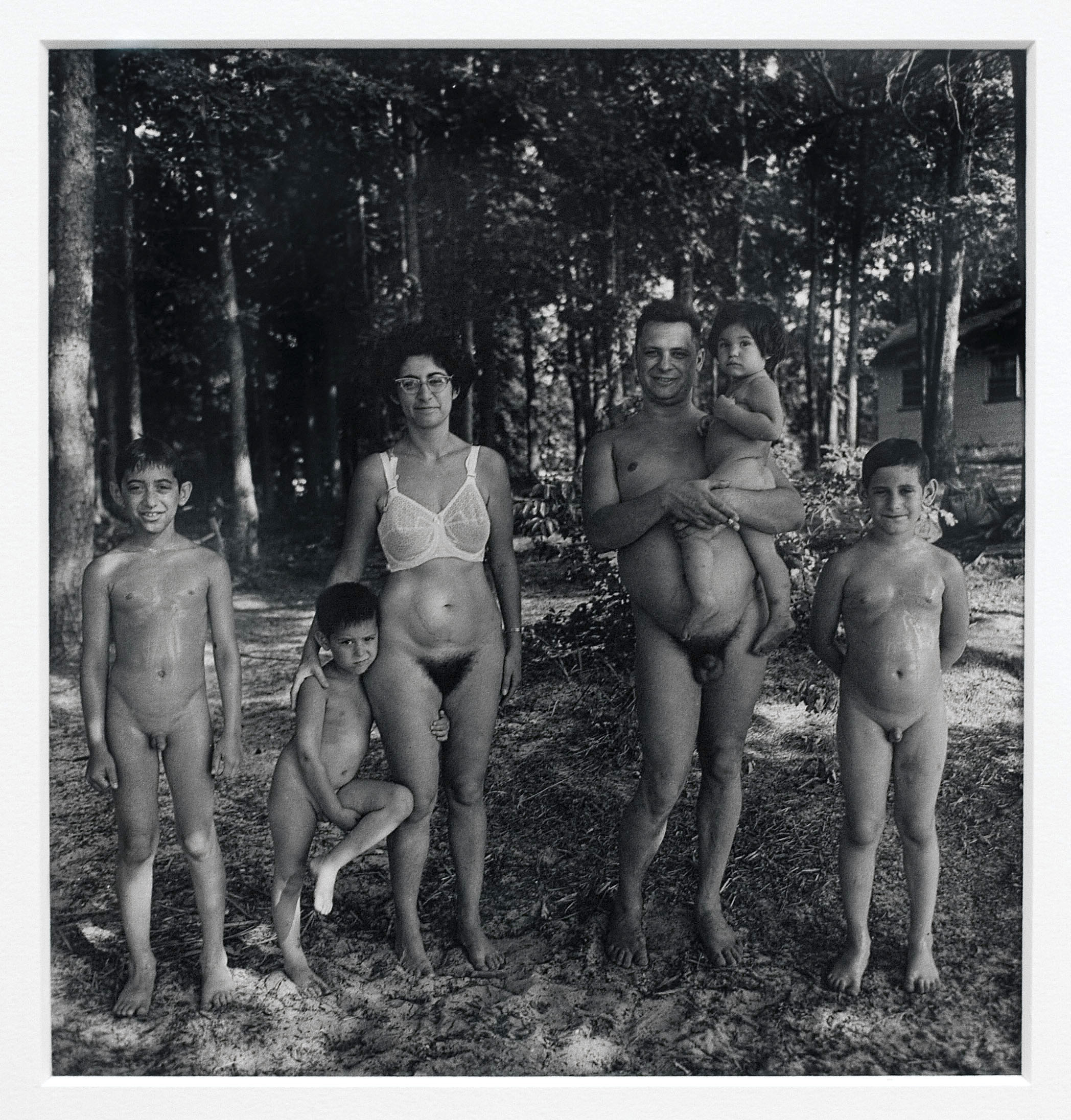

![Lisette Model (Austrian, 1901-1983) 'Coney Island Bather, New York' [Baigneuse, Coney Island] c. 1939-1941](https://artblart.com/wp-content/uploads/2018/05/model-coney-island-bather-web.jpg "Lisette Model (Austrian, 1901-1983) 'Coney Island Bather, New York' [Baigneuse, Coney Island] c. 1939-1941")


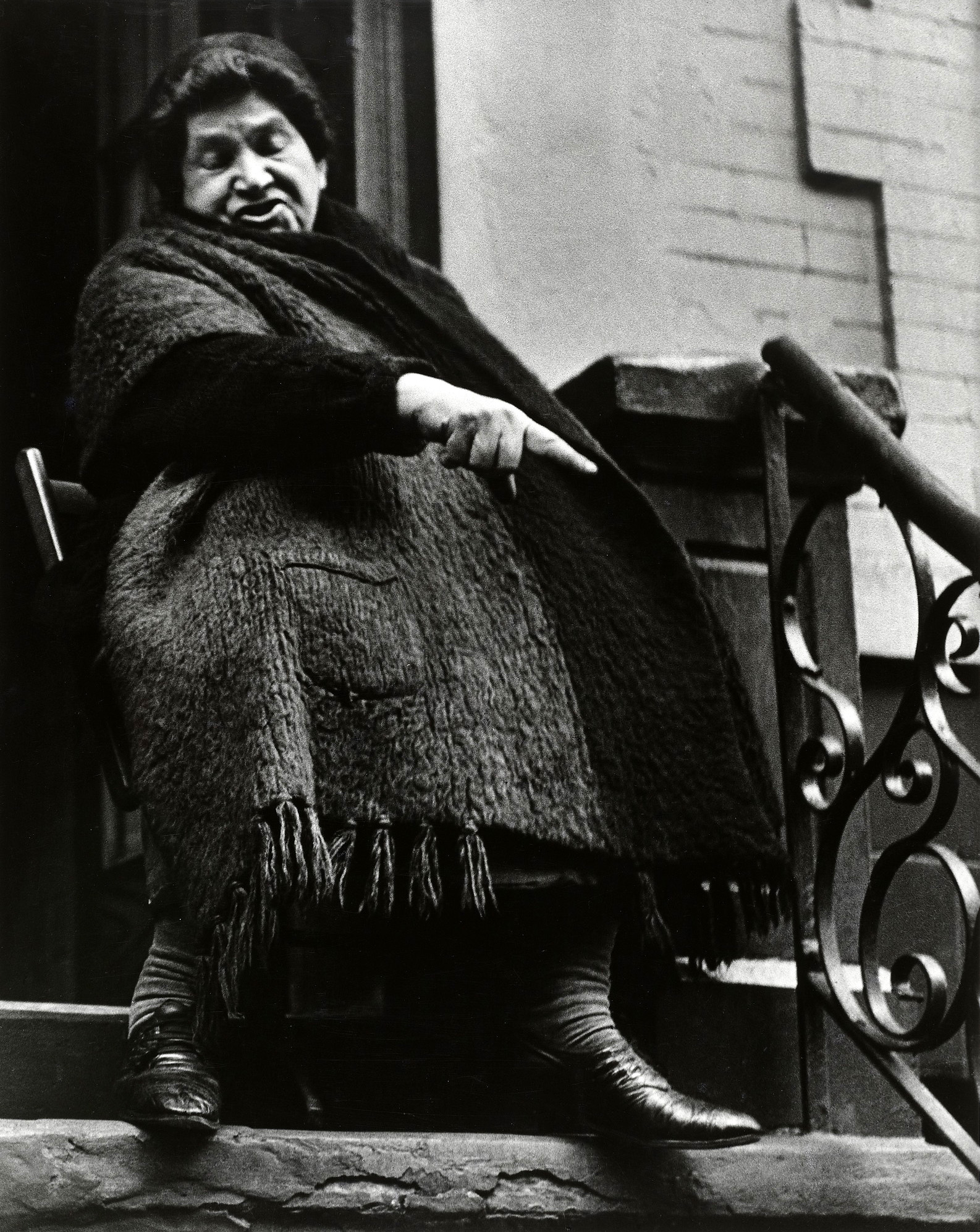

![Installation view of the exhibition 'Diane Arbus: American Portraits' at the Heide Museum of Modern Art, Melbourne showing from left to right, Lisette Model's 'Fashion show, Hotel Pierre, New York City' 1940-1946; Lisette Model's 'Cafe Metropole, New York City' c. 1946; and Lisette Model's 'Albert-Alberta, Hubert's 42nd St Flea Circus, New York [Albert/Alberta]' c. 1945](https://artblart.com/wp-content/uploads/2018/05/installation-w1.jpg "Installation view of the exhibition 'Diane Arbus: American Portraits' at the Heide Museum of Modern Art, Melbourne showing from left to right, Lisette Model's 'Fashion show, Hotel Pierre, New York City' 1940-1946; Lisette Model's 'Cafe Metropole, New York City' c. 1946; and Lisette Model's 'Albert-Alberta, Hubert's 42nd St Flea Circus, New York [Albert/Alberta]' c. 1945")


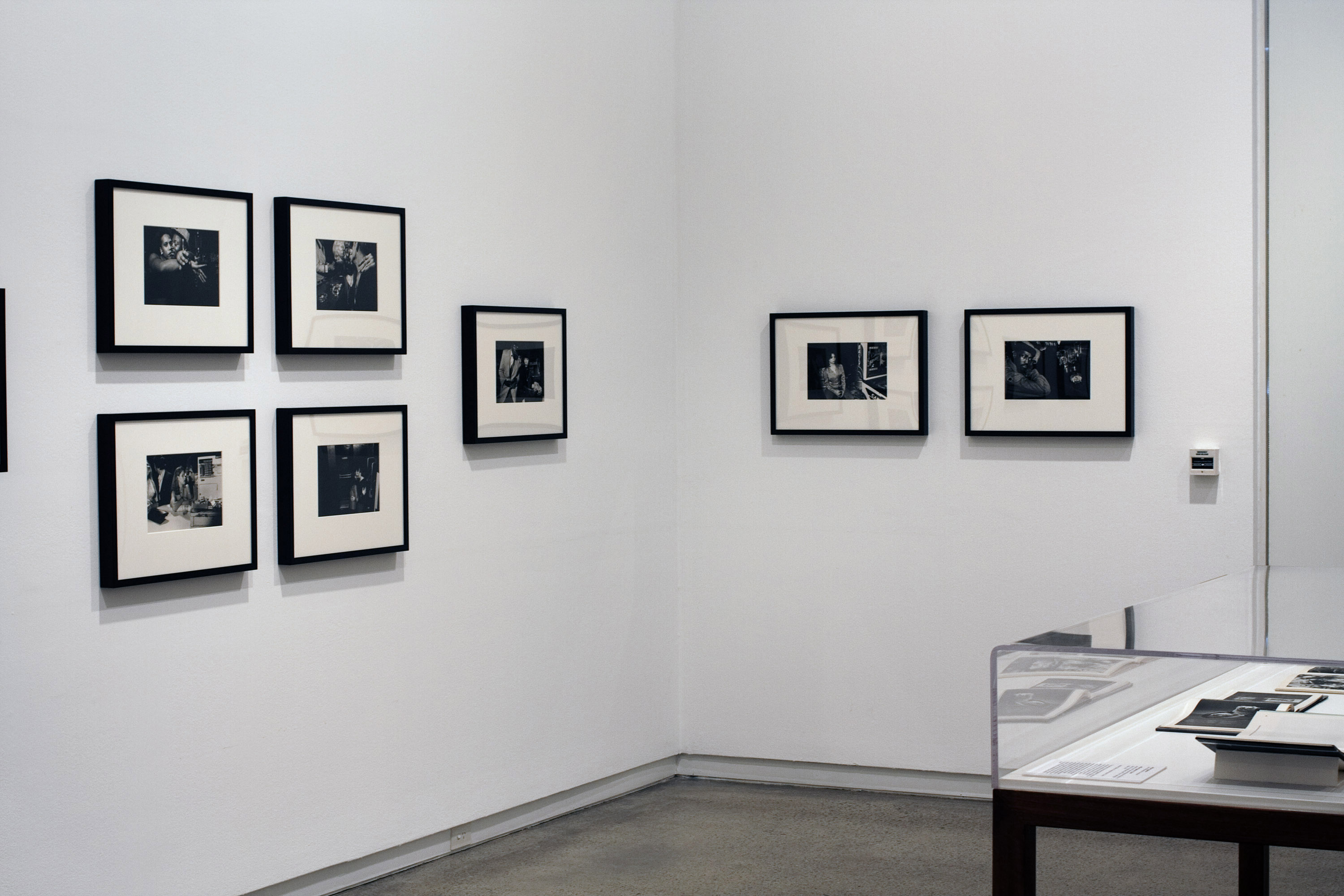

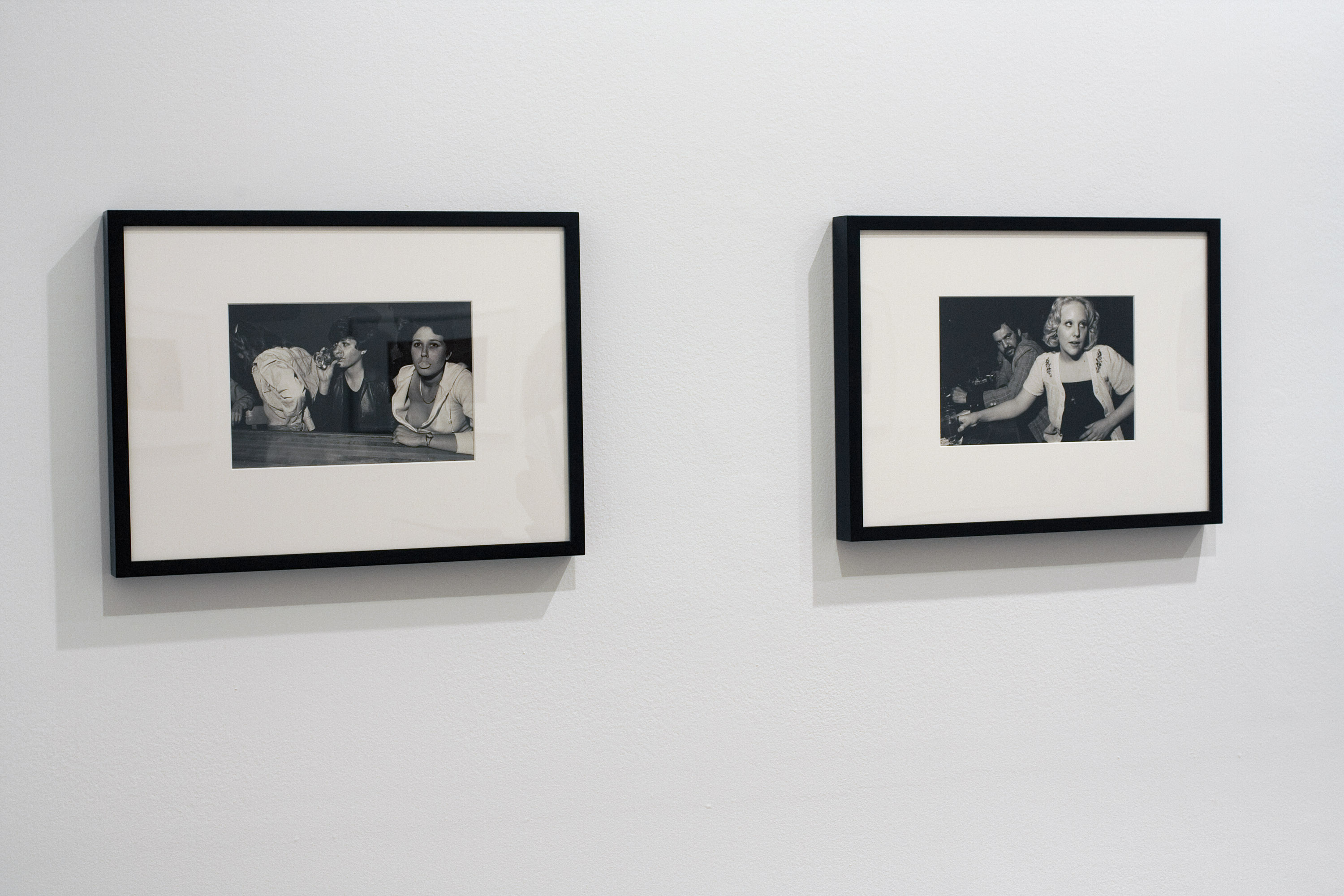

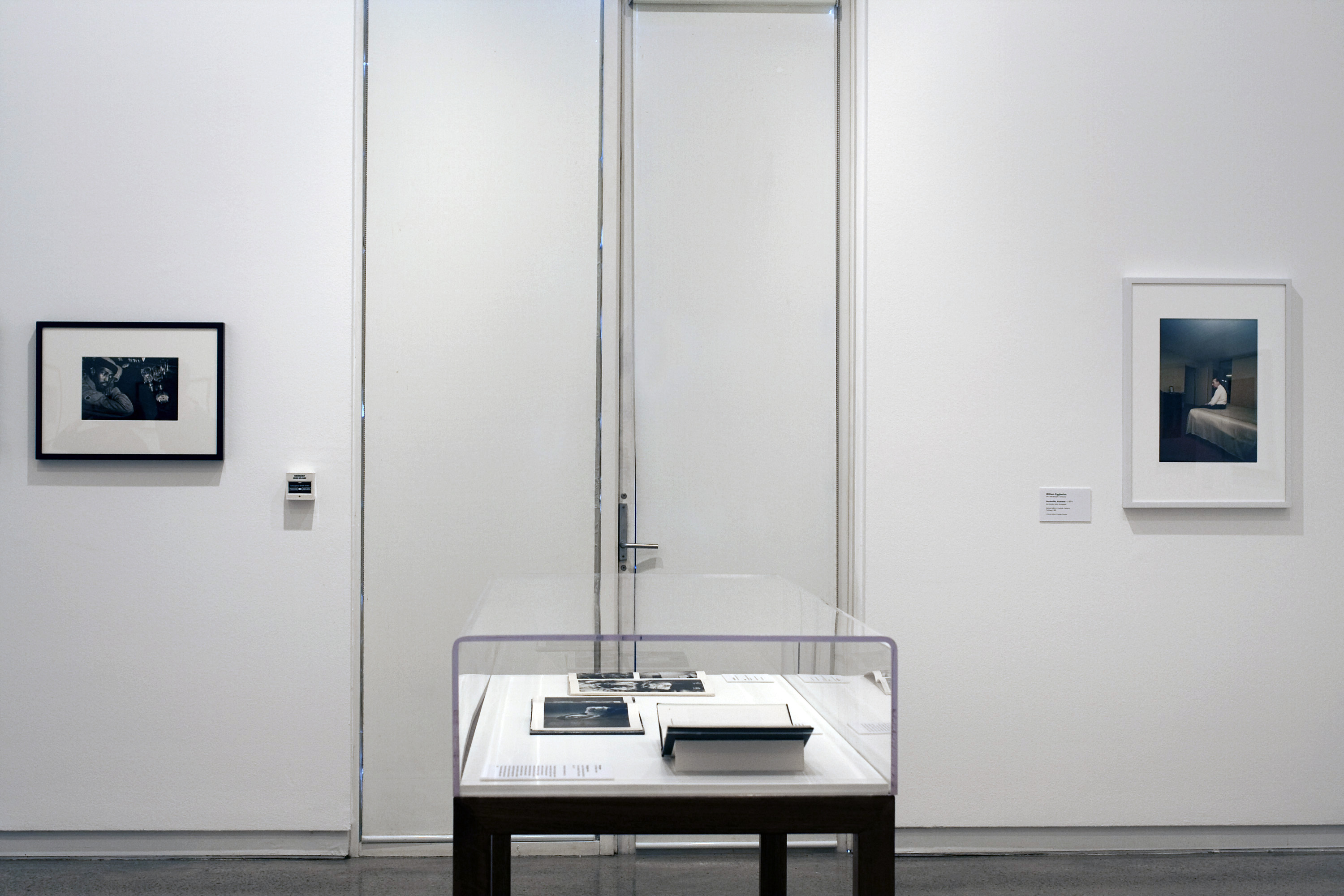
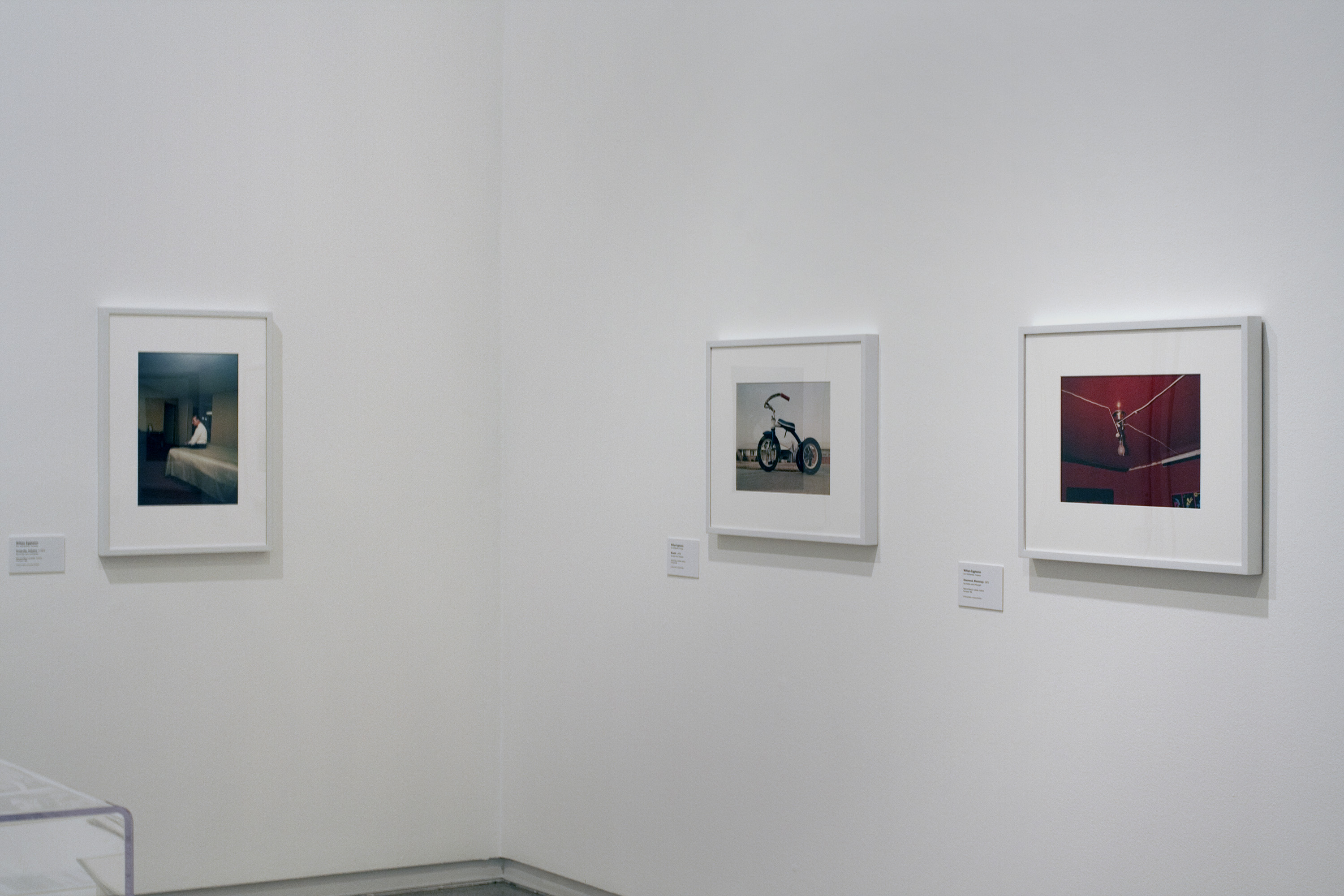


![William Eggleston (American, b. 1939) 'Greenwood, Mississippi' ["The Red Ceiling"] 1973, printed 1979](https://artblart.com/wp-content/uploads/2018/05/eggleston-the-red-ceiling-web.jpg "William Eggleston (American, b. 1939) 'Greenwood, Mississippi' [\"The Red Ceiling\"] 1973, printed 1979")


![Garry Winogrand (American, 1928-1984) 'No title [Centennial Ball, Metropolitan Museum, New York]' 1969](https://artblart.com/wp-content/uploads/2018/05/winogrand-centennial-ball-web.jpg "Garry Winogrand (American, 1928-1984) 'No title [Centennial Ball, Metropolitan Museum, New York]' 1969")


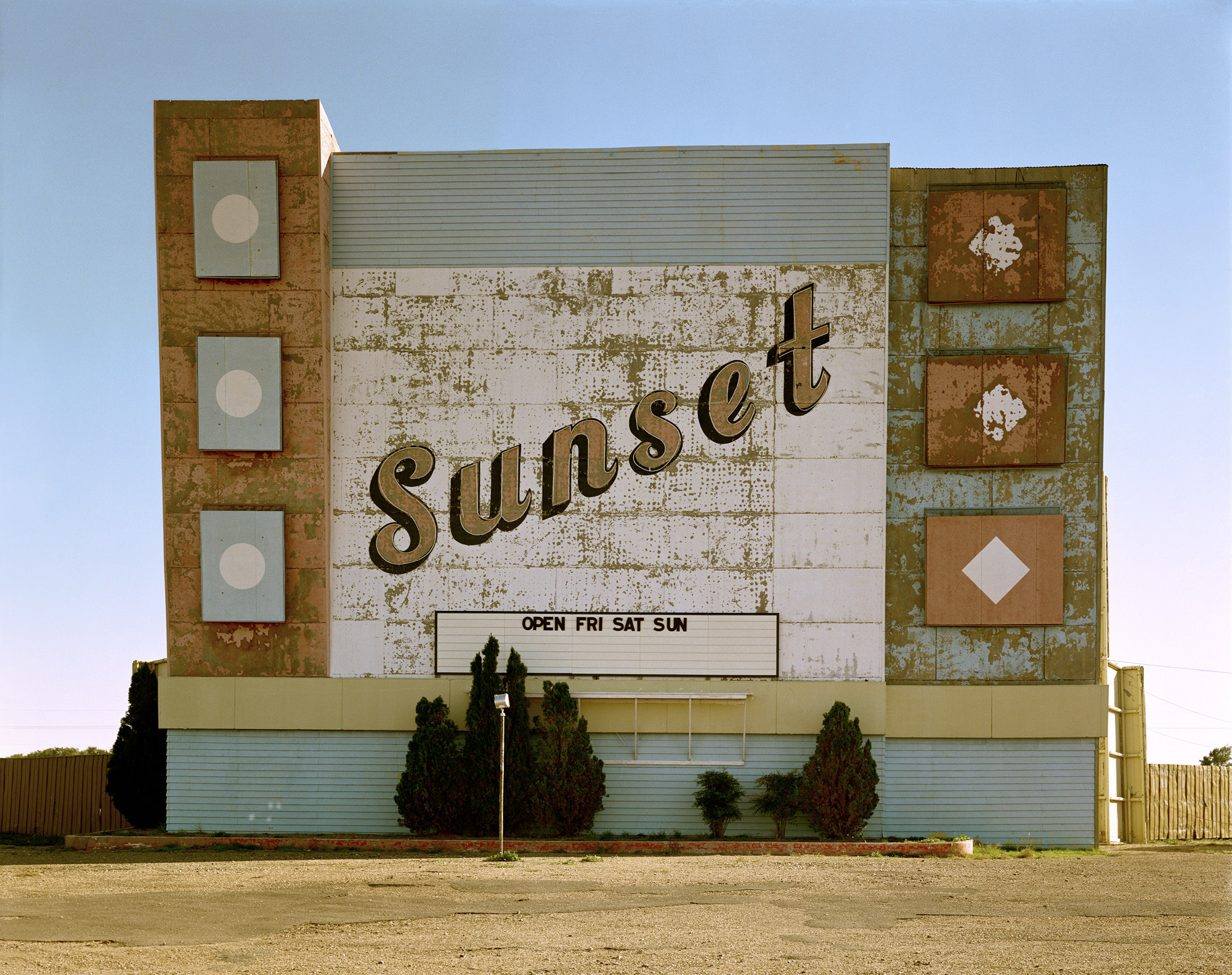

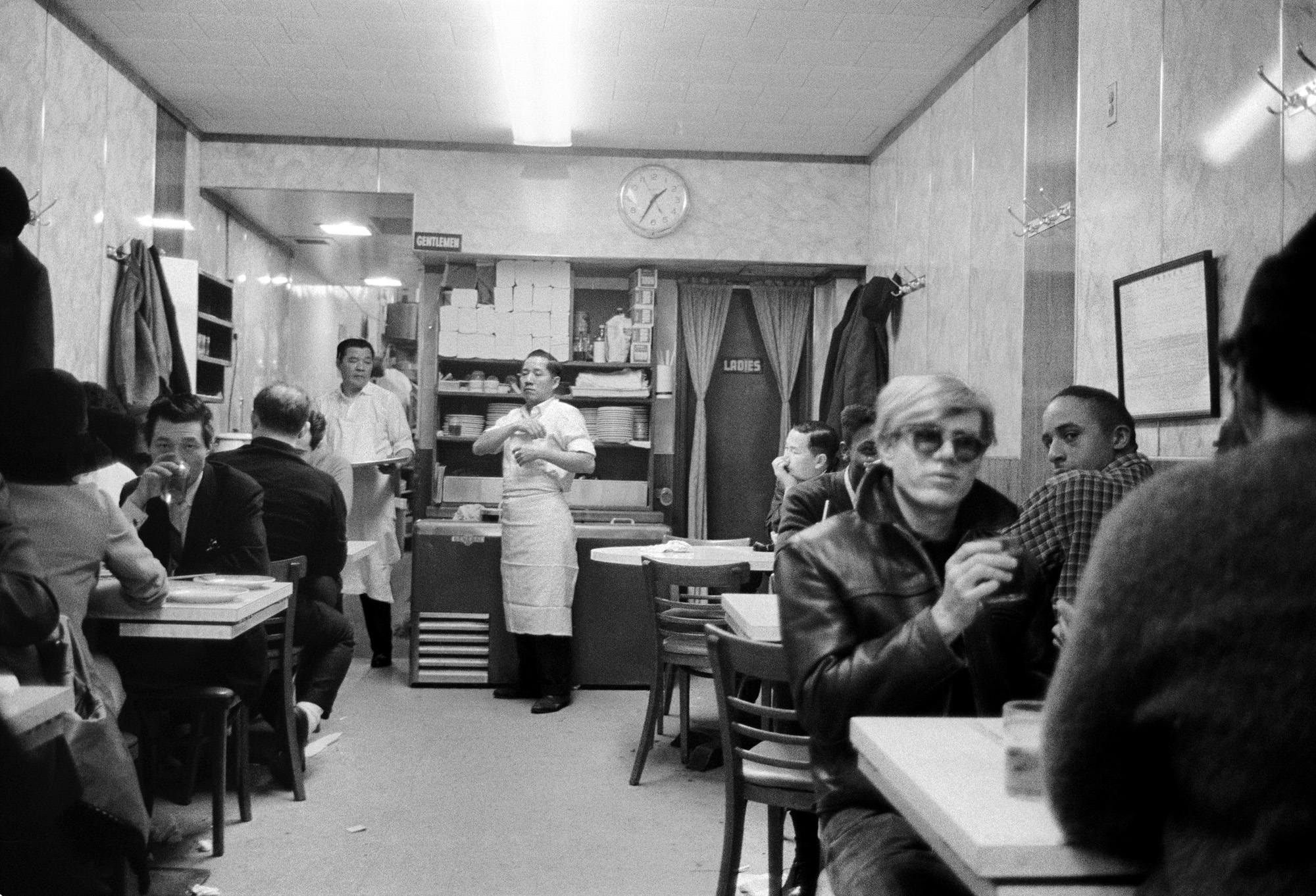
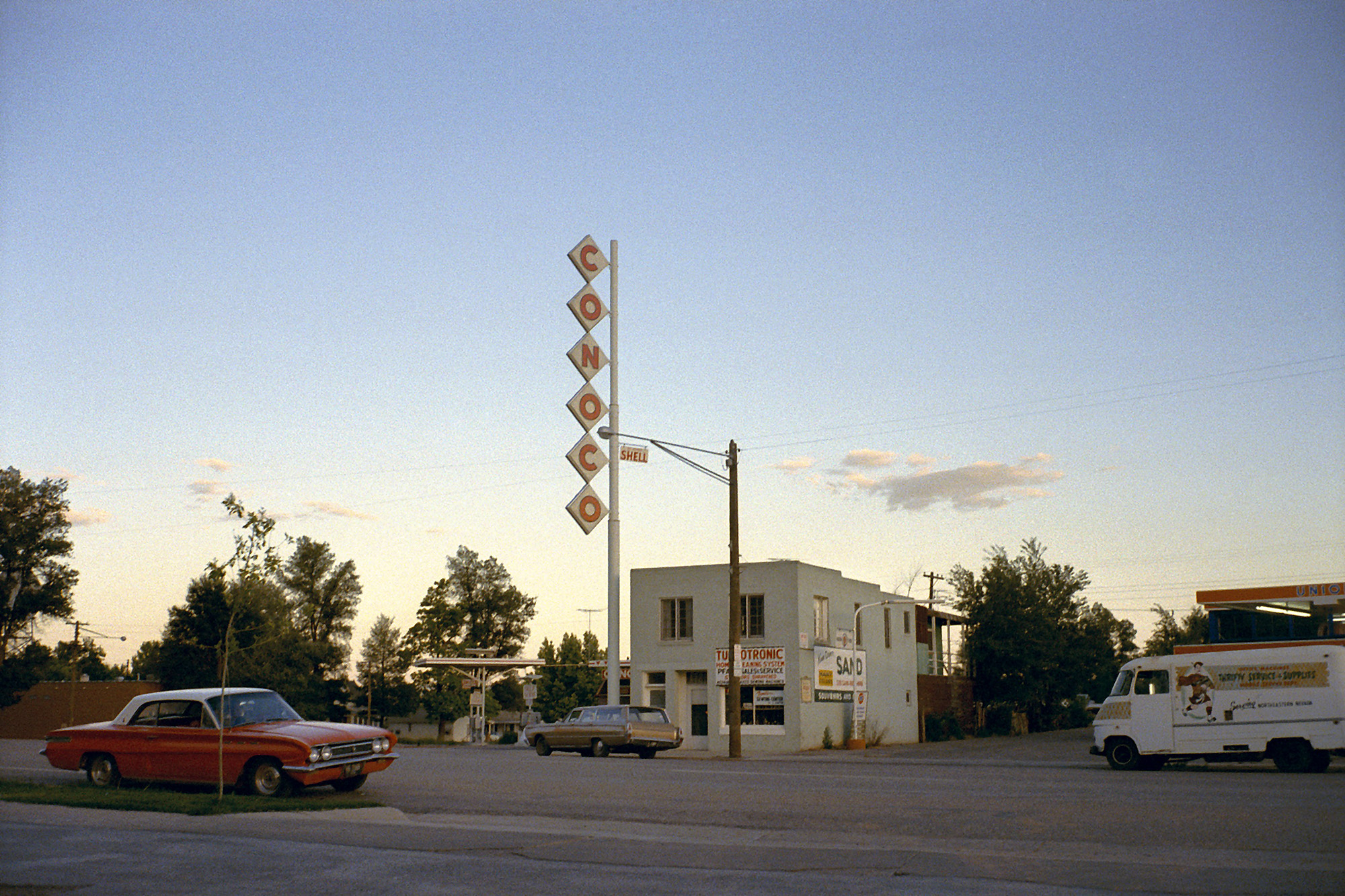
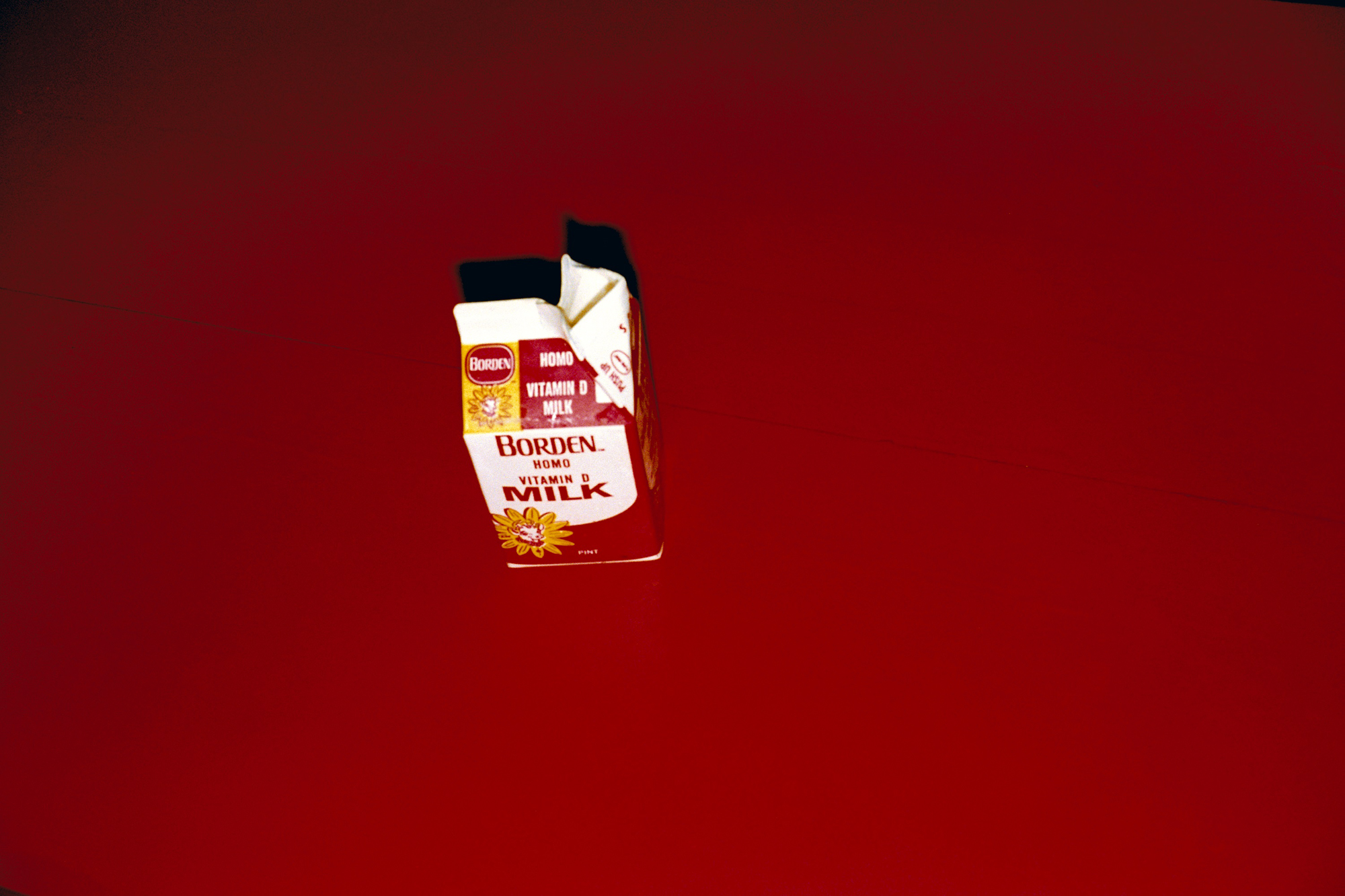

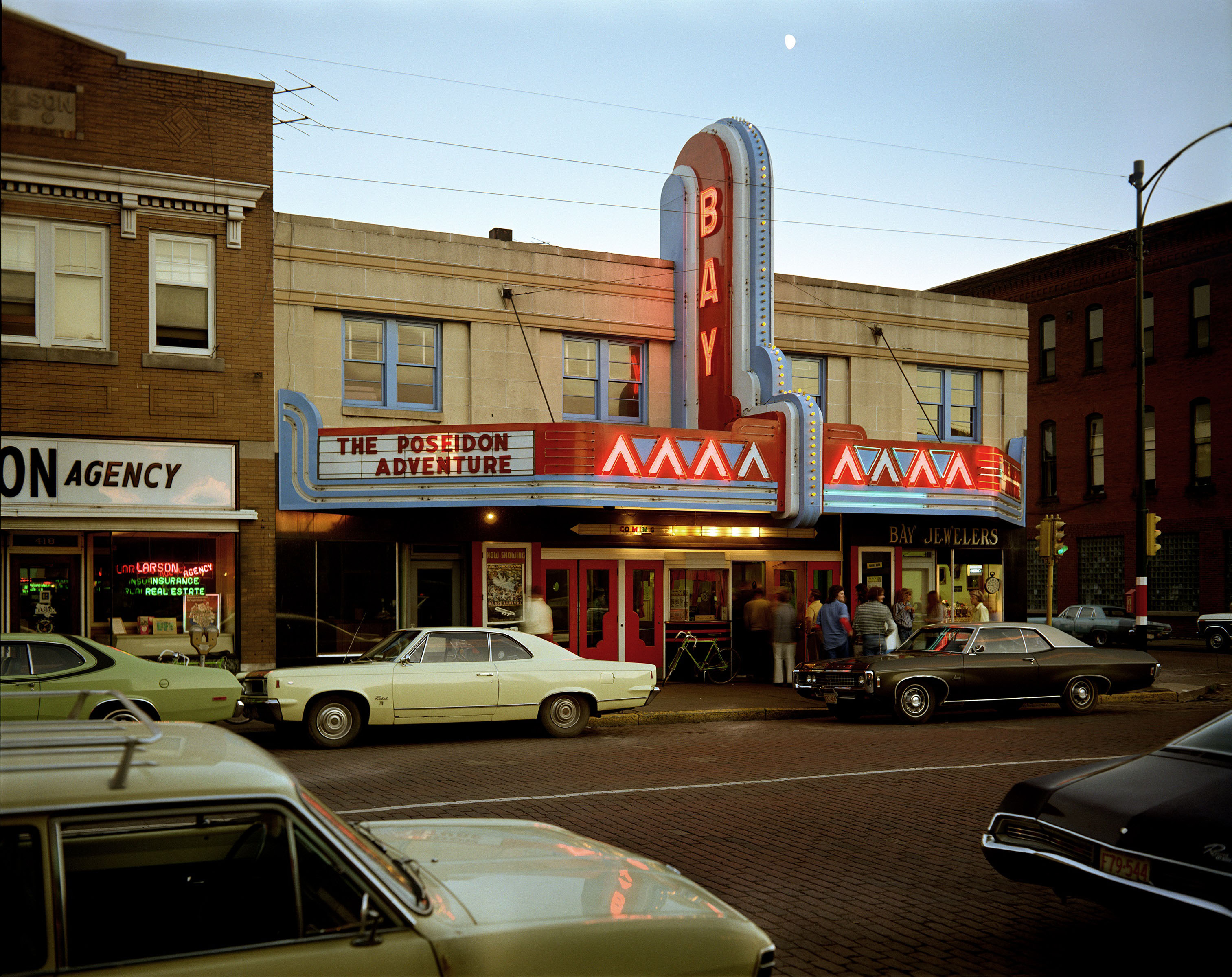


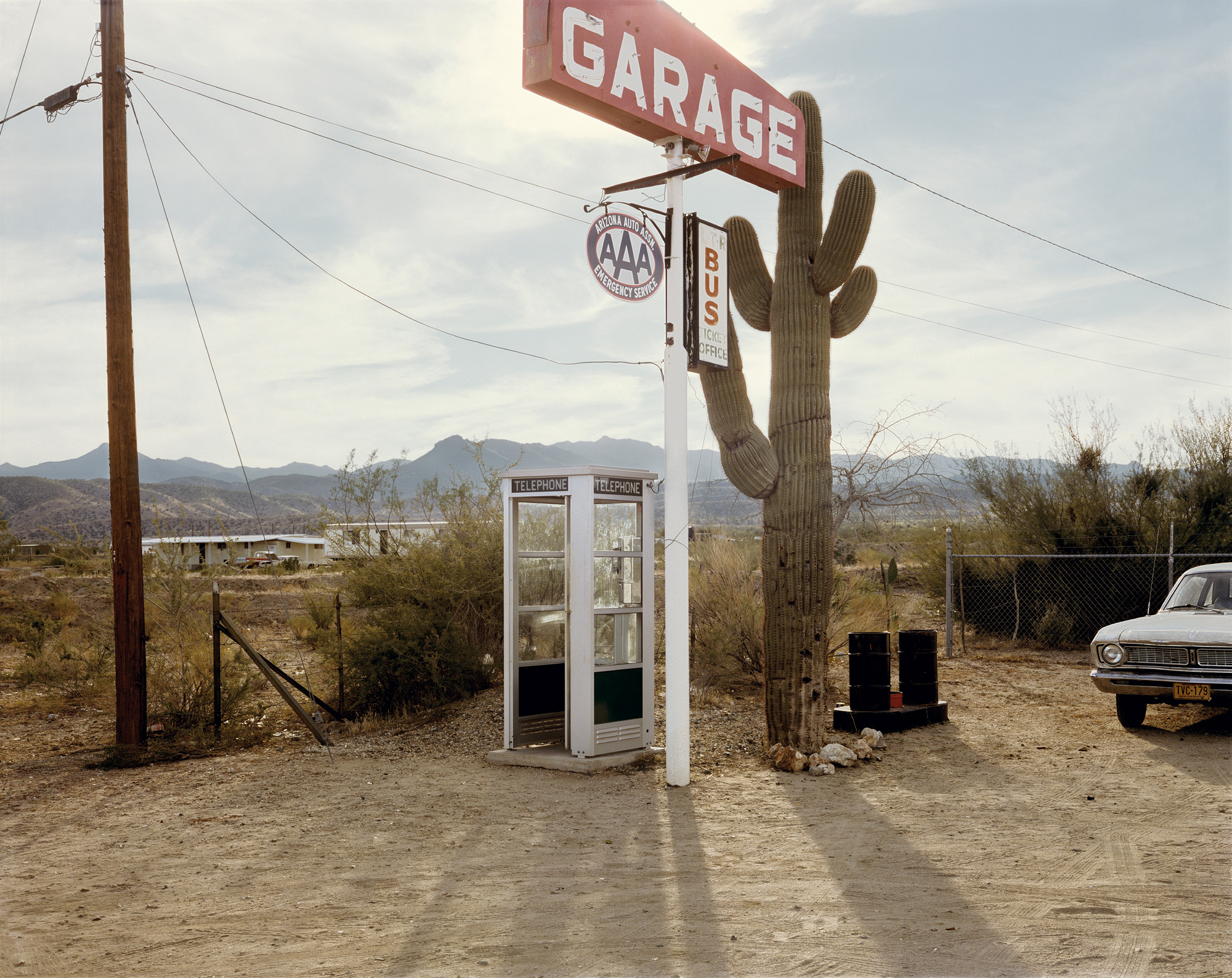


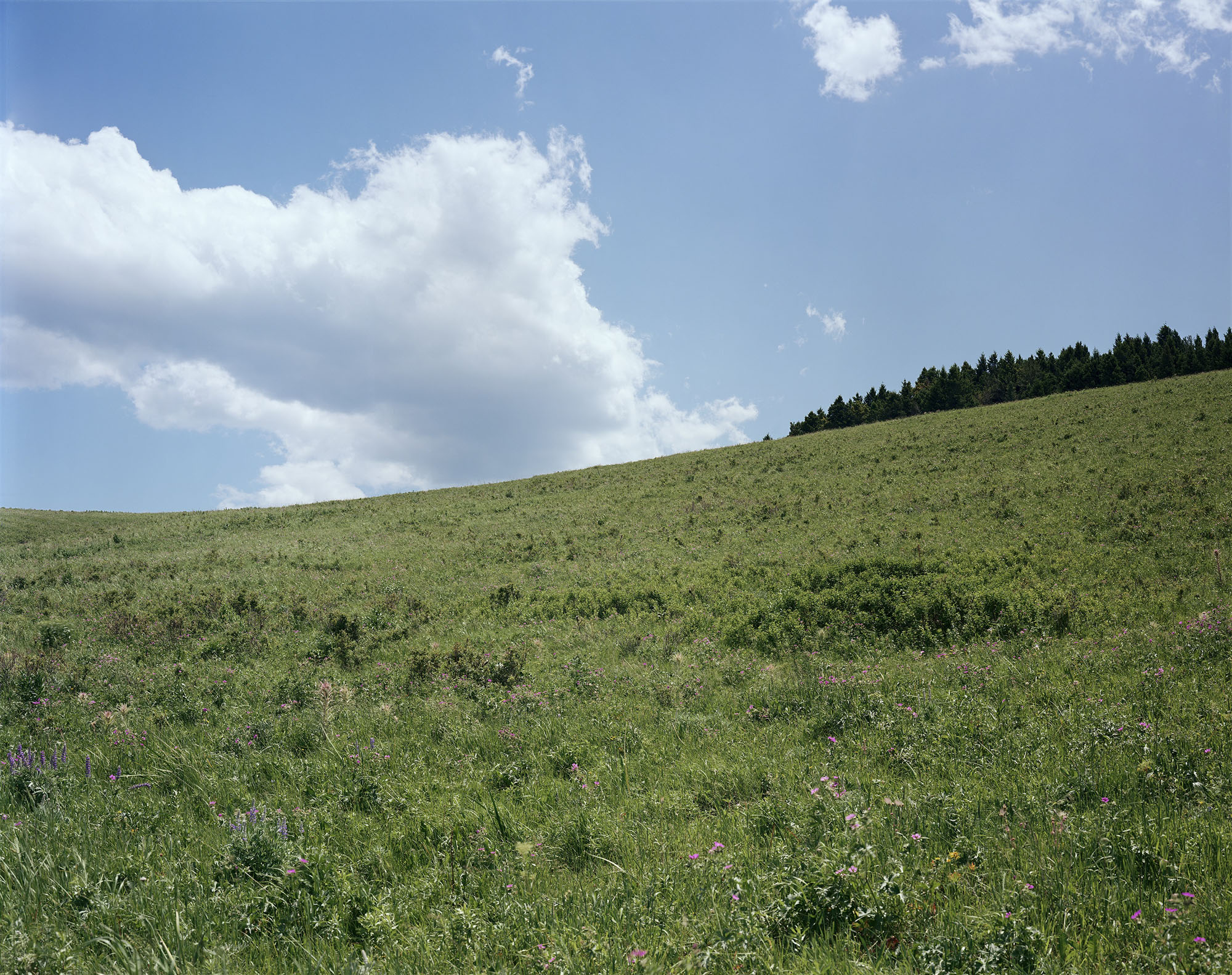


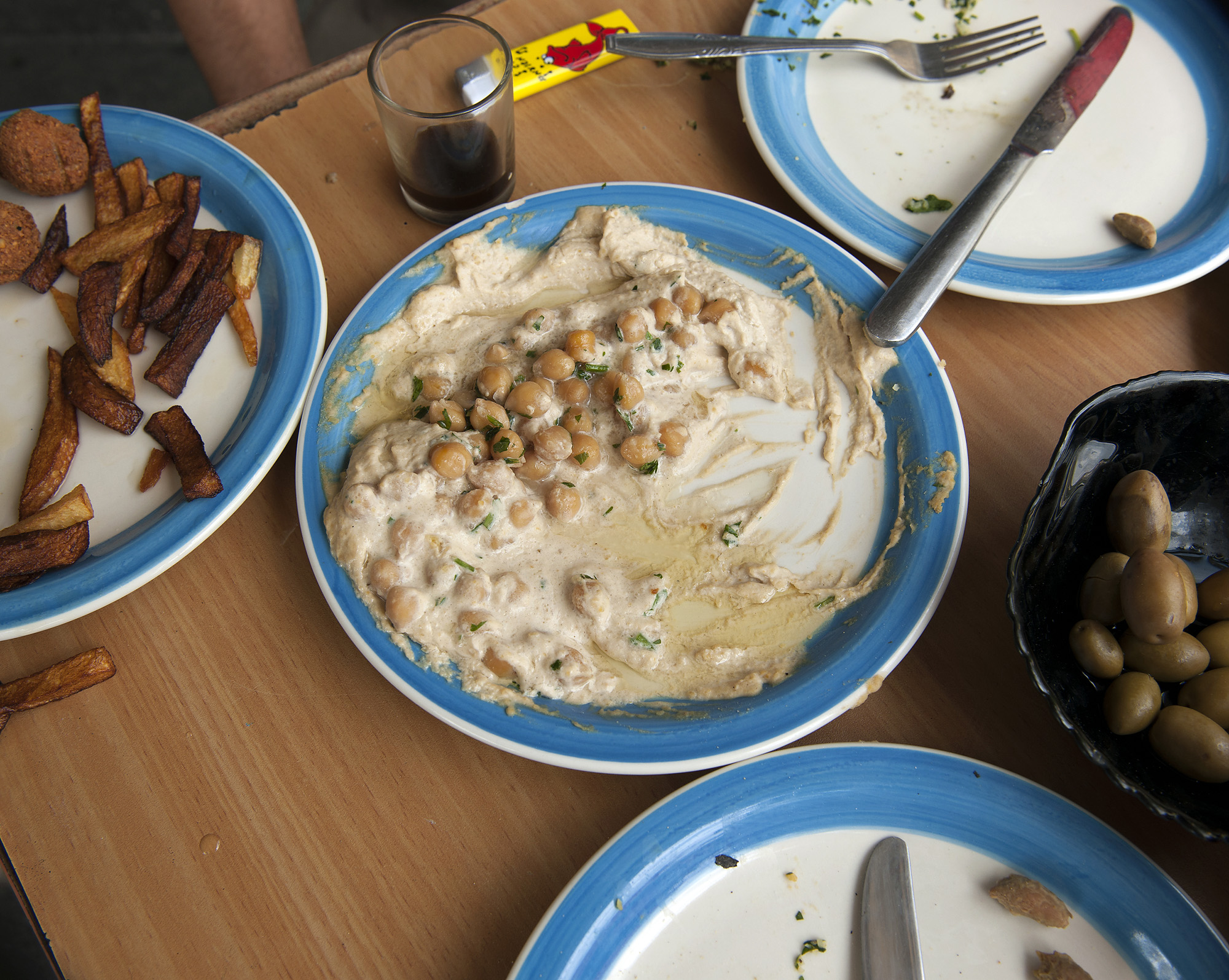
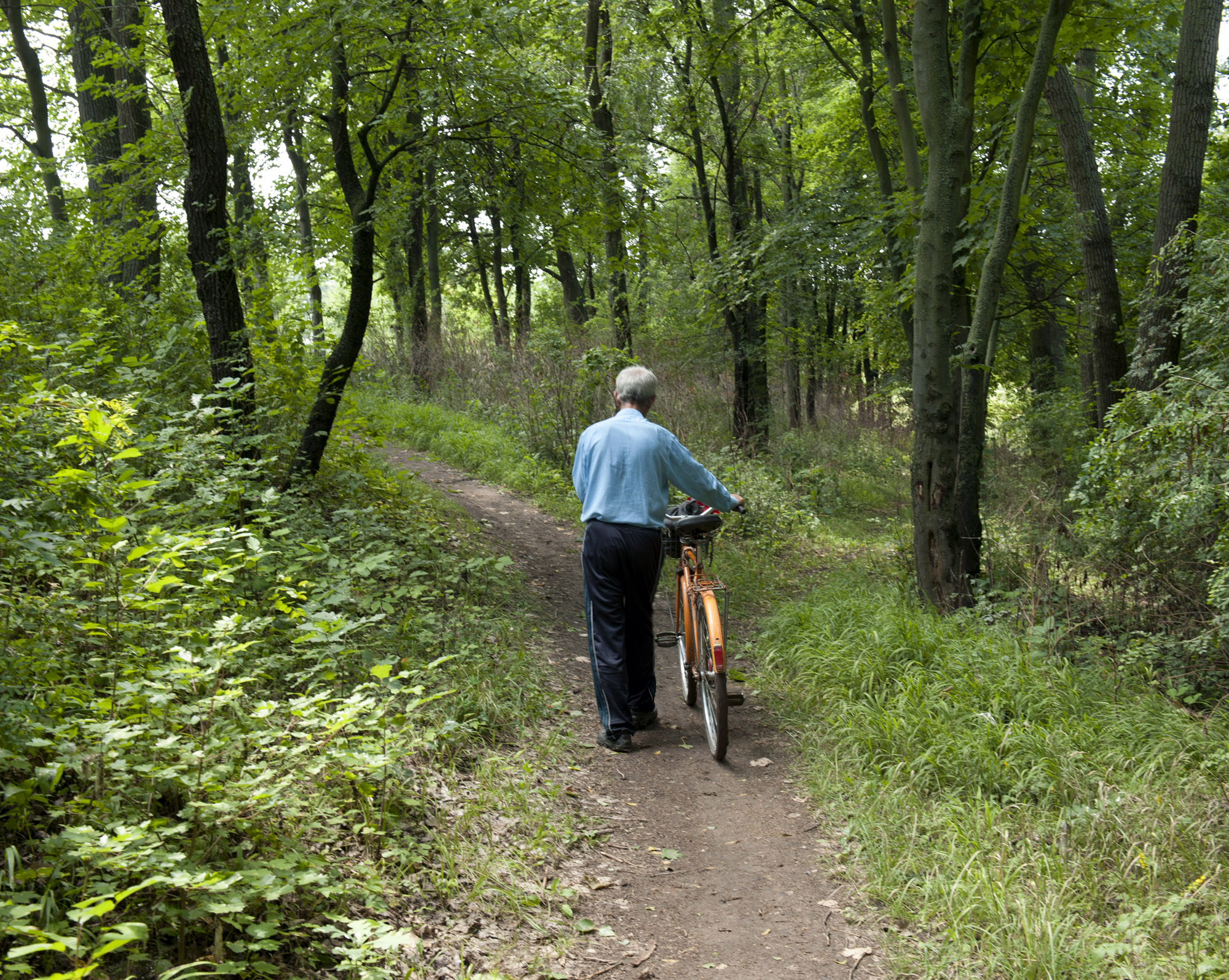

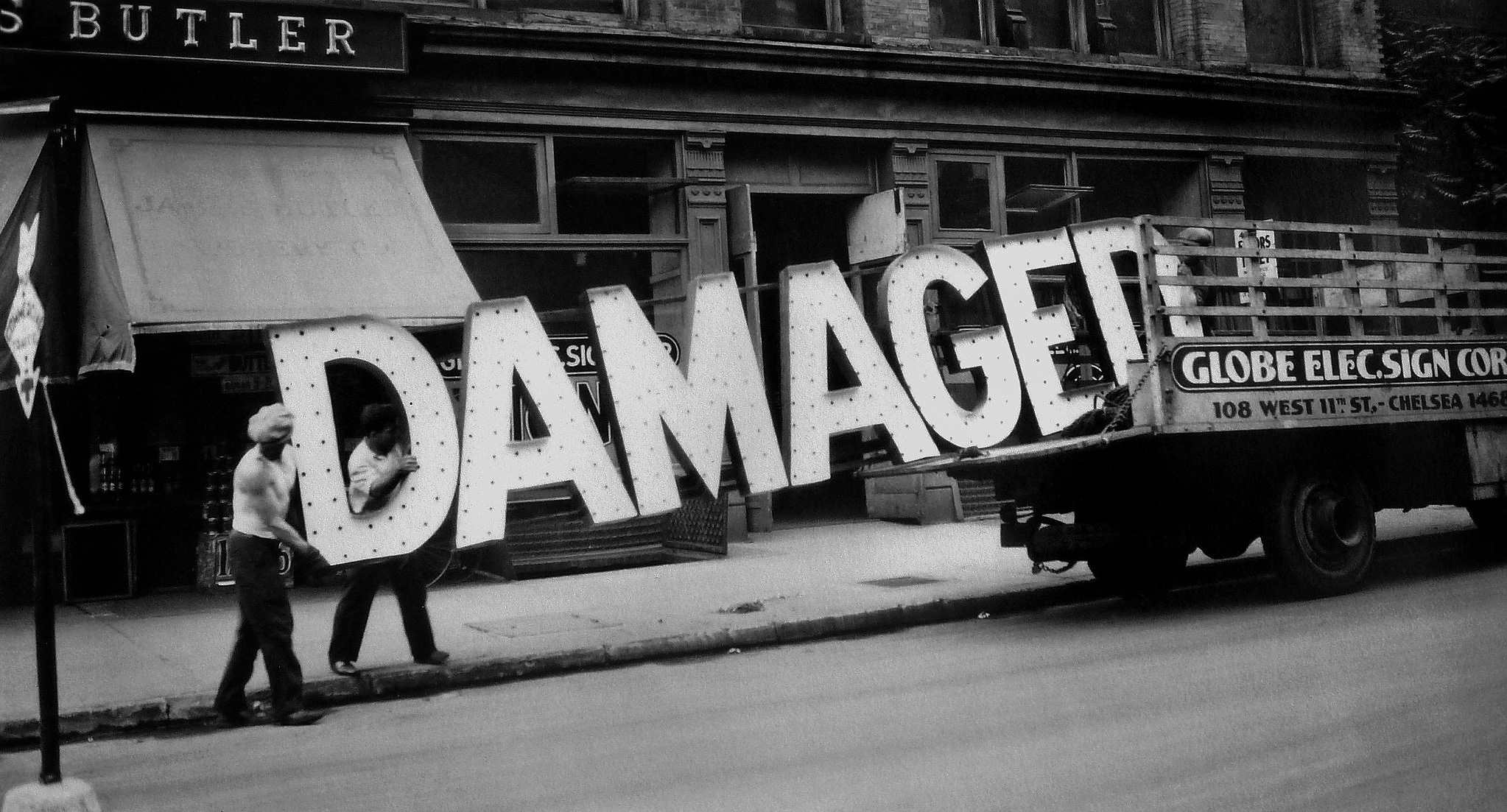


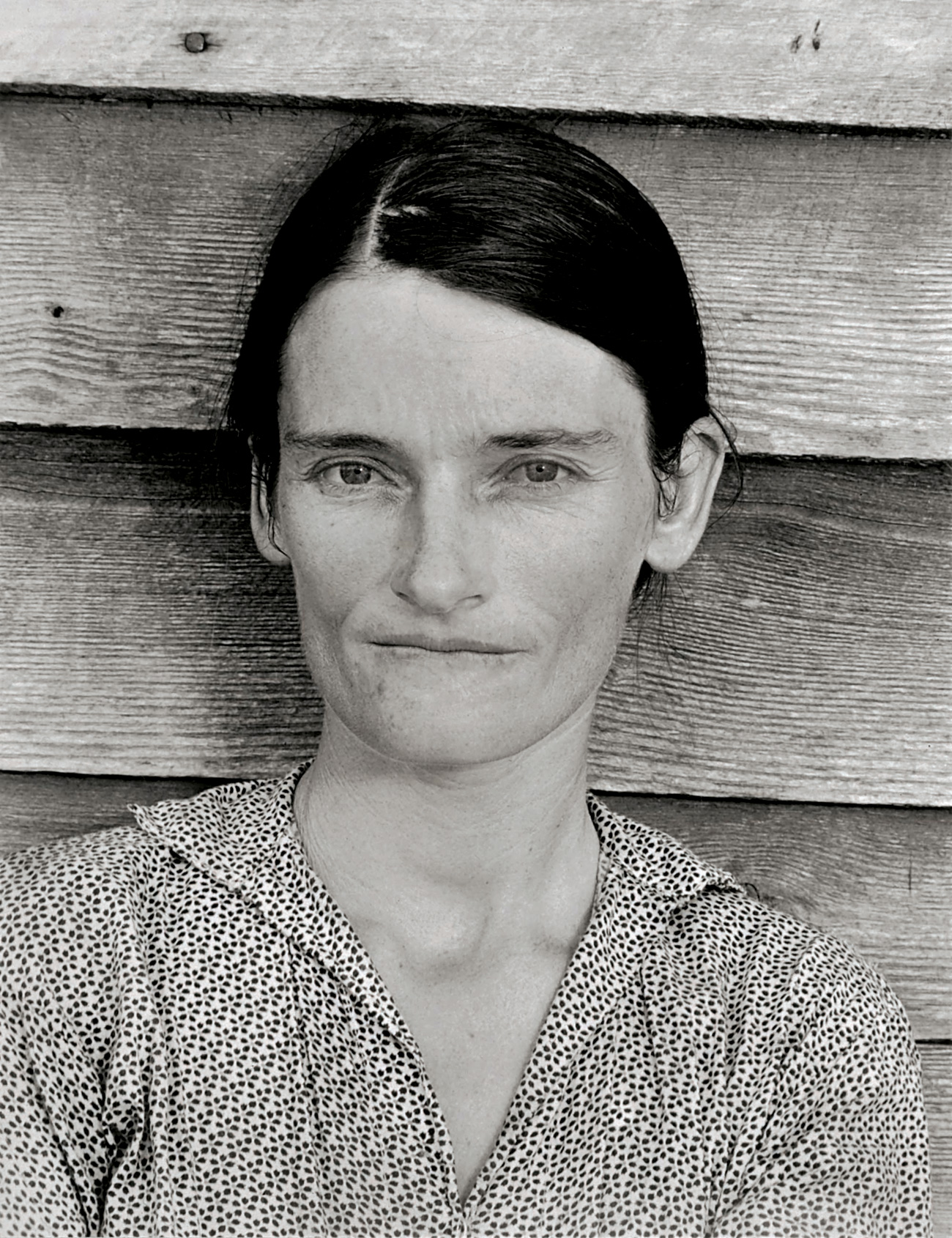


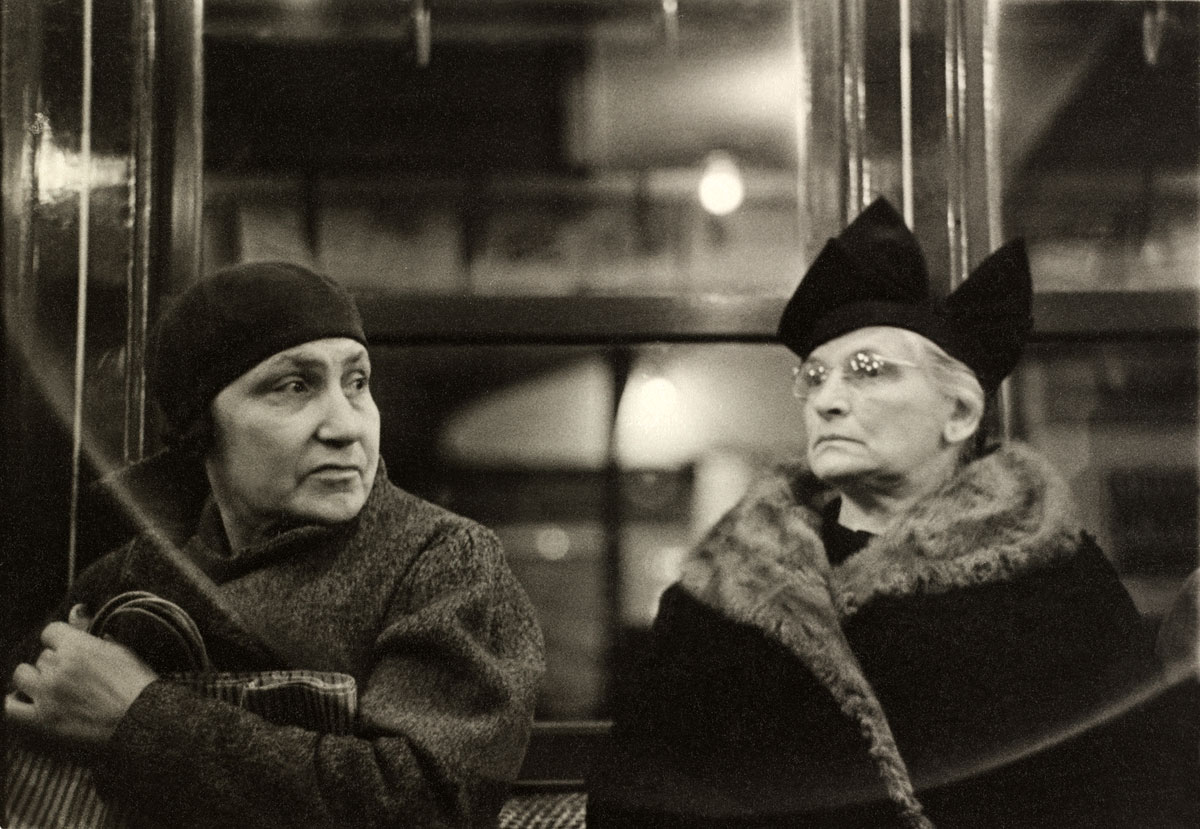

![Walker Evans (American, 1903-1975) '[Subway Passengers, New York City]' 1938](https://artblart.com/wp-content/uploads/2016/07/walker-evans-subway-passengers-new-york-city-web.jpg "Walker Evans (American, 1903-1975) '[Subway Passengers, New York City]' 1938")

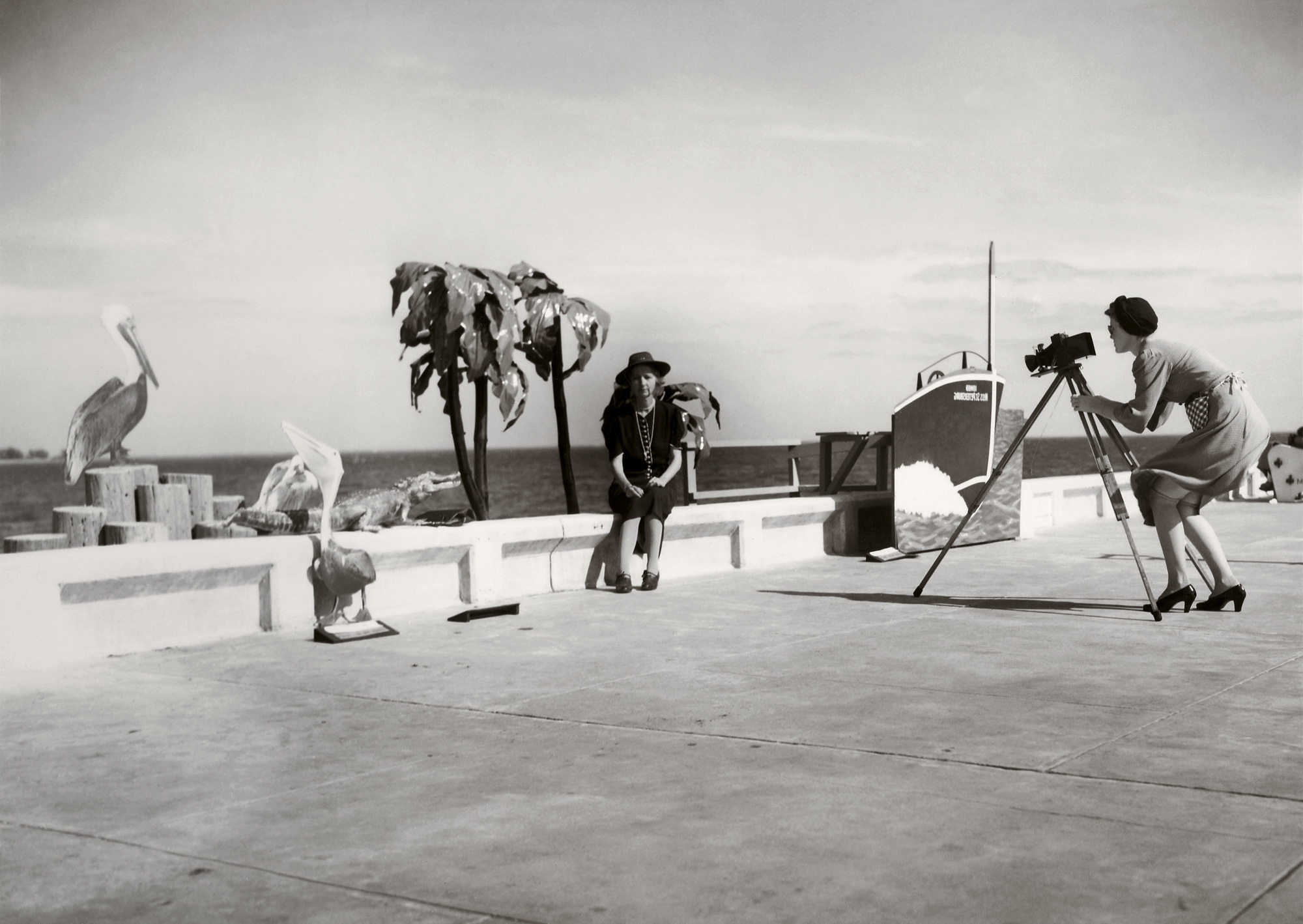
![Walker Evans (American, 1903-1975) 'Untitled [Street scene]' 1950s](https://artblart.com/wp-content/uploads/2018/01/walker-evans-untitled-web.jpg "Walker Evans (American, 1903-1975) 'Untitled [Street scene]' 1950s")

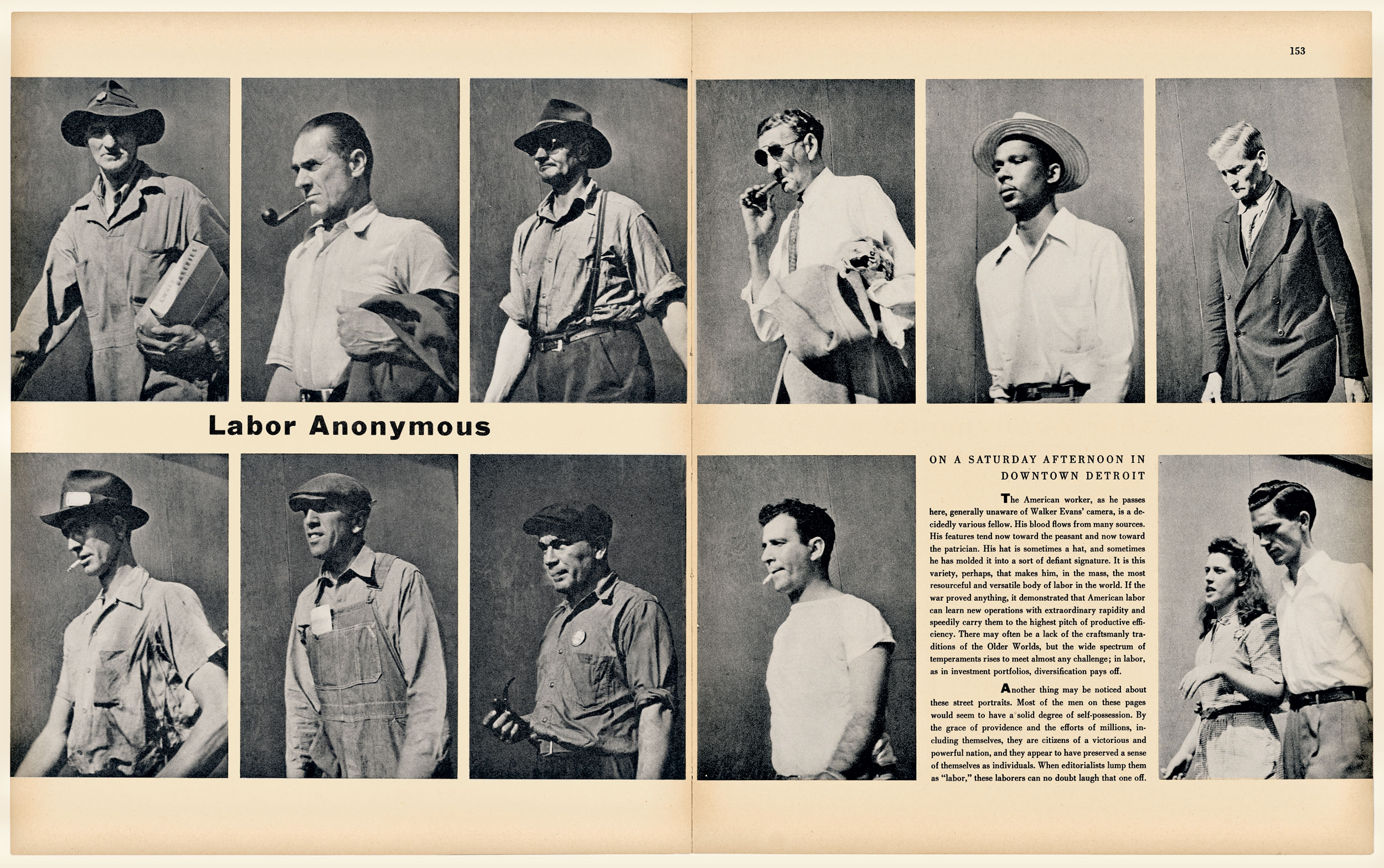


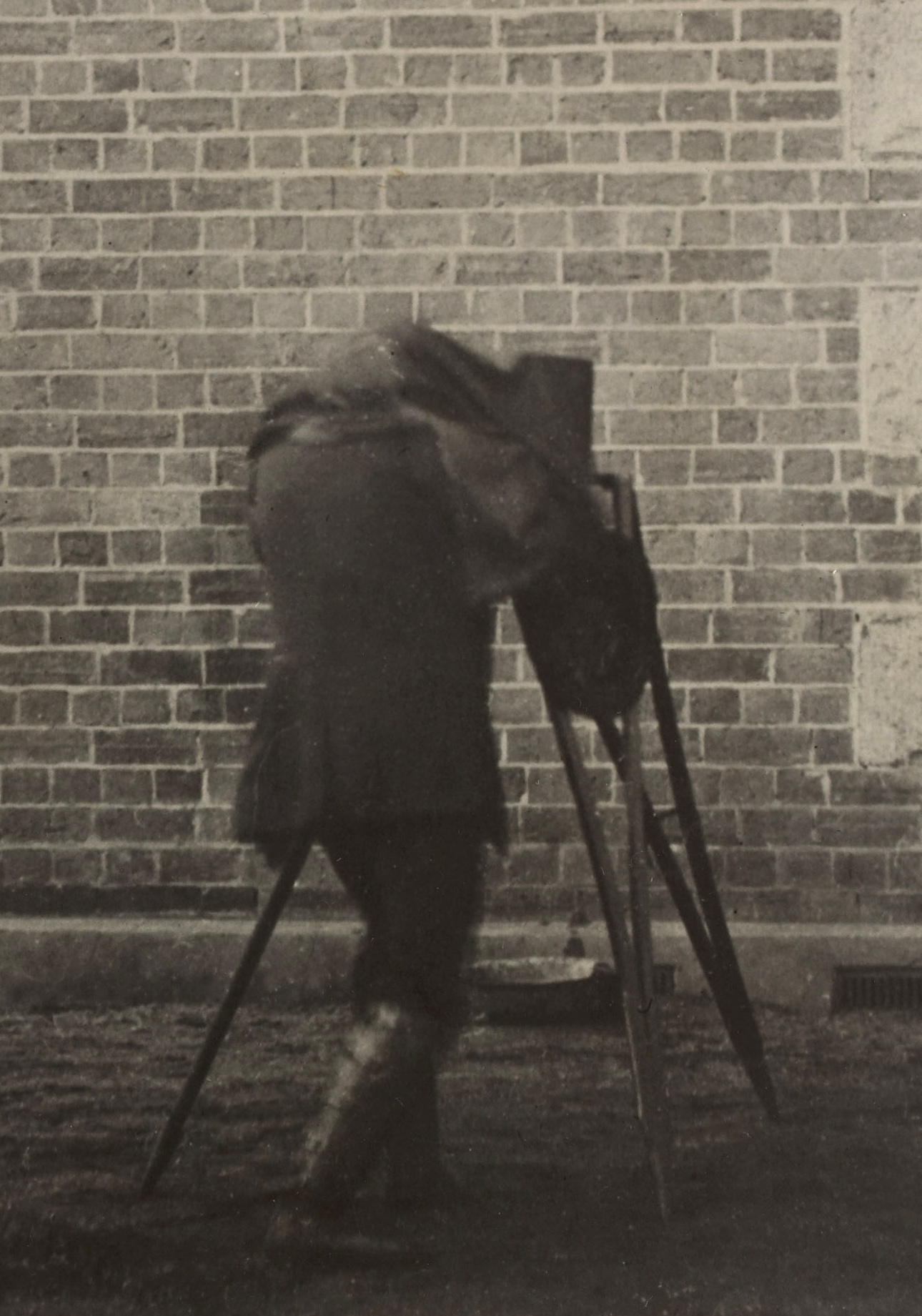

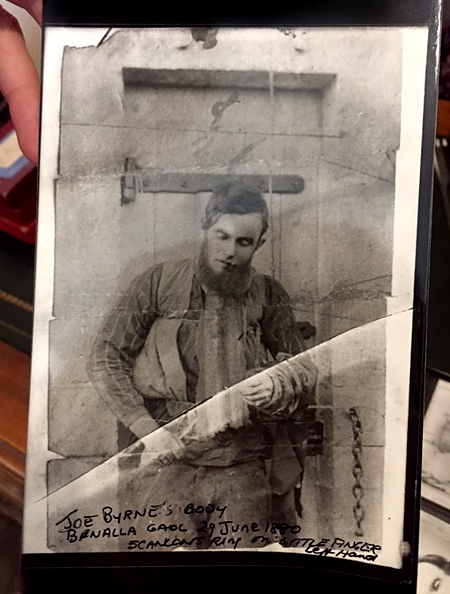

![Unknown photographer. 'Untitled [Portrait of Tracker Johnny from Maryborough District one of five trackers who helped track Ned Kelly]' c. 1880](https://artblart.com/wp-content/uploads/2017/10/portrait-of-tracker-johnny-from-maryborough-district-web.jpg "Unknown photographer. 'Untitled [Portrait of Tracker Johnny from Maryborough District one of five trackers who helped track Ned Kelly]' c. 1880")


![J. E. Bray (Australian, 1832-1891) 'Untitled ["McDonnell's Tavern opposite Railway Station, remains of Dan Kelly and Hart in coffins"]' 1880](https://artblart.com/wp-content/uploads/2017/10/bray-je-mcdonnells-railway-tavern-web.jpg "J. E. Bray (Australian, 1832-1891) 'Untitled [\"McDonnell's Tavern opposite Railway Station, remains of Dan Kelly and Hart in coffins\"]' 1880")
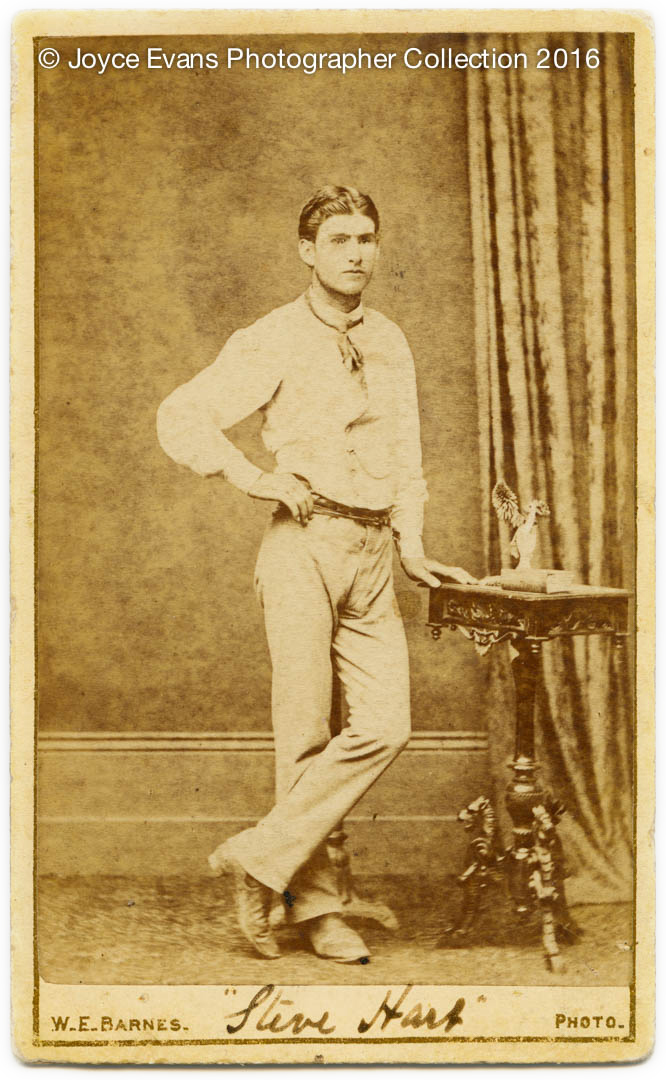





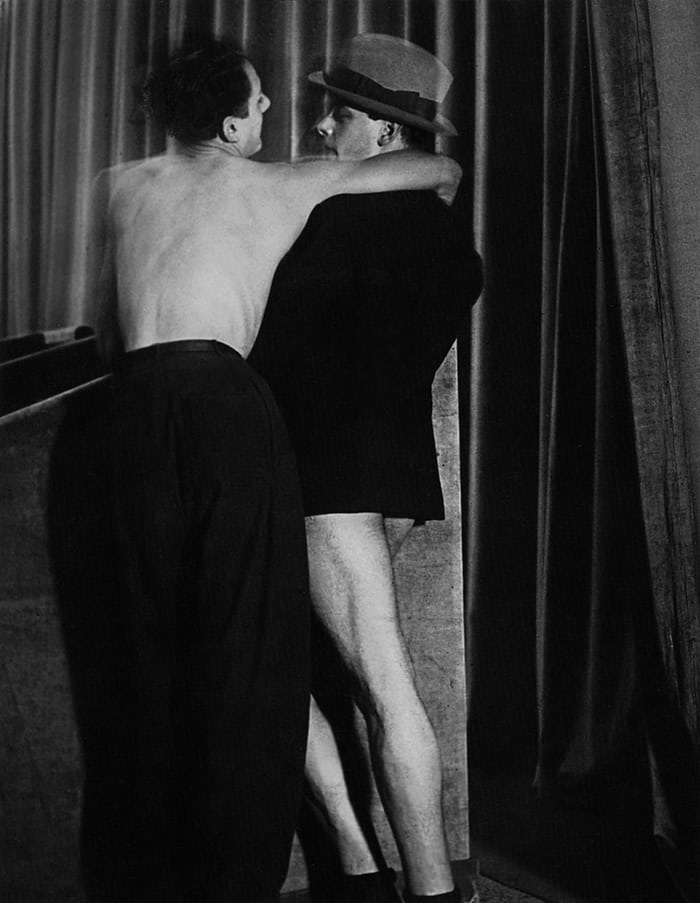


![Installation view of the exhibition 'An Unorthodox Flow of Images' at the Centre for Contemporary Photography (CCP), Melbourne, September - November 2017 showing (7) J. E. Bray's 'Untitled ["McDonnell's Tavern opposite Railway Station, remains of Dan Kelly and Hart in coffins"]' 1880 cabinet card (right) and (8) a photograph by an unknown photographer Hunters of Ned Kelly 1880 (left)](https://artblart.com/wp-content/uploads/2017/10/installation-d-web.jpg "Installation view of the exhibition 'An Unorthodox Flow of Images' at the Centre for Contemporary Photography (CCP), Melbourne, September - November 2017 showing (7) J. E. Bray's 'Untitled [\"McDonnell's Tavern opposite Railway Station, remains of Dan Kelly and Hart in coffins\"]' 1880 cabinet card (right) and (8) a photograph by an unknown photographer Hunters of Ned Kelly 1880 (left)")




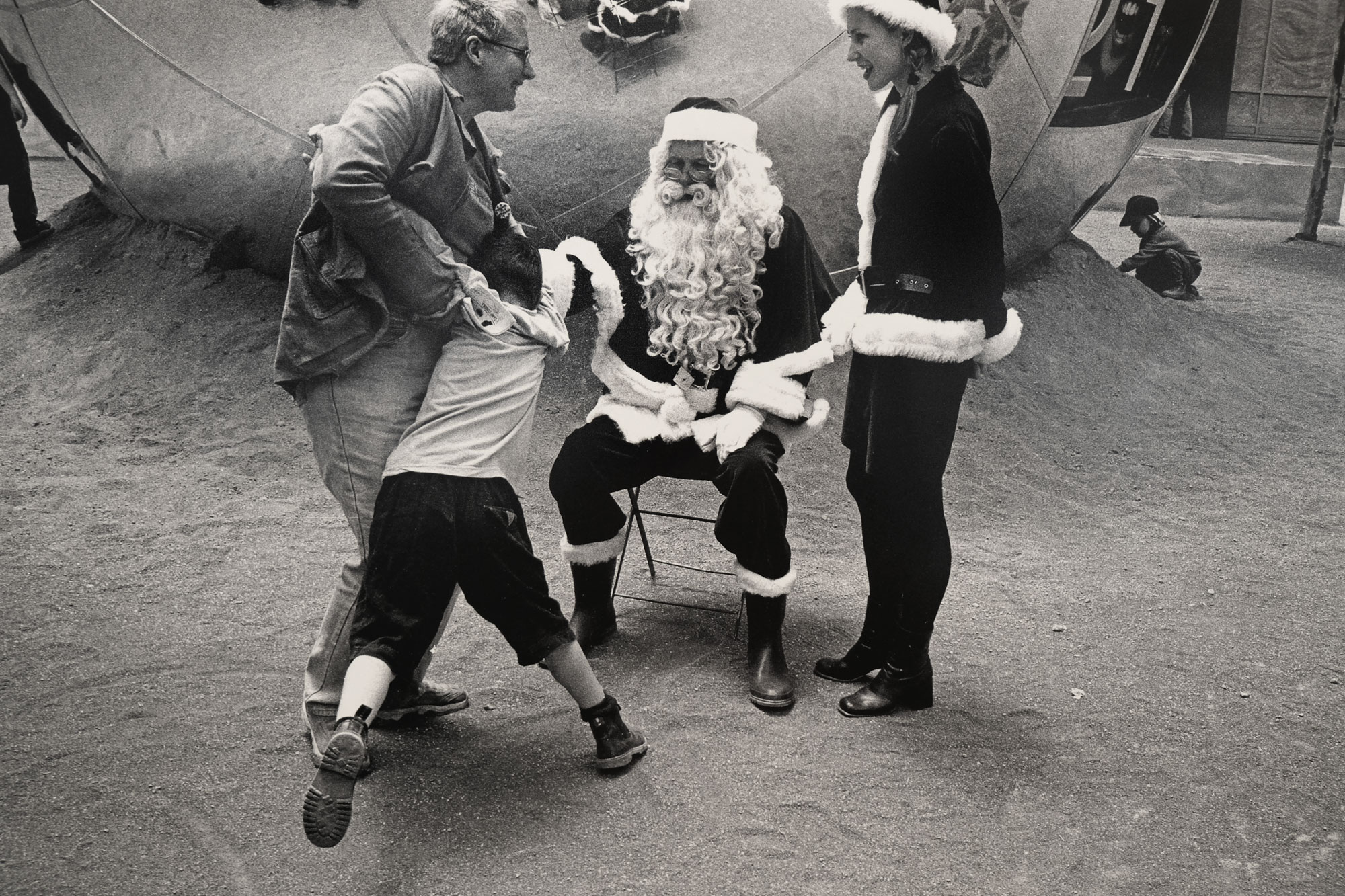


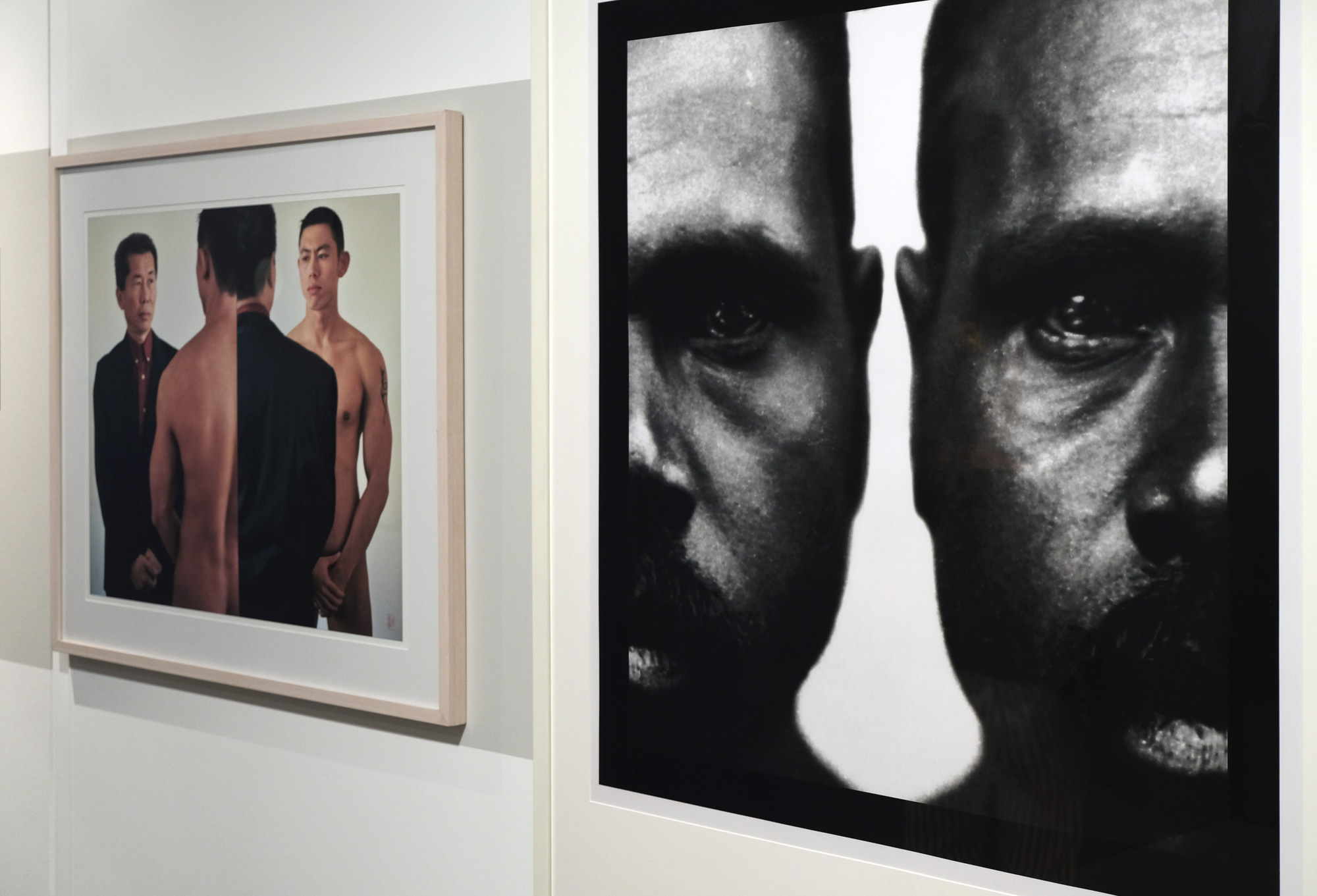


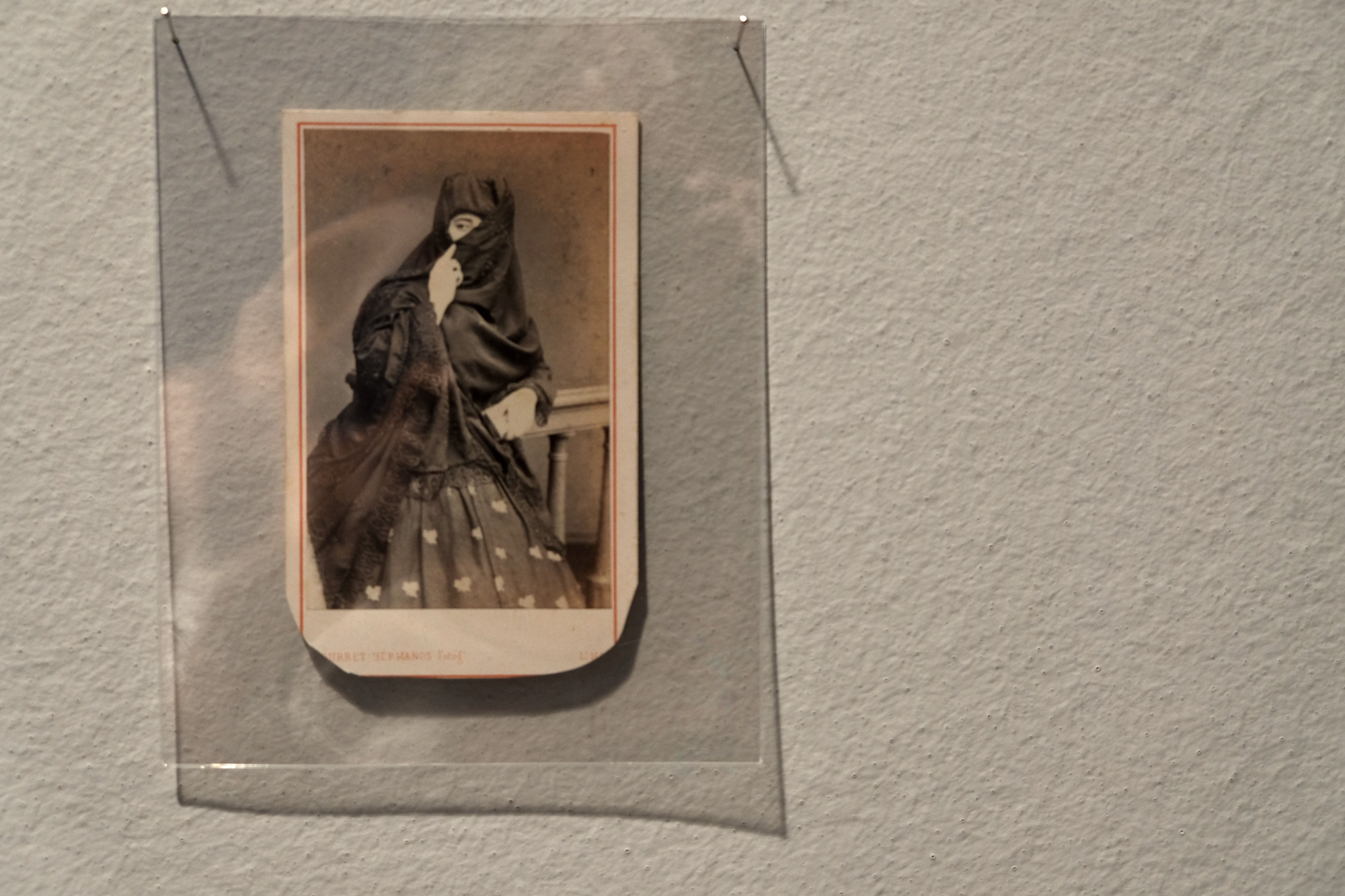


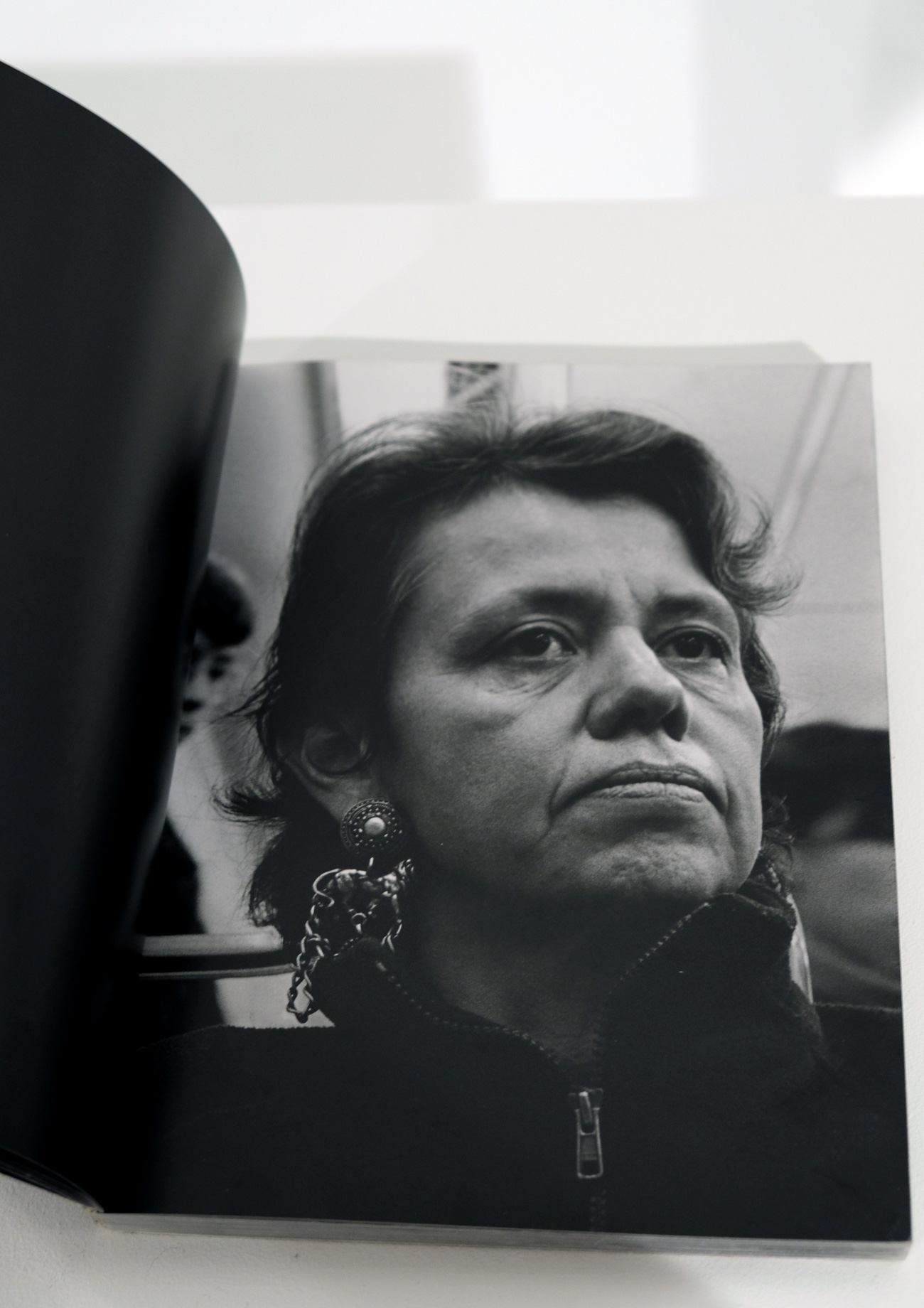


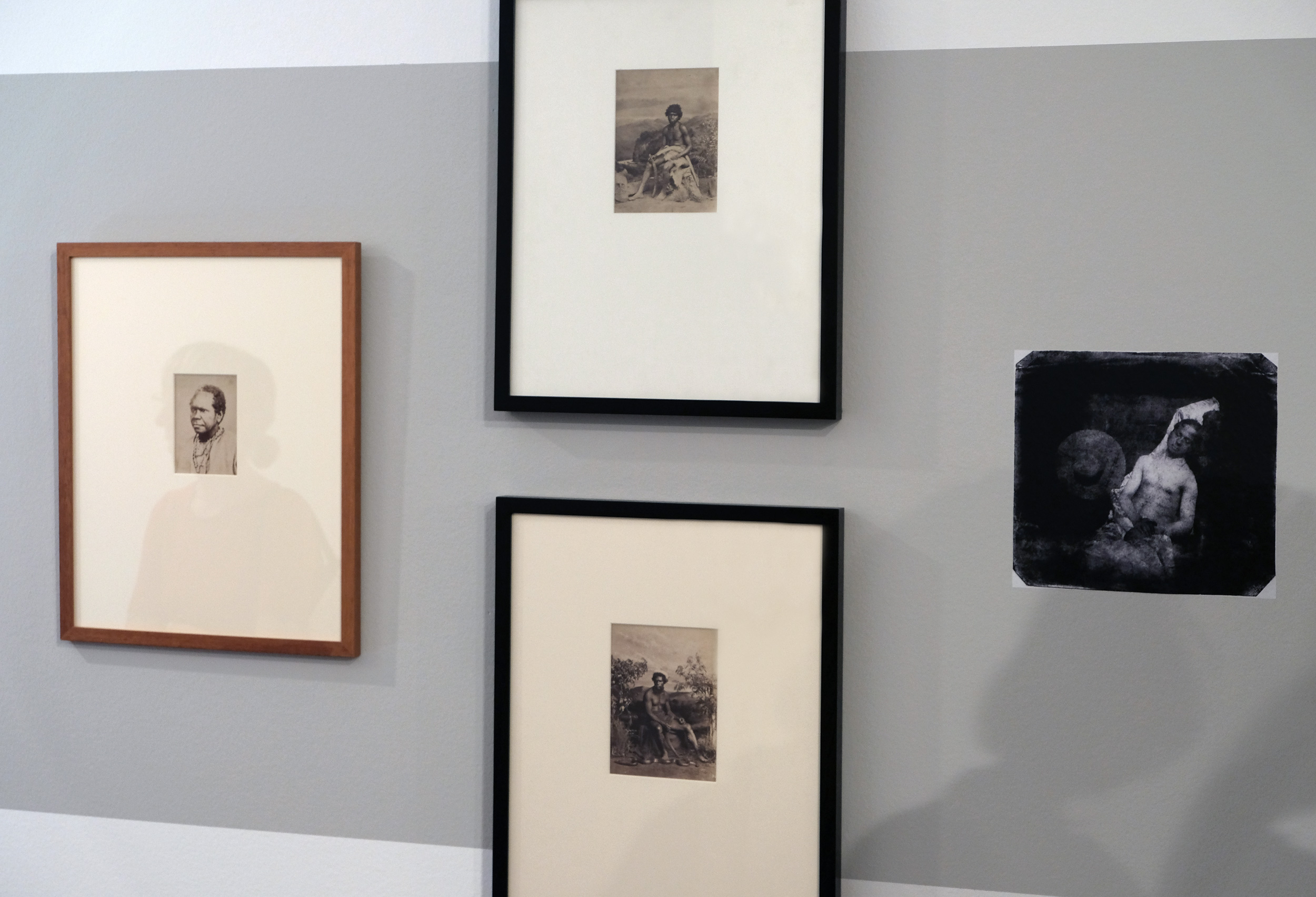


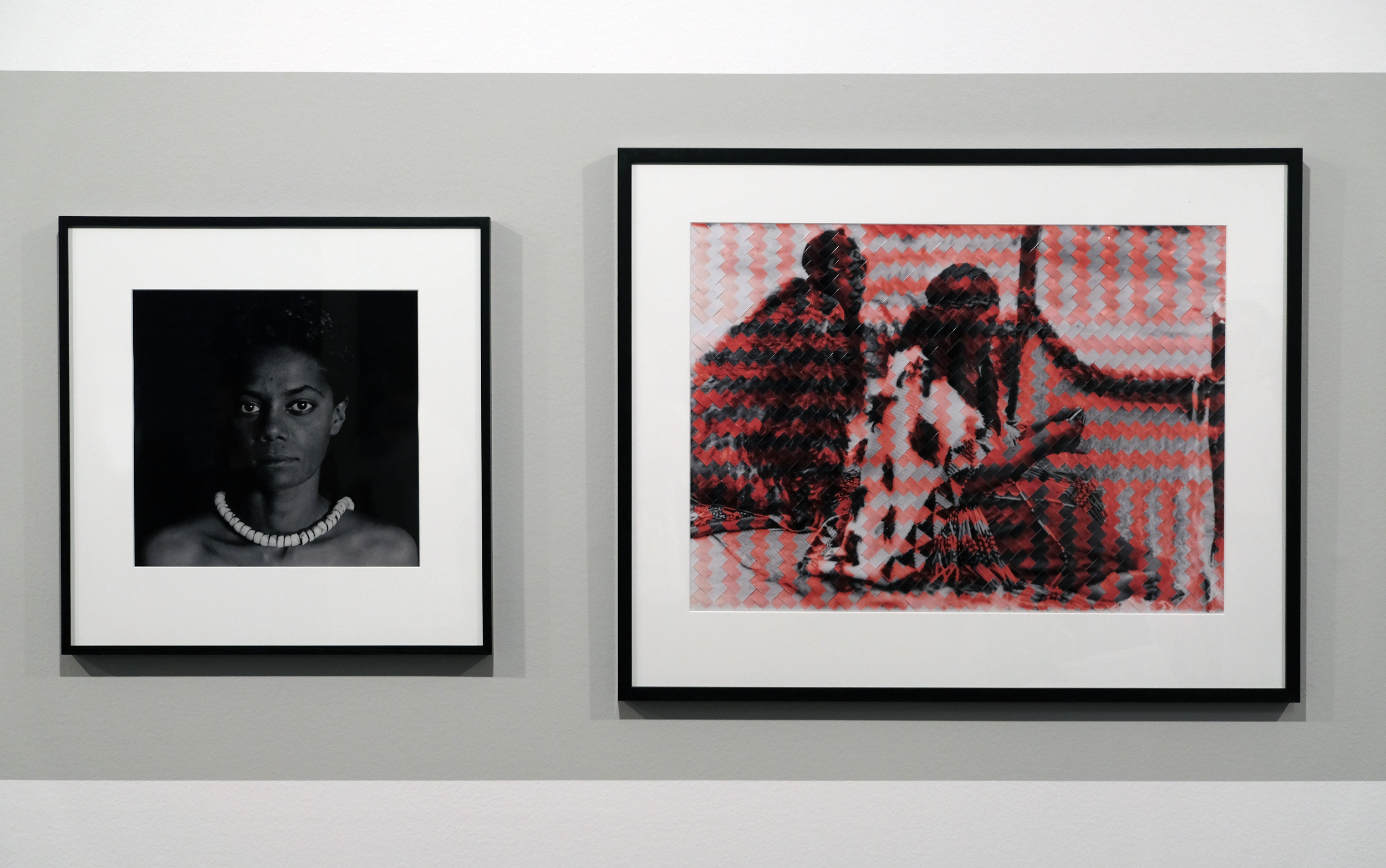


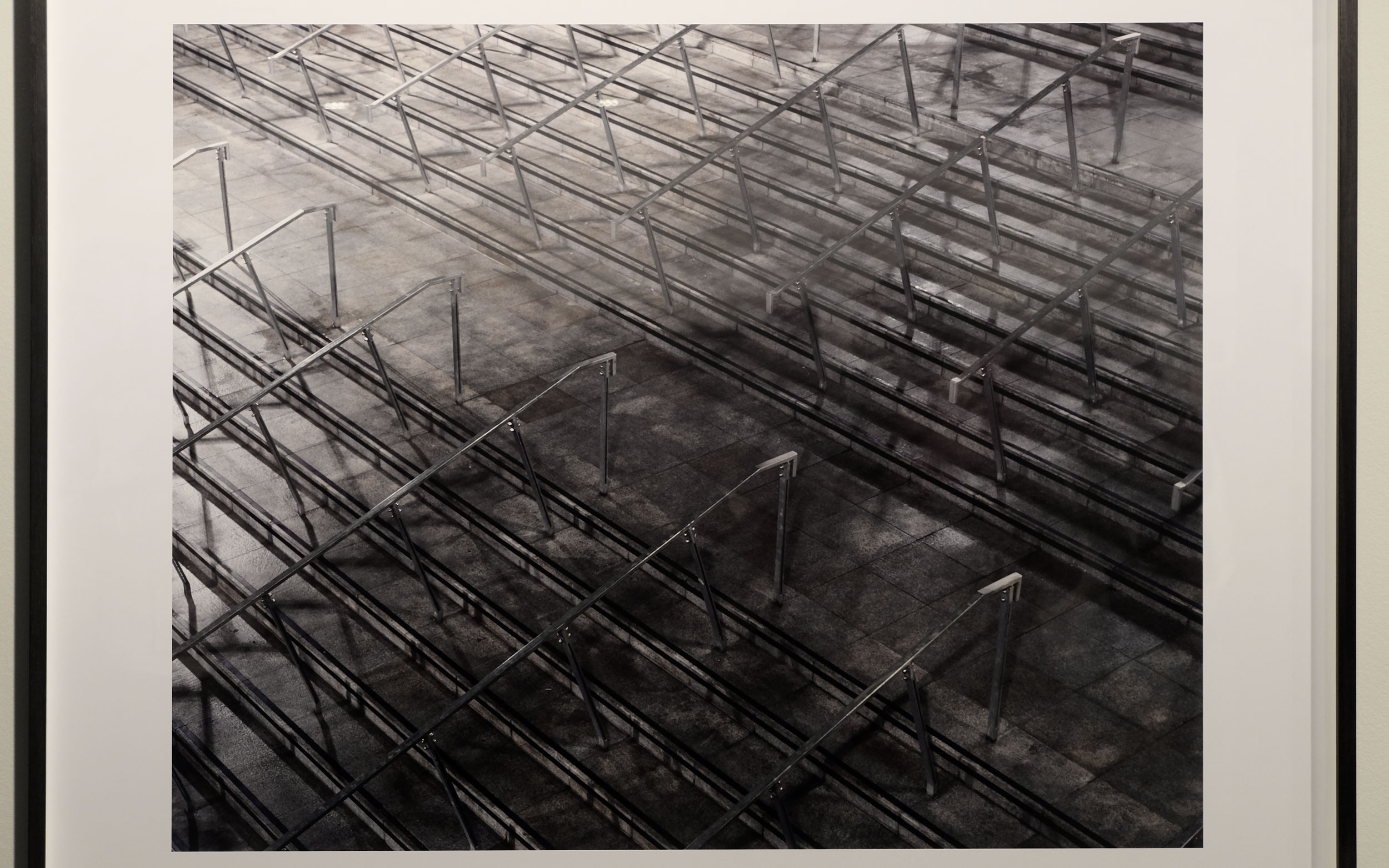
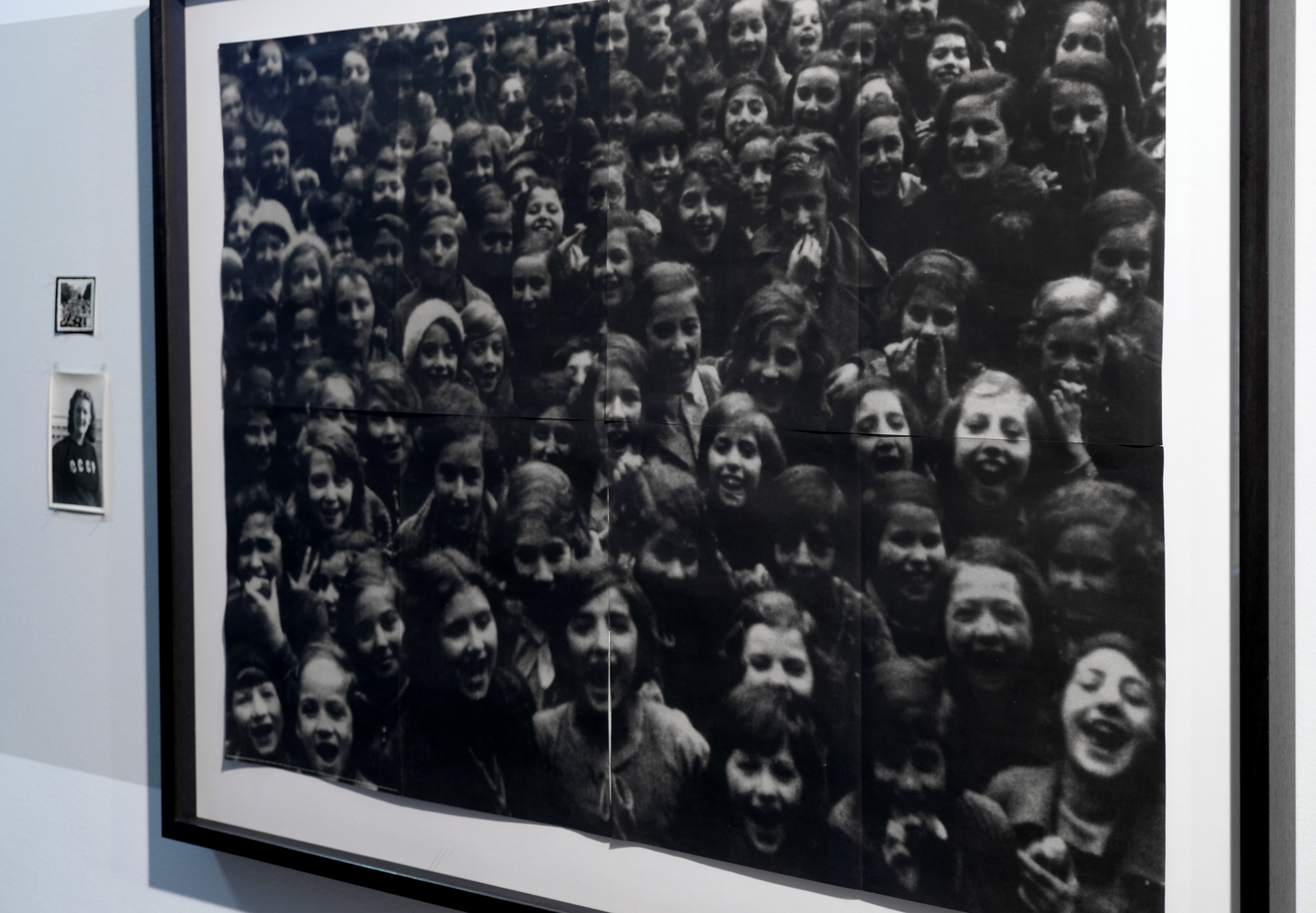



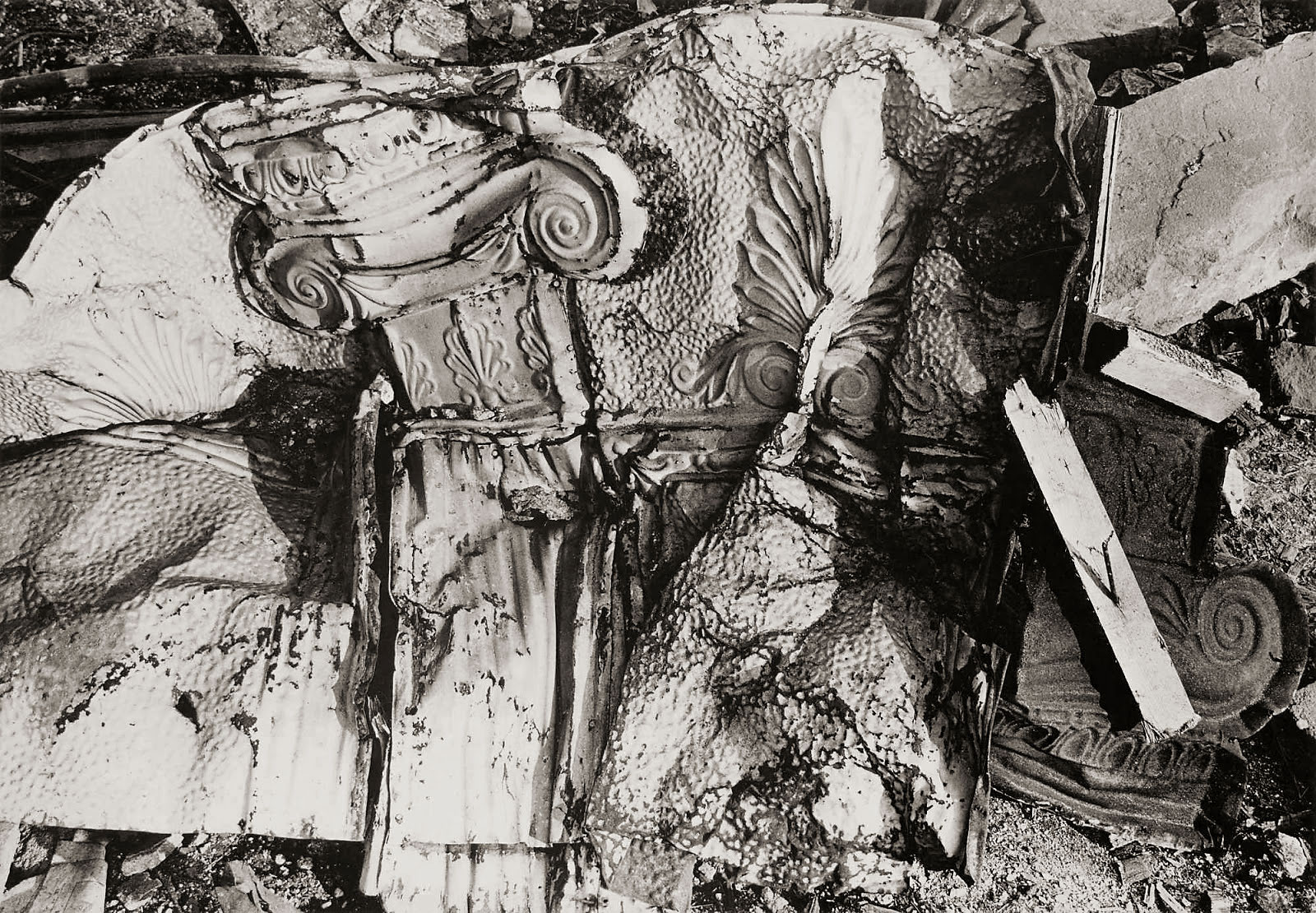
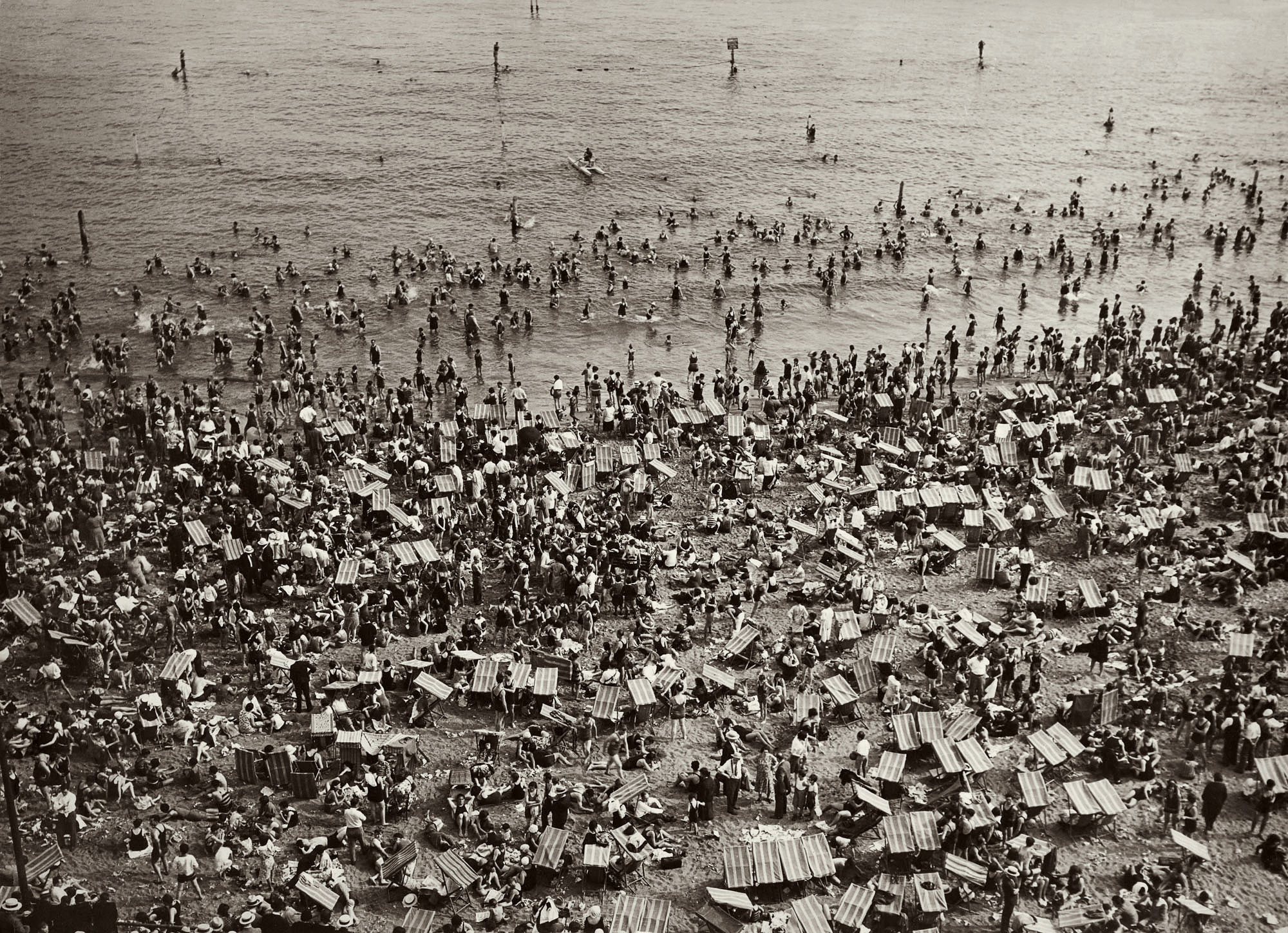
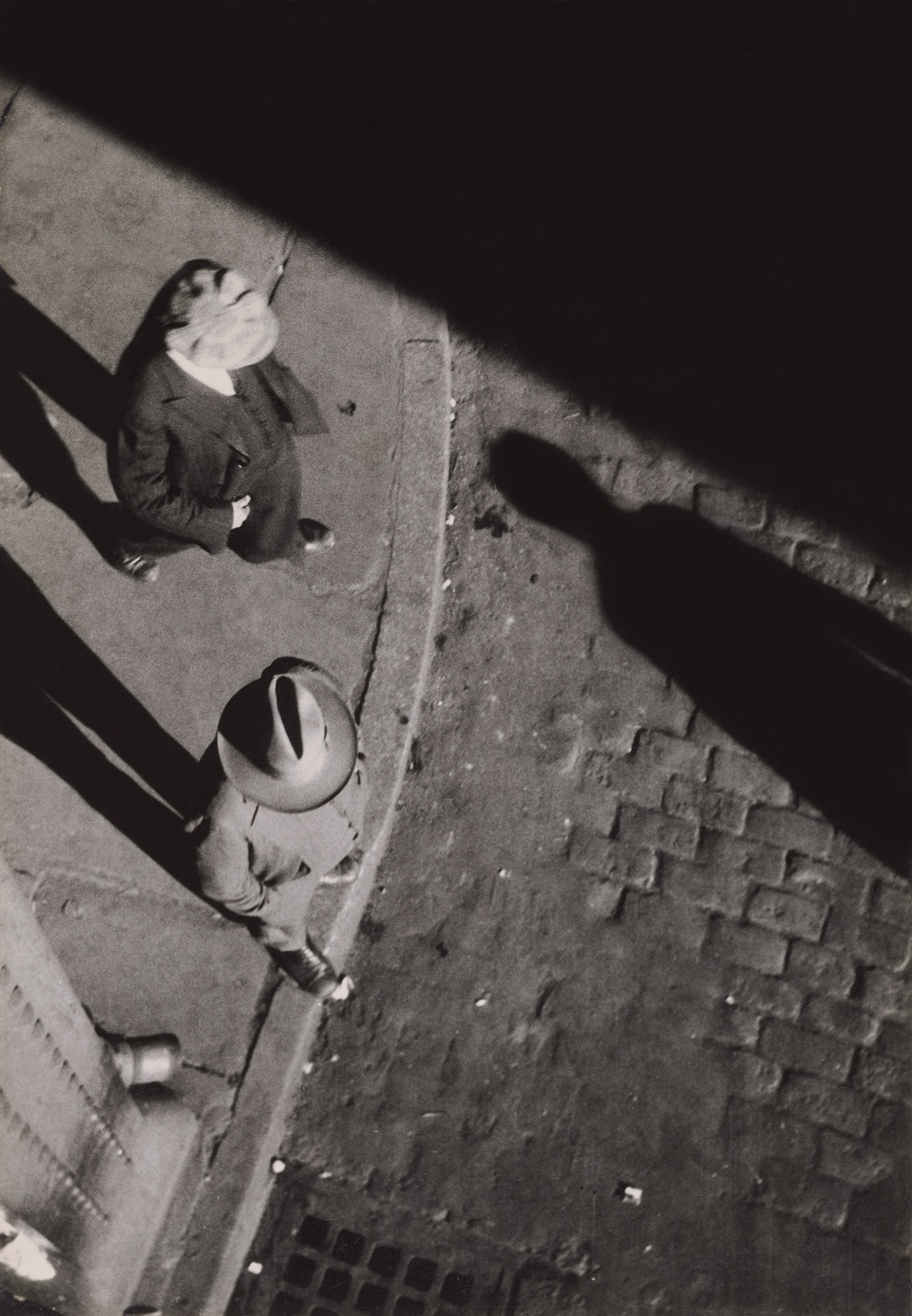
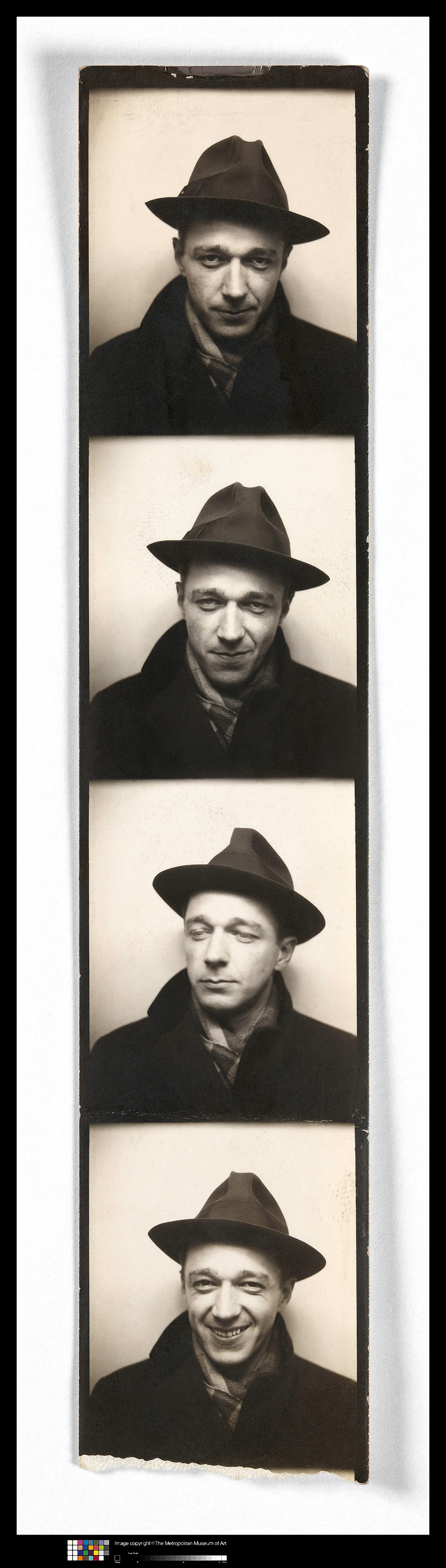

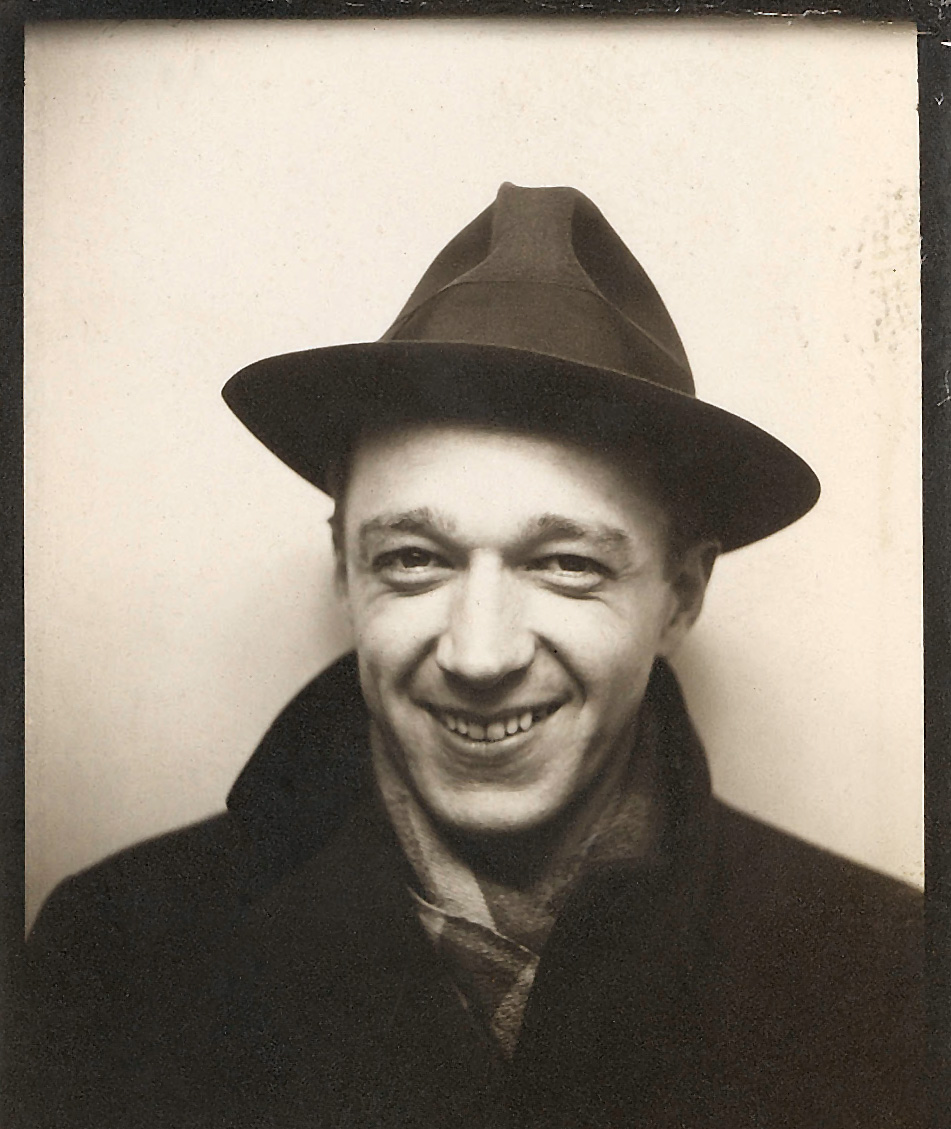
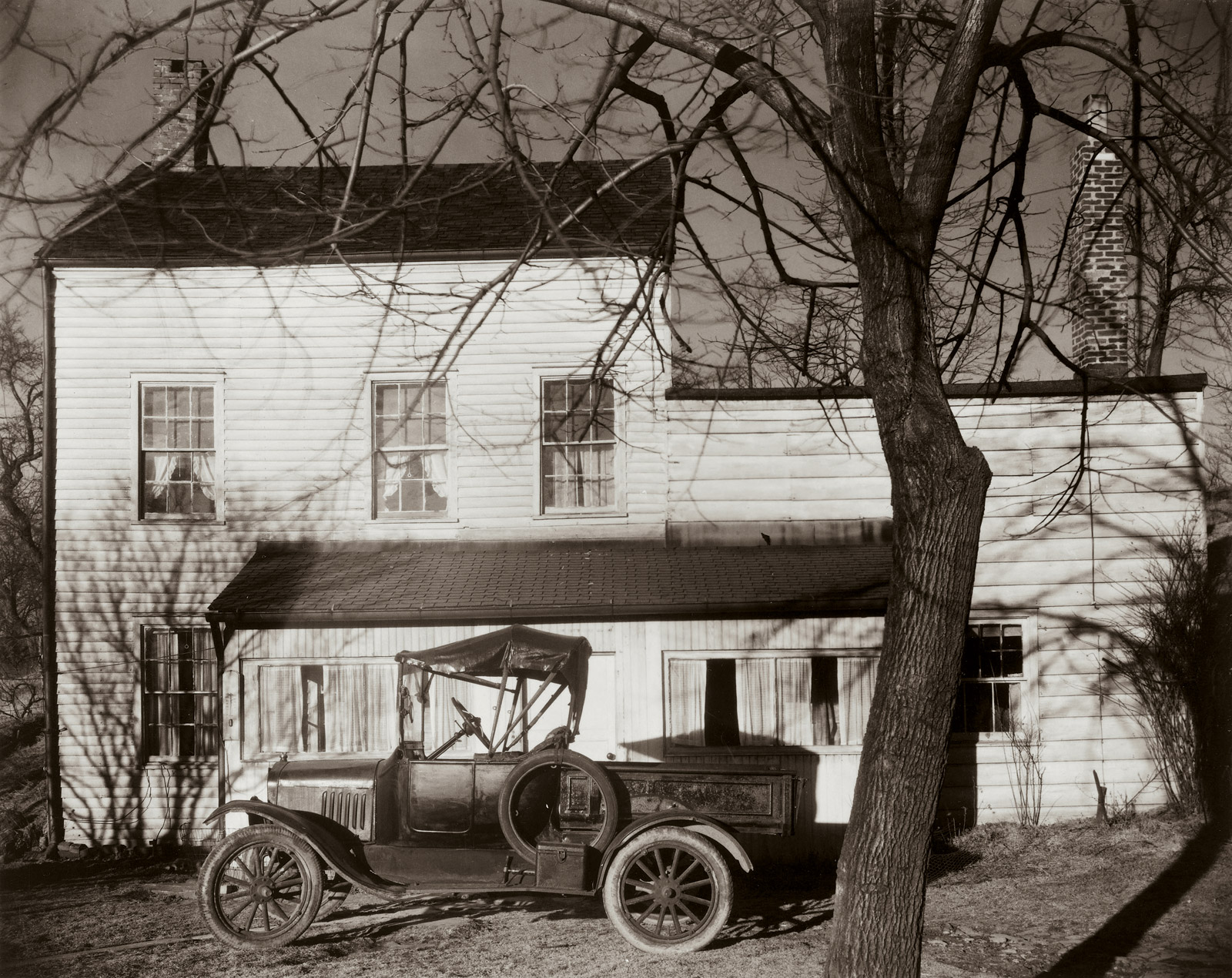





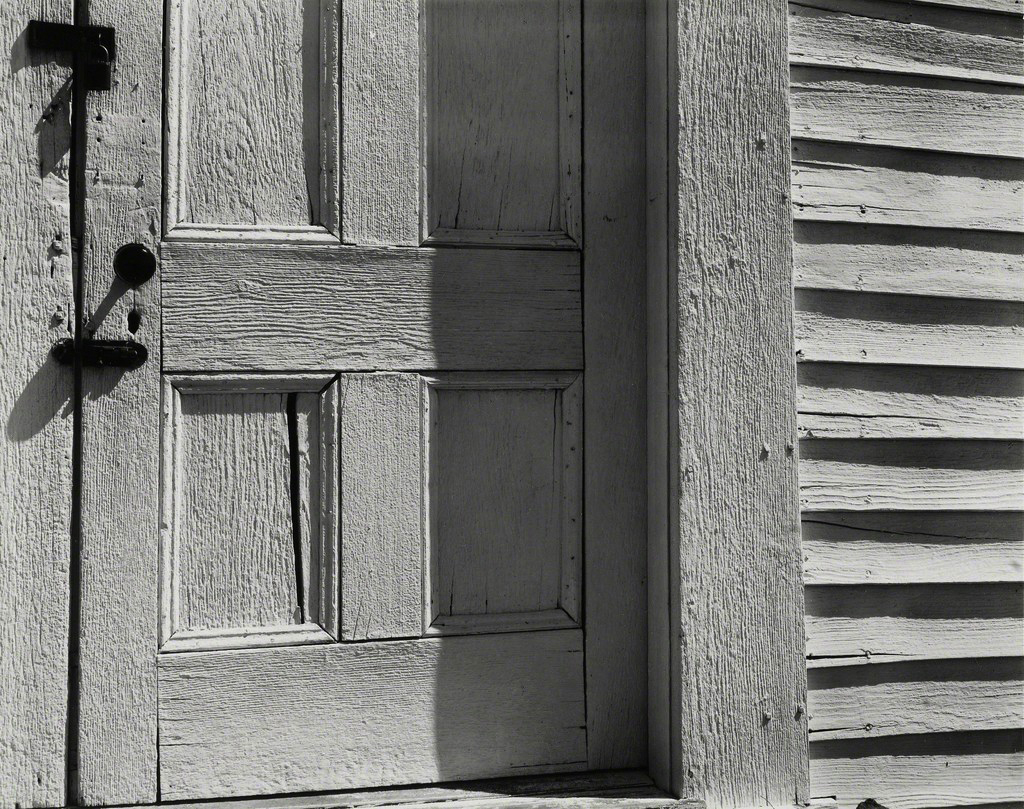
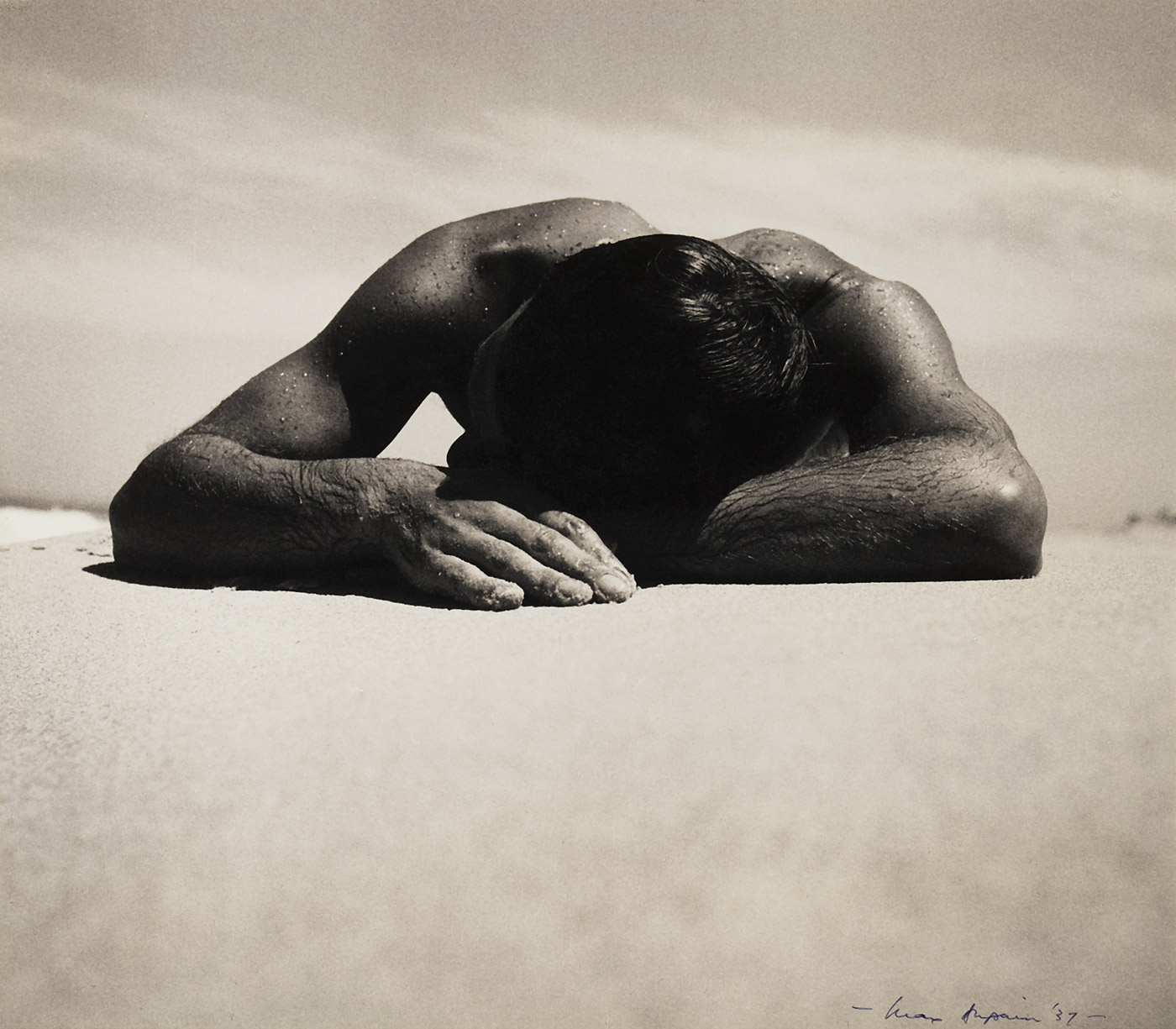


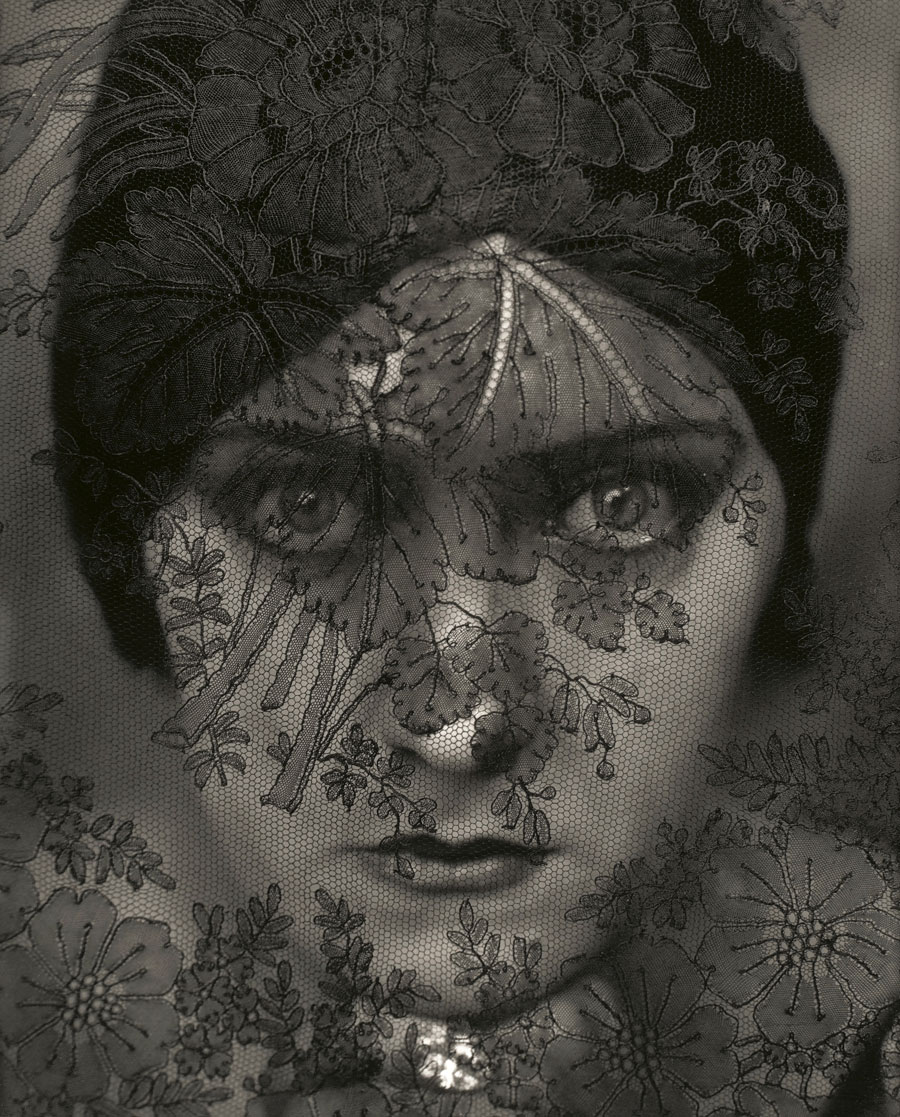
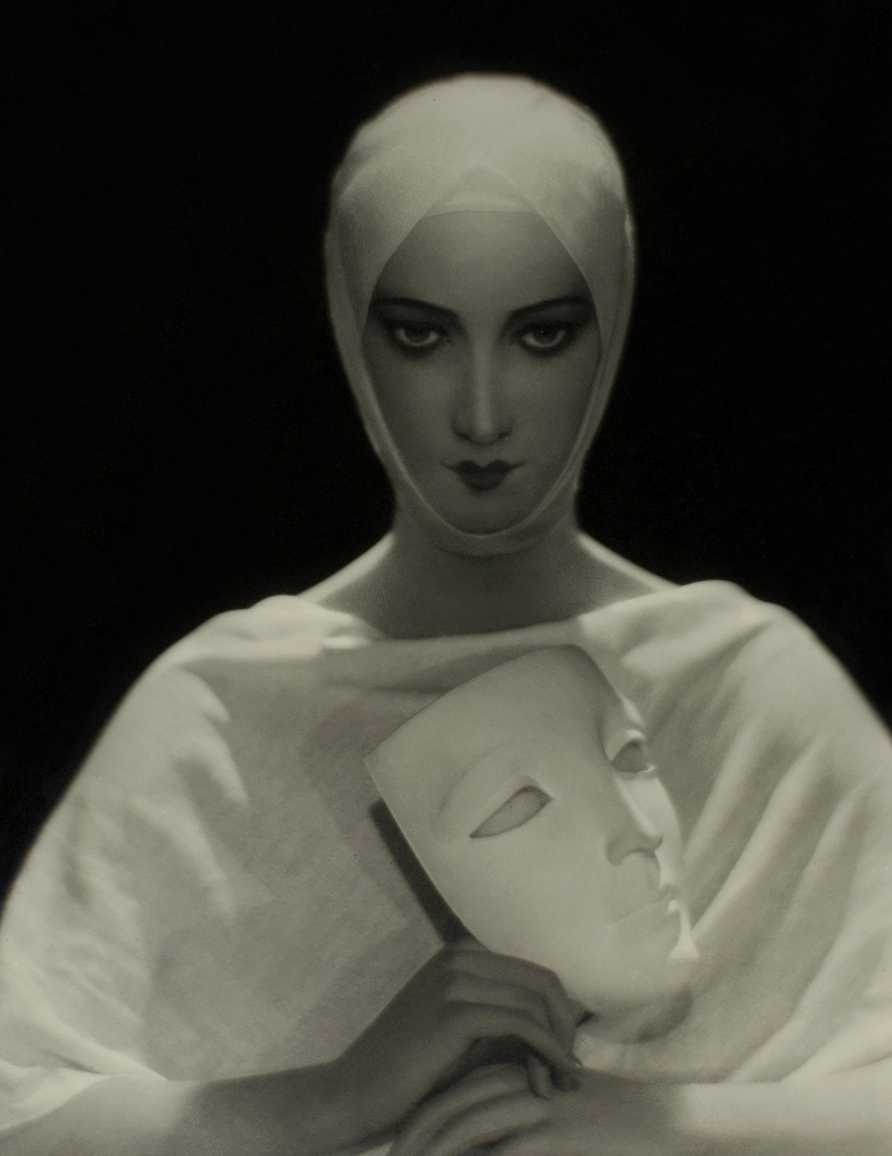
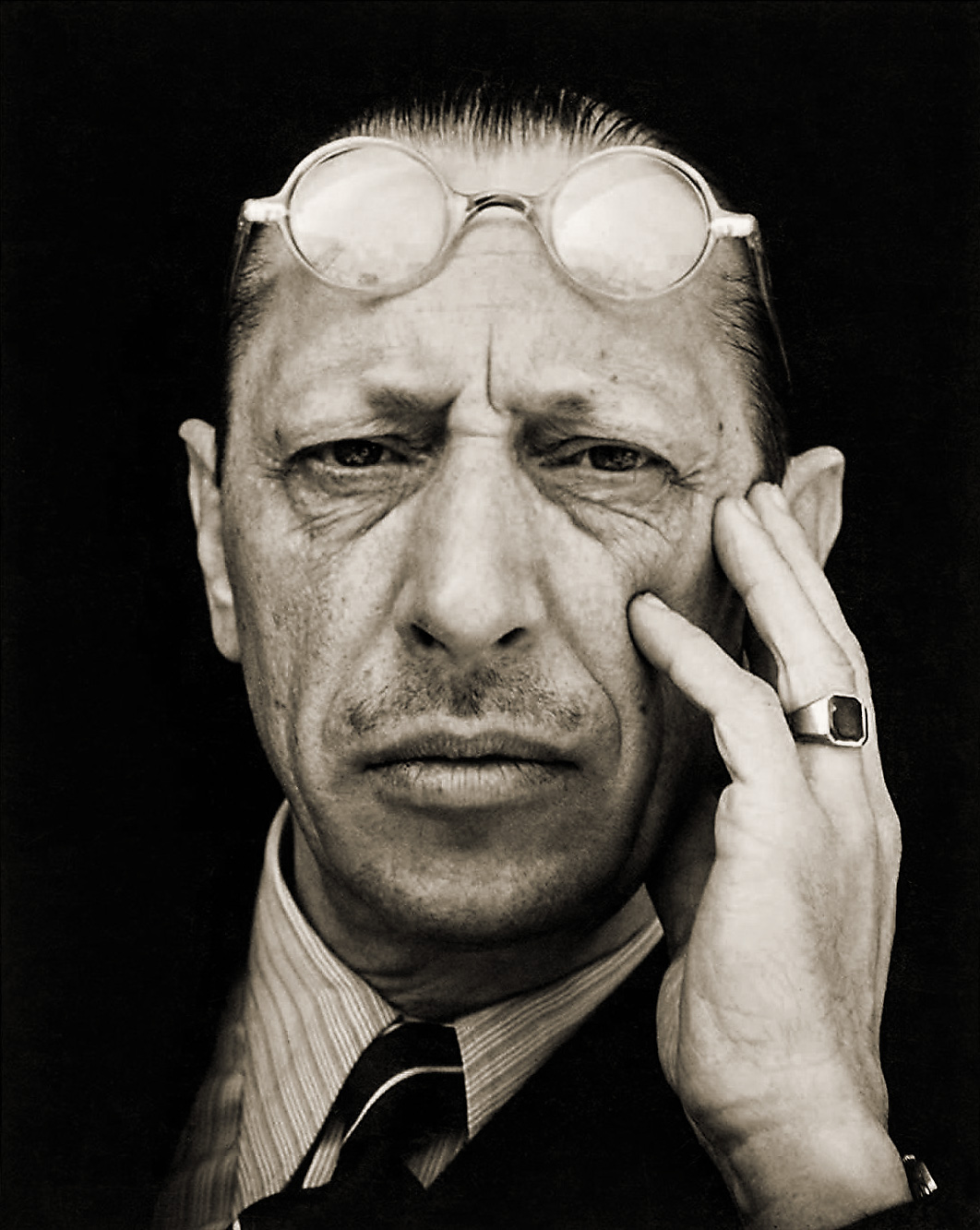


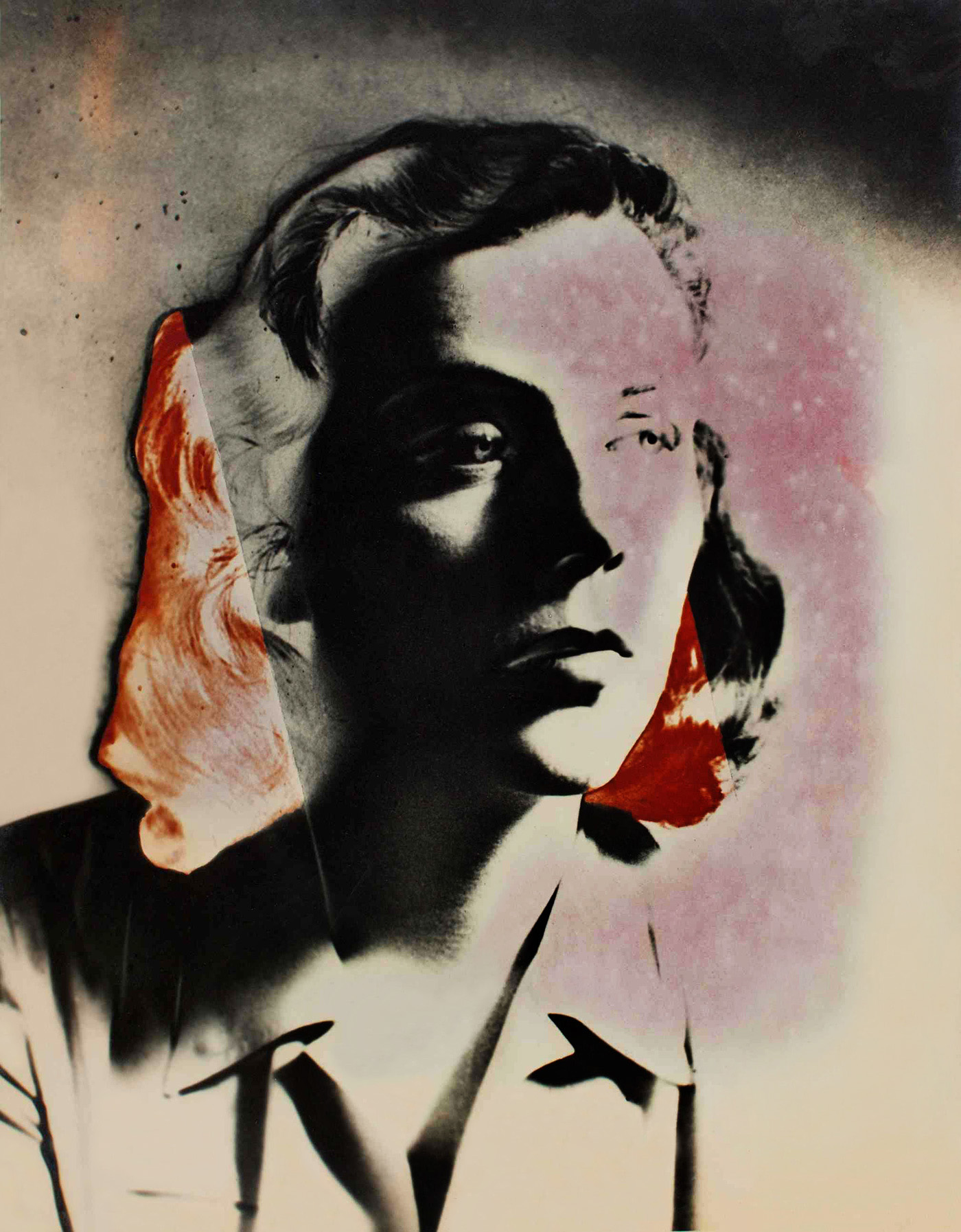


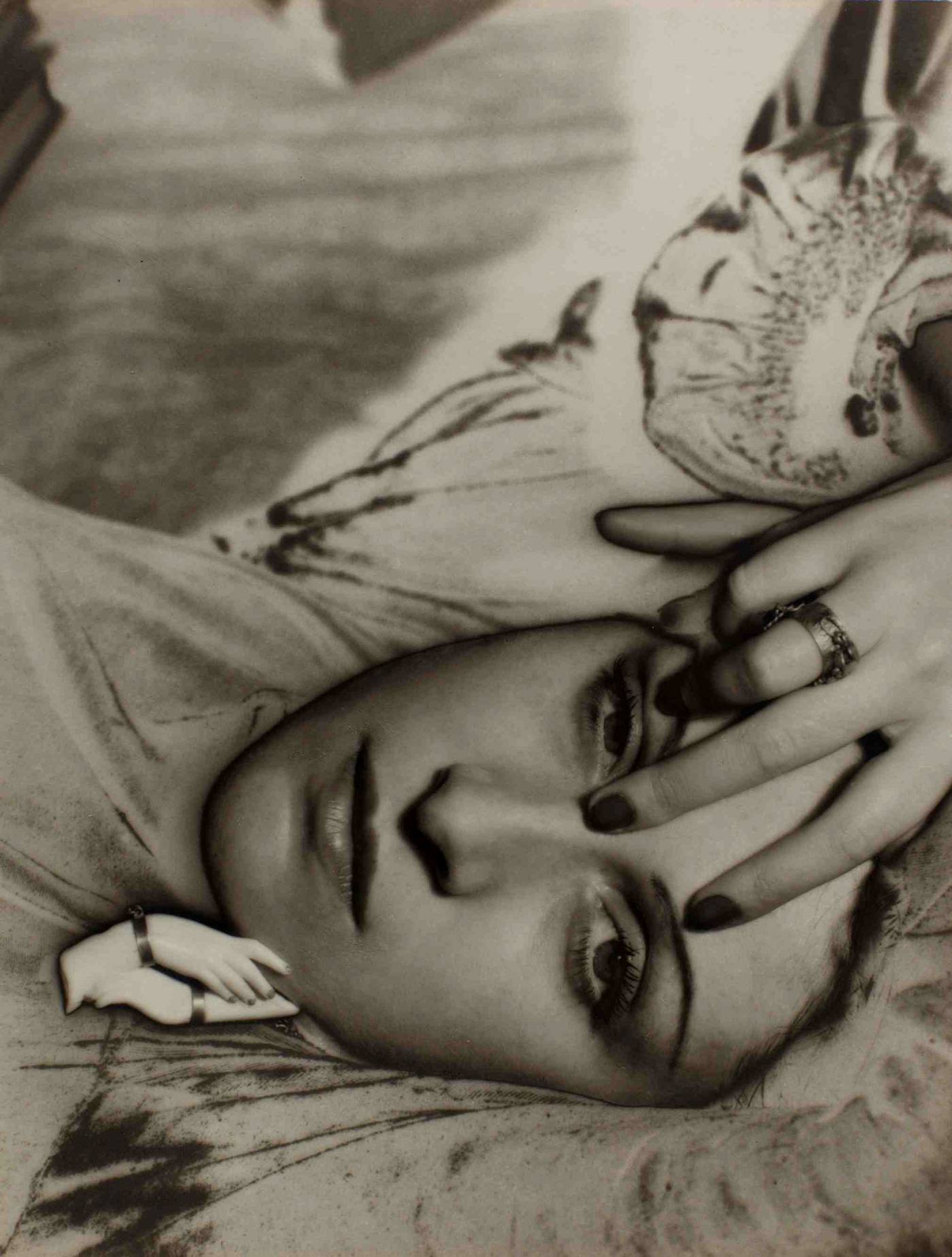

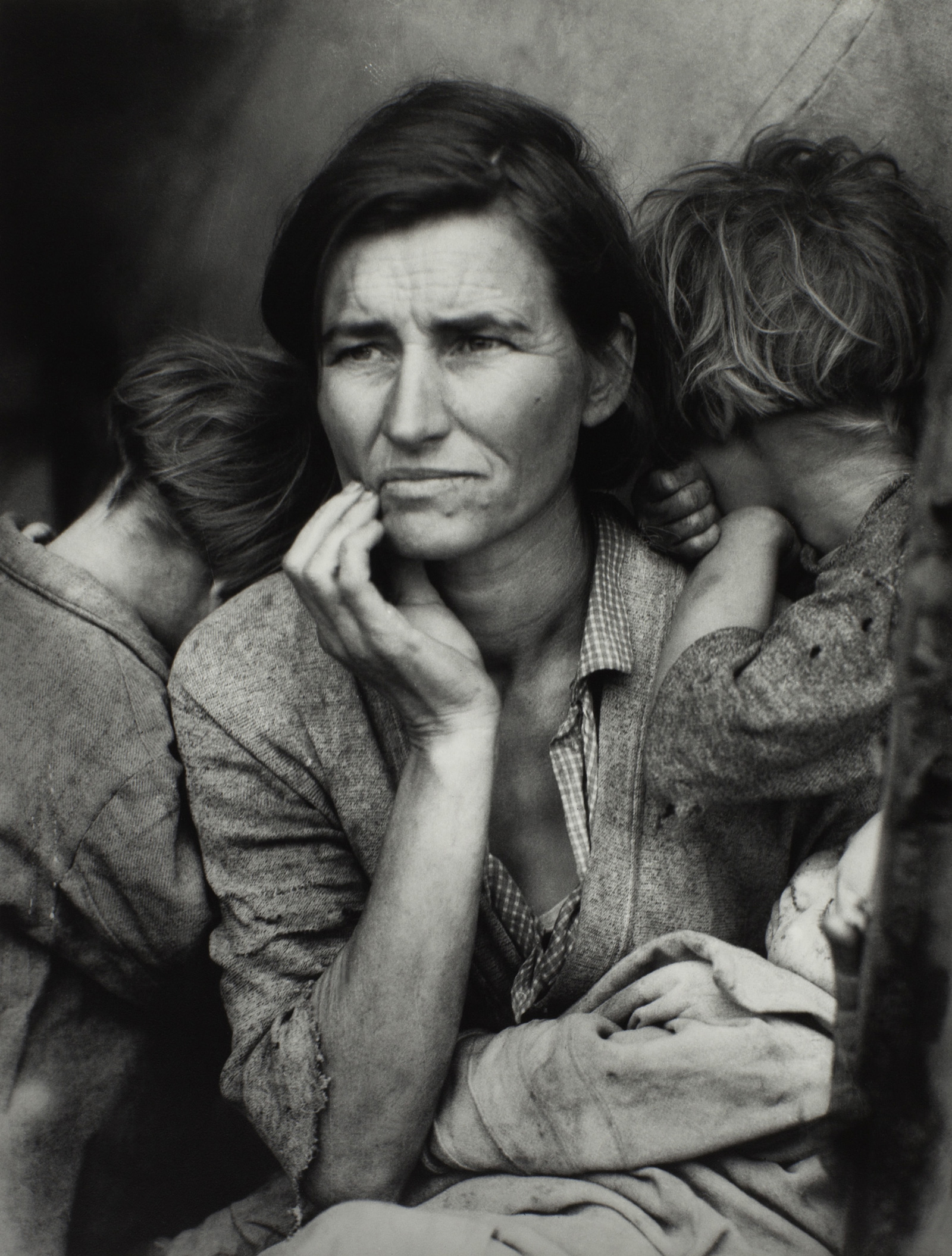
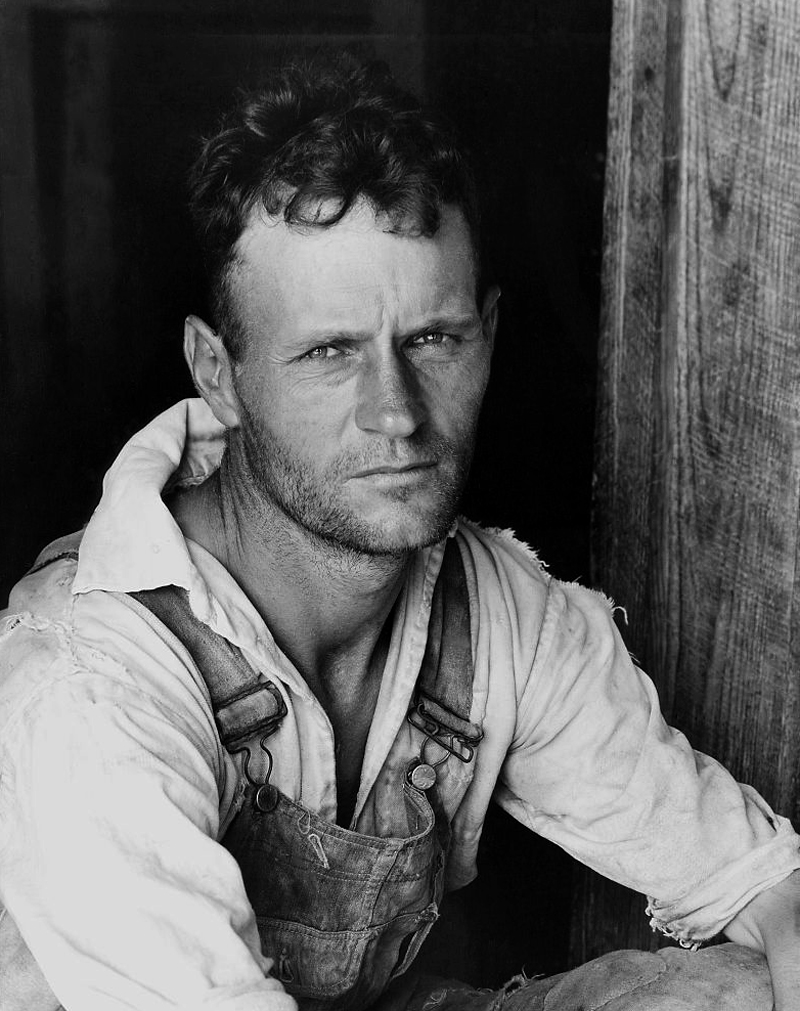


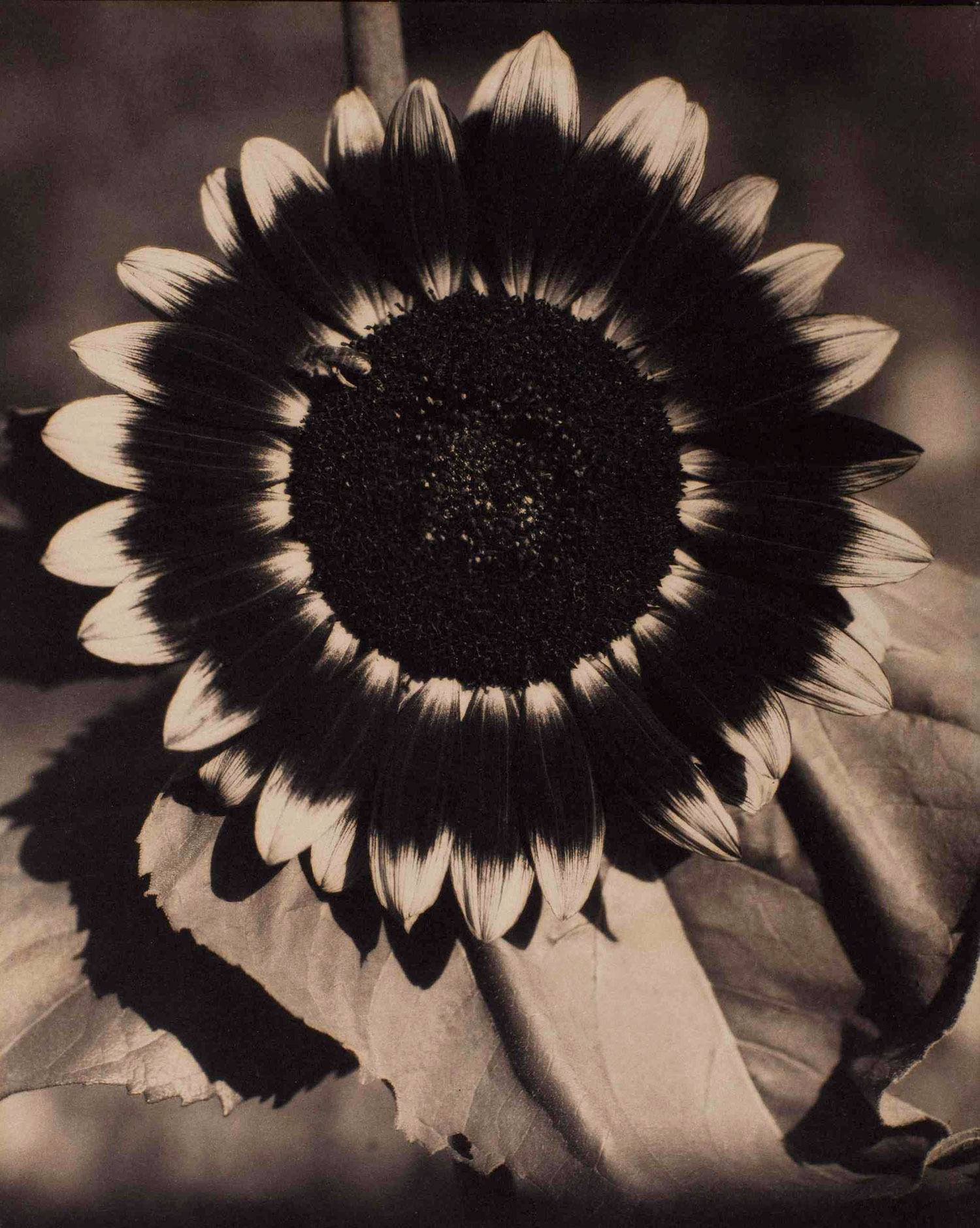


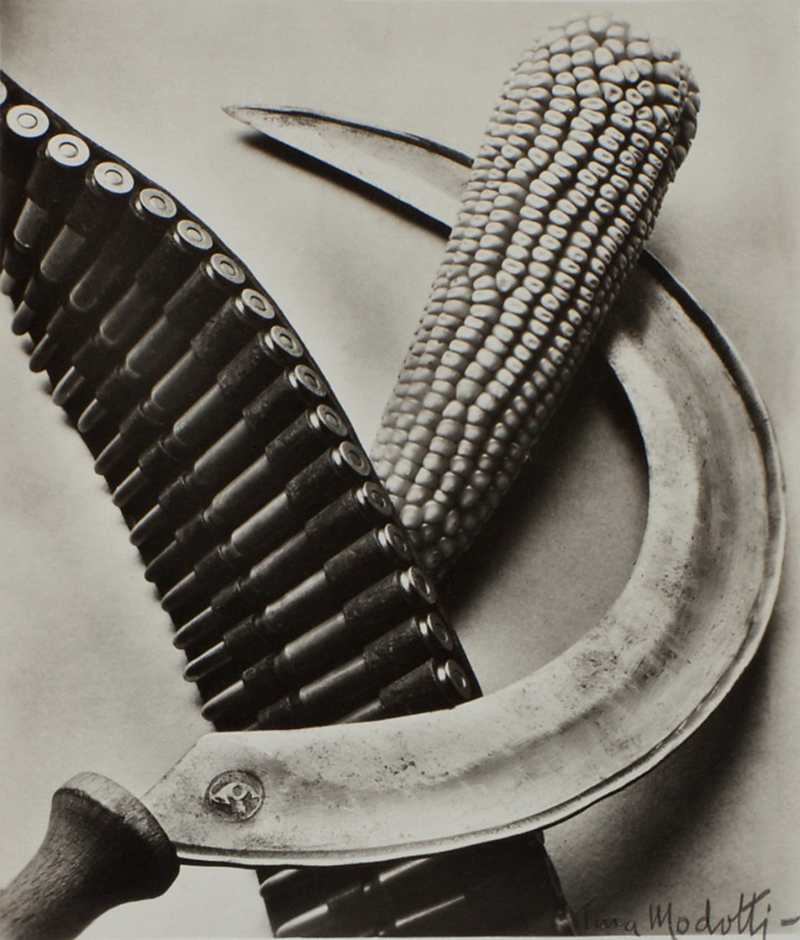


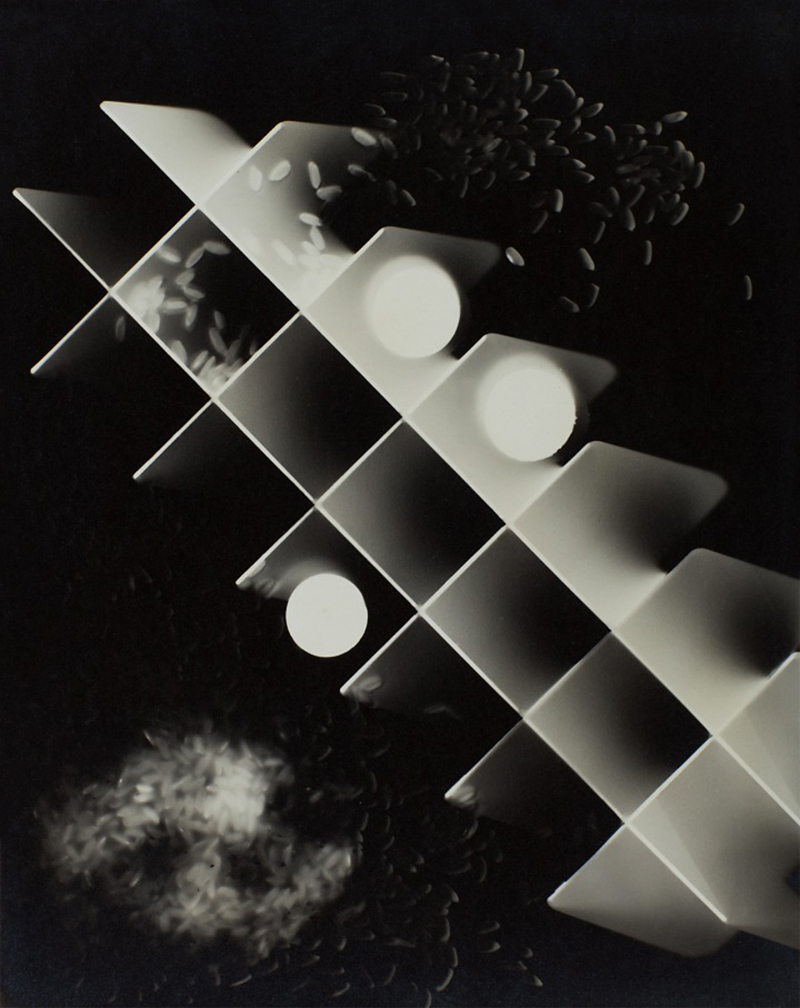







![Unknown photographer (American) '[Jeff Briggs, Robert Sims, Otis Hall, and Peter Pamphlet; Full-Length Mugshot from the Chicago Police Department]' 1936 from the exhibition 'Crime Stories: Photography and Foul Play' at the Metropolitan Museum of Art, New York, March - July, 2016](https://artblart.com/wp-content/uploads/2016/07/mug-shot1-web.jpg "Unknown photographer (American) '[Jeff Briggs, Robert Sims, Otis Hall, and Peter Pamphlet; Full-Length Mugshot from the Chicago Police Department]' 1936 from the exhibition 'Crime Stories: Photography and Foul Play' at the Metropolitan Museum of Art, New York, March - July, 2016")
![Unknown photographer (American) '[John Dillinger's Feet, Chicago Morgue]' 1934 from the exhibition 'Crime Stories: Photography and Foul Play' at the Metropolitan Museum of Art, New York, March - July, 2016](https://artblart.com/wp-content/uploads/2016/07/john-dillingers-body-web.jpg "Unknown photographer (American) '[John Dillinger's Feet, Chicago Morgue]' 1934 from the exhibition 'Crime Stories: Photography and Foul Play' at the Metropolitan Museum of Art, New York, March - July, 2016")
![Unknown photographer (American) '[Jeff Briggs, Robert Sims, Otis Hall, and Peter Pamphlet; Full-Length Mugshot from the Chicago Police Department]' 1936](https://artblart.com/wp-content/uploads/2016/07/mug-shot2-web.jpg "Unknown photographer (American) '[Jeff Briggs, Robert Sims, Otis Hall, and Peter Pamphlet; Full-Length Mugshot from the Chicago Police Department]' 1936")



![Alphonse Bertillon (French, 1853-1914) '[Album of Paris Crime Scenes]' 1901-1908](https://artblart.com/wp-content/uploads/2016/07/bertillon-a-web.jpg "Alphonse Bertillon (French, 1853-1914) '[Album of Paris Crime Scenes]' 1901-1908")
![Alphonse Bertillon (French, 1853-1914) '[Album of Paris Crime Scenes]' 1901-1908 (detail)](https://artblart.com/wp-content/uploads/2016/07/bertillon-a-detail.jpg "Alphonse Bertillon (French, 1853-1914) '[Album of Paris Crime Scenes]' 1901-1908 (detail)")
![Alphonse Bertillon (French, 1853-1914) '[Album of Paris Crime Scenes]' 1901-1908](https://artblart.com/wp-content/uploads/2016/07/bertillon-b-web.jpg "Alphonse Bertillon (French, 1853-1914) '[Album of Paris Crime Scenes]' 1901-1908")
![Alphonse Bertillon (French, 1853-1914) '[Album of Paris Crime Scenes]' 1901-1908 (detail)](https://artblart.com/wp-content/uploads/2016/07/bertillon-b-detail.jpg "Alphonse Bertillon (French, 1853-1914) '[Album of Paris Crime Scenes]' 1901-1908 (detail)")
![Alphonse Bertillon (French, 1853-1914) '[Album of Paris Crime Scenes]' 1901-1908](https://artblart.com/wp-content/uploads/2016/07/bertillon-c-web.jpg "Alphonse Bertillon (French, 1853-1914) '[Album of Paris Crime Scenes]' 1901-1908")
![Alphonse Bertillon (French, 1853-1914) '[Album of Paris Crime Scenes]' 1901-1908 (detail)](https://artblart.com/wp-content/uploads/2016/07/bertillon-c-detail.jpg "Alphonse Bertillon (French, 1853-1914) '[Album of Paris Crime Scenes]' 1901-1908 (detail)")
![Alphonse Bertillon (French, 1853-1914) '[Album of Paris Crime Scenes]' 1901-1908](https://artblart.com/wp-content/uploads/2016/07/bertillon-d-web.jpg "Alphonse Bertillon (French, 1853-1914) '[Album of Paris Crime Scenes]' 1901-1908")
![Alphonse Bertillon (French, 1853-1914) '[Album of Paris Crime Scenes]' 1901-1908 (detail)](https://artblart.com/wp-content/uploads/2016/07/bertillon-d-detail.jpg "Alphonse Bertillon (French, 1853-1914) '[Album of Paris Crime Scenes]' 1901-1908 (detail)")
![Alphonse Bertillon (French, 1853-1914) '[Album of Paris Crime Scenes]' 1901-1908](https://artblart.com/wp-content/uploads/2016/07/bertillon-h-web.jpg "Alphonse Bertillon (French, 1853-1914) '[Album of Paris Crime Scenes]' 1901-1908")
![Alphonse Bertillon (French, 1853-1914) '[Album of Paris Crime Scenes]' 1901-1908 (detail)](https://artblart.com/wp-content/uploads/2016/07/bertillon-h-detail.jpg "Alphonse Bertillon (French, 1853-1914) '[Album of Paris Crime Scenes]' 1901-1908 (detail)")
![Alphonse Bertillon (French, 1853-1914) '[Album of Paris Crime Scenes]' 1901-1908](https://artblart.com/wp-content/uploads/2016/07/bertillon-e-web.jpg "Alphonse Bertillon (French, 1853-1914) '[Album of Paris Crime Scenes]' 1901-1908")
![Alphonse Bertillon (French, 1853-1914) '[Album of Paris Crime Scenes]' 1901-1908 (detail)](https://artblart.com/wp-content/uploads/2016/07/bertillon-e-detail.jpg "Alphonse Bertillon (French, 1853-1914) '[Album of Paris Crime Scenes]' 1901-1908 (detail)")
![Alphonse Bertillon (French, 1853-1914) '[Album of Paris Crime Scenes]' 1901-1908](https://artblart.com/wp-content/uploads/2016/07/bertillon-f-web.jpg "Alphonse Bertillon (French, 1853-1914) '[Album of Paris Crime Scenes]' 1901-1908")
![Alphonse Bertillon (French, 1853-1914) '[Album of Paris Crime Scenes]' 1901-1908 (detail)](https://artblart.com/wp-content/uploads/2016/07/bertillon-f-detail.jpg "Alphonse Bertillon (French, 1853-1914) '[Album of Paris Crime Scenes]' 1901-1908 (detail)")
![Alphonse Bertillon (French, 1853-1914) '[Album of Paris Crime Scenes]' 1901-1908](https://artblart.com/wp-content/uploads/2016/07/bertillon-g-web.jpg "Alphonse Bertillon (French, 1853-1914) '[Album of Paris Crime Scenes]' 1901-1908")
![Alphonse Bertillon (French, 1853-1914) '[Album of Paris Crime Scenes]' 1901-1908 (detail)](https://artblart.com/wp-content/uploads/2016/07/bertillon-g-detail.jpg "Alphonse Bertillon (French, 1853-1914) '[Album of Paris Crime Scenes]' 1901-1908 (detail)")


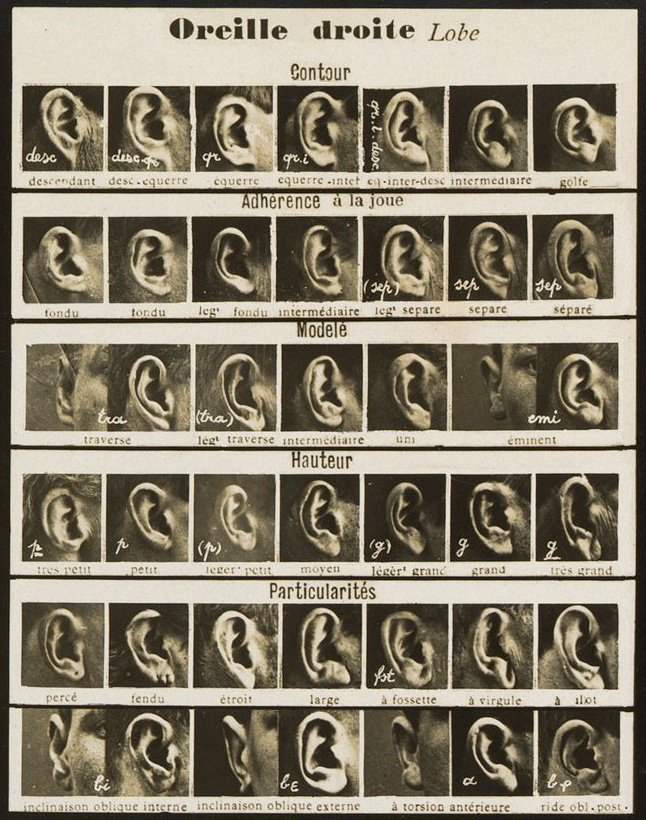







![Unknown photographer (American) '[Broadside for the Capture of John Wilkes Booth, John Surratt, and David Herold]' 1865](https://artblart.com/wp-content/uploads/2014/04/dp274835-murder-web.jpg "Unknown photographer (American) '[Broadside for the Capture of John Wilkes Booth, John Surratt, and David Herold]' 1865")
![Alexander Gardner (American, Glasgow, Scotland 1821 - 1882 Washington, D.C.) 'Lewis Powell [alias Lewis Payne]' April 27, 1865](https://artblart.com/wp-content/uploads/2016/07/lewis-powell-web.jpg "Alexander Gardner (American, Glasgow, Scotland 1821 - 1882 Washington, D.C.) 'Lewis Powell [alias Lewis Payne]' April 27, 186")


![Unknown photographer (American). '[Five Members of the Wild Bunch]' c. 1892](https://artblart.com/wp-content/uploads/2016/07/the-wild-bunch-web.jpg "Unknown photographer (American). '[Five Members of the Wild Bunch]' c. 1892")
![Tom Howard (American, 1894-1961) '[Electrocution of Ruth Snyder, Sing Sing Prison, Ossining, New York]' 1928](https://artblart.com/wp-content/uploads/2016/07/electrocution-of-ruth-snyder-web.jpg "Tom Howard (American, 1894-1961) '[Electrocution of Ruth Snyder, Sing Sing Prison, Ossining, New York]' 1928")

![Unknown photographer (American) '[Automobile Murder Scene]' c. 1935](https://artblart.com/wp-content/uploads/2016/07/automobile-murder-scene-circa-1935-web.jpg "Unknown photographer (American) '[Automobile Murder Scene]' c. 1935")
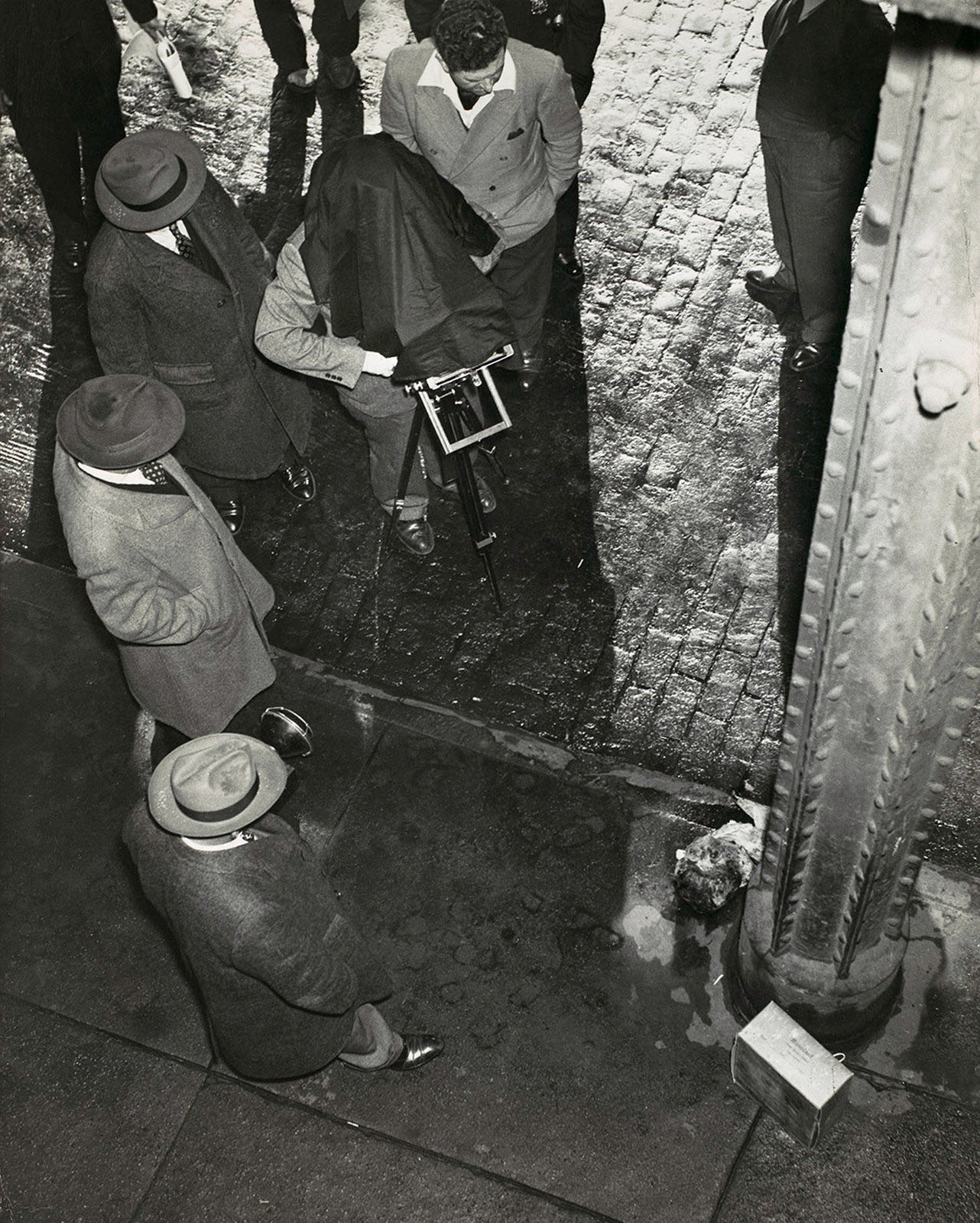

![Weegee (American, born Ukraine (Austria), Złoczów (Zolochiv) 1899 - 1968 New York) '[Outline of a Murder Victim]' 1942](https://artblart.com/wp-content/uploads/2016/07/weegee-outline-web.jpg "Weegee (American, born Ukraine (Austria), Złoczów (Zolochiv) 1899 - 1968 New York) '[Outline of a Murder Victim]' 1942")


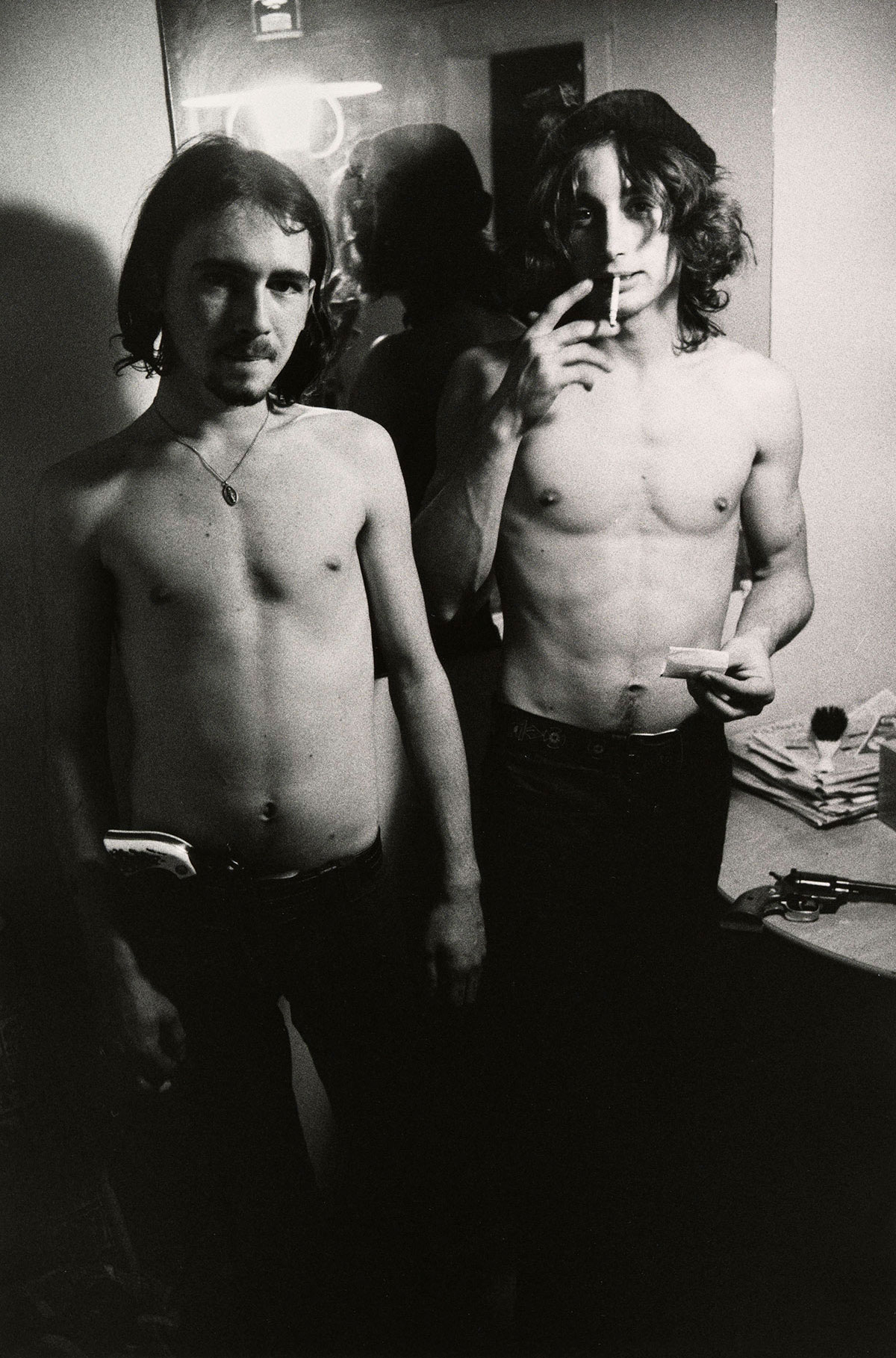
![United Press International (American) '[Bank Robber Aiming at Security Camera, Cleveland, Ohio]' March 8, 1975](https://artblart.com/wp-content/uploads/2016/07/cleveland-1975-web1.jpg "United Press International (American) '[Bank Robber Aiming at Security Camera, Cleveland, Ohio]' March 8, 1975")
 Art Blart _ art and cultural memory archive
You must be logged in to post a comment.