Exhibition: ‘Roman Vishniac Rediscovered’ at the International Center of Photography (ICP), New York

“Rediscovered! Rediscovered? Surely, such a splendid artist as Vishniac has never been away…” Dr Marcus Bunyan

Exhibition dates: 18th January – 5th May, 2013

Curator: Maya Benton
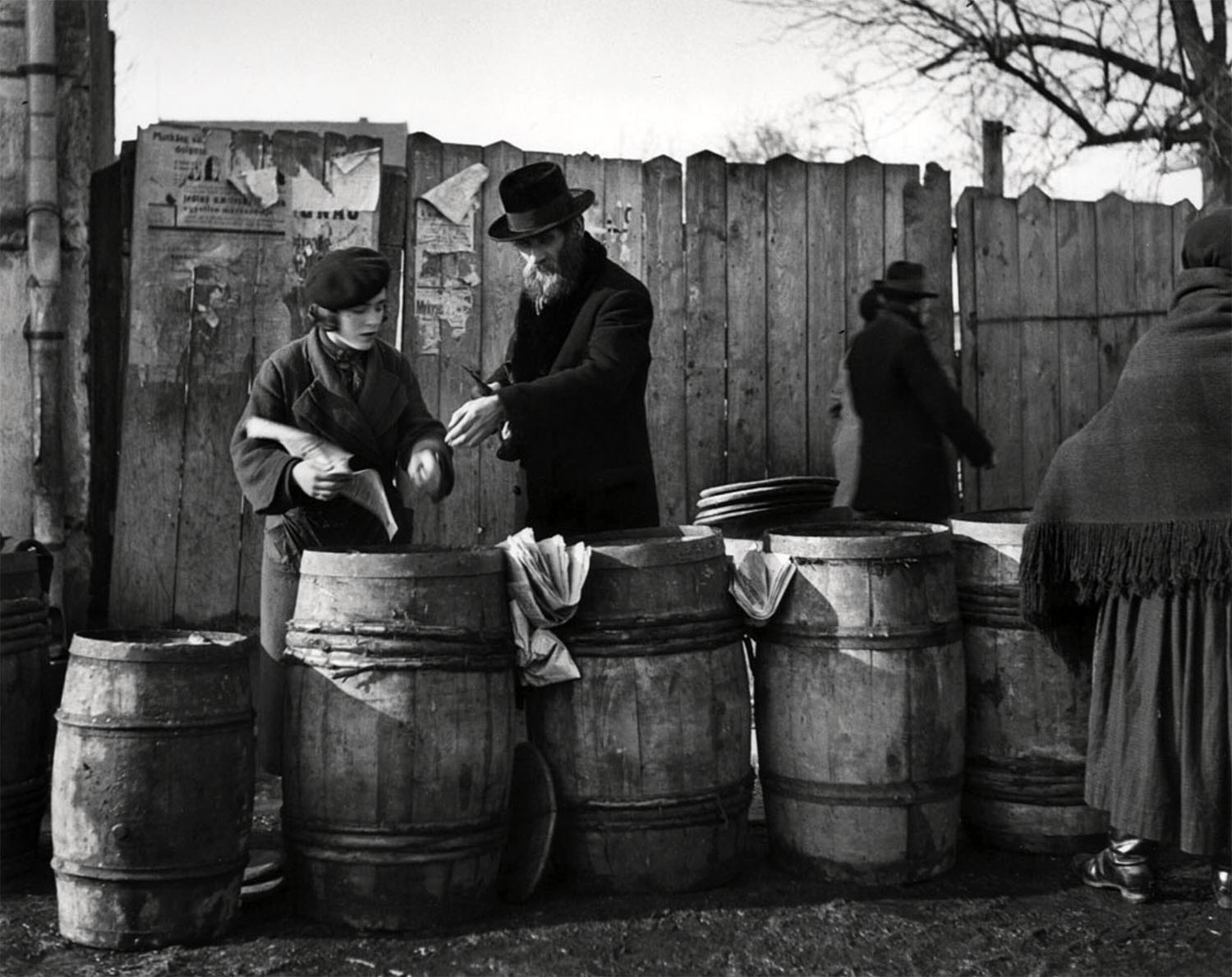
 

Roman Vishniac (Russian-American, 1897-1990) 'Herring for the traditional third meal of Shabbath, Mukachevo' 1937-1938 from the exhibition 'Roman Vishniac Rediscovered' at the International Center of Photography (ICP), New York, January - May, 2013


Roman Vishniac (Russian-American, 1897-1990)
Herring for the traditional third meal of Shabbath, Mukachevo
1937-1938
Gelatin silver print
10 1/2 x 13 3/8 inches
Courtesy International Center of Photography
© Mara Vishniac Kohn


“By repositioning Vishniac’s iconic photographs of Eastern Europe within the broader tradition of social documentary photography, and introducing recently discovered and radically diverse bodies of work, this exhibition stakes Vishniac’s claim as a modern master.”


ICP Adjunct Curator Maya Benton


Re/visioning

Rediscovered! Rediscovered? Surely, such a splendid artist as Vishniac has never been away…

Revealing “a compositional acuity, inventiveness, and surprising stylistic range” – in other words traces of Josef Sudek, Walker Evans, Rodchenko and New Photography – Vishniac’s best work is a record of its troubled time: a photographic record of Jewish life in Eastern Europe between the two World Wars. What the viewing public must be made aware of is the curatorial reinterpretation of his work, seeking as it does to solidify his place “among the 20th century’s most accomplished photographers.”

While some of the work on view may be new, the claims of curator Maya Benton (above) must be observed with a good deal of scepticism. What we need to understand is how his photographs are being interpreted across a range of frames of reference – from photojournalism, to social documentary photography and art – in order, as Maya Benton says, to “reposition” his iconic photographs within the broader tradition of social documentary photography. This repositioning is a form of re/visioning of an artist’s work to place it in a different context or frame of reference in order to increase its significance; or, by exclusion (as in the case of the S/M photographs by Robert Mapplethorpe that have been occluded by the Mapplethorpe Foundation), another context, make the work of an artist more socially palatable than would otherwise be the case.

The interpretation of Vishniac’s photographs becomes problematic depending on what frame of reference one applies to them and how their interpretation is negotiated between multiple, fluid points of view. Repositioning an artist’s work within a broader context changes the nature of the interpretation of that artist’s work and raises the pertinent question: who is repositioning this work and for what reason(s); who is pushing that agenda and curatorial barrow (in Benton’s case it is because she wants Vishniac’s work to be seen as that of a modern master, to make the credibility of the exhibition and the artist more than it possibly is).

What we must be fully aware of is the time and place in which Vishniac made the work and the conditions for its initial reception, not some stake in the ground claim of modern mastership.

Vishniac’s photographs frame the historical discourse of the end of Jewish culture in Eastern Europe and the rise of Fascism in Germany with erudition – for the past, present and future. Any other claims to eclecticism, applying different “repositioning” in particular cases, seems inelegant and shows a lack of consistency in clear thinking. When you really look at his work there is a sensitivity to the human condition in his work that is outstanding, coupled with a clear compositional structure and use of chiaroscuro. He was an excellent visual artist who had strong previsualisation that is evidenced in the prints. These photographs make insightful comment on the surrounding culture at the time of their production. Nothing more grandiose need be said.

Dr Marcus Bunyan


Many thankx to the ICP for allowing me to publish the photographs in the posting. Please click on the photographs for another version of the image.


Roman Vishniac (Russian-American, 1897-1990) 'Untitled [Jewish schoolchildren, Mukacevo]' c. 1935-1938 from the exhibition 'Roman Vishniac Rediscovered' at the International Center of Photography (ICP), New York, January - May, 2013


Roman Vishniac (Russian-American, 1897-1990)
Untitled [Jewish schoolchildren, Mukacevo]
c. 1935-1938
Gelatin silver print
Courtesy International Center of Photography
© Mara Vishniac Kohn


Roman Vishniac (Russian-American, 1897-1990) '[Boys admiring a motorcycle, Brandenburg, outskirts of Berlin]' 1929 - early 1930s (printed 2012)


Roman Vishniac (Russian-American, 1897-1990)
[Boys admiring a motorcycle, Brandenburg, outskirts of Berlin]
1929 – early 1930s (printed 2012)
12 x 11 1/2 in. (30.5 x 29.2cm)
Gelatin silver print
Courtesy International Center of Photography
© Mara Vishniac Kohn


Roman Vishniac (Russian-American, 1897-1990) 'Untitled [Boy with kindling in basement dwelling, Krochmalna Street, Warsaw]' c. 1935-1938


Roman Vishniac (Russian-American, 1897-1990)
Untitled [Boy with kindling in basement dwelling, Krochmalna Street, Warsaw]
c. 1935-1938
Gelatin silver print
Courtesy International Center of Photography
© Mara Vishniac Kohn


Roman Vishniac (Russian-American, 1897-1990) 'Untitled [Interior of the Anhalter Bahnhof, a railway terminus near Potsdamer Platz, Berlin]' late 1920s - early 1930s


Roman Vishniac (Russian-American, 1897-1990)
Untitled [Interior of the Anhalter Bahnhof, a railway terminus near Potsdamer Platz, Berlin]
Late 1920s – early 1930s
Gelatin silver print
Courtesy International Center of Photography
© Mara Vishniac Kohn


Roman Vishniac Rediscovered, on view at the International Center of Photography (1133 Avenue of the Americas at 43rd Street) January 18 – May 5, 2013, brings together four decades of work by a remarkably versatile and innovative photographer. The exhibition includes recently discovered vintage prints, moving film footage, personal correspondence, and exhibition prints made from Vishniac’s recently digitised negatives. His complex and visionary work, much of which is shown here for the first time, reveals a compositional acuity, inventiveness, and surprising stylistic range that solidifies his place among the 20th century’s most accomplished photographers.

Vishniac created the most widely recognised and reproduced photographic record of Jewish life in Eastern Europe between the two World Wars. Yet only a fraction of his work was published during his lifetime, most notably in A Vanished World (1983). Over the course of his career, Vishniac witnessed the sweeping artistic and photographic innovation of Weimar Berlin, the ominous rise to Nazi power in Germany, the final years of Jewish life in Eastern Europe, and immigrant life in America during and after the war.

“By repositioning Vishniac’s iconic photographs of Eastern Europe within the broader tradition of social documentary photography, and introducing recently discovered and radically diverse bodies of work, this exhibition stakes Vishniac’s claim as a modern master,” said ICP Adjunct Curator Maya Benton, who organised the exhibition.

Born in 1897 to a wealthy Russian-Jewish family, Vishniac immigrated to Berlin in 1920 in the aftermath of the Russian Revolution. As an amateur photographer, he took to the streets with his camera throughout the 1920s and ’30s, offering astute, often humorous visual commentary on his adopted city and experimented with new and modern approaches to framing and composition. Documenting the rise of Nazi power, he focused his lens on the signs of oppression and doom that soon formed the backdrop of his Berlin street photography. From 1935 to 1938, while living in Berlin and working as a biologist and science photographer, he was commissioned by the American Jewish Joint Distribution Committee (JDC), then the world’s largest Jewish relief organisation, to photograph impoverished Jewish communities in Central and Eastern Europe. On New Year’s Day, 1941, he arrived in New York and soon opened a portrait studio. At the same time, he began documenting American Jewish communal and immigrant life and established himself as a pioneer in the field of photomicroscopy. In 1947, Vishniac returned to Europe and documented Jewish displaced persons camps and the ruins of Berlin. During this time, he also recorded the efforts of Holocaust survivors to rebuild their lives, and the work of the JDC and other Jewish relief organisations in providing them with aid and emigration assistance.

Roman Vishniac Rediscovered is a comprehensive reappraisal of Vishniac’s total photographic output, from the early years in Berlin through the postwar period. The exhibition also includes a slideshow of 100 colour science transparencies – digitised for the first time – of Vishniac’s microphotoscopy, taken from the early 1950s to the late 1970s. In addition to the exhibition, a primary task of the archive is to make this work available for research, in partnership with the United States Holocaust Memorial Museum.

Press release from the ICP website


Sections of the exhibition

~ Introduction: Roman Vishniac Rediscovered
~ Berlin Street Photography, 1920s-30s
~ Nazi Rise to Power in Germany, 1933-1938
~ German Jewish Relief and Community Organizations, Berlin, mid- to late 1930s
~ Jewish Life in Eastern Europe, c. 1935-38
~ Werkdorp Nieuwesluis Agrarian Training Camp, Wieringermeer, The Netherlands, c. 1938
~ Travel, Refuge, and Internment in France: Paris, Nice, and Marseille, c. 1939
~ Portrait Studio and Nightclubs, America, 1941 – early 1950s
~ YIVO Exhibitions in New York, January 1944 and January 1945
~ Immigrants and Refugees, New York, 1941 – early 1950s
~ “The Face of America at War”: New York, 1941-1944
~ Jewish Community Life, New York, 1941 – early 1950s
~ Berlin in Ruins, 1947
~ Refugees and Displaced Persons Camps, Germany and France, 1947
~ Scientific Work and Photomicroscopy, America, early 1950s – late 1970s
~ Vishniac’s Scrapbook


Roman Vishniac (Russian-American, 1897-1990) 'Untitled [Street scene with swastika flag in background, Berlin]' c. 1935-36


Roman Vishniac (Russian-American, 1897-1990)
Untitled [Street scene with swastika flag in background, Berlin]
c. 1935-1936
Gelatin silver print
Courtesy International Center of Photography
© Mara Vishniac Kohn


Roman Vishniac (Russian-American, 1897-1990) 'Untitled [Nazi Storm Troopers marching next to the Arsenal in front of the Berlin Cathedral]' c. 1935


Roman Vishniac (Russian-American, 1897-1990)
Untitled [Nazi Storm Troopers marching next to the Arsenal in front of the Berlin Cathedral]
c. 1935
Gelatin silver print
Courtesy International Center of Photography
© Mara Vishniac Kohn


Roman Vishniac (Russian-American, 1897-1990) 'Untitled [Beach dwellers in the afternoon, Nice, France]' c. 1939


Roman Vishniac (Russian-American, 1897-1990)
Untitled [Beach dwellers in the afternoon, Nice, France]
c. 1939
Gelatin silver print
Courtesy International Center of Photography
© Mara Vishniac Kohn
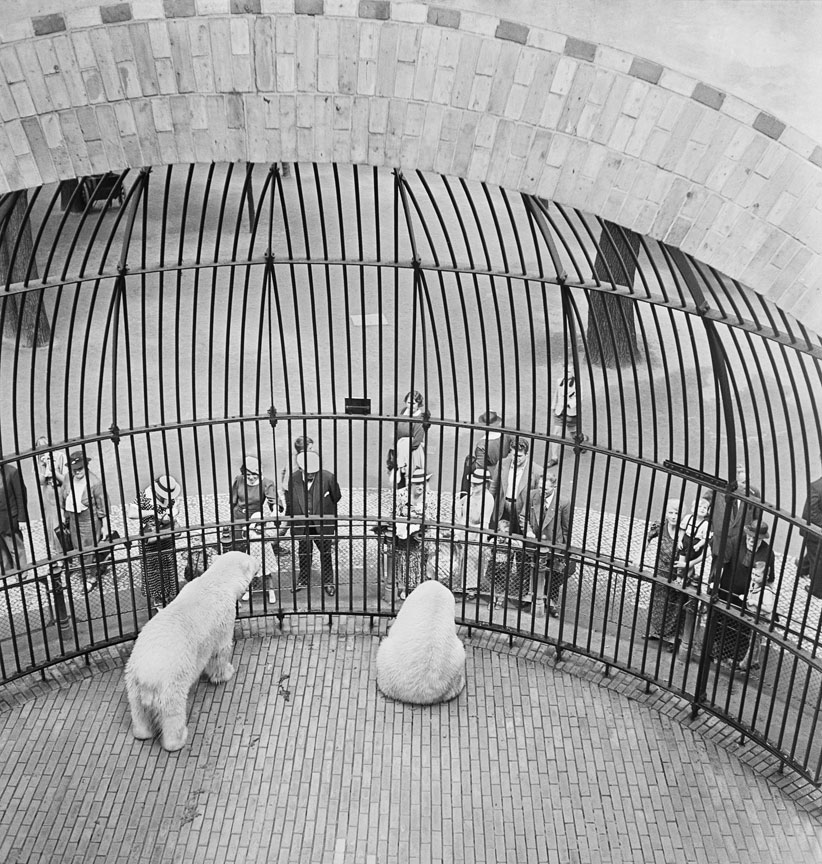
 

Roman Vishniac (Russian-American, 1897-1990) 'People behind bars, Berlin Zoo' early 1930s


Roman Vishniac (Russian-American, 1897-1990)
People behind bars, Berlin Zoo
Early 1930s
Gelatin silver print
Courtesy International Center of Photography
© Mara Vishniac Kohn


Roman Vishniac (Russian-American, 1897-1990) 'Untitled [Zionist youth building a school and foundry while learning construction techniques, Werkdorp Nieuwesluis, Wieringermeer, The Netherlands]' 1939


Roman Vishniac (Russian-American, 1897-1990)
Untitled [Zionist youth building a school and foundry while learning construction techniques, Werkdorp Nieuwesluis, Wieringermeer, The Netherlands]
1939
Gelatin silver print
Courtesy International Center of Photography
© Mara Vishniac Kohn
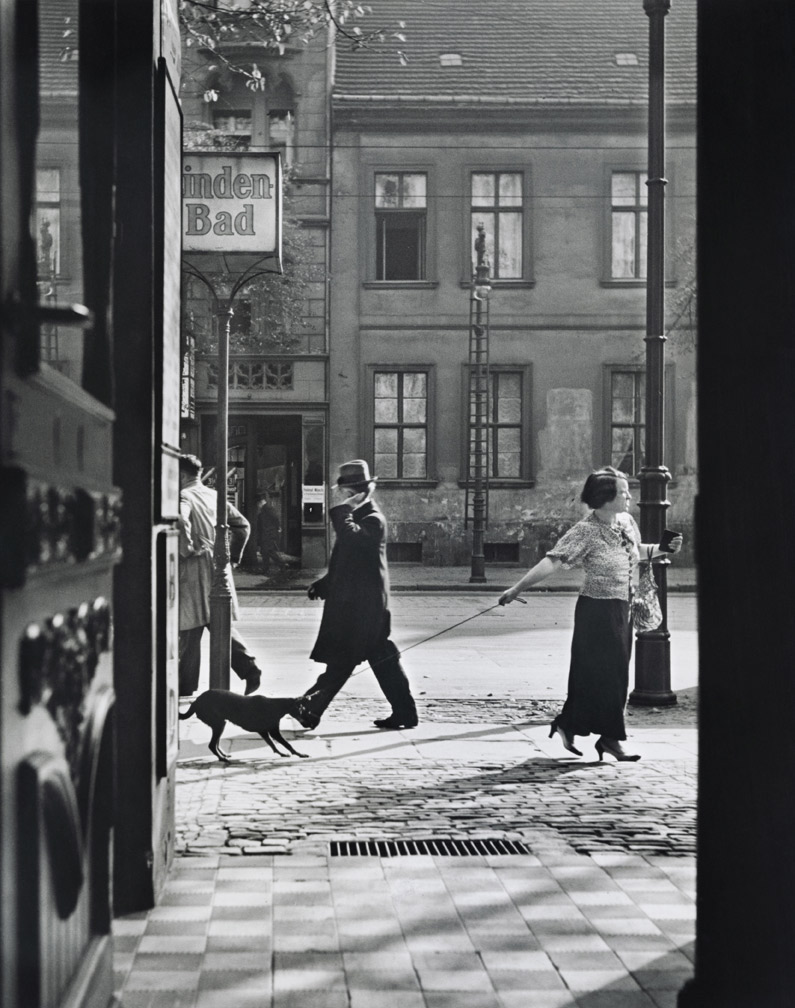
 

Roman Vishniac (Russian-American, 1897-1990) 'Recalcitrance' Berlin, 1926


Roman Vishniac (Russian-American, 1897-1990)
Recalcitrance
Berlin, 1926
Gelatin silver print
Courtesy International Center of Photography
© Mara Vishniac Kohn


Roman Vishniac (Russian-American, 1897-1990) 'Father taking his son to the first day of cheder' 1937-1938


Roman Vishniac (Russian-American, 1897-1990)
Father taking his son to the first day of cheder
1937-1938
Gelatin silver print
Image (paper): 3 1/2 x 3 1/2 in. (8.9 x 8.9cm)
Courtesy International Center of Photography
© Mara Vishniac Kohn


Roman Vishniac (Russian-American, 1897-1990) '[Vishniac's daughter Mara posing in front of an election poster for Hindenburg and Hitler that reads "The Marshal and the Corporal: Fight with Us for Peace and Equal Rights," Wilmersdorf, Berlin]' 1933


Roman Vishniac (Russian-American, 1897-1990)
[Vishniac’s daughter Mara posing in front of an election poster for Hindenburg and Hitler that reads “The Marshal and the Corporal: Fight with Us for Peace and Equal Rights,” Wilmersdorf, Berlin]
1933
Gelatin silver print
12 1/8 x 15 11/16 in. (30.8 x 39.8cm)
Courtesy International Center of Photography
© Mara Vishniac Kohn


Vishniac’s daughter Mara, age seven, was photographed standing in front of this 1933 poster celebrating Hitler’s recent appointment as German chancellor. The poster advertises a plebiscite to permit withdrawal from the League of Nations and Geneva Disarmament Conference, which restricted Germany’s ability to develop a military. Other posters include the slogans “Mothers, fight for your children!,” “The coming generation accuses you!,” and “In 8 months… 2,250,000 countrymen able to put food on the table. Bolshevism destroyed. Sectionalism overcome. A kingdom and order of cleanliness built… Those are the achievements of Hitler’s rule…”

Label text from the exhibition


Roman Vishniac (Russian-American, 1897-1990) 'Children playing on a street lined with swastika flags' mid-1930s


Roman Vishniac (Russian-American, 1897-1990)
Children playing on a street lined with swastika flags
mid-1930s
Gelatin silver print
12 x 11 3/8 in. (30.5 x 29cm)
Courtesy International Center of Photography
© Mara Vishniac Kohn


Roman Vishniac (Russian-American, 1897-1990) 'Window washer balancing on a ladder, Berlin' mid-1930s


Roman Vishniac (Russian-American, 1897-1990)
Window washer balancing on a ladder, Berlin
mid-1930s
Gelatin silver print
11 3/8 x 9 in. (29 x 22.9cm)
Courtesy International Center of Photography
© Mara Vishniac Kohn
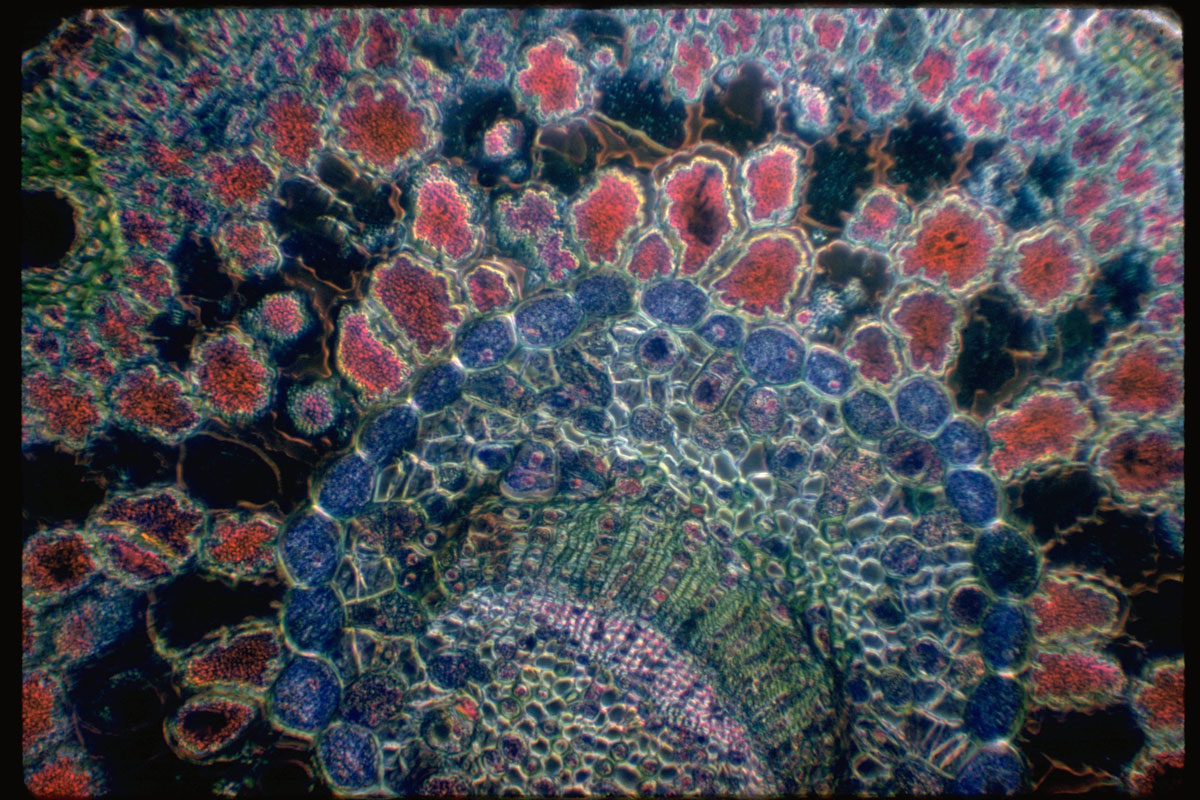
 

Roman Vishniac (Russian-American, 1897-1990) 'Cross section of a pine needle' Early 1950s - late 1970s


Roman Vishniac (Russian-American, 1897-1990)
Cross section of a pine needle
Early 1950s – late 1970s
Digital file from colour transparency
Courtesy International Center of Photography
© Mara Vishniac Kohn


International Center of Photography
79 Essex Street, New York, NY 10002
between Delancey Street and Broome Street

Opening hours:
Wednesday – Monday 11am – 7pm
Closed Tuesdays

International Center of Photography website

LIKE ART BLART ON FACEBOOK

Back to top

Exhibition: ‘Gordon Parks: Centennial’ at Jenkins Johnson Gallery, San Francisco

Exhibition dates: 21st February – 27th April, 2013

Curator: organised in direct collaboration with The Gordon Parks Foundation


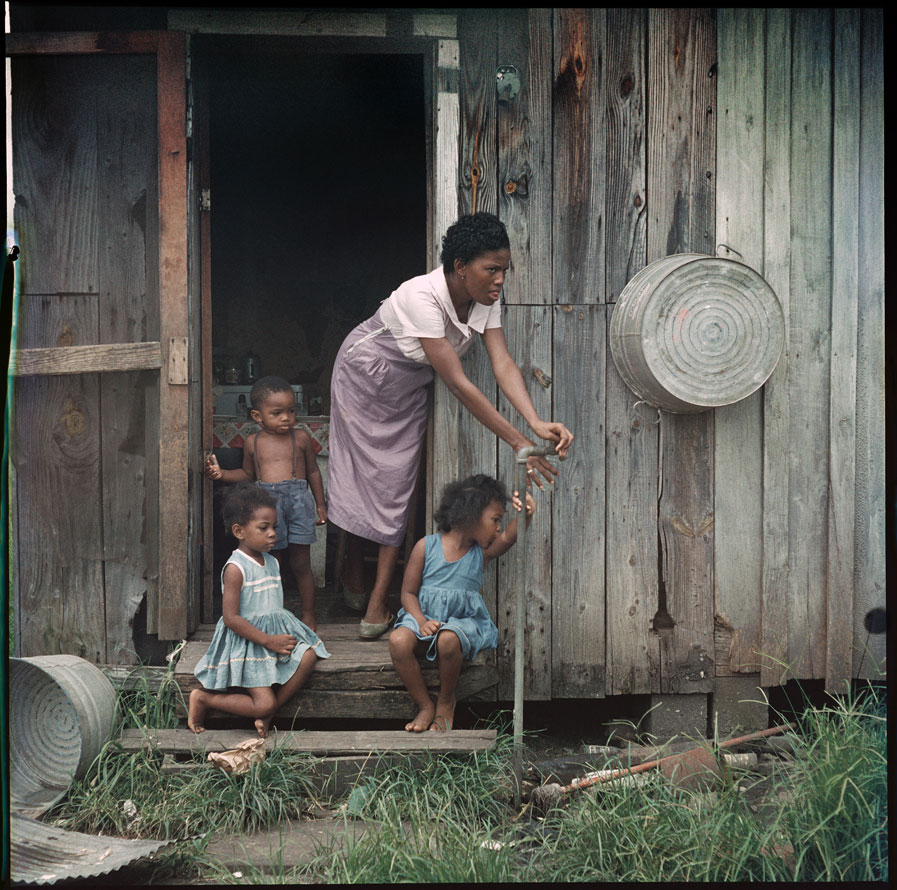
Gordon Parks (American, 1912-2006) 'Ondria Tanner and Her Grandmother Window-shopping, Mobile, Alabama' 1956


Gordon Parks (American, 1912-2006)
Ondria Tanner and Her Grandmother Window-shopping, Mobile, Alabama
1956
Edition 19 of 25
Pigment print
14 x 14 inches
Modern print
© The Gordon Parks Foundation


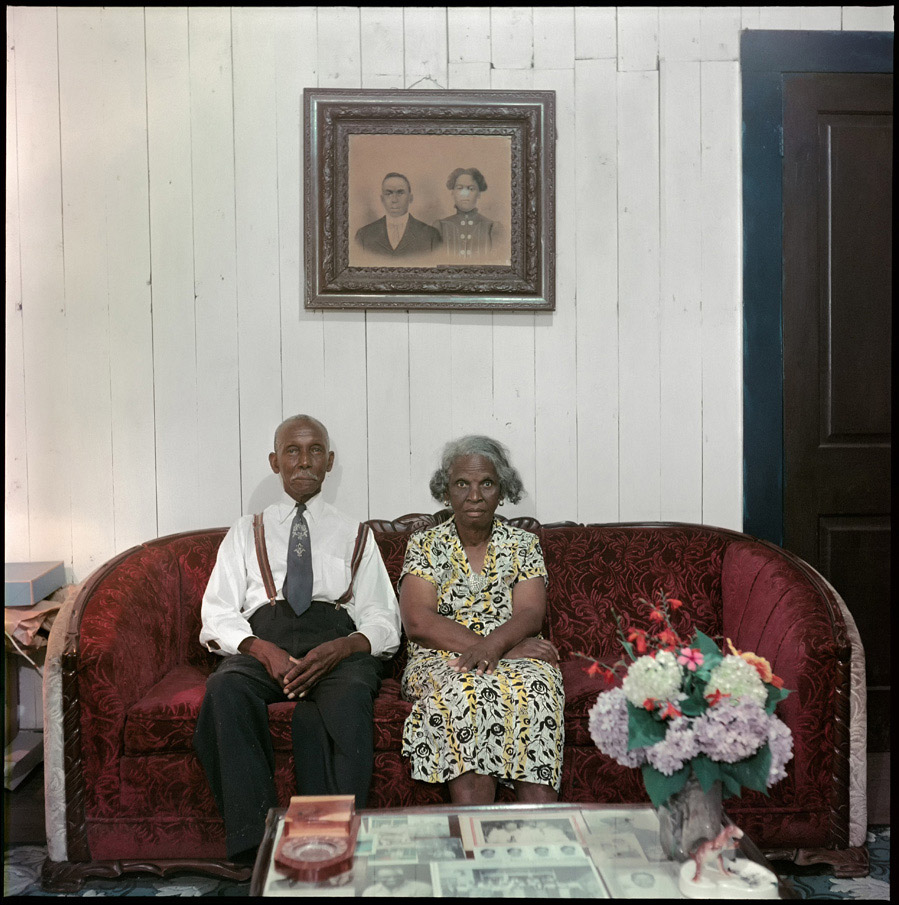
What an admirable photographer Gordon Parks was. It is a joy to see five of his colour photographs in this posting because I have never seen any before. They are glorious, complex compositions that ebb and flow like music whilst at the same time they are also damning indictments of the racially segregated society that was America in the 1950s (and still is today). Bitterness, discrimination and racism have deep roots in any country – just look at contemporary Australia. The little girl looks on in Ondria Tanner and Her Grandmother Window-shopping (1956, above), her left index finger bent upward on the pane of glass as the prettily dressed white, automaton mannequins march on, oblivious to her gaze; Mr. and Mrs. Albert Thornton, Mobile, Alabama  (1956, below) are surrounded by photographs, their pose mimicking that of their parents hanging behind them, while before them on the coffee table (under glass) are other, younger members of their extended family. Past, present and future coalesce in this one poignant image.

“Sensibility” is based on personal impressions of pleasure or pain. The sensibility of Parks photographs is a refined sensitivity based on experience – his experience of the discrimination of human beings toward each other. These hard-wired responses toward such a situation will vary from person to person.

These photographs were his hard-wired response. This was his feeling towards subject matter and that is why these insightful photographs still matter to us today.

Dr Marcus Bunyan


Many thankx to the Jenkins Johnson Gallery for allowing me to publish the photographs in the posting. Please click on the photographs for a larger version of the image.


Gordon Parks is the most important black photographer in the history of photojournalism. Long after the events that he photographed have been forgotten, his images will remain with us, testaments to the genius of his art, transcending time, place and subject matter.


Dr Henry Louis Gates


Gordon Parks (American, 1912-2006) 'At Segregated Drinking Fountain, Mobile, Alabama' 1956


Gordon Parks (American, 1912-2006)
At Segregated Drinking Fountain, Mobile, Alabama
1956
Edition 19 of 25
Pigment print
14 x 14 inches
Modern print
© The Gordon Parks Foundation


Gordon Parks (American, 1912-2006) 'Department Store, Mobile, Alabama' 1956


Gordon Parks (American, 1912-2006)
Department Store, Mobile, Alabama
1956
Edition 20 of 25
Pigment print
14 x 14 inches
Modern print
© The Gordon Parks Foundation


Gordon Parks (American, 1912-2006)
'Mother and Children, Mobile, Alabama' 1956


Gordon Parks (American, 1912-2006)
Mother and Children, Mobile, Alabama
1956
Edition 17 of 25
Pigment print
13 7/8 x 14 inches
Modern print
© The Gordon Parks Foundation


Gordon Parks (American, 1912-2006) 'Mr. and Mrs. Albert Thornton, Mobile, Alabama' 1956


Gordon Parks (American, 1912-2006)
Mr. and Mrs. Albert Thornton, Mobile, Alabama
1956
Edition 17 of 25
Pigment print
14 1/8 x 14 inches
Modern print
© The Gordon Parks Foundation


In celebration of the 100th birthday of Gordon Parks, one of the most influential African American photographers of the 20th century, Jenkins Johnson Gallery in collaboration with The Gordon Parks Foundation presents Gordon Parks: Centennial, on view from February 21 through April 27, 2013. Gordon Parks, an iconic photographer, writer, composer, and filmmaker, would have turned 100 on November 30, 2012. This will be the first solo exhibition for Parks on the West Coast in thirteen years. The exhibition will survey works spanning six decades of the artist’s career starting in 1940. The exhibition consists of more than seventy-five gelatin silver and pigment prints, including selections from Life magazine photo essays: Invisible Man, 1952; Segregation Story, 1956; The Black Panthers, 1970; and Flavio, 1960, about favelas in Brazil. Also included in the exhibition is his reinterpretation of American Gothic and his elegant depictions of artists like Alexander Calder, fashion models, and movie stars.

Noteworthy highlights include groundbreaking prints from the Invisible Man series which unfolds a visual narrative based on Ralph Ellison’s award winning novel. The images capture the essence of social isolation and the struggle of a black man who feels invisible to the outside world. Also on view will be a number of colour prints from Segregation Story, 1956, which are a part of a limited edition portfolio of twelve colour photographs with an essay by Maurice Berger. Newly released, these images were produced from transparencies found in early 2012, discovered in a storage box at The Gordon Parks Foundation. In the late 1960s Life magazine asked Gordon Parks to report on the Oakland, California-based Black Panther Party, including Eldridge Cleaver. Parks’ striking image of Eldridge Cleaver and His Wife, Kathleen, Algiers, Algeria, 1970 depicts Cleaver recovering from gun wounds after being ambushed by the Oakland police as well as an insert of Huey P. Newton, co-founder of the party along with Bobby Seale.

About Gordon Parks

Parks was born into poverty in Fort Scott, Kansas in 1912, the youngest of fifteen children. He worked several odd jobs until he bought a camera at a Pawn Shop in 1937 in Seattle and was hired to photograph fashion at a department store in Minneapolis. In 1942 Parks received a photography fellowship from the Farm Security Administration, succeeding Dorothea Lange among others. While at the F.S.A., Parks created American Gothic, now known as one of his signature images, in which he shows Ella Watson, a cleaning women, holding a mop and broom, standing in front of an American flag. The image makes a poignant commentary on social injustice whilst referencing Grant Wood’s celebrated painting American Gothic which it is also named after. He became a freelance photographer working for Vogue as well as publishing two books, Flash Photography (1947) and Camera Portraits: Techniques and Principles of Documentary Portraiture (1948). In 1948 Parks was hired by Life magazine to do a photographic essay on Harlem gang leader, Red Jackson, which led to a permanent position at Life, where he worked for twenty years. Parks developed his skills as a composer and author and in 1969 he became the first African American to direct a major motion picture, The Learning Tree based on his best selling novel and in 1971 he directed Shaft. A true Renaissance man, Gordon Parks passed away in 2006.

As Philip Brookman, curator of photography and media arts at the Corcoran, states, “Gordon Parks’ art has now changed the way we perceive and remember chronic issues, such as race, poverty, and crime, just as it has influenced our understanding of beauty: of nature, landscape, childhood, fashion, and memory.”

Press release from the Jenkins Johnson Gallery website


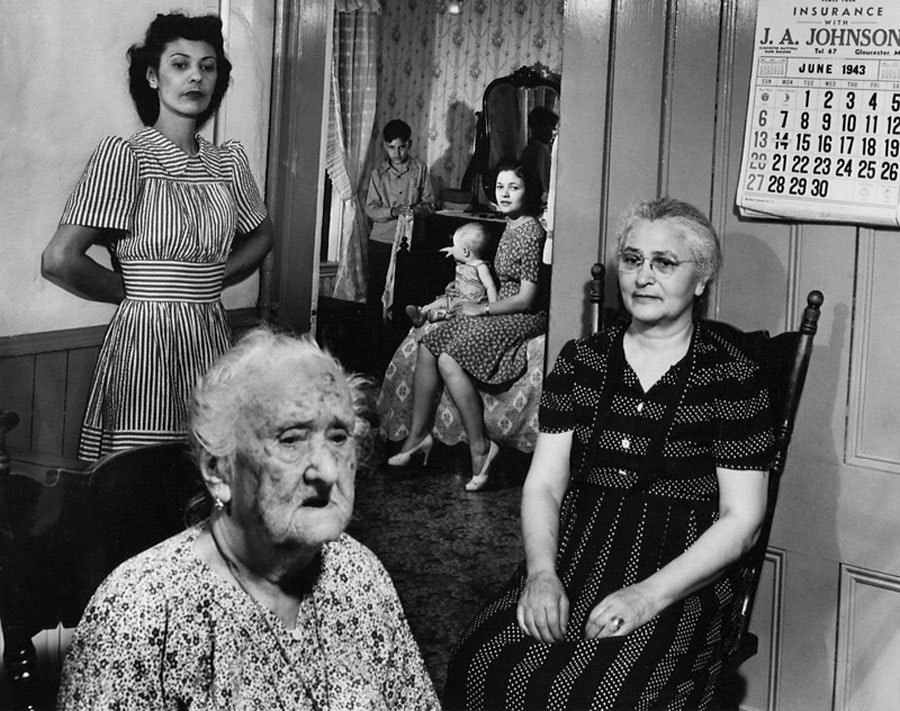
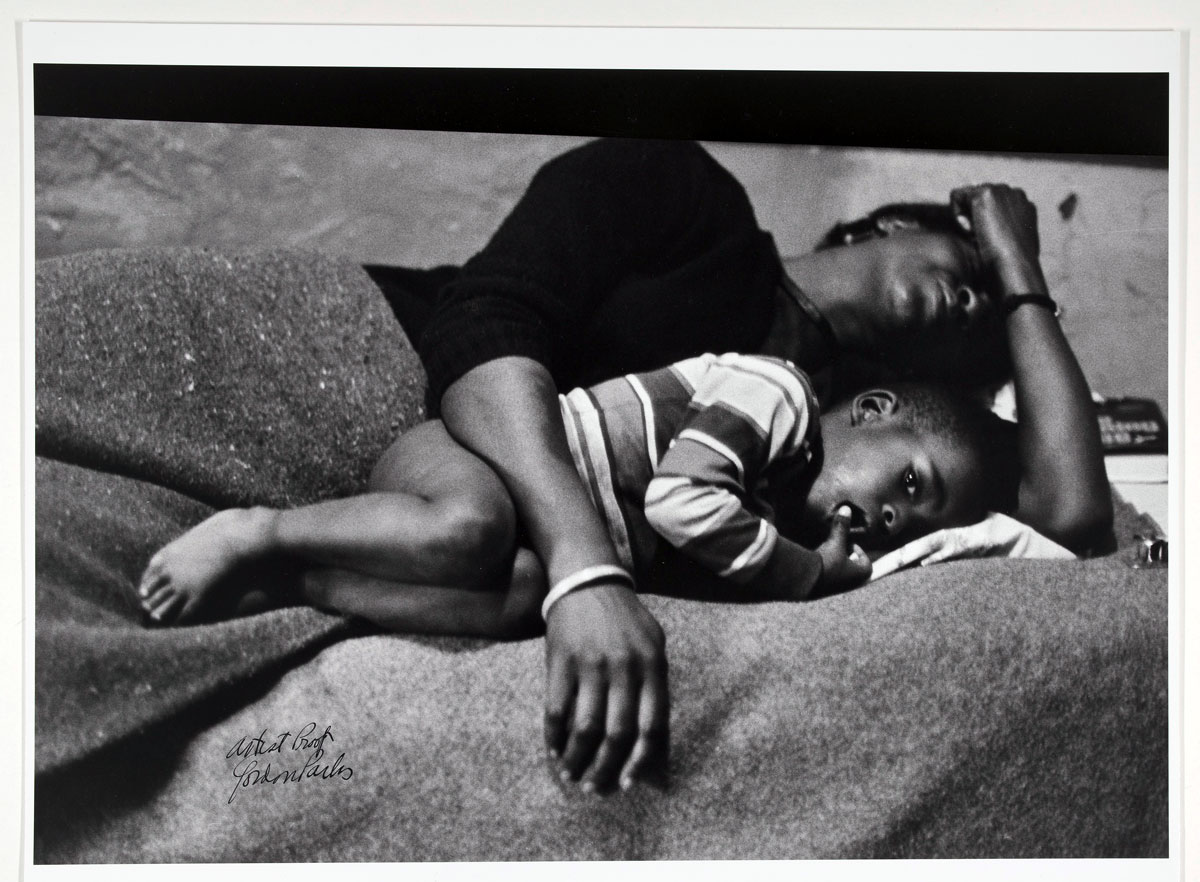
Gordon Parks (American, 1912-2006) 'Mary Machado, Mother of Isabell Lopez, and Family, Gloucester, Massachusetts' 1943


Gordon Parks (American, 1912-2006)
Mary Machado, Mother of Isabell Lopez, and Family, Gloucester, Massachusetts
1943
Gelatin silver print
© The Gordon Parks Foundation


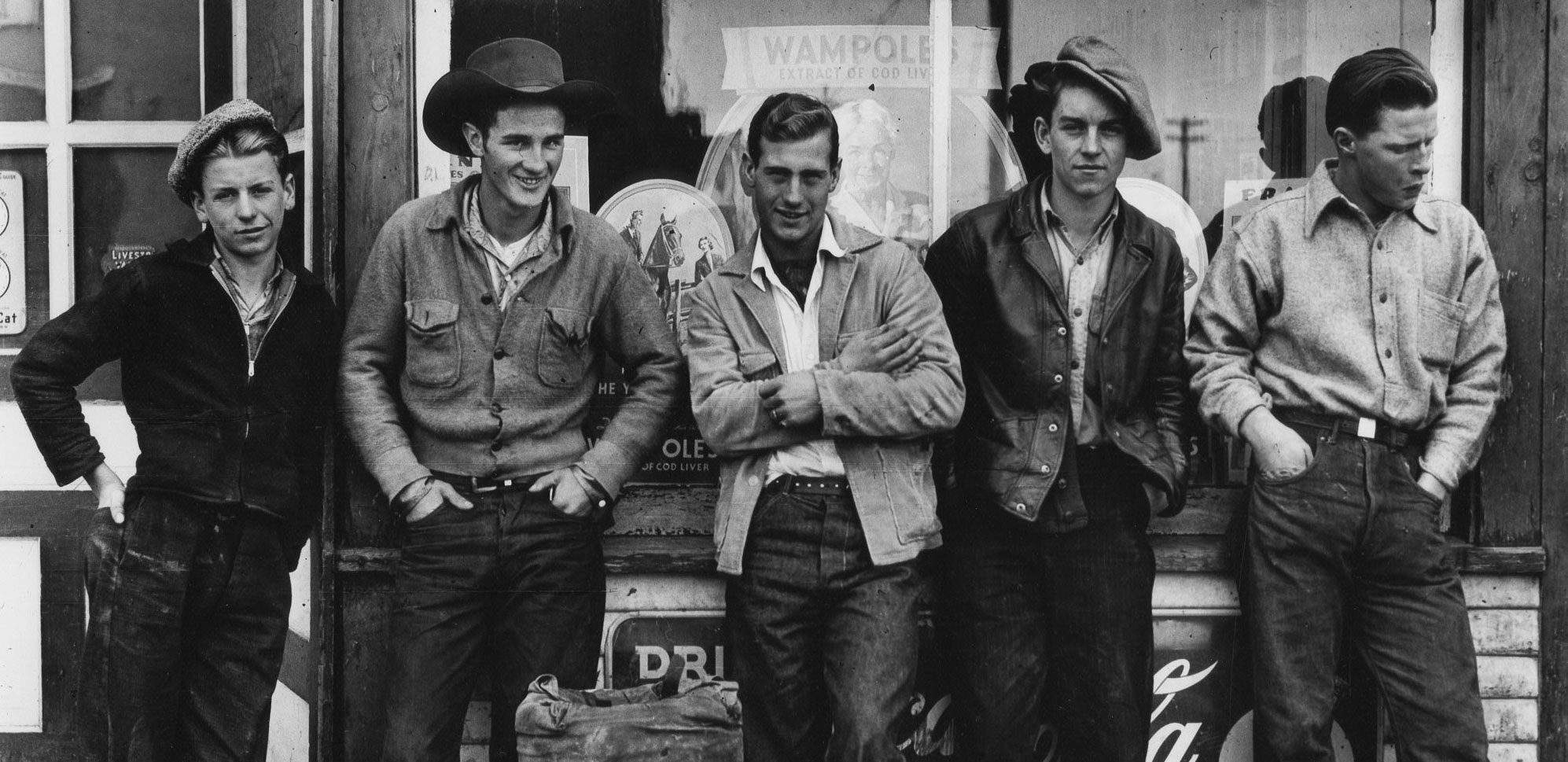
Gordon Parks (American, 1912-2006) 'Drugstore Cowboys, Turner Valley, Canada' 1945


Gordon Parks (American, 1912-2006)
Drugstore Cowboys, Turner Valley, Canada
1945
Gelatin silver print
9 7/8 x 12 7/8 inches
Modern print
© The Gordon Parks Foundation


Gordon Parks (American, 1912-2006) 'Untitled' 1950


Gordon Parks (American, 1912-2006)
Untitled
1950
Gelatin silver print
© The Gordon Parks Foundation


Gordon Parks (American, 1912-2006) 'Tenement Dwellers, Chicago, Illinois' 1950


Gordon Parks (American, 1912-2006)
Tenement Dwellers, Chicago, Illinois
1950
Gelatin silver print
7 x 9 inches
Modern print
© The Gordon Parks Foundation


Gordon Parks (American, 1912-2006) 'Mysticism, Harlem, New York' 1952


Gordon Parks (American, 1912-2006)
Mysticism, Harlem, New York
1952
Gelatin silver print
10 5/8 x 10 3/8 inches
Vintage print
© The Gordon Parks Foundation


Gordon Parks (American, 1912-2006) 'Harlem Neighborhood, Harlem, New York' 1952


Gordon Parks (American, 1912-2006)
Harlem Neighborhood, Harlem, New York
1952
Gelatin silver print
10 3/8 x 13 1/2 inches
Vintage print
© The Gordon Parks Foundation


Gordon Parks (American, 1912-2006) 'The Invisible Man, Harlem, New York' 1952


Gordon Parks (American, 1912-2006)
The Invisible Man, Harlem, New York
1952
Edition 1 of 10
Pigment print
14 1/8 x 14 inches
Modern print
© The Gordon Parks Foundation


Gordon Parks (American, 1912-2006) 'Muhammad Ali' 1966


Gordon Parks (American, 1912-2006)
Muhammad Ali
1966
Gelatin silver print
© The Gordon Parks Foundation


Gordon Parks (American, 1912-2006) 'Ellen's Feet, Harlem, New York' 1967


Gordon Parks (American, 1912-2006)
Ellen’s Feet, Harlem, New York
1967
Gelatin silver print
6 1/4 x 9 3/8 inches
Modern print
© The Gordon Parks Foundation


Gordon Parks (American, 1912-2006) 'Norman Fontenelle, Sr., Harlem, New York' 1967


Gordon Parks (American, 1912-2006)
Norman Fontenelle, Sr., Harlem, New York
1967
Gelatin silver print
13 x 9 1/8 inches
Modern print
© The Gordon Parks Foundation


Gordon Parks (American, 1912-2006) 'Bessie and Little Richard the Morning After She Scalded Her Husband, Harlem, New York, 1968' 1968


Gordon Parks (American, 1912-2006)
Bessie and Little Richard the Morning After She Scalded Her Husband, Harlem, New York, 1968
1968
Gelatin silver print
© The Gordon Parks Foundation


Jenkins Johnson Gallery
1275 Minnesota Street, #200
San Francisco, CA 94107
Phone: 415.677.0770

Opening hours:
Tuesday – Saturday 11am – 5pm

Jenkins Johnson Gallery website

LIKE ART BLART ON FACEBOOK

Back to top

Marcus Bunyan black and white archive: ‘Ignudi’, 1994

April 2013

PLEASE NOTE: THIS POSTING CONTAINS ART PHOTOGRAPHS OF MALE NUDITY – IF YOU DO NOT LIKE PLEASE DO NOT LOOK, FAIR WARNING HAS BEEN GIVEN


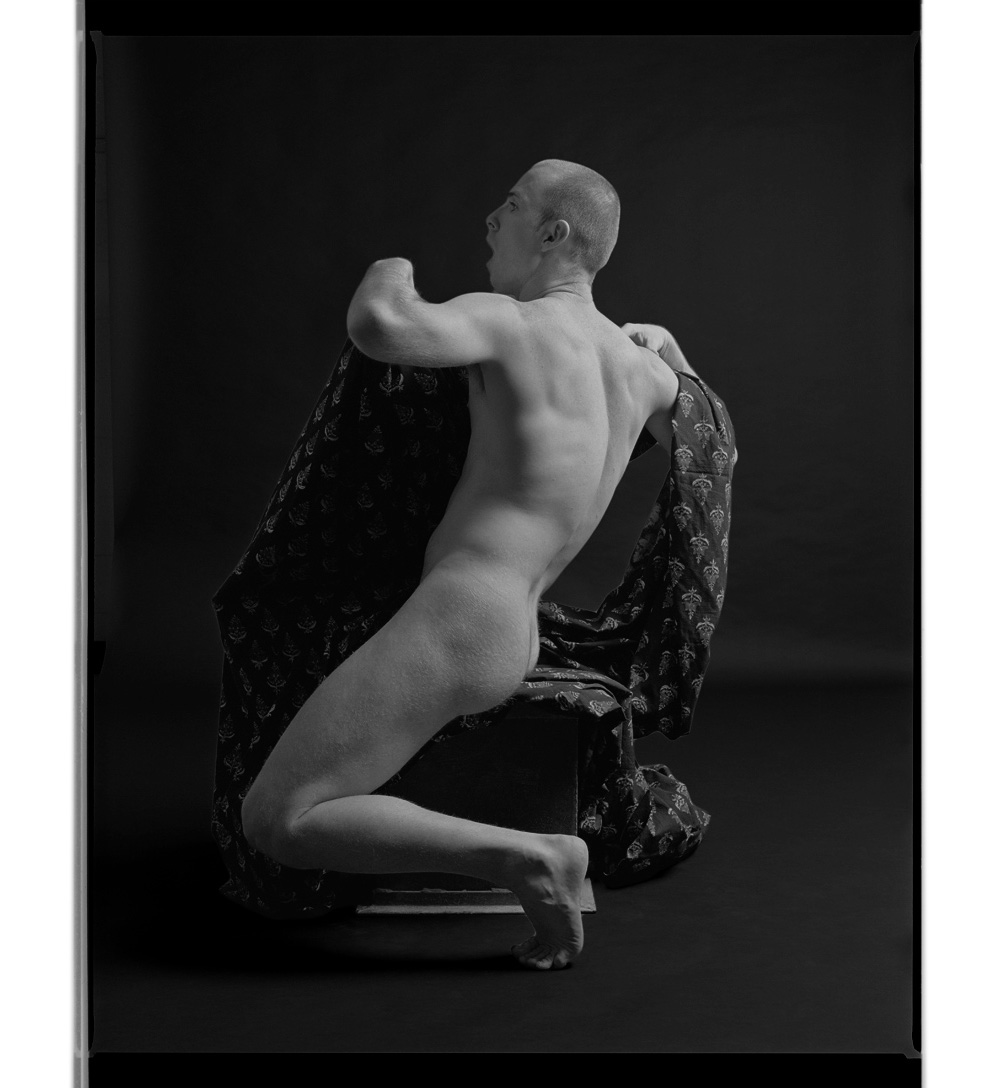
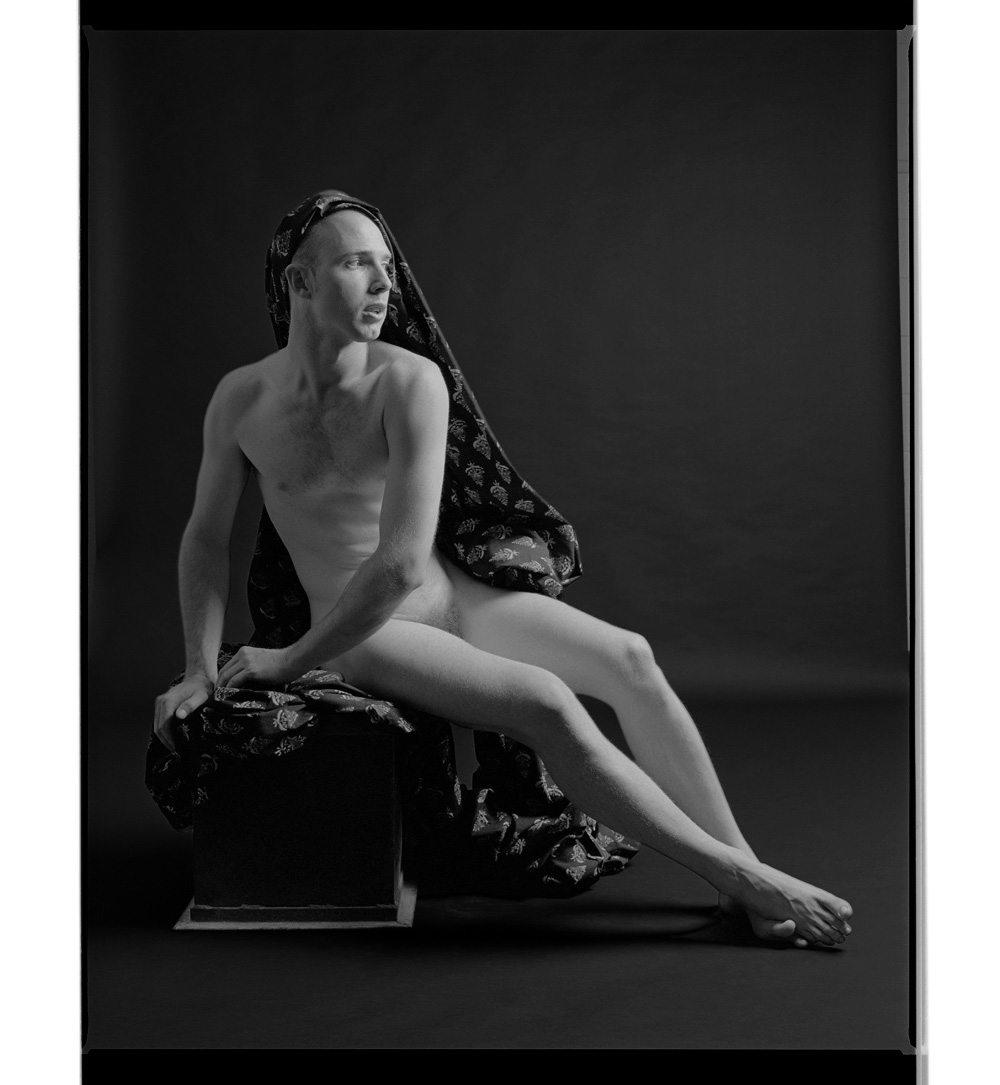
Marcus Bunyan (Australian, b. 1958) 'Untitled' 1994 from the series 'Ignudi'


Marcus Bunyan (Australian, b. 1958)
Untitled
1994
From the series Ignudi
Silver gelatin photograph


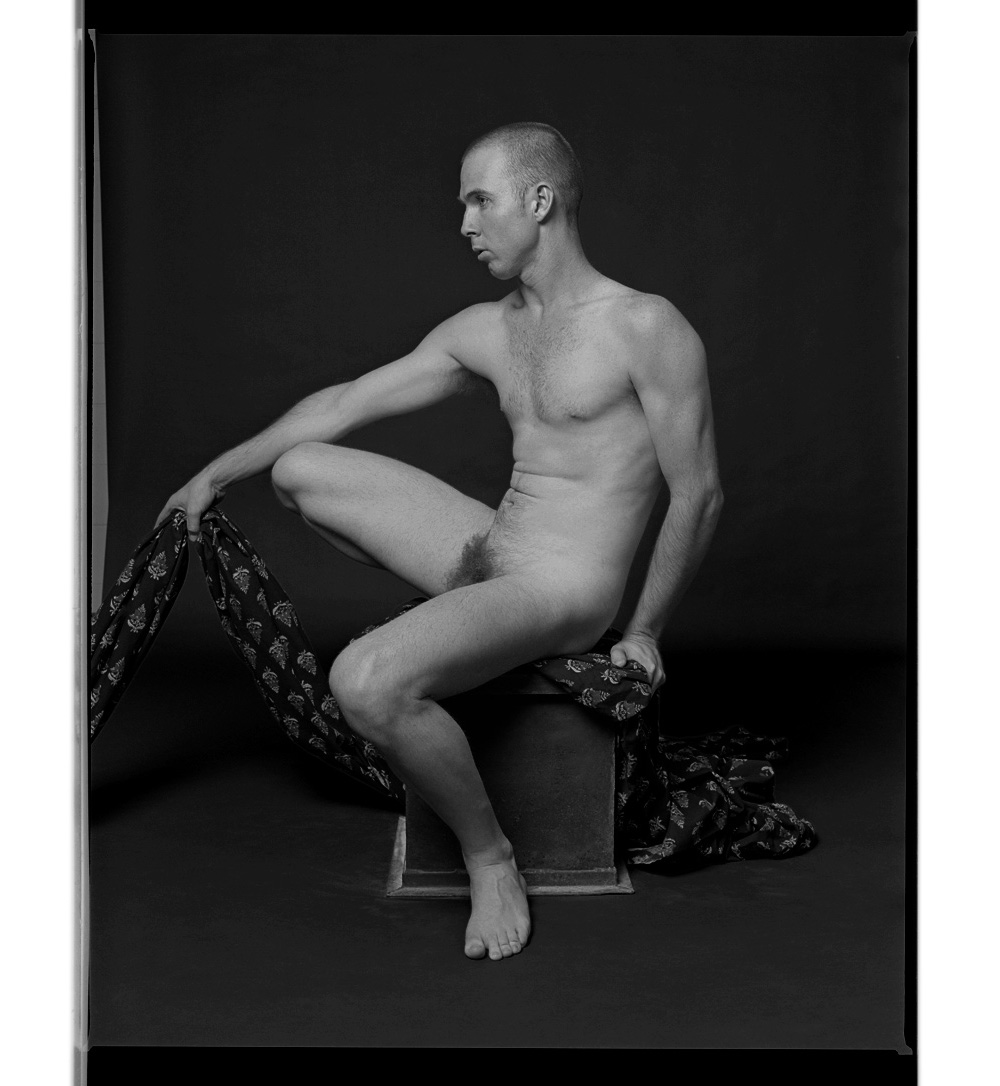
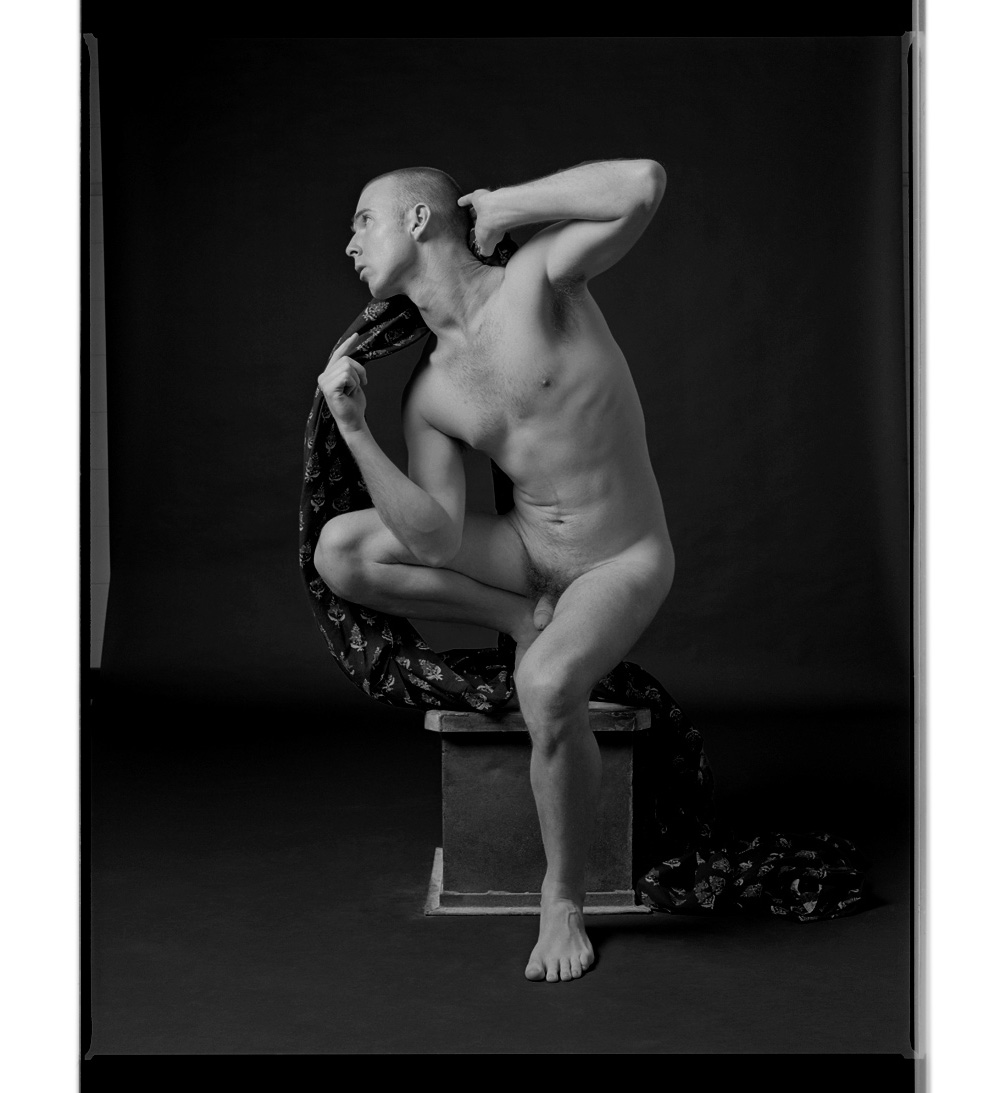
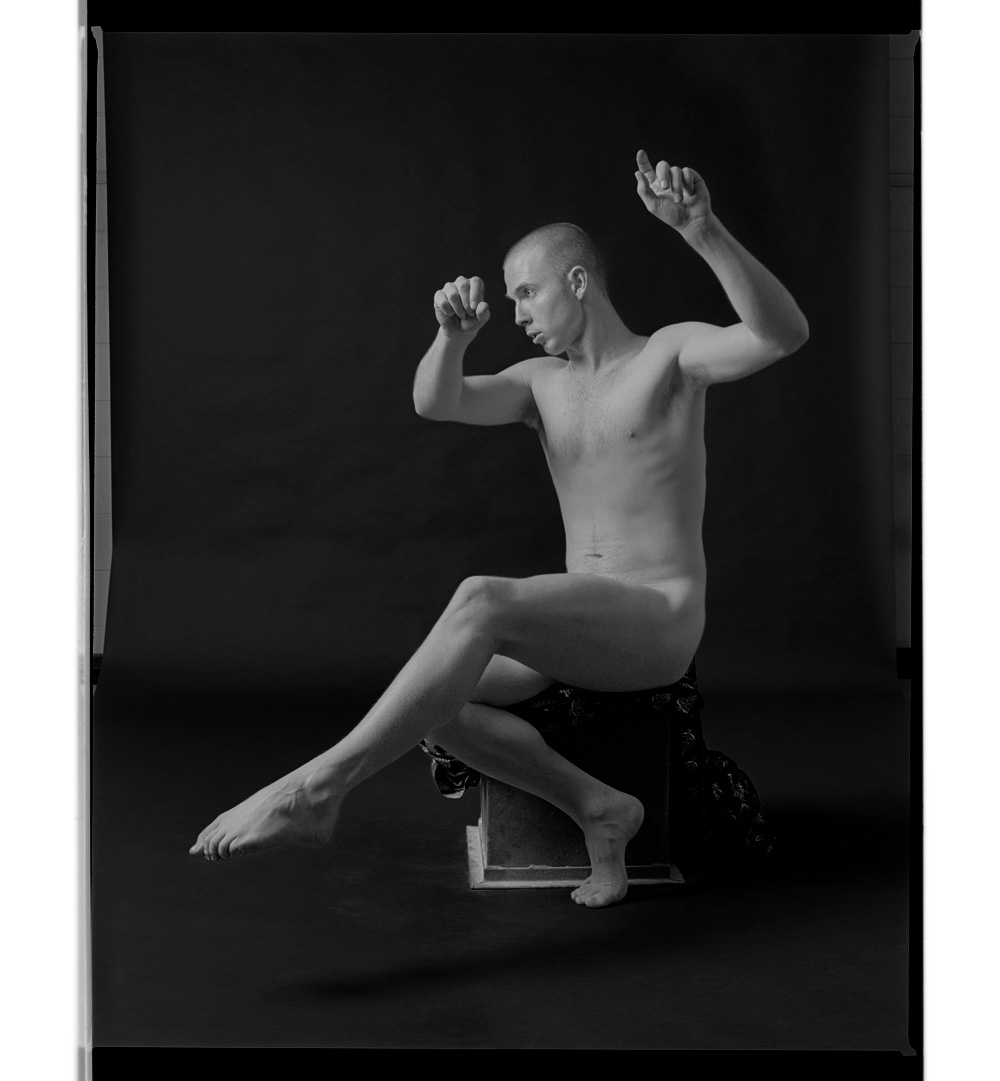
This series of photographs is a reconceptualisation of Michelangelo’s Ignudi from the Sistine Chapel. The Ignudi (singular: ignudo, from the Italian adjective nudo, meaning “naked”) are the 20 athletic, nude male figures that Michelangelo painted at the four corners of the five smaller scenes of Creation. Recontextualising the figures implicitly fetches elements from other texts – the meaning of the male body based on its meaning in other contexts and ages (beauty, desire, homoeroticism, nudity, power of the body/phallus) – realising a continual unfolding of texts, discourses and conversations in a field of production.

These prints are incredibly rare. There are probably 3 vintage photographs on fibre-base paper of each image at 12″ x 16″ size.


I am scanning my negatives made during the years 1991-1997 to preserve them in the form of an online archive as a process of active memory, so that the images are not lost forever. These photographs were images of my life and imagination at the time of their making, the ideas I was thinking about and the people and things that surrounded me.

All images © Marcus Bunyan. Please click the photographs for a larger version of the image; remember these are just straight scans of the negatives !

Photographs are available from this series for purchase. As a guide, a vintage 8″ x 10″ silver gelatin print costs $700 plus tracked and insured shipping. For more information please see my Store web page.


Marcus Bunyan (Australian, b. 1958) 'Untitled' 1994 from the series 'Ignudi'


Marcus Bunyan (Australian, b. 1958)
Untitled
1994
From the series Ignudi
Silver gelatin photograph


Marcus Bunyan (Australian, b. 1958) 'Untitled' 1994 from the series 'Ignudi'


Marcus Bunyan (Australian, b. 1958)
Untitled
1994
From the series Ignudi
Silver gelatin photograph


Marcus Bunyan (Australian, b. 1958) 'Untitled' 1994 from the series 'Ignudi'


Marcus Bunyan (Australian, b. 1958)
Untitled
1994
From the series Ignudi
Silver gelatin photograph


Marcus Bunyan (Australian, b. 1958) 'Untitled' 1994 from the series 'Ignudi'


Marcus Bunyan (Australian, b. 1958)
Untitled
1994
From the series Ignudi
Silver gelatin photograph


Marcus Bunyan (Australian, b. 1958) 'Untitled' 1994 from the series 'Ignudi'


Marcus Bunyan (Australian, b. 1958)
Untitled
1994
From the series Ignudi
Silver gelatin photograph


Marcus Bunyan (Australian, b. 1958) 'Untitled' 1994 from the series 'Ignudi'


Marcus Bunyan (Australian, b. 1958)
Untitled
1994
From the series Ignudi
Silver gelatin photograph


Marcus Bunyan (Australian, b. 1958) 'Untitled' 1994 from the series 'Ignudi'


Marcus Bunyan (Australian, b. 1958)
Untitled
1994
From the series Ignudi
Silver gelatin photograph


Marcus Bunyan (Australian, b. 1958) 'Untitled' 1994 from the series 'Ignudi'


Marcus Bunyan (Australian, b. 1958)
Untitled
1994
From the series Ignudi
Silver gelatin photograph


Marcus Bunyan (Australian, b. 1958) 'Untitled' 1994 from the series 'Ignudi'


Marcus Bunyan (Australian, b. 1958)
Untitled
1994
From the series Ignudi
Silver gelatin photograph


Marcus Bunyan (Australian, b. 1958) 'Untitled' 1994 from the series 'Ignudi'


Marcus Bunyan (Australian, b. 1958)
Untitled
1994
From the series Ignudi
Silver gelatin photograph


Marcus Bunyan black and white archive page

LIKE ART BLART ON FACEBOOK

Back to top

Exhibition: ‘Candida Höfer: A Return to Italy’ at Ben Brown Fine Arts, London

Exhibition dates: 12th February – 12th April, 2013

Curators: the gallery team in close collaboration with the artist


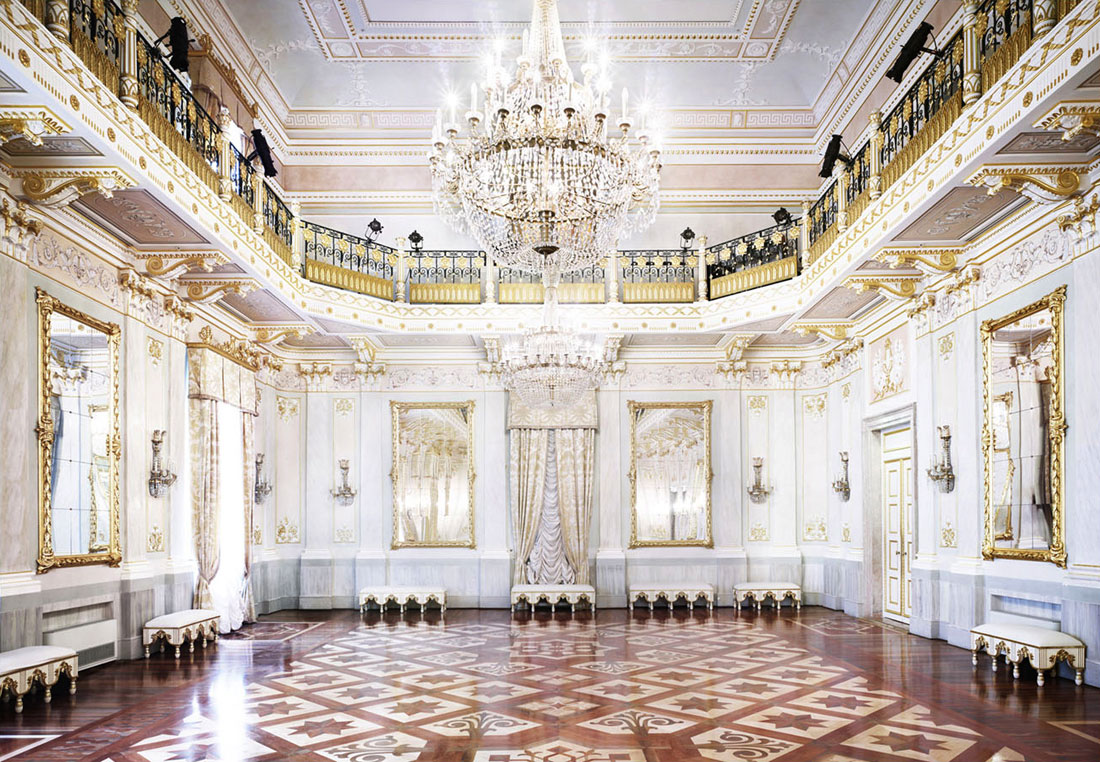
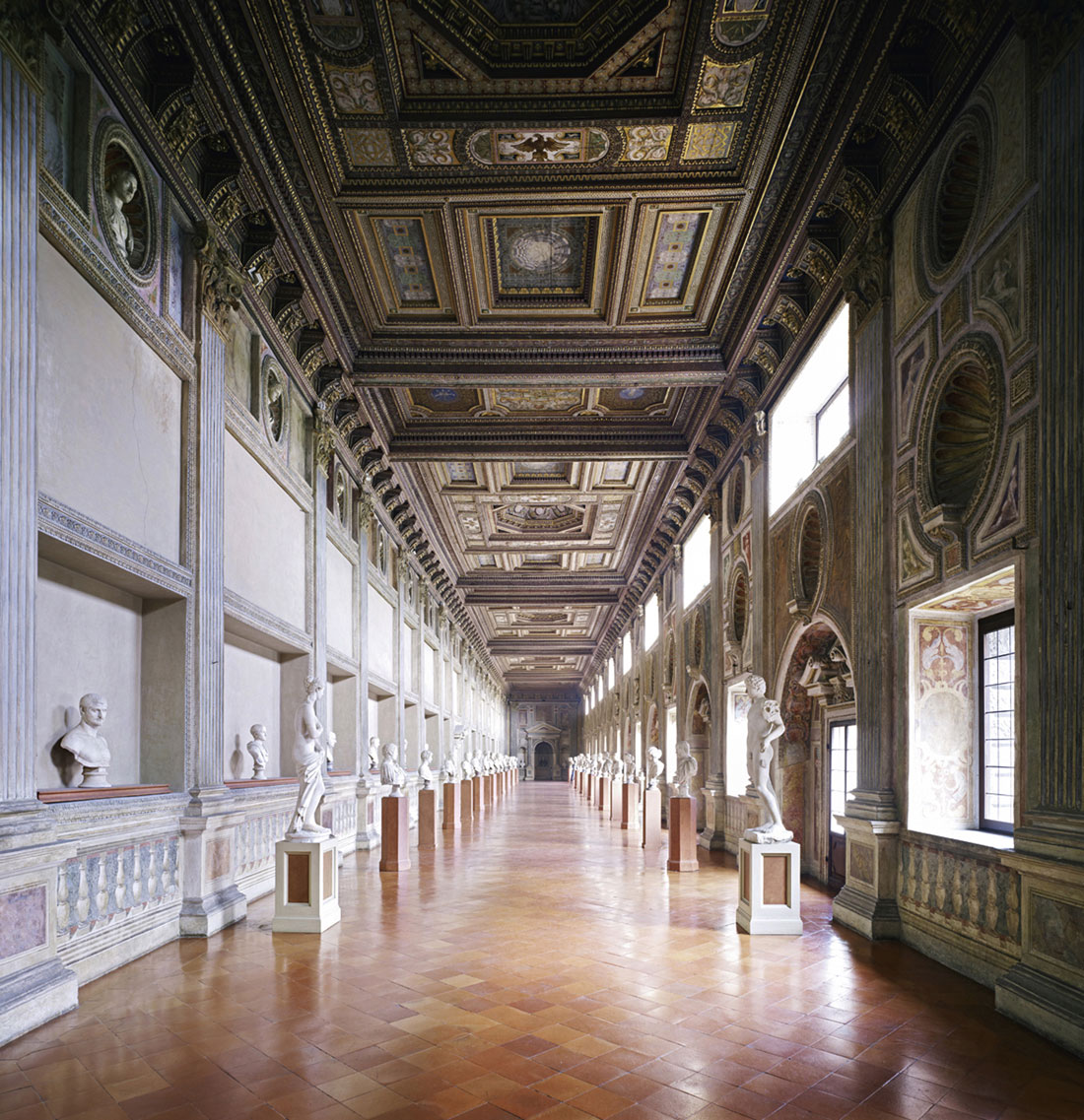
Candida Höfer (German, b. 1944)
'Galleria Degli Antichi Sabbioneta I 2010' 2010 from the exhibition 'Candida Höfer: A Return to Italy' at Ben Brown Fine Arts, London, February - April, 2013


Candida Höfer (German, b. 1944)
Galleria Degli Antichi Sabbioneta I 2010
2010
Light Jet print
Edition of 6
180 x 220.7cm (70 7/8 x 86 7/8 in.)
© 2013 Candida Höfer, VG Bild-Kunst, Bonn
Courtesy of Ben Brown Fine Arts


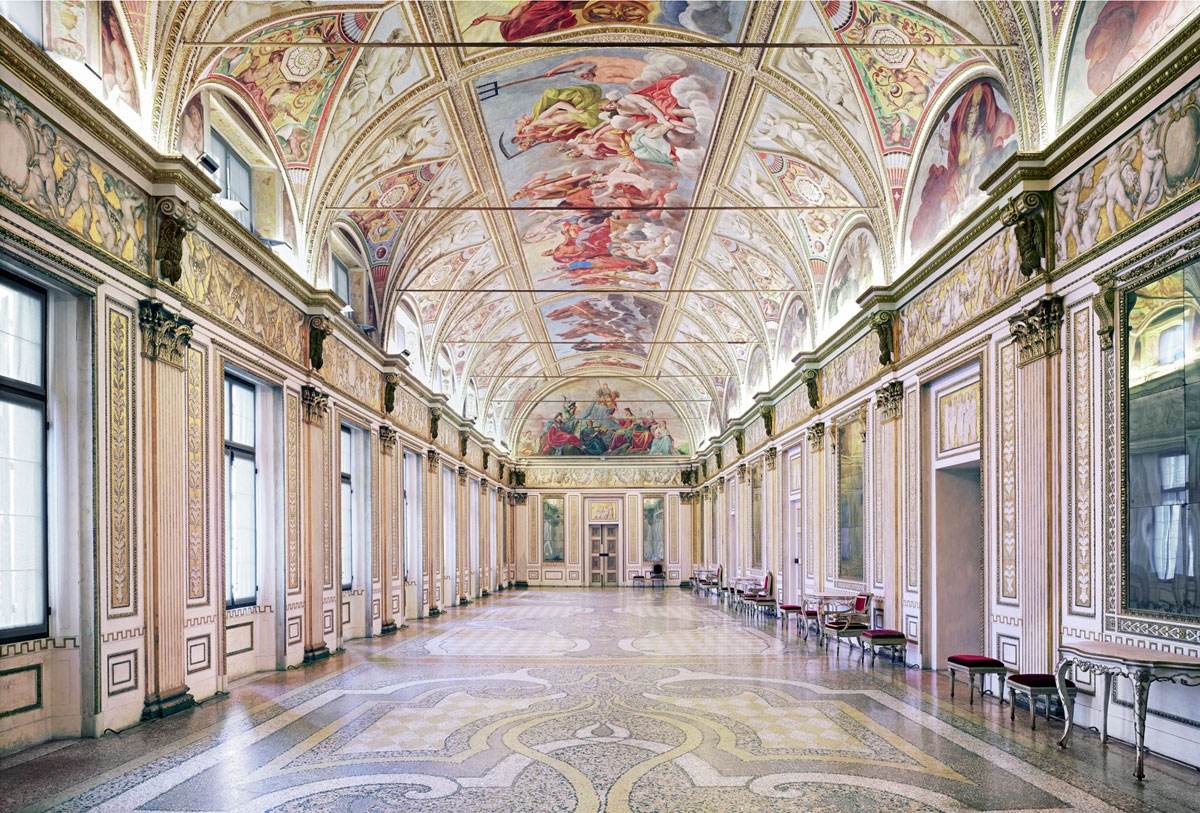
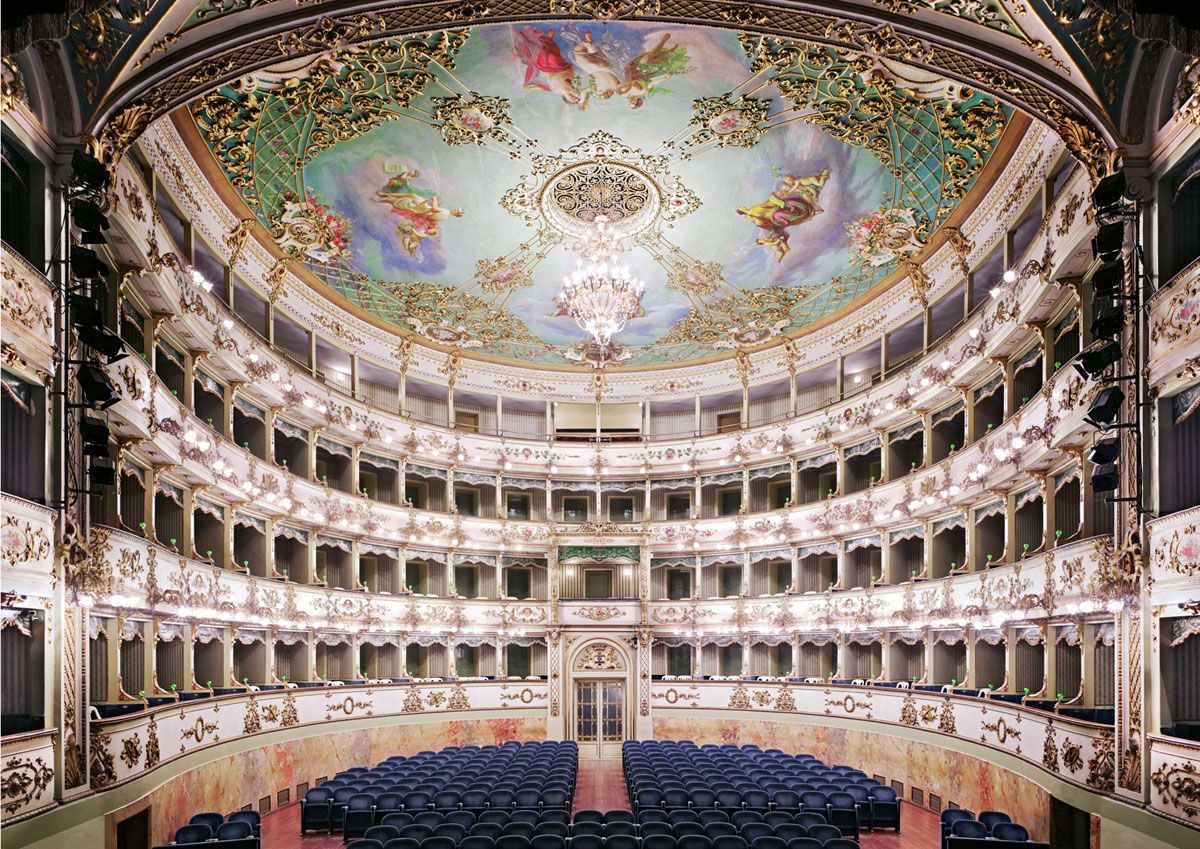
Ah symmetry, that vague sense of harmonious and beautiful proportion and balance, that patterned self-similarity that, through Hofer’s large format photographs, reflects the vainglorious human edifices of Northern Italy, superbly beautiful in their empty pride. Customarily devoid of human presence, Hofer’s photographs are technically and aesthetically superb. One has to examine the photographs with respect to their relationship to the passage of time, utilising spatial awareness to try to understand why things exist in specific locations within human culture.

“Both in ancient and modern times, the ability of a large structure to impress or even intimidate its viewers has often been a major part of its purpose, and the use of symmetry is an inescapable aspect of how to accomplish such goals.” (Wikipedia) Symmetries are informative of the world around us, and peer relationships are based on symmetry sending the message “we are all the same.” So Hofer’s symmetrical photographs possess opposing messages: we are all the same but some of us are more important (read powerful) than others.

Hofer’s highly symmetrical rooms are unavoidably also rooms in which anything out of place or potentially threatening can be identified easily and quickly, which has implications for safety, security, and familiarity. In this case it is the absence of human presence. To me this is the critical reading of Hofer’s photographs: they comment on the foibles of the human race, a race nearing the destruction of its only place of habitation, reaching the tipping point on the path to annihilation, yet indulging itself in a continuing race of construction and consumption. There will come a point when these edifices are crumbling and in ruins, as an Ebola-like virus races airborne around the world, destroying 90 percent of the population of the earth within months. The Earth will self balance and all we will be left with will be the memory of an empty symmetry.

Symmetry, then, can be a source of comfort not only as an indicator of biological health, but also of a safe and well-understood living environment. The paradox of Hofer’s environments is that in these colourful, exuberant, profuse environments nothing is alive, the interiors meaningless in an empty, vacuous world.

The human race will soon have left the building.

Dr Marcus Bunyan


Many thankx to Ben Brown Fine Arts for allowing me to publish the photographs in the posting. Please click on the photographs for a larger version of the image.


Candida Höfer (German, b. 1944)
'Palazzo Ducale Mantova I 2011' 2011 from the exhibition 'Candida Höfer: A Return to Italy' at Ben Brown Fine Arts, London, February - April, 2013


Candida Höfer (German, b. 1944)
Palazzo Ducale Mantova I 2011
2011
Light Jet print
Edition of 6
180 x 246cm (70 7/8 x 96 7/8 in.)
© 2013 Candida Höfer, VG Bild-Kunst, Bonn
Courtesy of Ben Brown Fine Arts


Candida Höfer (German, b. 1944)
'Teatro Comunale di Carpi I 2011' 2011


Candida Höfer (German, b. 1944)
Teatro Comunale di Carpi I 2011
2011
Light Jet print
Edition of 6
180 x 237cm; (70 7/8 x 93 1/4 in.)
© 2013 Candida Höfer, VG Bild-Kunst, Bonn
Courtesy of Ben Brown Fine Arts


Candida Höfer (German, b. 1944)
'Teatro La Fenice di Venezia III 2011' 2011


Candida Höfer (German, b. 1944)
Teatro La Fenice di Venezia III 2011
2011
Light Jet print
Edition of 6
180 x 242cm (70 7/8 x 95 1/4 in.)
© 2013 Candida Höfer, VG Bild-Kunst, Bonn
Courtesy of Ben Brown Fine Arts


Candida Höfer (German, b. 1944)
'Teatro La Fenice di Venezia V 2011' 2011


Candida Höfer (German, b. 1944)
Teatro La Fenice di Venezia V 2011
2011
Light Jet print
Edition of 6
180 x 235cm (70 7/8 x 92 1/2 in.)
© 2013 Candida Höfer, VG Bild-Kunst, Bonn
Courtesy of Ben Brown Fine Arts


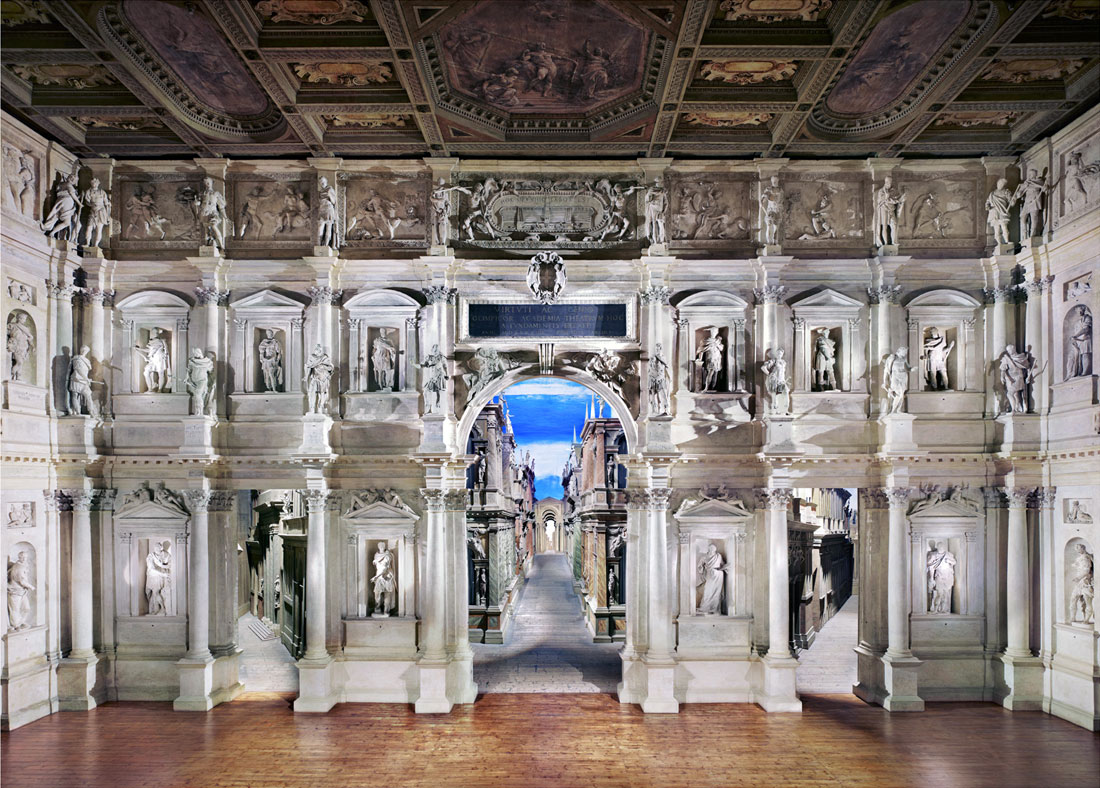
Candida Höfer (German, b. 1944)
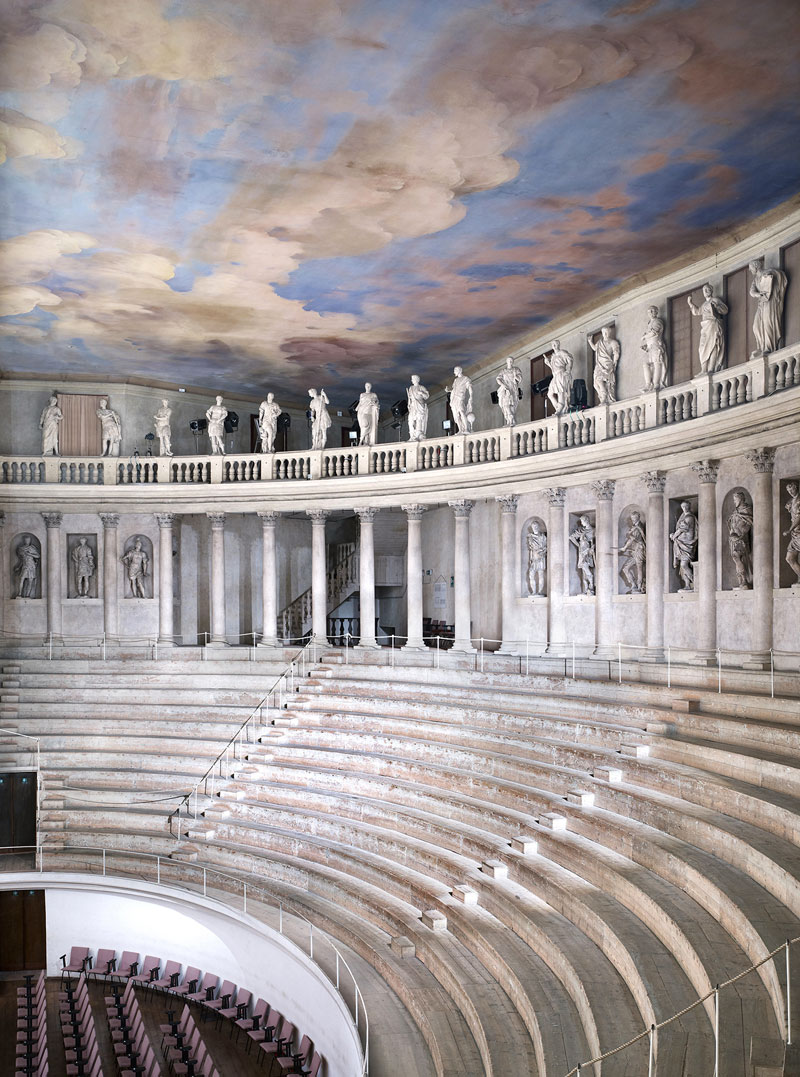
'Teatro Olimpico Vicenza II 2010' 2010


Candida Höfer (German, b. 1944)
Teatro Olimpico Vicenza II 2010
2010
Light Jet print
Edition of 6
180 x 235cm (70 7/8 x 92 1/2 in.)
© 2013 Candida Höfer, VG Bild-Kunst, Bonn
Courtesy of Ben Brown Fine Arts


Candida Höfer (German, b. 1944)
'Teatro Scientifico Bibiena Mantova I 2010' 2010


Candida Höfer (German, b. 1944)
Teatro Scientifico Bibiena Mantova I 2010
2010
Light Jet print
Edition of 6
180 x 226cm (70 7/8 x 89 in.)
© 2013 Candida Höfer, VG Bild-Kunst, Bonn
Courtesy of Ben Brown Fine Arts


German photographer Candida Höfer makes a significant return to Ben Brown Fine Arts in London on 12 February with a major solo show, unveiling thirteen new and previously unseen photographs which catalogue the architectural treasures of Northern Italy.

Mantova, Vicenza, Sabbioneta, Venice and Carpi provide the glorious setting for this new series shot over the past two years, a continuation of Höfer’s previous work in Central and Southern Italy. The interiors of palaces, opera houses, libraries and theatres, which Höfer captures with incredible skill, are part of her meticulous documentation of public spaces – places of culture, knowledge, communication and exchange with a rich history and clear functionality. Having rarely visited the Northern region, Höfer was particularly touched by the naturalness and ease with which the local people there accepted this extraordinary architecture as a part of their daily lives.

Höfer’s portraits of interiors, customarily devoid of human presence, emphasise the solemn magnificence of the Palazzo Ducale, Teatro La Fenice and Biblioteca Teresiana, amongst others. By featuring spaces that celebrate mankind’s greatness, yet where people are nowhere to be found, Höfer’s images possess an unexpected poignancy which has become the hallmark of her work. Höfer produces these large-format photographs without digital enhancement or alteration, using long exposure and working solely with the existing light source. The effect is a rare combination of intimacy and scale, in which intricate architectural detail is captured without sacrificing the sense of space and civilised order.

Höfer, a member of the Düsseldorf School (Kunstakademie Düsseldorf), was a noted pupil of the Bechers, who were heavily influenced by the 1920s German art tradition of Neue Sachlichkeit and pioneered a type of detached objectivity. The Bechers’ black and white photographs of industrial landscapes and architecture embodied a clinical, documentary style, which Höfer has retained in her work through the same neutral and methodical process. Yet Höfer’s large-scale colour prints differ in their more sympathetic approach to the building’s culture and history.”

Press release from Ben Brown Fine Arts


Candida Höfer (German, b. 1944) 'Museo Civico Di Palazzo Te Mantova IV' 2010


Candida Höfer (German, b. 1944)
Museo Civico Di Palazzo Te Mantova IV 2010
2010
Light Jet print
Edition of 6
180 x 187cm (70 7/8 x 73 5/8 in.)
© 2013 Candida Höfer, VG Bild-Kunst, Bonn
Courtesy of Ben Brown Fine Arts


Candida Höfer (German, b. 1944) 'Teatro Olimpico Vicenza III' 2010


Candida Höfer (German, b. 1944)
Teatro Olimpico Vicenza III 2010
2010
Light Jet print
Edition of 6
180 x 144cm (70 7/8 x 56 3/4 in.)
© 2013 Candida Höfer, VG Bild-Kunst, Bonn
Courtesy of Ben Brown Fine Arts


Candida Höfer (German, b. 1944)
'Biblioteca Teresiana Mantova I 2010' 2010


Candida Höfer (German, b. 1944)
Biblioteca Teresiana Mantova I 2010
2010
Light Jet print
Edition of 6
180 x 163cm (70 7/8 x 64 1/8 in.)
© 2013 Candida Höfer, VG Bild-Kunst, Bonn
Courtesy of Ben Brown Fine Arts


Candida Höfer (German, b. 1944)
'Palazzo Ducale Mantova III 2011' 2011


Candida Höfer (German, b. 1944)
Palazzo Ducale Mantova III 2011
2011
Light Jet print
Edition of 6
180 x 169cm; (70 7/8 x 66 1/2 in.)
© 2013 Candida Höfer, VG Bild-Kunst, Bonn
Courtesy of Ben Brown Fine Arts


Candida Höfer (German, b. 1944)
'Palazzo Ducale Mantova V 2011' 2011


Candida Höfer (German, b. 1944)
Palazzo Ducale Mantova V 2011
2011
Light Jet print
Edition of 6
180 x 176cm (70 7/8 x 69 1/4 in.)
© 2013 Candida Höfer, VG Bild-Kunst, Bonn
Courtesy of Ben Brown Fine Arts


Candida Höfer (German, b. 1944)
'Palazzo Ducale Mantova IV 2011' 2011


Candida Höfer (German, b. 1944)
Palazzo Ducale Mantova IV 2011
2011
LightJet print
Edition of 6
180 x 176cm (70 7/8 x 67 3/4 in.)
© 2013 Candida Höfer, VG Bild-Kunst, Bonn
Courtesy of Ben Brown Fine Arts


Ben Brown Fine Arts
12 Brook’s Mews, London W1K 4DG
Phone: +44 (0)20 7734 8888

Opening hours:
Monday to Friday 11am – 6pm
Saturdays 10.30am – 2.30pm
Ben Brown Fine Arts website

LIKE ART BLART ON FACEBOOK

Back to top

Video: ‘InsideArt – Marcus Bunyan’ talks about the exhibition ‘Confounding: Contemporary Photography’ at NGV International, Melbourne

Published on 11th March, 2013


InsideArt TV
Marcus Bunyan – Confounding: Contemporary Photography
2013


This week on InsideArt TV, Michel Lawrence talks with Dr Marcus Bunyan about the National Gallery of Victoria’s intriguing photographic exhibition, Confounding: Contemporary Photography, where the photographs exhibited are not always what they seem (Series 3, Episode 1, Part 2).

Many thankx to Michel and Inside Art for inviting me to speak about the exhibition, and the NGV for allowing us to film in the gallery.

See my review of the exhibition Confounding: Contemporary Photography at NGV International, Melbourne February 23, 2013.


National Gallery of Victoria website

LIKE ART BLART ON FACEBOOK

Back to top

Exhibition: ‘Thomas Demand’ at the National Gallery of Victoria, Melbourne

“Demand’s recordings, re-orderings of a constructed reality are fabrications of the highest calibre, amazing to witness at first hand…” Dr Marcus Bunyan

Exhibition dates: 30th November, 2012 – 17th March, 2013

Curator: Susan van Wyk, Senior Curator of Photography at the NGV


Thomas Demand (German, b. 1964) 'Copyshop' 1999 from the exhibition 'Thomas Demand' at the National Gallery of Victoria, Melbourne, November 2012 - March 2013


Thomas Demand (German, b. 1964)
Copyshop
1999
C-Print / Perspex
183.5 x 300cm
Collection of John Kaldor, Sydney
Courtesy Taka Ishii Gallery, Sprüth Magers Berlin London, Esther Schipper, Berlin, Matthew Marks Gallery
© Thomas Demand, VG Bild-Kunst, Bonn / VISCOPY, Sydney


Sitting here in my non-air-conditioned flat trying to survive Melbourne’s autumn heatwave is no fun; my mind has turned to mush. So instead of trying to write an in depth review of this exhibition I shall just make some salient comments, for fear my sweat would literally buckle Demand’s meticulously constructed paper models before he could photograph them.

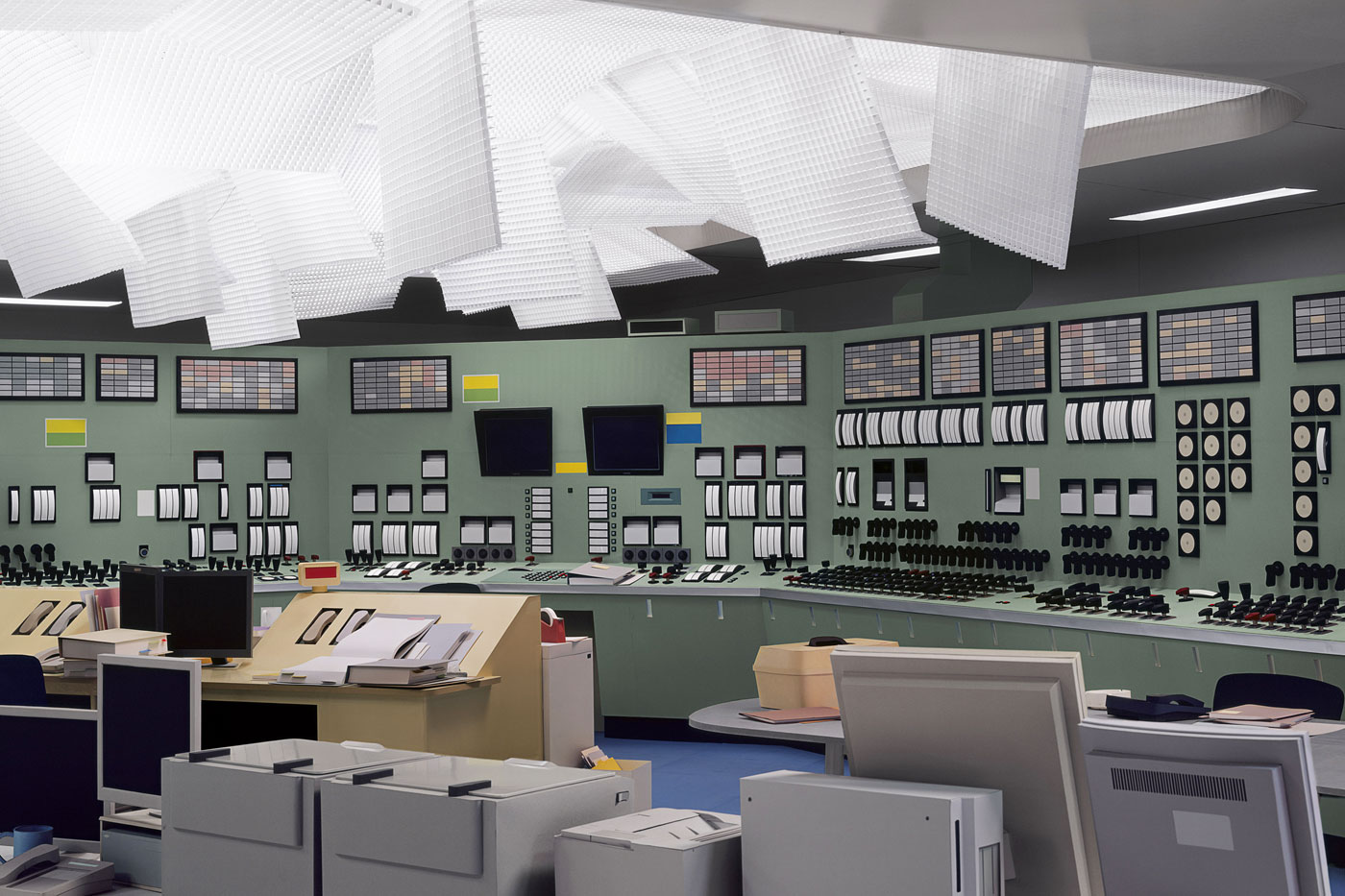
Demand is firstly a sculptor, constructing studio-sized models of photographs that reference “source material in the archive that already has some fateful resonance,” (Robert Nelson, The Age, 12th December 2012) such as the control room of the Fukushima nuclear reactor, the Geneva hotel bath tub where the German politician Uwe Barschel found a brutal death – personally my mind went to David E. Scherman’s photograph of Lee Miller in Hitler’s bathtub (see below); scenes of nature such as Clearing (2003, below) or Grotto (2006, below) that are hyperreal simulacra of natural phenomena; and modular environments and objects, such as Copyshop (1999), Space Simulator (2003) and Bullion (2003, all below) that strip away the relational intimacy between man and environment by the removal of all labelling and tactility of surface. Demand then photographs his denuded “models” before destroying them, the photograph then becoming the soul evidence of their intrinsic existence (much like the documentary evidence of photographs of Land Art). Demand’s visualisation of the environment is triple coded (photograph, model, photograph), a hybrid tri-articulation that produces new identities that release energies of multiplicity, irony and destabilisation.

Robert Nelson observes in The Age that Demand’s world is paper thin and because the eye detects the forgery, “the famous icon of unthinkable fortune [Bullion] – which might have played a part in some famous heist or the security of a national economy – is also a lie, a tinsel falsehood of no substance… All of Demand’s pictures have an empty or hollow character, which defies the earnest weight of their associations.” Dan Rule insightfully notes that, “By removing the image’s reference or index, only to so painstakingly recast it, he [Demand] begs us to look and look again. These resolutely “unreal” images demand that we consider reality with much greater care.” (Dan Rule, The Age, 19th January 2013). Christopher Allen in The Weekend Australian (2nd March, 2013) states that Demand’s huge final prints, hidden under a layer of Perspex, “adds another level of truth and illusion that preoccupies Demand as it must any serious photographer today. In this case, the photographs can claim to be, for what this is worth, absolutely and literally true in their recording of their subject; it is only the subject itself that is entirely illusory and fabricated.”

Interesting comments all. Demand’s recasting of the relationship between image and referent (image and the object being photographed) is critical to his practice, but I am unsure that all photographers have to be preoccupied with the relationship between truth and illusion as Allen states. As my recent review of the exhibition Confounding: Contemporary Photography noted not all photographs have to confound the relationship between truth and illusion in order to be art. “Collectively, it is the ideas contained within the images in this exhibition that unsettle the relationship between the photograph and the world in the mind of the viewer, not their confounding.” As in the Jeff Wall Photographs exhibition, there is not much emotion in any of these images and perhaps this is an outcome of the long pre-photographic production process.

Demand’s recordings, re-orderings of a constructed reality are fabrications of the highest calibre, amazing to witness at first hand (is that really a model, how does he do that with paper and lighting?!), and yet one is left with a feeling that the work needed something more to go beyond this illusion, some layering that takes the viewer beyond the surface of the image, beyond the understanding of image / model / reality. I look at the photographs, I understand the skill, the imbrication of the process – I think that is the word I want, meaning the covering with a design in which one element covers a part of another – the looking again at a fabricated (our!) reality but the photographs still leave me a little cold of heart, of empty and hollow character. Perhaps that is the point, however it doesn’t make me want to look at the photographs over weeks, months and years and let them reveal themselves to me. Like the paper on which they are printed they are a little paper thin.

Dr Marcus Bunyan


Many thankx to the National Gallery of Victoria for allowing me to publish the photographs in the posting. Please click on the photographs for a larger version of the image.


Thomas Demand (German, b. 1964) 'Kontrollraum / Control Room' 2011 from the exhibition 'Thomas Demand' at the National Gallery of Victoria, Melbourne, November 2012 - March 2013


Thomas Demand (German, b. 1964)
Kontrollraum / Control Room
2011
C-Print / Perspex
200 x 300cm
Courtesy Taka Ishii Gallery, Sprüth Magers Berlin London, Esther Schipper, Berlin, Matthew Marks Gallery
© Thomas Demand, VG Bild-Kunst, Bonn / VISCOPY, Sydney


Thomas Demand is regarded as one of the world’s leading contemporary artists whose work in photography and, most recently stop-animation films, is at the forefront of contemporary art. Demand initially worked as a sculptor who used photography to document his ephemeral creations. From 1993 his creative practice changed and, from then on, he made sculptures for the sole purpose of photographing them. Demand begins with an image, often taken from media sources and frequently dealing with traumatic or politically important events, and creates a life-size replica of the image using paper and cardboard. The effect of these uncanny reconstructions is to destabilise our understanding of the sites which we ‘know’ so well through reproduction. This exhibition features a selection of photographs and 35mm films as chosen by the artist.

Organised with The Museum of Contemporary Art, Tokyo

Text from the National Gallery of Victoria website


Thomas Demand (German, b. 1964) 'Labor / Laboratory' 2000


Thomas Demand (German, b. 1964)
Labor / Laboratory
2000
C-Print / Perspex
180 × 268cm
Courtesy Taka Ishii Gallery, Sprüth Magers Berlin London, Esther Schipper, Berlin, Matthew Marks Gallery
© Thomas Demand, VG Bild-Kunst, Bonn / VISCOPY, Sydney


Thomas Demand (German, b. 1964) 'Space Simulator' 2003


Thomas Demand (German, b. 1964)
Space Simulator
2003
C-Print / Perspex
300 x 429.4cm
Courtesy Taka Ishii Gallery, Sprüth Magers Berlin London, Esther Schipper, Berlin, Matthew Marks Gallery
© Thomas Demand, VG Bild-Kunst, Bonn / VISCOPY, Sydney


Thomas Demand (German, b. 1964) 'Lichtung / Clearing' 2003


Thomas Demand (German, b. 1964)
Lichtung / Clearing
2003
C-Print / Perspex
192 x 495cm
Courtesy Taka Ishii Gallery, Sprüth Magers Berlin London, Esther Schipper, Berlin, Matthew Marks Gallery
© Thomas Demand, VG Bild-Kunst, Bonn / VISCOPY, Sydney


Thomas Demand (German, b. 1964) 'Public housing' 2003


Thomas Demand (German, b. 1964)
Public housing
2003
C-Print / Perspex
Courtesy Taka Ishii Gallery, Sprüth Magers Berlin London, Esther Schipper, Berlin, Matthew Marks Gallery
© Thomas Demand, VG Bild-Kunst, Bonn / VISCOPY, Sydney


Public housing also shows the influence, in part, of Demand’s early photographic training. A member of the so-called Düsseldorf School (along with Thomas Ruff, Thomas Struth, Candida Hofer and Andreas Gursky), Demand was taught photography by Bernd and Hilla Becher. The Bechers had an austere approach, creating a vast archive of formally composed images of industrial structures. The rigour of this training is apparent in the objective approach Demand brings to his subjects. However, as Public housing demonstrates, from this starting point he creates work with a strange, disarming beauty in a style that is distinctly the artist’s own.

The origin for Public housing is the back of a Singapore $10 banknote which Demand recreates with great fidelity and in the characteristic pink tones of the original. The artist has expressed a fascination for currency that depicts modern architecture and has collected examples from many countries But, the meaning of his resulting image is somewhat ambiguous. It can be read either as a work that critiques modern housing estates with their often soulless and depressingly formulaic architecture or, in contrast, as an expression of national pride. It appears that the latter meaning was intended by the artist, who has written that Public housing ‘shows that the capital of finance in Asia also has a heart for the underprivileged’ (email to author).

Isobel Crombie, Senior Curator, Photography, National Gallery of Victoria (in 2011).

Isobel Crombie. “Thomas Demand Public housing,” 2011, published on the NGV website 2013 [Online] Cited 23/07/2024. Used under fair use conditions for the purposes of education and research


Thomas Demand (German, b. 1964) 'Regen / Rain' (still) 2008


Thomas Demand (German, b. 1964)
Regen / Rain (still)
2008
35 mm colour film, sound, 4 min, looped
Courtesy Taka Ishii Gallery, Sprüth Magers Berlin London, Esther Schipper, Berlin, Matthew Marks Gallery
© Thomas Demand, VG Bild-Kunst, Bonn / VISCOPY, Sydney


One of the world’s most influential contemporary artists, Thomas Demand, will be the subject of a new exhibition announced by the National Gallery of Victoria. The exhibition will be the first major Australian survey of the artist’s work and will comprise large scale photographs and films never before shown in Australia.

NGV Director, Tony Ellwood said the addition of Thomas Demand to the NGV’s exhibition schedule is part of an exciting and ambitious summer program.

“When the opportunity came up to hold an exhibition of Thomas Demand’s work this summer, it was just too good to miss. Thomas Demand will be part of a great summer program at the NGV and has been timed to coincide with the Jeff Wall Photographs exhibition being held at NGV Australia.” …

Works in the exhibition will span the artist’s career from 1997 to 2012. Recent works presented in the exhibition include Control Room (2011, above), which depicts the Fukushima Daiichi nuclear power plant and Tribute (2011, below), a work based on images taken at the site of tragic mass panic at Europe’s biggest rave party.

Susan van Wyk, NGV Curator of Photography said Thomas Demand is widely regarded as one of the world’s leading contemporary artists.

“Thomas has a unique style in which he creates paper models of objects and scenes, often taken from media sources like flickr or newspaper reports. These intricate life size models are then photographed.

“The results are disquieting images that subvert our understanding of reality and fiction and draws attention to how we engage with the media and modern technologies,” said Ms Van Wyk.

Press release from the National Gallery of Victoria


Thomas Demand (German, b. 1964) 'Grotte / Grotto' (detail) 2006


Thomas Demand (German, b. 1964)
Grotte / Grotto (detail)
2006
C-Print / Perspex
Photograph: Marcus Bunyan


Thomas Demand (German, b. 1964) 'Bullion' 2003


Thomas Demand (German, b. 1964)
Bullion
2003
C-Print / Perspex
42 × 60cm
Courtesy Taka Ishii Gallery, Sprüth Magers Berlin London, Esther Schipper, Berlin, Matthew Marks Gallery
© Thomas Demand, VG Bild-Kunst, Bonn / VISCOPY, Sydney


Thomas Demand (German, b. 1964) 'Parlament / Parliament' 2009


Thomas Demand (German, b. 1964)
Parlament/Parliament
2009
C-Print / Perspex
Courtesy Taka Ishii Gallery, Sprüth Magers Berlin London, Esther Schipper, Berlin, Matthew Marks Gallery
© Thomas Demand, VG Bild-Kunst, Bonn / VISCOPY, Sydney


David E. Scherman (American, 1916-1997) 'Lee Miller in Hitler's bath, Hitler's apartment, Munich, Germany 1945' 1945


David E. Scherman (American, 1916-1997)
Lee Miller in Hitler’s bath, Hitler’s apartment, Munich, Germany 1945
1945
From Lee Miller: A Life by Carolyn Burke
© Lee Miller Archives


Thomas Demand (German, b. 1964) 'Badezimmer / Bathroom' 1997


Thomas Demand (German, b. 1964)
Badezimmer / Bathroom
1997
C-Print / Perspex
160 x 122cm
Courtesy Taka Ishii Gallery, Sprüth Magers Berlin London, Esther Schipper, Berlin, Matthew Marks Gallery
© Thomas Demand, VG Bild-Kunst, Bonn / VISCOPY, Sydney


When you look at the work of Thomas Demand, at some point you realise that what you are looking at cannot be real. As this becomes apparent you understand that you are looking at a paper simulation of the world.

Demand’s early studies, in the 1980s and early 90s, were in sculpture and he built his constructions out of paper and cardboard. At this time, photography was simply the tool the artist used to document his sculptural work. Around 1993, however, an important shift occurred in Demand’s practice. His meticulously constructed objects were no longer the final works. The photographs that had previously served as an efficient means of recording his ephemeral sculptures instead became Demand’s prime interest. From this point on his models existed, not to be seen as three-dimensional sculptures but, to be photographed in two-dimensions.

The act of building his sculptural subjects is a bit like the architectural process and involves drawings, plans, engineering, even quantity surveying. A finished work may contain hundreds of thousands of hand-cut and assembled paper elements. Another of the more extraordinary things about his constructions is their scale. Demand extrapolates and estimates dimensions of the elements in his source images and then reconstructs them at life-size. The environs Demand builds have an amazing fidelity.

In the process of making his photographs, Demand literally inhabits the structures he builds, walking in and around them. He does so not only to find the right position to photograph from, but also to establish a relationship with a place. Demand describes this act as unsettling, saying, ‘When I walk around them I feel a strange sense of destabilisation. You transpose yourself to a time and place in which you could never be’. The scale of his models enables him to physically relate to them as if to the original object or scene – a model bath is big enough to sit in and a forest clearing is large enough to enter and walk through. Demand’s working process therefore enables him to have physical encounters with things, places and times that exist elsewhere or in the past.

Susan van Wyk. “The Constructed Worlds of Thomas Demand,” on the NGV website 15 February 2013 [Online] Cited 23/07/2024. No longer available online. Used under fair use conditions for the purposes of education and research


Thomas Demand (German, b. 1964) 'Tribute' 2011


Thomas Demand (German, b. 1964)
Tribute
2011
C-Print / Perspex
166 x 125cm
Courtesy Taka Ishii Gallery, Sprüth Magers Berlin London, Esther Schipper, Berlin, Matthew Marks Gallery
© Thomas Demand, VG Bild-Kunst, Bonn / VISCOPY, Sydney


The Solitude of the Picture

Jeff Wall & Thomas Demand: In Conversation

On the eve of opening their respective exhibitions, Jeff Wall and Thomas Demand in conversation about their work and process.


NGV International
180 St Kilda Road

Opening hours
Daily 10am – 5pm

National Gallery of Victoria website

LIKE ART BLART ON FACEBOOK

Back to top

Video: ‘Marcus Bunyan – what makes a great photograph?’ at the Centre for Contemporary Photography, Melbourne

Event date: Wednesday 5th December 2012


Dr Marcus Bunyan. 'What makes a great photograph?' at CCP, December 2012


Marcus Bunyan
What makes a great photograph?
2012


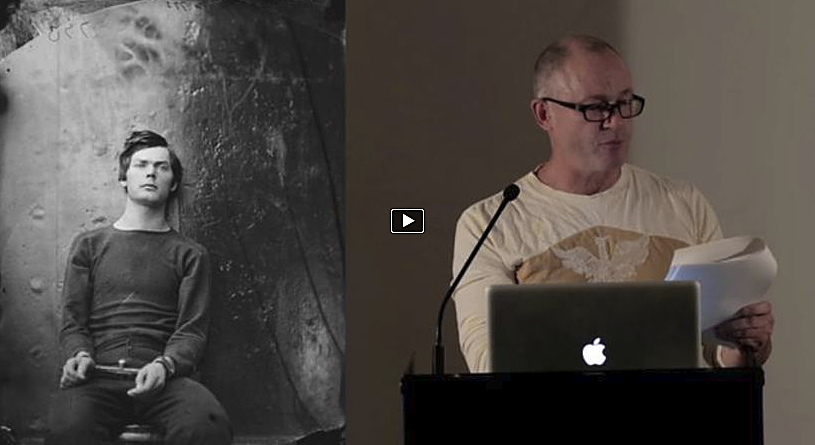
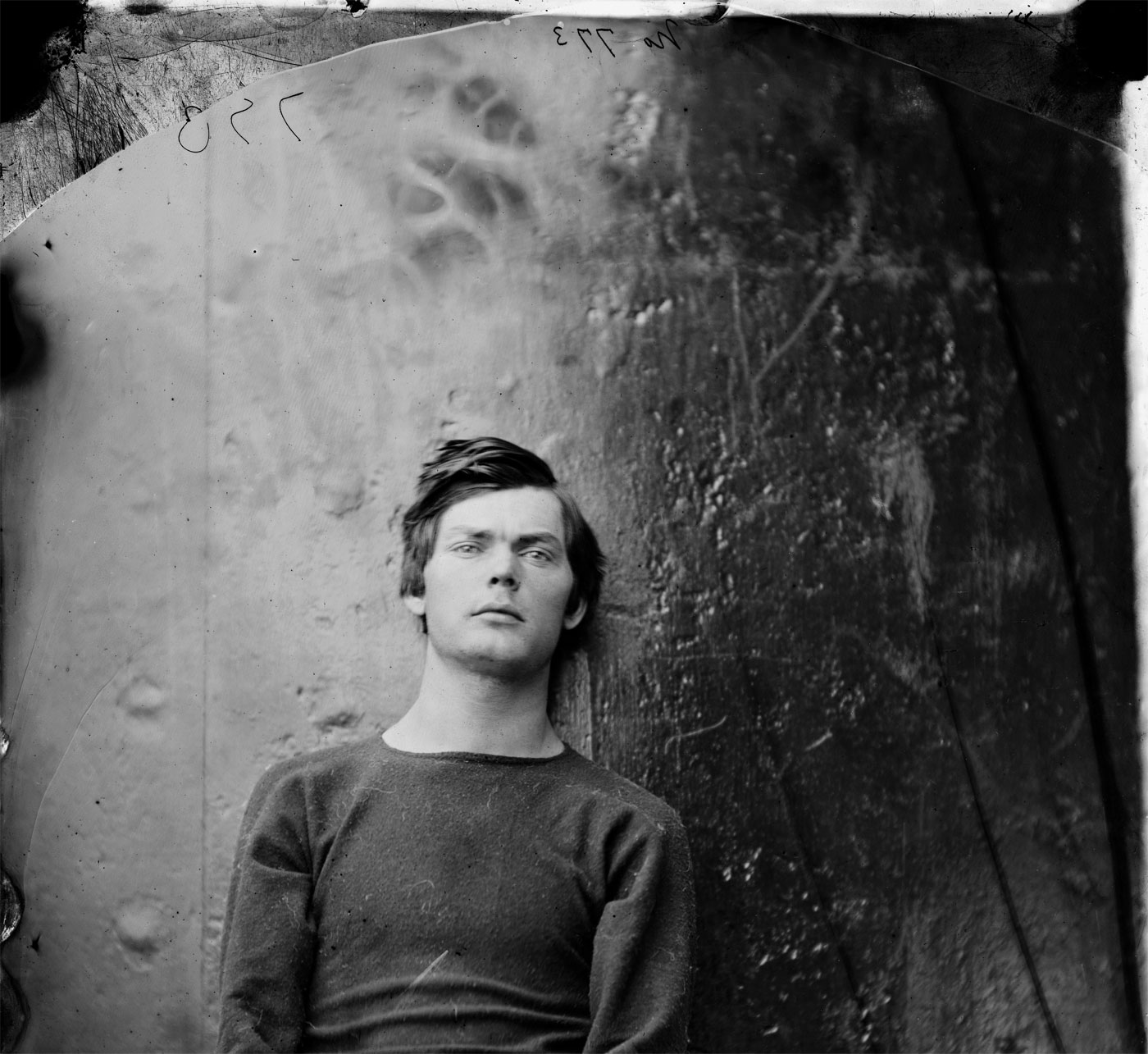
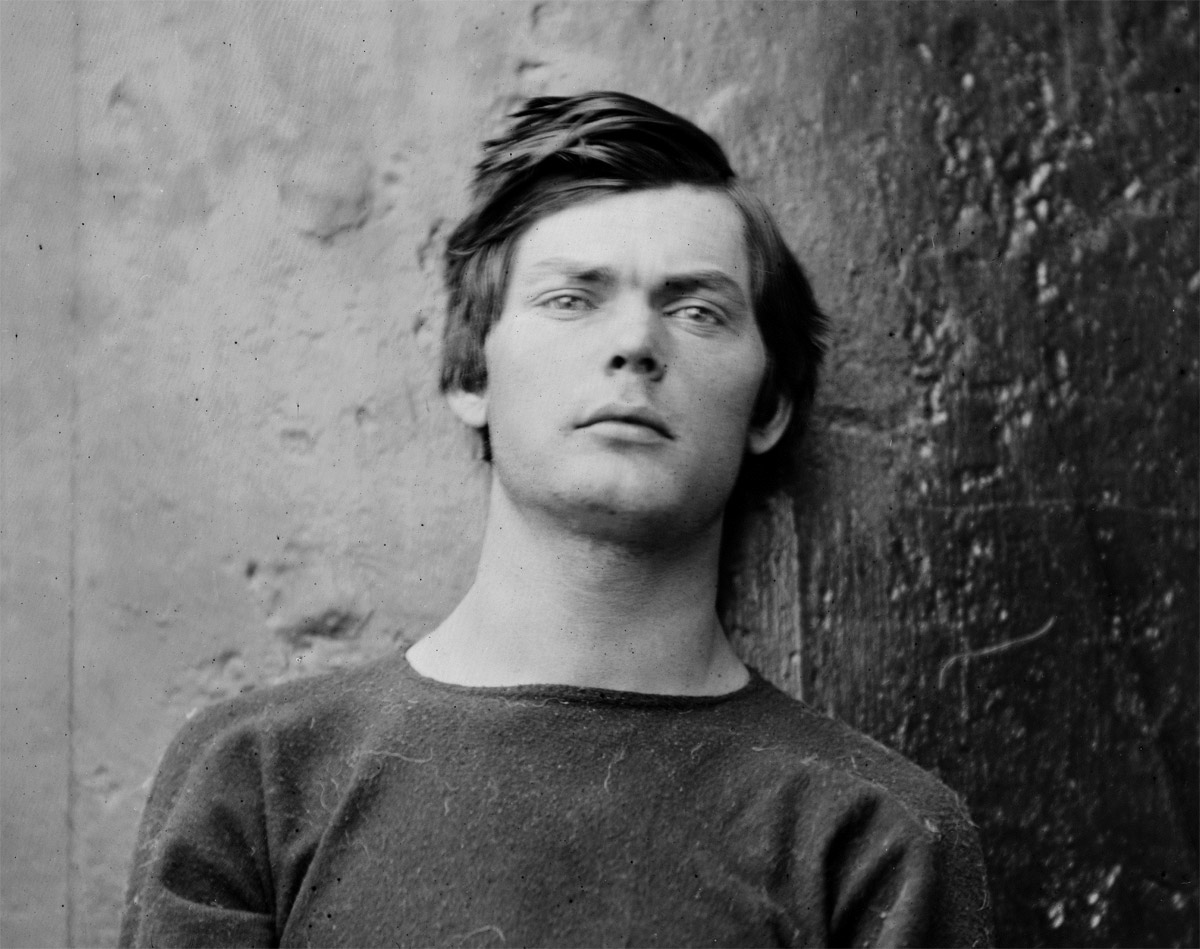
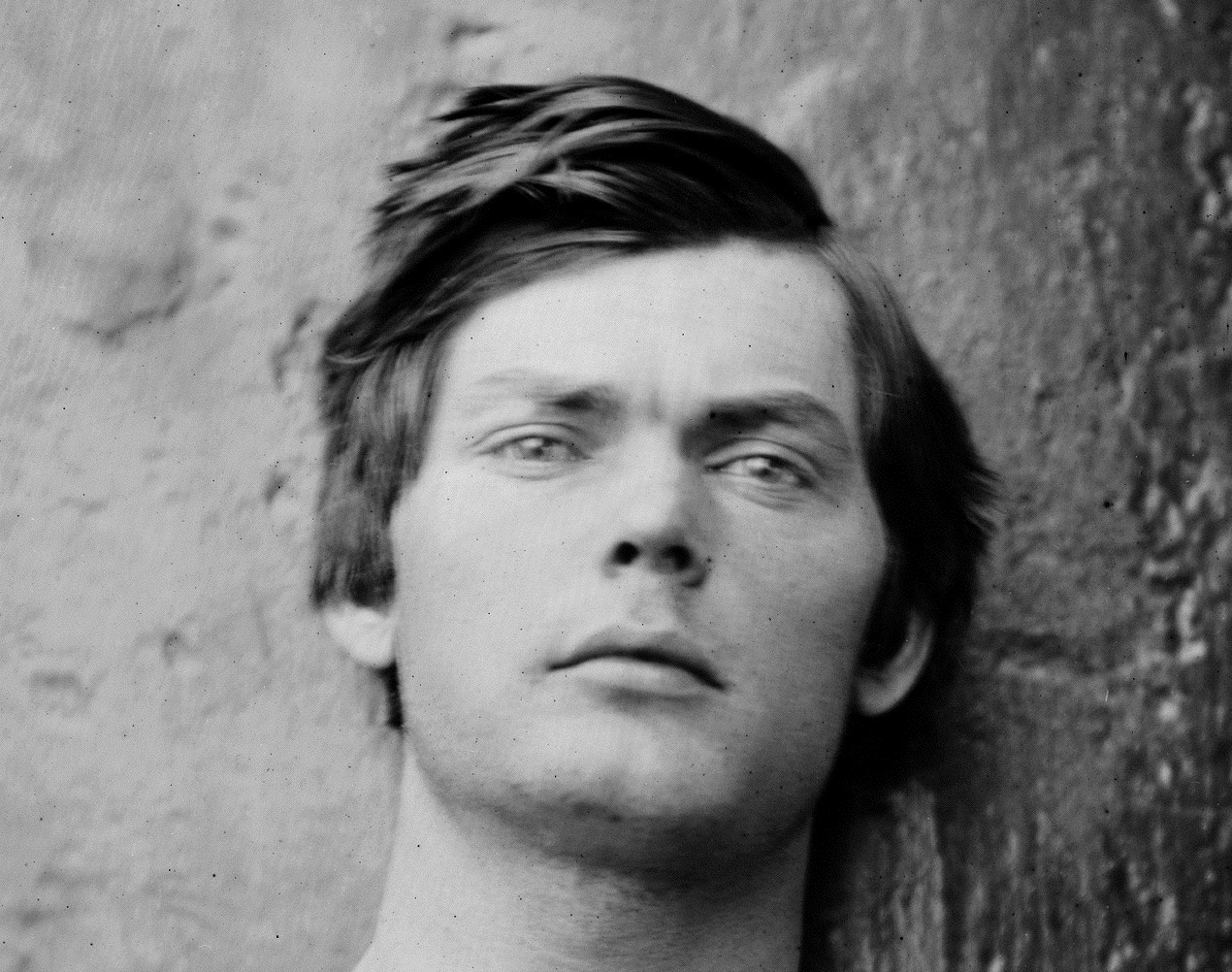
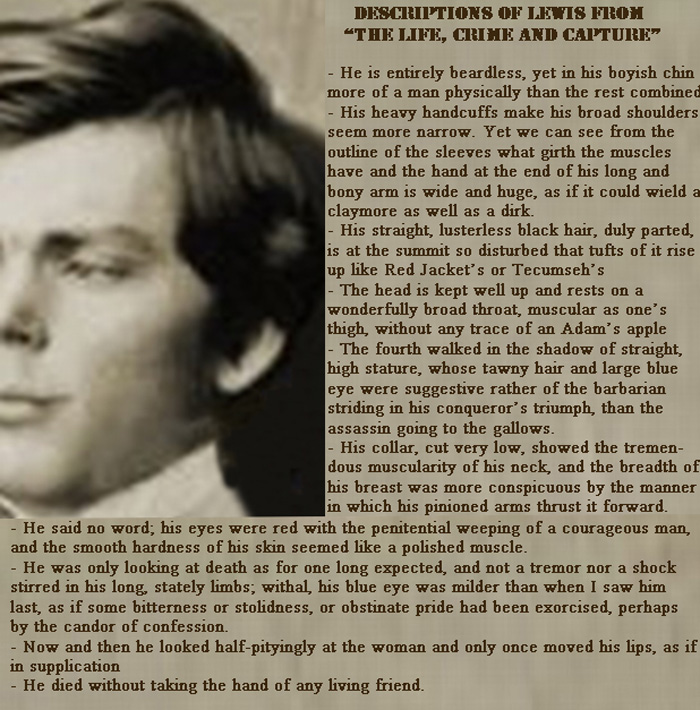
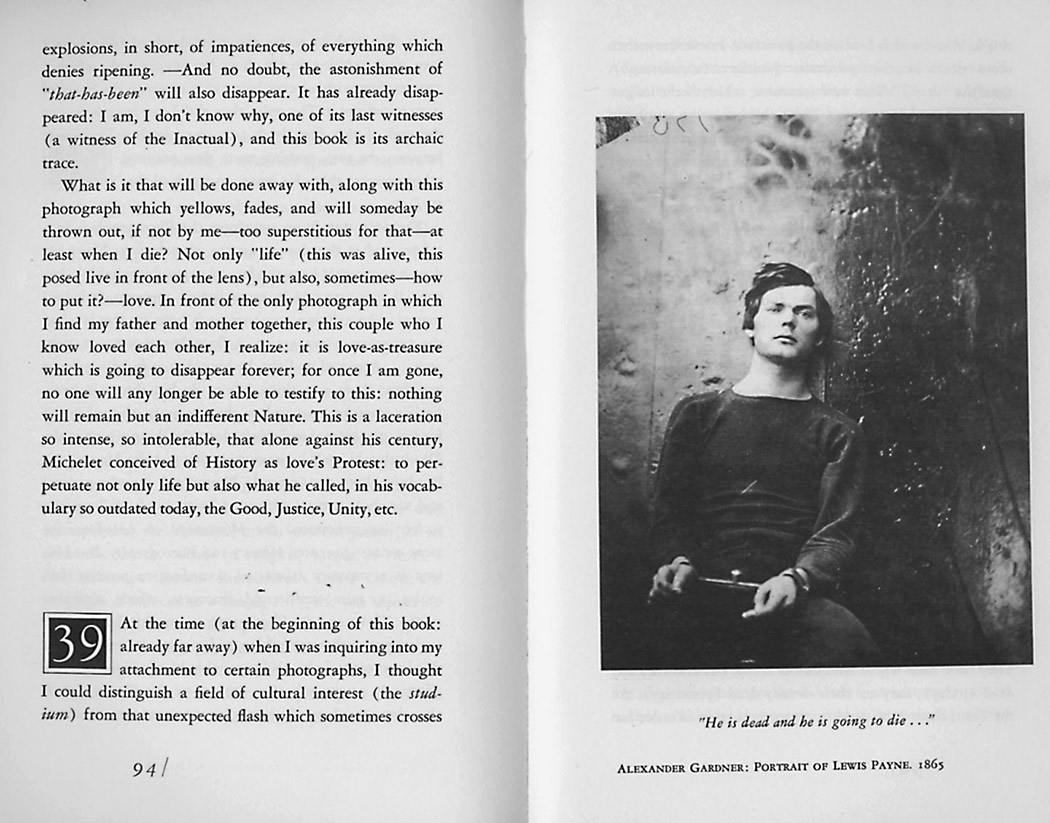
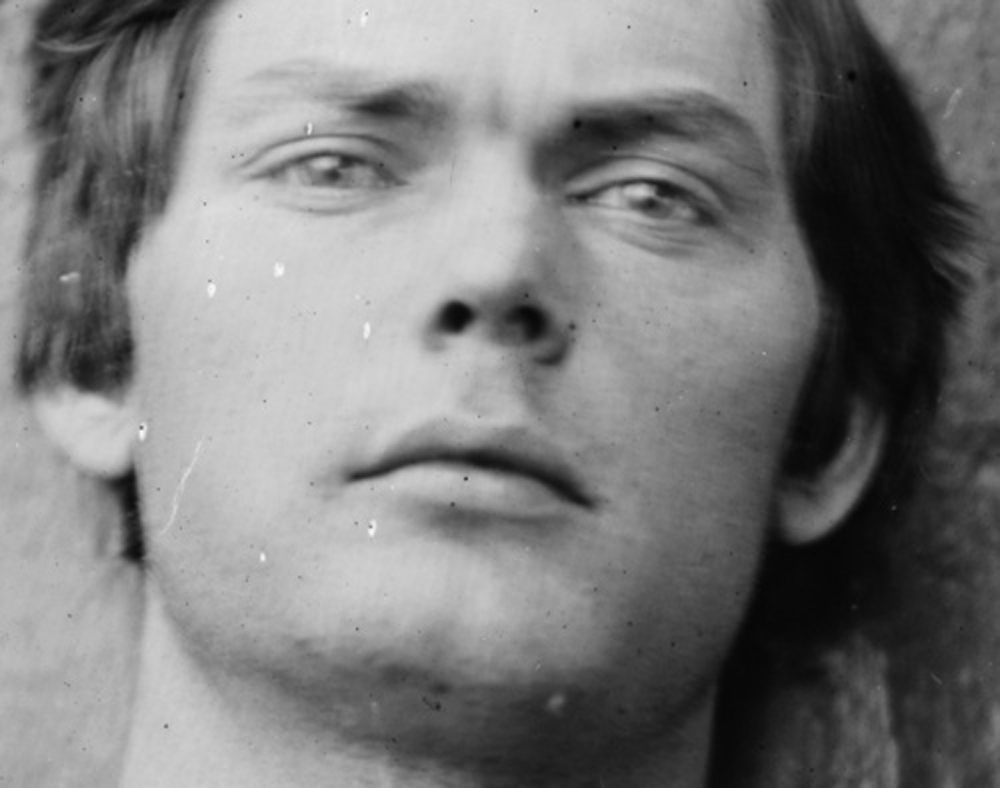
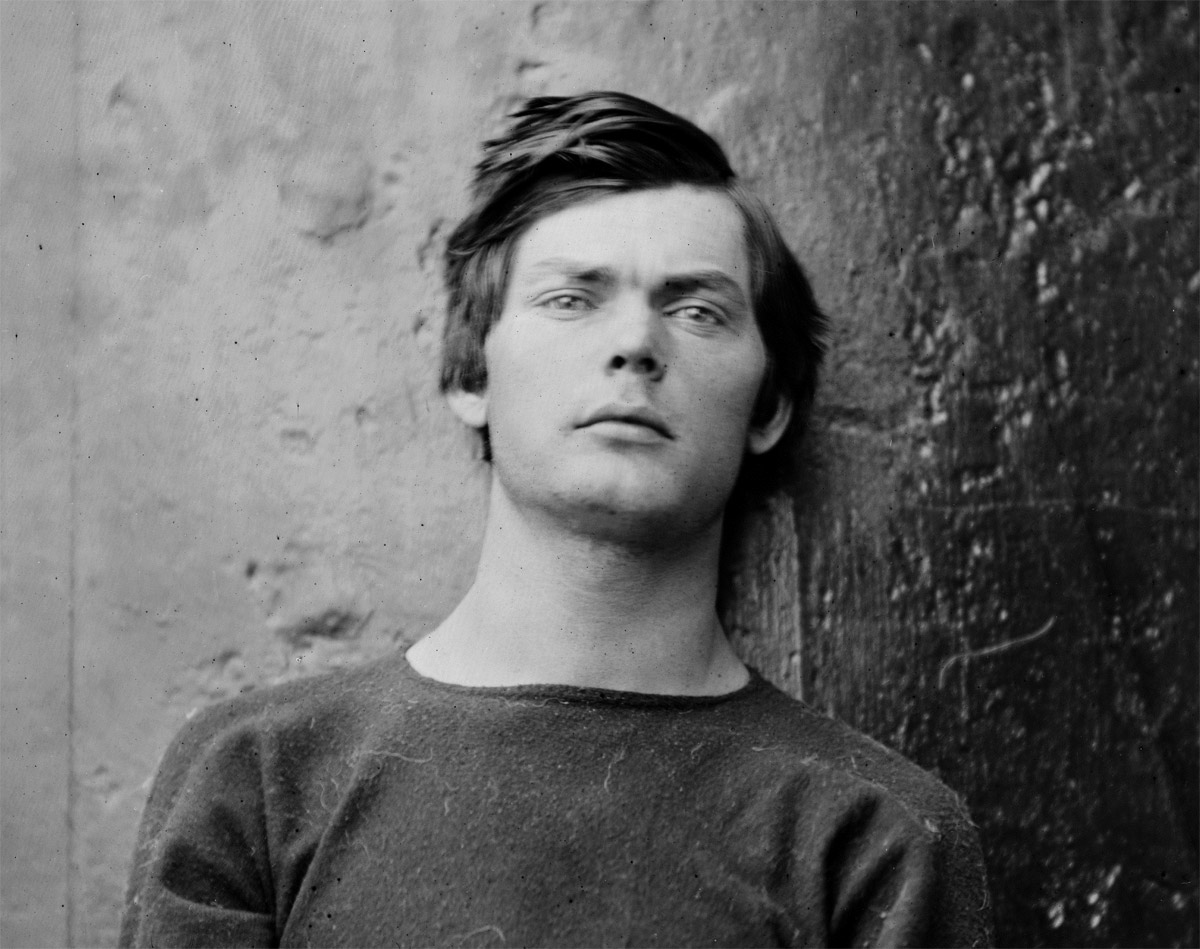
Marcus Bunyan, artist and curator of Art Blart, examines one of his favourite photographs – Alexander Gardner’s photograph of one of the plotters to assassinate Abraham Lincoln, Lewis Paine, who was captured by the camera months before his execution in April 1865 – and asks what makes this a great photograph.

The video is a little underwhelming but it was done for free for the CCP.

It doesn’t show the 12 images that I used to illustrate the talk and you can see me pressing the buttons on the computer to present them. Unfortunately, this ruins the structure of the speech.

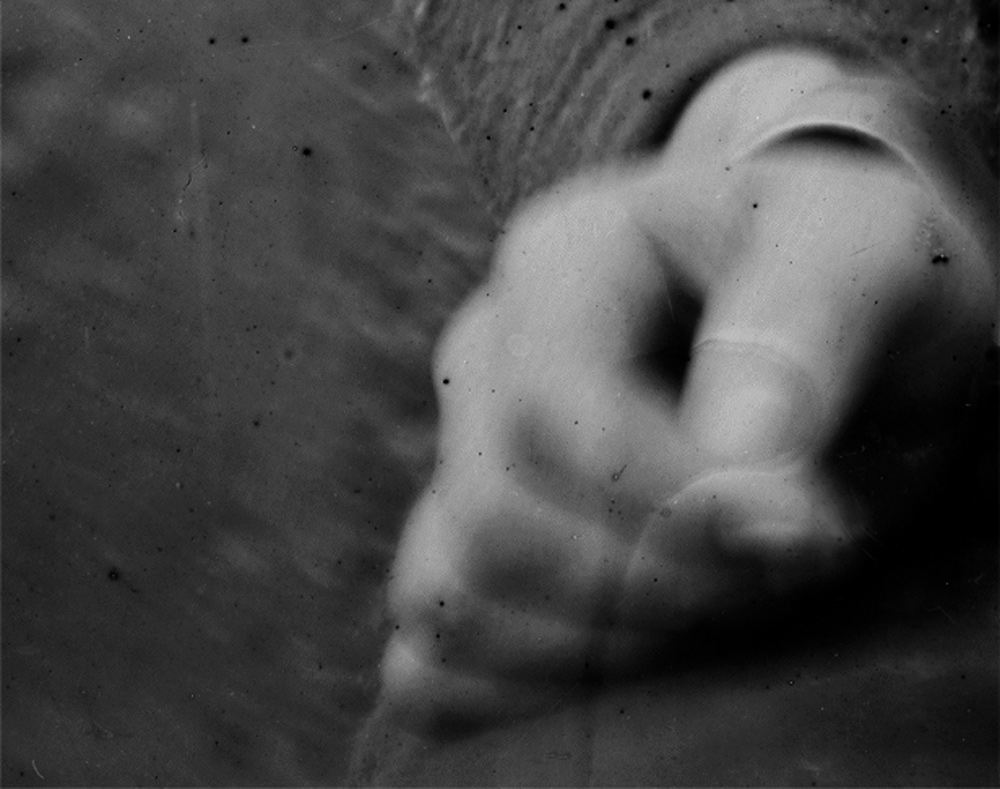
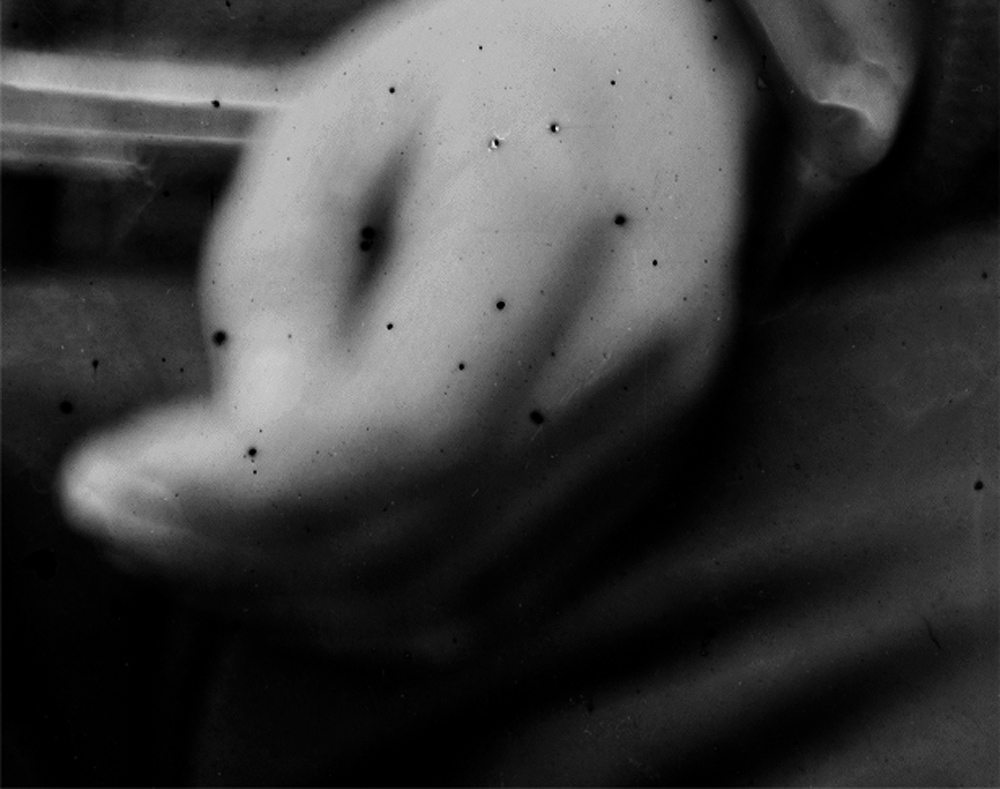
However, you can see the photographs that I used by Alexander Gardner below.

Read the transcription of the talk ‘Marcus Bunyan – what makes a great photograph?’ with the images.

Dr Marcus Bunyan


Many thankx to the Director of the CCP, Naomi Cass, for asking me to speak at the event. Other presenters: Serena Bentley, Helen Frajman, Natalie King, Tin & Ed, Tom Mosby and John Warwicker.


Alexander Gardner (American, 1821-1882) 'Lewis Paine' 26th April, 1865 'Lewis Paine' 26th April 1865


Alexander Gardner (American born Scotland, 1821-1882)
Lewis Paine
26th April 1865
Albumen silver print from a Collodion glass plate negative


Alexander Gardner (American, 1821-1882) 'Lewis Paine' 26th April, 1865


Alexander Gardner (American, 1821-1882)
Three photographs of Lewis Paine
26th April, 1865
Albumen silver prints from a Collodion glass plate negative


Alexander Gardner (American born Scotland, 1821-1882) 'Lewis Paine' April 1865 (detail)


Alexander Gardner (American born Scotland, 1821-1882)
Lewis Paine (detail)
26th April 1865
Albumen silver print from a Collodion glass plate negative


Alexander Gardner (American born Scotland, 1821-1882) 'Lewis Paine' April 1865 (detail)


Alexander Gardner (American born Scotland, 1821-1882)
Lewis Paine (detail)
26th April 1865
Albumen silver print from a Collodion glass plate negative


Alexander Gardner (American born Scotland, 1821-1882) 'Lewis Paine' April 1865 (detail)


Alexander Gardner (American born Scotland, 1821-1882)
Lewis Paine (detail)
26th April 1865
Albumen silver print from a Collodion glass plate negative


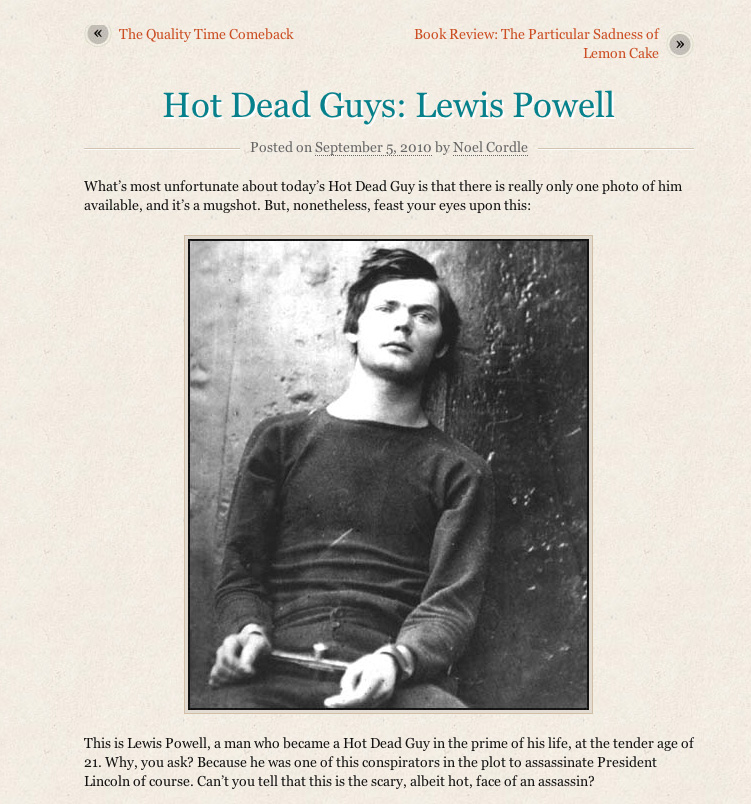
Hot Dead Guys: Lewis Powell


Noel Cordle
Hot Dead Guys: Lewis Powell
Posted on September 5th, 2010
Mere Musings blog [Online] Cited 01/12/2012. No longer available online


Descriptions of Lewis from "The Life, Crime and Capture"


Descriptions of Lewis from “The Life, Crime and Capture”


Alexander Gardner (American born Scotland, 1821-1882) 'Lewis Paine' April 1865 (detail)

Alexander Gardner (American born Scotland, 1821-1882) 'Lewis Paine' April 1865 (detail)


Alexander Gardner (American born Scotland, 1821-1882)
Lewis Paine (detail)
26th April 1865
Albumen silver print from a Collodion glass plate negative


Roland Barthes (French, 1915-1980) 'Camera Lucida (La Chambre claire)' 1980


Roland Barthes (French, 1915-1980)
Camera Lucida (La Chambre claire)
1980


Alexander Gardner (American born Scotland, 1821-1882) 'Lewis Paine' April 1865 (detail)


Alexander Gardner (American born Scotland, 1821-1882)
Lewis Paine (detail)
26th April 1865
Albumen silver print from a Collodion glass plate negative


Alexander Gardner (American born Scotland, 1821-1882) 'Lewis Paine' April 1865 (detail)


Alexander Gardner (American born Scotland, 1821-1882)
Lewis Paine (detail)
26th April 1865
Albumen silver print from a Collodion glass plate negative


CCP website

LIKE ART BLART ON FACEBOOK

Back to top

Review: ‘Jeff Wall Photographs’ at The Ian Potter Centre: NGVA, National Gallery of Victoria, Melbourne

“These photographs are like the Emperor’s new clothes, so caught up are we in the brilliance of their display…” Dr Marcus Bunyan

Exhibition dates: 30th November, 2012 – 17th March, 2013

Curators: Susan van Wyk and Dr Isobel Crombie


Jeff Wall (Canadian, b. 1946) 'A view from an apartment' 2004-2005 from the exhibition 'Jeff Wall Photographs' at The Ian Potter Centre: NGVA, National Gallery of Victoria, Melbourne, November 2012 - March 2013


Jeff Wall (Canadian, b. 1946)
A view from an apartment
2004-2005
Transparency in light box 1/2
167 x 244cm
Tate, London Purchased with assistance from the American Fund for the Tate Gallery and Tate Members, 2006
© Jeff Wall


“My work is a reconstruction and reconstruction is a philosophical activity. If I can create a drama that has philosophical meaning, that’s fine, or sometimes, it is not from meaning but a reconstruction of a feeling. It is best to capture in a photograph a feeling, an emotion, a look, a memory, a perception or a relationship.”


Jeff Wall


Stressed at the seams

The excruciating “conversation” between Jeff Wall and Thomas Demand in The Great Hall at the National Gallery of Victoria on November 28th 2012 seemed to run on interminably, yielding a couple of tiny gems but also a lot of leaden debate. I had higher hopes of the solo exhibition by Jeff Wall at NGV Australia. In some ways I was not disappointed, in other ways Wall’s calculating fields of existence certainly didn’t move my soul with any great conviction.
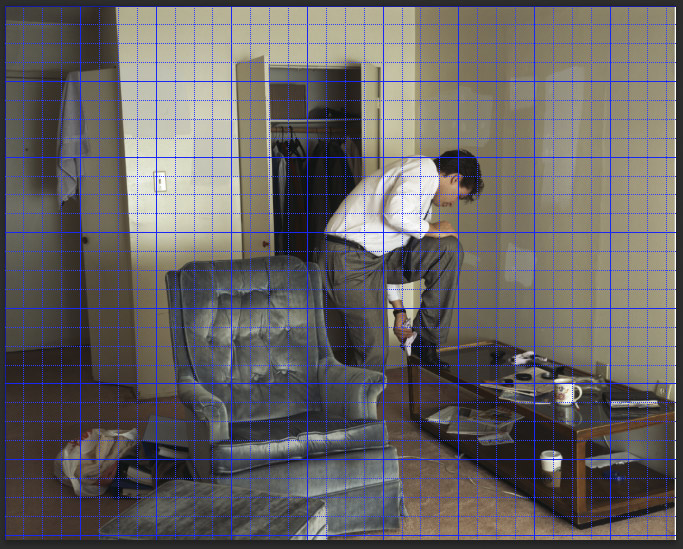
Initially, I was impressed perhaps even a little overwhelmed by the spacious hang, the placement of the mainly large, light box illuminated photographs and non light box photographs dotted amongst the galleries emphasising the inter-relationship between the images. The work in the exhibition includes large set-piece constructions, outdoor photographs of found environments, small, intimate conceptual works full of angles and colour and more recent ink jet print work. These “installations that happen to have photos in them” (Wall’s description) reflect the gigantism prevalent in much contemporary photography. In these large mise-en-scène you cannot fail to be impressed by the control the artist displays in the formal nature of their construction, the still-life tableaux representing the artist’s intention in a rather cold and remote way. As can be seen from the structural analysis of Polishing (1988) by Dr James McArdle and Ian Lobb below, Wall is very clever in how he structures his shape-shifting photographs, how he seduces the eye into believing that everything is plausible within the formalist pictorial plane. But as McArdle observes,
“[His] formalism remains empty of connection to the subject, Wall denying any narrative representation… His distancing of the subject, his leaning on typecast (such as in the chicken plucking image) can be summed up in his method: staging, directing, controlling that sucks the real life out of the imagery and re-inflates it with bombast.”1

From his early, prissy double self-portrait to his laughing at, not with, the menial labourers in Dressing poultry (2007, below), the set-piece work does seem full of bombast (possessing a pompous and grandiloquent language; an obsolete material used for padding), but perhaps bombast is related to that standard postmodern language, irony. It certainly is a language where Wall denies any inherent narrative, where there is a “dis-identification of the figures in the pictures which becomes part of the aesthetic of the picture.”2 Wall says he is just depicting the figures, that they just become an effect of depiction (or representation, in other words). In this way Wall conditions our awareness of [this particular] space due only in part to their scale (McArdle). This grandiloquence, coupled with the luminance of the light box which creates the luminescence of the image, dazzles the eye but on closer inspection is a perhaps a psychological hall of mirrors. The shattering of this constructed illusion can be seen in the “seaminess” of the photographs. The media image of A view from an apartment (2004-2005, below) gives it away: all trace of the join that is present in most of Wall’s large transparencies has been removed, when compared to my detail photograph of the image in the actual exhibition. The join gives lie, line, to the truth that here are photographs that we can believe in. The illusion becomes stressed at the seams but again, perhaps this join is just a trope that Wall has developed to compliment his visual language. Certainly, there is no reason why such large transparencies could not be printed in one piece and at a million dollars a pop he could surely talk to the manufacturer.

Scholars have noted that the phrase ‘Emperor’s new clothes’ has become a standard metaphor for anything that smacks of pretentiousness, pomposity, social hypocrisy, or hollow ostentatiousness and this is the case here. These photographs are like the Emperor’s new clothes, so caught up are we in the brilliance of their display we fail to notice that there is not much going on in terms of the actual “life” of the image (other than subsuming the life of up to 70 digital images to make one still, cold image). Wall’s photographs as performance, his theatre of disruption where the artist seeks to upset the veneer of the ordinary to blur the boundaries between what is probable or improbable, are undone by their existential isolation. I felt little empathy for any of the people in Wall’s tableaux vivants or for their imagined, non-narrative realities as Wall would have it. Perhaps I wasn’t meant to or, to be kinder, perhaps this is the strategy.

There was one exception: Untangling (1994, below) which is a cracker of an image. All the psychological and existential meaning comes pouring out here: an underground cave (Jung’s cave archetype, symbol of the unconscious), the male sitters profound mood of introspection, the skein of tangled rope which may represent the source of the Gordian Knot, used as a metaphor for an intractable problem (disentangling an “impossible” knot) – although I prefer the analogy of the Ouroboros, the snake devouring its own tail which often represents self-reflexivity or cyclicality, especially in the sense of something constantly re-creating itself, the eternal return, which emphasises the relationship between a person’s mind and their experience of reality, how the psyche shapes the environment in which they act, and the untangling of consciousness.


While his work was cutting edge in the late 1980s-1990s, containing something in the work that brought him to notice, today it evidences a cultural and visual aesthetic that already seems completely outdated (the Pet Shop Boys on a bad hair day). Through staring at a constructed atemporal reality – like a man dreaming, caught in a no-time – Wall has created a form of look but don’t touch voyeurism, a slightly bombastic narcissism based on the photographers’ own power.

But perhaps this is the point.

Perhaps the qualities that I have criticised in the artist’s work are the very qualities the he is pursuing. Wall might want a don’t touch voyeurism for example – possibly deny it even exists or give it another name – so that the work interrogates some aspect of alienation without ever naming it. This can be seen in his construction of the photograph Polishing where he represents a mundane act in a cheap hotel room, raising the performance up to the altar of high art while hiding its anomalous philosophical and physical distortions.

I think Wall is a clever person wanting to be contradictory and clever.

To some people the qualities evidenced in Wall’s photographs can be seen to be quite admirable: today we shouldn’t (always) have to seek resolution or meaning. But when Wall says in the quote at the top of this posting that his work is a “reconstruction of a feeling” then I wonder where this feeling has gone, or whether it existed in the first place, for reconstruction is a very strange word to use with regard to feelings.

While the artist can control the uniqueness of a particular image seen from the point of view of production, intention and encounter3 what he cannot control is the interpretation of his images by the viewer. With this in mind (very apt) this is what I don’t get from these images: they lack for me is the quality of being lyrical, an artist’s expression of emotion in an imaginative and beautiful way.

The stress seams present in his photographs, be they physical (the actual print) or psychological (photographs like Doorpusher or A view from an apartment) don’t allow me emotional access to the work. Aiming for an investigation into the existential nature of being and the philosophical reconstruction of a feeling, Wall ends up stressed at the seams (even un/seamed, un/scene, un/seen) and leaves me spatially and emotionally unmoved.

Dr Marcus Bunyan

See my installation photographs of the exhibition


1/ McArdle, James. Email to the author 22/01/2013

2/ Wall, Jeff and Crombie, Isobel. “Jeff Wall Photographs: Knife Throw,” video on the NGV website Cited 03/03/2013. No longer available online

3/ Howarth, Sophie. “Introduction,” in Singular Images: essays on Remarkable Photographs. New York: Aperture, 2006, p. 7


Many thankx to the National Gallery of Victoria for allowing me to publish the photographs in the posting. Please click on the photographs for a larger version of the image.


Jeff Wall (Canadian, b. 1946) 'A view from an apartment' 2004-2005 (detail)


Jeff Wall (Canadian, b. 1946)
A view from an apartment (detail)
2004-2005
Photo: Marcus Bunyan


Jeff Wall (Canadian, b. 1946) 'Polishing' 1998 from the exhibition 'Jeff Wall Photographs' at The Ian Potter Centre: NGVA, National Gallery of Victoria, Melbourne, November 2012 - March 2013


Jeff Wall (Canadian, b. 1946)
Polishing
1998
Transparency in light box, 1/2
162 x 207cm
State Art Collection, Art Gallery of Western Australia Purchased with assistance from the Art Gallery of Western Australia Foundation, 1999
© Jeff Wall


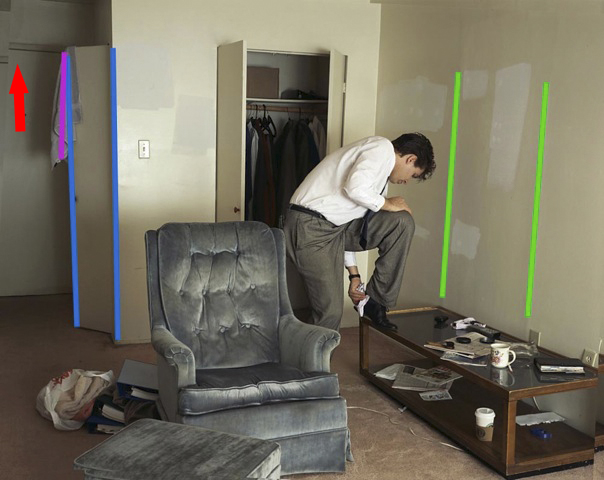
Jeff Wall 'Polishing' skewing

Image Dr James McArdle


Jeff Wall 'Polishing' skewing

Image Ian Lobb


Many thankx to Dr James McArdle for the initial gridded image from the posting “Perspective blow up,” on his Camera/Eye blog (January 21st, 2013) where he argues that the skewing is all done with tilting and shifting of an 8 x 10 image view camera and the analysis by Ian Lobb in which he argues that the skewing is partially done through the architecture (the set), the camera and some Photoshop tweeking.


Structural analysis of Jeff Wall’s Polishing (1998)

“There is a perceptual discomfort in viewing this image on the wall that is not apparent in the desk-top experience of it. I’m referring to a weird skewing of the perspective of the room. Wall has tilted the monorail of his 8×10 camera down toward the corner of the room, making the left hand wall of the bathroom lean uncomfortably, more than does the patched join of the wall panels to the right. He has then shifted the lens left, thus positioning the one vertical (right behind the figure) to the right of centre. The bathroom door, draped with a towel, looks as if it is hanging off its hinges, at variance with the top of the entrance door which remains horizontal. Conventionally, an architectural photographer would square everything and Wall does that in Doorpusher which though shot from an extremely oblique angle employs a radical drop-front to correct the verticals.”

Dr James McArdle


“”Firstly, the floor is not straight in the image. You can see how in my edit, I have rotated the image a little to make the floor straight: (you can see how much by the break in the picture rail see red arrow). JW being tricky and skilled. Now the amount of lean in wall could almost be achieved just by a camera pointing down. No weird camera movements – this is almost familiar. But the door leans more than the wall! Next, note the degree of convergence in blue lines compared to green lines. Therefore the blue angle is emphasised – somehow. Note different hang of towel in magenta compared to blue – therefore edited ~ somehow!

The grid is good because as an initial observation it shows how much distortion we are viewing. But it makes it difficult to see that the floor is not level. When the floor is straightened the lean on the left wall is not as much as it seemed. Wait! Things do splay out when the camera is pointed down – so maybe there is no Photoshop in this at all? But there is – the angles have been emphasised a bit (I believe digitally) and there are puns in the angle of the towel (sloping at a different angle) and the buttons on the couch (not sloping out at all).

Lets play with this a bit more. So just tilt the camera to slope the floor and emphasise the lean by using the tilt to straighten the verticals on one side – and now make this a bit stronger in Photoshop. And by judicious use of the furniture placement the slope of the floor can be partly hidden. I can imagine Jeff Wall saying to a crowd that there is no Photoshop in this – it’s just camera placement (including a tilt in the whole camera) and without duplicating the scene I can’t be sure – but I think he has stressed in Photoshop some things that are already there. Digital enhancement.

Finally we can say that the formal qualities of this image are a play upon what has been initially offered by the camera. Initially: The walls are sloping! So is it just optics, or camera angle or Photoshop? It’s all three but not as much Photoshop as initially thought. The floor is not straight, the camera angle has been changed and there has been some digital emphasis.”

Ian Lobb (author of The Well Tempered View Camera)


Jeff Wall (Canadian, b. 1946) 'Double Self-Portrait' 1979


Jeff Wall (Canadian, b. 1946)
Double Self-Portrait
1979
Transparency in light box AP
172 x 229cm
Collection of the artist
© Jeff Wall


Jeff Wall (Canadian, b. 1946) 'Untangling' 1994, printed 2006


Jeff Wall (Canadian, b. 1946)
Untangling
1994, printed 2006
Transparency in light box, AP
189 x 223.5cm
National Gallery of Victoria, Melbourne Purchased NGV Foundation and with the assistance of NGV Contemporary, 2006
© Jeff Wall


Jeff Wall (Canadian, b. 1946) 'Dressing poultry' 2007


Jeff Wall (Canadian, b. 1946)
Dressing poultry
2007
Transparency in light box, 1/2
201.5 x 252cm
Cranford Collection, London
© Jeff Wall


Jeff Wall (Canadian, b. 1946) 'Adrian Walker, artist, drawing from a specimen in a laboratory in the Dept. of Anatomy at the University of British Columbia, Vancouver' 1992


Jeff Wall (Canadian, b. 1946)
Adrian Walker, artist, drawing from a specimen in a laboratory in the Dept. of Anatomy at the University of British Columbia, Vancouver
1992
Transparency in light box, AP
119 x 164cm
Collection of the artist
© Jeff Wall


Jeff Wall (Canadian, b. 1946) 'A sudden gust of wind (after Hokusai)' 1993


Jeff Wall (Canadian, b. 1946)
A sudden gust of wind (after Hokusai)
1993
Transparency in light box, unique state
229 x 377cm
Tate, London Purchased with the assistance from the Patrons of New Art through the Tate Gallery Foundation and from the National Art Collections Fund, 1995
© Jeff Wall


Jeff Wall (Canadian, b. 1946) 'After 'Invisible Man' by Ralph Ellison, the Prologue' 1999-2000


Jeff Wall (Canadian, b. 1946)
After ‘Invisible Man’ by Ralph Ellison, the Prologue
1999-2000
Transparency in light box, AP
174 x 250.5cm
Collection of the artist
© Jeff Wall


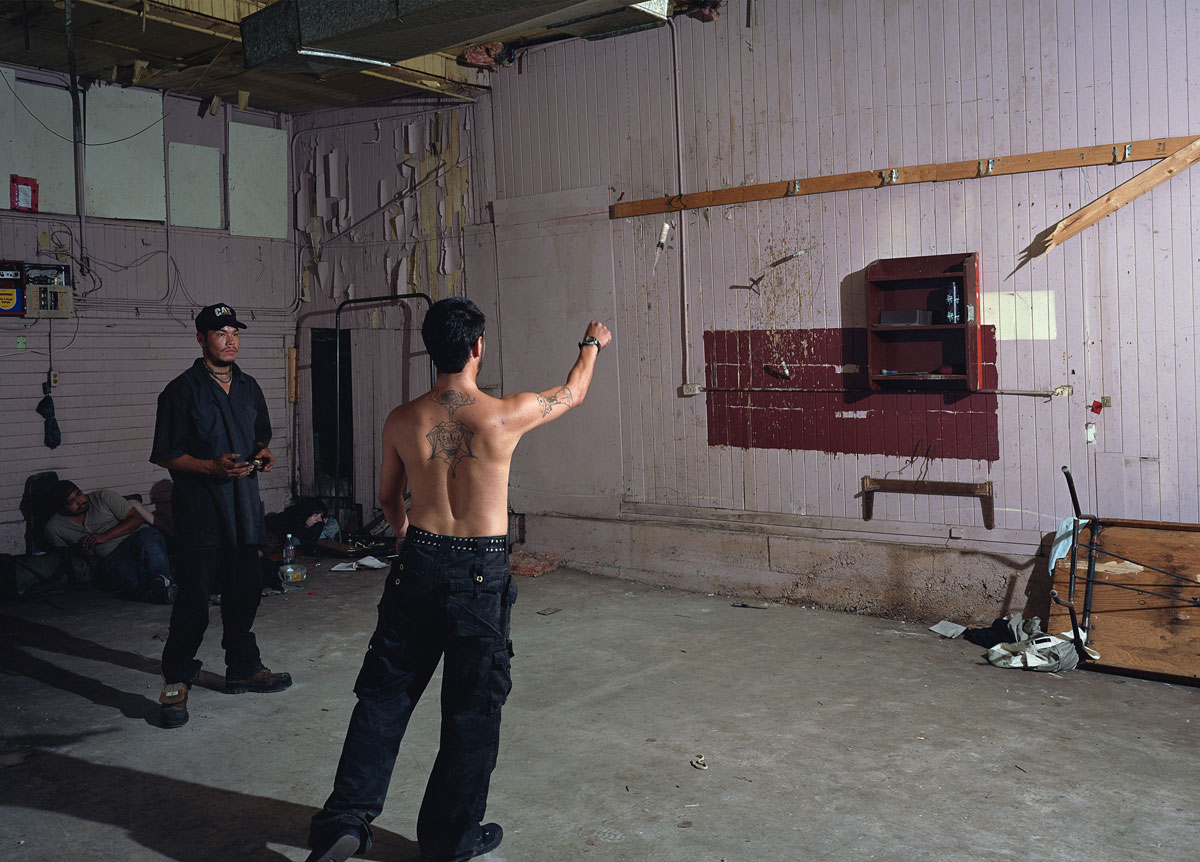
Jeff Wall (Canadian, b. 1946) 'Knife throw' 2008


Jeff Wall (Canadian, b. 1946)
Knife throw
2008
Colour photograph, AP
184 x 256cm
Collection of the artist
© Jeff Wall


Jeff Wall (Canadian, b. 1946) 'The Destroyed Room' 1978


Jeff Wall (Canadian, b. 1946)
The Destroyed Room
1978
Transparency in light box, AP
159 x 234cm
Collection of the artist
© Jeff Wall


Jeff Wall (Canadian, b. 1946) 'Clipped branches, East Cordova St., Vancouver' 1999


Jeff Wall (Canadian, b. 1946)
Clipped branches, East Cordova St., Vancouver
1999
Transparency in light box, AP
72 x 89cm
Collection of the artist
© Jeff Wall


Jeff Wall (Canadian, b. 1946) 'Diagonal Composition' 1993


Jeff Wall (Canadian, b. 1946)
Diagonal Composition
1993
Transparency in light box, AP
40 x 46cm
Collection of the artist
© Jeff Wall


Jeff Wall (Canadian, b. 1946) 'Boy falls from tree' 2010


Jeff Wall (Canadian, b. 1946)
Boy falls from tree
2010
Colour photograph, AP
226 x 305.3cm
Collection of the artist
© Jeff Wall


The Ian Potter Centre: NGV Australia
Federation Square
Corner of Russell and 
Flinders Streets, Melbourne

Opening hours:
Daily 10am – 5pm

National Gallery of Victoria website

LIKE ART BLART ON FACEBOOK

Back to top

Review: ‘Andrew Curtis: Moonlight Mile’ at Blockprojects, Melbourne

Exhibition dates: 6th February – 3rd March, 2013

Curator: gallery directors at Blockprojects


Andrew Curtis (Australian, b. 1966) 'Wonthaggi' 2012 from the exhibition 'Andrew Curtis: Moonlight Mile' at Blockprojects, Melbourne, February - May, 2013


Andrew Curtis (Australian, b. 1966)
Wonthaggi
2012
Archival pigment print on cotton rag
120 x 180cm


This is a strong exhibition of large scale hybrid black and white photographs by Andrew Curtis at Blockprojects, Cremone. The photographs look grand in the simple, beautiful exhibition space, perhaps too grand, too sympatico with the theme of the work: mountains made out of piles of earth dumped at building sites in the outer suburbs of Melbourne. There is humour and absurdity here as Dan Rule notes, but also more than a hint of the sublime. By playing with scale (narratives of the miniature, the gigantic) and light (these images have been studiously lit from different angles during a long time exposure), Curtis tricks the eye of the viewer, just for a split second (the punctum?), elucidating “the strength of the almost blinding role that expectation plays in our reading of an image.” (Dan Rule)

What do I mean by hybrid monochrome images – the work was shot on a 4 x 5 large format film camera and then printed digitally as an archival pigment print on cotton rag. Personally, if I went to all the trouble to shoot on film, then why wouldn’t I go the distance and get them printed the traditional way to preserve the optical veracity that large format brings? With this in mind I asked myself why the images had to be so big (the gigantism of most contemporary photography) for the smaller image, Point Cook 2 (2012, below) seemed at least as valid, perhaps more so as an image, than the larger photographs. It was almost as if the smaller size gave the subject more validity in terms of its abstractness (see installation photograph below). Perhaps a size in between the two presented in the exhibition and printed the analogue way would have been more appropriate to the spirit of the work.

The other thing that I found puzzling was the lack of depth of field from front to back of most of the images. The foregrounds were invariably out of focus (when you could actually see them) which is a strange choice when using a large format camera, where everything can be in focus front to back (a la F64). Curtis’ aesthetic choice is directly from the Pictorialist handbook, as is his decision to darken the out of focus foreground with an aura of black so that nothing is visible (see Hoppers Crossing 1, 2 and 3 below). This makes for a strange reading of the photographs where the mountain becomes isolated yet is the sole grounding of the image (save for a shadowy horizon line behind), a trope that didn’t really work for me.

My favourite images were the more intimate images such as Point Cook 2 and Wonthaggi (both 2012). In both, the foreground is agreeably present to lead the eye into the image. In Point Cook 2 the eye is also led in from the right hand side by the spine of the mountain range, the light on the earth matching the ethereal light in the sky. A good image. Even better is Wonthaggi where the stand alone isolation of the monolithic mountains in most of the other images is broken by the “shoulders” of the mountain disappearing out of frame. This, combined with more subtle lighting and the presence of massed shadows of trees in the background, adds a valuable context to the image while at the same time referencing the history of Australian photography through the images of people such as Harold Cazneaux.

Dr Marcus Bunyan


PS. Just as a general point of interest. It is so difficult to make the right choice when displaying large, dark photographs in a gallery setting. If you pin them to the wall, as here, there tend to be waves in the photographs and a client who wants to purchase the print has to factor in where to get the print framed and how much this is going to cost: a lot of hassle for a potential client. If you do get the work framed there is the initial upfront cost plus the dark image is more than obscured by the glass in front of the image, lessening the photographs presence in front of the viewer. Finally there is the choice to have the photograph mounted on aluminium (dibond mounting) or facemounting a print onto acrylic. This gets rid of the need for framing and keeps the print flat but a serious collector of photography will not touch them because they have been stuck down with glue to these materials. A perplexing problem indeed.


Many thankx to Blockprojects for allowing me to publish the photographs in the posting. Please click on the photographs for a larger version of the image.


Harold Cazneaux (Australian, 1878-1953) 'The bent tree, Narrabeen' 1914


Harold Cazneaux (Australian, 1878-1953)
The bent tree, Narrabeen
1914
Bromoil photograph
14.6 x 18.9cm


Andrew Curtis (Australian, b. 1966) 'Point Cook 2' 2012 from the exhibition 'Andrew Curtis: Moonlight Mile' at Blockprojects, Melbourne, February - May, 2013


Andrew Curtis (Australian, b. 1966)
Point Cook 2
2012
Archival pigment print on cotton rag
66 x 100cm


Installation view of 'Andrew Curtis: Moonlight Mile' at Blockprojects, Melbourne


Installation view of Andrew Curtis: Moonlight Mile exhibition at Blockprojects, Melbourne


Andrew Curtis (Australian, b. 1966) 'Hoppers Crossing 1' 2012


Andrew Curtis (Australian, b. 1966)
Hoppers Crossing 1
2012
Archival pigment print on cotton rag
120 x 180cm


Andrew Curtis (Australian, b. 1966) 'Hoppers Crossing 2' 2012


Andrew Curtis (Australian, b. 1966)
Hoppers Crossing 2
2012
Archival pigment print on cotton rag
120 x 180cm


Andrew Curtis (Australian, b. 1966) 'Hoppers Crossing 3' 2012


Andrew Curtis (Australian, b. 1966)
Hoppers Crossing 3
2012
Archival pigment print on cotton rag
120 x 180cm


Catalogue essay by Sean Payne, Deakin University


Catalogue essay by Sean Payne, Deakin University (please enlarge to read)


Andrew Curtis (Australian, b. 1966) 'Point Cook 1' 2012


Andrew Curtis (Australian, b. 1966)
Point Cook 1
2012
Archival pigment print on cotton rag
120 x 180cm


Andrew Curtis (Australian, b. 1966) 'Almurta' 2011


Andrew Curtis (Australian, b. 1966)
Almurta
2011
Archival pigment print on cotton rag
120 x 180cm


Blockprojects
Level 1 / 252 Church Street
Richmond, VIC 3121
Phone: +61 3 8395 1028

Opening hours:
Wednesday to Saturday: 12am – 5pm

Blockprojects website

LIKE ART BLART ON FACBEOOK

Back to top

Review: ‘Louise Bourgeois: Late Works’ at Heide Museum of Modern Art, Melbourne

“Bourgeois’ work gives me an overall feeling of immersion in a world view, one that transcends the pain and speaks truth to power.” Dr Marcus Bunyan

Exhibition dates: 24th November, 2012 – 11th March, 2013

Curator: Jason Smith, Director and CEO of Heide Museum of modern Art

Louise Bourgeois & Australian Artists
13 October, 2012 – 14 April, 2013

Curator: Linda Michael


'Louise Bourgeois: Late Works' installation view Heide Museum of Modern Art, Melbourne Photograph: John Gollings 2012


Louise Bourgeois: Late Works installation view
Heide Museum of Modern Art, Melbourne
Photograph: John Gollings 2012


Tough Love

This is a tough, stimulating exhibition of late works by Louise Bourgeois at Heide Museum of Modern Art, Melbourne. All the main themes of the artist’s work explored over many years are represented in these late works: memory, emotion, anxiety, family, relationships, childhood, pain, desire and eroticism are all present as are female subjectivity and sexuality, expressed through the body. As the quotation above by Bourgeois states, her body became her sculpture.

I am no expert on the work of the artist. But what I will try and enunciate are my feelings when viewing the exhibition.

I thought the drawings by Louise Bourgeois in Heide II were the most magical thing that I saw all day; they seemed to be the well spring of her creativity, the initial thought sketched quickly and imperiously. Secondly, series such as Dawn (2007, below) and The Waiting Hours (2007), assemblages of cut fragments of her dresses and other textiles used to create spiral three-dimensional realities, were the most beautiful, peaceful Zen based works in the exhibition possessing as they did a calm, resolved, mandala-like presence. Lastly, the main group of sculptures were, for me, hard to look at. A series of severed heads, dismembered bodies, tapestry fragments, spiders, bones, an orrery-like planetarium, pendulous objects stuck with needles, kitchen implements and the house brought back memories of my own childhood.

I was born in the late 1950’s to a mother who didn’t really want to have children, to a mother who was already being beaten up by an abusive husband before she was even married, who lived on a remote, isolated farm in the middle of nowhere. I can’t imagine what my mother went through in those early years raising two children – with no hope of help or escape, with no women’s refuge to flee to, stuck there doing her best to protect her children and herself from a violent, mentally ill man. You cannot imagine the torment I went through for the first 18 years of my life, trying to protect my mother when I was old enough, creating my own worlds to escape the reality of the present (which is why I probably became an artist, to still create my own worlds). There were good times at Christmas and bonfire night, but the best part was growing up on the land, learning the rhythms of nature, learning to drive on a tractor and combine harvester, but always in the back of your mind was the instant of abuse lurking around the corner, the inherent violence of life. It is only now, as I have grown older, that I can truly appreciate the dire predicament that my mother was in and acknowledge a profound sense of gratitude towards her protection of me as a baby and child.

That is why this exhibition is, for me, tough love. The emotions of Bourgeois’ sculptures are close to the bone. As Jason Smith observes, “Bourgeois saw her mother as rational, patient and stoic in her nurturing, in contrast to the temperament of her father whom she regarded as irrationally emotional, unreasonable and capable of psychological cruelty. Bourgeois became aware at an early age that she was living in a time and social environment in which women and their identities were subordinate to men.”As Bourgeois says of the spider (her mother), “she was deliberate, clever, patient, soothing, reasonable, dainty, subtle, indispensable, neat and as useful as a spider. She could also defend herself, and me.” This is what my mother did as well, at great cost to herself.

Bourgeois’ work gives me an overall feeling of immersion in a world view, one that transcends the pain and speaks truth to power. Bourgeois confronted the emotion, memory or barrier to communication that generated her mood and the work. She observed, “My art is an exorcism. My sculpture allows me to re-experience fear, to give it a physicality, so that I am able to hack away at it.” By weaving, stitching and sewing Bourgeois threaded the past through the present and enacted, through artistic performance, a process of repair and reconstruction, giving meaning and shape to frustration and suffering. I have not been so lucky. My mother refuses to discuss the past, will not even come close to the subject for the pain is so great for her. I am left with a heaviness of heart, dealing with the demons of the past that constantly lurk in the memory of childhood, that insistently impinge on the man I am today. Louise Bourgeois’ sculptures brought it all flooding back as the work of only a great artist can, forcing me to become an ethical witness to her past, my past.

A must see exhibition this summer in Melbourne.

Dr Marcus Bunyan


Many thankx to curator and Director Jason Smith and Heide Museum of Modern Art for allowing me to publish the photographs in the posting. Please click on some of the photographs for a larger version of the image.


“What counts, our whole purpose, is to try to understand what we are about, to scrutinise ourselves… Every day you have to abandon your past or accept it, and then, if you cannot accept it, you become a sculptor.”

“The fears of the past were connected with the functions of the body, they reappear through the body. For me, sculpture is the body. My body is my sculpture.”


Louise Bourgeois


“What images can art find for depicting femaleness from within, as distinct from the familiar male conventions of looking at it from the outside, from the eye-line of another gender?” Hughes questioned in a commentary that implied no precedents. “… [Her] influence on young artists has been enormous.”


Robert Hughes quoted by Annemarie Kiely on the Vogue Living Blog [Online] Cited 28/02/2013 no longer available online


“Yes, there are the oft-told stories of the father and the mistress, but it is Bourgeois’s intense love of her mother and her [mother’s] death that completely transformed her life… The art ultimately became about her never-ending grief… and her continuing desire  as a woman. It’s still so potent; not just as a memory, but as a constant.”


Jason Smith, Curator, Director and CEO of Heide quoted by Annemarie Kiely on the Vogue Living Blog [Online] Cited 28/02/2013 no longer available online


'Louise Bourgeois: Late Works' installation view Heide Museum of Modern Art, Melbourne Photograph: John Gollings 2012


Louise Bourgeois: Late Works installation view
Heide Museum of Modern Art, Melbourne
Photograph: John Gollings 2012


“The friend (the spider – why the spider?) because my best friend was my mother and she was deliberate, clever, patient, soothing, reasonable, dainty, subtle, indispensable, neat and as useful as a spider. She could also defend herself, and me.”


Louise Bourgeois, from Ode to my Mother, 1995


Louise Bourgeois (French-American, 1911-2010) 'Spider' 1997 (detail)


Louise Bourgeois (French-American, 1911-2010)
Spider (detail)
1997
Steel, tapestry, wood, glass, fabric, rubber, silver, gold, bone
449.6 x 665.5 x 518.2cm
The Easton Foundation, New York, NY
Photograph: John Gollings 2012


Louise Bourgeois (French-American, 1911-2010) 'Dawn' 2007 (detail)


Louise Bourgeois (French-American, 1911-2010)
Dawn (detail)
2007
Fabric book, 12 pages
12 1/4 x 9 3/4 inches each


Around 1996, aged 85, Bourgeois began to mine her closets for the garments and textiles that she had worn, collected and stored over a lifetime, and use them to make sculpture and ‘fabric drawings’, continuing her lifelong recall and articulations of familial dysfunction, desire and fear, anger and remorse, isolation and connectedness. In the recycling and reconstruction of her clothing and collected textiles Bourgeois intensified her work’s expression of the human body and of life’s episodes (those as daughter, wife, mother, woman, artist). The materiality of these works testifies to the impression of Bourgeois’ past on her psyche and on reparative acts of making through which her past was reconciled in her present. The beauty of the past for Bourgeois resided in the nurturing, repairing, fortifying and protective tendencies of her mother, which she aligned with the processes of stitching and assembling.

Blue Days (1996) is one of a number of works in which Bourgeois suspended, stuffed and shaped her dresses and shirts, sometimes adding abstract sculptural elements like the red glass sphere that operates here like a nucleus around which the new sculptural bodies circulate. With its intimate relation to the skin and contours of the body, to time and seasons, clothing was used for its power to summon memory: ‘You can retell your life … by the shape, weight, colour and smell of those clothes in your closet. They are like the weather, the ocean, changing all the time.’

In other works Bourgeois’ fragmented figures and anatomical parts give physical form to anxieties rising from unfulfilled desire, acts of betrayal, losses or thwarted communication. Couple IV embodies the dark confusion of the child happening upon the sexual embrace of the adults. The copulating, decapitated lovers appear as an encased ‘archaeological specimen’ and signal Bourgeois’ fraught obsession not only with the infidelities of her father, but also with sex itself. For Bourgeois there is ‘a fatal attraction not towards one or the other, but to the phenomena of copulation … I am exasperated by the vision of the copulating couple, and it makes me so furious … that I chop their heads [off]. This is it … I turn violent. The sewing is a defence. I am so afraid of the things I might do. The defence is to do the opposite of what you want to do.’

Louise Bourgeois’ practice was an elaborate articulation of an existence in which the sculpting world and the living world were one. Her late works summoned the past and confronted the present, and the passage of time, by using the very garments in which the experiences of her life, loves and longings resided.

Jason Smith, Curator, Director and CEO, Heide Museum of Modern Art. “Louise Bourgeois,” on The Melbourne Review website, November 2012 [Online] Cited 26/02/2013 no longer available online


Louise Bourgeois (French-American, 1911-2010) 'Blue Days' 1996


Louise Bourgeois (French-American, 1911-2010)
Blue Days
1996
Cloth, steel, glass
292.1 x 205.7 x 241.3cm
Courtesy Cheim & Read and Hauser & Wirth
© Louise Bourgeois Trust / Licensed by VAGA, New York / Viscopy, Sydney


Louise Bourgeois (French-American, 1911-2010) 'Femme Maison' 2001


Louise Bourgeois (French-American, 1911-2010)
Femme Maison
2001
Fabric, steel
35.6 x 38.1 x 66cm
Courtesy Cheim & Read and Hauser & Wirth
© Louise Bourgeois Trust / Licensed by VAGA, New York / Viscopy, Sydney


Louise Bourgeois (French-American, 1911-2010) 'Femme Maison' 2001


Louise Bourgeois (French-American, 1911-2010)
Femme Maison (detail)
2001
Fabric, steel
35.6 x 38.1 x 66cm
Courtesy Cheim & Read and Hauser & Wirth
© Louise Bourgeois Trust / Licensed by VAGA, New York / Viscopy, Sydney


Note that Femme Maison and other artworks are encased in ‘cells’. In one sense, the cell encases and protects the artwork; however, Louise Bourgeois’ intention was to use the cell also as a way of containing the memory held within the work.

The hybrid form of Femme Maison – with its dual translations to ‘woman house’ or housewife – appeared in drawings, paintings and sculpture, and in degrees of abstraction and figuration, from the mid 1940s onwards. In this key late work the textured fabric affirms the central relationship of woman with the domestic space. Stories of the house and the home defined Bourgeois’ identity. The architectural house and its contents – especially the table, bed and chair – and the familial home and its occupants, were the structures that shaped Bourgeois’ unstable sense of self, and her relationships with others. This work plays on the house literally growing out of the woman’s body (the nurturing mother) or, conversely, pinning her dismembered body to the ground, registering the paralysing power of fear, and recalling a painful childhood.


Louise Bourgeois (French-American, 1911-2010) 'Knife Figure' 2002


Louise Bourgeois (French-American, 1911-2010)
Knife Figure
2002
Fabric, steel, wood
22.2 x 76.2 x 19.1cm
Courtesy Cheim & Read and Hauser & Wirth
© Louise Bourgeois Trust / Licensed by VAGA, New York / Viscopy, Sydney


Louise Bourgeois (French-American, 1911-2010) 'Untitled' 2002


Louise Bourgeois (French-American, 1911-2010)
Untitled
2002
Tapestry and aluminium
43.2 x 30.5 x 30.5cm
Courtesy Cheim & Read and Hauser & Wirth
© Louise Bourgeois Trust
Photo: Christopher Burke


Louise Bourgeois (French-American, 1911-2010) 'Couple IV' 1997


Louise Bourgeois (French-American, 1911-2010)
Couple IV
1997
Fabric, leather, stainless steel, plastic
50.8 x 165.1 x 77.5cm
Courtesy Cheim & Read and Hauser & Wirth
© Louise Bourgeois Trust / Licensed by VAGA, New York / Viscopy, Sydney


Louise Bourgeois (French-American, 1911-2010) 'Untitled' 2002


Louise Bourgeois (French-American, 1911-2010)
Untitled
2002
Tapestry, aluminium
43.2 x 30.5 x 30.5cm
The Easton Foundation, New York, NY.


Louise Bourgeois (French-American, 1911-2010) 'Cinq' 2007


Louise Bourgeois (French-American, 1911-2010)
Cinq
2007
Fabric, stainless steel
61 x 35.6 x 35.6cm
Courtesy Cheim & Read and Hauser & Wirth
© Louise Bourgeois Trust / Licensed by VAGA, New York / Viscopy, Sydney


Heide Museum of Modern Art is proud to present two major exhibitions featuring the work of Louise Bourgeois. The first, Louise Bourgeois: Late Works includes over twenty, key works direct from the late artist’s studio in New York. The second exhibition, Louise Bourgeois and Australian Artists presents a selection of works by contemporary Australian artists who have been inspired by Bourgeois alongside prints and drawings from her vast graphic oeuvre. Louise Bourgeois (1911-2010) was one of the most inventive, provocative and influential artists of the twentieth century. Although her work has been exhibited extensively overseas, it has rarely been seen in Australia, and only once in significant depth, at the National Gallery of Victoria (NGV) in 1995 in an exhibition curated by then NGV curator Jason Smith. Louise Bourgeois: Late Works focuses on Bourgeois’s use of fabric in sculpture and what she termed ‘fabric drawings’. A preoccupation with memory and time, human relationships, fear and its annihilation, sexuality and the erotic body, are all emphases of Bourgeois’ final works.

Louise Bourgeois: Late Works is the first exhibition in Australia to survey the work of this profoundly important artist since her death in 2010 and has been curated by Jason Smith, now Heide Director & CEO – in close collaboration with the Bourgeois studio, New York – as a follow up to the 1995 exhibition at the NGV. Focusing on the final fifteen years of Bourgeois’ career, the exhibition examines the use of fabric in her works, and includes 18 sculptures, two suites of ‘fabric drawings’, watercolours, embroidered texts and lithographs never before seen in Australia. In the fabric works the processes of deconstructing and reconstructing, are applied to the contents of Bourgeois’ closets. The recycling of her garments, collected textiles and tapestry fragments intensifies her work’s expression of self-portraiture, and the profound personal experiences that defined her life and art.

Fabric was important to Louise Bourgeois, who grew up in her parents’ tapestry making business. In 1996, in her mid-eighties, Bourgeois began to transform the garments and textiles that she had worn, collected and stored over a lifetime into sculptures and ‘fabric drawings’. For her, sewing was an act of healing or reparation, linked to memories of her mother who ‘would sit out in the sun and repair a tapestry or a petit point’, an image of calm amid more distressing family dynamics.

Central to the exhibition is Spider, 1997 one of the Bourgeois’ Cells sculptures which is dominated, enclosed and protected by a gargantuan spider – a recurring and powerful motif in the artist’s work. Bourgeois created her spider sculptures partly in tribute to her mother, saying: ‘Like a spider, my mother was a weaver. Spiders are helpful and protective, just like my mother’. The female body and female subjectivity are concentrations in the exhibition.

The familial, biographical stories that provided life-long fuel for Bourgeois’ art are well known: her parents’ tapestry workshop in which she learnt the value of art as a form of reparation; her father’s public infidelity; her mother’s betrayal and early death; her complex sense of abandonment; her constant analysis of self; her belief in art a form of exorcism and as a potential reconciliation with the past.

Another highlight of the exhibition is the haunting Couple IV 1997, depicting a pair of copulating, and decapitated, lovers. The embracing figures are cast in the black of mourning, and appear as an encased ‘archaeological specimen’ in the vitrine. The work signals Bourgeois’ fraught obsession with the past, the infidelities of her father, and with sex itself.

Surrealism and pathos combine in Bourgeois’ smaller, intimate works like Knife figure 2002 and Untitled 2002. Here we see a dark side of the domestic with the knife and the whisk looming threateningly large in relation to the prone, dismembered bodies. In their colouration and homely material qualities they inspire tenderness and protection, yet as with so many of Bourgeois’ bodies, each remains cut off from the world and isolated to deal with its fate.”

Press release from the Heide Museum of Modern Art website


Louise Bourgeois & Australian Artists

This exhibition looks at relationships, both real and imagined, between the art of Louise Bourgeois (1911-2010) and that of ten Australian artists, in the rare context of a solo Bourgeois exhibition at Heide. Some pay direct homage to Bourgeois’ work or consider similar themes, while the connection of others registers more instinctually, on the level of a shared psychological intensity. Many of the works are rooted in memory and emotion, with a core that remains indecipherable – they do not illustrate or explain.

Forged regardless of fashion or fortune, Bourgeois’ oeuvre gave several artists in this exhibition the impetus to use personal subject matter as a creative source in the late 1980s and 1990s, an era when a cool, detached conceptualism dominated. Many share Bourgeois’ subjective focus and use the human body as a vehicle for self-expression, while for others her work’s formal precision and constant reinvention inspire. All respond to the exemplary fusion in Bourgeois’ art between inner compulsion and formal discipline, instinct and intelligence.

The Australian artists are Del Kathryn Barton, Pat Brassington, Janet Burchill, Carolyn Eskdale, Brent Harris, Joy Hester, Kate Just, Patricia Piccinini, Heather B. Swann.

Statement from the from the Heide Museum of Modern Art website


Janet Burchill (Australian, b. 1955) 'Following the Blind Leading the Blind' 1997


Janet Burchill (Australian, b. 1955)

Following the Blind Leading the Blind

1997

Synthetic polymer and enamel paint on wood

144.6 × 142.6 × 29.8cm

National Gallery of Victoria, Melbourne Purchased 1999


“The grid is a very peaceful thing, because nothing can go wrong … everything is complete. There is no room for anxiety … everything has a place. Everything is welcome.”


Louise Bourgeois


I had a weak-at-the-knees, tingle-all-over moment when I saw Louise Bourgeois’ work for the first time about fifteen years ago in Los Angeles. Yes I am a CRAZY fan. And, yes, it’s true I lay under her big spider in Tokyo and cried…

These are the releases I hope for in our vast world of art. Encounters when the artwork is somehow so inexplicably intimate, so beyond, so seemingly effortless that there can be no defence. In these moments there is an opening-up within the body, the mind, within all the senses … an experience of recognition, relief and awe that informs one’s deeper creative makeup.


Del Kathryn Barton


Del Kathryn Barton (Australian, b. 1972) 'no other side' 2012


Del Kathryn Barton (Australian, b. 1972)
no other side
2012
(one part of nine)
Dupion silk and embroidery cotton
9 parts, each 42 × 45cm
In collaboration with Karen Barton
Courtesy of the artist and Roslyn Oxley9 Gallery, Sydney


“I guess every artist has other practices that they aspire to. Louise Bourgeois’ practice – by which I mean the combination of the works, the way that they were made, the artist and the way that she conducted herself – is such a practice for me. The way that she worked for so long, and continued to develop her work in good times and bad, as well as the way that her works are so much of their times but at the same time not quite in sync with them inspires me. The fact that I hardly know the work she made prior to her fifties demonstrates the truth of the idea that art is a lifetime project that can continue to evolve as an artist matures. And then, of course, there is the work itself.”


Patricia Piccinini


Patricia Piccinini (Australian, b. 1965) 'The Uprising' 2008 bronze


Patricia Piccinini (Australian, b. 1965)
The Uprising
2008
Bronze


Patricia Piccinini (Australian, b. 1965) 'The Uprising' 2008 bronze (detail)


Patricia Piccinini (Australian, b. 1965)
The Uprising (detail)
2008
Bronze


“The massive aorta-like The Uprising, with its labyrinthine musculature, is a much stranger work. It establishes a bridge between the Vespa stags and the transgenic creatures, while being simultaneously amorphous and representational. Corporeal and mechanical, it suggests the plastic, porous, and uncertain world of the new nature that is at the core of the figurative works. For this reason it is physically sited at the boundary between natural history and art history…”


Juliana Engberg


Patricia Piccinini (Australian, b. 1965) 'Nectar' 2012


Patricia Piccinini (Australian, b. 1965)
Nectar
2012
Silicone, fibreglass, human hair, refrigerator edition 1/6
83 x 48 x 51cm
Courtesy of the artist, Tolarno Galleries, Melbourne, and Haunch of Venison, London and New York


“Taking her cue from the vague boundaries of the biotech world, ‘where it is difficult to figure exactly where the good becomes tainted and the bad becomes justifiable’, Piccinini considers her own hybrid creations, however abject or grotesque, as lovable, associated with fecundity, growth and optimism. Like Bourgeois, she presents strange couplings of the animal and the human, that despite their de-formations always convey intimacy and warmth. Here the title Nectar suggests that there may be something nourishing in what might otherwise appear as a failed experiment.”

Text from educational pdf


Pat Brassington (Australian, b. 1942) 'House guest #2' 2007


Pat Brassington (Australian, b. 1942)
House guest #2
2007


Pat Brassington (Australian, b. 1942) 'The Guardian' 2009


Pat Brassington (Australian, b. 1942)
The Guardian
2009
Pigment print on paper edition 6/8
112 x 87.5cm
Heide Museum of Modern Art, Melbourne
Purchased with funds from the Robert Salzer Foundation 2009


Louise Bourgeois at Heide Museum

A behind-the-scenes look at how the works of Louise Bourgeois, including her famous Spider were installed at Heide Museum.


Heide Museum of Modern Art
7, Templestowe Road
Bulleen, Victoria 3105

Opening hours:
(Heide II and Heide III)
Tuesday, Wednesday, Sunday, 10am – 5pm
Thursday – Saturday, 10am – 8pm

Heide Museum of Modern Art website

LIKE ART BLART ON FACEBOOK

Back to top