James Barnor (Ghanaian based in London, b. 1929) Mike Eghan at the BBC Studios, London (installation view) 1967, printed 2010 Gelatin silver on paper Gift of Eric and Louise Franck London Collection 2013 Photo: Marcus Bunyan
This was the best photography exhibition which wasn’t an exhibition – because it was a “display” – that I saw on my recent trip to Europe.
Why was it the best? Because this is what strong, insightful photography can do: it can capture life; it can document different cultures; and it can be a powerful agent for social change.
I remember London in the 1970s. I lived in Clapham (Claiff-ham Heights) and Stockwell (we called it St. Ockwell) near Brixton at the time. I remember the Brixton riot of 1981, as I was living in my little room down the road, as the cars burnt and the buildings were smashed. “Brixton in South London was an area with serious social and economic problems. The whole United Kingdom was affected by a recession by 1981, but the local African-Caribbean community was suffering particularly high unemployment, poor housing, and a higher than average crime rate.” (Wikipedia) People felt oppressed by recession, racism, the police, and by the establishment, for this was the era of Margaret Thatcher and her bullies. But as these photographs show, there was such a vibrant sense of community in these areas as they sought to ‘stand firm in England’ because it was their home.
It is our great privilege that we have the images of this very talented group of photographers who documented Black communities in London during this time: Raphael Albert, Bandele ‘Tex’ Ajetunmobi, James Barnor, Colin Jones, Neil Kenlock, Dennis Morris, Syd Shelton and Al Vandenberg. And I find it heartening that all of these photographers were documenting their community at the same time. The African-Caribbean diaspora is part of the genetic makeup of the UK and multiculturalism, from where ever it emanates, should be valued in societies around the world. It enriches contemporary culture through an understanding and acceptance of difference.
Against racism; against fascism; against discrimination. For freedom from oppression and the right to be heard.
Dr Marcus Bunyan
PS. There were no media images so I took iPhone installation photographs of the display, so please excuse any reflection of the gallery in the images. I have cleaned and balanced them as much as possible.
James Barnor (Ghanaian based in London, b. 1929) Drum Cover Girl Erlin Ibreck, London (installation view) 1966, printed 2010 C-print on paper Gift of Eric and Louise Franck London Collection 2013 Photo: Marcus Bunyan
“The picture of a young woman leaning against a shiny grey Jaguar was taken in Kilburn, north London, in 1966. The pastel minidress, heavy fringe and costume jewellery feel instantly familiar as belonging to the era, but while we’re used to seeing a pallid Twiggy or Penelope Tree striding about London in fashion shoots from the same time, we rarely see images in which the model is black.
The pictures shown here of young women with 1960s-style beehives and miniskirts were shot as fashion stories for Drum , an influential anti-apartheid magazine based in Johannesburg, and Africa’s first black lifestyle magazine. …
Erlin Ibreck, the model in the main photograph who was 19 at the time, remembers Barnor asking her to pose in Trafalgar Square while flocks of excited pigeons landed on her. ‘I was more nervous about the pigeons than people around us who were staring.’
Some of the models were professional, but Ibreck was someone Barnor spotted in a bus queue at Victoria station. Ibreck was living in Cheshire but visiting her sister, who lived in London. Barnor asked if she would like to be photographed for Drum magazine and eventually she agreed.
Encouraged by Barnor, Ibreck enrolled at the Lucie Clayton modelling school in Manchester, but finding work as a black model in the 1960s was not easy.
‘It was very tough as there were very few black models,’ she says. ‘I was selected by Lucie Clayton to model De Beers diamonds – a South African company, and this was during apartheid. When they discovered that I was black De Beers cancelled the booking and chose a white model.
‘That booking would have enhanced my career, so it was a very painful experience to have been rejected on the basis of my colour. This experience made me realise what I was up against.’ After two years Ibreck gave up modelling and moved to New York.”
Although Barnor says he wasn’t consciously attempting to chronicle ‘black culture’ in England, and was simply taking photographs of things that interested him and the readers of Drum, the effect was, none the less, an optimistic suggestion that these cosmopolitan young African women were part of the exciting new, multicultural society in London that people were talking about.
Barnor’s memories of the time seem to be largely positive, and he says he doesn’t remember experiencing any overt racism. ‘I moved in enlightened circles so I did not have to put up with most of what other black people had to go through, though I did notice when I sat on a bus many people didn’t want to sit next to me’.”
Kate Salter. “Colour me beautiful: James Barnor’s photographs for Drum magazine,” on the Telegraph website 07 December 2010 [Online] Cited 08/10/2017. No longer available online
James Barnor (Ghanaian based in London, b. 1929) Wedding Guests, London (installation view) 1960s, printed 2010 Gelatin silver on paper Gift of Eric and Louise Franck London Collection 2013 Photo: Marcus Bunyan
James Barnor (Ghanaian based in London, b. 1929) Eva, London 1960s, printed 2010 Gelatin silver on paper Gift of Eric and Louise Franck London Collection 2013
This display brings together works from the 1960s and 1970s by eight photographers who documented Black communities in London: Raphael Albert, Bandele ‘Tex’ Ajetunmobi, James Barnor, Colin Jones, Neil Kenlock, Dennis Morris, Syd Shelton and Al Vandenberg.
The photographs reveal the many and varied experiences of individuals who travelled from the Caribbean region and West Africa to live in London, from everyday family life to political engagement. They show people as they respond to, react against and move beyond the racial tension and exclusion that were part of life for Black communities in the British capital. The title of the display, ‘Stan Firm inna Inglan’, is taken from the poem It Dread inna Inglan by Linton Kwesi Johnson, who in the 1970s gave a voice and poetic form to the Afro-Caribbean diaspora and its resistance in the face of racism. The poem expresses in Jamaican patois (creole) the resolve of African, Asian and Caribbean immigrants to ‘stand firm in England’, asserting the determination of Black British communities to remain in Britain and declare it as their rightful home.
The work of most of the photographers has gained prominence in recent years through the research and curatorial work of Autograph ABP, which was established in London in 1988 to advocate the inclusion of historically marginalised photographic practices. All works in the display have been gifted to the Tate collection and form part of the Eric and Louise Franck London Collection, an important collection of photography which was assembled over more than 20 years.
This display has been curated by Elena Crippa, Allison Thompson and Susana Vargas Cervantes. Alison and Susana worked at Tate as part of the Brooks International Fellowship programme for three months in 2016, fully funded by the Rory and Elizabeth Brooks Foundation and in partnership with the Delfina Foundation.
Text from the Tate Britain website
Dennis Morris (British, b. 1960) ‘Mother’s Pride’, Hackney (installation view) 1976, printed 2012 Gelatin silver print on paper Gift of Eric and Louise Franck London Collection 2016 Photo: Marcus Bunyan
Dennis Morris (British, b. 1960) Young Gun, Hackney (installation view) 1969, printed 2012 Gelatin silver print on paper Gift of Eric and Louise Franck London Collection 2016 Photo: Marcus Bunyan
Bandele Ajetunmobi (British, 1921-1994) Couple Kissing, Whitechapel, London (installation view) 1960s, printed 2012 Gelatin silver print on paper Gift of Eric and Louise Franck London Collection 2016 Photo: Marcus Bunyan
“Bandele Ajetunmobi – widely known as Tex – took photographs in the East End for almost half a century, starting in the late forties. He recorded a tender vision of interracial camaraderie, notably as manifest in a glamorous underground nightlife culture yet sometimes underscored with melancholy too – creating poignant portraits that witness an almost-forgotten era of recent history.
In 1947, at twenty-six years old, he stowed away on a boat from Nigeria – where he found himself an outcast on account of the disability he acquired from polio as a child – and in East London he discovered the freedom to pursue his life’s passion for photography, not for money or reputation but for the love of it.
He was one of Britain’s first black photographers and he lived here in Commercial St, Spitalfields, yet most of his work was destroyed when he died in 1994 and, if his niece had not rescued a couple of hundred negatives from a skip, we should have no evidence of his breathtaking talent. …
“He did all this photography yet he didn’t do it to make money, he did it for pleasure and for artistic purposes. He was doing it for art’s sake.He had lots of books of photography and he studied it. He was doing it because those things needed to be recorded. You fall in love with a medium and that’s what happened to him. He spent all his money on photography. He had expensive cameras, Hasselblads and Leicas. My mother said, ‘If you sold one, you could make a visit to Nigeria.’ But he never went back, he was probably a bit of an outcast because of his polio as a child and it suited him to be somewhere people didn’t judge him for that. …
He used to do buying and selling from a stall in Brick Lane. When he died, they found so much stuff in his flat, art equipment, pens, old records and fountain pens. He had a very good eye for things. Everybody knew him, he was always with his camera and they stopped him in the street and asked him to take their picture. He was able to take photographs in clubs, so he must have been a trusted and respected figure. Even if the subjects are poor, they are strutting their stuff for the camera. He gave them their pride and I like that.” (Victoria Loughran)
Bandele Ajetunmobi (British, 1921-1994) East End, London (installation view) c. 1975, printed 2012 C-print on paper Gift of Eric and Louise Franck London Collection 2016 Photo: Marcus Bunyan
Al Vanbenberg (American, 1932-2012) Untitled (installation view) c. 1975-1980 From the series On a Good Day Gelatin silver print on paper Gift of Eric and Louise Franck London Collection 2013 Photo: Marcus Bunyan
Al Vanbenberg (American, 1932-2012) Untitled c. 1975-1980 From the series On a Good Day Gelatin silver print on paper Gift of Eric and Louise Franck London Collection 2013 Photo: Marcus Bunyan
Al Vanbenberg (American, 1932-2012) Untitled (installation view) c. 1975-1980 From the series On a Good Day Gelatin silver print on paper Gift of Eric and Louise Franck London Collection 2013 Photo: Marcus Bunyan
Colin Jones (English, 1936-2021) From the series The Black House, 571 Holloway Road, London (installation views) 1976, printed 2012 Gelatin silver print on paper Gift Eric and Louise Franck London Collection 2016 Photo: Marcus Bunyan
Syd Shelton (British, b. 1947) Southhall Carnival against the Nazis (installation view) 1979, printed 2012 Gelatin silver print on paper Gift Eric and Louise Franck London Collection 2016 Photo: Marcus Bunyan
Syd Shelton (British, b. 1947) Jubilee Street, Stepney, London (installation view) 1977, printed 2012 Gelatin silver print on paper Gift Eric and Louise Franck London Collection 2016 Photo: Marcus Bunyan
Syd Shelton (British, b. 1947) Bagga (Bevin Fagan), Hackney, East London (installation view) 1979, printed 2012 Gelatin silver print on paper Gift Eric and Louise Franck London Collection 2016 Photo: Marcus Bunyan
Syd Shelton (British, b. 1947) Skinheads, Petticoat Lane, East London (installation view) 1979, printed 2012 Gelatin silver print on paper Gift Eric and Louise Franck London Collection 2016 Photo: Marcus Bunyan
Syd Shelton (British, b. 1947) Anti racist Skinheads, Hackney, London (installation view) 1979, printed 2012 Gelatin silver print on paper Gift Eric and Louise Franck London Collection 2016
Neil Kenlock (British born Jamaica, b. 1950) The Bailey Sisters in Clapham (installation view) c. 1970, printed 2010 Gelatin silver print on paper Presented by Tate Members 2013 and forming part of the Eric and Louise Franck London Collection Photo: Marcus Bunyan
Neil Kenlock (British born Jamaica, b. 1950) Demonstration outside Brixton Library (installation view) 1972, printed 2010 Gelatin silver print on paper Presented by Tate Members 2013 and forming part of the Eric and Louise Franck London Collection Photo: Marcus Bunyan
Neil Kenlock (British born Jamaica, b. 1950) ‘Keep Britain White’ graffiti, Balham (installation view) 1972, printed 2010 Gelatin silver print on paper Presented by Tate Members 2013 and forming part of the Eric and Louise Franck London Collection Photo: Marcus Bunyan
Raphael Albert (British born Grenada, 1935-2009) The Golden Chip, Hammersmith, London (installation view) c. 1970, printed 2012 Gelatin silver print on paper Gift Eric and Louise Franck London Collection 2016 Photo: Marcus Bunyan
Raphael Albert (British born Grenada, 1935-2009) Hammersmith, London (installation view) 1960s, printed 2012 Gelatin silver print on paper Gift Eric and Louise Franck London Collection 2016
Raphael Albert (British born Grenada, 1935-2009) The Harder They Come, Hammersmith Apollo (installation view) c. 1972, printed 2012 Gelatin silver print on paper Gift Eric and Louise Franck London Collection 2016
Raphael Albert (British born Grenada, 1935-2009) Holley posing at Blythe Road, London (installation view) c. 1974, printed 2012 Gelatin silver print on paper Gift Eric and Louise Franck London Collection 2016 Photo: Marcus Bunyan
Tate Britain Millbank, London SW1P 4RG United Kingdom Phone: +44 20 7887 8888
I have written critically and glowingly of Crewdson’s work in the past (see my review of his exhibition at the Centre for Contemporary Photography, Melbourne 2012). With the exhibition Gregory Crewdson: Cathedral of the Pines the same elements are extant: life in the back woods of America, the tableaux beautifully staged and presented in large photographic prints throughout the three floors of the expansive spaces of the Photographers’ Gallery, London. And yet there is something particularly “icky”, if I can use that word, about this new body of work. What made me feel this way?
Firstly, I was uncomfortable with the number of naked or half-naked females (compared to men) in the photographs, all looking vulnerable, melancholic and isolated in small, rural town America. If this is how Crewdson sees women in the microcosms he creates – vulnerable women “pictured” in forest and cabin settings – this incessant observation is objectionable to me. These are not powerful, strong, independent women, far from it. These are stateless women who peer endlessly out of windows, or sit on the end of beds looking downcast. It is almost degrading to females that these woman are so passive and objectified. Reinforcing the theme of isolation and desperation is the word “HELP!” painted on the bridge above a naked woman standing on a roadway; reinforcing the feeling of voyeurism is a woman’s bra hanging in a toilet being observed by a man on a pair of skis.
Secondly, compared to the earlier series, the spaces in these new photographs seem to be completely dead. The photographs look handsome enough but they have a very different feel from the previous work. While externally referencing a sense of space and uncertainty present in B grade movies, European and American 19th century landscape paintings (where the human figure is dwarfed by the supposed sublime), and the paintings of Edward Hopper – the spaces in these new works feel closed, locked down and a bit scary. Nothing is real (and never has been) in Crewdson’s work but this time everything seems to be over directed. As my friend Elizabeth Gertsakis observed, “The environmental context is chilling. The palette is extremely cold, there is no warmth at all. The viewer is not welcome, because there is nothing to be welcome to… even for curiosity’s sake. No one is real here – everything is silent.” Or dead. Or lifeless.
The whole series seems apathetic. That is, apathy with extreme effort. While Crewdson observes that the darkness lifted, leading to a reconnection with his artistic process and a period of renewal and intense creativity, this work is clearly at the end of something. As Elizabeth comments, “An invisible wall has come down here… and there is absolutely no entry. This body of work is so much more pervy because it is so obvious and wooden. The camera here is well and truly in the mortuary and the photographer is the undertaker as well as the man who makes dead faces look ‘human’.” But he doesn’t make them human, and there’s the rub. Which all begs the question: where is this work going?
While Crewdson continues to move down a referential and associative path, the work fails to progress conceptually even as the work ultimately stagnates, both visually and emotionally. These wooden mise en scène are based on a very tired conceptual methodology, that of the narrative of the B grade movie which, if you have the money, time and willingness to invest in, can seem sufficiently sophisticated. Of course, buyers want to keep buying a signatory technique or idea that is easily recognisable and this adds to the cachet of the art… but as a critic you have to ask where the work is going, if an artist keeps repeating the same thing over and over and over again in slightly different contexts.
Imagine if Degas had kept painting ballet dancers using the same lighting, the same perspective, the same colour palette, the same psychological investigation painting after painting… what we would be saying about the resulting work? Sure, there is great technical proficiency contained in Crewdson’s work, but is he pushing the work anywhere more interesting?
And the simple answer to that question is, no he isn’t.
No wonder he has been having a tough time reconnecting with his artistic process.
“It was deep in the forests of Becket, Massachusetts that I finally felt darkness lift, experienced a reconnection with my artistic process, and moved into a period of renewal and intense creativity.”
This is the first UK exhibition of Cathedral of the Pines, a new body of work by acclaimed American artist Gregory Crewdson, and it is also the first time The Photographers’ Gallery has devoted all three of its gallery spaces to one artist.
With this series, produced between 2013 and 2014, Crewdson departs from his interest in uncanny suburban subjects and explores human relations within more natural environments. In images that recall nineteenth-century American and European paintings, Crewdson photographs figures posing within the small rural town of Becket, Massachusetts, and its vast surrounding forests, including the actual trail from which the series takes its title. Interior scenes charged with ambiguous narratives probe tensions between human connection and separation, intimacy and isolation.
Crewdson describes this project as ‘his most personal’, venturing to retrieve in the remote setting of the forest, a reminiscence of his childhood. The images in Cathedral of the Pines, located in the dystopian landscape of the anxious American imagination, create atmospheric scenes, many featuring local residents, and for the first time in Crewdson’s work, friends and family. In Woman at Sink, a woman pauses from her domestic chores, lost in thought. In Pickup Truck, Crewdson shows a nude couple in the flatbed of a truck in a dense forest – the woman seated, the man turned away in repose. Crewdson situates his disconsolate subjects in familiar settings, yet their cryptic actions – standing still in the snow, or nude on a riverbank – hint at invisible challenges. Precisely what these challenges are, and what fate awaits these anonymous figures, are left to the viewer’s imagination.
Crewdson’s careful crafting of visual suspense conjures forebears such as Diane Arbus, Alfred Hitchcock, and Edward Hopper, as well as the influence of Hollywood cinema and directors such as David Lynch. In Cathedral of the Pines, Crewdson’s persistent psychological leitmotifs evolve into intimate figurative dramas. Visually alluring and often deeply disquieting, these tableaux are the result of an intricate production process: For more than twenty years, Crewdson has used the streets and interiors of small-town America as settings for photographic incarnations of the uncanny.
Maintaining his trademark elaborate production processes, Crewdson works with a large crew to produce meticulously staged images with an obsessive attention to detail. Situated between Hollywood cinema and nineteenth-century American and European Romantic landscape painting, these scenes are charged with ambiguous narratives, which prove tensions between human connection and separation, intimacy and isolation.
Text from The Photographers’ Gallery website and wall text
Room 2
Gregory Crewdson. The VW Bus 2013
Gregory Crewdson. Pregnant Woman on Porch 2013
Gregory Crewdson. Father and Son 2013
Gregory Crewdson. The Ice Hut 2014
Gregory Crewdson. Sisters 2014
Gregory Crewdson. Sisters 2014 (detail)
Gregory Crewdson. The Disturbance 2014 (detail below)
Queer British Art 1861-1967 at Tate Britain examines the “historical reality of same-sex relationships and non-normative sexual identities” from 1861, the year for the end of the death penalty for sodomy in Great Britain, through to 1967 which is when sex between consenting adults in private, obviously male homosexuality is partially decriminalised in England and Wales. The timescale of the exhibition encompasses the beginning of a more considered understanding of gender and sexual identity through to the beginnings of a limited freedom: from repression to liberation.
For a man who came out in London in 1975, only 8 short years after the decriminalisation of homosexuality, this exhibition should have been more engaging than it was. While there were some outstanding art works and artefacts presented in the eight rooms of the exhibition, chronologically laid out in the posting below – such as the prison door from Oscar Wilde’s cell at Reading Gaol, Joe Orton and Kenneth Halliwell’s book covers, the paintings of Henry Scott Tuke and the photography of Angus McBean – there was little of the passion of being gay in evidence in much of the objects, or how they were presented. It all seemed so very academic, and not in a good way. Other than some stunning erotic drawings by Aubrey Beardsley, Duncan Grant and Keith Vaughan (see below) there was little to suggest that being gay had anything to do with sex, the exhibition living up to that very British of axiom’s, “No sex please, we’re British!” The curators may have thought that sex would be a distraction, for it was all ‘very Pauline’.
The exhibition is full of innuendo, supposition, obfuscation, abstinence, hints, traces, clouded desires and supposed longings – in both the art work and the wall texts which accompanied the work. Of course, this is how artists had to hide their sexuality, same-sex desires and relationships during much of this period for fear of ostracisation from society and possible prosecution, but the presentation came across as little more than “au fait”, so much matter of fact. The exhibition was not helped by illuminating texts such as this: “The exact nature of Thomas and Philpot’s relationship is unknown. Many of Philpot’s depictions of Thomas carry a homoerotic charge and some are exoticising. What Thomas felt about his years with Philpot from 1929 to the artist’s death in 1937 is unknown.” Ugh!
You might as well have said nothing, and let the art work speak for itself.
Other commentaries could have done with a more insightful enunciation of the circumstances of the particular artist, in addition to text on the specific art work. A perceptive anointing of their life would have added invaluably to the frisson of the exhibition. For example, I wanted to know why the painter Christopher Wood died at the young age of 29 as well as the specifics of his painting Nude Boy in a Bedroom (1930, below). According to Wikipedia, Wood – bisexual, addicted to opium and painting frenetically in preparation for his Wertheim exhibition in London – became psychotic and jumped under a train at Salisbury railway station. These are the things that you need to know if you are to fully appreciate the gravitas of a life and a person’s relationship to their art, don’t you think?
Further, no pictures were allowed in the gallery spaces. Whereas I could take photographs of the Rachel Whiteread exhibition at the same venue to my heart’s content (even after being confronted by a guard who said I couldn’t, who was then corrected by a colleague with no apology for his attitude to me), I had to play a Machiavellian game of cunning hide and seek with guards and attendants to get the installation photographs of this exhibition. Why was this so? It almost seemed to be a case of the gallery being ashamed of the art they were exhibiting, as though the attitudes of the past towards art that explores same-sex relationships was being replicated by the duplicity of the gallery itself: the art could be seen but not heard, hidden away in the bowls of an academic institution. I also noted that one of 19 collages that Kenneth Halliwell exhibited at the Anno Domino gallery in 1967 (see below) was purchased by the Tate in 2016. Considering “the exhibition was a failure and Halliwell’s professional frustration contributed to the breakdown of his relationship with Orton,” eventuating the murder of the playwright and his own suicide… for some of those very same works to now reside at the Tate is the ultimate irony. I doubt Halliwell would have been laughing in his grave.
The stand out works in this exhibition were by Duncan Grant and Keith Vaughan. Their work explores the strength and beauty of the male form with a vitality of purpose and harmony of composition that was succinct and illuminating for this viewer. Grant’s Bathing (1911, below) ascribes anthropomorphic qualities to distorted figures whose elongated arms, distended chests and exposed buttocks would have been shocking to the people of Belle Epoque Britain. His erotic drawings (below) were the most beautiful, sensitive and sensual art works in the whole exhibition. Vaughan’s simplification of the figuration of the male form into abstract shapes, whilst still retaining the enigma of sensuality, narrative and context, are the triumph of this inverts painting. Their patterning and displacement of time and space onto an intimate other – a copious, coital realm of existence full of feeling, information and matter – were a revelation to me.
While the exhibition enunciates a remarkable range of identities and stories, from the playful to the political and from the erotic to the domestic, it was a deflating experience. I came away thankful that I had seen the work, that the artist’s had been able to express themselves however surreptitiously, but angry that so much of the world still sees LGBTQI people as second class citizens whose art work has to be examined through the prism of sexuality, rather than on the quality of the work itself.
Dr Marcus Bunyan
PS. How you can classify Claude Cahun as a British artist I will never know: she lived on the Channel Islands for a few years, but she was the very epitome of a French artist!
“Much more fucking and they’ll be screaming hysterics in next to no time.”
Joe Orton
“For me, to use the word ‘queer’ is a liberation; it was a word that frightened me, but no longer.”
Derek Jarman
“It’s really interesting as to whether or not we should be concerned with the sexuality of an artist when we consider the merits of his artwork, because really what he does behind closed doors – or she does – has nothing to do, or shouldn’t have anything to do with the impact of the artwork as we see it. But what is important is the artist can use that material of their personal life and create a work that is almost a personal diary but visually.”
Estelle Lovatt
Featuring works from 1861-1967 relating to lesbian, gay, bisexual, trans and queer (LGBTQ) identities, the show marks the 50th anniversary of the partial decriminalisation of male homosexuality in England. Queer British Art explores how artists expressed themselves in a time when established assumptions about gender and sexuality were being questioned and transformed.
Deeply personal and intimate works are presented alongside pieces aimed at a wider public, which helped to forge a sense of community when modern terminology of ‘lesbian’, ‘gay’, ‘bisexual’ and ‘trans’ were unrecognised. Together, they reveal a remarkable range of identities and stories, from the playful to the political and from the erotic to the domestic. With paintings, drawings, personal photographs and film from artists such as John Singer Sargent, Dora Carrington, Duncan Grant and David Hockney the diversity of queer British art is celebrated as never before.
Text from the Tate Britain website
100 years of gay art history, from repression to liberation
On the 50th anniversary of the partial decriminalisation of homosexuality in England and Wales, the Tate Britain gallery is launching a major exhibition exploring Queer British Art. The new exhibition showcases 100 years of art and artists from the repression of the Victorian era through to the love and lust of 1960s Soho.
Room 1: Coded Desires
In spite of the Victorian era’s prudish reputation, there are many possible traces of transgressive desire in its art – in Frederic Leighton’s sensuous male nudes, for instance, or Evelyn De Morgan’s depictions of Jane Hales. Simeon Solomon attracted sustained criticisms of ‘unwholesomeness’ or ‘effeminacy’ – terms which suggest disapproval of alternative forms of masculinity as much as same sex desire. Yet other works which might look queer to us passed without comment.
The death penalty for sodomy was abolished in 1861 but it was still punishable with imprisonment. Sex between women was not illegal and society sometimes tolerated such relationships. Yet for most people, there seems to have been little sense that certain sexual practices or forms of gender expression reflected a core aspect of the self. Instead, this was a world of fluid possibilities.
These ambiguities offered scope for artists to produce work that was open to homoerotic interpretation. Queer subcultures developed: new scholarship on same-sex desire in Renaissance Italy and ancient Greece allowed artists to use these civilisations as reference points, while the beautiful youths in Wilhelm von Gloeden’s photographs attracted communities of collectors. As long as there was no public suggestion that artists had acted on their desires, there was much that could be explored and expressed.
Simeon Solomon (British, 1840-1905) Sappho and Erinna in a Garden at Mytilene 1864 Watercolour on paper 330 x 381mm Tate. Purchased 1980
Sappho and Erinna in a Garden at Mytilene is a touching image of female love. The piece is inspired by fragmented poems written by a woman named Sappho in the 4th century BC, in which she pleads that Aphrodite help her in her same-sex relationship. The term ‘lesbian’ derives directly from this poet, as her homeland was the Greek Island of Lesbos. Sappho’s story points to a longer history of same-sex desire. It’s perhaps for this reason that Simeon Solomon, a man who was attracted to men in defiance of the law, painted her. While a depiction of two men kissing would have been completely taboo, this is a passionate depiction of same-sex desire.
Solomon’s own sexual preferences eventually lead to his incarceration. When he was released from prison he was rejected by many of his acquaintances, struggled to find work and soon became homeless; a painful reminder of our repressive past.
Text from the Tate website
This strikingly frank image shows the ancient Greek poet Sappho in a passionate embrace with her fellow poet Erinna. Sappho is associated with the Island of Lesbos and her story gives us the word ‘lesbian’. There was a surge of interest in Sappho’s achievements and desires from the 1840s onwards. Solomon may be responding to his friend Algernon Charles Swinburne’s poem Anactoria which includes Erinna amongst Sappho’s lovers. While female same-sex desire was considered more acceptable than its male equivalent, Solomon’s depiction of Sappho’s fervent kiss and Erinna’s swooning response is unusually explicit and the image was not publicly exhibited.
Wall text from the exhibition
Simeon Solomon (British, 1840-1905) The Bride, Bridegroom and Sad Love 1865 Ink on paper Victoria and Albert Museum
This work was inspired by a passage from the Gospel of St John which tells how ‘the friend of the bridegroom… rejoices greatly at the bridegroom’s voice’. In Solomon’s drawing, the friend of the bridegroom has the wings of love but his downcast expression identifies him as ‘sad love’, forever excluded. The positioning of his and the bridegroom’s hands hints at the reason for his grief, implying that that they are former sexual partners. He is forced to look on as his lover enters a heterosexual marriage: a fate shared by many men in same-sex relationships in this period.
Wall text from the exhibition
Simeon Solomon (British, 1840-1905) Bacchus 1867 Oil paint on paper on canvas Lent by Birmingham Museums Trust on behalf of Birmingham City Council
The classical god of wine, Bacchus also embodies sexual ambiguity and gender fluidity. While grapes and vine leaves identify the god in Solomon’s painting, Bacchus’s full lips, luxuriant hair and enigmatic gaze hint at his elusive sexuality. When it was exhibited at the Royal Academy in 1867, the critic of The Art Journal thought the figure looked effeminate, commenting ‘Bacchus is a sentimentalist of rather weak constitution; he drinks mead, possibly sugar and water, certainly not wine’. Solomon’s friend, critic Walter Pater wrote a favourable essay about the painting and poet Algernon Charles Swinburne said he found in Solomon and Bacchus alike, ‘the stamp of sorrow; of perplexities unsolved and desires unsatisfied’.
Wall text from the exhibition
Simeon Solomon (British, 1840-1905) The Moon and Sleep 1894 Oil paint on canvas Tate. Presented by Miss Margery Abrahams in memory of Dr Bertram L. Abrahams and Jane Abrahams 1973
Made a few years after Solomon’s arrest and social ostracisation, this painting depicts the love of the moon goddess Selene for Endymion, who, in one version of the myth, is given eternal youth and eternal sleep by Zeus. While it ostensibly depicts a heterosexual pairing, the striking similarity of the profiles of the figures in Solomon’s painting gives them both an air of androgyny. This painting was given to Tate by a descendent of Rachel Simmons, Solomon’s first cousin, who helped to support him after his fall from public favour by regularly buying his works for small sums of money.
John Addington Symonds was a writer, critic and an early campaigner for greater tolerance of same-sex desire. This photograph probably dates from Symonds’s time at Oxford University (1858-1863). His studies informed his later essay, A Problem in Greek Ethics 1873, one of the earliest attempts at a history of male same-sex desire. Symonds frankly discussed his desires in his diaries and unpublished writings, which he believed would be ‘useful to society’. However, when his friend Edmund Gosse inherited Symonds’s papers in 1926, he burned them all apart from Symonds’s autobiography. This destruction nauseated Symonds’s granddaughter Janet Vaughan. It was not until 1984 that Symonds’s autobiography was finally published.
Wall text from the exhibition
Sidney Harold Meteyard (English, 1868-1947) Hope Comforting Love in Bondage Exhibited 1901 Oil paint on canvas Lent by Birmingham Museums Trust on behalf of Birmingham City Council
Hope is depicted as a respectably fully-clothed matron, whereas Love’s only costume is his elaborate cloth bindings and the rose briars that are delicately threaded through the feathers of his wings. The flowers and thorns of the roses hint at pleasures and pains combined. Love’s pensive expression and androgynous beauty is reminiscent of the work of Simeon Solomon and, while Hope stretches out her hand to comfort him, his gaze is fixed elsewhere, leaving the object of his affections undefined.
Frederic Leighton (British, 1830-1896) Daedalus and Icarus Exhibited 1869 Oil paint on canvas Private collection
In a story from the Roman poet Ovid’s Metamorphoses, Daedalus made wings for his son Icarus to escape from Rhodes. Icarus’s golden beauty is here contrasted with his weather-beaten father. When the work was exhibited at the Royal Academy Summer Exhibition in 1869, The Times anxiously remarked that Icarus had the air of ‘a maiden rather than a youth’ and exhibited ‘the soft rounded contour of a feminine breast’. This response may reflect increasing concern amongst educated circles about the pairings of older men and adolescent youths in books such as Plato’s Symposium, as new scholarship explored the eroticism of the original texts.
Henry Scott Tuke (English, 1858-1929) A Bathing Group 1914 Oil paint on canvas Lent by the Royal Academy of Arts, London
While Henry Scott Tuke used the professional model Nicola Lucciani for this painting, it is similar to his images of Cornish youths in its frank appreciation of the male nude. Lucciani’s torso is illuminated by a shaft of sunlight and he looks towards the second figure, who crouches as if in awe of his godlike beauty. Tuke presented the painting to the Royal Academy on his election as a member. Tuke used professional models when he first moved to Cornwall, but he soon befriended some of the local fishermen and swimmers in Falmouth who modelled for him in many paintings.
Wall text from the exhibition
Henry Scott Tuke (English, 1858-1929) The Critics 1927 Oil paint on board Courtesy of Leamington Spa Art Gallery & Museum (Warwick District Council)
Made just two years before Tuke’s death, The Critics is one of a number of works by Henry Scott Tuke depicting young men bathing off the Cornish coast. There has been much speculation about his relationships with his Cornish models although nothing has been substantiated. It is, however, not difficult to find a homoerotic undercurrent in this painting, as the two men on the shore appraise the swimming technique – and possibly the physique – of the youth in the water. Writer John Addington Symonds was a frequent visitor and he encouraged Tuke in his painting of male nudes in a natural outdoor setting.
Wall text from the exhibition
Room 2: Public Indecency
This room looks at ways in which sexuality and gender identity did – and did not – go public, from the 1880s to the 1920s. Public debate over sexuality and gender identity was stirred up by scandals, campaigns and scientific studies. The trials of Oscar Wilde in 1895 for gross indecency and Radclyffe Hall’s novel The Well of Loneliness in 1928 for supposed obscenity put a spotlight on same-sex desire. In the field of science, the project of classifying sexual practices and forms of gender presentation into distinct identities, which had been begun by German psychiatrists such as Richard von Krafft-Ebing, reached Britain through the work of Havelock Ellis who co-authored his book Sexual Inversion 1896 with John Addington Symonds. However, change was slow, and many people remained unaware of new terminologies and approaches to the self that this new science offered.
Henry Bishop (British, 1868-1939) Henry Havelock Ellis 1890s Oil paint on canvas National Portrait Gallery, London. Bequeathed by François Lafitte, 2003
The sexologist Henry Havelock Ellis’s great work Sexual Inversion, co-authored with John Addington Symonds, defined queer sexualities in Britain for a generation. Published in English in 1897, it drew on the experiences of people such as Edward Carpenter (whose portrait hangs nearby). It was effectively banned in Britain after the prosecution of a bookseller, George Bedborough. This informal portrait was probably made around the time of Bedborough’s trial. It depicts Ellis sitting in a deckchair in Henry Bishop’s studio in St Ives. There is some evidence Bishop was attracted to men and Ellis’s non-judgemental attitudes may have encouraged Bishop to make his acquaintance. He became a lifelong friend.
Wall text from the exhibition
Edmund Dulac (British born France, 1882-1953) Charles Ricketts and Charles Shannon as Medieval Saints 1920 Tempera on linen over board The Syndics of the Fitzwilliam Museum, University of Cambridge
Oscar Wilde described the home of the artist and designer Charles Ricketts and his lifelong partner the painter Charles Shannon as ‘the one house in London where you will never be bored’. Here, the couple are playfully depicted by their friend Edmund Dulac in the robes of Dominican friars. These robes possibly hint at the permanence of their bond: monastic vows were, after all, intended to mark entry for life into an all-male community. The peacock feather in Rickett’s hand signals their devotion to aestheticism, an art movement dedicated to beauty and ‘art for art’s sake’. By the 1920s, this was an emblem of a previous era.
Born ‘Marguerite’ Radclyffe Hall and known as ‘John’ to close friends, Radclyffe Hall was a key figure in provoking debate on female same-sex desire. This portrait was made ten years before Hall found fame as the author of The Well of Loneliness 1928. Despite the pleas of literary figures, including Virginia Woolf, this novel was effectively banned on the grounds of obscenity for its frank depiction of female same-sex desire. It was semi-autobiographical and was influenced by Havelock Ellis’s Sexual Inversion. Hall’s sober jacket, skirt, cravat and monocle in this image reflected contemporary female fashions for a more masculine style of dress. After the trial, Hall’s clothes and cropped hair became associated with lesbianism and this portrait has become a queer icon. It was given to the National Portrait Gallery by Hall’s lover, Una Troubridge.
This is the door of Oscar Wilde’s prison cell at Reading Gaol. Wilde spent three months of his incarceration writing a tortured letter to his lover Lord Alfred Douglas. This was later published as De Profundis (‘from the depths’). Wilde was not allowed to send the letter, although the manuscript was given back to him when he left prison. He told his friend Robert Ross, ‘I know that on the day of my release I will merely be moving from one prison into another, and there are times when the whole world seems to be no larger than my cell, and as full of terror for me’.
The American artist Harper Pennington gave this portrait to Wilde and his wife Constance as a wedding present in 1884. It captures Wilde as a young man aged 27, on the cusp of success and it hung in Wilde’s home in Tite Street, Chelsea, London. While awaiting trial, Wilde was declared bankrupt and all his possessions, including this portrait, were sold at public auction to pay his debts. Few objects from his extensive collection have been traced. This painting was bought by Wilde’s friend Ada Leverson and it was kept in storage. Wilde told a friend that Ada’s husband ‘could not have it in his drawing-room as it was obviously, on account of its subject, demoralising to young men, and possibly to young women of advanced views’.
Wall text from the exhibition
Aubrey Beardsley (English, 1872-1898) Enter Herodias from ‘Salome’ by Oscar Wilde 1890s Photo-process print on paper Victoria and Albert Museum
Here Herodias, Salome’s mother makes a dramatic entrance, bare-breasted and positioned at the centre of the composition. The grotesque figure on the left plucks at her cloak, his robe barely concealing his giant phallus, while the slender page appears notably unmoved. They seem to epitomise two forms of masculinity: the grotesquely heterosexual and the elegantly ambiguous. Oscar Wilde is satirised as the showman-like jester in the foreground.
Wall text from the exhibition
Cecil Beaton (British, 1904-1980) Cecil Beaton and his Friends 1927 Photograph, bromide print on paper National Portrait Gallery, London. Accepted in lieu of tax by H.M. Government and allocated to the Gallery, 1991
This photograph was taken at Wilsford Manor in Wiltshire, Stephen Tennant’s childhood home. The party depicted here includes Tennant, artist Rex Whistler, society hostess Zita Jungman and Beaton himself, although their elaborate fancy dress and make-up makes it hard to tell them apart. The poet Siegfried Sassoon, Tennant’s lover at this time, wrote in his diary, ‘It was very amusing, and they were painted up to the eyes, but I didn’t quite like it’.
Wall text from the exhibition
Room 3: Theatrical Types
The use of ‘theatrical’ as a euphemism for queer hints at the rich culture on the late nineteenth and early twentieth century stage. The extent to which audiences were aware of this varied. Music hall male and female ‘impersonation acts’ were wildly popular but were mostly seen as innocent ‘family fun’. In the formal theatre, plays for public production had to be passed by the Lord Chamberlain’s office. While some directors found ways to avoid censorship, there were few positive and explicit depictions of queer lives and experience. Many celebrities who were in same-sex relationships understandably tried to keep their lives from public view, although their desires were often open secrets. Nevertheless, whether as the subject of a moralistic ‘problem’ play or an innuendo in a saucy song, queer perspectives could find public expression on the stage.
Unknown photographer, published by The Philco Publishing Company Hetty King (Winifred Ems) 1910s National Portrait Gallery
Angus McBean (Welsh, 1904-1990)
Angus McBean’s career was forged in the theatre. Success came in 1936 with his photographs of Max Beerbohm’s The Happy Hypocrite 1896, starring Ivor Novello. In a break with convention, McBean’s close-up images were well lit with studio lights and staged as intimate tableaux. Inspired by the International Surrealist exhibitions of 1936 and 1937, he began to make playful ‘surrealised portraits’, which were initially published in The Sketch. These used complex props and staging to create fantastical scenes and to give the illusion of distorted scale.
The images here all depict sitters who were in same-sex relationships. McBean’s own relationships with men led to a police raid on his house and his arrest in 1942 for criminal acts of homosexuality. He was convicted and sentenced to four years in jail but was released in 1944 and quickly reestablished his reputation as a photographer.
McBean’s portrait of Robert Helpmann, published in The Tatler and Bystander on 28 April 1948, shows him in the role of Hamlet, which he was then playing at Stratford-upon-Avon. The production was designed to be Victorian gothic: an Elsinore of guttering candles and chiaroscuro lighting effects. There is perhaps some suggestion of this in the heavy shadows of McBean’s photograph, while Helpmann’s dramatic make-up emphasises his melancholic expression. The backdrop was created from a blown-up photograph of text from the First Folio of the play. In defiance of the law, Helpmann lived comparatively openly with his partner, the theatre director Michael Benthall. Their relationship lasted from 1938 until Benthall’s death, in 1974.
Wall text from the exhibition
Angus McBean (Welsh, 1904-1990) Danny La Rue 1968 Photograph, bromide print on paper National Portrait Gallery, London
Born Danny Carroll, Danny La Rue was one of the greatest stars in female impersonation. La Rue first performed while in the navy during the Second World War and later toured with all male revues such as Forces in Petticoats before becoming a cabaret star. La Rue’s glamorous appearance on stage, captured here, was undercut by the gruff ‘wotcher mates’, with which he opened his set. La Rue preferred the term ‘comic in a frock’ to ‘female impersonator’ and described his act as ‘playing a woman knowing that everyone knows it’s a fella’.
Wall text from the exhibition
Glyn Warren Philpot (British, 1884-1937) Glen Byam Shaw as ‘Laertes’ 1934-1935 Oil paint on canvas Kindly lent by the sitter’s grandson, Charles Hart
The actor Glen Byam Shaw is depicted here as Laertes in John Gielgud’s 1934 critically acclaimed production of Hamlet in a costume designed by Motley: Elizabeth Montgomery, Margaret Percy and Sophie Harris. Glyn Philpot cut down the original three-quarter length portrait after it was exhibited at the Royal Academy in 1935. This reduction puts even greater focus on Byam Shaw’s face and heavy stage make-up. While the image is typical of productions of the period, the medium of the portrait removes it from its original theatrical context. Coupled with Byam Shaw’s arch expression, the overriding impression is one of high camp. Byam Shaw had almost certainly been the lover of the poet Siegfried Sassoon (1886-1967) and may have met Philpot through Sassoon.
Wall text from the exhibition
Francis Goodman (English, 1913-1989) Oliver Messel 1945 Photograph, silver gelatin print on paper National Portrait Gallery, London Bequeathed by the estate of Francis Goodman, 1989
Francis Goodman’s carefully posed photograph depicts Oliver Messel, the foremost British stage designer from the 1920s to the 1950s, surrounded by eclectic props. The producer Charles Cochran recalled how Messel ‘would pull something new out of his pocket – usually something used for domestic work – which he proposed to employ to give the illusion of some other fabric’. Messel was attracted to men and his fascination with dandyish excess, pastiche and artifice has been interpreted as a queer aesthetic.
Wall text from the exhibition
Paul Tanqueray (English, 1905-1991) Douglas Byng 1934 Photograph, bromide print on paper National Portrait Gallery. Given by Paul Tanqueray, 1974
Gay performer Douglas Byng gained the title ‘The Highest Priest of Camp’ with songs such as ‘Doris the Goddess of Wind’, ‘I’m a Mummy (An Old Egyptian Queen)’ and ‘Cabaret Boys’, which he performed with Lance Lester. Coward described him as ‘The most refined vulgarity in London, mais quel artiste!’ Byng’s costume in Paul Tanqueray’s photograph was probably the one he wore for his song ‘Wintertime’.
Wall text from the exhibition
Room 4: Bloomsbury and Beyond
The Bloomsbury Group of artists and writers famously ‘lived in squares and loved in triangles’. Dora Carrington had relationships with men and women but loved and was loved by Lytton Strachey, who was attracted to men. Duncan Grant and Vanessa Bell lived together in Charleston Farmhouse in East Sussex. A chosen few of Duncan Grant’s male lovers made visits but Paul Roche was forced to camp on the South Downs as he did not meet with Bell’s approval. Bell’s husband Clive lived apart from her but they remained happily married. While sexual intimacy was valued by the Group, it was not the most important bond tying the members together. Their network was a profoundly queer experiment in modern living founded on radical honesty and mutual support.
Bloomsbury’s matter-of-fact acceptance of same-sex desire was unusual but not unique. The objects in this room show a variety of different perspectives, from the quiet homeliness of Ethel Sands’s Tea with Sickert, to Gluck’s defiant self-portrait. Together, they reveal a generation of artists and sitters exploring, confronting and coming to terms with themselves and their desires.
Ethel Walker (Scottish, 1861-1951) Decoration: The Excursion of Nausicaa 1920 Oil paint on canvas
The composition of this painting reveals Ethel Walker’s fascination with Greco-Roman friezes, as well as the artistic possibilities of the female nude. The painting is inspired by Book IV of Homer’s Odyssey, in which the princess Nausicaa bathes with her maidens. In 1900, Walker became the first woman member of the New English Arts Club, whose select committee reacted to this painting with ‘spontaneous and enthusiastic applause’. There has been some speculation about the nature of Walker’s relationship with painter Clara Christian, with whom she lived and worked in the 1880s, although little evidence survives. This image offers a utopian vision of an all-female community.
Bathing was conceived as part of a decorative scheme for the dining room at Borough Polytechnic, and it was Duncan Grant’s first painting to receive widespread public attention. Grant’s design takes inspiration from summers spent around the Serpentine in Hyde Park, which was one of a number of sites associated with London’s queer culture. The painting celebrates the strength and beauty of the male form, and its homoerotic implications were not lost on Grant’s contemporaries: the National Review described the dining room as a ‘nightmare’ which would have a ‘degenerative’ effect on the polytechnic’s working-class students.
This painting shows a scene filled with homoerotic possibilities. The setting is possibly Charleston Farmhouse in East Sussex, where Duncan Grant lived with Vanessa Bell, her children and his lover David (Bunny) Garnett. Grant’s use of dots of colour shows the influences of the pointillist technique pioneered by Georges Seurat. The nude figure in the foreground basks in the sun while the seated figures behind him exchange appreciative glances. Swimming ponds often served as cruising grounds and it is perhaps unsurprising that this work was not exhibited in Grant’s lifetime.
This painting depicts Duncan Grant’s close friend and possible lover Paul Roche, lying as if asleep. He is depicted against a patterned background reminiscent of colours and fabrics produced by the Omega Workshop, the design collective founded in 1913 by Roger Fry. These soft textures contrast with Roche’s bare torso, which is further emphasised by his briefs, socks and open shirt. Grant and Roche met by chance in July 1946: after making eye contact crossing the road at Piccadilly Circus, the two struck up a conversation. Their friendship lasted until Grant’s death in 1978.
Wall text from the exhibition
Duncan Grant (British, 1885-1978)
Duncan Grant produced erotic works on paper prolifically throughout his life. These objects were created in private and for personal consumption only. Racially diverse figures are presented in various states of sexual play, and Grant’s range of representation moves from explicit passion to tender post-coital repose. Overlapping bodies are depicted in impossible contortions, and the works reveal Grant’s fascination with the artistic possibilities of the male form as well as the importance of harmonious composition. The objects also demonstrate a characteristically witty approach to sexuality, with some copulating figures playfully masquerading as ballet dancers and wrestlers. As his daughter Angelica Garnett recalled, one of Grant’s favourite maxims was to ‘never be ashamed’, and his private erotica offers an unapologetic celebration of gay male sex and love.
Ethel Sands (English born America, 1873-1962) Tea with Sickert c. 1911-1912 Oil paint on canvas Tate. Bequeathed by Colonel Christopher Sands 2000, accessioned 2001
The scene of this painting is the sitting room Nan Hudson and Sands’s home. Although it features two figures – the artist Walter Sickert and Hudson – the table is set for afternoon tea for three. The composition of the painting is arranged as if the artist was standing behind Nan, and this perspective highlights their position as a couple. In 1912, the work was exhibited as part of Sands and Hudson’s joint exhibition at the Carfax Gallery and it drew mixed reactions: Westminster Gazette called it ‘a daring picture’ but ‘a somewhat overwhelming indulgence in pure orange vermilion’.
Wall text from the exhibition
Clare Atwood (British, 1866-1962) John Gielgud’s Room 1933 Oil paint on canvas Tate. Presented by Mrs E.L. Shute 1937
This picture was painted in Sir John Gielgud’s flat at the time he was playing Richard II in Gordon Daviot’s Richard of Bordeaux at the New Theatre. Rather than emphasising his life in the public eye, this work draws attention to Gieglud’s domestic life. In this way, Clare ‘Tony’ Atwood gently subverts traditional associations of the feminine with private space. Atwood lived in a menage a trois with Gielgud’s second-cousin, Edith (Edy) Craig and the feminist playwright Christopher St John, who had previously lived together as an openly lesbian couple. St John later stated that ‘the bond between Edy and me was strengthened not weakened by Tony’s association with us’.
Gluck (Hannah Gluckstein) (British, 1895-1978) Self-Portrait 1942 Oil paint on canvas National Portrait Gallery, London Given by the sitter and artist, ‘Gluck’ (Hannah Gluckstein), 1973
Gluck locks gazes with the viewer in this unflinching self-portrait. Born Hannah Gluckstein, Gluck requested that the name Gluck be reproduced with ‘no prefix, suffix or quotes’. Gluck exhibited to great acclaim at the ‘The Gluck Room’ of The Fine Art Society, where visitors included Queen Mary. This painting was painted in 1942, in a difficult period in Gluck’s relationship with Nesta Obermer, Gluck’s ‘darling wife’. Obermer was frequently away, sometimes with her husband Seymour Obermer. In 1944, their relationship broke down and Gluck went to live with Edith Shackleton Herald. Their relationship lasted until Gluck’s death.
Wall text from the exhibition
Gluck (Hannah Gluckstein) (British, 1895-1978) Lilac and Guelder Rose 1932-1937 Oil paint on canvas Manchester Art Gallery
This was one of a number of flower paintings that Gluck made during and immediately after her relationship with society florist and author Constance Spry, who she met in 1932. Spry was a leading figure in cultivating a fashion for white flowers, and often used Gluck’s paintings to illustrate her articles. Many of Spry’s customers also commissioned flower paintings from Gluck. When Lilac and Guelder Rose was exhibited at Gluck’s 1937 exhibition at the Fine Art Society, it was much admired by Lord Villiers, who remarked ‘It’s gorgeous, I feel I could bury my face in it’.
Henry Thomas was Glyn Philpot’s servant and one of his favourite models. The high-cheekboned angularity of Thomas’s face is echoed in the diagonal lines of the abstracted background, perhaps an allusion to the batik fabric behind. The exact nature of Thomas and Philpot’s relationship is unknown. Many of Philpot’s depictions of Thomas carry a homoerotic charge and some are exoticising. What Thomas felt about his years with Philpot from 1929 to the artist’s death in 1937 is unknown. The words he wrote on Philpot’s funeral wreath, ‘For memory to my dear master as well as my father and brother to me’, hints at the imbalance between them, while also suggesting many complex layers of relationship.
Patrick Nelson emigrated from Jamaica to North Wales in 1937, before settling in London to study law the following year. While living in Bloomsbury, Nelson worked as an artists’ model and soon became acquainted with Edward Wolfe. Nelson would also meet other prominent gay artists at this time, including his sometime boyfriend and lifelong friend Duncan Grant. Wolfe’s depiction of Nelson against the rich green background is exoticising and his pose invites the viewer to admire his body. Such objectification was typical of many depictions of black men from this time and reflects an uneven power dynamic, although Nelson’s friendship with members of the Bloomsbury group adds a level of complexity to the relationship between artist and sitter.
Glyn Philpot developed a strong reputation as a society portraitist until the 1930s, at which point he began to explore modernist forms, as well as express his sexuality more openly. This work depicts Philpot’s friend Jan Erland, who was the subject of a series of paintings by Philpot on the theme of sports and leisure. Erland is depicted cradling a gun which, he recalled, had been specifically borrowed for the occasion. Erland’s firm grip on the gun’s phallic barrel seems suggestive. Writing to his sister Daisy, Philpot described ‘every moment with this dear Jan’ as filled with ‘inspiration and beauty’.
Wall text from the exhibition
Glyn Warren Philpot (British, 1884-1937) Man with a Gun 1933 Oil paint on canvas The Ashmolean Museum, Oxford. Bequeathed by Jeffrey Daniels, 1986
Tate Britain today opens the first exhibition dedicated to queer British art. Unveiling material that relates to lesbian, gay, bisexual, trans and queer (LGBTQ+) identities, the show marks the 50th anniversary of the partial decriminalisation of male homosexuality in England and Wales. It presents work from the abolition of the death penalty for sodomy in 1861 to the passing of the Sexual Offences Act in 1967 – a time of seismic shifts in gender and sexuality that found expression in the arts as artists and viewers explored their desires, experiences and sense of self.
Spanning the playful to the political, the explicit to the domestic, Queer British Art 1861-1967 showcases the rich diversity of queer visual art and its role in society. Themes explored in the exhibition include coded desires amongst the Pre-Raphaelites, representations of and by women who defied convention (including Virginia Woolf), and love and lust in sixties Soho. It features works by major artists such as Francis Bacon, Keith Vaughan, Evelyn de Morgan, Gluck, Glyn Philpot, Claude Cahun and Cecil Beaton alongside queer ephemera, personal photographs, film and magazines.
Work from 1861 to 1967 by artists with diverse sexualities and gender identities is showcased, ranging from covert images of same-sex desire such as Simeon Solomon’s Sappho and Erinna in a Garden at Mytilene 1864 through to the open appreciation of queer culture in David Hockney’s Going to be a Queen for Tonight 1960. A highlight of the exhibition is a section focusing on the Bloomsbury set and their contemporaries – an artistic group famous for their bohemian attitude towards sexuality. The room includes intimate paintings of lovers, scenes of the homes artists shared with their partners and large commissions by artists such as Duncan Grant and Ethel Walker.
Many of the works on display were produced in a time when the terms ‘lesbian’, ‘gay’, ‘bisexual’ and ‘trans’ had little public recognition. The exhibition illustrates the ways in which sexuality became publicly defined through the work of sexologists such as Henry Havelock Ellis and campaigners such as Edward Carpenter. It also looks at the high profile trials of Oscar Wilde and Radclyffe Hall. Objects on display include the door from Wilde’s prison cell, Charles Buchel’s portrait of Radclyffe Hall and erotic drawings by Aubrey Beardsley.
In contrast to the bleak outlook from the courtroom prior to 1967, queer culture was embraced by the British public in the form of theatre. From music hall acts to costume design, the theatre provided a forum in which sexuality and gender expression could be openly explored. Striking examples on display include photographs of performers such as Beatrix Lehmann, Berto Pasuka and Robert Helpmann by Angus McBean, who was jailed for his sexuality in 1942, alongside stage designs by Oliver Messel and Edward Burra. Theatrical cards of music hall performers such as Vesta Tilley (whose act as ‘Burlington Bertie’ had a large lesbian following) are featured, as well as a pink wig worn in Jimmy Slater’s act ‘A Perfect Lady’ from the 1920s.
Queer British Art 1861-1967 shows how artists and audiences challenged the established views of sexuality and gender identity between two legal landmarks. Some of the works in the show were intensely personal while others spoke to a wider public, helping to forge a sense of community. Alongside the exhibition is a room showing six films co-commissioned by Tate and Channel 4 Random Acts. Created in response to Queer British Art 1861-1967 and featuring figures in the LGBTQ+ community, including Sir Ian McKellen and Shon Faye, they present personal stories prompted by the themes in the show, and invite visitors to relate their own experiences.
Queer British Art 1861-1967 is curated by Clare Barlow, Assistant Curator, Tate Britain with Amy Concannon, Assistant Curator, Tate Britain. The exhibition is accompanied by a fully illustrated catalogue from Tate Publishing and a programme of talks and events in the gallery.
Press release from Tate Britain
Why is the word ‘queer’ used in the exhibition title?
Queer has a mixed history – from the 19th century onwards it has been used both as a term of abuse and as a term by LGBT people to refer to themselves. Our inspiration for using it came from Derek Jarman who said that it used to frighten him but now ‘for me to use the word queer is a liberation’. More recently, of course, it has become reclaimed as a fluid term for people of different sexualities and gender identities. Historians of sexuality have also argued that it is preferable to other terms for sexualities in the past as these often don’t map onto modern sexual identities. In addition to carrying out audience research, we took advice from Stonewall and other LGBT charities and held focus groups with LGBT people. The advice from all of these sources was overwhelmingly that we should use it. While we tried other titles, no other option captured the full diversity of sexualities and gender identities that are represented in the show.
Text provided by Clare Barlow, curator of Queer British Art.
Alvaro Guevara (Chilean, 1894-1951) Dame Edith Sitwell 1916 Oil paint on canvas Tate. Presented by Lord Duveen, Walter Taylor and George Eumorfopoulos through the Art Fund 1920
The poet Edith Sitwell does not seem to have had sexual relationships but was viciously satirised by the artist and writer Wyndham Lewis as a lesbian. Sitwell described the life of the artist as ‘very Pauline’, referring to the letters of St Paul, which may suggest she thought sex would be a distraction. She was close friends with Alvaro Guevara, the artist of this portrait, who had relationships with men and women. Diana Holman Hunt in her 1974 biography of Guevara suggested that Sitwell and Guevara shared a love that was ‘not physical but certainly romantic and spiritual.’ The bright colours reflect the designs of Roger Fry and Vanessa Bell’s Omega Workshops and Sitwell is sitting on a dining chair designed by Fry.
Wall text from the exhibition
Room 5: Defying Conventions
This room shows how artists and writers in the late nineteenth and early twentieth century challenged gender norms. Some, such as Laura Knight, laid claim to traditionally masculine sources of artistic authority by depicting themselves in the act of painting nude female models. Others, such as Vita Sackville-West, had open marriages and same-sex relationships, or, like Claude Cahun, questioned the very concept of gender binaries. This was a period of radical social change. Women took on new roles during the First and Second World Wars, and gained the vote in 1918. Sackville-West worked with the Land Girls. Cahun resisted the Nazis on Jersey and was sentenced to death, imprisoned for a year and only freed by the end of the war. New fashions developed. For women, wearing trousers in public became stylishly avant-garde. Expectations were changing. Public discussion about female same-sex desire offered ways of viewing the self, but it also brought problems. Lives that had previously passed without comment might now be labelled transgressive. But for some, this was a time of liberating possibilities.
William Strang (Scottish, 1859-1921) Lady with a Red Hat 1918 Oil paint on canvas Lent by Glasgow Life (Glasgow Museums) on behalf of Glasgow City Council Purchased 1919
This portrait is of writer Vita Sackville-West. According to her son, Nigel Nicolson, she attended sittings with her lover Violet Trefusis. Sackville-West adopted a male persona, ‘Julian’, at some points in this relationship, allowing her and Trefusis to pose as a married couple so they could stay together at a boarding-house. Her fashionable dress in this image, however, gives no sign of such androgynous role-playing. The book in Sackville-West’s hand may refer to her book Poems of East and West 1917. At the time this was painted she was writing Challenge, a novel about her relationship with Trefusis, but this was not published until 1974.
Wall text from the exhibition
Laura Knight (English, 1877-1970) Self-portrait 1913 Oil paint on canvas National Portrait Gallery, London
When this painting was exhibited at the Grosvenor Gallery in 1913, the reviewer Claude Phillips wrote ‘it repels, not by any special inconvenience – for it is harmless enough and with an element of sensuous attraction – but by dullness and something dangerously close to vulgarity’. His strong reaction hints at anxieties over women painting the female nude, which subverted the hierarchy of male artist and female model. When Laura Knight was at art school women were not been allowed to attend life classes. Her sensuous depiction of herself painting Ella Naper, a friend, lays claim to a professional artistic identity. In 1936, Knight was the first woman to become an Academician since its foundation.
Wall text from the exhibition
Dorothy Johnstone (Scottish, 1892-1980) Rest Time in the Life Class 1923 Oil paint on canvas City Art Centre, City of Edinburgh Museums and Galleries
This image depicts the life-class Johnstone taught for women at Edinburgh College of Art, which Johnstone presents as a space of friendship and collaboration. In the foreground, one woman comments on another’s drawing while in the background, Johnstone depicts herself gesturing towards the canvas. Johnstone had an intense relationship with Cecile Walton and Walton’s husband Eric Robertson, who were also part of the Edinburgh Group of artists. She later married fellow artist David Macbeth Sutherland.
Wall text from the exhibition
Claude Cahun (French, 1894-1954) Untitled 1936 2 photographs, gelatin silver print on paper
These images (to the left and right of I Extend My Arms), from a larger group of photographs, hint at different narrative possibilities for the sexless manikin. In one, the doll seems to take on a feminine air, posed as if delighting in the long hair that trails round its body. The other is less overtly gendered, wearing a hat made from an upright feather and holding aloft a tiny plant. The porcelain dolls’ heads outside the jar in one image are reminiscent of the masks that repeated occur in Cahun’s work and these images seem to hint at the themes of role-playing that Cahun explored in earlier self-portraits.
Wall text from the exhibition
Room 6: Arcadia and Soho
London was a magnet for queer artists. In the 1950s and 1960s, Soho was the epicentre of queer culture, described by Francis Bacon as ‘the sexual gymnasium of the city’. Many of the artists shown in this room were friends, often living in London, sometimes sharing studios. Several were encouraged by the patron and collector Peter Watson, founder of the influential literary magazine Horizon and co-founder of the Institute of Contemporary Arts. Their work was often inspired by travel: to the Mediterranean, to costal Brittany, or to the seedy American bars that inspired works such as Edward Burra’s Izzy Orts.
John Craxton, John Minton and Keith Vaughan have been described as ‘neo-romantics’. Craxton, however, preferred the term ‘Arcadian’, referencing a classical utopian vision of a harmonious wilderness, populated by innocent shepherds. Yet, while it is idealised, depictions of Arcadia still sometimes include references to death and its peace can be disrupted by undercurrents of desire.
Christopher Wood (English, 1901-1930) Nude Boy in a Bedroom 1930 Oil paint on hardboard laid on plywood Scottish National Gallery of Modern Art, Edinburgh
Christopher Wood’s Nude Boy in a Bedroom depicts the artist’s friend and sometime lover Francis Rose, in a hotel room in Brittany where they stayed with a group of friends in 1930. The group was later joined by Wood’s mistress, Frosca Munster. According to Rose, the work ‘is a nude painting of me washing at a basin’ in which Wood ‘scattered playing cards on the bed’. The cards are tarot cards and the top card shows the Page of Cups reversed, symbolising anxiety about a deception that will be soon discovered, or referring to someone incapable of making commitments. Wood may have included these cards as an oblique reference to his ongoing relationships with his male lover and female mistress.
Edward Burra based Soldiers at Rye on sketches of troops around his home town of Rye between September and October 1940. His macabre sensibility was informed by his experiences in the Spanish Civil War. In the final stages of painting, he added red and yellow Venetian carnival masks, giving the figures the air of predatory birds – a regular symbol in Burra’s work from the 1930s. Seen from behind, the soldiers’ close-fitting uniforms and bulbous physiques led one critic to comment that they had the ‘bulging husky leathery shape’ of ‘military ruffians’. There is an ominous atmosphere to the painting, conveying a dangerous homoeroticism.
The sitter in this portrait was on national service in the Greek Navy when he first met John Craxton in a taverna in Poros. He caught Craxton’s eye with his performance of the Greek dance the zeibékiko, with ‘splendidly controlled steps, clicking his thumbs and forefingers and circling round and round in his white uniform like a seagull’. Craxton followed him to Crete in 1947, where the sailor was now working as a butcher in Herákleion. The island was a revelation and Craxton returned often, eventually partly settling there in 1960.
Robert Medley (English, 1905-1994) Summer Eclogue No. 1: Cyclists 1950 Oil paint on canvas Tate. Purchased 1992
Exhibited at the Hanover Gallery in February 1950, Robert Medley’s painting of racing cyclists on a summer’s evening in a Gravesend public park underscores his attraction to cross-class sociability. The river esplanade offers a permissible space for observing the muscular bodies and taut limbs of the youths and their admirers. The title refers to Virgil’s Eclogues, in which pastoral tranquillity is disrupted by erotic forces and revolutionary change. Medley wrote in his autobiography that the eclogue theme provided for ‘a more contemporary subject matter’. One of the cyclists was modelled on fellow artist Keith Vaughan’s lover, Ramsay McClure.
Keith Vaughan (British, 1912-1977) Kouros 1960 Oil paint on canvas Private collection
In a diary entry for 1956, Keith Vaughan wrote of ‘A silver bromide image of Johnny standing naked in my studio, aloof, slightly tense, withdrawn like a Greek Kouros, gazing apprehensively at himself in the mirror, lithe, beautiful… it lies tormenting me on my table’. This was a photograph of Vaughan’s lover Johnny Walsh who is also represented in this painting. A ‘Kouros’ was a free-standing ancient Greek sculpture of a male youth and the image may also have been inspired by a visit Vaughan made to Greece in 1960.
Three Figures is typical of Keith Vaughan’s approach to group figure painting. The subjects are depicted in indeterminate locations and the lack of details a makes it to impossible to identify them or guess at their social class or profession. The close proximity of the figures in this image and the contrast between the nudity of the man with his back towards us and the other two men might suggest that this is an erotic encounter. Yet the composition remains intentionally enigmatic.
Wall text from the exhibition
Keith Vaughan (British, 1912-1977) Bather: August 4th 1961 1961 Oil paint on canvas Tate. Purchased 1962
Keith Vaughan wrote in his journal, ‘The continual use of the male figure…retains always the stain of a homosexual conception… “K.V. paints nude young men”. Perfectly true, but I feel I must hide my head in shame. Inescapable, I suppose – social guilt of the invert’. He wrestled with the competing impulses of figuration and abstraction in his work, describing how: ‘I wanted to go beyond the specific, identifiable image – yet I did not want to do an “abstract” painting. Bather: August 4th 1961 was the first break through. Every attempt up to then had finally resolved itself into another figure painting or an “abstract”.’
Wall text from the exhibition
Keith Vaughan (British, 1912-1977)
In contrast over his concerns whether his desires would be shown in his paintings, Keith Vaughan’s private drawings are explicitly erotic. Across them he depicts a range of different encounters, from sadomasochistic fantasies through to moments of tender intimacy. This is perhaps a hint of these fluctuating desires in his descriptions of relationship with his lover Jonny Walsh, of which Vaughan said, ‘I can move from tenderness to sadism in the same harmonic key’.
This room explores the contradictions of queer life in the 1950s and 1960s. Before the partial decriminalisation of sex between men in 1967, the boundaries between public and private were acutely important to couples in same-sex relationships. Joe Orton and Kenneth Halliwell had separate beds in their tiny flat to maintain the pretence that they weren’t a couple. Such caution was justified. Peter Wildeblood, Lord Montagu of Beaulieu and Michael Pitt-Rivers were sent to jail in a case that became a rallying point for calls to change the law, which was increasingly attacked as a ‘blackmailer’s charter’. Lesbianism was not illegal, but women faced prejudice. Avant-garde photographer Barbara Ker-Seymer was thrown out of her room after she left a copy of Radclyffe Hall’s banned book The Well of Loneliness out in plain sight.
Yet despite the threat of exposure, couples lived happily together, community flourished, and a few even became queer celebrities.
Stephen Tennant (British, 1906-1986) Lascar, a story of the Maritime Boulevard Nd Ink, watercolour and collage on paper The Viktor Wynd Museum of Curiosities, Fine Art & Natural History, London
In this illustration for Stephen Tennant’s novel Lascar a riotous collage of burly sailors, bright flowers, letters and visiting cards seem to burst forth from the page. Some of Tennant’s initial sketches of sailors were made on visits to the Old Port of Marseilles in the 1930s, but he constantly reworked the illustrations and text, never completing it. In the last two decades of his life, visitors to Wilsford Manor in Wiltshire where Tennant lived in virtual seclusion, found pages of the novel strewn across the decaying interiors.
Wall text from the exhibition
Because We’re Queers
Between 1959 and 1962, couple Joe Orton and Kenneth Halliwell borrowed and stole books from libraries around Islington. They cut out some of the illustrations, which they used to paper the walls of their flat and to create new collaged covers for the books. They then returned the volumes to the shelves of the libraries and waited to watch reactions.
The covers they created are full of jokes and references to queer culture. The addition of wrestling men turns Queen’s Favourite into an innuendo. Acting family the Lunts become kitsch glass figurines, while The Secret of Chimneys is depicted as a pair of giant cats. Others were more explicit: The World of Paul Slickey gains not only a phallic budgerigar but also a cut out shape of an erect penis. The plays of Emlyn Williams are retitled Knickers must fall and Fucked by Monty.
Orton and Halliwell were eventually caught and jailed for six months for ‘malicious damage’, which Orton claimed was ‘because we’re queers’. Prison destroyed Halliwell. While Orton became a successful playwright, Halliwell became an alcoholic. In 1967, he killed Orton and took his own life. Yet while their lives ended in tragedy, the book covers give insight into a playful and subversive relationship.
Joe Orton (British, 1933-1967) and Kenneth Halliwell (British, 1951-1967) The Secret Chimneys by Agatha Christie Islington Local History Centre
Joe Orton (British, 1933-1967) and Kenneth Halliwell (British, 1951-1967) Queen’s Favourite Islington Local History Centre
Interior of the flat at 25 Noel Rd showing the extent of the collages Image courtesy of Islington Council
This is one of 19 collages that Halliwell exhibited at the Anno Domino gallery in 1967. Unlike the earlier book-covers, these were made by Halliwell alone, yet they are similarly kaleidoscopic in their use of images. An archeological artefact here sits alongside fashion photography, sea-shells, insects and words from newspapers and magazines. Some of these juxtapositions are playful: ‘Eye’ appears where an eye would be. Others are more obscure and the phrases ‘Blackmail’ and ‘dirty word’ perhaps hint at oppression. The exhibition was a failure and Halliwell’s professional frustration contributed to the breakdown of his relationship with Orton, who was now established as a playwright.
Wall text from the exhibition
George Elam Joe Orton in Islington, London 1967 George Elam/Daily Mail/REX
Angus McBean (Welsh, 1904-1990) Quentin Crisp 1941 Photograph, bromide print on paper National Portrait Gallery, London
Angus McBean met the writer and raconteur Quentin Crisp while walking in the blackout in 1941 and the two became lovers. McBean later said of Crisp, ‘He was really one of the most beautiful people I have ever photographed. It was a completely androgynous beauty and under different circumstances it would have been difficult to know what sex he was’. This ambiguity is captured in McBean’s photograph, which is posed to emphasise Crisp’s long lashes, glossy lips and elaborate ring, the position of which is suggestive of an earring. Crisp’s refusal to conform to traditional masculine appearance was courageous and unswerving.
We don’t know anything about the sitter in this portrait. Deakin’s friend Bruce Bernard, who catalogued John Deakin’s negatives, likely gave it the label ‘Colin’, perhaps from memory, perhaps from an original sleeve note by Deakin. It is therefore not clear whether it depicts a drag performance or whether the glamorous outfit reflects the sitter’s true identity. It is, however, shot in a domestic setting rather than on the stage, leaving open the possibility that it depicts the sitter’s lived experience.
Wall text from the exhibition
John Deakin (English, 1912-1972)
John Deakin seems almost to embody queer Soho of the 1950s. A close friend and drinking companion of Francis Bacon, his portrait photographs include many artists, actors, poets and celebrities. His style was often startlingly unflattering, capturing his sitters as they truly were. He said of his work, ‘Being fatally drawn to the human race, what I want to do when I take a photograph is make a revelation about it. So my sitters turn into my victims’. Deakin admitted to a drink problem which led to a chequered career and was twice sacked from Vogue. After his death, many of his photographic negatives were found in a box under his bed and were saved by his friend, writer and picture editor Bruce Bernard.
John Deakin (Englsih, 1912-1972) The Two Roberts Asleep – Colquhoun and MacBryde c. 1953 Photograph, gelatin silver print on paper John Deakin Archive / James Moores Collection
Robert Colquhoun and Robert MacBryde are here shown asleep on each other shoulders in a moment of tender intimacy. They had met on their first day at Glasgow School of Art and became lovers and lifelong partners. This photograph was probably taken at Tilty Mill, the home of the writer Elizabeth Smart, who invited Colquhoun and MacBryde to live with her and her partner the poet George Barker, when they’d been evicted from their studio in London. They spent the next four years there, combining painting with helping to raise Smart and Barker’s four children. The edges of the image show evidence of fire damage from some forgotten occasion.
Wall text from the exhibition
Barbara Ker-Seymer (British, 1905-1993)
Barbara Ker-Seymer was a photographer active in the interwar years. After studying at the Chelsea School of Art, she worked for the society portrait photographer Olivia Wyndham. When Wyndham moved to New York to be with her lover, the African-American actress Edna Lloyd-Thomas, Ker-Seymer was left in charge of her studio. She established her own studio on New Bond Street in 1931, and began a successful career as a fashion photographer for Harper’s Bazaar. She pursued relationships with both men and women, and was associated with the queer subculture known as the Bright Young Things. After the Second World War, she ceased to work as a photographer, opening a laundrette in 1951. Her papers, in Tate Archive, are full of playful images of her friends.
This creatively arranged spread in one of Ker-Seymer’s photograph albums shows images of a number of her friends, including Marty Mann, an American who was for a time Ker-Seymer’s business partner and lover. Mann’s drinking was increasingly a problem and their relationship floundered. She later became an important advocate for the newly formed ‘Alcoholics Anonymous’.
Wall text from the exhibition
Room 8: Francis Bacon and David Hockney
The most fearless depictions of male same-sex desire in the years before 1967 are in the work of Francis Bacon and David Hockney. Bacon told how as a teenager his parents threw him out of their home for trying on his mother’s underwear. He gravitated to London, where he began his visceral exploration of the human figure. Hockney arrived in London in 1959 to study at the Royal College of Art. He was deeply impressed by Bacon’s 1960 exhibition at the Marlborough Gallery, commenting ‘you can smell the balls’, but his own style was more playful, experimenting with abstraction and graffiti.
Hockney and Bacon both drew heavily on the visual culture that surrounded them, from well-established artistic sources such as Eadweard Muybridge’s innovative photographs of wrestlers to cheap bodybuilding magazines. They were not alone in spotting the homoerotic potential of this material – artists such as Christopher Wood had already used the trope of wrestlers to hint at queer intimacy. Yet Hockney and Bacon went further, fearlessly stripping away ambiguities.
Their work was controversial. Bacon’s 1955 exhibition at the Institute of Contemporary Arts was investigated by the police for obscenity while Hockney once described his early paintings as ‘homosexual propaganda’. They both continued to push the boundaries of what could be depicted in art, breaking new ground.
Two Figures in a Landscape combines the homoerotic themes of the ‘crouching nude’ and ‘figures in the grass’ that Francis Bacon explored in multiple paintings throughout the 1950s. He was inspired by Eadweard Muybridge’s photographs of wrestlers and athletes, along with Michelangelo’s drawings and sculpture. Bacon adapted these to explore his homosexuality with varying degrees of ambiguity. He later explained ‘Michelangelo and Muybridge are mixed up in my mind together’ and ‘I manipulate the Muybridge bodies into the form of the bodies I have known’.
This image probably depicts Francis Bacon’s former lover Peter Lacy. Bacon was a masochist and Lacy once told him ‘you could live in a corner of my cottage on straw. You could sleep and shit there’. Lacy’s suit and the inclusion of domestic details such as the exotic rug and chair contrast with the tempestuous abstract backdrop, giving the image an air of suppressed violence. Bacon spoke of his treatment of sitters in his portraits as an ‘injury’ and once said ‘I hate a homely atmosphere… I want to isolate the image and take it away from the interior and the home’.
David Hockney (British, b. 1937) Life Painting for a Diploma 1962 Oil paint, charcoal and collage on canvas Yageo Foundation Collection, Taiwan
Life Painting for a Diploma formed part of David Hockney’s final submission at the Royal College of Art. The hanging skeleton displays Hockney’s skills as a draftsman but it is the well-toned bodybuilder who catches the viewer’s attention. Hockney’s gay American friend Mark Berger introduced him to ‘beefcake’ magazines such as Physique Pictorial. Here, the stereotypical model and inscription PHYSIQUE references this material. Hockney claimed he painted this image to satisfy the RCA’s requirement that students produce a number of life-drawings. The work’s title and its contrast between the arid skeleton and lively model (clearly not painted from life) subtly mocks his instructors.
Wall text from the exhibition
David Hockney (British, b. 1937) Going to be a Queen for Tonight 1960 Oil paint on canvas Royal College of Art
The words ‘queer’ and ‘queen’, both terms for gay men at this time, are scrawled across the surface of this image. Hockney was fascinated with the graffiti in the public toilets at Earls Court Underground station. Here, messages about opportunities for casual sex were mixed with other slogans. The title playfully hints at these possibilities – ‘queen’ but only for the night. It was one of a number of paintings made by Hockney at the Royal College Of Art which reference queer urban life. Hockney described his early works as ‘a kind of mixture of Alan Davie cum Jackson Pollock cum Roger Hilton’.
British Physique photography flourished after the Second World War. Body-building magazines such as Health and Strength or Man’s World could be purchased quite innocently in newsagents. For many gay men, however, these publications were an important first step towards finding a community.
Bodybuilding shots, wrestlers and ‘art studies’ offered a pretext for gay photographers such as Vince, Basil Clavery (alias ‘Royale’ and ‘Hussar’), Lon of London and John Barrington to produce homoerotic imagery. Their work often included references to classical civilisation, an established shorthand for queer culture. Some dropped the pretence of bodybuilding altogether and sold more explicit material directly to a burgeoning private market.
This was a risky business: selling or sending such images through the post could land both photographer and purchaser in jail. Yet for many gay men, the easy availability of physique imagery gave reassurance that they were not alone. Somebody out there understood and shared their desires.
Installation view of the exhibition Thomas Struth: Figure Ground at Haus der Kunst, Munich Courtesy of the artist and Haus der Kunst, Munich
I have always liked this man’s work. His understanding of space, colour, form and photograph as aesthetic experience is sublime. His muscular compositions show evidence of clear thinking and seeing… an investigation into sachlichkeit, that is objectivity: the boundaries between human, animal and machine (the aesthetics of innovation).
And yet Struth’s “unheroic” images also show evidence of subjective forces at work: impulsion, chaos, and serendipity to name a few, capturing a ‘razzmatazz of sensations’ that challenge the existential nature of the human, ‘being’.
Dr Marcus Bunyan
Many thankx to Haus der Kunst for allowing me to publish the art work in the posting. Please click on the photographs for a larger version of the image.
“Most of the images are very unheroic.I have a strong relationship to clarity. That’s why my compositions and choices are very meticulous.”
Installation view of the exhibition Thomas Struth: Figure Ground at Haus der Kunst, Munich with Louvre 4, Paris (1989) centre left Courtesy of the artist and Haus der Kunst, Munich
Installation view of the exhibition Thomas Struth: Figure Ground at Haus der Kunst, Munich with Paradise 26 (Bougainville), Palpa, Peru (2003) to the right Courtesy of the artist and Haus der Kunst, Munich
This major exhibition by the pioneering German photographer Thomas Struth (born 1954) presents the most comprehensive survey of his genre-defining oeuvre. Covering four decades of work and every phase of his illustrious artistic career, the exhibition focuses especially on the aspect of Struth’s social interests which represent the important forces of his internationally influential artistic development. Starting with his first series Unbewusste Orte (Unconscious Places) published in 1987 through his current works that deal with the field of research and technology in the globalised world, Struth’s work develops its own specific analytical nature through his choice of subject matter, the manner of its photographic realisation and its modes of presentation. These aspirations are manifested in questioning the relevance of public space and transformation of cities, the cohesive factor of family solidarity, the importance of the relationship between nature and culture, and exploring the limits and possibilities of new technologies. The momentum of participation further characterises these aspirations, as Struth’s extensive pictorial inventions and strategies allow individual interpretation based on collective knowledge.
In this exhibition, early works and research materials related to the artist’s subject matter, and collected over several decades, are shown for the first time in the context of an exhibition, offering access and insight into Struth’s working methods. Together with the photographs, these materials elucidate his longstanding interests behind the different series, demonstrating the process of artistic translation before the perfection of the image.
Featuring around 130 works, two multichannel video installations, and a selection of archival material, the exhibition in Haus der Kunst is the largest survey of Struth’s artistic career to date. The survey links his early ideas to well-known series such as Straßen (Streets), Unbewusste Orte (Unconscious Places), Portraits, Museumsbilder (Museum Pictures), Paradise, and Audiences which are placed in dialogue with site-specific works like Löwenzahnzimmer (Dandelion Room), the landscape- and flower photographs that were made for the patients’ rooms at the Hospital on the Lindberg in Winterthur, Switzerland. It also includes photographs recently shown in the exhibition Nature & Politics. Within this interplay, the exciting ability of the artist to combine analysis and individual pictorial invention in multifaceted works and techniques builds an overarching idea on how to deal with the elementary matters of our times.
The exhibition is accompanied by a publication from Schirmer / Mosel Publishers, Munich, designed by Fernando Gutierrez, with texts by Thomas Weski, Ulrich Wilmes, Jana-Maria Hartmann, and an interview with the artist by Okwui Enwezor. The exhibition is organised by Haus der Kunst and curated by Thomas Weski.
Installation view of the exhibition Thomas Struth: Figure Ground at Haus der Kunst, Munich with Semi Submersible Rig, DSME Shipyard, Geoje Island (2007) at centre Courtesy of the artist and Haus der Kunst, Munich
Installation view of the exhibition Thomas Struth: Figure Ground at Haus der Kunst, Munich with Tokamak Asdex Upgrade Periphery, Max Planck IPP, Garching (2009) at left Courtesy of the artist and Haus der Kunst, Munich
Installation view of the exhibition Thomas Struth: Figure Ground at Haus der Kunst, Munich with The Faez Family, Rehovot (2009) second left Courtesy of the artist and Haus der Kunst, Munich
Take, for instance, Struth’s photograph “Chemistry Fume Cabinet, The University of Edinburgh” (2010). Ostensibly a photograph of a chemistry fume cabinet at the University of Edinburgh, photographed through a clear, glass window, the work is also a study in colour and form. Within a white background space, the back wall has black horizontal lines running along it, while the side walls have one vertical line each. These opposing lines create what appear to be a haphazard grid. A wide red horizontal structure runs across the front of the room, creating one more line that both breaks up and contributes to the grid. Various machines within the room, two square red panels on the left and right sides of the window, and six coloured balloons provide a series of objects that fit within the finely structured container of the photograph’s frame.
What struck me immediately upon seeing this image was how the various lines and objects interact with one another. Struth presents the viewer with a kind of interactive field in which she can either read the image “as is” – photograph documenting a chemistry fume cabinet – or as a purely aesthetic experience. Or, of course, she can do both, which is what makes Struth’s work so rich and gratifying. It is in the way his mastery of colour and other formal elements coincides with his documentation of the world.
Installation view of the exhibition Thomas Struth: Figure Ground at Haus der Kunst, Munich with Queen Elizabeth II & The Duke of Edinburgh, Windsor Castle (2010) at left Courtesy of the artist and Haus der Kunst, Munich
Installation view of the exhibition Thomas Struth: Figure Ground at Haus der Kunst, Munich with Aquarium, Atlanta, Georgia (2013) at right Courtesy of the artist and Haus der Kunst, Munich
The only recording of myself as a concert pianist. Yes, really!
Recorded in the Recital Hall of the Royal College of Music, London on the 15th November 1977 when I was 19 years old, on a reel to reel tape deck. 40 years ago this year.
I heard it recently for the very first time. My friend Daniel Desiere from Dex Audio, Jeff Whitehead and myself were surprised at the sound quality, and it was an emotional experience to listen to me playing all those years ago. It almost seems like another life. Daniel and the team at Dex Audio in Melbourne have done a fabulous job producing a master and they have burnt it to disc in 20 copies.
I attained my degree (A.R.C.M. Associate of the Royal College of Music) as a concert pianist at 20 and did a postgraduate year before giving up the piano after 16 years. I had been a child prodigy since the age of 6 but enough was enough.
Looking back now I wonder how I made such glorious music given the upheaval in my life at the time. I loved the romantics especially Chopin, Debussy, etc…
Curators: Jeff Rosenheim, Curator in Charge, Photographs, The Metropolitan Museum of Art and Maria Morris Hambourg, Independent Curator and Former Curator in Charge, Photographs, The Metropolitan Museum of Art
Irving Penn. The high priest of high modernist photography.
I know a lot of people adore his photography but I am not an acolyte quietly accepting his elevation to sainthood in the high temple of art museums.
I find Penn’s aesthetic aesthetic, his performing photography if you like, unappealing. To me his work is more about the photographer than it is about the subject. His photographs, in whatever style – portraiture, nude, still life – seem cold and lifeless. Like a dead fish. There is little pleasure to be gained from looking at his photographs or the people in them. I find little celebration of photography in his work, as in, this is what the camera does at its best, a dialogue between photographer and subject.
Penn was a commercial photographer who had aspirations of being an artist. As Mark L. Power observes, “One of the characteristics of the Penn style was the expressive silhouette or outline around the figure, a sculptural delineation of form, at once beautiful and austere, whether his subject was a still life, a fashion model or a portrait.” My god did he love silhouette and shadow, usually played off against a plain backdrop.
There is that key word, play. There is no sense of spontaneity in his photographs, no sense of fun, no sense of an understanding of the aura of the subject.
I think of the portraits of August Sander or Richard Avedon’s series In the American West (the latter using a plain backdrop), both with their depth of vision and feeling for the people they were photographing … and then I look at the Cuzco portraits of Penn. I get nothing back about the lives of these people in Penn’s photographs. I think of the distorted nudes of Bill Brandt with their sensuality and sublime angles … and then I look at the nudes of Penn. They just don’t stack up, they feel clumsy, trite. I look at his colour still life, and I imagine the colour work of Paul Outerbridge, the absolute intensity of feeling that I can recall from Outerbridge’s still life in my mind’s eye. No such feeling exists in Penn’s still life.
If you watch the video of Penn at work in Morocco in 1971 (below), everything is controlled to within an inch of its life. A tilt of the head here, a raise of the chin there. This is a commercial studio photographer at work. As I said earlier, the work is not a celebration of photography but about the control of the photographer through the pose of the subject. Jammed into a wedge of scenery the sitters perform for his camera – Schiaparelli, Capote, Charles James et al – flaccid characters, almost caricatures in their positioning. Other than variants such as the intense eye of Pablo Picasso, or the blindness of Ingmar Bergman, I don’t believe that Penn was ever, will ever be, a great portraitist. He has no feeling for his sitters.
Of course, there is “the relationship of content to form – a relationship that underpins all art” at which Penn excels, but he is no Atget, Evans or Eggleston, where we are constantly surprised at where the photographer places the camera, how they place the frame, how they “form the starting point of the image’s visual structure,” how we wonder at the results, how we day dream the narrative. As Victor Burgin observes, “… what the world ‘is’ depends extensively upon how it is described: in a culture where the expression ‘old bag’ is in circulation to describe an ageing woman that is precisely what she is in perpetual danger of ‘being’.”
In Penn’s work the photograph and its representation is never in any danger of “becoming”, it already is. Penn’s “old bag” never changes. By repeating the same trope over and over – the formalist aesthetic, the silhouette, the plain back drop, the controlled pose – his work never evolves, never moves with an illusive quality to a place that the viewer does not feel they already know. The world of murky imperfection, uncertainty and ephemeral juxtapositions to which our mortal senses have access is replaced by a world of perfection and light in which everything has its predestined place.
Perhaps I just long for the fundamental contradictions of life in art, antinomies, options for now and the future.
Many thankx to the Metropolitan Museum of Art for allowing me to publish the photographs in the posting. Please click on the photographs for a larger version of the image.
Irving Penn on Location in Morocco, 1971
This 8mm film footage, shot by Lisa Fonssagrives-Penn in 1971, shows Irving Penn at work in his portable studio on location in Morocco. Presented in conjunction with the exhibition “Irving Penn: Centennial,” on view at The Met Fifth Avenue from April 24 through July 30, 2017.
Irving Penn Centennial
A preview of the exhibition Irving Penn Centennial April 24 – July 30, 2017 at The Met, featuring Jeff Rosenheim, Curator in Charge, Photographs, The Metropolitan Museum of Art and Maria Morris Hambourg, Independent Curator and Former Curator in Charge, Photographs, The Metropolitan Museum of Art.
“As a way of beginning, one might compare the art of photography to the act of pointing. All of us, even the best-mannered of us, occasionally point, and it must be true that some of us point to more interesting facts, events, circumstances, and configurations than others. It is not difficult to imagine a person – a mute Virgil of the corporeal world – who might elevate the act of pointing to a creative plane, a person who would lead us through the fields and streets and indicate a sequence of phenomena and aspects that would be beautiful, humorous, morally instructive, cleverly ordered, mysterious, or astonishing, once brought to our attention, but that had been unseen before, or seen dumbly, without comprehension. This talented practitioner of the new discipline (the discipline a cross between theater and criticism) would perform with a special grace, sense of timing, narrative sweep, and wit, thus endowing the act not merely with intelligence, but with that quality of formal rigor that identifies a work of art, so that we would be uncertain, when remembering the adventure of the tour, how much of our pleasure and sense of enlargement had come from the things pointed to and how much from a pattern created by the pointer.”
John Szarkowski. “Atget, Pointing”
“The word classic is often used about Penn’s work; it entails a certain gravitas characterised by rigour almost to the point of aloofness, an awareness of beauty throughout many genres, a graphic elegance of line and contour that is uniquely his, and a relationship of his work to artists of the past, usually painters rather than photographers. Although it could be said his photography was an advertisement for a haut monde world, his work was sometimes a subtle and somewhat sly subversion of the values of that lifestyle.”
Mark L. Power. “Irving Penn: Beyond Beauty,” at the Smithsonian Museum of American Art, Washington, DC.
The most comprehensive retrospective to date of the work of the great American photographer Irving Penn (1917-2009), this exhibition will mark the centennial of the artist’s birth. Over the course of his nearly 70-year career, Penn mastered a pared-down aesthetic of studio photography that is distinguished for its meticulous attention to composition, nuance, and detail.
The exhibition follows the 2015 announcement of the landmark promised gift from The Irving Penn Foundation to The Met of more than 150 photographs by Penn, representing every period of the artist’s dynamic career with the camera. The gift will form the core of the exhibition, which will feature more than 200 photographs by Penn, including iconic fashion studies of Lisa Fonssagrives-Penn, the artist’s wife; exquisite still lifes; Quechua children in Cuzco, Peru; portraits of urban labourers; female nudes; tribesmen in New Guinea; and colour flower studies. The artist’s beloved portraits of cultural figures from Truman Capote, Picasso, and Colette to Ingmar Bergman and Issey Miyake will also be featured. Rounding out the exhibition will be photographs by Penn that entered The Met collection prior to the promised gift.
In Cuzco, Penn photographed both residents and visitors who came to the city from nearby villages with goods to sell or barter at the Christmastime fiestas. Many arrived at the studio to sit for their annual family portraits. Penn later recalled that they “found me instead of him [the local photographer] waiting for them, and instead of paying me for the pictures it was I who paid them for posing.”
In general, daughters from nice families were not encouraged to be in-house models. “Being a studio model was viewed as preferable,” said Régine Debrise, who posed for the photographers Irving Penn and Henry Clarke before becoming an editor at French Vogue, “because the hours were contained and the conditions were better. Being in-house meant sharing the cabine, often a cramped room, with 10 other girls, and it lacked any kind of privacy.”
Anonymous. “Cabine fever: inside Dior’s fitting room,” on The Telegraph website [Online] Cited 14/07/2017. No longer available online
Lisa Fonssagrives (May 17, 1911 – February 4, 1992), born Lisa Birgitta Bernstone was a Swedish fashion model widely credited as the first supermodel.
Before Fonssagrives came to the United States in 1939, she was already a top model. Her image appeared on the cover of many magazines during the 1930s, 1940s and 1950s, including Town & Country, Life, Time, Vogue, and the original Vanity Fair. She was reported as “the highest paid, highest praised, high fashion model in the business”. Fonssagrives once described herself as a “good clothes hanger”.
She worked with fashion photographers including George Hoyningen-Huene, Man Ray, Horst, Erwin Blumenfeld, George Platt Lynes, Richard Avedon, and Edgar de Evia. She married Parisian photographer Fernand Fonssagrives in 1935; they divorced and she later married another photographer, Irving Penn, in 1950. She went on to become a sculptor in the 1960s and was represented by the Marlborough Gallery in Manhattan.
Jeanne LaFaurie was a Paris couturiere working from 1925 until 1958. The house was known for dependable, if not spectacular, clothing and fine draping. Courreges worked there as a draftsman in 1947. Michel Goma became the house designer 1950-1958, when he bought the house and renamed it. It closed in 1963.
pastperfectvintage.com. “La Faurie, Jeanne,” on the Vintage Fashion Guild website Jul 17, 2010 [Online] Cited 21/12/2021
Rochas is a fashion, beauty, and perfume house founded in 1925 by French designer Marcel Rochas (born 1902, died 1955) the first designer of 2/3-length coats and skirts with pockets. “His designs could be seen as the polar opposite of Chanel’s simplicity. Dresses were proper gowns and came with the optimum amount of frills, with lace, wide shoulders and nipped-in waists.”
Annemarie Margot “Sunny” Harnett (1924 – May 1987) was an American model in the 1950s and actress. She can be found in fashion magazines throughout that era – including frequently on the cover of Vogue – and was often a model of choice by photographer Edgar de Evia. Harper’s Bazaar ranks her as one of the 26 greatest models of all time.
When Penn arrived at Picasso’s house in the south of France, the artist pretended not to be home. But after Penn’s assistant climbed over the locked gate, Picasso granted the photographer ten minutes. Covering his sweat-shirt with a Spanish cape, Picasso tried to playfully deflect him. Variants of this image show how Penn patiently worked the pose, allowing the artist his costume play while progressively boring in to isolate the riveting gaze of his left eye.
Naomi Ruth Sims (March 30, 1948 – August 1, 2009) was an American model, businesswoman and author. She was the first African-American model to appear on the cover of Ladies’ Home Journal, and is widely credited as being the first African-American supermodel. …
She became one of the first successful black models while still in her teens, and achieved worldwide recognition from the late 1960s into the early 1970s, appearing on the covers of prestigious fashion and popular magazines. The New York Times wrote that (her) “appearance as the first black model on the cover of Ladies’ Home Journal in November 1968 was a consummate moment of the Black is Beautiful movement”. She also appeared on the cover of the October 17, 1969 issue of Life magazine. This made her the first African-American model on the cover of the magazine. The images from the 1967 New York Times fashion magazine cover and the 1969 Life magazine cover were exhibited at the Metropolitan Museum of Art in an exhibition entitled The Model as Muse.
Emanuel (Maffeolit) Ungaro (1933-2019) was a French fashion designer, who founded the fashion house called the House of Emanuel Ungaro in 1965. At the age of 22, he moved to Paris. Three years later he began designing for the House of Cristobal Balenciaga for three years before quitting to work for Courrèges. Four years later, in 1965 with the assistance of Swiss artist Sonja Knapp and Elena Bruna Fassio, Emanuel Ungaro opened his own fashion house in Paris.
Vittoria Marisa Schiaparelli Berenson (born February 15, 1947) is an American actress and model. A fashion model who came to prominence in the 1960s – “I once was one of the highest paid models in the world”, she told The New York Times – Berenson appeared on the cover of the July 1970 issue of Vogue as well as the cover of Time on December 15, 1975. She appeared in numerous fashion layouts in Vogue in the early 1970s and her sister Berry was a photographer for the magazine as well. She was known as “The Queen of the Scene” for her frequent appearances at nightclubs and other social venues in her youth, and Yves Saint Laurent dubbed her “the girl of the Seventies”.
Eventually, she was cast in several prominent film roles, including Gustav von Aschenbach’s wife in Luchino Visconti’s 1971 film Death in Venice, the Jewish department store heiress Natalia Landauer in the 1972 film Cabaret, for which she received acclaim (including two Golden Globe nominations, a BAFTA nomination and an award from the National Board of Review), and the tragic beauty Lady Lyndon in the Stanley Kubrick film Barry Lyndon (1975).
Issey Miyake (born 22 April 1938) is a Japanese fashion designer. He is known for his technology-driven clothing designs, exhibitions and fragrances…
In the late 1980s, he began to experiment with new methods of pleating that would allow both flexibility of movement for the wearer as well as ease of care and production. In which the garments are cut and sewn first, then sandwiched between layers of paper and fed into a heat press, where they are pleated. The fabric’s ‘memory’ holds the pleats and when the garments are liberated from their paper cocoon, they are ready-to wear. He did the costume for Ballett Frankfurt with pleats in a piece named “the Loss of Small Detail” choreographed by William Forsythe and also work on ballet “Garden in the setting”.
If one thing matters, everything matters (A love letter to Wolfgang Tillmans)
I believe that Wolfgang Tillmans is the number one photo-media artist working today. I know it’s a big call, but that’s how I see it.
His whole body of work is akin to a working archive – of memories, places, contexts, identities, landscapes (both physical and imagined) and people. He experiments, engages, and imagines all different possibilities in and through art. As Adrian Searle observes in his review of the exhibition, “Tillmans’ work is all a kind of evidence – a sifting through material to find meaning.” And that meaning varies depending on the point of view one comes from, or adopts, in relation to the art. The viewer is allowed to make their own mind up, to dis/assemble or deepen relationships between things as they would like, or require, or not as the case may be. Tillmans is not didactic, but guides the viewer on that journey through intersections and nodal points of existence. The nexus of life.
Much as I admire the writing of art critic John McDonald, I disagree with his assessment of the work of Wolfgang Tillmans at Tate Modern (see quotation below). Personally, I find that there are many memorable photographs in this exhibition … as valuable and as valid a way of seeing the world in a contemporary sense, as Eggleston’s photographs are in a historic visualisation. I can recall Tillmans’ images just an intimately as I can Eggleston’s. But they are of a different nature, and this is where McDonald’s analysis is like comparing apples and pears. Eggleston’s classical modernist photographs depend on the centrality of composition where his images are perfectly self-contained, whether he is photographing a woman in a blue dress sitting on a kerb or an all green bathroom. They are of their time. Times have changed, and how we view the world has changed.
For Tillmans no subject matter is trivial (If One Thing Matters, Everything Matters – the title of a 2003 exhibition at Tate Britain), and how he approaches the subject is totally different from Eggleston. As he says of his work, his images are “calls to attentiveness.” What does he mean by this? Influenced by the work of the philosopher Jiddu Krishnamurti whom I have also studied, a call to attentiveness is a way of being open and responsive to the world around you, to its infinite inflections, and to not walk around as if in a dream, letting the world pass you by. To be open and receptive to the energies and connections of the world spirit by seeing clearly.
Krishnamurti insightfully observed that we do not need to make images out of every word, out of every vision and desire. We must be attentive to the clarity of not making images – of desire, of prejudice, of flattery – and then we might become aware of the world that surrounds us, just for what it is and nothing more.1 Then there would be less need for the absenting of self into the technological ether or the day dreams of foreign lands or the desire for a better life. But being aware is not enough, we must be attentive of that awareness and not make images just because we can or must. This is a very contemporary way of looking at the world. As Krishnamurti says,
“Now with that same attention I’m going to see that when you flatter me, or insult me, there is no image, because I’m tremendously attentive … I listen because the mind wants to find out if it is creating an image out of every word, out of every contact. I’m tremendously awake, therefore I find in myself a person who is inattentive, asleep, dull, who makes images and gets hurt – not an intelligent man. Have you understood it at least verbally? Now apply it. Then you are sensitive to every occasion, it brings its own right action. And if anybody says something to you, you are tremendously attentive, not to any prejudices, but you are attentive to your conditioning. Therefore you have established a relationship with him, which is entirely different from his relationship with you. Because if he is prejudiced, you are not; if he is unaware, you are aware. Therefore you will never create an image about him. You see the difference?”2
Then you are sensitive to every occasion, it brings its own right action. You are attentive and tremendously awake.
This is the essence of Tillmans work. He is tremendously attentive to the images he is making (“a representation of an unprivileged gaze or view” as he puts it) and to the associations that are possible between images, that we make as human beings. He is open and receptive to his conditioning and offers that gift to us through his art, if we recognise it and accept it for what it is. If you really look and understand what the artist is doing, these images are music, poetry and beauty – are time, place, belonging, voyeurism, affection, sex. They are archaic and shapeless and fluid and joy and magic and love…
They are the air between everything.
Dr Marcus Bunyan
1/ Krishnamurti. Beginnings of Learning. London: Penguin, 1975, p. 131 2/ Ibid., pp. 130-131
Many thankx to the Tate Modern for allowing me to publish the art work in the posting. Please click on the photographs for a larger version of the image.
“To look at Eggleston alongside those he has inspire [Wolfgang Tillmans and Juergen Teller for example] is to see a surprisingly old-fashioned artist. No matter how instinctive his approach or how trivial his subjects, Eggleston believes in the centrality of composition. His images are perfectly self-contained. They don’t depend on a splashy, messy installation or a political stance. …
In the current survey of Tillmans’s work at Tate Modern photos of every description are plastered across the walls in the most anarchic manner, with hardly a memorable composition. Yet this shapeless stuff is no longer reviled by the critics – it’s the height of fashion.”
John McDonald for The Sydney Morning Herald column. “William Eggleston: Portraits” on the John McDonald website June 1, 2017 [Online] Cited 17/12/2021
“For a long time in Britain, there was a deep suspicion of my work. People saw me as a commercial artist trying to get into the art world, and the work was dismissed as shallow or somehow lightweight. There are still many misconceptions about what I do – that my images are random and everyday, when they are actually neither. They are, in fact, the opposite. They are calls to attentiveness.”
The Tate show includes a room full of his “truth study centres”, which comprise often contradictory newspaper cuttings as well as photographs and pamphlets that aim to show how news is manipulated according to the political loyalties of those who produce it. As activists go, though, Tillmans is defiantly centre ground. “This is about strengthening the centre. I can understand left-wing politics from a passionate, idealistic point of view, but I do not think it is the solution to where we are now. The solution is good governance, moderation, agreement. Post-Brexit, post-Trump, the voices of reason need to be heard more than ever.”
The State We’re In, A, is part of Neue Welt [New World], the loose family of pictures I began at the end of the last decade. These had two points of departure: “What does the outside world look like to me 20 years after I began photographing?” and “What does it look like in particular with a new photographic medium?”
Wolfgang Tillmans
“This exhibition is not about politics, it’s about poetry, it’s about installation art. It’s about thinking about the world. I’ve never felt that l can be separated, because the political is only the accumulation of many people’s private lives, which constitute the body politics…”
“My work has always been motivated by talking about society, by talking about how we live together, by how we feel in our bodies. Sexuality, like beauty, is never un-political, because they relate to what’s accepted in society. Two men kissing, is that acceptable? These are all questions to do with beauty.”
“There is music. There is dancing. Bewilderment is part of the pleasure, as we move between images and photographic abstractions. Tillmans’ asks us to make connections of all kinds – formal, thematic, spatial, political. He asks what the limits of photography are. There are questions here about time, place, belonging, voyeurism, affection, sex. After a while it all starts to tumble through me.”
What are we to make of the world in which we find ourselves today? Contemporary artist Wolfgang Tillmans offers plenty of food for thought.
This is Wolfgang Tillmans’s first ever exhibition at Tate Modern and brings together works in an exciting variety of media – photographs, of course, but also video, digital slide projections, publications, curatorial projects and recorded music – all staged by the artist in characteristically innovative style. Alongside portraiture, landscape and intimate still lifes, Tillmans pushes the boundaries of the photographic form in abstract artworks that range from the sculptural to the immersive.
The year 2003 is the exhibition’s point of departure, representing for Tillmans the moment the world changed, with the invasion of Iraq and anti-war demonstrations. The social and political form a rich vein throughout the artist’s work. German-born, international in outlook and exhibited around the world, Tillmans spent many years in the UK and is currently based in Berlin. In 2000, he was the first photographer and first non-British artist to receive the Turner Prize.
Room one
Static interference typically appears on a television screen when an analogue signal is switched off. This can occur when a station’s official programme finishes for the night or if a broadcast is censored. In Tillmans’s Sendeschluss / End of Broadcast 2014 it represents the coexistence of two different generations of technology. The chaotic analogue static was displayed on a digital television, which allowed Tillmans’s high-resolution digital camera to record the pattern as it really appeared, something that would not have been possible with a traditional cathode ray tube television. This work shows Tillmans’s interest in questioning what we believe to be true: the seemingly black-and-white image turns out to be extremely colourful when viewed very close up.
Other works in this room reflect on digital printmaking and photography today. For example, the technical ability to photograph a nightscape from a moving vehicle without blurring, as in these images of Sunset Boulevard, is unprecedented. Itself the subject of many famous art photographs, this iconic roadway appears here littered with large format inkjet prints in the form of advertising billboards. In Double Exposure 2012-2013 Tillmans juxtaposes images of two trade fairs – one for digital printers, the other for fruit and vegetables. Encounter 2014 shows a different photo-sensitive process. A pot had been left on top of a planter preventing light from reaching the sprouts underneath and leaving them white, while the surrounding growths that caught the daylight turned green.
Television white noise that the artist photographed while in Russia. For Tillmans, the image signifies resistance on his part to making clear images, but without the text its ostensibly radical nature would not be known.
Installation view of room 1 (detail), with Sendeschluss / End of Broadcast I, 2014, at left
Tillmans spends much of his time in the studio, yet he only occasionally uses it as a set for taking portraits. Instead, it is where prints are made and exhibitions are planned in architectural models, and where he collects materials and generates ideas. Over the years this environment has become a subject for his photographs, presenting a radically different view of the artist’s studio to the more traditional depictions seen in paintings over the centuries.
These works made around the studio demonstrate Tillmans’s concern with the physical process of making photographs, from chemical darkroom processes and their potential to create abstract pictures without the camera, to digital technology that is vital to the production of contemporary images, and the paper onto which they are printed. Tillmans’s understanding of the material qualities of paper is fundamental to his work, and photographs can take on a sculptural quality in series such as Lighter, 2005-ongoing and paper drop, 2001-ongoing, seen later in the exhibition.
In CLC 800, dismantled 2011 Tillmans uses photography to record a temporary installation, the result of unfastening every single screw in his defunct colour photocopier. He prefers to photograph his three-dimensional staged scenarios rather than actually displaying them as sculptures. He has often described the core of his work as ‘translating the three dimensional world into two dimensional pictures’.
Perhaps as a continuation of his more textural photographs – depicting fabrics and still lifes so close up they become difficult to read – experiments in abstraction followed suit, many of them featuring what is perhaps his favourite motif: the fold, which, as the exhibition’s curator Chris Dercon kindly reminded us, was considered by the philosopher Leibniz as one of the most accurate ways to depict the complexities of the human soul.
Having spent the preceding decade working largely on conceptual and abstract photographs, in 2009 Tillmans embarked on the four-year project Neue Welt. Looking at the world with fresh eyes, he aimed to depict how it has changed since he first took up the camera in 1988. He travelled to five continents to find places unknown to him and visited familiar places as if experiencing them for the first time. Interested in the surface of things as they appeared in those lucid first days of being in a new environment, he immersed himself in each location for just a brief period. Now using a high resolution digital camera, Tillmans captured images in a depth of detail that is immediately compelling, but also suggests the excess of information that is often described as a condition of contemporary life.
Communal spaces, people, animals, and still-life studies of nature or food are just some of the subjects that feature in Neue Welt. Seen together, these images offer a deliberately fragmented view. Rather than making an overarching statement about the changing character of modern life, Tillmans sought only to record, and to create a more empathetic understanding of the world. Over the course of the project, however, some shrewd observations about contemporary worldviews did emerge. One related to the changing shape of car headlights, which he noted are now very angular in shape, giving them a predatory appearance that might reflect a more competitive climate.
In the mid-2000s, prompted by global events, such as the claim that Iraq had weapons of mass destruction, Tillmans became interested in the assertions made by individuals, groups or organisations around the world that their viewpoint represented the absolute truth about a number of political and ethical questions.
He began his wryly-named truth study center project in 2005. Photographs, clippings from newspapers and magazines, objects, drawings, and copies of his own images are laid out in deliberate – and often provocative – juxtapositions. These arrangements reflect the presentation of information by news outlets in print and online. They also draw attention to gaps in knowledge, or areas where there is room for doubt. For each installation, the material presented in the truth study centers is selected according to its topical and geographic context. In 2017, the subject of truth and fake news is at the heart of political discourse across the world. This iteration of the project focuses in particular on how constructions of truth work on a psychological and physiological level.
The Silver 1998-ongoing prints connect to reality in a different way. Made by passing monochromatically exposed photographic paper through a dirty photo-developing machine, they collect particles and residue from the rollers and liquids. This makes them, in effect, a record of the chemical and mechanical process from which they originate.
Tillmans has described how, as a photographer, he feels increasingly less obligated to reflect solely on the outside world through documentary images. In his abstract works, he looks inwards: exploring the rudiments of photographic processes and their potential to be used as a form of self-expression.
Like the Silver works in the previous room, the abstract Greifbar 2014-2015 images are made without a camera. Working in the darkroom, Tillmans traces light directly onto photographic paper. The vast swathes of colour are a record of the physical gestures involved in their construction, but also suggest aspects of the body such as hair, or pigmentation of the skin. This reference to the figurative is reflected in the title, which translates as ‘tangible’.
Tillmans has observed that even though these works are made by the artist’s hand, they look as though they could be ‘scientific’ evidence of natural processes. For him, this interpretation is important, because it disassociates the works from the traditional gestural technique of painting. That the image is read as a photographic record, and not the result of the artist’s brushstroke, is essential to its conceptual meaning.
Tillmans is interested in social life in its broadest sense, encompassing our participation in society. His photographs of individuals and groups are underpinned by his conviction that we are all vulnerable, and that our well-being depends upon knowing that we are not alone in the world.
Tillmans has observed that although cultural attitudes towards race, gender and sexuality have become more open over the three decades since he began his artistic practice, there is also greater policing of nightlife, and urban social spaces are closing down. His photographs taken in clubs, for example, testify to the importance of places where people can go today to feel safe, included, and free.
This concern with freedom also extends to the ways in which people organise themselves to make their voices heard. Images of political marches and protests draw attention to the cause for which they are fighting. They also form part of a wider study of what Tillmans describes as the recent ‘re-emergence’ of activism.
Playback Room is a space designed for listening to recorded music. The project first ran at Between Bridges, the non-profit exhibition space Tillmans opened in London in 2006 and has since transferred to Berlin. In three exhibition (‘Colourbox’, ‘American Producers’ ‘Bring Your Own’) that took place between September 2014 and February 2015, he invited visitors to come and listen to music at almost the same quality at which it was originally mastered.
Whereas live music can be enjoyed in concert halls and stadiums, and visual art can be enjoyed in museums, no comparable space exists for appreciating studio music. Musicians and producers spend months recording tracks at optimal quality, yet we often listen to the results through audio equipment and personal devices that are not fit for perfect sound reproduction. Playback Room is a response to this. An example of Tillmans’s curatorial practice, he has chosen to include it here to encourage others to think about how recorded music can be given prominence within the museum setting.
The three tracks you hear in this room are by Colourbox, an English band who were active between 1982 and 1987. Tillmans, a long-term fan of the band, chose their music for Playback Room because they never performed live, thus emphasising the importance of the studio recordings.
Room eight
Tillmans began experimenting with abstraction while in high school, using the powerful enlargement function of an early digital photocopier to copy and degrade his own photographs as well as those cut from newspapers. He describes the coexistence of chance and control involved in this process as an essential ingredient in most of his work.
Ever since then, he has found ways to resist the idea that the photograph is solely a direct record of reality. In 2011, this area of his practice was compiled for the first time in his book Abstract Pictures. For a special edition of 176 copies Tillmans manipulated the printing press, for example by running it without plates or pouring ink into the wrong compartments, to create random effects and overprinted pages.
Some of his abstract photographs are made with a camera and others without, through the manipulation of chemicals, light, or the paper itself. Importantly, however, Tillmans does not distinguish between the abstract and the representational. He is more interested in what they have in common. The relationship between photography, sculpture and the body, for example, is expressed in abstract photographs made by crumpling a sheet of photographic paper, but also in close-ups of draped and wrinkled clothing such as Faltenwurf (Pines) a, 2016 in Room 9.
Artist books, exhibition catalogues, newspaper supplements and magazine spreads, posters and leaflets are an integral part of Tillmans’s output. These various formats and the ways in which they are distributed or made visible in the public space allow him to present work and engage audiences in a completely different manner to exhibitions. For him the printed page is as valid a venue for artistic creation as the walls of a museum. Many such projects are vital platforms on which he can speak out about a political topic, or express his continued interest in subjects such as musicians, or portraiture in general.
Recently, the print layout has enabled Tillmans to share a more personal aspect of his visual archive. Originally designed as a sixty-six page spread for the Winter 2015/Spring 2016 edition of Arena Homme +, this grid of images looks back at Fragile, the name he gave as a teenager to his creative alter-ego. Spanning 1983 to 1989 – the year before he moved to England to study – the photographs and illustrations provide a sensitive insight into a formative period in Tillmans’s life, predating the time when he chose photography as his main medium of expression.
The layout is also an example of the intricate collaging technique that he has employed in printed matter since 2011, deliberately obscuring some images by overlapping others on top of them
An acute awareness of fragility endures across Tillmans’s practice in all of its different forms. Often this is expressed in his attentiveness to textures and surfaces. Collum 2011 is taken from Central Nervous System 2008-2013, a group of portraits featuring only one subject, where the focus on intimate details, such as the nape of the neck or the soft skin of the outer ear, both emphasises and celebrates the frailty of the human body.
Weed 2014, a four-metre tall photograph taken in the garden of the artist’s London home, invites us to consider the beauty and complexity of a plant usually seen as a nuisance. The dead leaf of a nearby fig tree appears as both a sculptural form and a memento mori. Dusty Vehicle 2012, photographed in Jeddah, Saudi Arabia, is highly specific in its depiction of texture, yet the reasons leading to this roadside arrangement remain a mystery.
The focus on a very few works in this room serves as an example of Tillmans’s varied approaches to exhibiting his prints. Though best known for installations comprising many pictures, he always places emphasis on the strength of the individual image. By pinning and taping work to the wall, as well as using frames, Tillmans draws attention to the edges of the print, encouraging the viewer to interact with the photograph as an object, rather than a conduit for an image.
In this room Tillmans highlights the coexistence of the personal, private, public, and political spheres in our lives. The simultaneity of a life lived as a sexual being as well as a political being, or in Tillmans’s case as a conceptual artist as well as a visually curious individual, plays out through the installation.
The entirely white view taken from the inside of a cloud, a word charged with multiple meanings, is presented alongside the close-up and matter-of-fact view of male buttocks and testicles. Like nackt, 2 2014, the small photograph The Air Between 2016 is the result of a lifelong interest in visually describing what it feels like to live in our bodies. Here the attention lies in photographing the air, the empty space between our skin and our clothes.
In still life, Calle Real II 2013, a severed agave chunk is placed on a German newspaper article describing the online depiction of atrocities by Islamic State. The image is as startling in its depiction of the finest green hues as it is in capturing how, simultaneously, we take in world events alongside details of our personal environment.
This room, which Tillmans considers as one work or installation in its entirety, is an example of his innovative use of different photographic prints and formats to reflect upon how we experience vastly different aspects of the world at the same time.
Tillmans has always been sensitive to the public side of his role as an artist, acknowledging that putting images out in the public world unavoidably places himself in the picture as well. His participation in activities such as lectures and interviews has been a platform for his voice from the beginning of his career.
Since 2014 he has also allowed performance to become a more prominent strand of his practice. Filmed in a hotel room in Los Angeles and an apartment in Tehran, Instrument 2015 is the first time that Tillmans has put himself in front of the camera for a video piece. Across a split screen, we see two separate occasions on which he has filmed himself dancing. The accompanying soundtrack was created by distorting the sound of his feet hitting the floor. In the absence of any other music, his body becomes an instrument.
On one side of the screen we see his body, on the other only his shadow. Referring to the shadow, New York Times critic Roberta Smith commented that:
“Disconcertingly, this insubstantial body is slightly out of sync with the fleshly one. It is a ghost, a shade, the specter that drives us all. The ease with which we want to believe that the two images are connected, even though they were filmed separately, might also act as a reminder to question what we assume to be true.”
Room thirteen
Portraiture has been central to Tillmans’s practice for three decades. For him, it is a collaborative act that he has described as ‘a good levelling instrument’. No matter who the sitter – a stranger or someone close to him, a public figure, an unknown individual, or even the artist himself – the process is characterised by the same dynamics: of vulnerability, exposure, honesty and always, to some extent, self-consciousness. Tillmans sees every portrait as resulting from the expectations and hopes of both sitter and photographer.
The portrait’s ability to highlight the relationship between appearance and identity is a recurring point of interest. In 2016, at HM Prison Reading, Tillmans took a distorted self-portrait in a damaged mirror once used by inmates. The disfigured result is the artist’s expression of the effects on the soul wrought by physical and psychological confinement and also censorship. Whoever looked into the reflective surface would gain a completely inaccurate impression of what they looked like, and how they are perceived by others.
“The image’s reference to both Dorian Gray and Francis Bacon is evident. This catapults a new association: perhaps Bacon was painting Gray all along. Insistently, fearlessly, longingly.
As with much of Bacon’s oeuvre, and the very particular picture of Dorian Gray, a distorted, forward-facing male figure intimidates the viewer with his unmade face. However, Tillsman’s piece is not a picture, it is a photograph. Here, the artist (as was the case with Bacon/Wilde) is not the one dissembling what’s inside the frame, subjecting it with his brush. No. In Tillsman’s image, a piece of thick glass distorts the artist. Here, the artist is no longer the lens that is able to affect his surroundings. Here, the surroundings distort the artist.
The message Tillsman delivers is clear: things have changed. The world disfigures the subject while the artist is trapped, forced to stand there and watch.”
Text by Ana Maria Caballero on The Drugstore Notebook website [Online] Cited 07/06/2017. No longer available online
Room fourteen
Symbol and allegory are artistic strategies Tillmans is usually keen to avoid. The State We’re In, A 2015 is a departure from this stance: the work’s title is a direct reference to current global political tensions. Depicting the Atlantic Ocean, a vast area that crosses time zones and national frontiers, it records the sea energised by opposing forces, but not yet breaking into waves. Differing energies collide, about to erupt into conflict.
The photographs in this room deal with borders and how they seem clear-cut but are actually fluid. In these images, borders are made tangible in the vapour between clouds, the horizon itself or the folds in the two Lighter photo-objects. The shipwreck left behind by refugees on the Italian island of Lampedusa, depicted in this photograph from 2008, is a reminder that borders, represented elsewhere in more poetic delineations, can mean a question of life and death.
The text and tables sculpture Time Mirrored 3 2017 represents Tillmans’s interest in connecting the time in which we live to a broader historical context. He always understands the ‘Now’ as the history of the future. Events perceived as having happened over a vast gulf of time between us and the past, become tangible when ‘mathematically mirrored’ and connected to more recent periods of time in our living memory.
In contrast to the epic themes of sea and time, the pictures of an apple tree outside the artist’s London front door, a subject he has photographed since 2002, suggest a day-to-day positive outlook.
Book for Architects 2014 is the culmination of Tillmans’s longstanding fascination with architecture. First presented at Rem Koolhaas’s 14th International Architecture Exhibition, Venice, 2013, it explores the contrast between the rationality and utopianism that inform design and the reality of how buildings and streets come to be constructed and inhabited.
In 450 images taken in 37 countries, across 5 continents, Tillmans hones in on the resourceful and ingenious ways in which people adapt their surroundings to fit their needs. These are individual and uncoordinated decisions that were not anticipated in architects’ plans, but still impact the contemporary built environment.
Across the double projection, we see examples of how buildings come to sit within a city plan, the ad-hoc ways in which they are modified, and the supposed ‘weaknesses’ of a space such as the corners where there are service doors, fire escapes, or alarm systems.
“He has said of his photographs that “they are a representation of an unprivileged gaze or view … In photography I like to assume exactly the unprivileged position, the position that everybody can take, that chooses to sit at an airplane window or chooses to climb a tower.”
Wolfgang Tillmans quoted in Peter Halley, Midori Matsui, Jan Verwoert, Wolfgang Tillmans, London 2002, p. 136
Wolfgang Tillmans has earned recognition as one of the most exciting and innovative artists working today. Tate Modern presents an exhibition concentrating on his production across different media since 2003. First rising to prominence in the 1990s for his photographs of everyday life and contemporary culture, Tillmans has gone on to work in an ever greater variety of media and has taken an increasingly innovative approach to staging exhibitions. Tate Modern brings this variety to the fore, offering a new focus on his photographs, video, digital slide projections, publications, curatorial projects and recorded music.
Social and political themes form a rich vein throughout Tillmans’s work. The destabilisation of the world has arisen as a recurring concern for the artist since 2003, an important year when he felt the world changed with the invasion of Iraq and anti-war demonstrations. In 2017, at a moment when the subject of truth and fake news is at the heart of political discourse, Tillmans presents a new configuration of his tabletop installation truth study center 2005-ongoing. This ongoing project uses an assembly of printed matter from pamphlets to newspaper cuttings to his own works on paper to highlight Tillmans’s continued interest in word events and how they are communicated in the media.
Wolfgang Tillmans: 2017 will particularly highlight the artist’s deeper engagement with abstraction, beginning with the important work Sendeschluss / End of Broadcast I 2014. Based on images the artist took of an analogue TV losing signal, this work combines two opposing technologies – the digital and the analogue. Other works such as the series Blushes 2000-ongoing, made without a camera by manipulating the effects of light directly on photographic paper, show how the artist’s work with abstraction continues to push the boundaries and definitions of the photographic form.
The exhibition includes portraiture, landscape and still lives. A nightclub scene might record the joy of a safe social space for people to be themselves, while large-scale images of the sea such as La Palma 2014 or The State We’re In, A 2015 document places where borders intersect and margins are ever shifting. At the same time, intimate portraits like Collum 2011 focus on the delicacy, fragility and beauty of the human body. In 2009, Tillmans began using digital photography and was struck by the expanded opportunities the technology offered him. He began to travel more extensively to capture images of the commonplace and the extraordinary, photographing people and places across the world for the series Neue Welt 2009-2012.
The importance of Tillmans’s interdisciplinary practice is showcased throughout the exhibition. His Playback Room project, first shown at his Berlin exhibition space Between Bridges, provides a space within the museum for visitors to experience popular music by Colourbox at the best possible quality. The video installation Instrument 2015 shows Tillmans dancing to a soundtrack made by manipulating the sound of his own footsteps, while in the Tanks Studio his slide projection Book for Architects 2014 is being shown for the first time in the UK. Featuring thirty-seven countries and five continents, it reveals the tension between architectural form and function. In March, Tillmans will also take over Tate Modern’s south Tank for ten days with a specially-commissioned installation featuring live music events.
Wolfgang Tillmans: 2017 is co-curated by Chris Dercon and Helen Sainsbury, Head of Programme Realisation, Tate Modern with Emma Lewis, Assistant Curator, Tate Modern. The exhibition is accompanied by a catalogue from Tate Publishing designed by Wolfgang Tillmans and a programme of talks and events in the gallery.
Press release from Tate Modern
Images from the exhibition
Installation view of the exhibition Wolfgang Tillmans: 2017 with at left, Sunset night drive (2014) and at centre right, Young Man, Jeddah (2012)
“Now the camera is staring into a big cardboard box, half-filled with pharmacist’s tubs and packages, 17 years’ supply of antiretroviral and other medications to treat HIV/AIDS. I imagine the sound that box would make if you shook it, what that sound might say about a human life, its vulnerability and value.”
Underlying these “impressions” of light, shadow and reflection is structure. Perceiving the spaces in between things as things… means that you need to define the original things as a first point of call. Order / chaos, pattern / randomness, harmony / discord. One does not exist without the other.
Grounding all of Monet’s work is an intrinsic understanding of the structure of the world.
Dr Marcus Bunyan
Many thankx to the Fondation Beyeler for allowing me to publish the images in the posting. Please click on the images for a larger version of the art.
“The world’s appearance would be shaken if we succeeded in perceiving the spaces in between things as things.”
Maurice Merleau-Ponty
Claude Monet (French, 1840-1926) View of Bordighera 1884 Oil on canvas 66 x 81.8cm The Armand Hammer Collection, Schenkung der Armand Hammer Foundation, Hammer Museum, Los Angeles
Claude Monet (French, 1840-1926) Vagues a la Manneporte (Waves at Manneporte) c. 1885 Oil on canvas
Claude Monet (French, 1840-1926) Rocks at Belle-Île, Port-Domois 1886 Oil on canvas 81.3 x 64.8cm Cincinnati Art Museum, Fanny Bryce Lehmer Endowment and The Edwin and Virginia Irwin Memorial, 1985 Photo: Bridgeman Images
In the year of its 20th birthday, the Fondation Beyeler is devoting an exhibition to Claude Monet, one of the most important artists in its collection. Selected aspects of Monet’s oeuvre will be presented in a distilled overview. By concentrating on his work between 1880 and the beginning of the 20th century, with a forward gaze to his late paintings, the show will reveal a fresh and sometimes unexpected facet of the pictorial magician, who still influences our visual experiencing of nature and landscape today. The leitmotif of the “Monet” exhibition will be light, shadow, and reflection as well as the constantly evolving way in which Monet treated them. It will be a celebration of light and colours. Monet’s famed pictorial worlds – his Mediterranean landscapes, wild Atlantic coastal scenes, various locations places along the course of the River Seine, his flower meadows, haystacks, cathedrals and fog-shrouded bridges – are the exhibition’s focal points.
In his paintings, Monet experimented with the changing play of light and colours in the course of the day and the seasons. He conjured up magical moods through reflections and shade. Claude Monet was a great pioneer, who found the key to the secret garden of modern painting, and opened everyone’s eyes to a new way of seeing the world. The exhibition will show 62 paintings from leading museums in Europe, the USA and Japan, including the Musée d’Orsay, Paris; the Metropolitan Museum, New York; the Museum of Modern Art, New York; the Museum of Fine Art, Boston and the Tate, London. 15 paintings from various private collections that are seen extremely rarely and that have not been shown in the context of a Monet exhibition for many years will be special highlights of the show.
Light, shadow, and reflection
Following the death of his wife in 1879, Monet embarked on a phase of reorientation. His time as a pioneer of Impressionism was over; while by no means generally acknowledged as an artist, he was beginning to become more independent financially thanks to the help of his dealer, as is documented by his frequent journeys. Through them, he was, for example, first able to concern himself with Mediterranean light, which provided new impulses for his paintings. His art became more personal, moving away from a strictly Impressionist style.
Above all, however, Monet seems to have increasingly turned painting itself into the theme of his paintings. His comment, as passed down by his stepson Jean Hoschedé, that, for him, the motif was of secondary importance to what happened between him and the motif, should be seen in this light. Monet’s reflections on paintings should be interpreted in two ways. The repetition of his motifs through reflections, which reach their zenith and conclusion in his paintings of the reflections in his water-lily ponds, can also be seen as a continuous reflecting on the potential of painting, which is conveyed through the representation and repetition of a motif on a canvas.
Monet’s representations of shade are another way in which he represented the potential of painting. They are both the imitation and the reverse side of the motif, and their abstract form gives the painting a structure that seems to question the mere copying of the motif. This led to the situation in which Wassily Kandinsky, on the occasion of his famous encounter with Monet’s painting of a haystack seen against the light (Kunsthaus Zurich and in the exhibition), did not recognise the subject for what it was: the painting itself had taken on far greater meaning that the representation of a traditional motif.
Monet’s Pictorial Worlds
The exhibition is a journey through Monet’s pictorial worlds. It is arranged according to different themes. The large first room in the exhibition is devoted to Monet’s numerous and diverse representations of the River Seine. One of the most notable exhibits is his rarely shown portrait of his partner and subsequent wife Alice Hoschedé, sitting in the garden in Vetheuil directly on the Seine.
The next room celebrates Monet’s representation of trees: a subtle tribute to Ernst Beyeler, who devoted an entire exhibition to the theme of trees in 1998. Inspired by coloured Japanese woodcuts, Monet repeatedly returned to the motif of trees in different lights, their form, and the shade they cast. Trees often give his paintings a geometric structure, as is particularly obvious in his series.
The luminous colours of the Mediterranean are conveyed by a group of canvases Monet painted in the 1880s. In a letter written at that time, he spoke of the “fairytale light” he had discovered in the South.
In 1886 Monet wrote to Alice Hoschedé that he was “crazy about the sea”. A large section of the exhibition is devoted to the coasts of Normandy and the island Belle-Île as well as to the ever-changing light by the sea. It includes a fascinating sequence of different views of a customs official’s cottage on a cliff that lies in brilliant sunlight at times and in the shade at others. On closer examination, the shade seems to have been created out of myriad colours.
Monet’s paintings of early-morning views of the Seine radiate contemplative peace: the painted motif is repeated as a painted reflection in such a way that the distinction between painted reality and its painted reflection seems to disappear in the rising mist. The entire motif is repeated as a reflection. There is no longer any clear-cut differentiation between the top and bottom parts of the painting, which could equally well be hung upside down. In other words, the convention about how paintings ought to be viewed is abandoned and viewers are left to make their own decision. It is as if Monet sought to convey the constant flux (panta rhei) that is such a fundamental characteristic of nature, capturing not only the way light changes from night to day but also the constant merging of two water courses.
Monet loved London. He sought refuge in the city during the Franco-Prussian War of 1870/1871. As a successful and already well known painter, he went back there at the turn of the century, painting famous views of Waterloo and Charing Cross Bridge as well as of the Houses of Parliament in different lights, particularly in the fog, which turns all forms into mysterious silhouettes. A tribute not only Monet’s famous hero / forerunner William Turner, but also to the world power of Great Britain with its Parliament and the bridges it built through trade.
Monet’s late work consists almost exclusively of paintings of his garden and the reflections in his waterlily ponds, of which the Beyeler Collection owns some outstanding examples. The exhibition’s last room contains a selection of paintings of Monet’s garden in Giverny.
Press release from the Fondation Beyeler
Claude Monet (French, 1840-1926) The Terrace at Vétheuil 1881 Oil on canvas 81 x 65cm Private Collection Photo: Robert Bayer
Theodore Robinson (1852-1896) was an American painter best known for his Impressionist landscapes. He was one of the first american artists to take up impressionism in the late 1880s, visiting Giverny and developing a close friendship with Claude Monet. Several of his works are considered masterpieces of American Impressionism.
An early exponent of American Impressionism, Theodore Robinson made a number of visits to France, between the years 1876 and 1892, and became a close friend of Claude Monet, whom he visited at Giverny. Paradoxically, despite his willingness to explore a new type of modern art, his particular style of Impressionism was relatively conservative. Even so, several of his paintings are considered to be masterpieces of American art in the Impressionist style. Best known for his landscape painting, he was also noted for his genre painting of village and farm life, as well as his Connecticut boat scenes. His famous works include: By the River (1887, Private Collection), La Vachere (1888, Smithsonian American Art Museum), La Debacle (1892, Scripps College, Claremont) and Union Square (1895, New Britain Museum of American Art, Conn). Shortly before his premature death from an acute asthma attack, he wrote in-depth articles on the Barbizon painter Camille Corot (1796-1875) and his friend Claude Monet (1840-1926).
Unknown photographer Portrait of Theodore Robinson Nd
The Travels of Monsieur Monet: A Geographical Survey
Hannah Rocchi
Le Havre
Oscar-Claude Monet was born in Paris on November 14, 1840, the son of Claude-Alphonse, a commercial officer, and Louise-Justine Aubrée. From 1845 on he grew up in the port city of Le Havre in Normandy, his father having found employment in the trading house of his brother-in-law, Jacques Lecadre. The Lecadres owned a house three kilometres away in the little fishing village of Sainte-Adresse, which as a burgeoning bathing resort was much loved by the Monets. Claude attended the local high school beginning in 1851 and there received his first drawing lessons. His earliest surviving sketches dating from 1856 show caricatures of his teachers and the landscapes of Le Havre. When Monet’s mother died, in 1857, Claude and his elder brother, Léon, moved in with their aunt, Marie-Jeanne Lecadre, who would become very important to him and support him in his pursuit of an artistic career. As an amateur painter with a studio of her own, she had connections to local artists and made sure that her nephew could continue his drawing lessons in Le Havre. Monet’s caricatures soon attracted notice and were exhibited at the local stationer’s, Gravier, who also sold paints and frames. This brought his work to the attention of Eugène Boudin, a former partner in the business, who became Monet’s new teacher.
Boudin invited the young Monet to join him on plein air painting expeditions around Le Havre, an experience that made a lasting impression on his pupil. Monet twice applied for a municipal scholarship, but was turned down both times. Despite moving to Paris to take painting lessons there in 1859, Monet repeatedly returned to Le Havre, including in 1862, when after a year of military service in Algeria he had to return to France on grounds of poor health. Later that year he was discharged from military service thanks to the replacement fee paid by his aunt. It was in the summer of that year that he met the Dutch painter Johan Barthold Jongkind and claimed to have found in him his “true teacher.” He also spent the months May to November 1864 painting landscapes in and around Le Havre. His lover and future wife, Camille Doncieux, gave birth to their first child, Jean-Armand- Claude Monet, in Paris in 1867; yet, urged by his father, who was against the relationship, to leave Paris, the painter spent the summer without them, painting seascapes, gardens, figural compositions, and regattas in Sainte-Adresse. A year later he won a silver medal at the Le Havre art show. After the death of his aunt, in 1870, followed by that of his father just a year later, his visits to Le Havre became less frequent. At the same time, he was drawn more to the towns further up the Normandy coast, to Étretat, Fécamp, and Pourville, where he found even more impressive subjects for paintings.
Paris
Monet, who was born in Paris, returned to the capital in the spring of 1859 to visit the Salon and take painting lessons. During his stays in “chaotic Paris” he incurred numerous expenses, which he was able to defray thanks only to the support of his father and his aunt. Instead of enrolling at the atelier of the painter Thomas Couture for the preparatory course for admission to the École des Beaux-Arts, he chose the academy of Charles Suisse, where he probably met Camille Pissarro. After his discharge from the army in 1862, Monet returned to Paris and there joined the studio of the Swiss history painter Charles Gleyre, where he made the acquaintance of Alfred Sisley, Frédéric Bazille, and Pierre-Auguste Renoir. Two years later, when Gleyre ran into financial difficulties and had to close his studio, Monet’s father provided him with the funds he needed to rent a studio together with Bazille on the rue de Furstenberg. Renoir, Sisley, Pissarro, and even Paul Cézanne were all regular visitors there. Monet was experimenting with figural paintings at the time, including his large Déjeuner sur l’herbe (1865-66). When their money troubles came to a head in January 1866, Monet and Bazille had no choice but to relinquish their shared space. Monet then rented a small studio of his own on the place Pigalle, and it was there that he engaged Camille Doncieux, the woman he would marry in 1870, to sit for him. His painting of the nineteen-year-old Camille (Camille, or La Femme à la robe verte, 1866), was accepted for the Salon and not only won fulsome praise from the critic Émile Zola, but also aroused the interest of Édouard Manet.
Together with other Impressionists, Monet founded the Société anonyme coopérative des artistes peintres, sculpteurs, graveurs, etc., whose first group show was held in the studio of the photographer Nadar on the boulevard des Capucines in Paris in 1874. Among the works exhibited was Monet’s work Impression, soleil levant, painted in Le Havre in 1872. The show was savaged by the critics, who in a play on the title of Monet’s painting derided it as an “exhibition of impressionists.” Monet tended to find his subjects in the suburbs of Paris rather than in the capital itself, one exception being Saint-Lazare railway station, which he captured on several canvases in 1877. When Monet moved to Vétheuil, in 1878, he held onto a small studio in Paris, even if he used it mainly as a showroom for art dealers and potential collectors. When Monet’s patron Ernest Hoschedé declared bankruptcy, in 1877, he had no choice but to sell his large collection of works by the Impressionists a year later. It was through the sale of Hoschedé’s paintings that Monet met the collector and gallerist Georges Petit, who in the world of Impressionism would soon come to rival the art dealer Paul Durand-Ruel. In 1882 Durand-Ruel himself commissioned Monet with several still lifes for his home on the rue de Rome. In 1914, in Giverny, Monet began work on his last major project, the famous Grandes Décorations, and after his death, in 1927, twenty-two of these large-format paintings of water lilies were installed in the Musée de l’Orangerie in Paris.
The Normandy coast
Although his career necessitated ever more frequent trips to Paris, in 1868 Monet wanted to make a home for himself, his partner Camille Doncieux, and their son, Jean, in Normandy. He wrote to Bazille that he could not imagine spending longer than a month at a time in Paris and that whatever he might paint on the coast of Normandy would be very different from anything produced in the French capital. The cliffs near Fécamp that he painted in early 1881 show how his style of painting was already beginning to change, how his once idyllic landscapes were becoming wilder. Monet spent a few months in Poissy near Paris beginning in December of that year, but found the village uninspiring and returned to the coast, this time to the fishing village of Pourville. This was a landscape of rugged cliffs with several subjects of interest to him, among them the customs officer’s house near Varengeville. Furthermore, the beaches were deserted in the winter months, making them ideal for painting. Monet began several new series, sometimes working on eight canvases at once so that he needed help transporting his equipment and canvases from one place to another.
In the 1880s, when sales of his paintings began to pick up and his financial situation became less dire, Monet was at last able to rent a holiday home in Pourville. His new partner, Alice Hoschedé, and her daughter Blanche, who also painted, often accompanied him on his painting expeditions there, and he received visits from both Durand-Ruel and Renoir. In January 1883 Monet visited the village of Étretat, famed for its precipitous cliffs and arches, and there found several motifs right in front of the hotel. He also sought out remote beaches with views of the Manneporte Arch, which he proceeded to paint in different light conditions, often working on several canvases at once. While painting on a secluded beach on November 27, 1885, Monet miscalculated the incoming tide and was hurled against the face of a cliff by a wave. He told Alice that his brush and painting equipment had fallen into the sea, but that what annoyed him most was that the wave had washed away the canvas he was working on. Monet finished all of his over fifty paintings of Étretat in his studio in Giverny, which by then had become his permanent home.
On the Seine: Argenteuil, Vétheuil, and Poissy
On December 21, 1871, Monet rented a house in Argenteuil, a suburb northwest of Paris that allowed him to live in the country but remain within easy reach of the city. Thanks to the sale of several paintings as well as Camille s dowry and inheritance, the Monets were able to employ three servants and Monet himself bought a boat that he converted into a floating studio. Argenteuil became an important center for the Impressionists; Cézanne, Manet, Pissarro, Sisley, and Renoir all visited Monet there. In 1873 Monet met Gustave Caillebotte. One motif that Monet found especially interesting was the railway bridge of Argenteuil. It was destroyed in the Franco-Prussian War but rebuilt soon afterward, making it a symbol of French resilience – and further evidence of Monet’s general interest in bridges. In 1878 the Monets moved to Vétheuil, a little village on the Seine, some sixty kilometers away from Paris. As Monet’s patron Hoschedé was undergoing financial difficulties at the time, he and his wife, Alice, and their six children shared a house with the Monets. Monet’s wife, Camille, had just given birth to their second son, Michel, but was already ill with cervical cancer.
Their financial situation had deteriorated and they were no longer able to pay their servants. As a devout Christian, Alice Hoschedé took it upon herself to ensure that the Monets, who had married in a civil ceremony only, received the blessing of the Church for their union and that Camille Monet was given the last rites. Camille died on September 5, 1879, in Vétheuil and was buried in the cemetery there. The winter of 1879-1880 was exceptionally cold and the Seine froze over. On January 5, 1880, the Hoschedé-Monet family awoke to the sound of the ice breaking apart, and Monet spent the next few days painting dozens of impressions of this spectacle. As Ernest Hoschedé mainly resided in Paris and visited his family only occasionally, Monet and Alice lived more or less alone with their children in Vétheuil, and before long they were rumoured to be having an affair. In 1881 they decided to move again. Monet had been unable to find a suitable school for his son Jean, and Alice was considering whether to return to Ernest in Paris with the children. In the end, however, both Monet and Alice moved to Poissy in December of that year. When Poissy proved uninspiring, however, the two families resumed their quest for the perfect home, which they would find in Giverny in 1883, some seventy kilometers northeast of Paris.
On the Mediterranean
In December 1883 Monet accompanied Renoir on a short trip to the Mediterranean. They traveled from Marseille to Genoa and visited Cézanne in L’Estaque. Monet was especially taken with the little town of Bordighera on the Ligurian Riviera and vowed to return there in January 1884, this time without Renoir, in order to paint in peace. The three-week stay originally planned eventually turned into three months, during which Monet explored the region, visited several mountain villages, and admired the wonderful gardens of Francesco Moreno, where to his great delight he was able to paint palms. The colours and new motifs brought Monet close to despair, and he complained to Alice of how difficult it was to paint the landscape as it really looked. Visibly fascinated by the warm light of the Mediterranean, he declared that he would need a palette of diamonds and jewels to capture its féerique (magical) atmosphere. Although in her replies Alice made no secret of her displeasure at the painter’s constant absences, Monet chose to linger in the south and continued the series he had just begun. He also traveled to Cap Martin and to Monte Carlo, painting as he went. In January 1888 he painted several views of Antibes.
In late September 1908 he visited Venice – one of only a few trips undertaken together with Alice – where he was especially impressed by the Grand Canal, the Doge’s Palace, and the church of San Giorgio Maggiore. When the pair left Venice again, in December 1908, Monet consoled himself with the thought that he would return there the following year, although he already had an inkling that that was “a forlorn hope.” Even so, the 1912 Claude Monet: Venise exhibition, comprising twenty-nine views of Venice and held at the Galerie Bernheim-Jeune, was a great success.
Rouen
Léon Monet, who ran the Rouen branch of a Swiss chemical company, was on good terms with his younger brother, Claude. Jean, the elder of Monet’s two sons, would later work for Léon, providing the painter with another good reason for visiting Rouen. It was probably at his brother’s instigation that Monet took part in the 23ème Exposition municipale des Beaux-Arts, in Rouen in March 1872. Monet discovered his fascination with the Gothic towers of Notre-Dame de l’Assomption, the cathedral in Rouen, which would become such a major preoccupation of his later years. He had planned to return to Rouen for longer painting projects as early as the spring of 1891, but in the end was too busy expanding his garden in Giverny to leave. In February 1892, however, he was offered the use of an empty apartment that looked out onto the cathedral’s west façade. In March of that year he took lodgings above a boutique that offered a similar view but from a slightly different angle. While in Rouen he worked on nine canvases at the same time, painting from early morning to late evening. The intensity was not without consequences, and Monet was afflicted by nightmares in which the cathedral – “it seemed to be blue, pink, or yellow” – came crashing down on top of him. The constantly changing light drove Monet almost to despair, and by 1893 he was working on up to fourteen canvases at once. In early 1894 he began preparing an exhibition of his cathedral paintings, but was plagued by doubts over whether he was up to the task. Twenty paintings in the series were to be exhibited as a solo show at the gallery of his art dealer, Durand-Ruel, in 1895. Believing that this might be an opportunity to raise his market value, he decided to demand 15,000 francs per painting. Durand-Ruel was so appalled that he refused to be involved in the actual sales and left the negotiations to the painter himself. Most of the works were well received in the press and would meet with acclaim in other exhibitions, too. Although Monet never received 15,000 francs for his cathedrals during his lifetime, the French state did at least pay 10,500 francs for the one that it bought for the Musée du Luxembourg in Paris in 1907.
London
On July 19, 1870, Napoléon III declared war on Prussia. Fearful of being conscripted, Monet fled to London at the beginning of October that year, taking Camille and their son Jean with him. There he met Paul Durand-Ruel, who was likewise a refugee and would become Monet’s most important art dealer. Durand-Ruel’s first documented sale of a Monet work was in May 1871. Together with Pissarro, Monet visited London’s many museums and there admired the works of Joseph Mallord William Turner and John Constable. When the war ended in late May 1871, Monet returned to France via the Netherlands. Although he would return to London on several occasions in the following years, his stays would invariably be brief and motivated mainly by visits to fellow painters. His desire to paint various views of the Thames swathed in fog nevertheless comes up in several letters. When his youngest son, Michel, went to London to study, Monet, Alice, and Alice’s daughter Germaine paid him a visit there in September 1899. They stayed at the luxurious Savoy Hotel, which has excellent views of the Thames. Monet was thus able to spend a whole month painting Charing Cross Bridge to excess, dedicating himself intensively to Waterloo Bridge later on.
He would return to London in the next two years, and in 1900 set up his easel in a room in St. Thomas’ Hospital that commanded an especially fine view of Westminster. While there, Monet received a visit from Georges Clemenceau, a personal friend of his and later an important French statesman, through whose good offices he was granted permission to paint in the Tower of London – a dispensation he never made use of. The thick fog that he woke up to toward the end of his stay in 1901 was grounds enough for him to postpone his departure. Many of the canvases begun in London were actually finished back in Monet’s studio in Giverny. There he also began to destroy some of them, admitting to Durand-Ruel that “my mistake is to try to improve them.” An exhibition of selected London paintings held in Paris at Durand-Ruel’s in May 1904 met with great acclaim.
Giverny
Monet signed a lease for a house with a plot of land in Giverny and moved in on April 29, 1883, bought it in 1890, and lived there until his death, for over forty years all told. Alice and her children moved in the very next day after the lease was signed. The village near the Seine is not far from Vernon, which is where the older children went to school. The two-story house was big enough to accommodate the large family, and the barn was readily converted into a painting studio. In the first summer there, Monet built a boathouse so that he could explore his environs in search of suitable motifs by boat. He also began planting a garden, which soon became an enduring passion. He painted views of the church of Vernon as well as his first fields with grain stacks. It was on the tiny Île aux Orties, which Monet bought as a place to moor his boats, that he painted Alice’s daughter Suzanne with a parasol (Essai de figure en plein-air: Femme à l’obrelle, 1886). Apart from his French painter friends, he was visited by both the American painter John Singer Sargent (in 1885 and 1887) and Georges Clemenceau, the former of whom painted both Monet and Blanche Hoschedé at work. The first grain stacks began to appear in late 1888. Monet traveled much less after 1890 and tended to confine himself to just a few motifs that he painted in series. He clearly felt at home in Giverny and lavished a great amount of time (and money) on the cultivation of his garden there, which became a favourite preoccupation. Many of his motifs were now to be found on his doorstep, among them the aforementioned grain stacks, which in 1890-1891 he painted no fewer than twenty-five times in varying light. Ernest Hoschedé died in Paris in 1891 with his wife, Alice, at his side. He was buried in Giverny. In the spring of 1891 Monet began painting a series of a row of poplars on the Epte River two kilometres away from his home, which he visited in his studio boat. When the poplars came up for auction in August of that year, he paid the timber merchant to leave them standing until he had finished painting them.
A little less than a year later Monet and Alice married in Giverny. Work on their property continued, and in early 1893 Monet purchased the adjoining plot with the aim of creating a water lily pond. In the summer of 1896 Monet began work on his Matinée sur la Seine series, for which he set off for work in his boat at half past three in the morning. In 1899 he had a second studio built specifically for the purpose of finishing paintings begun en plein air, while the first studio, being larger, would henceforth serve mainly as a showroom. Water lilies were becoming an increasingly important subject by now, and in 1901 he purchased land again, to enlarge his pond. He also had a third studio built to allow him to commence work on the monumental water lily wall panels (the Grandes Décorations). From 1909 on, Monet’s sight deteriorated to such an extent that he had to undergo various operations, notwithstanding his fears that these might change his perception of colour. Alice fell ill with a rare form of leukaemia and died in 1911, with a distraught Monet by her side. Following the death of his son Jean, in 1914, Blanche, who was both Monet’s stepdaughter and daughter-in-law, moved into the house at Giverny and cared for the deeply grieved artist. Yet he continued painting, right to the end of his days, finding most of his motifs in his own garden. It was also in Giverny that Monet, who died of lung cancer on December 5, 1926, would find his final resting place. He was buried in the same grave as his son Jean (1914), his wife Alice (1911), her first husband, Ernest Hoschedé (1891), and their daughters Suzanne (1899) and Marthe (1925).
The present chronology is based on the accounts provided in Charles F. Stuckey, “Chronology,” in Claude Monet 1840-1926, exh. cat. The Art Institute of Chicago (London and Chicago, 1995), pp. 185-266; and quotations cited from the artist’s letters published in Daniel Wildenstein, Claude Monet: Biographie et catalogue raisonné (Paris and Lausanne, 1974-1991), vols. 1-5.
Claude Monet (French, 1840-1926) Sunset on the Seine in Winter 1880 Oil on canvas 60.6 x 81.1cm Pola Museum of Art, Pola Art Foundation
Claude Monet (French, 1840-1926) Water-Lilies 1916-1919 Oil on canvas 200 x 180cm Fondation Beyeler, Riehen / Basel, Beyeler Collection Photo: Robert Bayer The restoration of this art work is supported by the BNP Paribas Swiss Fondation
Fondation Beyeler Beyeler Museum AG Baselstrasse 77, CH-4125 Riehen, Switzerland
Opening hours: 10am – 6pm daily, Wednesdays until 8pm
There’s not much to say about this exhibition from afar, except to observe it seems pretty standard fare, with no outstanding revelations or insights into the conditions of the camera’s “becoming” in photographic images or an exploration of the limits of the lens’ seeing. As the Centre for Contemporary Photography notes in their current exhibition, An elegy to apertures, “The camera receives and frames the world through the lens. This aperture is a threshold that demarcates the distinction between the scene and its photographic echo. It is both an entrance and a point of departure.”
So what happens to this threshold when we fuse the photographer’s eye with the “oculus artificialis” of the camera? When we examine the way apertures, shadows and ghosts haunt photographic images long after the shutter has closed? If, as the text for this exhibition states, “Voyeurism is a recurring motif in photography, as the practice often involves observing and recording others,” what does this voyeurism say about the recording of the self as subject and the camera together – the self actualised, self-reflexive selfie?
An insightful text on the Based on truth (and lies) website (December 17, 2011) observes of a 1925 self-portrait by photographer Germaine Krull (1897-1985) (below):
“In 1925, Germaine Krull photographed herself in a mirror with a hand-held camera which half-covered her face. The camera is focused on the foreground of the image, such that the lens and the two hands holding the camera are sharp, while the face behind the camera is blurred. This self-portrait has given rise to many a feminist or professionally critical interpretation, ranging from the female domestication “of the masculinity of technical apparatus” through to the analogy of the camera with a weapon used by the photographer to “reduce the person opposite her […] to an impotent object”. However, if we attempt to interpret the photograph not so much in a figurative sense as in a concrete, phenomenal sense, we arrive at a completely opposite conclusion. By selecting the depth of field in such a way that only the camera and the hands are sharp, Germaine Krull has isolated her act of photographing from her subjectivity and individuality as the photographer. It is the technical apparatus, the camera, which is the focal point of the image and behind which the photographer’s face is blurred beyond recognition. We may assume that this physiognomical retreat behind the camera is less a typical feminine gesture of shyness and reticence than the characteristically ideological approach of a modernist photographer. There is one critical point in Krull’s portrait of herself as a photographer which gives us good reason to make this assumption, namely the fusion of the photographer’s eye with the “oculus artificialis” of the camera. The notion that the camera lens could not only replace the human eye as a means of capturing the world visually but also improve upon its ability to penetrate reality to its invisible depths was paradigmatic of the new, basically positivist photographic aesthetic of the 1920s. It is an aesthetic defined by the Bauhaus theorist László Moholy-Nagy in his manifesto “Painting Photography Film” in 1925 and visualised by countless collages, posters and book covers of the 1920s and 1930s depicting the camera lens as a substitute for the human eye. Germaine Krull’s self-portrait wholly identifies with this new photographic aesthetic, too. Indeed, her influential work “Métal”, a photographic eulogy of modern technology published in 1928, is its embodiment.”1
The highlight for me is that always transcendent image by Judy Dater, Imogen and Twinka at Yosemite (1974, below). I would hope in the exhibition there would be images by Diane Arbus, Edward Weston, Vivian Maier, Man Ray, Rodchenko and others. But you never know.
This photograph is not in the exhibition. It is used under “fair use” conditions for the purposes of education and research.
In the age of the mobile phone, the camera as a stand-alone device is disappearing from sight. Yet generations of photographers have captured the tools of their trade, sometimes inadvertently as reflections or shadows, and sometimes as objects in their own right.
Throughout the history of photography the camera has often made an appearance in its own image, from the glint of Eugène Atget’s camera in a Parisian shop window from the 1900s, to the camera that serves as an eye in Calum Colvin’s 1980s photograph of a painted assemblage of objects.
Many images of cameras exploit the instrument’s anthropomorphic qualities. Held up to the face, as in Richard Sadler’s portrait of Weegee, it becomes a mask, the lens a mechanical eye. It conceals the photographer’s features yet reinforces his or her identity. Set on a tripod, it can take on human form, appearing like a body supported by legs, and can stand in for the photographer.
Photographs that include cameras often draw attention to the inherent voyeurism of the medium by turning the instrument towards the viewer. Such images confront the viewer’s gaze, returning it with the cool, mechanical look of the lens. The viewer cannot help but be aware not only of seeing, but of being seen.
Anonymous text. “The camera as star,” on the V&A website Nd [Online] Cited 24/11/2021
Lady Clementina Hawarden, a noted amateur photographer of the 1860s, frequently photographed her children. Here, her second-eldest daughter Clementina Maude poses next to a mirror, in which a bulky camera is reflected. The camera seems to stand in for the photographer, making this a mother-daughter portrait of sorts.
This photograph gives a good idea of Lady Hawarden’s studio and the way she used it. It was situated on the second floor of her house at 5 Princes Gardens in the South Kensington area of London. Here her daughter Clementina poses beside a mirror. A movable screen has been placed behind it, across the opening into the next room. A side table at the left balances a desk at the right. The figure of the young girl is partially balanced and echoed by the camera reflected in the mirror and the embroidery resting on the table beside it.
Hawarden appears to have worked with seven different cameras. The one seen in the mirror is the largest. Possibly there is a slight suggestion of a hand in the act of removing and/or replacing the lens cap to begin and end the exposure.
Laelia Goehr (1908-2002), learned photography from Bill Brandt, who poses for this portrait with his newly-acquired Wide-Angle Kodak. This model was originally used by police to photograph crime scenes – the lens provides 110 degrees angle of view, equating approximately to a 14/15mm lens on a 35mm camera. Brandt experimented with it to produce his series Perspectives on Nudes, the same year as this portrait was taken. Brandt’s camera, which was made of mahogany and brass with removable bellows, was sold by Christie’s in 1997 for £3450.
French often left the actual release of the shutter to his assistants. On this occasion however, he inserted himself into the picture, kneeling behind a tripod-mounted Rolleiflex with the shutter release cable in his hand. His crouched, slightly rumpled presence gives a sense of behind-the scenes studio work and contrasts playfully with the polished elegance of the model beside him.
Coventry-based portrait photographer Richard Sadler (b. 1927)photographed the self-proclaimed ‘Weegee the Famous’ in 1963. Weegee was a New York press photographer who gained his nickname – a phonetic spelling of Ouija, the fortune-telling board game – for his reputation for arriving at crime scenes before the police. His fame was international by the time this portrait was taken. Weegee’s visit to Coventry coincided with ‘Russian Camera Week’ at the city’s Owen Owen department store. The camera Weegee holds up to his eye here is the Zenit 3M, a newly-introduced Russian model made by the Krasnogorsk Mechanic Factory between 1962 and 1970.
A few years later Weegee made a comparable self-portrait in which the camera (this time a recent Nikon model) obscures his right eye.
The camera pictured here is a Super Ikonta C 521/2 camera, produced by the German company Zeiss Ikon from about 1936 to 1960. It has been carefully lit and arranged on a velvet cloth as if it were a still-life subject, by an unknown photographer.
British fashion photographer Tim Walker (born 1970) has collaborated with the art director and set designer Simon Costin for over a decade, and Costin’s oversized props feature in many of Walker’s sparkling, magical scenes. Costin based the giant camera on Walker’s 35mm Pentax K1000. Walker found inspiration for this shoot in a 1924 fashion illustration by Vogue artist Benito. Benito depicted girls reading a magazine from which the models appear to be coming alive.
Every photograph in this display features at least one camera. From formal portraits to casual snapshots, still-lifes to collages, they appear as reflections or shadows, and sometimes as objects in their own right. This summer the V&A displays of over 120 photographs that explore the camera as subject. People are taking more photographs today than ever before, but as they increasingly rely on smartphones, the traditional device is disappearing from sight.
The Camera Exposed showcases works by over 57 known artists as well as many unidentified amateur photographers. From formal portraits to casual snapshots, and from still-lifes to cityscapes, each work features at least one camera. Portraits of photographers such as Bill Brandt, Paul Strand and Weegee, posed with their cameras, are on display alongside self-portraits by Eve Arnold, Lee Friedlander and André Kertész, in which the camera appears as a reflection or a shadow. Other works depict cameras without their operators. In the earliest photograph included in the display, from 1853, Charles Thurston Thompson captures himself and his camera reflected in a Venetian mirror. The most recent works are a pair of 2014 photomontages by Simon Moretti, created by placing fragments of images on a scanner.
The display showcases several new acquisitions, including a recent gift of nine 20th-century photographs. Amongst these are a Christmas card by portrait photographer Philippe Halsman, an image of photojournalist W. Eugene Smith testing cameras and a self-portrait in the mirror by the French photojournalist Pierre Jahan. On display also is a recently donated collection of 50 20th-century snapshots of people holding cameras or in the act of taking photographs. These anonymous photographs attest to the broad social appeal of the camera.
Many of the photographs in the display highlight the anthropomorphic qualities of the camera. Held up to the face like a mask, as in Richard Sadler’s Weegee the Famous, the lens becomes an artificial eye. In Lady Hawarden’s portrait of her daughter, a mirror reflection of the camera on a tripod takes on a human form, a body supported by legs.
Cameras in photographs can also emphasise the inherent voyeurism of the medium. Judy Dater explores this theme in her well-known image of the fully clothed photographer Imogen Cunningham posed as if about to snap nude model Twinka Thiebaud. In other photographs on display, the camera confronts the viewer with its mechanical gaze, drawing attention to the experience not only of seeing, but of being seen.
As early as 1853, Charles Thurston Thompson (1816-1868), the first official photographer to the South Kensington Museum (as the V&A was then called), recorded his reflection, along with that of his camera, in the glass of an ornate Venetian mirror. Loan objects such as the mirror were photographed so that photographic copies could be sold to designers, craftsmen and students, and also filed in the Museum’s library for study. By recording not only the frame’s intricate carvings but also his reflection and that of his box form camera and tripod, Thompson showed the very process by which he made the image. It gives us a vivid glimpse of a photographer at work outdoors in the early days of the Museum and the profession of Museum Photography.
The reflection of Eugène Atget’s (1857-1927) camera is an appealing detail in this photographic record of Parisian architecture from the turn of the century. Atget’s photographs had a primarily documentary role – this image was purchased by the V&A in 1903 as an illustration of Parisian ironwork. Yet it carries a strangeness which has fascinated 20th-century photographers. His photographs acquired artistic status in the mid-1920s when they were ‘discovered’ by artists associated with Surrealism.
This photograph is an albumen print, contact printed by Atget from a 24 x 18 glass negative. The dark shapes of two clips which held the negative in place on the right edge of the image are visible. This image was one of many photographs bought by the V&A directly from Atget, in this case, in 1903. This photograph would have been bought as simply an illustration of ironwork in Paris.
The albumen process was almost never used by the early 1900s, so the image can be dated to the 19th century. The use of this developing process also supports the non-art status intended for the photograph. There is, however, an ambiguity in the reading of this image and most strongly in the reflection in the door of the street and Atget with his camera. This is one of a number of Atget images where it is possible to see why his photographs have fascinated 20th-century photographers; it carries, whether intended or not, a strangeness which invests the image with potential meaning beyond its primarily documentary role.
Here, Jahan seems to have paused while cycling through the streets of Paris to snap himself in a mirror. His dangling cigarette and precarious perch on the bicycle suggest spontaneity, but the design of his camera demanded a deliberate approach. A Reflex-Korelle, manufactured in Dresden, it usually required the operator to hold it at waist level and look down into the viewfinder.
Pierre Jahan(French, 1909-2003)
Pierre Jahan (9 September 1909 – 21 February 2003) was a French photographer who often worked in a Surrealist style.
Born in Amboise and introduced to photography by his family at a very early age, Jahan received his first professional commission when he moved to Paris in 1933, through a meeting with ad-man Raymond Gid. In 1936 he joined the Rectangle group of photographers. This group, founded by Emmanuel Sougez, among others, encouraged him in his career as a photographer.
During the Occupation, he worked for the magazine Images de France, making portraits of celebrity figures such as Colette, and he produced large series of pictures such as “La mort et les statues,” published in 1946 with a text by Jean Cocteau. They also co-published a book in which Cocteau’s poem “Plain Chant” is illustrated by photographed nudes (1947).
A passionate experimenter with a strong interest in Surrealism, Jahan produced many collages and photomontages, which he used freely for the many advertising commissions that came his way after the end of World War II.
A committed activist for photographers’ rights, he helped to found the French federation of art photographers (FAPC), of which he became vice-chairman. In 1949 he joined the professional photographers’ association Le Groupe des XV alongside Robert Doisneau, Willy Ronis, and others, to lobby for the conservation of France’s photographic heritage. He took part in their exhibitions and in those held by the Salon National de la Photographie.
Vernacular portrait photograph of a woman in front of a fence, using a camera held at chest height. Photographer unknown, c. 1940s. Gelatin silver print, from the collection of Peter Cohen, given as part of a group of 50 photographs featuring cameras.
Elsbeth Juda (1911-2014) was a British fashion photographer who worked for more than 20 years as photographer and editor on The Ambassador magazine. This image was shot at an archaeological site in Cyprus for a story on British fashion abroad. The model appears to pose for a local tintype photographer with a homemade looking camera. Tintype, also called ferrotype, was an early photographic process which produced an underexposed negative using a thin metal plate. Tintype photography was around 100 years old when Juda took this shot.
Elsbeth Ruth Juda (née Goldstein) and known professionally as Jay (2 May 1911 – 5 July 2014), was a British photographer most notable for her pioneering fashion photographs and work as associate editor and photographer for The Ambassador magazine between 1940 and 1965.
The Ambassador
Hans and Elsbeth Juda originally opened a London satellite office for the Dutch trade magazine International Textiles. After 1940, however, when Amsterdam came under control of the Germany army, the magazine proved too difficult to continue. In March 1946 the Judas changed the name of the publication to The Ambassador and changed its focus to British industry, trade and exports. The magazine was influential from its inception and encouraged by the British Government, who helped by ensuring a continual supply of paper during the war. Indeed, The Ambassador, The British Export Magazine became the voice of British manufacturing for export when the nation’s trade was struggling to emerge after 1945. It was published monthly in four languages (English, German, French and Portuguese), had subscribers in over ninety countries, and a circulation of 23,000 copies.
Juda’s husband, Hans, coined the official motto “Export or Die” for The Ambassador. Later, as the magazine became an essential marketing and press journal for a Britain desperate to reestablish itself as a global exporter in the post-war era, the phrase would become a mantra for the national manufacturing industry. Throughout their work during the 1940s, 1950s and 1960s, Juda and her husband became two of the United Kingdom’s greatest champions for export, constantly promoting every facet of British manufacturing, culture and the arts and, in the process, coming into close contact with a host of distinguished artists, writers, designers and photographers. The critic Robert Melville described Ambassador as “the most daring and enterprising trade journal ever conceived… no other magazine… has so consistently and brilliantly demonstrated the relevance of works of art to the problems of industrial design.”
Juda’s shoots for The Ambassador combined elements of fashion, modernism and trade. Her series of photos of the famed British model Barbara Goalen modelling Scottish textiles among the heavy machinery of working textile factory are especially representative of her unique visual aesthetics. Together they built a considerable art collection from the many artists that they came in contact with at The Ambassador. It is a much wider circle of friends, however, which would allow Jay to capture every facet of a reemerging post-war Britain through the lens of her camera. The magazine was bought by Thomson Publications in 1961 and continued to be published until 1972.
Armet Francis was born in Jamaica in 1945 and moved to London at the age of ten. His photographic career began in his mid-teens when he worked as an assistant for a West End photographic studio. His early photographs show him experimenting with the camera as a technical device and a tool for self-representation. The camera in this self-portrait is a Yashica-Mat LM twin lens reflex, an all-mechanical model introduced in 1958, with an inbuilt light meter. It records his identity as a professional photographer, while the surrounding scene offers an intimate glimpse into his personal life.
Armet Francis is a Jamaican-born photographer and publisher who has lived in London since the 1950s. He has been documenting and chronicling the lives of people of the African diaspora for more than 40 years and his assignments have included work for The Times Magazine, The Sunday Times Supplement, BBC and Channel 4.
He has exhibited worldwide and his work is in collections including those of the Victoria & Albert Museum and the Museum of London. One of his best known photographs is 1964’s “Self Portrait in Mirror”.
Cameras in photographs can also emphasise the inherent voyeurism of the medium. Judy Dater explores this theme in her well-known image of the fully clothed photographer Imogen Cunningham posed as if about to snap nude model Twinka Thiebaud.
Dater met Imogen Cunningham, a prominent American photographer, in 1964. Cunningham acted as a mentor to Dater, and the two became close friends. This image is from Dater’s larger series addressing the theme of voyeurism, in particular the idea of someone clothed watching someone nude. Voyeurism is a recurring motif in photography, as the practice often involves observing and recording others.
Judy Dater(American, b. 1941)
Judith Rose Dater (née Lichtenfeld; June 21, 1941) is an American photographer and feminist. She is perhaps best known for her 1974 photograph, Imogen and Twinka at Yosemite, featuring an elderly Imogen Cunningham, one of America’s first woman photographers, encountering a nymph in the woods of Yosemite. The nymph is the model Twinka Thiebaud. The photo was published in Life magazine in its 1976 issue about the first 200 years of American women. Her photographs, such as her Self-Portraiture sequence, were also exhibited in the Getty Museum. …
Photography
Judy Dater uses photography as an instrument for challenging traditional conceptions of the female body. Her early work paralleled the emergence of the feminist movement and her work became strongly associated with it. At a time when female frontal nudity was considered risqué Dater pushed the boundaries by taking pictures of the naked female body. However, she did so in a way which did not objectify her subject which was in many cases, herself. Dater began taking photographs in the 1960s and she is still taking photographs today. Mark Johnstone, an Idaho resident whom Dater photographed in the early 80’s remarked that “During this time, she never got swayed by or indulged in trends, but moved with her own vision. She’s one of the few successful women in the art world, especially photography, who never depended on ongoing academic support to fuel and expand her artistic exploration.”
While her subject and message remained relatively constant throughout her career, Dater experimented with a variety of compositions as her career developed. Her photographs, and in particular, her portraits (which she specialises in) are taken in both black and white, and in colour. She has taken portraits in the Southwestern desert and also posed as female stereotypes in a more obvious display of activism. Her 1982 portrait “Ms. Clingfree” demonstrated the latter as Dater posed with an assortment of cleaning supplies.
She was influenced by the vital cultural intersection of photography and feminism, and the second wave of feminism which started in the 1960s and lasted up till the 1980s. In the 1980s, much has changed and the country as a whole became more conservative in areas of political life. The gains of the women’s movement began to slow, and many feminists became discouraged with the continuation of sexist attitudes and behaviour. Through her powerful photography and personal sense of style, Dater was able to surpass these conservative values and was able to effectively convey her views to her audience.
One of her famous photograph sequences taken in the 1980s, known as the Self-Portraiture sequence, exploited themes such as identity, feminism, and the human connection with nature. She effectively conveyed these themes and delivered, through her photography, the stories of women’s lives, relationships, and personal emotions. For example, in her photograph titled, My Hands, Death Valley, Dater presents the theme of feminism through the placement of the artist’s hands on the car’s glass window; her hands are crinkled, which is a sign of ageing. The theme of personal identity is explored in connection with the theme of feminism. The background is of the hazy Death Valley, the grounds are dry, her hands are weathered, and she’s trying to force open a car window. The theme of human’s connection with nature is exploited by taking the photograph in a natural landscape setting, and putting herself out there.
Exhibition dates: 29th May, 2016 – 2nd January, 2017
Curators: Sarah Greenough, senior curator, department of photographs, and Philip Brookman, consulting curator, department of photographs, both National Gallery of Art, are the exhibition curators.
Louis Stettner (American, 1922-2016) Times Square, New York City 1952-1954 Gelatin silver print Sheet (trimmed to image): 42.1 x 27.5cm (16 9/16 x 10 13/16 in.) National Gallery of Art, Washington, Patrons’ Permanent Fund
The last posting of a fruitful year for Art Blart. I wish all the readers of Art Blart a happy and safe New Year!
The exhibition is organised around five themes – movement, sequence, narrative, studio, and identity – found in the work of Muybridge and Stieglitz, themes then developed in the work of other artists. While there is some interesting work in the posting, the conceptual rationale and stand alone nature of the themes and the work within them is a curatorial ordering of ideas that, in reality, cannot be contained within any one boundary, the single point of view.
Movement can be contained in sequences; narrative can be unfolded in a sequence (as in the work of Duane Michals); narrative and identity have a complex association which can also be told through studio work (eg. Gregory Crewdson), etc… What does Roger Mayne’s Goalie, Street Football, Brindley Road (1956, below) not have to do with identity, the young lad with his dirty hands, playing in his socks, in a poverty stricken area of London; why has Hiroshi Sugimoto’s Oscar Wilde (1999, below) been included in the studio section when it has much more to do with the construction of identity through photography – “Triply removing his portrait from reality – from Oscar Wilde himself to a portrait photograph to a wax sculpture and back to a photograph” – which confounds our expectations of the nature of photography. Photography is nefariously unstable in its depiction of an always, constructed reality, through representation(s) which reject simple causality.
To isolate and embolden the centre is to disclaim and disavow the periphery, work which crosses boundaries, is multifaceted and multitudinous; work which forms a nexus for networks of association beyond borders, beyond de/lineation – the line from here to there. The self-contained themes within this exhibition are purely illusory.
Dr Marcus Bunyan
Many thankx to the National Gallery of Art for allowing me to publish the photographs in the posting. Please click on the photographs for a larger version of the image.
“We can no longer accept that the identity of a man can be adequately established by preserving and fixing what he looks like from a single viewpoint in one place.”
John Berger. “No More Portraits,” in New Society August 1967
“Intersections: Photographs and Videos from the National Gallery of Art and the Corcoran Gallery of Art explores the connections between the two newly joined photography collections. On view from May 29, 2016, through January 2, 2017, the exhibition is organised around themes found in the work of the two pioneers of each collection: Eadweard Muybridge (1830-1904) and Alfred Stieglitz (1864-1946). Inspired by these two seminal artists, Intersections brings together more than 100 highlights of the recently merged collections by a range of artists from the 1840s to today.
Just as the nearly 700 photographs from Muybridge’s groundbreaking publication Animal Locomotion, acquired by the Corcoran Gallery of Art in 1887, became the foundation for the institution’s early interest in photography, the Key Set of more than 1,600 works by Stieglitz, donated by Georgia O’Keeffe and the Alfred Stieglitz Estate, launched the photography collection at the National Gallery of Art in 1949.”
Press release from the National Gallery of Art
Exhibition highlights
The exhibition is organised around five themes – movement, sequence, narrative, studio, and identity – found in the work of Muybridge and Stieglitz.
Movement
Works by Muybridge, who is best known for creating photographic technologies to stop and record motion, anchor the opening section devoted to movement. Photographs by Berenice Abbott and Harold Eugene Edgerton, which study how objects move through space, are included, as are works by Roger Mayne, Alexey Brodovitch, and other who employed the camera to isolate an instant from the flux of time.
Wall text
Eadweard Muybridge (English, 1830-1904) Horses. Running. Phyrne L. No. 40, from The Attitudes of Animals in Motion 1879 Albumen print Image: 16 x 22.4cm (6 5/16 x 8 13/16 in.) Sheet: 25.7 x 32.4cm (10 1/8 x 12 3/4 in.) National Gallery of Art, Washington, Gift of Mary and Dan Solomon
In order to analyse the movement of racehorses, farm animals, and acrobats, Muybridge pioneered new and innovative ways to stop motion with photography. In 1878, he started making pictures at railroad magnate Leland Stanford’s horse farm in Palo Alto, California, where he developed an electronic shutter that enabled exposures as fast as one-thousandth of a second. In this print from Muybridge’s 1881 album The Attitudes of Animals in Motion, Stanford’s prized racehorse Phryne L is shown running in a sequential grid of pictures made by 24 different cameras with electromagnetic shutters tripped by wires as the animal ran across the track. These pictures are now considered a critical step in the development of cinema.
Eadweard Muybridge (English, 1830-1904) Internegative for Horses. Trotting. Abe Edgington. No. 28, from The Attitudes of Animals in Motion 1878 Collodion negative Overall (glass plate): 15.3 x 25.4cm (6 x 10 in.) National Gallery of Art, Washington, Gift of Mary and Dan Solomon and Patrons’ Permanent Fund
This glass negative shows the sequence of Leland Stanford’s horse Abe Edgington trotting across a racetrack in Palo Alto, California – a revolutionary record of the changes in the horse’s gait in about one second. Muybridge composed the negative from photographs made by eight different cameras lined up to capture the horse’s movements. Used to print the whole sequence together onto albumen paper, this internegative served as an intermediary step in the production of Muybridge’s 1881 album The Attitudes of Animals in Motion.
Étienne Jules Marey (French, 1830-1904) Chronophotograph of a Man on a Bicycle c. 1885-1890 Glass lantern slide Image: 4 x 7.5cm (1 9/16 x 2 15/16 in.) Plate: 8.8 x 10.2cm (3 7/16 x 4 in.) National Gallery of Art, Washington, Gift of Mary and David Robinson
A scientist and physiologist, Marey became fascinated with movement in the 1870s. Unlike Muybridge, who had already made separate pictures of animals in motion, Marey developed in 1882 a means to record several phases of movement onto one photographic plate using a rotating shutter with slots cut into it. He called this process “chronophotography,” meaning photography of time. His photographs, which he published in books and showed in lantern slide presentations, influenced 20th-century cubist, futurist, and Dada artists who examined the interdependence of time and space.
William Henry Fox Talbot (English, 1800-1877) The Boulevards of Paris 1843 Salted paper print Image: 16.6 × 17.1cm (6 9/16 × 6 3/4 in.) Sheet: 19 × 23.2cm (7 1/2 × 9 1/8 in.) National Gallery of Art, Washington, New Century Fund
As soon as Talbot announced his invention of photography in 1839, he realised that its ability to freeze time enabled him to present the visual spectacle of the world in an entirely new way. By capturing something as mundane as a fleeting moment on a busy street, he could transform life into art, creating a picture that could be savoured long after the event had transpired.
David Octavius Hill (Scottish, 1802-1870) and Robert Adamson (Scottish, 1821-1848) Colinton Manse and weir, with part of the old mill on the right 1843-1847 Salted paper print Image: 20.7 x 14.6cm (8 1/8 x 5 3/4 in.) National Gallery of Art, Washington, Paul Mellon Fund
In 1843, only four years after Talbot announced his negative / positive process of photography, painter David Octavius Hill teamed up with engineer Robert Adamson. Working in Scotland, they created important early portraits of the local populace and photographed Scottish architecture, rustic landscapes, and city scenes. Today a suburb southwest of Edinburgh, 19th-century Colinton was a mill town beside a river known as the Water of Leith. Because of the long exposure time required to make this photograph, the water rushing over a small dam appears as a glassy blur.
Thomas Annan (Scottish, 1829-1887) Old Vennel, Off High Street 1868-1871 Carbon print Image: 26.9 x 22.3cm (10 9/16 x 8 3/4 in.) Sheet: 50.8 x 37.9cm (20 x 14 15/16 in.) National Gallery of Art, Washington, Patrons’ Permanent Fund
In 1868, Glasgow’s City Improvements Trust hired Annan to photograph the “old closes and streets of Glasgow” before the city’s tenements were demolished. Annan’s pictures constitute one of the first commissioned photographic records of living conditions in urban slums. The collodion process Annan used to make his large, glass negatives required a long exposure time. In the dim light of this narrow passage, it was impossible for the photographer to stop the motion of the restless children, who appear as ghostly blurs moving barefoot across the cobblestones.
Thomas Annan (Scottish, 1829-1887) Old Vennel, Off High Street (detail) 1868-1871 Carbon print Image: 26.9 x 22.3cm (10 9/16 x 8 3/4 in.) Sheet: 50.8 x 37.9cm (20 x 14 15/16 in.) National Gallery of Art, Washington, Patrons’ Permanent Fund
Alfred Stieglitz (American, 1864-1946) Going to the Post, Morris Park 1904 Photogravure Image: 30.8 x 26.4cm (12 1/8 x 10 3/8 in.) Sheet: 38.5 x 30.3cm (15 3/16 x 11 15/16 in.) National Gallery of Art, Washington, Alfred Stieglitz Collection
In the 1880s and 1890s, improvements in photographic processes enabled manufacturers to produce small, handheld cameras that did not need to be mounted on tripods. Faster film and shutter speeds also allowed practitioners to capture rapidly moving objects. Stieglitz was one of the first fine art photographers to exploit the aesthetic potential of these new cameras and films. Around the turn of the century, he made many photographs of rapidly moving trains, horse-drawn carriages, and racetracks that capture the pace of the increasingly modern city.
Harold Eugene Edgerton (American, 1903-1990) Wes Fesler Kicking a Football 1934 Gelatin silver print Image: 11 1/2 x 9 5/8 in. Sheet: 13 15/16 x 11 in. National Gallery of Art, Washington, Corcoran Collection (Museum Purchase with the aid of funds from the National Endowment for the Arts, Washington, D.C., a Federal Agency, and The Polaroid Corporation)
A professor of electrical engineering at the Massachusetts Institute of Technology, Edgerton in the early 1930s invited the stroboscope, a tube filled with gas that produced high-intensity bursts of light at regular and very brief intervals. He used it to illuminate objects in motion so that they could be captured by a camera. At first he was hired by industrial clients to reveal flaws in their production of materials, but by the mid-1930s he began to photography everyday events… Edgerton captured phenomena moving too fast for the naked eye to see, and revealed the beauty of people and objects in motion.
Alexey Brodovitch (American born Russia, 1898-1971) Untitled from “Ballet” series 1938 Gelatin silver print Overall: 20.4 x 27.5cm (8 1/16 x 10 13/16 in.) National Gallery of Art, Washington, Diana and Mallory Walker Fund
A graphic artist, Russian-born Brodovitch moved to the United States from Paris in 1930. Known for his innovative use of photographs, illustrations, and type on the printed page, he became art director for Harper’s Bazaar in 1934, and photographed the Ballets Russes de Monte Carlo during their American tours from 1935 to 1939. Using a small-format, 35 mm camera, Brodovitch worked in the backstage shadows and glaring light of the theatre to produce a series of rough, grainy pictures that convey the drama and action of the performance. This photograph employs figures in motion, a narrow field of focus, and high-contrast effects to express the stylised movements of Léonide Massine’s 1938 choreography for Beethoven’s Seventh Symphony.
Harry Callahan (American, 1912-1999) Detroit c. 1943 Dye imbibition print, printed c. 1980 Overall (image): 18 x 26.7cm (7 1/16 x 10 1/2 in.) Sheet: 27.31 x 36.83cm (10 3/4 x 14 1/2 in.) National Gallery of Art, Washington, Gift of the Callahan Family
Harry Callahan (American, 1912-1999) Camera Movement on Neon Lights at Night 1946 Dye imbibition print, printed 1979 Image: 8 3/4 x 13 5/8 in. Sheet: 10 3/8 x 13 15/16 in. National Gallery of Art, Washington, Corcoran Collection (Gift of Richard W. and Susan R. Gessner)
Frank Horvat (Italian, 1928-2020) Paris, Gare Saint-Lazare 1959 Gelatin silver print Overall: 39.3 x 26.2cm (15 1/2 x 10 5/16 in.) National Gallery of Art, Washington, Patrons’ Permanent Fund
Gare Saint-Lazare is one of the principal railway stations in Paris. Because of its industrial appearance, steaming locomotives, and teeming crowds, it was a frequent subject for 19th-century French painters – including Claude Monet, Édouard Manet, and Gustave Caillebotte – who used it to express the vitality of modern life. 20th-century artists such as Horvat also depicted it to address the pace and anonymity that defined their time. Using a telephoto lens and long exposure, he captured the rushing movement of travellers scattered beneath giant destination signs.
Roger Mayne (English, 1929-2014) Goalie, Street Football, Brindley Road 1956 Gelatin silver print Image: 34.7 × 29.1cm (13 11/16 × 11 7/16 in.) National Gallery of Art, Washington, Patrons’ Permanent Fund
From 1956 to 1961, Mayne photographed London’s North Kensington neighbourhood to record its emergence from the devastation and poverty caused by World War II. This dramatic photograph of a young goalie lunging for the ball during an after-school soccer game relies on the camera’s ability to freeze the fast-paced and unpredictable action. Because the boy’s daring lunge is forever suspended in time, we will never know its outcome.
Shōmei Tōmatsu (Japanese, 1930-2012) Rush Hour, Tokyo (detail) 1981 Gelatin silver print Sheet: 11 5/16 x 9 7/16 in. (28.73 x 23.97 cm) National Gallery of Art, Washington, Corcoran Collection (Gift of Michael D. Abrams)
Best known for his expressive documentation of World War II’s impact on Japanese culture, Tomatsu was one of Japan’s most creative and influential photographers. Starting in the early 1960s, he documented the country’s dramatic economic, political, and cultural transformation. This photograph – a long exposure made with his camera mounted on a tripod – conveys the chaotic rush of commuters on their way through downtown Tokyo. Tomatsu used this graphic description of movement, which distorts the faceless bodies of commuters dashing down a flight of stairs, to symbolise the dehumanising nature of work in the fast-paced city of the early 1980s.
Sequence
Muybridge set up banks of cameras and used electronic shutters triggered in sequence to analyse the motion of people and animals. Like a storyteller, he sometimes adjusted the order of images for visual and sequential impact. Other photographers have also investigated the medium’s capacity to record change over time, express variations on a theme, or connect seemingly disparate pictures. In the early 1920s, Stieglitz began to create poetic sequences of cloud photographs meant to evoke distinct emotional experiences. These works (later known as Equivalents) influenced Ansel Adams and Minor White – both artists created specific sequences to evoke the rhythms of nature or the poetry of time passing.
Wall text
Alfred Stieglitz (American, 1864-1946) From My Window at An American Place, Southwest March 1932 Gelatin silver print Sheet (trimmed to image): 23.8 x 18.4cm (9 3/8 x 7 1/4 in.) National Gallery of Art, Washington, Alfred Stieglitz Collection
Alfred Stieglitz (American, 1864-1946) From My Window at An American Place, Southwest April 1932 Gelatin silver print Sheet (trimmed to image): 23.8 x 18.8cm (9 3/8 x 7 3/8 in.) National Gallery of Art, Washington, Alfred Stieglitz Collection
Alfred Stieglitz (American, 1864-1946) Water Tower and Radio City, New York 1933 Gelatin silver print Sheet: 23.7 x 18.6cm (9 5/16 x 7 5/16 in.) National Gallery of Art, Washington, Alfred Stieglitz Collection
Whenever Stieglitz exhibited his photographs of New York City made in the late 1920s and early 1930s, he grouped them into series that record views from the windows of his gallery, An American Place, or his apartment at the Shelton Hotel, showing the gradual growth of the buildings under construction in the background. Although he delighted in the formal beauty of the visual spectacle, he lamented that these buildings, planned in the exuberance of the late 1920s, continued to be built in the depths of the Depression, while “artists starved,” as he said at the time, and museums were “threatened with closure.”
Ed Ruscha (American, b. 1937) Every Building on the Sunset Strip 1966 Offset lithography book: 7 x 5 3/4 in. (17.78 x 14.61cm) Unfolded (open flat): 7 x 276 in. National Gallery of Art, Washington, Corcoran Collection (Gift of Philip Brookman and Amy Brookman)
Vito Acconci (American, 1940-2017) Step Piece 1970 Five gelatin silver prints and four sheets of type-written paper, mounted on board with annotations in black ink Sheet: 76.2 x 101.6cm (30 x 40 in.) National Gallery of Art, Washington, Dorothy and Herbert Vogel Collection
Acconci’s Step Piece is made up of equal parts photography, drawing, performance, and quantitative analysis. It documents a test of endurance: stepping on and off a stool for as long as possible every day. This performance-based conceptual work is rooted in the idea that the body itself can be a medium for making art. To record his activity, Acconci made a series of five photographs spanning one complete action. Like the background grid in many of Muybridge’s motion studies, vertical panels in Acconci’s studio help delineate the space. His handwritten notes and sketches suggest the patterns of order and chaos associated with the performance, while typewritten sheets, which record his daily progress, were given to people who were invited to observe.
Narrative
The exhibition also explores the narrative possibilities of photography found in the interplay of image and text in the work of Robert Frank, Larry Sultan, and Jim Goldberg; the emotional drama of personal crisis in Nan Goldin’s image grids; or the expansion of photographic description into experimental video and film by Victor Burgin and Judy Fiskin.
Wall text
Alfred Stieglitz (American, 1864-1946) Judith Being Carted from Oaklawn to the Hill. The Way Art Moves 1920 Gelatin silver print Image: 24.1 x 18.8cm (9 1/2 x 7 3/8 in.) Sheet: 25.2 x 20.1cm (9 15/16 x 7 15/16 in.) National Gallery of Art, Washington, Alfred Stieglitz Collection
In 1920, Stieglitz’s family sold their Victorian summerhouse on the shore of Lake George, New York, and moved to a farmhouse on a hill above it. This photograph shows three sculptures his father had collected – two 19th-century replicas of ancient statues and a circa 1880 bust by Moses Ezekiel depicting the Old Testament heroine Judith – as they were being moved in a wooden cart from one house to another. Stieglitz titled it The Way Art Moves, wryly commenting on the low status of art in American society. With her masculine face and bared breast, Judith was much maligned by Georgia O’Keeffe and other younger family members. In a playful summer prank, they later buried her somewhere near the farmhouse, where she remained lost, despite many subsequent efforts by the perpetrators themselves to find her.
Dan Graham (American, 1942-2022) Homes for America 1966-1967 Two chromogenic prints Image (top): 23 x 34cm (9 1/16 x 13 3/8 in.) Image (bottom): 27.8 x 34cm (10 15/16 x 13 3/8 in.) Mount: 101 x 75cm (39 3/4 x 29 1/2 in.) Framed: 102 x 76.2 x 2.8cm (40 3/16 x 30 x 1 1/8 in.) National Gallery of Art, Washington, Glenstone in honour of Eileen and Michael Cohen
Beginning in the mid-1960s, conceptual artist Dan Graham created several works of art for magazine pages and slide shows. When Homes for America was designed for Arts magazine in 1966, his accompanying text critiqued the mass production of cookie-cutter homes, while his photographs – made with an inexpensive Kodak Instamatic camera – described a suburban world of offices, houses, restaurants, highways, and truck stops. With their haphazard composition and amateur technique, Graham’s pictures ironically scrutinised the aesthetics of America’s postwar housing and inspired other conceptual artists to incorporate photographs into their work. Together, these two photographs link a middle-class family at the opening of a Jersey City highway restaurant with the soulless industrial landscape seen through the window.
Larry Sultan (American, 1946-2009) Thanksgiving Turkey/Newspaper (detail) 1985-1992 Two plexiglass panels with screen printing Framed (Thanksgiving Turkey): 76 × 91cm (29 15/16 × 35 13/16 in.) Framed (Newspaper): 76 × 91cm (29 15/16 × 35 13/16 in.) Other (2 text panels): 50.8 × 76.2cm (20 × 30 in.) Overall: 30 x 117 in. National Gallery of Art, Washington, Corcoran Collection (Gift of the FRIENDS of the Corcoran Gallery of Art)
From 1983 to 1992, Sultan photographed his parents in retirement at their Southern California house. His innovative book, Pictures from Home, combines his photographs and text with family album snapshots and stills from home movies, mining the family’s memories and archives to create a universal narrative about the American dream of work, home, and family. Thanksgiving Turkey/Newspaper juxtaposes photographs of his mother and father, each with their face hidden and with adjacent texts where they complain about each other’s shortcomings. “I realise that beyond the rolls of film and the few good pictures … is the wish to take photography literally,” Sultan wrote. “To stop time. I want my parents to live forever.”
Shimon Attie (American, b. 1957) Mulackstrasse 32: Slide Projections of Former Jewish Residents and Hebrew Reading Room, 1932, Berlin 1992 Chromogenic print Unframed: 20 x 24 in. (50.8 x 60.96cm) National Gallery of Art, Washington, Corcoran Collection (Gift of Julia J. Norrell in honor of Hilary Allard and Lauren Harry)
Attie projected historical photographs made in 1932 onto the sides of a building at Mulackstrasse 32, the site of a Hebrew reading room in a Jewish neighbourhood in Berlin during the 1930s. Fusing pictures made before Jews were removed from their homes and killed during World War II with photographs of the same dark, empty street made in 1992, Attie has created a haunting picture of wartime loss.
Nan Goldin (American, b. 1953) Relapse/Detox Grid 1998-2000 Nine silver dye bleach prints Overall: 42 1/2 x 62 1/8 in. (107.95 x 157.8cm) National Gallery of Art, Washington, Corcoran Collection (Museum Purchase with funds donated by the FRIENDS of the Corcoran Gallery of Art)
Goldin has unsparingly chronicled her own community of friends by photographing their struggles, hopes, and dreams through years of camaraderie, abuse, addiction, illness, loss, and redemption. Relapse/Detox Grid presents nine colourful yet plaintive pictures in a slide show-like narrative, offering glimpses of a life rooted in struggle, along with Goldin’s own recovery at a detox center, seen in the bottom row.
Nan Goldin (American, b. 1953) Relapse/Detox Grid (detail) 1998-2000 Nine silver dye bleach prints Overall: 42 1/2 x 62 1/8 in. (107.95 x 157.8cm) National Gallery of Art, Washington, Corcoran Collection (Museum Purchase with funds donated by the FRIENDS of the Corcoran Gallery of Art)
Victor Burgin (British, b. 1941) Watergate 2000 Video with sound, 9:58 minutes National Gallery of Art, Washington, Corcoran Collection (Museum Purchase, with funds from the bequest of Betty Battle to the Women’s Committee of the Corcoran Gallery of Art)
An early advocate of conceptual art, Burgin is an artist and writer whose work spans photographs, text, and video. Watergate shows how the meaning of art can change depending on the context in which it is seen. Burgin animated digital, 160-degree panoramic photographs of nineteenth-century American art hanging in the Corcoran Gallery of Art and in a hotel room. While the camera circles the gallery, an actor reads from Jean-Paul Satre’s Being and Nothingness, which questions the relationship between presence and absence. Then a dreamlike pan around a hotel room overlooking the nearby Watergate complex mysteriously reveals Niagara, the Corcoran’s 1859 landscape by Frederic Church, having on the wall. In 1859, Niagara Falls was seen as a symbol of the glory and promise of the American nation, yet when Church’s painting is placed in the context of the Watergate, an icon of the scandal that led to Richard Nixon’s resignation, it assumes a different meaning and suggests an ominous sense of disillusionment.
Studio
Intersections also examines the studio as a locus of creativity, from Stieglitz’s photographs of his gallery, 291, and James Van Der Zee’s commercial studio portraits, to the manipulated images of Wallace Berman, Robert Heinecken, and Martha Rosler. Works by Laurie Simmons, David Levinthal, and Vik Muniz also highlight the postmodern strategy of staging images created in the studio.
Wall text
Nadar (Gaspard-Félix Tournachon) (French, 1820-1910) Self-Portrait with Wife Ernestine in a Balloon Gondola c. 1865 Gelatin silver print, printed c. 1890 8.6 × 7.7cm (3 3/8 × 3 1/16 in.) National Gallery of Art, Washington, Horace W. Goldsmith Foundation through Robert and Joyce Menschel
Nadar (a pseudonym for Gaspard-Félix Tournachon) was not only a celebrated portrait photographer, but also a journalist, caricaturist, and early proponent of manned flight. In 1863, he commissioned a prominent balloonist to build an enormous balloon 196 feet high, which he named The Giant. The ascents he made from 1863 to 1867 were widely covered in the press and celebrated by the cartoonist Honoré Daumier, who depicted Nadar soaring above Paris, its buildings festooned with signs for photography studios. Nadar made and sold small prints like this self-portrait to promote his ballooning ventures. The obviously artificial construction of this picture – Nadar and his wife sit in a basket far too small for a real ascent and are posed in front of a painted backdrop – and its untrimmed edges showing assistants at either side make it less of the self-aggrandising statement that Nadar wished and more of an amusing behind-the-scenes look at studio practice.
Alfred Stieglitz (American, 1864-1946) Self-Portrait probably 1911 Platinum print Image: 24.2 x 19.3cm (9 1/2 x 7 5/8 in.) Sheet: 25.3 x 20.3cm (9 15/16 x 8 in.) National Gallery of Art, Washington, Alfred Stieglitz Collection
Unlike many other photographers, Stieglitz made few self-portraits. He created this one shortly before he embarked on a series of portraits of the artists who frequented his New York gallery, 291. Focusing only on his face and leaving all else in shadow, he presents himself not as an artist at work or play, but as a charismatic leader who would guide American art and culture into the 20th century.
Alfred Stieglitz (American, 1864-1946) 291 – Picasso-Braque Exhibition 1915 Platinum print Image: 18.5 x 23.6 cm (7 5/16 x 9 5/16 in.) Sheet: 20.1 x 25.3 cm (7 15/16 x 9 15/16 in.) National Gallery of Art, Washington, Alfred Stieglitz Collection
291 was Stieglitz’s legendary gallery in New York City (its name derived from its address on Fifth Avenue), where he introduced modern European and American art and photography to the American public. He also used 291 as a studio, frequently photographing friends and colleagues there, as well as the views from its windows. This picture records what Stieglitz called a “demonstration” – a short display of no more than a few days designed to prompt a focused discussion. Including two works by Picasso, an African mask from the Kota people, a wasps’ nest, and 291’s signature brass bowl, the photograph calls into question the relationship between nature and culture, Western and African art.
James Van Der Zee (American, 1886-1983) Sisters 1926 Gelatin silver print Sheet (trimmed to image): 17.6 x 12.5cm (6 15/16 x 4 15/16 in.) National Gallery of Art, Washington, Horace W. Goldsmith Foundation through Robert and Joyce Menschel
James Van Der Zee was a prolific studio photographer in Harlem during a period known as the Harlem Renaissance, from the end of World War I to the middle of the 1930s. He photographed many of Harlem’s celebrities, middle-class residents, and community organisations, establishing a visual archive that remains one of the best records of the era. He stands out for his playful use of props and retouching, thereby personalising each picture and enhancing the sitter’s appearance. In this portrait of three sisters, clasped hands show the tender bond of the two youngest, one of whom holds a celebrity portrait, revealing her enthusiasm for popular culture.
Wallace Berman (American, 1926-1976) Silence Series #7 1965-1968 Verifax (wet process photocopy) collage Actual: 24 1/2 x 26 1/2 in. (62.23 x 67.31cm) National Gallery of Art, Washington, Corcoran Collection (Museum Purchase, William A. Clark Fund)
An influential artist of California’s Beat Generation during the 1950s and 1960s, Berman was a visionary thinker and publisher of the underground magazine Semina. His mysterious and playful juxtapositions of divers objects, images, and texts were often inspired by Dada and surrealist art. Silence Series #7 presents a cinematic sequence of his trademark transistor radios, each displaying military, religious, or mechanical images along with those of athletes and cultural icons, such as Andy Warhol. Appropriated from mass media, reversed in tone, and printed backward using an early version of a photocopy machine, these found images, pieced together and recopied as photomontages, replace then ew transmitted through the radios. Beat poet Robert Duncan once called Berman’s Verify collages a “series of magic ‘TV’ lantern shows.”
Doug and Mike Starn (American) Double Rembrandt (with steps) 1987-1991 Gelatin silver prints, ortho film, tape, wood, plexiglass, glue and silicone 2 interlocking parts: Part 1 overall: 26 1/2 x 13 7/8 in. Part 2 overall: 26 3/8 x 13 3/4 in. Overall: 26 1/2 x 27 3/4 in. National Gallery of Art, Washington, Gift of Susan and Peter MacGill
Doug and Mike Starn, identical twins who have worked collaboratively since they were thirteen, have a reputation for creating unorthodox works. Using take, wood, and glue, the brothers assembles sheets of photographic film and paper to create a dynamic composition that includes an appropriated image of Rembrandt van Rijn’s Old Man with a Gold Chain (1631). Double Rembrandt (with steps) challenges the authority of the austere fine art print, as well as the aura of the original painting, while playfully invoking the twins’ own double identity.
Martha Rosler (American, b. 1943) Cleaning the Drapes, from the series, House Beautiful: Bringing the War Home 1967-1972 Inkjet print, printed 2007 Framed: 53.5 × 63.3cm (21 1/16 × 24 15/16 in.) National Gallery of Art, Washington, Gift of the Collectors Committee and the Pepita Milmore Memorial Fund
A painter, photographer, video artist, feminist, activist writer, and teacher, Martha Rosler made this photomontage while she was a graduate student in the late 1960s and early 1970s. Frustrated by the portrayal of the Vietnam War on television and in other media, she wrote: “The images were always very far away and of a place we couldn’t imagine.” To bring “the war home,” as she announced in her title, she cut out images from Life magazine and House Beautiful to make powerfully layered collages that contrast American middle-class life with the realities of the war. She selected colour pictures of the idealised American life rich in the trappings of consumer society, and used black-and-white pictures of troops in Vietnam to heighten the contrast between here and there, while also calling attention to stereotypical views of men and women.
Sally Mann (American, b. 1951) Self-Portrait 1974 Gelatin silver print Image: 17 × 14.9cm (6 11/16 × 5 7/8 in.) Sheet: 35 × 27.2cm (13 3/4 × 10 11/16 in.) National Gallery of Art, Washington, Corcoran Collection (Gift of Olga Hirshhorn)
Sally Mann, who is best known for the pictures of her children she made in the 1980s and 1990s, began to photograph when she was a teenager. In this rare, early, and intimate self-portrait, the artist is reflected in a mirror, clasping her loose shirt as she stands in a friend’s bathroom. Her thoughtful, expectant expression, coupled with her finger pointing directly at the lens of the large view camera that towers above her, foreshadows the commanding presence photography would have in her life.
David Levinthal (American, b. 1949) Untitled (from the series Hitler Moves East) 1975 Gelatin silver print Sheet: 15 15/16 x 20 in. (40.48 x 50.8cm) Image: 10 9/16 x 13 7/16 in. (26.83 x 34.13cm) National Gallery of Art, Washington, Corcoran Collection (Gift of the artist)
Levinthal’s series of photographs Hitler Moves East was made not during World War II, but in 1975, when the news media was saturated with images of the end of America’s involvement in the Vietnam War. In this series, he appropriates the grainy look of photojournalism and uses toy soldiers and fabricated environments to stage scenes from Germany’s brutal campaign on the Eastern Front during World War II. His pictures are often based on scenes found in television and movies, further distancing them from the actual events. A small stick was used to prop up the falling soldier and the explosion was made with puffs of flour. Hitler Moves East casts doubt on the implied authenticity of photojournalism and calls attention to the power of the media to define public understanding of events.
Hiroshi Sugimoto (Japanese, b. 1948) Oscar Wilde 1999 Gelatin silver print Image: 148.59 × 119.6cm (58 1/2 × 47 1/16 in.) Framed: 182.25 × 152.4cm (71 3/4 × 60 in.) National Gallery of Art, Washington, Corcoran Collection (Gift of The Heather and Tony Podesta Collection)
Hiroshi Sugimoto (Japanese, b. 1948) Oscar Wilde (detail) 1999 Gelatin silver print Image: 148.59 × 119.6cm (58 1/2 × 47 1/16 in.) Framed: 182.25 × 152.4cm (71 3/4 × 60 in.) National Gallery of Art, Washington, Corcoran Collection (Gift of The Heather and Tony Podesta Collection)
While most traditional portrait photographers worked in studios, Sugimoto upended this practice in a series of pictures he made at Madame Tussaud’s wax museums in London and Amsterdam, where lifelike wax figures, based on paintings or photographs, as is the case with Oscar Wilde, are displayed in staged vignettes. By isolating the figure from its setting, posing it in a three-quarter-length view, illuminating it to convey the impression of a carefully lit studio portrait, and making his final print almost six feet tall, Sugimoto renders the artificial as real. Triply removing his portrait from reality – from Oscar Wilde himself to a portrait photograph to a wax sculpture and back to a photograph – Sugimoto collapses time and confounds our expectations of the nature of photography.
Vik Muniz (Brazilian, b. 1961) Alfred Stieglitz (from the series Pictures of Ink) 2000 Silver dye bleach print Image: 152.4 × 121.92cm (60 × 48 in.) Framed: 161.29 × 130.81 × 5.08cm (63 1/2 × 51 1/2 × 2 in.) National Gallery of Art, Washington, Corcoran Collection (Museum Purchase with funds provided by the FRIENDS of the Corcoran Gallery of Art)
Muniz has spent his career remaking works of art by artists as varied as Botticelli and Warhol using unusual materials – sugar, diamonds, and even junk. He has been especially interested in Stieglitz and has re-created his photographs using chocolate syrup and cotton. Here, he refashioned Stieglitz’s celebrated self-portrait using wet ink and mimicking the dot matrix of a halftone reproduction. He then photographed his drawing and greatly enlarged it so that the dot matrix itself becomes as important as the picture it replicates.
Identity
Historic and contemporary works by August Sander, Diane Arbus, Lorna Simpson, and Hank Willis Thomas, among others, make up the final section, which explores the role of photography in the construction of identity.”
Wall text
Witkacy (Stanislaw Ignacy Witkiewicz) (Polish, 1885-1939) Self-Portrait (Collapse by the Lamp/Kolaps przy lampie) c. 1913 Gelatin silver print 12.86 x 17.78cm (5 1/16 x 7 in.) National Gallery of Art, Washington, Foto Fund and Robert Menschel and the Vital Projects Fund
A writer, painter, and philosopher, Witkiewicz began to photograph while he was a teenager. From 1911 to 1914, while undergoing psychoanalysis and involved in two tumultuous relationships (one ending when his pregnant fiancée killed herself in 1914), he made a series of startling self-portraits. Close-up, confrontational, and searching, they are pictures in which the artist seems to seek understanding of himself by scrutinising his visage.
August Sander (German, 1876-1964) The Bricklayer 1929, printed c. 1950 Gelatin silver print Sheet (trimmed to image): 50.4 x 37.5cm (19 13/16 x 14 3/4 in.) National Gallery of Art, Washington, Gift of Gerhard and Christine Sander, in honour of the 50th Anniversary of the National Gallery of Art
In 1911, Sander began a massive project to document “people of the twentieth century.” Identifying them by their professions, not their names, he aimed to create a typological record of citizens of the Weimar Republic. He photographed people from all walks of life – from bakers, bankers, and businessmen to soldiers, students, and tradesmen, as well as gypsies, the unemployed, and the homeless. The Nazis banned his project in the 1930s because his pictures did not conform to the ideal Aryan type. Although he stopped working after World War II, he made this rare enlargement of a bricklayer for an exhibition of his photographs in the early 1950s.
Walker Evans (American, 1903-1975) Photographer’s Display Window, Birmingham, Alabama 1936 Gelatin silver print Image: 24.1 x 19.3cm (9 1/2 x 7 5/8 in.) Sheet: 25.2 x 20.3cm (9 15/16 x 8 in.) National Gallery of Art, Washington, Gift of Mr. and Mrs. Harry H. Lunn, Jr. in honor of Jacob Kainen and in Honor of the 50th Anniversary of the National Gallery of Art
Diane Arbus (American, 1923-1971) Triplets in their Bedroom, N.J., 1963 Gelatin silver print Image: 37.7 x 37.8cm (14 13/16 x 14 7/8 in.) Sheet: 50.4 x 40.4cm (19 13/16 x 15 7/8 in.) National Gallery of Art, Washington, R. K. Mellon Family Foundation
Celebrated for her portraits of people traditionally on the margins of society – dwarfs and giants – as well as those on the inside – society matrons and crying babies – Arbus was fascinated with the relationship between appearance and identity. Many of her subjects, such as these triplets, face the camera, tacitly aware of their collaboration in her art. Rendering the familiar strange and the strange familiar, her carefully composed pictures compel us to look at the world in new ways. “We’ve all got an identity,” she said. “You can’t avoid it. It’s what’s left when you take away everything else.”
Lorna Simpson (American, b. 1960) Untitled (Two Necklines) 1989 Two gelatin silver prints with 11 plastic plaques Overall: 101.6 x 254 cm (40 x 100 in.) National Gallery of Art, Washington, Gift of the Collectors Committee
From the mid-1980s to the present, Simpson has created provocative works that question stereotypes of gender, identity, history, and culture, often by combining photographs and words. Two Necklines shows two circular and identical photographs of an African American woman’s mouth, chin, neck, and collarbone, as well as the bodice of her simple shift. Set in between are black plaques, each inscribed with a single word: “ring, surround, lasso, noose, eye, areola, halo, cuffs, collar, loop.” The words connote things that bind and conjure a sense of menace, yet when placed between the two calm, elegant photographs, their meaning is at first uncertain. But when we read the red plaque inscribed “feel the ground sliding from under you” and note the location of the word “noose” adjacent to the two necklines, we realise that Simpson is quietly but chillingly referring to the act of lynching.
Hank Willis Thomas (American, b. 1976) And One 2011 Digital chromogenic print Framed: 248.29 × 125.73 × 6.35cm (97 3/4 × 49 1/2 × 2 1/2 in.) National Gallery of Art, Washington, Corcoran Collection (Gift of the artist and Jack Shainman Gallery, New York)
And One is from Thomas’s Strange Fruit series, which explores the concepts of spectacle and display as they relate to modern African American identity. Popularised by singer Billie Holiday, the series title Strange Fruit comes from a poem by Abel Meeropol, who wrote the infamous words “Black bodies swinging in the southern breeze; Strange fruit hanging from the poplar trees” after seeing a photograph of a lynching in 1936. In And One, a contemporary African American artist reflects on how black bodies have been represented in two different contexts: lynching and professional sports. Thomas ponders the connections between these disparate forms through his dramatic photograph of two basketball players frozen in midair, one dunking a ball through a hanging noose.
National Gallery of Art National Mall between 3rd and 7th Streets Constitution Avenue NW, Washington




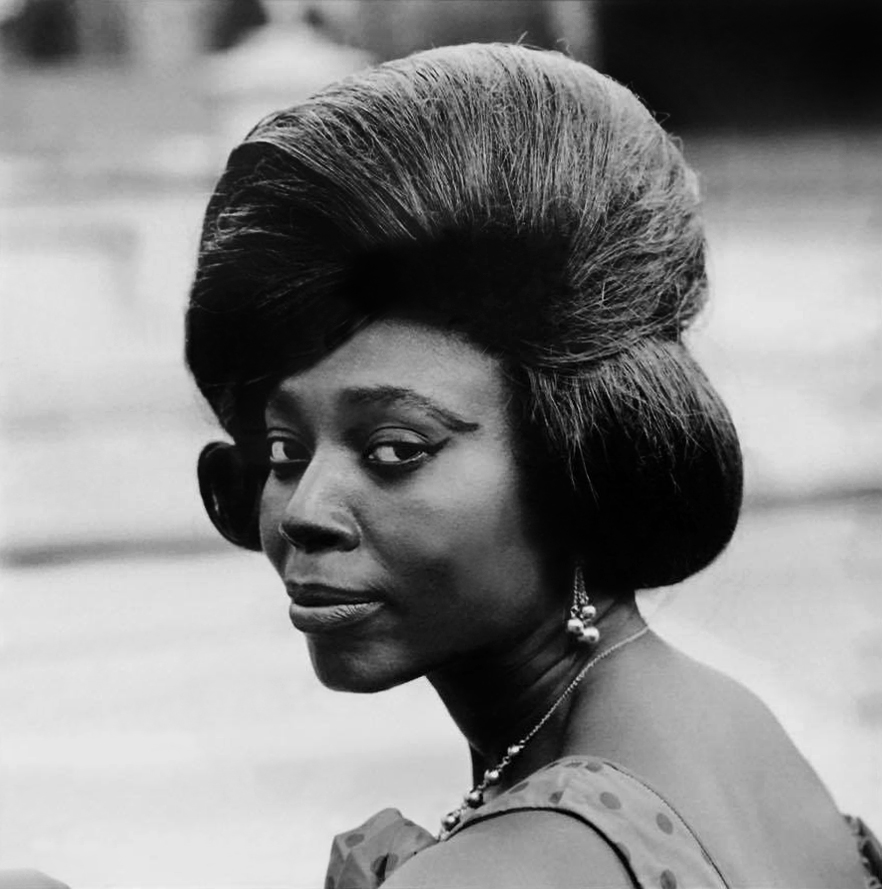



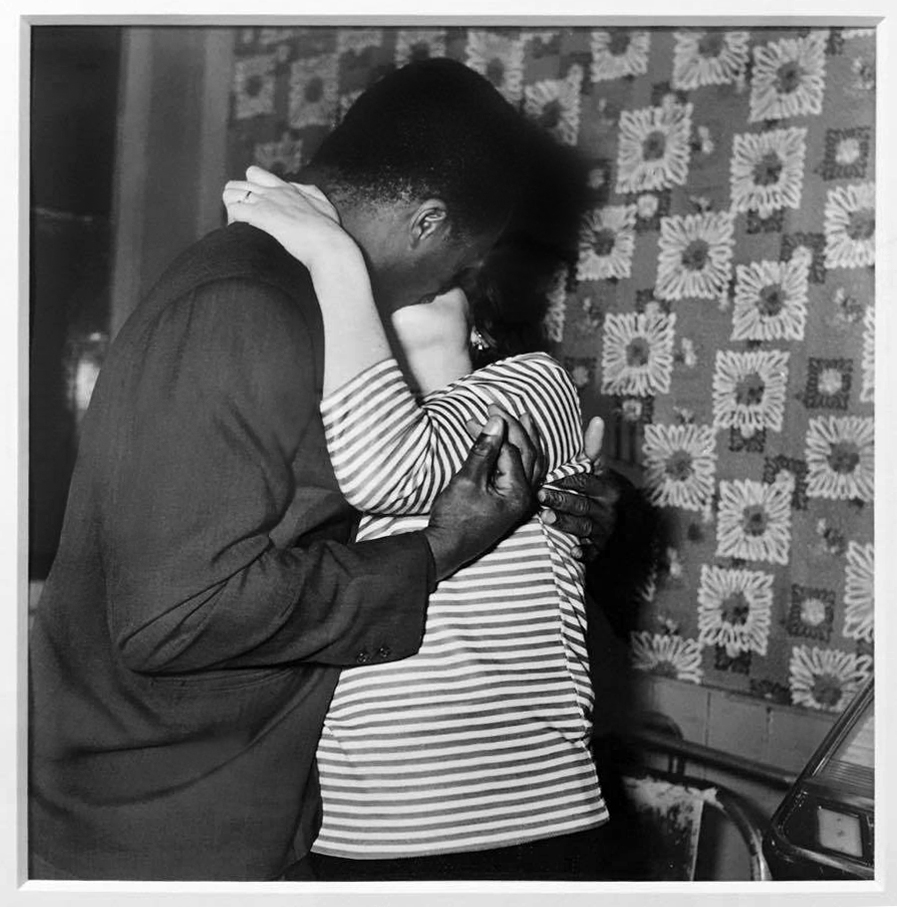
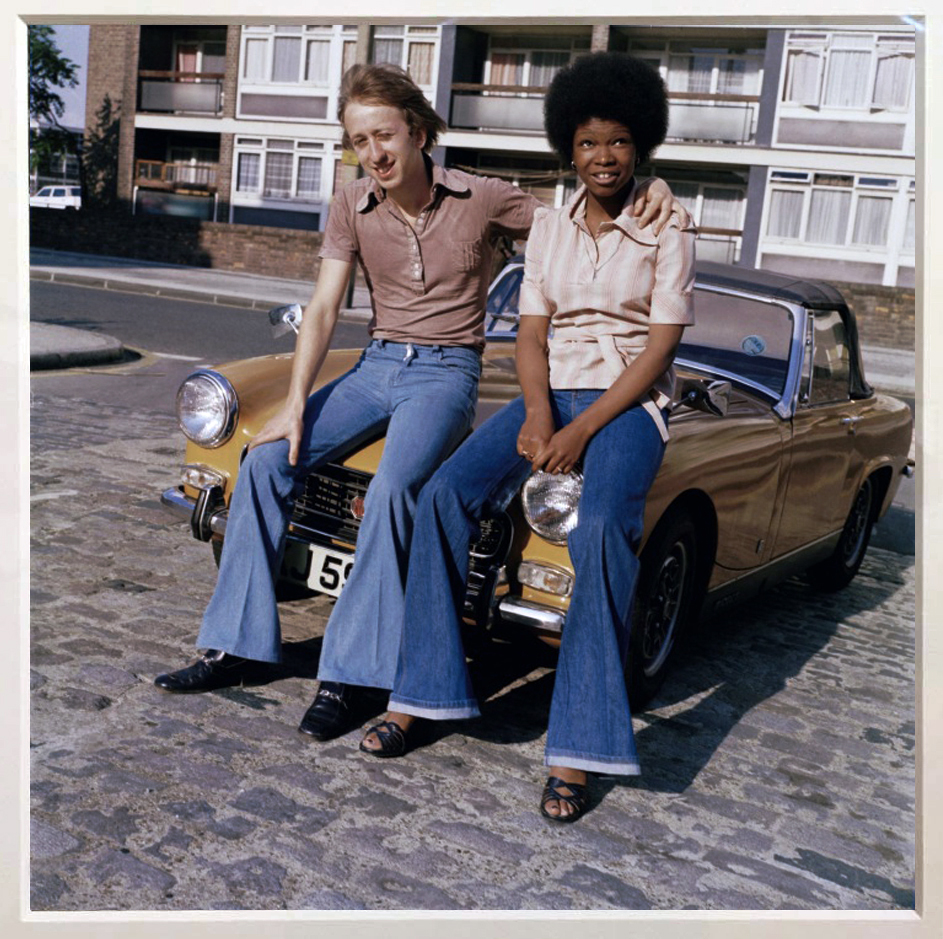
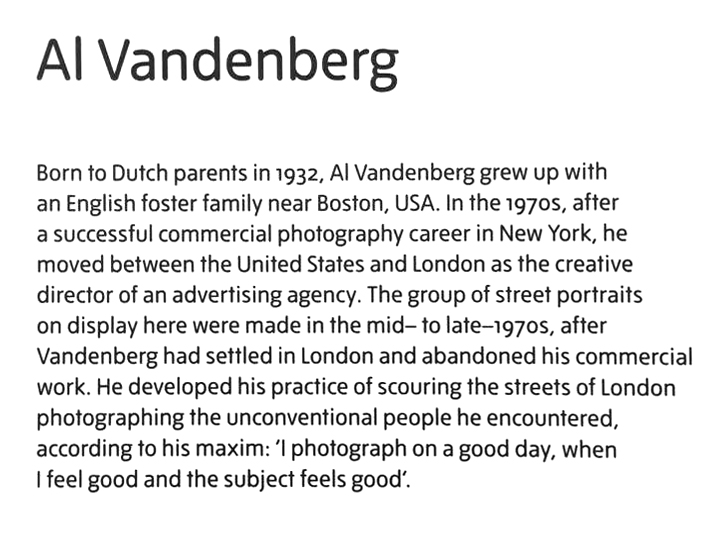
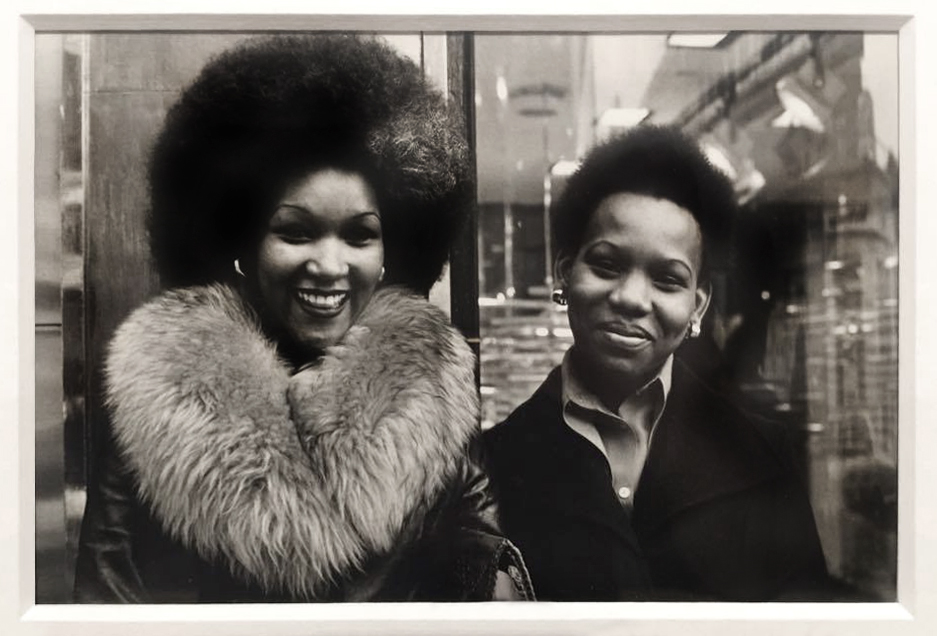

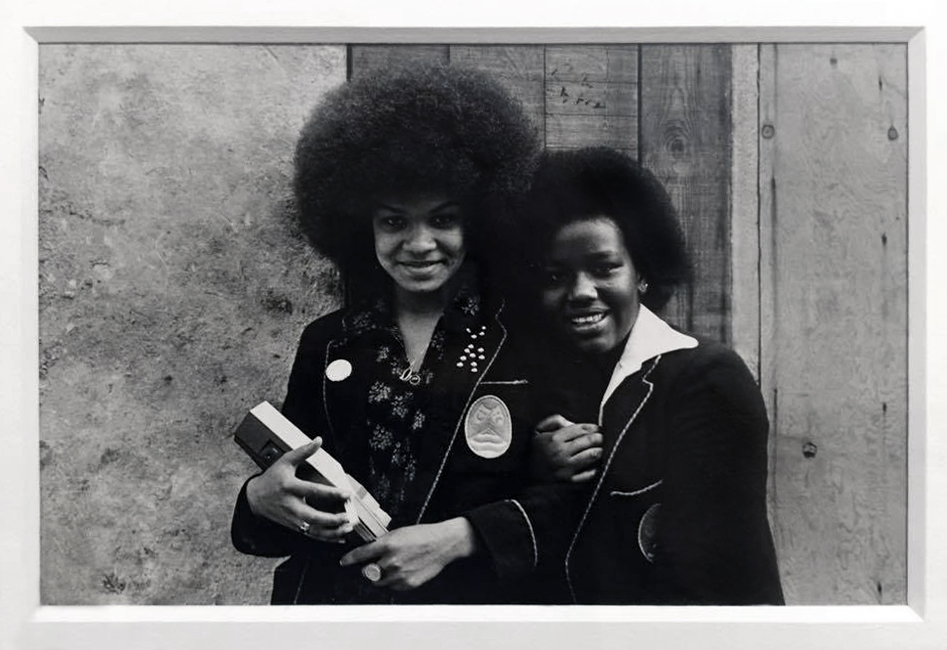


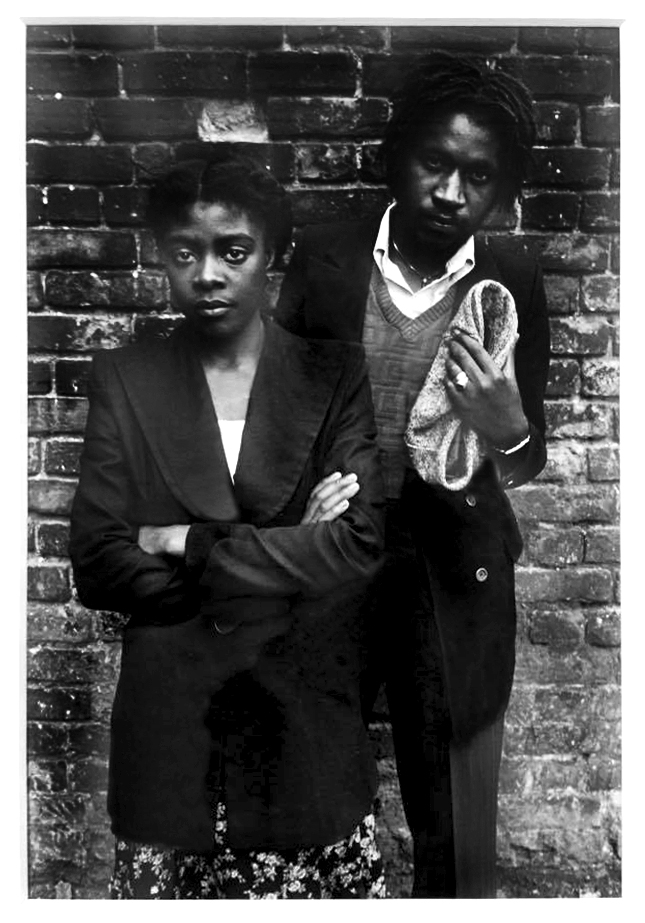
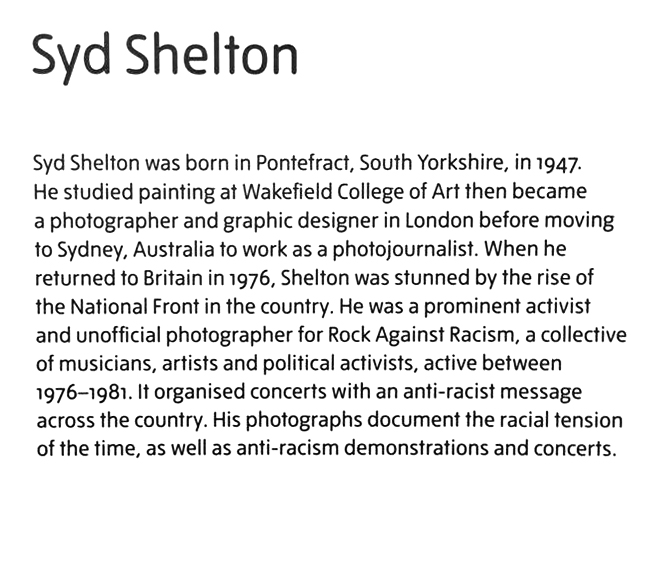
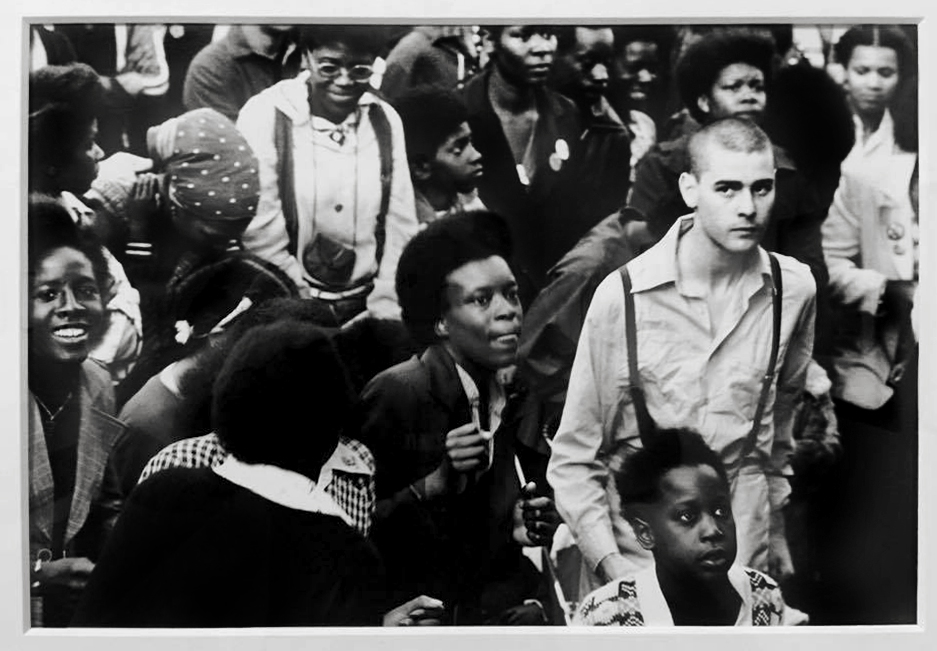
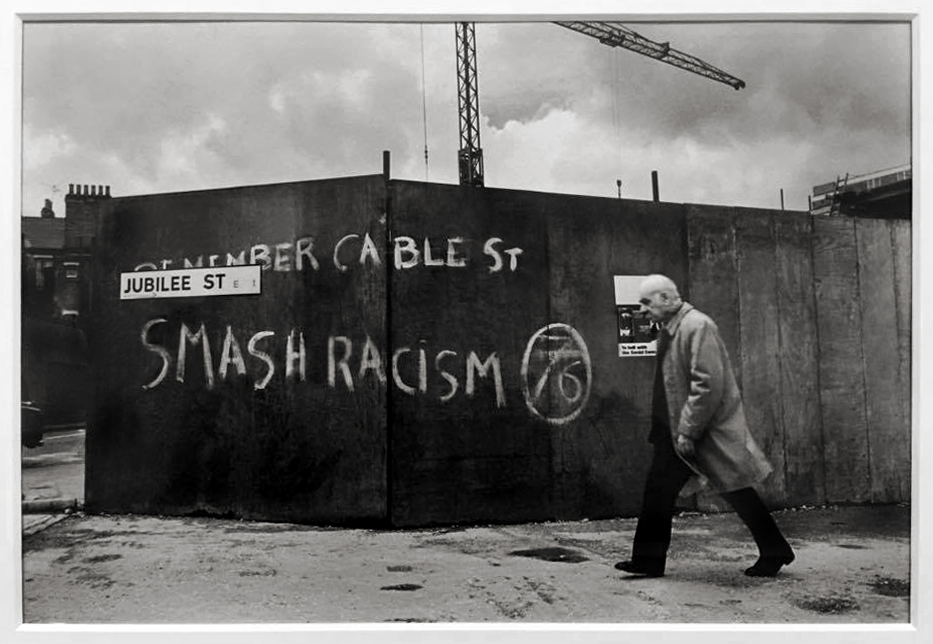

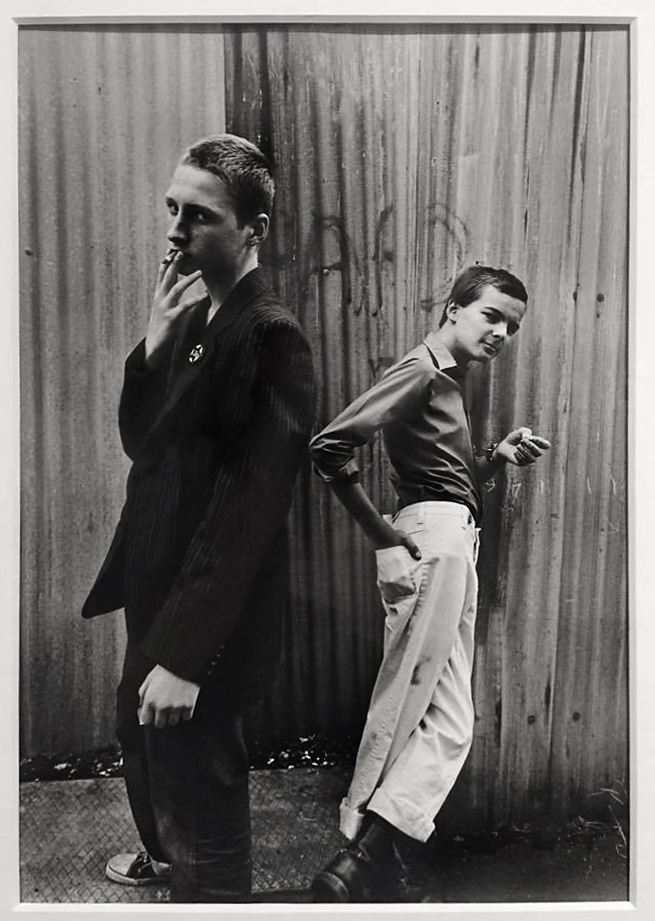



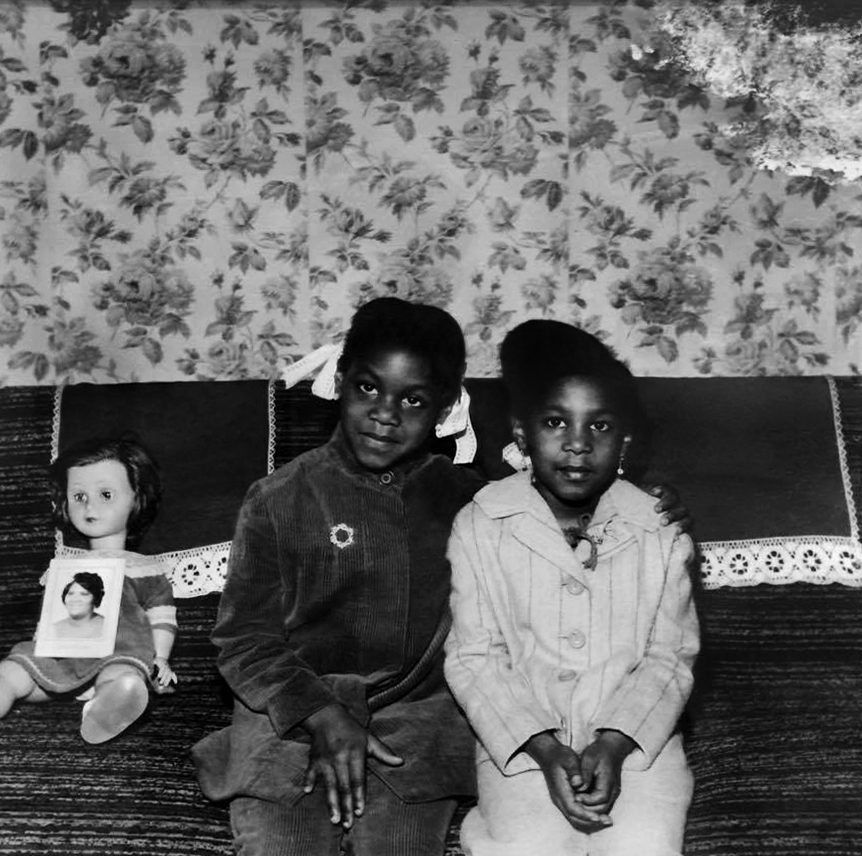


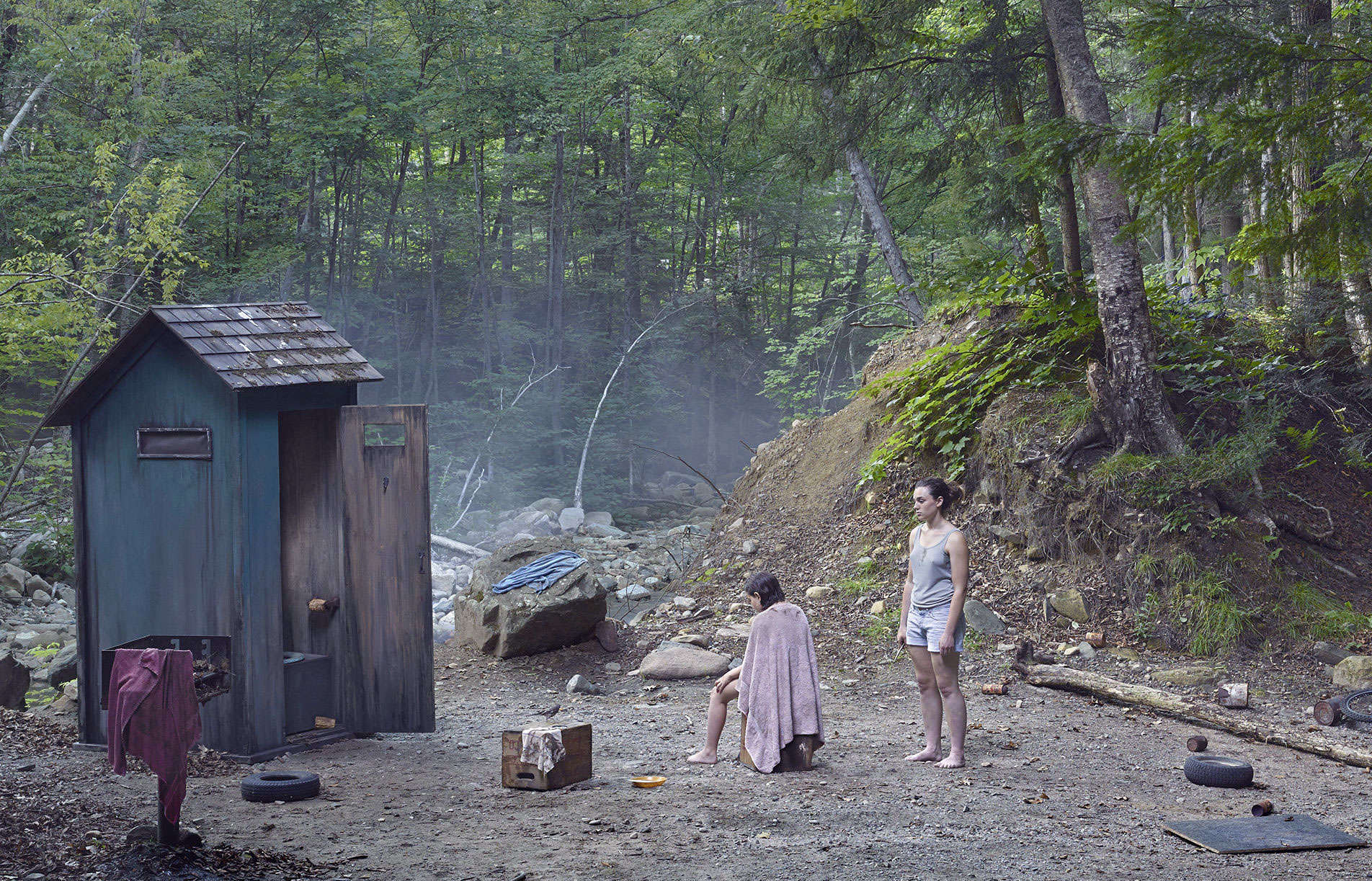


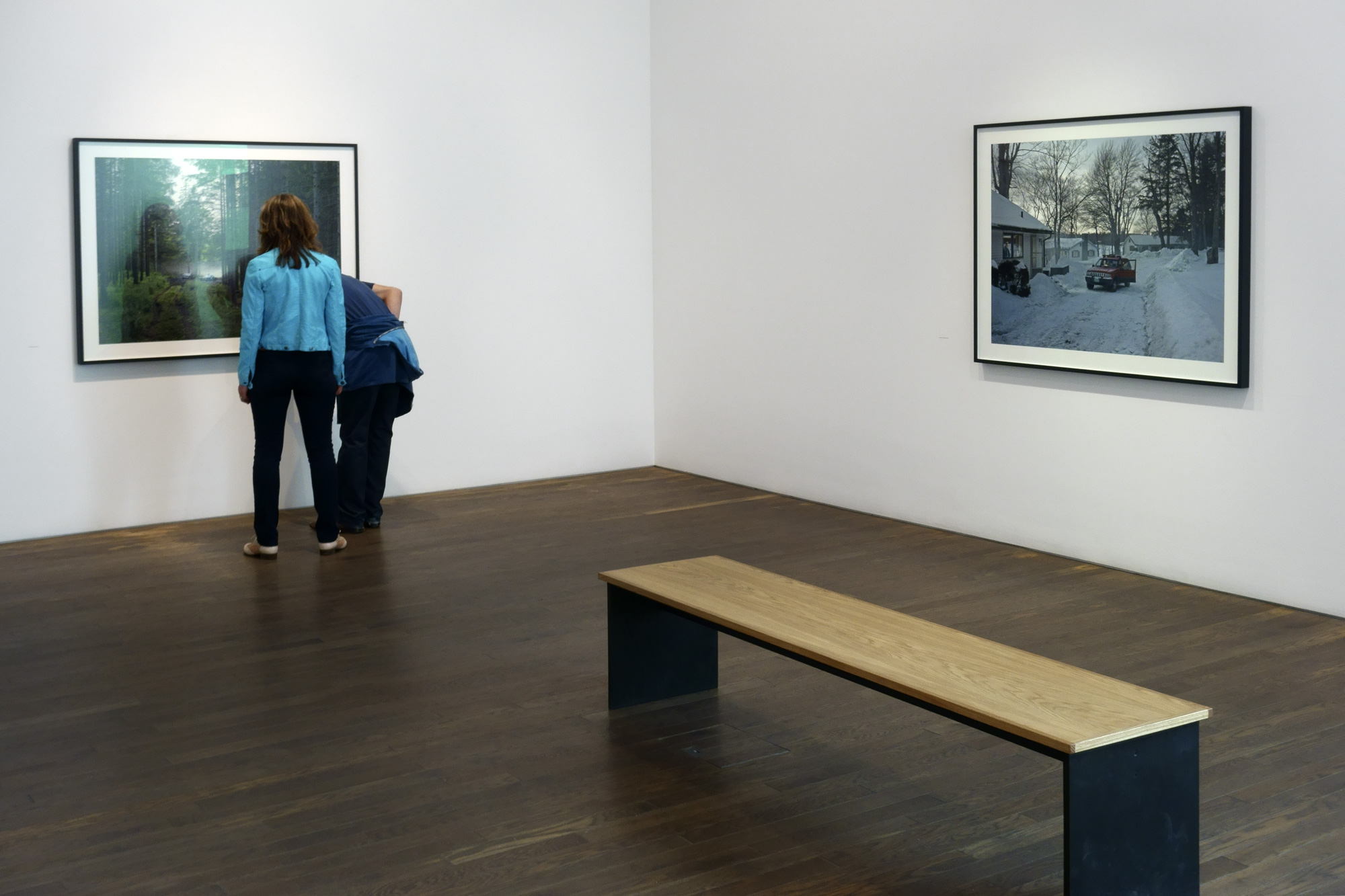
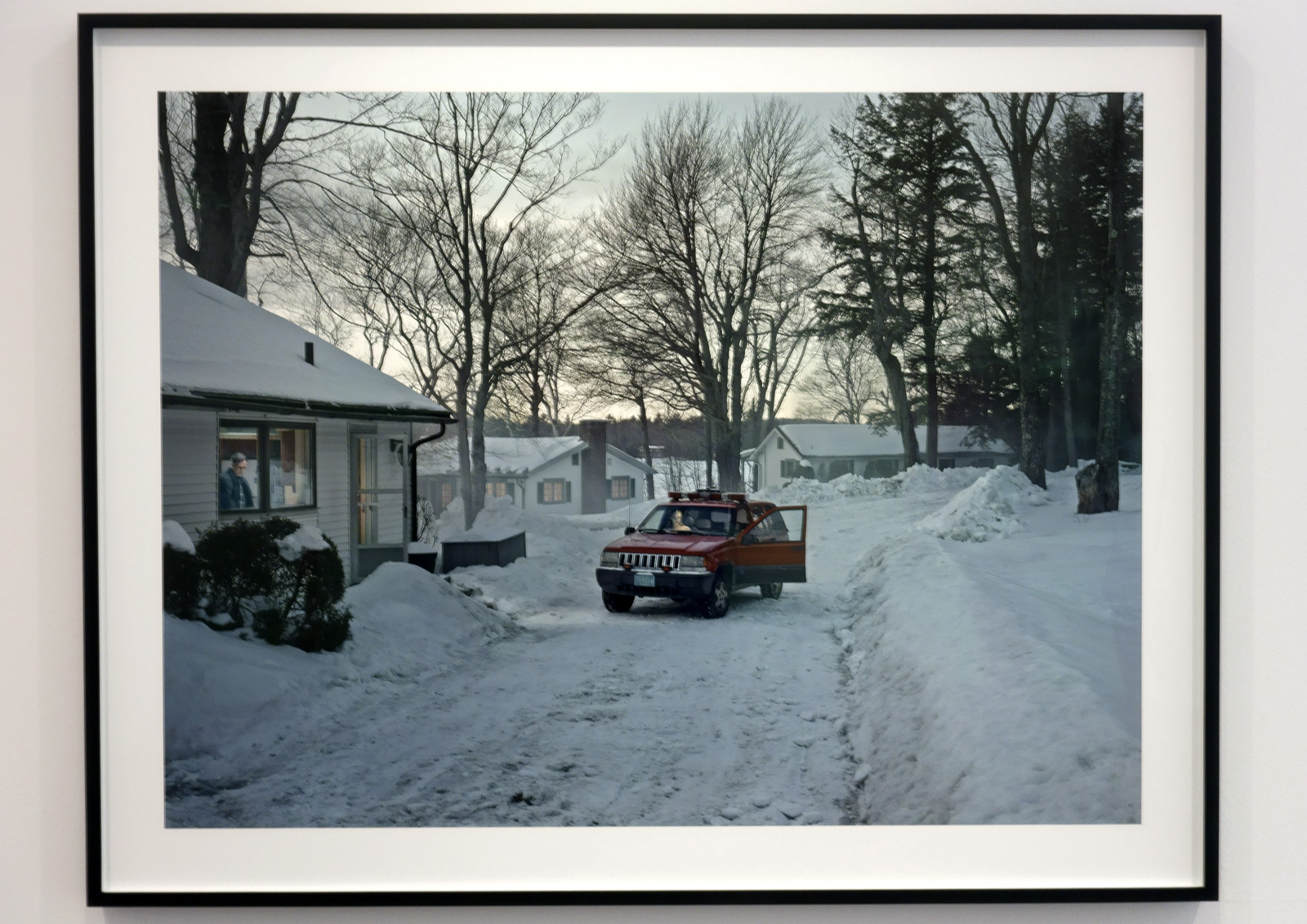


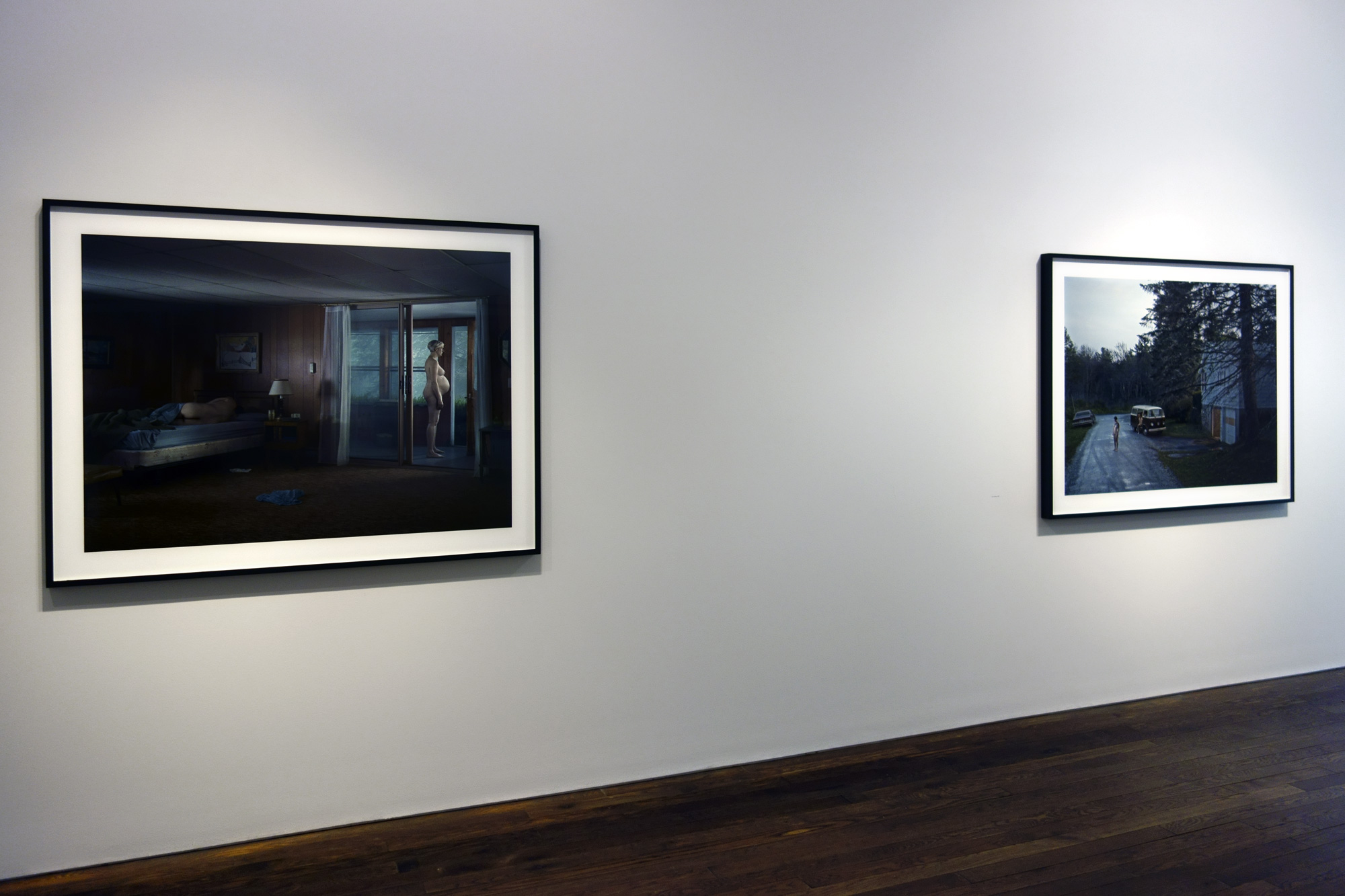


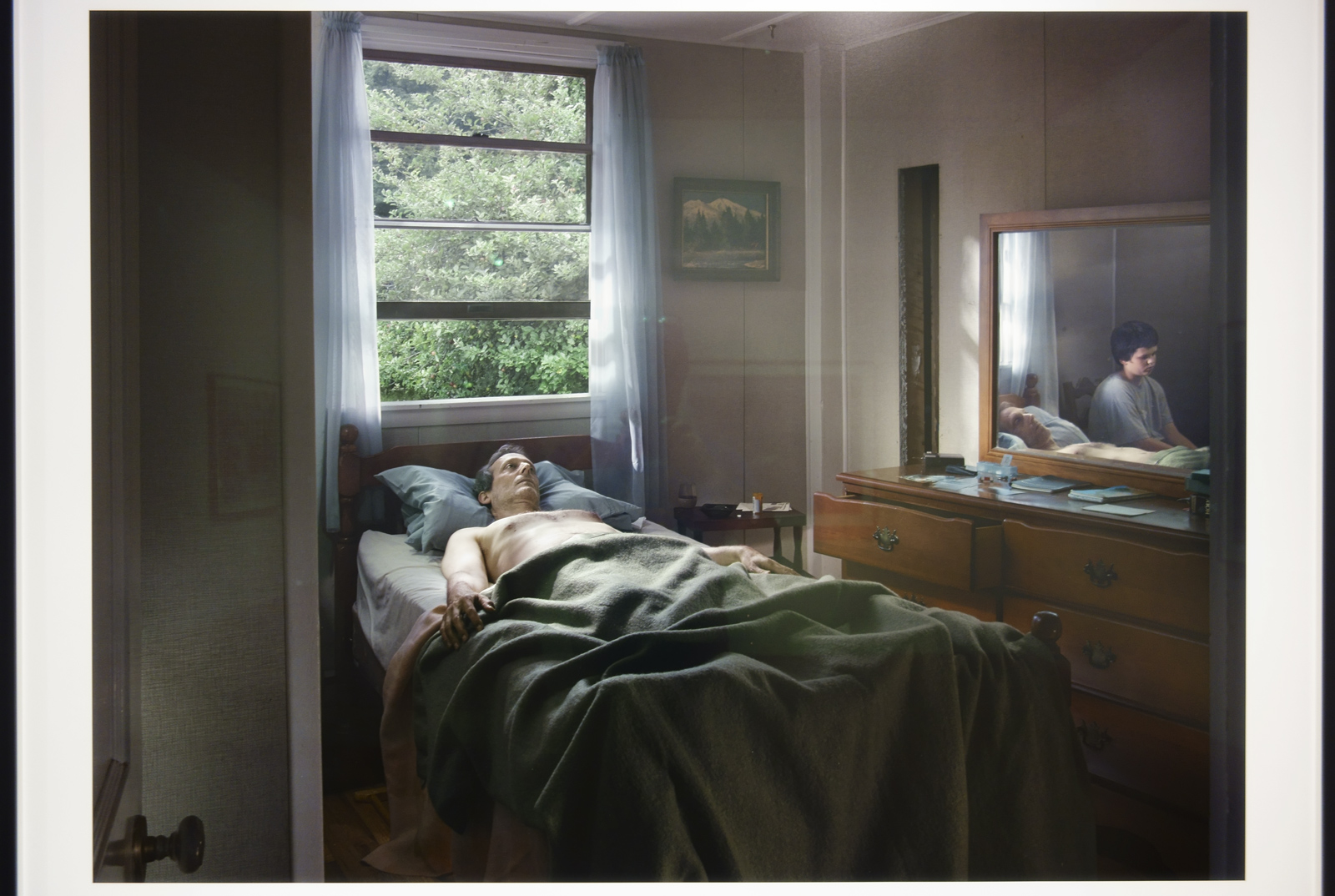
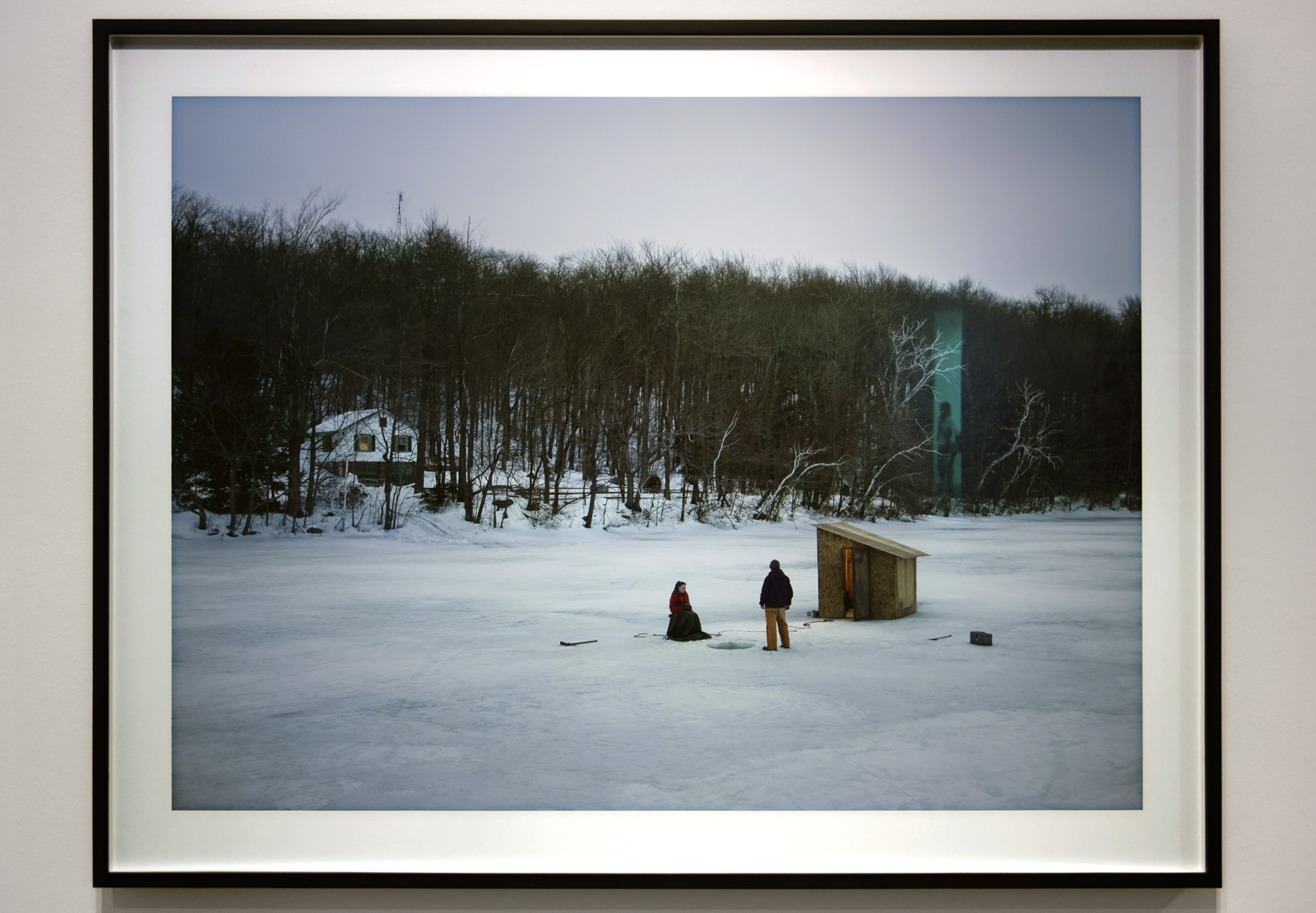


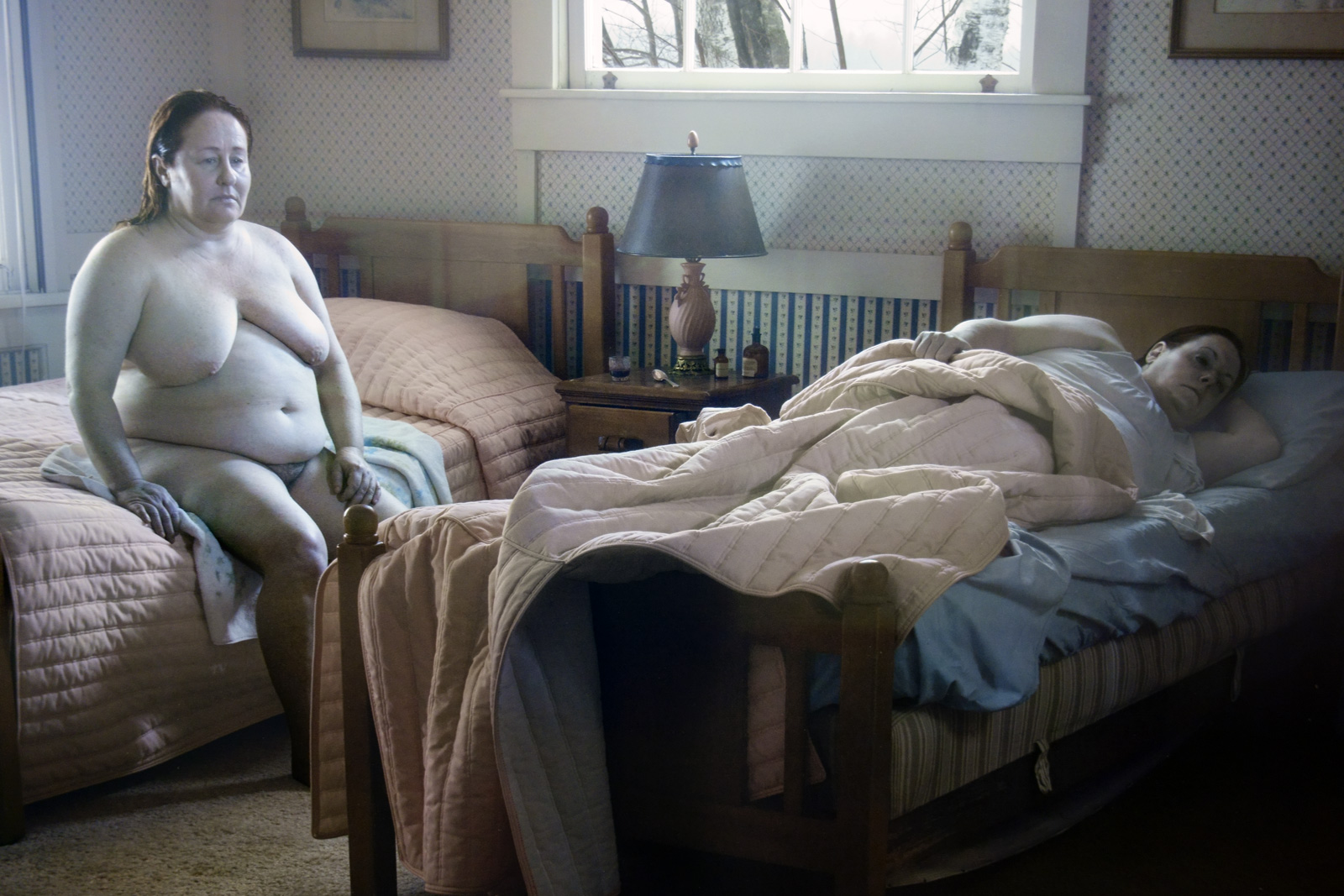

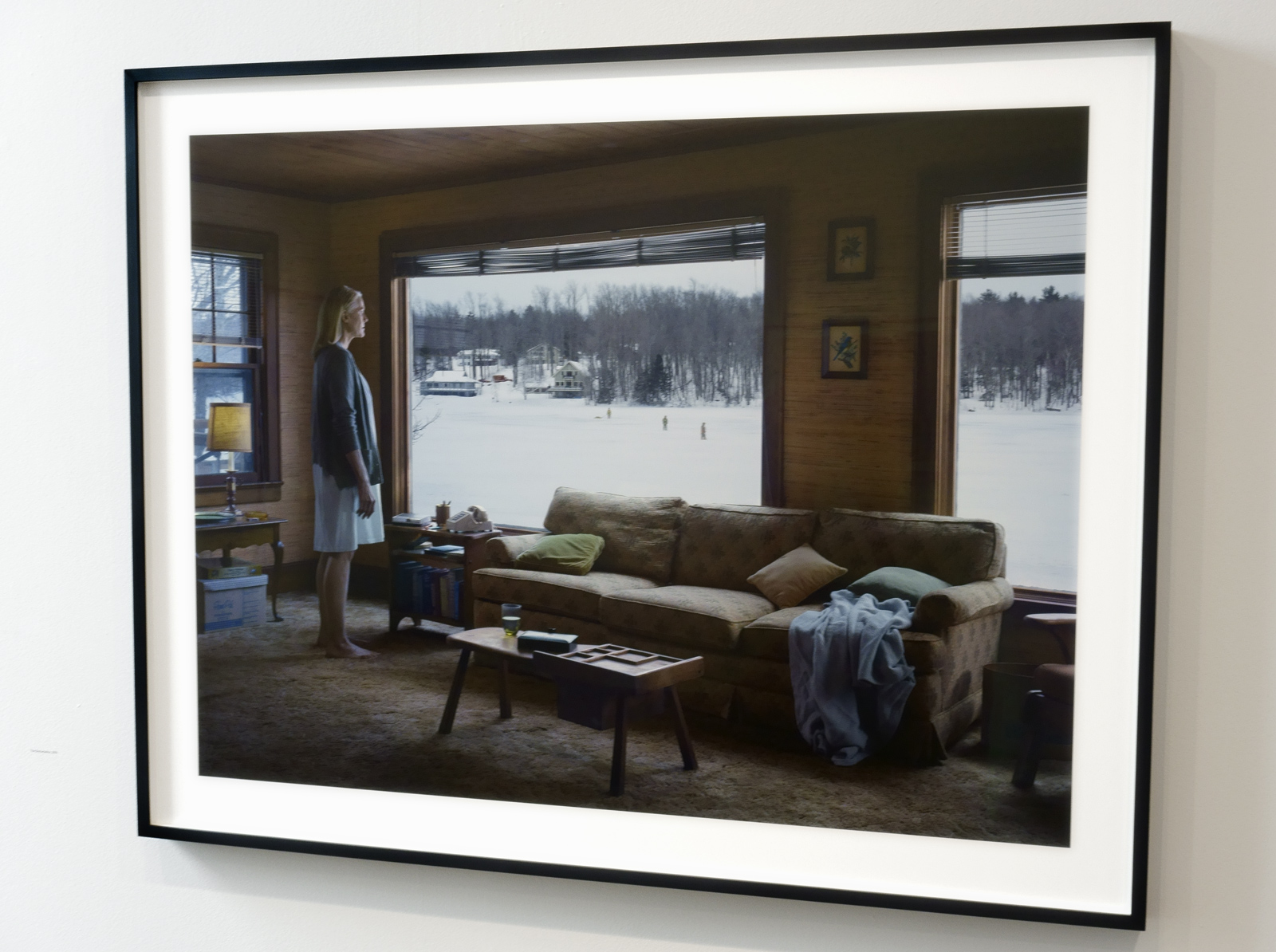

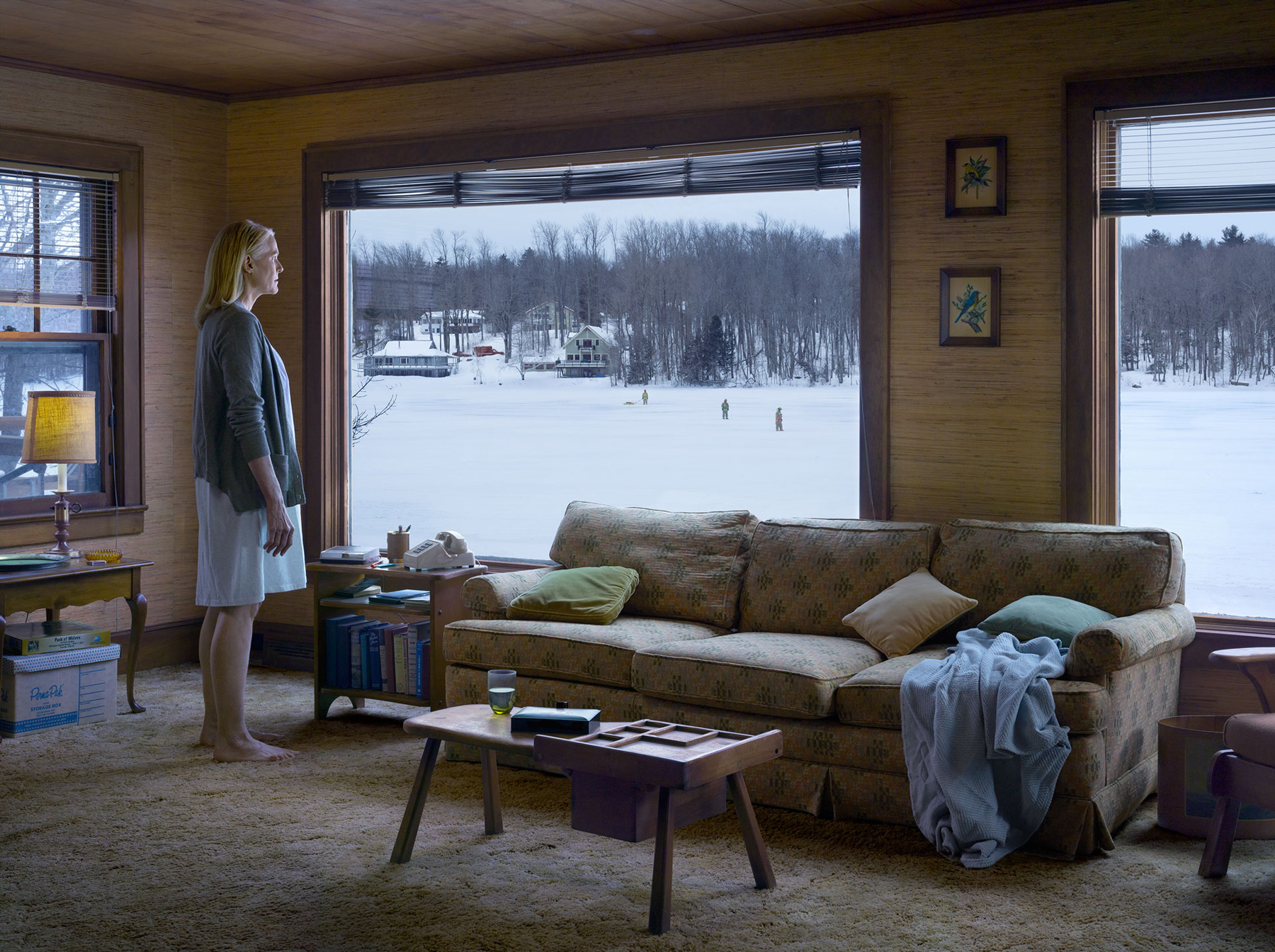
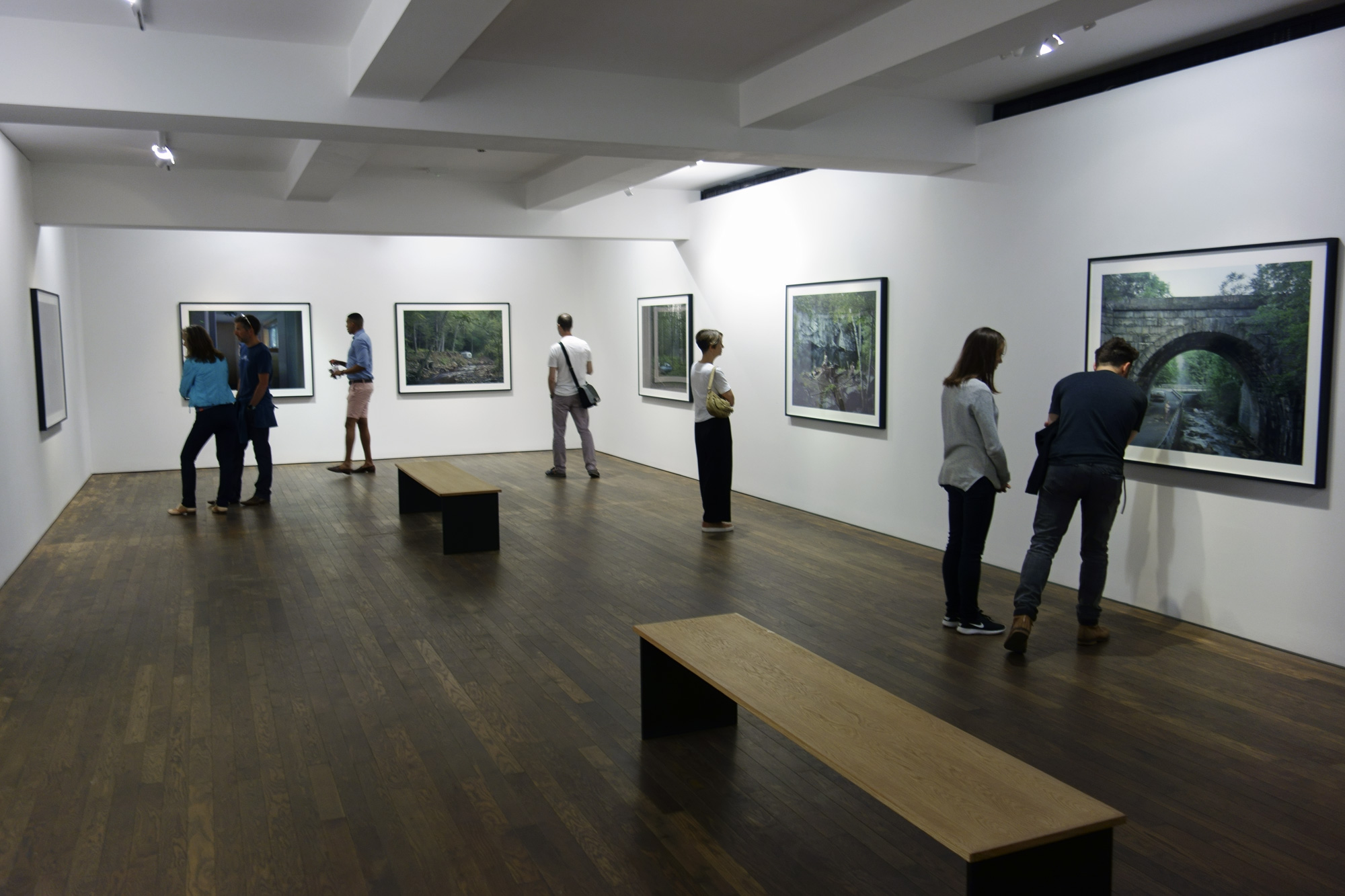
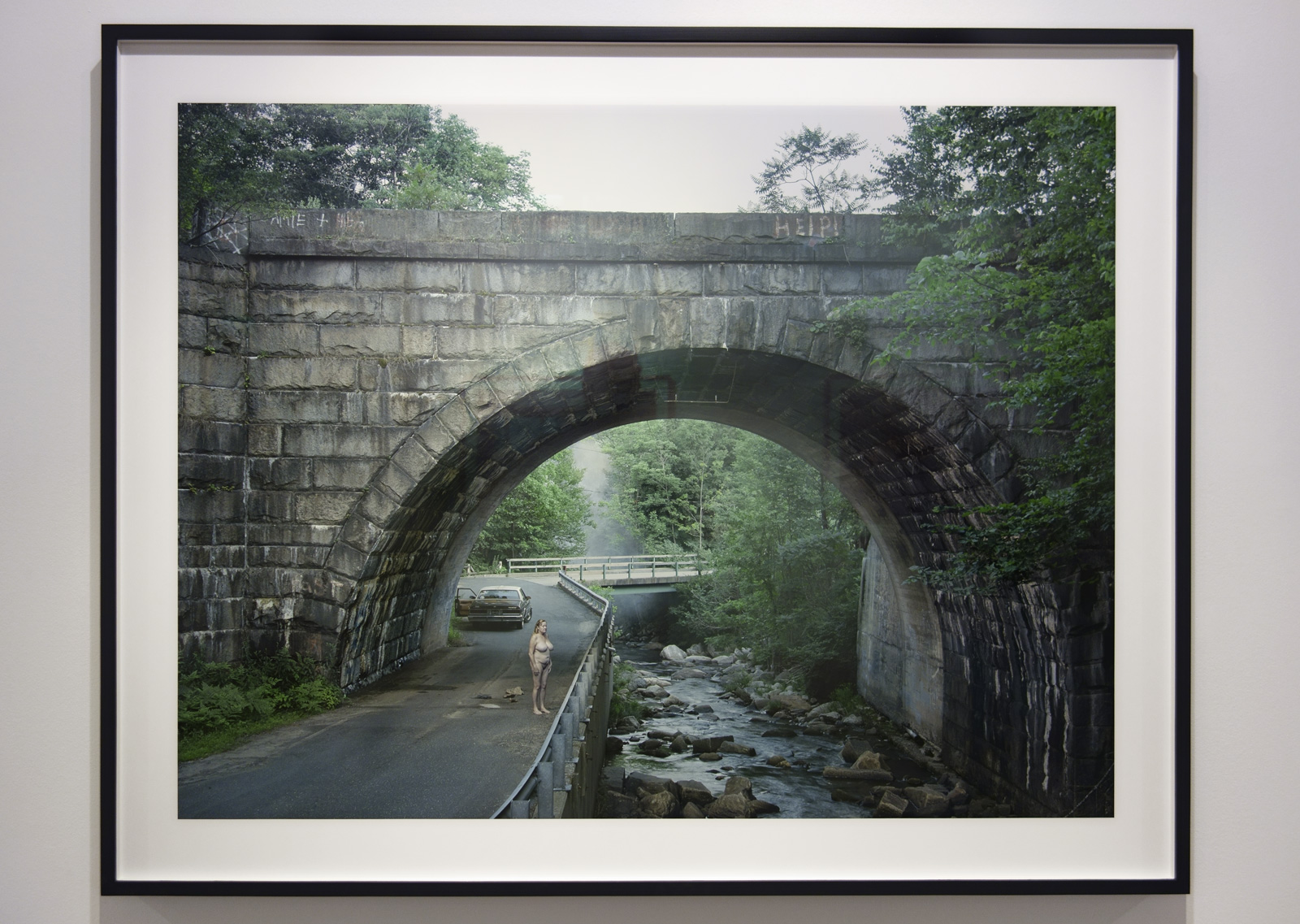

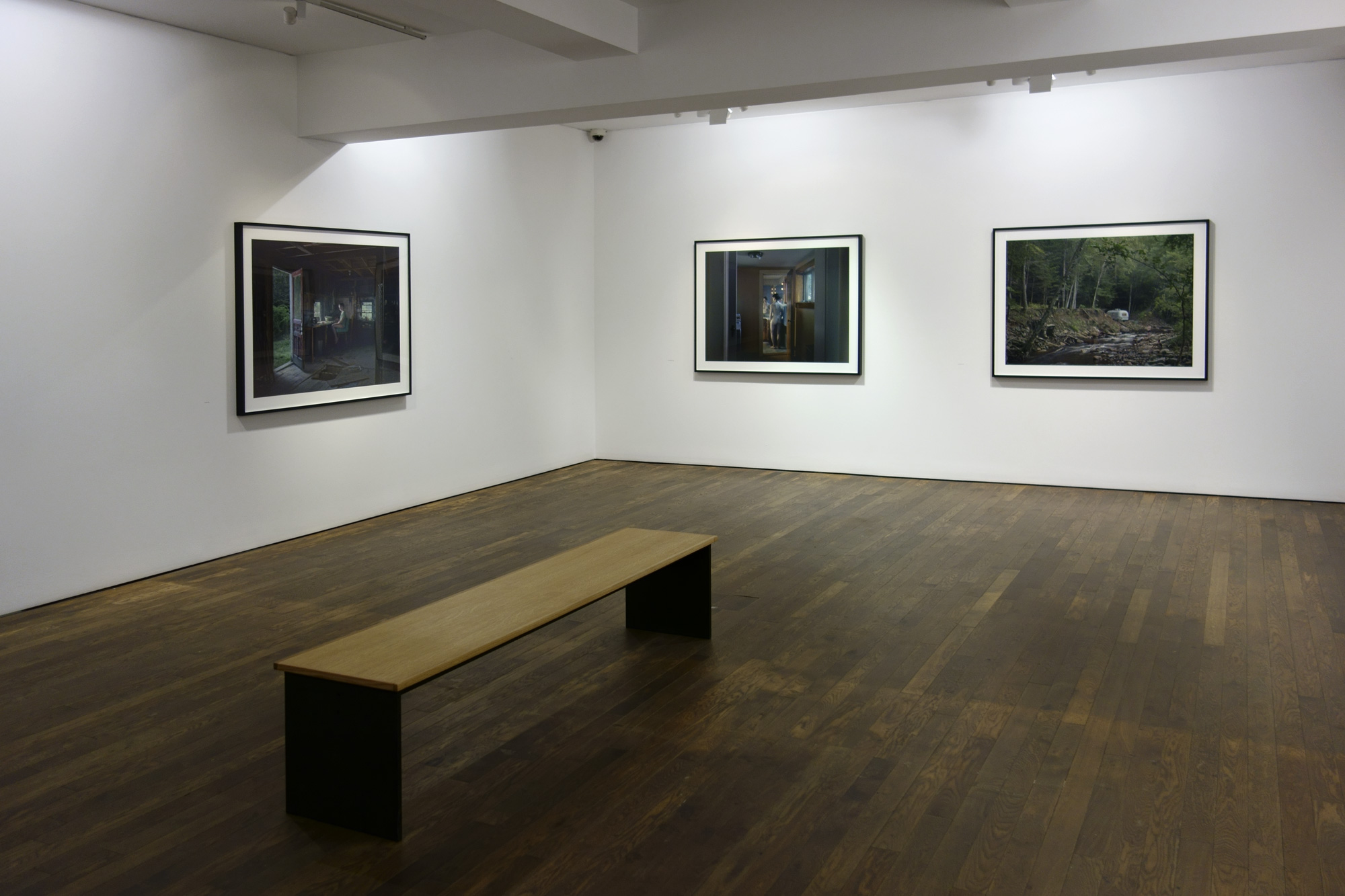
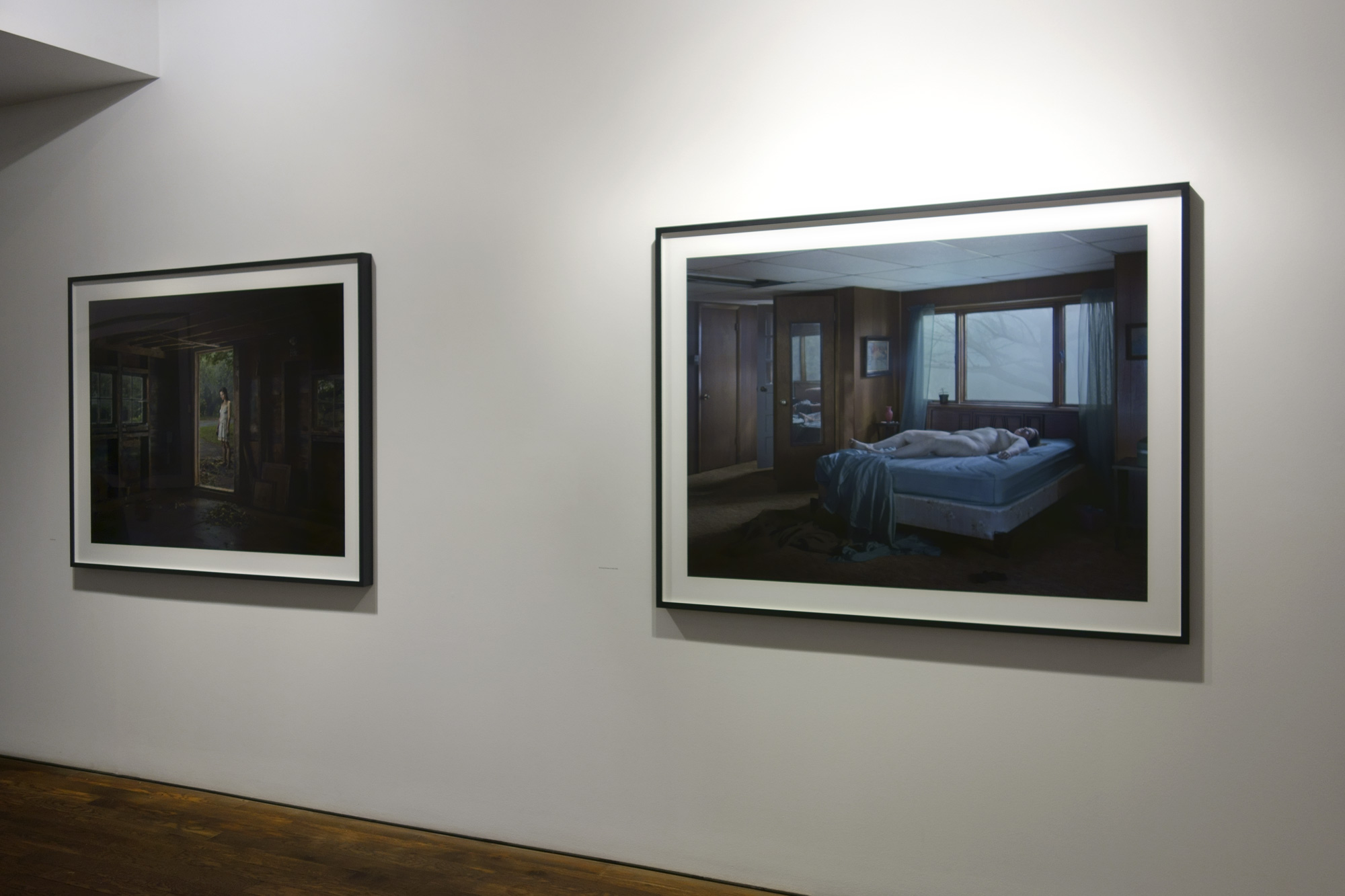
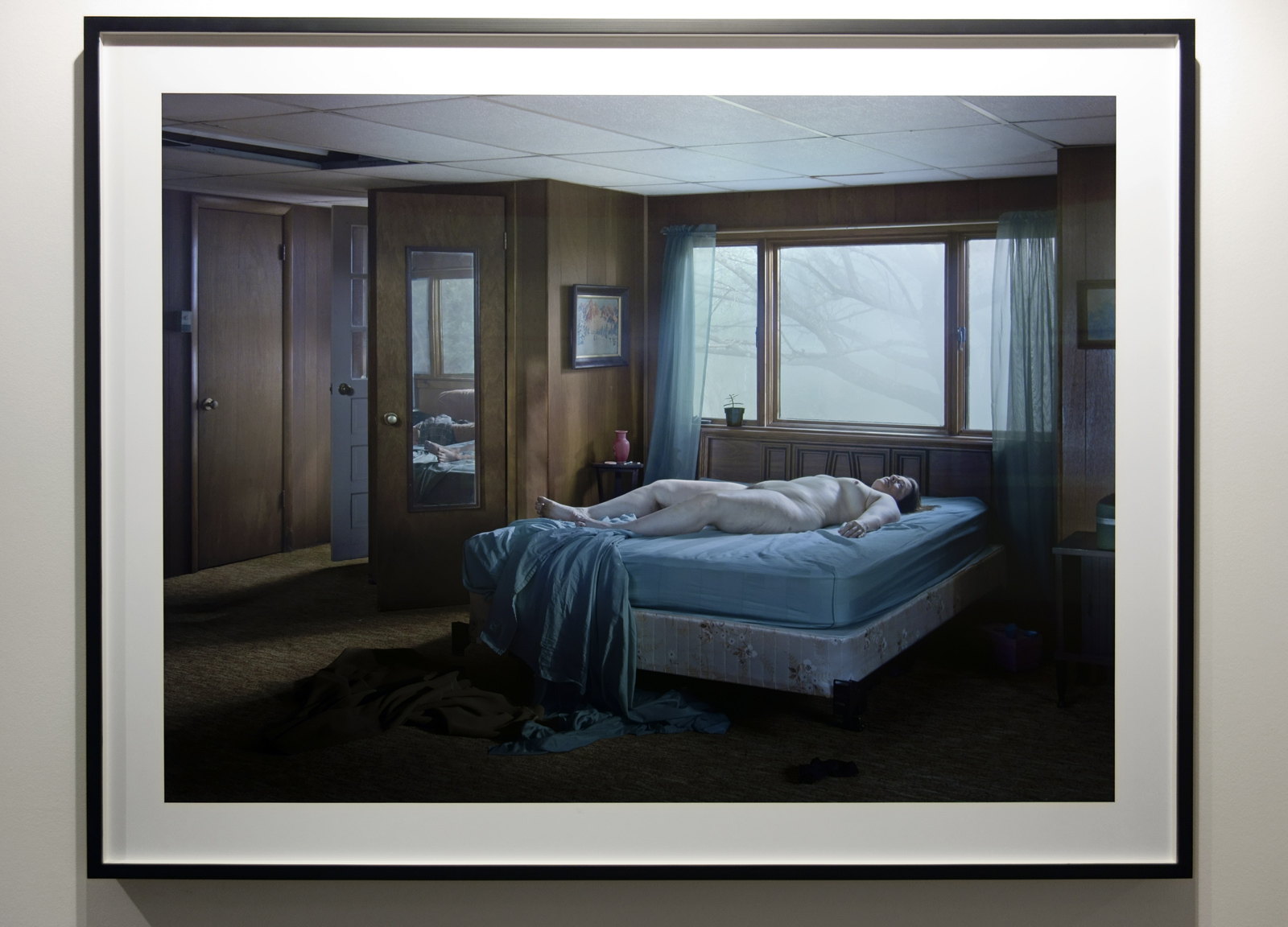
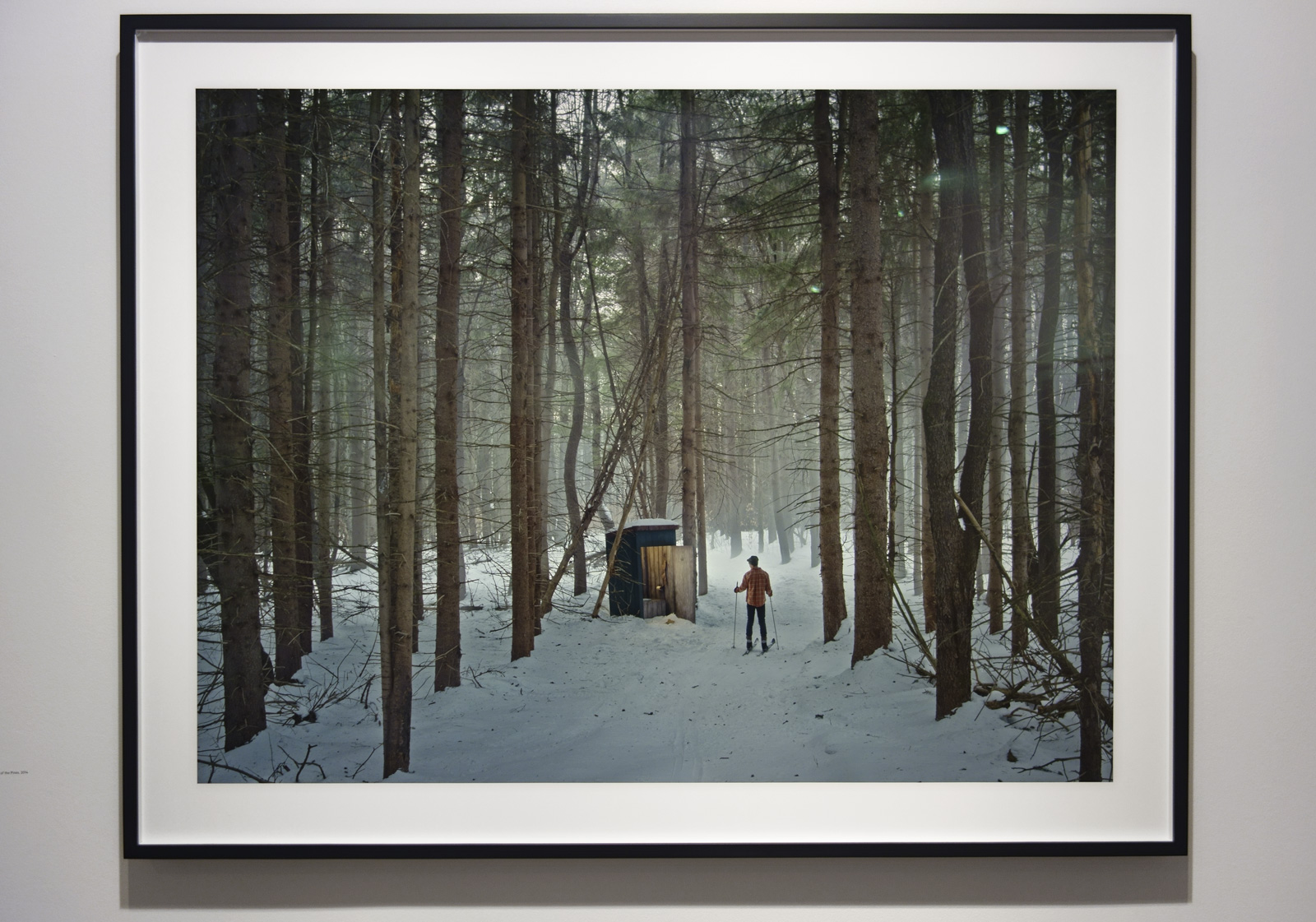
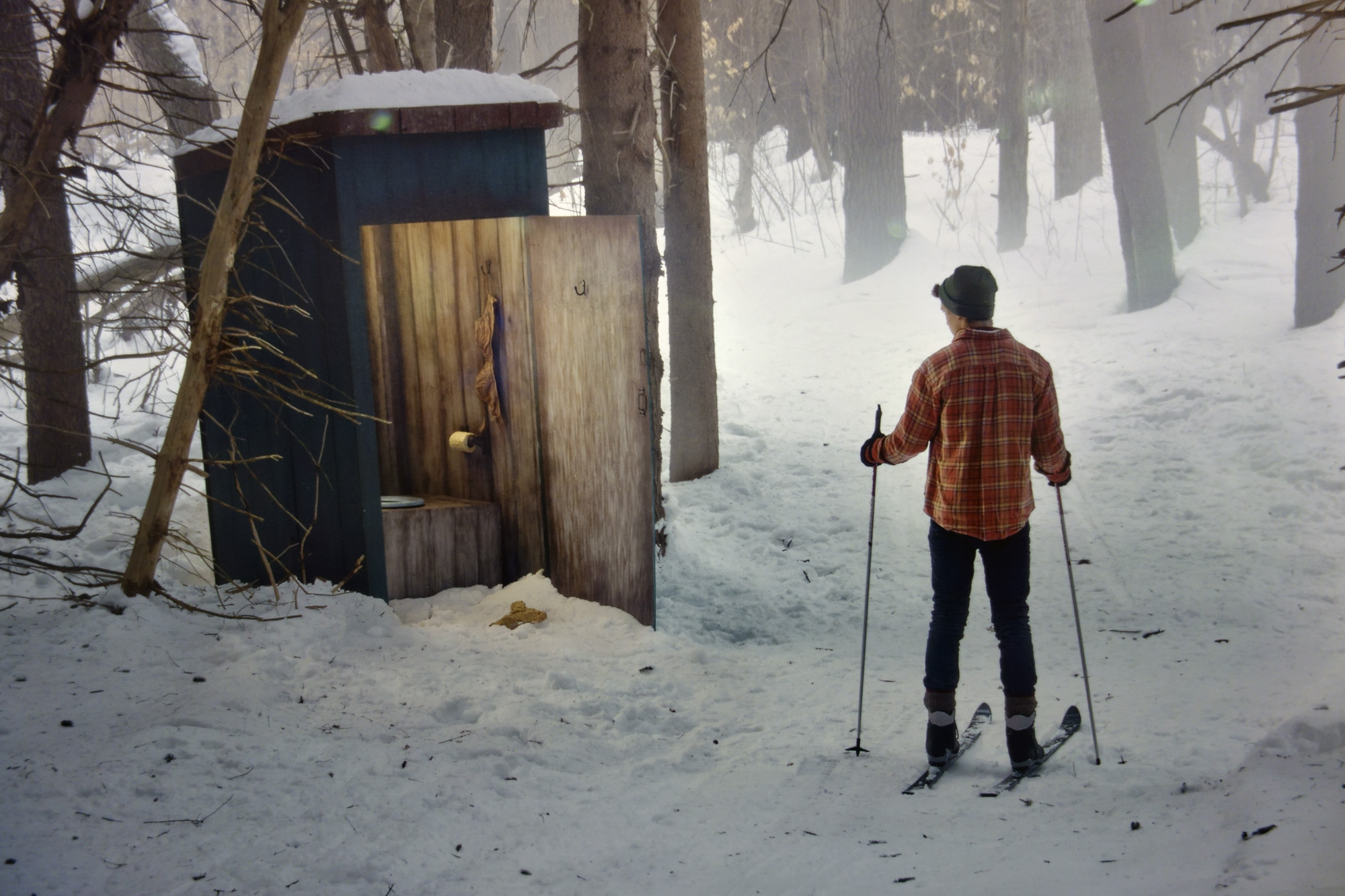


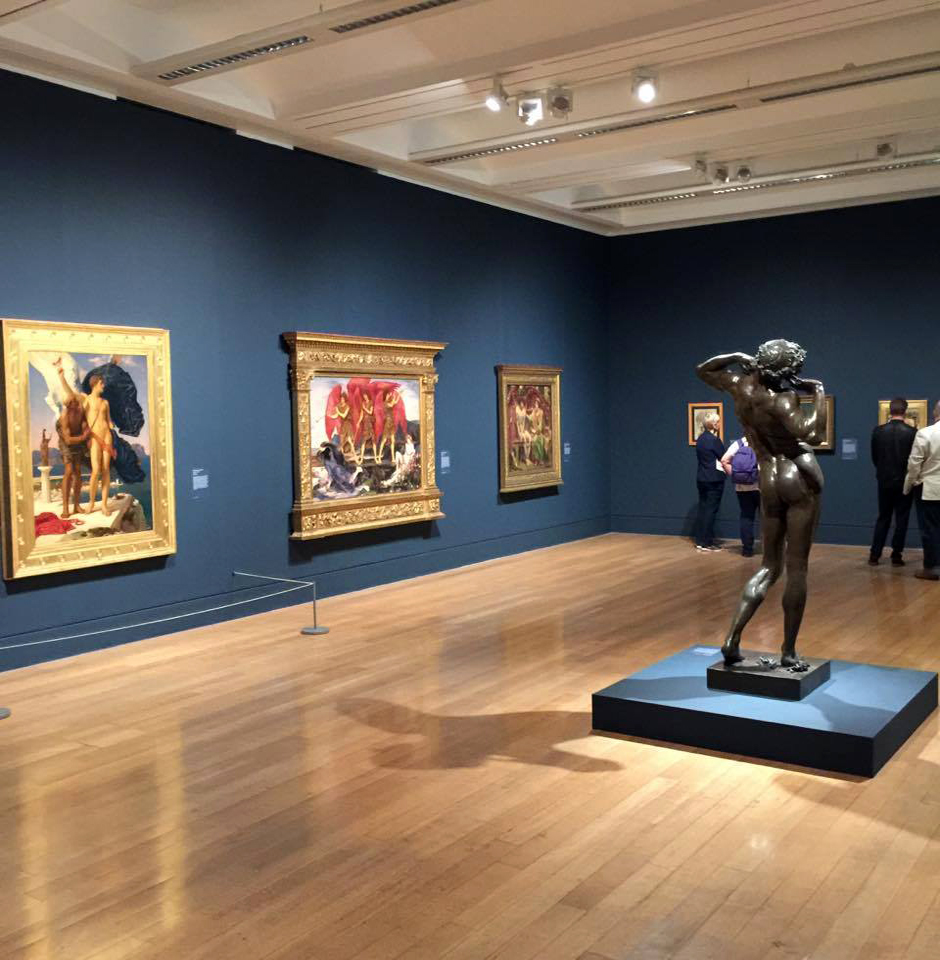
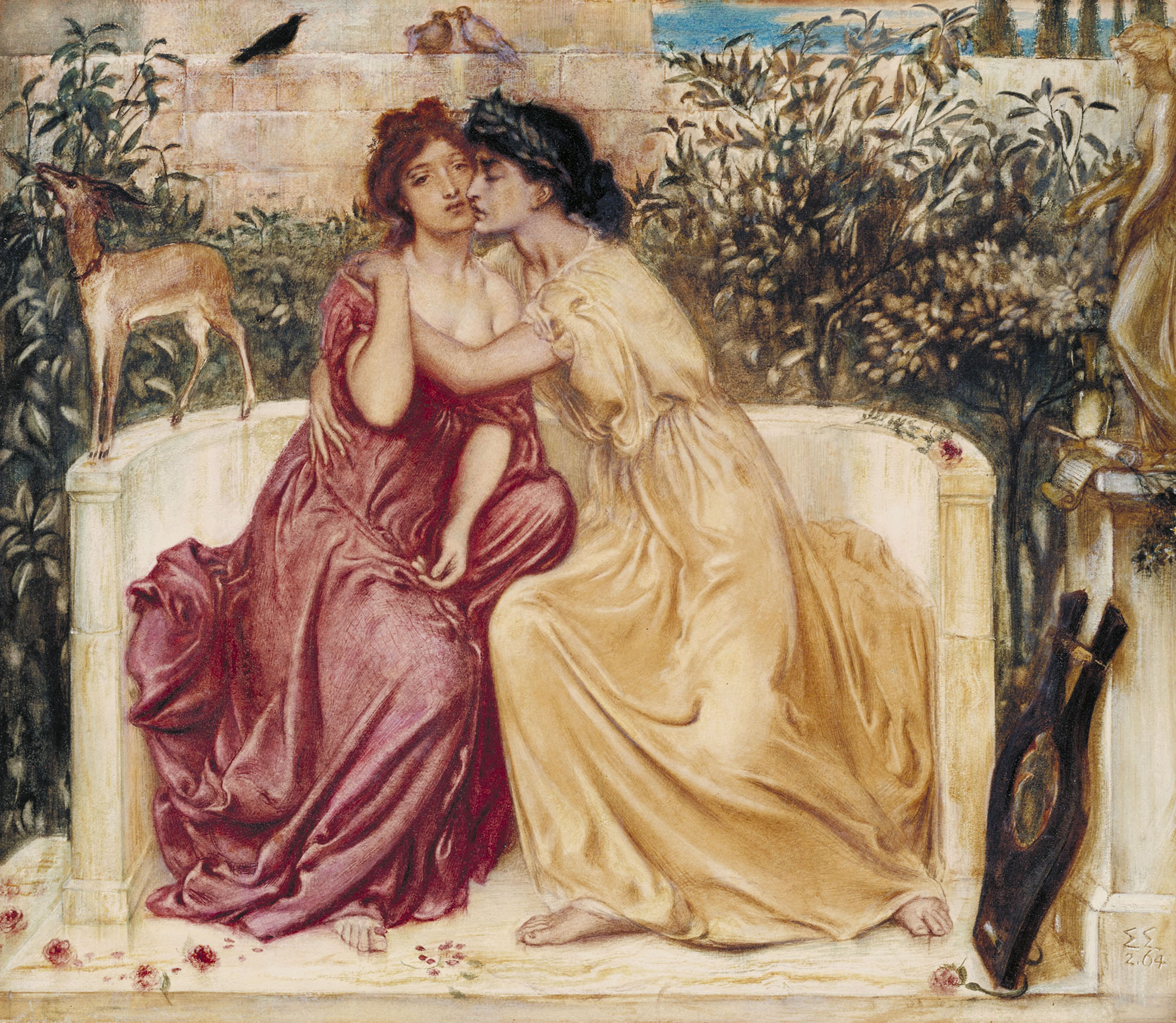
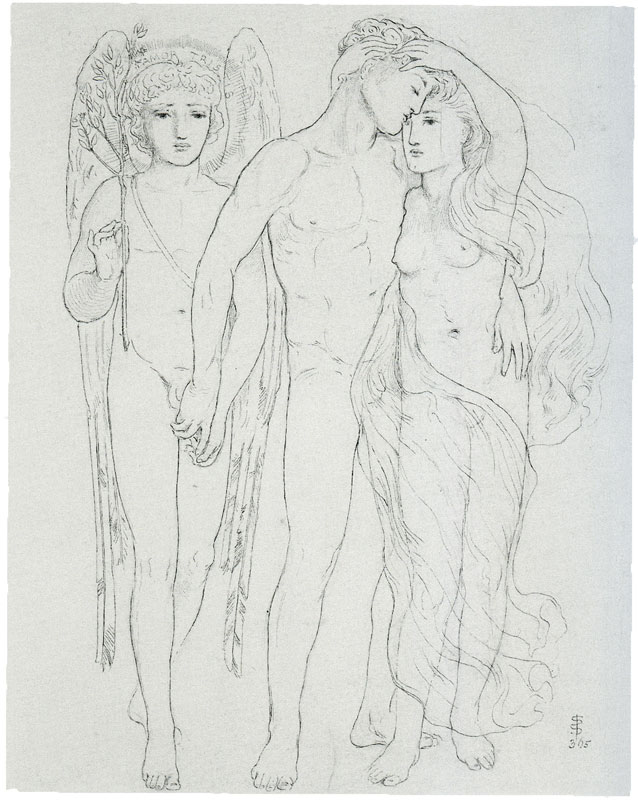
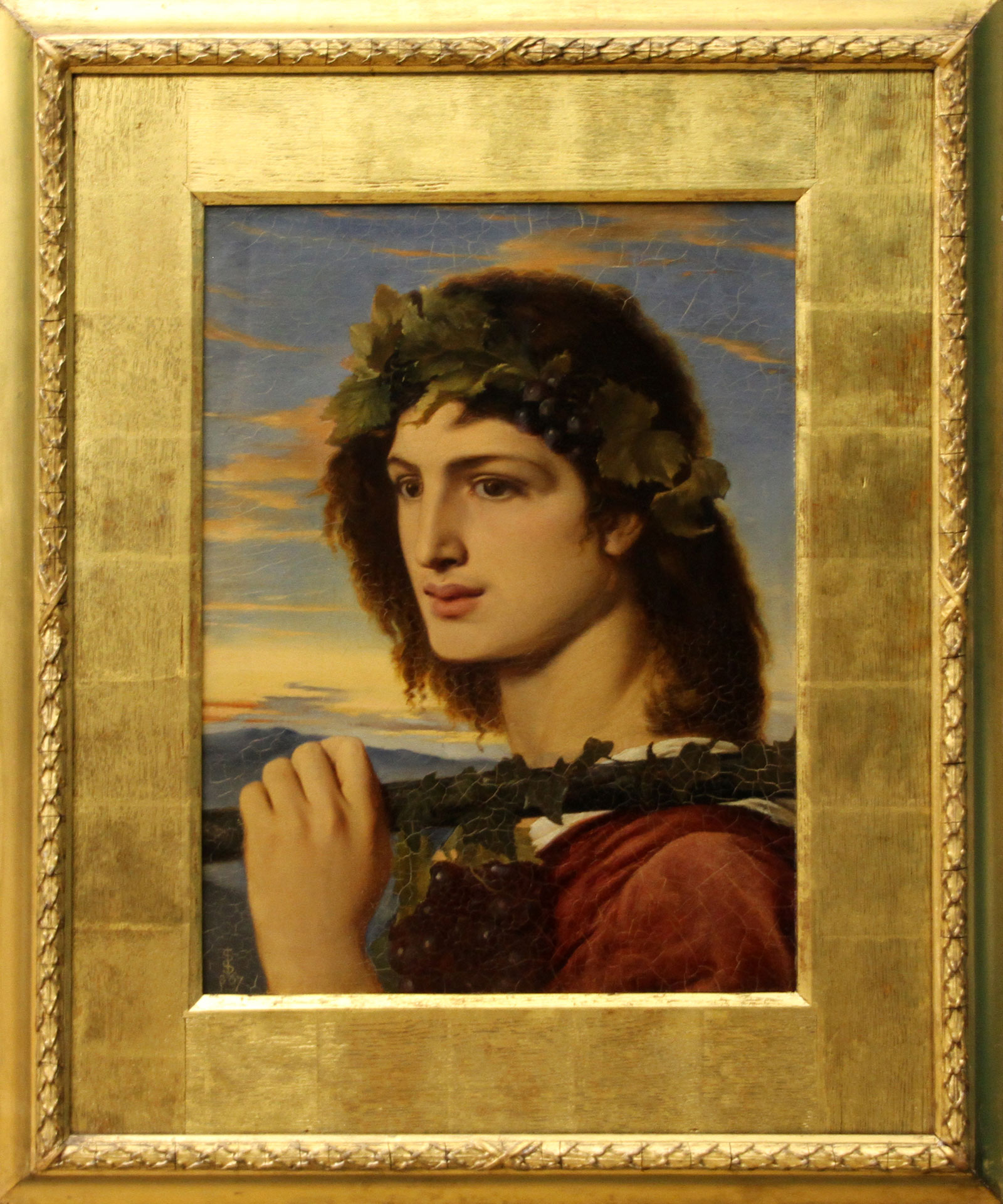
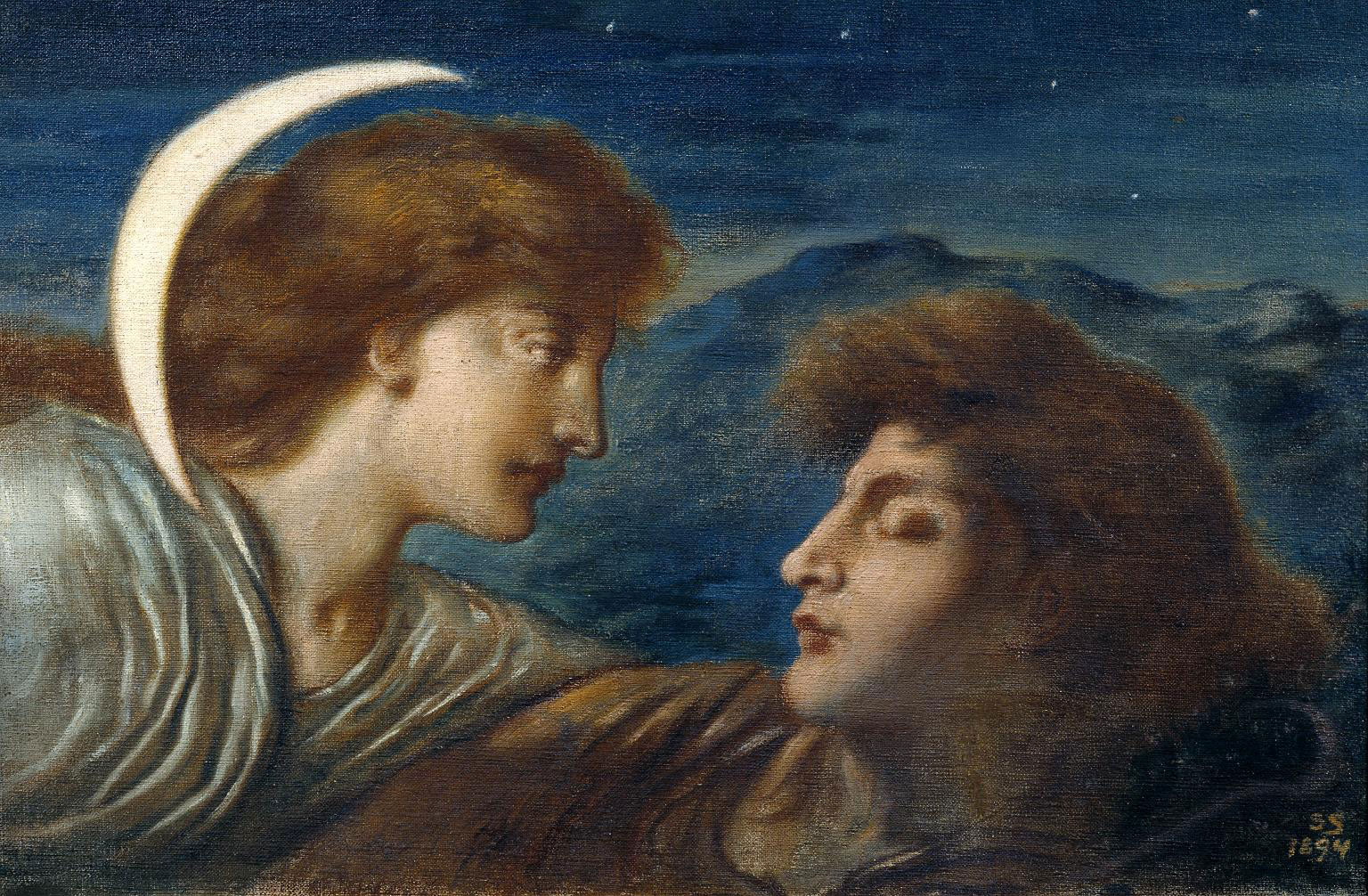

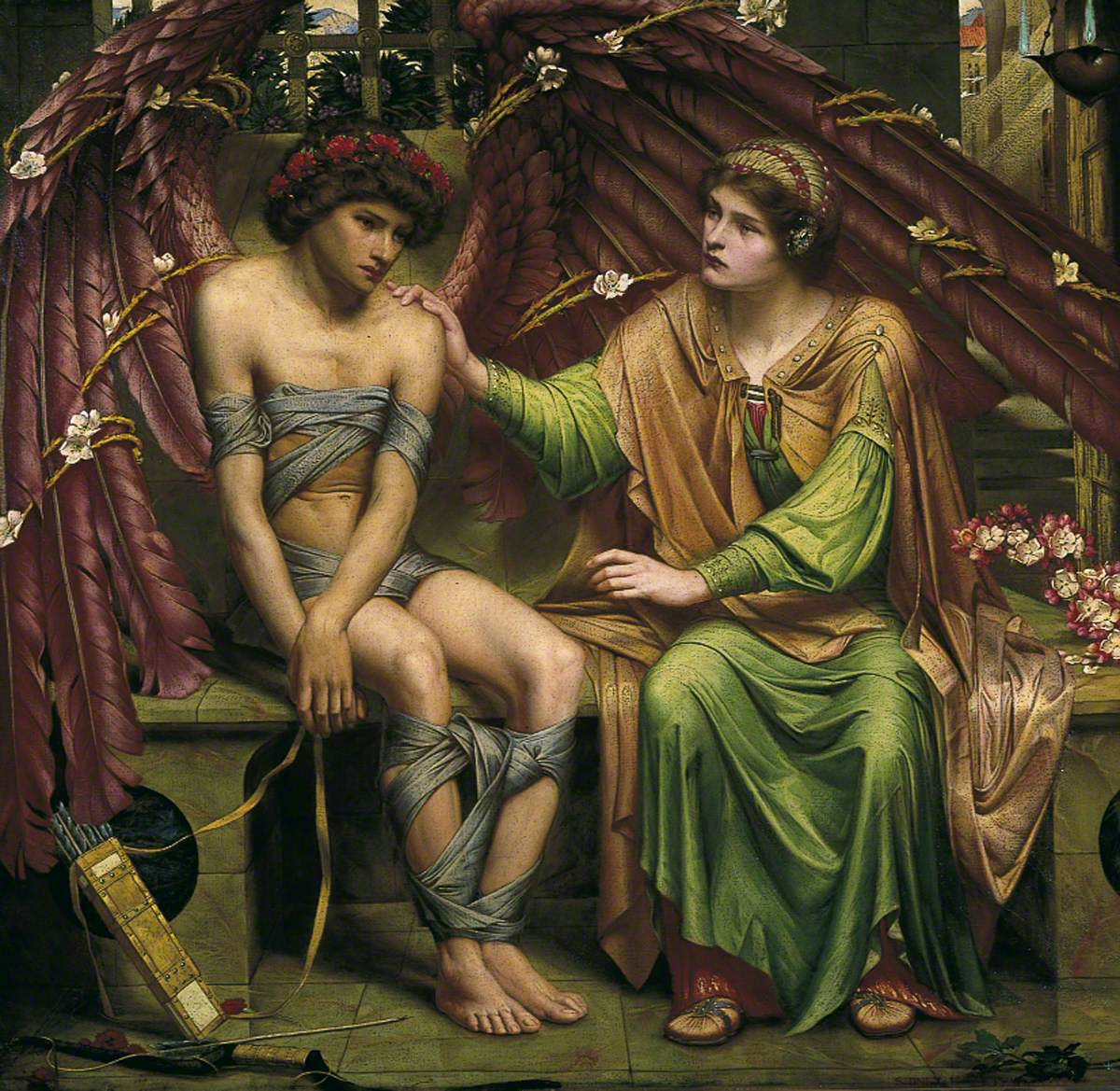
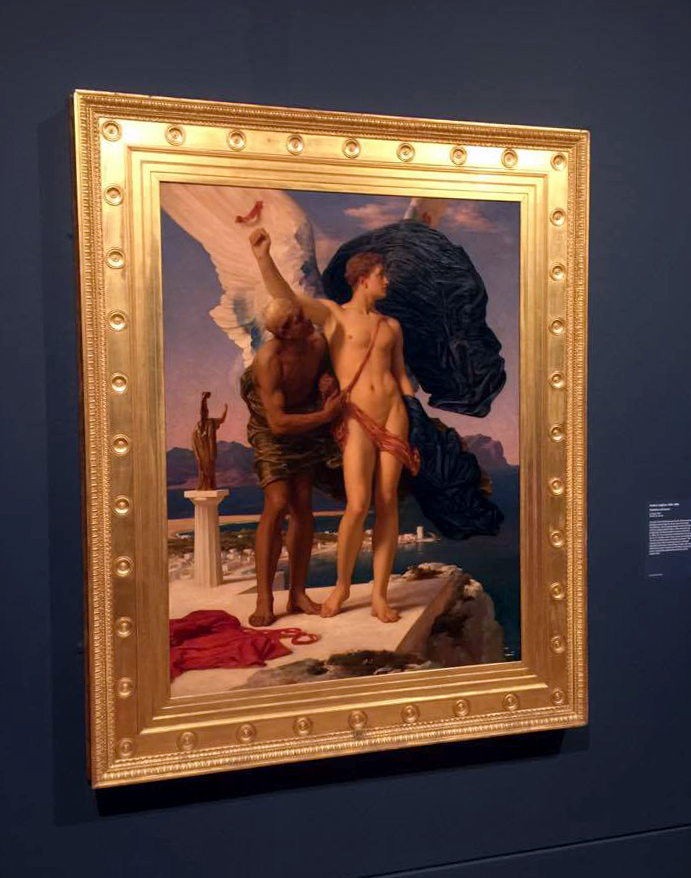

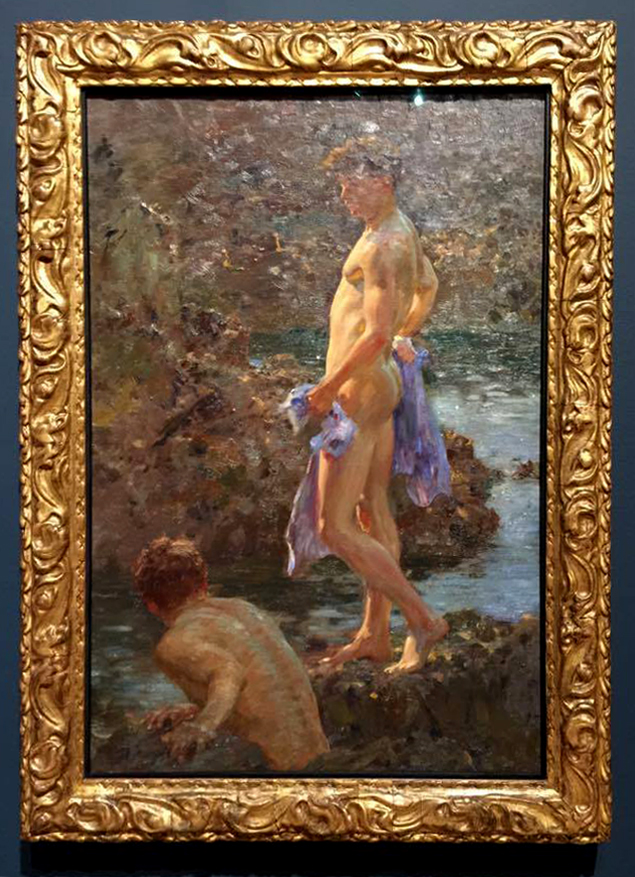
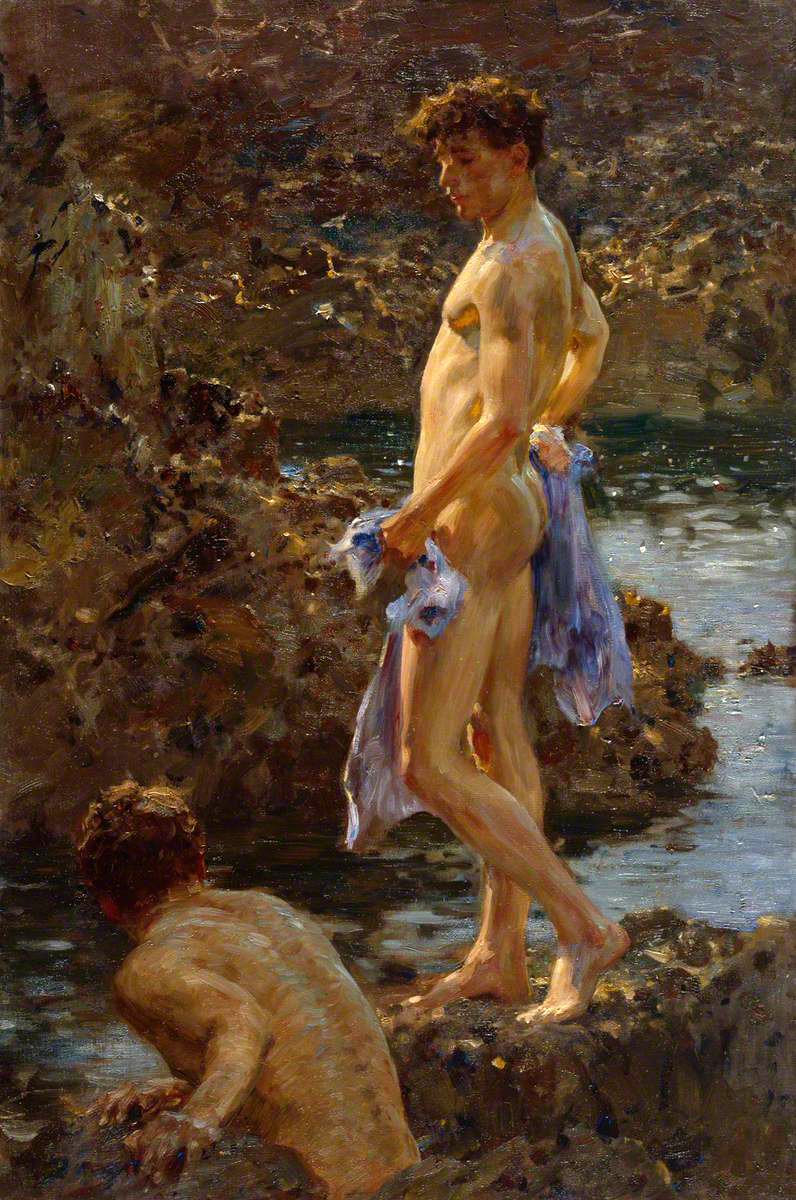
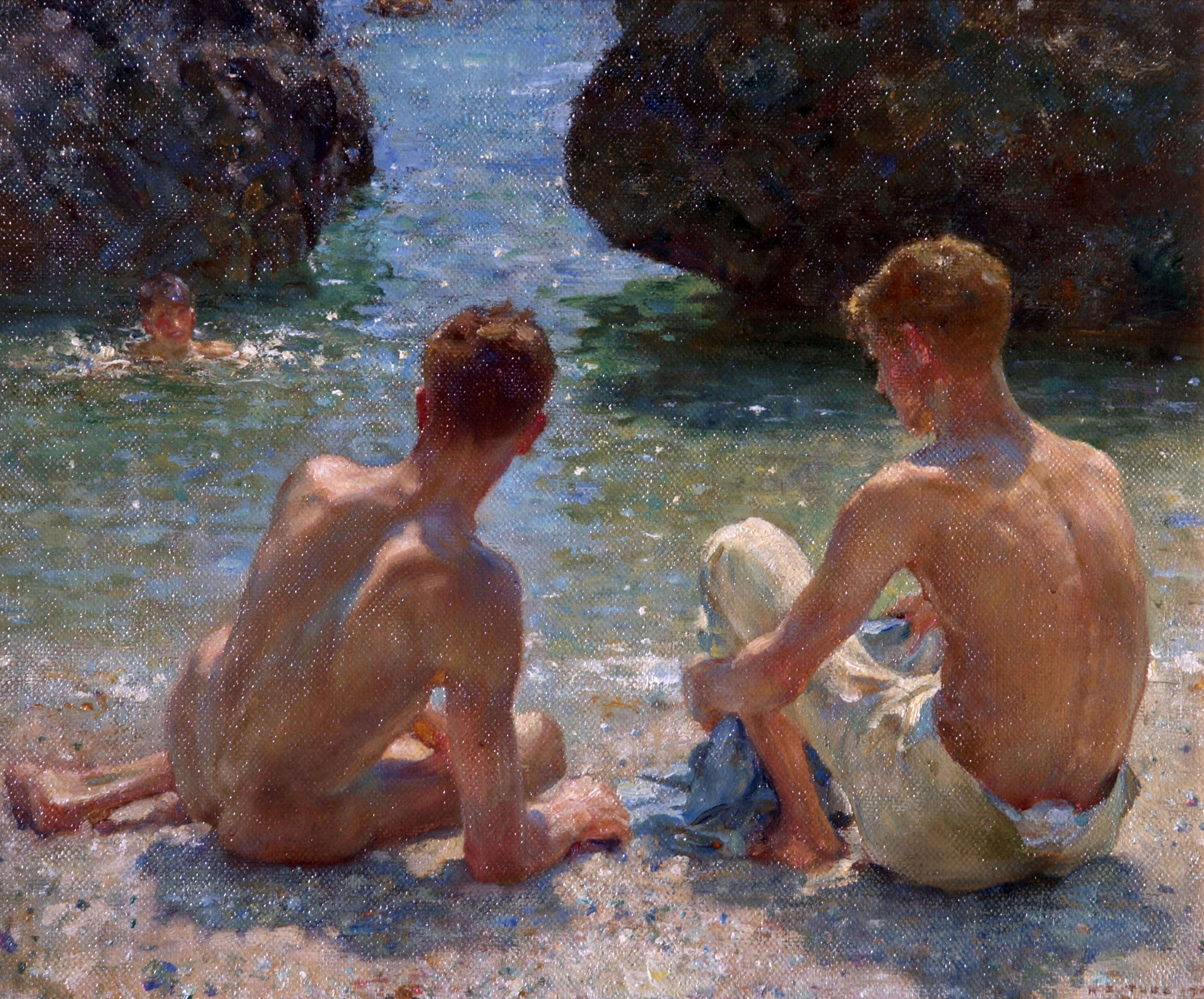


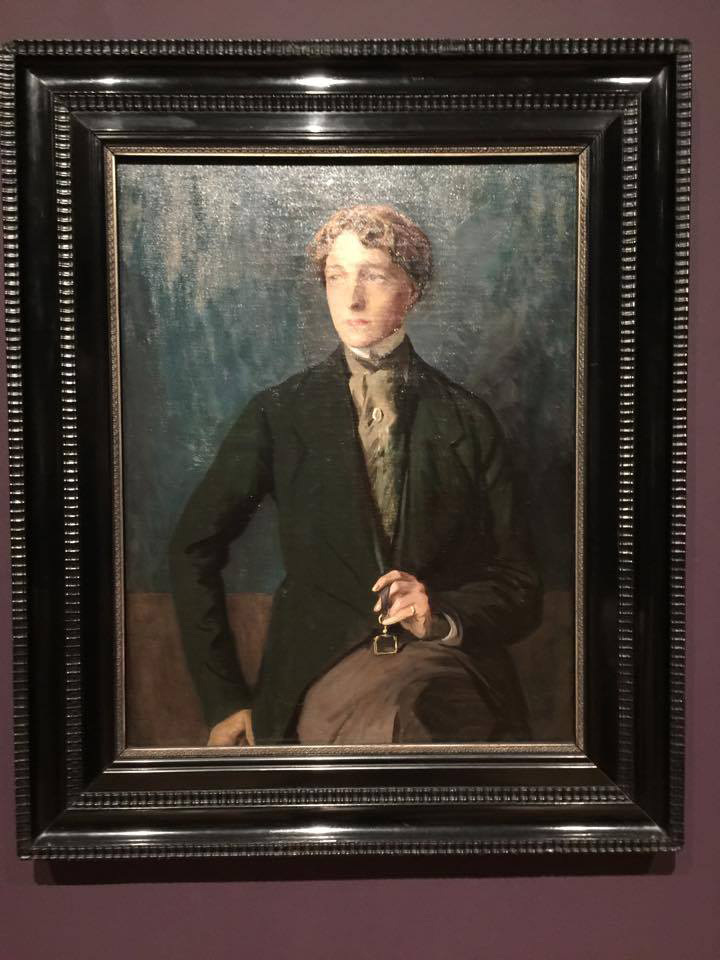

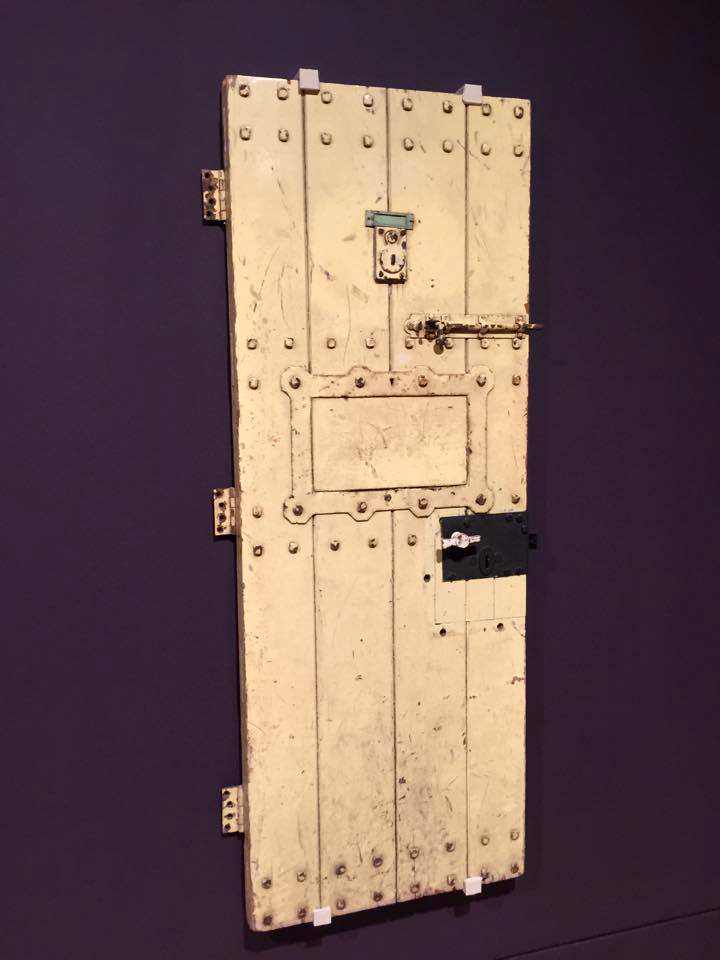


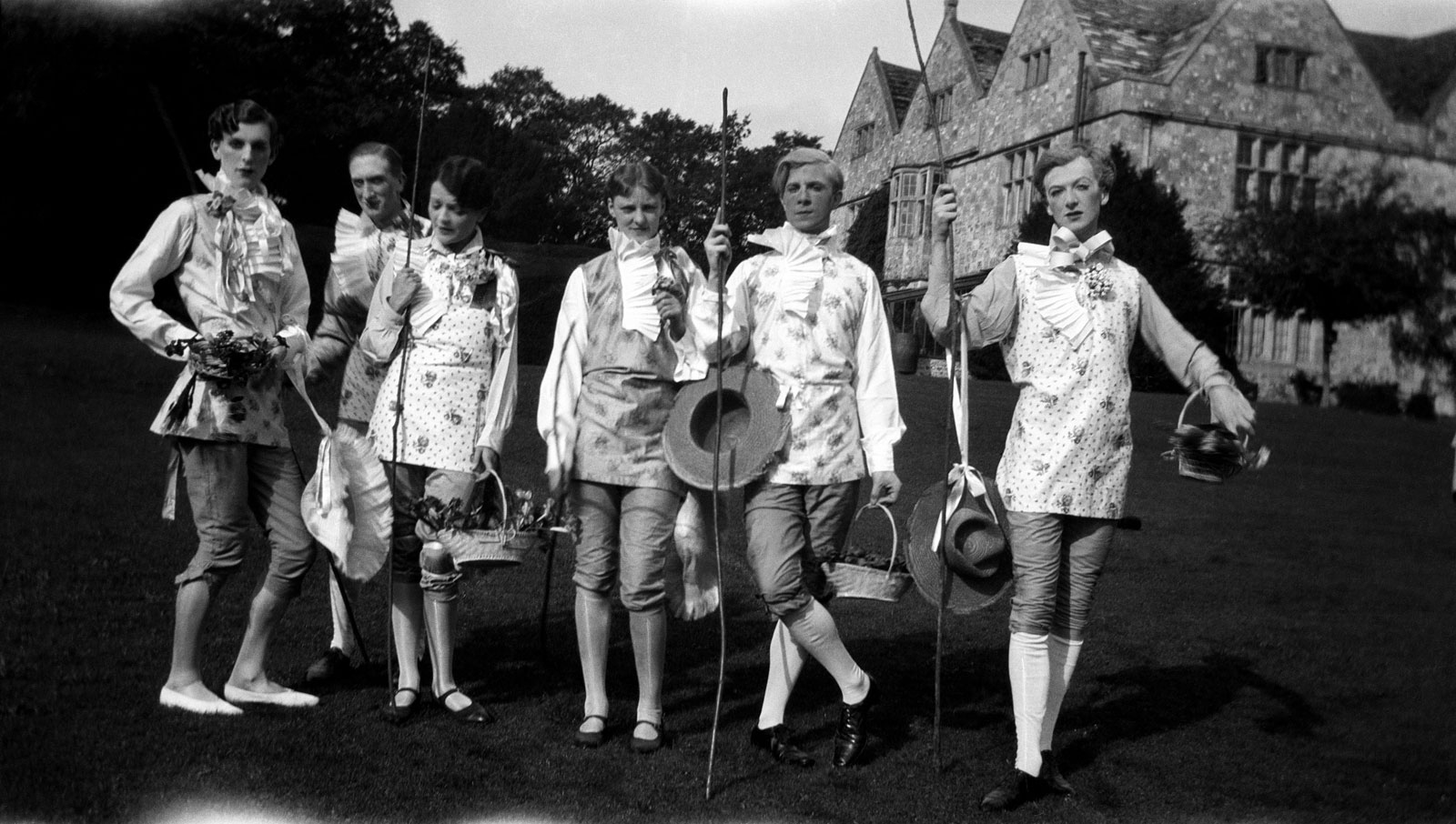
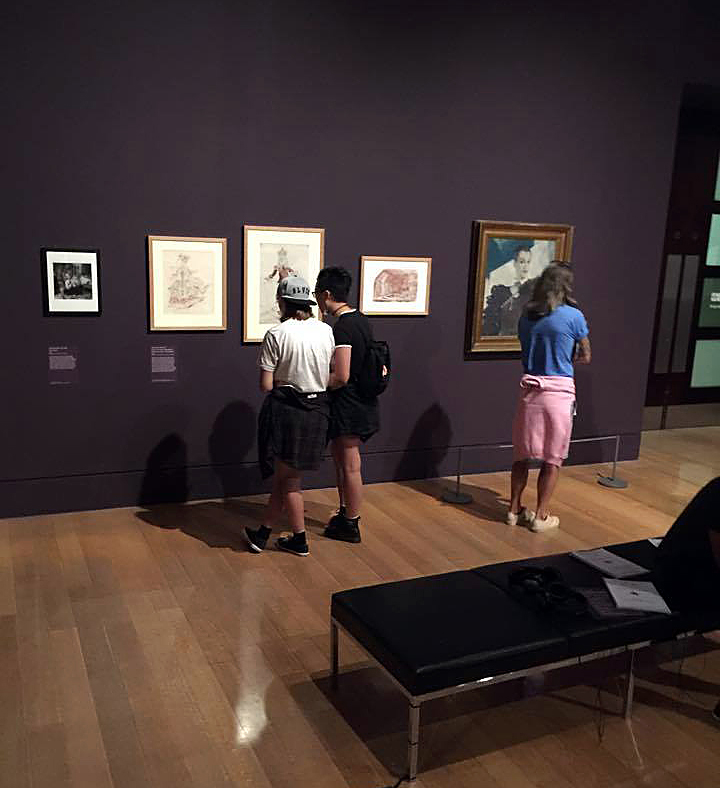
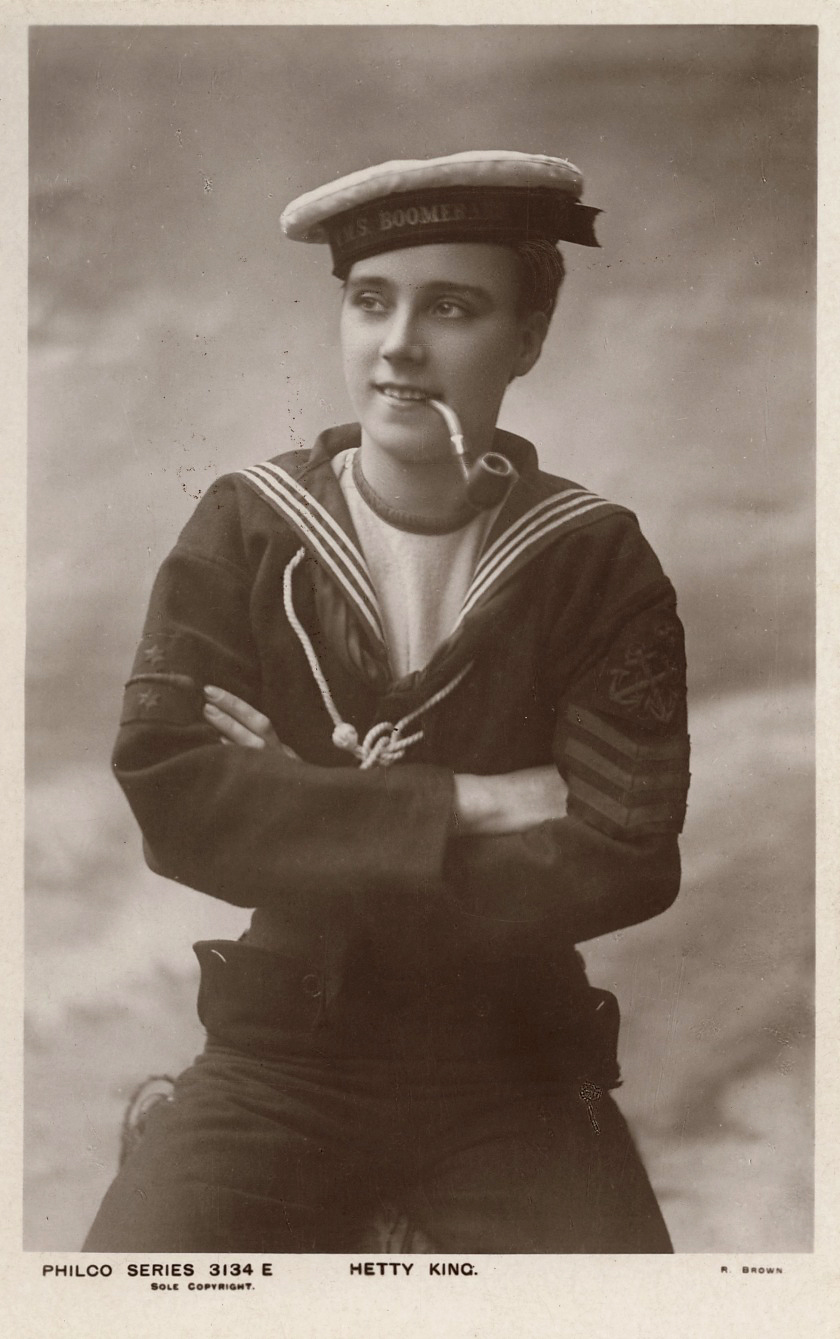


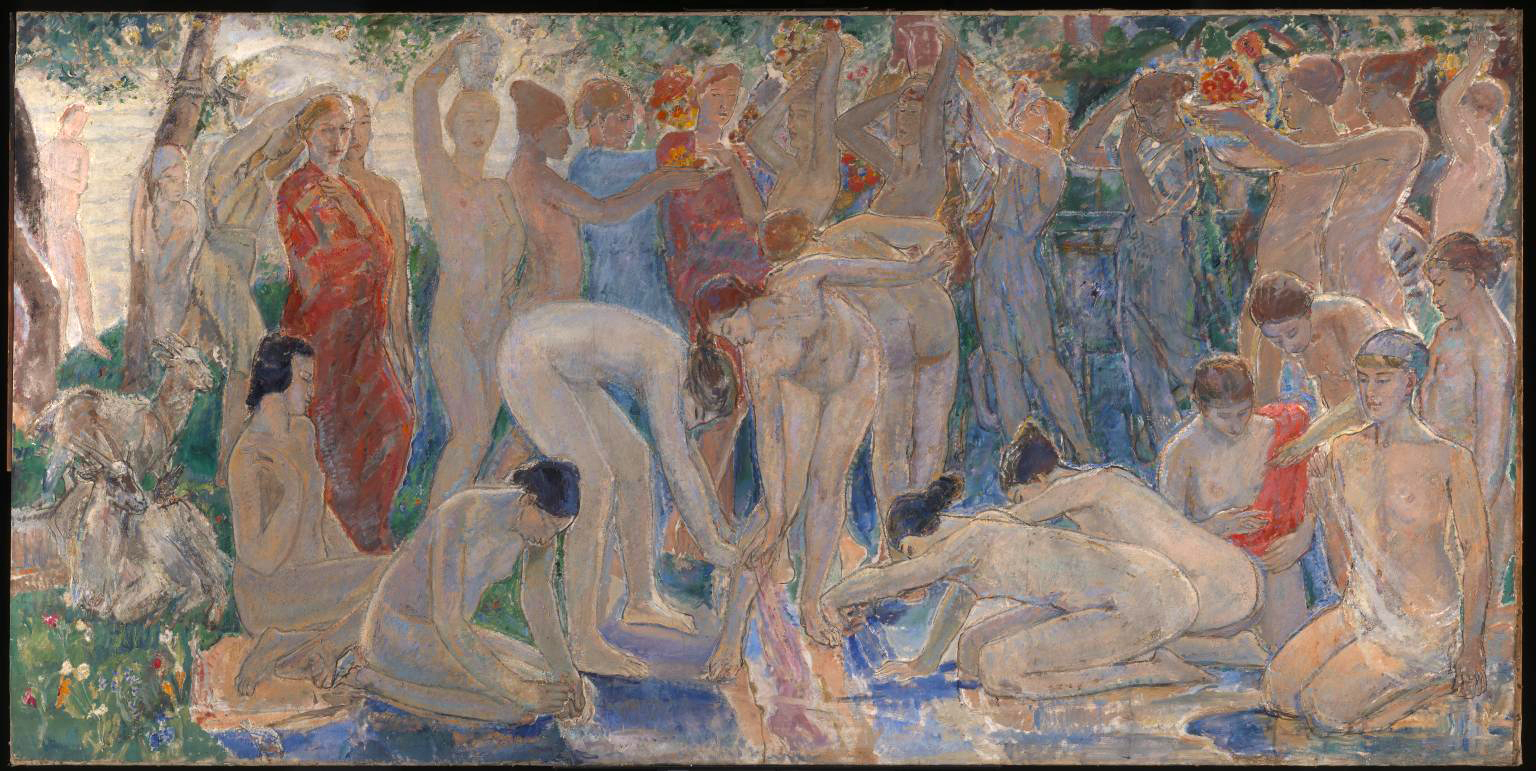
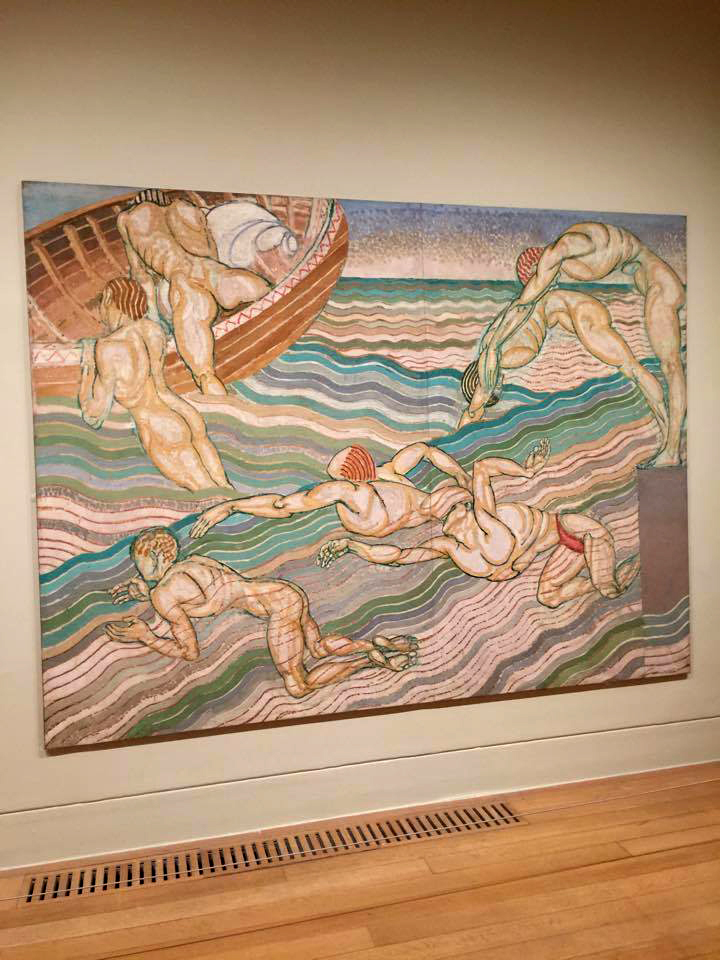
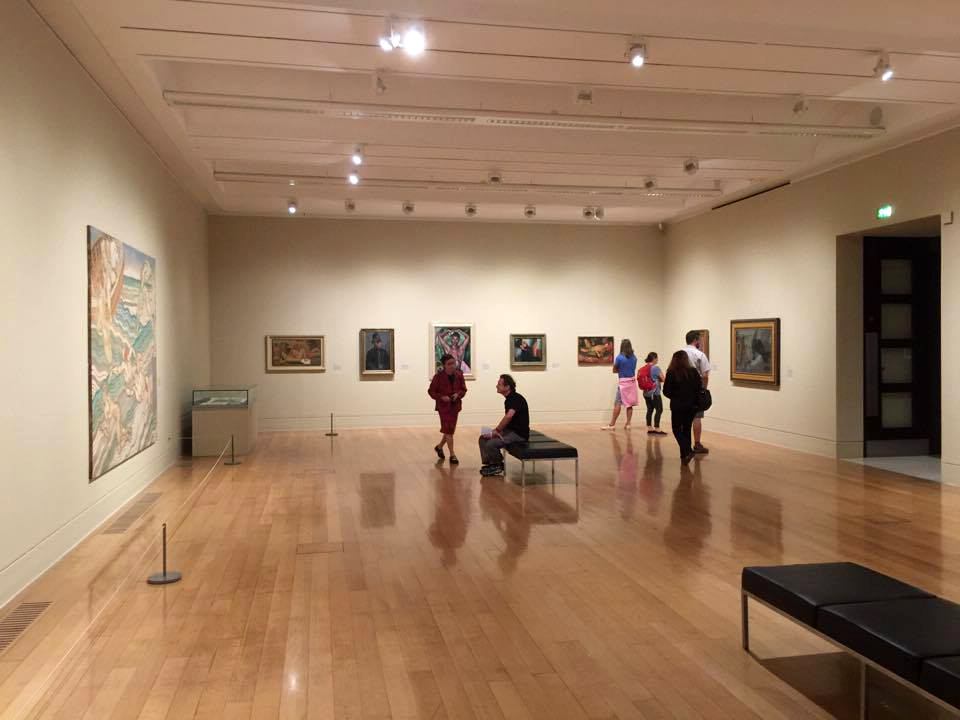
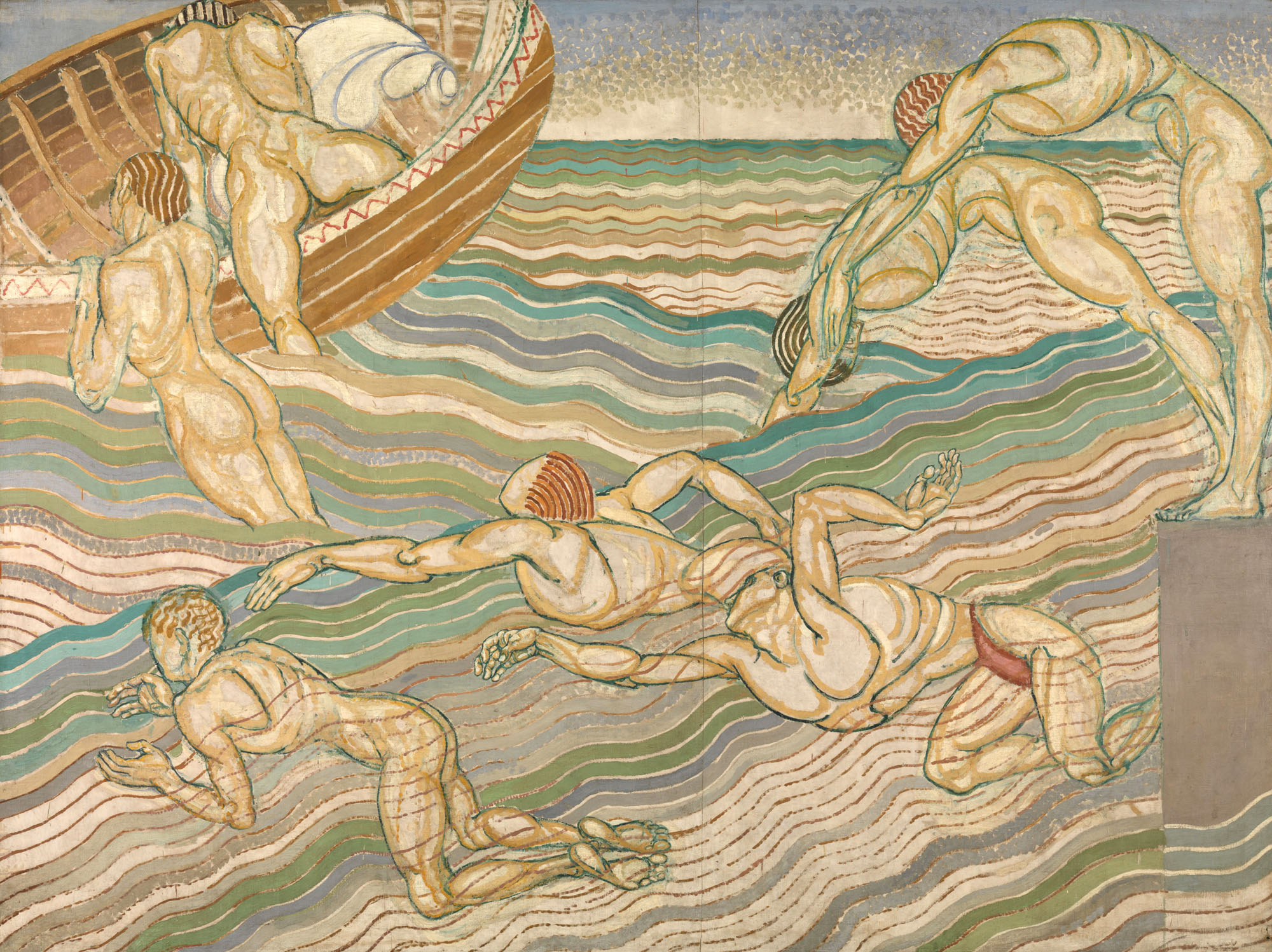
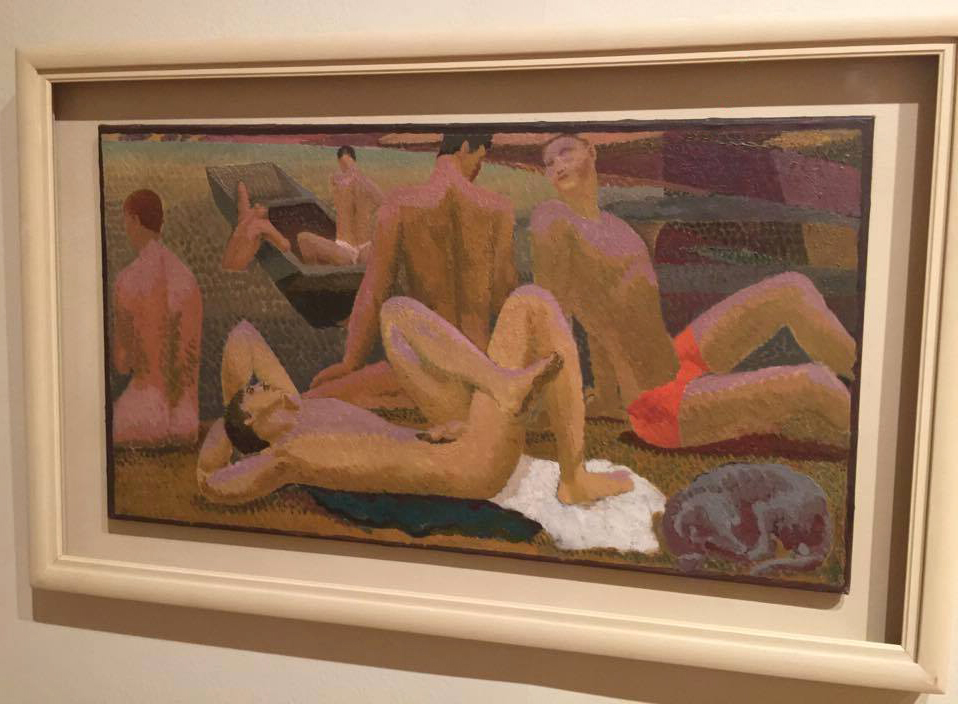

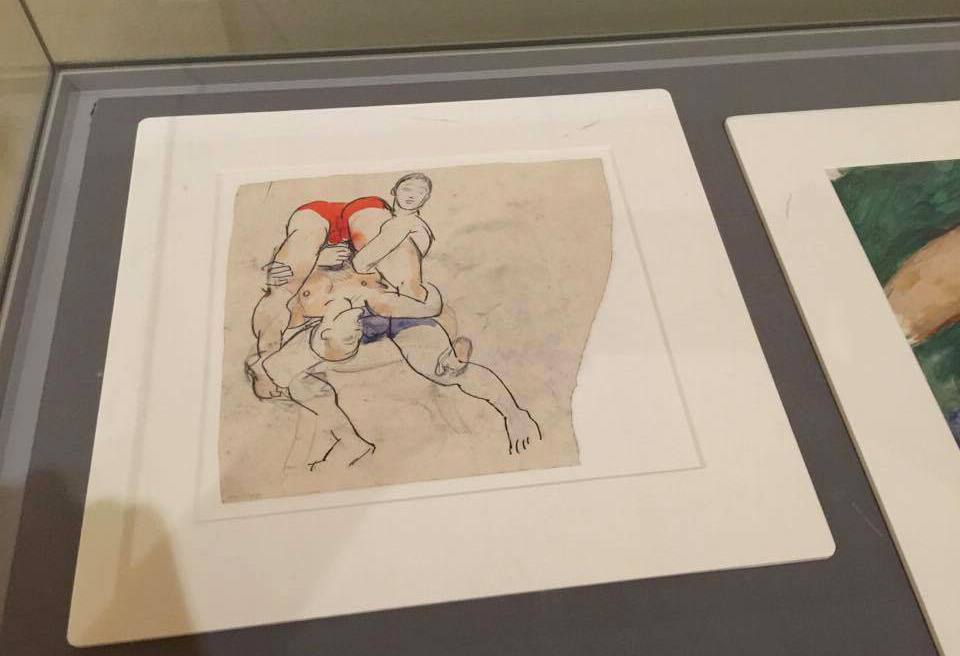
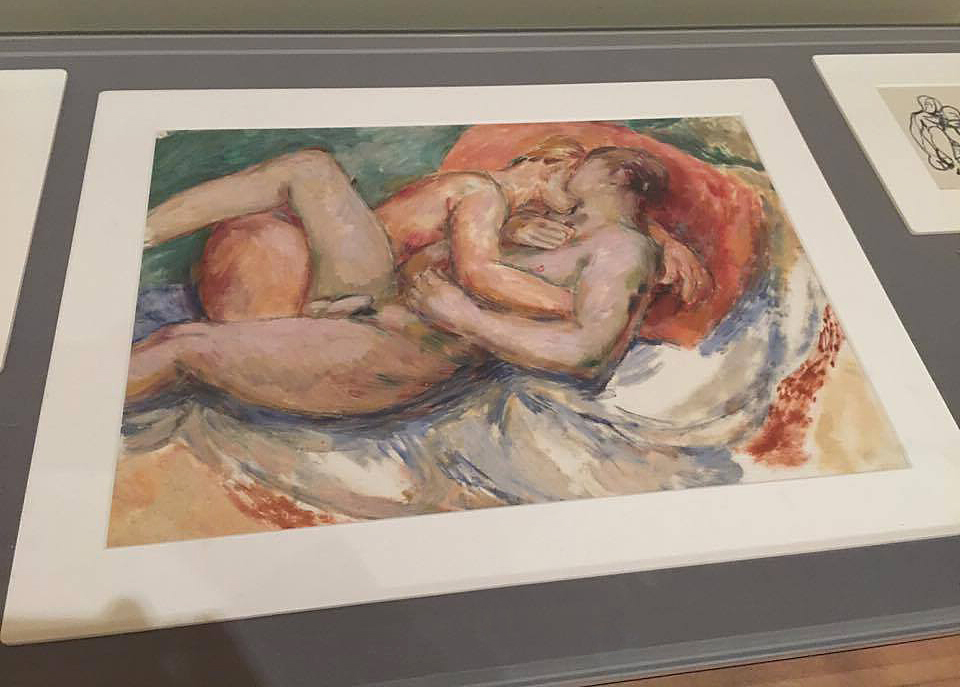
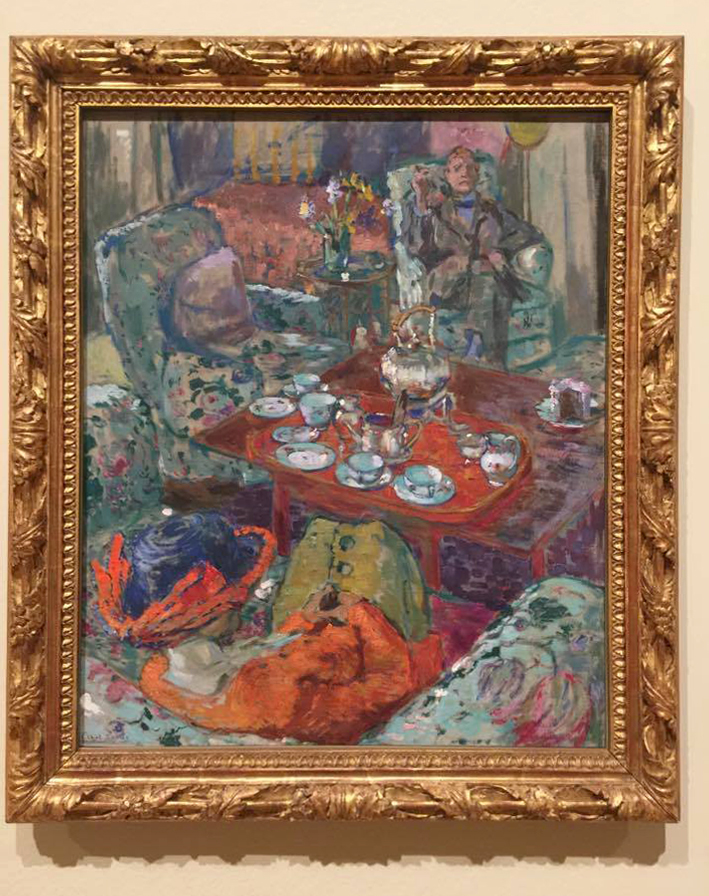
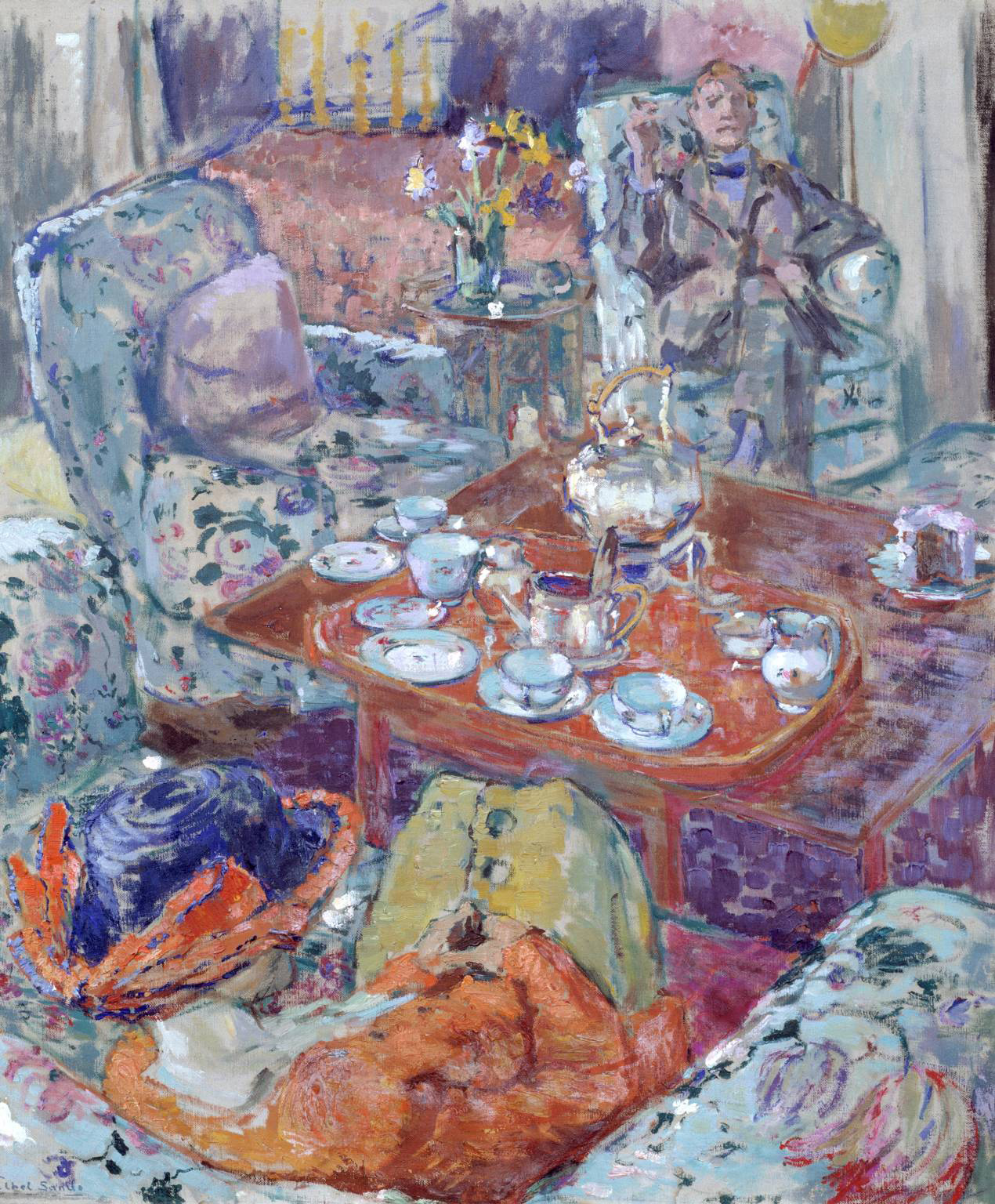
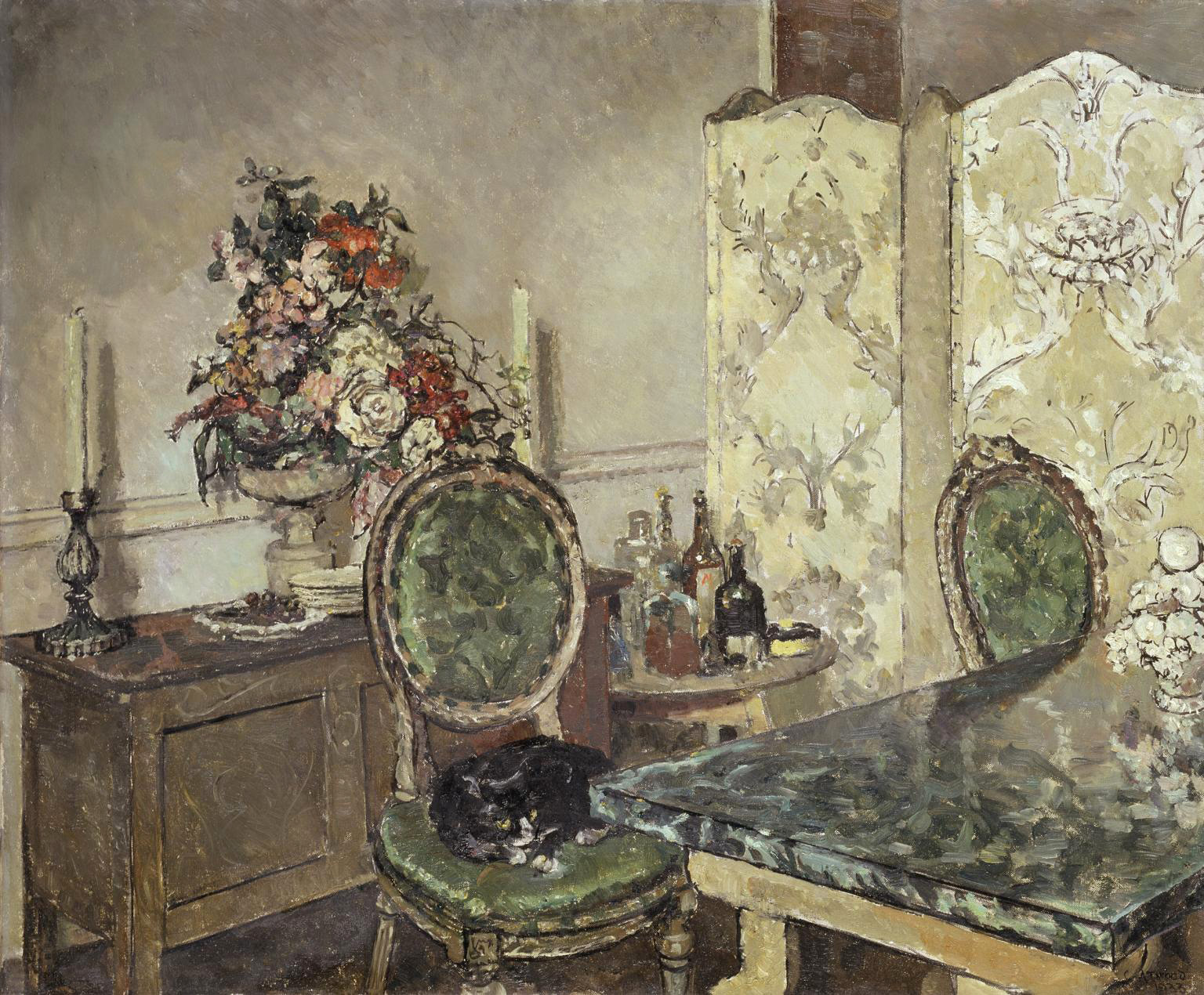
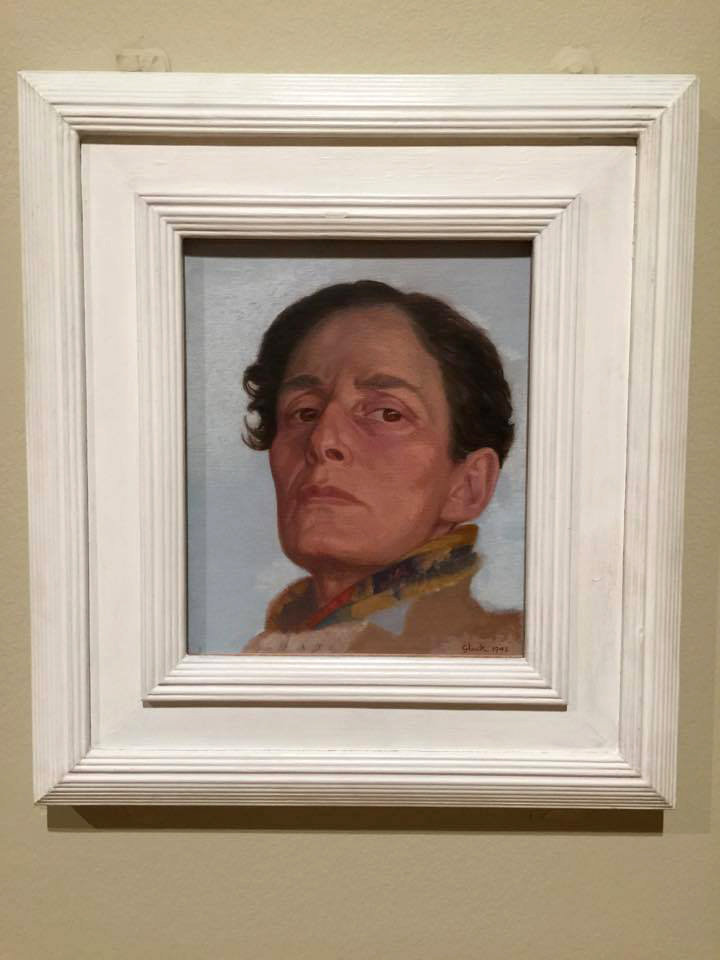

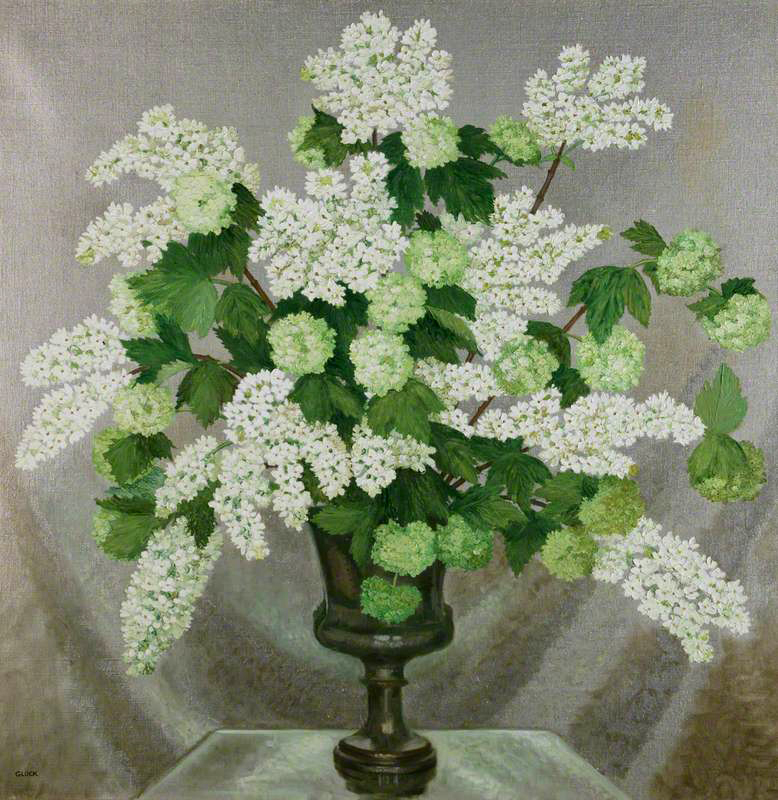


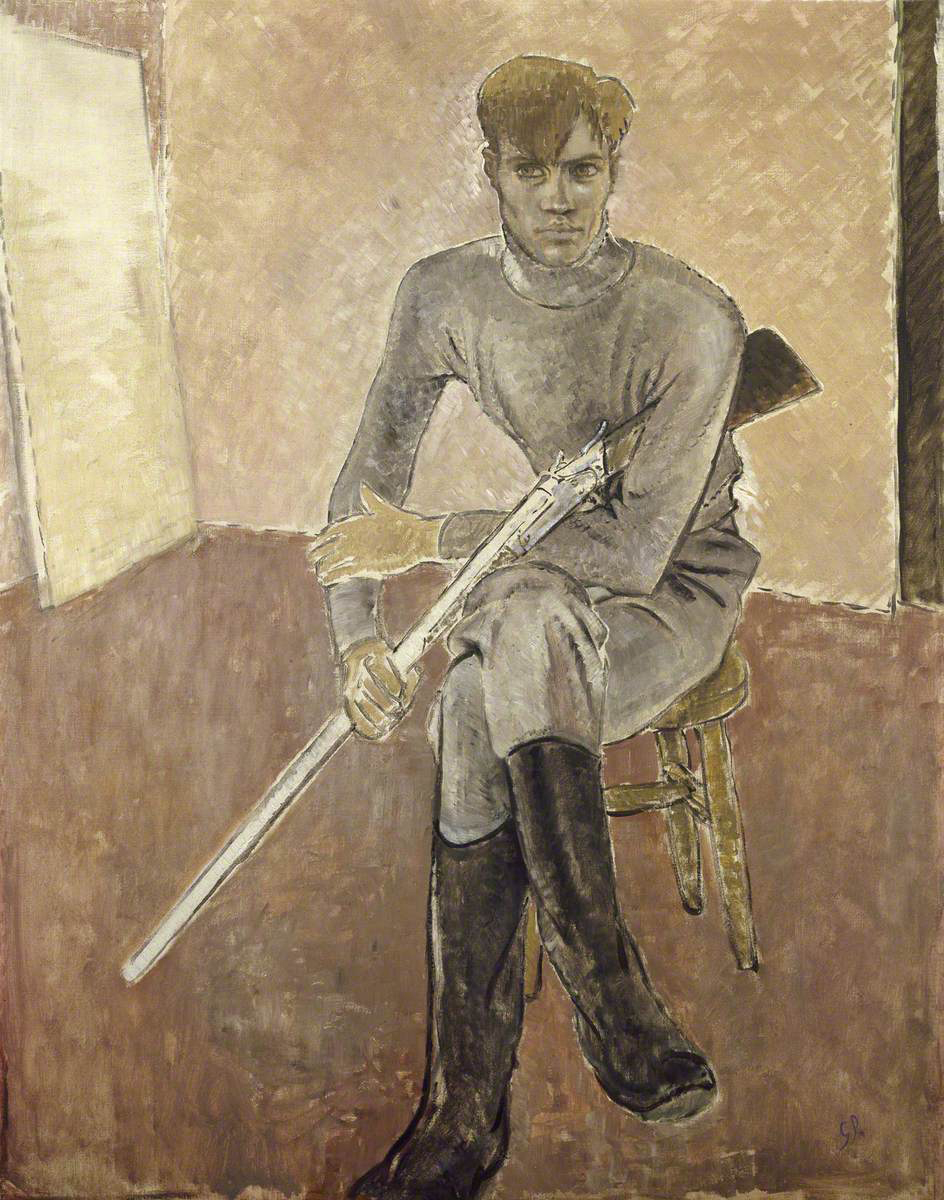

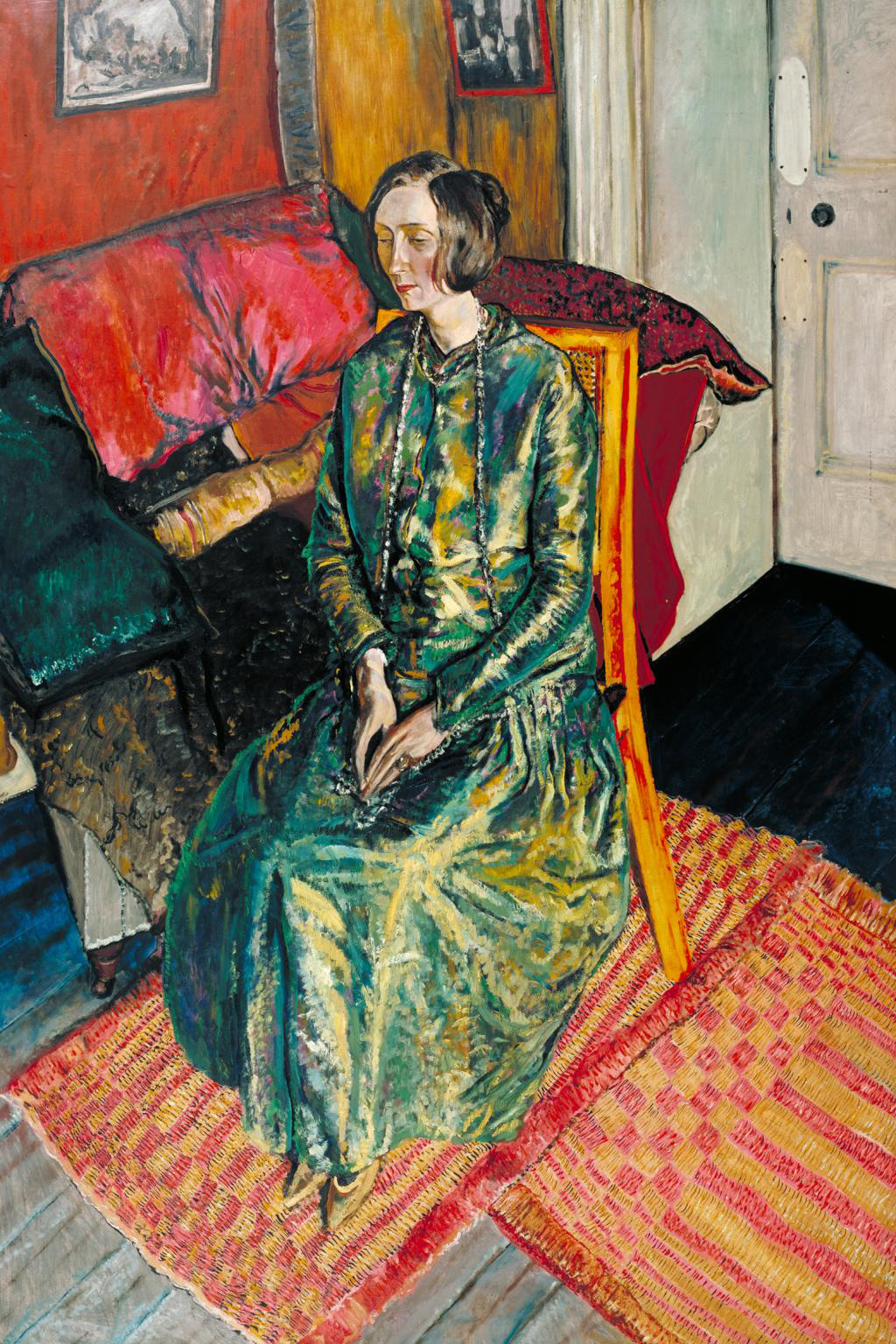

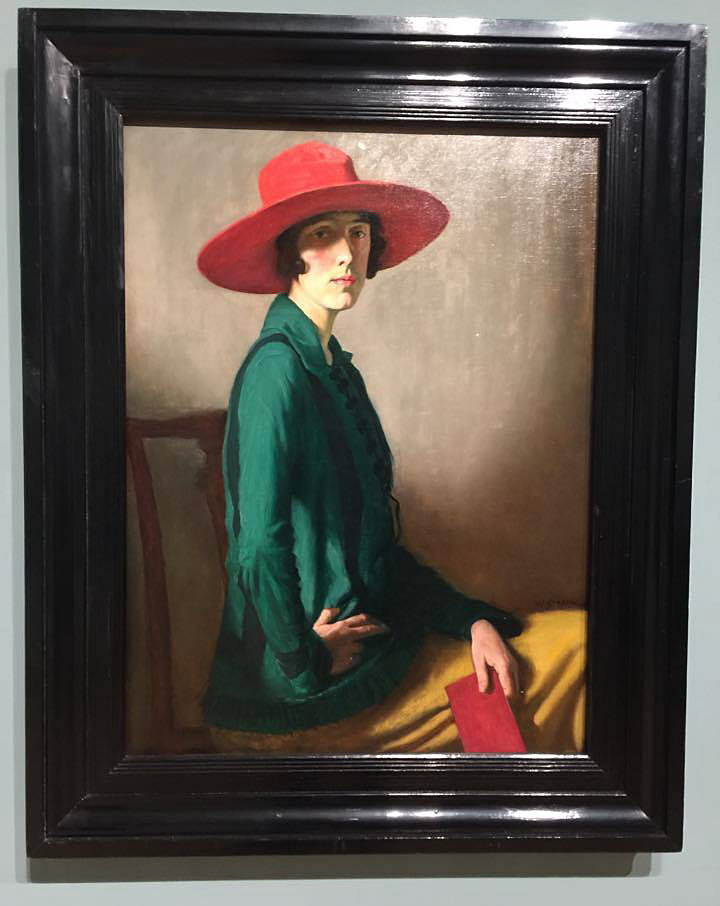
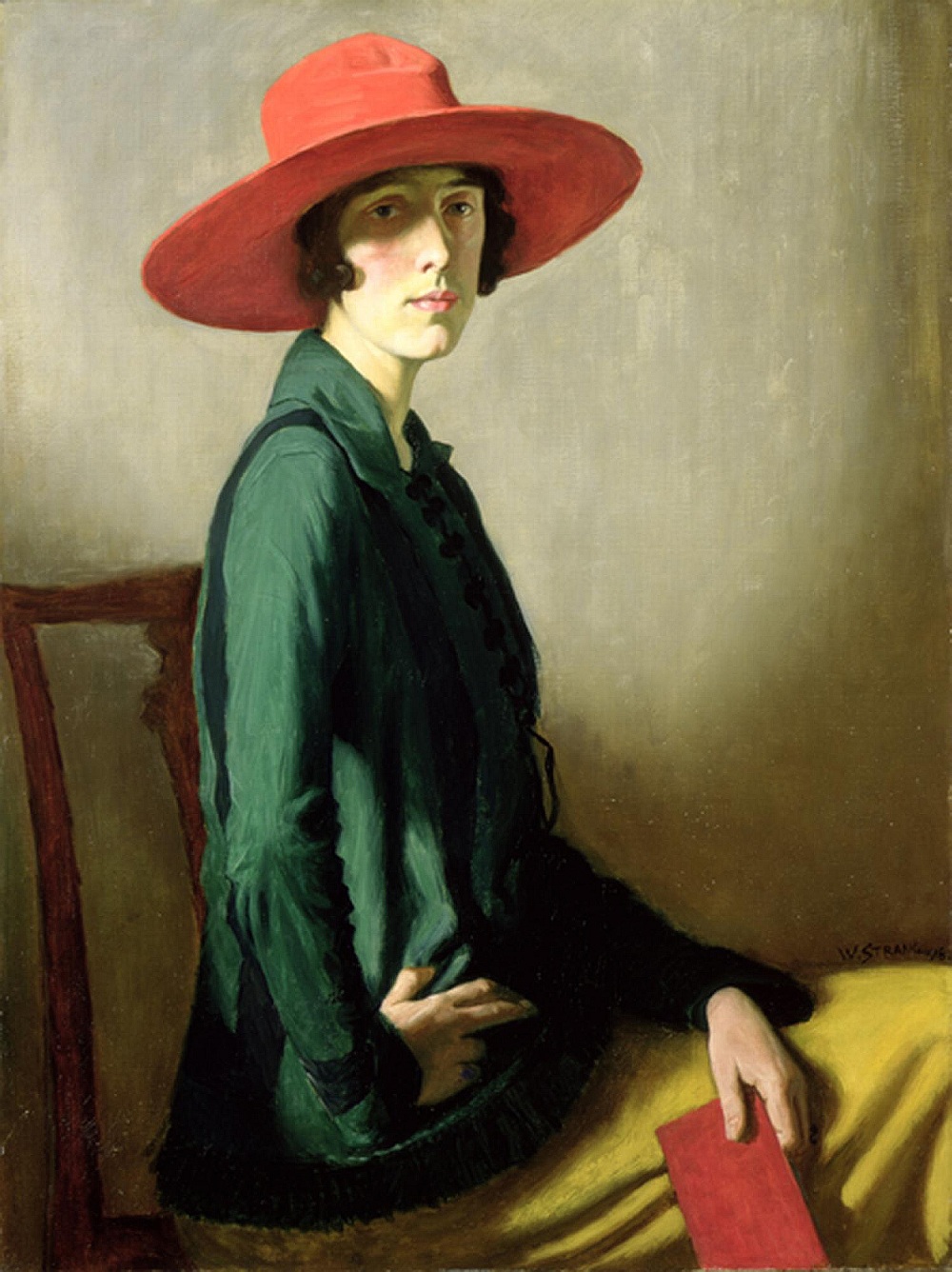

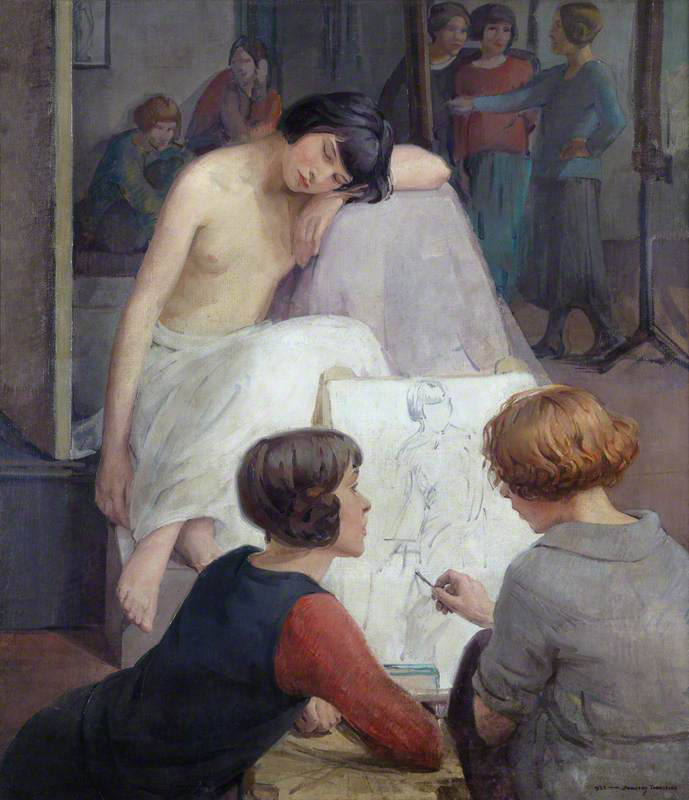


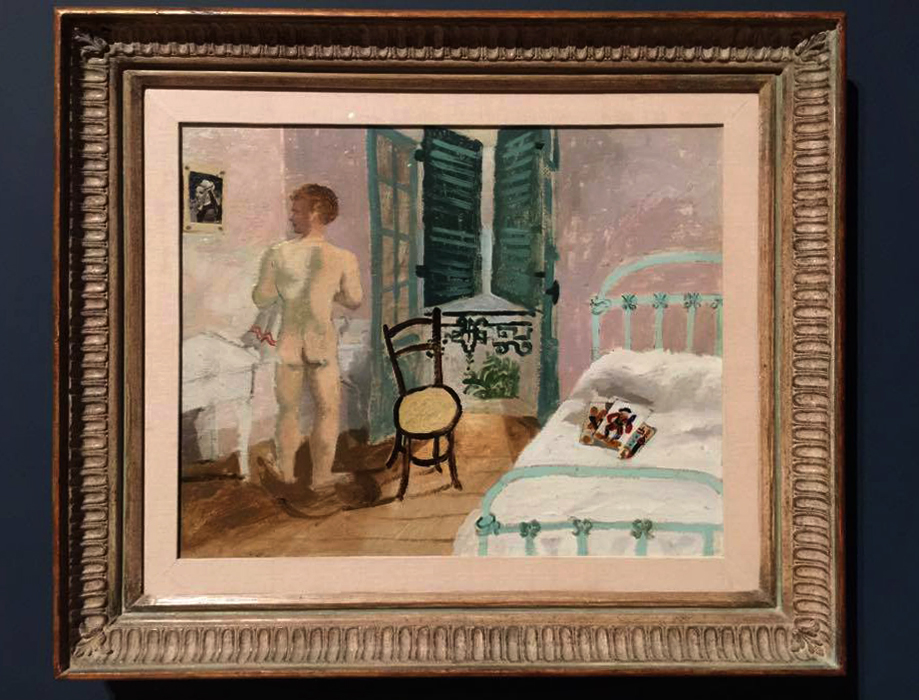
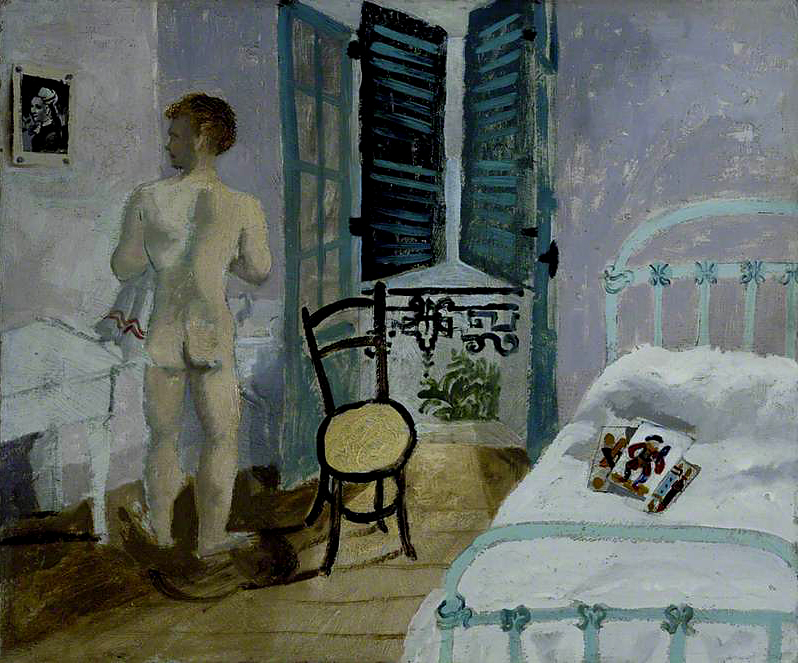
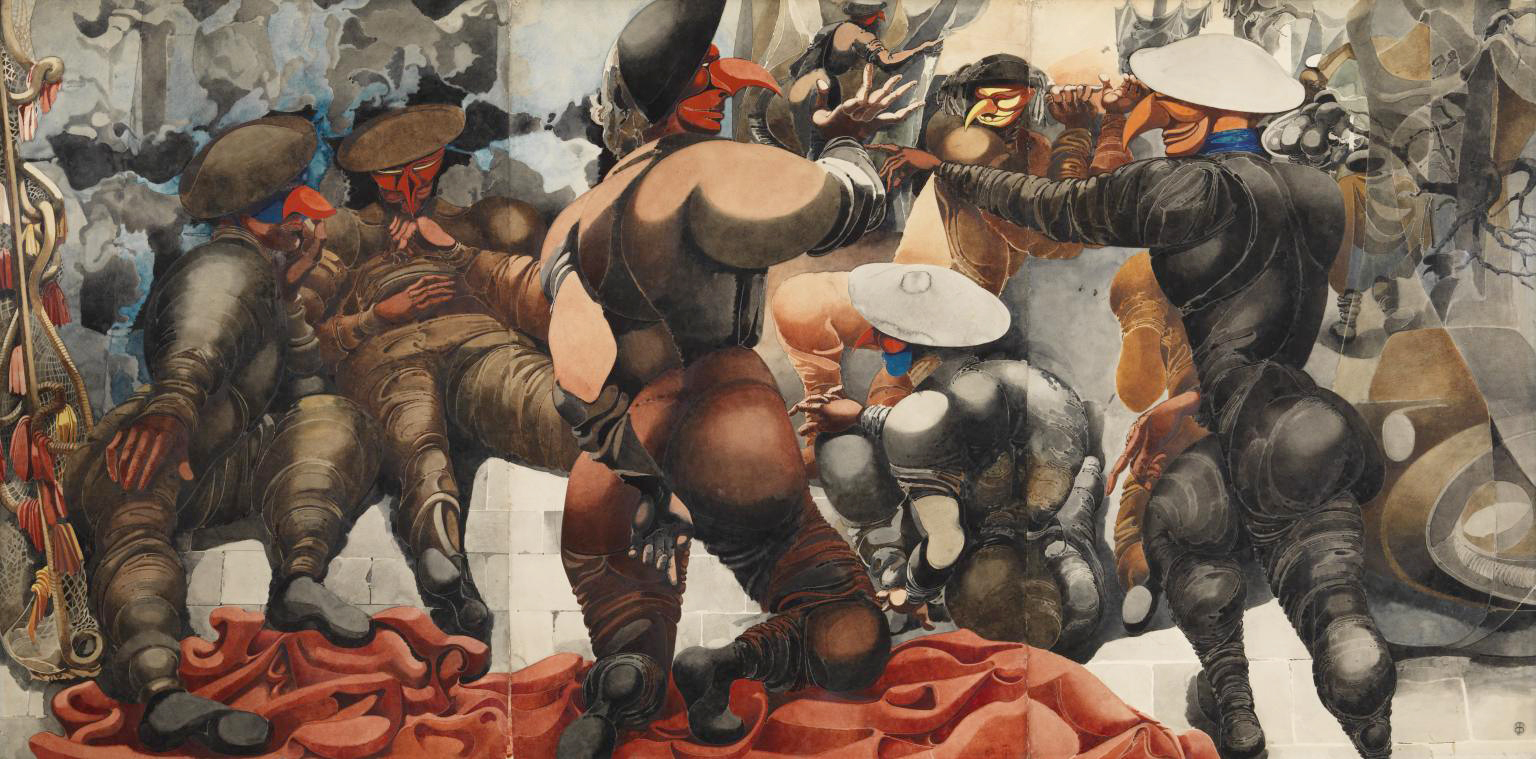

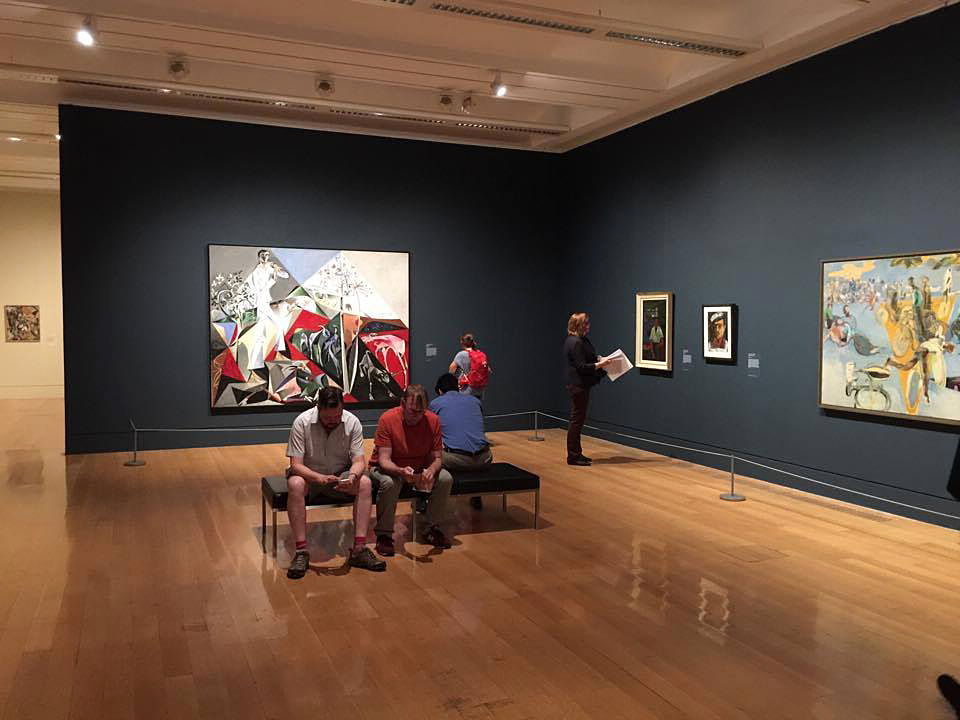
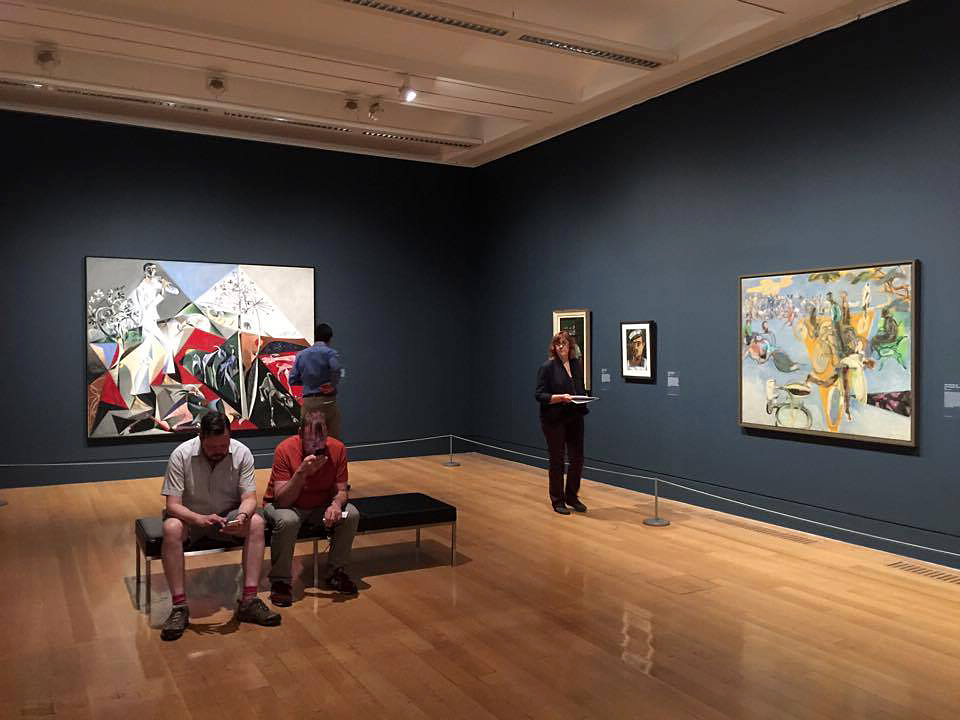
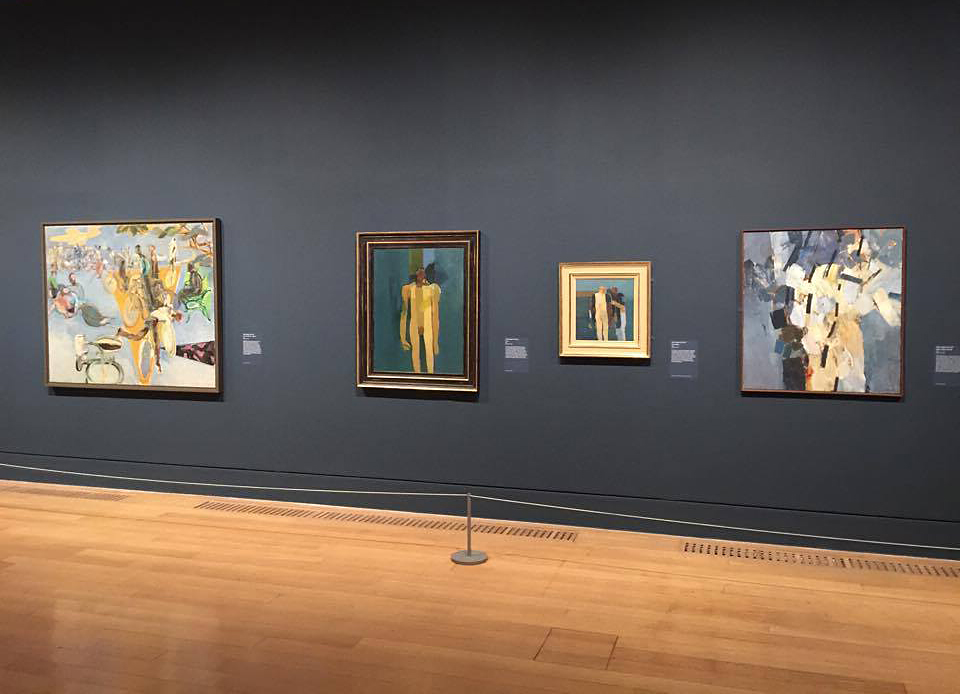

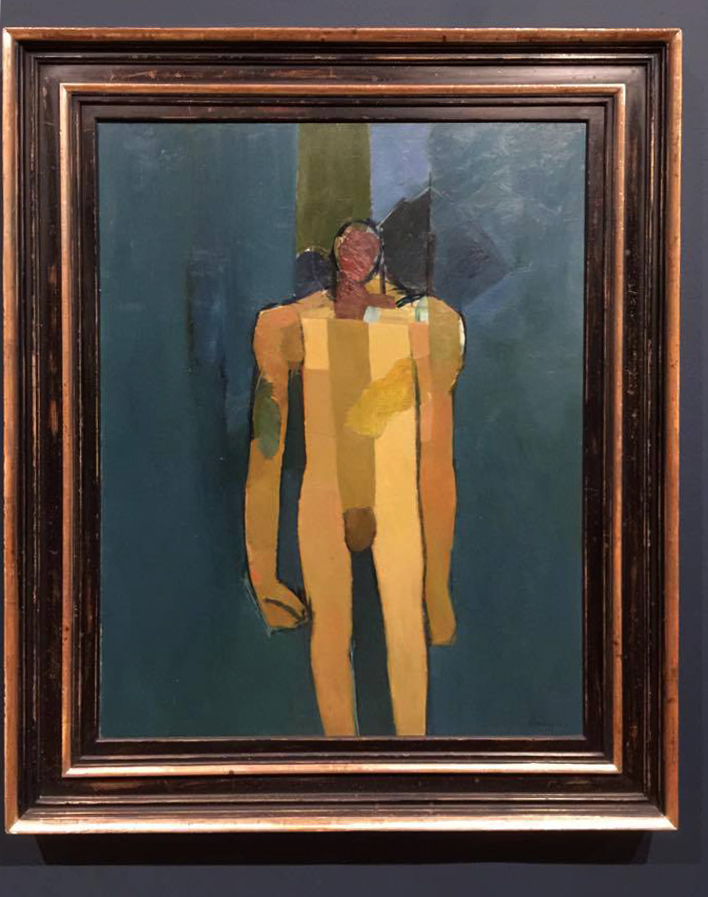
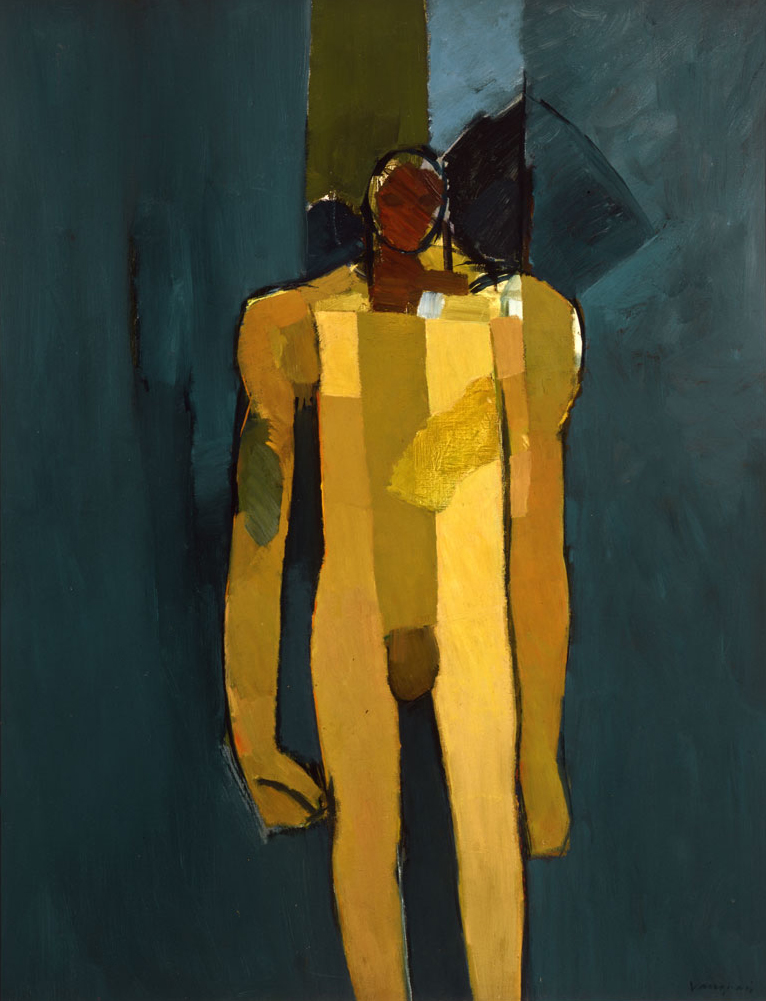

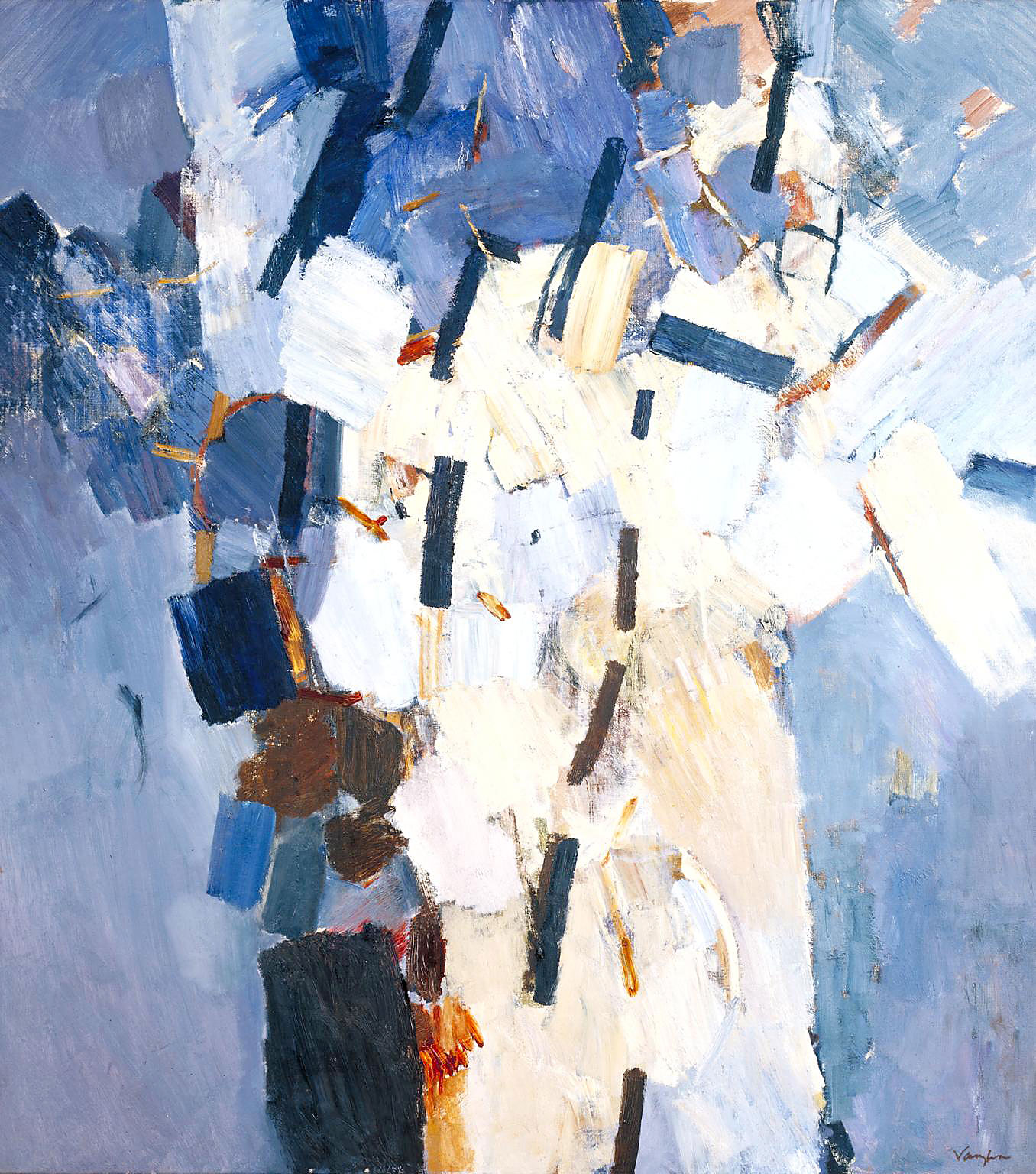
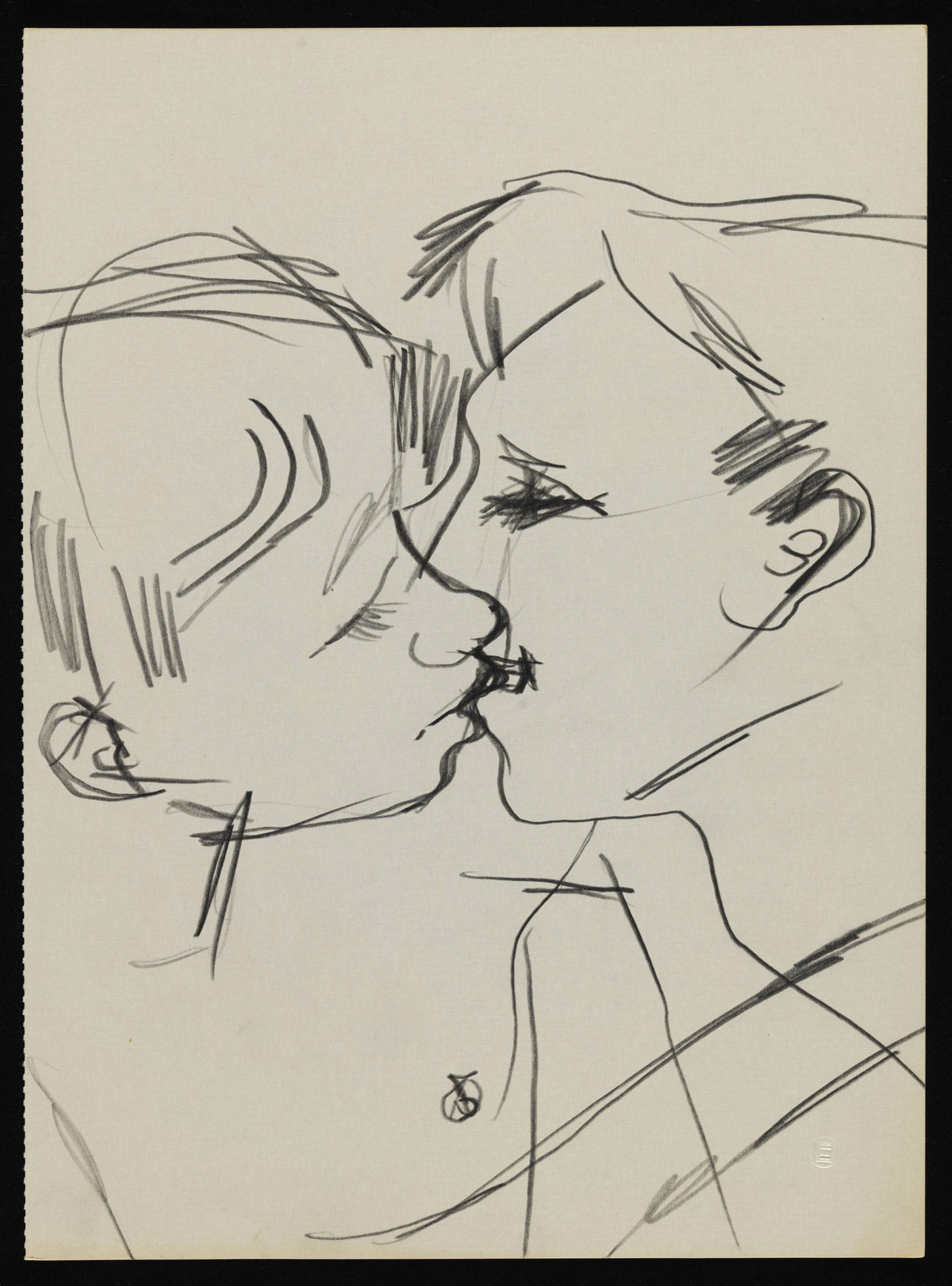
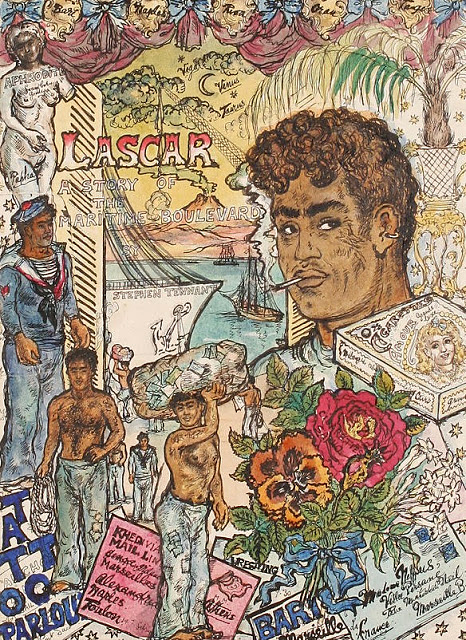

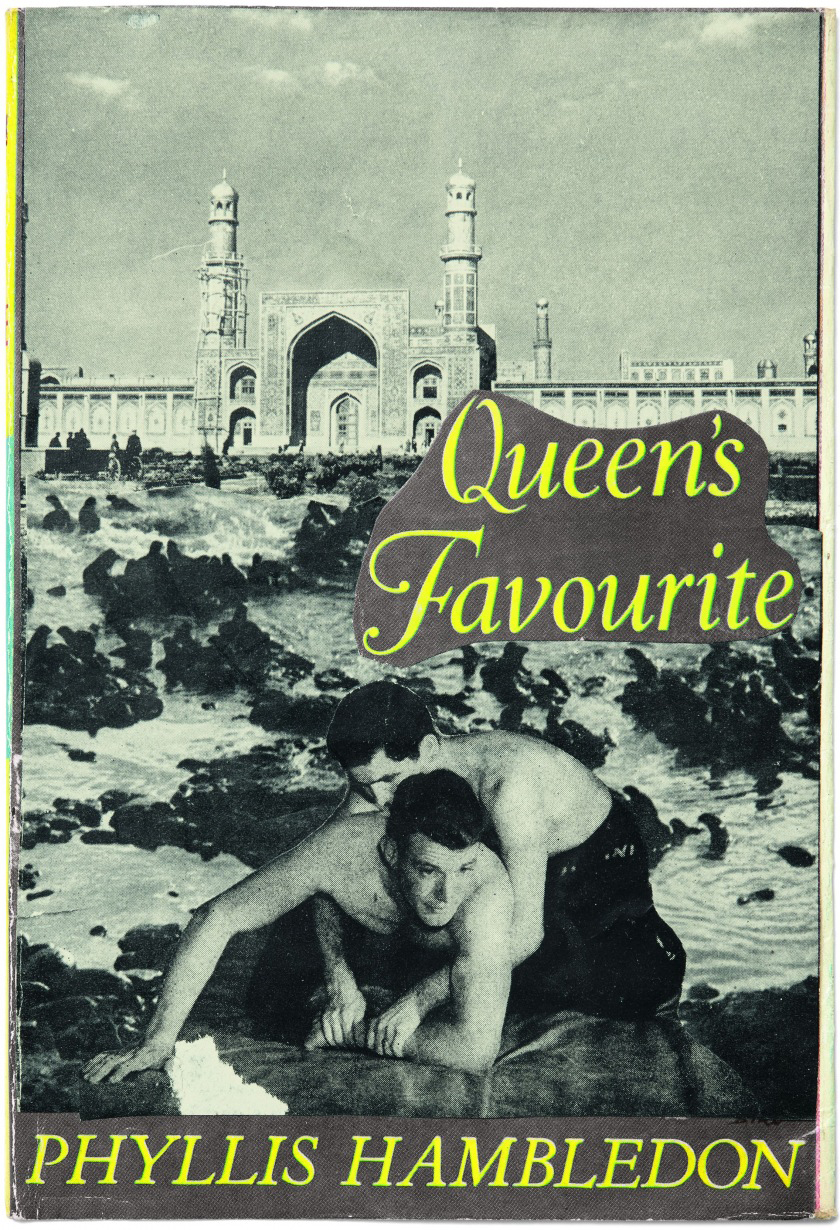
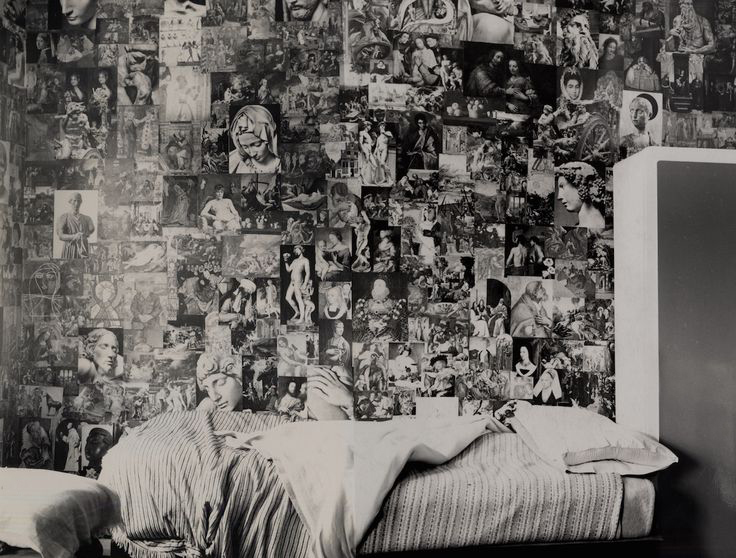
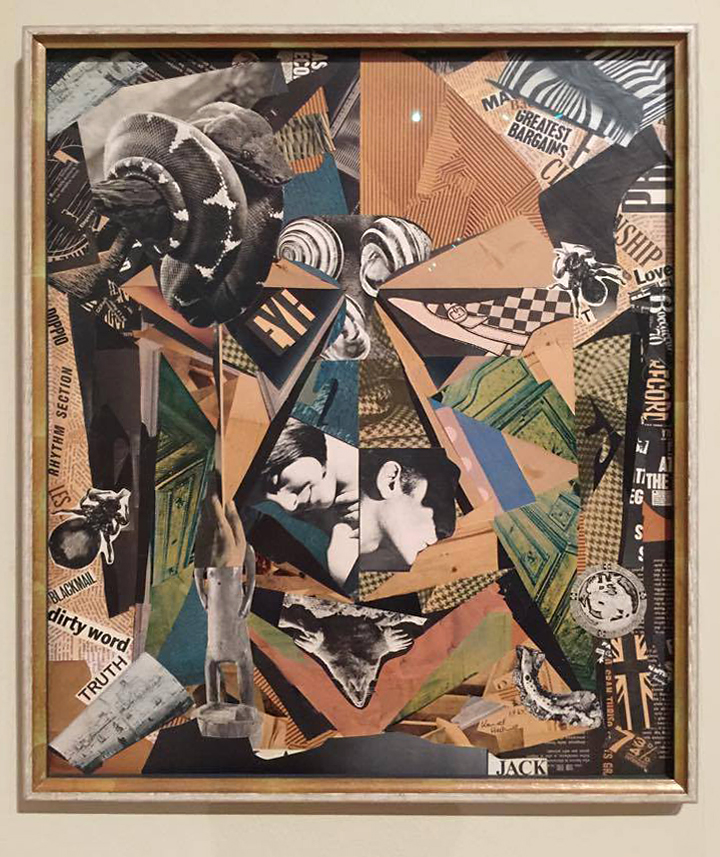


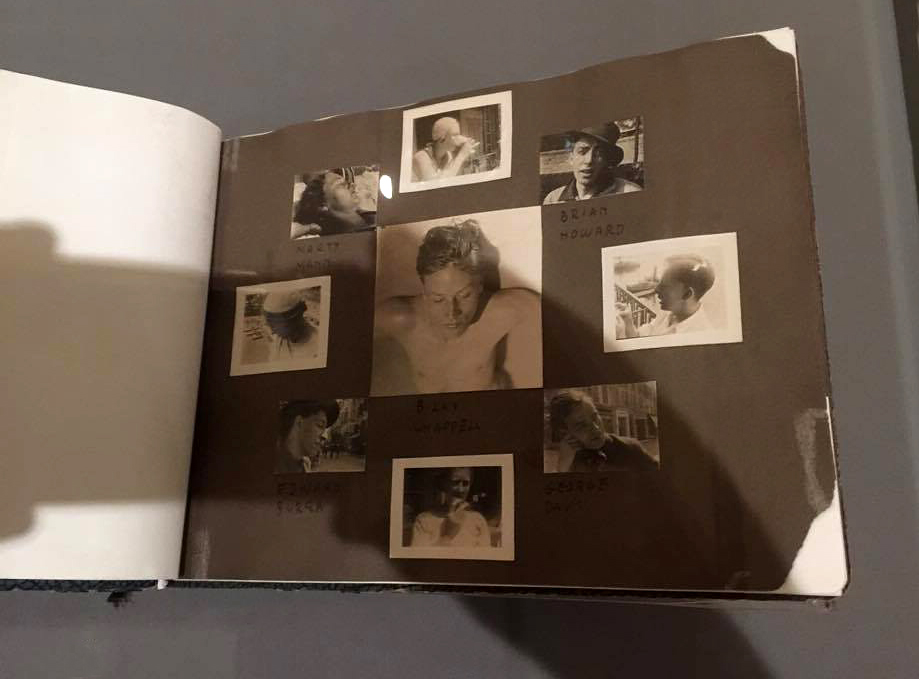

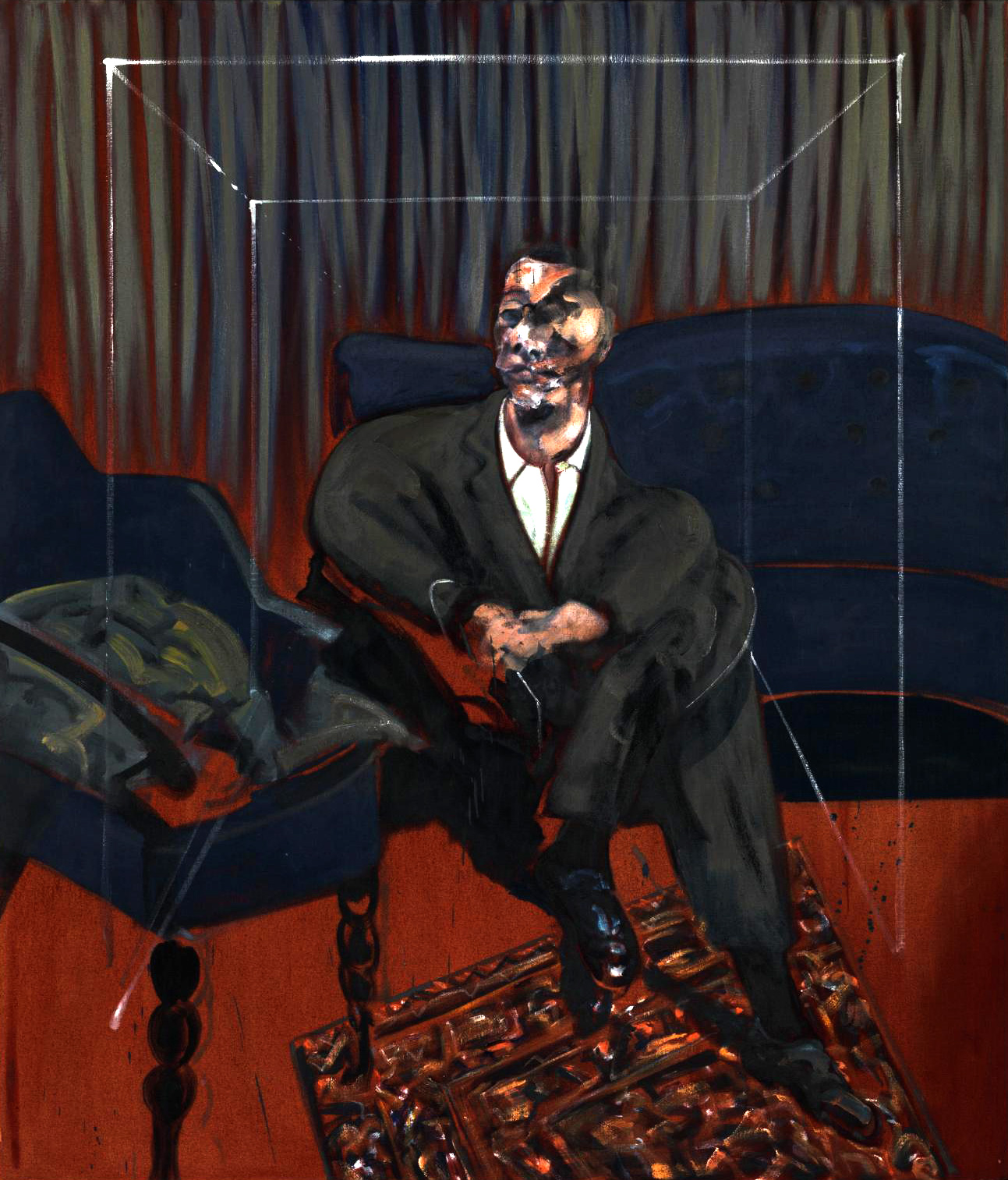
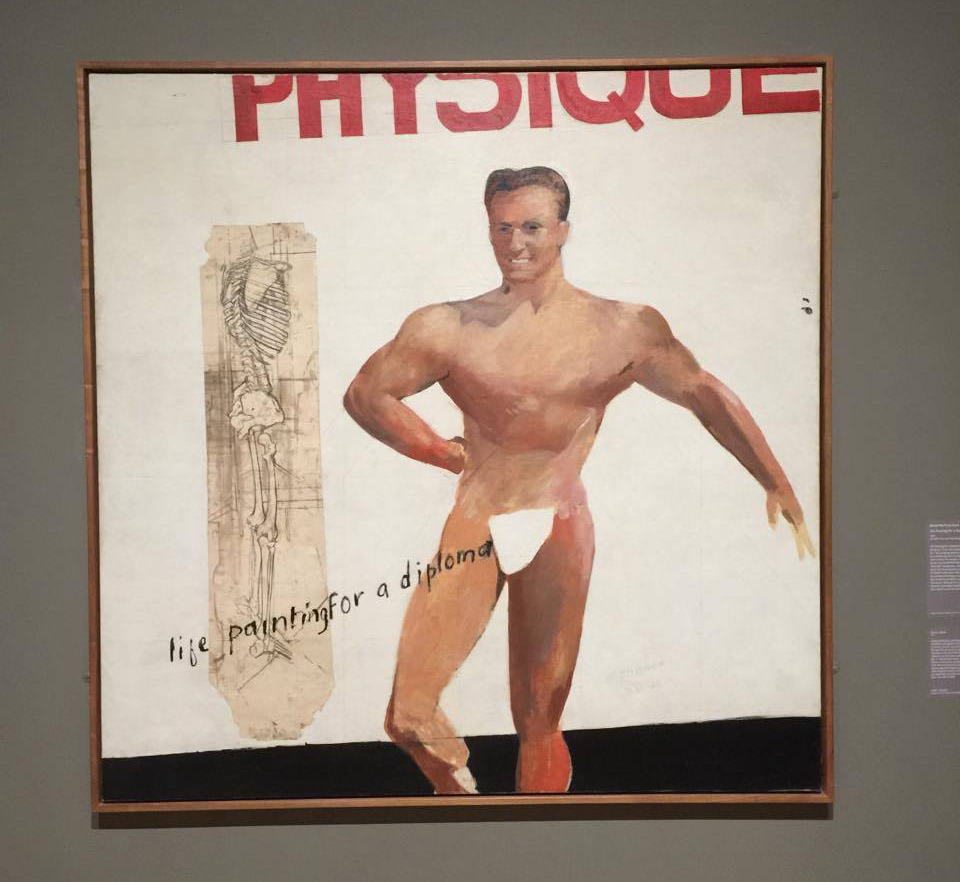

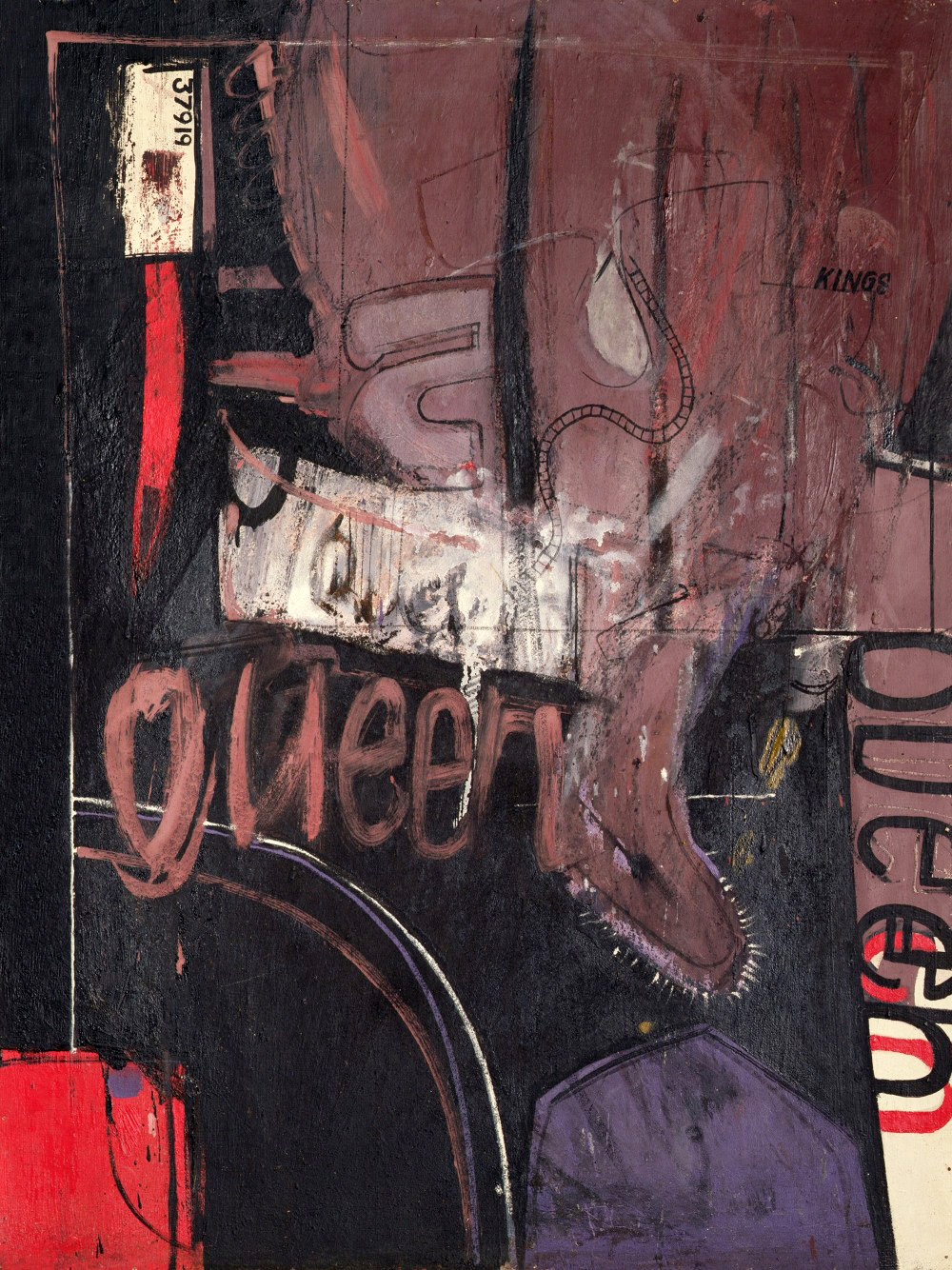

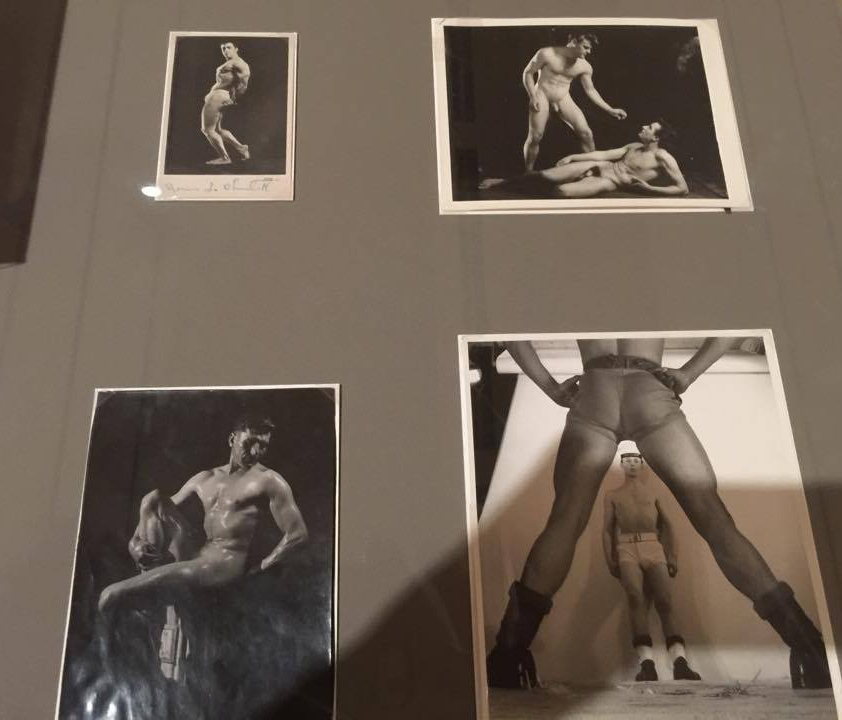
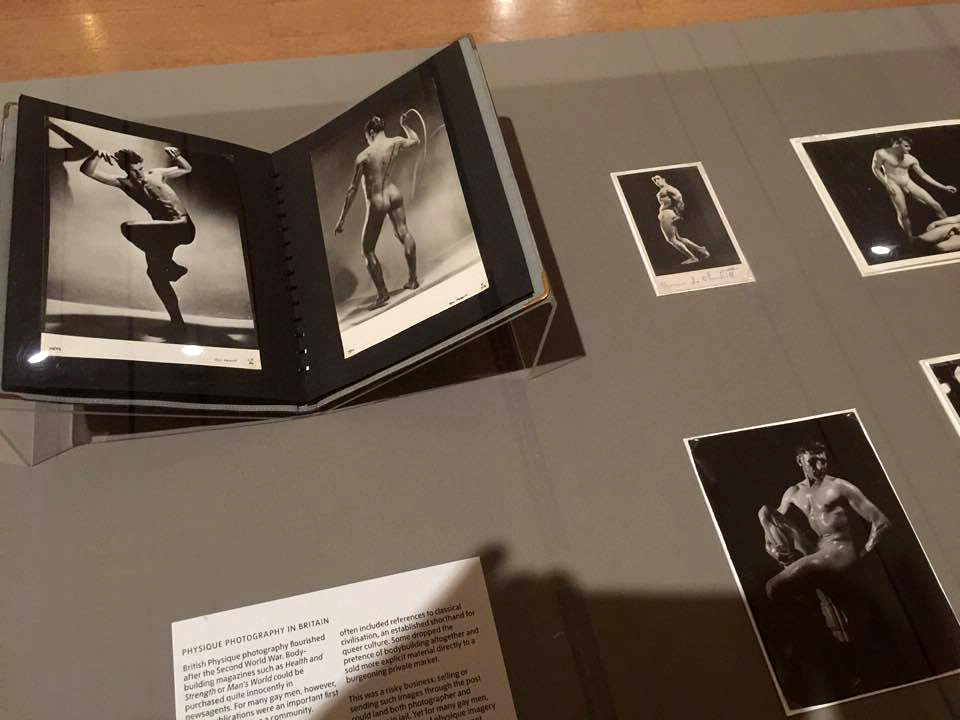
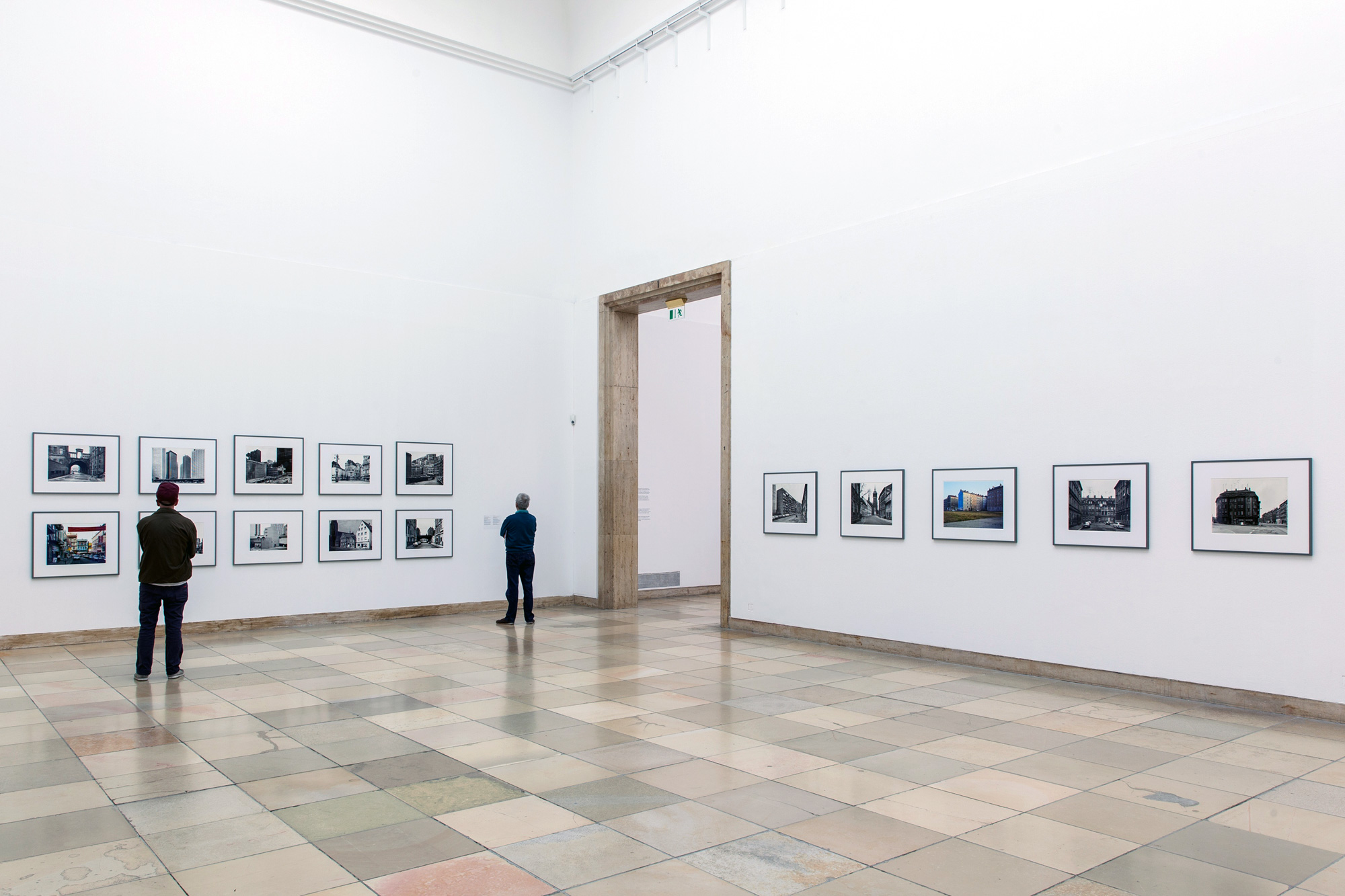











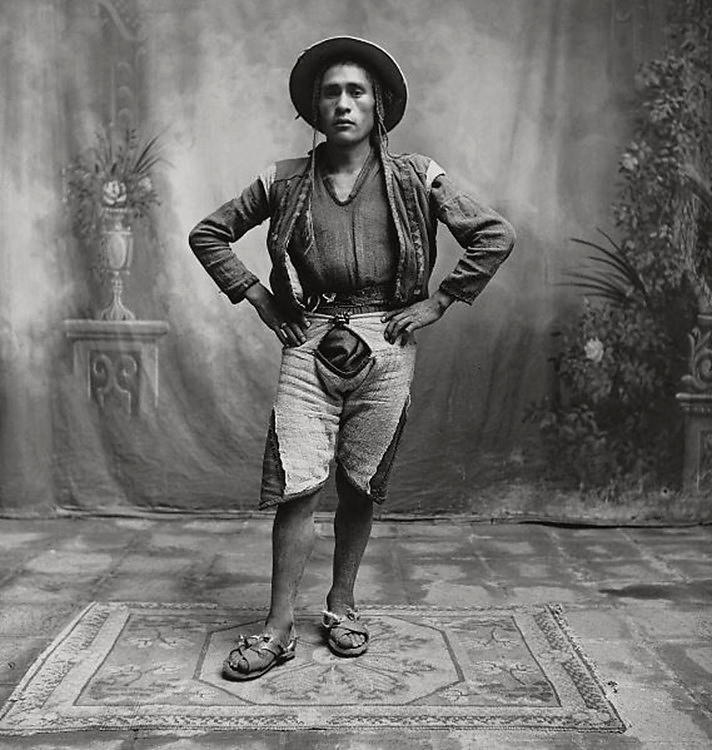
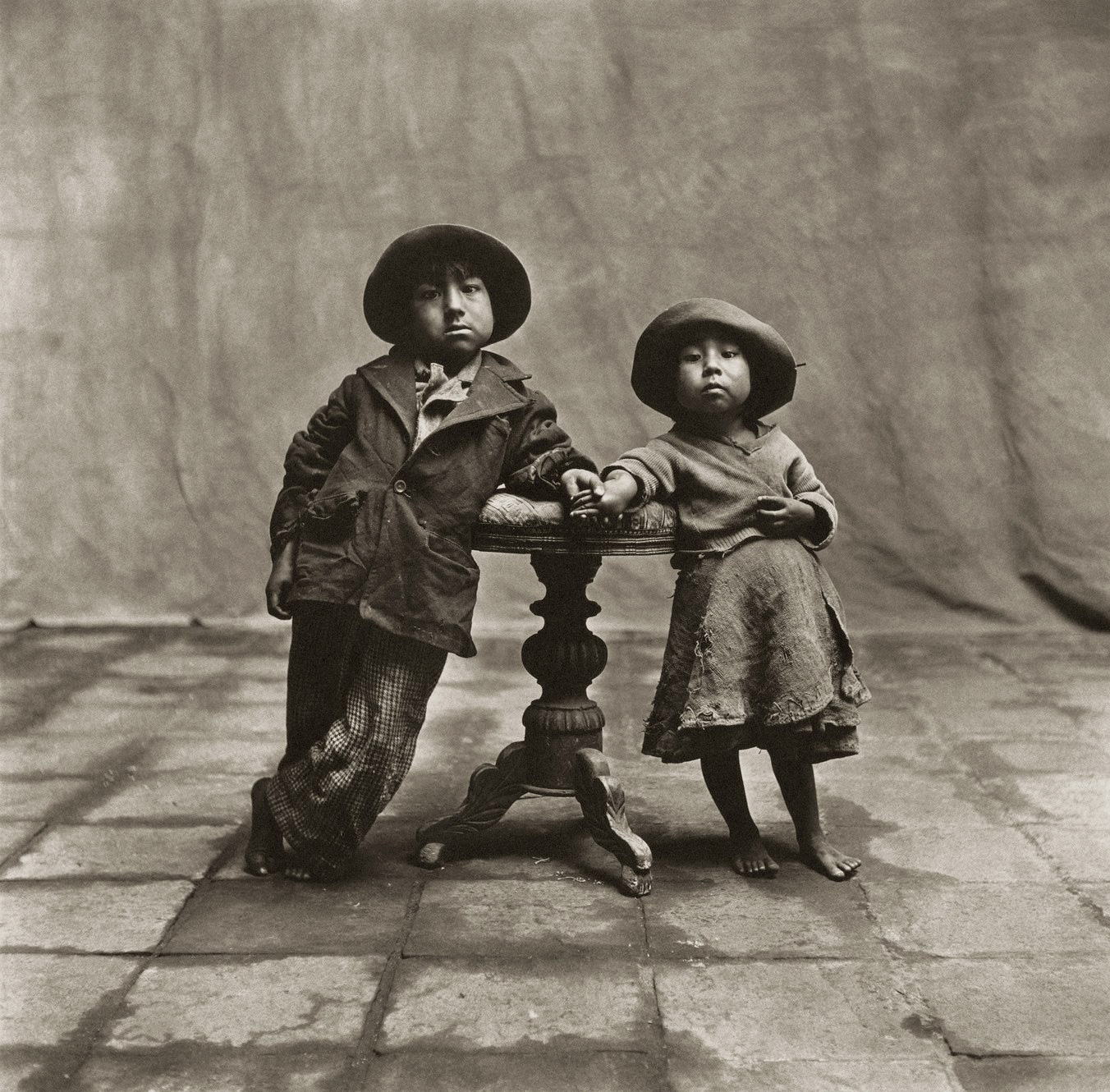


![Irving Penn (American, Plainfield, New Jersey 1917-2009 New York) 'Marchand de Concombres [Cucumber Seller]' 1950, printed 1976](https://artblart.com/wp-content/uploads/2017/07/penn-marchand-de-concombres-web1.jpg "Irving Penn (American, Plainfield, New Jersey 1917-2009 New York) 'Marchand de Concombres [Cucumber Seller]' 1950, printed 1976")










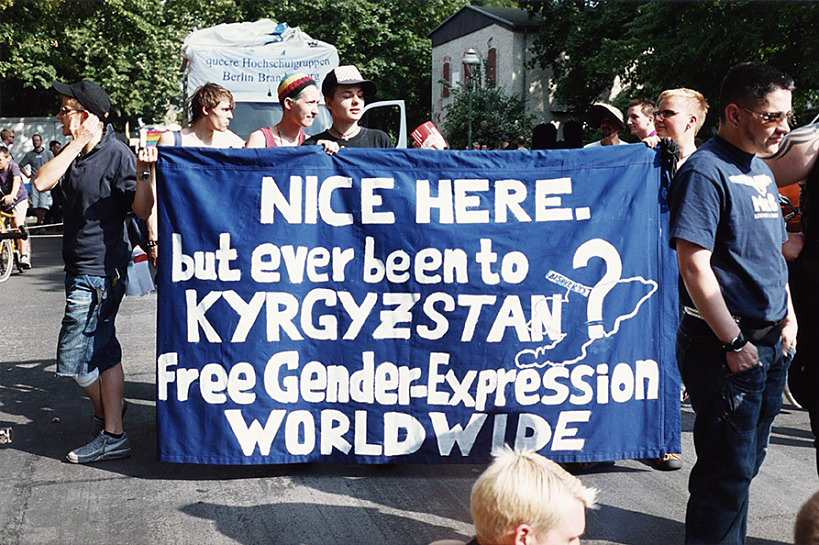








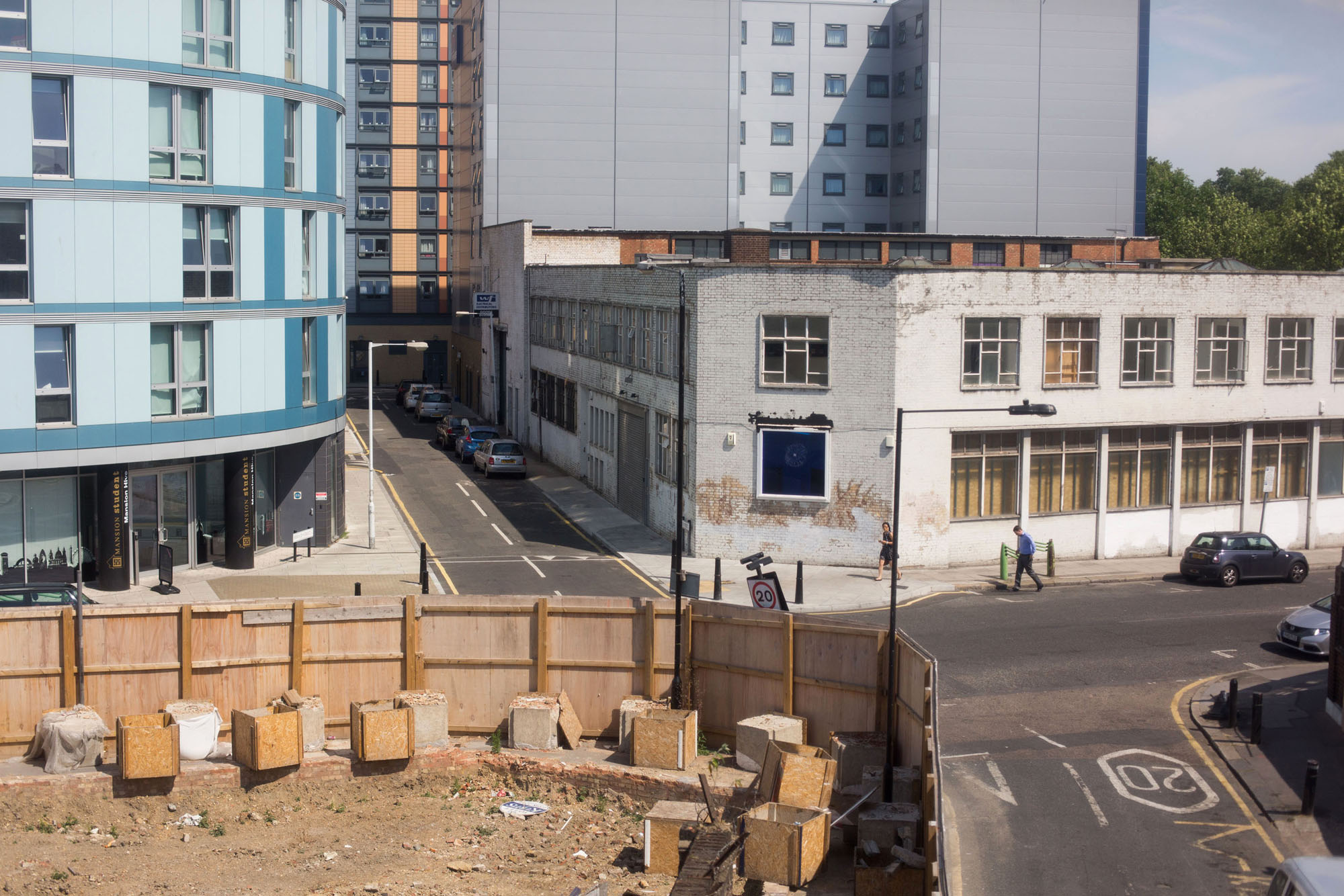
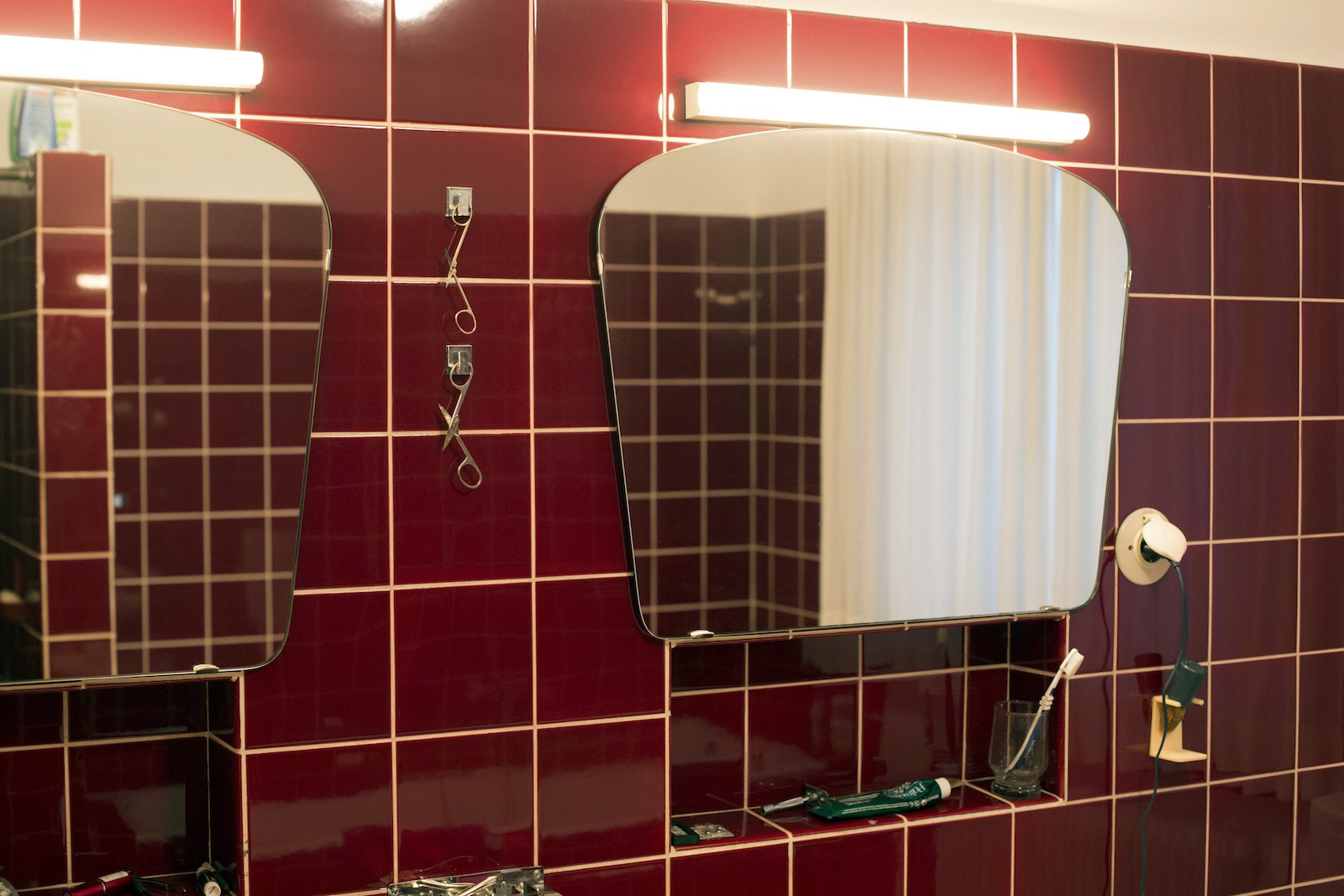
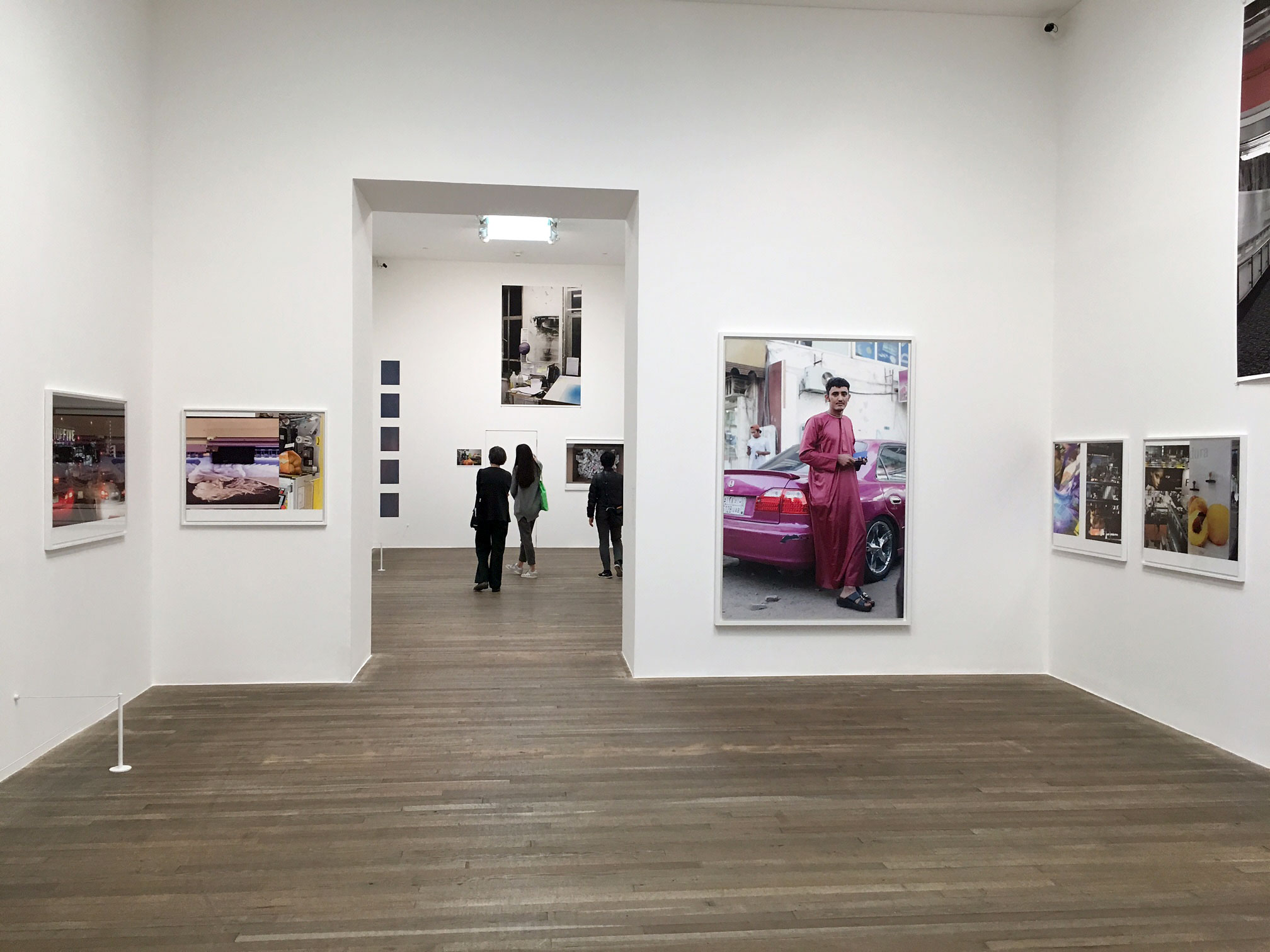
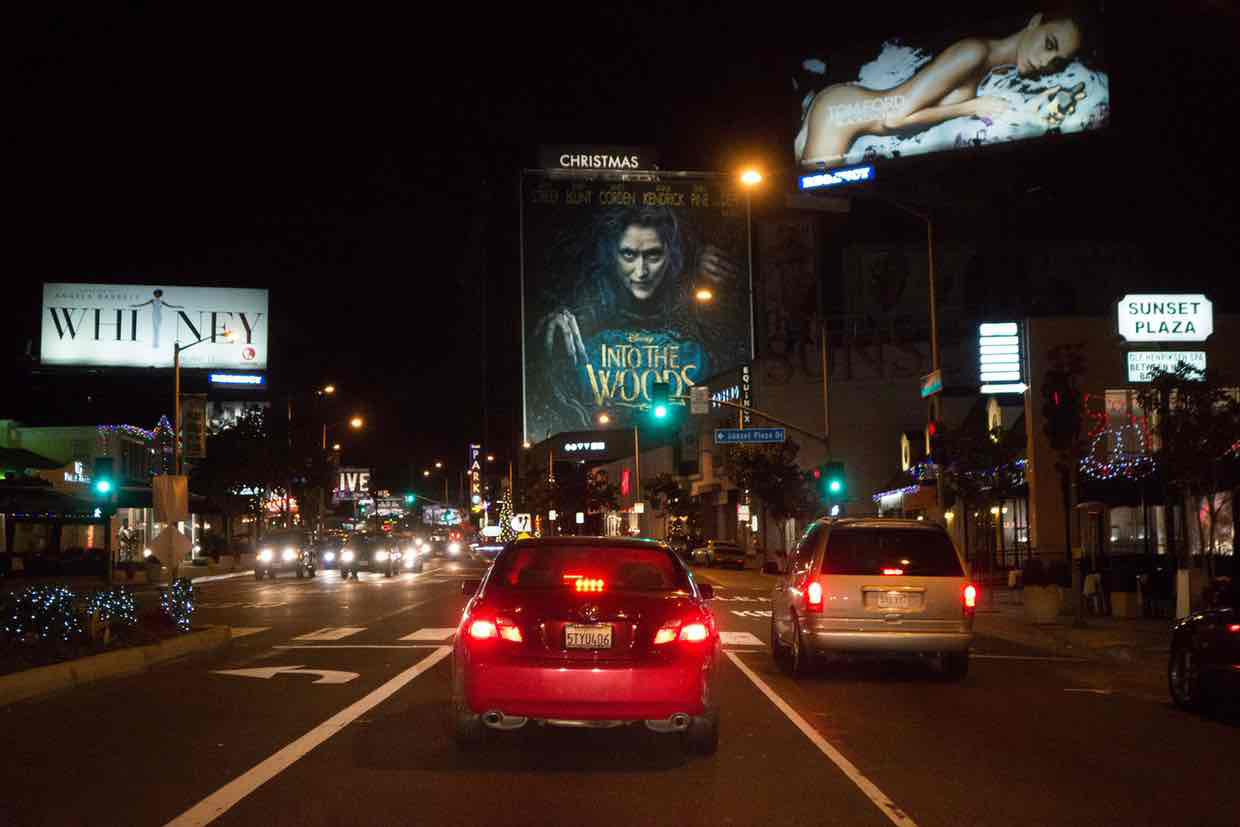























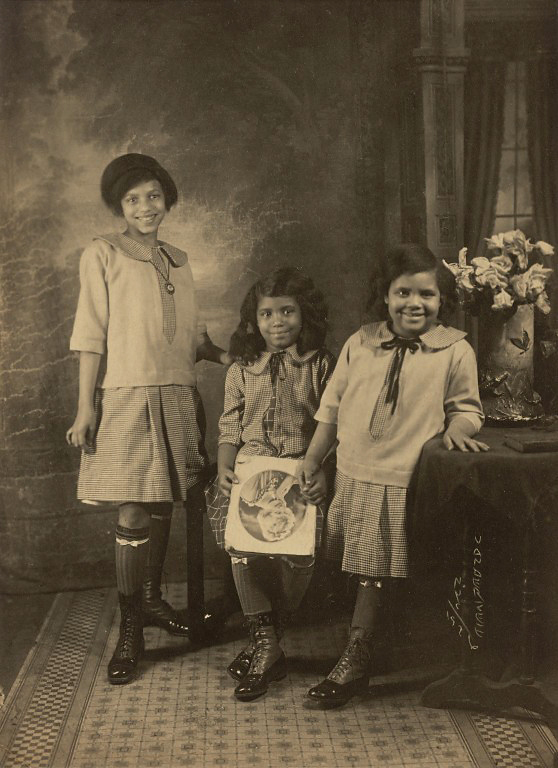





 Art Blart _ art and cultural memory archive
You must be logged in to post a comment.