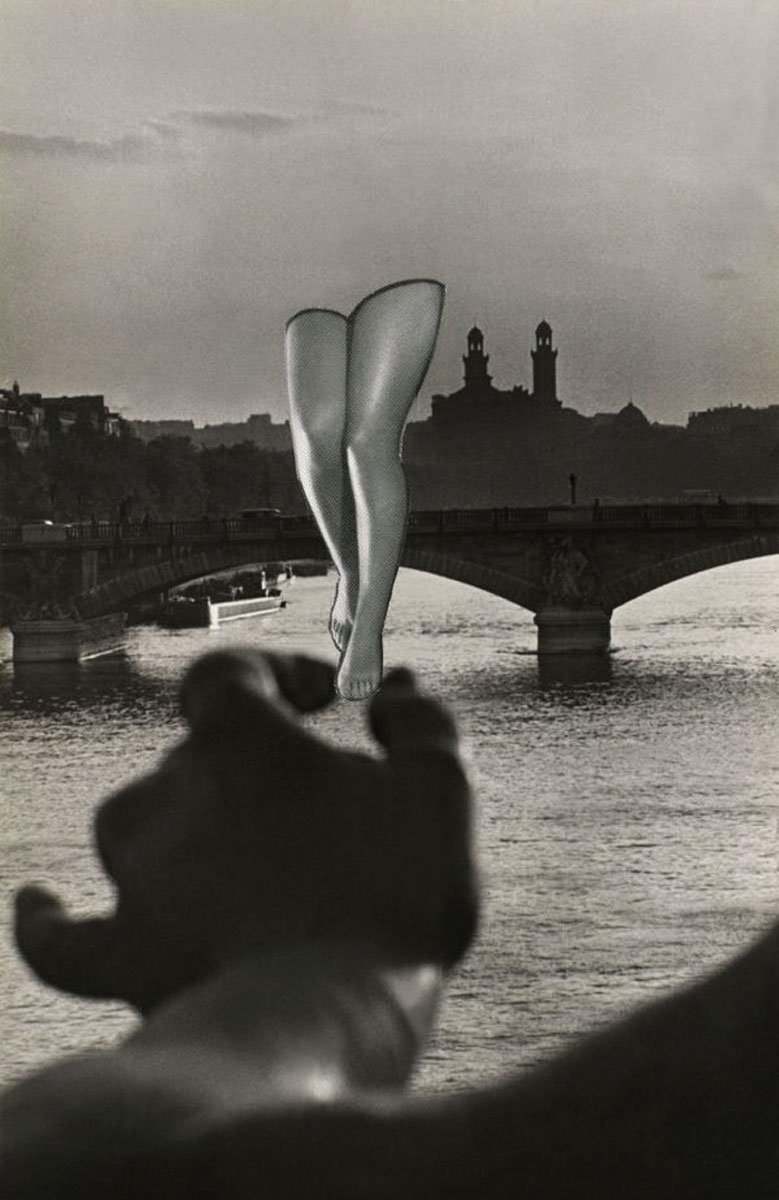
Exhibition: ‘Unseen: 35 Years of Collecting Photographs’ at the J. Paul Getty Museum, Los Angeles

Exhibition dates: 17th December, 2019 – 8th March, 2020

Curators: Jim Ganz, senior curator of photographs at the Getty Museum in collaboration with Getty curators Mazie Harris, Virginia Heckert, Karen Hellman, Arpad Kovacs, Amanda Maddox, and Paul Martineau.


Weegee (Arthur Fellig) (American born Austria, 1899-1968) '[Calypso]' about 1944; before 1946 from the exhibition Exhibition: 'Unseen: 35 Years of Collecting Photographs' at the J. Paul Getty Museum, Los Angeles, Dec 2019 - March 2020


Weegee (Arthur Fellig) (American born Austria, 1899-1968)
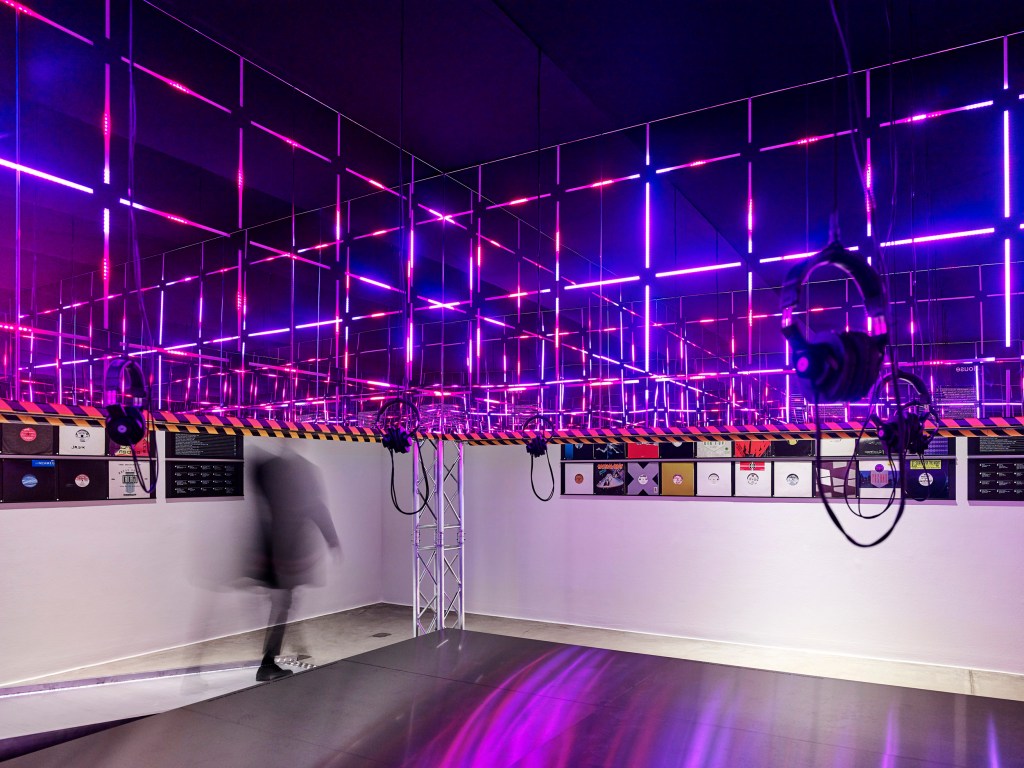
[Calypso]
about 1944; before 1946
Gelatin silver print
26.2 x 33.3cm (10 5/16 x 13 1/8 in.)
The J. Paul Getty Museum, Los Angeles
© International Center of Photography


Imagine having these photographs in your collection!

My particular favourite is Hiromu Kira’s The Thinker (about 1930). For me it sums up our singular 1 thoughtful 2 imaginative 3 ephemeral 4 ether/real 5 existence.

“Aether is the fifth element in the series of classical elements thought to make up our experience of the universe… Although the Aether goes by as many names as there are cultures that have referenced it, the general meaning always transcends and includes the same four “material” elements [earth, air, water, fire]. It is sometimes more generally translated simply as “Spirit” when referring to an incorporeal living force behind all things. In Japanese, it is considered to be the void through which all other elements come into existence.” (Adam Amorastreya. “The End of the Aether,” on the Resonance website Feb 16, 2015 [Online] Cited 23/02/2020)

Dr Marcus Bunyan


Many thankx to the J. Paul Getty Museum for allowing me to publish the photographs in the posting. Please click on the photographs for a larger version of the image.


Carleton Watkins (American, 1829-1916) '[Guadalupe Mill]' 1860 from the exhibition Exhibition: 'Unseen: 35 Years of Collecting Photographs' at the J. Paul Getty Museum, Los Angeles, Dec 2019 - March 2020


Carleton Watkins (American, 1829-1916)
[Guadalupe Mill]
1860
Salted paper print
Image (dome-topped): 33.8 × 41.6cm (13 5/16 × 16 3/8 in.)
The J. Paul Getty Museum, Los Angeles


Martin Munkácsi (American born Hungary, 1896-1963) 'The Goalie Gets There a Split Second Too Late' about 1923 from the exhibition Exhibition: 'Unseen: 35 Years of Collecting Photographs' at the J. Paul Getty Museum, Los Angeles, Dec 2019 - March 2020


Martin Munkácsi (American born Hungary, 1896-1963)
The Goalie Gets There a Split Second Too Late
about 1923
Gelatin silver print
29.8 × 36.7cm (11 3/4 × 14 7/16 in.)
The J. Paul Getty Museum, Los Angeles
© Estate of Martin Munkácsi, Courtesy Howard Greenberg Gallery, New York


Hiromu Kira (American, 1898-1991) 'The Thinker' about 1930


Hiromu Kira (American, 1898-1991)
The Thinker
about 1930
Gelatin silver print
27.9 × 35.1cm (11 × 13 13/16 in.)
The J. Paul Getty Museum, Los Angeles
© Sadamura Family Trust


Hiromu Kira (1898-1991) was one of the most successful and well-known Japanese American photographers in prewar Los Angeles. He was born in Waipahu, O’ahu, Hawai’i on April 5, 1898, but was sent to Kumamoto, Japan, for his early education. When he was eighteen years old, he returned to the United States and settled in Seattle, Washington, where he first became interested in photography. In 1923, he submitted prints to the Seattle Photography Salon which accepted two of the photographs. In 1923, his work was accepted in the Pittsburg Salon and the Annual Competition of American Photography. He found work at the camera department of a local Seattle pharmacy and began meeting other Issei, Nisei and Kibei photographers such as Kyo Koike and joined the Seattle Camera Club.

In 1926, Kira moved to Los Angeles with his wife and two young children. Although he was never a member of the Japanese Camera Pictorialists of California, a group that was active in Los Angeles at that time, he developed strong friendships with club members associated with the pictorialist movement of the 1920s and ’30s such as K. Asaishi and T. K. Shindo. In 1928, Kira was named an associate of the Royal Photography Society, and the following year he was made a full fellow and began exhibiting both nationally and internationally. In 1929 alone, Kira exhibited ninety-six works in twenty-five different shows. In the late twenties, he worked at T. Iwata’s art store. In 1931, his photograph The Thinker, made while showing a customer how to use his newly purchased camera properly, appeared on the March 1931 issue of Vanity Fair magazine.

On December 5, two days before the attack on Pearl Harbor, Kira was selected to be included in the 25th Annual International Salon of the Camera Pictorialists of Los Angeles. Within a few months, he was forced to store his camera, photography books and prints in the basement of the Nishi Hongwanji Buddhist Temple in Little Tokyo, Los Angeles for the duration of World War II. He and his family were incarcerated at Santa Anita Assembly Center and the Gila River, Arizona concentration camp from 1942-1944, leaving the latter in April 1944.

Following his release, he lived briefly in Chicago before returning to Los Angeles in 1946, where he remained for the rest of his life. In Los Angeles, he worked as a photo retoucher and printer for the Disney, RKO and Columbia Picture studios but never exhibited again as he had before the war.

Text from the Hiromu Kira page on the Densho Encyclopedia website [Online] Cited 23/02/2020


Marinus Jacob Kjeldgaard (Danish, 1884-1964, active Paris, France late 1930s - late 1940s) '[Collage: Balance of Powers]' about 1939


Marinus Jacob Kjeldgaard (Danish, 1884-1964, active Paris, France late 1930s – late 1940s)
[Collage: Balance of Powers]
about 1939
Gelatin silver print
28.5 × 32cm (11 1/4 × 12 5/8 in.)
The J. Paul Getty Museum, Los Angeles
© Estate of Marinus Jacob Kjeldgaard


Paul Outerbridge (American, 1896-1958) '[Egg in Spotlight]' 1943


Paul Outerbridge (American, 1896-1958)
[Egg in Spotlight]
1943
Gelatin silver print
26.4x 34.4cm (10 3/8 x 13 9/16 in.)
The J. Paul Getty Museum, Los Angeles
© 2019 G. Ray Hawkins Gallery, Beverly Hills, CA


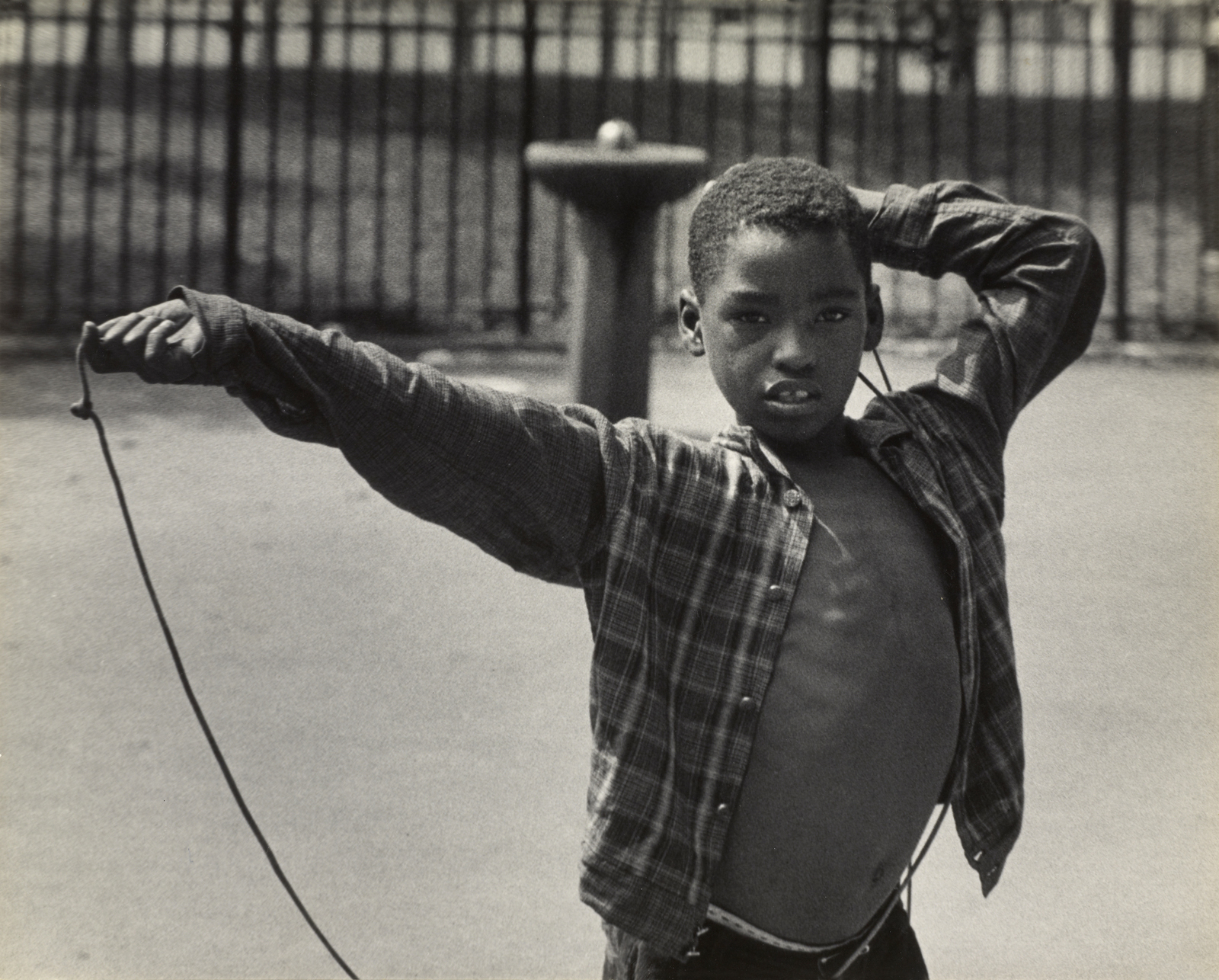
Emil Cadoo (American, 1926-2002) 'Children of Harlem' 1965


Emil Cadoo (American, 1926-2002)
Children of Harlem
1965
Gelatin silver print
20.3 × 25.2cm (8 × 9 15/16 in.)
The J. Paul Getty Museum, Los Angeles, Gift of Joyce Cadoo / Janos Gat Gallery
© Estate of Emil Cadoo, courtesy of Janos Gat Gallery


Anthony Hernandez (American, b. 1947) 'Los Angeles #1' 1969


Anthony Hernandez (American, b. 1947)
Los Angeles #1
1969
Gelatin silver print
18.9 × 28.4cm (7 7/16 × 11 3/16 in.)
The J. Paul Getty Museum, Los Angeles, Purchased in part with funds provided by the Photographs Council
© Anthony Hernandez


William Eggleston (American, b. 1939) 'Dolls on Cadillac, Memphis' 1972


William Eggleston (American, b. 1939)
Dolls on Cadillac, Memphis
1972
Chromogenic print
25.4 × 38.1cm (10 × 15 in.)
The J. Paul Getty Museum, Los Angeles
© Eggleston Artistic Trust


William Wegman (American, b, 1943) 'Dog and Ball' 1973


William Wegman (American, b, 1943)
Dog and Ball
1973
Gelatin silver print
The J. Paul Getty Museum, Los Angeles
© William Wegman


Marketa Luskacova (Czech, b. 1944) 'Sclater St, Woman with Baby and Girl' 1975


Markéta Luskačová (Czech, b. 1944)
Sclater St, Woman with Baby and Girl
1975
Gelatin silver print
21 x 31.8cm (8 1/4 x 12 1/2 in.)
The J. Paul Getty Museum, Los Angeles
© Markéta Luskačová


Markéta Luskačová (Czech, b. 1944)

Markéta Luskačová (born 1944) is a Czech photographer known for her series of photographs taken in Slovakia, Britain and elsewhere. Considered one of the best Czech social photographers to date, since the 1990s she has photographed children in the Czech Republic, Slovakia, and also Poland…

In the 1970s and 1980s, the communist censorship attempted to conceal her international reputation. Her works were banned in Czechoslovakia, and the catalogues for the exhibition Pilgrims in the Victoria and Albert Museum were lost on their way to Czechoslovakia.

Luskačová started photographing London’s markets in 1974. In the markets of Portobello Road, Brixton and Spitalfields, she “[found] a vivid Dickensian staging”.

In 2016 she self-published a collection of photographs of street musicians, mostly taken in the markets of east London, under the title To Remember – London Street Musicians 1975-1990, and with an introduction by John Berger.

Text from the Wikipedia website [Online] Cited 23/02/2020


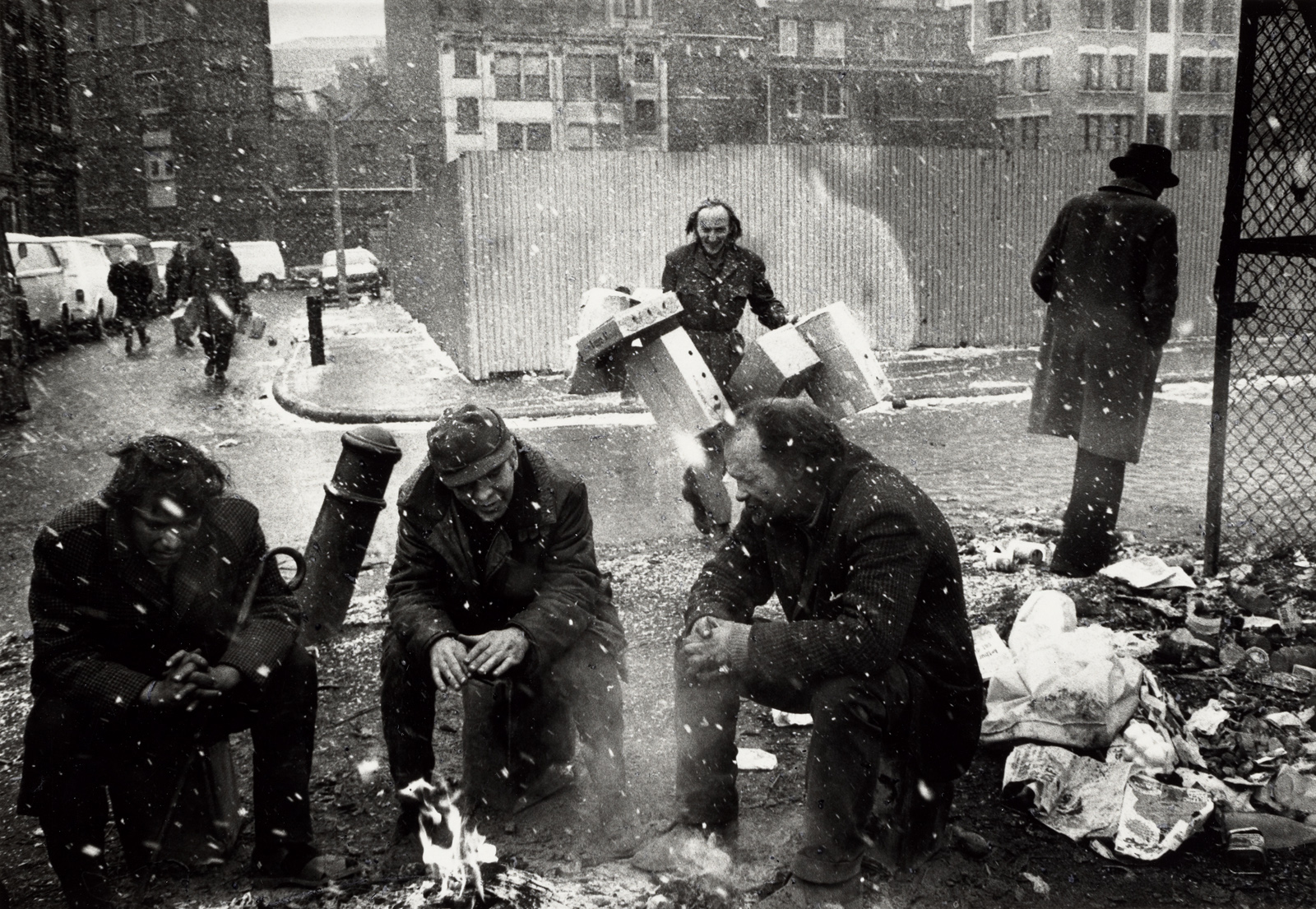
Marketa Luskacova (Czech, b. 1944) 'Men around Fire, Spitalfields Market' Negative 1976, print 1991


Markéta Luskačová (Czech, b. 1944)
Men around Fire, Spitalfields Market
Negative 1976, print 1991
Gelatin silver print
22.8 x 32.9cm (9 x 12 15/16 in.)
The J. Paul Getty Museum, Los Angeles
© Markéta Luskačová


Shigeichi Nagano (Japanese, 1925-2019, active Tokyo, Japan) '[Tokyo, Aobadai (Nishi Saigoyama Park), Meguro Ward]' 1988


Shigeichi Nagano (Japanese, 1925-2019)
[Tokyo, Aobadai (Nishi Saigoyama Park), Meguro Ward]
1988
Gelatin silver print
26 × 39.4cm (10 1/4 × 15 1/2 in.)
The J. Paul Getty Museum, Los Angeles, Purchased with funds provided by the Photographs Council
© Shigeichi Nagano


Shigeichi Nagano (Japanese, 1925-2019)

During the 1960s Nagano observed the period of intense economic growth in Japan, depicting the lives of Tokyo’s sarariman with some humour. The photographs of this period were only published in book form much later, as Dorīmu eiji and 1960 (1978 and 1990 respectively).

Nagano exhibited recent examples of his street photography in 1986, winning the Ina Nobuo Award. He published several books of his works since then, and won a number of awards. Nagano had a major retrospective at the Tokyo Metropolitan Museum of Photography in 2000.

Nagano died two months short of his 94th birthday, on January 30, 2019.

Text from the Wikipedia website


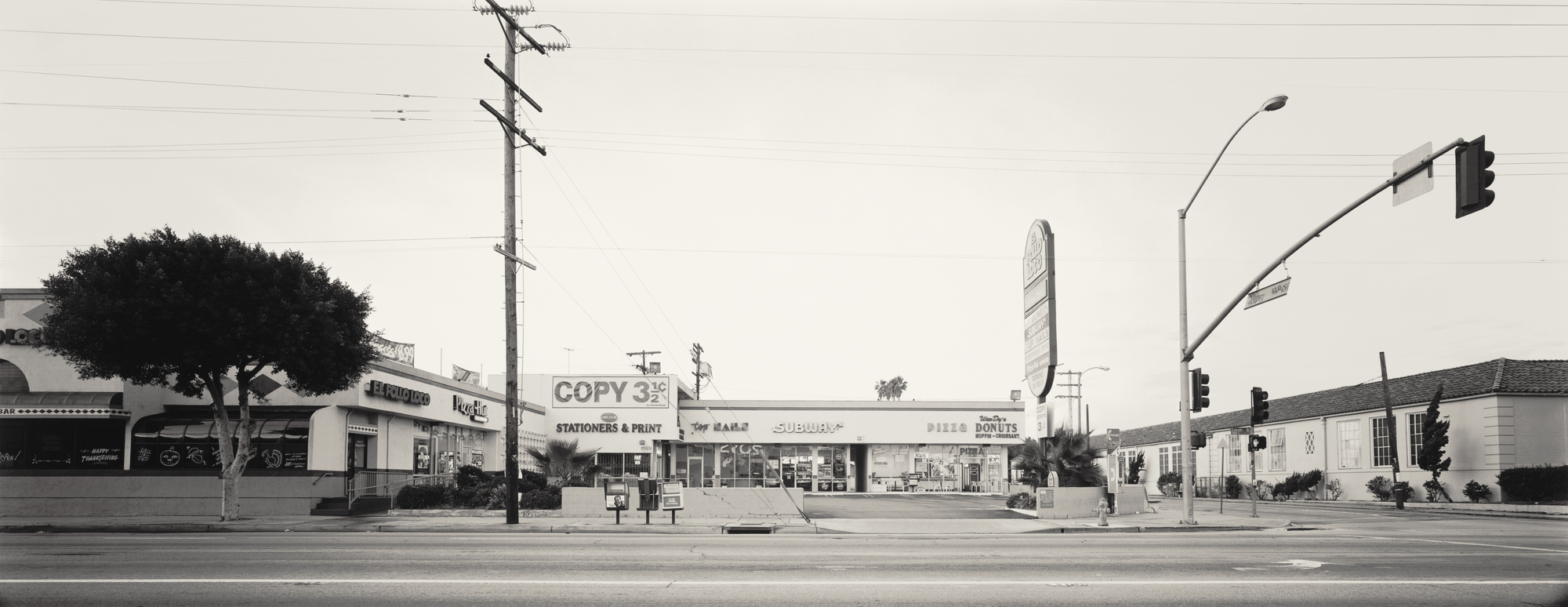
Catherine Opie (American, b. 1961) 'Untitled #15' 1997


Catherine Opie (American, b. 1961)
Untitled #15
1997
Inkjet print
40.6 × 104.1cm (16 × 41 in.)
The J. Paul Getty Museum, Los Angeles
© Catherine Opie


Nan Goldin (American, b. 1953) 'Self Portrait, Red, Zurich' 2002


Nan Goldin (American, b. 1953)
Self Portrait, Red, Zurich
2002
Silver-dye bleach print
Framed (outer dim): 72.4 x 104.1cm (28 1/2 x 41 in.)
The J. Paul Getty Museum, Los Angeles
© Nan Goldin, courtesy of Matthew Marks Gallery and the artist


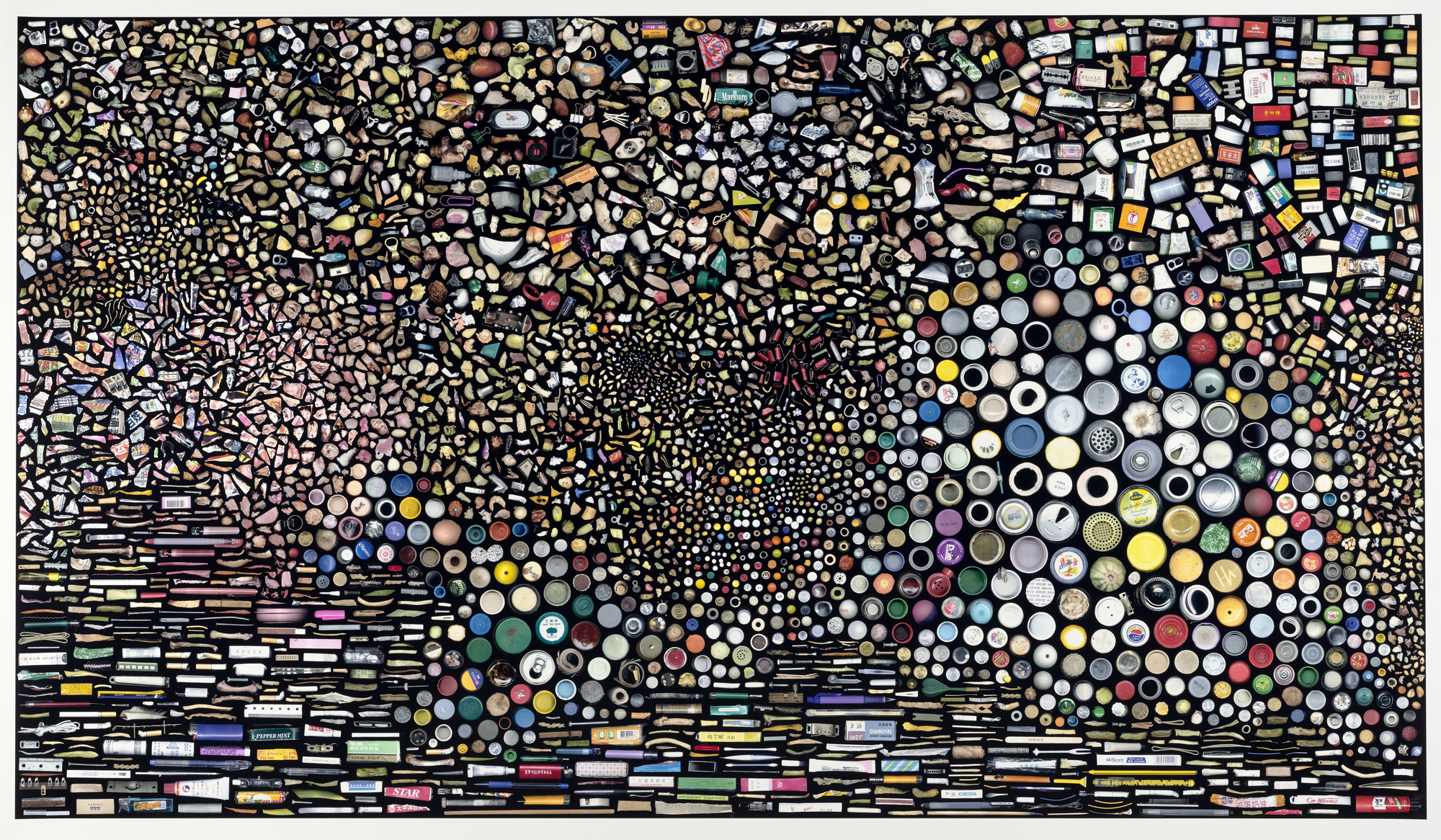
Hong Hao (Chinese, b. 1965) 'My Things No. 5 - 5,000 Pieces of Rubbish' 2002


Hong Hao (Chinese, b. 1965)
My Things No. 5 – 5,000 Pieces of Rubbish
2002
Chromogenic print
120 × 210.8cm (47 1/4 × 83 in.)
The J. Paul Getty Museum, Los Angeles, Anonymous Gift
© Hong Hao, Courtesy of Chambers Fine Art


Veronika Kellndorfer (German, b. 1962) 'Succulent Screen' 2007


Veronika Kellndorfer (German, b. 1962)
Succulent Screen
2007
Silkscreen print on glass
288 × 351.5cm (113 3/8 × 138 3/8 in.)
Gift of Christopher Grimes in honour of Virginia Heckert
The J. Paul Getty Museum, Los Angeles
© Veronika Kellndorfer


A three-panel silkscreen print on glass, Succulent Screen depicts a detail view of one of the signature miter-cut windows of Frank Lloyd Wright’s Freeman House. The house was built in the Hollywood Hills in 1923, was listed on the National Register of Historic Places in 1971 as a California Historical Landmark and as Los Angeles Historic-Cultural Monument #247 in 1981; it was bequeathed to the USC School of Architecture in 1986.

Text from the Getty Museum website


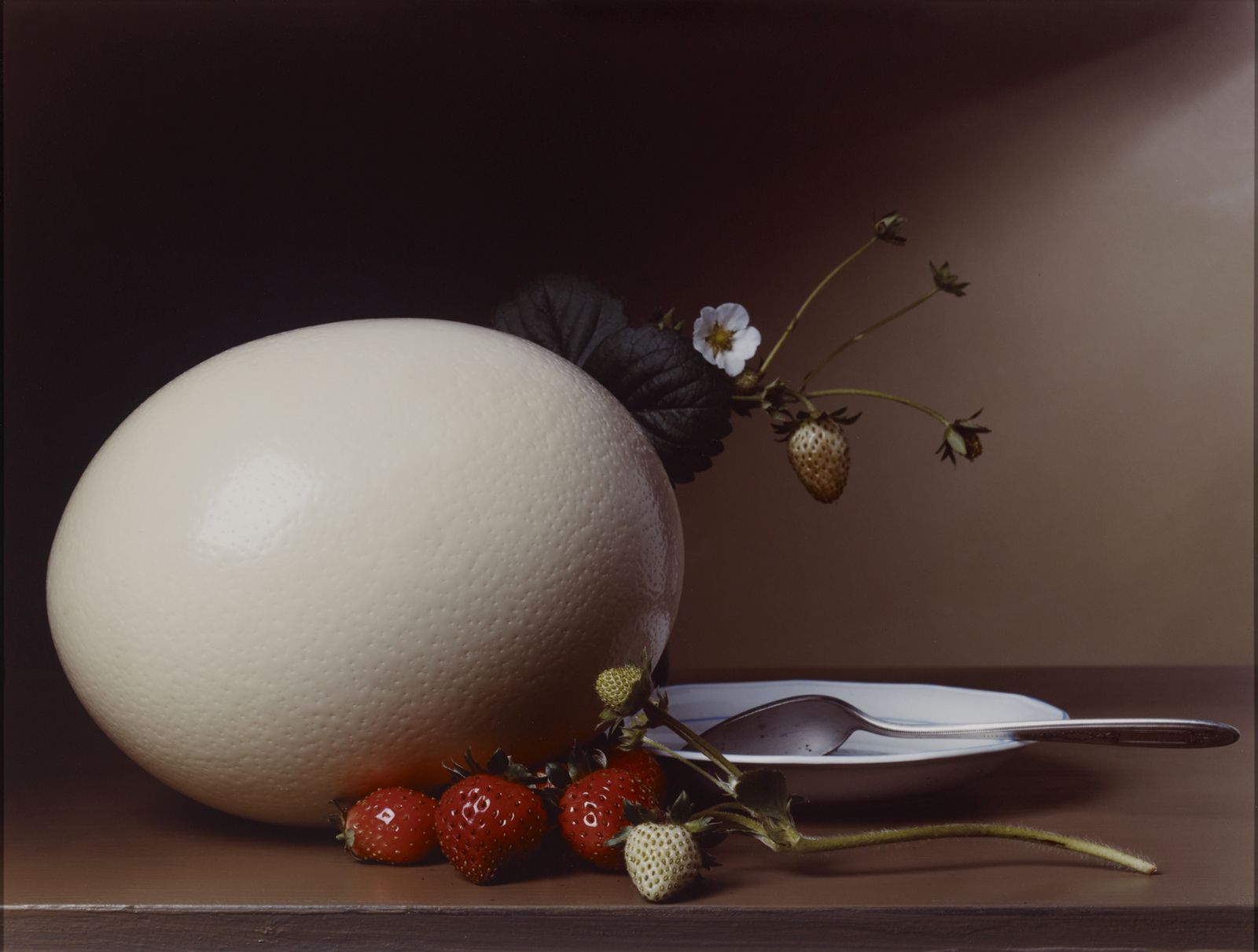
Sharon Core (American, b. 1965) 'Early American, Strawberries and Ostrich Egg' 2007


Sharon Core (American, b. 1965)
Early American, Strawberries and Ostrich Egg
2007
Chromogenic print
42.8 x 56.8cm (16 7/8 x 22 3/8 in.)
The J. Paul Getty Museum, Los Angeles
© Sharon Core


The Getty Museum holds one of the largest collections of photographs in the United States, with more than 148,000 prints. However, only a small percentage of these have ever been exhibited at the Museum. To celebrate the 35th anniversary of the founding of the Department of Photographs, the Getty Museum is exhibiting 200 of these never-before-seen photographs and pull back the curtain on the work of the many professionals who care for this important collection in Unseen: 35 Years of Collecting Photographs, on view December 17, 2019 – March 8, 2020.

“Rather than showcasing again the best-known highlights of the collection, the time is right to dig deeper into our extraordinary holdings and present a selection of never-before-seen treasures. I have no doubt that visitors will be intrigued and delighted by the diversity and quality of the collection, whose riches will support exhibition and research well into the decades ahead,” says Timothy Potts, director of the J. Paul Getty Museum.

The exhibition includes photographs by dozens of artists from the birth of the medium in the mid-19th century to the present day. The selection also encompasses a variety of photographic processes, including the delicate cyanotypes of Anna Atkins (British, 1799-1871), Polaroids by Carrie Mae Weems (American, born 1953) and Mary Ellen Mark (American, 1940-2015) and an architectural photographic silkscreen on glass by Veronika Kellndorfer (German, born 1962).

Visual associations among photographs from different places and times illuminate the breadth of the Getty’s holdings and underscore a sense of continuity and change within the history of the medium. The curators have also personalised some of the labels in the central galleries to give voice to their individual insights and perspectives.

Growth of the collection

In 1984, as the J. Paul Getty Trust was in the early stages of conceiving what would eventually become the Getty Center, the Getty Museum created its Department of Photographs. It did so with the acquisition of several world-famous private collections, including those of Sam Wagstaff, André Jammes, Arnold Crane, and Volker Kahmen and Georg Heusch. These dramatic acquisitions immediately established the Museum as a leading center for photography.

While the founding collections are particularly strong in 19th and early 20th century European and American work, the department now embraces contemporary photography and, increasingly, work produced around the world. The collection continues to evolve, has been shaped by several generations of curators and benefits from the generosity of patrons and collectors.

Behind the scenes

In addition to the photographs on view, the exhibition spotlights members of Getty staff who care for, handle, and monitor these works of art.

“What the general public may not realise is that before a single photograph is hung on a wall, the object and its related data is managed by teams of professional conservators, registrars, curators, mount-makers, and many others,” says Jim Ganz, senior curator of photographs at the Getty Museum. “In addition to exposing works of art in the collection that are not well known, we wanted to shed light on the largely hidden activity that goes into caring for such a collection.”

Collecting Contemporary Photography

The department’s collecting of contemporary photography has been given strong encouragement by the Getty Museum Photographs Council, and a section of the exhibition will be dedicated to objects purchased with the Council’s funding. Established in 2005, this group supports the department’s curatorial program, especially with the acquisition of works made after 1945 by artists not yet represented or underrepresented in the collection. Since its founding, the Council has contributed over $3 million toward the purchase of nearly five hundred photographs by artists from Argentina, Australia, Canada, Japan, Korea, Malaysia, South Africa, and Taiwan, as well as Europe and the United States.

Looking ahead

The exhibition also looks towards the future of the collection, and includes a gallery of very newly-acquired works by Laura Aguilar (American, 1959-2018), Osamu Shiihara (Japanese, 1905-1974), as well as highlights of the Dennis Reed collection of photographs by Japanese American photographers. The selection represents the department’s strengthening of diversity in front of and behind the camera, the collection of works relevant to Southern California communities, and the acquisition of photographs that expand the understanding of the history of the medium.

“With this exhibition we celebrate the past 35 years of collecting, and look forward to the collection’s continued expansion, encompassing important work by artists all over the world and across three centuries,” adds Potts.

Unseen: 35 Years of Collecting Photographs is on view December 17, 2019 – March 8, 2020 at the Getty Center. The exhibition is organised by Jim Ganz, senior curator of photographs at the Getty Museum in collaboration with Getty curators Mazie Harris, Virginia Heckert, Karen Hellman, Arpad Kovacs, Amanda Maddox, and Paul Martineau.

Press release from the J. Paul Getty Museum [Online] Cited 09/20/2020


Hiroshi Sugimoto (Japanese, b. 1948) 'Botanical Specimen (Erica mutabolis), March 1839' 2009


Hiroshi Sugimoto (Japanese, born 1948)
Botanical Specimen (Erica mutabolis), March 1839
2009
Toned gelatin silver print
93.7 x 74.9cm (36 7/8 x 29 1/2 in.)
© Hiroshi Sugimoto


Julia Margaret Cameron (British born India, 1815-1879) '[Spring]' 1873


Julia Margaret Cameron (British born India, 1815-1879)
[Spring]
1873
Albumen silver print
35.4 × 25.7cm (13 15/16 × 10 1/8 in.)
The J. Paul Getty Museum, Los Angeles


Reverend William Ellis (British, 1794-1872) and Samuel Smith. '[Portrait of a Black Couple]' about 1873


Reverend William Ellis (British, 1794-1872) and Samuel Smith
[Portrait of a Black Couple]
about 1873
Albumen silver print
24.1 × 18.6cm (9 1/2 × 7 5/16 in.)
The J. Paul Getty Museum, Los Angeles


Prince Roland Napoleon Bonaparte (French, 1858-1924) 'Jacobus Huch, 26 ans' about 1888


Prince Roland Napoleon Bonaparte (French, 1858-1924)
Jacobus Huch, 26 ans
about 1888
Albumen silver print
15.9 × 10.9cm (6 1/4 × 4 5/16 in.)
The J. Paul Getty Museum, Los Angeles


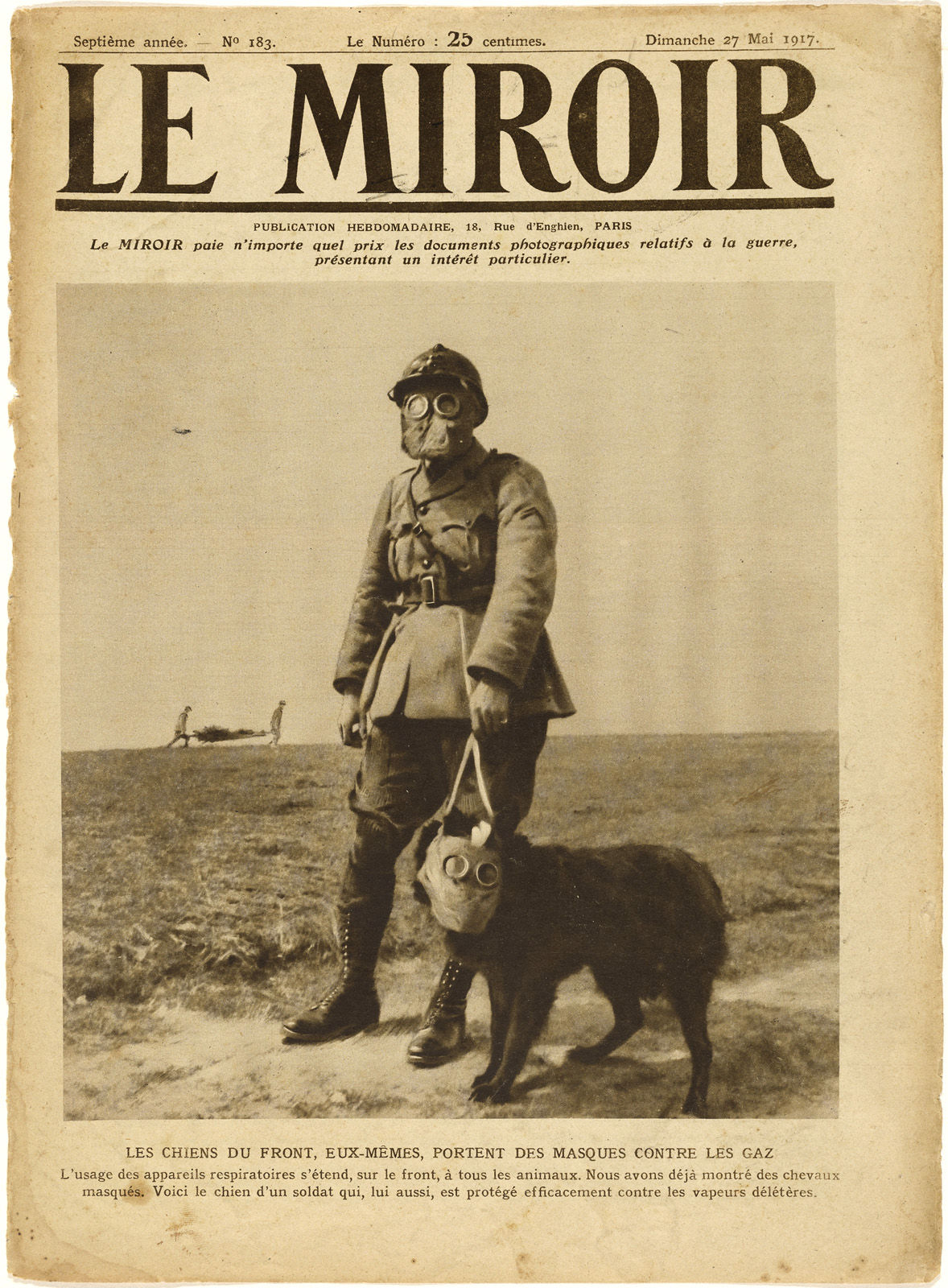
Underwood & Underwood (American, founded 1881, dissolved 1940s) 'Les Chiens du Front, eux-mems, portent des masques contre les gaz' May 27, 1917


Underwood & Underwood (American, founded 1881, dissolved 1940s)
Les Chiens du Front, eux-mems, portent des masques contre les gaz
May 27, 1917
Rotogravure
22 × 20.4cm (8 11/16 × 8 1/16 in.)
The J. Paul Getty Museum, Los Angeles


László Moholy-Nagy (American born Hungary, 1895-1946) '[The Law of the Series]' 1925


László Moholy-Nagy (American born Hungary, 1895-1946)
[The Law of the Series]
1925
Gelatin silver print
21.6 × 16.2cm (8 1/2 × 6 3/8 in.)
The J. Paul Getty Museum, Los Angeles
© 2019 Estate of László Moholy-Nagy / Artists Rights Society (ARS), New York


Martin Munkácsi (American born Hungary, 1896-1963) 'Big Dummies' 1927-1933


Martin Munkácsi (American born Hungary, 1896-1963)
Big Dummies
1927-1933
Gelatin silver print
33.5 × 26.7cm (13 3/16 × 10 1/2 in.)
The J. Paul Getty Museum, Los Angeles
© Estate of Martin Munkácsi, Courtesy Howard Greenberg Gallery, New York


Munkácsi was a newspaper writer and photographer in Hungary, specialising in sports. At the time, sports action photography could only be done in bright light outdoors. Munkácsi’s innovation was to make sport photographs as meticulously composed action photographs, which required both artistic and technical skill.

Munkácsi’s break was to happen upon a fatal brawl, which he photographed. Those photos affected the outcome of the trial of the accused killer, and gave Munkácsi considerable notoriety. That notoriety helped him get a job in Berlin in 1928, for Berliner Illustrirte Zeitung, where his first published photo was a motorcycle splashing its way through a puddle. He also worked for the fashion magazine Die Dame.

More than just sports and fashion, he photographed Berliners, rich and poor, in all their activities. He traveled to Turkey, Sicily, Egypt, London, New York, and Liberia, for photo spreads in Berliner Illustrirte Zeitung.

The speed of the modern age and the excitement of new photographic viewpoints enthralled him, especially flying. There are aerial photographs; there are air-to-air photographs of a flying school for women; there are photographs from a Zeppelin, including the ones on his trip to Brazil, where he crossed over a boat whose passengers wave to the airship above.

On 21 March 1933, he photographed the fateful Day of Potsdam, when the aged President Paul von Hindenburg handed Germany over to Adolf Hitler. On assignment for Berliner Illustrirte Zeitung, he photographed Hitler’s inner circle, although he was a Jewish foreigner.

Munkácsi left for New York City… Munkácsi died in poverty and controversy. Several universities and museums declined to accept his archives, and they were scattered around the world.

Text from the Wikipedia website [Online] Cited 23/02/2020


Erwin Blumenfeld (American born Germany, 1897-1969) 'Hitlerfresse (Hitler's Mug)' January 30, 1933


Erwin Blumenfeld (American born Germany, 1897-1969)
Hitlerfresse (Hitler’s Mug)
January 30, 1933
Gelatin silver print collage with ink
29.2 × 21.3cm (11 1/2 × 8 3/8 in.)
The J. Paul Getty Museum, Los Angeles
© The Estate of Erwin Blumenfeld


Erwin Blumenfeld (American born Germany, 1897-1969)

Blumenfeld was born in Berlin on 26 January 1897. As a young man he worked in the clothes trade and wrote poetry. In 1918 he went to Amsterdam, where he came into contact with Paul Citroen and Georg Grosz. In 1933 he made a photomontage showing Hitler as a skull with a swastika on its forehead; this image was later used in Allied propaganda material in 1943.

He married Lena Citroen, with whom he had three children, in 1921. In 1922 he started a leather goods shop, which failed in 1935. He moved to Paris, where in 1936 he set up as a photographer and did free-lance work for French Vogue. After the outbreak of the Second World War he was placed in an internment camp; in 1941 he was able to emigrate to the United States. There he soon became a successful and well-paid fashion photographer, and worked as a free-lancer for Harper’s Bazaar, Life and American Vogue. Blumenfeld died in Rome on 4 July 1969.

Text from the Wikipedia website [Online] Cited 23/02/3030


Paul Wolff (German, 1887-1951) and Dr Wolff & Tritschler OHG (German, founded 1927, dissolved 1963) '[Dog at the beach]' 1936


Paul Wolff (German, 1887-1951) and Dr Wolff & Tritschler OHG (German, founded 1927, dissolved 1963)
[Dog at the beach]
1936
Gelatin silver print
23.4 x 17.8cm (9 3/16 x 7 in.)
The J. Paul Getty Museum, Los Angeles
© Dr Paul Wolff & Tritschler, Historisches Bildarchiv, D-77654 Offenburg, Germany


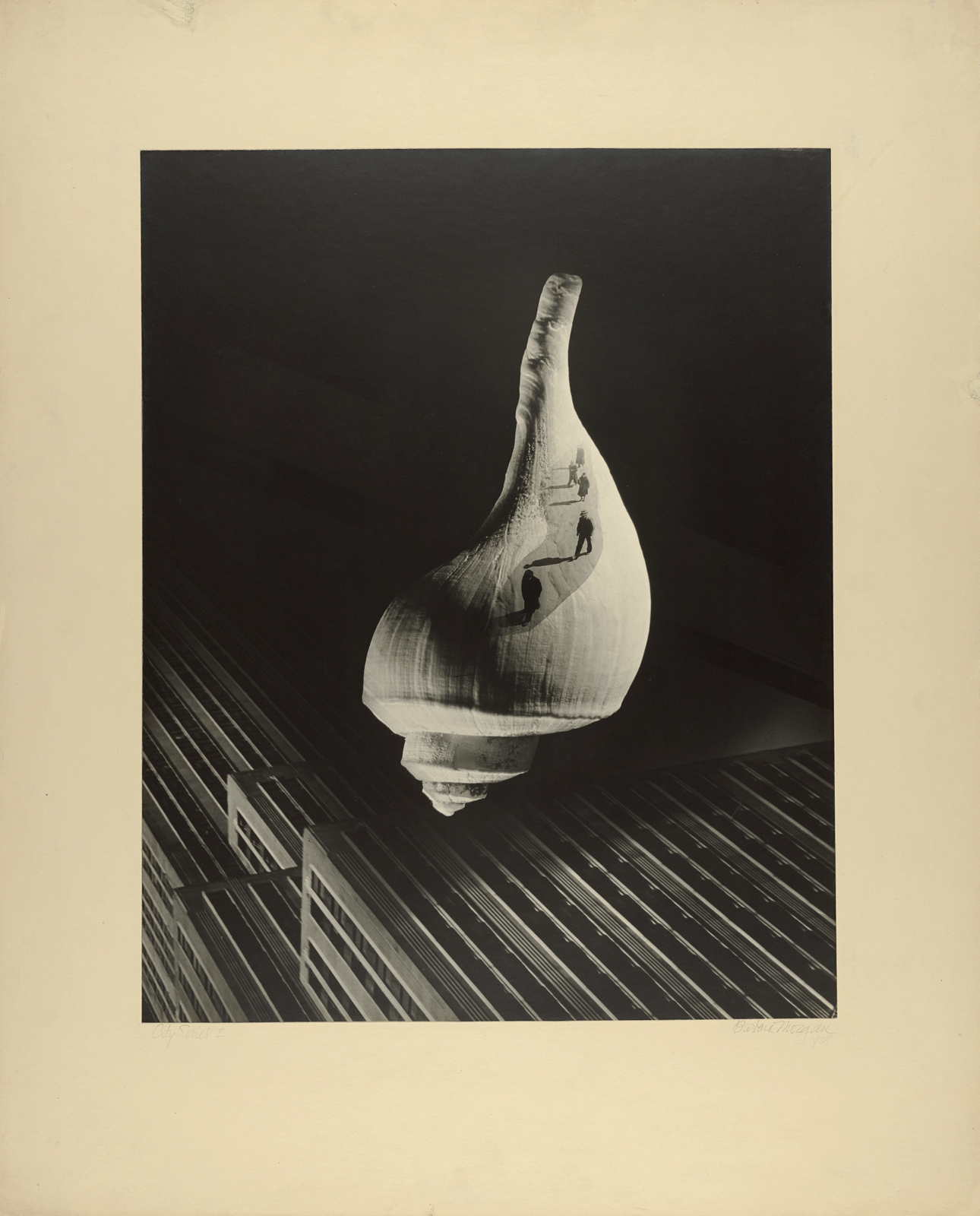
Barbara Morgan (American, 1900 - 1992) 'City Shell' 1938


Barbara Morgan (American, 1900-1992)
City Shell
1938
Gelatin silver print
49.2 × 39.4cm (19 3/8 × 15 1/2 in.)
Reproduced courtesy of the Barbara and Willard Morgan Photographs and Papers, Library Special Collections, Charles E. Young Research Library, UCLA
The J. Paul Getty Museum, Los Angeles


Walker Evans (American, 1903 - 1975) '[Two Giraffes, Circus Winter Quarters, Sarasota]' 1941


Walker Evans (American, 1903-1975)
[Two Giraffes, Circus Winter Quarters, Sarasota]
1941
Gelatin silver print
15.1 × 18.3cm (5 15/16 × 7 3/16 in.)
The J. Paul Getty Museum, Los Angeles
© Walker Evans Archive, The Metropolitan Museum of Art


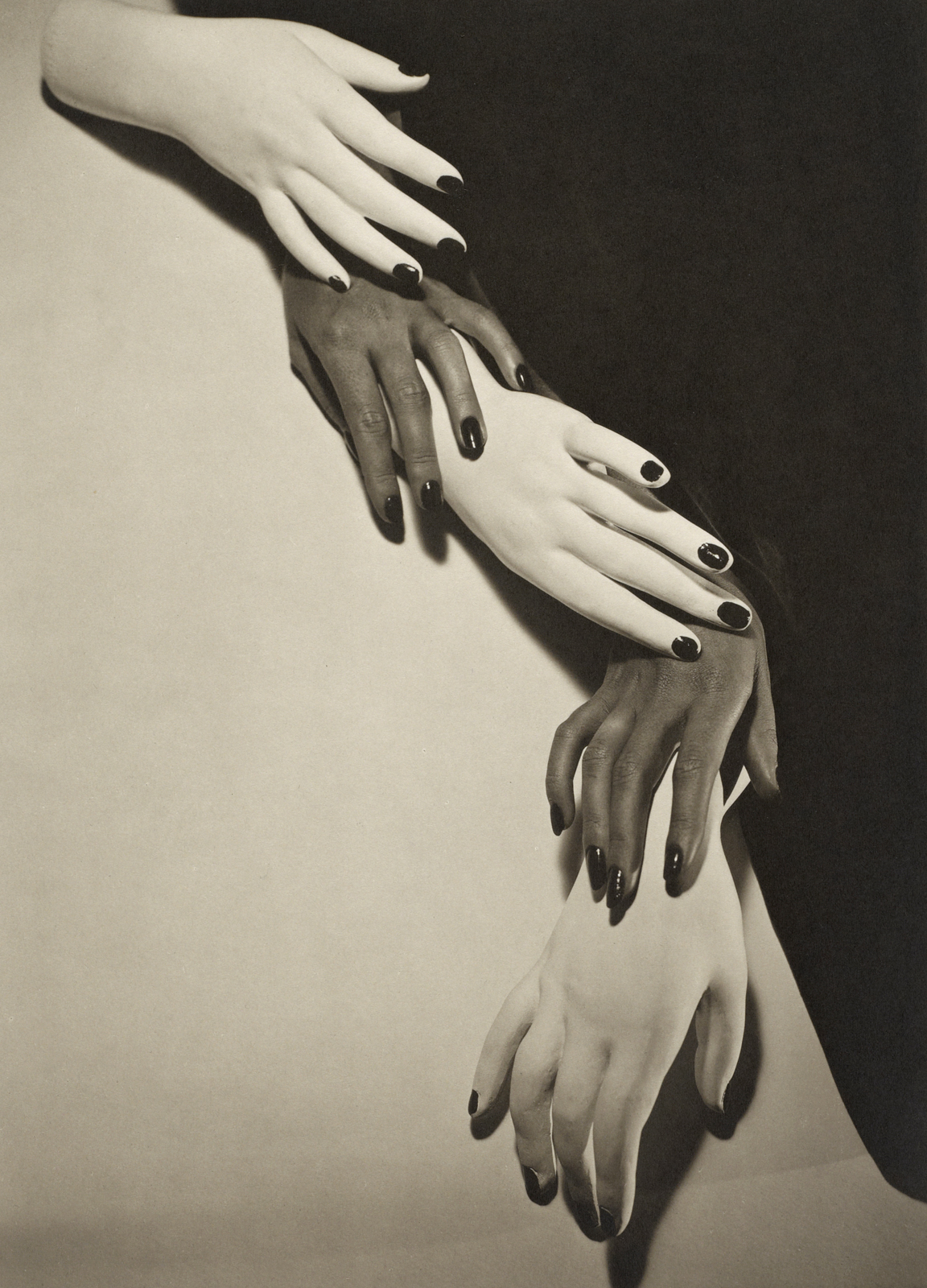
Horst P. Horst (American born Germany, 1906-1999) 'Hands, Hands' 1941


Horst P. Horst (American born Germany, 1906-1999)
Hands, Hands
1941
Platinum and palladium print
23.7 × 17cm (9 5/16 × 6 11/16 in.)
The J. Paul Getty Museum, Los Angeles, Gift of Manfred Heiting
© The Estate of Horst P. Horst and Condé Nast


Erwin Blumenfeld (American born Germany, 1897-1969) 'Maroua Motherwell, New York' 1941-1943


Erwin Blumenfeld (American born Germany, 1897-1969)
Maroua Motherwell, New York
1941-1943
Gelatin silver print
48.5 x 38.7cm (19 1/8 x 15 1/4 in.)
The J. Paul Getty Museum, Los Angeles
© The Estate of Erwin Blumenfeld


Henry Holmes Smith (American, 1909-1986) 'Photography Student' 1947


Henry Holmes Smith (American, 1909-1986)
Photography Student
1947
Gelatin silver print
11.4 × 9.6cm (4 1/2 × 3 3/4 in.)
The J. Paul Getty Museum, Los Angeles, Gift of the Smith Family Trust
© J. Paul Getty Trust


Henry Holmes Smith (American, 1909-1986)

Henry Holmes Smith (1909-1986) was an American photographer and one of the most influential fine art photography teachers of the mid 20th century. He was inspired by the work that had been done at the German Bauhaus and in 1937 was invited to teach photography at the New Bauhaus being founded by Moholy-Nagy in Chicago. After World War II, he spent many years teaching at Indiana University. His students included Jerry Uelsmann, Jack Welpott, Robert W. Fichter, Betty Hahn and Jaromir Stephany.

Smith was often involved in the cutting edge of photographic techniques: in 1931 he started experimenting with high-speed flash photography of action subjects, and started doing colour work in 1936 when few people considered it a serious artistic medium. His later images were nearly all abstract, often made directly (without a camera, i.e. like photograms), for instance images created by refracting light through splashes of water and corn syrup on a glass plate. However, although acclaimed as a photographic teacher, Holmes’ own photographs and other images did not achieve any real recognition from his peers.

Text from the Wikipedia website [Online] Cited 23/02/2020


Andreas Feininger (American born France, 1906-1999) 'Elegant Disk Clam, dosinia elegans, Conrad' 1948


Andreas Feininger (American born France, 1906-1999)
Elegant Disk Clam, dosinia elegans, Conrad
1948
Gelatin silver print
30.4 x 23.8cm (11 15/16 x 9 3/8 in.)
The J. Paul Getty Museum, Los Angeles
© Estate of Gertrud E. Feininger


Alexander Rodchenko (Russian, 1891-1956) 'Roll (of Film)' 1950


Alexander Rodchenko (Russian, 1891-1956)
Roll (of Film)
1950
Gelatin silver print
30.5 × 24cm (12 × 9 7/16 in.)
The J. Paul Getty Museum, Los Angeles
© 2019 Estate of Alexander Rodchenko / UPRAVIS, Moscow / Artists Rights Society, NY


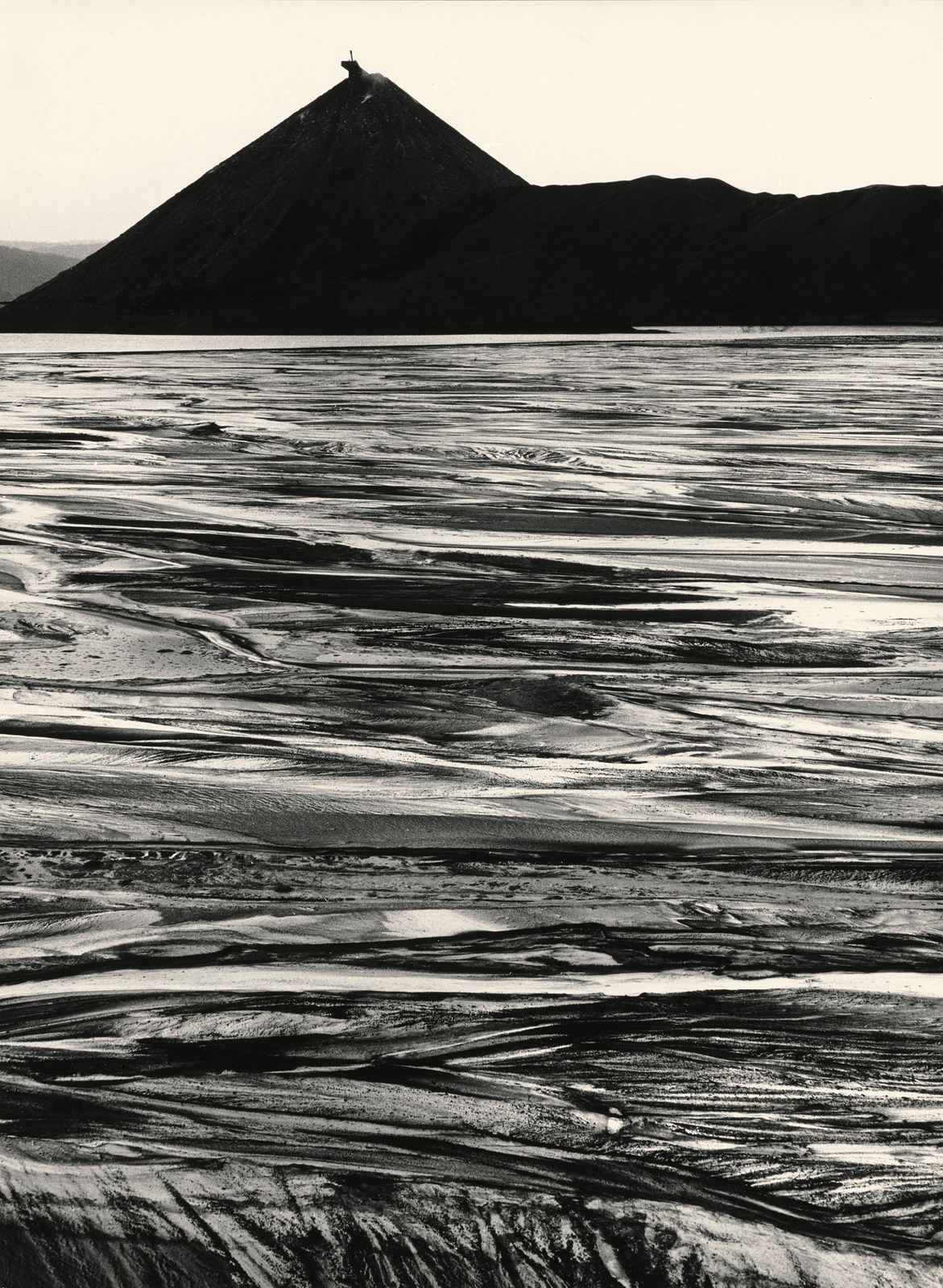
Otto Steinert (German, 1915-1978) 'Schlammweiher 2' Negative 1953, print about 1960s


Otto Steinert (German, 1915-1978)
Schlammweiher 2
Negative 1953, print about 1960s
Gelatin silver print
39.6 x 29.1cm (15 9/16 x 11 7/16 in.)
The J. Paul Getty Museum, Los Angeles
Courtesy Galerie Johannes Faber


André Kertész (American born Hungary, 1894-1985) 'Still Life with Snake' Negative 1960; print later


André Kertész (American born Hungary, 1894-1985)
Still Life with Snake
Negative 1960; print later
Gelatin silver print
Image: 24.8 × 19.7cm (9 3/4 × 7 3/4 in.)
The J. Paul Getty Museum, Los Angeles
© Estate of André Kertész


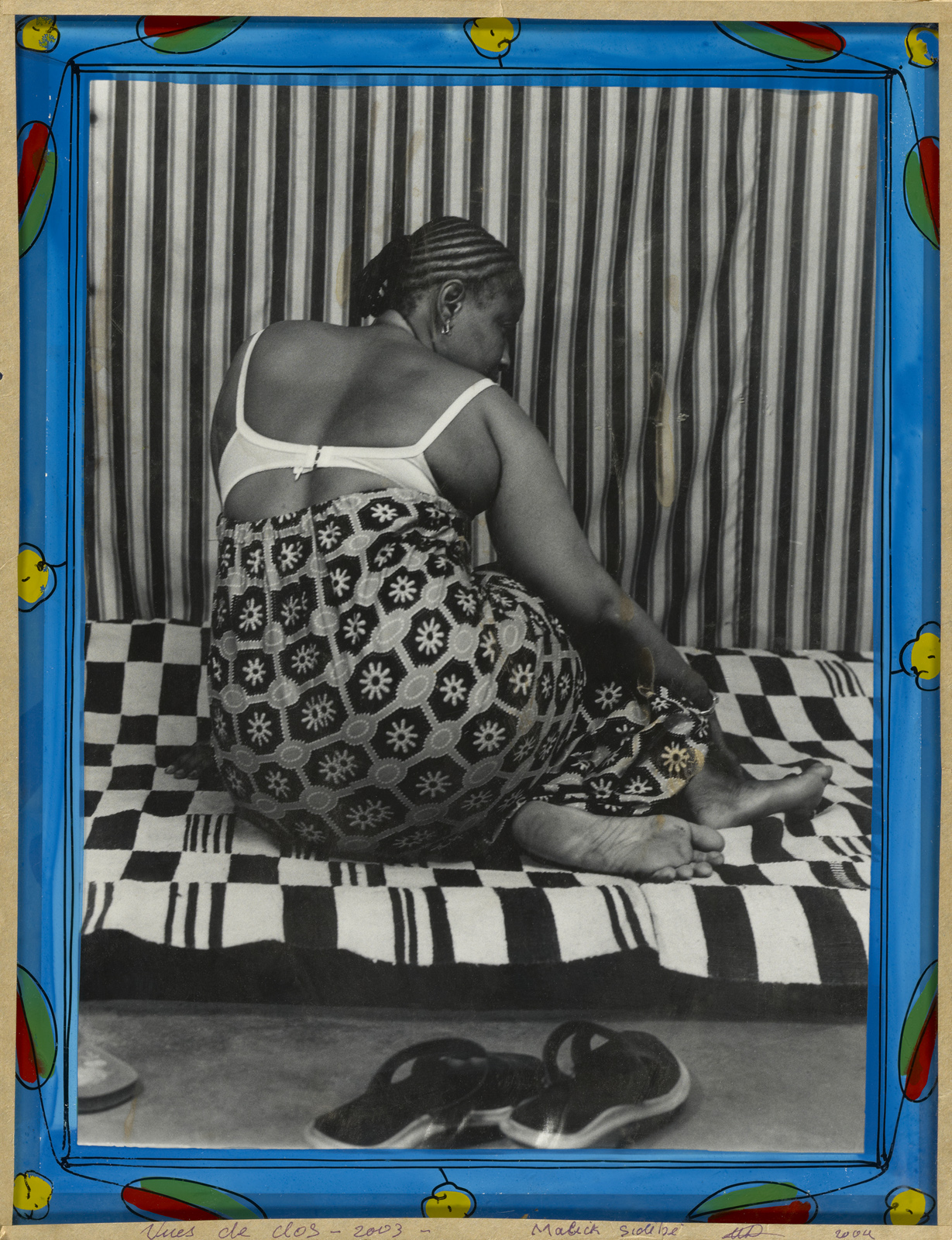
Malick Sidibé (Malian, 1936-2016) 'Vues de dos' Nd, print 2003


Malick Sidibé (Malian, 1936-2016)
Vues de dos
Nd, print 2003
Gelatin silver print, glass, paint, cardboard, tape, and string
36.5 x 27cm (14 3/8 x 10 5/8 in.)
The J. Paul Getty Museum, Los Angeles
© Estate of Malick Sidibé


Irving Penn (American, 1917-2009) 'Red Apples' July 15, 1985


Irving Penn (American, 1917-2009)
Red Apples
July 15, 1985
Silver-dye bleach print
25.4 × 20.3cm (10 × 8 in.)
The J. Paul Getty Museum, Los Angeles, Gift of Nancy and Bruce Berman
© 1985 Irving Penn


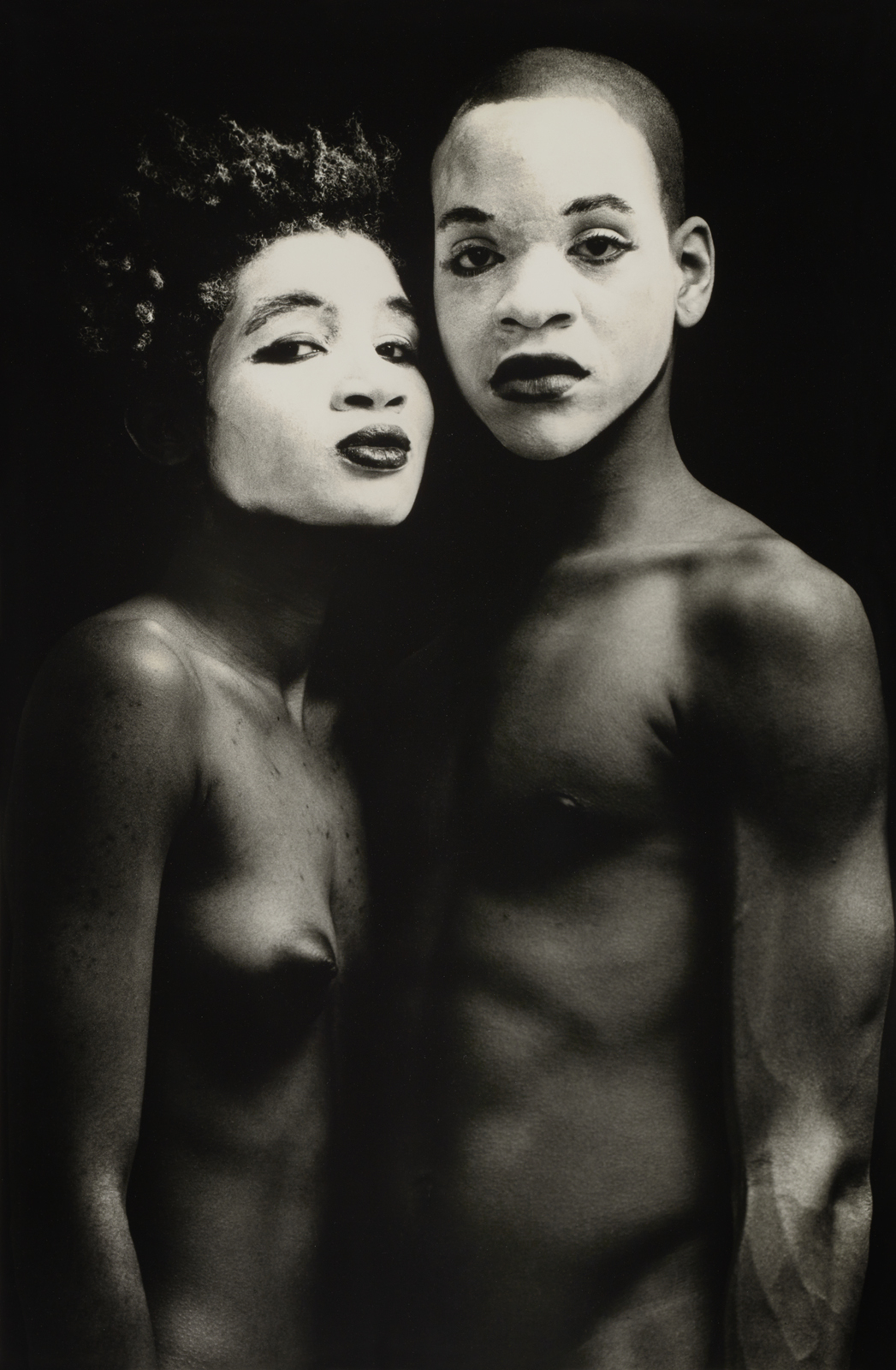
Lyle Ashton Harris (American, b. 1965) 'Man and Woman #1' 1987-1988


Lyle Ashton Harris (American, b. 1965)
Man and Woman #1
1987-1988
Gelatin silver print
74.3 x 48.9cm (29 1/4 x 19 1/4 in.)
The J. Paul Getty Museum, Los Angeles
© Lyle Ashton Harris


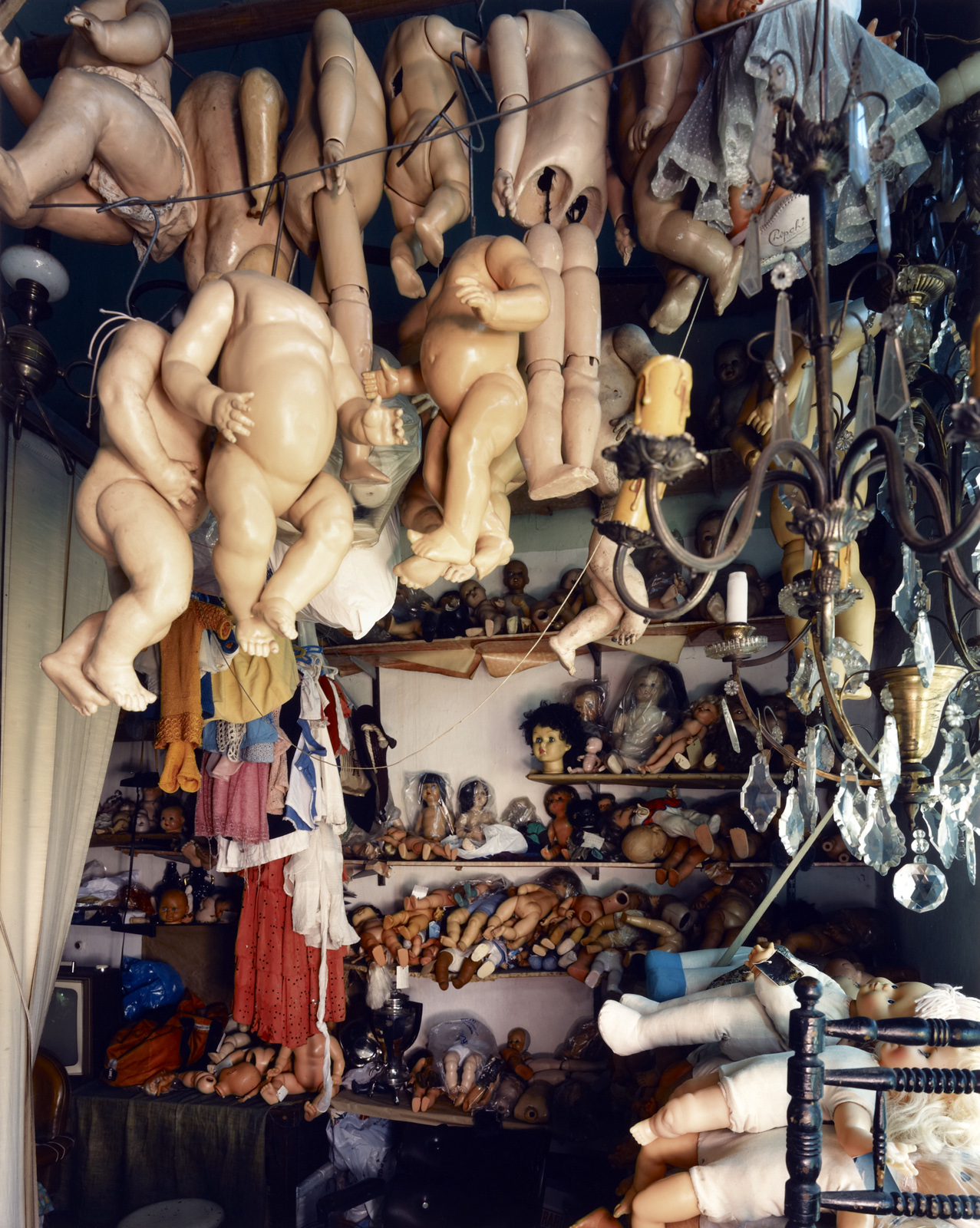
Jim Dow (American, b. 1942) 'Doll Repair Shop Window, Buenos Aires, Argentina' 1990


Jim Dow (American, b. 1942)
Doll Repair Shop Window, Buenos Aires, Argentina
1990
Chromogenic print
51.2 × 40.6cm (20 3/16 × 16 in.)
The J. Paul Getty Museum, Los Angeles, Gift of Nancy and Bruce Berman
© Jim Dow


Carrie Mae Weems (American, b. 1953) 'See No Evil' 1991


Carrie Mae Weems (American, b. 1953)
See No Evil
1991
Dye diffusion print (Polaroid Polacolor)
61 × 50.5cm (24 × 19 7/8 in.)
The J. Paul Getty Museum, Los Angeles, Gift of Daniel Greenberg and Susan Steinhauser
© Carrie Mae Weems


Myoung Ho Lee (South Korean, b. 1975) '[Tree #2]' 2006


Myoung Ho Lee (South Korean, b. 1975)
[Tree #2]
2006
Inkjet print
39.8 × 32.1cm (15 11/16 × 12 5/8 in.)
The J. Paul Getty Museum, Los Angeles, Purchased with funds provided by the Photographs Council
© Myoung Ho Lee, Courtesy Yossi Milo Gallery, New York


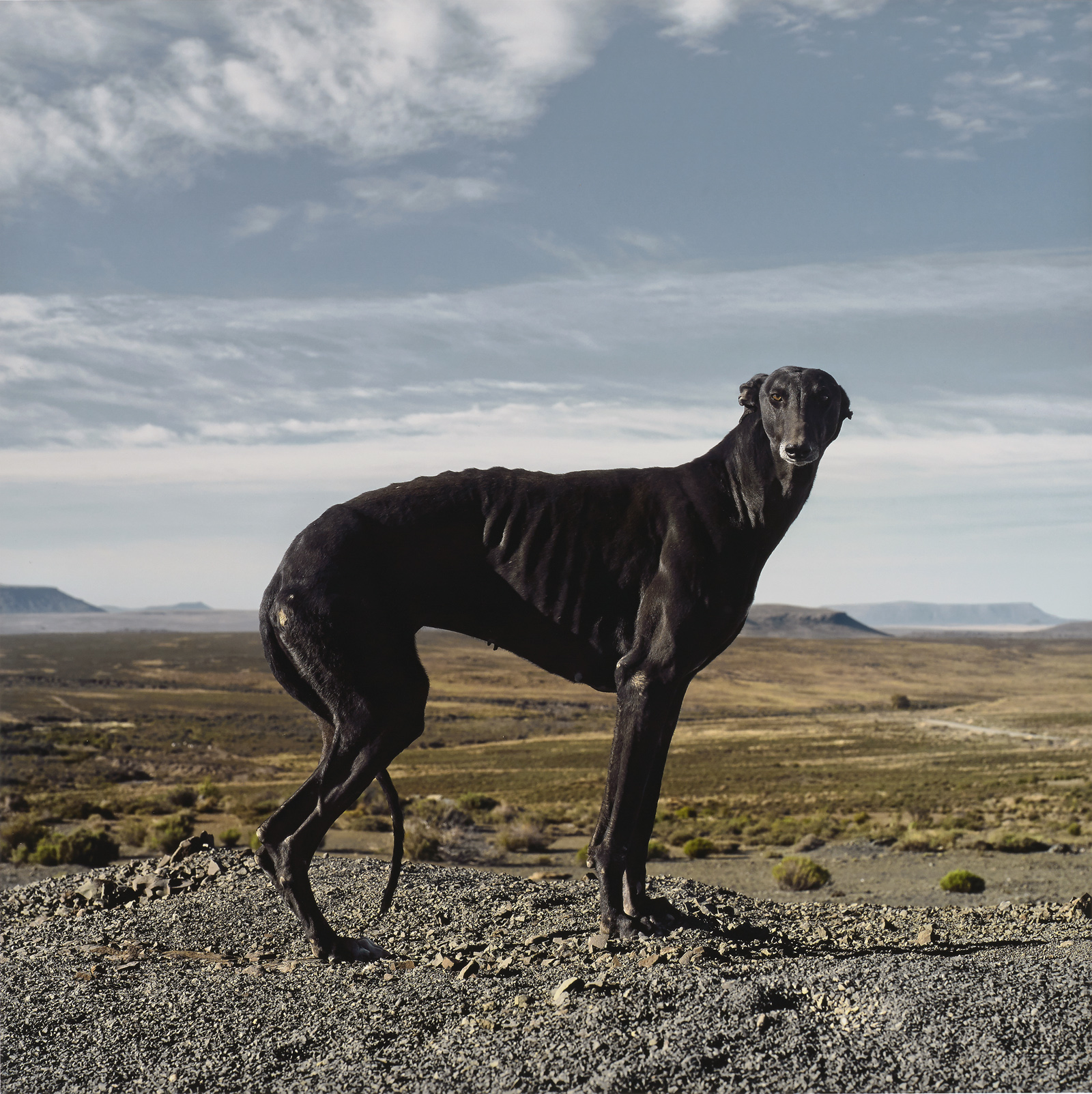
Daniel Naudé (South African, b. 1984) 'Africanis 18. Murraysburg, Western Cape, 10 May 2010' 2010


Daniel Naudé (South African, b. 1984)
Africanis 18. Murraysburg, Western Cape, 10 May 2010
2010
60 x 60cm (23 5/8 x 23 5/8 in.)
The J. Paul Getty Museum, Los Angeles
© Daniel Naudé


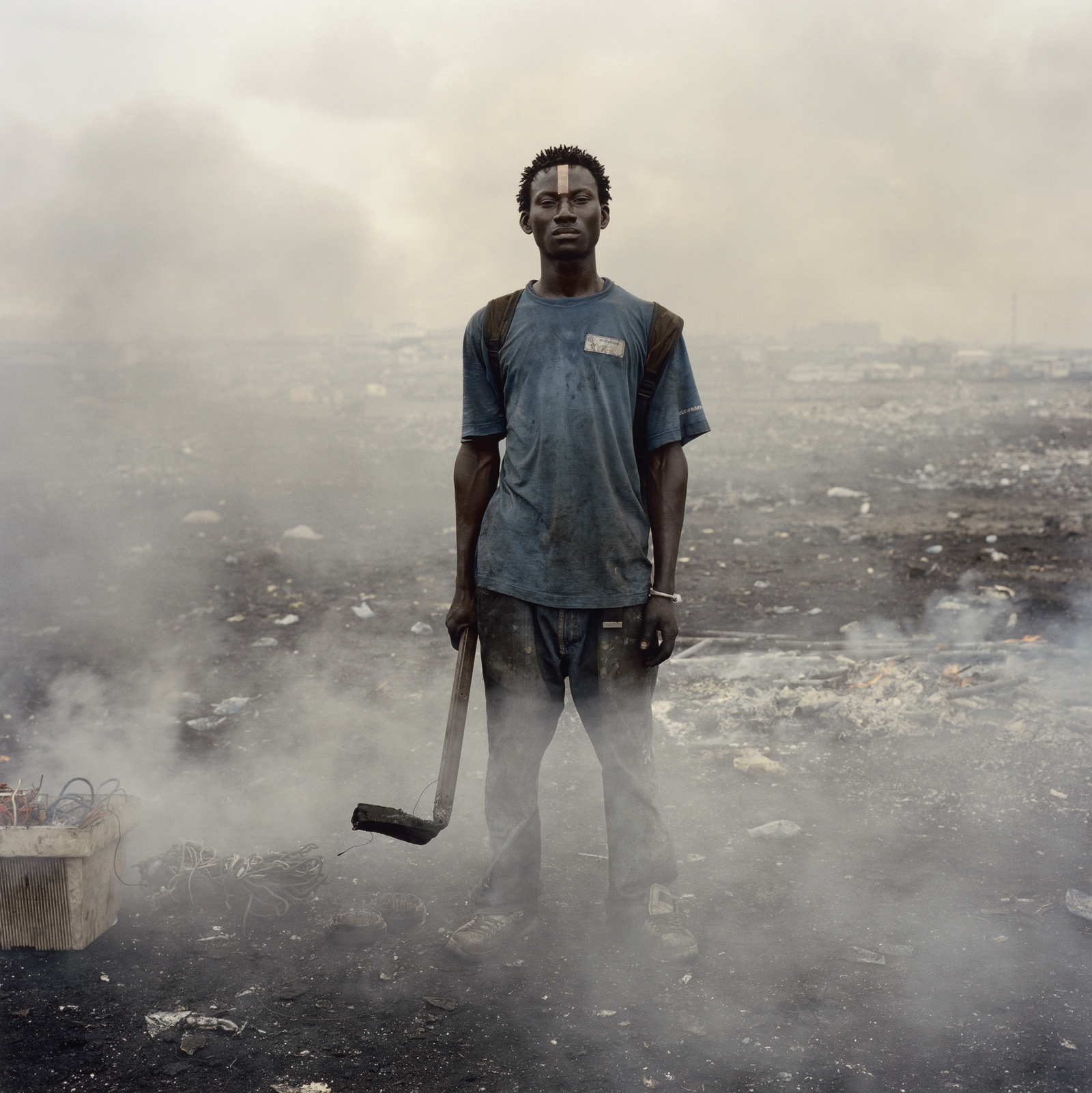
Pieter Hugo (South African, b. 1976) 'Aissah Salifu, Agbogbloshie Market, Accra, Ghana' 2010


Pieter Hugo (South African, b. 1976)
Aissah Salifu, Agbogbloshie Market, Accra, Ghana
2010
From the Permanent Error series
Digital chromogenic print
81.3 x 81.3cm (32 x 32 in.)
The J. Paul Getty Museum, Los Angeles
© Pieter Hugo


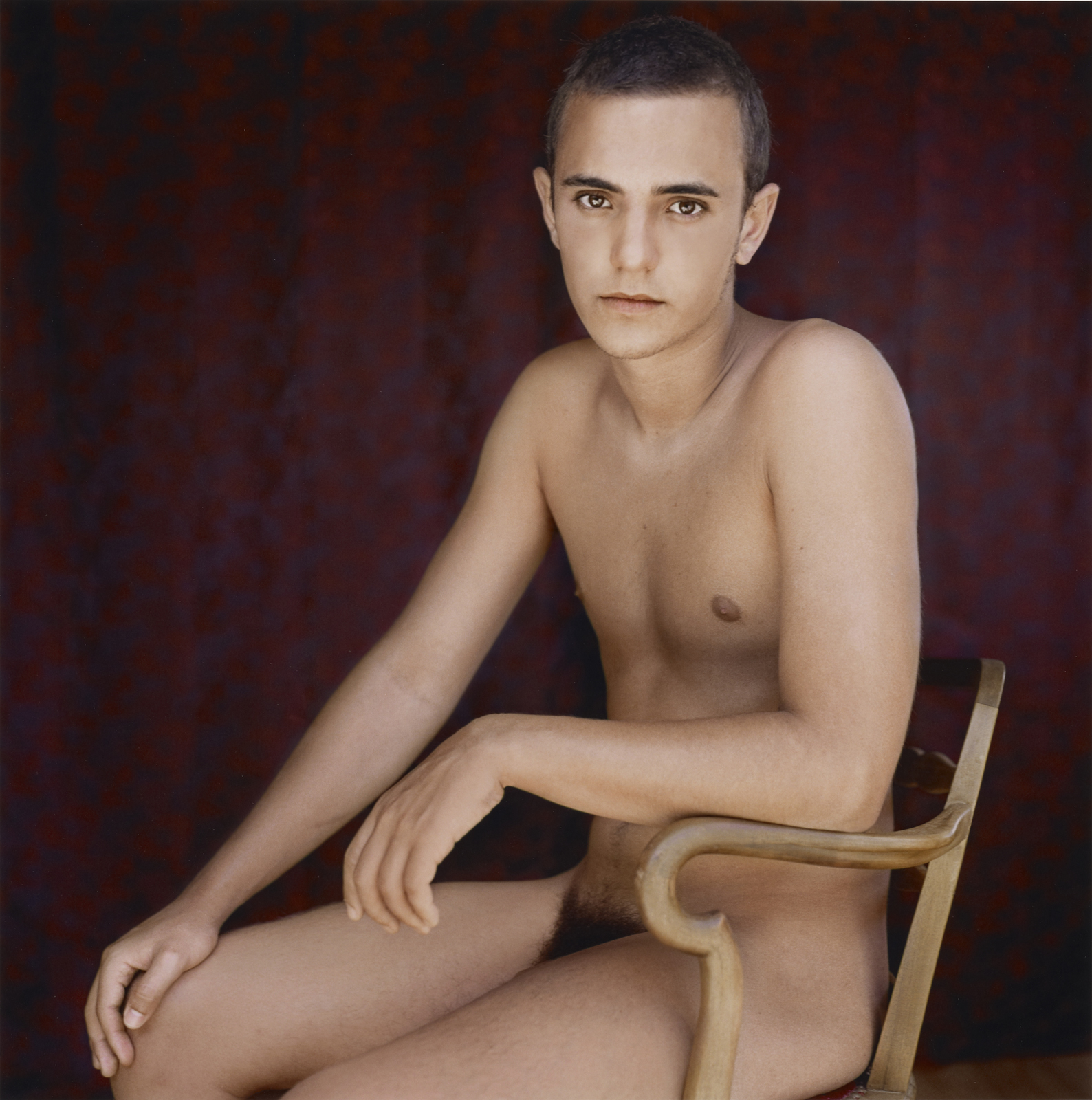
Mona Kuhn (German born Brazil, 1969) 'Portrait 37' 2011


Mona Kuhn (German born Brazil, 1969)
Portrait 37
2011
Chromogenic print
38.3 x 38.1cm (15 1/16 x 15 in.)
The J. Paul Getty Museum, Los Angeles
© Mona Kuhn


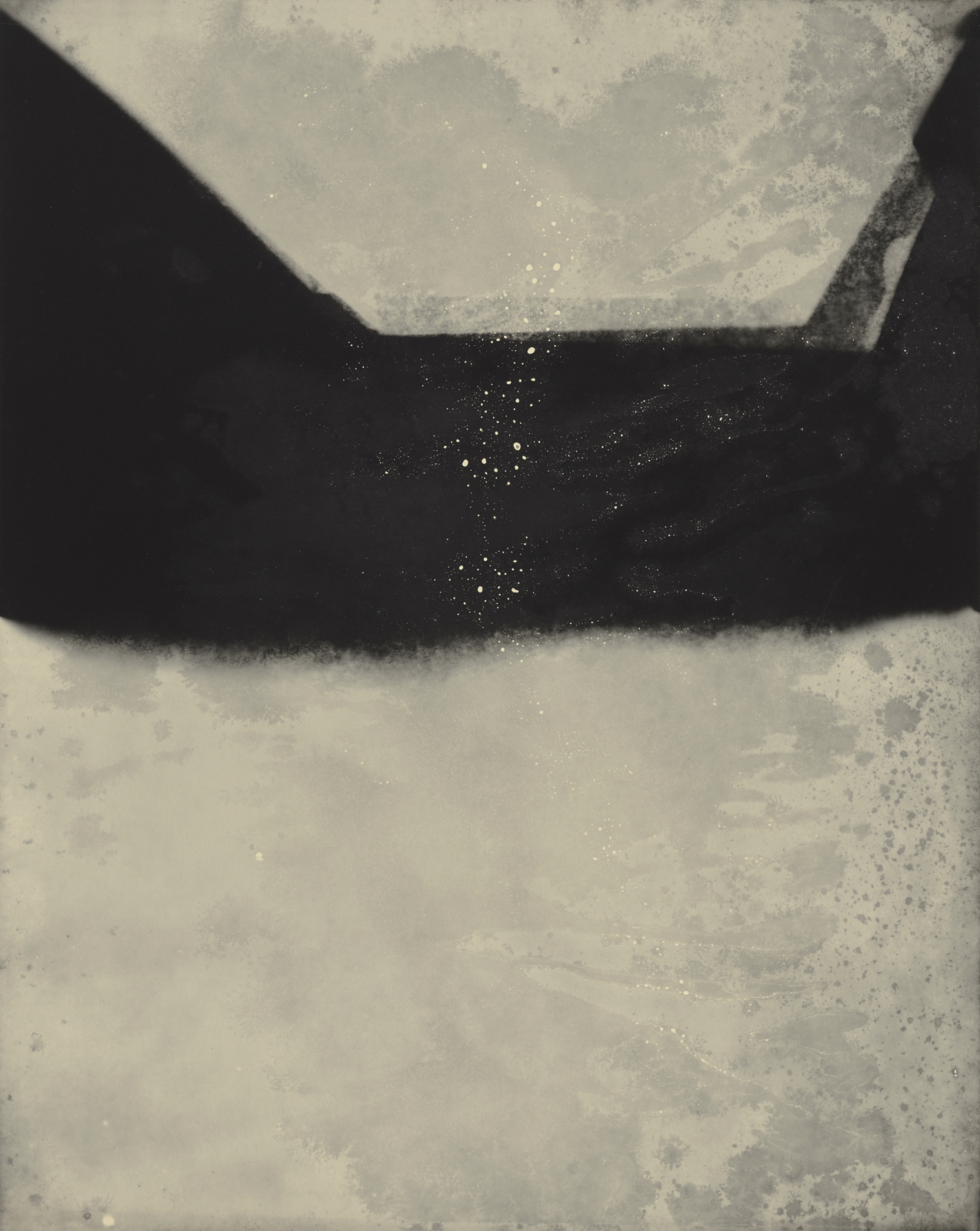
Alison Rossiter (American, b. 1953) 'Eastman Kodak Azo E, expired May 1927, processed 2014' 2014


Alison Rossiter (American, b. 1953)
Eastman Kodak Azo E, expired May 1927, processed 2014
2014
Gelatin silver print
25 x 20cm (9 13/16 x 7 7/8 in.)
The J. Paul Getty Museum, Los Angeles
© Alison Rossiter


The J. Paul Getty Museum
1200 Getty Center Drive
Los Angeles, California 90049

Opening hours:
Daily 10am – 5.30pm

The J. Paul Getty Museum website

LIKE ART BLACK ON FACEBOOK

Back to top

Exhibition: ‘Dora Maar’ at Tate Modern, London

Exhibition dates: 20th November 2019 – 15th March 2020

Curators: Dora Maar is curated by Karolina Ziebinska-Lewandowska, Curator, Centre Pompidou, Paris, Damarice Amao, Assistant Curator, Centre Pompidou, Paris and Amanda Maddox, Associate Curator, the J. Paul Getty Museum, Los Angeles with Emma Lewis, Assistant Curator, Tate Modern. The Tate Modern presentation is curated by Emma Lewis, Assistant Curator with Emma Jones, Curatorial Assistant, Tate Modern.


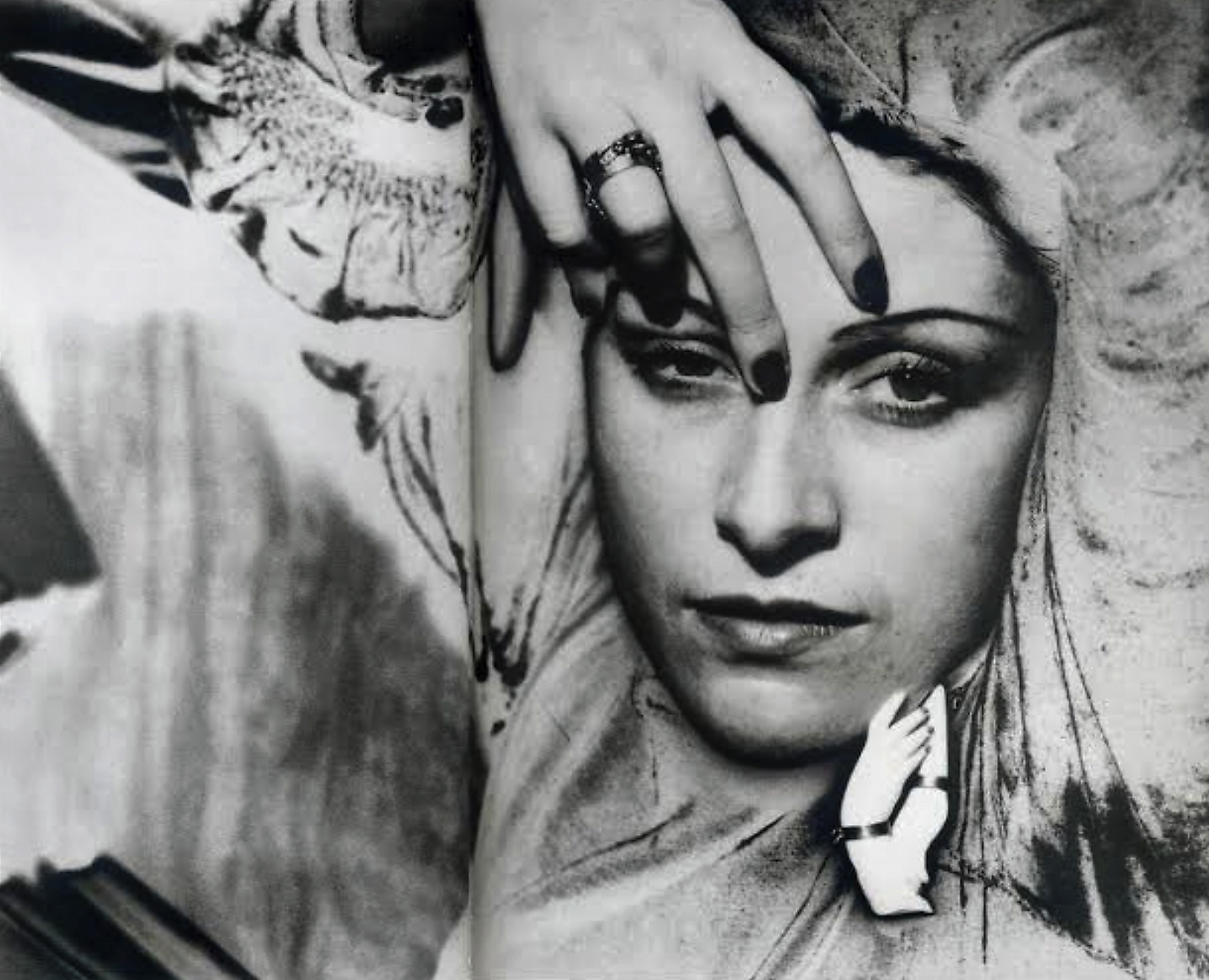
Dora Maar (French, 1907-1997) 'Untitled (Hand-Shell)' 1934 from the exhibition 'Dora Maar' at Tate Modern, London, November 2019 - March 2020


Dora Maar (French, 1907-1997)
Untitled (Hand-Shell)
1934
Gelatin silver print on paper
401 x 289 mm
Centre Pompidou, Musée national d’art moderne, Paris
Photo © Centre Pompidou, MNAM-CCI, Dist. RMN-Grand Palais
Image Centre Pompidou, MNAM-CCI © ADAGP, Paris and DACS, London 2019


What a creative woman. But yet another abused by the ego of a male, that of her lover, Picasso.

Beth Gersh-Nesic observes, “Was Dora Maar’s brilliant career cut short by the typical conflicts facing professional women in the 1930s, and even today? Or was she a victim of Picasso’s psychological abuse, which chipped away at her original confidence? Was she compromised to the point that she only wanted to please the man she loved? According to art historian John Richardson, Dora Maar sacrificed her gifts on the altar of her art god, her idol, Picasso. Based on the early Surrealist photographs we see in her retrospective, one can only wish she hadn’t taken up with Picasso, for it seems she might have achieved far more in her lifetime without him.”

What we can say is that Maar left behind a strong body of photographic work – from fashion and commercial, to restrained, classical formalism with surrealist inflections; from street photography to “the stuff of delirium and nightmare, [which] taps into the unconscious, internalised sublime”, her Portrait of Ubu (1936, below) reminding me strongly of William Blake’s painting The Ghost of a Flea (c. 1819). Ubu is “a ghastly being of indeterminate origin and melancholy aspect… [an idea] something like l’informe, the concept Maar’s lover Georges Bataille coined to describe his fellow-Surrealists’ admiration for all things larval and grotesquely about-to-be.” Ubu is a her dark notion of a street “urchin”.

Her warped photomontages are technical marvels. “”She captures the mysterious,” Caws wrote, “in a combination of the unresolved and the sharply angled. This frequently creates a sense of ambiguity, even menace.” Caws notes that Dora Maar responded to Louis Aragon’s invocation “for each person there is one image to find that will disturb the whole universe.” Maar’s images managed to “disturb and reveal” with a bit of the macabre mixed in.”

But her images are more than a bit of this and a bit of that. They possess a utilitarian feeling in the enunciation of their menace, which makes them all the more effective when impinging on our waking dreams. Susan Sontag notes, “Photographs are perhaps the most mysterious of all the objects that make up, and thicken, the environment we recognise as modern” (Sontag, On Photography, p. 2). Thicken is the critical word. Maar’s photographs thicken our atmospheric (and mental) miasma, prescient of our modern world full of dark passages: pitch black sewers, fatbergs, drone strikes, bush fire skies, virus, murder and mayhem. In the back of my head. My eyes. Roll, roll, roll. Skewered. Roasted.

Dr Marcus Bunyan


Many thankx to the Tate Britain for allowing me to publish the photographs in the posting. Please click on the photographs for a larger version of the image.


The most accomplished examples of Maar’s art are the photomontages of 1935 and 1936. There were already many vaults and arches in her Mont-Saint-Michel pictures; now she took the cloistral galleries of the Orangerie at Versailles, upended them so that they looked like sewers, and populated them with cryptic beings engaged in arcane rituals or dramas. In “The Simulator,” [below] a boy from one of her street photographs is bent backward at an obscene angle; Maar has retouched his eyes so that they roll back in his head toward us, like one of those thrashing hysterics photographed in the nineteenth century. In “29 Rue d’Astorg” (below) – of which Maar made several versions, black-and-white and hand-coloured – a human figure with a curtailed, avian head is seated beneath arches that have been subtly warped in the darkroom.


Brian Dillon. “The Voraciousness and Oddity of Dora Maar’s Pictures,” on The New Yorker website May 21, 2019 [Online] Cited 23/11/2019


During the 1930s, Dora Maar’s provocative photomontages became celebrated icons of surrealism.

Her eye for the unusual also translated to her commercial photography, including fashion and advertising, as well as to her social documentary projects. In Europe’s increasingly fraught political climate, Maar signed her name to numerous left-wing manifestos – a radical gesture for a woman at that time.

Her relationship with Pablo Picasso had a profound effect on both their careers. She documented the creation of his most political work, Guernica 1937. He painted her many times, including Weeping Woman 1937. Together they made a series of portraits combining experimental photographic and printmaking techniques.

In middle and later life Maar withdrew from photography. She concentrated on painting and found stimulation and solace in poetry, religion, and philosophy, returning to her darkroom only in her seventies.

This exhibition will explore the breadth of Maar’s long career in the context of work by her contemporaries.

Text from the Tate Modern website


Dora Maar (French, 1907-1997) 'Woman sitting in profile, the bust dressed in a blouse made of tattoo patterns drawn on the photograph' c. 1930 from the exhibition 'Dora Maar' at Tate Modern, London, November 2019 - March 2020


Dora Maar (French, 1907-1997)
Woman sitting in profile, the bust dressed in a blouse made of tattoo patterns drawn on the photograph
c. 1930
Gelatin silver print
Private Collection
© Estate of Dora Maar / DACS 2019, All Rights Reserved


Dora Maar (French, 1907-1997) 'Child with a Beret' c. 1932


Dora Maar (French, 1907-1997)
Child with a Beret
c. 1932
Gelatin silver print
Courtesy VEGAP / Museo Nacional Centro de Arte Reina Sofia


Dora Maar (French, 1907-1997) 'Barcelona, Saleswomen in the Butcher Shop' 1933


Dora Maar (French, 1907-1997)
Barcelona, Saleswomen in the Butcher Shop
1933
Silver Gelatin Print
48.7 x 38.8cm
Private Collection
© Adagp, Paris 2019
Photo: © Fotogasull


Dora Maar (French, 1907-1997) 'Blind Street Peddler, Barcelona' 1933


Dora Maar (French, 1907-1997)
Blind Street Peddler, Barcelona
1933
Gelatin silver print
Image: 39.3 x 29.3cm (15 1/2 x 11 9/16 in.)
Gift of David Raymond
The Cleveland Museum of Art
© 2013 Artists Rights Society (ARS), New York / ADAGP, Paris


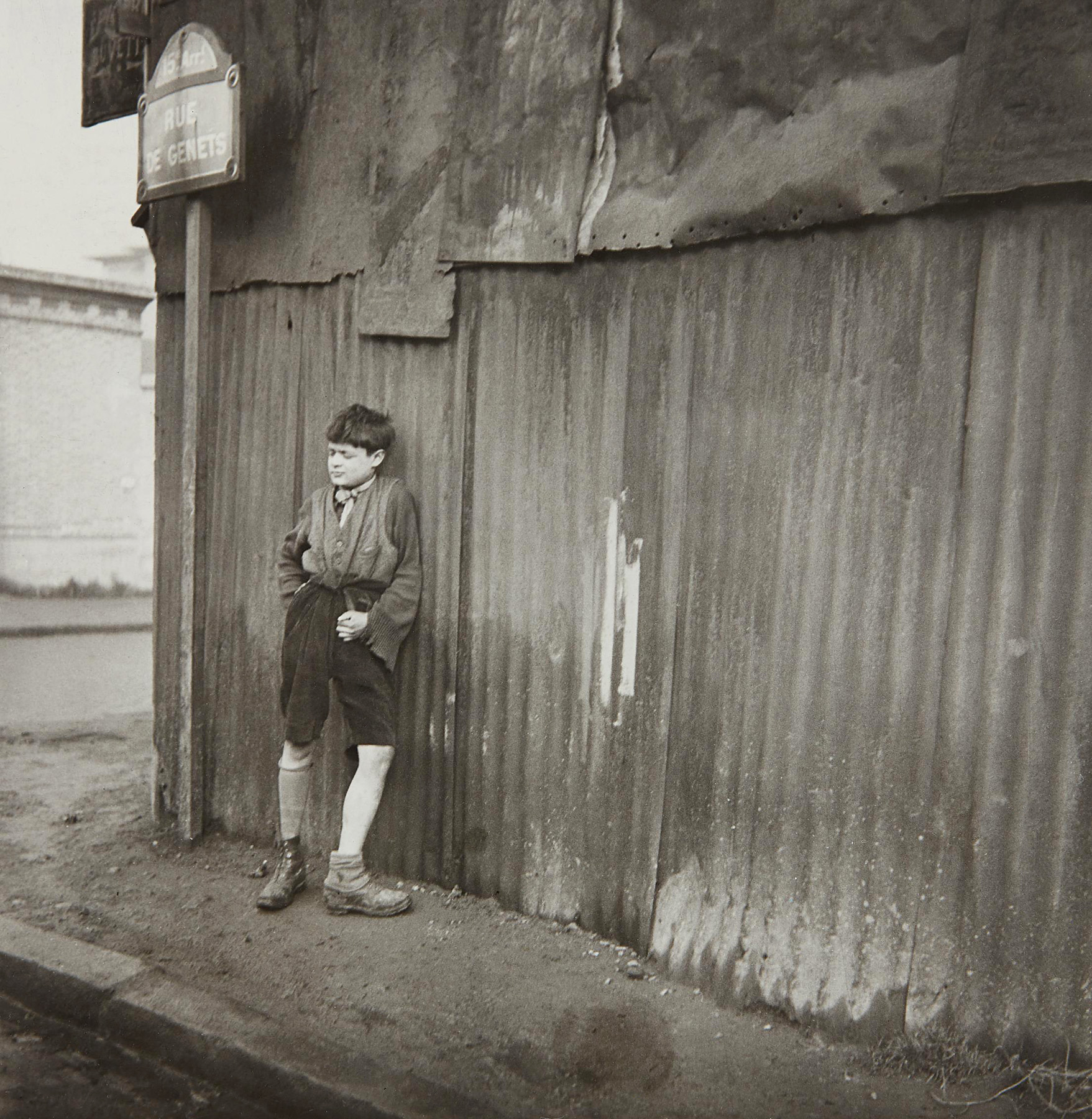
Dora Maar (French, 1907-1997) 'Street Boy on the Corner of the rue de Genets' 1933


Dora Maar (French, 1907-1997)
Street Boy on the Corner of the rue de Genets
1933
Gelatin silver print
Harvard Art Museums/ Fogg Museum, Richard and Ronay Menschel Fund for the Acquisition of Photographs
© ADAGP, Paris and DACS, London 2019


Dora Maar (French, 1907-1997) 'Repent for the Kingdom of Heaven is at Hand' 1934


Dora Maar (French, 1907-1997)
Repent for the Kingdom of Heaven is at Hand
1934
Gelatin silver print
Sheet: 24.3 × 18cm (9 9/16 × 7 1/16 in.)
© Dora Maar Estate/Artists Rights Society (ARS), New York/ADAGP, Paris
Gift of David and Marcia Raymond


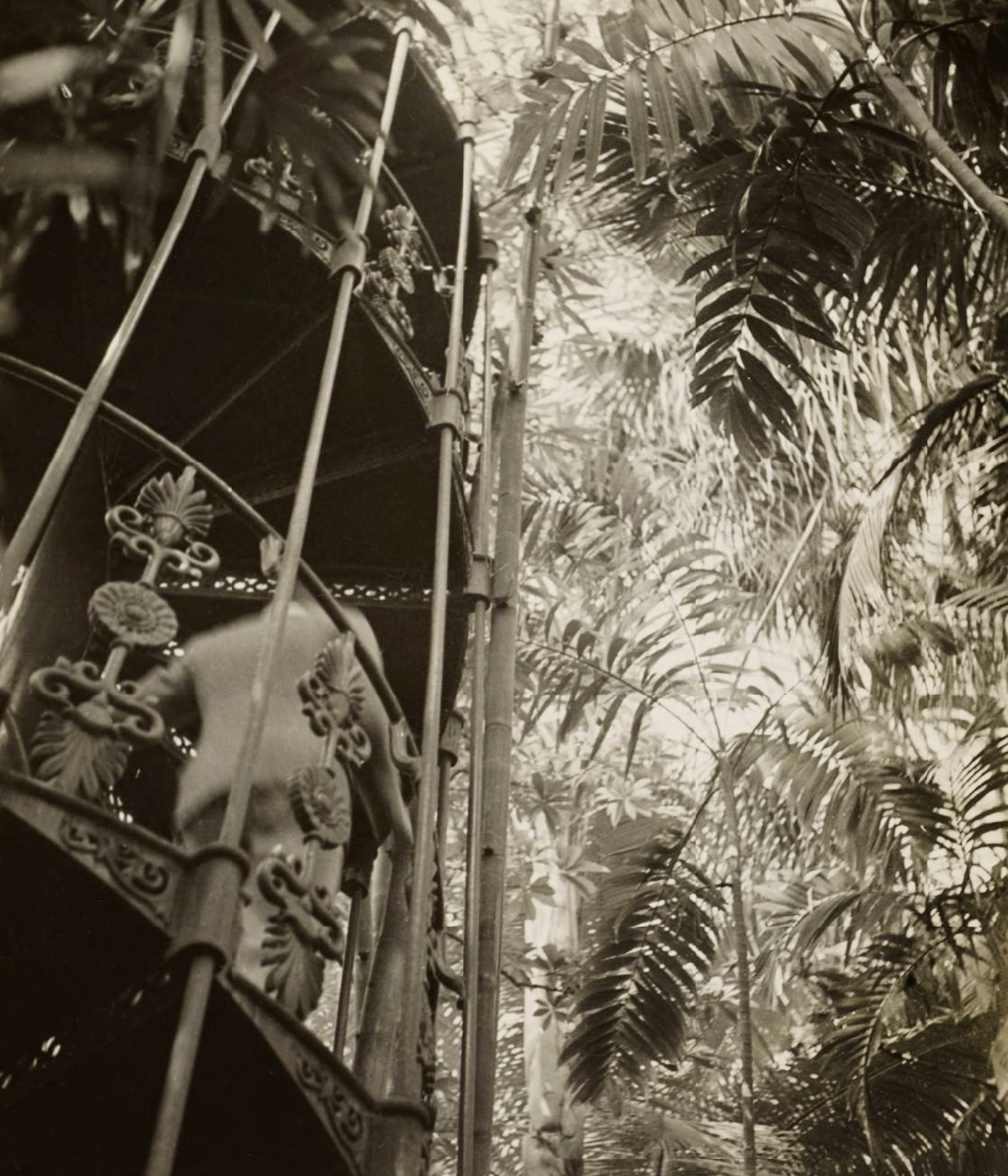
Dora Maar (French, 1907-1997) 'Stairwell and Plants in Kew Gardens' 1934


Dora Maar (French, 1907-1997)
Stairwell and Plants in Kew Gardens
1934
Gelatin silver print, ferrotyped
Image: 28 x 24cm (11 x 9 7/16 in.)
John L. Severance Fund
The Cleveland Museum of Art
© 2013 Artists Rights Society (ARS), New York / ADAGP, Paris


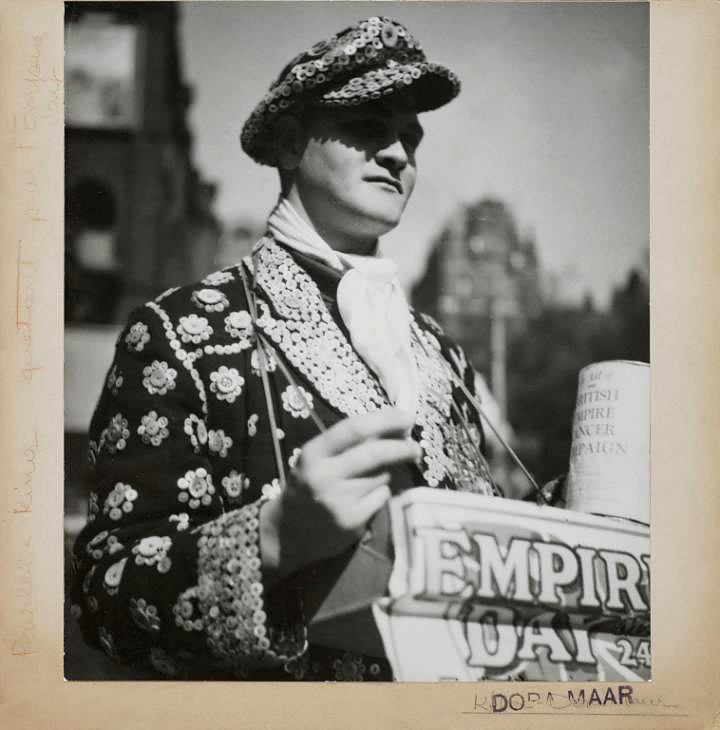
Dora Maar (French, 1907-1997) 'Pearly King collecting money for the Empire Day' 1935


Dora Maar (French, 1907-1997)
Pearly King collecting money for the Empire Day
1935
Gelatin silver print
Tate
© Estate of Dora Maar / DACS 2019, All Rights Reserved


Dora Maar (French, 1907-1997) 'Carousel at Night' 1931-1936


Dora Maar (French, 1907-1997)
Carousel at Night
1931-1936
Gelatin silver print, ferrotyped
Image: 25 x 19.8cm (9 13/16 x 7 13/16 in.)
John L. Severance Fund
The Cleveland Museum of Art
© 2013 Artists Rights Society (ARS), New York / ADAGP, Paris


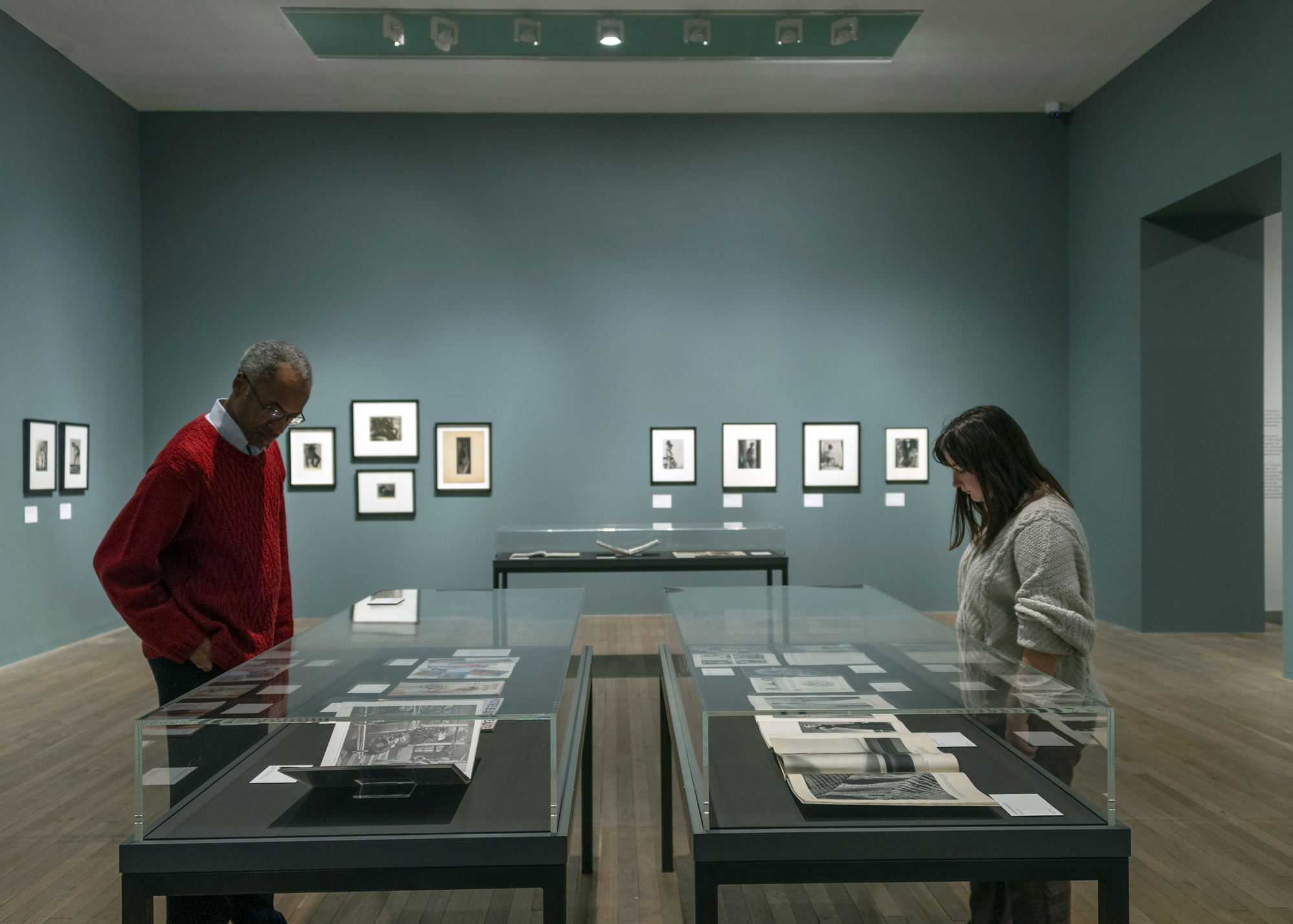
Installation view of the exhibition 'Dora Maar' at Tate Modern, 2019

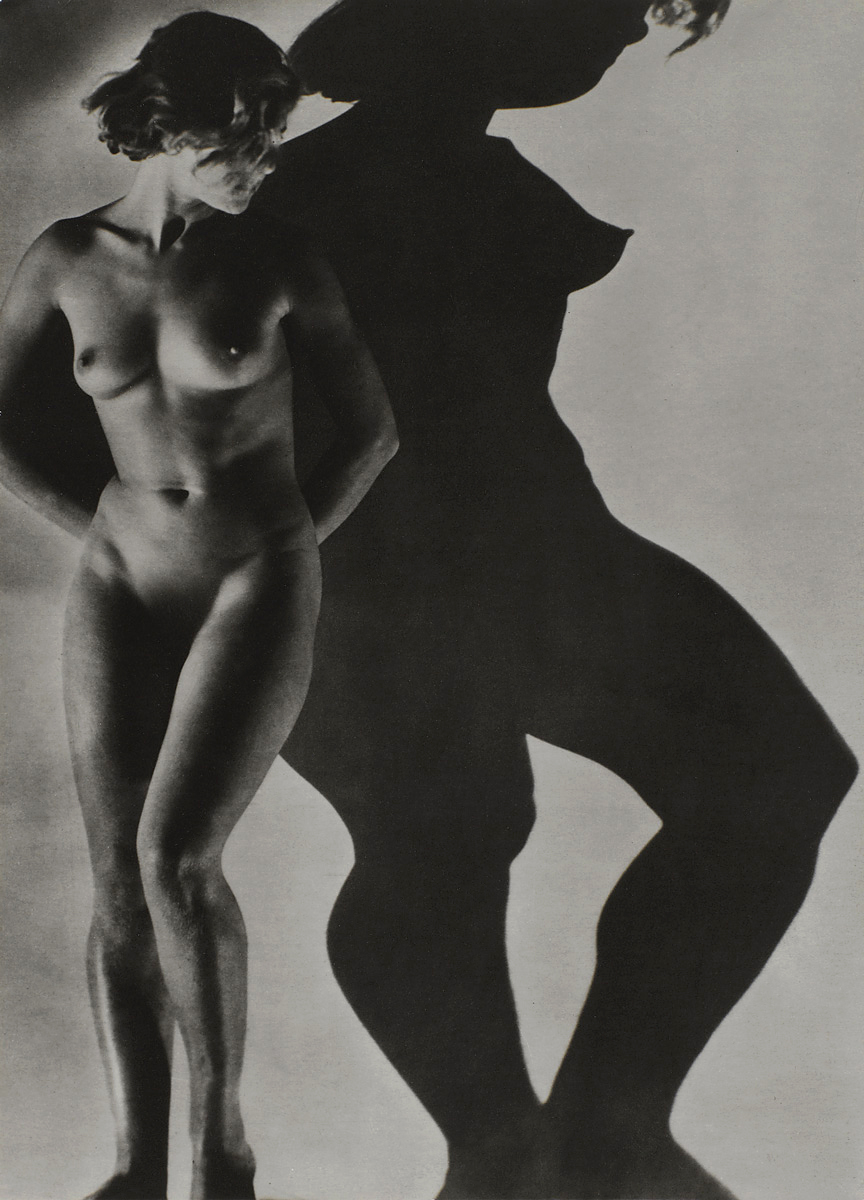
Installation view of the exhibition 'Dora Maar' at Tate Modern, 2019 showing the photographs 'Untitled (Nude)' 1930s (left) and 'Untitled (Nude)' c. 1938 (right)


Installation views of the exhibition Dora Maar at Tate Modern, 2019 showing, in the bottom image, the photographs Untitled (Nude) 1930s (left) and Untitled (Nude) c. 1938 (right)


Dora Maar (French, 1907-1997) 'Assia' 1934


Dora Maar (French, 1907-1997)
Assia
1934
Gelatin silver print
26.4 x 19.5cm


This autumn, Tate Modern presents the first UK retrospective of the work of Dora Maar (1907-1997) whose provocative photographs and photomontages became celebrated icons of surrealism. Featuring over 200 works from a career spanning more than six decades, this exhibition shows how Maar’s eye for the unusual also translated to her commercial commissions, social documentary photographs, and paintings – key aspects of her practice which have, until now, remained little known.

Born Henriette Théodora Markovitch, Dora Maar grew up between Argentina and Paris and studied decorative arts and painting before switching her focus to photography. In doing so, Maar became part of a generation of women who seized the new professional opportunities offered by advertising and the illustrated press. Tate Modern’s exhibition will open with the most important examples of these commissioned works. Around 1931, Maar set up a studio with film set designer Pierre Kéfer specialising in portraiture, fashion photography and advertising. Works such as Untitled (Les années vous guettent) c. 1935 – believed to be an advertising project for face cream that Maar made by overlaying two negatives – will reveal Maar’s innovative approach to constructing images through staging, photomontage and collage. Striking nude studies such as that of famed model Assia Granatouroff will also reveal how women photographers like Maar were beginning to infiltrate relatively taboo genres such as erotica and nude photography.

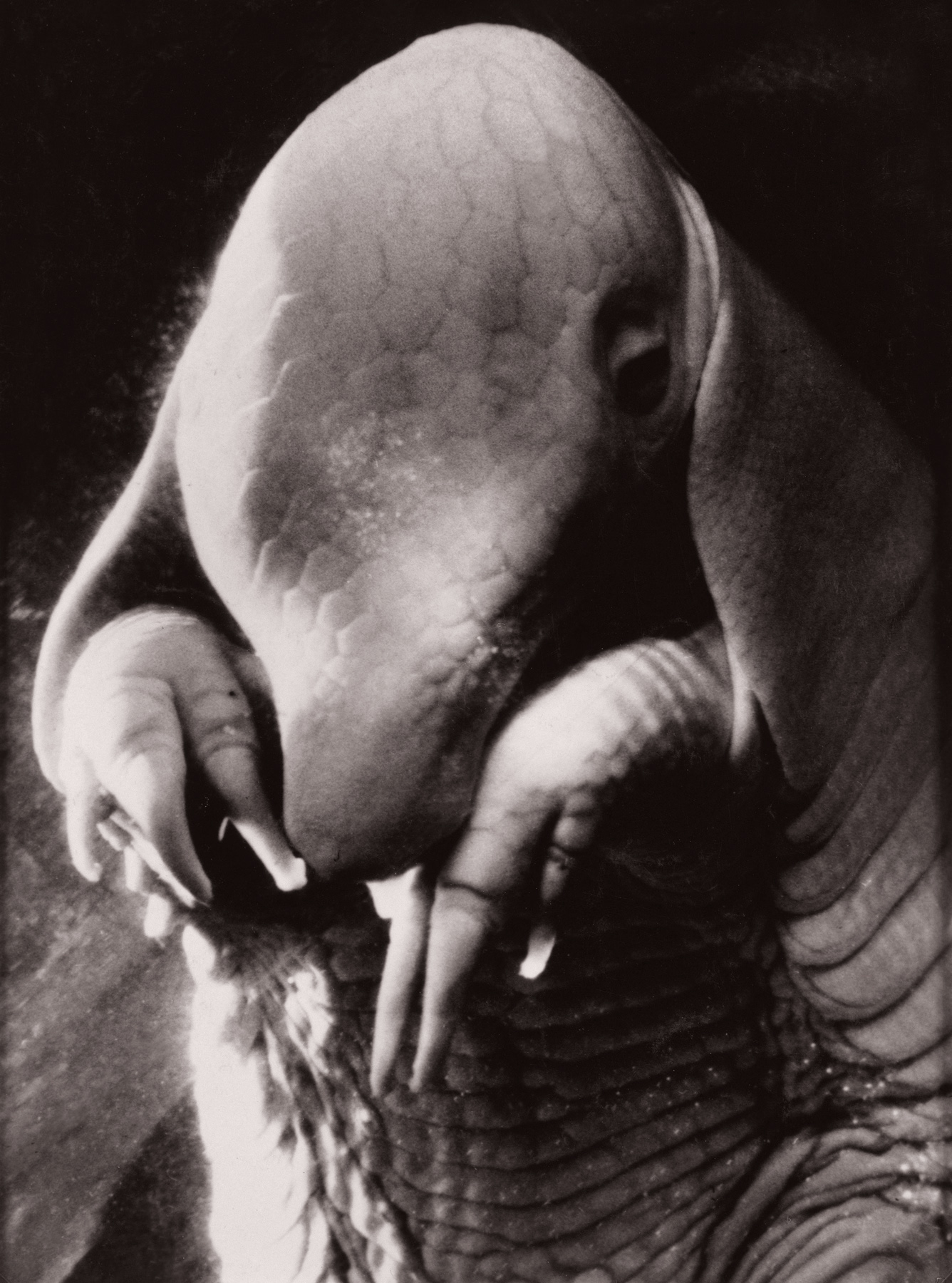
During the 1930s, Maar was active in left-wing revolutionary groups led by artists and intellectuals. Reflecting this, her street photography from this time shot in Barcelona, Paris and London captured the reality of life during Europe’s economic depression. Maar shared these politics with the surrealists, becoming one of the few photographers to be included in the movement’s exhibitions and publications. A major highlight of the show will be outstanding examples of this area of Maar’s practice, including Portrait d’Ubu 1936, an enigmatic image thought to be an armadillo foetus, and the renowned photomontages 29, rue d’Astorg c. 1936 and Le Simulateur 1935. Collages and publications by André Breton, Georges Hugnet, Paul and Nusch Eluard, and Jacqueline Lamba will place Maar’s work in context with that of her inner circle.

In the winter of 1935-1936 Maar met Pablo Picasso and their relationship of around eight years had a profound effect on both their careers. She documented the creation of his most political work Guernica 1937, offering unprecedented insight into his working process. He in turn immortalised her in the motif of the ‘weeping woman’. Together they made a series of portraits that combined experimental photographic and printmaking techniques, anticipating her energetic return to painting in 1936. Featuring rarely seen, privately-owned canvases such as La Conversation 1937 and La Cage 1943, and never-before exhibited negatives from the Dora Maar collection at the Musée National d’art Moderne, the exhibition will shed new light on the dynamic between these two artists during the turbulent wartime years.

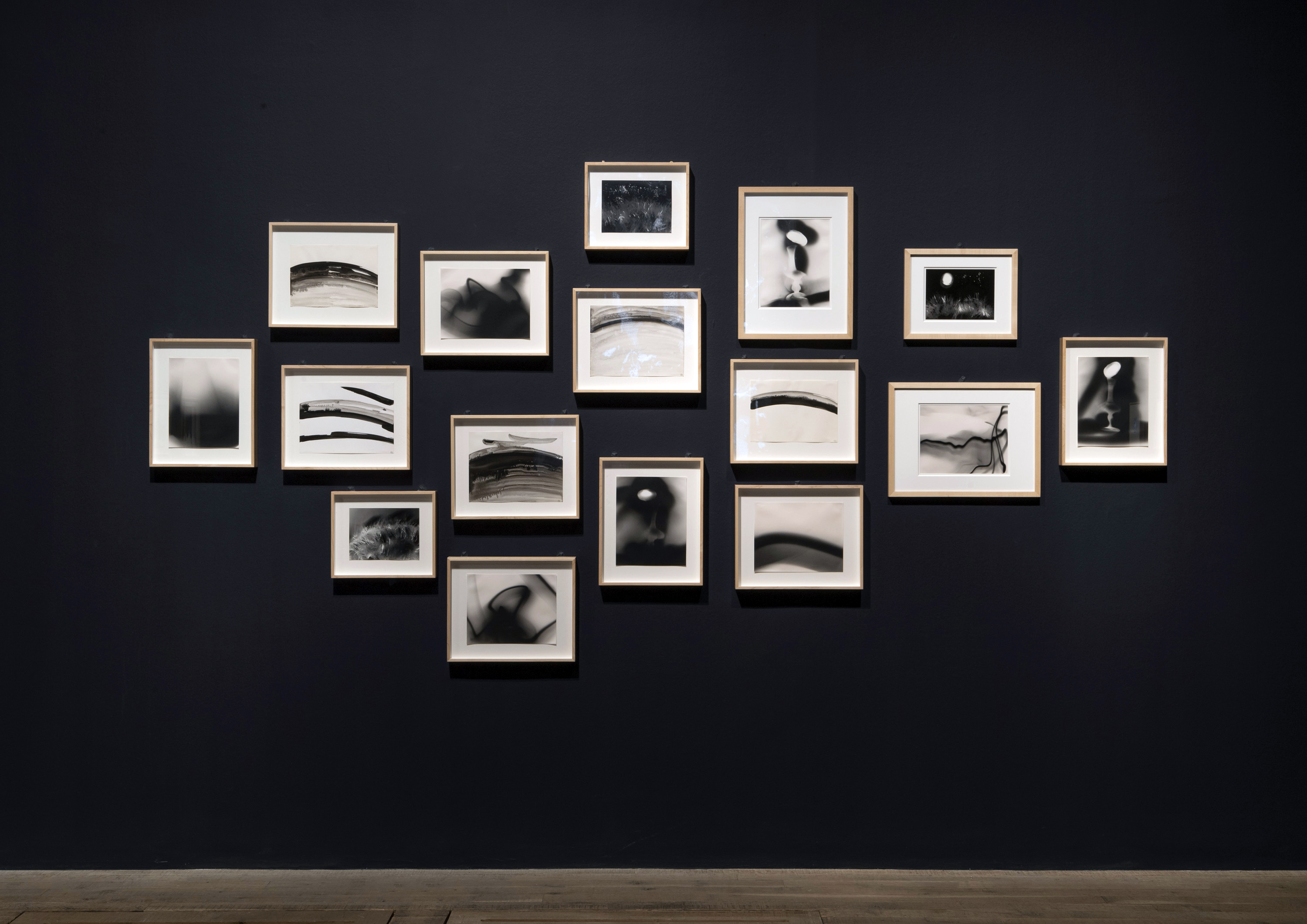
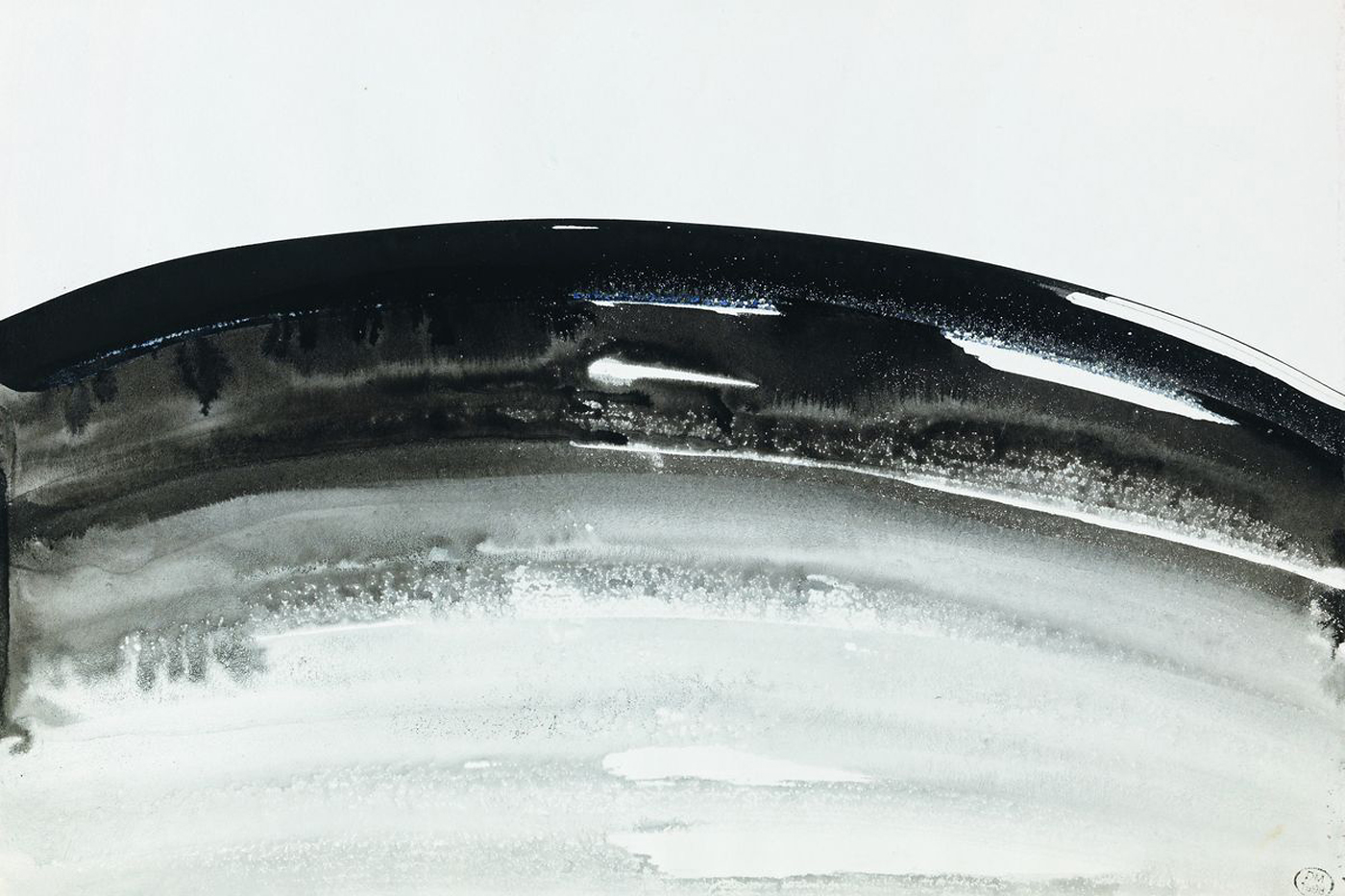
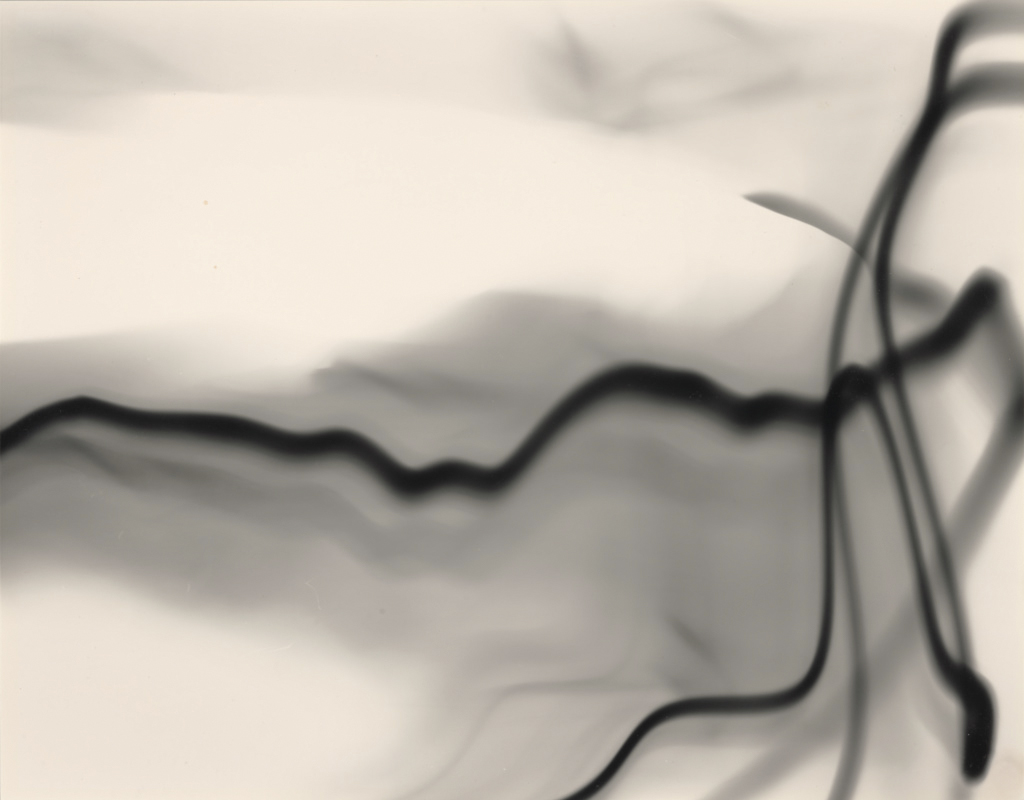
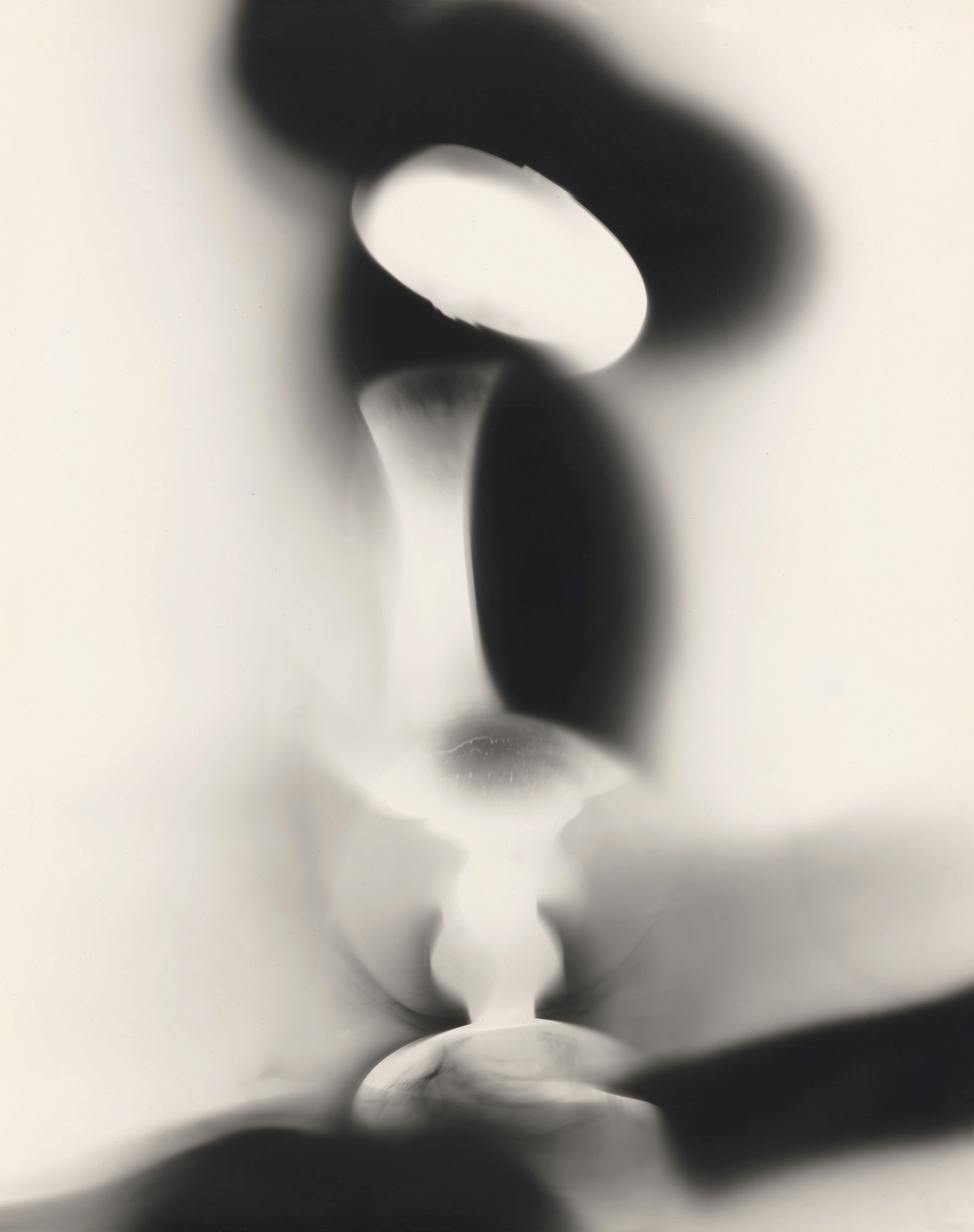
After the Second World War, Maar began dividing her time between Paris and the South of France. During this period, she explored diverse subject matter and styles before focusing on gestural, abstract paintings of the landscape surrounding her home. Though these works were exhibited to acclaim in London and Paris into the 1950s, Maar gradually withdrew from artistic circles. As a result, the second half of her life became shrouded in mystery and speculation. The exhibition will reunite over 20 works from this little-known – yet remarkably prolific – period. Dora Maar concludes with a substantial group of camera-less photographs that she made in the 1980s when, four decades after all but abandoning the medium, Maar returned to her darkroom.

Dora Maar is curated by Karolina Ziebinska-Lewandowska, Curator, Centre Pompidou, Paris, Damarice Amao, Assistant Curator, Centre Pompidou, Paris and Amanda Maddox, Associate Curator, the J. Paul Getty Museum, Los Angeles with Emma Lewis, Assistant Curator, Tate Modern. The Tate Modern presentation is curated by Emma Lewis, Assistant Curator with Emma Jones, Curatorial Assistant, Tate Modern.

The exhibition will be accompanied by a fully-illustrated catalogue jointly published by Tate and the J. Paul Getty Museum and a programme of talks and events in the gallery.

Press release from Tate Britain [Online] Cited 16/11/2019


Installation view of the exhibition 'Dora Maar' at Tate Modern, 2019 showing at second left, 'Untitled (Study of Beauty)' (c. 1931)


Installation views of the exhibition Dora Maar at Tate Modern, 2019 showing at second left, Untitled (Study of Beauty) (c. 1931, below)


Dora Maar. 'Untitled (Study of Beauty)' c. 1931


Dora Maar (French, 1907-1997)
Untitled (Study of Beauty)
c. 1931
Gelatin silver print
© 2013 Artists Rights Society (ARS), New York / ADAGP, Paris


Dora Maar (French, 1907-1997) 'Untitled (Lee Miller)' c. 1933


Dora Maar (French, 1907-1997)
Untitled (Lee Miller) (multiple exposure)
c. 1933
Gelatin silver print


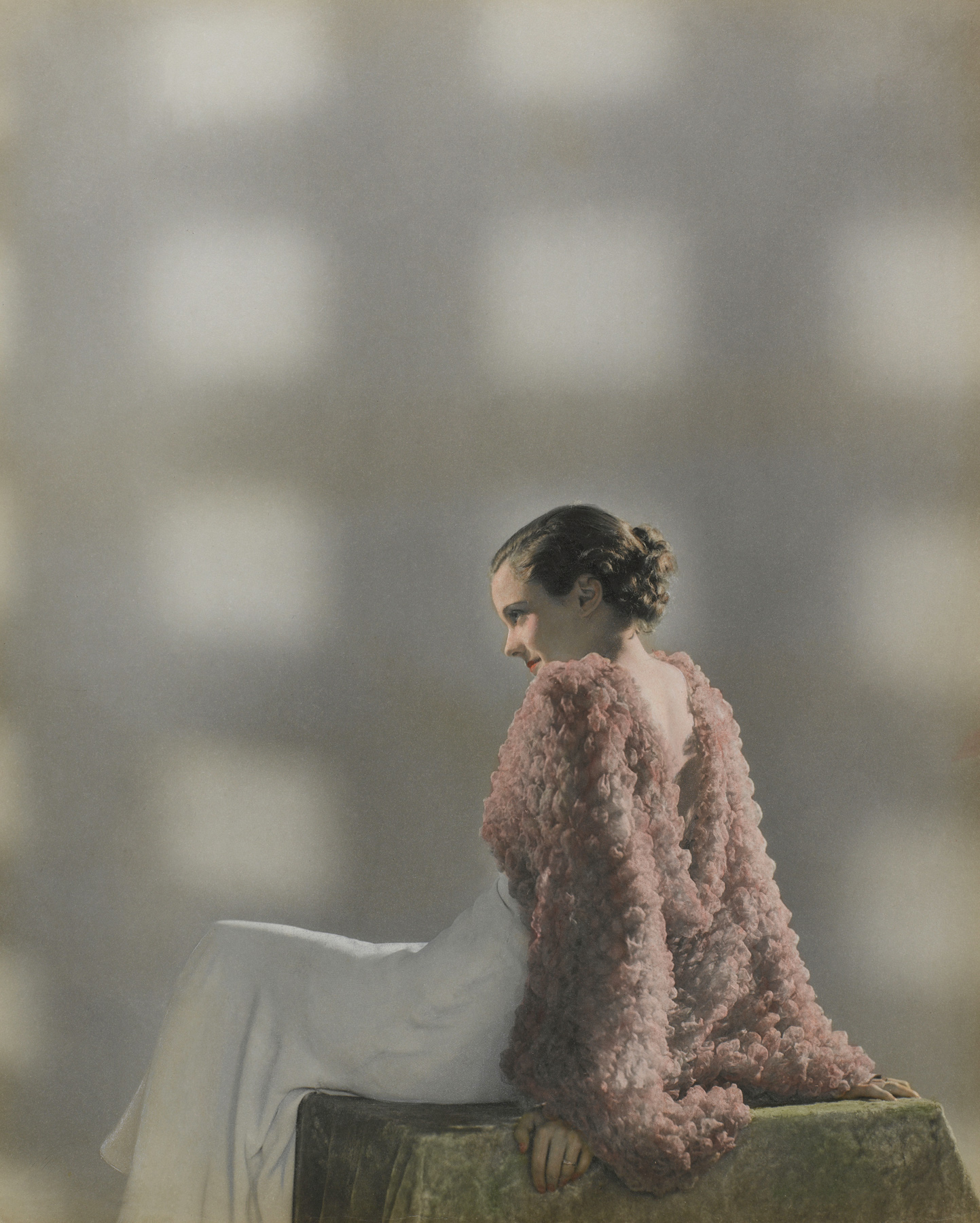
Dora Maar (French, 1907-1997) 'Untitled (Mannequin sitting in profile in dress and evening jacket)' c. 1932-1935


Dora Maar (French, 1907-1997)
Untitled (Mannequin sitting in profile in dress and evening jacket)
c. 1932-1935
Gelatin silver print enhanced with colours
29.9 x 23.8cm
Collection Centre Pompidou, Paris, Musée national d’art moderne, Centre de création industrielle
© ADAGP, Paris, 2019


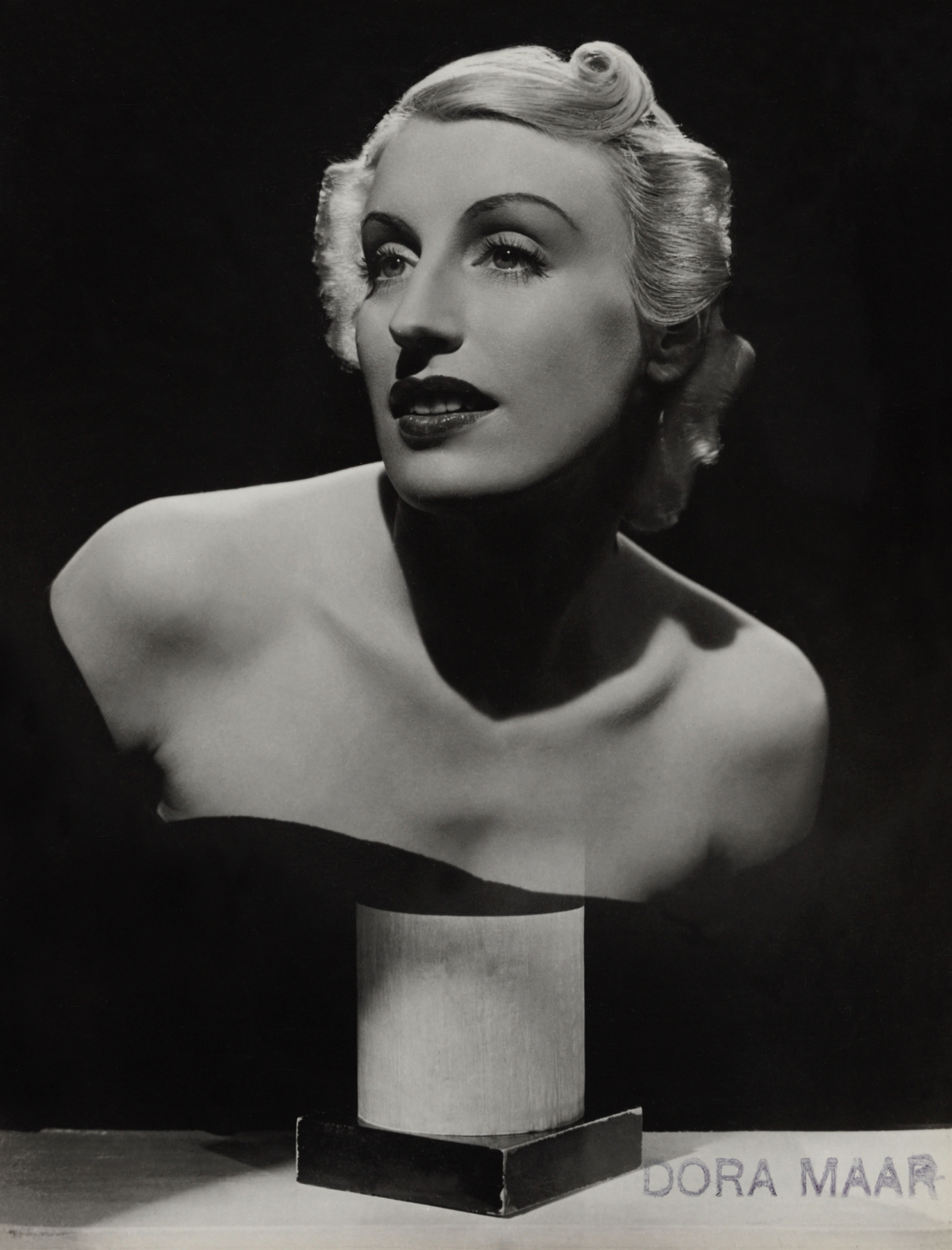
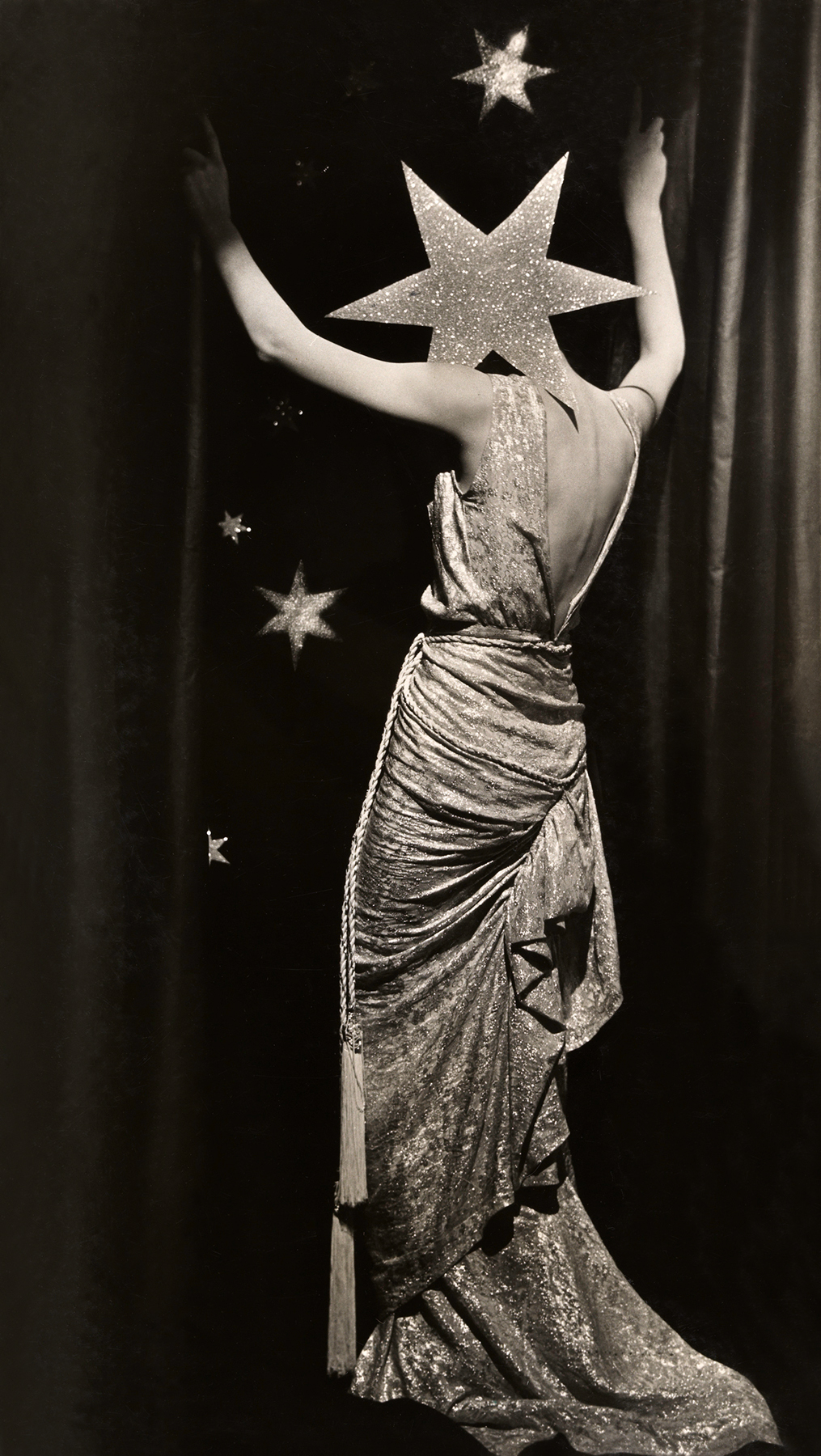
Dora Maar (French, 1907-1997) 'Untitled (Fashion photograph Model star)' c. 1935


Dora Maar (French, 1907-1997)
Untitled (Fashion photograph Model star)
c. 1935
Gelatin silver print
300 x 200 mm
Collection Therond
© ADAGP, Paris and DACS, London 2019


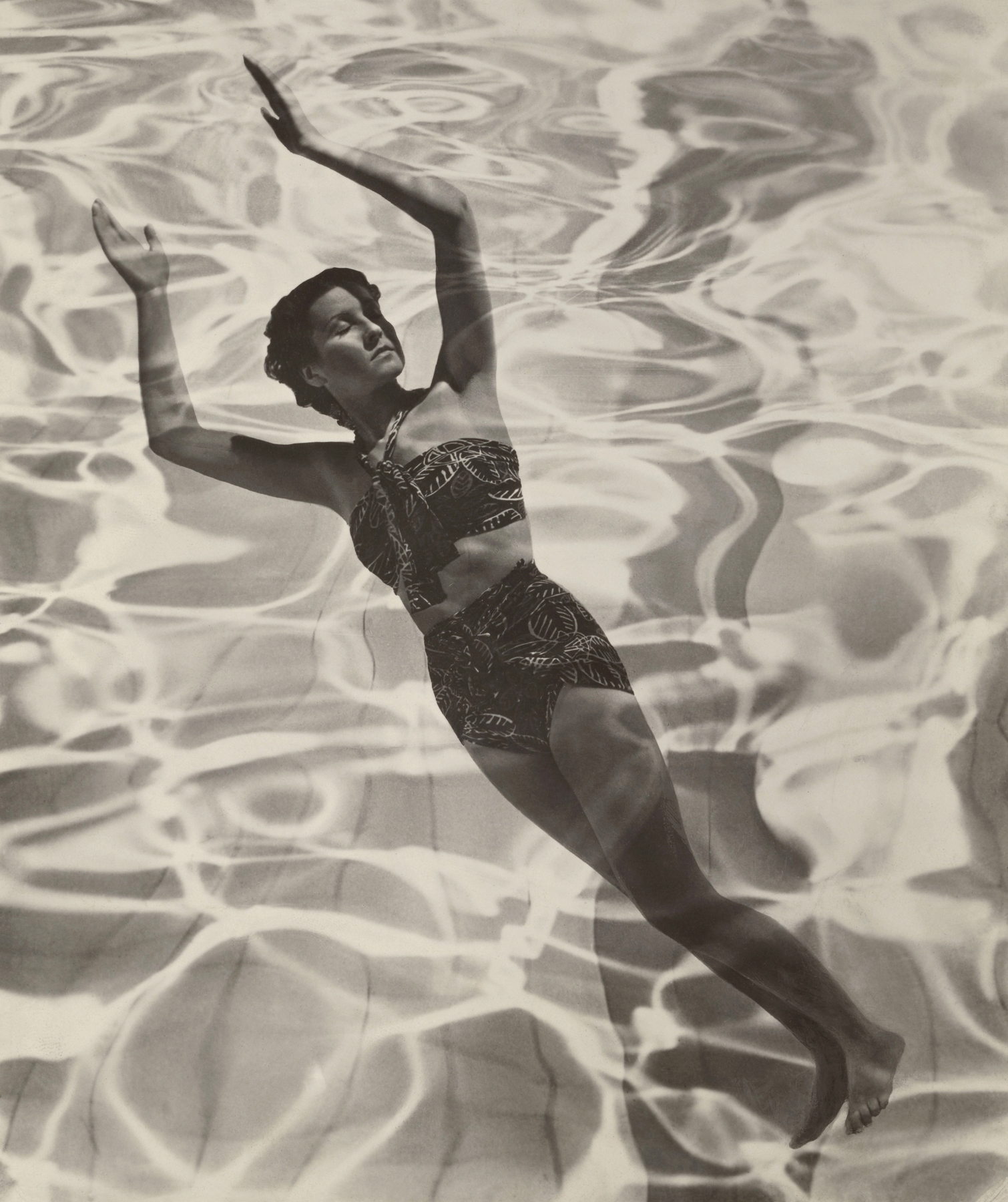
Dora Maar (French, 1907-1997) 'Model in Swimsuit' 1936


Dora Maar (French, 1907-1997)
Model in Swimsuit
1936
Gelatin silver on paper
197 x 167 mm
The J. Paul Getty Museum, Los Angeles
© ADAGP, Paris and DACS, London 2019


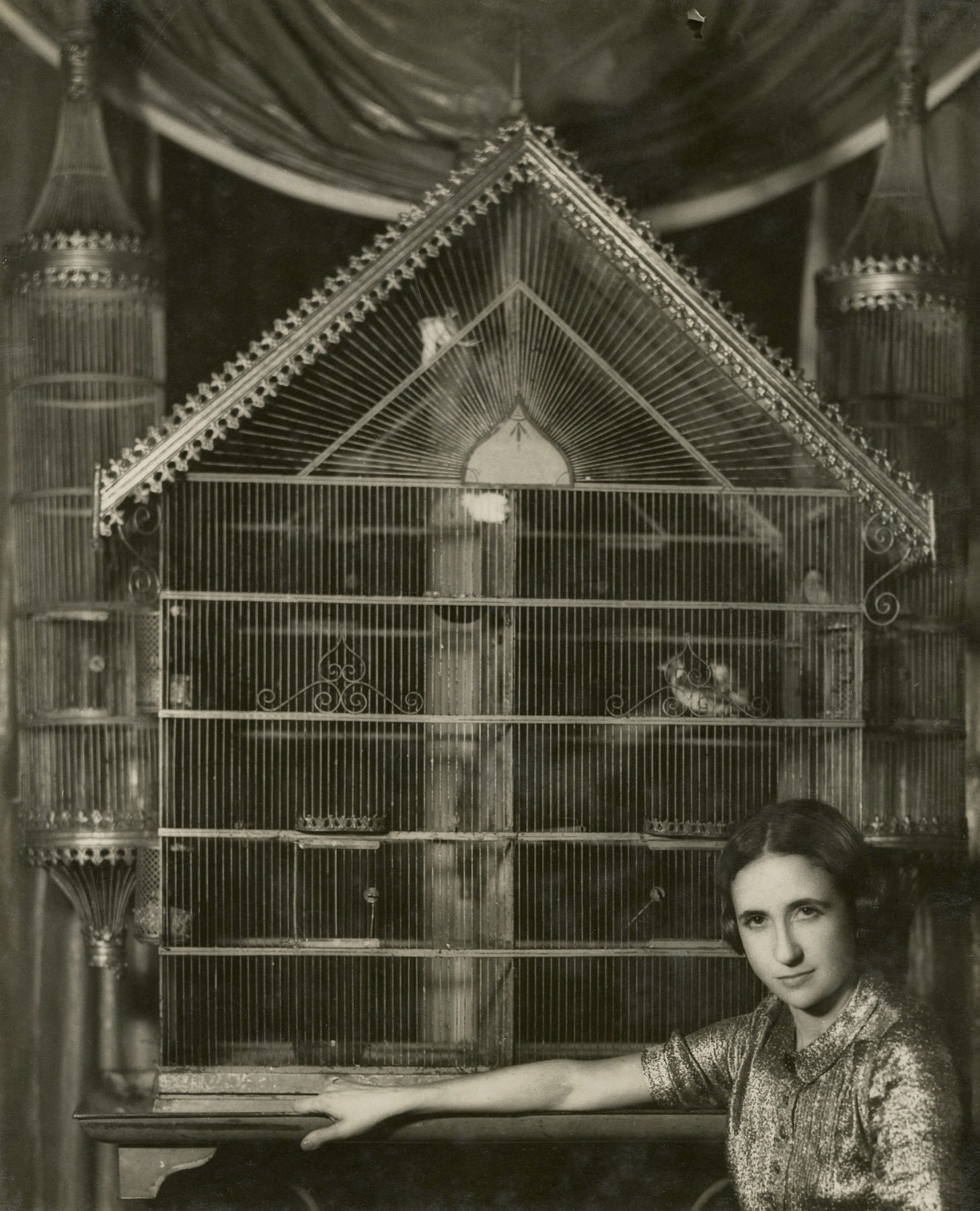
Dora Maar (French, 1907-1997) 'Portrait of Lise Deharme, at home in front of her birdcage' 1936


Dora Maar (French, 1907-1997)
Portrait of Lise Deharme, chez elle devant sa cage a oiseaux
Portrait of Lise Deharme, at home in front of her birdcage 
1936
Gelatin silver print


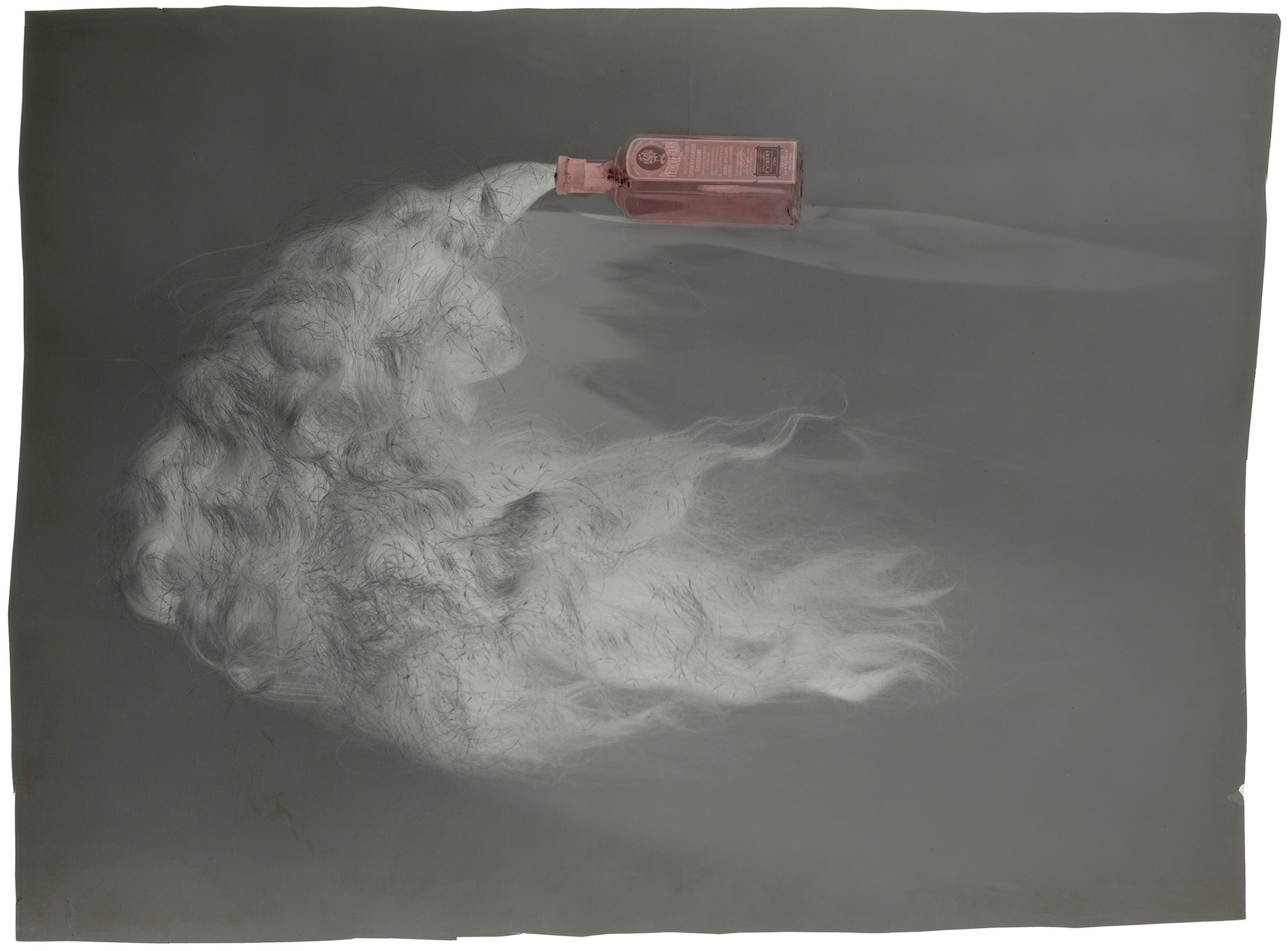
Dora Maar (French, 1907-1997) 'Publicity Study, Pétrole Hahn' 1934-1935


Dora Maar (French, 1907-1997)
Publicity Study, Pétrole Hahn
1934-1935
Silver gelatin print on a flexible support in cellulose nitrate
17.6 x 24cm
Collection Centre Pompidou, Paris, Musée national d’art moderne Centre de création industrielle
© Adagp, Paris 2019
Photo: © Centre Pompidou, MNAM-CCI / Dist. RMN-GP


Associated with Pierre Kéfer from 1930 to 1934, she collaborated in 1931 on the photographic illustration of the art historian Germain Bazin’s book Le Mont Saint-Michel (1935). She then shared a studio with Brassaï, after which Emmanuel Sougez, the spokesman for the New Photography movement, became her mentor. Her work met the aesthetic criteria of the time: close-ups of flowers and objects, and photograms in the style of Man Ray. She also took portraits, original publicity shots, and fashion and erotic photographs. In 1934, while traveling alone in Spain, Paris and London, she shot a vast number of urban views (posters, shop windows, ordinary people). Both a passionate lover and committed intellectual, she became the mistress of the filmmaker Louis Chavance and of the writer Georges Bataille, whom she met in a left-wing activist group. She signed the Contre-Attaque manifesto and rubbed shoulders with the agitprop artistic group Octobre. A close friend of Jacqueline Lamba, who became Breton’s wife, she was fully involved in the surrealist group, of whose members she made many portraits. At the height of her creativity in 1935-1936, she composed strange and bold photomontages, the most famous being 29, rue d’Astorg and The Simulator (both below). Some of her compositions verge on eroticism, like the photomontage showing fingers crawling out of a shell and sensually digging into the sand (Untitled, 1933-1934, top). She also used her city photographs as backdrops for unsettling scenes: her Portrait of Ubu (1936, below) – in fact the picture of an armadillo foetus – conforms to the surrealists’ fascination for macabre and deformity.

Anne Reverseau. “Dora Maar,” from the Dictionnaire universel des créatrices on the Archives of Women Artists Research & Exhibitions website [Online] Cited 16/11/2019


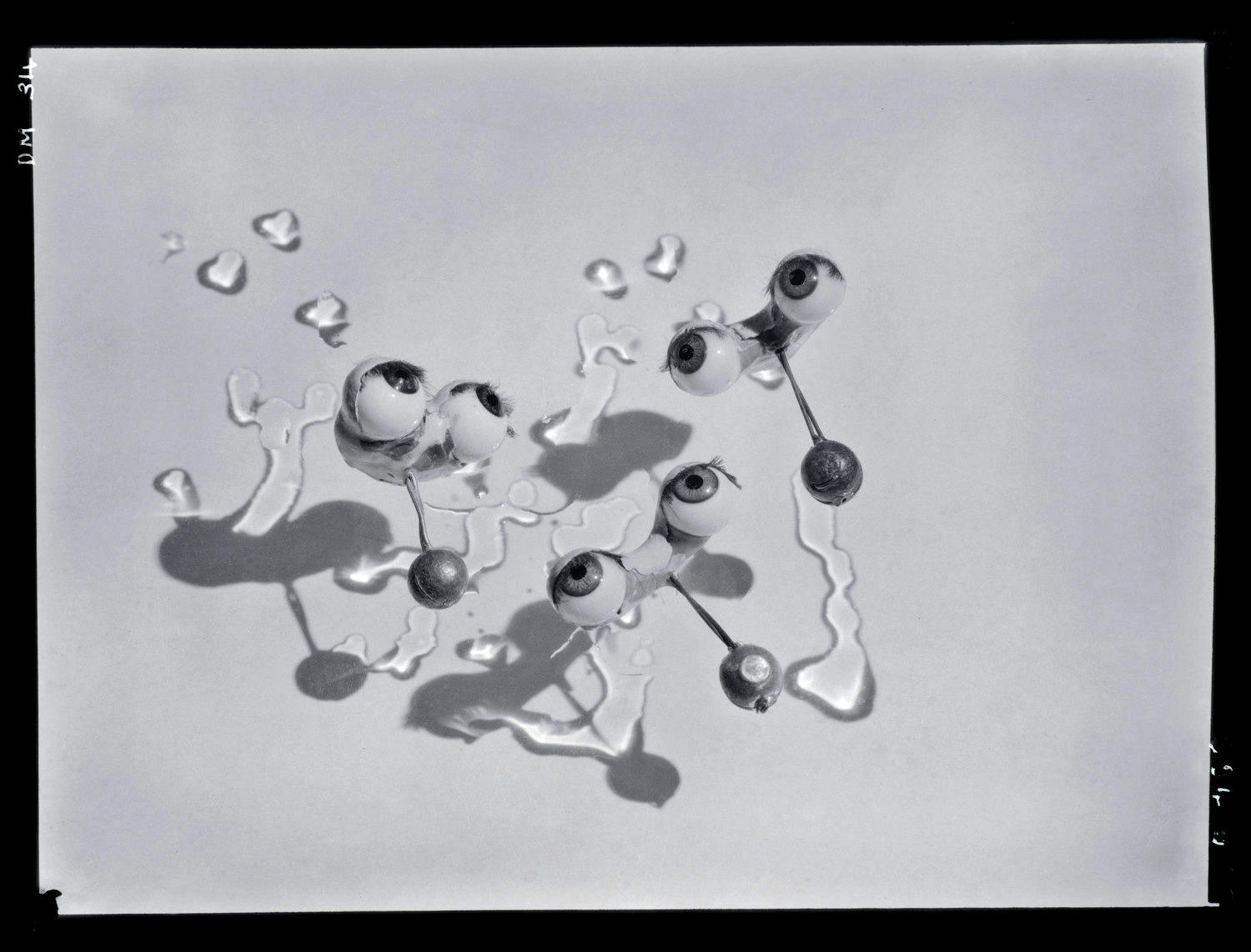
Dora Maar (French, 1907-1997) 'Les yeux' c. 1932-1935


Dora Maar (French, 1907-1997)
Les yeux (The eyes)
c. 1932-1935
Silver print on flexible media
29.5 x 23.5cm
© Centre Pompidou, MNAM-CCI, Dist. RMN-Grand Palais
Image Centre Pompidou, MNAM-CCI, © ADAGP, Paris


Dora Maar (French, 1907-1997) 'Untitled' 1935


Dora Maar (French, 1907-1997)
Untitled
1935
Photomontage
232 x 150 mm
Musée National d’Art Moderne – Centre Pompidou (Paris, France)
© Estate of Dora Maar / DACS 2019, All Rights Reserved


When Maar began her career, the illustrated press was expanding quickly. This created a growing market for experimental photography. Maar embraced this opportunity, exploring the creative potential of staged images, darkroom experiments, collage and photomontage.

Most of Maar’s work had one thing in common: an uncanny atmosphere. Her connection to the surrealists led her to create fantastical images. This included using photomontage to bring together contrasting images and reflect the workings of the unconscious mind.

Unlike many other photomontage creators of this time, Maar did not use photographs taken from illustrated newspapers or magazines. Instead the images often came from her own work, including both street and landscape photography. This experimentation and obvious construction became a defining feature of Maar’s work.

Anonymous text from “Seven Things to Know: Dora Maar,” on the Tate website [Online] Cited 16/11/2019


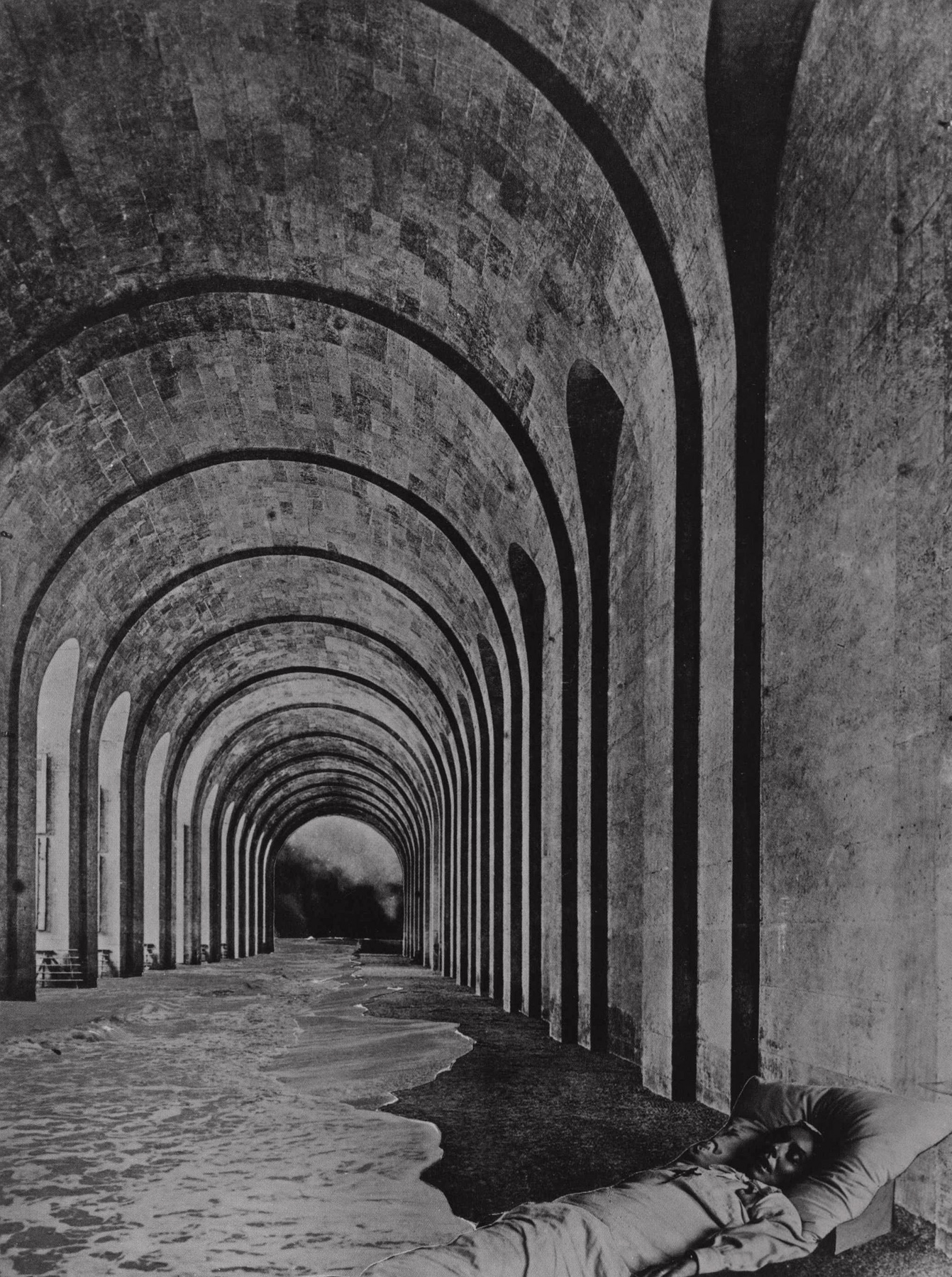
Installation view of the exhibition 'Dora Maar' at Tate Modern, 2019 showing at second left, 'Arcade' (1934)


Installation view of the exhibition Dora Maar at Tate Modern, 2019 showing at second left, Arcade (1934, see below)


Dora Maar. 'Arcade' 1934


Dora Maar (French, 1907-1997)
Arcade
1934
Photomontage


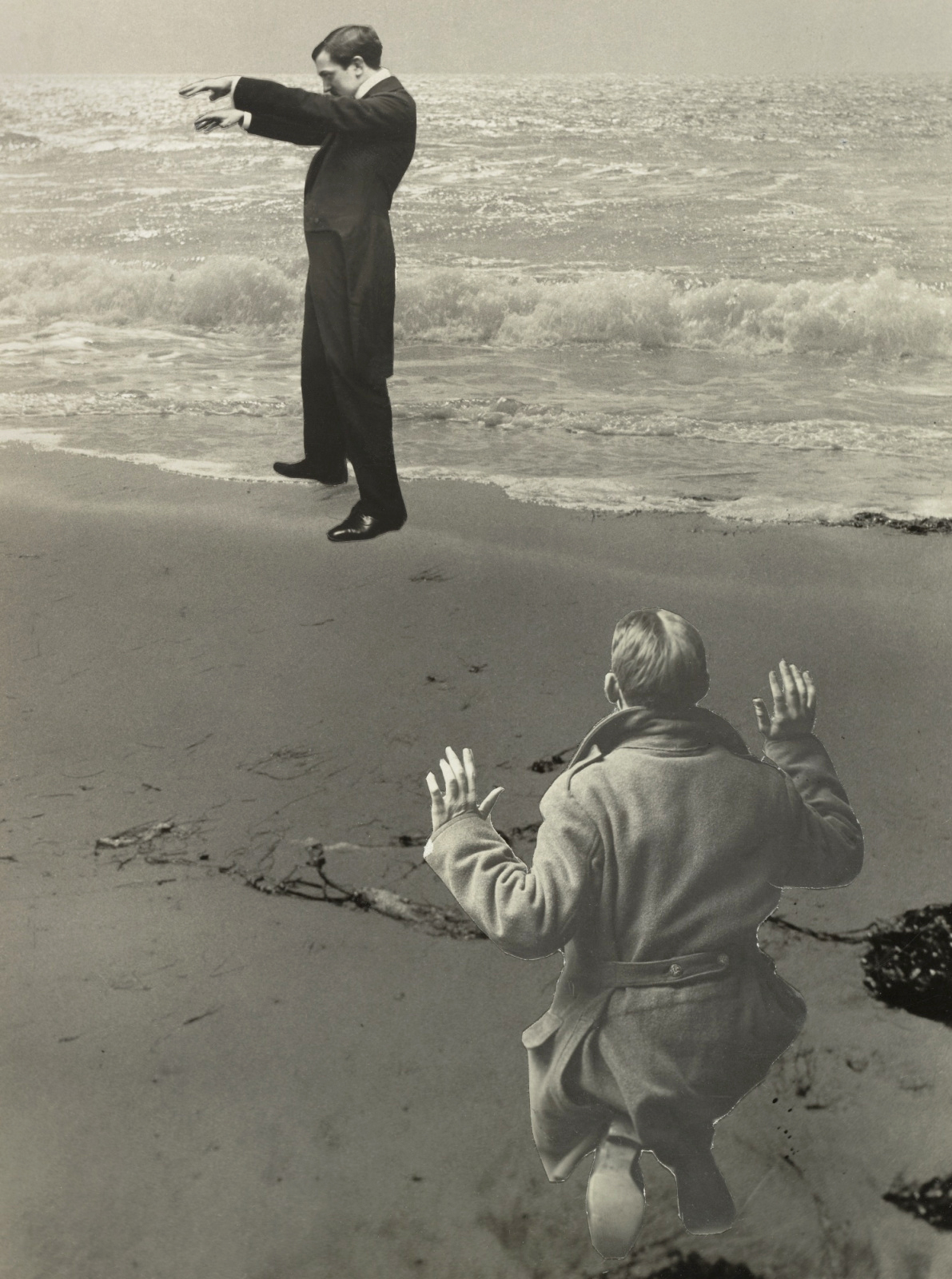
Dora Maar (French, 1907-1997) 'Danger' 1936


Dora Maar (French, 1907-1997)
Danger
1936
Gelatin silver print


Dora Maar (French, 1907-1997) '29 rue d'Astorg' c. 1936


Dora Maar (French, 1907-1997)
29 rue d’Astorg
c. 1936
Photograph, hand-coloured gelatin silver print on paper
294 x 244 mm
Collection Centre Pompidou, Paris. Musée national d’art moderne Centre de création industrielle
Photo: © Centre Pompidou, MNAM-CCI / P. Migeat / Dist. RMN-GP
© ADAGP, Paris and DACS, London 2019


Dora Maar (French, 1907-1997) 'The Simulator' 1936


Dora Maar (French, 1907-1997)
The Simulator
1936
Silver gelatin print printed on a carton
27 x 22.2cm (excluding the margin)
Gift from Marguerite Arp-Hagenbach in 1973
Collection Centre Pompidou, Paris Musée national d’art moderne, Centre de création industrielle
© Adagp, Paris 2019
Photo: © Centre Pompidou, MNAM-CCI / P. Migeat / Dist. RMN-GP


Maar’s early photomontages look almost as modish and styled as her fashion work. From a shell resting on sand, a dummy hand protrudes, with delicate fingers and painted nails, just like Maar’s own (see top image). In a way, the image could be by one of many photographers of the period – Cecil Beaton, say, or Angus McBean – who politely surrealised their pictures, as if the artistic movement were merely a visual style. Except: there is something ominously self-involved about this hybrid thing. The shell and hand recall Bataille’s obsessions with crustaceans, mollusks, and orphaned or butchered body parts. The hand rhymes with similar ones in the photographs of Claude Cahun, where they sometimes have masturbatory implications. And what are we to make of the storm-lit, gothic sky that looms over this auto-curious object?

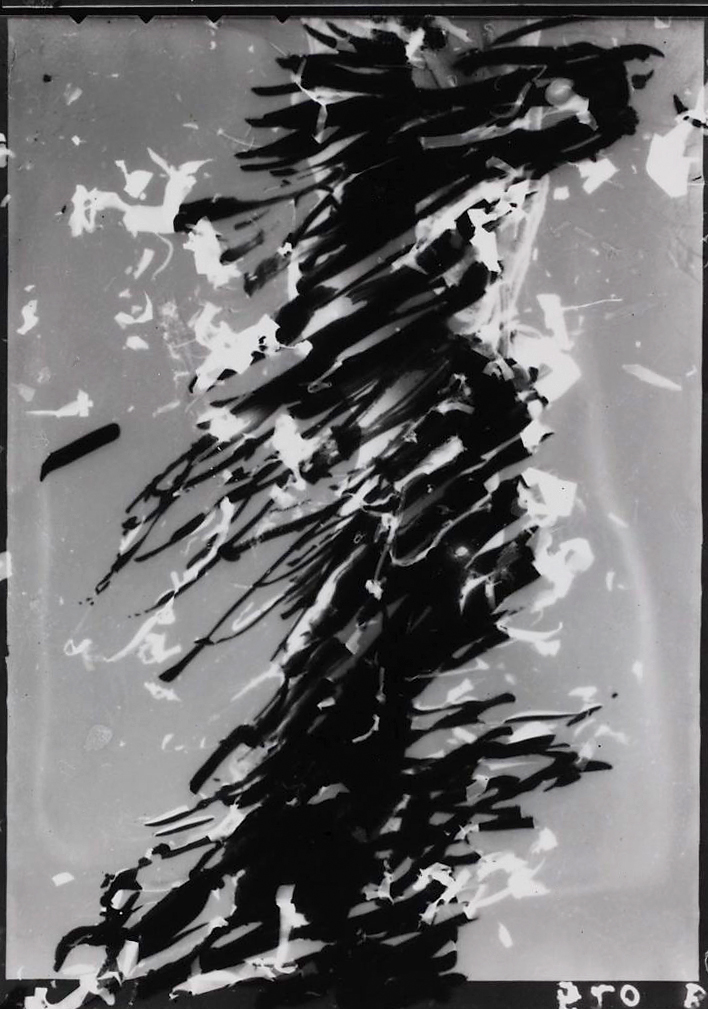
The most accomplished examples of Maar’s art are the photomontages of 1935 and 1936. There were already many vaults and arches in her Mont-Saint-Michel pictures; now she took the cloistral galleries of the Orangerie at Versailles, upended them so that they looked like sewers, and populated them with cryptic beings engaged in arcane rituals or dramas. In “The Simulator,” (above) a boy from one of her street photographs is bent backward at an obscene angle; Maar has retouched his eyes so that they roll back in his head toward us, like one of those thrashing hysterics photographed in the nineteenth century. In “29 Rue d’Astorg” (above) – of which Maar made several versions, black-and-white and hand-coloured – a human figure with a curtailed, avian head is seated beneath arches that have been subtly warped in the darkroom.

Brian Dillon. “The Voraciousness and Oddity of Dora Maar’s Pictures,” on The New Yorker website May 21, 2019 [Online] Cited 23/11/2019


Dora Maar also participated in the Surrealists’ group exhibitions, such as the one at Charles Ratton’s Gallery in 1936, wherein her Portrait of Ubu became the “icon of Surrealism,” according to her biographer Mary Ann Caws in her exceptional book Picasso’s Weeping Woman: The Life and Art of Dora Maar (2000). “She captures the mysterious,” Caws wrote, “in a combination of the unresolved and the sharply angled. This frequently creates a sense of ambiguity, even menace.” (p. 20) Caws notes that Dora Maar responded to Louis Aragon’s invocation “for each person there is one image to find that will disturb the whole universe.” Maar’s images managed to “disturb and reveal” with a bit of the macabre mixed in. (p. 71)

Beth Gersh-Nesic. “Picasso’s Weeping Woman as Artist Instead of Muse: Dora Maar’s Retrospective at Centre Pompidou,” on the Bonjour Paris website July 24, 2019 [Online] Cited 23/11/2019


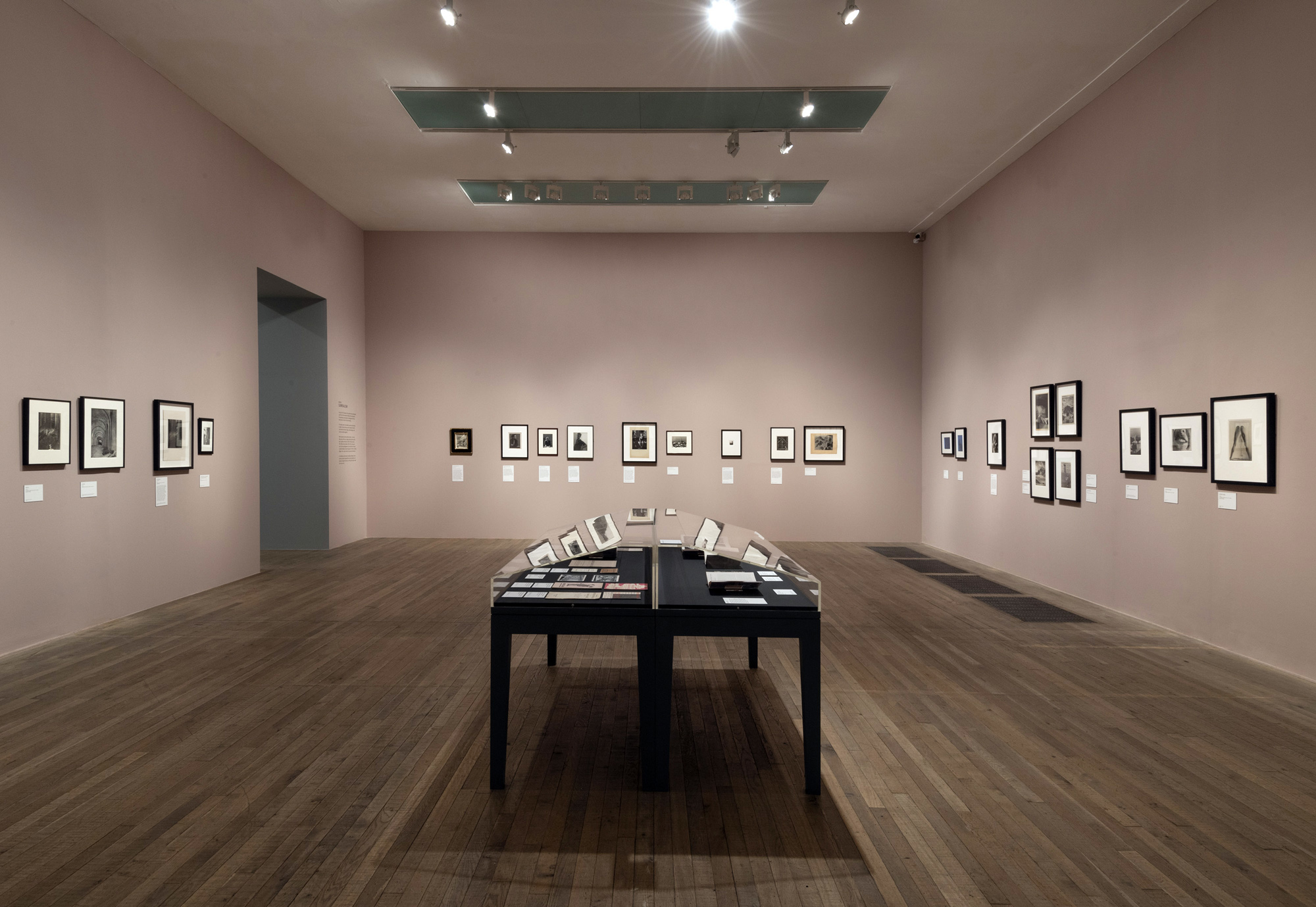
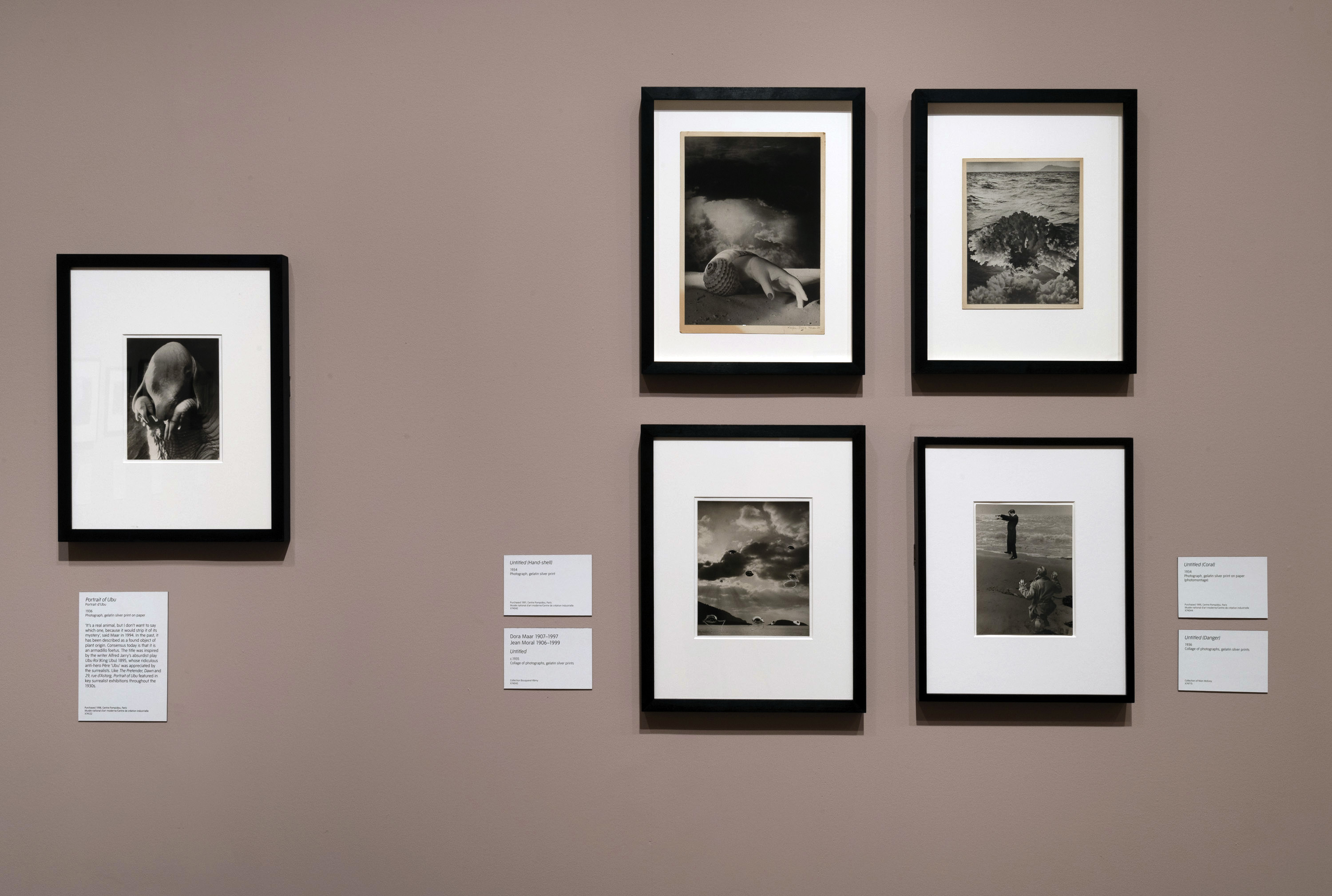
Installation view of the exhibition 'Dora Maar' at Tate Modern, 2019 showing Maar's photographs 'Portrait of Ubu' (1936, left), 'Untitled (Hand-Shell)' (1934, top middle) and 'Danger' (1936, bottom right)


Installation view of the exhibition Dora Maar at Tate Modern, 2019 showing Maar’s photographs Portrait of Ubu (1936, left), Untitled (Hand-Shell) (1934, top middle) and Danger (1936, bottom right) Photo: Tate (Andrew Dunkley)


Dora Maar (French, 1907-1997) 'Portrait of Ubu' 1936


Dora Maar (French, 1907-1997)
Portrait of Ubu
1936
Silver gelatin print
24 x 18cm
Collection Centre Pompidou, Paris, Musée national d’art moderne, Centre de création industrielle
© Adagp, Paris
Photo: © Centre Pompidou, MNAM-CCI / P. Migeat / Dist. RMN-GP


In 1936, at the summit of her celebrity as a photographic artist, Dora Maar showed her picture “Portrait of Ubu” in the International Surrealist Exhibition, at the New Burlington Galleries, London. Named after a scatological, ur-Surrealist play by Alfred Jarry, from 1896, the black-and-white photograph shows a ghastly being of indeterminate origin and melancholy aspect. Maar would never say what the clawed, scaly creature was, nor where she had come across it. Her Ubu has elements of Jarry’s porcine, louse-like original, and, with its doleful eye and drooping ears, it also resembles an ass or an elephant. Scholars generally agree that the monster is in fact an armadillo foetus, preserved in a specimen jar. It is also an idea: something like l’informe, the concept Maar’s lover Georges Bataille coined to describe his fellow-Surrealists’ admiration for all things larval and grotesquely about-to-be.

Brian Dillon. “The Voraciousness and Oddity of Dora Maar’s Pictures,” on The New Yorker website May 21, 2019 [Online] Cited 23/11/2019


Installation view of the exhibition 'Dora Maar' at Tate Modern, 2019 showing her series of portrait photomontages from the mid-1930s


Installation view of the exhibition Dora Maar at Tate Modern, 2019 showing her series of portrait photomontages from the mid-1930s (see below)


Dora Maar (French, 1907-1997) 'Double Portrait with Hat' c. 1936-1937


Dora Maar (French, 1907-1997)
Double Portrait with Hat
c. 1936-37
Gelatin silver print, montage with handwork on negative
Image: 29.8 x 23.8cm (11 3/4 x 9 3/8 in.)
Gift of David Raymond
The Cleveland Museum of Art
© Artists Rights Society (ARS), New York / ADAGP, Paris


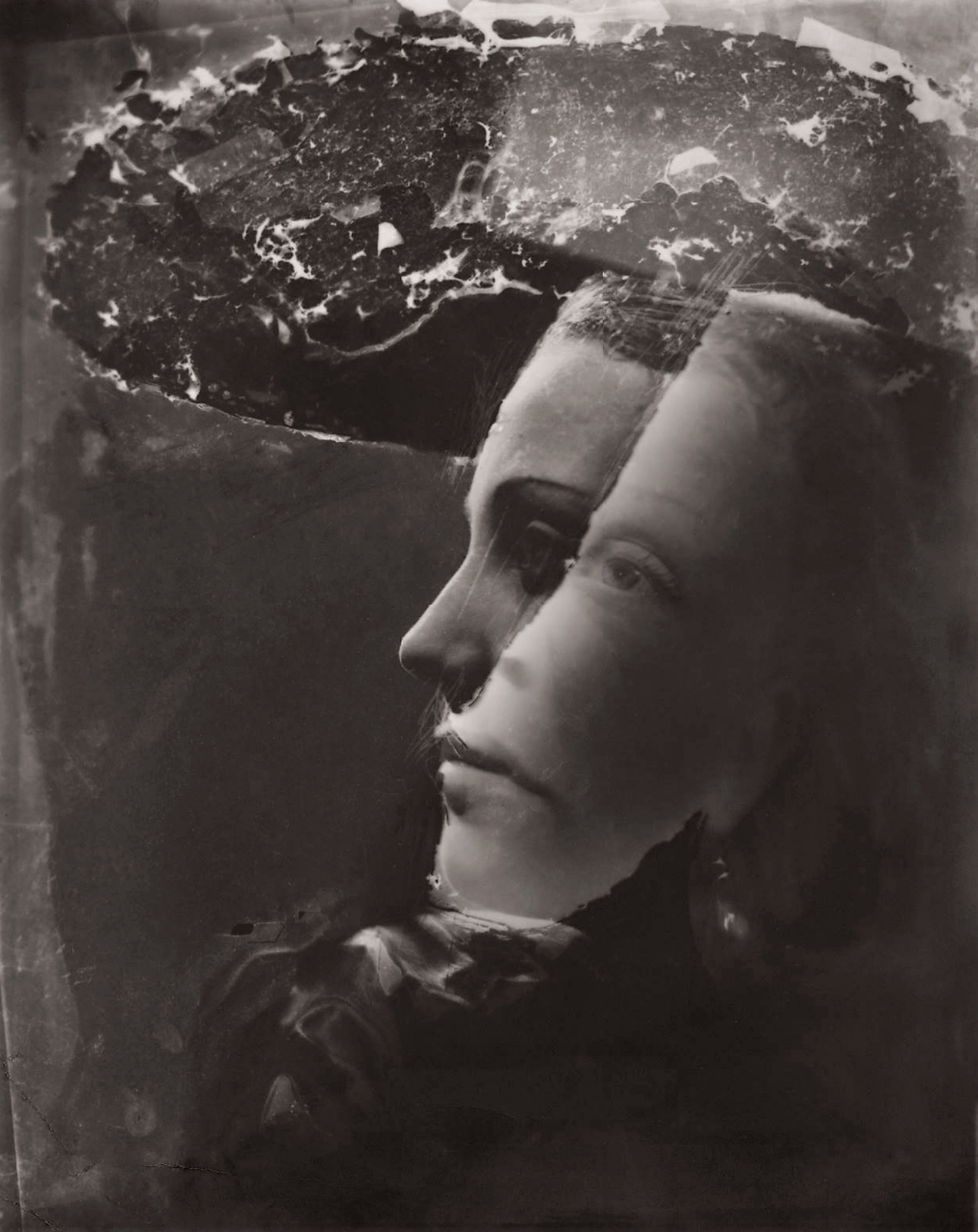
To produce this complex image, Maar sandwiched together two negatives of the same model, one frontal and one profile, scavenged from a magazine assignment on springtime hats, and painted the background and hat (or decomposing halo?) onto the negative. Softening the emulsion, she scraped and lifted it off, techniques that involve destruction and suggest disintegration. The face evokes Picasso’s depictions of female faces, especially his 1938 paintings of weeping women for which Maar was the model. Although the divided face is not Maar’s, it is tempting to interpret it as a reflection of her emotional state at the time, torn between her career and independence and Picasso’s demands and potent personality. frontal and one profile, scavenged from a magazine assignment on springtime hats, and painted the background and hat (or decomposing halo?) onto the negative. Softening the emulsion, she scraped and lifted it off, techniques that involve destruction and suggest disintegration. The face evokes Picasso’s depictions of female faces, especially his 1938 paintings of weeping women for which Maar was the model. Although the divided face is not Maar’s, it is tempting to interpret it as a reflection of her emotional state at the time, torn between her career and independence and Picasso’s demands and potent personality.

Text from The Cleveland Museum of Art website [Online] Cited 16/11/2019


Dora Maar (French, 1907-1997) 'Profile portrait with glasses and hat' 1930-1935


Dora Maar (French, 1907-1997)
Profile portrait with glasses and hat
1930-1935
Gelatin silver print
© Dora Maar Estate/Artists Rights Society (ARS), New York/ADAGP, Paris


Dora Maar (French, 1907-1997) 'Man looking inside a sidewalk inspection door, London' c. 1935


Dora Maar (French, 1907-1997)
Man looking inside a sidewalk inspection door, London
c. 1935
Gelatin silver print
Collection of Michael Mattis and Judith Hochberg, New York
Courtesy art2art Circulating Exhibitions
© Estate of Dora Maar / DACS 2019, All Rights Reserved​


Maar became involved with the surrealists from 1933 and was one of the few artists – and even fewer women – to be included in the surrealists’ exhibitions. She became close to the group because of their shared left-wing politics at a time of social and civil unrest in France.

Maar’s photography and photomontages explore surrealist themes such as eroticism, sleep, the unconscious and the relationship between art and reality. Cropped frames, dramatic angles, unexpected juxtapositions and extreme close-ups are used to create surreal images. Contrasting with the idea of a photograph as a factual record, Maar’s scenes disorientate the viewer and create new worlds altogether.

Anonymous text from “Seven Things to Know: Dora Maar,” on the Tate website [Online] Cited 16/11/2019


Installation view of the exhibition 'Dora Maar' at Tate Modern, 2019 showing Maar's photographs 'Portrait of Nusch Éluard' (1935, left) and 'Les années vous guettent' (The Years are Waiting for You) (1932, right)


Installation view of the exhibition Dora Maar at Tate Modern, 2019 showing Maar’s photographs Portrait of Nusch Éluard (1935, left) and Les années vous guettent (The Years are Waiting for You) (1932, right)


Dora Maar (French, 1907-1997) 'Portrait of Nusch Éluard' 1935


Dora Maar (French, 1907-1997)
Portrait of Nusch Éluard
1935
Gelatin silver print


Dora Maar (French, 1907-1997) 'Les années vous guettent' (The Years are Waiting for You) 1932


Dora Maar (French, 1907-1997)
Les années vous guettent (The Years are Waiting for You)
1932
Gelatin silver print
© Dora Maar Estate/Artists Rights Society (ARS), New York/ADAGP, Paris


Dora Maar (French, 1907-1997) 'Untitled' c. 1940


Dora Maar (French, 1907-1997)
Untitled
c. 1940
Gelatin silver print


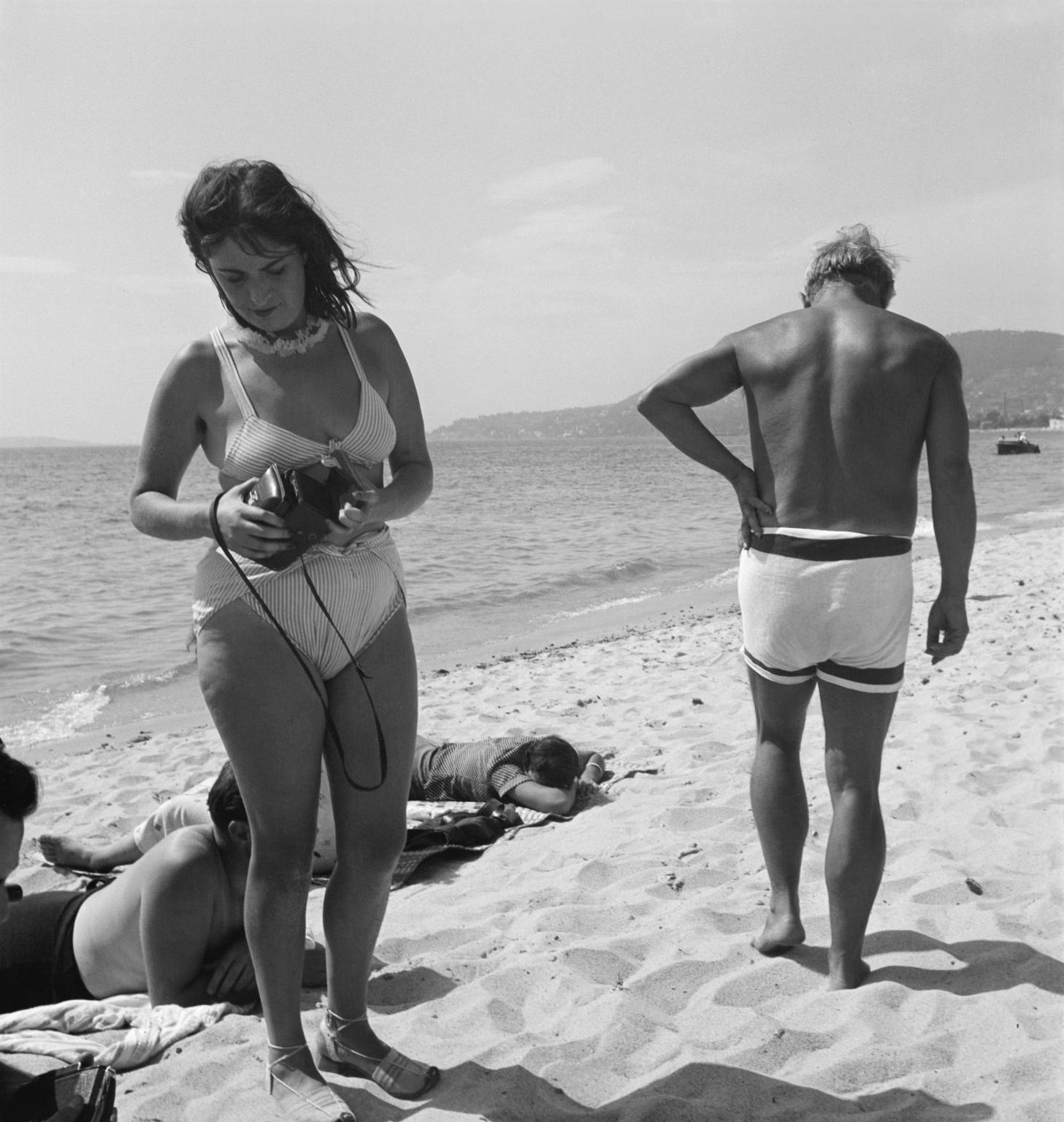
Eileen Agar (1899-1991) 'Photograph of Dora Maar and Pablo Picasso on the beach' September 1937


Eileen Agar (British-Argentinian, 1899-1991)
Photograph of Dora Maar and Pablo Picasso on the beach
September 1937
Gelatin silver print
68 x 60 mm
Taken in Juan-les-pins, France
Tate Archive
Presented to Tate Archive by Eileen Agar in 1989 and transferred from the photograph collection in 2012


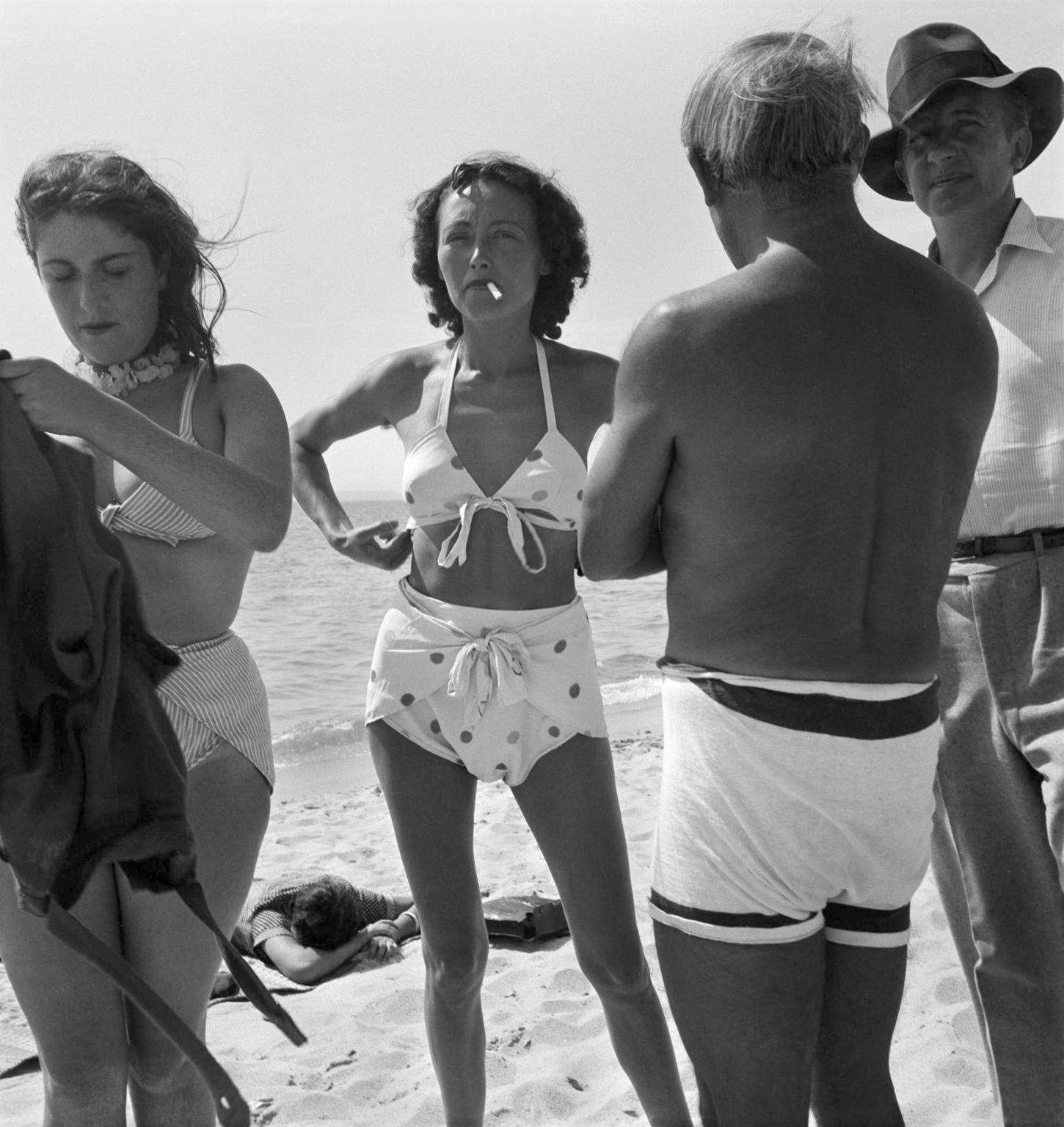
Eileen Agar (1899-1991) 'Photograph of Dora Maar, Nusch Éluard, Pablo Picasso and Paul Éluard on the beach' September 1937


Eileen Agar (British-Argentinian, 1899-1991)
Photograph of Dora Maar, Nusch Éluard, Pablo Picasso and Paul Éluard on the beach
September 1937
Gelatin silver print
66 x 66 mm
Taken in Juan-les-pins, France
Tate Archive
Presented to Tate Archive by Eileen Agar in 1989 and transferred from the photograph collection in 2012


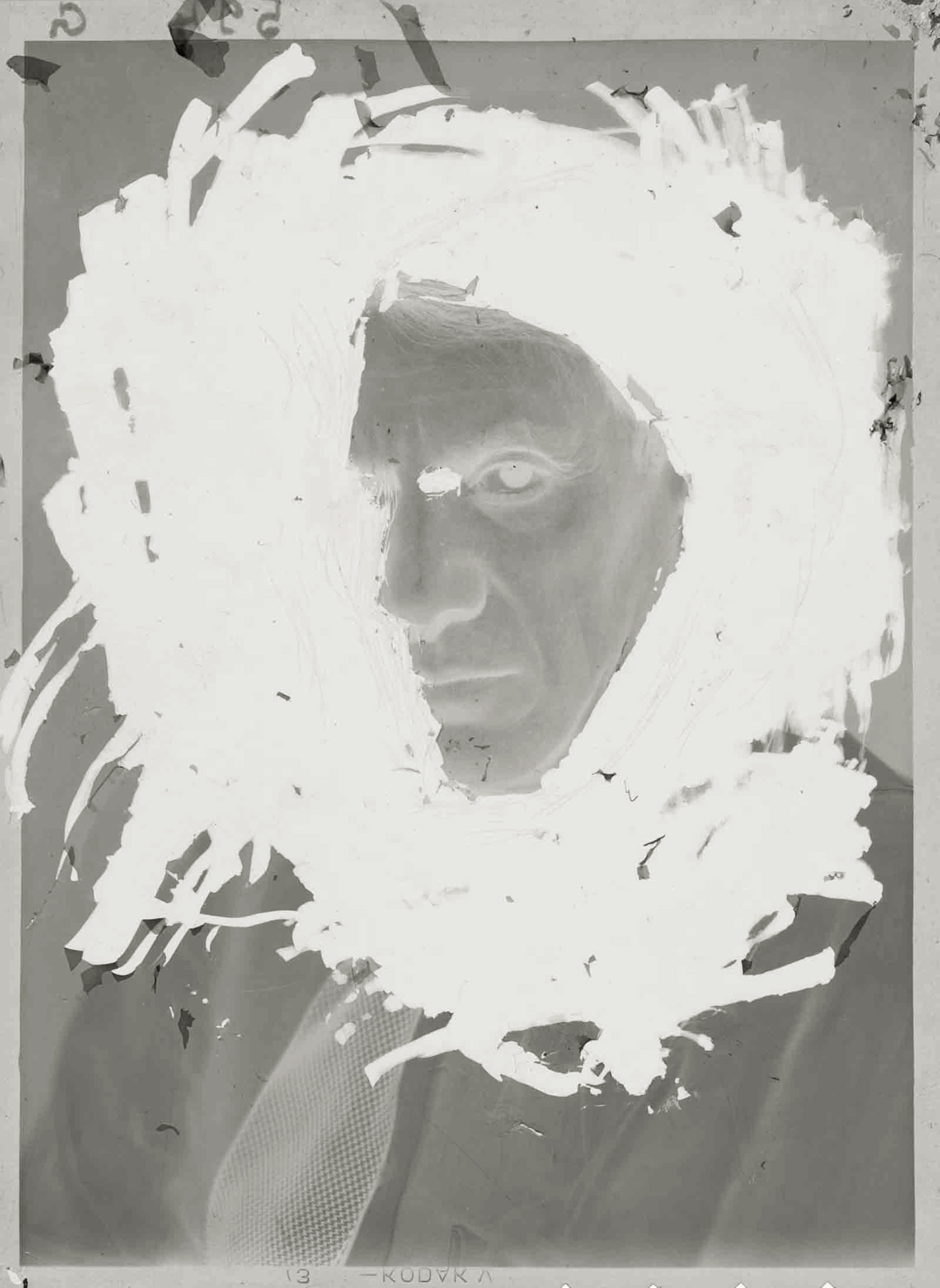
Dora Maar (French, 1907-1997) 'Portrait of Picasso, Paris, studio 29, rue d'Astorg' Winter, 1935


Dora Maar (French, 1907-1997)
Portrait of Picasso, Paris, studio 29, rue d’Astorg
Winter, 1935
Silver gelatin negative on flexible support in cellulose nitrate
12 x 9cm
Collection Centre Pompidou, Paris Musée national d’art moderne Centre de création industrielle
© Adagp, Paris 2019
Photo: © Centre Pompidou, MNAM-CCI / Dist. RMN-GP


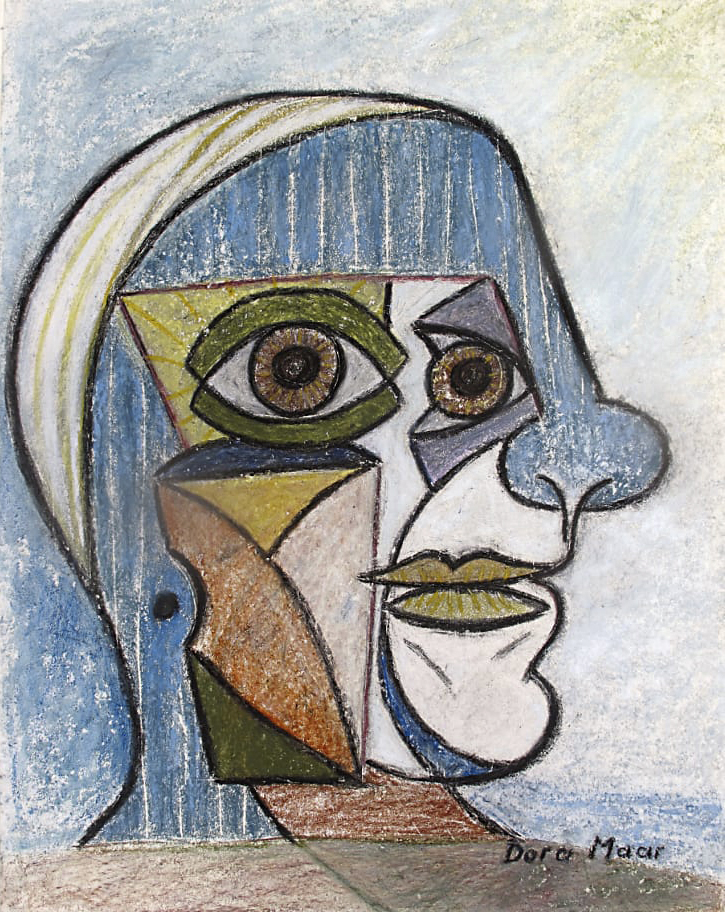
Dora Maar (French, 1907-1997) 'Portrait of Pablo Picasso' 1936


Dora Maar (French, 1907-1997)
Portrait of Pablo Picasso
1936
Pastel on paper
57.5 x 45cm
Private collection, Yann Panier
Courtesy Galerie Brame and Lorenceau
© Adagp, Paris 2019
© The Museum of Fine Arts, Houston


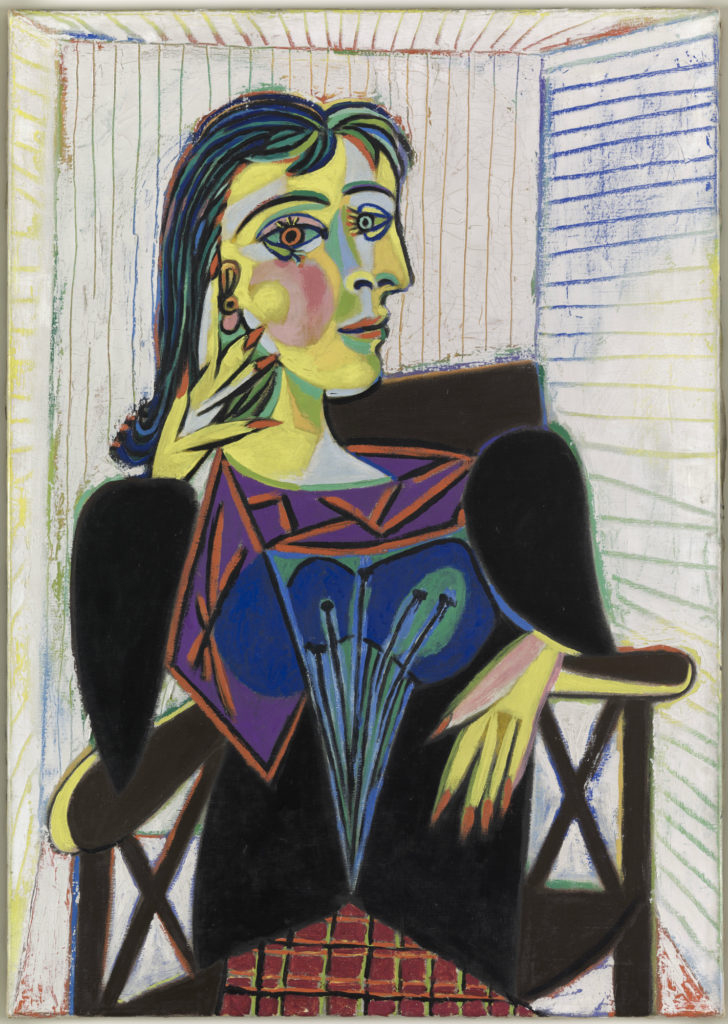
Pablo Picasso (Spanish, 1881-1973) 'Portrait of Dora Maar' 1937


Pablo Picasso (Spanish, 1881-1973)
Portrait of Dora Maar
1937
Musée National Picasso-­Paris
Copyright RMN-Grand Palais, Mathieu Rabeau and Succession Picasso, 2018


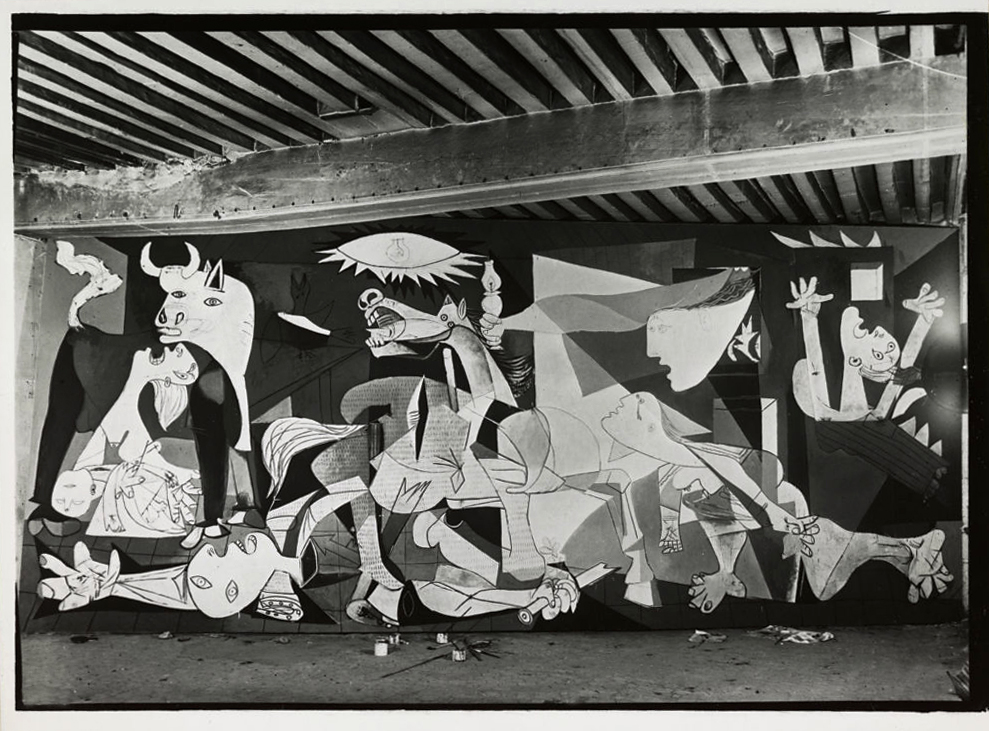
Dora Maar (French, 1907-1997) 'Guernica' May-June, 1937


Dora Maar (French, 1907-1997)
Guernica
May-June, 1937
Gelatin silver print
Musée National Picasso-­Paris
Copyright RMN-Grand Palais, Mathieu Rabeau and Succession Picasso, 2018


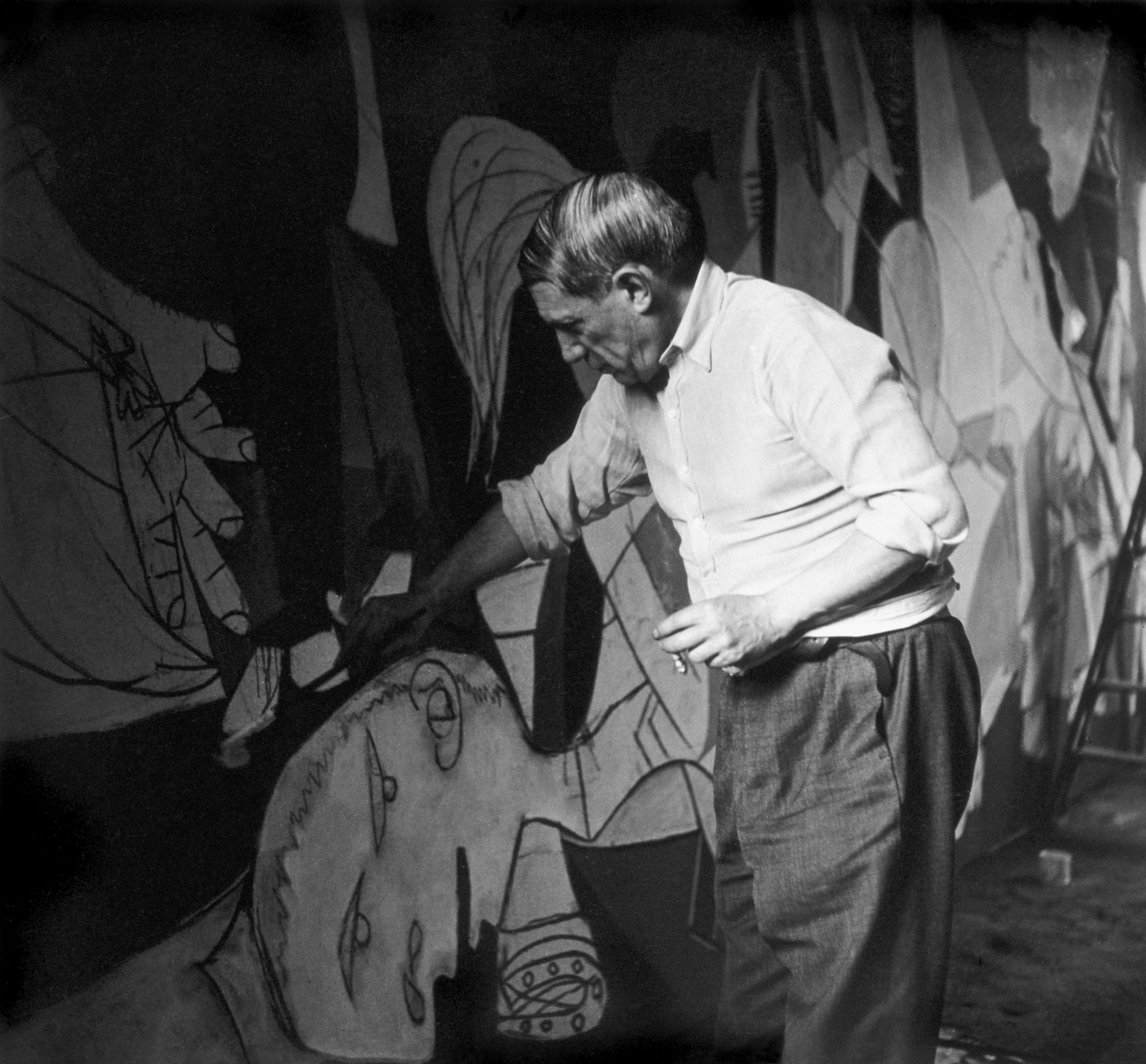
Dora Maar. 'Picasso working on "Guernica"' 1937


Dora Maar (French, 1907-1997)
Picasso working on “Guernica”
1937
Gelatin silver print
Courtesy VEGAP / Museo Nacional Centro de Arte Reina Sofia


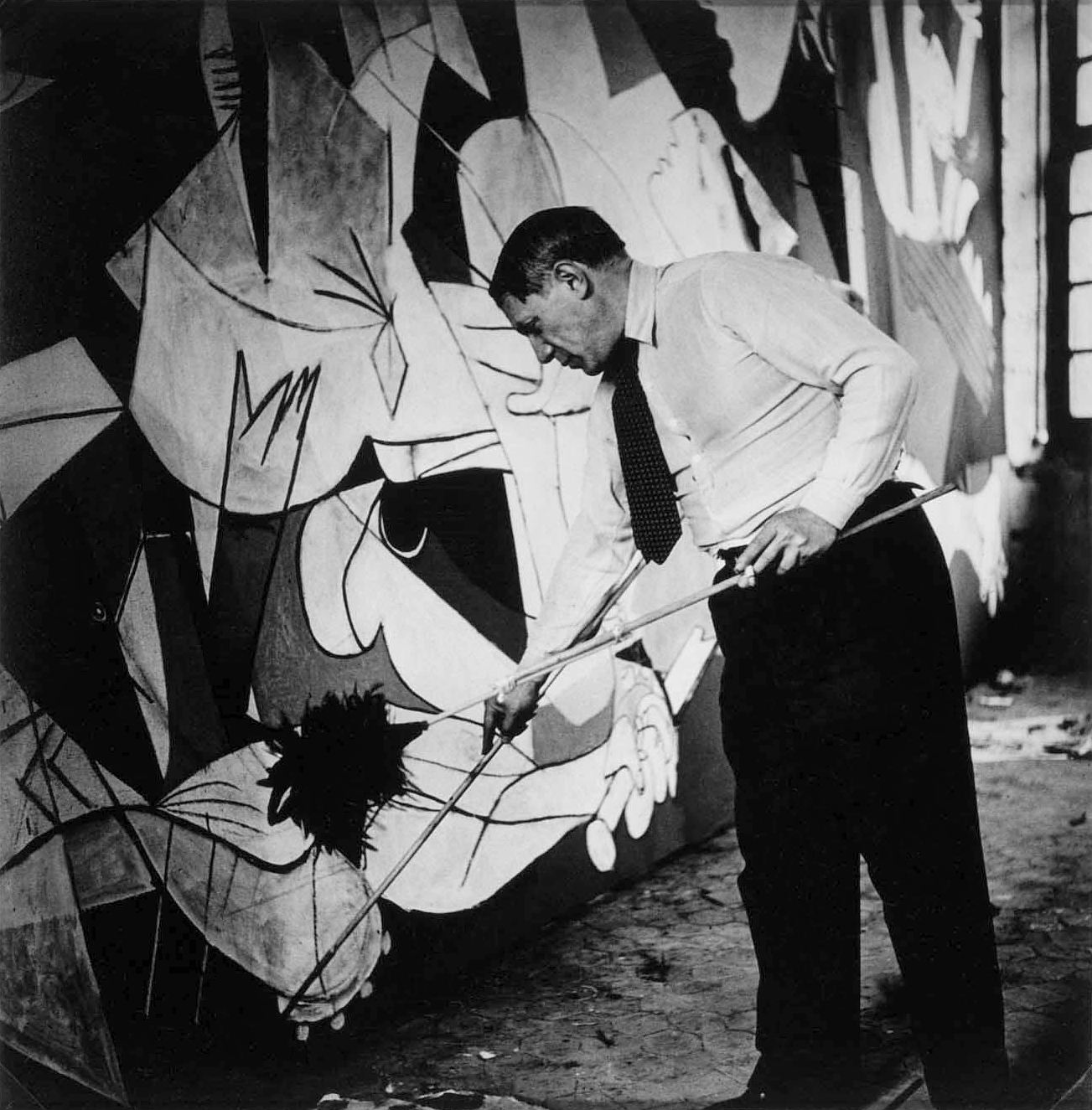
Dora Maar. 'Picasso working on "Guernica"' 1937


Dora Maar (French, 1907-1997)
Picasso working on “Guernica”
1937
Gelatin silver print
Courtesy VEGAP / Museo Nacional Centro de Arte Reina Sofia


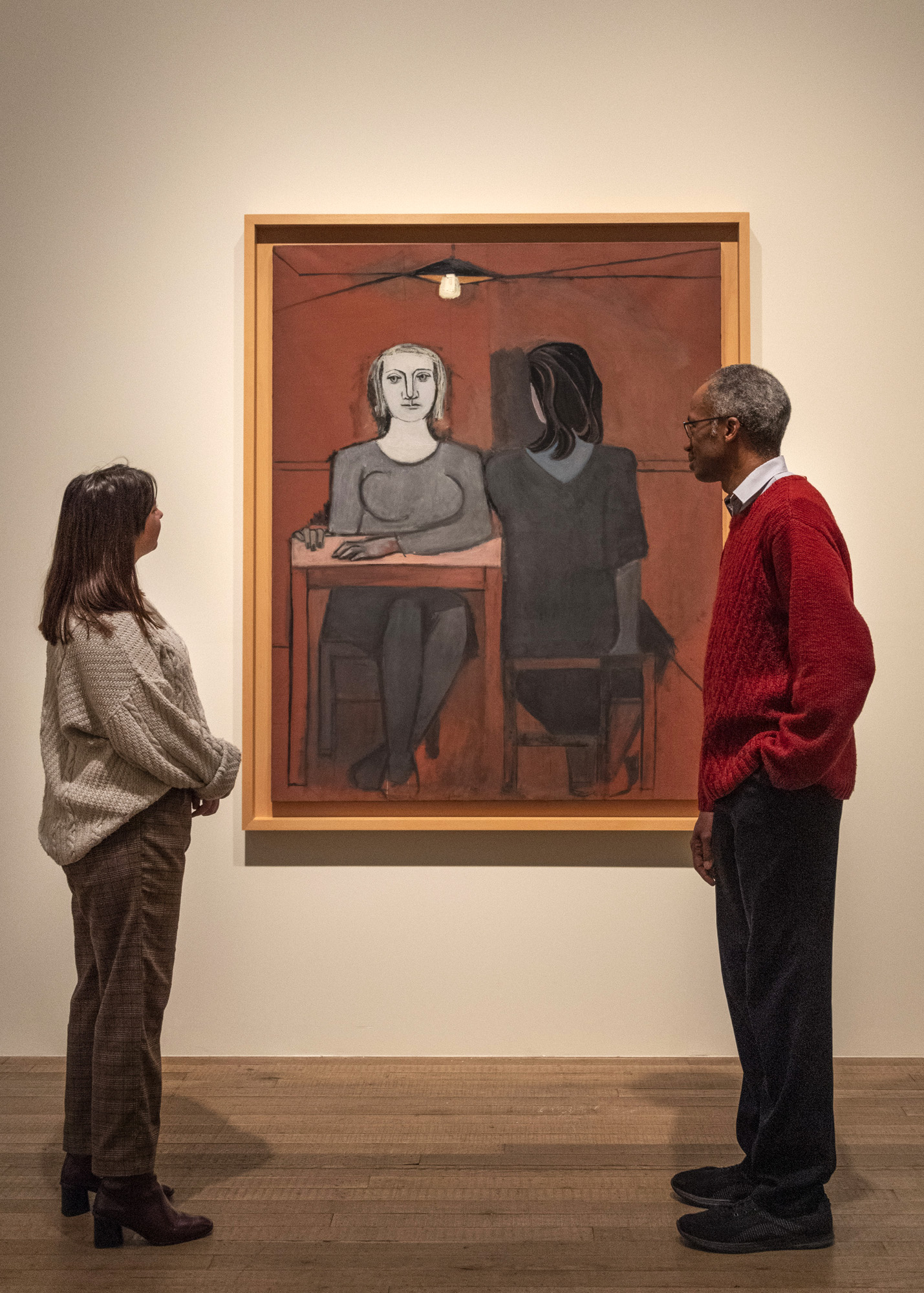
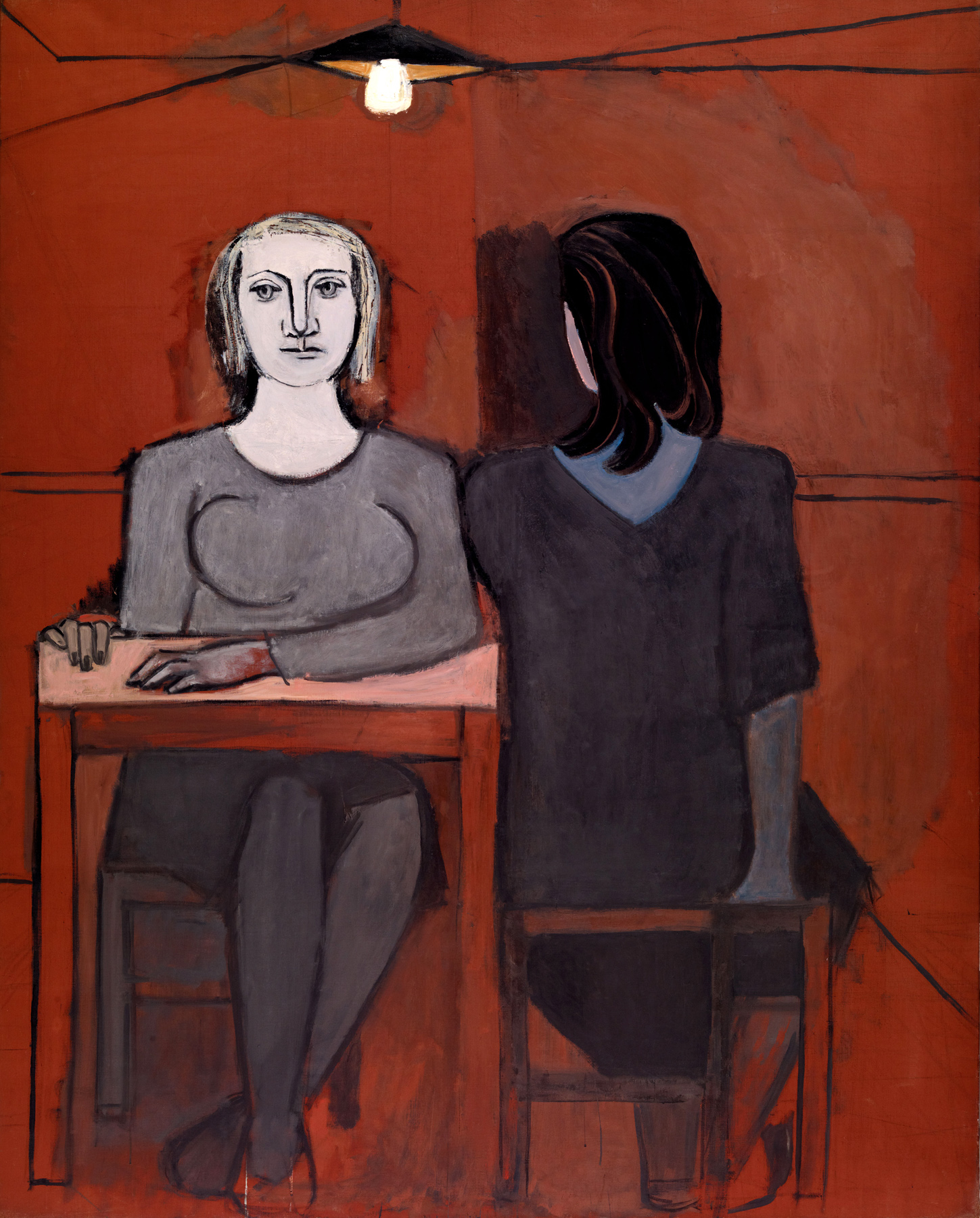
Installation view of the exhibition 'Dora Maar' at Tate Modern, 2019 showing Maar's painting 'The Conversation' 1937


Installation view of the exhibition Dora Maar at Tate Modern, 2019 showing Maar’s painting The Conversation 1937
Photo: Tate (Andrew Dunkley)


Dora Maar (French, 1907-1997) 'The Conversation' 1937


Dora Maar (French, 1907-1997)
The Conversation
1937
Oil on canvas
162 x 130cm
Fundación Almine y Bernard Ruiz-Picasso para el Arte, Madrid
© FABA © ADAGP, Paris and DACS, London 2019
Photo: Marc Domage


“I must dwell apart in the desert,” the artist and surrealist photographer Dora Maar once said. “I want to create an aura of mystery about my work. People must long to see it.

“I’m still too famous as Picasso’s mistress to be accepted as a painter.”

These words form part of a conversation recorded by Maar’s friend, the art writer James Lord, in his memoir “Picasso and Dora.” During the exchange, the French artist also explains how she rationalised the work of her later years, given that she rarely exhibited and was not in demand. …

With its deliberate focus on their art, the exhibition doesn’t address certain troubling questions about the pair’s unequal personal relationship. In her memoirs, Picasso’s later lover, Françoise Gilot, recounted the brutal bullying to which the artist subjected Maar. Picasso once described the time that Maar and a previous lover, Marie-Thérèse Walter, came to blows in his studio as one of his “choicest memories.”

It’s a subject Maar didn’t shy away from in her art, painting herself alongside Walter in “The Conversation,” one of the works on show at the Tate Modern. Maar is depicted facing away while Walter looks directly at the viewer.

During the aforementioned exchange with James Lord, Maar told the writer that Picasso’s portraits of her were “lies.” But the struggle for recognition she went on to describe is more insightful – that she had to survive in the “desert” to be celebrated on her own terms.

Max Ramsay. “Dora Maar is no longer Picasso’s ‘Weeping Woman’,” on the CNN website 20th November 2019 [Online] Cited 23/11/2019


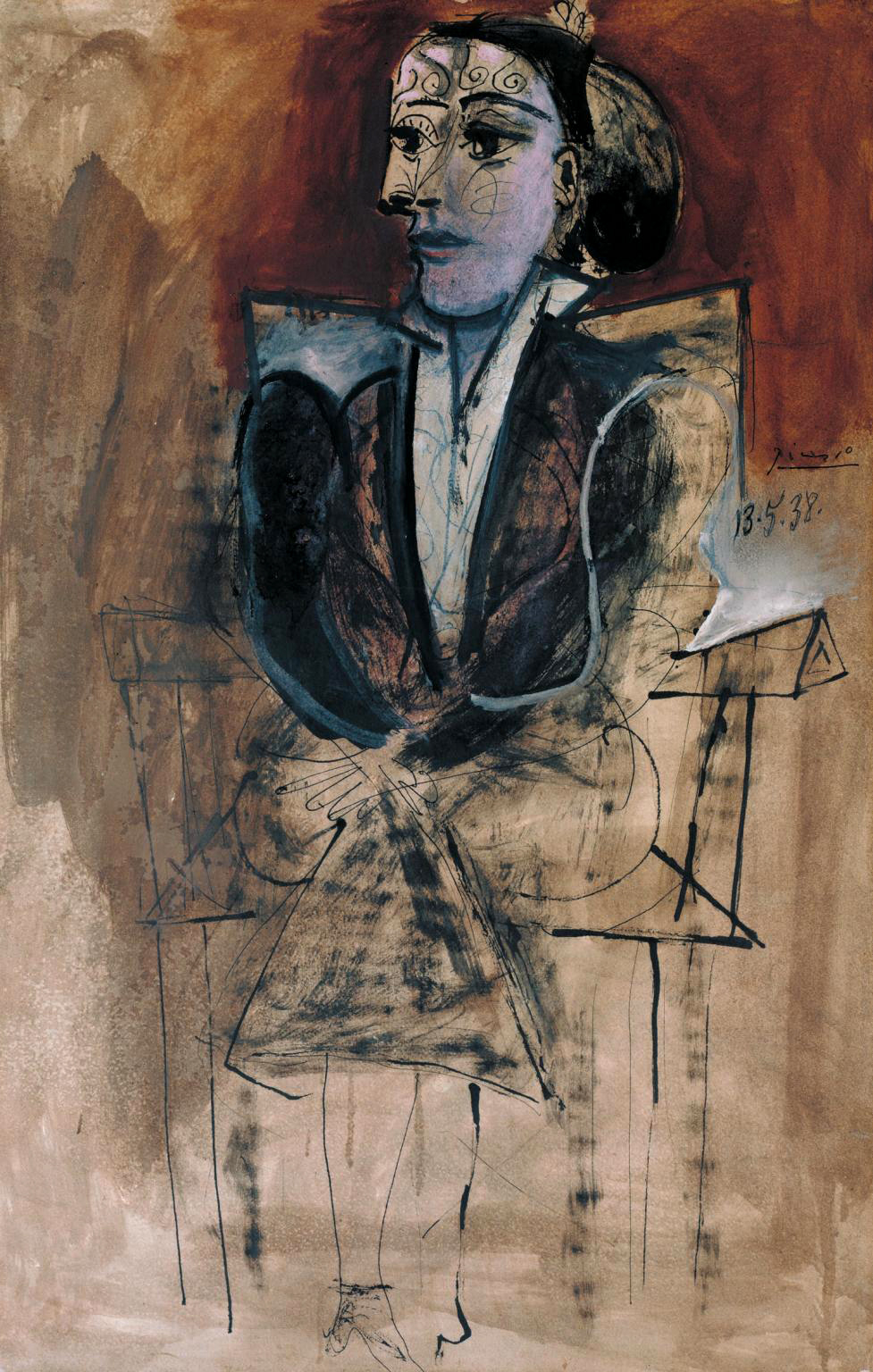
Pablo Picasso (Spanish, 1881-1973) 'Dora Maar seated' 1938


Pablo Picasso (Spanish, 1881-1973)
Dora Maar seated
1938
Ink, gouache and oil paint on paper on canvas
Support: 689 x 625 mm
Frame: 925 x 685 x 120 mm
Tate
Purchased 1960


In late 1935 or early 1936, Maar met Pablo Picasso. They became lovers soon afterwards. She was at the height of her career, while he was emerging from what he described as ‘the worst time of my life’. He had not sculpted or painted for months.

Their relationship had a huge affect on both their careers. Maar documented the creation of Picasso’s most political work, Guernica 1937, encouraged his political awareness and educated him in photography. Specifically, Maar taught Picasso the cliché verre technique – a complex method combining photography and printmaking.

Picasso painted Maar in numerous portraits, including Weeping Woman 1937. However, Maar explained that she felt this wasn’t a portrait of her. Instead it was a metaphor for the tragedy of the Spanish people. Picasso also encouraged Maar to return to painting. The flattened features and bold outlines of the cubist-style portraits Maar made at this time suggest Picasso’s influence. By 1940 her passport listed her profession as ‘photographer-painter’.

Anonymous text from “Seven Things to Know: Dora Maar,” on the Tate website [Online] Cited 16/11/2019


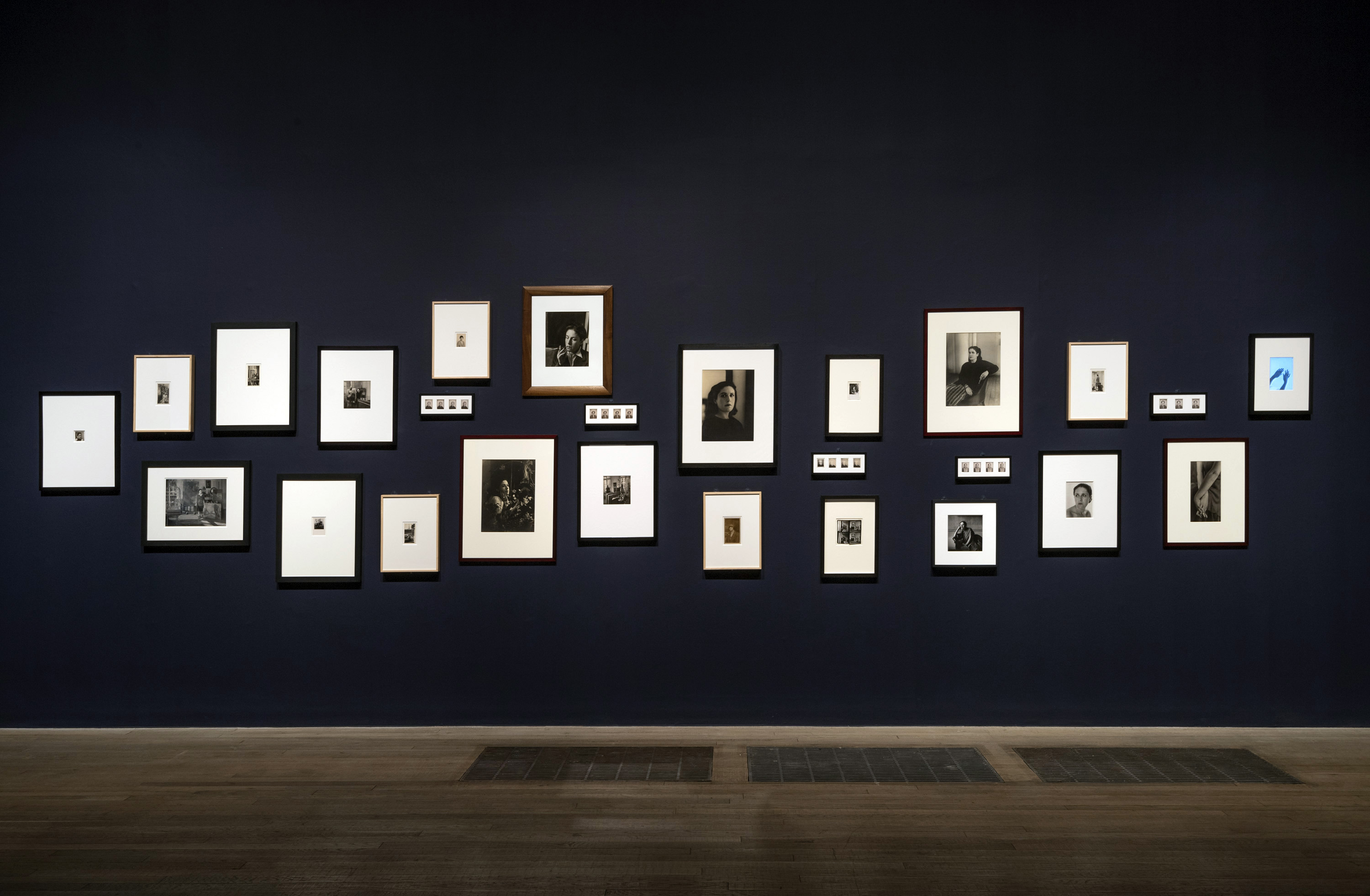
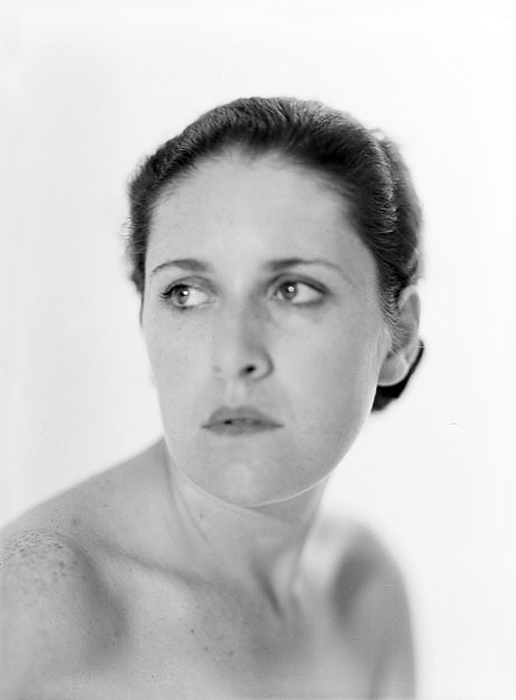
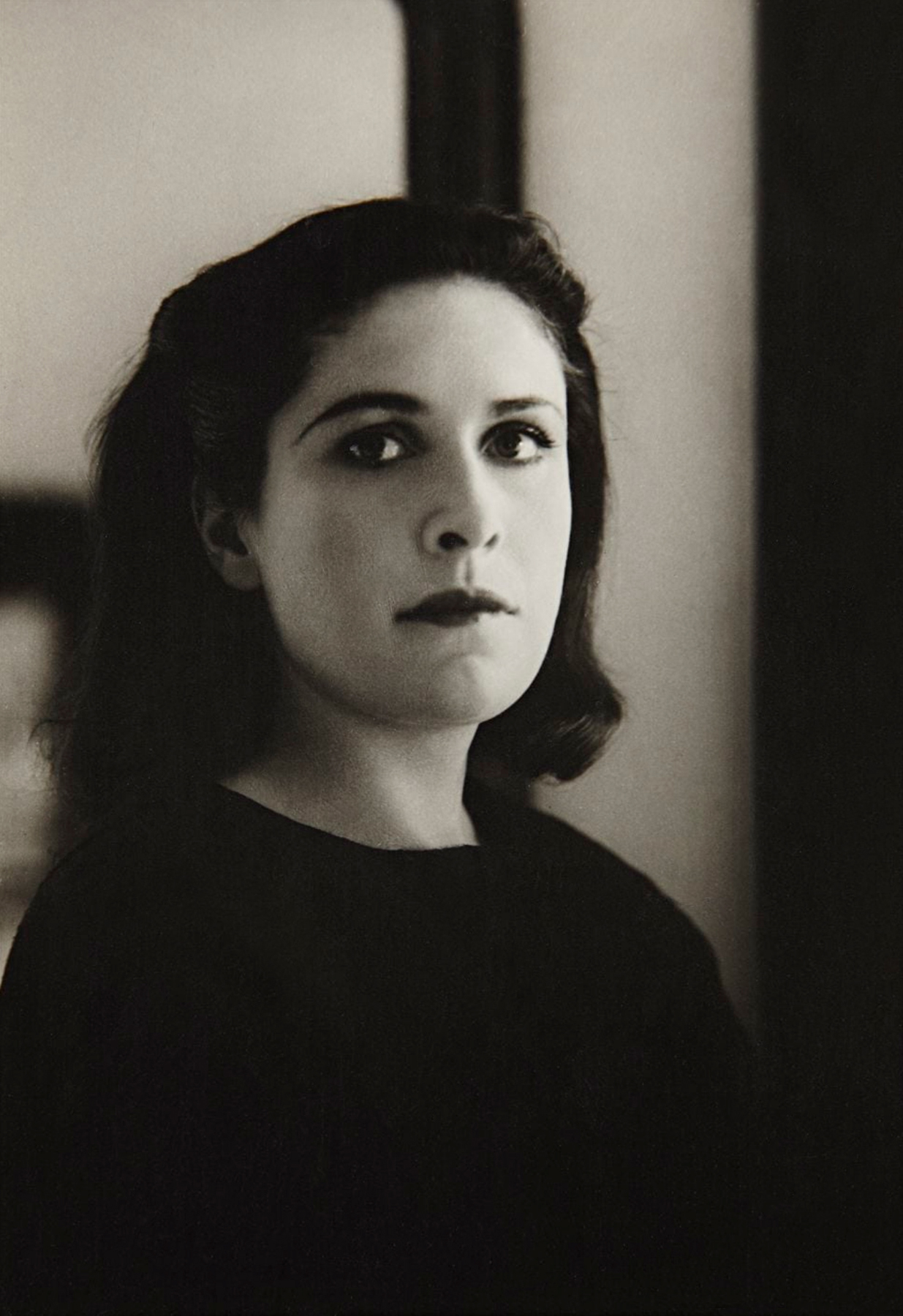
Installation view of the exhibition 'Dora Maar' at Tate Modern, 2019 showing portraits of the artist by numerous artists


Installation view of the exhibition Dora Maar at Tate Modern, 2019 showing portraits of the artist by numerous artists, some of which you can see below


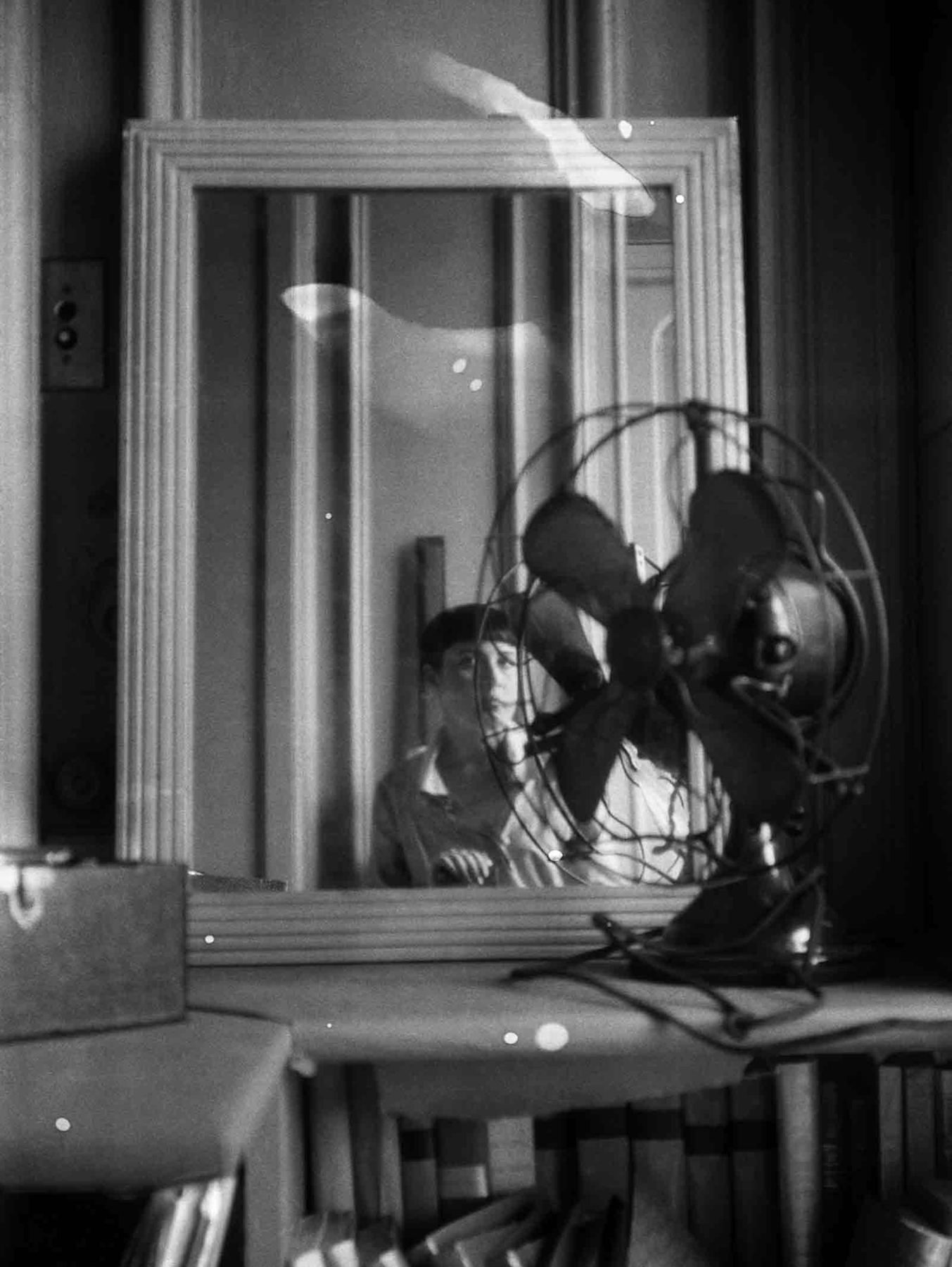
Dora Maar (French, 1907-1997) 'Self-portrait with Fan' 1930


Dora Maar (French, 1907-1997)
Self-portrait with Fan
1930
Gelatin silver print


Emmanuel Sougez (French, 1889-1972) 'Dora Maar' Paris, 1934


Emmanuel Sougez (French, 1889-1972)
Dora Maar
Paris, 1934
Gelatin silver print


Dora Maar considered the French commercial photographer Emmanuel Sougez (1889-1972) her mentor. Her first commission was a book on Mont-Saint-Michel written by art critic Germain Bazin. She collaborated with the stage-set designer Pierre Kéfer in 1931. From that experience they formed a business partnership, set up at first in his parents’ garden in Neuilly and then moving to their own studio at 9 rue Campagne-Première, lent by the Polish photographer Harry Ossip Meerson (1910-1991), younger brother of the cinema art director Lazare Meerson (1900-1938), who had worked with Kéber at Film Albatros studio in the mid-1920s. Harry Meerson also lent out his darkroom to the Hungarian photographer Brassai (Gyula Halász, 1899-1984), who became Dora Maar’s close friend. Her contact with Brassai brought her into the Surrealist circle.

The Kéfer-Dora Maar studio produced glamorous, innovative images for advertising and portraits, becoming part of the booming industry of commercial photography in glossy magazines. It was a fertile context for Dora Maar’s imagination. Her perspective on the modern women of the 1930s produced models oozing with elegant sensuality. Cool, natural, sometimes athletic, sometimes aristocratic, the Kéfer-Dora Maar female gave off a whiff of eroticise insouciance that emanated from Dora’s own disposition. This conceptualisation of contemporary beauty fed the appetite for luxury and leisure time activities, despite the Great Depression. It was a fantasy for some, a reality for others. During this period of working intensely with Pierre Kéfer, Dora had affairs with the filmmaker Louis Chavance (c. 1932-1933) and the erotically transgressive writer Georges Bataille (late 1933-1934). The Kéfer-Dora Maar studio closed in 1934.

Beth Gersh-Nesic. “Picasso’s Weeping Woman as Artist Instead of Muse: Dora Maar’s Retrospective at Centre Pompidou,” on the Bonjour Paris website July 24, 2019 [Online] Cited 23/11/2019


Man Ray (American, 1890-1976) 'Portrait of Dora Maar' 1936


Man Ray (American, 1890-1976)
Portrait of Dora Maar
1936
Gelatin silver print


Rogi André (née Rosa Klein) 'Dora Maar, Paris' 1941


Rogi André (née Rosa Klein) (French born Hungary, 1900-1970)
Dora Maar, Paris
1941
Gelatin silver print
6 1/2 x 4 1/2 in. (16.5 x 11.4cm)


Brassaï (French-Hungarian, 1899-1984) 'Dora Maar in her workshop rue de Savoie' 1943


Brassaï (French-Hungarian, 1899-1984)
Dora Maar dans son atelier rue de Savoie (Dora Maar in her workshop rue de Savoie)
1943
Gelatin silver print
© Adagp, Paris 2019 / Estate Brassaï – RMN-Grand Palais


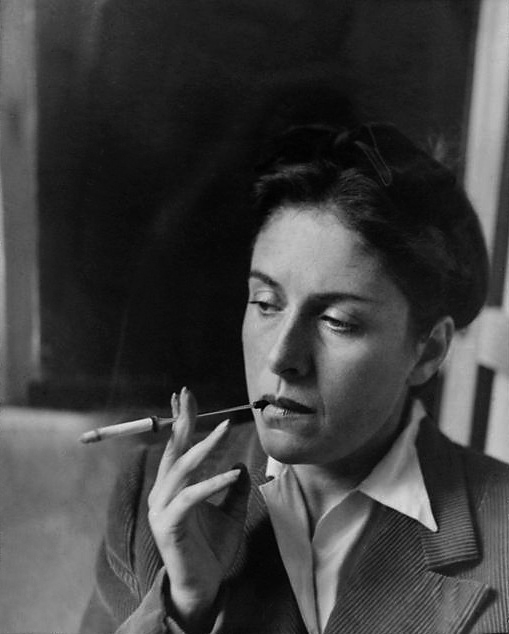
Izis (Israel Bidermanas) (Lithuanian-Jewish, 1911-1980) 'Dora Maar' 1946


Izis (Israel Bidermanas) (Lithuanian-Jewish, 1911-1980)
Dora Maar
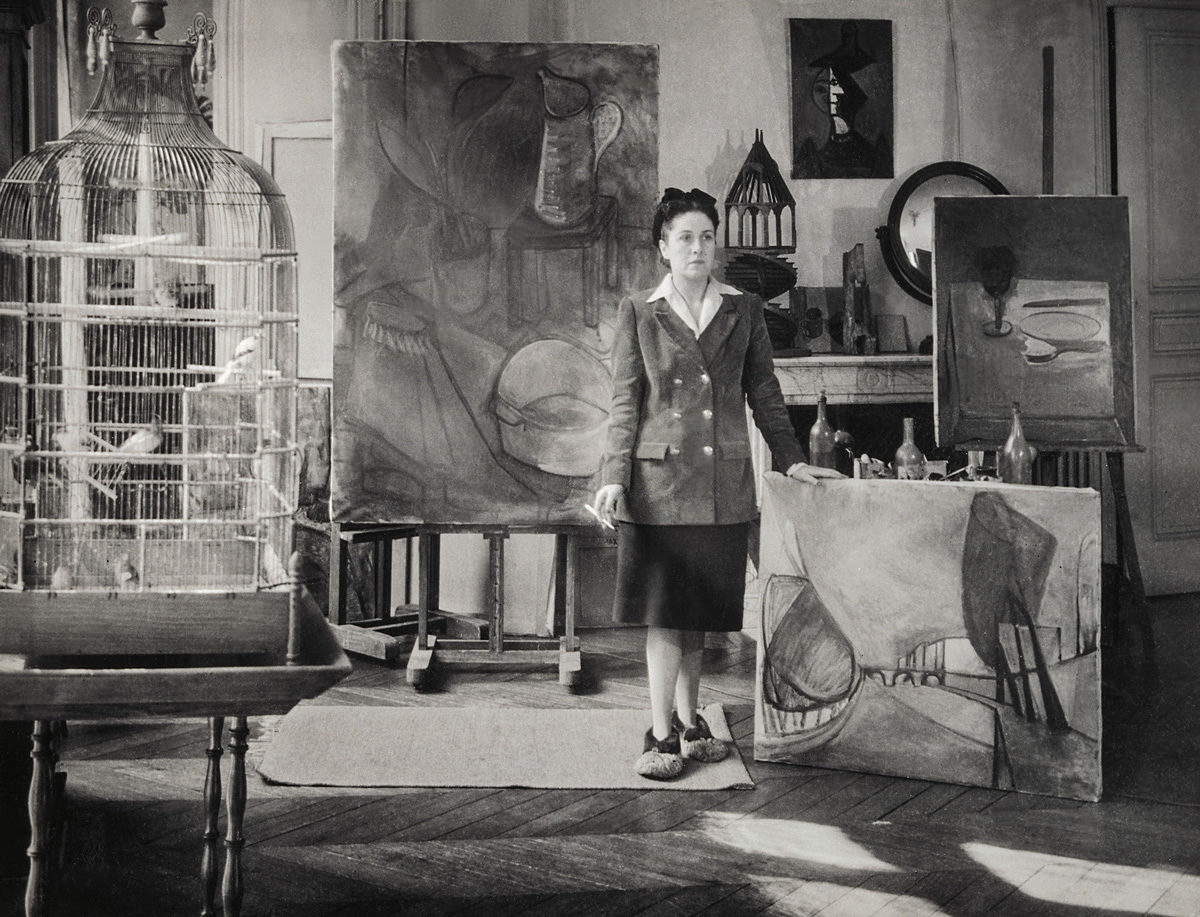
1946
Gelatin silver print


Izis (Israel Bidermanas) (Lithuanian-Jewish, 1911-1980)

Israëlis Bidermanas (17 January 1911 in Marijampolė – 16 May 1980 in Paris), who worked under the name of Izis, was a Lithuanian-Jewish photographer who worked in France and is best known for his photographs of French circuses and of Paris.

Upon the liberation of France at the end of World War II, Izis had a series of portraits of maquisards (rural resistance fighters who operated mainly in southern France) published to considerable acclaim. He returned to Paris where he became friends with French poet Jacques Prévert and other artists. Izis became a major figure in the mid-century French movement of humanist photography – also exemplified by Brassaï, Cartier-Bresson, Doisneau, Sabine Weiss and Ronis – with “work that often displayed a wistfully poetic image of the city and its people.”

For his first book, Paris des rêves (Paris of Dreams), Izis asked writers and poets to contribute short texts to accompany his photographs, many of which showed Parisians and others apparently asleep or daydreaming. The book, which Izis designed, was a success. Izis joined Paris Match in 1950 and remained with it for twenty years, during which time he could choose his assignments.

Text from the Wikipedia website


Irving Penn (American, 1917-2009) 'Dora Maar' France 1948


Irving Penn (American, 1917-2009)
Dora Maar
France 1948
Gelatin silver print


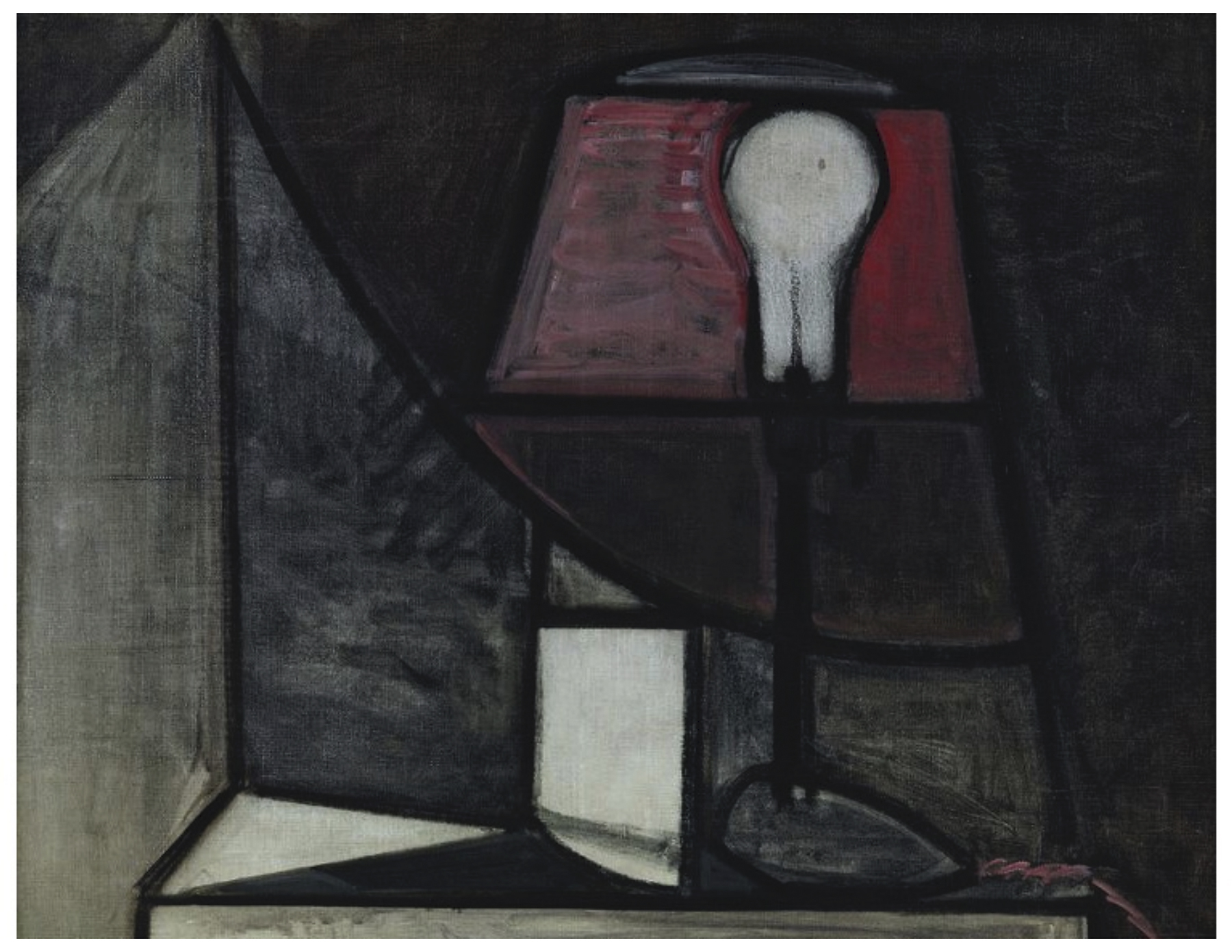
Dora Maar (French, 1907-1997) 'Still life' 1941


Dora Maar (French, 1907-1997)
Still life
1941
Oil on canvas
© Adagp, Paris, 2019
Photo: © Centre Pompidou, MNAM-CCI / P. Migeat / Dist. RMN-GP


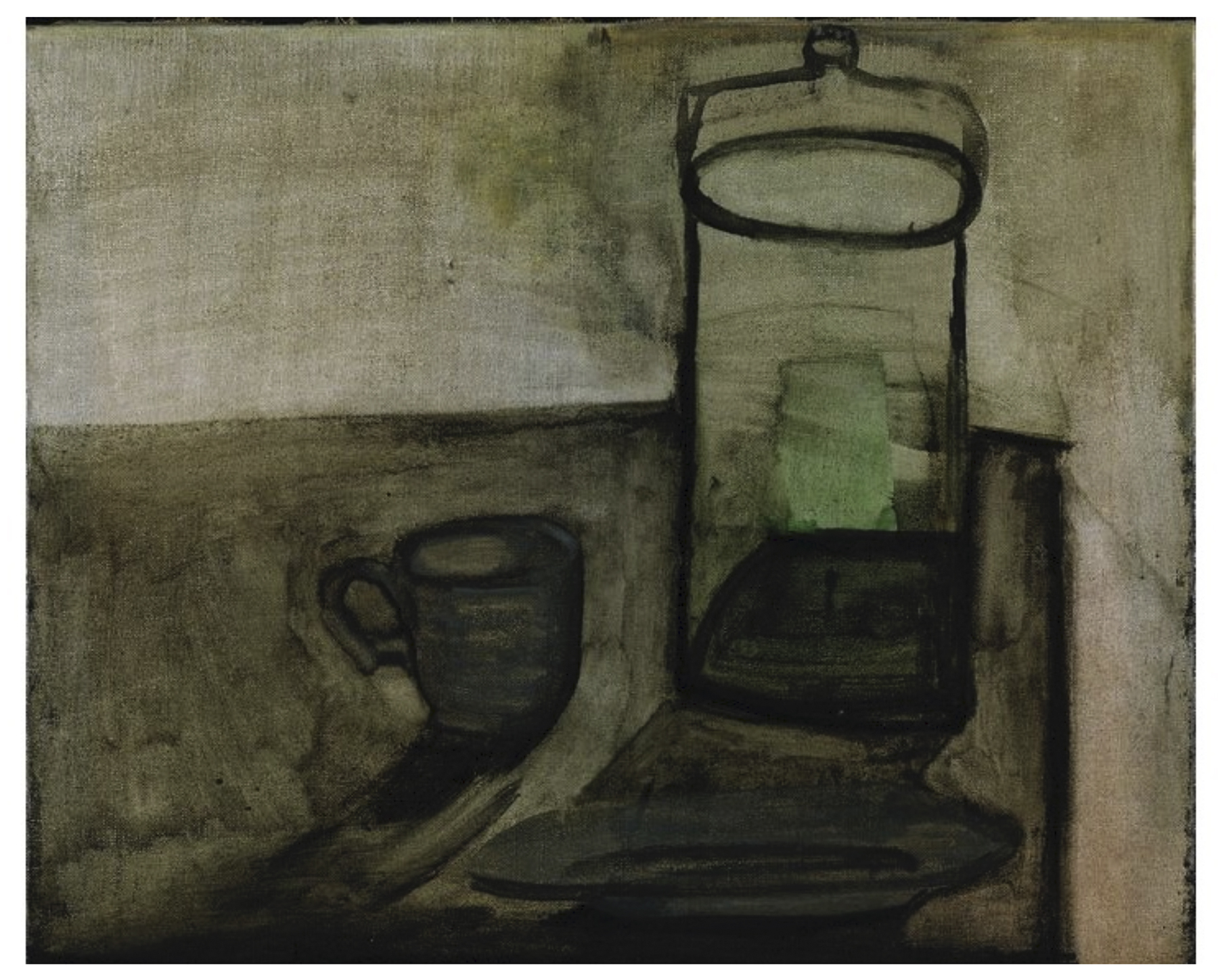
Dora Maar (French, 1907-1997) 'Still Life with Jar and Cup' 1945


Dora Maar (French, 1907-1997)
Still Life with Jar and Cup
1945
Oil on canvas
45.5 x 50cm
Private Collection
© Adagp, Paris, 2019
Photo: © Centre Pompidou, MNAM-CCI / P. Migeat / Dist. RMN-GP


Dora Maar (French, 1907-1997) 'Landscape in Lubéron' 1950's


Dora Maar (French, 1907-1997)
Landscape in Lubéron
1950’s
Private collection of Nancy B. Negley
© Adagp © Brice Toul


Although the late works are not as significant contributions to the history of art as her Surrealist photomontages, they inform our knowledge of this Parisian artist’s accomplishments in general and beg the question: Was Dora Maar’s brilliant career cut short by the typical conflicts facing professional women in the 1930s, and even today? Or was she a victim of Picasso’s psychological abuse, which chipped away at her original confidence? Was she compromised to the point that she only wanted to please the man she loved? According to art historian John Richardson, Dora Maar sacrificed her gifts on the altar of her art god, her idol, Picasso. Based on the early Surrealist photographs we see in her retrospective, one can only wish she hadn’t taken up with Picasso, for it seems she might have achieved far more in her lifetime without him.

Beth Gersh-Nesic. “Picasso’s Weeping Woman as Artist Instead of Muse: Dora Maar’s Retrospective at Centre Pompidou,” on the Bonjour Paris website July 24, 2019 [Online] Cited 23/11/2019


Installation view of the exhibition 'Dora Maar' at Tate Modern, 2019 showing Maar's paintings and photograms from the 1950s-1980s


Installation view of the exhibition Dora Maar at Tate Modern, 2019 showing Maar’s paintings and photograms from the 1950s-1980s (see below)


Dora Maar (French, 1907-1997) 'Untitled' c. 1957


Dora Maar (French, 1907-1997)
Untitled
c. 1957
Watercolour
© Adagp, Paris 2019
Photo: © Centre Pompidou


Dora Maar (French, 1907-1997) 'Untitled' 1980s


Dora Maar (French, 1907-1997)
Untitled
1980s
Gelatin silver print
23.5 × 17.4cm (9 1/4 × 6 7/8 in.)
© Dora Maar Estate/Artists Rights Society (ARS), New York/ADAGP, Paris

Abstract photogram


The 1940s brought a series of traumas. Maar’s father left Paris for Argentina, her mother and best friend Nusch Eluard both died suddenly, her relationship with Picasso ended, and friends went into exile. The difficulty of this time is reflected in some of her work from this period.

Maar was included in many group and solo exhibitions in the 1940s and 1950s. In the mid-1940s she began to spend more time in rural surroundings of Ménerbes in the south of France. Here she regained her confidence as a painter and developed her own style of abstract landscapes. Exhibited across Europe, this work received very positive reviews.

In the 1980s, Maar returned to photography. However, she was no longer interested in photographing life on the street. Instead, Maar was interested in what she could create in the darkroom and experimented with hundreds of photograms (camera-less photographs).

Dora Maar died on July 16, 1997, at 89 years old. Throughout her life she created a vast and varied range of work, much of which was only discovered after her death.

Anonymous text from “Seven Things to Know: Dora Maar,” on the Tate website [Online] Cited 16/11/2019


Dora Maar (French, 1907-1997) 'Untitled' c. 1980


Dora Maar (French, 1907-1997)
Untitled
c. 1980
Gelatin silver print
23.5 × 30cm (9 1/4 × 11 13/16 in.)
© Dora Maar Estate/Artists Rights Society (ARS), New York/ADAGP, Paris


Dora Maar (French, 1907-1997) 'Untitled' 1980s


Dora Maar (French, 1907-1997)
Untitled
1980s
Silver gelatin print
9 x 6cm
Collection Centre Pompidou, Paris. Musée national d’art moderne Centre de création industrielle
© Adagp, Paris
Photo: © Centre Pompidou, MNAM-CCI / P. Migeat / Dist. RMN-GP


Dora Maar (French, 1907-1997) 'Untitled' c. 1980


Dora Maar (French, 1907-1997)
Untitled
c. 1980
Silver gelatin print
9 x 6cm
Collection Centre Pompidou, Paris. Musée national d’art moderne Centre de création industrielle
© Adagp, Paris
Photo: © Centre Pompidou, MNAM-CCI / P. Migeat / Dist. RMN-GP


Tate Modern
Bankside
London SE1 9TG
United Kingdom

Opening hours:
Daily 10.00 – 18.00

Tate Modern website

LIKE ART BLART ON FACEBOOK

Back to top

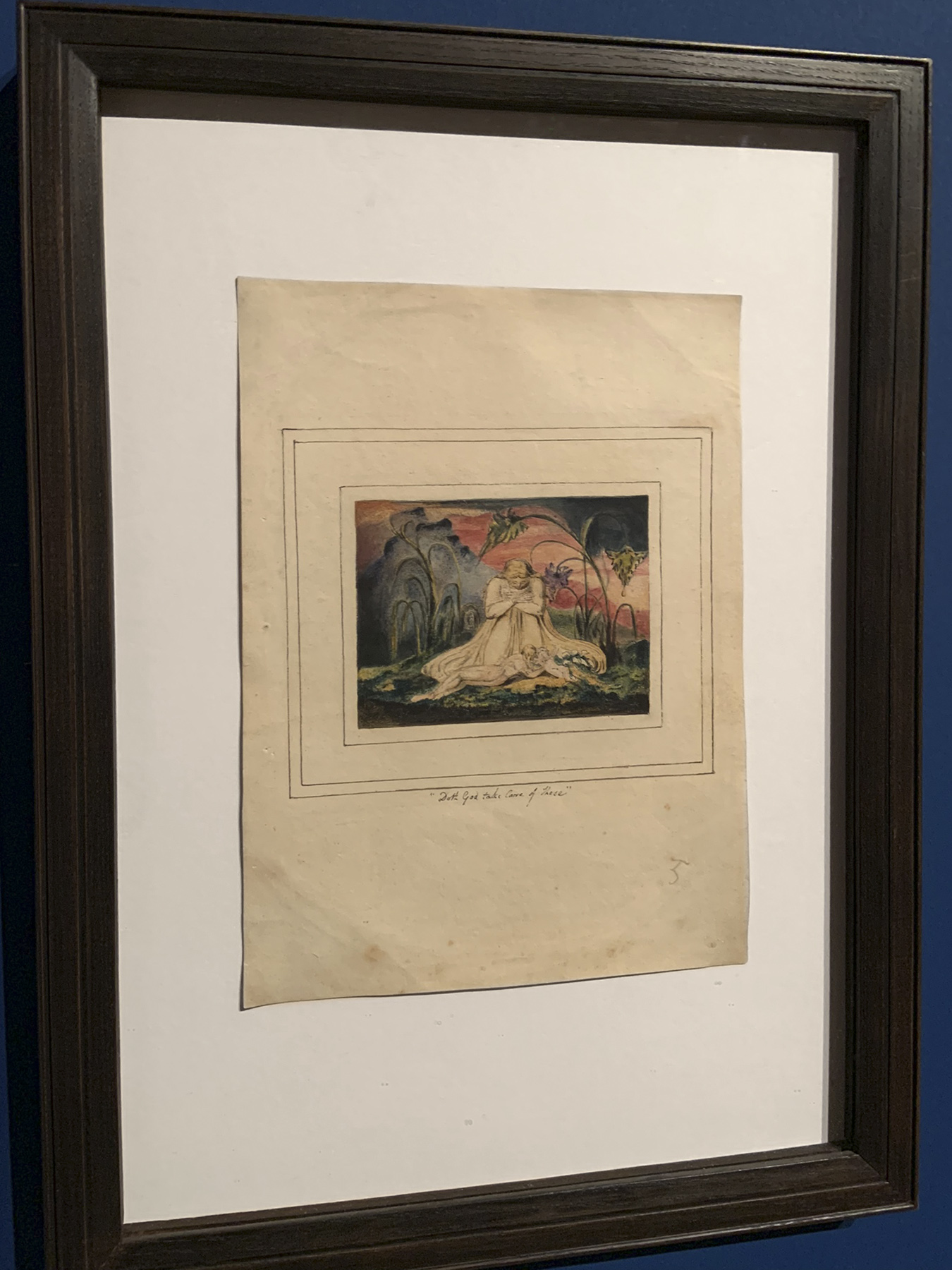
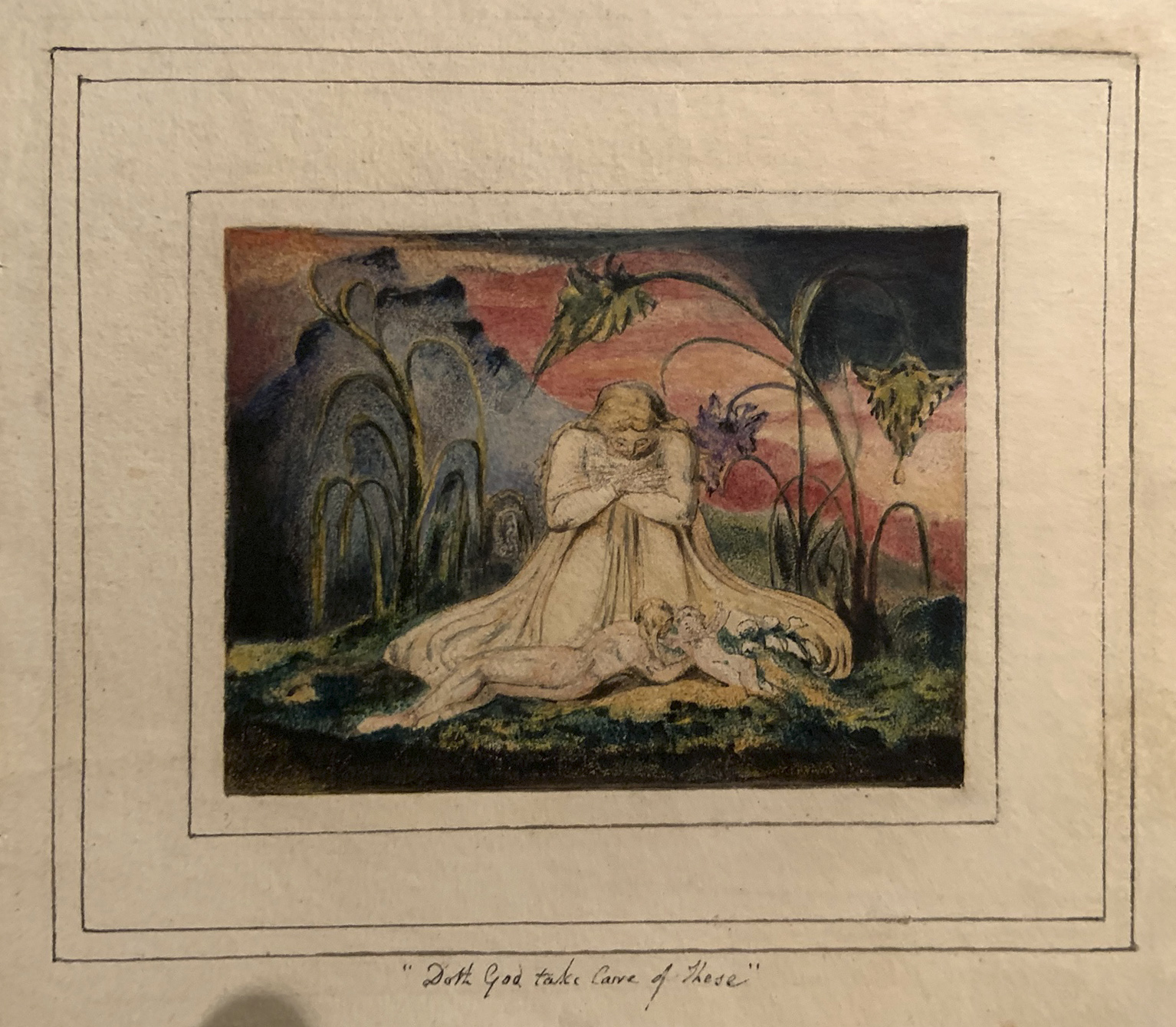
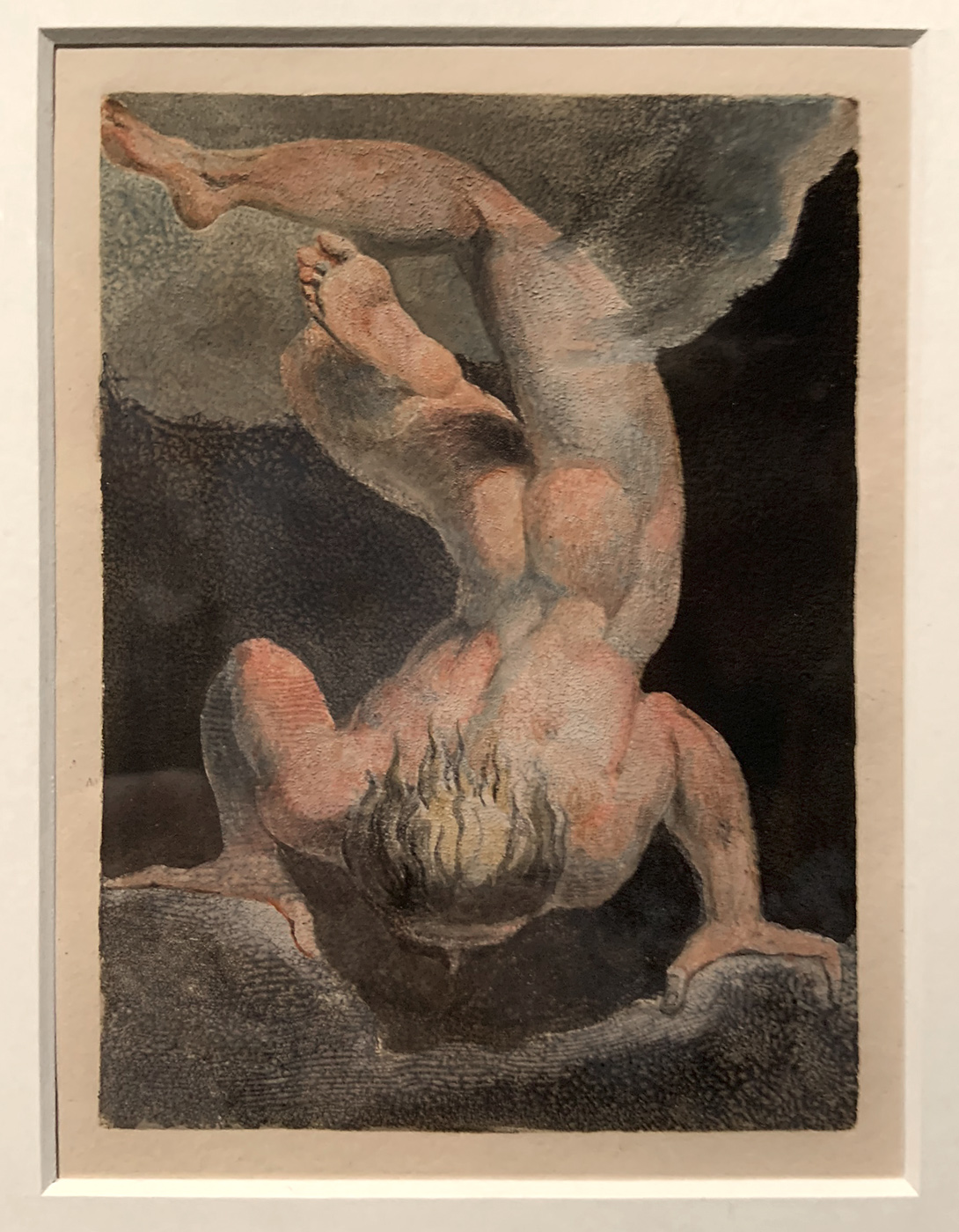
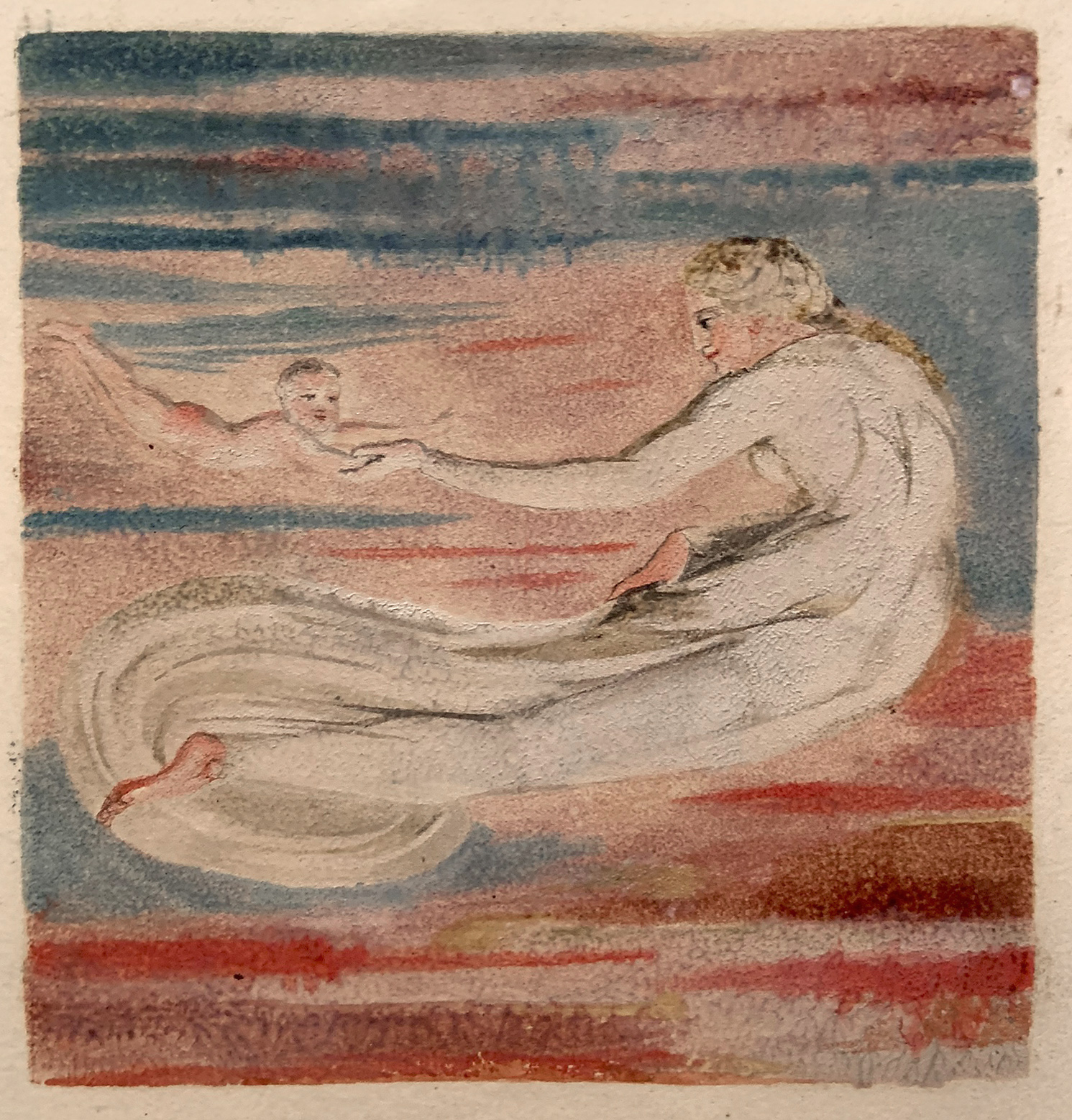
European research tour exhibition: ‘William Blake’ at Tate Britain, London Part 1

Exhibition dates: 11th September, 2019 – 2nd February, 2020
Visited October 2019 posted January 2020

Curators: Martin Myrone, Senior Curator, pre-1800 British Art, and Amy Concannon, Curator, British Art 1790-1850


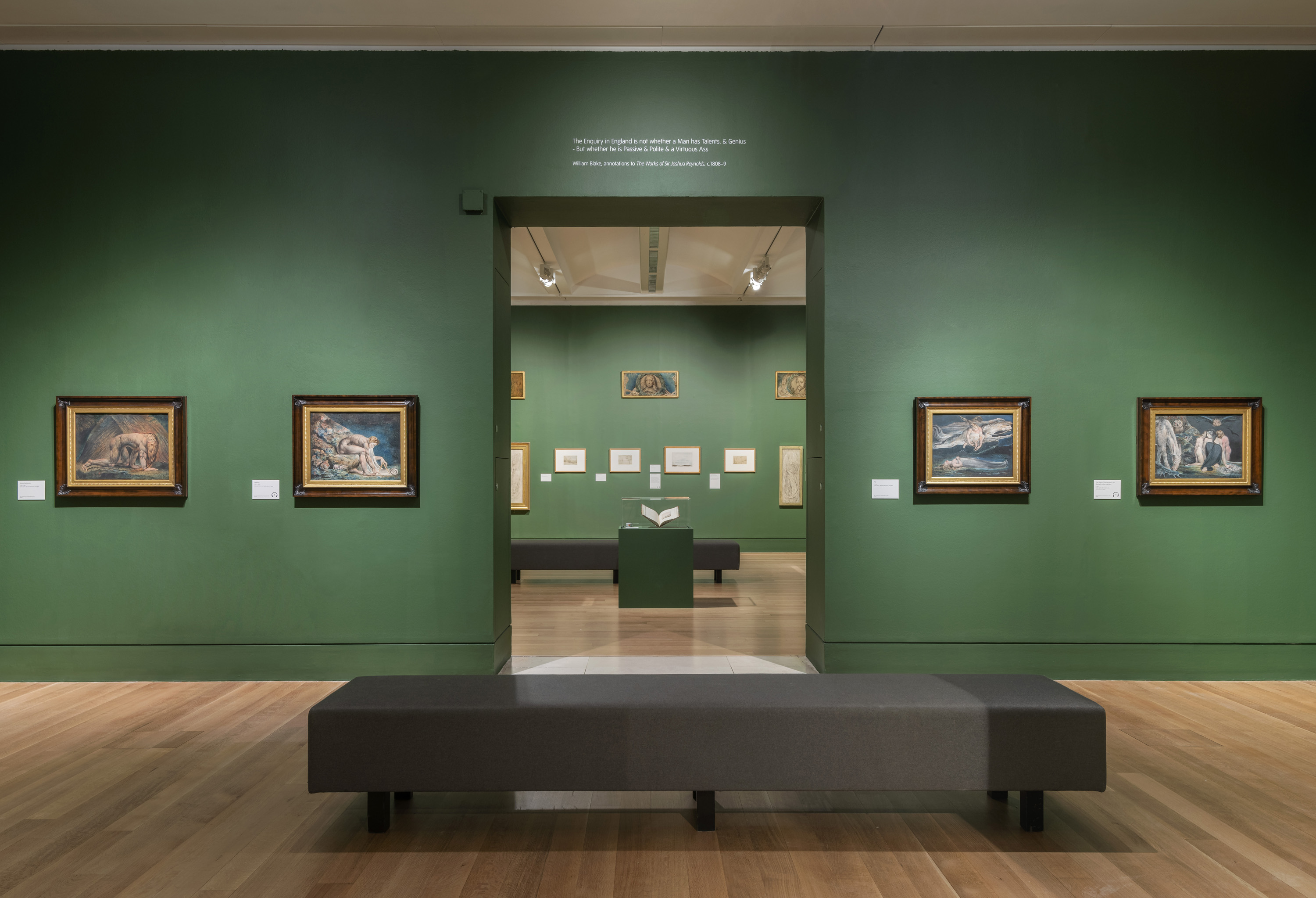
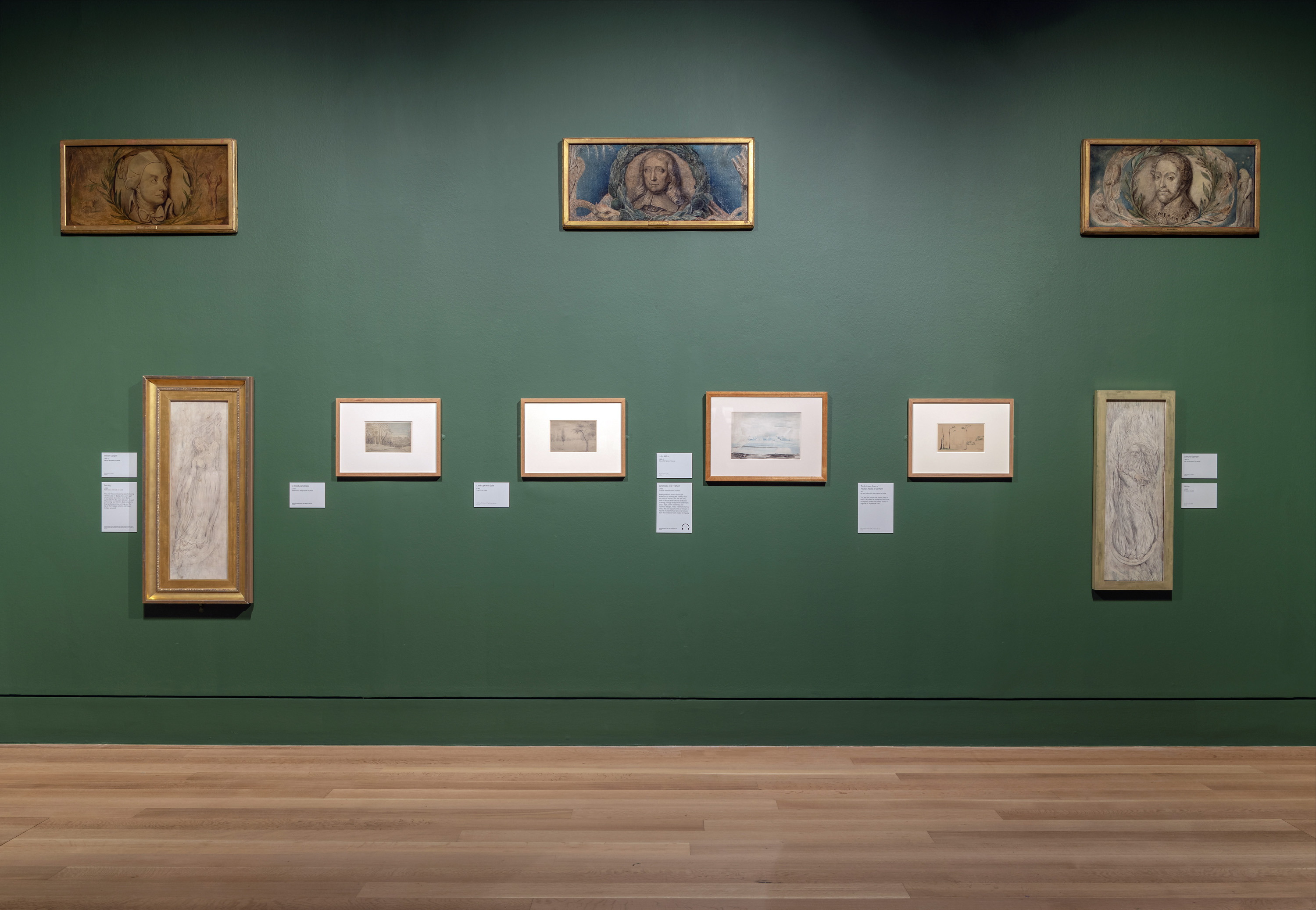
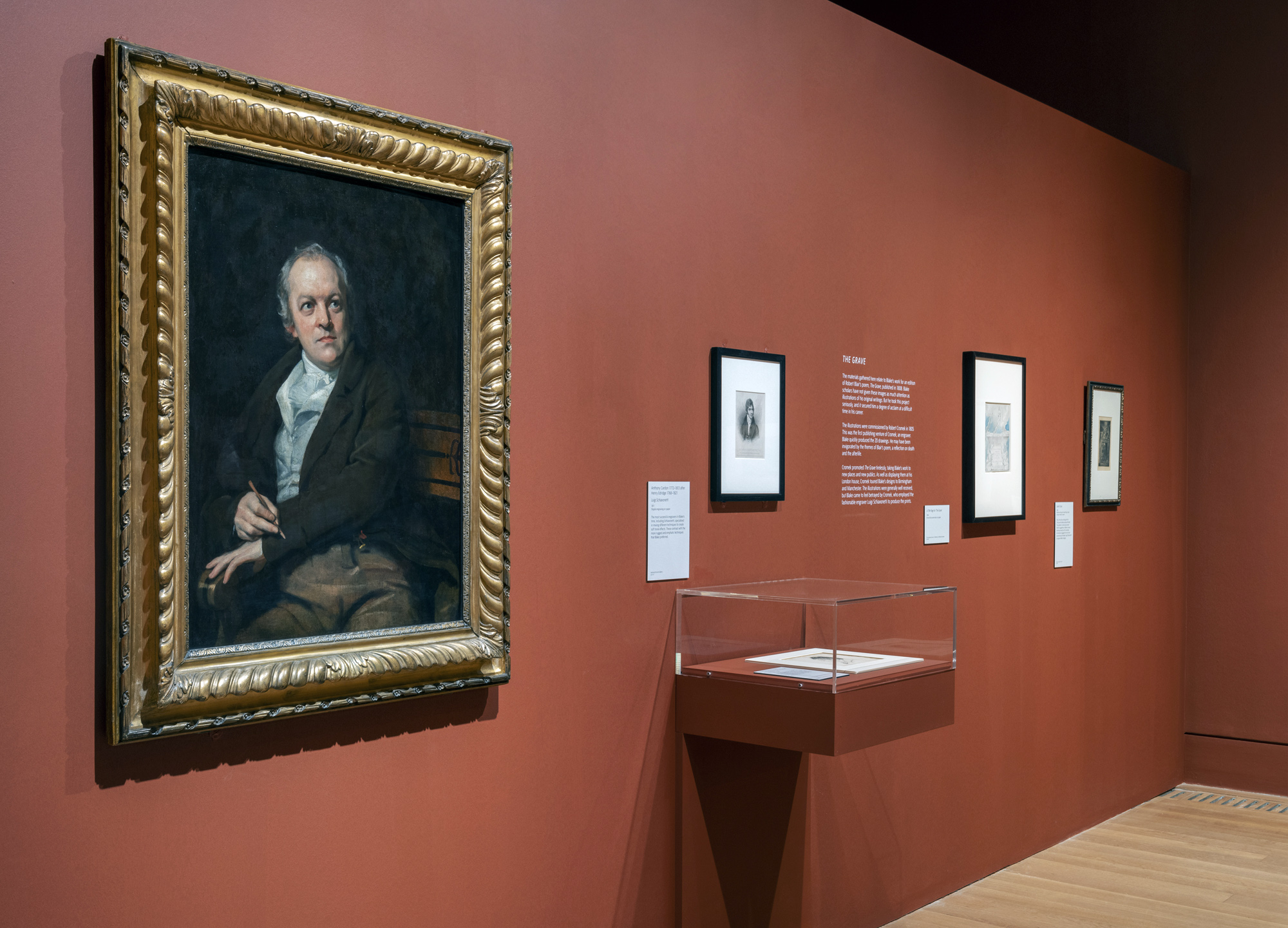
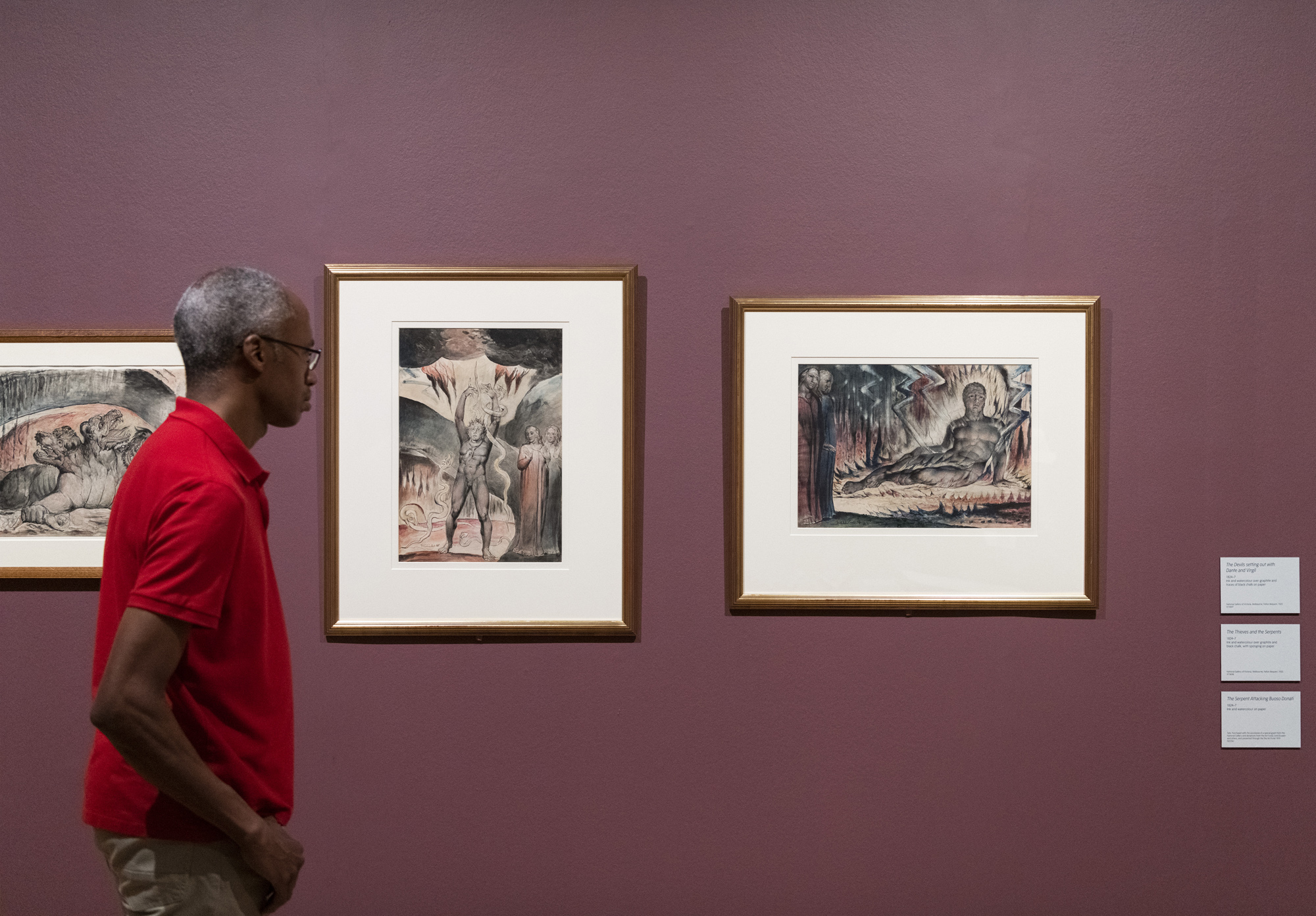
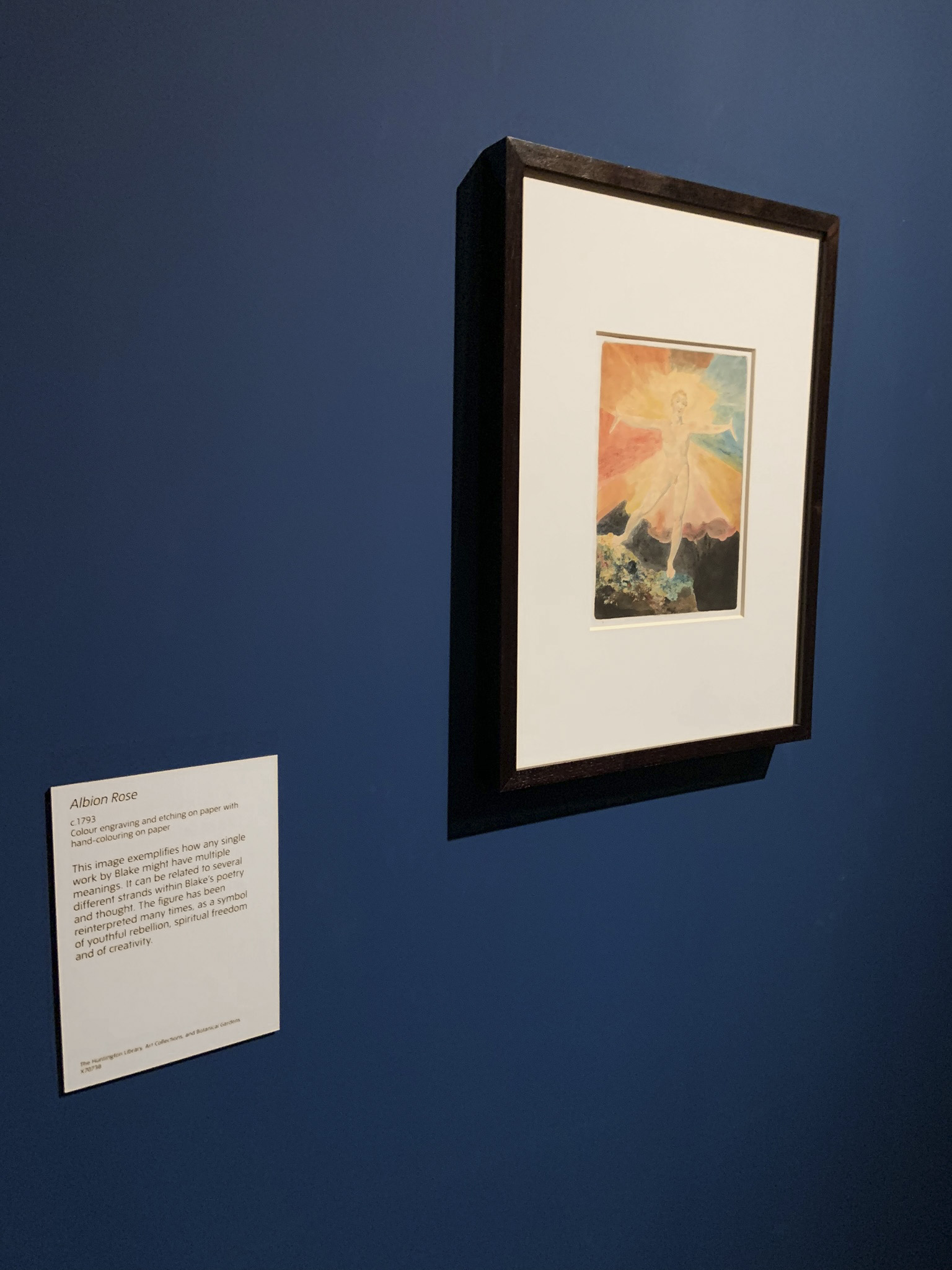
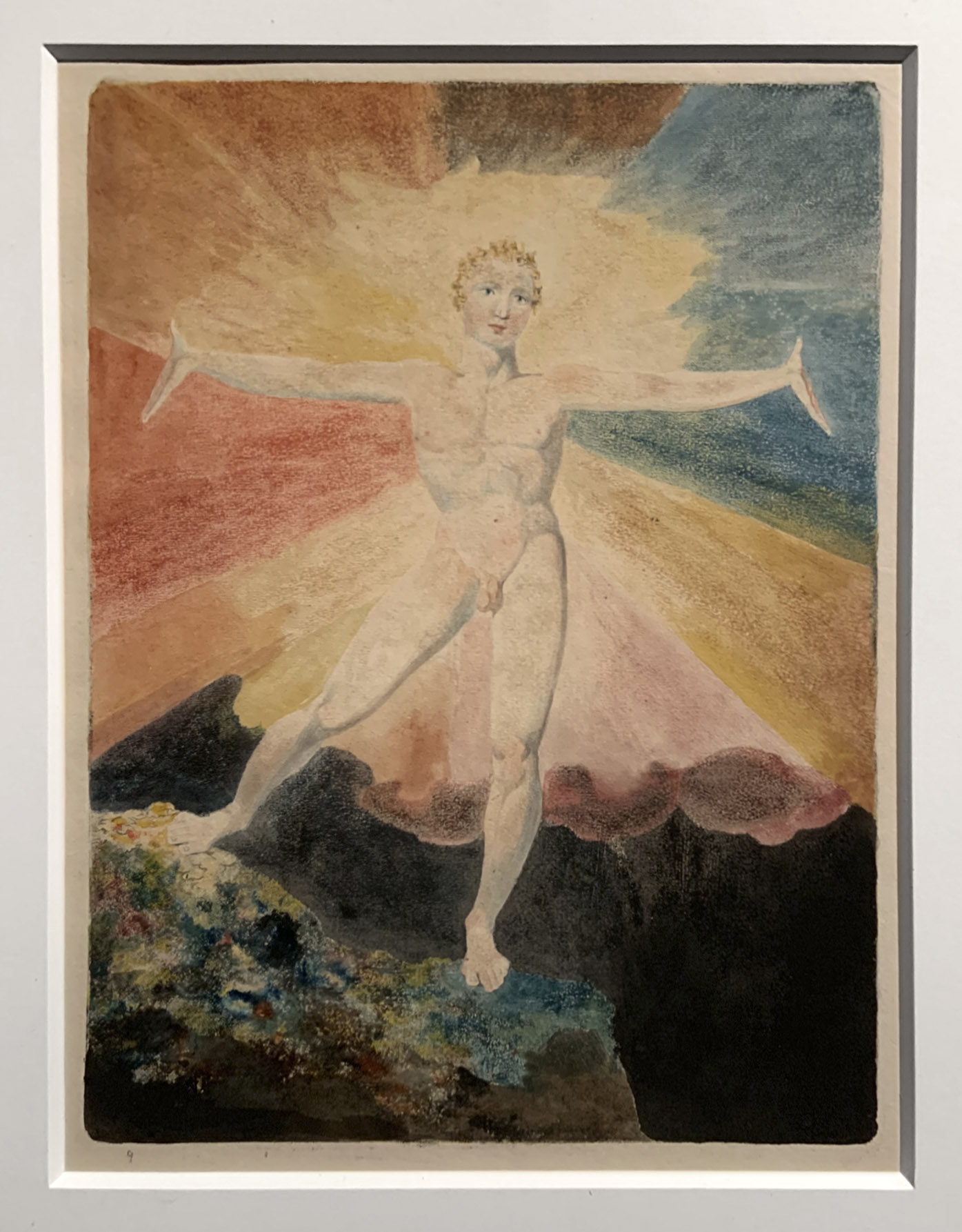
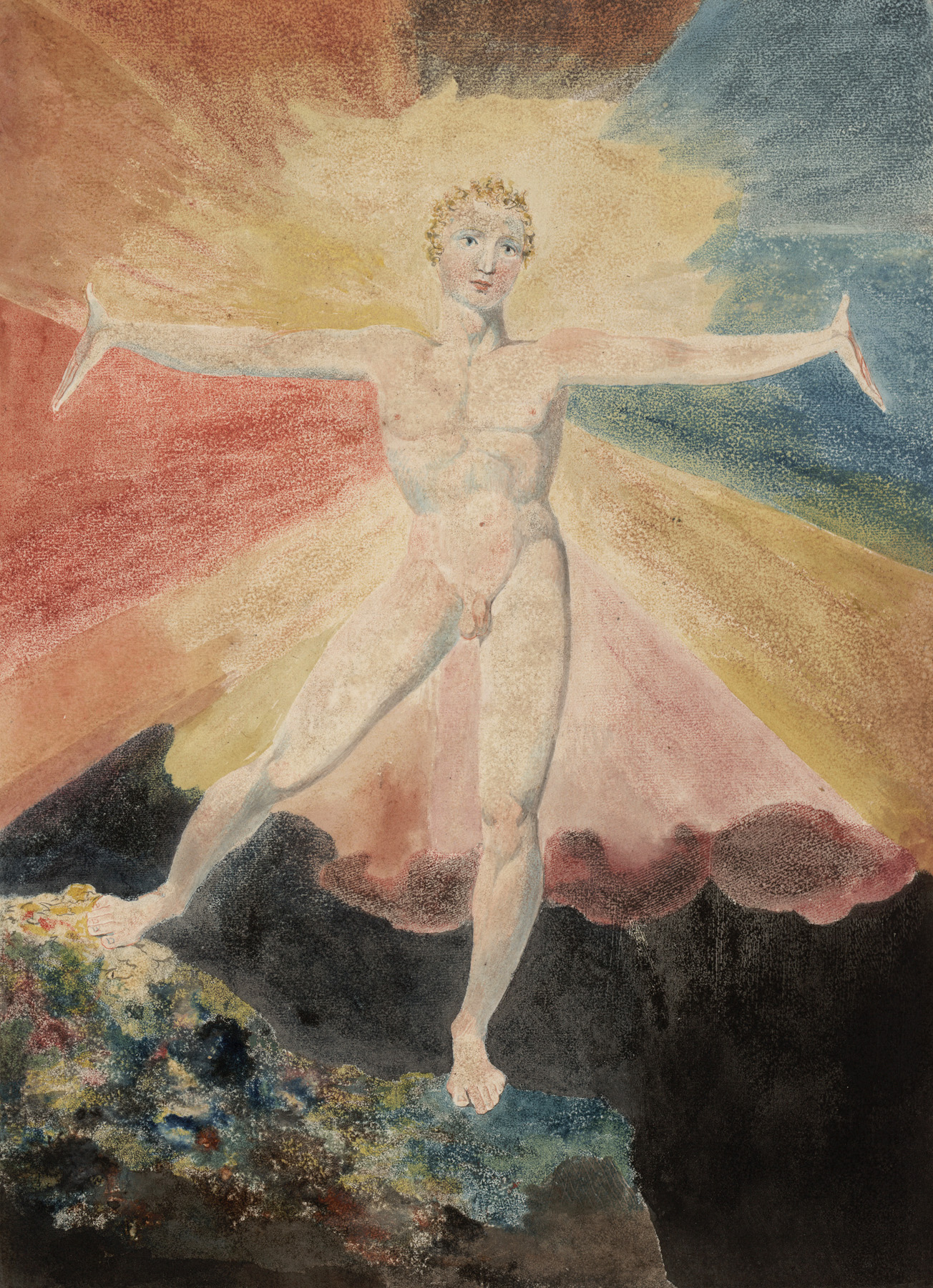
Installation view of the exhibition 'William Blake' at Tate Britain, London Photo: Marcus Bunyan


Installation view of the exhibition William Blake at Tate Britain, London
Photo: Marcus Bunyan


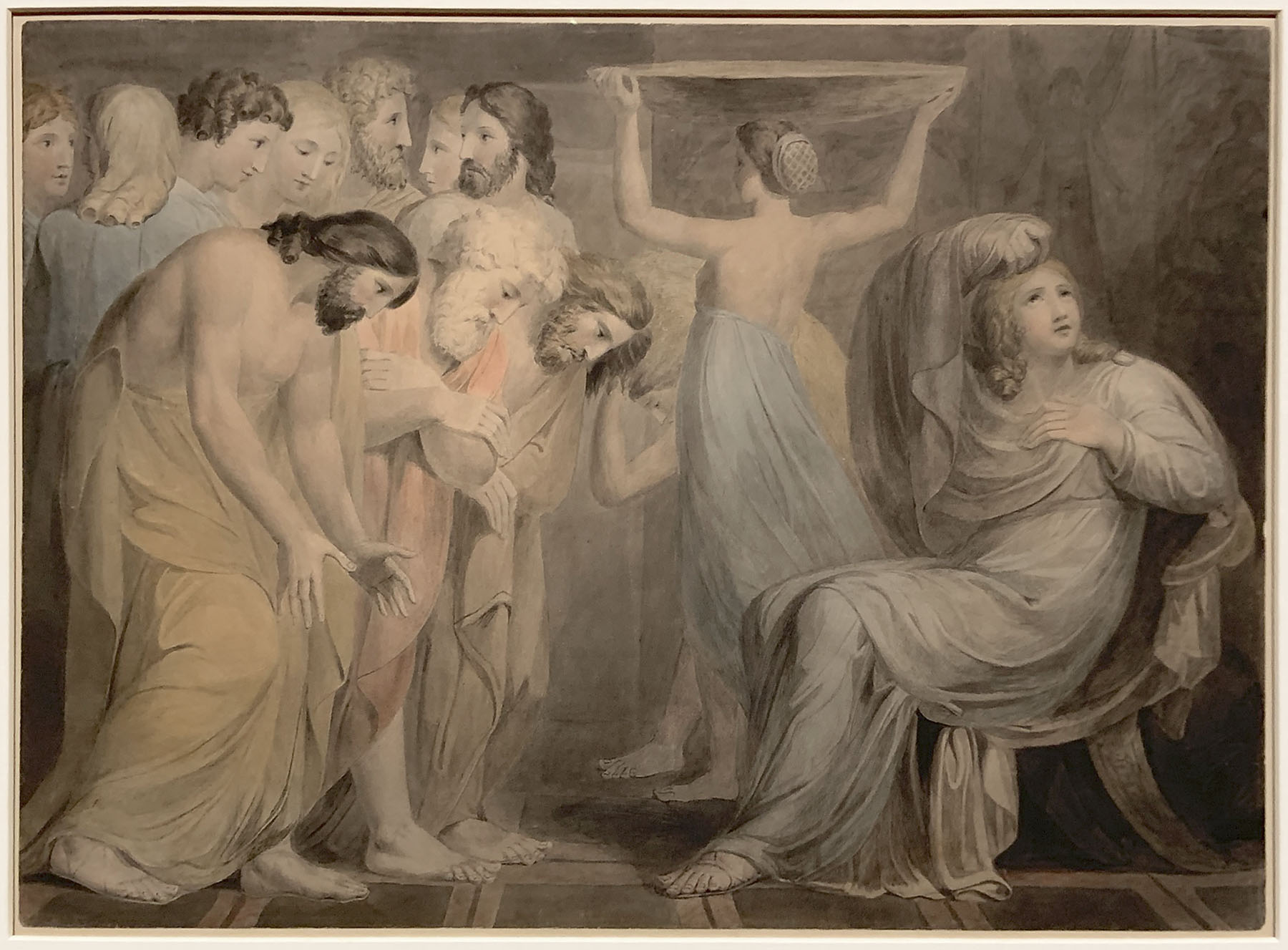
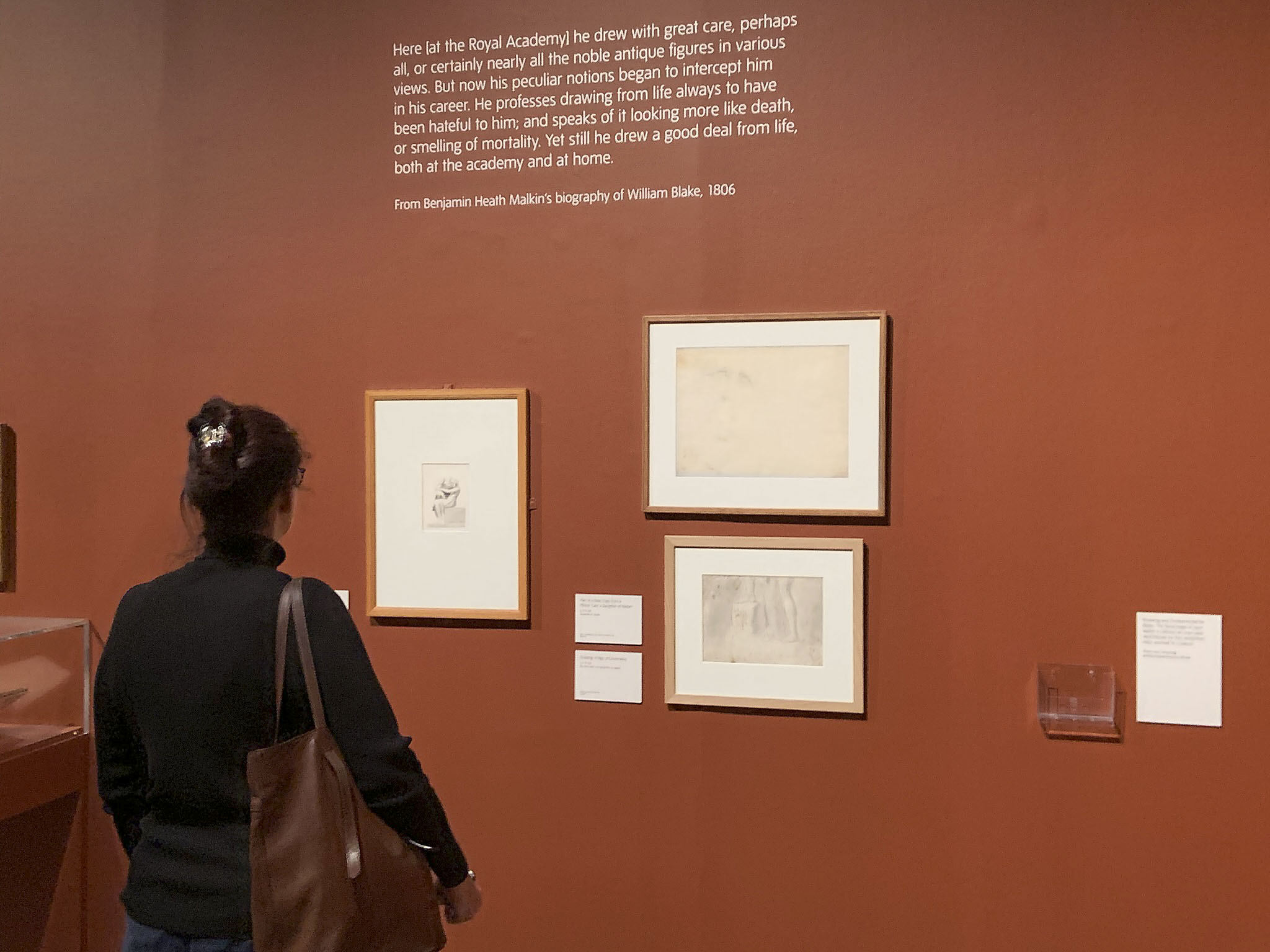
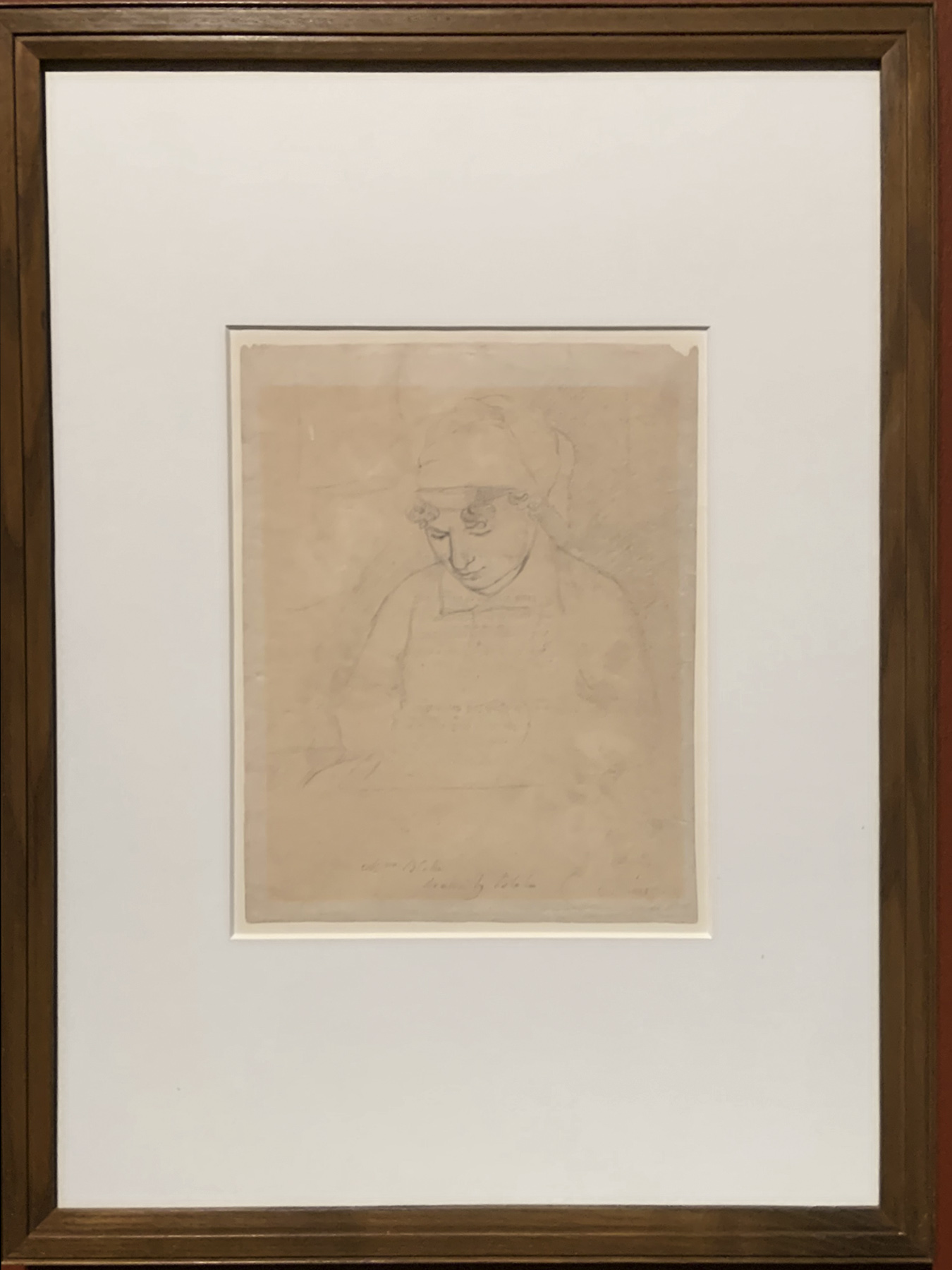
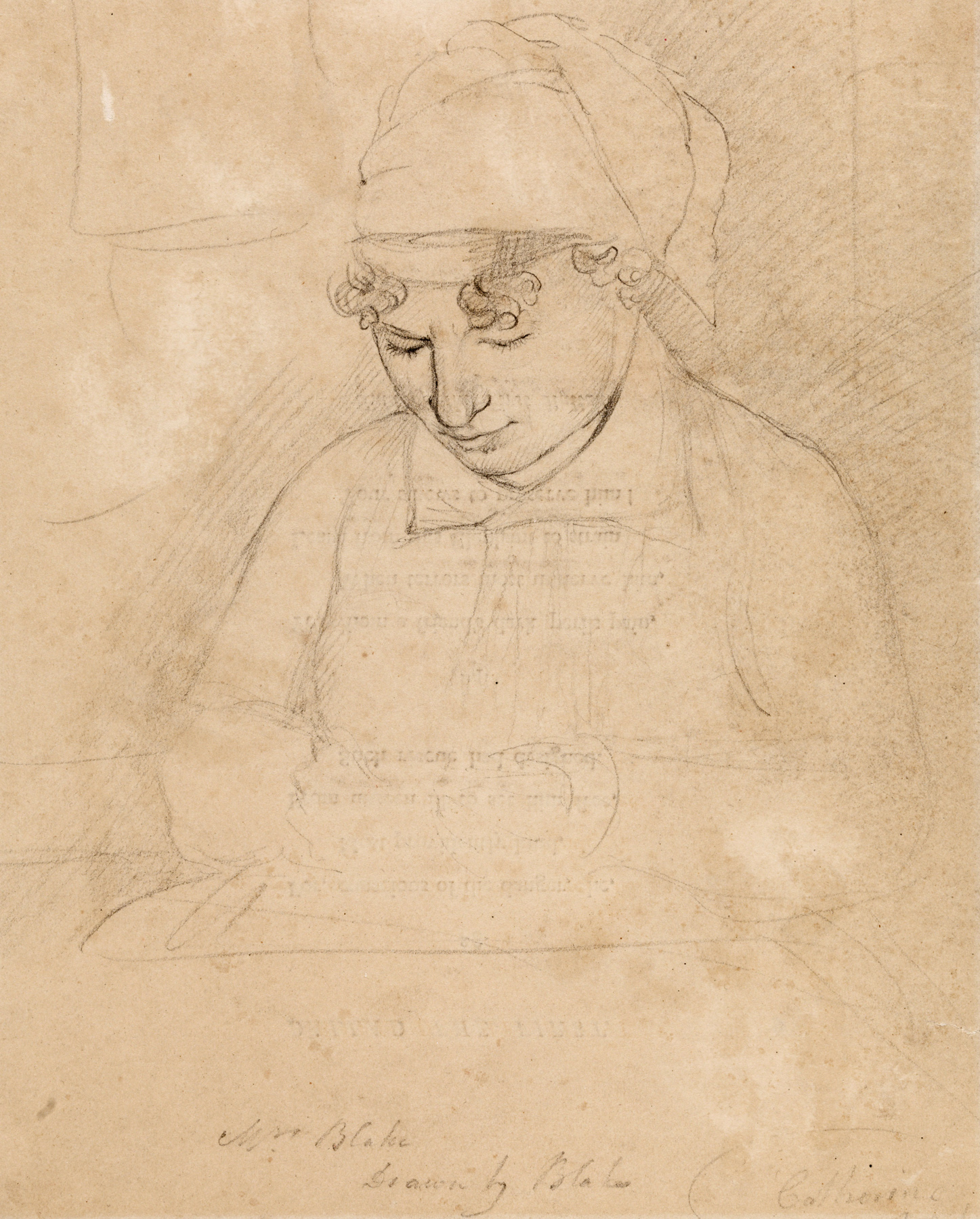
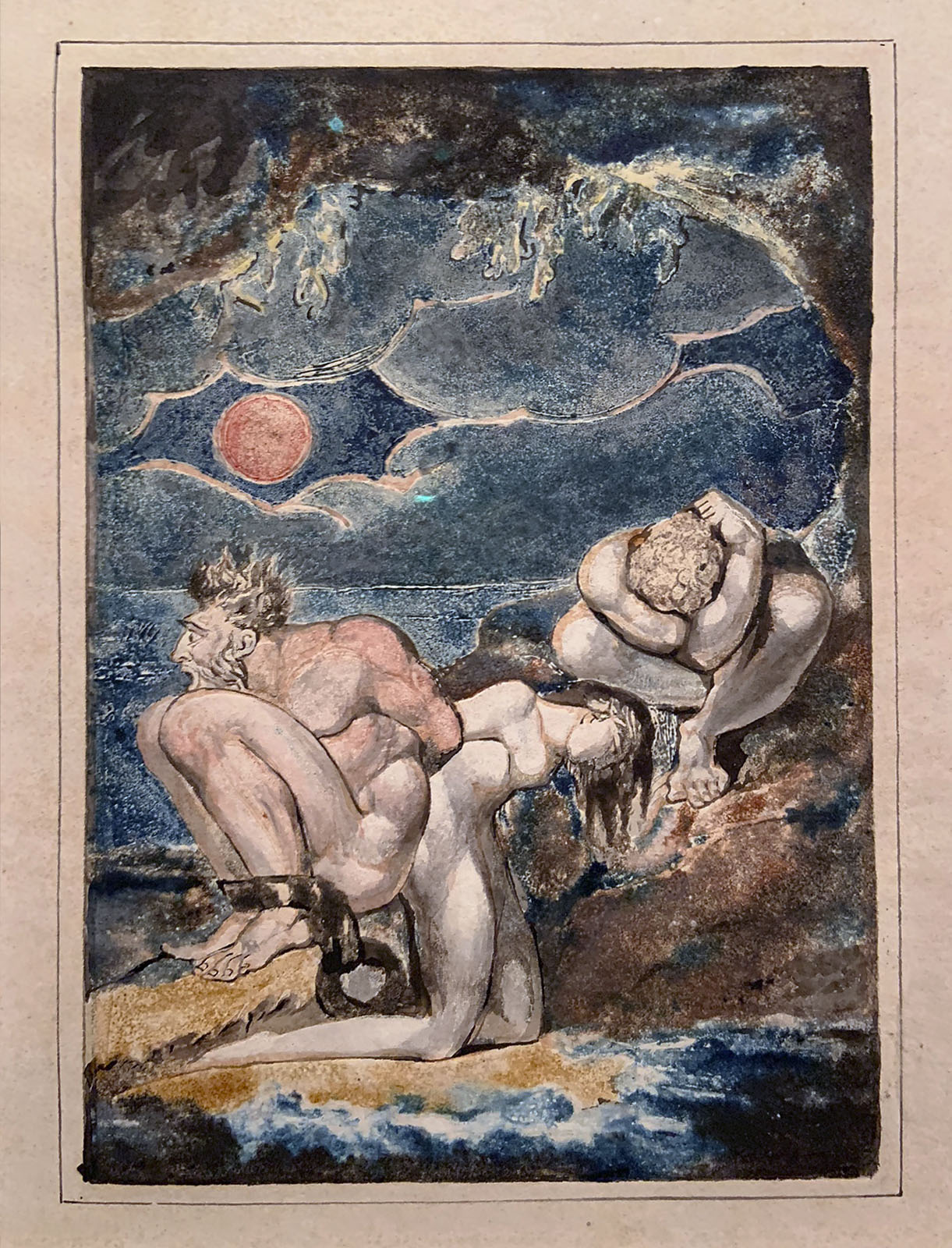
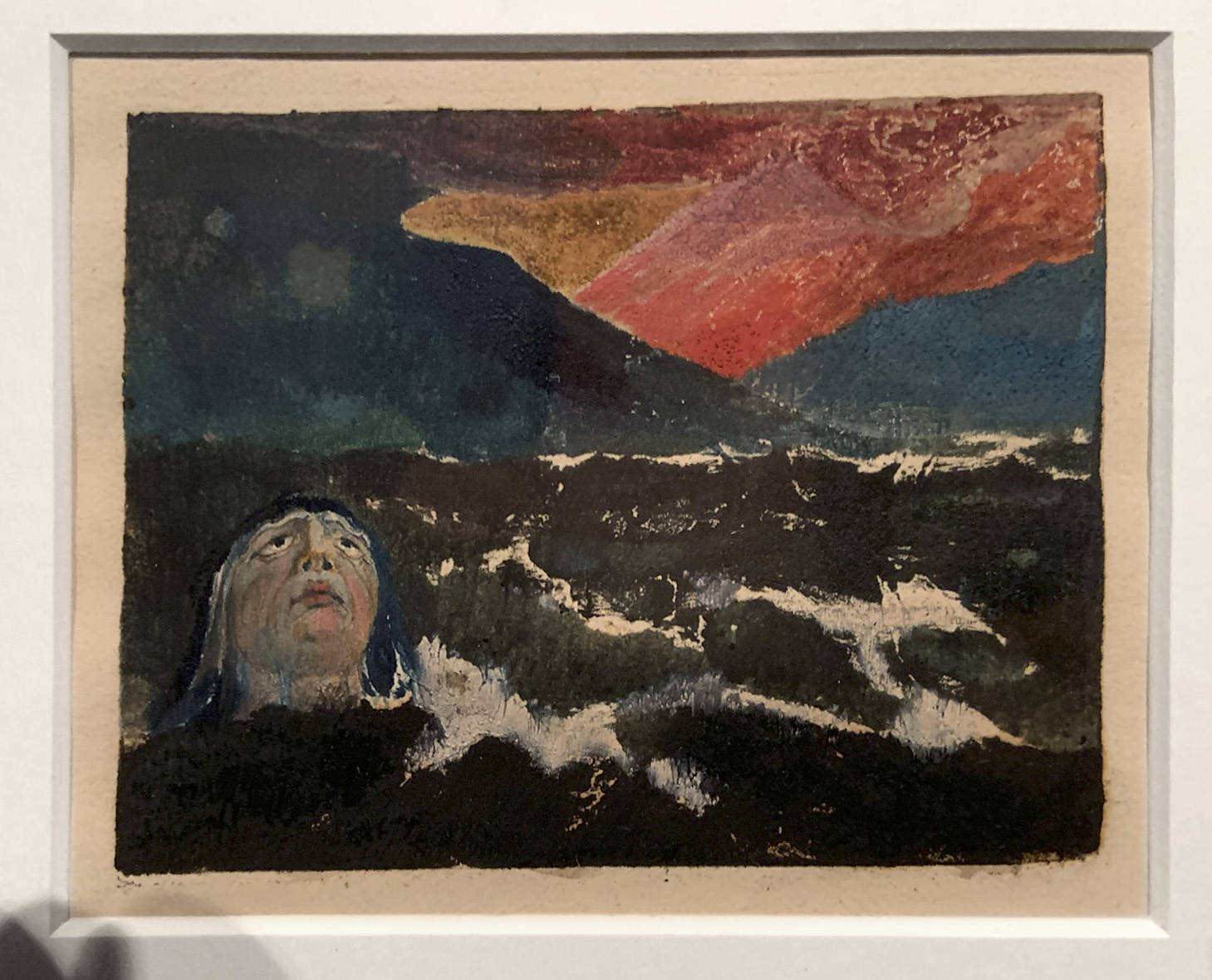
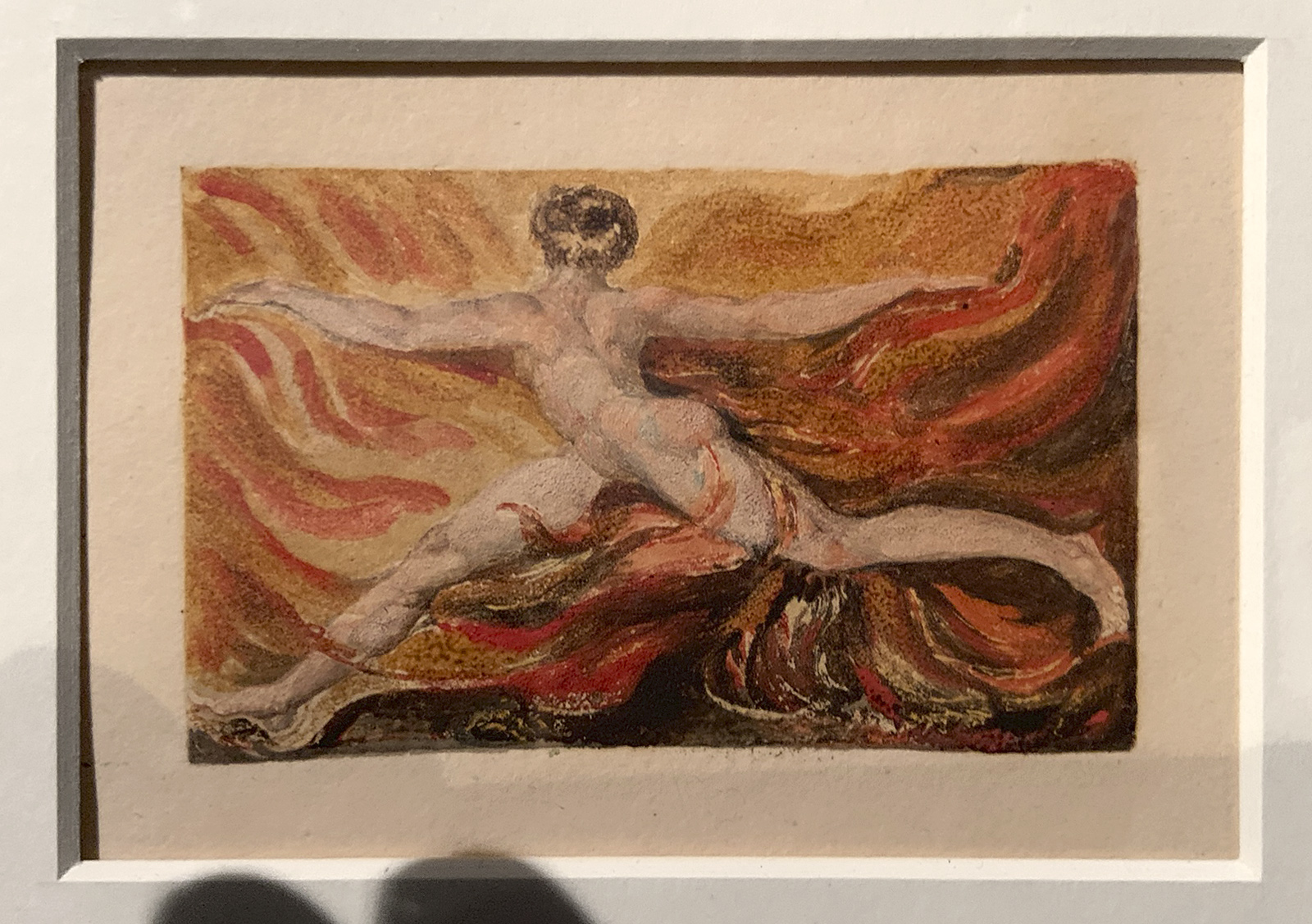
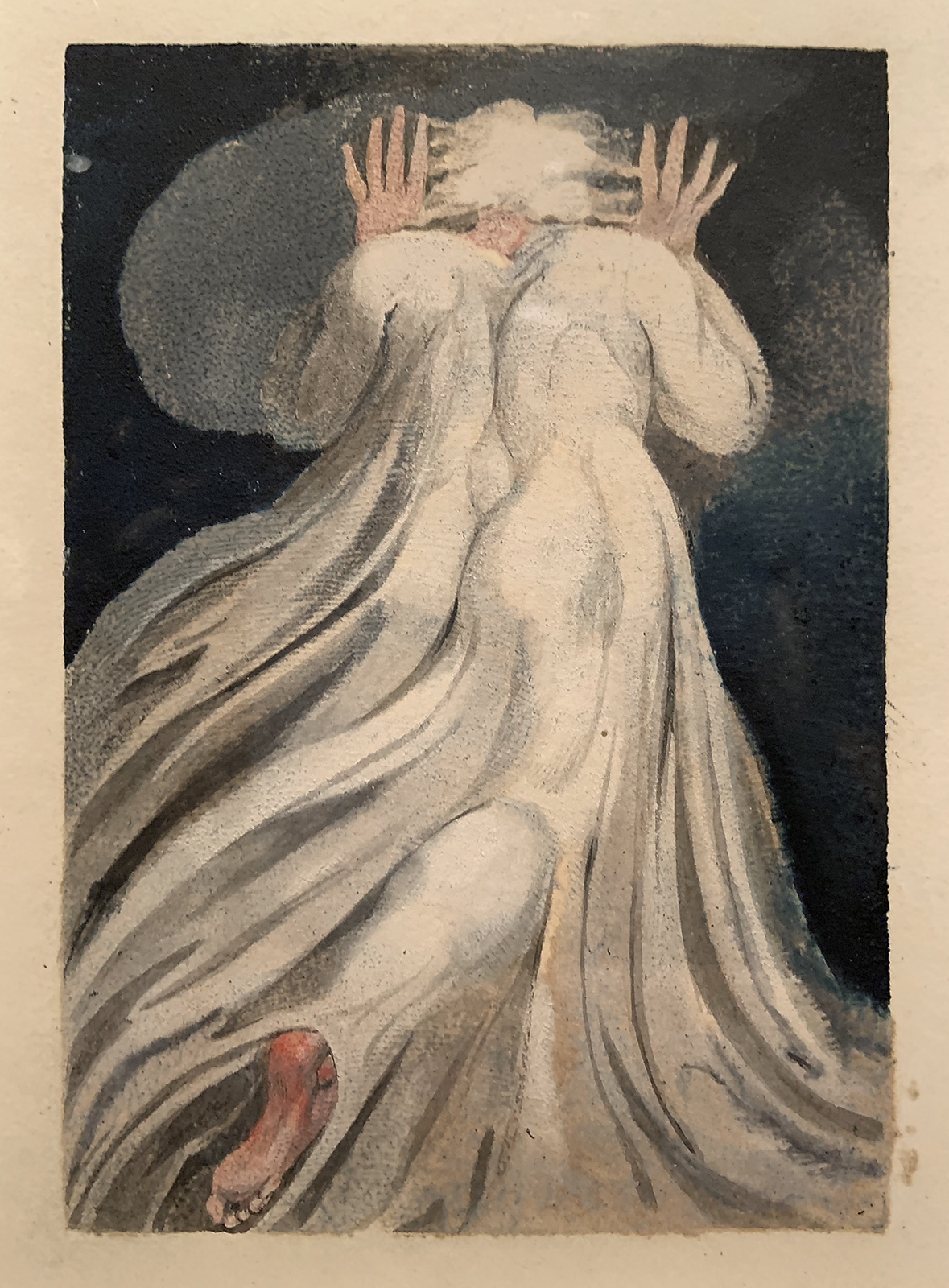
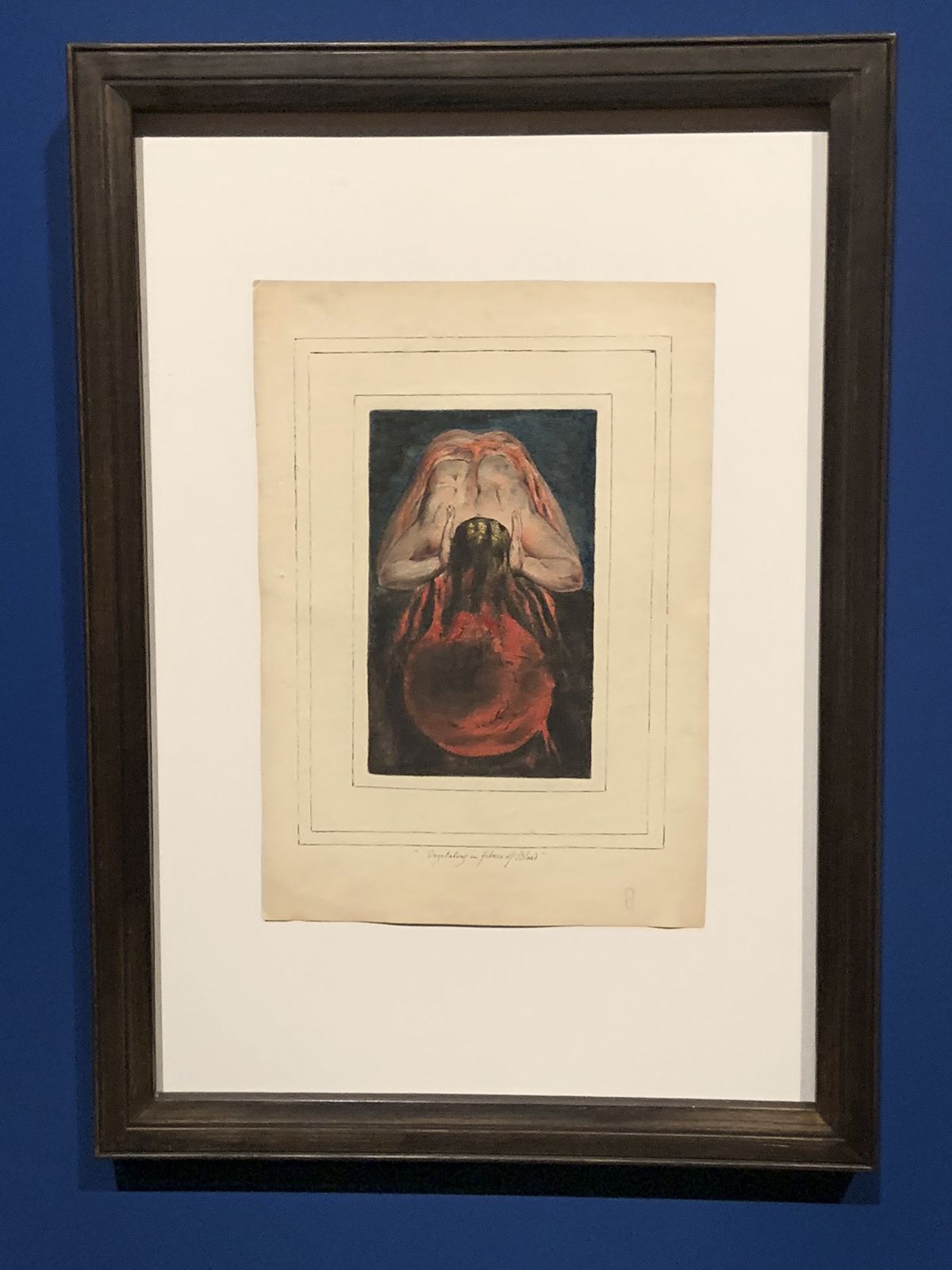
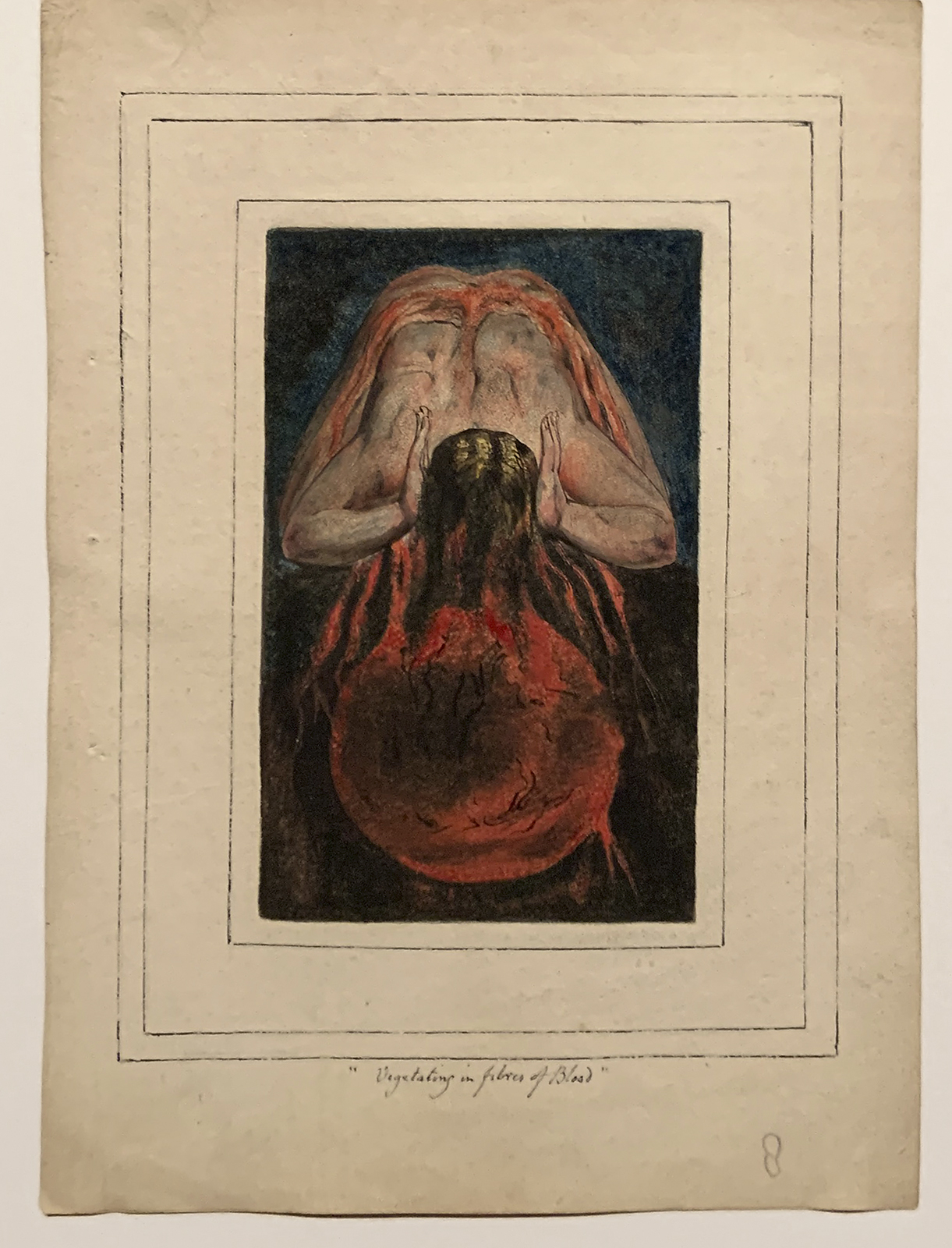
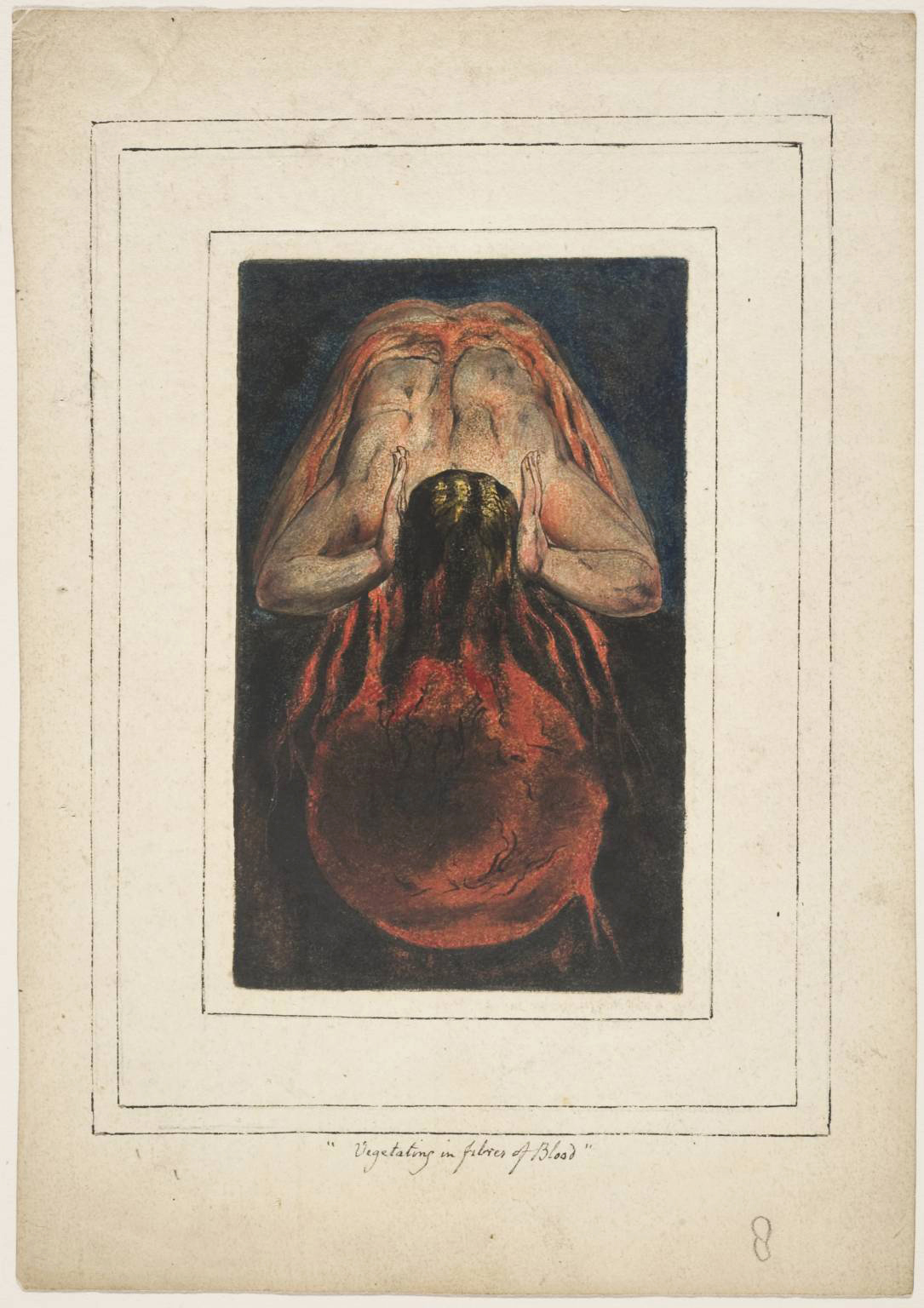
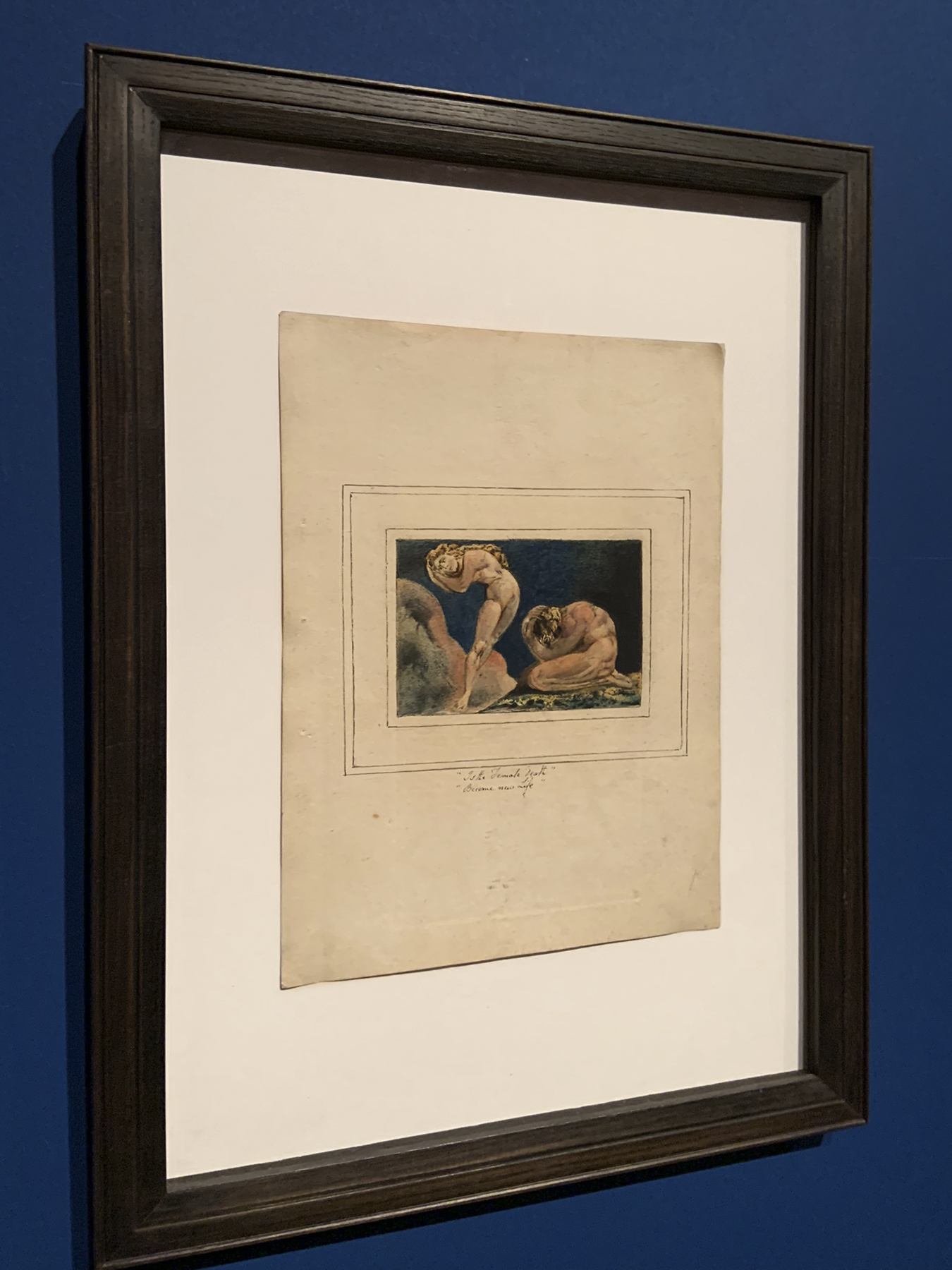
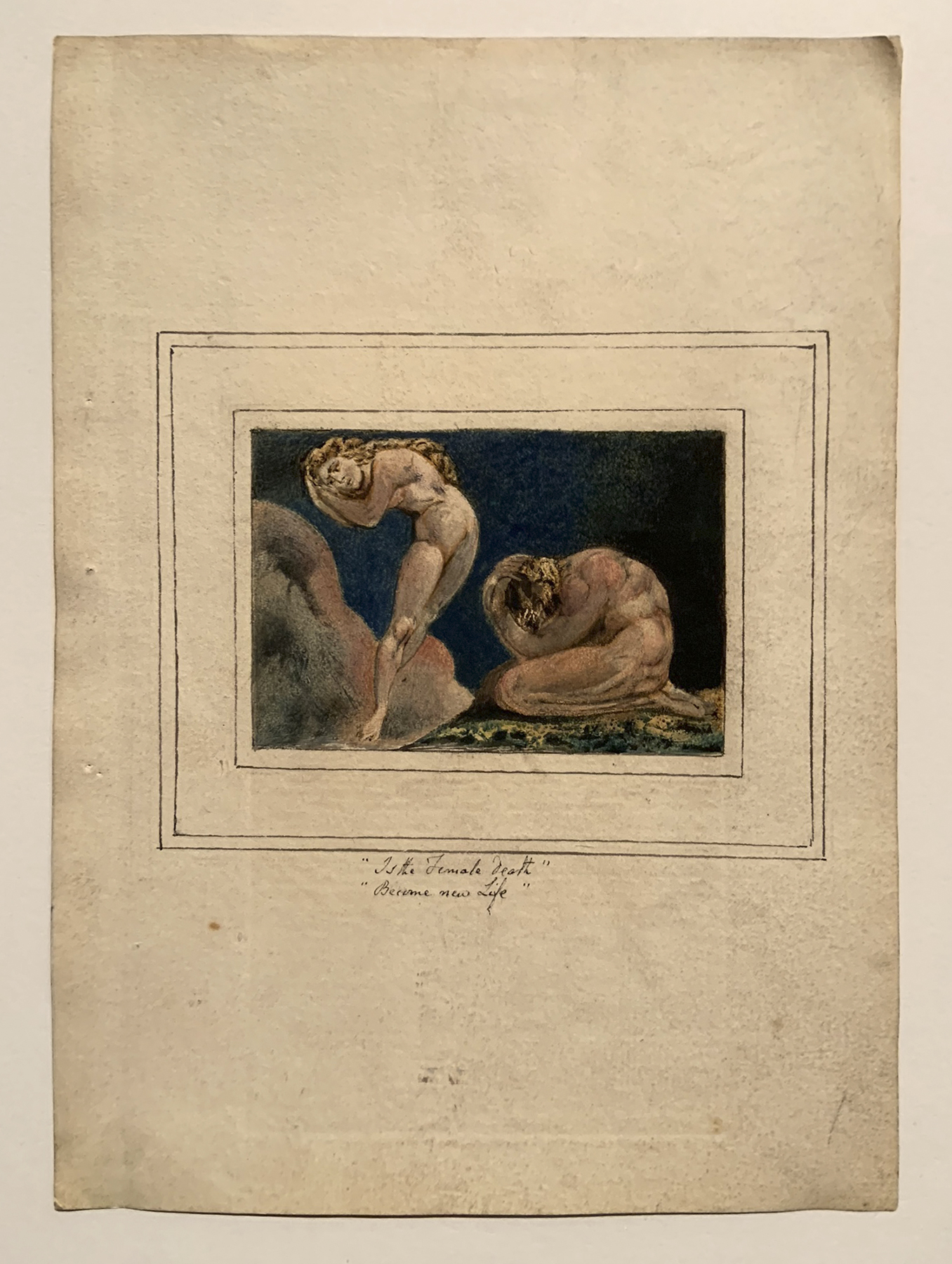
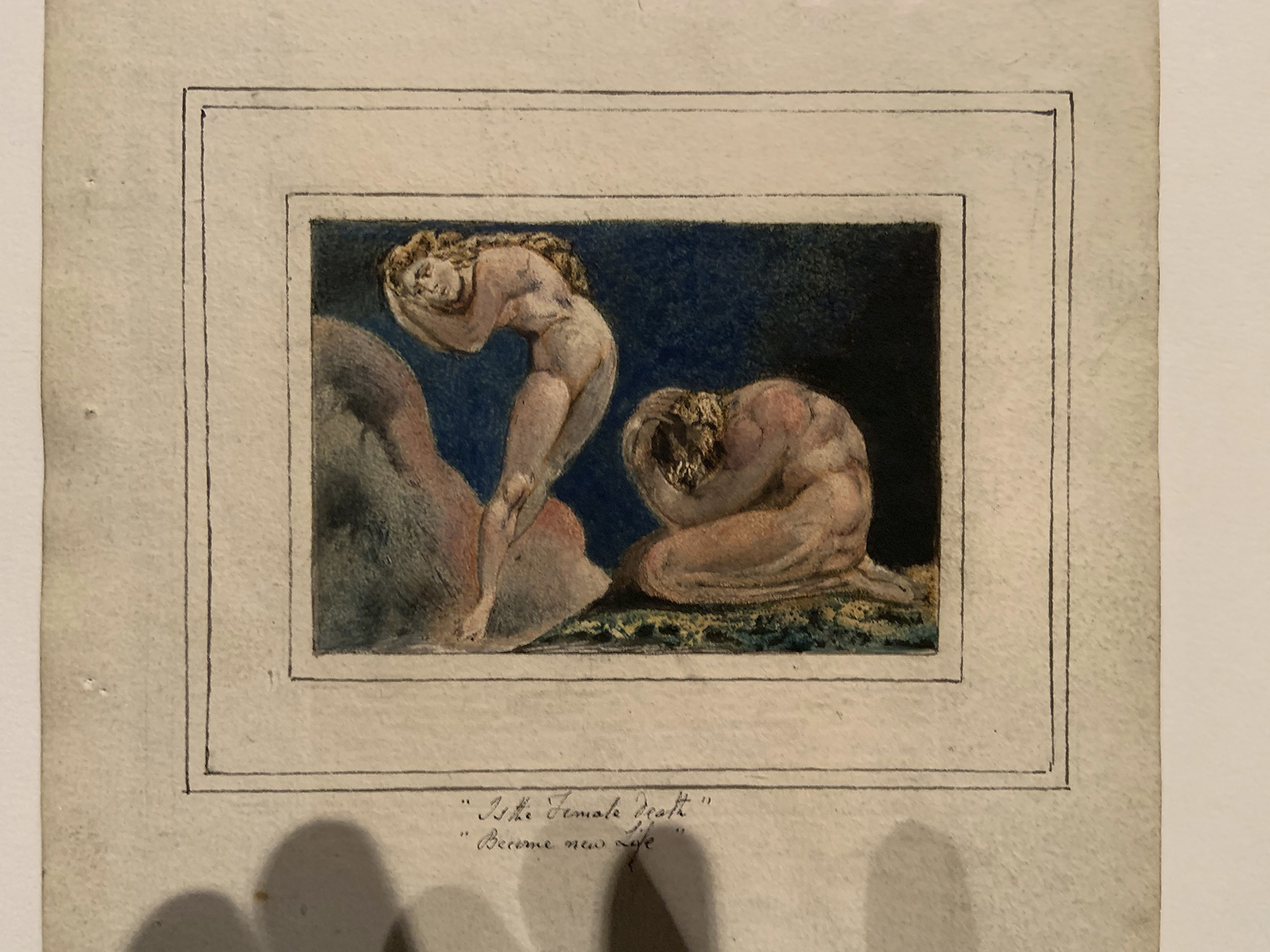
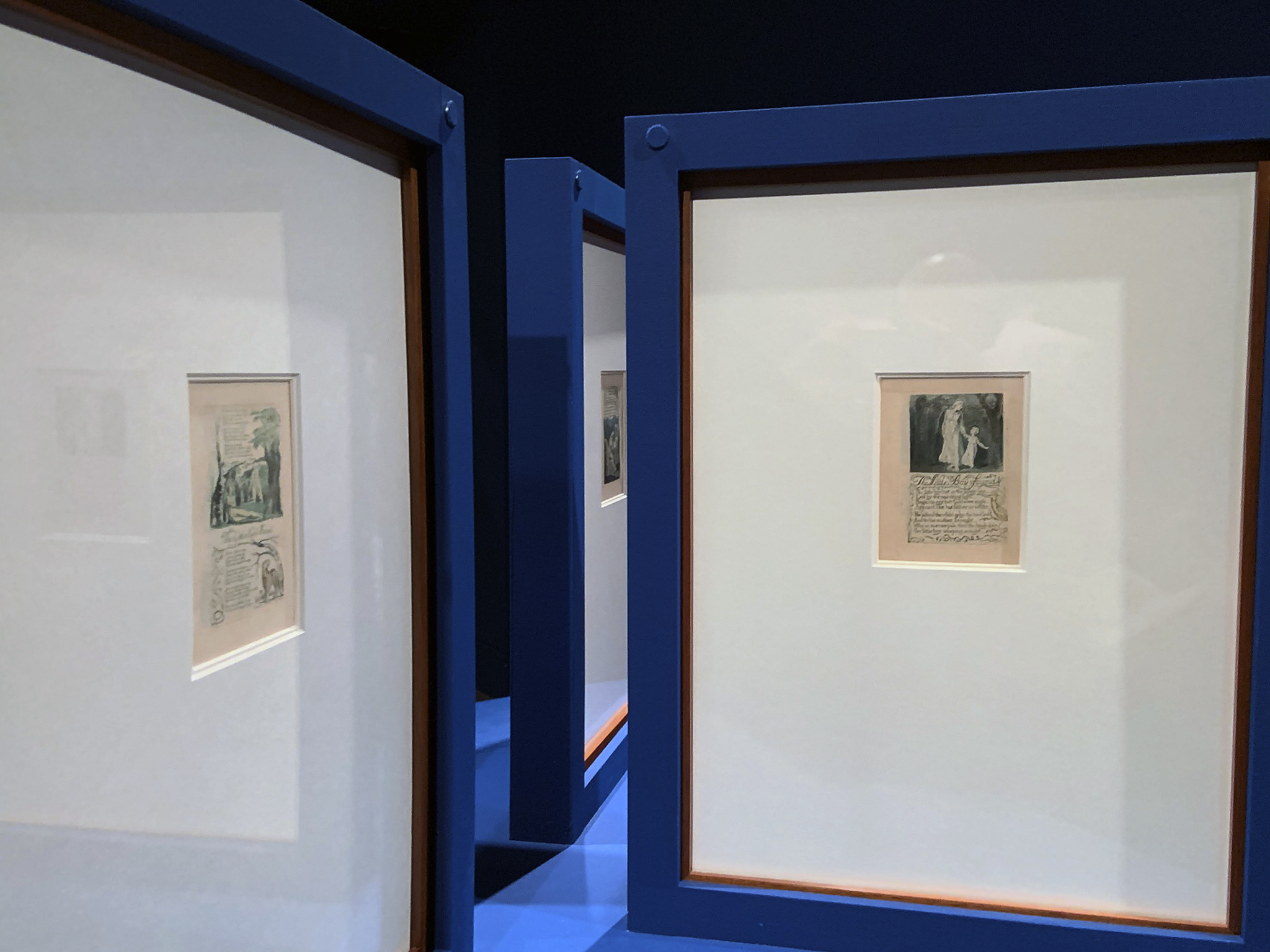
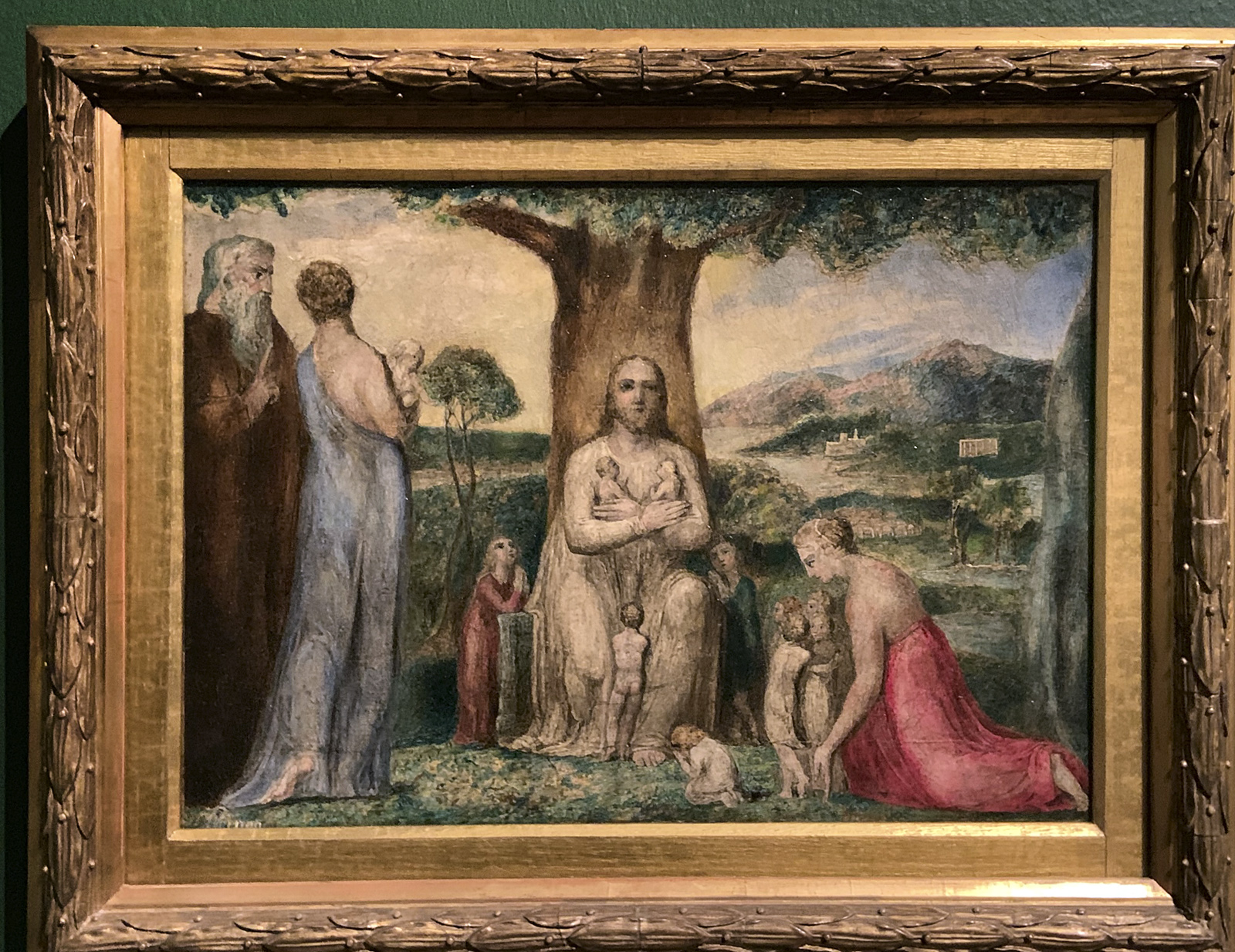
This first of two parts of this humongous posting. This exhibition has to be one of the highlights of my (art) life. The techniques, the colours, the forms and the MAGIC of Blake’s compositions brought me to tears.

I will write more on the work in the second part of the posting.

Dr Marcus Bunyan


Many thankx to Tate Britain for allowing me to publish the media images in the posting. All other installation photographs as noted © Dr Marcus Bunyan. Please click on the photographs for a larger version of the image.


“Every page is a window open in Heaven … interwoven designs companion the poems, and gold and yellow tints diffuse themselves over the page like summer clouds. The poems [of Songs of Innocence] are the morning song of Blake’s genius.”


W.B. Yeats


“Blake sang of the ideal world, of the truth of the intellect, and of the divinity of the imagination. … The only writer to have written songs for children with the soul of a child … he holds, in my view, a unique position because he unites intellectual sharpness with mystic sentiment.”


James Joyce


Installation view of the exhibition 'William Blake' at Tate Britain

Installation view of the exhibition 'William Blake' at Tate Britain

Installation view of the exhibition 'William Blake' at Tate Britain

Installation view of the exhibition 'William Blake' at Tate Britain

Installation view of the exhibition 'William Blake' at Tate Britain

Installation view of the exhibition 'William Blake' at Tate Britain

Installation view of the exhibition 'William Blake' at Tate Britain

Installation view of the exhibition 'William Blake' at Tate Britain


Installation views of the exhibition William Blake at Tate Britain
© Tate
Photos: Seraphina Neville


Tate Britain presents the largest survey of work by William Blake (1757-1827) in the UK for a generation. A visionary painter, printmaker and poet, Blake created some of the most iconic images in the history of British art and has remained an inspiration to artists, musicians, writers and performers worldwide for over two centuries. This ambitious exhibition brings together over 300 remarkable and rarely seen works and rediscovers Blake as a visual artist for the 21st century.

Tate Britain reimagines the artist’s work as he intended it to be experienced. Blake’s art was a product of his tumultuous times, with revolution, war and progressive politics acting as the crucible of his unique imagination, yet he struggled to be understood and appreciated during his life. Now renowned as a poet, Blake also had grand ambitions as a visual artist and envisioned vast frescos that were never realised. For the first time, The Spiritual Form of Nelson Guiding Leviathan c. 1805-1809 and The Spiritual Form of Pitt Guiding Behemoth c. 1805 have been enlarged and projected onto the gallery wall on the huge scale that Blake imagined. The original artworks are displayed nearby in a re-staging of Blake’s ill-fated exhibition of 1809, the artist’s only significant attempt to create a public reputation for himself as a painter. Tate has recreated the domestic room above his family hosiery shop in which the show was held, allowing visitors to encounter the paintings exactly as people did over 200 years ago.

The exhibition also provides a vivid biographical framework in which to consider Blake’s life and work. There is a focus on London, the city in which he was born and lived for most of his life. The burgeoning metropolis was a constant source of inspiration for the artist, offering an environment in which harsh realities and pure imagination were woven together. Blake’s creative freedom was also dependent on the unwavering support of those closest to him: his friends, family and patrons. Tate Britain highlights the vital presence of his wife Catherine Blake who offered both practical assistance and became an unacknowledged hand in the production of the artist’s engravings and illuminated books. The exhibition showcases a series of illustrations to Pilgrim’s Progress 1824-1827 and a copy of the book The Complaint, and the Consolation, or, Night Thoughts 1797, now thought to be coloured by Catherine.

William Blake was a staunch defender of the fundamental role of art in society and the importance of artistic freedom. Shaped by his personal struggles in a period of political terror and oppression, his technical innovation, and his political commitment, these beliefs have inspired the generations that followed and remain pertinent today. Tate Britain’s exhibition opens with Albion Rose c. 1793, an exuberant visualisation of the mythical founding of Britain, created in contrast to the commercialisation, austerity and crass populism of the times. A section of the exhibition is also dedicated to his illuminated books such as Songs of Innocence and of Experience 1794, his central achievement as a radical poet.

Additional highlights include some of Blake’s best-known works including Newton 1795 – c. 1805 and Ghost of a Flea c. 1819-1820. This intricate painting was inspired by a séance-induced vision and is shown alongside a rarely seen preliminary sketch. The exhibition closes with The Ancient of Days 1827, an illustration for an edition of Europe: A Prophecy, completed only days before the artist’s death.

William Blake at Tate Britain is curated by Martin Myrone, Senior Curator, pre-1800 British Art, and Amy Concannon, Curator, British Art 1790-1850. The exhibition is accompanied by a catalogue from Tate Publishing and a programme of talks and events in the gallery.

Text from Tate Britain


William Blake (British, 1757-1827) 'Albion Rose' c. 1793 (installation view)

William Blake (British, 1757-1827) 'Albion Rose' c. 1793 (installation view)

William Blake (British, 1757-1827) 'Albion Rose' c. 1793 (installation view)

William Blake (British, 1757-1827) 'Albion Rose' c. 1793 (installation view detail)


William Blake (British, 1757-1827)
Albion Rose (installation views)
c. 1793
Colour engraving
250 x 211 mm
Courtesy of the Huntington Art Collections
Photos: Marcus Bunyan


This image exemplifies how any single work by Blake might have multiple meanings. It can be related to several different strands within Blake’s poetry and thought. The figure has been reinterpreted many times, as a symbol of youthful rebellion, spiritual freedom and of creativity.

Wall text from the exhibition


William Blake (British, 1757-1827) 'Albion Rose' c. 1793 from the exhibition 'William Blake' at Tate Britain, London, September 2019 - February 2020


William Blake (British, 1757-1827)
Albion Rose
c. 1793
Colour engraving
250 x 211 mm
Courtesy of the Huntington Art Collections


William Blake

The art and poetry of William Blake have influenced generations. He has inspired many creative people, political radicals and independent minds. His images and words are admired around the world for their originality and spirituality.

Blake lived at a time of radical thought, war and global unrest. The British Empire was expanding. New ideas about social justice developed alongside rapid industrialisation. Blake created imaginative images and texts that resonated with this changing world. They drew on his deeply felt religious beliefs and personal struggles.

The exhibition is organised chronologically. It takes us through the ups and downs of Blake’s creative and professional life. The full range of Blake’s work is on display here. His commercial engravings, original prints, his unique ‘illuminated books’ and paintings are all included. These have been drawn from public and private collections from around the world. To preserve these rarely seen objects, the light levels across the exhibition are deliberately low.

Blake’s art and poetry have appealed to many kinds of people, for different reasons. His work has provoked diverse interpretations. This exhibition does not try to explain Blake’s imagery and symbolism in a definitive way.

Instead it considers the reception of his art and how it was experienced by his contemporaries. It sets out the personal and social conditions in which it was made. In doing so we hope to reveal the circumstances that gave Blake the freedom to create such innovative works.

Wall text


Room 1

The art and poetry of William Blake have influenced generations. He has inspired many creative people, political radicals and independent minds. His images and words are admired around the world for their originality and spirituality.

Blake lived at a time of radical thought, war and global unrest. The British Empire was expanding. New ideas about social justice developed alongside rapid industrialisation. Blake created imaginative images and texts that resonated with this changing world. They drew on his deeply felt religious beliefs and personal struggles.

The exhibition is organised chronologically. It takes us through the ups and downs of Blake’s creative and professional life. The full range of Blake’s work is on display here. His commercial engravings, original prints, his unique ‘illuminated books’ and paintings are all included. These have been drawn from public and private collections from around the world. To preserve these rarely seen objects, the light levels across the exhibition are deliberately low.

Blake’s art and poetry have appealed to many kinds of people, for different reasons. His work has provoked diverse interpretations. This exhibition does not try to explain Blake’s imagery and symbolism in a definitive way. Instead it considers the reception of his art and how it was experienced by his contemporaries. It sets out the personal and social conditions in which it was made. In doing so we hope to reveal the circumstances that gave Blake the freedom to create such innovative works.


William Blake (British, 1757-1827) 'Joseph Making himself Known to his Brethren' 1784-1785 (installation view)

William Blake (British, 1757-1827) 'Joseph Making himself Known to his Brethren' 1784-1785 (installation view)


William Blake (British, 1757-1827)
Joseph Making himself Known to his Brethren (installation views)
1784-1785
India ink and watercolour over graphite on paper
The Syndics of the Fitzwilliam Museum, University of Cambridge
Photos: Marcus Bunyan


Installation view of the exhibition 'William Blake' at Tate Britain, London showing at left, Blake's 'Joseph's Brethren Bowing down before him' (1784-1785) and at right, 'Joseph Ordering Simeon to be Bound' (1784-1785)


Installation view of the exhibition William Blake at Tate Britain, London showing at left, Blake’s Joseph’s Brethren Bowing down before him (1784-1785) and at right, Joseph Ordering Simeon to be Bound (1784-1785)
Photo: Marcus Bunyan


The story of Joseph

Blake’s bitter view of the contemporary art world has its origins in the disappointments and frustrations he experienced early in his career.

In 1785 Blake exhibited these three watercolour designs showing the biblical story of Joseph. Blake showed them at the annual exhibition at the Royal Academy of Arts, the main showcase for contemporary art.

Students at the Academy were encouraged to depict serious, dramatic subject matter in a classical style. But these exhibitions were filled with more commercial artworks. The exhibition catalogue, also on display here, shows the dominance of portraits, landscapes and light-hearted ‘fancy’ subjects. Being watercolours, Blake’s designs were shown in a separate space where they got less public attention than the oil paintings in the main gallery.

Wall text from the exhibition


William Blake (British, 1757-1827) 'Joseph's Brethren Bowing down before him' 1784-1785 (installation view)

William Blake (British, 1757-1827) 'Joseph's Brethren Bowing down before him' 1784-1785 (installation view)


William Blake (British, 1757-1827)
Joseph’s Brethren Bowing down before him (installation views)
1784-1785
India ink and watercolour over graphite on paper
The Syndics of the Fitzwilliam Museum, University of Cambridge
Photos: Marcus Bunyan


Installation view of the exhibition 'William Blake' at Tate Britain, London with at bottom middle, 'Drawing of the legs of Cincinnatus' (c. 1779-1780) Photo: Marcus Bunyan


Installation view of the exhibition William Blake at Tate Britain, London with at bottom middle, Drawing of the legs of Cincinnatus (c. 1779-1780)
Photo: Marcus Bunyan


William Blake wall text


William Blake wall text


William Blake (British, 1757-1827) 'Drawing of the legs of Cincinnatus' c. 1779-1780 (installation view)


William Blake (British, 1757-1827)
Drawing of the legs of Cincinnatus (installation view)
c. 1779-1780
Ink and wash over graphite on paper
Bolton Museum and Archive
Photo: Marcus Bunyan


This intimate and apparently casually-drawn portrait shows Catherine Blake (née Boucher, 1762-1831). William and Catherine were married from 1782 until Blake’s death in 1827. Catherine played a huge part in Blake’s creative and commercial work. She helped him with printing and colouring his works, even finishing some of his drawings. Blake’s extraordinary vision depended on his partnership with Catherine.

Wall text


William Blake (British, 1757-1827) 'Catherine Blake' 1805 (installation view)


William Blake (British, 1757-1827)
Catherine Blake (installation view)
1805
Graphite on paper
286 x 221 mm
Tate. Bequeathed by Miss Alice G.E. Carthew 1940
Photo: Marcus Bunyan


William Blake (British, 1757-1827) 'Catherine Blake' 1805  from the exhibition 'William Blake' at Tate Britain, London, September 2019 - February 2020


William Blake (British, 1757-1827)
Catherine Blake
1805
Graphite on paper
286 x 221 mm
Tate. Bequeathed by Miss Alice G.E. Carthew 1940


A portrait of William Blake, thought to be his only self-portrait, will be exhibited in the UK for the first time in a major survey of his work at Tate Britain. In the 200 years since its creation, the detailed pencil drawing only been shown once before and never in the artist’s own country. It offers a unique insight into the visionary painter, printmaker and poet responsible for some of Britain’s best loved artwork and will be displayed alongside a sketch of Blake’s wife Catherine from the same period, highlighting her vital contribution to his life and work.

Created when Blake was around 45 years old, the work is thought to present an idealised likeness. Rather than showing Blake as a painter or engraver, signs of his creative intensity are conveyed in his direct hypnotic gaze. This compelling image was produced after 1802, at a turning-point in Blake’s life. Having lived in Sussex for three years and been falsely accused of treason, Blake returned to his native city of London and was re-establishing himself as an artist. The portrait shows Blake as an isolated and misunderstood figure.

A crucial presence in Blake’s life, Catherine offered both practical assistance and became an unacknowledged hand in the production of his engravings and illuminated books. His visual art and poetry began to develop in original ways only after their marriage in 1782. At the time she was illiterate but learnt to read and write with her husband and became an accomplished printmaker in her own right. Together, these rare examples of Blake’s portraiture highlight the ways in which his extraordinary vision was dependent on the domestic stability of his life with Catherine.

Text from the Tate Britain website


William Blake (British, 1757-1827) 'Portrait of William Blake' c. 1802 (installation view)


William Blake (British, 1757-1827)
Portrait of William Blake (installation view)
c. 1802
Graphite with black, white and grey washes on paper
Collection of Robert N. Essick
Photo: Marcus Bunyan


This is probably a self-portrait drawn by Blake when he was in his 40s. It does not present him in the act of writing or drawing. Instead, the image invites us to see his intense gaze as a sign of his creative force. This perhaps reflects his claim that he saw visions. Blake’s art and personal behaviour divided contemporary opinion. A few friends and supporters accepted him as a genius. Many others considered him eccentric or questioned his mental health.

Wall text from the exhibition


William Blake (British, 1757-1827) 'Portrait of William Blake' c. 1802 (installation view)


William Blake (British, 1757-1827)
Portrait of William Blake (installation view)
c. 1802
Graphite with black, white and grey washes on paper
Collection of Robert N. Essick
Photo: Marcus Bunyan


‘Blake be an artist!’

Blake was born in London in 1757, the son of a fairly successful shopkeeper in Broad Street, Soho. Blake wanted to be an artist from an early age. His family indulged his passion. They bought prints and plaster casts for him to copy, paid for drawing lessons and funded his training as an apprentice engraver. In 1779 he enrolled as a student at the Royal Academy of Arts. This gallery explores the art he created in the years that followed. It was during this time that he developed his ambitions as an original artist and poet.

The Royal Academy encouraged its students to imitate the great art of the past. They were expected to copy antique sculptures and look to Renaissance artists like Michelangelo and Raphael for inspiration.

Blake later rejected the more rigid ideas associated with Academic teaching. He sought to create a more personal vision and began to identify with the ‘Gothic’ artists of the medieval past. He felt the Academy was being taken over by portrait painters motivated by self-interest. But he did admire some ambitious and individualistic figures there. These included James Barry and Henry Fuseli. Blake took seriously their ideas about painting great public works full of moral purpose and drama. The conflict between such aims and the realities of a cynical and market-driven art world would be a shaping force in Blake’s creative life.

Wall text from the exhibition


William Blake (British, 1757-1827) 'Academy Study' 1779-1780 (installation view)


William Blake (British, 1757-1827)
Academy Study (installation view)
1779-1780
Graphite on paper
Lent by the British Museum, London
Photo: Marcus Bunyan


Installation view of the exhibition 'William Blake' at Tate Britain, London Photo: Marcus Bunyan


Installation view of the exhibition William Blake at Tate Britain, London
Photo: Marcus Bunyan


Early drawings and watercolours

Blake’s earliest drawings typically used sweeping lines and areas of grey washed ink or watercolour. His figures make grand gestures in bare, even abstract, settings.

His style was based on the innovative art of the 1760s and 1770s, especially the drawings of James Barry, Henry Fuseli, and John Flaxman. They became well known for creating works with strong visual and emotional impact and communicating ideas in a bold way.

Blake’s subjects were often drawn from history, literature and the Bible. This was in keeping with the teaching of the Royal Academy and traditional ideas about ‘high art’. However, Blake’s subject matter from these early years is sometimes unclear. Spiritual forms, ghosts and visions start to appear. This means that the story and meaning of his individual works can be difficult to decipher.

Wall text from the exhibition


Installation view of the exhibition 'William Blake' at Tate Britain, London showing Blake's 'Age Teaching Youth' (c. 1785-1790) Photo: Marcus Bunyan


Installation view of the exhibition William Blake at Tate Britain, London showing Blake’s Age Teaching Youth (c. 1785-1790)
Photo: Marcus Bunyan


William Blake (British, 1757-1827) 'An Allegory of the Bible' c. 1780-1785 (installation view)


William Blake (British, 1757-1827)
An Allegory of the Bible (installation view)
c. 1780-1785
Graphite, ink and watercolour on paper
Tate, Bequeathed by Miss Rachel M. Dyer 1969
Photo: Marcus Bunyan


Blake started using more colours in the mid-1780s. The mysterious subject matter of this design is new as well. The title is not the artist’s own. It was added by later commentators, as is often the case with Blake’s symbolic designs.

Wall text from the exhibition


William Blake (British, 1757-1827) 'An Allegory of the Bible' c. 1780-1785


William Blake (British, 1757-1827)
An Allegory of the Bible
c. 1780-1785
Graphite, ink and watercolour on paper
Tate, Bequeathed by Miss Rachel M. Dyer 1969


The title of this work is not Blake’s, but its theme seems to be the revelation of knowledge.

Unusually, the foreground and background were both painted initially with a single base colour. The figures and the screen behind those in the background were applied straight onto the white paper. The screen and the lower half of the sky behind it were originally painted a deep rose, with a red lake pigment that is probably brazilwood. This has lost so much colour, except at the edges, that it gives the unintended effect of a flat brown base tone to the whole screen.

Gallery label, September 2004


Installation view of the exhibition 'William Blake' at Tate Britain, London showing Blake's 'The Good Farmer, Probably the Parable of the Wheat and the Tares' (c. 1780-1785) Photo: Marcus Bunyan


Installation view of the exhibition William Blake at Tate Britain, London showing Blake’s The Good Farmer, Probably the Parable of the Wheat and the Tares (c. 1780-1785)
Photo: Marcus Bunyan


This is an illustration of one of Christ’s parables, which appears in several biblical sources.


William Blake (British, 1757-1827) 'The Good Farmer, Probably the Parable of the Wheat and the Tares' c. 1780-1785 (installation view)


William Blake (British, 1757-1827)
The Good Farmer, Probably the Parable of the Wheat and the Tares (installation view)
c. 1780-1785
Ink and watercolour on paper
Tate. Bequeathed by Miss Alice G.E. Carthew 1940
Photo: Marcus Bunyan


Installation view of the exhibition 'William Blake' at Tate Britain, London Photo: Marcus Bunyan

Installation view of the exhibition 'William Blake' at Tate Britain, London Photo: Marcus Bunyan


Installation views of the exhibition William Blake at Tate Britain, London
Photos: Marcus Bunyan


Tiriel

In the late 1780s Blake had established a reputation as a designer and poet among a small circle of friends. He began writing an epic poem, which he also intended to illustrate. It is not clear how Blake would have funded the production of an illustrated edition and it was not published.

Blake’s manuscript and many of the surviving drawings are displayed here. The story combined elements of Greek tragedy and Shakespeare. It also drew on supposedly ancient Gaelic stories (actually composed by the Scottish writer James Macpherson in the 1760s). The narrative concerns a king, now blind, his arguments with his sons and daughters, and his encounter with his elderly parents, Har and Heva. The language is dramatic, with exaggerated imagery suggesting surging emotions, ‘Thunder & fire & pestilence’.

The project represents the culmination of Blake’s early efforts as a painter and poet. It also exposes how his ambitions to combine epic images and texts were frustrated by conventional publishing techniques.

Wall text from the exhibition


Installation view of the exhibition 'William Blake' at Tate Britain, London Photo: Marcus Bunyan


Installation view of the exhibition William Blake at Tate Britain, London
Photo: Marcus Bunyan


William Blake (British, 1757-1827) 'Oberon, Titania and Puck with Fairies Dancing' c. 1786


William Blake (British, 1757-1827)
Oberon, Titania and Puck with Fairies Dancing
c. 1786
Watercolour and graphite on paper
Support: 475 × 675 mm
Tate. Presented by Alfred A. de Pass in memory of his wife Ethel 1910
Creative Commons CC-BY-NC-ND (3.0 Unported)


The subject is from Shakespeare’s A Midsummer Night’s Dream illustrating Titania’s instruction to her fairy train in the last scene:

Hand in hand, with fairy grace,
Will we sing, and bless this place.

Oberon and Titania, King and Queen of the fairies, are on the left. Puck, the perplexer of mortals, faces us. The fairies Moth and Peaseblossom are easily identifiable.

During the 1780s there was a growing taste for Shakespeare illustrations. Blake had formed a print-publishing partnership in 1784. If the approximate dating of this work is correct, it may represent an attempt by Blake to break into this market.

Supernatural and fantastical subject matter like this enjoyed great popularity in Blake’s time.

Wall text from the exhibition and gallery label, August 2004


William Blake (British, 1757-1827) 'Oberon, Titania and Puck with Fairies Dancing' c. 1786 (installation view detail)

William Blake (British, 1757-1827) 'Oberon, Titania and Puck with Fairies Dancing' c. 1786 (installation view detail)


William Blake (British, 1757-1827)
Oberon, Titania and Puck with Fairies Dancing (installation view details)
c. 1786
Watercolour and graphite on paper
Support: 475 × 675 mm
Tate. Presented by Alfred A. de Pass in memory of his wife Ethel 1910
Photos: Marcus Bunyan


Installation view of the exhibition 'William Blake' at Tate Britain, London

Installation views of the exhibition 'William Blake' at Tate Britain, London


Installation views of the exhibition William Blake at Tate Britain, London
Photos: Marcus Bunyan


William Blake (British, 1757-1827) 'Europe, A Prophecy (Copy E)' 1794 (installation view)

William Blake (British, 1757-1827) 'Europe, A Prophecy (Copy E)' 1794 (installation view)


William Blake (British, 1757-1827)
Europe, A Prophecy (Copy E) (installation views)
1794
Book, 17 plates on 10 leaves
Open to plates 17: Ethinius queen of waters... and 18 Shot from the heights of Enitharrnon
Relief and white-line etching with colour printing and hand colouring
Library of Congress. Lessing J. Rosenwald collection, 1806
Photos: Marcus Bunyan


William Blake (British, 1757-1827) 'Europe, A Prophecy (Copy A)' 1794 (installation view)

William Blake (British, 1757-1827) 'Europe, A Prophecy (Copy A)' 1794 (installation view)


William Blake (British, 1757-1827)
Europe, A Prophecy (Copy A) (installation views)
1794
Book, 17 plates on 17 leaves
Open to Plate 2, title page
Colour-printed relief etching in dark brown with pen and black ink, oil and watercolour on paper
Photos: Marcus Bunyan


Europe, A Prophecy relates contemporary historical events – specifically the French Revolution – in an epic, symbolic form. As Blake’s biographer Alexander Gilchrist (1828-1861) observed of the book: ‘It is hard to describe poems wherein the dramatis personae are giant shadows, gloomy phantoms; the scene, the realms of space; the time, of such corresponding vastness, that eighteen hundred years pass as a dream’. Catherine Blake is likely to have coloured many of the plates in this copy, including the title page. This copy, may be that bought from Blake by the painter George Romney (1734-1802).

Label text


William Blake (British, 1757-1827) 'First Book of Urizen' pl. 6 1796, printed c. 1818


William Blake (British, 1757-1827)
First Book of Urizen pl. 6 ‘I sought Pleasure & found Pain, Unntennable’
1796, printed c. 1818
Etching with paint, watercolour and ink on paper
Tate. Purchased with funds provided by the Art Fund, Tate Members, Tate Patrons, Tate Fund and individual donors 2009
Creative Commons CC-BY-NC-ND (3.0 Unported)


William Blake (British, 1757-1827) 'The First Book of Urizen (Copy G)' 1794, printed c. 1818 (installation view)

William Blake (British, 1757-1827) 'The First Book of Urizen (Copy G)' 1794, printed c. 1818 (installation view)


William Blake (British, 1757-1827)
The First Book of Urizen (Copy G) (installation views)
1794, printed c. 1818
27 leaves, open to plate number 14
Relief etching printed in yellow brown with watercolour and gold
Library of Congress. Lessing J. Rosenwald collection, 1807
Photos: Marcus Bunyan


During his lifetime, Blake’s books were appreciated by collectors for their visual qualities far more than for their political and literary content. The First Book of Urizen was first printed in 1794. It was already strongly visual. In this new copy, printed in around 1818, Blake has enhanced this full-page image with intense colouring and gold.

Label text


William Blake (British, 1757-1827) 'The Marriage of Heaven and Hell (Copy H)' c. 1790 (installation view)


William Blake (British, 1757-1827)
The Marriage of Heaven and Hell (Copy H) (installation view)
c. 1790
Book, 27 plates on 15 leaves
Open to title page
Relief etching with hand-colouring
The Syndics of the Fitzwilliam Museum, University of Cambridge
Photo: Marcus Bunyan


William Blake (British, 1757-1827) 'The Marriage of Heaven and Hell (Copy B)' c. 1790 (installation view)

William Blake (British, 1757-1827) 'The Marriage of Heaven and Hell (Copy B)' c. 1790 (installation view)

William Blake label text


William Blake (British, 1757-1827)
The Marriage of Heaven and Hell (Copy B) (installation views)
c. 1790
Book, 27 plates on 15 leaves
Open to A Memorable Fancy
Relief etched plates in coloured inks with glue-based pigments and hand-colouring paper
Bodlieian Libraries, University of Oxford
Photos: Marcus Bunyan


A Memorable Fancy describes Blake’s invention of relief etching in symbolic terms. His text does little to explain his process practically. Blake’s commitment to individualism and rebellious nature are present in this description of art-making as an experimental and inspired process. This copy belonged to the scholar and collector Francis Douce (1757-1834) and may be in his original binding.

Label text


Relief etching

Blake conceived his technique of relief etching in around 1788. He claimed this was under the inspiration of his brother Robert, who had died in 1787. The technical details of his method have long fascinated and frustrated scholars and collectors and remain debated.

Engraving and etching involve making lines in a copper plate which are filled with ink to create the printed image. Relief etching, on the other hand, involves using acid to eat away areas of the plate that you want to leave unprinted. The remaining surfaces are inked and printed. Relief etching allowed Blake to combine hand-written texts and images on a single plate. These were normally entirely separate processes. Blake also experimented in printing with colours, and added pen and ink, watercolour and later on gold to create more dense, painterly images.

Wall text from the exhibition


William Blake (British, 1757-1827) 'Book of Thel (Copy I)' c. 1789 (installation view)


William Blake (British, 1757-1827)
There is no Natural Religion (Copy B) (installation view)
c. 1788 (composition date)
c. 1794 (print date)
Book, 11 plates on 11 leaves
Open to Plate 10. I Mans Perceptions are not Bounded…
Colour-printed relief etching on paper
Yale Center for British Art, Paul Mellon Collection
Photo: Marcus Bunyan


This collection of short philosophical statements was one of Blake’s first experiments in relief etching. This copy, printed in coloured inks, was produced in 1794.

Label text


Room 2

Making prints, making a living


“I curse & bless Engraving alternately because it takes so much time & is so untractable.
tho capable of such beauty & perfection”

~ William Blake


Blake was trained as a reproductive engraver. This exacting craft involved copying an image by cutting fine lines onto a metal plate so that it could be printed and reproduced many times. Blake enjoyed the precision of this work. He gained a good reputation and engraving provided him with an income throughout his life. He was sometimes employed to design as well as engrave illustrations, and for a short period from 1784 ran his own print publishing business with his friend and fellow engraver James Parker.

While Blake admired the uncompromising qualities of older prints, the market favoured more obviously decorative techniques. Blake could adapt his style, but he found the limitations of commercial work frustrating.

Around 1788 Blake invented a new form of printmaking, ‘relief etching’. He described the technique in poetic rather than practical terms so his exact methods remain mysterious. The process allowed Blake to print in colour and combine texts and images. Blake used the technique to create a succession of visionary books. These engaged with the most pressing moral and political questions of the day, including revolution, sexual freedom and the slave trade. Blake’s illuminated books combined poetry and images in experimental ways. His images rarely illustrate the text directly. He also printed some of the images separately without words. Later in life Blake continued to print copies for fellow artists and rare book collectors, adding richer colours and gold to make them more visually enticing.

Wall text from the exhibition


William Blake (British, 1757-1827) 'Joseph of Arimathea among the Rocks of Albion' c. 1810 (installation view)


William Blake (British, 1757-1827)
Joseph of Arimathea among the Rocks of Albion (installation view)
c. 1810
Engraving using carbon ink on paper
The Syndics of the Fitzwilliam Museum, University of Cambridge
Photo: Marcus Bunyan


William Blake (British, 1757-1827) 'Joseph of Arimathea among the Rocks of Albion' c. 1810 (installation view)


William Blake (British, 1757-1827)
Joseph of Arimathea among the Rocks of Albion (installation view)
c. 1810
Engraving using carbon ink on paper
The Syndics of the Fitzwilliam Museum, University of Cambridge
Photo: Marcus Bunyan


William Blake (British, 1757-1827) 'Los and Orc' c. 1792-1793


William Blake (British, 1757-1827)
Los and Orc
c. 1792-1793
Ink and watercolour on paper
217 × 295 mm
Tate. Presented by Mrs Jane Samuel in memory of her husband 1962
Creative Commons CC-BY-NC-ND (3.0 Unported)


This watercolour represents a turning-point in Blake’s art because it depicts a subject taken from his invented mythology which he used across the illuminated books. The figures appear to be the characters Los, representing imagination, and the chained Orc, the spirit of rebellion.

Wall text from the exhibition


William Blake (British, 1757-1827) 'Hell beneath is Moved for thee, to Meet thee at thy Coming Isaiah, xiv, 9' c. 1780-1885 (installation view)


William Blake (British, 1757-1827)
Hell beneath is Moved for thee, to Meet thee at thy Coming (installation view)
Isaiah, xiv, 9
c. 1780-1785
Ink and grey wash on toned paper
Lent by her Majesty The Queen
Photo: Marcus Bunyan


William Blake (British, 1757-1827) 'Lucifer and the Pope in Hell' c. 1794-1796 (installation view)


William Blake (British, 1757-1827)
Lucifer and the Pope in Hell (installation view)
c. 1794-1796
Etching or engraving printed in colour with gum or glue-based pigments and hand-finished with watercolours and ink on paper
The Huntington Library, Art Collections, and Botanical Gardens
Photo: Marcus Bunyan


This image was produced using Blake’s relief etching method, printed in colour with additional pen and ink and watercolour, to create a dense, painterly effect. It is based on an earlier drawing.

Wall text from the exhibition


Installation view of the exhibition 'William Blake' at Tate Britain showing Frontispiece and Plate 4 to 'Visions of the Daughters of Albion' (installation view) c. 1795


William Blake (British, 1757-1827)
Frontispiece to ‘Visions of the Daughters of Albion’ (installation view)
c. 1795
Relief etching, ink and watercolour on paper
Tate

William Blake (British, 1757-1827)
Plate 4 of ‘Visions of the Daughters of Albion’ (installation view)
c. 1795
Relief etching, ink and watercolour on paper
Tate
Photo: Marcus Bunyan


William Blake (British, 1757-1827) Frontispiece to 'Visions of the Daughters of Albion' c. 1795 (installation view)


William Blake (British, 1757-1827)
Frontispiece to ‘Visions of the Daughters of Albion’ (installation view)
c. 1795
Relief etching, ink and watercolour on paper
Tate
Photo: Marcus Bunyan


Installation view of the exhibition 'William Blake' at Tate Britain showing Small Book of Designs: Plate 7, 'Of life on his forsaken mountains' (installation view) 1794 and Small Book of Designs: Plate 8, 'dark seascape with figure in water' (installation view) 1794


William Blake (British, 1757-1827)
Small Book of Designs: Plate 7, ‘Of life on his forsaken mountains’ (installation view)
1794
Colour-printed relief etching with hand-colouring, on paper
Lent by the British Museum, London

William Blake (British, 1757-1827)
Small Book of Designs: Plate 8, ‘dark seascape with figure in water’ (installation view)
1794
Colour-printed relief etching with hand-colouring, on paper
Lent by the British Museum, London
Photo: Marcus Bunyan


William Blake (British, 1757-1827) Small Book of Designs: Plate 7, 'Of life on his forsaken mountains' 1794 (installation view)


William Blake (British, 1757-1827)
Small Book of Designs: Plate 7, ‘Of life on his forsaken mountains’ (installation view)
1794
Colour-printed relief etching with hand-colouring, on paper
Lent by the British Museum, London
Photo: Marcus Bunyan


William Blake (British, 1757-1827) 'A Small Book of Designs copy A object 7 The First Book of Urizen plate 23' 1796


William Blake (British, 1757-1827)
A Small Book of Designs copy A object 7 The First Book of Urizen plate 23
1796
Colour-printed relief etching with hand-colouring, on paper
The William Blake Archive, The British Museum
Wikipedia Commons, Public Domain


William Blake (British, 1757-1827) Small Book of Designs: Plate 8, 'dark seascape with figure in water' 1794 (installation view)


William Blake (British, 1757-1827)
Small Book of Designs: Plate 8, ‘dark seascape with figure in water’ (installation view)
1794
Colour-printed relief etching with hand-colouring, on paper
Lent by the British Museum, London
Photo: Marcus Bunyan


William Blake (British, 1757-1827) Small Book of Designs: Plate 9, 'Lo, a shadow of horror' 1794 (installation view)


William Blake (British, 1757-1827)
Small Book of Designs: Plate 9, ‘Lo, a shadow of horror’ (installation view)
1794
Colour-printed relief etching with hand-colouring, on paper
Lent by The British Museum, London
Photo: Marcus Bunyan


William Blake (British, 1757-1827) Small Book of Designs: Plate 11, 'Gowned Male Seen from behind' 1794 (installation view)


William Blake (British, 1757-1827)
Small Book of Designs: Plate 11, ‘Gowned Male Seen from behind’ (installation view)
1794
Colour-printed relief etching with hand-colouring, on paper
Lent by The British Museum, London
Photo: Marcus Bunyan


William Blake (British, 1757-1827) 'The Book of Thel, Plate 6' 1796, c. 1818 (installation view)

William Blake (British, 1757-1827) 'The Book of Thel, Plate 6' 1796, c. 1818 (installation view)

William Blake (British, 1757-1827) 'The Book of Thel, Plate 6' 1796, c. 1818 (installation view)


William Blake (British, 1757-1827)
The Book of Thel, Plate 6 ‘Doth God take Care of these’ (installation views)
1796, c. 1818
Etching with paint, watercolour and ink on paper
Tate. Purchased with funds provided by the Art Fund, Tate Members,Tate Patrons, Tate Fund and individual donors 2009
Photos: Marcus Bunyan


William Blake (British, 1757-1827) 'Copy A, Plate 7 in 'The First Book of Urizen' 1794 (installation view)


William Blake (British, 1757-1827)
Copy A, Plate 7 in ‘The First Book of Urizen’ (installation view)
1794
Colour relief etching predominantly in black, grey and pink, with hand-colouring, on paper
Lent by The British Museum, London
Photo: Marcus Bunyan


William Blake (British, 1757-1827) Copy A, plate 12, Design from 'Preludium' in 'The First Book of Urizen' 1794 (installation view)


William Blake (British, 1757-1827)
Copy A, plate 12, Design from ‘Preludium’ in ‘The First Book of Urizen’ (installation view)
1794
Colour-printed relief etchings with hand-colouring, on paper
Lent by The British Museum, London
Photo: Marcus Bunyan


William Blake (British, 1757-1827) 'First Book of Urizen, Plate 10' 1796, c. 1818 (installation view)

William Blake (British, 1757-1827) 'First Book of Urizen, Plate 10' 1796, c. 1818 (installation view)


William Blake (British, 1757-1827)
First Book of Urizen, Plate 10 ‘Every thing is an attempt, To be Human’ (installation views)
1796, c. 1818
Etching with paint, watercolour and ink on paper
Tate. Purchased with funds provided by the Art Fund, Tate Members, Tate Patrons, Tate Fund and individual donors 2009
Photos: Marcus Bunyan


William Blake (British, 1757-1827)
First Book of Urizen, Plate 10 ‘Every thing is an attempt, To be Human’
1796, c. 1818
Etching with paint, watercolour and ink on paper
Tate. Purchased with funds provided by the Art Fund, Tate Members, Tate Patrons, Tate Fund and individual donors 2009
Creative Commons CC-BY-NC-ND (3.0 Unported)


“I was in a Printing house in Hell, & saw the method in which knowledge is transmitted from generation to generation.”


William Blake, ‘The Marriage of Heaven and Hell’ c. 1790


William Blake (British, 1757-1827) 'First Book of Urizen, Plate 15' 1796, c. 1818 (installation view)

William Blake (British, 1757-1827) 'First Book of Urizen, Plate 15' 1796, c. 1818 (installation view)

William Blake (British, 1757-1827) 'First Book of Urizen, Plate 15' 1796, c. 1818 (installation view)


William Blake (British, 1757-1827)
First Book of Urizen, Plate 15 (installation views)
1796, c. 1818
Etching with paint, watercolour and ink on paper
Tate. Purchased with funds provided by the Art Fund, Tate Members, Tate Patrons, Tate Fund and individual donors 2009
Photos: Marcus Bunyan


William Blake (British, 1757-1827) 'First Book of Urizen, Plate 15' 1796, c. 1818


William Blake (British, 1757-1827)
First Book of Urizen, Plate 15 ‘Vegetating in fibres of Blood’
1796, c. 1818
Etching with paint, watercolour and ink on paper
Tate. Purchased with funds provided by the Art Fund, Tate Members, Tate Patrons, Tate Fund and individual donors 2009
Creative Commons CC-BY-NC-ND (3.0 Unported)


William Blake (British, 1757-1827) 'First Book of Urizen, Plate 17' 1796, c.1818 (installation view)

William Blake (British, 1757-1827) 'First Book of Urizen, Plate 17' 1796, c.1818 (installation view)

William Blake (British, 1757-1827) 'First Book of Urizen, Plate 17' 1796, c.1818 (installation view)


William Blake (British, 1757-1827)
First Book of Urizen, Plate 17 ‘Is the Female Death, Become new Life’ (installation views)
1796, c. 1818
Etching with paint, watercolour and ink on paper
Tate. Purchased with funds provided by the Art Fund, Tate Members, Tate Patrons, Tate Fund and individual donors 2009
Photos: Marcus Bunyan


William Blake (British, 1757-1827) 'First Book of Urizen, Plate 17' 1796, c.1818


William Blake (British, 1757-1827)
First Book of Urizen, Plate 17 ‘Is the Female Death, Become new Life’
1796, c. 1818
Etching with paint, watercolour and ink on paper
Tate. Purchased with funds provided by the Art Fund, Tate Members, Tate Patrons, Tate Fund and individual donors 2009
Creative Commons CC-BY-NC-ND (3.0 Unported)


Songs of Innocence and of Experience

Songs of Innocence (1789), Songs of Experience (1793) and the combined Songs of Innocence and of Experience (1794) are the best known of Blake’s illuminated books. He sold more copies of these books than any other (although he probably printed no more than 30 in his lifetime).

The poems deal with themes of childhood and morality, and include striking observations about suffering and social injustice. The visual style is highly decorative. The dense crowding of texts and borders is suggestive of illustrations to children’s books or even embroidered samplers.

Wall text


Installation view of the exhibition 'William Blake' at Tate Britain, London


Installation view of the exhibition William Blake at Tate Britain, London
Photo: Marcus Bunyan


Installation view of the exhibition 'William Blake' at Tate Britain, London

Installation view of the exhibition 'William Blake' at Tate Britain, London


Installation view of the exhibition William Blake at Tate Britain, London
Photo: Marcus Bunyan


William Blake (British, 1757-1827) America, A Prophecy (Copy M) Plate 13, 'Fiery the Angels Rose...' 1793 (installation view)

William Blake (British, 1757-1827) America, A Prophecy (Copy M) Plate 13, 'Fiery the Angels Rose...' 1793 (installation view)


William Blake (British, 1757-1827)
America, A Prophecy (Copy M) Plate 13, ‘Fiery the Angels Rose…’ (installation view)
1793
18 plates on 18 leaves, disbound
Colour-printed relief etching in brown with ink and watercolour on paper
Yale Center for British Art, Paul Mellon Collection
Photo: Marcus Bunyan


The American War of Independence (1775-1783) was the key historical event of Blake’s youth. It shattered the British elite’s assumptions that they could rule over a global, English-speaking empire. For many others, including Blake, it was a heroic overturning of the oppressive old order. Blake’s poem deals with historical events in mythical terms. The central character is Orc, the spirit of revolution, who pursues the ‘shadowy daughter of Urthona’. It was produced at a time when the French Revolution inspired both hope and fear that revolution would spread across Europe.

Wall text


Room 3

Patronage and independence

Throughout his life Blake depended upon the support of family and friends. These included several fellow-artists and amateurs, including John and Ann FlaxmanThomas Stothard and George Cumberland. In the 1790s Blake started selling works to Thomas Butts, a senior civil servant. Butts became his most important patron, eventually owning up to 200 works by the artist. The Rev. Joseph Thomas also commissioned series of watercolours illustrating Milton and Shakespeare. The wealthy poet William Hayley was another important supporter. In 1800-1803 Blake went to work for Hayley, moving with Catherine to Sussex.

The move opened up new connections, with the Rev. John Johnson and Elizabeth Ilive, Countess of Egremont. The support of Flaxman, Butts, Hayley and their friends gave Blake a degree of financial stability. Blake’s patrons were well-off and socially established, much more so than the artist. They admired the artist’s unconventional character and independent spirit. But Blake resented being their employee and the advice they sometimes offered. As a result these relationships often became strained.

Wall text from the exhibition


Edward Young (British, 1683-1765) 'Night Thoughts' 1797 (installation view)


Edward Young (British, 1683-1765)
Night Thoughts (installation view)
1797
Book, 43 plates on 43 leaves
Engravings with hand-colouring
By courtesy of the Trustees of Sir John Soane’s Museum, London
Photo: Marcus Bunyan


Blake produced over 530 watercolours for Edward Young’s long poem on ‘life, death and immortality’. He created bold designs in large margins around each sheet of the printed text. These often give literal form to ideas in the text. Publisher Richard Edwards commissioned Blake, but later abandoned the project and closed down his business. Blake had asked for over £100 for the designs but was paid only £21. He despaired, writing in 1799: ‘I am laid by in a corner as if I did not Exist’. This copy was hand-coloured by Blake or by Catherine Blake.

Label text


William Blake (British, 1757-1827). 'The Christ Child Asleep on the Cross' 1799-1800 (installation view)


William Blake (British, 1757-1827)
The Christ Child Asleep on the Cross (installation view)
1799-1800
Tempera on canvas Lent by the Victoria and Albert Museum, London
Photo: Marcus Bunyan


William Blake (British, 1757-1827) 'Christ Blessing the Little Children' 1799 (installation view)

William Blake (British, 1757-1827) 'Christ Blessing the Little Children' 1799 (installation view) 'Christ Blessing the Little Children' 1799 (installation view detail)


William Blake (British, 1757-1827)
Christ Blessing the Little Children (installation views)
1799
Tempera on canvas
Tate. Presented by the executors of W. Graham Robertson through the Art Fund 1949
Photos: Marcus Bunyan


William Blake (British, 1757-1827) 'Christ Blessing the Little Children' 1799


William Blake (British, 1757-1827)
Christ Blessing the Little Children
1799
Tempera on canvas
Tate. Presented by the executors of W. Graham Robertson through the Art Fund 1949
Creative Commons CC-BY-NC-ND (3.0 Unported)


This painting is from of a group of fifty illustrations to the Bible commissioned by Blake’s patron, Thomas Butts. Its subject is taken from chapter 10 of St Mark’s Gospel. Christ, seated beneath a spreading tree, blesses children brought to him while he was preaching. To the left is one of his disciples, who tries to send the children away. Christ tells the disciples:

Suffer the little children to come unto me, and forbid them not: for of such is the kingdom of God… Whosoever shall not receive the kingdom of God as a little child, he shall not enter therein.

Gallery label, August 2004


William Blake (British, 1757-1827) 'The Body of Christ Borne to the Tomb' c. 1799-1800 (installation view)

William Blake (British, 1757-1827) 'The Body of Christ Borne to the Tomb' c. 1799-1800 (installation view detail)


William Blake (British, 1757-1827)
The Body of Christ Borne to the Tomb (installation views)
c. 1799-1800
Tempera on canvas mounted onto cardboard
Tate. Presented by Francis T. Palgrave 1884
Photos: Marcus Bunyan


The frame is original and may even have been chosen by Blake.


William Blake (British, 1757-1827) 'The Body of Christ Borne to the Tomb' c. 1799-1800


William Blake (British, 1757-1827)
The Body of Christ Borne to the Tomb
c. 1799-1800
Tempera on canvas mounted onto cardboard
Tate. Presented by Francis T. Palgrave 1884
Creative Commons CC-BY-NC-ND (3.0 Unported)


This tempera is very well preserved, mainly because it was painted on thin linen canvas, stuck onto thin cardboard. This is stiff enough to reduce the cracking that develops on flexible canvas. It also made it unnecessary to add the animal glue lining which has spoilt the opaque white effect of Blake’s chalk preparatory layer in many temperas. As a result, Blake’s delicate painted details can still be seen as he intended.

This is the only Blake tempera in this room in a frame dating from the time it was painted. Blake may have chosen the frame design himself.

Gallery label, August 2004


William Blake (British, 1757-1827) 'The Great Red Dragon and the Beast from the Sea' c. 1805 (installation view)

William Blake (British, 1757-1827) 'The Great Red Dragon and the Beast from the Sea' c. 1805 (installation view detail)

William Blake (British, 1757-1827) 'The Great Red Dragon and the Beast from the Sea' c. 1805 (installation view detail)

William Blake (British, 1757-1827) 'The Great Red Dragon and the Beast from the Sea' c. 1805 (installation view detail)


William Blake (British, 1757-1827)
The Great Red Dragon and the Beast from the Sea (installation views)
c. 1805
Ink with watercolour over graphite on paper
National Gallery of Art, Washington, Rosenwald Collection, 1943
Photos: Marcus Bunyan


William Blake (British, 1757-1827) 'The Great Red Dragon and the Beast from the Sea' c. 1805


William Blake (British, 1757-1827)
The Great Red Dragon and the Beast from the Sea
c. 1805
Ink with watercolour over graphite on paper
National Gallery of Art, Washington, Rosenwald Collection, 1943
Wikipedia Commons, Public Domain


William Blake (British, 1757-1827) The Number of the Beast is 666 c. 1805 (installation view)

William Blake (British, 1757-1827) 'The Number of the Beast is 666' c. 1805 (installation view)

William Blake (British, 1757-1827) The Number of the Beast is 666 c. 1805 (installation view detail)


William Blake (British, 1757-1827)
The Number of the Beast is 666 (installation views)
c. 1805
Ink and watercolour on paper
The Rosenbach, Philadelphia
Photos: Marcus Bunyan


William Blake (British, 1757-1827) 'The Number of the Beast is 666' c. 1805


William Blake (British, 1757-1827)
The Number of the Beast is 666
c. 1805
Ink and watercolour on paper
The Rosenbach, Philadelphia
Wikipedia Commons, Public Domain


William Blake (British, 1757-1827) Satan in his Original Glory: 'Thou wast Perfect till Iniquity was Found in Thee' c. 1805 (installation view)

William Blake (British, 1757-1827) Satan in his Original Glory: 'Thou wast Perfect till Iniquity was Found in Thee' c. 1805 (installation view)

William Blake (British, 1757-1827) Satan in his Original Glory: 'Thou wast Perfect till Iniquity was Found in Thee' c. 1805 (installation view)

William Blake (British, 1757-1827) Satan in his Original Glory: 'Thou wast Perfect till Iniquity was Found in Thee' c. 1805 (installation view)


William Blake (British, 1757-1827)
Satan in his Original Glory: ‘Thou wast Perfect till Iniquity was Found in Thee’ (installation views)
c. 1805
Ink and watercolour on paper
Tate. Presented by the executors of W. Graham Robertson through the Art Fund 1949
Photos: Marcus Bunyan


This watercolour shows how such works have changed over time. There is a strip of much stronger blue colour at the bottom right edge, in an area which had been masked from the light in the past.

This watercolour shows Satan as he once was, a perfect part of God’s creation, before his fall from grace. His orb and sceptre symbolise his role as Prince of this World. It is also an extreme example of the damaging effects of over-exposure to light. The sky was originally an intense blue, now only visible at the lower right edge. The only colours which have survived unaltered are the vermilion red Blake used for the flesh, and red ochre in Satan’s wings. The paper has yellowed considerably. There is no evidence left of any yellow gamboge or pinkish red lakes.

Gallery label, September 2004


William Blake (British, 1757-1827) 'Christ Girding Himself with Strength' c. 1805 (installation view)


William Blake (British, 1757-1827)
Christ Girding Himself with Strength (installation view)
c. 1805
Chalk and watercolour over pencil on paper
280 × 325 mm
Bristol Culture: Bristol Museums & Art Gallery
Photo: Marcus Bunyan


William Blake (British, 1757-1827) 'David Delivered out of Many Waters' c. 1805


William Blake (British, 1757-1827)
David Delivered out of Many Waters
c. 1805
Ink and watercolour on paper
Tate. Presented by George Thomas Saul 1878
Creative Commons CC-BY-NC-ND (3.0 Unported)


This work shows how Blake responded visually to textual sources. It is an illustration to Psalm 18, in which David (at the bottom of the image with his arms stretched wide) calls out to God for salvation from his enemies. Christ appears above, riding upon seven cherubim (angels), not one as in the text. Blake’s gentle, linear style, formal composition and free interpretation of a written source made him attractive to many modern artists. Paul Nash saw Blake as representing a British imaginative tradition.

Gallery label, August 2004


William Blake (British, 1757-1827) The Crucifixion: 'Behold Thy Mother' c. 1805


William Blake (British, 1757-1827)
The Crucifixion: ‘Behold Thy Mother’
c. 1805
Ink and watercolour on paper
Tate. Presented by the executors of W. Graham Robertson through the Art Fund 1949
Creative Commons CC-BY-NC-ND (3.0 Unported)


Blake often treated subjects from Jerusalem’s history. Christian thought is centred on Christ’s crucifixion at Calvary outside the city, when he died to redeem mankind. His cross, his resurrection and return to earth three days after his death are central to Stanley Spencer’s Resurrection of the Soldiers altarpiece at Sandham; sketches for this are shown in the display case to your left.

Spencer believed that the soldiers had a ‘perfect understanding’ of the sacrifice they had to make. This suggests that both Blake’s ‘Mental Fight’ to build the Jerusalem of peace in England, and the soldiers’ physical fight are equally valid.

Gallery label, July 2008


William Blake (British, 1757-1827) 'The Magdalene at the Sepulchre' c. 1805 (installation view)

William Blake (British, 1757-1827) 'The Magdalene at the Sepulchre' c. 1805 (installation view detail)


William Blake (British, 1757-1827)
The Magdalene at the Sepulchre (installation views)
c. 1805
Pen, ink and watercolour on paper
427 × 311 mm
Yale Center for British Art, Paul Mellon Collection
Photos: Marcus Bunyan


William Blake (British, 1757-1827) 'The Angel Rolling away the Stone' c. 1805


William Blake (British, 1757-1827)
The Angel Rolling away the Stone
c. 1805
Watercolour on paper
Victoria and Albert Museum, London, the Morse gift


Two angels in white the one at the head, and the other at the feet / Matw. cn. 28th v. 2nd And below there was a great earthquake, for the angel of the Lord descended from heaven, and came and rolled back the stone from the door. /17.


William Blake (British, 1757-1827) 'The Angel Rolling away the Stone' c. 1805 (detail)


William Blake (British, 1757-1827)
The Angel Rolling away the Stone (detail)
c. 1805
Watercolour on paper
Victoria and Albert Museum, London, the Morse gift


William Blake (British, 1757-1827) Illustrations to Milton's 'Paradise Lost' (Thomas set) 1807 (installation view)

William Blake (British, 1757-1827) Illustrations to Milton's 'Paradise Lost' (Thomas set) 1807 (installation view detail)


William Blake (British, 1757-1827)
Illustrations to Milton’s ‘Paradise Lost’ Plate 1: ‘Satan Arousing the Rebel Angels’ (Thomas set) (installation views)
1807
12 designs on 12 sheets
Ink and watercolour on paper
The Huntington Library, Art Collections, and Botanical Gardens
Photos: Marcus Bunyan


John Milton’s epic poem describes Adam and Eve’s banishment from the Garden of Eden. Satan, the rebellious fallen angel, is a major character. Blake made these illustrations for the Rev. Joseph Thomas, following an introduction from Flaxman.

There are three sets: the Thomas set (1807), the Butts set (1808) and the incomplete Linnell set (1822).


The Thomas set

The paintings of the Thomas set are each approximately 10x 8.25 inches. They were commissioned by the Reverend Joseph Thomas at an unrecorded date, sometime before 1807. Although the sheets were trimmed at some time, obliterating the date from several, some still retain the date of 1807, establishing the year of their completion. Thomas’ grandson inherited them from his father, and sold them at Sotheby’s in 1872. By 1876 they were in the collection of Alfred Aspland, who by 1885 took them to Sotheby’s again, dispersing the set among several buyers. Henry Huntington reunited the works in 1914, and today they are still in the collection of the Huntington Library.

Text from the Wikipedia website

Reverend Joseph Thomas

The Rev. Joseph Thomas of Epsom, Surrey, was a clergyman and friend of Flaxman. Flaxman put him and Blake in touch, leading to a series of commissions. Thomas had married an heiress, Millicent Pankhurst. He held no church appointment and was free to pursue his artistic and scholarly interests.

Blake produced several series of watercolours for Thomas illustrating the poetry of the 17th-century writer John Milton, and Shakespeare’s plays. Thomas also purchased a few published works by Blake.

Wall text from the exhibition


William Blake (British, 1757-1827) Illustrations to Milton's 'Paradise Lost' Plate 1: 'Satan Arousing the Rebel Angels' (Thomas set) 1807


William Blake (British, 1757-1827)
Illustrations to Milton’s ‘Paradise Lost’ Plate 1: ‘Satan Arousing the Rebel Angels’ (Thomas set)
1807
12 designs on 12 sheets
Ink and watercolour on paper
The Huntington Library, Art Collections, and Botanical Gardens
Google Art Project, Wikipedia Commons, Public Domain


William Blake (British, 1757-1827) Illustrations to Milton's 'Paradise Lost' Plate 2: 'Satan, Sin, and Death: Satan Comes to the Gates of Hell' (Thomas set) 1807


William Blake (British, 1757-1827)
Illustrations to Milton’s ‘Paradise Lost’ Plate 2: ‘Satan, Sin, and Death: Satan Comes to the Gates of Hell’ (Thomas set)
1807
12 designs on 12 sheets
Ink and watercolour on paper
The Huntington Library, Art Collections, and Botanical Gardens
Google Art Project, Wikipedia Commons, Public Domain


William Blake (British, 1757-1827) Illustrations to Milton's 'Paradise Lost' Plate 4: 'Satan Spying on Adam and Eve's Descent into Paradise' (Thomas set) 1807


William Blake (British, 1757-1827)
Illustrations to Milton’s ‘Paradise Lost’ Plate 4: ‘Satan Spying on Adam and Eve’s Descent into Paradise’ (Thomas set)
1807
12 designs on 12 sheets
Ink and watercolour on paper
The Huntington Library, Art Collections, and Botanical Gardens
Google Art Project, Wikipedia Commons, Public Domain


William Blake (British, 1757-1827) Illustrations to Milton's 'Paradise Lost' Plate 7: 'The Rout of the Rebel Angels' (Thomas set) 1807 (installation view)


William Blake (British, 1757-1827)
Illustrations to Milton’s ‘Paradise Lost’ Plate 7: ‘The Rout of the Rebel Angels’ (Thomas set) (installation view)
1807
12 designs on 12 sheets
Ink and watercolour on paper
The Huntington Library, Art Collections, and Botanical Gardens
Photo: Marcus Bunyan


William Blake (British, 1757-1827) Illustrations to Milton's 'Paradise Lost' Plate 7: 'The Rout of the Rebel Angels' (Thomas set) 1807


William Blake (British, 1757-1827)
Illustrations to Milton’s ‘Paradise Lost’ Plate 7: ‘The Rout of the Rebel Angels’ (Thomas set)
1807
12 designs on 12 sheets
Ink and watercolour on paper
The Huntington Library, Art Collections, and Botanical Gardens
Google Art Project, Wikipedia Commons, Public Domain


William Blake (British, 1757-1827) Illustrations to Milton's 'Paradise Lost' Plate 8: 'The Creation of Eve' (Thomas set) 1807 (installation view)

William Blake (British, 1757-1827) Illustrations to Milton's 'Paradise Lost' Plate 8: 'The Creation of Eve' (Thomas set) 1807 (installation view detail)


William Blake (British, 1757-1827)
Illustrations to Milton’s ‘Paradise Lost’ Plate 8: ‘The Creation of Eve’ (Thomas set) (installation views)
1807
12 designs on 12 sheets
Ink and watercolour on paper
The Huntington Library, Art Collections, and Botanical Gardens
Photos: Marcus Bunyan


William Blake (British, 1757-1827) Illustrations to Milton's 'Paradise Lost' Plate 8: 'The Creation of Eve' (Thomas set) 1807


William Blake (British, 1757-1827)
Illustrations to Milton’s ‘Paradise Lost’ Plate 8: ‘The Creation of Eve’ (Thomas set)
1807
12 designs on 12 sheets
Ink and watercolour on paper
The Huntington Library, Art Collections, and Botanical Gardens
Google Art Project, Wikipedia Commons, Public Domain


William Blake (British, 1757-1827) Illustrations to Milton's Hymn 'On the Morning of Christ's Nativity' Plate 2: 'The Angels appearing to the Shepherds' 1809 (installation view)

William Blake (British, 1757-1827) Illustrations to Milton's Hymn 'On the Morning of Christ's Nativity' Plate 2: 'The Angels appearing to the Shepherds' 1809 (installation view)


William Blake (British, 1757-1827)
Illustrations to Milton’s Hymn ‘On the Morning of Christ’s Nativity’ Plate 2: ‘The Angels appearing to the Shepherds’ (installation views)
1809
6 designs on 6 sheets
Graphite, ink and watercolour on paper
The Whitworth, The University of Manchester
Photos: Marcus Bunyan


Blake was paid two pounds for each of these six designs by Thomas, twice what he was paid by Butts for the individual Bible watercolours. He made another set of these illustrations for Thomas Butts. Milton’s poem celebrates the birth of Christ, and the retreat of pagan and evil forces.


William Blake (British, 1757-1827) Illustrations to Milton's Hymn 'On the Morning of Christ's Nativity' Plate 3: 'The Descent of Typhon and the Gods into Hell' 1809 (installation view)

William Blake (British, 1757-1827) Illustrations to Milton's Hymn 'On the Morning of Christ's Nativity' Plate 3: 'The Descent of Typhon and the Gods into Hell' 1809 (installation view)

William Blake (British, 1757-1827) Illustrations to Milton's Hymn 'On the Morning of Christ's Nativity' Plate 3: 'The Descent of Typhon and the Gods into Hell' 1809 (installation view)


William Blake (British, 1757-1827)
Illustrations to Milton’s Hymn ‘On the Morning of Christ’s Nativity’ Plate 3: ‘The Descent of Typhon and the Gods into Hell’ (installation views)
1809
6 designs on 6 sheets
Graphite, ink and watercolour on paper
The Whitworth, The University of Manchester
Photos: Marcus Bunyan


Tate Britain
Millbank, London SW1P 4RG
United Kingdom
Phone: +44 20 7887 8888

Opening hours:
10.00am – 18.00pm daily

Tate Britain website

LIKE ART BLART ON FACEBOOK

Back to top

European research tour exhibition: ‘Into the Night: Cabarets and Clubs in Modern Art’ at the Barbican Art Gallery, UK Part 2

Exhibition dates: 4th October, 2019 – 19th January, 2020
Visited October 2019 posted January 2020

Curator: Florence Ostende


Theo van Doesburg (Dutch, 1883-1931) 'The Ciné-bal (cinema-ballroom) at Café L'Aubette, Strasbourg, designed by Theo van Doesburg' 1926-1928 from the exhibition 'Into the Night: Cabarets and Clubs in Modern Art' at the Barbican Art Gallery, Oct 2019 - Jan 2020


Theo van Doesburg (Dutch, 1883-1931)
The Ciné-bal (cinema-ballroom) at Café L’Aubette, Strasbourg, designed by Theo van Doesburg
1926-1928
Image: Collection Het Nieuwe Instituut, donation Van Moorsel, archive (code): DOES, inv.nr AB5252


Part 2 on this exceptional exhibition. Of particular interest here are:

the inspired paintings and drawings by Jeanne Mammen of Berlin nightlife which documents “the changing role of women and offer rare images of queer female desire.” Her work, associated with the New Objectivity and Symbolism movements, is incisive and sympathetic in its observation of difference and “depravity”. Her line is strong and the characterisation, assured;

Elfriede Lohse-Wächtler’s “scenes of Hamburg after dark [which] convey a raw sense of possibility through bold line, clashing colour and startling imagery.” The attitude of the hands in the painting Lissy (1931, below) balanced by the simplicity of the chair at left, and the furious line and bleeding, washes of watercolour of the men at the table at right – replete with their protruding, predatory teeth – make this a compelling image.

I think I might have found myself a new art hero.

Dr Marcus Bunyan


Many thankx to the Barbican Art Gallery for allowing me to publish the media photographs in the posting. All installation images are iPhone images © Dr Marcus Bunyan unless otherwise stated. Please click on the photographs for a larger version of the image. See Part 1 of the posting with my comments on the exhibition.


Strasbourg L'Aubette 1928 wall text from the exhibition Theo van Doesburg (Dutch, 1883-1931) 'The Ciné-bal (cinema-ballroom) at Café L'Aubette, Strasbourg, designed by Theo van Doesburg' 1926-1928 from the exhibition 'Into the Night: Cabarets and Clubs in Modern Art' at the Barbican Art Gallery, Oct 2019 - Jan 2020

Strasbourg L'Aubette 1928 wall text Theo van Doesburg (Dutch, 1883-1931) 'The Ciné-bal (cinema-ballroom) at Café L'Aubette, Strasbourg, designed by Theo van Doesburg' 1926-1928 from the exhibition 'Into the Night: Cabarets and Clubs in Modern Art' at the Barbican Art Gallery, Oct 2019 - Jan 2020


Strasbourg: L’Aubette 1928 wall text
Photos: Marcus Bunyan


Installation view of the exhibition 'Into the Night: Cabarets and Clubs in Modern Art' at the Barbican Art Gallery, Oct 2019 - Jan 2020


Into the Night: Cabarets and Clubs in Modern Art
Installation view Barbican Art Gallery 4 October 2019 – 19 January 2020
© Tristan Fewings / Getty Images


Installation view of the exhibition 'Into the Night: Cabarets and Clubs in Modern Art' at the Barbican Art Gallery, Oct 2019 - Jan 2020

Installation view of the exhibition 'Into the Night: Cabarets and Clubs in Modern Art' at the Barbican Art Gallery, Oct 2019 - Jan 2020

Installation view of the exhibition 'Into the Night: Cabarets and Clubs in Modern Art' at the Barbican Art Gallery, Oct 2019 - Jan 2020


Installation views of the exhibition Into the Night: Cabarets and Clubs in Modern Art at the Barbican Art Gallery, London
Photos: Marcus Bunyan


Theo van Doesburg (Dutch, 1883-1931) 'L'Aubette: Projet de composition pour le sol du café-brasserie et du café-restaurant' (L'Aubette: Design for a composition for the floor of the café-brasserie and the café-restaurant) 1927 (installation view)


Theo van Doesburg (Dutch, 1883-1931)
L’Aubette: Projet de composition pour le sol du café-brasserie et du café-restaurant (L’Aubette: Design for a composition for the floor of the café-brasserie and the café-restaurant) (installation view)
1927
Gouache and graphite pencil on tracing paper
Paris, Centre Pompidou – Museé national d’art moderne – Centre de création industrielle
Photo: Marcus Bunyan


Theo van Doesburg (Dutch, 1883-1931) 'L'Aubette: Projet de composition pour le sol du café-brasserie et du café-restaurant' (L'Aubette: Design for a composition for the floor of the café-brasserie and the café-restaurant) 1927 (installation view)


Theo van Doesburg (Dutch, 1883-1931)
L’Aubette: Projet de composition pour le sol du café-brasserie et du café-restaurant (L’Aubette: Design for a composition for the floor of the café-brasserie and the café-restaurant) (installation view)
1927
Gouache and graphite pencil on tracing paper
Paris, Centre Pompidou – Museé national d’art moderne – Centre de création industrielle
Photo: Marcus Bunyan


Theo van Doesburg (Dutch, 1883-1931) 'Final colour design for the screen wall of the Ciné-Dancing at L'Aubette' 1927 (installation view)


Theo van Doesburg (Dutch, 1883-1931)
Final colour design for the screen wall of the Ciné-Dancing at L’Aubette (installation view)
1927
East India ink and paint on paper
Collection Het Nieuwe Instituut, Rotterdam. Gift Van Moorsel
Photo: Marcus Bunyan


Theo van Doesburg Ciné-Dancing wall text from the exhibition 'Into the Night: Cabarets and Clubs in Modern Art' at the Barbican Art Gallery, Oct 2019 - Jan 2020


Theo van Doesburg Ciné-Dancing wall text
Photo: Marcus Bunyan


Installation view of the exhibition 'Into the Night: Cabarets and Clubs in Modern Art' (downstairs gallery, room recreation)


Into the Night: Cabarets and Clubs in Modern Art (downstairs gallery, room recreation)
Installation view Barbican Art Gallery 4 October 2019 – 19 January 2020
© Tristan Fewings / Getty Images


Downstairs gallery, room recreation


Sophie Taeuber-Arp (Swiss, 1889-1943) 'Aubette 63' 1927 (installation view)


Sophie Taeuber-Arp (Swiss, 1889-1943)
Aubette 63 (installation view)
1927
Gouache on paper
Musée d’Art Moderne et Contemporain de Strasbourg
Photo: Marcus Bunyan


Paris: Loïe Fuller 1890s wall text from the exhibition 'Into the Night: Cabarets and Clubs in Modern Art' at the Barbican Art Gallery, Oct 2019 - Jan 2020

Paris: Loïe Fuller 1890s wall text from the exhibition 'Into the Night: Cabarets and Clubs in Modern Art' at the Barbican Art Gallery, Oct 2019 - Jan 2020


Paris: Loïe Fuller 1890s wall text
Photos: Marcus Bunyan


Unknown photographer (attributed to Falk Studio). 'Loie Fuller' c. 1901


Unknown photographer (attributed to Falk Studio)
Loïe Fuller
c. 1901
Courtesy of the Library of Congress, Prints and Photographs Division, Washington, DC


1895-1908 Loie Fuller’s Serpentine Dance (highlights from the greatest movie pioneers’ films)

Many of the earliest filmmakers chose Loie Fuller’s Serpentine Dance as a subject for one or more films: the Skladanowsky brothers (1895), Dickson and Heise for Edison Manifacturing Company (1895), Dickson for American Mutoscope (1896), Lumière (1896), Demeny (1897), possibly Alice Guy (1899+1900+1902), Méliès (1899), G.A. Smith (1902), De Chomon (1902+1908) and many others.

Loie Fuller was a pioneer of modern dance and of theatrical lighting effects. She developed this dance in 1891 and combined her choreography with silk costumes illuminated by multi-colored lighting of her own design. In several of the Serpentine Dance movies her lighting has been reinterpreted through hand-colored effects. Fuller also had a successful Fire Dance of which elements are often incorporated in filmed Serpentine Dance performances (yet rarelymentioned).

It is unclear whether any performance by Loie Fuller herself has ever been filmed. Possibly all of the featured dancers are imitators, although Segundo de Chomon’s 1902 film title “Loie Fuller” makes a strong claim.

 Text from the YouTube website

Magnificent! Not Loïe Fuller but one of her many imitators. She refused to be captured on film.


Henri de Toulouse-Lautrec (French, 1864-1901) 'Miss Loïe Fuller' 1893 (installation view)

Henri de Toulouse-Lautrec (French, 1864-1901) 'Miss Loïe Fuller' 1893 (installation view)

Henri de Toulouse-Lautrec. 'Miss Loïe Fuller' 1893 wall text from the exhibition 'Into the Night: Cabarets and Clubs in Modern Art' at the Barbican Art Gallery, Oct 2019 - Jan 2020


Installation views of the exhibition Into the Night: Cabarets and Clubs in Modern Art at the Barbican Art Gallery, London showing the work of Henri de Toulouse-Lautrec
Photos: Marcus Bunyan


Henri de Toulouse-Lautrec (French, 1864-1901) 'Miss Loïe Fuller' 1893


Henri de Toulouse-Lautrec (French, 1864-1901)
Miss Loïe Fuller
1893
Bibliothèque de l’Institut National d’Histoire de l’Art, Collections Jacques Doucet
Inv. no. NUM EM TOULOUSE-LAUTREC 49 e
Courtesy Bibliothèque de l’Institut National d’Histoire de l’Art, Collections Jacques Doucet


Installation view showing Jules Chéret (French, 1836-1932) 'Folies Bergere La Loie Fuller' lithographs from the exhibition 'Into the Night: Cabarets and Clubs in Modern Art' at the Barbican Art Gallery, Oct 2019 - Jan 2020

Jules Chéret (French, 1836-1932) 'Fioles Bergère, La Loïe Fuller' 1893 (installation view)


Jules Chéret (French, 1836-1932)
Fioles Bergère, La Loïe Fuller (installation view)
1893
Lithograph
Paris, Musée des Arts Décoratifs
Photos: Marcus Bunyan


Jules Chéret (French, 1836-1932) 'Folies Bergère, La Danse du Feu' (The Fire Dance) 1897 (installation view)


Jules Chéret (French, 1836-1932)
Folies Bergère, La Danse du Feu (The Fire Dance) (installation view)
1897
Lithograph
Paris, Musée des Arts Décoratifs
Photos: Marcus Bunyan


Paris: Chat Noir 1880s-90s wall text from the exhibition 'Into the Night: Cabarets and Clubs in Modern Art' at the Barbican Art Gallery, Oct 2019 - Jan 2020

Paris: Chat Noir 1880s-90s wall text from the exhibition 'Into the Night: Cabarets and Clubs in Modern Art' at the Barbican Art Gallery, Oct 2019 - Jan 2020


Paris: Chat Noir 1880s-90s wall text
Photos: Marcus Bunyan


Installation view of the exhibition 'Into the Night: Cabarets and Clubs in Modern Art' at the Barbican Art Gallery, London

Installation view of the exhibition 'Into the Night: Cabarets and Clubs in Modern Art' at the Barbican Art Gallery, London


Installation views of the exhibition Into the Night: Cabarets and Clubs in Modern Art at the Barbican Art Gallery, London
Photos: Marcus Bunyan


Henri Rivière (French, 1864-1951) 'Poster for the performances Clairs de lune by Georges Fragerolle, L'honnête gendarme by Jean Richepin and Le treizième travail d'Hercule by Eugène Courboin (Le Chat Noir, 16 December 1896)' (installation view)


Henri Rivière (French, 1864-1951)
Poster for the performances Clairs de lune by Georges Fragerolle, L’honnête gendarme by Jean Richepin and Le treizième travail d’Hercule by Eugène Courboin (Le Chat Noir, 16 December 1896) (installation view)
Cliché and letterpress printing in black on wove paper on linen
58.7cm x 42.2cm
Van Gogh Museum, Amsterdam
Photo: Marcus Bunyan


Installation view of the exhibition 'Into the Night: Cabarets and Clubs in Modern Art' at the Barbican Art Gallery, London showing Henri Rivière and Henry Somm's shadow theatre

Installation view of the exhibition 'Into the Night: Cabarets and Clubs in Modern Art' at the Barbican Art Gallery, London showing Henri Rivière and Henry Somm's shadow theatre

Installation view of the exhibition 'Into the Night: Cabarets and Clubs in Modern Art' at the Barbican Art Gallery, London showing Henri Rivière and Henry Somm's shadow theatre

Installation view of the exhibition 'Into the Night: Cabarets and Clubs in Modern Art' at the Barbican Art Gallery, London showing Henri Rivière and Henry Somm's shadow theatre wall text

Installation view of the exhibition 'Into the Night: Cabarets and Clubs in Modern Art' at the Barbican Art Gallery, London showing Henri Rivière and Henry Somm's shadow theatre wall text


Installation views of the exhibition Into the Night: Cabarets and Clubs in Modern Art at the Barbican Art Gallery, London showing Henri Rivière and Henry Somm’s shadow theatre and wall text
Photos: Marcus Bunyan


Installation view of the exhibition 'Into the Night: Cabarets and Clubs in Modern Art' (downstairs gallery, room recreation)

Installation view of the exhibition 'Into the Night: Cabarets and Clubs in Modern Art' (downstairs gallery, room recreation)


Into the Night: Cabarets and Clubs in Modern Art (downstairs gallery, room recreation)
Installation view Barbican Art Gallery 4 October 2019 – 19 January 2020
© Tristan Fewings / Getty Images


Downstairs gallery, room recreation


Adolphe-Leon Wilette (French, 1857-1926) 'La Vierge verte' (The Green Virgin) c. 1881 (installation view)


Adolphe-Leon Wilette (French, 1857-1926)
La Vierge verte (The Green Virgin) (installation view)
c. 1881
Oil on canvas
Collection Zimmerli Art Museum at Rutgers University
Photo: Marcus Bunyan


In this oil study for a stained-glass window exhibited inside the cabaret, the black cat is held aloft in adoration under the full moon, as though part of an occult ceremony. The ‘chat’ noir’ of the cabaret’s title was celebrated throughout its design, symbolising fierce independence as well as night-time frolics. It gazes imperiously at the onlooker from Théophile-Alexandre Steinlen’s famous posters, perches on a crescent moon in Adolphe-Léon Willette’s street sign, and endangers pet goldfish in humorous cartoons.

Wall text from the exhibition


Installation view of the exhibition 'Into the Night: Cabarets and Clubs in Modern Art' at the Barbican Art Gallery, London


Installation view of the exhibition Into the Night: Cabarets and Clubs in Modern Art at the Barbican Art Gallery, London
Photo: Marcus Bunyan


Théophile-Alexandre Steinlen (Swiss-born French, 1859-1923) 'Réouverture du cabaret du Chat Noir' (Reopening of the Chat Noir Cabaret) 1896 (installation view)


Théophile-Alexandre Steinlen (Swiss-born French, 1859-1923)
Réouverture du cabaret du Chat Noir (Reopening of the Chat Noir Cabaret) (installation view)
1896
Lithograph
Victoria and Albert Museum, London
Photo: Marcus Bunyan


Théophile-Alexandre Steinlen (Swiss-born French, 1859-1923) 'Réouverture du cabaret du Chat Noir' (Reopening of the Chat Noir Cabaret) 1896


Théophile-Alexandre Steinlen (Swiss-born French, 1859-1923)
Réouverture du cabaret du Chat Noir (Reopening of the Chat Noir Cabaret)
1896
Victoria and Albert Museum, London
© Victoria and Albert Museum, London


George Auriol (French, 1863-1938) 'Théâtre du Chat Noir (Couverture aux coquelicots)' (Programme for the Chat noir Theatre (Cover with Poppies)) 1890 (installation view)


George Auriol (French, 1863-1938)
Théâtre du Chat Noir (Couverture aux coquelicots) (Programme for the Chat noir Theatre (Cover with Poppies)) (installation view)
1890
Photomechanical print
Bibliothèque nationale de France, Paris
Photo: Marcus Bunyan


Opening 4 October 2019, Into the Night: Cabarets and Clubs in Modern Art explores the social and artistic role of cabarets, cafés and clubs around the world. Spanning the 1880s to the 1960s, the exhibition presents a dynamic and multi-faceted history of artistic production. The first major show staged on this theme, it features both famed and little-known sites of the avant-garde – these creative spaces were incubators of radical thinking, where artists could exchange provocative ideas and create new forms of artistic expression. Into the Night offers an alternative history of modern art that highlights the spirit of experimentation and collaboration between artists, performers, designers, musicians and writers such as Henri de Toulouse-Lautrec, Loïe Fuller, Josef Hoffmann, Giacomo Balla, Theo van Doesburg and Sophie Taeuber-Arp, as well as Josephine Baker, Jeanne Mammen, Aaron Douglas, Jacob Lawrence, Ramón Alva de la Canal and Ibrahim El-Salahi.

Focusing on global locations from New York to Tehran, London, Paris, Mexico City, Berlin, Vienna and Ibadan, Into the Night brings together over 350 works rarely seen in the UK, including paintings, drawings, prints, photographs, films and archival material. Liberated from the confines of social and political norms, many of the sites provided immersive, often visceral experiences, manifesting the ideals of the artists and audiences who founded and frequented them. The exhibition features full-scale recreations of specific spaces, such as the multi-coloured ceramic tiled bar of the Cabaret Fledermaus in Vienna (1907), designed by Josef Hoffmann for the Wiener Werkstätte, and the striking abstract composition of the Ciné-Dancing designed by Theo van Doesburg for L’Aubette in Strasbourg (1926-1928). The exhibition will feature a soundscape created by hrm199, the studio of acclaimed artist Haroon Mirza, specifically commissioned for the show.

Jane Alison, Head of Visual Arts, Barbican, said: “Into the Night casts a spotlight on some of the most electrifying cabarets and clubs of the modern era. Whether a creative haven, intoxicating stage or liberal hangout, all were magnets for artists, designers and performers to come together, collaborate and express themselves freely. Capturing the essence of these global incubators of experimentation and cross-disciplinarity, immersive 1:1 scale interiors will take the visitor on a captivating journey of discovery.”

Into the Night begins in Paris, on the eve of the 20th century, with two thrilling and iconic locations of the avant-garde. The theatrical shadow plays of the Chat Noir in the 1880s are brought to life through original silhouettes and works that decorated the interior of the cabaret, which acted as a forum for satire and debate for figures such as founder Rodolphe Salis, artist Henri Rivière and composer Erik Satie. The captivating serpentine dances of Loïe Fuller staged at the Folies Bergère in the 1890s were trail-blazing experiments in costume, light and movement. Henri de Toulouse-Lautrec captured her performances in his extraordinary series of delicately hand-coloured lithographs, brought together for the exhibition. Visitors will encounter the immersive “Gesamtkunstwerk” (total work of art) design of the Cabaret Fledermaus (1907) in Vienna by the Wiener Werkstätte, where experimental cabaret productions were staged. The exhibition includes original documentation of Oskar Kokoschka’s exuberant puppet theatre and Gertrude Barrison’s expressionist dance.

The Cave of the Golden Calf (1912), an underground haunt in Soho epitomising decadence and hedonism, is evoked through designs for the interior by British artists Spencer Gore and Eric Gill, as well as Wyndham Lewis’s highly stylised programmes for the eclectic performance evenings – advertised at the time as encompassing “the picturesque dances of the South, its fervid melodies, Parisian wit, English humour.” In Zurich, the radical atmosphere of the Cabaret Voltaire (1916) is manifested through absurdist sound poetry and fantastical masks that deconstruct body and language, evoking the anarchic performances by Hugo Ball, Emmy Hennings and Marcel Janco. This is the birthplace of Dada, where humour, chaos and ridicule reign. Two significant clubs in Rome provide insights into the electrifying dynamism of Futurism in Italy in the 1920s. Giacomo Balla’s mesmerising Bal Tic Tac (1921) is summoned by colour-saturated designs for the club’s interior, capturing the swirling movement of dancers. Also on show are drawings and furnishings for Fortunato Depero’s spectacular inferno-inspired Cabaret del Diavolo (1922) which occupied three floors representing heaven, purgatory and hell. Depero’s flamboyant tapestry writhes with dancing demons, expressing the club’s motto “Tutti all’inferno!!! (Everyone to hell!!!)”.

A few years later, a group of artists and writers from the radical movement Estridentismo, including Ramón Alva de la Canal, Manuel Maples Arce and Germán Cueto, began to meet at the Café de Nadie (Nobody’s Café) in Mexico City, responding to volatile Post-Revolutionary change and the urban metropolis. The ¡30-30! group expressed its values by holding a major print exhibition (partially reassembled here) in a travelling circus tent open to all. Meanwhile in Strasbourg, Theo van Doesburg, Hans Arp and Sophie Taeuber-Arp worked together to create the L’Aubette (1926-1928), conceived as the ultimate “deconstruction of architecture”, with bold geometric abstraction as its guiding principle. The vast building housed a cinema-ballroom, bar, tearoom, billiards room, restaurant and more, each designed as immersive environments.

After a period of restraint in Germany during the First World War, the 1920s heralded an era of liberation and the relaxation of censorship laws. Numerous clubs and bars in metropolitan cities, such as Berlin, playing host to heady cabaret revues and daring striptease; the notorious synchronised Tiller Girls are captured in Karl Hofer’s iconic portrait. Major works by often overlooked female artists such as Jeanne Mammen and Elfriede Lohse-Wächtler, as well as George Grosz, Otto Dix and Max Beckmann, capture the pulsating energy of these nightclubs and the alternative lifestyles that flourished within them during the 1920s and 1930s. During the same time in New York, the literary and jazz scenes thrived and co-mingled in the predominantly African American neighbourhood of Harlem, where black identity was re-forged and debated. Paintings and prints by Aaron Douglas and Jacob Lawrence convey the vibrant atmosphere and complex racial and sexual politics of the time, while poetry by Langston Hughes and early cinema featuring Duke Ellington shed light on the rich range of creative expression thriving within the city.

Into the Night also celebrates the lesser known but highly influential Mbari Artists and Writers Club, founded in the early 1960s in Nigeria. Focusing on two of the club’s key locations, in Ibadan and Osogbo, the exhibition explores how they were founded as laboratories for postcolonial artistic practices, providing a platform for a dazzling range of activities – including open-air dance and theatre performances, featuring ground breaking Yoruba operas by Duro Ladipo and Fela Kuti’s Afro-jazz; poetry and literature readings; experimental art workshops; and pioneering exhibitions by African and international artists such as Colette Omogbai, Ibrahim El-Salahi and Uche Okeke. Meanwhile in Tehran, Rasht 29 emerged in1966 as a creative space for avant-garde painters, poets, musicians and filmmakers to freely discuss their practice. Spontaneous performances were celebrated and works by artists like Parviz Tanavoli and Faramarz Pilaram hung in the lounge while a soundtrack including Led Zeppelin and the Beatles played constantly.

The exhibition is curated and organised by Barbican Centre, London, in collaboration with the Belvedere, Vienna.

Press release from the Barbican Art Gallery [Online] Cited 28/12/2019


Berlin: Weimar Nightlife 1920s-30s wall text from the exhibition 'Into the Night: Cabarets and Clubs in Modern Art' at the Barbican Art Gallery, Oct 2019 - Jan 2020

Berlin: Weimar Nightlife 1920s-30s wall text from the exhibition 'Into the Night: Cabarets and Clubs in Modern Art' at the Barbican Art Gallery, Oct 2019 - Jan 2020

Berlin: Weimar Nightlife 1920s-30 wall text from the exhibition 'Into the Night: Cabarets and Clubs in Modern Art' at the Barbican Art Gallery, Oct 2019 - Jan 2020


Berlin: Weimar Nightlife 1920s-30s wall text from the exhibition
Photos: Marcus Bunyan


Rudolf Schlichter (German, 1890-1955) 'Damenkneipe' (Women's Club) c. 1925


Rudolf Schlichter (German, 1890-1955)
Damenkneipe (Women’s Club)
c. 1925
Private collection
© Viola Roehr v. Alvensleben, Munich
Photo: akg-images


Rudolf Schlichter (German, 1890-1955) 'Damenkneipe' (Women's Club) c. 1925 (installation view)


Rudolf Schlichter (German, 1890-1955)
Damenkneipe (Women’s Club) (installation view)
c. 1925
Photo: Marcus Bunyan


Installation view of the exhibition 'Into the Night: Cabarets and Clubs in Modern Art' at the Barbican Art Gallery, London with Rudolf Schlichter's 'Damenkneipe' (Women's Club) c. 1925 at left, followed by work by Jeanne Mammen


Installation view with Rudolf Schlichter’s Damenkneipe (Women’s Club) c. 1925 at left, followed by work by Jeanne Mammen
Photo: Marcus Bunyan


Jeanne Mammen (German, 1890-1976) 'Bar' c. 1930 (installation view)


Jeanne Mammen (German, 1890-1976)
Bar (installation view)
c. 1930
Ömer Koç Collection
Photo: Marcus Bunyan


Jeanne Mammen (German, 1890-1976) 'Bar' c. 1930


Jeanne Mammen (German, 1890-1976)
Bar
c. 1930
Ömer Koç Collection
© DACS, 2019


Jeanne Mammen (German, 1890-1976) 'Bierseidelbetrachtung I' (The Contemplative Drinkers I) c. 1929 (installation view)

Jeanne Mammen (German, 1890-1976) 'Bierseidelbetrachtung I' (The Contemplative Drinkers I) c. 1929 (installation view detail)


Jeanne Mammen (German, 1890-1976)
Bierseidelbetrachtung I (The Contemplative Drinkers I) (installation views)
c. 1929
Watercolour and pencil on paper
Ömer Koç Collection
Photos: Marcus Bunyan


Jeanne Mammen (German, 1890-1976) 'Untitled (Vor dem Auftritt)' (Before the Performance) c. 1928 (installation view)

Jeanne Mammen (German, 1890-1976) 'Untitled (Vor dem Auftritt)' (Before the Performance) c. 1928 (installation view)


Jeanne Mammen (German, 1890-1976)
Untitled (Vor dem Auftritt) (Before the Performance) (installation views)
c. 1928
Jeanne Mammen Foundation at Stadtmuseum Berlin
Photos: Marcus Bunyan


Jeanne Mammen (German, 1890-1976) 'Café Nollendorf' c. 1931 (installation view)


Jeanne Mammen (German, 1890-1976)
Café Nollendorf (installation view)
c. 1931
Watercolour and India ink over pencil
Private collection
Photo: Marcus Bunyan


Jeanne Mammen’s paintings and drawings of Berlin nightlife document the changing role of women and offer rare images of queer female desire. In contrast to the bitingly satirical images characteristic of George Grosz and Max Beckmann, Mammen sympathetically portrays her mostly female figures. Café Nollendorf is one of several by Mammen published in Curt Moreck’s subversive 1931 Guide to ‘Depraved’ Berlin (shown nearby). It illustrates his account of a lesbian club for ‘open-minded’ clientele. Mammen was also a successful commercial artist, recording modern fashions and mores in popular magazines.

Wall text from the exhibition


Otto Dix (German, 1891-1969) 'Anita Berber' 1925 (installation view)


Otto Dix (German, 1891-1969)
Anita Berber (installation view)
1925
Pastel on paper
Private collection
Photo: Marcus Bunyan


Otto Dix met the 26-year-old cabaret dancer and silent film star Anita Berber in Dūsseldorf in 1925. Berber was among the most provocative performers of her time, appearing at major Berlin venues like the Wintergarten and the Apollo, as well as the political cabaret Schall und Rauch and the lesbian club Topkeller. In her notorious dance ‘Cocaine’, accompanied by Camille Saint-Saëns’ Valse mignonne (1896), Berber played a sex worker and addict, wearing a leather corset with her breast exposed. Simulating trembles of pain, she dances spasms of hallucination before collapsing on the floor. Despite her theatrical makeup, Dix’s portrait offers a more intimate side of Berber.

Wall text from the exhibition


Installation view of the exhibition 'Into the Night: Cabarets and Clubs in Modern Art' at the Barbican Art Gallery, London showing on the left, the work of Dodo Burgner and on the right, the work of George Grosz


Installation view of the exhibition Into the Night: Cabarets and Clubs in Modern Art at the Barbican Art Gallery, London showing on the left, the work of Dodo Burgner and on the right, the work of George Grosz.
Photo: Marcus Bunyan


Dodo (Dodo Burgner, German, 1927-1933) 'Revue neger (Josephine Baker)' c. 1926 (installation view)


Dodo (Dodo Burgner, German, 1927-1933)
Revue neger (Josephine Baker) (installation view)
c. 1926
Gouache over pencil on cardboard
Collection Krümmer, Hamburg
Photo: Marcus Bunyan


Dodo (Dodo Burgner, German, 1927-1933) 'The Fortune Teller', published in 'ULK' February 1929 (installation view)

Dodo (Dodo Burgner, German, 1927-1933) 'The Fortune Teller', published in 'ULK' February 1929 (installation view)


Dodo (Dodo Burgner, German, 1927-1933)
The Fortune Teller, published in ULK (installation views)
February 1929
Gouache over pencil on cardboard
Collection Krümmer, Hamburg
Photos: Marcus Bunyan


George Grosz (German, 1893-1959) 'Schönheit, dich will ich preisen' (Beauty, Thee Will I Praise) 1923 (installation view)

George Grosz (German, 1893-1959) 'Schönheit, dich will ich preisen' (Beauty, Thee Will I Praise) 1923 (installation view)


George Grosz (German, 1893-1959)
Schönheit, dich will ich preisen (Beauty, Thee Will I Praise) (installation views)
1923
Offset lithograph
Publisher: Malik-Verlag, Berlin
Printer: Kunstanstalt Dr. Selle & Co. A.G. Berlin
Photos: Marcus Bunyan


Installation view of the exhibition 'Into the Night: Cabarets and Clubs in Modern Art' at the Barbican Art Gallery, London


Installation view of the exhibition Into the Night: Cabarets and Clubs in Modern Art at the Barbican Art Gallery, London
Photos: Marcus Bunyan


Installation view of the exhibition 'Into the Night: Cabarets and Clubs in Modern Art' at the Barbican Art Gallery, London showing at left, Elfriede Lohse-Wächtler's 'Ausblick im Nachtlokal' (View of a Nightclub) 1930


Installation view of the exhibition Into the Night: Cabarets and Clubs in Modern Art at the Barbican Art Gallery, London showing at left, Elfriede Lohse-Wächtler’s Ausblick im Nachtlokal (View of a Nightclub) 1930
Photo: Marcus Bunyan


Elfriede Lohse-Wächtler (German, 1899-1940) 'Ausblick im Nachtlokal' (View of a Nightclub) 1930 (installation view)

Elfriede Lohse-Wächtler (German, 1899-1940) 'Ausblick im Nachtlokal' (View of a Nightclub) 1930 (installation view)


Elfriede Lohse-Wächtler (German, 1899-1940)
Ausblick im Nachtlokal (View of a Nightclub) (installation view)
1930
Pastel on paper
Private collection, Berlin
Photos: Marcus Bunyan


Elfriede Lohse-Wächtler 'Ausblick im Nachtlokal' (View of a Nightclub) wall text from the exhibition 'Into the Night: Cabarets and Clubs in Modern Art' at the Barbican Art Gallery, Oct 2019 - Jan 2020


Elfriede Lohse-Wächtler Ausblick im Nachtlokal (View of a Nightclub) wall text
Photo: Marcus Bunyan


Elfriede Lohse-Wächtler (German, 1899-1940) 'Ausblick im Nachtlokal' (View of a Nightclub) 1930


Elfriede Lohse-Wächtler (German, 1899-1940)
Ausblick im Nachtlokal (View of a Nightclub)
1930
Private collection, Berlin


Installation view of the exhibition 'Into the Night: Cabarets and Clubs in Modern Art' at the Barbican Art Gallery, London showing at left, Elfriede Lohse-Wächtler's 'Lissy' (1931) and at right, Karl Hofer's 'Tiller Girls' (before 1927)


Installation view of the exhibition Into the Night: Cabarets and Clubs in Modern Art at the Barbican Art Gallery, London showing at left, showing at left, Elfriede Lohse-Wächtler’s Lissy (1931) and at right, Karl Hofer’s Tiller Girls (before 1927)
Photo: Marcus Bunyan


Elfriede Lohse-Wächtler (German, 1899-1940) 'Lissy' 1931 (installation view)

Elfriede Lohse-Wächtler (German, 1899-1940) 'Lissy' 1931 (installation view)

Elfriede Lohse-Wächtler (German, 1899-1940) 'Lissy' 1931 (installation view)

Elfriede Lohse-Wächtler (German, 1899-1940) 'Lissy' 1931 (installation view detail)


Elfriede Lohse-Wächtler (German, 1899-1940)
Lissy (installation views)
1931
Watercolour and pencil on paper
Private collection. Courtesy Städel Museum, Frankfurt
Photos: Marcus Bunyan


Elfriede Lohse-Wächtler (born Anna Frieda Wächtler; 4 December 1899 – 31 July 1940) was a German painter of the avant-garde whose works were banned as “degenerate art”, and in some cases destroyed, in Nazi Germany. She was murdered in a former psychiatric institution at Sonnenstein castle in Pirna under Action T4, a forced euthanasia program of Nazi Germany. Since 2000, a memorial centre for the T4 program in the house commemorates her life and work in a permanent exhibition.

Life

Elfriede Lohse-Wächtler grew up in a middle-class family, but left at the age of 16 to study at the Royal Arts School Dresden from 1915 to 1918 (fashion, then applied graphics). From 1916 to 1919, she also attended drawing and painting courses at the Dresden Art Academy. She came into contact with the Dresden Secession Group 1919 and became part of the circle of friends around Otto Dix, Otto Griebel, and Conrad Felixmüller. Renting part of the studio of the latter near the Dresden city center she made a living with batiks, postcards and illustrations.

In June 1921, she married the painter and opera singer Kurt Lohse [de], following him to Görlitz in 1922 and in 1925 to Hamburg. The marriage was a difficult one and the couple separated several times in the following years. In 1926, Elfriede Lohse-Wächtler joined the Federation of female Hamburgian artists and art lovers; in 1928. she was able to participate in some exhibitions of the New Objectivity.

In 1929, she suffered a nervous breakdown because of financial and partnership difficulties and was committed to a psychiatric institution in Hamburg-Friedrichsberg. During the two months’ stay she painted the Friedrichsberg heads, a piece of work consisting of about 60 drawings and pastels, mainly portraits of fellow patients. After her recovery and a final separation from Kurt Lohse (in 1926), she had a very creative phase. She painted numerous paintings of Hamburg’s harbor, scenes from the life of workers and prostitutes, and pitiless self-portraits. But despite some exhibitions, sales, and smaller grants, she lived in grinding poverty.

Due to financial problems and increasing social isolation, she returned to her parents’ home in Dresden by midyear 1931. When her mental state worsened her father admitted her to the state mental home at Arnsdorf in 1932. There she was diagnosed with schizophrenia. From 1932 to 1935 she was still creatively active, drawing portraits and creating arts and crafts. After Kurt Lohse divorced her in May 1935 she was incapacitated due to “incurable insanity”.

After refusing to consent to a sterilisation, she was denied the permission to go out of the hospital any more. In December 1935, she underwent a forced surgical sterilisation in the Dresden-Friedrichstadt women’s hospital on the grounds of Nazi eugenicist policies. After this traumatic event she never painted again. In 1940 she was deported to the former psychiatric institution at Pirna-Sonnenstein (located in the Sonnenstein castle in Pirna), where, on 31 July, she was murdered along with the majority of the other residents as part of the Nazi “euthanasia” program, Action T4. The official cause of death was “pneumonia with myocardial insufficiency”. In the years of 1940 and 1941, a total of 13,720 mainly mentally ill or handicapped people were gassed by Nazis in this institution formerly well known for its humanistic traditions.

Text from the Wikipedia website


Installation view of the exhibition 'Into the Night: Cabarets and Clubs in Modern Art' at the Barbican Art Gallery, London showing at left, Karl Hofer's 'Tiller Girls' (before 1927)


Installation view of the exhibition Into the Night: Cabarets and Clubs in Modern Art at the Barbican Art Gallery, London showing at left, Karl Hofer’s Tiller Girls (before 1927)
Photo: Marcus Bunyan


Karl Hofer. 'Tiller Girls' before 1927 (installation view)


Karl Hofer (German, 1878-1955)
Tiller Girls (installation view)
before 1927
Photo: Marcus Bunyan


Karl Hofer (German, 1878-1955) 'Tiller Girls' before 1927


Karl Hofer (German, 1878-1955)
Tiller Girls
before 1927
Kunsthalle Emden – Stiftung Henri und Eske Nannen
© Elke Walford, Fotowerkstatt Hamburg


Installation view of the exhibition 'Into The Night: Cabarets And Clubs In Modern Art' showing at left, Elfriede Lohse-Wächtler's 'Lissy' (1931); and at centre, Karl Hofer's 'Tiller Girls' (before 1927)


Into the Night: Cabarets and Clubs in Modern Art
Installation view Barbican Art Gallery 4 October 2019 – 19 January 2020 showing at left, Elfriede Lohse-Wächtler’s Lissy (1931, above); and at centre, Karl Hofer’s Tiller Girls (before 1927, above)
© Tristan Fewings / Getty Images


Installation view of the exhibition 'Into the Night: Cabarets and Clubs in Modern Art' at the Barbican Art Gallery, London showing at left, Karl Hofer's 'Tiller Girls' (before 1927); and at third from left, Erna Schmidt-Caroll's 'Chansonette' (Singer) (c. 1928)


Installation view of the exhibition Into the Night: Cabarets and Clubs in Modern Art at the Barbican Art Gallery, London showing at left, Karl Hofer’s Tiller Girls (before 1927, above); and at third from left, Erna Schmidt-Caroll’s Chansonette (Singer) (c. 1928, below)
Photo: Marcus Bunyan


Erna Schmidt-Caroll (German, 1896-1964) 'Chansonette' (Singer) c. 1928 (installation view)

Erna Schmidt-Caroll (German, 1896-1964) 'Chansonette' (Singer) c. 1928 (installation view)


Erna Schmidt-Caroll (German, 1896-1964)
Chansonette (Singer) (installation views)
c. 1928
Private collection
© Estate Erna Schmidt-Caroll
Photos: Marcus Bunyan


Erna Schmidt-Caroll (German, 1896-1964) 'Chansonette' (Singer) c. 1928


Erna Schmidt-Caroll (German, 1896-1964)
Chansonette (Singer)
c. 1928
Private collection
© Estate Erna Schmidt-Caroll


Installation view of the exhibition 'Into the Night: Cabarets and Clubs in Modern Art' at the Barbican Art Gallery, London showing the work of George Grosz and Max Beckmann


Installation view of the exhibition Into the Night: Cabarets and Clubs in Modern Art at the Barbican Art Gallery, London showing the work of George Grosz and Max Beckmann
Photo: Marcus Bunyan


George Grosz (German, 1893-1959) 'Menschen in Cáfe' (People in a Cáfe) 1917 (installation view)


George Grosz (German, 1893-1959)
Menschen in Cáfe (People in a Cáfe) (installation view)
1917
Black ink and pen on paper
On loan from the Trustees of the British Museum
Photo: Marcus Bunyan


Max Beckmann (German, 1884-1950) 'Nackttanz' (Striptease), from 'Berliner Reise' (Trip to Berlin) 1922 (installation view)


Max Beckmann (German, 1884-1950)
Nackttanz (Striptease), from Berliner Reise (Trip to Berlin) (installation view)
1922
Lithograph, one from a portfolio of eleven (including cover)
Publisher: J.B. Neumann, Berlin
Photo: Marcus Bunyan


Jeanne Mammen (German, 1890-1976) 'Sie reprasentiert!' (She Represents!), published in 'Simplicissimus' vol. 32, no 47, February 1928


Jeanne Mammen (German, 1890-1976)
Sie reprasentiert! (She Represents!), published in Simplicissimus vol. 32, no 47, February 1928
Printed magazine
Jeanne Mammen Foundation at Stadtmuseum Berlin
Photo: Marcus Bunyan


Jeanne Mammen (German, 1890-1976) 'Maskenball' (Masked Ball), published in 'Jugend' vol. 34, no 5, January 1929


Jeanne Mammen (German, 1890-1976)
Maskenball (Masked Ball), published in Jugend vol. 34, no 5, January 1929
Printed magazine
Jeanne Mammen Foundation at Stadtmuseum Berlin
Photo: Marcus Bunyan


Jeanne Mammen (German, 1890-1976) 'Fasting' (Carnival), published in Simplicissimus vol. 34, no 46, February 1930


Jeanne Mammen (German, 1890-1976)
Fasting (Carnival), published in Simplicissimus vol. 34, no 46, February 1930
Printed magazine
Jeanne Mammen Foundation at Stadtmuseum Berlin
Photo: Marcus Bunyan


Unknown photographer. 'Slide on the Razor', performance as part of the Haller Revue 'Under and Over', Berlin, 1923


Unknown photographer
‘Slide on the Razor’, performance as part of the Haller Revue ‘Under and Over’, Berlin, 1923
Courtesy Feral House


Ibadan & Osogbo Mbari Clubs 1961-66 wall text from the exhibition 'Into the Night: Cabarets and Clubs in Modern Art' at the Barbican Art Gallery, Oct 2019 - Jan 2020

Ibadan & Osogbo Mbari Clubs 1961-66 wall text from the exhibition 'Into the Night: Cabarets and Clubs in Modern Art' at the Barbican Art Gallery, Oct 2019 - Jan 2020

Ibadan & Osogbo Mbari Clubs 1961-66 wall text from the exhibition 'Into the Night: Cabarets and Clubs in Modern Art' at the Barbican Art Gallery, Oct 2019 - Jan 2020


Ibadan & Osogbo Mbari Clubs 1961-66 wall text
Photos: Marcus Bunyan


Installation view of the exhibition 'Into the Night: Cabarets and Clubs in Modern Art' at the Barbican Art Gallery, London showing at left, Twins Seven-Seven 'Devil's Dog' (1964) and at right, Twins Seven-Seven 'THE BEAUTIFUL LADY and THE FULLBODIED GENTLEMAN THAT REDUCED TO HEAD' (1967)


Installation view of the exhibition Into the Night: Cabarets and Clubs in Modern Art at the Barbican Art Gallery, London showing at left, Twins Seven-Seven Devil’s Dog (1964) and at right, Twins Seven-Seven THE BEAUTIFUL LADY and THE FULLBODIED GENTLEMAN THAT REDUCED TO HEAD (1967)
Photo: Marcus Bunyan


Twins Seven-Seven. 'Devil's Dog' (1964) (installation view detail)


Twins Seven-Seven
Devil’s Dog (installation view detail)
1964
Ink, gouache and varnish  on paper
Iwalewahaus, Universitat Bayreuth
Photos: Marcus Bunyan


Twins Seven-Seven. 'THE BEAUTIFUL LADY and THE FULLBODIED GENTLEMAN THAT REDUCED TO HEAD' 1967 (installation view)

Twins Seven-Seven. 'THE BEAUTIFUL LADY and THE FULLBODIED GENTLEMAN THAT REDUCED TO HEAD' 1967  (installation view)


Twins Seven-Seven
THE BEAUTIFUL LADY and THE FULLBODIED GENTLEMAN THAT REDUCED TO HEAD (installation views)
1967
Gouache on paper
Iwalewahaus, Universitat Bayreuth
Photos: Marcus Bunyan


Installation view of the exhibition 'Into the Night: Cabarets and Clubs in Modern Art' at the Barbican Art Gallery, London showing at left, Muraina Oyelami's 'Burial Ground (1967) with Georgina Beier's 'Gelede' (1966) third from right


Installation view of the exhibition Into the Night: Cabarets and Clubs in Modern Art at the Barbican Art Gallery, London showing at left, Muraina Oyelami’s Burial Ground (1967) with Georgina Beier’s Gelede (1966) third from right
Photo: Marcus Bunyan


Muraina Oyelami (Nigerian, b. 1940) 'Burial Ground' 1967 (installation view)

Muraina Oyelami (Nigerian, b. 1940) 'Burial Ground' 1967 (installation view)

Muraina Oyelami (Nigerian, b. 1940) 'Burial Ground' 1967 (installation view detail)


Muraina Oyelami (Nigerian, b. 1940)
Burial Ground (installation views)
1967
Oil on board
Collection of M.K. Wolford
Photos:
Marcus Bunyan


Georgina Beier (British, 1938-2021) 'Gelede' 1966 (installation view)


Georgina Beier (British, 1938-2021)
Gelede (installation view)
1966
Woodcut
Iwalewahaus, Universitat Bayreuth
Photo: Marcus Bunyan


Installation view of the exhibition 'Into the Night: Cabarets and Clubs in Modern Art' at the Barbican Art Gallery, London showing at second left, Valente Malangatana Ngwenya's 'Untitled' (1961)


Installation view of the exhibition Into the Night: Cabarets and Clubs in Modern Art at the Barbican Art Gallery, London showing at second left, Valente Malangatana Ngwenya’s Untitled (1961)
Photo: Marcus Bunyan


Valente Malangatana Ngwenya (Mozambican, 1936-2011) 'Untitled' 1961 (installation view)

Valente Malangatana Ngwenya (Mozambican, 1936-2011) 'Untitled' 1961 (installation view)


Valente Malangatana Ngwenya (Mozambican, 1936-2011)
Untitled (installation views)
1961
Oil on canvas
Iwalewahaus, Universität Bayreuth
Photos: Marcus Bunyan


The programme at the Mbari clubs was highly international: in addition to artists from across Africa, those from Europe, the Caribbean and the UA (particularly African Americans) were often invited to participate. When Mozambican artist Malangatana exhibited in Ibadan in 1962, Uli Beier’s accompanying text described his work as ‘wild and powerful but it is more than that. Far from being repelled by the scenes of horror, we are brought under an irresistible spell. For Malangatana’s work also contains a strong element of human sympathy and suffering and agony… he is full of stories. The artist was closely involved in the struggle against Portuguese rule in Mozambique and many of his works can be seen as allegories of colonial oppression.

Wall text from the exhibition


Colette Omogbai (Nigeria, b. 1942) 'Agony' 1963 (installation view)


Colette Omogbai (Nigeria, b. 1942)
Agony (installation view)
1963
Oil on hardboard
Iwalewahaus, Universität Bayreuth
Photo: Marcus Bunyan


Collete Omogbai held her first solo exhibition at the Mbari club in Ibadan in 1963, while still a student. Deconstructing the body ith saturated colours and jagged shapes, Agony conveys great emotional intensity. Omogbai’s highly expressive forms reflect the modernist ideas advocated in her 1965 manifesto, ‘Man Loves What is “Sweet” and Obvious’, in which she parodied mainstream taste: “‘Give us reality’, Man proclaims, ‘if possible, the reality as real as that of Bouguereau… No touch of black’.” Like many of the works in this section, it was acquired by Mbari founder Ulli Beier and later entered the collection of the University of Bayreuth in Germany.

Wall text from the exhibition


Colette Omogbai (Nigeria, b. 1942) 'Agony' c. 1963


Colette Omogbai (Nigeria, b. 1942)
Agony
c. 1963
Iwalewahaus|DEVA, University of Bayreuth
© Colette Omogbai


Twins Seven-Seven. 'Untitled (Devil's Dog)' 1964 (installation view)

Twins Seven-Seven. 'Untitled (Devil's Dog)' 1964 (installation view detail)


Twins Seven-Seven
Untitled (Devil’s Dog) (installation views)
1964
Iwalewahaus, Universität Bayreuth
Photos: Marcus Bunyan


Twins Seven-Seven 'Devil's Dog' wall text from the exhibition 'Into the Night: Cabarets and Clubs in Modern Art' at the Barbican Art Gallery, Oct 2019 - Jan 2020


Devil’s Dog wall text
Photo: Marcus Bunyan


Twins Seven-Seven. 'Untitled (Devil's Dog)' 1964


Twins Seven-Seven
Untitled (Devil’s Dog)
1964
Iwalewahaus, Universität Bayreuth
© DACS, 2019. Courtesy DEVA|Iwalewahaus, University of Bayreuth and CBCIU, Oshogbo


Interior courtyard of the Mbari Artists' and Writers' Club, Ibadan, with murals by Uche Okeke © Centre for Black Culture and International Understanding (CBCIU), Osogbo, Oshun State, Nigeria / Iwalewahaus, University of Bayreuth, Germany


Interior courtyard of the Mbari Artists’ and Writers’ Club, Ibadan, with murals by Uche Okeke
© Centre for Black Culture and International Understanding (CBCIU), Osogbo, Oshun State, Nigeria / Iwalewahaus, University of Bayreuth, Germany


Installation view of the exhibition 'Into The Night: Cabarets And Clubs In Modern Art'

Installation view of the exhibition 'Into The Night: Cabarets And Clubs In Modern Art'


Into the Night: Cabarets and Clubs in Modern Art
Installation view Barbican Art Gallery 4 October 2019 – 19 January 2020
© Tristan Fewings / Getty Images


Installation view of the exhibition 'Into the Night: Cabarets and Clubs in Modern Art' at the Barbican Art Gallery showing some of the publishing output of the Mbari clubs

Installation view of the exhibition 'Into the Night: Cabarets and Clubs in Modern Art' at the Barbican Art Gallery showing some of the publishing output of the Mbari clubs

Installation view of the exhibition 'Into the Night: Cabarets and Clubs in Modern Art' at the Barbican Art Gallery showing some of the publishing output of the Mbari clubs

Installation view of the exhibition 'Into the Night: Cabarets and Clubs in Modern Art' at the Barbican Art Gallery showing some of the publishing output of the Mbari clubs

Installation view of the exhibition 'Into the Night: Cabarets and Clubs in Modern Art' at the Barbican Art Gallery showing some of the publishing output of the Mbari clubs

Installation view of the exhibition 'Into the Night: Cabarets and Clubs in Modern Art' at the Barbican Art Gallery showing some of the publishing output of the Mbari clubs

Installation view of the exhibition 'Into the Night: Cabarets and Clubs in Modern Art' at the Barbican Art Gallery showing some of the publishing output of the Mbari clubs

Installation view of the exhibition 'Into the Night: Cabarets and Clubs in Modern Art' at the Barbican Art Gallery showing some of the publishing output of the Mbari clubs

Installation view of the exhibition 'Into the Night: Cabarets and Clubs in Modern Art' at the Barbican Art Gallery showing some of the publishing output of the Mbari clubs

Installation view of the exhibition 'Into the Night: Cabarets and Clubs in Modern Art' at the Barbican Art Gallery showing some of the publishing output of the Mbari clubs

Installation view of the exhibition 'Into the Night: Cabarets and Clubs in Modern Art' at the Barbican Art Gallery showing some of the publishing output of the Mbari clubs

Installation view of the exhibition 'Into the Night: Cabarets and Clubs in Modern Art' at the Barbican Art Gallery showing some of the publishing output of the Mbari clubs

Installation view of the exhibition 'Into the Night: Cabarets and Clubs in Modern Art' at the Barbican Art Gallery showing some of the publishing output of the Mbari clubs

Installation view of the exhibition 'Into the Night: Cabarets and Clubs in Modern Art' at the Barbican Art Gallery showing some of the publishing output of the Mbari clubs

Installation view of the exhibition 'Into the Night: Cabarets and Clubs in Modern Art' at the Barbican Art Gallery showing some of the publishing output of the Mbari clubs

Installation view of the exhibition 'Into the Night: Cabarets and Clubs in Modern Art' at the Barbican Art Gallery showing some of the publishing output of the Mbari clubs

Installation view of the exhibition 'Into the Night: Cabarets and Clubs in Modern Art' at the Barbican Art Gallery showing some of the publishing output of the Mbari clubs

Installation view of the exhibition 'Into the Night: Cabarets and Clubs in Modern Art' at the Barbican Art Gallery showing some of the publishing output of the Mbari clubs and wall text

Installation view of the exhibition 'Into the Night: Cabarets and Clubs in Modern Art' at the Barbican Art Gallery showing some of the publishing output of the Mbari clubs and wall text


Installation views of the exhibition Into the Night: Cabarets and Clubs in Modern Art at the Barbican Art Gallery showing some of the publishing output of the Mbari clubs and wall text
Photos: Marcus Bunyan


London Cave of the Golden Calf wall text from the exhibition 'Into the Night: Cabarets and Clubs in Modern Art' at the Barbican Art Gallery, Oct 2019 - Jan 2020

London Cave of the Golden Calf wall text from the exhibition 'Into the Night: Cabarets and Clubs in Modern Art' at the Barbican Art Gallery, Oct 2019 - Jan 2020


London Cave of the Golden Calf wall text
Photos: Marcus Bunyan


Installation view of the exhibition 'Into the Night: Cabarets and Clubs in Modern Art' at the Barbican Art Gallery


Installation view of the exhibition Into the Night: Cabarets and Clubs in Modern Art at the Barbican Art Gallery
Photo: Marcus Bunyan


Spencer Gore (British, 1878-1914) 'Design for Tiger Hunting Mural in the Cabaret Theatre Club' 1912 (installation view)


Spencer Gore (British, 1878-1914)
Design for Tiger Hunting Mural in the Cabaret Theatre Club (installation view)
1912
Oil and pencil on card
Yale Center for British Art, Paul Mellon Fund
Photo: Marcus Bunyan


Spencer Gore (British, 1878-1914) 'Design for Deer Hunting Mural in the Cabaret Theatre Club 1912' (installation view)


Spencer Gore (British, 1878-1914)
Design for Deer Hunting Mural in the Cabaret Theatre Club (installation view)
1912
Oil and chalk on paper
Yale Center for British Art, Paul Mellon Fund
Photo: Marcus Bunyan


None of the original decorations from the Cave of the Golden Calf survive except for Eric Gill’s carved bull calf. Contemporaneous reports, however, describe their collective impact as intense, conveying a hedonistic energy. Gore’s murals depicted an Arcadian hunt, with frisking tigers and deep portrayed in glowing colours. The Times recounted ‘mural decorations representing we should not care to say what precise stage beyond impressionism – they would easily, however, turn into appalling goblins after a little too much supper in the cave’. The artists then at the forefront of modernism in Britain, were dubbed ‘Troglodytes’ or ‘Cave-dwellers’ by the press.

Wall text from the exhibition


Installation view of the exhibition 'Into the Night: Cabarets and Clubs in Modern Art' at the Barbican Art Gallery showing some of the works by Wyndham Lewis


Installation view of the exhibition Into the Night: Cabarets and Clubs in Modern Art at the Barbican Art Gallery showing some of the works by Wyndham Lewis (below)
Photo: Marcus Bunyan


Wyndham Lewis (English, 1882-1957) 'Kermesse' 1912 (installation view)

Wyndham Lewis (English, 1882-1957) 'Kermesse' 1912 (installation view)


Wyndham Lewis (English, 1882-1957)
Kermesse (installation views)
1912
Gouache, watercolour, pen and black ink, black wash and graphite on paper
Yale Center for British Art, Paul Mellon Fund
Photos: Marcus Bunyan


Wyndham Lewis designed the cabaret’s programme and posted as well as some of its interior decorations, which are now lost. His large oil painting, Kermesse (1912), whose dynamic figures evoked a carnival spirit hung on the club’s wall; only this drawing now survives. Along with other British modernist contemporaries, Lewis was fascinated by dance during this period, producing multiple works that may have been inspired by the cabaret’s ‘exotic’ programme.

Wall text


Wyndham Lewis (English, 1882-1957) 'Drop curtain design' 1912 (installation view)

Wyndham Lewis (English, 1882-1957) 'Drop curtain design' 1912 (installation view)


Wyndham Lewis (English, 1882-1957)
Drop curtain design (installation views)
1912
Pencil, black in and watercolour on paper
V&A Theatre and Performance, London
Photos: Marcus Bunyan


Wyndham Lewis (English, 1882-1957) 'Indian Dance' 1912 (installation view)


Wyndham Lewis (English, 1882-1957)
Indian Dance (installation view)
1912
Chalk and watercolour on paper
Tate, Purchased 1955
Photo: Marcus Bunyan


Harlem Jazz Clubs and Cabarets 1920s-40s wall text from the exhibition 'Into the Night: Cabarets and Clubs in Modern Art' at the Barbican Art Gallery, Oct 2019 - Jan 2020

Harlem Jazz Clubs and Cabarets 1920s-40s wall text from the exhibition 'Into the Night: Cabarets and Clubs in Modern Art' at the Barbican Art Gallery, Oct 2019 - Jan 2020

Harlem Jazz Clubs and Cabarets 1920s-40s wall text from the exhibition 'Into the Night: Cabarets and Clubs in Modern Art' at the Barbican Art Gallery, Oct 2019 - Jan 2020


Harlem Jazz Clubs and Cabarets 1920s-1940s wall text
Photos: Marcus Bunyan


Installation view of the exhibition 'Into the Night: Cabarets and Clubs in Modern Art' at the Barbican Art Gallery

Installation view of the exhibition 'Into the Night: Cabarets and Clubs in Modern Art' at the Barbican Art Gallery showing at left, Jacob Lawrence's 'Vaudeville' (1951); at second left, William H, Johnson's 'Jitterbugs (III)' (c. 1941); at second right, William H, Johnson's 'Jitterbugs (II)' (c. 1941); and at right, Edward Burra's 'Savoy Ballroom, Harlem' (1934)


Installation view of the exhibition Into the Night: Cabarets and Clubs in Modern Art at the Barbican Art Gallery showing at left in the bottom image, Jacob Lawrence’s Vaudeville (1951); at second left, William H, Johnson’s Jitterbugs (III) (c. 1941); at second right, William H, Johnson’s Jitterbugs (II) (c. 1941); and at right, Edward Burra’s Savoy Ballroom, Harlem (1934)
Photos: Marcus Bunyan


Jacob Lawrence (American, 1917-2000) 'Vaudeville' 1951 (installation view)

Jacob Lawrence (American, 1917-2000) 'Vaudeville' 1951 (installation view)


Jacob Lawrence (American, 1917-2000)
Vaudeville (installation view)
1951
Egg tempera and pencil on Fibreboard
Hirshhorn Museum and Sculpture Garden
Photos: Marcus Bunyan


in this work, Lawrence pays tribute to his formative experiences watching vaudeville performances at the Apollo Theater as a young man during the Harlem renaissance. He later recalled, ‘I wanted a staccato-type thing – raw, sharp, rough – that’s what I tried to get’. The vibrant composition reveals Lawrence’s virtuoso handling of colour and form. The patterned backdrop comprises circles, triangles and organic forms in myriad colours, interlocking to create a syncopated, rhythmic effect. In contrast to their carnivalesque costumes and the comedic nature of vaudeville, the figure bear sorrowful expressions, perhaps reflecting the ‘melancholy-comic’ mood that contemporary Harlem writer Claude McKay identified as central to the black American experience.

Wall text from the exhibition


William H. Johnson (American, 1901-1970) 'Jitterbugs (III)' c. 1941 (installation view)


William H. Johnson (American, 1901-1970)
Jitterbugs (III) (installation view)
c. 1941
Oil on plywood
Smithsonian American Art Museum
Gift of the Harmon Foundation
Photo: Marcus Bunyan


William H. Johnson (American, 1901-1970) 'Jitterbugs (II)' c. 1941 (installation view)


William H. Johnson (American, 1901-1970)
Jitterbugs (II) (installation view)
c. 1941
Oil on paperboard
Smithsonian American Art Museum
Gift of the Harmon Foundation
Photo: Marcus Bunyan


Edward Burra (English, 1905-1976) 'Savoy Ballroom, Harlem' 1934 (installation view)

Edward Burra (English, 1905-1976) 'Savoy Ballroom, Harlem' 1934 (installation view)


Edward Burra (English, 1905-1976)
Savoy Ballroom, Harlem (installation views)
1934
Gouache and watercolour on paper
Omer Koc Collection
Photos: Marcus Bunyan


Aaron Douglas (American, 1899-1979) 'Dance' c. 1930 (installation view)


Aaron Douglas (American, 1899-1979)
Dance (installation view)
c. 1930
Gouache on illustration board
Collection of Dr Anita White
Photo: Marcus Bunyan


Aaron Douglas (American, 1899-1979) 'Dance' c. 1930


Aaron Douglas (American, 1899-1979)
Dance
c. 1930
© Heirs of Aaron Douglas/VAGA at ARS, NY and DACS, London 2019


Aaron Douglas (American, 1899-1979) 'Untitled (Dancers and Cityscape)' c. 1928 (installation view)

Aaron Douglas (American, 1899-1979) 'Untitled (Dancers and Cityscape)' c. 1928 (installation view)


Aaron Douglas (American, 1899-1979)
Untitled (Dancers and Cityscape) (installation views)
c. 1928
Ink on paper
Private collection
Photos: Marcus Bunyan


Tehran Rasht 29 1966-69 wall text from the exhibition 'Into the Night: Cabarets and Clubs in Modern Art' at the Barbican Art Gallery, Oct 2019 - Jan 2020

Tehran Rasht 29 1966-69 wall text from the exhibition 'Into the Night: Cabarets and Clubs in Modern Art' at the Barbican Art Gallery, Oct 2019 - Jan 2020


Tehran Rasht 29 1966-69 wall text
Photos: Marcus Bunyan


Installation view of the exhibition 'Into the Night: Cabarets and Clubs in Modern Art' at the Barbican Art Gallery showing the Tehran Rasht 29 1966-69 section

Installation view of the exhibition 'Into the Night: Cabarets and Clubs in Modern Art' at the Barbican Art Gallery

Installation view of the exhibition 'Into the Night: Cabarets and Clubs in Modern Art' at the Barbican Art Gallery

Installation view of the exhibition 'Into the Night: Cabarets and Clubs in Modern Art' at the Barbican Art Gallery


Installation views of the exhibition Into the Night: Cabarets and Clubs in Modern Art at the Barbican Art Gallery showing the Tehran Rasht 29 1966-69 section
Photos: Marcus Bunyan


Kamran Diba (Iranian, b. 1937) 'I'm a Clever Waterman' 1966 (installation view)


Kamran Diba (Iranian, b. 1937)
I’m a Clever Waterman (installation view)
1966
Lithograph (reproduction of lost painting)
Collection Kamran Diba
Photo: Marcus Bunyan


I’m a Clever Waterman was first created during a performance by artist and architect Kamran Diba and his contemporaries, which combined movement and live music with live painting. Faramarz Pilaram added the calligraphic text, which includes the work’s enigmatic title and the number 29, reflecting the importance of the Rasht 29 club to their artistic circle. The painting was shown at the bar area at Rasht but was lost during the 1979 Iranian Revolution: only the print survives now.

Wall text from the exhibition


Kamran Diba (Iranian, b. 1937) 'I'm a Clever Waterman' 1966


Kamran Diba (Iranian, b. 1937)
I’m a Clever Waterman
1966
Collection Kamran Diba
© Kamran Diba


Leyl Matine-Daftary (Iranian, 1937-2007) 'Still-life' 1962 (installation view)


Leyl Matine-Daftary (Iranian, 1937-2007)
Still-life (installation view)
1962
Oil on canvas
Mohammed Afkhami Collection
Photo: Marcus Bunyan


Parviz Tanavoli (Iranian, b. 1937) 'Heech and Hands' 1964


Parviz Tanavoli (Iranian, b. 1937)
Heech and Hands
1964
Collection Parviz Tanavoli
© Parviz Tanavoli


Parviz Tanavoli (Iranian, b. 1937) 'Cage, cage, cage' 1966 (repaired 2009) (installation view)


Parviz Tanavoli (Iranian, b. 1937)
Cage, cage, cage (installation view)
1966 (repaired 2009)
Wood, metal, feather, glass, paint and light
Tate
Photo: Marcus Bunyan


Parviz Tanavoli (Iranian, b. 1937) 'Boohoo, boohoo, boohoo, or her, or a gazelle' 1966 (installation view)


Parviz Tanavoli (Iranian, b. 1937)
Boohoo, boohoo, boohoo, or her, or a gazelle (installation view)
1966
Wood, paint, plexiglass and metal
Collection Parviz Tanavoli
Photo: Marcus Bunyan


Throughout the 1960s Iran’s economy was rapidly industrialising. Tanavoli began incorporating found industrial elements into his work, scouring welding shops, blacksmiths, potteries and street vendors for salvage. Boohoo, boohoo, boohoo, or her, or a gazelle, which was shown at Rasht 29, incorporates the decorative grille motif that recurs in the artists work. Playfully juxtaposed with elements from pop culture, the grille alludes to the traditional design of a saqqakhaneh, the sacred commemorative water fountains from which the artistic community took its name.

Wall text from the exhibition


Faramarz Pilaram (Iranian, 1937-1982) 'Untitled (Composition 8)' c. 1960-65 (installation view)


Faramarz Pilaram (Iranian, 1937-1982)
Untitled (Composition 8) (installation view)
c. 1960-1965
Ink, metallic paint and acrylic on paper
Mohammed Afkhami Collection
Photo: Marcus Bunyan


Barbican Art Gallery
Silk Street, London
EC2Y 8DS

Opening hours:
Sat – Wed 10am – 6pm
Thu – Fri 10am – 8pm

Barbican Art Gallery website

LIKE ART BLART ON FACEBOOK

Back to top

European photographic research tour exhibition: ‘Robert Frank. Unseen’ at C/O Berlin

Exhibition dates: 13th September – 30th November, 2019
Visited September 2019 posted January 2020


Installation view of the exhibition 'Robert Frank. Unseen' at C/O Berlin


Installation view of the exhibition Robert Frank. Unseen at C/O Berlin
Photo: Marcus Bunyan


Utopian dreaming / dystopian dreams

Synchronicity… when I visited this exhibition on the 16th September 2019, the grand man had only died the previous week on the 9th September 2019.

This was a fabulous exhibition of mainly VINTAGE prints (see labels) at C/O Berlin, with the added bonus of seeing many Robert Frank photographs I had never seen before.

Thoughts

1/ The vintage prints were much larger than I had thought they would be

2/ The English photographs were very impressive. A similar tonal range to Josef Sudek’s prints in these works i.e. no hard blacks or whites zones 2.5-8

3/ The Americans – to actually see a large vintage print of the Trolley Car was incredible. The Black American man’s face was only his mouth, nose and eyes, the rest was completely dark

4/ The vintage prints seemed more whimsical than the later prints: not so much contrast. Sometimes edges bleed off, grain was large, depth of field low, skylines askew. Frank loved his silhouettes and chiaroscuro


It was a great pleasure to see these iconic photographs together in one place. Several times I had to catch my breath as one famous image followed another. But then there were images I had never seen before. Mostly vintage prints as well… as close to Frank’s original vision as you can get. More poetic, more spontaneous, than the later prints. The United States photographs form a road trip of impressions, a reflective and elegiac poem to the American dream.

It’s not often that you can say that an artist changed how we see and interpret the world but that is the case. Through his seminal work The Americans, Frank’s importance to the history of photography and visual culture cannot be denied. Americans didn’t like the mirror that was held up to their society by an outsider, a European Jew. Frank certainly wasn’t afraid to picture the underbelly of America – a phlegmatic portrait of a disaffected and divided country that still has great relevance today.

Dr Marcus Bunyan


All installation photographs © Marcus Bunyan. Please click on the photographs for a larger version of the image.


Installation view of the exhibition 'Robert Frank. Unseen' at C/O Berlin showing photographs titled 'Landsgemeinde / Cantonal Assembly Hundwil, Schweiz' (1949)

Installation view of the exhibition 'Robert Frank. Unseen' at C/O Berlin showing photographs titled 'Landsgemeinde / Cantonal Assembly Hundwil, Schweiz' (1949)


Installation views of the exhibition Robert Frank. Unseen at C/O Berlin showing photographs titled Landsgemeinde / Cantonal Assembly Hundwil, Schweiz (1949). Later silver gelatin prints. No individual titles. Donation of the artist.
Photos: Marcus Bunyan


Robert Frank (Swiss-American, 1924-2019) 'Landsgemeinde / Cantonal Assembly Hundwil, Schweiz' 1949 (installation view) at the exhibition 'Robert Frank. Unseen' at C/O Berlin

Robert Frank (Swiss-American, 1924-2019) 'Landsgemeinde / Cantonal Assembly Hundwil, Schweiz' 1949 (installation view) at the exhibition 'Robert Frank. Unseen' at C/O Berlin

Robert Frank (Swiss-American, 1924-2019) 'Landsgemeinde / Cantonal Assembly Hundwil, Schweiz' 1949 (installation view) at the exhibition 'Robert Frank. Unseen' at C/O Berlin


Robert Frank (Swiss-American, 1924-2019)
Landsgemeinde / Cantonal Assembly Hundwil, Schweiz (installation views)
1949
Gelatin silver photograph, later print
Donation of the artist
Photos: Marcus Bunyan


Installation view of the exhibition 'Robert Frank. Unseen' at C/O Berlin

Installation view of the exhibition 'Robert Frank. Unseen' at C/O Berlin


Installation views of the exhibition Robert Frank. Unseen at C/O Berlin
Photos: Marcus Bunyan


Robert Frank (Swiss-American, 1924-2019) 'Peru' 1948 (installation view)


Robert Frank (Swiss-American, 1924-2019)
Peru (installation view)
1948
Gelatin silver photograph, later print
Collection Fotomuseum Winterthur
Permanent loan of the Volkart Stiftung
Photo: Marcus Bunyan


'Robert Frank. Unseen' wall text


Robert Frank. Unseen wall text
Photo: Marcus Bunyan


Robert Frank (Swiss-American, 1924-2019) 'Geneva' 1945 (installation view)


Robert Frank (Swiss-American, 1924-2019)
Geneva (installation view)
1945
Gelatin silver photograph, later print
Donation of the artist
Photo: Marcus Bunyan


Robert Frank (Swiss-American, 1924-2019) 'Geneva' 1945 (installation view)


Robert Frank (Swiss-American, 1924-2019)
Geneva (installation view)
1945
Gelatin silver photograph, later print
Donation of the artist
Photo: Marcus Bunyan


Robert Frank (Swiss-American, 1924-2019) 'Geneva' 1944-45 (installation view)


Robert Frank (Swiss-American, 1924-2019)
Geneva (installation view)
1944-1945
Vintage gelatin silver print
Donation of the artist
Photo: Marcus Bunyan


Robert Frank (Swiss-American, 1924-2019) 'New York' c. 1949


Robert Frank (Swiss-American, 1924-2019)
New York
c. 1949
Vintage silver gelatin print
Donation of the artist


Robert Frank (Swiss-American, 1924-2019) 'Times Square, New York' 1949 (installation view)


Robert Frank (Swiss-American, 1924-2019)
Times Square, New York (installation view)
1949
Gelatin silver photograph, later print
Donation of the artist
Photo: Marcus Bunyan


'Robert Frank. Unseen' wall text


Robert Frank. Unseen wall text
Photo: Marcus Bunyan


Installation view of the exhibition 'Robert Frank. Unseen' at C/O Berlin


Installation view of the exhibition Robert Frank. Unseen at C/O Berlin
Photo: Marcus Bunyan


Robert Frank (Swiss-American, 1924-2019) 'Portfolio. 40 Photos' 1941-46 (installation view)

Robert Frank (Swiss-American, 1924-2019) 'Portfolio. 40 Photos' 1941-46 (installation view)


Robert Frank (Swiss-American, 1924-2019)
Portfolio. 40 Photos (installation views)
1941-1946
First Edition Steidl, Göttingen, 2000
Photos: Marcus Bunyan


Installation view of the exhibition 'Robert Frank. Unseen' at C/O Berlin

Installation view of the exhibition 'Robert Frank. Unseen' at C/O Berlin


Installation views of the exhibition Robert Frank. Unseen at C/O Berlin
Photos: Marcus Bunyan


Robert Frank (Swiss-American, 1924-2019) 'Mississippi, St Louis' 1948 (installation view)


Robert Frank (Swiss-American, 1924-2019)
Mississippi, St Louis (installation view)
1948
Vintage gelatin silver print
Property of the Confédération Suisse, Federal Office of Culture, Bern
Photo: Marcus Bunyan


Robert Frank (Swiss-American, 1924-2019) 'Paris' 1949 (installation view)


Robert Frank (Swiss-American, 1924-2019)
Paris (installation view)
1949
Gelatin silver photograph, later print
Donation of the artist
Photo: Marcus Bunyan


Robert Frank (Swiss-American, 1924-2019) 'Paris' 1949 (installation view)


Robert Frank (Swiss-American, 1924-2019)
Paris (installation view)
1949
Vintage gelatin silver print
Donation of the artist
Photo: Marcus Bunyan


Installation view of the exhibition 'Robert Frank. Unseen' at C/O Berlin

Installation view of the exhibition 'Robert Frank. Unseen' at C/O Berlin


Installation views of the exhibition Robert Frank. Unseen at C/O Berlin
Photos: Marcus Bunyan


Robert Frank (Swiss-American, 1924-2019) 'Mary and Pablo, New York' 1951 (installation view)

Robert Frank (Swiss-American, 1924-2019) 'Mary and Pablo, New York' 1951 (installation view)


Robert Frank (Swiss-American, 1924-2019)
Mary and Pablo, New York (installation views)
1951
Vintage gelatin silver print
Property of the Confédération Suisse, Federal Office of Culture, Bern
Photos: Marcus Bunyan


Robert Frank (b. 1924 in Zurich, d. 2019 in Nova Scotia, Canada) traveled thousands of kilometres between America’s East and West coasts, taking almost 30,000 photographs. Just 83 black-and-white pictures from this mixture of diary, social portrait, and photographic road movie have influenced generations of photographers after him. Frank’s book The Americans was first published in Paris before it was released in the United States in 1959 with an introduction by the Beat novelist Jack Kerouac. Oblique angles, cropped figures, and blurred movement became the hallmarks of a new photographic style that would change the course of postwar photography. In 1985, Franks photographs have been displayed in Germany for the first time – in the Amerika Haus in Berlin. Now, C/O Berlin presents contact sheets, first editions, and vintage material from the photographer’s early work at the same place. His time in Switzerland, travels through Europe and South America, and unpublished pictures from the United States in the 1950s will be shown together with famous classic photos from The Americans.

Robert Frank. Unseen reveals the narrative power of a visual language that Frank developed long before it earned him international recognition.

The exhibition was organised in cooperation with the Fotostiftung Schweiz, Winterthur.

Robert Frank was born in Zurich in 1924. A trained photographer, he traveled to New York for the first time in 1947, where he found a position at the Harper’s Bazaar photo studio. He worked between Europe and the US for several years and in 1950, Edward Steichen invited him to participate in the 51 American Photographers exhibition at Museum of Modern Art, New York. Frank freelanced for Life, McCall’s, Look, Vogue and other magazines. In 1955, he was the first European to receive a prestigious Guggenheim fellowship that funded a comprehensive photo series for which he traveled across America. The result was the seminal photobook The Americans (1959). Following the volume’s unexpected success, the photographer turned to film. His later work juxtaposed Polaroids and autobiographical text fragments. This year Frank published his most recent book, Good Days Quiet, at the age of 95. Frank’s photographs have been exhibited internationally, most recently at Les Rencontres d’Arles (2018); Albertina, Vienna (2018); Art Institute of Chicago (2017); Museum Folkwang, Essen (2014); and at Tate Modern, London (2004). His films were shown at C/O Berlin in 2009. Robert Frank lived in New York and in Nova Scotia, Canada, where he died on September 9, 2019.

Text from the C/O Berlin [Online] Cited 28/12/2019


Installation view of the exhibition 'Robert Frank. Unseen' at C/O Berlin

Installation view of the exhibition 'Robert Frank. Unseen' at C/O Berlin

Installation view of the exhibition 'Robert Frank. Unseen' at C/O Berlin

Installation view of the exhibition 'Robert Frank. Unseen' at C/O Berlin


Installation views of the exhibition Robert Frank. Unseen at C/O Berlin showing at bottom, photographs of London
Photos: Marcus Bunyan


Robert Frank (Swiss-American, 1924-2019) 'London' 1951 (installation view)


Robert Frank (Swiss-American, 1924-2019)
London (installation view)
1951
Vintage gelatin silver print
Property of the Confédération Suisse, Federal Office of Culture, Bern
Photo: Marcus Bunyan


Robert Frank (Swiss-American, 1924-2019) 'Paris' 1949 (installation view)


Robert Frank (Swiss-American, 1924-2019)
Paris (installation view)
1949
Vintage gelatin silver print
Property of the Confédération Suisse, Federal Office of Culture, Bern
Photo: Marcus Bunyan


Installation view of the exhibition 'Robert Frank. Unseen' at C/O Berlin


Installation view of the exhibition Robert Frank. Unseen at C/O Berlin showing at right a photograph of London
Photos: Marcus Bunyan


Robert Frank (Swiss-American, 1924-2019) 'London' 1951 (installation view)


Robert Frank (Swiss-American, 1924-2019)
London (installation view)
1951
Vintage gelatin silver print
Arnold Kübler Archive
Photo: Marcus Bunyan


Robert Frank (Swiss-American, 1924-2019) 'London' 1951


Robert Frank (Swiss-American, 1924-2019)
London
1951
Vintage gelatin silver print
Arnold Kübler Archive


Robert Frank (Swiss-American, 1924-2019) 'London' 1951 (installation view)

Robert Frank (Swiss-American, 1924-2019) 'London' 1951 (installation view)

Robert Frank (Swiss-American, 1924-2019) 'London' 1951 (installation view)


Robert Frank (Swiss-American, 1924-2019)
London (installation views)
1951
Gelatin silver photographs, later prints
Permanent loan of the Friends of the Fotostiftung Schweiz
Photos: Marcus Bunyan


Robert Frank (Swiss-American, 1924-2019) 'London' 1951


Robert Frank (Swiss-American, 1924-2019)
London
1951
Gelatin silver photograph, later print
Permanent loan of the Friends of the Fotostiftung Schweiz


Robert Frank (Swiss-American, 1924-2019) 'Paris' 1952


Robert Frank (Swiss-American, 1924-2019)
Paris
1952
Gelatin silver photograph, later print
Donation of the artist


America


'Robert Frank. Unseen' wall text


Robert Frank. Unseen wall text
Photo: Marcus Bunyan


Installation view of the exhibition 'Robert Frank. Unseen' at C/O Berlin showing at left, 'Nevada' (1956); at second left, 'Los Angeles' (1956); and at right, 'On the road to Carolina' (1955)


Installation view of the exhibition Robert Frank. Unseen at C/O Berlin showing at left, Nevada (1956); at second left, Los Angeles (1956); and at right, On the road to Carolina (1955)
Photo: Marcus Bunyan


Robert Frank (American, 1924-2019) 'Nevada' 1956 (installation view)


Robert Frank (American, 1924-2019)
Nevada (installation view)
1956
Vintage gelatin silver print
Donation of the artist
Photo: Marcus Bunyan


Robert Frank (Swiss-American, 1924-2019) 'Los Angeles' 1956 (installation view)


Robert Frank (American, 1924-2019)
Los Angeles (installation view)
1956
Vintage gelatin silver print
Donation of the artist
Photo: Marcus Bunyan


Robert Frank (Swiss-American, 1924-2019) 'On the road to Carolina' 1955 (installation view)


Robert Frank (American, 1924-2019)
On the road to Carolina (installation view)
1955
Vintage gelatin silver print
Donation of the artist
Photo: Marcus Bunyan


Robert Frank (Swiss-American, 1924-2019) 'Route US 91, leaving Blackfoot, Idaho' 1956 (installation view)

Robert Frank (Swiss-American, 1924-2019) 'Route US 91, leaving Blackfoot, Idaho' 1956 (installation view)


Robert Frank (Swiss-American, 1924-2019)
Route US 91, leaving Blackfoot, Idaho (installation views)
1956
Gelatin silver photograph, later print
Donation of the artist
Photos: Marcus Bunyan


Robert Frank (Swiss-American, 1924-2019) 'U.S. 91, leaving Blackfoot, Idaho' 1956


Robert Frank (Swiss-American, 1924-2019)
Route US 91, leaving Blackfoot, Idaho
1956
Gelatin silver photograph, later print
Donation of the artist


Installation view of the exhibition 'Robert Frank. Unseen' at C/O Berlin showing at left, 'Florida' (1956); at third left, 'New York City' (early 1950s); and at right, 'Ranch Market, Hollywood' (1955-1956)


Installation view of the exhibition Robert Frank. Unseen at C/O Berlin showing at left, Florida (1956); at third left, New York City (early 1950s); and at right, Ranch Market, Hollywood (1955-1956)
Photo: Marcus Bunyan


Robert Frank (Swiss-American, 1924-2019) 'New York City' early 1950s (installation view)


Robert Frank (Swiss-American, 1924-2019)
New York City (installation view)
early 1950s
Vintage gelatin silver photograph
Donation of the artist
Photo: Marcus Bunyan


Robert Frank (Swiss-American, 1924-2019) 'Florida' 1956 (installation view)


Robert Frank (American, 1924-2019)
Florida (installation view)
1956
Gelatin silver print
Swiss Foundation for Photography Collection, Winterthur
Photo: Marcus Bunyan


Robert Frank (Swiss-American, 1924-2019) 'Florida' 1956


Robert Frank (American, 1924-2019)
Florida
1956
Gelatin silver print
© Robert Frank
Courtesy Swiss Foundation for Photography Collection, Winterthur


Robert Frank (Swiss-American, 1924-2019) 'New York City' early 1950s (installation view)


Robert Frank (American, 1924-2019)
New York City (installation view)
early 1950s
Vintage gelatin silver photograph
Donation of the artist
Photo: Marcus Bunyan


Installation view of the exhibition 'Robert Frank. Unseen' at C/O Berlin showing at left, 'Bar – Gallup, New Mexico' (1955) and at right, 'Rodeo – New York City' (1954)


Installation view of the exhibition Robert Frank. Unseen at C/O Berlin showing at left, Bar – Gallup, New Mexico (1955) and at right, Rodeo – New York City (1954)
Photo: Marcus Bunyan


Robert Frank (Swiss-American, 1924-2019) 'Rodeo - New York City' 1954 (installation view)

Robert Frank (Swiss-American, 1924-2019) 'Rodeo - New York City' 1954 (installation view)


Robert Frank (Swiss-American, 1924-2019)
Rodeo – New York City (installation views)
1954
Vintage gelatin silver print
Property of the Confédération Suisse, Federal Office of Culture, Bern
Photos: Marcus Bunyan


Robert Frank (Swiss-American, 1924-2019) 'Rodeo – New York City' 1954


Robert Frank (Swiss-American, 1924-2019)
Rodeo – New York City
1954
Vintage gelatin silver print
Property of the Confédération Suisse, Federal Office of Culture, Bern


Installation view of the exhibition 'Robert Frank. Unseen' at C/O Berlin showing at right, 'Charity Ball, New York' 1954


Installation view of the exhibition Robert Frank. Unseen at C/O Berlin showing at right, Charity Ball, New York 1954
Photo: Marcus Bunyan


Robert Frank (Swiss-American, 1924-2019) 'Charity Ball, New York' 1954 (installation view)

Robert Frank (Swiss-American, 1924-2019) 'Charity Ball, New York' 1954 (installation view)


Robert Frank (American, 1924-2019)
Charity Ball, New York (installation views)
1954
Vintage gelatin silver print
Property of the Confédération Suisse, Federal Office of Culture, Bern
Photos: Marcus Bunyan


Robert Frank (Swiss-American, 1924-2019) 'Charity Ball, New York' 1954


Robert Frank (Swiss-American, 1924-2019)
Charity Ball, New York
1954
Vintage gelatin silver print
Property of the Confédération Suisse, Federal Office of Culture, Bern


Installation view of the exhibition 'Robert Frank. Unseen' at C/O Berlin

Installation view of the exhibition 'Robert Frank. Unseen' at C/O Berlin showing at left 'Bar – New York' (1955) followed by, 'Yom Kippur – East River, New York City' (1954)


Installation views of the exhibition Robert Frank. Unseen at C/O Berlin showing at left in the bottom photograph, Bar – New York (1955) followed by, Yom Kippur – East River, New York City (1954)
Photos: Marcus Bunyan


Robert Frank (Swiss-American, 1924-2019) 'Los Angeles' 1955 (installation view)


Robert Frank (Swiss-American, 1924-2019)
Los Angeles (installation view)
1955
Vintage gelatin silver photograph
Donation of the artist
Photo: Marcus Bunyan


Robert Frank (Swiss-American, 1924-2019) 'Los Angeles' 1955


Robert Frank (Swiss-American, 1924-2019)
Los Angeles
1955
Vintage gelatin silver photograph
Donation of the artist


Robert Frank (Swiss-American, 1924-2019) 'Wanamaker Fire, 10th Street East, New York' 1956 (installation view)


Robert Frank (Swiss-American, 1924-2019)
Wanamaker Fire, 10th Street East, New York (installation view)
1956
Vintage gelatin silver print
Donation of the artist
Photo: Marcus Bunyan


Robert Frank (Swiss-American, 1924-2019) 'Bar - New York' 1955 (installation view)


Robert Frank (Swiss-American, 1924-2019)
Bar – New York (installation view)
1955
Gelatin silver photograph, later print
Donation of the artist
Photo: Marcus Bunyan


Robert Frank (Swiss-American, 1924-2019) 'Bar, New York City' 1955-1956


Robert Frank (Swiss-American, 1924-2019)
Bar – New York
1955
Gelatin silver photograph, later print
Donation of the artist


Robert Frank (Swiss-American, 1924-2019) 'Yom Kippur - East River, New York City' 1954 (installation view)


Robert Frank (Swiss-American, 1924-2019)
Yom Kippur – East River, New York City (installation view)
1954
Vintage gelatin silver print
Property of the Confédération Suisse, Federal Office of Culture, Bern
Photo: Marcus Bunyan


Robert Frank (Swiss-American, 1924-2019) 'USA' 1950s (installation view)


Robert Frank (Swiss-American, 1924-2019)
USA (installation view)
1950s
Vintage gelatin silver print
Donation of the artist
Photo: Marcus Bunyan


Robert Frank (Swiss-American, 1924-2019) 'Contact Sheet 62 / Factory, Detroit' 1955 (installation view)

Robert Frank (Swiss-American, 1924-2019) 'Contact Sheet 62 / Factory, Detroit' 1955 (installation view)


Robert Frank (Swiss-American, 1924-2019)
Contact Sheet 62 / Factory, Detroit (installation views)
1955
From The Americans. 81 Contact Sheets.
Yugensha, Tokyo/Motomura Kazuhiko, 2009
Private Collection
Photos: Marcus Bunyan


Robert Frank (Swiss-American, 1924-2019) 'Contact Sheet 31 / U.S. 91, Leaving Blackfoot, Idaho' 1956 (installation view)

Robert Frank (Swiss-American, 1924-2019) 'Contact Sheet 31 / U.S. 91, Leaving Blackfoot, Idaho' 1956 (installation view)


Robert Frank (Swiss-American, 1924-2019)
Contact Sheet 31 / U.S. 91, Leaving Blackfoot, Idaho (installation views)
1956
From The Americans. 81 Contact Sheets.
Yugensha, Tokyo/Motomura Kazuhiko, 2009
Private Collection
Photos: Marcus Bunyan


Robert Frank (Swiss-American, 1924-2019) 'Contact Sheet 18 / Trolley, New Orleans' 1955 (installation view)

Robert Frank (Swiss-American, 1924-2019) 'Contact Sheet 18 / Trolley, New Orleans' 1955 (installation view)


Robert Frank (Swiss-American, 1924-2019)
Contact Sheet 18 / Trolley, New Orleans (installation views)
1955
From The Americans. 81 Contact Sheets.
Yugensha, Tokyo/Motomura Kazuhiko, 2009
Private Collection
Photos: Marcus Bunyan


Installation view of the exhibition Robert Frank. Unseen at C/O Berlin


Installation view of the exhibition Robert Frank. Unseen at C/O Berlin showing wall text
Photo: Marcus Bunyan


Robert Frank (Swiss-American, 1924-2019) 'Bryant Park, New York' around 1955 (installation view)


Robert Frank (Swiss-American, 1924-2019)
Bryant Park, New York (installation view)
around 1955
Vintage gelatin silver print
Donation of the artist
Photo: Marcus Bunyan


Robert Frank (Swiss-American, 1924-2019) '42nd Street, New York' early 1950s (installation view)


Robert Frank (Swiss-American, 1924-2019)
42nd Street, New York (installation view)
early 1950s
Vintage gelatin silver print
Donation of the artist
Photo: Marcus Bunyan


Robert Frank (Swiss-American, 1924-2019) '41st Street and 7th Avenue' 1953 (installation view)


Robert Frank (Swiss-American, 1924-2019)
41st Street and 7th Avenue (installation view)
1953
Vintage gelatin silver print
Donation of the artist
Photo: Marcus Bunyan


Robert Frank (Swiss-American, 1924-2019) 'Les Américans' book cover (installation view)

Robert Frank (Swiss-American, 1924-2019) 'Les Américans' pages (installation view)


Robert Frank (Swiss-American, 1924-2019)
Les Américans book cover and pages (installation views)
1958
Delpire. Paris


Robert Frank (Swiss-American, 1924-2019) 'Gli Americani' book cover (installation view)


Robert Frank (Swiss-American, 1924-2019)
Gli Americani book cover (installation view)
1959


Robert Frank (Swiss-American, 1924-2019) 'The Americans' book cover (installation view)

Robert Frank (Swiss-American, 1924-2019) 'The Americans' pages (installation view)


Robert Frank (Swiss-American, 1924-2019)
The Americans book cover and pages (installation views)
1959
Grove Press, New York


Robert Frank (Swiss-American, 1924-2019) 'Trolley - New Orleans' 1955 (installation view)


Robert Frank (Swiss-American, 1924-2019)
Trolley – New Orleans (installation view)
1955
Vintage gelatin silver print
Property of the Confédération Suisse, Federal Office of Culture, Bern
Photo: Marcus Bunyan


Robert Frank (Swiss-American, 1924-2019) 'Trolley - New Orleans' 1955 (installation view)


Robert Frank (Swiss-American, 1924-2019)
Trolley – New Orleans (installation view)
1955
Vintage gelatin silver print
Property of the Confédération Suisse, Federal Office of Culture, Bern
Photo: Marcus Bunyan


Robert Frank (Swiss-American, 1924-2019) 'Trolley, New Orleans' 1955


Robert Frank (Swiss-American, 1924-2019)
Trolley – New Orleans
1955
Vintage gelatin silver print
Property of the Confédération Suisse, Federal Office of Culture, Bern


Installation view of the exhibition Robert Frank. Unseen at C/O Berlin showing at left, 'Parade – Hoboken, New Jersey' (1955) and at right, 'City Fathers – Hoboken, New Jersey' (1955)


Installation views of the exhibition Robert Frank. Unseen at C/O Berlin showing at left, Parade – Hoboken, New Jersey (1955) and at right, City Fathers – Hoboken, New Jersey (1955)
Photos: Marcus Bunyan


Robert Frank (Swiss-American, 1924-2019) 'Parade - Hoboken, New Jersey' 1955 (installation view)


Robert Frank (Swiss-American, 1924-2019)
Parade – Hoboken, New Jersey (installation view)
1955
Vintage gelatin silver print
Property of the Confédération Suisse, Federal Office of Culture, Bern
Photo: Marcus Bunyan


Robert Frank (Swiss-American, 1924-2019) 'City Fathers - Hoboken, New Jersey' 1955 (installation view)

Robert Frank (Swiss-American, 1924-2019) 'City Fathers - Hoboken, New Jersey' 1955 (installation view)


Robert Frank (Swiss-American, 1924-2019)
City Fathers – Hoboken, New Jersey (installation views)
1955
Vintage gelatin silver print
Property of the Confédération Suisse, Federal Office of Culture, Bern
Photos: Marcus Bunyan


Robert Frank (Swiss-American, 1924-2019) 'City fathers – Hoboken, New Jersey' 1955


Robert Frank (Swiss-American, 1924-2019)
City Fathers – Hoboken, New Jersey
1955
Vintage gelatin silver print
Property of the Confédération Suisse, Federal Office of Culture, Bern


Installation view of the exhibition 'Robert Frank. Unseen' at C/O Berlin

Installation view of the exhibition 'Robert Frank. Unseen' at C/O Berlin


Installation views of the exhibition Robert Frank. Unseen at C/O Berlin
Photos: Marcus Bunyan


Installation view of the exhibition 'Robert Frank. Unseen' at C/O Berlin

Installation view of the exhibition 'Robert Frank. Unseen' at C/O Berlin


Installation views of the exhibition Robert Frank. Unseen at C/O Berlin
Photos: Marcus Bunyan


C/O Berlin Foundation, Amerika Haus,
Hardenbergstraße 22–24, 10623 Berlin
Phone: +49 30 2844416 62

Opening hours:
Daily 11am – 8pm

C/O Berlin website

LIKE ART BLART ON FACEBOOK

Back to top

Exhibition: ‘Magic Realism: Art in Weimar Germany 1919-33’ at the Tate Modern, London

Exhibition dates: 30th July, 2018 – 14th July, 2019

Curator: Matthew Gale, Head of Displays and Katy Wan, Assistant Curator, Tate Modern


Conrad Felixmüller (German, 1897-1977) 'The Beggar of Prachatice' 1924 from the exhibition 'Magic Realism: Art in Weimar Germany 1919-33' at the Tate Modern, London, July 2018 - July 2019


Conrad Felixmüller (German, 1897-1977)
The Beggar of Prachatice
1924
Watercolour, gouache and graphite on paper
500 x 645 mm
The George Economou Collection
© DACS, 2018


Butchers, lion tamers, and Lustmord (sexualised murder) makers. War, rape, prostitution, violence, old age and death. Creativity, defeat, disfigurement, and revelry. Suicide and misery, poverty and widowhood, beauty and song. Magic in realism, realism and magic.

The interwar years are one of the most creative artistic periods in human history. But there is a magical dark undertone which emanates from the mind of this Neue Sachlichkeit or New Objectivity:

“The art historian Dennis Crockett says there is no direct English translation, and breaks down the meaning in the original German:

Sachlichkeit should be understood by its root, Sache, meaning “thing”, “fact”, “subject”, or “object.” Sachlich could be best understood as “factual”, “matter-of-fact”, “impartial”, “practical”, or “precise”; Sachlichkeit is the noun form of the adjective/adverb and usually implies “matter-of-factness” …


The New Objectivity was composed of two tendencies which Hartlaub characterised in terms of a left and right wing: on the left were the verists, who “tear the objective form of the world of contemporary facts and represent current experience in its tempo and fevered temperature;” and on the right the classicists, who “search more for the object of timeless ability to embody the external laws of existence in the artistic sphere.”

The verists’ vehement form of realism emphasised the ugly and sordid. Their art was raw, provocative, and harshly satirical. George Grosz and Otto Dix are considered the most important of the verists. The verists developed Dada’s abandonment of any pictorial rules or artistic language into a “satirical hyperrealism”, as termed by Raoul Hausmann, and of which the best known examples are the graphical works and photo-montages of John Heartfield. Use of collage in these works became a compositional principle to blend reality and art, as if to suggest that to record the facts of reality was to go beyond the most simple appearances of things. This later developed into portraits and scenes by artists such as Grosz, Dix, and Rudolf Schlichter. Portraits would give emphasis to particular features or objects that were seen as distinctive aspects of the person depicted. Satirical scenes often depicted a madness behind what was happening, depicting the participants as cartoon-like.

Other verists, like Christian Schad, depicted reality with a clinical precision, which suggested both an empirical detachment and intimate knowledge of the subject. Schad’s paintings are characterised by “an artistic perception so sharp that it seems to cut beneath the skin”, according to the art critic Wieland Schmied. Often, psychological elements were introduced in his work, which suggested an underlying unconscious reality.

Compared to the verists, the classicists more clearly exemplify the “return to order” that arose in the arts throughout Europe. The classicists included Georg Schrimpf, Alexander Kanoldt, Carlo Mense, Heinrich Maria Davringhausen, and Wilhelm Heise. The sources of their inspiration included 19th-century art, the Italian metaphysical painters, the artists of Novecento Italiano, and Henri Rousseau.

The classicists are best understood by Franz Roh’s term Magic Realism, though Roh originally intended “magical realism” to be synonymous with the Neue Sachlichkeit as a whole. For Roh, as a reaction to expressionism, the idea was to declare “[that] the autonomy of the objective world around us was once more to be enjoyed; the wonder of matter that could crystallise into objects was to be seen anew.” With the term, he was emphasising the “magic” of the normal world as it presents itself to us – how, when we really look at everyday objects, they can appear strange and fantastic.” (Text from the Wikipedia website)

It strikes me, with a slap of the hand across the face, that the one, realism, cannot live cannot breathe with/out the other, the Other, magic. One cannot coexist without the other, as in the body not living without oxygen to breathe: one occupies the other whilst itself being inhabited. The precondition to reality is in essence the unknown. As order relies on mutation to define itself, so reality calls forth that form of hyperrealism, a state of magic, that we can have knowledge of (the image of ourselves before birth, that last image, can we remember, before death) but cannot mediate.

Magic/realism is no duality but a fluid, observational, hybridity which exists on multiple planes of reality – from the downright mad and evil to the ecstatic and revelatory. The fiction of a stable reality is twisted; magic or the supernatural is supposedly presented in an otherwise real-world or mundane setting. Or is it the other way round? Or no way round at all?

It is the role of the artist to set up opposites, throwing one against the other, to throw… into the void.

Dr Marcus Bunyan


Many thankx to the Tate Modern for allowing me to publish the art work in the posting. Please click on the photographs for a larger version of the image.


“Art is exorcism. I paint dreams and visions too; the dreams and visions of my time. Painting is the effort to produce order; order in yourself. There is much chaos in me, much chaos in our time.”


Otto Dix


Tate Modern will explore German art from between the wars in a year-long, free exhibition, drawing upon the rich holdings of The George Economou Collection.

These loans offer a rare opportunity to view a range of artworks not ordinarily on public display, and to see a small selection of key Tate works returned to the context in which they were originally created and exhibited nearly one hundred years ago.

This presentation explores the diverse practices of a number of different artists, including Otto Dix, George Grosz, Albert Birkle and Jeanne Mammen. Although the term ‘magic realism’ is today commonly associated with the literature of Latin America, it was inherited from the artist and critic Franz Roh who invented it in 1925 to describe a shift from the art of the expressionist era, towards cold veracity and unsettling imagery. In the context of growing political extremism, the new realism reflected a fluid social experience as well as inner worlds of emotion and magic.


Otto Dix (German, 1891-1969) 'Assault Troops Advance under Gas (Sturmtruppe geht unter Gas vor) '1924 from the exhibition 'Magic Realism: Art in Weimar Germany 1919-33' at the Tate Modern, London, July 2018 - July 2019


Otto Dix (German, 1891-1969)
Assault Troops Advance under Gas (Sturmtruppe geht unter Gas vor)
1924
© DACS 2017
Image: Otto Dix Stiftung


Otto Dix World War I service

When the First World War erupted, Dix enthusiastically volunteered for the German Army. He was assigned to a field artillery regiment in Dresden. In the autumn of 1915 he was assigned as a non-commissioned officer of a machine-gun unit on the Western front and took part in the Battle of the Somme. In November 1917, his unit was transferred to the Eastern front until the end of hostilities with Russia, and in February 1918 he was stationed in Flanders. Back on the western front, he fought in the German Spring Offensive. He earned the Iron Cross (second class) and reached the rank of vizefeldwebel. In August of that year he was wounded in the neck, and shortly after he took pilot training lessons.

He took part in a Fliegerabwehr-Kurs (“Defense Pilot Course”) in Tongern, was promoted to Vizefeldwebel and after passing the medical tests transferred to Aviation Replacement Unit Schneidemühl in Posen. He was discharged from service in 22 December 1918 and was home for Christmas.

Dix was profoundly affected by the sights of the war, and later described a recurring nightmare in which he crawled through destroyed houses. He represented his traumatic experiences in many subsequent works, including a portfolio of fifty etchings called Der Krieg, published in 1924. Subsequently, he referred again to the war in The War Triptych, painted from 1929-1932.

Text from the Wikipedia website


Otto Dix (German, 1891-1969) 'International Riding Act' (Internationaler Reitakt) 1922


Otto Dix (German, 1891-1969)
International Riding Act (Internationaler Reitakt)
1922
Etching, drypoint on paper
496 x 431 mm
The George Economou Collection
On short term loan


Otto Dix (German, 1891-1969) 'International Riding Scene' (Internationale Reiterszene) 1922


Otto Dix (German, 1891-1969)
International Riding Scene (Internationale Reiterszene)
1922
Watercolour, pen and ink on paper
510 × 410 mm
The George Economou Collection
On short term loan


Otto Dix (German, 1891-1969) 'Butcher Shop' (Fleischerladen) 1920


Otto Dix (German, 1891-1969)
Butcher Shop (Fleischerladen)
1920
Etching, drypoint on paper
495 x 338 mm
The George Economou Collection
On short term loan


Otto Dix (German, 1891-1969) 'Lion-Tamer' (Dompteuse) 1922


Otto Dix (German, 1891-1969)
Lion-Tamer (Dompteuse)
1922
Etching, drypoint on paper
496 x 429 mm
The George Economou Collection
On short term loan


Otto Dix (German, 1891-1969) 'Lust Murder' (Lustmord) 1922


Otto Dix (German, 1891-1969)
Lust Murder (Lustmord)
1922
Watercolour, ink and graphite on paper
485 x 365 mm
The George Economou Collection
On short term loan


Otto Dix (German, 1891-1969) 'Lili, the Queen of the Air' (from 'Circus' portfolio) 1922


Otto Dix (German, 1891-1969)
Lili, the Queen of the Air (from Circus portfolio)
1922
Etching, drypoint on paper
The George Economou Collection
© The Estate of Otto Dix 2018


Otto Dix Post-war artwork

At the end of 1918 Dix returned to Gera, but the next year he moved to Dresden, where he studied at the Hochschule für Bildende Künste. He became a founder of the Dresden Secession group in 1919, during a period when his work was passing through an expressionist phase. In 1920, he met George Grosz and, influenced by Dada, began incorporating collage elements into his works, some of which he exhibited in the first Dada Fair in Berlin. He also participated in the German Expressionists exhibition in Darmstadt that year.

In 1924, he joined the Berlin Secession; by this time he was developing an increasingly realistic style of painting that used thin glazes of oil paint over a tempera underpainting, in the manner of the old masters. His 1923 painting The Trench, which depicted dismembered and decomposed bodies of soldiers after a battle, caused such a furore that the Wallraf-Richartz Museum hid the painting behind a curtain. In 1925 the then-mayor of Cologne, Konrad Adenauer, cancelled the purchase of the painting and forced the director of the museum to resign.

Dix was a contributor to the Neue Sachlichkeit exhibition in Mannheim in 1925, which featured works by George Grosz, Max Beckmann, Heinrich Maria Davringhausen, Karl Hubbuch, Rudolf Schlichter, Georg Scholz and many others. Dix’s work, like that of Grosz – his friend and fellow veteran – was extremely critical of contemporary German society and often dwelled on the act of Lustmord, or sexualised murder. He drew attention to the bleaker side of life, unsparingly depicting prostitution, violence, old age and death.

In one of his few statements, published in 1927, Dix declared, “The object is primary and the form is shaped by the object.”

Among his most famous paintings are Sailor and Girl (1925), used as the cover of Philip Roth’s 1995 novel Sabbath’s Theater, the triptych Metropolis (1928), a scornful portrayal of depraved actions of Germany’s Weimar Republic, where nonstop revelry was a way to deal with the wartime defeat and financial catastrophe, and the startling Portrait of the Journalist Sylvia von Harden (1926). His depictions of legless and disfigured veterans – a common sight on Berlin’s streets in the 1920s – unveil the ugly side of war and illustrate their forgotten status within contemporary German society, a concept also developed in Erich Maria Remarque’s All Quiet on the Western Front.

Text from the Wikipedia website


Otto Dix (German, 1891-1969) 'Technical Personnel' (Technisches Personal) 1922


Otto Dix (German, 1891-1969)
Technical Personnel (Technisches Personal)
1922
Etching, drypoint on paper
497 x 426 mm
The George Economou Collection
On short term loan


Magic Realism

The term magic realism was invented by German photographer, art historian and art critic Franz Roh in 1925 to describe modern realist paintings with fantasy or dream-like subjects.

The term was used by Franz Roh in his book Nach Expressionismus: Magischer Realismus (After Expressionism: Magic Realism).

In Central Europe magic realism was part of the reaction against modern or avant-garde art, known as the return to order, that took place generally after the First World War. Magic realist artists included Giorgio de Chirico, Alberto Savinio and others in Italy, and Alexander Kanoldt and Adolf Ziegler in Germany. Magic realism is closely related to the dreamlike depictions of surrealism and neo-romanticism in France. The term is also used of certain American painters in the 1940s and 1950s including Paul Cadmus, Philip Evergood and Ivan Albright.

In 1955 the critic Angel Flores used the term magic realism to describe the writing of Jorge Luis Borges and Gabriel García Márquez, and it has since become a significant if disputed literary term.

Text from the Tate website [Online] Cited 23/06/2019


George Grosz (German, 1893-1959) 'Suicide' (Selbstmörder) 1916


George Grosz (German, 1893-1959)
Suicide (Selbstmörder)
1916
Oil paint on canvas
1000 x 775 mm
Tate
Purchased with assistance from the Art Fund 1976


The horrific picture of Suicide by Groz astonishes by its savage imagery, harsh colours and restless composition. Highlighting the misery of the middle class who has no means to live on today and no future tomorrow, the artist gets one man strung up on a lamp post and the other shot on a stage just near a prompter guy in his cabin. Is his death a real thing or is it a part of some performance? It seems to be quite real because everybody promptly abandons the scene except for the hungry dogs roaming the desolate streets of Berlin. And these murders are no worse than dubious pleasures given by an ugly, man-like prostitute to an aged bald client visiting her in a cheap apartment block – the only source of solace from the cold and desolation for the bourgeois at the time. The pervasive moral corruption in Berlin during the war years is underlined by the forsaken Kirche at the back.

Text from the Arthive website [Online] Cited 23/06/2019


Grosz was drafted into the German army in 1914, after the outbreak of the First World War. His experiences in the trenches deepened his intense loathing for German society. Discharged from the army for medical reasons, he produced savagely satirical paintings and drawings that ‘expressed my despair, hate and disillusionment’. This work shows dogs roaming past the abandoned bodies of suicides in red nocturnal streets. The inclusion of an aged client visiting a prostitute reflects the pervasive moral corruption in Berlin during the war years.

Gallery label, September 2004


Rudolf Schlichter (German, 1890-1955) 'The Artist with Two Hanged Women' (Der Künstler mit zwei erhängten Frauen) 1924


Rudolf Schlichter (German, 1890-1955)
The Artist with Two Hanged Women (Der Künstler mit zwei erhängten Frauen)
1924
Watercolour and graphite on paper
453 x 340 mm
The George Economou Collection
On short term loan


Sexualised murder was a recurrent theme within this period: the exhibition holding a number of other works similar to the piece by Dix. An example is Rudolf Schlichter’s The Artist with Two Hanged Women watercolour. Schlichter was known to have sexual fantasies revolved around hanging, as well as an obsession with women’s buttoned boots. Acting as a self-portrait, the image represents Schlichter’s private fantasies, whilst also drawing upon the public issues of suicide, which saw an unsettling rise during this period.

Text by Georgia Massie-Taylor from the G’s Spots blog


Albert Birkle (German, 1900-1986) 'Crucifixion' (Kreuzigung) 1921


Albert Birkle (German, 1900-1986)
Crucifixion (Kreuzigung)
1921
Oil paint on board
920 x 607 mm
The George Economou Collection
On short term loan


Herbert Gurschner (Austrian, 1901-1975) 'Lazarus (The Workers)' (Lazarus (Die Arbeiter)) 1928


Herbert Gurschner (Austrian, 1901-1975)
Lazarus (The Workers) (Lazarus (Die Arbeiter))
1928
Oil paint on canvas
920 x 690 mm
The George Economou Collection
On short term loan


Herbert Gurschner (Austrian, 1901-1975)

Herbert Gurschner was born on August 27, 1901 in Innsbruck. In 1917 he attended the art school in Innsbruck and had his first exhibition. Between 1918 and 1920 he studied at the Munich Art Academy. After that he had other exhibitions in Innsbruck.

In 1924 he married an English nobleman, through which he came to London artist and collector circles. In 1929 he had his first exhibition in the London Fine Art Society. Two years later, he showed another exhibition in the Fine Art Society and made the artistic breakthrough in England. Subsequently, he was able to open several exhibitions throughout the UK. Herbert Gurschner found access to aristocratic, diplomatic and business circles and was able to exhibit his works in New York City, among others .

At the time of World War II Gurschner obtained British citizenship and served in the British army. During this time, he met his future second wife, the actress Brenda Davidoff, with whom he lived in London. In the postwar years Gurschner exhibited only sporadically and instead focuses on the stage design (including for the Royal Opera House, Globe Theater and Hammersmith Apollo). On January 10, 1975 Gurschner died in London.

Text from the German Wikipedia website translated by Google Translate


Herbert Gurschner (Austrian, 1901-1975) 'The Annunciation' 1929-1930 


Herbert Gurschner (Austrian, 1901-1975)
The Annunciation
1929-30
Oil on canvas
1617 x 1911 mm
Tate
Presented by Lord Duveen 1931


This summer, Tate Modern will explore the art of the Weimar Republic (1919-33) in a year-long, free display, drawing upon the rich holdings of The George Economou Collection. This presentation of around seventy paintings and works on paper will address the complex paradoxes of the Weimar era, in which liberalisation and anti-militarism flourished in tandem with political and economic uncertainty. These loans offer a rare opportunity to view a range of artworks not ordinarily on public display – some of which have never been seen in the United Kingdom before – and to see a selection of key Tate works returned to the context in which they were originally created and exhibited nearly one hundred years ago.

Although the term ‘magic realism’ is today commonly associated with the literature of Latin America, it was inherited from the artist and critic Franz Roh who invented it in 1925 to describe a shift from the anxious and emotional art of the expressionist era, towards the cold veracity and unsettling imagery of this inter-war period. In the context of growing political extremism, this new realism reflected a more liberal society as well as inner worlds of emotion and magic.

The profound social and political disarray after the First World War and the collapse of the Empire largely brought about this stylistic shift. Berlin in particular attracted a reputation for moral depravity and decadence in the context of the economic collapse. The reconfiguration of urban life was an important aspect of the Weimar moment. Alongside exploring how artists responded to social spaces and the studio, entertainment sites like the cabaret and the circus will be highlighted, including a display of Otto Dix’s enigmatic Zirkus (‘Circus’) print portfolio. Artists recognised the power in representing these realms of public fantasy and places where outsiders were welcomed.

Works by Otto Dix, George Grosz and Max Beckmann perhaps best known today for their unsettling depictions of Weimar life, will be presented alongside the works of under recognised artists such as Albert Birkle, Jeanne Mammen and Rudolf Schlichter, and many others whose careers were curtailed by the end of the Weimar period due to the rise of Nationalist Socialism and its agenda to promote art that celebrated its political ideologies.

The display comes at a pertinent time, in a year of commemoration of the anniversary of the end of the First World War, alongside Aftermath: Art in the Wake of World War One at Tate Britain and William Kentridge’s new performance for 14-18 Now at Tate Modern entitled The Head and the Load, running from 11-15 July 2018.

Magic Realism is curated by Matthew Gale, Head of Displays and Katy Wan, Assistant Curator, Tate Modern. The display is realised with thanks to loans from The George Economou Collection, with additional support from the Huo Family Foundation (UK) Limited.

Press release from the Tate website [Online] Cited 23/06/2019


Jeanne Mammen (German, 1890-1976) 'Boring Dolls' (Langweilige Puppen) 1929


Jeanne Mammen (German, 1890-1976)
Boring Dolls (Langweilige Puppen)
1929
Watercolour and graphite on paper mounted on cardboard
384 x 286 mm
The George Economou Collection
On short term loan


Jeanne Mammen (German, 1890-1976) 'Free room' (Brüderstrasse (Zimmer frei)) 1930


Jeanne Mammen (German, 1890-1976)
Free room (Brüderstrasse (Zimmer frei))
1930
Watercolour, ink and graphite on vellum
The George Economou Collection
On short term loan


Jeanne Mammen (German, 1890-1976) 'At the Shooting Gallery' 1929


Jeanne Mammen (German, 1890-1976)
At the Shooting Gallery
1929
Watercolour and graphite on vellum
445 x 360 mm
The George Economou Collection
© DACS, 2018


Jeanne Mammen (German, 1890-1976)

Jeanne Mammen (21 November 1890 – 22 April 1976) was a German painter and illustrator of the Weimar period. Her work is associated with the New Objectivity and Symbolism movements. She is best known for her depictions of strong, sensual women and Berlin city life.

… In 1921, Mammen moved into an apartment with her sister in Berlin. This apartment was a former photographer’s studio which she lived in until her death. Aside from Art throughout her life Mammen also was interested in science. She was close friends with Max Delbrück who left Europe and took some of her artwork with him and exhibited them in California. In addition to bringing these art works to be exhibited he also sent Mammen care packages from the United States with art supplies.

In 1930 she had a major exhibition in the Fritz Gurlitt gallery. Over the next two years, at Gurlitt’s suggestion, she created one of her most important works: a series of eight lithographs illustrating Les Chansons de Bilitis, a collection of lesbian love poems by Pierre Louÿs.

In 1933, following her inclusion in an exhibition of female artists in Berlin, the Nazi authorities denounced her motifs and subjects as “Jewish”, and banned her lithographs for Les Chansons de Bilitis. The Nazis were also opposed to her blatant disregard for apparent ‘appropriate’ female submissiveness in her expressions of her subjects. Much of her work also includes imagery of lesbians. The Nazis shut down most of the journals she had worked for, and she refused to work for those that complied with their cultural policies. Until the end of the war she practiced a kind of “inner emigration”. She stopped exhibiting her work and focused on advertising. For a time she also peddled second-hand books from a handcart.

Text from the Wikipedia website


Otto Rudolf Schatz (Austrian, 1900-1961) 'Moon Women' (Mondfrauen) 1930


Otto Rudolf Schatz (Austrian, 1900-1961)
Moon Women (Mondfrauen)
1930
Oil paint on canvas
1915 x 1110 mm
The George Economou Collection
On short term loan


Otto Rudolf Schatz (Austrian, 1900-1961)

Otto Rudolf Schatz was born on January 18, 1900, the son of a post office family in Vienna. From 1915 to 1918 Schatz studied at the Viennese Art Academy under Oskar Strnad and Anton von Kenner. In 1918 his studies were interrupted by military service in the Second World War although he graduated in 1919. During this time the artist’s chosen medium was wood.  From 1920 he worked with the painter Max Hevesi who exhibited Schatz’s paintings and woodcuts. Otto Rudolf Schatz also published books with the art critic Arthur Roessler including The Gothic Mood.

In 1923 Schatz became friends with the Viennese gallery owner Otto Kallir who became one of his most important patrons. Kallir continuously presented Schatz’s works in the Neue Galerie. In the same year the Austrian collector Fritz Karpfen published Austrian Art featuring Schatz’s art. The artist’s book of twelve woodcuts was published with a foreword by the art historian Erica Tietze-Conrat. The painter also traveled to Venice in 1923.

In 1924 he had his first collective exhibition in the Neue Galerie. In 1925 Schatz exhibited in the Neue Galerie together with Anton Faistauer, Franz Probst, and Marianne Seeland. In the same year he became a member of the Austrian artists’ association Kunstschau and he provided eight original woodcuts for the publication of a fairytale book Im Satansbruch by Ernst Preczang.

In 1927 Schatz contributed woodcuts to the volume The New Town by the Berlin Büchergilde Gutenberg. From 1928 to 1938 he was a valued member in the Hagenbund in Vienna. In 1929 he produced several illustrations for The Stromverlag among others and for Stefan Zweig’s Fantastic Night and H. G. Wells The Invisible. In 1936 he participated in a collective exhibition with Georg Ehrlich in the Neue Galerie. In 1936 to 1937 Schatz traveled through the United States as well as visited the World Exhibition in Paris. His paintings were seen in exhibition of his New York, in the Neue Galerie, and in the Hagenbund. The artists provided illustrations for the Büchergilde Gutenberg edition of Upton Sinclair’s Co-op.

When the National Socialists gained power in 1938 Schatz was forbidden to work. In 1938 he lived with his Jewish wife Valerie Wittal in Brno and in 1944 in Prague where he painted landscape miniatures. In 1944 Schatz was imprisoned in the Klettendorf labour camp and then transferred to the Graditz and Bistritz concentration camps. In 1946 Schatz returned to Vienna where he was promoted by the cultural politician, city counsellor, and writer Viktor Matejka. In 1946 he became a member of the Vienna Secession. In 1947 Schatz received the prize of the city of Vienna for graphics. In the same year eighteen woodcuts were created for Peter Rosegger’s Jakob der Letzte. In 1949 Scatz’s watercolour series Das war der Prater was published in book form. In 1951 Schatz won the competition for the design of the Vienna Westbahnhof. On April 26, 1961 Otto Rudolf Schatz died of lung cancer in Vienna.

As a graphic artist and painter Otto Rudolf Schatz occupies a leading position in the Austrian inter-war period. His multi-faceted work which moves between Expressionism and New Objectivity, was characterised by a social-critical attitude that gives his work historical significance. The artist’s works are now found in numerous collections including the Belvedere in Vienna, the Vienna Museum, and the Hans Schmid Private Foundation.

Anonymous text. “Biography,” on the Otto Rudolf Schatz website Nd [Online] Cited 23/06/2019


Rudolf Schlichter (German, 1890-1955) 'Lady with Red Scarf (Speedy with the Moon)' (Frauenportrait (Speedy)) 1933


Rudolf Schlichter (German, 1890-1955)
Lady with Red Scarf (Speedy with the Moon) (Frauenportrait (Speedy))
1933
The George Economou Collection
On short term loan


Rudolf Schlichter (German, 1890-1955)

Rudolf Schlichter (or Rudolph Schlichter) (December 6, 1890 – May 3, 1955) was a German artist and one of the most important representatives of the Neue Sachlichkeit (New Objectivity) movement.

Schlichter was born in Calw, Württemberg. After an apprenticeship as an enamel painter at a Pforzheim factory he attended the School of Arts and Crafts in Stuttgart. He subsequently studied under Hans Thoma and Wilhelm Trübner at the Academy in Karlsruhe. Called for military service in World War I, he carried out a hunger strike to secure early release, and in 1919 he moved to Berlin where he joined the Communist Party of Germany and the “November” group. He took part in a Dada fair in 1920 and also worked as an illustrator for several periodicals.

A major work from this period is his Dada Roof Studio, a watercolour showing an assortment of figures on an urban rooftop. Around a table sit a woman and two men in top hats. One of the men has a prosthetic hand and the other, also missing a hand, appears on closer scrutiny to be mannequin. Two other figures in gas masks may also be mannequins. A child holds a pail and a woman wearing high button shoes (for which Schlichter displayed a marked fetish) stands on a pedestal, gesturing inexplicably.

In 1925 Schlichter participated in the “Neue Sachlichkeit” exhibit at the Mannheim Kunsthalle. His work from this period is realistic, a good example being the Portrait of Margot (1924) now in the Berlin Märkisches Museum. It depicts a prostitute who often modelled for Schlichter, standing on a deserted street and holding a cigarette.

When Adolf Hitler took power, bringing to an end the Weimar period, his activities were greatly curtailed. In 1935 he returned to Stuttgart, and four years later to Munich. In 1937 his works were seized as degenerate art, and in 1939 the Nazi authorities banned him from exhibiting. His studio was destroyed by Allied bombs in 1942.

At the war’s end, Schlichter resumed exhibiting works. His works from this period were surrealistic in character. He died in Munich in 1955.

Text from the Wikipedia website


Sergius Pauser (Austrian, 1896-1970) 'Self-Portrait with Mask' 1926


Sergius Pauser (Austrian, 1896-1970)
Self-Portrait with Mask
1926
Oil paint on canvas
600 x 730 mm
The George Economou Collection
© Angela Pauser and Wolfgang Pauser


Sergius Pauser (Austrian, 1896-1970)

Sergius Pauser, who was born in Vienna on 28 December 1896, represents the prototype of this generation of artists. As a painter, he enjoyed the recognition of his contemporaries and as a much sought-after artist who was able to earn his living with his paintings. He was never a revolutionary but rather a “gentleman of the Viennese order”, who sought to capture moods and atmosphere in his paintings. The writer Thomas Bernhard (1931-1989) wrote of Pauser: “Sergius Pauser uttered thoughts about people – Adalbert Stifter, for example – that I have never heard before or since; he succeeded in revealing the most concealed corners of poetic sensitivity; he was a tender and vigilant diviner on the landscape of world literature, a philosopher and an artist through and through.” And yet a painter like Sergius Pauser is barely known today; only a few of his works hang in Austrian galleries and many of his paintings cannot be traced due to the emigration of their owners.

Dr. Isabella Ackerl. “Sergius Pauser (1896-1979),” on the Sergius Pauser website Nd [Online] Cited 23/06/2019


Hans Grundig (German, 1901-1958) 'Girl with Pink Hat' 1925


Hans Grundig (German, 1901-1958)
Girl with Pink Hat
1925
Oil paint on cardboard
704 x 500 mm
The George Economou Collection
© DACS, 2018


Hans Grundig (German, 1901-1958)

Hans Grundig (February 19, 1901 – September 11, 1958) was a German painter and graphic artist associated with the New Objectivity movement.

He was born in Dresden and, after an apprenticeship as an interior decorator, studied in 1920–1921 at the Dresden School of Arts and Crafts. He then studied at the Dresden Academy from 1922 to 1923. During the 1920s his paintings, primarily portraits of working-class subjects, were influenced by the work of Otto Dix. Like his friend Gert Heinrich Wollheim, he often depicted himself in a theatrical manner, as in his Self-Portrait during the Carnival Season (1930).

He had his first solo exhibition in 1930 at the Dresden gallery of Józef Sandel. He made his first etchings in 1933.

Politically anti-fascist, he joined the German Communist Party in 1926, and was a founding member of the arts organisation Assoziation revolutionärer bildender Künstler in Dresden in 1929.

Following the fall of the Weimar Republic, Grundig was declared a degenerate artist by the Nazis, who included his works in the defamatory Degenerate Art exhibition in Munich in 1937. He expressed his antagonism toward the regime in paintings such as The Thousand Year Reich (1936). Forbidden to practice his profession, he was arrested twice – briefly in 1936, and again in 1938, after which he was interned in Sachsenhausen concentration camp from 1940 to 1944.

In 1945 he went to Moscow, where he attended an anti-fascist school. Returning to Berlin in 1946, he became a professor of painting at the Dresden Academy of Fine Arts. In 1957 he published his autobiography, Zwischen Karneval und Aschermittwoch (“Between Shrovetide carnival and Ash Wednesday”). He was awarded the Heinrich Mann Prize in Berlin in 1958, the year of his death.

Text from the Wikipedia website


Josef Eberz (1880-1942) 'Dancer (Beatrice Mariagraete)' 1923


Josef Eberz (German, 1880-1942)
Dancer (Beatrice Mariagraete)
1923
Oil paint on canvas
1580 x 785 mm
The George Economou Collection


Josef Eberz died in utter loneliness on 27 August 1942, his apartment with his studio burned out in a bombing raid.


Conrad Felixmüller (German, 1897-1977) 'Portrait of Ernst Buchholz' 1921


Conrad Felixmüller (German, 1897-1977)
Portrait of Ernst Buchholz
1921
Oil paint on canvas
900 x 750 mm
The George Economou Collection
© DACS, 2018


Conrad Felixmüller (German, 1897-1977)

Conrad Felixmüller (21 May 1897 – 24 March 1977) was a German expressionist painter and printmaker. Born in Dresden as Conrad Felix Müller, he chose Felixmüller as his nom d’artiste.

He attended drawing classes at the Dresden School of Arts and Crafts in 1911-1912 before studying under Carl Bantzer at the Dresden Academy of Art. In 1917 he performed military service as a medical orderly, and became a founding member of the Dresden Expressionist group Expressionistische Arbeitsgemeinschaft Dresden. He achieved his earliest success as a printmaker. Felixmüller was a member of the Communist Party of Germany from 1918 to 1922. He published many woodcuts and drawings in left-wing magazines, and remained a prolific printmaker throughout his career. He was a close friend of the composer Clemens Braun of whom he produced a number of portraits and a woodcut depicting him on his deathbed.

He was one of the youngest members of the New Objectivity movement. His paintings often deal with the social realities of Germany’s Weimar Republic. He was mentor to the German Expressionist Otto Dix.

Felixmüller’s work became more objective and restrained after the mid-1920s. He wrote in 1929:

“It has become increasingly clear to me that the only necessary goal is to depict the direct, simple life which one has lived oneself, also involving the design of colour as painting – in the manner in which it was cultivated by the Old Masters for centuries, until Impressionism and Expressionism, infected by the technical and industrial delusions of grandeur, rejected every affinity for tradition, ability and results, committing harakiri.”


In the 1930s, many of his works were seized as degenerate art by the Nazis, and destroyed. In 1944, his studio in Berlin was bombed, resulting in more losses of his works. From 1949 to 1962 Felixmüller taught at the University of Halle. He died in the Berlin suburb of Zehlendorf.

Text from the Wikipedia website


August Heitmüller (German, 1873-1935) 'Self-Portrait' 1926


August Heitmüller (German, 1873-1935)
Self-Portrait
1926
Oil paint on canvas
900 x 705 mm
The George Economou Collection


George Grosz (German, 1893-1959) 'A Married Couple' 1930


George Grosz (German, 1893-1959)
A Married Couple
1930
Watercolour, gouache, pen and ink on paper
505 x 440 mm
The George Economou Collection
© Estate of George Grosz, Princeton, N.J. 2018


George Grosz (German, 1893-1959) 'Self-Portrait with Model in the Studio' 1930-1937


George Grosz (German, 1893-1959)
Self-Portrait with Model in the Studio
1930-1937
Watercolour on paper
660 x 473 mm
Tate
© Estate of George Grosz, Princeton, N.J. 2018


Heinrich Maria Davringhausen (German, 1894-1970) 'The Poet Däubler' (Der Dichter Däubler) 1917


Heinrich Maria Davringhausen (German, 1894-1970)
The Poet Däubler (Der Dichter Däubler)
1917
Oil paint on canvas
1810 x 1603 mm
The George Economou Collection
On short term loan


Heinrich Maria Davringhausen (German, 1894-1970)

Heinrich Maria Davringhausen (21 October 1894 – 13 December 1970) was a German painter associated with the New Objectivity.

Davringhausen was born in Aachen. Mostly self-taught as a painter, he began as a sculptor, studying briefly at the Düsseldorf Academy of Arts before participating in a group exhibition at Alfred Flechtheim’s gallery in 1914. He also traveled to Ascona with his friend the painter Carlo Mense that year. At this early stage his paintings were influenced by the expressionists, especially August Macke.

Exempted from military service in World War I, he lived in Berlin from 1915 to 1918, forming friendships with George Grosz and John Heartfield. In 1919 he had a solo exhibition at Hans Goltz’ Galerie Neue Kunst in Munich, and exhibited in the first “Young Rhineland” exhibition in Düsseldorf. Davringhausen became a member of the “Novembergruppe” and gained some prominence among the artists representing a new tendency in German art of the postwar period. He was asked to take part in the Neue Sachlichkeit (New Objectivity) exhibition in Mannheim which brought together many leading “post-expressionist” artists, including Grosz, Otto Dix, Max Beckmann, Alexander Kanoldt and Georg Schrimpf.

Davringhausen went into exile with the fall of the Weimar republic in 1933, first going to Majorca, then to France. In Germany approximately 200 of his works were removed from public museums by the Nazis on the grounds that they were degenerate art. Prohibited from exhibiting, Davringhausen was interned in Cagnes-sur-Mer but fled to Côte D’Azur. In 1945 however he returned to Cagnes-sur-Mer, a suburb of Nice, where he remained for the rest of his life. He worked as an abstract painter under the name Henri Davring until his death in Nice in 1970.

Perhaps the best-known work from Davringhausen’s New Objectivity period is Der Schieber (The Black-Marketeer), a Magic realist painting of 1920-1921, which is in the Kunstmuseum Düsseldorf im Ehrenhof. Painted in acidulous colours, it depicts a glowering businessman seated at a desk in a modern office suite that foreshortens dramatically behind him. Although Davringhausen rarely presented social criticism in his work, in Der Schieber “the artist created the classic pictorial symbol of the period of inflation that was commencing”.

Much of Davringhausen’s work was deposited in 1989 in the Leopold Hoesch museum in Düren, which has subsequently organised several exhibitions of his pictures, above all those from the later period.

Text from the Wikipedia website


Albert Birkle (German, 1900-1986) 'The Acrobat Schulz V' 1921


Albert Birkle (German, 1900-1986)
The Acrobat Schulz V
1921
Oil paint on canvas
920 x 607 mm
The George Economou Collection
© DACS, London 2018


Albert Birkle (German, 1900-1986)

Albert Birkle was born in Charlottenburg, then an independent city and since 1920 part of Berlin. His grandfather on his mother’s side, Gustav Bregenzer, and his father, Carl Birkle, both were painters, originally from Swabia. Albert Birkle was trained as a decorative painter in his father’s firm. From 1918 to 1924, he studied at the Hochschule für die bildenden Künste / College of Fine Arts, a predecessor of today’s Universität der Künste Berlin. Birkle developed a unique style informed by expressionism and New Objectivity / Neue Sachlichkeit. His subjects were lonely, mystic landscapes, typical scenes of Berlin of the 20’s and 30’s, such as scenes from Tiergarten Park, bar scenes etc., character portraits, and religious scenes. In his style of portrait painting he was often compared to Otto Dix and George Grosz.

In 1927, Birkle had his first one man show in Berlin, which turned out to be very successful. He decided to turn down a professorship at the Koenigsberg Acadamy of Arts in order to continue to work independently as an artist and to dedicate himself to assignments in the field of church decoration, where he had become a specialist. As National Socialism was on its way to power, Birkle moved to Salzburg, Austria in 1932. Nevertheless, he represented Germany at the Venice Biennale as late as 1936. In 1937, his artwork was declared to be “entarted”, his works were removed from public collections, and a painting ban was imposed on him.

In 1946, Birkle received Austrian citizenship. In the post-war year, he made a living painting religious frescos for various churches and doing oil paintings. In his final year, he more and more returned back to his Berlin themes of the 20’s and 30’s.

Text from the Albert Birkle website [Online] Cited 23/06/2019


Tate Modern
Bankside
London SE1 9TG
United Kingdom

Opening hours:
Daily 10.00 – 18.00

Tate Modern website

LIKE ART BLART ON FACEBOOK

Back to top

Auction: Holst manuscripts, Christie’s, London

June 2019


HOLST, Gustav (1874-1934). Autograph music manuscript signed (‘Gustav Holst’), the organ part from 'A Choral Fantasia', op. 51, Nd [c. 1930-1931]


HOLST, Gustav (1874-1934). Autograph music manuscript signed (‘Gustav Holst’), the organ part from A Choral Fantasia, op. 51, Nd (c. 1930-1931)


My mother (87), pianist, teacher (may the great spirit bless her), is selling these very rare Holst manuscripts to raise some money to get new windows in her house.

Christies auction of Valuable Books and Manuscripts in London on July 10, 2019 – Lots 584 and 585

Dr Marcus Bunyan


HOLST, Gustav (1874-1934). Autograph music manuscript signed (‘Gustav Holst’), the organ part from A Choral Fantasia, op. 51, n.d. (c. 1930-1931).
Estimate
GBP 6,000 – GBP 9,000
(USD 7,518 – USD 11,277)

3 1/4 pages, 298 x 235mm, bifolium, 13 two-stave systems in brown ink on 12-stave paper, autograph annotations and cancellations in pencil and pen throughout.

Gustav Holst and the Poet Laureate. A Choral Fantasia was originally conceived as an organ concerto, but later adapted by Holst into a striking work that incorporated his friend Robert Bridges’ poem Ode to Music. Autograph music manuscripts by Holst are rare at auction: only three have appeared in the last two decades. Described by Holst’s biographer as ‘impressively individual’, A Choral Fantasia features a concertante organ alongside brass, percussion and strings, a chorus and solo soprano. With the 1931 Three Choirs Festival in mind, Holst started work on the piece in 1930; the decision to set a selection of Robert Bridges’ verses from Ode to Music, composed for the Bicentenary Commemoration of Henry Purcell, took A Choral Fantasia in an unusual new direction. Holst conducted the piece himself when it was first performed in Gloucester Cathedral in 1931.


Holst catalogue entries

HOLST, Gustav (1874-1934). Annotated printed score, an organ arrangement for the 'Chaconne' movement from the First Suite in E-flat for Military Band, Op. 28, inscribed by Holst ('ND from GH'), Nd [1933]


HOLST, Gustav (1874-1934). Annotated printed score, an organ arrangement for the ‘Chaconne’ movement from the First Suite in E-flat for Military Band, Op. 28, inscribed by Holst (‘ND from GH’), Nd (1933)


HOLST, Gustav (1874-1934). Annotated printed score, an organ arrangement for the ‘Chaconne’ movement from the First Suite in E-flat for Military Band, Op. 28, inscribed by Holst (‘ND from GH’), n.d. (1933)
Estimate
GBP 1,000 – GBP 1,500
(USD 1,253 – USD 1,880)

7 pages, 305 x 240mm, autograph annotations in pencil and red crayon throughout, chiefly additional instructions for organ actions. Printed score for Henry Ley’s arrangement of ‘Chaconne’ for organ, London: Novello and Company, 1933 (leaves detached from wrappers and one another). Paper wrappers.

An organ arrangement from the First Suite for Military Band – a work that helped establish the artistic merit of music composed for band and encourage its critical acceptance – with Holst’s autograph annotations to aid the organist. Holst composed the First Suite for Military band in 1909, though the work did not receive its premiere at the Royal Military School of Music until 1920: on a much smaller scale than his grand composition The Planets, it was nevertheless one of Holst’s works that did achieve public recognition and success, and has been long established in the military band repertory.


HOLST, Gustav (1874-1934). Annotated printed score, an organ arrangement for the 'Chaconne' movement from the First Suite in E-flat for Military Band, Op. 28, inscribed by Holst ('ND from GH'), Nd [1933]


HOLST, Gustav (1874-1934). Annotated printed score, an organ arrangement for the ‘Chaconne’ movement from the First Suite in E-flat for Military Band, Op. 28, inscribed by Holst (‘ND from GH’), Nd (1933)


LIKE ART BLART ON FACEBOOK

Back to top

Exhibition: ‘Night Fever. Designing Club Culture 1960 – Today’ at the Vitra Design Museum, Basel, Germany

Exhibition dates: 17th March – 9th September, 2018


Marcus Bunyan. 'Armin van Buuren at Festival Hall, Melbourne' 2018

Marcus Bunyan. 'Armin van Buuren at Festival Hall, Melbourne' 2018

Marcus Bunyan. 'Armin van Buuren at Festival Hall, Melbourne' 2018


Photographs of Armin van Buuren’s set at Festival Hall, Melbourne, 21 April 2018
© Marcus Bunyan


Last track, one of the hardest of Armin van Buuren’s set at Festival Hall, Melbourne, 21 April 2018
© Marcus Bunyan


I have been to so many clubs in my life I have lost count!

I started going to clubs in 1975 when I came out as a gay man – a year before disco hit, with Sylvester’s You Make Me Feel Mighty Real, the first (gay) superstar of disco. What a star he was. I danced on revolving turntables with lights underneath, just like in the movie Saturday Night Fever, dressed in my army gear for uniform night at Scandals nightclub in Soho, London. Adams club, in Leicester Square, was also a favourite gay nightclub haunt.

I remember dancing to a 17 minute extended version of Donna Summer’s MacArthur Park several times a night at the Pan Club in Luton; and going to Bang on Tottenham Court Road on a Monday and Thursday night to hear the latest releases from the USA. Heaven nightclub (still going), the largest gay nightclub in Europe at the time, was a particular favourite. All around the world, Ibiza, America, Amsterdam, Berlin, etc… I have partied, and still do, in clubs. Night fever for a night owl, one who loves do dance, loves music and life.

After disco came High NRG where we used to dance for hours on the dance floor at Heaven on pure adrenaline, only coming off the dance floor to have a drink of water. New romantics, punk, and soul, techno and trance (my favourite) followed. I am a recovering trance addict. So many memories, so many people, good times and tunes – Black Box, Gloria Gaynor, Barry White, David Bowie, Grace Jones, the list goes on and on.

While this posting shows the design of some amazing clubs, and some photographs of the people who inhabited them, what it cannot capture is the atmosphere of a place. The most important thing in any club are… the people; the music; the lighting; and the DJs.

Without all four working together it doesn’t matter how good the design of a club, it will fail. You can have the most minimal lighting but the most electric atmosphere if the vibe is there: a congress of like-minded people who love dance music, who commune together on the dance floor and in the club, all having a good time. The DJ’s orchestrate this secular celebration of spirit. They can take you up, bring you around, twist you inside out. The modern temple of love, light and healing. Party hard, party on.

Dr Marcus Bunyan


Many thankx to the Vitra Design Museum for allowing me to publish the photographs in the posting. Please click on the photographs for a larger version of the image.


Palladium, New York, 1985 from the exhibition 'Night Fever. Designing Club Culture 1960 – Today' at the Vitra Design Museum, Basel, Germany, March - Sept, 2018


Palladium, New York
1985
Architect: Arata Isozaki, mural by Keith Haring
© Timothy Hursley, Garvey|Simon Gallery New York


Installation view of the exhibition 'Night Fever. Designing Club Culture 1960 - Today' at the Vitra Design Museum 2018


Installation view of the exhibition Night Fever. Designing Club Culture 1960 – Today, at the Vitra Design Museum 2018
© Vitra Design Museum
Photo: Mark Niedermann


An evening at the Space Electronic, Florence, 1971 from the exhibition 'Night Fever. Designing Club Culture 1960 – Today' at the Vitra Design Museum, Basel, Germany, March - Sept, 2018


An evening at the Space Electronic
Florence, 1971
Interior Design: Gruppo 9999
Photo: Carlo Caldini
© Gruppo 9999


Discotheque Flash Back, Borgo San Dalmazzo c. 1972 from the exhibition 'Night Fever. Designing Club Culture 1960 – Today' at the Vitra Design Museum, Basel, Germany, March - Sept, 2018


Discotheque Flash Back
Borgo San Dalmazzo c. 1972
Interior Design: Studio65
© Paolo Mussat Sartor


Nightclub Les Bains Douches, Paris, 1990


Nightclub Les Bains Douches
Paris, 1990
Interior Design: Philippe Starck
© Foc Kan


DJ Larry Levan in Paradise Garage, New York, 1979


DJ Larry Levan in Paradise Garage
New York, 1979
© Bill Bernstein, David Hill Gallery, London


Guests in Conversation on a Sofa, Studio 54, New York, 1979


Guests in Conversation on a Sofa, Studio 54
New York, 1979
© Bill Bernstein, David Hill Gallery, London


Akoaki. 'Mobile DJ Booth, The Mothership' Detroit, 2014


Akoaki
Mobile DJ Booth, The Mothership
Detroit, 2014
© Akoaki


OMA/Rem Koolhaas. 'Isometric Plan Ministry of Sound II' London, 2015


OMA/Rem Koolhaas
Isometric Plan Ministry of Sound II
London, 2015
© OMA


'Newcastle Stage at Horst Arts & Music Festival' Belgium, 2017


Newcastle Stage at Horst Arts & Music Festival
Belgium, 2017
Architects: Assemble
© Jeroen Verrecht


Diane Alexander White. 'The backlash against disco peaked at the Disco Demolotion Night at Comiskey Park, Chicago, in the summer 1979'


Diane Alexander White
The backlash against disco peaked at the Disco Demolotion Night at Comiskey Park, Chicago, in the summer 1979
July 12, 1979
Silver gelatin print
© Diane Alexander White Photography


'Poster for the Nightclub The Electric Circus' New York, 1967


Poster for the Nightclub The Electric Circus
New York, 1967
Design: Chermayeff & Geismar
© Ivan Chermayeff and Tom Geismar


'Poster for the Discotheque Flash Back' Borgo San Dalmazzo, 1972


Poster for the Discotheque Flash Back
Borgo San Dalmazzo, 1972
Design: Gianni Arnaudo / Studio65


Hasse Persson. 'Calvin Klein Party' 1978


Hasse Persson (Swedish, b. 1942)
Calvin Klein Party
1978
© Hasse Persson


Bill Bernstein. 'Dance floor at Xenon' New York, 1979


Bill Bernstein (American, b. 1950)
Dance floor at Xenon
New York, 1979
© Bill Bernstein / David Hill Gallery, London


'Dance floor at Paradise Garage' New York, 1978


Dance floor at Paradise Garage
New York, 1978
© Bill Bernstein / David Hill Gallery, London


'Trojan, Nichola and Leigh Bowery at Taboo' 1985


Trojan, Nichola and Leigh Bowery at Taboo
1985
© Dave Swindells


Musa N. Nxumalo. 'Wake Up, Kick Ass and Repeat!' 2017


Musa N. Nxumalo (South African, b. 1986)
Wake Up, Kick Ass and Repeat!
Photograph from the series 16 Shots
2017
© Musa N. Nxumalo / Courtesy of SMAC Gallery, Johannesburg


Volker Hinz. 'Grace Jones at "Confinement" theme, Area' New York, 1984


Volker Hinz (German, b. 1947)
Grace Jones at “Confinement” theme, Area
New York, 1984
© Volker Hinz


'Keith Haring in front of his contribution to Art theme' Nd


Keith Haring in front of his contribution to Art theme
Nd
© Volker Hinz


Walter Van Beirendonck. 'Fashion show of Wild & Lethal Trash (W.&L.T.) collection for Mustang Jeans' Fall / Winter 1995/9


Walter Van Beirendonck (Belgium, b. 1957)
Fashion show of Wild & Lethal Trash (W.&L.T.) collection for Mustang Jeans
Fall / Winter 1995/9
© Dan Lecca / Courtesy of Mustang Jeans


Chen Wei. 'In the Waves #1' 2013


Chen Wei (Chinese, b. 1980)
In the Waves #1
2013
© Chen Wei / Courtesy of LEO XU PROJECTS, Shanghai


Despacio Sound System, New Century Hall, Manchester International Festival July 2013


Despacio Sound System, New Century Hall, Manchester International Festival
July 2013
© Rod Lewis


Interior view of Haçienda, Manchester Nd


Interior view of Haçienda, Manchester
Nd
Courtesy of Ben Kelly


Bureau A. 'DJ booth inside The Club, Lisbon Architecture Triennale' 2016


Bureau A
DJ booth inside The Club, Lisbon Architecture Triennale
2016
© Mariana Lopes


Gruppo UFO. 'Bamba Issa, Night Shelter for the Beach Rescue Camels' 1969


Gruppo UFO
Bamba Issa, Night Shelter for the Beach Rescue Camels
Bamba Issa, 1969
© Photo: Carlo Bachi / Courtesy of Gruppo UFO


'Interior view of Tresor' Berlin 1996/97


Interior view of Tresor, Berlin
1996/97
© Gustav Volker Heuss


Martin Eberle. 'Tresor außen' Berlin, 1996


Martin Eberle
Tresor außen
Berlin, 1996
From the series Temporary Spaces
© Martin Eberle


Gianni Arnaudo. 'Aliko chair, designed for Flash Back' 1972


Gianni Arnaudo (Italian, b. 1947)
Aliko chair, designed for Flash Back
Borgo San Dalmazzo, Italy, 1972
Gufram
© Andreas Sütterlin / Courtesy of Gianni Arnaudo


Roger Tallon. 'Swivel Chair Module 400 for the (unrealised) Nightclub Le Garage' Paris, 1965


Roger Tallon (French, 1929-2011)
Swivel Chair Module 400 for the (unrealised) Nightclub Le Garage
Paris, 1965
© Vitra Design Museum
Photo: Thomas Dix


Vincent Rosenblatt. 'Tecnobrega #093' Tupinambá, 2016


Vincent Rosenblatt (French lives Brazil, b. 1972)
Tecnobrega #093
Tupinambá, 2016
From the series Tecnobrega – The Religion of Soundmachines
Metropoles Club, Belém do Pará, Brazil
Inkjet print on Baryta paper (2018)
100 x 66cm
© Vincent Rosenblatt


The nightclub is one of the most important design spaces in contemporary culture. Since the 1960s, nightclubs have been epicentres of pop culture, distinct spaces of nocturnal leisure providing architects and designers all over the world with opportunities and inspiration. Night Fever. Designing Club Culture 1960 – Today offers the first large-scale examination of the relationship between club culture and design, from past to present. The exhibition presents nightclubs as spaces that merge architecture and interior design with sound, light, fashion, graphics, and visual effects to create a modern Gesamtkunstwerk. Examples range from Italian clubs of the 1960s created by the protagonists of Radical Design to the legendary Studio 54 where Andy Warhol was a regular, from the Haçienda in Manchester designed by Ben Kelly to more recent concepts by the OMA architecture studio for the Ministry of Sound in London. The exhibits on display range from films and vintage photographs to posters, flyers, and fashion, but also include contemporary works by photographers and artists such as Mark Leckey, Chen Wei, and Musa N. Nxumalo. A spatial installation with music and light effects takes visitors on a fascinating journey through a world of glamour and subcultures – always in search of the night that never ends.

Night Fever opens with the 1960s, exploring the emergence of nightclubs as spaces for experimentation with interior design, new media, and alternative lifestyles. The Electric Circus (1967) in New York, for example, was designed as a countercultural venue by architect Charles Forberg while renowned graphic designers Chermayeff & Geismar created its distinctive logo and font. Its multidisciplinary approach influenced many clubs in Europe, including Space Electronic (1969) in Florence. Designed by the collective Gruppo 9999, this was one of several nightclubs associated with Italy’s Radical Design avant-garde. The same goes for Piper in Turin (1966), a club designed by Giorgio Ceretti, Pietro Derossi, and Riccardo Rosso as a multifunctional space with a modular interior suitable for concerts, happenings, and experimental theatre as well as dancing. Gruppo UFO’s Bamba Issa (1969), a beach club in Forte dei Marmi, was another highly histrionic venue, its themed interior completely overhauled for every summer of its three years of existence.

With the rise of disco in the 1970s, club culture gained a new momentum. Dance music developed into a genre of its own and the dance floor emerged as a stage for individual and collective performance, with fashion designers such as Halston and Stephen Burrows providing the perfect outfits to perform and shine. New York’s Studio 54, founded by Ian Schrager and Steve Rubell in 1977 and designed by Scott Bromley and Ron Doud, soon became a celebrity favourite. Only two years later, the movie Saturday Night Fever marked the apex of Disco’s commercialisation, which in turn sparked a backlash with homophobic and racist overtones that peaked at the Disco Demolition Night staged at a baseball stadium in Chicago.

Around the same time, places in New York’s thriving nightlife like the Mudd Club (1978) and Area (1983) offered artists new spaces to merge the club scene and the arts and launched the careers of artists like Keith Haring and Jean-Michel Basquiat. In early 1980s London, meanwhile, clubs like Blitz and Taboo brought forth the New Romantic music and fashion movement, with wild child Vivienne Westwood a frequent guest at Michael and Gerlinde Costiff’s Kinky Gerlinky club night. But it was in Manchester that architect and designer Ben Kelly created the post-industrial cathedral of rave, The Haçienda (1982), from where Acid House conquered the UK. House and Techno were arguably the last great dance music movements to define a generation of clubs and ravers. They reached Berlin in the early 1990s just after the fall of the wall, when disused and derelict spaces became available for clubs like Tresor (1991); more than a decade later, the notorious Berghain (2004) was established in a former heating plant, demonstrating yet again how a vibrant club scene can flourish in the cracks of the urban fabric, on empty lots and in vacant buildings.

Developments have become ever more complex since the early 2000s. On the one hand, club culture is thriving and evolving as it is adopted by global brands and music festivals; on the other, many nightclubs have been pushed out of the city or survive merely as sad historical monuments and modern ruins of a hedonistic past. At the same time, a new generation of architects is addressing the nightclub typology. The architectural firm OMA, founded by Rem Koolhaas, has developed a proposal for a twenty-first-century Ministry of Sound II for London, while Detroit-based designers Akoaki have created a mobile DJ booth called The Mothership to promote their hometown’s rich club heritage.

Based on extensive research and featuring many exhibits never before displayed in a museum, Night Fever brings together a wide range of material, from furniture to graphic design, architectural models to art, film and photography to fashion. The exhibition takes visitors through a fascinating nocturnal world that provides a vital contrast to the rules and routines of our everyday life.

While the exhibition basically follows a chronological concept, a music and light installation created specially by exhibition designer Konstantin Grcic and lighting designer Matthias Singer offers visitors the opportunity to experience all the many facets of nightclub design, from visual effects to sounds and sensations. A display of record covers, ranging from Peter Saville’s designs for Factory Records to Grace Jones’s album cover Nightclubbing, underlines the significant relationship between music and design in club culture. The multidisciplinary exhibition reveals the nightclub as much more than a dance bar or a music venue; it is an immersive environment for intense experiences.

Represented artists, designers and architects (extract): François Dallegret, Gruppo 9999, Halston, Keith Haring, Arata Isozaki, Grace Jones, Ben Kelly, Bernard Khoury, Miu Miu, OMA (Office for Metropolitan Architecture), Peter Saville, Studio65, Roger Tallon, Walter Van Beirendonck, Andy Warhol

Represented clubs (extract): The Electric Circus, New York, 1967 Space Electronic, Florenz, 1969 Il Grifoncino, Bolzano, 1969 Studio 54, New York, 1977 Paradise Garage, New York, 1977 Le Palace, Paris, 1978 The Saint, New York, 1980 The Haçienda, Manchester, 1982 Area, New York, 1983 Palladium, New York, 1985 Tresor, Berlin, 1991 B018, Beirut, 1998 Berghain, Berlin, 2004

Press release from the Vitra Design Museum


Installation view of the exhibition 'Night Fever. Designing Club Culture 1960 - Today' at the Vitra Design Museum 2018

Installation view of the exhibition 'Night Fever. Designing Club Culture 1960 - Today' at the Vitra Design Museum 2018

Installation view of the exhibition 'Night Fever. Designing Club Culture 1960 - Today' at the Vitra Design Museum 2018

Installation view of the exhibition 'Night Fever. Designing Club Culture 1960 - Today' at the Vitra Design Museum 2018

Installation view of the exhibition 'Night Fever. Designing Club Culture 1960 - Today' at the Vitra Design Museum 2018

Installation view of the exhibition 'Night Fever. Designing Club Culture 1960 - Today' at the Vitra Design Museum 2018

Installation view of the exhibition 'Night Fever. Designing Club Culture 1960 - Today' at the Vitra Design Museum 2018

Installation view of the exhibition 'Night Fever. Designing Club Culture 1960 - Today' at the Vitra Design Museum 2018

Installation view of the exhibition 'Night Fever. Designing Club Culture 1960 - Today' at the Vitra Design Museum 2018

Installation view of the exhibition 'Night Fever. Designing Club Culture 1960 - Today' at the Vitra Design Museum 2018

Installation view of the exhibition 'Night Fever. Designing Club Culture 1960 - Today' at the Vitra Design Museum 2018

Installation view of the exhibition 'Night Fever. Designing Club Culture 1960 - Today' at the Vitra Design Museum 2018

Installation view of the exhibition 'Night Fever. Designing Club Culture 1960 - Today' at the Vitra Design Museum 2018

Installation view of the exhibition 'Night Fever. Designing Club Culture 1960 - Today' at the Vitra Design Museum 2018

Installation view of the exhibition 'Night Fever. Designing Club Culture 1960 - Today' at the Vitra Design Museum 2018

Installation view of the exhibition 'Night Fever. Designing Club Culture 1960 - Today' at the Vitra Design Museum 2018

Installation view of the exhibition 'Night Fever. Designing Club Culture 1960 - Today' at the Vitra Design Museum 2018

Installation view of the exhibition 'Night Fever. Designing Club Culture 1960 - Today' at the Vitra Design Museum 2018

Installation view of the exhibition 'Night Fever. Designing Club Culture 1960 - Today' at the Vitra Design Museum 2018

Installation view of the exhibition 'Night Fever. Designing Club Culture 1960 - Today' at the Vitra Design Museum 2018

Installation view of the exhibition 'Night Fever. Designing Club Culture 1960 - Today' at the Vitra Design Museum 2018

Installation view of the exhibition 'Night Fever. Designing Club Culture 1960 - Today' at the Vitra Design Museum 2018


Installation views of the exhibition Night Fever. Designing Club Culture 1960 – Today, at the Vitra Design Museum 2018
© Vitra Design Museum
Photos: Mark Niedermann


Vitra Design Museum
Charles-Eames-Strase 2 79576
Weil am Rhein/Basel Germany
Phone: +49.7621.702.3200

Opening hours:
Daily 10am – 5pm

Vitra Design Museum website

LIKE ART BLART ON FACEBOOK

Back to top

Exhibition: ‘Planes, Trains and Automobiles: Transportation Photographs from the National Galleries of Scotland’ at the Scottish National Portrait Gallery, Edinburgh

Exhibition dates: 2nd June, 2018 – 13th January, 2019


Iain Mackenzie (Scottish, b. 1950) 'Man on the Metro, Glasgow' c. 1980 from the exhibition 'Planes, Trains and Automobiles: Transportation Photographs from the National Galleries of Scotland' at the Scottish National Portrait Gallery, Edinburgh, June 2018 - January 2019


Iain Mackenzie (Scottish, b. 1950)
Man on the Metro, Glasgow
c. 1980
Silver gelatin print
36.5 x 24.6cm
Collection: National Galleries of Scotland
Scottish Arts Council Gift 1997
© Iain Mackenzie


The highlights for me in this posting, and probably in the exhibition if I actually saw it, are the works of Alfred G. Buckham and Iain Mackenzie.

The first, a daredevil, crash-prone pilot who trained as a painter and then became the leading aerial photographer of his day, renowned for his atmospheric shots of the landscape. “Over the years Buckham amassed a vast collection of photographs of skies which he could integrate with a separate landscape photograph to enhance the drama and create a more impressive composition. He also often manipulated his images further by adding hand painted aircraft… which heightens the viewer’s awareness of the dominating power and scale of the natural world.”

These ever so romantic constructions are, in effect, flights of fancy. Buckingham wanted them to be as accurate as possible to ‘the effect that I saw’ through effect – he “collaged or hand-painted the form of a tiny aircraft to enhance the vertiginous effect” and also to enhance the surreal nature of nature. Just imagine the skill needed to combine multiple negatives and then hand-paint aircraft and airships, such as the R100 below, at the correct scale and delicate composition into the photographic image. Impressive not just from a technical perspective (the taking of the photographs; the montaging of the negatives) – but also from an aesthetic, sensual and spiritual perspective of the land and the air, the clouds and the sky. The stuff we breathe and the clouds that we observe everyday.

Speaking of the everyday, the second artist that I admire in this posting for his down to earth photographs of everyday life, is Iain Mackenzie. You can see many more of his photographs than are in this posting on the National Galleries of Scotland website. Notice the isolated figures in the brittle, urban landscape – the large, empty white-washed windows, the large signs, the “weight” of the heavy space that hangs above the grounded figures: The Cabin Restaurant, Shoe Repairs, The Govan Restaurant, Enjoy Your Seafood in Comfort!

The desolate streets of downtown Glasgow where the Shoe Repair Shop man stares straight at the camera, while his sign proclaims ~ Long Life ~ Repair Specialist. I absolutely love this type of photography, it washes over me and refreshes me, it seeps into my bones and lives there. Because I grew up belonging to this “working class”; they are me when I was young. We had no hot water when I was a child, my mother used to boil the kettle on the stove and fill a bath tub on the kitchen floor to bathe us kids, we were that poor. There is a grittiness about these people, resilience and fortitude, charm on occasion, that Mackenzie captures perfectly. Just look at the faces of the people on the Glasgow Metro. It’s a tough life.

Dr Marcus Bunyan


Many thankx to the Scottish National Portrait Gallery for allowing me to publish the photographs in the posting. Please click on the photographs for a larger version of the image.


Planes, Trains & Automobiles is the third in a series of thematic exhibitions exploring the exceptional permanent collection of photography at the National Galleries of Scotland.

Navigating land, sea and air, this exhibition takes a look at the variety of modes of transport used around the world from the 1840s onwards. This is a truly global look at travel, from pedal power to commercial airliners, via cars, horse-drawn carriages, sleighs, buses, and the occasional camel!

Through work by the likes of Alfred G. Buckham, Humphrey Spender and Alfred Stieglitz we examine how photography has been used to chart the technological innovations created by the desire to travel and the impact that transportation has on society. The exhibition shows how transport is part of our everyday lives, from the daily grind of commuting to the pleasure of holidays away.


Evelyn George Carey (British, 1858-1932) 'The Forth Bridge. Two Seated Men Raising a Boy up to Demonstrate the Cantilever Principle' September 17th 1885 from the exhibition 'Planes, Trains and Automobiles: Transportation Photographs from the National Galleries of Scotland' at the Scottish National Portrait Gallery, Edinburgh, June 2018 - January 2019


Evelyn George Carey (British, 1858-1932)
The Forth Bridge. Two Seated Men Raising a Boy up to Demonstrate the Cantilever Principle
September 17th 1885 (print by Michael and Barbara Gray 2007)
Digital inkjet print from negative
46.40 x 58cm
© National Records of Scotland


During the construction of the Forth Bridge, the young engineer Evelyn George Carey was given privileged access to the site in order to make a comprehensive photographic record of the bridge’s development. It was hoped that this visual documentation would restore public confidence in British engineering following the Tay Bridge disaster of 1879. In this photograph Carey uses volunteers, possibly the architects of the bridge Sir John Fowler and Sir Benjamin Baker, to demonstrate the cantilever principle. If you look closely you can see that the boy’s weight is sufficiently supported for his feet to rise off the ground – just as the cantilevers support the central girder of the bridge.


Evelyn George Carey (British, 1858-1932) 'The Forth Bridge. Inchgarvie South Cantilver' September 21st 1889 (print by Michael and Barbara Gray 2007)


Evelyn George Carey (British, 1858-1932)
The Forth Bridge. Inchgarvie South Cantilver
September 21st 1889 (print by Michael and Barbara Gray 2007)
Digital inkjet print from negative
46.40 x 58.00cm
Commissioned 2007
© National Records of Scotland


The building of the Forth Bridge was celebrated in its day as “a triumph of engineering skill to eclipse the Ship Canal which has turned Africa into an island and a work which will reduce the pyramids to mere child’s play”. Following the disastrous collapse of the Tay Bridge in 1879, the engineers, John Fowler and Benjamin Baker, proposed a revolutionary design. The project was observed and controlled through photography. The official photographer was Evelyn George Carey, who was the assistant engineer from 1883-1890. His pictures express the labour, tensions and hazards of the project. Together, his photographs create a sequence, following and examining the course of the construction with a critical eye, and offer an understanding of the later, Modernist fascination with such structures.


Dieter Appelt (German, b. 1935) 'Forth Bridge - Cinema. Metric Space, 2004' 2004


Dieter Appelt (German, b. 1935)
Forth Bridge – Cinema. Metric Space, 2004
2004
312 silver gelatin prints, framed in eight panels
150 x 400cm (individual framed panels: 48 x 150 x 4cm)
Collection: National Galleries of Scotland
Purchased 2006
© Dieter Appelt


It was during a journey through Scotland in 1976 that Appelt first saw the Forth Rail Bridge. It made an immediate impact and he began to imagine a film work based on its construction. He returned to the project in 2002, producing a precisely composed photographic montage of the Rail Bridge comprising 312 separate black and white prints. Appelt then began by making a 35mm film, running the camera along the parallel Road Bridge. For the artist, the piece “emerges like a musical score from the filmic frame”, constructing a formal complexity as intricate as the physical laws that govern the original structure. This work lends an expressive weight both to photography and the conceptualisation of one of Scotland’s iconic monuments.


Dieter Appelt (German, b. 1935)

Dieter Appelt (born Niemegk, 3 March 1935) is a German photographer, painter, sculptor and video artist.

He studied music from 1954 to 1958 in the Mendelssohn Bartholdy Akademie in Leipzig. There, he discovers and develops a strong interest for Impressionism, Fauvism, and Russian constructivism. In 1959, he leaves East Germany and settles in West Berlin to study in the music school of Berlin until 1964. That same year, he decides to study fine art and he takes his first steps in painting, photography, etching, and sculpture. In the 1970s, he makes his appearance on the public stage, with his first exhibition at the Deutsche Oper Berlin in 1974. In 1976 he focuses on visual arts and his career as an artist takes off. Appelt is also known for his works on the mechanics and techniques of photography that he made in the 1980s. In 1990 and 1999, he took part in the Venice Biennale. During this decade, Dieter Appelt exhibited in several major capitals of the world including: Tokyo, New-York, Berlin, Moscow, Budapest, Montreal, and Edinburgh. He lives and works in Berlin.

Text from the Wikipedia website


Eugene Clutterbuck Impey (British born France, 1830-1904) 'Riding Camel with trappings. The figure on foot is a Rajpoot Thakoor' 1858-1865


Eugene Clutterbuck Impey (British born France, 1830-1904)
Riding Camel with trappings. The figure on foot is a Rajpoot Thakoor
1858-1865
Albumen print
15.4 x 20.4cm
Collection: National Galleries of Scotland
Gift of Mrs. Riddell in memory of Peter Fletcher Riddell, 1985


The British Government began to build a photographic record of India in 1855. At first this was a random selection of images of important architectural and archaeological sites, produced by amateur photographers working as government officials and amateurs alike. From the 1860s images of Indian society were also added to this archive. Impey, a government colonial official as well as a skilled photographer, made numerous portraits illustrating characteristic Indian types and activities. This scene of a royal court invokes a sense of a timeless Indian past. Such ‘exotic’ scenes were popular with Victorian Britons.


Unknown photographer. 'Man on a Bicycle' c. 1910


Unknown photographer
Man on a Bicycle
c. 1910
Silver gelatin print
15.30 x 10.80cm
Collection: National Galleries of Scotland
Gift of Mrs. Riddell in memory of Peter Fletcher Riddell 1985


In the late nineteenth century cycling became a popular leisure activity. This was in part due to the introduction of the pneumatic tyre, patented in 1888 by the Ayrshire-born John Dunlop. This made bicycles more reliable and less expensive. Cycling clubs formed across Europe and America and for many women cycling provided unprecedented mobility and freedom. In recent years cycling has seen a resurgence in popularity amongst both sports enthusiasts and commuters.


Alfred Stieglitz (American, 1864-1946) 'The Steerage' 1907


Alfred Stieglitz (American, 1864-1946)
The Steerage
1907
Photogravure
19.5 x 15.7cm
Collection: National Galleries of Scotland
Presented by Mrs Elizabeth Uldall in memory of her sister, Ruth Anderson 1998
© Georgia O’Keeffe Museum / DACS 2017


Stieglitz was sailing to Europe in 1907 and found the company of other first class passengers unbearable. One day as he was trying to avoid them, he walked to the end of his deck and looked down into the part of the ship which accommodated the poor passengers. He perceived the ordinary men and women as flashes of colour dotted in among the geometric shapes of ‘iron machinery’. Moved and fascinated by this sight, he raced to his cabin and returned with his camera to take a picture that to him constituted a step in his ‘own evolution’.


The extraordinary advances in the technology of travel over the past 170 years, and their wide-ranging impact on our lives are the subject of a dramatic and inspiring new exhibition of photographs at the Scottish National Portrait Gallery this summer. Planes, Trains and Automobiles draws upon the outstanding collection of the National Galleries of Scotland to consider the rapid expansion of transportation from the end of the Industrial Revolution to the present day. It features 70 outstanding images, including key images by Alfred G Buckham and Alfred Stieglitz, which demonstrate how the technologies of photography and transport have evolved in tandem, each of them broadening our horizons and radically altering our perception of our ever-shrinking world.

The exhibition includes iconic photographs such as The Steerage, a career-defining image by the American photographer Alfred Stieglitz (1864-1946), made in 1907, while he was travelling to Europe by sea; and Inge Morath’s striking portrait Mrs Eveleigh Nash, The Mall, London (1953). Walking on the first-class deck, Stieglitz looked down into the third-class steerage area below him. Immediately struck by the strength of the composition created by the group of travellers gathered there, he quickly retrieved his camera, and captured the jarring class divide. Celebrated both for its modernist composition and its social commentary, the resulting photograph is one of the most recognisable images in the history of photography. Similarly, Morath (1923-2002), one of the first female photographers to work for renowned photo agency Magnum, used the door frame of an open-topped car to artfully divide her composition, suggesting the social gulf between the wealthy Mrs Nash and her chauffeur.

One of aerial photography’s pioneers was Alfred G. Buckham (1879-1956) who took breath-taking photographs in the skies above Edinburgh. Just as fascinating as his photographs, are Buckham’s dare-devil techniques to capture the perfect shot. He gave this sage advice to budding aerial photographers: ‘It is essential to stand up, not only to make the exposures but to see what is coming along ahead. If one’s right leg is tied to the seat with a scarf or a piece of rope, it is possible to work in perfect security’. Buckham also pioneered early layering of multiple negatives to create the perfect shot giving his photographs an ethereal, otherworldly quality.

The Industrial Revolution led to the rapid expansion of the railways, which had a huge impact on the way that people lived and worked and led to the expansion of many towns and cities. As early as 1845, the railway line in Linlithgow was photographed by David Octavius Hill (1802-1870) and Robert Adamson (1821-1848), who travelled by train to document the main sights of the town.

The Forth Bridge was the longest bridge in the world when it opened in 1890 and it is now widely regarded as a symbol of Scottish innovation and cultural identity. Radical in style, materials and scale, it marked an important milestone in bridge design and construction during the period when railways came to dominate long-distance land travel. Evelyn George Carey (1858-1932), a young engineer working on the construction of the bridge, made an incredible series of photographs as the building work progressed. In one of these photographs Carey records the amusing sight of two men demonstrating the cantilever principle – resulting in the boy sitting at the centre of the ‘bridge’ being lifted into the air. This series of photographs inspired the German contemporary photographer Dieter Appelt (b. 1935) to make Forth Bridge – Cinema. Metric Space – a photographic montage of 312 separate silver gelatine prints which together offer a beautiful, lyrical interpretation of an engineering masterpiece.

Another innovation explored in Planes, Trains and Automobiles is the Victorian phenomenon of the stereograph. Made of two nearly identical scenes, which when viewed together in a special device, create a single three-dimensional image, this new photographic technology essentially mimicked how we see the world. It sparked curiosity and encouraged the public to view images of far-flung places from the comfort of their own home. The natural association between travel and transport meant that modes of transport were one of the most popular themes for stereographs. This exhibition features over 100 stereographs from the National Galleries of Scotland’s collection in a dynamic wall display, alongside digital interpretations.

524 million journeys were made by public transport in Scotland last year and Planes, Trains and Automobiles explores this common form of travel. Photographers have been repeatedly drawn to the theme of commuting, fascinated by its ability to show humanity in movement, following regulated routes to work. Among these are documentary photographers Humphrey Spender (1910-2005) and Larry Herman (b. 1942) who both made work observing Glasgow and Glasweigians on their the daily commute. From photographs of the iconic Forth Bridge to images of commuting, Planes, Trains and Automobiles is a photographic celebration of transportation in all its forms.

“his is the third in a hugely popular series of thematic exhibitions drawn entirely from the outstanding collection of photography held by the National Galleries of Scotland. The carefully selected photographs on display show how technology and transport have impacted on so many aspects of our lives and provided such a rich and thought-provoking focus for outstanding Scottish and international photographers, from very earliest days of the medium to today’s innovators.” ~ Christopher Baker, Director, European and Scottish Art and Portraiture, National Galleries of Scotland

Press release from the Scottish National Portrait Gallery


Alfred G. Buckham (British, 1879-1956) 'R100' c. 1920


Alfred G. Buckham (British, 1879-1956)
R100
c. 1920
Silver gelatin print
38.50 x 46cm
Collection: National Galleries of Scotland
Purchased with the assistance of the Art Fund 2008
© Richard and John Buckham


Buckham was the leading aerial photographer of his day and was renowned for his atmospheric shots of the landscape. He felt that the most spectacular cloud formations and theatrical light could be captured on “stormy days, with bursts of sunshine and occasional showers of rain”. This is an example of one of his shots of an impressive cloud formation. It features the R100 airship, noted for its more oval, aerodynamic shape in comparison to the traditional Zeppelin. The R100 embarked on its maiden flight in 1929 but in 1930 it was deflated and removed from service following the crash of her sister ship, the R101, with the loss of forty-eight lives. Buckham painted the airship into the scene by hand.


Alfred G. Buckham (British, 1879-1956) 'Cloud Turrets' c. 1920


Alfred G. Buckham (British, 1879-1956)
Cloud Turrets
c. 1920
Silver gelatin print
38 x 45.7cm
Collection: National Galleries of Scotland
Purchased with the assistance of the Art Fund 2008
© Richard and John Buckham


This dramatic, and almost surreal photograph, shows the diversity of cloud formations during a fierce thunderstorm. Over the years Buckham amassed a vast collection of photographs of skies which he could integrate with a separate landscape photograph to enhance the drama and create a more impressive composition. He also often manipulated his images further by adding hand painted aircraft, such as in this image, which heightens the viewer’s awareness of the dominating power and scale of the natural world.


Alfred G. Buckham (British, 1879-1956) 'Sunshine, and Showers' c. 1920


Alfred G. Buckham (British, 1879-1956)
Sunshine, and Showers
c. 1920
Silver gelatin print
45.5 x 37.7cm
Collection: National Galleries of Scotland
Purchased with the assistance of the Art Fund 2008
© Richard and John Buckham


This image shows Captain Jordan flying his ‘Black Camel’ biplane at very close proximity to Buckham’s aircraft. Taken over the landscape around Rosyth, this was near to where Buckham crashed for the ninth time in 1918 and sustained serious injuries.


Alfred G. Buckham (British, 1879-1956) 'The Forth Bridge' c. 1920


Alfred G. Buckham (British, 1879-1956)
The Forth Bridge
c. 1920
Silver gelatin print
46 x 38cm
Collection: National Galleries of Scotland
Purchased with the assistance of the Art Fund 2008
© Richard and John Buckham


Over the years he amassed a vast collection of photographs of skies which he integrated with a separate landscape photograph to enhance the drama and create a more impressive composition. This image over the Firth of Forth, encapsulates the romantic fusion of man’s engineering achievements against the dramatic beauty of nature. The three steel arches of the Forth Rail Bridge are mirrored in the three biplanes, which Buckham added later by hand, silhouetted against the spectacular sky.


About Alfred G. Buckham’s art

From the earliest days of manned flight, photographers sought to capture the strange and unfamiliar beauty of the view from above. Whether it was from balloons, airships or later, fixed-wing aircraft, enterprising pioneers overcame formidable technical obstacles to create striking new images of the world below. It was, however, through warfare in the twentieth century that aerial photography came to prominence. Alfred Buckham’s remarkable body of work in the air had its origins in a brief, eventful career with the Royal Navy in the last phase of the First World War, but he was also able to develop a highly personal approach that combined his skills in documentary reconnaissance with an artist’s feeling for mood and atmosphere.

Born in London, Buckham’s first ambition was to become a painter but after seeing an exhibition of work by J.M.W. Turner at the National Gallery he apparently destroyed all his own work. He turned instead to photography and in 1917 was enlisted into the photographic division of the Royal Navy. He was stationed first at Turnhouse near Edinburgh and was later transferred to the Grand Fleet based at Rosyth on the Firth of Forth. On his missions he took two cameras, one for his technical photography for the Navy and the other for personal use. Flying over Scotland he took numerous photographs of cloud formations, hilly landscapes and views of towns, often seeking out extremes of weather to add drama to his subject matter.

Buckham’s aerial view of Edinburgh has become one of the most popular photographs in our collection. The view is taken from the west, with the castle in the foreground and the buildings of the Old Town along the Royal Mile gradually fading into a bank of mist with the rocky silhouette of Arthur’s Seat just visible in the distance. Buckham was always keen to capture strong contrasts of light and dark, often combining the skies and landscapes from separate photographs to achieve a theatrical effect. As he does here, he sometimes collaged or hand-painted the form of a tiny aircraft to enhance the vertiginous effect. Yet accuracy remained a concern; Buckham later professed a particular fondness for his view of Edinburgh, ‘because it presents, so nearly, the effect that I saw’.

In the early days of flight, aerial reconnaissance was a hazardous task. Buckham crashed nine times and in 1919 was discharged out of the Royal Navy as one hundred per cent disabled. However, he continued to practise aerial photography through the 1920s, and in 1931 he travelled to Central and South America to take photographs for an American magazine, a commission that resulted in a remarkable series of views of mountain ranges and snow-rimmed volcanoes. In his journals and in various magazine articles, Buckham conveyed a spirit of adventure and derring-do that is not for the faint-hearted or those with a fear of flying. In an article dating from 1927 he wrote:

“It is not easy to tumble out of an aeroplane, unless you really want to, and on considerably more than a thousand flights I have used a safety belt only once and then it was thrust upon me. I always stand up to make an exposure and, taking the precaution to tie my right leg to the seat, I am free to move about rapidly, and easily, in any desired direction; and loop the loop and indulge in other such delights, with perfect safety.”

This text was originally published in 100 Masterpieces: National Galleries of Scotland, Edinburgh, 2015.


Alfred G. Buckham (British, 1879-1956) 'Aerial view of Edinburgh' c. 1920


Alfred G. Buckham (British, 1879-1956)
Aerial view of Edinburgh
c. 1920
Silver gelatin print
45.80 x 37.8cm
Collection: National Galleries of Scotland
Purchased 1990
© Richard and John Buckham
Photo: Antonia Reeve


Buckham had crashed nine times before he was discharged from the Royal Naval Air Service as a hundred per cent disabled. Continuing to indulge his passion for aerial photography, he wrote that “If one’s right leg is tied to the seat with a scarf or a piece of rope, it is possible to work in perfect security”. Presumably these were the perilous conditions in which the photographer took this dazzling picture of Edinburgh.


Inge Morath (Austrian, 1923-2002) 'Mrs Eveleigh Nash, The Mall, London, 1953' 1953


Inge Morath (Austrian, 1923-2002)
Mrs Eveleigh Nash, The Mall, London, 1953
1953
Silver gelatin print
40.6 x 50.8cm
Collection: National Galleries of Scotland
Purchased 2001
© Inge Morath / Magnum Photos


This is a very elegant composition, with an element of surrealism. It seems to have two perspectives and two vanishing points – the avenue of trees and the little figures on the left inhabit another world from the terrace of the houses on the right. The wealthy Mrs Eveleigh Nash in the foreground is, unexpectedly, shown as a shy woman. The two men in conversation walking by and the distant figures on the left are not so much a background as other lives being lived at the same time.


Sean Hudson (British, 1935-1997) 'New York Subway 1975' 1975


Sean Hudson (British, 1935-1997)
New York Subway 1975
1975
Silver gelatin print
25.4 x 38.4cm
Collection: National Galleries of Scotland
Presented by Robin Gillanders
© Sean Hudson


The New York subway was officially opened in 1904, forty-one years after the London Underground and eight years after the Glasgow Subway. It is now one of the largest underground systems in the world. In this atmospheric photograph, Hudson captures the often claustrophobic experience of travelling underground with hundreds of other people.


Iain Mackenzie (Scottish, b. 1950) 'Ticket Office, Glasgow Metro' 1980s


Iain Mackenzie (Scottish, b. 1950)
Ticket Office, Glasgow Metro
1980s
Silver gelatin print
24.4 x 36.5cm
Collection: National Galleries of Scotland
Scottish Arts Council Gift 1997
© Iain Mackenzie


In the 1980s Mackenzie made a series of photographs depicting life in Glasgow, several of which show Glaswegians navigating the subway on their way to work. The Glasgow Subway opened in 1896, making it one of the world’s first underground systems.


Iain Mackenzie (Scottish, b. 1950) 'Radiator of Vehicle, Glasgow' Nd


Iain Mackenzie (Scottish, b. 1950)
Radiator of Vehicle, Glasgow
Nd
Silver gelatin print
24.8 x 37cm
Collection: National Galleries of Scotland
Scottish Arts Council Gift 1997
© Iain Mackenzie


Ian MacKenzie & the School of Scottish Studies

The internationally renowned archives of the School of Scottish Studies, based at the University of Edinburgh, were established in 1951 for the collection, research, archiving and publication of materials relating to the cultural life and traditions of Scotland. …

The Photographic Archive contains thousands of images from all over Scotland and beyond. Notable collections include work by Werner Kissling in the Hebrides and Galloway and Robert Atkinson’s images of the Western Isles. Ian MacKenzie’s extensive ethnological record, containing both still and video footage of local customs, festivals and working life, resides alongside his portfolio of fine art photography, of which the School of Scottish Studies Archives is custodian.

MacKenzie was born in Inverness and grew up in the distillery village of Tomatin, Strathdearn. He graduated from Napier College and went on to London to obtain a masters degree in photography from the Royal College of Art. Throughout his life, his devotion to the Highlands inspired him to capture the essence of Scottish culture in his artwork, even when travelling abroad. He came to work at the School of Scottish Studies in 1985, where he was curator of the Photographic Archive for nearly twenty-five years. Aside from maintaining the existing collections, he travelled all over Scotland capturing scenes and customs on the edge of extinction.

His photos reflect his belief that there is always room for the appreciation of the important things in life that are so often overlooked. His project ZenBends reflected this philosophy by focusing on the quality of day-to-day life rather than the constant pursuit of a final goal.

The Ian MacKenzie Memorial Fund was established after his passing in 2009 and all proceeds go to the School of Scottish Studies Archives.

Talitha MacKenzie. Broadsheet Issue 22, January 2013 on the Scottish Council on Archives website [Online] Cited 20/06/2018. No longer available online

More Iain Mackenzie photographs


Richard Hough (Scottish born America, 1945-1985) 'Edinburgh Bus Queue' Nd


Richard Hough (Scottish born America, 1945-1985)
Edinburgh Bus Queue
Nd
Silver gelatin print
20.2 x 30cm
Collection: National Galleries of Scotland
Presented by the Scottish Arts Council 1997
© The Estate of the Artist


Richard Hough (Scottish born America, 1945-1985) 'Edinburgh Bus Queue' Nd


Richard Hough (Scottish born America, 1945-1985)
Edinburgh Bus Queue
Nd
Silver gelatin print
20.2 x 30cm
Collection: National Galleries of Scotland
Presented by the Scottish Arts Council 1997
© The Estate of the Artist


David Williams (Scottish, b. 1952) 'Royal Botanic Garden, Edinburgh' 1980


David Williams (Scottish, b. 1952)
Royal Botanic Garden, Edinburgh
1980
Silver gelatin print
Collection: National Galleries of Scotland
Purchased 1997
© David Williams


For many of us, being pushed in a pram is the first mode of transport we will experience. In this carefully composed photograph it appears that the baby is joined in the pram by a statue of the Madonna and Child and an elderly man – prompting us to contemplate the different stages of life. In 1980, when this photograph was taken, Inverleith House in the Royal Botanic Garden was home to the Scottish National Gallery of Modern Art. The collection was moved to its current location on Belford Road in 1984. The sculpture seen in this photograph, La Vierge d’Alsace (The Virgin of Alsace) by Emile-Antoine Bourdelle, can now been found in the grounds of Modern Two.


Tricia Malley (Scottish, b. 1955) and Ross Gillespie (Scottish, b. 1958) 'Brian Souter' 1998


Tricia Malley (Scottish, b. 1955) and Ross Gillespie (Scottish, b. 1958)
Brian Souter
1998
Colour inkjet print
38.3 x 50.8cm
Collection: National Galleries of Scotland, purchased 2009
© Tricia Malley & Ross Gillespie


Sir Brian Souter (born 5 May 1954) is a Scottish businessman and philanthropist. With his sister, Ann Gloag, he founded the Stagecoach Group of bus and rail operators. He also founded the bus and coach operator Megabus, the train operating company South West Trains, his investments company Souter Holdings Ltd and the Souter Charitable Trust. (Wikipedia)


Jeffrey Milstein (American, b. 1944) '49 Jets' 2007


Jeffrey Milstein (American, b. 1944)
49 Jets
2007
Archival pigment print
101.6 x 101.6cm
Collection: National Galleries of Scotland
© Jeffrey Milstein


Jeffrey Milstein is a photographer, architect and pilot. His photographic work reflects both his lifelong passion for flight (he received his pilot’s licence when only seventeen years old) and his love of architecture. Milstein utilises small planes and helicopters to create stunning aerial photographs which display a graphic designer’s eye for geometry and design. In addition to photographing from aircraft Milstein has also produced a body of work in which aircraft are the subject of the photograph. For these Milstein positions himself below the aircraft and photographs them as they pass overhead, preparing to land. In the resulting prints Milstein removes the background to better focus on the colours and design of the aircraft. Milstein’s photographs have been exhibited and published worldwide.


Scottish National Portrait Gallery
1 Queen Street, Edinburgh EH2 1JD
Phone: +44 131 624 6200

Opening hours:
Daily 10am – 5pm

Scottish National Portrait Gallery website

LIKE ART BLART ON FACEBOOK

Back to top

Exhibition: ‘Victorian Giants: The Birth of Art Photography’ at the National Portrait Gallery, London Part 2

Exhibition dates: 1st March – 20th May, 2018

Victorian Giants: The Birth of Art Photography is curated by Phillip Prodger PhD, Head of Photographs at the National Portrait Gallery, London


Poster for the exhibition 'Victorian Giants: The Birth of Art Photography' at the National Portrait Gallery, London


Poster for the catalogue for the exhibition Victorian Giants: The Birth of Art Photography at the National Portrait Gallery, London


Oh Clementina! the light, the stars!

There is enough text in the posting for me not to really have to say anything. It’s all there…

Art, influence, technology;
Classical, formal, diaristic;
Intimacy, mystery, atmospheric;
Motherhood, sexuality, feminist identity, nascent womanhood;
‘Profil perdu’ (French, ‘lost profile’, which refers to a portrait in which the profile cannot be seen), mirror, loss, duplication and replication, illusion, and fetish

… all woven into a performative, psychological, expressive and creative (self) portraiture.

The real stars of the show are most definitely the women… the avant-garde artists of their era.

Dr Marcus Bunyan

View part 1 of the posting


Many thankx to the National Portrait Gallery, London for allowing me to publish the photographs in the posting. Please click on the photographs for a larger version of the image.


“The women are the real stars of this exhibition. Their pictures are bolder and bigger, more imaginative and more daring. They portray people with a raw reality that is not just the result of the collodion method but a powerful, visionary insight.

Hawarden’s pictures of Victorian women have an intimacy that transcends time and a mystery that asserts the autonomy of her subjects. They are feminist, and gothic too, in their eerie atmosphere. In an 1863-4 picture called ‘Photographic Study’, she poses a young woman by a mirror so that we see her twice. The “real” woman is in brooding profile while her reflection is a shadowy full-face image. The effect is spookily absorbing as we become witnesses to her melancholic introspection.

Hawarden’s ultra-sharp yet shadow-rich prints create unresolved stories featuring women free to show who they really are. None of them look happy. All are curiously defiant – these pictures anticipate those of the 1970s US artist Francesca Woodman. As portraits of women created by women, these Victorian photographers’ subversive creations have almost no precedents.

Not that Cameron looked to the handful of earlier women artists as models. She was trying to be a new Rembrandt: her portraits consciously compete with the masterpieces of the baroque age. While the painted portraits of male Victorian artists such as John Everett Millais and George Frederic Watts are period pieces at best, her great 1866 photograph Mountain Nymph, Sweet Liberty (Mrs Keene) with its subtle mix of resolution and suggestiveness brings us face to face with someone whose eyes hold ours and whose mind is as real to us as her tangled hair. There is a sensitivity to the magic of being human in Cameron’s portraits that makes her the greatest British artist of her time. This exhibition puts her in a brilliantly delineated context of experiment and imagination, the first avant-garde artist of the camera.”


Extract from Jonathan Jones. “Victorian Giants: the Birth of Art Photography review – the triumph of the female gaze,” on The Guardian website Friday 2 March 2018 [Online] Cited 14/02/2022


This major exhibition is the first to examine the relationship between four ground-breaking Victorian artists: Julia Margaret Cameron (1815-1879), Lewis Carroll (1832-1898), Lady Clementina Hawarden (1822-1865) and Oscar Rejlander (1813-1875). Drawn from public and private collections internationally, the exhibition features some of the most breath-taking images in photographic history. Influenced by historical painting and frequently associated with the Pre-Raphaelite Brotherhood, the four artists formed a bridge between the art of the past and the art of the future, standing as true giants in Victorian photography.


Clementina Hawarden (British, 1822-1865)

Her life cruelly cut short by pneumonia at the age of forty-two, Clementina Maude, Viscountess Hawarden produced some 800 photographs in her lifetime, nearly all are of her eight children posed in poignant tableaux. She began to photograph on her family’s estate, outside Tipperary, around 1857, later moving to Princes Gardens, London, near Hyde Park. Frequently compared to Cameron, she was much admired by Carroll, and on her death, Rejlander wrote her obituary.

Wall text from the exhibition


“In that vein, the greatest discovery in the exhibition is a thrillingly strange image by Hawarden, to my mind always the most intriguing photographer of the four. Hawarden was a Scottish countess who had ten children. She photographed all of her daughters repeatedly, and there were so many of them it’s hard to keep track. Her photographs, which are often classical in their formal qualities, nevertheless anticipate the diaristic work of the 20th century photographers Sally Mann and Nan Goldin. They often contain more than one girl, and often feature mirrors, so that everything is about multiplication or reflection – an effect that might also be seen as a form of self-portraiture in the mother of so many.”

Gaby Wood. “A jewel-like show of photographs Victorian Giants, National Portrait Gallery, review,” on The Telegraph website 27th February 2018 [Online] Cited 14/02/2022


Her photographic years were brief but prolific. Hawarden produced over eight hundred photographs between 1857 and her sudden death in 1864. During this time she gave birth to three of her eight children. Lady Hawarden’s photographic focus remained on her children. There is only one photograph believed to feature the Viscountess Hawarden, yet it could also be a portrait of her sister Anne Bontine.

A collection of 775 portraits were donated to the Victoria and Albert Museum, London in 1939 by Hawarden’s granddaughter, Clementina Tottenham. The photographs were torn, or cut, from family albums for reasons that are still unclear. This accounts for the torn or trimmed corners which are now considered a hallmark of Hawarden’s work.

Carol Mavor writes extensively about the place of Hawarden’s work in the history of Victorian photography as well as contemporary interpretations of the work. She states, “Hawarden’s pictures raise significant issues of gender, motherhood, and sexuality as they relate to photography’s inherent attachments to loss, duplication and replication, illusion, fetish.” (Mavor, Carol (1999). Becoming: the photographs of Clementina, Viscountess Hawarden (1st ed.). Durham, NC: Duke University Press.)

Text from the Wikipedia website


Clementina Hawarden (British, 1822-1865) 'Photographic Study, 5 Princes Gardens (Clementina Maude)' 1863-1864 from the exhibition 'Victorian Giants: The Birth of Art Photography' at the National Portrait Gallery, London , March - May, 2018


Clementina Hawarden (British, 1822-1865)
Photographic Study, 5 Princes Gardens (Clementina Maude)
1863-1864
from The Photographic Study Series by Clementina, Lady Hawarden
Albumen silver print from glass negative
Given by Lady Clementina Tottenham
© Victoria and Albert Museum, London


“Although her work has often been linked to that of Julia Margaret Cameron, the best known woman photographer of the Victorian epoch, Clementina Hawarden struck out into areas and depicted moods unknown to the art photographers of her age.”

~ Graham Ovenden 1974


This remarkable photograph shows a woman gazing into a mirror, but not at her own reflection. Instead, the picture was carefully arranged so that the woman’s face is seen in profile, while only her reflection looks back out of the mirror. Hawarden excelled at producing ambiguous narrative photographs such as this one, suggesting the rich inner life of the subject, without telling a clear story. The heroes of her pictures are nearly always women, who seem all but trapped in domestic interiors.

Wall text from the exhibition


Clementina Hawarden (British, 1822-1865) 'Photographic Study (Clementina Maude)' early 1860s from the exhibition 'Victorian Giants: The Birth of Art Photography' at the National Portrait Gallery, London , March - May, 2018


Clementina Hawarden (British, 1822-1865)
Photographic Study (Clementina Maude)
early 1860s
Albumen print from wet collodion negative
20.1 x 14.4cm (7 15/16 x 5 11/16 in.)
Gilman Collection, Purchase, Harriette and Noel Levine Gift, 2005
© Metropolitan Museum of Art


Clementina, Lady Hawarden, is a poetic, if elusive, presence among nineteenth-century photographers. As a devoted mother, her life revolved around her eight children. She took up photography in 1857; using her daughters as models, she created a body of work remarkable for its technical brilliance and its original depiction of nascent womanhood. Lady Hawarden showed her work in the 1863 and 1864 exhibitions of the Photographic Society. With the exception of a few rare examples, her photographs remained in the possession of her family until 1939, when the more than eight hundred images were donated to the Victoria and Albert Museum. Only recently have they been the objects of research, publication, and exhibition.

Clementina Maude, her mother’s preferred model, is seen here in a reflective pose against a star-studded wall. The casual placement of the shawl on the table and the girl’s loose hair contribute to the feeling of intimacy. In the airy room time seems to be suspended. The sensuous curves of the table legs, the soft weight of the crushed velvet, and the crispness of the starry wallpaper are enhanced by the skilful handling of the collodion technique. The composition, devoid of Victorian clutter, brings together light, shadow, and compositional elements in a spare and appealing interplay. In contrast to the prevailing fashion of giving literary or sentimental titles to portraits of young women, Lady Hawarden titled her works simply “Photographic Study.”

Text from the Metropolitan Museum of Art website


Clementina Hawarden (British, 1822-1865) 'Photographic Study (Clementina and Isabella Grace Maude)' 1863-1864


Clementina Hawarden (British, 1822-1865)
Photographic Study (Clementina and Isabella Grace Maude)
1863-1864
Albumen print from wet collodion negative
© Victoria and Albert Museum, London


Hawarden frequently dressed up her sitters and arranged them in enigmatic narratives like this one. Although not derived from any known painting, the manner of dress, including the cloak and tricorn hat of the male figure (actually one of Hawarden’s daughters dressed up), suggest an eighteenth century reference.

Wall text from the exhibition


Clementina Hawarden (British, 1822-1865) 'Photographic Study (Florence Elizabeth and Clementina Maude)' 1863-1864


Clementina Hawarden (British, 1822-1865)
Photographic Study (Florence Elizabeth and Clementina Maude)
1863-1864
Albumen print from wet collodion negative
© Victoria and Albert Museum, London


Working from upstairs rooms at 5 Princes Gardens, near to the South Kensington Museum (where both she and Julia Margaret Cameron were frequent visitors), Hawarden used light streaming from large floor to ceiling windows to illuminate her pictures. Her subjects were usually her children, especially her daughters Clementina, Florence, and Isabella Grace, whom she posed in domestic tableaux.

Both Carroll and Rejlander knew and admired Hawarden. On at least one occasion, Rejlander photographed her daughter Isabella Grace; after Hawarden’s death, he also photographed her youngest daughter, Antonia.

Wall text from the exhibition


Clementina Hawarden (British, 1822-1865) Hawarden. 'Isabella Grace and Clementina Maude, 5 Princes Gardens' c. 1863-1864


Clementina Hawarden (British, 1822-1865)
Hawarden Isabella Grace and Clementina Maude, 5 Princes Gardens
c. 1863-1864
Albumen print from wet collodion negative
Given by Lady Clementina Tottenham
© Victoria and Albert Museum, London


Virginia Dodier thinks that this photograph belongs to an ‘Orientalist’ series. Here, Lady Hawarden gives her drawing room a tent-like atmosphere. Such scenes were popularised by the painter J. F. Lewis, and Roger Fenton exhibited his photographic ‘Nubian Series’ in 1859. Dodier writes that the idea of Orientalism allowed European artists to ‘evoke sensuality on the premise of presenting quasi-ethnographical information about the customs of the East’. The idea of the fancy dress or allegorical portrait stems from an earlier tradition in English art. They are found, for example, in the work of the painter Sir Joshua Reynolds (1723-1792).

Text from the Victoria and Albert Museum website


Lady Clementina Hawarden: Themes & Style (extract)

With careful choice of props, clothing, mirrors, balcony, and posture, Hawarden produced exquisite studies of her adolescent daughters. The figures and dress are the main subject, carefully framed in the room, and often in front of the balcony. The city beyond often provides a blurred background.

The writer Carol Mavor in Becoming: The Photographs of Clementina, Viscountess Hawarden suggests that the often provocative poses of Hawarden’s daughters are significant. The Victorians were bothered by the idea of sexuality and adolescence, and in 1861 the Offences Against the Person Act raised the age of consent from 10 to 12. This was also the year in which Hawarden began to make this kind of photograph, though there is no evidence that she was deliberately exploring this controversial topic.

Hawarden liked to use natural light in her studio at her South Kensington home, in a way that was seen at the time as ‘daring’. She placed mirrors to reflect light and used them to explore the idea of ‘the double’, just as other photographers (and occasionally Hawarden herself) used a stereoscopic camera to produce twin prints.

From around 1862 Hawarden concentrated on photographing her daughters in costume tableaux, a popular subject at the time. Costumes from the dressing up box are combined with dresses at the height of fashion to produce beautiful and detailed studies that confound the contemporary with the make-believe.

Text from the Victoria and Albert Museum website [Online] Cited 16/05/2018. No longer available online


Clementina Hawarden (British, 1822-1865) 'Photographic Study (Clementina and Florence Elizabeth Maude)' 1859-1861


Clementina Hawarden (British, 1822-1865)
Photographic Study (Clementina and Florence Elizabeth Maude)
1859-1861
Uncut stereo albumen print


Figure 60 and 61 of the catalogue for the exhibition 'Victorian Giants: The Birth of Art Photography' at the National Portrait Gallery, London


Figure 60 and 61 of the catalogue for the exhibition Victorian Giants: The Birth of Art Photography at the National Portrait Gallery, London


Figure 112 and 113 of the catalogue for the exhibition 'Victorian Giants: The Birth of Art Photography' at the National Portrait Gallery, London


Figure 112 and 113 of the catalogue for the exhibition Victorian Giants: The Birth of Art Photography at the National Portrait Gallery, London


Oscar Rejlander (British born Sweden, 1813-1875)

According to his naturalisation papers, Rejlander was born in Stockholm on October 19, 1813. He was the son of Carl Gustaf Rejlander, a stonemason and Swedish Army Officer. During his youth, his family moved to the Swedish-speaking community in Rauma, Finland (then Russia). In the 1830s, he relocated to England, initially settling in Lincoln, England. In the 1850s he abandoned his original profession as a painter and portrait miniaturist, apparently after seeing how well a photograph captured the fold of a sleeve.

He set up as a portraitist in the industrial Midlands town of Wolverhampton, probably around 1846. In the early 1850s he learned the wet-collodion and waxed-paper processes at great speed with Nicholas Henneman in London, and then changed his business to that of a photography studio. He undertook genre work and portraiture. Rejlander also produced nude studies, mainly for use as studies by painters. There are no known erotic photographs of children by Rejlander. His so-called ‘Charlotte Baker’ photograph is a well-known forgery, produced by convicted child sex offender Graham Ovenden by Ovenden’s friend Howard Grey in the 1970s, rephotographed and printed to look antique by Ovenden. No person by the name Charlotte Baker ever seems to have posed for Rejlander.

Rejlander undertook many experiments to perfect his photography, including combination printing, which he did not invent; however, he created more elaborate and convincing composite photographs than any prior photographer. He had articles feature in the Wolverhampton Chronicle, on 15 November 1854 an article called “Improvement in Calotypes, by Mr. O.G. Rejlander, of Wolverhampton” it suggests that by 1854 he was experimenting with combination printing from several negatives. He was a friend of photographer Charles Lutwidge Dodgson (better known by the nom de plume Lewis Carroll), who collected Rejlander’s work and corresponded with him on technical matters. Rejlander later created one of the best known and most revealing portraits of Dodgson.

Rejlander participated in the Paris Exhibition of 1855. In 1856 he made his best-known allegorical work, The Two Ways of Life. This was a seamlessly montaged combination print made of thirty-two images (akin to the use of Photoshop today, but then far more difficult to achieve) in about six weeks. First exhibited at the Manchester Art Treasures Exhibition of 1857, the work shows a man being lured to paths of vice or virtue by good and bad angels. The image’s partial nudity, which showed real women as they actually appeared and not the idealised forms then common in Victorian art, was deemed ‘indecent’ by some. Rejlander was also accused of using prostitutes as models, although Rejlander categorically denied this and no proof was ever offered. Reservations about the work subsided when Queen Victoria ordered a 10-guinea copy to give to Prince Albert. Victoria and Albert would go on to purchase three copies of the work, all of which are now lost. …

Rejlander moved his studio to Malden Road, London around 1862 and largely abandoned her early experiments with double exposure, photomontage, photographic manipulation and retouching. Instead, he became one of Britain’s leading portraitists, creating pictures with psychological charge. He became a leading expert in photographic techniques, lecturing and publishing widely, and sold work through bookshops and art dealers. He also found subject-matter in London, photographing homeless London street children to produce popular ‘social-protest’ pictures such as “Poor Joe,” also known as “Homeless”. …

Rejlander’s ideas and techniques were taken up by other photographers and this, to some extent, justifies labelling him as the father of art photography.

Text from the Wikipedia website


Oscar Rejlander (British born Sweden, 1813-1875) 'Charles Darwin' 1871


Oscar Rejlander (British born Sweden, 1813-1875)
Charles Darwin
1871
Albumen print
© Moderna Museet, Stockholm


Starting in the late 1860s, Charles Darwin began collecting photographs for use in the research that would eventually become his book The Expression of the Emotions in Man and Animals (1872). Hoping to find authentic photographs, that captured emotional expressions as they actually occurred, he visited print shops and studios in London, and contacted several photographers hoping to commission new pictures. Few, if any, of the photographs he acquired met his ambitious expectations.

In April, 1871, Darwin wrote, ‘I am now rich in photographs, for I have found in London Rejlander, who for years has had a passion for photographing all sorts of chance expressions, exhibited on various occasions … instantaneously.’ Rejlander would go on to become the main contributor of photographs to Darwin’s book.

Wall text from the exhibition


Oscar Rejlander (British born Sweden, 1813-1875) 'The Two Ways of Life' 1856-1857


Oscar Rejlander (British born Sweden, 1813-1875)
The Two Ways of Life
1856-1957
Albumen print, made from approximately 32 separate negatives
Moderna Museet, Stockholm


One of the most famous pictures in photographic history, Rejlander’s Two Ways of Life caused a sensation when it was exhibited at the Manchester Art Treasures exhibition in 1857. To make it, Rejlander combined some thirty-two separate negatives (there were variations between printings, and it is not always clear where negatives begin and end). Some viewers were offended by the nudes, whose bodies appear frank and realistic compared to the ideal fantasies painters were expected to produce. Others objected to its ambition, since Rejlander seemed to be saying that photography could be used to produce pictures just as meaningful, and as artistically composed, as any painting.

To make Two Ways of Life, Rejlander had to arrange the various subjects within it at the right size to maintain visual perspective. This was a challenge, since enlargement and reduction of negatives was not yet possible in the darkroom. The only way he could change the size of something in the negative was to rephotograph it.

This is the finest known print of the photograph, which is also known in a reduced form. The photograph is a parable featuring Rejlander himself, who stands in the middle, listening to ‘good’ and ‘bad’ angels luring him to paths of vice and virtue. Queen Victoria and Prince Albert loved the picture and bought three copies, none of which survive.

Wall text from the exhibition


Oscar Rejlander (British born Sweden, 1813-1875) 'The Evening Sun (Iphigenia)' c. 1860


Oscar Rejlander (British born Sweden, 1813-1875)
The Evening Sun (Iphigenia)
c. 1860
© Gernsheim Collection, Harry Ransom Centre, The University of Texas at Austin


Oscar Rejlander (British born Sweden, 1813-1875) 'The Evening Sun (Iphigenia)' c. 1860


Oscar Rejlander (British born Sweden, 1813-1875)
The Evening Sun (Iphigenia)
c. 1860
© Gernsheim Collection, Harry Ransom Centre, The University of Texas at Austin


Oscar Rejlander (British born Sweden, 1813-1875) 'The Evening Sun (Iphigenia)' c. 1860 (detail)


Oscar Rejlander (British born Sweden, 1813-1875)
The Evening Sun (Iphigenia) (detail)
c. 1860
© Gernsheim Collection, Harry Ransom Centre, The University of Texas at Austin


Iphigenia was a daughter of King Agamemnon who appears in legends about the Trojan War. When her father accidentally offended the goddess Artemis, he was forced to sacrifice Iphigenia to appease the goddess so that she would allow his ships to sail to Troy. She was tricked into going to the town of Aulis under the pretence that she would marry the heroic warrior Achilles. In some versions she was killed, while in others she was rescued by Artemis.

Wall text from the exhibition


Oscar Rejlander (British born Sweden, 1813-1875) 'Ariadne' 1857


Oscar Rejlander (British born Sweden, 1813-1875)
Ariadne
1857
Albumen print from a wet collodion negative


Oscar Rejlander (British born Sweden, 1813-1875) 'Nude female study' c. 1867


Oscar Rejlander (British born Sweden, 1813-1875)
Nude female study
c. 1867
Albumen print
7 3/4 x 5 3/8 in. (196 x 138mm) overall
Given by Stephan Loewentheil, 2017
© National Portrait Gallery, London


Rejlander produced a number of nude studies which he sold to painters for use as studies. He considered these pictures significant because they pointed up errors historically made by painters when depicting human anatomy. Although he was happy for painters to use photographs to improve their paintings, he also saw accuracy of depiction as one of the things that made photography special when compared to other art forms.

Wall text from the exhibition


Oscar Rejlander (British born Sweden, 1813-1875) 'The Virgin in prayer' c. 1857


Oscar Rejlander (British born Sweden, 1813-1875)
The Virgin in prayer (after Sassoferrato)
c. 1857
albumen print
6 7/8 x 5 7/8 in. (174 x 150mm) overall
Purchased with help from the Art Fund, Jane and Michael Wilson and Stephen Barry, 2015
© National Portrait Gallery, London


This photograph is a based on the famous painting The Virgin in Prayer painted by the Italian Baroque painter Sassoferrato 1640-1650, now in the collection of the National Gallery, London. The rise of public art spaces in Britain in the nineteenth century, including the National Gallery (1824), and the National Portrait Gallery (1856), provided inspiration for countless photographers. Rejlander was particularly enthusiastic about restaging famous paintings, often in order to demonstrate mistakes that painters had made in scale and perspective. The process was fun, and the results fuelled the debate about photography’s role among the arts.

Wall text from the exhibition


Oscar Rejlander (British born Sweden, 1813-1875) 'The Virgin in prayer (after Sassoferrato)' c. 1857


Oscar Rejlander (British born Sweden, 1813-1875)
The Virgin in prayer (after Sassoferrato)
c. 1857
Albumen print
7 3/4 x 5 3/4 in. (196 x 146mm) overall
Given by Stephan Loewentheil, 2017
© National Portrait Gallery, London


Oscar Rejlander (British born Sweden, 1813-1875) 'Unknown young woman' 1860-1866


Oscar Rejlander (British born Sweden, 1813-1875)
Unknown young woman
1860-1866
Albumen print
7 3/8 x 5 1/4 in. (188 x 134mm) overall
Purchased with help from the Art Fund, Jane and Michael Wilson and Stephen Barry, 2015
© National Portrait Gallery, London


Oscar Rejlander (British born Sweden, 1813-1875) 'Untitled (unknown sitter, possibly Rejlander's wife, Mary)' c. 1863


Oscar Rejlander (British born Sweden, 1813-1875)
Untitled (unknown sitter, possibly Rejlander’s wife, Mary)
c. 1863
Printed by Julia Margaret Cameron
Albumen print from wet collodion glass negative
Given by Mrs Margaret Southam, 1941
© Victoria and Albert Museum, London


Cameron invited Rejlander to the Isle of Wight in 1863. Before the visit, Rejlander provided her with some of his own negatives, so that she could practise printing. She experimented with some, decorating them with ferns. This picture, which descended through Cameron’s family, was once believed to have been made by her. However, it is now recognised as one of the pictures Cameron printed from a Rejlander negative. The subject is one who frequently appears in Rejlander’s work, and may even have been his wife, Mary.

Wall text from the exhibition


Oscar Rejlander (British born Sweden, 1813-1875) 'Unknown young woman' 1863-1866


Oscar Rejlander (British born Sweden, 1813-1875)
Unknown young woman
1863-1866
Albumen print
8 1/8 x 5 7/8 in. (205 x 149mm) overall
Purchased with help from the Art Fund, Jane and Michael Wilson and Stephen Barry, 2015
© National Portrait Gallery, London


Oscar Rejlander (British born Sweden, 1813-1875) ''Sleep' (Mary Rejlander (née Bull))' c. 1855


Oscar Rejlander (British born Sweden, 1813-1875)
‘Sleep’ (Mary Rejlander (née Bull))
c. 1855
Albumen print
6 1/8 x 6 5/8 in. (156 x 167mm) overall
Purchased with help from the Art Fund, Jane and Michael Wilson and Stephen Barry, 2015
© National Portrait Gallery, London


Oscar Rejlander (British born Sweden, 1813-1875) 'Minnie Constable' 1860-1866


Oscar Rejlander (British born Sweden, 1813-1875)
Minnie Constable
1860-1866
Albumen print
7 1/2 x 5 3/4 in. (192 x 146mm) overall
Purchased with help from the Art Fund, Jane and Michael Wilson and Stephen Barry, 2015
© National Portrait Gallery, London


Oscar Rejlander (British born Sweden, 1813-1875) ''Art must assist Photography' (Putto as Allegory of Painting)' 1856


Oscar Rejlander (British born Sweden, 1813-1875)
‘Art must assist Photography’ (Putto as Allegory of Painting)
1856
Albumen print
4 3/4 x 3 5/8 in. (120 x 93mm) overall
Purchased with help from the Art Fund, Jane and Michael Wilson and Stephen Barry, 2015
© National Portrait Gallery, London


Oscar Rejlander (British born Sweden, 1813-1875) 'Oscar Gustav Rejlander; Mary Rejlander (née Bull)' 1860-1866


Oscar Rejlander (British born Sweden, 1813-1875)
Oscar Gustav Rejlander; Mary Rejlander (née Bull)
1860-1866
Albumen print
8 5/8 x 6 1/4 in. (219 x 158mm) overall
Purchased with help from the Art Fund, Jane and Michael Wilson and Stephen Barry, 2015
© National Portrait Gallery, London


Oscar Rejlander (British born Sweden, 1813-1875) 'Unknown woman' 1860-1866


Oscar Rejlander (British born Sweden, 1813-1875)
Unknown woman
1860-1866
Albumen print
8 x 5 3/4 in. (202 x 147mm) overall
Purchased with help from the Art Fund, Jane and Michael Wilson and Stephen Barry, 2015
© National Portrait Gallery, London


Oscar Rejlander (British born Sweden, 1813-1875) ''A devotee' (Unknown woman)' 1860-1866


Oscar Rejlander (British born Sweden, 1813-1875)
‘A devotee’ (Unknown woman)
1860-1866
Albumen print
8 5/8 x 6 1/4 in. (219 x 158mm) overall
Purchased with help from the Art Fund, Jane and Michael Wilson and Stephen Barry, 2015
© National Portrait Gallery, London


Oscar Rejlander (British born Sweden, 1813-1875) 'Purify my heart' also known as 'The Little Sisters' c. 1862


Oscar Rejlander (British born Sweden, 1813-1875)
Purify my heart also known as The Little Sisters
c. 1862
Albumen print
5 x 4 1/8 in. (127 x 105mm) overall
Given by Stephan Loewentheil, 2017
© National Portrait Gallery, London


This photograph shows two sisters side by side in profile, their hands clasped in prayer. One girl seems almost to be a mirror reflection of the other. Rejlander exhibited versions of this photograph with two different titles. Purify My Heart is a reference to the biblical passage James 4:8: ‘Draw nigh to God, and he will draw nigh to you. Cleanse your hands, ye sinners; and purify your hearts, ye double minded.’ Lewis Carroll admired this photograph and purchased a copy for his personal collection.

Wall text from the exhibition


Oscar Rejlander (British born Sweden, 1813-1875) 'Unknown young woman' 1863-1866


Oscar Rejlander (British born Sweden, 1813-1875)
Unknown young woman
1863-1866
Albumen print
8 1/8 x 5 7/8 in. (205 x 149 mm) overall
Purchased with help from the Art Fund, Jane and Michael Wilson and Stephen Barry, 2015
© National Portrait Gallery, London


National Portrait Gallery
St Martin’s Place
London, WC2H 0HE

Opening hours:
Open daily: 10.30 – 18.00
Friday and Saturday: 10.30 – 21.00

National Portrait Gallery website

LIKE ART BLART ON FACEBOOK

Back to top