Curator: Richard McCabe, Ogden Museum Curator of Photography
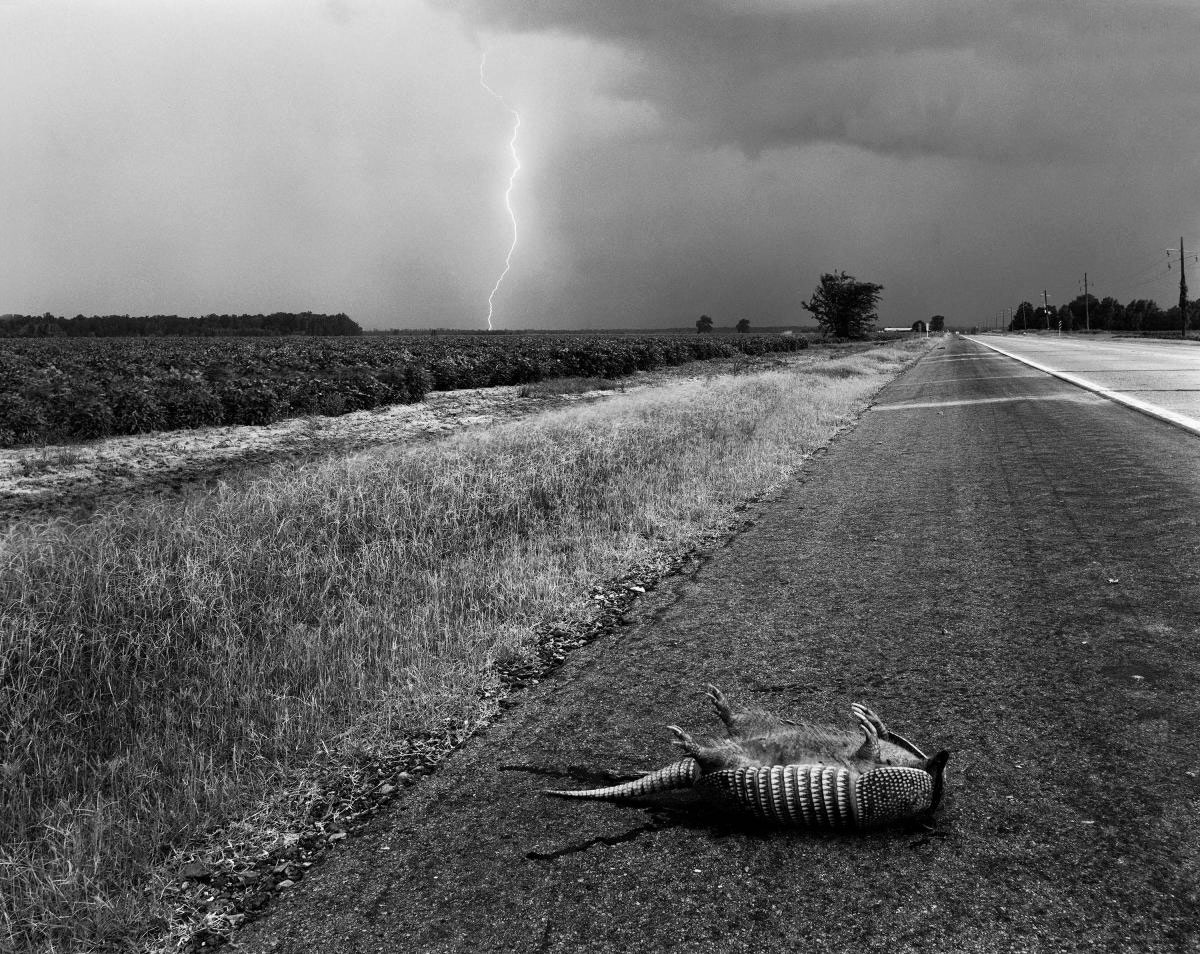
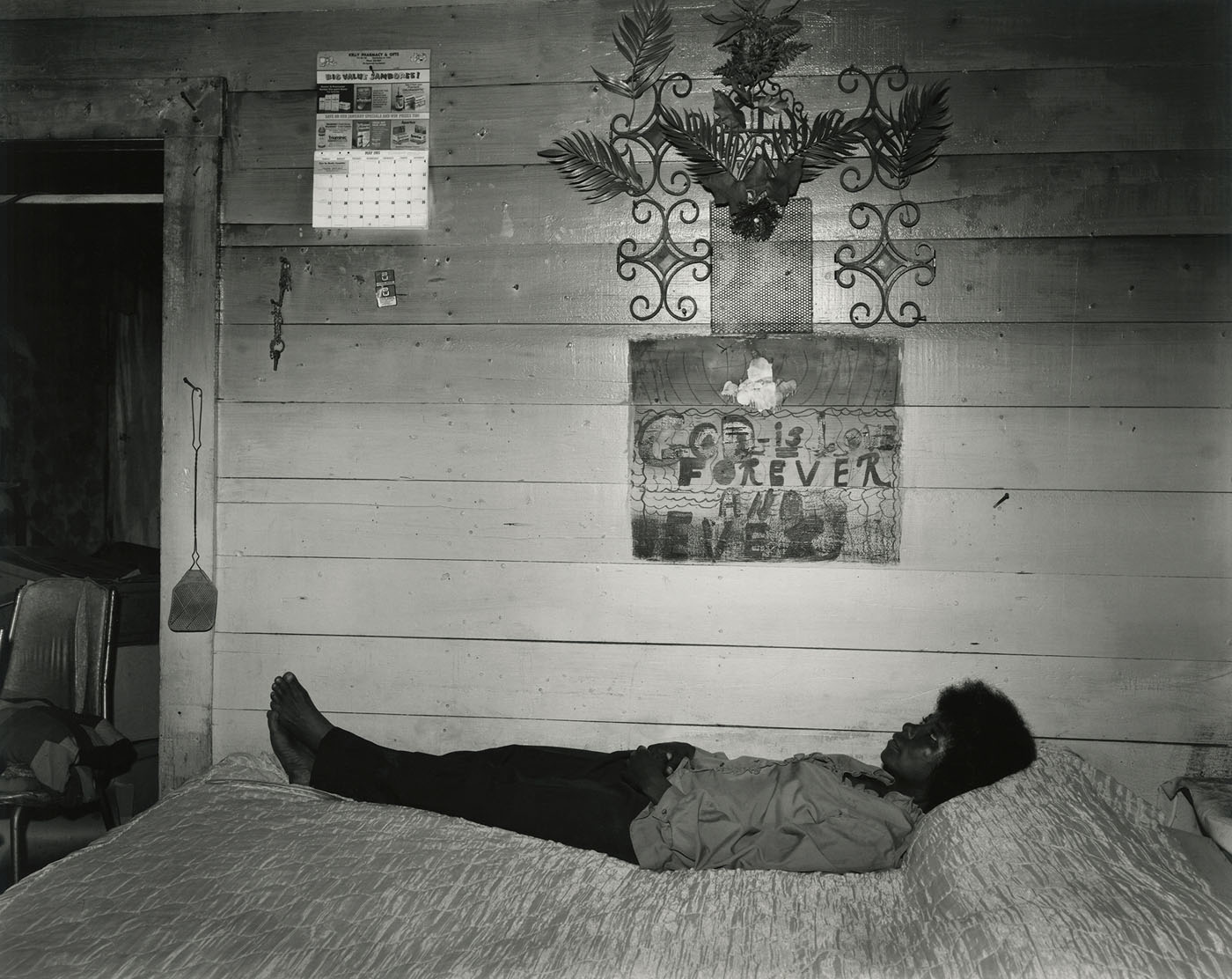
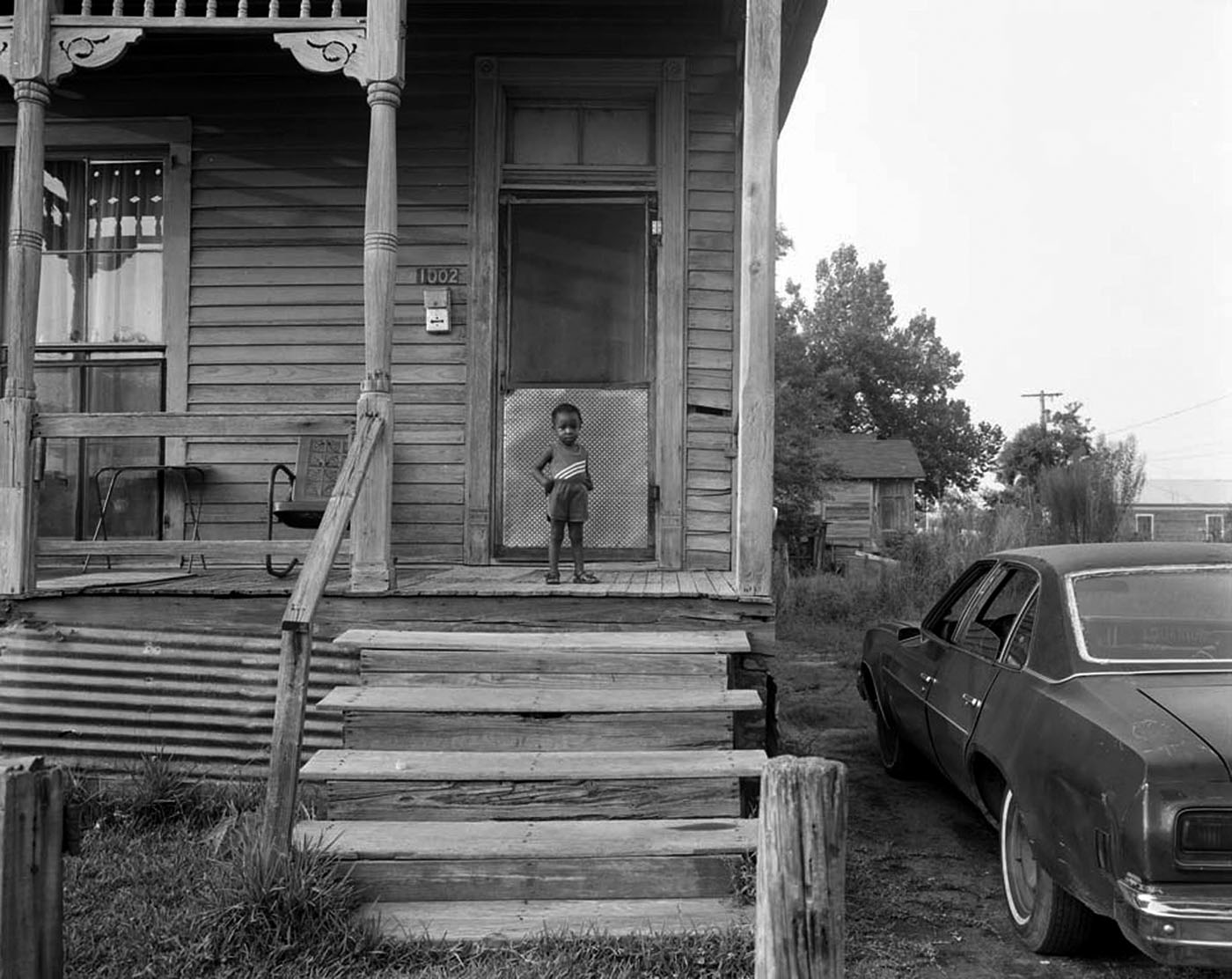
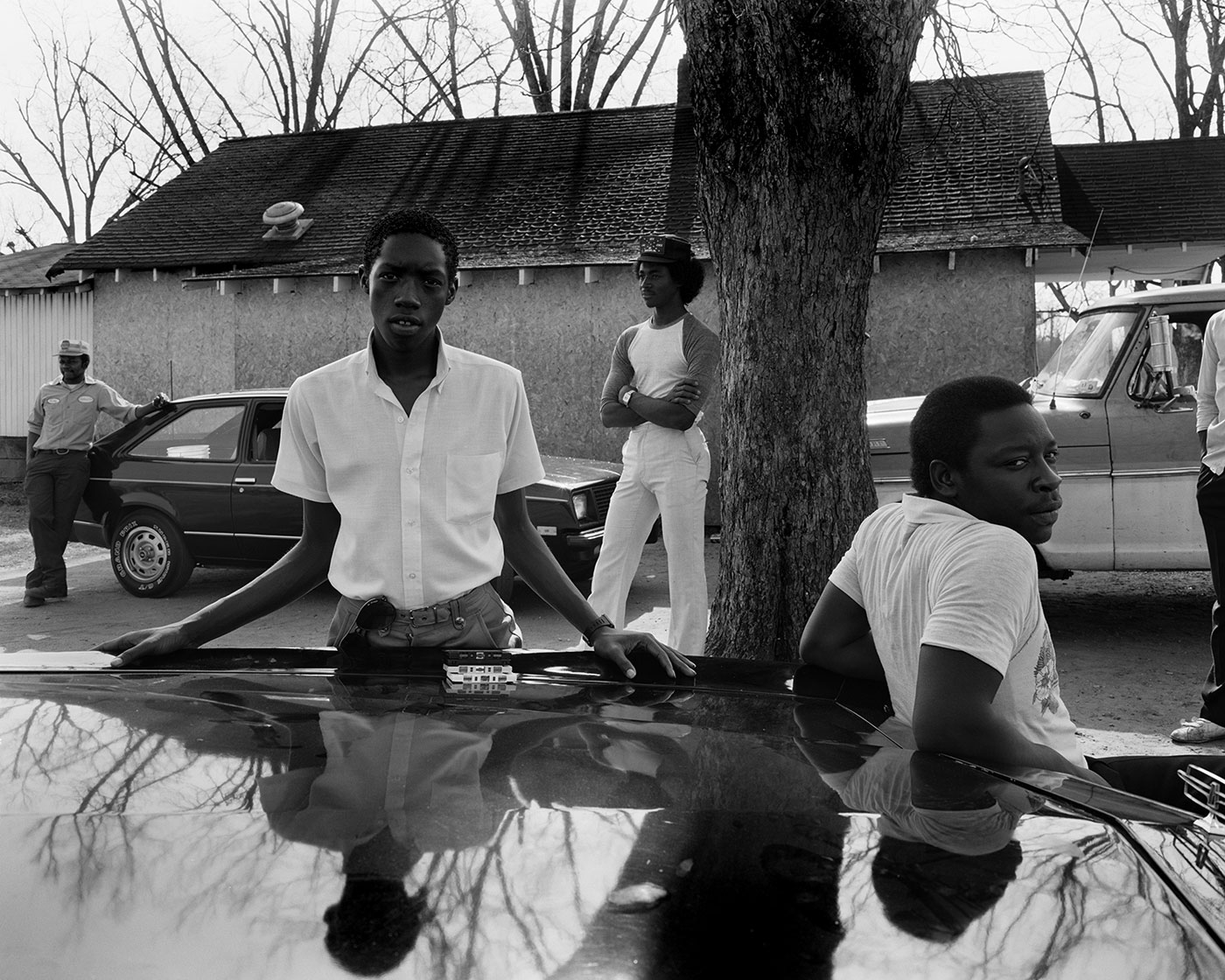
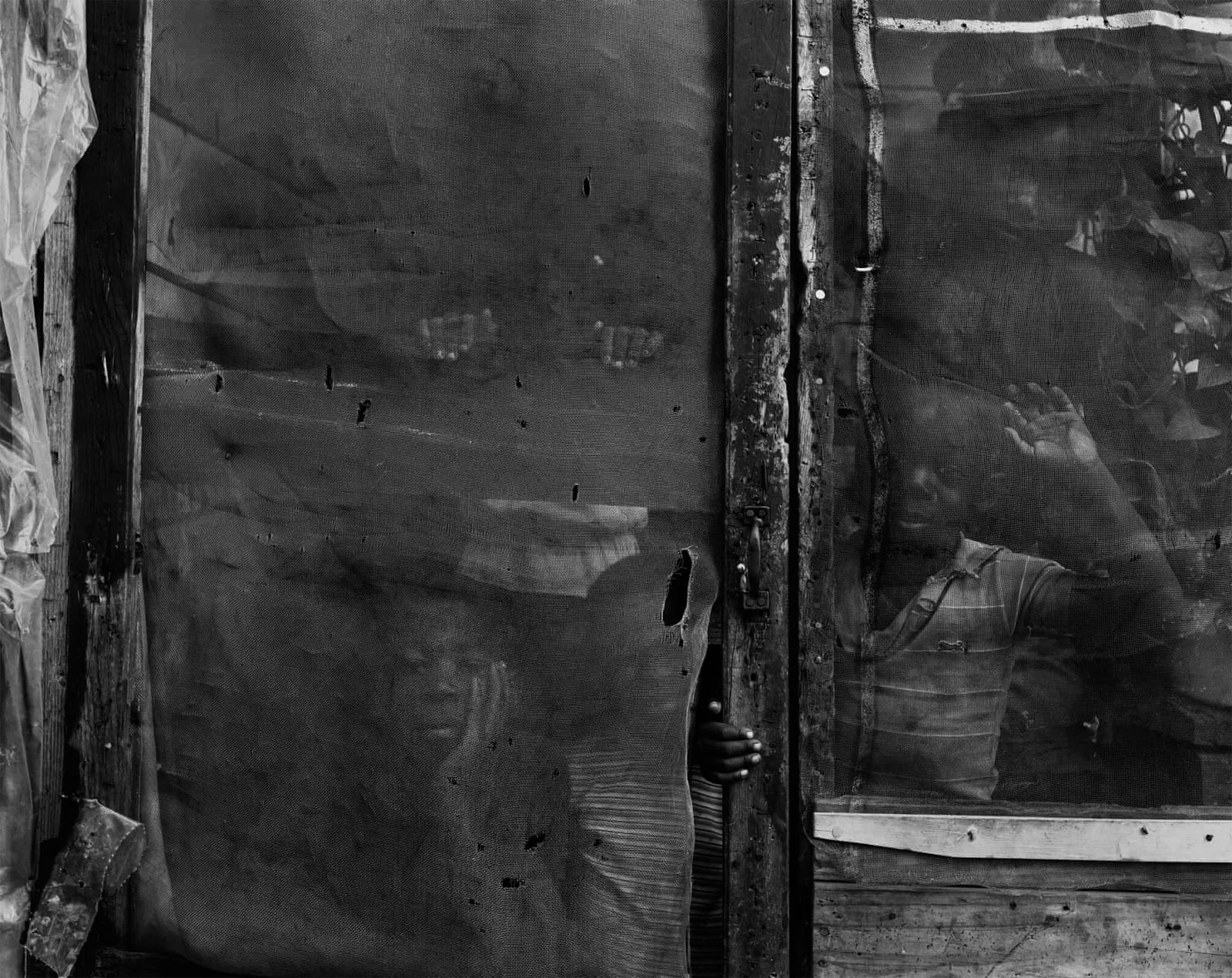
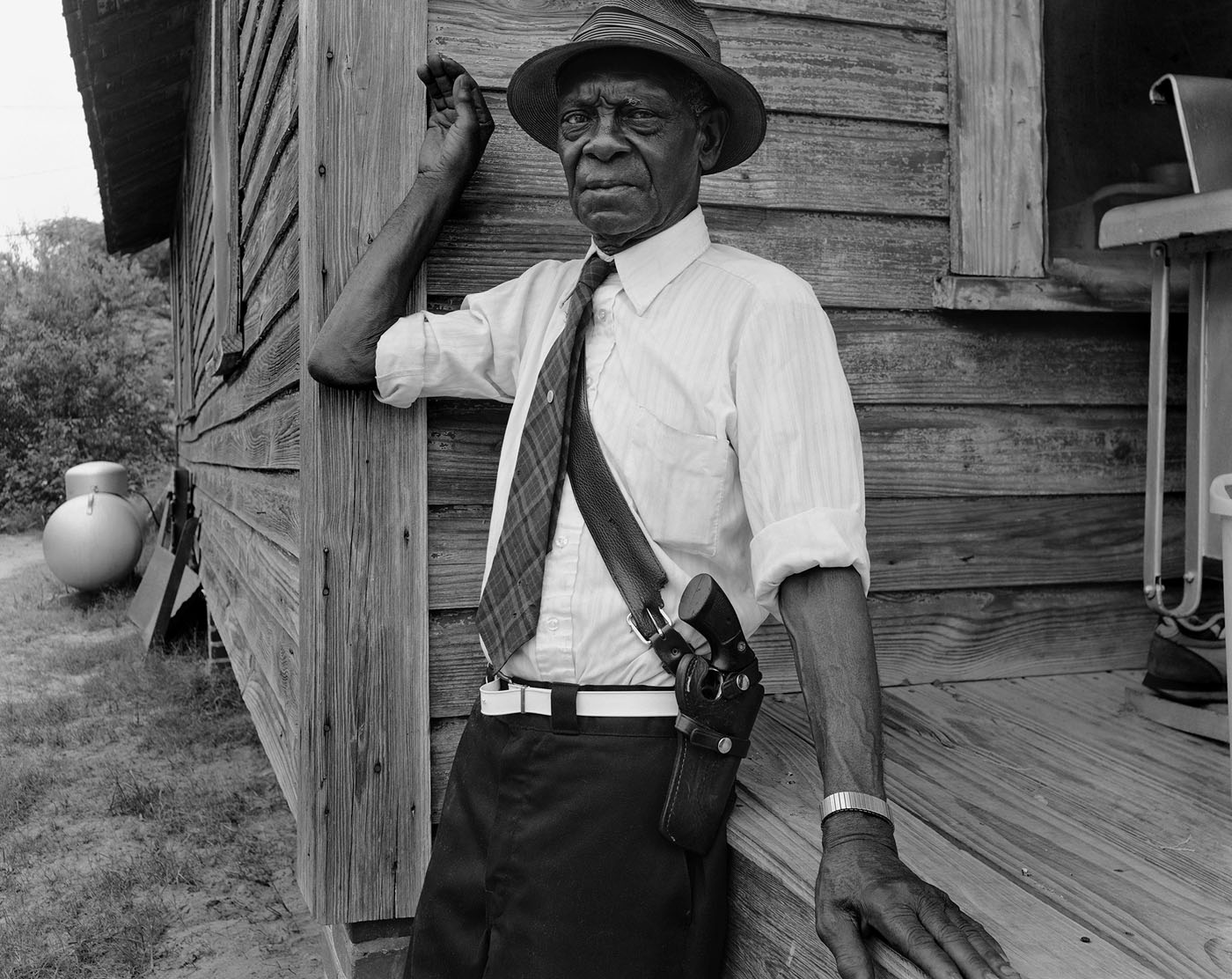
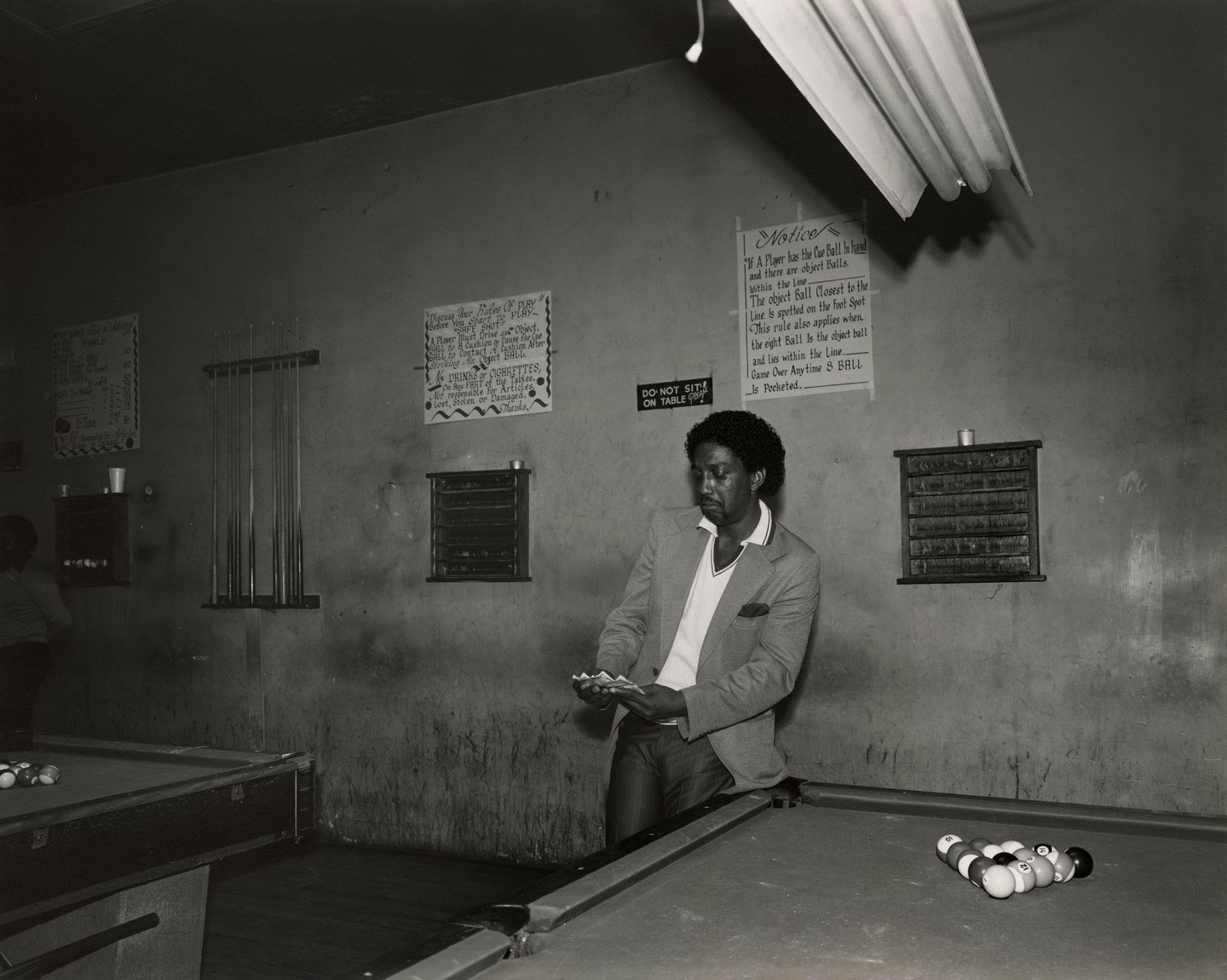
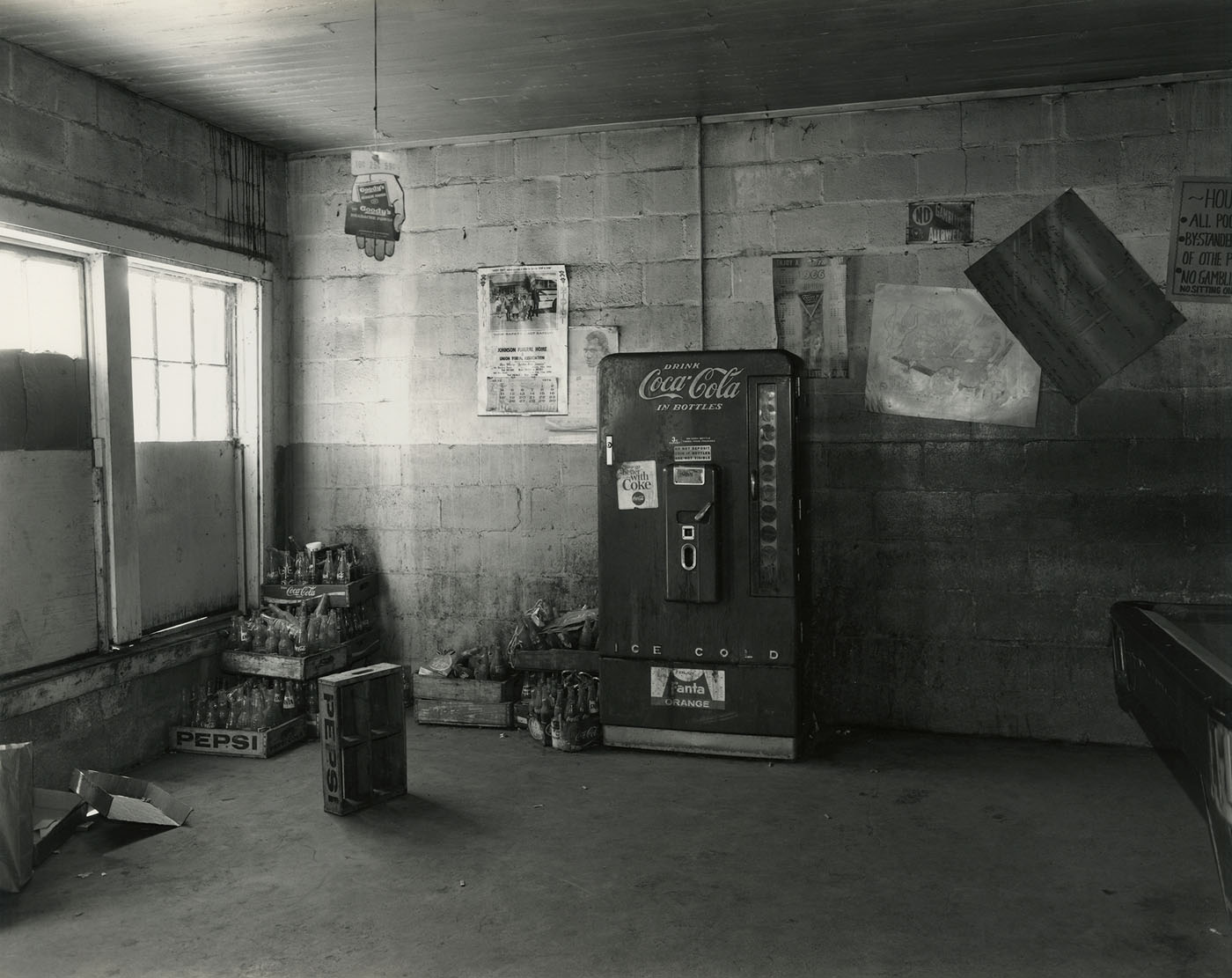
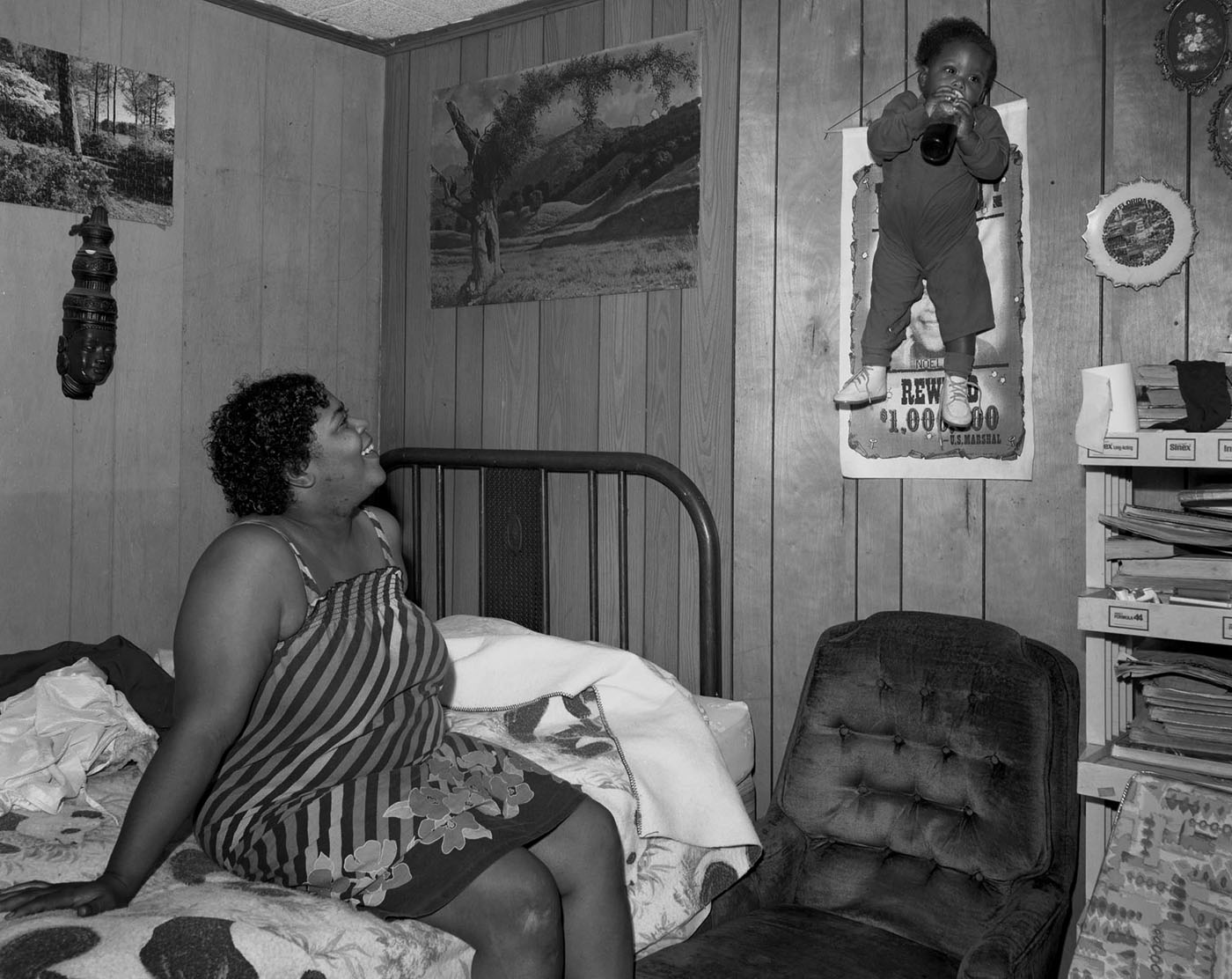
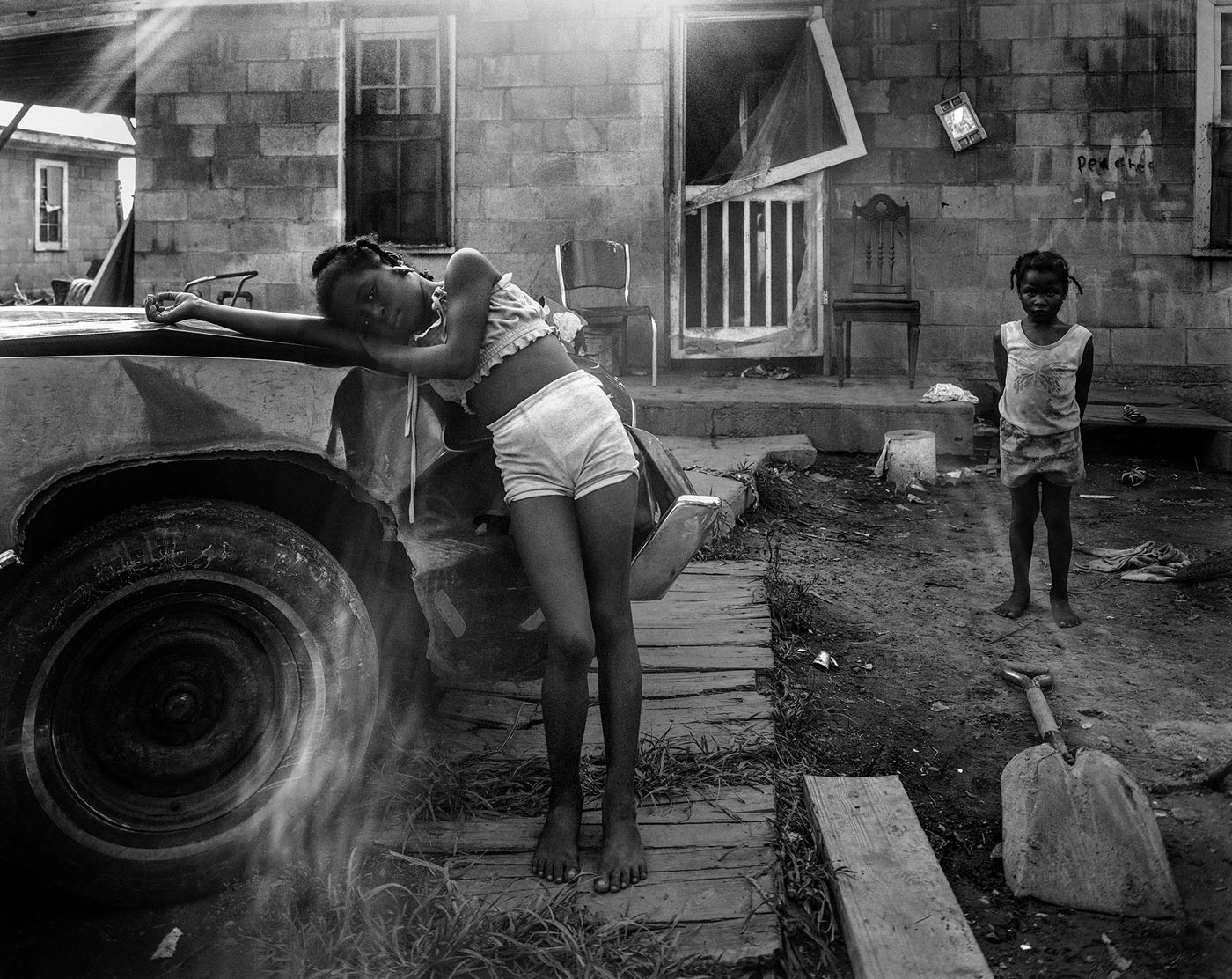
Baldwin Lee (Chinese-American, b. 1951) Untitled 1983-1989 Vintage gelatin silver print 16 x 20 inches Collection of the artist, Courtesy of Howard Greenberg Gallery
“A good image is created by a state of grace. Grace expresses itself when it has been freed from conventions, free like a child in his early discovery of reality. The game is then to organise the rectangle.”
Chilean photographer Sergio Larraín Echeñique
figure ground
I have written previously on the excellent work of the Chinese-American photographer Baldwin Lee in his eponymously named exhibition at Joseph Bellows Gallery in 2022. Since then I have spent further time with his photographs, specifically during recent research for my posting on the exhibition A Long Arc: Photography and the American South since 1845 at the Virginia Museum of Fine Arts, Richmond (October 2024 – January 2025) and then again for this posting.
There are more photographs in this posting from Lee’s journey of discovery through the American South in the 1980s photographing Black communities with this 4 x 5 view camera, a journey that was as much a revelation for the people of those communities (literally, shining a light on their existence) as it was for the photographer himself (a self-reflective understanding of what was important to the photographer, discovering his subject).
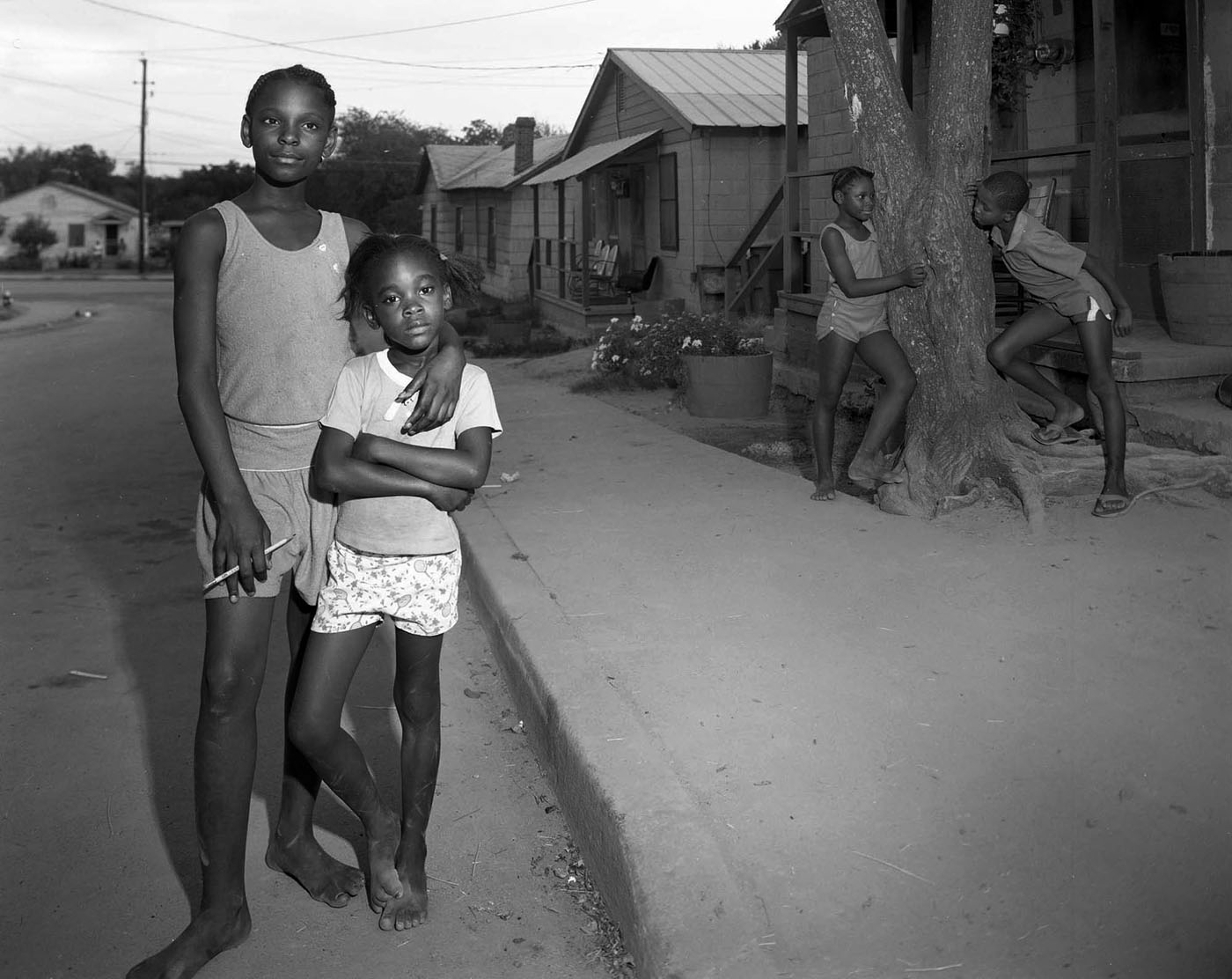
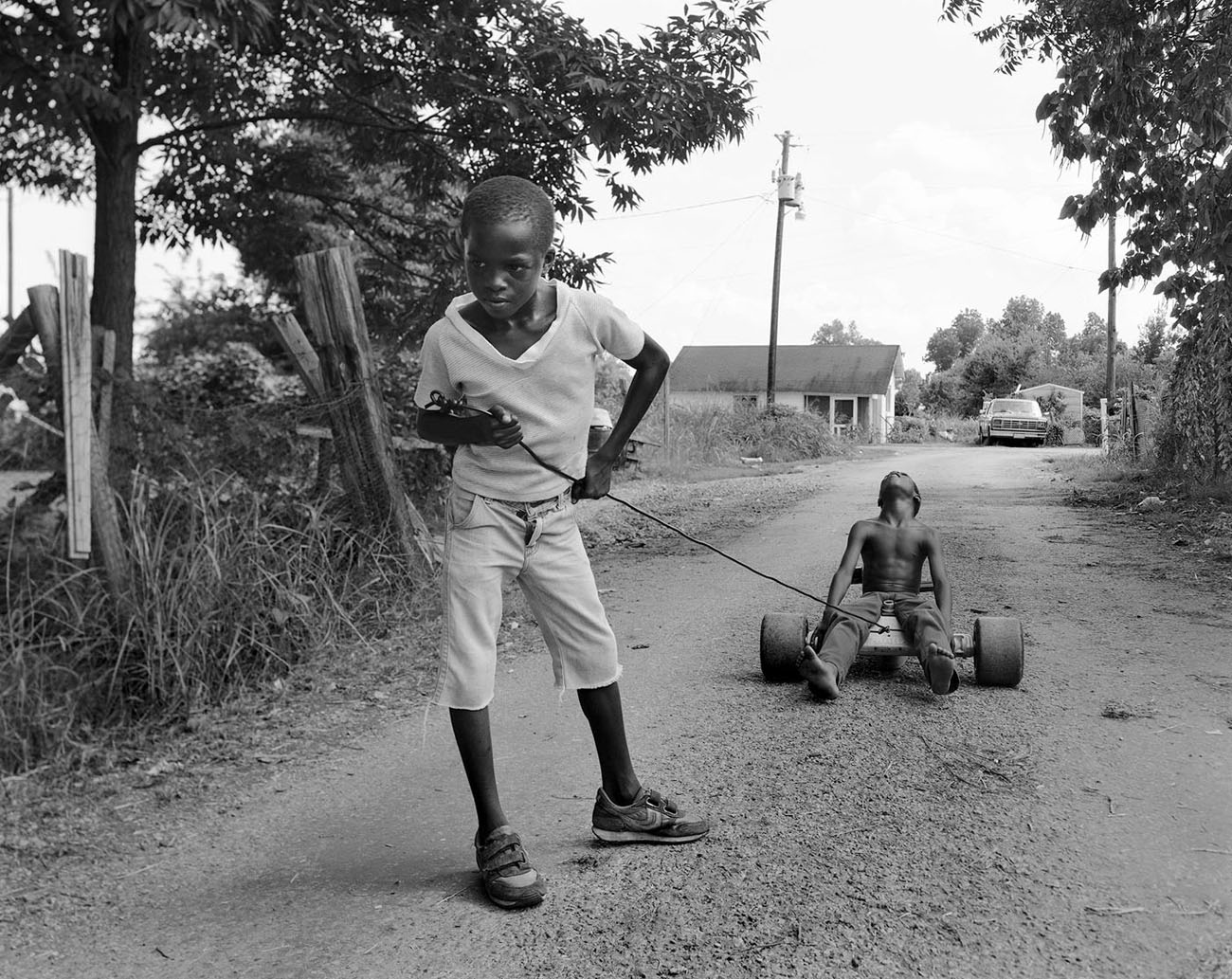
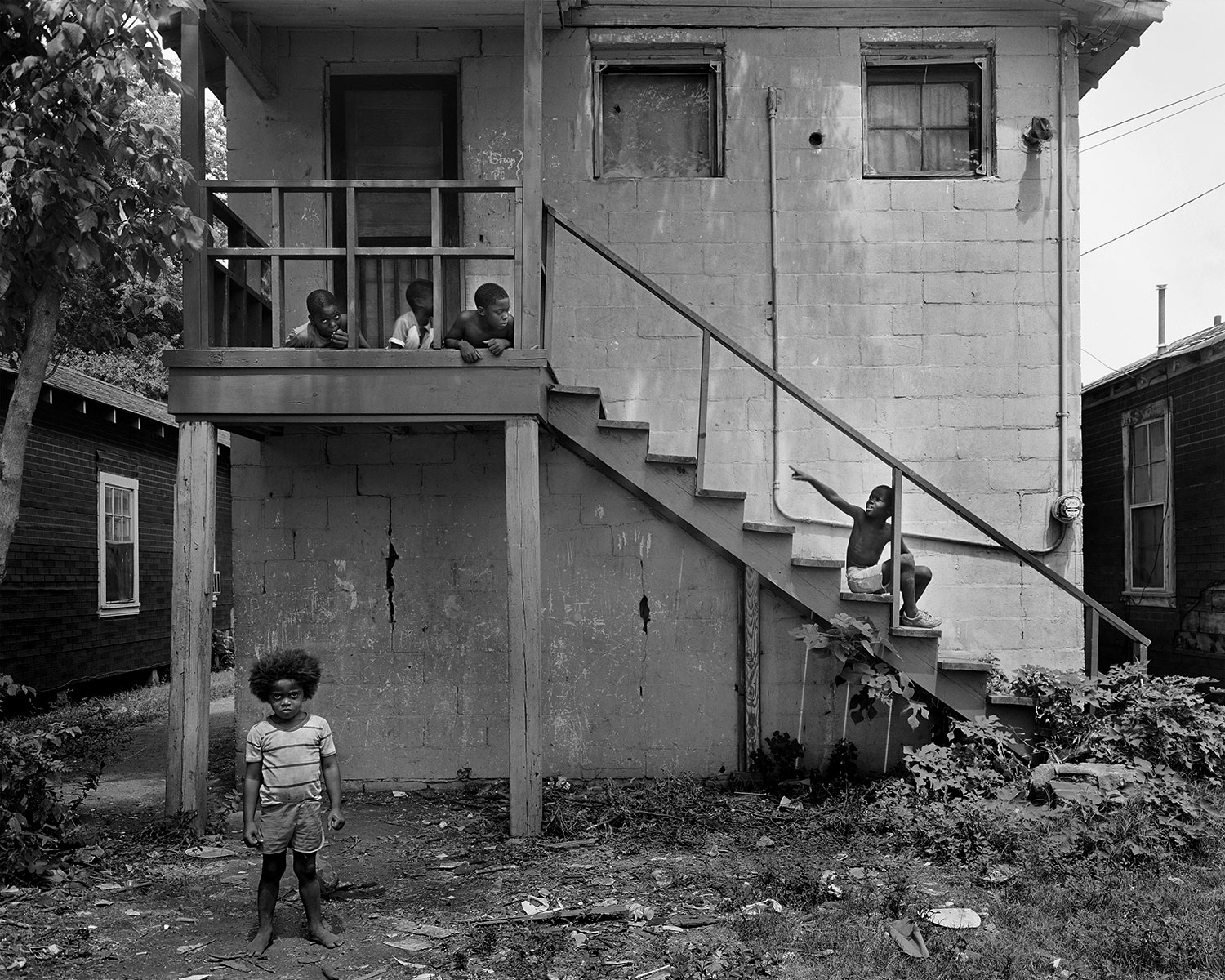
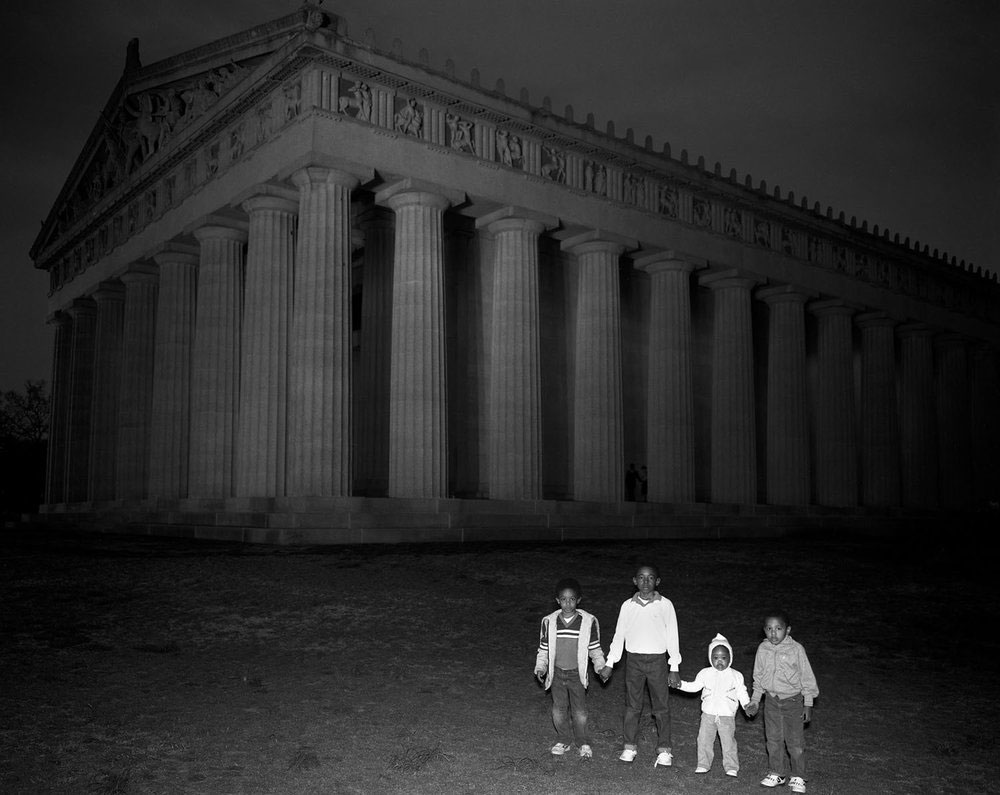
“The process I adopted in successive road trips during my seven-year project involved splitting time between revisiting places I had previously photographed and seeking out new locations. The families who lived on this street in Rosedale, Mississippi, knew me from prior visits. Children were always thrilled at my arrival, and they delighted in taking turns shrouding their heads under my black focusing cloth that allowed them to peer at the dim image projected on the ground glass of my view camera.” (Text from the Guardian website)
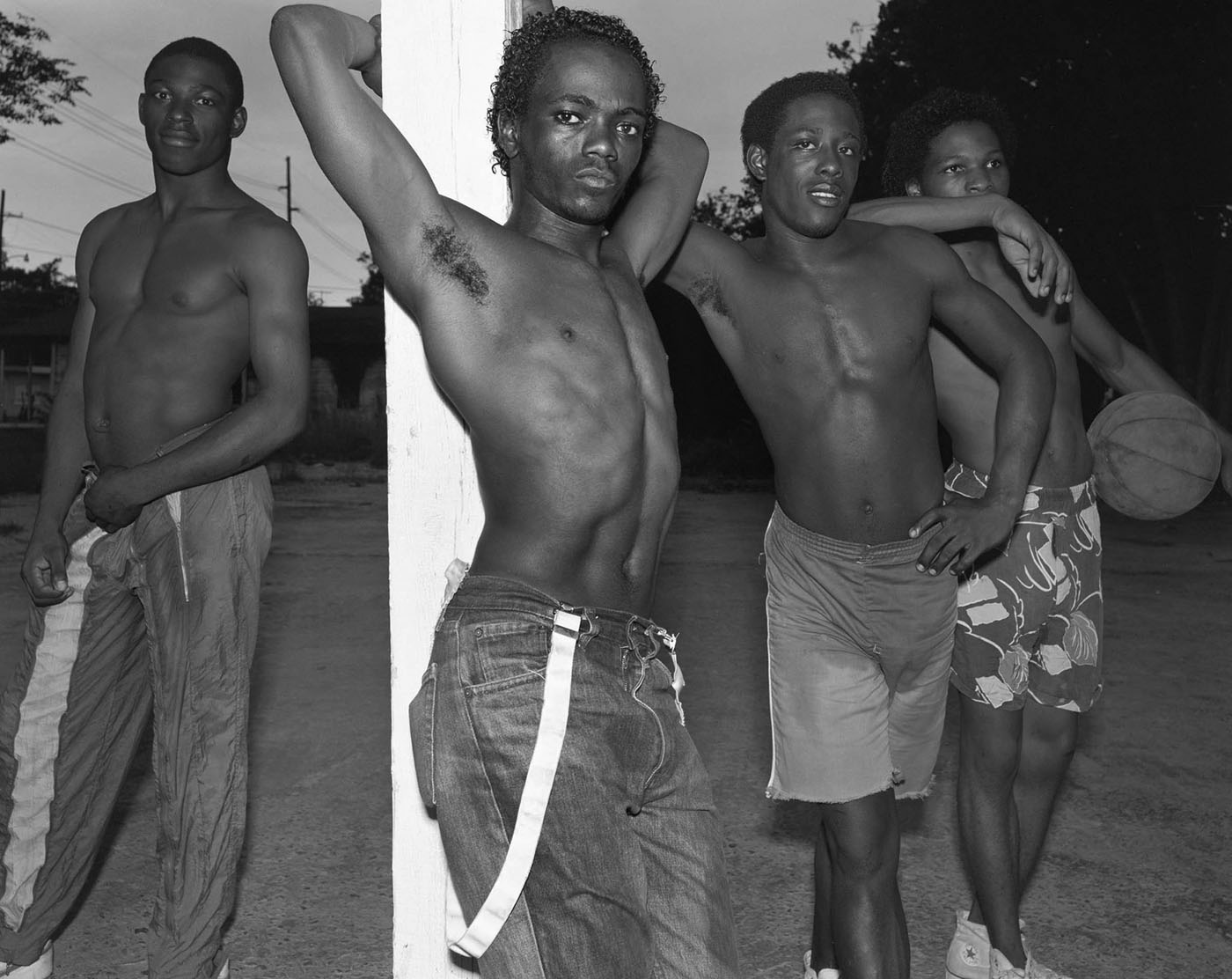
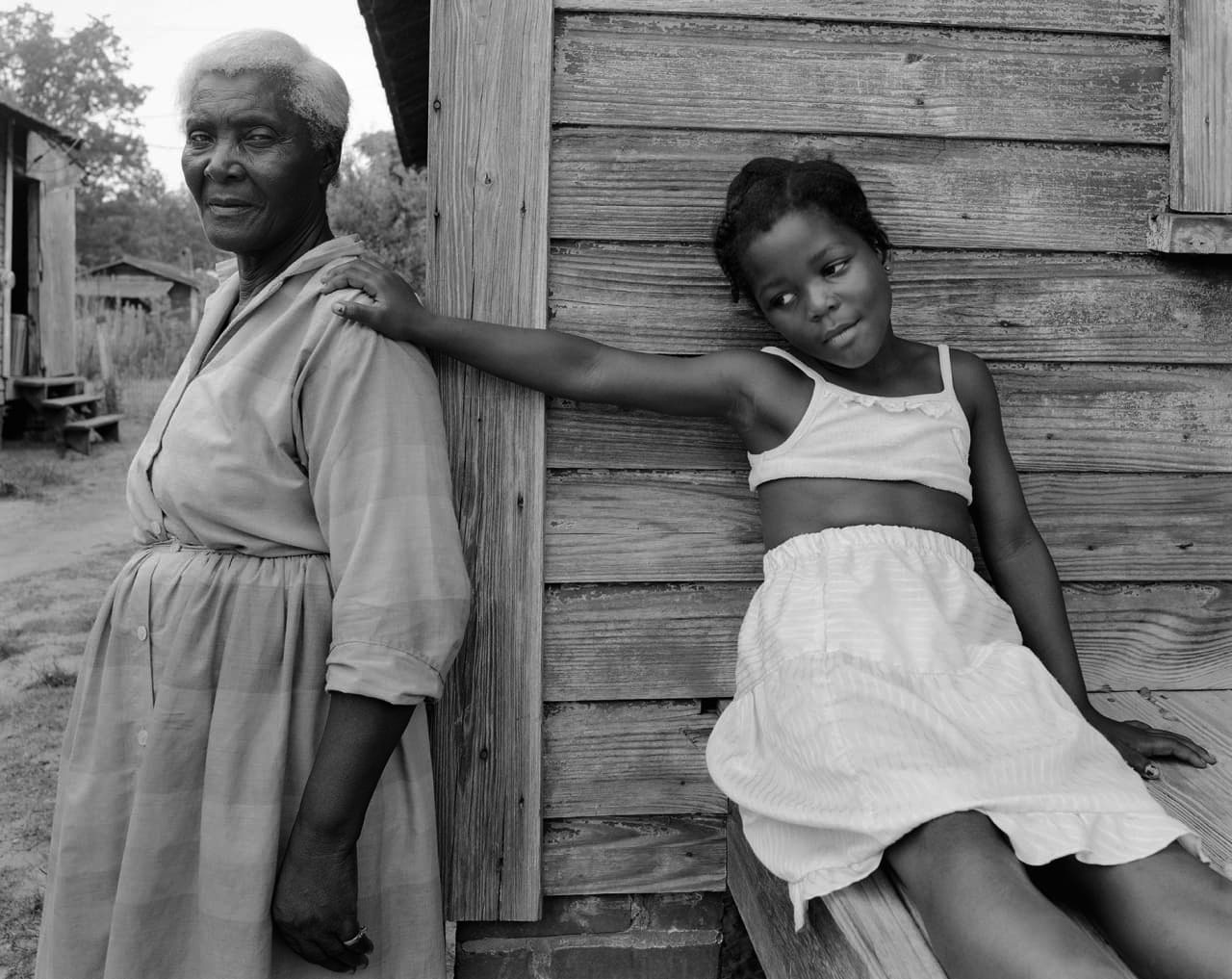
This is what is so important about Baldwin Lee’s photographs. He grounds the figures in his photographs in the glass of his large format camera (standing proud) even as he grounds his figures in the history and culture of the American South, its Black history, its joy and impoverishment. As he himself says, his photographs are “personal stories about events that are momentous”, events in the lives of the participants inflected by how the photographer approaches his subject matter, how he interacts with what is in front of him, influenced by his own history of growing up a Chinese-American and by what he had already thought and felt about the subject, the American South.
Lee’s pictorial compositions, his “photographic seeing” (John Szarkowski’s phrase) is concerned with a felt response to a visual problem… how to conceive a cogent, empathetic picture structure both choreographically and visually. Adapting Szarkowski we could say that in Lee’s photographs the relationship of figure to figure is as centrally important as the relationship of figure to ground and frame.
Here is compassion, here is empathy, here is focus, stillness, culture, humanity. Here is a “state of grace” existing between the mind and feelings of the photographer and the organisation of the people and stories within the image… so much so that there is often a “revelation of spirit” in the subsequent prints by Lee (after Minor White, one of Baldwin Lee’s teachers).
Thus, Lee’s photographs show an impeccable “balance” in the image between figure and ground (touching the earth) – whether that be compositionally, emotionally or historically.
Dr Marcus Bunyan
Many thankx to the Ogden Museum of Southern Art for allowing me to publish the photographs in the posting. Please click on the photographs for a larger version of the image.
Baldwin Lee (Chinese-American, b. 1951) Natchez, Mississippi 1984 Vintage gelatin silver print 16 x 20 inches Collection of the artist Courtesy of Joseph Bellows Gallery
Is there an image of yours that stands out or is a favourite?
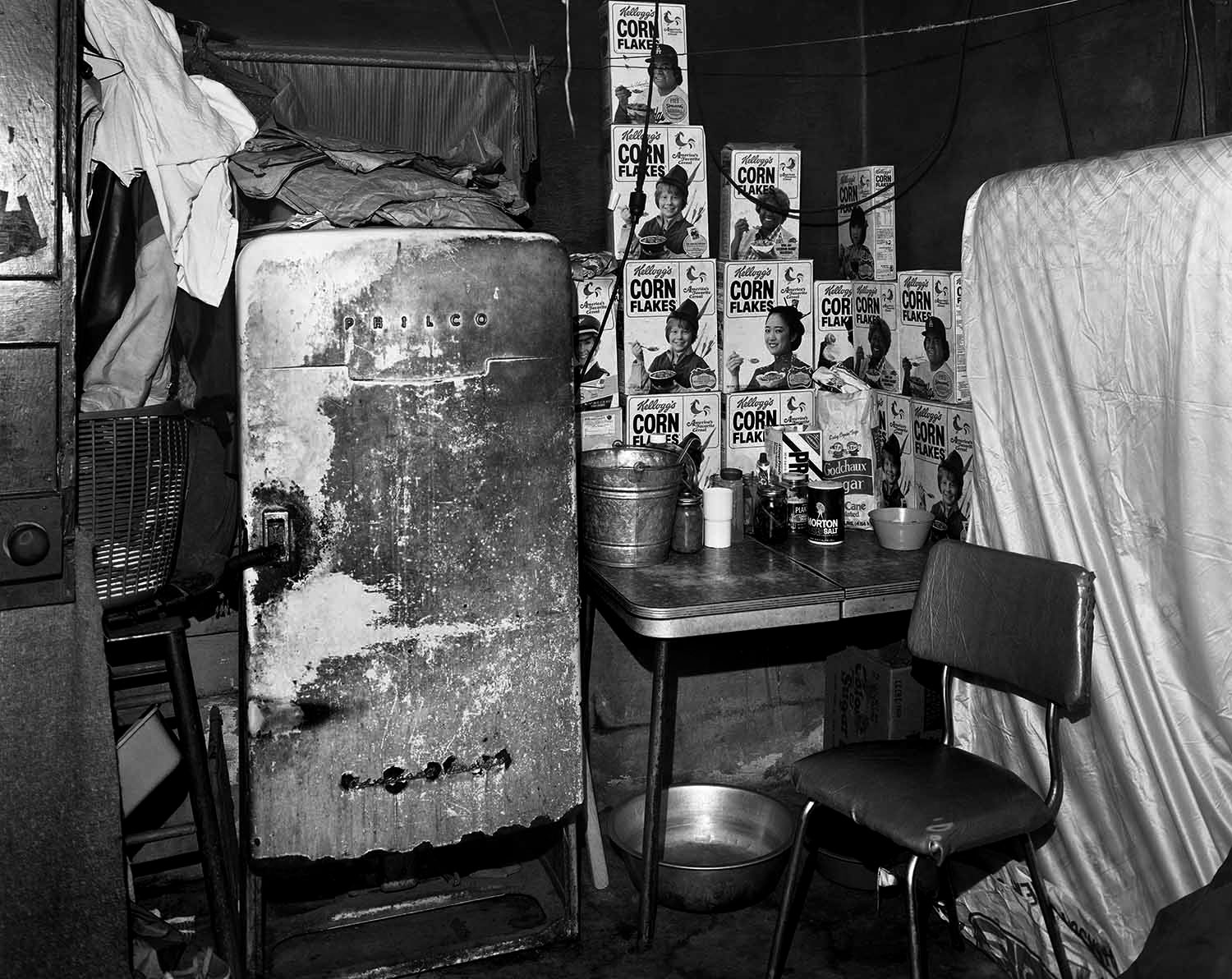
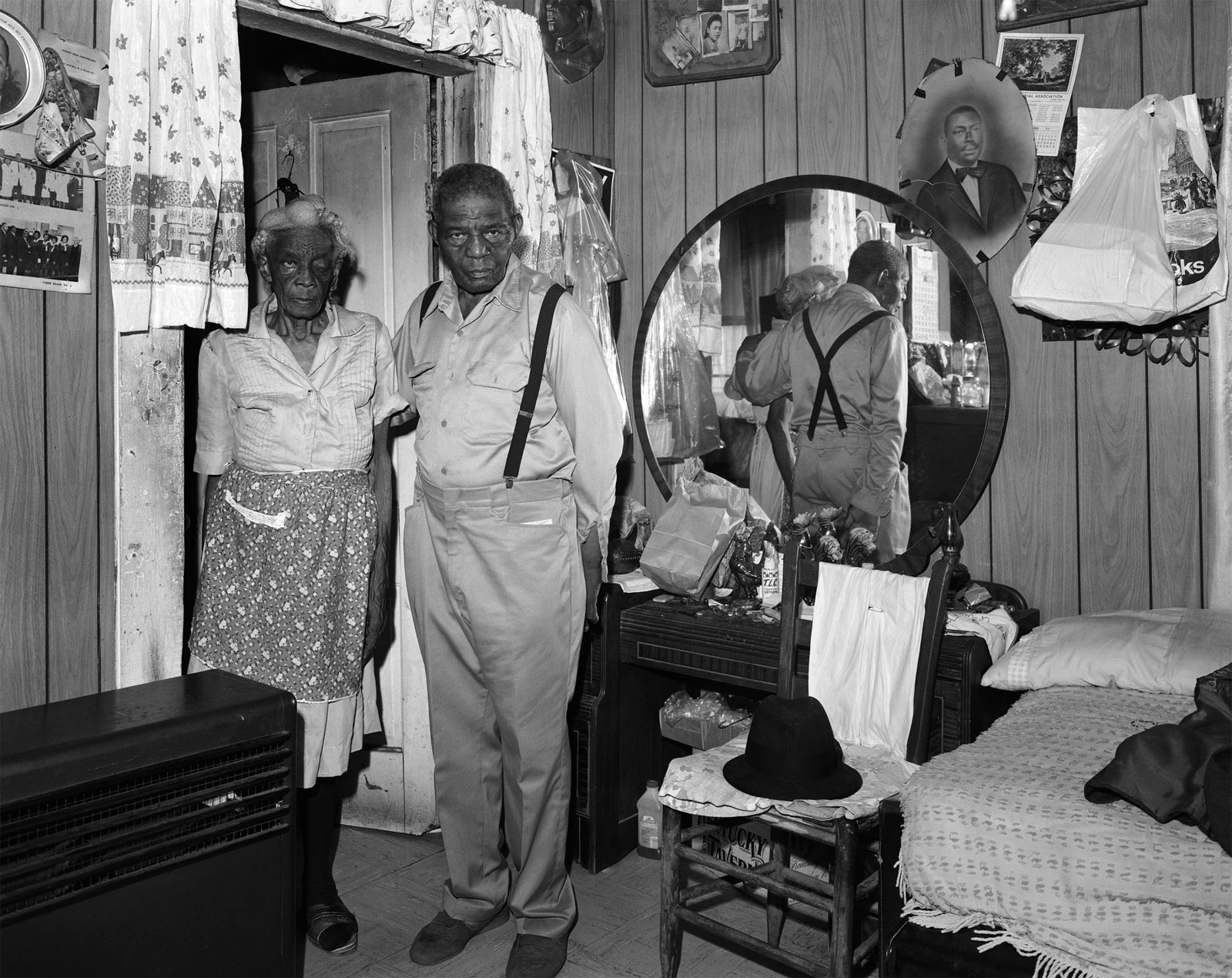
“As I rounded a corner several miles north of Natchez, Mississippi, a stunning sight – a brilliant pink stucco house framed by a blooming wisteria arbor caused me to pull over. I was compelled to knock on the door and found myself and Mr. and Mrs. Fulton, an elderly black couple standing in the cramped dimly lit kitchen whose illumination came from a bare-bulb hanging from the ceiling. Pushed up against a tattered refrigerator was a Formica table upon which provided a foundation for structure made of Kellog Cornflakes boxes. Each box bore a photograph of a beaming face. Boneheadedly I asked Mrs. Fulton if she liked cornflakes. With her gaze lowered she replied no. She then told me she disliked taking meals by herself now that her children had grown and gone.”
Anonymous. “Baldwin Lee,” on the PhotoWork Foundation website Nd [Online] Cited 06/01/2025
Curated Conversation with Baldwin Lee
On Saturday, October 5, Ogden Museum of Southern Art celebrated the opening of “Baldwin Lee” with a free Curated Conversation.
Taking place in the Museum’s historic Patrick F. Taylor Library, Prospect New Orleans’ Director of Curatorial Affairs, Andrew Rebatta, and photographer Baldwin Lee engaged in a lively conversation celebrating “Baldwin Lee,” a landmark solo exhibition at Ogden Museum of Southern Art highlighting Lee’s work.
Lee shared stories from his 5 decade career as a student, educator and practicing artist. Topics of discussion include Lee’s formal education with Minor White and Walker Evans (two of the 20th centuries’ most influential photographers) and his 1980s journey of self-discovery photographing the American South – which resulted in making nearly 10,000 photographs and producing one of the most important visual documents of and about the American South in the past half century.
Baldwin Lee (Chinese-American, b. 1951) Columbia, South Carolina 1984 Vintage gelatin silver print 16 x 20 inches Collection of the artist, Courtesy of Howard Greenberg Gallery
‘Dusty streets and bare feet coexist alongside the South Carolina Statehouse on Gervais Street. A short focal length lens emphasised the difference in scale between the foreground and background figures. An archaic flash bulb, a sealed glass orb containing spun magnesium and pure oxygen, ignited during the exposure illuminating the children closest to the camera. It was positioned higher than the camera and to its right’
Text from The Guardian website
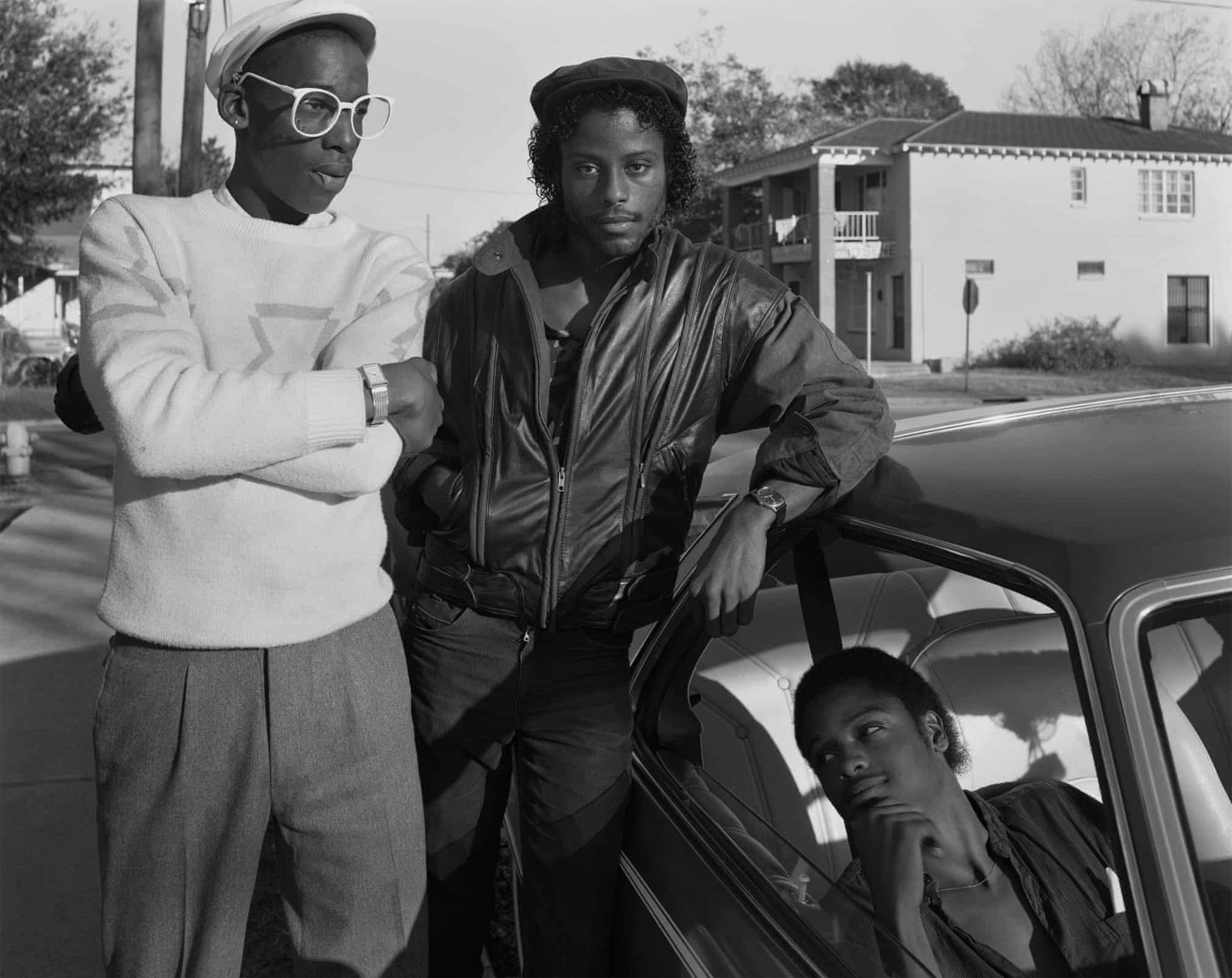
Baldwin Lee (Chinese-American, b. 1951) Untitled 1983-1989 Gelatin silver print 16 x 20 inches Collection of the artist
Baldwin Lee (Chinese-American, b. 1951) Montgomery, Alabama 1984 Vintage gelatin silver print 16 x 20 inches Collection of the artist Courtesy of Joseph Bellows Gallery
Baldwin Lee (Chinese-American, b. 1951) Untitled 1983-1989 Gelatin silver print 16 x 20 inches Collection of the artist
Baldwin Lee (Chinese-American, b. 1951) Monroe, Louisiana 1984 Gelatin silver print 16 x 20 inches Collection of the artist
Baldwin Lee (Chinese-American, b. 1951) Monroe, Louisiana 1983 Gelatin silver print 16 x 20 inches Collection of the artist
Baldwin Lee (Chinese-American, b. 1951) Untitled 1983-1989 Gelatin silver print 16 x 20 inches Collection of the artist
Baldwin Lee (Chinese-American, b. 1951) Montgomery, Alabama 1984 Gelatin silver print 16 x 20 inches Collection of the artist
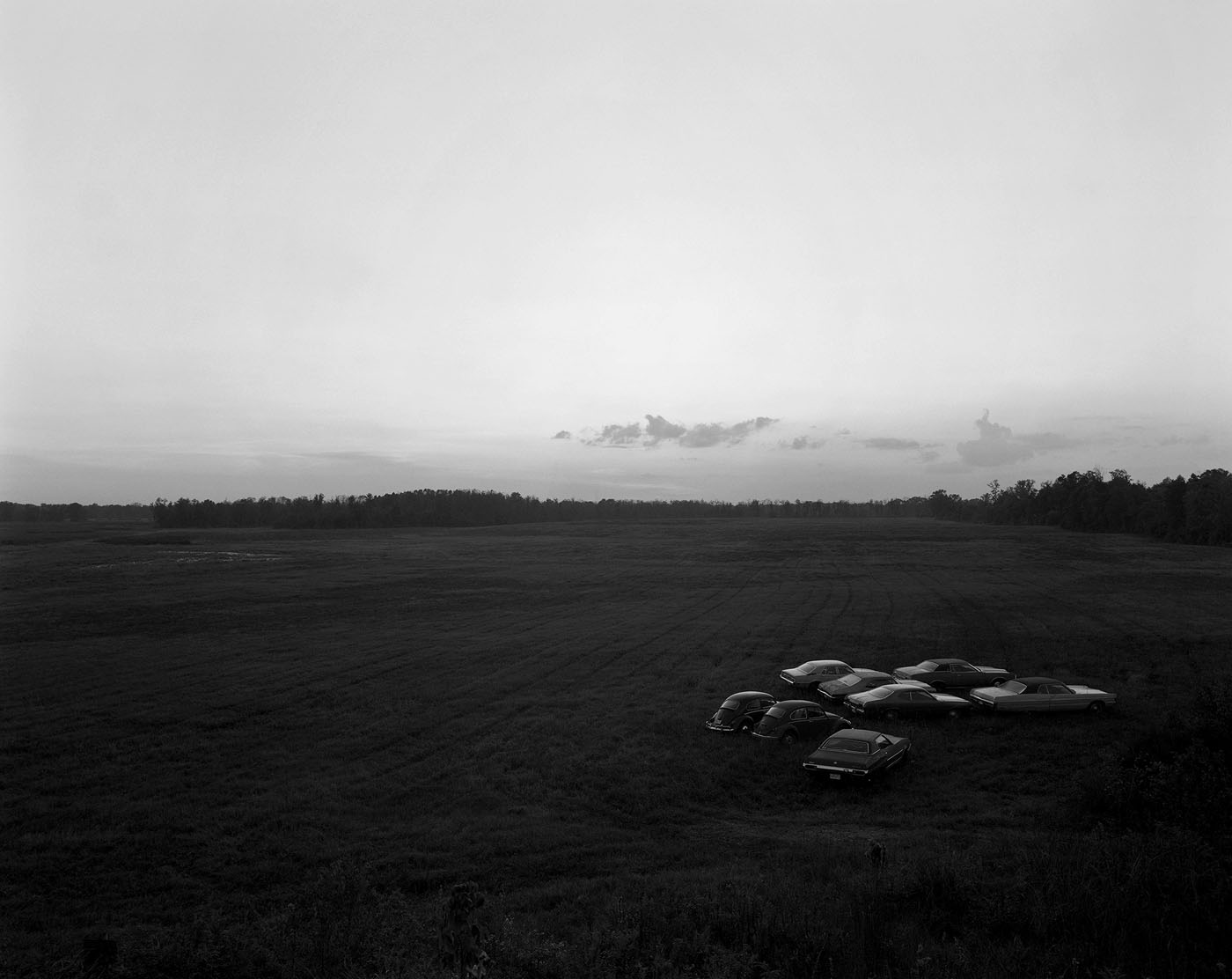
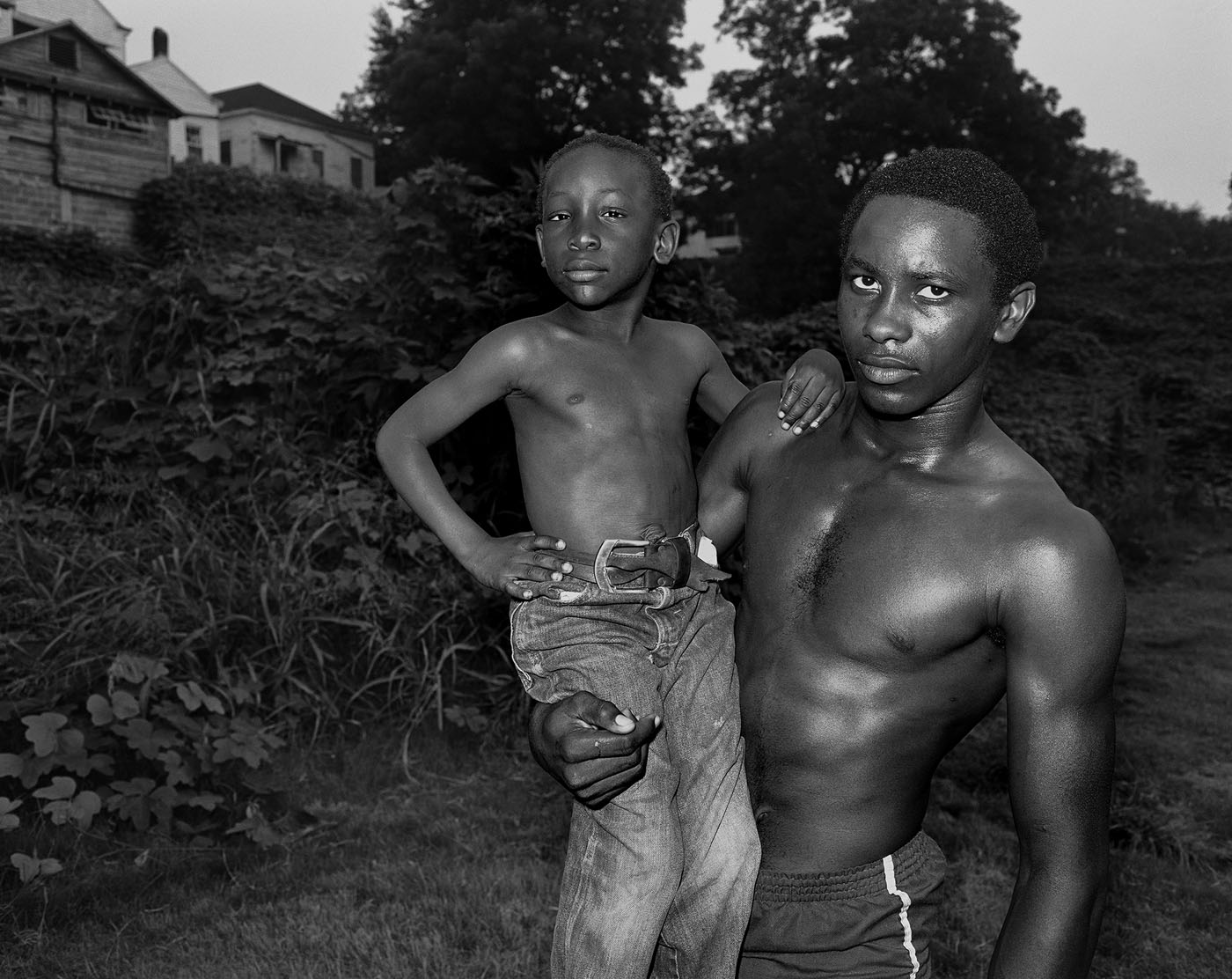
‘Southerners savour the sweetness and solace that comes at the end of searingly hot summer days at twilight. The quiet ushers in a deep peace. The other side of tranquility and beauty is ominousness and menace. The viewers of this photograph are invited to interpret its meaning. If there is an inclination toward wholeness this is a scene of contentment. Southerners approach this image with caution. Black southerners would probably not gather so publicly for fear of retributive reactions. White southerners probably have their own reasons to meet’
Text from The Guardian website
Baldwin Lee (Chinese-American, b. 1951) Untitled 1983-1989 Gelatin silver print 16 x 20 inches Collection of the artist
Baldwin Lee (Chinese-American, b. 1951) Vicksburg, Mississippi 1983 Gelatin silver print 20 x 16 inches Collection of the artist
Baldwin Lee was born in Brooklyn, New York and raised in Manhattan’s Chinatown. He studied photography at the Massachusetts Institute of Technology (M.I.T.) with photographer Minor White. Later, he would receive an MFA from Yale School of Art, where he studied with photographer Walker Evans. In 1982, Lee became the first Director of Photography within the Art department at the University of Tennessee. The following year, he set out from Knoxville with a 4 x 5 view camera on a journey of self-discovery photographing his adopted homeland – the American South.
Lee’s artistic goal was to partially re-trace and re-photograph the 1930s-40s routes made across the South by his mentor Walker Evans. Unlike Evans’ iconic depression-era photographs, Lee would eventually focus on documenting Black Americans, many of whom were living in poverty on the fringes of society. Over the next seven years, Lee traveled thousands of miles crisscrossing the South, making nearly 10,000 photographs – producing one of the most important visual documents of and about the American South in the past half century.
With this work, Lee had found his primary subject, and credits his many years of working within Black communities throughout the South as having a “political” effect on his life and art. The compassion Lee felt for those he photographed resonates within his work. Although, Lee’s 1980s photographs were known and respected by his fellow photographers and collectors, until recently this work has remained largely unknown and under-appreciated by a wider public.
In the fall of 2022, Hunter’s Point Press published “Baldwin Lee,” a book consisting of the artist’s 1980s Southern photographs. The book has since become an instant classic and was shortlisted as one of the best photo books of 2022 by “Aperture Magazine,” “TIME” and the International Center for Photography. The first edition of “Baldwin Lee” sold out in less than a month and is presently on its third edition of publication. The book’s success led to solo exhibitions at Howard Greenberg Gallery, New York City, Joseph Bellows Gallery, La Jolla, California and David Hill Gallery, London, England. After nearly 40 years, Baldwin Lee is finally being recognized for his groundbreaking work.
The exhibition Baldwin Lee will feature a selection of over 50 gelatin silver prints culled from thousands of images Lee made across the South in the 1980s. Many of these photographs will be exhibited for the first time. The exhibition will include compelling portraits of Black Americans, as well as a collection of landscape, cityscape and still-life images that visually encapsulate the Reagan-era American South.
Text from the Ogden Museum of Southern Art website
Baldwin Lee (Chinese-American, b. 1951) Lakeland, Florida 1984 Vintage gelatin silver print 16 x 20 inches Collection of the artist Courtesy of Howard Greenberg Gallery
Baldwin Lee (Chinese-American, b. 1951) Richmond, Virginia 1986 Gelatin silver print 16 x 20 inches Collection of the artist
Baldwin Lee (Chinese-American, b. 1951) Vicksburg, Mississippi 1984 Gelatin silver print 16 x 20 inches, Collection of the artist
Baldwin Lee (Chinese-American, b. 1951) Waterproof, LA 1986 Gelatin silver print 16 x 20 Collection of the artist
Baldwin Lee (Chinese-American, b. 1951) Lula, Mississippi 1984 Vintage gelatin silver print 16 x 20 inches Collection of the artist Courtesy of Joseph Bellows Gallery
Baldwin Lee (Chinese-American, b. 1951) Nashville, Tennessee 1983 Gelatin silver print 16 x 20 inches Collection of the artist
Baldwin Lee (Chinese-American, b. 1951) Untitled 1983-1989 Gelatin silver print 16 x 20 inches Collection of the artist
Baldwin Lee (Chinese-American, b. 1951) Plain Dealing, Louisiana 1984 Gelatin silver print 16 x 20 inches Collection of the artist
Baldwin Lee (Chinese-American, b. 1951) Mobile, Alabama 1985 Gelatin silver print 16 x 20 inches Collection of the artist
Baldwin Lee (Chinese-American, b. 1951) Defuniak Springs, Florida 1984 Gelatin Silver Print 16 x 20 inches Collection of the Artist
Baldwin Lee (Chinese-American, b. 1951) Untitled 1983-1989 Gelatin silver print 16 x 20 inches Collection of the artist
Baldwin Lee (Chinese-American, b. 1951) Rosedale, Mississippi 1984 Archival pigment print 40 x 50 inches Collection of the artist
‘The process I adopted in successive road trips during my seven-year project involved splitting time between revisiting places I had previously photographed and seeking out new locations. The families who lived on this street in Rosedale, Mississippi, knew me from prior visits. Children were always thrilled at my arrival, and they delighted in taking turns shrouding their heads under my black focusing cloth that allowed them to peer at the dim image projected on the ground glass of my view camera. They were more than eager to arrange themselves for this photograph’
Text from The Guardian website
Baldwin Lee (Chinese-American, b. 1951) Valdosta, Georgia 1985 Archival pigment print 40 x 50 inches Collection of the artist
Baldwin Lee (Chinese-American, b. 1951) Chattanooga, Tennessee 1983 Vintage gelatin silver print 16 x 20 inches Collection of the artist
Baldwin Lee (Chinese-American, b. 1951) Untitled 1983-1989 Gelatin silver print 16 x 20 inches Collection of the artist
Baldwin Lee (Chinese-American, b. 1951) Rosedale, Mississippi 1985 Gelatin silver print 16 x 20 inches Museum Purchase with Funds Provided by The Charles D. Urstadt Chairman Emeritus Acquisition Fund
Baldwin Lee (Chinese-American, b. 1951) Walls, Mississippi 1984 Gelatin silver print 16 x 20 inches
Ogden Museum of Southern Art 925 Camp Street, New Orleans, LA
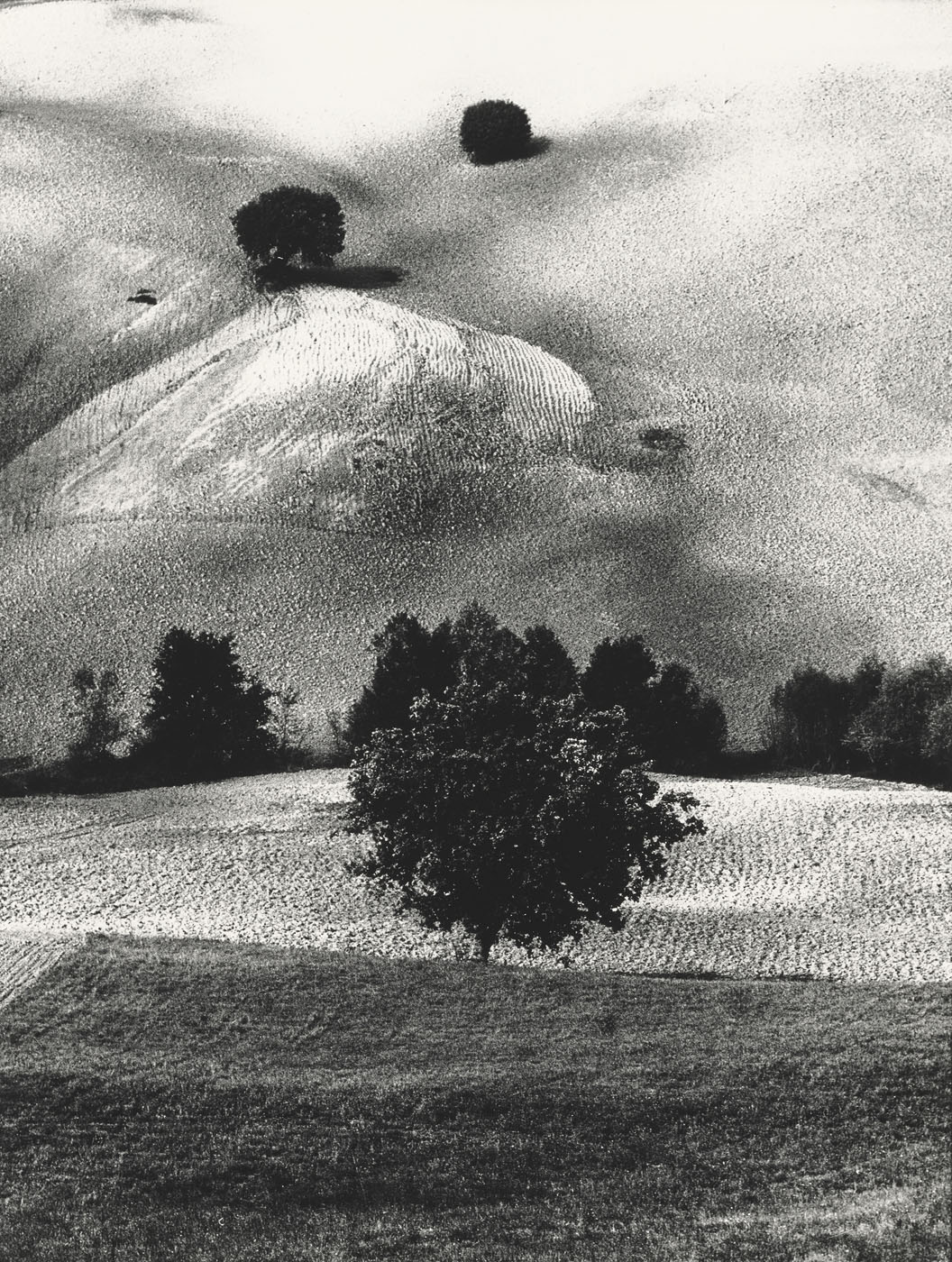
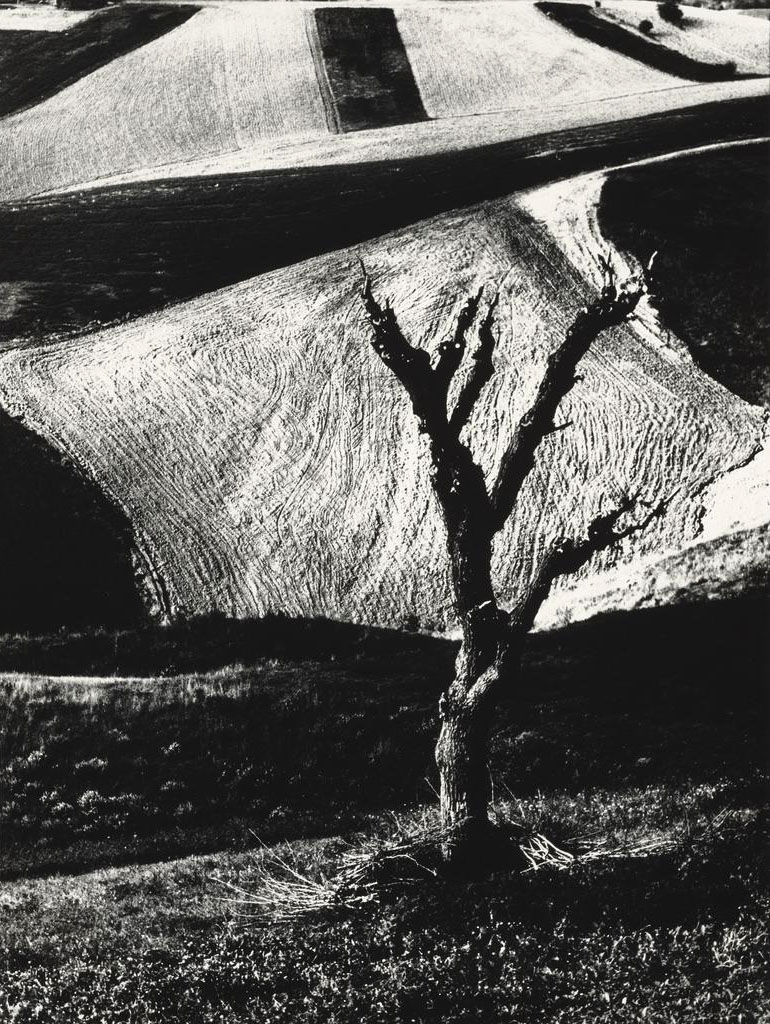
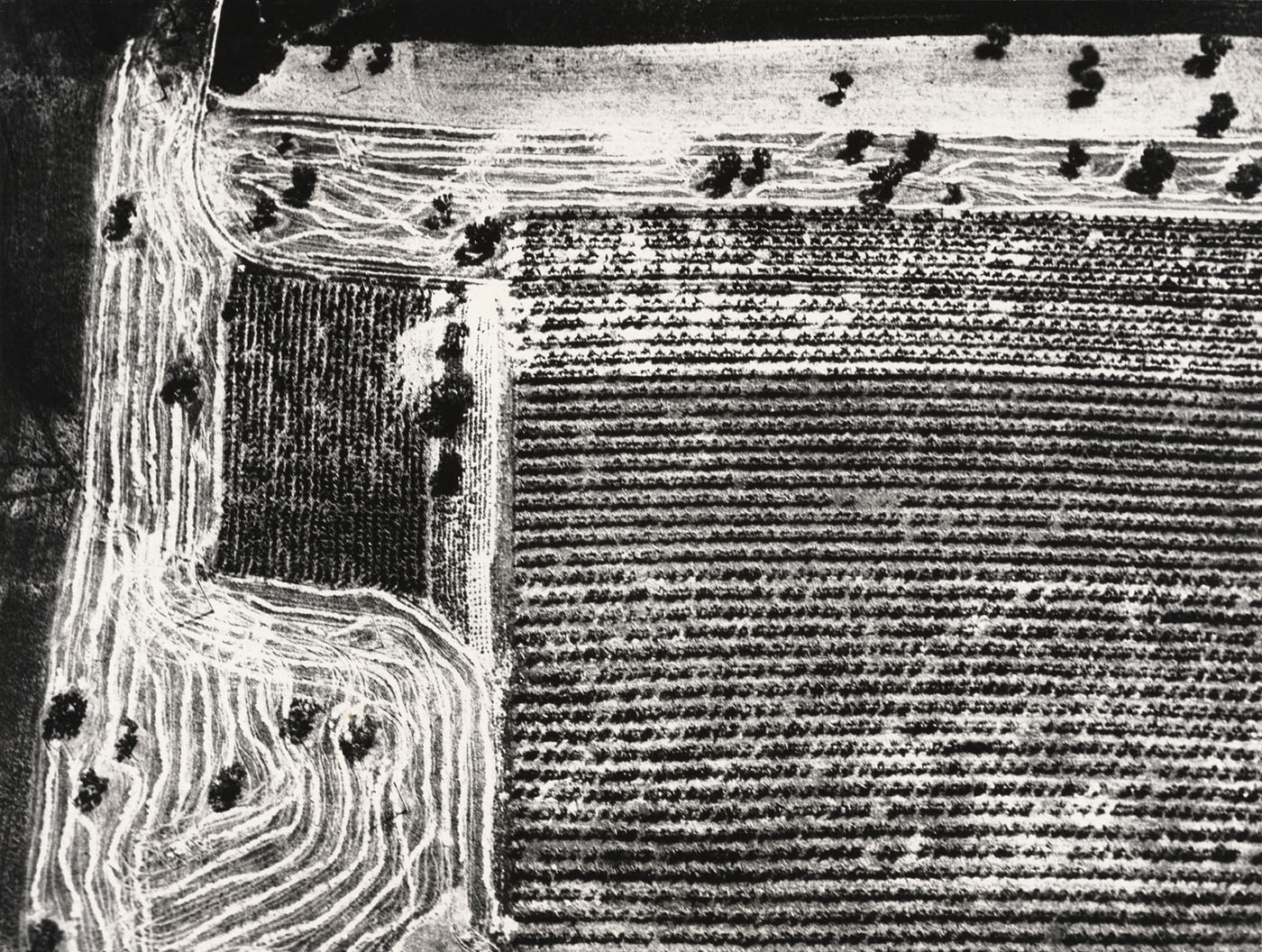
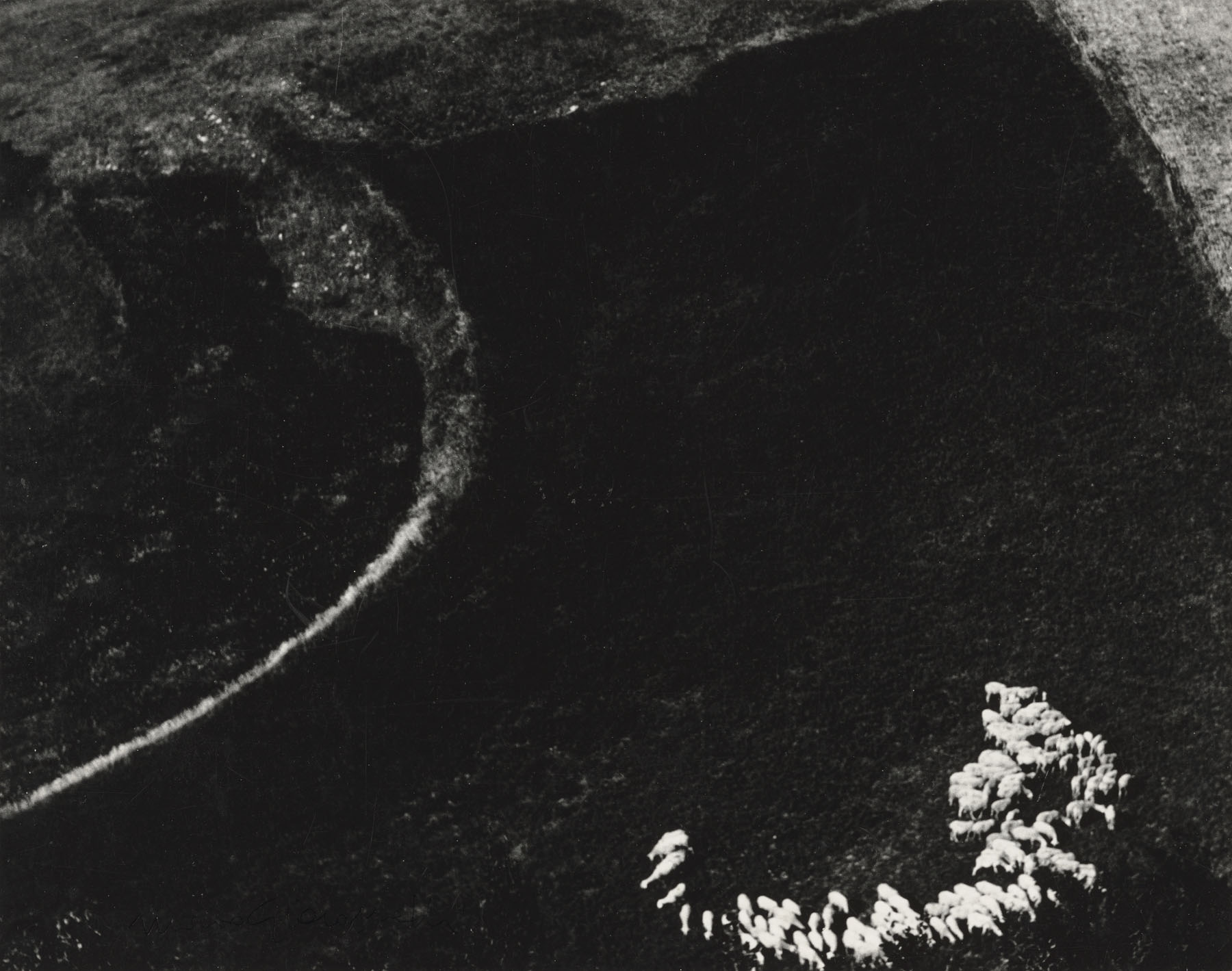
When I look at the work of Mario Giacomelli, his photographs remind me why I love the practice of photography.
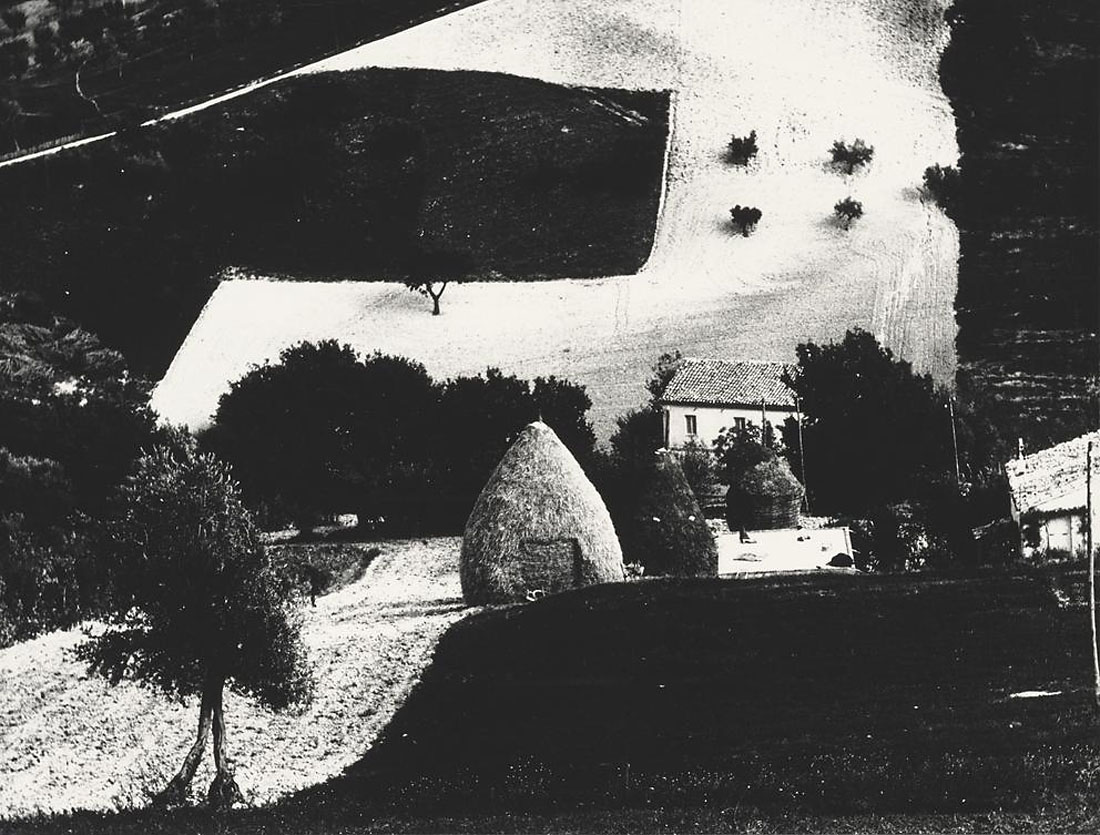
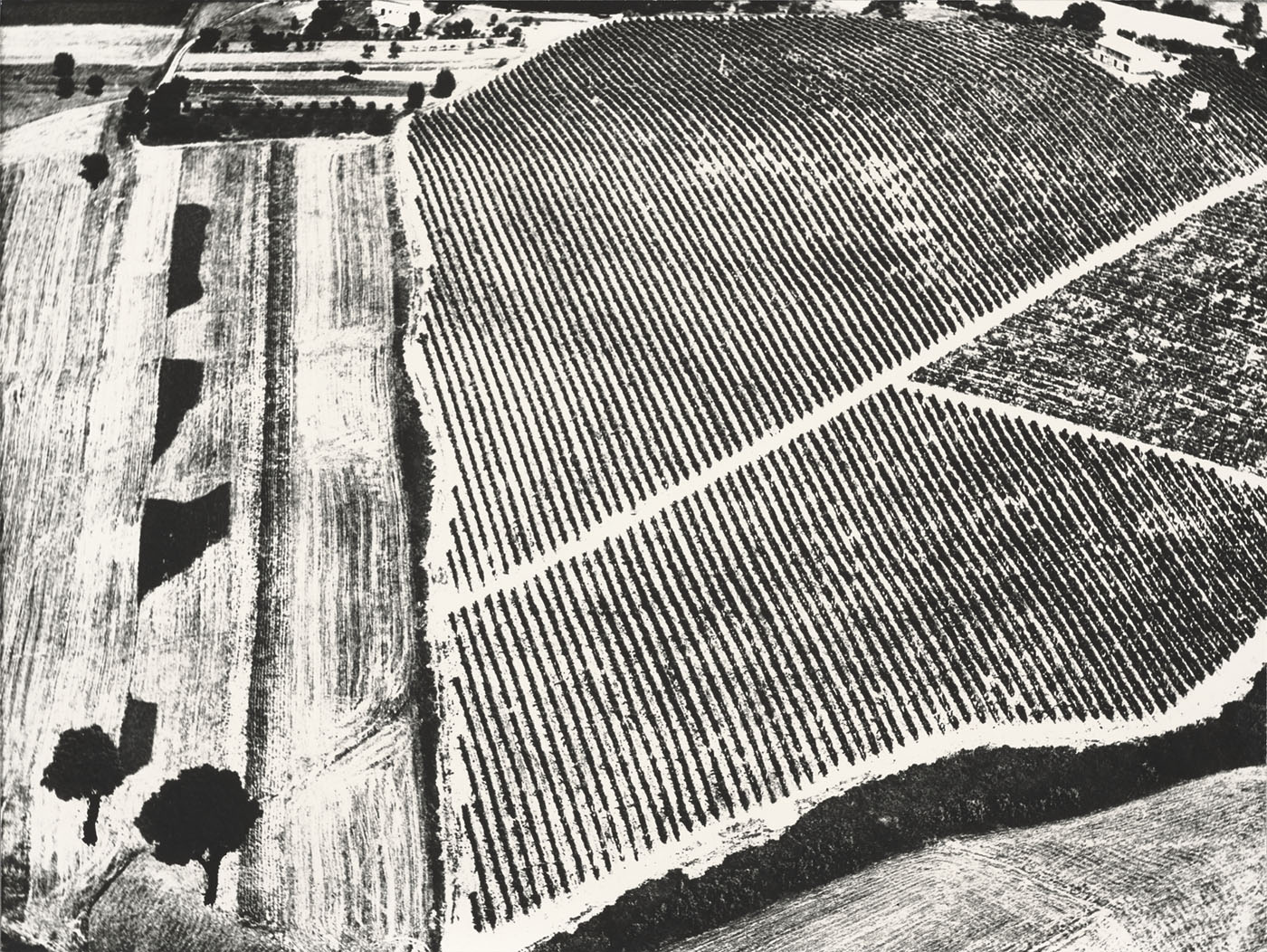
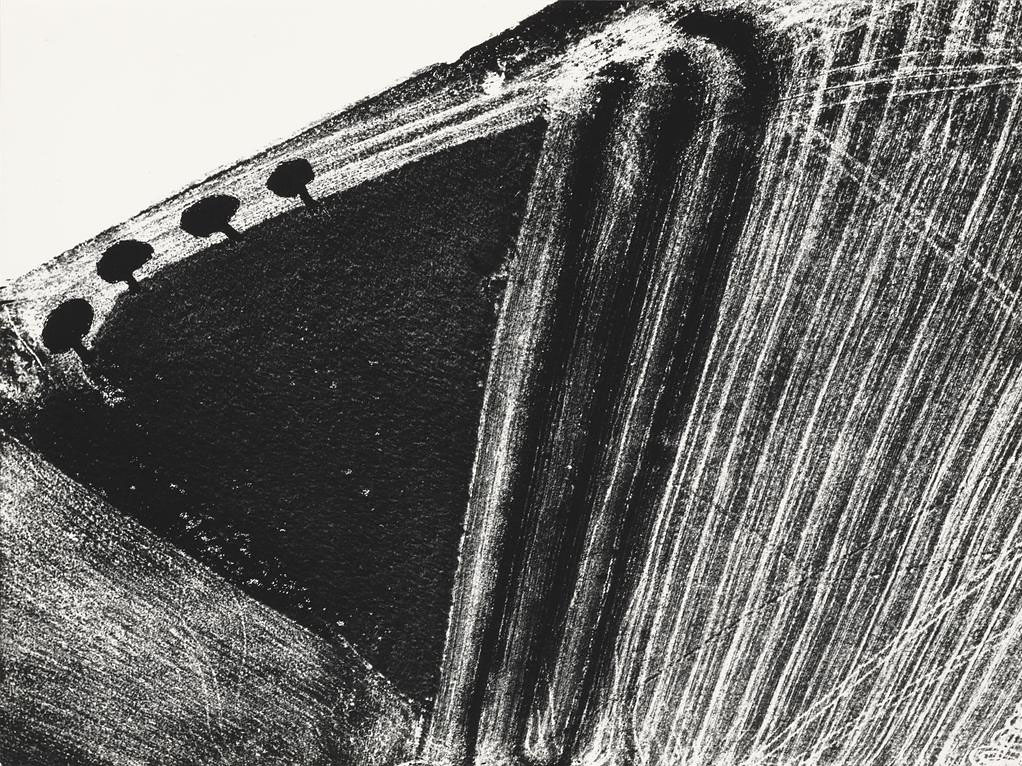
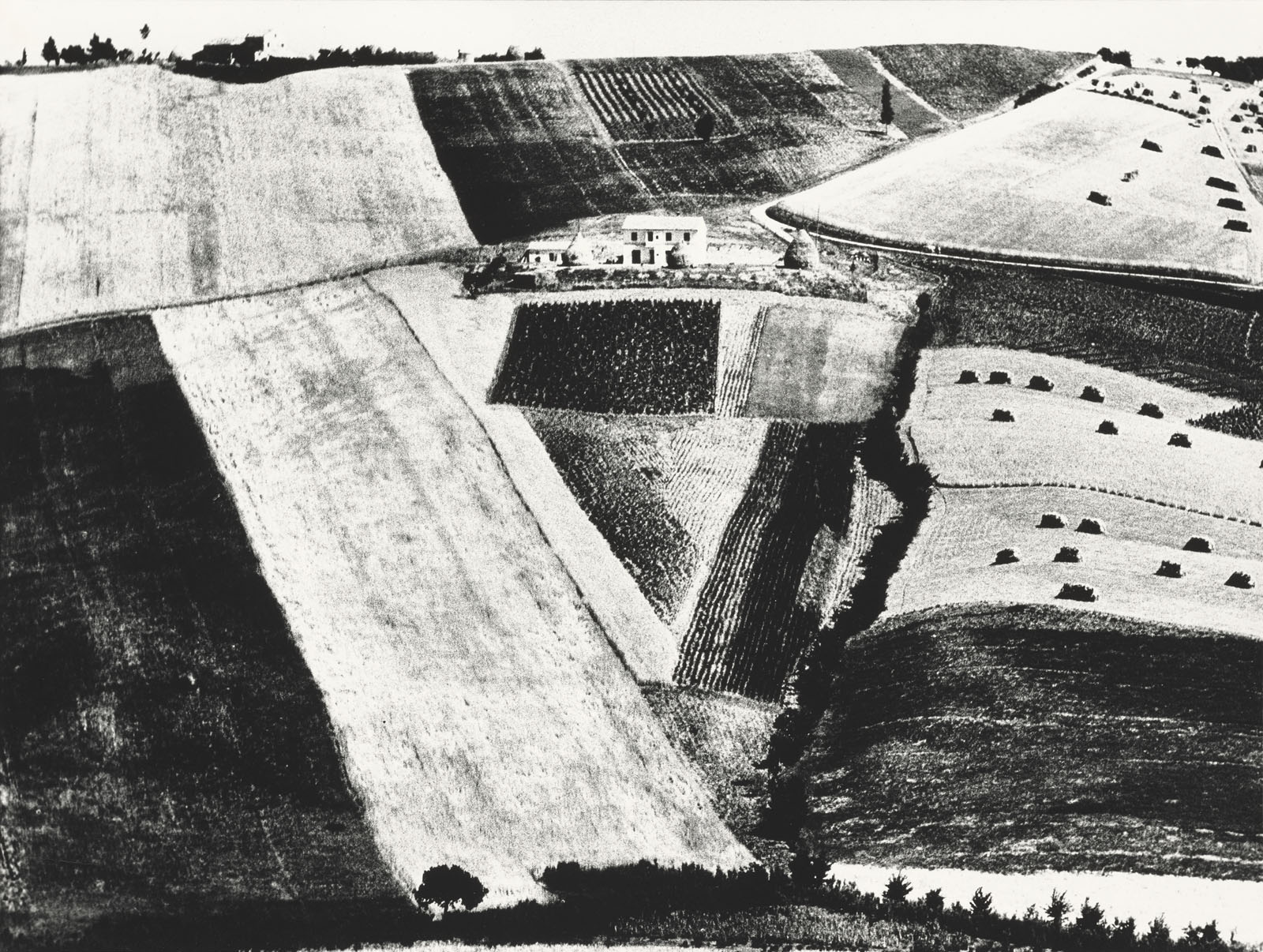
They discombobulate and disorientate me; they challenge me to see the world in a different way; they reveal new things over time the more one looks at them… and they act as momento mori for both human and land. His conceptual photographs, for that is what they are, are refreshed time and time again – through their impressions, through their graphic nature, and their lack of grounding in a fixed reality.
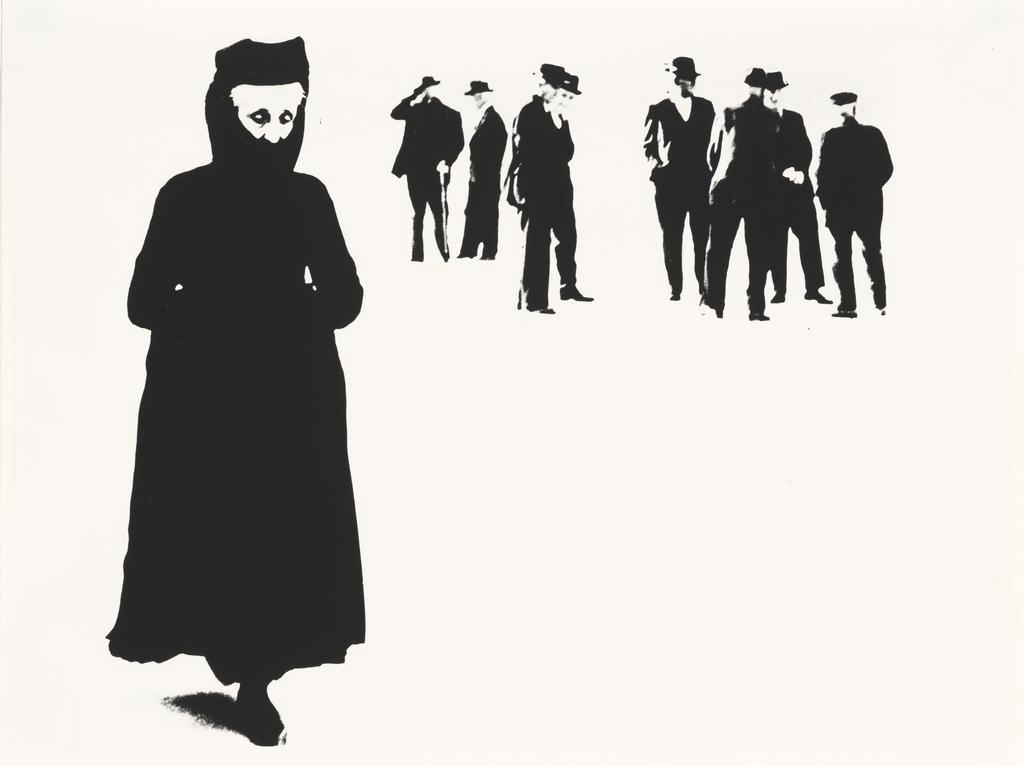
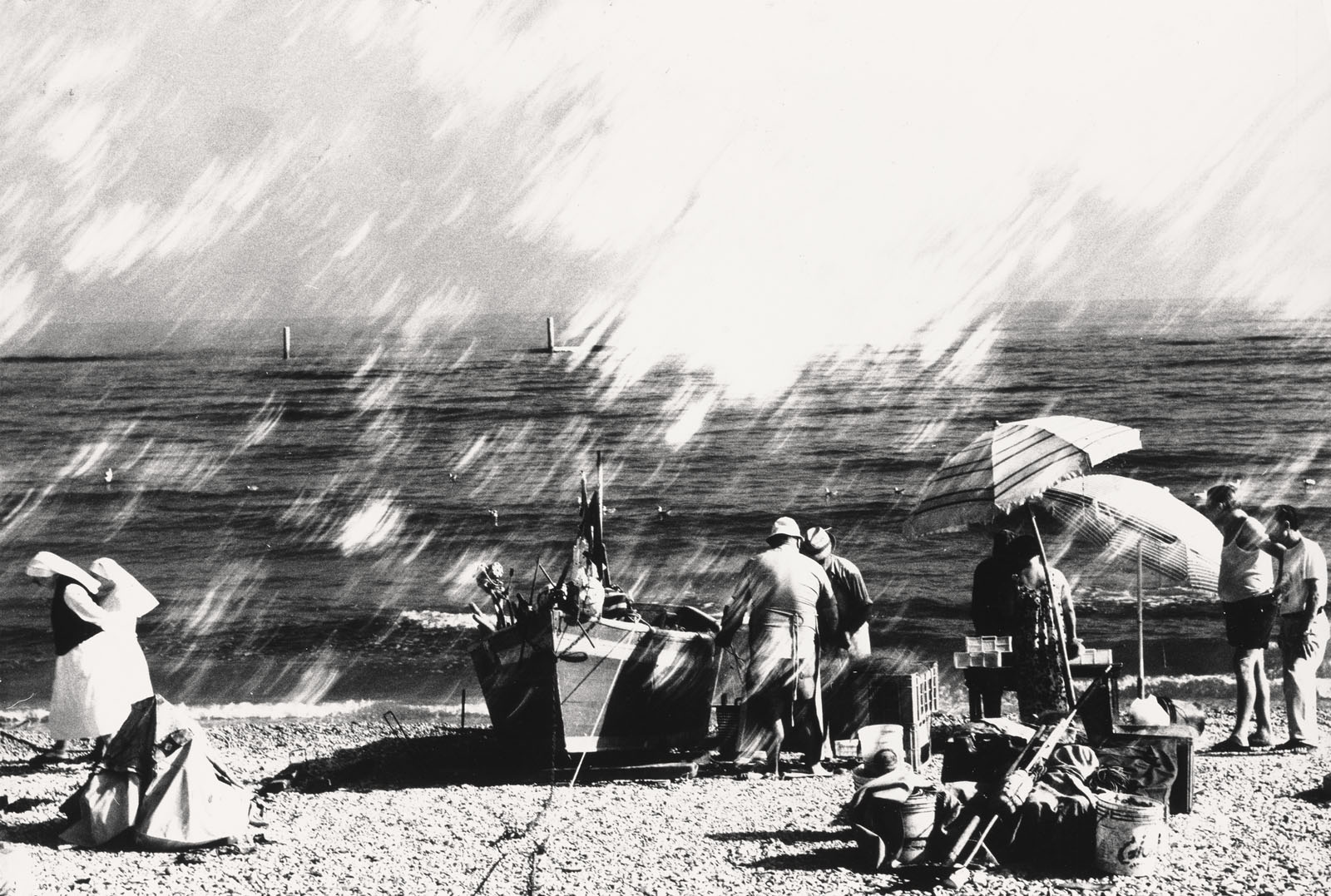
Whether it be the abstract photographs from the series Death Will Come and It Will Have Your Eyes, the shimmering figures from the series Scanno (are they really one negative!), the groundlessness of the figures in Young Priests, the abstract figuration of The Good Earth, or the spatial levitation of Metamorphosis of the Land / Awareness of Nature, the viewer is forced to reassess their relationship with the physical object (the photograph) and its representation and interpretation of our passage on this earth. As has been said of Ovid’s Metamorphoses, “The ways that stories are linked by geography, themes, or contrasts creates interesting effects and constantly forces the reader to evaluate the connections.”
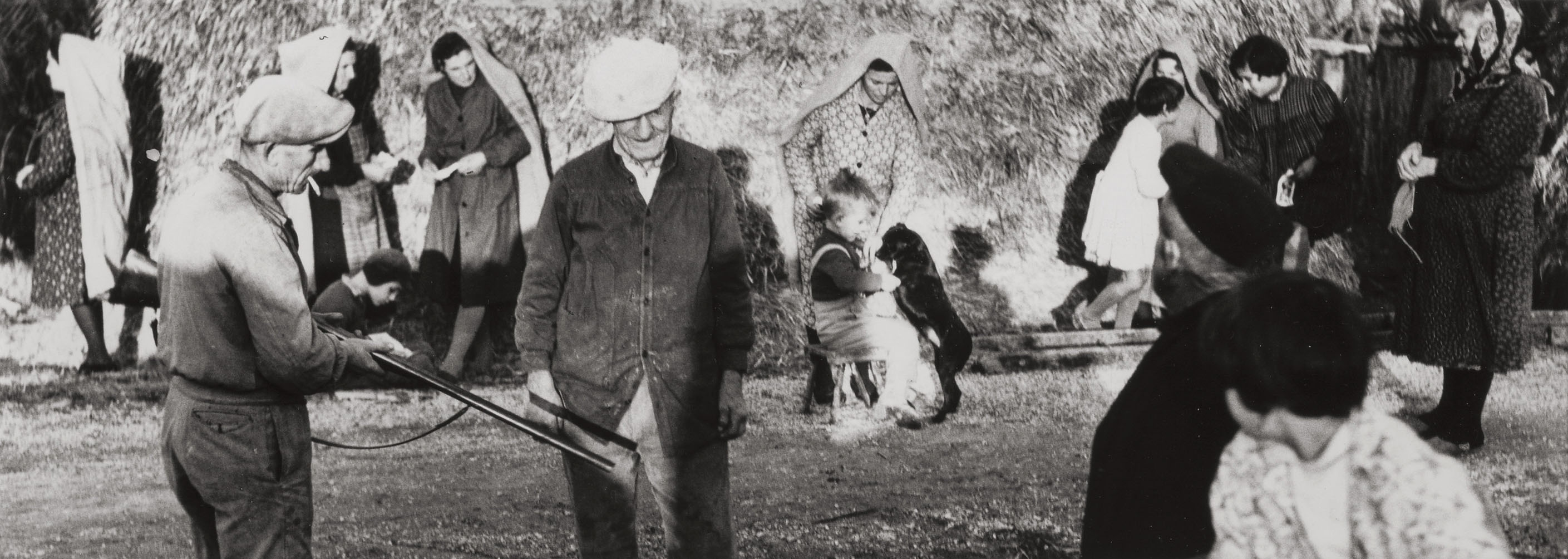
Giacomelli’s photographs are active in this way: they act on the perceptions of the viewer in order to challenge what we understand of the interaction between human beings (he continued to photograph in his hometown of Senigallia for almost 50 years), and the interaction between human beings and the land (where his photographs “function as commentary on the capacity of both natural occurrences and human interventions to change the character of the land.”) As with many artists, the concerns that were present when he started photography – his subject matter informed by the people and places closest to him – remained with him for the rest of his life. Except he turned personal stories into universal narratives.
All of Giacomelli’s sequences (he conceived many of his series as sequences) required periods of sustained observation, where the artist embedded himself with and in his subject matter. Only in this way could the artist understand the spirit of the land and its people, his people. He had an innate ability to describe people and the land in a specific time and place… which, on reflection, seem to be timeless, like a fairy-tale or a lament. Places and people steeped in the past but in the photographs hovering on the edge of his nowhere.
The text for the series Metamorphosis of the Land in this posting perfectly sums up how much time Giacomelli took over a series, how conceptual his series were, and the artistic techniques he used to manipulate reality:
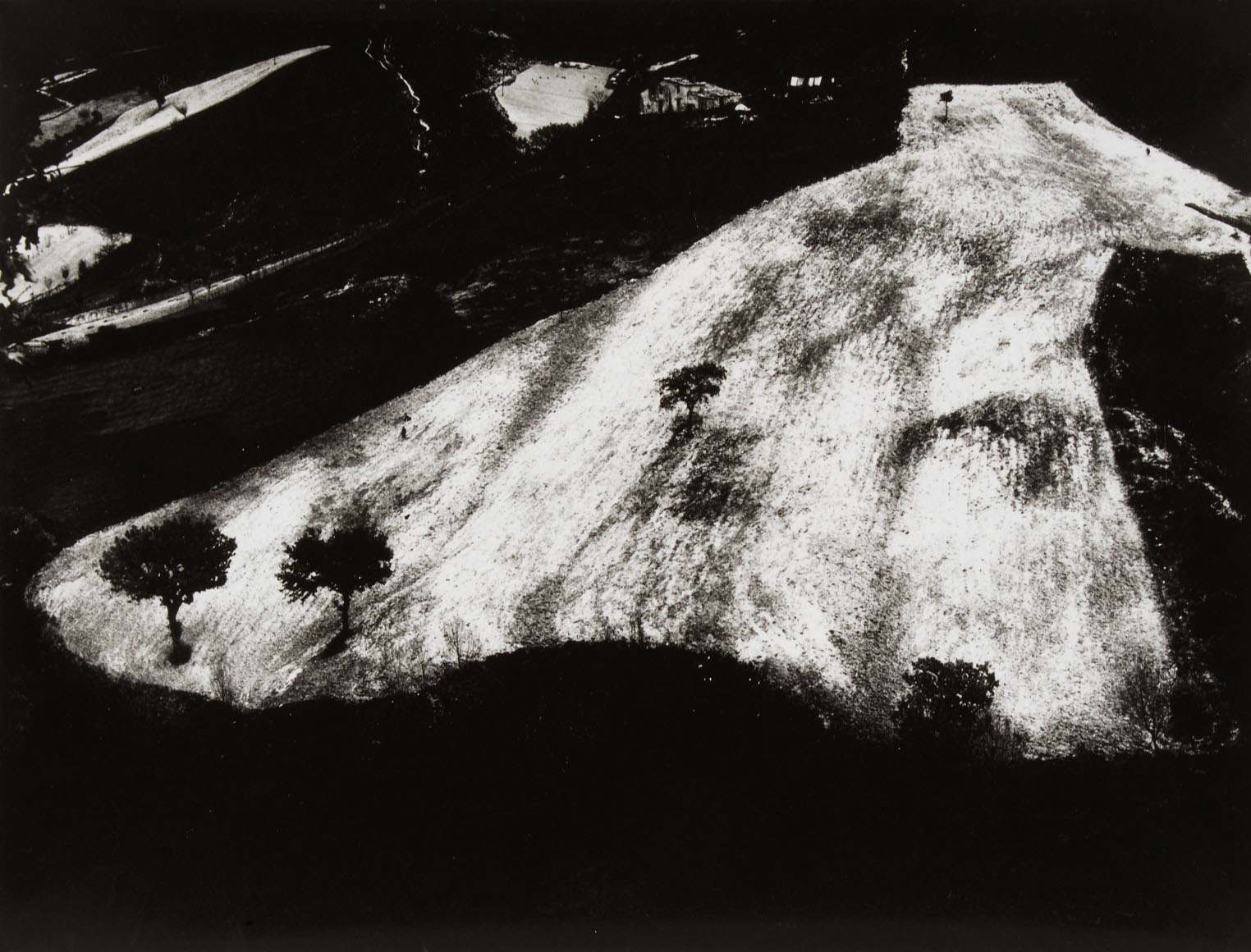
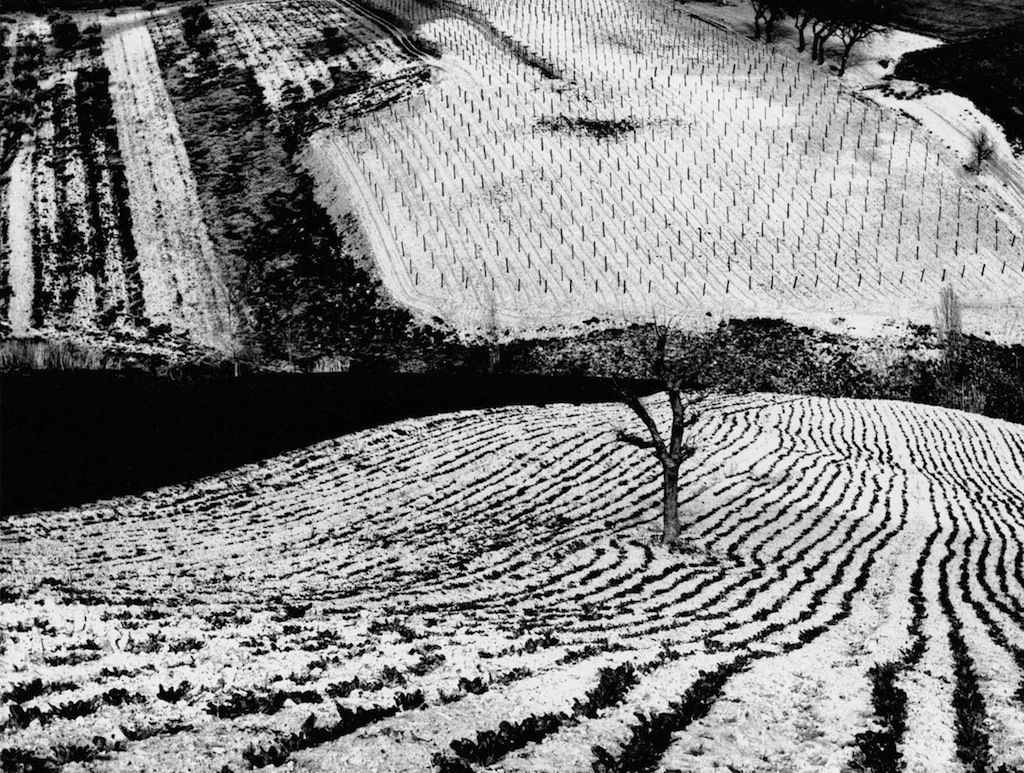
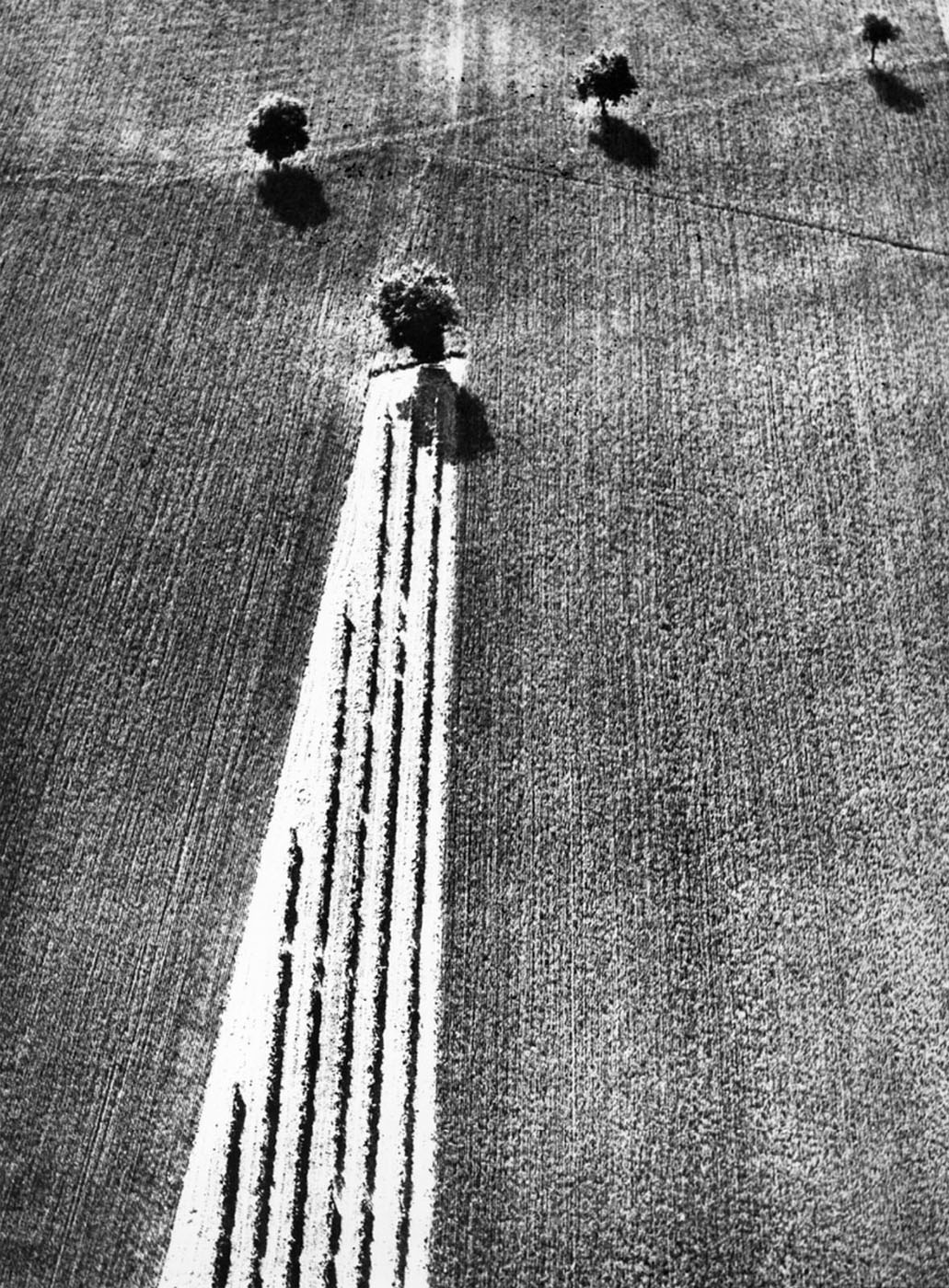
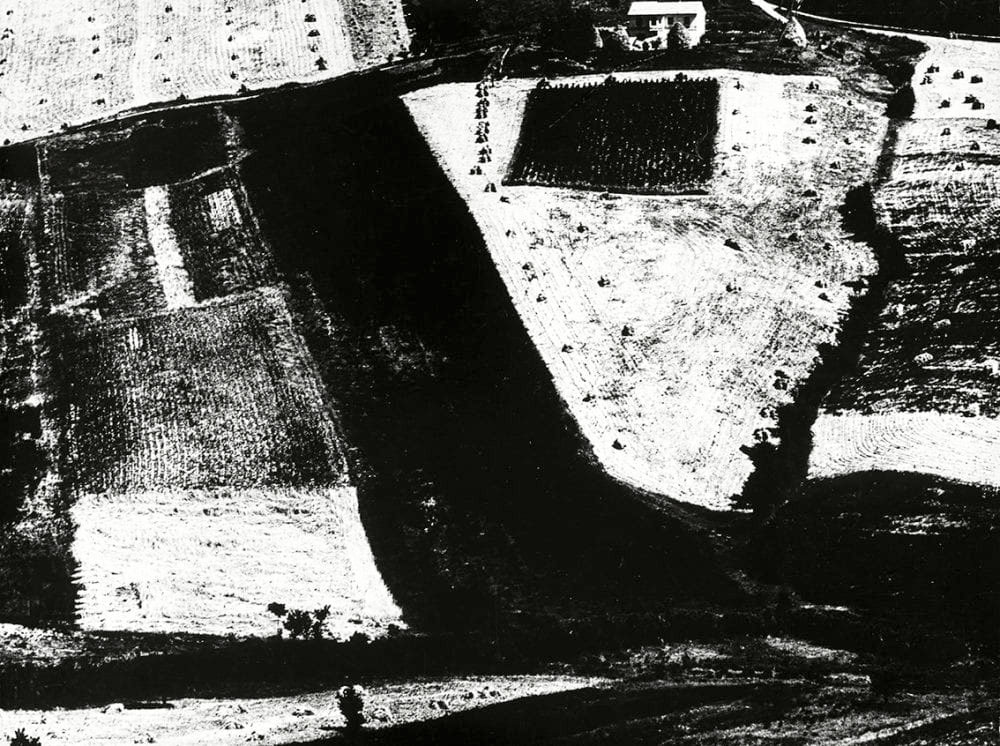
The photographs gathered under the title Metamorphosis of the Land were created over roughly two decades in the countryside surrounding Senigallia. Without a horizon line to anchor them, they are disorienting, requiring the viewer to rely on a lone house or tree as a focal point. Perspectival ambiguity abounds: Did Giacomelli take the photographs from an elevated or lowered vantage point? Did he hold the camera parallel or perpendicular to the land? Is this confusion a result of the inherent “verticality” of the hilly Marche region, or did Giacomelli rely on darkroom manipulation (such as printing on diagonally tilted sheets of photo paper) to create right-angled configurations of shapes that should otherwise recede in the distance, following the tenets of one-point perspective?
These ambiguities are further intensified by Giacomelli’s intention for this body of work to address issues of ecological neglect and loss. Deeply attuned to the rural geography and agricultural practices of the Marche, he was wary of the consequences that accompanied the shift from centuries-old systems of subdivided fields and crop rotation to modern methods of mechanisation and fertilisation that overtax the land by keeping it in constant use. The series is one of lament.
In his later series of transformation tales Giacomelli once again disrupts the flow of temporal reality. As he reflects on the death of his mother, his own mortality and the changing nature of the landscape, his photographs “mark a noticeable shift from Giacomelli’s earlier position of critiquing the slow degradation of the land to one that sets the stage for a more metaphysical contemplation of the interconnectivity of space, time, and being.” Of course, this contemplation had always been there since the beginnings of his photography where, “metaphysically speaking, understanding time means understanding the shared world that man encounters and with which man interacts.”
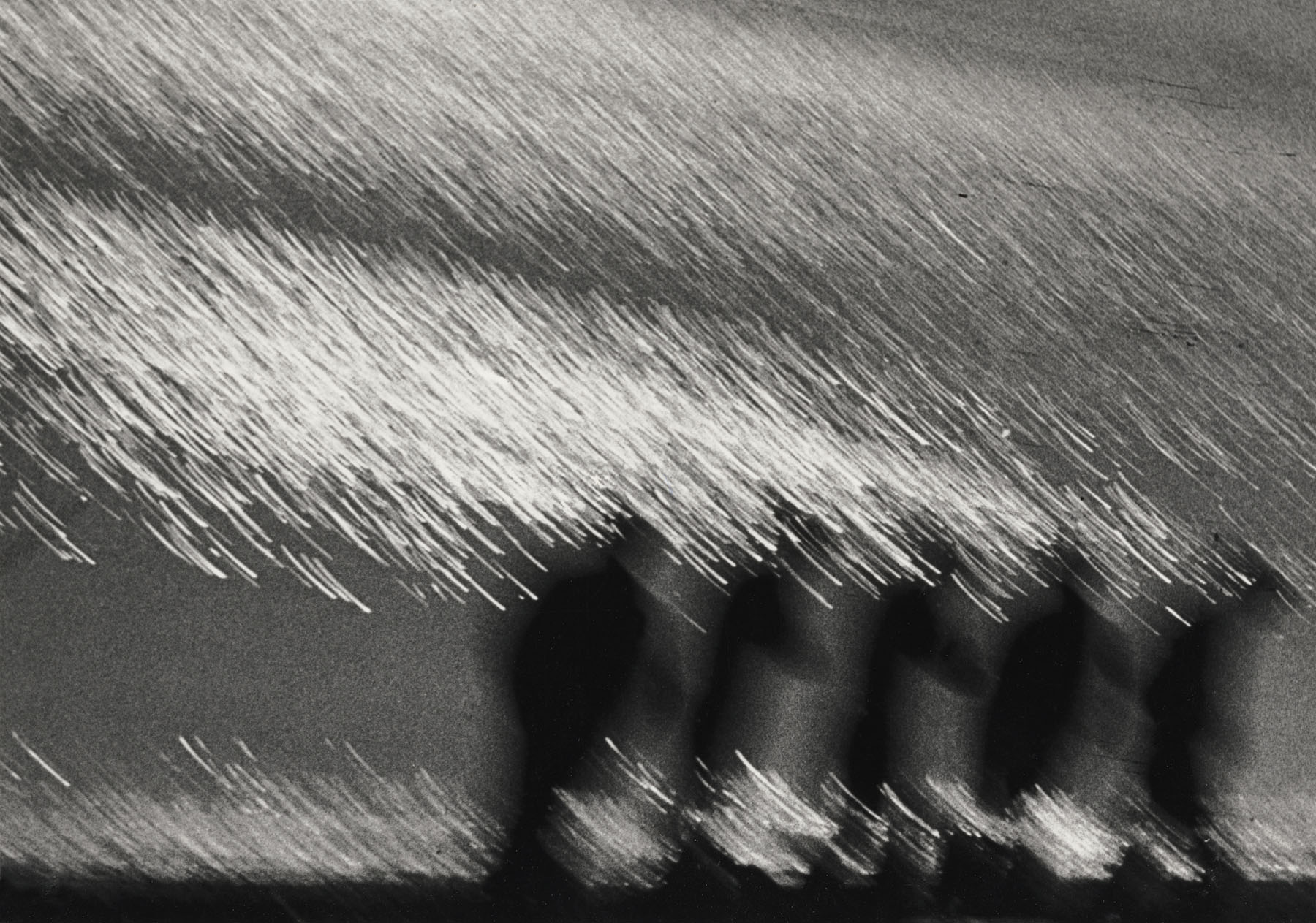
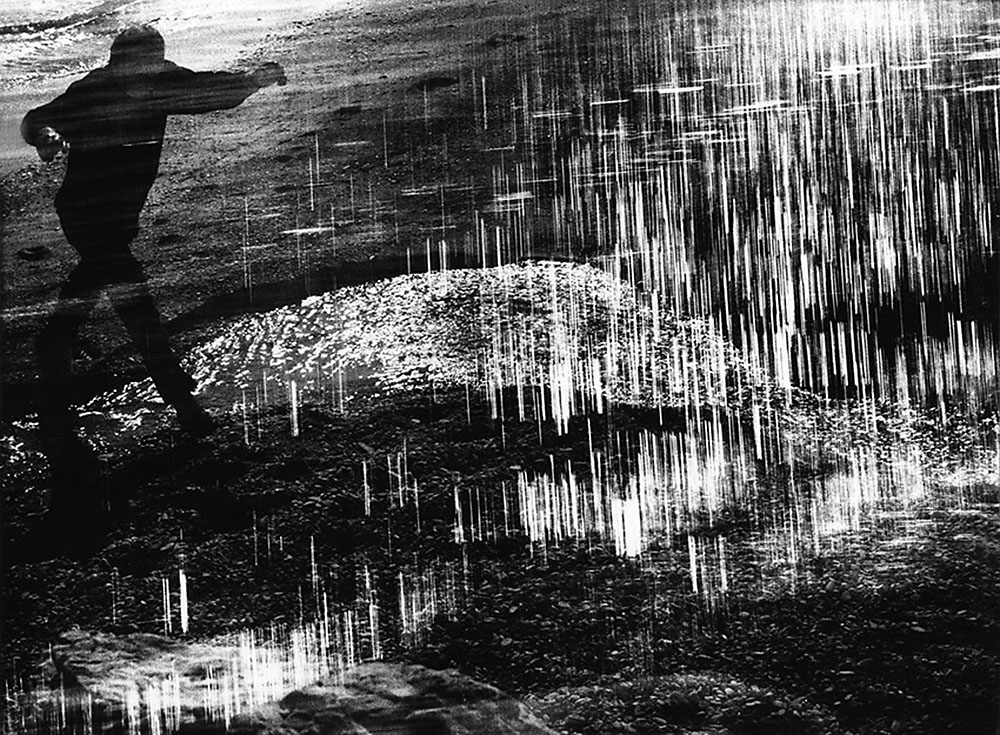
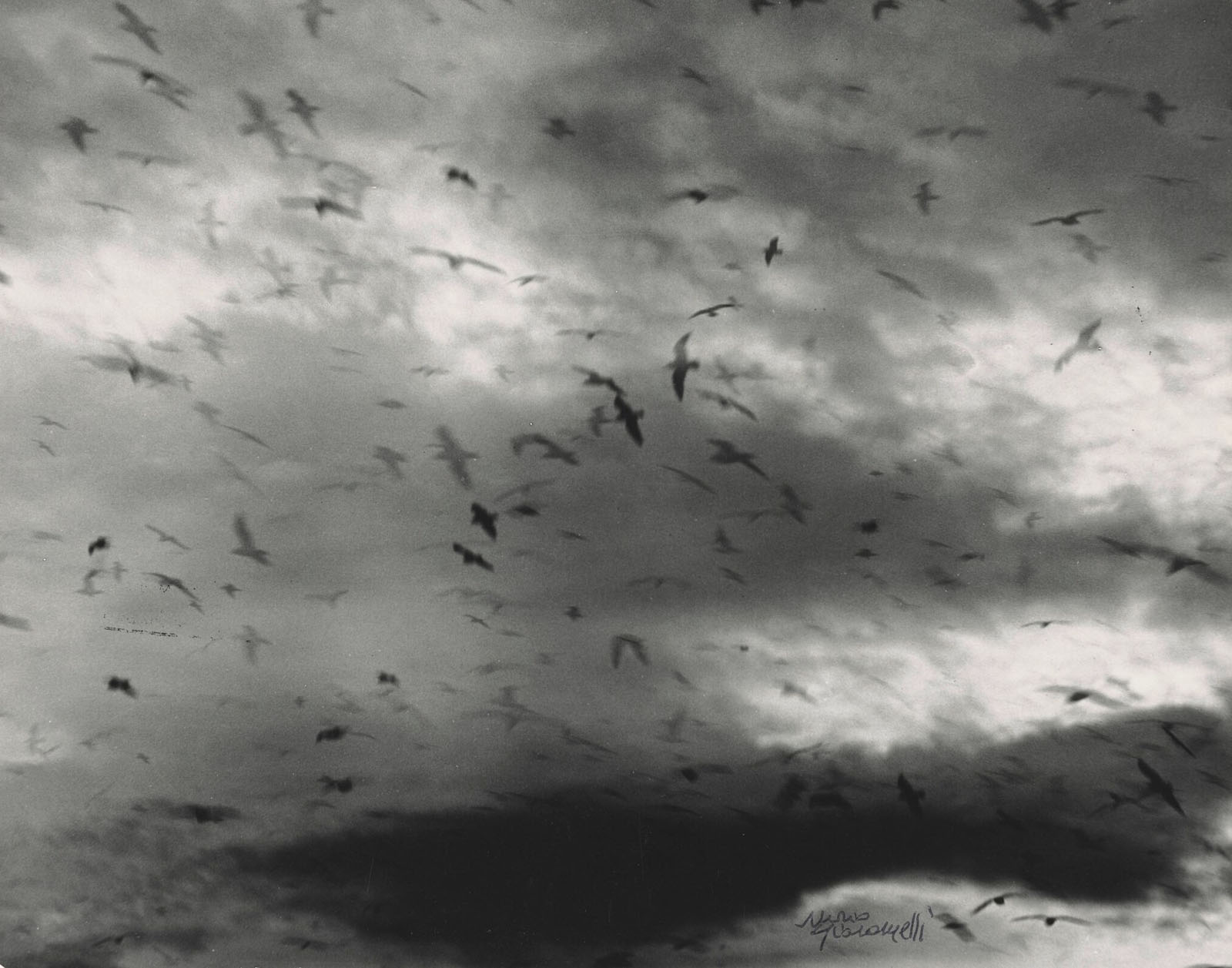
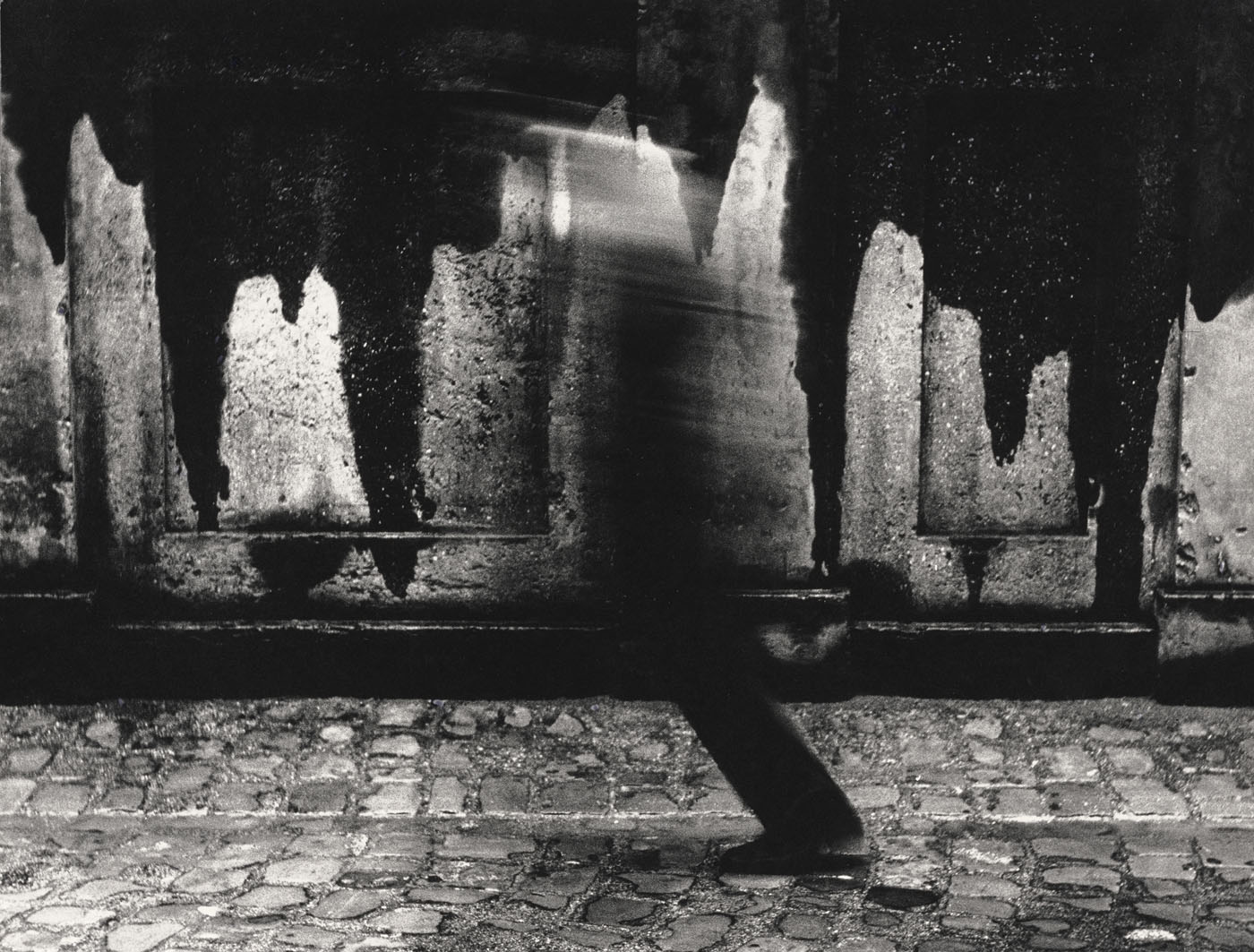
Through art techniques (double exposures, variable perspectives, slow shutter speeds, moving his camera during exposure, abrupt cropping, slight overexposure to reverse tonal values, the development of the negative, painting or scratching of areas on the negative to introduce elements of the absurd or surreal, use of high-contrast paper and darkroom manipulations) and conceptual structures (inspired by poems to create parallel narratives, repurposing “an image made for one series in another series, reinforcing the sense of fluidity that connects all of his work”), Giacomelli seeks to confront the inevitability of his own mortality and thus his return to earth. As he observes, “Of course [photography] cannot create, nor express all we want to express. But it can be a witness of our passage on earth…”
In Giacomelli’s unique interpretation of figure | ground lies his elevation into the “pantheon” of photographic stars. A self-taught artist, he was not encumbered or impeded by traditional photographic practice but described his own visual photographic language, instantly recognisable as his (once seen, never forgotten) signature. A stamp on the verso of each print in the series Awareness of Nature describes the series as “the work of man and my intervention (the signs, the material, the randomness, etc.) recorded as a document before being lost in the relative folds of time.”
In my humble opinion there is no fear, only elation, that Giacomelli’s essential work will ever be lost to the folds of time.
Dr Marcus Bunyan
Many thanks to the J. Paul Getty Museum for allowing me to publish the photographs in the posting. Please click on the photographs for a larger version of the image.
In nova fert animus mutatas dicere formas / corpora; (I intend to speak of forms changed into new entities;)
Ovid. Metamorphoses, Book I, lines 1–2
Be ahead of all parting, as if it had already happened, like winter, which even now is passing. For beneath the winter is a winter so endless that to survive it at all is a triumph of the heart.
Be forever dead in Eurydice, and climb back singing. Climb praising as you return to connection. Here among the disappearing, in the realm of the transient, be a ringing glass that shatters as it rings.
Be. And know as well the need to not be: let that ground of all that changes bring you to completion now.
To all that has run its course, and to the vast unsayable numbers of beings abounding in Nature, add yourself gladly, and cancel the cost.
Rainer Maria Rilke. Sonnets to Orpheus II, 13
“Of course [photography] cannot create, nor express all we want to express. But it can be a witness of our passage on earth, like a notebook… … For me each photo represents a moment, like breathing. Who can say the breath before is more important than the one after? They are continuous and follow each other until everything stops. How many times did we breathe tonight? Could you say one breath is more beautiful than the rest? But their sum makes up an existence.”
Mario Giacomelli, 1987
Born into poverty and largely self-taught, Mario Giacomelli became one of Italy’s leading photographers. After purchasing his first camera in 1953, he began creating humanistic portrayals of people in their natural environments and dramatic abstractions of the landscapes. He continued to photograph in his hometown of Senigallia, on the Adriatic coast of Italy, for almost fifty years. Rendered in high-contrast black and white, his photographs are often gritty and raw, but always intensely personal.
This exhibition is dedicated to the memory of Daniel Greenberg (1941-2021) and is made possible through gifts made by him and Susan Steinhauser.
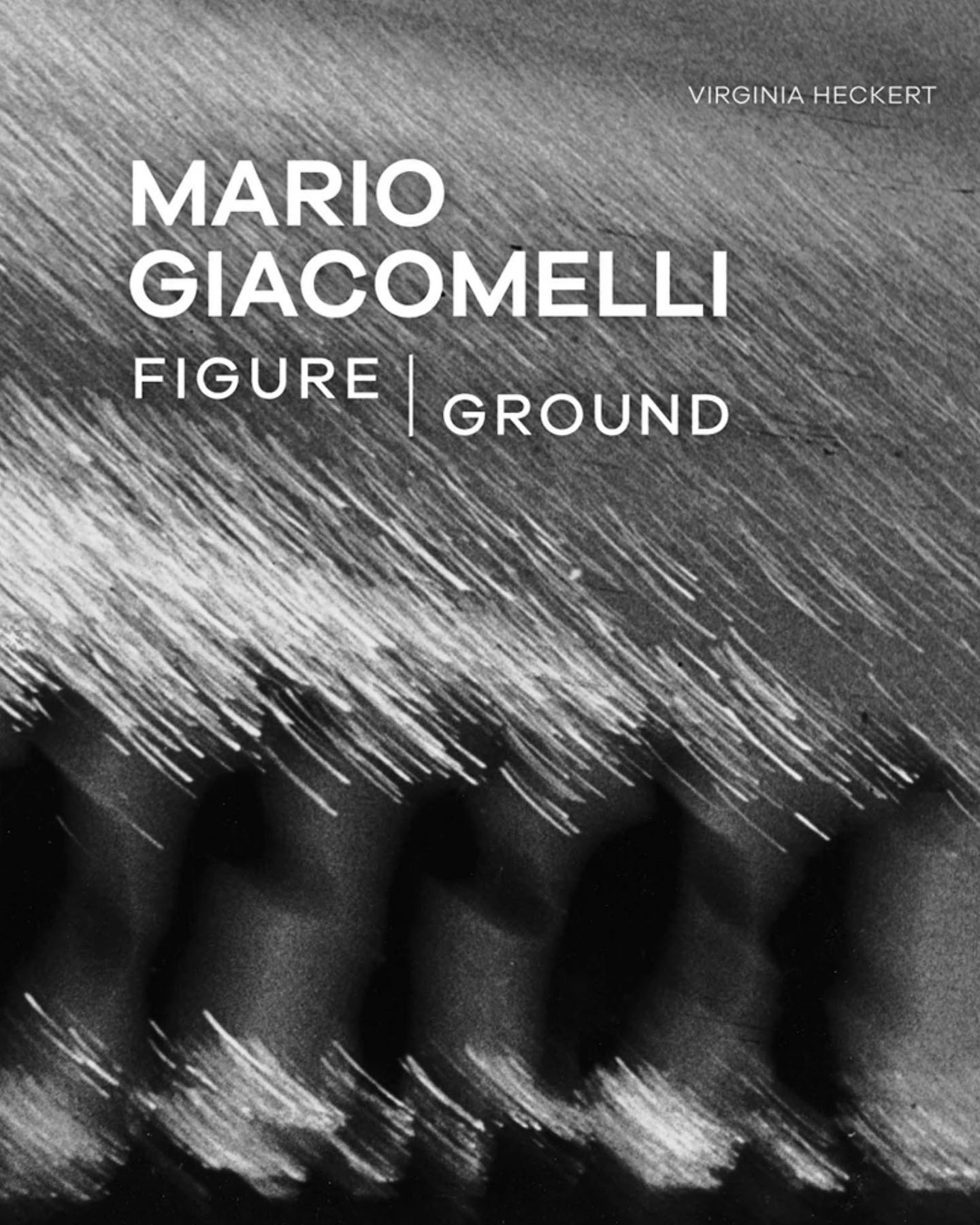
Known for his gritty, black-and-white images, Mario Giacomelli is recognised as one of the foremost Italian photographers of the 20th century. Drawn from the Getty Museum’s deep holdings, the exhibition Mario Giacomelli: Figure | Ground features 91 photographs that showcase the raw expressiveness of the artist’s style, which echoed many of the concerns of postwar Neorealist film and Existentialist literature.
The exhibition is dedicated to the memory of Daniel Greenberg (1941-2021) and was made possible through generous gifts from him and his wife, Susan Steinhauser. As photography collectors for more than two decades and founding members of the Getty Museum Photographs Council, Greenberg and Steinhauser have been generous donors to the Getty. All of the photographs in this exhibition were donated by Greenberg and Steinhauser or purchased in part with funds they provided.
“After the Museum’s yearlong closure, we are particularly pleased to be able to reopen the Center for Photographs at the Getty Center with two important exhibitions that highlight the Museum’s extensive collections,” says Timothy Potts, Maria Hummer-Tuttle and Robert Tuttle Director of the J. Paul Getty Museum. “We are especially pleased to honour the extraordinary contributions of Dan Greenberg and Susan Steinhauser, whose gifts of works by Giacomelli are the basis of the first monographic exhibition of the artist in a U.S. museum in 35 years. The exhibition and its catalogue are testament both to their passion as collectors and their generosity as benefactors to the Getty Museum over many years.”
Mario Giacomelli: Figure | Ground
Born into poverty, Mario Giacomelli (1925-2000) lived his entire life in Senigallia, a town on the Adriatic coast in Italy’s Marche region. He lost his father at an early age and took up poetry and painting before apprenticing as a printmaker, which became his livelihood. After purchasing his first camera in 1953, Giacomelli quickly gained recognition for his unique approach to photographing people, landscapes, and people in the landscape. Although photography was initially relegated to Sundays, when his printshop was closed, and to his immediate surroundings in the Marche, he became one of Italy’s most prominent practitioners.
Giacomelli’s use of flash, grainy film, and high-contrast paper resulted in bold, geometric compositions with deep blacks and glowing whites. He most frequently focused his camera on the people, landscapes, and seascapes of the Marche. He often spent several years exploring a photographic idea, expanding and reinterpreting it, or repurposing an image made for one series for inclusion in another. By applying titles derived from poetry, he transformed familiar subjects into meditations on the themes of time, memory, and existence.
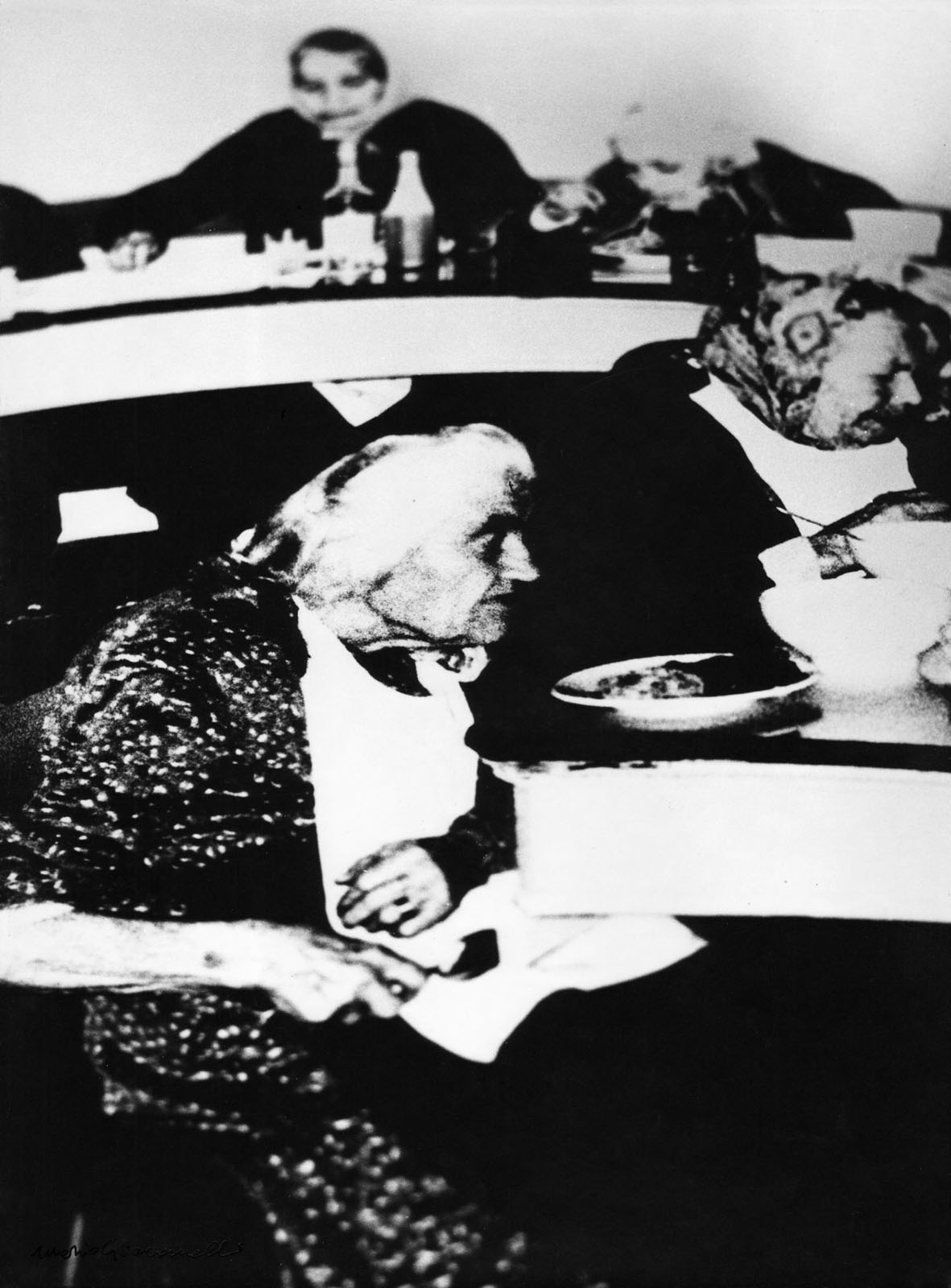
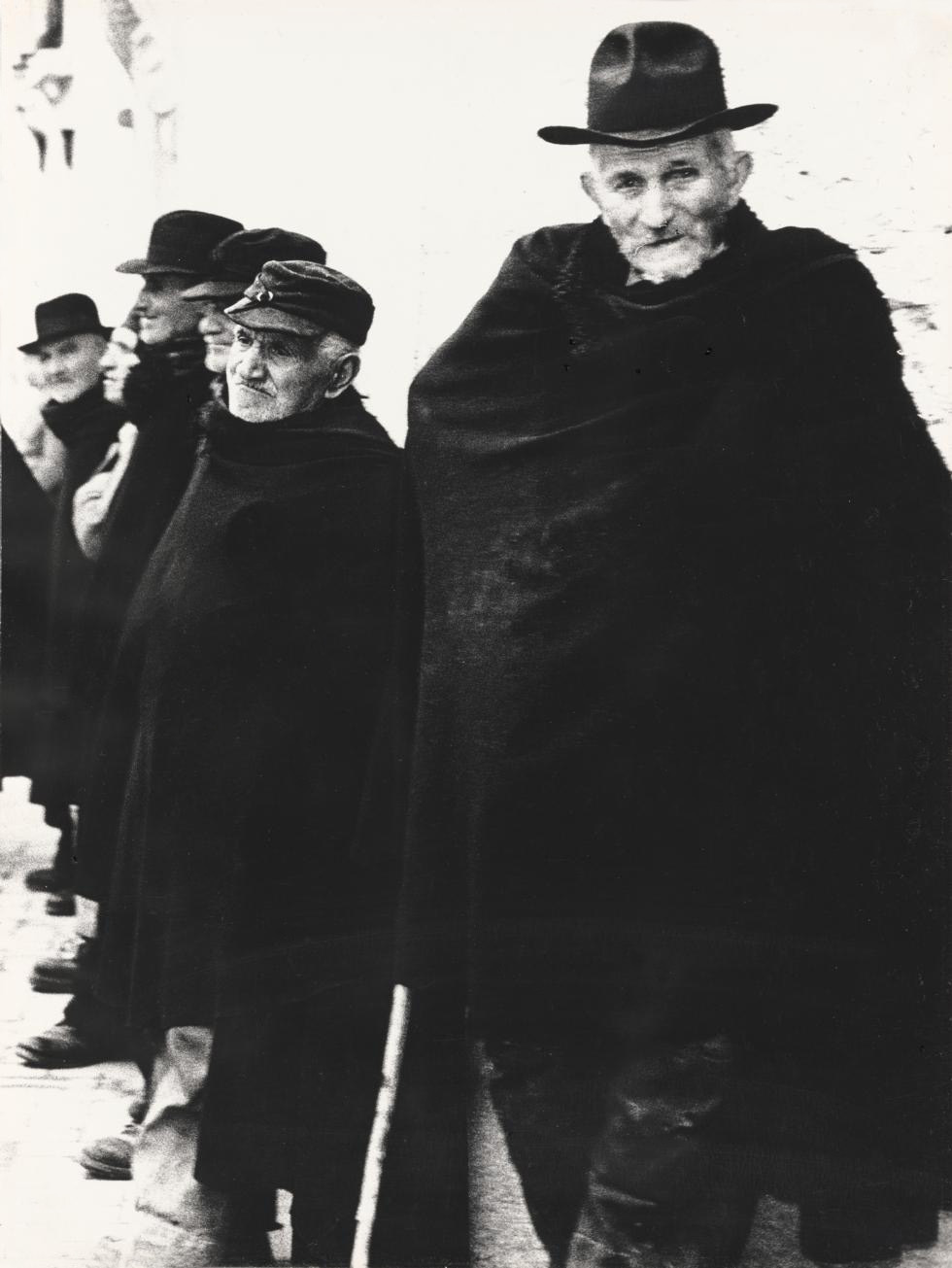
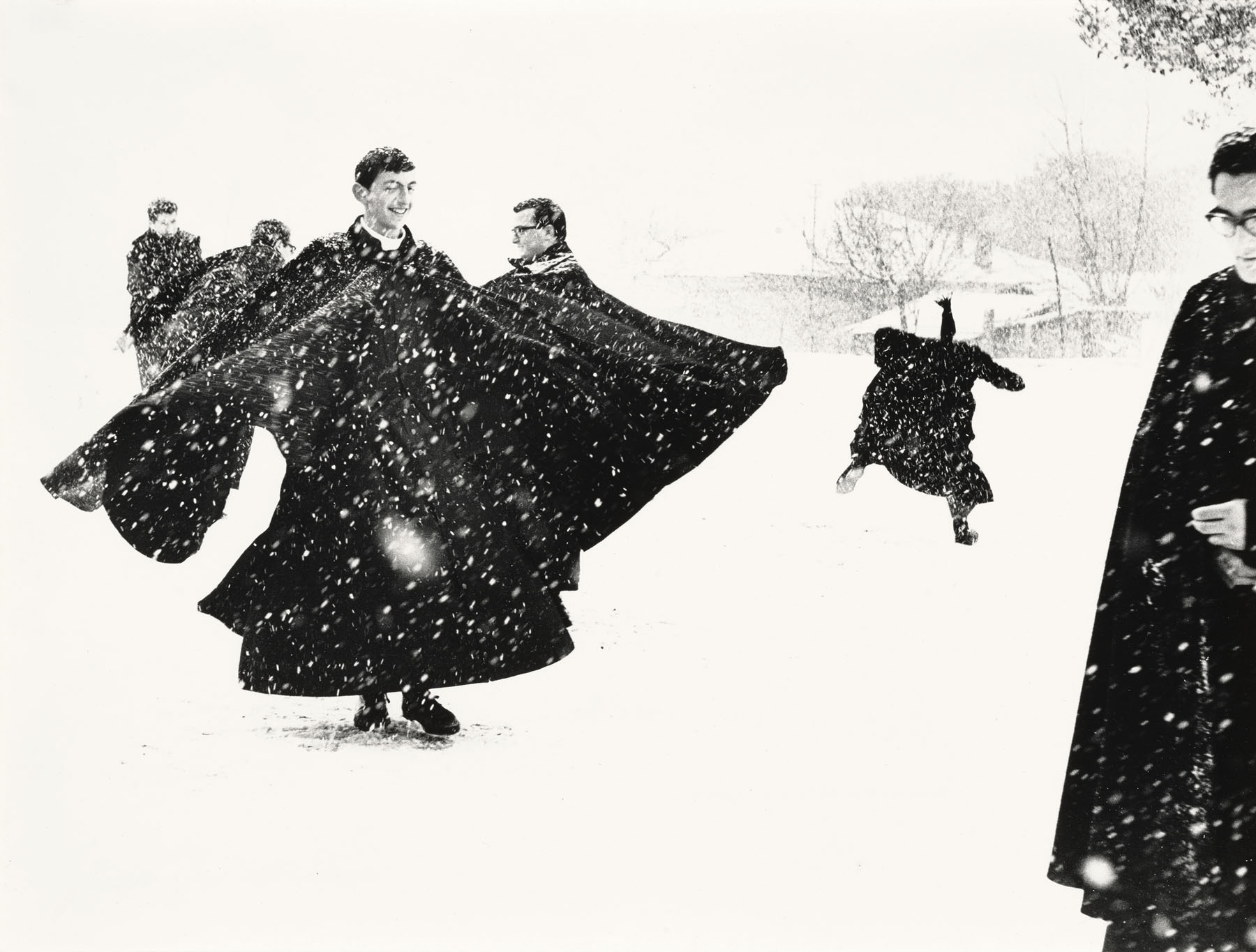
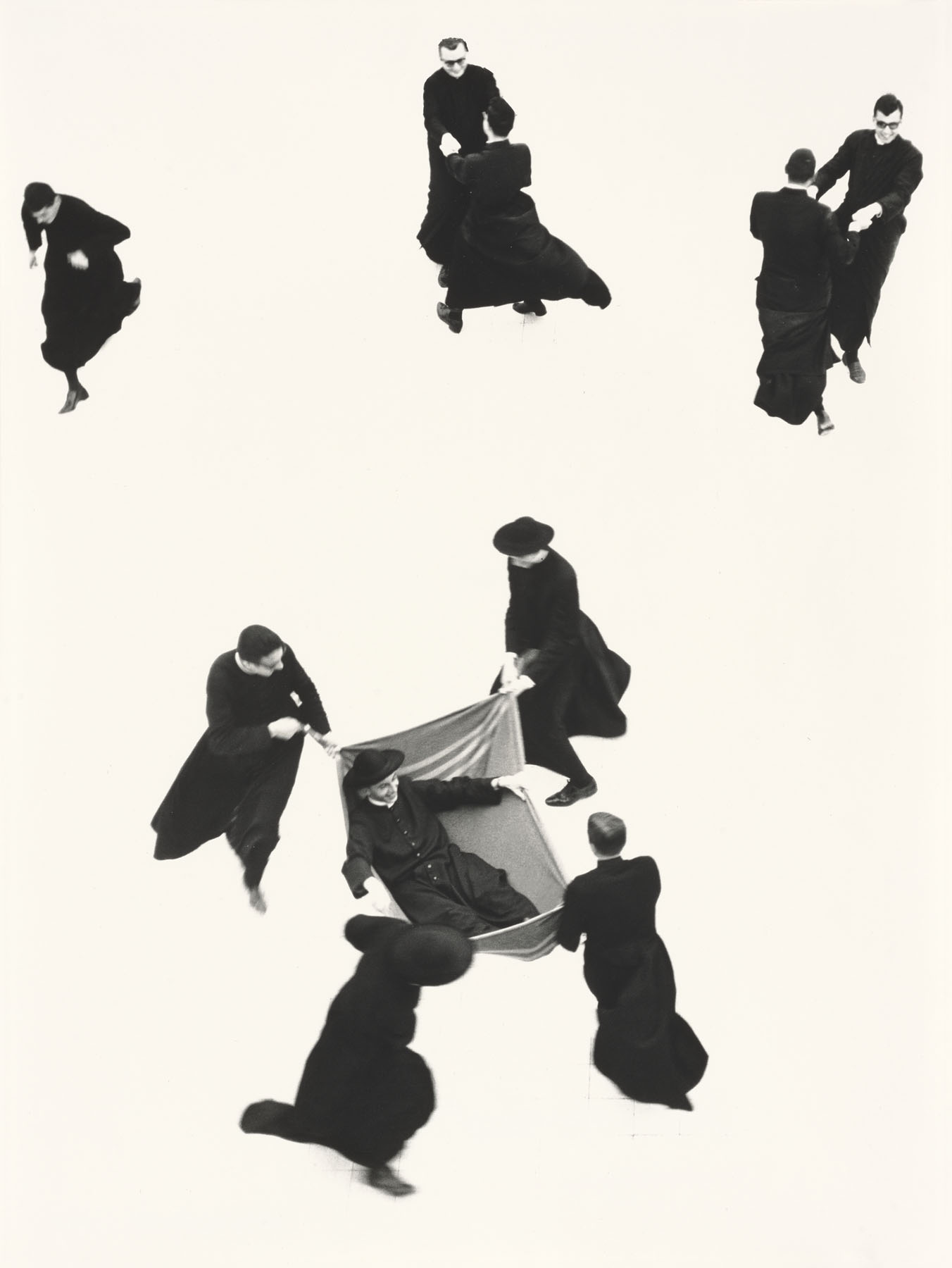
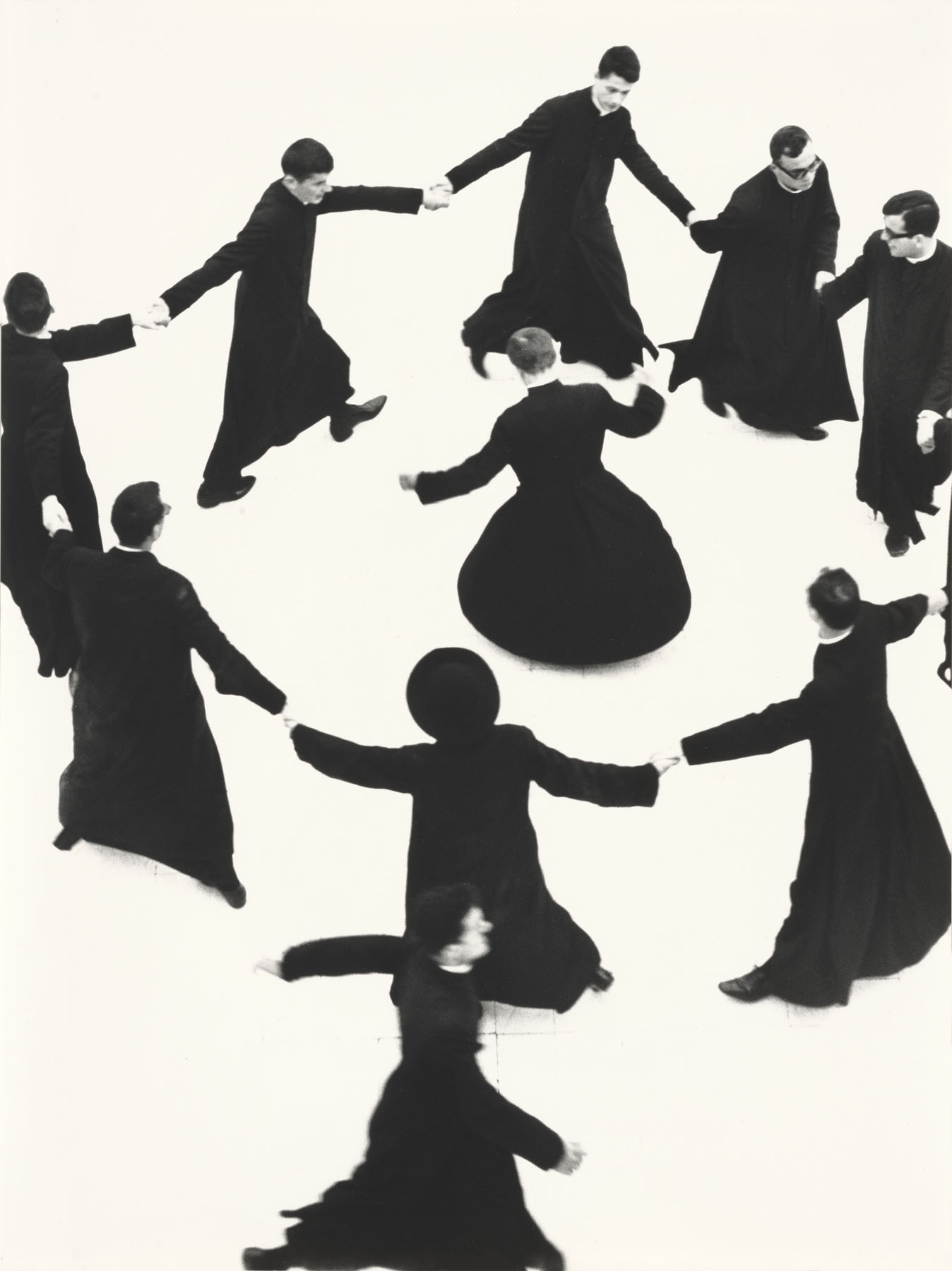
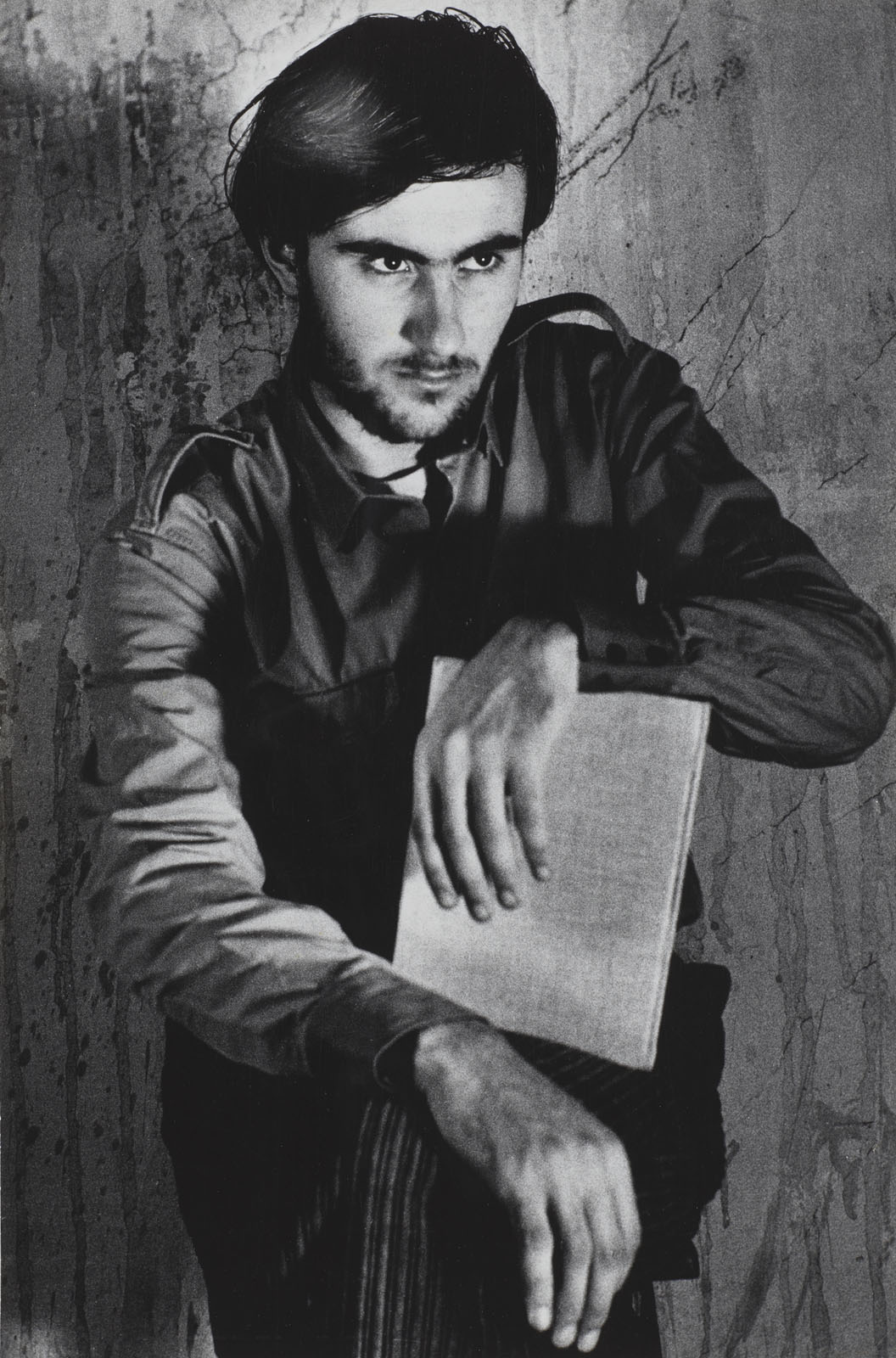
Among Giacomelli’s earliest photographs are portraits of family and friends. His first, sustained body of work was Hospice, which he began in 1954 and later titled Death Will Come and It Will Have Your Eyes, after a poem by the writer Cesare Pavese. Depicting residents of the home for the elderly in Senigallia and made with flash, the images are characterised by their unflinching scrutiny of individuals living out their last days. Additional early series on view include Scanno (1957-59) and Young Priests (1961-1963), both of which further demonstrate Giacomelli’s ability to describe people in a specific time and place. In both series, figures clothed in black are set against stark white backgrounds. While there is an underlying sense of furtiveness or foreboding in the Scanno images, the Young Priests series, which Giacomelli later titled I Have No Hands That Caress My Face, is uncharacteristically light-hearted. Another series, The Good Earth, follows a farming family going about daily life, planting and harvesting crops and tending to livestock in the countryside surrounding Senigallia; the intermingling of generations suggests the cyclical nature of existence.
Landscapes feature prominently in Giacomelli’s engagement with photography from the beginning. The exhibition features several early works dating from the 1950s, as well as signature series, such as Metamorphosis of the Land (1958-1980) and Awareness of Nature (1976-1980). Both series portray fields and small farms in the Marche region, many of which he revisited as seasons changed and crops were rotated. Giacomelli wanted to show how modernised cultivation practices were overtaxing the land and changing the landscape. He often photographed from a low or an elevated vantage point – including from a plane – to eliminate the horizon and create disorienting patchworks of geometric shapes or pulsating configurations of plowed furrows.
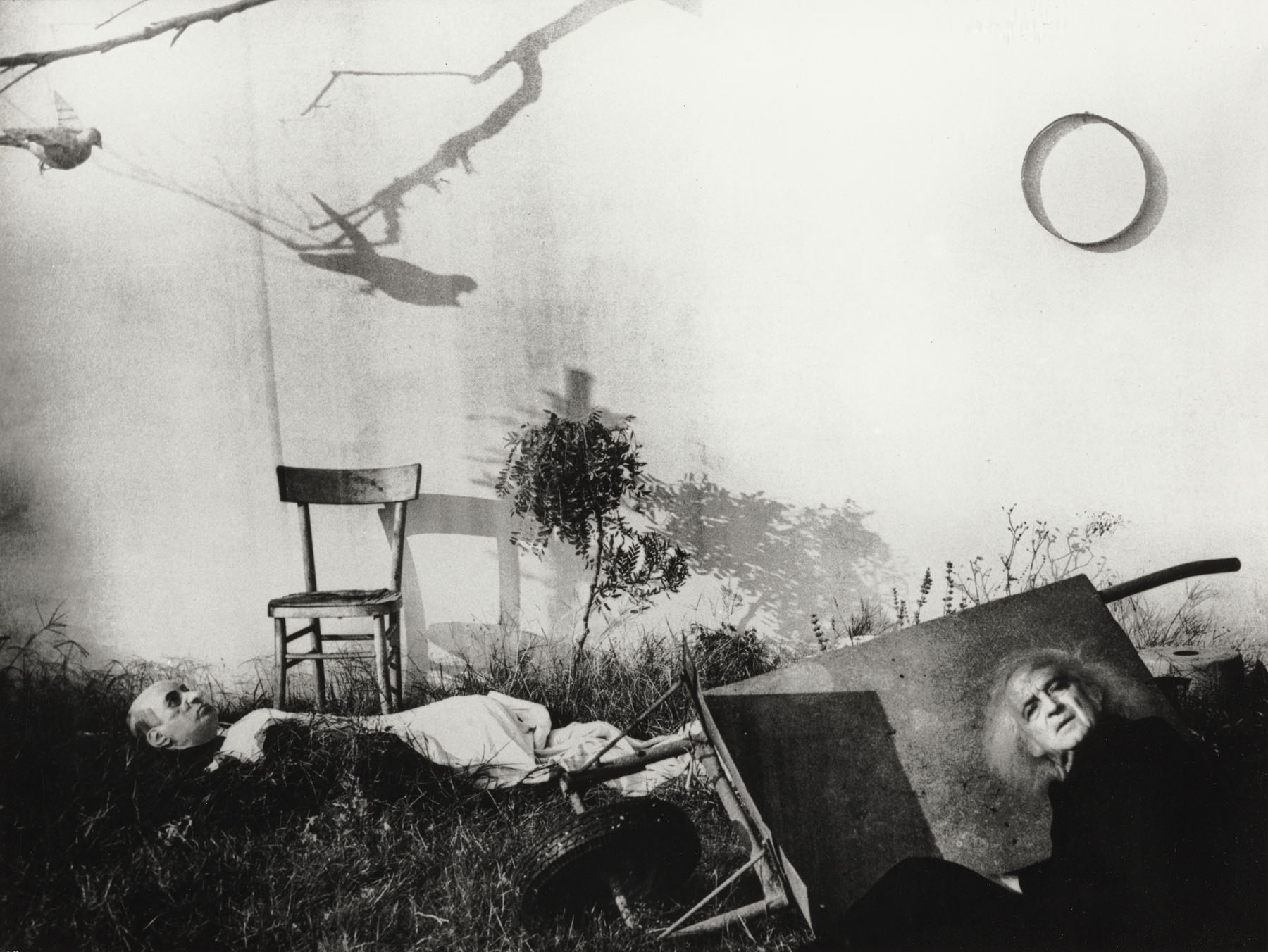
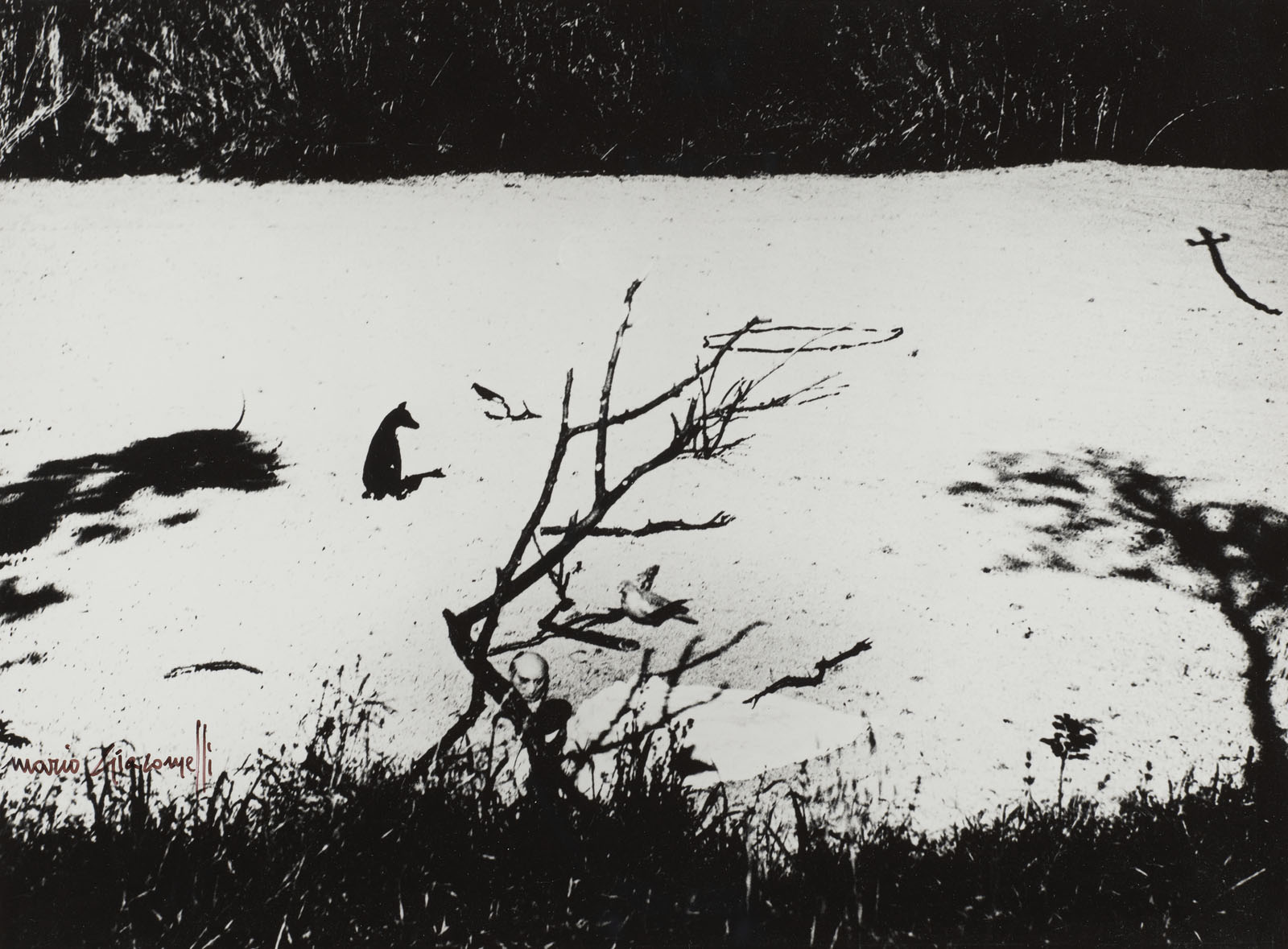
In his later years, Giacomelli created several series that intersperse landscapes with figure studies. He often merged the two genres in double exposures or by experimenting with slow shutter speeds and moving his camera during exposure to blur the lines between figure and ground. Several of these series were inspired by poems, both as composed by himself or by others. Giacomelli reflects on the interconnectedness of space, time, and being, in these works, which have a metaphysical quality. I Would Like to Tell This Memory is one of his last bodies of work. Incorporating various props, such as a mannequin, a stuffed dog, and stuffed birds, the images in the series suggest that the artist is reflecting on the inevitability of his own mortality.
“It is exciting to present this collection of Mario Giacomelli photographs assembled by Dan Greenberg and Susan Steinhauser over a period of almost twenty years,” says Virginia Heckert, curator of photographs at the Museum and curator of both exhibitions. “Not only does the exhibition introduce a new audience to Giacomelli’s work, but it does so through the eyes of the collectors, who were drawn to his expressive portrayals of people and the land.”
Mario Giacomelli (1925-2000) is widely regarded as one of the foremost Italian photographers of the twentieth century. Born into poverty, he lived his entire life in Senigallia, a town on the Adriatic coast in Italy’s Marche region. After losing his father at age nine and completing elementary school at eleven, he apprenticed as a typesetter and printer, while also teaching himself to paint and write poetry. With money given to him by a resident of the ospizio (hospice) where his mother worked, he opened a printshop, a business that ensured lifelong financial stability. His engagement with photography began shortly thereafter, occurring primarily on Sundays, when the shop was closed.
After purchasing his first camera in 1953, Giacomelli quickly gained recognition for the raw expressiveness of his images, which echoed many of the concerns of postwar Neorealist film and Existentialist literature, with their interests in the conditions of everyday life and in ordinary people as thinking, feeling individuals. His preference for grainy film and high-contrast paper resulted in bold, geometric compositions with deep blacks and glowing whites. Most frequently focusing his camera on the people, landscapes, and seascapes of the Marche, Giacomelli often spent several years exploring a photographic idea, expanding and reinterpreting it, or repurposing an image made for one series for inclusion in another. By applying titles derived from poetry, he transformed familiar subjects into meditations on the themes of time, memory, and existence.
Forming Giacomelli
As a young man, Giacomelli served briefly in the Italian army during World War II. His photographic practice shows the influence of two approaches prevalent in postwar European photography: humanism, which is often associated with photojournalism; and artistic expression as a means of exploring the inner psyche, which derived from the theory of Subjective photography advanced by Otto Steinert (German, 1915-1978). In Italy, these approaches found their respective counterparts in the camera clubs La Gondola (The Gondola), established in Venice in 1948, and La Bussola (The Compass), begun in Milan in 1947. Giacomelli, who was self-taught as a photographer, exchanged ideas with and learned from members of both clubs. He was also a cofounder of Misa, a local chapter of La Bussola named after Senigallia’s principal river.
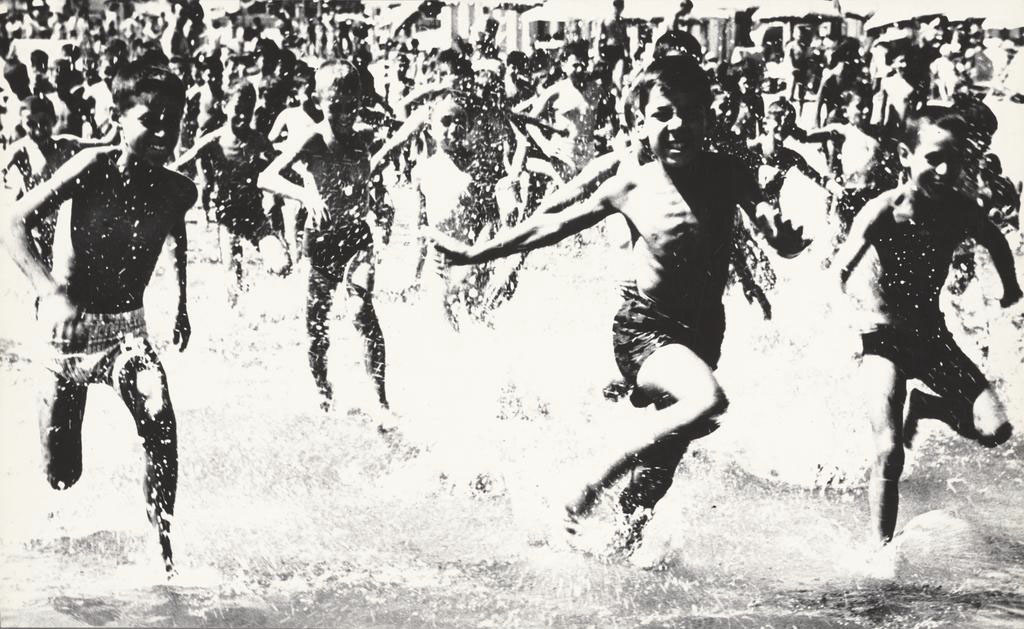
Senigallia’s people and places were recurring motifs in Giacomelli’s work. In addition to revealing his interest in the different communities of his hometown, these photographs of a Romani family and of children frolicking on the beach demonstrate his ability to combine humanist and expressive impulses. Giacomelli understood that graininess, movement, and high contrast could do more than simply provide a veneer of abstraction; they also heighten the emotive power of images.
In 1955 Giacomelli acquired the secondhand Kobell camera with a Voigtländer lens that he would employ for the rest of his career. He later described it as something that had been “cobbled up,” held together with tape and always losing parts. Made by the Milanese manufacturers Boniforti & Ballerio, the camera used 120 roll film to produce 6 x 9 cm negatives and accommodated interchangeable lenses and a synchronised flash. For Giacomelli, it was not a device to record reality but a means of personal expression. His early association with members of local and national camera clubs and his experimentation with natural and artificial lighting, multiple exposures, and other in-camera and darkroom techniques soon led to the refinement of a unique visual language.
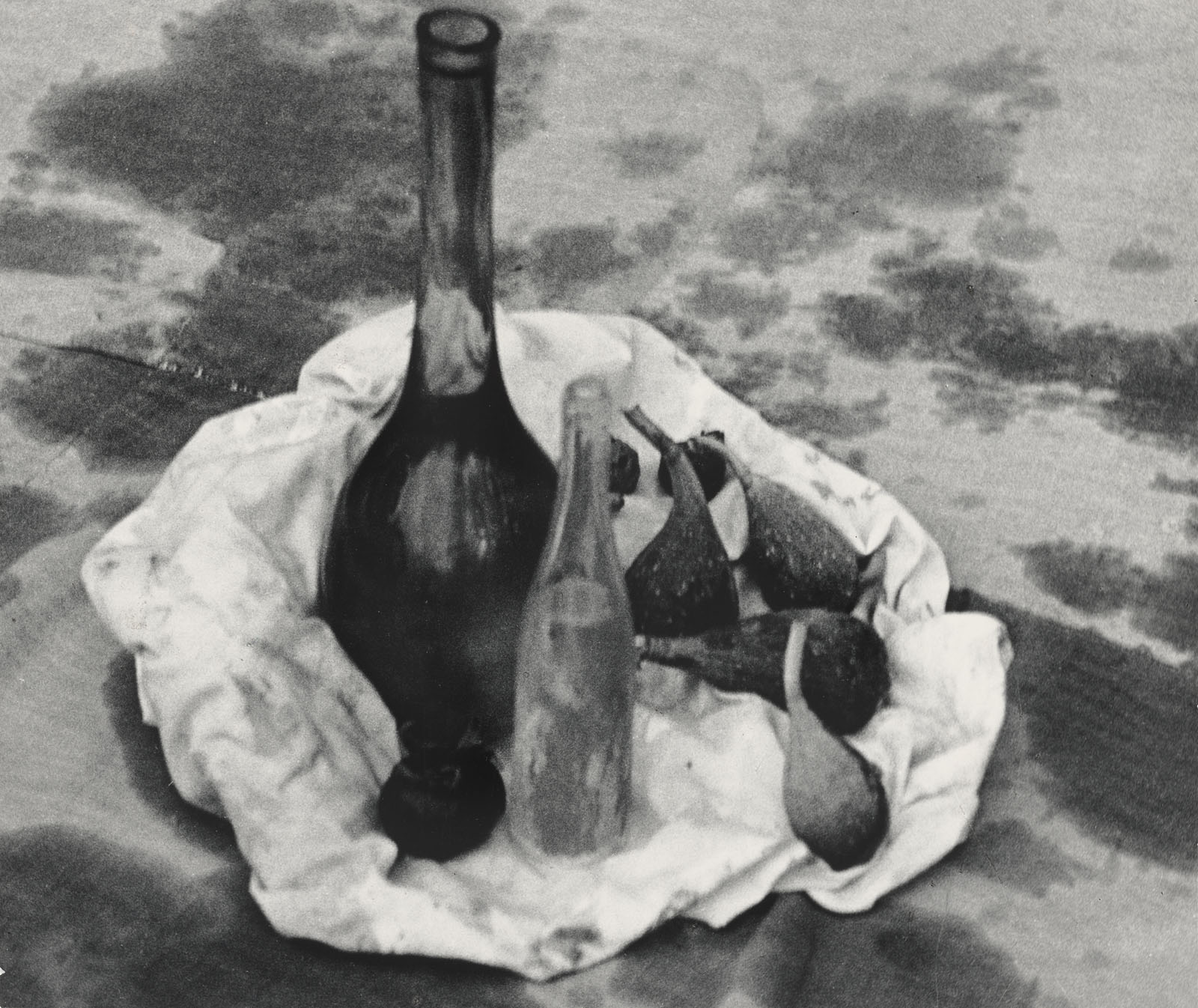
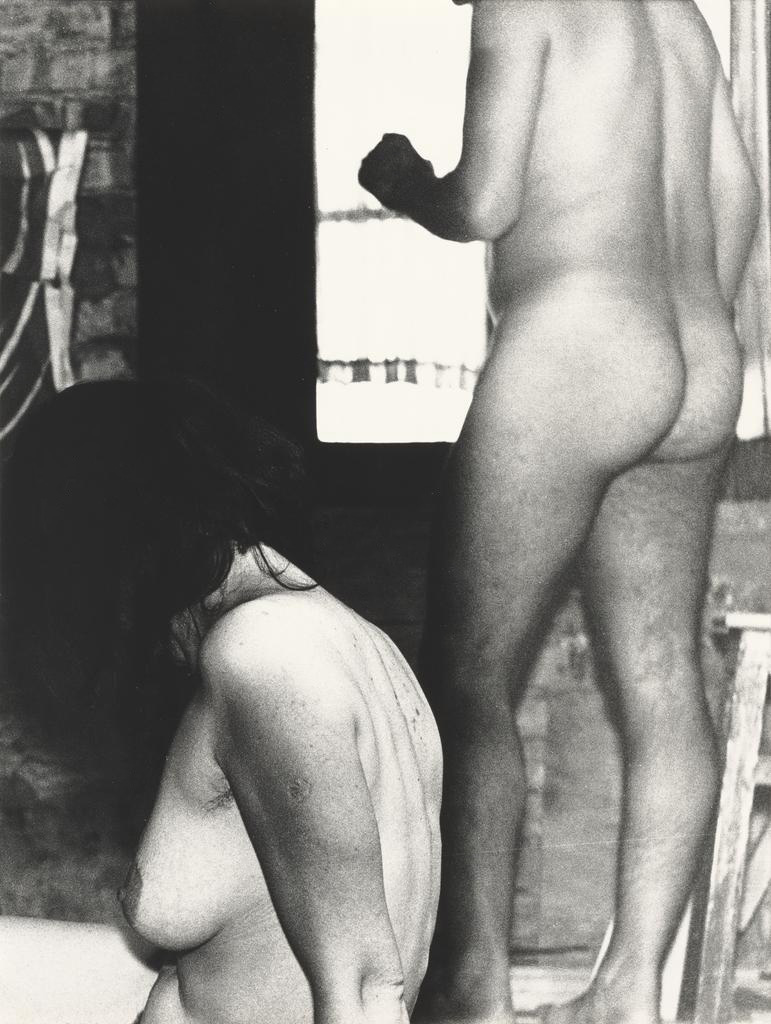
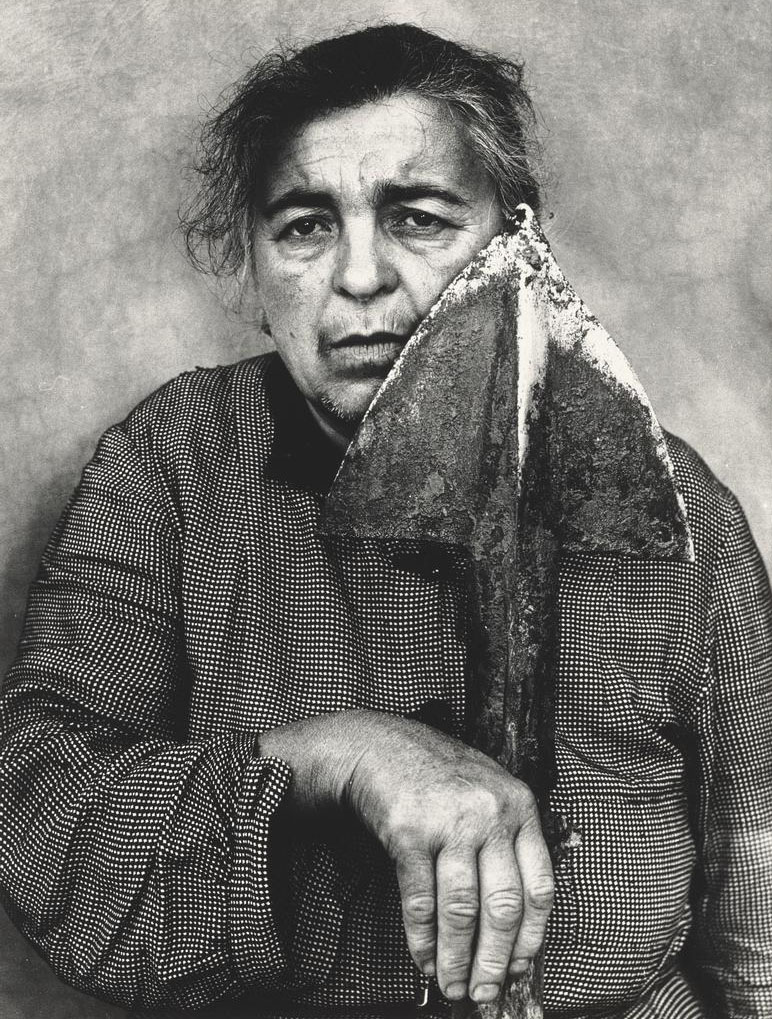
Among Giacomelli’s earliest photographs are portraits of family and friends; the image of his mother holding a spade is one of his most notable. He also staged still lifes and figure studies in his home and garden; the nudes shown here depict the photographer and his wife, Anna. Relatively conventional in composition, these works give a sense of Giacomelli learning his craft, while also indicating the extent to which his subject matter was informed by the people and places closest to him.
Hospice | Death Will Come and It Will Have Your Eyes (1954-1983)
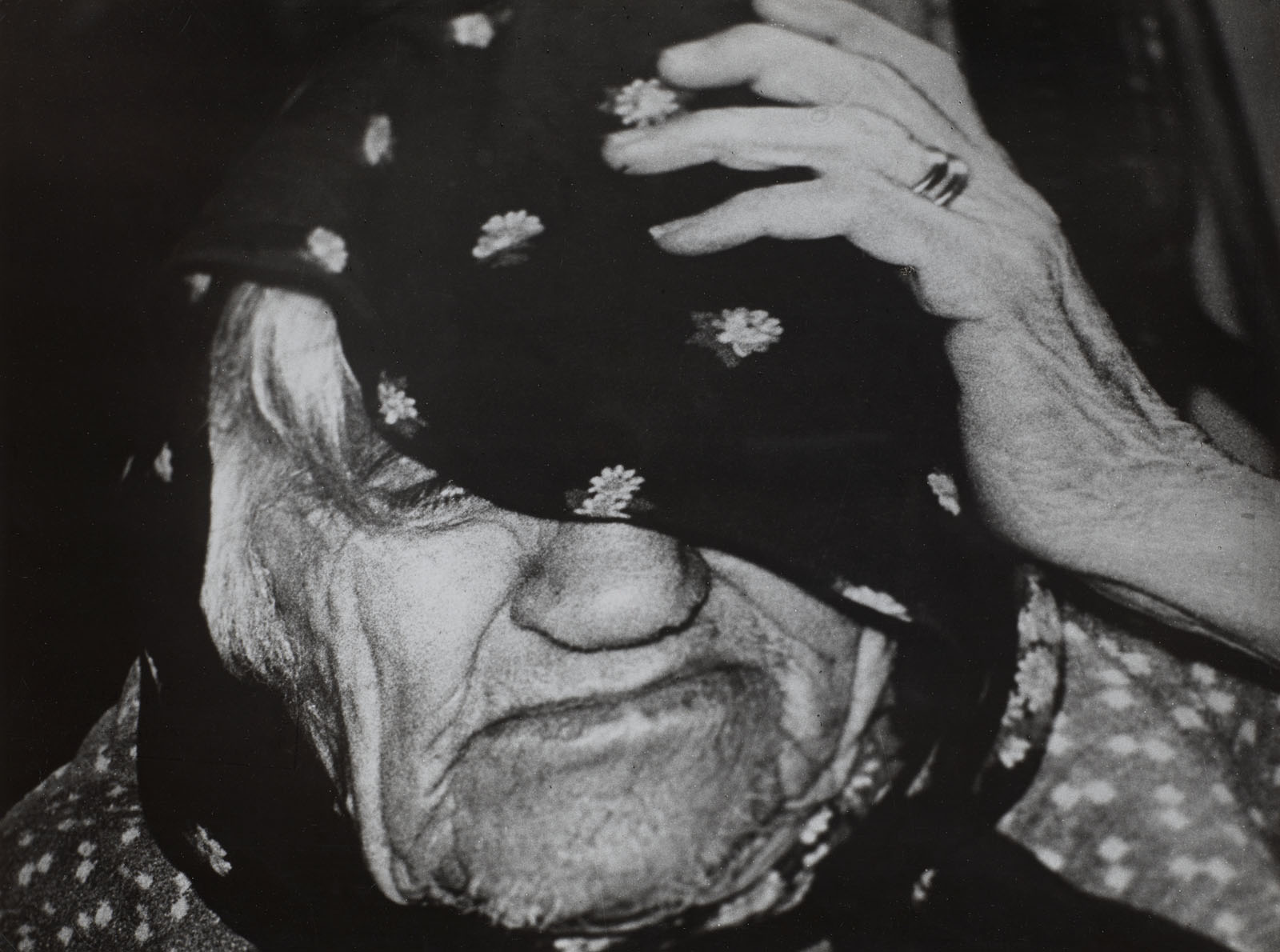
The first body of work that Giacomelli exhibited as a series was Hospice. It depicts residents of the home for the elderly in Senigallia where his mother was a laundress and which he visited for several years before he began photographing there. Made with flash, the resulting images are characterised by their unflinching scrutiny of individuals living out their last days. He later referred to these as his truest and most direct photographs because they reflected his own fear of growing old.
Giacomelli continued this series for almost three decades, renaming it Death Will Come and It Will Have Your Eyes in 1966 after the first few lines of a poem by the writer Cesare Pavese (Italian, 1908-1950). For a portfolio published in 1981 he heightened the unsettling qualities of mental and physical decline and isolation by tightly cropping his negatives and printing on paper that was curled rather than flat.
“Death will come and will have your eyes – this death that accompanies us from morning till evening, unsleeping.”
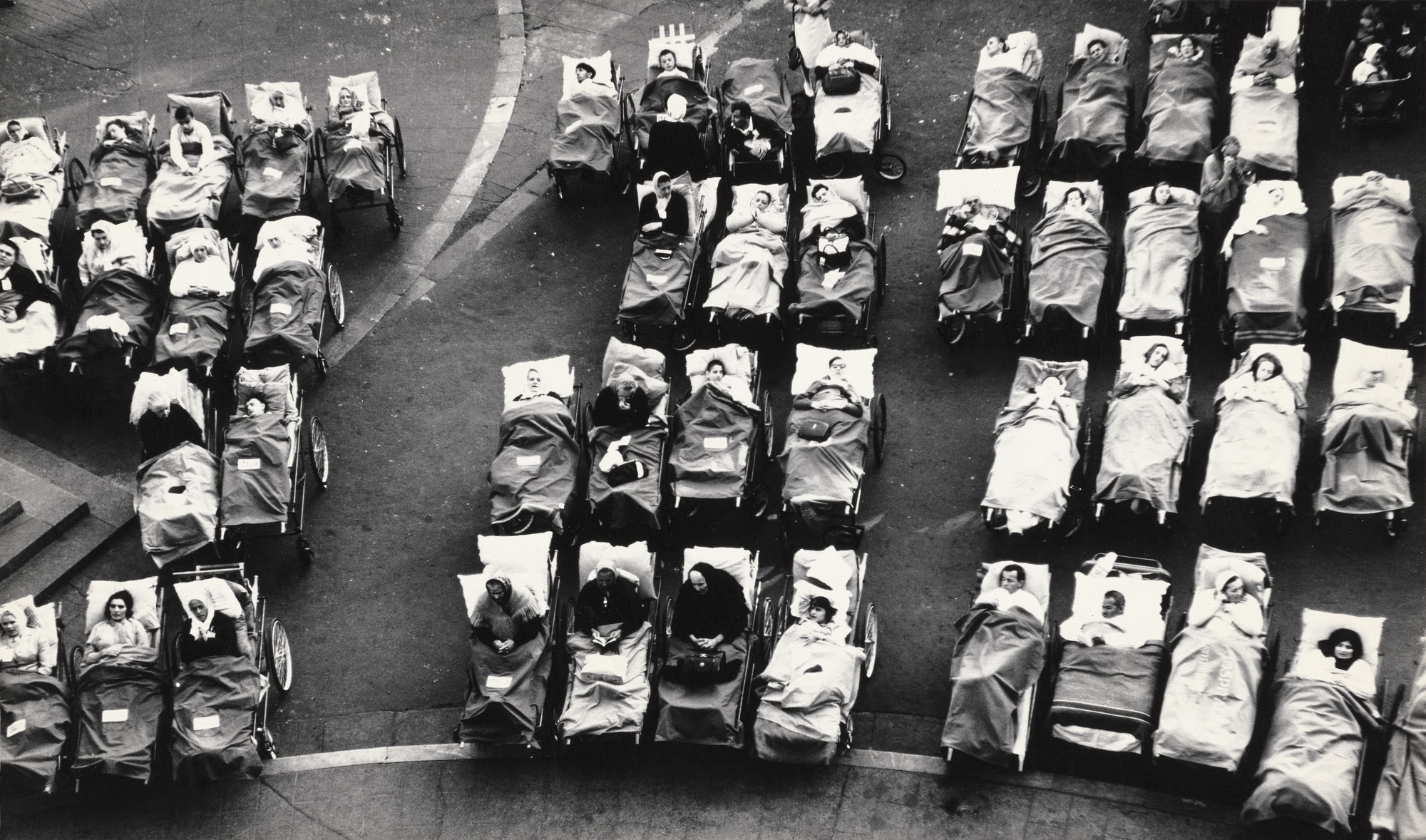
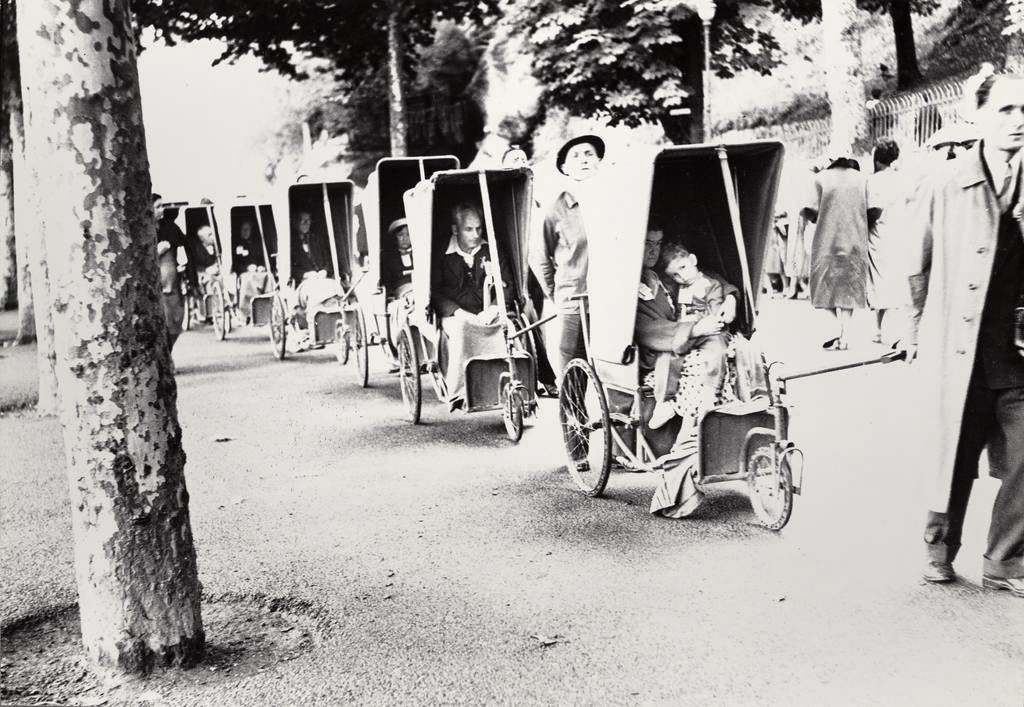
In contrast to Hospice / Death Will Come and It Will Have Your Eyes, the series Lourdes depicts people living with illness, injury, or disability who are in search of miraculous healing. Giacomelli received a commission to photograph at this Catholic pilgrimage site in southern France in 1957.
Tremendously pained by what he saw, he shot just a few rolls of film, returned the fee that had been advanced, and did not show anyone the images for some time. He travelled to Lourdes again in 1966, with his wife and second child. This time he, too, was in search of a cure, for their son, who had lost the ability to speak following an accident.
Lourdes is the only series that Giacomelli created outside Italy, although a group of photographs made in Ethiopia (1974) and another in India (1976) have been attributed to him. Giacomelli purchased cameras and film for two individuals who were planning travel to these countries, and both of them drew on previous discussions with him when they photographed at their respective locations. Giacomelli later made prints from the negatives and signed his name to several of them, acknowledging the collaboration.
Giacomelli operated his printshop, Tipografia Marchigiana, in the centre of Senigallia. The successful establishment became a gathering place for photographers, artists, and critics, and provided the address stamped on the verso of all his photographs. In its early years, the business occupied the majority of Giacomelli’s time, leaving only Sundays for photography excursions. While he most often explored his hometown, its beaches, and the surrounding countryside in the Marche region, he occasionally traveled farther afield.
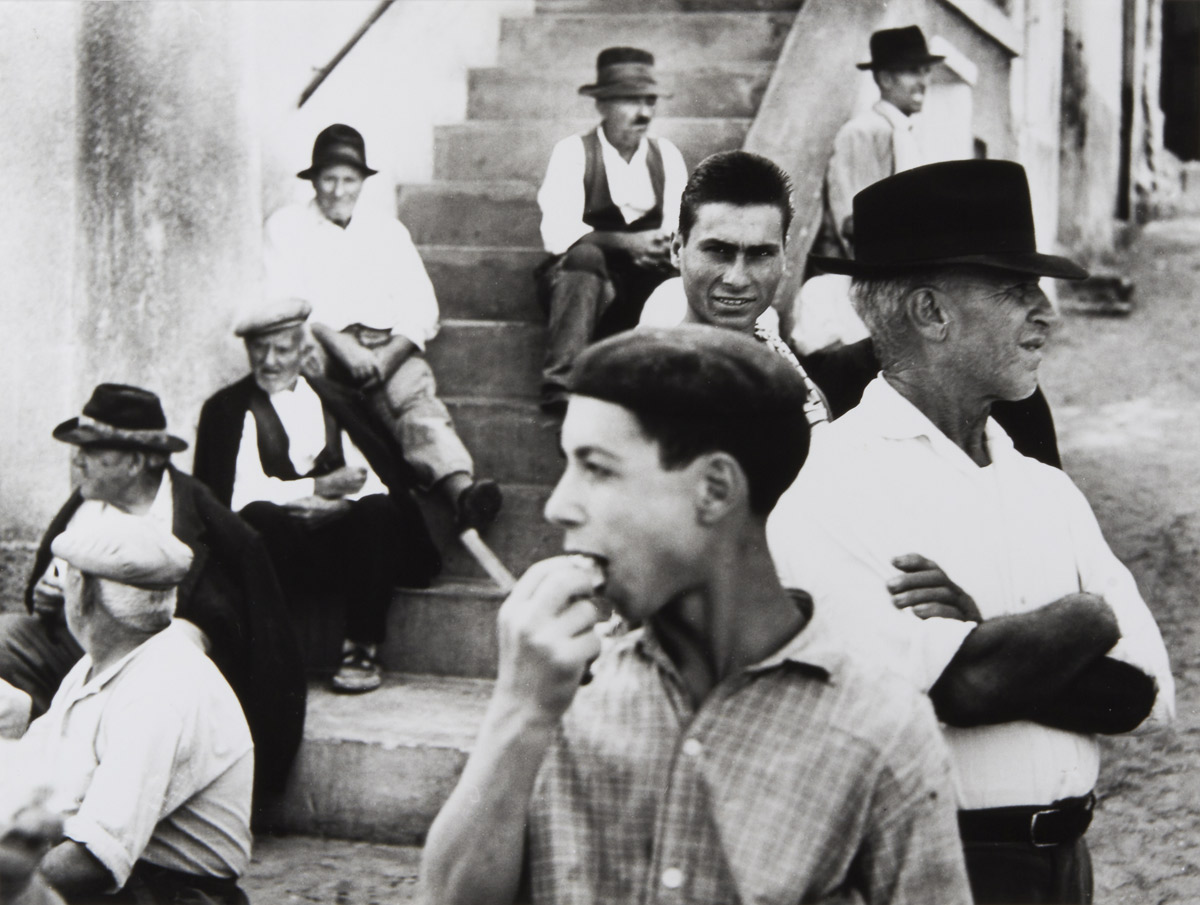
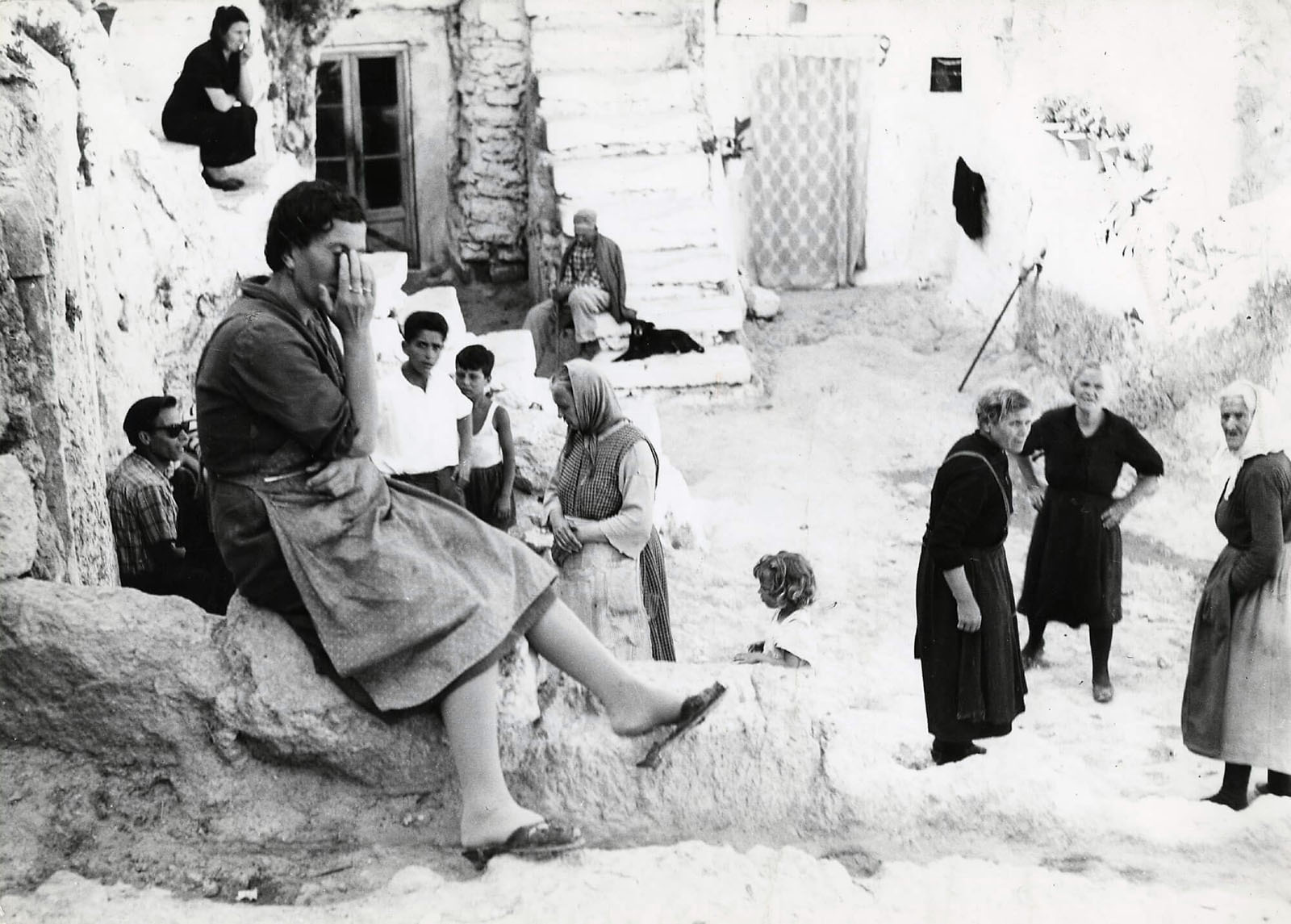
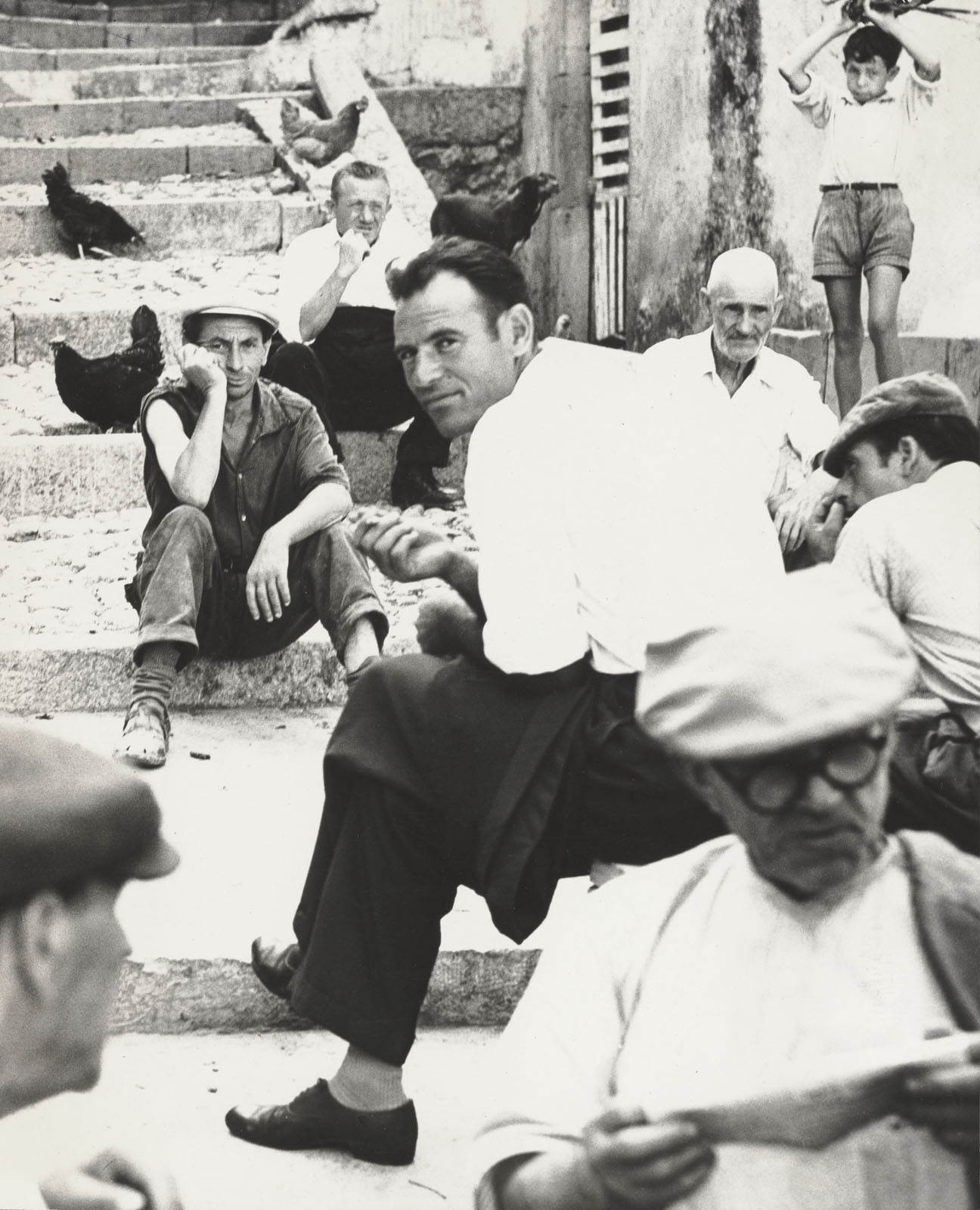
For this series, made in Apulia, Italy’s most southeastern province (the “heel of the boot”), a journey of about 330 miles was required. There he focused his attention on the interaction of multiple generations of townspeople gathering leisurely against the simple, whitewashed architecture typical of hillside towns such as Rodi Garganico, Peschici, Vico del Gargano, and Monte Sant’Angelo. These images provide insight into Giacomelli’s ability to engage his subjects, while also underscoring a fundamental humanistic impulse in his work.
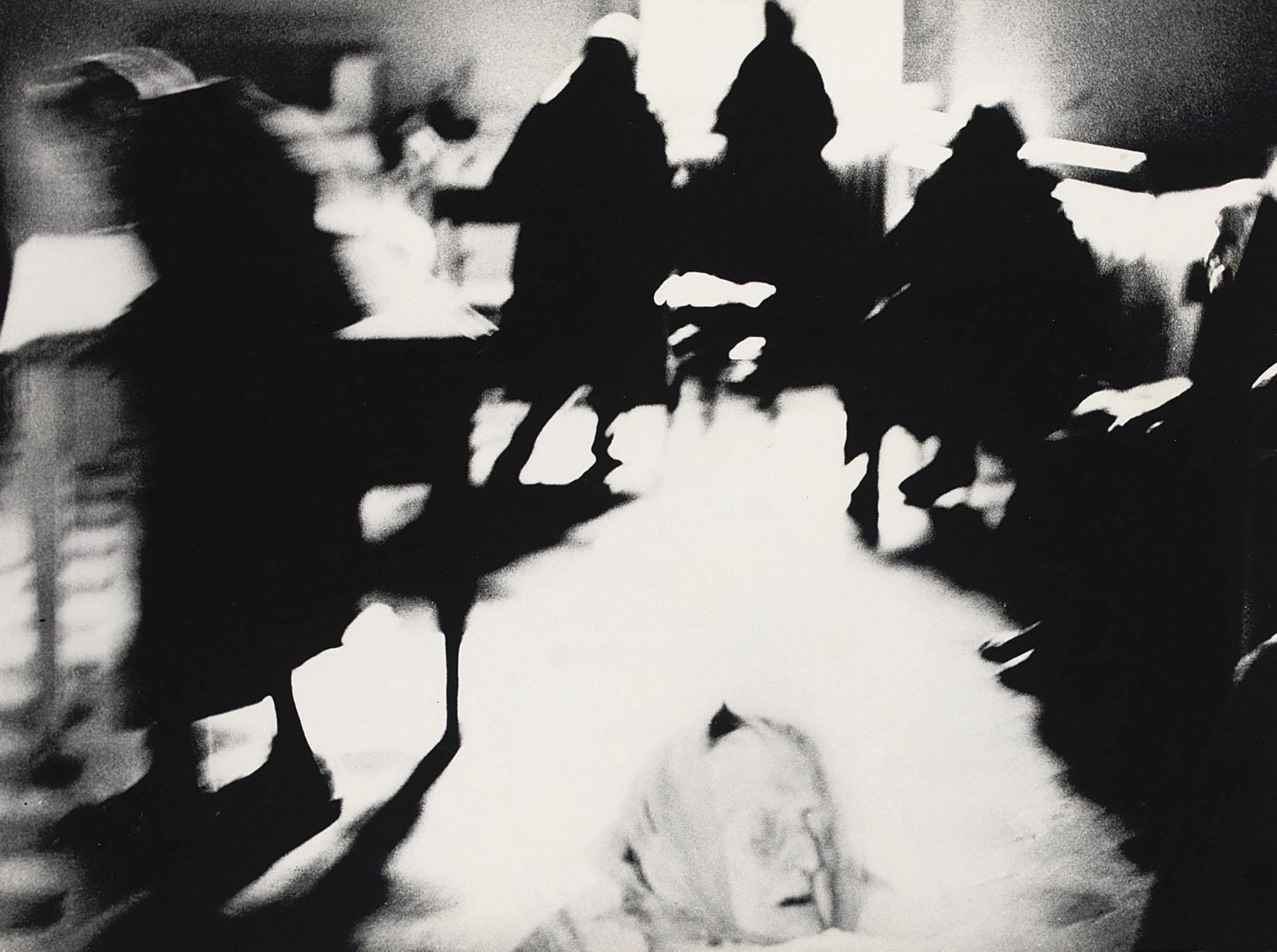
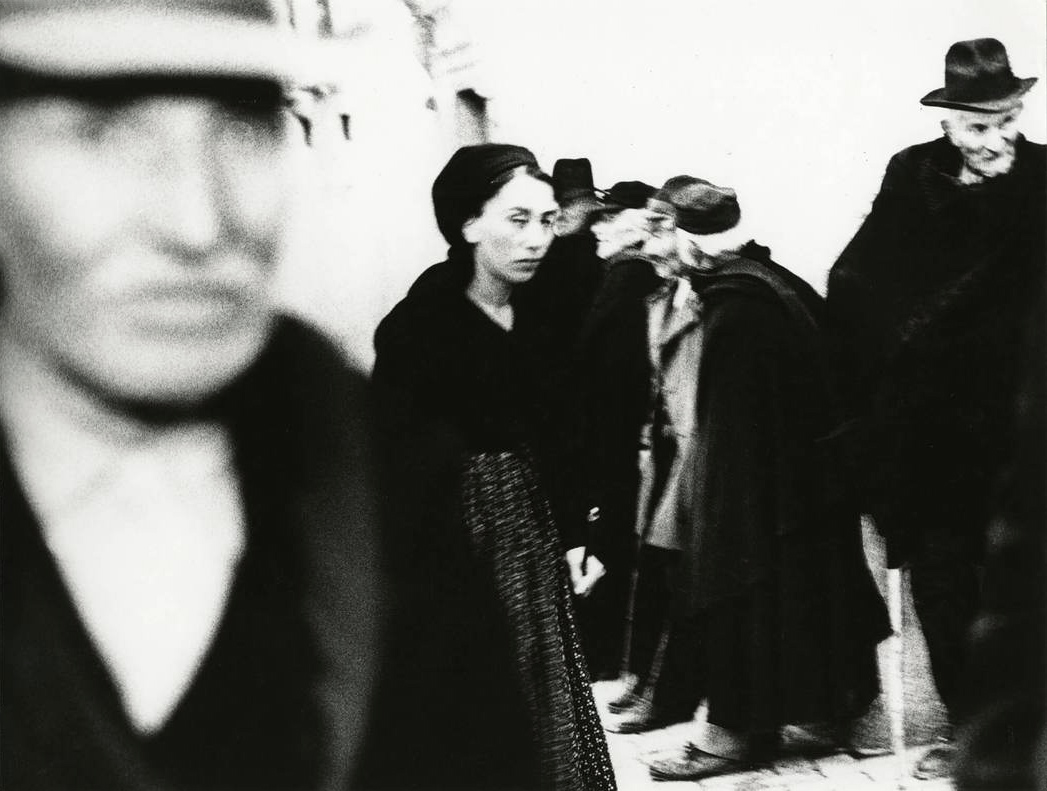
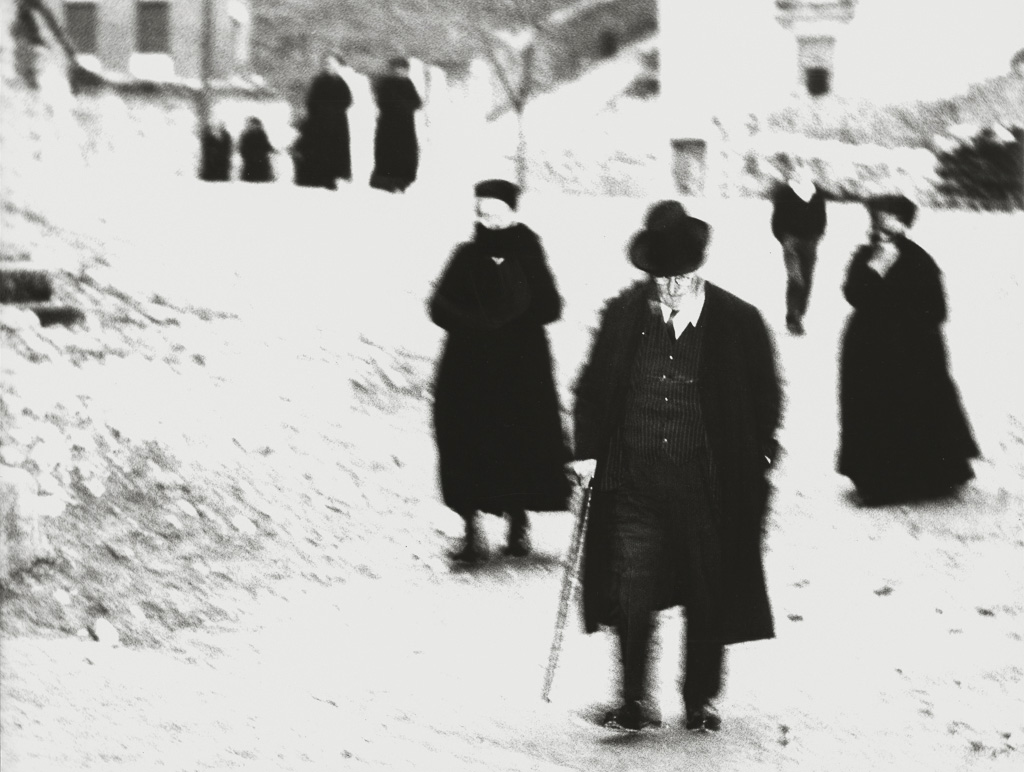
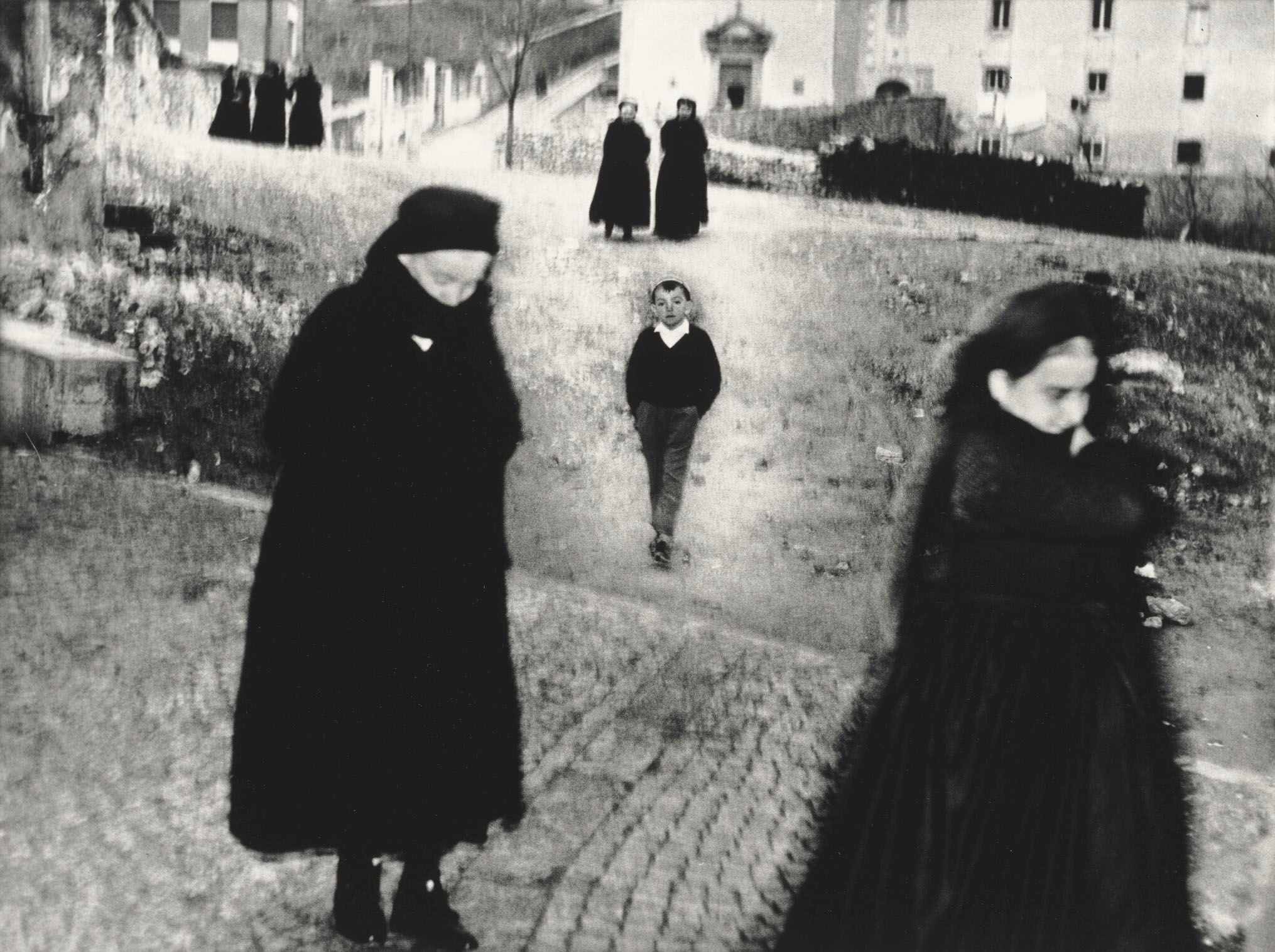
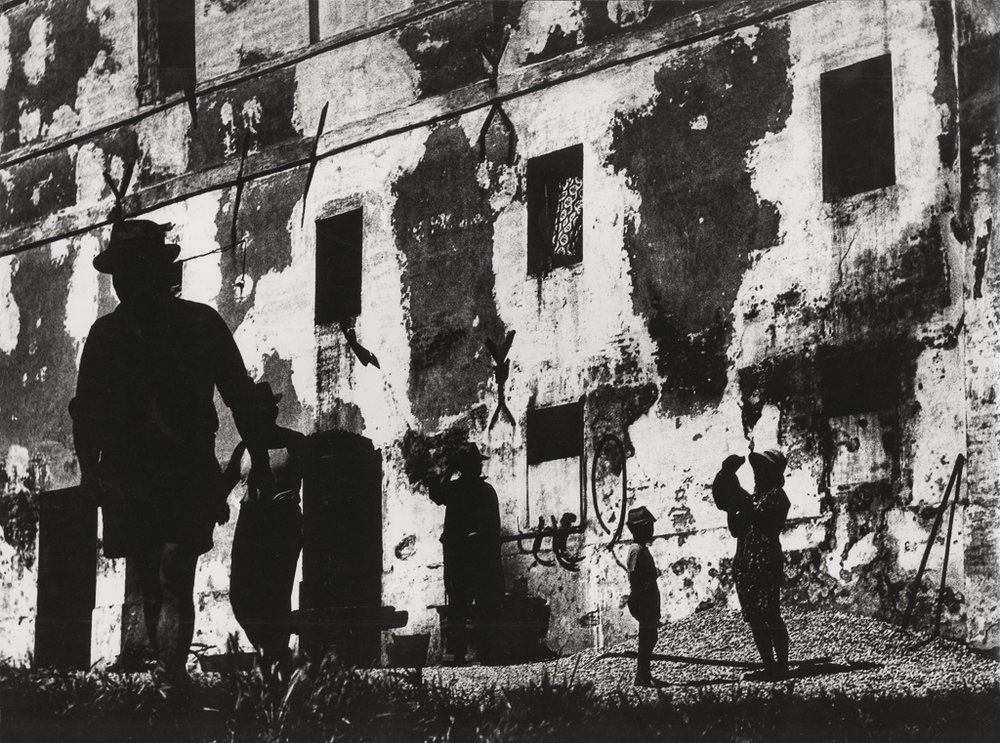
Following his sustained observation of hospice residents in Senigallia, the photographs that Giacomelli made during trips to Scanno in 1957 and 1959 further demonstrate his ability to describe people in a specific time and place. In this town located in the Apennine Mountains of central Italy, about 270 miles south of Senigallia, Giacomelli encountered men and women going about their daily chores or gathering in the square, draped in dark garments or cloaks, their heads covered with hats or scarves. Even when congregating, subjects seem to be isolated or lost in thought. Whether in sharp focus or blurred by movement, the occasional individual who looks directly into his camera suggests a sense of mystery or furtiveness. Giacomelli used a slow shutter speed and shallow depth of field to photograph these stark, black-clad figures against whitewashed architectural settings, introducing indistinct passages that amplify the fairy-tale mood of a town that appears to be irretrievably steeped in the past.
Young Priests | I Have No Hands That Caress My Face (1961-1963)
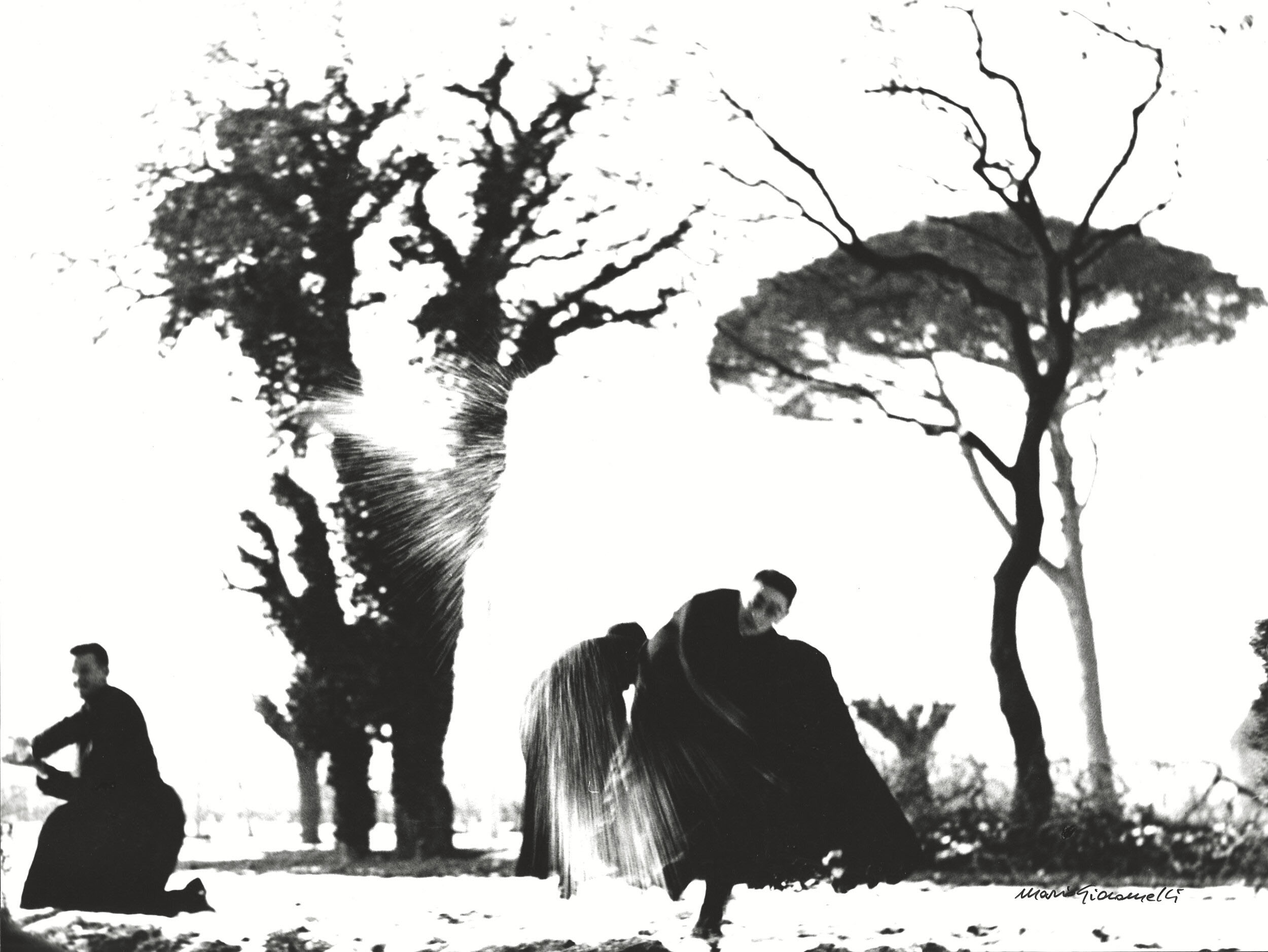
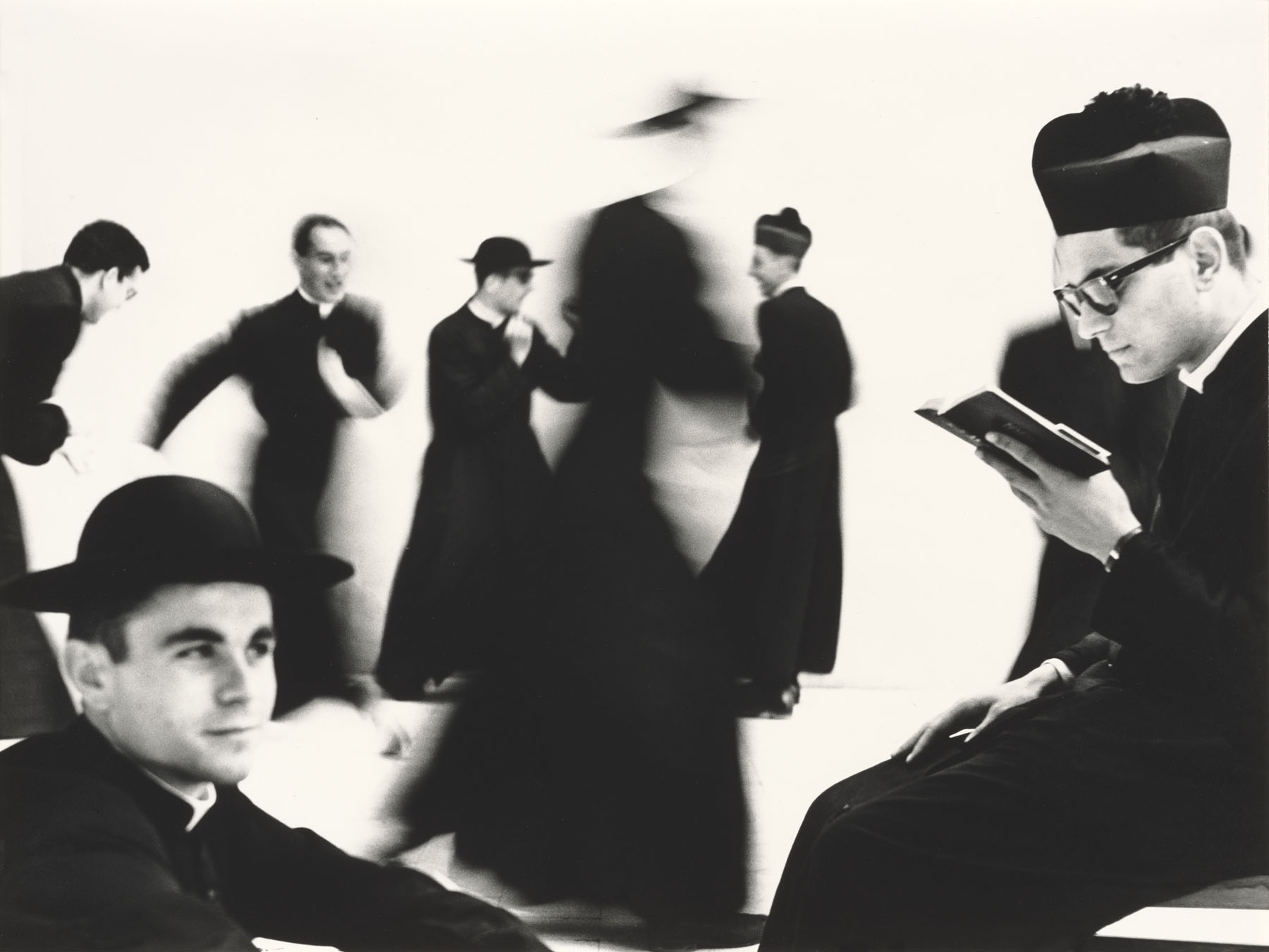
Among Giacomelli’s most memorable images are those of pretini (young priests) in the seminary of Senigallia, whom he captured playing in the snow or relaxing in the courtyard. Once again juxtaposing the distinctive shapes of black-clad figures (this time, seminarians in cassocks) against a white ground (snow-covered or sun-drenched settings), these photographs suggest a more lighthearted mood than is evident in other series. Although appearing to have been choreographed, they are the result of the priests’ unbridled joviality as they run, throw snowballs, or play ring-around-the-rosy, and of Giacomelli’s foresight to let the scenes unfold as he recorded them from the building’s rooftop.
After Giacomelli had won the trust of the seminarians, his interaction with them was brought to an abrupt end when he provided the young men with cigars for photographs he intended to submit to a competition on the theme of smoking. The rector denied him further access. Giacomelli later applied the title I Have No Hands That Caress My Face to this series, from the first two lines of a poem by Father David Maria Turoldo (Italian, 1916-1992) about young men who seek solitary religious life. This title lends poignancy to the moments of exuberance and camaraderie that accompanied study for such a calling.
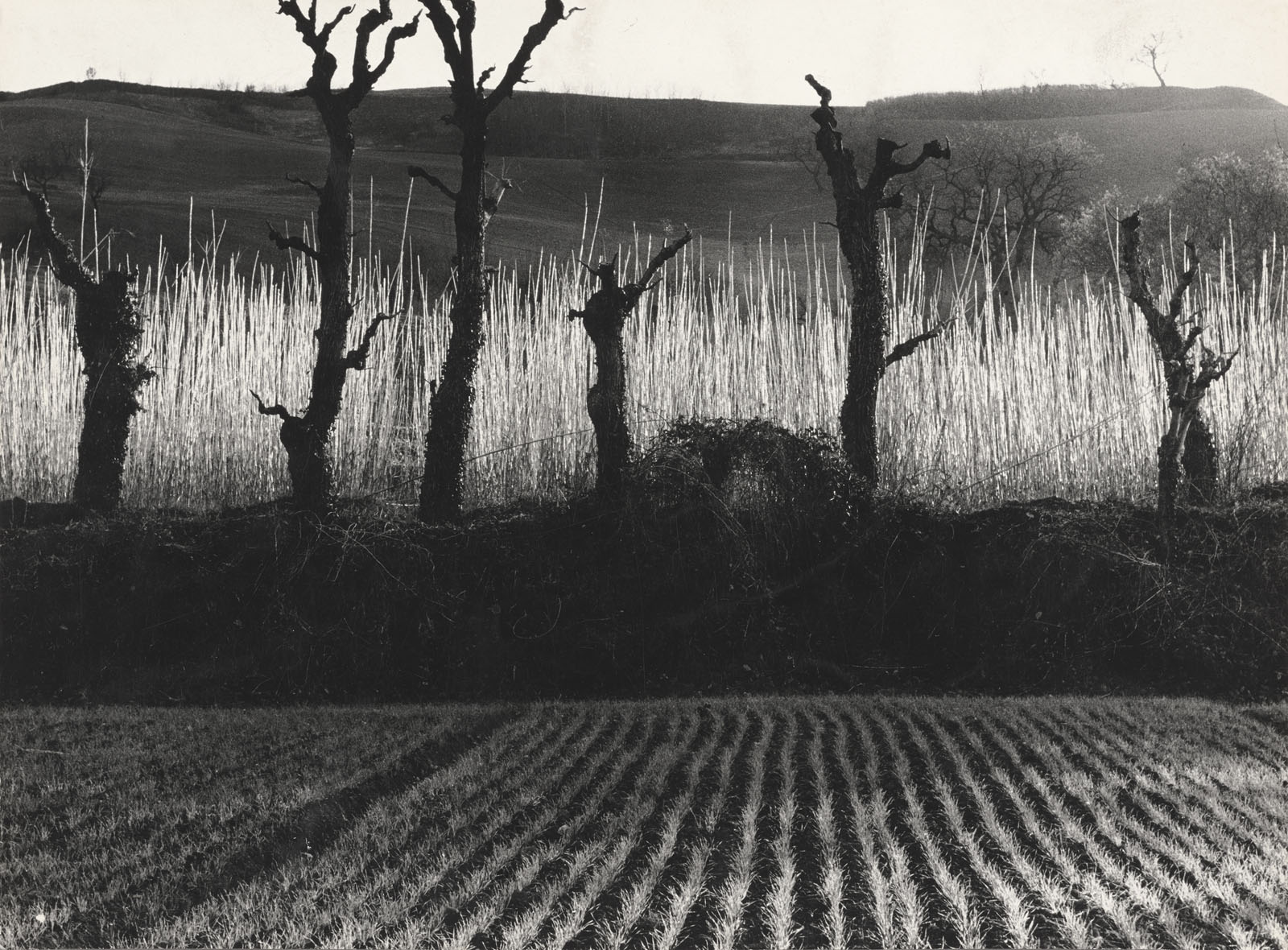
Italy’s Marche region is characterised by rolling hills, small farms, and frazioni (hamlets), all of which were among the first motifs that Giacomelli photographed. As with his portraits and figure studies from this period, the compositions of his early landscapes were fairly conventional, with foreground, middle-ground, and background elements organised around a clearly discernible horizon line. As he refined his technique, however, Giacomelli often positioned himself at the top of a hill pointing his camera downward or at the base aiming it upward, thereby eliminating the horizon and creating a disorienting patchwork of geometric shapes. His development of the negative, use of high-contrast paper, and manipulations in the darkroom further enhanced the distinctively graphic qualities of his images. It was not uncommon for him to scratch forms into his negatives to add dramatic counterpoints.
Over the years, Giacomelli returned to certain sites multiple times, documenting them during different seasons and crop rotations. He would later incorporate photographs made for one purpose into a series that had other ambitions, most notably to function as commentary on the capacity of both natural occurrences and human interventions to change the character of the land.
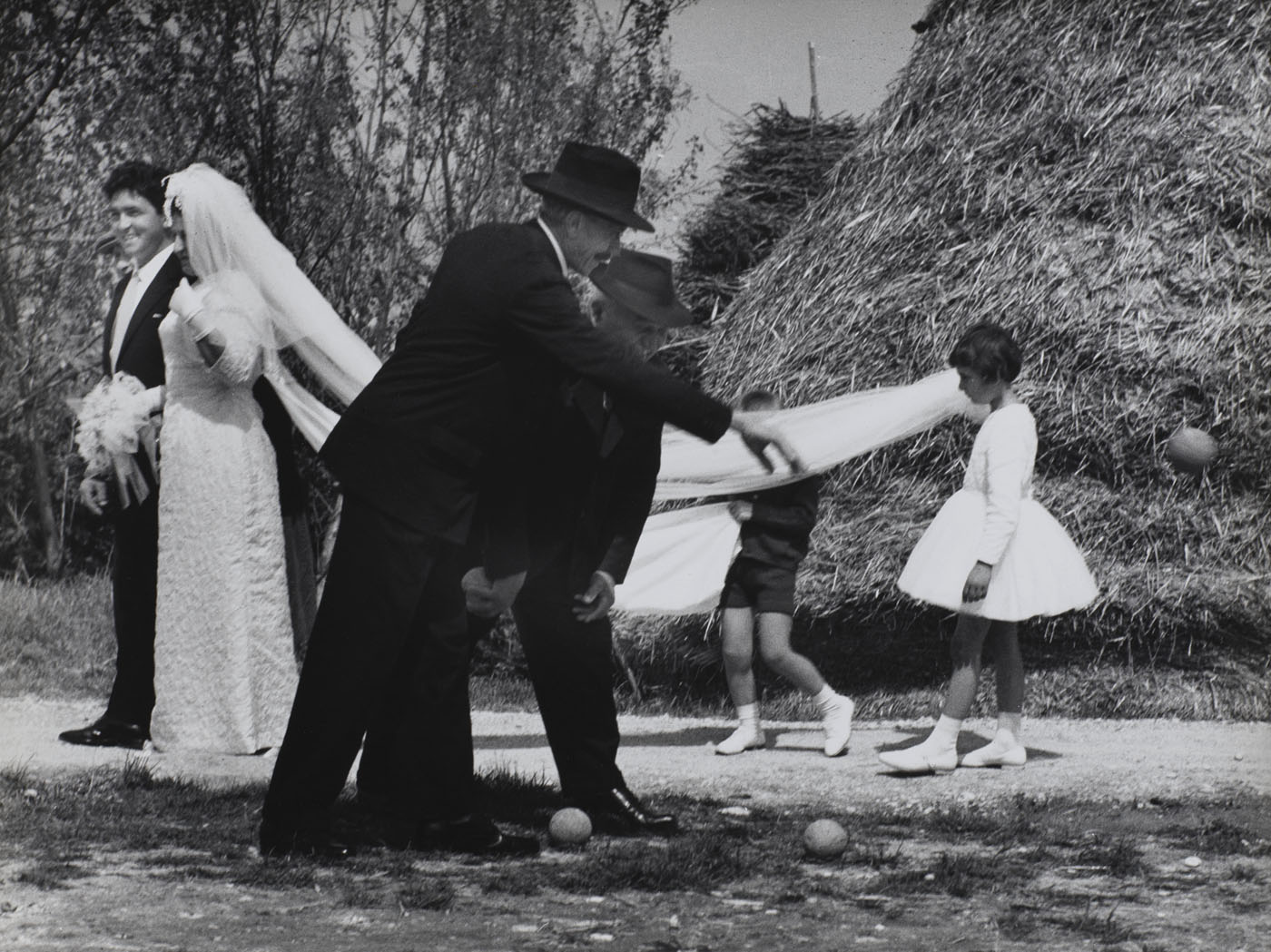
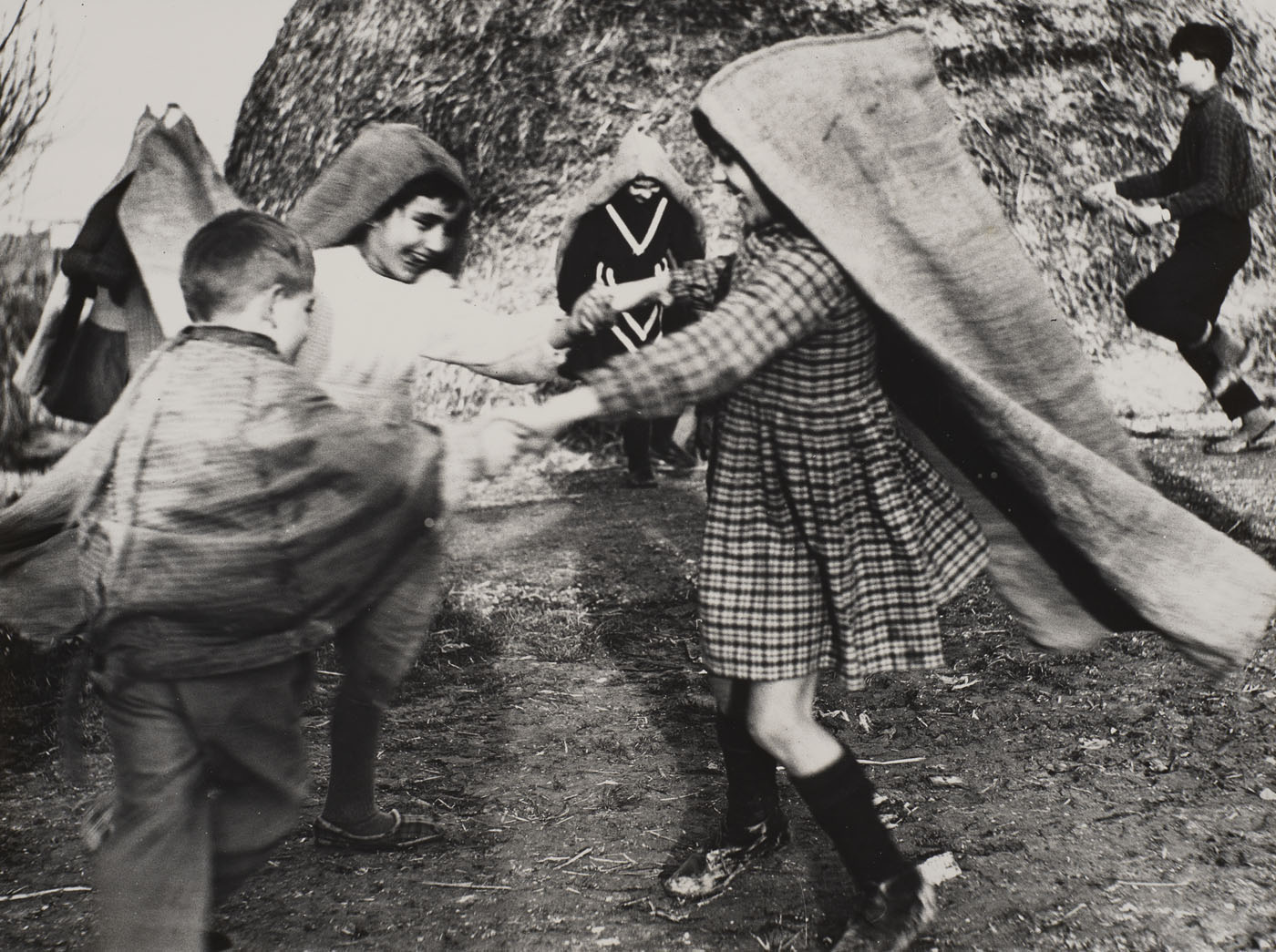
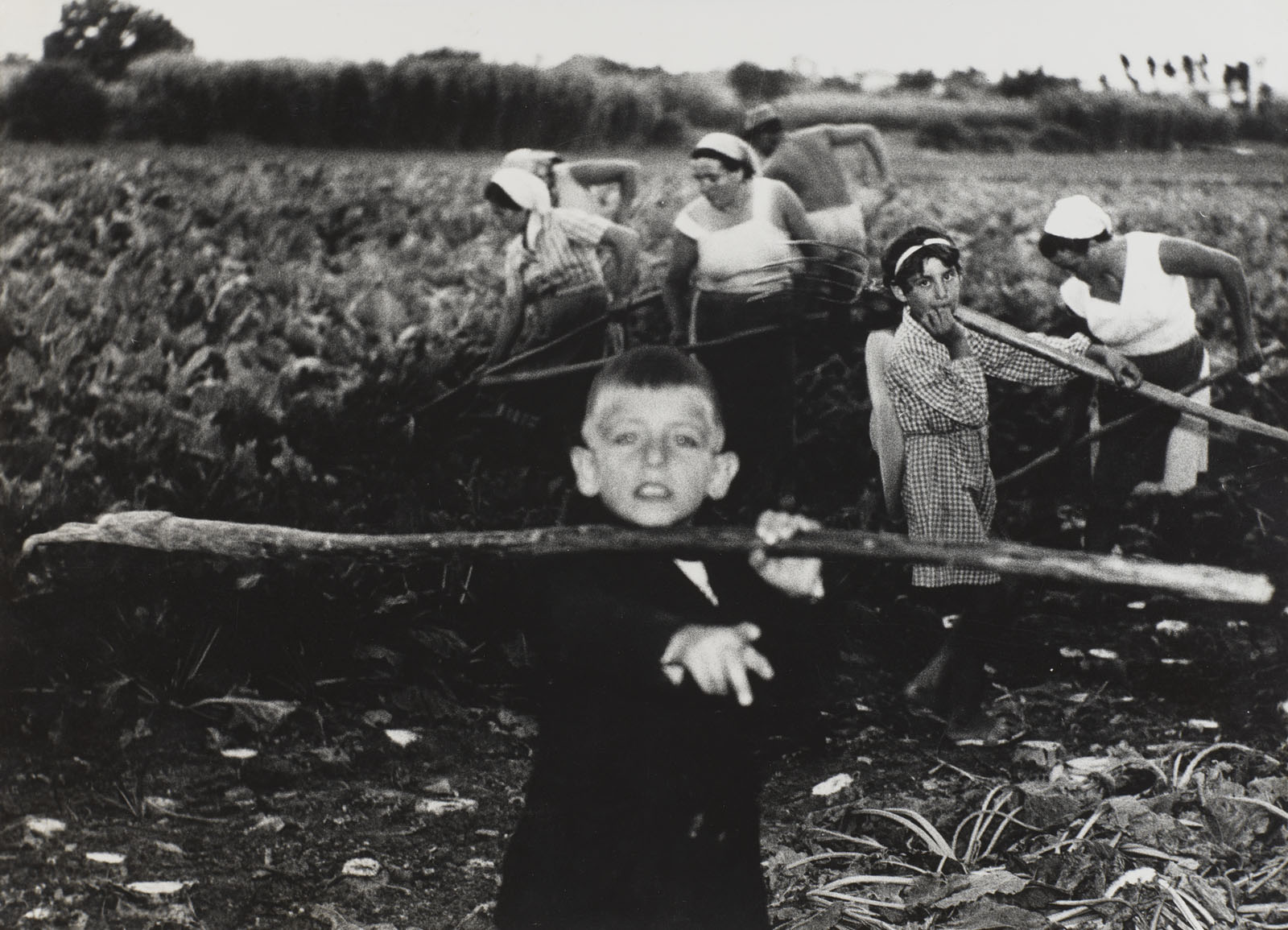
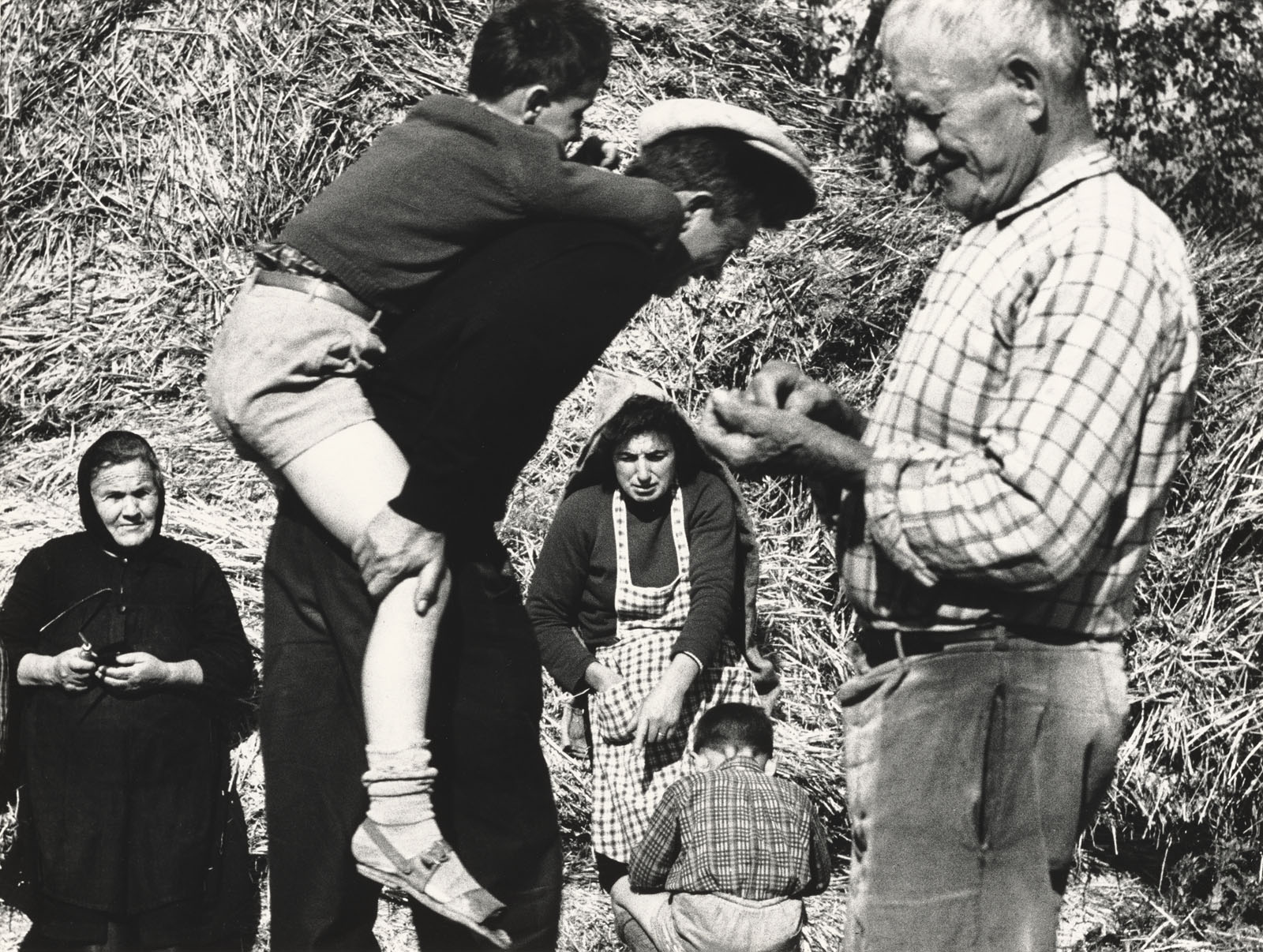
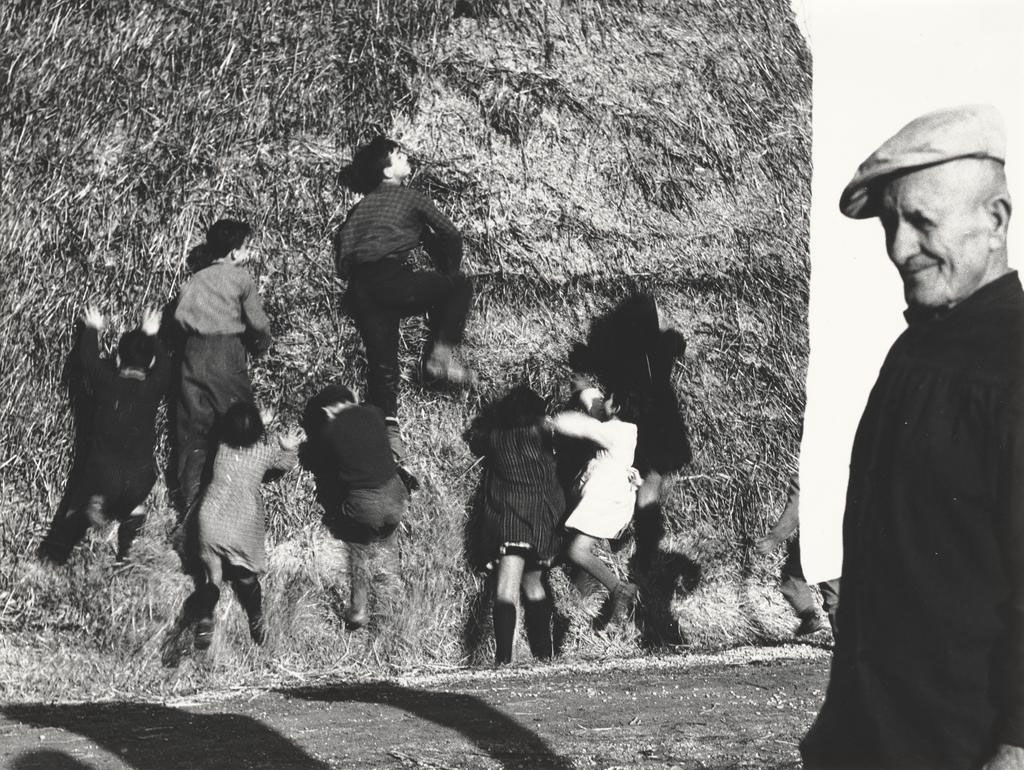
For this series, Giacomelli followed a farming family off and on over several years as they went about their daily lives in the countryside surrounding Senigallia, planting and harvesting crops and tending livestock. Once he had gained their trust, he began to make photographs that underscored the cyclical nature of their existence, including both the intermingling of multiple generations and the interweaving of daily chores and responsibilities with moments of leisure and renewal. The Good Earth tells a story of resilience, self-sufficiency, and continuity. The last of these is symbolised by the recurring motif of towering haystacks that serve as the backdrop for work, play, and the celebration of a young couple’s wedding.
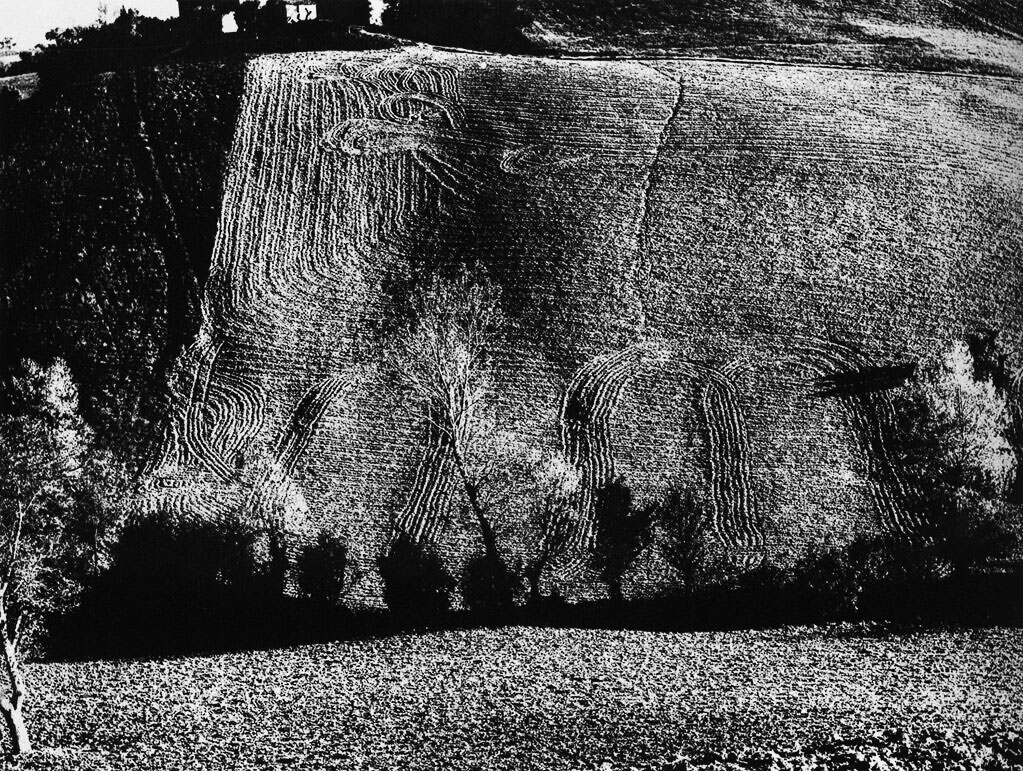
Periodically Giacomelli asked the family, with whom he maintained a friendship beyond this project, to use their tractor to plough patterns in fields that lay fallow. The resulting images, which form the basis of his series Awareness of Nature, address the issue of humankind’s interventions in the landscape. Examples are on display in the final gallery of the exhibition.
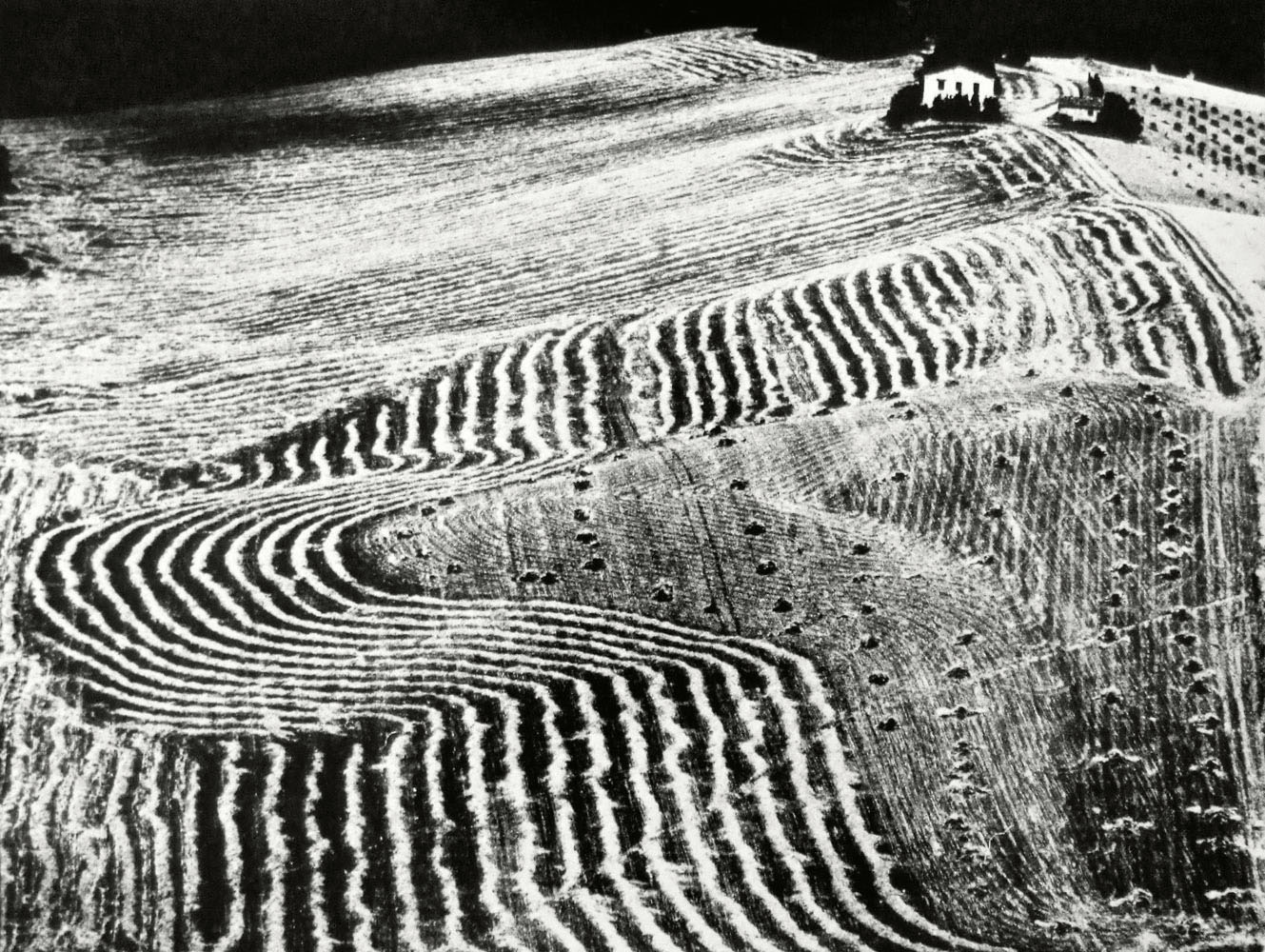
The photographs gathered under the title Metamorphosis of the Land were created over roughly two decades in the countryside surrounding Senigallia. Without a horizon line to anchor them, they are disorienting, requiring the viewer to rely on a lone house or tree as a focal point. Perspectival ambiguity abounds: Did Giacomelli take the photographs from an elevated or lowered vantage point? Did he hold the camera parallel or perpendicular to the land? Is this confusion a result of the inherent “verticality” of the hilly Marche region, or did Giacomelli rely on darkroom manipulation (such as printing on diagonally tilted sheets of photo paper) to create right-angled configurations of shapes that should otherwise recede in the distance, following the tenets of one-point perspective?
These ambiguities are further intensified by Giacomelli’s intention for this body of work to address issues of ecological neglect and loss. Deeply attuned to the rural geography and agricultural practices of the Marche, he was wary of the consequences that accompanied the shift from centuries-old systems of subdivided fields and crop rotation to modern methods of mechanisation and fertilisation that overtax the land by keeping it in constant use. The series is one of lament.
The photographs in this series are among Giacomelli’s most iconic, notable for their gritty, graphic abstraction, which he achieved with an aerial perspective and by using expired film to exaggerate the contrast between black and white. Finding a poetic reciprocity in portraying land that was undergoing “sad devastation” with film that was “dead,” Giacomelli perceived these images as a means of resuscitating his beloved Marche countryside and endowing it with a different kind of beauty. The ploughed fields pulsate with a rhythmic intensity that is absent from previous pictures, in part because he asked that some of these furrows be cut into the land (by the farming family he featured in The Good Earth). A stamp on the verso of each print describes the series further as “the work of man and my intervention (the signs, the material, the randomness, etc.) recorded as a document before being lost in the relative folds of time.” The images resonate conceptually with the Land Art, or Earth Art, movement of the late 1960s and 1970s, in which artists used the landscape to create site-specific sculptures and art forms. As was his custom, Giacomelli incorporated photographs from earlier series, which may have been made from a neighbouring hilltop or did not include his interventions.
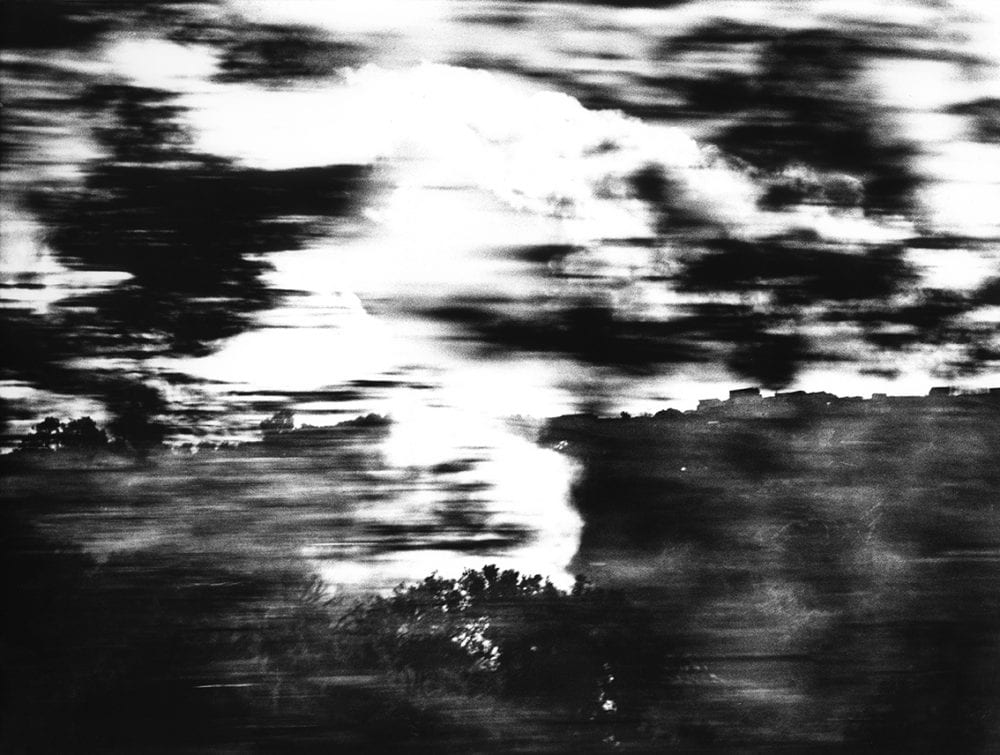
Giacomelli conceived many of his series as sequences that tell the stories of individuals in a particular time and place. He interspersed portraits with landscapes, but he also merged these genres in double exposures or by experimenting with slow shutter speeds and moving his camera during exposure to blur the lines between figure and ground. And once again, he often repurposed an image made for one series in another series, reinforcing the sense of fluidity that connects all of his work. Several of these sequences were inspired by poems, not in an attempt to illustrate them, but to create parallel narratives.
Although the photographs in this section derive from several different series, they share a sense of setting the location or mood. Most easily categorised as landscapes, they mark a noticeable shift from Giacomelli’s earlier position of critiquing the slow degradation of the land to one that sets the stage for a more metaphysical contemplation of the interconnectivity of space, time, and being. The majority were made in the 1980s, when Giacomelli was reflecting on the loss of his mother (who died in 1986), his growing international reputation as a photographer, and his own mortality.
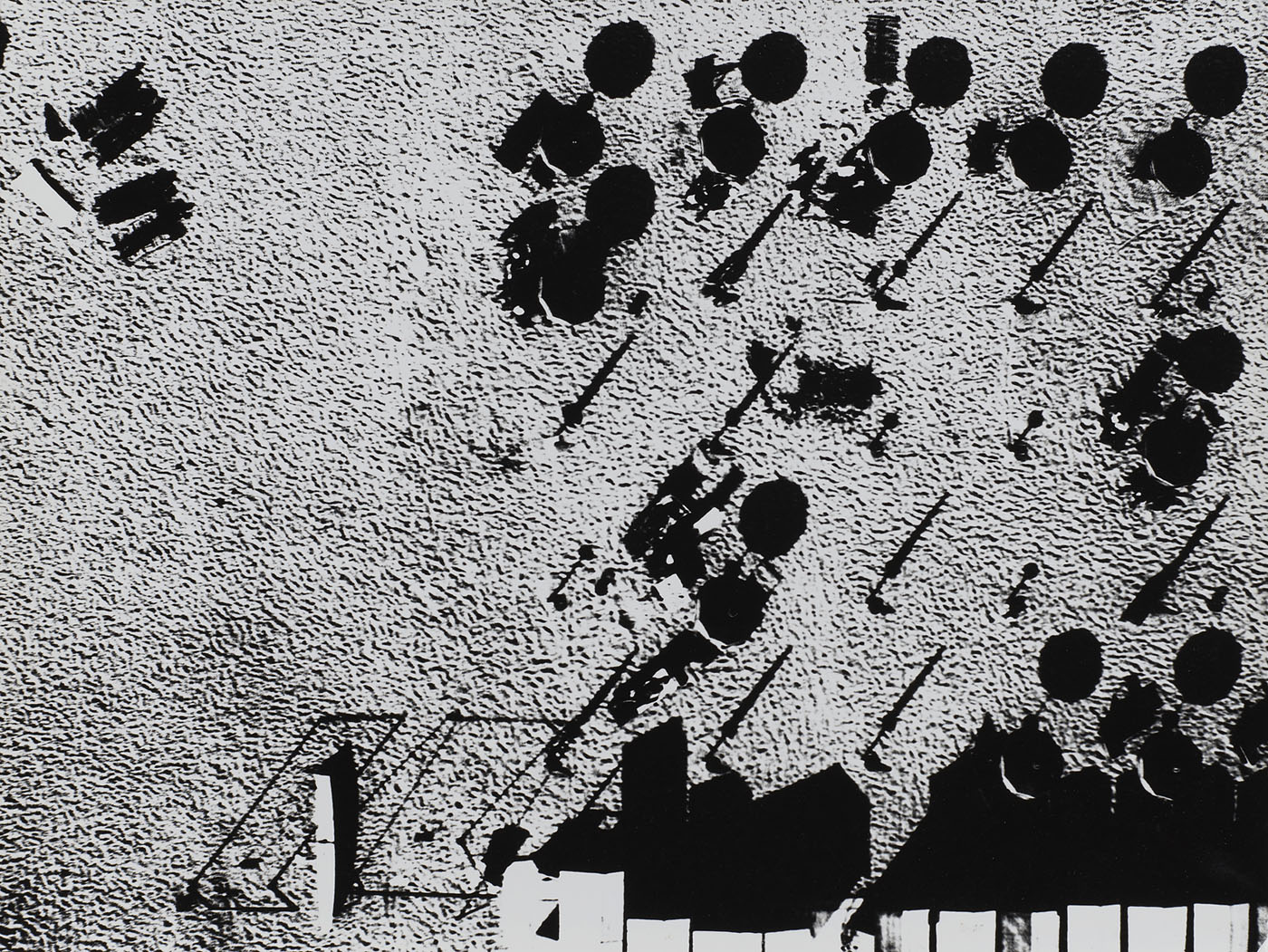
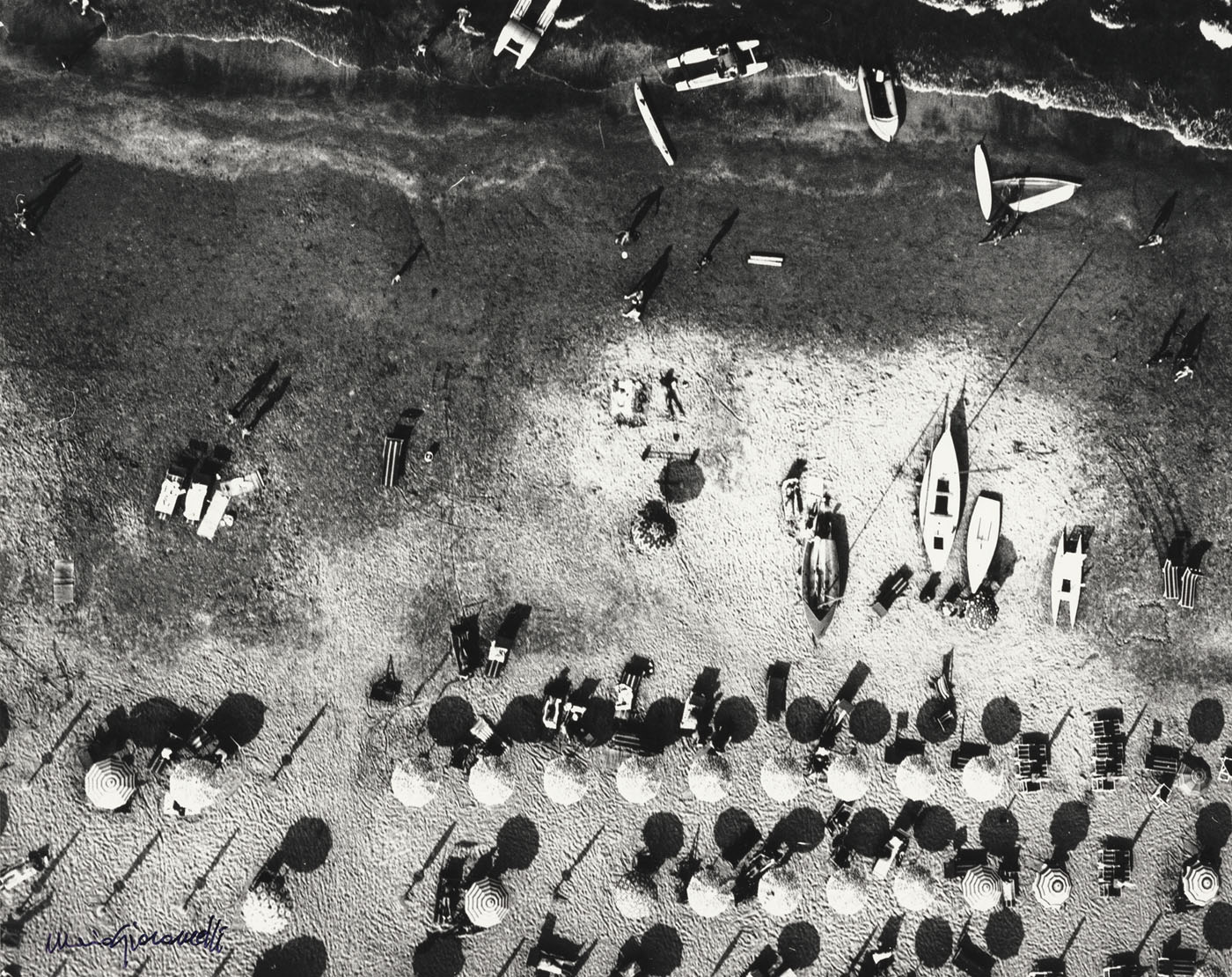
Giacomelli noted that the sea referred to in the title of this series was that of his childhood, the Adriatic, but in fact it was the sea of his entire lifetime. He made his first photographs along Senigallia’s shore after purchasing a camera in 1953. Some thirty years later, curiosity about how an aerial perspective might transform people’s appearance led him to hire a friend who owned an airplane to fly him above the region’s beaches. The resulting compositions create abstract patterns from the shapes and shadows of bathers, deck chairs, umbrellas, and boats against the sand.
The poetic title of this series reflects the increasingly pensive mood of Giacomelli’s late work. We occasionally glimpse the photographer himself as he engages with an odd assortment of props, including stuffed dogs and birds, a mannequin and mask. His abrupt cropping, slight overexposure to reverse tonal values, and painting or scratching of areas on the negative introduce elements of the absurd or surreal as means to confront the inevitability of his own mortality. The series, one of his last, is a meditation on melancholy, loss, and the passage of time.
Giacomelli died in November 2000 after a long illness. He had continued working on several photographic series until his final days, with the poignantly titled I Would Like to Tell This Memory attesting to his deeply introspective temperament. From his unpromising beginnings as an impoverished, poorly educated boy, Giacomelli redirected the course of his life, maintaining a successful printing business that provided financial security and dedicating himself to the arts as a means of self-expression. Though he was self-taught in poetry, painting, and photography, it was with this last medium that he created a sense of continuity and fluidity throughout his life. He gained international acclaim as one of Italy’s most prominent photographers despite having made the majority of his photographs in his hometown of Senigallia and the neighbouring Marche region.
Between 2016 and 2020, Los Angeles-based collectors Daniel Greenberg and Susan Steinhauser donated 109 photographs by Mario Giacomelli to the J. Paul Getty Museum. Their collection covers broad swaths of Giacomelli’s oeuvre, from some of his earliest images to those made in the final years of his life. Drawn from their donations, this exhibition is conceived not as a comprehensive retrospective but as an opportunity to consider the collectors’ vision in assembling these holdings over a period of twenty years, teasing out what they perceived to be key concerns of Giacomelli’s practice: people (la gente) and the landscape (paesaggio), as well as people in the landscape – the “figure/ground” relationship of the exhibition’s subtitle.
The Getty Museum also acknowledges the Mario Giacomelli Archive, based in Senigallia, Sassoferrato, and Latina, Italy, for assistance in confirming titles and dates. Throughout his career, Giacomelli returned to individual images, rethinking and reworking them for subsequent series, often complicating the task of assigning definitive titles or dates. Thanks as well to Stephan Brigidi of the Bristol Workshops in Photography for providing information about the artist’s 1981 portfolios, La gente and Paesaggio. The portfolio prints are interspersed throughout the four galleries of the exhibition, presented in shallower frames with a slightly wider face.
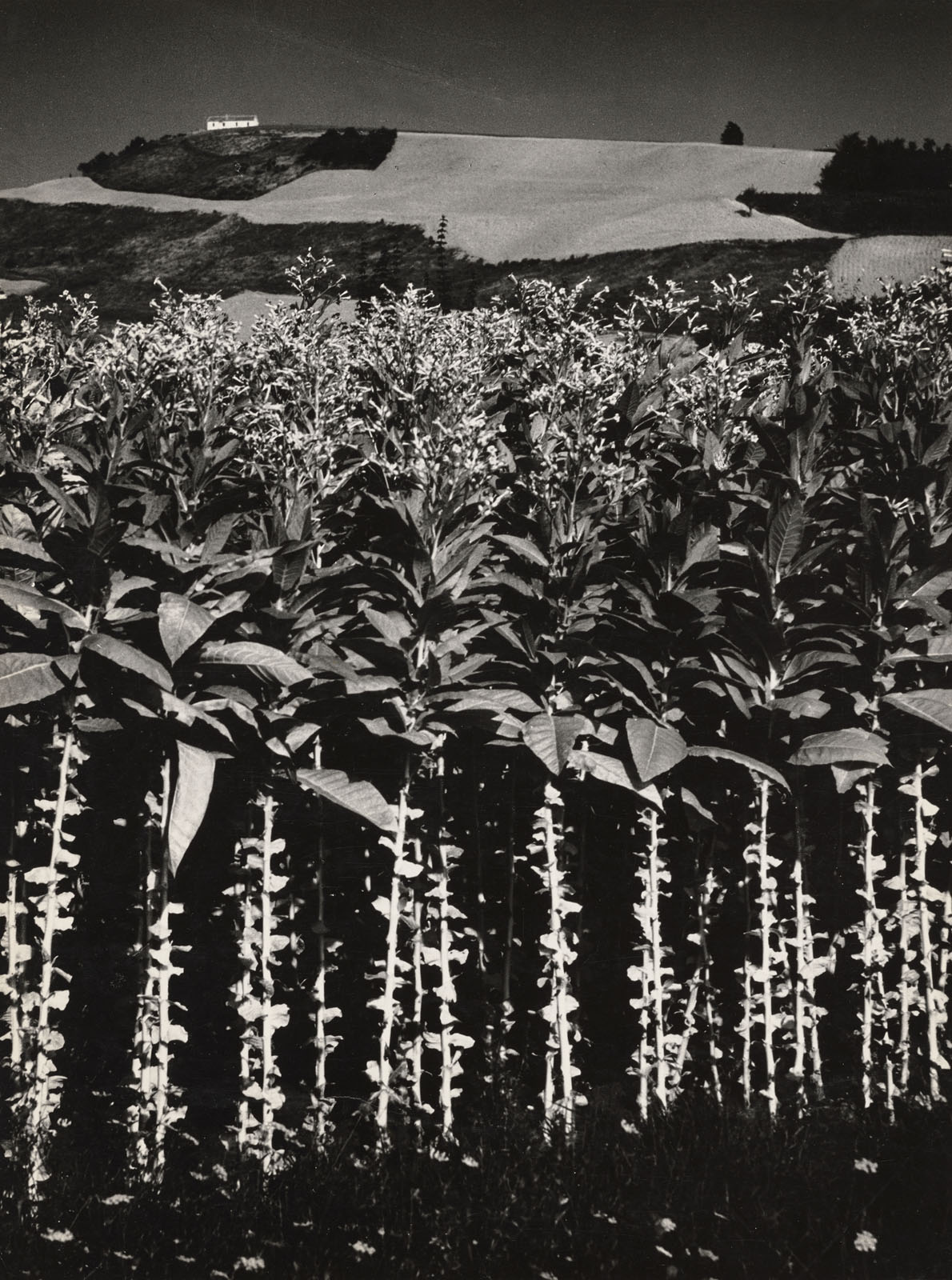
Mario Giacomelli (1925-2000) had a poet’s eye for the startlingly abstract order man can impose on nature and a poet’s understanding of the great disorder that is the human condition.
Giacomelli became an apprentice in typography when he was 13. As a young man, he worked as a typographer, painting on weekends and writing poetry. Inspired by the wartime movies of filmmakers like Fellini, Giacomelli taught himself still photography. He found his art in the generally impoverished countryside around Senigallia, a small town on the shores of the Adriatic Sea, where he lived all his life and whose farmlands and people were the subjects of his spare, often darkly expressionist work.
In 1954, Giacomelli began to photograph the home for the elderly where his mother had worked, completing the series in 1983. Empathetic but grittily unsentimental, the pictures show many women seemingly marooned in the sea of old age. In 1985-87, Mr. Giacomelli revisited the subject for his series Ninna Nanna, which means lullaby. This time, the deeply lined, gaunt faces of the aged are a bleak counterpoint to the bold lines and patterns found in the fields and on the sides of houses.
Giacomelli’s overhead views of mystifyingly abstract, horizonless landscapes, which he took from the time he snapped his first pictures, in late 1952, through the 1990’s, place him in the company of photographers like William Garnett and Minor White. Giacomelli’s 1970s images of geometric patterns in the fields of his hometown, Senigallia, bear striking parallels to Aaron Siskind’s contemporaneous photographs of wall abstractions.
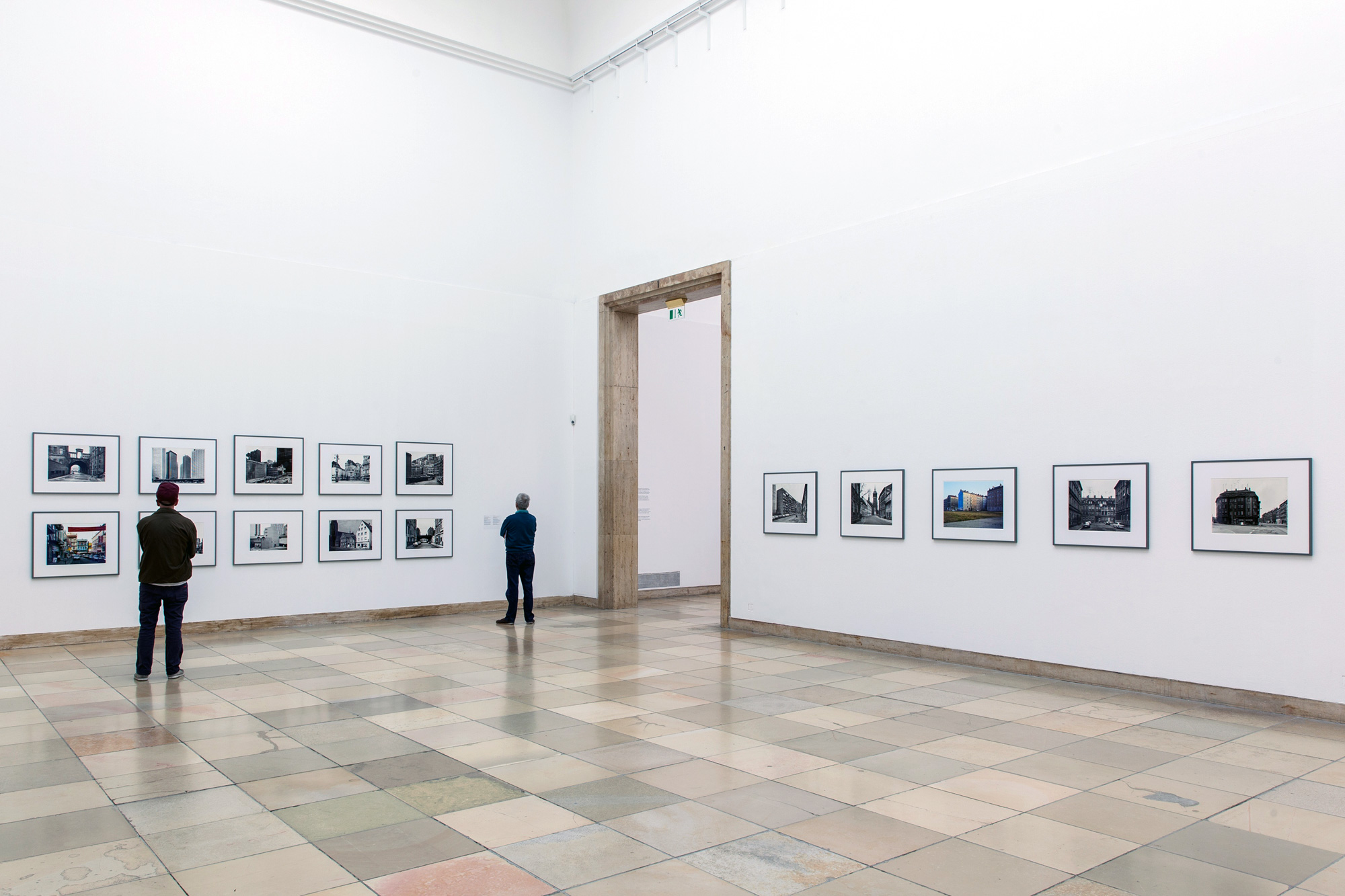
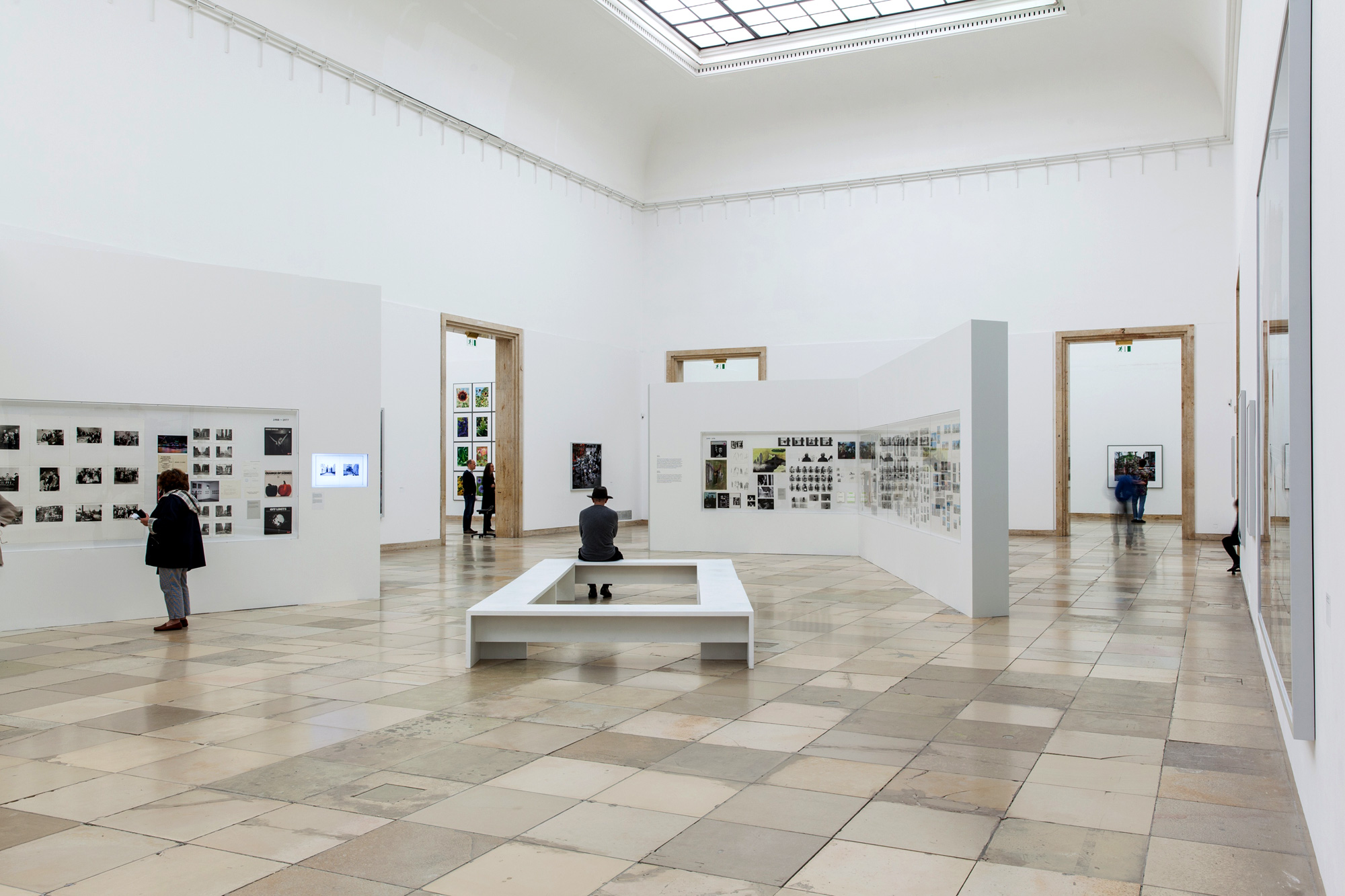
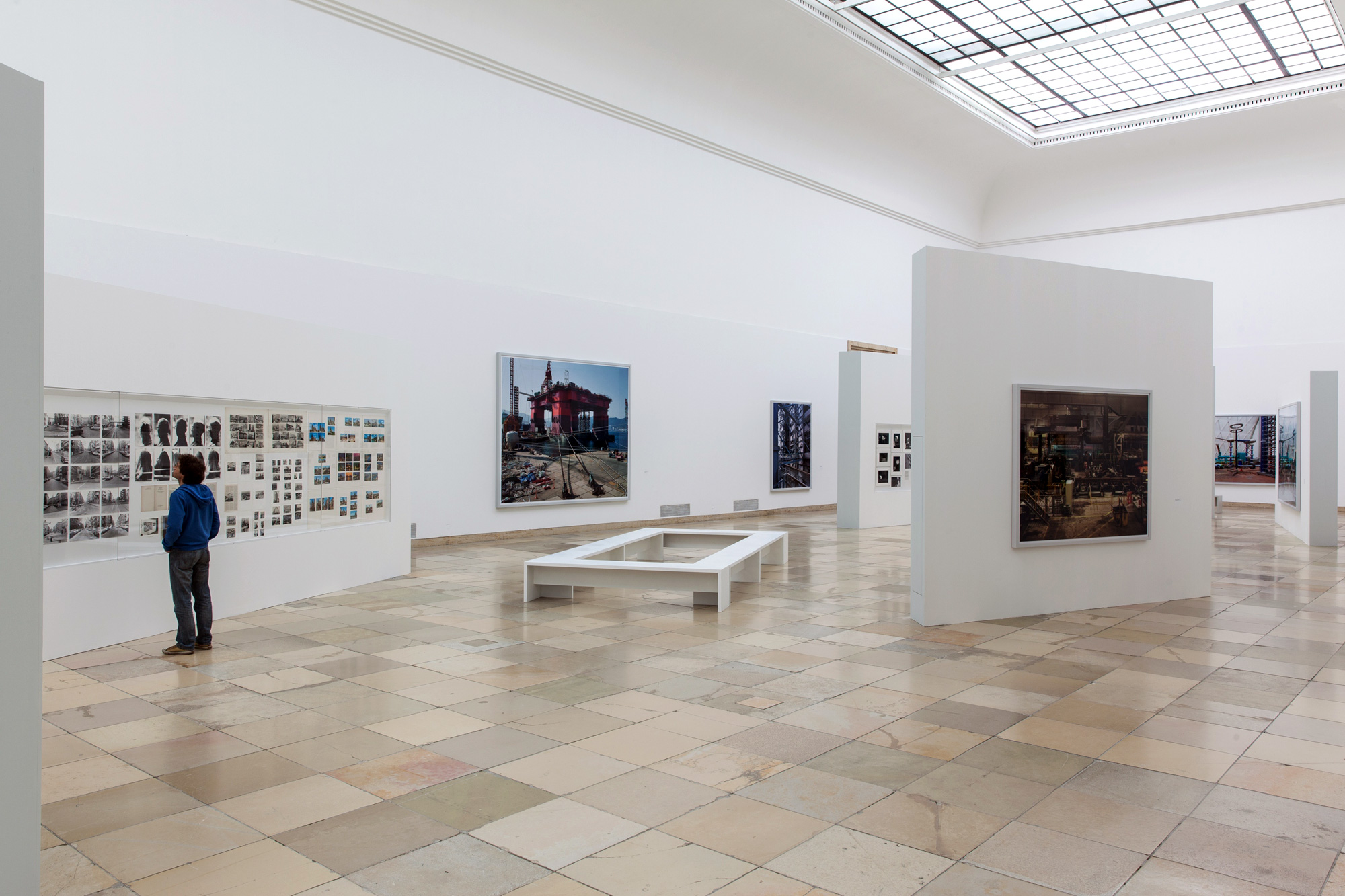
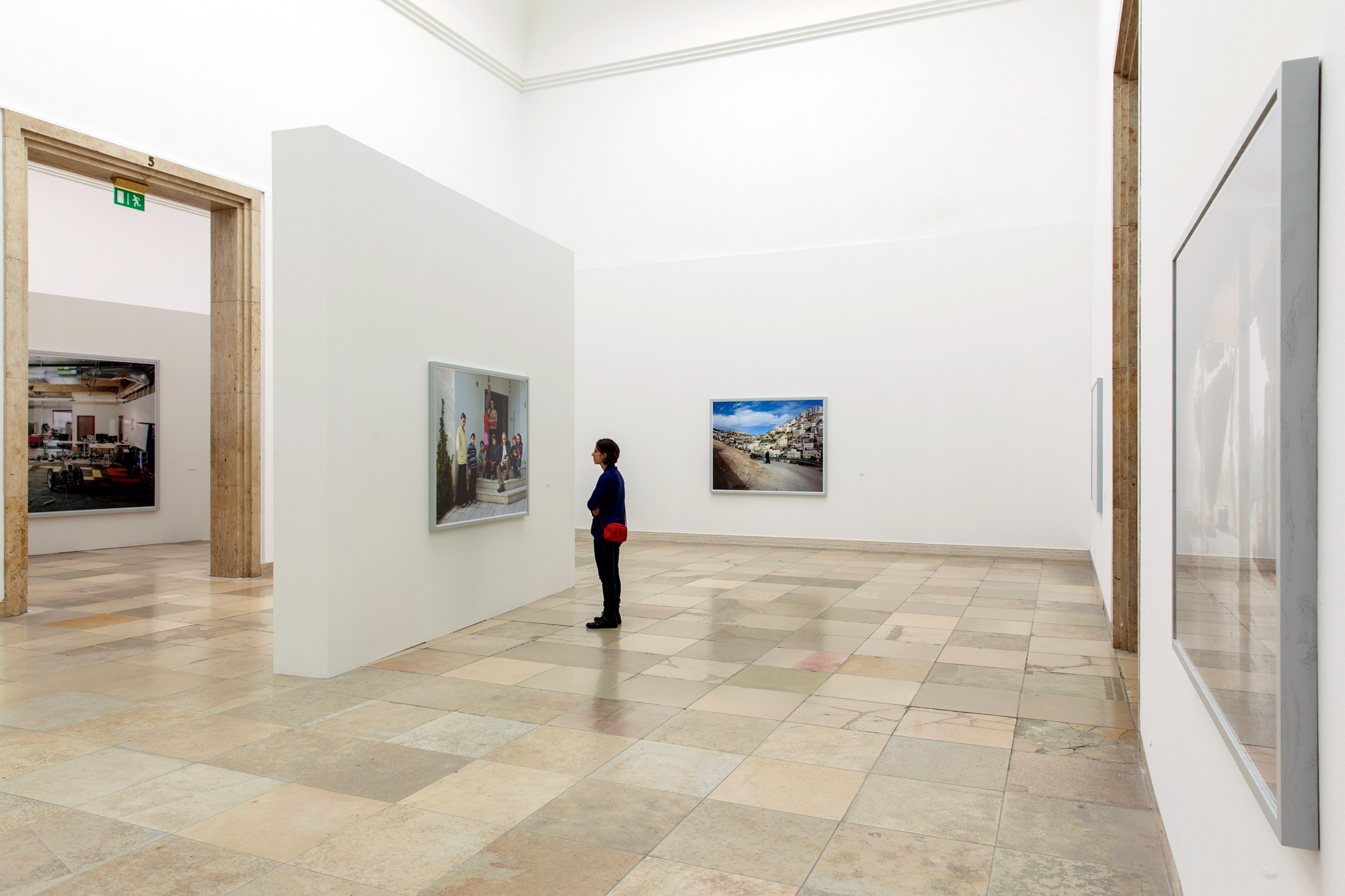
Installation view of the exhibition Thomas Struth: Figure Ground at Haus der Kunst, Munich Courtesy of the artist and Haus der Kunst, Munich
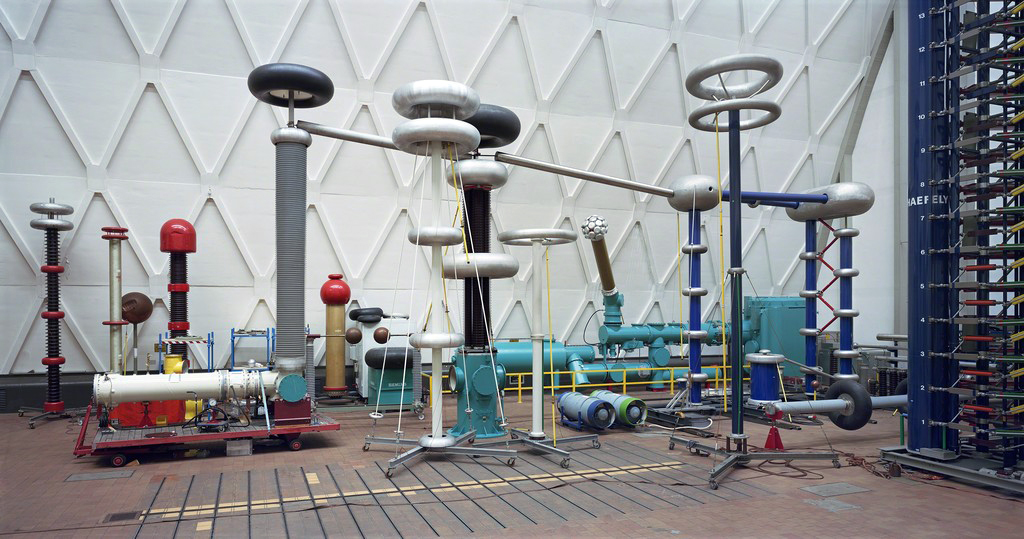
I have always liked this man’s work. His understanding of space, colour, form and photograph as aesthetic experience is sublime. His muscular compositions show evidence of clear thinking and seeing… an investigation into sachlichkeit, that is objectivity: the boundaries between human, animal and machine (the aesthetics of innovation).
And yet Struth’s “unheroic” images also show evidence of subjective forces at work: impulsion, chaos, and serendipity to name a few, capturing a ‘razzmatazz of sensations’ that challenge the existential nature of the human, ‘being’.
Dr Marcus Bunyan
Many thankx to Haus der Kunst for allowing me to publish the art work in the posting. Please click on the photographs for a larger version of the image.
“Most of the images are very unheroic.I have a strong relationship to clarity. That’s why my compositions and choices are very meticulous.”
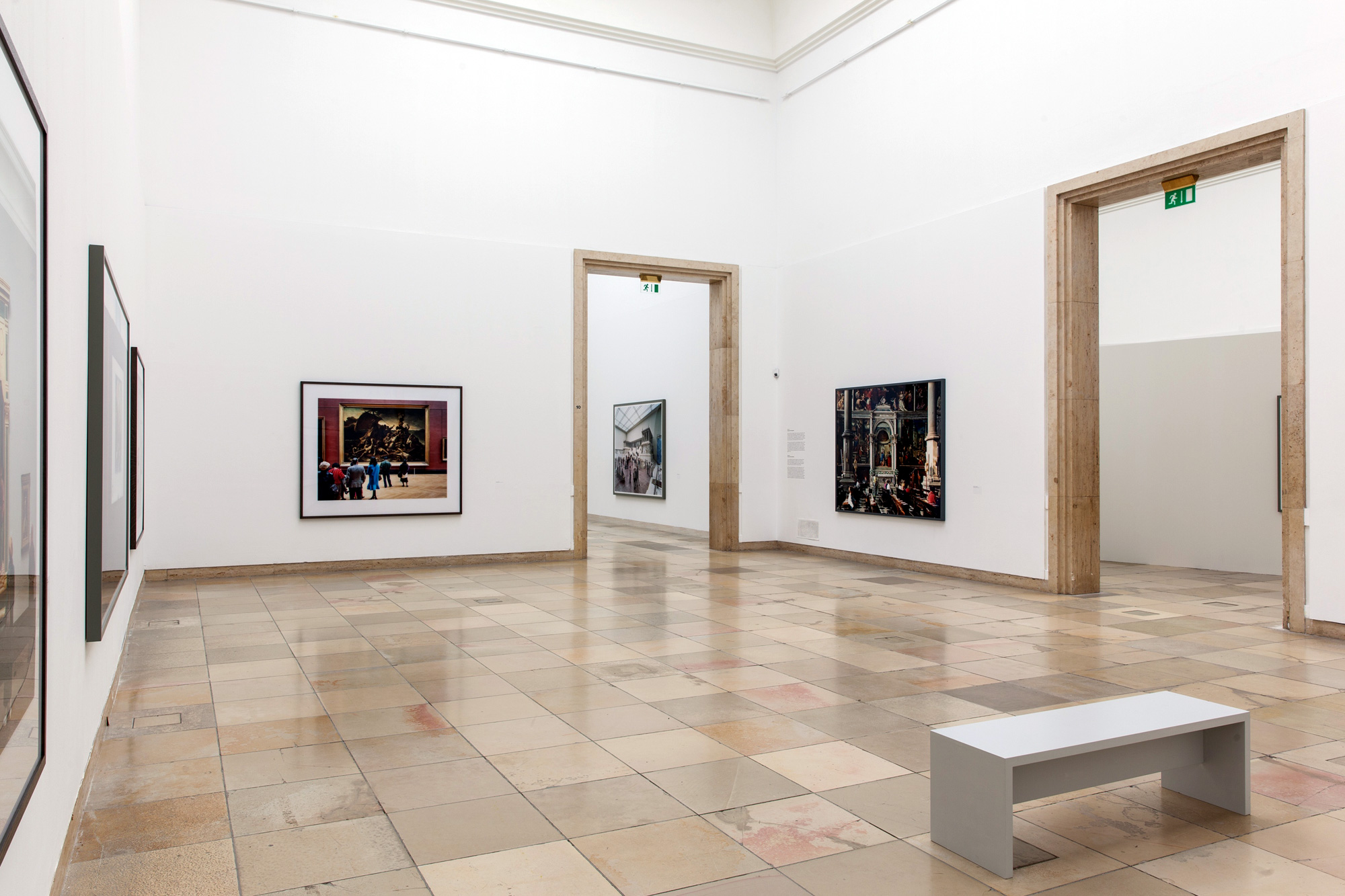
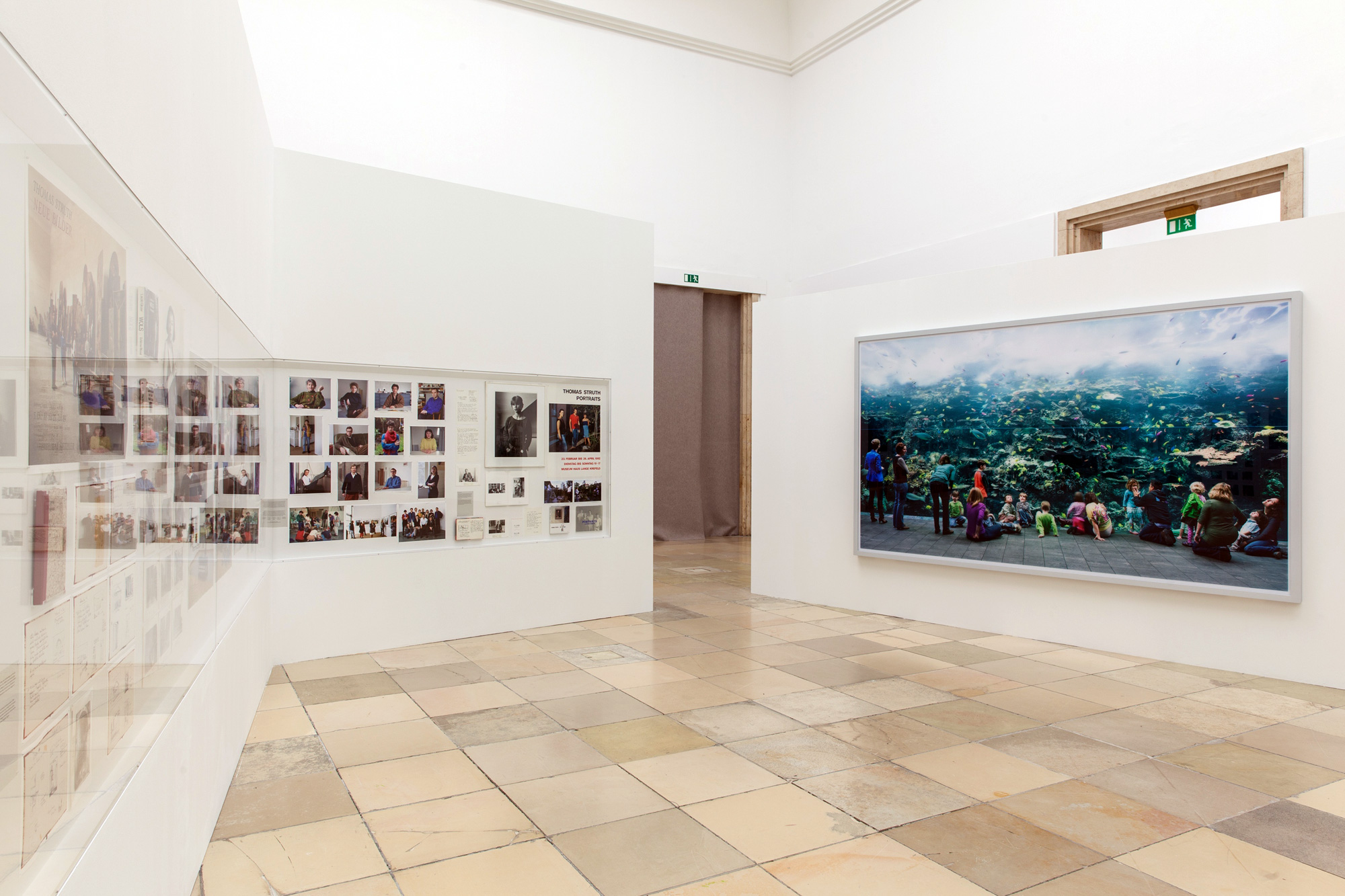
Installation view of the exhibition Thomas Struth: Figure Ground at Haus der Kunst, Munich with Louvre 4, Paris (1989) centre left Courtesy of the artist and Haus der Kunst, Munich
Installation view of the exhibition Thomas Struth: Figure Ground at Haus der Kunst, Munich with Paradise 26 (Bougainville), Palpa, Peru (2003) to the right Courtesy of the artist and Haus der Kunst, Munich
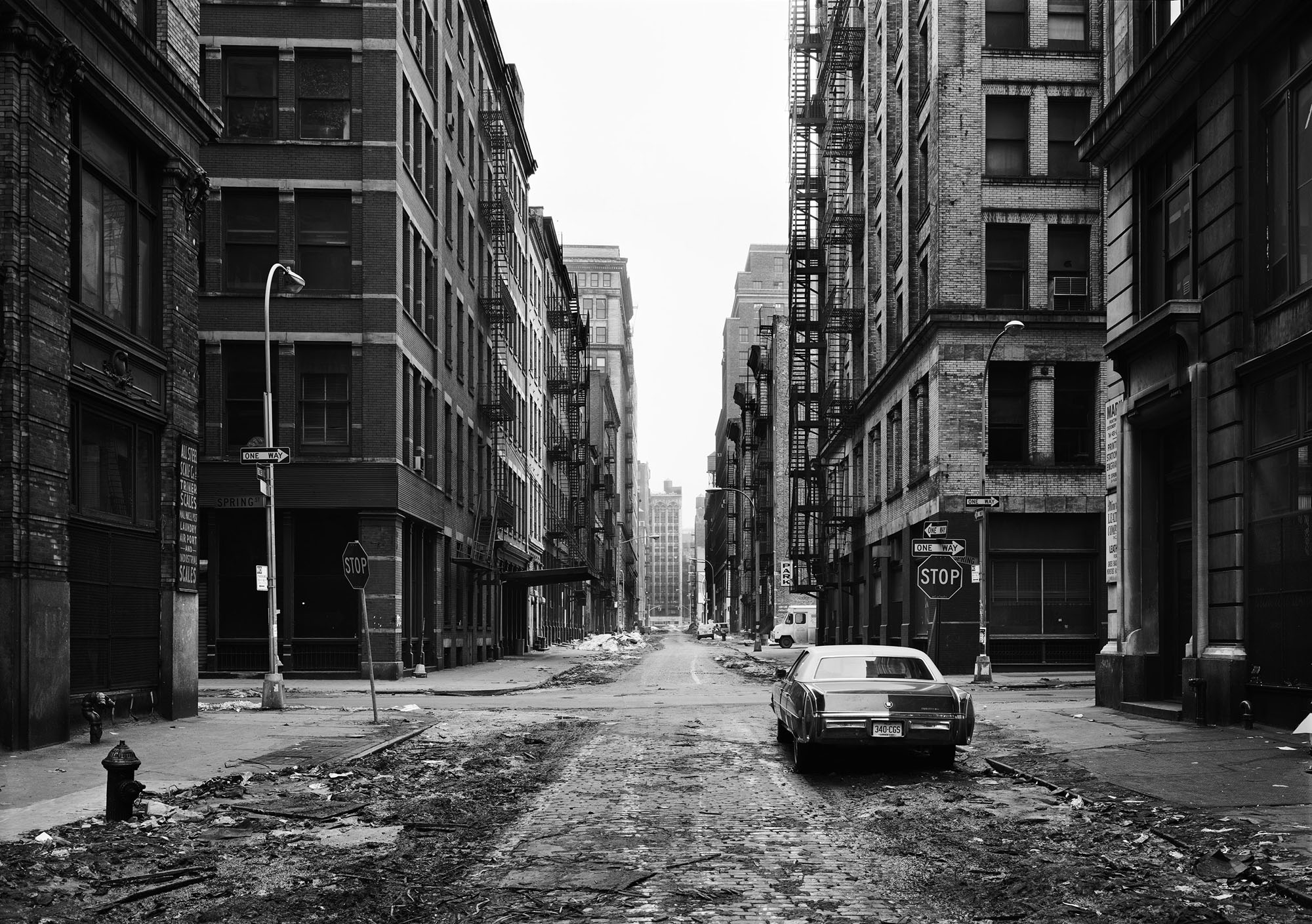
This major exhibition by the pioneering German photographer Thomas Struth (born 1954) presents the most comprehensive survey of his genre-defining oeuvre. Covering four decades of work and every phase of his illustrious artistic career, the exhibition focuses especially on the aspect of Struth’s social interests which represent the important forces of his internationally influential artistic development. Starting with his first series Unbewusste Orte (Unconscious Places) published in 1987 through his current works that deal with the field of research and technology in the globalised world, Struth’s work develops its own specific analytical nature through his choice of subject matter, the manner of its photographic realisation and its modes of presentation. These aspirations are manifested in questioning the relevance of public space and transformation of cities, the cohesive factor of family solidarity, the importance of the relationship between nature and culture, and exploring the limits and possibilities of new technologies. The momentum of participation further characterises these aspirations, as Struth’s extensive pictorial inventions and strategies allow individual interpretation based on collective knowledge.
In this exhibition, early works and research materials related to the artist’s subject matter, and collected over several decades, are shown for the first time in the context of an exhibition, offering access and insight into Struth’s working methods. Together with the photographs, these materials elucidate his longstanding interests behind the different series, demonstrating the process of artistic translation before the perfection of the image.
Featuring around 130 works, two multichannel video installations, and a selection of archival material, the exhibition in Haus der Kunst is the largest survey of Struth’s artistic career to date. The survey links his early ideas to well-known series such as Straßen (Streets), Unbewusste Orte (Unconscious Places), Portraits, Museumsbilder (Museum Pictures), Paradise, and Audiences which are placed in dialogue with site-specific works like Löwenzahnzimmer (Dandelion Room), the landscape- and flower photographs that were made for the patients’ rooms at the Hospital on the Lindberg in Winterthur, Switzerland. It also includes photographs recently shown in the exhibition Nature & Politics. Within this interplay, the exciting ability of the artist to combine analysis and individual pictorial invention in multifaceted works and techniques builds an overarching idea on how to deal with the elementary matters of our times.
The exhibition is accompanied by a publication from Schirmer / Mosel Publishers, Munich, designed by Fernando Gutierrez, with texts by Thomas Weski, Ulrich Wilmes, Jana-Maria Hartmann, and an interview with the artist by Okwui Enwezor. The exhibition is organised by Haus der Kunst and curated by Thomas Weski.
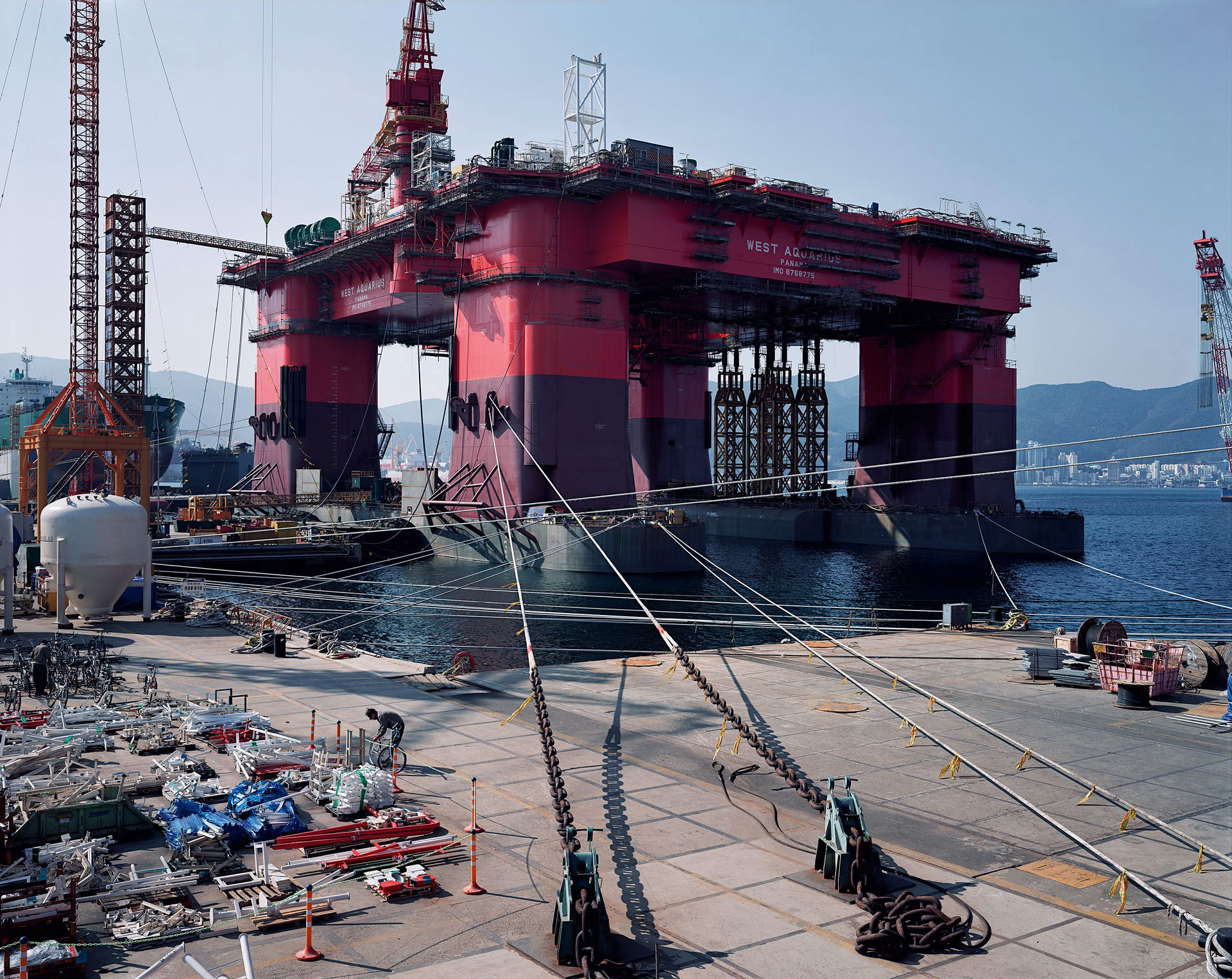
Installation view of the exhibition Thomas Struth: Figure Ground at Haus der Kunst, Munich with Semi Submersible Rig, DSME Shipyard, Geoje Island (2007) at centre Courtesy of the artist and Haus der Kunst, Munich
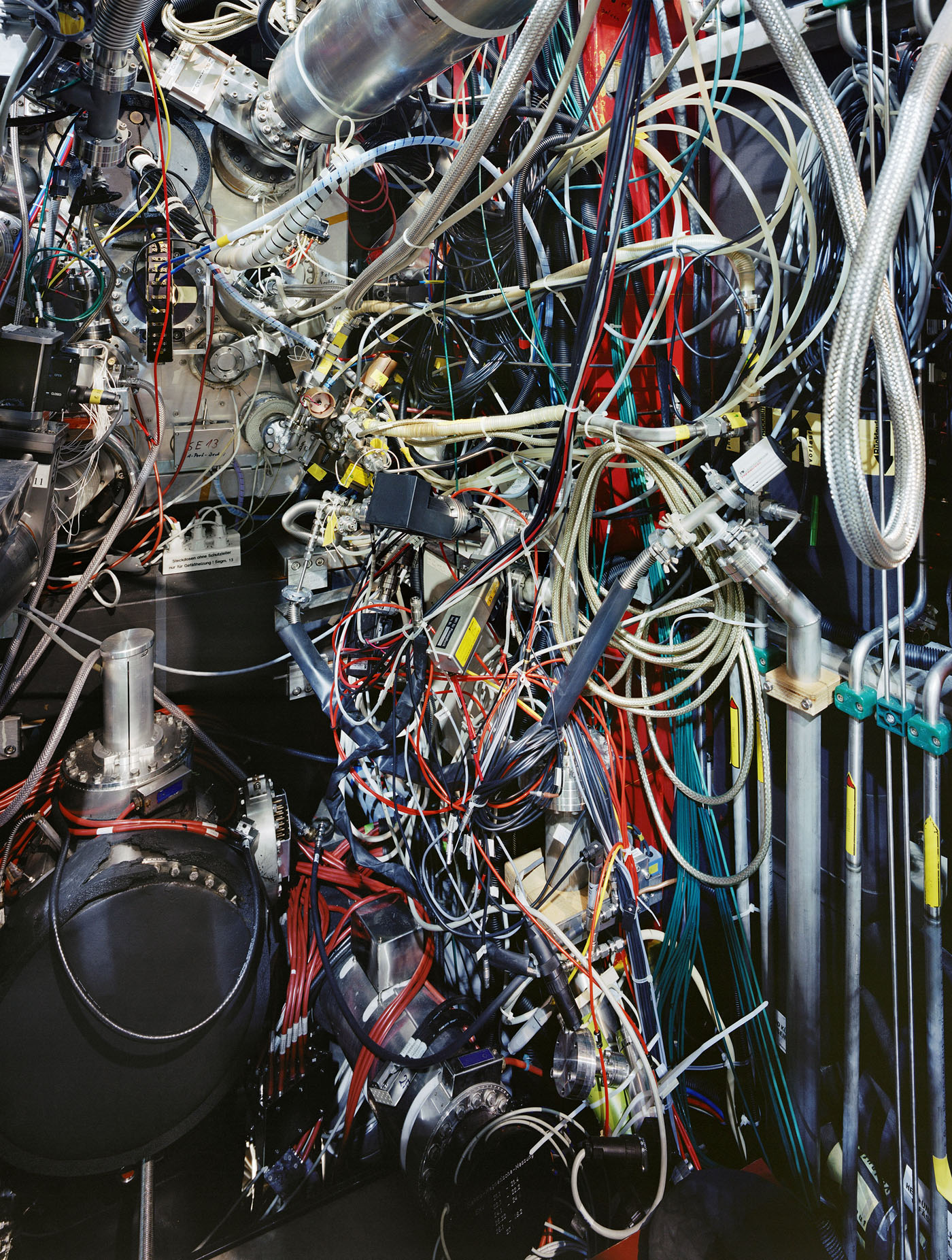
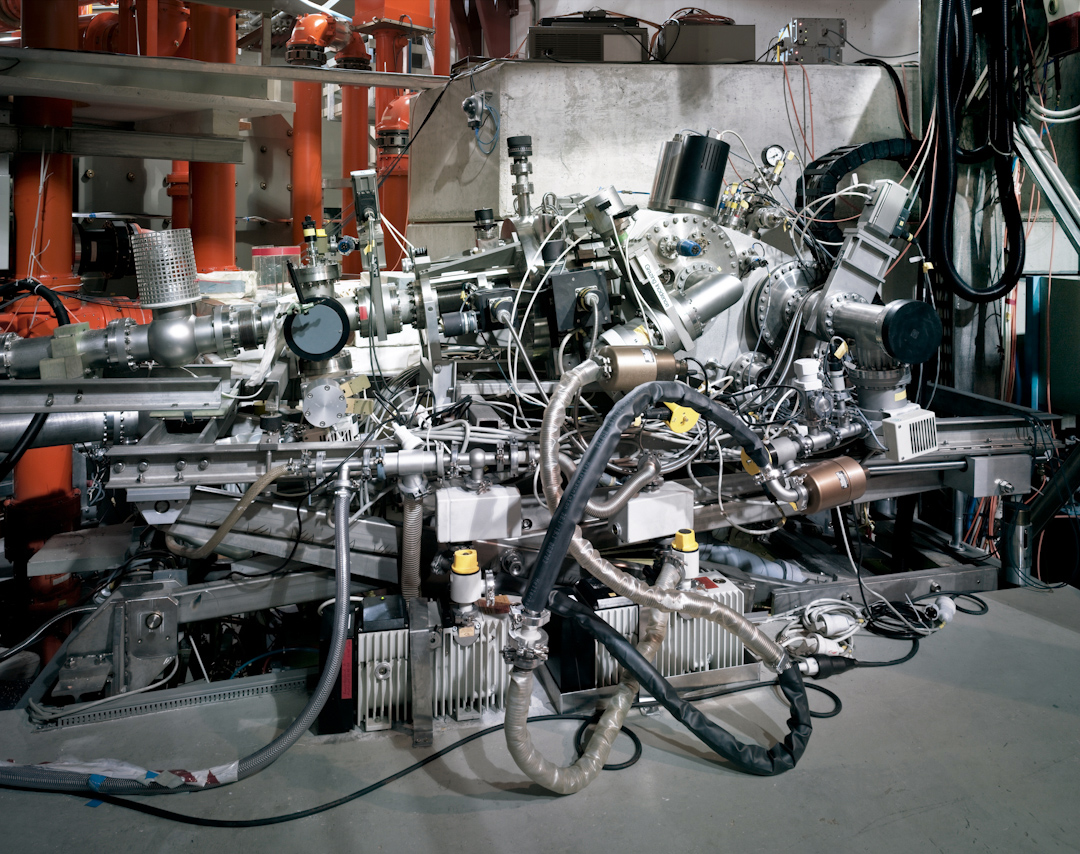
Installation view of the exhibition Thomas Struth: Figure Ground at Haus der Kunst, Munich with Tokamak Asdex Upgrade Periphery, Max Planck IPP, Garching (2009) at left Courtesy of the artist and Haus der Kunst, Munich
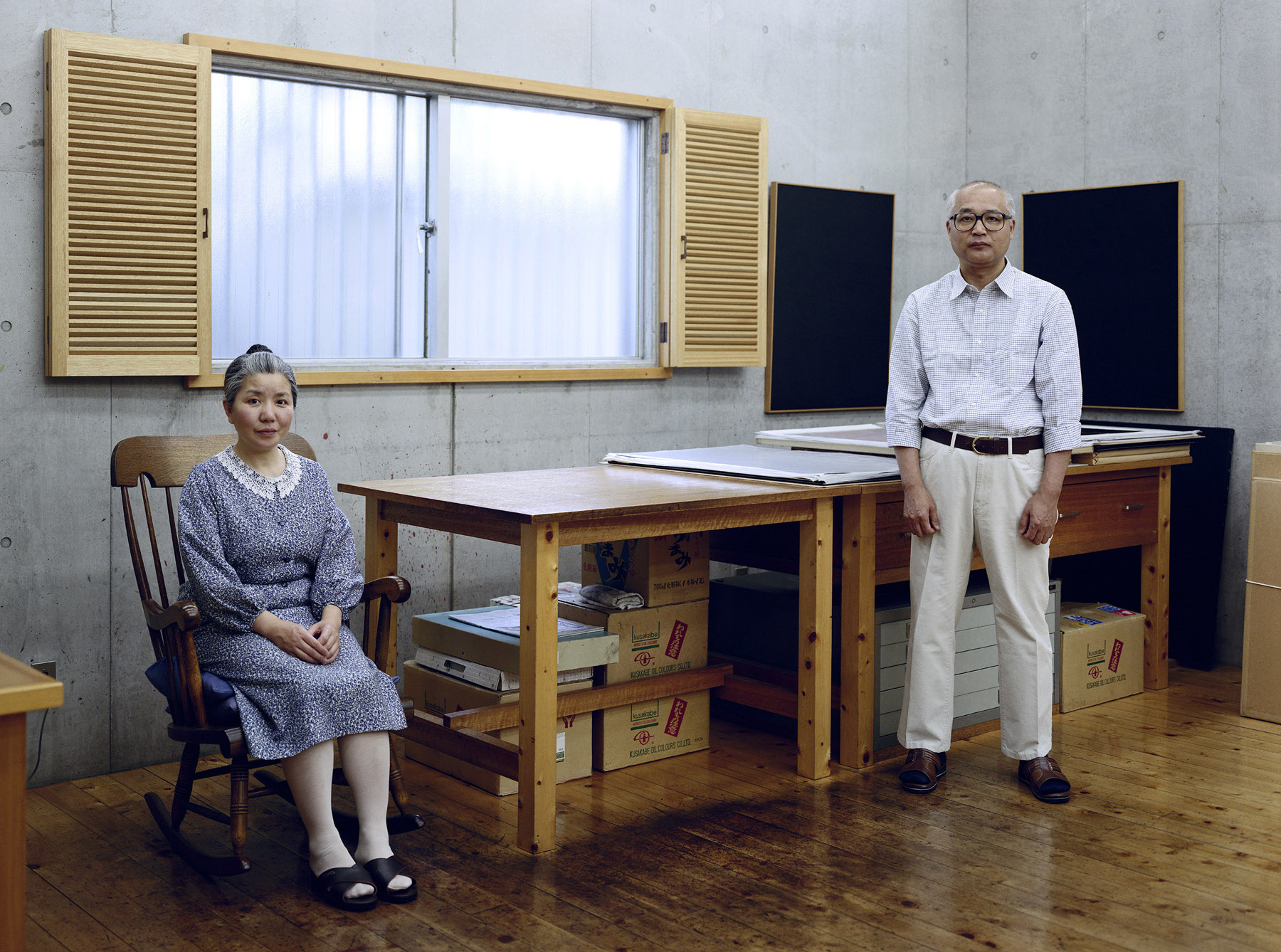
Installation view of the exhibition Thomas Struth: Figure Ground at Haus der Kunst, Munich with The Faez Family, Rehovot (2009) second left Courtesy of the artist and Haus der Kunst, Munich
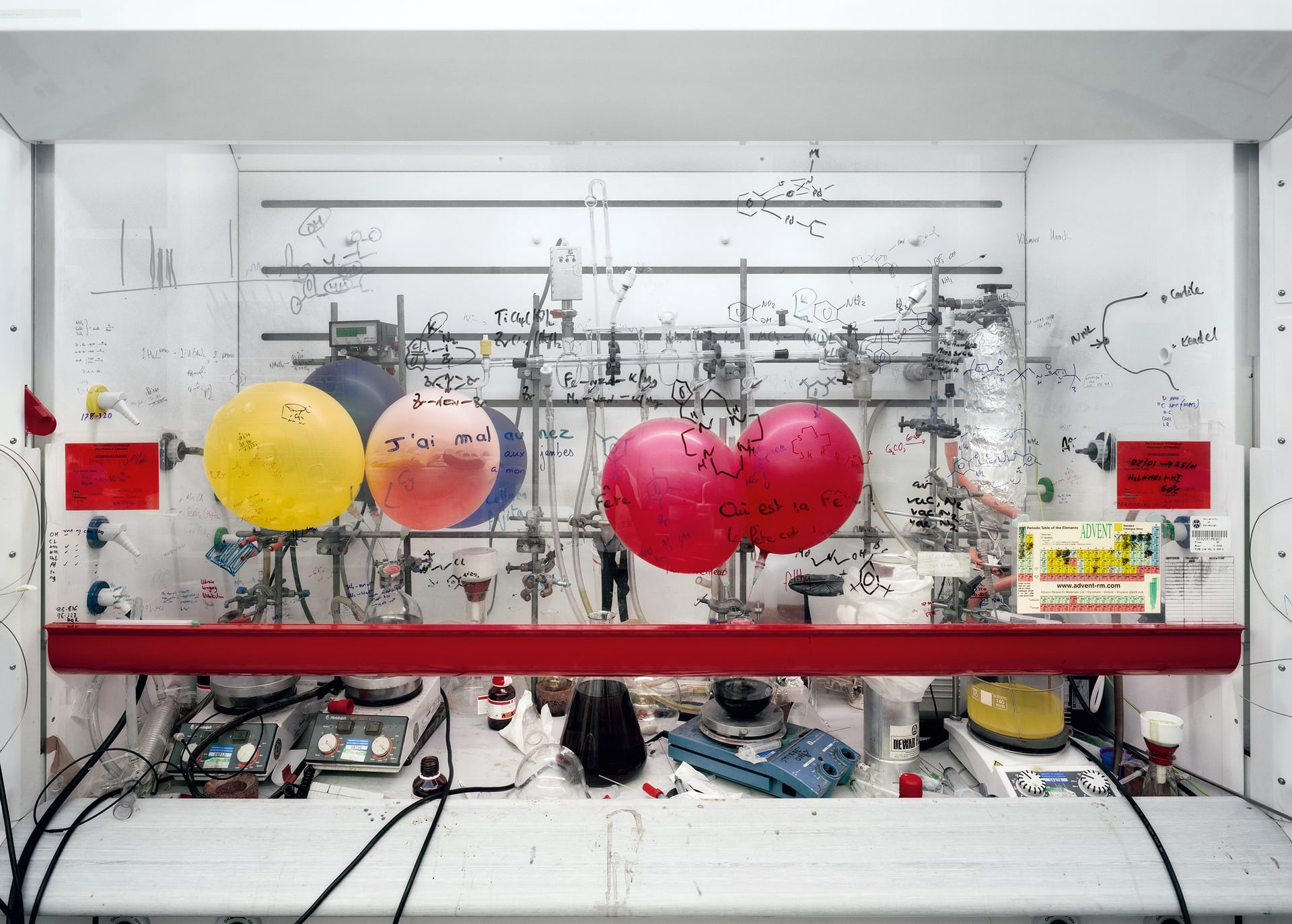
Take, for instance, Struth’s photograph “Chemistry Fume Cabinet, The University of Edinburgh” (2010). Ostensibly a photograph of a chemistry fume cabinet at the University of Edinburgh, photographed through a clear, glass window, the work is also a study in colour and form. Within a white background space, the back wall has black horizontal lines running along it, while the side walls have one vertical line each. These opposing lines create what appear to be a haphazard grid. A wide red horizontal structure runs across the front of the room, creating one more line that both breaks up and contributes to the grid. Various machines within the room, two square red panels on the left and right sides of the window, and six coloured balloons provide a series of objects that fit within the finely structured container of the photograph’s frame.
What struck me immediately upon seeing this image was how the various lines and objects interact with one another. Struth presents the viewer with a kind of interactive field in which she can either read the image “as is” – photograph documenting a chemistry fume cabinet – or as a purely aesthetic experience. Or, of course, she can do both, which is what makes Struth’s work so rich and gratifying. It is in the way his mastery of colour and other formal elements coincides with his documentation of the world.
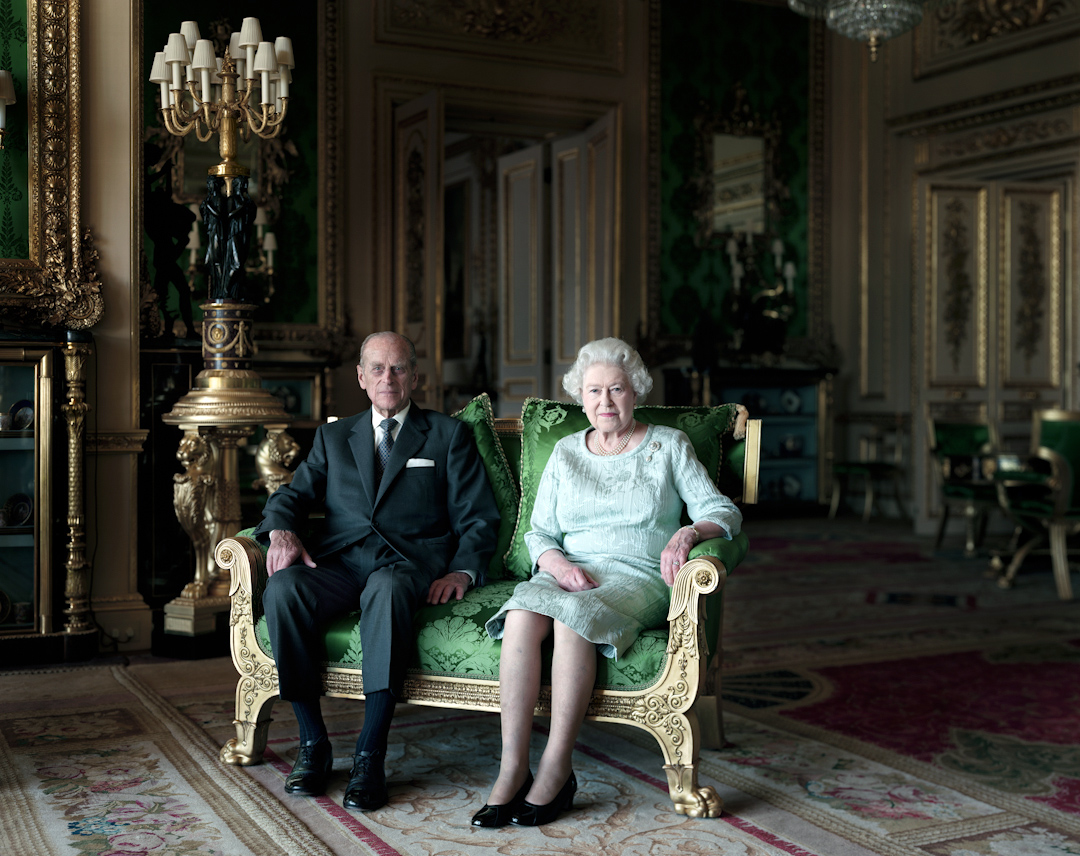
Installation view of the exhibition Thomas Struth: Figure Ground at Haus der Kunst, Munich with Queen Elizabeth II & The Duke of Edinburgh, Windsor Castle (2010) at left Courtesy of the artist and Haus der Kunst, Munich
Installation view of the exhibition Thomas Struth: Figure Ground at Haus der Kunst, Munich with Aquarium, Atlanta, Georgia (2013) at right Courtesy of the artist and Haus der Kunst, Munich


















You must be logged in to post a comment.