Exhibition: ‘Roman Vishniac Rediscovered’ at the Jewish Historical Museum, Amsterdam

Exhibition dates: 4th April – 24th August, 2014

Curator: Maya Benton, adjunct curator at the International Center of Photography


Roman Vishniac (Russian-American, 1897-1990) 'Recalcitrance, Berlin' 1926 (detail)


Roman Vishniac (Russian-American, 1897-1990)
Recalcitrance, Berlin (detail)
1926
© Mara Vishniac Kohn, courtesy International Center of Photography


It takes guts and moral fortitude to continue photographing the city that you live in even as the state that controls that city (and country) conspires against you. It takes talent to produce memorable images of urban poverty, to record for posterity communities that would soon vanish forever under the weight of a malignant form of madness, of genocide.

Vishniac was the only one not concerned with ego. He went out there and got the job done where no one else did. He produced thoroughly modern images of an ancient culture on the verge of destruction. He knew the danger and yet he still took the photos. Courage and fortitude, and in the end the luck to escape the Holocaust himself.

You can’t look at these images without a sense of regret and sadness – at the stupidity of humanity, of the egos of men, and the waste of millions of lives. One name says it all: Ernst Kaufmann. Standing on a pile of rocks, wearing wooden clogs, this man with the wavy hair looks down into the camera and he will ever be thus – young, handsome, alive in the moment that the photograph was taken.

Ernst Kaufmann was born in Krefeld, Germany, in 1911. He was arrested in June 1941 and killed in August of that year in the Mauthausen concentration camp in Austria.

Dr Marcus Bunyan


Many thankx to the Jewish Historical Museum for allowing me to publish the photographs in the posting. Please click on the photographs for a larger version of the image. Lots more images can be found on the excellent Roman Vishniac Archive website.
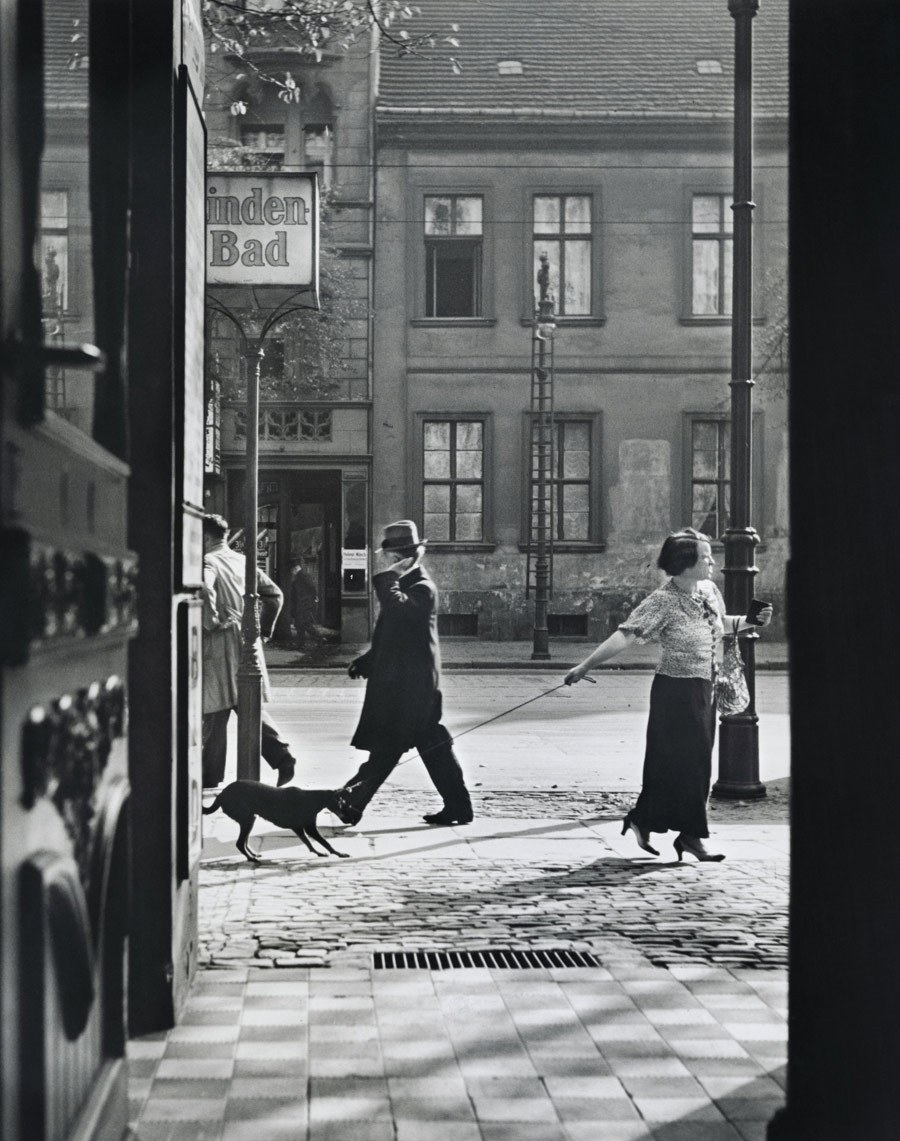


Roman Vishniac (Russian-American, 1897-1990) 'Recalcitrance, Berlin' 1926


Roman Vishniac (Russian-American, 1897-1990)
Recalcitrance, Berlin
1926
© Mara Vishniac Kohn, courtesy International Center of Photography


Roman Vishniac (Russian-American, 1897-1990) '[Interior of the Anhalter Bahnhof railway terminus near Potsdamer Platz, Berlin]' late 1920s - early 1930s from the exhibition 'Roman Vishniac Rediscovered' at the Jewish Historical Museum, Amsterdam, April-  August, 2014


Roman Vishniac (Russian-American, 1897-1990)
[Interior of the Anhalter Bahnhof railway terminus near Potsdamer Platz, Berlin]
Late 1920s – early 1930s
© Mara Vishniac Kohn, courtesy International Center of Photography


Roman Vishniac Rediscovered brings together four decades of work by an extraordinarily versatile and innovative photographer for the first time. Vishniac (1897-1990) created the most widely recognised and reproduced photographic record of Jewish life in Eastern Europe between the two World Wars. These celebrated photographs were taken on assignment for the American Jewish Joint Distribution Committee, the world’s largest Jewish relief organisation, from 1935-1938, yet this exhibition follows the photographer’s long and accomplished career from the early 1920s through the 1950s. Roman Vishniac Rediscovered introduces a radically diverse body of work – much of it only recently discovered – and repositions Vishniac’s iconic photographs of Eastern European Jewry within a broader tradition of 1930s social documentary photography.

More than any other photographer, Roman Vishniac’s images have profoundly influenced contemporary notions of Jewish life in Eastern Europe. Vishniac created the most widely recognised and reproduced photographic record of that world on the eve of its annihilation, yet only a small fraction of his work was published or printed during his lifetime. Known primarily for this poignant record, Vishniac was in fact a remarkably versatile and innovative photographer. His body of work spans more than five decades, ranging from early engagements with European modernism in the 1920s to highly inventive colour photomicroscopy in the 1950s and ’60s.

Born in 1897 to an affluent Russian-Jewish family, Vishniac was raised in Moscow, where he studied zoology and biology. He immigrated to Berlin in 1920 in the aftermath of the Bolshevik Revolution. As an amateur photographer he took to the streets, offering witty and wry visual commentary on his adopted city while experimenting with new approaches to framing and composition. As Vishniac documented the Nazi rise to power, foreboding signs of oppression soon became a focal point of his work. In 1935, he was commissioned by the European headquarters of the American Jewish Joint Distribution Committee (AJDC) – the world’s largest Jewish relief organisation – to photograph impoverished Jewish communities in Eastern Europe. Vishniac’s four years of work on the project yielded the celebrated images that have largely defined his photographic legacy.

Arriving in New York on New Year’s Day 1941, Vishniac opened a portrait studio, working to make ends meet by documenting American Jewish communal and immigrant life, while establishing himself as a pioneer in the field of photomicroscopy. In 1947, he returned to Europe and documented Jewish Displaced Persons’ Camps, the efforts of Holocaust survivors to rebuild their lives, emigration and relief efforts, and the ruins of Berlin.

Roman Vishniac Rediscovered is a comprehensive reappraisal of Vishniac’s total photographic output, from his early years in Berlin through the postwar period in America. The exhibition is drawn from the Roman Vishniac archive at ICP and serves as an introduction to this vast assemblage comprising more than 30,000 objects, including recently discovered vintage prints, rare moving film footage, contact sheets, personal correspondence, and exhibition prints made from his recently digitised negatives.

Berlin Street Photography, 1920s-1930s

Vishniac immigrated to Berlin in 1920, shortly after the formation of the Weimar Republic. He and his wife Luta settled in the Wilmersdorf district, home to a large community of affluent Russian-Jewish expatriates. Berlin in the 1920s was the epitome of a modern city: cosmopolitan, loud, vibrant, diverse, and full of recent immigrants. Already an accomplished amateur photographer, Vishniac joined several of the city’s ubiquitous camera clubs. Armed with his Rolleiflex and Leica, he took to the streets, creating astute, often humorous observations of his adopted city.

Vishniac’s interest in photography had begun during his childhood in Russia; many Russian Jews owned photography shops and studios, and Vishniac’s family encouraged his pursuits. In Berlin, his perspective as an outsider contributed to his inventive and dynamic images of life in the city, and marked his transformation from amateur hobbyist to accomplished street photographer. His best, most intimate photographs were often taken in his own neighbourhood, where he built a fully equipped photo-processing lab in his apartment.

Vishniac took full advantage of the city’s manifold resources, improving his technique and experimenting with modernist and avant-garde approaches to framing and composition – hallmarks of Weimar Berlin. This prodigious body of early work became increasingly influenced by European modernism as he captured the buzzing day-to-day life of the city: streetcar drivers, municipal workers and day labourers, marching students and children at play, bucolic park scenes and the intellectual café life of the bustling metropolis that was, in Vishniac’s words, “the world’s center of music, books, and science.”
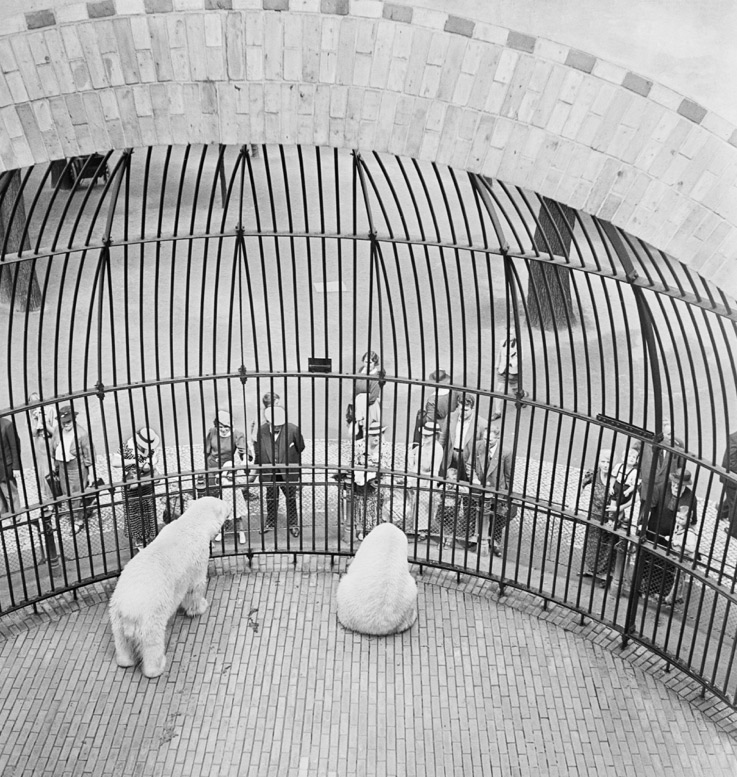
 

Roman Vishniac (Russian-American, 1897-1990) 'People behind bars, Berlin Zoo' Early 1930s (printed 2012) from the exhibition 'Roman Vishniac Rediscovered' at the Jewish Historical Museum, Amsterdam, April-  August, 2014


Roman Vishniac (Russian-American, 1897-1990)
People behind bars, Berlin Zoo
Early 1930s (printed 2012)
© Mara Vishniac Kohn, courtesy International Center of Photography


The oldest and most renowned zoo in Germany, the Zoologische Garten was a popular gathering place for Berlin’s middle- and upper-class Jewish community before World War II. Many affluent Jewish families, including the Vishniacs, were shareholders. Beginning in 1933, the zoo began to force out Jewish board members. In 1938, a sign reading “Juden unerwünscht” (Jews Unwanted) was displayed at the entrance to the zoo and in early 1939 Jews were denied entry entirely. In Vishniac’s photograph of the zoo’s famous polar bears, it appears that the visitors, and not the animals, are in a cage.


Roman Vishniac (Russian-American, 1897-1990) '[Boys admiring a motorcycle, Brandenburg, outskirts of Berlin]' 1929 - early 1930s (printed 2012)


Roman Vishniac (Russian-American, 1897-1990)
[Boys admiring a motorcycle, Brandenburg, outskirts of Berlin]
1929 – early 1930s (printed 2012)
© Mara Vishniac Kohn, courtesy International Center of Photography


Nazi Rise to Power in Germany, 1933-1938

“I grew up in Berlin with a pervasive sense of danger and dread combined with a perceived obligation not to show fear. I was aware of personal danger and knew that whatever happened to me, my parents could offer no protection or help. That was everyday life.”

Mara Vishniac Kohn


Vishniac’s development as a professional photographer coincided with the Nazi rise to power and the establishment of the Third Reich. Widespread antisemitism and the implementation of increasingly restrictive measures against Jews became daily realities. Vishniac documented the ominous changes he encountered, photographing campaign posters, swastika banners, phrenology shops, and marching Nazi soldiers. Following Hitler’s appointment as chancellor in 1933, the government relentlessly pursued those artists and intellectuals not in line with the Reich’s values. Berlin’s cosmopolitan vivacity was soon drained of its intellectual and cultural capital. Once-vibrant neighbourhoods became ruled by fear; anyone considered an opponent of the Nazi government could be sent to Dachau, a concentration camp established in 1933 outside Munich.

Many photographers suffered from the Nazi policies; the Schriftgesetz (Editorial Act) of November 1933 forced anyone working in publishing – photographers included – to provide proof of Aryan heritage. In 1934, the Deutsche Presse (German Press) published a list of authorised Aryan photographers whose work aligned with the Nazi party. Jews were forbidden to take photographs on the street. In spite of these restrictions, Vishniac tenaciously documented Berlin’s rapid acclimation to Nazi policy. To avoid suspicion, he often used his young daughter Mara as a prop, snapping seemingly innocuous pictures of her in front of advertising columns and shop windows festooned with Nazi propaganda.

These symbols of oppression formed the quotidian backdrop of Vishniac’s Germany, a fact to which the ubiquity of Nazi flags, banners, and posters in his later Berlin photographs testify. Capturing the spread of Nazi ideology on Berlin’s streets, Vishniac’s images embodied his own marginalisation – and endangerment – as both a photographer and a Jew.


Roman Vishniac (Russian-American, 1897-1990) '[Vishniac's daughter Mara posing in front of an election poster for Hindenburg and Hitler that reads "The Marshal and the Corporal: Fight with Us for Peace and Equal Rights," Wilmersdorf, Berlin]' 1933


Roman Vishniac (Russian-American, 1897-1990)
[Vishniac’s daughter Mara posing in front of an election poster for Hindenburg and Hitler that reads “The Marshal and the Corporal: Fight with Us for Peace and Equal Rights,” Wilmersdorf, Berlin]
1933
© Mara Vishniac Kohn, courtesy International Center of Photography


Roman Vishniac (Russian-American, 1897-1990) '[Street scene with a swastika flag on a storefront (at left), Berlin]' c. 1935-1936 (printed 2012)


Roman Vishniac (Russian-American, 1897-1990)
[Street scene with a swastika flag on a storefront (at left), Berlin]
c. 1935-1936 (printed 2012)
© Mara Vishniac Kohn, courtesy International Center of Photography


Vishniac often positioned himself in doorways or building foyers in his Berlin street photography, documenting daily life as a removed observer. This image reveals multiple layers of time in one shot: the car positioned alongside the horse-drawn wagon, bicyclists speeding by as pedestrians young and old navigate the cobblestones and pavement, against the backdrop of a rapidly modernising metropolis. Only upon closer examination do our eyes move to a swastika flag blowing in the wind above the horses, a common site on most Berlin streets by 1935.


German-Jewish Relief and Community Organizations, Berlin, mid- to late 1930s

Prior to Hitler’s assumption of power in 1933, Jewish social service organisations in Germany primarily served Eastern European Jews, the majority of whom were less cosmopolitan, assimilated, and affluent than their German-born coreligionists. The Nazi regime recognised no such distinction, however, and their rise to power drastically affected almost every Jew living in Germany. As Germany’s Jewish population was gradually excluded from both social and economic life, many came to depend upon a Jewish social structure that was originally intended to look outward but quickly expanded to serve the growing needs of the community.

In 1933, German-Jewish groups unified into the Reichsvertretung der Deutschen Juden (Central Organization of German Jews), an umbrella organisation intended to ameliorate the effects of Nazi racial policy. Between 1933 and 1938, subsidiary and affiliate organisations created Jewish education and healthcare systems and instituted a welfare system for Jews facing impoverishment. Zionist and other youth organisations flourished under the exclusionary policies of the Nazis, helping would-be émigrés learn the agricultural and vocational skills needed to build new lives in Palestine and elsewhere. The Jüdischer Kulturbund (Jewish Cultural Association) was established in response to restrictions placed on Jewish artists. Vishniac and his family were among its 70,000 members and regularly attended lectures and performances. Vishniac was also a member of T’munah, a Jewish photographic group founded in 1934 in response to the exclusionary policies of “Aryan” camera clubs.

As restrictions on photographers increased, Vishniac was commissioned to document the work of several Jewish community and social service organisations in Berlin. This fascinating body of work is largely unknown, but it helped establish his reputation in Jewish philanthropic circles, leading to major commissions from a wide range of Jewish relief and community organisations from the mid-1930s to the mid-1950s.


Roman Vishniac (Russian-American, 1897-1990) '[Drawer of freshly farmed eggs, Gut Winkel, a training farm for German-Jewish youth hoping to emigrate to Palestine, Spreenhagen in der Mark, Brandenburg, Germany]' c. 1938


Roman Vishniac (Russian-American, 1897-1990)
[Drawer of freshly farmed eggs, Gut Winkel, a training farm for German-Jewish youth hoping to emigrate to Palestine, Spreenhagen in der Mark, Brandenburg, Germany]
c. 1938
© Mara Vishniac Kohn, courtesy International Center of Photography


Roman Vishniac (Russian-American, 1897-1990) '[Preparing food in a Jewish soup kitchen, Berlin]' mid- to late 1930s


Roman Vishniac (Russian-American, 1897-1990)
[Preparing food in a Jewish soup kitchen, Berlin]
mid- to late 1930s
© Mara Vishniac Kohn, courtesy International Center of Photography


Jewish Life in Eastern Europe, c. 1935-1938

In 1935, Roman Vishniac was hired by the European headquarters of the American Jewish Joint Distribution Committee (AJDC) to document impoverished Jewish communities in Eastern Europe. Photographic images offered limitless, affordable reproducibility, and could be used in slide lectures, brochures, appeals, and annual reports throughout America and Western Europe. Vishniac’s images played a crucial role in communicating the AJDC’s message, and they would ultimately become the last extensive photographic record by a single photographer of Jewish communities that had existed for centuries.

The majority of Vishniac’s published photographs of Eastern Europe depict privation. Many others illustrate the philanthropic activities of the AJDC such as children’s camps, free loan societies, soup kitchens, schools, and health organisations. And while Vishniac is often associated with images of rural villages and small towns, or shtetlach, most of his photographs record urban poverty in major cities like Warsaw, Krakow, and Lodz. His work for the AJDC echoes the contemporaneous projects of American photographers like Dorothea Lange, Ben Shahn, Arthur Rothstein, and Walker Evans. In the same years that the Farm Security Administration sent photographers to the American South and West to document those affected by drought, depression, and migration, Vishniac was sent east by the AJDC. Today, his work stands alongside the best social-documentary photographers of his era. His unpublished work imparts a much more complex and nuanced perspective on Eastern European Jewish life, and reveals a much more versatile – and modern – artist.

That Vishniac was commissioned to document the most impoverished Jews is significant, as is the fact that he often chose the most traditional and observant Jews as subjects, to amplify the contrast between Ostjuden, or Eastern Jews, and the more assimilated Western Jews who would be viewing the images. It was only after the Holocaust, when the communities he had so poignantly depicted were annihilated, that his body of work came to symbolise the vanished world of Eastern Jewry.


Roman Vishniac (Russian-American, 1897-1990) 'Villagers in the Carpathian Mountains' c. 1935-1938


Roman Vishniac (Russian-American, 1897-1990)
Villagers in the Carpathian Mountains
c. 1935-38
© Mara Vishniac Kohn, courtesy International Center of Photography


Roman Vishniac (Russian-American, 1897-1990) '[Jewish schoolchildren, Mukacevo]' c. 1935-1938


Roman Vishniac (Russian-American, 1897-1990)
[Jewish schoolchildren, Mukacevo]
c. 1935-1938
© Mara Vishniac Kohn, courtesy International Center of Photography


Roman Vishniac (Russian-American, 1897-1990) '[Inside the Jewish quarter, Bratislava]' c. 1935-1938


Roman Vishniac (Russian-American, 1897-1990)
[Inside the Jewish quarter, Bratislava]
c. 1935-1938
© Mara Vishniac Kohn, courtesy International Center of Photography


Roman Vishniac (Russian-American, 1897-1990) '[Eastern Europe]' c. 1935-1938


Roman Vishniac (Russian-American, 1897-1990)
[Eastern Europe]
c. 1935-1938
© Mara Vishniac Kohn, courtesy International Center of Photography


Roman Vishniac (Russian-American, 1897-1990) '[Eastern Europe]' (detail) c. 1935-1938


Roman Vishniac (Russian-American, 1897-1990)
[Eastern Europe] (detail)
c. 1935-1938
© Mara Vishniac Kohn, courtesy International Center of Photography


Roman Vishniac (Russian-American, 1897-1990) '[Boy with kindling in a basement dwelling, Krochmalna Street, Warsaw]' c. 1935-1938


Roman Vishniac (Russian-American, 1897-1990)
[Boy with kindling in a basement dwelling, Krochmalna Street, Warsaw]
c. 1935-1938
© Mara Vishniac Kohn, courtesy International Center of Photography


Roman Vishniac (Russian-American, 1897-1990) '[David Eckstein, seven years old, and classmates in cheder (Jewish elementary school), Brod]' c. 1935-1938


Roman Vishniac (Russian-American, 1897-1990)
[David Eckstein, seven years old, and classmates in cheder (Jewish elementary school), Brod]
c. 1935-1938
© Mara Vishniac Kohn, courtesy International Center of Photography


Roman Vishniac (Russian-American, 1897-1990) '[Sara, sitting in bed in a basement dwelling, with stenciled flowers above her head, Warsaw]' c. 1935-1937


Roman Vishniac (Russian-American, 1897-1990)
[Sara, sitting in bed in a basement dwelling, with stenciled flowers above her head, Warsaw]
c. 1935-1937
© Mara Vishniac Kohn, courtesy International Center of Photography


Werkdorp Nieuwesluis Agrarian Training Camp, Wieringermeer, The Netherlands, 1939

As the plight of German Jews became increasingly dire throughout the 1930s and many Jewish families attempted to send their children to safety in neutral countries, many young German Jews, including Vishniac’s children Wolf and Mara, joined a large number of Zionist organisations. With the British government maintaining strict immigration quotas, hundreds of young German Jews planning to go to Palestine and waiting to obtain visas were sent to the Werkdorp Nieuwesluis, a Zionist agrarian youth training complex, or hachschara, in the Netherlands. Established in 1934 by the Foundation for Jewish Labor on land donated by the Dutch government, the Werkdorp taught young, urban Jews farming, animal husbandry, construction, and other unfamiliar skills they would need as pioneers in Palestine.

In 1939, Vishniac was sent by the American Jewish Joint Distribution Committee (AJDC) to document the Werkdorp’s activities. Vishniac photographed the capable young men and women as idealised, heroic Zionist pioneers, lifting heavy stones, constructing scaffolding, and tugging on rope. The images bear a striking resemblance to heavily circulated halutz (Zionist pioneer) photography made in Palestine in the 1930s, and demonstrate Vishniac’s versatility: here is an ambitious, accomplished series in a style that is radically different from his earlier work, and perfectly suited to his athletic, industrious subjects. Shot from a low vantage point, the Werkdorp images juxtapose clear skies and strong silhouettes to form vigorous, balanced compositions. Young, healthy bodies play off the clean, rhythmic geometry of the construction sites in a manner that is also reminiscent of the Russian Constructivist photographer Rodchenko, whose work would certainly have been familiar to Vishniac.

In March 1941, Nazi SS officers ordered the evacuation of the camp, and most of its inhabitants were sent to transit camps, including Westerbork. Out of 315 Werkdorp residents in May 1940, 175 were killed in concentration camps in the east.


Roman Vishniac (Russian-American, 1897-1990) '[Zionist youth building a school and foundry while learning construction techniques, Werkdorp Nieuwesluis, Wieringermeer, The Netherlands]' 1939


Roman Vishniac (Russian-American, 1897-1990)
[Zionist youth building a school and foundry while learning construction techniques, Werkdorp Nieuwesluis, Wieringermeer, The Netherlands]
1939
© Mara Vishniac Kohn, courtesy International Center of Photography


Roman Vishniac (Russian-American, 1897-1990) '[Ernst Kaufmann, center, and unidentified Zionist youth, wearing clogs while learning construction techniques in a quarry, Werkdorp Nieuwesluis, Wieringermeer, The Netherlands]' 1939


Roman Vishniac (Russian-American, 1897-1990)
[Ernst Kaufmann, centre, and unidentified Zionist youth, wearing clogs while learning construction techniques in a quarry, Werkdorp Nieuwesluis, Wieringermeer, The Netherlands]
1939
© Mara Vishniac Kohn, courtesy International Center of Photography


Vishniac’s Werkdorp images did not include any caption information on the few existing prints of the work, and were thus difficult to identify. A small, 2 1/4-inch-square contact print of three young men wearing wooden clogs provided a vital clue that facilitated the attribution of this larger body of Werkdorp material, with the assistance of curators at the Jewish Historical Museum in Amsterdam. This is the only known example of a professional photographer documenting this Dutch Zionist agrarian training camp.

Ernst Kaufmann was born in Krefeld, Germany, in 1911. He was arrested in June 1941 and killed in August of that year in the Mauthausen concentration camp in Austria.


Roman Vishniac (Russian-American, 1897-1990) '[Willy Lefkowitz and Martin Grünpeter constructing a foundry, Werkdorp Nieuwesluis, Wieringermeer, The Netherlands]' 1939 (printed 2012)


Roman Vishniac (Russian-American, 1897-1990)
[Willy Lefkowitz and Martin Grünpeter constructing a foundry, Werkdorp Nieuwesluis, Wieringermeer, The Netherlands]
1939 (printed 2012)
© Mara Vishniac Kohn, courtesy International Center of Photography


Willy Lefkowitz, left, was forcibly removed from the Werkdorp when it was closed by the Nazis in 1941. Lefkowitz, along with the majority of the Werkdorp’s remaining inhabitants, was sent to the Westerbork Transit Camp in northeastern Netherlands, a site where Dutch Jews and Roma were assembled during World War II prior to their deportation to Nazi extermination camps in the east. Of the 107,000 people who passed through Westerbork – among them Anne Frank and her family – only 5,200 survived, including Lefkowitz, who immigrated to the United States. He is believed to have died in Brooklyn in 2001. Martin Grünpeter, right, a German Jew born in 1914, survived World War II and immigrated to Palestine.


Travel, Refuge, and Internment in France: Paris, Nice, and Marseille, c. 1939

From April to September 1939, Vishniac worked as a freelance photographer based in France while his family struggled to secure exit visas to the U.S. (his children had been sent to safety in Sweden). In the interwar years, France had welcomed Jews from across Europe. By 1939, as Jews fleeing Nazi rule brought the Jewish population in France to over 300,000, an increasingly conservative and nationalist government sought to limit immigration. Detention camps for Jews were established in southern France.

During this time, Vishniac was commissioned by the American Jewish Joint Distribution Committee (AJDC) and the Society for Trades and Agricultural Labor (ORT) to photograph and film an ORT vocational training school for Jewish refugees near Marseille. Vishniac’s parents had relocated to Nice in 1937, and while visiting them, he took playful, spontaneous photographs of Riviera beach life, a stark contrast to the intense and machine-focused ORT images that were to be his final photographic assignment for the AJDC until his return to Europe in 1947.

In late 1939, after entrusting a large selection of his negatives to his friend Walter Bierer in Paris, Vishniac was arrested and imprisoned at the Camp du Ruchard internment camp. Held for three months, he wrote desperate letters to family, friends, and the staff of the AJDC, describing the dismal conditions and pleading for assistance. Following his release, secured through the efforts of his wife, Vishniac waited in France while his family worked to obtain exit visas, with assistance from the AJDC. Vishniac reunited with Luta, Wolf, and Mara in Lisbon, and the family sailed for America on the S.S. Siboney in December 1940, arriving in America on New Year’s Day 1941.


Roman Vishniac (Russian-American, 1897-1990) '[Beachgoers in the afternoon, Nice, France]' c. 1939


Roman Vishniac (Russian-American, 1897-1990)
[Beachgoers in the afternoon, Nice, France]
c. 1939
© Mara Vishniac Kohn, courtesy International Center of Photography


Roman Vishniac (Russian-American, 1897-1990) '[Students learning metalwork techniques, Society for Trades and Agricultural Labor (ORT), Marseille]' 1939


Roman Vishniac (Russian-American, 1897-1990)
[Students learning metalwork techniques, Society for Trades and Agricultural Labor (ORT), Marseille]
1939
© Mara Vishniac Kohn, courtesy International Center of Photography


YIVO Exhibitions in New York, January 1944 and January 1945

In 1944 and 1945, as World War II raged in Europe, Vishniac staged two large exhibitions at YIVO Institute for Jewish Research in New York, presenting his commissioned work from Eastern Europe to an American audience.

Founded in 1925 as the Yiddish Scientific Institute in Wilno, Poland, YIVO was created to preserve, research, and promote Eastern European Jewish culture and history during a period of rapid modernisation and immigration. After the German invasion of Poland in 1939, the organisation was reestablished in New York in 1940 as the YIVO Institute for Jewish Research, at 55 West 123rd Street, while a group of brave and dedicated archivists in Wilno worked to rescue precious material in defiance of Nazi orders.

Vishniac’s first exhibition at YIVO, Pictures of Jewish Life in Prewar Poland, opened in January 1944 and focused on urban Jewish life, with a large selection of images from Lublin, Warsaw, and Wilno. The second exhibition, Jewish Life in the Carpathians, opened in January 1945, and featured photographs of Jewish farming communities in the Carpathian Mountains, and yeshivas and religious life in Galicia.

The largely Yiddish-speaking audience in New York viewed images of their communities of origin just as those communities were being destroyed, a fate the viewers were virtually powerless to stop. As word of the destruction of Eastern European Jews spread across the Atlantic, Vishniac’s photographs – originally intended to call attention to the privation of living Eastern European Jews – began to be seen as “documents of a lost epoch,” as phrased in the exhibition text at YIVO. These exhibitions signalled the first major shift in the contextualisation of Vishniac’s work: from documentary assignments to bolster relief efforts in the late 1930s to images capturing a world on the brink of annihilation.

The YIVO exhibition boards, labeled in both English and Yiddish utilising an innovative, Bauhaus-inspired typography that originated in interwar Wilno, are now in the collection of ICP and are being displayed as a group for the first time since the original exhibitions.

Today, YIVO continues to advance the study of Eastern European Jewish cultural heritage, and houses an archive of more than 24 million artefacts.

“The Face of America at War”: New York, 1941-1944

The recent discovery of Vishniac’s unsuccessful 1944 application for a Guggenheim Fellowship sheds new light on a group of more than 200 negatives from the early 1940s that had previously appeared to be unrelated. Printed and exhibited here for the first time, these images show the impact of war rationing on shoppers at the Washington Market, the war relief efforts of New York’s Chinese-American community, women’s entrance into the industrial workforce and the military, the carousing of off-duty soldiers in Central Park, and the impact of war on the lives of New Yorkers. Vishniac’s Guggenheim proposal described a “photographic series portraying the face of America at war,” and this diverse yet cohesive group of images was likely submitted as a sample portfolio with his application, the beginnings of a project never completed for want of funding. His extraordinary, extensive series on Chinatown, reminiscent of his photographs of urban Jewish communities in Eastern Europe, depicts a neighbourhood that is both separated from and integrated into the fabric of the larger city, reflective of Vishniac’s own efforts to navigate yet another new, adopted home as an outsider. The images capture the “objectivity” of “un-posed” journalistic photography, in the words of one recommender, and have a great deal in common with fellow Jewish émigré Robert Frank’s Guggenheim-funded project, The Americans, made a decade later.


Roman Vishniac (Russian-American, 1897-1990) '[Sisters Marion, Renate, and Karen Gumprecht, refugees assisted by the National Refugee Service (NRS) and Hebrew Immigrant Aid Society (HIAS), shortly after their arrival in the United States, Central Park, New York]' 1941


Roman Vishniac (Russian-American, 1897-1990)
[Sisters Marion, Renate, and Karen Gumprecht, refugees assisted by the National Refugee Service (NRS) and Hebrew Immigrant Aid Society (HIAS), shortly after their arrival in the United States, Central Park, New York]
1941
© Mara Vishniac Kohn, courtesy International Center of Photography


Roman Vishniac (Russian-American, 1897-1990) '[Customers waiting in line at a butcher's counter during wartime rationing, Washington Market, New York]' 1941-1944


Roman Vishniac (Russian-American, 1897-1990)
[Customers waiting in line at a butcher’s counter during wartime rationing, Washington Market, New York]
1941-1944
© Mara Vishniac Kohn, courtesy International Center of Photography


Roman Vishniac (Russian-American, 1897-1990) '[Boys exercising in the gymnasium of the Jewish Community House of Bensonhurst, Brooklyn]' 1949


Roman Vishniac (Russian-American, 1897-1990)
[Boys exercising in the gymnasium of the Jewish Community House of Bensonhurst, Brooklyn]
1949
© Mara Vishniac Kohn, courtesy International Center of Photography


Berlin in Ruins, 1947

In 1947, Vishniac returned to Europe as an American citizen, hired by the American Jewish Joint Distribution Committee (AJDC) and United Jewish Appeal (UJA) to document relief efforts in Jewish Displaced Persons’ Camps. While on assignment, Vishniac visited Berlin, where he created a bleak and poignant record of the destroyed city that had been his home for twenty years. Focusing on West Berlin, he took intimate photographs of his former Wilmersdorf neighbourhood, now reduced to ruins. The same locations that had thrummed with life in his street photography from the Weimar era are suffused with a haunting silence in his 1947 photographs. One photograph reveals the crumbling and mangled platform that had once been Vishniac’s living room. Other images capture the tentative steps of a city emerging from devastation: children walking hand-in-hand and playing amidst the ruins, flowers growing through the rubble, and hairdressers once more advertising their services. Together, these pictures, which have not been previously printed or exhibited, constitute a unique and highly personal contribution to the documentation of postwar life in Berlin.


Roman Vishniac (Russian-American, 1897-1990) '[Boy standing on a mountain of rubble, Berlin]' 1947


Roman Vishniac (Russian-American, 1897-1990)
[Boy standing on a mountain of rubble, Berlin]
1947
© Mara Vishniac Kohn, courtesy International Center of Photography


Roman Vishniac (Russian-American, 1897-1990) 'The streets are free of brown battalions!, Berlin' 1947


Roman Vishniac (Russian-American, 1897-1990)
The streets are free of brown battalions!, Berlin
1947
© Mara Vishniac Kohn, courtesy International Center of Photography


Refugees and Displaced Persons’ Camps, Germany and France, 1947

In the aftermath of World War II, the Allied nations had initially expected the repatriation of displaced refugees to take six months. Most Jewish refugees, however, no longer had communities or family to which they could return, presenting a unique challenge. Following the 1945 Harrison Report, the Allies considered Jewish survivors a distinct group, to be housed in exclusively Jewish camps and aided in eventual emigration. By mid-1947, 250,000 Jews lived in Displaced Persons’ Camps in Germany, Austria, and Italy. Officially administered by the United Nations, the primary aid, support, and administration for the DP Camps came from Jewish charitable organisations, most notably the American Jewish Joint Distribution Committee (AJDC). In France, Jewish organisations ran DP Camps privately, housing nearly 40,000 refugees. Despite difficult conditions and profound trauma, Jewish life soon flourished in the camps, as families reunited and formed anew.

Commissioned by the AJDC and the United Jewish Appeal (UJA), Vishniac traveled to various DP Camps in 1947, documenting a broad range of relief programs, including food distribution centres, visa application lines, occupational training, and health services. Other images record children’s camps, religious and cultural events, and refugee reunions. Wired back to America, Vishniac’s images helped publicise the plight of homeless and stateless Jewish refugees, raising funds and increasing the pressure on Britain and the U.S. to open their doors to survivors.

Spurred by these cultural and educational programs and the emerging Zionist youth movement, survivors soon rallied against British restrictions on immigration to Palestine. Following the Declaration of the State of Israel in 1948, and the American Displaced Persons Act of 1948, most Jews left DP Camps for Israel or the United States. By 1952, almost all DP Camps had closed.

Maya Benton, Curator at the International Center of Photography


Roman Vishniac (Russian-American, 1897-1990) '[Holocaust survivors and American relief worker, probably Schlachtensee Displaced Persons' Camp, Zehlendorf, Berlin]' 1947


Roman Vishniac (Russian-American, 1897-1990)
[Holocaust survivors and American relief worker, probably Schlachtensee Displaced Persons’ Camp, Zehlendorf, Berlin]
1947
© Mara Vishniac Kohn, courtesy International Center of Photography


Roman Vishniac (Russian-American, 1897-1990) '[Holocaust survivors gathering outside a building where matzoh is being made in preparation for the Passover holiday, Hénonville Displaced Persons' Camp, Picardy, France]' 1947


Roman Vishniac (Russian-American, 1897-1990)
[Holocaust survivors gathering outside a building where matzoh is being made in preparation for the Passover holiday, Hénonville Displaced Persons’ Camp, Picardy, France]
1947
© Mara Vishniac Kohn, courtesy International Center of Photography


Jewish Historical Museum
Nieuwe Amstelstraat 1
1011 PL Amsterdam

Opening hours:
Daily 10am – 5pm

Jewish Historical Museum website

LIKE ART BLART ON FACEBOOK

Back to top

Exhibition: ‘Wols Photographer. The Guarded Look’ at Martin-Gropius-Bau, Berlin

Exhibition dates: 15th March – 22nd June, 2014

Curator: Kupferstich-Kabinett, Staatliche Kunstsammlungen Dresden


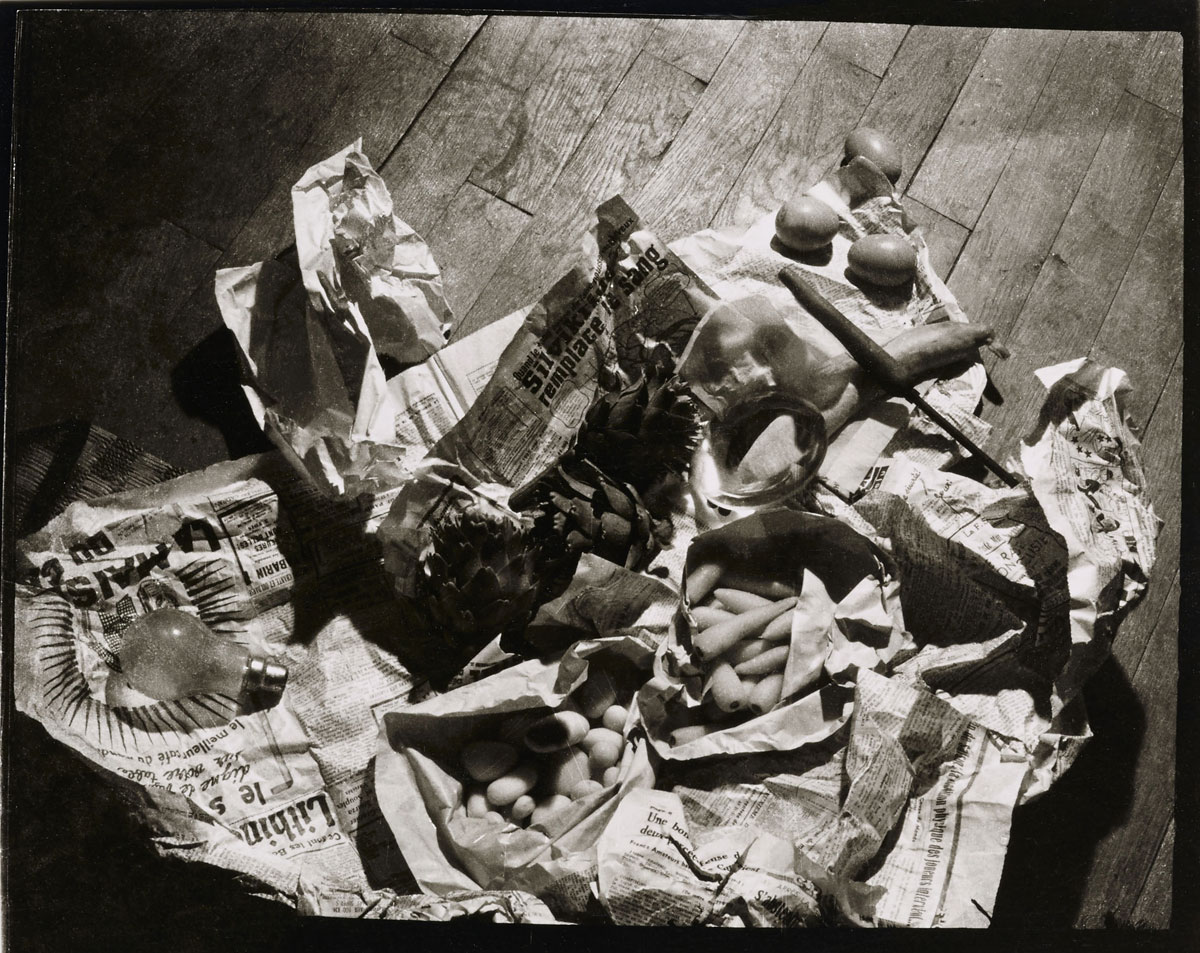
Wols (German, 1913-1951) 'Untitled [Still life - dining table]' 1937 from the exhibition 'Wols Photographer. The Guarded Look' at Martin-Gropius-Bau, Berlin, March - June, 2014


Wols (German, 1913-1951)
Untitled [Still life – dining table]
1937
© VG Bild-Kunst, Bonn 2014


Some familiar images that were also seen in the posting Wols’ Photography: Images Regained are complimented by 5 new ones. The two portraits of the artist Max Ernst are eerie (is that a suitable word for a portrait that is strong and unsettling?) and perceptive, Wols responsive to the status of his sitter as a pioneer of the Dada movement and Surrealism.

Dr Marcus Bunyan


Many thankx to the Martin-Gropius-Bau for allowing me to publish the photographs in the posting. Please click on the photographs for a larger version of the image.


Wols (German, 1913-1951) 'Nicole Bouban' Autumn 1932 - October 1933 / January 1935 to 1937 from the exhibition 'Wols Photographer. The Guarded Look' at Martin-Gropius-Bau, Berlin, March - June, 2014


Wols (German, 1913-1951)
Nicole Bouban
Autumn 1932 – October 1933 / January 1935 to 1937
© Kunst, Bonn 2014


Art Informel

The term Art Informel was originated by the French critic Michel Tapié and popularised in his 1952 book Un Art autre (Another art). A Parisian counterpart of Abstract Expressionism, Art Informel emphasised intuition and spontaneity over the Cubist tradition that had dominated School of Paris painting. The resulting abstractions took a variety of forms. For instance, Pierre Soulages’s black-on-black paintings composed of slashing strokes of velvety paint suggest the nocturnal mood of Europe immediately after the war.


Wols (German, 1913-1951) 'Untitled [Pavilion de l'Elegance - Creating a home with Alix (Germaine Krebs)]' 1937


Wols (German, 1913-1951)
Untitled [Pavilion de l’Elegance – Creating a home with Alix (Germaine Krebs)]
1937
© VG Bild-Kunst, Bonn 2014


Germaine Émilie Krebs (French, 1903-1993)

Germaine Émilie Krebs (1903-1993), known as Alix Barton and later as “Madame Grès”, relaunched her design house under the name Grès in Paris in 1942. Prior to this, she worked as “Alix” or “Alix Grès” during the 1930s. Formally trained as a sculptress, she produced haute couture designs for an array of fashionable women, including the Duchess of Windsor, Marlene Dietrich, Greta Garbo, Jacqueline Kennedy, and Dolores del Río. Her signature was cut-outs on gowns that made exposed skin part of the design, yet still had a classical, sophisticated feel. She was renowned for being the last of the haute couture houses to establish a ready-to-wear line, which she called a “prostitution”.

The name Grès was a partial anagram of her husband’s first name and alias. He was Serge Czerefkov, a Russian painter, who left her soon after the house’s creation. Grès enjoyed years of critical successes but, after Grès herself sold the business in the 1980s to Yagi Tsucho, a Japanese company, it faltered. In 2012, the last Grès store in Paris was closed.

Text from Wikipedia website


Wols (German, 1913-1951) 'Untitled [Swiss Pavilion - Wire Figure]' 1937


Wols (German, 1913-1951)
Untitled [Swiss Pavilion – Wire Figure]
1937
© VG Bild-Kunst, Bonn 2014


Wolfgang Schulze, known as Wols, was born in Berlin in 1913. As a painter and graphic artist he is considered to have been an important trailblazer of Art Informel. For the first time the Martin-Gropius-Bau in Berlin is presenting the largely unknown photographic oeuvre of Wols. These works foreshadow his development in the direction of non-representational art.

Wols grew up in Dresden, where he had an early encounter with photography as a profession through his attendance at a course in the studio of the Dresden photographer Genja Jonas. In 1932, after a brief sojourn in the milieu of the Berlin Bauhaus – then in the process of breaking up – the young Wols set off for Paris to realise his artistic ambitions.

Soon he was involved with the local Surrealists and made the acquaintance of other personalities in the theatrical, literary and art scenes. In this period Wols was mainly active as a photographer. In 1937 his works were exhibited for the first time in the prestigious Parisian Galérie de la Pléiade, which established his reputation as a photographer. It was at this time that he adopted the pseudonym Wols. One of his commissions was to document the Pavillon de l’Elégance at the 1937 World Exhibition in Paris.

At the same time he produced striking multiple black-and-white portraits of personalities such as Max Ernst, Nicole Boubant or Roger Blin. Over the years Wols’ imagery became increasingly radical. The representational motifs gradually acquired a more abstract dimension and forced the viewer to see the objects represented in a new light. In particular, an extraordinary set of photograms confirms his interest in replacing representational motifs with non-representational ones. Transferred to painting, this trend would later make him a pioneer of Art Informel.

Immediately after the outbreak of the Second World War Wols spent over a year in various internment camps in the south of France. In this period he turned more to watercolours, most of which were lost while he was fleeing from the Nazis.

Living in straitened circumstances Wols fought a losing battle with alcoholism and poor health. In 1951, as a result of his weakened physical condition, he died of food poisoning in Paris at the early age of 38. After his death, Wols’ work was displayed at the first three documenta exhibitions in Kassel (1955, 1959, 1964) and, in 1958, at the Venice Biennale. On 27 May 2014 he would have been 101.

The show covers all of his photographic work, including multiple portraits of famous artists, actors and writers, photographs of the “Pavillon de l’Élégance”, numerous still lifes, and many hitherto unknown motifs. The exhibition has been curated by the Kupferstich-Kabinett, Staatliche Kunstsammlungen Dresden, where this unique collection will be kept and systematically catalogued.

Press release from Martin-Gropius-Bau website


Wols (German, 1913-1951) 'Max Ernst' Fall 1932 - October / January 1935 to 1936


Wols (German, 1913-1951)
Max Ernst
Fall 1932 – October / January 1935 to 1936
© VG Bild-Kunst, Bonn 2014


Wols (German, 1913-1951) 'Max Ernst' Fall 1932 - October / January 1935 to 1936


Wols (German, 1913-1951)
Max Ernst
Fall 1932 – October / January 1935 to 1936
© VG Bild-Kunst, Bonn 2014


Wols permanently settled in Paris in 1933, producing his first paintings but also working as a photographer. His photographic work of this period showed the clear influence of Surrealism. In 1936, he received official permission to live in Paris with the help of Fernand Léger; as an army deserter, Schulze had to report to the Paris police on a monthly basis. In 1937, the year in which he adopted his pseudonym WOLS, his photographs began to appear in fashion magazines such as Harper’s Bazaar, Vogue, Femina as well as Revue de l’art. Many of these photographs anticipate the displays at the Exposition Internationale du Surréalisme held in Paris in the following year, in which much use was made of mannequins.

At the outbreak of World War II Wols, as a German citizen, was interned for 14 months in the notorious Les Milles camp – together with some 3500 other artists and intellectuals. He was not released until late 1940. After his release Wols moved for two years to Cassis, near Marseille, where he struggled to earn a living. The occupation of Southern France by the Germans in 1942 forced him to flee to Dieulefit, near Montélimar, where he met the writer Henri-Pierre Roché, one of his earliest collectors. He spent most of the war trying to emigrate to the United States, an unsuccessful and costly enterprise that may have driven him to alcoholism.

After the war Wols returned to Paris where he met Jean-Paul Sartre, Tristan Tzara and Jean Paulhan. He started to paint in oils in 1946 at the suggestion of the dealer René Drouin, who showed 40 of his paintings at his gallery in 1947. The same year Wols began to work on a number of illustrations for books by Paulhan, Sartre, Franz Kafka and Antonin Artaud. He fell ill but lacked the money to go to hospital, and throughout 1948 he worked largely in bed on these illustrations. In 1949 he took part in the exhibition Huit oeuvres nouvelles at the Galerie Drouin, along with Jean Dubuffet, Roberto Matta, Henri Michaux and other artists with whom he had a stylistic affinity.

Undergoing treatment for alcoholism, he moved to the country at Champigny-sur-Marne in June 1951. His early death later that year from food poisoning helped foster the legendary reputation that grew up around him soon afterwards. His paintings helped pioneer Art informel and Tachism, which dominated European art during and after the 1950s as a European counterpart to American Abstract Expressionism. Influenced by the writings of the philosopher Lao Tzu throughout his life, Wols also wrote poems and aphorisms that expressed his aesthetic and philosophical ideas.”

Text from the Weimar blog 2010


Wols (German, 1913-1951) 'Untitled [Paris - Flea Market]' Autumn 1932 - October 1933 / January 1935 to 1936


Wols (German, 1913-1951)
Untitled [Paris – Flea Market]
Autumn 1932 – October 1933 / January 1935 to 1936
© VG Bild-Kunst, Bonn 2014


Wols (German, 1913-1951) 'Untitled [Paris - Palisade]' Fall 1932 - October 1933 / January 1935 - August 1939


Wols (German, 1913-1951)
Untitled [Paris – Palisade]
Fall 1932 – October 1933 / January 1935 – August 1939
© VG Bild-Kunst, Bonn 2014


Wols (German, 1913-1951) 'Untitled [Paris - Eiffel Tower]' 1937


Wols (German, 1913-1951)
Untitled [Paris – Eiffel Tower]
1937
© VG Bild-Kunst, Bonn 2014


Wols (German, 1913-1951) 'Untitled [Still Life - Grapefruit]' 1938 - August 1939


Wols (German, 1913-1951)
Untitled [Still Life – Grapefruit]
1938 – August 1939
© VG Bild-Kunst, Bonn 2014


Wols (German, 1913-1951) 'Self Portrait with Hat' 1937-1938


Wols (German, 1913-1951)
Self Portrait with Hat
1937-1938
© VG Bild-Kunst, Bonn 2014


Martin-Gropius-Bau Berlin
Niederkirchnerstraße 7
Corner Stresemannstr. 110
10963 Berlin
Phone: +49 (0)30 254 86-0

Opening hours:
Wednesday to Monday 10 – 20 hrs
Tuesday closed

Martin-Gropius-Bau website

LIKE ART BLART ON FACEBOOK

Back to top

Exhibition: ‘Wols: Cosmos and Street’ at the Museo Nacional Centro de Arte Reina Sofía, Madrid

Exhibition dates: 14th February – 26th May, 2014

Curator: Guy Brett


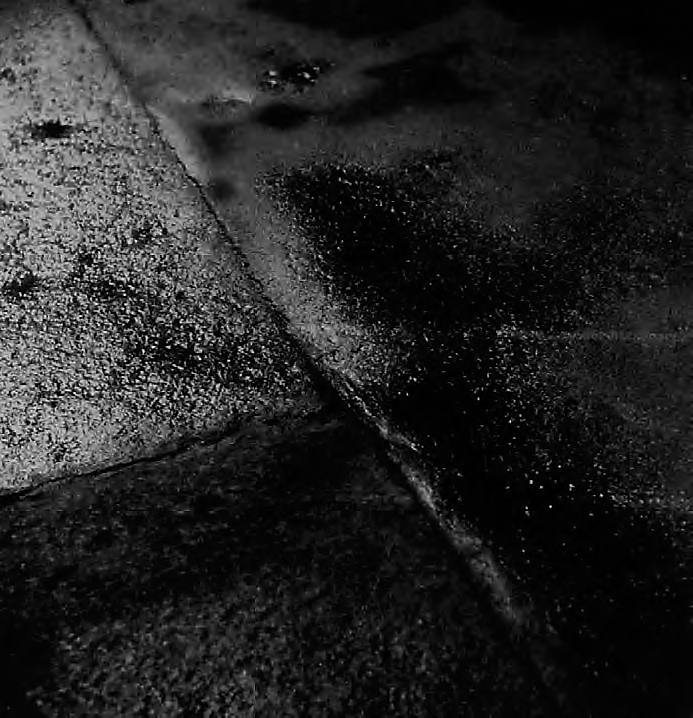
Wols (German, 1913-1951) 'Untitled' 1932-1941 from the exhibition 'Wols: Cosmos and Street' at the Museo Nacional Centro de Arte Reina Sofía, Madrid, February - May, 2014


Wols (German, 1913-1951)
Untitled
1932-1941
Silver gelatin print
14.9 x 18.2cm
Kunsthaus Zurich


How lucky we are!

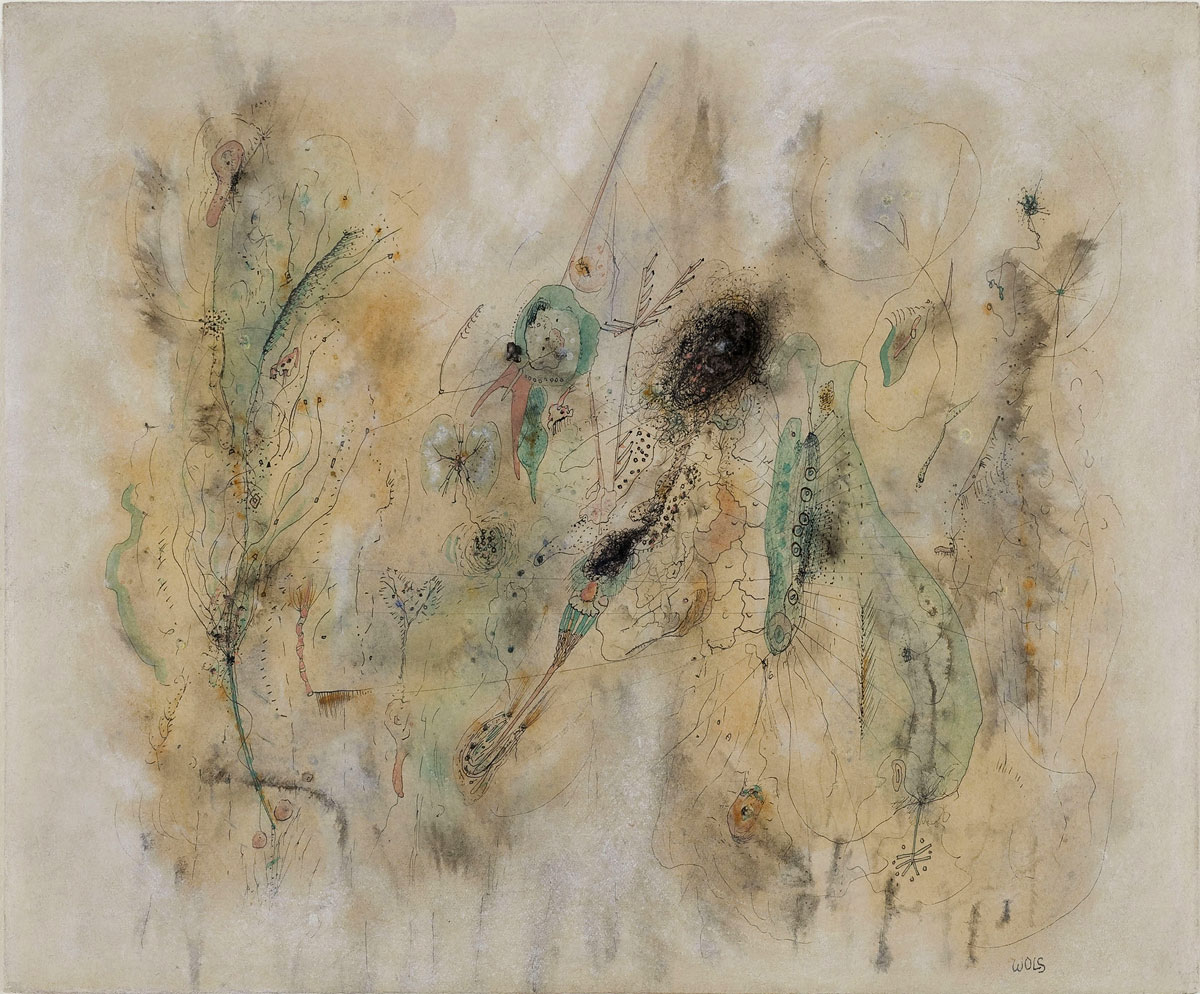
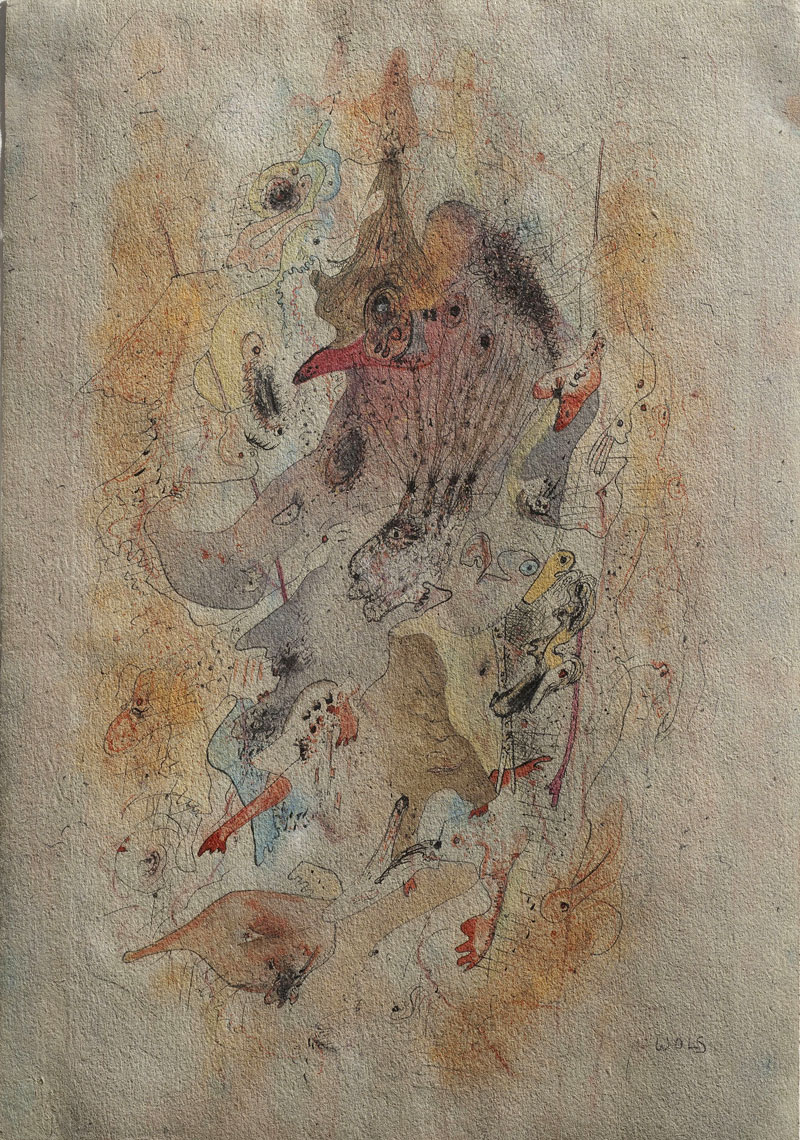
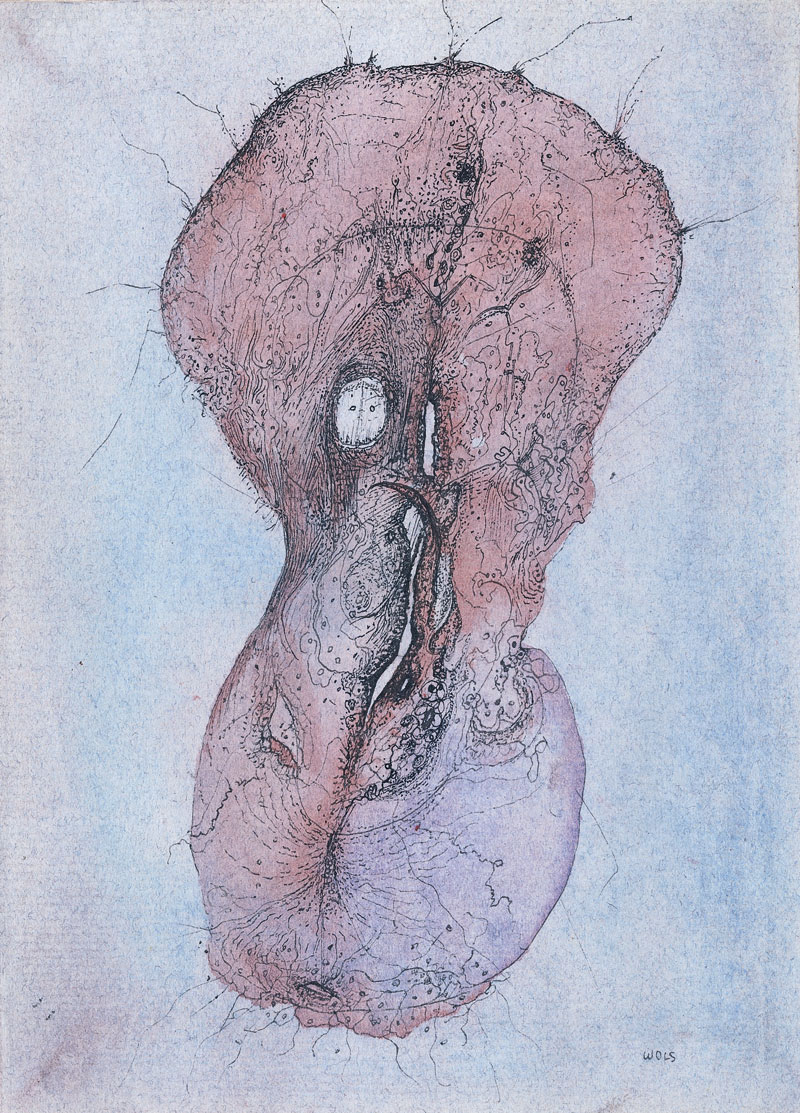
Two consecutive postings on the German artist Wols (a pseudonym for Alfred Otto Wolfgang Schulze May 27, 1913, Berlin – September 1, 1951, Paris), who is today considered a pioneer of Lyrical Abstraction – a type of abstract painting related to Abstract Expressionism undertaken in the post-war years by mainly French artists. He is also considered to be one of the most influential artists of the Art Informel and Tachisme movements. Both movements were opposed not only to Cubist and Surrealist movements that preceded it, but also to geometric abstraction (or “cold abstraction”).

Lyrical abstraction represented an opening to personal expression: Wols was not only a painter and photographer but he also wrote poems and aphorisms and studied the philosophy of Lao Tzu. This fascinating exhibition connects Wols’s photography, drawing and painting, and argues that his art forms (in)formed each other. The number of artists that have successfully worked in both mediums is limited, but as Wols shows they are not, and never have been, mutually exclusive.

The great sadness is that Wols was another talented artist who died young, at the age of just 38 – collateral damage of the conflagration that was the Second World War. He was an army deserter when he moved to Paris and was interned for 14 months at the start of the war, only to be released to live near Marseilles in 1940. The occupation of Southern France by the Germans in 1942 forced him to flee and he spent most of the rest of the war trying unsuccessfully to escape to America. During this time his alcoholism developed, an addiction that caused poor health and which, along with food poisoning, was ultimately to cost him his life.

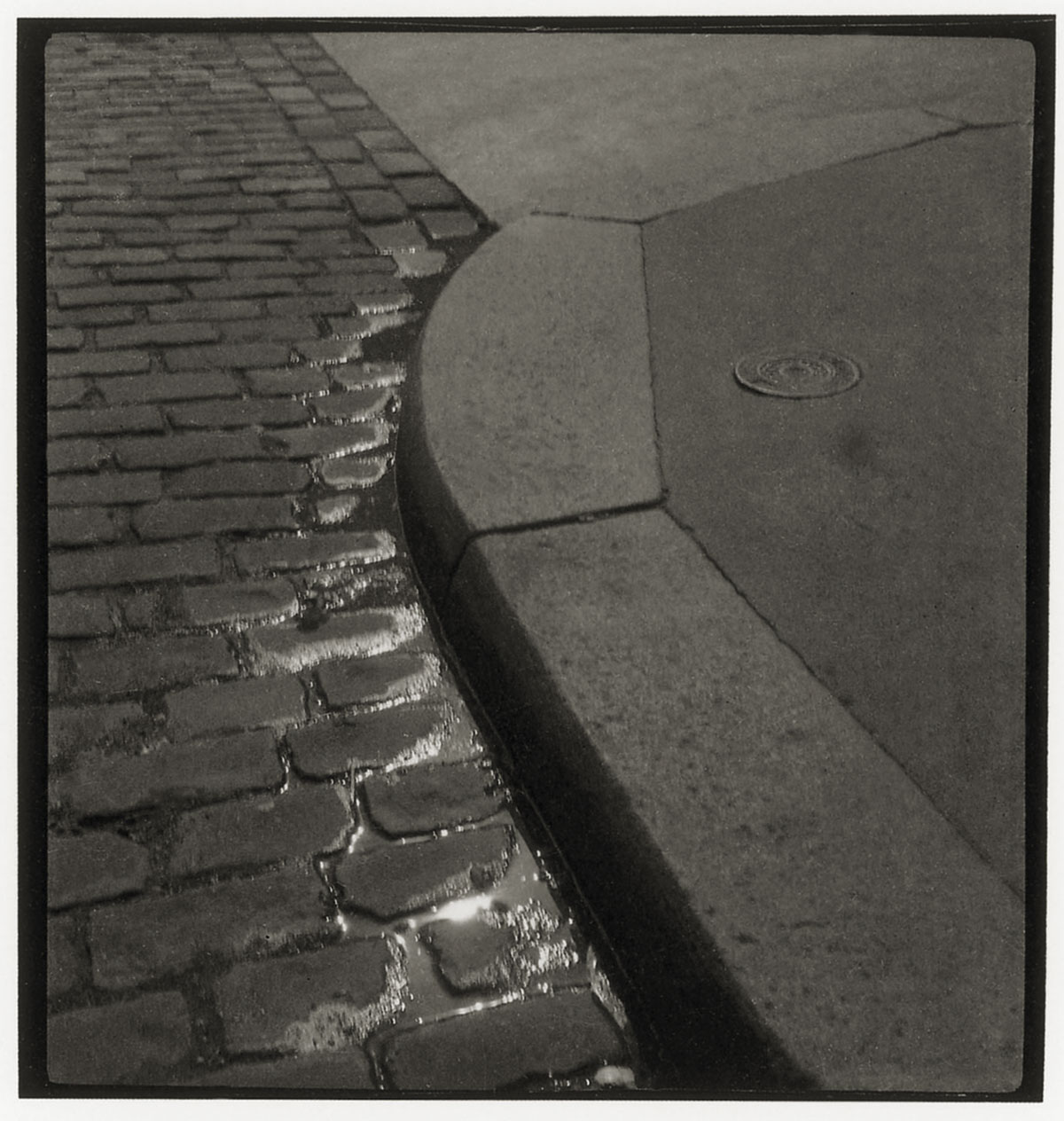
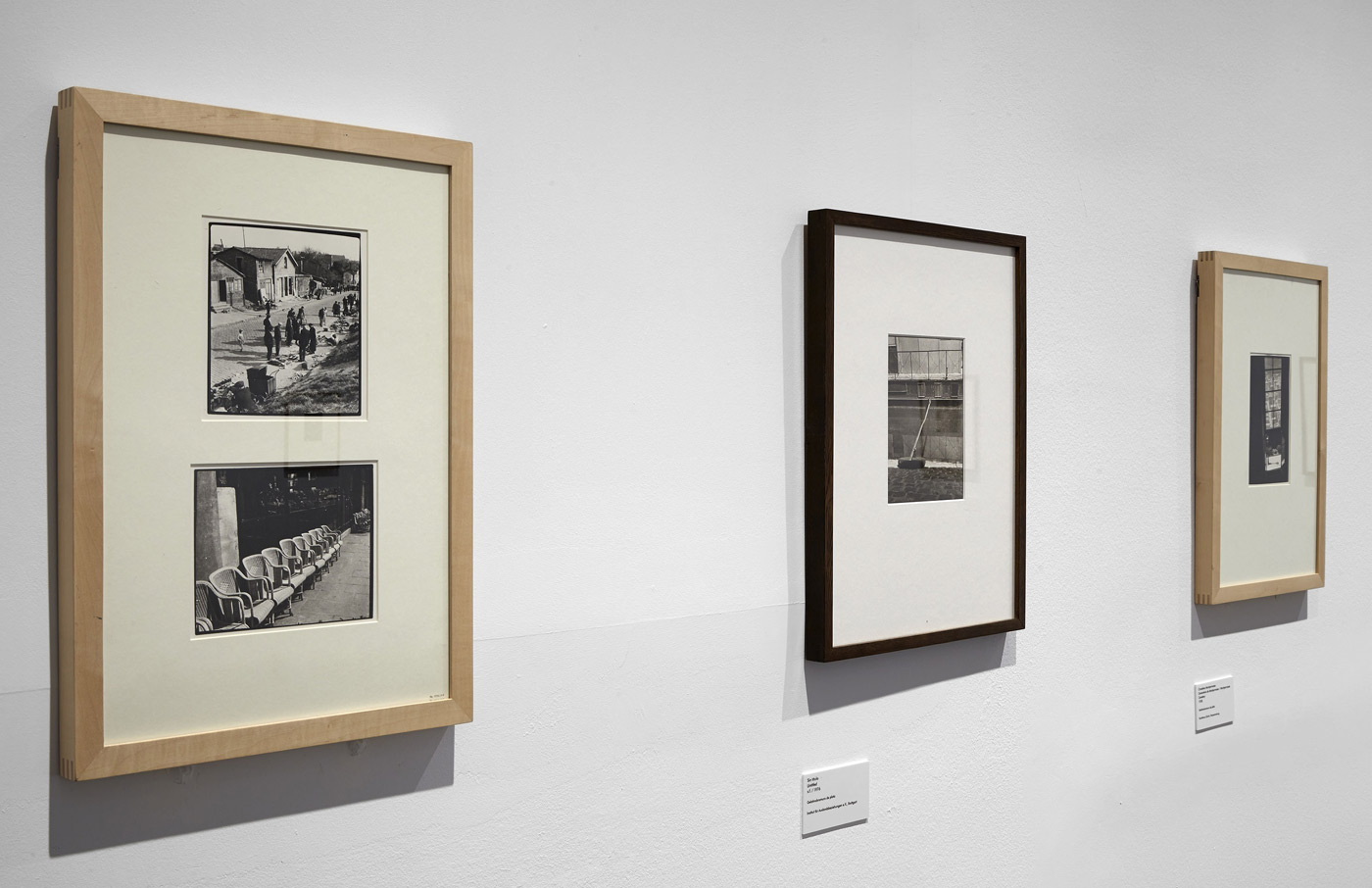
His photographs have a chthonic darkness. They inhabit a tenebrous reality, a shadowy underworld. Just look at Untitled (Cobblestone) (1932-1942, below) and observe how the dampness of the water seems to have the viscosity of congealed blood. During his internment he produced, as the press release states, “some of the strangest, most intricate and beautiful drawings of modern times.” They possess a certain, undefinable magic, filled as they are with amorphous animals and plants, filled with amour, a secret love. And finally his paintings – shattering, disturbing, bloody, hairy, earthbound and cerebral, homologous to wiring looms of the mind and/or the molecular structure of atoms – circling and popping and fizzing and scrapping their way into existence… creating an expanded conception of space and time that is both micro (cellular) and macro (celestial).

Wols has to be one of the most interesting artists of the 20th century and, elementally, one of its greatest. Such a pity that he died so young.

Dr Marcus Bunyan


Many thankx to the Museo Nacional Centro de Arte Reina Sofía for allowing me to publish the photographs and art work in the posting. Please click on the photographs for a larger version of the image


Wols (German, 1913-1951) 'Untitled' Nd / 1976


Wols (German, 1913-1951)
Untitled
Nd / 1976
Silver gelatin print
18.7 x 24cm
Institute for Foreign Cultural Relations, Stuttgart


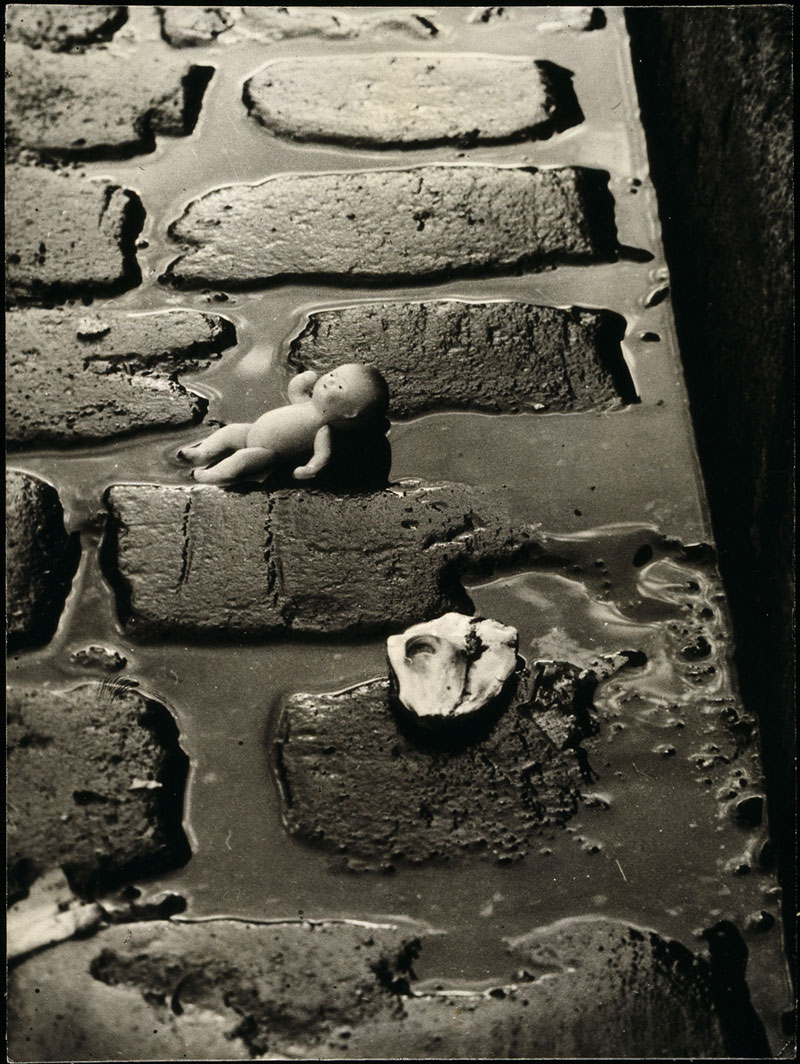
Wols (German, 1913-1951) 'Pepona doll on the cobbles' 1938-1939 from the exhibition 'Wols: Cosmos and Street' at the Museo Nacional Centro de Arte Reina Sofía, Madrid, February - May, 2014


Wols (German, 1913-1951)
Pepona doll on the cobbles
1938-1939
Silver gelatin print
23 x 17cm
Acquisition 2004
Centre Pompidou, Paris
National Museum of Modern Art/Centre for Industrial Creation


Wols (German, 1913-1951) 'Untitled (Cobblestone)' 1932-1942 / 1976


Wols (German, 1913-1951)
Untitled (Cobblestone)
1932-1942 / 1976
Gelatin silver print
18.7 x 24 cm
Institute for Foreign Cultural Relations, Stuttgart
© VEGAP, Madrid, 2014


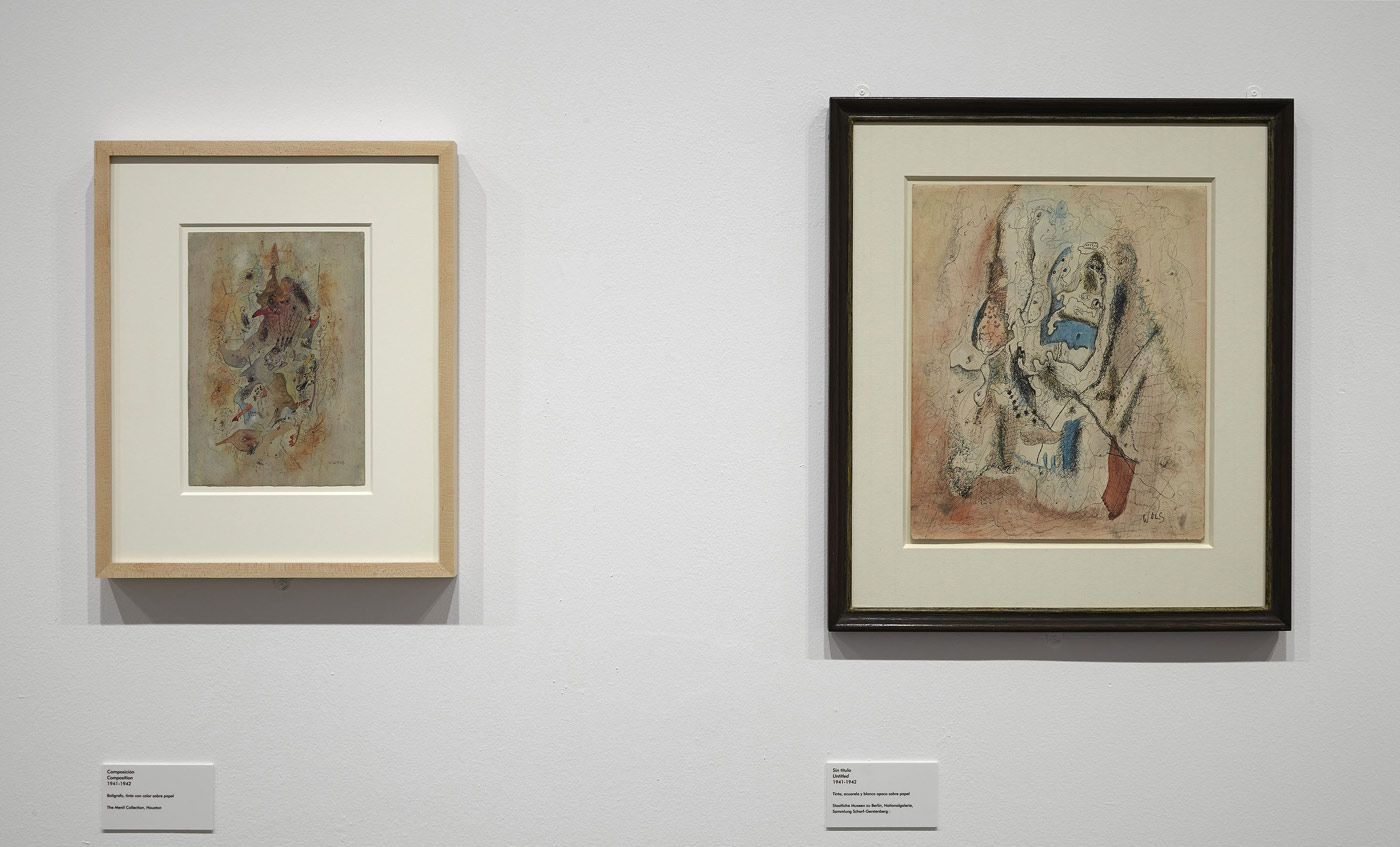
Wols is one of the most intriguing figures in 20th-century art. Born Otto Wolfgang Schulze into an upper middle class family in Berlin, he broke with Germany as the Nazis were coming to power, changed his name to Wols, and lived the rest of his life in France. During the 1930s he was best known as a photographer. The outbreak of the Second World War changed everything. As the citizen of a hostile country, Wols was continuously displaced from one French domicile, prison or internment camp to another. In these precarious conditions he started to draw in earnest, often by candlelight, lying on his bunk. In the harshness of the camps he developed the alcohol-dependency which contributed to his early death in 1951. At the same time he produced some of the strangest, most intricate and beautiful drawings of modern times.

Wols: Cosmos and Street does not attempt a survey of Wols’s work, nor a retrospective with a chronological structure. A significant aspect of Wols’s practice was that he did not title or date his works. Titles, somewhat over-poetic, were added later by his wife Gréty, and by friends such as the writer Henri-Pierre Roché. Instead, the exhibition presents his work in terms of two distinct kinds of ‘graphism’: one of the light (photography) and one of the line (drawing). It is true that in chronological terms photography came earlier in Wols’s life and was adopted partly for contingent reasons of making a living. He was intermittently a professional photographer but remained always a ‘poetic’ photographer with a inimitable eye.

In the exhibition title, “Street” stands for the everyday, earthbound, nitty-gritty human world revealed in Wols’s photographs. “Cosmos” stands for Wols’s exquisite drawings creating a vision of universal energy expressed in fluid constructs of biological and organic forms. The public is invited to come very close to Wols’s pictures, to peer into them and savour the details of their forms, the refined articulation of even the minutest mark.

During and after the Second World War Wols’s graphic work became increasingly abstract. Its difference from the crystalline and geometric end of the spectrum of abstraction, which is often identified with cosmological speculation, and informed much of kinetic art, could hardly be more marked. Wols’s creations are earthbound, biological, hairy and visceral, but they are no less a model of the universe. Tendencies in art which may have been mutually hostile at the time of their inception can now be seen to be two streams which converging in the desire to find a visual language which could encompass the hugely expanded conception of space and time that has come with the discoveries of modern science.

In its immediate context Wols’s work represents the turning of the Parisian surrealism of the 1930s towards the existentialism of the postwar years, towards l’art brut, l’art informel, and to artists like Fautrier, Dubuffet, Giacometti, and eventually Tinguely and Takis. A new conception of space is struggling to be born among those artists, which was in some ways foreseen in Wols’s works of the 1940s, where a gradual transformation takes place of a terrestrial into a cosmic space.

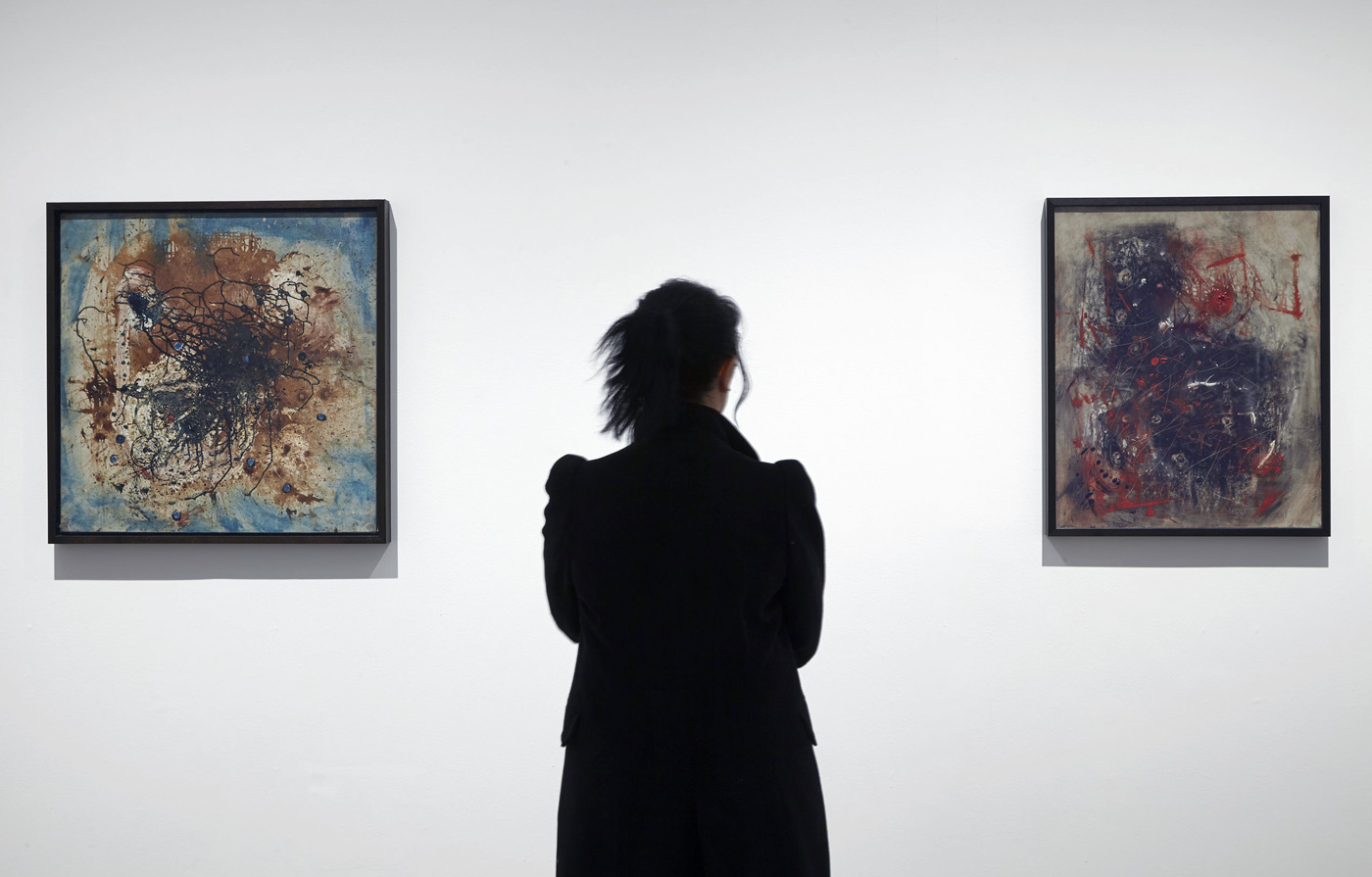
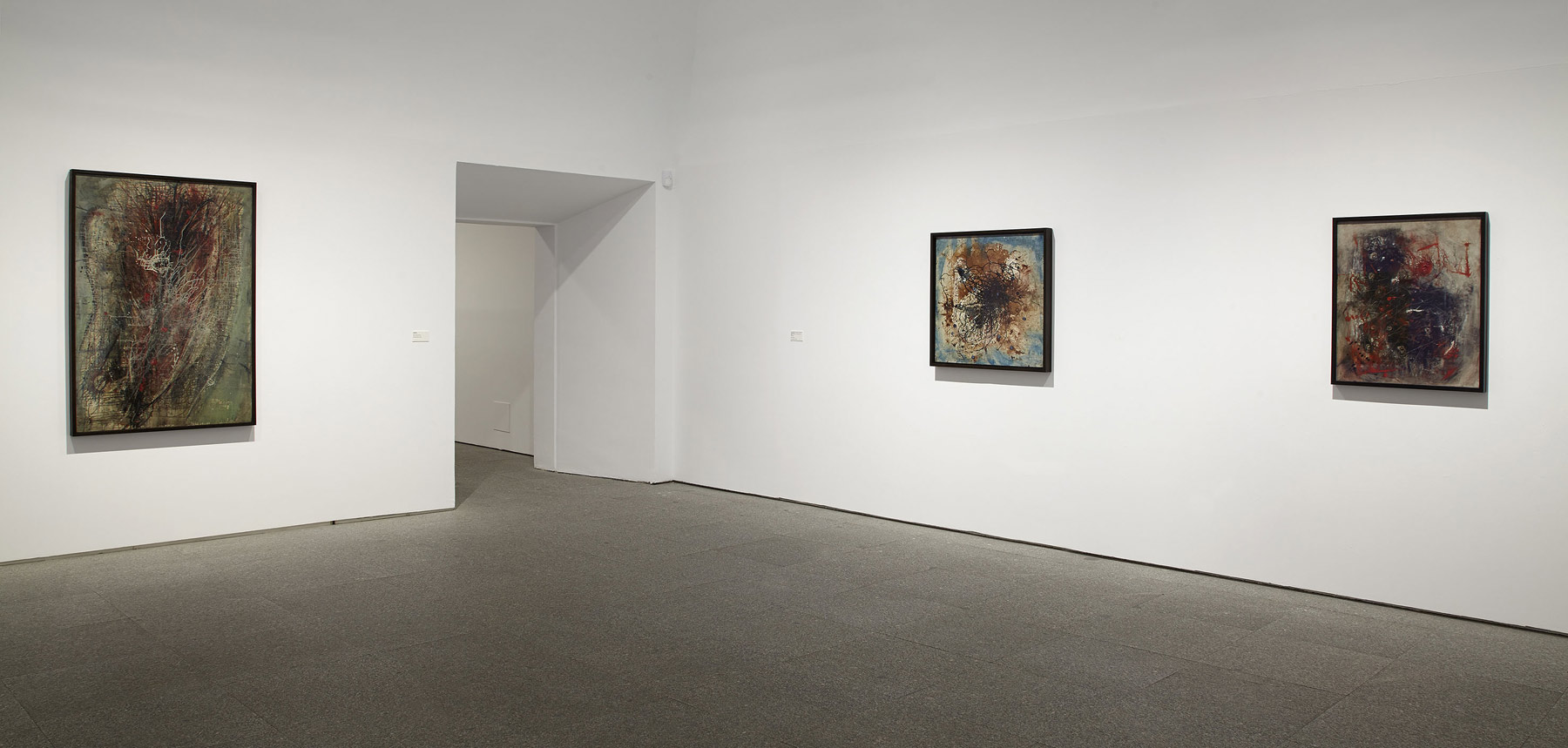
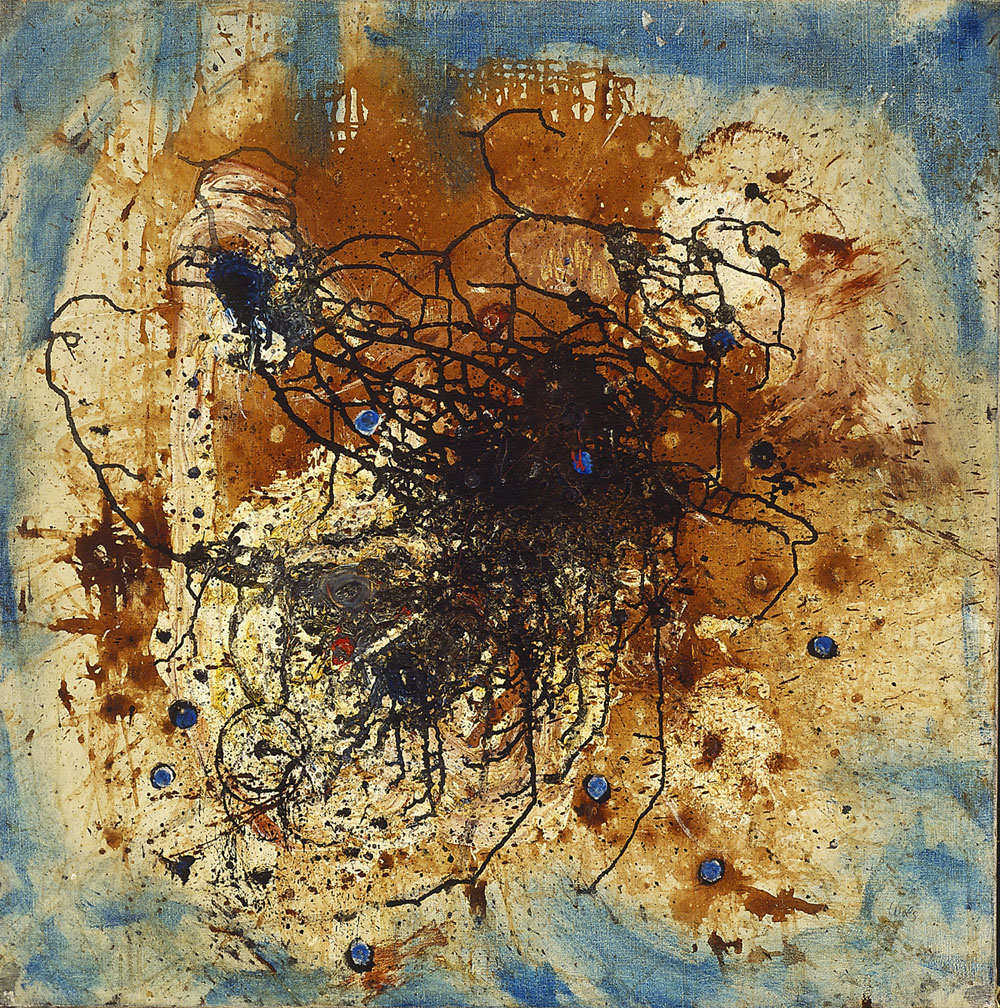
In 1945 the Parisian art dealer, René Drouin, proposed to Wols that he experiment with painting in oils on canvas. Drouin provided the necessary materials, encouraging Wols to work on a larger scale than he could achieve with watercolour on paper. Wols was philosophically and constitutionally against Drouin’s idea. Paintings in oil on canvas, he would say, “involve too much ambition and gymnastics. I am opposed to both.” Nevertheless, he began to produce oil paintings in 1947. It is as if Wols made paintings by attacking painting itself, an intensely individual position that artist Georges Mathieu at the time described as “shattering, disturbing and bloody.”

It is impossible to ignore the impression of ferocity that Wols’s oil paintings produce at their most audacious. Yet it was not through a simplistic ‘attack’ that Wols achieved this intensity since in these oil paintings passages of uncouth daubing alternate with passages of great delicacy.

Taking into account the contingencies that have helped shape it at distinct moments, and its abiding concerns and sensibilities, Wols’s work can be seen as a continuous play between abstraction and figuration. One of its special features is that it encompasses both photography and painting. In one sense, and allowing for the different technical procedures, the degree of abstraction in the ‘figurative’ photographs just about equals the degree of figuration in the ‘abstract’ drawings, watercolours and etchings. They take part in one another while remaining distinct. A fluid area is created, an area of transition conceived as something vast and tiny at the same time. It is in the creation of this uncertain, ‘unnamable’ but energised space that the insight and wit of Wols’s work really lies.

Press release from the Museo Nacional Centro de Arte Reina Sofía website


Installation view of the exhibition 'Wols: Cosmos and Street' at the Museo Nacional Centro de Arte Reina Sofía, Madrid 2014

Installation views of the exhibition 'Wols: Cosmos and Street' at the Museo Nacional Centro de Arte Reina Sofía, Madrid 2014

Installation views of the exhibition 'Wols: Cosmos and Street' at the Museo Nacional Centro de Arte Reina Sofía, Madrid 2014

Installation views of the exhibition 'Wols: Cosmos and Street' at the Museo Nacional Centro de Arte Reina Sofía, Madrid 2014


Installation views of the exhibition Wols: Cosmos and Street at the Museo Nacional Centro de Arte Reina Sofía, Madrid 2014


Wols (German, 1913-1951) 'Untitled (Green Composition)' c. 1942


Wols (German, 1913-1951)
Untitled (Green Composition)

c. 1942
Pen and ink, watercolour, white zinc and scraping on paper
23.3 x 27cm
Karin and Uwe Hollweg Stiftung, Bremen


Wols was the pseudonym of Alfred Otto Wolfgang Schulze (27 May 1913, Berlin – 1 September 1951, Paris), a German painter and photographer predominantly active in France. Though broadly unrecognised in his lifetime, he is considered a pioneer of lyrical abstraction, one of the most influential artists of the Tachisme movement. He is the author of a book on art theory entitled Aphorismes de Wols.

Tachisme (alternative spelling: Tachism, derived from the French word tache, stain) is a French style of abstract painting popular in the 1940s and 1950s. The term is said to have been first used with regards to the movement in 1951. It is often considered to be the European equivalent to abstract expressionism, although there are stylistic differences (American abstract expressionism tended to be more “aggressively raw” than tachisme). It was part of a larger postwar movement known as Art Informel (or Informel), which abandoned geometric abstraction in favour of a more intuitive form of expression, similar to action painting. Another name for Tachism is Abstraction lyrique (related to American Lyrical Abstraction). COBRA is also related to Tachisme, as is Japan’s Gutai group.

Texts from the Wikipedia website


Wols (German, 1913-1951 'Composition' 1941-1942


Wols (German, 1913-1951)
Composition
1941-1942
Pen, coloured ink on paper
20 x 12.8cm
The Menil Collection, Houston


Wols (German, 1913-1951) 'Slice of liver-cello' c. 1944


Wols (German, 1913-1951)
Slice of liver-cello
c. 1944
Pen and ink, watercolour and zinc white
18.3 x 13.2cm
Private collection


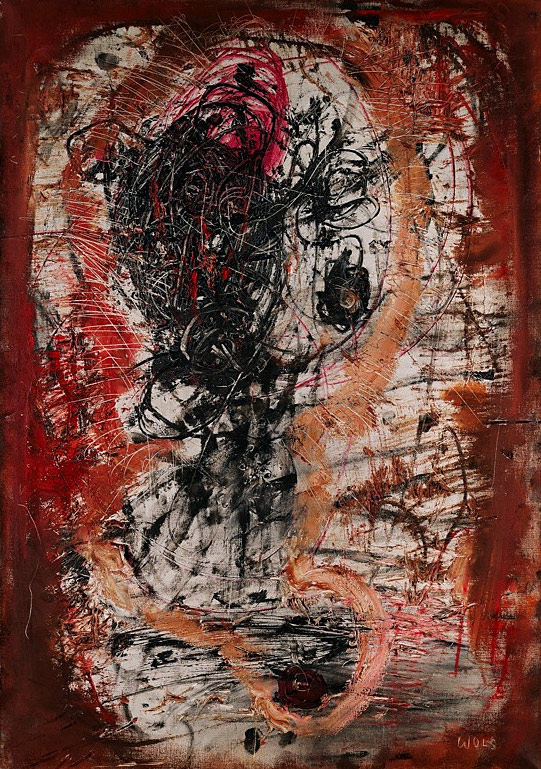
Wols (German, 1913-1951) 'Untitle'; also known as 'It's All Over The City' 1946-1947


Wols (German, 1913-1951)
Untitled; also known as It’s All Over The City
1946-1947
Oil on canvas
81 x 81cm
The Menil Collection, Houston


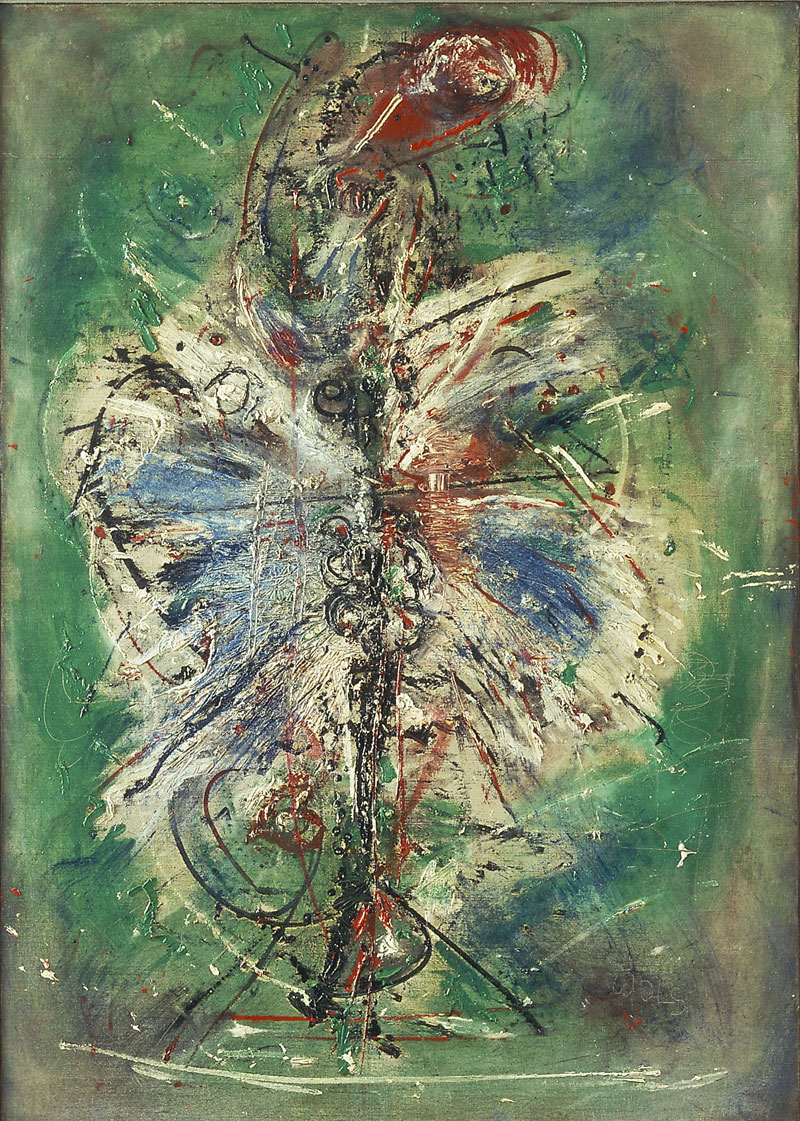
Wols (German, 1913-1951) 'The bird' 1949


Wols (German, 1913-1951)
The bird
1949
Oil on canvas
92.1 x 65.1cm
The Menil Collection, Houston


Wols (German, 1913-1951) 'Untitled' 1946-1947


Wols (German, 1913-1951)
Untitled
1946-1947
Oil on canvas


Museo Nacional Centro de Arte Reina Sofía
Sabatini Building
Santa Isabel, 52
Nouvel Building
Ronda de Atocha (with plaza del Emperador Carlos V)
28012 Madrid
Phone: (34) 91 774 10 00

Opening hours:
Monday 10.00am – 9.00pm
Tuesday Closed
Wednesday – Saturday 10.00am – 9.00pm
Sunday 10.00am – 14.30am

Museo Nacional Centro de Arte Reina Sofía website

LIKE ART BLART ON FACEBOOK

Back to top

Exhibition: ‘Erwin Blumenfeld (1897-1969) Photographs, drawings and photomontages’ at Jeu de Paume, Paris

Exhibition dates: 15th October, 2013 – 26th January, 2014

Curator: Ute Eskildsen


Erwin Blumenfeld (American-German, 1897-1969) 'Grauenfresse / Hitler, Holland, 1933' 1933 from the exhibition 'Erwin Blumenfeld (1897-1969) Photographs, drawings and photomontages' at Jeu de Paume, Paris, October 2013 - January 2014


Erwin Blumenfeld (American-German, 1897-1969)
Grauenfresse / Hitler, Holland, 1933
1933, printed later
Collage and ink on photomontage (gelatin silver print, double-exposition)
Collection Helaine and Yorick Blumenfeld, Courtesy of Modernism Inc., San Francisco
© The Estate of Erwin Blumenfeld


Considering the nature of Blumenfeld’s political collages such as Grauenfresse / Hitler, Holland, 1933 and Minotaur / Dictator I would say that the artist was very, very lucky to escape to America in 1941.

Let us remember all those that were not so fortunate…

Dr Marcus Bunyan


Many thankx to Jeu de Paume for allowing me to publish the photographs in the posting. Please click on the photographs for a larger version of the image.


“In 1940 Blumenfeld was interned as a German Jew in France, first in Montbard, then in Loriol, Le Vernet, and Catus. He made a daring escape with his family in 1941, returning via Casablanca to New York, where he subsequently lived and worked until his death.” (press release)

“After Blumenfeld returned to France, during World War II, Blumenfeld and his family spent time in Vézelay with Le Corbusier and Romain Rolland. He was incarcerated at Camp Vernet and other concentration camps. His daughter Lisette (who had just turned 18) was incarcerated at the Gurs internment camp. Luckily Blumenfeld was bunked next to the husband of the woman Lisette was bunked next to. Through postcards and letters the Blumenfeld family of five managed to reunite. In 1941 they obtained a visa and escaped to North Africa and then New York.”

Text from the Wikipedia website


Erwin Blumenfeld (American-German, 1897-1969) 'Minotaur / Dictator' [Minotaure / Dictateur] The Minotaur or The Dictator Paris, c. 1937 from the exhibition 'Erwin Blumenfeld (1897-1969) Photographs, drawings and photomontages' at Jeu de Paume, Paris, October 2013 - January 2014


Erwin Blumenfeld (American-German, 1897-1969)
Minotaur / Dictator [Minotaure / Dictateur]
The Minotaur or The Dictator

Paris, c. 1937
Vintage gelatin silver print
Collection Yvette Blumenfeld Georges Deeton / Art+Commerce, New York, Gallery Kicken Berlin, Berlin


The Vichy Policy on Jewish Deportation

Paul Webster

Jewish Statute

Despite autonomy from German policies, Pétain brought in legislation setting up a Jewish Statute in October 1940. By then about 150,000 Jews had crossed what was known as the Demarcation Line to seek protection from Vichy in the south – only to find they were subjected to fierce discrimination along lines practised by the Germans in the north.

Jews were eventually banned from the professions, show business, teaching, the civil service and journalism. After an intense propaganda campaign, Jewish businesses were ‘aryanised’ by Vichy’s Commission for Jewish Affairs and their property was confiscated. More than 40,000 refugee Jews were held in concentration camps under French control, and 3,000 died of poor treatment during the winters of 1940 and 1941. The writer Arthur Koestler, who was held at Le Vernet near the Spanish frontier, said conditions were worse than in the notorious German camp, Dachau.

During 1941 anti-Semitic legislation, applicable in both zones, was tightened. French police carried out the first mass arrests in Paris in May 1941 when 3,747 men were interned. Two more sweeps took place before the first deportation train provided by French state railways left for Germany under French guard on 12 March 1942. On 16 July 1942, French police arrested 12,884 Jews, including 4,501 children and 5,802 women, in Paris during what became known as La Grande Rafle (‘the big round-up’). Most were temporarily interned in a sports stadium, in conditions witnessed by a Paris lawyer, Georges Wellers.

‘All those wretched people lived five horrifying days in the enormous interior filled with deafening noise … among the screams and cries of people who had gone mad, or the injured who tried to kill themselves’, he recalled. Within days, detainees were being sent to Germany in cattle-wagons, and some became the first Jews to die in the gas chambers at Auschwitz.

Vichy crimes

Many historians consider that an even worse crime was committed in Vichy-controlled southern France, where the Germans had no say. In August 1942, gendarmes were sent to hunt down foreign refugees. Families were seized in their houses or captured after manhunts across the countryside. About 11,000 Jews were transported to Drancy in the Paris suburbs, the main transit centre for Auschwitz. Children as young as three were separated from their mothers – gendarmes used batons and hoses – before being sent to Germany under French guard, after weeks of maltreatment.

During 1942, officials sent 41,951 Jews to Germany, although the deportations came to a temporary halt when some religious leaders warned Vichy against possible public reaction. Afterwards, arrests were carried out more discreetly. In 1943 and 1944, the regime deported 31,899 people – the last train left in August 1944, as Allied troops entered Paris. Out of the total of 75,721 deportees, contained in a register drawn up by a Jewish organisation, fewer than 2,000 survived.

Revolt and aftermath

The number of dead would have been far higher if the Italian fascist leader, Benito Mussolini, had not ordered troops in France to defy German-French plans for mass round ups in Italian-occupied south-eastern France. Thousands were smuggled into Italy after Italian generals said that ‘no country can ask Italy, cradle of Christianity and law, to be associated with these (Nazi) acts’. After the Italian surrender in September 1943, arrests in the area restarted, but by then French public opinion had changed. Escape lines to Switzerland and Spain had been set up, and thousands of families risked death to shelter Jews. Since the war, Israel has given medals to 2,000 French people, including several priests, in recognition of this, and of the fact that about 250,000 Jews survived in France.

Post-war indifference to anti-Semitic persecution pushed the issue into the background until Serge Klarsfield, a Jewish lawyer whose Romanian father died in Germany, reawakened the national conscience. He tracked down the German chief of the Secret Service in Lyon, Klaus Barbie, who was hiding in Bolivia but was subsequently jailed for life in 1987. His case threw light on Vichy’s complicity in the Holocaust. Klarsfeld’s efforts were frustrated by the Socialist president of France at this time, Francois Mitterrand, who had been an official at Vichy and was decorated by Pétain. It was not until 1992 that one of Barbie’s French aides, Paul Touvier, who had been a minor figure in wartime France, was jailed for life for his crimes.

Facing facts

French courts, responding to Mitterrand’s warnings that trials would cause civil unrest, blocked other prosecutions, including that of the Vichy police chief, René Bousquet, who organised the Paris and Vichy zone mass arrests. He was assassinated by a lone gunman in June 1993. It was not until Mitterrand retired in 1995 that France began to face up to its responsibility in the persecution of Jews. When the new right-wing president, Jacques Chirac, came to power, he immediately condemned Vichy as a criminal regime and two years later the Catholic Church publicly asked for forgiveness for its failure to protect the Jews.

But the most significant step forward was the trial in 1997 of Maurice Papon, 89, for crimes concerning the deportation of Jews from Bordeaux. He had served as a cabinet minister after the war, before losing a 16-year legal battle to avoid trial. He was released from jail because of poor health, but his ten-year prison sentence has been interpreted as official recognition of French complicity in the Holocaust, although there are still those who continue to defend his actions.

Since the trial, France has opened up hidden archives and offered compensation to survivors – and ensured that schools, where history manuals used not to mention France’s part in the deportations, now have compulsory lessons on Vichy persecution. While anti-Semitism is still a social problem in France, there is no official discrimination, and today’s 600,000-strong Jewish community is represented at every level of the establishment, including in the Catholic Church, where the Archbishop of Paris is Cardinal Jean-Marie Lustiger.

Extract from Paul Webster. “The Vichy Policy on Jewish Deportation,” on the BBC History website, 17/02/2011 [Online] Cited 23/01/2021. Used under fair use conditions for the purposes of education and research


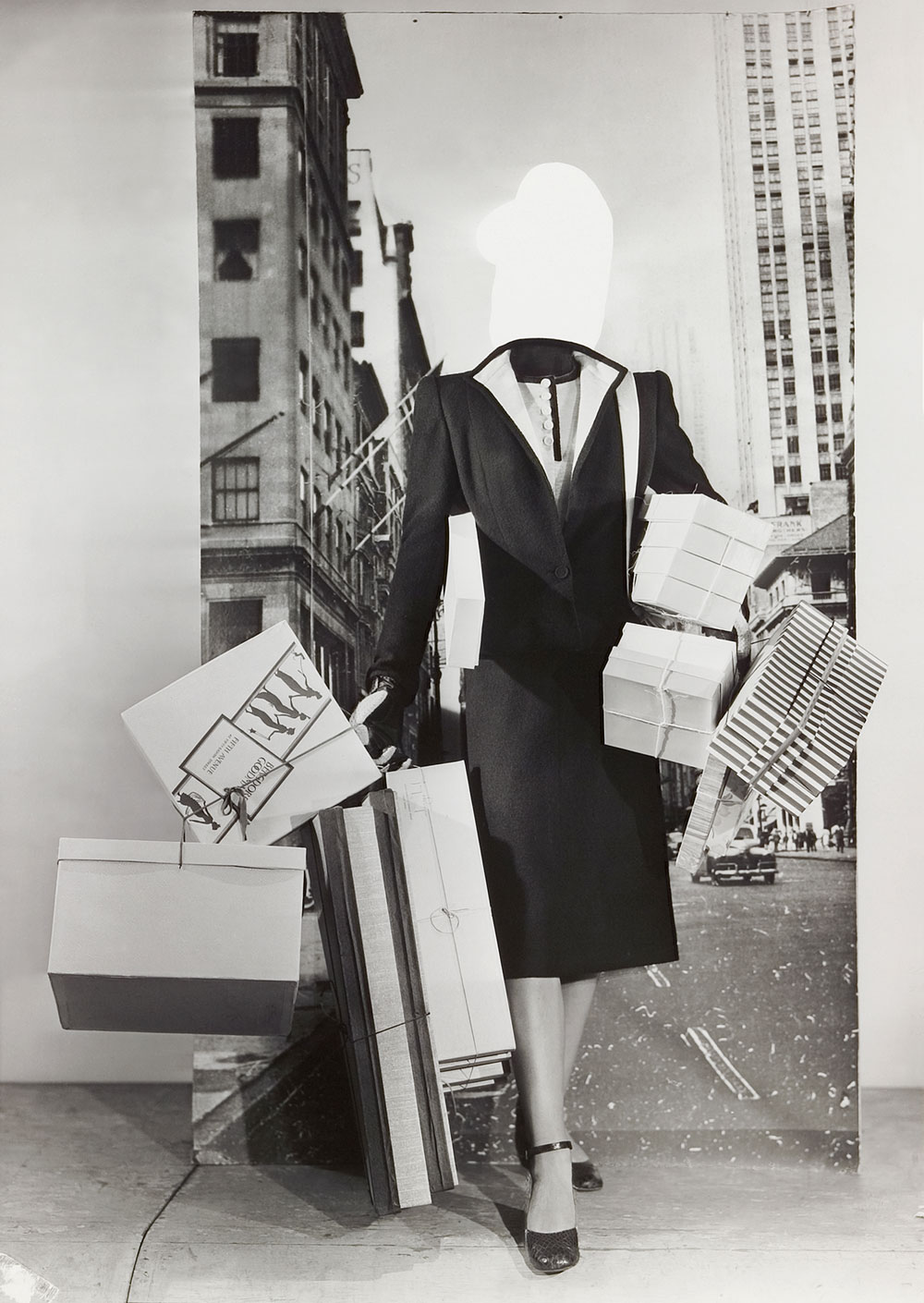
Erwin Blumenfeld (American-German, 1897-1969) 'Mode-Montage' c. 1950


Erwin Blumenfeld (American-German, 1897-1969)
Mode-Montage
c. 1950
Vintage gelatin silver print
Collection Helaine et Yorick Blumenfeld
Courtesy of Modernism Inc., San Francisco
© The Estate of Erwin Blumenfeld


Erwin Blumenfeld (American-German, 1897-1969) 'Marguerite von Sivers sur le toit du studio 9, rue Delambre' [Marguerite von Sivers on the roof of Blumenfeld’s studio at 9, rue Delambre] Paris, 1937


Erwin Blumenfeld (American-German, 1897-1969)
Marguerite von Sivers sur le toit du studio 9, rue Delambre [Marguerite von Sivers on the roof of Blumenfeld’s studio at 9, rue Delambre]
Paris, 1937
Vintage gelatin silver print
Collection Yvette Blumenfeld Georges Deeton / Art+Commerce, New York, Gallery Kicken Berlin, Berlin
© The Estate of Erwin Blumenfeld


Erwin Blumenfeld (American-German, 1897-1969) 'Untitled [Natalia Pasco]' 1942


Erwin Blumenfeld (American-German, 1897-1969)
Untitled [Natalia Pasco]
1942
Vintage gelatin silver print
Collection Henry Blumenfeld
© The Estate of Erwin Blumenfeld


Erwin Blumenfeld (American-German, 1897-1969) 'Voile mouillé' [Wet veil] Paris, 1937


Erwin Blumenfeld (American-German, 1897-1969)
Voile mouillé [Wet Veil]
Paris, 1937
Vintage gelatin silver print
Collection particulière, Suisse
© The Estate of Erwin Blumenfeld


Erwin Blumenfeld (American-German, 1897-1969) 'Cecil Beaton' 1946


Erwin Blumenfeld (American-German, 1897-1969)
Cecil Beaton
1946
Vintage silver gelatin print
Collection particulière, Suisse
© The Estate of Erwin Blumenfeld


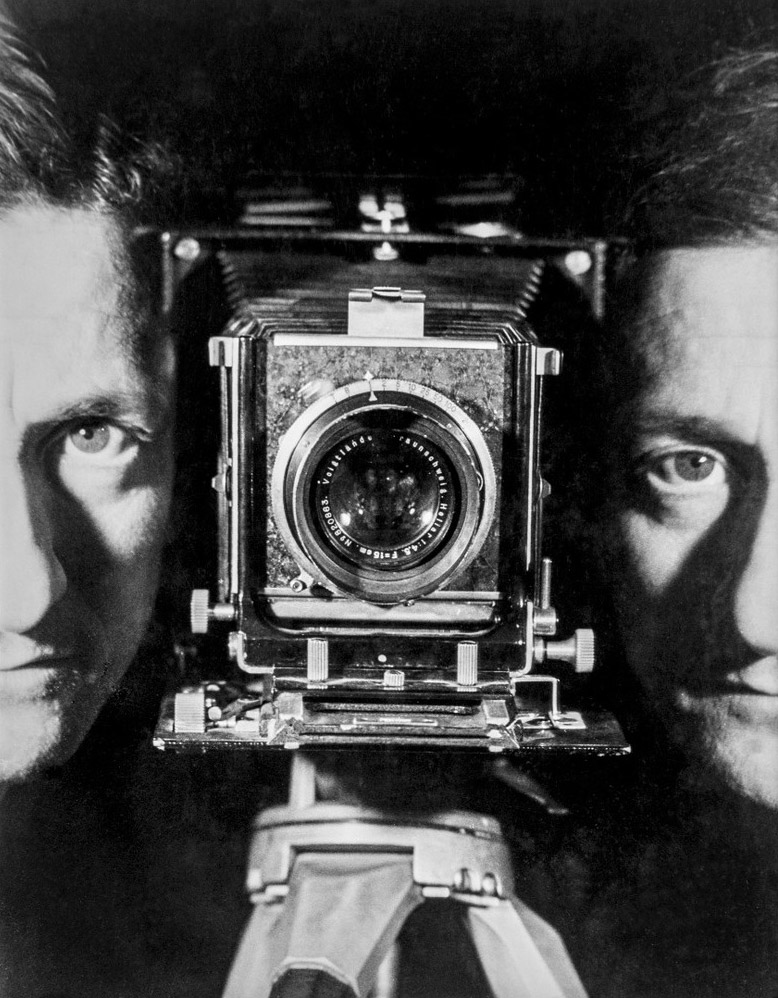
Erwin Blumenfeld (American-German, 1897-1969) 'Self-Portrait' Paris, c. 1937


Erwin Blumenfeld (American-German, 1897-1969)
Self-Portrait
Paris, c. 1937
Gelatin silver print. Printed later
Collection Helaine and Yorick Blumenfeld
© The Estate of Erwin Blumenfeld


Erwin Blumenfeld (American-German, 1897-1969) 'Untitled (Self-Portrait)' 1945


Erwin Blumenfeld (American-German, 1897-1969)
Untitled (Self-Portrait)
1945


Erwin Blumenfeld’s life and work impressively document the socio-political context of artistic development between the two World Wars, while highlighting the individual consequences of emigration. The exhibition devoted to Erwin Blumenfeld’s multi-layered œuvre brings together over 300 works and documents from the late 1910s to the 1960s, and encompasses the various media explored by the artist throughout his career: drawings, photographs, montages and collages.

This exhibition traces his visual creativity and encompasses the early drawings, the collages and montages, which mostly stem from the early 1920s, the beginnings of his portrait art in Holland, the first black and white fashion photographs of the Paris period, the masterful colour photography created in New York and the urban photos taken toward the end of his life.

The retrospective also showcases his drawings, many of which have never been shown before, as well as his early collages and photomontages, shedding fascinating light on the evolution of his photographic oeuvre and revealing the full extent of his creative genius. The now classic motifs of his experimental black-and-white photographs can be seen alongside his numerous self-portraits and portraits of famous and little-known people, as well as his fashion and advertising work.

In the first years of his career, he worked only in black and white, but as soon as it became technically possible he enthusiastically used colour. He transferred his experiences with black-and-white photography to colour; applying them to the field of fashion, he developed a particularly original repertoire of forms. The female body became Erwin Blumenfeld’s principal subject. In his initial portrait work, then the nudes he produced while living in Paris and, later on, his fashion photography, he sought to bring out the unknown, hidden nature of his subjects; the object of his quest was not realism, but the mystery of reality

Blumenfeld’s work was showcased most recently in France in a 1981 show at the Centre Pompidou, which focused on his fashion photography, in 1998 at the Maison Européenne de la Photographie, as well as more recently in the exhibition Blumenfeld Studio, Colour, New York, 1941-1960 (Chalon-sur-Saône, Essen, London).

Press release from the Jeu de Paume website


“Bringing together over three hundred works and documents dating from the late 1910s to the 1960s, this exhibition, the first in France to showcase the multilayered aspects of Erwin Blumenfeld’s oeuvre, encompasses the various media explored by the artist throughout his career: drawing, photography, montage, and collage.

The life and work of Erwin Blumenfeld (Berlin, 1897 – Rome, 1969) provides an impressive record of the socio-political context of artistic development between the two World Wars, while highlighting the individual consequences of emigration. Erwin Blumenfeld, a German Jew, only spent a few years in his country of birth. It was only in 1919, when he was in self-imposed exile in the Netherlands, that Blumenfeld began to take a deeper interest in photography, particularly the photographic process and above all the artistic possibilities offered by darkroom experiments. For a short while, he ran an Amsterdam-based portrait studio that doubled as an exhibition space, before moving to Paris in 1936, where the art dealer Walter Feilchenfeldt helped him rent a studio in the rue Delambre. That same year, his photographs were exhibited at the Galerie Billiet, while the following year saw his first beauty cover, for Votre Beauté magazine. In 1938 he received a visit from leading fashion photographer Cecil Beaton, who helped him to obtain a contract with the French Vogue. Blumenfeld travelled to New York, returning in 1939, shortly before the outbreak of war, to become Harper’s Bazaar‘s fashion correspondent in Paris.

In 1940 he was interned as a German Jew in France, first in Montbard, then in Loriol, Le Vernet, and Catus. He made a daring escape with his family in 1941, returning via Casablanca to New York, where he subsequently lived and worked until his death. It was in New York that Blumenfeld’s astonishing career as a much sought after, highly paid fashion photographer really took off, first of all in the studio he shared with Martin Munkácsi, then from 1943 in his own premises. The contract he signed with the publishers Condé Nast in 1944 marked the beginning of ten years of remarkable photography and cover shots for various magazines in the company’s stable. Following on from his experimental black-and-white shots of the 1930s, he began playing with colour. The present exhibition includes, besides photographs, both magazine work and early experimental films made for the Dayton department store in Minneapolis, his leading advertising customer.

Not until 1960 did Blumenfeld return to Berlin for a visit. He devoted the following years to finishing his autobiography, begun in the 1950s. The work was completed in 1969 with the help of his assistant Marina Schinz, but was only published in 1975, initially in French translation, then in the original German in 1976. His book My One Hundred Best Photos was also released posthumously, in 1979.

Drawings, Montages, and Collages

Between 1916 and 1933 Erwin Blumenfeld produced a fairly limited number of drawings and montages. As a young man he was very interested in literature, writing poems and short stories. And as early as 1915 he mentioned that he was interested in writing an autobiography. Almost all of his montages and collages include drawings and snippets of language. He plays with written and printed words and typography, juxtaposing names, concepts, and places to create ironic commentaries and provocative titles. His collages typically combine drawing, language, and cut-outs of original or printed photographs. He also often used letter stationery to form a background, leaving bare spaces. In 1918 Blumenfeld made the acquaintance of the Dadaist George Grosz; two years later he and Paul Citroen wrote to Francis Picabia in the name of the Hollandse Dadacentrale, but neither was present at the First International Dada Fair in Berlin in 1920. That same year, Blumenfeld began using the pseudonyms Erwin Bloomfeld and Jan Bloomfield, as documented in his Dadaist publications and in some of his collages. The drawings in the present exhibition, most of which have never been shown in public, were produced in Berlin and the Netherlands. Only a handful of them are dated. They are quick sketches from life or from imagination, rough cartoons and acid caricatures, in pencil, ink, watercolour, or coloured pencil – whatever was to hand. Blumenfeld was clearly fascinated by the quality and immediacy of drawing as a medium, and, as these works reveal, it certainly stimulated his playful side.

Self-Portraits

Blumenfeld took his first photographs as a schoolboy, using himself as one of his first subjects. The earliest date from the 1910s, but he continued taking self-portraits to the end of his life. The young man with the dreamy gaze turned into the louche bohemian with a cigarette, then the carefully staged photographer experimenting with his camera. His self-portraits are not the product of excessive vanity, but rather playful experiments, with and without masks, models, and other grotesque objects such as a calf’s head, all used to create witty images.

Portraits

Blumenfeld’s first steps in professional photography were in portraiture. He started “learning by doing” in the early 1920s in Amsterdam, where he had opened the ladies handbag store Fox Leather Company. This is where he took portraits of customers, using a darkroom in the back of the store. Comparison of the contact sheets from the time with the blow-ups taken from them clearly shows, right from the outset, the importance in Blumenfeld’s work of the finishing in the lab. The final images display extremely tight framing, high levels of contrast, and lighting that creates dramatic, even devilish, effects. When he arrived in Paris in 1936 his first photographs were portraits, featuring among others Henri Matisse and Georges Rouault. Although he quickly entered the Paris fashion scene, he retained a strong interest in portraiture throughout the remainder of his life.

Nudes

Blumenfeld’s earliest, highly narrative nudes date from his time in the Netherlands, but the subject only became a passion during his Paris years from 1936 on, when he discovered the work of French avant-garde photographers. His admiration for them is particularly evident in his nude photographs, as is the influence of Man Ray’s work. The bodies of the women in these images were surfaces onto which he projected his artistic imagination. He cut them up, solarised them, and transformed them into abstract imagery through the play of light and shadow. The faces of his nudes from the 1930s are only rarely visible, the women remaining somewhat mysterious entities. The nudes Blumenfeld produced in the 1950s after he had settled in New York tended to be more concrete, illustrative works.

Architecture

The black-and-white architectural photographs that Erwin Blumenfeld took in the 1930s feature buildings and urban spaces from various experimental and abstract perspectives. The Eiffel Tower, for instance, is captured in sharp reliefs of light and shade, while the photographs of Rouen Cathedral are intended to draw the viewer’s visual attention to the building’s specific forms. Blumenfeld expresses his artistic vision and his knowledge of Gothic architecture by focusing on the abstraction of details. During the 1950s and 1960s Blumenfeld used a 35mm camera for cityscapes. The exhibition showcases three of these colour slide projects for the first time. They feature New York, Paris, and Berlin – three places that made a mark on his art and also shaped his career.

The Dictator

In 1933, according to his autobiography, Blumenfeld reacted to Hitler’s rise to power in Germany with a photomontage. This outstanding piece of work, probably his most famous photograph, symbolises and anticipates the dictator’s dehumanisation. Following on from the political themes in some of his early collages, he here combined different negatives – a skull and a portrait of Hitler – to make a single print. In one of these montages he included a swastika, while in a different portrait “bleeding eyes” were added later on the surface. Later on, in Paris, he photographed a calf’s head, using this subject to compose different images. One in which he placed the animal’s head on a woman’s torso was titled The Minotaure or The Dictator. This image, which does not refer to a specific figure, is obviously intended to be allegorical. In 1941 Blumenfeld was able to escape from the Nazis with his family to New York.

Fashion

Blumenfeld’s move to Paris in 1936 marked the beginning of his career as a fashion photographer, although he had already had contacts with magazines in Paris while living in Amsterdam. The work that appeared in French publications in the late 1930s raised Blumenfeld’s profile as a modernist photographer and brought him to the attention of the famous British photographer Cecil Beaton, who visited him in his studio in 1938 and helped him sign his first contract with the French edition of Vogue. When Blumenfeld made his first trip to New York following his sensational set of fashion photographs on the Eiffel Tower, he came home with a new contract as Paris fashion correspondent for Harper’s Bazaar. He was only able to file his reports for a year before he was interned in various prison camps across France. In 1941 he was able to escape from German-occupied France to New York with his family. In the first half of the 1950s, he drew on his experiments in black-and-white photography to develop an exceptionally original artistic repertoire, reflected in his use of colour and his fashion work.

Ute Eskildsen
Curator of the exhibition
Translated from German by Susan Pickford


Erwin Blumenfeld (American-German, 1897-1969) 'Three Graces (1947), New York' 1947


Erwin Blumenfeld (American-German, 1897-1969)
Three Graces (1947), New York
1947


Leslie Petersen appears here in a triple variation inspired by Botticelli’s Primavera. The photograph, was intended to show off a gown by Cadwallader. The final image is made of two shots. The two on the right are similar but with different degrees of sharpness. The pose on the left is different.

Text from Phaidon


Erwin Blumenfeld (American-German, 1897-1969) 'Nude (Lisette)' Paris, 1937


Erwin Blumenfeld (American-German, 1897-1969)
Nude (Lisette)
Paris, 1937
Gelatin silver print, negative print, solarisation. Vintage print
Collection Yvette Blumenfeld Georges Deeton / Art + Commerce, New York, Gallery Kicken Berlin, Berlin
© The Estate of Erwin Blumenfeld


Erwin Blumenfeld (American-German, 1897-1969) 'Charlie' 1920


Erwin Blumenfeld (American-German, 1897-1969)
Charlie
1920
Collage, Indian ink, watercolour and pencil on paper
Collection Helaine and Yorick Blumenfeld
© The Estate of Erwin Blumenfeld


Erwin Blumenfeld (American-German, 1897-1969) 'Untitled, New York, 1944' 1944


Erwin Blumenfeld (American-German, 1897-1969)
Untitled, New York, 1944
1944
Gelatin silver print. Vintage print
Collection Henry Blumenfeld
© The Estate of Erwin Blumenfeld


Erwin Blumenfeld (American-German, 1897-1969) 'In hoc signo vinces [in this sign you will conquer]' 1967


Erwin Blumenfeld (American-German, 1897-1969)
In hoc signo vinces [in this sign you will conquer]
1967
Gelatin silver print. Vintage print
Private collection, Switzerland
© The Estate of Erwin Blumenfeld


Erwin Blumenfeld (American-German, 1897-1969) 'Audrey Hepburn' New York, 1950


Erwin Blumenfeld (American-German, 1897-1969)
Audrey Hepburn
New York, 1950
Vintage silver gelatin print
Collection particulière, Suisse.
© The Estate of Erwin Blumenfeld


Audrey Hepburn is wearing a hat designed by Blumenfeld and made by Mister Fred, one of New York’s most talented milliners. Blumenfeld here uses a system of mirrors showing the front and back of the hat and allowing infinite repetition of the motif.

Text from Phaidon


Erwin Blumenfeld (American-German, 1897-1969) 'Untitled [Homme agenouillé avec tour]' [Kneeling man with tower] 1920


Erwin Blumenfeld (American-German, 1897-1969)
Untitled [Homme agenouillé avec tour] [Kneeling man with tower]
1920
Indian ink, ink, watercolor and collage on paper
Collection Henry Blumenfeld.
© The Estate of Erwin Blumenfeld


Erwin Blumenfeld (American-German, 1897-1969) 'Group with Chaplin' Early 1920's


Erwin Blumenfeld (American-German, 1897-1969)
Group with Chaplin
Early 1920’s
Gouache and pencil on paper
Collection Henry Blumenfeld
© The Estate of Erwin Blumenfeld


Erwin Blumenfeld (American-German, 1897-1969) 'Untitled (Green dress)' 1946


Erwin Blumenfeld (American-German, 1897-1969)
Untitled (Green dress)
1946


Erwin Blumenfeld (American-German, 1897-1969) 'Do your part for the Red Cross' [Soutenez la Croix-Rouge] 1945


Erwin Blumenfeld (American-German, 1897-1969)
Do your part for the Red Cross [Soutenez la Croix-Rouge]
1945
Variante de la photographie de couverture de Vogue US, 15 mars 1945
Variant of a cover photograph of Vogue, “Do your part for the Red Cross”, New York, March 15th, 1945
Inkjet print on Canson baryta paper, posthumous print (2012)
Collection Henry Blumenfeld.
© The Estate of Erwin Blumenfeld


A model, a red cross: fashion and current affairs superimposed. The background to this humanitarian appeal is the liberation of the concentration camps and the aid brought to prisoners of war. Blumenfeld reinterprets these humanitarian signs just as he blurs those of fashion.

Text from Phaidon


Erwin Blumenfeld (American-German, 1897-1969) Variant of the photograph published in Life Magazine entitled "The Picasso Girl" [The young woman of Picasso] (model: Lisette) c. 1941-1942


Erwin Blumenfeld (American-German, 1897-1969)
Variante de la photographie parue dans ‘Life Magazine’ et intitulée “The Picasso Girl” [La jeune femme Picasso]
Variant of the photograph published in ‘Life Magazine’ entitled “The Picasso Girl” [The young woman of Picasso]
(model: Lisette)
c. 1941-1942
Inkjet printing on Canson baryta paper, posthumous print (2012)
Collection Henry Blumenfeld
© The Estate of Erwin Blumenfeld


Erwin Blumenfeld (American-German, 1897-1969) Three profiles. Variant of the photograph published in the article "Color and lighting" Photograph Annual of 1952


Erwin Blumenfeld (American-German, 1897-1969)
The young woman of Picasso
Trois profils. Variante de la photographie parue dans l’article “Color and lighting” [Couleur et éclairage], de Photograph Annual 1952
Three profiles. Variant of the photograph published in the article “Color and lighting” Photograph Annual of 1952
1952
Inkjet printing on Canson baryta paper, posthumous print (2012)
Collection Henry Blumenfeld
© The Estate of Erwin Blumenfeld


Jeu de Paume
1, Place de la Concorde
75008 Paris
métro Concorde
Phone: 01 47 03 12 50

Opening hours:
Tuesday – Sunday 11am – 7pm
Closed Monday

Jeu de Paume website

LIKE ART BLART ON FACEBOOK

Back to top

Exhibition: ‘French Twist: Masterworks of Photography from Atget to Man Ray’ at the Delaware Art Museum, Wilmington, DE

Exhibition dates: 29th June – 15th September, 2013

Curator: Heather Campbell Coyle


Ilse Bing (German, 1899-1998) 'Cancan Dancers' Moulin Rouge 1931


Ilse Bing (German, 1899-1998)
Cancan Dancers
Moulin Rouge 1931
Gelatin silver print
6 1/4 × 9 in. (15.9 × 22.9cm)
Collection of Michael Mattis and Judith Hochberg
© Estate of Ilse Bing. Courtesy Edwynn Houk Gallery, New York


C’est magnifique!

Dr Marcus Bunyan


Many thankx to the Delaware Art Museum for allowing me to publish the photographs in the posting. Please click on the photographs for a larger version of the image.


Ilse Bing (German, 1899-1998) 'Champ-de-Mars from the Eiffel Tower' 1931


Ilse Bing (German, 1899-1998)
Champ-de-Mars from the Eiffel Tower
1931
7 1/2 x 11 inches
Collection of Michael Mattis and Judith Hochberg
© Estate of Ilse Bing, Courtesy Edwynn Houk Gallery, New York


Ilse Bing (German, 1899-1998) 'Boarding House for Young Women, Tours' 1935


Ilse Bing (German, 1899-1998)
Boarding House for Young Women, Tours
1935
Gelatin silver print
11 1/8 × 7 1/2 in. (28.3 × 19.1cm)
Collection of Michael Mattis and Judith Hochberg
© Estate of Ilse Bing. Courtesy Edwynn Houk Gallery, New York


Ilse Bing (German, 1899-1998) 'Lovers, Bal Musette des Quatre Saisons, rue de Lappe' c. 1932


Brassaï (French, 1899-1984)
Lovers, Bal Musette des Quatre Saisons, rue de Lappe
c. 1932
9 3/8 x 7 inches
Collection of Michael Mattis and Judith Hochberg
© The Brassaï Estate-RMN


In the early 20th century, between the two world wars, Paris saw a fervour of change. From 1910 to 1940, the city became a creative epicentre for artistic exploration, attracting international avant-garde artists – including photographers experimenting with Surrealism, Modernism, and the new reportage. French Twist: Masterworks of Photography from Atget to Man Ray, on view at the Delaware Art Museum from June 29, 2013 through September 15, 2013, features 100 vintage prints from this golden age of French photography and explores the variety and inventiveness of native and immigrant photographers working in France in the early 20th century.

This exhibition presents a number of themes that capture the flavour and nightlife of Paris at this exciting moment. “Life of the Streets,” “Diversions,” and “Paris by Night” are just some of the topics that these masterful photographs explore. Visitors will experience Eugène Atget‘s lyrical views of Paris streets and gardens, Man Ray‘s surrealist experiments, and Henri Cartier-Bresson‘s pioneering photojournalism, as well as works by Ilse Bing, Brassaï, Jacques-Henri Lartigue, André Kertész, and Dora Maar. Many of these artists settled in France for life, while others, fleeing the Nazis, brought their Paris‐trained sensibilities and influences to America.

Eugène Atget

The exhibition opens with one of the most significant figures in the history of photography, Eugène Atget, whose work influenced a range of artists from Surrealists to documentary photographers. This selection encompasses pictures of city streets, architectural details, and the gardens at Versailles and includes one of his most famous photographs, Boulevard de Strasbourg, Corsets (1912).

La vie de la rue (Life of the Street)

This section includes images of the streets and buildings of Paris – of the bustling Champ-de-Mars and the deserted Avenue du Maine – and features a large selection of photographs by Ilse Bing. In her modernist views of urban architecture, Bing provides a modern take on the old city through unexpected angles and dramatic cropping.

Divertissement (Diversions)

Divertissement focuses on the myriad amusements available in the City of Lights. Lartigue provides an insider’s view of upper-class life in the Belle Epoque, while Bing and Brassaï chronicle the attractions of the dance hall, the theatre, and the street.

Henri Cartier-Bresson

The master of the “decisive moment” and one of the most significant photojournalists of the 20th century, Henri Cartier-Bresson is featured along with 17 famous photographs from his travels around the world. This section includes his stellar images of the Spanish Second Republic and his iconic view of the coronation of George VI in London.

Les basses classes (The Lower Classes)

Between the wars, photographers from Ilse Bing to Andre Kertész to Brassaï chronicled lives of poor Parisians, often bringing a Modernist sensibility, rather than a reformer’s eye, to scenes of urban poverty.

Paris de nuit (Paris by Night) 

In 1933 Brassaï released his photo book Paris by Night, which chronicled the city’s streets and amusements after dark. The book became an immediate success and Brassaï became famous as the foremost photographer of the city’s bars and brothels, performers, and prostitutes.

L’art pour l’art (Art for Art’s Sake)

This section focuses on the technical experimentation and virtuoso technique of photographers including Pierre Dubreuil, Edward Steichen, and Pal Funk Angelo. It features examples of unusual techniques like cliché-verre, solarisation, and oil printing.

Cliché verre is a combination of art and photography. In brief, it is a method of either etching, painting or drawing on a transparent surface, such as glass, thin paper or film and printing the resulting image on a light sensitive paper in a photographic darkroom. It is a process first practiced by a number of French painters during the early 19th century. The French landscape painter Jean-Baptiste-Camille Corot was the best known of these. Some contemporary artists have developed techniques for achieving a variety of line, tone, texture and colour by experimenting with film, frosted Mylar, paint and inks and a wide assortment of tools for painting, etching, scratching, rubbing and daubing.

Andre Kertész, Dora Maar, Man Ray

These three important photographers – all immigrants to Paris between the Wars and all involved in Surrealist movement – are featured in individual sections that highlight their most famous works. Kertész is represented by his photographs of the painter Piet Mondrian’s studio. Maar’s Surrealist street photographs capture her dark humor, and a full complement of Man Ray’s experimental and psychologically charged images summarize his photographic interests.

La figure (Portraits and Nudes)

La Figure showcases experimental approaches to the classic subject of the female nude, including a cameraless photograph and a solarisation by Man Ray and a distortion created with fun-house-type mirrors by Kertész.

Ilse Bing (German, 1899-1998), nicknamed the “Queen of the Leica” after her camera of choice, moved to Paris in 1930 and immersed herself in its cultural milieu, interacting with painters like Pavel Tchelitchev and fashionistas Elsa Schiaparelli and Carmel Snow. The decade she spent in France is considered the high point of her artistic career.

Dora Maar (French, 1907-1997) created startlingly imaginative Surrealist photographs under the tutelage of Man Ray. However, she is best known as Picasso’s lover, muse, and “Weeping Woman” from 1936 to 1943. Her photographs documenting Picasso’s creation of Guernica hang alongside the painting in the Reina Sofía museum in Madrid.

Jacques‐Henri Lartigue (French, 1894-1986), considered by many to be a child prodigy, received his first camera as a gift when he was six years old and immediately set to work documenting the activities of his energetic family and circle of friends. Lartigue’s light‐hearted snapshots capture the essence of France’s Belle Époque, the halcyon period before World War I when it seemed that modernity would bring nothing but progress and delight.

Text from the Delaware Art Museum


Eugène Atget (French, 1857-1927) 'Boulevard de Strasbourg Corsets' 1912


Eugène Atget (French, 1857-1927)
Boulevard de Strasbourg Corsets
1912
Printing-out paper
8 3/4 x 7 inches
Collection of Michael Mattis and Judith Hochberg


Eugène Atget (French, 1857-1927) 'Rue Egynard' 1901


Eugène Atget (French, 1857-1927)
Rue Egynard
1901
Albumen print
8 1/4 × 7 in. (21 × 17.8cm)
Collection of Michael Mattis and Judith Hochberg


Man Ray (American, 1890-1976) 'Solarized nude' 1930


Man Ray (American, 1890-1976)
Solarized nude
1930
11 5/8 x 8 7/8 inches
Collection of Michael Mattis and Judith Hochberg
© 2013 Man Ray Trust / Artists Rights Society (ARS), NY / ADAGP, Paris


Edward Steichen (American, 1879-1973) 'Three Pears and an Apple, Voulangis, France' 1921


Edward Steichen (American, 1879-1973)
Three Pears and an Apple, Voulangis, France
1921
Gelatin silver print
14 x 11 inches
Collection of Michael Mattis and Judith Hochberg


Man Ray (American, 1890-1976) 'Kiki de Montparnasse' 1923


Man Ray (American, 1890-1976)
Kiki de Montparnasse
1923
11 x 8 3/4 inches
Collection of Michael Mattis and Judith Hochberg
© 2013 Man Ray Trust / Artists Rights Society (ARS), NY / ADAGP, Paris


Brassaï (French, 1899-1984) 'Fille de Montmartre playing Russian billiards, Blvd Rochechouart' 1932-33


Brassaï (French, 1899-1984)
Fille de Montmartre playing Russian billiards, Blvd Rochechouart
1932-1933
11 1/4 x 8 1/4 inches
Collection of Michael Mattis and Judith Hochberg
© The Brassaï Estate-RMN


Delaware Art Museum
2301 Kentmere Parkway
Wilmington, DE 19806

Opening hours:
Wednesday – Sunday 10am – 4pm
Closed Monday and Tuesday

Delaware Art Museum website

LIKE ART BLART ON FACBEOOK

Back to top

Exhibition: ‘Concrete – Photography and Architecture’ at Fotomuseum Winterthur, Zurich

Exhibition dates: 2nd March – 20th May, 2013

Curator: Thomas Seelig, with Daniela Janser serving as the research assistant


Anonymous photographer.
 'Hardstrasse with Hardbrücke in construction' 1972
 from the exhibition 'Concrete – Photography and Architecture' at Fotomuseum Winterthur, Zurich, March - May, 2013


Anonymous photographer
Hardstrasse with Hardbrücke in construction
1972
Gelatin silver print
8.8 x 12.6cm
Baugeschichtliches Archiv der Stadt Zürich


When creating this archive, so much of my time is spent cleaning up clearly inadequate media images, an example of which can be seen below. I have become very adept at this process and my thoughts are this: would you want to be the artist whose work is displayed to the public in a remarkably decomposed manner, one not up to a standard of any artist who cares about their prints and reputation? I certainly would not.

It is a wonder to me that museums and galleries spend thousands of dollars staging exhibitions and producing costly catalogues and yet cannot spend a tiny proportion of time, money and care on their media images to promote artist and said exhibition. I had to spend a lot of time on over half of these images to bring them up to presentable standard.

Having said that, there are some cracking photographs in this posting. The Sugimoto is sublime, Walker Evans so muscular, Lucien Hervé a masterpiece of light and texture, and Moriz Nähr a symphony of light and tone, to name but a few. I hope you enjoy all the effort it takes to bring these images to you.

Dr Marcus Bunyan


Many thankx to the Fotomuseum Winterthur, Zurich for allowing me to publish the photographs in the posting. Please click on the photographs for a larger version of the image.


Michael Wesely (German, b. 1963)
 'Canadian Embassy, Leipziger Platz, Berlin (5.2.2003 – 28.4.2005)' 
C-print


Michael Wesely (German, b. 1963)
Canadian Embassy, Leipziger Platz, Berlin (5.2.2003 – 28.4.2005)
C-print
125 x 175cm
Galerie Fahnemann, Berlin
© Michael Wesely/Courtesy Galerie Fahnemann


Michael Wesely (born 1963 in Munich) is a German art photographer who is best known for his photos of cities, buildings, landscapes, and still lives of flowers taken with a special ultra-long exposure technique. …

Wesely’s works deal with the subject of time and the change that takes place over time. Due to the extremely long exposure and the special bulb he uses, those elements that move the least dominate his images, while those moving will later be seen as transparent figures or the outlines of newly erect buildings overlapping. The pictures “reveal the passage of time by showing the changing skyline, the skeletons of cranes. the rise of new buildings, and the disappearance of others. Beams of sunlight, the residue of the ever-changing positions (tithe earth and sun, are also evident, like a palimpsest of seasons”. Everything that ever happened on the scene during exposure (during weeks, months, or even up to two or three years) will be seen in one single picture. Wesely’s photographs have been described as a metaphor on the change of Berlin after 1989 because “at once strikingly energetic and ghostly and uninhabited. This formal paradox aptly describes Berlin, which had only been unified for ten years at the time the images were taken. In that way, the photographs offer a larger commentary on time’s passage.”

Text from the Wikipedia website


William Henry Fox Talbot (English, 1800-1877) 'The Bridge of Sighs, St. John’s College, 
Cambridge' 1845 from the exhibition 'Concrete – Photography and Architecture' at Fotomuseum Winterthur, Zurich, March - May, 2013


William Henry Fox Talbot (English, 1800-1877)
The Bridge of Sighs, St. John’s College, 
Cambridge
1845
Salt print from calotype negative
16.4 x 20.6cm
Museum Folkwang Essen


Charles Marville (French, 1813-1879) '24, Rue Bièvre, Paris' 1865-1869


Charles Marville (French, 1813-1879)
24, Rue Bièvre, Paris
1865-1869
Albumen print
27.4 x 36.6cm
Collection Thomas Walther


Lucien Hervé (Hungarian, 1910-2007) 'Le Corbusier: Façade of the Secretariat Building, Chandigarh, 1961' 1961


Lucien Hervé (Hungarian, 1910-2007)
Le Corbusier: Façade of the Secretariat Building, Chandigarh, 1961
1961
Gelatin silver print
25.5 x 25.4cm
Canadian Centre for Architecture, Montréal
© Estate Lucien Hervé


Lucien Hervé is considered to be one of the great architectural photographers of the 20th century. He collaborated with Le Corbusier from 1949 until the architect’s death in 1965, developing a great rapport. Le Corbusier even once pronounced Hervé to have ‘the soul of an architect.’ In 1949, Hervé travelled from Paris to Marseille to see Le Corbusier’s recently designed housing complex, Unité d’Habitation. Awed by the groundbreaking modern design, Hervé took 650 photographs of it in a single day and it was from then onwards they worked closely with one another.

Through light and shadow, he defined the dialogue between substance and form. By delineating a strong contrast between the light and shadows in his subject as well as placing emphasis on building details, Hervé was able to communicate the depth of a room, the surface of a wall, or the strength of a building’s framework.

Born 1910 in Hungary, Hervé (born László Elkán) moved to Paris at the age of 19 and earned French citizenship in 1938. During World War II, he was captured by the Germans, escaped and became a member of the French Resistance under the name of Lucien Hervé, which he kept thereafter. After the war he left politics behind to write for art journals. It was one of his editors, in fact, who suggested he visit Unité d’Habitation. Hervé began experimenting with photography, over or underexposing images and often severely cropping them to attain unusual compositions following the work of avant-garde artists such as Piet Mondrian, László Moholy-Nagy, and Alexander Rodchenko.

Text from the Michael Hoppen Gallery website


F. C. Gundlach (German, 1926-2021) '"Op Art" bathing suit by Sinz, Vouliagmeni/Greece' 1966


F. C. Gundlach (German, 1926-2021)
“Op Art” bathing suit by Sinz, Vouliagmeni/Greece
1966
Gelatin silver print
50 x 50cm
F.C. Gundlach, Hamburg
© F.C. Gundlach


Laurence Bonvin (Swiss, b. 1967)
 'Blikkiesdorp, Cape Town, South Africa' 2009


Laurence Bonvin (Swiss, b. 1967)
Blikkiesdorp, Cape Town, South Africa
2009
Inkjet print
40 x 50cm
Courtesy the artist
© Laurence Bonvin


Laurence Bonvin (born 1967 in Sierre) is a Swiss photographer and director living between Berlin, Valais and Lisbon. Her documentary approach has for many years focused on the phenomena of transformation in urban and natural environments.


Architectures and cities are both volumes and images alike. We experience them directly, physically and sensually, as well as through pictures. Pictures speak a language of their own. They offer a discourse that is quite unlike the physical experience of architecture. They transform volume into surface; distil matter into forms and signs – rarely, if ever, leaving it as it is. That is probably why so many architects try to get involved in determining the image of their buildings. Concrete – Photography and Architecture seeks to approach the singular and complex relationship between architecture and photography in light-hearted, narrative and dialectical ways. The exhibition explores issues of history and ideology, as well as the specifics of form and material, in the photographic image.

The visual appeal of destroyed or dilapidated buildings is also addressed, as are their powerful demonstrations of power and exclusivity, fragility and beauty. To what extent does photography influence not only the way architecture is perceived, but also the way it is designed? How does an image bring architecture to life, and at what point does it become uncanny? How do settlements develop into cities? Or, in sociological terms: how do work and life interconnect differently in, say, Zurich and Winterthur, as opposed to, say, Calcutta? And how do skyscrapers and living spaces translate into the flat, two-dimensional world of photography?

Concrete – Photography and Architecture is not, however, chronologically arranged. Instead, it is based on compelling positions, counterpositions and thematic fields that connect various concrete, fundamental and historical aspects. Alongside everyday buildings and prestigious architecture, structured by horizontal and vertical axes, alongside homes and houses, utopian fantasies, design and reality, an important aspect of the exhibition is the compelling appeal of architectural decay due to the passage of time, through both natural and deliberate destruction. It is almost as though photography were providing a moral reminder even such magnificence and presence, whether hewn in stone or cast in concrete, has its weaknesses too.

Architecture has always been an important platform for the frequently heated discussion of ideas and views, zeitgeist and weltanschauung, everyday life and aesthetics. Architecture is the bold materialisation of private and public visions, functionality and avant-garde art alike. It is, as Slavoj Žižek puts it, ideology in stone. Photography and architecture both play an undisputed role in our everyday lives. They confront us on a daily basis, often without our even noticing, and they influence how we think, act and live in subliminal and lasting ways. Concrete – Photography and Architecture provides visual answers to the question of what it is that makes up the intimate yet complex relationship between architecture and photography, architect and photographer.

The exhibition presents more than 400 photographs and groups of works from the 19th, 20th and 21st centuries, including William Henry Fox Talbot, Domenico Bresolin and Charles Marville as well as Germaine Krull, Lucia Moholy and Julius Shulman, and spanning an arc to contemporary works by Georg Aerni, Iwan Baan, Luisa Lambri and Hiroshi Sugimoto. Projects such as the long-term observations of Schlieren photography or Wolfgang Scheppe’s Migropolis show how the art of photography is playing an increasingly important role as an instrument of research and knowledge. The exhibition is accompanied by a lavishly illustrated book published by Scheidegger & Spiess, with some 300 colour and black-and-white pictures, essays by Jochen Becker, Johannes Binotto, Verena Huber Nievergelt, Michael Jakob, Nicoletta Leonardi, Lorenzo Rocha, Caspar Schärer, Aveek Sen and Urs Stahel as well as a conversation with Annette Gigon, Meret Ernst and Armin Linke.

Press release from the Fotomuseum Winterthur website


Guido Guidi. '#1176 01 29 1997 3:30PM Looking Southeast' From 'Carlo Scarpa's Tomba Brion' 
1997


Guido Guidi (Italian, b. 1941)
#1176 01 29 1997 3:30PM Looking Southeast
From Carlo Scarpa’s Tomba Brion
1997
C print
19.5 x 24.6cm
Courtesy the artist
© Guido Guidi


Guido Guidi (born January 1, 1941) is an Italian photographer. His work, spanning over more than 40 years, has focused in particular on rural and suburban geographies in Italy and Europe. He photographs places that are normally overlooked. His published works include In Between Cities, Guardando a Est, A New Map of Italy and Veramente.

Guidi began experimenting in the late 1960s with pseudo-documentary images that interrogated photography’s objectivity. Influenced by neorealist film and conceptual art, in the 1970s he began investigating Italy’s man-altered landscape. Working in marginal and decayed spaces with an 8×10 large format camera, he creates dense sequences intended as meditations on the meaning of landscape, photography, and seeing. Later he investigated the life and death of modernist architecture, with projects on Scarpa, van der Rohe, and Le Corbusier. Photography for Guidi is something autobiographical. It is synonymous with inhabiting, and the camera is the instrument that allows him to observe, appropriate and collect what lies beyond his doorstep.

“Guidi was a leading voice in the resurgence of Italian photography of the 1970s and 1980s”. “Since then, working mostly in colour with a large-format camera, he has patiently returned to the same places – his native Romagna and the area around Venice – documenting the shift from a rural to a post-industrial landscape.”

Text from the Wikipedia website


Tobias Zielony (German, b. 1973)
 'Le Vele di Scampia' 2009


Tobias Zielony (German, b. 1973)
Le Vele di Scampia
2009
Blu Ray photoanimation
8.57 min
Courtesy Koch Oberhuber Wolff, Berlin
© Tobias Zielony/ KOW


Hiroshi Sugimoto (Japanese, b. 1948) 'Seagram Building, New York City' 1997


Hiroshi Sugimoto (Japanese, b. 1948)
Seagram Building, New York City
1997
Gelatin silver print
58.4 x 47cm
Canadian Centre for Architecture, Montreal
© Hiroshi Sugimoto/Courtesy of Gallery Koyanagi Tokyo


Aage Strüwing (Danish, 1913-1989) 'Arne Jacobsen: Rødovre Town Hall' 1955


Aage Strüwing (Danish, 1913-1989)
Arne Jacobsen: Rødovre Town Hall
1955
Gelatin silver print
23.7 x 17cm
EPFL Archives de la construction moderne, Lausanne
© Estate Strüwing


Moriz Nähr (Austrian, 1859-1945) 
'Stiegenhaus im Haus Stonborough-Wittgenstein' 1928 (composite cleaned)


Moriz Nähr (Austrian, 1859-1945)
Stiegenhaus im Haus Stonborough-Wittgenstein [Staircase in the house Stonborough-Wittgenstein] (composite cleaned)
1928


Moriz Nähr (Austrian, 1859-1945) '
Stiegenhaus im Haus Stonborough-Wittgenstein' 1928


Moriz Nähr (Austrian, 1859-1945)
Stiegenhaus im Haus Stonborough-Wittgenstein (Staircase in the house Stonborough-Wittgenstein)
1928
Silbergelatine Abzug
13.8 x 8.9cm
Albertina, Wien
© Estate Moriz Nähr


Moriz Nähr (1859-1945) is one of the most important innovators of photography in “Vienna around 1900”. His photographic oeuvre is mentioned today in the same breath as that of the famous Parisian photographer Eugène Atget. Nähr enjoyed a life-long artist’s friendship with Gustav Klimt and was connected with the artist through a special network of eminent personalities from the arts, culture and philosophy. Numerous portrait photographs of Klimt emphatically document the two artists’ bond. Klimt was also inspired by Nähr’s photographic motifs, as illustrated by the conformities in the photographer’s pictures and Klimt’s painting Beech Forest I created in 1902. The legends surrounding Moriz Nähr are based on the one hand on his close ties with Gustav Klimt and the Vienna Secession and on the other hand on his connections with the family of Ludwig Wittgenstein and the imperial Habsburg family, especially with the heir to the throne Archduke Franz Ferdinand, who appointed him court photographer in 1908. Owing to his work as a freelance photographer as well as to his various commissions, he has left behind a multi-faceted oeuvre comprising not only landscape-, architecture-, and portrait photography but also street photography (Scenes from the Naschmarkt, 1918) as well as photographs documenting exhibitions (Vienna Secession).

Anonymous. “Moriz Nähr: Photographer of Viennese Modernism,” on the Leopold Museum website 2018 [Online] Cited 14/07/2024. Used under fair use conditions for the purposes of education and research


Haus Wittgenstein, also known as the Stonborough House and the Wittgenstein House) is a house in the modernist style designed and built on the Kundmanngasse, Vienna, by the Austrian architect Paul Engelmannand the Austrian philosopher Ludwig Wittgenstein.

In November 1925, Wittgenstein’s sister Margaret Stonborough-Wittgenstein commissioned Engelmann to design and build a large townhouse. Margaret also invited her brother to help with the design in part to distract him from an incident that had happened while he had been a primary school teacher: he had hit a boy for getting an answer wrong and the boy had collapsed. The architect was Paul Engelmann, someone Wittgenstein had come to know while training to be an Artillery Officer in Olmutz. Engelmann designed a spare modernist house after the style of Adolf Loos: three rectangular blocks. Wittgenstein showed a great interest in the project and in Engelmann’s plans and poured himself into the project for over two years. He focused on the windows, doors, door knobs, and radiators, demanding that every detail be exactly as he specified, to the point where everyone involved in the project was exhausted. One of the architects, Jacques Groag, wrote in a letter: “I come home very depressed with a headache after a day of the worst quarrels, disputes, vexations, and this happens often. Mostly between me and Wittgenstein.” When the house was nearly finished he had a ceiling raised 30mm so the room had the exact proportions he wanted.

Waugh writes that Margaret eventually refused to pay for the changes Wittgenstein kept demanding, so he bought himself a lottery ticket in the hope of paying for things that way. It took him a year to design the door handles, and another to design the radiators. Each window was covered by a metal screen that weighed 150 kg, moved by a pulley Wittgenstein designed. Bernhard Leitner, author of The Architecture of Ludwig Wittgenstein, said of it that there is barely anything comparable in the history of interior design: “It is as ingenious as it is expensive. A metal curtain that could be lowered into the floor.”

The house was finished by December 1928, and the family gathered there that Christmas to celebrate its completion. Describing the work, Ludwig’s eldest sister, Hermine, wrote: “Even though I admired the house very much, I always knew that I neither wanted to, nor could, live in it myself. It seemed indeed to be much more a dwelling for the gods than for a small mortal like me”. Paul Wittgenstein, Ludwig’s brother, disliked it, and when Margaret’s nephew came to sell it, he reportedly did so on the grounds that she had never liked it either. Wittgenstein himself found the house too austere, saying it had good manners, but no primordial life or health. He nevertheless seemed committed to the idea of becoming an architect: the Vienna City Directory listed him as “Dr Ludwig Wittgenstein, occupation: architect” between 1933 and 1938.

After World War II, the house became a barracks and stables for Russian soldiers. It was owned by Thomas Stonborough, son of Margaret until 1968 when it was sold to a developer for demolition. For two years after this the house was under threat of demolition. The Vienna Landmark Commission saved it – after a campaign by Bernhard Leitner – and made it a national monument in 1971, and since 1975 it has housed the cultural department of the Bulgarian Embassy.

Text from the Wikipedia website


Lala Aufsberg (German, 1907-1976) 'Cathedral of Light' c. 1937


Lala Aufsberg (German, 1907-1976)
Cathedral of Light
c. 1937
Gelatin silver print
24 x 18cm
Town Archive Nuremberg
© Photo Marburg


Lala Aufsberg (actually, Ida Louise Aufsberg, born 26 February 1907 in Sonthofen, May 18, 1976) was a well-known art photographer. After attending primary school and six years of school for Higher daughters in Immenstadt she began training for the 1932 photo dealer in Oberstdorf. After completion of the training Lala Aufsberg moved to Nuremberg, where she worked in the photographers’ studios of Seitz and Rosemary. In 1931 she joined the photo club of friends of photography in Nuremberg.

From April 1938 Lala Aufsberg attended the State School of Applied Arts and Crafts in Weimar, Department Lichtbildnerei at Walter Hege. In July 1938, she passed the exam for the master photographer’s craft, and in the same year returned to Sonthofen and opened a photographic studio. In the years 1937 and 1938 she documented the Nazi Party rallies in Nuremberg (see above photograph). She received her first artistic job in the years 1941-1942, in which she photographed the murals in churches and monasteries in Carinthia and Styria. Owned by the University of Marburg “German documentation center for art history” – Bildarchiv Foto Marburg (listed in UNESCO Archives Portal) acquired 1976/1977 and 1996, the Lala-Aufsberg archive with about 46,000 art history, black and white negatives in sizes 6 x 6 and 9 x 12 and 103,000 photos.


Walker Evans (American, 1903-1975) 
'Chrysler Building under construction, New York' 1929


Walker Evans (American, 1903-1975)
Chrysler Building under construction, New York
1929
Gelatin silver print
16.8 x 8.3cm
Canadian Centre for Architecture, Montréal
© Walker Evans Archive, The Metropolitan Museum of Art


Fotomuseum Winterthur
Grüzenstrasse 44 + 45
CH-8400
Winterthur (Zürich)

Opening hours:
Tuesday to Sunday 11am – 6pm
Wednesday 11am – 8pm
Closed on Mondays

Fotomuseum Winterthur website

LIKE ART BLART ON FACEBOOK

Back to top

Exhibition: ‘Candida Höfer: A Return to Italy’ at Ben Brown Fine Arts, London

Exhibition dates: 12th February – 12th April, 2013

Curators: the gallery team in close collaboration with the artist


Candida Höfer (German, b. 1944)
'Galleria Degli Antichi Sabbioneta I 2010' 2010 from the exhibition 'Candida Höfer: A Return to Italy' at Ben Brown Fine Arts, London, February - April, 2013


Candida Höfer (German, b. 1944)
Galleria Degli Antichi Sabbioneta I 2010
2010
Light Jet print
Edition of 6
180 x 220.7cm (70 7/8 x 86 7/8 in.)
© 2013 Candida Höfer, VG Bild-Kunst, Bonn
Courtesy of Ben Brown Fine Arts


Ah symmetry, that vague sense of harmonious and beautiful proportion and balance, that patterned self-similarity that, through Hofer’s large format photographs, reflects the vainglorious human edifices of Northern Italy, superbly beautiful in their empty pride. Customarily devoid of human presence, Hofer’s photographs are technically and aesthetically superb. One has to examine the photographs with respect to their relationship to the passage of time, utilising spatial awareness to try to understand why things exist in specific locations within human culture.

“Both in ancient and modern times, the ability of a large structure to impress or even intimidate its viewers has often been a major part of its purpose, and the use of symmetry is an inescapable aspect of how to accomplish such goals.” (Wikipedia) Symmetries are informative of the world around us, and peer relationships are based on symmetry sending the message “we are all the same.” So Hofer’s symmetrical photographs possess opposing messages: we are all the same but some of us are more important (read powerful) than others.

Hofer’s highly symmetrical rooms are unavoidably also rooms in which anything out of place or potentially threatening can be identified easily and quickly, which has implications for safety, security, and familiarity. In this case it is the absence of human presence. To me this is the critical reading of Hofer’s photographs: they comment on the foibles of the human race, a race nearing the destruction of its only place of habitation, reaching the tipping point on the path to annihilation, yet indulging itself in a continuing race of construction and consumption. There will come a point when these edifices are crumbling and in ruins, as an Ebola-like virus races airborne around the world, destroying 90 percent of the population of the earth within months. The Earth will self balance and all we will be left with will be the memory of an empty symmetry.

Symmetry, then, can be a source of comfort not only as an indicator of biological health, but also of a safe and well-understood living environment. The paradox of Hofer’s environments is that in these colourful, exuberant, profuse environments nothing is alive, the interiors meaningless in an empty, vacuous world.

The human race will soon have left the building.

Dr Marcus Bunyan


Many thankx to Ben Brown Fine Arts for allowing me to publish the photographs in the posting. Please click on the photographs for a larger version of the image.


Candida Höfer (German, b. 1944)
'Palazzo Ducale Mantova I 2011' 2011 from the exhibition 'Candida Höfer: A Return to Italy' at Ben Brown Fine Arts, London, February - April, 2013


Candida Höfer (German, b. 1944)
Palazzo Ducale Mantova I 2011
2011
Light Jet print
Edition of 6
180 x 246cm (70 7/8 x 96 7/8 in.)
© 2013 Candida Höfer, VG Bild-Kunst, Bonn
Courtesy of Ben Brown Fine Arts


Candida Höfer (German, b. 1944)
'Teatro Comunale di Carpi I 2011' 2011


Candida Höfer (German, b. 1944)
Teatro Comunale di Carpi I 2011
2011
Light Jet print
Edition of 6
180 x 237cm; (70 7/8 x 93 1/4 in.)
© 2013 Candida Höfer, VG Bild-Kunst, Bonn
Courtesy of Ben Brown Fine Arts


Candida Höfer (German, b. 1944)
'Teatro La Fenice di Venezia III 2011' 2011


Candida Höfer (German, b. 1944)
Teatro La Fenice di Venezia III 2011
2011
Light Jet print
Edition of 6
180 x 242cm (70 7/8 x 95 1/4 in.)
© 2013 Candida Höfer, VG Bild-Kunst, Bonn
Courtesy of Ben Brown Fine Arts


Candida Höfer (German, b. 1944)
'Teatro La Fenice di Venezia V 2011' 2011


Candida Höfer (German, b. 1944)
Teatro La Fenice di Venezia V 2011
2011
Light Jet print
Edition of 6
180 x 235cm (70 7/8 x 92 1/2 in.)
© 2013 Candida Höfer, VG Bild-Kunst, Bonn
Courtesy of Ben Brown Fine Arts


Candida Höfer (German, b. 1944)
'Teatro Olimpico Vicenza II 2010' 2010


Candida Höfer (German, b. 1944)
Teatro Olimpico Vicenza II 2010
2010
Light Jet print
Edition of 6
180 x 235cm (70 7/8 x 92 1/2 in.)
© 2013 Candida Höfer, VG Bild-Kunst, Bonn
Courtesy of Ben Brown Fine Arts


Candida Höfer (German, b. 1944)
'Teatro Scientifico Bibiena Mantova I 2010' 2010


Candida Höfer (German, b. 1944)
Teatro Scientifico Bibiena Mantova I 2010
2010
Light Jet print
Edition of 6
180 x 226cm (70 7/8 x 89 in.)
© 2013 Candida Höfer, VG Bild-Kunst, Bonn
Courtesy of Ben Brown Fine Arts


German photographer Candida Höfer makes a significant return to Ben Brown Fine Arts in London on 12 February with a major solo show, unveiling thirteen new and previously unseen photographs which catalogue the architectural treasures of Northern Italy.

Mantova, Vicenza, Sabbioneta, Venice and Carpi provide the glorious setting for this new series shot over the past two years, a continuation of Höfer’s previous work in Central and Southern Italy. The interiors of palaces, opera houses, libraries and theatres, which Höfer captures with incredible skill, are part of her meticulous documentation of public spaces – places of culture, knowledge, communication and exchange with a rich history and clear functionality. Having rarely visited the Northern region, Höfer was particularly touched by the naturalness and ease with which the local people there accepted this extraordinary architecture as a part of their daily lives.

Höfer’s portraits of interiors, customarily devoid of human presence, emphasise the solemn magnificence of the Palazzo Ducale, Teatro La Fenice and Biblioteca Teresiana, amongst others. By featuring spaces that celebrate mankind’s greatness, yet where people are nowhere to be found, Höfer’s images possess an unexpected poignancy which has become the hallmark of her work. Höfer produces these large-format photographs without digital enhancement or alteration, using long exposure and working solely with the existing light source. The effect is a rare combination of intimacy and scale, in which intricate architectural detail is captured without sacrificing the sense of space and civilised order.

Höfer, a member of the Düsseldorf School (Kunstakademie Düsseldorf), was a noted pupil of the Bechers, who were heavily influenced by the 1920s German art tradition of Neue Sachlichkeit and pioneered a type of detached objectivity. The Bechers’ black and white photographs of industrial landscapes and architecture embodied a clinical, documentary style, which Höfer has retained in her work through the same neutral and methodical process. Yet Höfer’s large-scale colour prints differ in their more sympathetic approach to the building’s culture and history.”

Press release from Ben Brown Fine Arts


Candida Höfer (German, b. 1944) 'Museo Civico Di Palazzo Te Mantova IV' 2010


Candida Höfer (German, b. 1944)
Museo Civico Di Palazzo Te Mantova IV 2010
2010
Light Jet print
Edition of 6
180 x 187cm (70 7/8 x 73 5/8 in.)
© 2013 Candida Höfer, VG Bild-Kunst, Bonn
Courtesy of Ben Brown Fine Arts


Candida Höfer (German, b. 1944) 'Teatro Olimpico Vicenza III' 2010


Candida Höfer (German, b. 1944)
Teatro Olimpico Vicenza III 2010
2010
Light Jet print
Edition of 6
180 x 144cm (70 7/8 x 56 3/4 in.)
© 2013 Candida Höfer, VG Bild-Kunst, Bonn
Courtesy of Ben Brown Fine Arts


Candida Höfer (German, b. 1944)
'Biblioteca Teresiana Mantova I 2010' 2010


Candida Höfer (German, b. 1944)
Biblioteca Teresiana Mantova I 2010
2010
Light Jet print
Edition of 6
180 x 163cm (70 7/8 x 64 1/8 in.)
© 2013 Candida Höfer, VG Bild-Kunst, Bonn
Courtesy of Ben Brown Fine Arts


Candida Höfer (German, b. 1944)
'Palazzo Ducale Mantova III 2011' 2011


Candida Höfer (German, b. 1944)
Palazzo Ducale Mantova III 2011
2011
Light Jet print
Edition of 6
180 x 169cm; (70 7/8 x 66 1/2 in.)
© 2013 Candida Höfer, VG Bild-Kunst, Bonn
Courtesy of Ben Brown Fine Arts


Candida Höfer (German, b. 1944)
'Palazzo Ducale Mantova V 2011' 2011


Candida Höfer (German, b. 1944)
Palazzo Ducale Mantova V 2011
2011
Light Jet print
Edition of 6
180 x 176cm (70 7/8 x 69 1/4 in.)
© 2013 Candida Höfer, VG Bild-Kunst, Bonn
Courtesy of Ben Brown Fine Arts


Candida Höfer (German, b. 1944)
'Palazzo Ducale Mantova IV 2011' 2011


Candida Höfer (German, b. 1944)
Palazzo Ducale Mantova IV 2011
2011
LightJet print
Edition of 6
180 x 176cm (70 7/8 x 67 3/4 in.)
© 2013 Candida Höfer, VG Bild-Kunst, Bonn
Courtesy of Ben Brown Fine Arts


Ben Brown Fine Arts
12 Brook’s Mews, London W1K 4DG
Phone: +44 (0)20 7734 8888

Opening hours:
Monday to Friday 11am – 6pm
Saturdays 10.30am – 2.30pm

Ben Brown Fine Arts website

LIKE ART BLART ON FACEBOOK

Back to top

Exhibition: ‘Thomas Demand’ at the National Gallery of Victoria, Melbourne

“Demand’s recordings, re-orderings of a constructed reality are fabrications of the highest calibre, amazing to witness at first hand…” Dr Marcus Bunyan

Exhibition dates: 30th November, 2012 – 17th March, 2013

Curator: Susan van Wyk, Senior Curator of Photography at the NGV


Thomas Demand (German, b. 1964) 'Copyshop' 1999 from the exhibition 'Thomas Demand' at the National Gallery of Victoria, Melbourne, November 2012 - March 2013


Thomas Demand (German, b. 1964)
Copyshop
1999
C-Print / Perspex
183.5 x 300cm
Collection of John Kaldor, Sydney
Courtesy Taka Ishii Gallery, Sprüth Magers Berlin London, Esther Schipper, Berlin, Matthew Marks Gallery
© Thomas Demand, VG Bild-Kunst, Bonn / VISCOPY, Sydney


Sitting here in my non-air-conditioned flat trying to survive Melbourne’s autumn heatwave is no fun; my mind has turned to mush. So instead of trying to write an in depth review of this exhibition I shall just make some salient comments, for fear my sweat would literally buckle Demand’s meticulously constructed paper models before he could photograph them.

Demand is firstly a sculptor, constructing studio-sized models of photographs that reference “source material in the archive that already has some fateful resonance,” (Robert Nelson, The Age, 12th December 2012) such as the control room of the Fukushima nuclear reactor, the Geneva hotel bath tub where the German politician Uwe Barschel found a brutal death – personally my mind went to David E. Scherman’s photograph of Lee Miller in Hitler’s bathtub (see below); scenes of nature such as Clearing (2003, below) or Grotto (2006, below) that are hyperreal simulacra of natural phenomena; and modular environments and objects, such as Copyshop (1999), Space Simulator (2003) and Bullion (2003, all below) that strip away the relational intimacy between man and environment by the removal of all labelling and tactility of surface. Demand then photographs his denuded “models” before destroying them, the photograph then becoming the soul evidence of their intrinsic existence (much like the documentary evidence of photographs of Land Art). Demand’s visualisation of the environment is triple coded (photograph, model, photograph), a hybrid tri-articulation that produces new identities that release energies of multiplicity, irony and destabilisation.

Robert Nelson observes in The Age that Demand’s world is paper thin and because the eye detects the forgery, “the famous icon of unthinkable fortune [Bullion] – which might have played a part in some famous heist or the security of a national economy – is also a lie, a tinsel falsehood of no substance… All of Demand’s pictures have an empty or hollow character, which defies the earnest weight of their associations.” Dan Rule insightfully notes that, “By removing the image’s reference or index, only to so painstakingly recast it, he [Demand] begs us to look and look again. These resolutely “unreal” images demand that we consider reality with much greater care.” (Dan Rule, The Age, 19th January 2013). Christopher Allen in The Weekend Australian (2nd March, 2013) states that Demand’s huge final prints, hidden under a layer of Perspex, “adds another level of truth and illusion that preoccupies Demand as it must any serious photographer today. In this case, the photographs can claim to be, for what this is worth, absolutely and literally true in their recording of their subject; it is only the subject itself that is entirely illusory and fabricated.”

Interesting comments all. Demand’s recasting of the relationship between image and referent (image and the object being photographed) is critical to his practice, but I am unsure that all photographers have to be preoccupied with the relationship between truth and illusion as Allen states. As my recent review of the exhibition Confounding: Contemporary Photography noted not all photographs have to confound the relationship between truth and illusion in order to be art. “Collectively, it is the ideas contained within the images in this exhibition that unsettle the relationship between the photograph and the world in the mind of the viewer, not their confounding.” As in the Jeff Wall Photographs exhibition, there is not much emotion in any of these images and perhaps this is an outcome of the long pre-photographic production process.

Demand’s recordings, re-orderings of a constructed reality are fabrications of the highest calibre, amazing to witness at first hand (is that really a model, how does he do that with paper and lighting?!), and yet one is left with a feeling that the work needed something more to go beyond this illusion, some layering that takes the viewer beyond the surface of the image, beyond the understanding of image / model / reality. I look at the photographs, I understand the skill, the imbrication of the process – I think that is the word I want, meaning the covering with a design in which one element covers a part of another – the looking again at a fabricated (our!) reality but the photographs still leave me a little cold of heart, of empty and hollow character. Perhaps that is the point, however it doesn’t make me want to look at the photographs over weeks, months and years and let them reveal themselves to me. Like the paper on which they are printed they are a little paper thin.

Dr Marcus Bunyan


Many thankx to the National Gallery of Victoria for allowing me to publish the photographs in the posting. Please click on the photographs for a larger version of the image.


Thomas Demand (German, b. 1964) 'Kontrollraum / Control Room' 2011 from the exhibition 'Thomas Demand' at the National Gallery of Victoria, Melbourne, November 2012 - March 2013


Thomas Demand (German, b. 1964)
Kontrollraum / Control Room
2011
C-Print / Perspex
200 x 300cm
Courtesy Taka Ishii Gallery, Sprüth Magers Berlin London, Esther Schipper, Berlin, Matthew Marks Gallery
© Thomas Demand, VG Bild-Kunst, Bonn / VISCOPY, Sydney


Thomas Demand is regarded as one of the world’s leading contemporary artists whose work in photography and, most recently stop-animation films, is at the forefront of contemporary art. Demand initially worked as a sculptor who used photography to document his ephemeral creations. From 1993 his creative practice changed and, from then on, he made sculptures for the sole purpose of photographing them. Demand begins with an image, often taken from media sources and frequently dealing with traumatic or politically important events, and creates a life-size replica of the image using paper and cardboard. The effect of these uncanny reconstructions is to destabilise our understanding of the sites which we ‘know’ so well through reproduction. This exhibition features a selection of photographs and 35mm films as chosen by the artist.

Organised with The Museum of Contemporary Art, Tokyo

Text from the National Gallery of Victoria website


Thomas Demand (German, b. 1964) 'Labor / Laboratory' 2000


Thomas Demand (German, b. 1964)
Labor / Laboratory
2000
C-Print / Perspex
180 × 268cm
Courtesy Taka Ishii Gallery, Sprüth Magers Berlin London, Esther Schipper, Berlin, Matthew Marks Gallery
© Thomas Demand, VG Bild-Kunst, Bonn / VISCOPY, Sydney


Thomas Demand (German, b. 1964) 'Space Simulator' 2003


Thomas Demand (German, b. 1964)
Space Simulator
2003
C-Print / Perspex
300 x 429.4cm
Courtesy Taka Ishii Gallery, Sprüth Magers Berlin London, Esther Schipper, Berlin, Matthew Marks Gallery
© Thomas Demand, VG Bild-Kunst, Bonn / VISCOPY, Sydney


Thomas Demand (German, b. 1964) 'Lichtung / Clearing' 2003


Thomas Demand (German, b. 1964)
Lichtung / Clearing
2003
C-Print / Perspex
192 x 495cm
Courtesy Taka Ishii Gallery, Sprüth Magers Berlin London, Esther Schipper, Berlin, Matthew Marks Gallery
© Thomas Demand, VG Bild-Kunst, Bonn / VISCOPY, Sydney


Thomas Demand (German, b. 1964) 'Public housing' 2003


Thomas Demand (German, b. 1964)
Public housing
2003
C-Print / Perspex
Courtesy Taka Ishii Gallery, Sprüth Magers Berlin London, Esther Schipper, Berlin, Matthew Marks Gallery
© Thomas Demand, VG Bild-Kunst, Bonn / VISCOPY, Sydney


Public housing also shows the influence, in part, of Demand’s early photographic training. A member of the so-called Düsseldorf School (along with Thomas Ruff, Thomas Struth, Candida Hofer and Andreas Gursky), Demand was taught photography by Bernd and Hilla Becher. The Bechers had an austere approach, creating a vast archive of formally composed images of industrial structures. The rigour of this training is apparent in the objective approach Demand brings to his subjects. However, as Public housing demonstrates, from this starting point he creates work with a strange, disarming beauty in a style that is distinctly the artist’s own.

The origin for Public housing is the back of a Singapore $10 banknote which Demand recreates with great fidelity and in the characteristic pink tones of the original. The artist has expressed a fascination for currency that depicts modern architecture and has collected examples from many countries But, the meaning of his resulting image is somewhat ambiguous. It can be read either as a work that critiques modern housing estates with their often soulless and depressingly formulaic architecture or, in contrast, as an expression of national pride. It appears that the latter meaning was intended by the artist, who has written that Public housing ‘shows that the capital of finance in Asia also has a heart for the underprivileged’ (email to author).

Isobel Crombie, Senior Curator, Photography, National Gallery of Victoria (in 2011).

Isobel Crombie. “Thomas Demand Public housing,” 2011, published on the NGV website 2013 [Online] Cited 23/07/2024. Used under fair use conditions for the purposes of education and research


Thomas Demand (German, b. 1964) 'Regen / Rain' (still) 2008


Thomas Demand (German, b. 1964)
Regen / Rain (still)
2008
35 mm colour film, sound, 4 min, looped
Courtesy Taka Ishii Gallery, Sprüth Magers Berlin London, Esther Schipper, Berlin, Matthew Marks Gallery
© Thomas Demand, VG Bild-Kunst, Bonn / VISCOPY, Sydney


One of the world’s most influential contemporary artists, Thomas Demand, will be the subject of a new exhibition announced by the National Gallery of Victoria. The exhibition will be the first major Australian survey of the artist’s work and will comprise large scale photographs and films never before shown in Australia.

NGV Director, Tony Ellwood said the addition of Thomas Demand to the NGV’s exhibition schedule is part of an exciting and ambitious summer program.

“When the opportunity came up to hold an exhibition of Thomas Demand’s work this summer, it was just too good to miss. Thomas Demand will be part of a great summer program at the NGV and has been timed to coincide with the Jeff Wall Photographs exhibition being held at NGV Australia.” …

Works in the exhibition will span the artist’s career from 1997 to 2012. Recent works presented in the exhibition include Control Room (2011, above), which depicts the Fukushima Daiichi nuclear power plant and Tribute (2011, below), a work based on images taken at the site of tragic mass panic at Europe’s biggest rave party.

Susan van Wyk, NGV Curator of Photography said Thomas Demand is widely regarded as one of the world’s leading contemporary artists.

“Thomas has a unique style in which he creates paper models of objects and scenes, often taken from media sources like flickr or newspaper reports. These intricate life size models are then photographed.

“The results are disquieting images that subvert our understanding of reality and fiction and draws attention to how we engage with the media and modern technologies,” said Ms Van Wyk.

Press release from the National Gallery of Victoria


Thomas Demand (German, b. 1964) 'Grotte / Grotto' (detail) 2006


Thomas Demand (German, b. 1964)
Grotte / Grotto (detail)
2006
C-Print / Perspex
Photograph: Marcus Bunyan


Thomas Demand (German, b. 1964) 'Bullion' 2003


Thomas Demand (German, b. 1964)
Bullion
2003
C-Print / Perspex
42 × 60cm
Courtesy Taka Ishii Gallery, Sprüth Magers Berlin London, Esther Schipper, Berlin, Matthew Marks Gallery
© Thomas Demand, VG Bild-Kunst, Bonn / VISCOPY, Sydney


Thomas Demand (German, b. 1964) 'Parlament / Parliament' 2009


Thomas Demand (German, b. 1964)
Parlament/Parliament
2009
C-Print / Perspex
Courtesy Taka Ishii Gallery, Sprüth Magers Berlin London, Esther Schipper, Berlin, Matthew Marks Gallery
© Thomas Demand, VG Bild-Kunst, Bonn / VISCOPY, Sydney


David E. Scherman (American, 1916-1997) 'Lee Miller in Hitler's bath, Hitler's apartment, Munich, Germany 1945' 1945


David E. Scherman (American, 1916-1997)
Lee Miller in Hitler’s bath, Hitler’s apartment, Munich, Germany 1945
1945
From Lee Miller: A Life by Carolyn Burke
© Lee Miller Archives


Thomas Demand (German, b. 1964) 'Badezimmer / Bathroom' 1997


Thomas Demand (German, b. 1964)
Badezimmer / Bathroom
1997
C-Print / Perspex
160 x 122cm
Courtesy Taka Ishii Gallery, Sprüth Magers Berlin London, Esther Schipper, Berlin, Matthew Marks Gallery
© Thomas Demand, VG Bild-Kunst, Bonn / VISCOPY, Sydney


When you look at the work of Thomas Demand, at some point you realise that what you are looking at cannot be real. As this becomes apparent you understand that you are looking at a paper simulation of the world.

Demand’s early studies, in the 1980s and early 90s, were in sculpture and he built his constructions out of paper and cardboard. At this time, photography was simply the tool the artist used to document his sculptural work. Around 1993, however, an important shift occurred in Demand’s practice. His meticulously constructed objects were no longer the final works. The photographs that had previously served as an efficient means of recording his ephemeral sculptures instead became Demand’s prime interest. From this point on his models existed, not to be seen as three-dimensional sculptures but, to be photographed in two-dimensions.

The act of building his sculptural subjects is a bit like the architectural process and involves drawings, plans, engineering, even quantity surveying. A finished work may contain hundreds of thousands of hand-cut and assembled paper elements. Another of the more extraordinary things about his constructions is their scale. Demand extrapolates and estimates dimensions of the elements in his source images and then reconstructs them at life-size. The environs Demand builds have an amazing fidelity.

In the process of making his photographs, Demand literally inhabits the structures he builds, walking in and around them. He does so not only to find the right position to photograph from, but also to establish a relationship with a place. Demand describes this act as unsettling, saying, ‘When I walk around them I feel a strange sense of destabilisation. You transpose yourself to a time and place in which you could never be’. The scale of his models enables him to physically relate to them as if to the original object or scene – a model bath is big enough to sit in and a forest clearing is large enough to enter and walk through. Demand’s working process therefore enables him to have physical encounters with things, places and times that exist elsewhere or in the past.

Susan van Wyk. “The Constructed Worlds of Thomas Demand,” on the NGV website 15 February 2013 [Online] Cited 23/07/2024. No longer available online. Used under fair use conditions for the purposes of education and research


Thomas Demand (German, b. 1964) 'Tribute' 2011


Thomas Demand (German, b. 1964)
Tribute
2011
C-Print / Perspex
166 x 125cm
Courtesy Taka Ishii Gallery, Sprüth Magers Berlin London, Esther Schipper, Berlin, Matthew Marks Gallery
© Thomas Demand, VG Bild-Kunst, Bonn / VISCOPY, Sydney


The Solitude of the Picture

Jeff Wall & Thomas Demand: In Conversation

On the eve of opening their respective exhibitions, Jeff Wall and Thomas Demand in conversation about their work and process.


NGV International
180 St Kilda Road

Opening hours
Daily 10am – 5pm

National Gallery of Victoria website

LIKE ART BLART ON FACEBOOK

Back to top

Exhibition: ‘Juergen Teller: Woo!’ at the Institute of Contemporary Arts, London

Exhibition dates: 23rd January – 17th March, 2013

Curator: the artist


Juergen Teller (German, b. 1964) 'The Keys to the House No.39, Suffolk 2010' 2010 from the exhibition 'Juergen Teller: Woo!' at the Institute of Contemporary Arts, London, January - March, 2013


Juergen Teller (German, b. 1964)
The Keys to the House No.39, Suffolk 2010
2010
© Juergen Teller


When the wall text introduction to an exhibition boldly states in the very first sentence, “Juergen Teller is one of the most important photographers of our time,” you know you’re in trouble. I think the word that springs to mind when I look at these photographs is vapid.

Blanched, empty photographs that have an inane void at their centre. I really don’t want to look at them any longer.

Dr Marcus Bunyan


Many thankx to the ICA for allowing me to publish the photographs in the posting. Please click on the photographs for a larger version of the image.


Installation photograph of the exhibition 'Juergen Teller: Woo!' at the Institute of Contemporary Arts, London


Installation photograph of the exhibition Juergen Teller: Woo! at the Institute of Contemporary Arts, London


Installation photograph of the exhibition 'Juergen Teller: Woo!' at the Institute of Contemporary Arts, London showing at left, Teller's 'Kate Moss, No.12, Gloucestershire, 2010' (2010); and at centre rear, 'Lars Eidinger, Berlin 2010' (2010)


Installation photograph of the exhibition Juergen Teller: Woo! at the Institute of Contemporary Arts, London showing at left, Teller’s Kate Moss, No.12, Gloucestershire, 2010 (2010, below); and at centre rear, Lars Eidinger, Berlin 2010 (2010, below)


Juergen Teller (German, b. 1964) 'Kate Moss, No.12, Gloucestershire, 2010' 2010 from the exhibition 'Juergen Teller: Woo!' at the Institute of Contemporary Arts, London, January - March, 2013


Juergen Teller (German, b. 1964)
Kate Moss, No.12, Gloucestershire, 2010
2010
© Juergen Teller


Juergen Teller (German, b. 1964) 'Lars Eidinger, Berlin 2010' 2010


Juergen Teller (German, b. 1964)
Lars Eidinger, Berlin 2010
2010
© Juergen Teller


Juergen Teller (German, b. 1964) 'Smiling Ed, London 2005' 2005


Juergen Teller (German, b. 1964)
Smiling Ed, London 2005
2005
© Juergen Teller


Juergen Teller (German, b. 1964) 'Teenager, Suffolk 2010' 2010


Juergen Teller (German, b. 1964)
Teenager, Suffolk 2010
2010
© Juergen Teller


Juergen Teller (German, b. 1964) 'Sigmund Freud's Couch (Malgosia), London, 2006' 2006


Juergen Teller (German, b. 1964)
Sigmund Freud’s Couch (Malgosia), London, 2006
2006
© Juergen Teller


The ICA is delighted to present a major solo exhibition of photography by Juergen Teller from 23 January to 17 March 2013. The exhibition marks the first survey presentation of Teller’s work in the UK in a decade and will include new and recent work.

Considered one of the most important photographers of his generation, Teller is one of a few artists who has been able to operate successfully both in the art world and at the centre of the commercial sphere. This exhibition will provide a seamless journey through his landmark fashion and commercial photography from the 90s, presenting classic images of celebrities such as Lily Cole, Kate Moss and Vivienne Westwood, as well as more recent landscapes and family portraits.

Teller entered the London photography scene through the music industry taking photographs for record covers. Photographing amongst others Björk, Cocteau Twins, PJ Harvey and Courtney Love, it was Teller’s photograph of Sinéaad O’Connor for her single Nothing Compares 2 You that marked an important moment in his career. In 1991 he photographed Nirvana back stage when they toured Germany. Teller’s photographs first appeared in fashion magazines in the late 80s, and included portraits of Kate Moss when she was just fifteen years old. It was also in the early 1990s that Teller shot behind the scenes at Helmut Lang’s fashion shows capturing the models, clothes and atmosphere with a deceptively casual aesthetic. Teller’s images could be described as the antithesis of conventional fashion photography seen perhaps most markedly in his campaigns for Marc Jacobs.

Picture and Words introduces a series from a weekly column in the magazine of Die Zeit. For over a year the photographer presented a new image each week with an accompanying text. Like his images the texts are often controversial and provoked outcry amongst readers. The exhibition will feature many of the letters that the magazine received and some of which Teller included in his book. Irene im Wald and Keys to the House are Teller’s most recent bodies of work. These series reveal the photographer’s more personal world in his hometown in Germany and family home in Suffolk.

Teller’s provocative interventions in conventional celebrity portraiture are apparent in works such as a photograph of Victoria Beckham for a Marc Jacobs ad in which we only see her bare, high-heeled legs flopping over the side of a shopping bag. Vivienne Westwood reclines nude on a floral settee in a startling triptych whilst Björk and her son swim in the Blue Lagoon in an intimate portrait. Subverting the conventional relationship of the artist and model, Teller himself often figures as the naked muse in his photographs, seen for example in the Louis XV series with Charlotte Rampling. Whatever the setting, all his subjects collaborate in a way that allows for the most surprising poses and emotional intensity. Driven by a desire to tell a story in every picture he takes, Teller has shaped his own distinct and instantly recognisable style which combines humour, self-mockery and an emotional honesty.

“Whether Juergen Teller’s photography is art, or whether he is an artist or photographer, or both, or none of the above, or anything cconected with such thoughts, can only lead us astray. Teller’s work is about great images.” Gregor Muir, Executive Director ICA.

Press release from the ICA


Installation photograph of the exhibition 'Juergen Teller: Woo!' at the Institute of Contemporary Arts, London


Installation photograph of the exhibition Juergen Teller: Woo! at the Institute of Contemporary Arts, London


Juergen Teller (German, b. 1964) 'Pettitoe, Suffolk, 2011' 2011


Juergen Teller (German, b. 1964)
Pettitoe, Suffolk, 2011
2011
© Juergen Teller


Juergen Teller (German, b. 1964) 'Vater und Sohn, Bubenreuth 2005' 2005


Juergen Teller (German, b. 1964)
Vater und Sohn, Bubenreuth 2005
2005
© Juergen Teller


Installation photograph of the exhibition 'Juergen Teller: Woo!' at the Institute of Contemporary Arts, London showing at top right, Teller's 'No.12 of the series 'Irene im Wald', 2012' (2012)


Installation photograph of the exhibition Juergen Teller: Woo! at the Institute of Contemporary Arts, London showing at top right, Teller’s No.12 of the series ‘Irene im Wald’, 2012 (2012, below)


Juergen Teller (German, b. 1964) 'No.12 of the series 'Irene im Wald', 2012' 2012


Juergen Teller (German, b. 1964)
No.12 of the series ‘Irene im Wald’, 2012
2012
© Juergen Teller


Juergen Teller (German, b. 1964) 'No.37 of the series 'Irene im Wald', 2012' 2012


Juergen Teller (German, b. 1964)
No.37 of the series ‘Irene im Wald’, 2012
2012
© Juergen Teller


Juergen Teller (German, b. 1964) 'The Keys to the House No.39, Suffolk 2010' 2010


Juergen Teller (German, b. 1964)
The Keys to the House No.39, Suffolk 2010
2010
© Juergen Teller


Juergen Teller (German, b. 1964) 'Cerith, Suffolk 2011 (The Keys to the House No.28, Suffolk 2011)' 2011


Juergen Teller (German, b. 1964)
Cerith, Suffolk 2011 (The Keys to the House No.28, Suffolk 2011)
2011
© Juergen Teller


Juergen Teller on Woo! at the ICA

Juergen Teller talks us through his current exhibition.


Institute of Contemporary Arts (ICA)
The Mall, SW1Y 5AH
London, United Kingdom
Phone: +44 20 7930 3647

Opening hours:
Tuesday – Sunday 12 – 9pm
Closed Mondays

ICA website

LIKE ART BLART ON FACEBOOK

Back to top

Exhibition: ‘WAR/PHOTOGRAPHY: Images of Armed Conflict and Its Aftermath’ at the Museum of Fine Arts, Houston – Posting Part 4

Exhibition dates: 11th November, 2012 – 3rd February, 2013

Curators: Anne Wilkes Tucker, the Gus and Lyndall Wortham Curator of Photography; Will Michels, collections photographer and exhibition co-curator; Natalie Zelt, curatorial assistant

**Please be aware that there are graphic photographs in this posting.**


Anonymous photographer. 'Under blue & gray – Gettysburg' July 1913 from the exhibition 'WAR/PHOTOGRAPHY: Images of Armed Conflict and Its Aftermath' at the Museum of Fine Arts, Houston - Posting Part 4, November 2012 - February 2013


Anonymous photographer
Under blue & gray – Gettysburg
July 1913
Photo shows the Gettysburg Reunion (the Great Reunion) of July 1913, which commemorated the 50th anniversary of the Battle of Gettysburg
Library of Congress Prints and Photographs Division Washington, D.C.


Part 4 of the biggest posting on one exhibition that I have ever undertaken on Art Blart!

As befits the gravity of the subject matter this posting is so humongous that I have had to split it into 4 separate postings. This is how to research and stage a contemporary photography exhibition that fully explores its theme. The curators reviewed more than one million photographs in 17 countries, locating pictures in archives, military libraries, museums, private collections, historical societies and news agencies; in the personal files of photographers and service personnel; and at two annual photojournalism festivals producing an exhibition that features 26 sections (an inspired and thoughtful selection) that includes nearly 500 objects that illuminate all aspects of WAR/PHOTOGRAPHY.

I have spent hours researching and finding photographs on the Internet to support the posting. It has been a great learning experience and my admiration for photographers of all types has increased. I have discovered the photographs and stories of new image makers that I did not know and some enlightenment along the way. I despise war, I detest the state and the military that propagate it and I surely hate the power, the money and the ethics of big business that support such a disciplinarian structure for their own ends. I hope you meditate on the images in this monster posting, an exhibition on a subject matter that should be consigned to the history books of human evolution.

**Please be aware that there are graphic photographs in all of these postings.**Part 1, Part 2, Part 3

Dr Marcus Bunyan


Many thankx to the Museum of Fine Arts, Houston for allowing me to publish some of the photographs in the posting. Please click on the photographs for a larger version of the image.


Memorials

25. Photographs in the “Memorials” section range from the tomb of an unknown World War I soldier in England, by Horace Nicholls; and a landscape of black German crosses throughout a World War II burial site, by Bertrand Carrière; to an anonymous photograph of a reunion scene in Gettysburg of the opposing sides in the Civil War; and Joel Sternfeld’s picture of a woman and her daughter at the Vietnam Veterans Memorial in Washington, DC, in 1986. (8 images)


Horace Nicholls (English, 1867-1941) 'The Unknown Warrior at Westminster Abbey, London, November 1920' 1920 from the exhibition 'WAR/PHOTOGRAPHY: Images of Armed Conflict and Its Aftermath' at the Museum of Fine Arts, Houston - Posting Part 4, November 2012 - February 2013


Horace Nicholls (English, 1867-1941)
The Unknown Warrior at Westminster Abbey, London, November 1920
1920
Silver gelatin print
© IWM (Q 31514)


In order to commemorate the many soldiers with no known grave, it was decided to bury an ‘Unknown Warrior’ with all due ceremony in Westminster Abbey on Armistice Day in 1920. The photograph shows the coffin resting on a cloth in the nave of Westminster Abbey before the ceremony at the Cenotaph and its final burial.


Bertrand Carrière (Canadian, b. 1957)
'Untitled' 2005-2009


Bertrand Carrière (Canadian, b. 1957)
Untitled
2005-2009
From the series Lieux Mêmes [Same Places]


In 2005, Carrière and historian Guth Desprez started to investigate the deeper history surrounding the found photo album. They travelled to Europe, with the photo album as their guide, in order to retrace the path of the Canadian Expeditionary Force. By photographing the locations in the soldier’s images, Carrière explores the themes of memory and history through the changing landscape. They visited the long list of places marked by the horrendous battles of The Great War: the Somme in Picardy, Artois in the North Pas-de-Calais and up to the vast fields of Flanders in Belgium. Carrière’s photographs document the sites which appear in the soldier’s album along with others on the Western Front, offering a contemporary view approximately 90 years after the infamous events, which continue to stigmatise these locations to this very day. The incredible light of the regions of northern France and the flatness of the land helps Carrière build a sense of mystery. The photographs initiate dialogue about how the landscape was affected and the ways in which it has recovered. It is not only what is there or the evidence that remains, but also what is not there and the evidence of what no longer exists.

Text from the Stephen Bulger Gallery website


Joel Sternfeld (American, b. 1944) 'Vietnam Veterans Memorial, Washington, D.C.,' May 1986


Joel Sternfeld (American, b. 1944)
Vietnam Veterans Memorial, Washington, D.C.,
May 1986
Chromogenic print, ed. #1/25 (printed October 1986)
The Museum of Fine Arts, Houston, the Target Collection of American Photography, gift of the artist
© 1986 Joel Sternfeld


Remembrance

26. The last gallery in the exhibition is “Remembrance.” Most of these images were taken by artists seeking to come to terms with a conflict after fighting had ceased. Included are Richard Avedon’s picture of a Vietnamese napalm victim; a survivor of a machete attack in a Rwandan death camp, by James Nachtwey; a 1986 portrait of a hero who rescued Jews during the Holocaust, by Houston native Gay Block; and Suzanne Opton’s 2004 portrait of a soldier who survived the Iraq War and returned to the United States to work as a police officer, only to be murdered on duty by a fellow veteran. The final wall features photographs by Simon Norfolk of sunrises at the five D-Day beaches in 2004. The only reference to war is the title of the series: The Normandy Beaches: We Are Making a New World (33 images)


Richard Avedon (American, 1923-2004) 'Napalm Victim #1, Saigon, South Vietnam, April 29, 1971' 1971


Richard Avedon (American, 1923-2004)
Napalm Victim #1, Saigon, South Vietnam, April 29, 1971
1971
Silver gelatin print
© Richard Avedon


Gay Block (American, b.1942) 'Zofia Baniecka, Poland' 1986


Gay Block (American, b. 1942)
Zofia Baniecka, Poland
1986
From the series Rescuers: Portraits of Moral Courage in the Holocaust, a record of non-Jewish citizens from European countries who risked their lives helping to hide Jews from the Nazis
Chromogenic print, printed 1994
Courtesy of Museum of Fine Arts, Houston, gift of Clinton T. Wilour in honour of Eve France


Zofia Baniecka (born 1917 in Warsaw – 1993) was a Polish member of the Resistance during World War II. In addition to relaying guns and other materials to resistance fighters, Baniecka and her mother rescued over 50 Jews in their home between 1941 and 1944.


James Nachtwey (American, b. 1948) 'A Hutu man who did not support the genocide had been imprisoned in the concentration camp, was starved and attacked with machetes. He managed to survive after he was freed and was placed in the care of the Red Cross, Rwanda, 1994' 1994


James Nachtwey (American, b. 1948)
A Hutu man who did not support the genocide had been imprisoned in the concentration camp, was starved and attacked with machetes. He managed to survive after he was freed and was placed in the care of the Red Cross, Rwanda, 1994
1994
Silver gelatin print
© James Nachtwey / TIME

World Press Photo of the Year, prize singles


A Hutu man at a Red Cross hospital in Nyanza, Rwanda. His face was mutilated by the Hutu ‘Interahamwe’ militia, who suspected him of sympathising with the Tutsi rebels.

Liberated from a nearby Hutu camp, where mainly Tutsis were incarcerated, starved, beaten, and killed, this man did not support the genocide and was thus subjected to the same treatment. Starved and attacked with machetes, he had managed to survive, though he was unable to speak and could barely walk or swallow when this photo was made.

Jibran Abbasi. “Mutilated By The Hutu ‘Interahamwe’ by James Nachtwey,” on the Business Recorder website April 5, 2017 [Online] Cited 27/07/2024


Simon Norfolk (British, b. Nigeria, 1963) 'Sword Beach' 2004


Simon Norfolk (British born Nigeria, b. 1963)
Sword Beach
2004
From the series The Normandy Beaches: We Are Making a New World
Chromogenic print, ed. #1/10 (printed 2006)
The Museum of Fine Arts, Houston
Gift of Bari and David Fishel, Brooke and Dan Feather and Hayley Herzstein in honor of Max Herzstein and a partial gift of the artist and Gallery Luisotti, Santa Monica
© Simon Norfolk / Gallery Luisotti


WAR/PHOTOGRAPHY Extended Info


Other photographs from the exhibition


Alexander Gardner (1821-1882) 'Scouts and Guides to the Army of the Potomac, Berlin, MD, October, 1862' October 1862 (detail)


Alexander Gardner (American, 1821-1882)
Scouts and Guides to the Army of the Potomac, Berlin, MD, October, 1862
October 1862
Albumen silver print
Photograph by Alexander Gardner, from “Incidents of the War. Guide to the Army of the Potomac,” from Gardner’s Photographic Sketch Book of the War, Washington
Records of the War Department General and Special Staffs, Record Group 165, National Archives Still Picture Branch, College Park, Maryland


Alexander Gardner (American, 1821-1882) ‘The Home of a Rebel Sharpshooter, Gettysburg, Pennsylvania’. Albumen paper print


Alexander Gardner (American, 1821-1882)
The Home of a Rebel Sharpshooter / Dead Confederate soldier in the devil’s den, Gettysburg, Pennsylvania
July 1863
Albumen paper print copied from glass, wet collodion negative
Library of Congress, Prints and Photographs Division


Josiah Barnes (Australian, 1858-1921) 'Embarkation of HMAT Ajana, Melbourne, July 8, 1916' 1916


Josiah Barnes (Australian, 1858-1921)
Embarkation of HMAT Ajana, Melbourne, July 8, 1916
1916
Gelatin silver print from original glass half-plate negative (printed 2012)
On loan from the Australian War Memorial


Wesley D. Archer (American, d. 1952) 'Just as he left the burning plane' 1933


Wesley D. Archer (American, d. 1952)
Just as he left the burning plane
1933
From the publication Death in the Air: The War Diary and Photographs of a Flying Corps Pilot


The typewritten script of a First World War pilot’s diary with a large number of photographs was submitted to the publishers William Heinemann and published by them in 1933. Heinemann stated on the book’s jacket that the diary contained no names, dates, or anything that could reveal the identity of the writer or the squadron in which he served. The publishers understood that the diarist was killed in action in 1918 and that it was in deference to the wishes of those who were close to him that his diary should be published.

So remarkable were the photographs that their veracity was immediately questioned, but no proof of their authenticity or otherwise could be ascertained. It was not until 1983 that a collection of documents, photographs and artifacts was presented to the Smithsonian’s National Air and Space Museum. Some of the photographs were recognized as being those of the mystery diarist and the truth was soon revealed.

The author was Wesley Archer, an American with Canadian parents who served with the RFC in the First World War, and the photographs and diary had been faked.

Text from the Google Books website

For more information on the faked photographs see the article “How dramatic images of WWI dogfights in the skies of Europe were FAKED by a conman who was just looking to make some money”.


August Sander (German, 1876-1964) 'Soldier' c. 1940


August Sander (German, 1876-1964)
Soldier
c. 1940
Gelatin silver print, printed by Gunther Sander, 1960s
The Museum of Fine Arts, Houston
Gift of John S. and Nancy Nolan Parsley in honour of the 65th birthday of Anne Wilkes Tucker
© Die Photographische Sammlung/SK StiftungKultur – August Sander Archiv, Cologne; DACS, London 2012


Arkady Shaikhet (Soviet, 1898-1959) 'Partisan Girl' 1942


Arkady Shaikhet (Soviet, 1898-1959)
Partisan Girl
1942
Gelatin silver print
Gift of Marion Mundy
© Arkady Shaikhet Estate, Moscow


Anonymous photographer / U.S. Department of Defense. 'US Coast Guard crew of cutter Spencer watched as a depth charge exploded near U-175, North Atlantic, 500nm WSW of Ireland, 17 Apr 1943'


Anonymous photographer
U.S. Department of Defense
US Coast Guard crew of cutter Spencer watched as a depth charge exploded near U-175, North Atlantic, 500nm WSW of Ireland, 17 Apr 1943
17 April 1943
Public domain


W. Eugene Smith (American, 1918-1978) 'Wounded, dying infant found by American soldier in Saipan Mountains' June 1944


W. Eugene Smith (American, 1918-1978)
Wounded, dying infant found by American soldier in Saipan Mountains
June 1944
Gelatin silver print
© W. Eugene Smith


W. Eugene Smith (American, 1918-1978) 'World War II. The Pacific Campaign. The Battle of Iwo Jima (Japanese island). US Marine demolition team blasting out a cave on Hill 382. Iwo Jima. February, 1945' 1945


W. Eugene Smith (American, 1918-1978)
World War II. The Pacific Campaign. The Battle of Iwo Jima (Japanese island). US Marine demolition team blasting out a cave on Hill 382. Iwo Jima. February, 1945
1945
Gelatin silver print
© W. Eugene Smith


Joseph Schwartz (American, 1913–2013) 'Hold the Phone - Two Marine wiremen on Iwo Jima race across an open field, under heavy enemy fire to establish field telephone contact with the front lines' February 19, 1945, printed early 1950s


Joseph Schwartz (American, 1913–2013)
Hold the Phone – Two Marine wiremen on Iwo Jima race across an open field, under heavy enemy fire to establish field telephone contact with the front lines
February 19, 1945, printed early 1950s
Gelatin silver print mounted on board
18 13/16 x 14 15/16 in. (47.8 x 37.9cm)
The Museum of Fine Arts, Houston
Museum purchase funded by Knox Nunnally at “One Great Night in November, 2009,” in honor of Houston trial lawyer Joe Reynolds, a U.S. Marine who fought on Iwo Jima


Anonymous photographer. U.S. Department of Defense / USMC Official Photograph 'PLASMA WARD – Navy doctors and corpsmen administer to wounded Marines at an aid station established in a gully on Iwo Jima. The high casualty rate in this operation required the use of gallons of plasma and whole blood sent by air from the West Coast' 1945


Anonymous photographer
U.S. Department of Defense / USMC Official Photograph
PLASMA WARD – Navy doctors and corpsmen administer to wounded Marines at an aid station established in a gully on Iwo Jima. The high casualty rate in this operation required the use of gallons of plasma and whole blood sent by air from the West Coast
1945
Gelatin silver print
Creative Commons Attribution 2.0 Generic


U.S. Navy Photographic Team. 'U.S. and British Warships Anchored in Sagami Wan, Outside of Tokyo Bay, Japan, on the Day the Allied Ships Entered Japanese Waters' 27th August 1945


U.S. Navy Photographic Team
U.S. and British Warships Anchored in Sagami Wan, Outside of Tokyo Bay, Japan, on the Day the Allied Ships Entered Japanese Waters
27th August 1945
Gelatin silver print
The Museum of Fine Arts, Houston, museum purchase funded by Laura and Tony Visage in honor and memory of William A. Visage and his fellow soldiers in Battery “E” of the 2nd Battalion, 131st Field Artillery, U.S. Army Air Corps


Matsumoto Eiichi (Japanese, 1915-2004) 'Shadow of a soldier remaining on the wooden wall of the Nagasaki military headquarters (Minami-Yamate machi, 4.5km from Ground Zero)' 1945


Matsumoto Eiichi (Japanese, 1915-2004)
Shadow of a soldier remaining on the wooden wall of the Nagasaki military headquarters (Minami-Yamate machi, 4.5km from Ground Zero)
1945
Gelatin silver print
Collection of the Tokyo Metropolitan Museum of Photography
© Matsumoto Eiichi


Unknown photographer. 'A pair of M-40 155mm Gun Motor Carriages of Battery B, 937th Field Artillery Battalion, providing fire support to U.S. Army 25th Infantry Division, Munema, Korea' 26 November 1951


Unknown photographer
A pair of M-40 155mm Gun Motor Carriages of Battery B, 937th Field Artillery Battalion, providing fire support to U.S. Army 25th Infantry Division, Munema, Korea
26 November 1951
Gelatin silver print
U.S. Department of Defense


Cathy LeRoy (French, 1944-2006) 'Corpsman In Anguish' 1967


Cathy LeRoy (French, 1944-2006)
Corpsman In Anguish
1967
Gelatin silver print


Her pictures from Vietnam were stunning. Her photos from Battle of Hill 881 evoked “ghosts of Iwo Jima and Pork Chop Hill,” Time magazine wrote in May 1967. Her photos of corpsman Vernon Wike during the battle was a triptych of an all-too-familiar scene: in the first, Wike has two hands on his friend’s chest, trying to staunch the wound; in the second, he tries to find a heartbeat; in the third frame, “Corpsman In Anguish”, he realised the man is dead.

LeRoy herself came very close to death two weeks later. Her Nikon barely stopped a piece of mortar shrapnel that ripped open her chest. She said that she thought the last words she would ever hear were, “I think she’s dead, sarge.” During the Tet offensive in 1968, LeRoy was briefly captured by the North Vietnamese during the battle for Hue. LeRoy’s photos of her captivity later made the cover of Life, ‘A Remarkable Day in Hue: the Enemy Lets Me Take His Picture’. She was the first person to take photos of North Vietnamese Army Regulars behind their lines.

Anonymous. “Corpsman In Anguish | Cathy LeRoy,” on the Iconic Photos website January 13, 2014 [Online] Cited 27/07/2024. Used under fair use conditions for the purposes of education and research


A licensed parachutist, Leroy jumped with the U.S. 173rd Airborne Brigade into combat during Operation Junction City in February of 1967. It was in this action, the battle for Hill 881, that Leroy photographed U.S. Navy Corpsman Vernon Wike as he rushed to the aid of a fallen comrade. “Corpsman in anguish” is the third frame of a series that Leroy shot, capturing the unimaginable grief of war. Later, in an interview for the documentary “The Hill Fights”, Wike recounted the moment that Leroy photographed.

“I know there was chaos going on around me, but there was no sound,” she says. “… I knew he didn’t have a chance, but I still got p—–d off when he died.” Leroy describes the aftermath as the corpsman “lost in this nightmare landscape” grabbed the fallen marine’s M16 and charged a Viet bunker alone in a hail of obscenities. The fallen marine was a man called “Rock”, a New Yorker from Puerto Rico. Earlier that day he had told Wike that he only had 60 days left “in country” – his deployment in Vietnam.

Anonymous. “Giving War a Face: Catherine Leroy,” on the Dismal Nitch website September 04, 2020 [Online] Cited 27/07/2024. Used under fair use conditions for the purposes of education and research


Arkady Shaikhet (Soviet, 1898-1959) 'Partisan Girl' 1942


Philip Jones Griffiths (Welsh, 1936-2008)
Called “Little Tiger” for killing two “Viet Cong women cadre” – his mother and teacher, it was rumored, Vietnam​
1968
Gelatin silver print
The Philip Jones Griffiths Foundation, courtesy of Howard Greenberg Gallery
© Philip Jones Griffiths / Magnum Photos


Gilles Caron (French, 1939-1970) 'Young Catholic demonstrator on Londonderry Wall, Northern Ireland' 1969


Gilles Caron (French, 1939-1970)
Young Catholic demonstrator on Londonderry Wall, Northern Ireland
1969
Gelatin silver print
Courtesy of Foundation Gilles Caron and Contact Press Images
© Gilles Caron


Rafael Wollmann (Argentinian, b. 1958) 'British Marines surrender to Argentinean troops in Malvinas/Falklands' April 2, 1982, printed 2012


Rafael Wollmann (Argentinian, b. 1958)
British Marines surrender to Argentinean troops in Malvinas/Falklands
April 2, 1982, printed 2012
Inkjet print
15 7/8 × 20 in. (40.4 × 50.8cm)
The Museum of Fine Arts, Houston
Gift of Rafael Wollmann


David Leeson (American, b. 1957) 'Death of a Soldier, Iraq' March 24, 2003


David Leeson (American, b. 1957)
Death of a Soldier, Iraq
March 24, 2003
Inkjet print, printed 2012
Courtesy of the artist


Ziv Koren (Israeli, b. 1970) 'A sniper’s-eye view of Rafah, in the Southern Gaza strip, during an Israeli military sweep' 2006


Ziv Koren (Israeli, b. 1970)
A sniper’s-eye view of Rafah, in the Southern Gaza strip, during an Israeli military sweep
2006
Inkjet print, printed 2012
© Ziv Koren/Polaris Images


Goran Tomasevic (Serbian, b. 1959) /Reuters. 'SHOOTING. Sgt. William Olas Bee, a US Marine from the 24th Marine Expeditionary Unit, has a close call after Taliban fighters opened fire near Garmser in Helmand Province of Afghanistan May 18, 2008. The Marine was not injured.' 2008


Goran Tomasevic (Serbian, b. 1959) /Reuters
SHOOTING. Sgt. William Olas Bee, a US Marine from the 24th Marine Expeditionary Unit, has a close call after Taliban fighters opened fire near Garmser in Helmand Province of Afghanistan May 18, 2008. The Marine was not injured.
2008


Tomašević began photographing the war that followed the breakup of Yugoslavia from 1991 for daily newspaper Politika. In 1996 he joined the world’s largest news agency, Reuters, covering the simmering political tensions in Kosovo and the anti-Milošević demonstrations in his hometown of Belgrade since mid-1990s. During three-month NATO bombing of Yugoslavia in 1999, Tomašević was the only photographer working for foreign press to spend the duration of the conflict in Kosovo.

Tomašević moved to Jerusalem in 2002, covering the second Palestinian intifada. During the U.S. led invasions of Iraq in 2003, his picture of a U.S. Marine watching the toppling of a Saddam Hussein statue became one of the most memorable images of the war. He often returned to Iraq as sectarian violence escalated and regularly photographed America’s other war in Afghanistan. His sequence of photographs of U.S. Marine Sergeant Bee narrowly escaping Taliban bullets became an iconic image in U.S. war history.

Tomašević moved to Cairo in 2006 and was at the heart of Reuters’ coverage of the Arab Springs. In Libya, his image of a fireball that spewed up after an air strike on pro-Gaddafi fighters became an iconic image of the Libyan war, gracing the front pages of more than 100 newspapers around the globe. He stayed in Cairo until 2012. His raw pictures of rebel fighters battling pro-Assad forces among the ruins of Aleppo and Damascus during the Syrian Civil War have won international acclaim, as did his coverage of the bloody siege on a Nairobi shopping mall in Kenya. Tomašević worked for Reuters until 2022.

Text from the Wikipedia website


Museum of Fine Arts, Houston
1001 Bissonnet Street
Houston, TX 77005

Opening hours:
Wednesday 11am – 5pm
Thursday 11am – 9pm
Friday 11am – 6pm
Saturday 11am – 6pm
Sunday 12.30pm – 6pm
Closed Monday and Tuesday, except Monday holidays
Closed Thanksgiving Day and Christmas Day

Museum of Fine Arts, Boston website

LIKE ART BLART ON FACEBOOK

Back to top